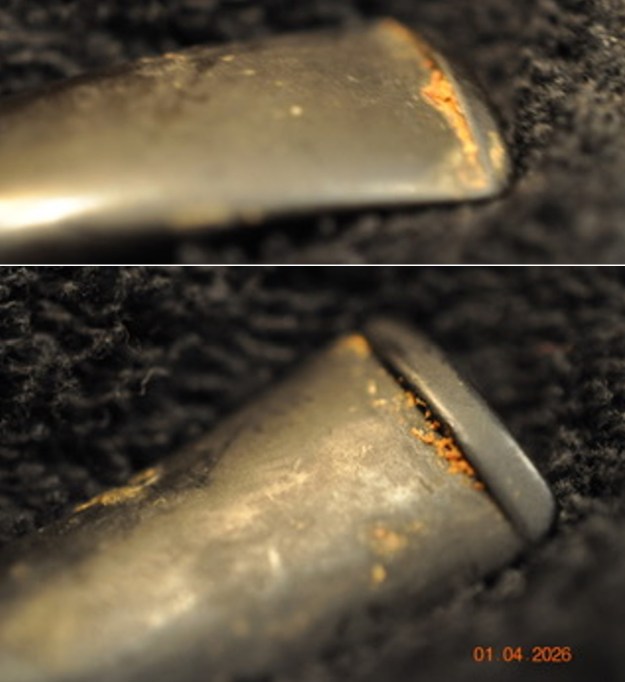
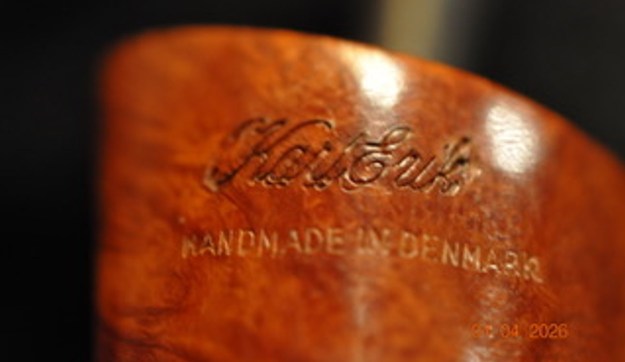
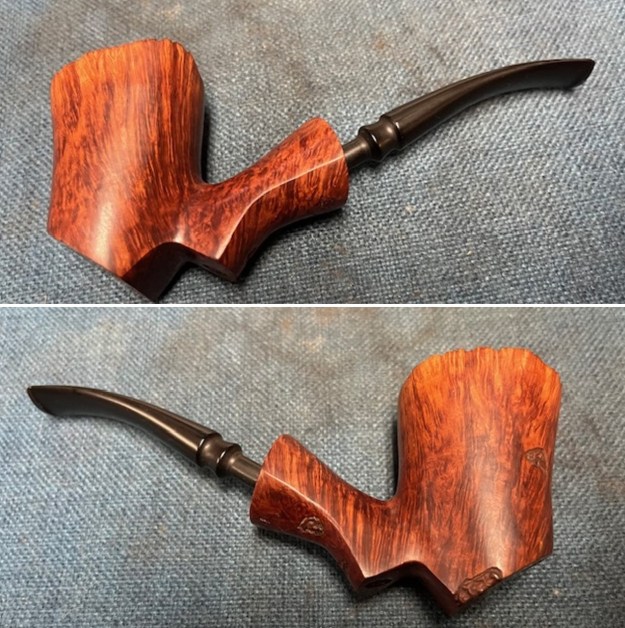
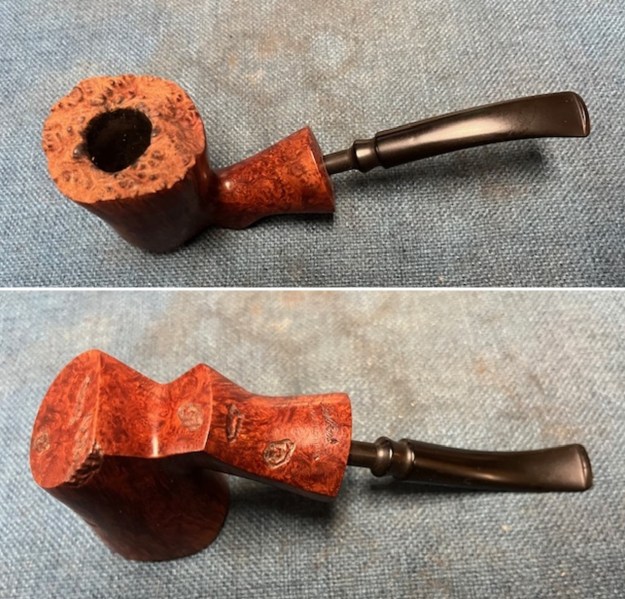
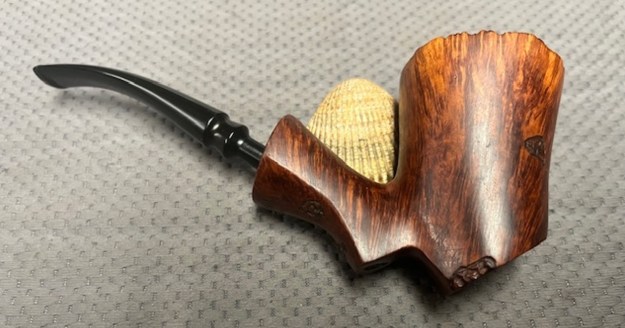
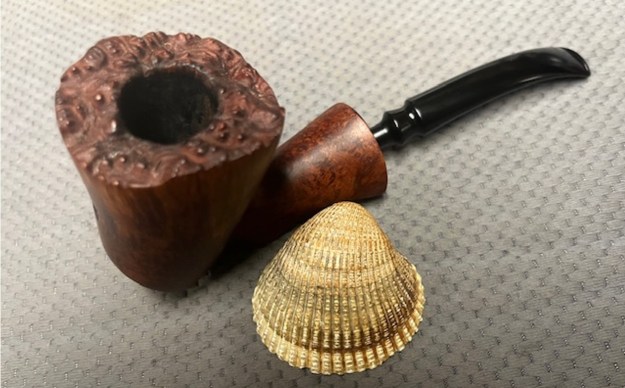
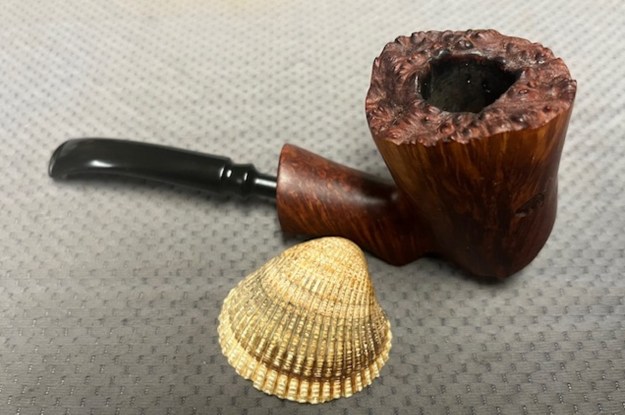
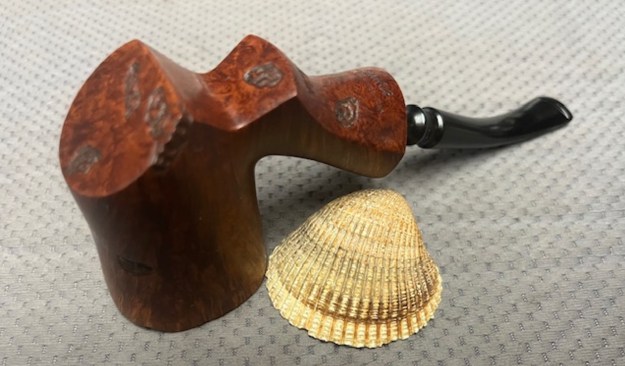
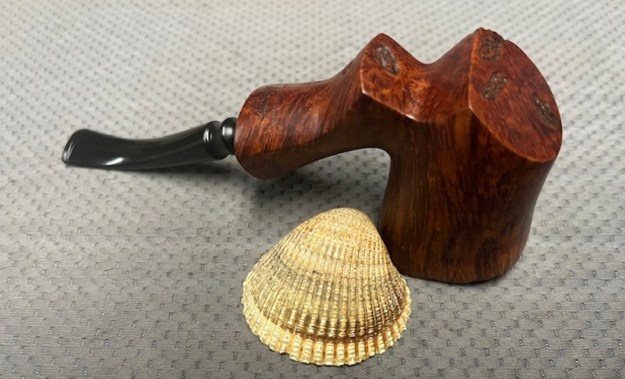
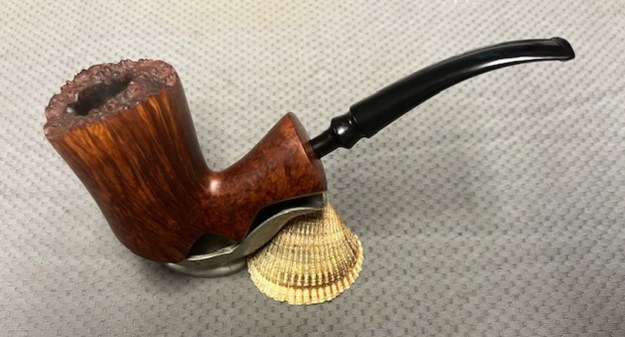
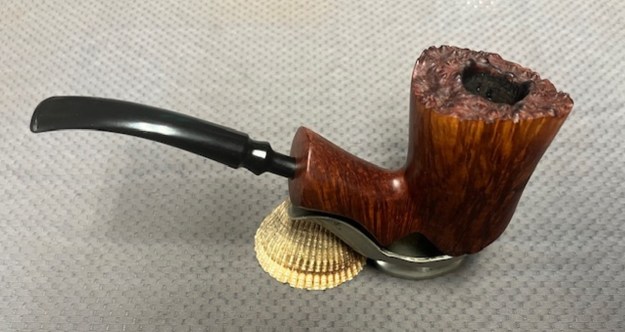
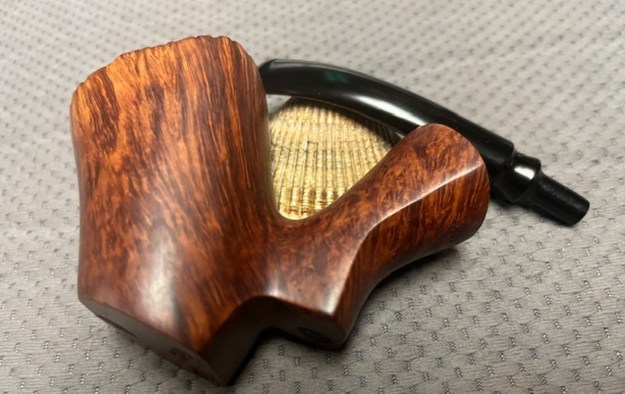
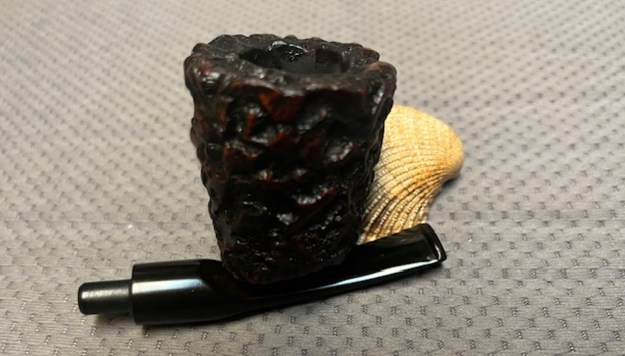
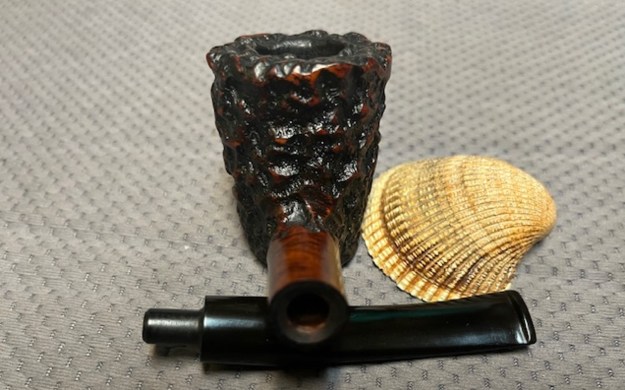
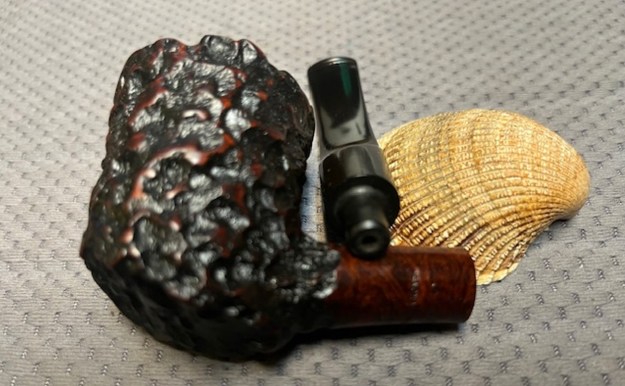
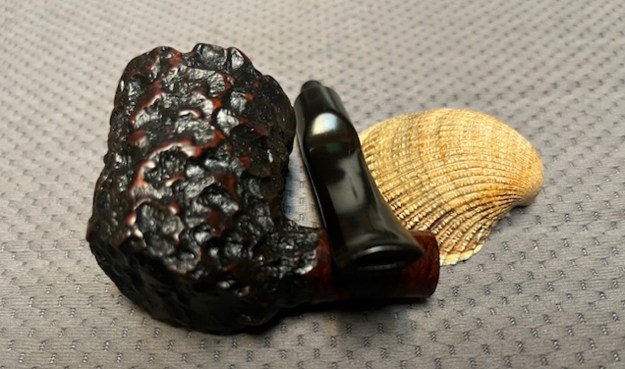
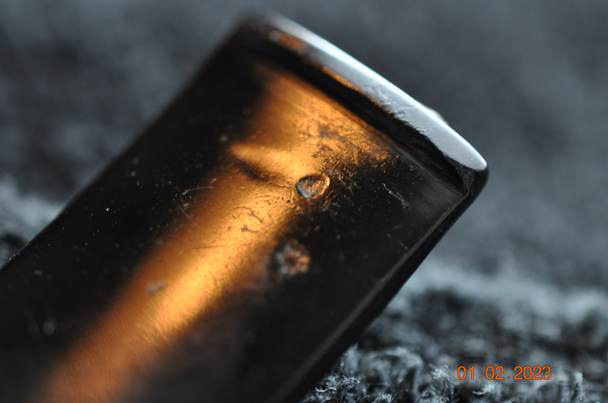
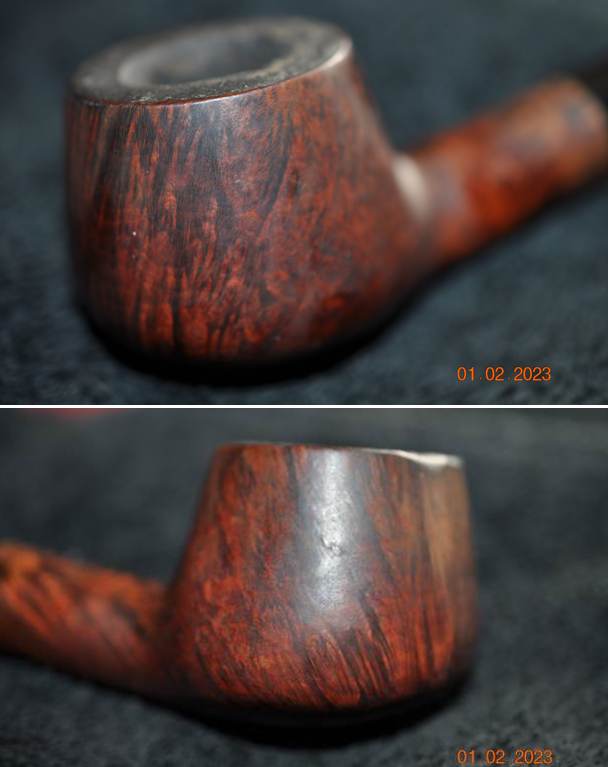
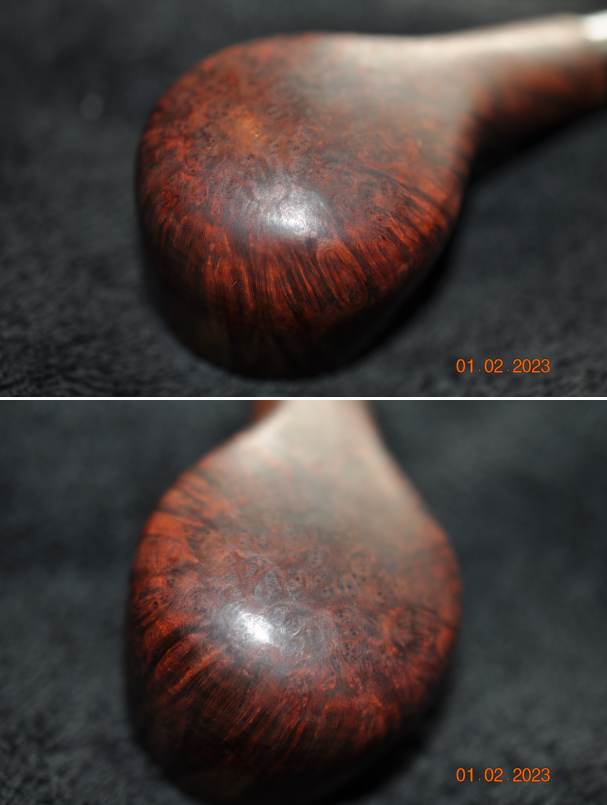
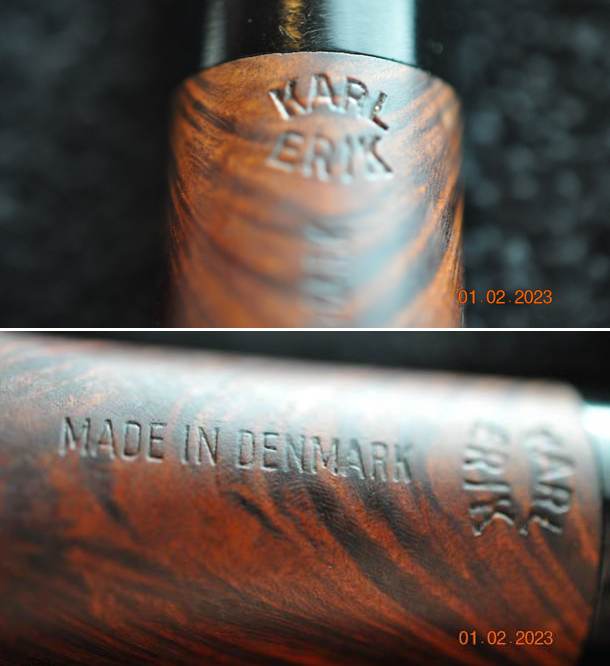
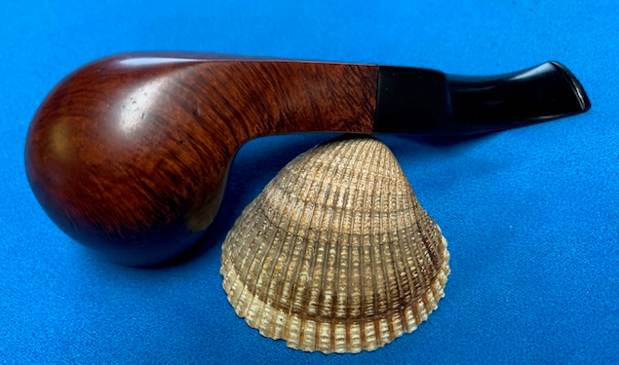
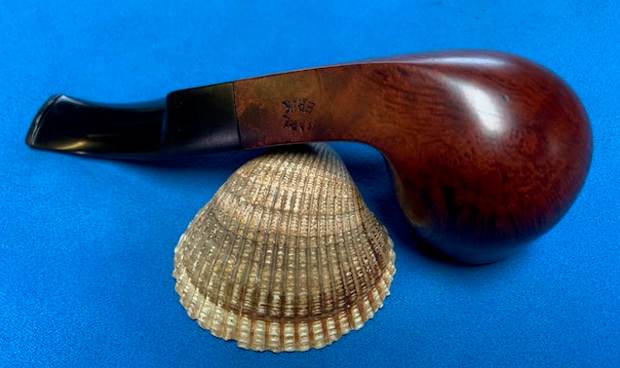
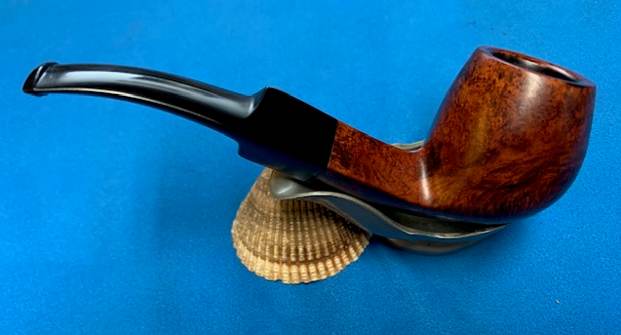
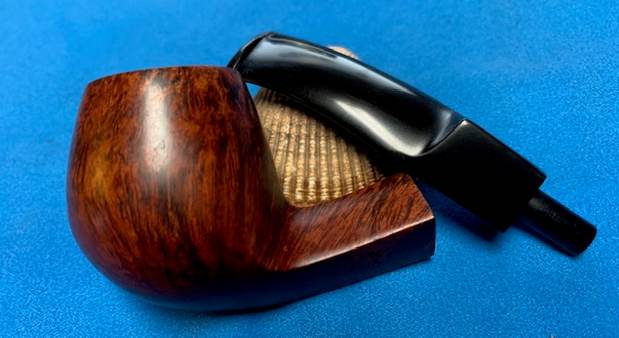
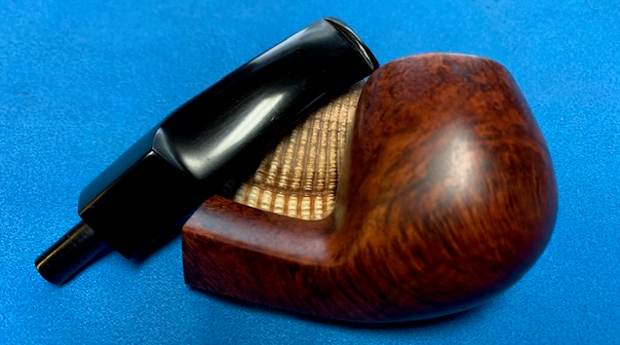
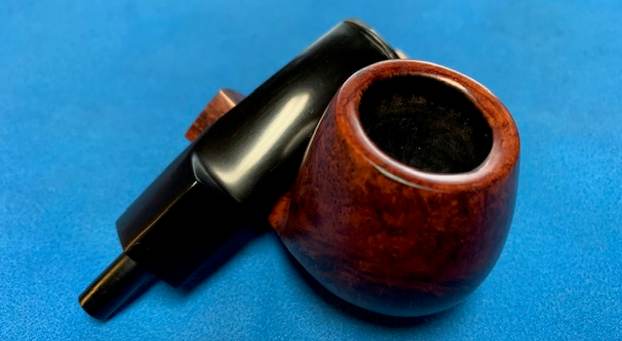
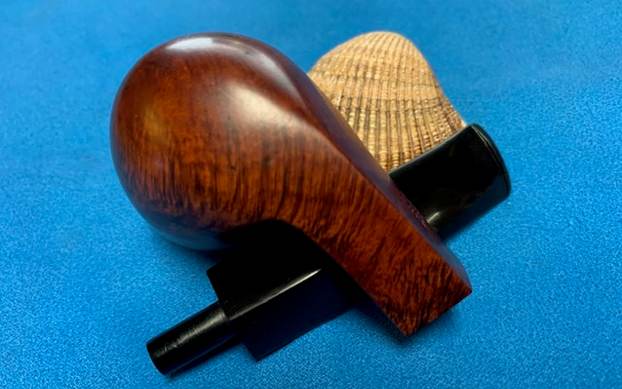
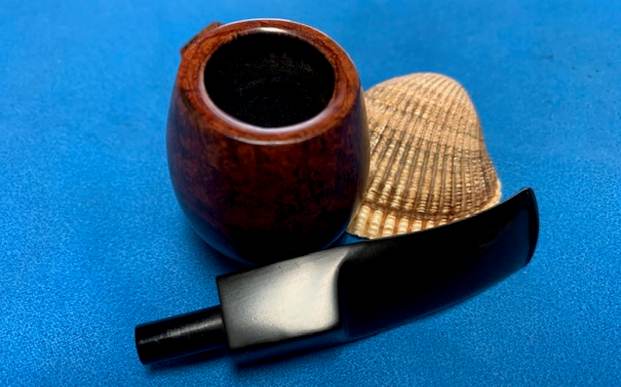
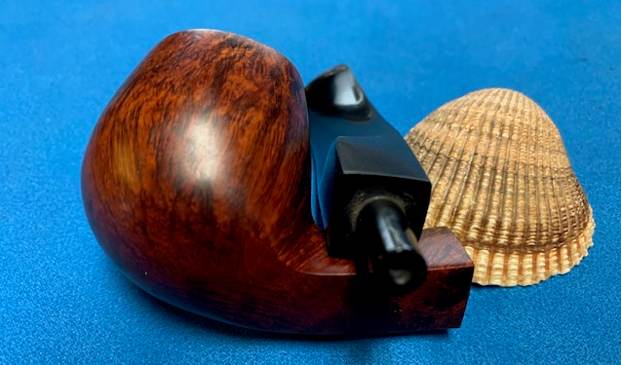
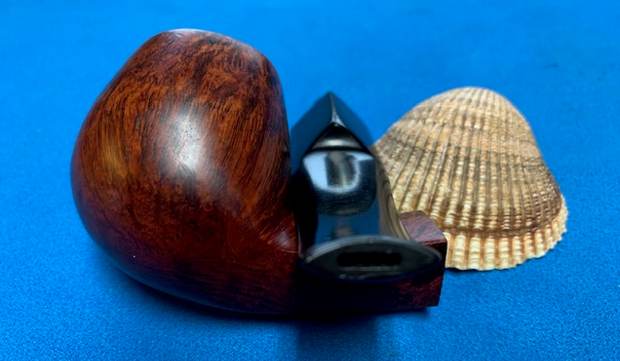
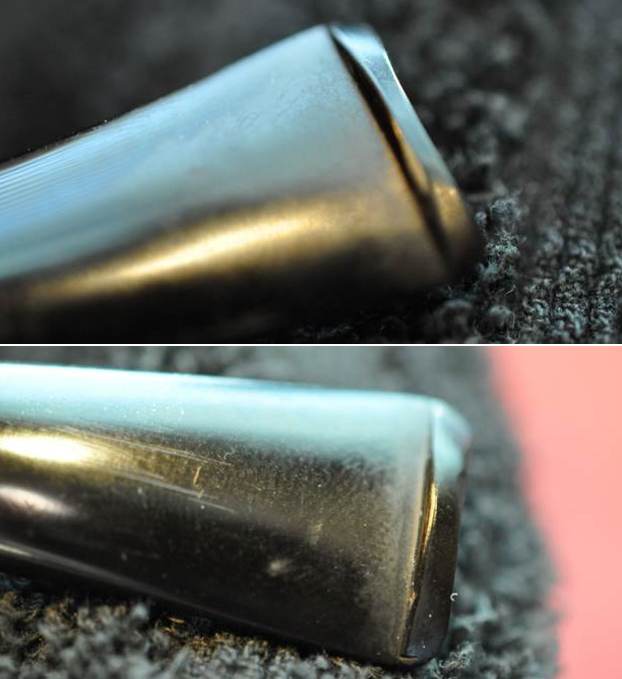
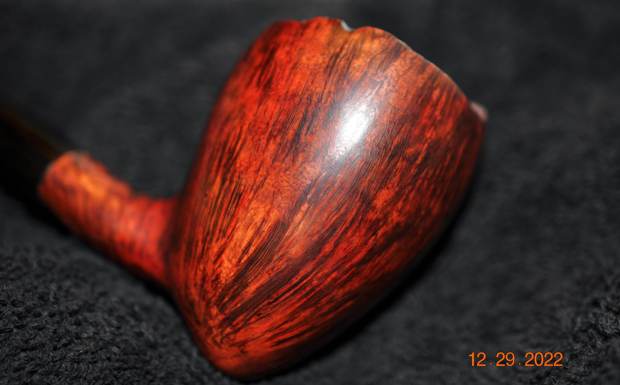
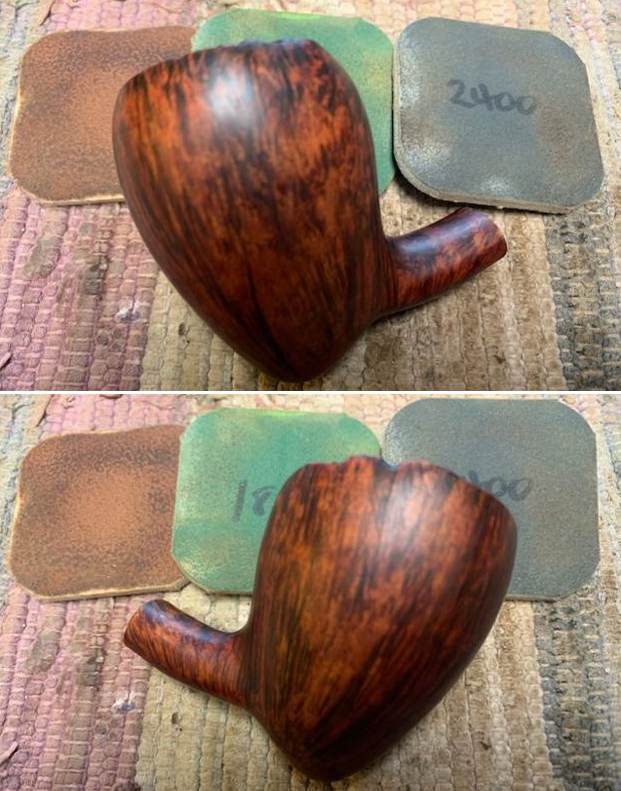
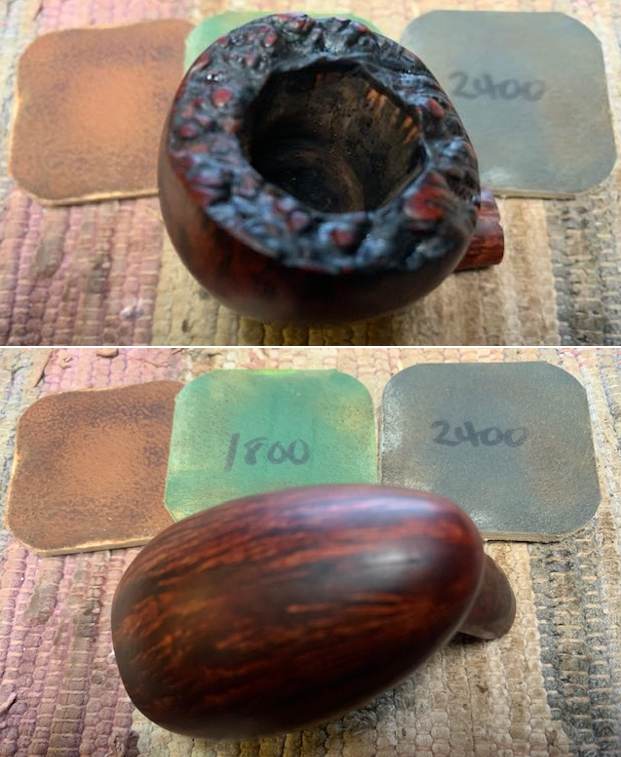
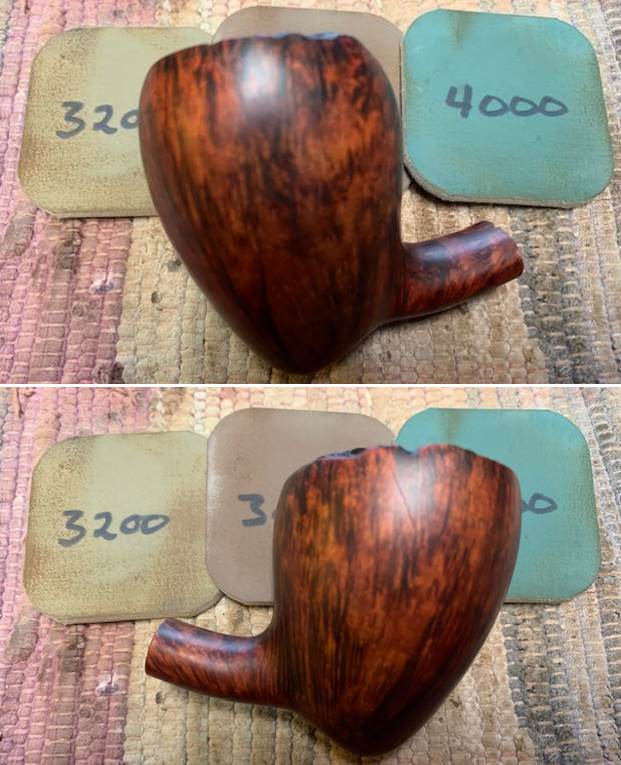
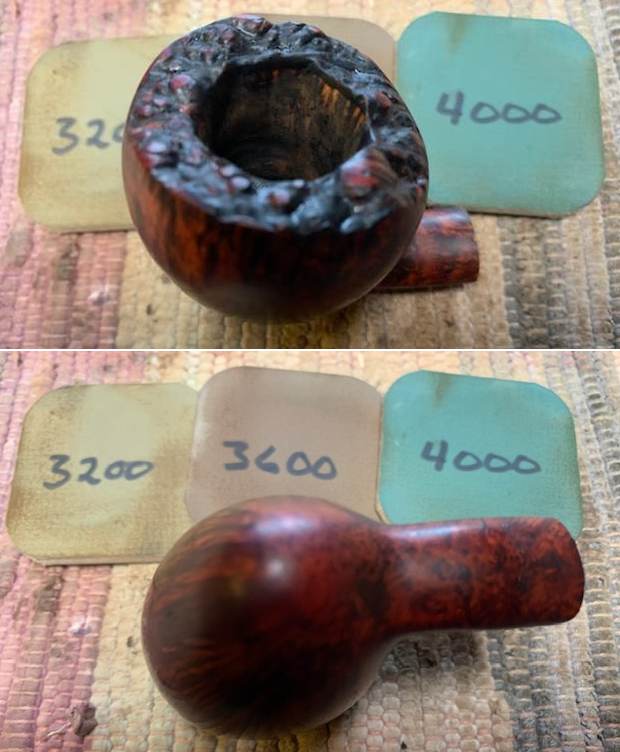
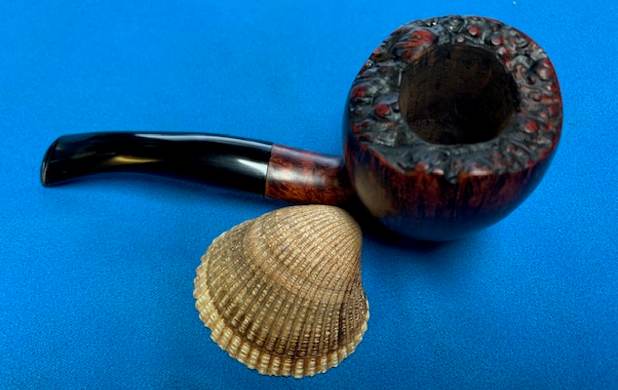
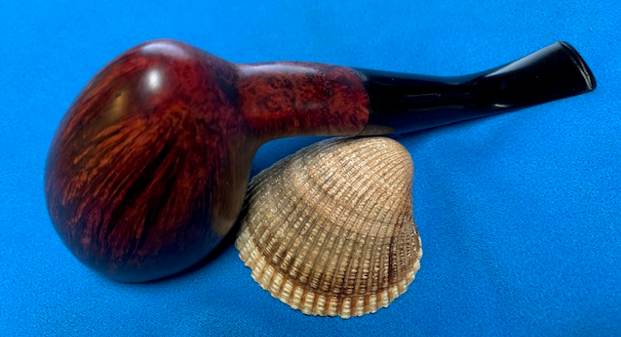
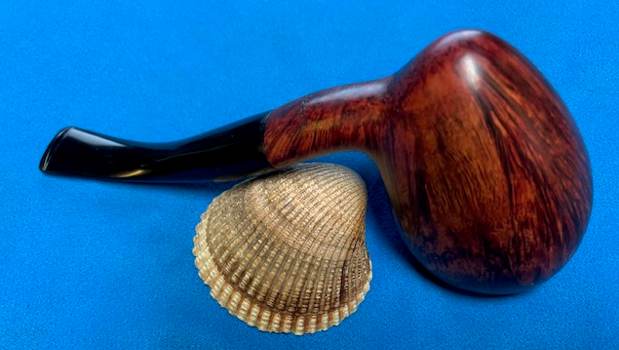
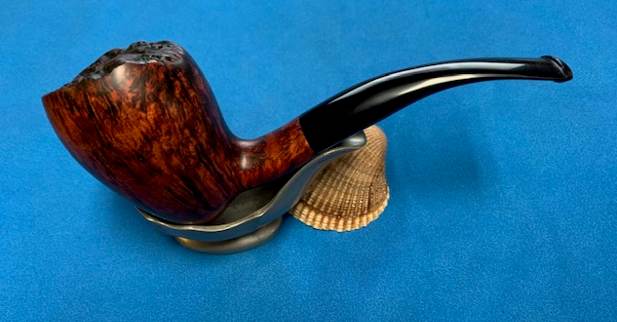
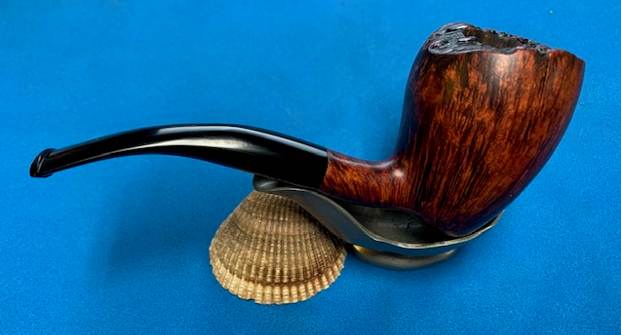
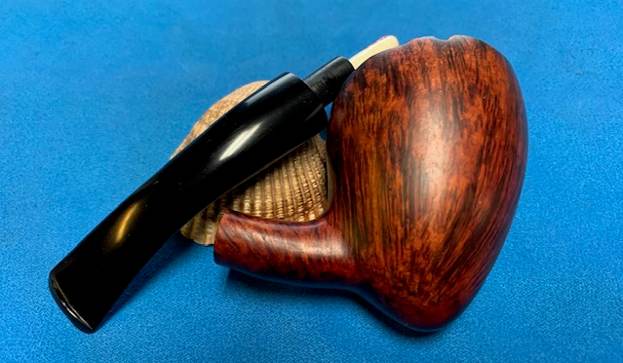
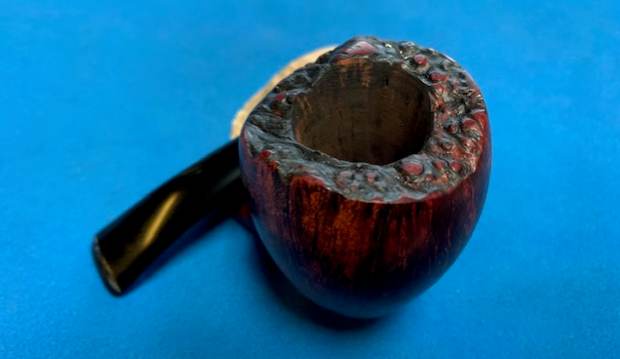
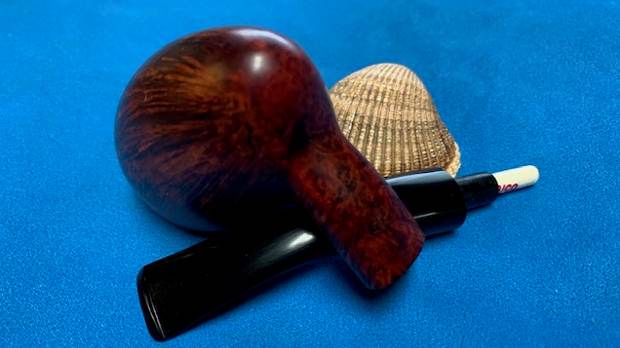
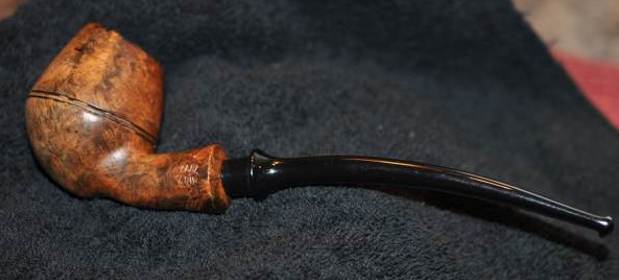
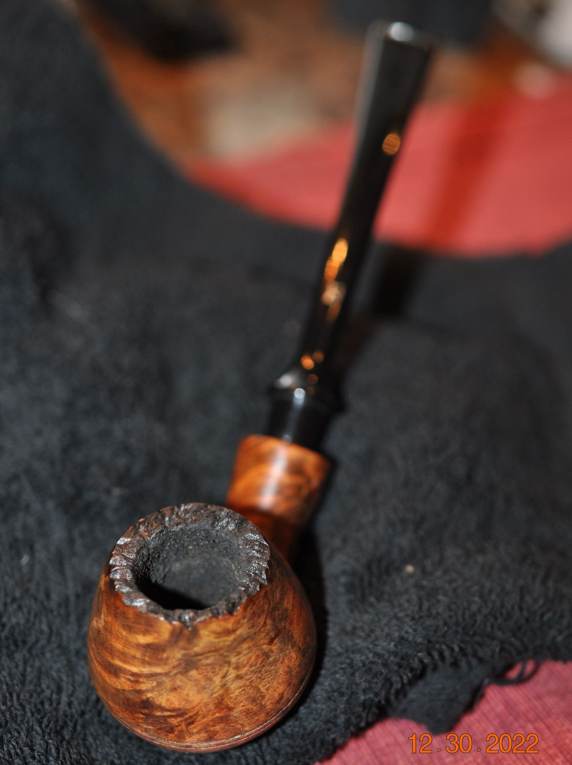
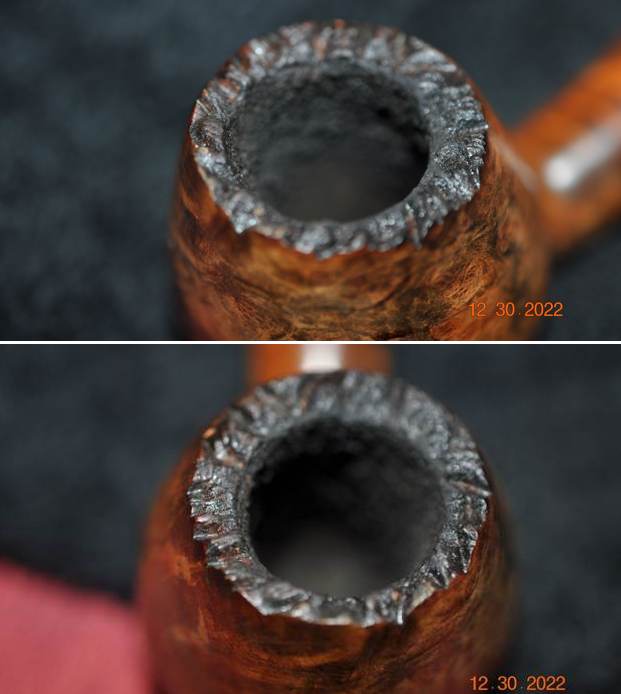
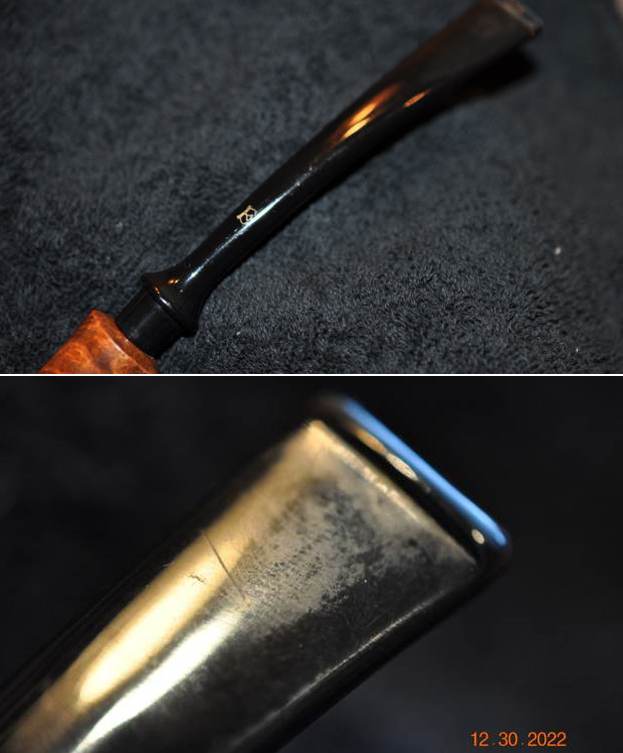
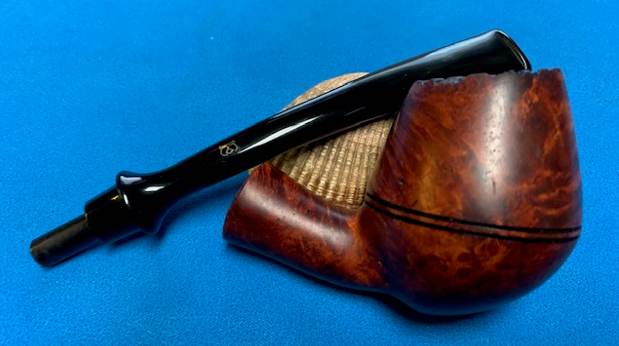
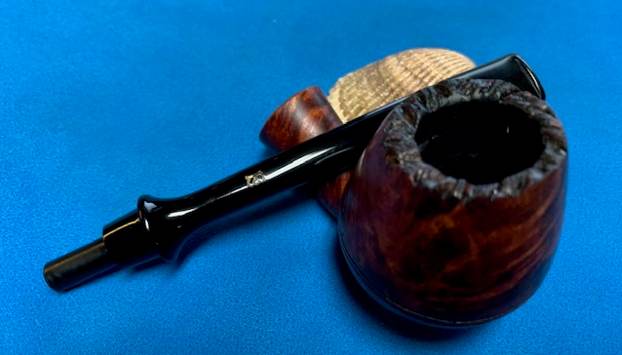
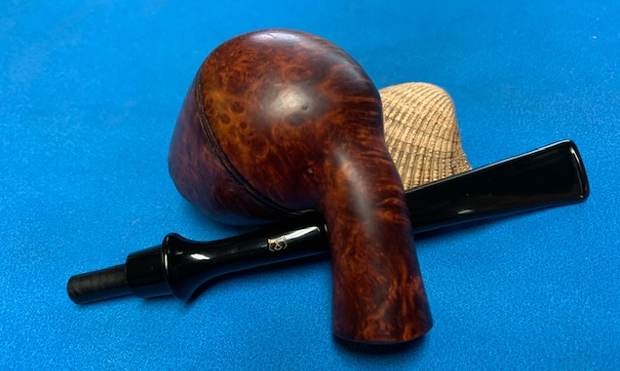
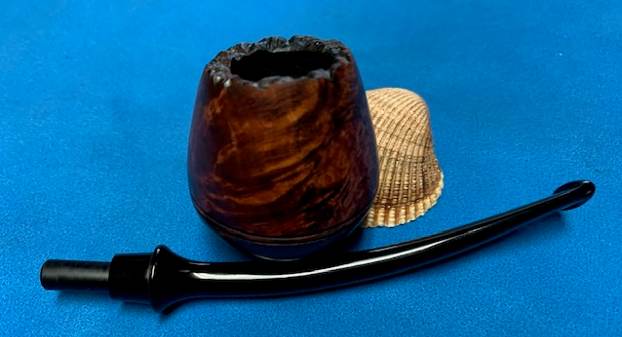
Tag Archives: Karl Erik pipes

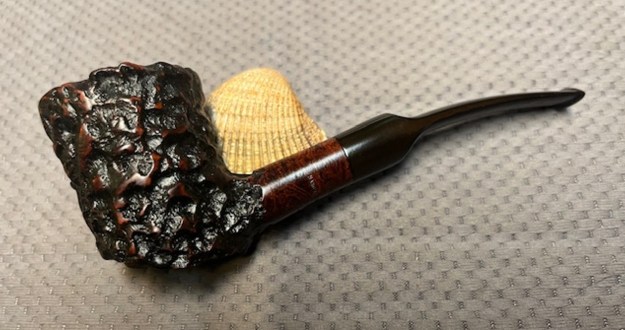
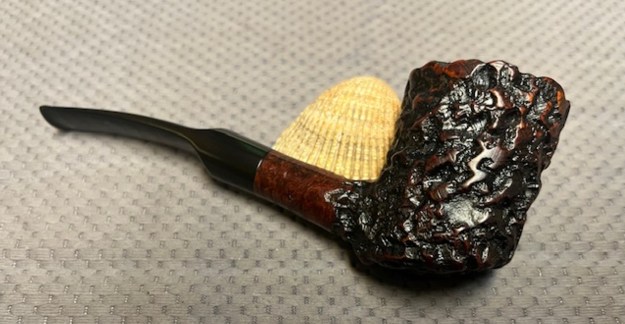
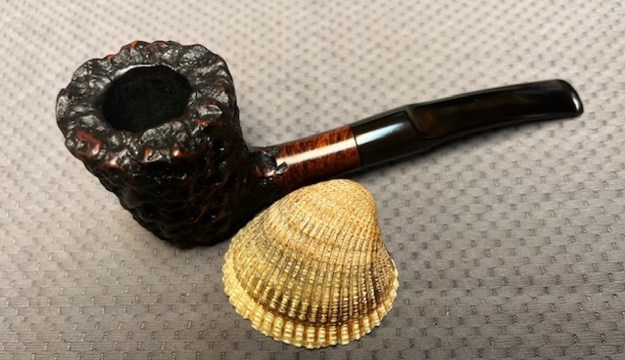
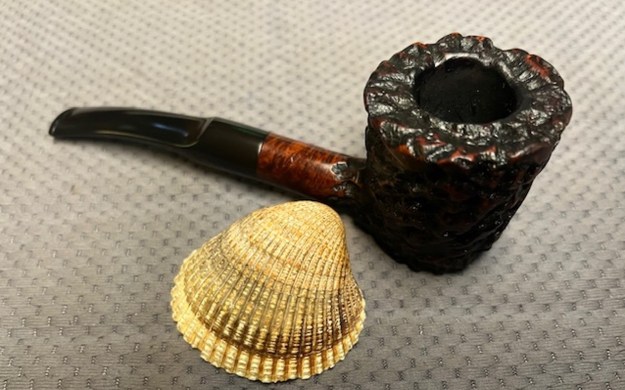
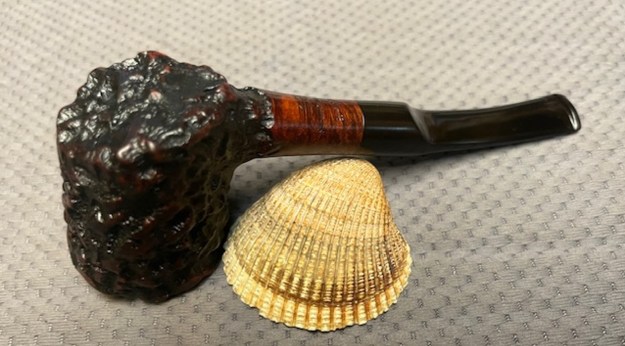
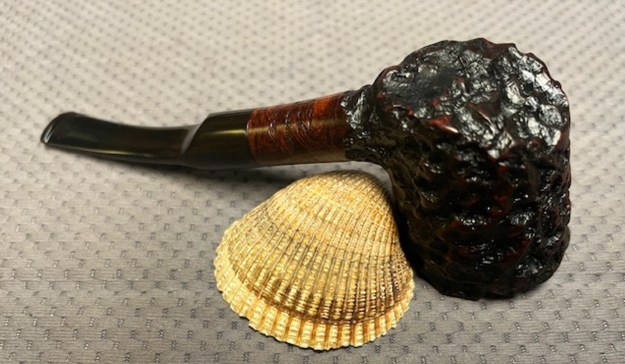
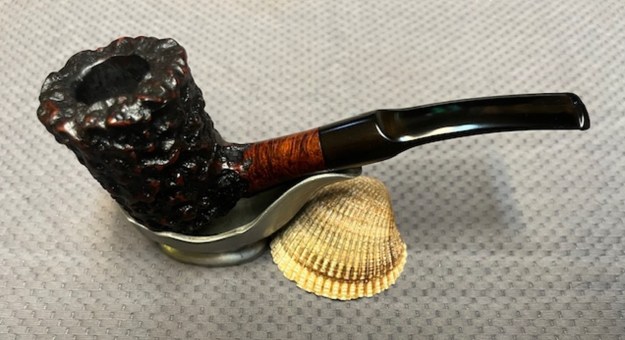
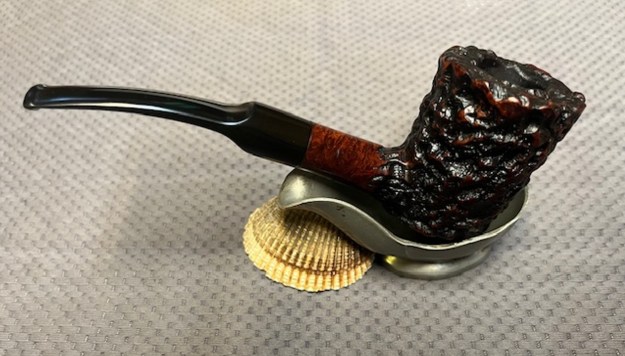
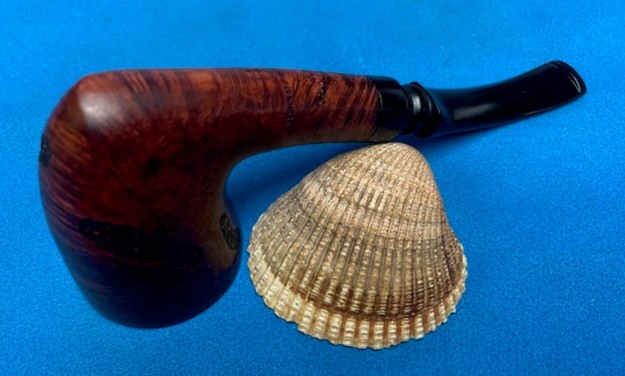
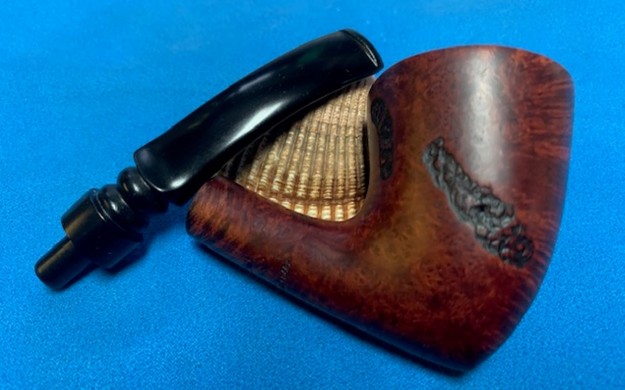
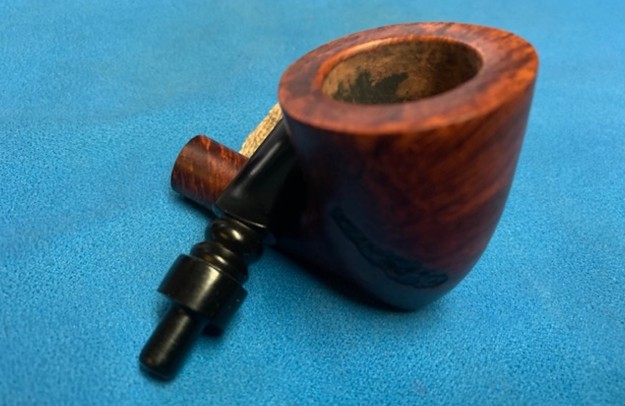
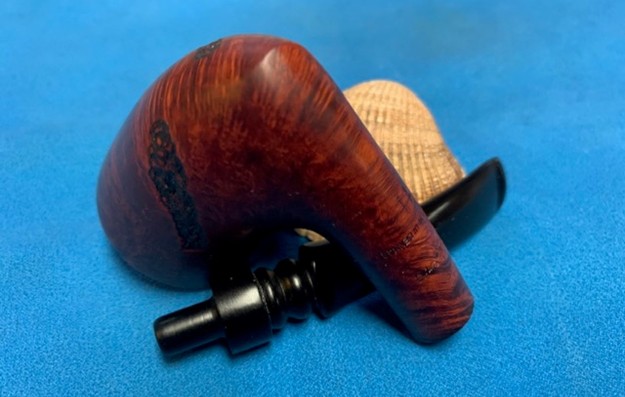
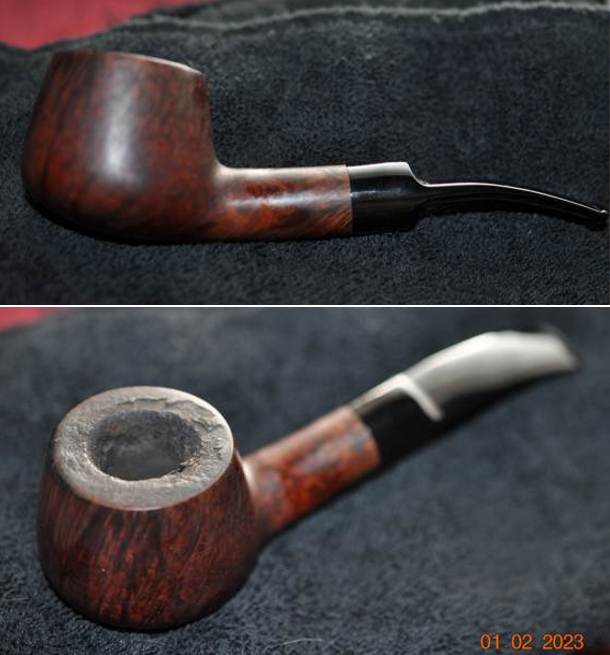
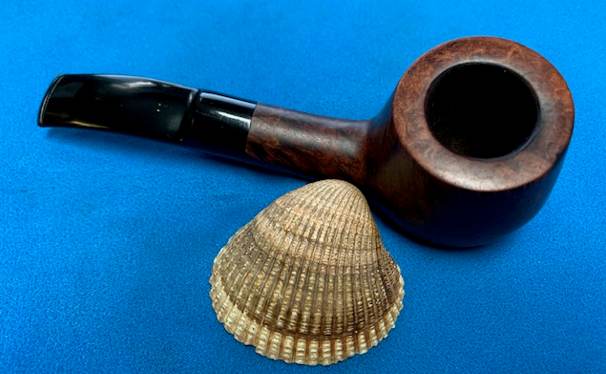
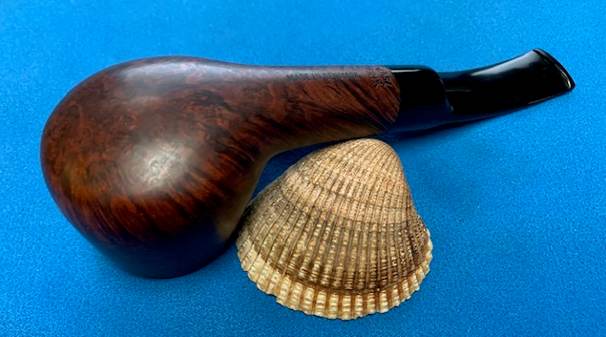
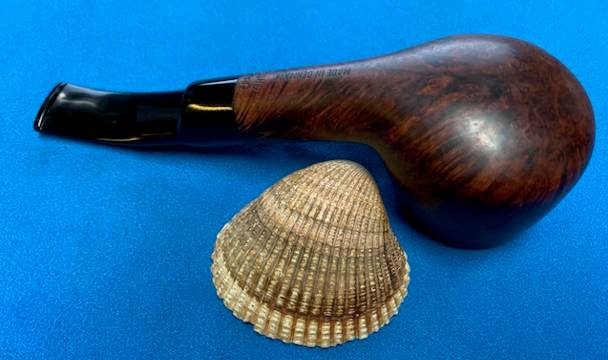
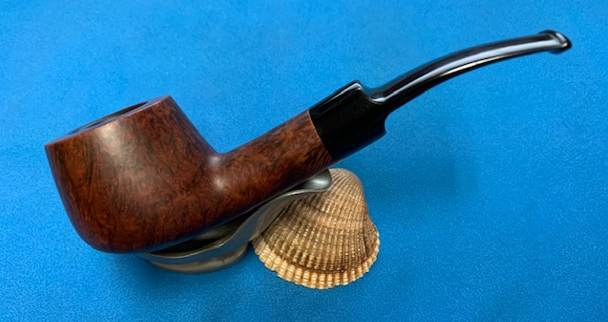
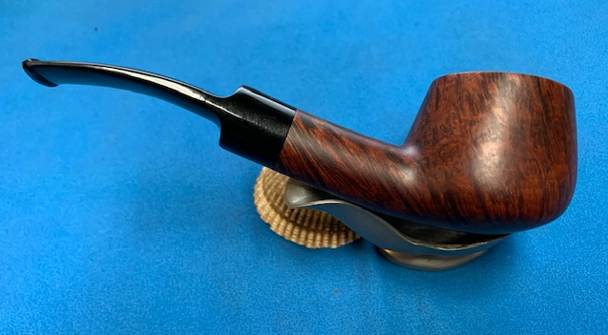
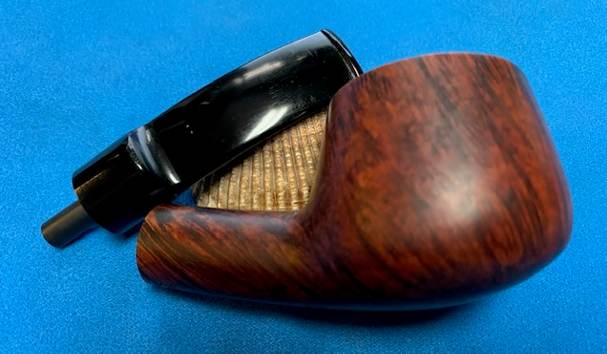
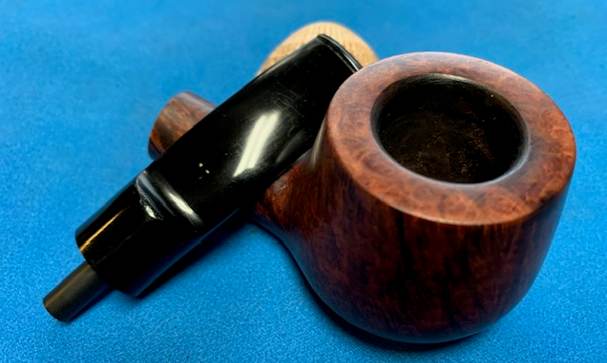
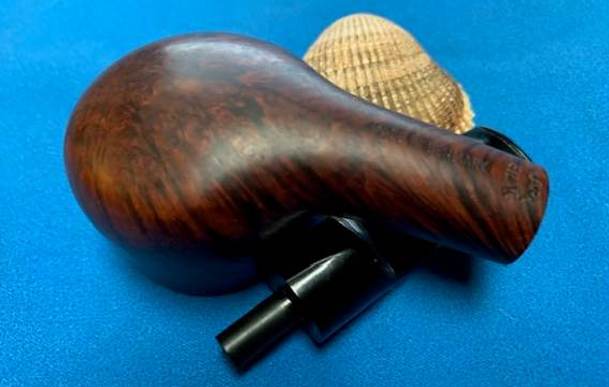
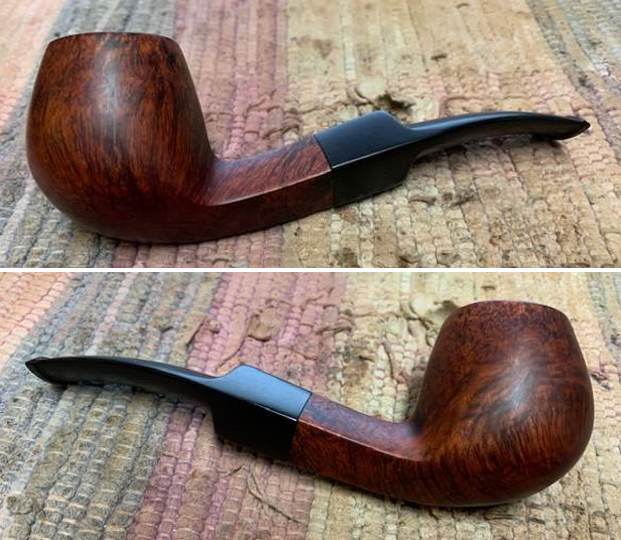
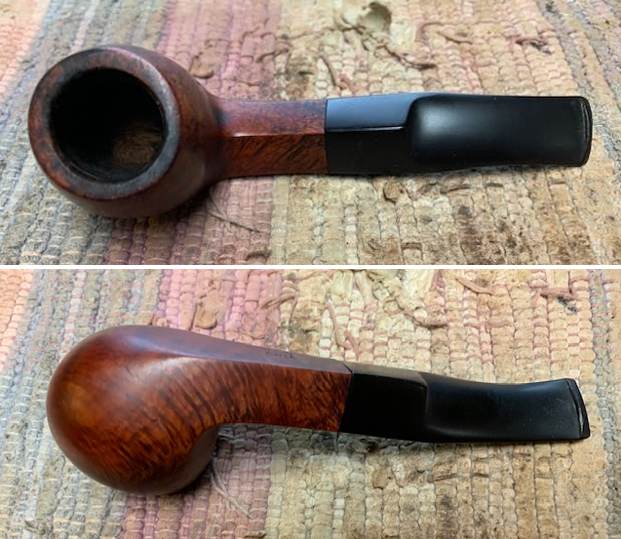
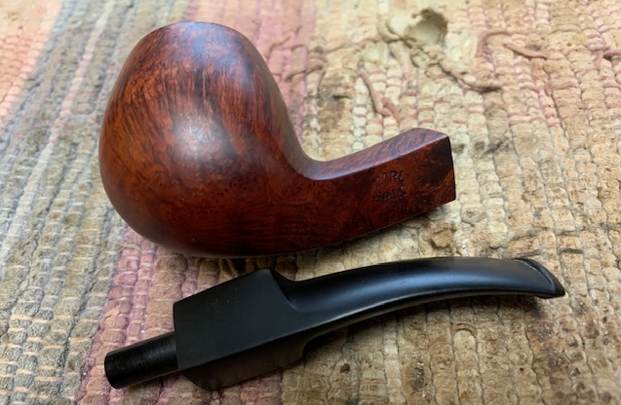
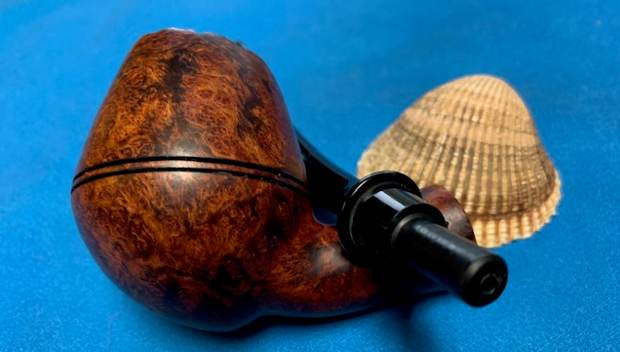
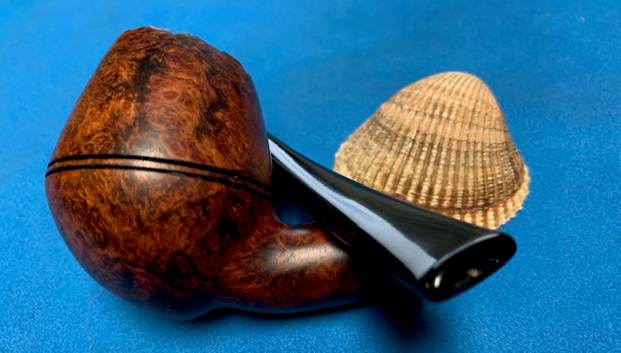
Karl Erik Handmade in Denmark 225 Rusticated Poker


by Steve Laug

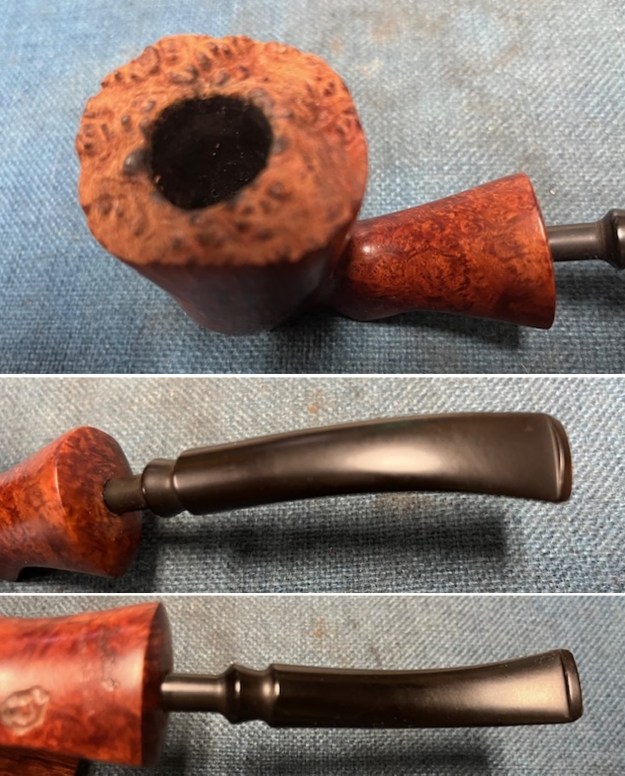
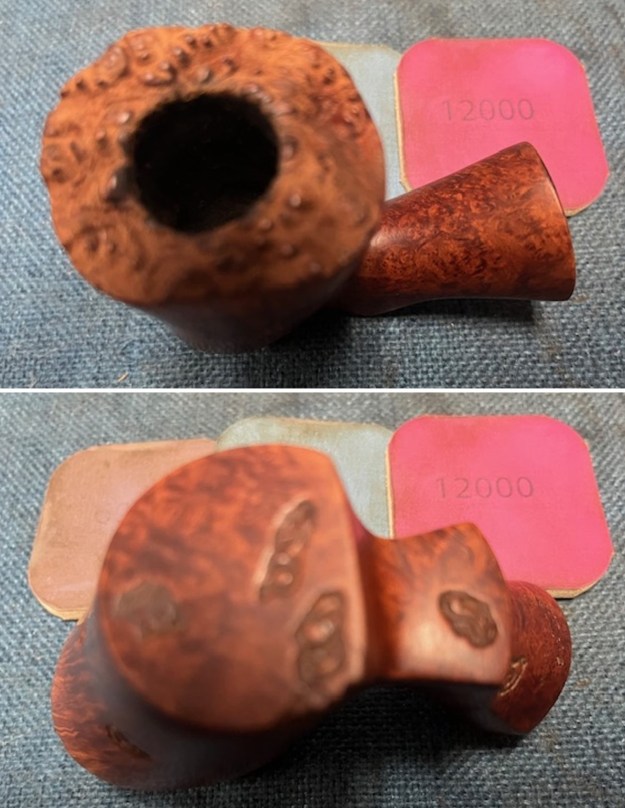
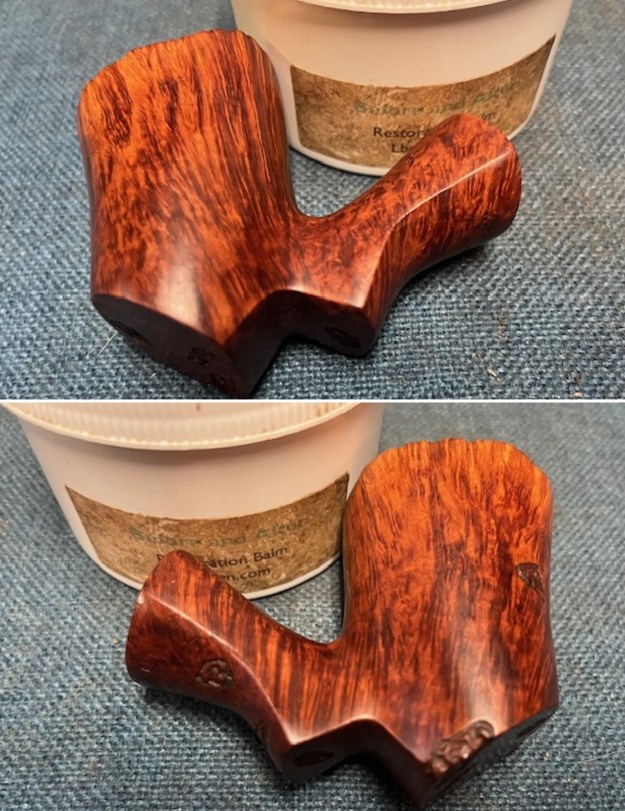
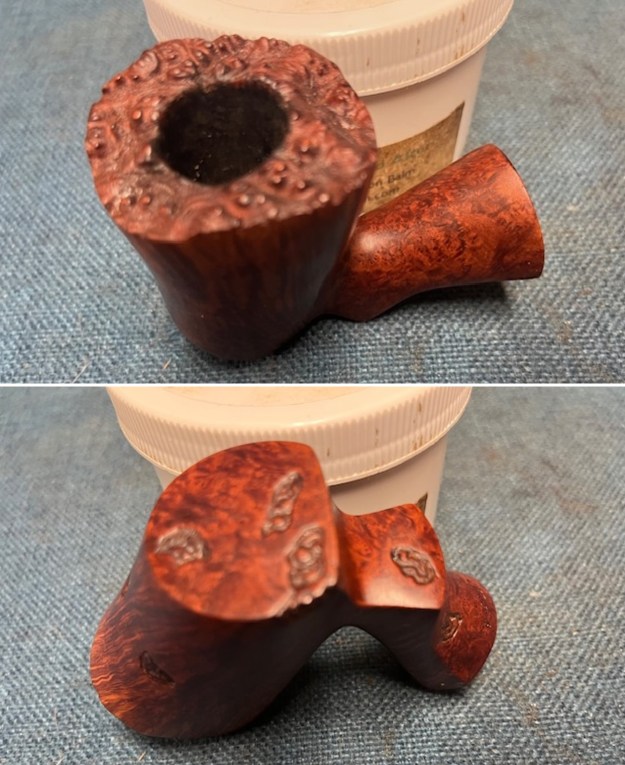
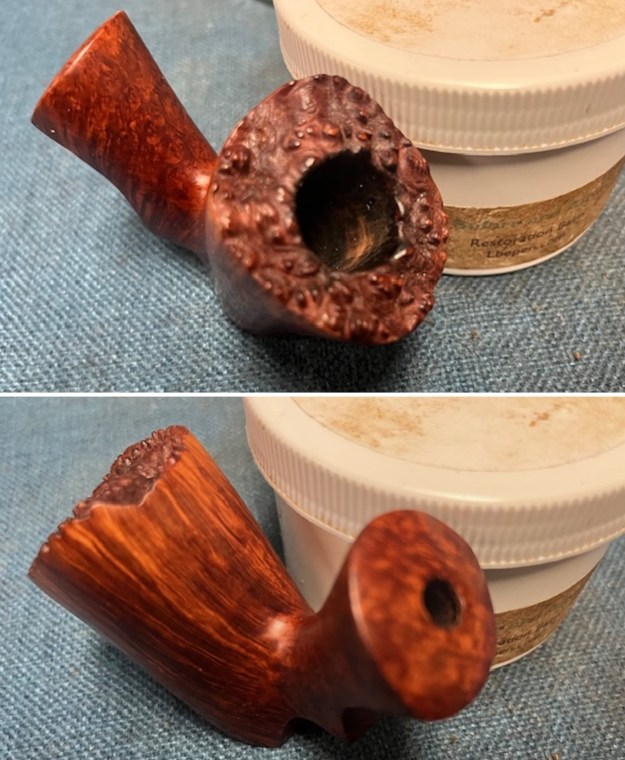
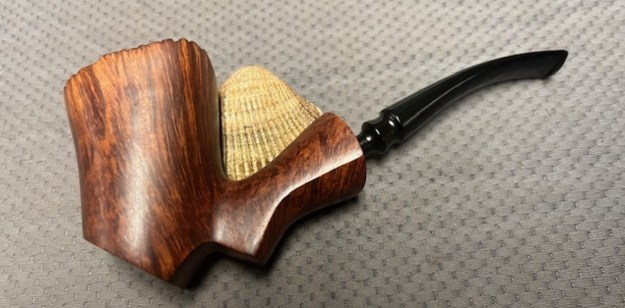
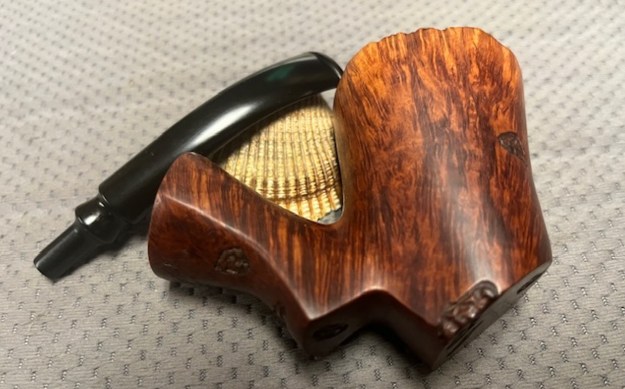
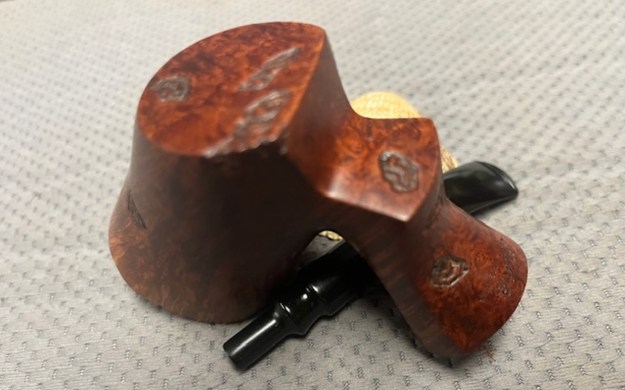
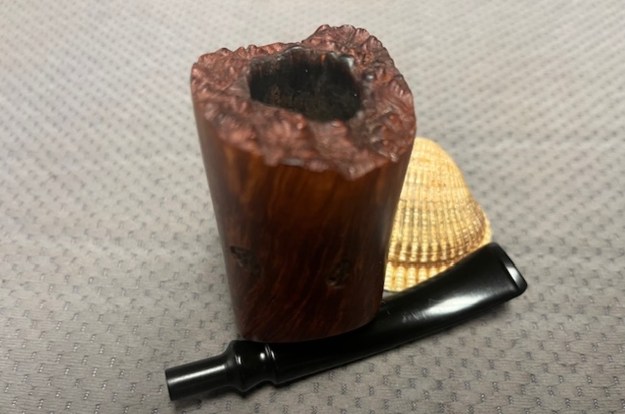
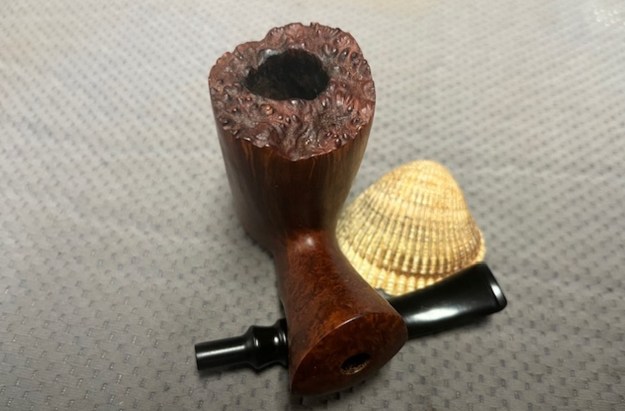
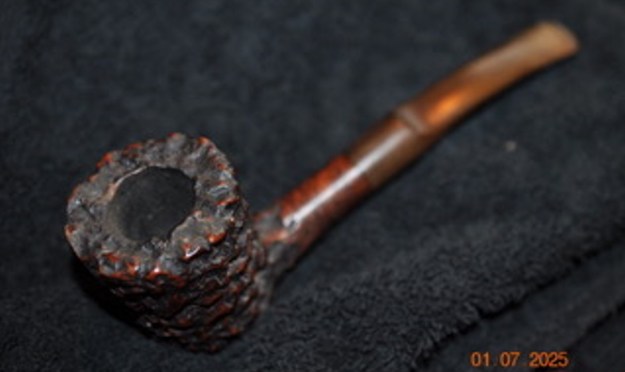
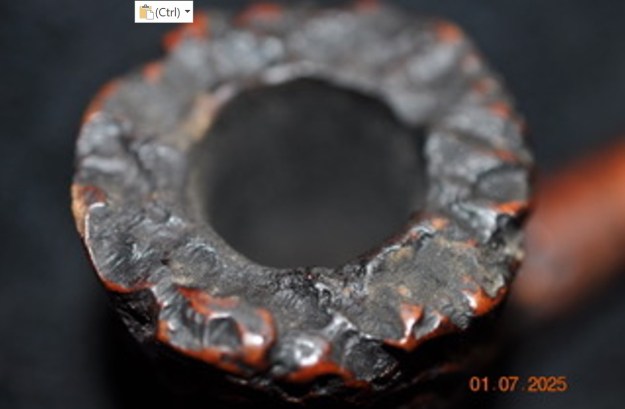
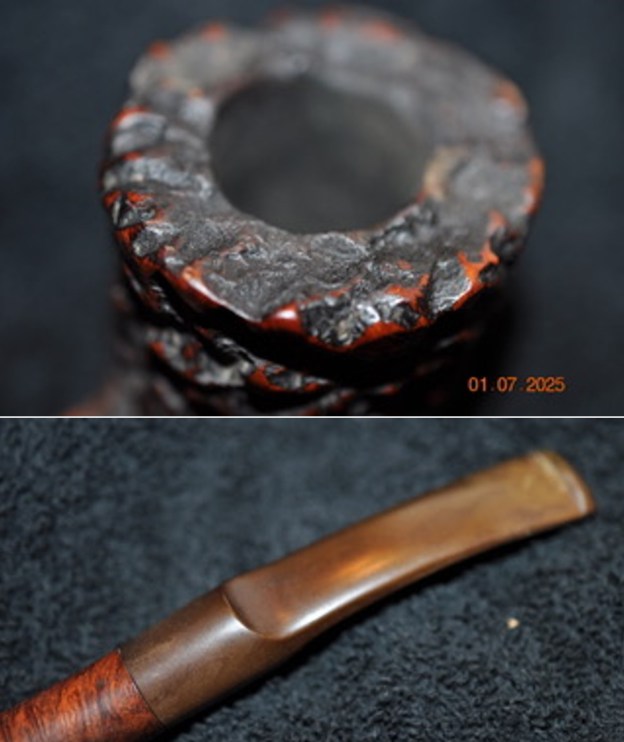
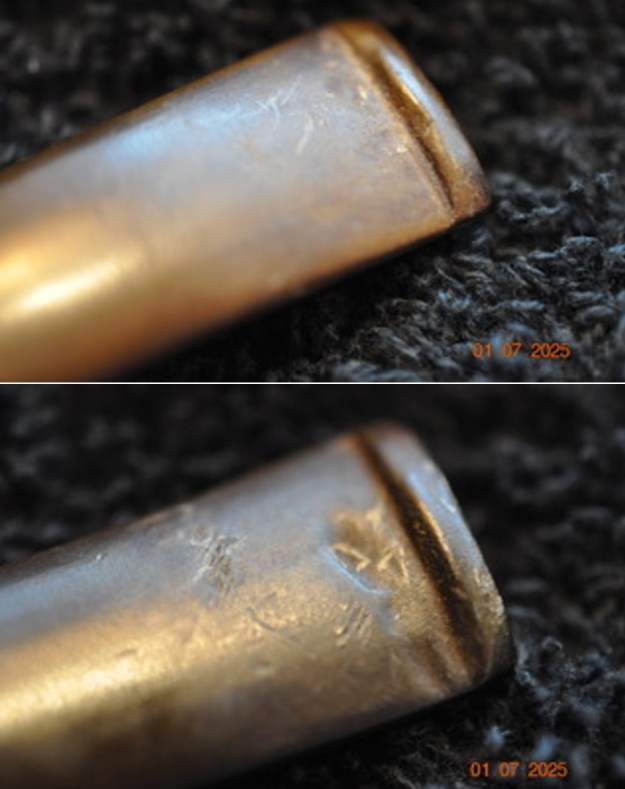
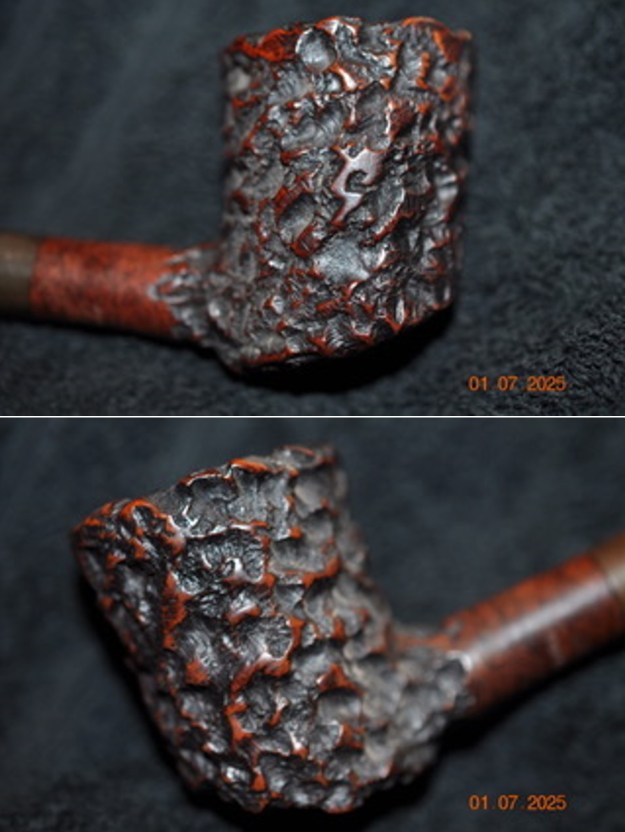
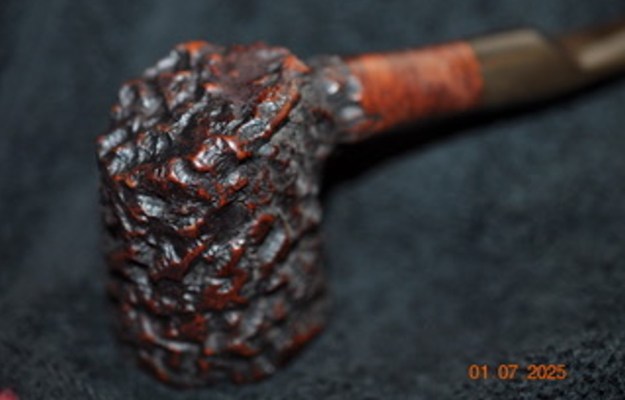
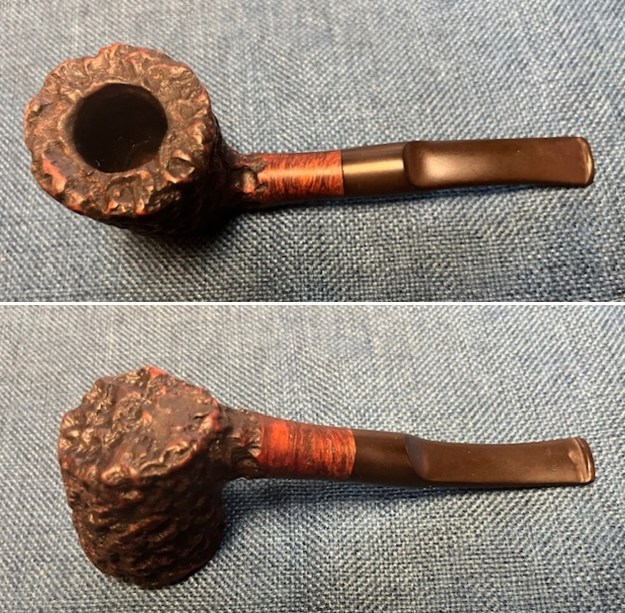
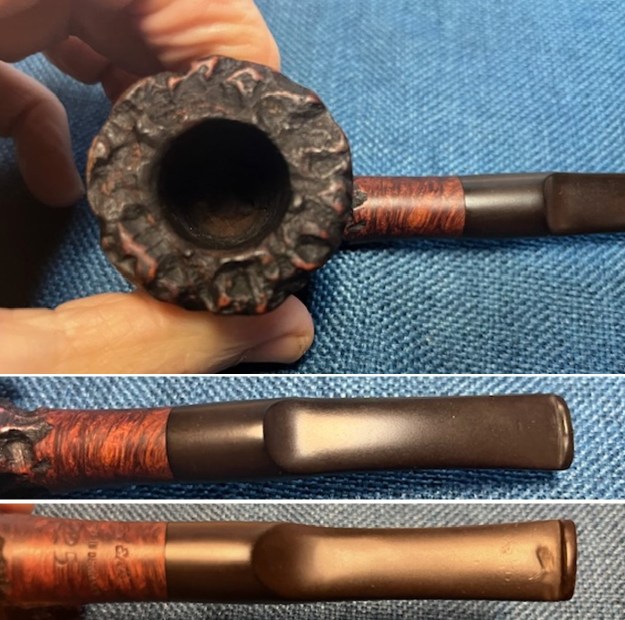
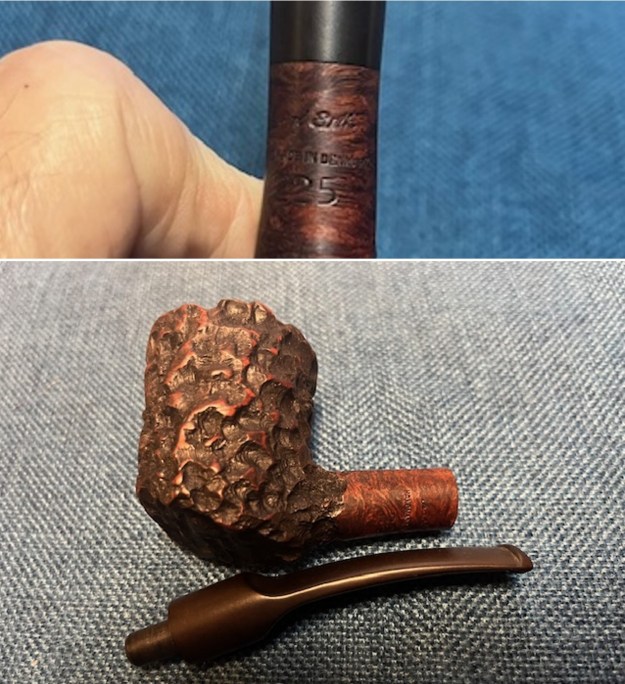
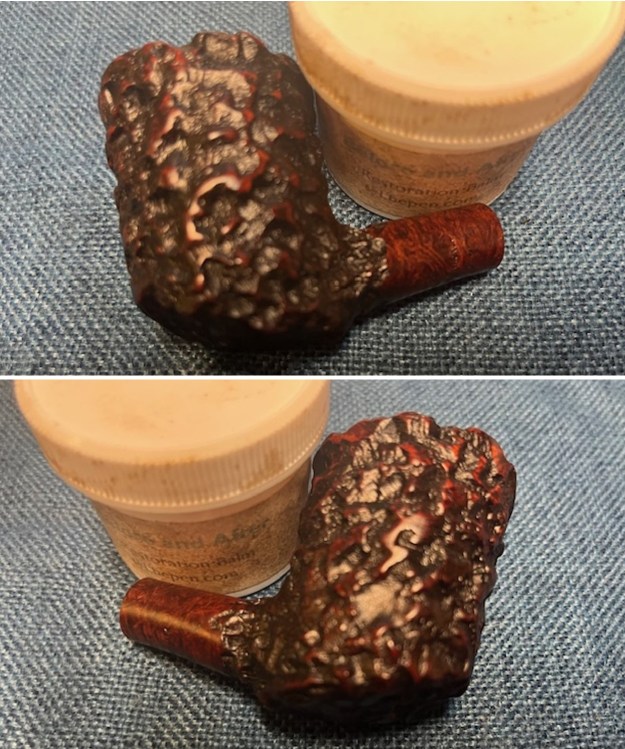
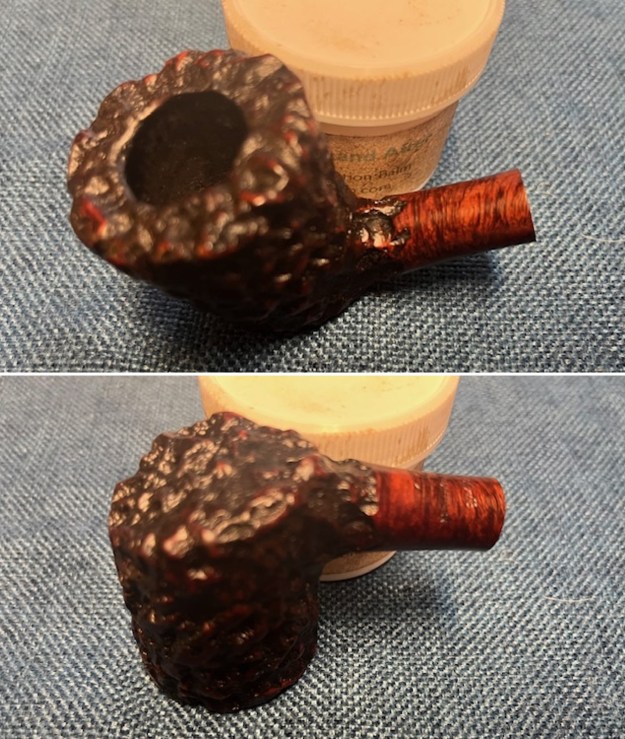
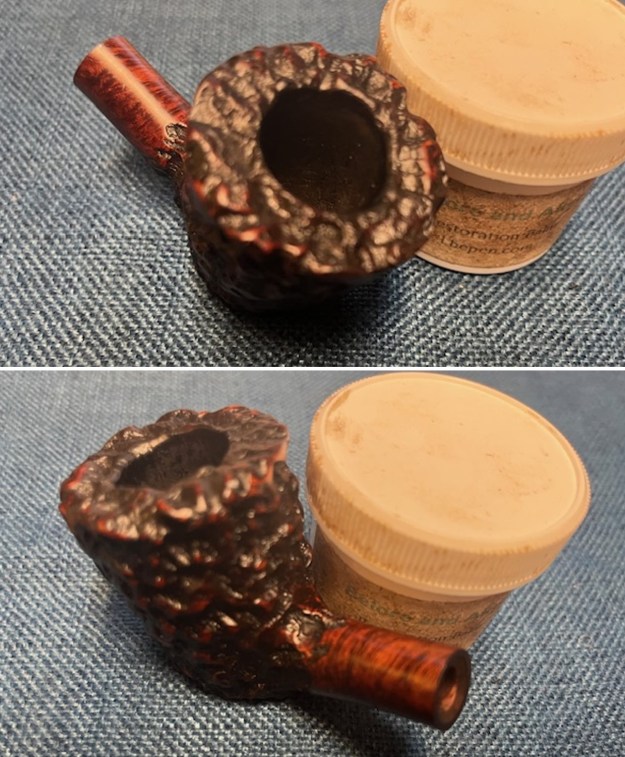
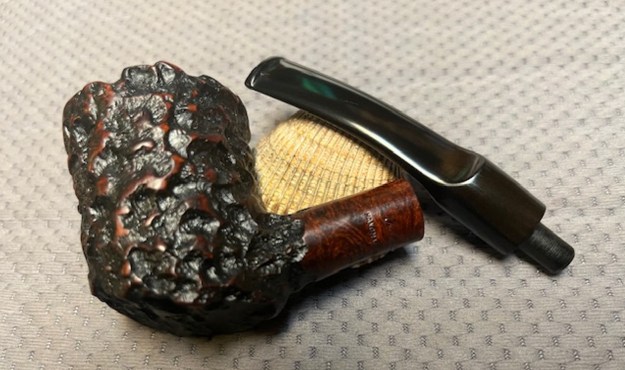
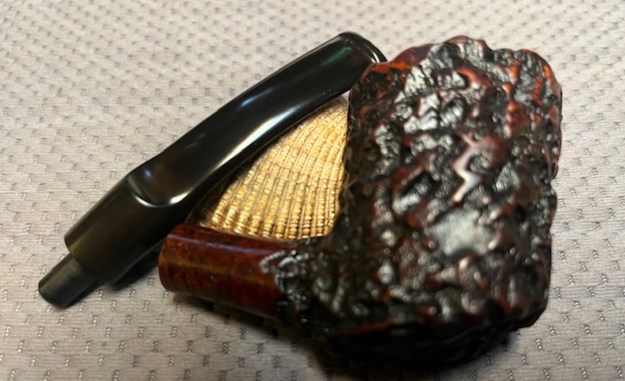
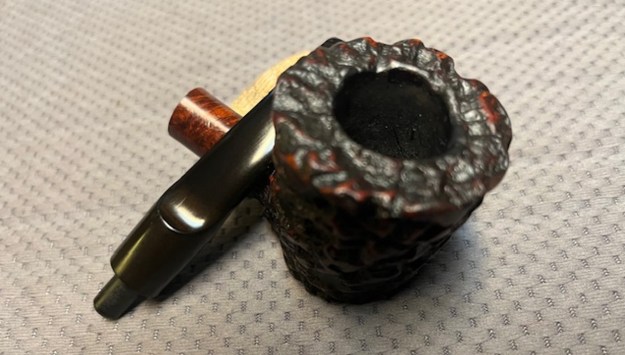
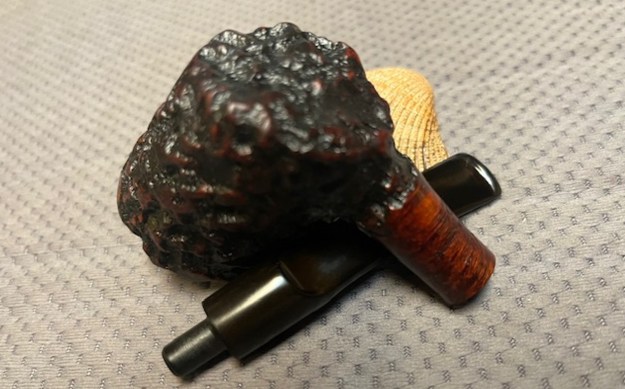
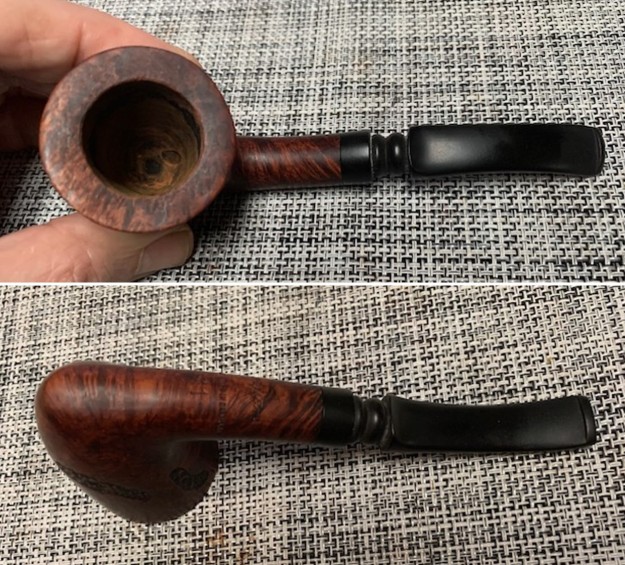
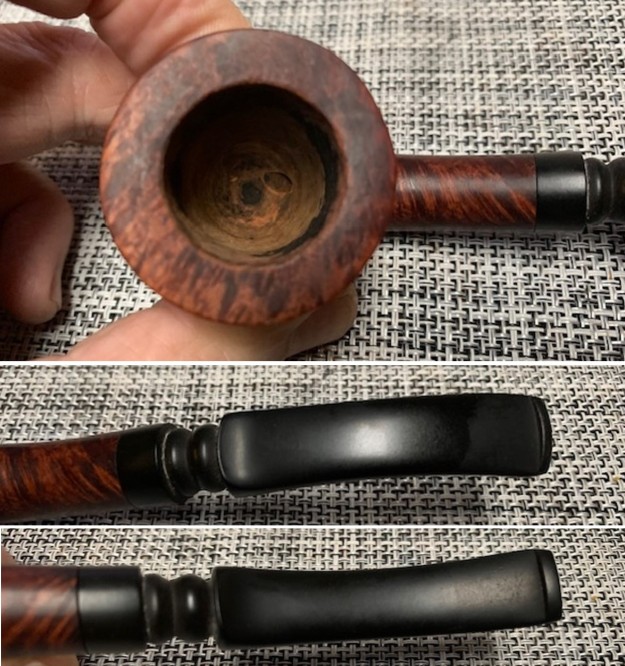
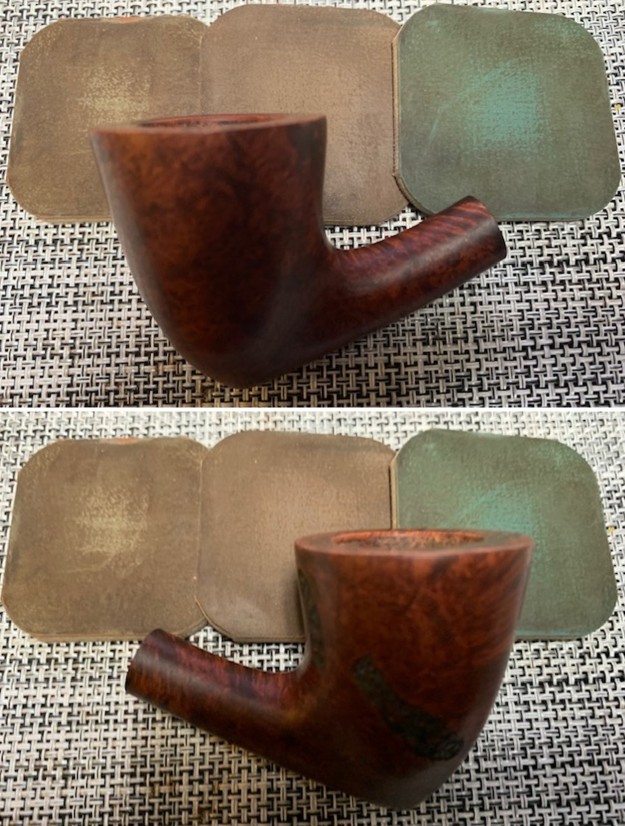
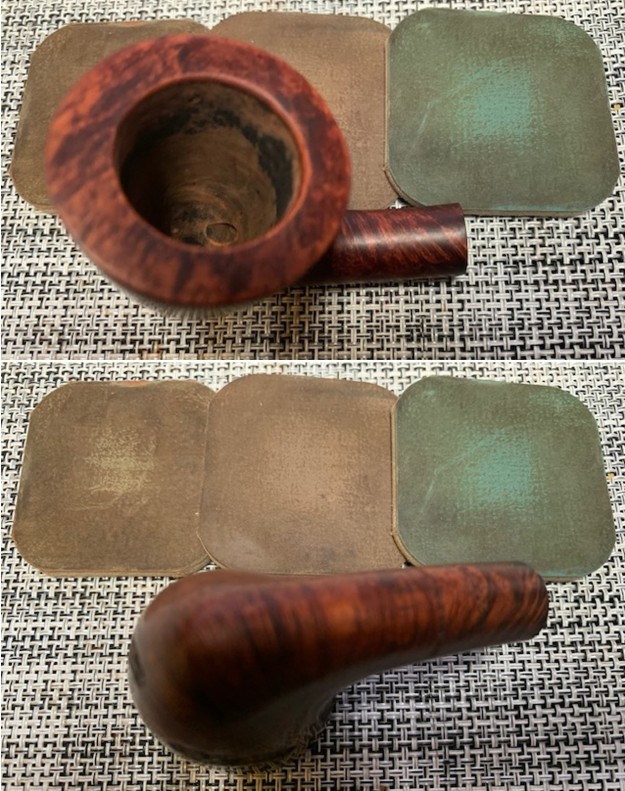
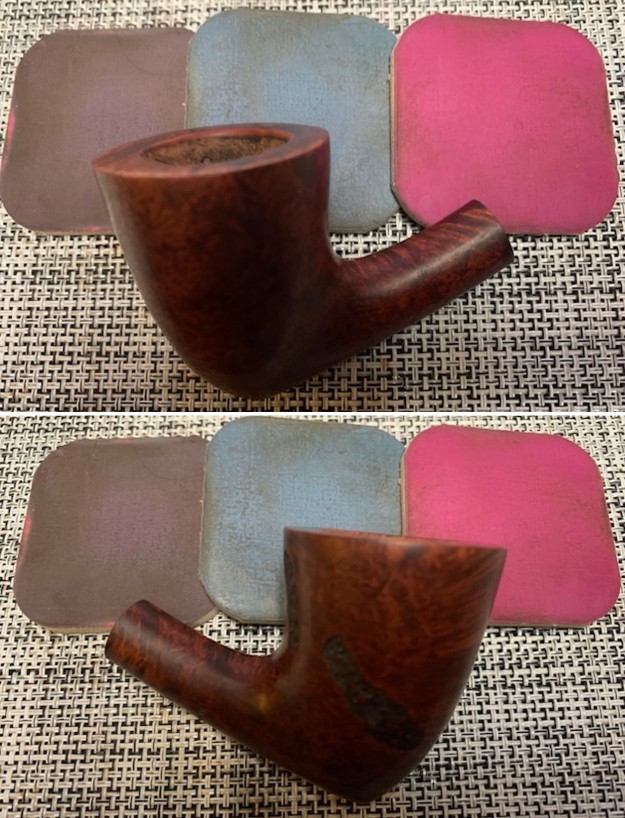
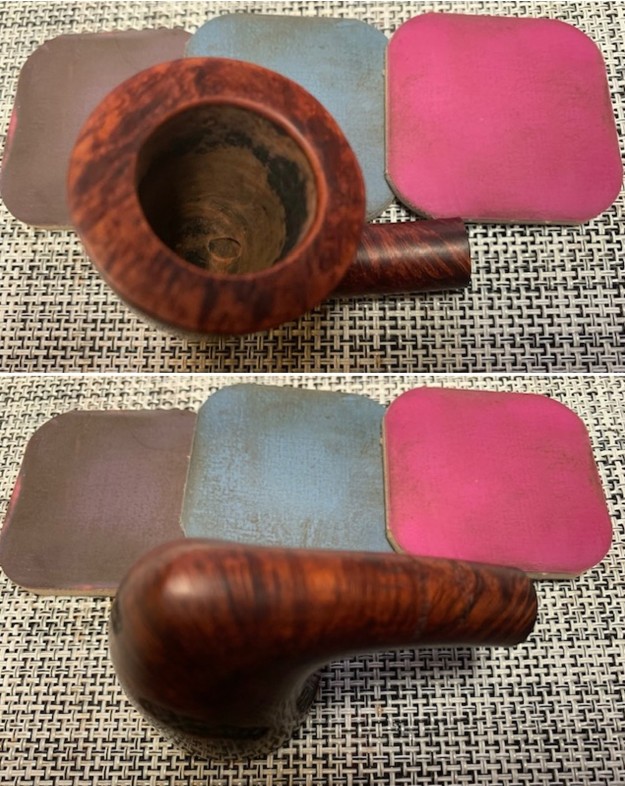
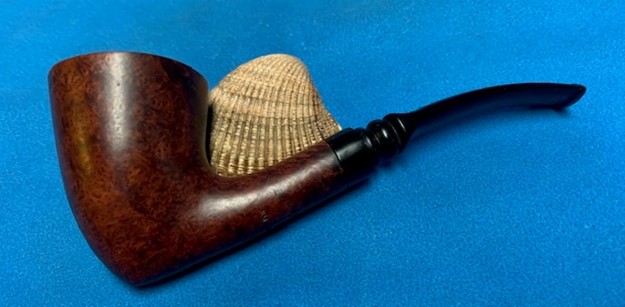
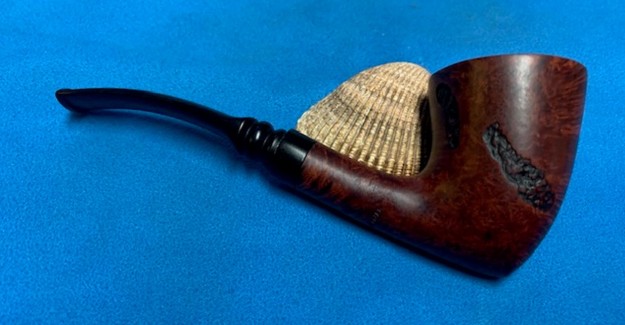
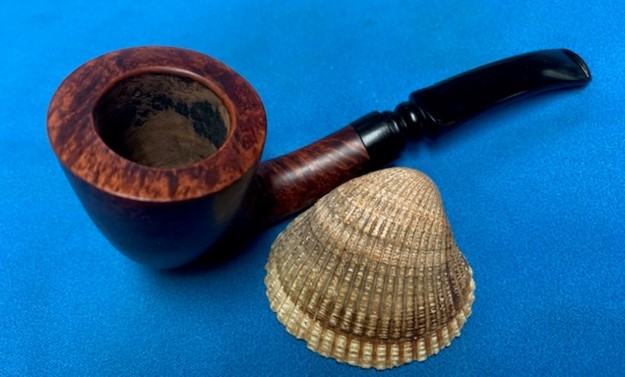
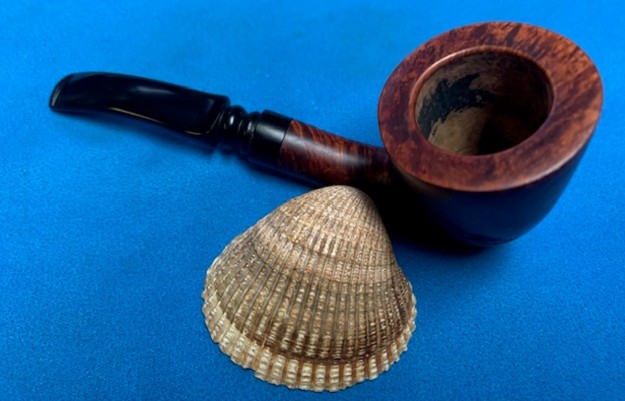
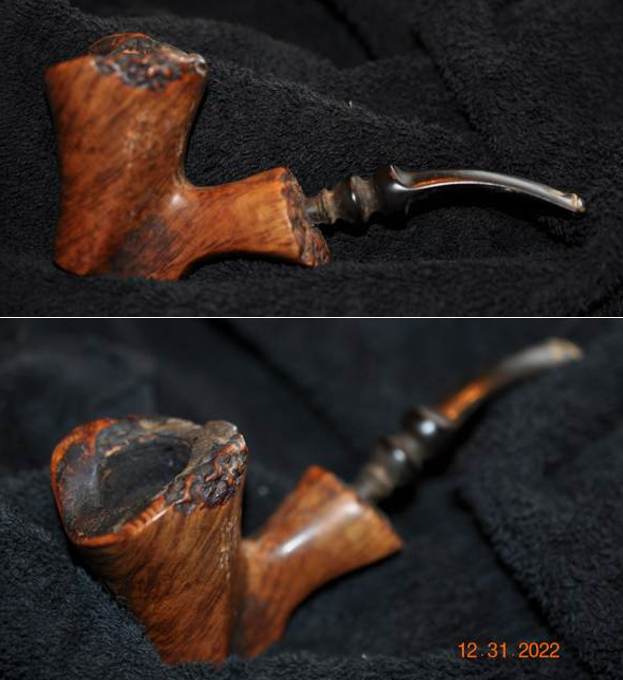
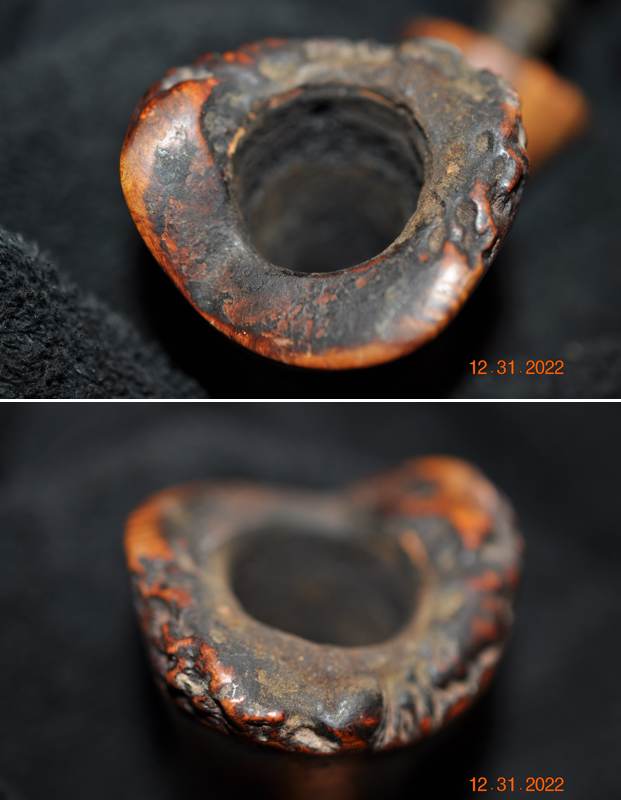
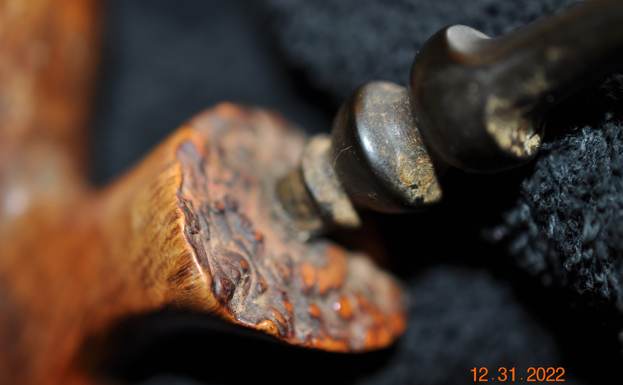
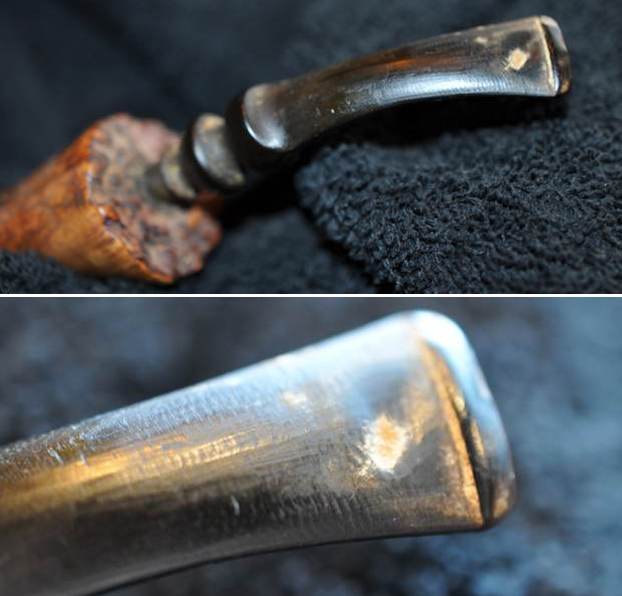
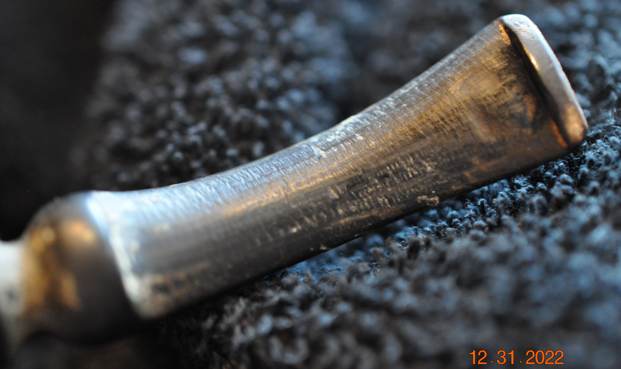
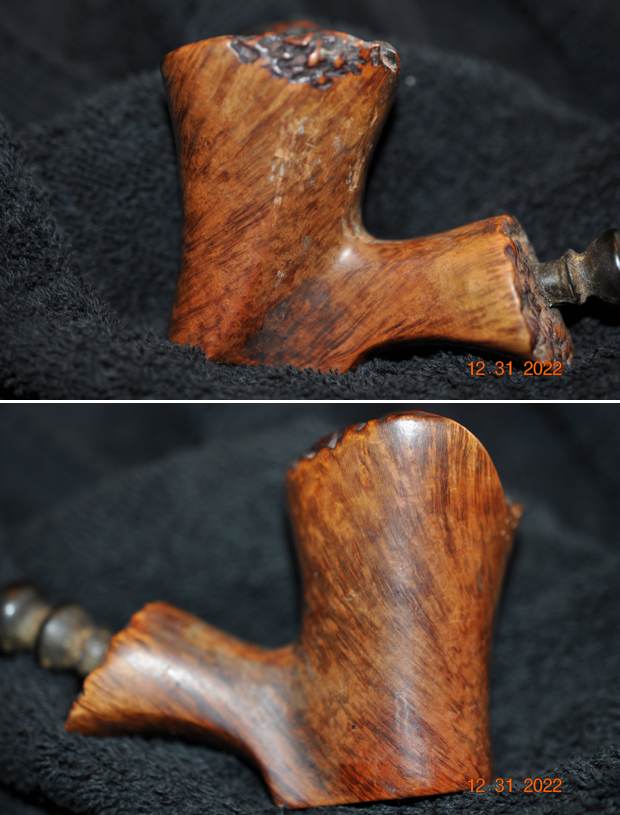
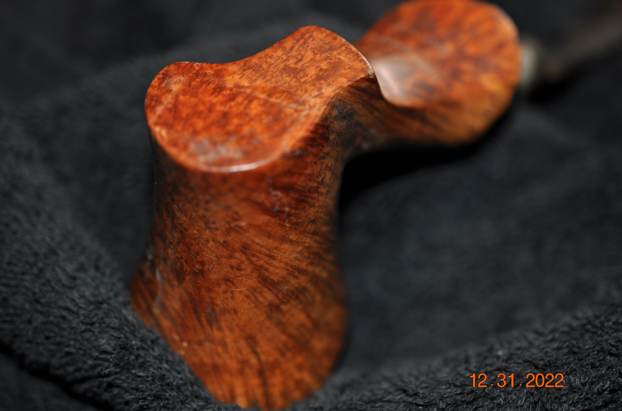
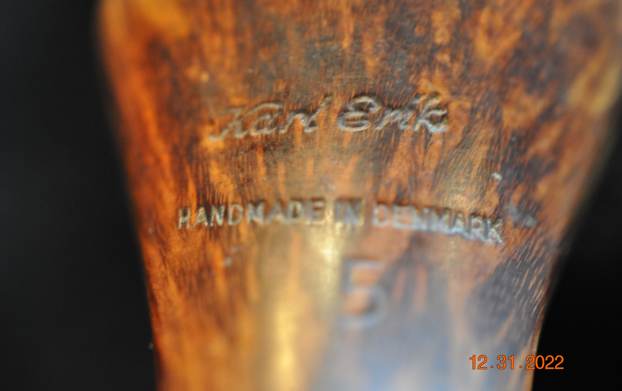
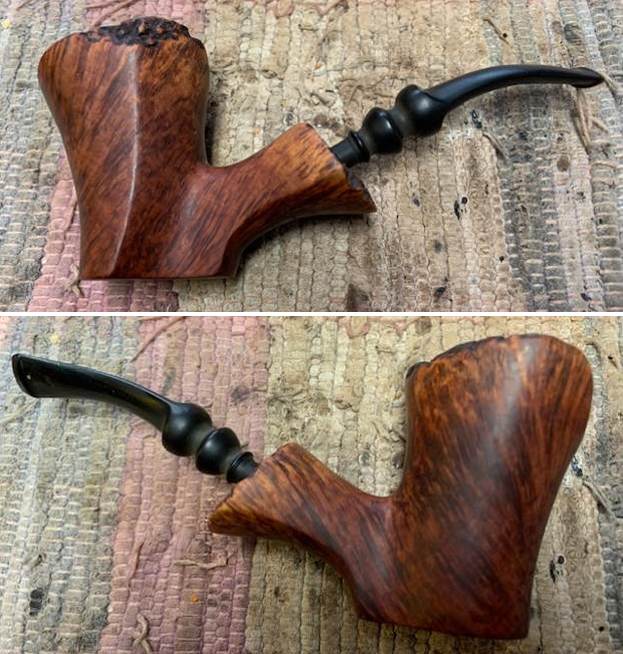
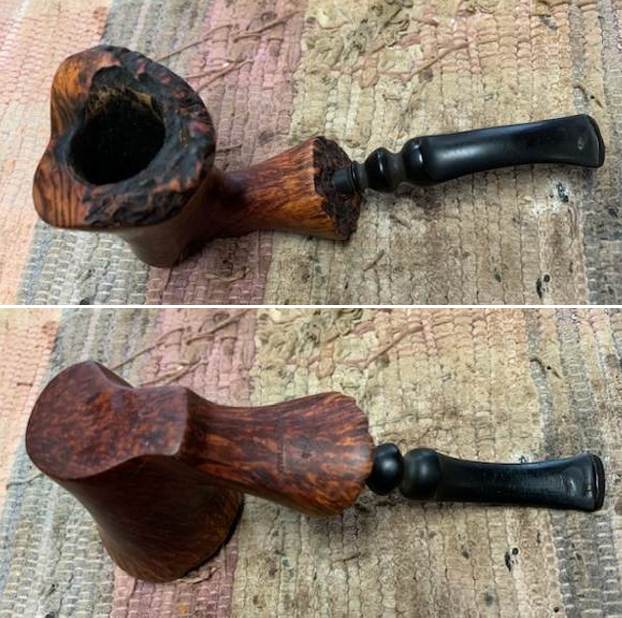
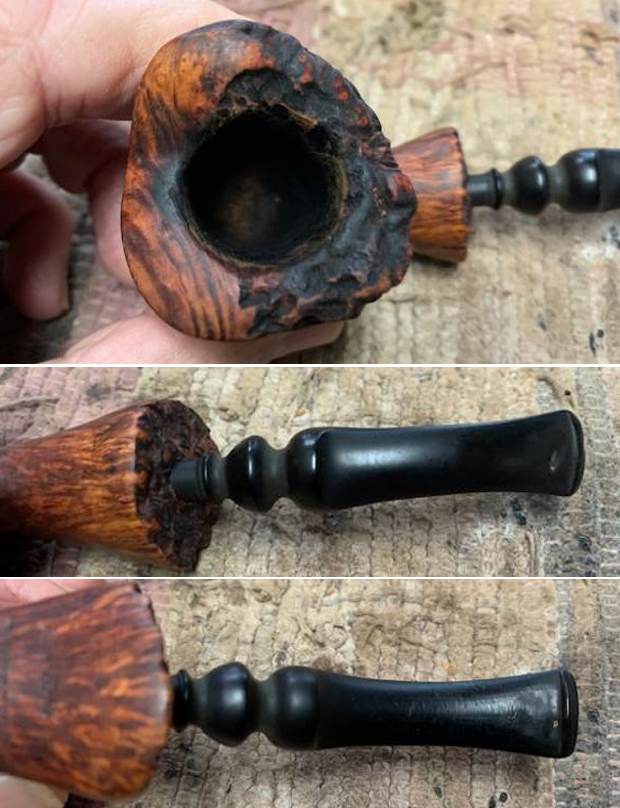
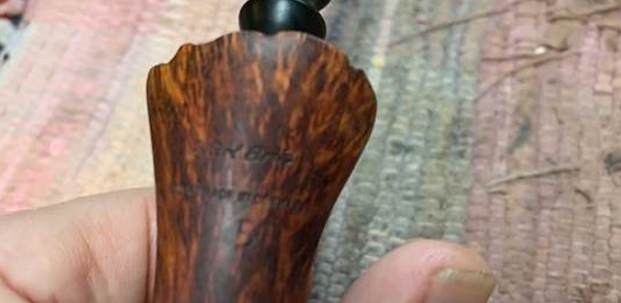
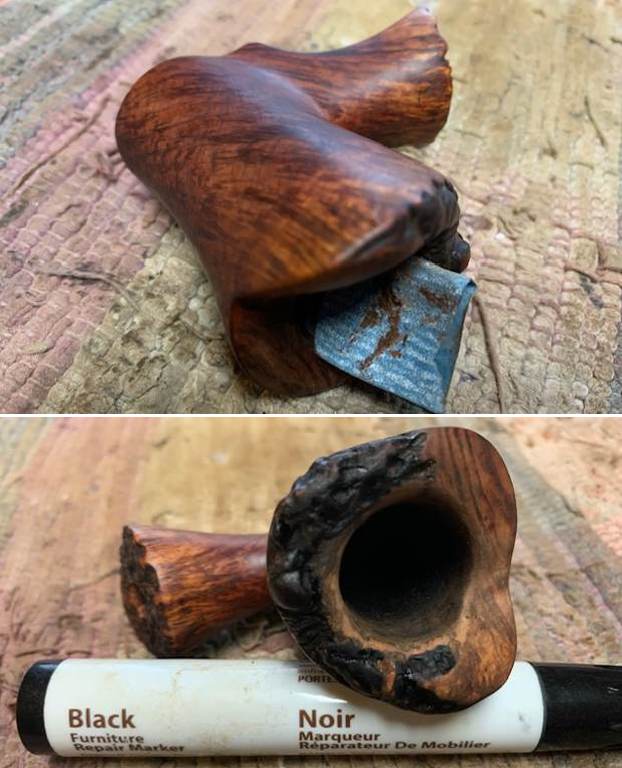
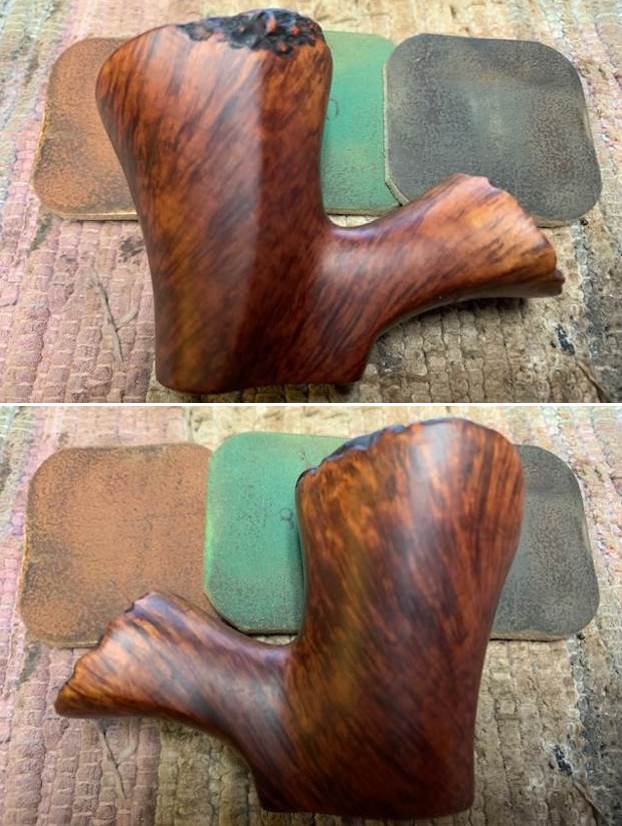
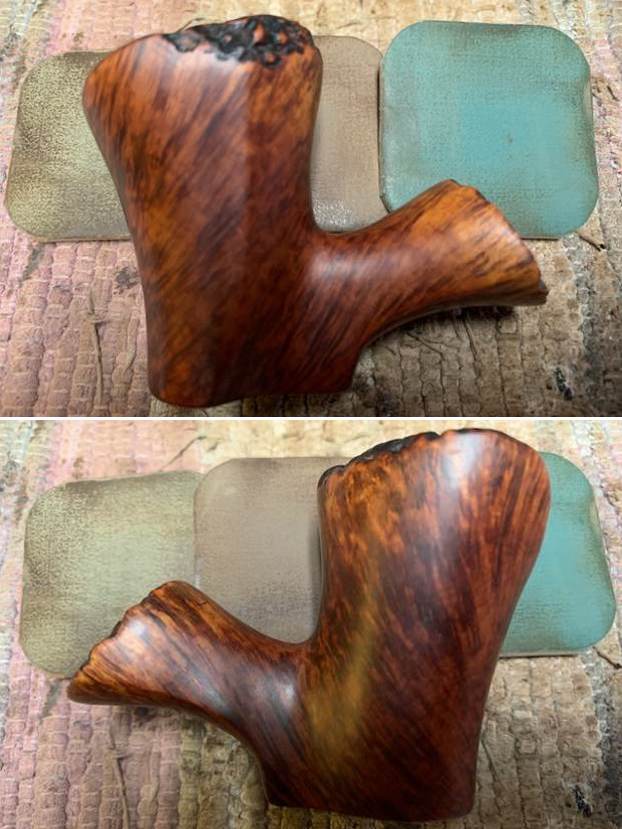
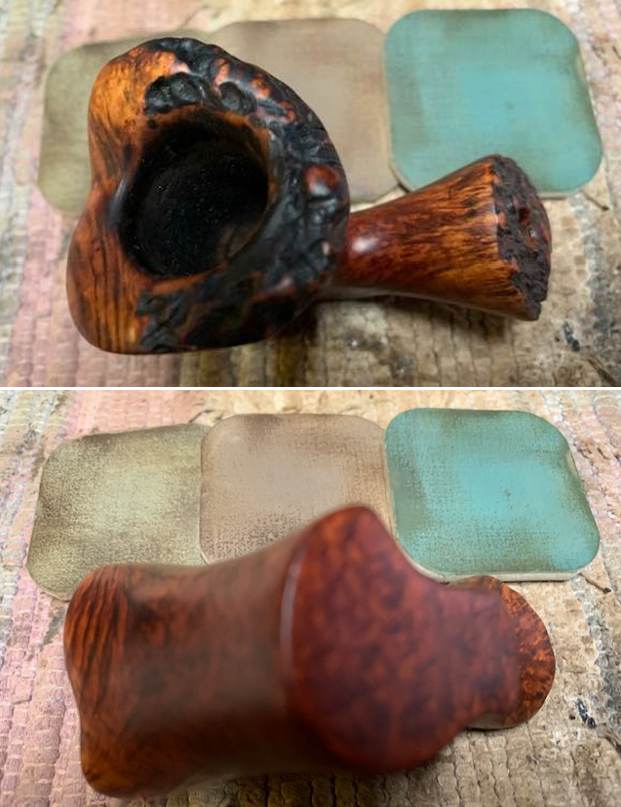
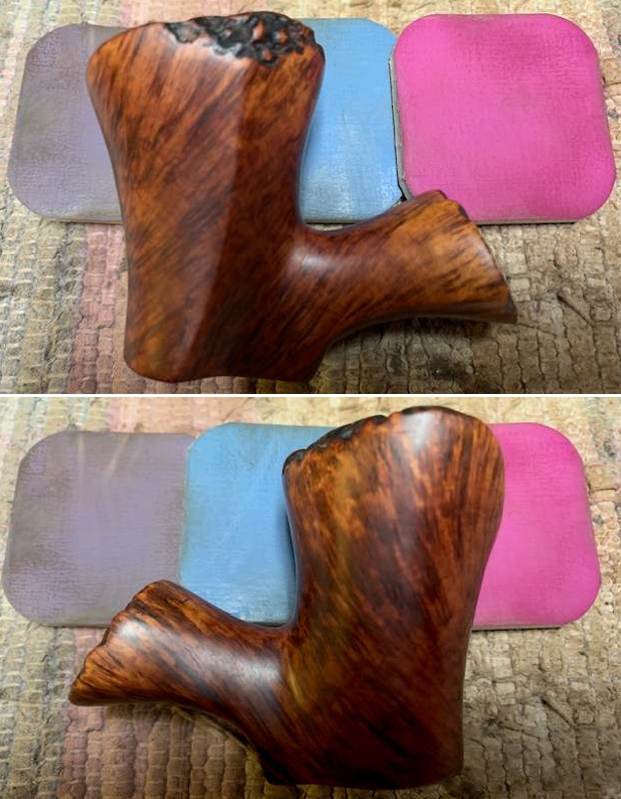
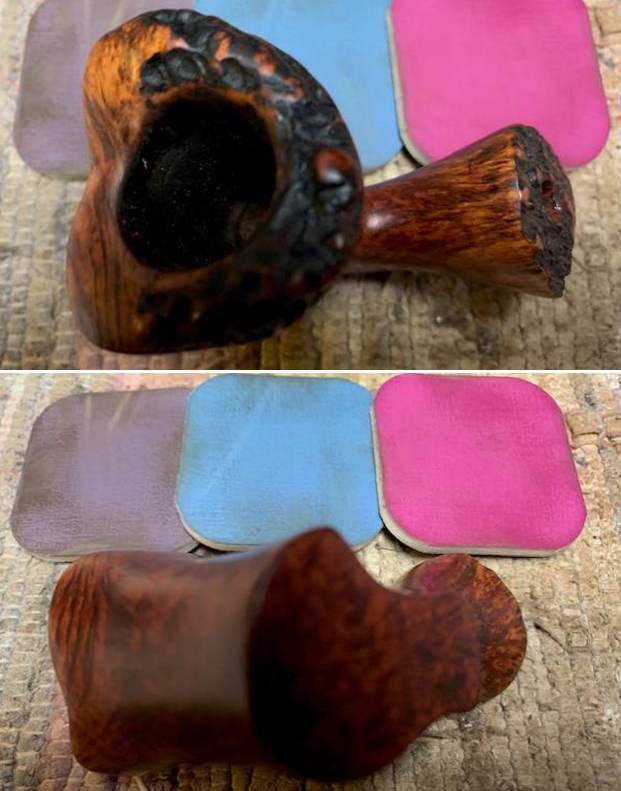
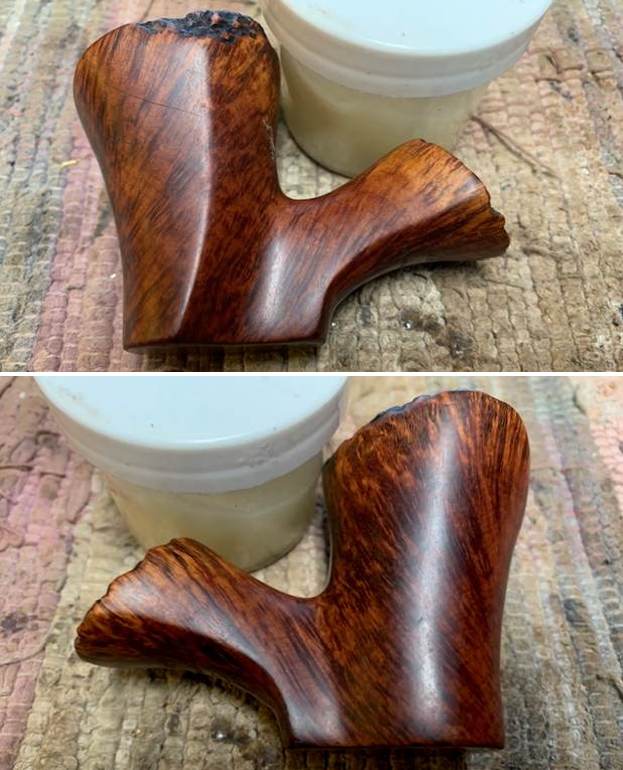
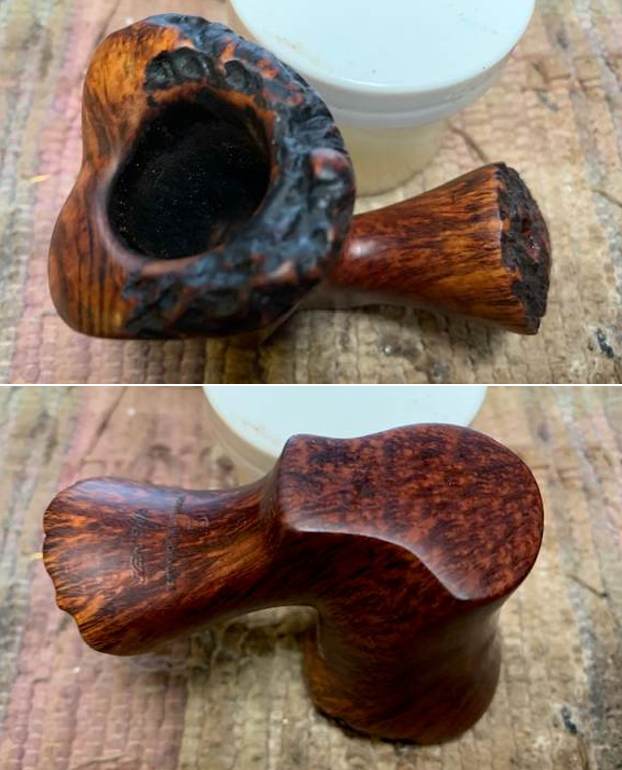
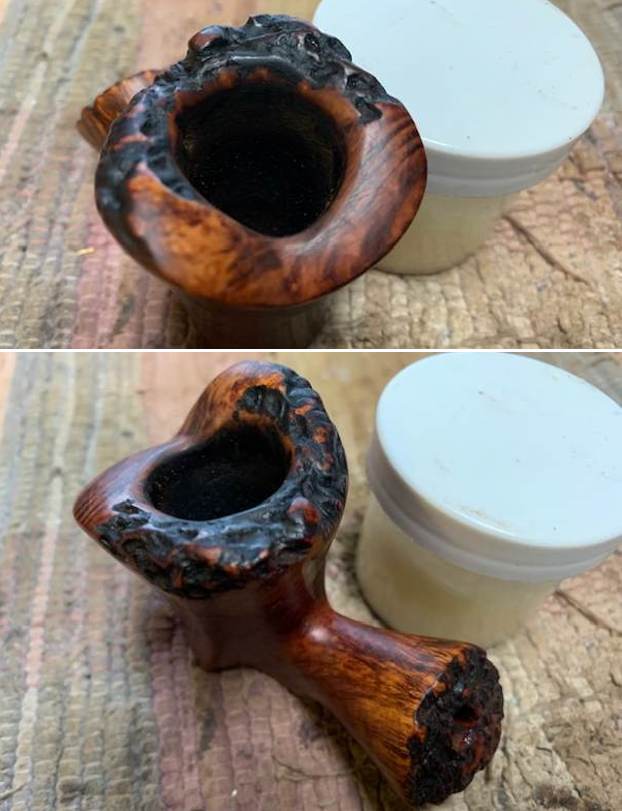
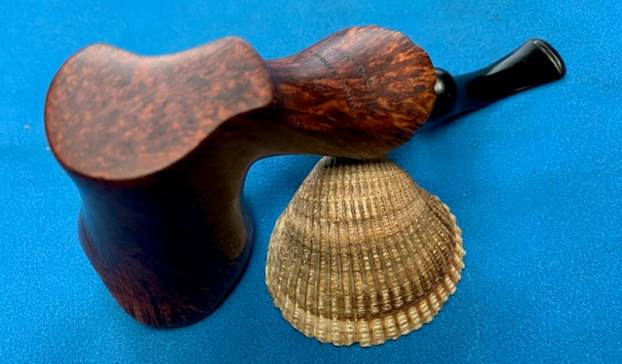
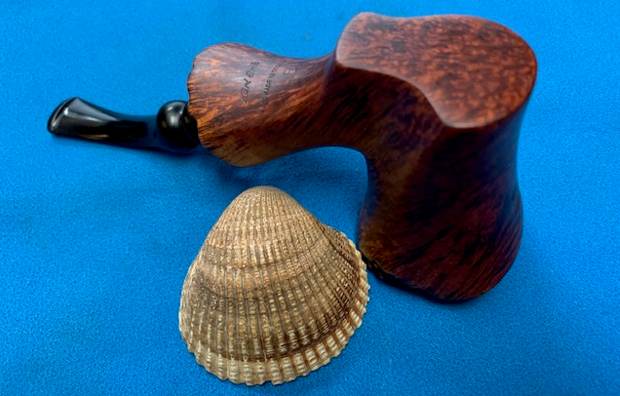
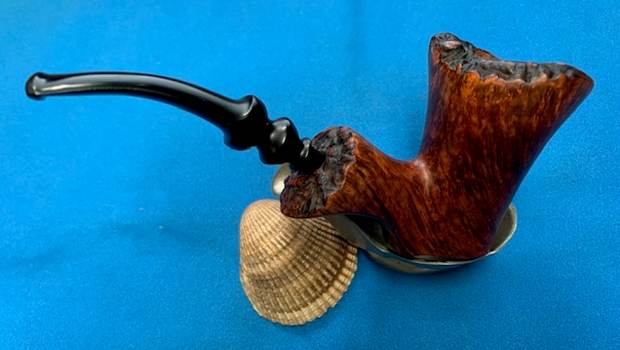
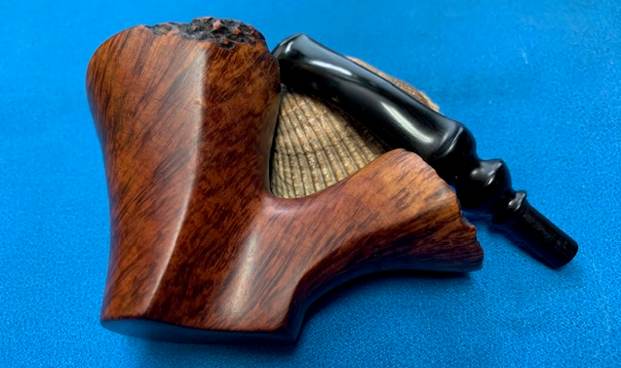
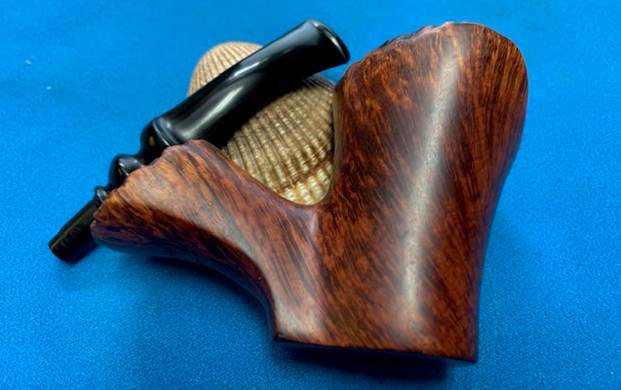
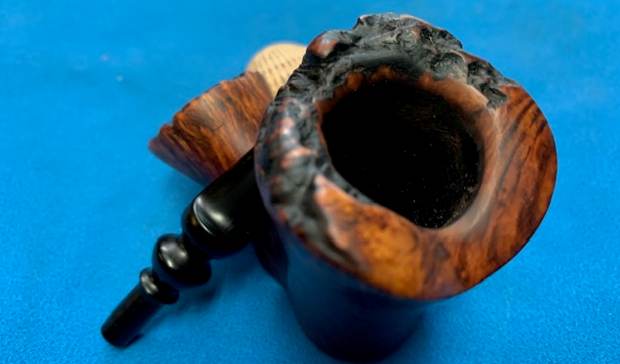
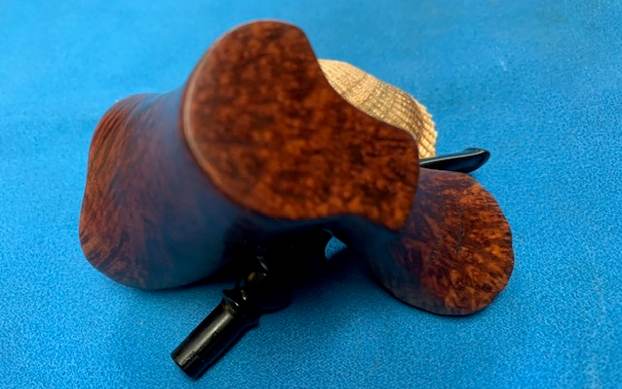
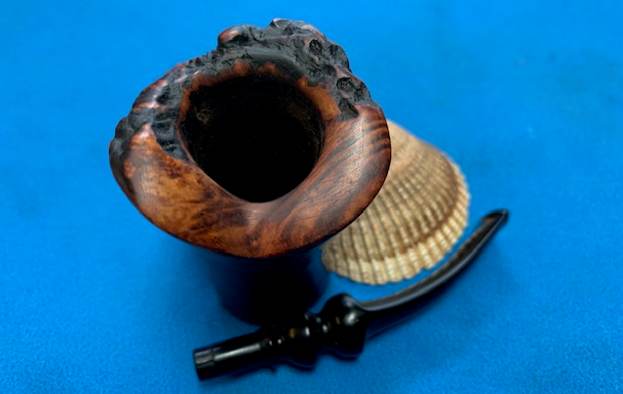
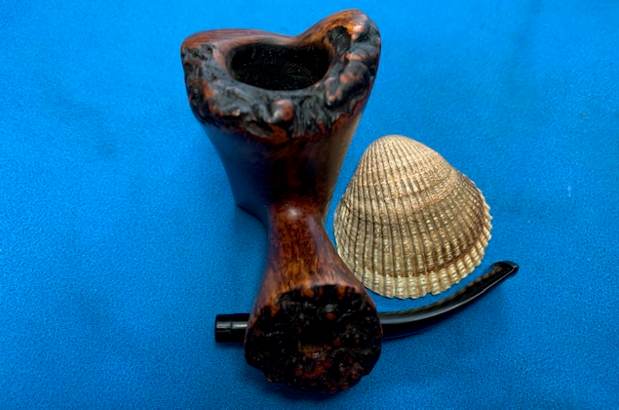
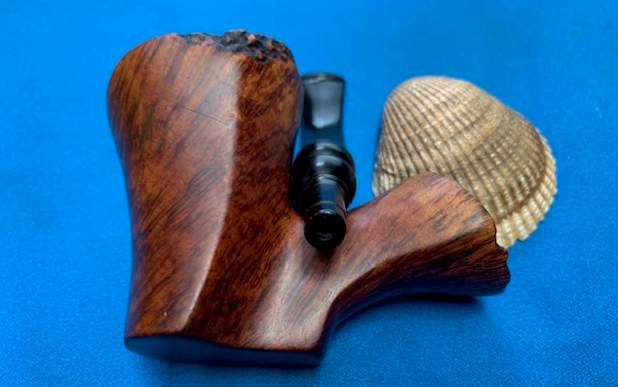
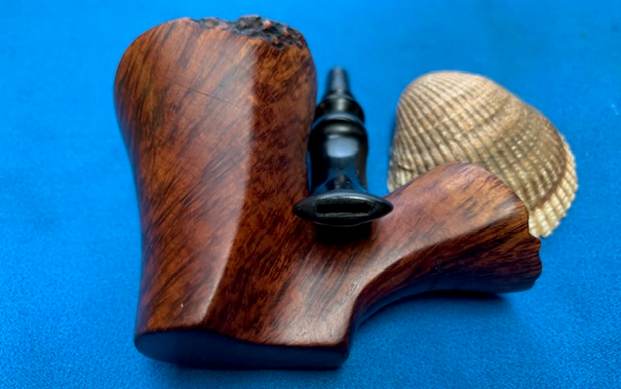
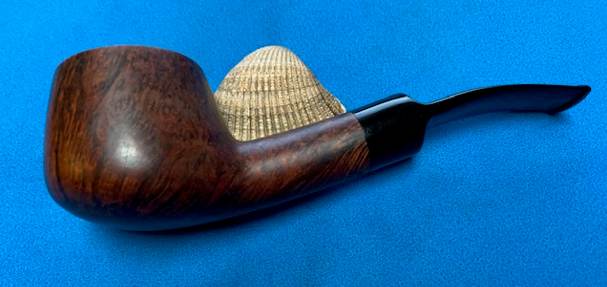
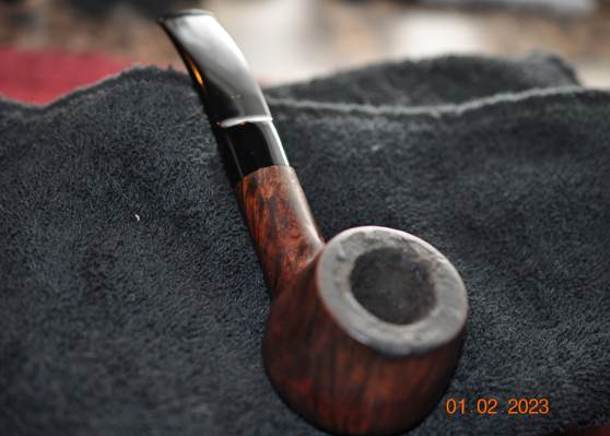
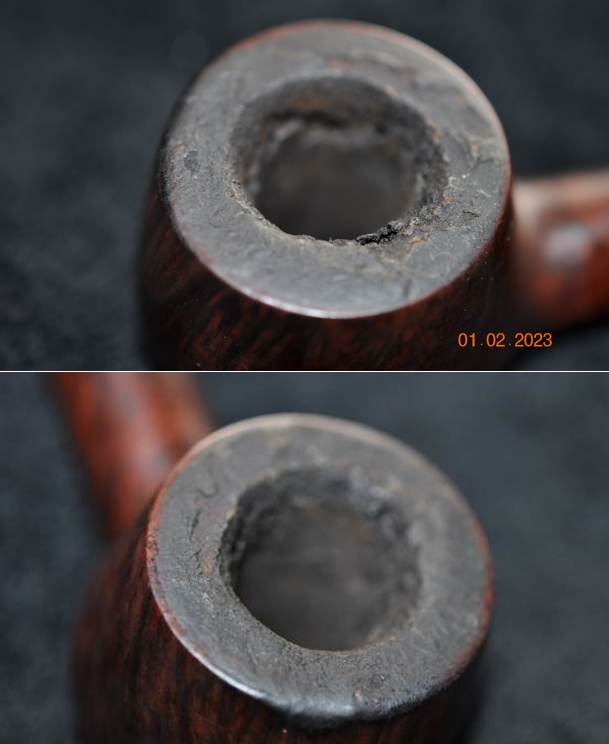
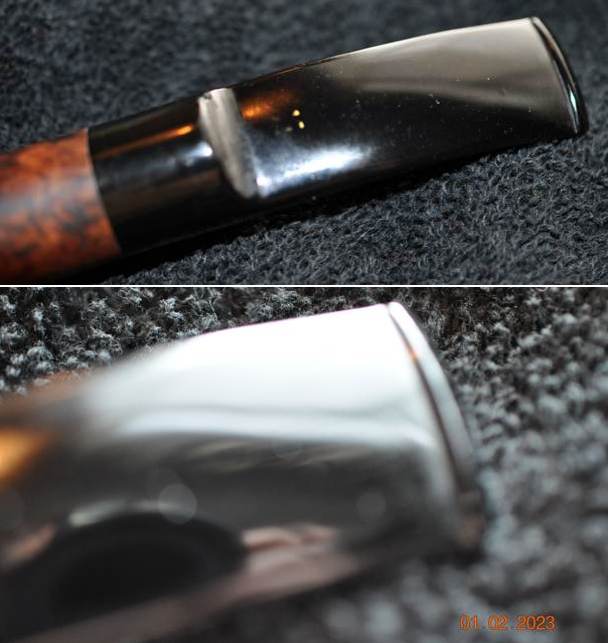
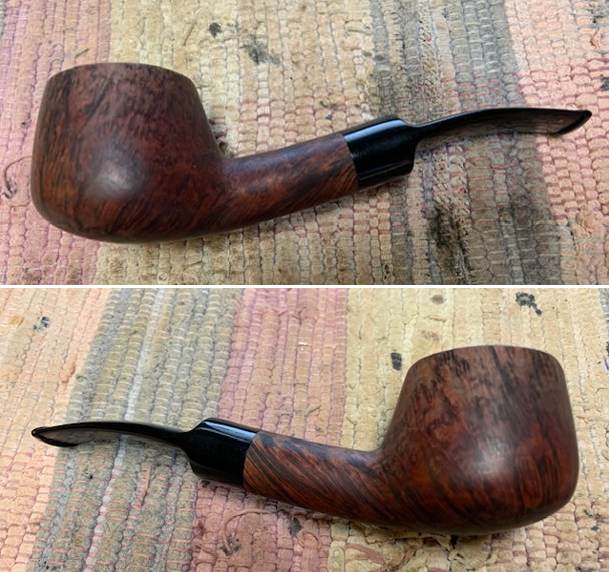
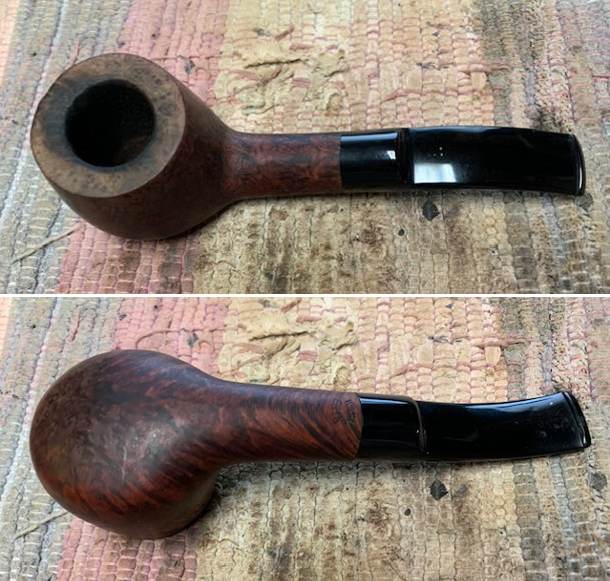
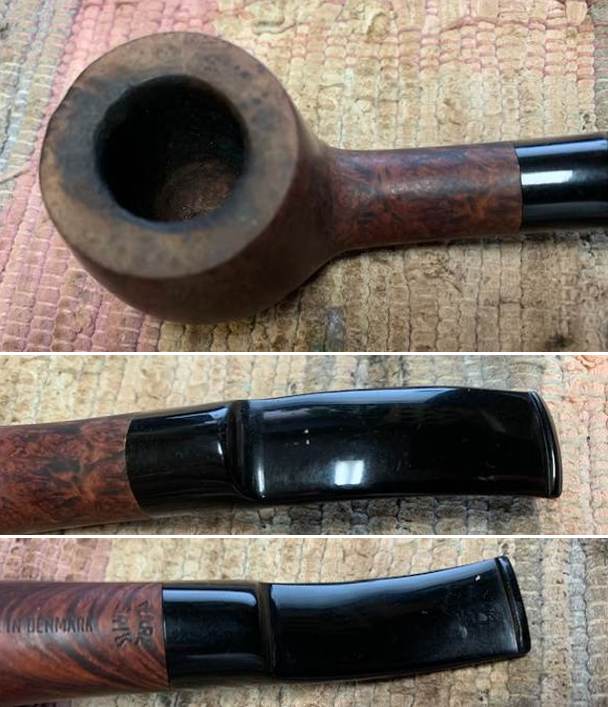
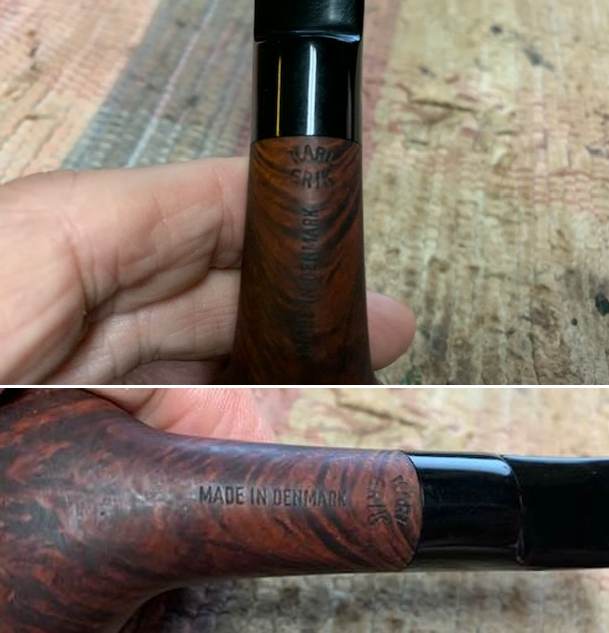
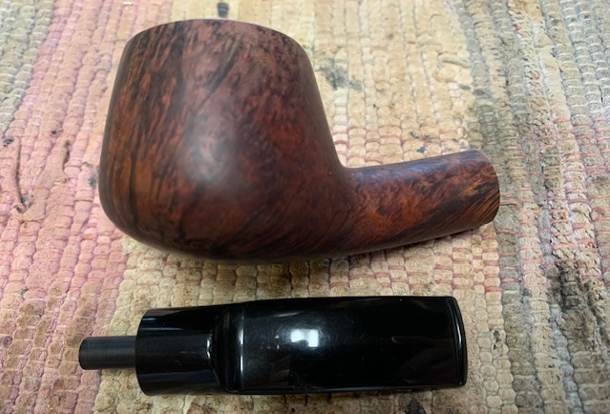
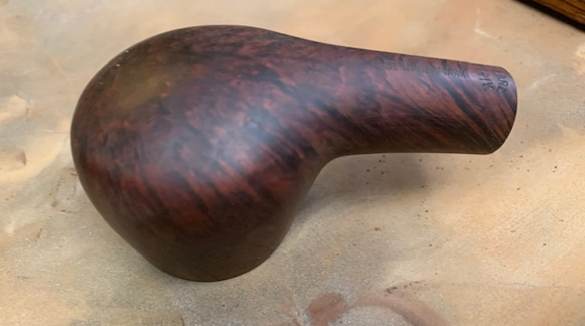
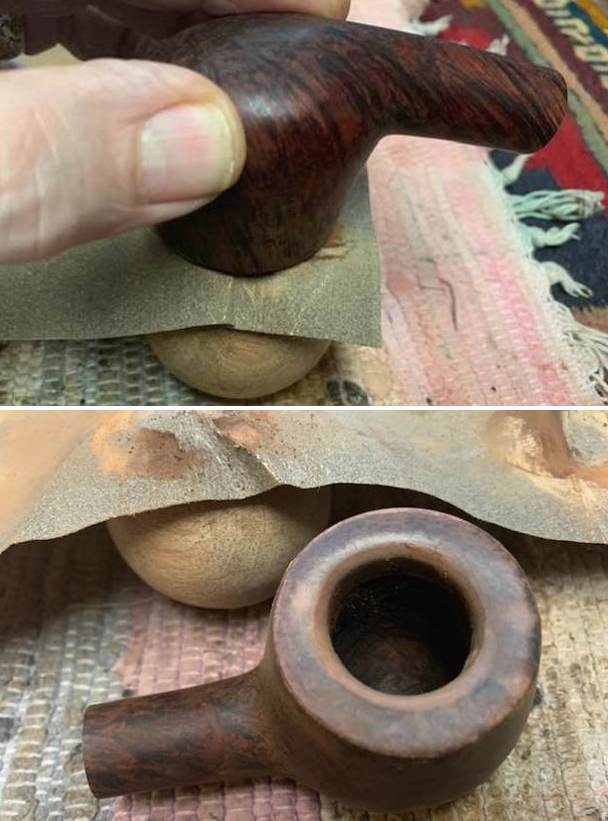
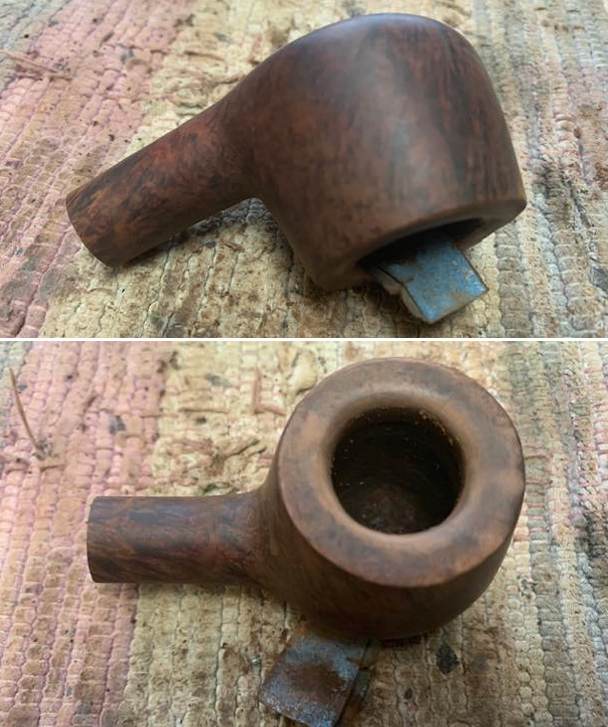
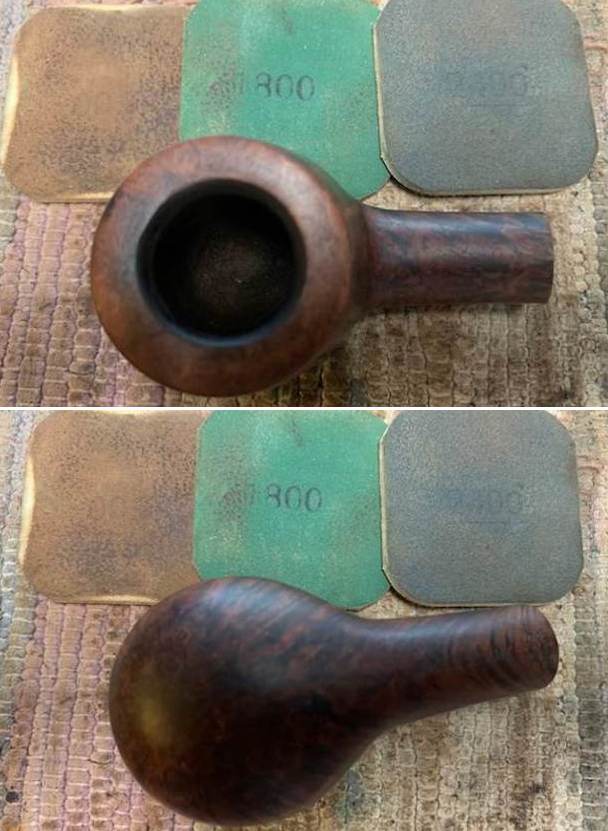
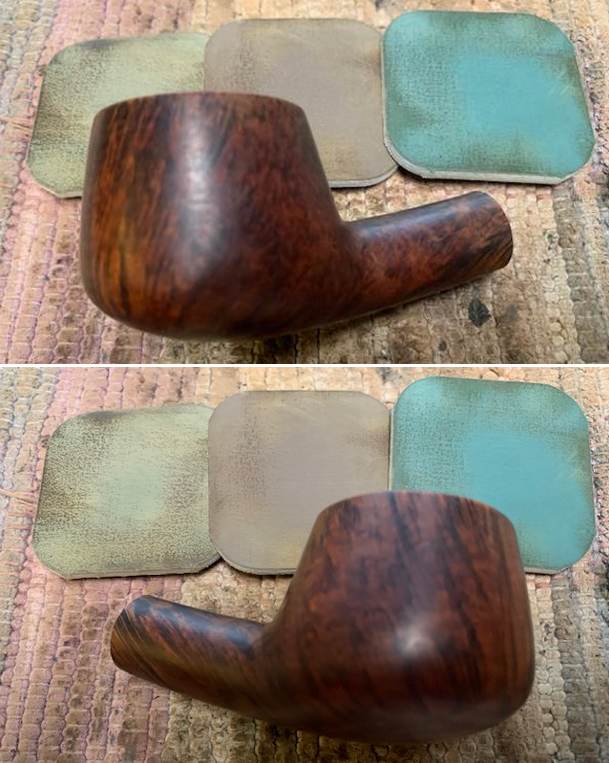
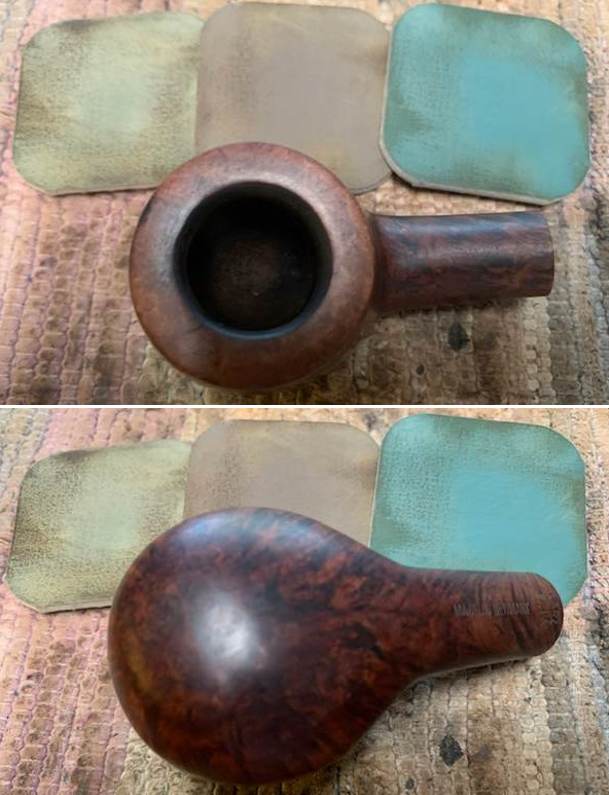
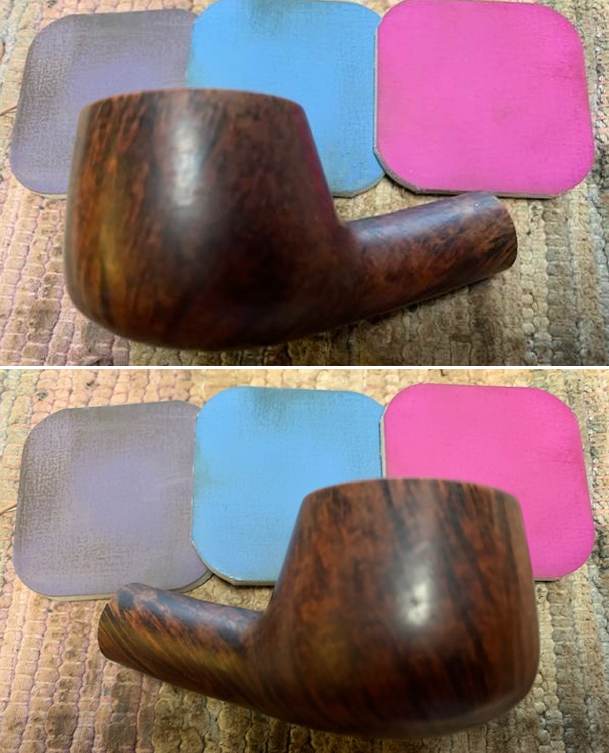
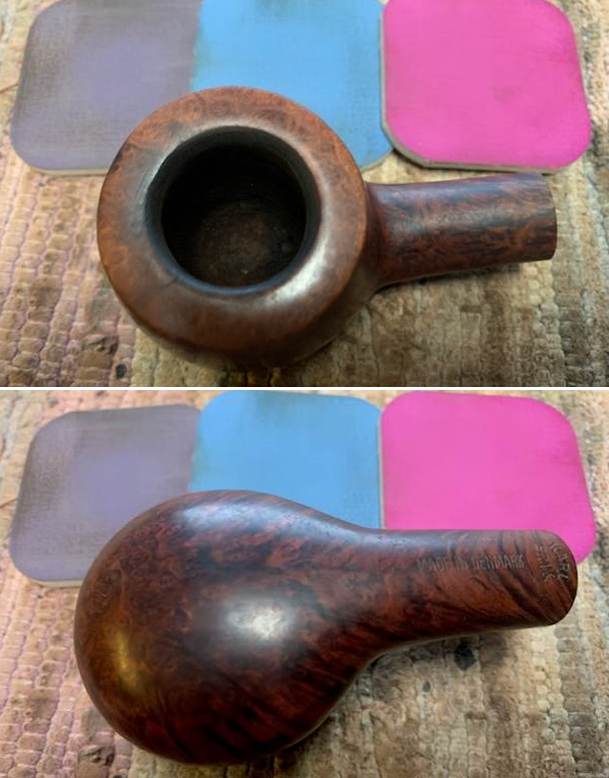
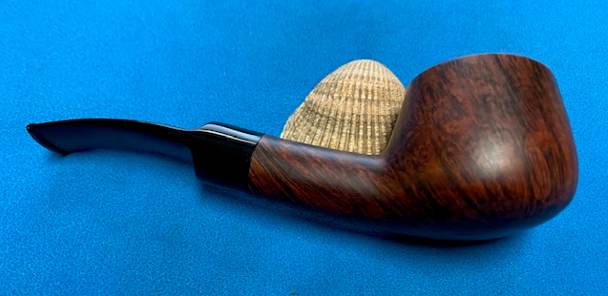
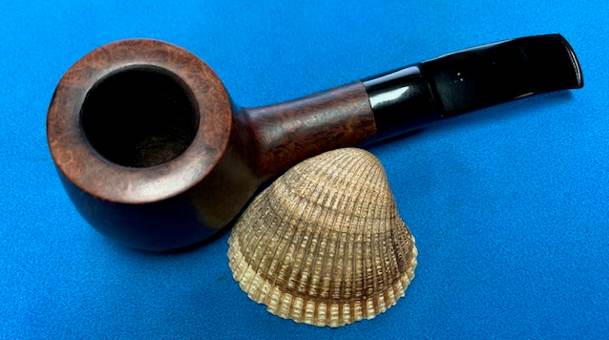
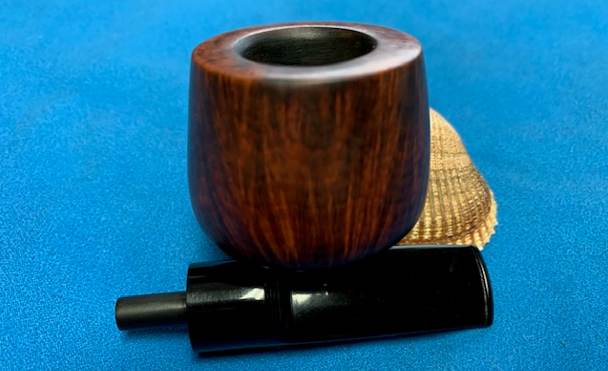
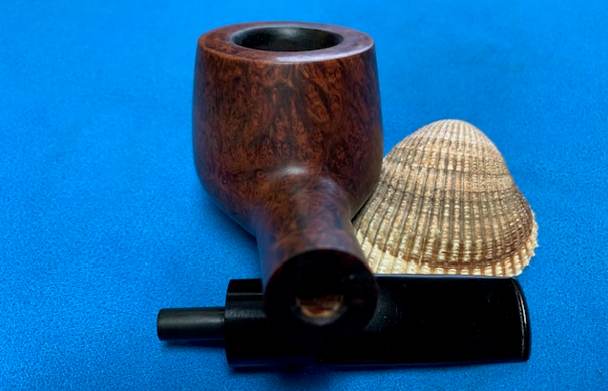
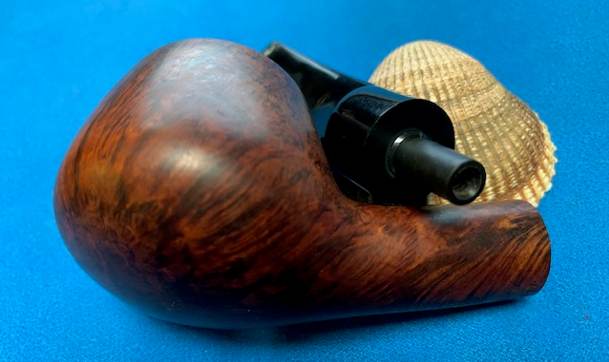
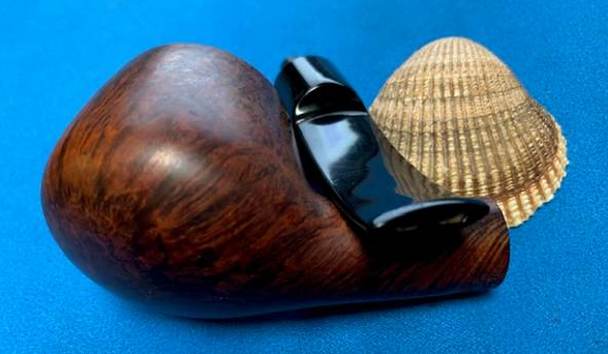
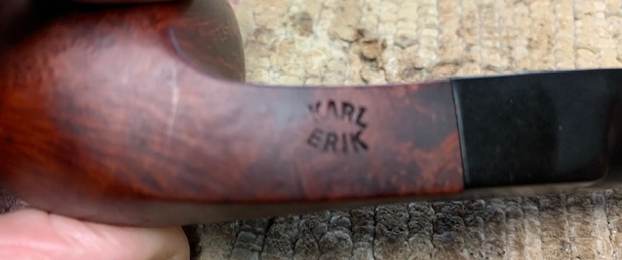
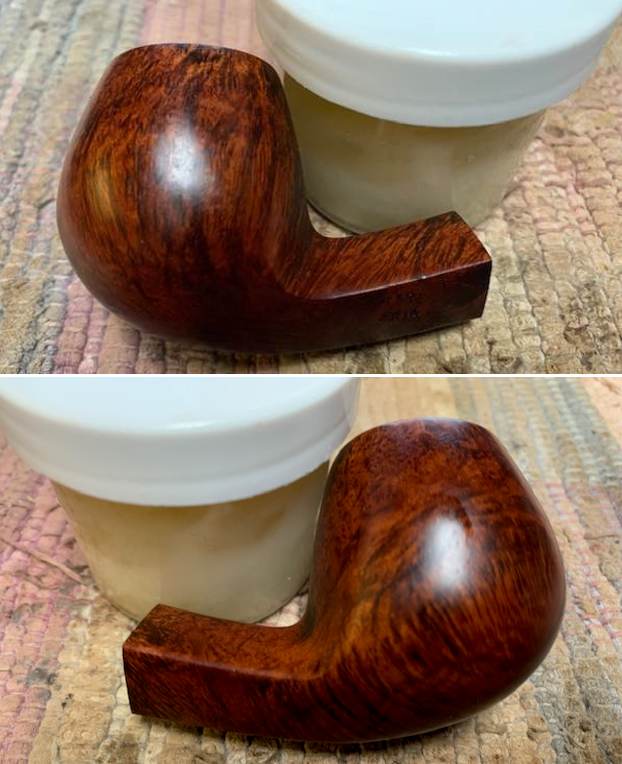
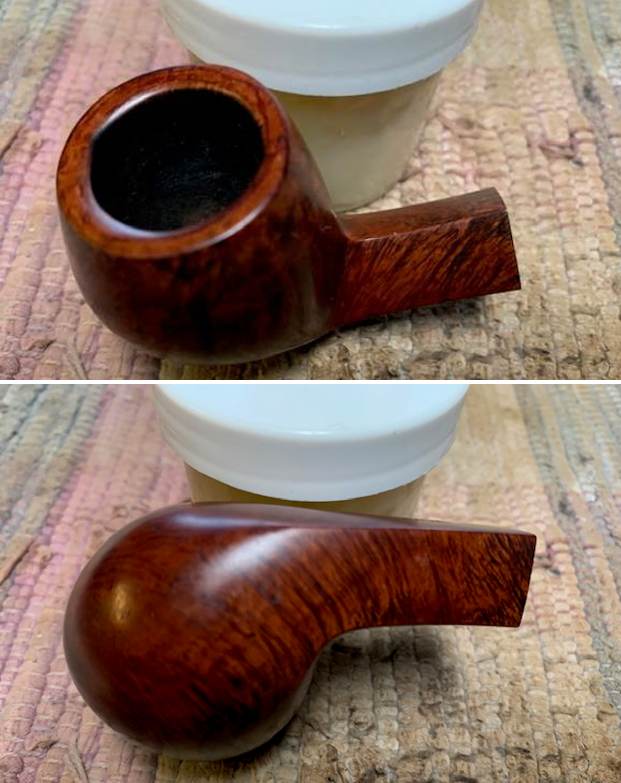
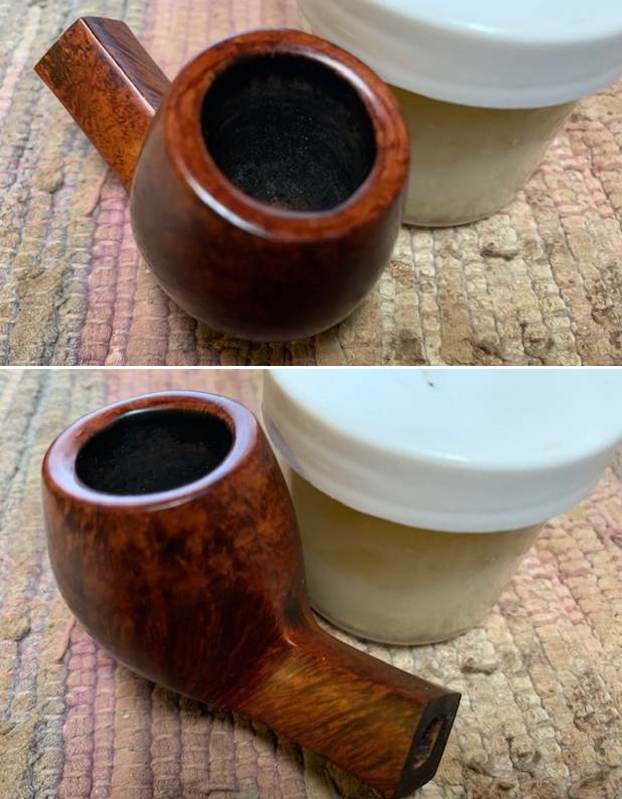
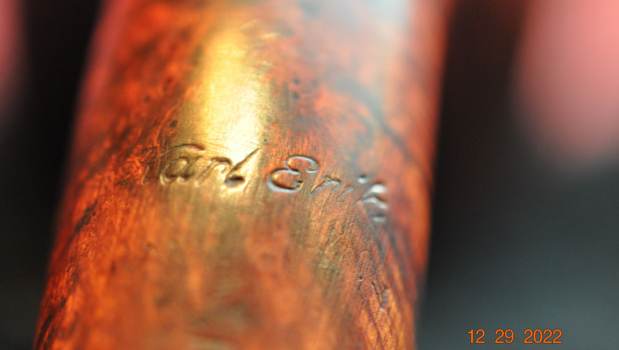
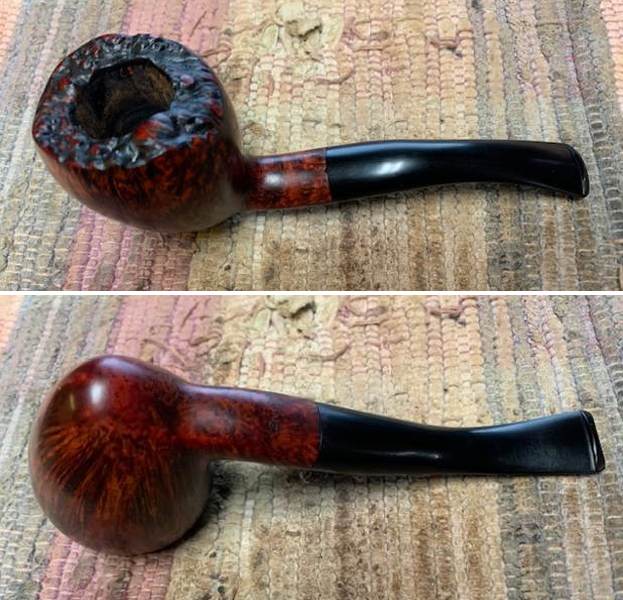
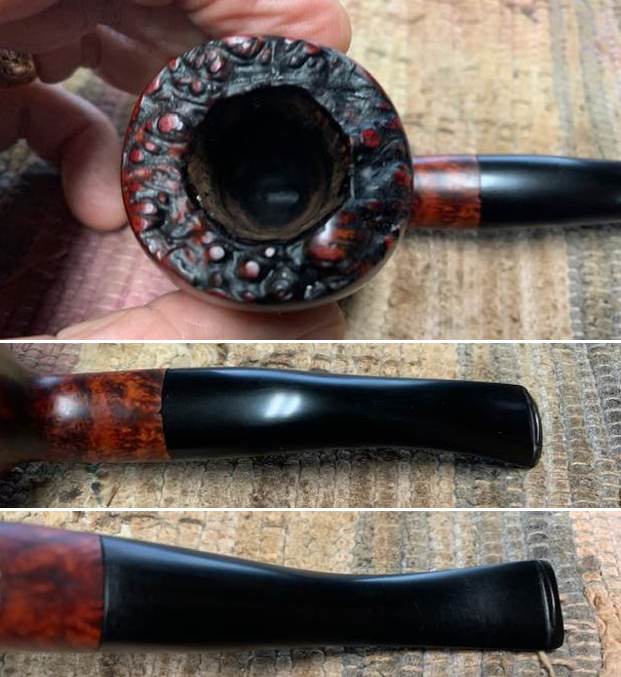
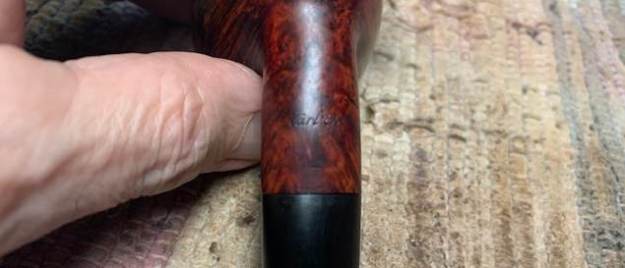
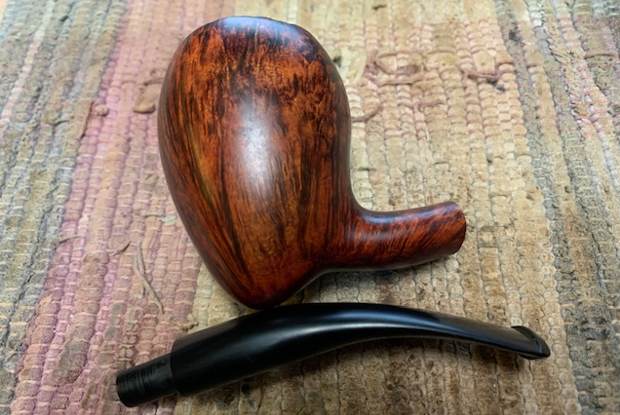
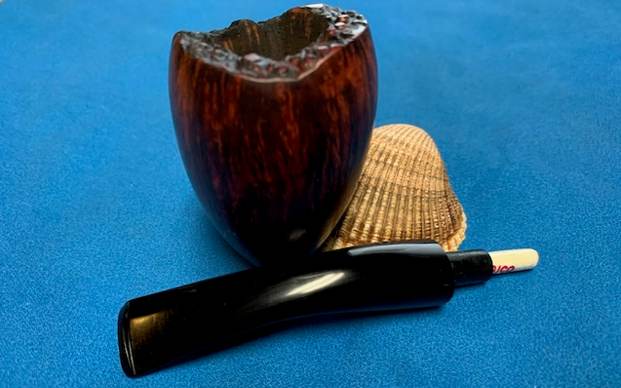
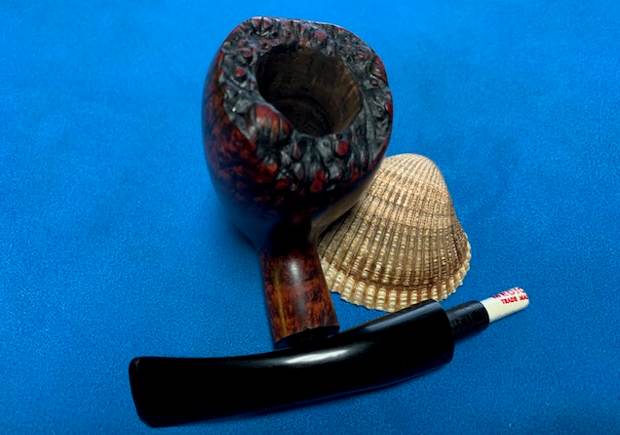
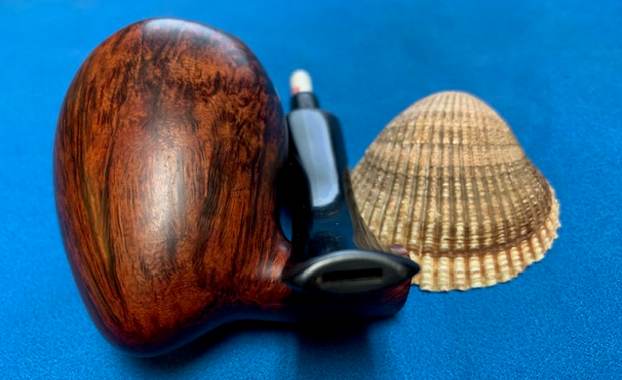
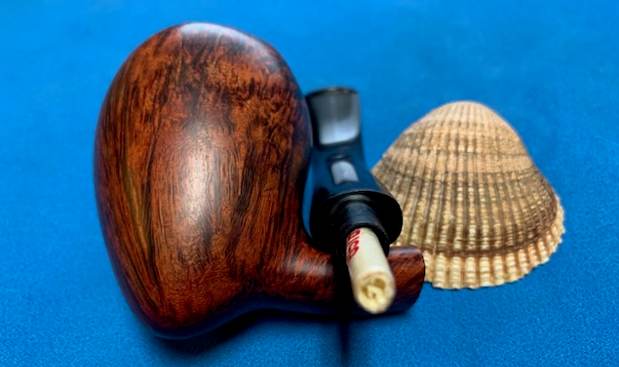
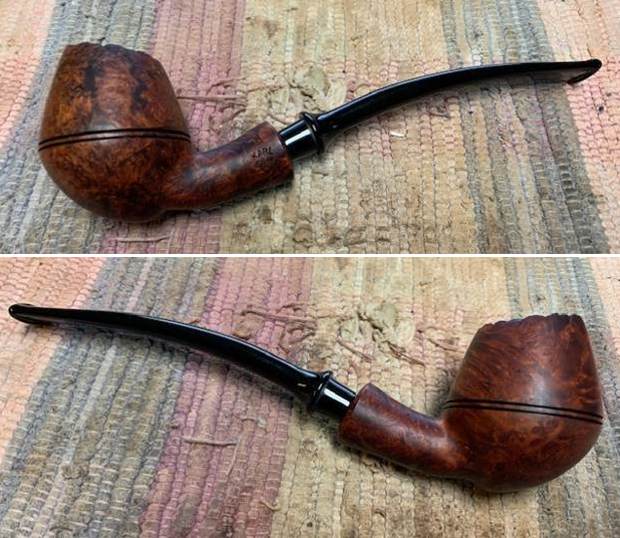
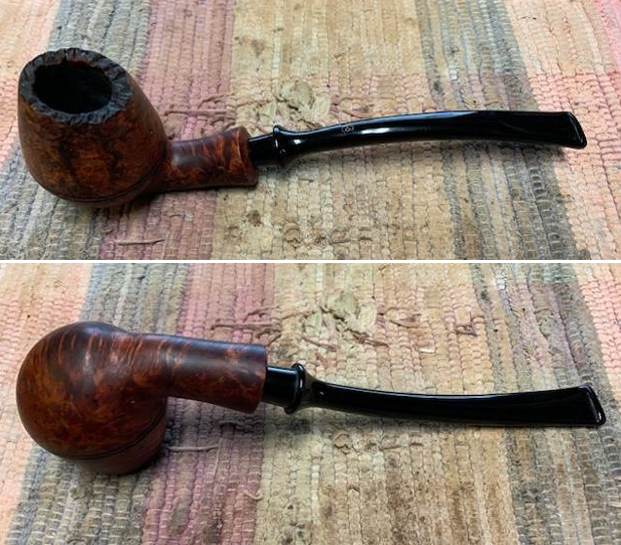
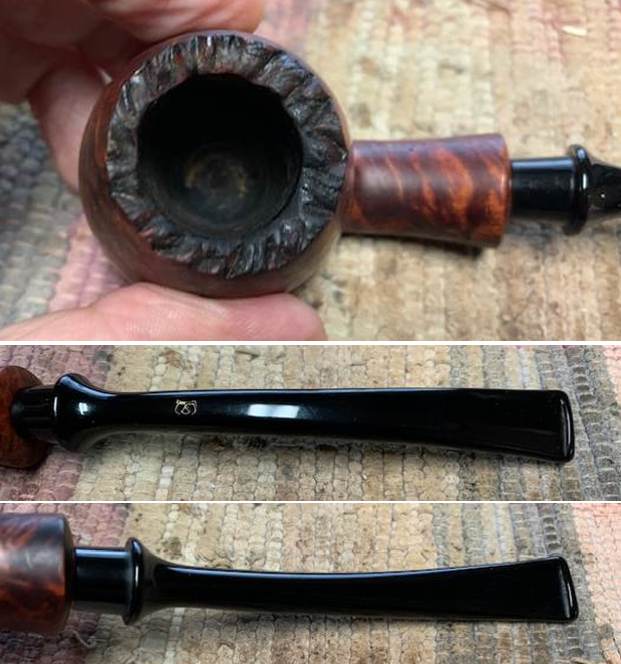
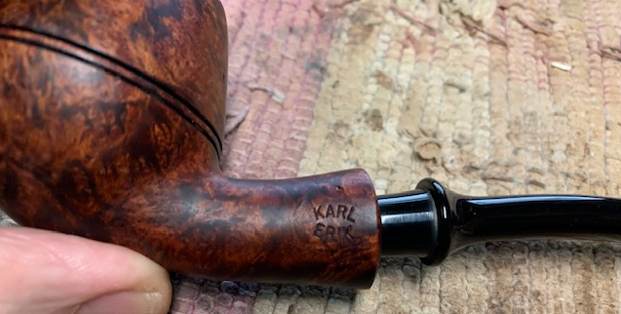
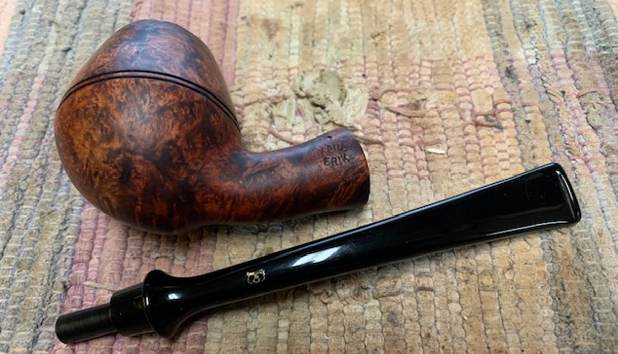
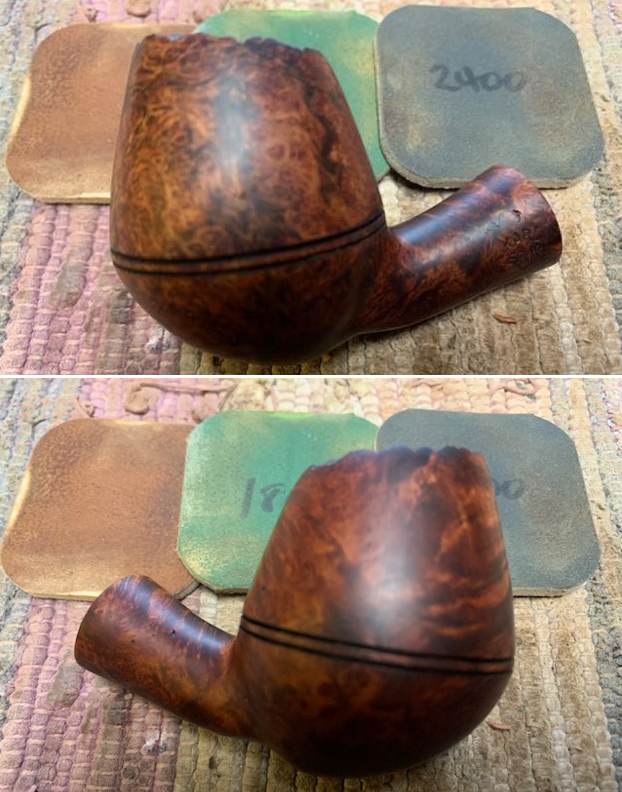
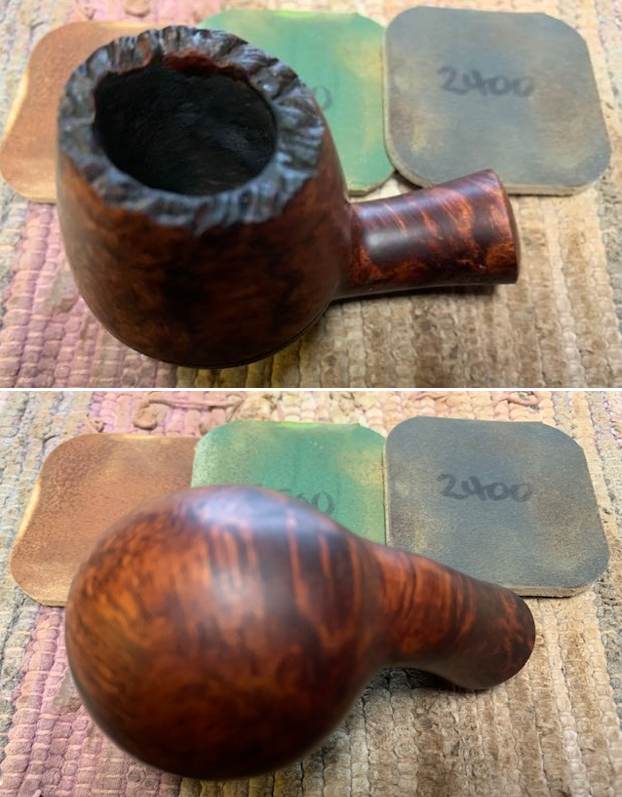
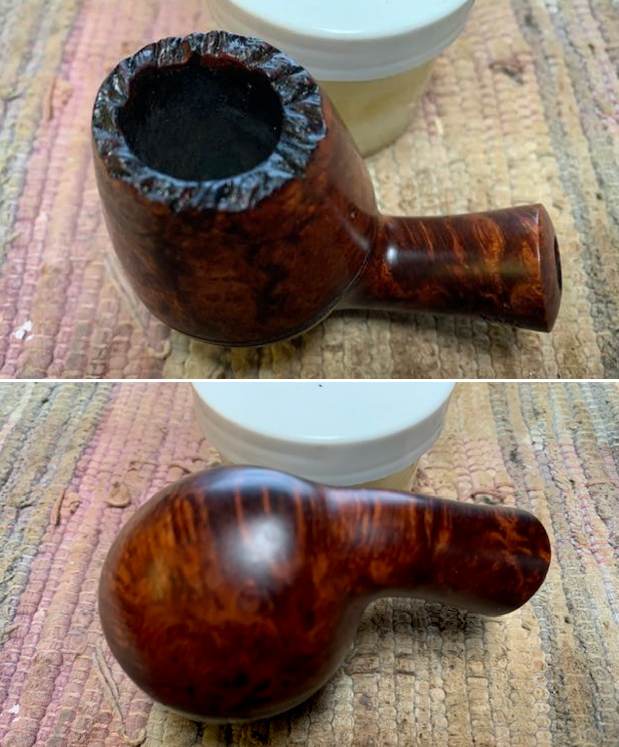
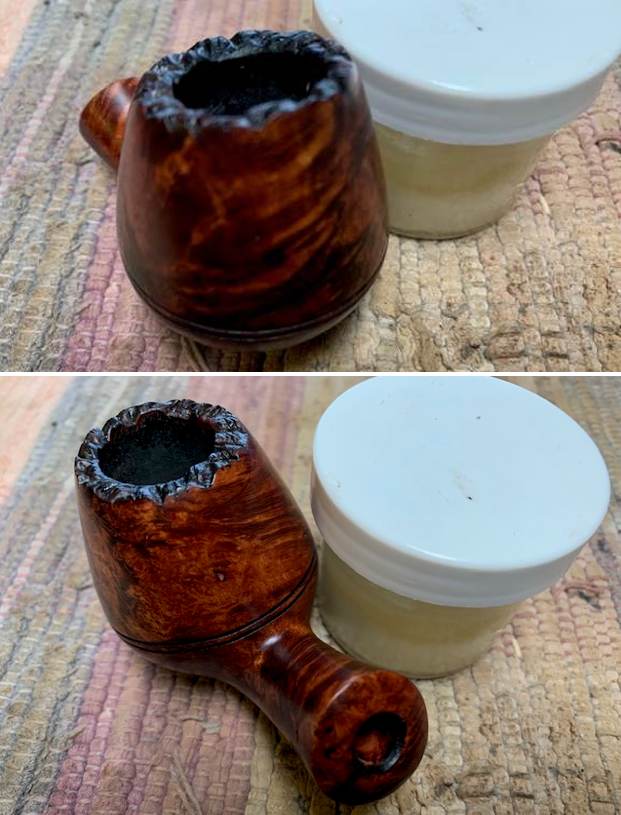
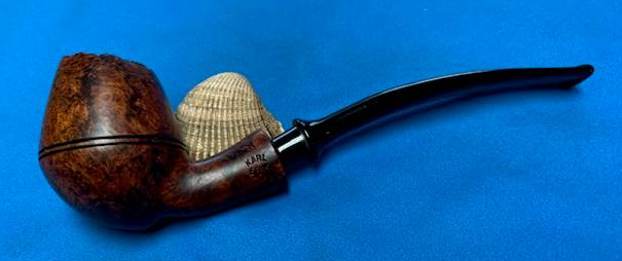
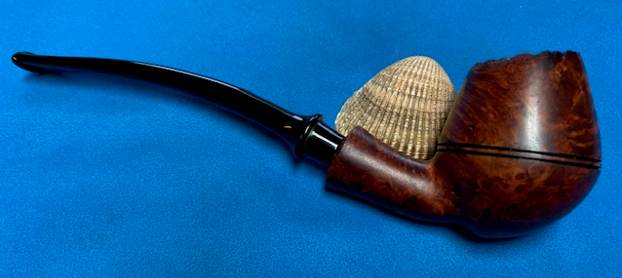
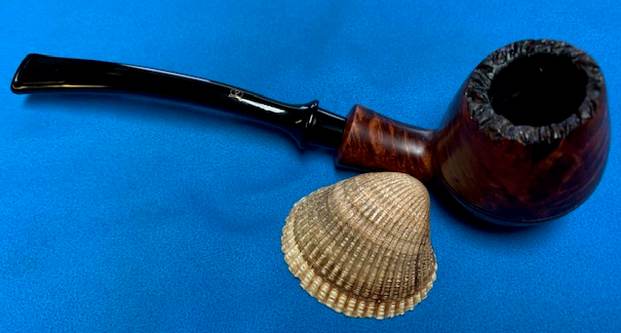
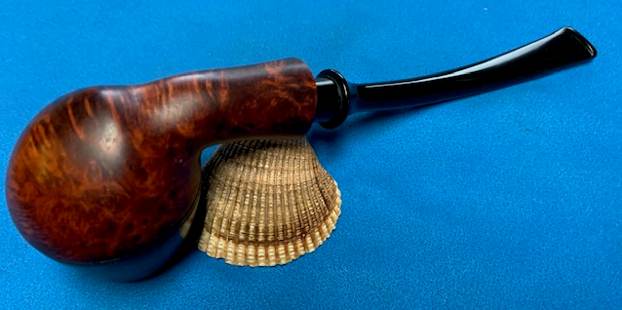
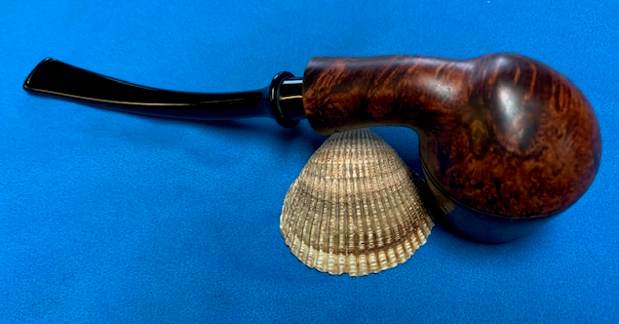
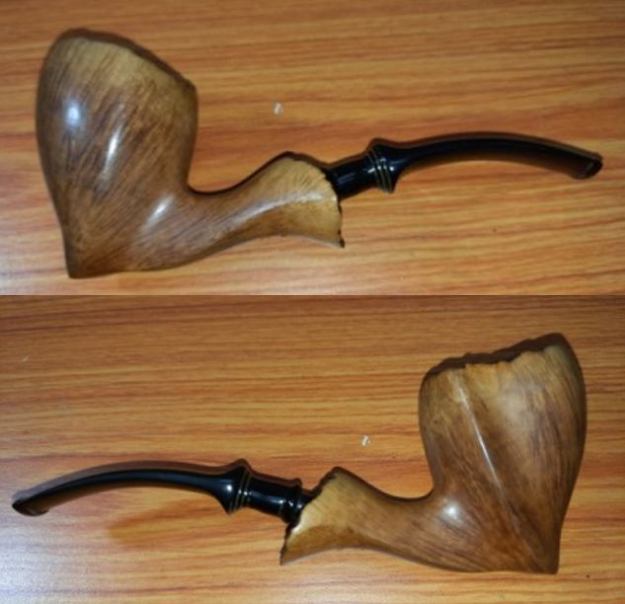
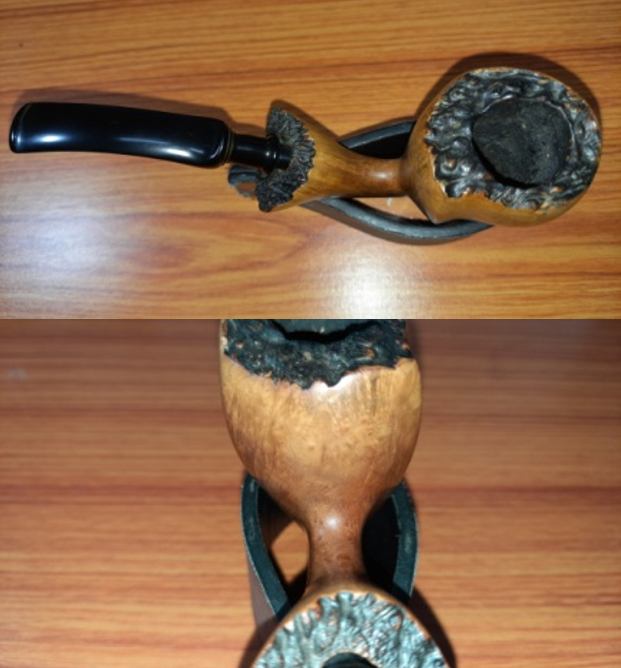
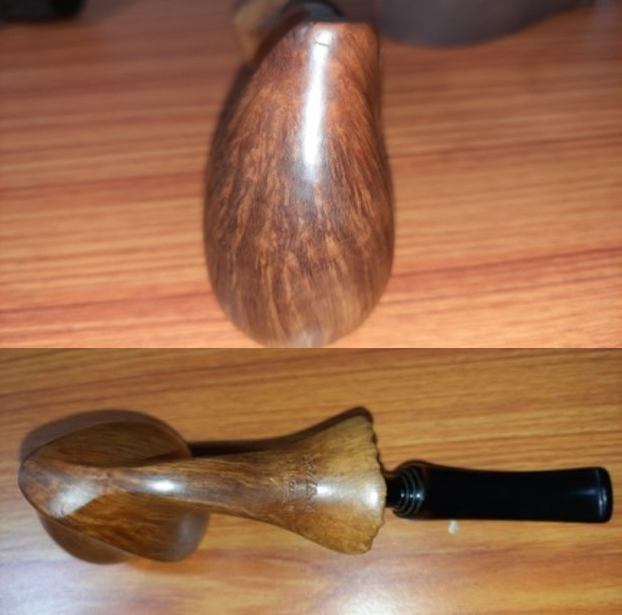
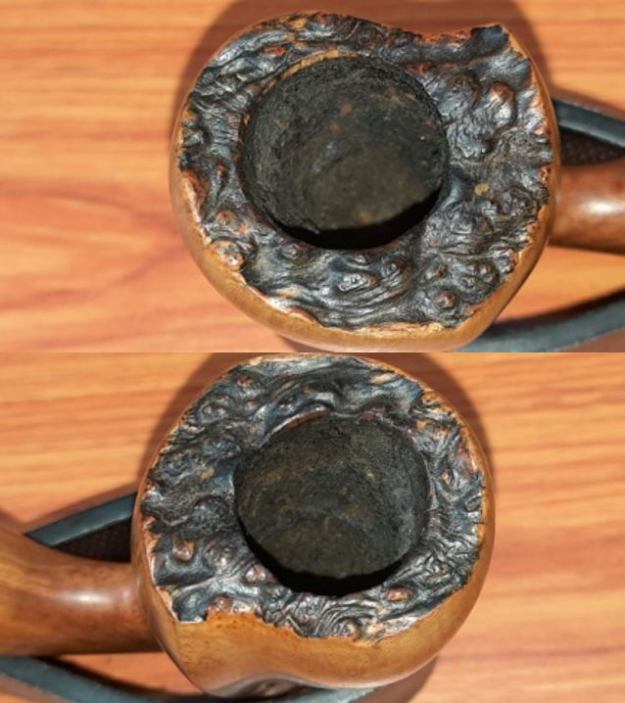
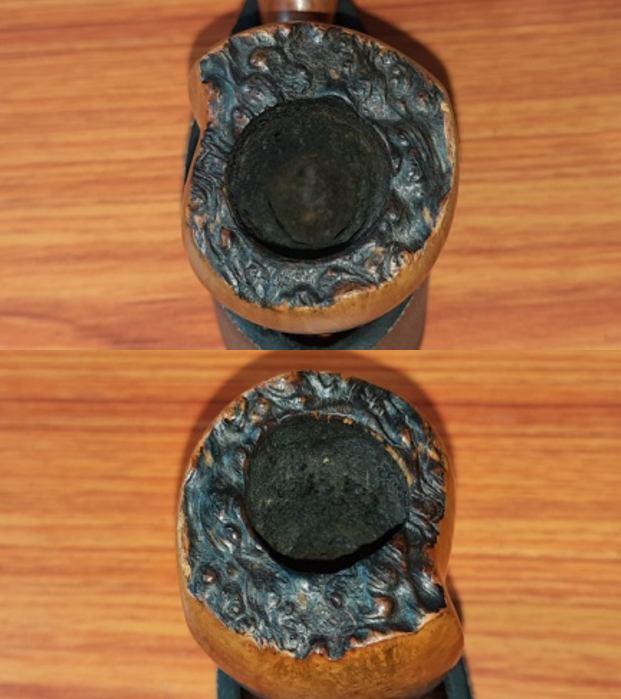
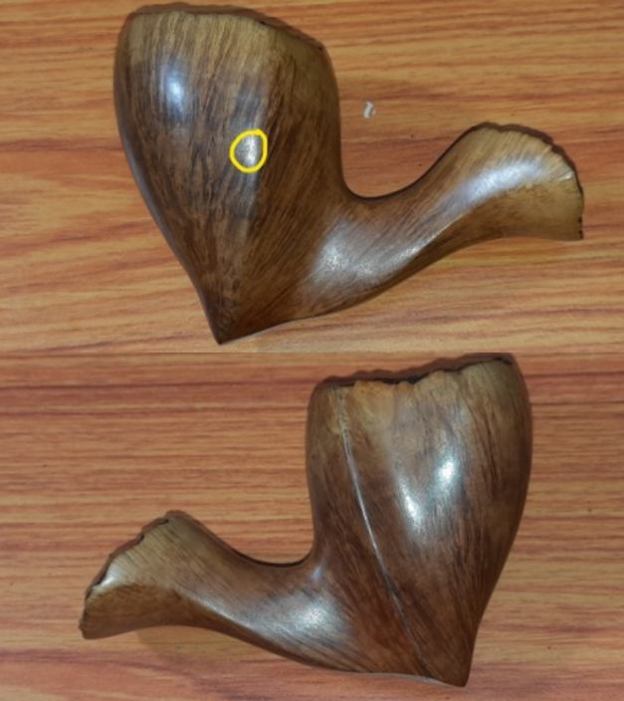
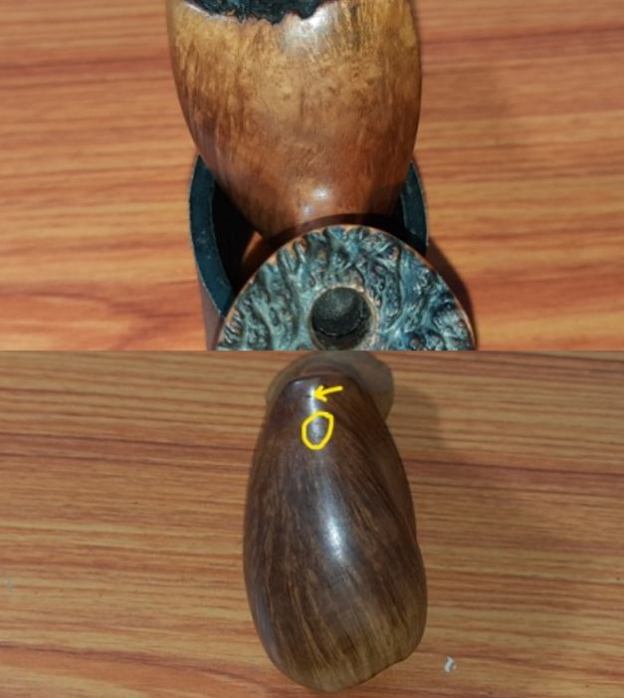
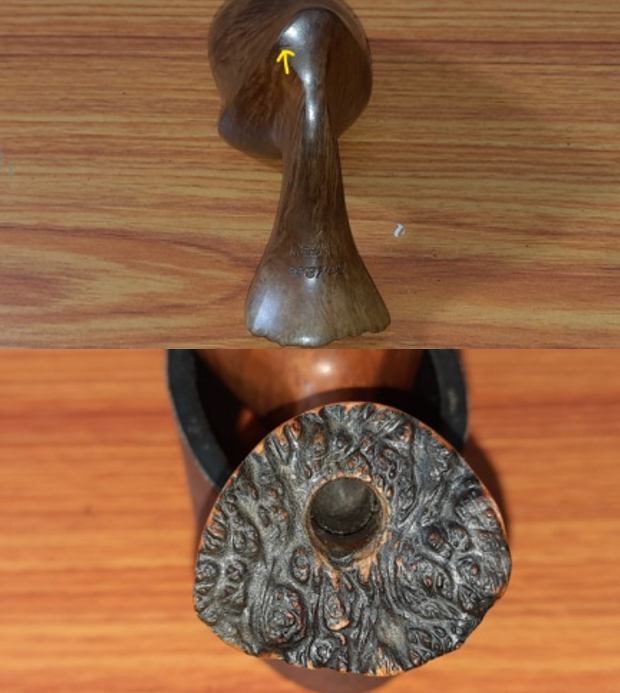
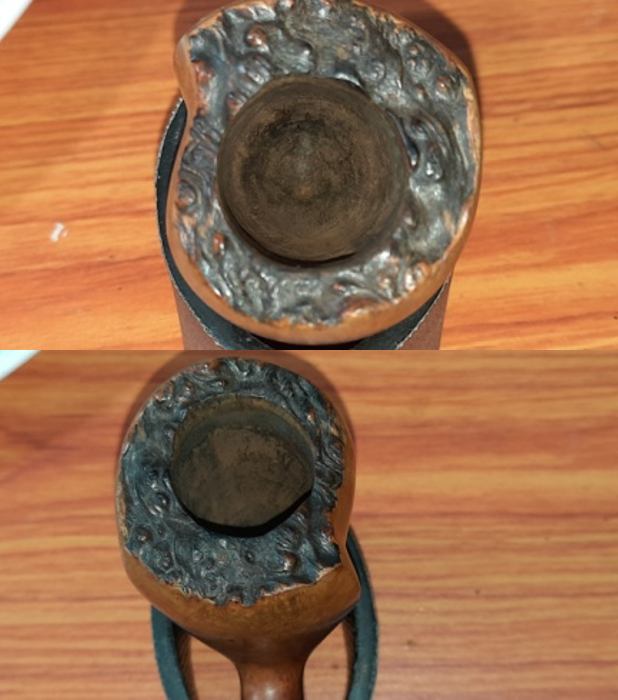
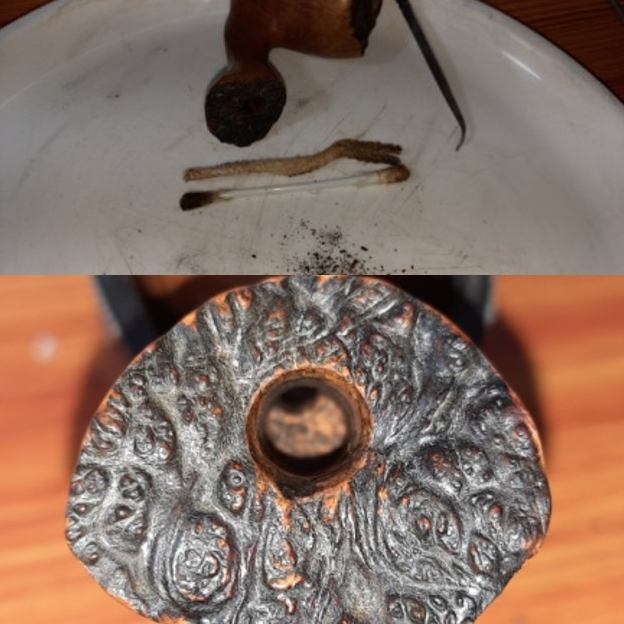
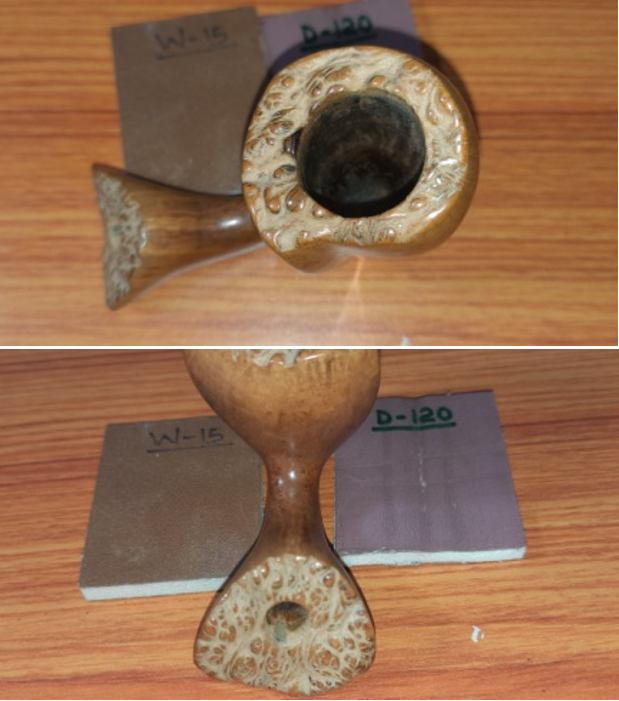
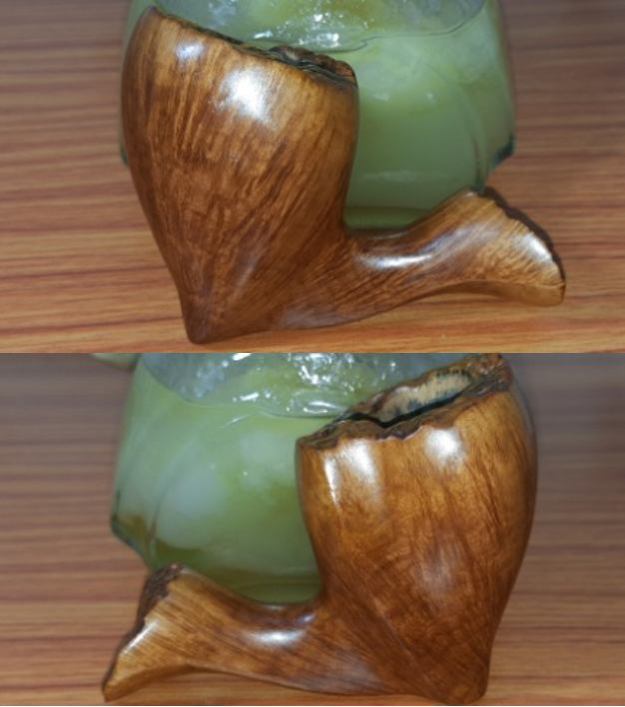
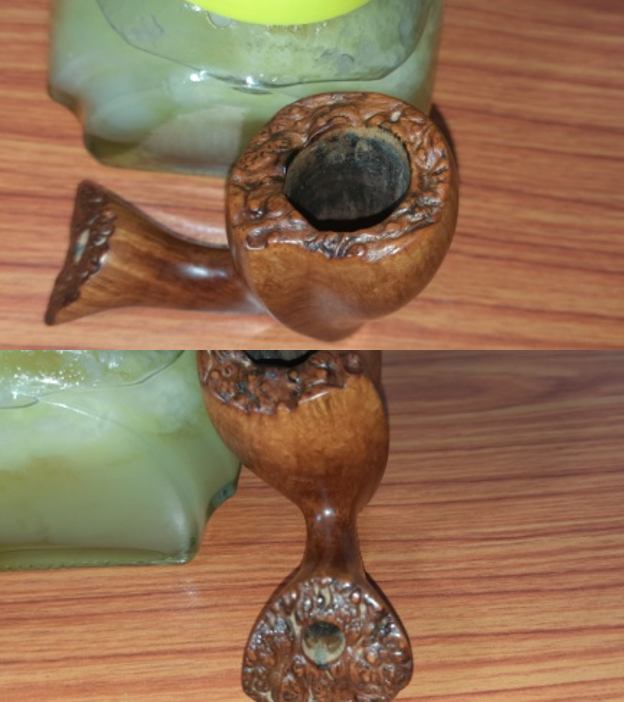
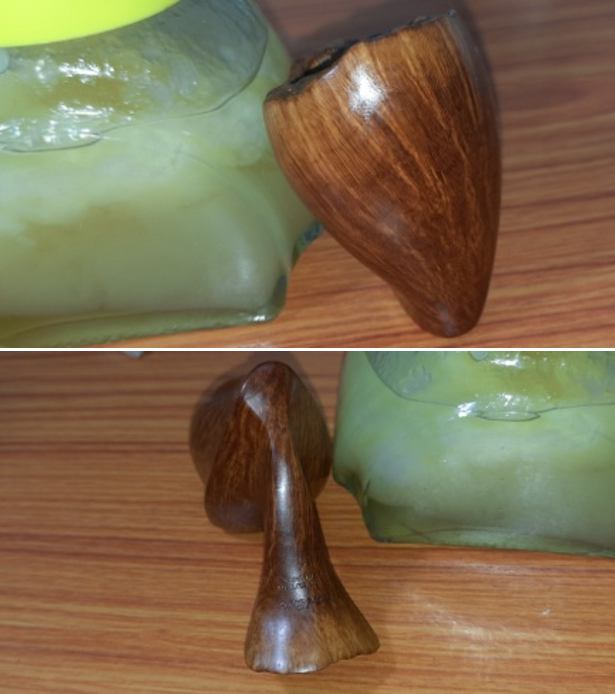
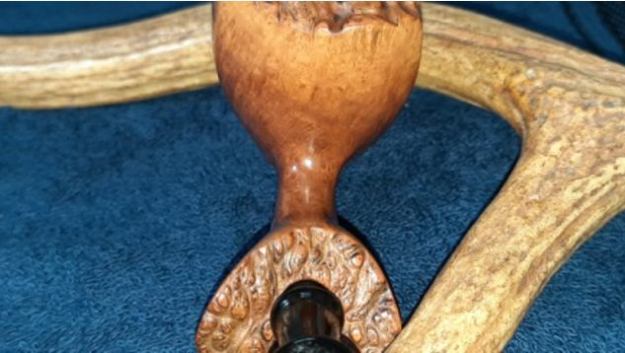
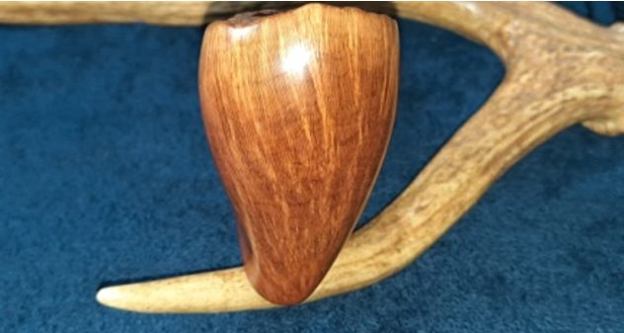
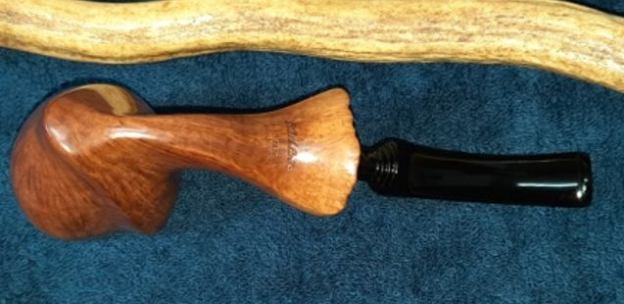
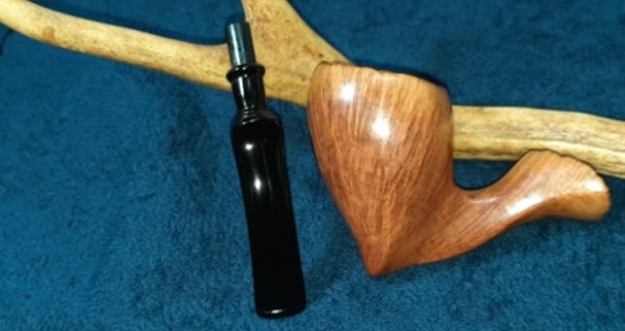
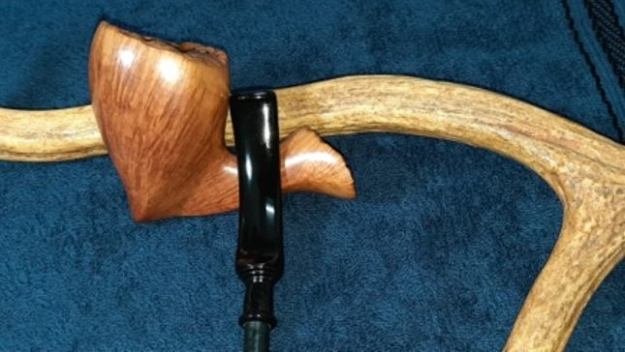
The next pipe on the table is one that we picked up from a seller in Ogden, Utah, USA on 12/21/2024. It is deep and uniquely rusticated Pot with a saddle stem. It is stamped on the underside of the shank and reads Karl Erik [over] Handmade in Denmark [over] the shape number 225. The stamping is clear and readable as noted above. The pipe has some grime and oils ground into the rustication around the bowl and shank. The bowl had a thick cake and there was thick lava in the deep rustication on the rim top and edges. The inner and outer edges appeared to be undamaged. Cleaning would make that clear. The vulcanite saddle stem was oxidized and dirty with deep tooth marks and chatter ahead of the button. Jeff took photos of the pipe to show what it looked like before he started working on it. Jeff took a photo of the bowl and rim top to show the cake in the bowl, lava overflow and the general condition of the pipe. The photos of the stem to show the condition of both sides of the stem as noted above. He took photos of the sides of the bowl and the heel to show the interestingly textured rustication around the bowl and shank. It really is a beautifully rusticated piece of briar. The finish is nice but it also dirty with dust ground into the deeper portions of the finish. Jeff took a photo of the stamping on the underside of the shank. It is clear and readable as noted above. If you have been following the blog for any length of time you have come to know that when I am working on interesting old pipes (even sometimes those not so interesting) I like to know a bit about the background of the brand. I like to “meet” the carver to get a feel for their work and style.

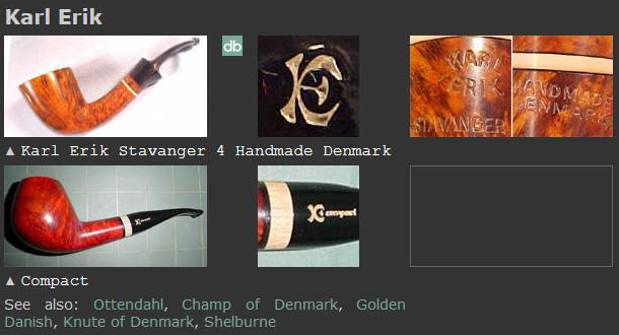
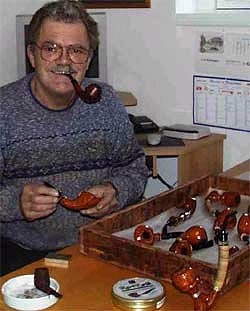
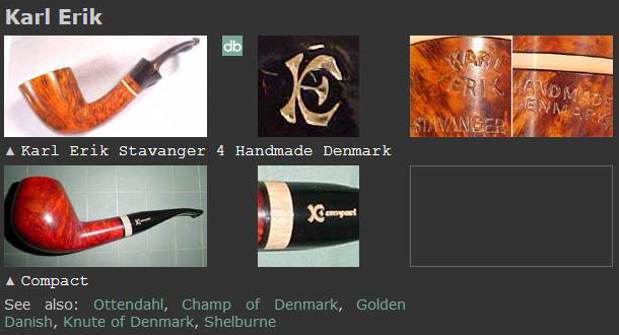
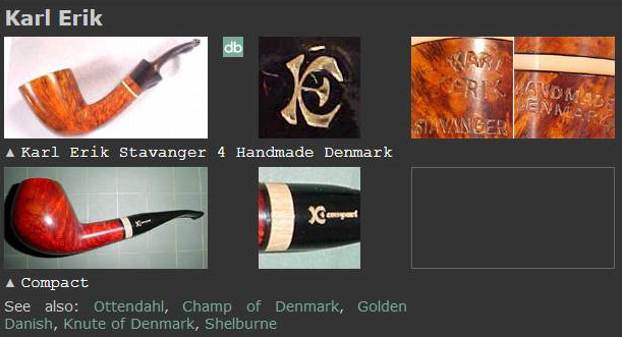
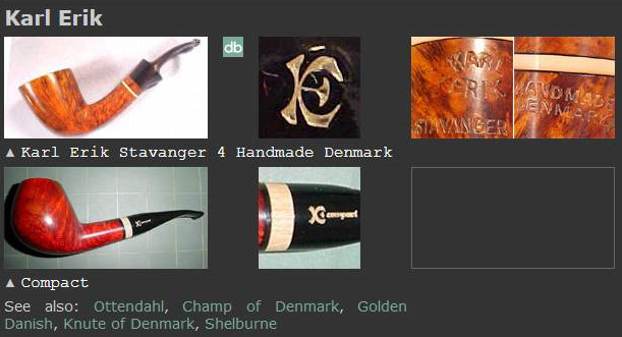
I turned to Pipephil’s site (http://pipephil.eu/logos/en/logo-k1.html) to see what I could find. I did a screen capture of the entry there and have included the side bar information below the photo. Brand created in 1965-66 by Karl Erik Ottendahl (1942 – 2004 †). In the best years he employed up to 15 craftsmen among which Bent Nielsen (see Benner) and Peder Christian Jeppesen. Former grading (ascending): from 4 to 1, and “Ekstravagant” (entirely hand made)

I turned to Pipedia (https://pipedia.org/wiki/Karl_Erik) and reread the history of the brand. Give the article a read.

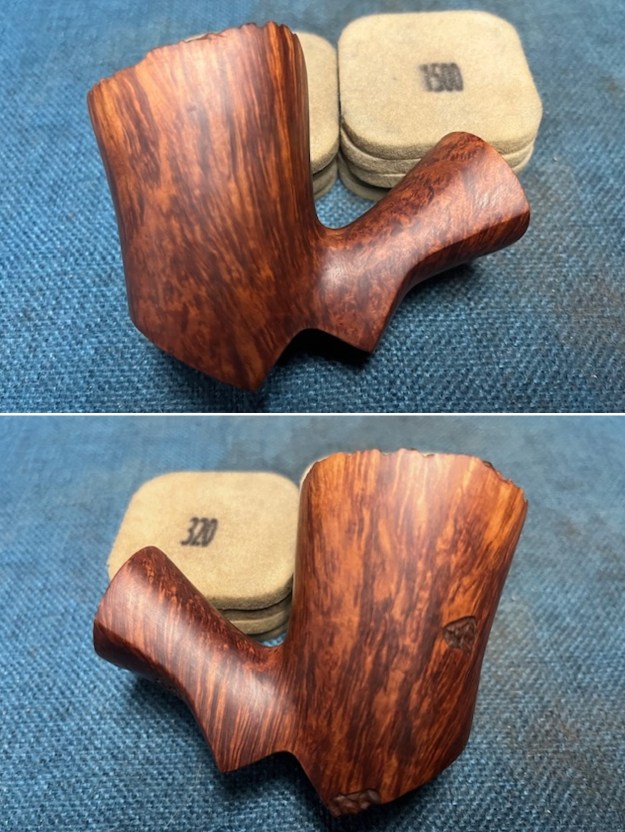
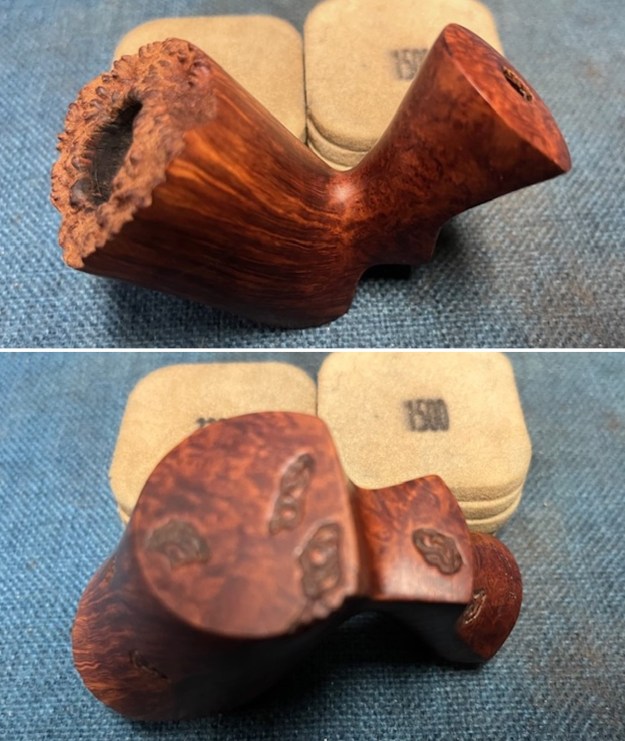
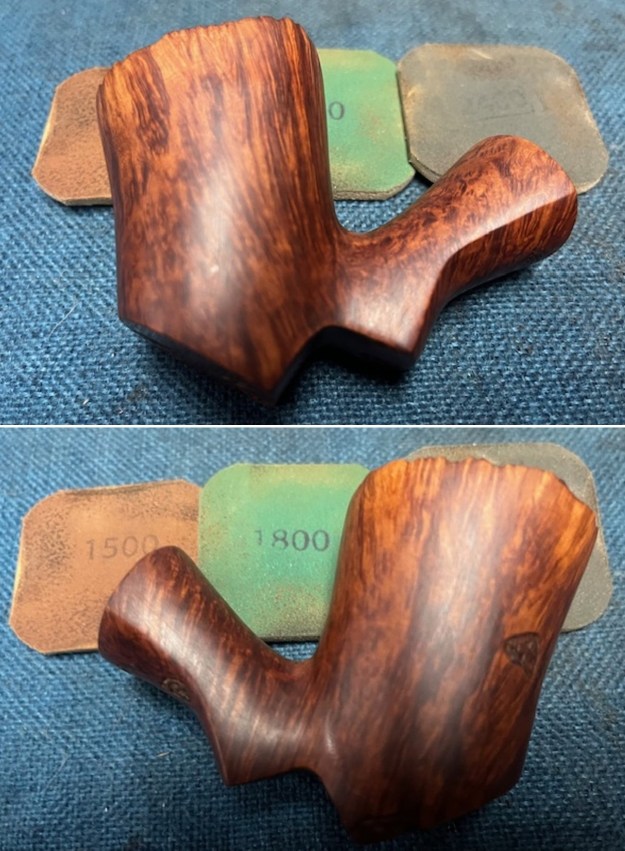
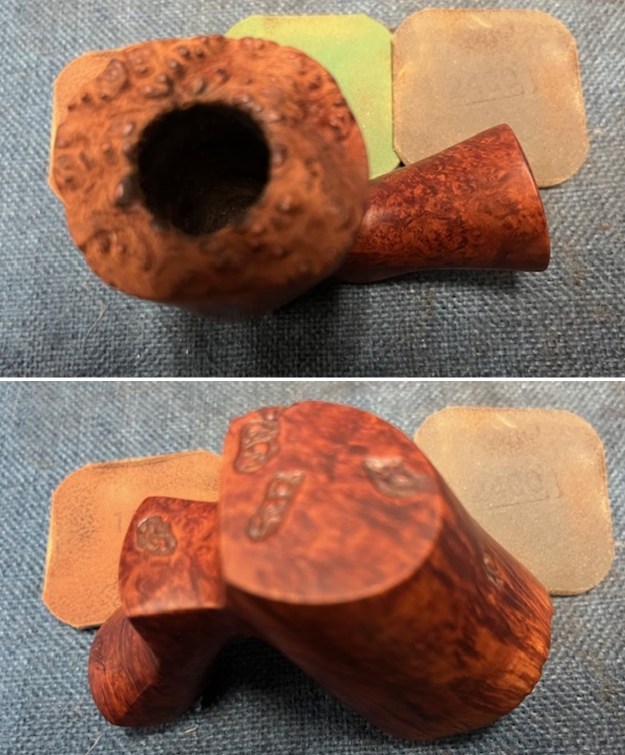
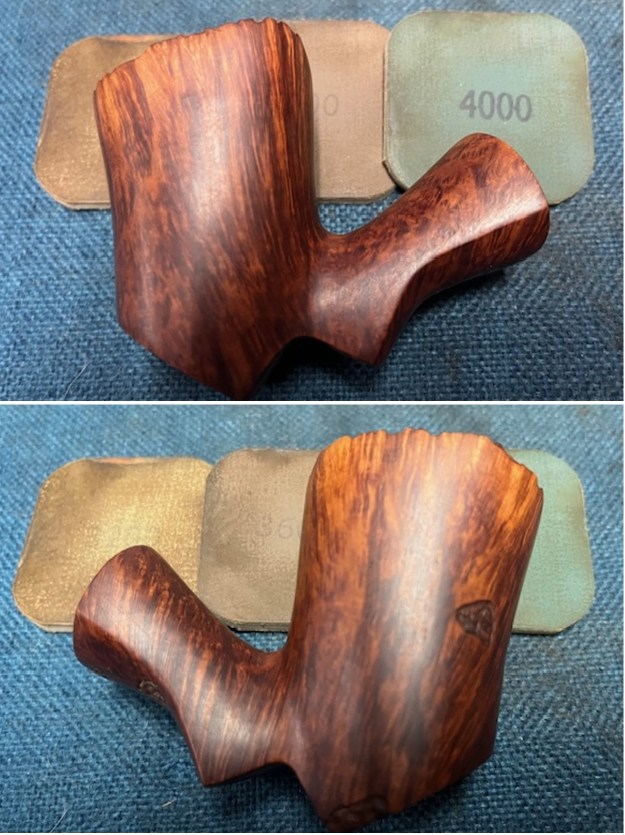
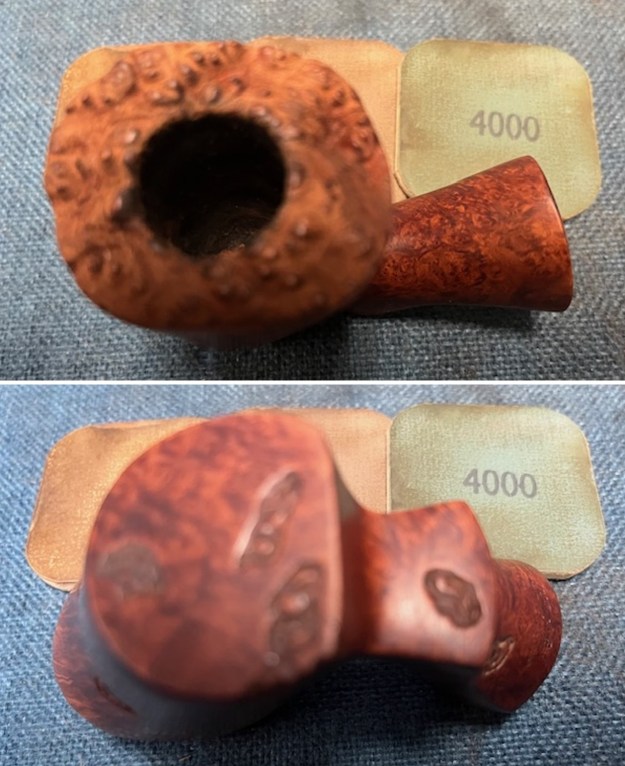
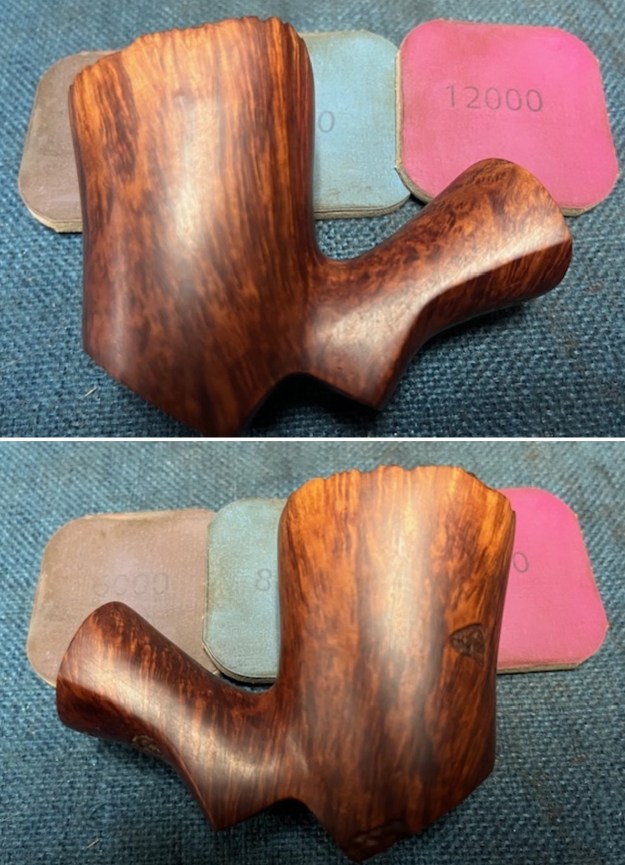
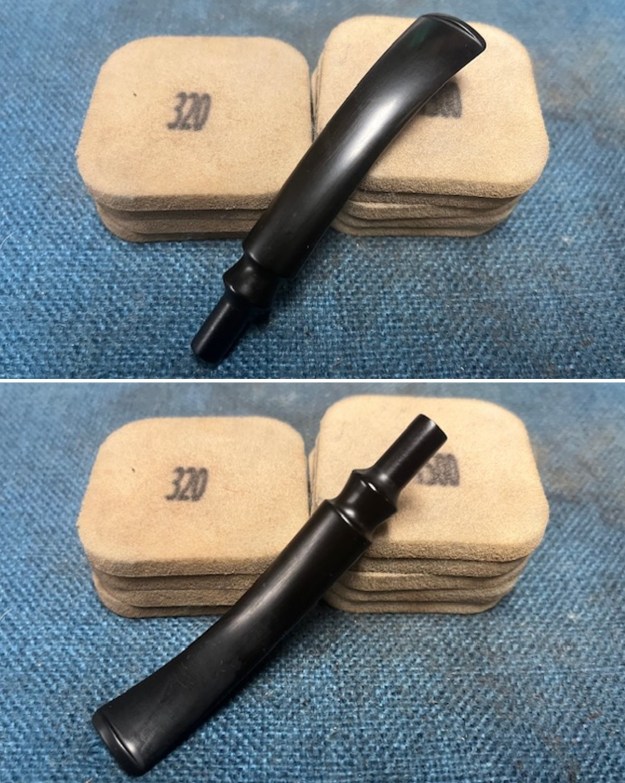
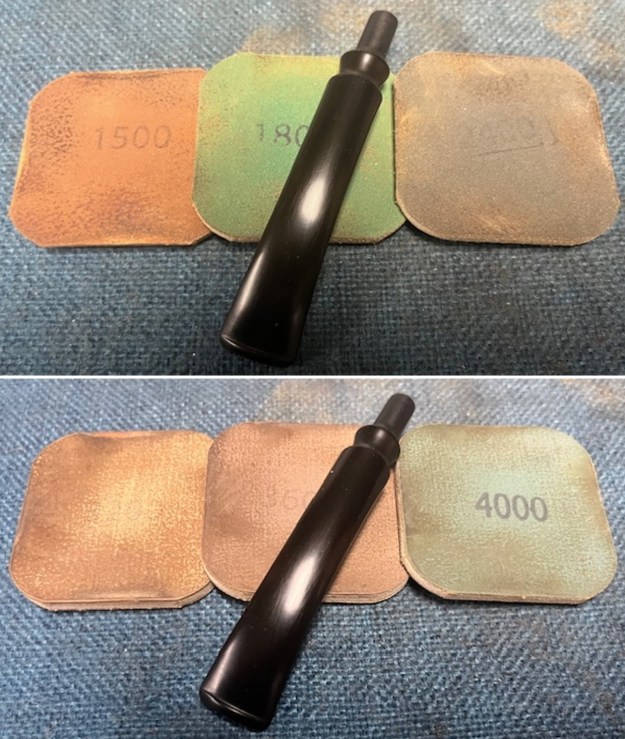
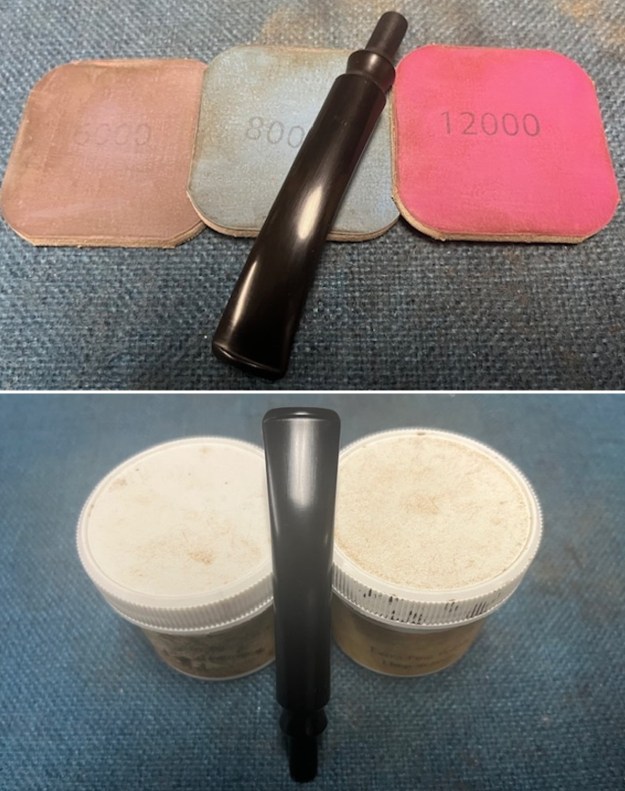
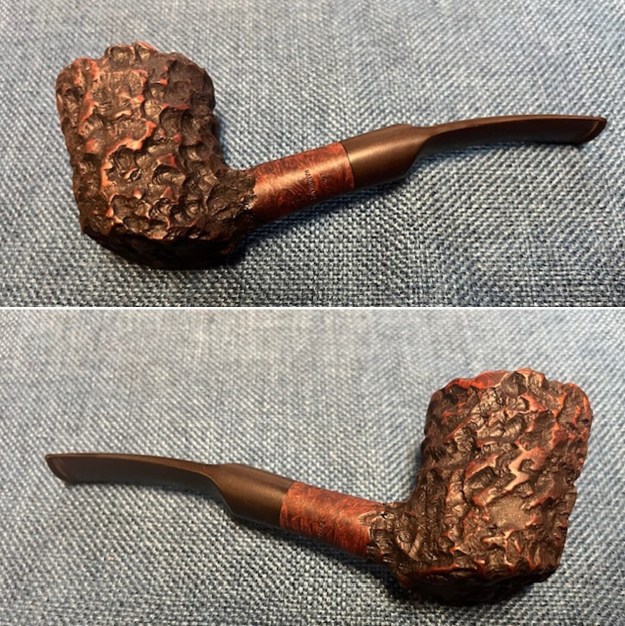
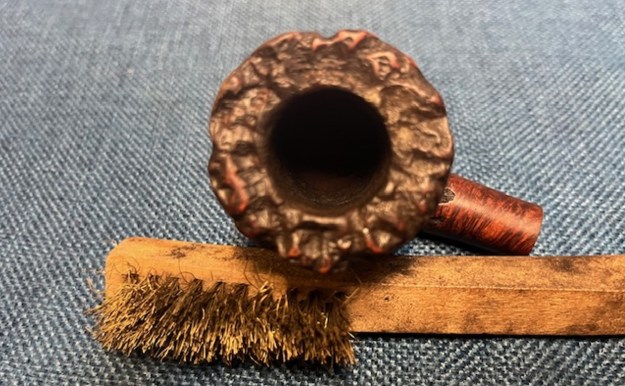
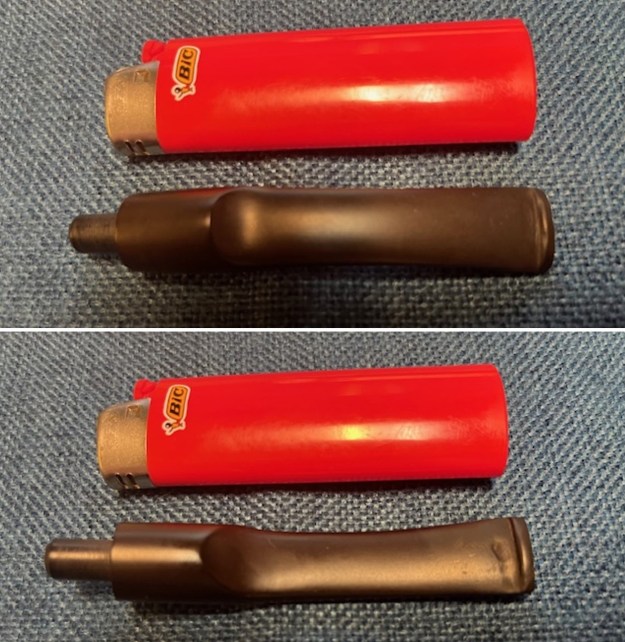
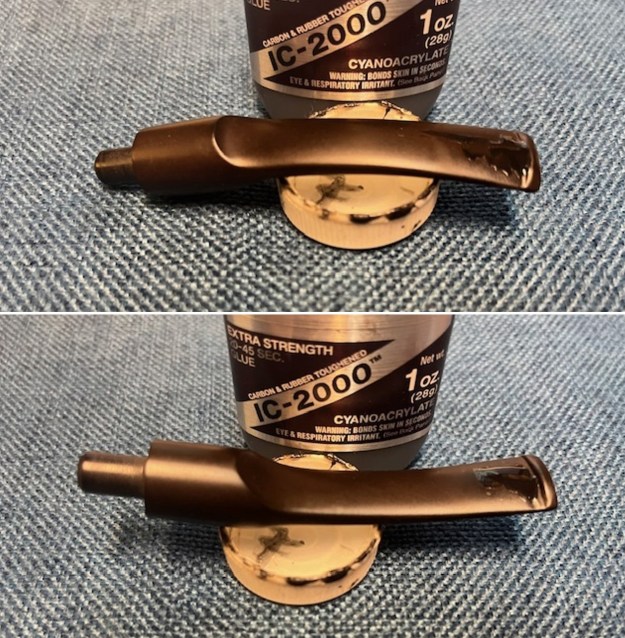
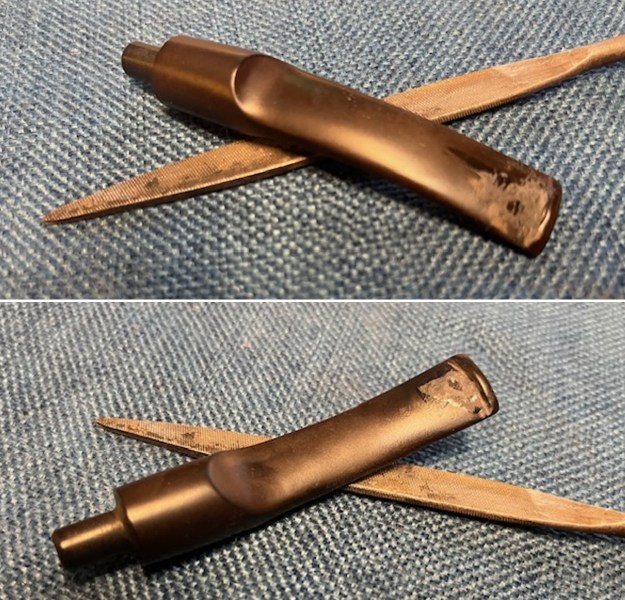
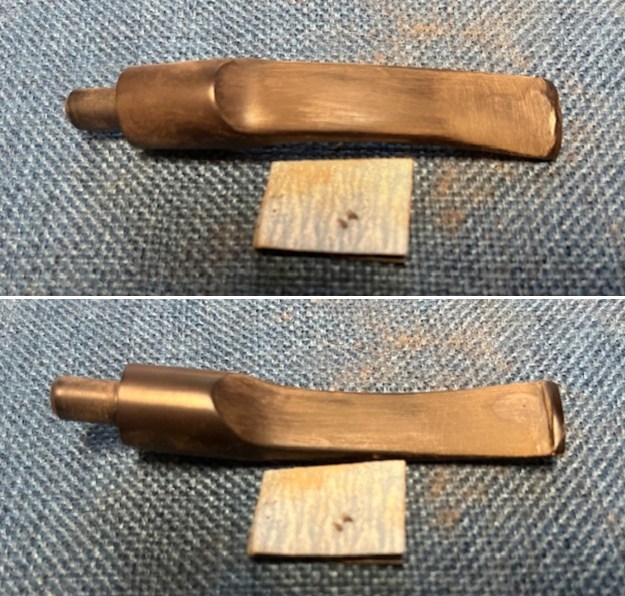
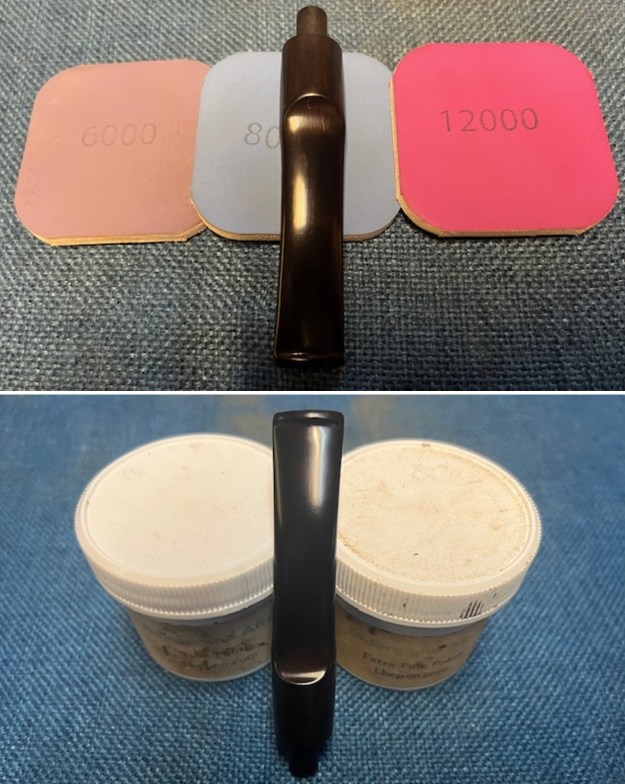
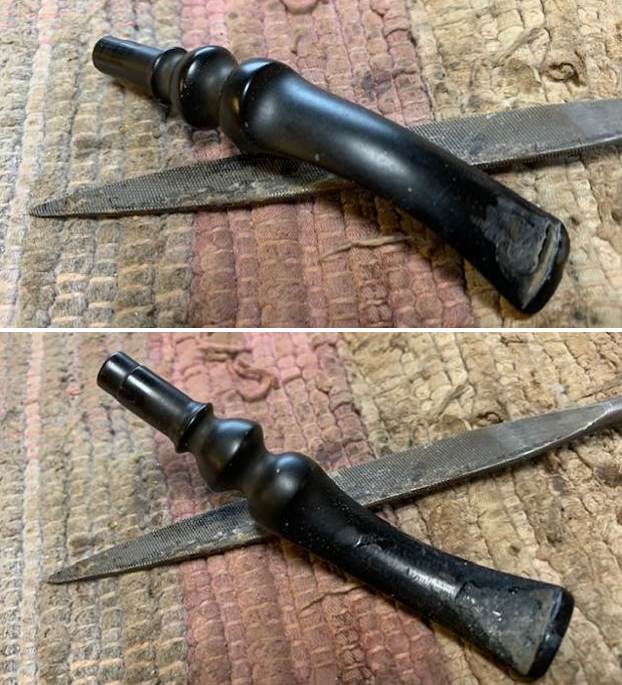
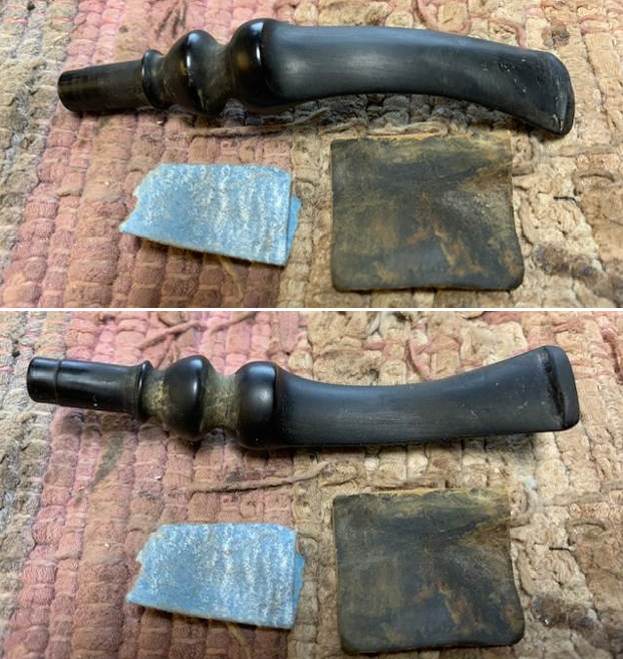
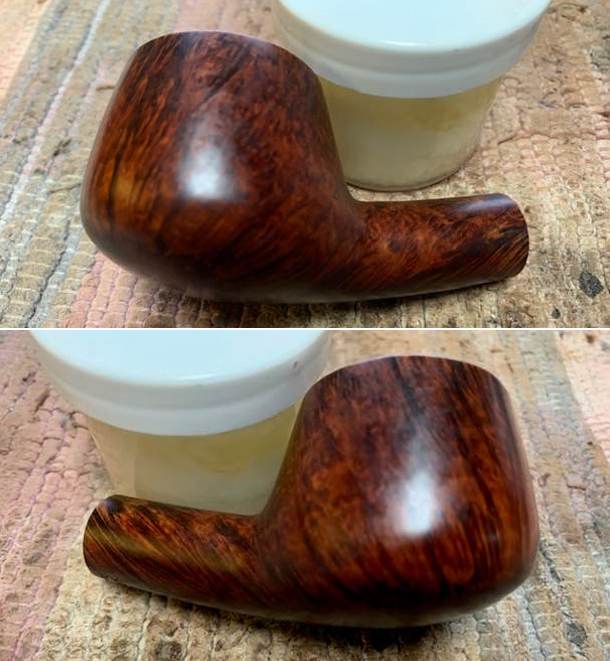
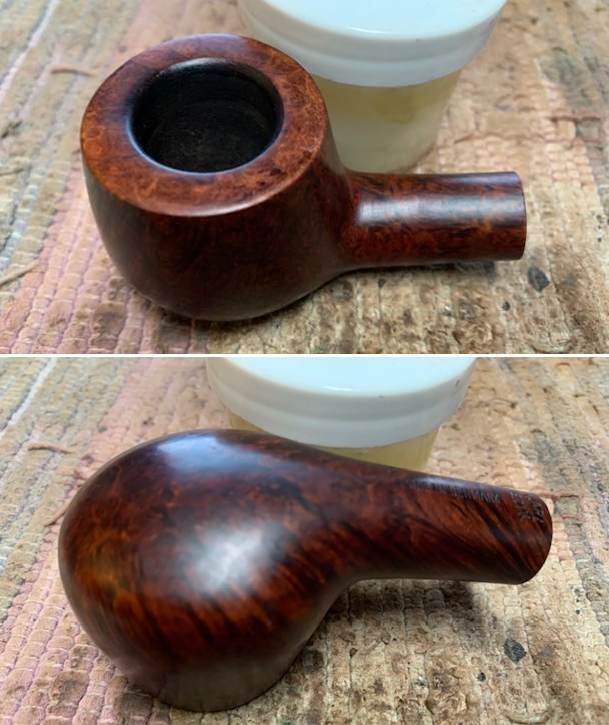
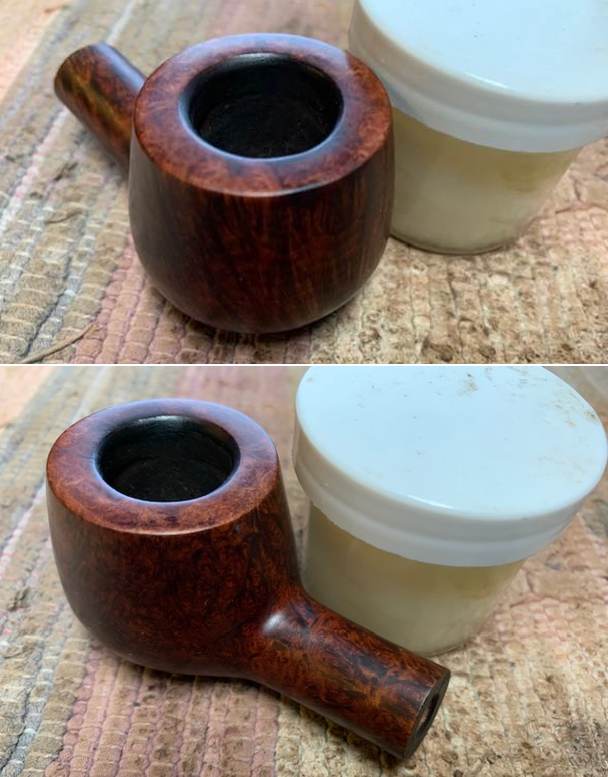
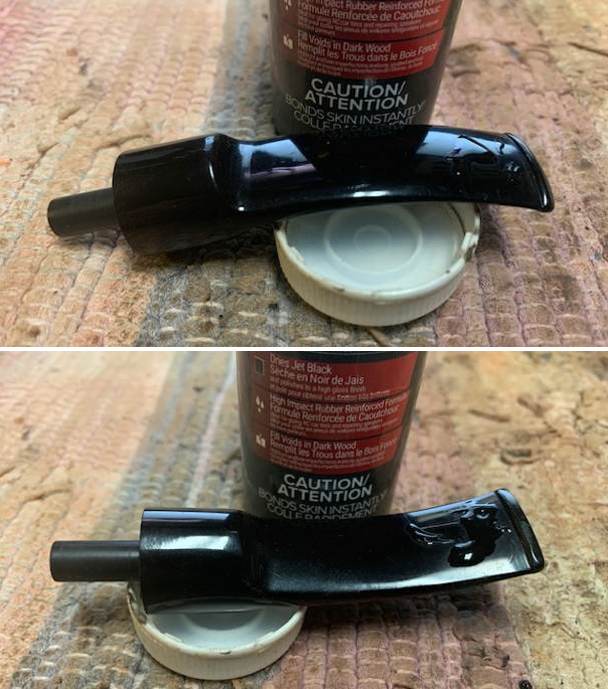
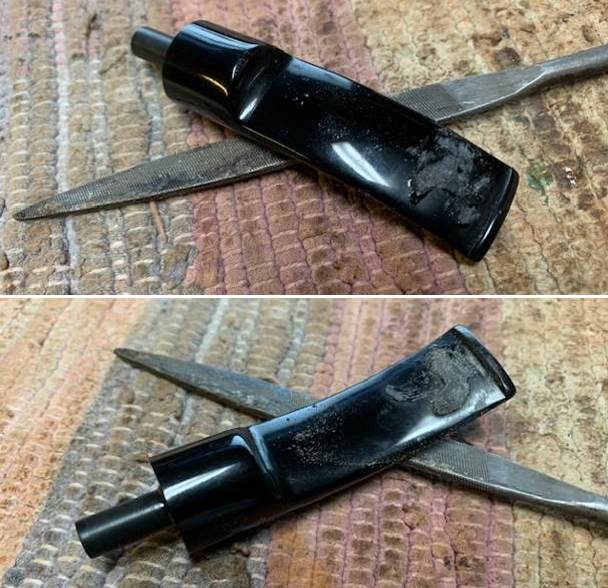
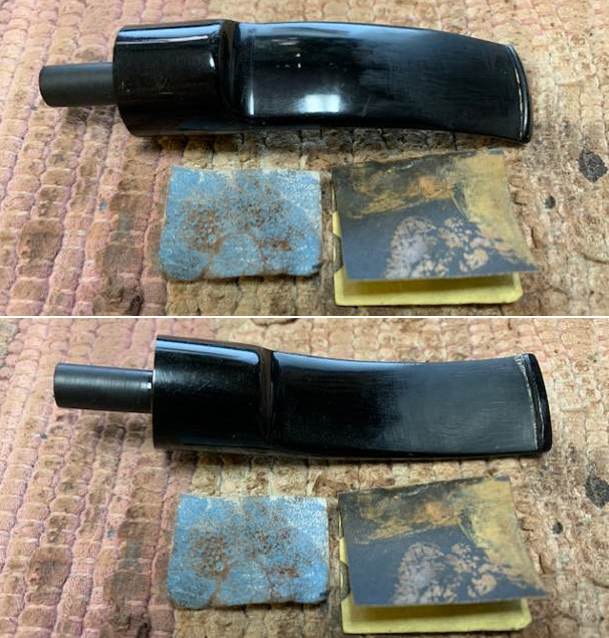
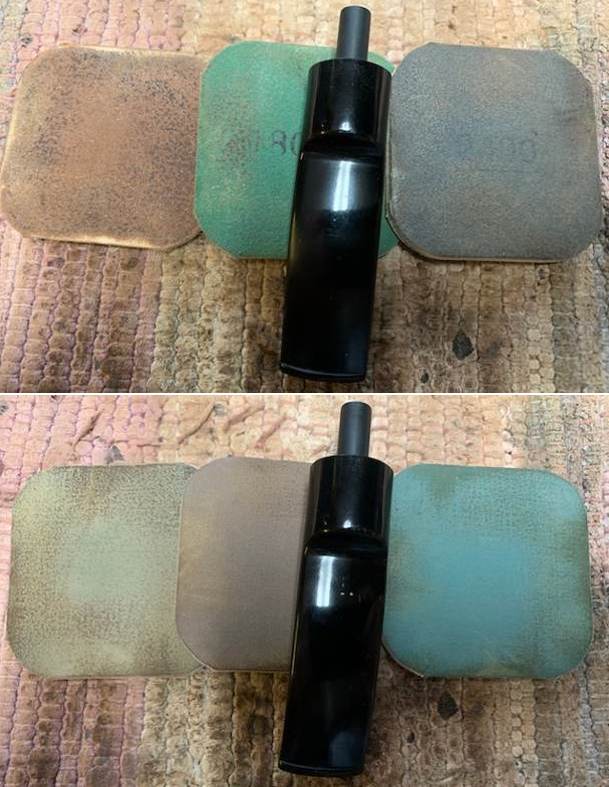
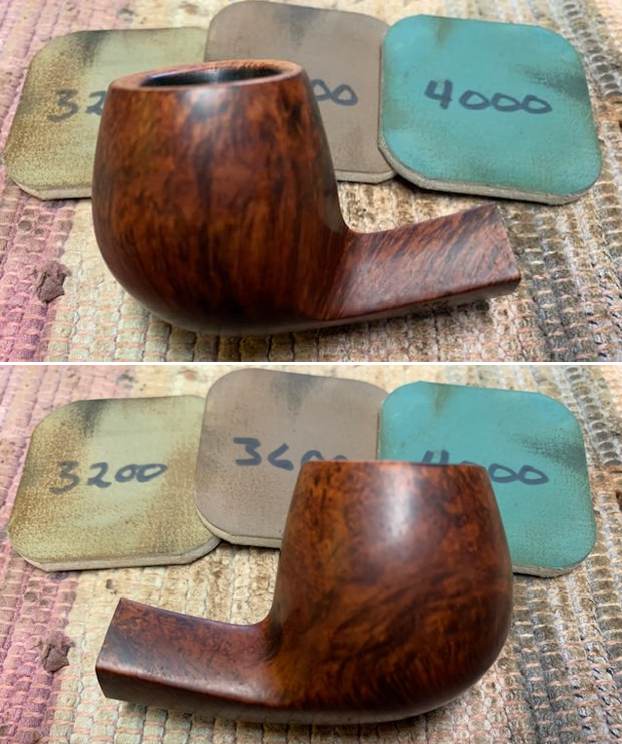
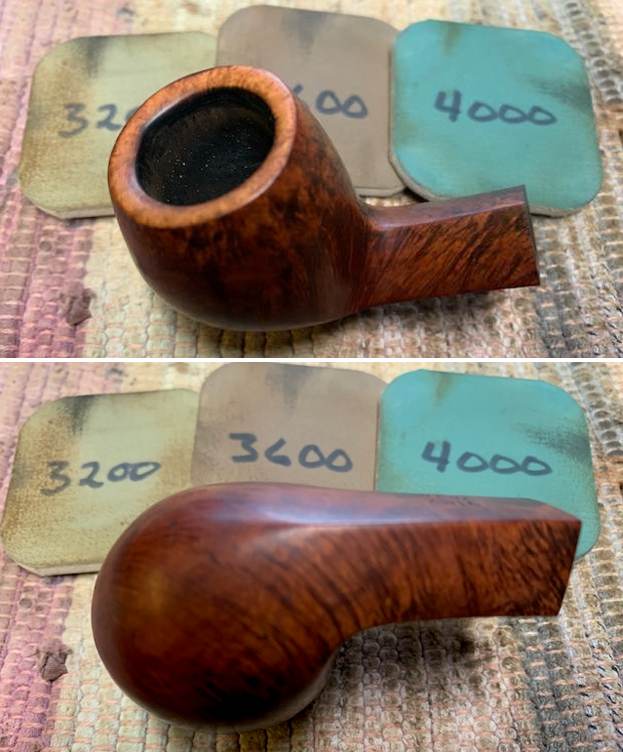
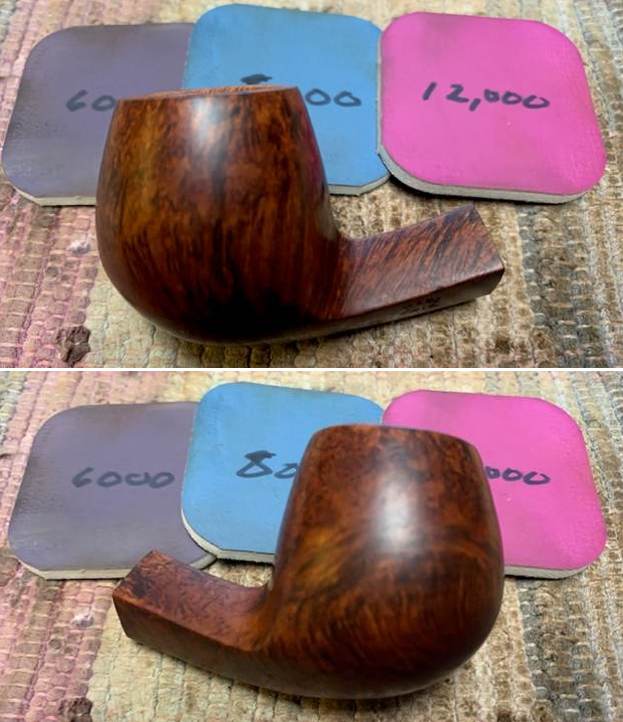
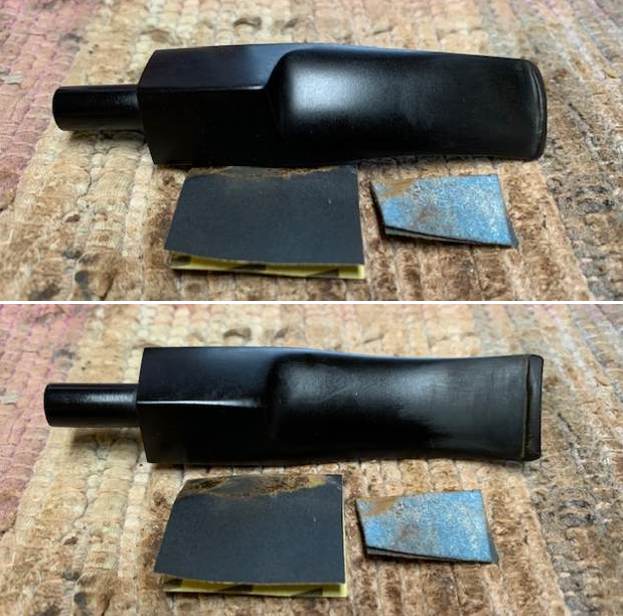
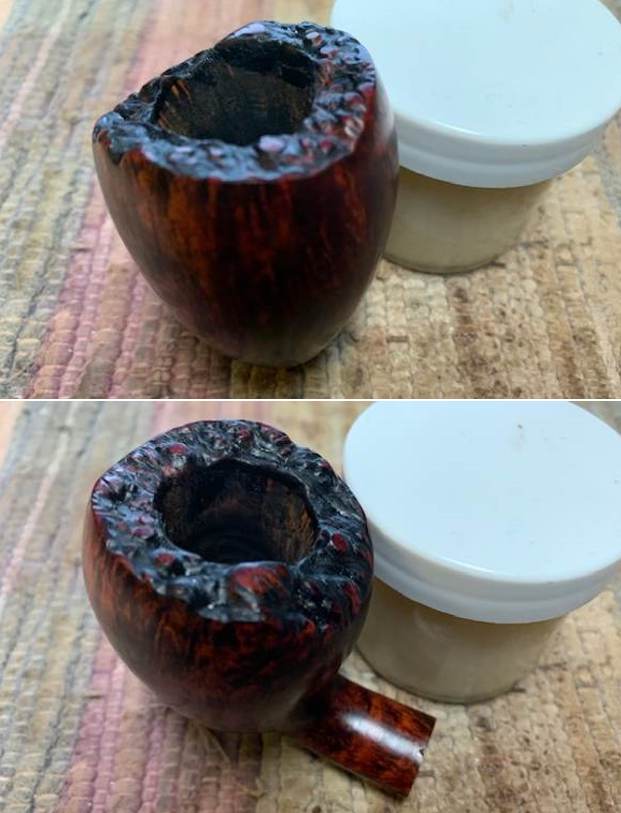
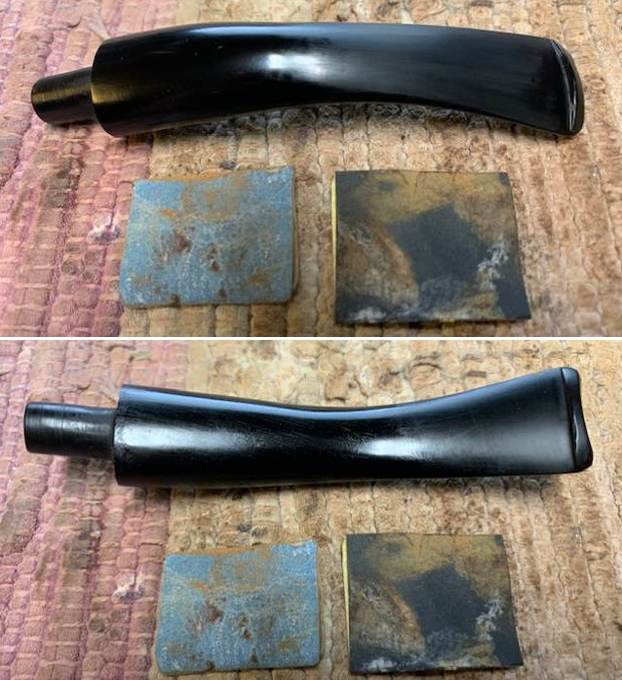
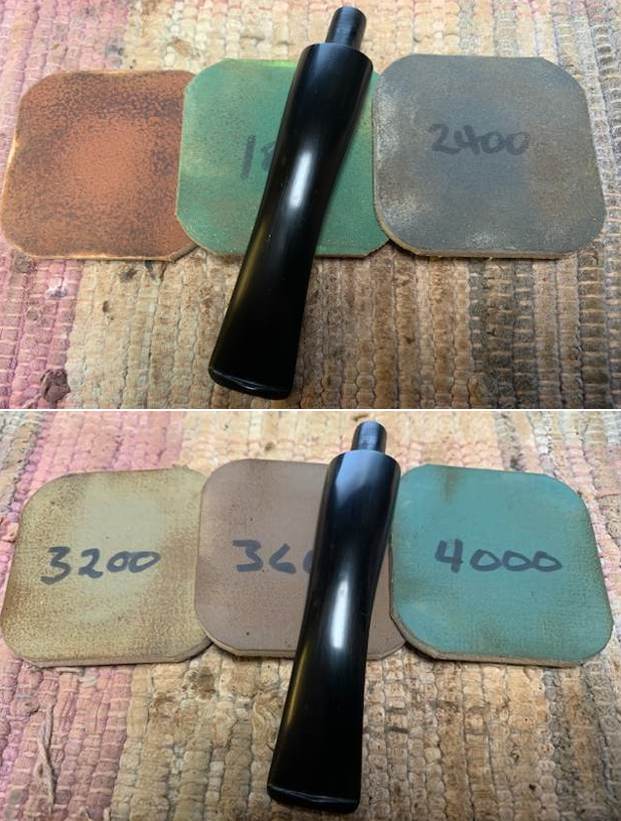
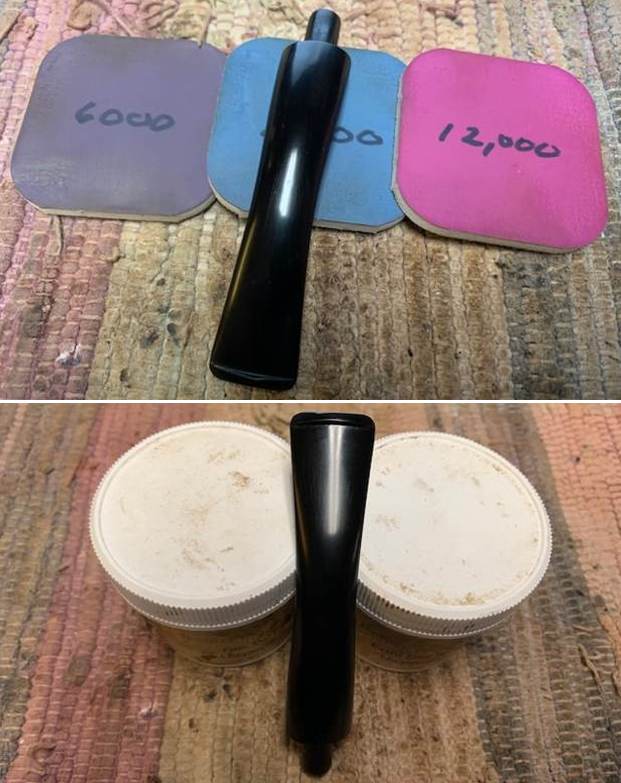
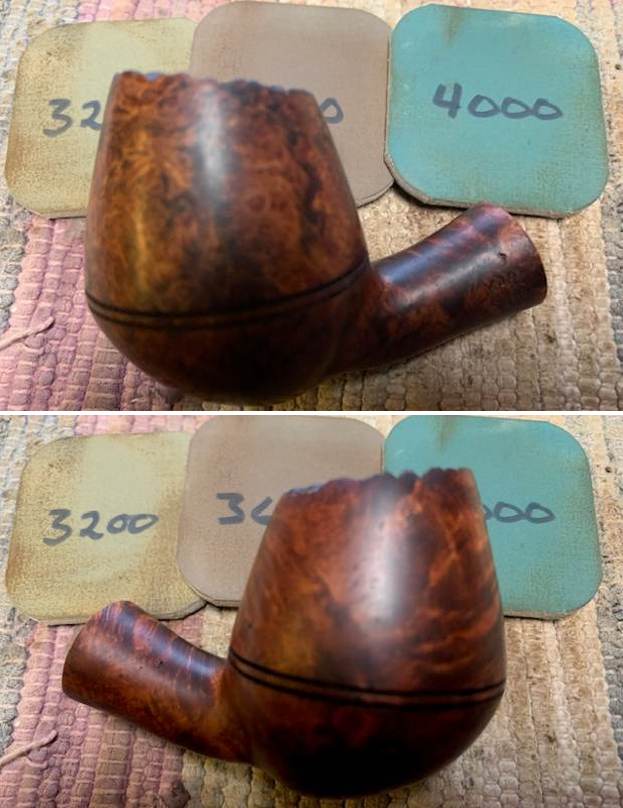
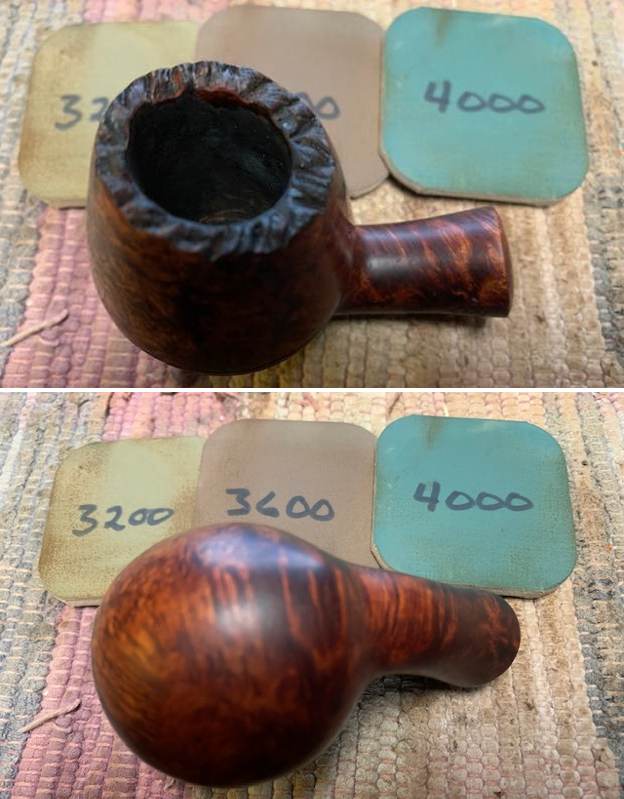
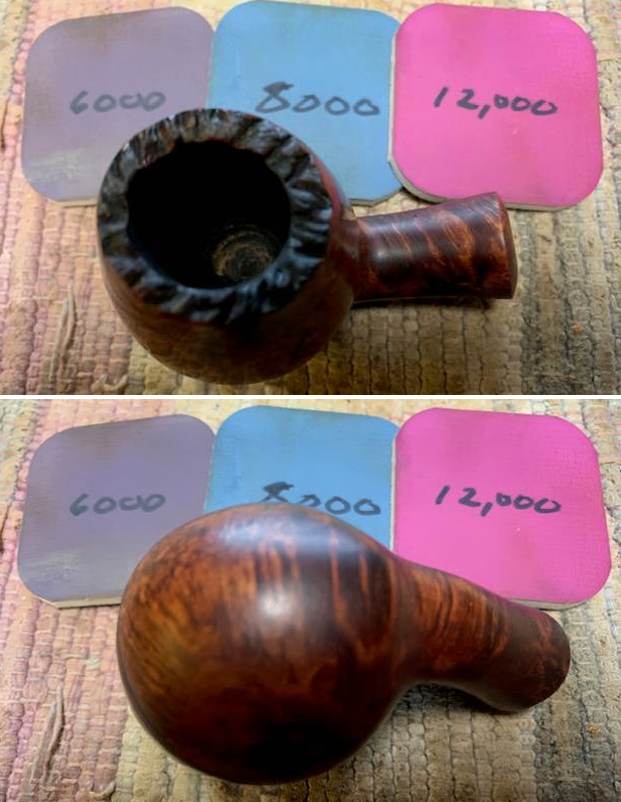
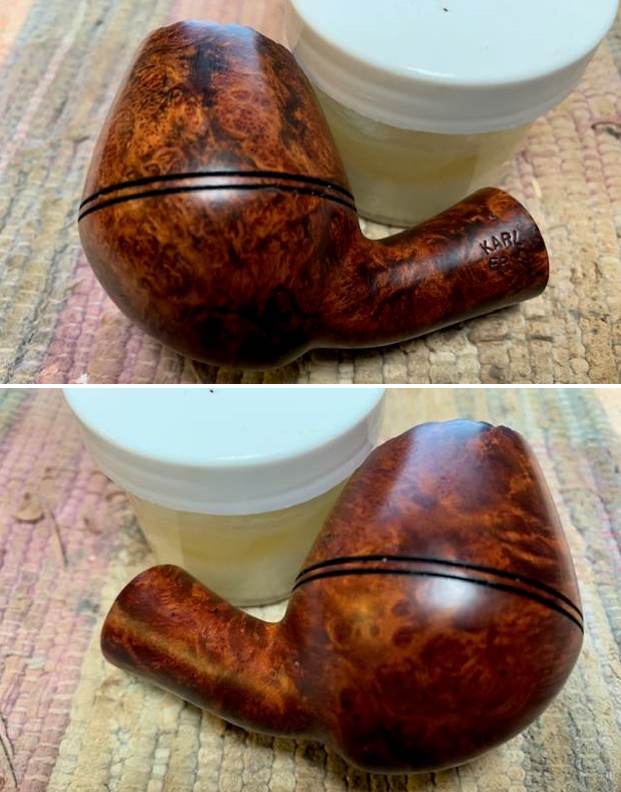
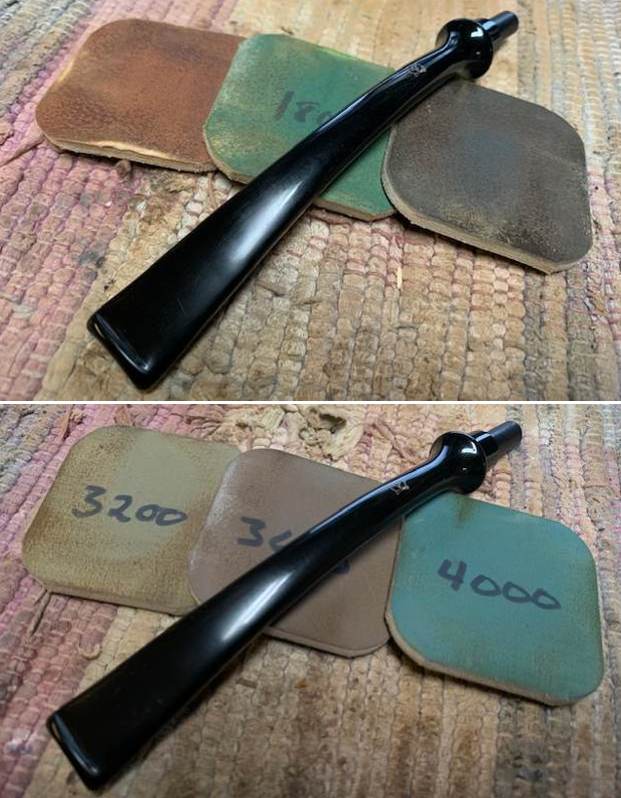
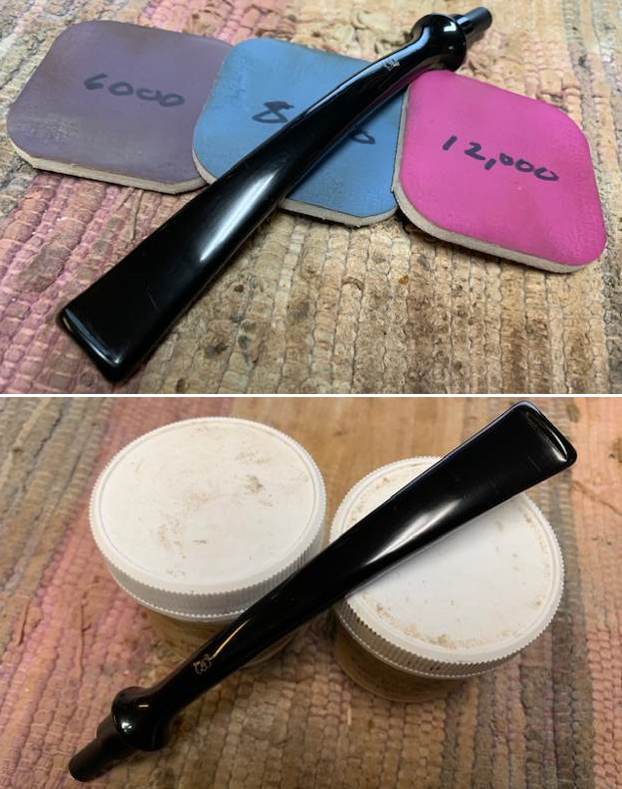
Armed with that information I turned to work on the pipe itself. Jeff had done a great job cleaning up the pipe as usual. He cleaned up the inside of the bowl with a PipNet reamer and a Savinelli Fitsall Pipe Knife. The bowl walls looked very good. He scrubbed the interior of the bowl and shank with pipe cleaners, shank brushes, cotton swabs and alcohol to remove the tars and oils. He scrubbed the exterior of the pipe with undiluted Murphy’s Oil Soap and a tooth brush to remove the grime from the finish. He worked on the rim top lava and darkening with the soap and tooth brush. He scrubbed the inside of the stem with alcohol and pipe cleaners. He scrubbed the exterior with Soft Scrub and then soaked it in Briarville’s Pipe Stem Deoxidizer. He washed it off with warm water to remove the deoxidizer. The pipe looked far better. I took photos of the pipe when I received it before I started working on it.    I took photos of the bowl and rim top to show how clean it was. The top and the inner edge of the rim look very good. There is a little darkening on the top that I will address and see if I can lessen. The stem looks clean of debris and grime. There is tooth chatter on the stem surface on both sides but otherwise it looks good.I took a photo of the stamping on the underside of the shank of the pipe. The stamping is clear and readable. I took a photo of the pipe with the stem removed to show the overall look of stem, tenon and profile of the pipe.I worked over the rusticated rim top with a brass bristle wire brush to clean out the remnants of the debris. It looked much better. The bowl was very clean so I worked some Before & After Restoration Balm into the briar with my finger tips and into the deep rustication with a shoe brush. I let it sit on the bowl for 10 minutes and then buffed it off with a paper towel and soft cloth. The product is a great addition to the restoration work. It enlivens, enriches and protects the briar while giving it a deep glow. It is a product I use on every pipe I restore. I set the bowl aside and turned my attention to the stem. I “painted” the surface of the stem with the flame of a lighter to lift the tooth marks and had mixed success. All of the marks on the topside were lifted. The one remaining on the back I filled in with some rubberized black CA glue. Once the repairs cured I used a flat file to blend them into the surface and followed that with some 220 grit sandpaper. It looked better. Polishing would finish the work. I continued the sanding process with 320-3500 grit sanding pads. After each pad I wiped the stem down with some Obsidian Oil to clearly show me the scratches and areas that still needed work. It was really looking good.I polished the stem with micromesh sanding pads – dry sanding with 1500-12000 grit pads. Once again, I wiped it down between each pad with Obsidian Oil. I further polished it with Before and After Stem Polish – both Fine and Extra Fine. I gave it another rub down with Obsidian Oil. It looked very good. I am really happy with the way that this Heavily Rusticated Karl Erik Bent Poker/ Cherrywood with a saddle stem turned out. It really is a beautiful looking pipe with a unique shape and deep rustication completed by a vulcanite saddle stem. The briar really came alive with the buffing. The rich brown stains of the finish gave the pipe a sense of depth with the polishing and waxing. I carefully buffed the pipe with Blue Diamond on the buffing wheel using a light touch on the briar. I gave the bowl multiple coats of Conservator’s Wax and the stem multiple coats of carnauba wax on the buffing wheel. I buffed the pipe with a clean buffing pad to raise the shine. I hand buffed the pipe with a microfiber cloth to deepen the shine. The finished Karl Erik Rusticated Cherrywood really is a beauty and feels great in the hand and looks very good. Give the finished pipe a look in the photos below. The dimensions of the pipe are Length: 6 inches, Height: 2 inches, Outside diameter of the bowl: 1 ½ inches, Chamber diameter: ¾ of an inch. The weight of the pipe is 52 grams/1.83 ounces. I will be putting the pipe on the rebornpipes store in the Danish Pipe Makers Section. If you would like to add it to your collection let me know. It should be a great smoking pipe.

As always, I encourage your questions and comments as you read the blog. Thanks to each of you who are reading this blog. Remember we are not pipe owners; we are pipe men and women who hold our pipes in trust until they pass on into the trust of those who come after us.

Breathing New Life into a Karl Erik Handmade in Denmark 11 Dublin/Freehand


Blog by Steve Laug

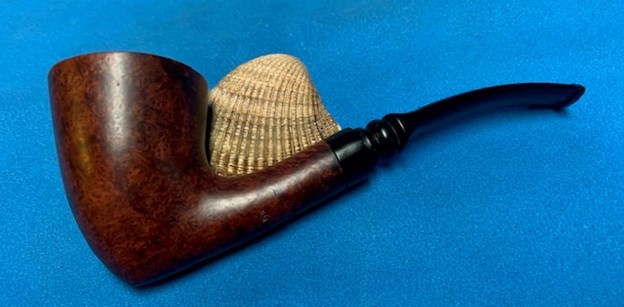
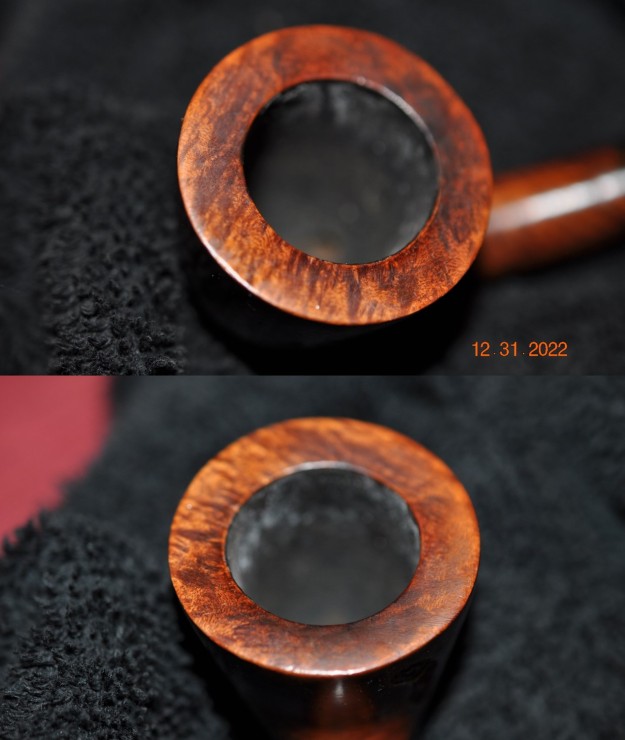
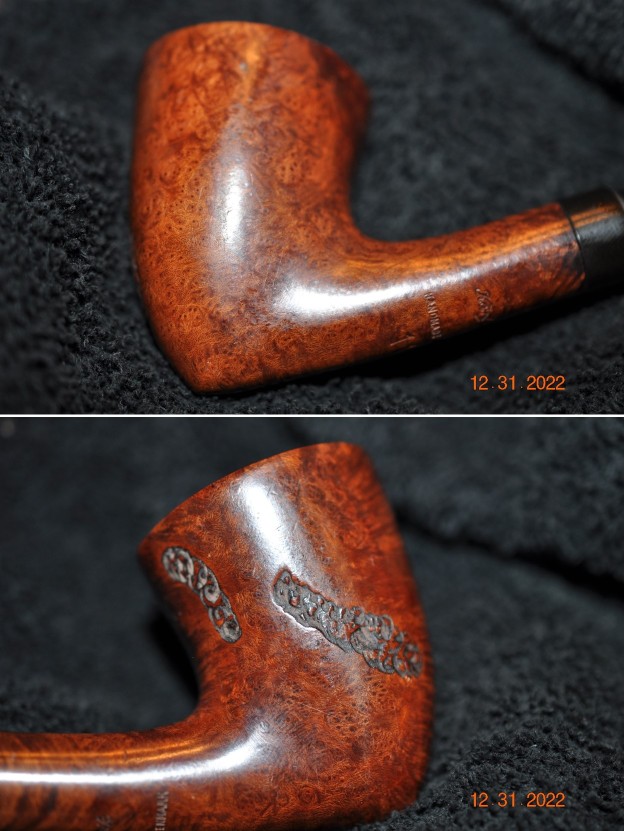
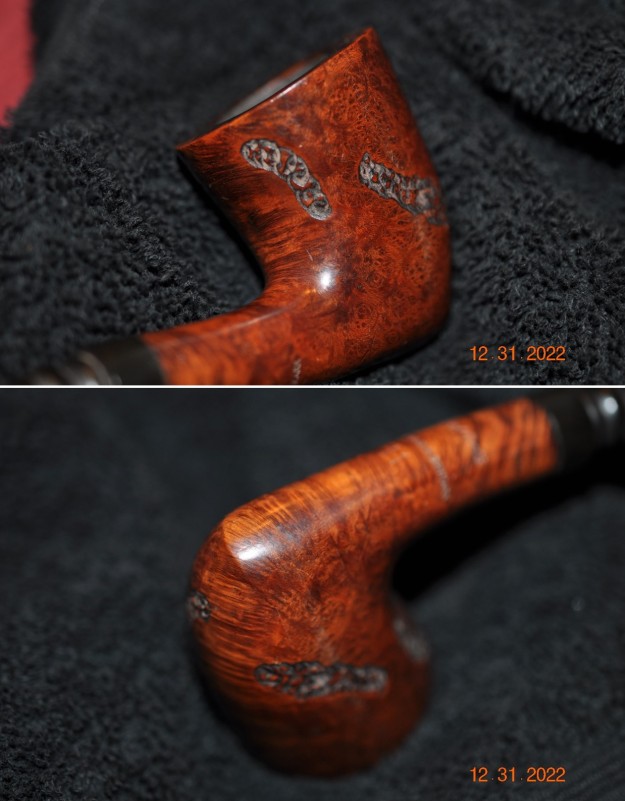
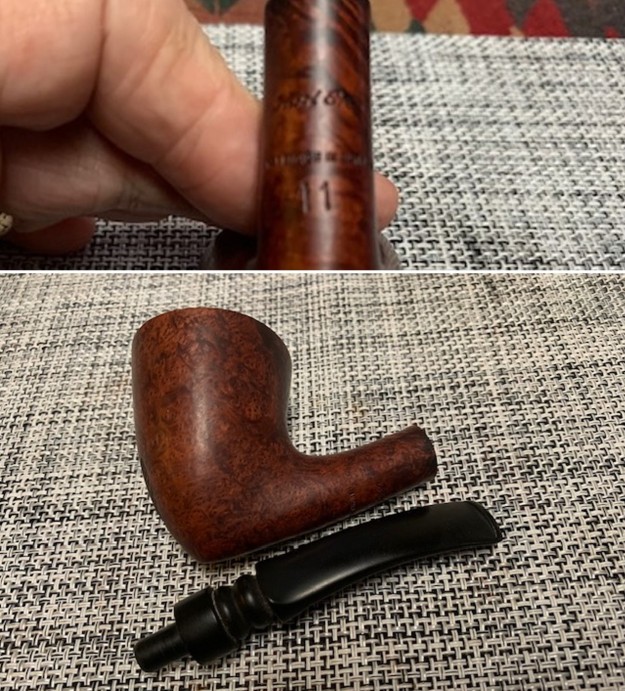
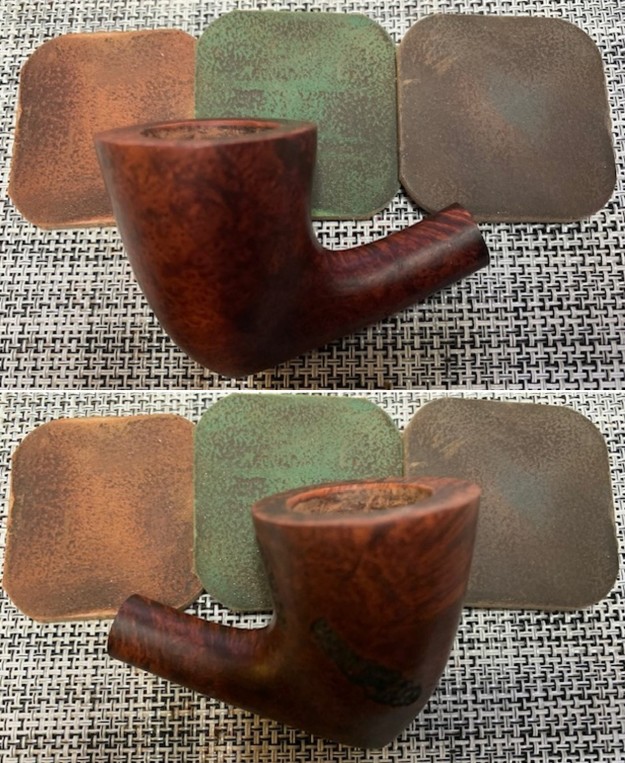
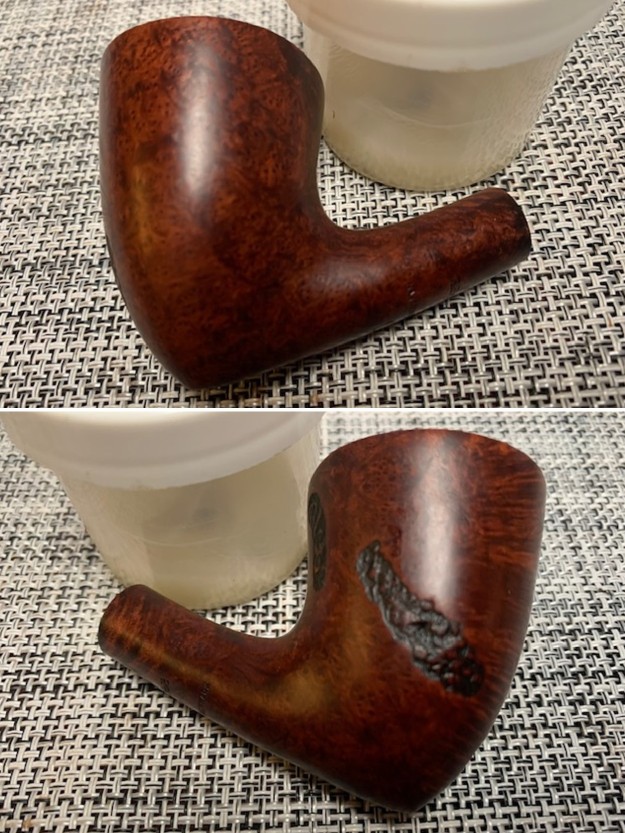
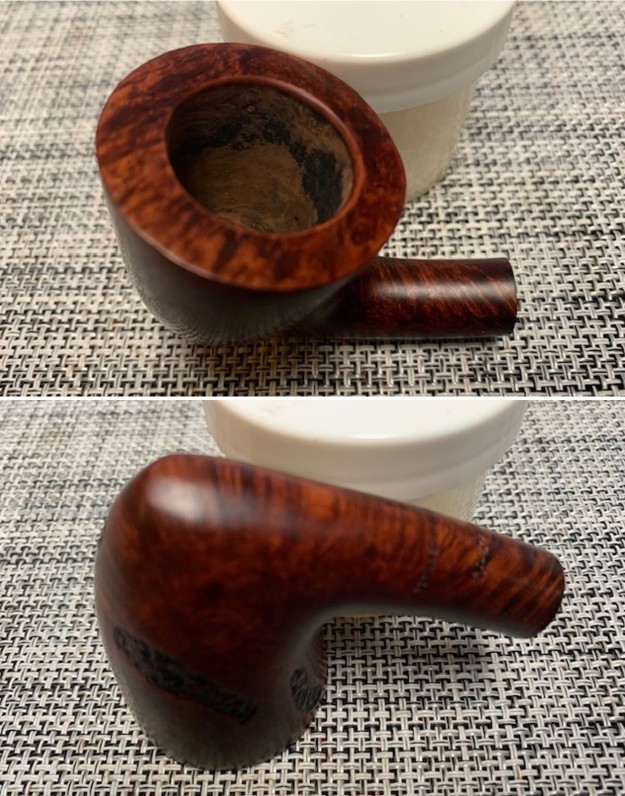
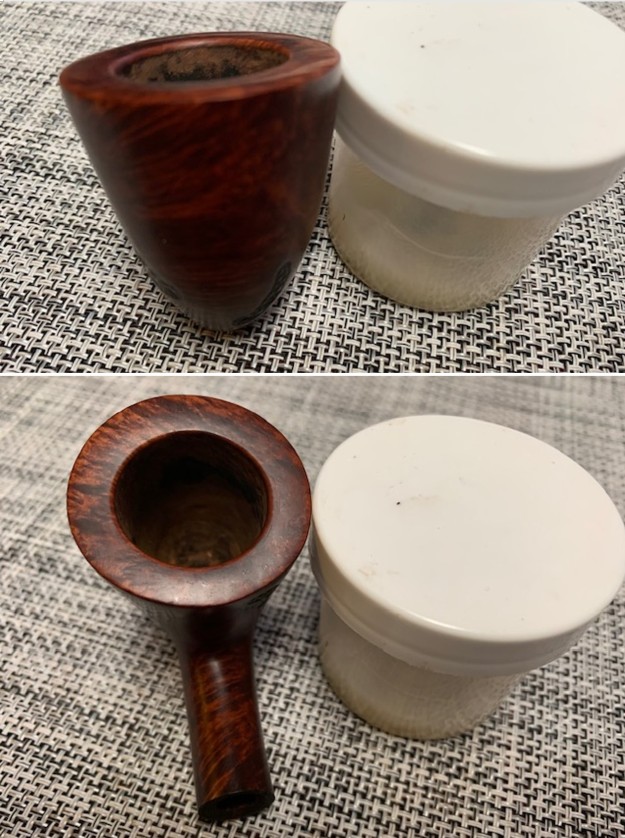
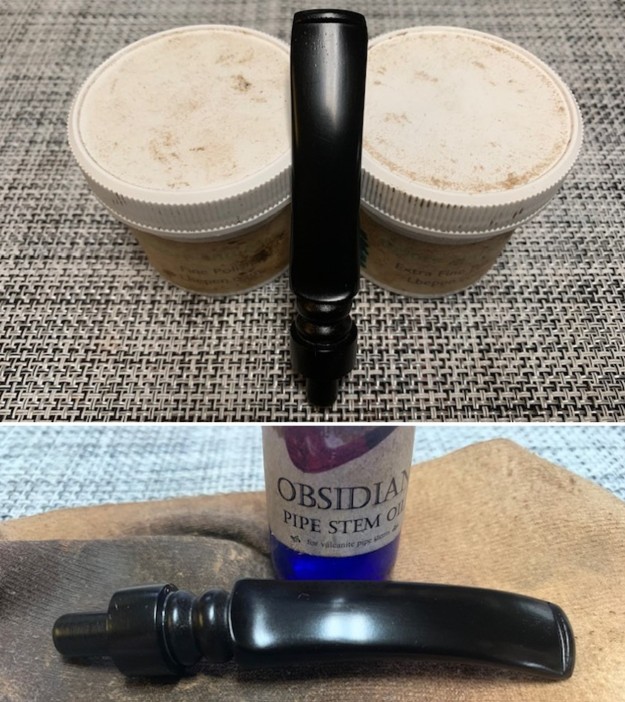
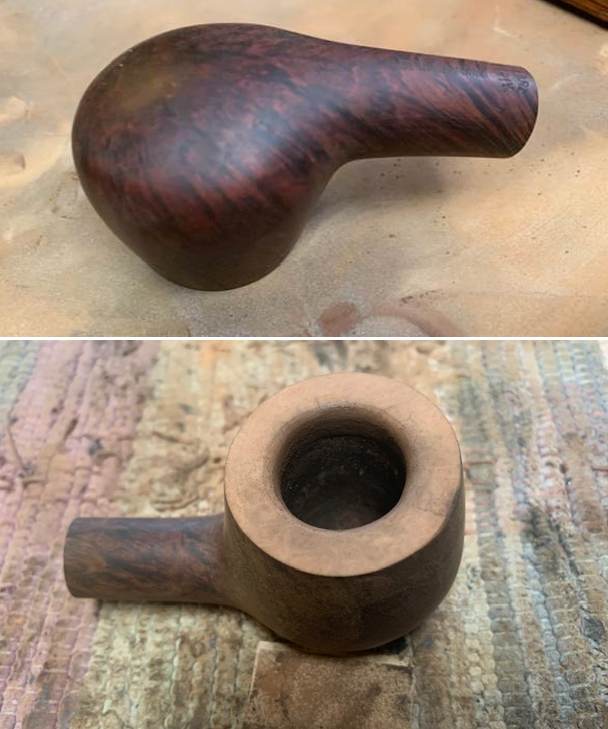
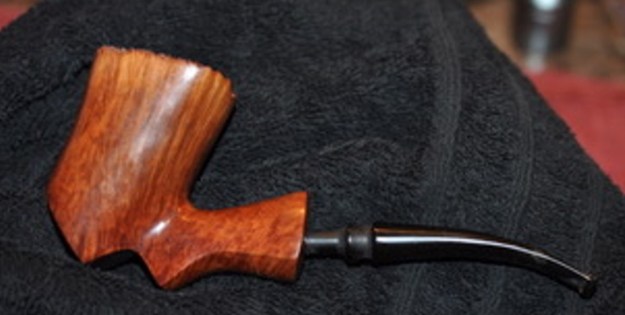
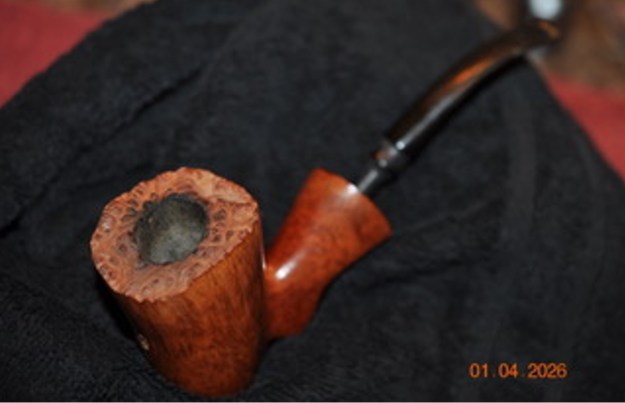
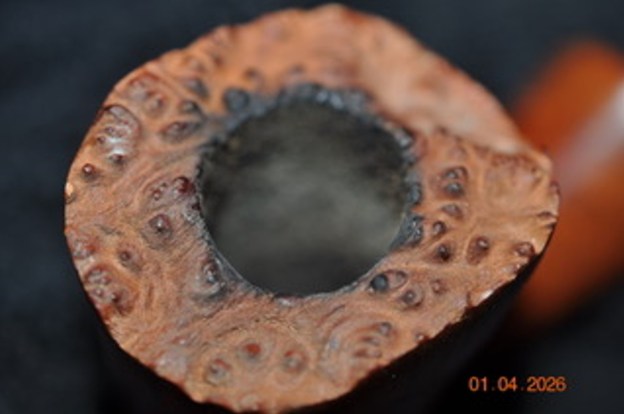
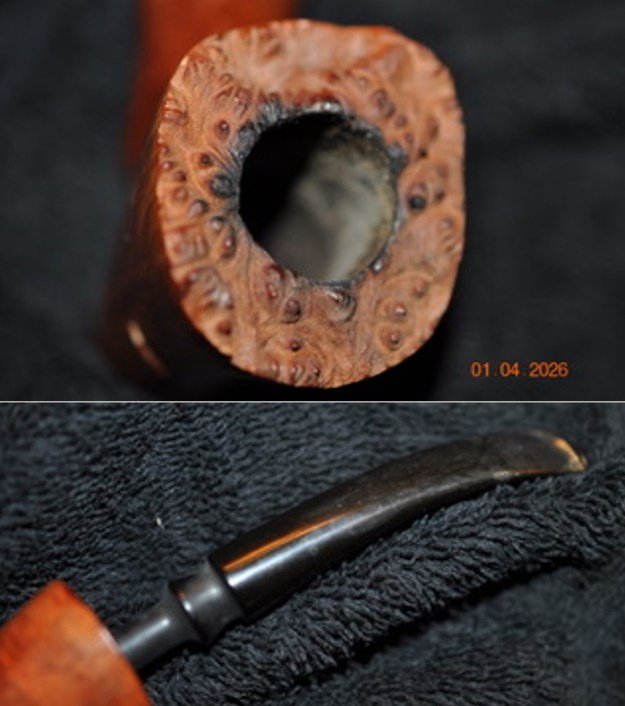
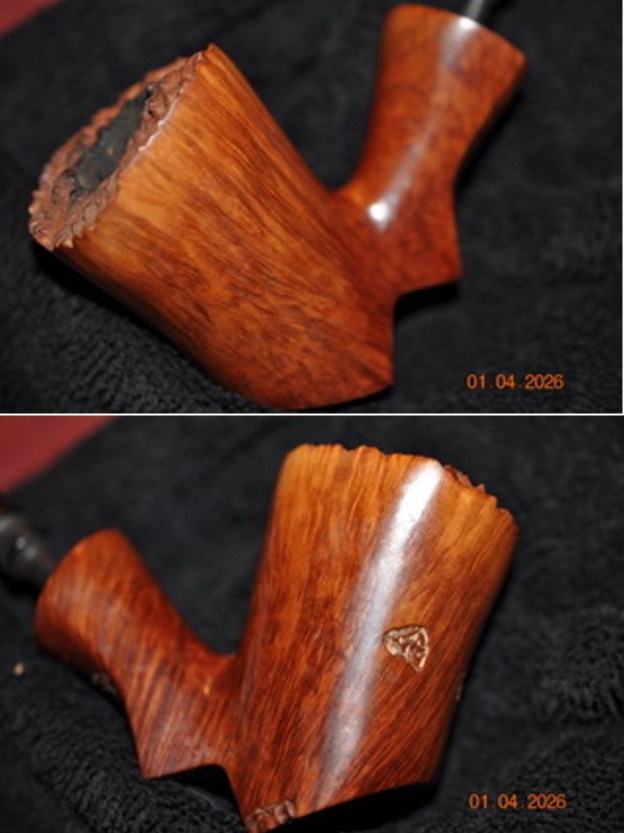
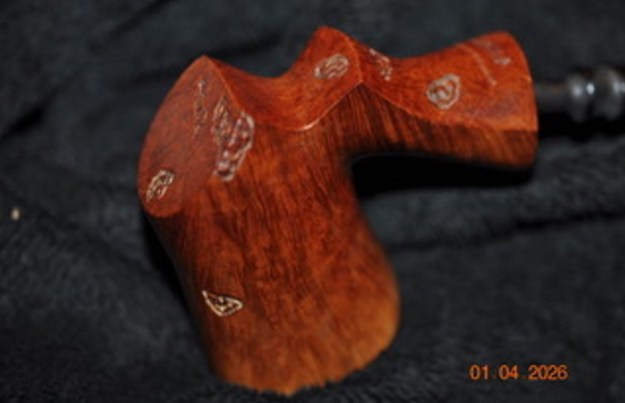
The next pipe on the work table is an elegantly shaped Dublin/Freehand. It came to us from an auction out of Glendale, Arizona, USA on 06/13/2020. The finish had a combination of smooth and two rusticated patches – one on the right side mid bowl and other on the back mid bowl. The top of the bowl is smooth and round. The shank underside is stamped Karl Erik over Hand Made in Denmark over 11. The bowl had grime and oils ground into the sides. There was a thick cake in the bowl and a light lava overflow and grime on the inner edge and rim top. There was a small mark on the inner edge on the left side toward the back of the bowl. The fancy, turned saddle stem was oxidized and there was tooth chatter on both sides near the button. Jeff took photos of the pipe before he started his clean up. The next photo shows the rim top and the bowl. You can see the cake in the bowl and the light overflow of lava on the flat rim top. The inner edge of the bowl looks smooth and shows some darkening and nicks. The photos of the stem show the oxidation and calcification on the stem. There are also light tooth marks and chatter on both sides near the button. Jeff took pictures of the bowl from various angles to show the condition and the overall look of the pipe. It was a beauty and elegant underneath the grime. The underside of the shank is stamped Karl Erik over Hand Made in Denmark. Underneath that is the number 11. It is clear and readable.Jeff had thoroughly cleaned up the pipe. He reamed the pipe with a PipNet Pipe Reamer and cleaned up the remnants with a Savinelli Fitsall Pipe Knife. He scrubbed the bowl with undiluted Murphy’s Oil Soap with a tooth brush. He rinsed it under running warm water to remove the soap and grime. He cleaned out the inside of the shank and the airway in the stem with alcohol, cotton swabs and pipe cleaners. He scrubbed the exterior of the stem with Soft Scrub to remove as much of the oxidation and calcification as possible. He soaked the stem in Briarville’s Pipe Stem Deoxidizer and rinsed it off with warm water. I took photos of the pipe once I started to work on it.  I took some photos of the rim top and stem. The rim top and bowl looked good. The cake and lava overflow were gone but the rim top and the inner edge showed some nicks and darkening. The closeup photos of the stem shows that it is a much cleaner and looks good. The light tooth marks and chatter were still present on both sides.I took a photo of the stamping on the left side of the shank to show the condition after the cleanup. It was very readable and undamaged. I took the stem off the shank and took a photo of the pipe to give a sense of the proportions of the pipe.  I started my restoration work on this pipe by addressing the darkening around the inner edge of the bowl and rim top. I used a folded piece of 220 grit sandpaper to clean up the inner edge and the rim top. The finished rim top looked very good.I started my polishing regimen on the bowl. I used nine micromesh sanding pads and dry sanded the bowl with 1500-12000 grit pads. I wiped the bowl down with a damp cloth after each pad. The bowl really shines by the final three pads. I worked some Before & After Restoration Balm into the surface of the briar with my fingertips to clean, enliven and protect it. I let the balm sit for a little while and then buffed with a cotton cloth to raise the shine. The photos show the bowl at this point in the restoration process.     I set the bowl aside and turned to the stem. I polished out the tooth chatter and marks on the stem with micromesh sanding pads – dry sanding with 1500-12000 grit sanding pads. I wiped them down after each sanding pad with a cloth containing some Obsidian Oil. I finished polishing it with Before & After Pipe Stem Polish – both Fine and Extra Fine and buffed it off with a cotton cloth. I gave it a coat of Obsidian Oil to preserve and protect the stem. I don’t know how many times I have said this but I love it when I come to the end of a restoration and all of the parts come together and the pipe looks better than when we started the cleanup process. I put the stem back on the Karl Erik Handmade in Denmark 11 Freehand Dublin and buffed the pipe with Blue Diamond on the buffing wheel. I carefully avoided the stamping on the shank sides during the process. I gave the bowl and stem multiple coats of carnauba wax on the buffing wheel and followed that by buffing it with a clean buffing pad on the buffer. I hand buffed the pipe with a microfiber cloth to deepen the shine. The finished pipe is a real stunning example of a Danish Karl Erik Handmade 11 Freehand. Once again, the grain and the way the shape follows the grain is amazing. Give the finish pipe a look in the photos below. I can only tell you that it is much prettier in person than the photos capture. The dimensions of the pipe are Length: 5 ¾ inches, Height: 2 inches, Outside diameter of the bowl: 1 ½ inches, Chamber diameter: 1 inch. The weight of the pipe is 1.38 ounces/40grams. Thanks for walking through the restoration with me as I worked over another beautiful pipe. I will be putting this one on the rebornpipes store in the Danish Pipemakers Section. Let me know if you are interested in adding it to your collection. Thanks for your time.
As always, I encourage your questions and comments as you read the blog. Thanks to each of you who are reading this blog. Remember we are not pipe owners; we are pipe men and women who hold our pipes in trust until they pass on into the trust of those who follow us.

Restoring a Wenhall Dane Craft E Freehand


Blog by Steve Laug

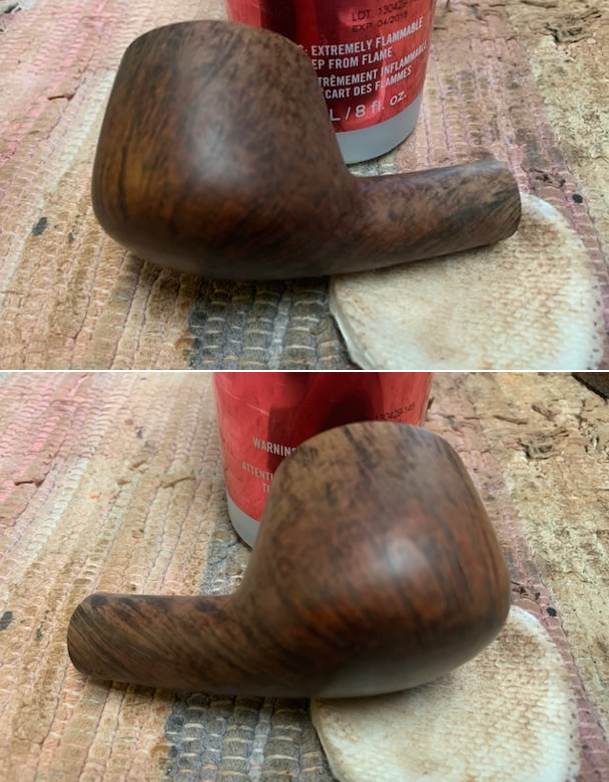
Jeff and I love picking up freehand pipes that are unusual or have unique grain around the bowl. This particular pipe came to us from a lady in Cleveland, Ohio, USA on 04/09/2022. We purchased her husband’s estate pipes from her and there were some very nice ones. The pipe was stamped on the underside of the shank and read Wenhall [over] Dane Craft [over] E. The shape and the unusual stem combination are familiar with other freehands in this series. It is an unusual piece with some grooves in the bowl sides and a “nose” on the front of the bowl at the heel. These make it very comfortable in the hand. It has some nice straight grain on the bowl sides and shank. The finish was dirty with hand oils and grime ground into the finish. The plateau rim top had lava from the bowl and darkening in the rough finish. The inner edge of the rim also has thick lava and a thick cake lining the bowl walls. The stem is different in that it is one that I would expect on a Danish Made Celius pipe or possibly some of the British style Hardcastle freehands. The chairleg style stem seems to be made of high-quality vulcanite as it is not oxidized. The stem has tooth marks on the top and underside ahead of the button and a hole in the top surface. The pipe is very dirty but you can see the beauty through the grime. Jeff took some photos of the pipe before he worked his magic in the cleanup process. Jeff took some close up photos of the plateau rim top and inner edge of the bowl to give an idea of the filthy condition the pipe was in when he received it. I am sure glad that this was one that he worked on. The bowl has a thick cake and the plateau rim top is almost filled in with the lava overflow at the back of the bowl. The stem was lightly oxidized and had tooth marks and chatter on both sides. There was also a bite through on the topside of the stem ahead of the button. There was a calcification on the surface of the stem and some minor oxidation. Jeff took photos of the sides of the bowl and heel to show the grain around pipe. You can see the grime and the oils in the finish that are ground into the bowl. You can also see the scratches and nicks in the finish. The next series of photos capture the stamping. The stamping is faint on the edges but together you can see that it reads Wenhall over Dane Craft over the letter E. The last photo in this series shows the fit of the stem to the dirty shank. There is a gap that should disappear with cleaning. I remembered working on a Wenhall Dane Craft Freehand in the past so I turned back to a previous blog I had written on that one (https://rebornpipes.com/2018/06/18/new-life-for-a-wenhall-dane-craft-b-freehand/). I reread the blog and was reminded of the background information on the brand that I had researched prior. It is a beautiful pipe. I quote from that blog below.

In the back of my mind I remembered a connection between Wenhall and Karl Erik pipes. I could not remember the details of the connection but I remembered there was one. I’ll tell you what, even that is pretty good for this old bird. I looked it up on the pipephil pipes, logos and stampings website and found nothing on that site that linked the two. I turned to Pipedia and looked it up in the Pipe Makers list that is included there. I found the link to Wenhall pipes that I was looking for. Here is the link, https://pipedia.org/wiki/Wenhall. It was a short article but it made a lot of connections to names that I was familiar with from working on pipes. I include the majority of the article because of the pertinent information that it provides.

Wenhall Pipes Ltd. was a distribution company out of New York City.

By the end of the 1970’s Wenhall approached Michael Kabik and Glen Hedelson, at that time operating from a farm house in Glen Rock, Maryland to create a line of freehands called Wenhall. The situation was favorable, because Kabik & Hedelson had ended their cooperation with Mel Baker of Tobak Ltd. to produce the famed Sven-Lar freehands shortly before.

Upon Wenhall’s offer the partners got a bank loan and set up a studio of 2000 square feet in a fairly new industrial park in Bel Air, Maryland and took on the name Vajra Briar Works. Wenhall initially wanted 500 pipes a week! But Kabik & Hedelson doubted that they could move that much product and told them they would produce 250 pipes per week. Happily, some of the old crew from Sven-Lar joined them at Vajra Briar Works, and thus they rather quickly met the production demands.

Furthermore during this time, Wenhall requested to create a line of pipes consisting of 12 different shapes. The line was called “The Presidential” and, while they repeated the same 12 shapes for this series, each one was freehand cut. Although they came up with interesting designs, mainly developed by Hedelson, especially Kabik was never really happy with the line or the concept, but, by this time, they had nine people on full-time payroll.

The stint with Wenhall lasted a couple of years, at which time they asked them to join Wenhall in a move to Miami, Florida. But by this time Kabik and Hedelson felt very uncomfortable with the owners of Wenhall and decided that they’d rather close the shop than make the move. Time proved that decision very wise, as Wenhall folded shortly after the move. All the same they had to close Vajra, but scaled down to the two of them and moved the operation to the farm house Glen was currently living in.

I could see the link to Michael Kabik and Glen Hedelson and the Svenlar line of pipes that I have worked on in the past. The problem was that these were American made pipes and I was pretty sure that they would have been stamped accordingly. Even though they were Danish style I don’t know if they would have stamped their pipes Danish Craft. The next short paragraph made the link to Karl Erik that I was looking for.

Presumptively for a shorter period only Wenhall had pipes made in Denmark by Karl Erik. (BTW K.E. Ottendahl ceased all sales to the USA in 1987.)…

The article went on to tie the pipes to some Italian makers as well. I stopped reading at this point and tried to summarize what I had found out so far. I knew that the pipe I held in my hand was made between the late 1970s and 1987. It possibly could have been made by Michael Kabik and/or Glen Heldelson or even by Karl Erik. Something about the flow of the shape and the way the bowl flows with the grain reminds me a lot of Karl Erik pipes that I have worked on. Either way the pipe is between 36-53 years old and in great condition for an older piece.

Jeff had reamed the bowl with a PipNet pipe reamer and followed up with a Savinelli Fitsall pipe knife to remove the cake. He scrubbed out the mortise and the airway in the shank and the stem with alcohol, cotton swabs and pipe cleaners. He scrubbed the exterior of the bowl, rim, shank and stem with a tooth brush and Murphy’s Oil Soap to remove the oils and tars on the bowl, rim and shank. He rinsed it under running water. He dried it off with a soft cloth. The lava mess on the rim was thoroughly removed without harming the finish underneath it. Without the grime the finish looked really good. He soaked the stem in Before and After Pipe Stem Deoxidizer. He rinsed it under running water and dried it off with a clean cloth. He cleaned out the airway with pipe cleaners and alcohol. When it arrived here in Vancouver it was very clean. I took photos of the pipe to show its condition before I started my work on it. It really is quite a beauty. I took close up photos of both the rim top and the stem. Jeff had been able to get the grime and lava out of the plateau on the rim top and it looked pretty incredible. There was some darkening on the high spots on the plateau and lighter brown colouring in the valleys and crevices particularly on the back side of the bowl. The stem looked very clean. The tooth marks and chatter were very visible and would need to be addressed. The tooth hole on the top of the stem will need to be repaired. The stamping was still readable and curved around the underside of the shank. It reads as noted above. I also took a photo with the stem removed to give an idea of the perspective and design of the pipe.I turned to work on the pipe. I started with the darkening on the plateau rim top. I used a brass bristle wire brush and worked over the plateau rim. It looked much better. I worked in some Murphy’s Oil Soap with the brass brush and rinsed it off with warm running water. It look significantly better one it was rinsed and dried off.I polished the briar bowl with micromesh sanding pads – dry sanding with 1500-12000 grit sanding pads. I wiped the bowl down after each sanding pad with a damp cloth to remove the debris from the sanding. I worked some Before & After Restoration Balm into the grooves and crevices of the plateau rim top and the smooth finish of the bowl and shank with my fingers and a horsehair shoe brush. I want the product to go deep into the finish because it works to clean, enliven and protect the briar. Once I was confident that it was deeply worked into the blast I wiped it off and buffed it with a soft cloth to polish it. The pipe really began to have a rich shine. I took some photos of the bowl at this point to mark the progress in the restoration. The grain really stands out in the photos below. I set the bowl aside and turned to work on the stem. I decided to address the bite through in the top of the stem. I cleaned out the hole with alcohol and then greased a pipe cleaner with Vaseline and inserted it beneath the hole. I filled in the hole with black CA glue. I sprayed it with accelerator to cure it. I removed the pipe cleaner and filled in the remaining small pinholes with more CA glue. I set the stem aside to let the repair cure. Once the repair had hardened I used several small files to flatten the repairs and the marks on the underside as well. I smoothed out the surface with 220 grit sandpaper and blended them into the surface of the stem. I started polishing the stem with 600 grit wet dry sandpaper. I polished the vulcanite stem with micromesh sanding pads – wet sanding it with 1500-2400 grit pads and dry sanding with 3200-12000 grit pads. I wiped it down with Obsidian Oil after each sanding pad. I polished it with Before & After Pipe Polish – both the Fine and Extra Fine polishes. I gave it a final coat of oil and set it aside to dry.I polished bowl and the stem with Blue Diamond to polish out the remaining small scratches. I gave the bowl and the stem multiple coats of carnauba wax and buffed the pipe with a clean buffing pad to raise the shine. I hand buffed the pipe with a microfiber cloth to deepen the shine. The pipe polished up pretty nicely. The medium brown stain worked really well with the black vulcanite stem. The darkened plateau really sets of the pipe and gives it a unique look. The finished pipe is shown in the photos below. The dimensions of the pipe are Length: 6 inches, Height: 2 ½ inches, Outer diameter of the bowl: 1 ¾ inches, Chamber diameter: 7/8 inches. The weight of the pipe is 56 grams/1.98 ounces. I will be putting this unique freehand on the rebornpipes store in the Danish Pipemakers Section. If you are interested in adding it to your collection please let me know. Thanks for walking through this restoration with me as I worked over this beauty.

As always, I encourage your questions and comments as you read the blog. Thanks to each of you who are reading this blog. Remember we are not pipe owners; we are pipe men and women who hold our pipes in trust until they pass on into the trust of those who follow us.

Resurrecting a Filthy Karl Erik Hand Made in Denmark 5 Freehand to a Pipe of Beauty


Blog by Steve Laug

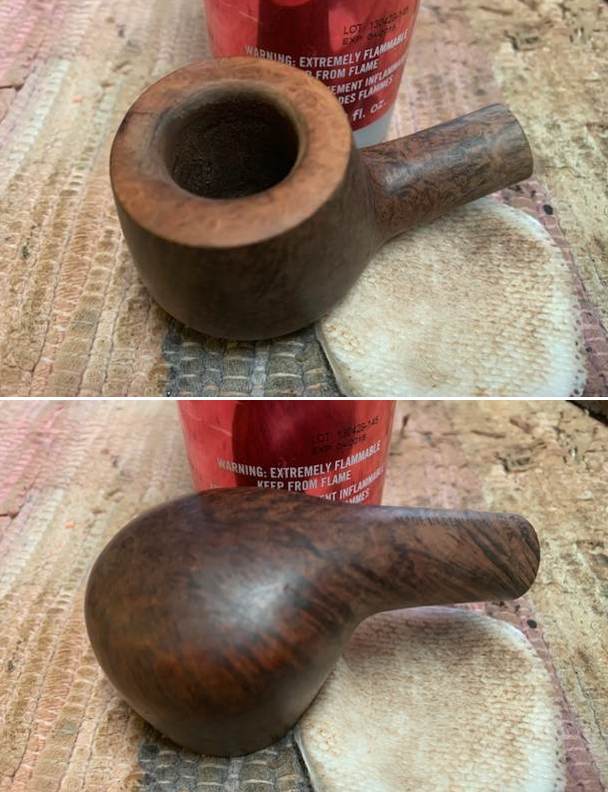
The next pipe I have chosen to work on is a nice looking Freehand with a fancy, turned vulcanite stem. We picked it up on 05/01/2022 from an Antique Mall in Bozeman, Montana, USA. The stamping on the underside of the shank read Karl Erik [over] Handmade in Denmark [over] 5. The black vulcanite fancy, turned stem does not have the usual logo on the topside of the stem. The pipe is a nice looking pipe with medium brown finish that highlights the grain around the bowl sides and shank. The plateau rim top is a mix of smooth brown stain and black plateau. It is light weight and comfortable pipe to hold. Jeff sent me the following photos of the pipe to show the condition it was in before he worked on it.

This is what I saw when I looked over the pipe.

  1. The finish on the bowl and shank has some oils darkening the side from the smoker’s hands. There is also some grime ground into finish around the bowl and shank. The stain is dull and the grain patterns though visible under the grime are obscured around the bowl sides and shank
  2. The plateau rim top was very dirty with a heavy lava coat on it. It is heavier on the front right and backside. The inner edge of the bowl is hard to see under the thick build up of cake that has overflown the bowl top.
  3. There was a thick cake in the bowl. The bowl itself was very dark and dirty. Once the bowl was cleaned up we could confirm the condition of the bowl walls.
  4. The fancy turned vulcanite stem was filthy, oxidized, calcified and had deep tooth marks and chatter on both sides ahead of the button.
  5. There is no logo stamped on the topside of the stem.

To summarize what I saw – this Karl Erik Freehand is a well made and uniquely shaped pipe. The bowl and stem are very dirty which says to me that once again this pipe was someone’s favourite pipe. The look and feel of the pipe in the hand is great. It should clean up very well. Here are photos of the pipe taken before Jeff started the clean up.  Jeff took close up photos so that I could have a clearer picture of the condition of the bowl, rim edges and top. The rim top photos confirm my assessment above. The cake in the bowl is thick – covering the walls of the bowl. The rim top has thick lava coat overflowing and covering the inner edge. It is heavier on the right front and toward the back of the bowl. It is hard to know the condition of the inner edge in this condition. This is what I look for when assessing a pipe. I look forward to viewing it in person after the clean up work.Jeff took a photo of the plateau shank end and the fit of the stem in the shank. You can see the build up of dust and debris in the plateau and in the curves and grooves of the stem. It is a mess but still beauty lies beneath the grime.The vulcanite fancy, turned stem is dirty, oxidized and calcified. There are some deep tooth marks and chatter on both sides ahead of the button. You can also see some scrape marks across both the top and underside of the stem. Instead of telling you what I see in the next photos of the sides of the bowl and the heel I want to hear from you. Tell me what you see? What does the finish look like to you? Are there any visible problems or issues that stand out to you? Are there cracks or scratches in nooks and crannies of the sandblast finish of the bowl? Are there visible flaws or fissures in the briar? What does the finish look like? Is there a pattern to it? Any visible issues on the heel of the bowl? These questions should help you to see what I am looking for when I see these photos. He took photos of the stamping on the underside of the shank. It is stamped as noted above. The vulcanite stem has no identifying stamping. What stands out for you in the photos of the stamping? What do you look for in the stamping? It is dirty but what do you see underneath the grime on the surface of the briar?I reread the blog that Robert M. Boughton did for us on his “Grade O” Karl Erik to refresh my memory on the brand and the grading system (https://rebornpipes.com/2018/07/28/a-three-card-draw-for-an-inside-straight-with-an-old-karl-erik-hand-made-grade-o-freehand/). It was enlightening and from there I went on and looked up the brand on both Pipephil’s site and Pipedia to add some details to my knowledge.
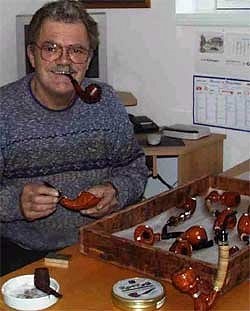
Photo courtesy of Pipedia

From the Pipephil site I got a quick overview of the history of the brand. I quote: Brand created in 1965-66 by Karl Erik Ottendahl (1942 – 2004 †). In the best years he employed up to 15 craftsmen among which Bent Nielsen (see Benner) and Peder Christian Jeppesen. Former grading (ascending): from 4 to 1, and “Ekstravagant” (entirely handmade).  http://www.pipephil.eu/logos/en/logo-k1.html

From Pipedia here is a bit more detailed history of the brand.

Karl Erik Ottendahl (1942 – 2004) was born in Aalborg (Jutland), just a few miles from the very northernmost tip of Denmark. He began smoking a pipe when he was 14 and upon leaving school he started an apprenticeship…as a lithographer at the age of 16.

While working as an apprentice he began hand carving pipes as a hobby. Many were given as gifts to his more senior colleagues. Upon completion of his apprenticeship he moved to Nairobi, Kenya to work as a lithographer during the 1962 war. While in that war torn country, he was unable to procure pipes for himself. In the face of such a predicament, he chose to continue to make pipes for his own use rather than go without.

Returning to Denmark after three years he couldn’t find a well paid… job, and so he began making a few pipes on the side to boost his income choosing his prenames “Karl Erik” – logo “KE” – for his label. When he managed to find some major Copenhagen pipe stores willing to sell his pieces his reputation grew little by little and he was finally able to purchase more and better machinery and began working full time as a pipe maker. https://pipedia.org/wiki/Karl_Erik

Pipedia also included a short description of the grading system that was used. From what I can discern the numbers ascended (6-1) and the letters ascended as well.

KE’s new grading used numbers ascending from D to A. The unique “Ekstravagant” pipes C, B, A, AA to AAA. These superb pieces of remarkable quality were, almost certainly, the least expensive high- quality hand made pipes coming from Denmark today! https://pipedia.org/wiki/Karl_Erik

Jeff did a major clean up job on this one and the pipe I received when it arrived in Vancouver looked far better than the one pictured above. Here is what I saw when I brought the pipe to the table.

  1. The finish is clean and the oils and grime are gone from the bowl. The finish shows the beautiful contrast in the stains between the bowl side and the plateau on the rim top and shank end.
  2. The plateau rim top and shank end were clean and the top and the inner edge of the bowl look very good. There was no damage to the outer edges as well.
  3. There cake in the bowl has been removed and the bowl is very clean. The walls of the bowl are smooth and appear to be undamaged and show no checking or burn damage.
  4. The vulcanite fancy, turned stem looks better though the tooth marks and chatter on both sides are visible.
  5. There was no stamping or identifying marks on the stem.

Hopefully the steps above show you both what I look for when I go over the pipe when I bring it to the work table and also what I see when I look at the pipe in my hands. They also clearly spell out a restoration plan in short form. My work is clear and addressing it will be the next steps. I took photos of the whole pipe to give you a picture of what I see when I have it on the table. This is important to me in that it also shows that there was no damage done during the clean up work or the transit of the pipe from Idaho to here in Vancouver.  I carefully went over the bowl and rim top to get a sense of what is happening there. In this case once the rim top and edges were cleaned the rim top looked better. The inner edge had some significant darkening around the front and back overflowing onto the top in place. I would need to do some sanding to clean it up and remove the burn damage on the front top. I also went over the stem carefully. The fit to the shank is snug and the plateau on the shank is clean. There were some deep tooth marks and chatter on the surface of the stem and some scratching or file marks on the entire flat surface. The vulcanite stem surface was clean and looked better. I took photos of the rim top and stem sides to show as best as I can what I see when I look at them. I always check to make sure that the clean up work did not damage the stamping on the shank sides in any way. It is in excellent condition and is very clear and readable. I love just looking at the lay of Karl Erik made pipes and the creative way he follows the briar in flow and shape.I started my work on this pipe by dealing with the burn damage on the rim top and the inner edge. I used a folded piece of 220 grit sandpaper to go over the high spots on the plateau and all of the smooth parts. I also sanded out the burn damage on the inner edge and gave it a slight bevel all the way around the bowl. I touched up the dark valleys of the plateau with the characteristic black stain that was originally used. I did both the plateau on the rim and the shank end at the same time. I would polish the top and shank end more when using the micromesh on the rest of the bowl. It certainly looked better at this point.I polished the briar with micromesh sanding pads. I choose to dry sand the briar rather than wet sand it. Again it is a matter of personal preference. I prefer to use the pads dry and find they work very well on the briar. I sand with each pad (9 in total) and group them by threes for ease of reference. I wipe the bowl down after each pad with a damp cloth to remove the sanding debris and check the briar. I love seeing the developing shine on the briar as I move through the pads which is why I include so many photos of this step. I rubbed down the bowl and shank with Before & After Restoration Balm. It is a paste/balm that is rubbed into the surface of the briar. The product works to deep clean the finish, enliven and protect the briar. I worked it into the briar with my finger tips. I let it sit for 10 minutes then wiped it off with a soft cloth then buffed it with a cotton cloth. The briar really began to have a deep shine in the briar and the sandblast showed depth. The photos I took of the bowl at this point mark the progress in the restoration. It is a gorgeous pipe. I set the bowl aside and turned to the stem. I “painted” the stem surface with the flame of a Bic lighter to lift the tooth marks. I was able to lift them some. While they were better they were still there. I filled in what remained with black rubberized CA glue. I used a small file to flatten out the repairs and start to blend them into the surface of the vulcanite. I finished my work on the repairs by sanding them smooth with 220 grit sandpaper. I started the polishing of the stem with 600 grit wet dry sandpaper. I polished the stem with micromesh sanding pads – 1500-12000 grit sanding pads and water to wet sand the stem. I wiped it down after each sanding pad with Obsidian Oil on a cotton rag after each sanding pads. I find it does two things – first it gives some protection to the stem from buildup and second it give the sanding pads bite in the polishing process. After finishing with the micromesh pads I rub the stem down with Before & After Fine and Extra Fine stem polish as it seems to really remove the fine scratches in the vulcanite. I rub the Fine Polish on the stem and wipe it off with a paper towel and then repeat the process with the Extra Fine polish. I finish the polishing of the stem down with a final coat of Obsidian Oil and set the stem aside to let the oil absorb. This process gives the stem a shine and also a bit of protection. The final steps in my process involve using the buffer. I buffed the bowl and stem with Blue Diamond to polish out the light scratches in the vulcanite. I gave the bowl and the stem multiple coats of carnauba wax. I have found that I can get a deeper shine if I follow up the wax buff with a buff with a clean buffing pad. It works to raise the shine and then I hand buff with a microfiber cloth to deepen the shine. It is always fun for me to see what the polished bowl looks like with the polished stem. It really is a nice pipe. The smooth finish around the bowl sides and shank looks great. The contrast plateau portions also look good. The vulcanite fancy, turned stem works well with the pipe. The Karl Erik Handmade in Denmark 5 Freehand is a beauty. It feels great in my hand and is a well balanced pipe. Have a look at it with the photos below. The dimensions are Length: 6 inches, Height: 2 ½ inches, Outside diameter of the bowl: 1 ¾ inches, Chamber diameter: 7/8 of an inch. The weight of the pipe is 1.98 ounces/56 grams. It is a beautiful pipe that I will soon be adding to the rebornpipes store in the Danish Pipemakers Section. If you would like to add it to your collection let me know. It should be a great smoking pipe.

As always I encourage your questions and comments as you read the blog. Thanks to each of you who are reading this blog. Remember we are not pipe owners; we are pipe men and women who hold our pipes in trust until they pass on into the trust of those who follow us.

Resurrecting a Karl Erik Pot


Blog by Steve Laug

Once again I want to take you through my process of working on each pipe that we purchase. Jeff has set up a spread sheet to track where the pipe came from, the date of purchase and what we paid for it so that we know what we have invested in the pipe before we even work on it. This takes a lot of the guess work out of the process. This particular pipe was purchased on 12/27/2021 from a seller in Pittsburgh, Pennsylvania, USA. I also want you to understand why we take the photos we do. If you have followed for a while then you will see the familiar pattern of the photos we include both in the before and midstream process of working on a pipe. It is not accidental or chance as the photos have been taken to help me make an assessment of the pipe Jeff sees before he starts his clean up work. We do this to record the condition that the pipe was in when received it and to assess what kind of work will need to be done on. When I look at these photos this is what I see.

  1. The first thing I see is a classic Danish take on a Pot shaped pipe that had been well used. It was obviously someone’s favourite pipe if the cake in the bowl is any indication.
  2. The finish is dirty and there is grime and grit ground into the finish. Underneath the grime it looks like the bowl and shank have some amazing grain.
  3. The rim top has a heavy coat of lava that flowed from the cake in the bowl. It was thick and it was impossible to know what the edges of the bowl – both inner and out. I am hoping that the thick lava had protected the top and edges from burn damage.
  4. The bowl has a very thick cake and debris on the walls that hides the walls. The outer edges look good and there does not appear to be any obvious burn damage to outer bowl edges.
  5. The acrylic stem is in excellent condition – dirty, scratched and has tooth chatter and marks on both sides ahead of button. There were deeper tooth marks on the underside. There was a worn and partial KE logo on top of the blade portion of the saddle stem.

Overall my impressions of this pipe is that it is a great looking Danish style pot shaped pipe with some beautiful grain hidden under the grime that once cleaned up will be another pretty pipe. The photos below confirm the assessment above. Jeff took close up photos so that I could have a clearer picture of the condition of the bowl, rim edges and top. The rim top photos confirm my assessment above. The cake in the bowl is thick with tobacco debris stuck on the walls. The rim top has heavy lava, grime and debris covering it. The inner and outer edges are so covered it is hard to know what is under them. This is what I look for when assessing a pipe. It is unclear if there is any burn damage at this point. I look forward to viewing it in person after the clean up work. The photos of the acrylic stem surface from various angles confirm my assessment of its condition. You can see the grime on the stem in the first photo below. The stem is quite dirty and a bit of a mess. The fit of the stem to the shank is good. There is a partial logo on the top visible in the photo. Instead of telling you what I see in the next photos of the sides of the bowl and the heel I want to hear from you. Tell me what you see? What does the finish look like to you? Are there any visible problems or issues that stand out to you? Are the cracks or scratches in the valleys of the rustication or the high spots? Are there visible flaws or fissures in the briar? How random does the deep rustication look? Is there a pattern to it? Any visible issues on the heel of the bowl? These questions should help you to see what I am looking for when I see these photos. (One note is that there appears to be burn damage on the front outer edge of the bowl shown in the second photo below.)  He took a photo of the stamping on the sides of the shank. The underside reads Karl Erik in an oval (Karl [over] Erik. Following the length of the shank it is stamped Made In Denmark. What stands out for you in the photos of the stamping? What do you look for in the stamping? It is dirty but what do you see underneath the grime on the surface of the briar? If you have been following the blog for any length of time you have come to know that when I am working on interesting old pipes (even sometimes those not so interesting) I like to know a bit about the background of the brand. I like to “meet” the carver to get a feel for their work and style.

I turned to Pipephil’s site (http://pipephil.eu/logos/en/logo-k1.html) to see what I could find. I did a screen capture of the entry there and have included the side bar information below the photo. Brand created in 1965-66 by Karl Erik Ottendahl (1942 – 2004 †). In the best years he employed up to 15 craftsmen among which Bent Nielsen (see Benner) and Peder Christian Jeppesen. Former grading (ascending): from 4 to 1, and “Ekstravagant” (entirely hand made)

I turned to Pipedia (https://pipedia.org/wiki/Karl_Erik) and reread the history of the brand. Give the article a read.

Now it was time to work on the pipe.

I am sure many of you will shake your head and ask maybe even out loud, “Why is he including this again?” However, please remember that the point of these blogs is not to wow your with the work or make you shake your heads but I want you to know the details of the work we do so you can do your own. Back in 2020 Jeff wrote a blog about his cleaning process. I am including a link to that now so you can see what I mean about his process. Do not skip it! Give it a read (https://rebornpipes.com/2020/01/20/got-a-filthy-estate-pipe-that-you-need-to-clean/). Here is the introduction to that blog and it is very true even to this day.

Several have asked about Jeff’s cleaning regimen as I generally summarize it in the blogs that I post rather than give a detailed procedure. I have had the question asked enough that I asked Jeff to put together this blog so that you can get a clear picture of the process he uses. Like everything else in our hobby, people have different methods they swear by. Some may question the method and that is fine. But it works very well for us and has for many years. Some of his steps may surprise you but I know that when I get the pipes from him for my part of the restoration they are impeccably clean and sanitized. I have come to appreciate the thoroughness of the process he has developed because I really like working on clean pipe!

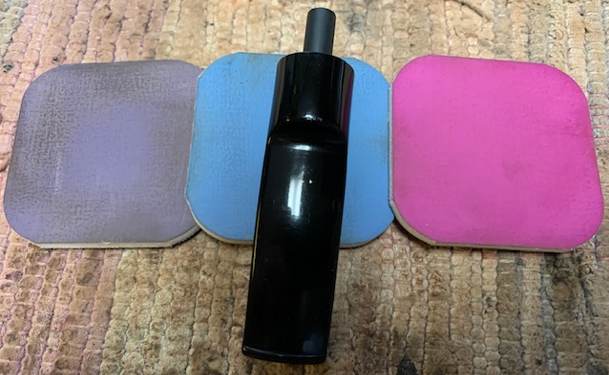
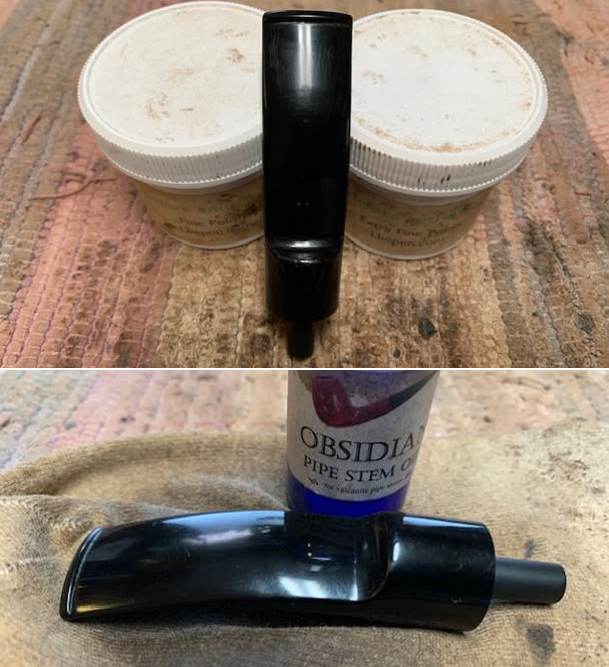
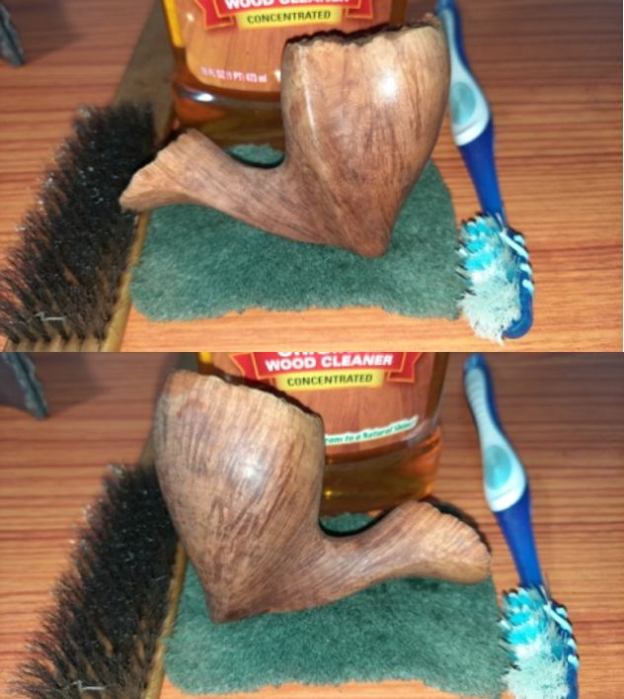
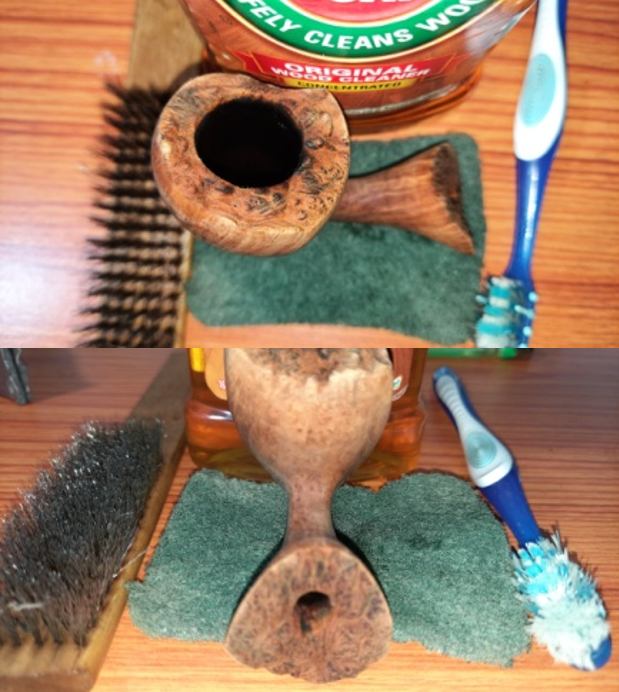
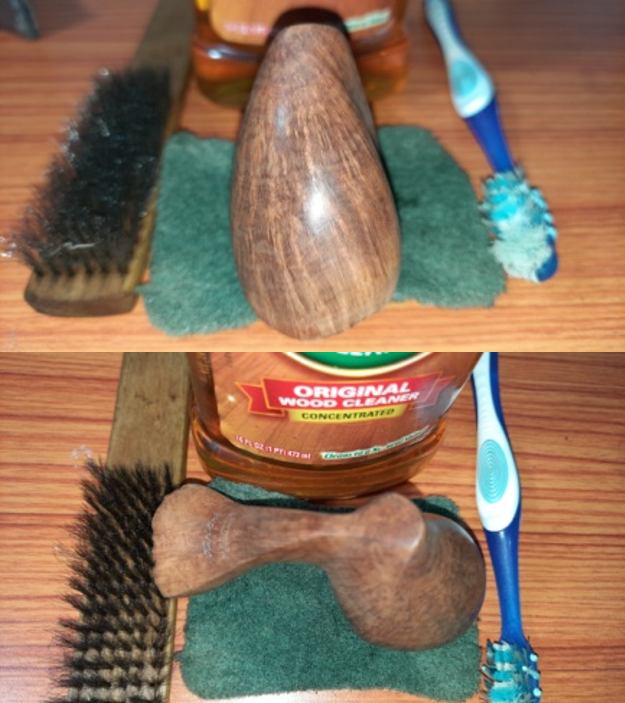
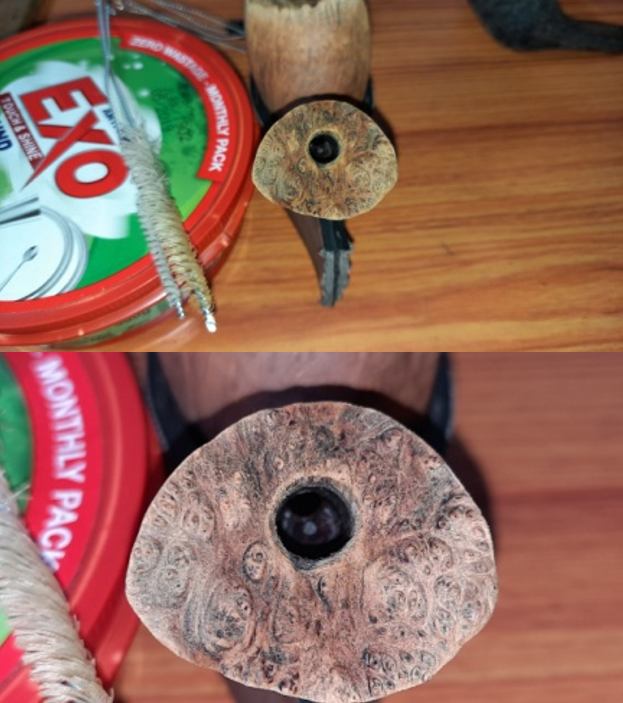
For the benefit of some of you who may be unfamiliar with some of the products he uses I have included photos of three of the items that Jeff mentions in his list. This will make it easier for recognition. These three are definitely North American Products so you will need to find suitable replacements or order these directly on Amazon. The makeup pads are fairly universal as we were able to pick some up in India when we were with Paresh and his family.

In the blog itself he breaks his process down into two parts – cleaning the stem and cleaning the bowl. Each one has a large number of steps that he methodically does every time. I know because I have watched him do the work and I have seen the pipes after his work on them. He followed this process step by step and when the pipe got to me it was spotlessly clean and ready for my work. The inside of the stem, shank and bowl were clean and to me that is an amazing gift as it means that my work on this end is with a clean pipe! I cannot tell you how much difference that makes for my work.

  1. The first thing I see is a classic Danish take on a Pot shaped pipe that cleaned up pretty well. There was damage that I will note in the numbers below but it was a nicely shaped pipe.
  2. The finish is clean and the grime and grit have been removed from the finish on the bowl. The grain is quite amazing looking.
  3. The lava, grime and dust on the rim top has been removed and it has revealed that there is some burn damage on the front outer, top and inner edge. There was some burn damage around the inner edge of the bowl as well
  4. The walls of the bowl are clean and there are some ridges in the walls of the bowl from someone reaming it with a knife.
  5. The acrylic stem is clean and has tooth chatter and marks on both sides. The marks on the underside of the stem are deeper than on the topside. The logo is partially visible but worn. The fit to the shank is well done with no damage.

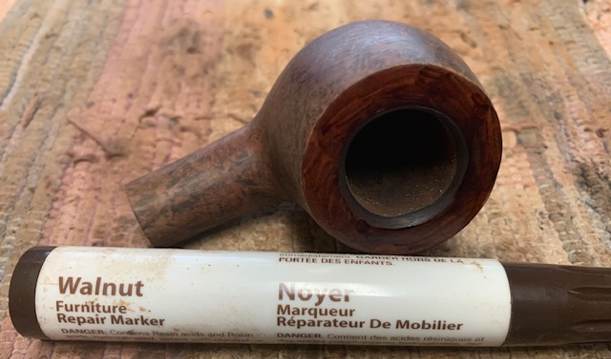
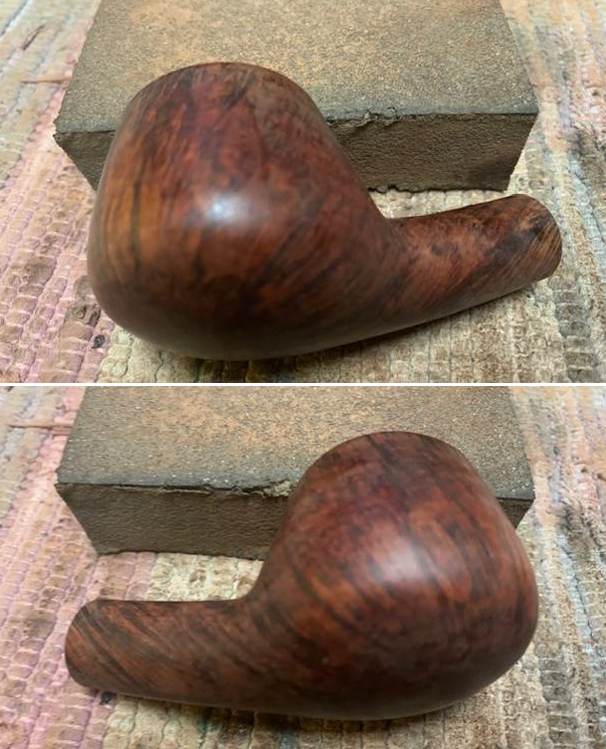
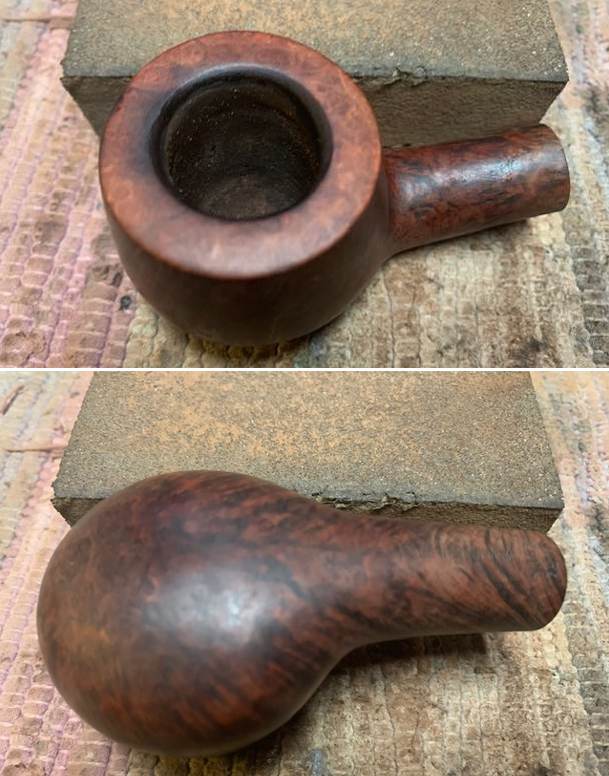
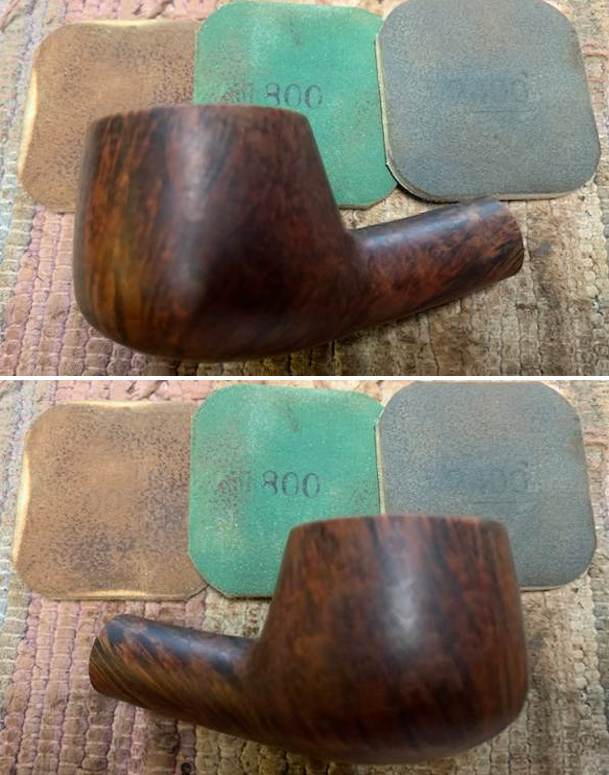
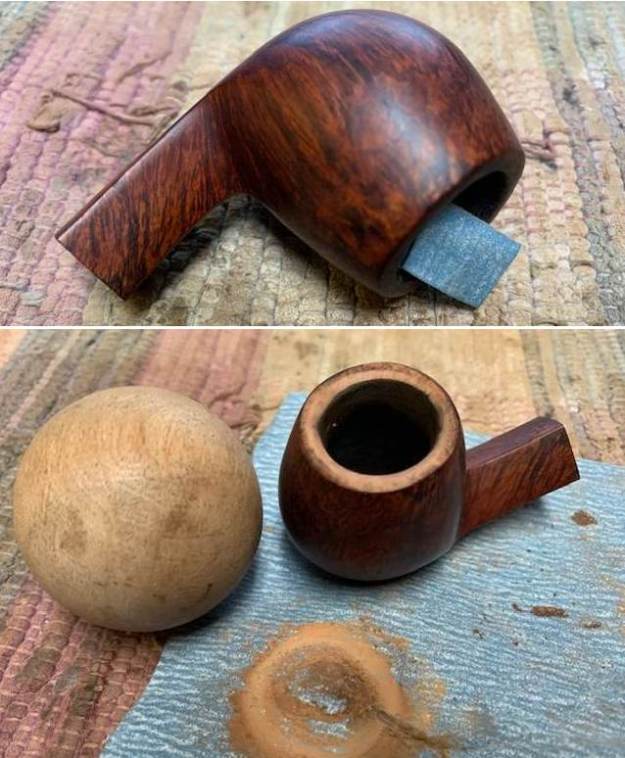
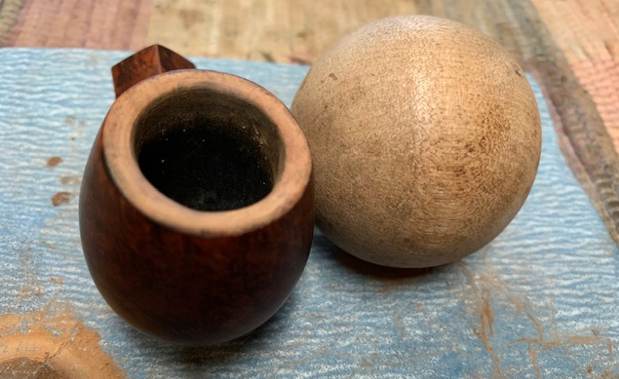
Hopefully the steps above show you both what I look for when I go over the pipe when I bring it to the work table and also what I see when I look at the pipe in my hands. They also clearly spell out a restoration plan in short form. My work is clear and addressing it will be the next steps. I took photos of the whole pipe to give you a picture of what I see when I have it on the table. This is important to me in that it also shows that there was no damage done during the clean up work or the transit of the pipe from Idaho to here in Vancouver.   I carefully went over the bowl and rim top to get a sense of what is happening there. In this case once the rim top and edges were cleaned the top and edges showed lots of burn damage on the top front right and middle as well as around the inner edge of the bowl. There was also some damage on the front outer edge of the bowl. I also go over the stem carefully. The stem had some issues as noted. There were some deep tooth marks on the underside and lighter on the topside. I took photos of the rim top and stem sides to show as best as I can what I see when I look at them. I always check to make sure that the clean up work did not damage the stamping on the shank sides in any way. It is in excellent condition and is very clear and readable. I love just looking at the lay of the pipe and the proportion of the hand made pipes. I like to remove the stem from the shank to get a sense of what was in the mind of the pipe maker when he crafted the pipe. The photo shows its beauty in flow and shape.  Now it was time to start working on the pipe. To address the darkening on the rim top and edges I started by topping the bowl with 220 grit sandpaper on a topping board. I need to remove the darkening to be able to see the damage. The damage is very evident on the top of the bowl and the inner edge on the right front. To deal with the rim damage on the top and the inner edge I used a wooden ball and a piece of 220 grit sandpaper to give the inner edge a slight bevel and remove the damage. Now I was getting somewhere. I used a folded piece of 220 grit sandpaper to fine tune the shape. I topped it once again with 220 grit paper. I am happy with the end result. I wiped the bowl down with some acetone to remove the darkening in the stain around the bowl. I wanted to even out the stain coat and the look of brown on the bowl and rim. I could not remove much more of the damage on the front and sides of the bowl without changing the profile of the pipe. I stained the rim top with a walnut stain pen to match the rest of the bowl and shank colour. It was a little dark but once it was polished and waxed it would be a perfect match.I polished the bowl and rim with a medium and fine sanding sponge to blend the finish together and smooth out the briar. I polished the briar with micromesh sanding pads. I choose to dry sand the briar rather than wet sand it. Again it is a matter of personal preference. I prefer to use the pads dry and find they work very well on the briar. I sand with each pad (9 in total) and group them by threes for ease of reference. I wipe the bowl down after each pad with a damp cloth to remove the sanding debris and check the briar. I love seeing the developing shine on the briar as I move through the pads which is why I include so many photos of this step.  After polishing it with the micromesh pads I rubbed it down with Before & After Restoration Balm. It is a paste/balm that is rubbed into the surface of the briar and the plateau. The product works to deep clean the finish, enliven and protect the briar. I worked it into the briar with my finger tips. I let it sit for 10 minutes then wiped it off with a soft cloth then buffed it with a cotton cloth. The briar really began to have a deep shine in the briar and the grain shone through. The photos I took of the bowl at this point mark the progress in the restoration. It is a gorgeous pipe. I set the bowl aside and turn to work on the stem. I filled in the deep tooth marks on both sides of the stem with black CA glue. I used a small file to flatten the repaired area. I used a folded piece of 220 grit sandpaper to blend them into the surface. I started the polishing with 600 grit wet dry sandpaper. I continued polishing the stem with micromesh sanding pads – 1500-12000 grit sanding pads and water to wet sand the stem. I wiped it down after each sanding pad with Obsidian Oil on a cotton rag after each sanding pads. But I find it does two things – first it gives some protection to the stem from oxidation and second it give the sanding pads bite in the polishing process.    After finishing with the micromesh pads I rub the stem down with Before & After Fine and Extra Fine stem polish as it seems to really remove the fine scratches in the acrylic. I rub the Fine Polish on the stem and wipe it off with a paper towel and then repeat the process with the Extra Fine polish. I finish the polishing of the stem down with a final coat of Obsidian Oil and set the stem aside to let the oil absorb. This process gives the stem a shine and also a bit of protection.  The final steps in my process involve using the buffer. I buffed the bowl and stem with Blue Diamond to polish out the light scratches in the briar and the acrylic. I gave the bowl and the stem multiple coats of carnauba wax. I have found that I can get a deeper shine if I follow up the wax buff with a buff with a clean buffing pad. It works to raise the shine and then I hand buff with a microfiber cloth to deepen the shine. It is always fun for me to see what the polished bowl looks like with the polished stem. It really is a nice pipe. The polished finish around the bowl sides and shank looks great with the rich brown stains. The Karl Erik Made in Denmark Danish Pot feels great in my hand. It is a well balanced pipe. Have a look at it with the photos below. The dimensions are Length: 6 inches, Height:  1 ½ inches, Outside diameter of the bowl: 1 ½ inch, Chamber diameter: 7\8 of an inch. The weight of the pipe is 2.19 ounces/62 grams. It is a beautiful pipe that functions as a sitter due to the wide heel on the bowl. I will soon be adding to the rebornpipes store in the Danish Pipemakers section. If you would like to add it to your collection let me know. It should be a great smoking pipe.

Hopefully the style of writing of this blog is helpful to you in some way. In it I wanted to show both what I am looking for and how I move forward in addressing what I see when work on a pipe. Let me know if it is helpful to you. It is probably the most straightforward detailed description of my work process that I have done. As always I encourage your questions and comments as you read the blog. Thanks to each of you who are reading this blog. Remember we are not pipe owners; we are pipe men and women who hold our pipes in trust until they pass on into the trust of those who follow us.

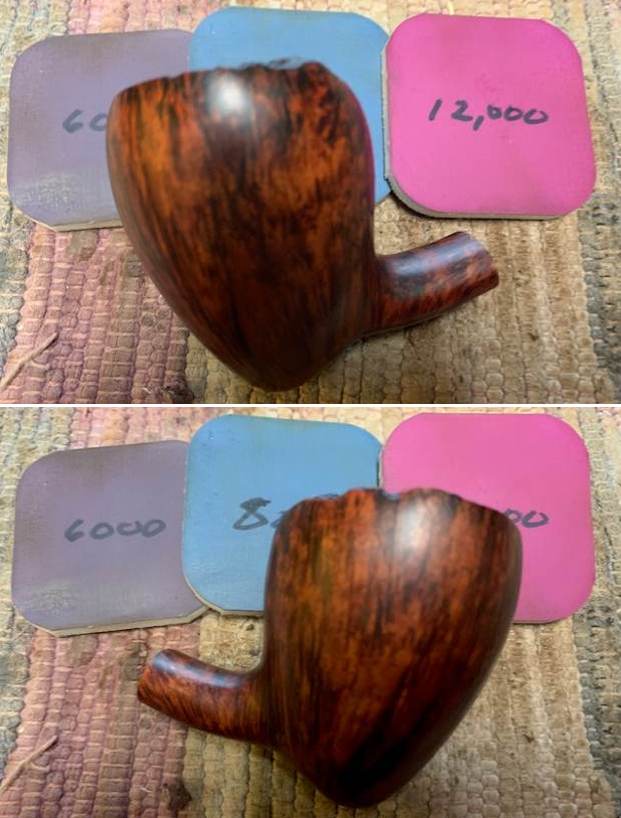
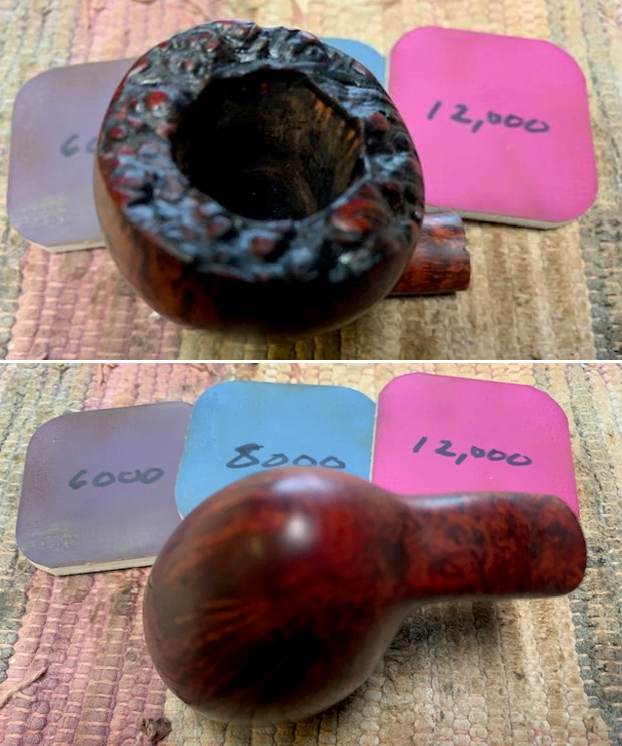
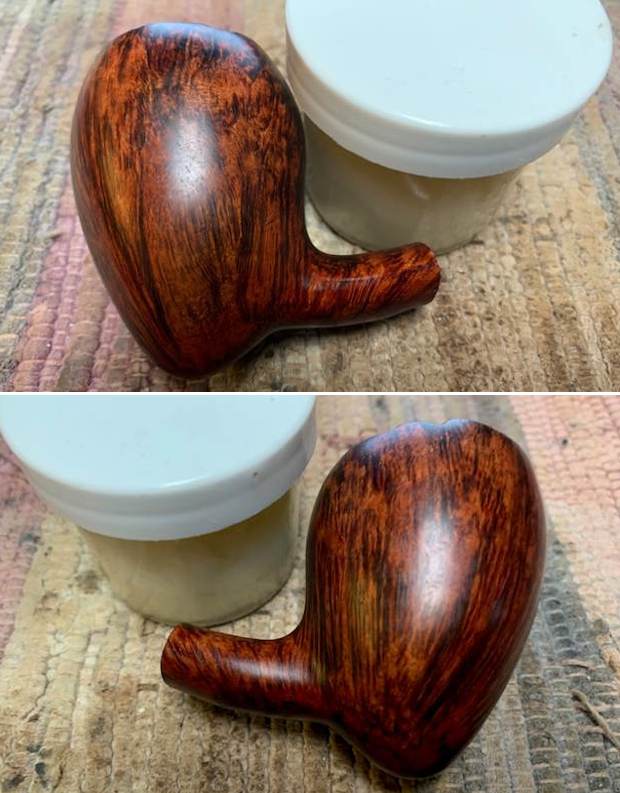
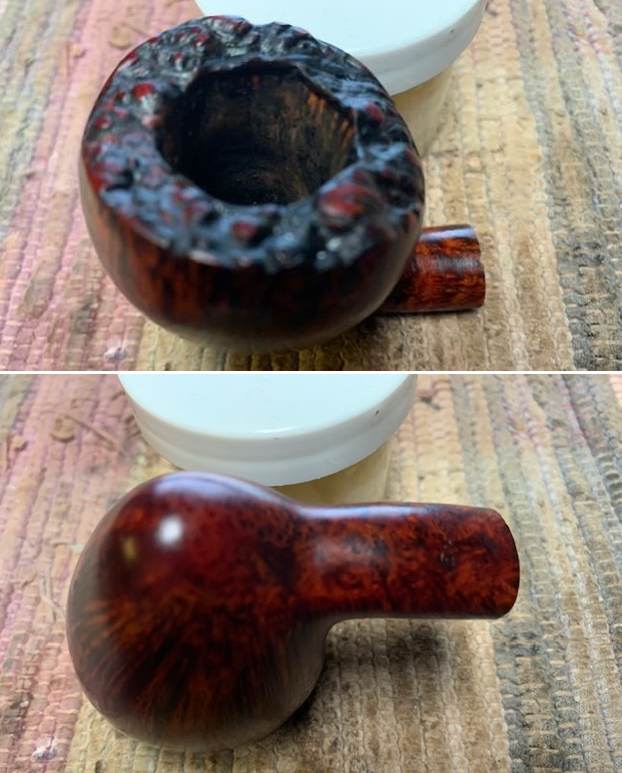
Restoring a Karl Erik Classic Diamond Shank Brandy


Blog by Steve Laug

This cool Saturday afternoon I decided to work on was another one that was purchased on 11/14/2022 in a lot of pipes that came to us from Copenhagen, Denmark  It is an interesting pipe with a shape that combines both a classic Brandy bowl with a diamond shank. The grain around both  is an interesting mixture. The pipe is stamped on the left underside of the shank and reads Karl [arched over] Erik. The pipe was a well used pipe when Jeff received it. There was dust and grime ground into the finish. The mixture of brown and black stains highlights some beautiful grain under the dirt. The bowl was heavily caked and there was an overflow of lava on the rim top. The inner edge was hard to see clearly and the lava could easily be hiding damage. The stem is vulcanite and was oxidized and dirty with light tooth marks and chatter on both sides ahead of the button and on the button itself. It has an interesting flair to the saddle portion of the stem that is characteristically Danish. Jeff took photos of the pipe before he started his clean up work on it. He took photos of the bowl and rim top to show what they looked like before his clean up. He also took some of the stem to show the condition of both sides. The photos of the sides and heel of the bowl show the uniquely stained grain around the bowl and shank. The mixture of black and brown stains adds depth finish on the pipe. Even under the grime it is a real beauty. The stamping on the left side the shank is shown in the photos below. It is clear and readable as noted above.Before I started my work on the pipe I wanted to see if I could find any information that would help me date this pipe and get a sense of the line. I turned to Pipephil to get a quick review of the brand (http://pipephil.eu/logos/en/logo-k1.html). The stamp on the stem shown in the photo below is different than the one I am working on. It includeds a K and an E while this one is just an E stamp. I have included a screen capture of the brand info there as well as a note in the side bar about Karl Erik Ottendahl along with a small picture.Brand created in 1965-66 by Karl Erik Ottendahl (1942 – 2004 †). In the best years he employed up to 15 craftsmen among which Bent Nielsen (see Benner) and Peder Christian Jeppesen. Former grading (ascending): from 4 to 1, and “Ekstravagant” (entirely hand made)

I then turned to Pipedia (https://pipedia.org/wiki/Karl_Erik) for more information. I am including just the opening remarks but would encourage you to give the link a read for a very interesting history of the brand. I quote:

Karl Erik Ottendahl (1942 – 2004) was born in Aalborg (Jutland), just a few miles from the very northernmost tip of Denmark. He began smoking a pipe when he was 14 and upon leaving school he started an apprenticeship in the craft as a lithographer at the age of 16.

While working as an apprentice he began hand carving pipes as a hobby. Many were given as gifts to his more senior colleagues. Upon completion of his apprenticeship he moved to Nairobi, Kenya to work as a lithographer during the 1962 war. While in that war torn country, he was unable to procure pipes for himself. In the face of such a predicament, he chose to continue to make pipes for his own use rather than go without.

Returning to Denmark after three years he couldn’t find a well paid occupation in his job, and so he began making a few pipes on the side to boost his income choosing his prenames “Karl Erik” – logo “KE” – for his label. When he managed to find some major Copenhagen pipe stores willing to sell his pieces his reputation grew little by little and he was finally able to purchase more and better machinery and began working full time as a pipe maker.

With that information in hand I knew what I was dealing with in terms of the stamping and the age of this pipe. I knew from the information that the pipe was made sometime between 1965 and 2004. Now it was time to work on the pipe.

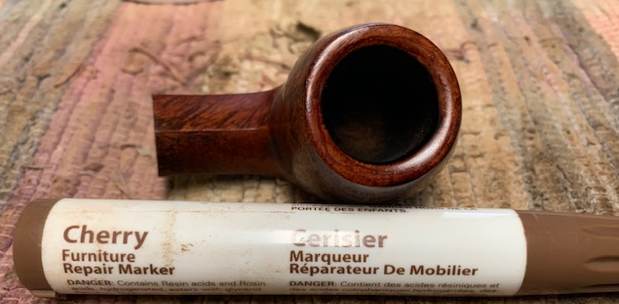
Jeff had thoroughly cleaned up the pipe. He reamed the pipe with a PipNet Pipe Reamer and cleaned up the remnants with a Savinelli Fitsall Pipe Knife.  He scrubbed the bowl with undiluted Murphy’s Oil Soap with a tooth brush. He rinsed it under running warm water to remove the soap and grime. He cleaned out the inside of the shank and the airway in the stem with alcohol, cotton swabs and pipe cleaners. He scrubbed the exterior of the stem with Soft Scrub to remove as much of the oxidation and calcification as possible. He soaked the stem in Before & After Deoxidizer and rinsed it off with warm water. I took close up photos of the bowl, rim and the stem. You can see how clean the bowl and rim top and edges are. The stem is in good condition with light tooth marks and some chatter as noted above. I took photo of the stamping on the left underside of the shank. It is readable as noted above. I removed the stem from the shank and took a photo to give a sense of the proportions of the pipe.I started my work on the pipe working on the damage to the inner edge and the rim top with a folded piece of 220 grit sandpaper to bring the edge back into round. I then used a piece of 220 grit sandpaper and a wooden ball to clean up the bevel on the rim top and edges and it looked much better. I polished the briar with micromesh sanding pads – dry sanding with 1500-12000 grit pads. I wiped the bowl down after each  pad to remove the grit. The bowl began to take on a rich shine. It is a beauty.   I stained the rim top with a Cherry Stain Pen to match the rest of the bowl and shank. The rim looks significantly better than when I started the process.I rubbed the bowl down with Before & After Restoration Balm. I worked it into the briar with my finger tips. I let it sit for 10 minutes and the Balm did its magic. It enlivens, cleans and preserves the briar. It certainly brought this bowl back to life. I buffed it off with a clean cloth and took the following photos. I set the bowl aside and turned my attention to the stem. I sanded out the tooth marks and some scratches in the stem sides with 220 grit sandpaper and started the polishing process with 600 grit wet dry sandpaper.I set the bowl aside and turned to work on the stem. I was able to polish out the tooth marks and chatter with micromesh sanding pads – 1500-12000 grit pads. I wiped it down with a damp cloth after each sanding pad. I used Before & After Pipe Polish – both Fine and Extra Fine to further polish the stem. This Karl Erik Ottendahl Classic Brandy with a Diamond shank vulcanite saddle stem is a great looking pipe now that it has been restored. The beautiful finish really highlights the grain and the polished finish is stunning. I put the stem back on the bowl and carefully buffed the pipe with Blue Diamond on the buffing wheel. I gave the bowl and the stem multiple coats of carnauba wax on the buffing wheel and followed that by buffing the entire pipe with a clean buffing pad. I hand buffed the pipe with a microfiber cloth to deepen the shine. The finished Karl Erik Bent Brandy fits nicely in the hand and feels great. Give the finished pipe a look in the photos below. The dimensions of the pipe are Length: 5 ½ inches, Height: 1 ¾ inches, Outside diameter of the bowl: 1 1/8 inches, Chamber diameter: 7/8 of an inch. The weight of the pipe is 44 grams / 1.55 ounces. I will be adding the pipe to the Danish Pipe Makers Section of the rebornpipes store. If you are interested in purchasing this pipe send me a message or an email. Thanks for reading this blog and my reflections on the pipe while I worked on it.

Restoring a Beautiful Karl Erik Made in Denmark Bent Egg Freehand Filter Pipe


Blog by Steve Laug

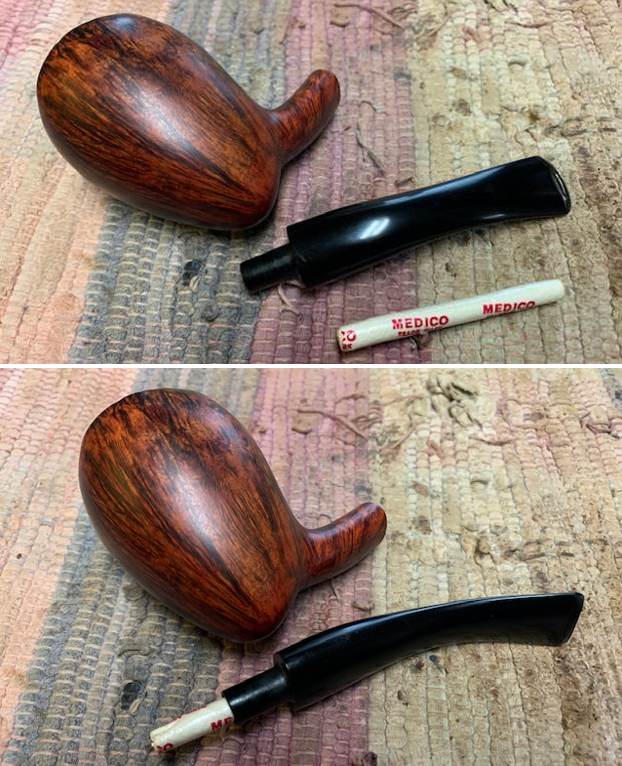
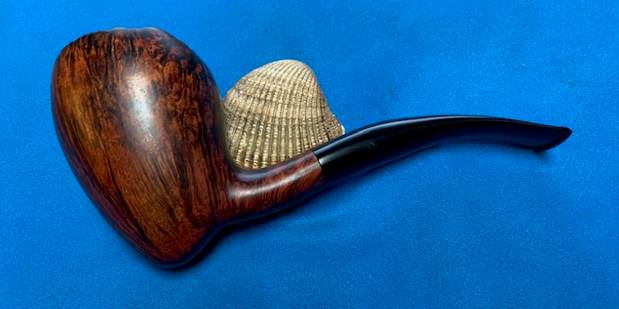
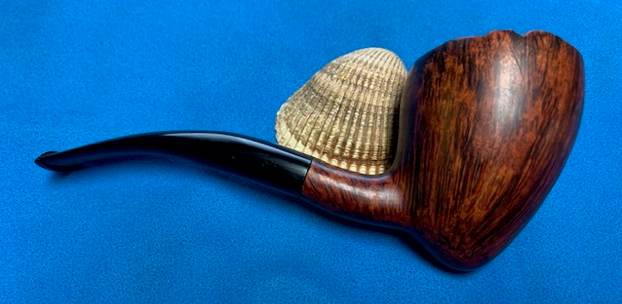
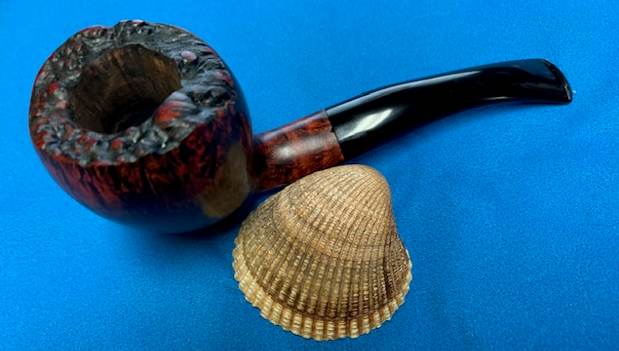
After work today I decided to work on the another one of the pipes that I have still to work on from a variety of places. This pipe was another one that was purchased on 10/03/2022 in a lot of pipes that came to us from Copenhagen, Denmark  It is an interesting pipe with a bowl that combines beautiful straight and flame grain with a Plateau rim top and an egg shape. The pipe is stamped on the underside of the shank and reads Karl [arched over] Erik [over] Hand Made in Denmark. The latter portion of the stamping is faint but readable. The pipe was a well used pipe when Jeff received it. There was dust and grime ground into the finish. The mixture of brown and black stains highlights some beautiful grain under the dirt. The bowl was heavily caked and there was an overflow of lava on the plateau rim top. The inner edge appeared to be in good condition. The filter stem was made for a 6MM filter is vulcanite and was not oxidized. It was dirty with light tooth marks and chatter on both sides ahead of the button and on the button itself. I wonder if the stem is not one made at a later time for the pipe, however the fit to the shank is like and original fit. Jeff took photos of the pipe before he started his clean up work on it.He took photos of the bowl and rim top to show what they looked like before his clean up. He also took some of the stem to show the condition of both sides. The photos of the sides and heel of the bowl show the uniquely stained grain around the bowl and shank. The mixture of black and brown stains adds depth finish on the pipe. Even under the grime it is a real beauty. The stamping on the underside of the shank is shown in the photos below. It is faint but is still clear and readable as noted above.Before I started my work on the pipe I wanted to see if I could find any information that would help me date this pipe and get a sense of the line. I turned to Pipephil to get a quick review of the brand (http://pipephil.eu/logos/en/logo-k1.html). The stamp on the stem shown in the photo below is different than the one I am working on. It includes a K and an E while this one is just an E stamp. I have included a screen capture of the brand info there as well as a note in the side bar about Karl Erik Ottendahl along with a small picture.Brand created in 1965-66 by Karl Erik Ottendahl (1942 – 2004 †). In the best years he employed up to 15 craftsmen among which Bent Nielsen (see Benner) and Peder Christian Jeppesen. Former grading (ascending): from 4 to 1, and “Ekstravagant” (entirely hand made)

I then turned to Pipedia (https://pipedia.org/wiki/Karl_Erik) for more information. I am including just the opening remarks but would encourage you to give the link a read for a very interesting history of the brand. I quote:

Karl Erik Ottendahl (1942 – 2004) was born in Aalborg (Jutland), just a few miles from the very northernmost tip of Denmark. He began smoking a pipe when he was 14 and upon leaving school he started an apprenticeship in the craft as a lithographer at the age of 16.

While working as an apprentice he began hand carving pipes as a hobby. Many were given as gifts to his more senior colleagues. Upon completion of his apprenticeship he moved to Nairobi, Kenya to work as a lithographer during the 1962 war. While in that war torn country, he was unable to procure pipes for himself. In the face of such a predicament, he chose to continue to make pipes for his own use rather than go without.

Returning to Denmark after three years he couldn’t find a well paid occupation in his job, and so he began making a few pipes on the side to boost his income choosing his prenames “Karl Erik” – logo “KE” – for his label. When he managed to find some major Copenhagen pipe stores willing to sell his pieces his reputation grew little by little and he was finally able to purchase more and better machinery and began working full time as a pipe maker.

With that information in hand I knew what I was dealing with in terms of the stamping and the age of this pipe. I knew from the information that the pipe was made sometime between 1965 and 2004. Now it was time to work on the pipe.

Jeff had thoroughly cleaned up the pipe. He reamed the pipe with a PipNet Pipe Reamer and cleaned up the remnants with a Savinelli Fitsall Pipe Knife.  He scrubbed the bowl with undiluted Murphy’s Oil Soap with a tooth brush. He rinsed it under running warm water to remove the soap and grime. He cleaned out the inside of the sump in the shank and the airway in the stem with alcohol, cotton swabs and pipe cleaners. He scrubbed the exterior of the stem with Soft Scrub to remove as much of the oxidation and calcification as possible. He soaked the stem in Before & After Deoxidizer and rinsed it off with warm water. (I only remembered to take these photos after I had restained the plateau and polished the bowl.) I took close up photos of the bowl, rim and the stem. You can see how clean the bowl and rim top and edges are. The stem is in good condition with light tooth marks and some chatter as noted above.I took a photo of the stamping on the underside of the shank. It is clear and readable as noted above. I removed the stem from the shank and took a photo to give a sense of the proportions of the pipe.I started my work on the pipe by touching up the valleys and crevices in the plateau rim top with a black stain pen. It looked much better.I polished the briar with micromesh sanding pads – dry sanding with 1500-12000 grit pads. I wiped the bowl down after each  pad to remove the grit. The bowl began to take on a rich shine. It is a beauty.   I rubbed the bowl down with Before & After Restoration Balm. I worked it into the briar with my finger tips. I let it sit for 10 minutes and the Balm did its magic. It enlivens, cleans and preserves the briar. It certainly brought this bowl back to life. I buffed it off with a clean cloth and took the following photos.  I sanded out the tooth marks and some scratches in the stem sides with 220 grit sandpaper and started the polishing process with 600 grit wet dry sandpaper.I set the bowl aside and turned to work on the stem. I was able to polish out the tooth marks and chatter with micromesh sanding pads – 1500-12000 grit pads. I wiped it down with a damp cloth after each sanding pad. I used Before & After Pipe Polish – both Fine and Extra Fine to further polish the stem. I fit the filter stem with a 6MM Medico Paper Filter. It fit well in the shank and the draw on the stem was clear and easy.This Karl Erik Ottendahl Made in Denmark Freehand Egg with a 6mm filter stem is a great looking pipe now that it has been restored. The beautiful finish really highlights the grain and the polished finish is stunning. I put the stem back on the bowl and carefully buffed the pipe with Blue Diamond on the buffing wheel. I gave the bowl and the stem multiple coats of carnauba wax on the buffing wheel and followed that by buffing the entire pipe with a clean buffing pad. I hand buffed the pipe with a microfiber cloth to deepen the shine. The finished Karl Erik Freehand fits nicely in the hand and feels great. Give the finished pipe a look in the photos below. The dimensions of the pipe are Length: 6 inches, Height: 2 ½ inches, Outside diameter of the bowl: 1 ½ inches, Chamber diameter: 7/8 of an inch. The weight of the pipe is 60 grams / 2.12 ounces. I will be adding the pipe to the Danish Pipe Makers Section of the rebornpipes store. If you are interested in purchasing this pipe send me a message or an email. Thanks for reading this blog and my reflections on the pipe while I worked on it.

Restoring a Beautiful Karl Erik Freehand “Rhodesianish” Short Churchwarden


Blog by Steve Laug

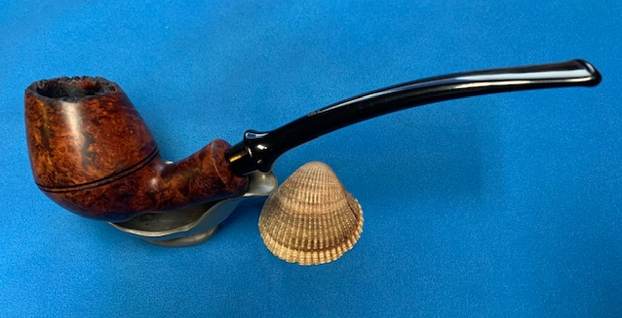
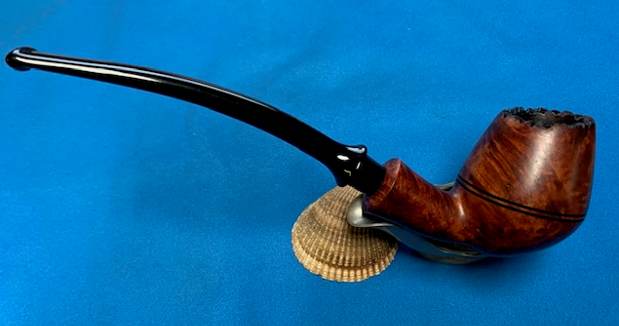
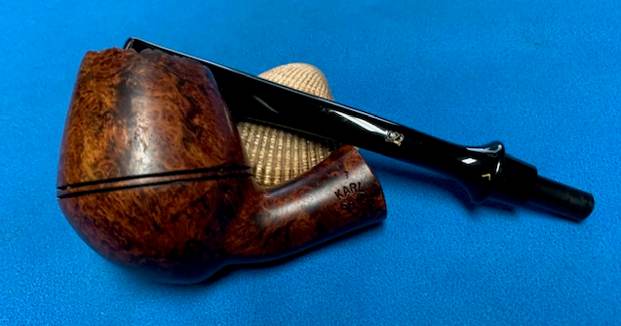
This afternoon I decided to work on a pipe from the lot that I have still to work on from a variety of places. This pipe was purchased from a friend on 06/05/21 in Brazil, Indiana, USA. It is an interesting pipe with a bowl that combines the twin rings of a Bulldog or Rhodesian with a Plateau rim top and a Freehand Flair. The pipe is stamped on the left side of the shank and reads Karl [arched over] Erik. The pipe was a well used pipe when Jeff received it. There was dust and grime ground into the finish. The mixture of brown stains highlights some beautiful grain under the dirt. The bowl was heavily caked and there was an overflow of lava on the plateau rim top. The inner edge appeared to be in good condition. The stem is acrylic and therefore was not oxidized. It was dirty with light tooth marks and chatter on both sides ahead of the button and on the button itself. There is a fancy E stamp in the top of the stem that is in good condition. Jeff took photos of the pipe before he started his clean up work on it. He took photos of the bowl and rim top to show what they looked like before his clean up. He also took some of the stem to show the condition of both sides. The photos of the sides and heel of the bowl show the uniquely stained grain around the bowl and shank. The mixture of black and brown stains adds depth finish on the pipe. Even under the grime it is a real beauty. The stamping on the left side the shank is shown in the photos below. It is clear and readable as noted above. He also took a photo of the fancy E logo on the top of the acrylic stem.Before I started my work on the pipe I wanted to see if I could find any information that would help me date this pipe and get a sense of the line. I turned to Pipephil to get a quick review of the brand (http://pipephil.eu/logos/en/logo-k1.html). The stamp on the stem shown in the photo below is different than the one I am working on. It includeds a K and an E while this one is just an E stamp. I have included a screen capture of the brand info there as well as a note in the side bar about Karl Erik Ottendahl along with a small picture.Brand created in 1965-66 by Karl Erik Ottendahl (1942 – 2004 †). In the best years he employed up to 15 craftsmen among which Bent Nielsen (see Benner) and Peder Christian Jeppesen. Former grading (ascending): from 4 to 1, and “Ekstravagant” (entirely hand made)

I then turned to Pipedia (https://pipedia.org/wiki/Karl_Erik) for more information. I am including just the opening remarks but would encourage you to give the link a read for a very interesting history of the brand. I quote:

Karl Erik Ottendahl (1942 – 2004) was born in Aalborg (Jutland), just a few miles from the very northernmost tip of Denmark. He began smoking a pipe when he was 14 and upon leaving school he started an apprenticeship in the craft as a lithographer at the age of 16.

While working as an apprentice he began hand carving pipes as a hobby. Many were given as gifts to his more senior colleagues. Upon completion of his apprenticeship he moved to Nairobi, Kenya to work as a lithographer during the 1962 war. While in that war torn country, he was unable to procure pipes for himself. In the face of such a predicament, he chose to continue to make pipes for his own use rather than go without.

Returning to Denmark after three years he couldn’t find a well paid occupation in his job, and so he began making a few pipes on the side to boost his income choosing his prenames “Karl Erik” – logo “KE” – for his label. When he managed to find some major Copenhagen pipe stores willing to sell his pieces his reputation grew little by little and he was finally able to purchase more and better machinery and began working full time as a pipe maker.

With that information in hand I knew what I was dealing with in terms of the stamping and the age of this pipe. I knew from the information that the pipe was made sometime between 1965 and 2004. Now it was time to work on the pipe.

Jeff had thoroughly cleaned up the pipe. He reamed the pipe with a PipNet Pipe Reamer and cleaned up the remnants with a Savinelli Fitsall Pipe Knife.  He scrubbed the bowl with undiluted Murphy’s Oil Soap with a tooth brush. He rinsed it under running warm water to remove the soap and grime. He cleaned out the inside of the sump in the shank and the airway in the stem with alcohol, cotton swabs and pipe cleaners. He scrubbed the exterior of the stem with Soft Scrub to remove as much of the oxidation and calcification as possible. He soaked the stem in Before & After Deoxidizer and rinsed it off with warm water. I took close up photos of the bowl, rim and the stem. You can see how clean the bowl and rim top and edges are. The stem is in good condition with light tooth marks and some chatter as noted above.I took photos of the stamping on the sides of the shank. All are clear and readable as noted above. I removed the stem from the shank and took a photo to give a sense of the proportions of the pipe. I polished the briar with micromesh sanding pads – dry sanding with 1500-12000 grit pads. I wiped the bowl down after each  pad to remove the grit. The bowl began to take on a rich shine. It is a beauty.   I rubbed the bowl down with Before & After Restoration Balm. I worked it into the briar with my finger tips. I worked it into the twin rings and the plateau rim top with a shoe brush. I let it sit for 10 minutes and the Balm did its magic. It enlivens, cleans and preserves the briar. It certainly brought this bowl back to life. I buffed it off with a clean cloth and took the following photos.  I set the bowl aside and turned to work on the stem. I was able to polish out the tooth marks and chatter with micromesh sanding pads – 1500-12000 grit pads. I wiped it down with a damp cloth after each sanding pad. I used Before & After Pipe Polish – both Fine and Extra Fine to further polish the stem. This Karl Erik Ottendahl Rhodesian/Bulldog/Freehand with a long acrylic stem is a great looking pipe now that it has been restored. The beautiful finish really highlights the grain and the polished finish is stunning. I put the stem back on the bowl and carefully buffed the pipe with Blue Diamond on the buffing wheel. I gave the bowl and the stem multiple coats of carnauba wax on the buffing wheel and followed that by buffing the entire pipe with a clean buffing pad. I hand buffed the pipe with a microfiber cloth to deepen the shine. The finished Karl Erik Freehand fits nicely in the hand and feels great. Give the finished pipe a look in the photos below. The dimensions of the pipe are Length: 8 inches, Height: 2 inches, Outside diameter of the bowl: 1 ¼ inches, Chamber diameter: 7/8 of an inch. The weight of the pipe is 72 grams/ 2.54 ounces. I will be adding the pipe to the Danish Pipe Makers Section of the rebornpipes store. If you are interested in purchasing this pipe send me a message or an email. Thanks for reading this blog and my reflections on the pipe while I worked on it.
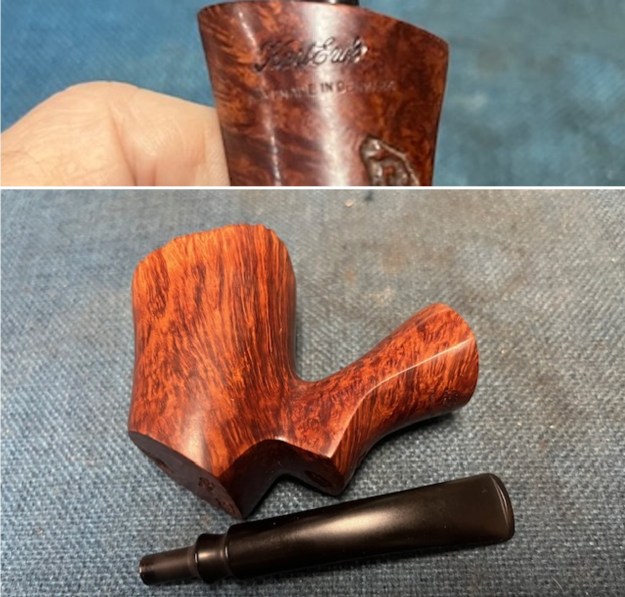
Refurbishing A Very Special For Me Karl Erik # 4 Freehand Pipe


Blog by Paresh Deshpande

Abha, my wife, has been working with me on pipes for the last three years and never has she voluntarily suggested/recommended any pipe for purchase. One day while surfing eBay for some good pipes, Abha chanced upon this pipe and she liked it. Well, the fact that this is the first pipe that called out to her (she is a non smoker!!), makes it very special and soon the pipe made its way to Pune where Abha was indeed surprised to receive this pipe.

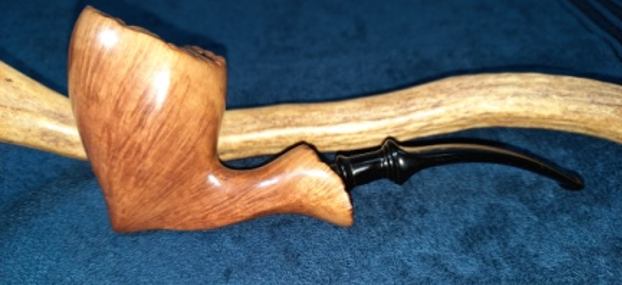
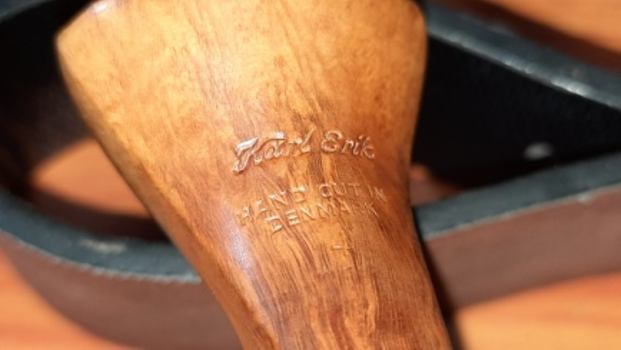
This special pipe that I selected to work on is a beautiful freehand appears like a tulip with some great flame grains all around the stummel and shank. The shank end has a nice outward flare with a flattened lower edge and the rim top is a nice plateau. The pipe is stamped on the bottom of the flared shank end as “KARL ERIK” in cursive hand over “HAND CUT IN” over “DENMARK”, all in block capitals. The shank towards the bowl end bears the numeral “4”, in all probability the grading of this pipe (?). All the stampings are crisp and easily readable. The fancy vulcanite stem is devoid of any stampings.There is a lot of interesting information on the carver, Karl EriK Ottendhal, on pipedia.org (Karl Erik – Pipedia) which makes for an interesting read and provides a great insight in to the life struggles, successes and pipe making philosophies of Karl Erik. I have reproduced a few interesting general snippets of information while focusing on the aspect of determining the vintage of the pipe.

Karl Erik Ottendahl (1942 – 2004) was born in Aalborg (Jutland), just a few miles from the very northernmost tip of Denmark. He began smoking a pipe when he was 14 and upon leaving school he started an apprenticeship in the craft as a lithographer at the age of 16.

While working as an apprentice he began hand carving pipes as a hobby. Many were given as gifts to his more senior colleagues. Upon completion of his apprenticeship he moved to Nairobi, Kenya to work as a lithographer during the 1962 war. While in that war torn country, he was unable to procure pipes for himself. In the face of such a predicament, he chose to continue to make pipes for his own use rather than go without.

Returning to Denmark after three years he couldn’t find a well paid occupation in his job, and so he began making a few pipes on the side to boost his income choosing his prenames “Karl Erik” – logo “KE” – for his label. When he managed to find some major Copenhagen pipe stores willing to sell his pieces his reputation grew little by little and he was finally able to purchase more and better machinery and began working full time as a pipe maker.

The Manufacture Era

Growing demand for his pipes made it necessary to look for a larger workshop and hiring first co-workers around 1967/68. A most important step ahead in his career was the contract with Wally Frank, Ltd. of NYC who was in search of attractive, well made but affordable Danish freehands and fancy pipes fitting to their vast offer of low end or midrange pieces but with a stress on quality.

“Attractive, well made but affordable Danish freehands and fancy pipes” – this was exactly what Karl Erik offered! So to say that’s the kernel of his lifelong philosophy as a pipemaker! And indeed, Karl Erik always did it his way and always somewhat differently as others.

Grading and the II S Problem

KE’s old grading used numbers ascending from 4 to 1. The entirely hand made one of a kind pieces were stamped “Ekstravagant”. Quite simple. But then there are the II S stamped pipes! (And furthermore seen so far II SM, I S, I M and I B.) Three fairy tales, often told:

  1. II S stands for the initials of a pipemaker who worked for Preben Holm before he changed to KE.
  2. II S pipes are a second brand of KE. Nonsense comparing the quality of II S and normal KE pipes!
  3. II S was used when there was no space for stampings otherwise.

But it is almost certain, that II S pipes were exclusively sold in the United States only.

KE discontinued all exports to the United States in 1987 due to waning sales and attempts of his business partners to screw down prices. Now, freehand sales were downward bound worldwide in those years and KE gradually grew tired running a pipe manufacture.

Though Karl Erik’s favorite briar mostly came from Morocco or Greece, but he frequently purchased elsewhere, too. He didn’t consider the briar origin to be particularly important provided the briar was well cured. Therefore, he simply purchased the best briar he could find, rather than purchasing from only one or two regions.

Concentrating on more classical influenced shapes Karl Erik’s style emphasized the wood over all other contributing factors by allowing the grain to determine the ultimate shape of the piece. He further emphasized the natural, organic, flowing shape of his bowls with hand cut stems and a broad variety of decorating materials.

KE’s new grading used numbers ascending from D to A. The unique “Ekstravagant” pipes C, B, A, AA to AAA. These superb pieces of remarkable quality were, almost certainly, the least expensive high- quality hand made pipes coming from Denmark today!

In the 90’s he was honored by Stanwell to design some models for the very popular H.C. Anderson line which is named for the great Danish poet.

Around 1998/99 he traded the German rights to his brand name “Karl Erik” to Planta, better known as the proprietor of Design Berlin (db). Thus – though db copied the style of the old Karl Eriks pretty closely – a recent KE offered for sale in Germany is unfortunately about as Danish as Eisbein mit Sauerkraut. But even though Planta did one thing of merit: a series of pipe tobaccos was named for Karl Erik!

While everywhere else a Karl Erik pipe remained a Karl Erik pipe made by Karl Erik himself, he began signing some of his pipes with his family name Ottendahl. The new label was strictly used to continue distributing his own pipes in Germany only! But as his Viking ancestors some Ottendahl pipes discovered a way to cross the pond and turned up in the United States. KE officially resumed sales to the USA after 13 years in 2000! This caused a certain confusion among US pipesmokers and some clever US pipetraders imputed the Ottendahls with a better quality than the usual Karl Erik pipes to take advantage of the favorable situation asking considerably higher prices for Ottendahl pipes.

During the following years KE produced a little more than 2000 pipes per year, selling the bulk of them in Germany and the US. That is surely a respectable output, considering the largely hand-made character of these pipes. Karl Erik Ottendahl was planning to make 2500 pipes in 2004 but he died surprisingly suffering a stroke in his home in Korsør on Zealand on the 12th of September 2004.

It sad that the community lost a talented artisan but his pipes will continue to be repaired/ restored, like the one currently on my work table, and be remembered for generations to come.

From the above, it is evident that this pipe is from the early manufacturing era of Karl Erik and is the lowest grade of pipe leaving his table.

Initial Visual Inspection
The chamber has a decent layer of cake that is thin at the rim and thick towards the bottom half of the chamber. The plateau rim top and the flared shank end is stained black. The stummel surface is covered in dust and grime that gives it a lifeless appearance. However, through this dirt and grime, beautiful flame grains can be seen all over the stummel surface without a single fill. The mortise has small traces of dried oils/ tars accumulation and yet, should be an easy clean. The high quality vulcanite stem is in excellent condition without a single bite mark. Overall, this old pipe has been well cared for and should finish up really beautiful. Detailed Inspection
The chamber has a thick layer of dry and hard cake at the bottom half towards the heel and progressively reduces towards the rim top. The plateau rim top surface is very clean with no lava overflow or issues of charring to the inner rim edge. The condition of the inner walls of the chamber can be checked and ascertained only after the cake has been taken down to the bare briar. The rim top and the flared shank end are stained black and provide a nice contrast to the natural virgin hues of the rest of the stummel. However, this was a contentious issue as Abha was of the opinion that black stained rim top gives an unclean appearance whereas I was looking at the contrast.The stummel boasts of beautiful flame grains all around and extends over the shank surface too!! The surface is lightly covered in grime and dust. However, the stummel surface is without any fills save for a few scratches/minor dings (indicated by yellow arrows/ encircled in same color) that could have been caused during routine use. The flared plateau of the shank end shows traces of accumulated dust and dirt which should be a breeze to clean. The foot of the stummel shows beautiful bird’s eye grains and is sans any damage. The mortise is clean with minor traces of old oils and gunk. Overall, the stummel presents a well cared for pipe. A closer look at the stummel surface shows beautiful and distinct flame grains all around, including the stummel, less the right side of the bowl where the grains are not prominent and this could only be the reason for this piece being classified as Grade 4! The fancy slightly bent vulcanite stem is lightly oxidized and with no tooth chatter or bite marks or chewed off button edges. The tenon and slot end are both clean and this makes me believe that the stem airway would be clean too. The fancy stem, though looks beautiful when black and shiny, is a bear to clean with all the dips and narrow gaps between the beads and rings etc.The Process
I began the process of refurbishing this pipe with cleaning the internals of the stem using pipe cleaners with isopropyl alcohol (99.9% pure) followed by further cleaning using anti oil soap and shank brush. Next I sand the entire stem surface with a folded piece of 220 grit sand paper to remove surface oxidation. It has been our experience that the solution works best when the surface is sanded. Thereafter I immersed the stem in “Before and After Deoxidizer” solution developed by my friend Mark Hoover. The solution helps to draw out oxidation to the surface making its further removal a breeze, while the minor oxidation is eliminated to a very great extent. I generally allow the stems to soak in this solution overnight for the solution to do its work. With the stem soaking in the deoxidizer solution, I worked the stummel, starting with reaming the chamber with a PipNet reamer tool and used the first, second and third head of the tool. With my fabricated knife; I further took the cake down to the bare briar. With a 150 grit sand paper, the walls of the chamber were rid of all the remnants of the cake, revealing smooth and solid chamber walls. I further wiped the chamber with a cotton swab wetted with isopropyl alcohol to completely remove the sanding dust.This was followed by cleaning the shank internals with pipe cleaners and isopropyl alcohol. I further scrapped out the entire moistened gunk with a dental tool. The shank internals cleaned up nicely with a smooth and full draw. The mortise will be cleaned further with anti oil soap and shank brush while cleaning the exterior of the stummel.I scrubbed the external surface of the bowl with undiluted Murphy’s oil soap and hard bristled tooth brush and dried it using paper towels and soft cotton cloth. I deliberately cleaned the plateau rim top surface. The entire stummel cleaned up nicely. I set the stummel aside to dry out naturally. The plateau rim top and flared shank end were rid of the black stain. This is how the rim top and the shank end appear sans the black stain. Further discussions with Abha only resulted in postponement of the decision to stain or otherwise till completion of the sanding cycle with sandpaper, micromesh polish cycle and application of the restoration balm. I simultaneously cleaned the mortise with anti oil soap and shank brush.While I was cleaning the stummel, Abha fished the stem out from the deoxidizer solution and scrubbed out the raised oxidation with a Scotch Brite pad followed by a scrub with 0000 grade steel wool to further remove the oxidation and smooth out the stem surface. She cleaned the stem under running warm water to remove the solution from the crevices and internals of the fancy stem. Next she went through the regime of sanding with sandpapers to completely eliminate (or that’s what the aim always is) the oxidation from the stem surface. She applied a little EVO at the end and set the stem aside for the oil to be absorbed. Simultaneously, I continued working with the stummel restoration. I polished the stummel with micromesh pads, wet sanding with 1500 to 12000 pads. I polished the raised surfaces on the plateau rim top and the shank end by dry sanding with 1500 to 12000 grit micromesh pads. This dry sanding of the plateau surface does not leave behind the moist sanding dust in the nooks and crannies of the surface, which is a bear to clean later. I wiped the surface with a soft cloth at the end of the micromesh cycle. The stummel looks amazing with a deep shine and beautiful grains popping over the stummel surface.I rubbed a small quantity of “Before and After Restoration Balm” in to briar. I rubbed this balm deep in to the nooks and crannies of the plateau rim top surface with my fingers and let it rest for a few minutes. The balm almost immediately works its magic and the briar now has a nice vibrant appearance with the dark brown hues of the grain contrasting with the rest of the stummel surface. I further buff it with a horse hair shoe brush. Once I was done polishing the stummel with micromesh pads, Abha polished the stem, wet sanding with 1500 to 12000 grit micromesh pads. She rubbed a little extra virgin olive oil in to the stem at the end of the micromesh pads polishing cycle. She completed the polishing regime of the stem by rubbing a small quantity of “Before & After Fine” stem polish and giving it a final polish with a soft cotton cloth. The stem is now nice, smooth and shiny.This is that part in pipe refurbishing that I love and enjoy the most. I began the final polishing cycle by mounting a cotton cloth buffing wheel on to my hand held rotary tool and applying a coat of Blue Diamond to the entire pipe to polish out the minor scratches. With a cotton buffing wheel that I use for carnauba wax, I apply a coat of carnauba wax to the stummel and stem and continued to work on it till the complete coat of wax had been polished out. I mount a clean cotton cloth buffing wheel and gave the entire pipe a once over buff. I finished the restoration by giving the entire pipe a rigorous hand buffing using a microfiber cloth to deepen the shine further. The finished pipe is shown below and shall always remain with me…after all it’s a special pipe!! P.S. – This was an indeed an easy restoration. However, we couldn’t come to a conclusive decision and it has now been decided to seek the opinions of all those have read this write up and majority shall decide if the plateau rim top and the flared shank end should be stained black or leave it be. Please help me make this pipe more special by letting me know your opinions. Thanking you all in anticipation.

Praying for the health and safety of you and your loved ones.

Thanks for your patience and looking forward to inputs to help resolve our dilemma about staining. Cheers…


A Labour of Love – Repairing a Badly Damaged, Cracked Karl Erik Grade A Hand Made


Blog by Steve Laug

I am pretty sure that I am a sucker for both a good story and a badly damaged pipe. The next pipe on the table came with both. I received an email from Dewey in Iowa about a pipe he bought over 20 years ago. It was one of his favourite pipes and it had a serious crack in the exterior of the bowl. He wrote asking what he could do about it. Here is what he wrote:

Dear Steve,

I have owned a Karl Erik pipe for over 20 years. Bought it from the National Cigar Store in Waterloo, Iowa…..it is my favorite pipe…

just yesterday I found a large crack has appeared on the bottom of the pipe. It still smokes fine but is there anything that can be done to stop it from cracking further and can the crack be filled?The crack does extend up the front of the pipe into a small design where a short second crack is present…wow…

I was going to send pics but don’t know how to add them here

Thank you so much for your time and consideration.

I wrote him back and asked him to send the photos to my email account. He sent three photos of the pipe. I think that the first two are teasers to get my interest before he hits me with the photo of the damage to the bowl. He obviously took photos mid smoke. It is a uniquely shaped pipe and one that he really loves to smoke. You can see from the photos above what I saw. The pipe was obviously heavily caked and the plateau on the rim top was filled in with lava overflow. The stem was chomped and had deep tooth marks visible on the topside. But so far it looked no different than any other pipes that I have worked on. It was a nice looking Karl Erik pipe that had been thoroughly enjoyed for over 20 years. Then came the next picture of the damage in question. Wow!He also added that there was more damage. I have included our further email conversation below.

Steve, the crack does extend up the front of the pipe into a small design where a short second crack is present…wow…

…there is also a very small crack extending below the stem hole…but it has been there for quite a while now and doesn’t seem to be growing larger.

Thanx, Dewey

So now I knew what we were talking about. A crack in the heel of the bowl and up the front into the carved design with a second smaller crack in the design itself. There was also a small crack on the shank end extending downward from the mortise. I wrote Dewey back about what he could do with the crack in terms of self repair. His response was to ask if I would do the repair. We wrote back and forth for a while and finally I agreed to take on the project. I wanted to make sure that he understood that the repair would be solid but that it could possibly crack again. He was fine with that and reiterated that he was in no hurry with the pipe. Several weeks went by and the pipe arrived in Vancouver. Here is what I saw. The pipe was far dirtier than I could see from the photos. When the package arrived and my wife brought it in I could smell the sweet, smoky aroma of the pipe through the padded envelope. My wife handed it to me we the short declaration “IT STINKS”. I had to admit that it did. The bowl had a lot of oils and grime ground into the surface of the briar that all but hid the grain on the bowl. The plateau rim top was almost smooth with the filled in lava overflow and there was a thick cake in the bowl. The stem was oxidized, calcified and chomped with heavy tooth marks on both sides ahead of the button. When I removed the stem the mortise and airway were reduced from the tars and the airflow through the shank and stem were restricted. The pipe would need a serious ream and clean before I could assess the damage from the crack. I would need to ream it back to bare briar to see if the cracks went into the chamber. It was impossible to see the condition of the chamber.

I took close up photos of the rim top and bowl and the stem before I started my clean up work so that I could document the condition of the pipe when I started my work on it.The stamping on the underside of the shank is quite filled in with the grime but reads Karl Erik [over] Hand Made in Denmark [over] A which is the grade stamp.I took photos of the crack in the heel of the bowl and up the front side into the carving. It is quite long and large and the crack is singular. It has not taken off in other directions. That is the good news with this damaged bowl.I removed the stem from the shank and took a photo of the look of the pipe. It is an interesting shaped pipe with a jutting chin on the front.In order to move forward with the examination of the bowl I needed to clean it up. To inspect the inside walls of the chamber and the base of the chamber to see if the crack goes into the chamber I needed to remove all of the cake. It needed to be smooth if I was going to be able to examine it properly. I reamed the bowl with a PipNet pipe reamer and cleaned up the remnants in the chamber with a Savinelli Fitsall Pipe Knife. I wrapped a dowel with 220 grit sandpaper and sanded the walls and bottom of the bowl to further clean it up.At this point I examined the bowl with a flashlight and a dental probe and I could not see any cracking on the bottom of the bowl or the sides parallel to the crack on the heel and the front of the bowl in the carving. That was a wonderful discovery! I knew now that I was dealing with a crack on the exterior of the bowl that had not proceeded inside. I am wondering at this point if Dewey had dropped the pipe on a hard surface as that would explain what we were dealing with.

I decided to clean up the exterior of the bowl next. I scrubbed it with undiluted Murphy’s Oil Soap, a tooth brush and a brass bristle brush for the plateau. I scrubbed it with the soap and the brushes until it was a mess and rinsed it off with warm running water. I repeated the process until I was convinced I had removed the thick grime coat and lava on the rim top. I took photos of the cleaned bowl at this point. It is nice to see the grain poking through. It is a really nicely grained pipe. I am thinking that the characteristic carved patterns around the bowl and shank were done to deal with flaws in the briar. I wonder if the crack started in the carved area and proceeded downward? I focused some of the cleaning on the crack on the front carving where it appeared that there were two cracks. I have circled the crack in the second photo and have red arrows pointing to the damaged spots. I also cleaned the crack down into the heel of the bowl. I wanted it to be free of grime and oils so that the repair would be solid.With the externals clean and the bowl reamed it was time to clean out the mortise and the airway in the shank and the stem. I scrubbed them with 99% isopropyl alcohol, cotton swabs and pipe cleaners until they came out clean. The pipe was finally beginning to smell less sour.With the pipe clean it was now time to work on the cracks. I drilled a small micro pin hole at each end of the crack to stop it from spreading further. I filled in the pin holes and the crack with briar dust and clear super glue. I layered the repair using a dental spatula to pressed the dust deep in the cracked area. I did the same thing with the small hairline crack on the shank end.Once the repair had cured I sanded the heel of the bowl, the front of the repair and the chin edge with 220 grit sandpaper to smooth out the repaired area and blend it into the surrounding briar.I used a black stain pen to fill in the crevices of each of the carved areas around the bowl and shank sides as well as those in the plateau areas on the rim top and shank end. It appeared that this is what it looked like originally and I like the sense of contrast and depth that it gives those areas once the bowl is polished.I stained the repaired areas with a Maple stain pen to match the surrounding briar. It involved staining the heel of the bowl, the nose and carved area on the front of the bowl, the rim top high points on the plateau and the high points on the plateau on the shank end. The pipe is beginning to take shape and look better.With the staining finished I polished the briar with micromesh sanding pads – dry sanding with 1500-12000 grit pads. I wiped the bowl down between the pads with a damp cloth to remove the debris. By the end o f the process the bowl began to take on a rich shine. The repairs, while still visible were less so than when I started the polishing. I rubbed the bowl down with some Before & After Restoration Balm. I worked it into the briar with my finger tips to clean, preserve and protect the briar. I let it sit for 10-15 minutes then buffed it off with a cotton cloth. I set the bowl aside and turned my attention to the stem. I scrubbed the stem with Soft Scrub and cotton pads to remove the oxidation and calcification which seemed to reside on the surface of the vulcanite. I scrubbed out the tooth marks at the same time working the scrub deep into them. I was amazed at how clean it was when I had finished. I “painted” the tooth marks with the flame of a lighter to lift them to the surface. The heat raised them significantly but not completely. I filled in the remaining marks with clear super glue and once it had cured flattened the repairs with a file and also recut the button edges. I sanded the stem with 220 grit sandpaper to blend the repairs into the surface and started polishing the stem with 400 grit wet dry sandpaper. I polished the stem with micromesh sanding pads – wet sanding with 1500-2400 grit pads and dry sanding with 3200-12000 grit pads. I wiped the stem down after each pad with Obsidian Oil which cleans and protects the vulcanite. I polished it further with Before & After Pipe Stem Polish – both Fine and Extra Fine. I gave it a final wipe of Obsidian Oil and set it aside to dry. It was good to be finished with this labour of love. I would be glad to pack it up and send it back to Dewey. It looks amazingly good considering where it was when I started. Some may not agree with my method of repair but it has worked for me for many years. The cracks in the exterior of the briar were repaired and filled in. The bowl been restained and polished. I buffed the bowl and stem with Blue Diamond on the buffing wheel and the bowl began to shine. The Karl Erik A Hand Made Freehand looked almost like new (minus the dark line of the crack repair). The dimensions of the pipe are Length: 7 inches, Height: 2 ½ inches, Outer diameter of the bowl:1 ¾ inches, Chamber diameter: 7/8 of an inch. I know Dewey will be excited to get this back when I send it out next week. It is a beautiful pipe and with the repair and restoration it should continue to serve Dewey for a long time to come. Thanks for walking through this repair with me.