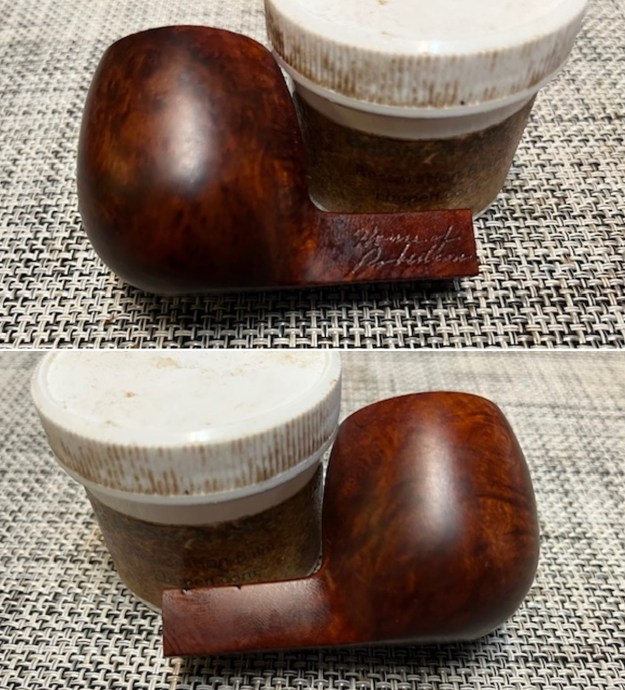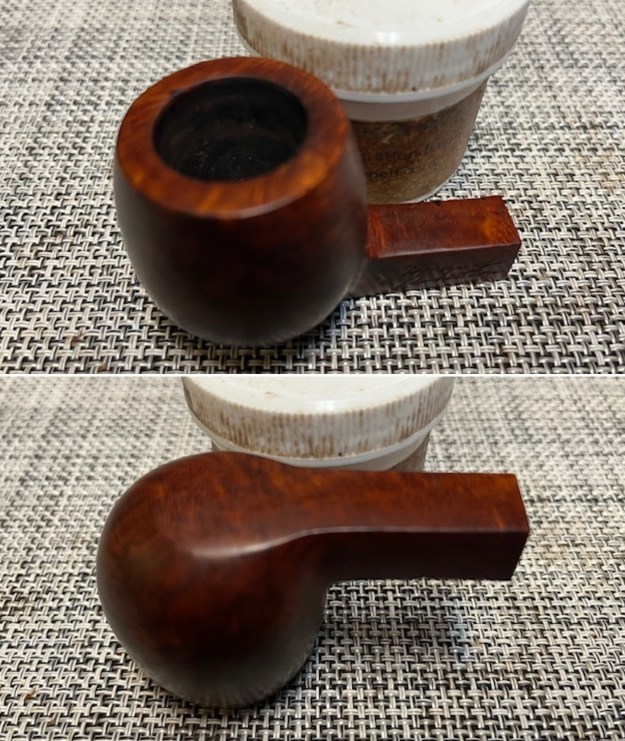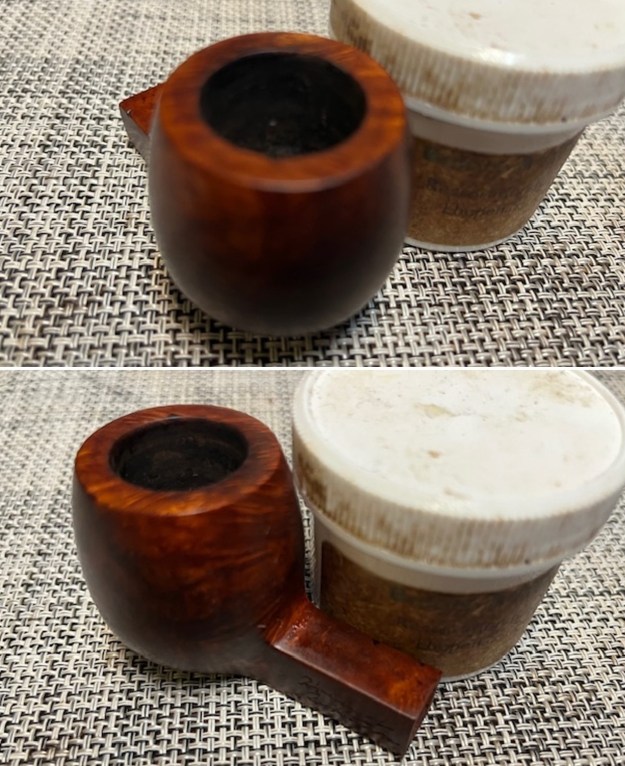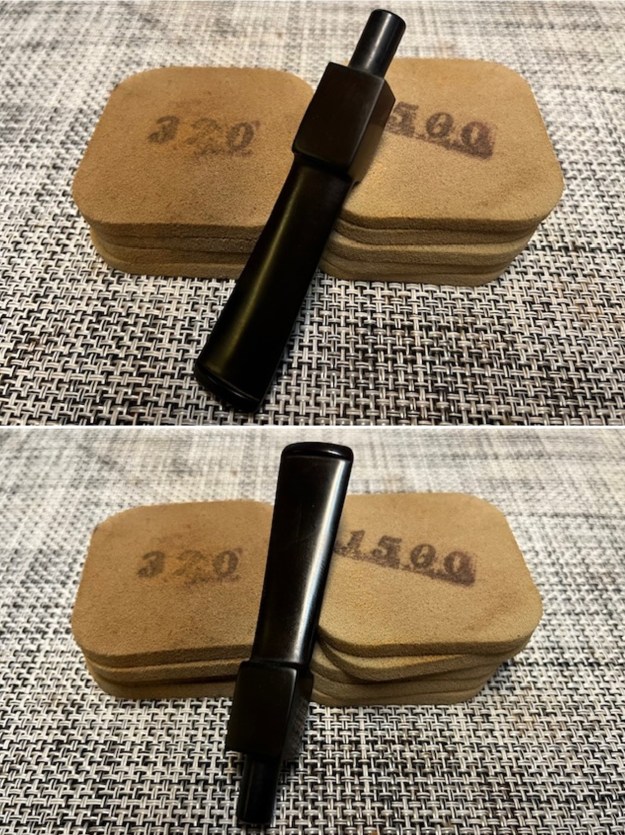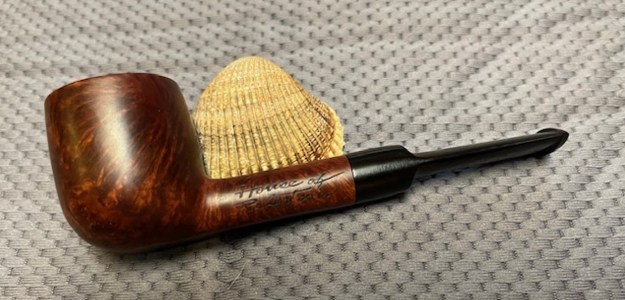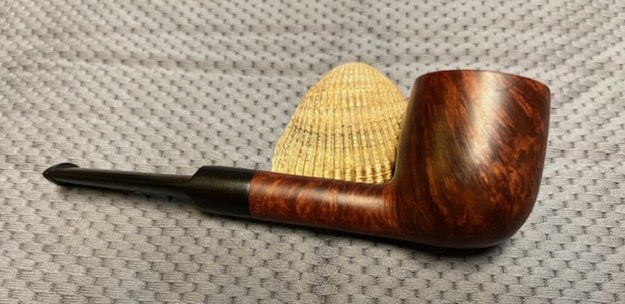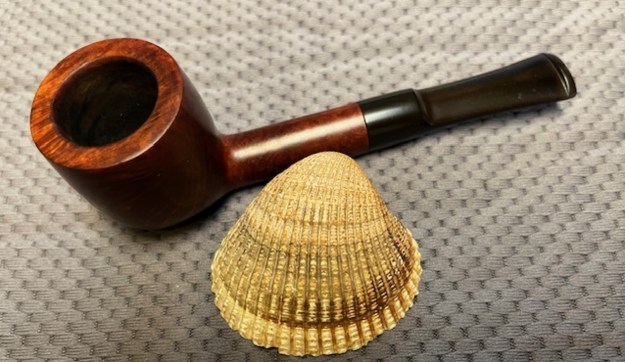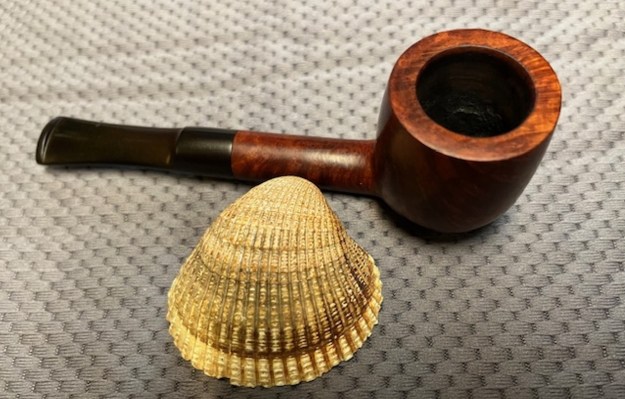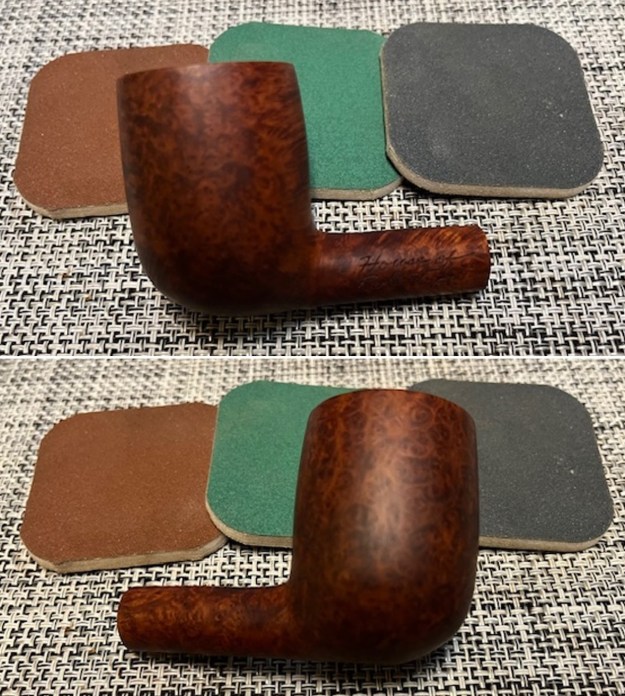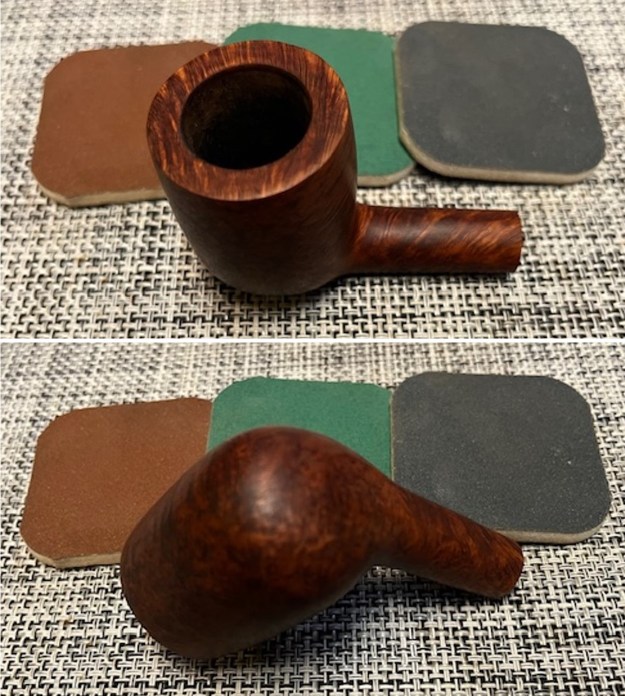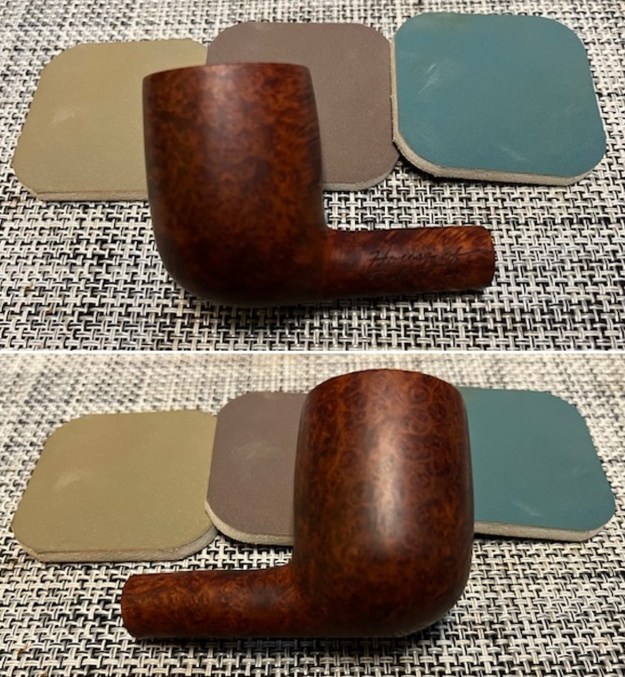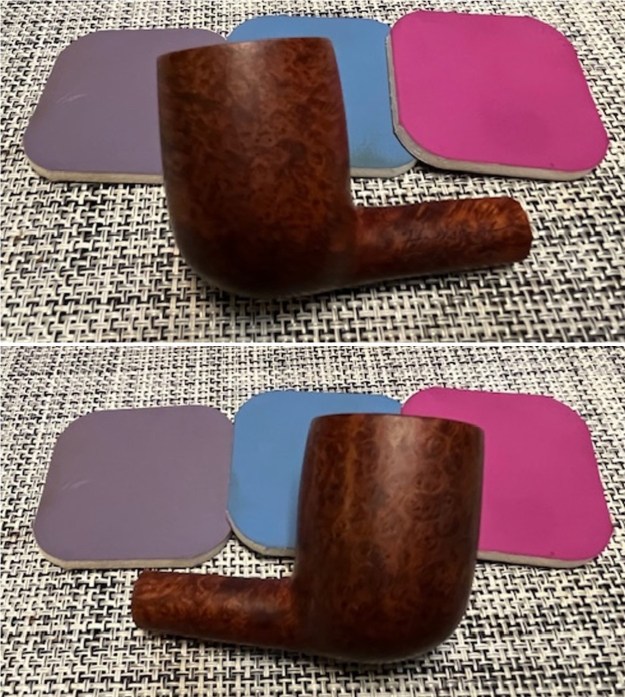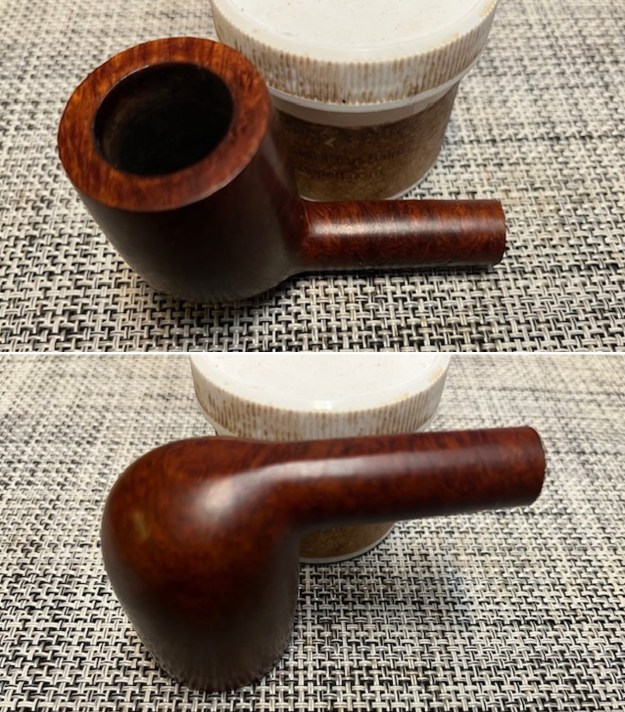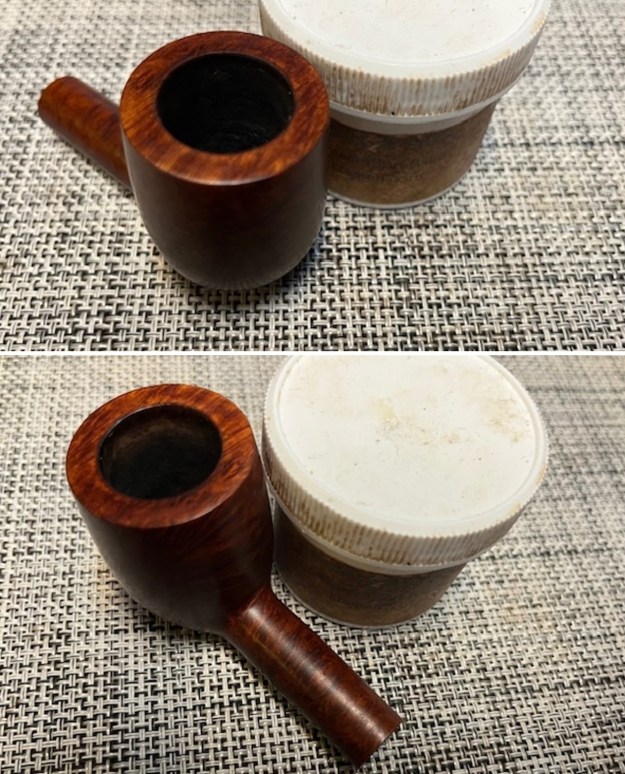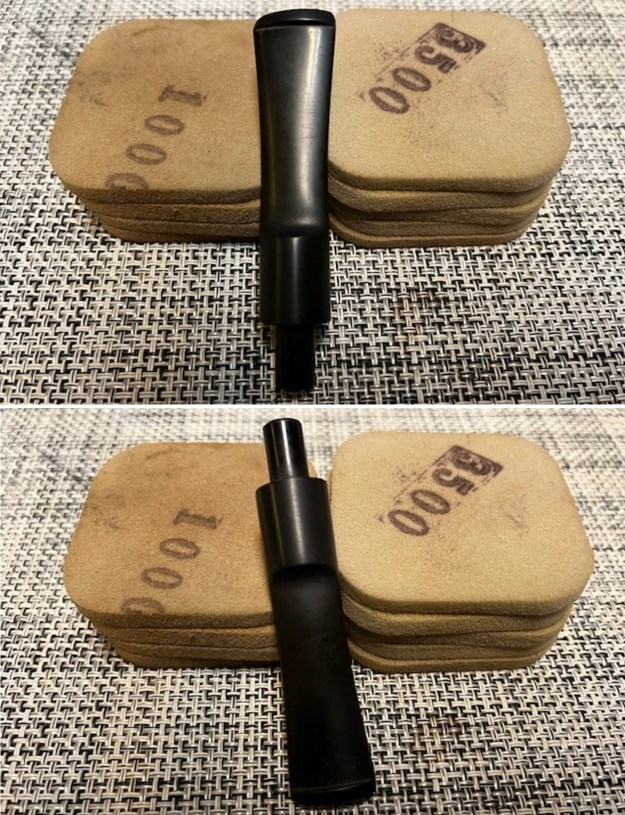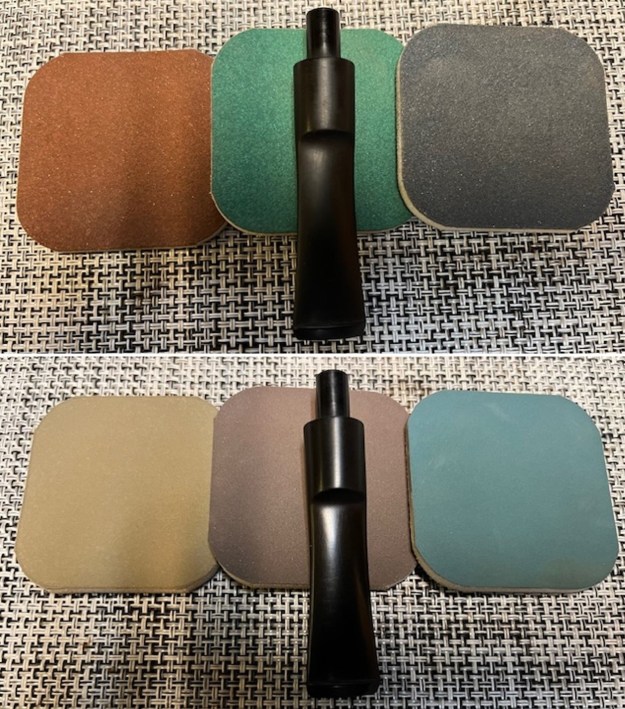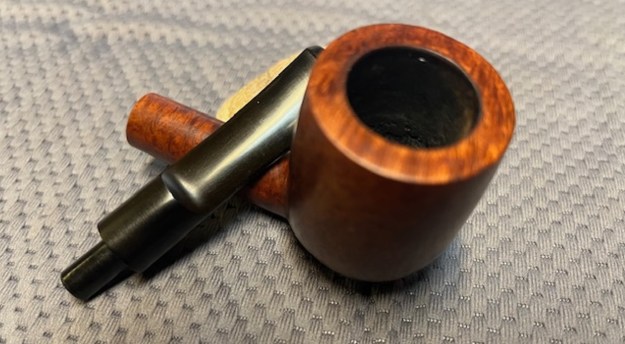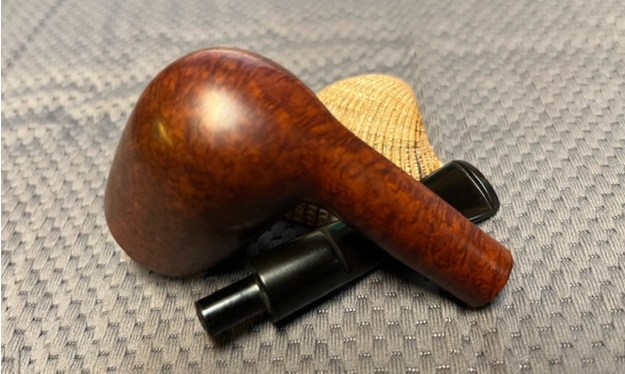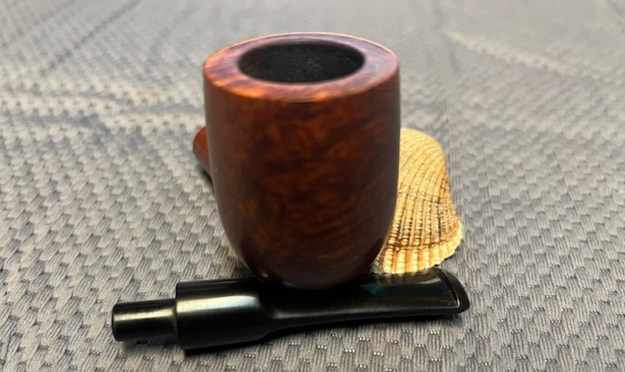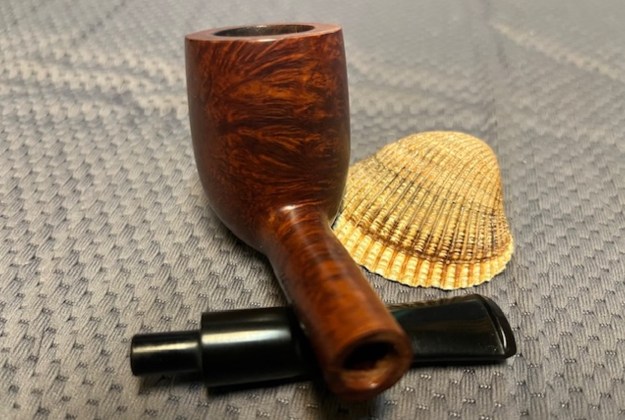
Tag Archives: House of Robertson Pipes

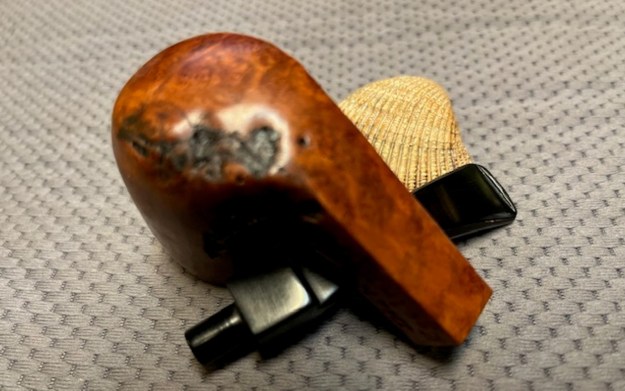
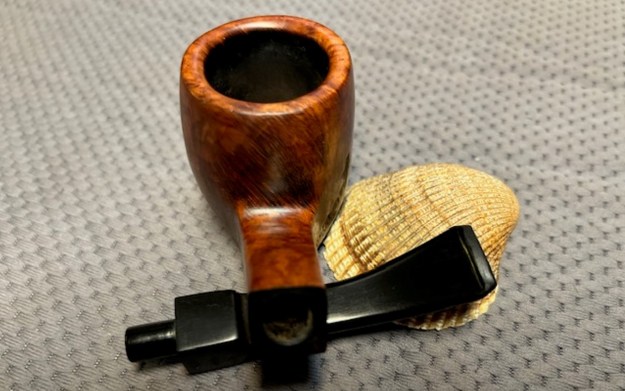
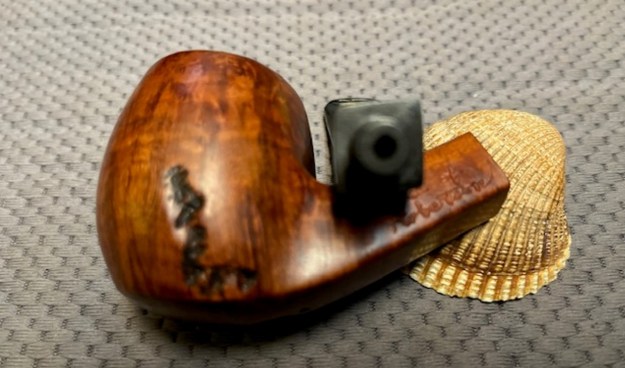
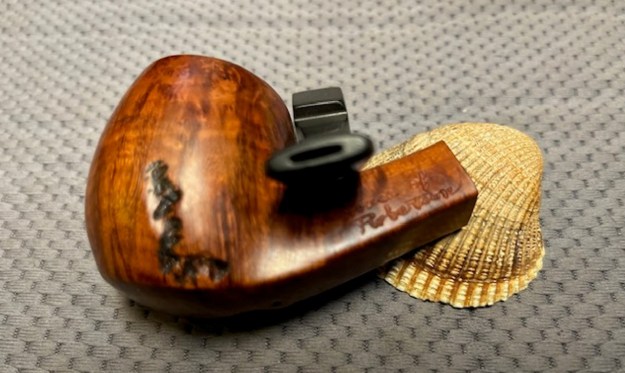
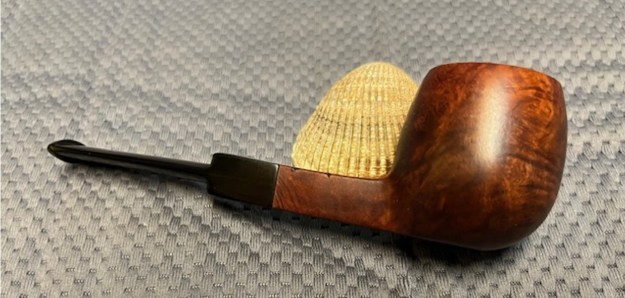
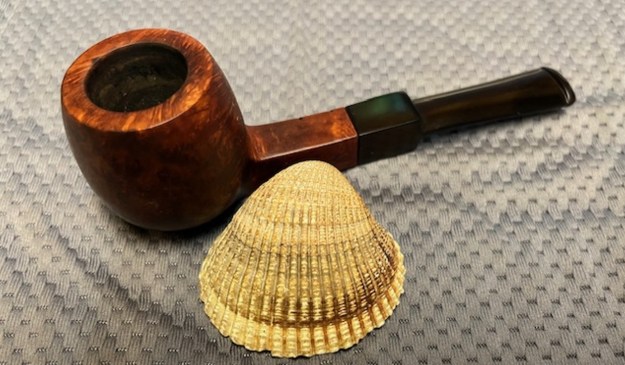
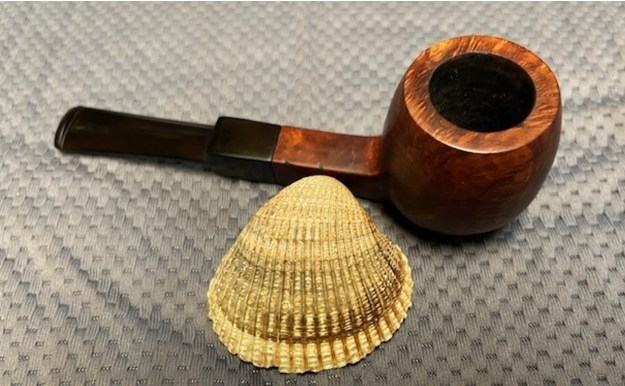
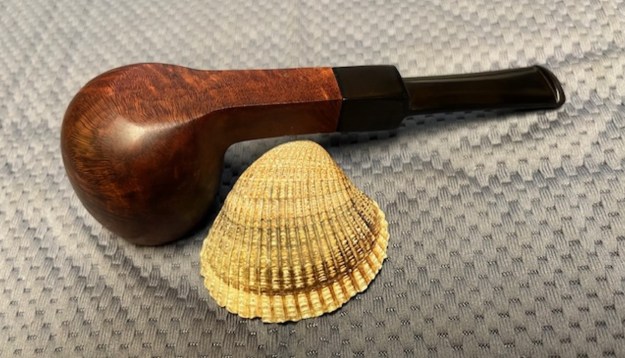
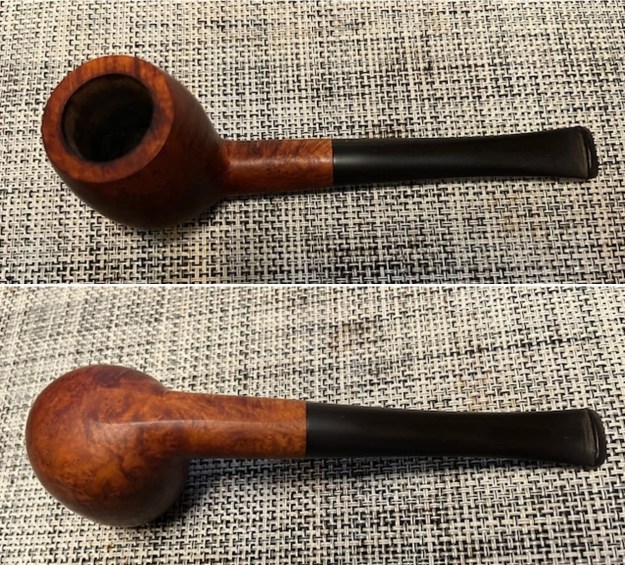
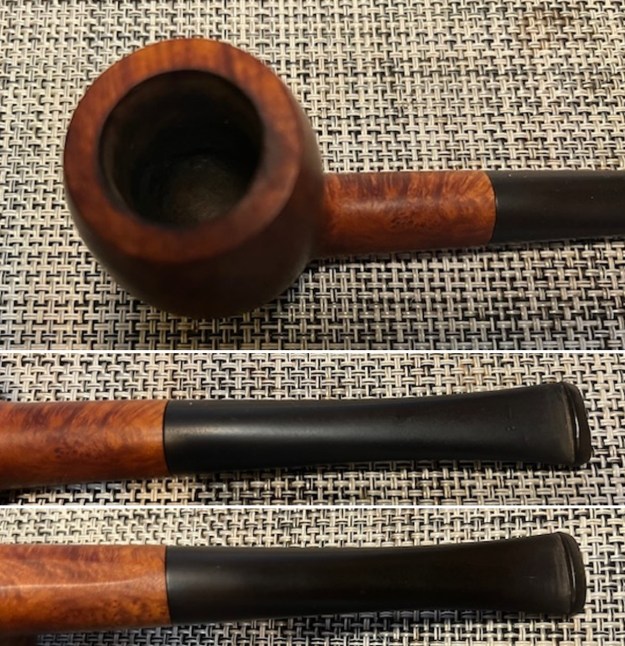
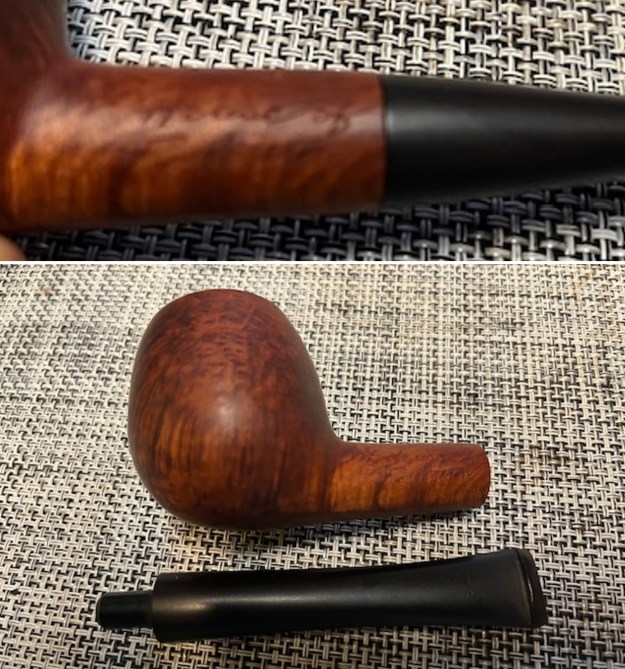
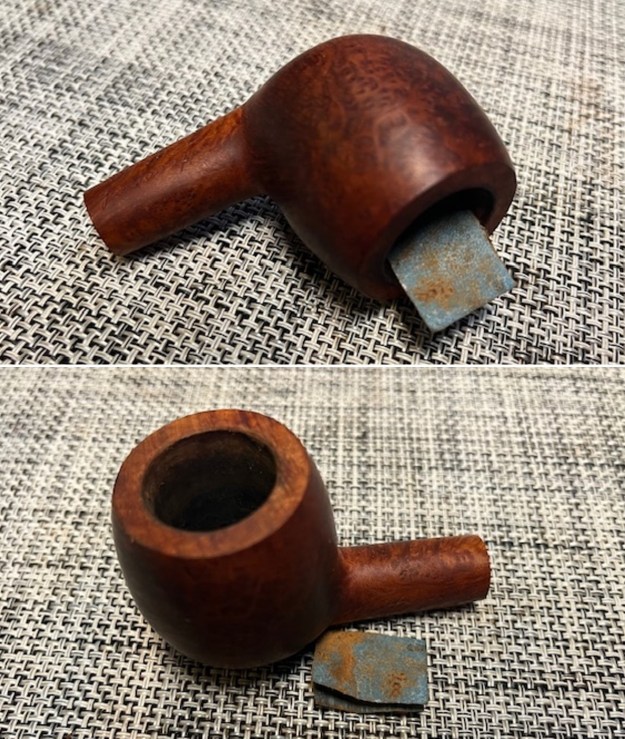
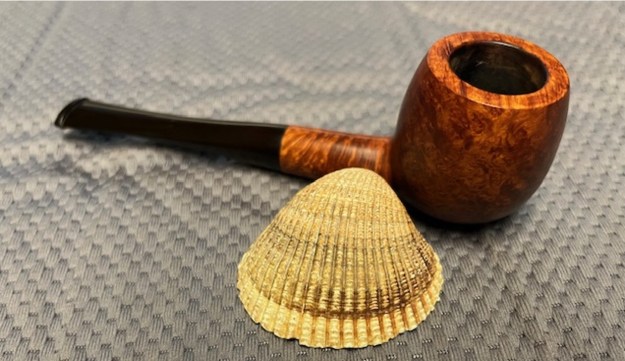
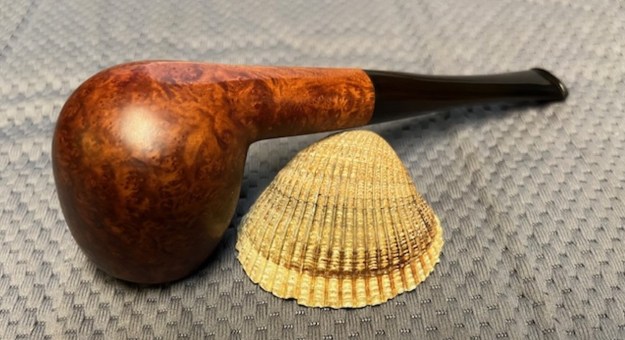
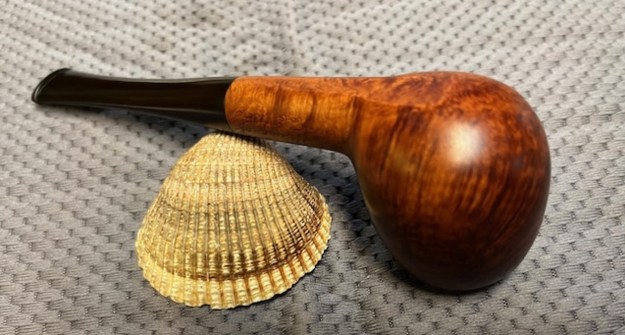
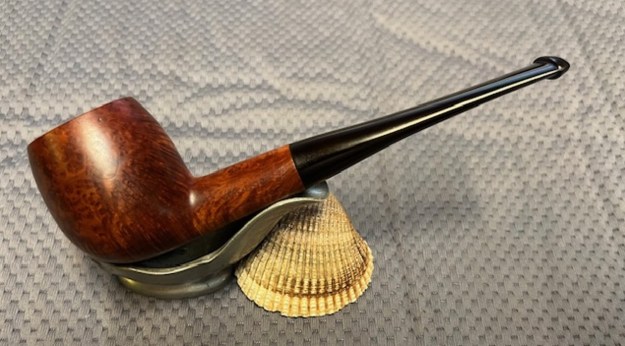
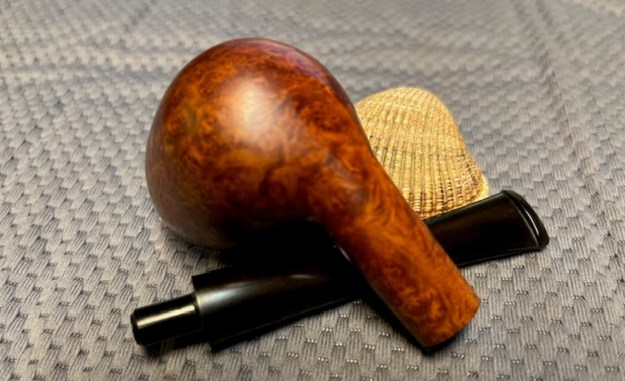
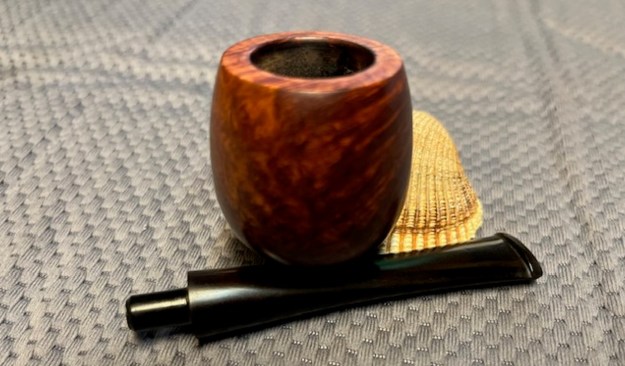
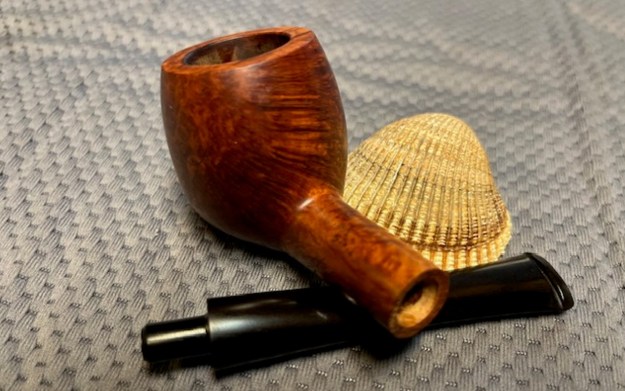
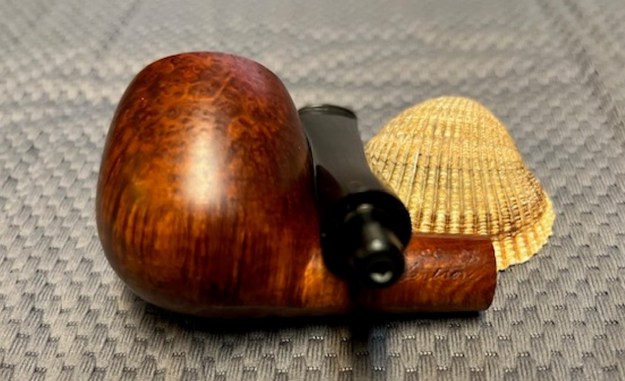
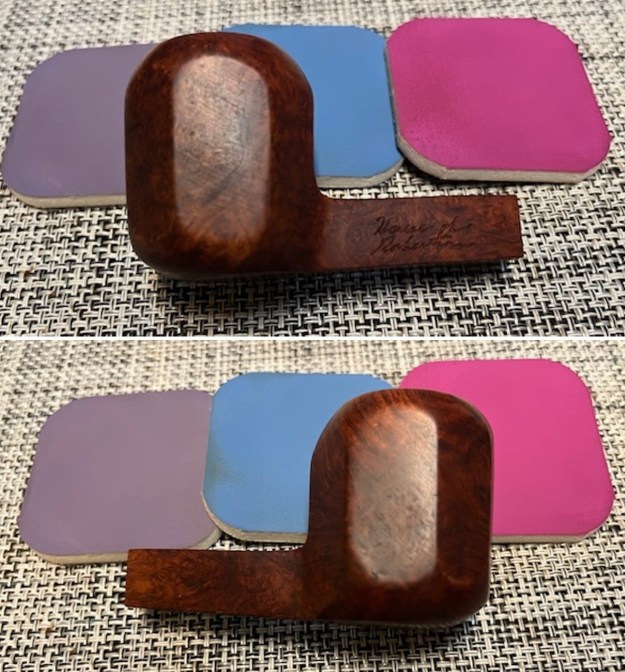
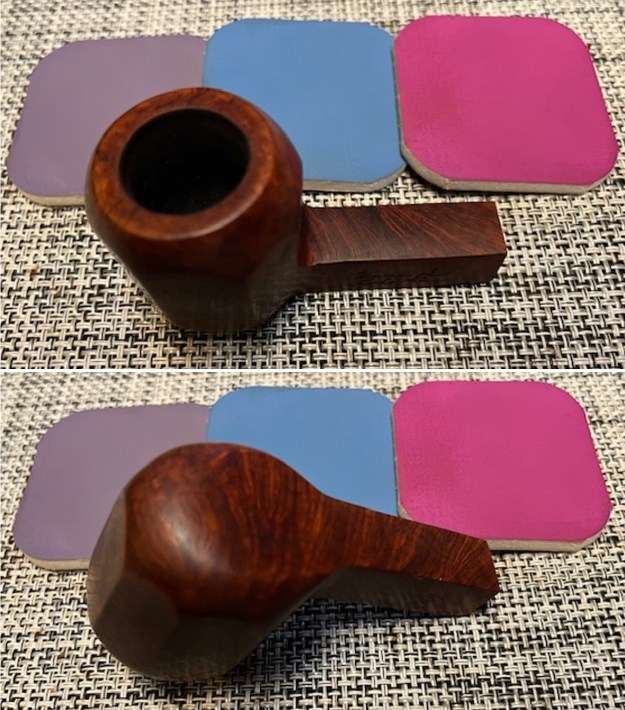
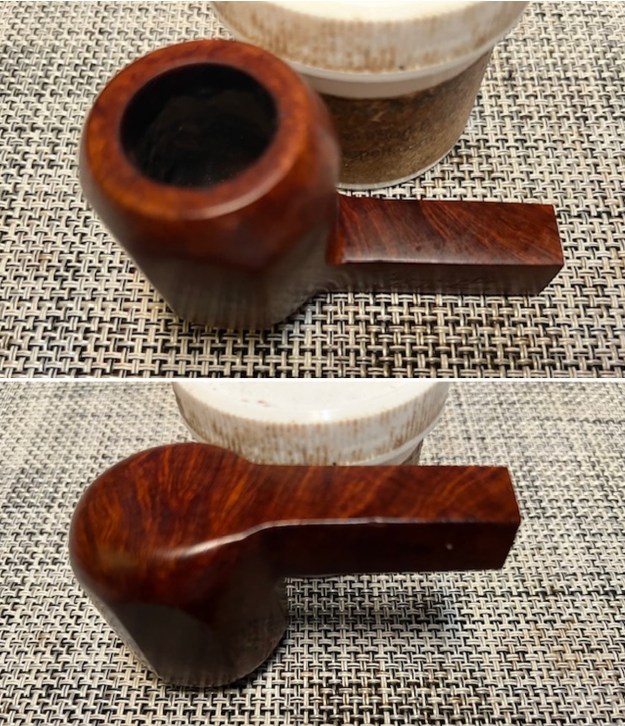
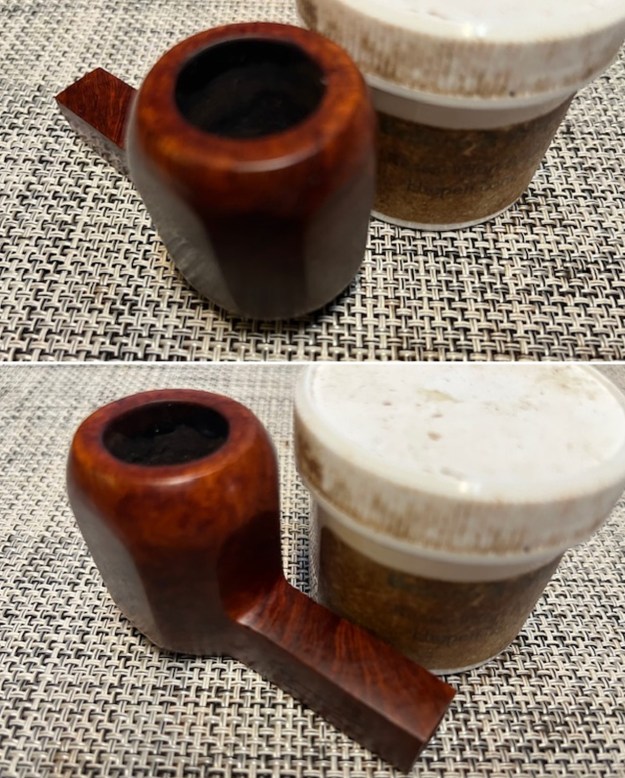
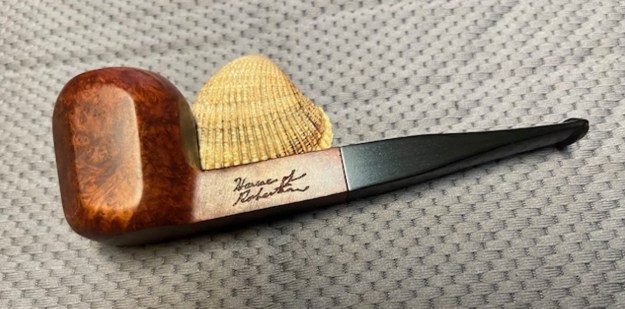
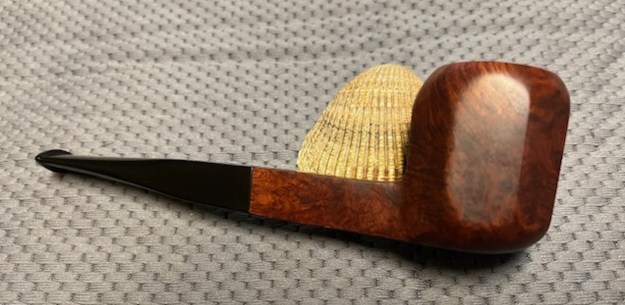
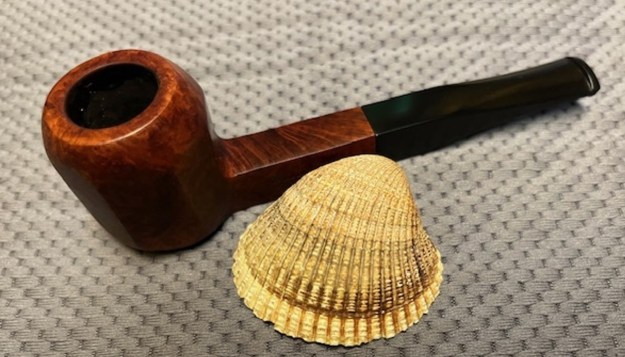
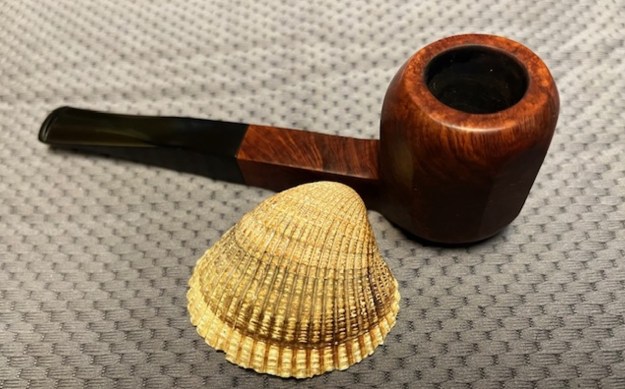
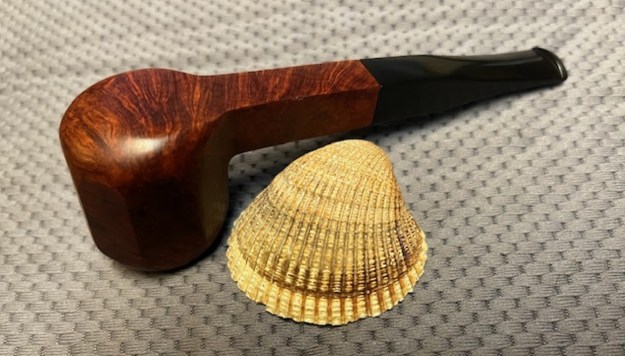
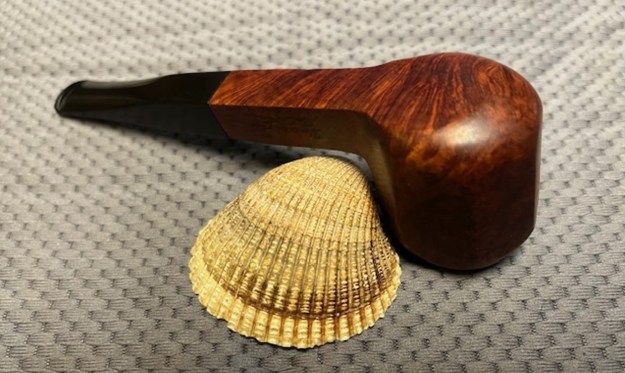
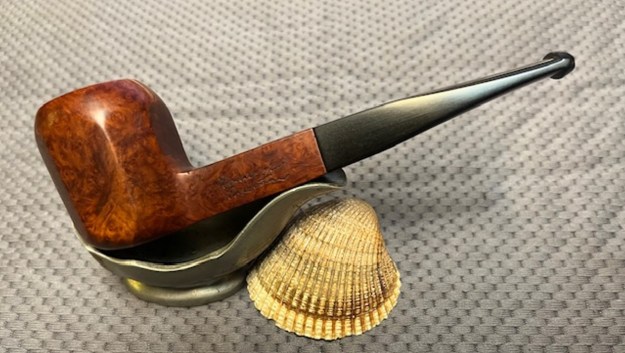
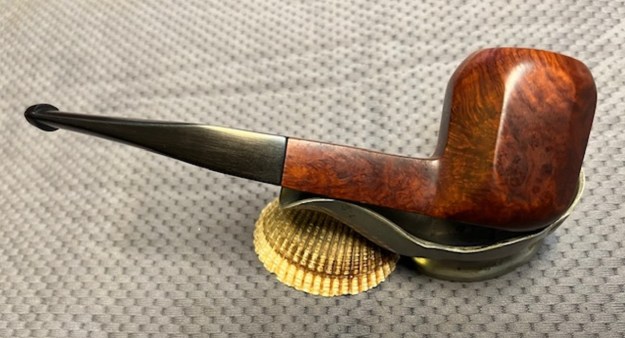
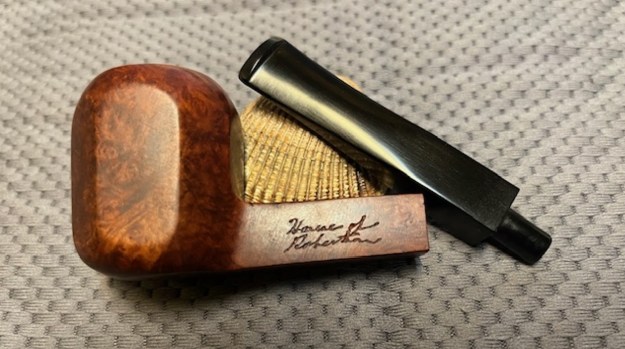
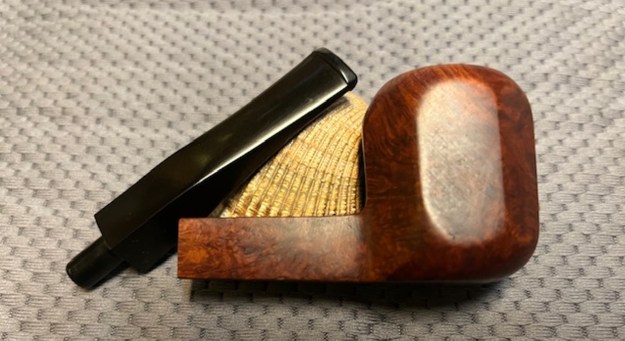
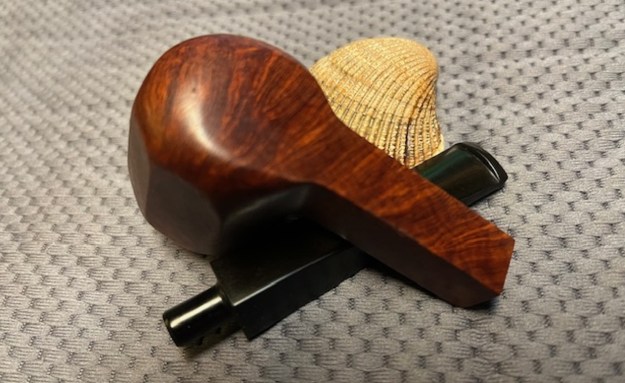
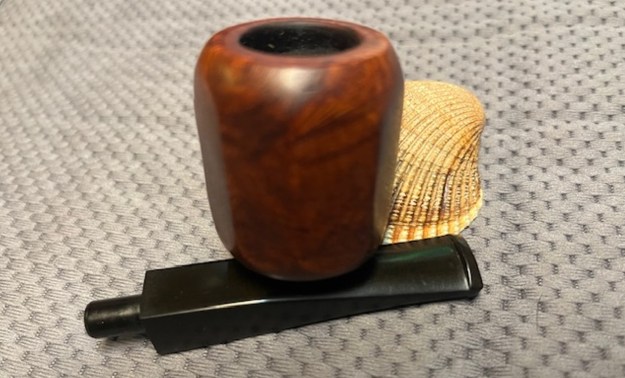
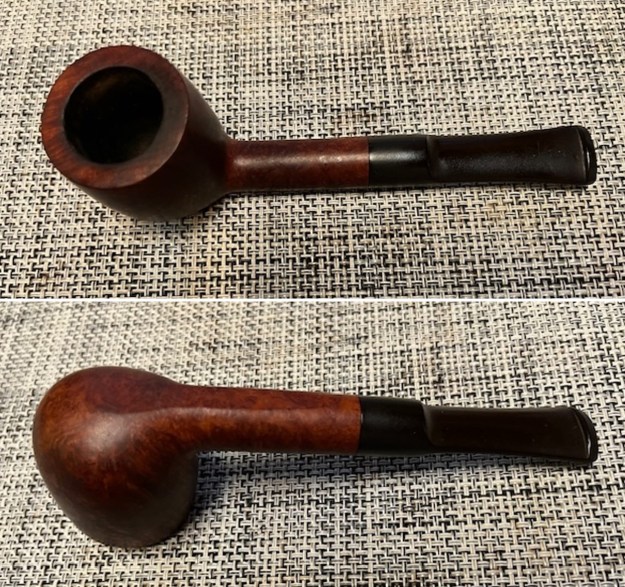
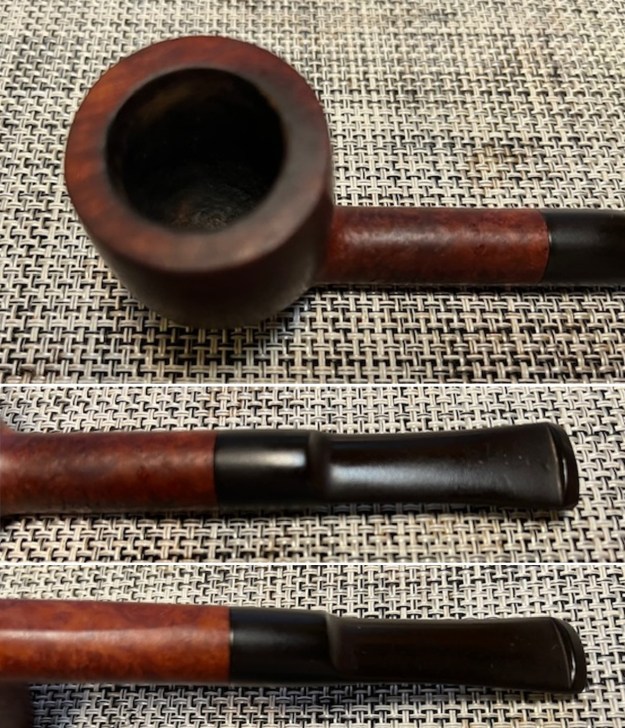
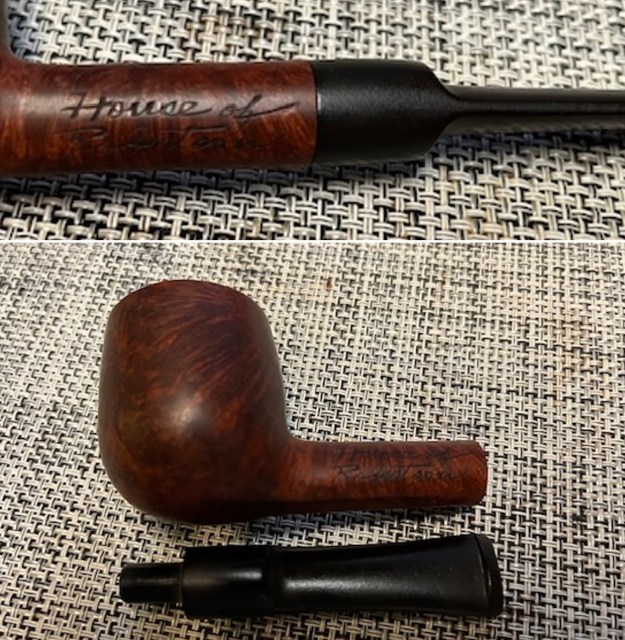
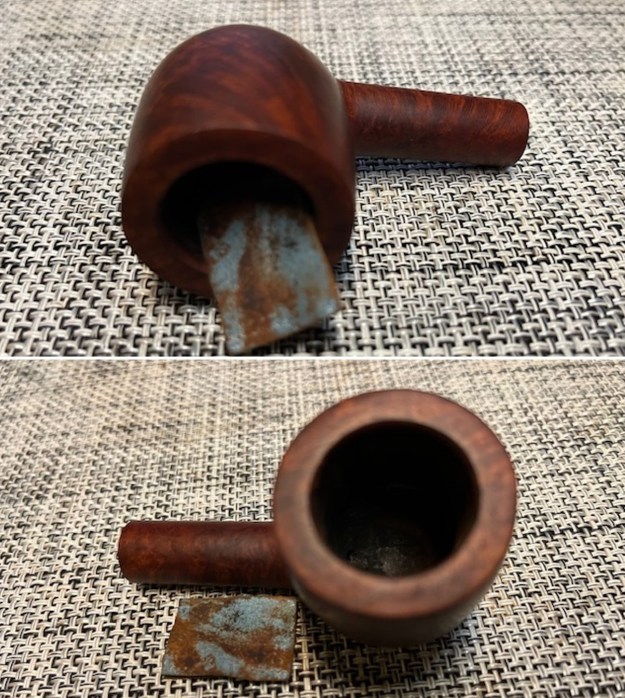
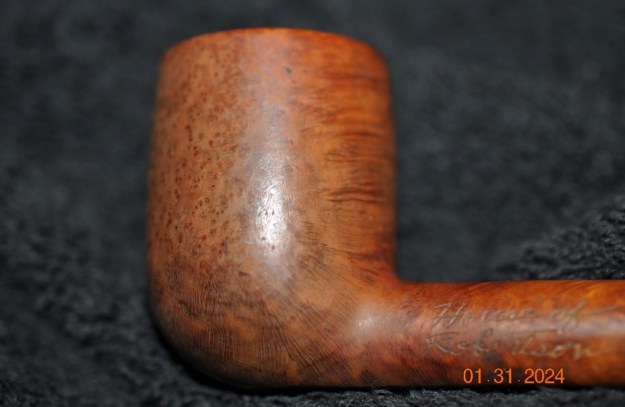
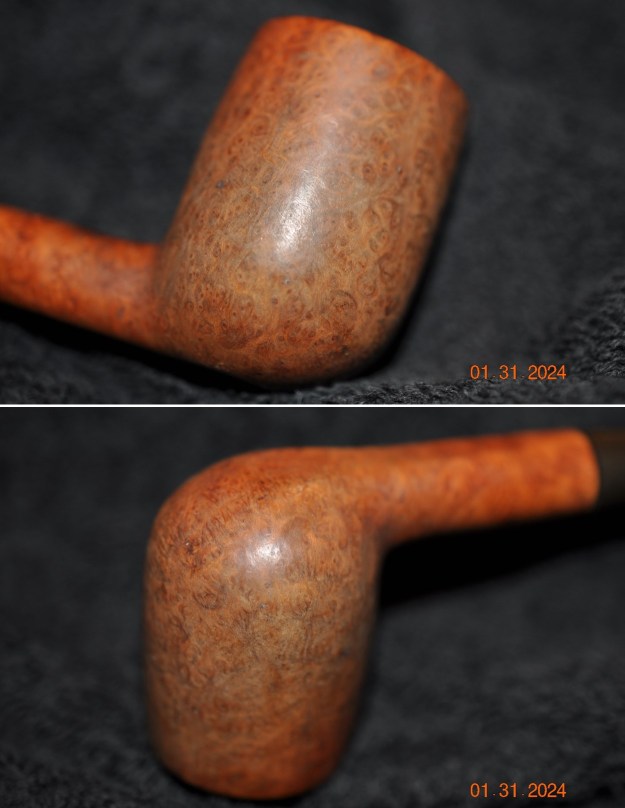
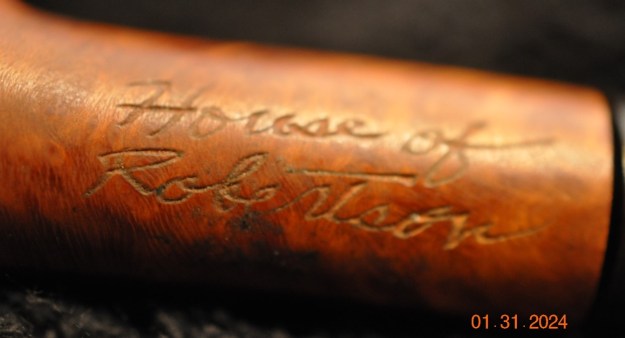
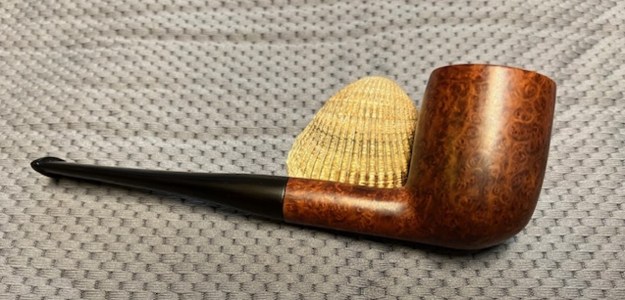
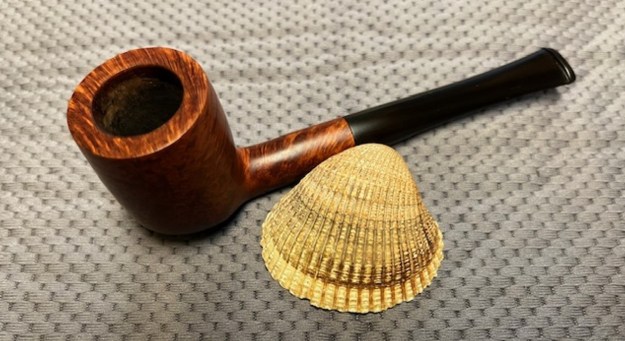
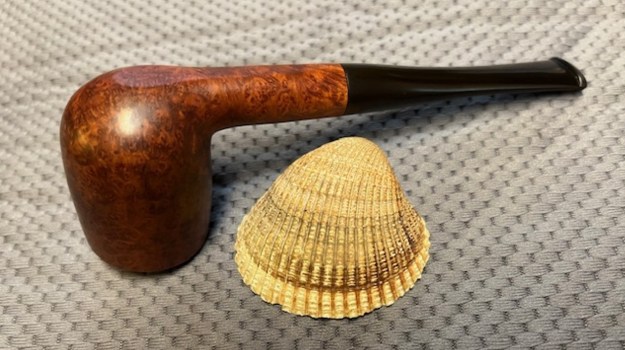
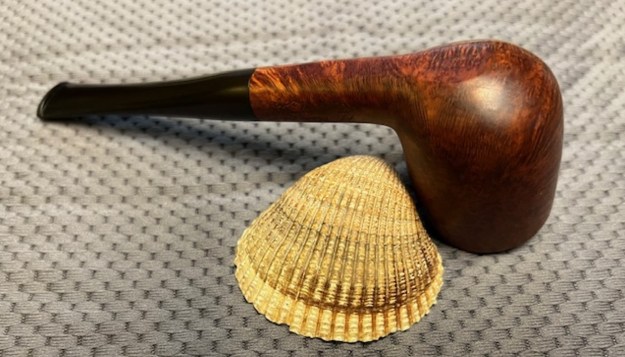
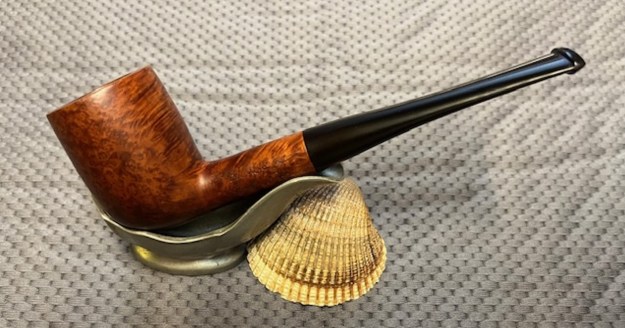
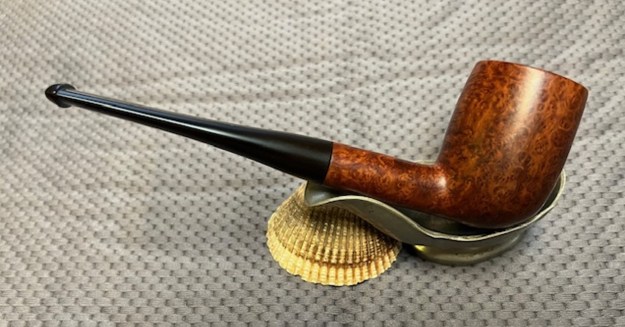
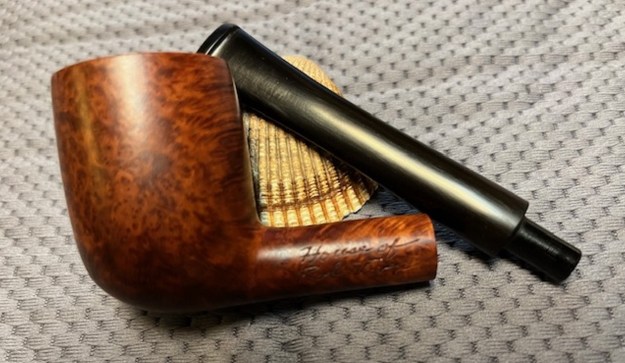
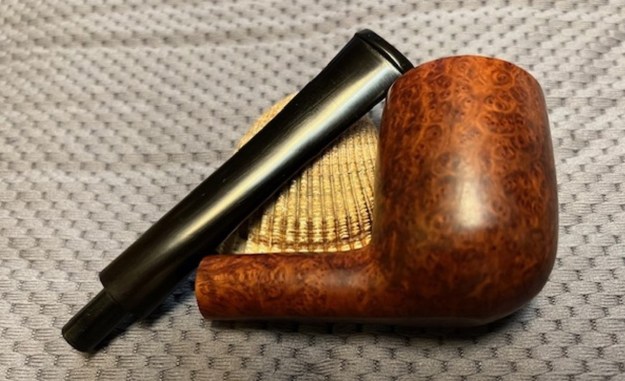
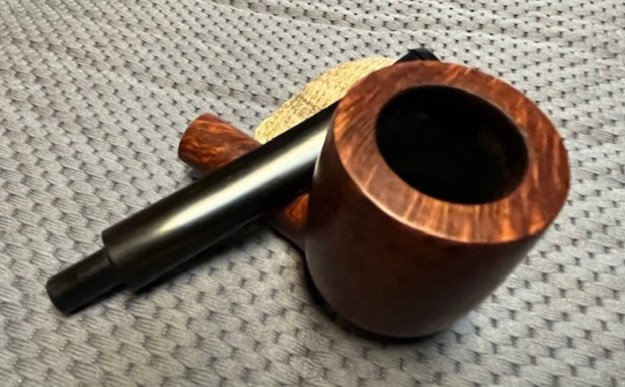
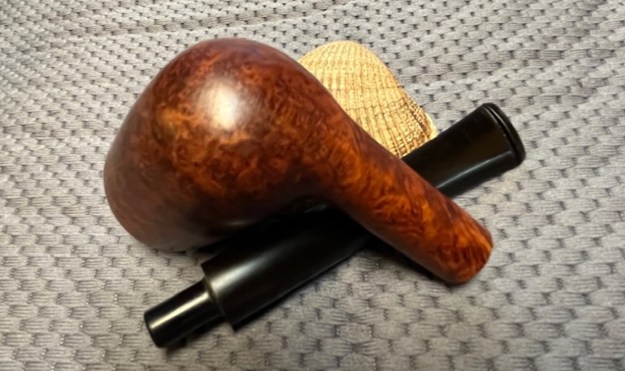
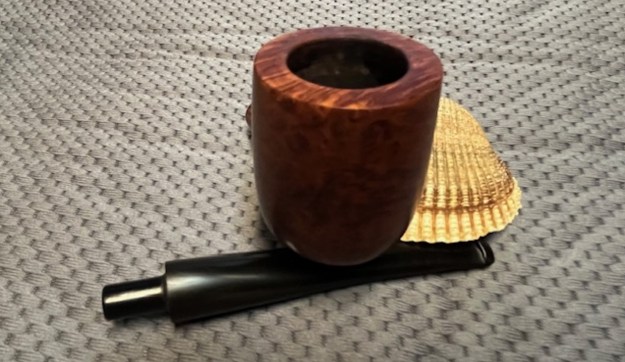
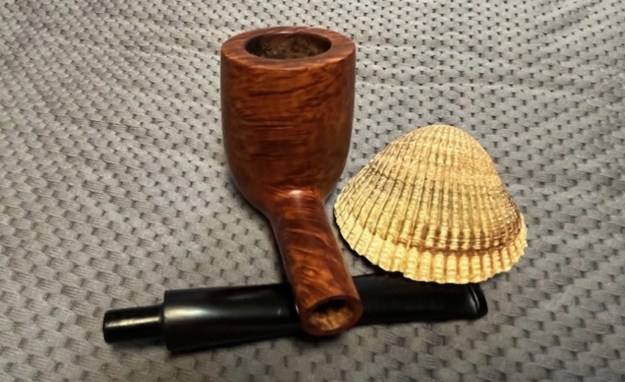
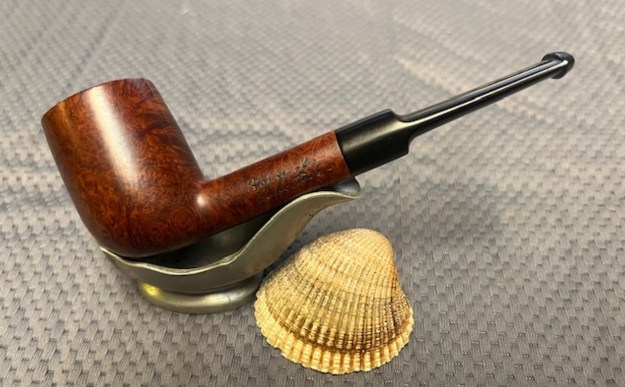
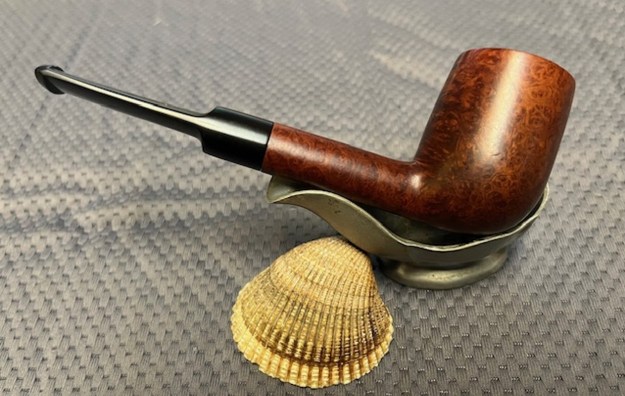
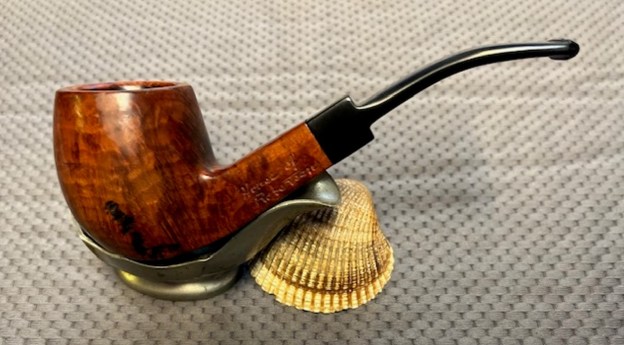
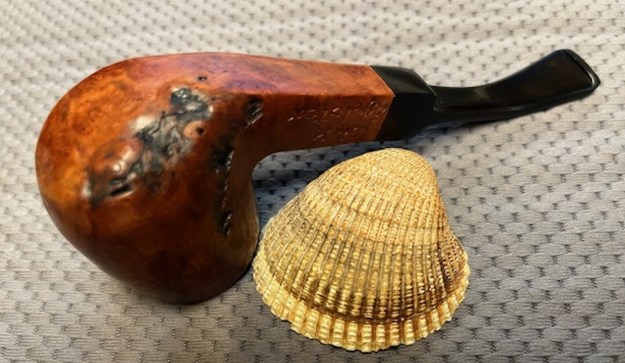
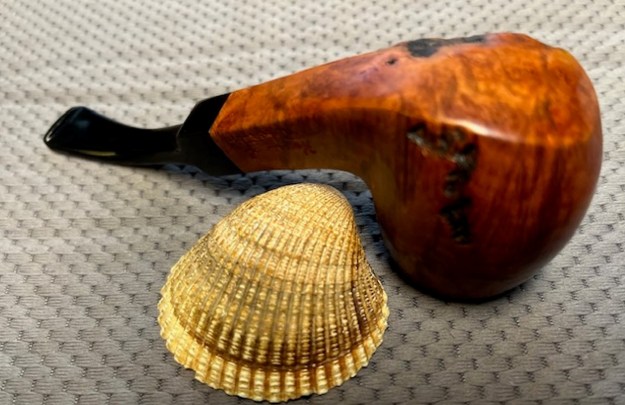
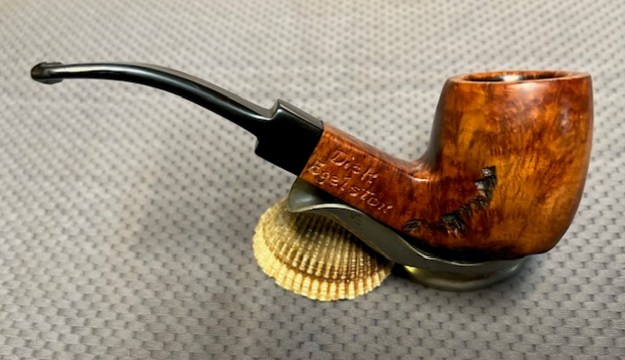
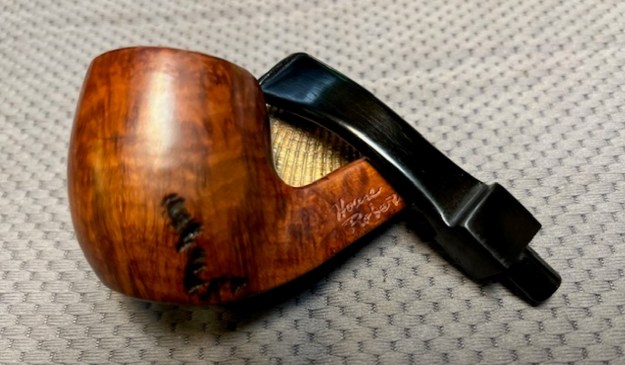
The Back Story of a House of Robertson Bent Billiard Carved for Dick Egelston


by Steve Laug

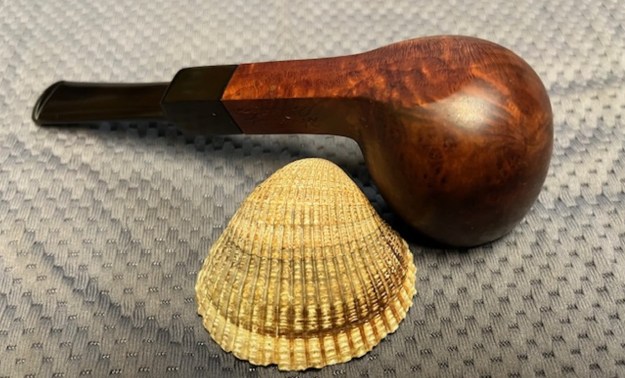
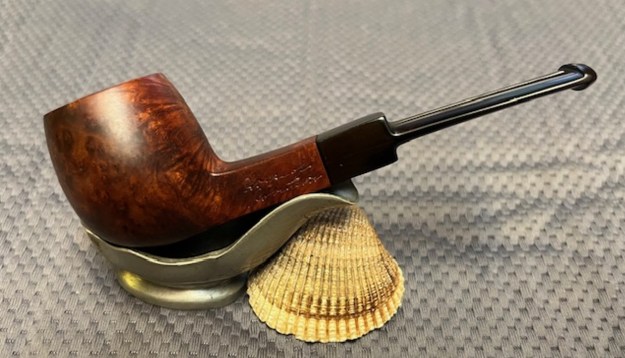
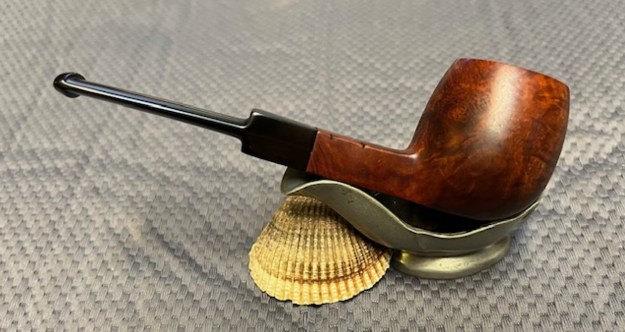
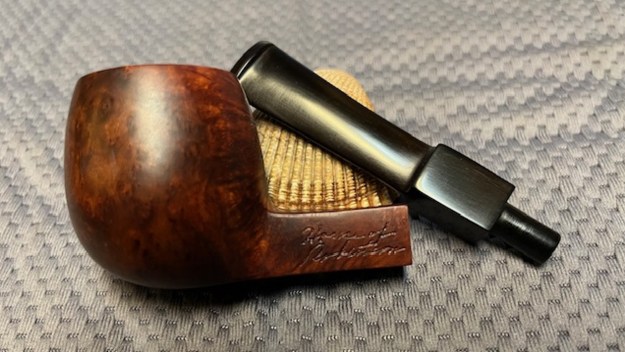
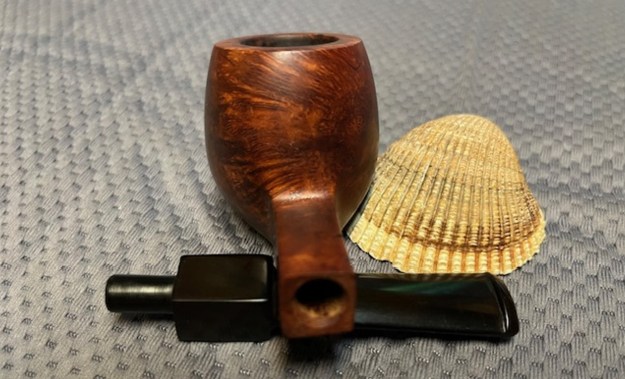
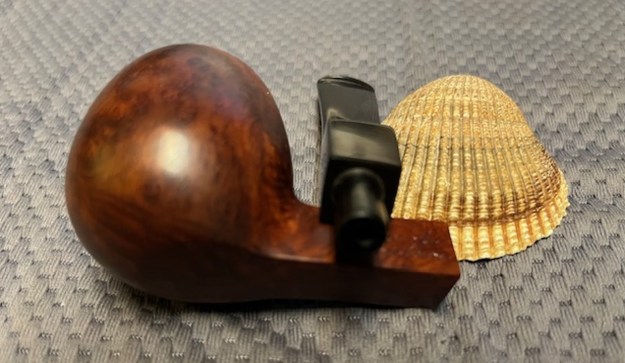
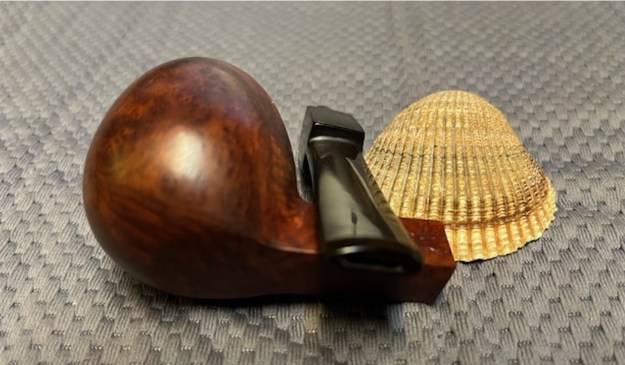
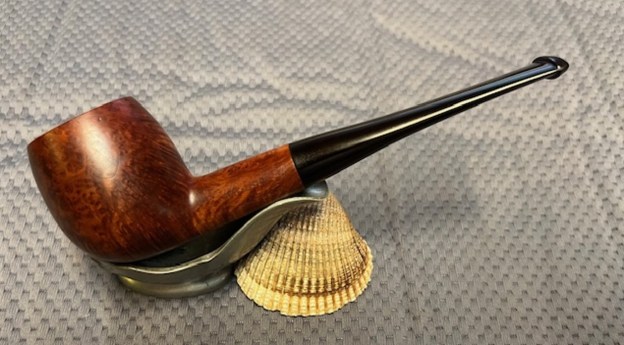
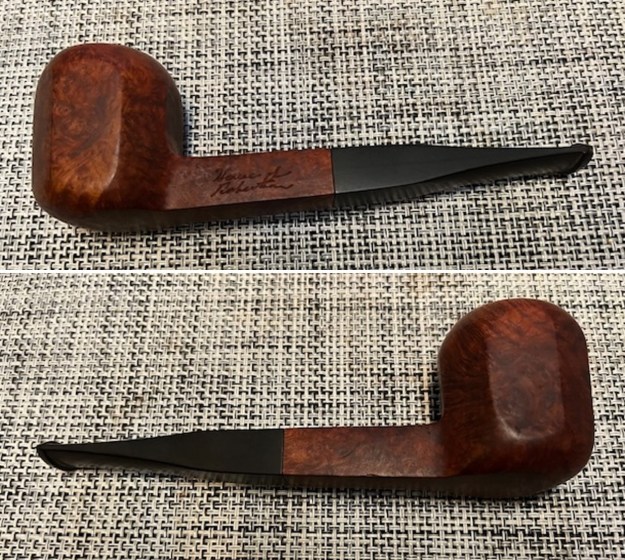
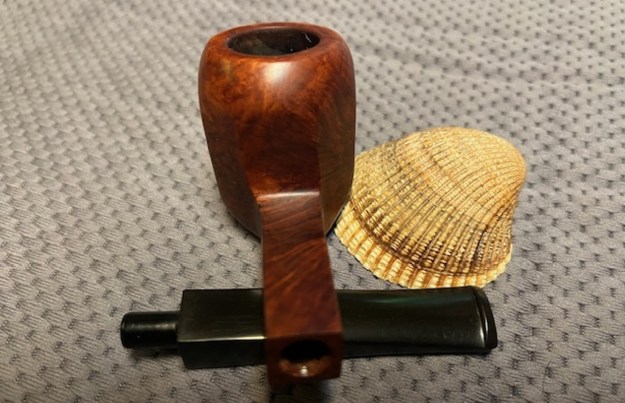
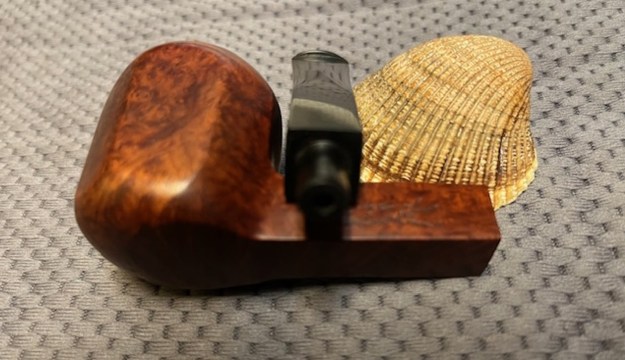
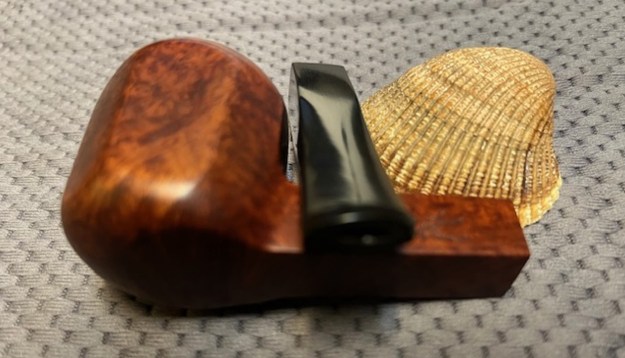
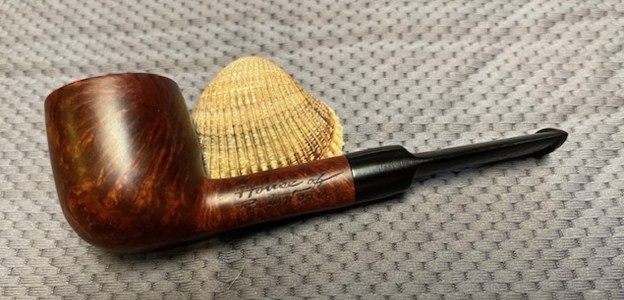
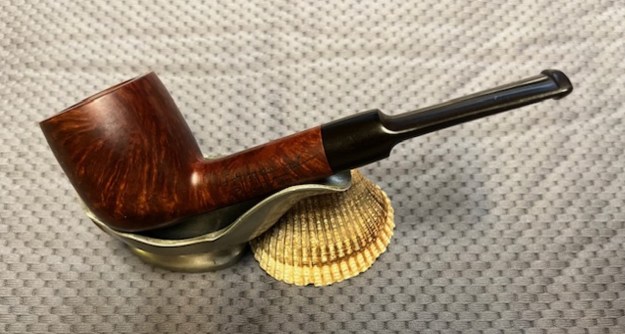
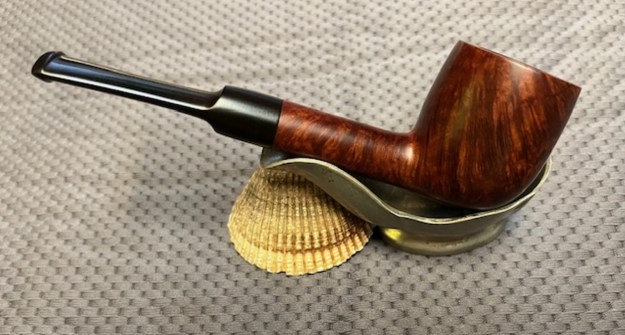
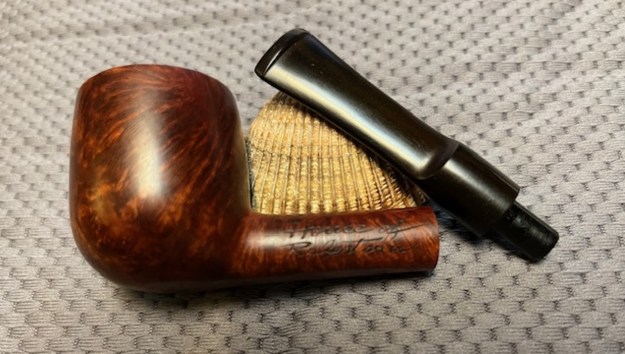
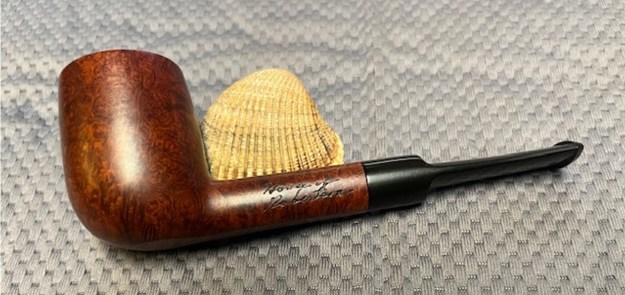
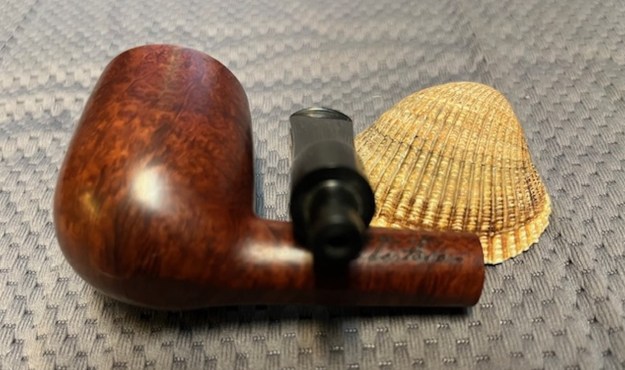
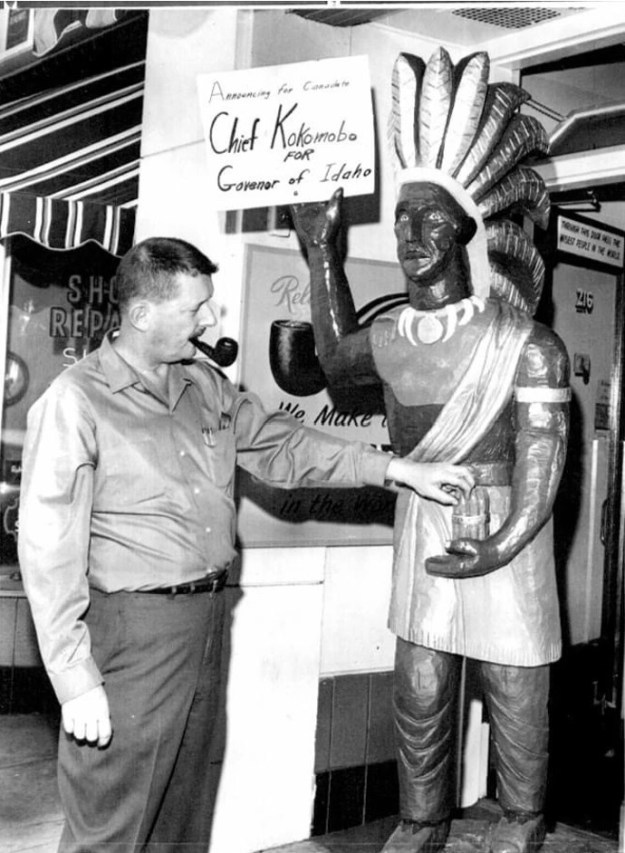
It was a sunny fall day in Boise when Dick Egelston walked past Thayne’s carved cigar store Indian and into the House of Robertson pipe shop. Like Thayne, he had pipe in his mouth and smoke curling out behind his head and greeted his friend Thayne. They knew each other for a long time as both of them were involved in the business community of Boise, Idaho and both belonged to several of the same organizations. Over the years they had become friends. Dick picked up his tobaccos and more than a few pipes from House of Robertson’s. He commented more than once that he was personal keeping Thayne’s business afloat with is purchases. Today, Thayne greeted him with a surprise. He had carved Dick a pipe. It was a square shank bent Billiard with some great grain around the bowl and a few swirls of rustication and some plateau on the heel on the right side. What made this one particularly special was Thayne or Jon, his son had etched Dick’s name on the right side of the shank. I think Dick must have been delighted with this pipe made for him by his friend. I know I would have been. To have both a pipe carved by Thayne and one that had his name etched on would have been a double delight.
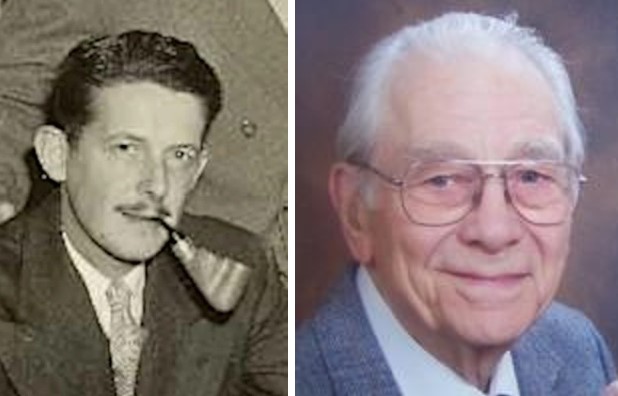
Just to set the record straight the story above is from my imagination but I don’t think it is far off from the facts. To the left are a photo of a young Thayne Robertson with a pipe in his mouth and an older Dick Egleston. I know that Dick Egleston was part of the Shriner’s organization in Boise and I know Thayne was a Mason and was well aware of the work of the Shriners (https://rebornpipes.com/2021/10/31/house-of-robertson-pipes-boise-pipe-carver-thayne-robertson/). From what I can find both were Masons. I know that both were in business in the Boise area and that both smoked a pipe. The day of the pipe’s delivery to Dick is purely my imagination. When we purchased the pipe, I thought it would be interesting to do some research on Dick’s name. I found an obituary for him dated October 12, 2020. It stated that he died at the age of 97. The obituary links him and the family to the Boise and the surrounding area (https://www.legacy.com/us/obituaries/idahostatesman/name/richard-egelston-obituary?id=7848148). My assumption is that the pipe I am working on belonged to this very same Dick Egelston. Of course, I cannot prove that it did, but I think it is a fair guess. How the pipe went from Boise and the estate of Dick to the seller in Baton Rouge, Louisiana I don’t think will ever be clear. We contacted the seller and he does not remember who he purchased it from. But really, you can make up your own story of the travels of this name pipe that bears the name of both the maker and the recipient. It is a fun process to enter into and one that always adds colour to any pipe I work on. Now let’s look at the pipe itself.

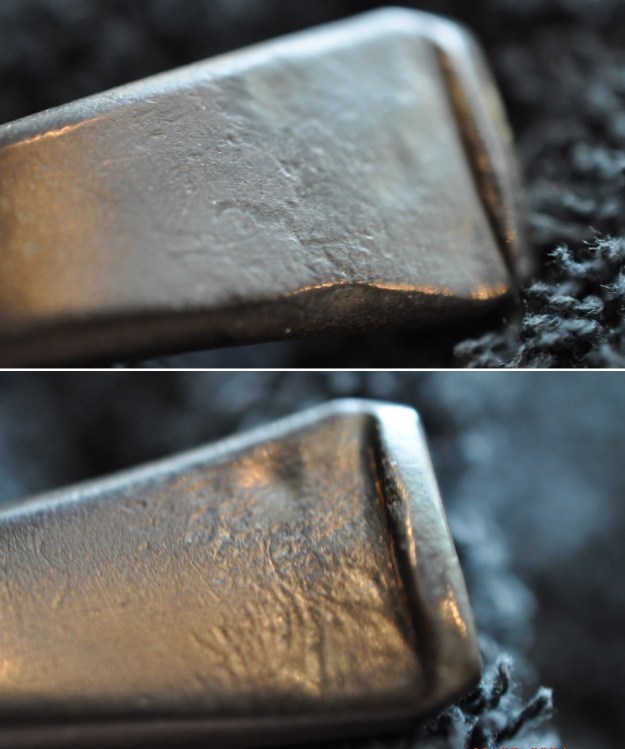
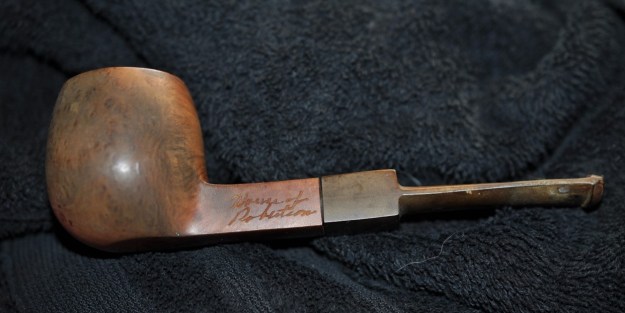
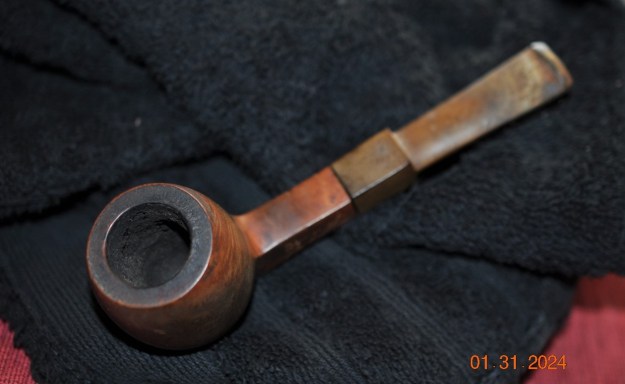
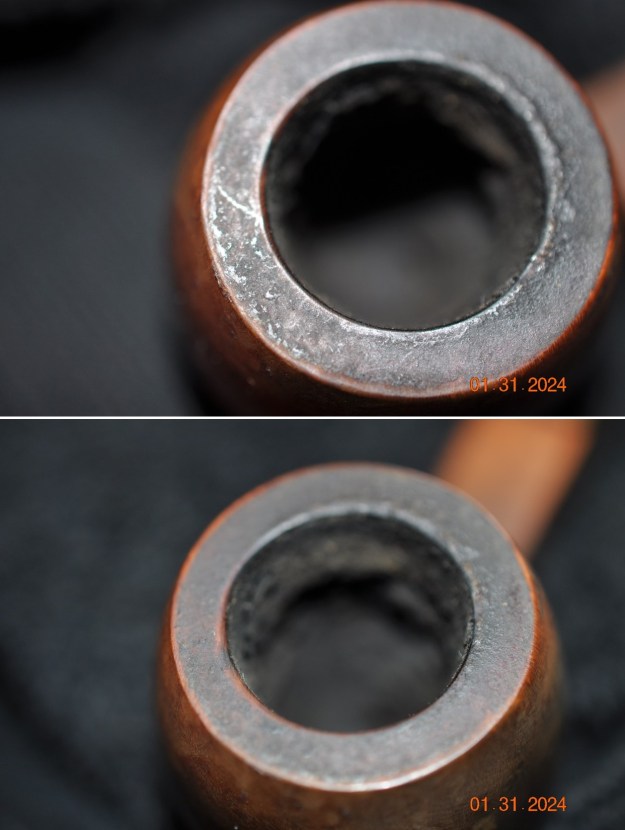
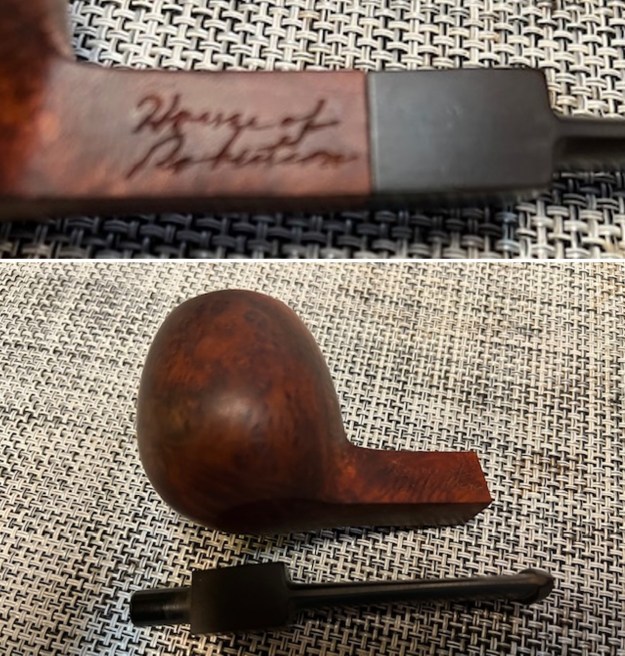
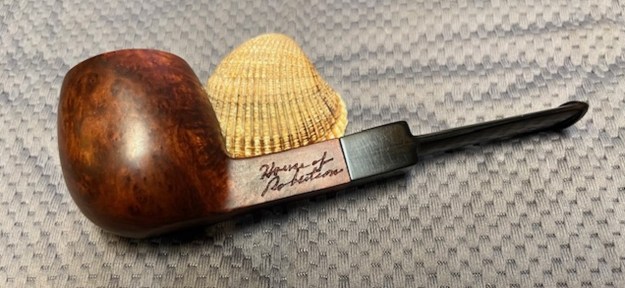
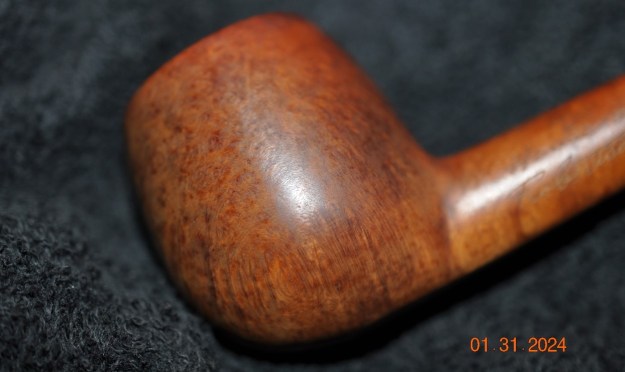
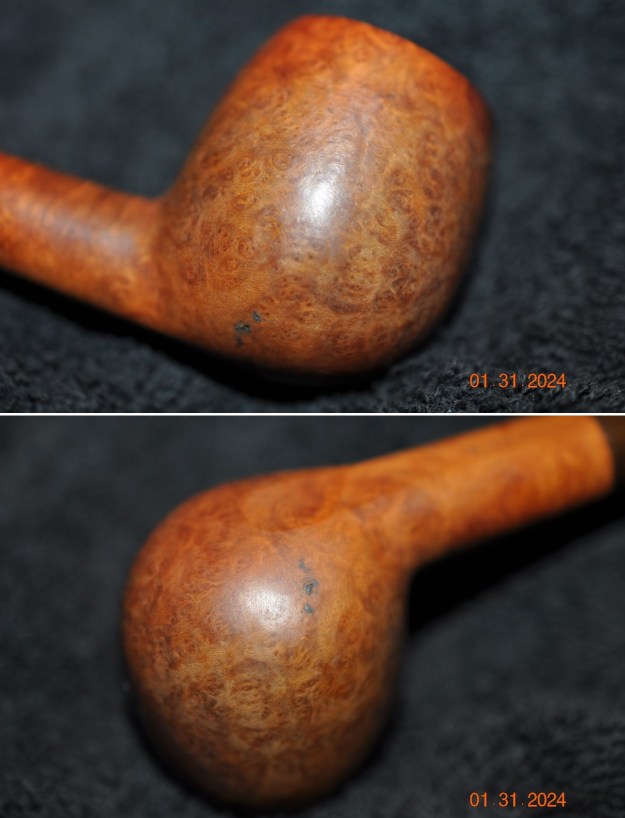
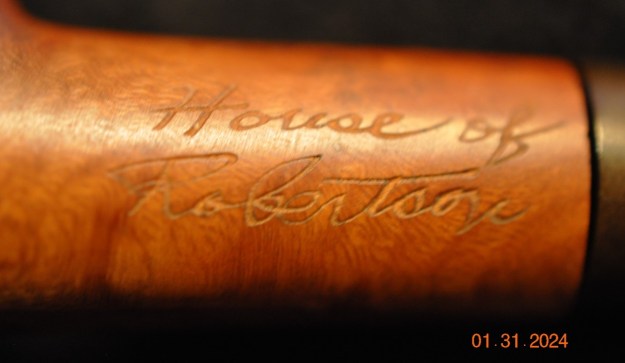
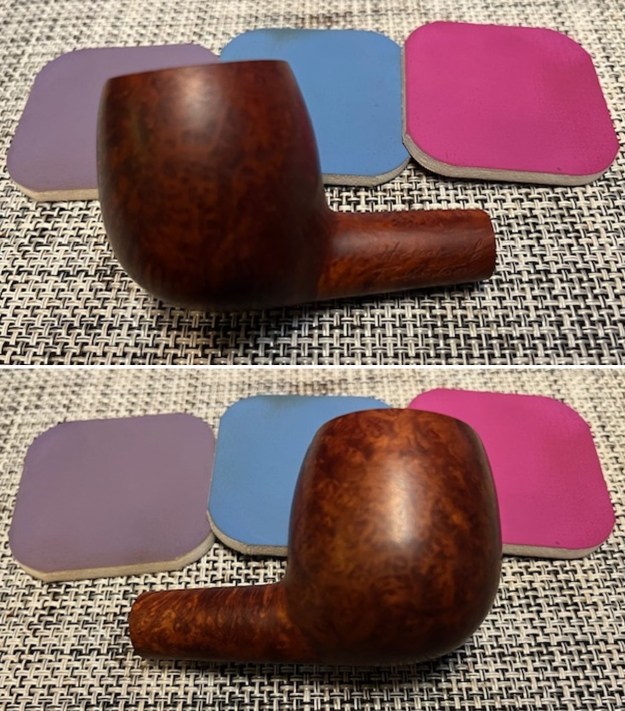
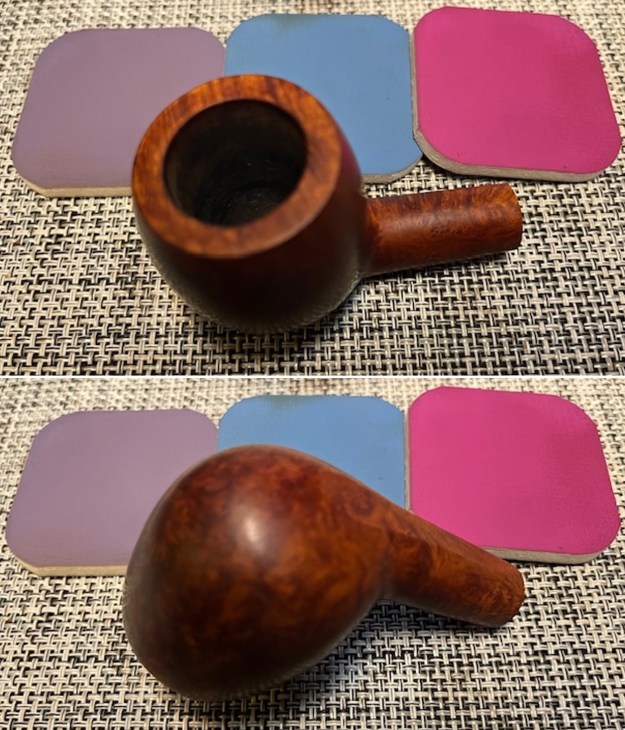
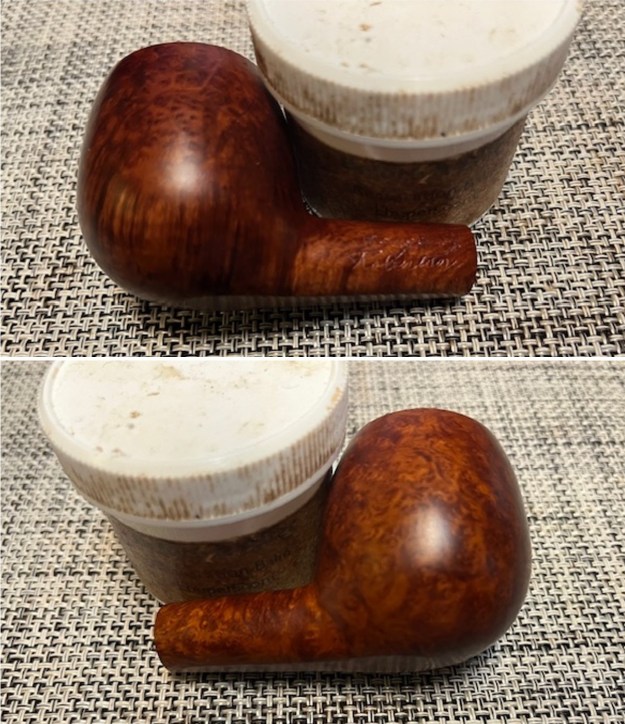
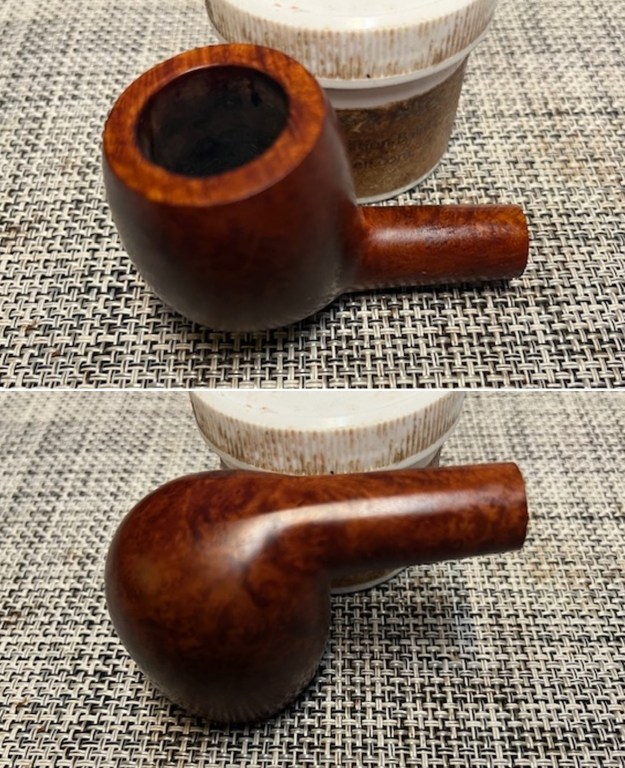
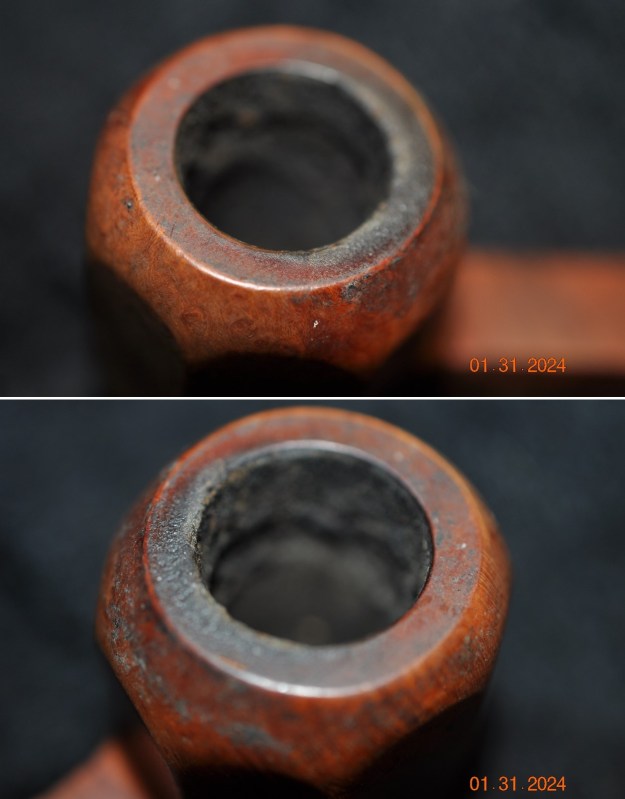
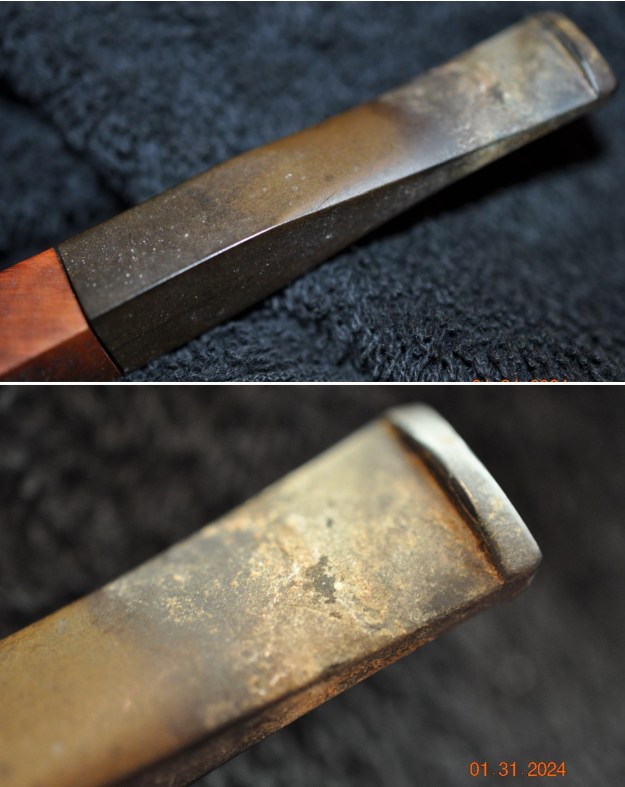
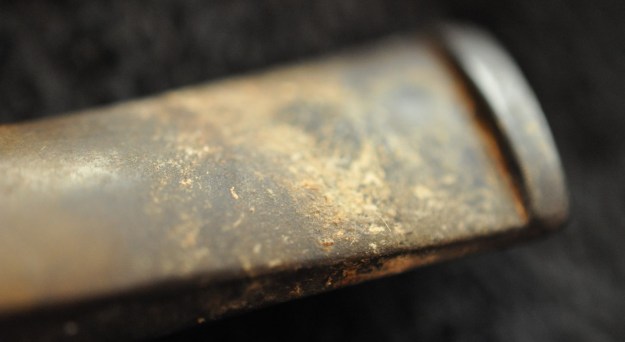
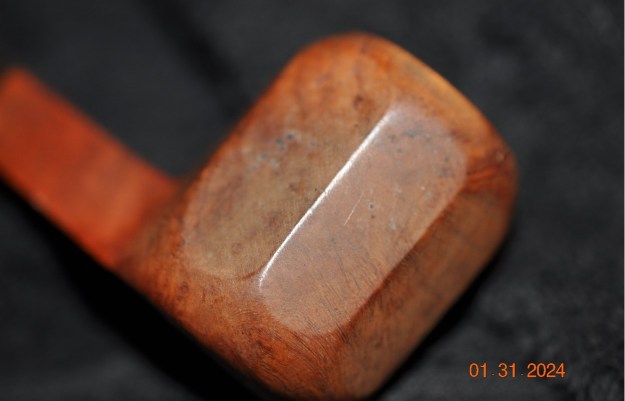
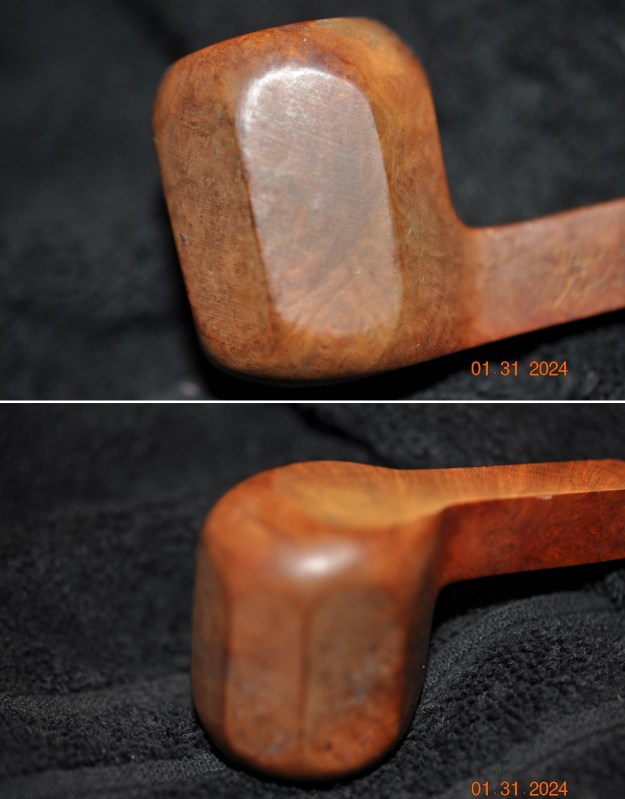
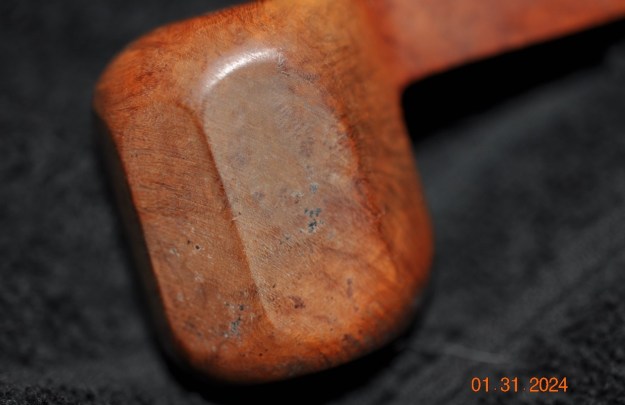
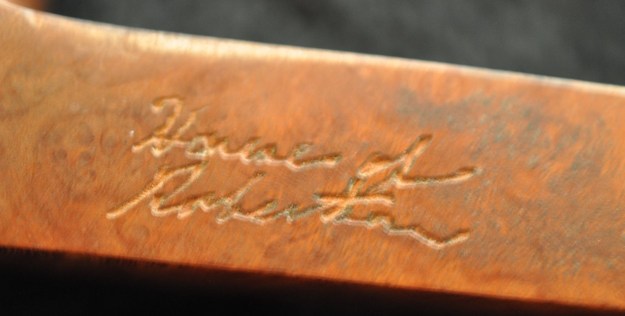
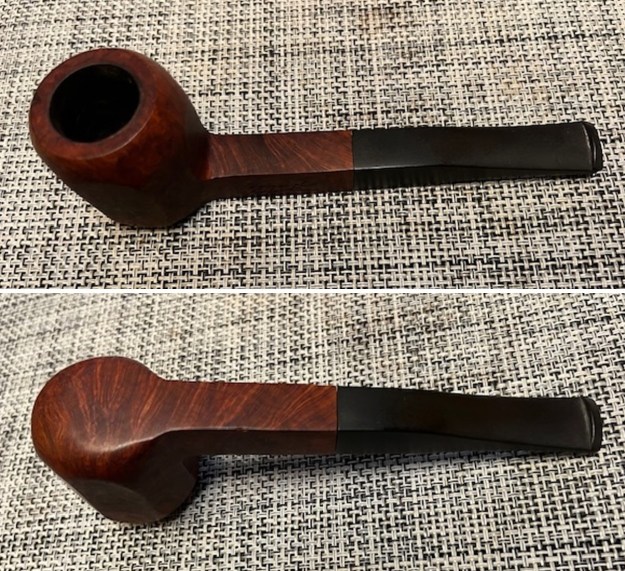
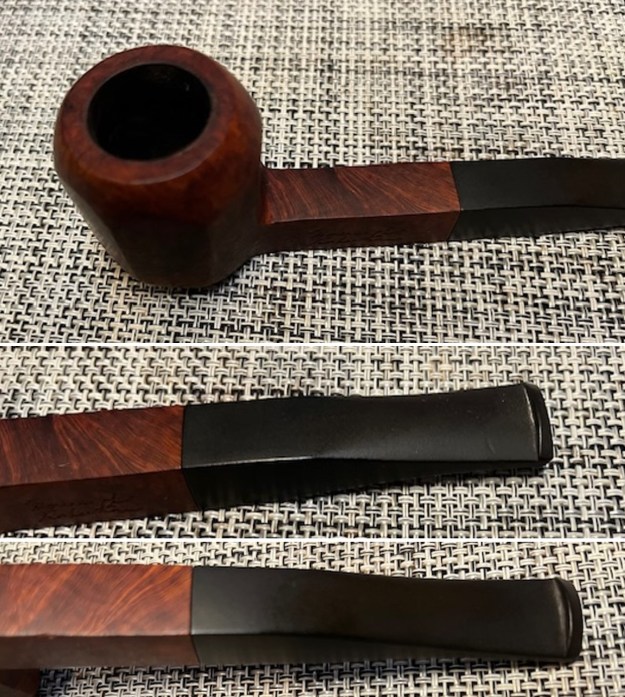
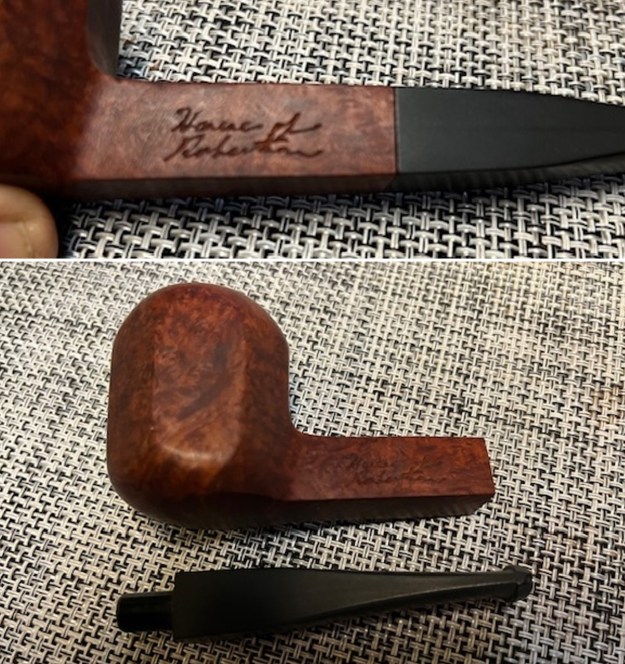
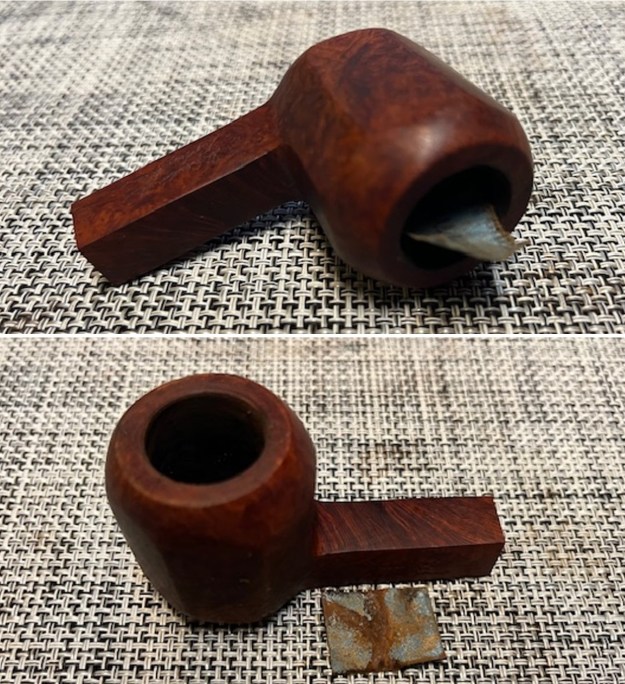
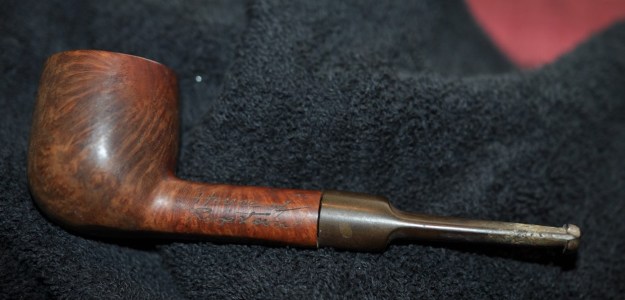
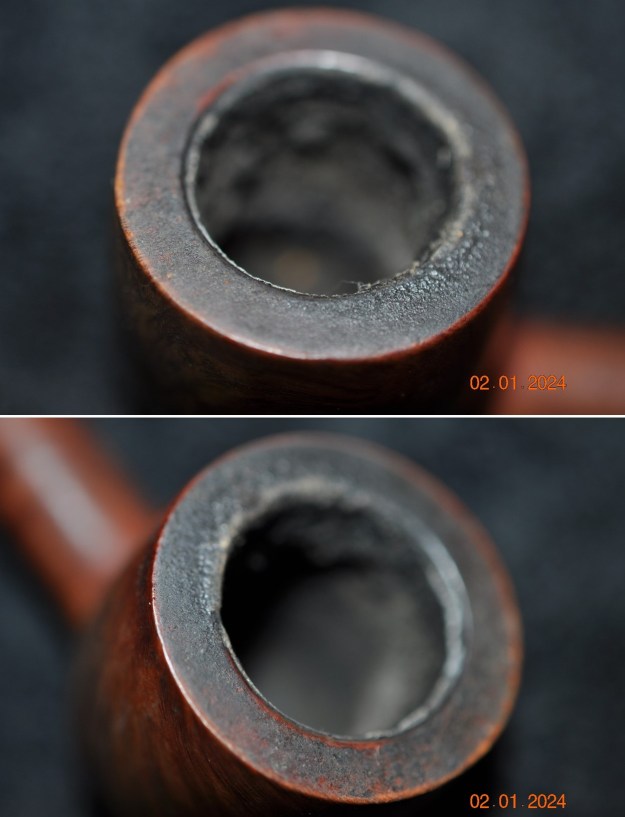
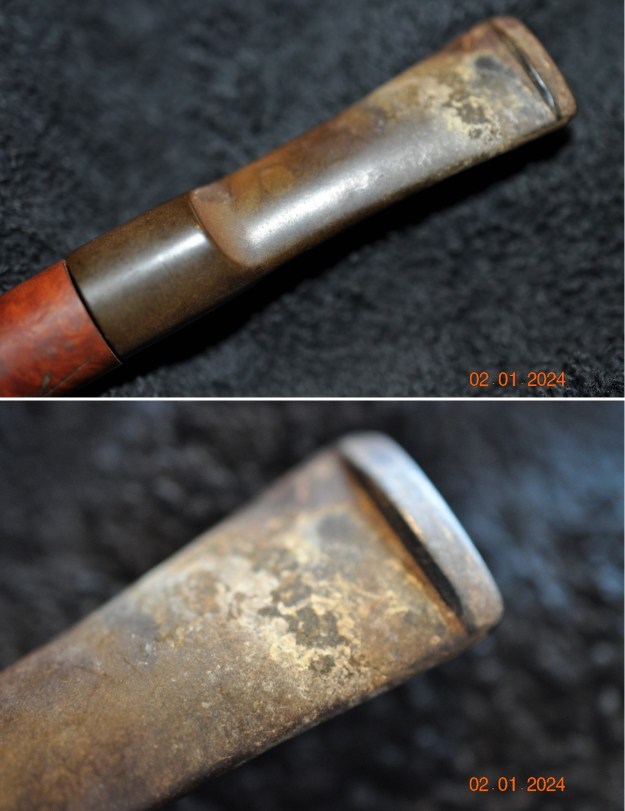
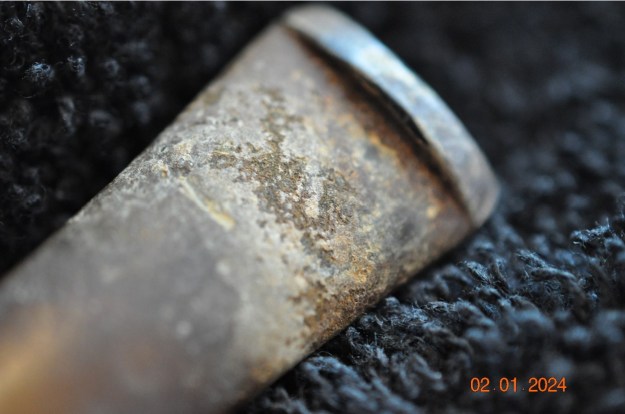
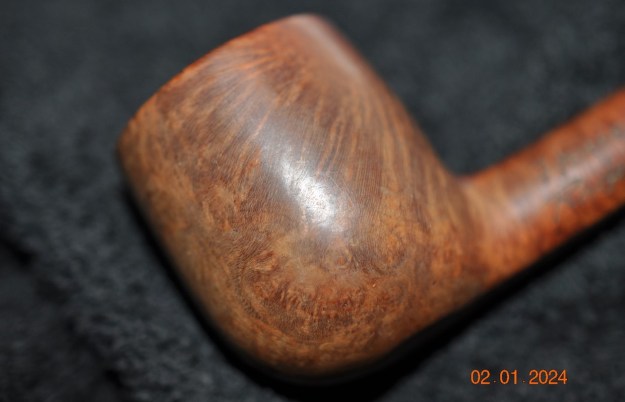
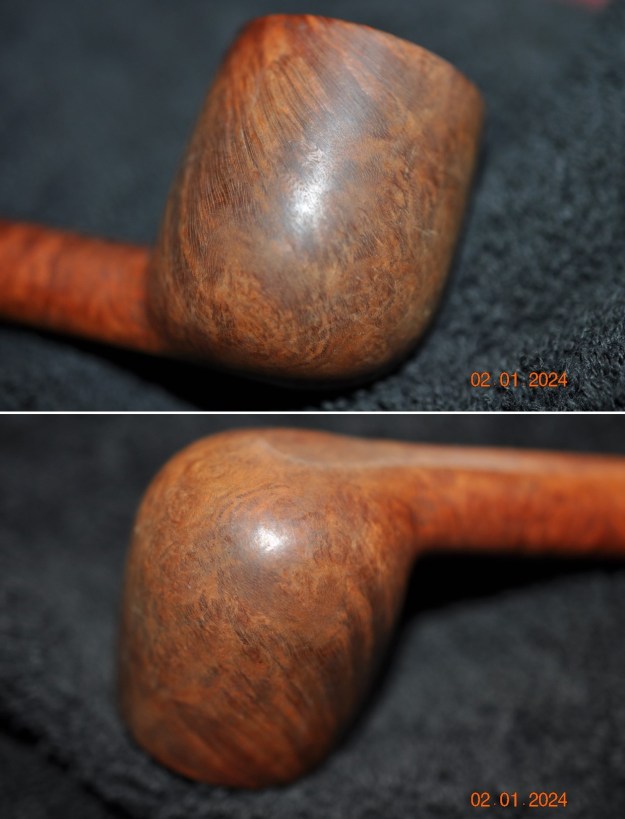
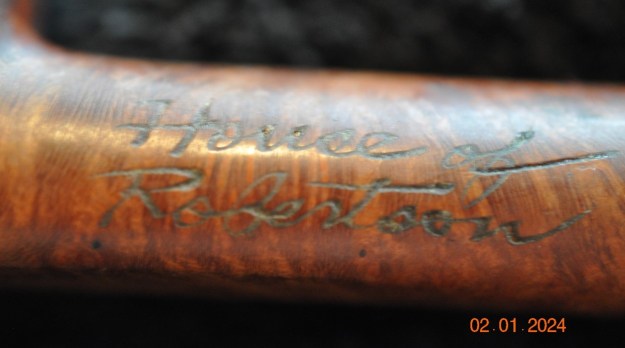
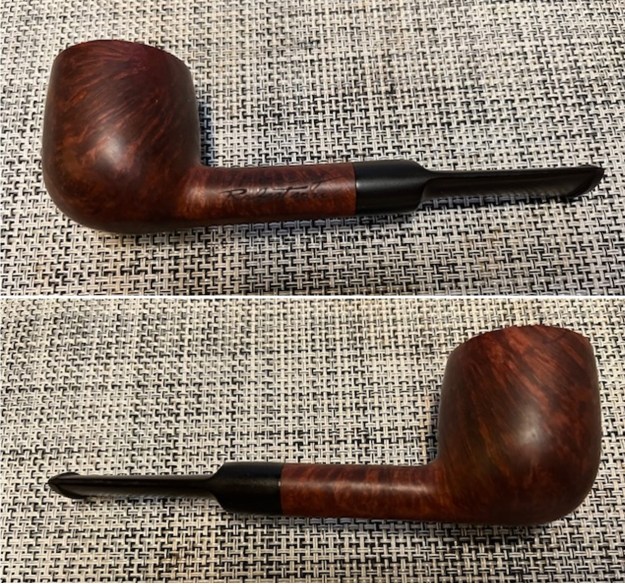
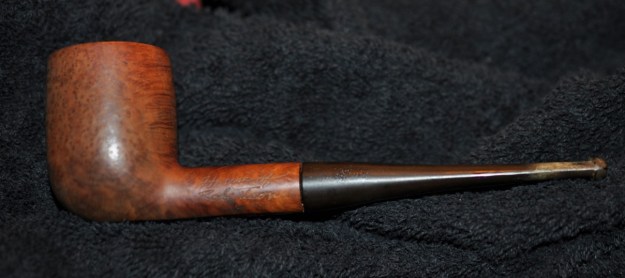
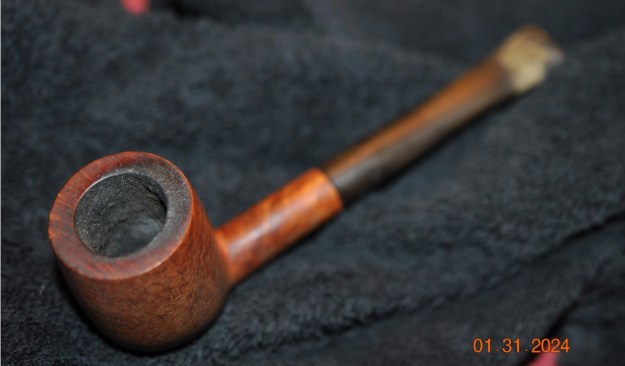
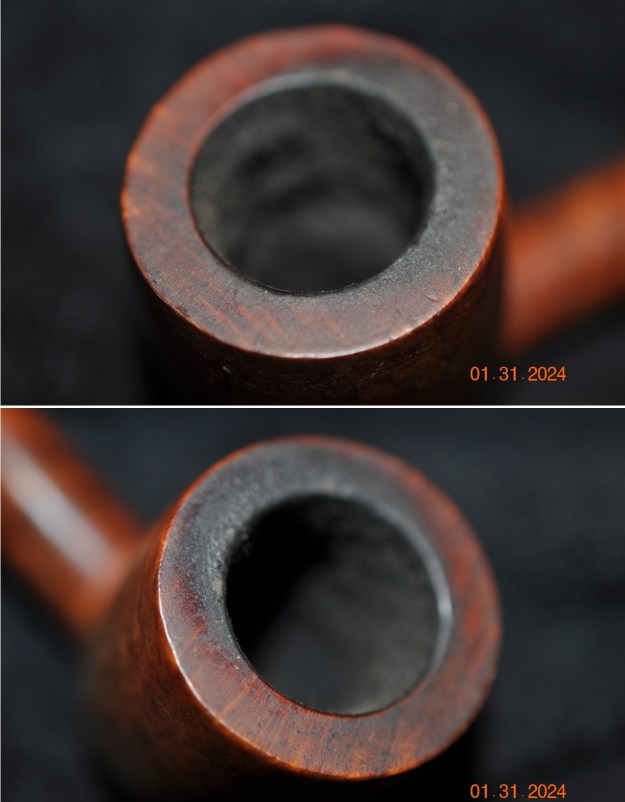
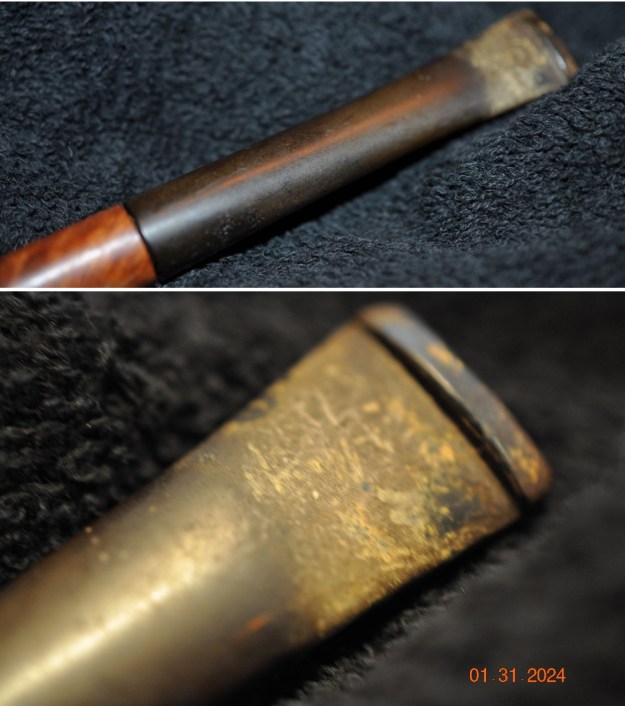
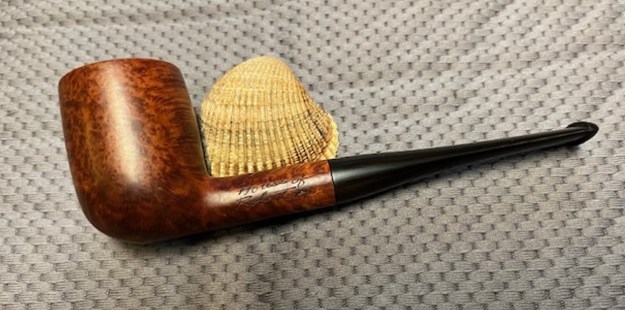
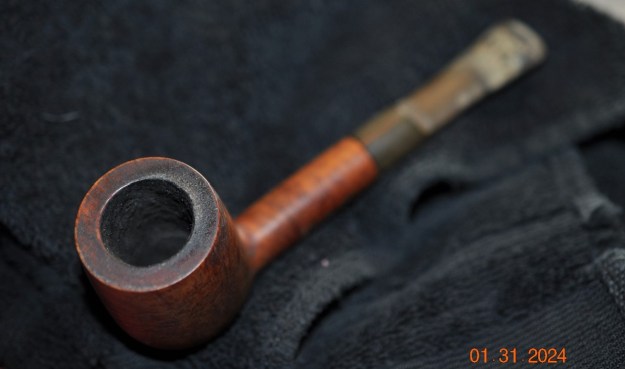
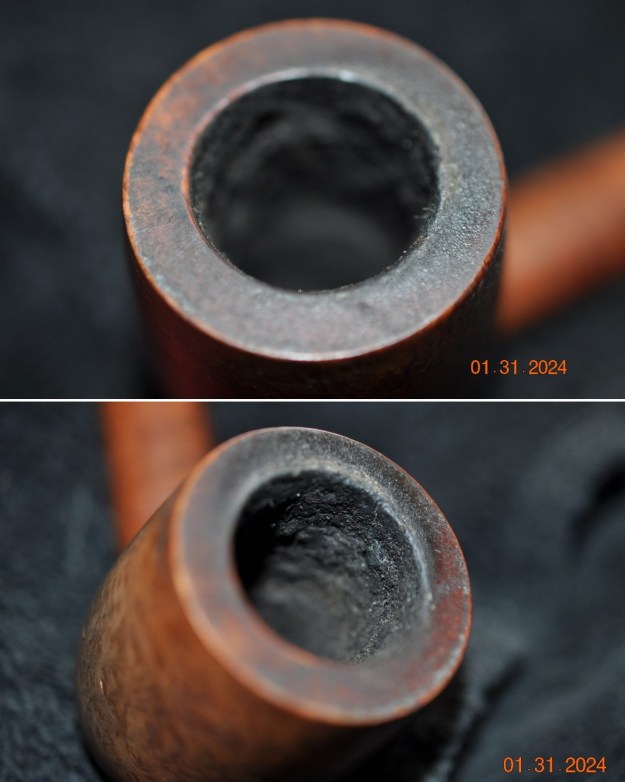
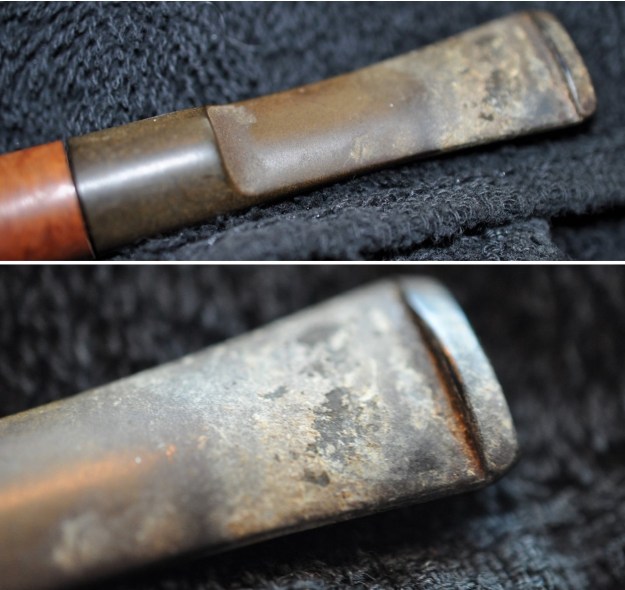
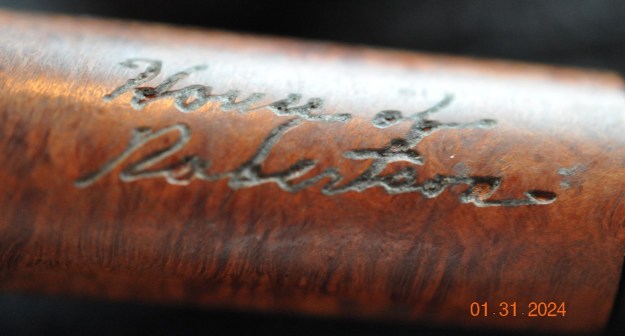
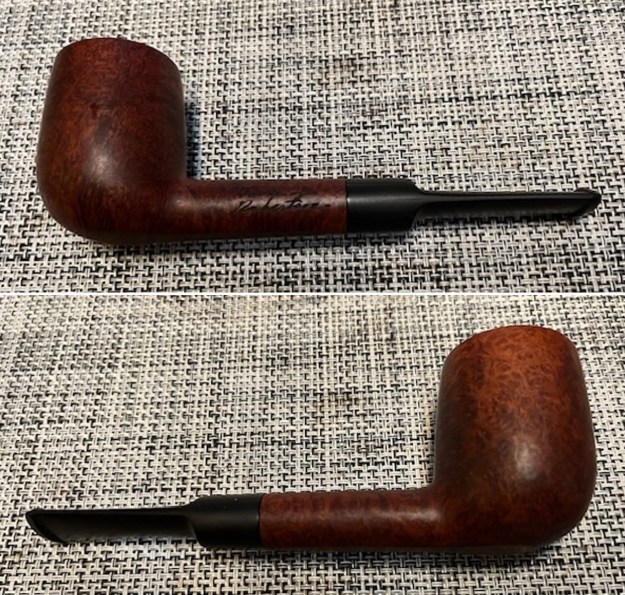
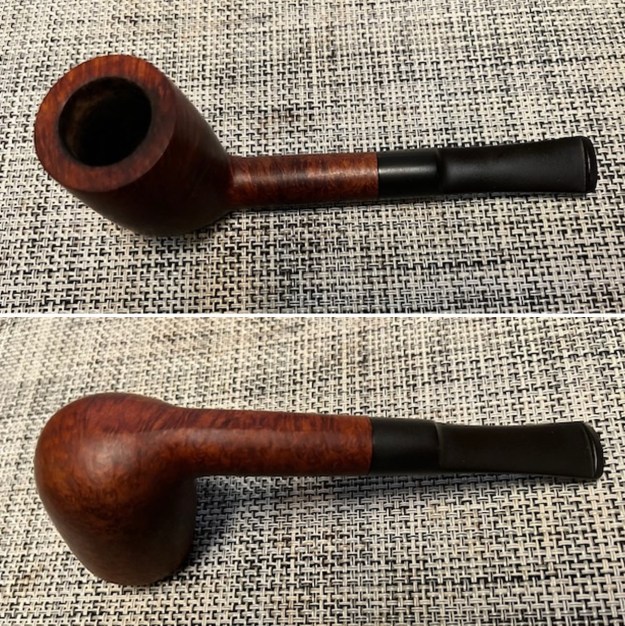
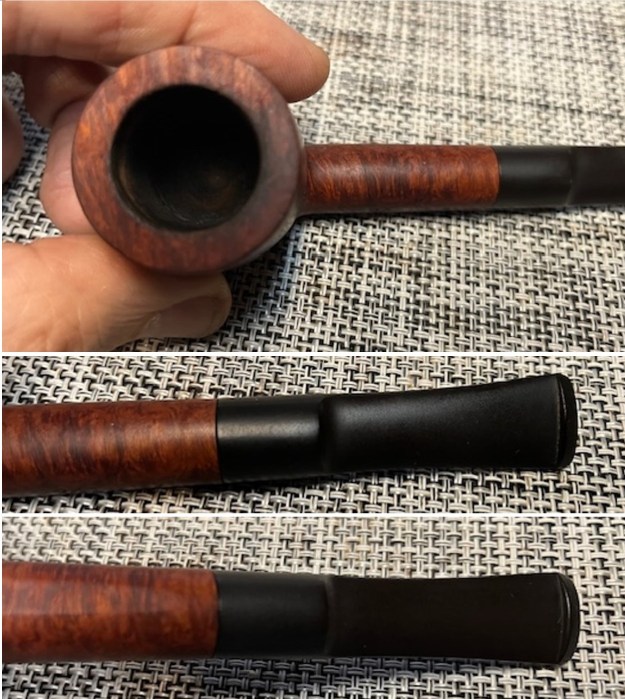
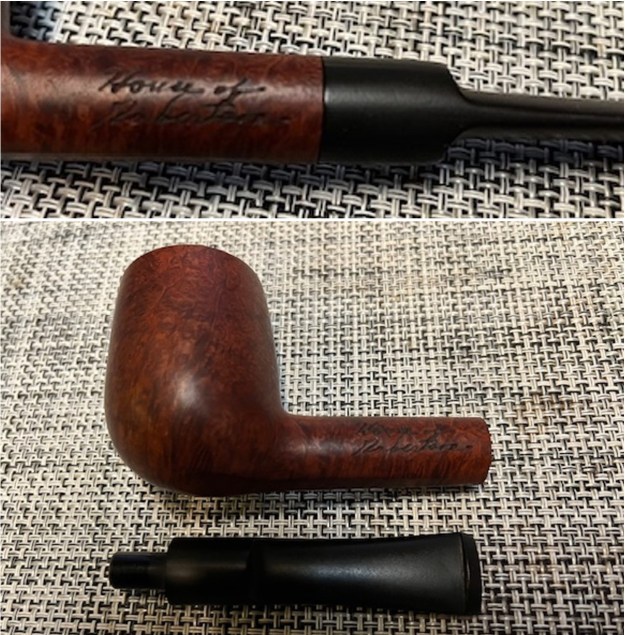
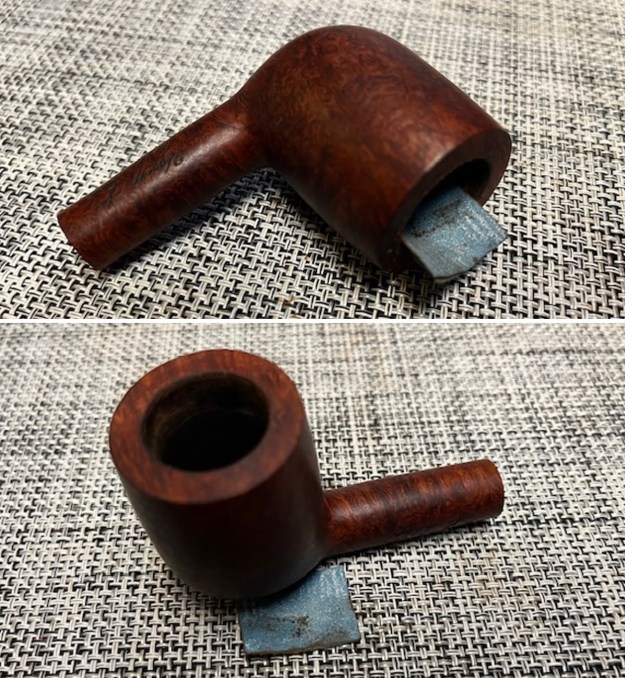
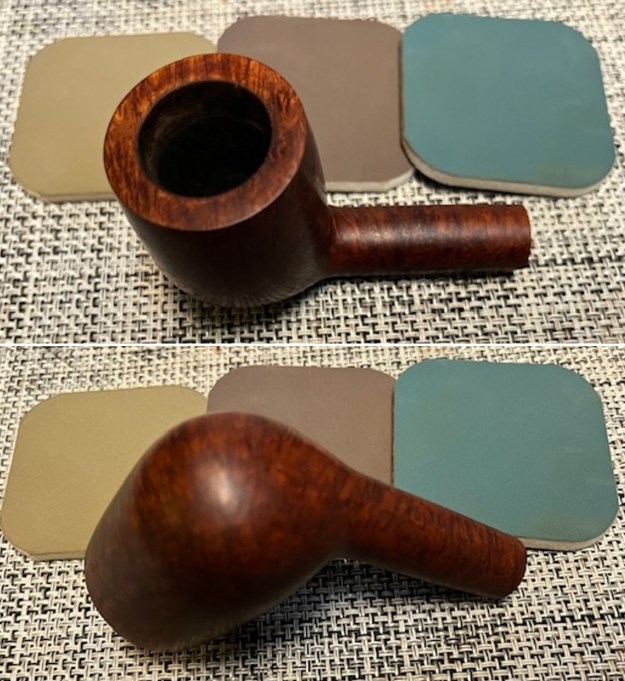
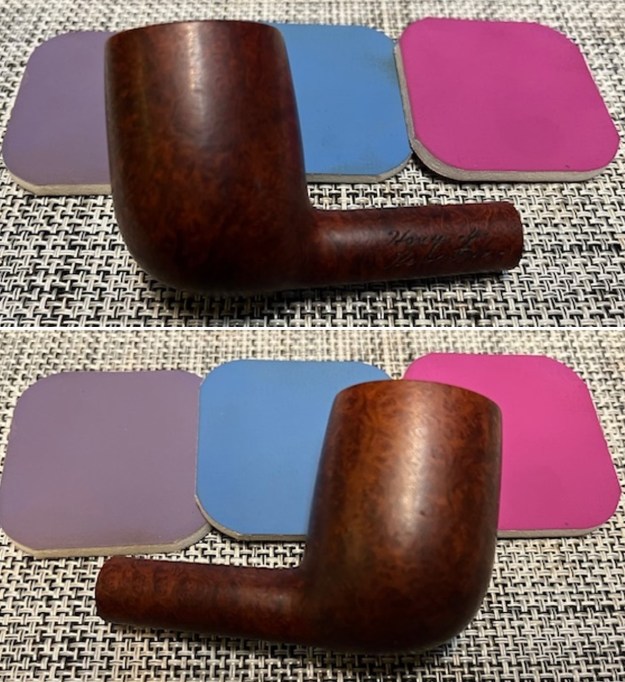
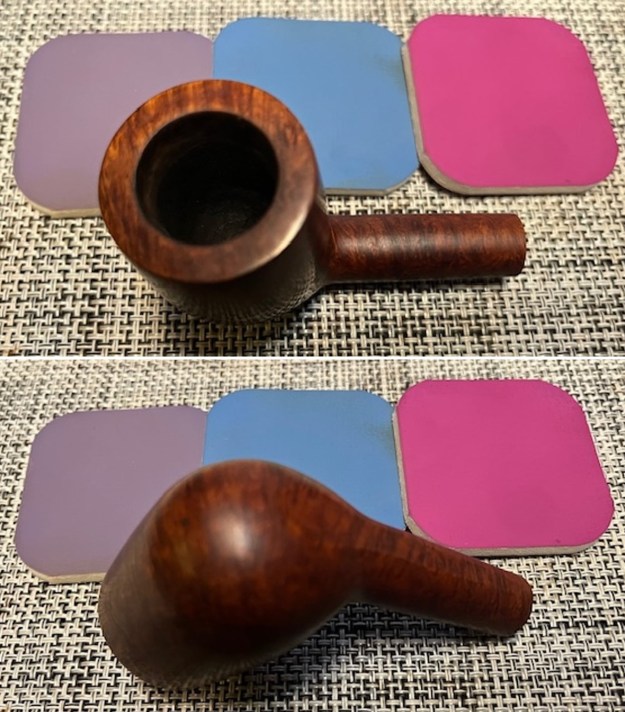
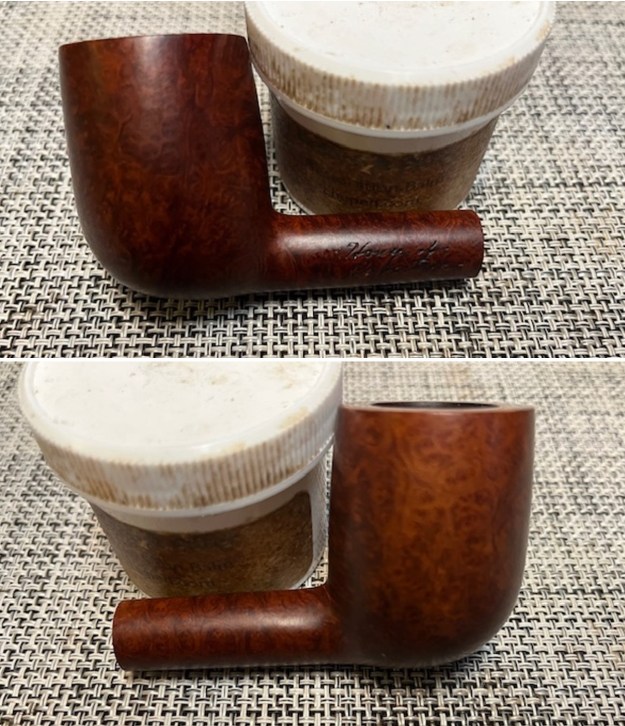
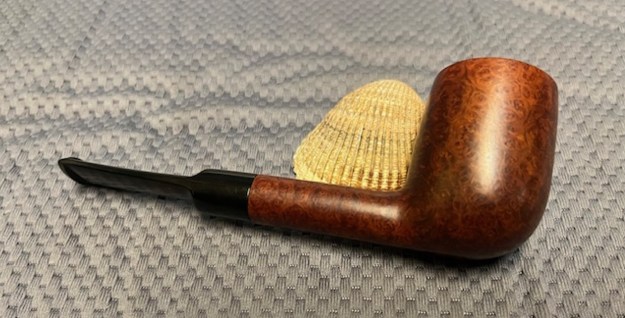
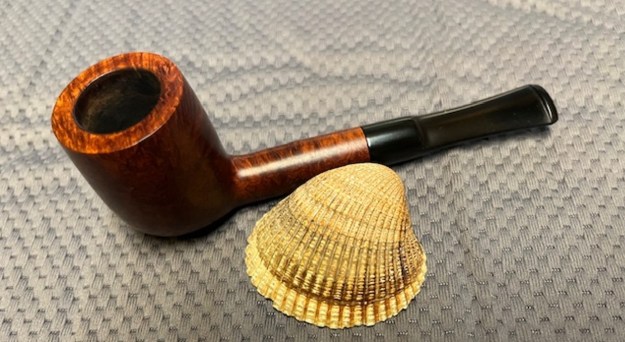
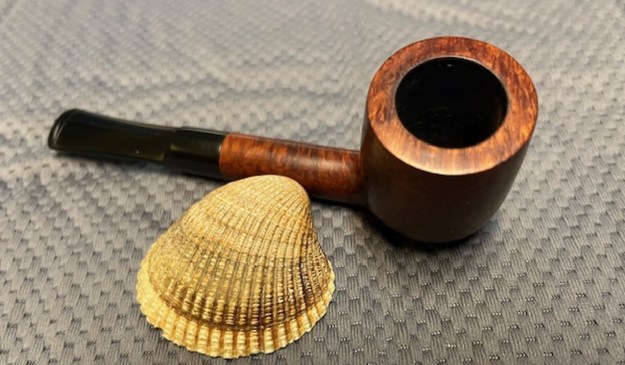
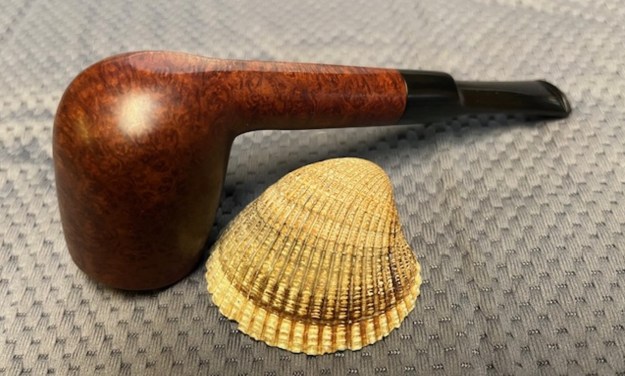
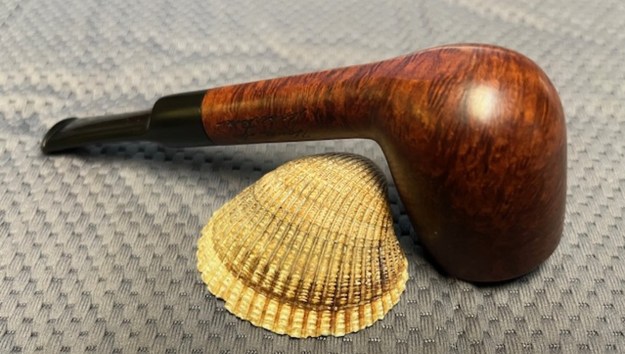
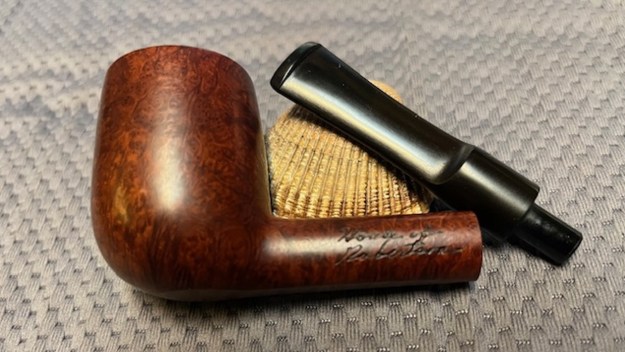
It is a Bent Billiard that has a square shank and saddle stem. It is smooth with some rustications on the front and sides. It also seems to have a bit of plateau on the right side of the heel of the bowl and Thayne used plateau area to inform the rustications. The name House of Robertson is hand-etched with an engraving tool on the left side of the shank and the name Dick Egelston is etched on the right side. The bowl is thickly caked with some lava overflow on the rim top. The outer and inner edges of the rim have some nicks from the pipe being knocked out against a hard surface. The pipe was dirty but underneath all of the grime it appears to be in excellent condition. It is definitely an interesting pipe that has a story connected to the names. It should clean up very well. The fit of the stem to the shank was good. The vulcanite saddle stem was oxidized and calcified. There are light tooth marks and chatter on both sides near the button. Jeff took photos of the pipe before he started the cleanup.Jeff took photos show the condition of the bowl and the stem. The photos of the bowl and rim show the cake in the bowl and the lava overflowing onto the rim top. The rustication on the top of the bowl and the inner and outer edge of the rim are pretty well covered in lava. It was hard to know what the inner edge and top really looked like until we cleaned it. The silver cosmetic band was heavily oxidized and almost black. The taper stem was oxidized, calcified and had a lot of tooth marks and chatter both sides ahead of the button and on the button itself. The photos of the sides and heel of the bowl show the condition of the finish but more importantly the grain under the grime. The combination of rustication patches, plateau and smooth finishes give the bowl a unique look. The next photos show the etched or engraved with a name of House of Robertson on the left side of the shank and the name, Dick Egelston on the right side of shank. Some people find these personalized pipes a bit of a pain but to me it always creates a lot of speculation about the man (in this case anyway) who bought the pipe. I am including the information that I found when I received my first of the House of Robertson Pipes. I found a link on Pipedia that gave me the only information I could find on the brand. I include that in total as it is interesting to read.
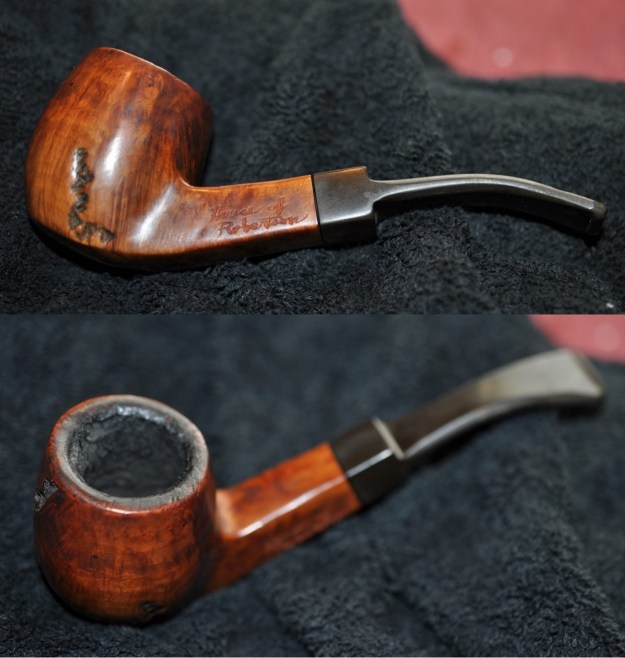
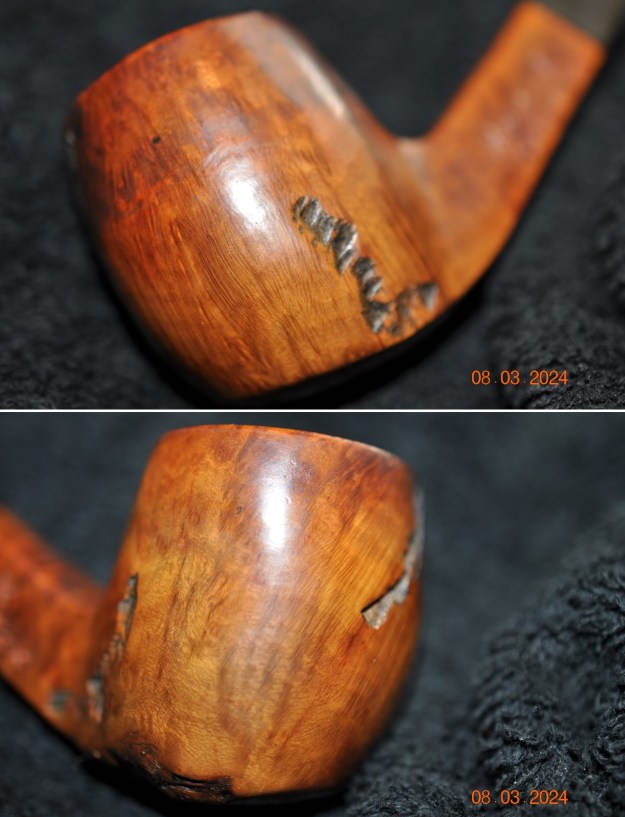
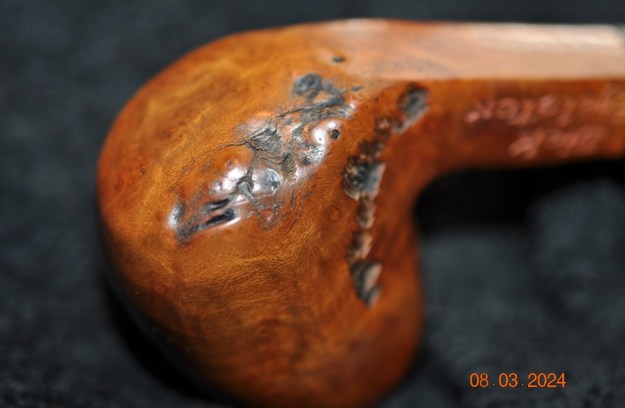
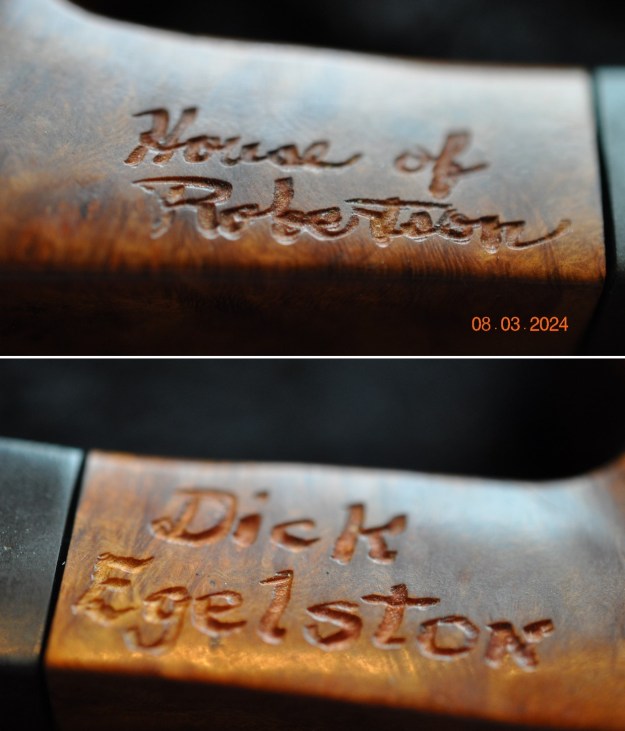
“House of Robertson” was in business for many years, but alas, closed their doors in 1999. They were located in Boise, Idaho. They are noted for making rather large and interesting pipes. Thayne Robertson was a Master Mason, AF & AM, and started the shop about 1947 and his son Jon started working there in 1970 when he finished college, along with Thayne’s daughter. Thayne and his son started making the big pipes at that time, and made them together until 1987 when Thayne passed away. Jon kept the store and his sister moved on to other things. The House of Robertson appears to have closed around 1999 (https://pipedia.org/wiki/Robertson).

Since then I have worked on a lot of House of Robertson pipes and have been able to track down more information. I am including a link to a Catalogue that I picked up on eBay. Click on the link and have a look at this interesting book of information on the brand and the pipe maker himself (https://rebornpipes.com/2022/12/11/a-house-of-robertson-catalogue-filled-with-great-examples-of-thayne-robertsons-work/).

I am also including a biography of Thayne Robertson that I found on Facebook from a fellow in Boise, Idaho. It is an interesting glimpse into the mind of the pipe maker. Make sure to take time to read it (https://rebornpipes.com/2021/10/31/house-of-robertson-pipes-boise-pipe-carver-thayne-robertson/).

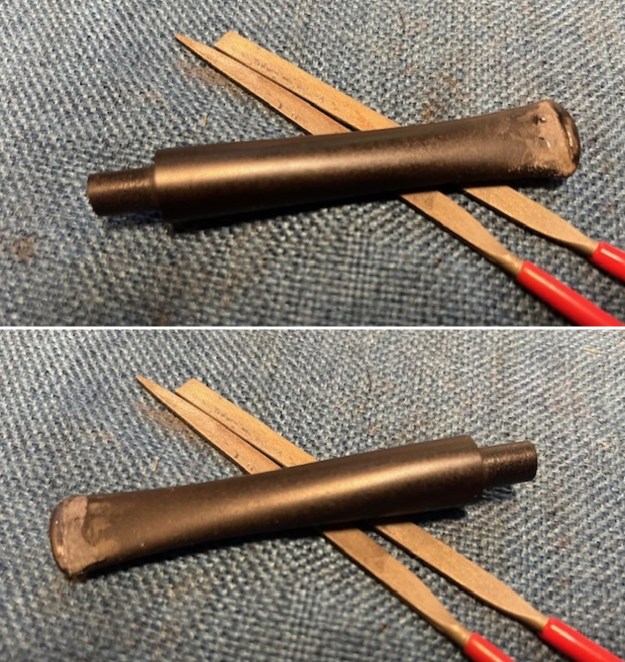
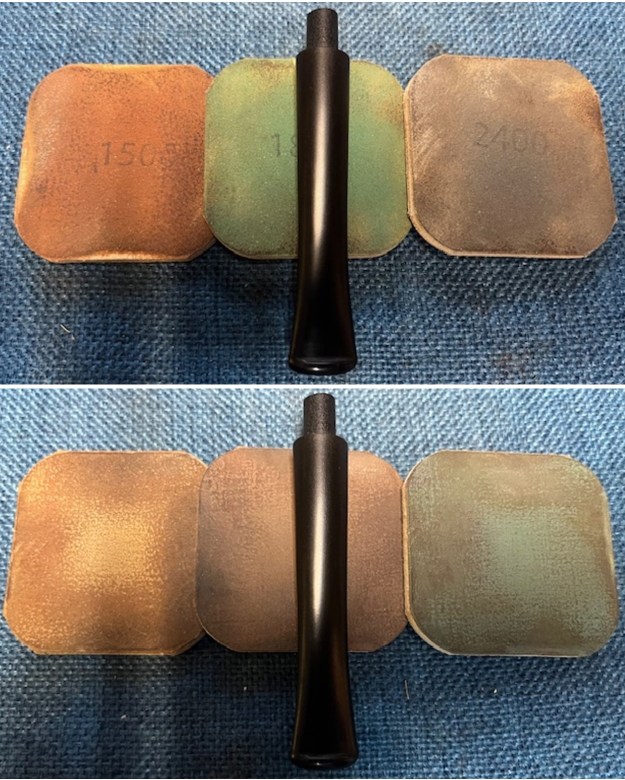
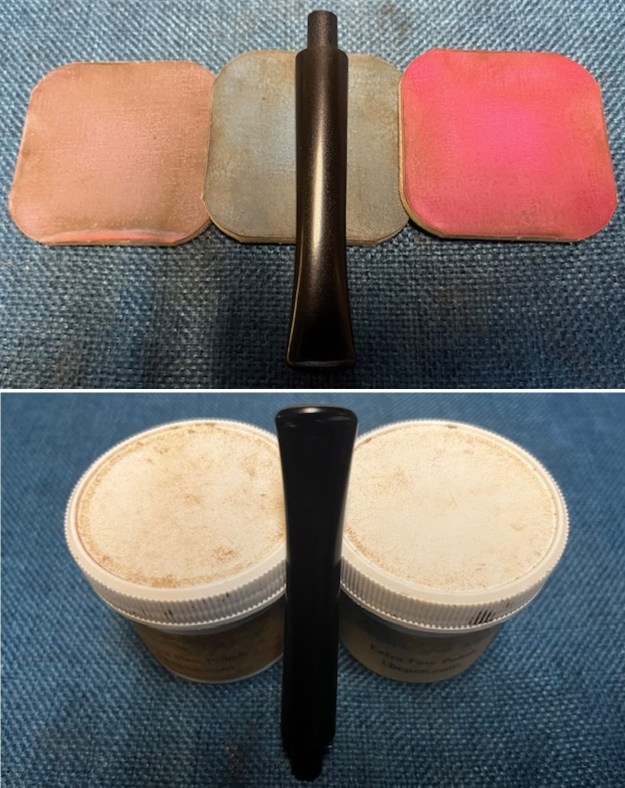
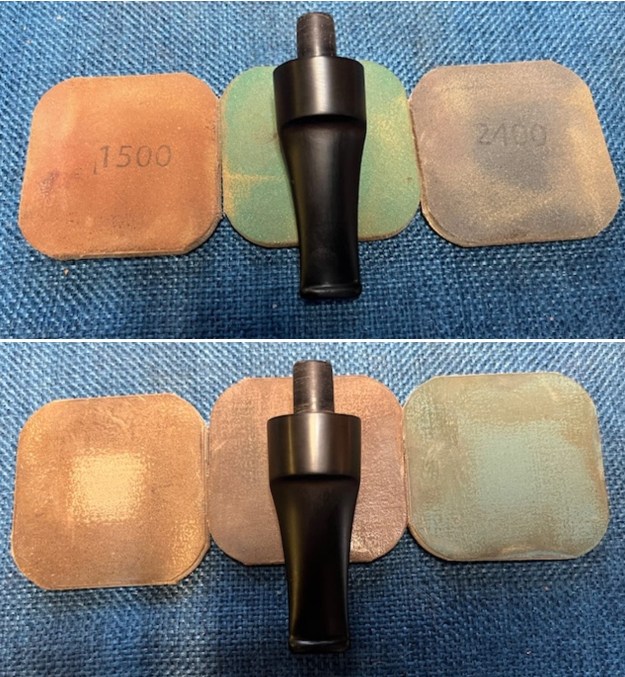
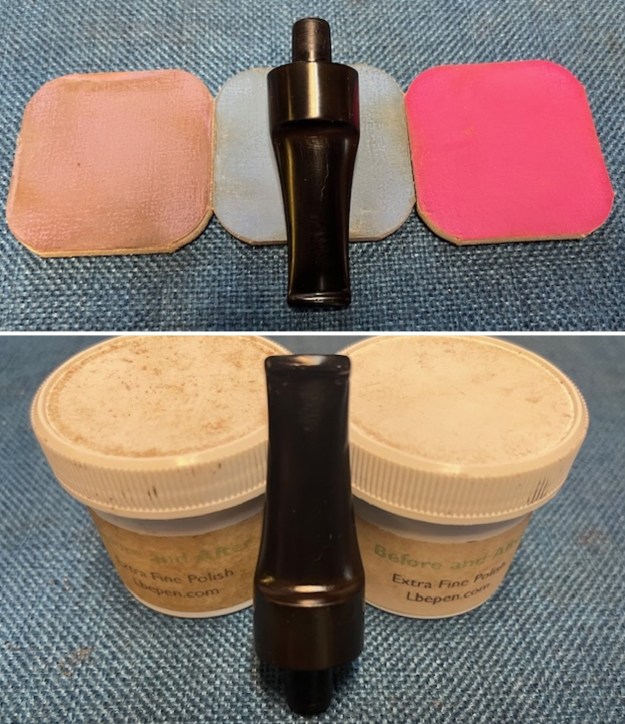
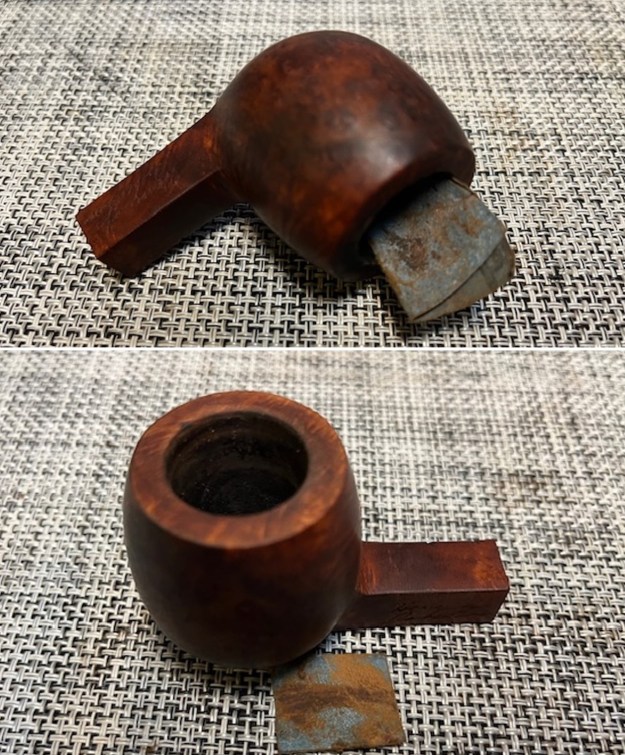
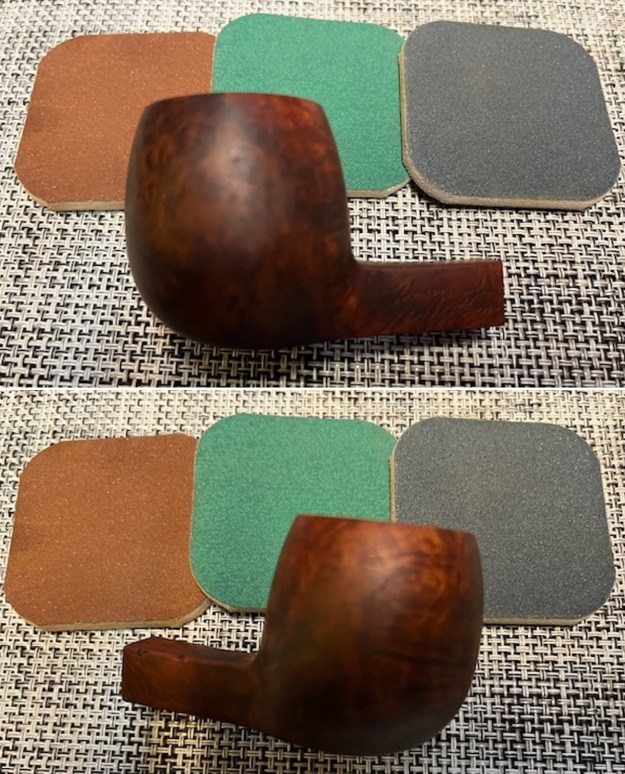
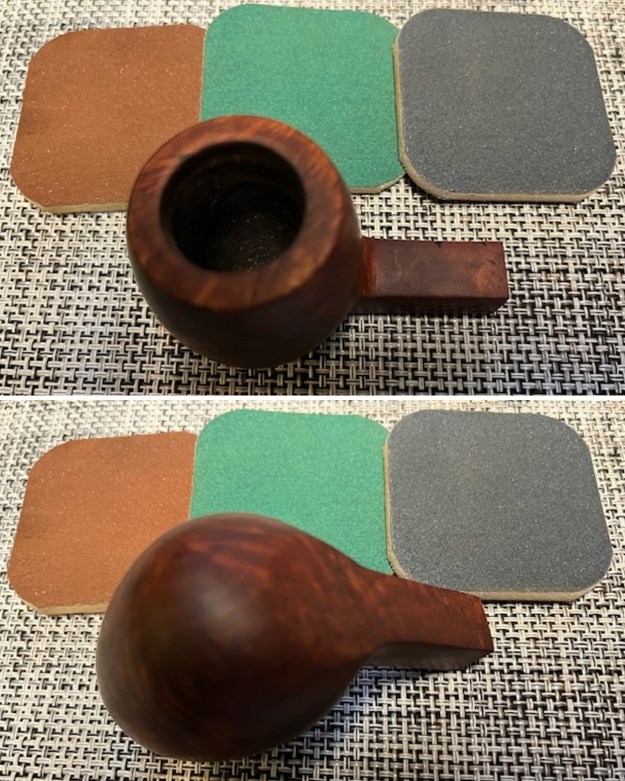
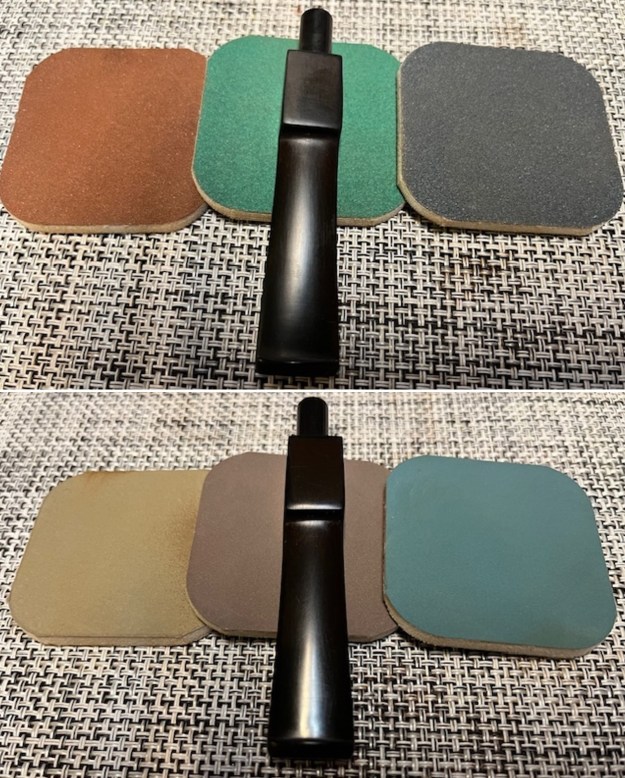
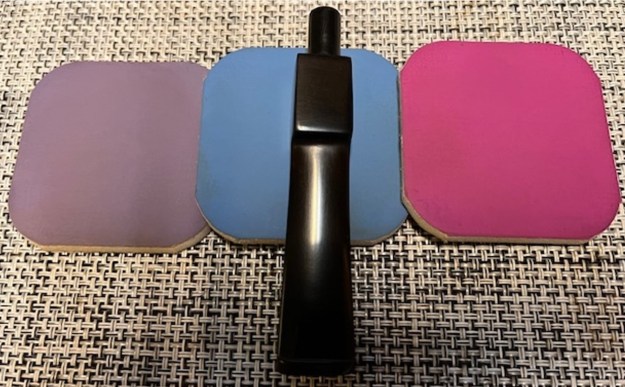
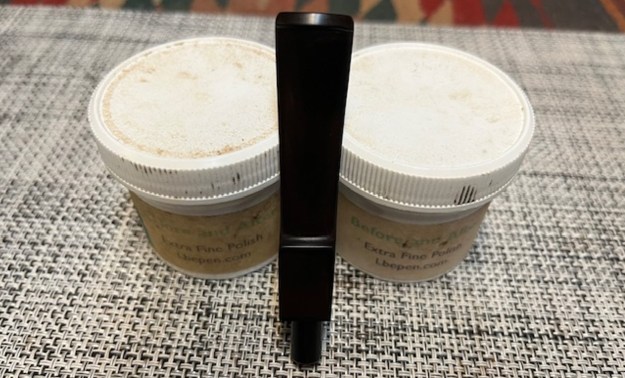
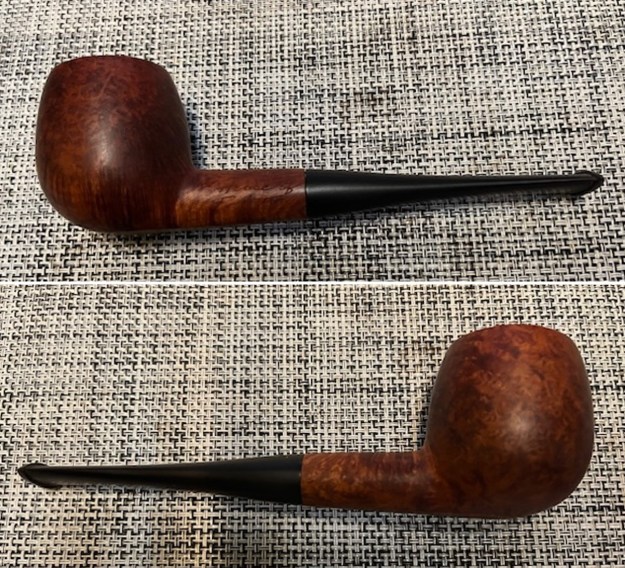
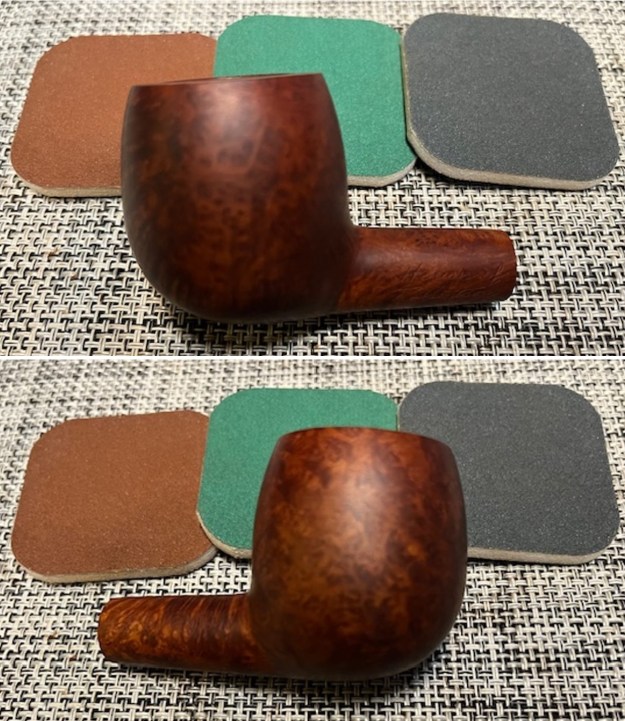
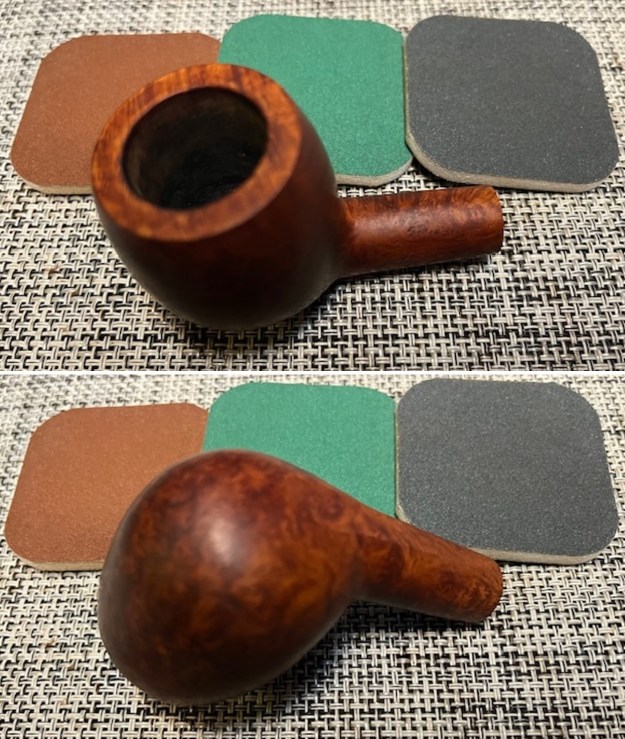
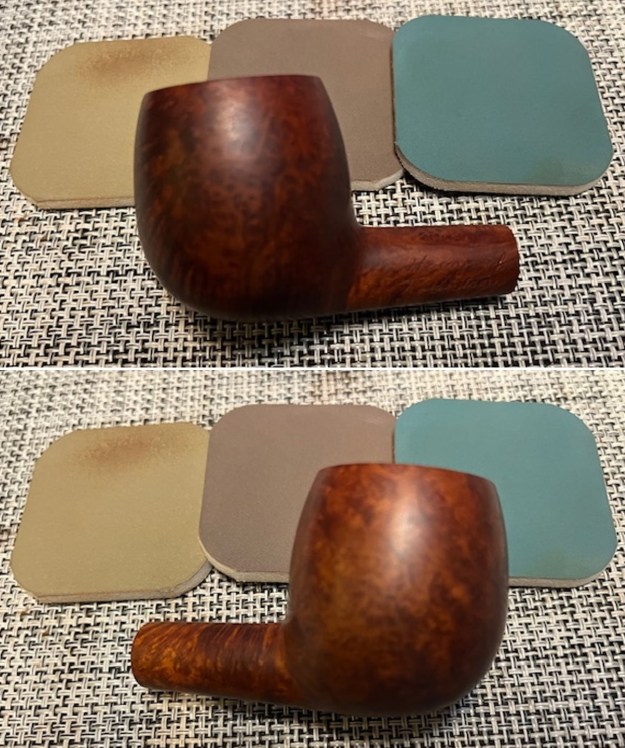
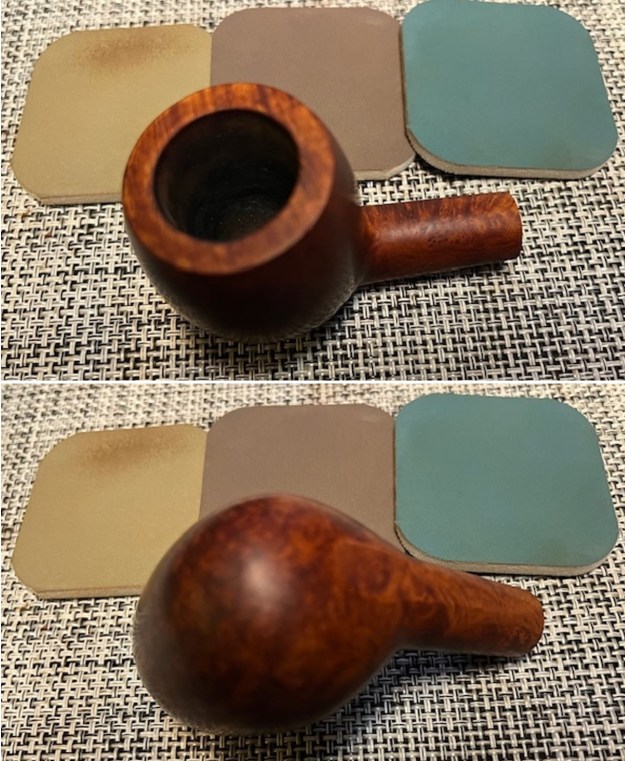
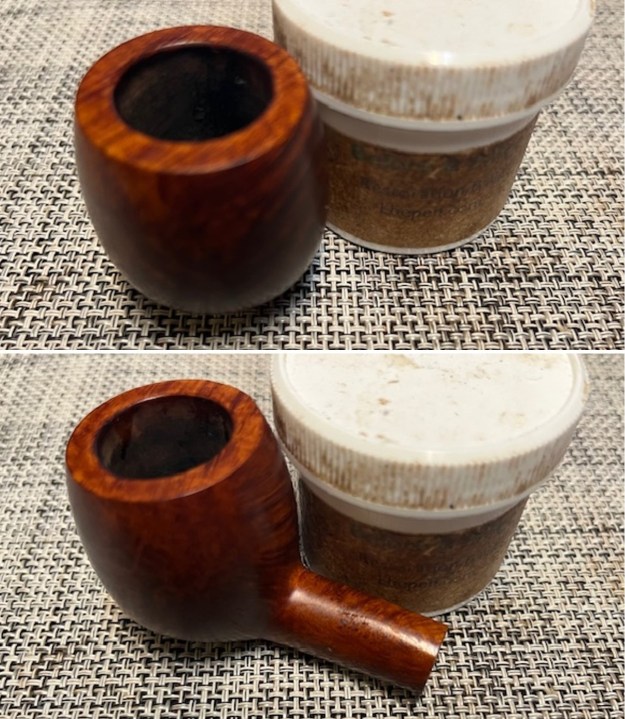
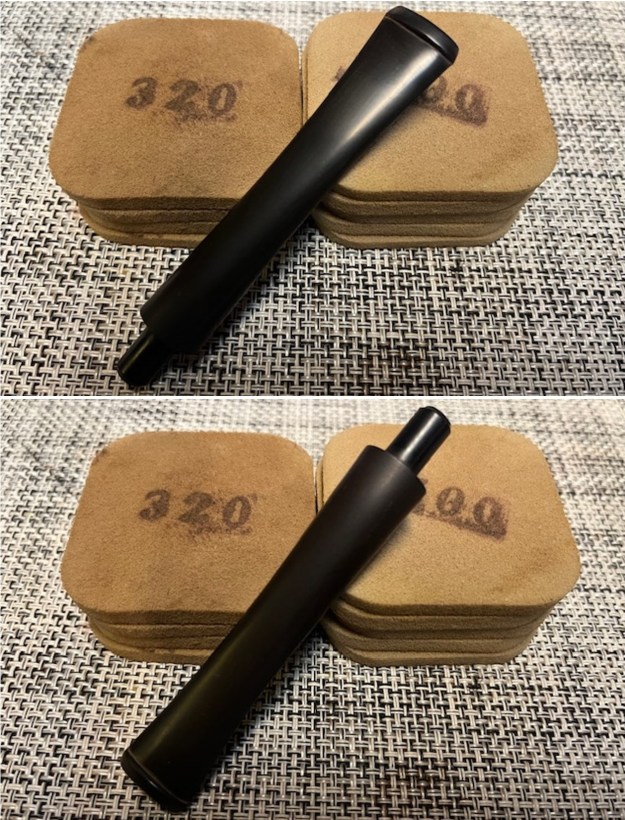
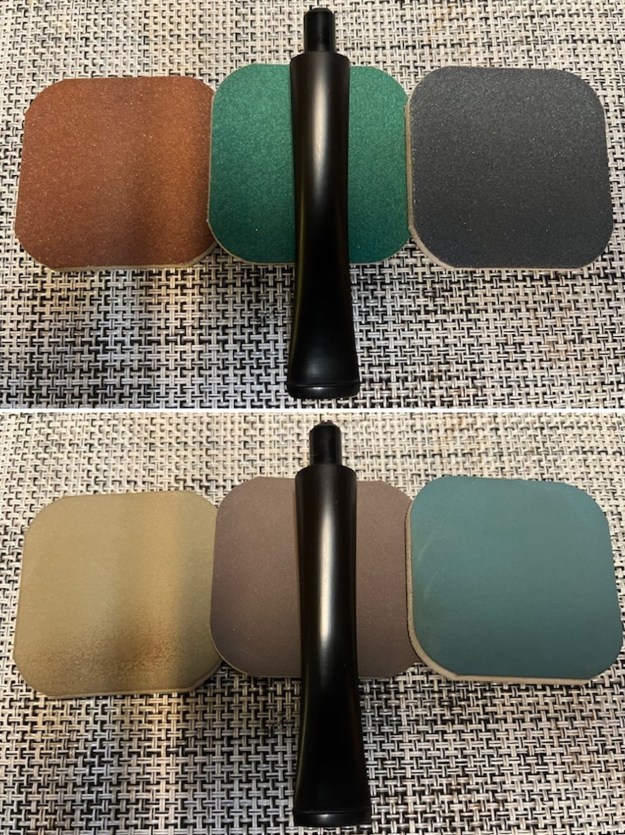
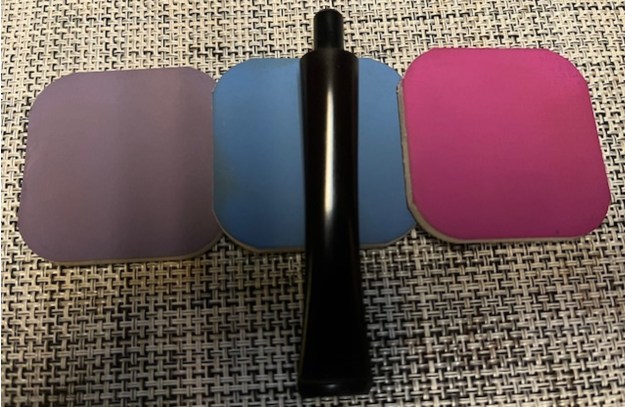
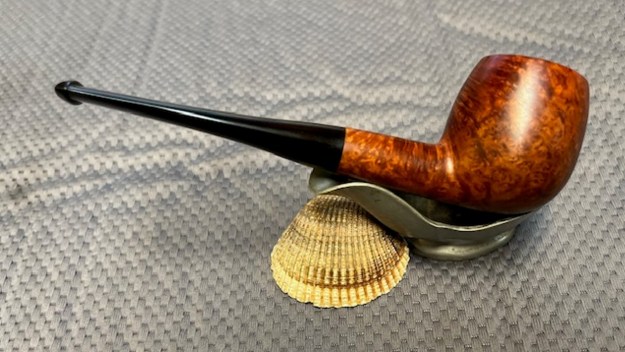
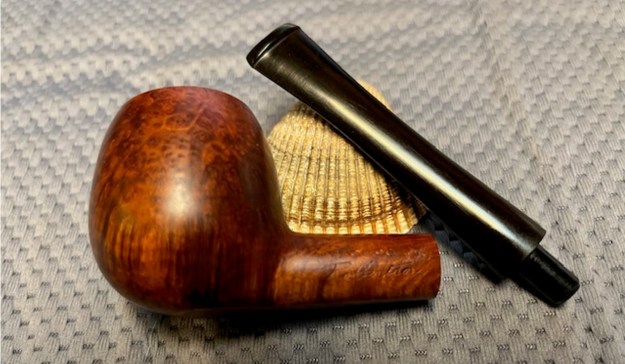
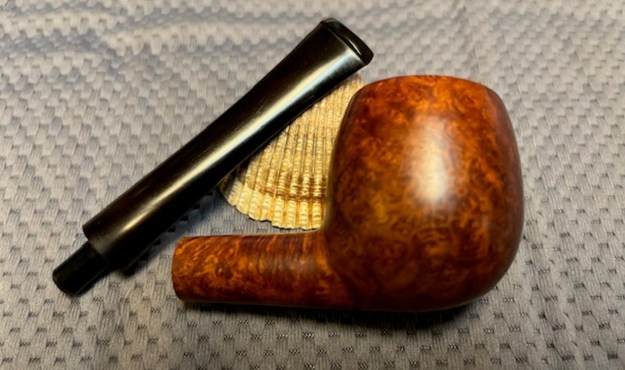
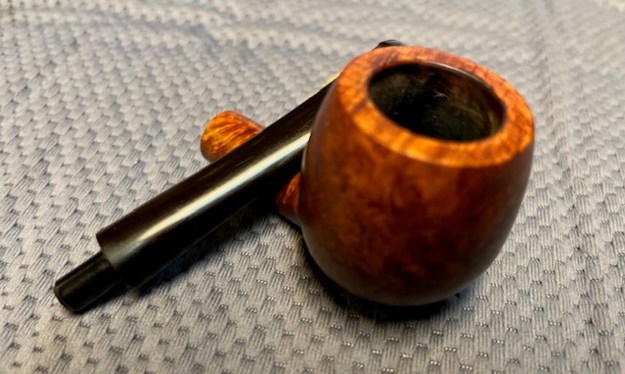
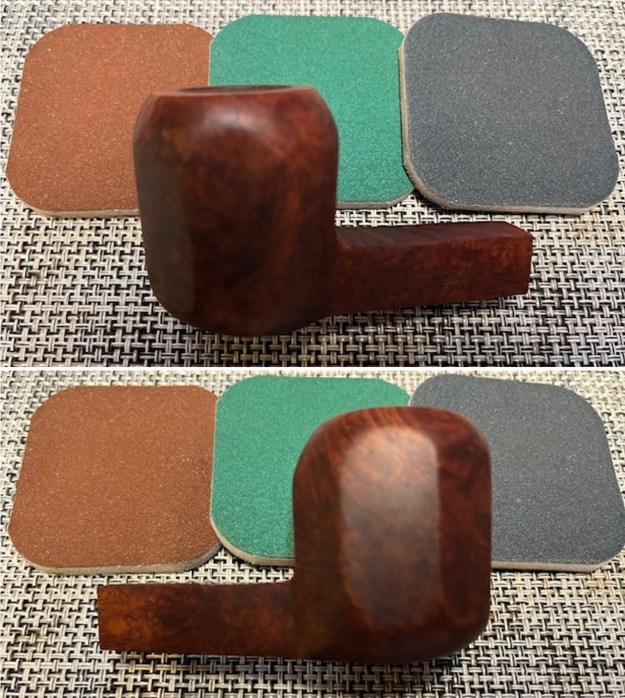
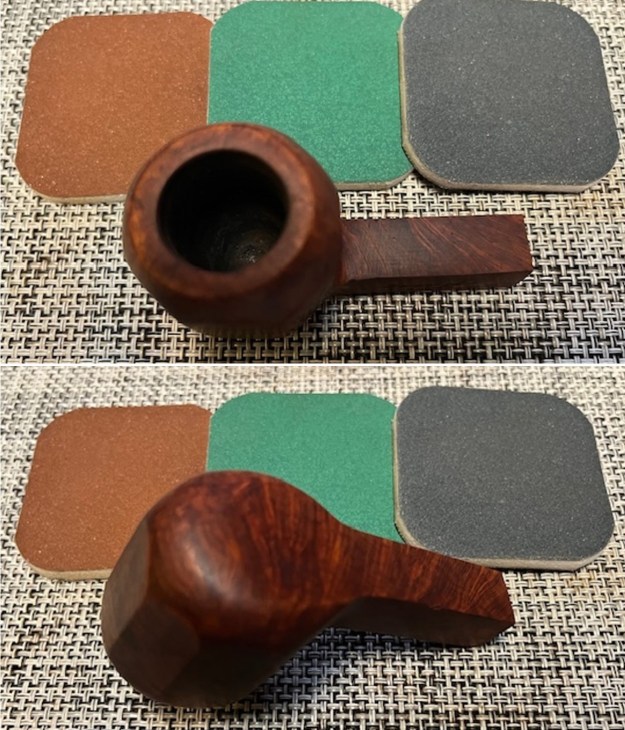
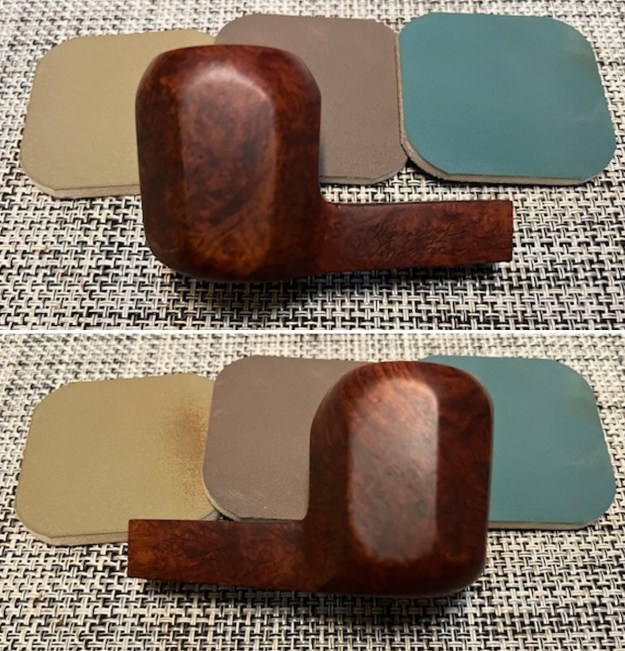
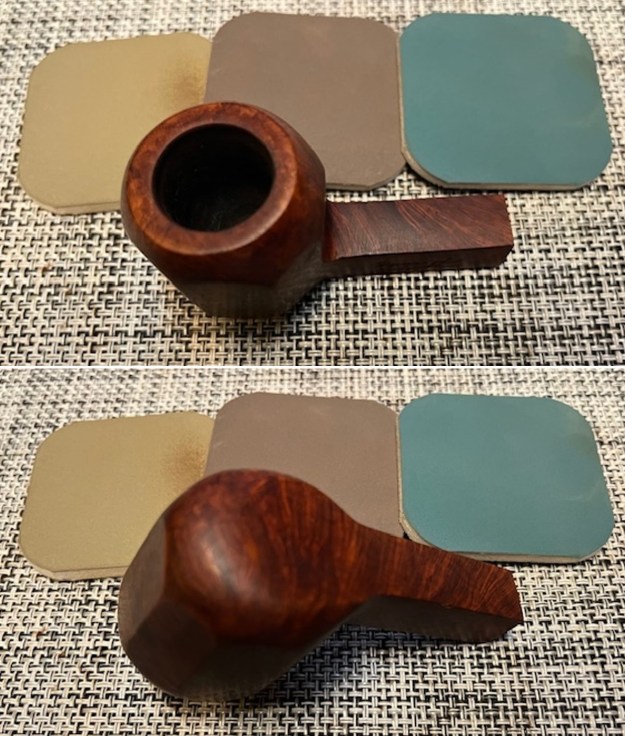
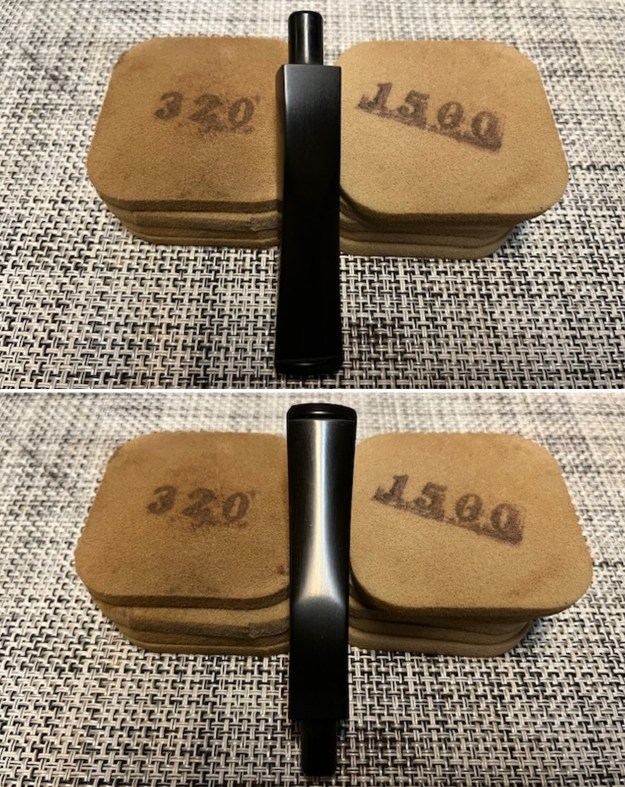
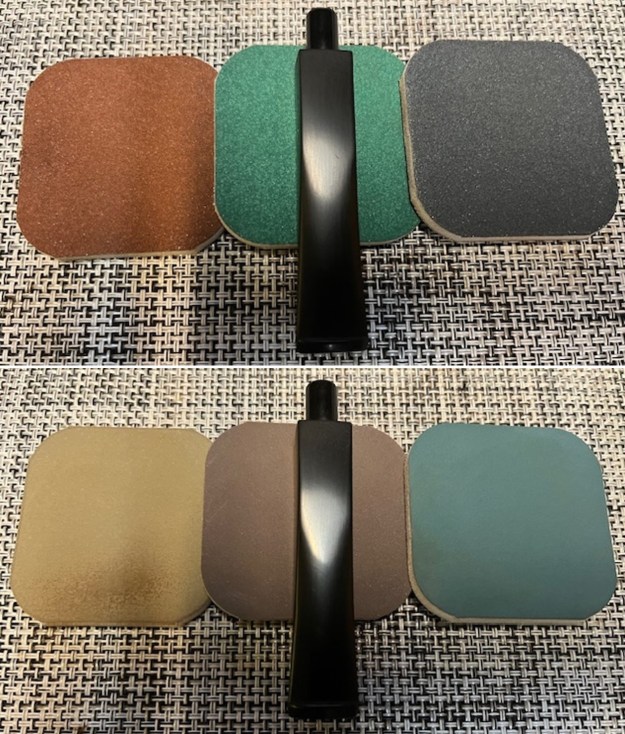
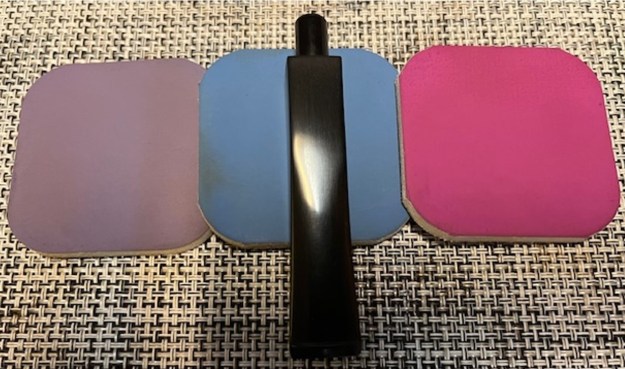
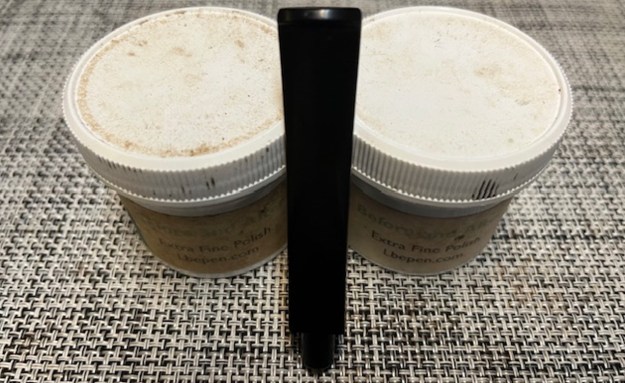
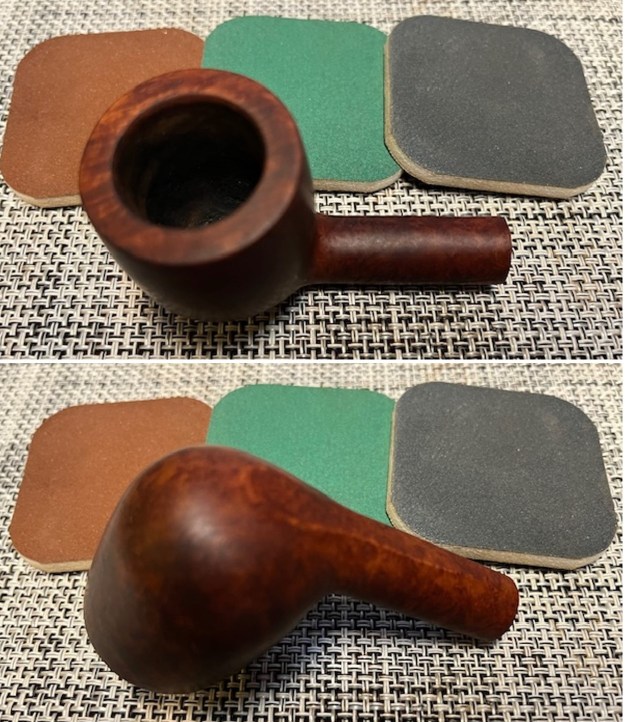
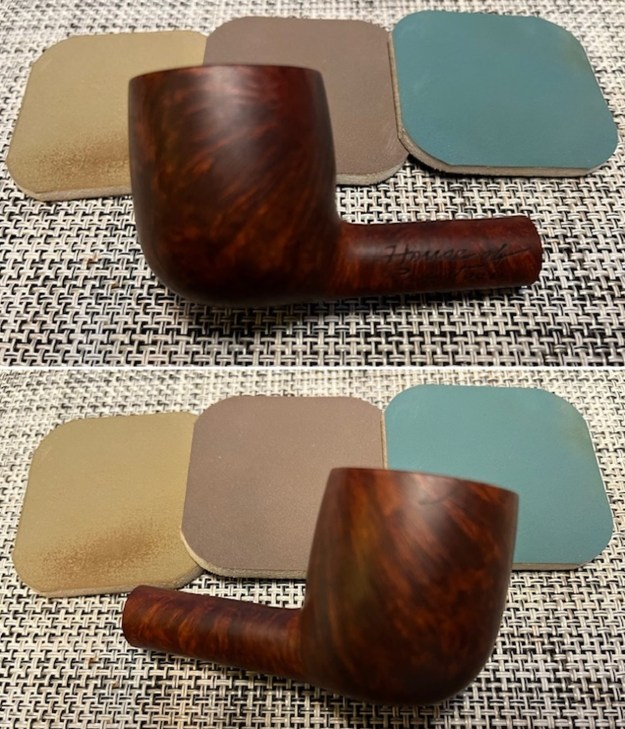
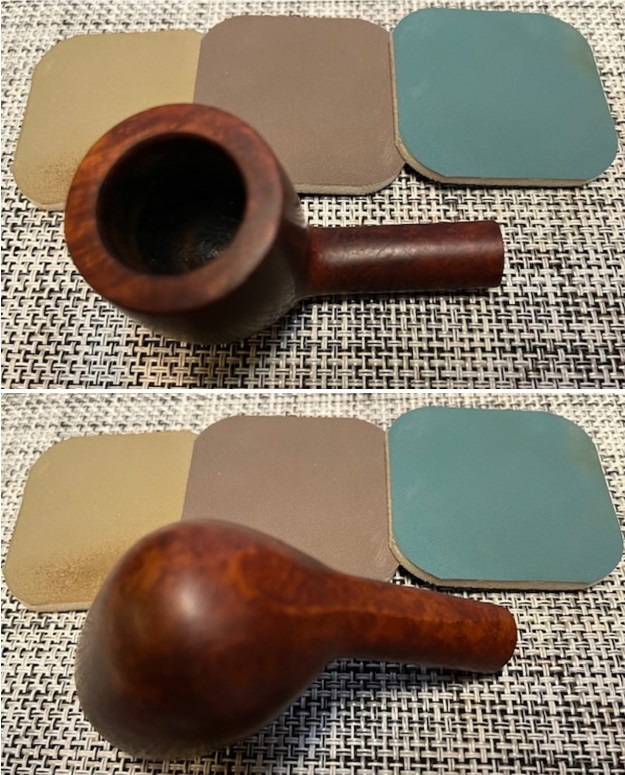
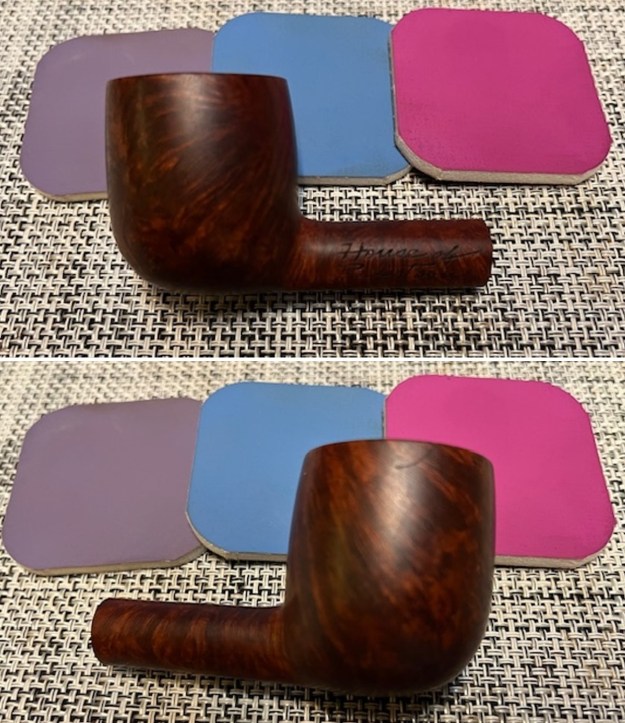
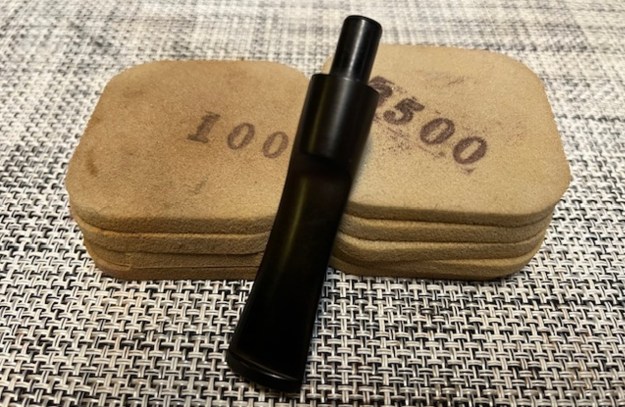
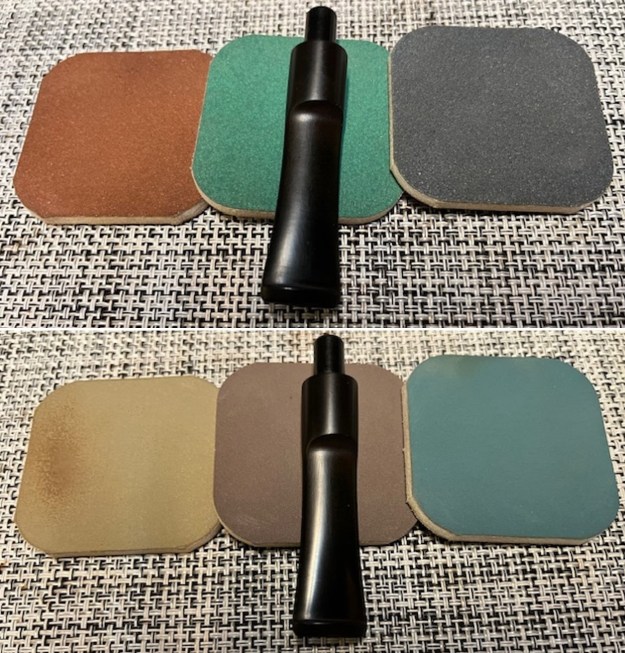
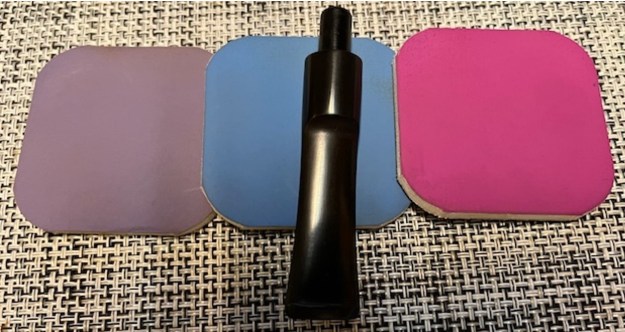
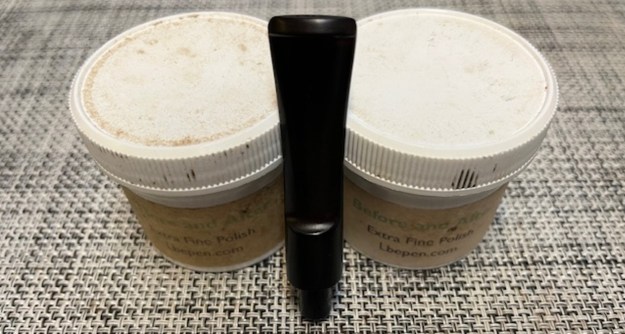
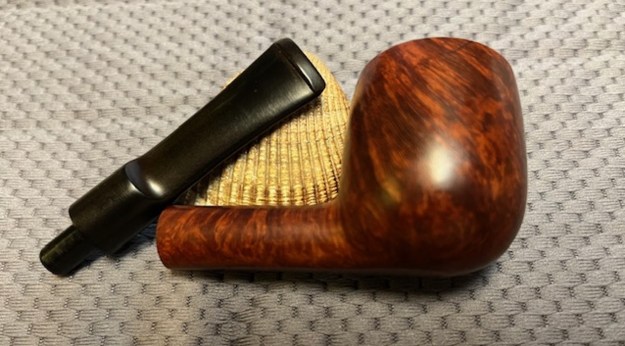
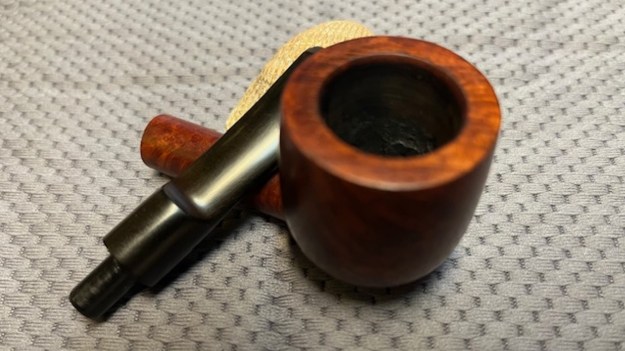
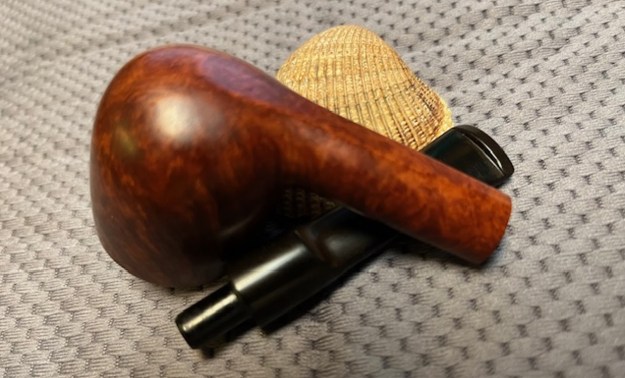
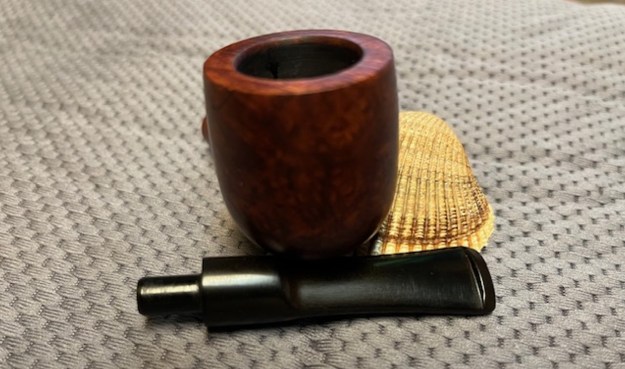
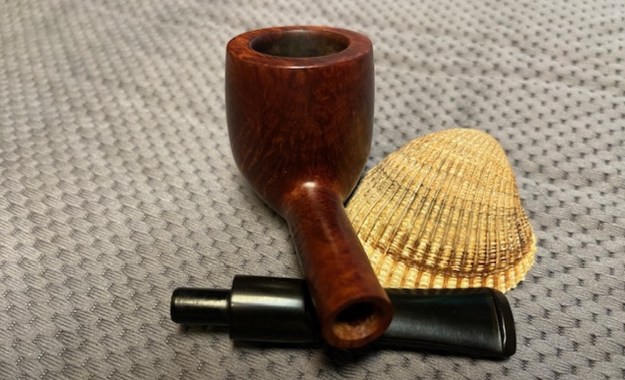
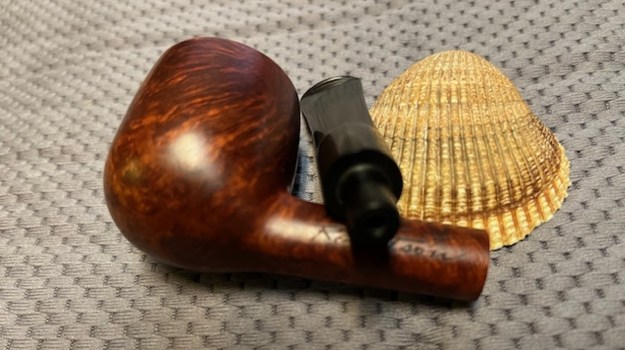
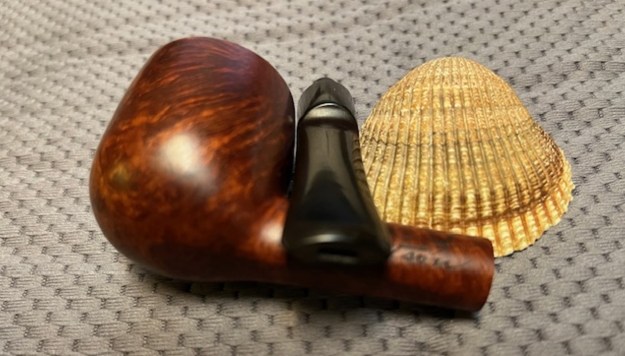
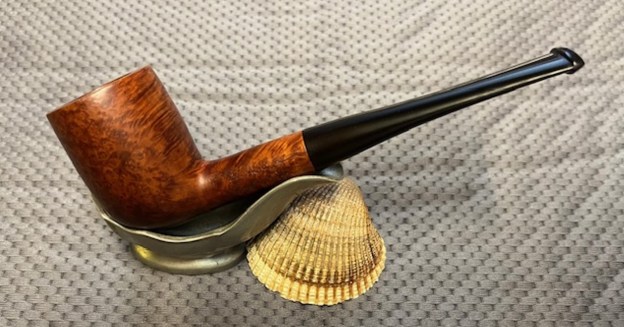
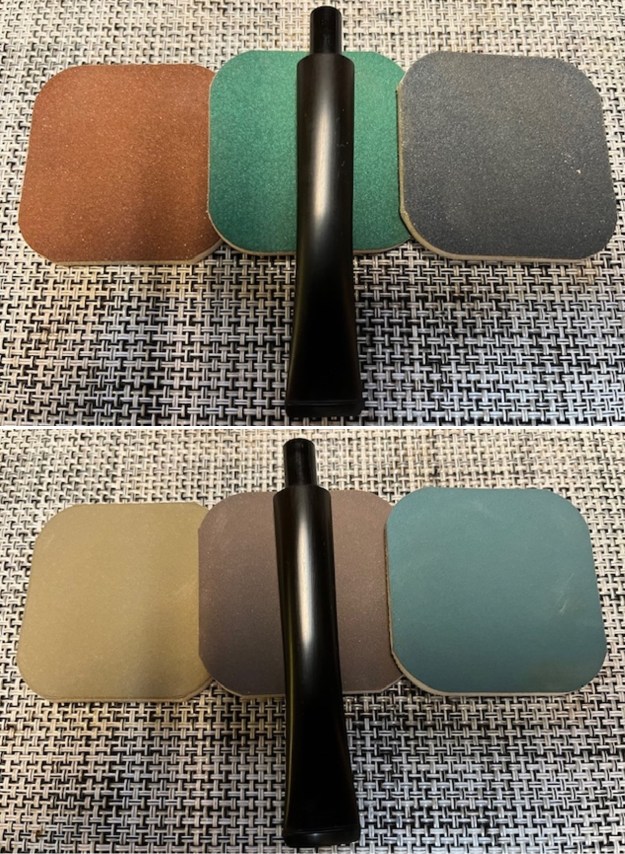
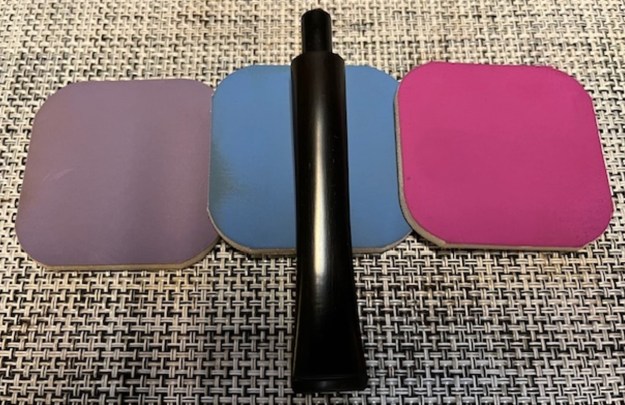
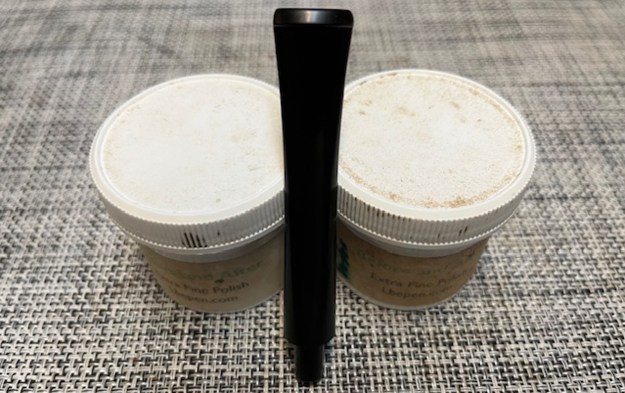
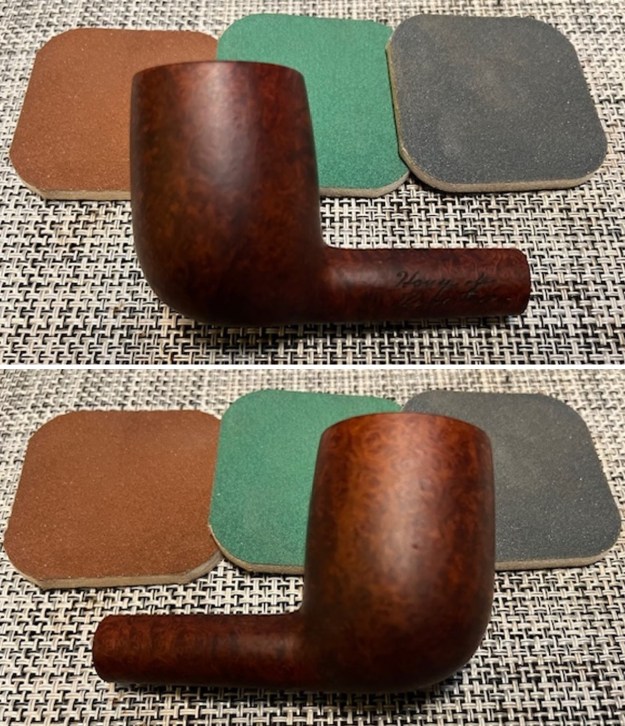
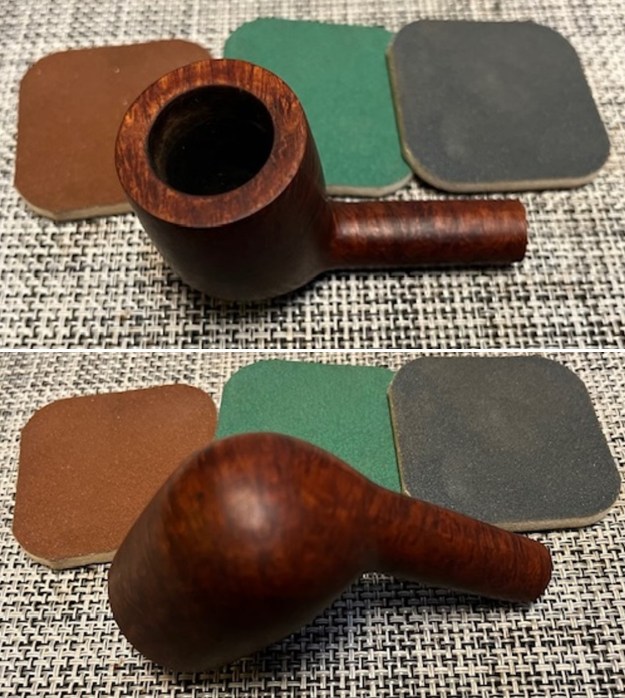
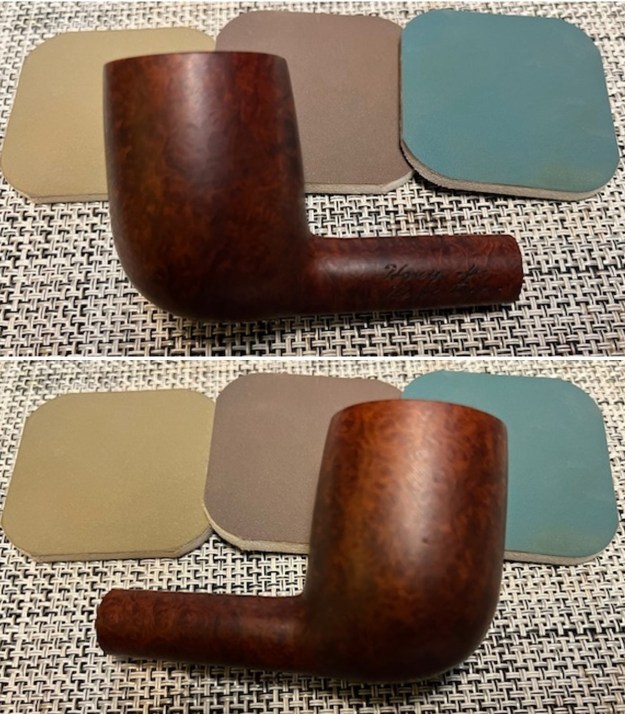
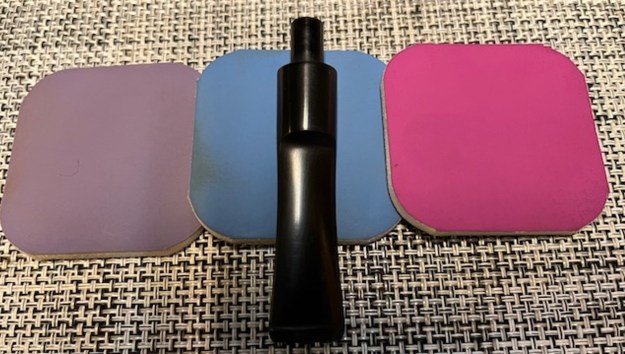
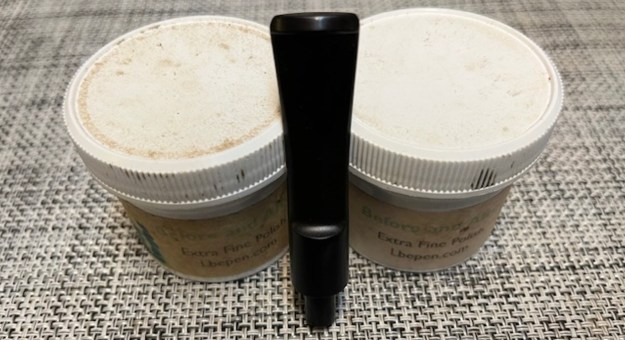
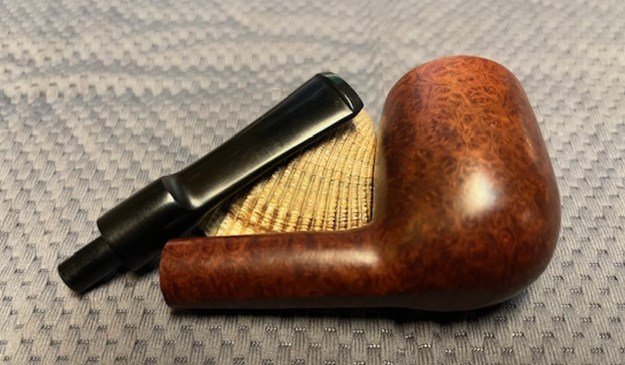
Now it was time to work on the pipe itself. When it gets to Vancouver it my turn to contribute to its restoration. Jeff did a great job cleaning the pipe on the inside and outside. He reamed the bowl with a PipNet pipe reamer and cleaned up the remnants with the Savinelli Fitsall Pipe Knife. He scrubbed out the mortise and the airway in the shank and stem with alcohol, shank brushes, cotton swabs and pipe cleaners. He scrubbed the exterior of the bowl with a tooth brush and Murphy’s Oil Soap to remove the dust in the rusticated spots on the bowl and shank as well as the smooth portions. He rinsed it under running water. He dried it off with a soft cloth. Once the dust and debris were removed the finish was dull but appeared to be in excellent condition. He soaked the stem in Briarville’s Pipe Stem Deoxidizer and rinsed it under warm water to remove the deoxidizer gel solution. I took photos of the pipe to show its condition before I started my work on it. I took a photo of the bowl and rim top to show how well it had cleaned up. There is some darkening and nicks on the top and inner edge of the rim. The stem tooth marks and chatter are visible. The ones on the topside of the stem are worse than those on the underside.I took a photo of the engraving on the underside of the shank. It is clear and reads as noted above. I also took the stem off the pipe and took a photo of the parts to give a sense of the proportions of the pipe. It is a beauty. I started my work on the pipe by dealing with the darkening on the inner edge of the rim and the darkening on the rim top with a folded piece of 220 grit sandpaper. It looked much better when finished. I worked over the rim top with 320-3500 grit sanding pads to smooth and polish the damaged areas and blend them into the surface of the briar. Once I finished it looked much better and the colour of the rim matched the rest of the bowl very well. I polished the bowl and shank with micromesh sanding pads – dry sanding with 1500-12000 grit pads. I wiped the bowl down with a damp cloth after each pad. The bowl and rim took on a beautiful shine. I would not need to stain the rim top as the match was very good. I worked Before & After Restoration Balm deep into the finish to clean, enliven and protect the briar. I rubbed it into the briar with my fingers and a shoe brush to work it into the finish then set it aside to dry for 10-15 minutes. I wiped it off with a soft cloth. I buffed the bowl with a cotton cloth to polish it. It really began to have a deep shine in the briar. The rim top is looking much better. I took some photos of the bowl at this point to mark the progress in the restoration. The rustication on the bowl stands out with interesting lines moving across the sides of the bowl and the heel. I set the bowl aside and turned my attention to the stem. I “painted” the vulcanite surface with the flame of a lighter – constantly moving the flame over the tooth marks and was able to lift many of them. I filled in those that remained with black rubberized CA glue. Once it cured I flattened the repairs with needle files. I sanded the stem with 220 grit sandpaper to blend the repairs into the surface. I sanded the stem with the 2 inch square 320-3500 grit sanding pads. I wiped down the stem after each sanding pad with Obsidian Oil. I polished out the scratch marks left behind by the sandpaper. The stem looked very good.I polished the vulcanite stem with micromesh sanding pads – dry sanding it with 1500-12000 grit pads. I wiped the stem down after each sanding pad with Obsidian Oil and set it aside to dry. I polished it further with Before & After Pipe Polish – using both the Fine and Extra Fine Polishes. I gave it a rubdown with Obsidian Oil one last time and set it aside. I put the House of Robertson Bent Billiard with a square shank and saddle stem back together and worked the pipe over on the buffing wheel using Blue Diamond to lightly polish the stem. I buffed the bowl and stem to raise the gloss on the briar and the vulcanite. I gave the pipe multiple coats of carnauba wax. I buffed the entire pipe with a clean buffing pad to raise the shine. I hand buffed it with a microfiber cloth to deepen the shine. Dick Egelton’s finished the House of Robertson Bent Billiard is shown in the photos below. The medium brown stains on the rusticated spots, plateau and smooth finishl works well with the rich black of the vulcanite stem. The dimensions of the pipe are: Length: 6 inches, Height: 2 inches, Outside Diameter: 1 ½ inches, Diameter of the chamber: ¾ inches. The weight of the pipe is 42 grams/1.45 ounces. This is an interesting piece of briar with a great back story. I really like how the briar and the vulcanite work well together. This one will soon be on the rebornpipes store, in the American Pipemakers Section. If you are interested in adding a House of Robertson to your collection this may well be the one for you. Thanks for walking with me through the restoration process.
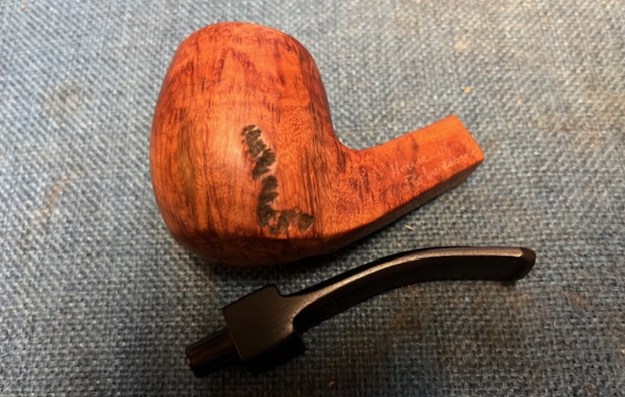
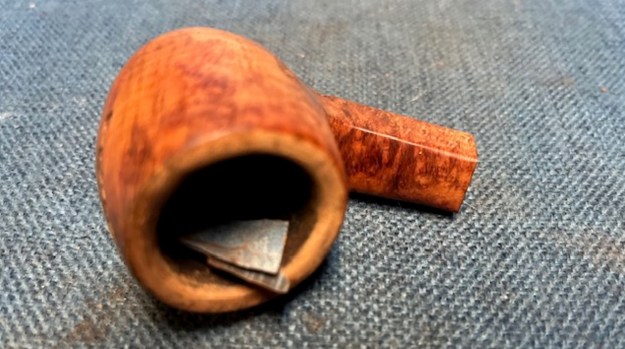
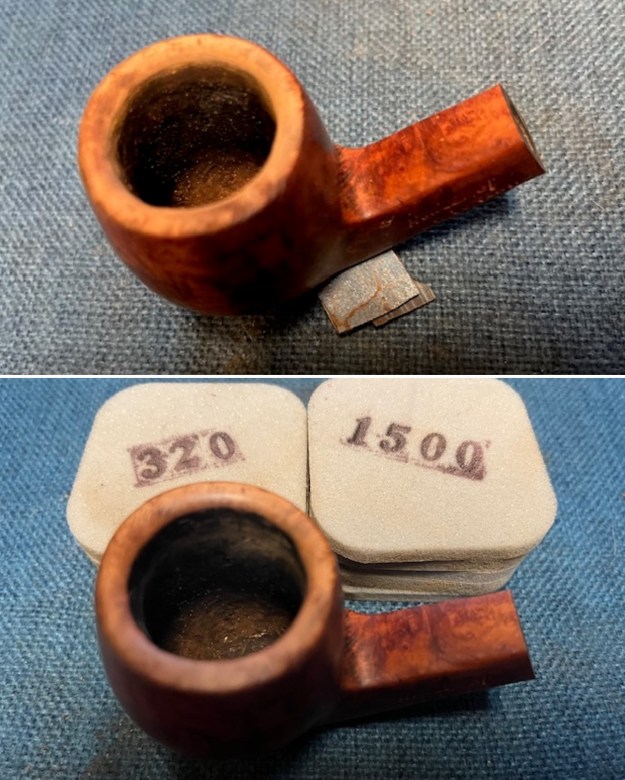
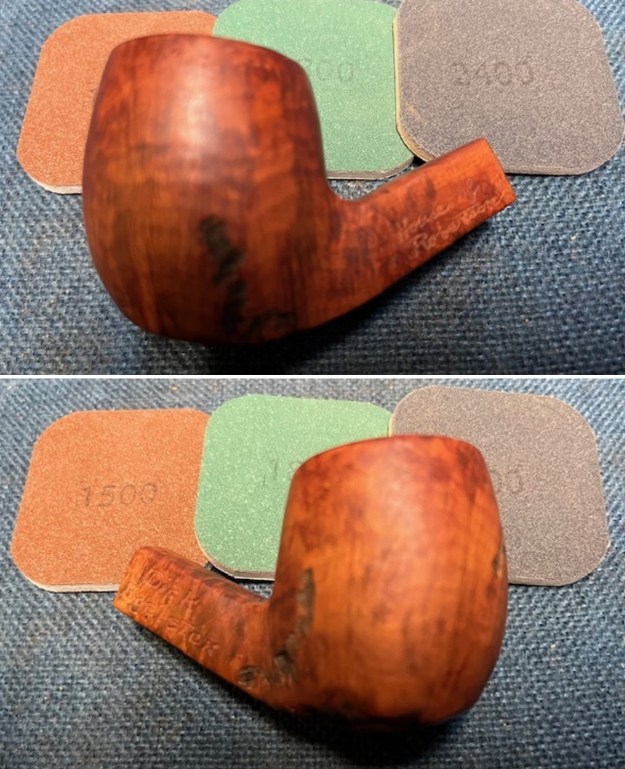
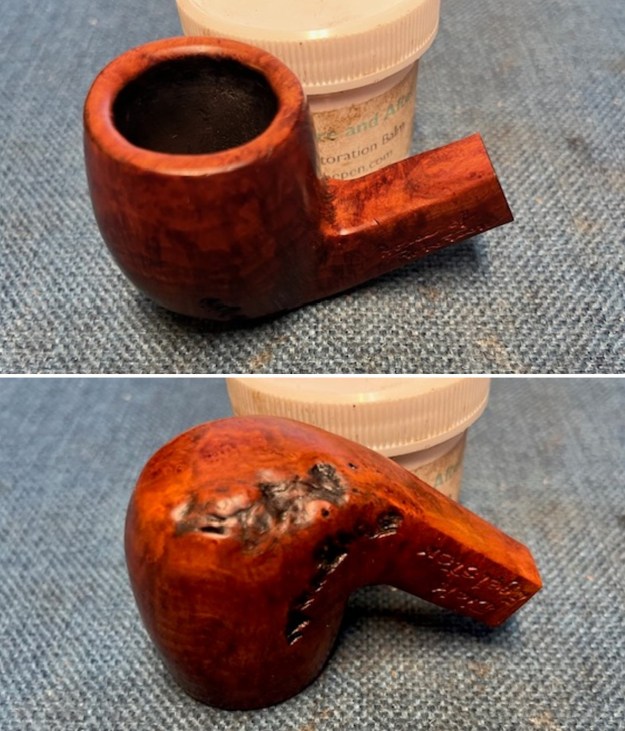
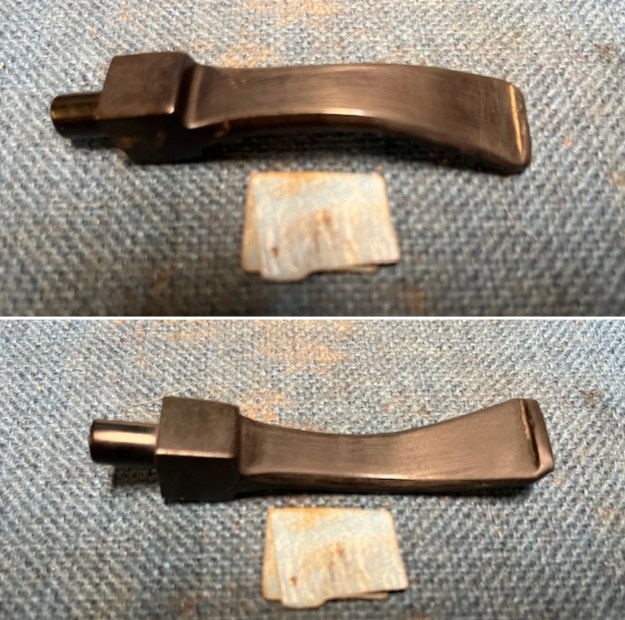
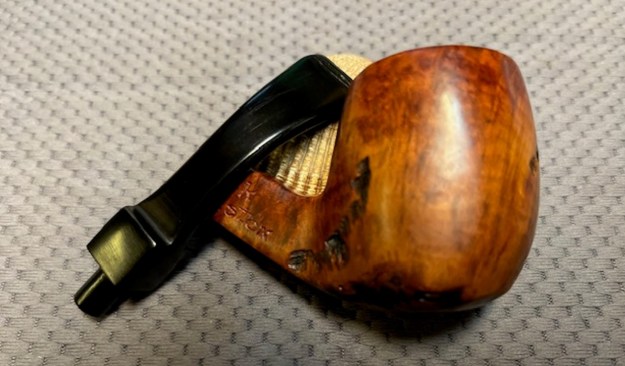
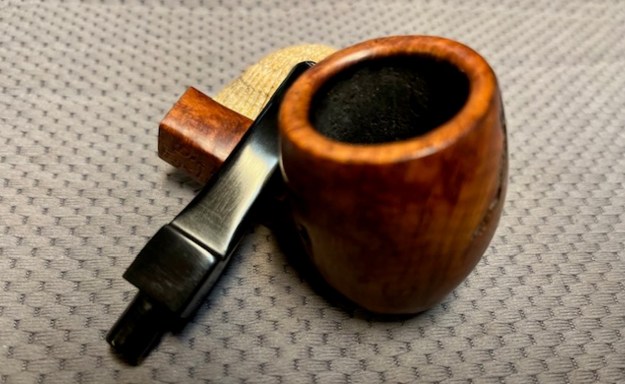
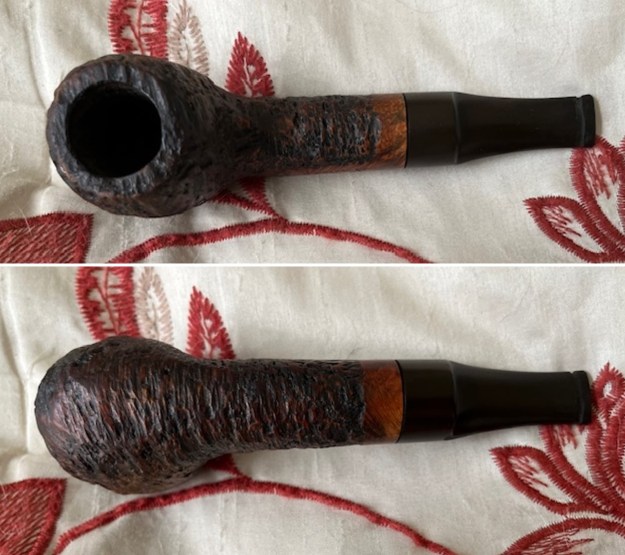
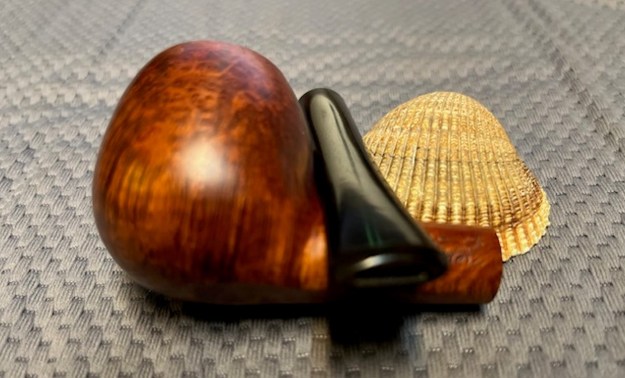
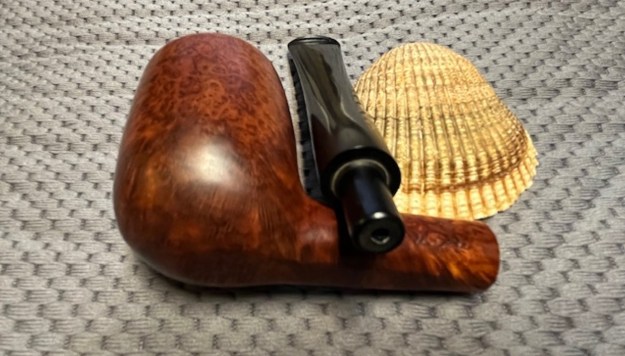
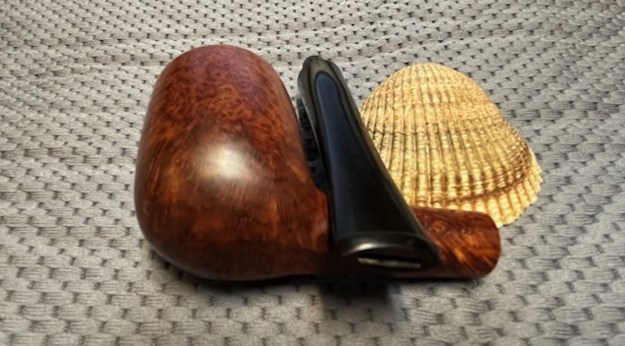
Is this what you would call an English Walnut Shape on this House of Robertson Pipe?


By Steve Laug

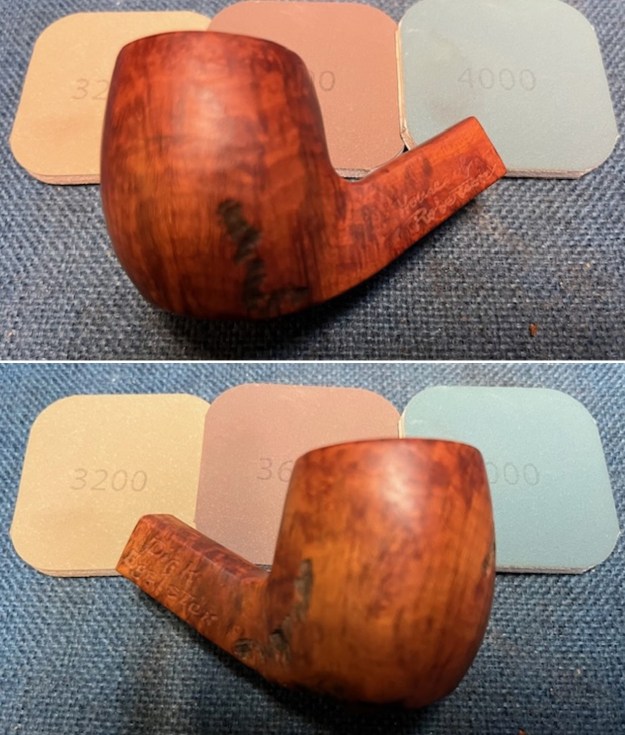
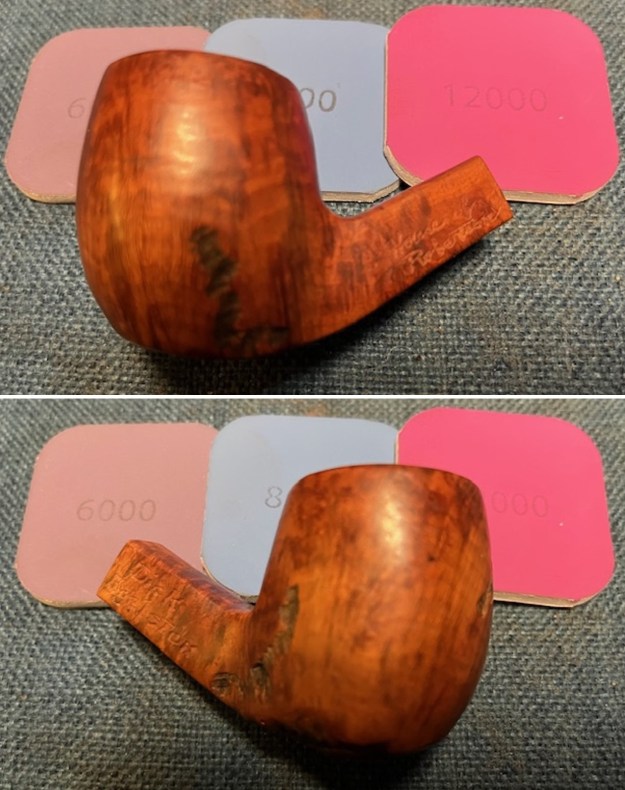
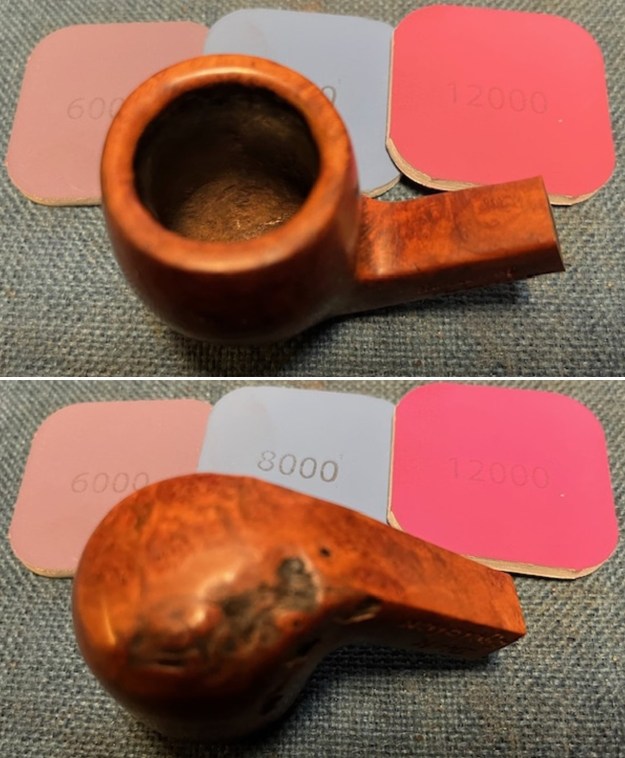
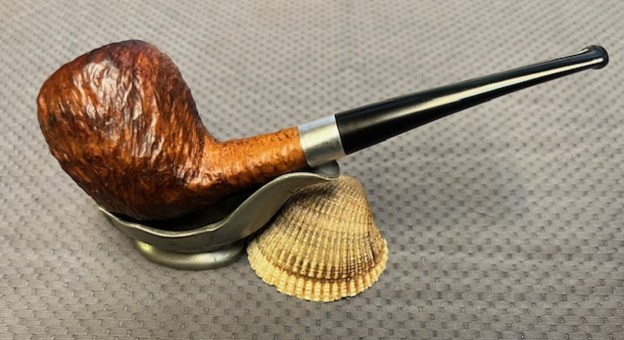
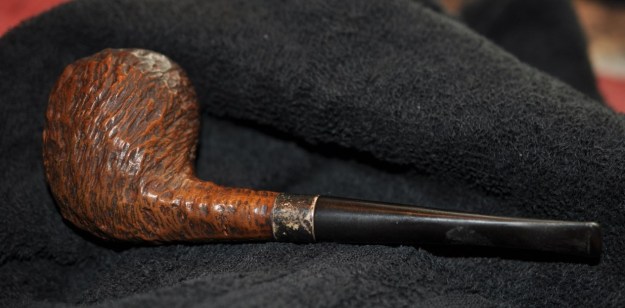
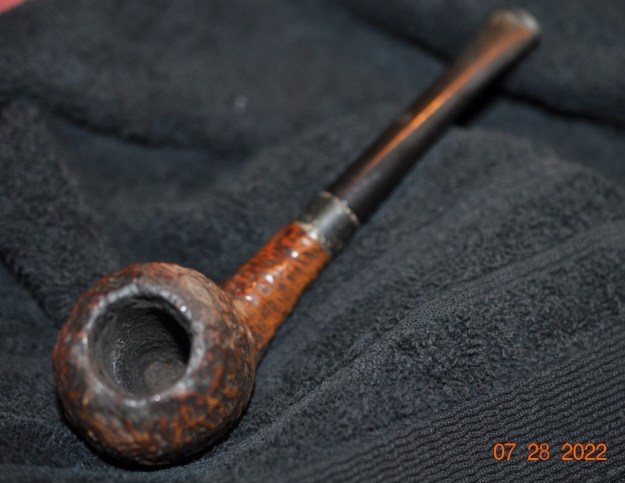
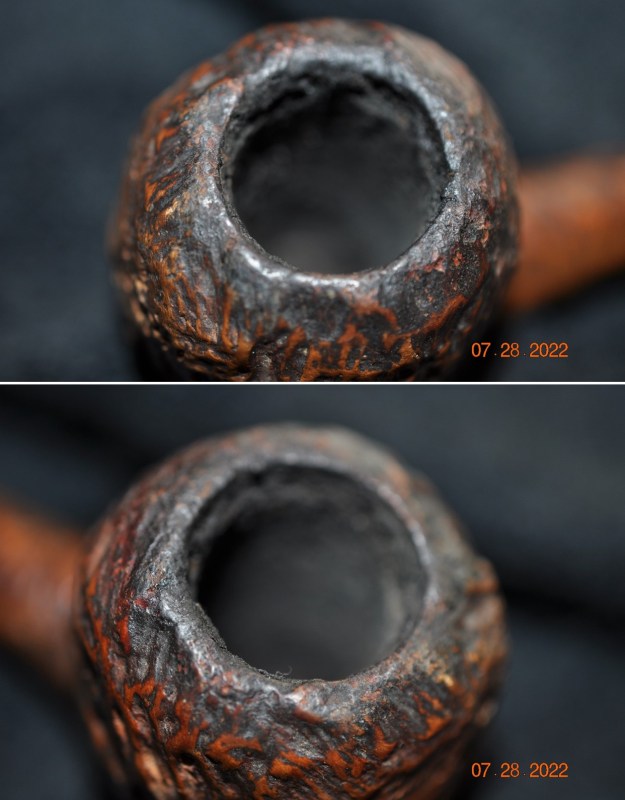
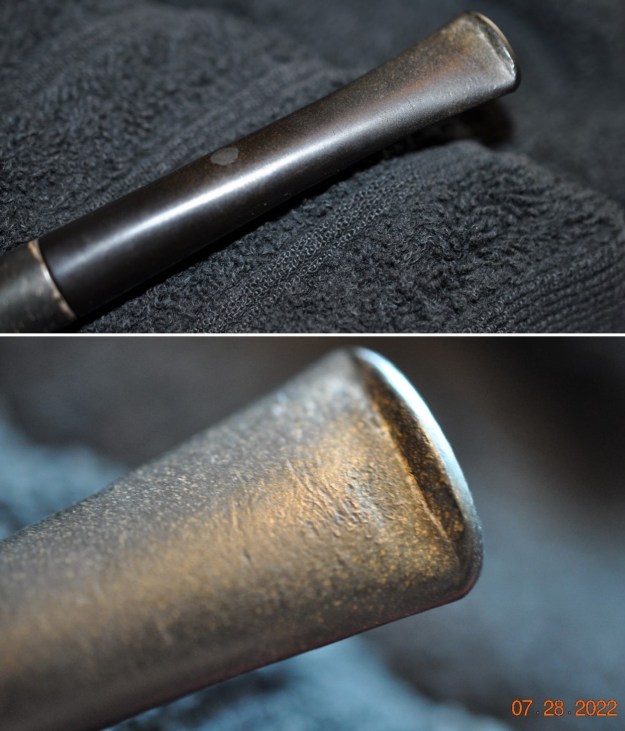
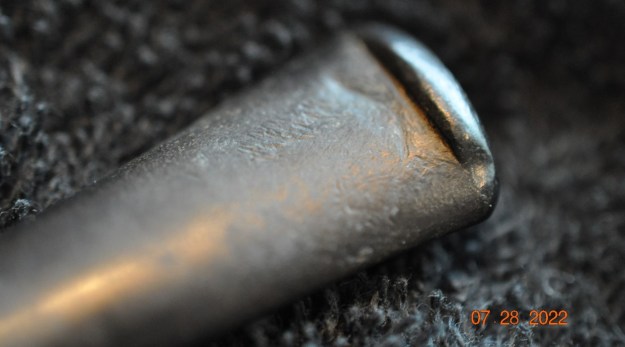
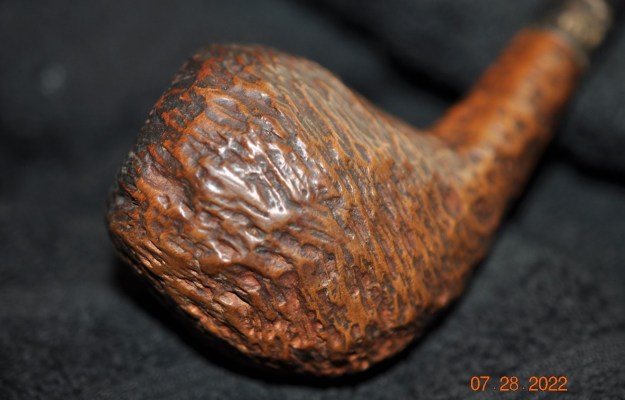
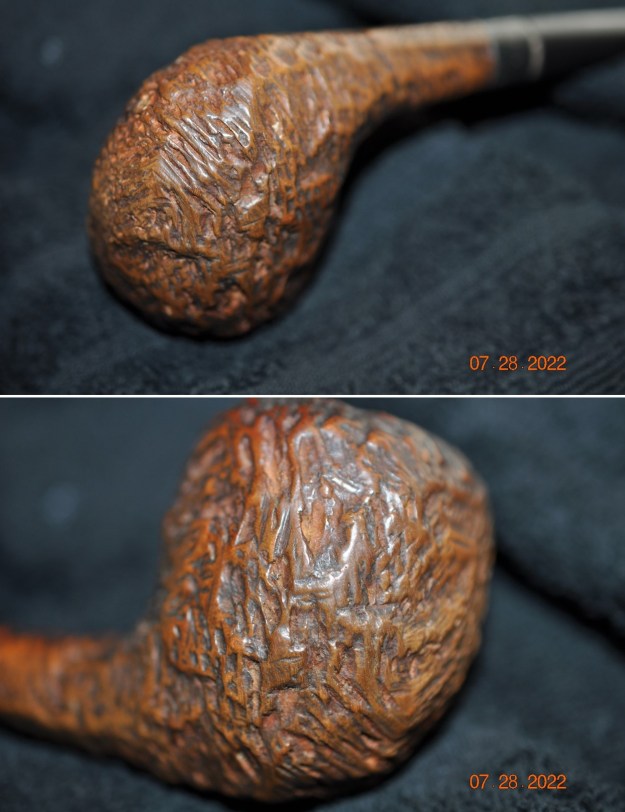
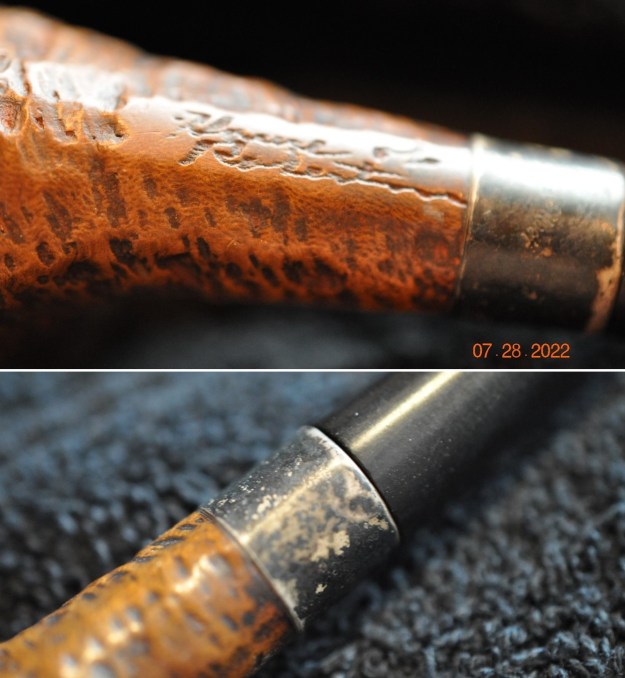
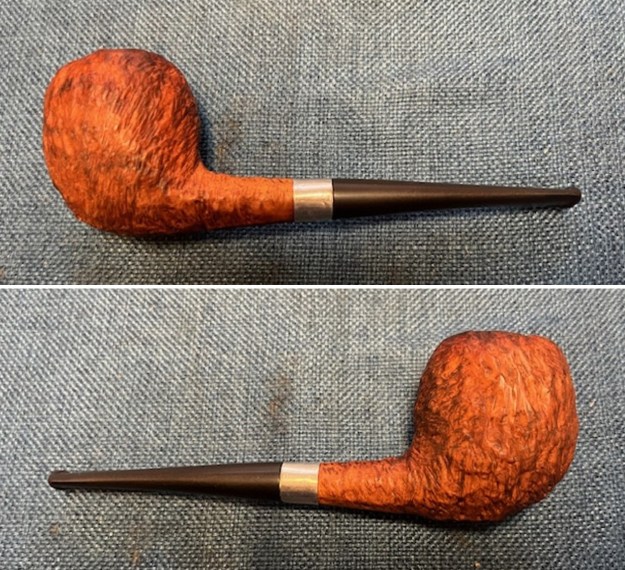
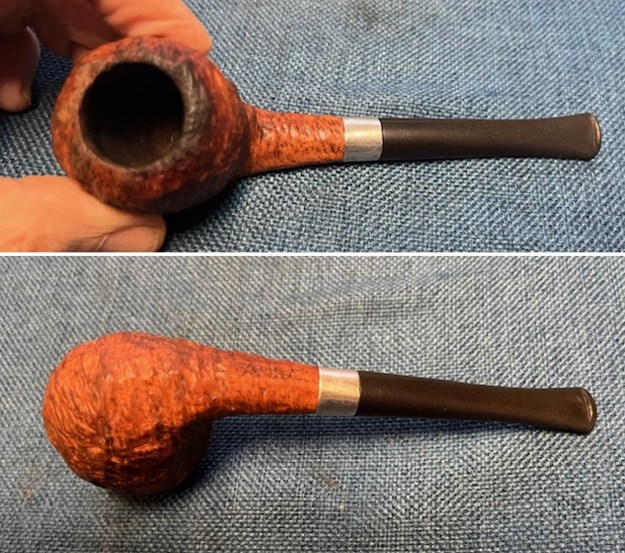
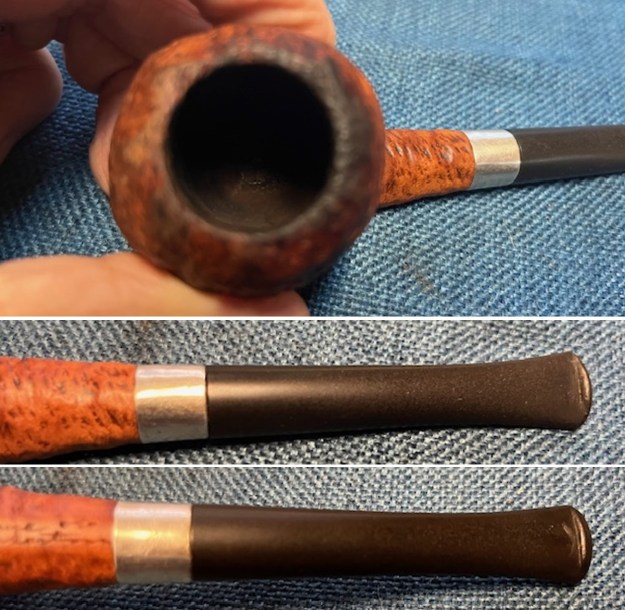
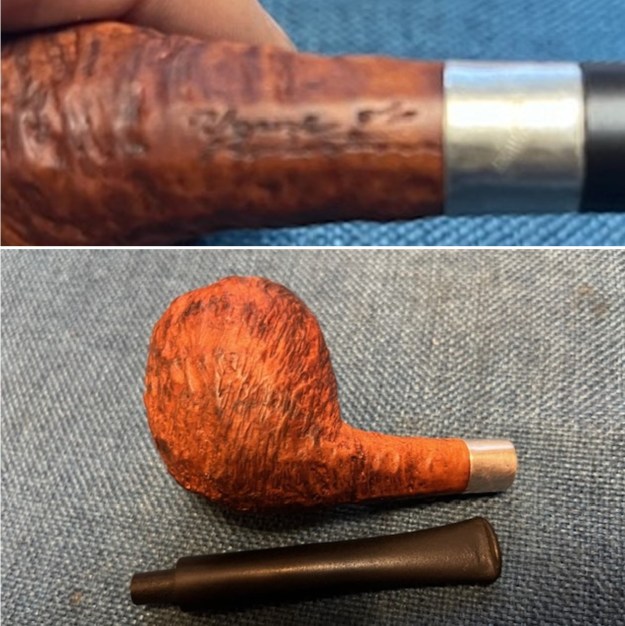
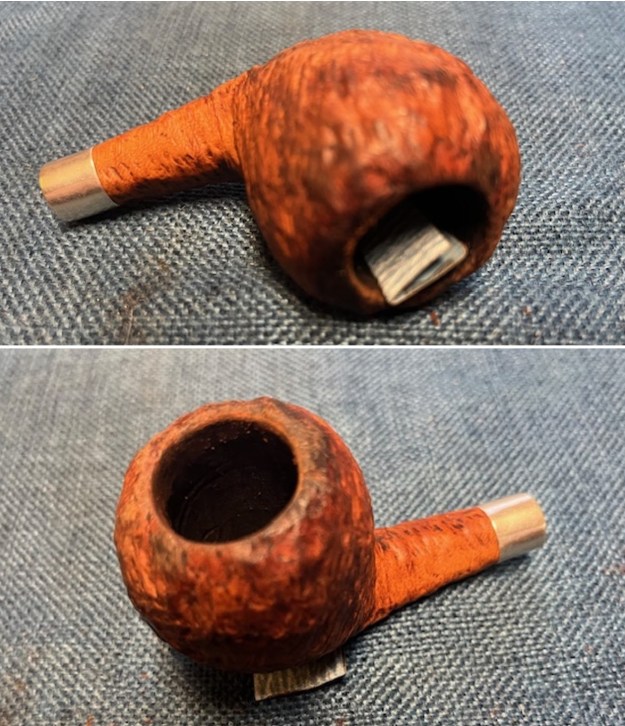
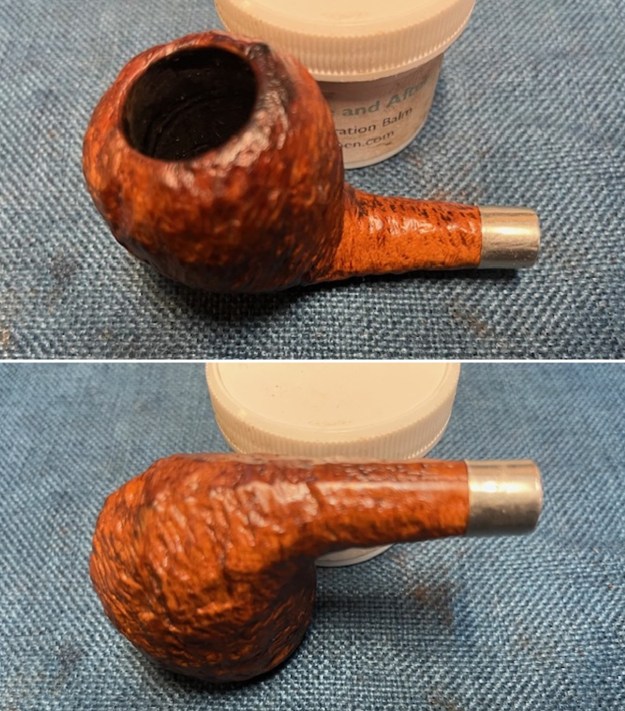
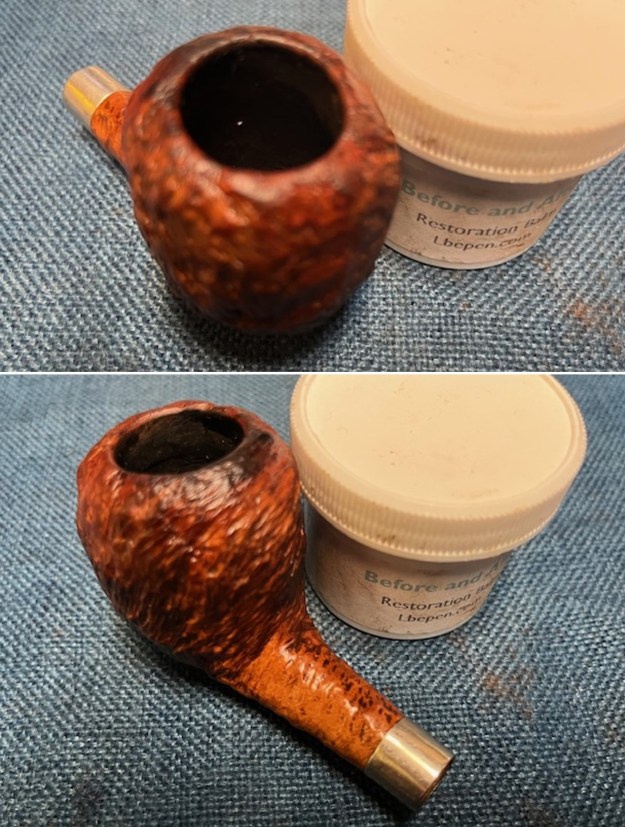
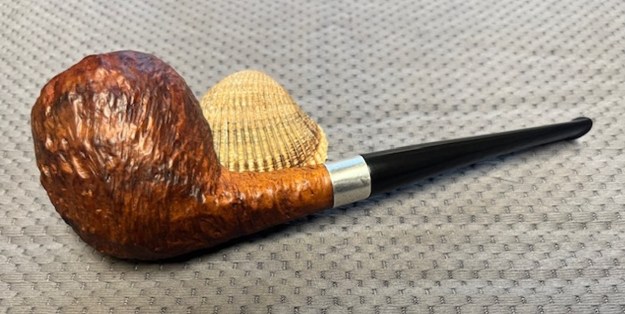
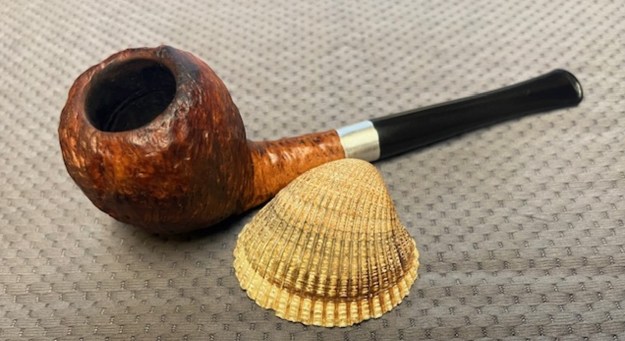
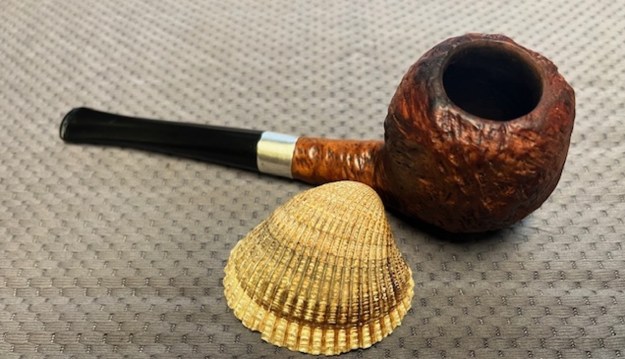
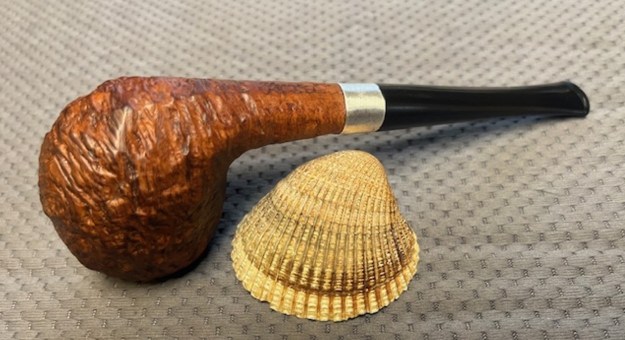
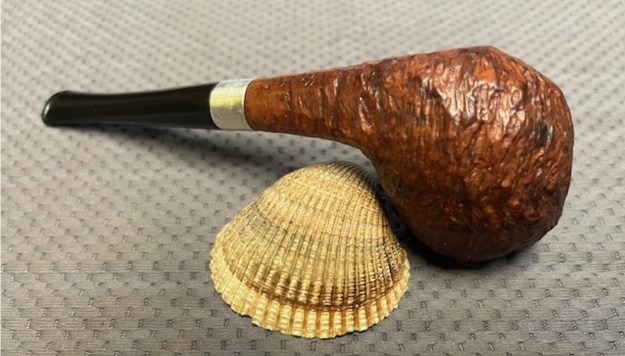
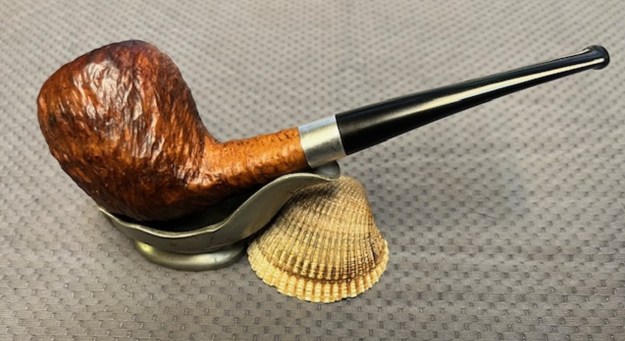
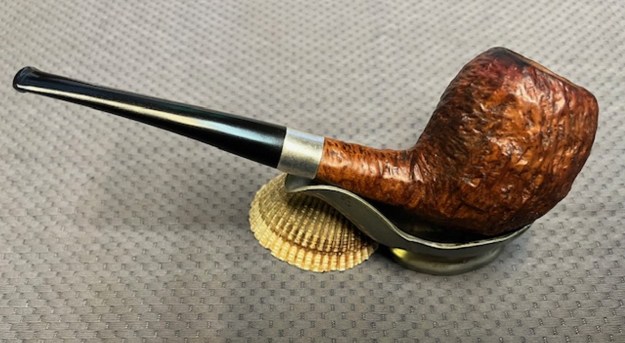
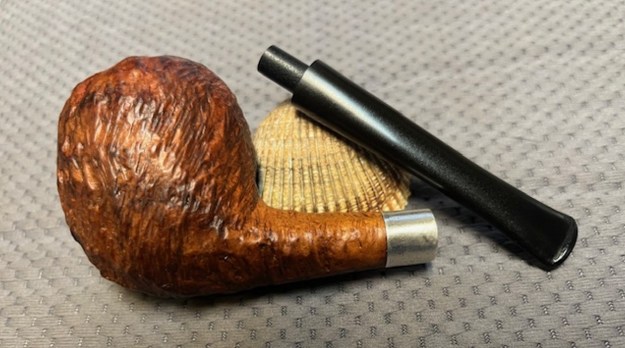
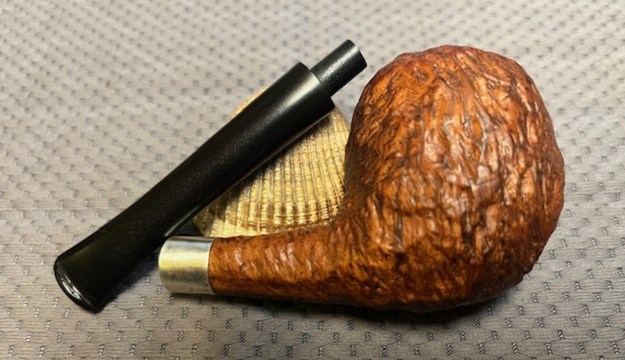
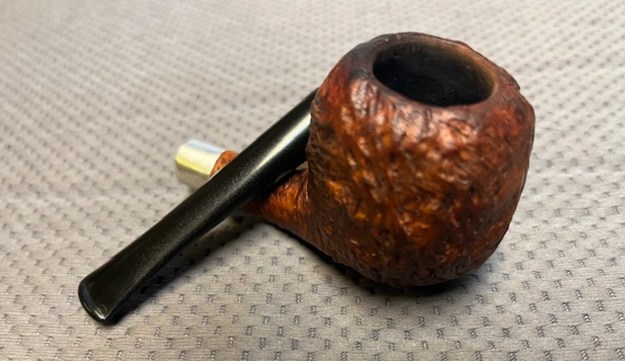
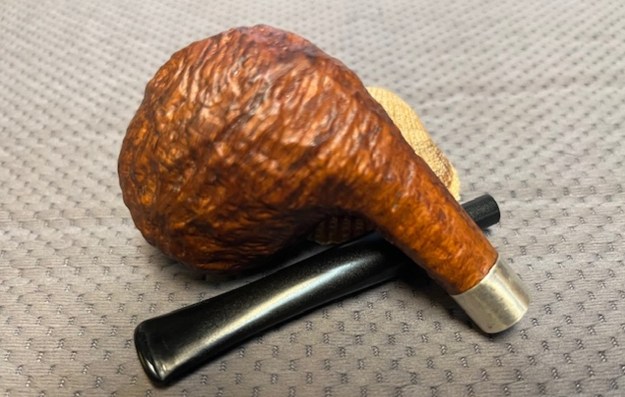
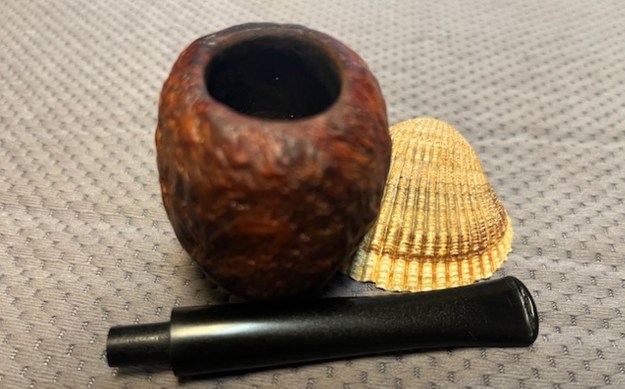
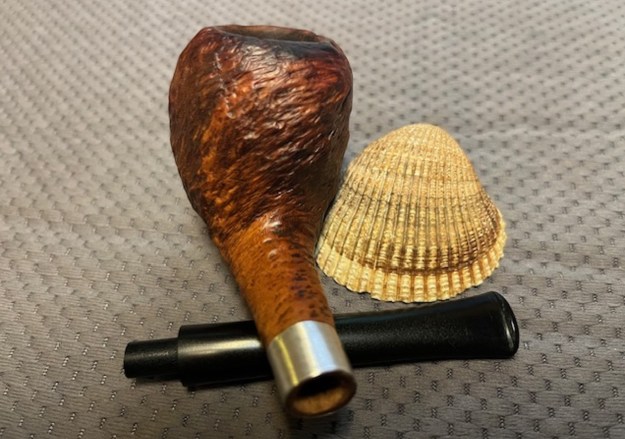
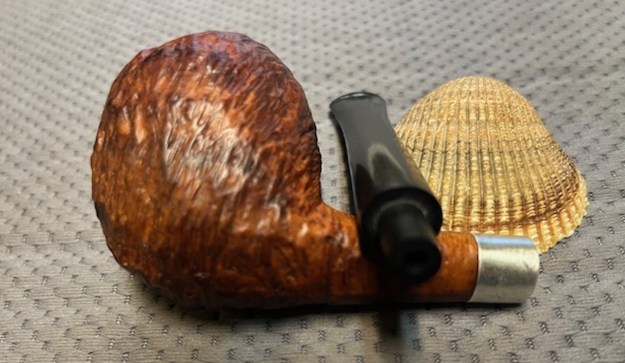
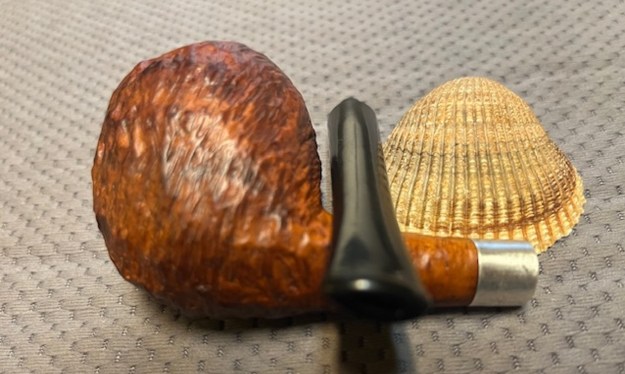
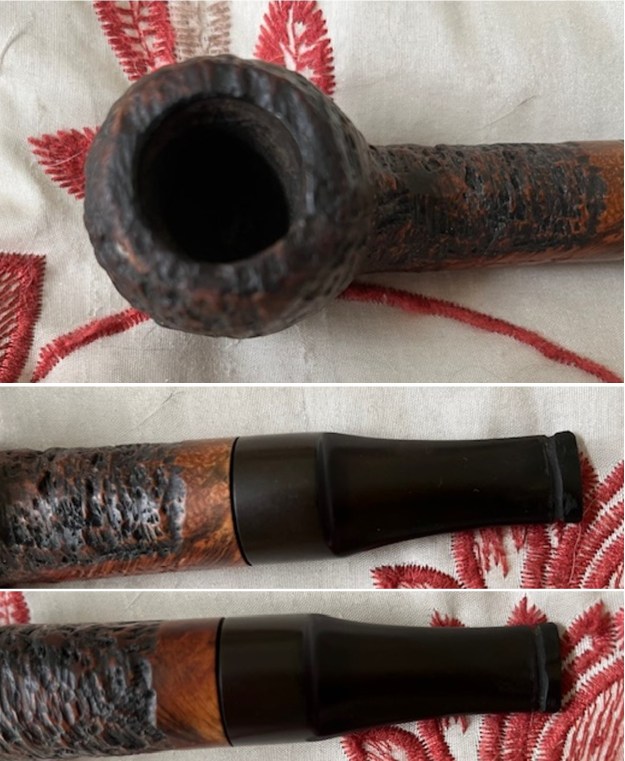
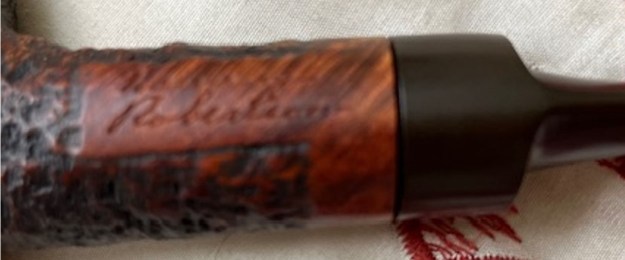
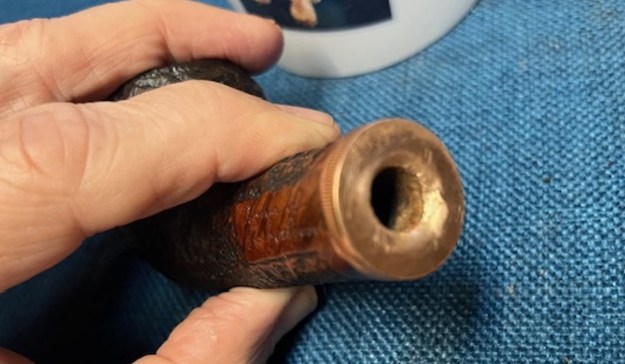
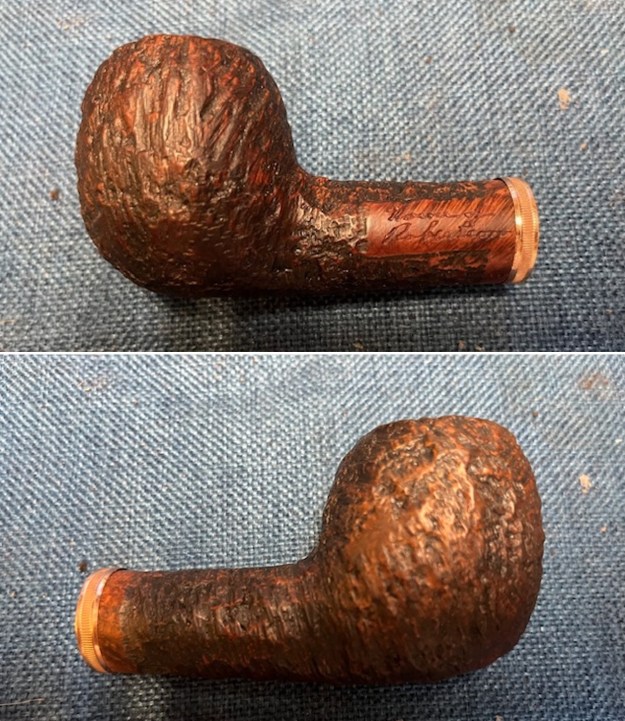
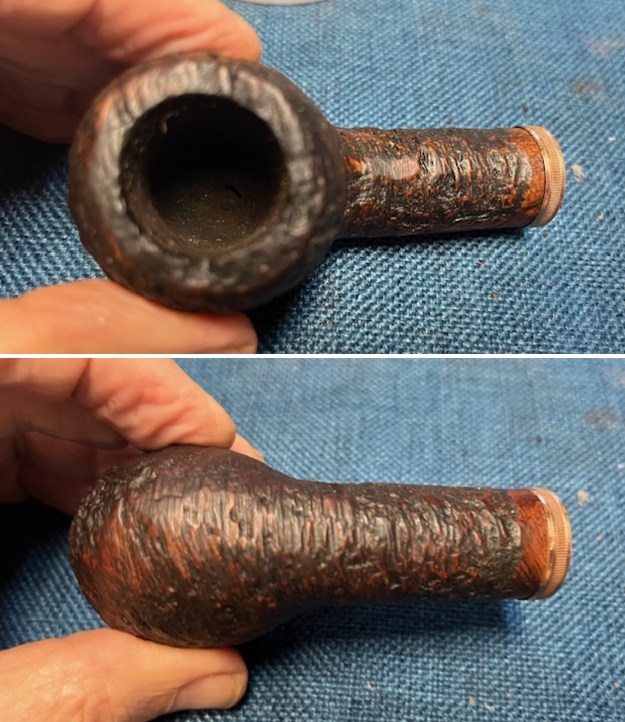
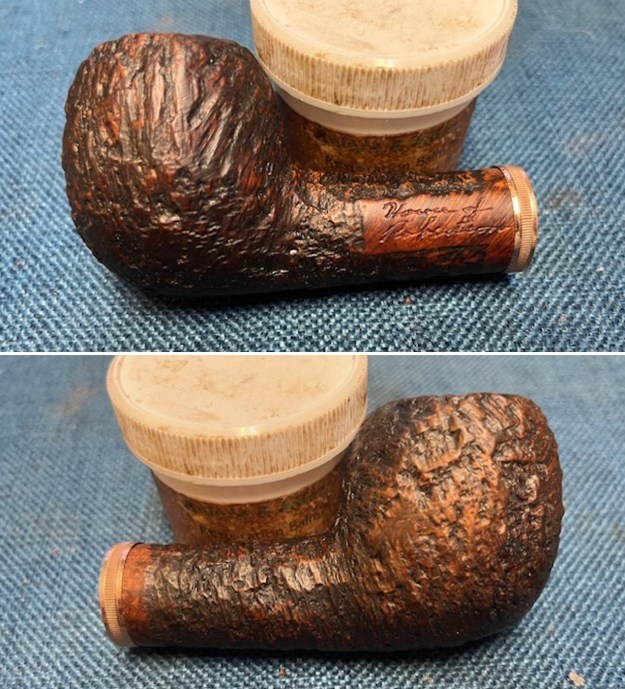
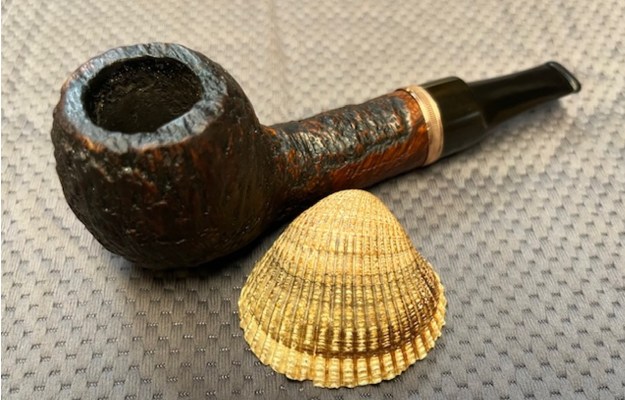
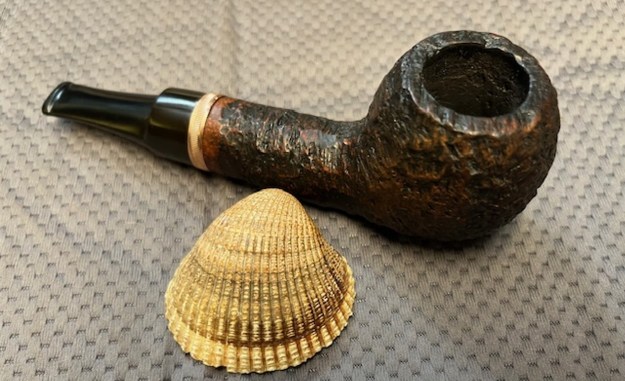
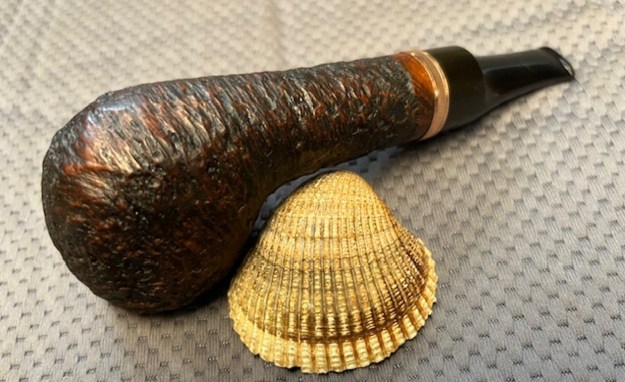
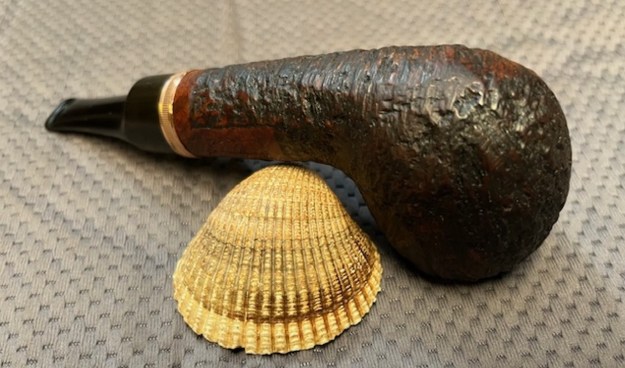
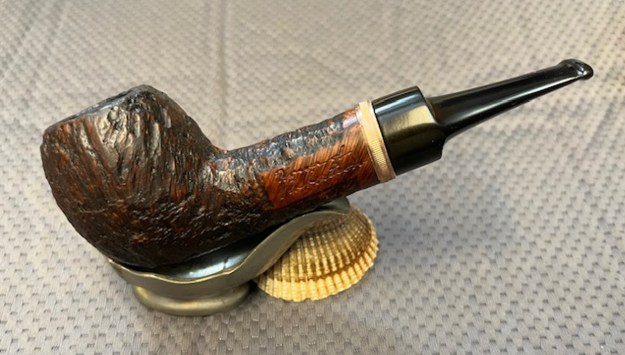
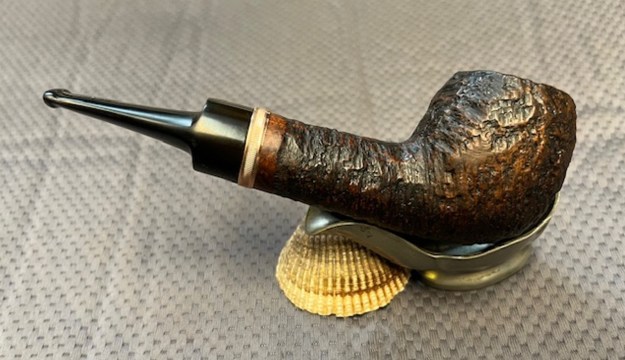
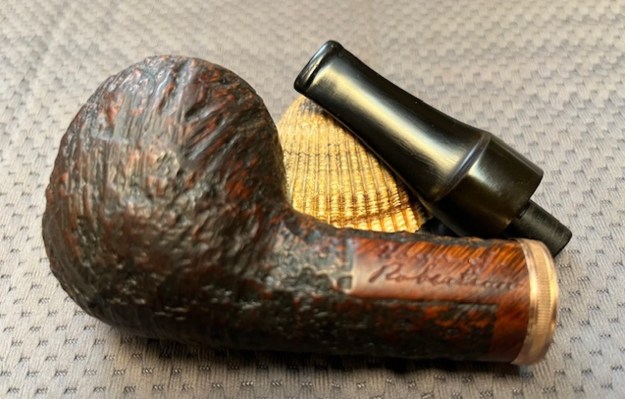
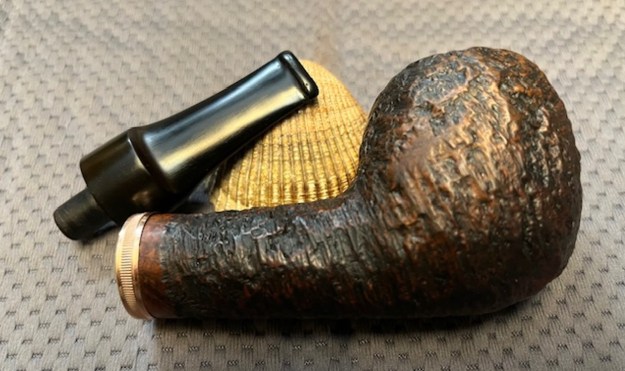
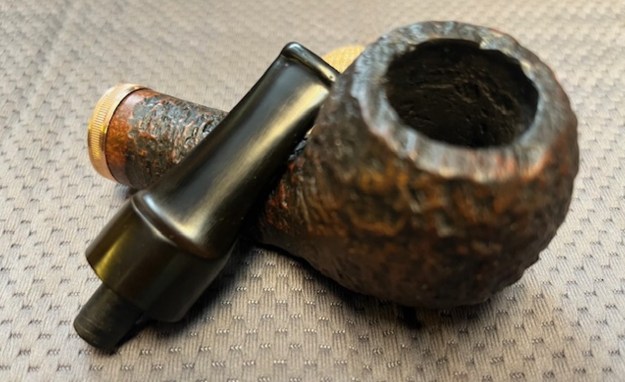
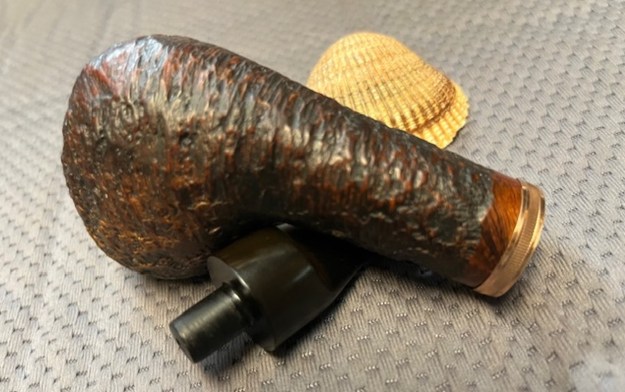
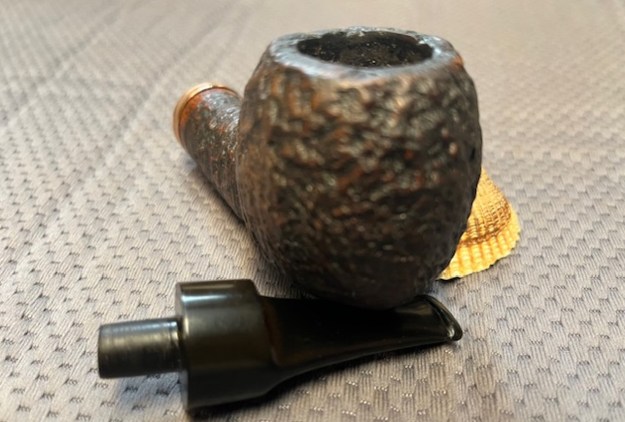
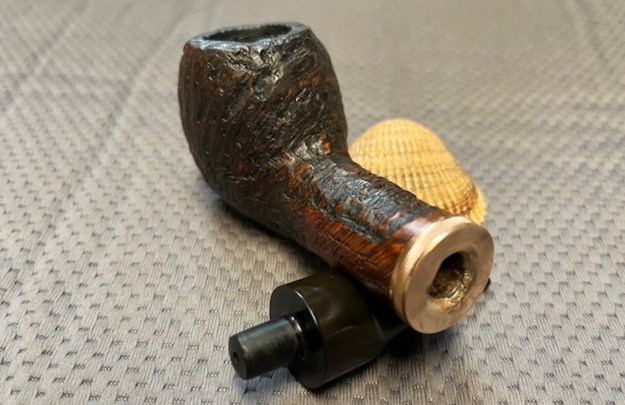
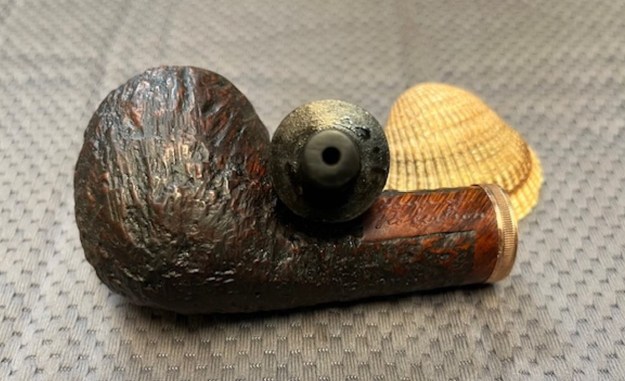
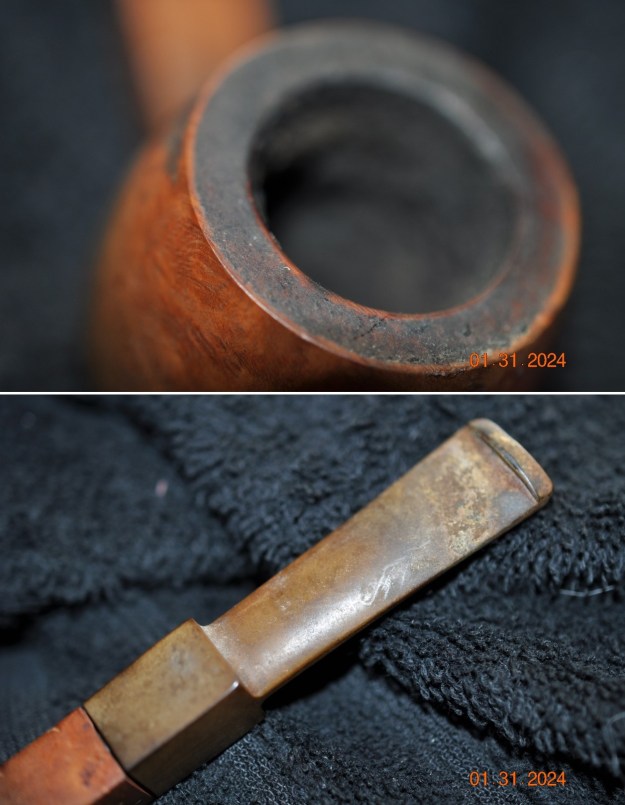
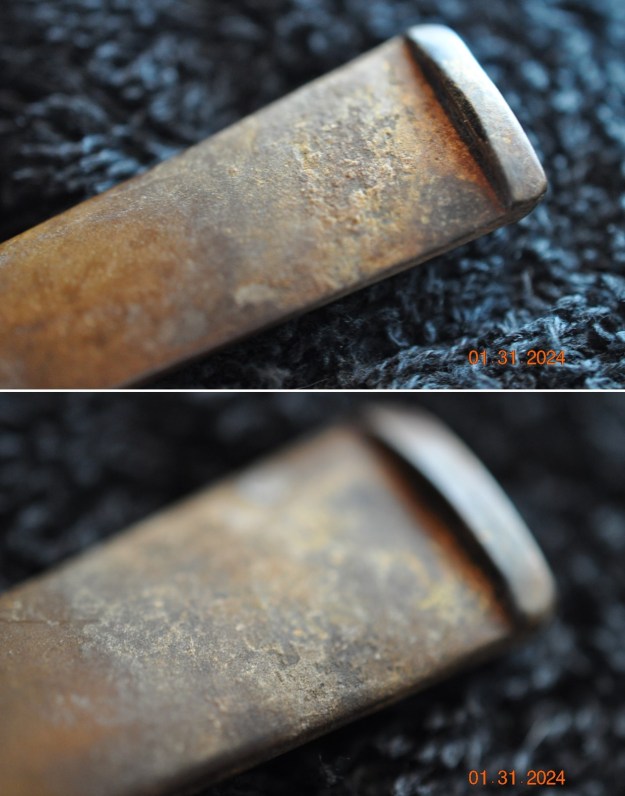
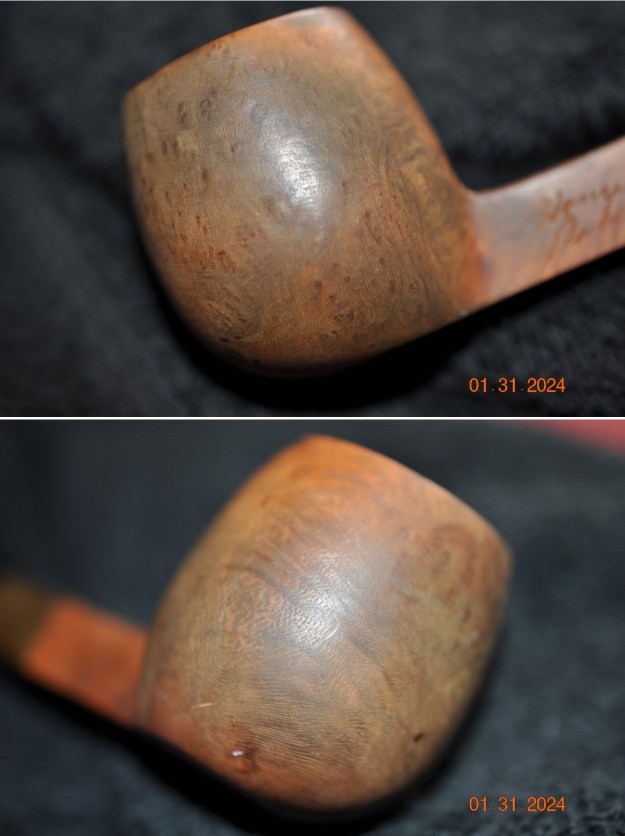
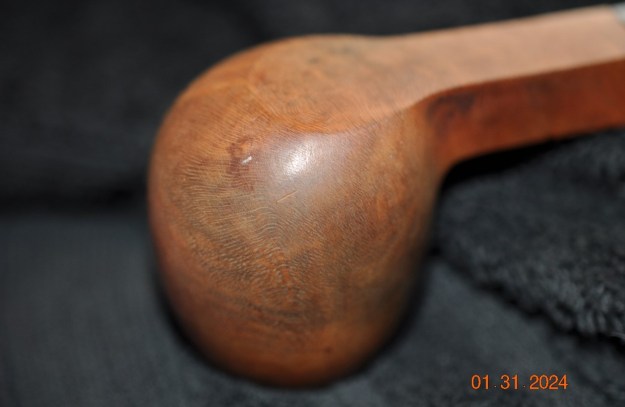
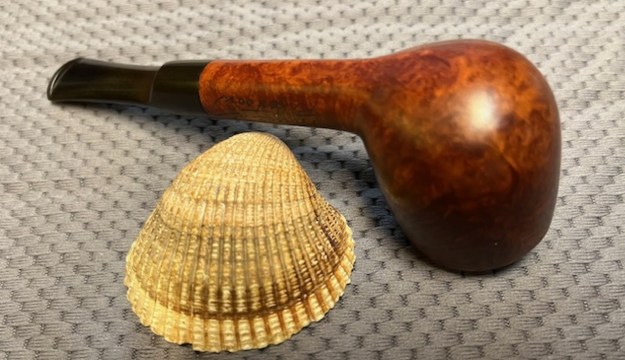
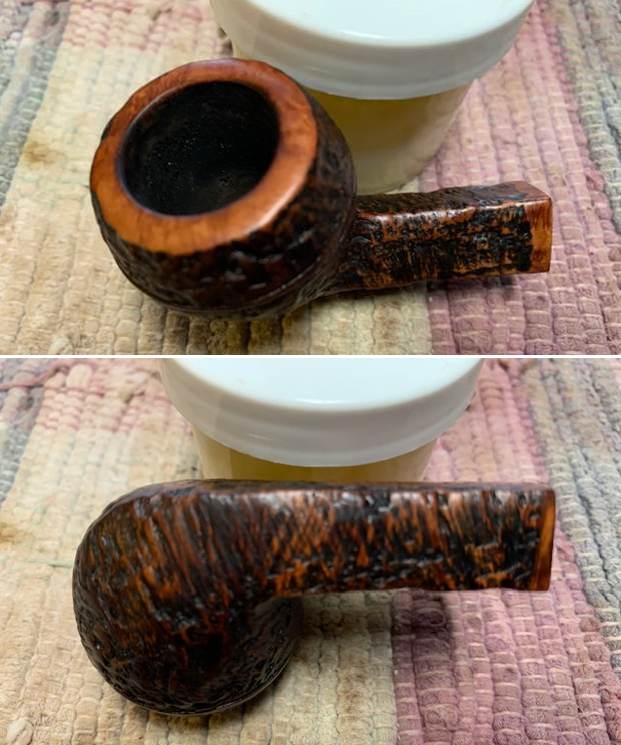
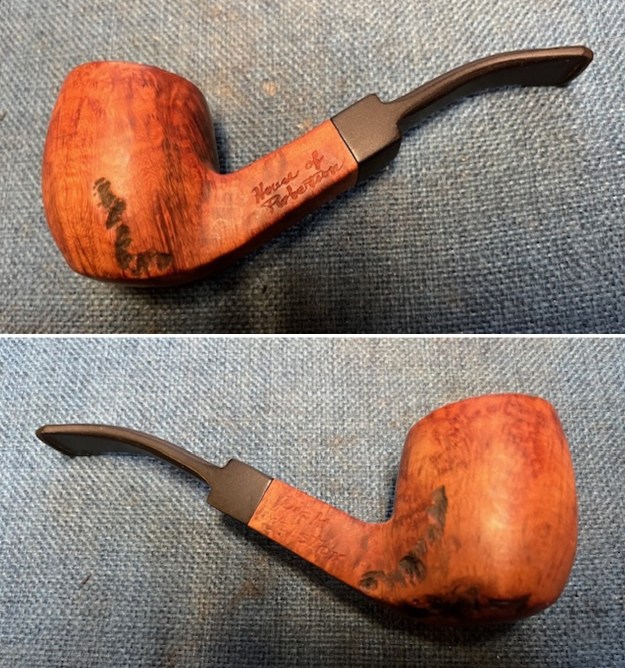
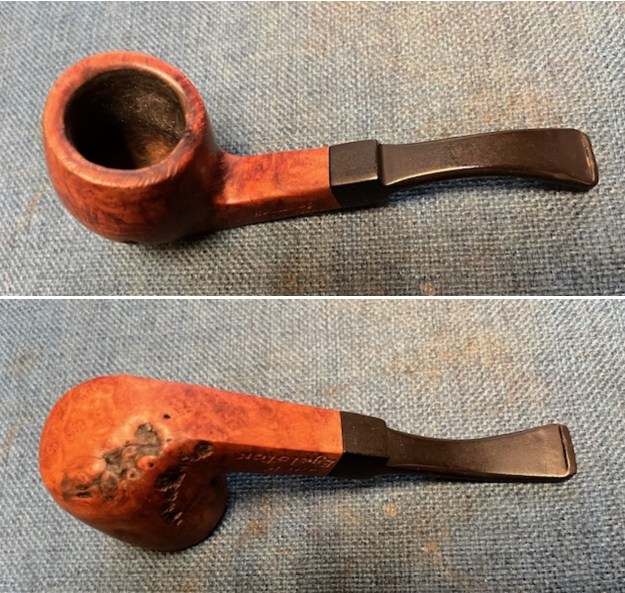
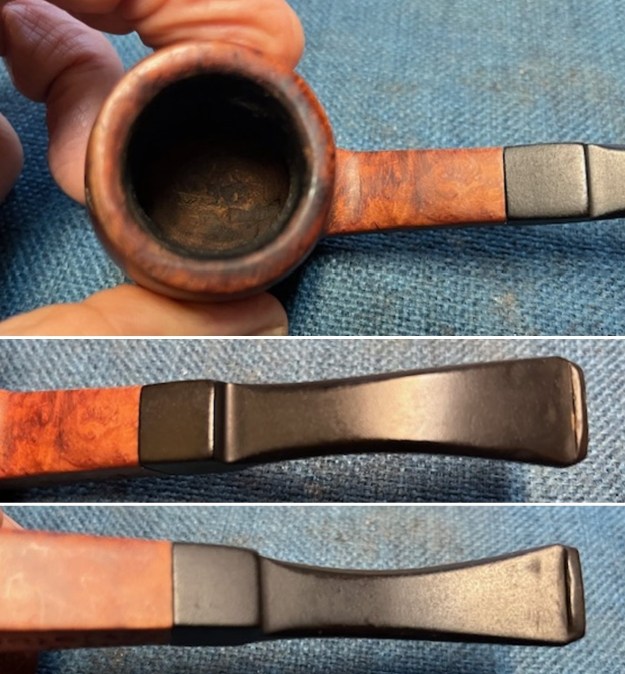
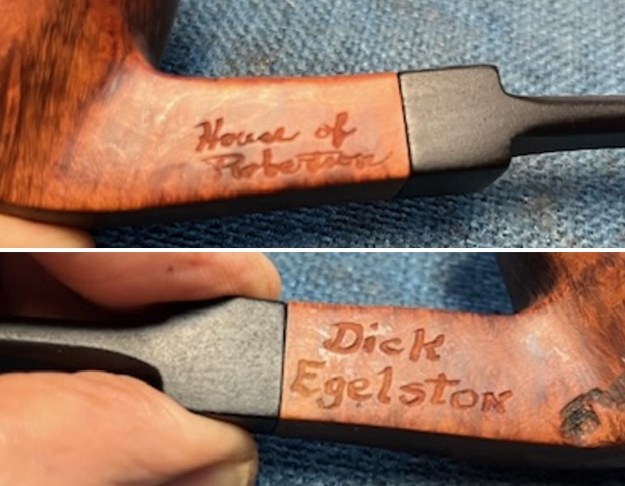
The next pipe on the work table is a unique House of Robertson pipe we picked up. It was purchased from a seller on eBay from Long Beach, California, USA on 07/13/2024. It is a Billiard or maybe an Egg with a rusticated finish that makes it look like the shell on an English Walnut. The name House of Robertson is roughly hand-etched with an engraving tool on the underside of the shank on a smooth panel. This pipe is shaped somewhere between and Egg and a Billiard but really does capture the shape of a Walnut. As you look at the following photos you will see why I am not sure what to call it. The pipe has a unique rustication on the sides of the bowl and shank. The bowl is thickly caked with some lava overflow on the rim top. The outer and inner edges of the rim look to be in good condition. There is some darkening and nicks on the inner edge but nothing horrible. The pipe was dirty but underneath all of the grime it appears to be in excellent condition. It had an oxidized silver band on the shank that is stamped Sterling but I am certain it is cosmetic as there are no cracks showing on the shank end. It is definitely an interesting pipe and should clean up very well. The fit of the stem to the shank was good. The vulcanite taper stem was oxidized and calcified. There are light tooth marks and chatter on both sides near the button. Jeff took photos of the pipe before he started the cleanup. Jeff took photos show the condition of the bowl and the stem. The photos of the bowl and rim show the cake in the bowl and the lava overflowing onto the rim top. The rustication on the top of the bowl and the inner and outer edge of the rim are pretty well covered in lava. It was hard to know what the inner edge and top really looked like until we cleaned it. The silver cosmetic band was heavily oxidized and almost black. The taper stem was oxidized, calcified and had tooth chatter and marks on both sides of the stem near the button. The photos of the sides and heel of the bowl show some stunning and unique rustication all around the pipe. The finish makes the bowl and shank have an almost walnut texture. The next photo shows the etched or engraved with a name on the underside of shank. It reads House of Robertson. The silver band has a faint Sterling Silver stamping on it.I am including the information that I found when I received my first of the House of Robertson Pipes. I found a link on Pipedia that gave me the only information I could find on the brand. I include that in total as it is interesting to read.

“House of Robertson” was in business for many years, but alas, closed their doors in 1999. They were located in Boise, Idaho. They are noted for making rather large and interesting pipes. Thayne Robertson was a Master Mason, AF & AM, and started the shop about 1947 and his son Jon started working there in 1970 when he finished college, along with Thayne’s daughter. Thayne and his son started making the big pipes at that time, and made them together until 1987 when Thayne passed away. Jon kept the store and his sister moved on to other things. The House of Robertson appears to have closed around 1999 (https://pipedia.org/wiki/Robertson).

Since then I have worked on a lot of House of Robertson pipes and have been able to track down more information. I am including a link to a Catalogue that I picked up on eBay. Click on the link and have a look at this interesting book of information on the brand and the pipe maker himself (https://rebornpipes.com/2022/12/11/a-house-of-robertson-catalogue-filled-with-great-examples-of-thayne-robertsons-work/).

I am also including a biography of Thayne Robertson that I found on Facebook from a fellow in Boise, Idaho. It is an interesting read into the mind of the pipe maker. Make sure to take time to read it (https://rebornpipes.com/2021/10/31/house-of-robertson-pipes-boise-pipe-carver-thayne-robertson/).

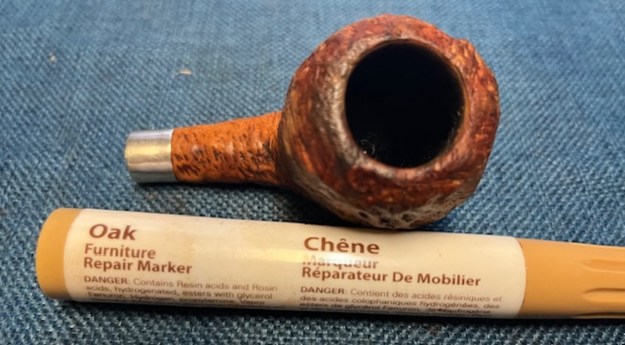
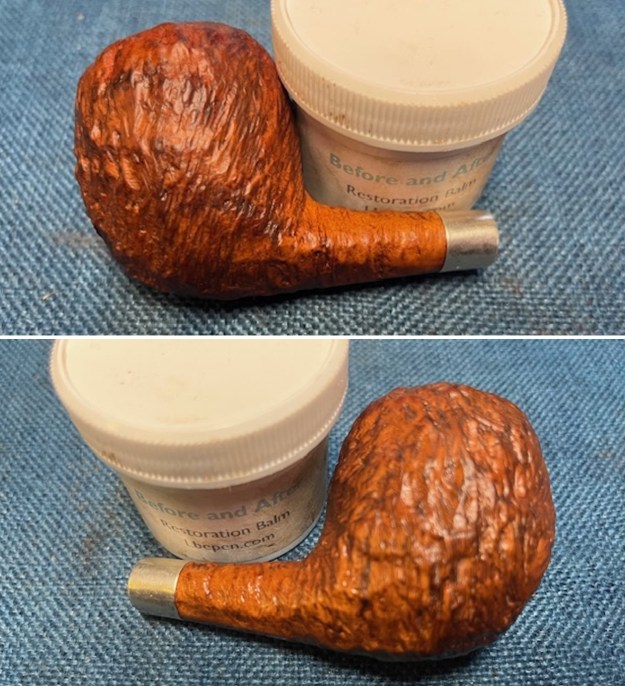
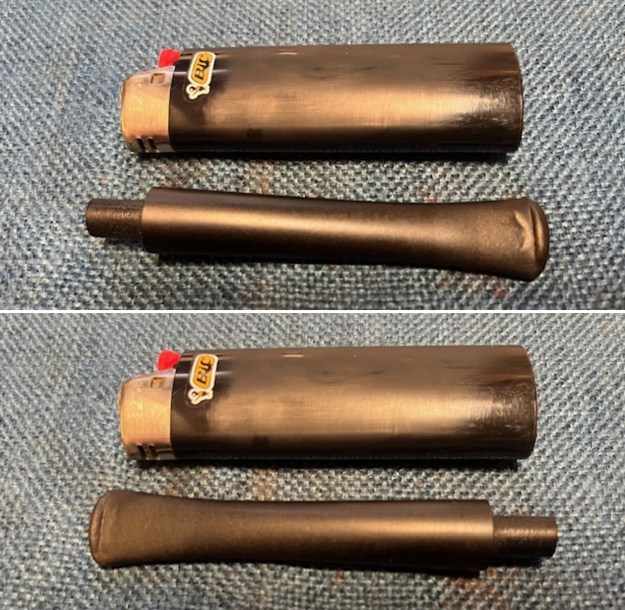
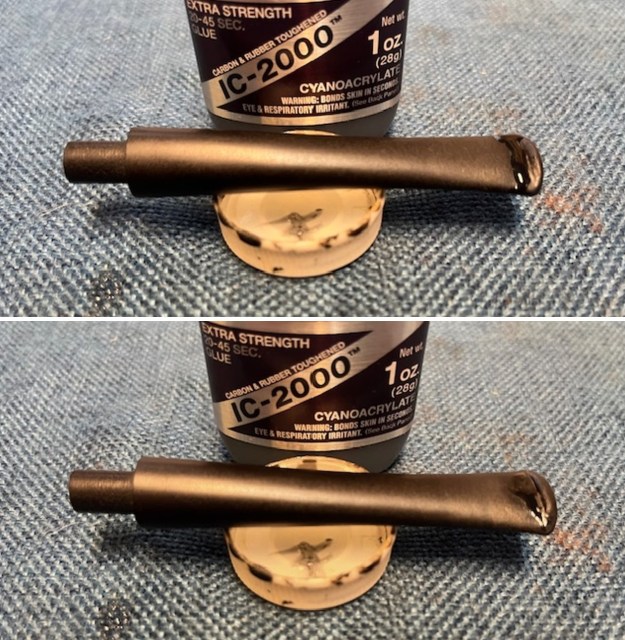
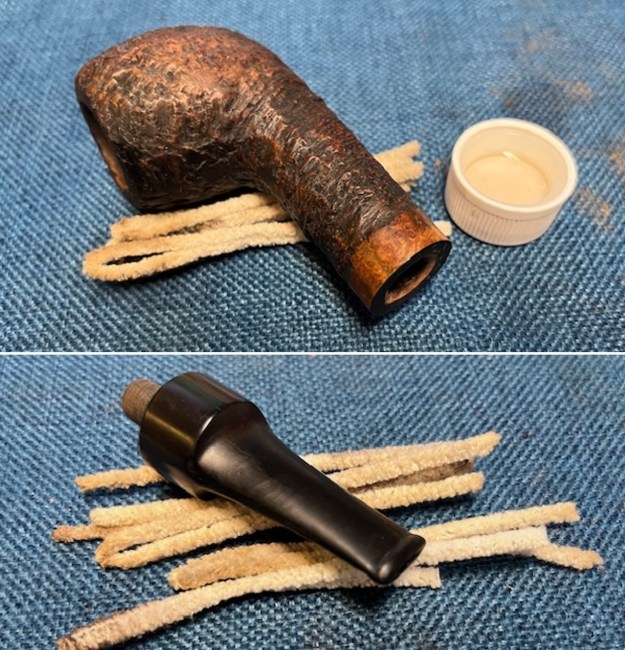
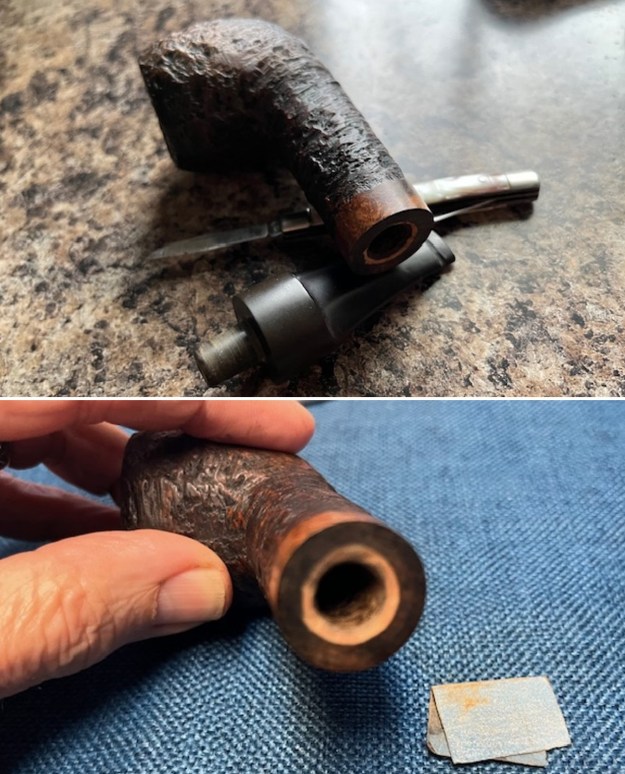
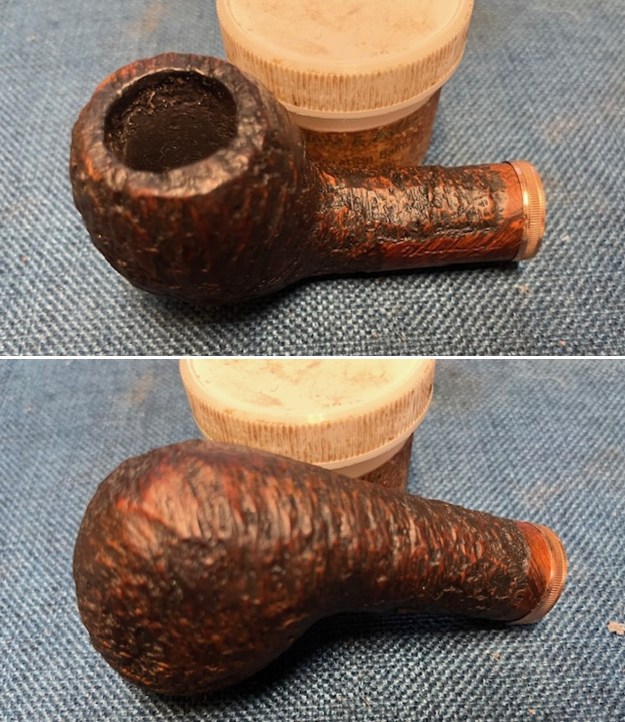
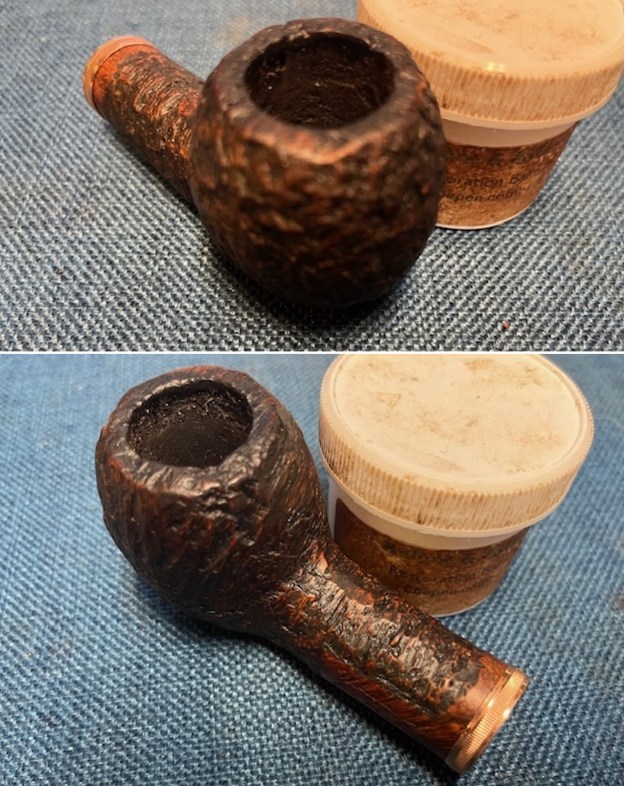
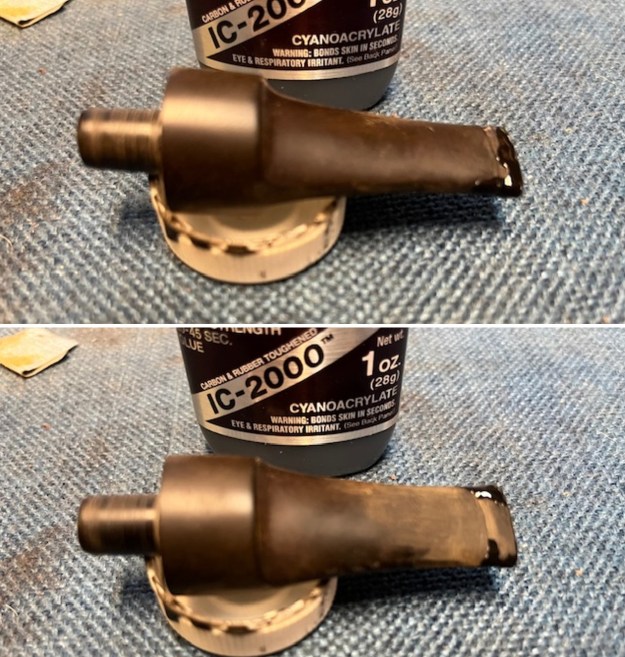
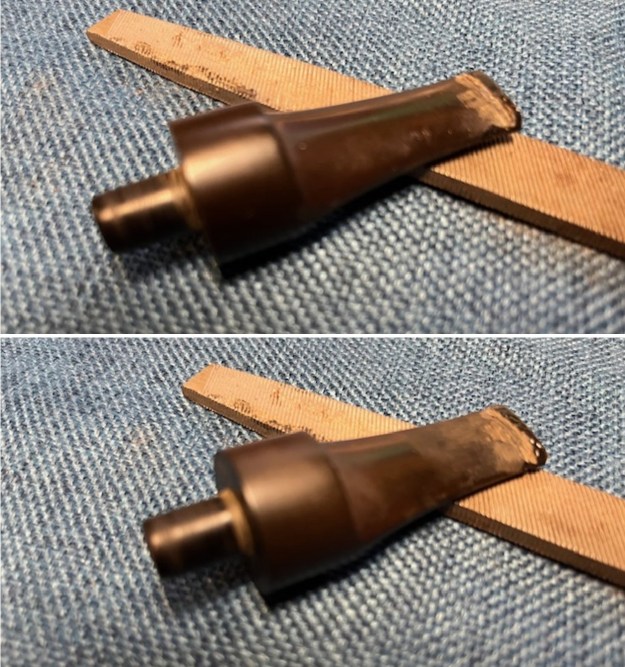
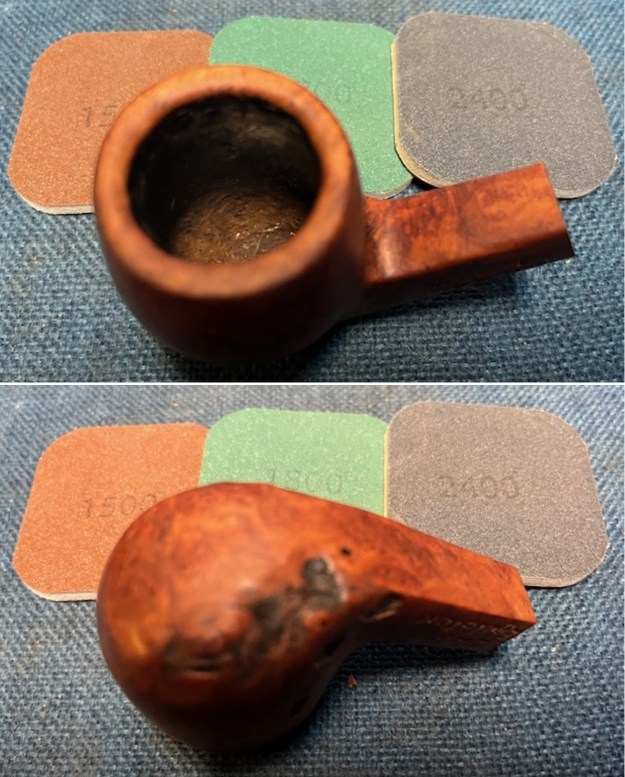
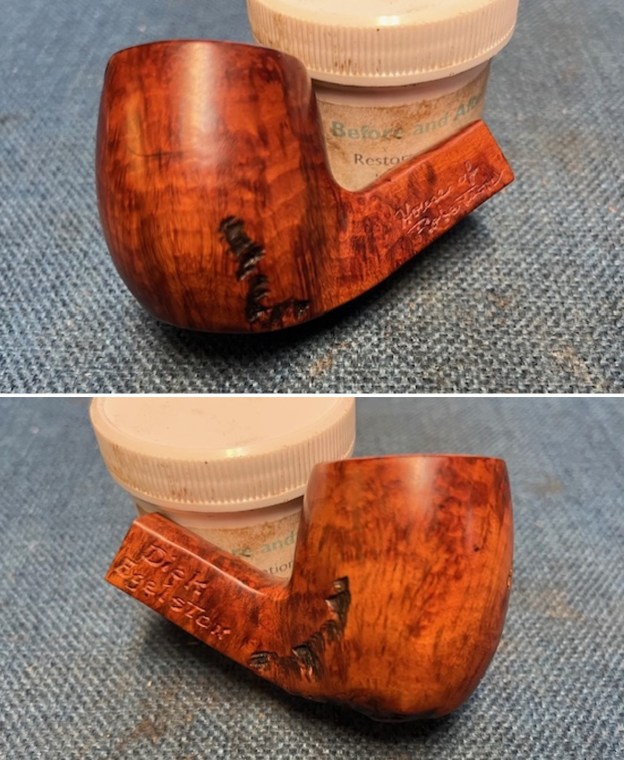
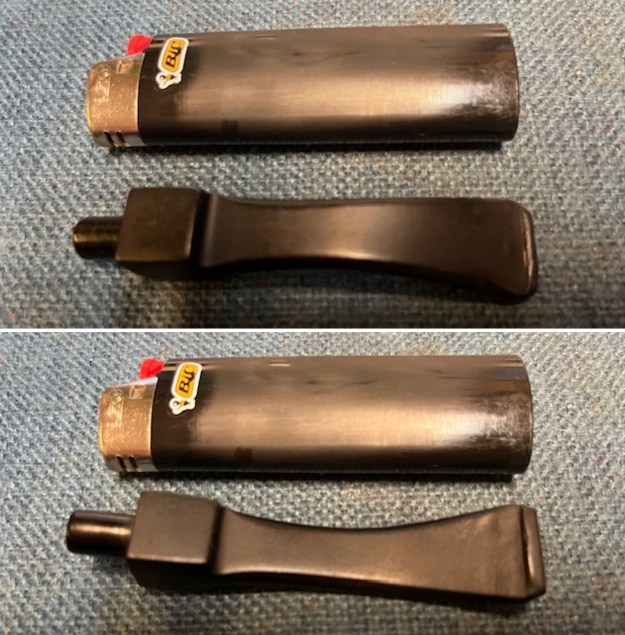
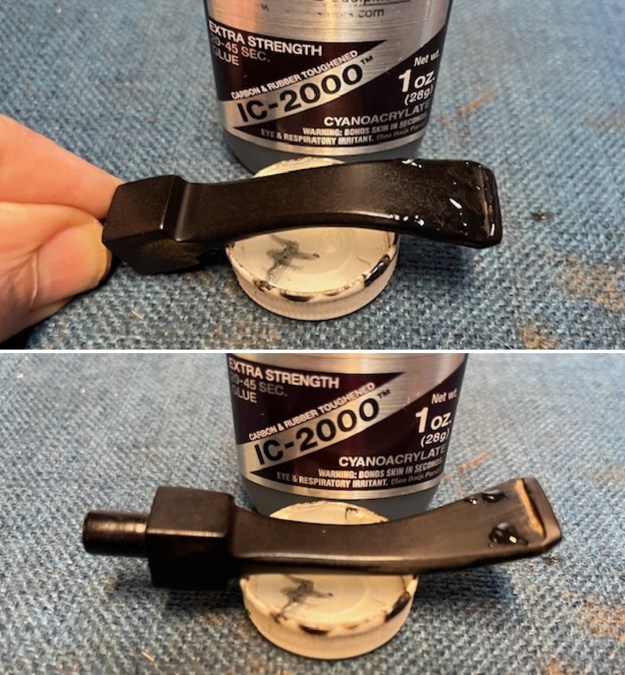
Now it was time to work on the pipe itself. When it gets to Vancouver it my turn to contribute to its restoration. Jeff did a great job cleaning the pipe on the inside and outside. He reamed the bowl with a PipNet pipe reamer and cleaned up the remnants with the Savinelli Fitsall Pipe Knife. He scrubbed out the mortise and the airway in the shank and stem with alcohol, cotton swabs and pipe cleaners. He scrubbed the exterior of the bowl with a tooth brush and Murphy’s Oil Soap to remove the dust in the rustication on the bowl and shank as well as the smooth portions. He rinsed it under running water. He dried it off with a soft cloth. Once the dust and debris were removed the finish was dull but appeared to be in excellent condition. He soaked the stem in Briarville’s Pipe Stem Deoxidizer and rinsed it under warm water to remove the deoxidizer gel solution. I took photos of the pipe to show its condition before I started my work on it. I took a photo of the bowl and rim top to show how well it had cleaned up. There is some rim darkening but you can see the rustication on the top of the bowl. The stem tooth marks and chatter are very light.I took a photo of the engraving on the underside of the shank. It is clear and reads as noted above. I also took the stem off the pipe and took a photo of the parts to give a sense of the proportions of the pipe. It is a beauty.I started my work on the pipe by dealing with the darkening on the inner edge of the rim and the darkening on the rim top with a folded piece of 220 grit sandpaper. It looked much better when finished. However, there was still some darkening in the rustication on the back of the rim top. I scrubbed it with Mark Hoover’s Before & After Briar Cleaner and was able to remove a lot more of the darkening. I put it on the area with my finger tips and worked it into the surface with a tooth brush. I worked over the area with a brass bristle wire brush and then rinsed it off with warm water. The end result is far better than when I started though there is still a bit of darkening. I used an Oak stain pen to touch up the rim top and the cleaned area and the finish look good. I worked Before & After Restoration Balm deep into the smooth finish to clean, enliven and protect the briar. I hand rubbed it with my fingers and a shoe brush to work it into the finish then set it aside to dry for 10-15 minutes. I wiped it off with a soft cloth. I buffed the bowl with a cotton cloth to polish it. It really began to have a deep shine in the briar. The rim top is looking much better. I took some photos of the bowl at this point to mark the progress in the restoration. The rustication on the bowl stands out with interesting lines moving across the sides of the bowl and the shank. I set the bowl aside and turned my attention to the stem. I “painted” the vulcanite surface with the flame of a lighter – constantly moving the flame over the tooth marks and was able to lift many of them. I filled in those that remained with black rubberized CA glue. Once it cured I flattened the repairs with needle files. I sanded the stem with 220 grit sandpaper to blend the repairs into the surface. I sanded the stem with the 2 inch square 320-3500 grit sanding pads. I wiped down the stem after each sanding pad with Obsidian Oil. I polished out the scratch marks left behind by the sandpaper. The stem looked very good.I polished the vulcanite stem with micromesh sanding pads – dry sanding it with 1500-12000 grit pads. I wiped the stem down after each sanding pad with Obsidian Oil and set it aside to dry. I polished it further with Before & After Pipe Polish – using both the Fine and Extra Fine Polishes. I gave it a rubdown with Obsidian Oil one last time and set it aside. I put the House of Robertson Rusticated Walnut with a taper stem back together and worked the pipe over on the buffing wheel using Blue Diamond to lightly polish the stem. I buffed the bowl and stem to raise the gloss on the briar and the vulcanite. I gave the pipe multiple coats of carnauba wax. I buffed the entire pipe with a clean buffing pad to raise the shine. I hand buffed it with a microfiber cloth to deepen the shine. The finished the House of Robertson Walnut is shown in the photos below. The medium brown stains on the rusticated walnut shaped bowl works well with the rich black of the vulcanite stem. The dimensions of the pipe are: Length: 6 inches, Height: 2 inches, Outside Diameter: 1 ½ inches, Diameter of the chamber: ¾ inches. The weight of the pipe is 42 grams/1.45 ounces. This is an interesting piece of briar with a rustication that looks like a walnut shell on the bowl and shank. I really like how the briar and the vulcanite work well together. This one will soon be on the rebornpipes store. If you are interested in adding a House of Robertson to your collection this may well be the one for you. Thanks for walking with me through the restoration process.
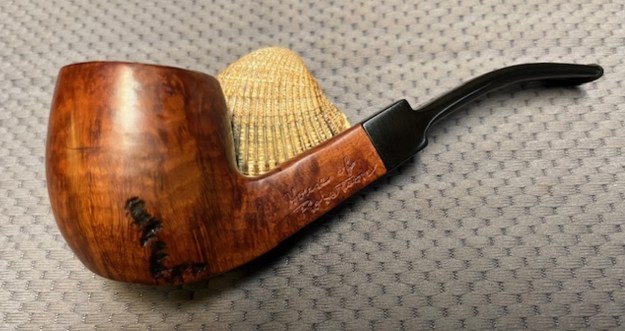
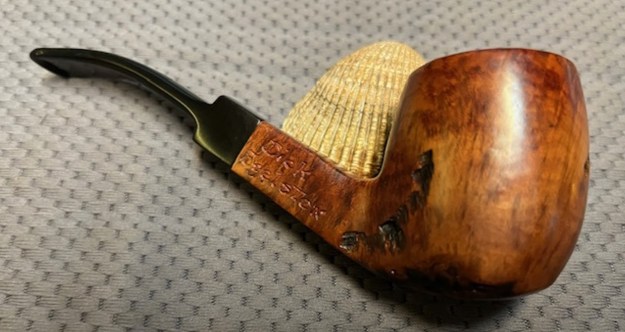
Finishing a Restoration on a Recently Purchased House of Robertson Chunky Apple


By Steve Laug

The next pipe on the work table is a bit of a break for me after working on the last four heavily damaged pipes. That lot of pipes was a lot of work and I still have one hard one to work on. Sometimes I need to take a deep breath and work on something else for a bit. If you have followed rebornpipes for a while you will recognize that we love old House of Robertson pipes. They were made in Boise, Idaho by Thayne Robertson and something about them always intrigues me. Perhaps it is because I spent a lot of my early youth in Idaho and the thought of a pipe made in Idaho catches my attention. I am not sure why but I know that when we see them for sale we always look and often we pick them up.

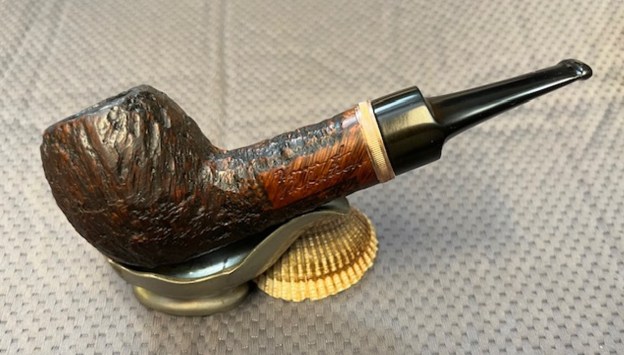
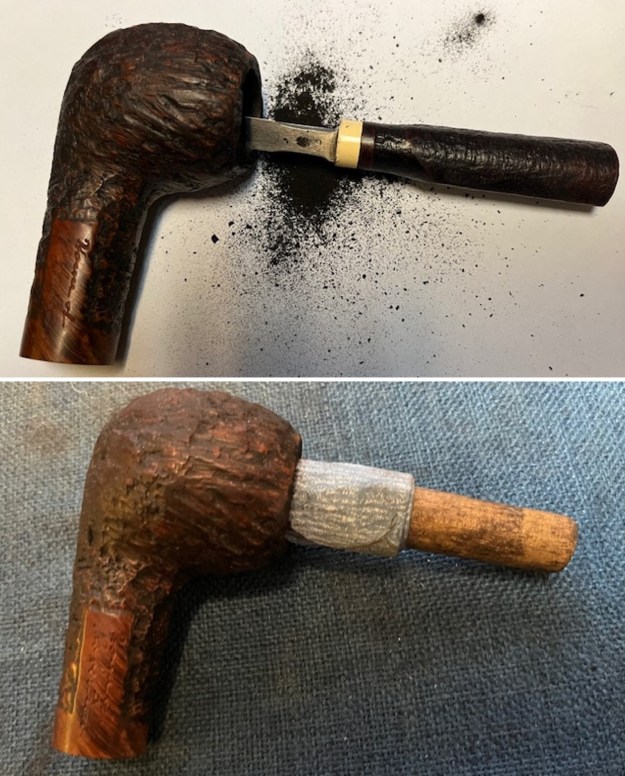
The Robertson that one I have chosen to work on is a beautiful chunky rusticated Apple with a saddle stem. We purchase it on 05/20/24 from a seller in Austin, Texas, USA. The name House of Robertson is roughly hand-etched on the left side of the shank with an engraving tool. This pipe is a huge, thick shank Apple with a saddle stem. The bowl has an interesting bark like rustication on the sides of the bowl and shank. There is a smooth panel for the brand mark on the left side and a band around the shank end. The seller had done a lot of clean up work on the pipe before he sold it. This often makes me leery of purchasing it as it generally inflates the price and rarely meets our standard. The bowl had been reamed but there was still too much cake in it for my liking as I want to know what is underneath. It is important for me to see the bowl walls and check for heat and burn damage. The rim top and edges of the rim were in good condition. The pipe was quite clean and it appears to be in excellent condition. It is definitely an interesting pipe that caught my interest. The fit of the stem to the shank left a gap. The saddle stem had been modified by the seller. The original button had been cut off and a new one imposed on the stem end. It was rough but workable and would take some time to clean and smooth out. I took photos of the pipe while I visited Jeff. Before I started my work on it I have included them below for you to see. I took photos show the condition of the bowl and the stem. The photos of the bowl and rim show the moderated cake remaining in the bowl but the rim top was in excellent condition. The rustication on the top of the bowl and the inner and outer edge of the rim looks really good. The finish was well cleaned. The saddle stem had been recut and a new button formed. It was rough at best and needed a bit of work to make it work for me. The button edge was sharp which was good but there was a trough ahead of it to give it definition. The taper of the stem dropped off at the trough. I would need to redefine the taper of the stem to get rid of the trough and make the flow more seamless between the new button and the slope of the stem. I would also need to shape the button to be more of an ellipse curving to a point on each end of the outer edges and clean up the slot and make it extend across the button surface and taper into the airway like a “Y”. You can also see that the stem does not sit tight against the shank end.The next photo shows the etched name on the left side of shank on the shank. It reads House of Robertson.I am including the information that I found when I received my first of the House of Robertson Pipes. I found a link on Pipedia that gave me the only information I could find on the brand. I include that in total as it is interesting to read (https://pipedia.org/wiki/Robertson).

“House of Robertson” was in business for many years, but alas, closed their doors in 1999. They were located in Boise, Idaho. They are noted for making rather large and interesting pipes. Thayne Robertson was a Master Mason, AF & AM, and started the shop about 1947 and his son Jon started working there in 1970 when he finished college, along with Thayne’s daughter. Thayne and his son started making the big pipes at that time, and made them together until 1987 when Thayne passed away. Jon kept the store and his sister moved on to other things. The House of Robertson appears to have closed around 1999.

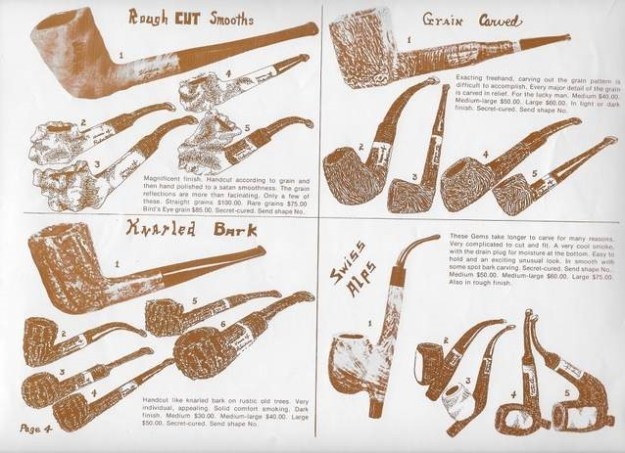
Since then I have worked on a lot of House of Robertson pipes and have been able to track down more information. I am including a link to a Catalogue that I picked up on eBay. Click on the link and have a look at this interesting book of information on the brand and the pipe maker himself (https://rebornpipes.com/2022/12/11/a-house-of-robertson-catalogue-filled-with-great-examples-of-thayne-robertsons-work/). I am including a page below that helps with understanding the shape and finish on this particular pipe. It is clear that it is what he calls a Knarled Bark pipe. The catalogue describes it as follows:

Handcut like knarled bark on rustic old trees. Very individual, appealing. Dark finish. Medium $30.00. Medium-large $40.00. Large $50.00. Secret-cured…I am also including a biography of Thayne Robertson that I found on Facebook from a fellow in Boise, Idaho. It is an interesting glimpse into the mind and life of the pipe maker. Make sure to take time to read it (https://rebornpipes.com/2021/10/31/house-of-robertson-pipes-boise-pipe-carver-thayne-robertson/).

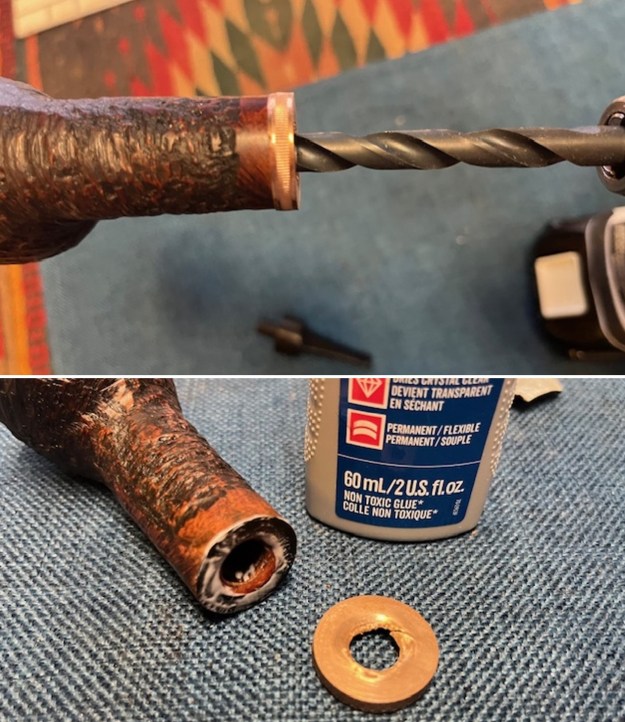
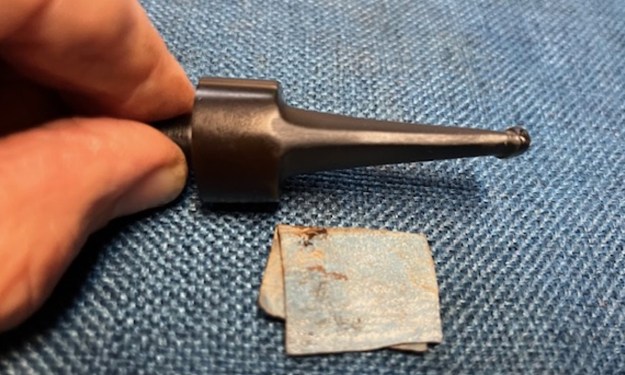
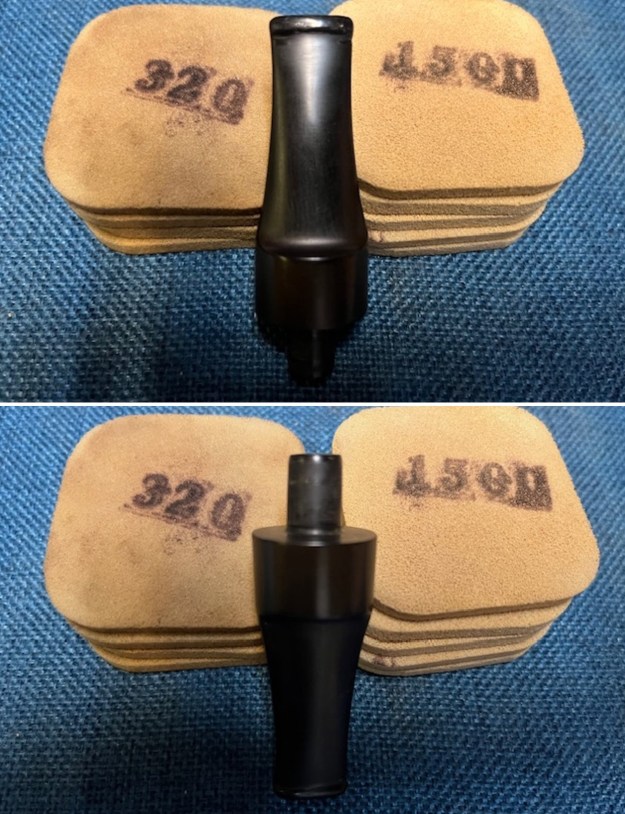
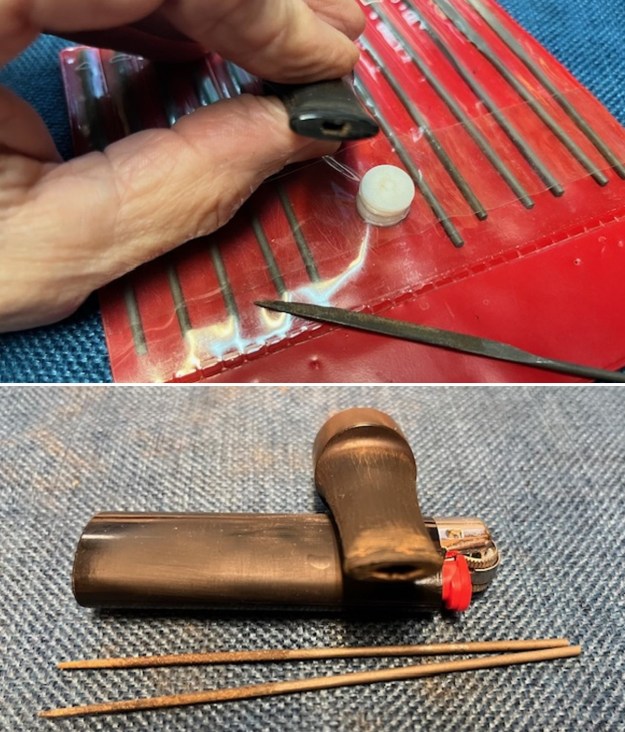
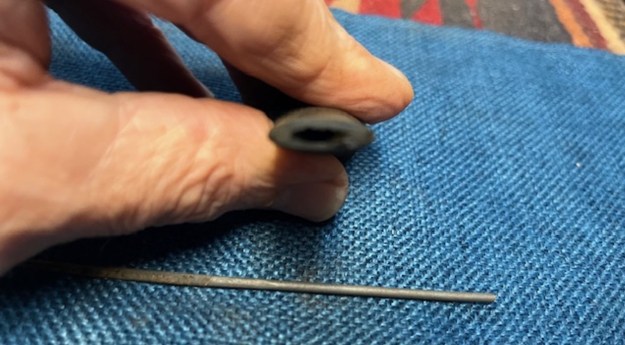
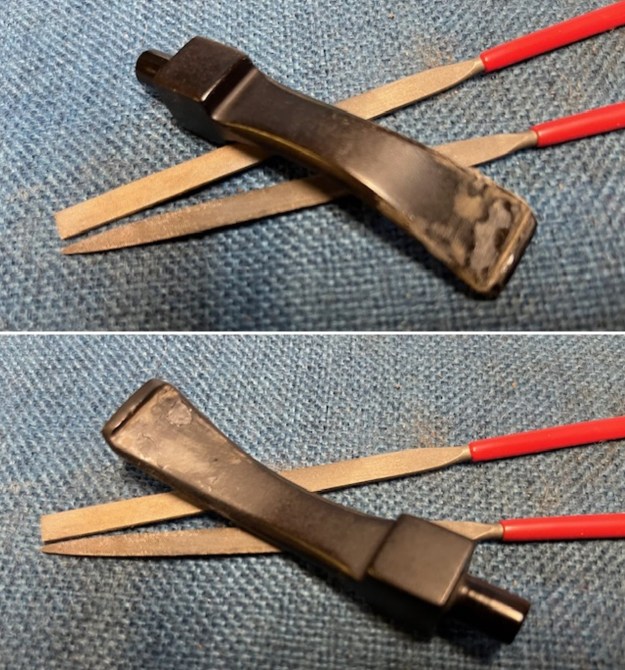
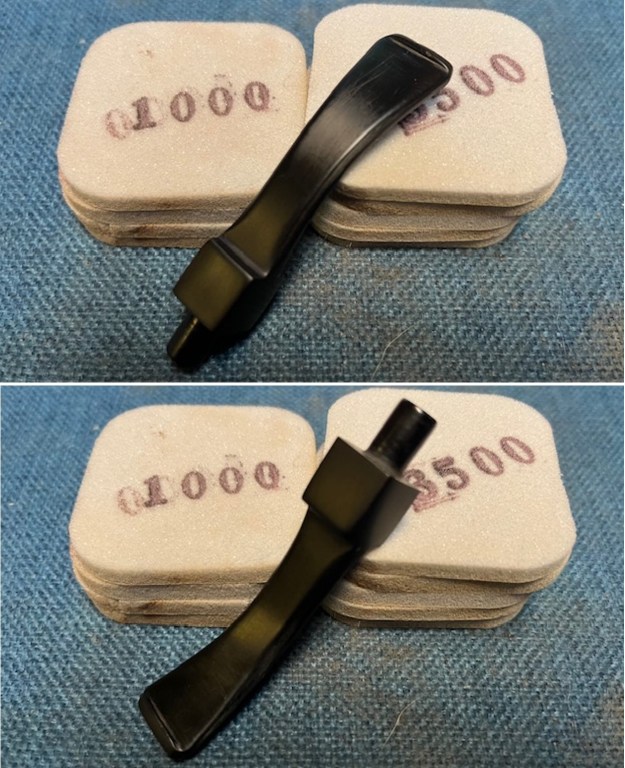
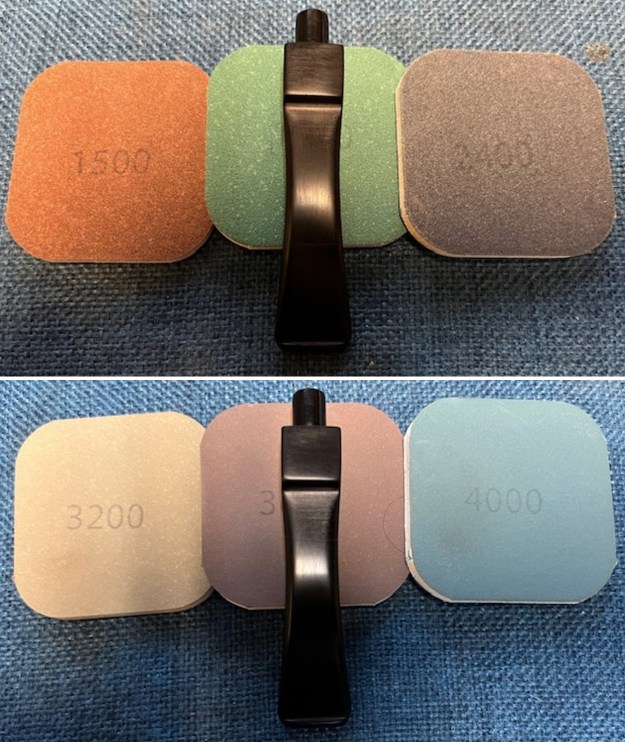
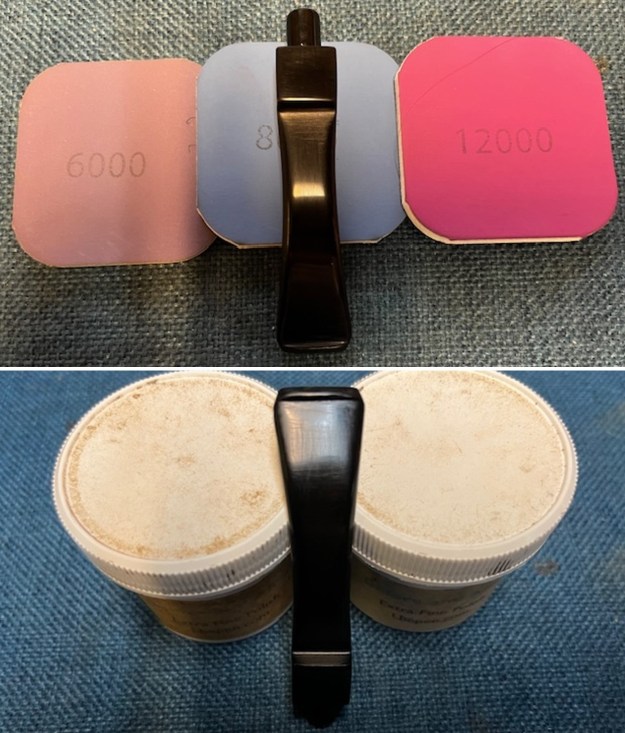
Now it was time to work on the pipe itself. Because the seller had done a fairly good job in his clean up it would not take much on the bowl and shank. I decided to take the cake back to bare briar so I could check out the condition of the walls. I cleaned up the remaining cake in the bowl with a Savinelli Fitsall Pipe Knife. I sanded the bowl walls with 220 grit sandpaper wrapped around a piece of dowel. I wiped down the inside with a damp cloth and checked for damage to the walls. There was no heat or burn damage on the walls which is always a relief for me.I did a quick clean up of the shank and the stem. Both were very clean and by and large I just removed dust and some debris in the shank from the reaming. The stem photo shows the stem after my rework of the button and slope so inevitably debris on the pipe cleaners came from that. It was nicely cleaned up by the seller.I decided to use the least intrusive method of getting the stem to seat well in the shank first. I used a knife to give the inner edge of the shank a bevel and sanded it smooth. I wanted to see if that would help. Unfortunately, it did not seem to make a difference. The fit still wans not snug. (By the way you can see the button shape in the first photo below. It shows the trough and the new button quite clearly.)I looked through the various bands and ferrules I have in a bag here and found an interesting thin brass ferrule that file well and did not cover the signature on the shank. The hole in the center was not quite big enough for the tenon to slip in. I used a cordless drill and drill the hole to fit. I found that doing it on the shank held it firmly in place and kept me from drilling off centre. Oh if I had a drill press it certainly would have been much easier but I have to use what is available to me at the moment. I tried the fit of the stem to the shank and it was perfect. I glued the ferrule in place with all-purpose glue. Once the glue set I gave the edges of the drilled hole a slight inward bevel and started polishing it out. I would need to take it through the regimen of the micromesh pads but it was looking pretty good. I took photos of the newly capped shank end to show the look of the pipe at this point. Once I finished the reshaping of the stem and the button I would put them together and take photos. I put the stem on the shank and looked it over and was happy with what I saw at this point. I worked Before & After Restoration Balm deep into the smooth finish to clean, enliven and protect the briar. I rubbed it in with my fingers and a shoe brush. I worked it into the finish then set it aside to dry for 10-15 minutes. I wiped it off with a soft cloth and buffed the bowl with a cotton cloth to polish it. It really began to have a deep shine in the briar. I took some photos of the bowl at this point to mark the progress in the restoration. The rustication on the bowl stands out with interesting lines moving across the sides of the bowl and the shank. I set the bowl aside and turned my attention to reshaping the stem and the button. I started the process by filling in the notches on each side of the button and stem surface with black CA glue. I also filled in some of the deeper pits in the button surface at the same time that had been left behind when the button had been shaped. This was merely the first step so it is hard to know what it looks like yet. Once the repairs cured I used a rasp to flatten out the stem surface ahead of the trough that had been carved. I want to change the flow of the pipe to a smoother transition from the stem to the button. The trough was ragged and did not work for me.I used a folded piece of 220 grit sandpaper to continue to shape the stem and the button. I wanted to smooth out the transition of the trough and the angle of the stem from the saddle to the button. There was still a ways to go but it was definitely looking better. I started polishing the stem flow and shape of the button with sanding pads – dry sanding with 320-3500 grit pads. I wiped down the stem after each pad with an Obsidian Oil cloth and the stem began to really show the shape of the button and the flow from the saddle to the button.With the stem ready for the final polishing I decided to pause and reshape the slot in the button. The first photo shows where I started. It was basically a rectangular cut. I wanted to make it follow the width and curve of the elliptical button shape. I used some small needle files to accomplish what I was looking for. I used a triangular shaped blade to start the process of taking the cut to the edges of the button. I followed that with an oval and a round needle file to get an elliptical shape. I cleaned up the top and bottom edge of the slot with a round needle file. I think it looks much better and the slot is shaped like a Y thus spreading the smoke into the smoker’s mouth. I polished the vulcanite stem with micromesh sanding pads – dry sanding it with 1500-12000 grit pads. I wiped the stem down after each sanding pad with Obsidian Oil and set it aside to dry. I polished it further with Before & After Pipe Polish – using both the Fine and Extra Fine Polishes. I gave it a rubdown with Obsidian Oil one last time and set it aside. I put the House of Robertson Chunk Bark Finish Apple and reshaped saddle stem back together and worked the pipe over on the buffing wheel using Blue Diamond to lightly polish the stem. I buffed the bowl and stem to raise the gloss on the briar and the vulcanite. I gave the bowl multiple coats of Conservator’s Wax and the stem multiple coats of carnauba wax. I buffed the entire pipe with a clean buffing pad on the wheel to raise the shine. I hand buffed it with a microfiber cloth to deepen the shine. The finished the House of Robertson Chunky Apple is shown in the photos below. The dark brown stains on the Bark finish of the chunky apple bowl works well with the rich black of the vulcanite stem. The dimensions of the pipe are: Length: 6 inches, Height: 2 inches, Outside Diameter: 1 ¼ inches, Diameter of the chamber: ¾ of an inch. The weight of the pipe is 73 grams/2.54 ounces. This is an interesting piece of briar with a rugged old tree bark rustication is unique and looks great. I hope to enjoy this pipe tomorrow afternoon on the front porch with a great bowl of good Virginia. Thanks for walking with me through the restoration process.

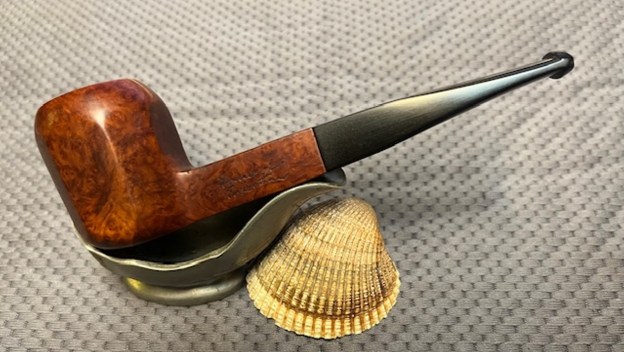
What a Beautiful Square Shank Saddle Stem Apple from the House of Robertson


Blog by Steve Laug

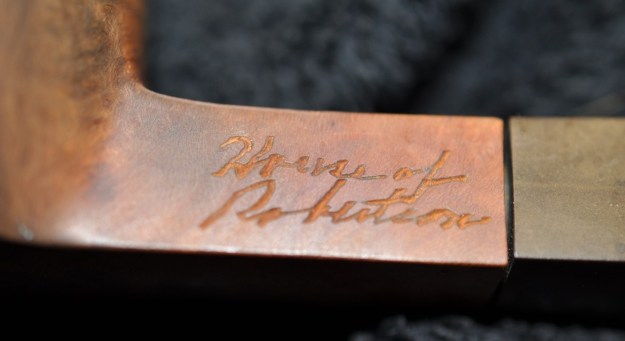
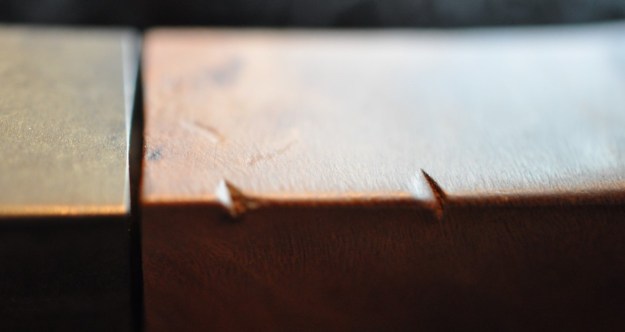
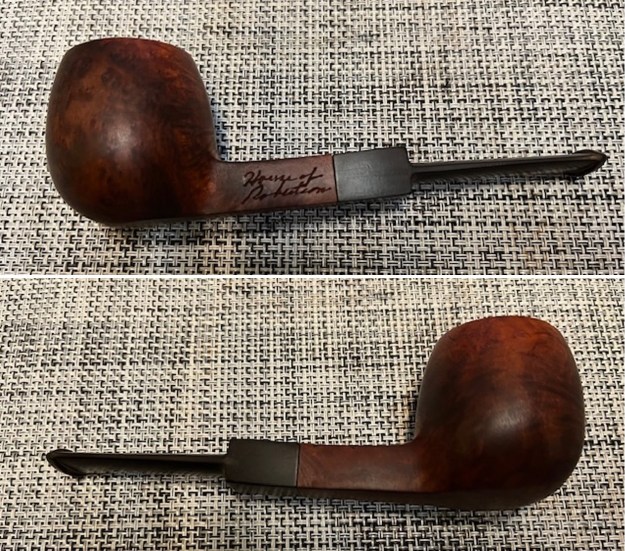
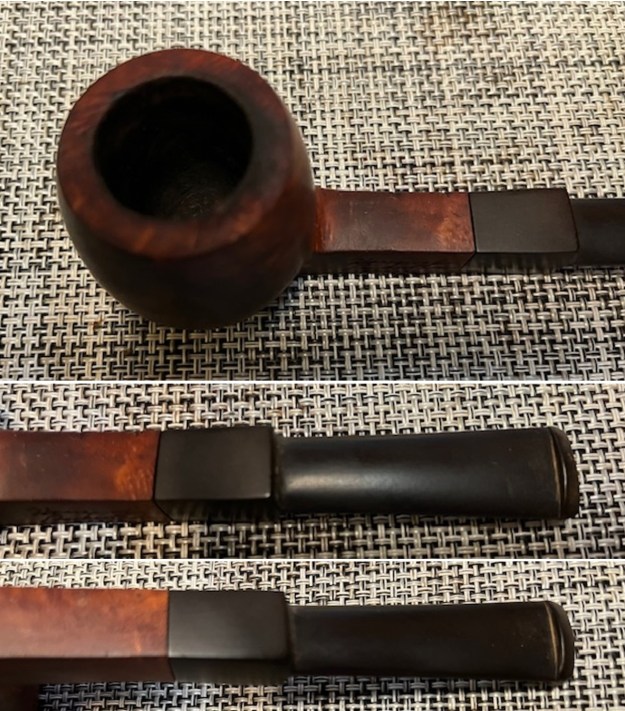
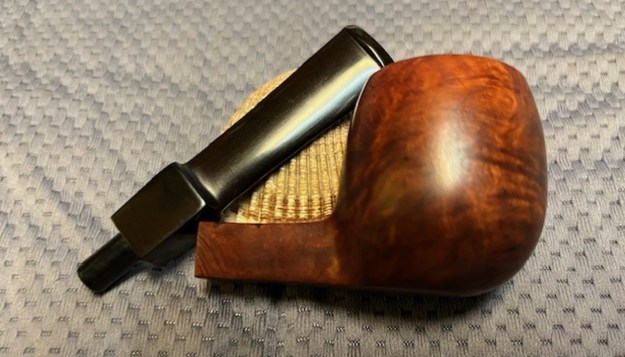
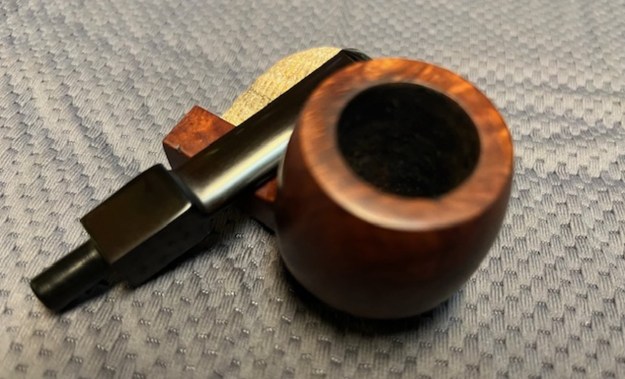
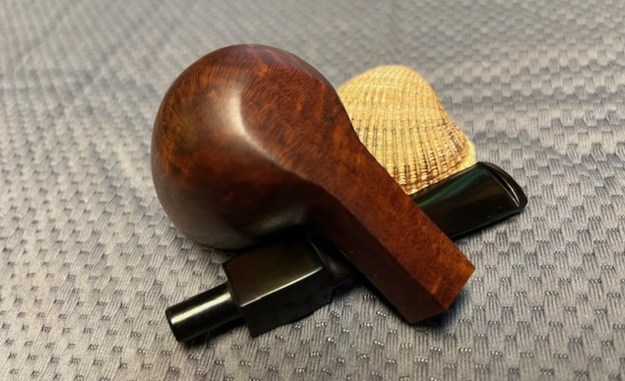
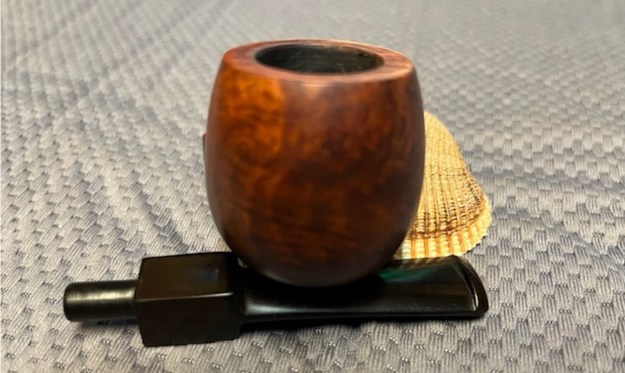
The next pipe on the work table is the last of the House of Robertson pipes we picked up. It was separate purchase from the previous five HOR pipes. It another beautiful Apple with a square shank and saddle stem. We bought off eBay on 08/03/2023 from the same seller as the others in Niles, Michigan, USA. It is a classic shaped pipe. The name House of Robertson is roughly hand-etched on the left side of the square shank with an engraving tool. This pipe is a well shaped Apple with a square shank so the pipe sits nicely on the desk top as a sitter. The bowl has some interesting mixed grain on the sides of the bowl and shank. The bowl is thickly caked with some lava overflow on the rim top. The outer and inner edges of the rim look to be in good condition. The pipe was dirty but underneath all of the grime it appears to be in excellent condition. It is definitely an interesting pipe and should clean up very well. The fit of the stem to the shank was good. The saddle stem was oxidized and calcified. There are light tooth marks and chatter on both sides near the button. Jeff took photos of the pipe before he started the cleanup. Jeff took photos of the pipe before he started his clean up work. Jeff took photos show the condition of the bowl and the stem. The photos of the bowl and rim show the cake in the bowl and the lava overflowing onto the rim top. The grain on the top of the bowl and the inner and outer edge of the rim are pretty well covered in lava. It was hard to know what the edges and top really looked like until we cleaned it. The square saddle stem was oxidized, calcified and had tooth chatter and marks on both sides of the stem near the button. The photos of the sides and heel of the bowl show some stunning and unique grain all around the pipe. The finish makes the grain really stand out on the bowl and shank. The next photo shows the etched name on the left side of shank on the shank. It reads House of Robertson. Jeff also took a photo of the nicks in the shank on the top right side of the square shank. The clean up had shrunken them a bit but they are still visible. My plan was to leave them as part of the story of the pipe’s  journey.I am including the information that I found when I received my first of the House of Robertson Pipes. I found a link on Pipedia that gave me the only information I could find on the brand. I include that in total as it is interesting to read.

“House of Robertson” was in business for many years, but alas, closed their doors in 1999. They were located in Boise, Idaho. They are noted for making rather large and interesting pipes. Thayne Robertson was a Master Mason, AF & AM, and started the shop about 1947 and his son Jon started working there in 1970 when he finished college, along with Thayne’s daughter. Thayne and his son started making the big pipes at that time, and made them together until 1987 when Thayne passed away. Jon kept the store and his sister moved on to other things. The House of Robertson appears to have closed around 1999 (https://pipedia.org/wiki/Robertson).

Since then I have worked on a lot of House of Robertson pipes and have been able to track down more information. I am including a link to a Catalogue that I picked up on eBay. Click on the link and have a look at this interesting book of information on the brand and the pipe maker himself (https://rebornpipes.com/2022/12/11/a-house-of-robertson-catalogue-filled-with-great-examples-of-thayne-robertsons-work/).

I am also including a biography of Thayne Robertson that I found on Facebook from a fellow in Boise, Idaho. It is an interesting read into the mind of the pipe maker. Make sure to take time to read it (https://rebornpipes.com/2021/10/31/house-of-robertson-pipes-boise-pipe-carver-thayne-robertson/).

Now it was time to work on the pipe itself. When it gets to Vancouver it my turn to contribute to its restoration. Jeff did a great job cleaning the pipe on the inside and outside. He reamed the bowl with a PipNet pipe reamer and cleaned up the remnants with the Savinelli Fitsall Pipe Knife. He scrubbed out the mortise and the airway in the shank and stem with alcohol, cotton swabs and pipe cleaners. He scrubbed the exterior of the bowl with a tooth brush and Murphy’s Oil Soap to remove the dust in the rustication on the bowl and shank as well as the smooth portions. He rinsed it under running water. He dried it off with a soft cloth. Once the dust and debris were removed the finish was dull but appeared to be in excellent condition. He soaked the stem in Briarville’s Pipe Stem Deoxidizer and rinsed it under warm water to remove the deoxidizer gel solution. I took photos of the pipe to show its condition before I started my work on it. I took a photo of the bowl and rim top to show how well it had cleaned up. There is some rim darkening but you can see the interesting grain on the top of the bowl. The stem tooth marks and chatter are very light.I took a photo of the engraving on the left side of the shank. It is clear and reads as noted above. I also took the stem off the pipe and took a photo of the parts to give a sense of the proportions of the pipe. It is a beauty.I started my work on the pipe by dealing with the darkening on the inner edge of the rim and the darkening on the rim top with a folded piece of 220 grit sandpaper. It looked much better when finished.I polished the bowl and shank with micromesh sanding pads – dry sanding with 1500-12000 grit pads. I wiped the bowl with a damp cotton pad after each sanding pad. The surface began to take on a nice shine. I worked Before & After Restoration Balm deep into the smooth finish to clean, enliven and protect the briar. I hand rubbed it with my fingers and worked it into the finish then set it aside to dry for 10-15 minutes. I wiped it off with a soft cloth. I buffed the bowl with a cotton cloth to polish it. It really began to have a deep shine in the briar. I took some photos of the bowl at this point to mark the progress in the restoration. The grain on the bowl stands out with interesting lines moving across the sides of the bowl and the shank. I set the bowl aside and sanded the stem with the 2 inch square 320-3500 grit sanding pads. I wiped down the stem after each sanding pad. I was able to remove the tooth marks and chatter on both sides with the pads. The stem looked very good.I polished the vulcanite stem with micromesh sanding pads – dry sanding it with 1500-12000 grit pads. I wiped the stem down after each sanding pad with Obsidian Oil and set it aside to dry. I polished it further with Before & After Pipe Polish – using both the Fine and Extra Fine Polishes. I gave it a rubdown with Obsidian Oil one last time and set it aside. I put the House of Robertson Square Shank Saddle Stem Apple back together and worked the pipe over on the buffing wheel using Blue Diamond to lightly polish the stem. I buffed the bowl and stem to raise the gloss on the briar and the vulcanite. I gave the pipe multiple coats of carnauba wax. I buffed the entire pipe with a clean buffing pad to raise the shine. I hand buffed it with a microfiber cloth to deepen the shine. The finished the House of Robertson Apple is shown in the photos below. The medium brown stains on the smooth Billiard shaped bowl works well with the rich black of the vulcanite stem. The dimensions of the pipe are: Length: 5 ½ inches, Height: 1 ¾ inches, Outside Diameter: 1 ¼ inches, Diameter of the chamber: ¾ inches. The weight of the pipe is 42 grams/1.45 ounces. This is an interesting piece of briar, cross grain and birdseye on the bowl and shank. I really like how the briar and the vulcanite work well together. This one will soon be on the rebornpipes store. If you are interested in adding a House of Robertson to your collection this may well be the one for you. Thanks for walking with me through the restoration process.
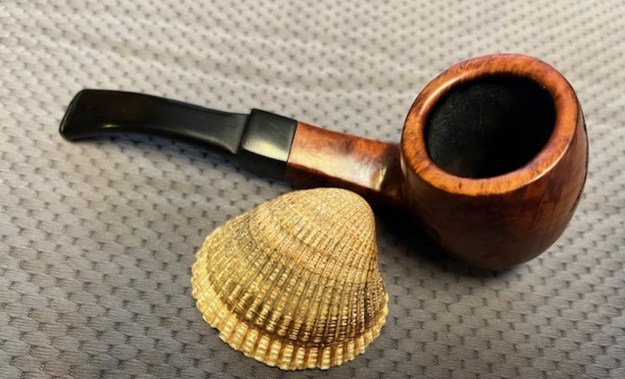
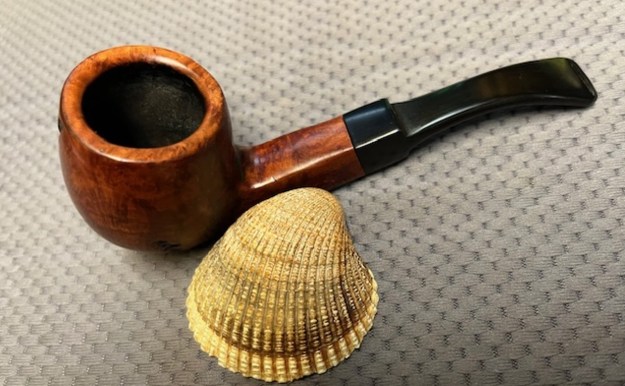
What a Beautiful taper stem Apple from the House of Robertson


Blog by Steve Laug

The next pipe on the work table is a change of pace for me. It was purchased along with the three pipes I have worked on recently and two additional pipes. The one I have chosen to work on is an beautiful Apple with a taper stem. We bought the five pipes off eBay on 07/28/2023 from Niles, Michigan, USA. They are all classic shaped pipes. The name House of Robertson is roughly hand-etched on the left side of the shank with an engraving tool. This pipe is a well shaped taper stem Apple with the bottom of the shank flat so the pipe sits nicely on the desk top as a sitter. The bowl has some interesting mixed grain on the sides of the bowl and shank. The bowl is thickly caked with some lava overflow on the rim top. The outer and inner edges of the rim look to be in good condition. The pipe was dirty but underneath all of the grime it appears to be in excellent condition. It is definitely an interesting pipe and should clean up very well. The fit of the stem to the shank was good. The taper stem was oxidized and calcified. There are light tooth marks and chatter on both sides near the button. Jeff took photos of the pipe before he started the cleanup. Jeff took photos of the pipe before he started his clean up work. Jeff took photos show the condition of the bowl and the stem. The photos of the bowl and rim show the cake in the bowl and the lava overflowing onto the rim top. The grain on the top of the bowl and the inner and outer edge of the rim looks really good. It was hard to know what the edges and top really looked like until we cleaned it. The square taper stem was oxidized, calcified and had tooth chatter and marks on both sides of the stem near the button. The photos of the sides and heel of the bowl show some stunning and unique grain all around the pipe. The finish makes the grain really stand out on the bowl and shank. The next photo shows the etched name on the left side of shank on the shank. It reads House of Robertson.I am including the information that I found when I received my first of the House of Robertson Pipes. I found a link on Pipedia that gave me the only information I could find on the brand. I include that in total as it is interesting to read.

“House of Robertson” was in business for many years, but alas, closed their doors in 1999. They were located in Boise, Idaho. They are noted for making rather large and interesting pipes. Thayne Robertson was a Master Mason, AF & AM, and started the shop about 1947 and his son Jon started working there in 1970 when he finished college, along with Thayne’s daughter. Thayne and his son started making the big pipes at that time, and made them together until 1987 when Thayne passed away. Jon kept the store and his sister moved on to other things. The House of Robertson appears to have closed around 1999 (https://pipedia.org/wiki/Robertson).

Since then I have worked on a lot of House of Robertson pipes and have been able to track down more information. I am including a link to a Catalogue that I picked up on eBay. Click on the link and have a look at this interesting book of information on the brand and the pipe maker himself (https://rebornpipes.com/2022/12/11/a-house-of-robertson-catalogue-filled-with-great-examples-of-thayne-robertsons-work/).

I am also including a biography of Thayne Robertson that I found on Facebook from a fellow in Boise, Idaho. It is an interesting read into the mind of the pipe maker. Make sure to take time to read it (https://rebornpipes.com/2021/10/31/house-of-robertson-pipes-boise-pipe-carver-thayne-robertson/).

Now it was time to work on the pipe itself. When it gets to Vancouver it my turn to contribute to its restoration. Jeff did a great job cleaning the pipe on the inside and outside. He reamed the bowl with a PipNet pipe reamer and cleaned up the remnants with the Savinelli Fitsall Pipe Knife. He scrubbed out the mortise and the airway in the shank and stem with alcohol, cotton swabs and pipe cleaners. He scrubbed the exterior of the bowl with a tooth brush and Murphy’s Oil Soap to remove the dust in the rustication on the bowl and shank as well as the smooth portions. He rinsed it under running water. He dried it off with a soft cloth. Once the dust and debris were removed the finish was dull but appeared to be in excellent condition. He soaked the stem in Briarville’s Pipe Stem Deoxidizer and rinsed it under warm water to remove the deoxidizer gel solution. I took photos of the pipe to show its condition before I started my work on it. I took a photo of the bowl and rim top to show how well it had cleaned up. There is some rim darkening but you can see the interesting grain on the top of the bowl. The stem tooth marks and chatter are very light.I took a photo of the engraving on the left side of the shank. It is clear and reads as noted above. I also took the stem off the pipe and took a photo of the parts to give a sense of the proportions of the pipe. It is a beauty.I started my work on the pipe by dealing with the darkening on the inner edge of the rim and the darkening on the rim top with a folded piece of 220 grit sandpaper. It looked much better when finished.I polished the bowl and shank with micromesh sanding pads – dry sanding with 1500-12000 grit pads. I wiped the bowl with a damp cotton pad after each sanding pad. The surface began to take on a nice shine. I worked Before & After Restoration Balm deep into the smooth finish to clean, enliven and protect the briar. I hand rubbed it with my fingers and worked it into the finish then set it aside to dry for 10-15 minutes. I wiped it off with a soft cloth. I buffed the bowl with a cotton cloth to polish it. It really began to have a deep shine in the briar. I took some photos of the bowl at this point to mark the progress in the restoration. The grain on the bowl stands out with interesting lines moving across the sides of the bowl and the shank. I set the bowl aside and sanded the stem with the 2 inch square 320-3500 grit sanding pads. I wiped down the stem after each sanding pad. I was able to remove the tooth marks and chatter on both sides with the pads. The stem looked very good.I polished the vulcanite stem with micromesh sanding pads – dry sanding it with 1500-12000 grit pads. I wiped the stem down after each sanding pad with Obsidian Oil and set it aside to dry. I polished it further with Before & After Pipe Polish – using both the Fine and Extra Fine Polishes. I gave it a rubdown with Obsidian Oil one last time and set it aside.I put the House of Robertson Taper Stem Apple back together and worked the pipe over on the buffing wheel using Blue Diamond to lightly polish the stem. I buffed the bowl and stem to raise the gloss on the briar and the vulcanite. I gave the pipe multiple coats of carnauba wax. I buffed the entire pipe with a clean buffing pad to raise the shine. I hand buffed it with a microfiber cloth to deepen the shine. The finished the House of Robertson Apple is shown in the photos below. The medium brown stains on the smooth Billiard shaped bowl works well with the rich black of the vulcanite stem. The dimensions of the pipe are: Length: 5 ¾ inches, Height: 1 ¾ inches, Outside Diameter: 1 ¼ inches, Diameter of the chamber: ¾ inches. The weight of the pipe is 48 grams/1.69 ounces. This is an interesting piece of briar, cross grain and birdseye on the bowl and shank. The patterns on the sides are almost circular. I really like how the briar and the vulcanite work well together. This one will soon be on the rebornpipes store. If you are interested in adding a House of Robertson to your collection this may well be the one for you. Thanks for walking with me through the restoration process.
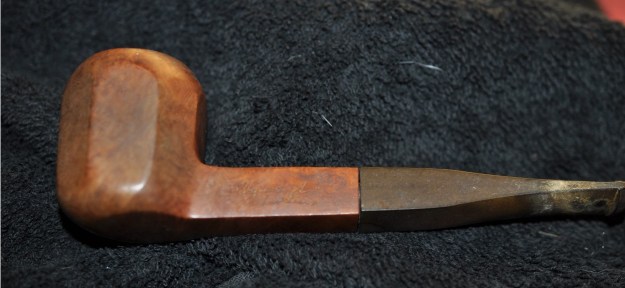
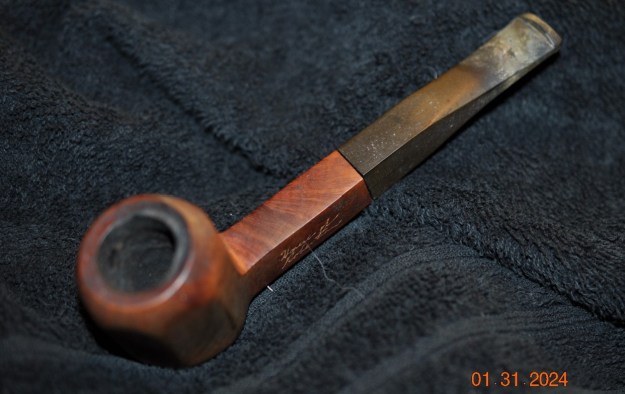
What a Beautiful Octagonal Square Shank Billiard from the House of Robertson


Blog by Steve Laug

The next pipe on the work table is a change of pace for me. It was purchased along with the three pipes I have worked on recently and two additional pipes. The one I have chosen to work on is an octagonal bowl, square shank billiard. We bought the five pipes off eBay on 07/28/2023 from Niles, Michigan, USA. It was one of five House of Robertson pipes we purchased on that date. They are all classic shaped pipes. The name House of Robertson is roughly hand-etched on the left side of the shank with an engraving tool. This pipe is a well shaped taper stem octagonal square shank Billiard with the bottom of the bowl/shank flat so the pipe sits nicely on the desk top as a sitter. The bowl has some interesting mixed grain on the sides of the bowl and shank. The bowl is thickly caked with some lava overflow on the rim top. The outer and inner edges of the rim look to be in good condition. The pipe was dirty but underneath all of the grime it appears to be in excellent condition. It is definitely an interesting pipe and should clean up very well. The fit of the stem to the shank was good. The taper stem was oxidized and calcified. There are light tooth marks and chatter on both sides near the button. Jeff took photos of the pipe before he started the cleanup. Jeff took photos of the pipe before he started his clean up work. Jeff took photos show the condition of the bowl and the stem. The photos of the bowl and rim show the cake in the bowl and the lava overflowing onto the rim top. The grain on the top of the bowl and the inner and outer edge of the rim looks really good. It was hard to know what the edges and top really looked like until we cleaned it. The square taper stem was oxidized, calcified and had tooth chatter and marks on both sides of the stem near the button. The photos of the sides and heel of the bowl show some stunning and unique grain all around the pipe. The finish makes the grain really stand out on the bowl and shank. The next photo shows the etched name on the left side of shank on the shank. It reads House of Robertson.I am including the information that I found when I received my first of the House of Robertson Pipes. I found a link on Pipedia that gave me the only information I could find on the brand. I include that in total as it is interesting to read.

“House of Robertson” was in business for many years, but alas, closed their doors in 1999. They were located in Boise, Idaho. They are noted for making rather large and interesting pipes. Thayne Robertson was a Master Mason, AF & AM, and started the shop about 1947 and his son Jon started working there in 1970 when he finished college, along with Thayne’s daughter. Thayne and his son started making the big pipes at that time, and made them together until 1987 when Thayne passed away. Jon kept the store and his sister moved on to other things. The House of Robertson appears to have closed around 1999 (https://pipedia.org/wiki/Robertson).

Since then I have worked on a lot of House of Robertson pipes and have been able to track down more information. I am including a link to a Catalogue that I picked up on eBay. Click on the link and have a look at this interesting book of information on the brand and the pipe maker himself (https://rebornpipes.com/2022/12/11/a-house-of-robertson-catalogue-filled-with-great-examples-of-thayne-robertsons-work/).

I am also including a biography of Thayne Robertson that I found on Facebook from a fellow in Boise, Idaho. It is an interesting read into the mind of the pipe maker. Make sure to take time to read it (https://rebornpipes.com/2021/10/31/house-of-robertson-pipes-boise-pipe-carver-thayne-robertson/).

Now it was time to work on the pipe itself. When it gets to Vancouver it my turn to contribute to its restoration. Jeff did a great job cleaning the pipe on the inside and outside. He reamed the bowl with a PipNet pipe reamer and cleaned up the remnants with the Savinelli Fitsall Pipe Knife. He scrubbed out the mortise and the airway in the shank and stem with alcohol, cotton swabs and pipe cleaners. He scrubbed the exterior of the bowl with a tooth brush and Murphy’s Oil Soap to remove the dust in the rustication on the bowl and shank as well as the smooth portions. He rinsed it under running water. He dried it off with a soft cloth. Once the dust and debris were removed the finish was dull but appeared to be in excellent condition. He soaked the stem in Briarville’s Pipe Stem Deoxidizer and rinsed it under warm water to remove the deoxidizer gel solution. I took photos of the pipe to show its condition before I started my work on it. I took a photo of the bowl and rim top to show how well it had cleaned up. There is some rim darkening but you can see the interesting grain on the top of the bowl. The stem tooth marks and chatter are very light.I took a photo of the engraving on the left side of the shank. It is clear and reads as noted above. I also took the stem off the pipe and took a photo of the parts to give a sense of the proportions of the pipe. It is a beauty.I started my work on the pipe by dealing with the darkening on the inner edge of the rim and the darkening on the rim top with a folded piece of 220 grit sandpaper. It looked much better when finished.I polished the bowl and shank with micromesh sanding pads – dry sanding with 1500-12000 grit pads. I wiped the bowl with a damp cotton pad after each sanding pad. The surface began to take on a nice shine. I worked Before & After Restoration Balm deep into the smooth finish to clean, enliven and protect the briar. I hand rubbed it with my fingers and worked it into the finish then set it aside to dry for 10-15 minutes. I wiped it off with a soft cloth. I buffed the bowl with a cotton cloth to polish it. It really began to have a deep shine in the briar. I took some photos of the bowl at this point to mark the progress in the restoration. The grain on the bowl stands out with interesting lines moving across the sides of the bowl and the shank. I set the bowl aside and sanded the stem with the 2 inch square 320-3500 grit sanding pads. I wiped down the stem after each sanding pad. I was able to remove the tooth marks and chatter on both sides with the pads. The stem looked very good.I polished the vulcanite stem with micromesh sanding pads – dry sanding it with 1500-12000 grit pads. I wiped the stem down after each sanding pad with Obsidian Oil and set it aside to dry. I polished it further with Before & After Pipe Polish – using both the Fine and Extra Fine Polishes. I gave it a rubdown with Obsidian Oil one last time and set it aside. I put the House of Robertson Octagonal Square Shank Taper Stem Billiard back together and worked the pipe over on the buffing wheel using Blue Diamond to lightly polish the stem. I buffed the bowl and stem to raise the gloss on the briar and the vulcanite. I gave the pipe multiple coats of carnauba wax. I buffed the entire pipe with a clean buffing pad to raise the shine. I hand buffed it with a microfiber cloth to deepen the shine. The finished the House of Robertson Octagonal Billiard is shown in the photos below. The medium brown stains on the smooth Billiard shaped bowl works well with the rich black of the vulcanite stem. The dimensions of the pipe are: Length: 5 ½ inches, Height: 1 ½ inches, Outside Diameter: 1 ¼ inches, Diameter of the chamber: ¾ inches. The weight of the pipe is 38 grams/1.34 ounces. This is an interesting piece of briar, cross grain and birdseye on the bowl and shank. The patterns on the sides are almost circular. I really like how the briar and the vulcanite work well together. This one will soon be on the rebornpipes store in the American (US) Pipemakers section. If you are interested in adding a House of Robertson to your collection this may well be the one for you. Thanks for walking with me through the restoration process.
A Beautifully Grained Saddle Stem Pot from the House of Robertson


Blog by Steve Laug

The next pipe on the work table is a change of pace for me. It was purchased as one of three pipes off eBay on 07/28/2023 from Niles, Michigan, USA. It was the third of three House of Robertson pipes – two billiards and a pot. This one is a nicely grained Pot shaped pipe. The name House of Robertson is roughly hand-etched on the left side of the shank with an engraving tool. The pipe is a well shaped saddle stem Pot with the bottom of the shank flat and the pipe sits nicely on the desk top like a sitter. The bowl has some interesting flame grain on it along with a mix of other grains. The bowl is thickly caked with some lava overflow on the rim top. The outer and inner edges of the rim look to be in good condition. The pipe was dirty but underneath all of the grime it appears to be in excellent condition. It is definitely an interesting pipe and should clean up very well. The fit of the stem to the shank was good. The taper stem was oxidized and calcified. There are light tooth marks and chatter on both sides near the button. Jeff took photos of the pipe before he started the cleanup. Jeff took photos show the condition of the bowl and the stem. The photos of the bowl and rim show the cake in the bowl and the heavy lava overflowing onto the rim top. It was hard to know what the edges and top really looked like until we cleaned it. The saddle stem was oxidized, calcified and had tooth chatter and marks on both sides of the stem near the button. The photos of the sides and heel of the bowl show some stunning and unique grain all around the pipe. The finish makes the grain really stand out on the bowl and shank. The next photo shows the etched name on the left side of shank on the shank. It reads House of Robertson.I am including the information that I found when I received my first of the House of Robertson Pipes. I found a link on Pipedia that gave me the only information I could find on the brand. I include that in total as it is interesting to read.

“House of Robertson” was in business for many years, but alas, closed their doors in 1999. They were located in Boise, Idaho. They are noted for making rather large and interesting pipes. Thayne Robertson was a Master Mason, AF & AM, and started the shop about 1947 and his son Jon started working there in 1970 when he finished college, along with Thayne’s daughter. Thayne and his son started making the big pipes at that time, and made them together until 1987 when Thayne passed away. Jon kept the store and his sister moved on to other things. The House of Robertson appears to have closed around 1999 (https://pipedia.org/wiki/Robertson).

Since then I have worked on a lot of House of Robertson pipes and have been able to track down more information. I am including a link to a Catalogue that I picked up on eBay. Click on the link and have a look at this interesting book of information on the brand and the pipe maker himself (https://rebornpipes.com/2022/12/11/a-house-of-robertson-catalogue-filled-with-great-examples-of-thayne-robertsons-work/).

I am also including a biography of Thayne Robertson that I found on Facebook from a fellow in Boise, Idaho. It is an interesting read into the mind of the pipe maker. Make sure to take time to read it (https://rebornpipes.com/2021/10/31/house-of-robertson-pipes-boise-pipe-carver-thayne-robertson/).

Now it was time to work on the pipe itself. When it gets to Vancouver it my turn to contribute to its restoration. Jeff did a great job cleaning the pipe on the inside and outside. He reamed the bowl with a PipNet pipe reamer and cleaned up the remnants with the Savinelli Fitsall Pipe Knife. He scrubbed out the mortise and the airway in the shank and stem with alcohol, cotton swabs and pipe cleaners. He scrubbed the exterior of the bowl with a tooth brush and Murphy’s Oil Soap to remove the dust in the rustication on the bowl and shank as well as the smooth portions. He rinsed it under running water. He dried it off with a soft cloth. Once the dust and debris were removed the finish was dull but appeared to be in excellent condition. He soaked the stem in Before & After Pipe Stem Deoxidizer and rinsed it under warm water to remove the deoxidizer gel solution. I took photos of the pipe to show its condition before I started my work on it.  I took a photo of the bowl and rim top to show how well it had cleaned up. There is some rim darkening but you can see the interesting grain on the top of the bowl. The stem tooth marks and chatter are very light.I took a photo of the engraving on the left side of the shank. It is clear and reads as noted above. I also took the stem off the pipe and took a photo of the parts to give a sense of the proportions of the pipe. It is a beauty.I worked on the darkening of the inner edge of the rim and the darkening on the rim top with a folded piece of 220 grit sandpaper. It looked much better when finished.I polished the bowl with micromesh sanding pads – dry sanding with 1500-12000 grit pads. I wiped the bowl with a damp cotton pad after each sanding pad. The surface began to take on a nice shine. I worked Before & After Restoration Balm deep into the smooth finish to clean, enliven and protect the briar. I hand rubbed it with my fingers and worked it into the finish then set it aside to dry for 10-15 minutes. I wiped it off with a soft cloth. I buffed the bowl with a cotton cloth to polish it. It really began to have a deep shine in the briar. I took some photos of the bowl at this point to mark the progress in the restoration. The grain on the bowl stands out with interesting lines moving across the sides of the bowl and the shank. I set the bowl aside and sanded the stem with the 2 inch square 320-3500 grit sanding pads. I wiped down the stem after each sanding pad. I was able to remove the tooth marks and chatter on both sides with the pads. The stem looked very good. I polished the vulcanite stem with micromesh sanding pads – dry sanding it with 1500-12000 grit pads. I wiped the stem down after each sanding pad with Obsidian Oil and set it aside to dry. I polished it further with Before & After Pipe Polish – using both the Fine and Extra Fine Polishes. I gave it a rubdown with Obsidian Oil one last time and set it aside. I put the House of Robertson Saddle Stem Pot back together and worked the pipe over on the buffing wheel using Blue Diamond to lightly polish the stem. I buffed the bowl and stem to raise the gloss on the briar and the vulcanite. I gave the pipe multiple coats of carnauba wax. I buffed the entire pipe with a clean buffing pad to raise the shine. I hand buffed it with a microfiber cloth to deepen the shine. The finished HOR Pot is shown in the photos below. The medium brown stains on the smooth Billiard shaped bowl works well with the rich black of the vulcanite stem. The dimensions of the pipe are: Length: 5 inches, Height: 1 ½ inches, Outside Diameter: 1 ¼ inches, Diameter of the chamber: 7/8 of an inch. The weight of the pipe is 31 grams/1.09 ounces. This is an interesting piece of briar, cross grain and birdseye on the bowl and shank. The patterns on the sides are almost circular. I really like how the briar and the vulcanite work well together. This one will soon be on the rebornpipes store in the American Pipe Making Companies and Makers. If you are interested in adding a House of Robertson to your collection this may well be the one for you. Thanks for walking with me through the restoration process.

Another Lovely Billiard from the House of Robertson with a Taper Stem


Blog by Steve Laug

The next pipe on the work table is a change of pace for me. It was purchased as one of three pipes off eBay on 07/28/2023 from Niles, Michigan, USA. It was the second of three House of Robertson pipes – two billiards and a pot. They are all classic shaped pipes. The name House of Robertson is roughly hand-etched on the left side of the shank with an engraving tool. The pipe is a well shaped taper stem Billiard with the bottom of the shank flat and the pipe sits nicely on the desk top like a sitter. The bowl has some interesting grain on it – birds’ eye on the sides of the bowl and shank and cross grain on the front and the back of the bowl. The bowl is thickly caked with some lava overflow on the rim top. The outer and inner edges of the rim look to be in good condition. The pipe was dirty but underneath all of the grime it appears to be in excellent condition. It is definitely an interesting pipe and should clean up very well. The fit of the stem to the shank was good. The taper stem was oxidized and calcified. There are light tooth marks and chatter on both sides near the button. Jeff took photos of the pipe before he started the cleanup. Jeff took photos show the condition of the bowl and the stem. The photos of the bowl and rim show the cake in the bowl and the lava overflowing onto the rim top. The grain on the top of the bowl and the inner and outer edge of the rim looks really good. It was hard to know what the edges and top really looked like until we cleaned it. The taper stem was oxidized, calcified and had tooth chatter and marks on both sides of the stem near the button. The photos of the sides and heel of the bowl show some stunning and unique grain all around the pipe. The finish makes the grain really stand out on the bowl and shank. The next photo shows the etched name on the left side of shank on the shank. It reads House of Robertson.I am including the information that I found when I received my first of the House of Robertson Pipes. I found a link on Pipedia that gave me the only information I could find on the brand. I include that in total as it is interesting to read.

“House of Robertson” was in business for many years, but alas, closed their doors in 1999. They were located in Boise, Idaho. They are noted for making rather large and interesting pipes. Thayne Robertson was a Master Mason, AF & AM, and started the shop about 1947 and his son Jon started working there in 1970 when he finished college, along with Thayne’s daughter. Thayne and his son started making the big pipes at that time, and made them together until 1987 when Thayne passed away. Jon kept the store and his sister moved on to other things. The House of Robertson appears to have closed around 1999 (https://pipedia.org/wiki/Robertson).

Since then I have worked on a lot of House of Robertson pipes and have been able to track down more information. I am including a link to a Catalogue that I picked up on eBay. Click on the link and have a look at this interesting book of information on the brand and the pipe maker himself (https://rebornpipes.com/2022/12/11/a-house-of-robertson-catalogue-filled-with-great-examples-of-thayne-robertsons-work/).

I am also including a biography of Thayne Robertson that I found on Facebook from a fellow in Boise, Idaho. It is an interesting read into the mind of the pipe maker. Make sure to take time to read it (https://rebornpipes.com/2021/10/31/house-of-robertson-pipes-boise-pipe-carver-thayne-robertson/).

Now it was time to work on the pipe itself. When it gets to Vancouver it my turn to contribute to its restoration. Jeff did a great job cleaning the pipe on the inside and outside. He reamed the bowl with a PipNet pipe reamer and cleaned up the remnants with the Savinelli Fitsall Pipe Knife. He scrubbed out the mortise and the airway in the shank and stem with alcohol, cotton swabs and pipe cleaners. He scrubbed the exterior of the bowl with a tooth brush and Murphy’s Oil Soap to remove the dust in the rustication on the bowl and shank as well as the smooth portions. He rinsed it under running water. He dried it off with a soft cloth. Once the dust and debris were removed the finish was dull but appeared to be in excellent condition. He soaked the stem in Before & After Pipe Stem Deoxidizer and rinsed it under warm water to remove the deoxidizer gel solution. I took photos of the pipe to show its condition before I started my work on it.  I took a photo of the bowl and rim top to show how well it had cleaned up. There is some rim darkening but you can see the interesting grain on the top of the bowl. The stem tooth marks and chatter are very light.I took a photo of the engraving on the left side of the shank. It is clear and reads as noted above. I also took the stem off the pipe and took a photo of the parts to give a sense of the proportions of the pipe. It is a beauty.I worked on the darkening of the inner edge of the rim and the darkening on the rim top with a folded piece of 220 grit sandpaper. It looked much better when finished.I polished the bowl with micromesh sanding pads – dry sanding with 1500-12000 grit pads. I wiped the bowl with a damp cotton pad after each sanding pad. The surface began to take on a nice shine. I worked Before & After Restoration Balm deep into the smooth finish to clean, enliven and protect the briar. I hand rubbed it with my fingers and worked it into the finish then set it aside to dry for 10-15 minutes. I wiped it off with a soft cloth. I buffed the bowl with a cotton cloth to polish it. It really began to have a deep shine in the briar. I took some photos of the bowl at this point to mark the progress in the restoration. The grain on the bowl stands out with interesting lines moving across the sides of the bowl and the shank. I set the bowl aside and sanded the stem with the 2 inch square 320-3500 grit sanding pads. I wiped down the stem after each sanding pad. I was able to remove the tooth marks and chatter on both sides with the pads. The stem looked very good.I polished the vulcanite stem with micromesh sanding pads – dry sanding it with 1500-12000 grit pads. I wiped the stem down after each sanding pad with Obsidian Oil and set it aside to dry. I polished it further with Before & After Pipe Polish – using both the Fine and Extra Fine Polishes. I gave it a rubdown with Obsidian Oil one last time and set it aside. I put the House of Robertson Taper Stem Billiard back together and worked the pipe over on the buffing wheel using Blue Diamond to lightly polish the stem. I buffed the bowl and stem to raise the gloss on the briar and the vulcanite. I gave the pipe multiple coats of carnauba wax. I buffed the entire pipe with a clean buffing pad to raise the shine. I hand buffed it with a microfiber cloth to deepen the shine. The finished HOR Billiard is shown in the photos below. The medium brown stains on the smooth Billiard shaped bowl works well with the rich black of the vulcanite stem. The dimensions of the pipe are: Length: 5 ½ inches, Height: 1 ¾ inches, Outside Diameter: 1 ¼ inches, Diameter of the chamber: ¾ of an inch. The weight of the pipe is 37 grams/1.31 ounces. This is an interesting piece of briar, cross grain and birdseye on the bowl and shank. The patterns on the sides are almost circular. I really like how the briar and the vulcanite work well together. This one will soon be on the rebornpipes store. If you are interested in adding a House of Robertson to your collection this may well be the one for you. Thanks for walking with me through the restoration process.
What a lovely Saddle Stem Billiard from the House of Robertson


Blog by Steve Laug

The next pipe on the work table is a change of pace for me. It was purchased as one of three pipes off eBay on 07/28/2023 from Niles, Michigan, USA. It was one of three House of Robertson pipes – two billiards and a pot. They are all classic shaped pipes. The name House of Robertson is roughly hand-etched on the left side of the shank with an engraving tool. The pipe is a well shaped saddle stem Billiard with the bottom of the shank flat and the pipe sits nicely on the desk top like a sitter. The bowl has some interesting grain on it – birds’ eye on the sides of the bowl and shank and cross grain on the front and the back of the bowl. The bowl is thickly caked with some lava overflow on the rim top. The outer and inner edges of the rim look to be in good condition. The pipe was dirty but underneath all of the grime it appears to be in excellent condition. It is definitely an interesting pipe and should clean up very well. The fit of the stem to the shank was good. The saddle stem was oxidized and calcified. There are light tooth marks and chatter on both sides near the button. Jeff took photos of the pipe before he started the cleanup. Jeff took photos show the condition of the bowl and the stem. The photos of the bowl and rim show the cake in the bowl and the lava overflowing onto the rim top. The grain on the top of the bowl and the inner and outer edge of the rim looks really good. It was hard to know what the edges and top really looked like until we cleaned it. The saddle stem was oxidized, calcified and had tooth chatter and marks on both sides of the stem near the button. The photos of the sides and heel of the bowl show some stunning and unique grain all around the pipe. The finish makes the grain really stand out on the bowl and shank. The next photo shows the etched name on the left side of shank on the shank. It reads House of Robertson.I am including the information that I found when I received my first of the House of Robertson Pipes. I found a link on Pipedia that gave me the only information I could find on the brand. I include that in total as it is interesting to read.

“House of Robertson” was in business for many years, but alas, closed their doors in 1999. They were located in Boise, Idaho. They are noted for making rather large and interesting pipes. Thayne Robertson was a Master Mason, AF & AM, and started the shop about 1947 and his son Jon started working there in 1970 when he finished college, along with Thayne’s daughter. Thayne and his son started making the big pipes at that time, and made them together until 1987 when Thayne passed away. Jon kept the store and his sister moved on to other things. The House of Robertson appears to have closed around 1999 (https://pipedia.org/wiki/Robertson).

Since then I have worked on a lot of House of Robertson pipes and have been able to track down more information. I am including a link to a Catalogue that I picked up on eBay. Click on the link and have a look at this interesting book of information on the brand and the pipe maker himself (https://rebornpipes.com/2022/12/11/a-house-of-robertson-catalogue-filled-with-great-examples-of-thayne-robertsons-work/).

I am also including a biography of Thayne Robertson that I found on Facebook from a fellow in Boise, Idaho. It is an interesting read into the mind of the pipe maker. Make sure to take time to read it (https://rebornpipes.com/2021/10/31/house-of-robertson-pipes-boise-pipe-carver-thayne-robertson/).

Now it was time to work on the pipe itself. When it gets to Vancouver it my turn to contribute to its restoration. Jeff did a great job cleaning the pipe on the inside and outside. He reamed the bowl with a PipNet pipe reamer and cleaned up the remnants with the Savinelli Fitsall Pipe Knife. He scrubbed out the mortise and the airway in the shank and stem with alcohol, cotton swabs and pipe cleaners. He scrubbed the exterior of the bowl with a tooth brush and Murphy’s Oil Soap to remove the dust in the rustication on the bowl and shank as well as the smooth portions. He rinsed it under running water. He dried it off with a soft cloth. Once the dust and debris were removed the finish was dull but appeared to be in excellent condition. He soaked the stem in Before & After Pipe Stem Deoxidizer and rinsed it under warm water to remove the deoxidizer gel solution. I took photos of the pipe to show its condition before I started my work on it. I took a photo of the bowl and rim top to show how well it had cleaned up. There is some rim darkening but you can see the interesting grain on the top of the bowl. The stem tooth marks and chatter are very light.I took a photo of the engraving on the left side of the shank. It is clear and reads as noted above. I also took the stem off the pipe and took a photo of the parts to give a sense of the proportions of the pipe. It is a beauty.I worked on the darkening of the inner edge of the rim and the darkening on the rim top with a folded piece of 220 grit sandpaper. It looked much better when finished.I polished the rim top with micromesh sanding pads – dry sanding with 1500-12000 grit pads. I wiped the bowl with a damp cotton pad after each sanding pad. The surface began to take on a nice shine. I worked Before & After Restoration Balm deep into the smooth finish to clean, enliven and protect the briar. I hand rubbed it with my fingers and worked it into the finish then set it aside to dry for 10-15 minutes. I wiped it off with a soft cloth. I buffed the bowl with a cotton cloth to polish it. It really began to have a deep shine in the briar. I took some photos of the bowl at this point to mark the progress in the restoration. The grain on the bowl stands out with interesting lines moving across the sides of the bowl and the shank. I set the bowl aside and sanded the stem with the 2 inch square 320-3500 grit sanding pads. I wiped down the stem after each sanding pad. I was able to remove the tooth marks and chatter on both sides with the pads. The stem looked very good.I polished the vulcanite stem with micromesh sanding pads – dry sanding it with 1500-12000 grit pads. I wiped the stem down after each sanding pad with Obsidian Oil and set it aside to dry. I polished it further with Before & After Pipe Polish – using both the Fine and Extra Fine Polishes. I gave it a rubdown with Obsidian Oil one last time and set it aside. I put the House of Robertson Saddle Stem Billiard back together and worked the pipe over on the buffing wheel using Blue Diamond to lightly polish the stem. I buffed the bowl and stem to raise the gloss on the briar and the vulcanite. I gave the pipe multiple coats of carnauba wax. I buffed the entire pipe with a clean buffing pad to raise the shine. I hand buffed it with a microfiber cloth to deepen the shine. The finished HOR Billiard is shown in the photos below. The medium brown stains on the smooth Billiard shaped bowl works well with the rich black of the vulcanite stem. The dimensions of the pipe are: Length: 5 1/4 inches, Height: 1 5/8 inches, Outside Diameter: 1 1/4 inches, Diameter of the chamber: 3/4 inches. This is an interesting piece of briar, cross grain and birdseye on the bowl and shank. The patterns on the sides are almost circular. I really like how the briar and the vulcanite work well together. This one will soon be on the rebornpipes store. If you are interested in adding a House of Robertson to your collection this may well be the one for you. Thanks for walking with me through the restoration process.
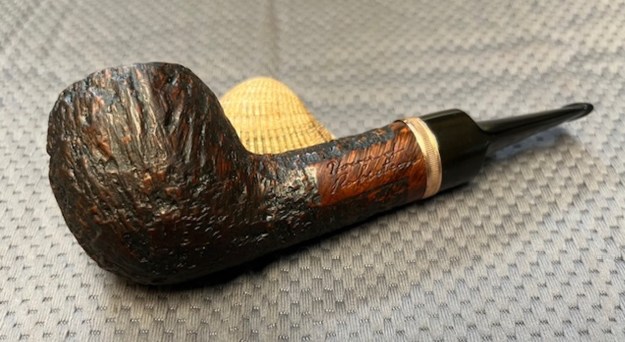
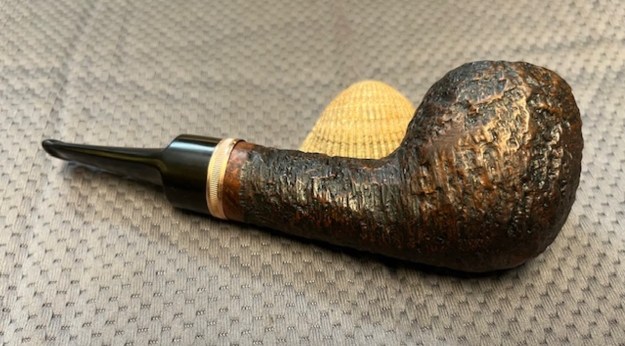
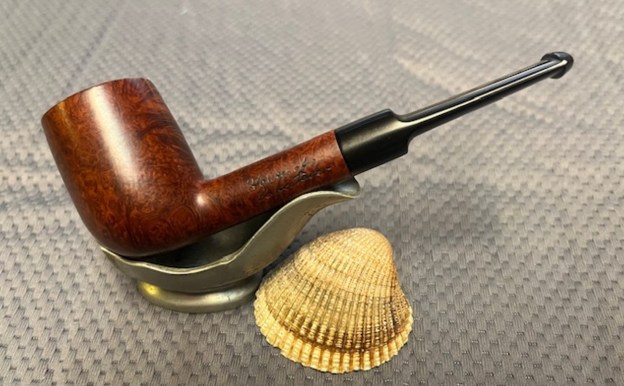
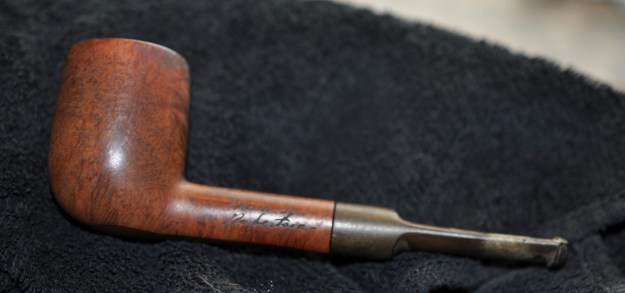
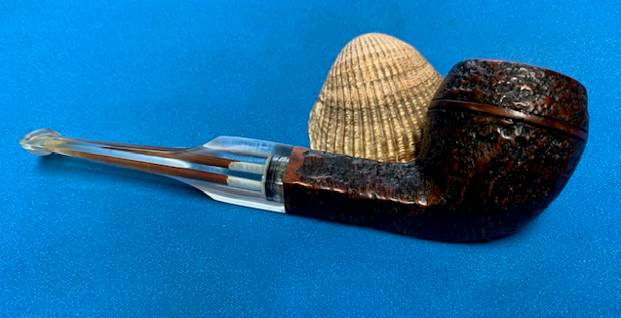
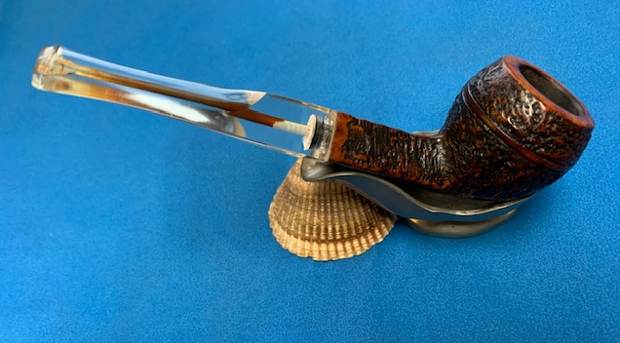
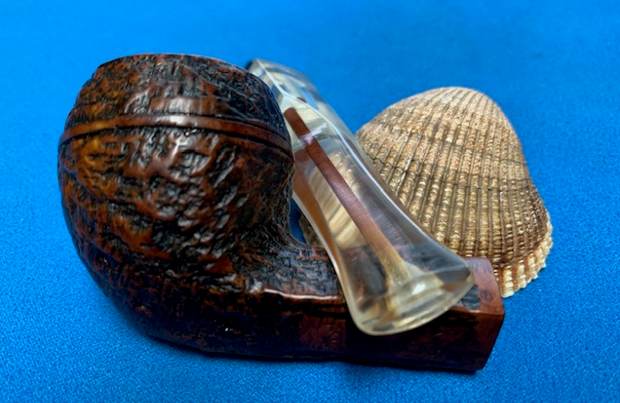
Restoring a Rusticated House of Robertson Bulldog with a Clear Acrylic Stem


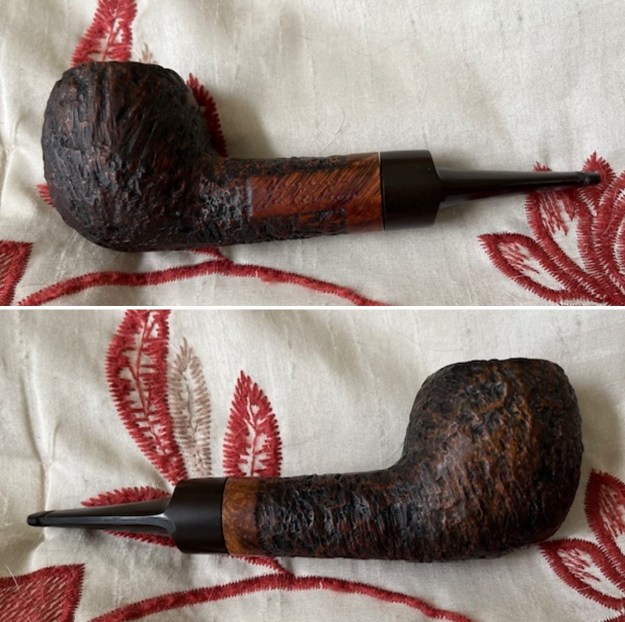
Blog by Steve Laug

My brother Jeff and I visited an older gentleman near Vancouver, Washington recently and enjoyed a few bowls with him and views many of his pipes. After some viewing and conversation he showed me this House of Robertson Bulldog with a clear acrylic stem and gave it to me as a gift. It is a great looking pipe with a smooth rim top and shank end band. When Jeff and I returned to his home I took photos of it to capture what it looked like when I received it. The finish on the pipe was quite clean and had a great rustication around the bowl and shank. The smooth rim top and edges of the bowl had some wear and tear but was redeemable. There were scratches and nicks around the top and edges on the bowl. The pipe had been topped somewhere in its journey and the front of the cap was lower than the back side of the cap. There was a thin cake in the bowl and the inside was dirty with tobacco debris. The pipe had the House of Robertson etching on the left underside of the diamond shank. The clear acrylic stem fit to the shank very well. The tenon fit well in the mortise. There was some tobacco staining in the airway that would need to be dealt with. There were tooth marks and chatter on both sides of the stem ahead of the button. I took the following photos of the pipe to show its condition before I started my clean up. I took a photo of the House of Robertson etched on the left underside of the diamond shank. It is clear and readable.The pipe has the name House of Robertson roughly hand-etched on the left underside of the diamond shank with an engraving tool. I am including the information that I found when I received my first House of Robertson Pipes a few years ago now. I found a link on Pipedia (https://pipedia.org/wiki/Robertson) that gave me the only information I could find on the brand. I include that in total as it is interesting to read.
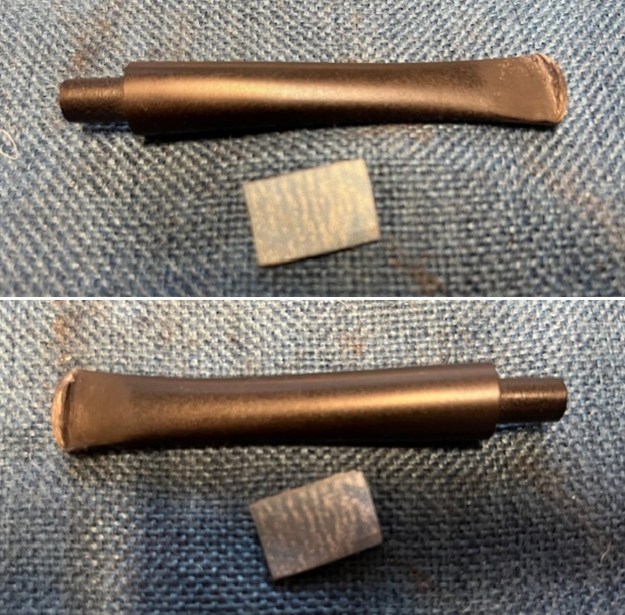
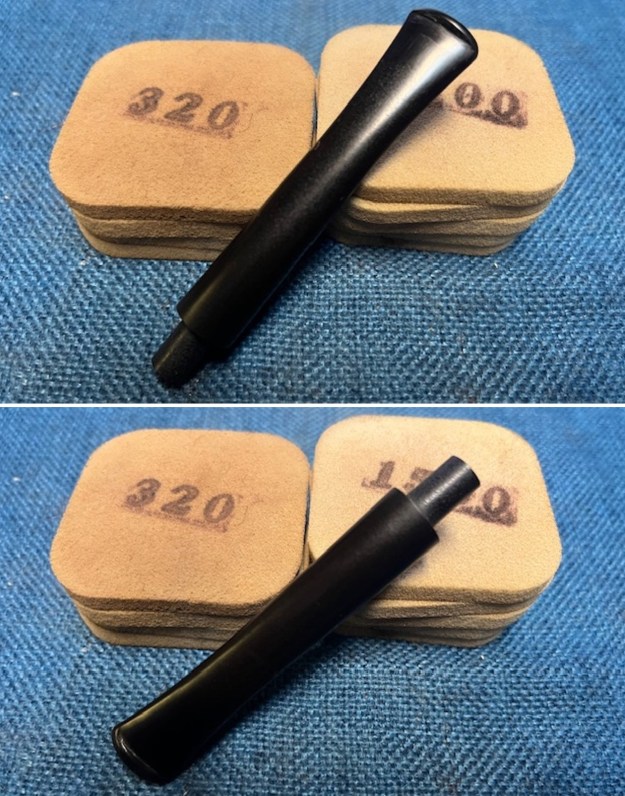
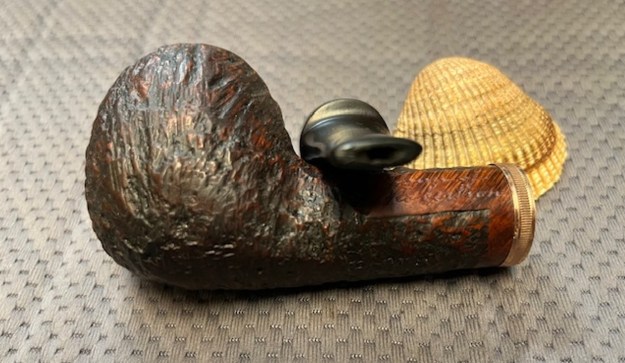
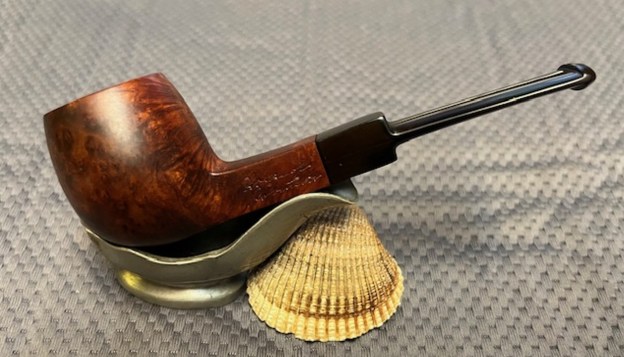
“House of Robertson” was in business for many years, but alas, closed their doors in 1999. They were located in Boise, Idaho. They are noted for making rather large and interesting pipes. Thayne Robertson was a Master Mason, AF & AM, and started the shop about 1947 and his son Jon started working there in 1970 when he finished college, along with Thayne’s daughter. Thayne and his son started making the big pipes at that time, and made them together until 1987 when Thayne passed away. Jon kept the store and his sister moved on to other things. The House of Robertson appears to have closed around 1999.

If you would like to read more about the carver, Thayne Robertson I am including a link to a blog I have included on the site. It is fascinating to read and gives some information on the brand.

https://rebornpipes.com/2021/10/31/house-of-robertson-pipes-boise-pipe-carver-thayne-robertson/

I am also including a scanned version of a House of Robertson catalogue that I have in my collection. Give it a read for more information.

https://rebornpipes.com/2022/12/11/a-house-of-robertson-catalogue-filled-with-great-examples-of-thayne-robertsons-work/

I thoroughly cleaned up the pipe. I reamed it with a PipNet Pipe Reamer and cleaned up the remnants with a Savinelli Fitsall Pipe Knife. I sanded the inside of the bowl with 220 grit sandpaper wrapped around a dowel. The bowl was clean. I cleaned up the damage to the inner edge of the bowl with a folded piece of 220 grit sandpaper. Once finished it was better. I worked on the back side of the rim top with 220 grit sandpaper followed by a medium and fine grit sanding sponge. I wanted to bring the back of the rim cap down to the same thickness as the front of the rim cap to level out the top. Once it was even it looked much better.I scrubbed the exterior of the bowl with undiluted Murphy’s Oil Soap with a tooth brush. He rinsed it under running warm water to remove the soap and grime. I cleaned out the inside of the shank and the airway in the stem with alcohol, cotton swabs and pipe cleaners. I was able to remove a lot of tars and oils from the shank and some of the darkening in the stem and slot.I polished the smooth rim top with micromesh sanding pads – dry sanding with 1500-12000 grit pads. I wiped the top down with a damp cloth after each sanding pad. It had a rich shine once I had finished. I rubbed the bowl down with Before & After Restoration Balm to deep clean the nooks and crannies of the rusticated finish, enliven and protect the briar. I hand rubbed it with my fingers, worked it into the rings with a cotton swab and into the finish with a horsehair shoe brush. I let it sit for 10 minutes to let it do its work. I wiped it off with a soft cloth. I buffed the bowl with a cotton cloth. It really began to have a deep shine in the briar. I took some photos of the bowl at this point to mark the progress in the restoration. I set the bowl aside and turned my attention to the stem. I sanded out the tooth marks with 220 grit sandpaper and started the polishing of the stem with 600 grit wet dry sandpaper.I polished out the sanding scratches and marks in the clear acrylic with micromesh sanding pads – dry sanding it with 1500-12000 grit pads. I wiped the stem down with Obsidian Oil after each sanding pad. I polished it further with Before & After Pipe Polish – using both the Fine and Extra Fine Polishes. I gave it a rubdown with Obsidian Oil one last time and set it aside to dry. I put the House of Robertson Bulldog back together and worked the pipe over on the buffing wheel using Blue Diamond to lightly polish the stem. I buffed the bowl with a light touch so as not to get any of the buffing compounds in the grooves of the rustication. I buffed the stem to raise the gloss on the vulcanite. I gave the bowl multiple coats of Conservator’s Wax and gave the stem multiple coats of carnauba wax. I buffed the entire pipe with a clean buffing pad to raise the shine. I hand buffed it with a microfiber cloth to deepen the shine. The finished HOR Bulldog pipe is shown in the photos below. The medium brown stains on the rusticated Straight Bulldog with a smooth rim top works well with the clear acrylic stem. The dimensions of the pipe are: Length: 5 ½ inches, Height: 1 ¾ inches, Outside Diameter: 1 ¼ inches, Diameter of the chamber: ¾ of an inch. The weight of the pipe is 36 grams/1.27 ounces. This one will be joining my pipe rack as yet another example of House of Robertson Pipes. I thank my friend in Vancouver, Washington for the gift and will certainly enjoy smoking it very soon. Thanks for following my work on this blog.