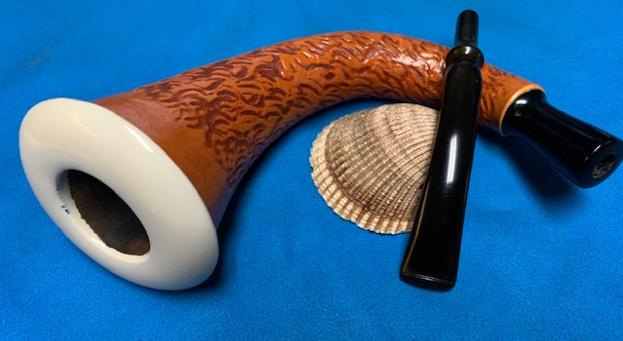
Tag Archives: Gourd Calabash pipes

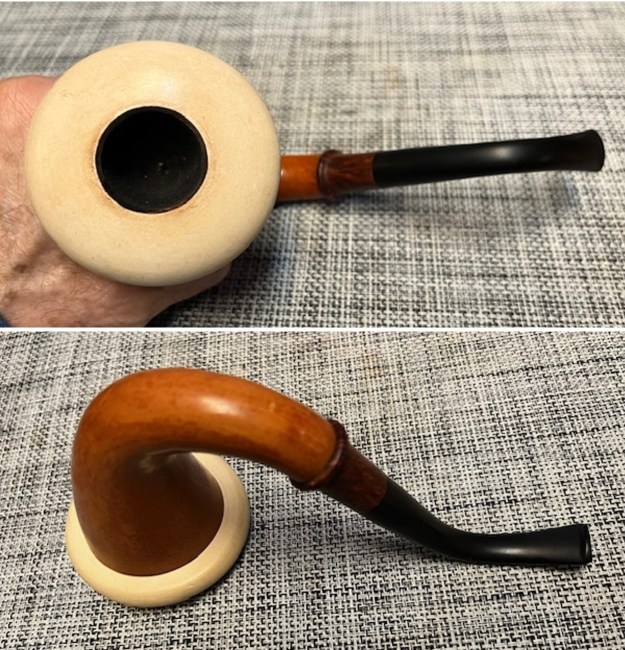
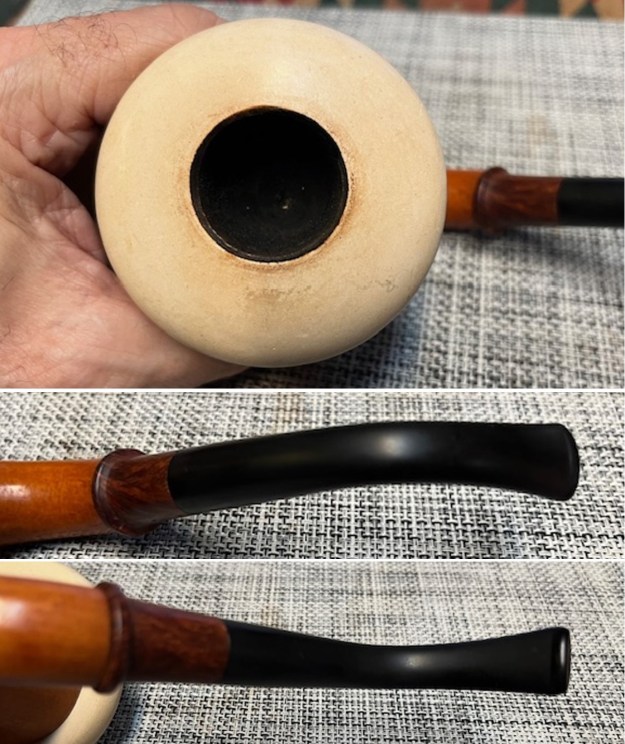
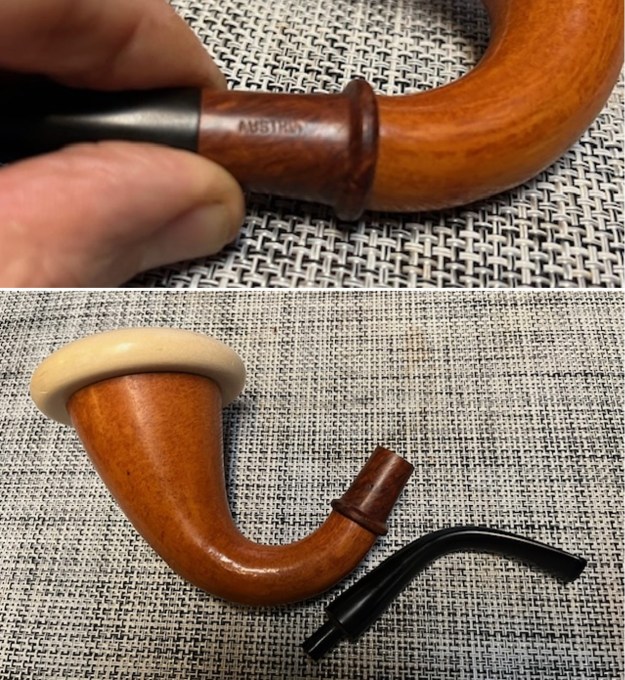
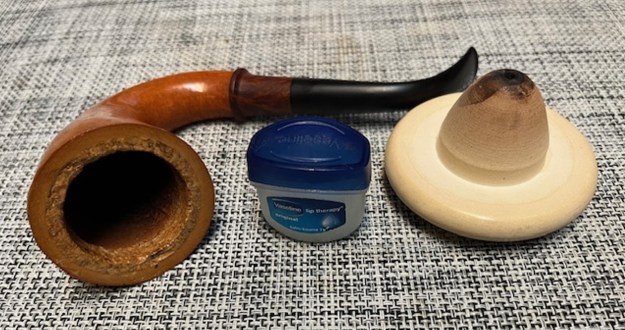
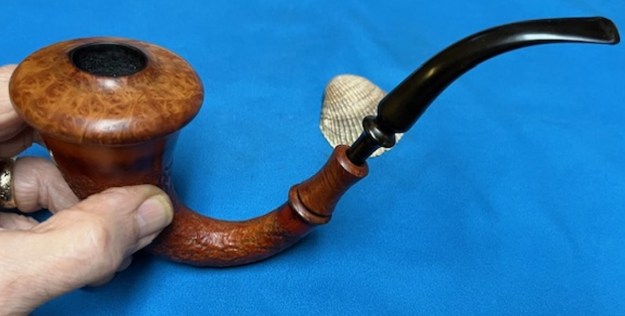
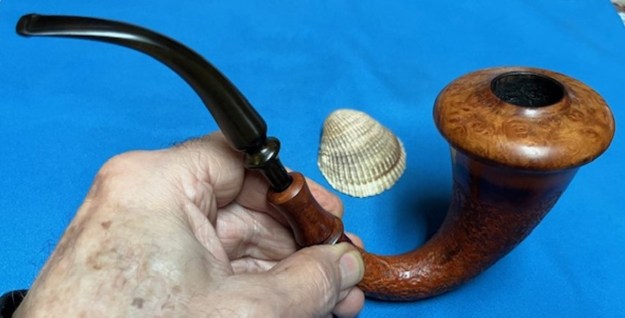
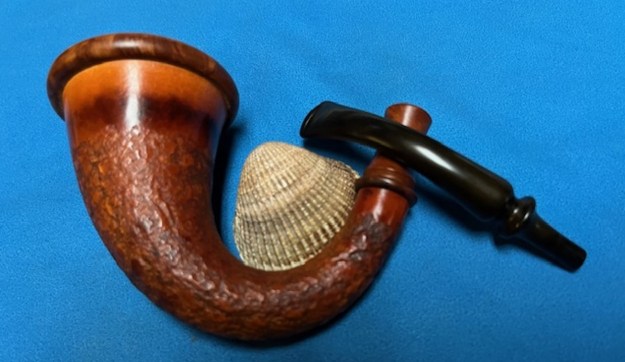
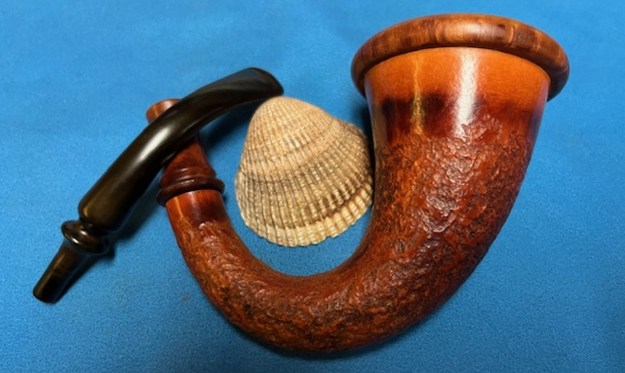
Putting together the pieces to Craft a Gourd Calabash with a Maplewood Bowl


by Steve Laug

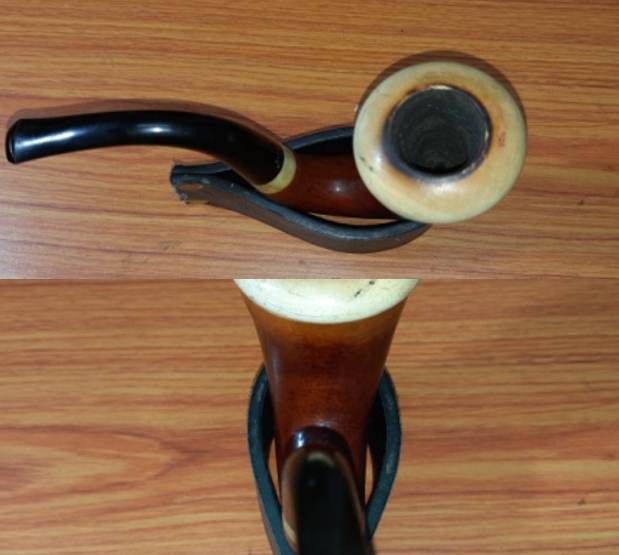
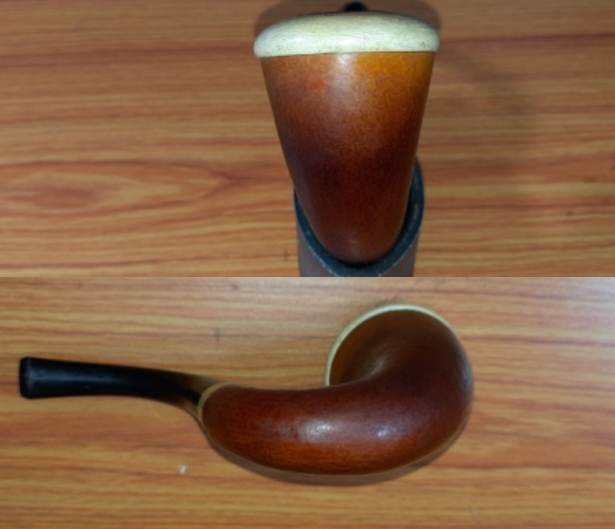
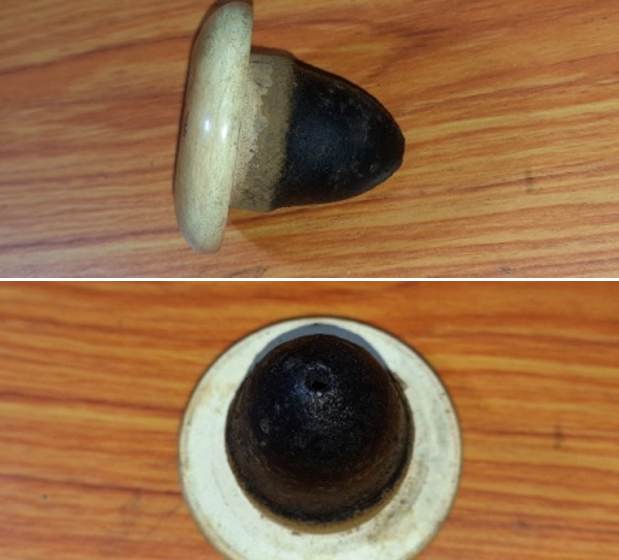
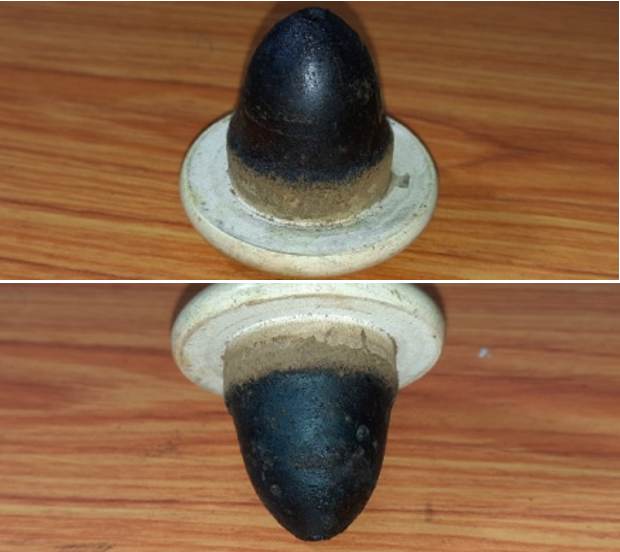
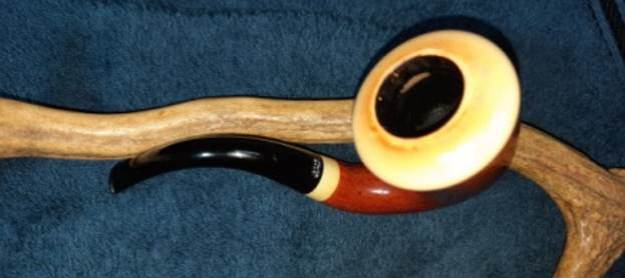
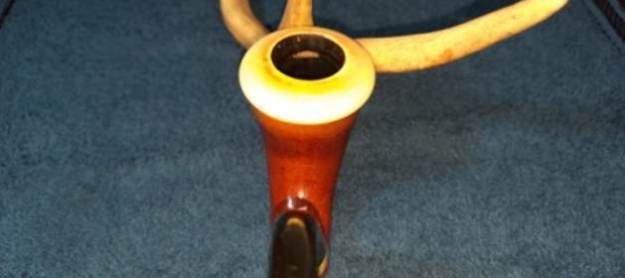
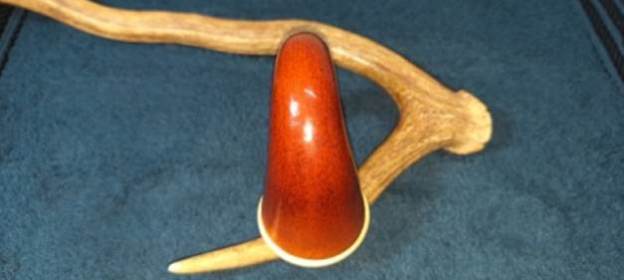
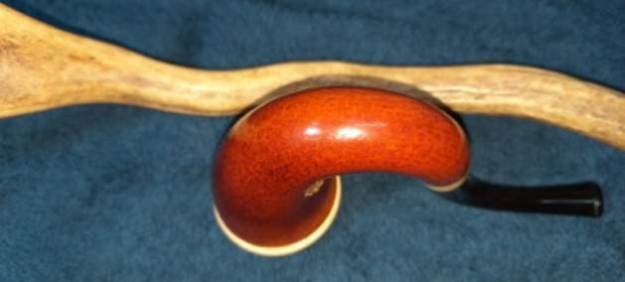
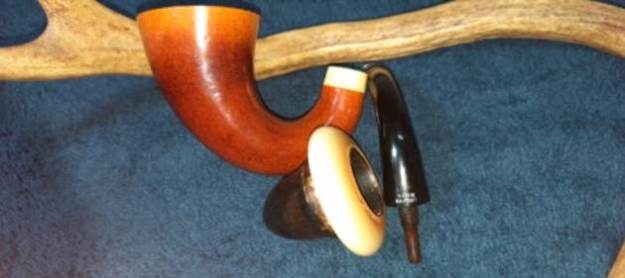
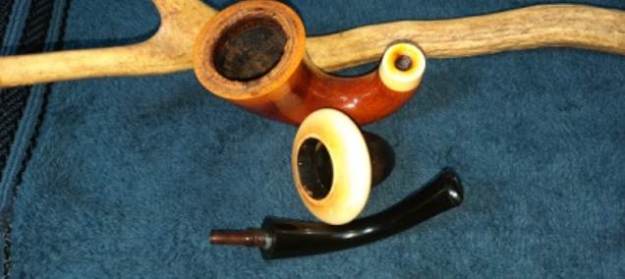
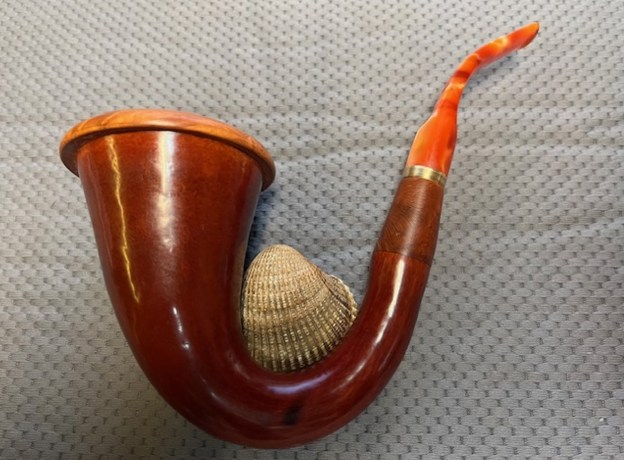
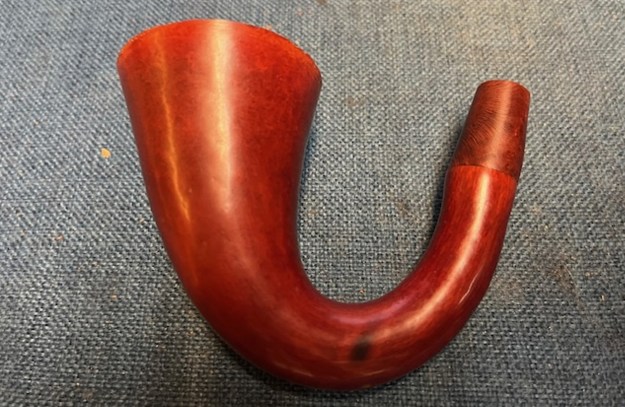
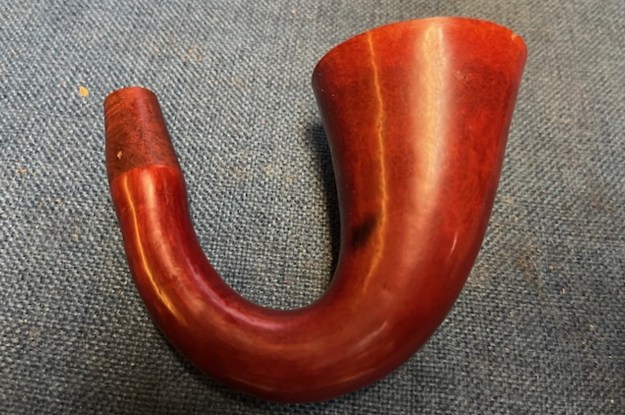
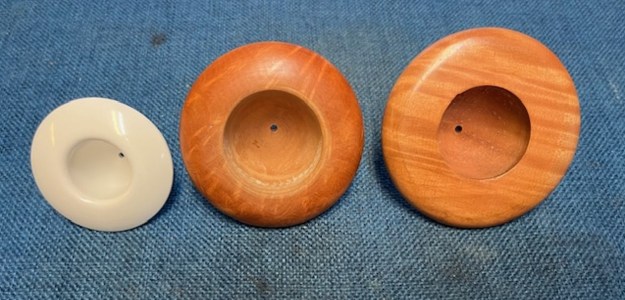
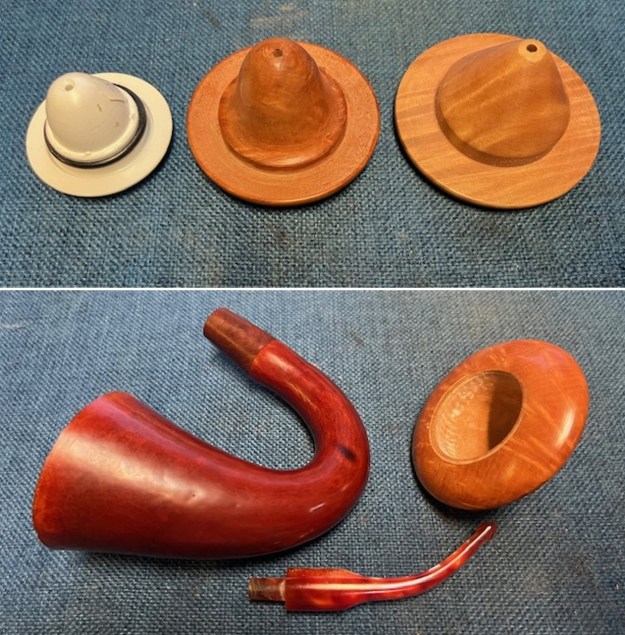
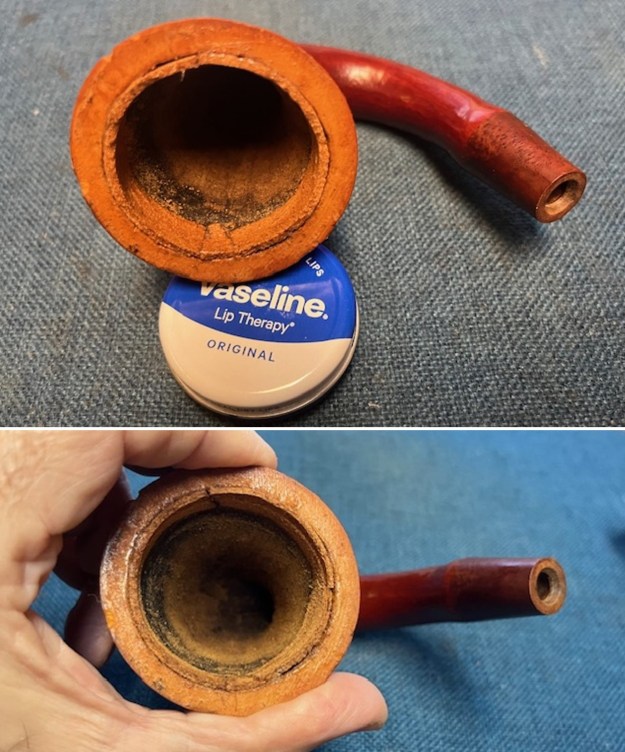
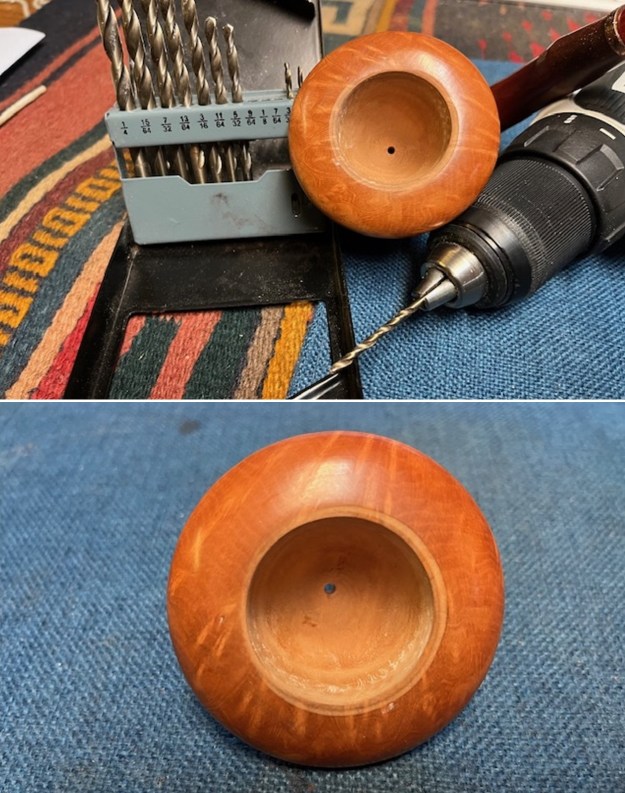
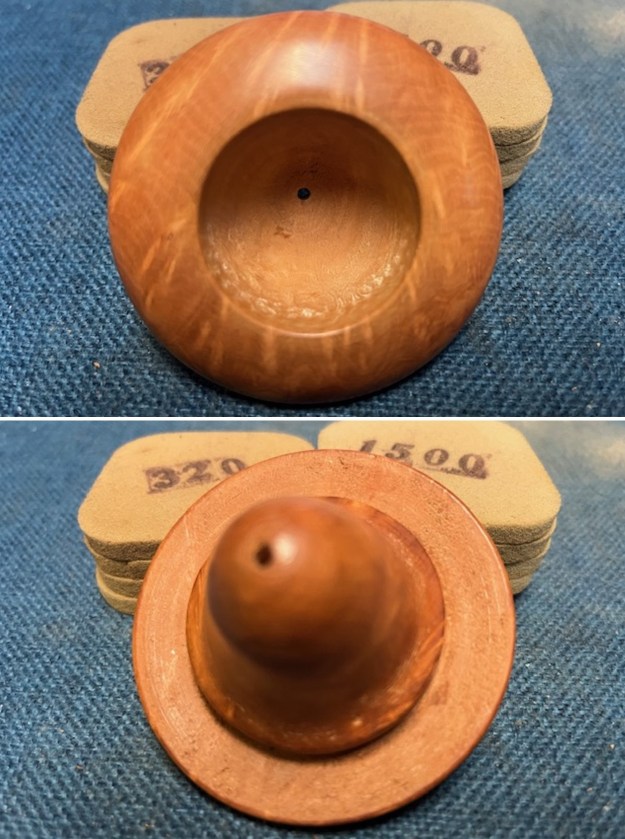
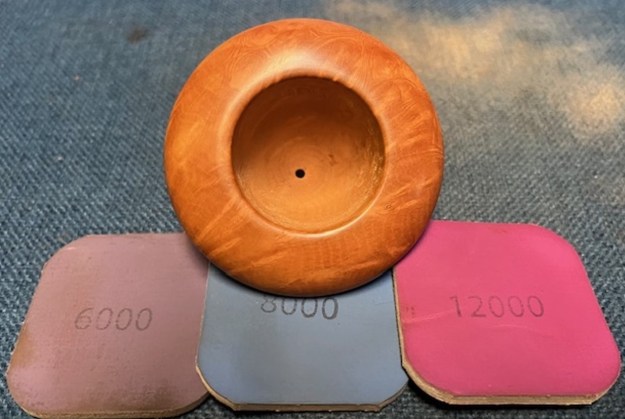
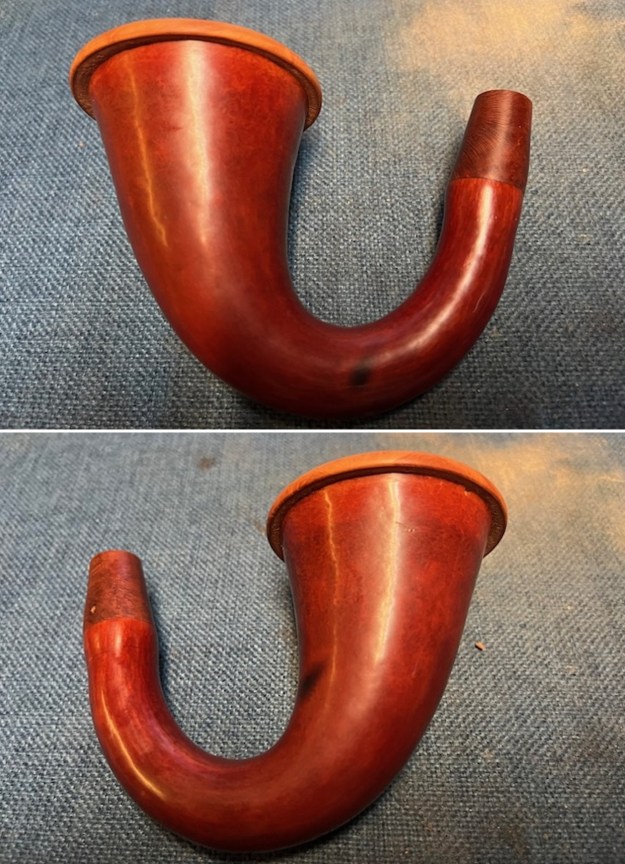
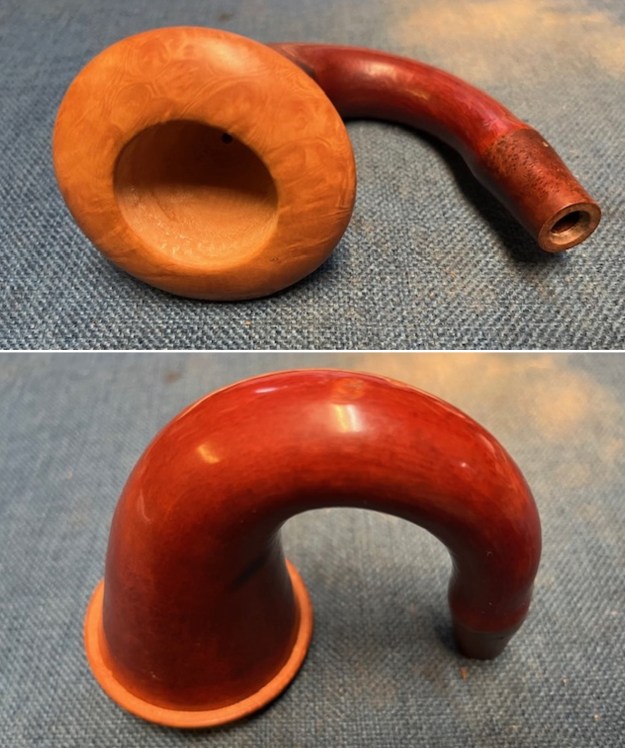
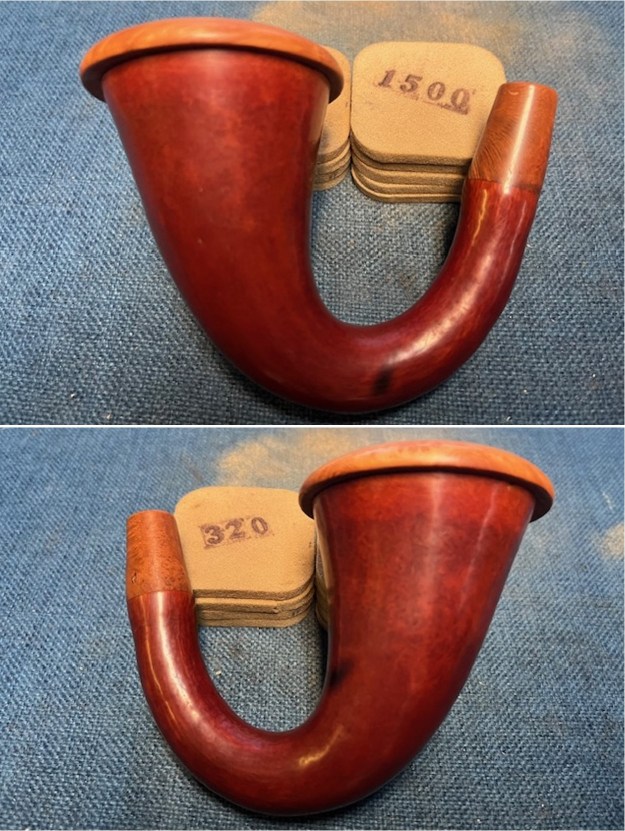
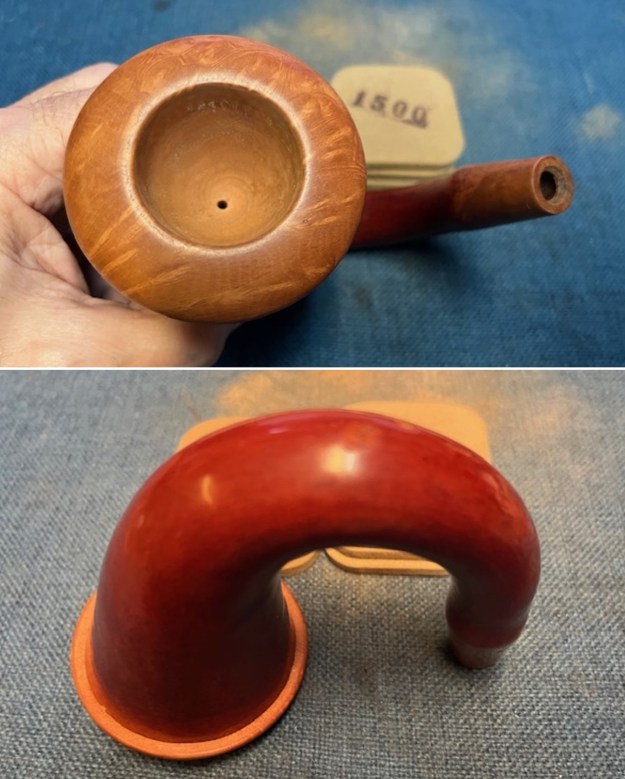
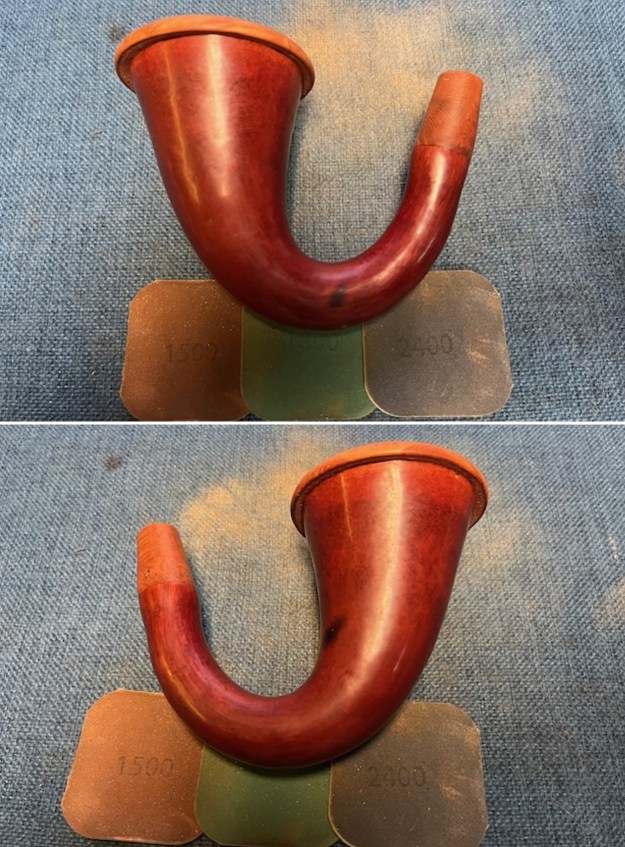
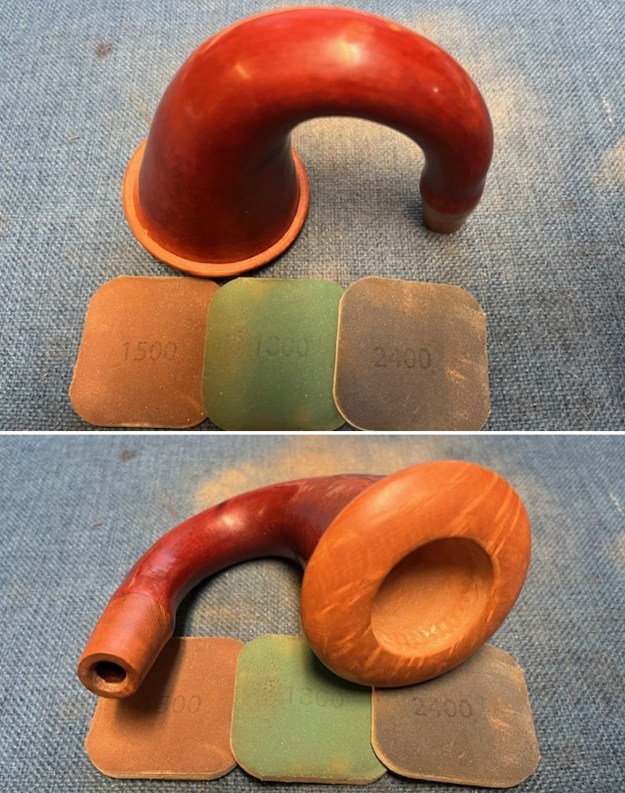
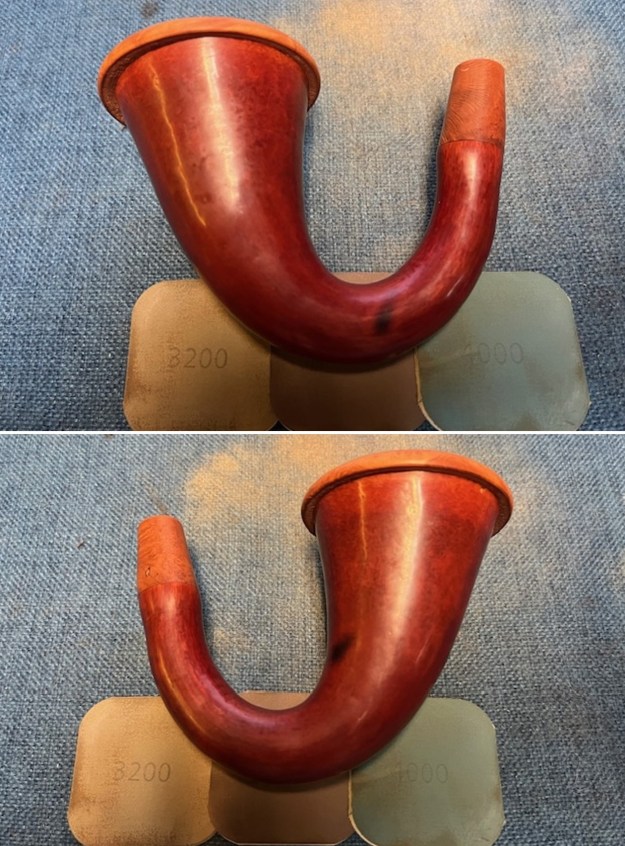
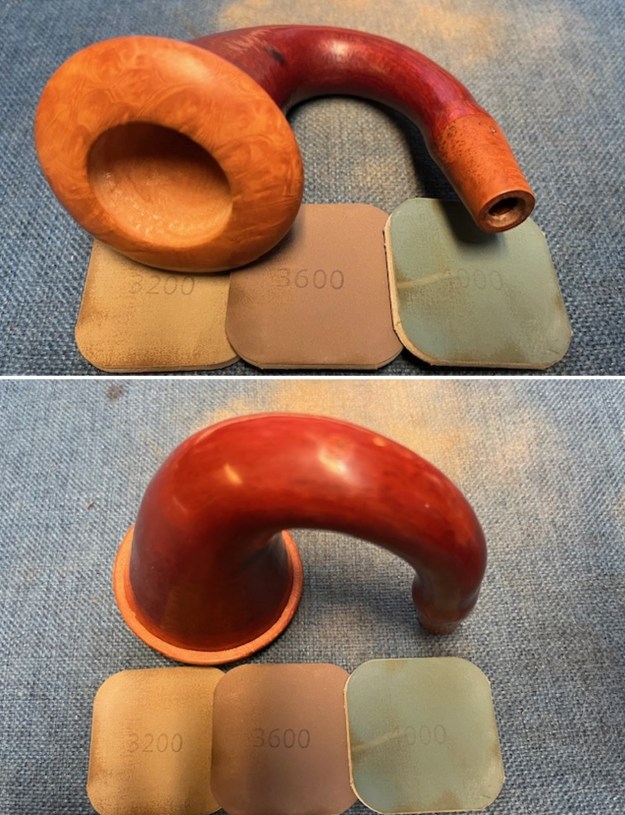
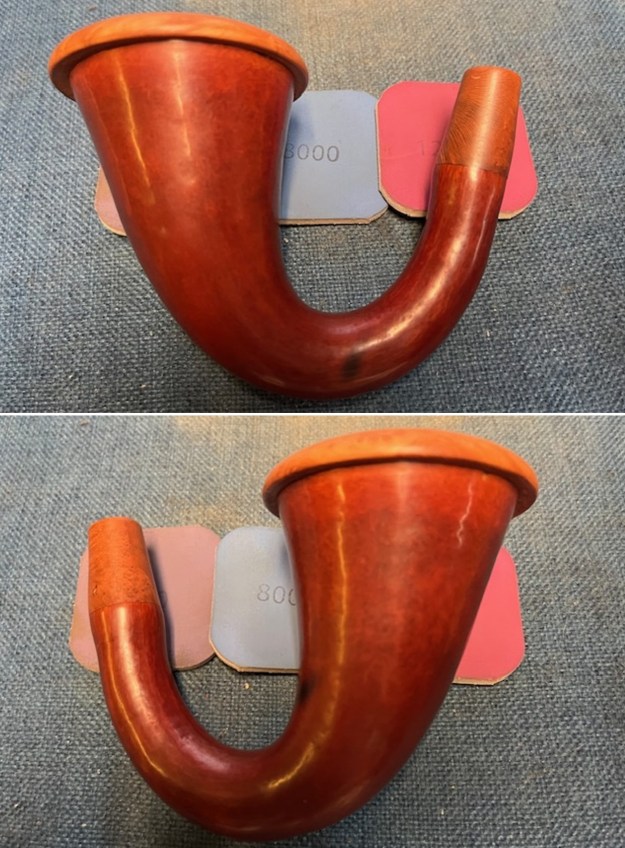
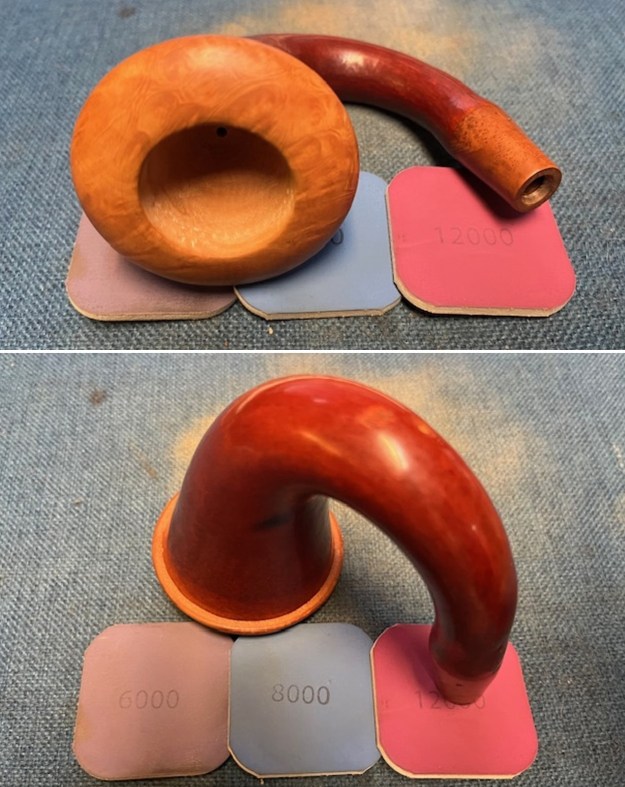
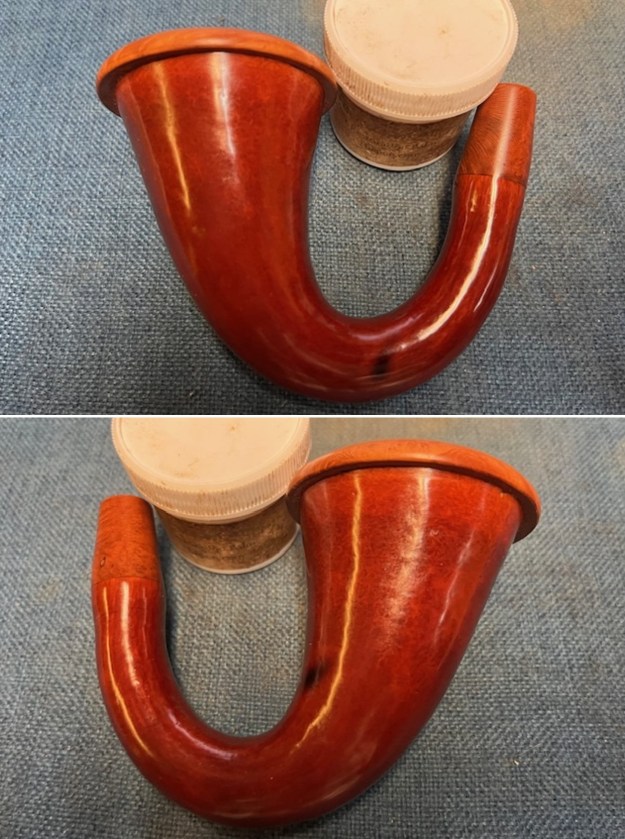
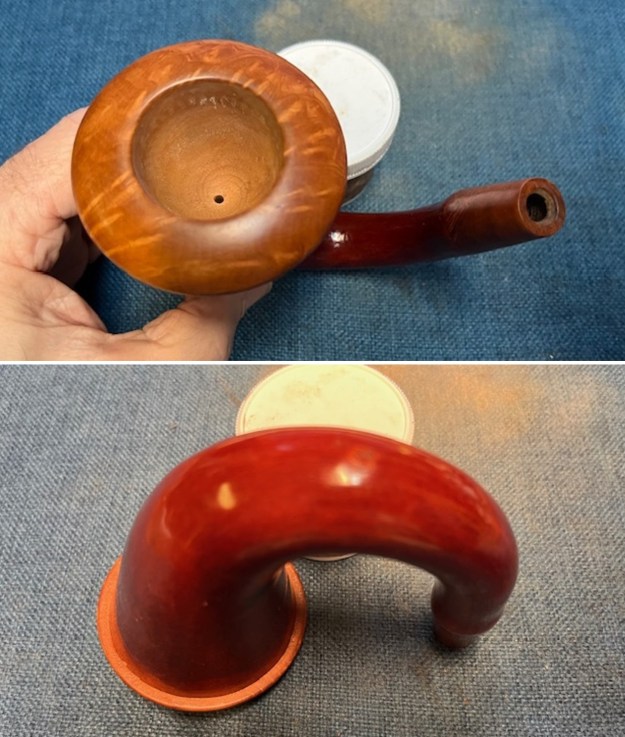
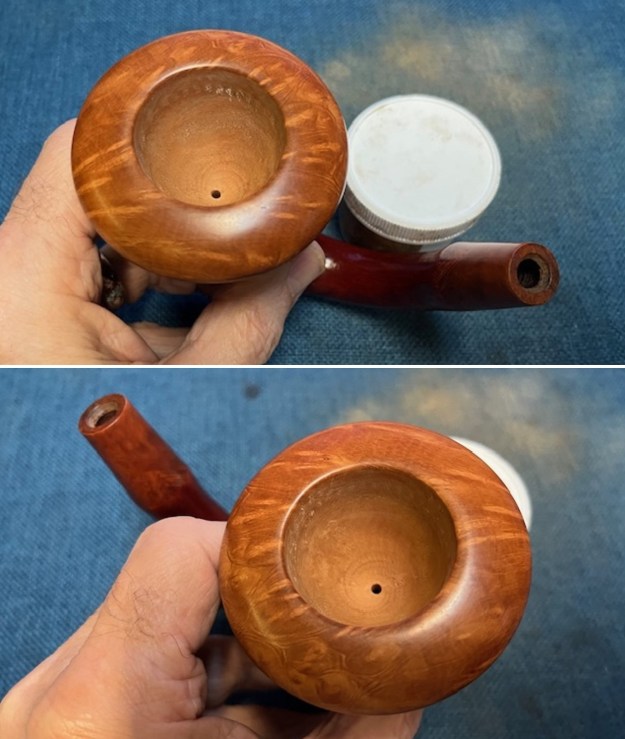
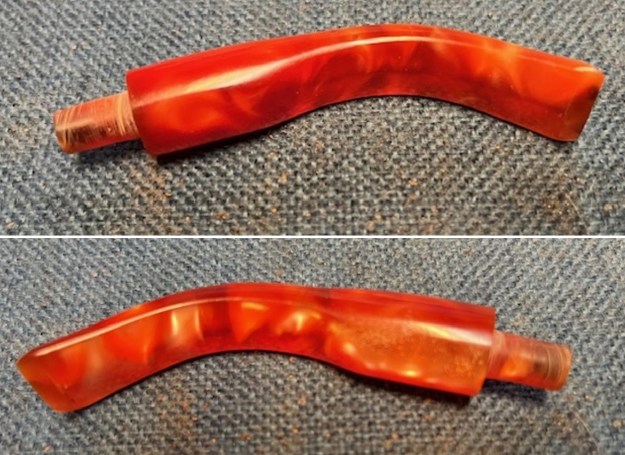
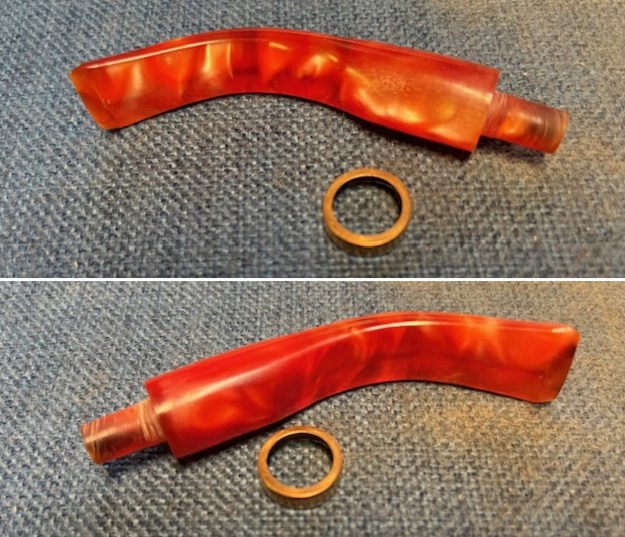
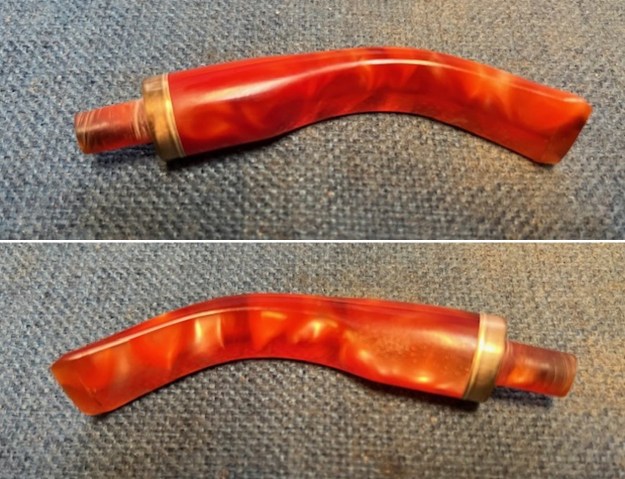
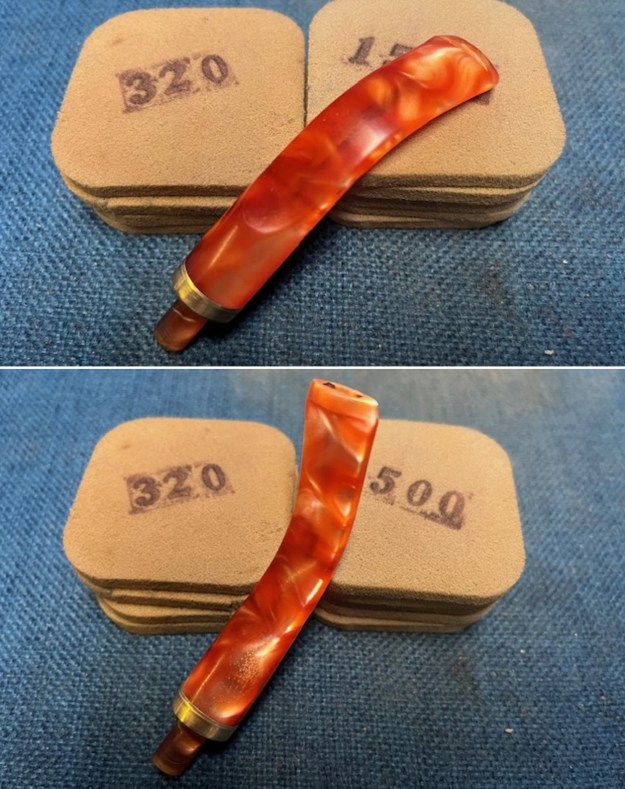
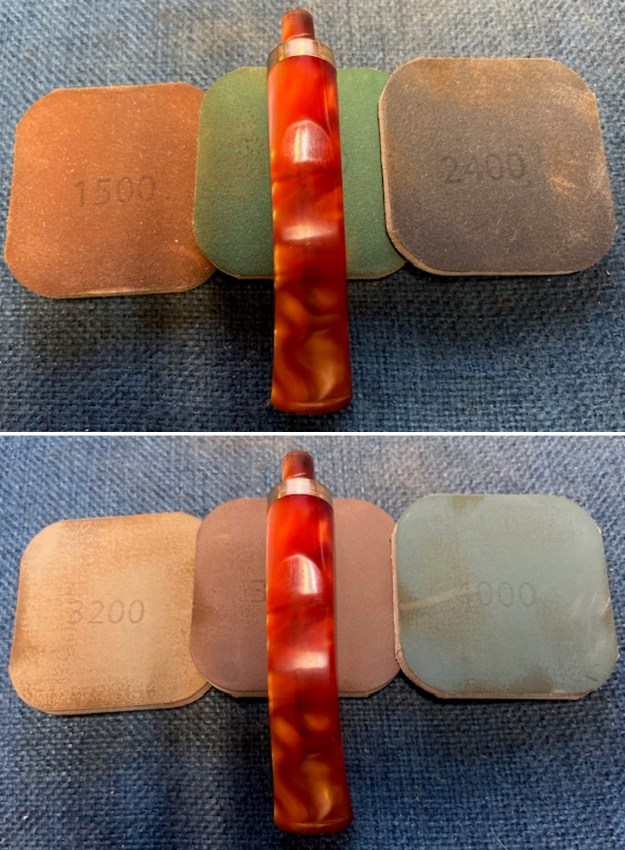
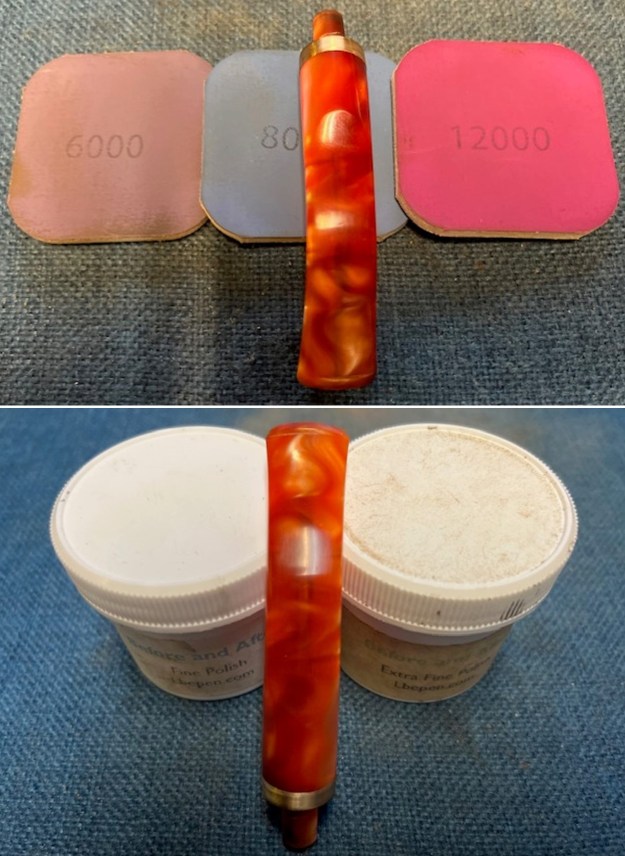
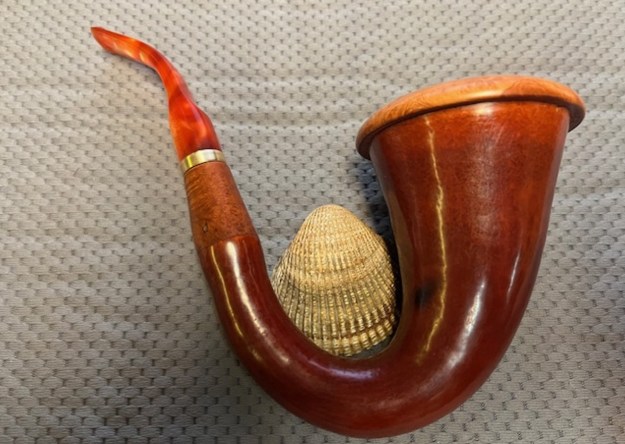
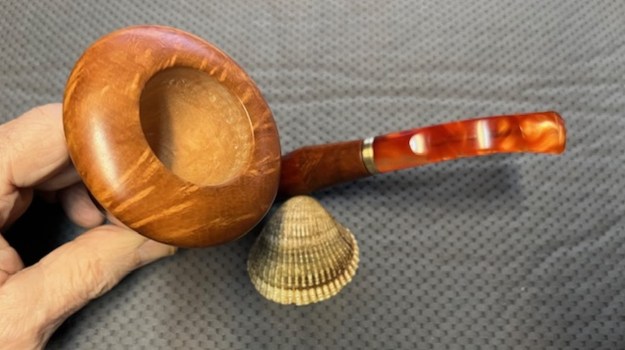
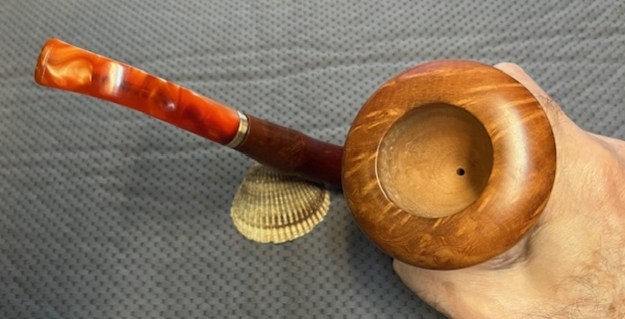
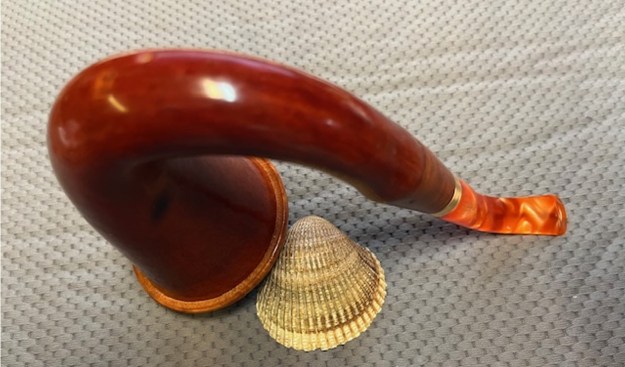
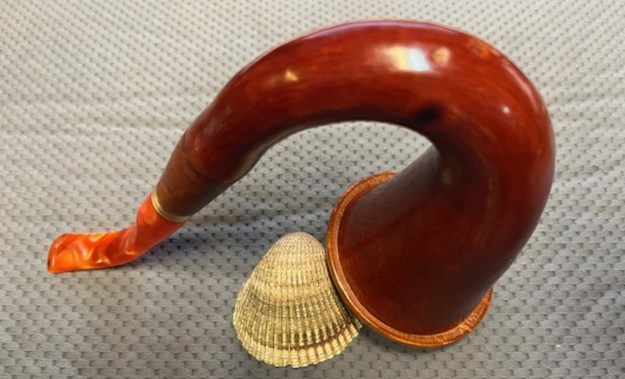
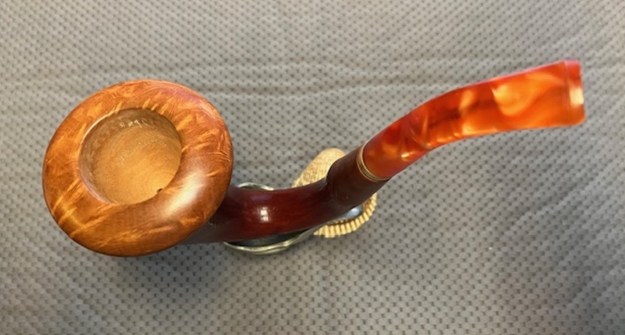
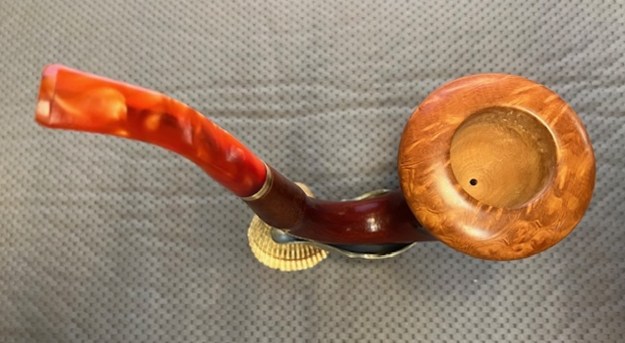
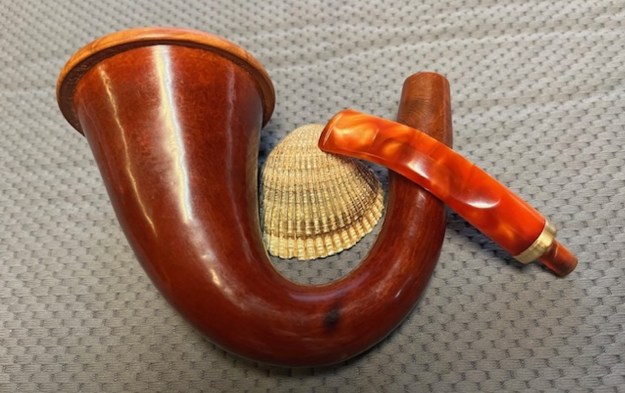
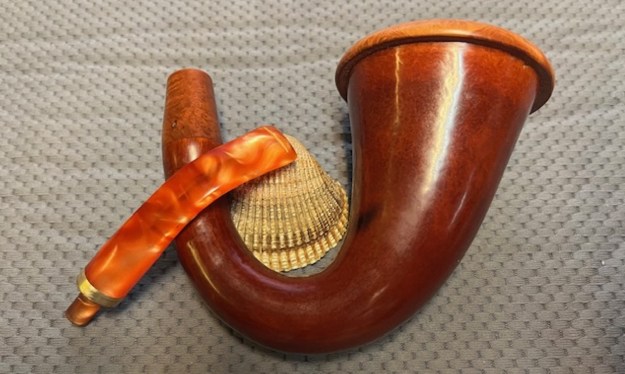
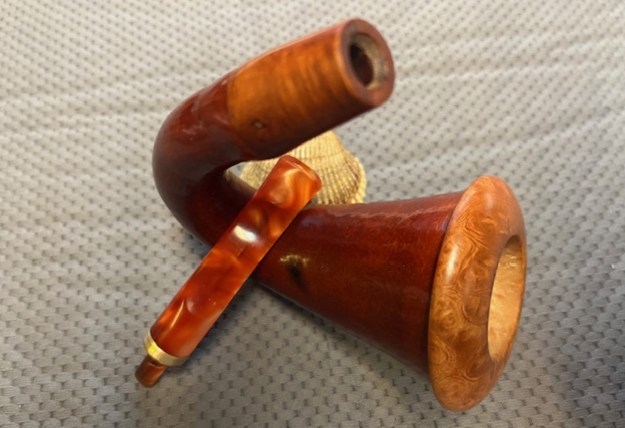
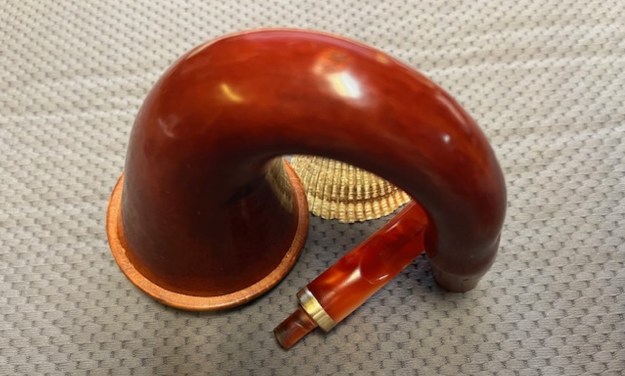
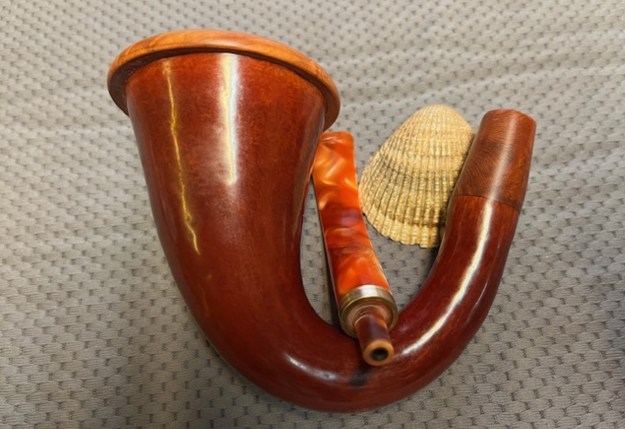
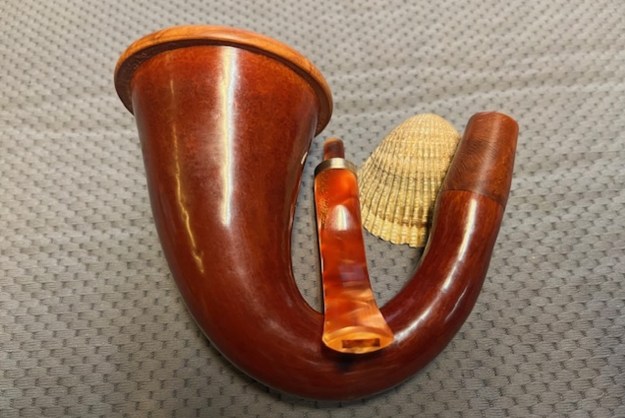
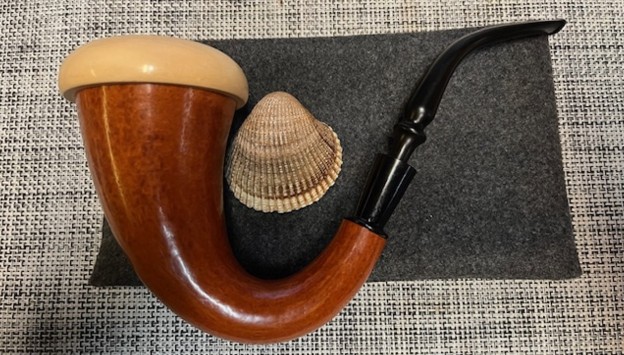
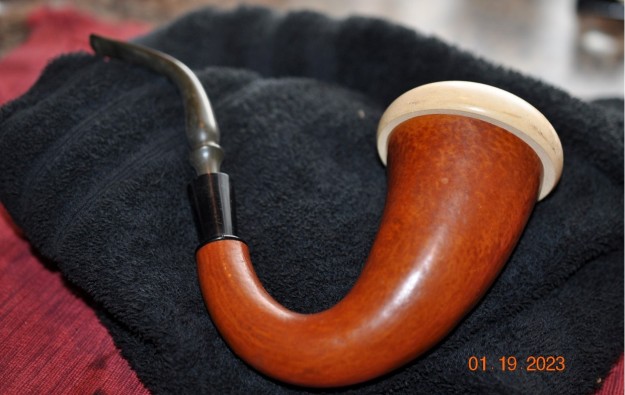
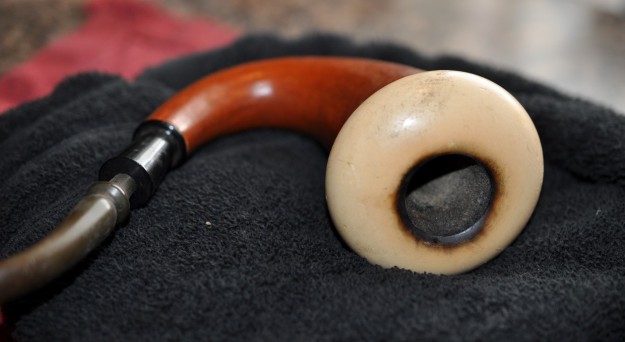
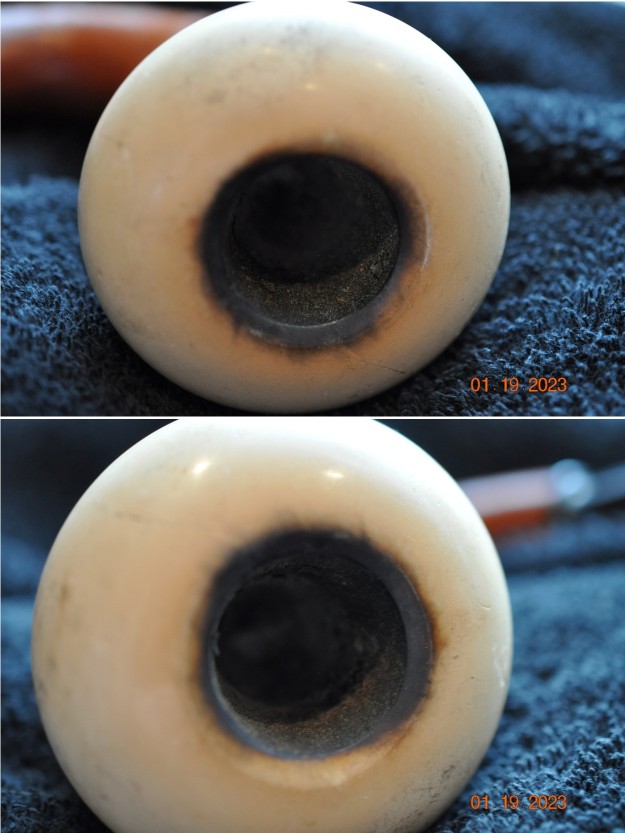
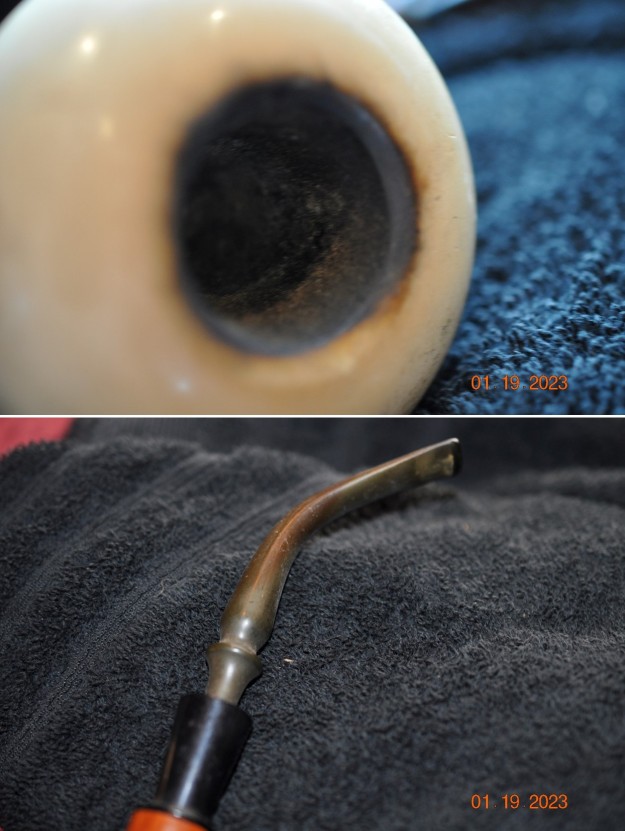
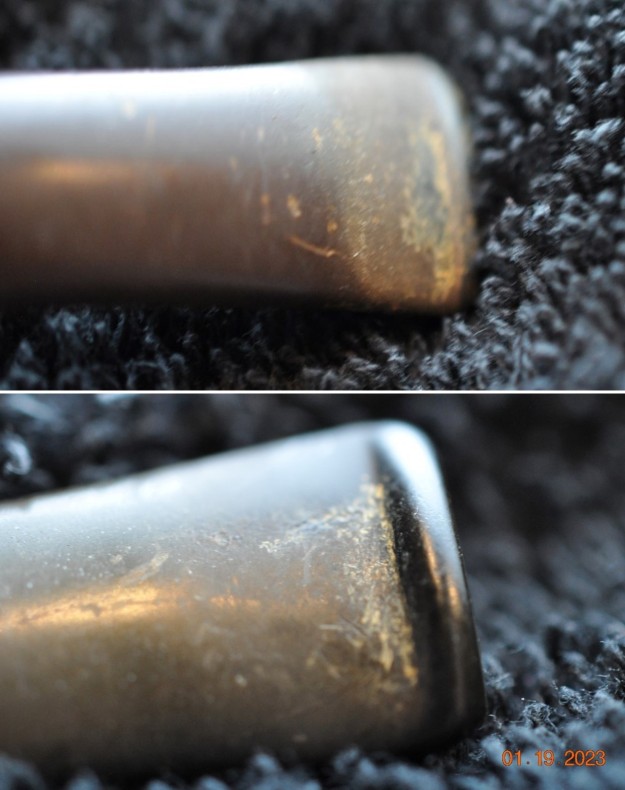
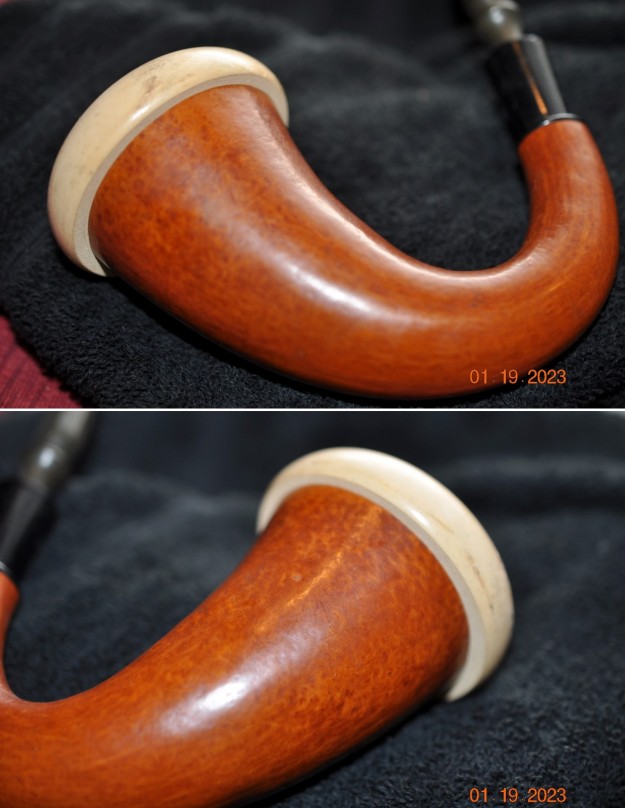
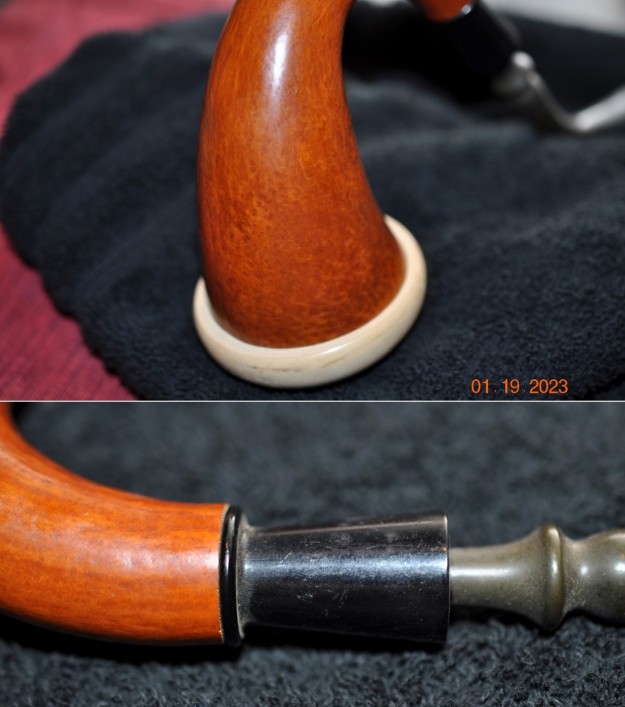
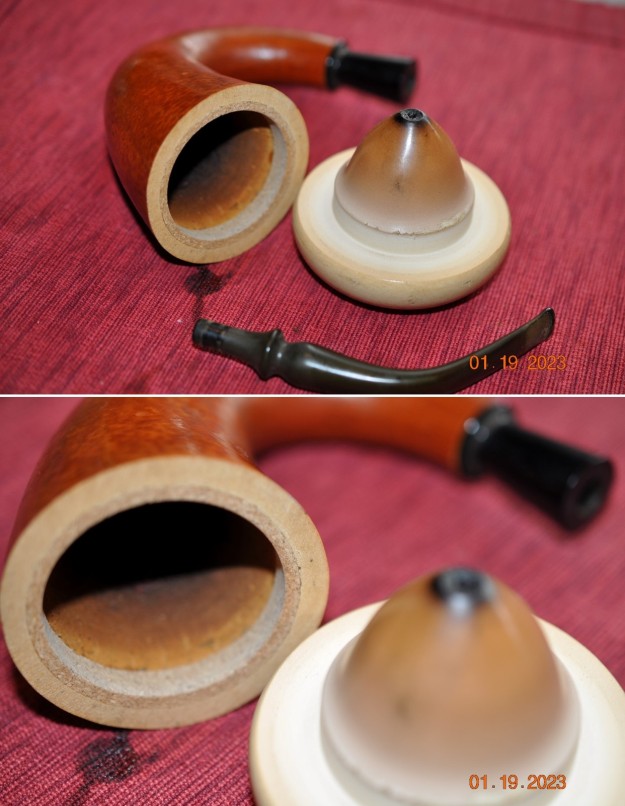
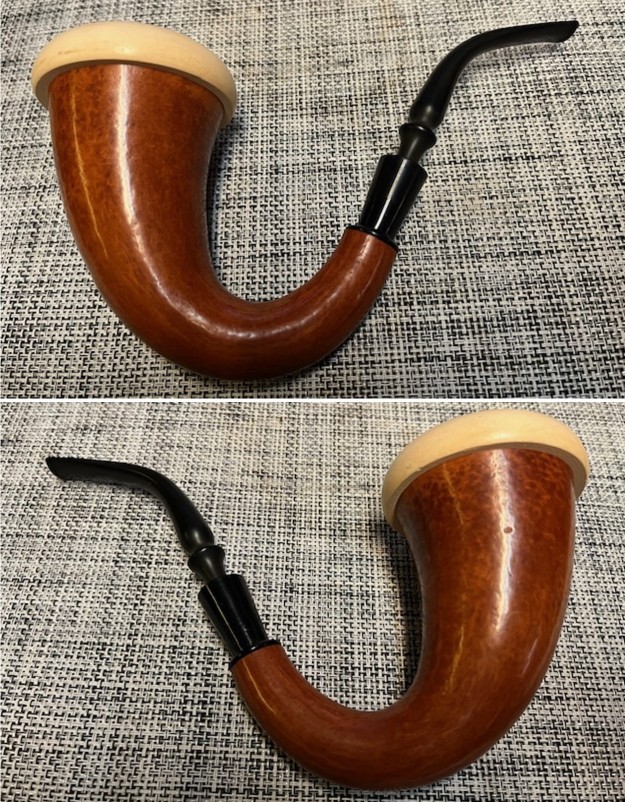
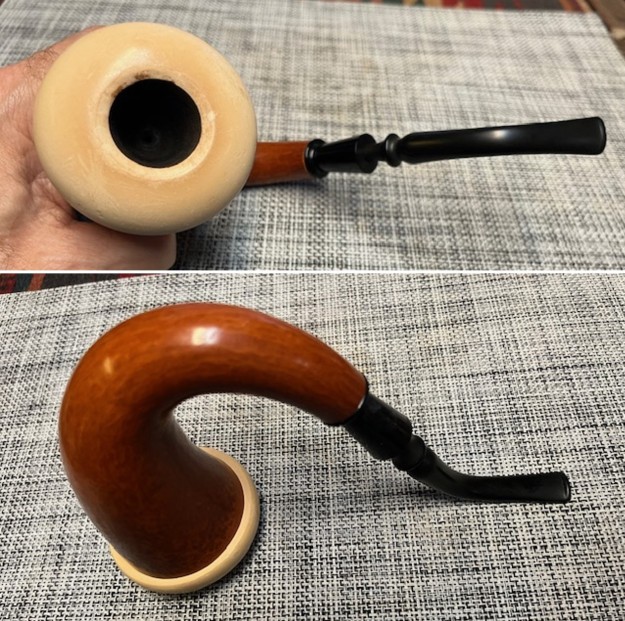
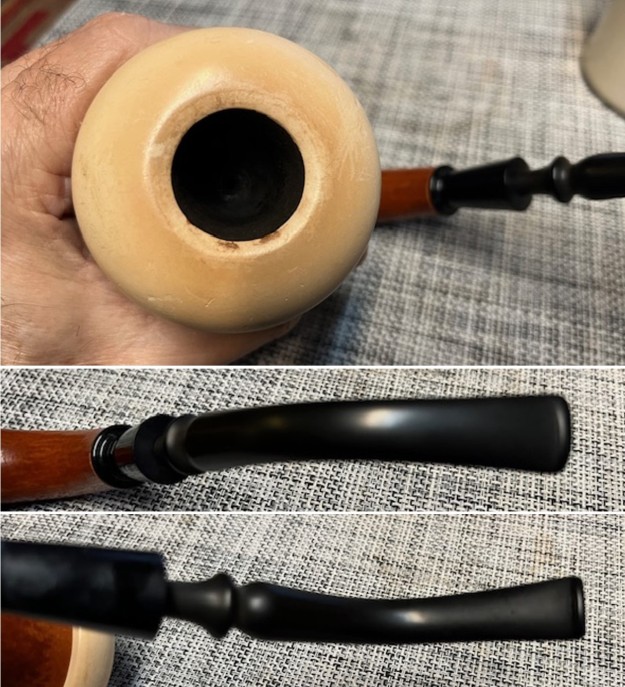
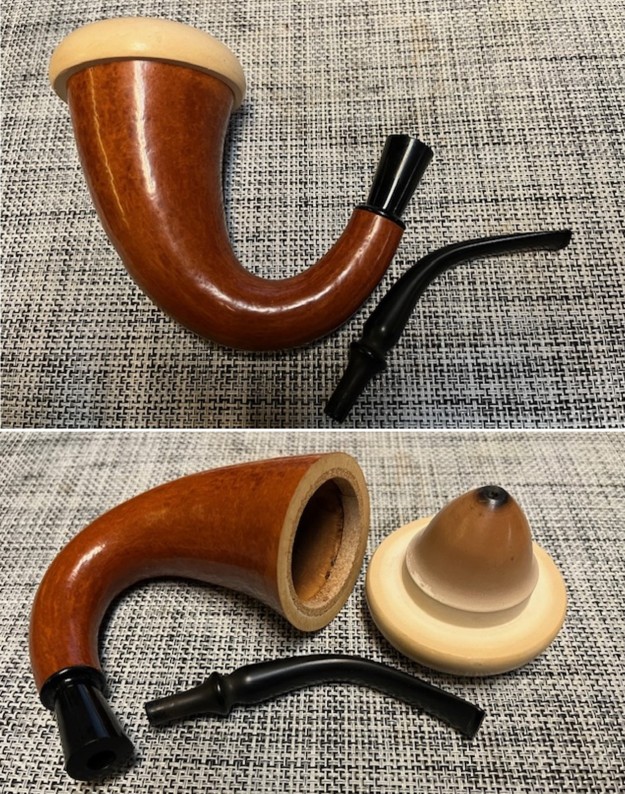
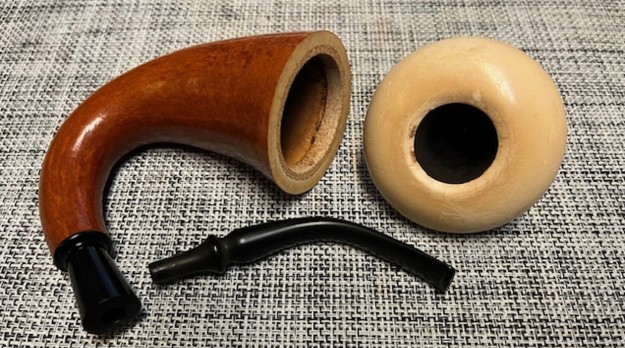
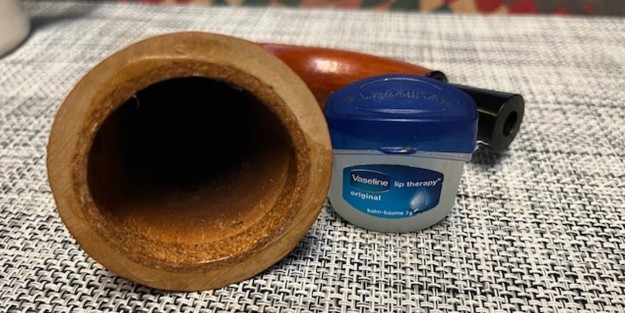
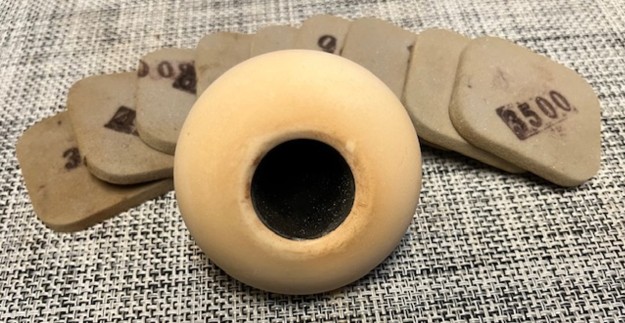
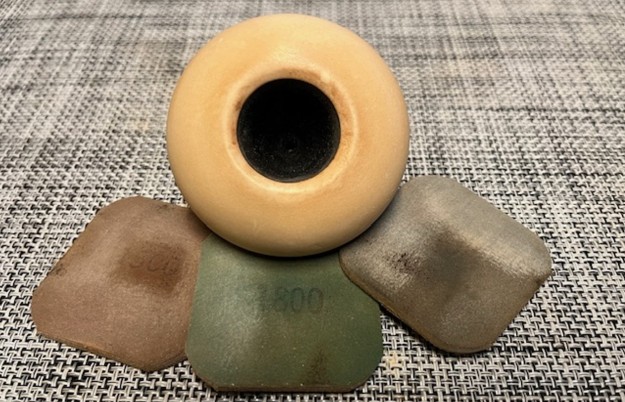
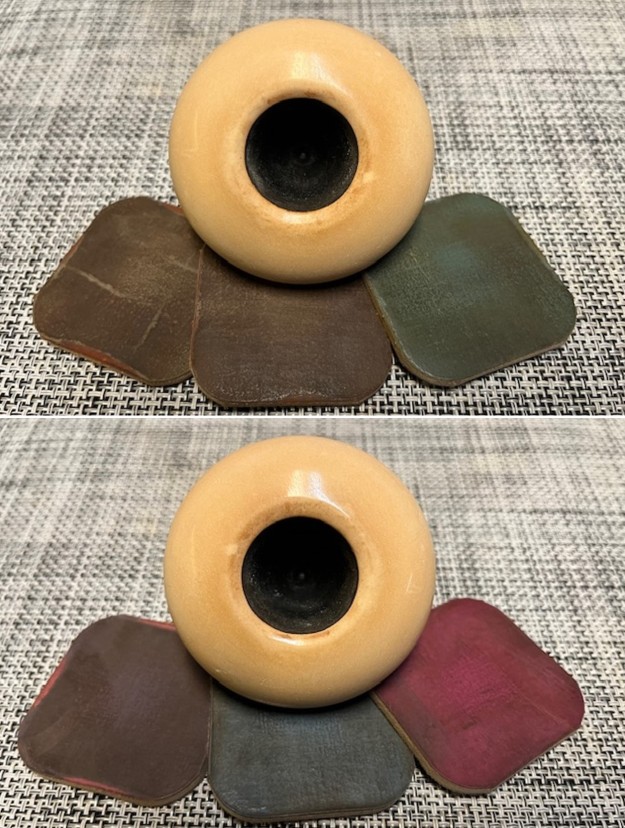
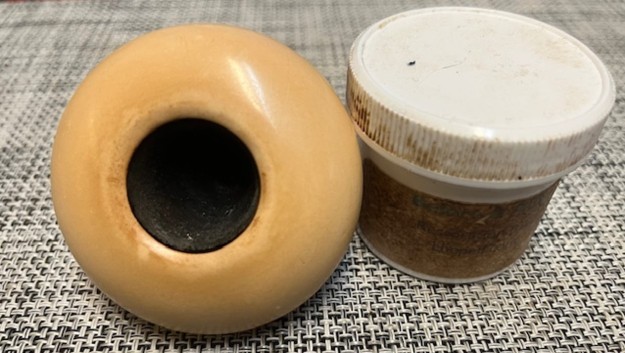
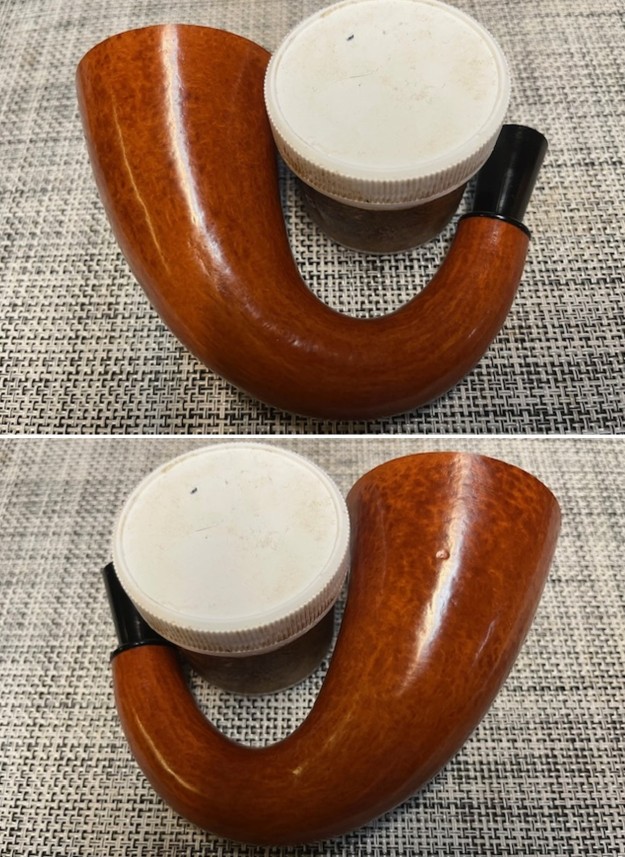
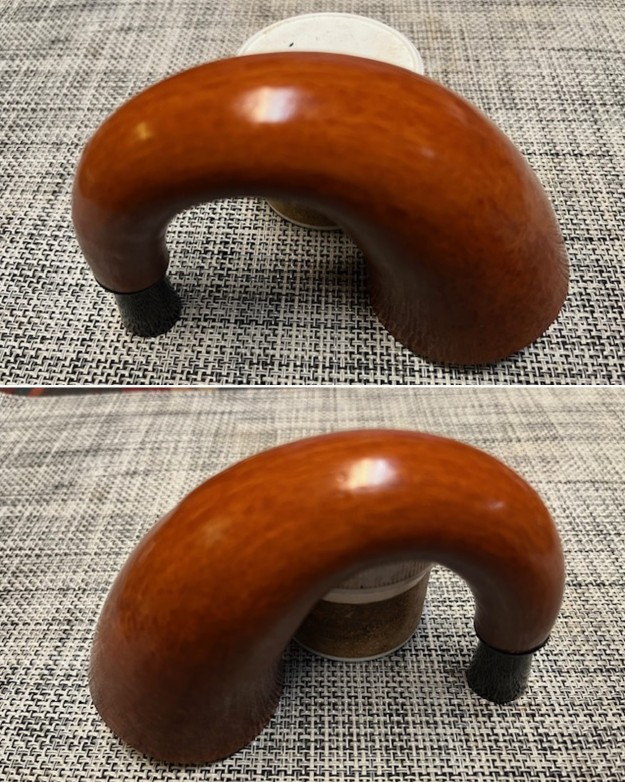
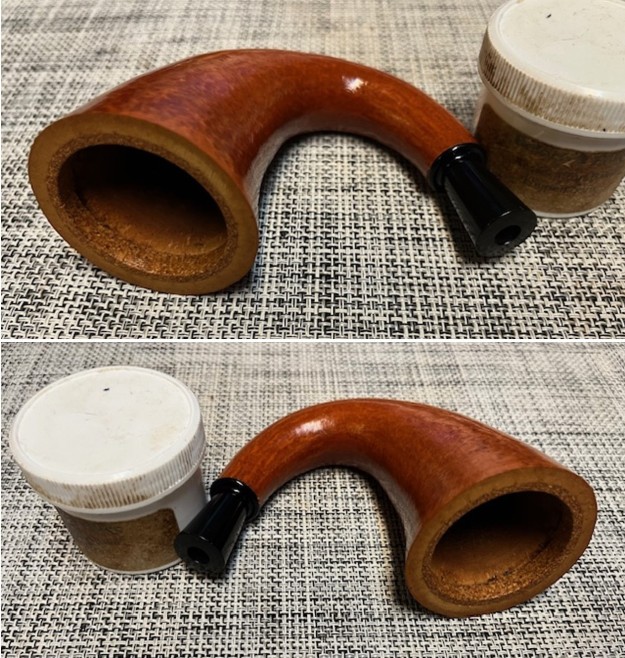
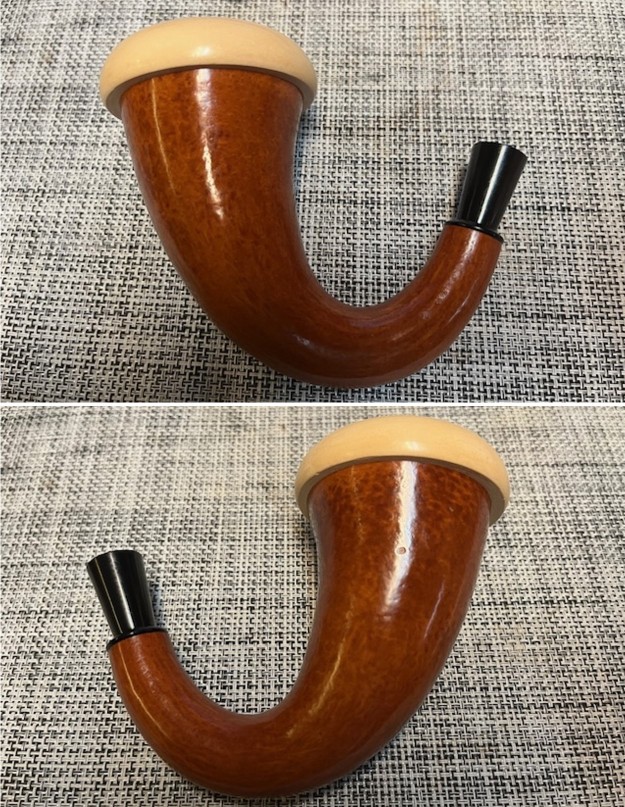
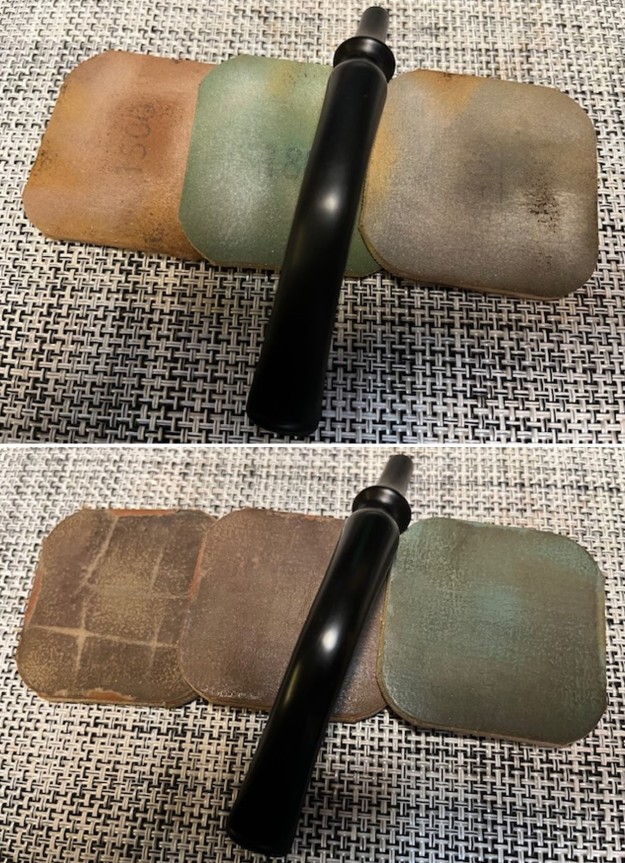
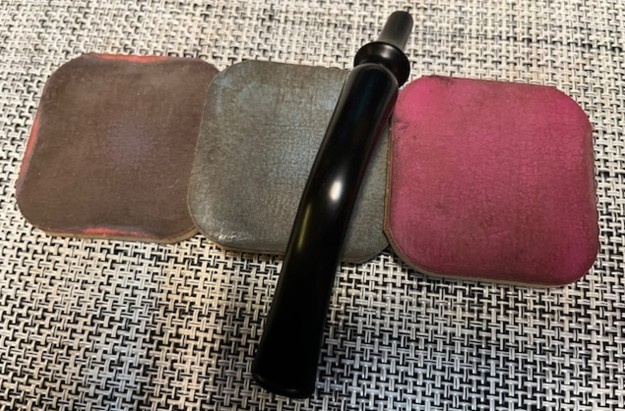
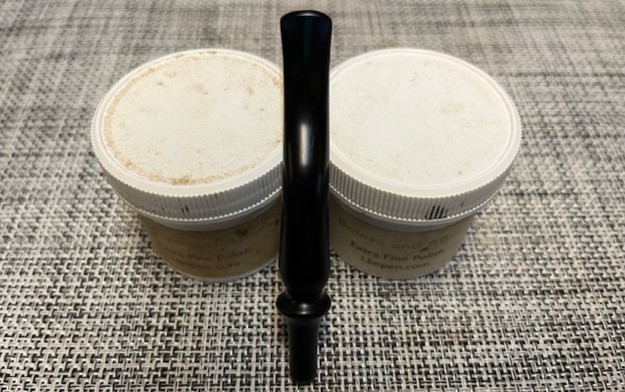
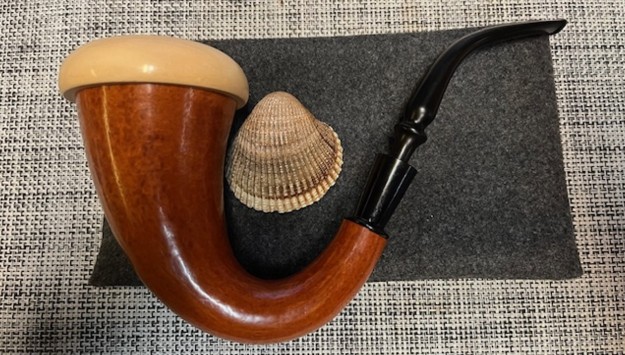
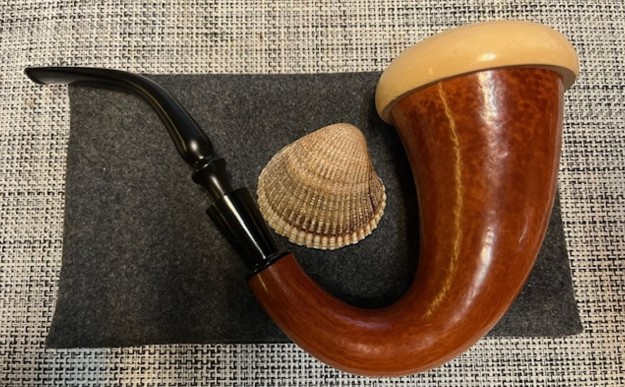
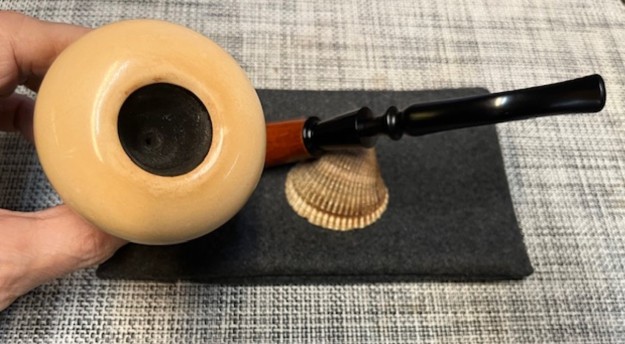
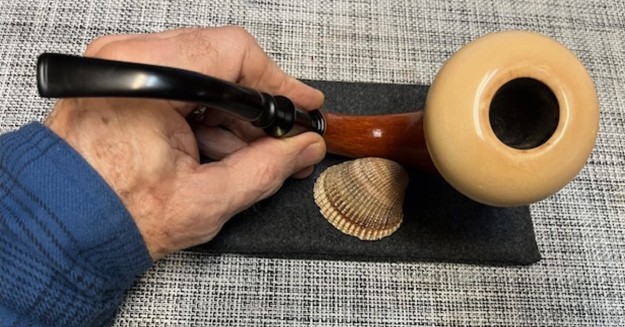
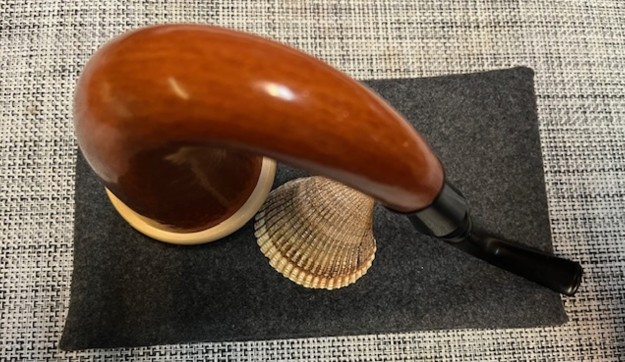
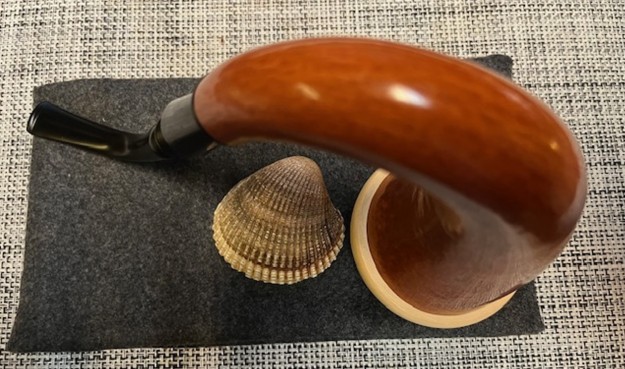
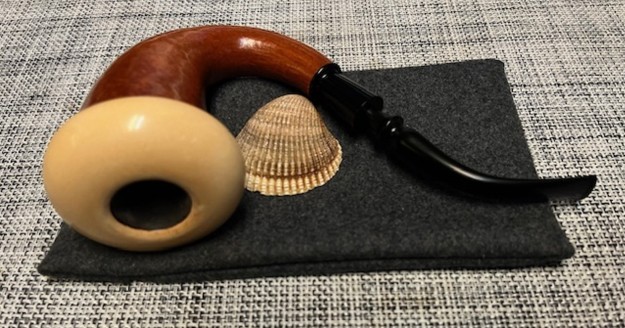
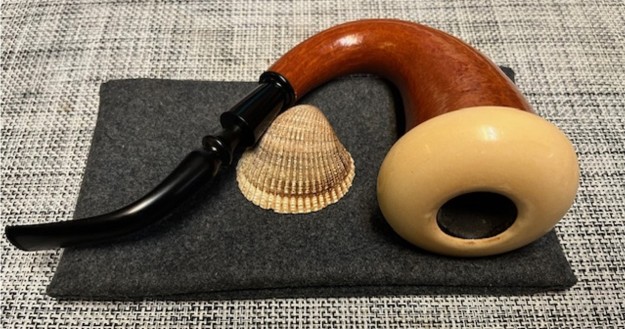
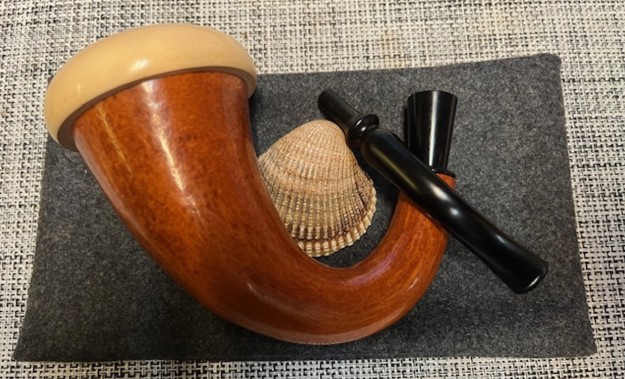
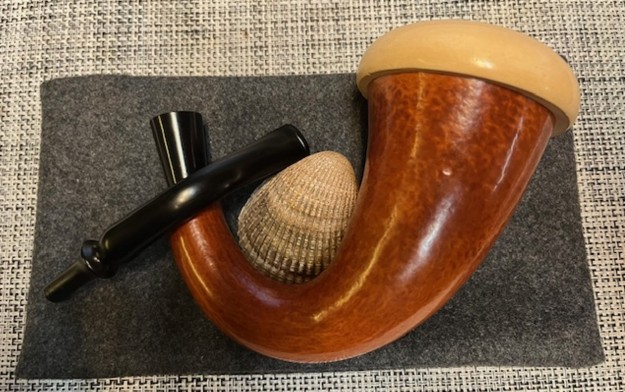
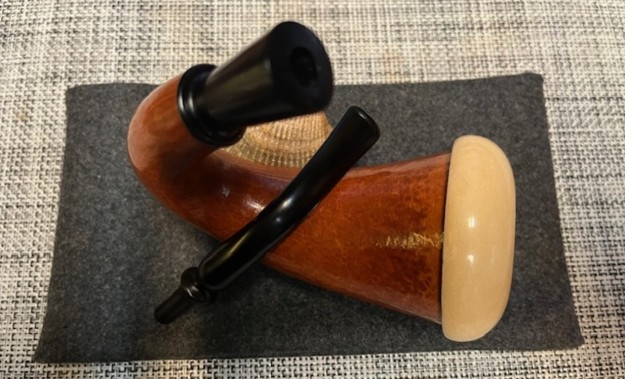
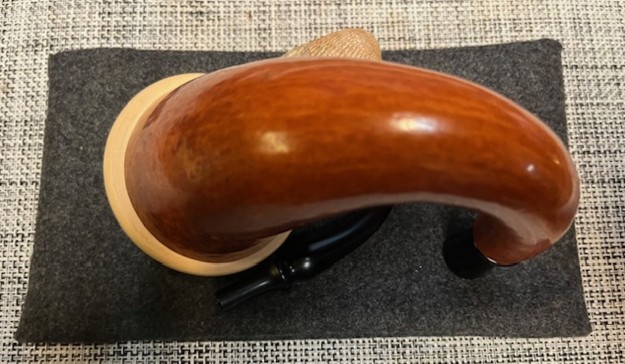
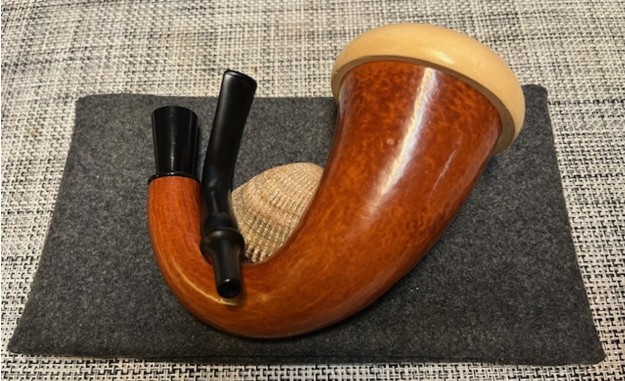
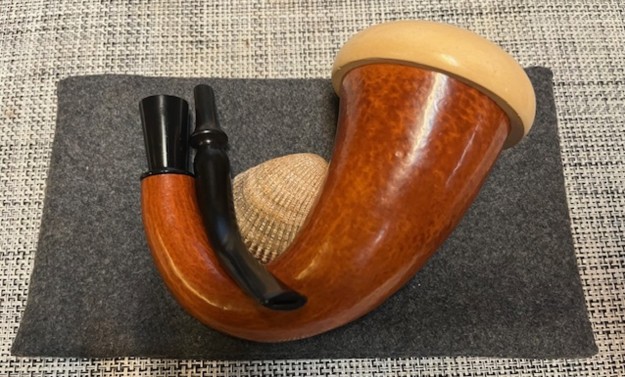
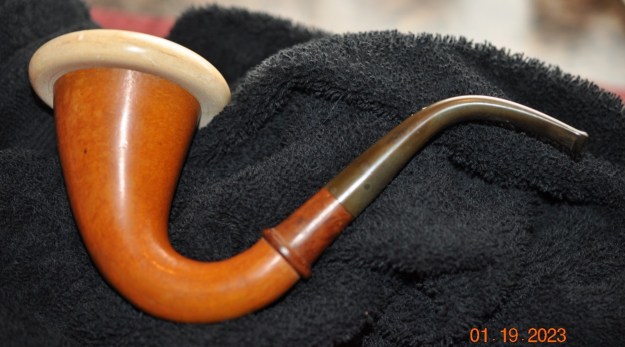
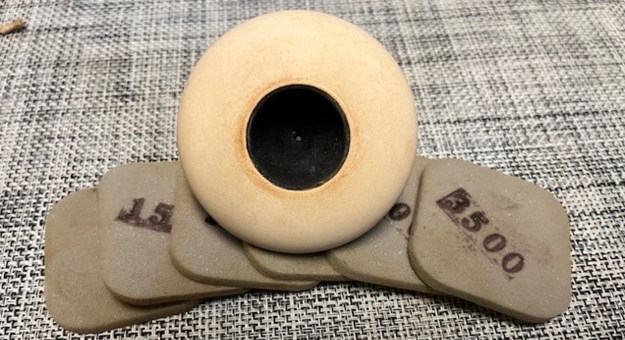
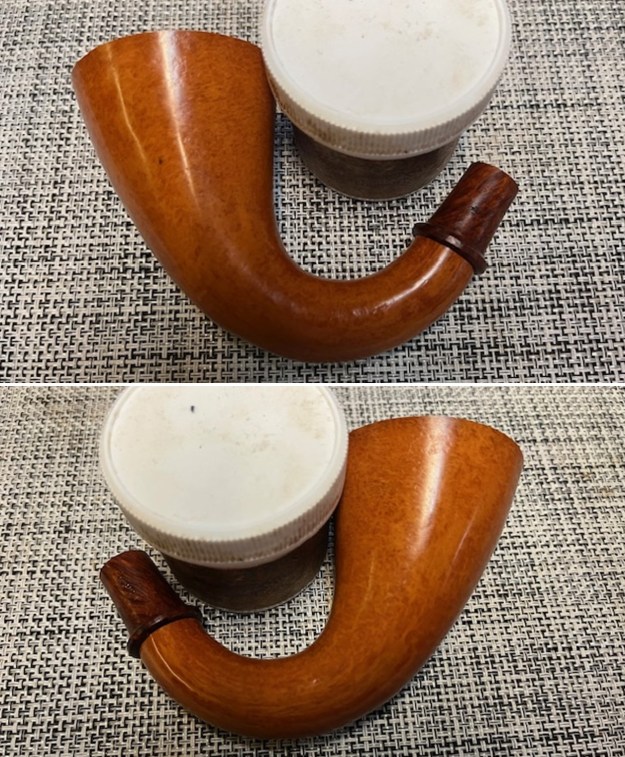
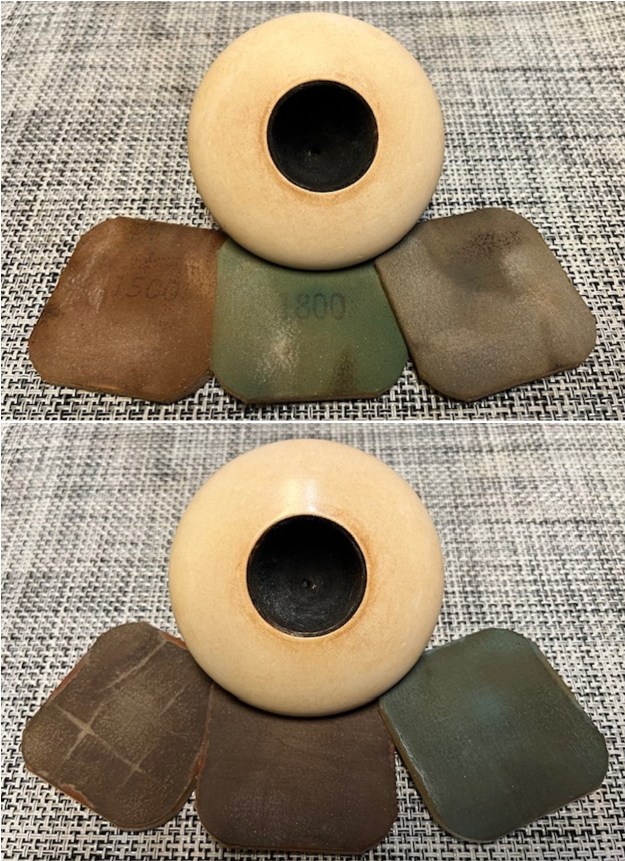
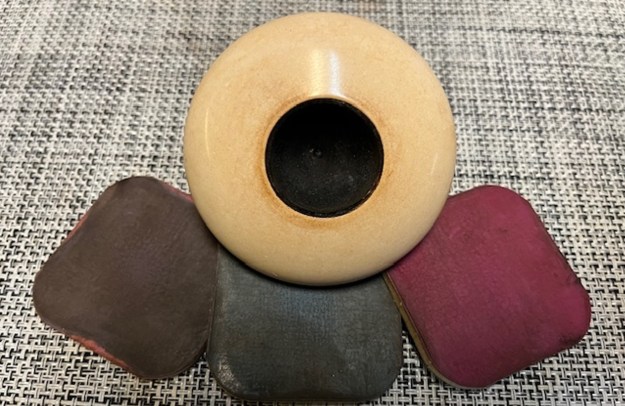
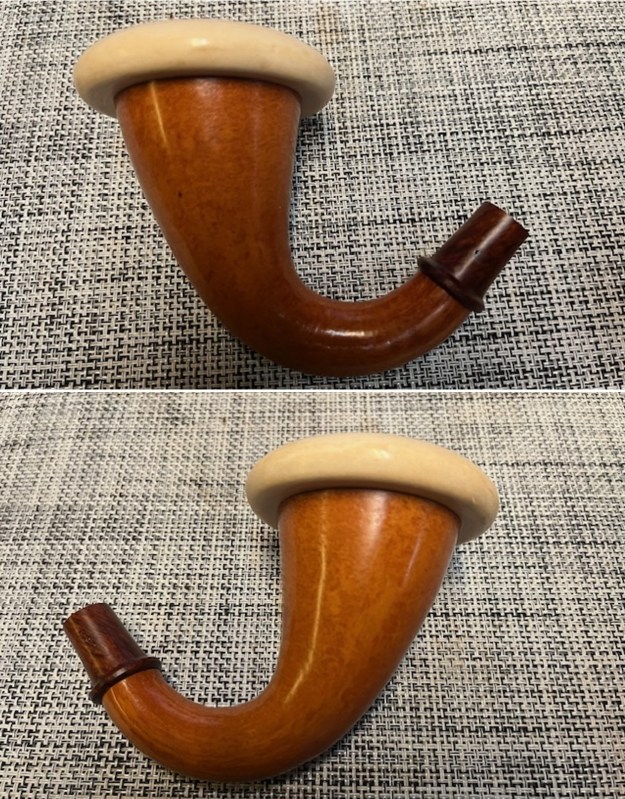
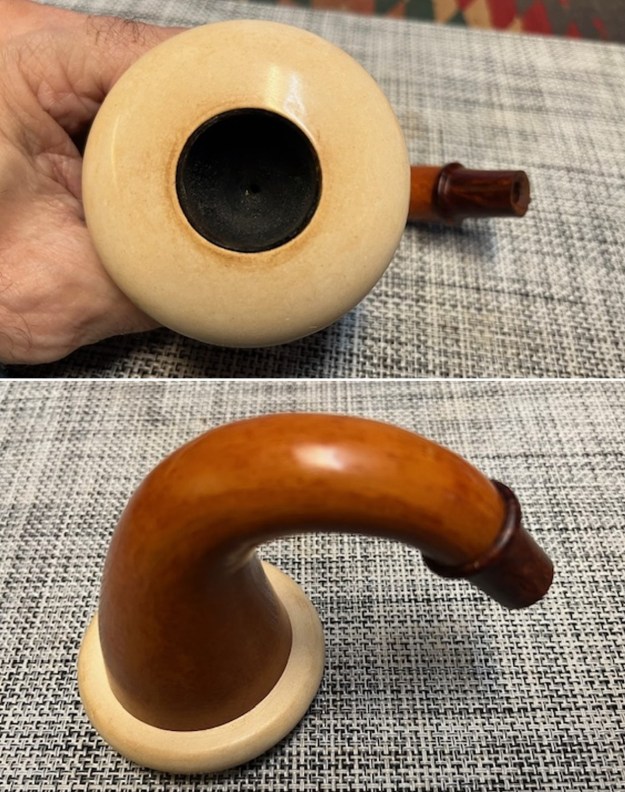
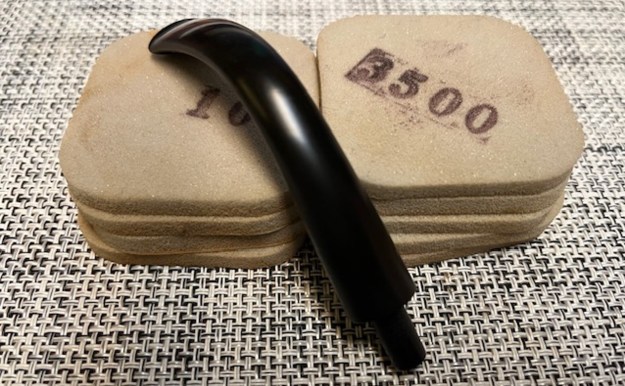
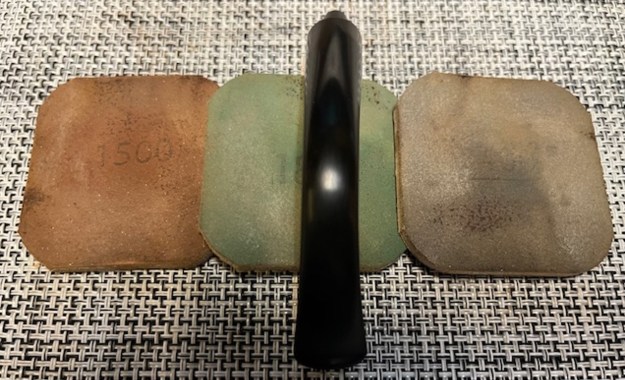
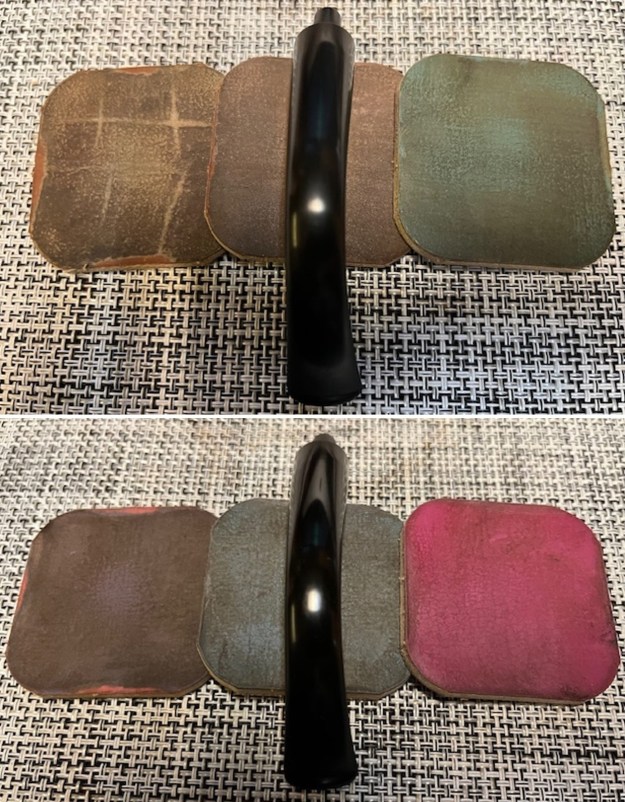
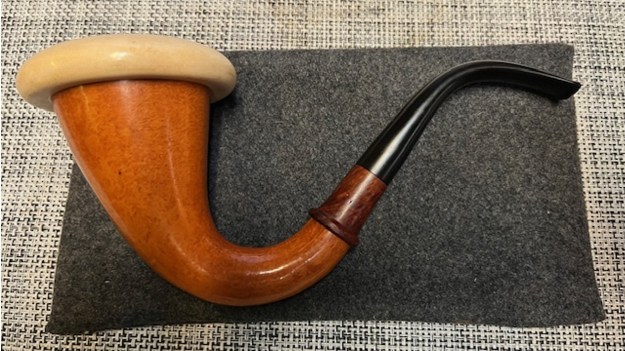
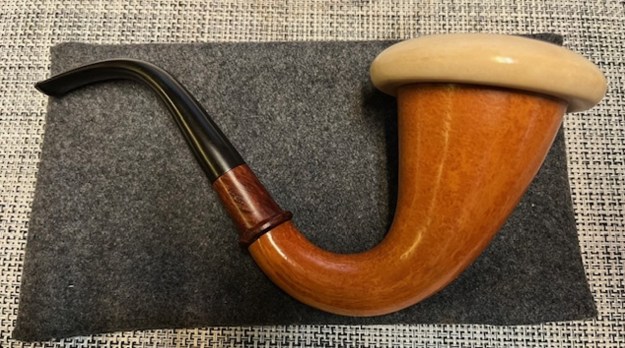
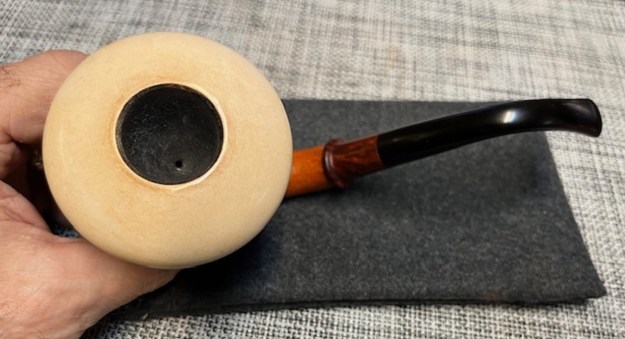
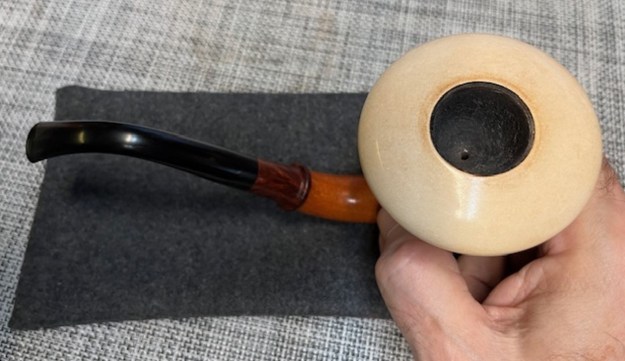
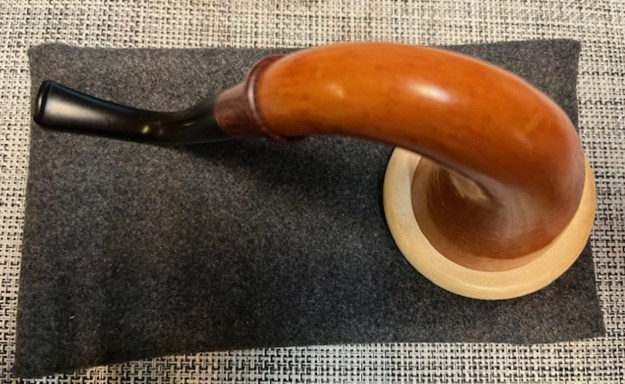
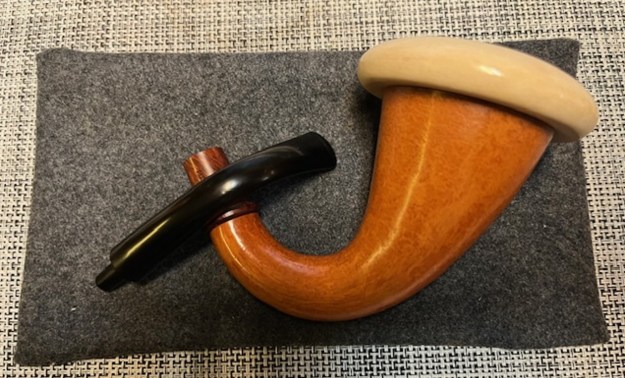
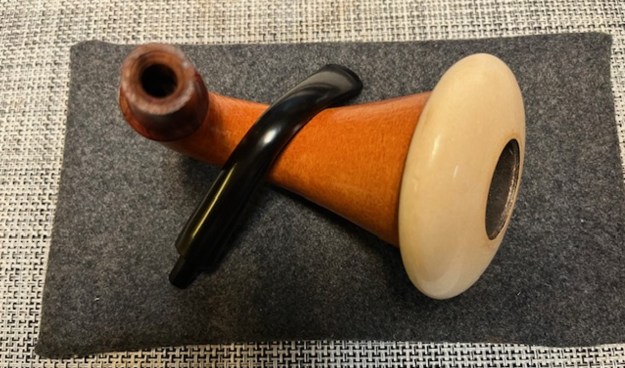
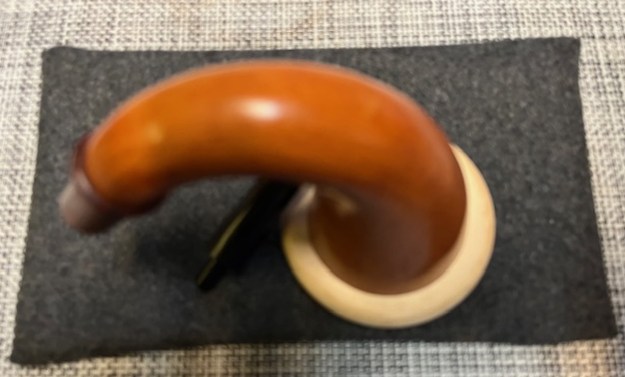
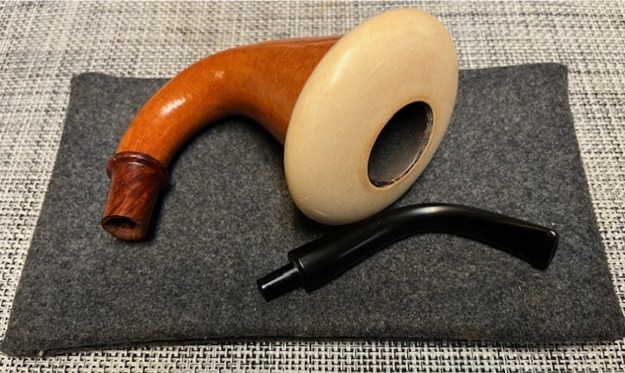
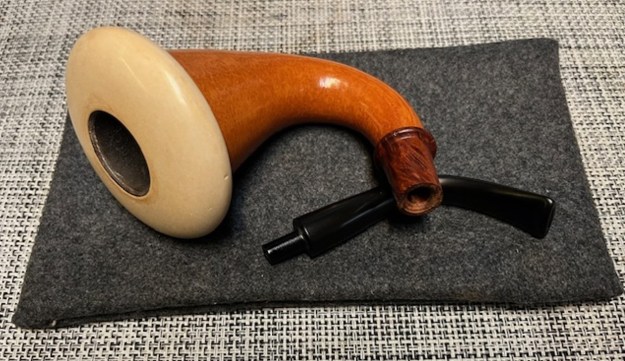
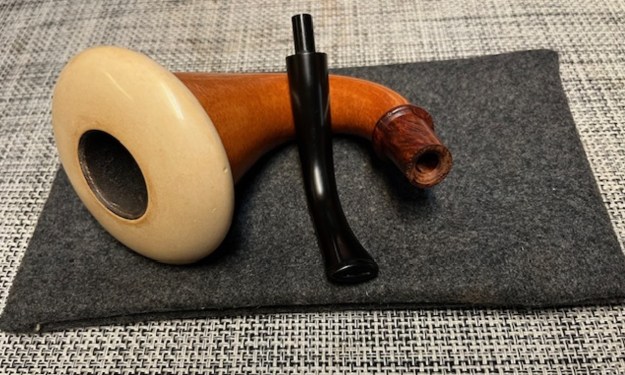
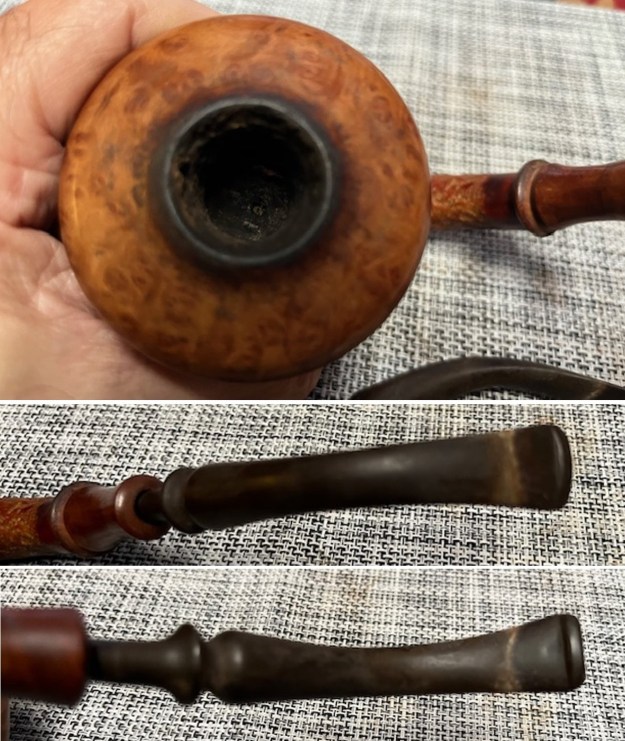
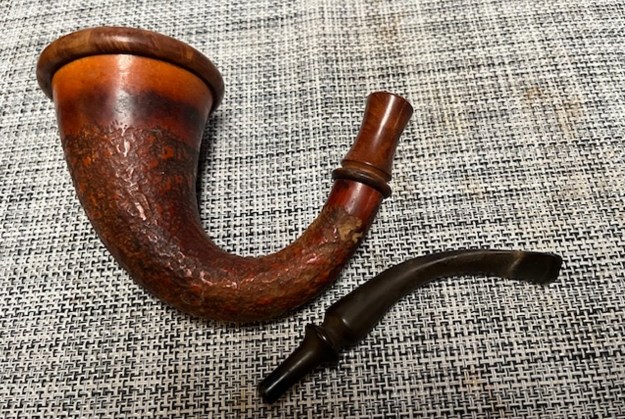
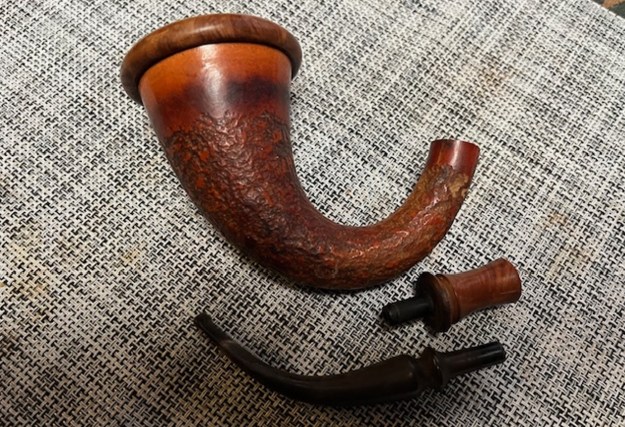
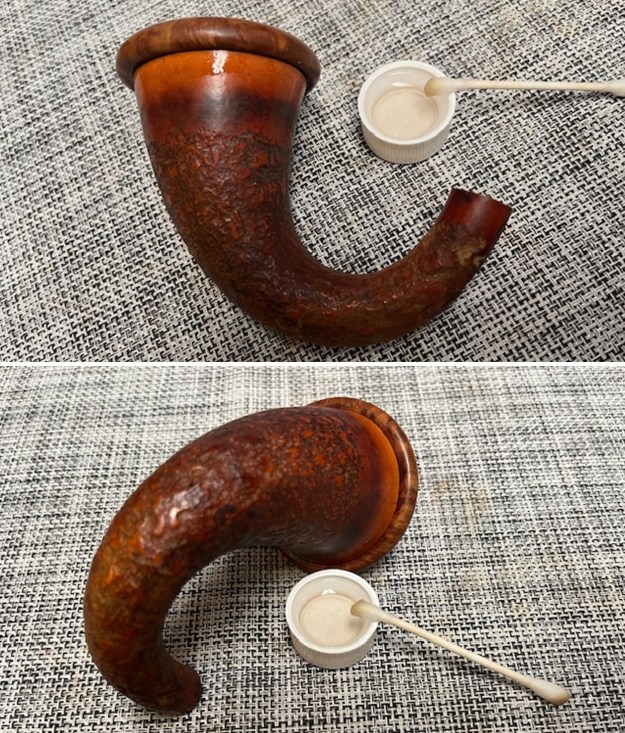
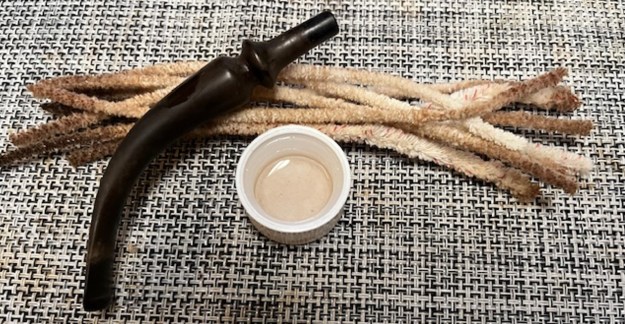
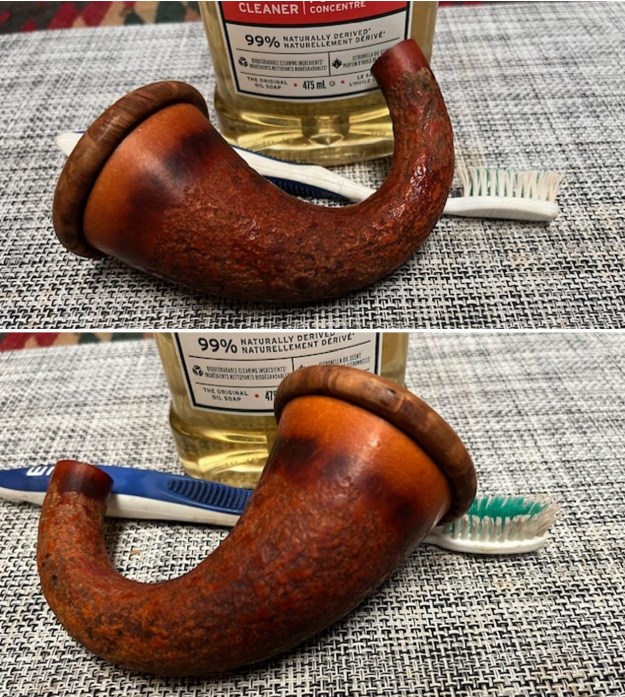
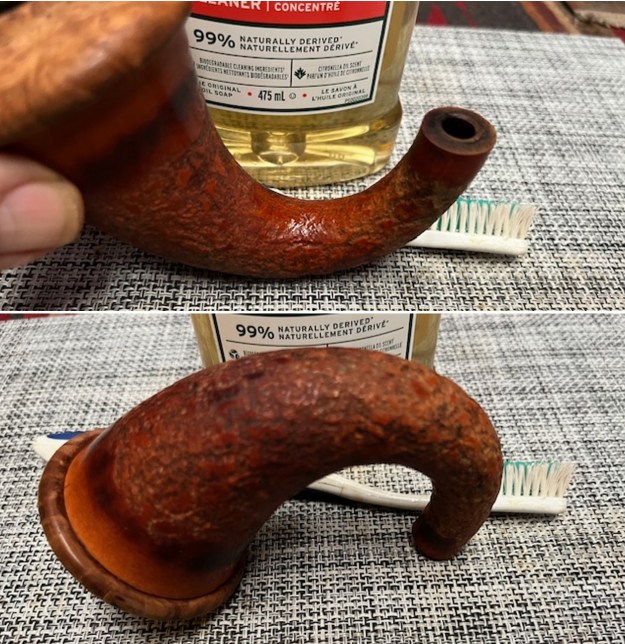
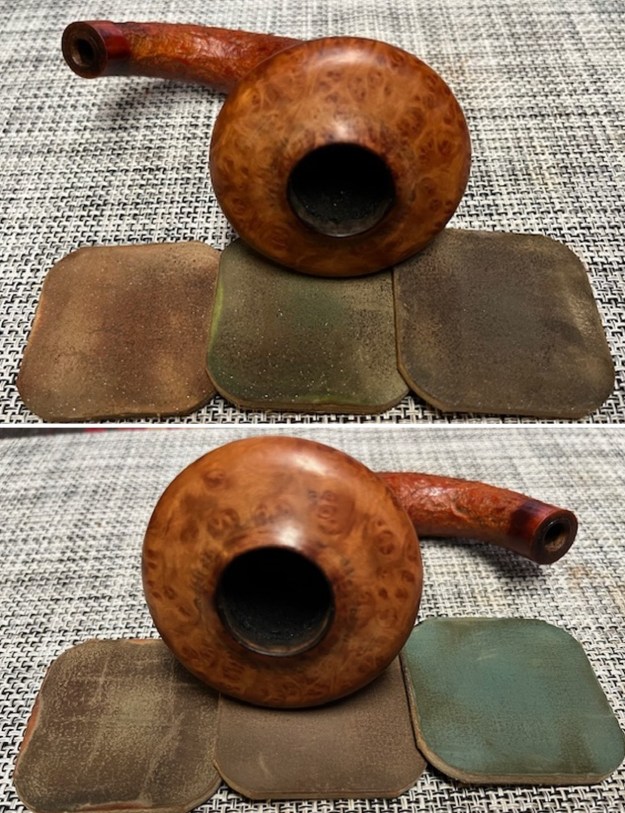
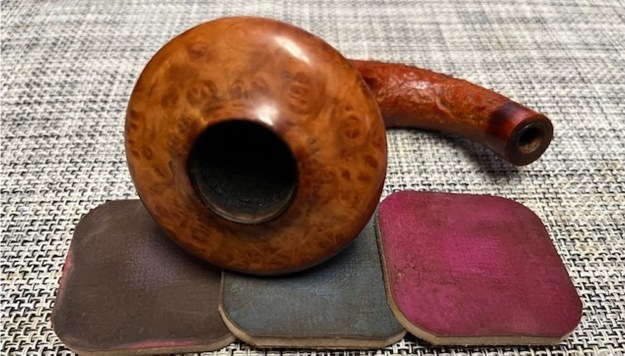
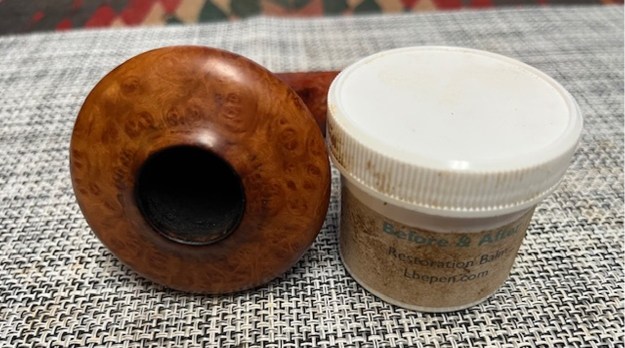
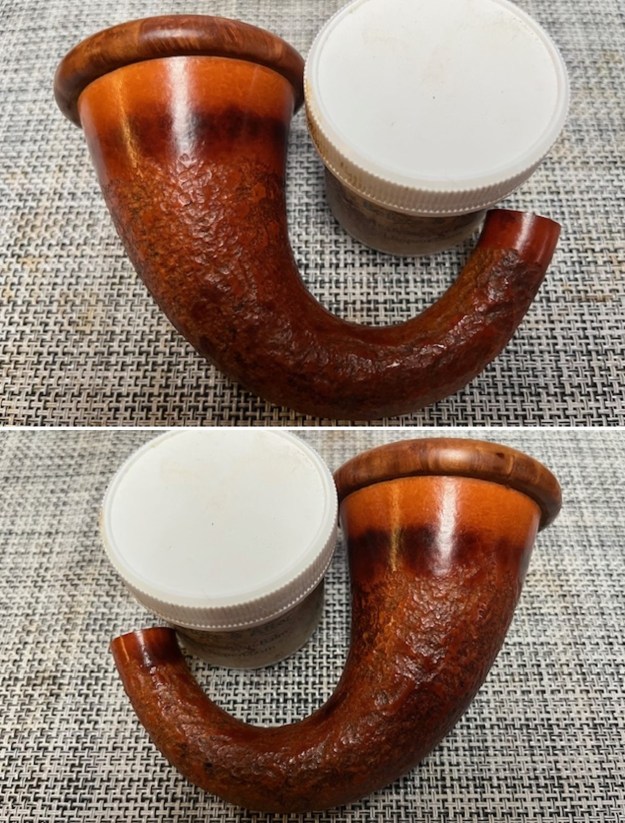
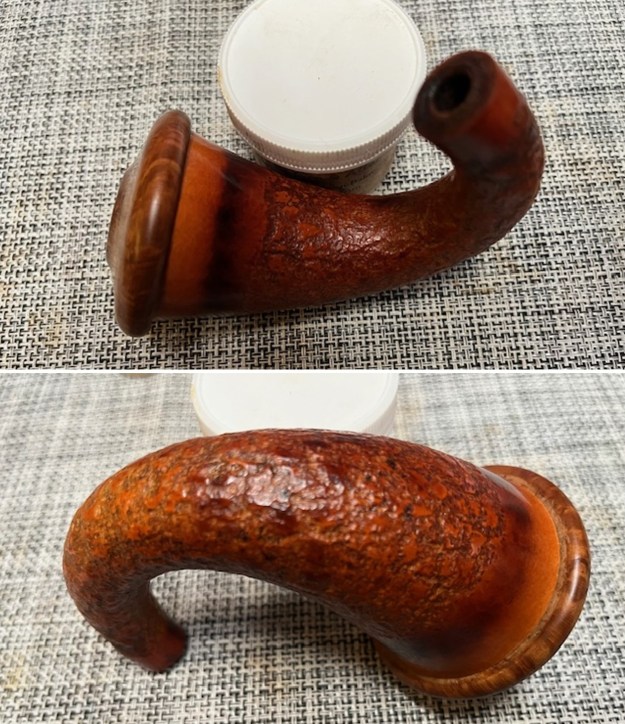
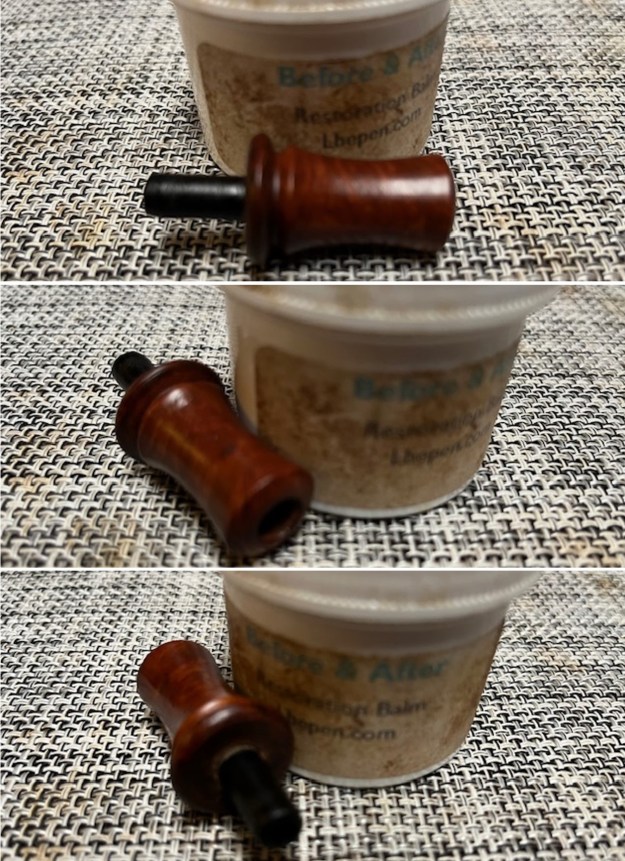
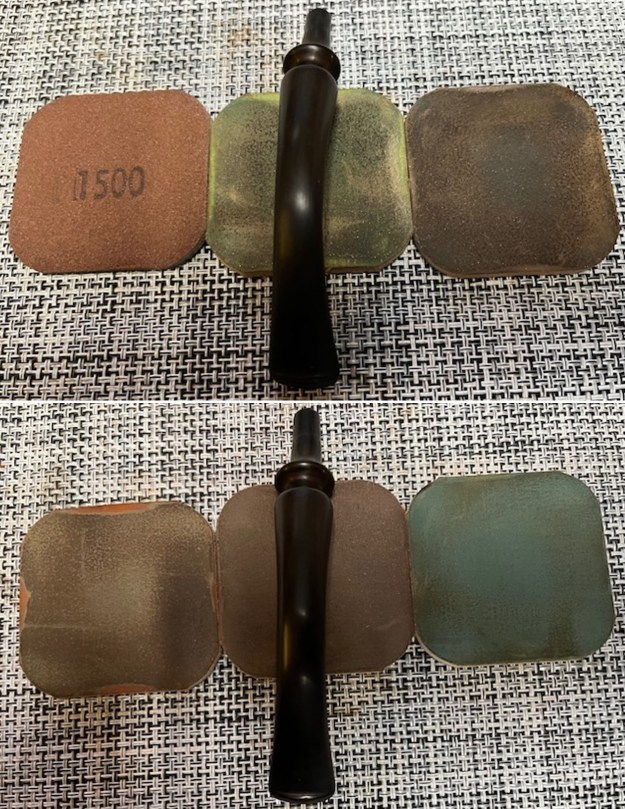
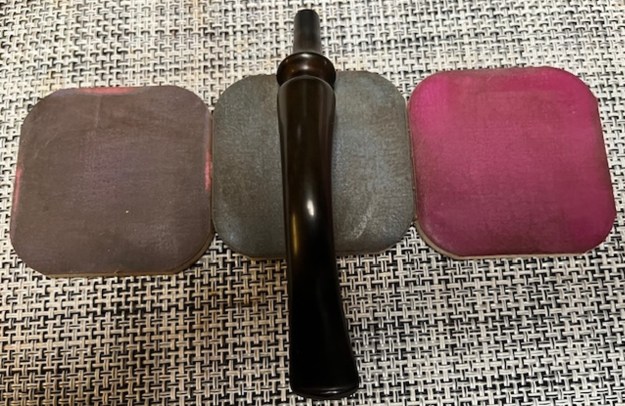
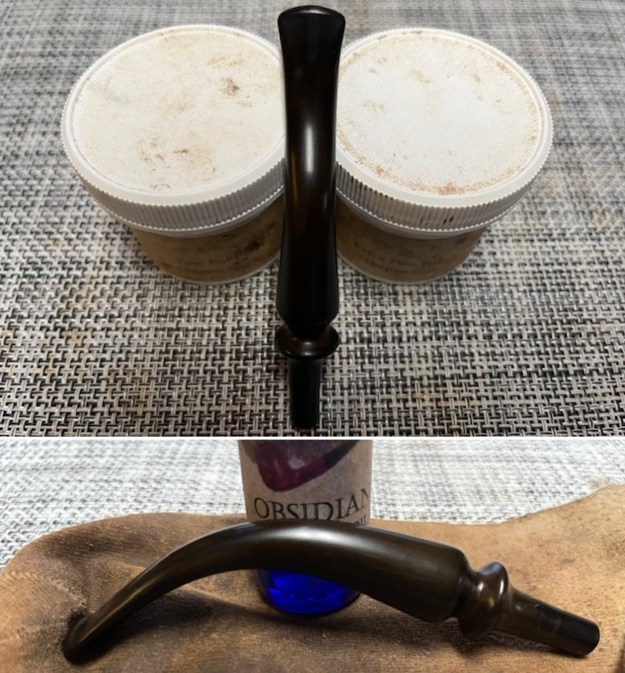
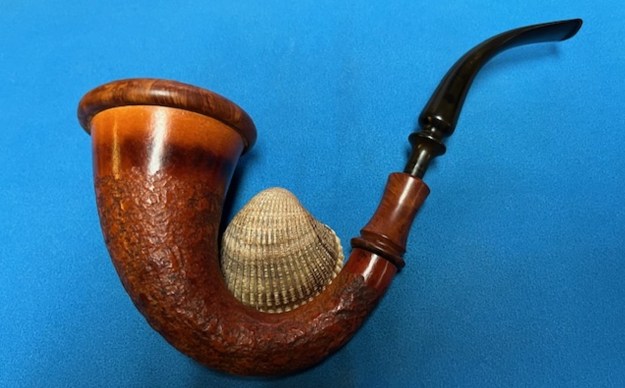
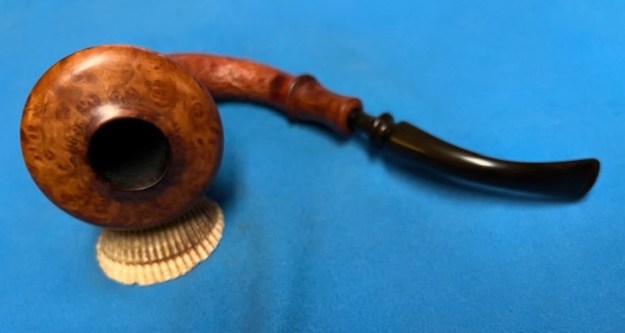
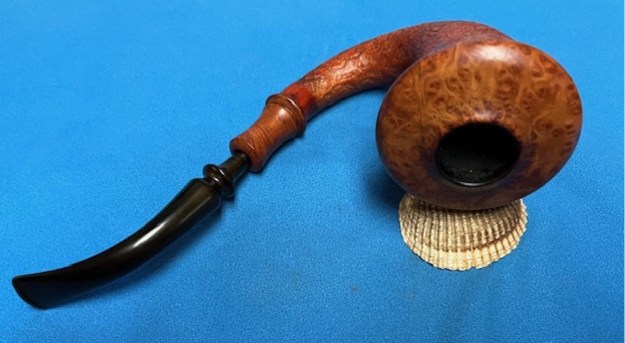
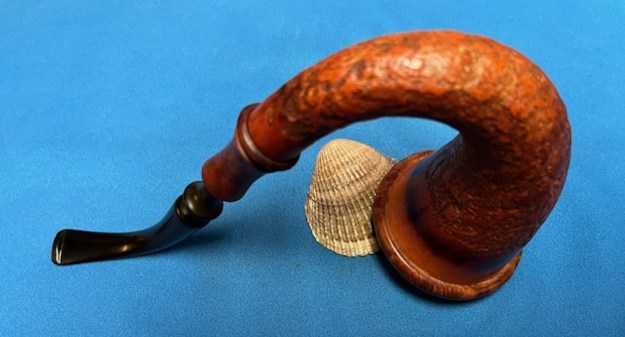
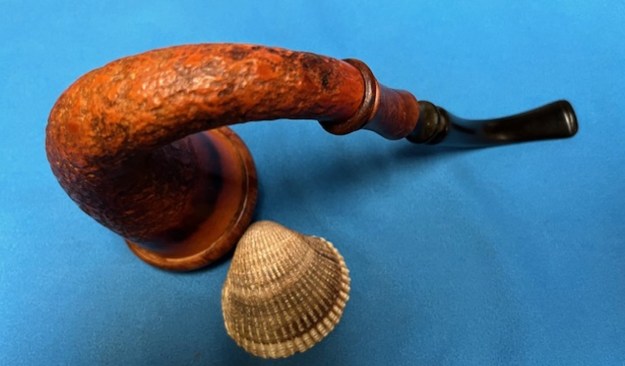
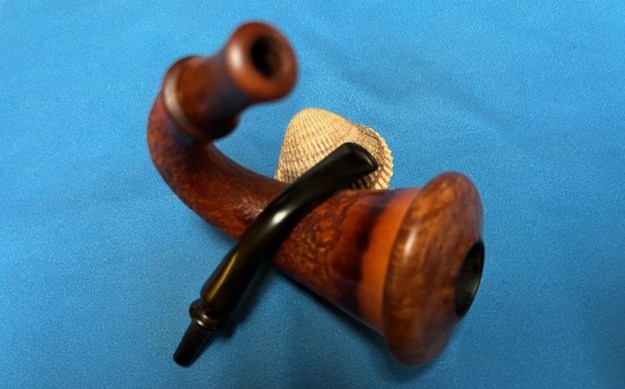
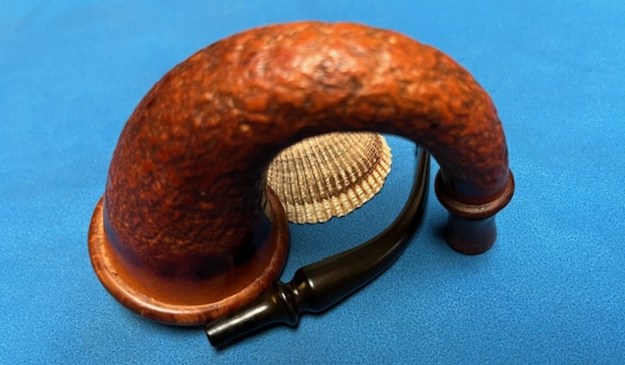
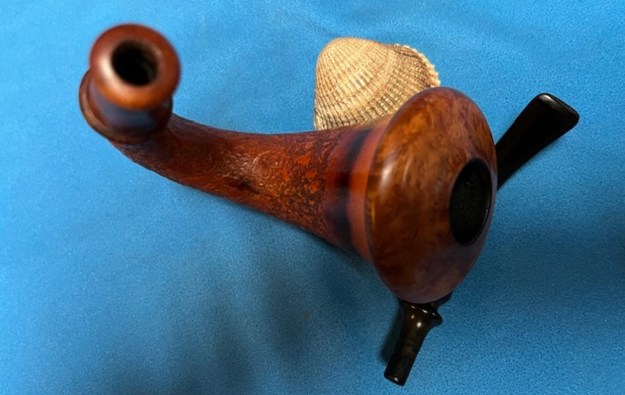
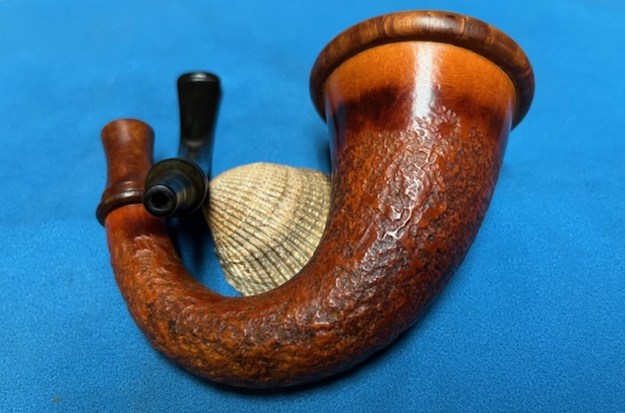
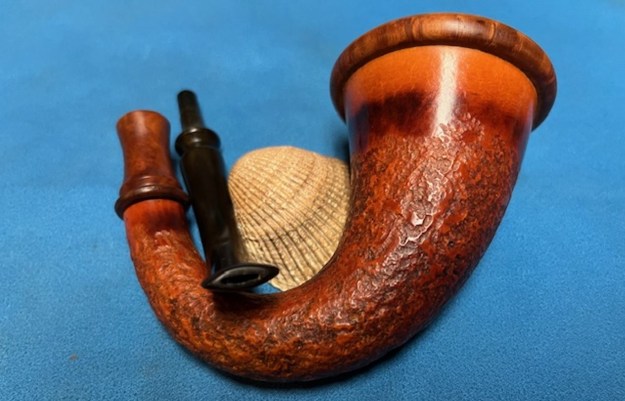
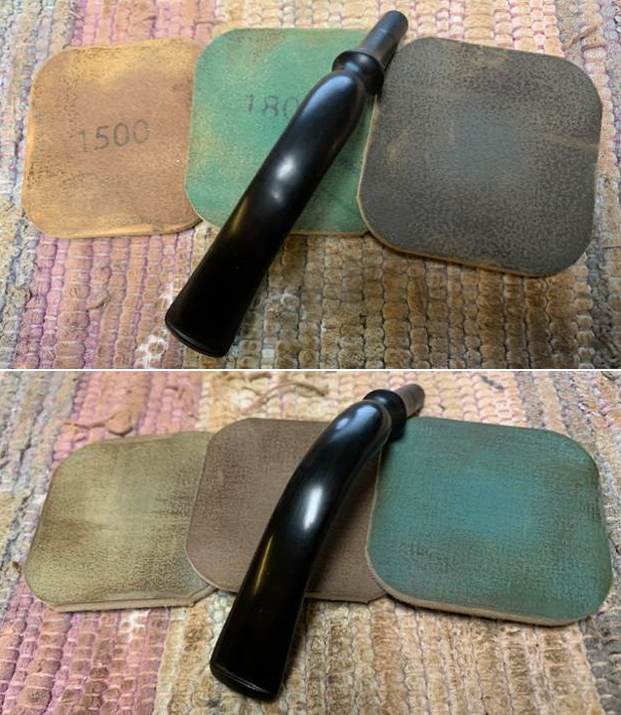
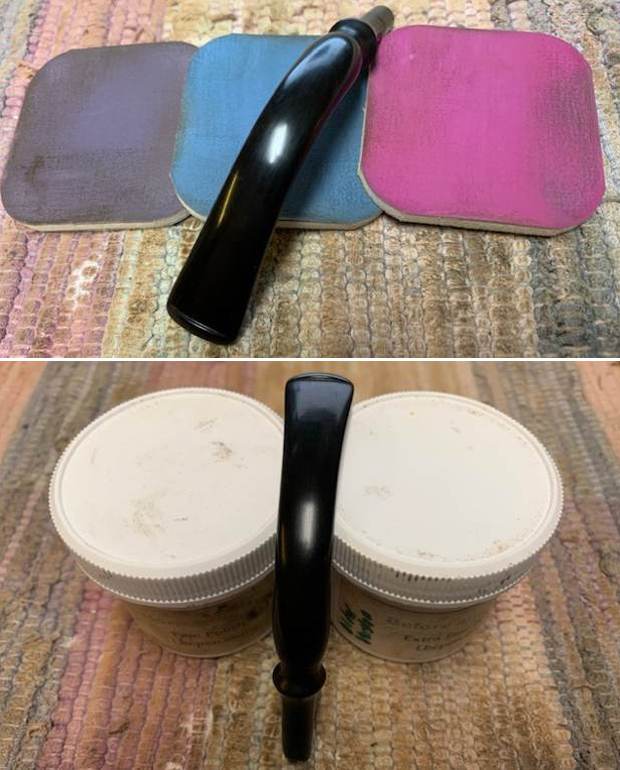
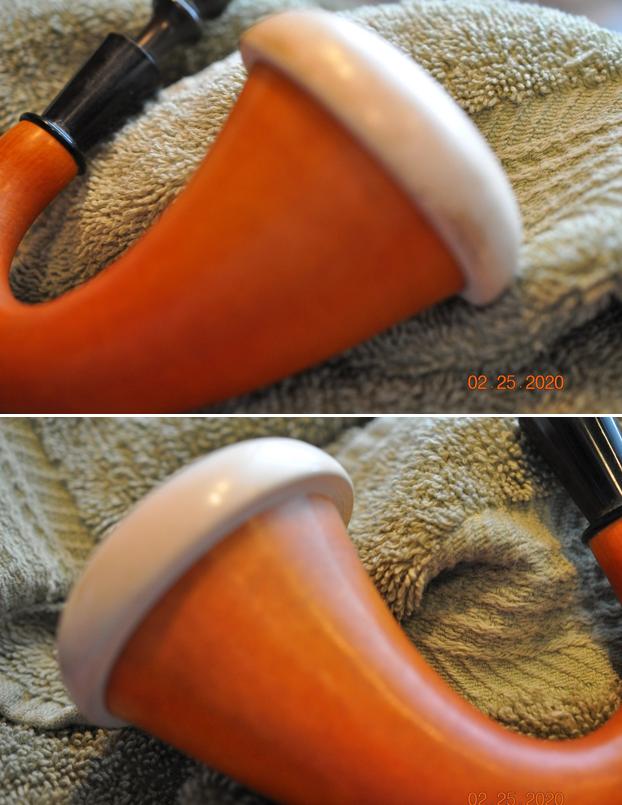
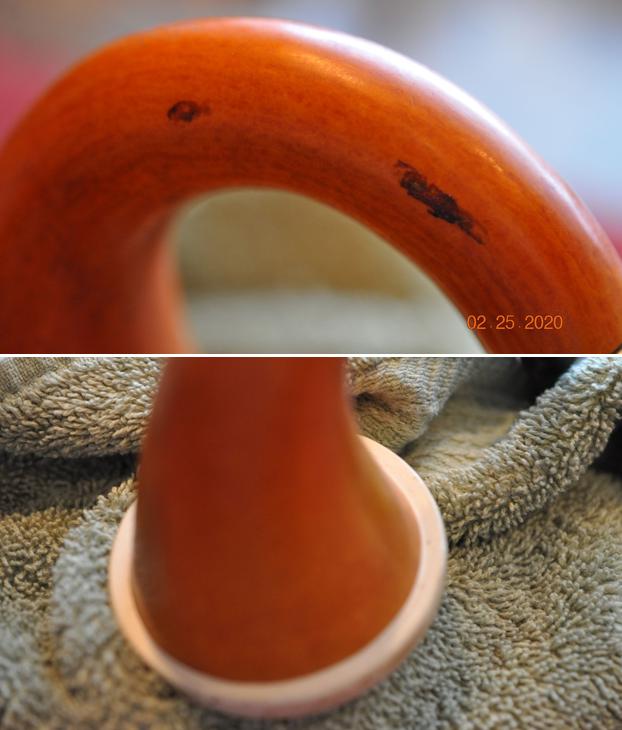
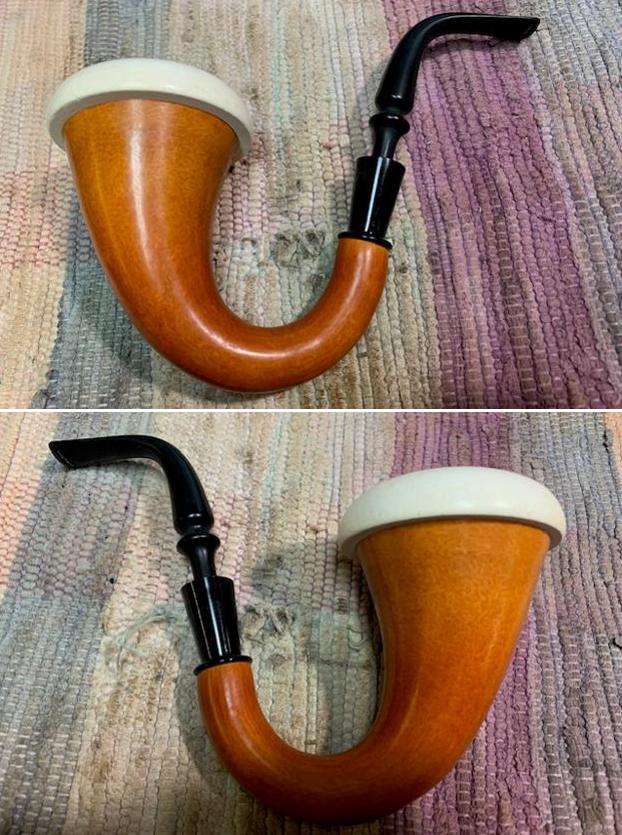
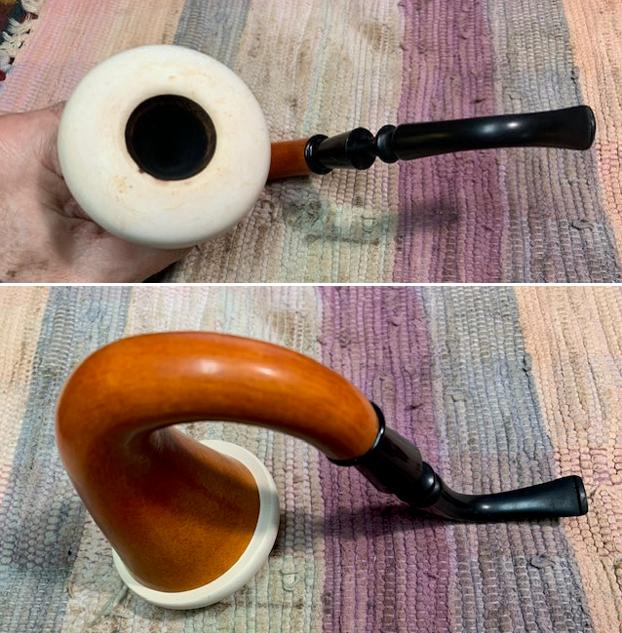
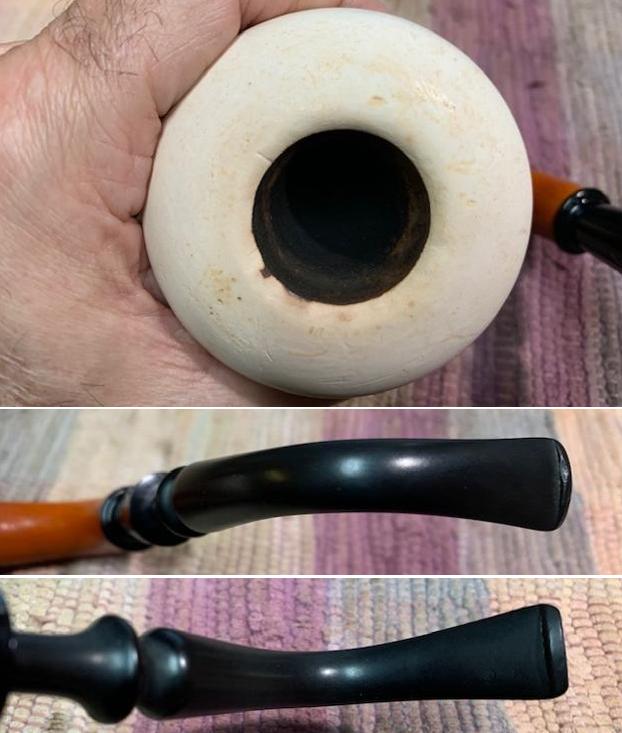
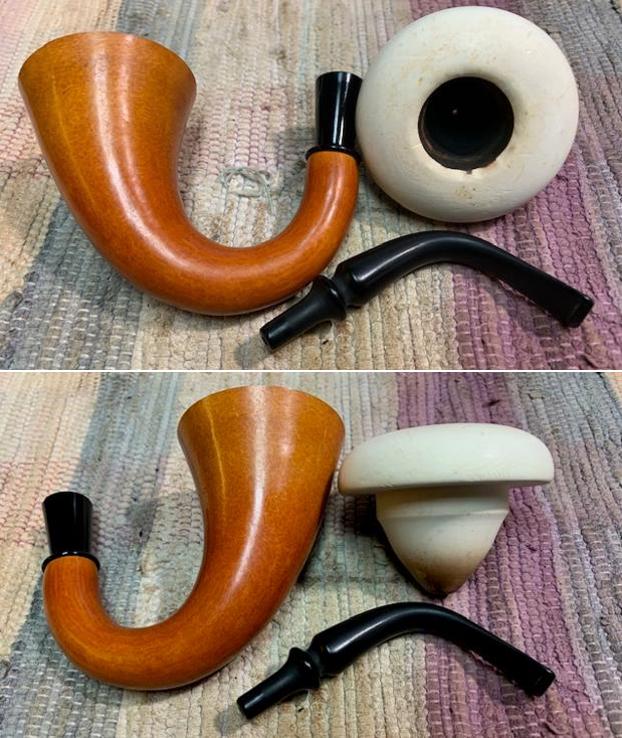
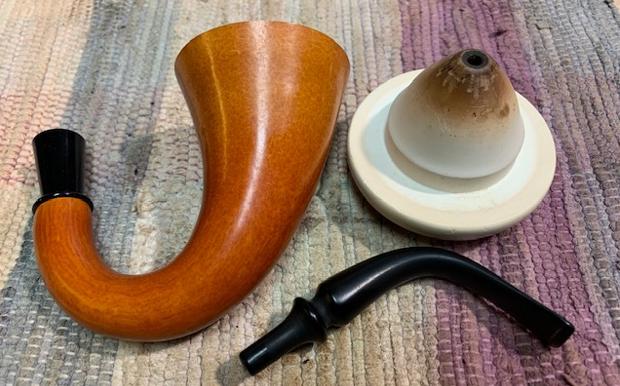
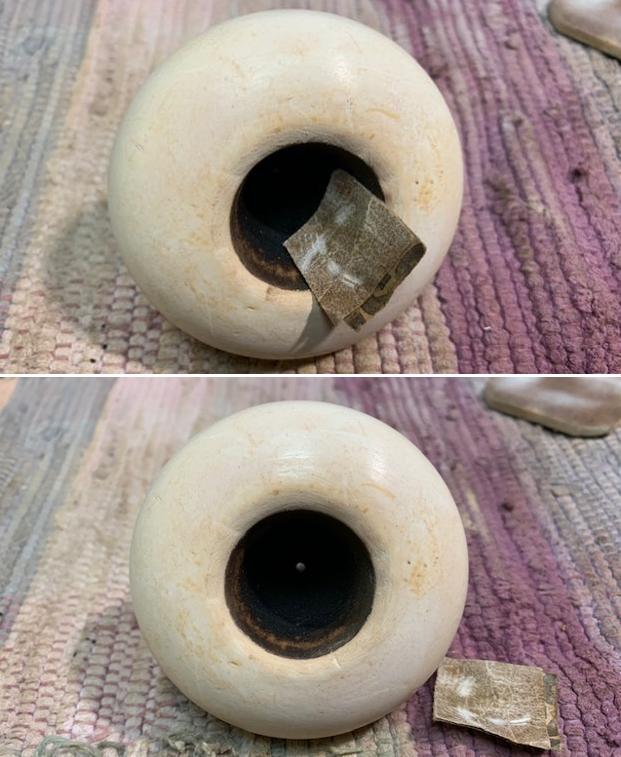
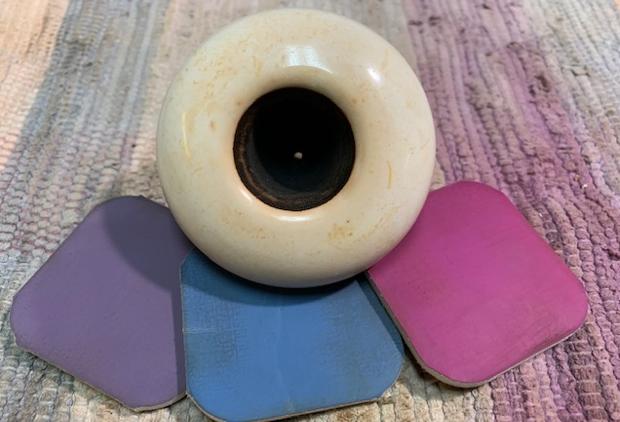
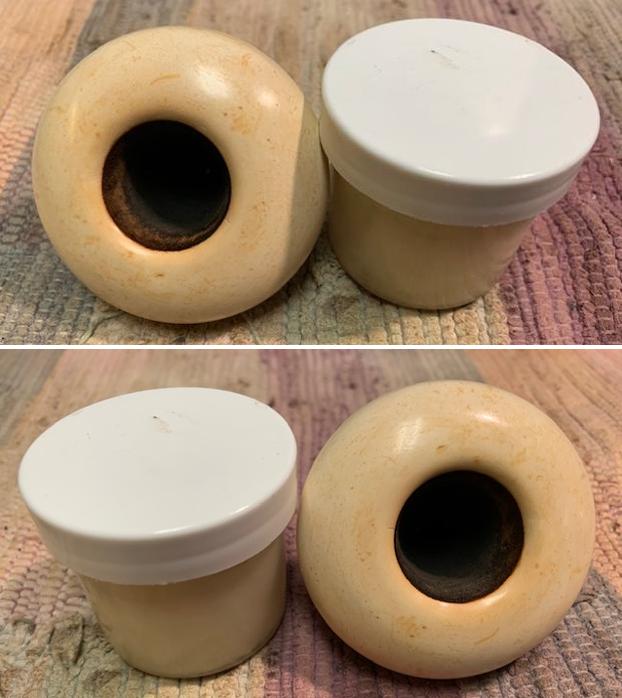
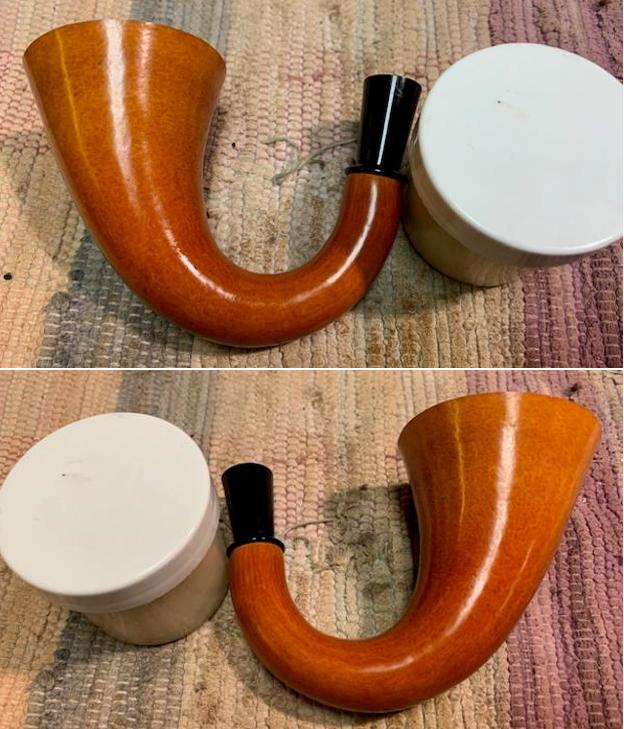
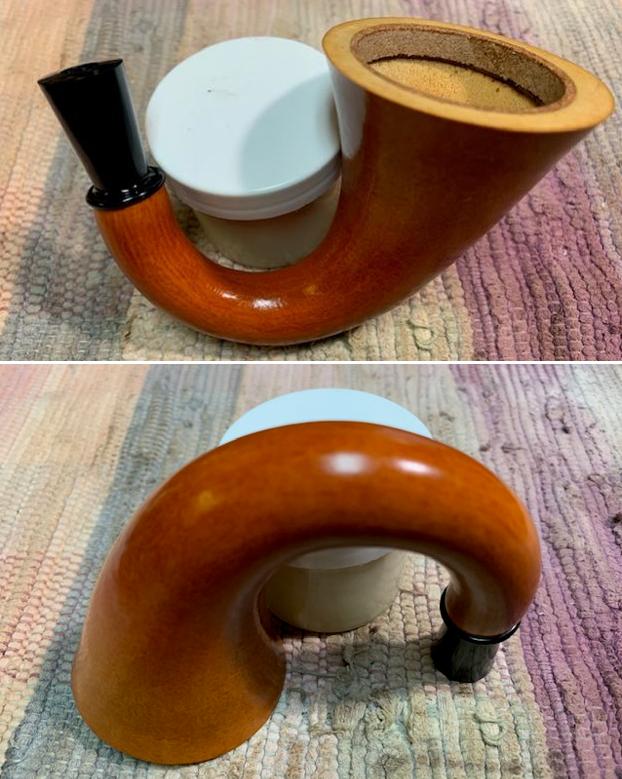
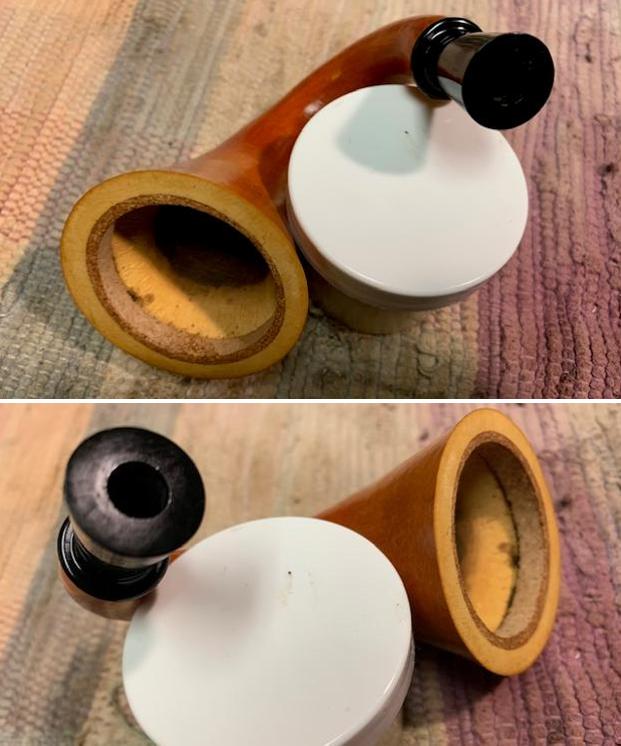
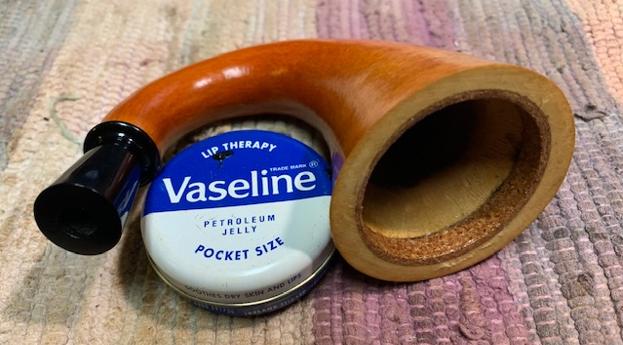
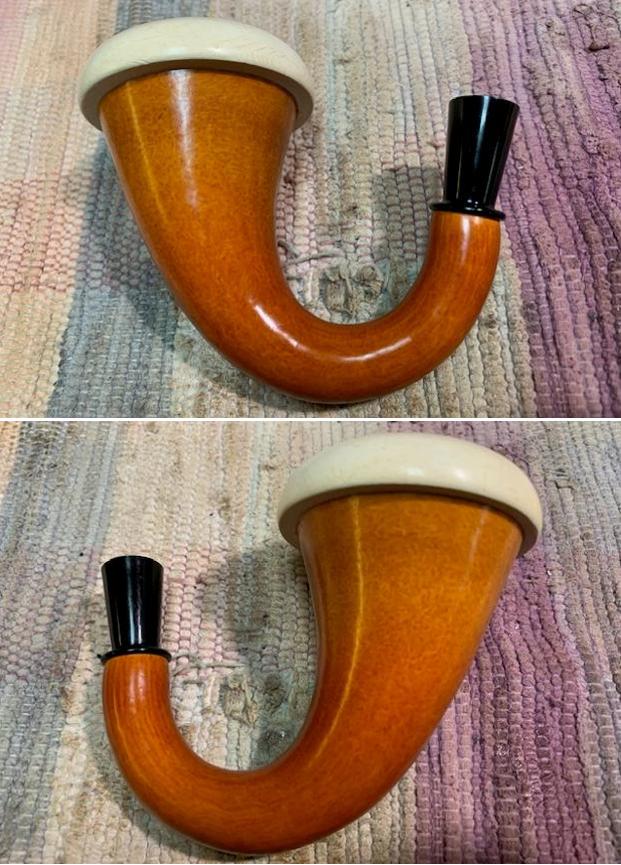
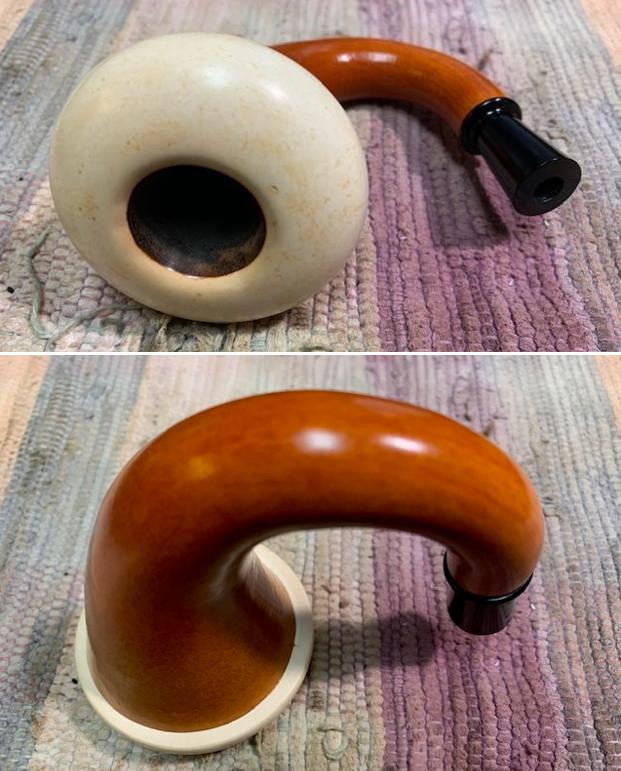
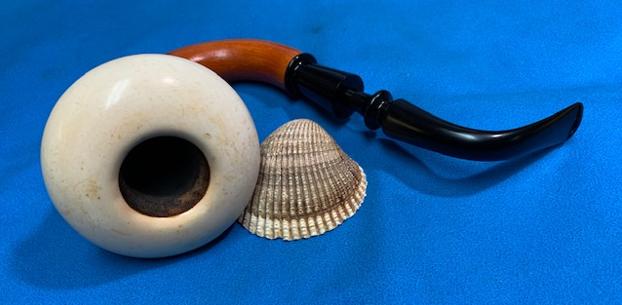
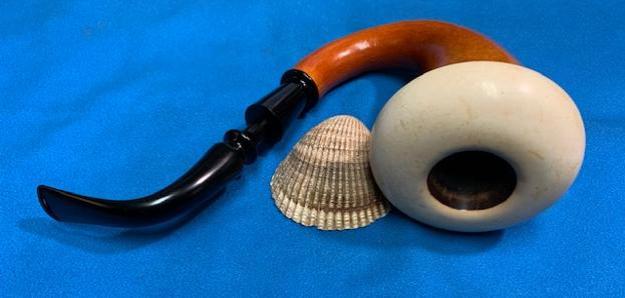
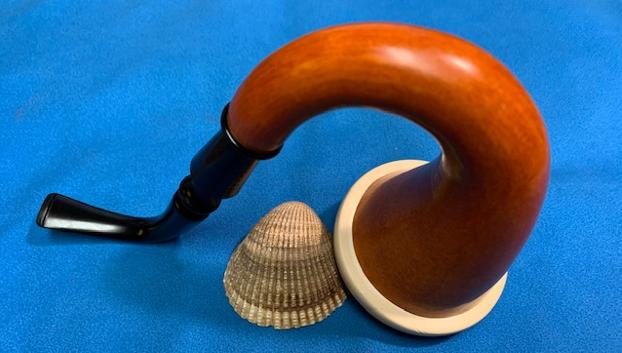
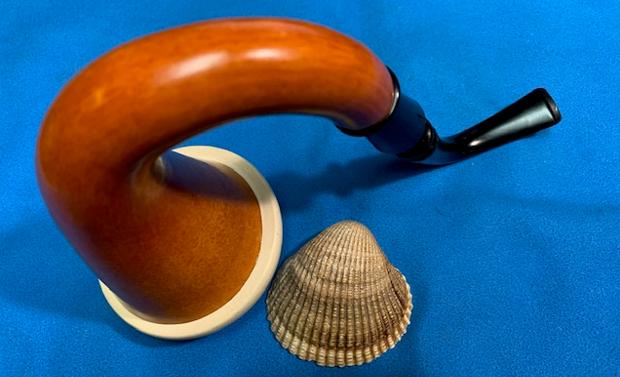
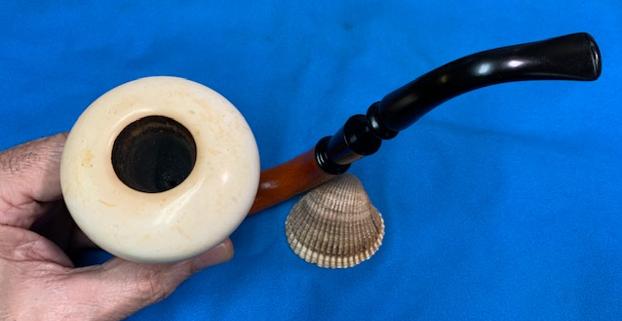
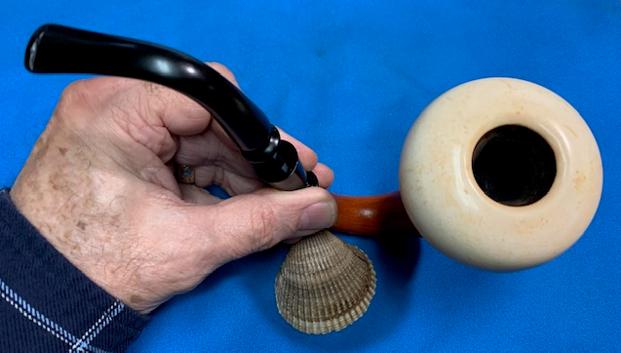
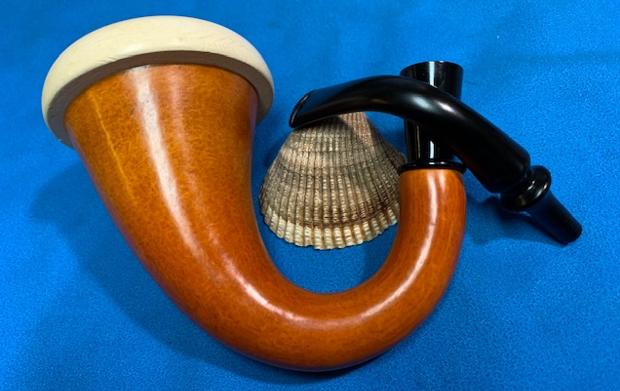
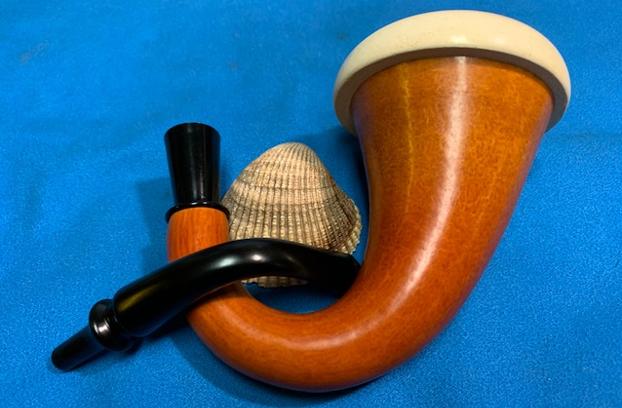
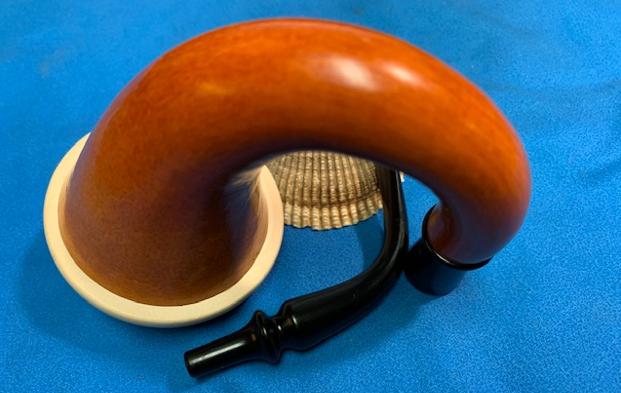
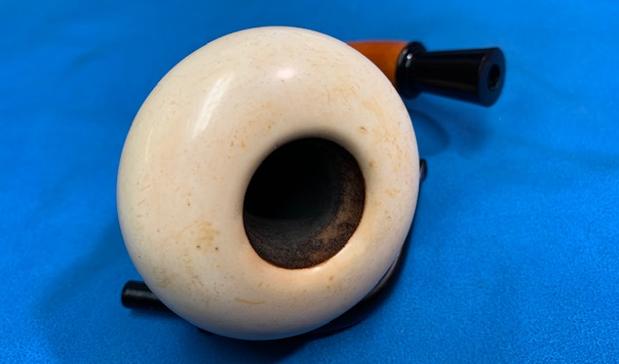
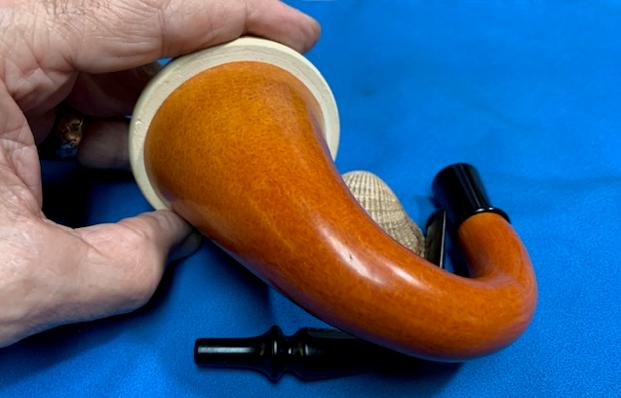
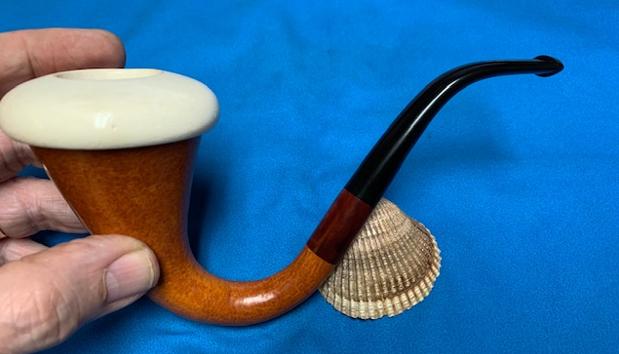
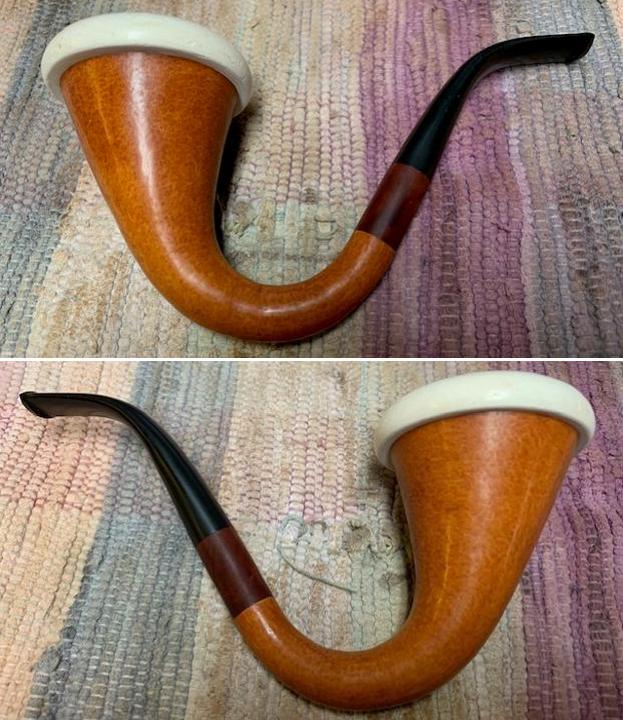
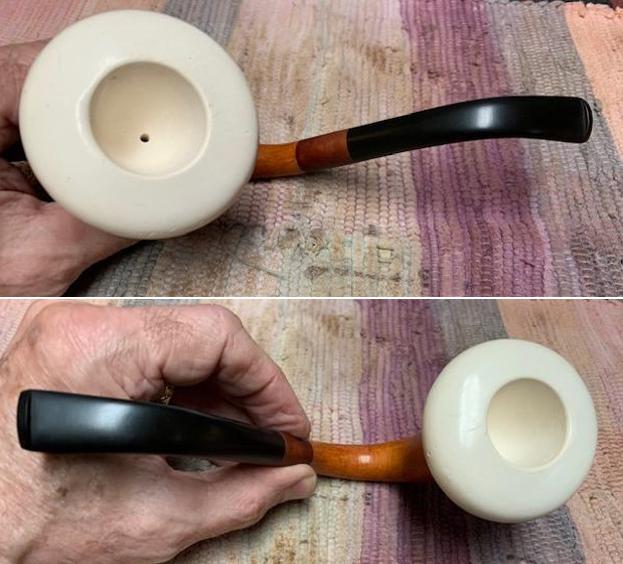
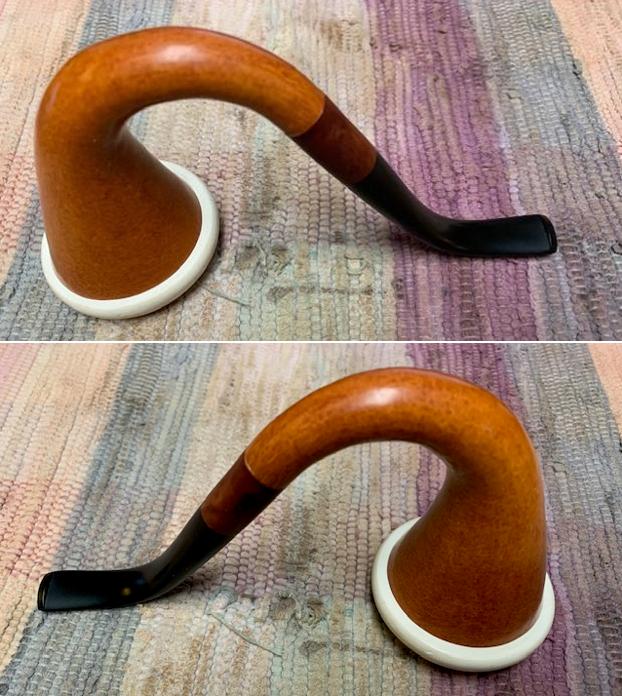
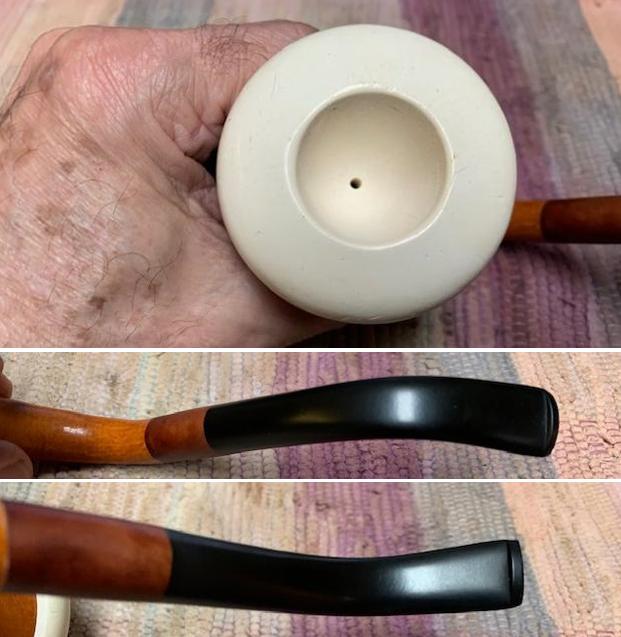
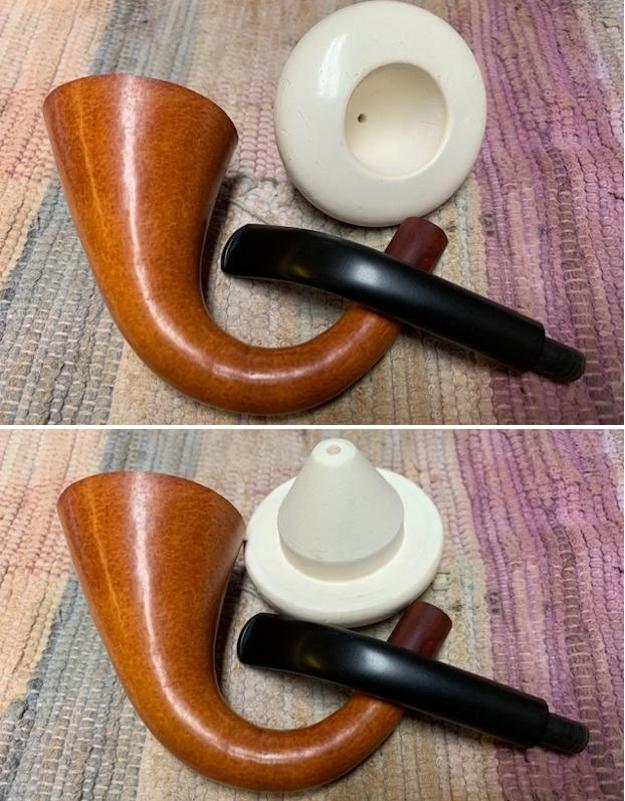
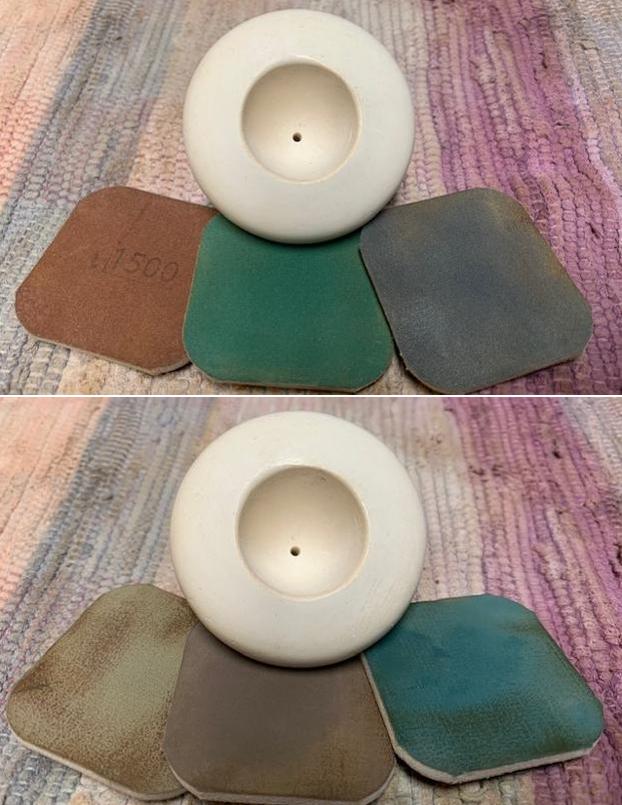
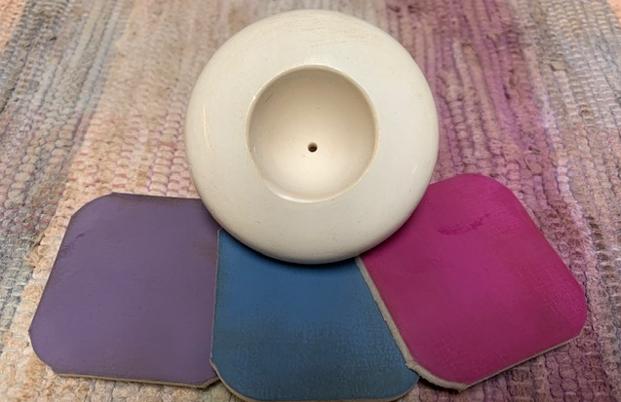
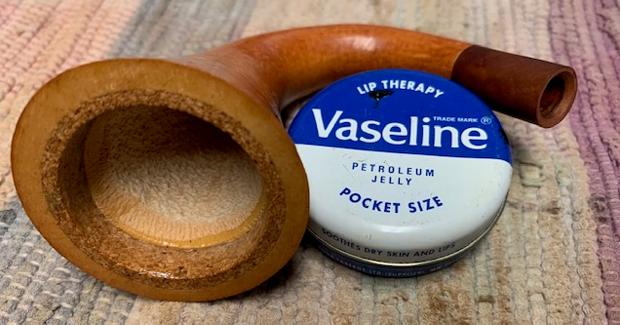
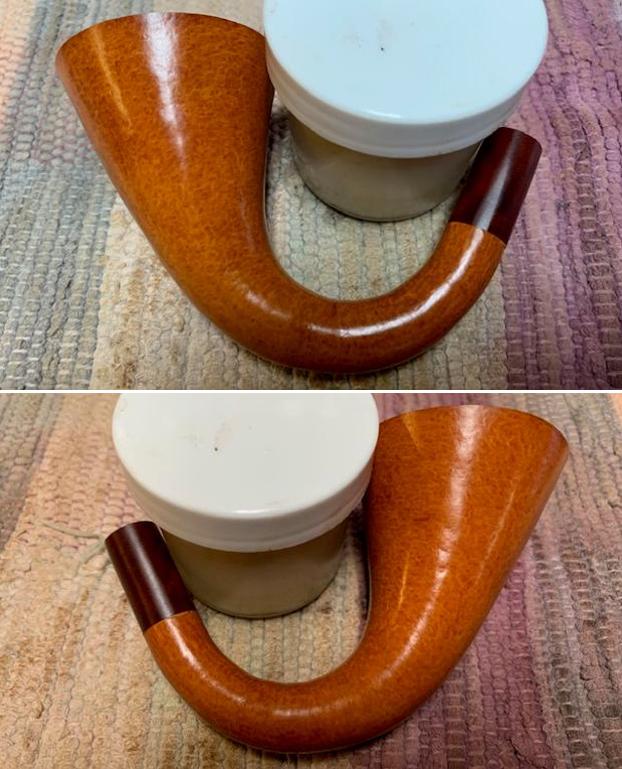
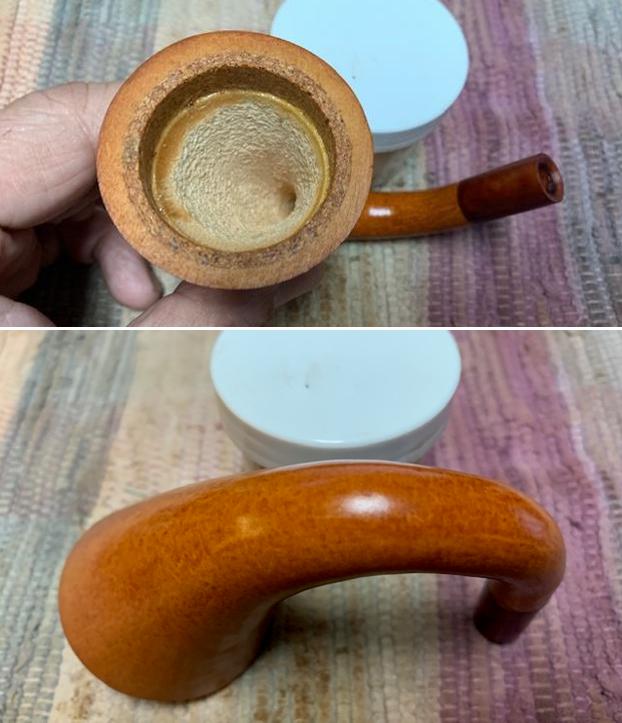
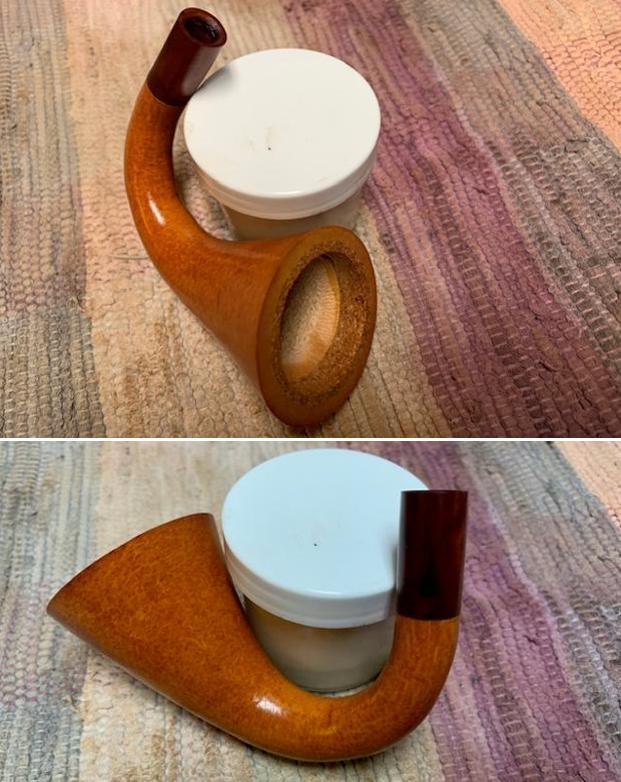
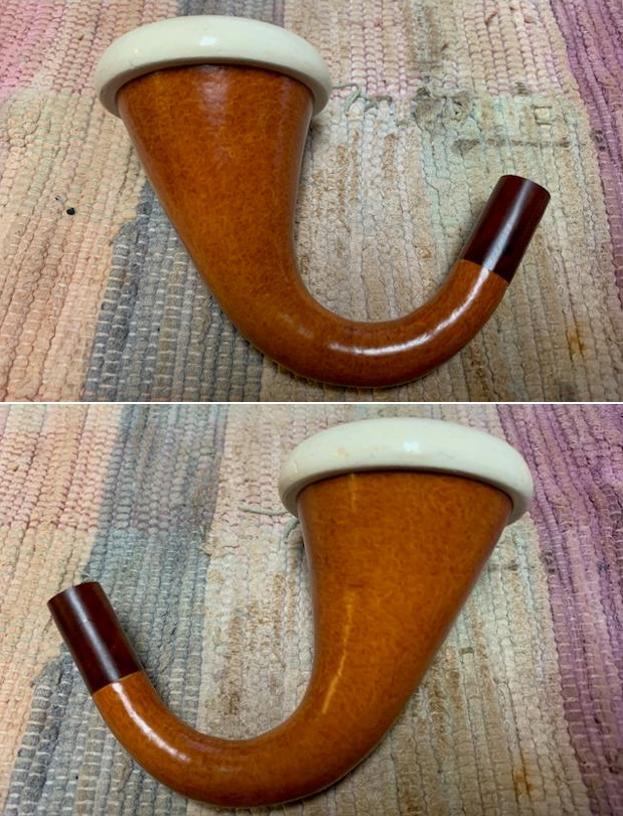
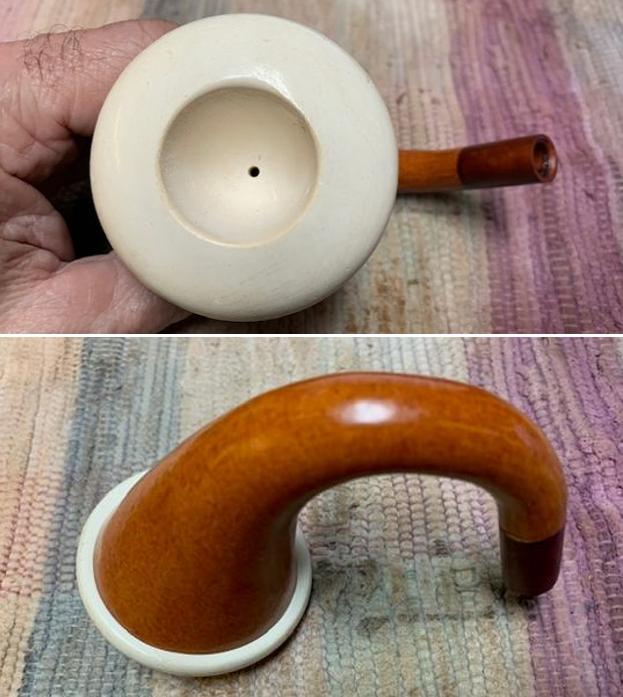
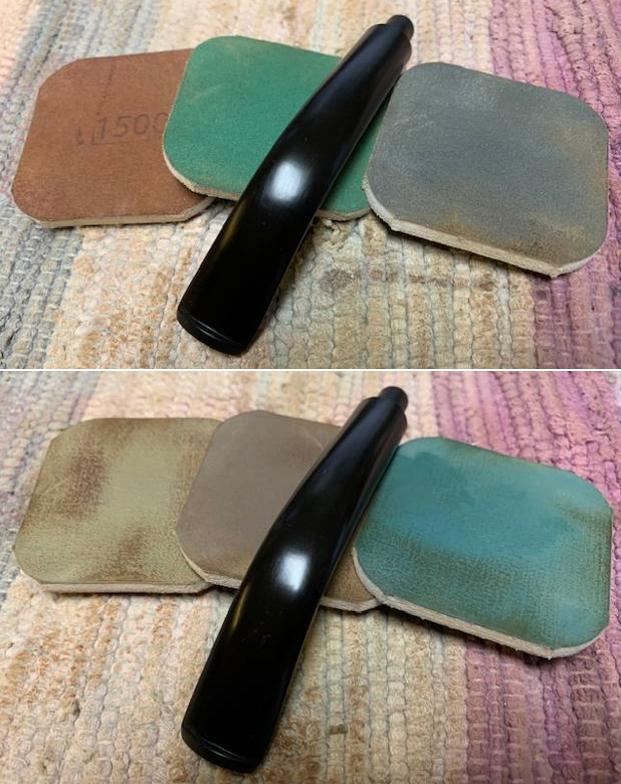
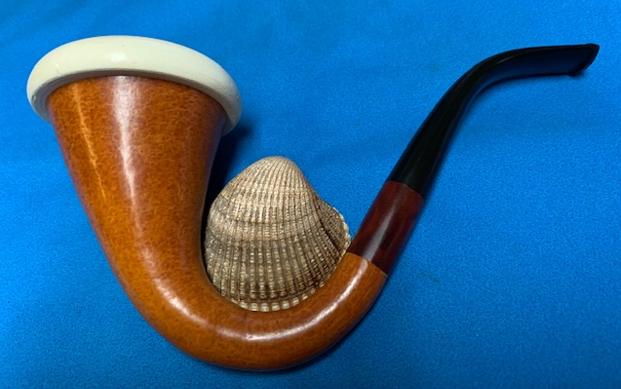
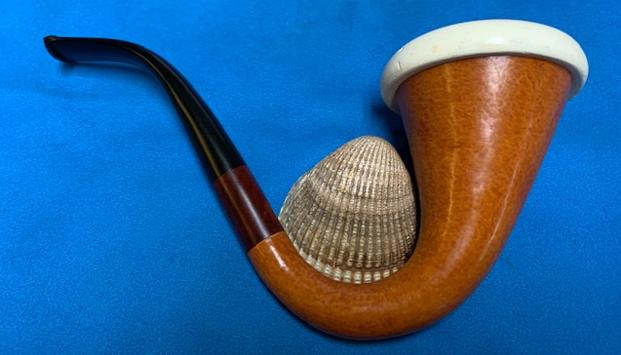
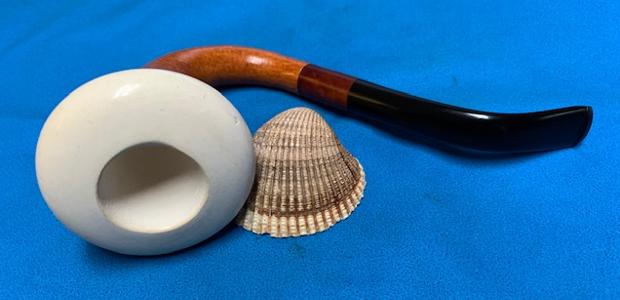
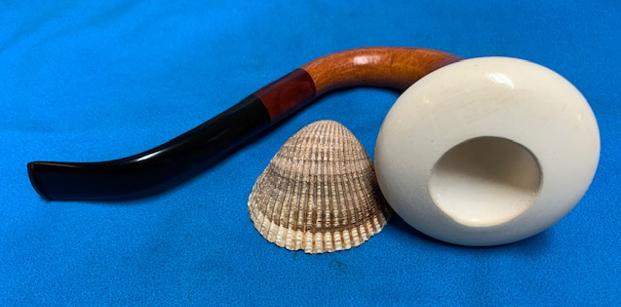
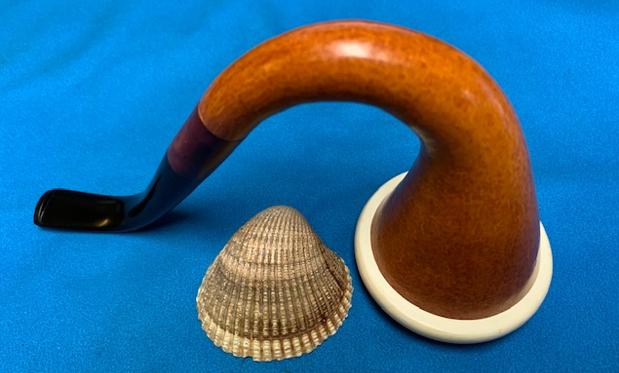
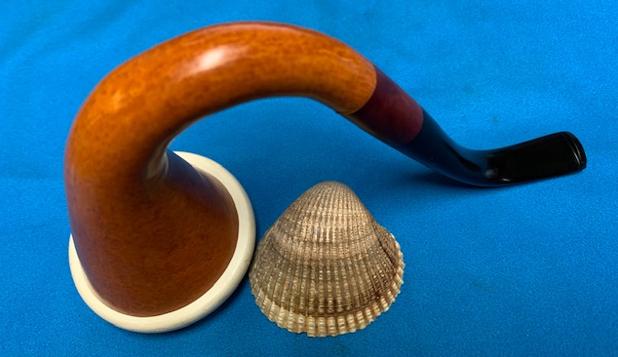
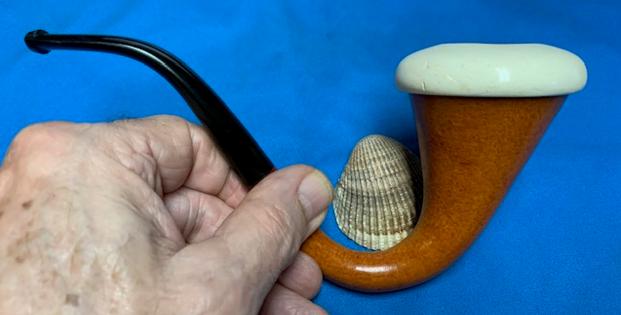
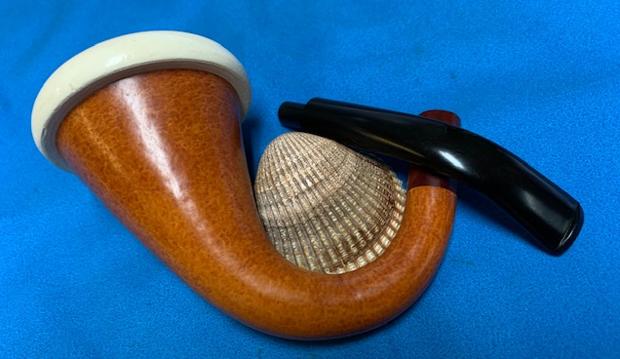
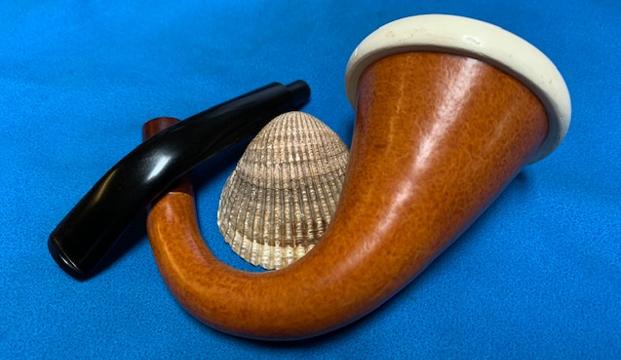
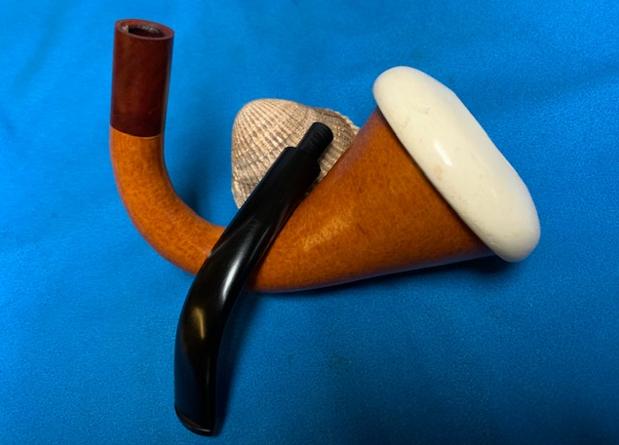
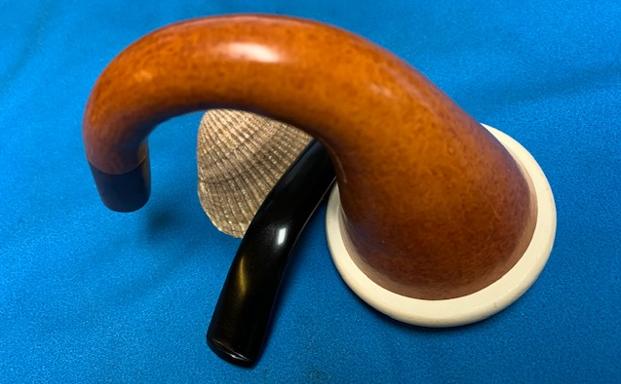
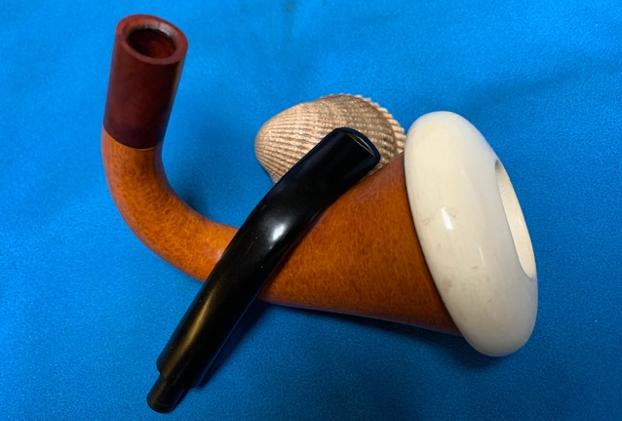
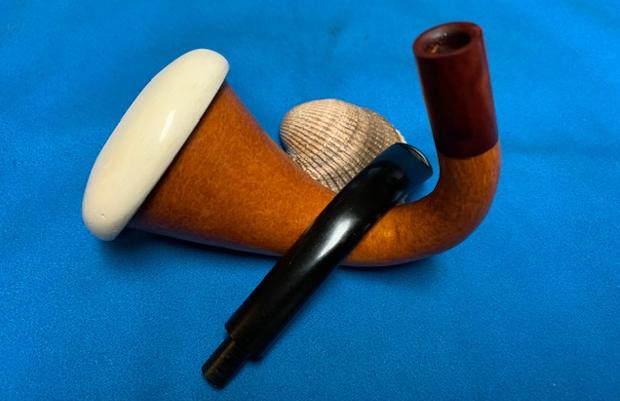
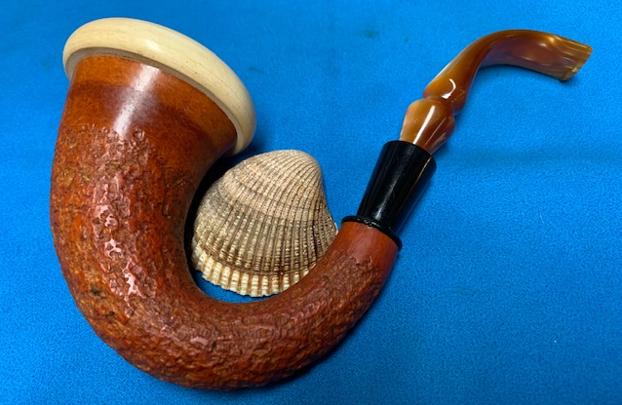
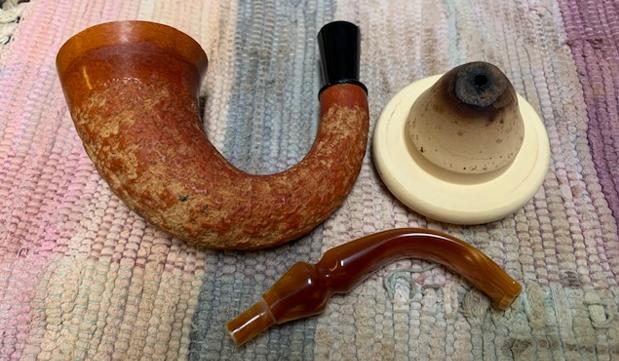
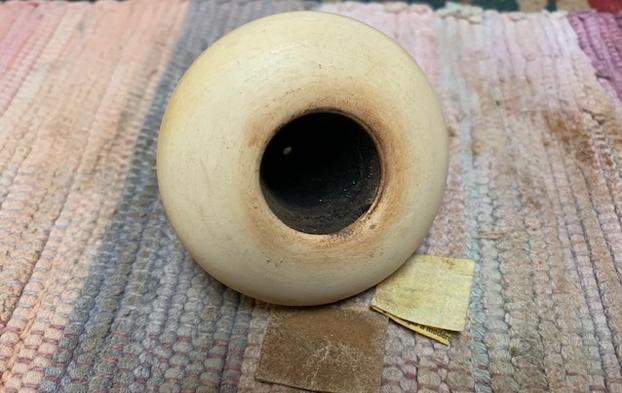
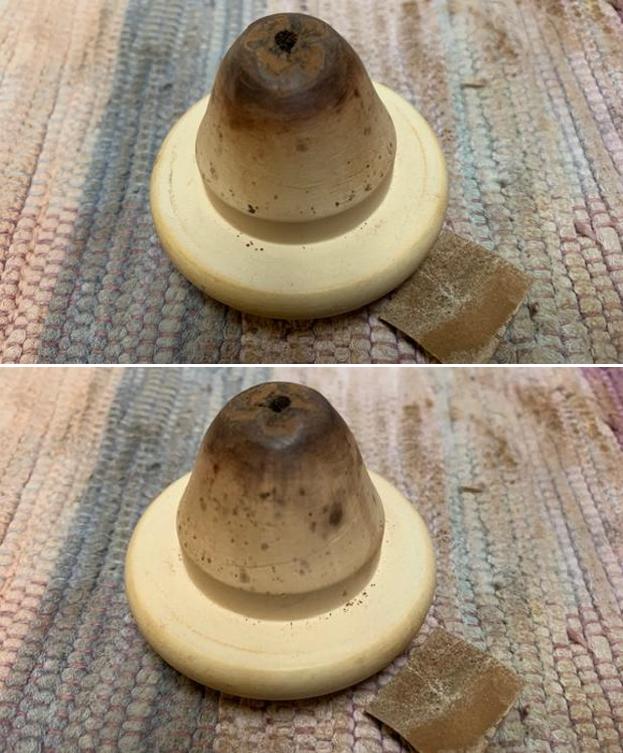
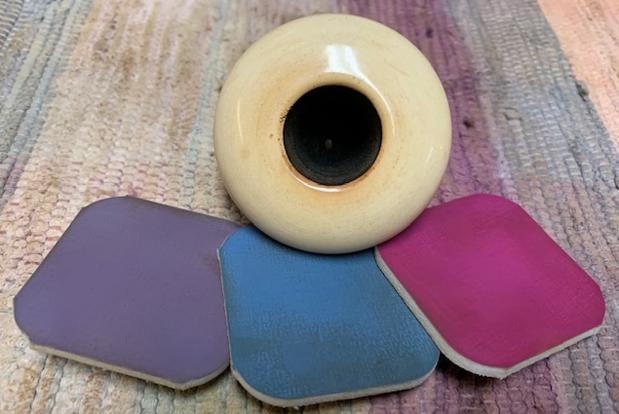
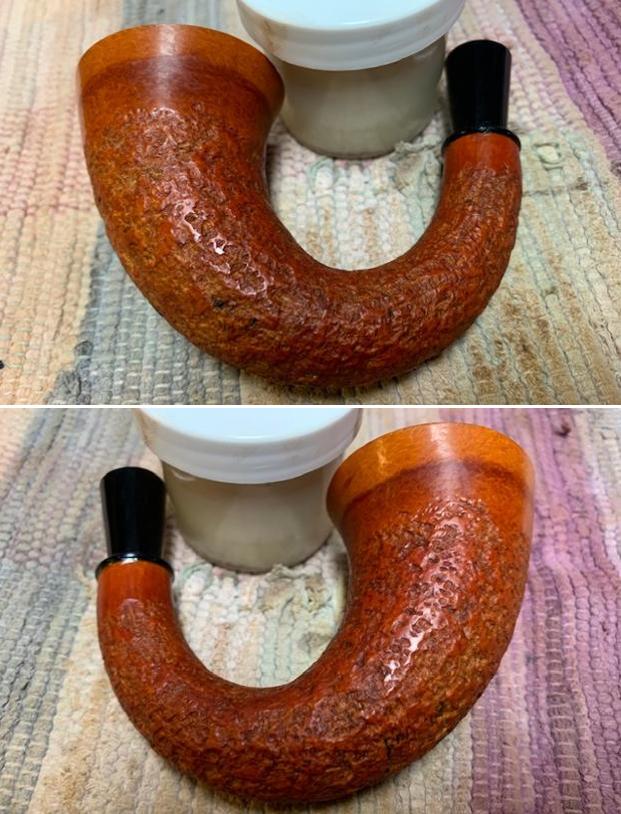
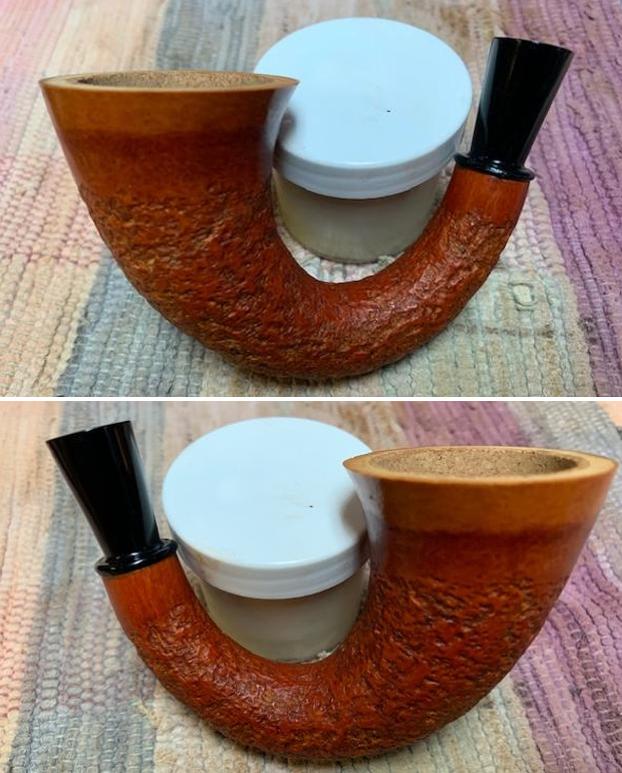
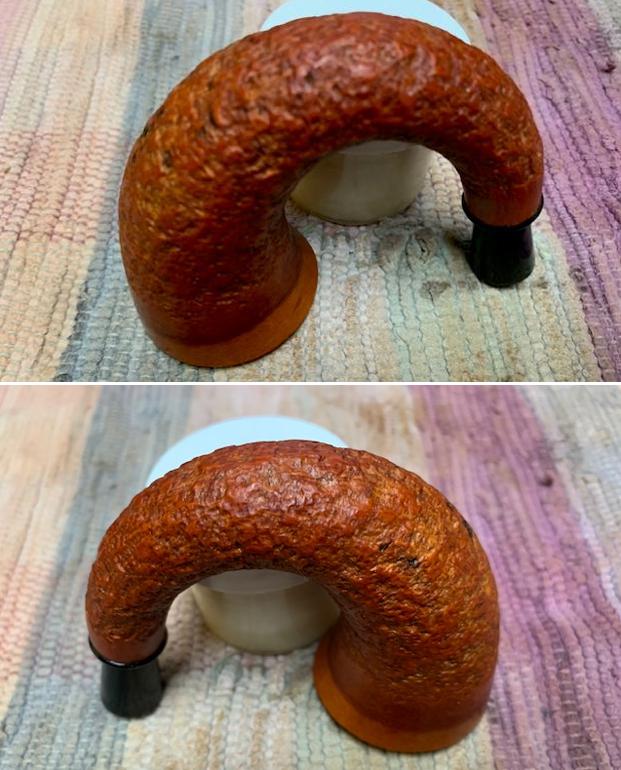
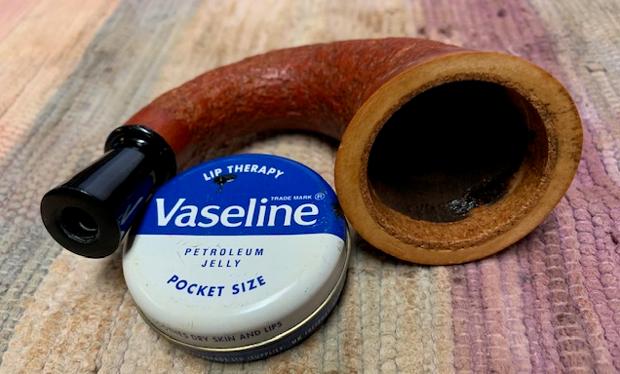
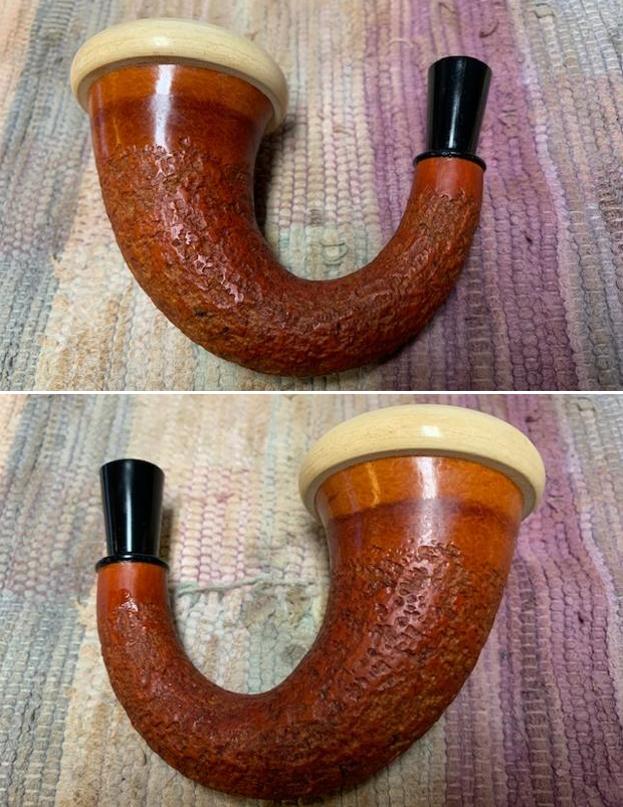
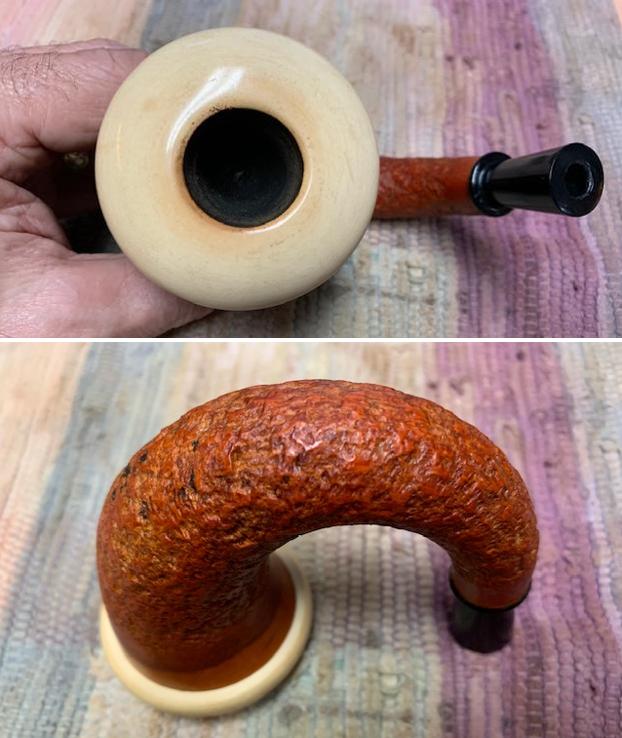
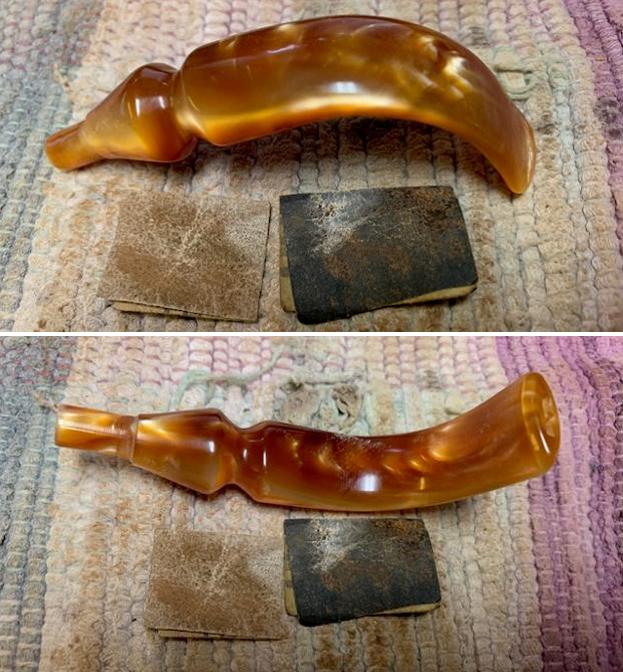
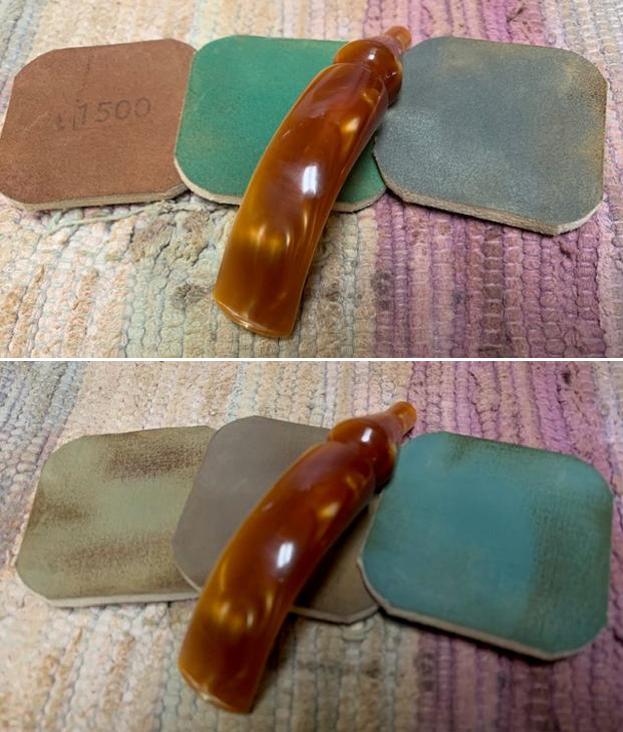
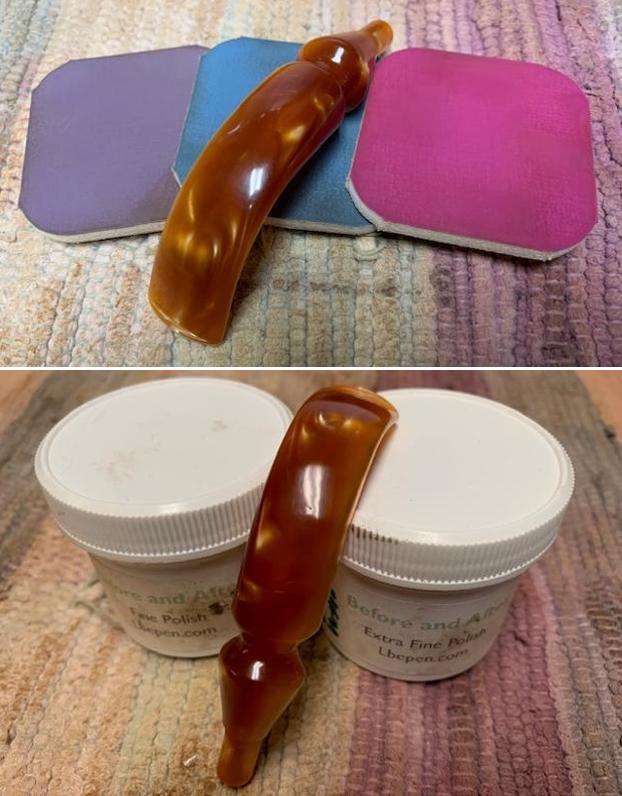
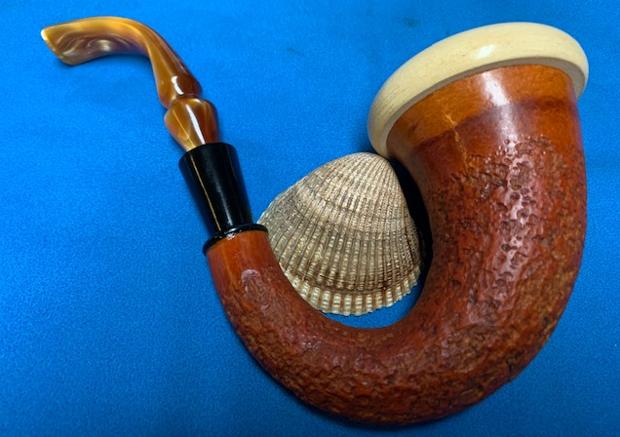
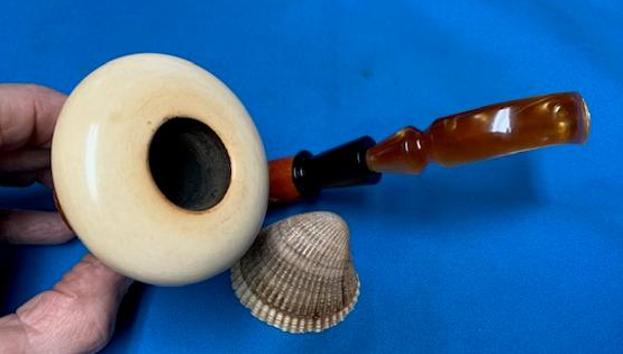
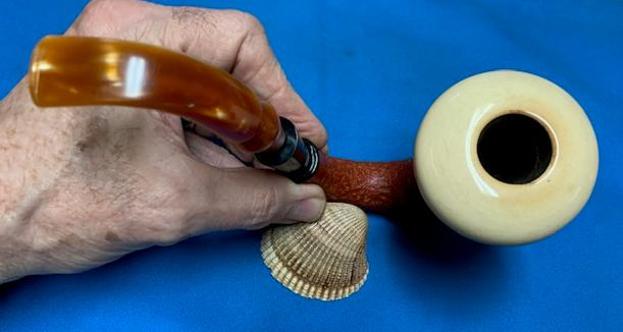
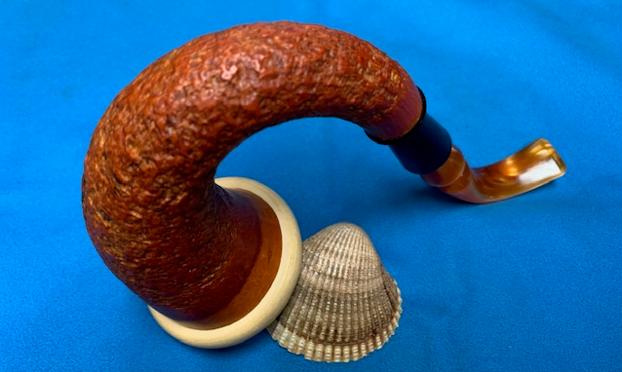
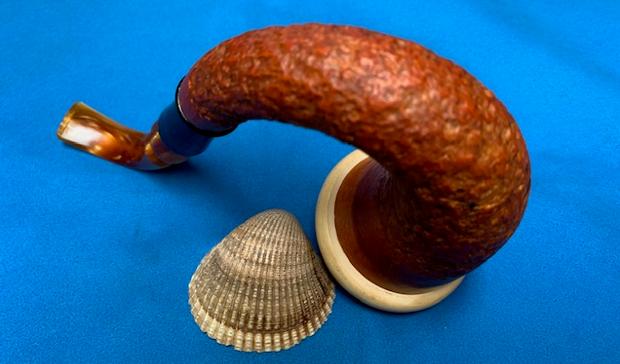
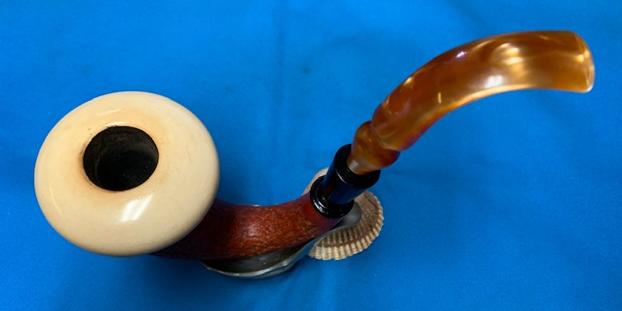
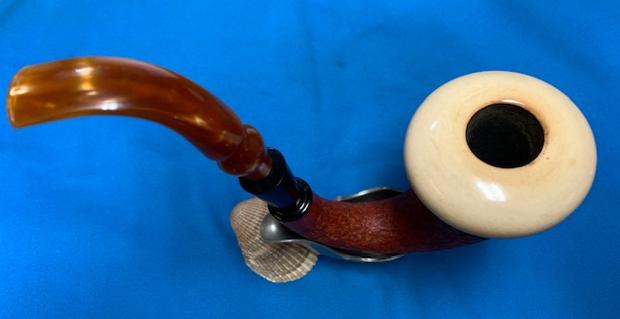
One of the things I enjoy doing is putting together varied and assorted pipe parts and crafting a pipe. Sometime the pieces are sitting here for a long time waiting for either the inspiration or the proper parts. This old calabash gourd sitting here for a few years now. It was cleaned and did not have either a cork gasket to hold a bowl or stem to fit the briar shank extension on the shank end. It just languished in a box of old bowls that I have here. (They say confession is good for the soul so I will tell you that box is full of probably over 100 bowls. Did I tell you I have a problem throwing pipe parts away?). In this case I did not have any meerschaum or porcelain cups that would fit the size of the gourd and I had not bothered to look through my stems to find one that fit the shank. So the old gourd just sat here waiting. In October I visited a fellow pipe repairer in Vancouver, Washington, USA and he gifted me a lot of pipe parts. Included in the mix were two turned wooden cups for a gourd calabash and one porcelain cup. Yesterday I remembered them and took them out to try. Like Goldilocks in the childhood fairy tale checking out the beds at the tree bears house I tried each one. The “baby bear” porcelain cup was far too small for the gourd and the “papa bear” cup was too large. But like Goldilocks found, the “mama bear” middle wooden cup one fit just right! While I was at it I also pulled an acrylic stem out from my collection of stems that I thought would work with this pipe. Now it was time to put it all together. Here is a picture of the parts. I decided to work on the gourd portion of the pipe first. I cut some cork to fit a gasket in the inset area around the top of the calabash. I used a white all-purpose glue and coated the gourd edge and pressed the cork against it. It took a bit of holding it in place to get the glue to harden. But it worked well. Once the glue cured is used a knife blade to trim the cork flush with the top of the gourd. I smoothed it out with a Dremel and sanding drum to make for a snug fit for the cup to the cork but not too snug and have it pull away.I greased the cork with Vaseline Petroleum Jelly. I worked it into the surface of the cork before I called it a night last evening and then once again this morning. I find that it softens the cork and make it more pliable when the bowl is pressed into place.While the cork/glue was curing I drilled the airway in the bottom of the wooden insert. It was undrilled. I marked the centre and then drilled the airway in the bottom of the cup. I drilled it with a cordless drill and a small bit from the inside of the bowl rather than the outside. I pressed it against a piece of wood and drilled it through. My concern in doing it from the outside was the pressure on the cup and the potential of cracking it.I started sanding the wood cup (which I think is Maple) with 320-3500 grit sanding pads. I wiped the bowl down with a damp cloth after each sanding pad to remove the sanding debris.I polished the bowl with micromesh sanding pads – dry sanding with 1500-12000 grit pads. I wiped the bowl down after each sanding pad with a damp cloth to remove the debris. I worked on the inner edge of the bowl to smooth that out and the slight bevel on the inner edge. It really began to take on a rich glow. With cup polished and the cork gasket set in the gourd I pressed the cup into the gourd calabash and it went in snugly and looked great. I took photos of the fit to show you all. I sanded the gourd with 320-1500 grit sanding pads to smooth out the nicks in the surface and minimize the two dark spots on the curve of the shank. I also sanded the briar shank extension to reveal the grain. It looked better and the rich grain began to shine through. I polished the gourd with micromesh sanding pads – dry sanding with 1500-12000 sanding pads. I wiped the gourd down with a damp cloth after each sanding pad to remove the sanding debris and dust. It really began to take on a shine. I rubbed the gourd and the maple cup down with Before & After Restoration Balm. I worked it into the surface with my fingertips. The product works to clean, enliven and preserve the pipe. I let it sit for 10 minutes then I buffed it with a cotton cloth to deepen the shine. The gourd came alive with the balm. I set the bowl aside and turned my attention to the stem I had chosen. The acrylic orange/amber stem would look good once I finished.The fit of the stem to the shank was quite good. The briar shank extension on the gourd is canted slightly and the shank extension follows the angles. With that the stem fit tight against the left side of the shank but not on the right side. I had an idea of fitting a brass band/cap on the end of the stem to compensate for the angels on the shank end. It fit very well and the band/cap was snug on the stem. I sanded the tooth chatter on both sides of the stem with 320-3500 grit sanding pads to smooth it out and blend it into the surface of the acrylic. I started the polishing of the brass stem cap on the shank end at the same time. It started looking very good.I polished the Lucite with micromesh sanding pads – 1500-12000 grit pads. I wiped it down with a damp cloth after each sanding pad. I used Before & After Pipe Polish – both Fine and Extra Fine to further polish the stem. It really took on a shine and once buffed it would look amazing. I carefully polished the parts – the cup, the gourd and the stem with Blue Diamond on the buffing wheel. I gave each piece of the pipe multiple coats of Carnauba Wax and buffed it with a clean buffing pad. I hand buffed the parts with a microfibre cloth. Once it was finished I put the parts back together. The Maple cup looked beautiful with the darkened gourd calabash. The polished briar shank extension was deeply shined. The brass stem adornment went well with the orange acrylic stem. The large Gourd Calabash with its wooden cup is beautiful. The dimensions of the pipe are Length: 7 inches, Height: 4 ½ inches, Diameter of the cup: 2 ¾ inches, Diameter of the chamber: 1 ½ inches. The weight of the pipe 95 grams/3.35 ounces. It should be a great smoker once it is loaded with a favourite tobacco and fire is put to the blend. It will definitely be a cool dry smoke. Thanks for walking through this reconstruction with me. I appreciate your patience in reading through the steps.

Restoring a Gourd Calabash with a Meerschaum Bowl from an Estate


Blog by Steve Laug

Jeff and I always keep an eye for Gourd Calabash pipes. We pick them up at a variety of spots – antique shops, auctions and periodically we purchase them in estates that we buy. We bought two calabashes from an estate of a pipeman in Plano, Texas, USA on 03/30/2022. This was a great example of a great looking Calabash. It has a well-made block meerschaum cup that fits well in the gourd. The meerschaum cup had a thick cake in the bowl some darkening around the inner edge and rim top. The cup had some patina developing around the cup top. The gourd itself was quite clean on the inside with some tars on the sides of the gourd. There is a new cork gasket around the gourd top that was dry but was in good condition and when rejuvenated would hold the cup in place. At the shank end of the gourd there was an acrylic shank extension. There was no stamping on the shank or gourd but it reminds me of many of the Pioneer Gourd Calabash pipes that I have worked on. The stem was well made fancy vulcanite and was oxidized, calcified and had light tooth marks and chatter on both sides ahead of the button. Jeff took photos of the pipe before he started the clean up on the pipe. It should clean up amazingly well. Jeff took photos of the meerschaum cup, bowl and inner edge. You can see the moderate cake in the bowl. tars/lava around the inner edge of the bowl and the lava and darkening on the op round the bowl edge. He also took photos of the stem. It is oxidized, calcified and has light tooth marks and chatter on both sides near the button. He took a photo of the gourd bowl and a close up of the briar shank extension. The fit of the meerschaum cup to the top of the gourd is snug and looks good. The acrylic shank extension fits well against the gourd and against the stem. He removed all the parts and took photos of the parts of the pipe showing the inside and the outside of the gourd and the meerschaum cup.Over the years I have worked on quite a few Gourd Calabash pipes like this one. The shank extension, the stem and the way the bowl fits all say to me that it is an American made Pioneer Gourd Calabash. As such it is hard to pin down a date for it. So, it was time to work on it. Jeff cleaned up the pipe for me. He carefully reamed the bowl with a Savinelli Fitsall Pipe Knife. He scrubbed the exterior of the gourd and the meerschaum with Murphy’s Oil Soap and a tooth brush to clean off the grime off the finish and the overflow of lava on the rim top. The cleaning had removed the grime on the rim top. He cleaned up the internals of the gourd with the soap and a brush as well. He cleaned the airway in the shank, mortise and stem with pipe cleaners, cotton swabs and alcohol to remove all of the oils and tars in the pipe. He soaked the stem in Briarville Pipe Stem Deoxidizer and was able to remove much of the oxidation, calcification. When it arrived here in Vancouver it was a clean pipe and I knew what I had to work with. I took photos of it before I started my part of the restoration. I took a photo of meerschaum rim top and the stem to show their condition once it arrived in Canada. Jeff was able to clean up the cake and the lava overflow that was shown in the rim and bowl photos above. The rim top looked very good but there was some darkening to the top and inner edge of the bowl. The stem looked better, though there were light tooth marks and chatter on both sides near the button.I took a photo of the bowl with the stem removed to give a sense of how it looked. I also took it apart to show how clean the parts are. I started my work on the pipe by greasing the cork gasket in the inner edge of the gourd. I worked some Vaseline into the cork and set it aside to let it soften the cork and make it more elastic.I set the gourd aside to let the cork absorb the Vaseline and turned my attention to the meerschaum cup. I sanded the rim top and the underside of the cup with a set of 2 inch sanding pads for 320-3500 grit sanding pads. I used the 320-600 grit pads on the underside, the cone of the cup. I used the 1000-3500 grit pads on the rim edge and top. They work amazingly well and are easy to manage and sand smooth.I worked on the meerschaum cut with micromesh sanding pads – dry sanding with 1500-12000 grit pads and wiping it down after each pad with a damp cloth. It really began to have a rich shine by the last pad.   At this point I rubbed the meerschaum cup down with some Restoration Balm and buffed it off with a soft cloth. The cup really shone.I set the meerschaum cup aside and rubbed the gourd down with Before & After Restoration Balm to deep clean the finish on the bowl and shank. The product works to clean, enliven and protect the gourd. I worked it in with my fingers to get it into the bowl and shank surface. I let it sit for 10 minutes then I wiped it off and buffed it with a soft cloth. The gourd really began to have a rich shine. I took some photos of the bowl at this point to mark the progress in the restoration. I put the cup on the gourd and gave both several coats of Conservator’s Wax and buffed them by hand. The pipe really looked good at this point and once the stem was on it would be a beautiful pipe. I set the bowl aside and worked on the stem at this point in the process. I sanded out the chatter and marks on the stem surface with a set of 2 inch sanding pads for 320-3500 grit sanding pads. They work amazingly well and are easy to manage and sand close to the sharp edge of the button. I polished the stem with micromesh sanding pads – dry sanding with 1500-12000 grit pads. I wiped the stem down after each sanding pad with Obsidian Oil. I polished the stem with Before & After Pipe Stem Polish – both Fine and Extra Fine. I gave it a coat of Obsidian Pipe Stem Oil. It works to protect the stem from oxidizing. I set it aside to dry. I put the stem back on the “Pioneer” Gourd Calabash with a Meerschaum Cup and took it to the buffer. I buffed the stem with Blue Diamond to polish the vulcanite. Blue Diamond does a great job on the smaller scratches that remain in the vulcanite. I gave the bowl multiple coats of Conservator’s Wax and the stem several coats of carnauba wax and buffed the pipe with a clean buffing pad to raise the shine. I hand buffed it with a microfiber cloth to deepen the shine. I am amazed at how well it turned out. The finished pipe is shown in the photos below. This is a beautiful Meerschaum Cup Gourd Calabash – the vulcanite taper stem, the polished gourd and meerschaum cup combine to give the pipe a great look. The dimensions of the pipe are Length: 8 inches, Height: 4 inches, Outside diameter of the bowl: 2 ½ inches, Chamber diameter: 1 inch. The weight of the pipe is 4.13 ounces/117 grams. This is another pipe that I will be putting on the rebornpipes online store in the Ceramic and Meerschaum Section shortly, if you are interested in adding it to your collection. Thanks for walking through the restoration with me on this beauty!

As always, I encourage your questions and comments as you read the blog. Thanks to each of you who are reading this blog. Remember we are not pipe owners; we are pipe men and women who hold our pipes in trust until they pass on into the trust of those who follow us.

Cleaning up an Austrian Made Gourd Calabash with a Meerschaum Bowl


Blog by Steve Laug

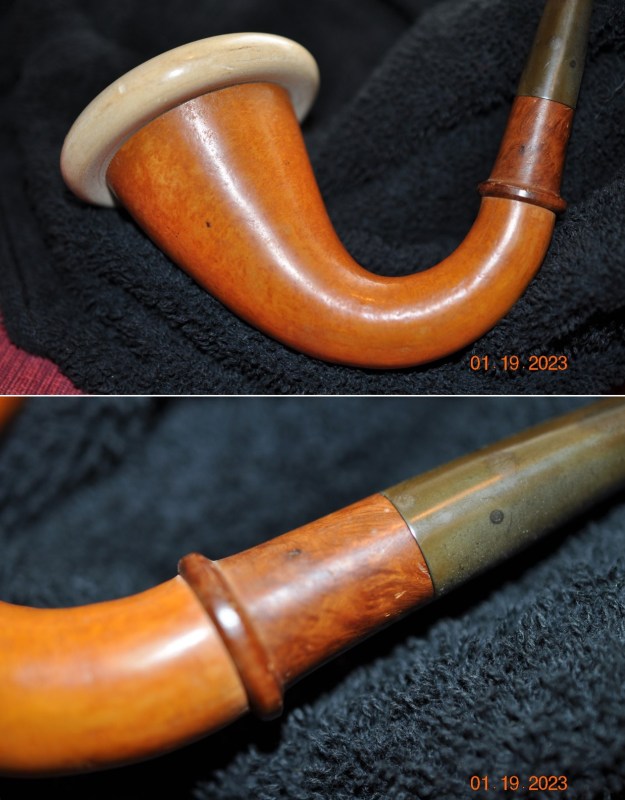
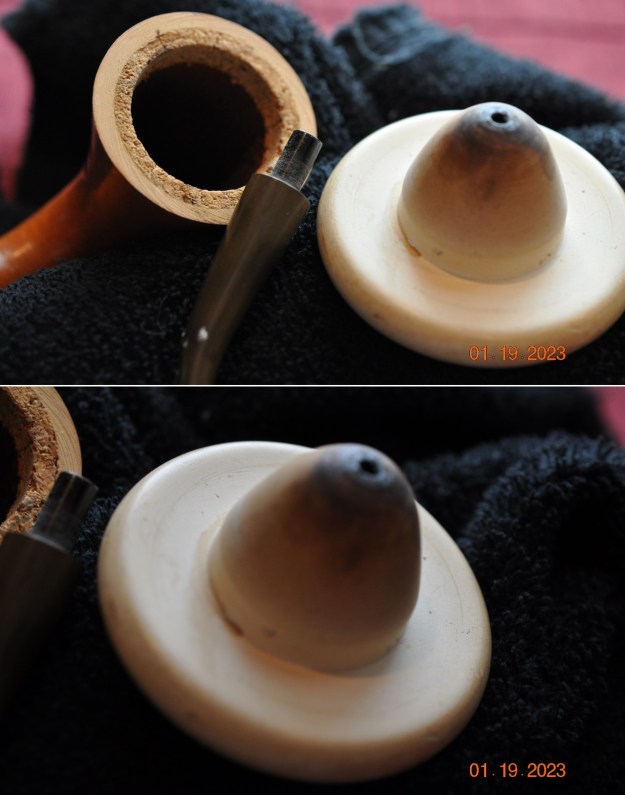
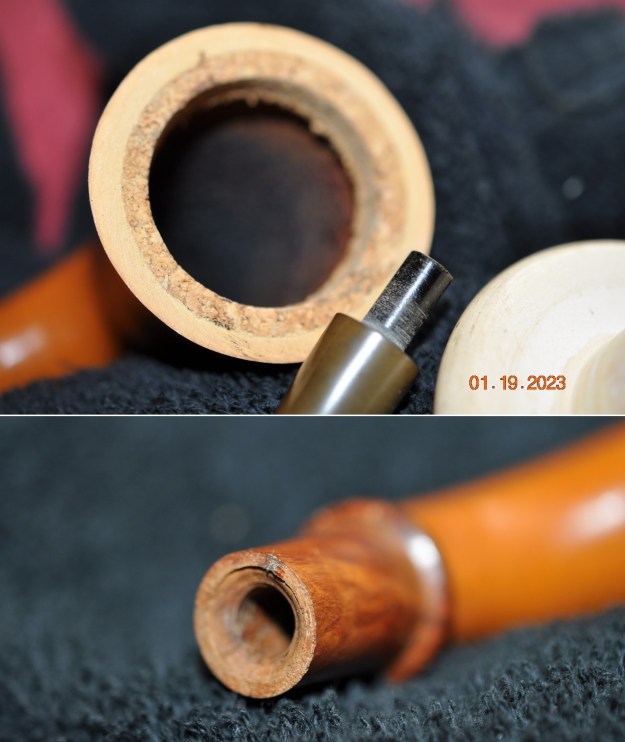
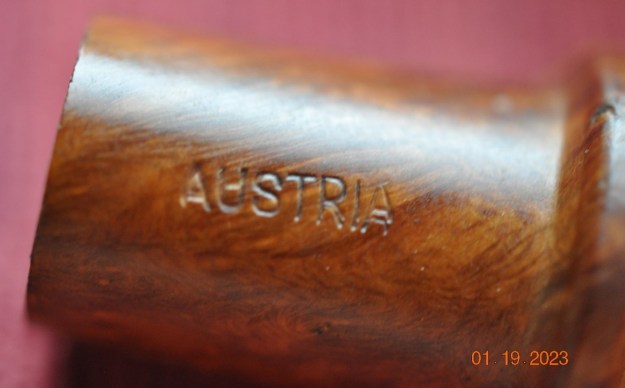
Jeff and I always keep an eye for Gourd Calabash pipes. We pick them up at a variety of spots – antique shops, auctions and periodically we purchase them in estates that we buy. We bought two calabashes from an estate of a pipeman in Plano, Texas, USA on 03/30/2022. This was a great example of a great looking Calabash. It has a well-made block meerschaum cup that fits well in the gourd. The meerschaum cup had a thick cake in the bowl some darkening around the inner edge and rim top. The cup had some patina developing around the cup top. The gourd itself was quite clean on the inside with some tars on the sides of the gourd. There is a new cork gasket around the gourd top that was dry but was in good condition and when rejuvenated would hold the cup in place. At the shank end of the gourd there was wood shank extension. The wood was briar and it was stamped on the right side and read AUSTRIA. There was no other stamping on the shank or gourd. The stem was well made vulcanite and was oxidized, calcified and had light tooth marks and chatter on both sides ahead of the button. Jeff took photos of the pipe before he started the clean up on the pipe. It should clean up amazingly well. Jeff took photos of the meerschaum cup, bowl and inner edge. You can see the moderate cake in the bowl. tars/lava around the inner edge of the bowl and the lava and darkening on the op round the bowl edge. He also took photos of the stem. It is oxidized, calcified and has light tooth marks and chatter on both sides near the button. He took a photo of the gourd bowl and a close up of the briar shank extension. The fit of the meerschaum cup to the top of the gourd is snug and looks good. The shank extension fits well against the gourd and against the stem.He removed all the parts and took photos of the parts of the pipe showing the inside and the outside of the gourd and the meerschaum cup. He also took a photo of the mortise end of the shank extension. The shank extension is stamped on the right side and reads AUSTRIA. It is double stamped and shows the ghost of a second stamp underneath it.I did a quick Google search on Austrian Made Gourd Calabash pipes. There were several with one referring to a Calabash that I had restored with a silver band stamped Austria. The other was a link to a blog on an Austrian made pipe that Charles Lemon restored on Dadspipes.com (https://dadspipes.com/2016/06/20/freshening-an-andreas-bauer-gourd-calabash/). That pipe is identical in terms of the way it is made – the meerschaum bowl, the gourd and the briar shank extension. His is stamped AB for Andreas Bauer and he concluded that it was made in Turkey. The one that I am working on is definitively stamped AUSTRIA but does not bear the Andreas Bauer stamp. My guess would be that it is a Bauer but I do not have definitive proof of that.

Jeff cleaned up the pipe for me. He carefully reamed the bowl with a Savinelli Fitsall Pipe Knife. He scrubbed the exterior of the gourd and the meerschaum with Murphy’s Oil Soap and a tooth brush to clean off the grime off the finish and the overflow of lava on the rim top. The cleaning had removed the grime on the rim top. He cleaned up the internals of the gourd with the soap and a brush as well. He cleaned the airway in the shank, mortise and stem with pipe cleaners, cotton swabs and alcohol to remove all of the oils and tars in the pipe. He soaked the stem in Briarville Pipe Stem Deoxidizer and was able to remove much of the oxidation, calcification. When it arrived here in Vancouver it was a clean pipe and I knew what I had to work with. I took photos of it before I started my part of the restoration. I took a photo of meerschaum rim top and the stem to show their condition once it arrived in Canada. Jeff was able to clean up the cake and the lava overflow that was shown in the rim and bowl photos above. The rim top looked very good but there was some darkening to the top and inner edge of the bowl. The stem looked better, though there were light tooth marks and chatter on both sides near the button. I took a photo of the stamping on the right side of the shank extension. It was clear and read as noted above. I also took a photo of the bowl with the stem removed to give a sense of how it looked.I started my work on the pipe by greasing the cork gasket in the inner edge of the gourd. I worked some Vaseline into the cork and set it aside to let it soften the cork and make it more elastic.I set the gourd aside to let the cork absorb the Vaseline and turned my attention to the meerschaum cup. I sanded the rim top and the underside of the cup with a set of 2 inch sanding pads for 320-3500 grit sanding pads. I used the 320-600 grit pads on the underside, the cone of the cup. I used the 1000-3500 grit pads on the rim edge and top. They work amazingly well and are easy to manage and sand smooth. I rubbed the gourd down with Before & After Restoration Balm to deep clean the finish on the bowl and shank. The product works to clean, enliven and protect the gourd. I worked it in with my fingers to get it into the bowl and shank surface. I let it sit for 10 minutes then I wiped it off and buffed it with a soft cloth. The briar really began to have a rich shine. I took some photos of the bowl at this point to mark the progress in the restoration. I set the gourd aside to let the balm absorb into the finish. I turned my attention to polishing the meerschaum cup. I worked on it with micromesh sanding pads – dry sanding with 1500-12000 grit pads and wiping it down after each pad with a damp cloth. It really began to have a rich shine by the last pad.   At this point I rubbed the meerschaum cup down with some Restoration Balm and buffed it off with a soft cloth. The cup really shone. I put the cup on the gourd and gave both several coats of Conservator’s Wax and buffed them by hand. The pipe really looked good at this point and once the stem was on it would be a beautiful pipe. I set the bowl aside and worked on the stem at this point in the process. I sanded out the chatter and marks on the stem surface with a set of 2 inch sanding pads for 320-3500 grit sanding pads. They work amazingly well and are easy to manage and sand close to the sharp edge of the button. I polished light tooth marks and chatter out of the stem with micromesh sanding pads – dry sanding with 1500-12000 grit pads. I wiped the stem down after each sanding pad with Obsidian Oil. I polished the stem with Before & After Pipe Stem Polish – both Fine and Extra Fine. I gave it a coat of Obsidian Pipe Stem Oil. It works to protect the stem from oxidizing. I set it aside to dry.I put the stem back on the Austrian Made Gourd Calabash with a Meerschaum Cup and took it to the buffer. I buffed the stem with Blue Diamond to polish the vulcanite. Blue Diamond does a great job on the smaller scratches that remain in the vulcanite. I gave the bowl multiple coats of Conservator’s Wax and the stem several coats of carnauba wax and buffed the pipe with a clean buffing pad to raise the shine. I hand buffed it with a microfiber cloth to deepen the shine. I am amazed at how well it turned out. The finished pipe is shown in the photos below. This is a beautiful Meerschaum Cup Gourd Calabash – the vulcanite taper stem, the polished gourd and  meerschaum cup combine to give the pipe a great look. The dimensions of the pipe are Length: 7 ½ inches, Height: 3 ½ inches, Outside diameter of the bowl: 2 ¾ inches, Chamber diameter: 1 inch. The weight of the pipe is 3.49 ounces/99 grams. This is another pipe that I will be putting on the rebornpipes online store in the Ceramic and Meerschaum Section shortly, if you are interested in adding it to your collection. Thanks for walking through the restoration with me on this beauty!

As always, I encourage your questions and comments as you read the blog. Thanks to each of you who are reading this blog. Remember we are not pipe owners; we are pipe men and women who hold our pipes in trust until they pass on into the trust of those who follow us. 

Restoring a Gourd Calabash with a Briar Cup from the Regina Lot


Blog by Steve Laug

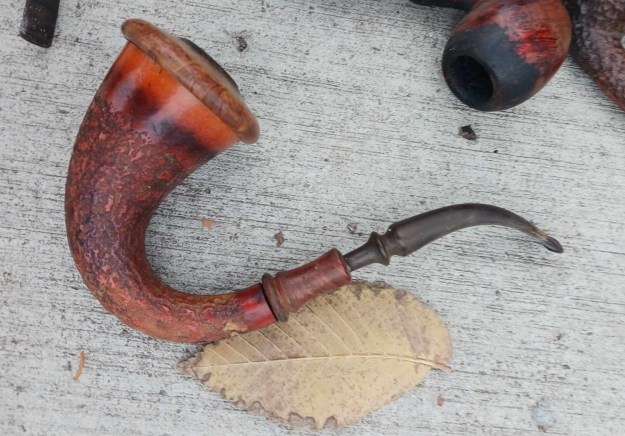
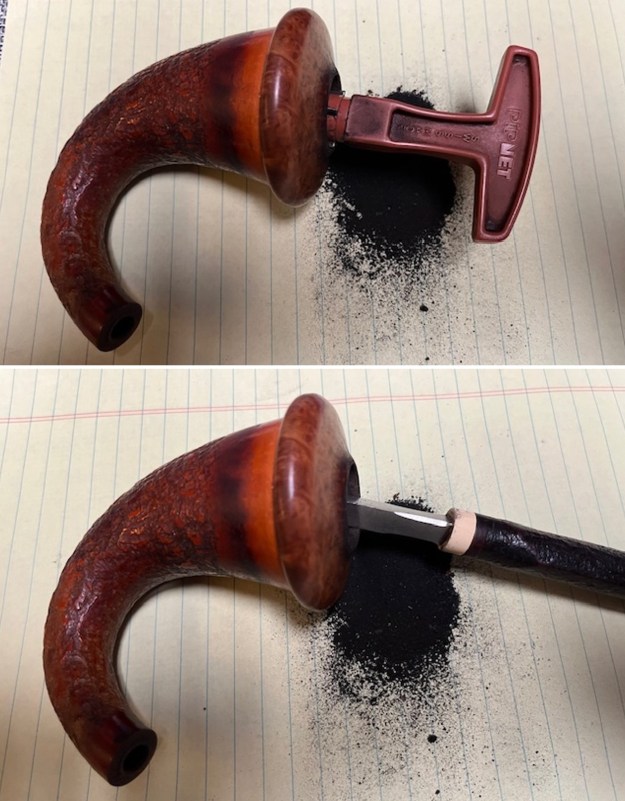
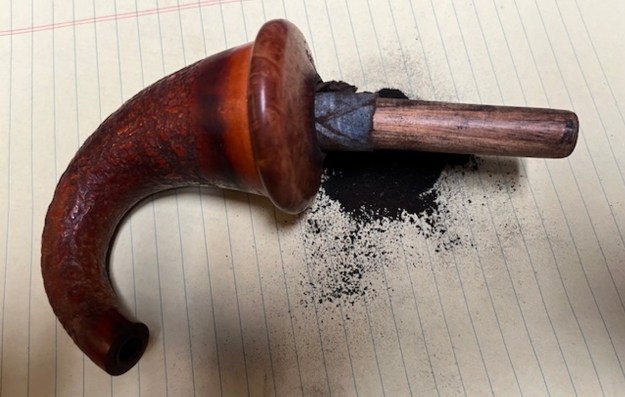
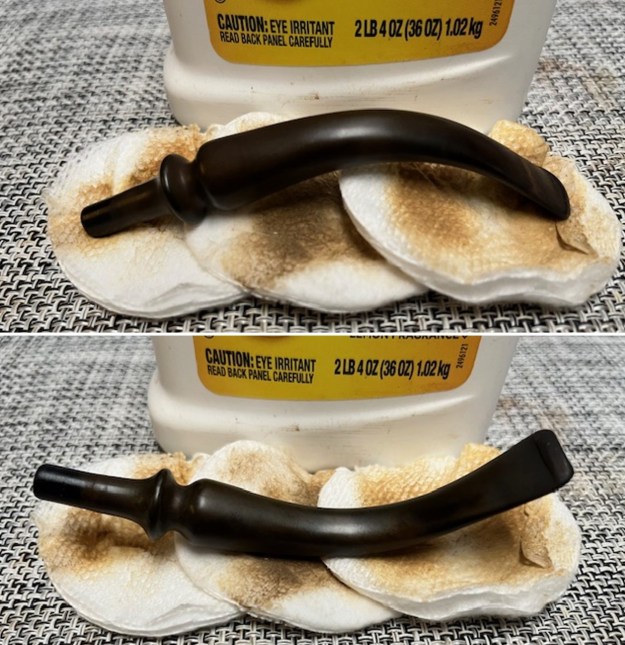
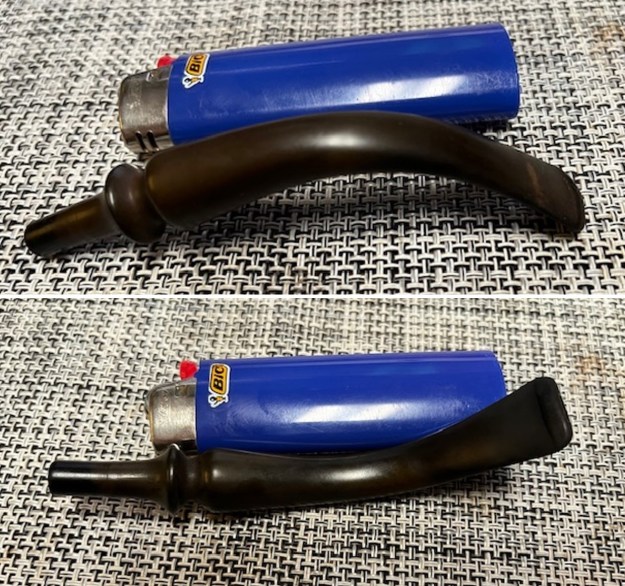
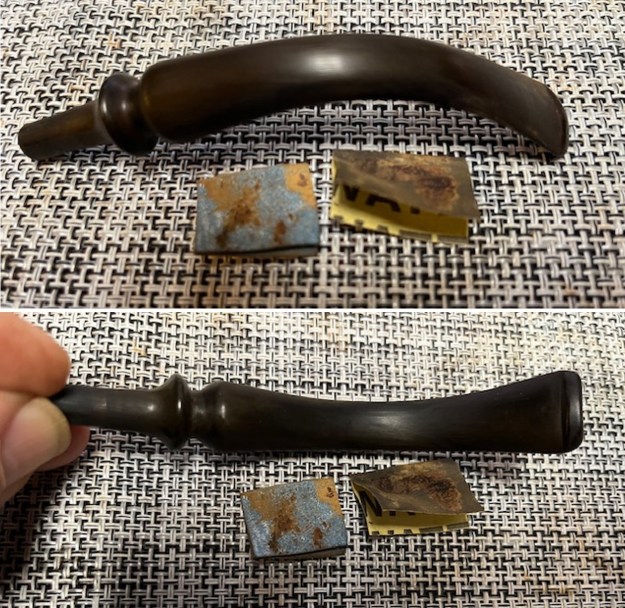
The next pipe I chose to work on came from a lot of 11 pipes I purchased from a lady in Regina, Saskatchewan. She had found them in a house she bought and wanted to know if I wanted them. We struck a deal, I paid for the pipes and shipping and the box arrived while I was travelling in Europe. In the box were 5 Stanwells, 1 Soren Freehand, 1 Calabash with a Briar Bowl, 1 Nording Freehand, 1 Italian Made Bertenetti, 1 Rhodesian with a banded cracked shank, and 1 Brigham. I have restored the Nording, the snapped Stanwell, the Brigham and there are blogs on each restoration.The next pipe on the table is the calabash from the lot above. There is no stamping on the pipe, shank or extension. The outer bowl was gourd calabash, the cup in the bowl is briar and seems to be glued in the calabash. There was a thick cake in the bowl, cobwebs in the bottom and on the bowl walls and some remnants of tobacco. The airway was plugged and there was no draught on the pipe. There was a lava overflow on the briar cup top. The edges of the bowl were in good condition. The finish on the briar cup was dirty and dusty and there was some lava on the outer edge of the bowl. The gourd was also very dirty with dust and debris in the rustication. There was a turned briar shank extension in the shank end that was held in place by a tenon. The fit in the gourd shank was off because of the grime in the airway. The stem was oxidized and calcified on the top and underside. The stem had some light tooth marks and chatter on both sides. I took photos of the pipe before I started my cleanup work on it. I took a close-up photo of the bowl and rim top to show the cake in the bowl. The rim top shows some thin lava spots on the smooth finish and in the plateau. The inner and outer edges of the bowl looked good. I took photos of the top and underside of the stem surface and button to show its general condition. It had some light tooth marks and chatter on both sides.I removed the stem from the shank to get a sense of what the pipe looked like in terms of proportion and curves. It was well designed and flowed well from bowl cap to tip of the stem.I took the shank extension off the shank end. It was a push tenon that held it in place and it did not fit well against the shank end of the gourd. The briar bowl cup was stuck firmly in the gourd. At this point I was not sure whether it was just gummy or if it had been glued in place in the gourd. I used a cotton swab and alcohol to place the liquid around the gap between the gourd and the briar. I repeated the process and let it sit over night. It did not loosen at all. I even tried some acetone and again the bowl did not move.Since the bowl did not seem to be removable I decided to proceed with the clean up. I reamed the bowl with a PipNet pipe reamer using the third cutting head to take the cake back to bare briar. I cleaned up the reaming with a Savinelli Fitsall Pipe Knife. I sanded the walls with a piece of 220 grit sandpaper wrapped around a dowel to smooth them out. I scrubbed out the internals with 99% isopropyl alcohol, pipe cleaners and cotton swabs. In this case it was more intensive than normal. I cleaned inside of the bowl and the airway at the bottom of the bowl. I cleaned out the inside of the gourd from the shank end and also the inside of the shank extension. I cleaned out the airway in the stem as well. I worked on these areas repeatedly until the shank and the airway in all the parts was clean. I scrubbed the exterior of the briar cup and the gourd with a tooth brush and undiluted Murphy’s Oil Soap. It looked much better and the dust and debris was gone. The key with gourd is not to leave water sitting on it for long. I dried it repeatedly and blew air through the airway to dry out the inside of the gourd. I polished the briar top of the briar cup with 1500-12000 grit micromesh sanding pads. I wiped it down with a damp cloth after each pad. The rim top took on a deep shine that highlighted the grain. I worked some Before & After Restoration Balm into the surface of the briar and the gourd with my fingertips and a horsehair shoe brush to clean, enliven and protect the briar. I also worked it into the shank extension with my fingers. I let the balm sit for 15 minutes and then buffed with a cotton cloth to raise the shine. The photos show the bowl at this point in the restoration process. With that done, the bowl was finished other than the final buffing. I set it aside and turned my attention to the stem. I wiped the bowl down with cotton pads and SoftScrub cleanser to remove the oxidation. Once finished I “painted” the surface of the stem with the flame of a lighter to lift the tooth marks. I sanded out what remained with 220 grit sandpaper and started polishing the stem with 600 grit wet dry sandpaper. I polished the stem with micromesh sanding pads – wet sanding with 1500-12000 grit sanding pads. I wiped it down after each sanding pad with Obsidian Oil. I finished polishing it with Before & After Pipe Stem Polish – both Fine and Extra Fine and buffed it off with a cotton cloth. I gave it a coat of Obsidian Oil to preserve and protect the stem.I am excited to finish this Gourd Calabash with a Briar Cup insert. I put the pipe back together and buffed it with Blue Diamond on the buffing wheel. I gave the bowl and the stem multiple coats of carnauba wax. I buffed the pipe with a clean buffing pad to raise the shine and hand buffed it with microfiber cloth to deepen the shine. It is fun to see what the polished bowl looks like with the rusticated gourd and the polished black, fancy turned vulcanite stem was beautiful. This Gourd Calabash with a Briar Bowl is nice looking and the pipe feels great in my hand. It is light and well balanced. Have a look at it with the photos below. The dimensions are Length: 7 ½ inches, Height: 4 inches, Outside diameter of the bowl: 2 ½ inches, Chamber diameter: 7/8 of an inch. The weight of the pipe is 3.77 ounces/106 grams. It is a beautiful pipe and one that will be staying in my collection for the time being. Thanks for walking through the cleanup with me as I worked over this pipe.

As always, I encourage your questions and comments as you read the blog. Thanks to each of you who are reading this blog. Remember we are not pipe owners; we are pipe men and women who hold our pipes in trust until they pass on into the trust of those who follow us.

Refurbishing A Vintage Cased “Karoo” Gourd Calabash With Elephant Ivory Shank Extension


Blog by Paresh Deshpande

About two years back, I had worked on the only Gourd Calabash pipe that I had inherited, a 1912 William Harrison, and posted it on rebornpipes. I had smoked this pipe after it was restored and was amazed at how different the smoking characteristics of a gourd are when compared to a briar or a meerschaum pipe. Since then I was on a lookout for some good quality and condition gourd calabash estates and snagged a couple at very competitive rates. This is the first of the two gourd calabash pipes that is now on my work table.

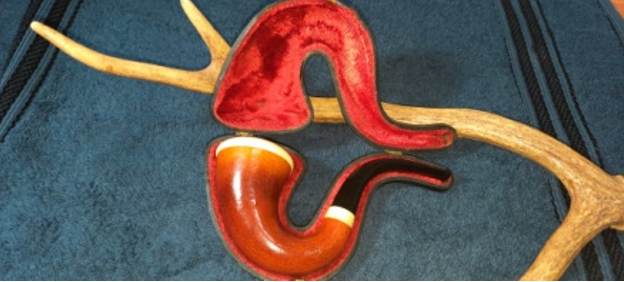
This medium sized gourd calabash came in its original case. The case and the pipe it housed are in good shape and appears to have been well looked after. There is a beautiful ivory colored band with argyle patterns at the shank end that lends it a classy high end feel. It is stamped on the left side of the gourd as “KAROO” in an oval. There is no other stamping seen on the gourd. The vulcanite stem with a threaded bone tenon is stamped on the upper surface as “LONDON” over MADE”. There are no other stampings seen on either the gourd or the stem. The only knowledge about the pipe I had was that KAROO was an arid region of South Africa where these gourds were grown. However, there was no information on the brand KAROO that was available either on Pipedia.org or pipephil.eu. I couldn’t find any information on this brand even on rebornpipes!!
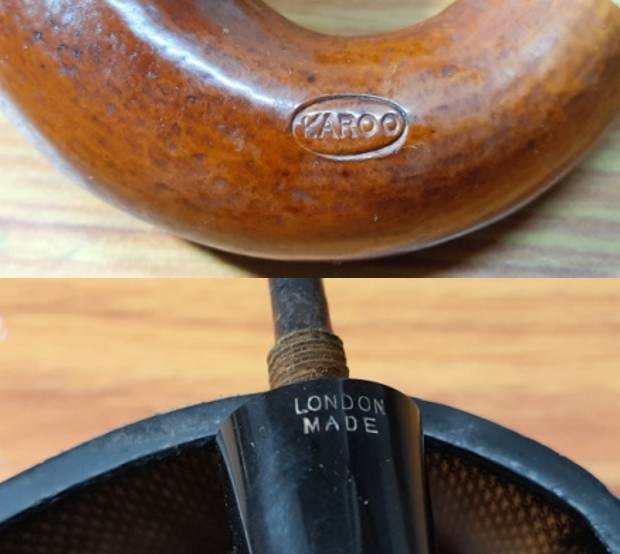
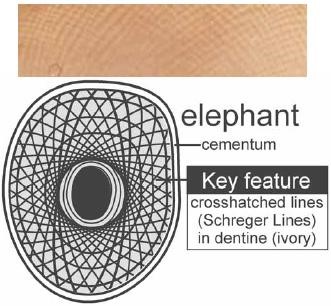
I messaged Steve and shared pictures of this gourd calabash pipe with him. He sent me this link to Pipe Club of London which had information on this brand and the same is being reproduced further down in this write up. There was an interesting discussion on the band that was at the shank end. The possibilities ranged from the band being made of hardened plastic or Bakelite or bone or even African Ivory. However, it was the evenly arranged argyle patterns that made us think on the lines of the band being of some high grade and quality material. Abha, my wife, took close up pictures of the band and patterns and she got on the task of researching the material of the band on the internet. Her research conclusively proved that the band is an Elephant Ivory. Here is the link to a site that was particularly helpful in supporting her conclusions. (https://www.realorrepro.com/article/Ivory-genuine-fake–confusing).

The argyle patterns that I had been mentioning all through are, in fact, Schreger Lines and the patterns perfectly match the ones seen on the shank end band. Having confirmed that the shank extension is elephant ivory, it was time to search for the brand KAROO.

I searched the net as suggested by Steve and found this snippet of information on Pipe Club of London (http://pipecluboflondon.com/members-pipes/calabashes/karoo-calabash/) and reproduce the same information for the benefit of the larger pipe community.
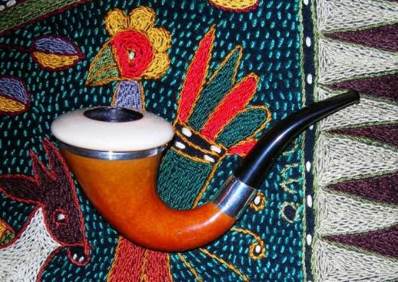
Calabash gourds (“bottle gourds” – were grown on the Little Karoo River in South Africa by Boer farmers who exported them – cut & dried – to England for fitting with bowls and mouthpieces. The heyday of the calabash was 1905 to 1915 after which the briar began to steal the spotlight.

From the Johnny Long collection PCoL #UK603F – pictured on a handmade South African tapestry. Below – the Karoo brand & hallmarks.

There was no further information lead that was worth following that would establish the provenance of this pipe. All that I can say with certainty based on the threaded bone tenon, oval slot at the stem end, Elephant Ivory shank extension and the information reproduced above, this pipe has to be from the early 20th Century, maybe prior to 1920s.

This time period is just a ”guesstimation” and any input from the knowledgeable Readers on this brand and dating is most welcome.

Initial Visual Inspection
The case and the pipe appear to be well cared for. The case has functional hinges and clasp and closes with a reassuring click. The surface leather on the case is also intact and in good condition. The red velvet internal lining of the case is stained at the place where the rim and mouthpiece rests inside the pipe. There is a lot of debris in the nooks and corners of the case. The pipe sits perfectly inside the case. The gourd has taken on a dark color and its surface is dust covered and dirty. The meerschaum cup has a decent layer of even cake with a darkened rim top that has traces of lava overflow. There are a few minor superficial scratches over the meerschaum cup. The stem is oxidized, has tooth chatter/ bites marks in the bite zone and is under turned to the right. Overall, this old timer has been well looked after and is in great shape considering its perceived age. Dimensions Of The Pipe
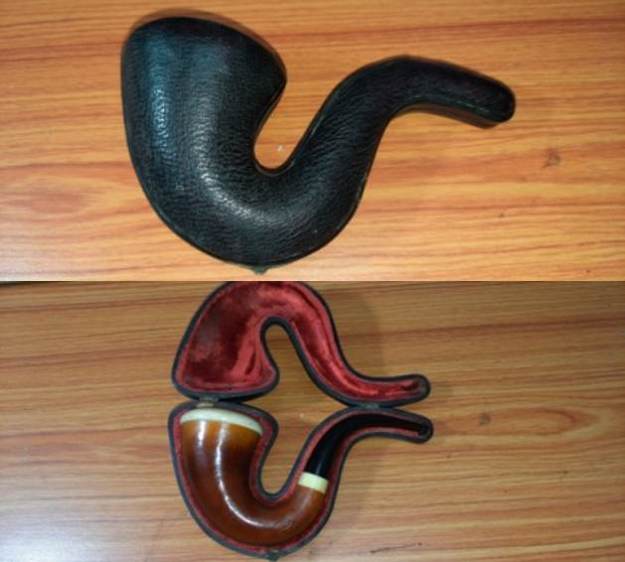
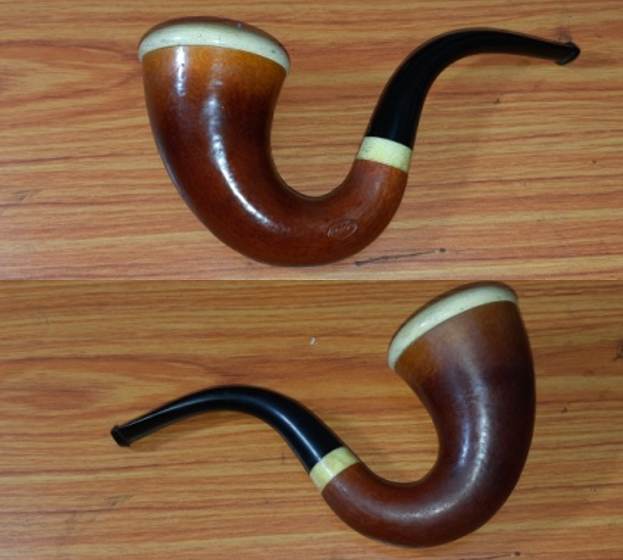
Length: 5.6 inches

Height: 2.8 inches.

Diameter of the porcelain cup: 1.8 inches.

Diameter of the chamber: 0.9 inch.

Depth of the chamber: 1.3 inches.

Detailed Visual Inspection
I first dismantled the pipe in to its various components; the Gourd, the meerschaum cup and the threaded bone tenon stem. Here are a couple of pictures.
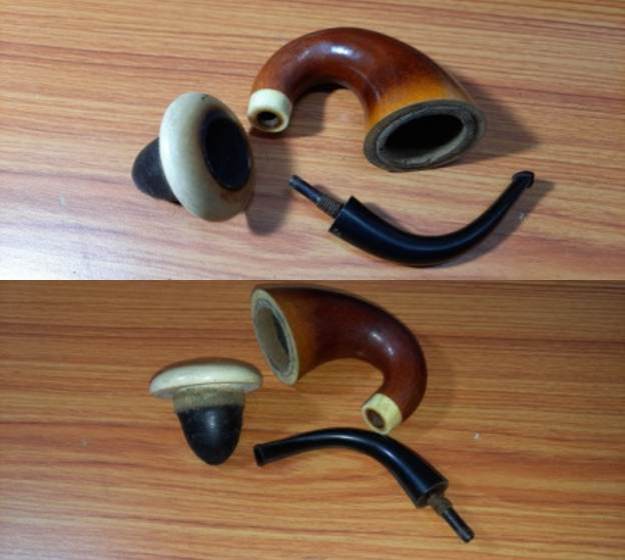
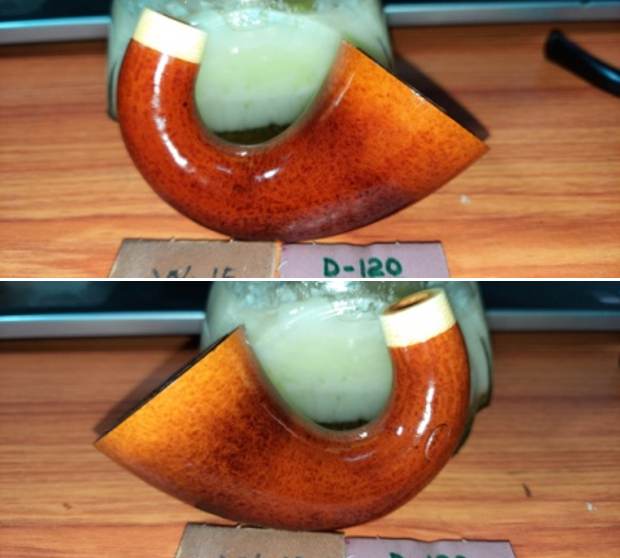
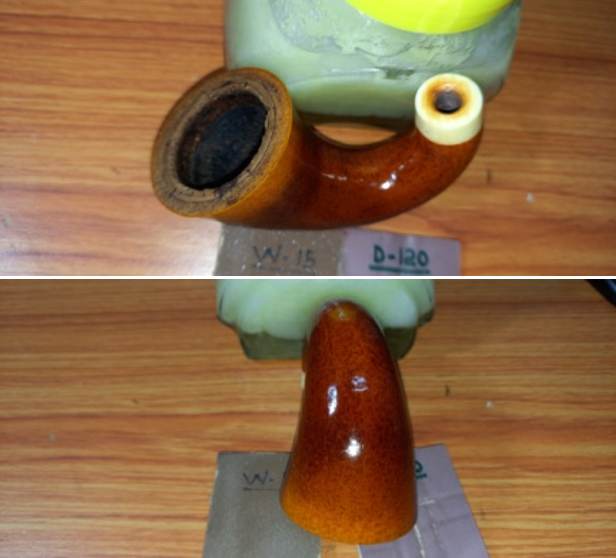
The meerschaum cup is medium sized and has a moderate layer of even cake. The inner rim edge has a thin layer of lava overflow on an otherwise clean rim top surface. There are minor scratches over the rim surface which will be addressed when the meerschaum cup is cleaned and polished. There are no breakages or chipped surfaces or cracks in the cup which is a big relief. The draught hole at the center bottom of the cup is clogged with oils/ tars and gunk. The outer surface of the cup is covered in dried oils, tars and gunk and towards the rim top; there are traces of cork lining which has stuck to the cup (this is actually mysterious!) at the base of the rim. The gourd surface has colored beautiful and it will be my endeavor to preserve the patina that has developed on the surface due to smoking. The surface is covered in old oils, tars, grime and dirt from all these years. There is no damage to the gourd surface and that’s a big relief. This piece of gourd will look stunningly beautiful and rich once it has been cleaned and polished. The meerschaum bowl is held in place inside the gourd with a cork gasket. This cork gasket was dry with a thin outer surface layer stuck to the meerschaum. This is not a major issue as the bowl still sits firmly in the gourd. The inside of the gourd has depositions of oils and tars and ash and would benefit from a thorough cleaning. The ivory shank extension has yellowed a fraction but is sans any damage. The full bent tapered vulcanite stem is oxidized with tooth chatter on either surface in the bite zone. The threaded long bone tenon is covered in grime and oils and could be a contributing factor for the misaligned seating of the stem in to the shank. The oval opening of the slot and the tenon opening is constricted due to accumulation of old and dried oils/ tars. The Process
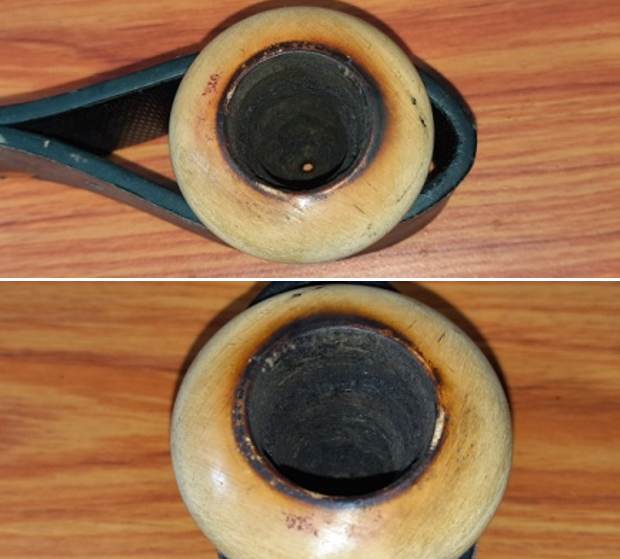
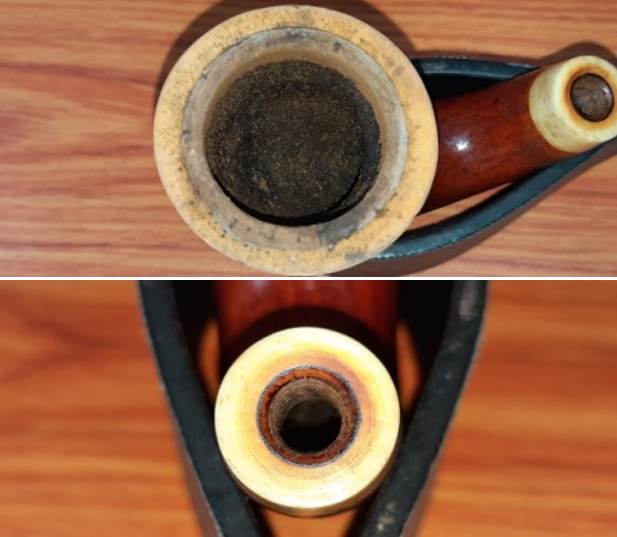
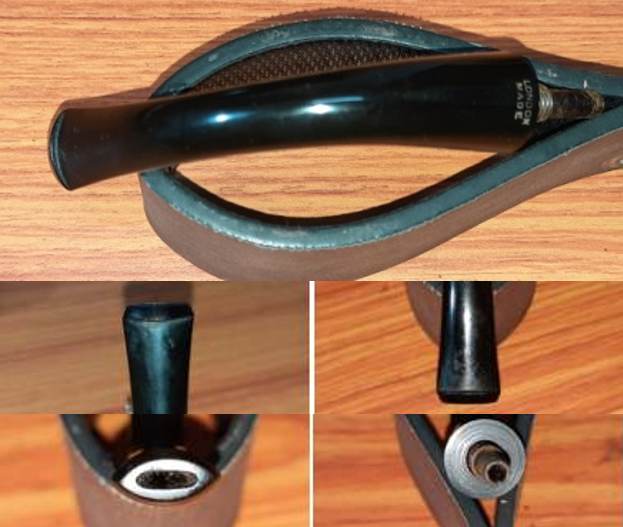
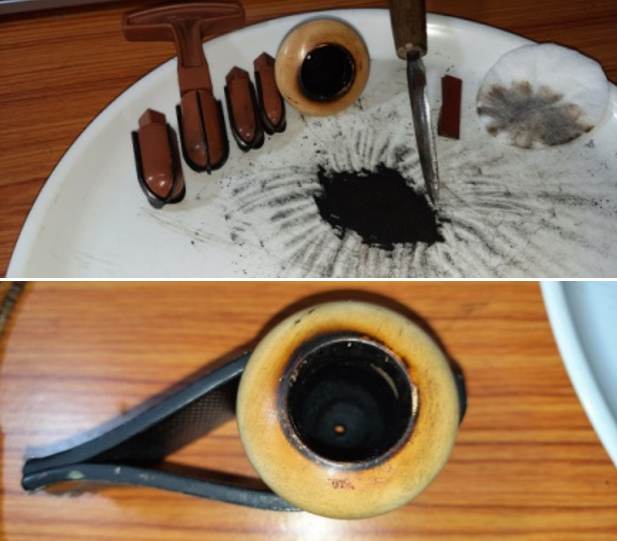
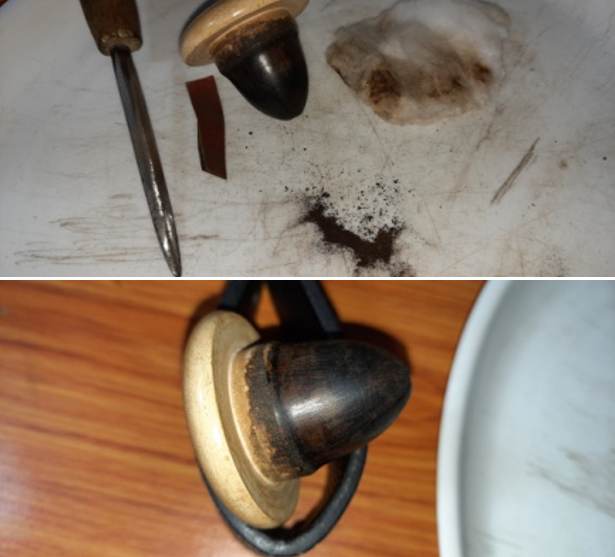
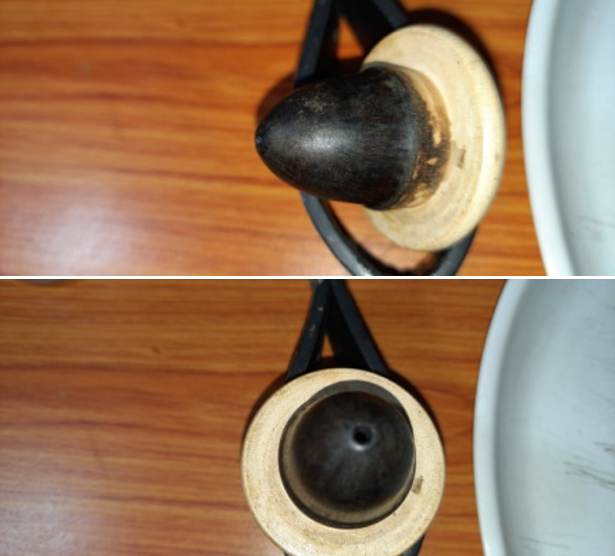
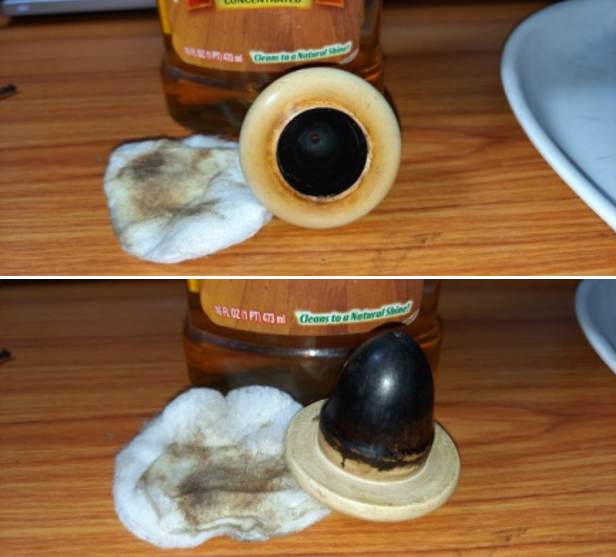
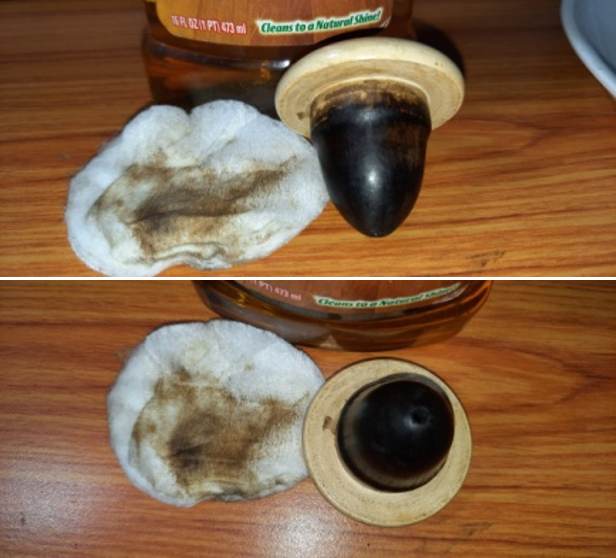
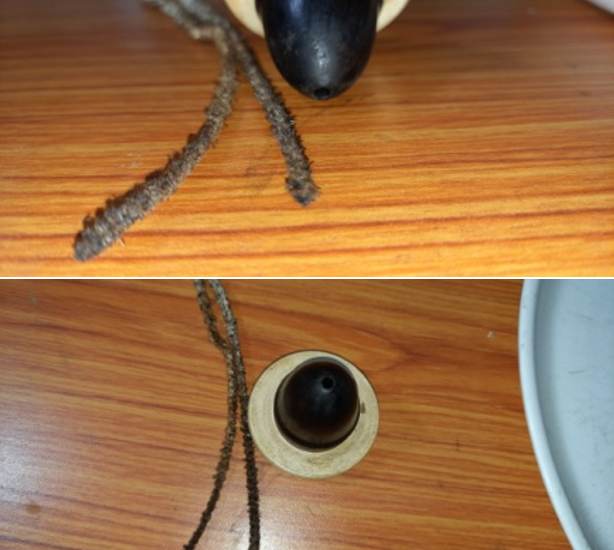
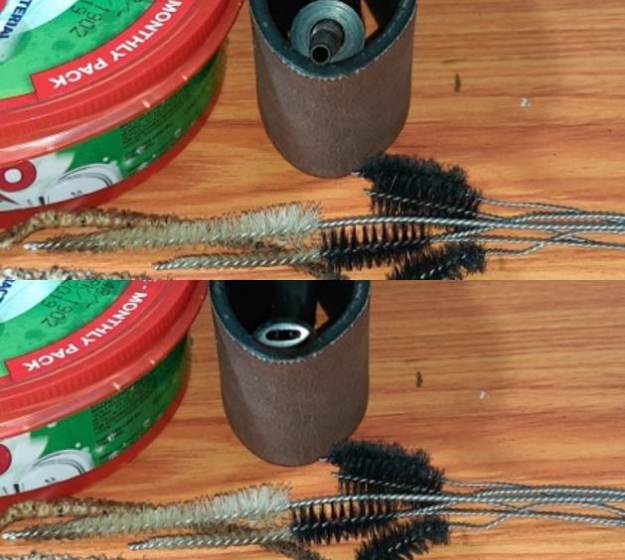
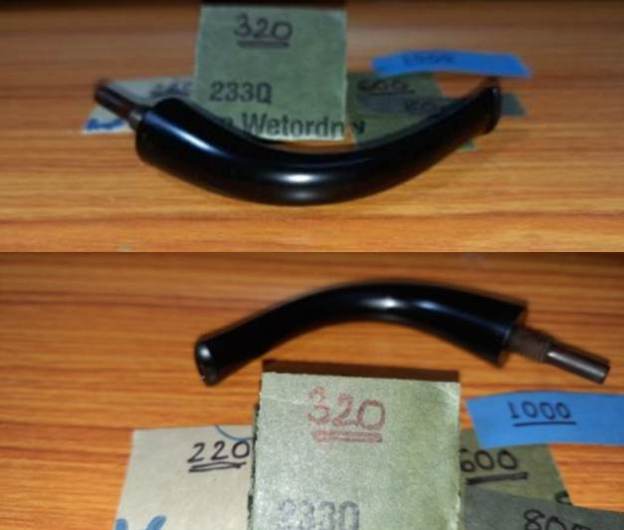
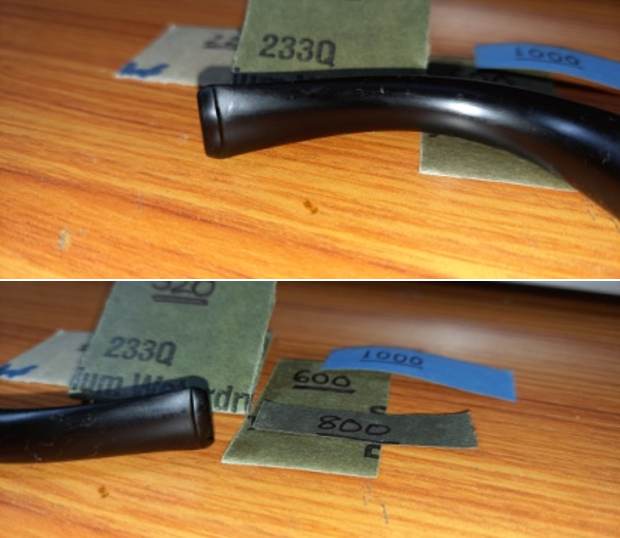
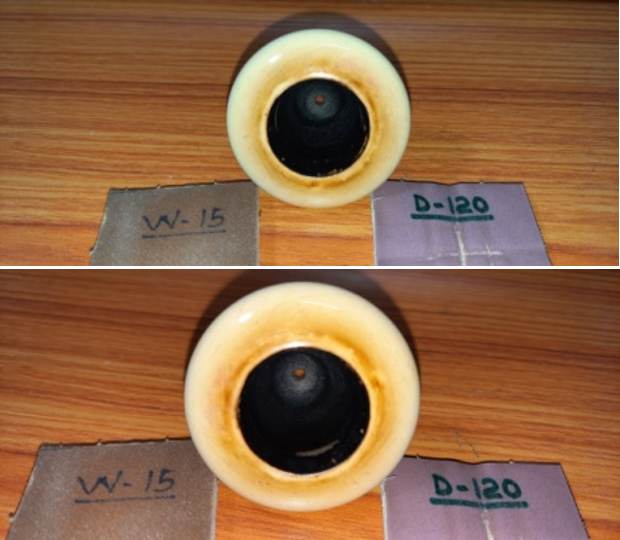
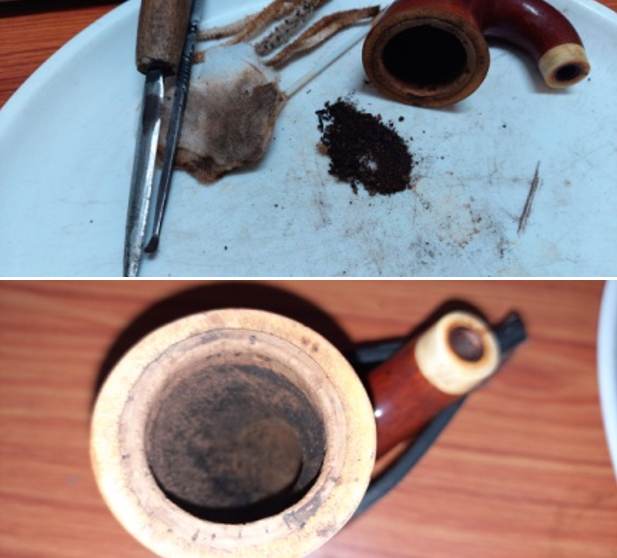
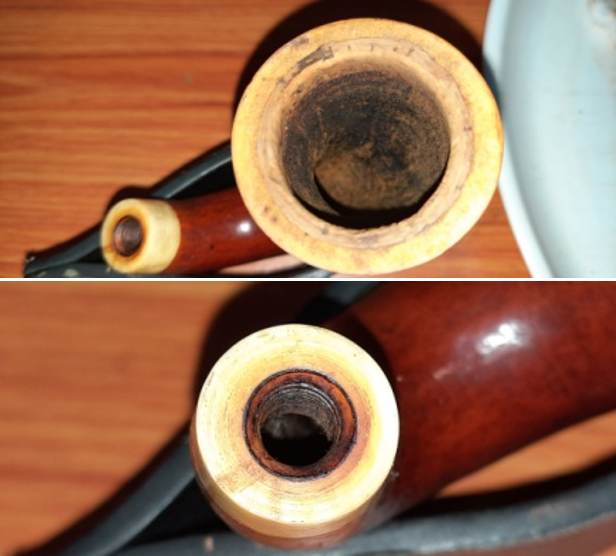
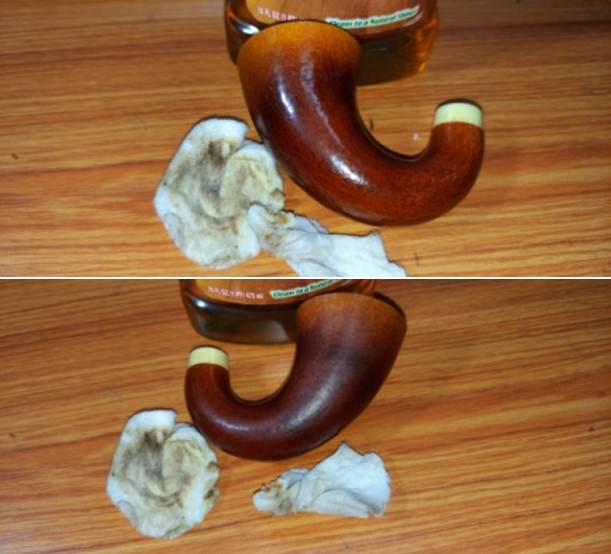
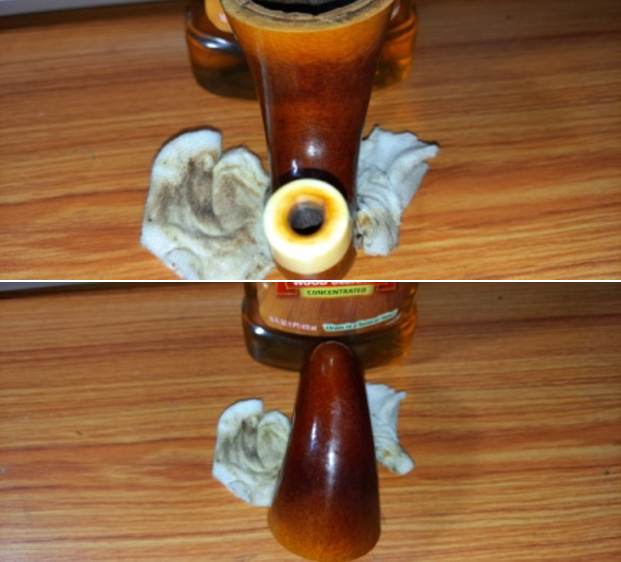
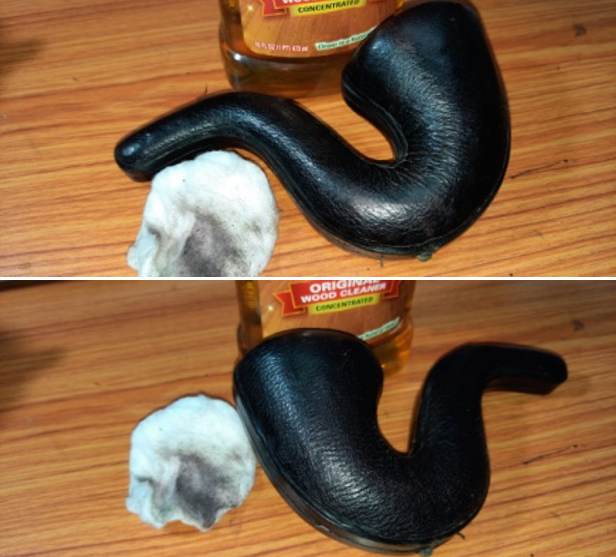
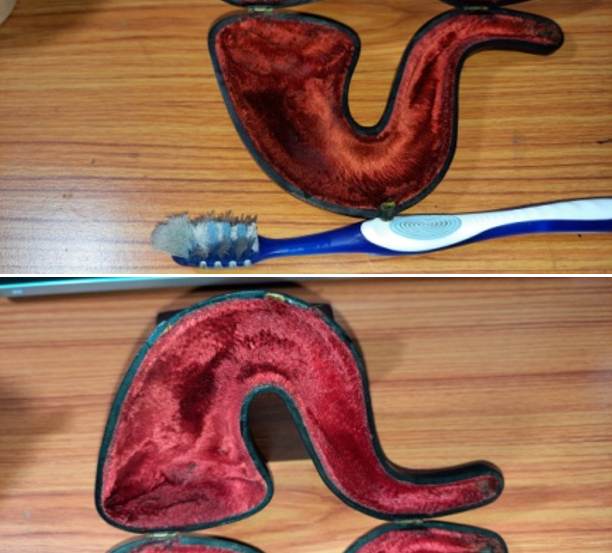
I started the process with reaming the meerschaum cup with PipNet reamer heads 1, 2 and 3. I further cleaned the bowl with my fabricated knife to completely rid the chamber of carbon that couldn’t be reached by the reamer heads. I used a 220 grit sand paper, pinched between my thumb and forefinger, to sand the inner walls of the chamber of the pipe. Once I had reached the bare walls, I wiped the chamber with a cotton pad dipped in isopropyl alcohol. This removed all the residual carbon dust and also rid the chamber of all ghost smells. The walls of the chamber are nice and solid with no signs of heat fissures or cracks.I gently scraped off the dried gunk and remnants of the cork with my sharp fabricated knife. I further cleaned the surface with a cotton swab dipped in alcohol. I cleaned the external surface of the meerschaum cup with a cotton swab and Murphy’s Oil Soap. I further wiped the surface with a moist soft cloth and rid the surface of the soap. I ran a couple of hard bristled pipe cleaners dipped in isopropyl alcohol through the draught hole and thoroughly cleaned it. I set the bowl aside to dry out completely.I cleaned the stem airway using thin shank brushes and anti oil dish soap. I also cleaned the tenon surface with the soap and wiped it dry with a paper towel. The tenon opening and the oval slot is now clean.Since the tooth chatter on upper and lower surface was superficial, I decided to address this issue by sanding down the tooth chatter rather than resorting to the filling method. I sand the bite zone with a 220 grit sandpaper to remove the tooth chatter. I followed it up by further sanding the stem with 320, 600 and 800 grit sand papers. Once I was satisfied that the tooth chatter had perfectly matched the rest of the stem surface, I completed the polishing cycle by wet sanding the surface with 1500 to 12000 grit micromesh pads. The stem looks great with the tooth chatter nicely matched with the rest of the surface. I rub a little quantity of Extra Virgin Olive oil into the stem surface and set it aside to rehydrate the vulcanite. While I was working on the stem, Abha went about the task of polishing the meerschaum cup. She polished the bowl by dry sanding it with 1500 to 12000 grit micromesh pads. She applied a little Before and After Balm, though it does not affect the meerschaum in any which way, and set it aside. A few minutes later, she buffed it with a microfiber cloth.Next in the process was the cleaning and refurbishing of the gourd itself. Using my fabricated dental tool and sharp knife, I carefully, read that as very (2x) carefully, scraped out all the dried gunk and grime from the inner walls of the gourd. I ran a couple of pipe cleaners and q-tips dipped in alcohol through the shank end. I wiped the inner walls with a cotton swab moistened with alcohol. At this point in restoration, the internal cleaning of the stem, mortise and gourd is completed. The stem repairs and polishing is also completed and so is the refurbishing of the meerschaum cup. Next I decided to clean and polish the external surface of the gourd. I cleaned the external surface of the gourd with Murphy’s Oil soap on cotton swabs. I wiped the surface with a moist cloth and set the gourd aside to dry out completely. After the gourd had dried out, I polished the gourd surface with micromesh pads. I wanted to preserve the patina and deep coloration that has developed on the gourd surface and so I dry sand the stummel surface with 1500 to 12000 grit micromesh pads. This is starting to look really nice. I rub a small quantity of “Before and After Restoration Balm” in to the gourd with my finger tips and let it rest for a few minutes. The balm almost immediately works its magic and the gourd now has a nice vibrant appearance with the beautiful darkened colors on full display. I further buff it with a horse hair shoe brush. All that remained was the original case that housed this pipe. Firstly, I reattached all the black linings that had come loose with superglue. I wiped the leather cover with Murphy’s Oil soap on a cotton swab. The color on the swabs should give the readers an idea of how dirty the surface was!! I wanted to further scrub the leather surface, but unsure that I was as to how the leather would hold up to all the scrubbing, I left it at that (remember my mantra… Less is more!!). I cleaned the inner satin and velvet linings of the lid and bottom respectively, with a mild soap in warm water and a soft bristled tooth brush. I was very gentle with this as I had no intention of tearing the lining. I completely dried the lining using paper towels. It now does look nice and rich. To apply the finishing touches, I mount a cotton cloth buffing wheel on to my hand held rotary tool and apply a coat of Blue Diamond to the gourd and the stem to polish out the minor scratches. With a cotton buffing wheel that I use for carnauba wax, I apply a coat of the wax and continue to work on it till the complete coat of wax had been polished out. I mount a clean cotton cloth buffing wheel and give the entire pipe a once over buff. I finish the restoration by giving the entire pipe a rigorous hand buffing using a microfiber cloth to raise the shine further. The finished pipe looks beautiful and is ready to be added to my restored pipe collection. When, or if at all I will, smoke this pipe only time will tell!! Here are the pictures of the refurbished pipe. P.S.: The alignment of the stem with the gourd stummel was restored to perfection once the threads of the bone tenon, threads at the shank end and the internals of the gourd was thoroughly cleaned. I rejuvenated and hydrated the cork gasket by applying a generous layer of natural Petroleum Jelly.
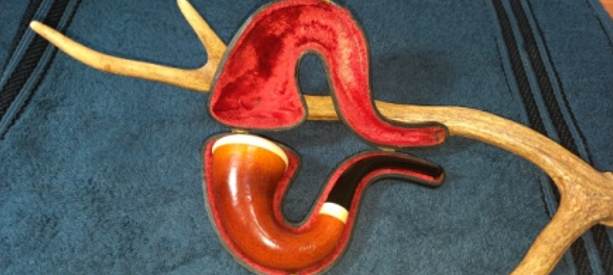
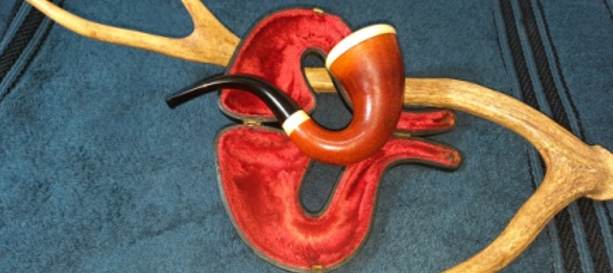
Thanks to all readers of rebornpipes who have spared a moment of their invaluable time in reading through this write up and as is always, your suggestions and advice are always welcome as this would not only help me but  also help the new pursuers of this art.

Praying for the safety and well being of all the readers and their loved ones …

An UNSMOKED Etched Gourd Calabash with a Porcelain Cup


Blog by Steve Laug

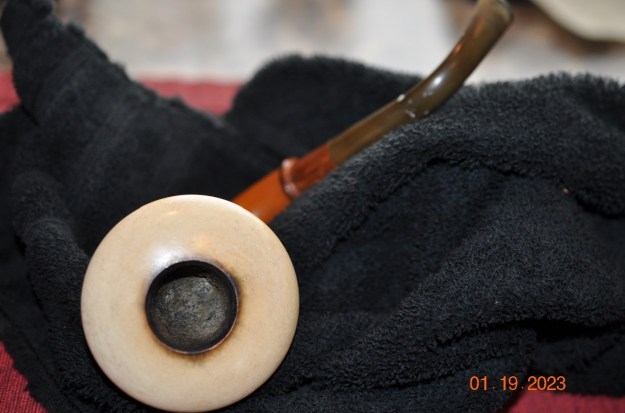
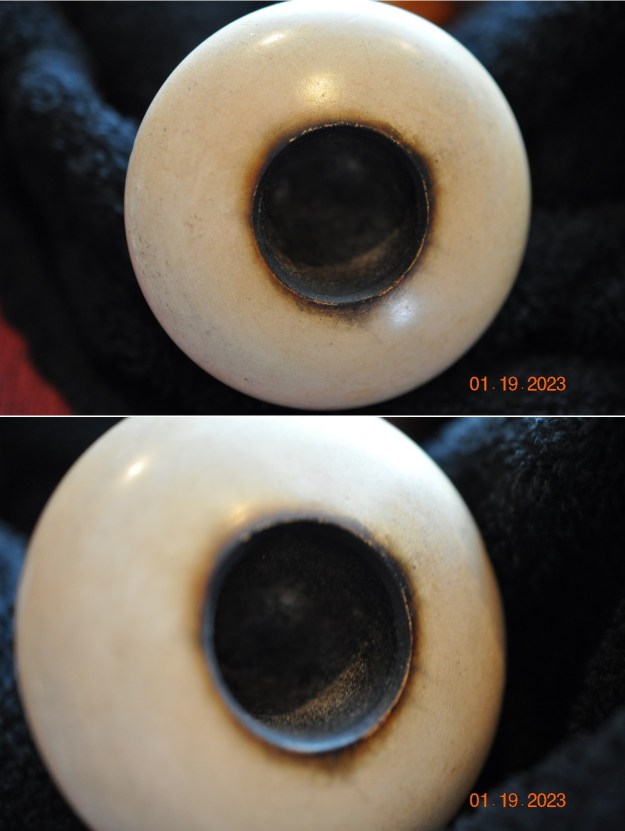
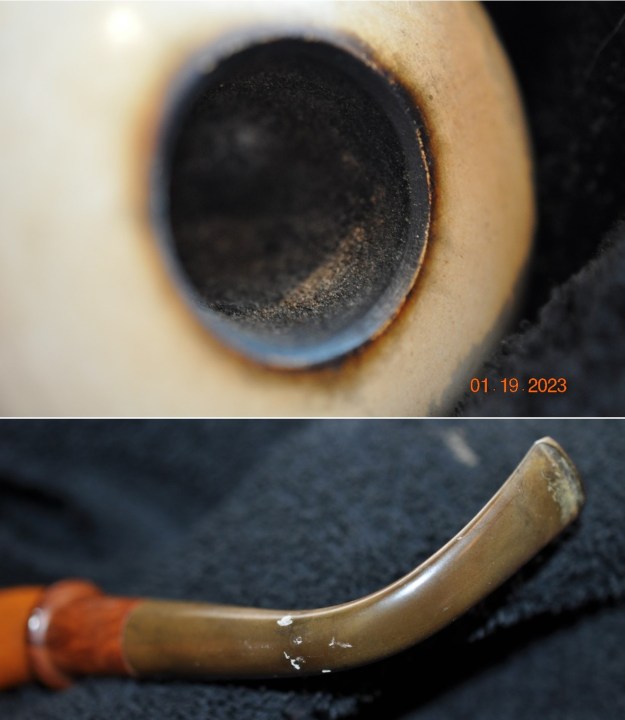
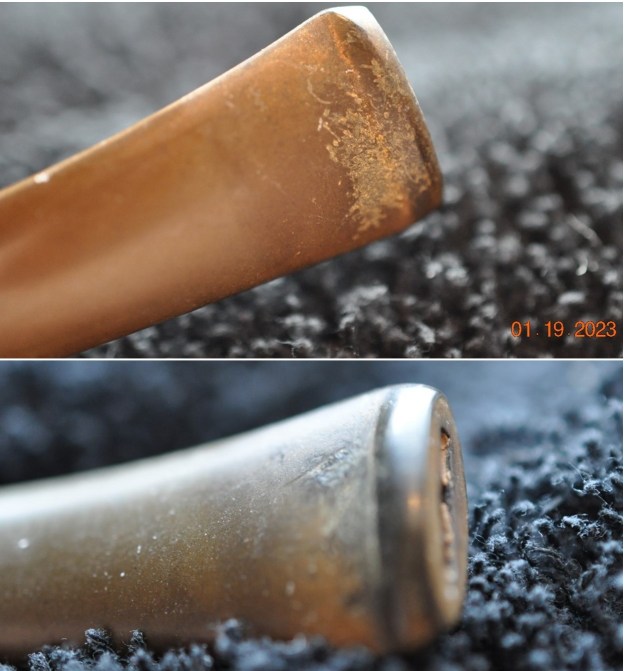
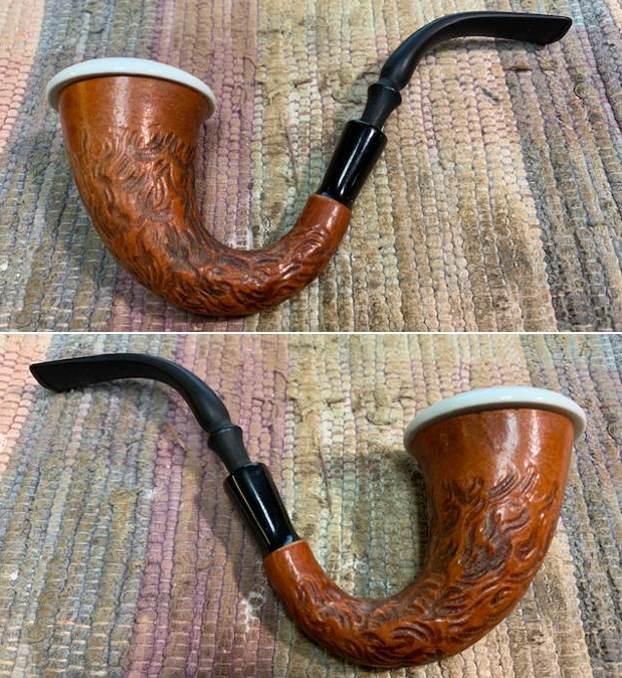
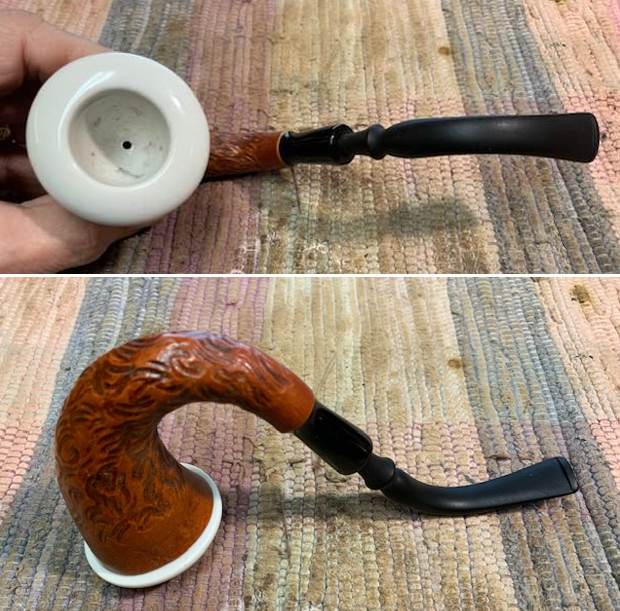
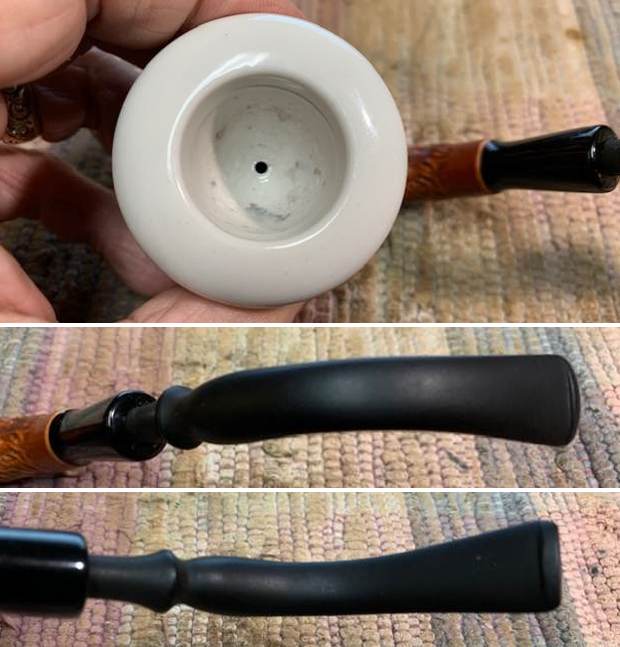
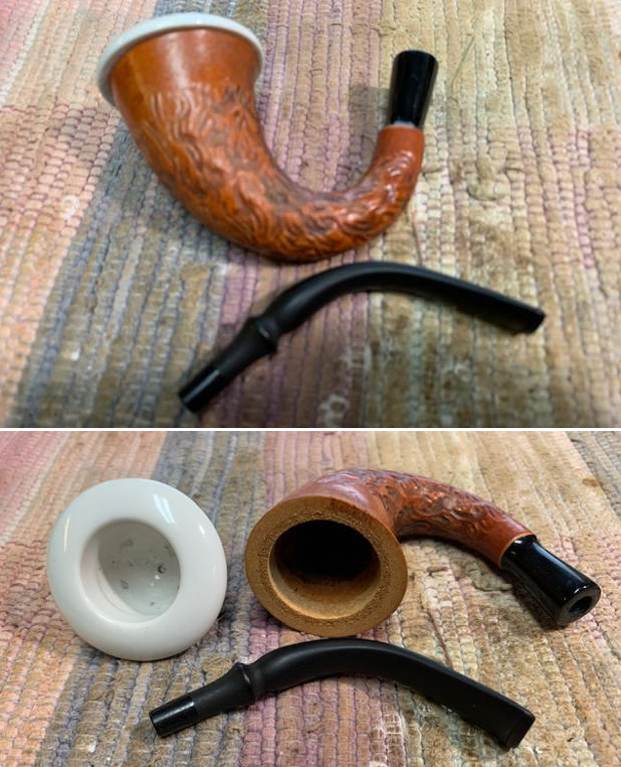
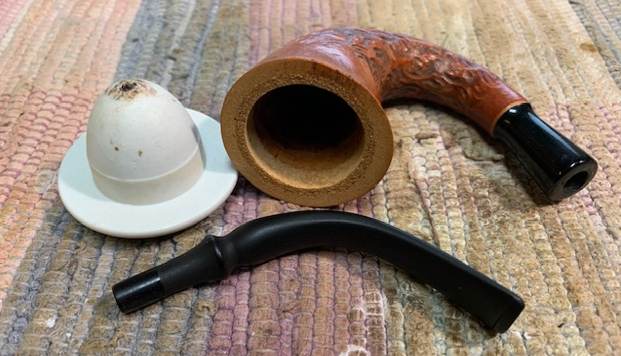
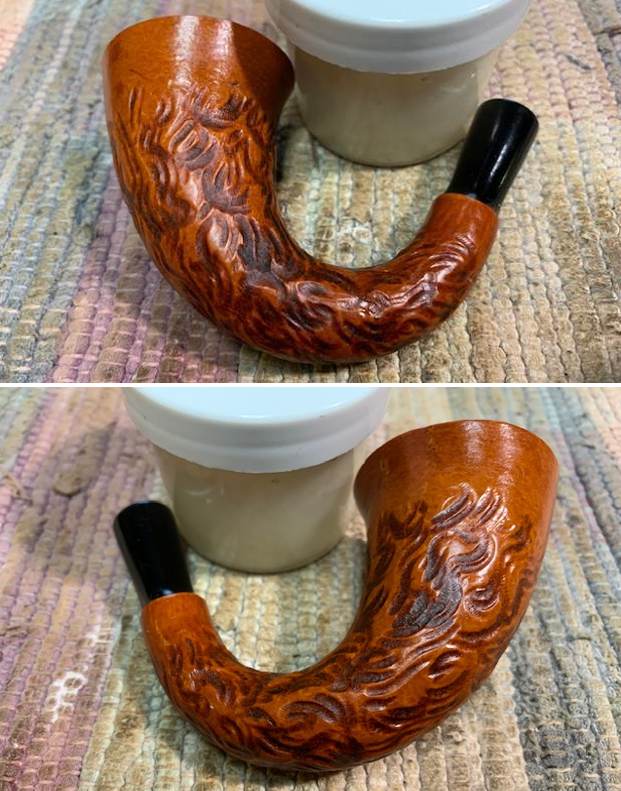
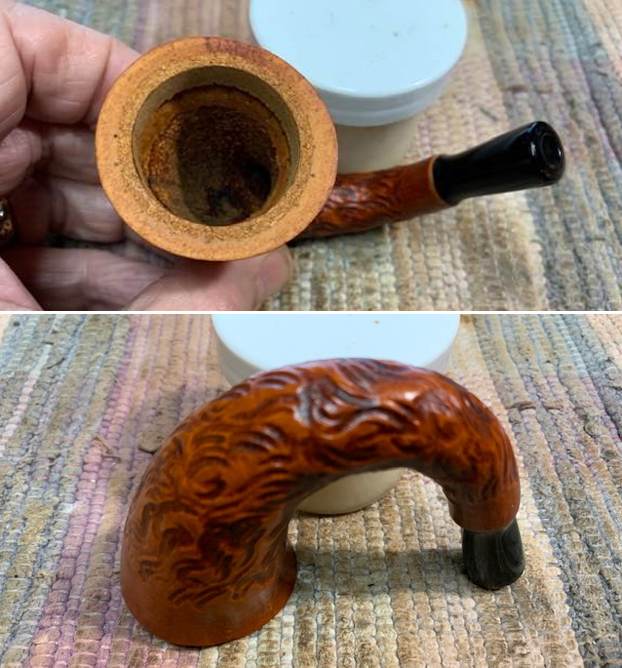
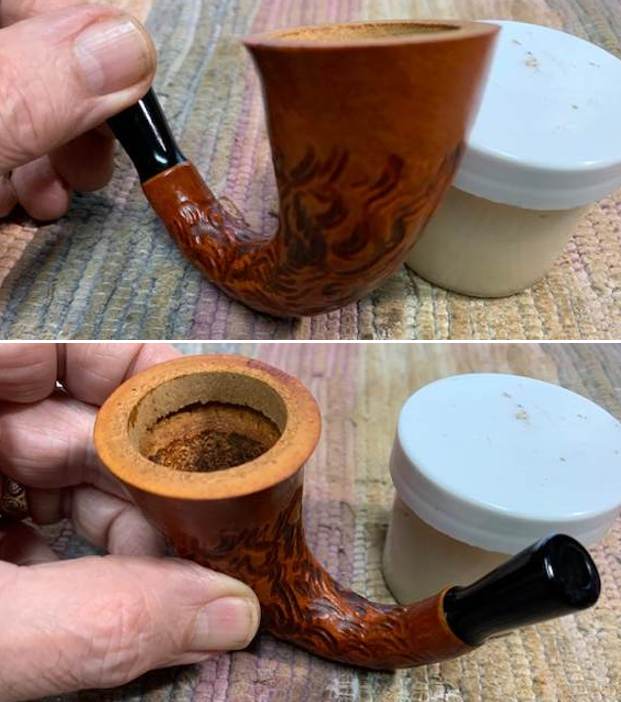
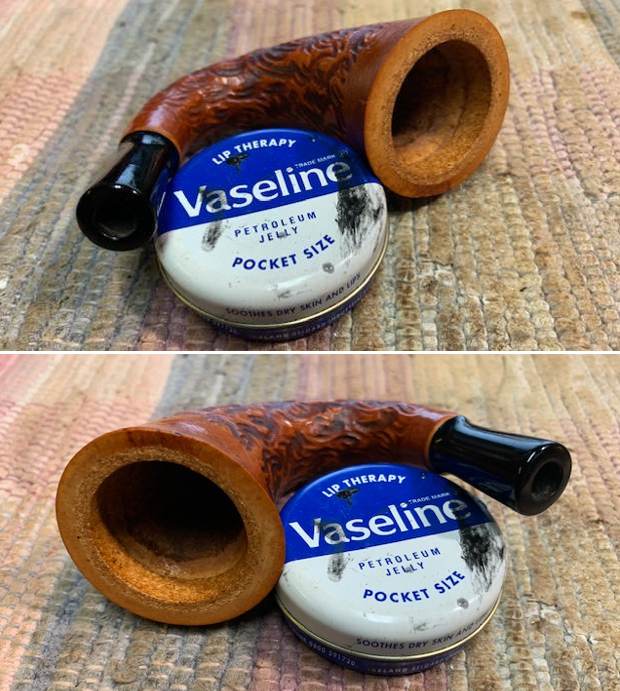
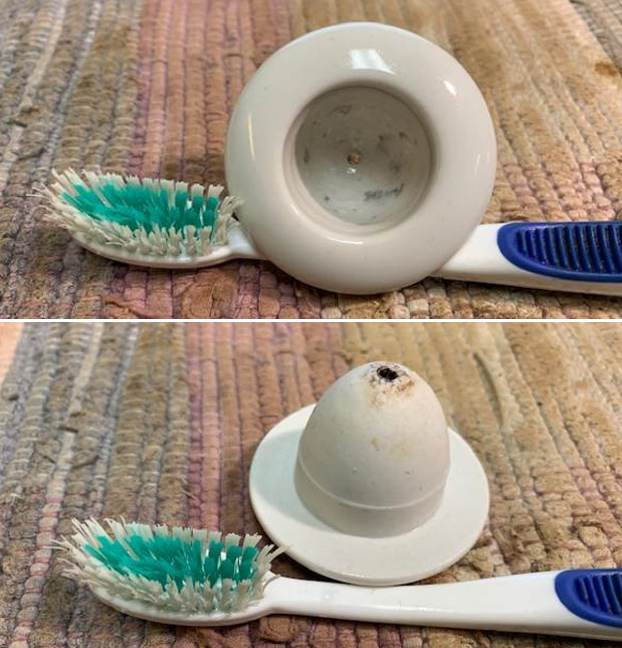
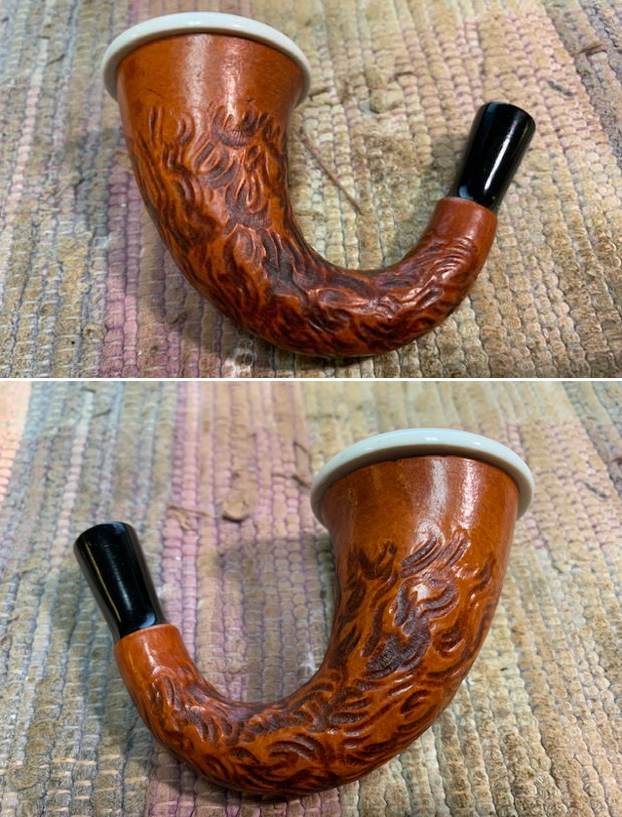
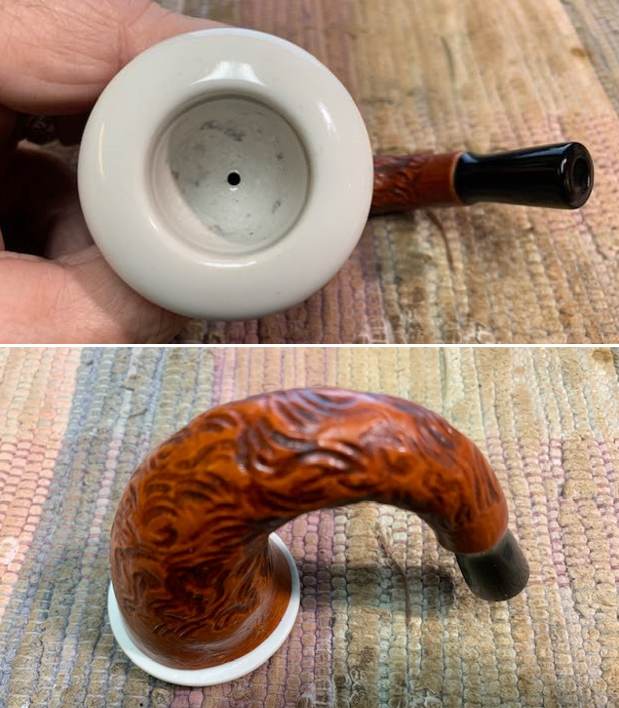
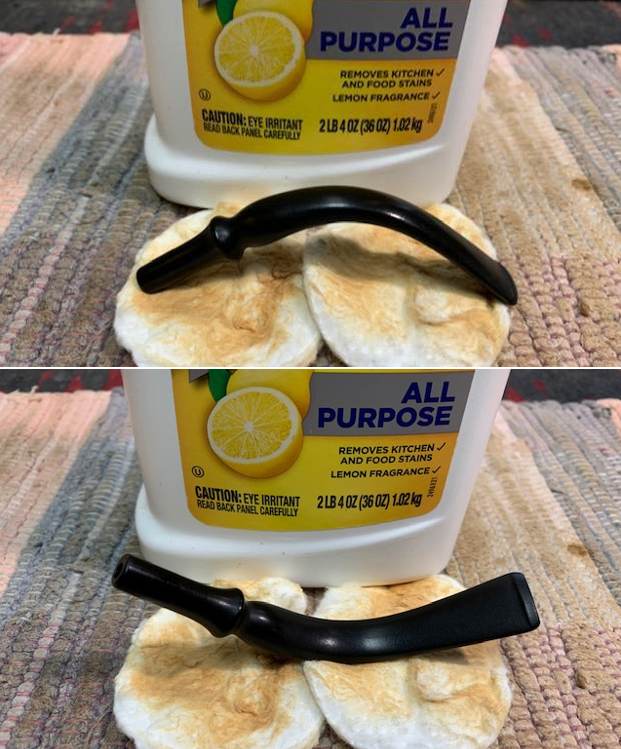
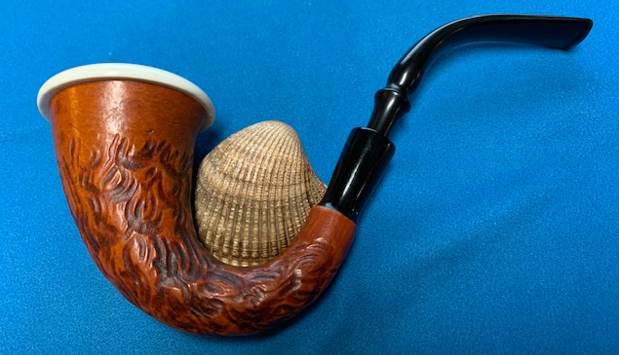
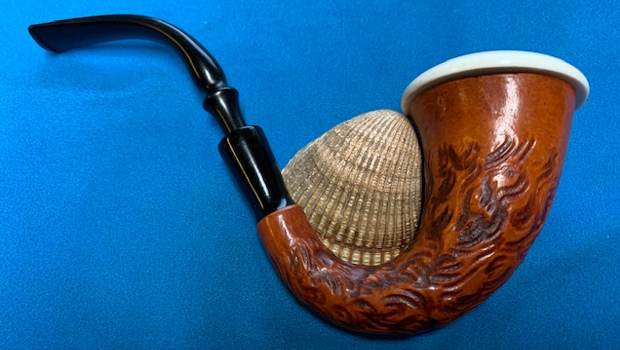
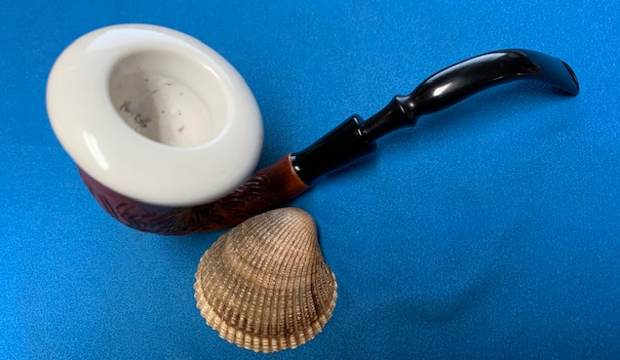
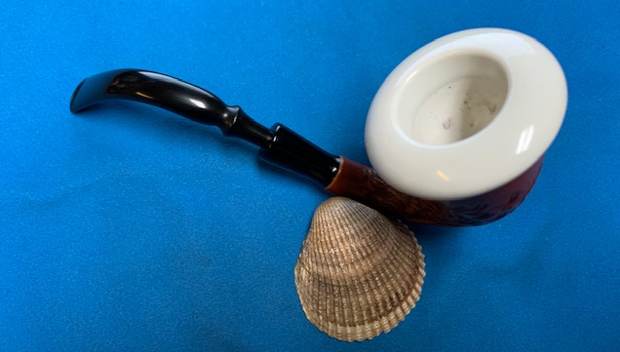
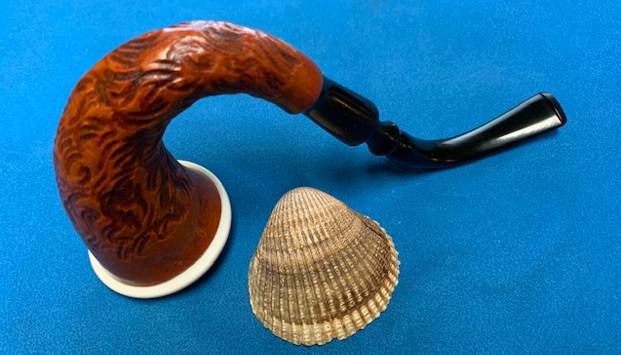
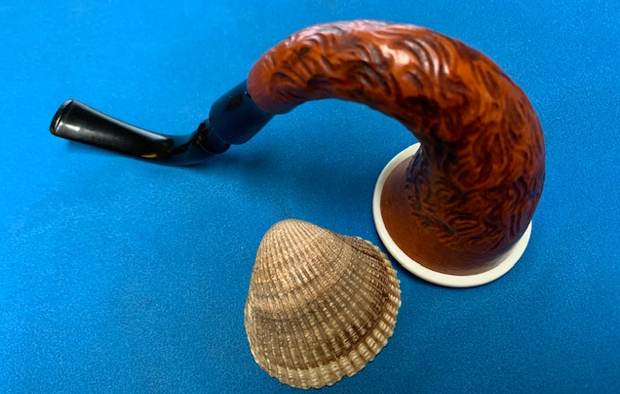
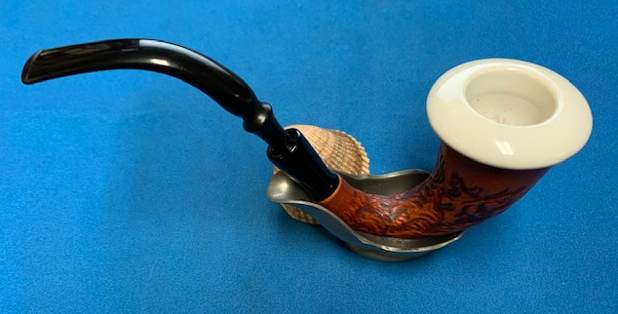
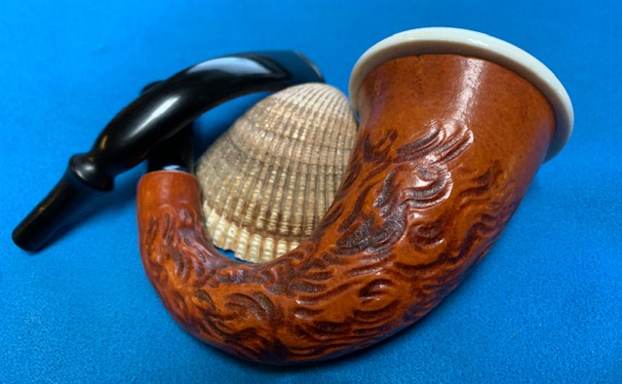
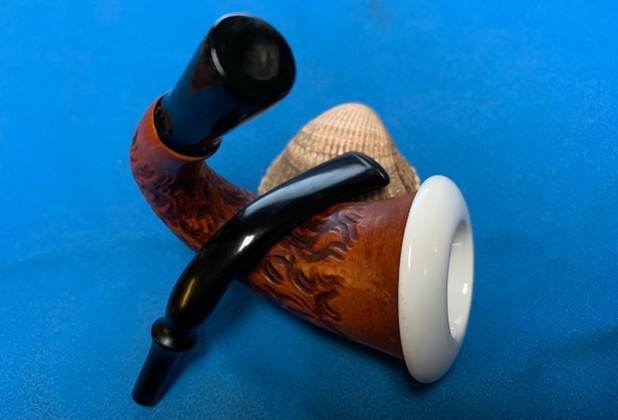
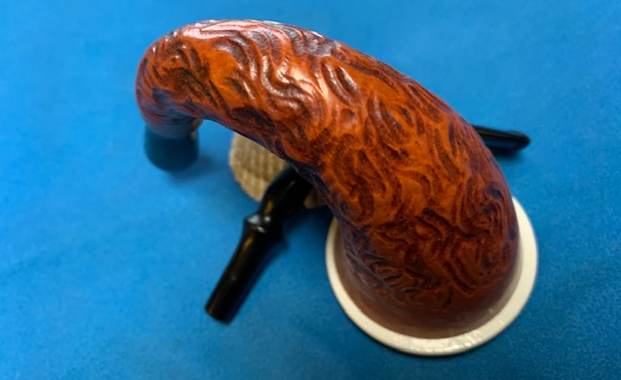
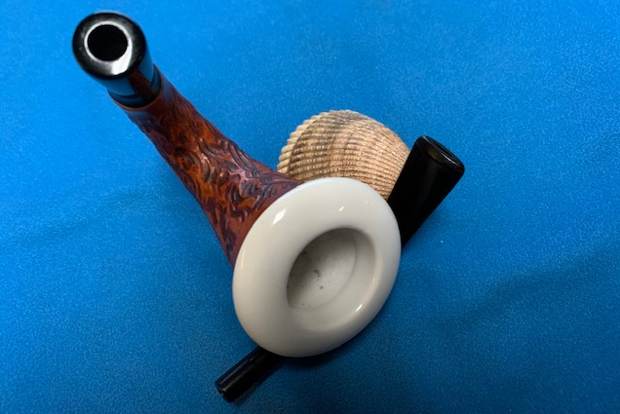
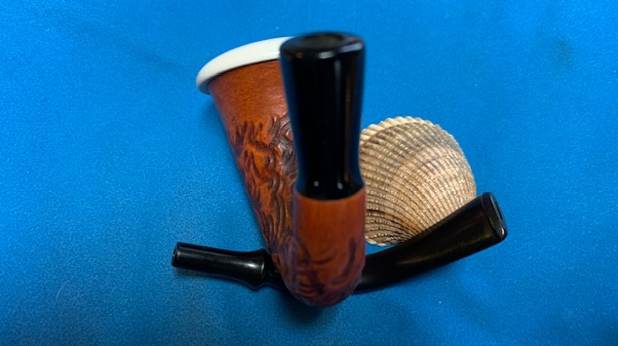
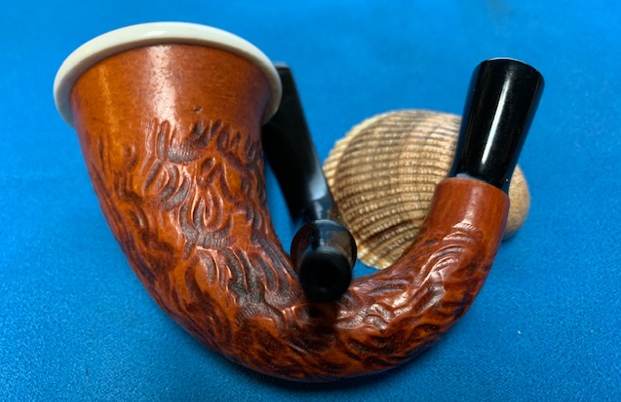
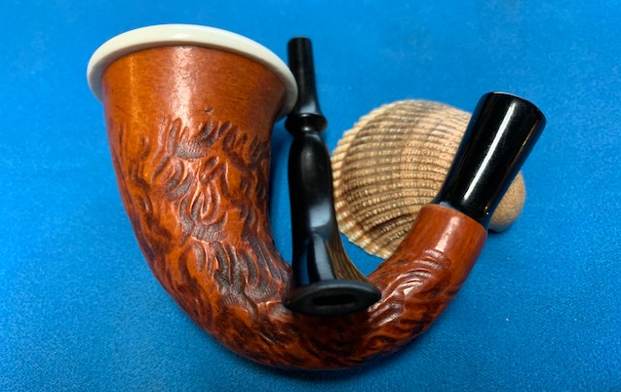
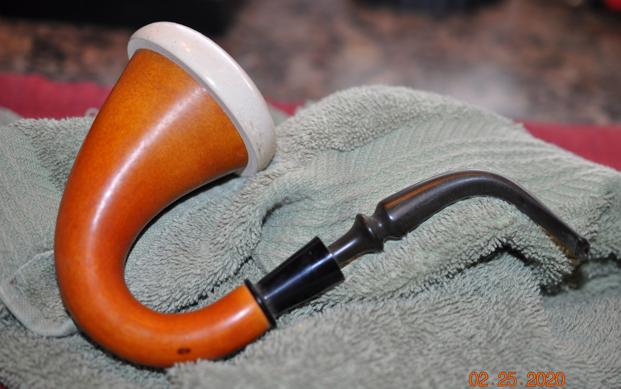
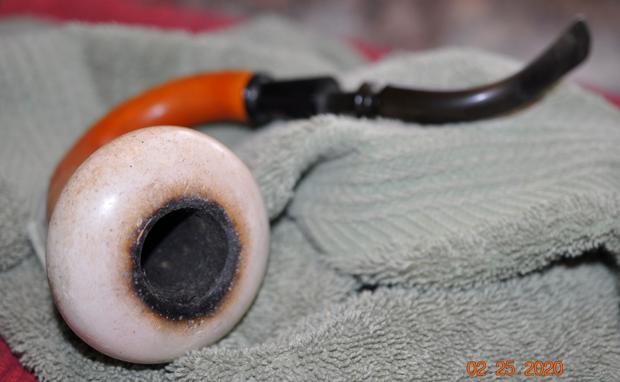
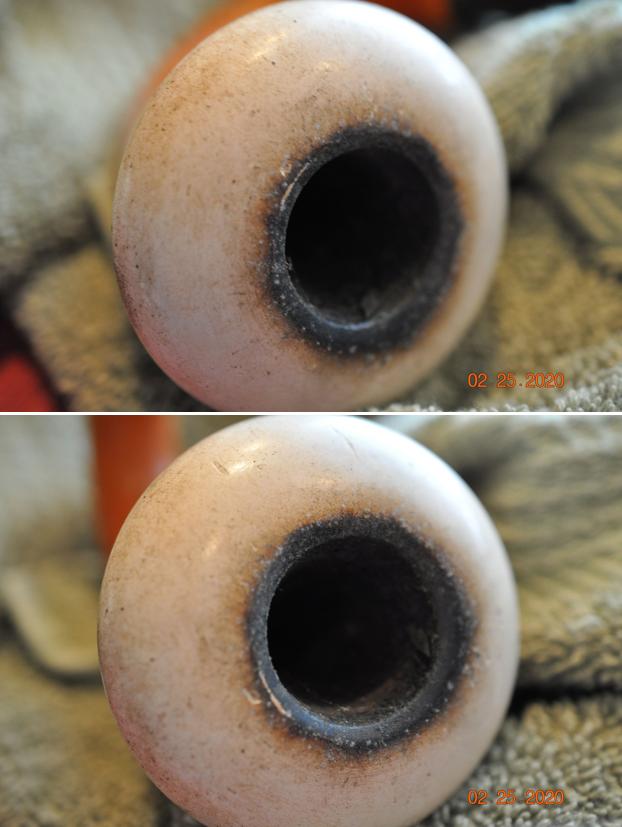
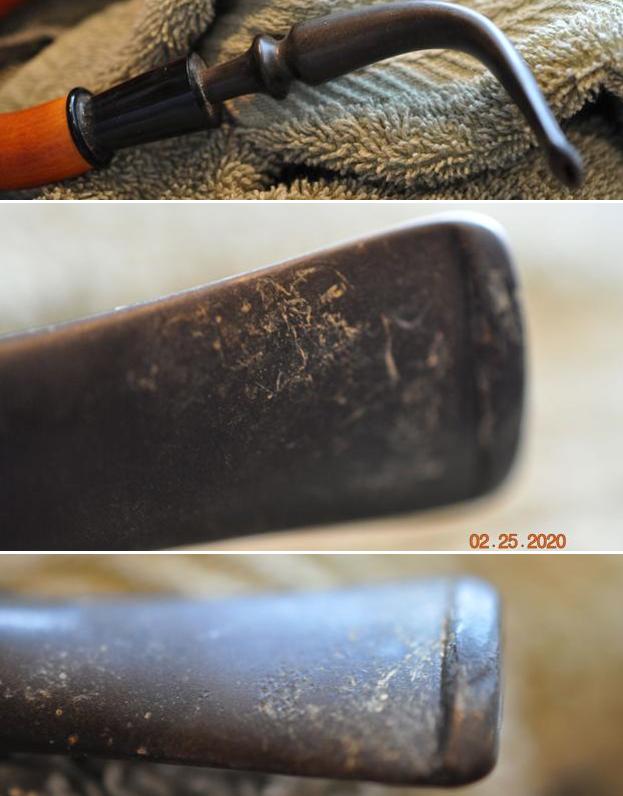
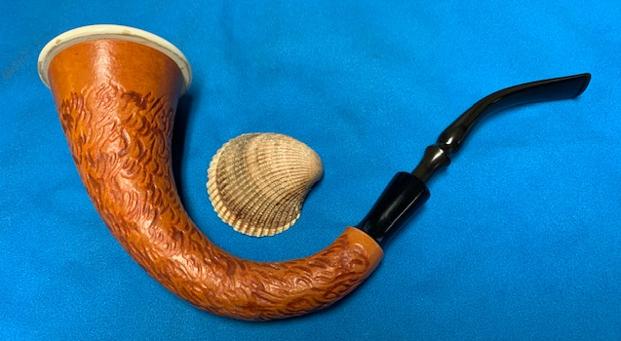
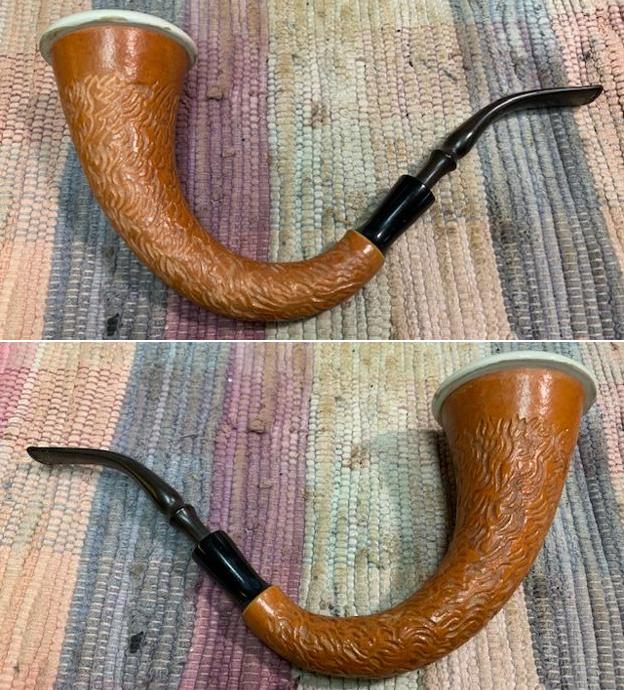
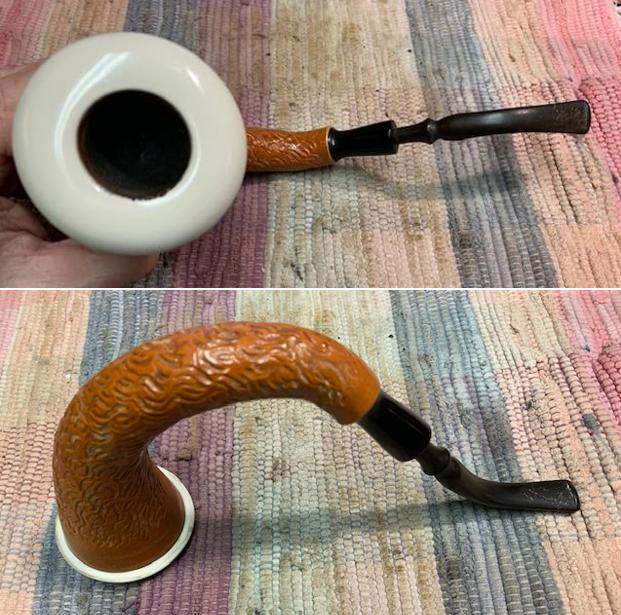
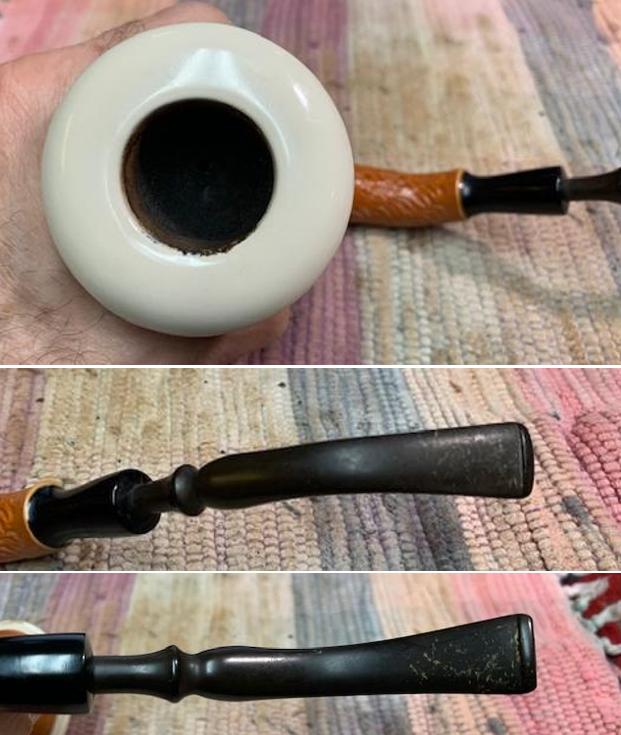
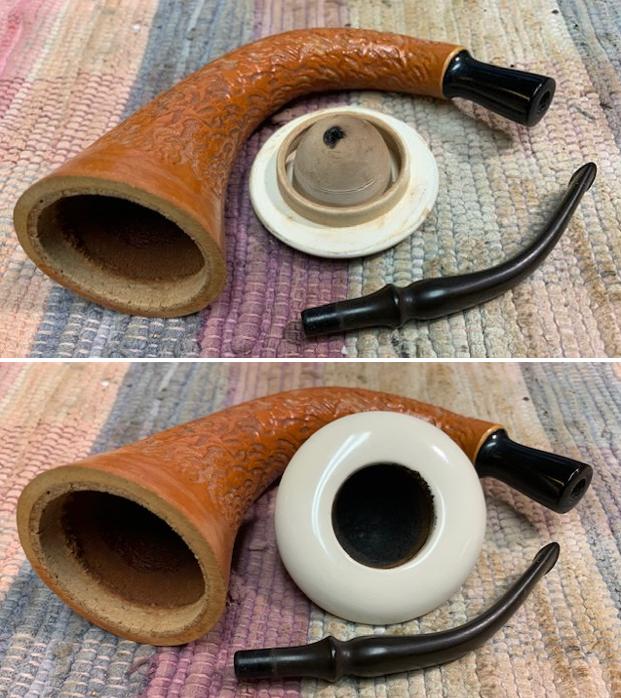
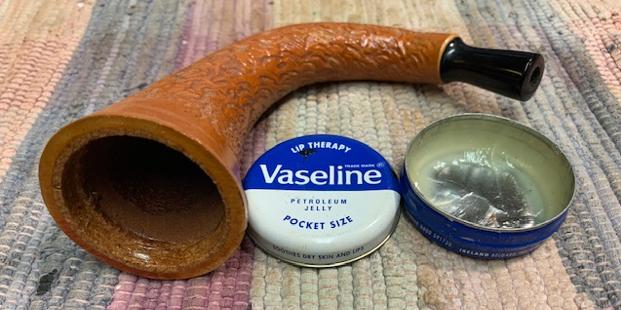
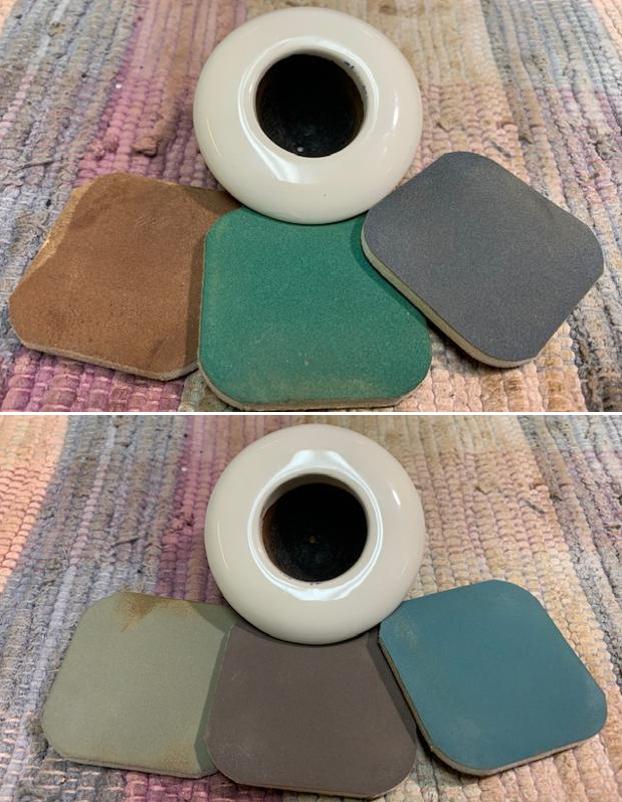
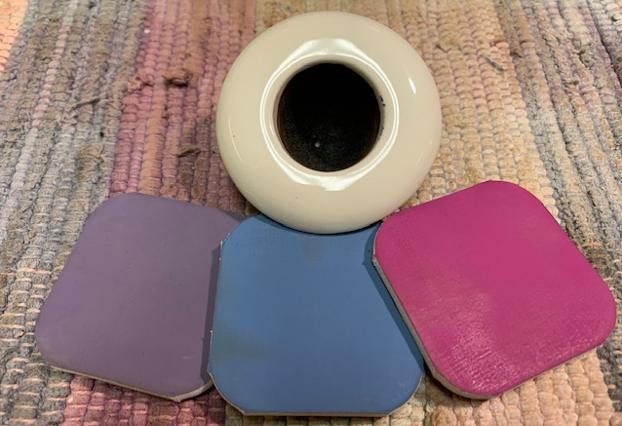
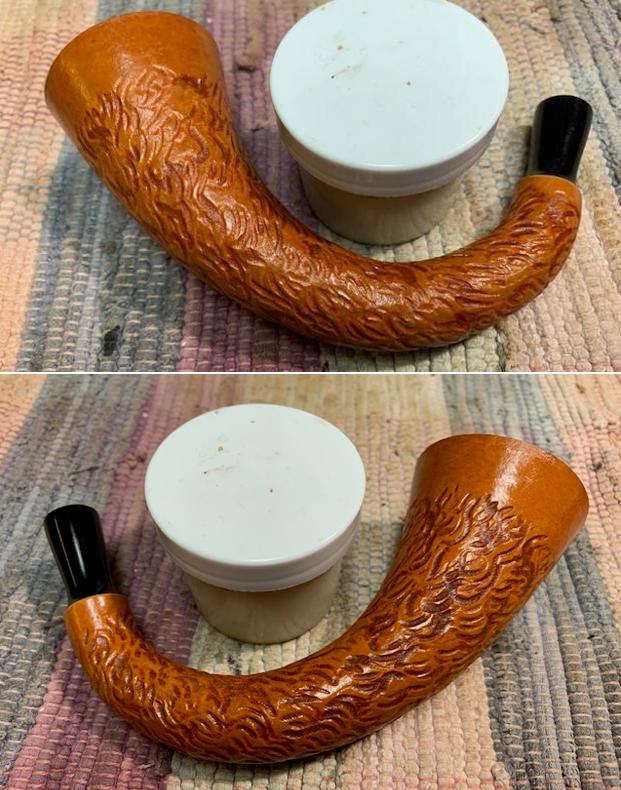
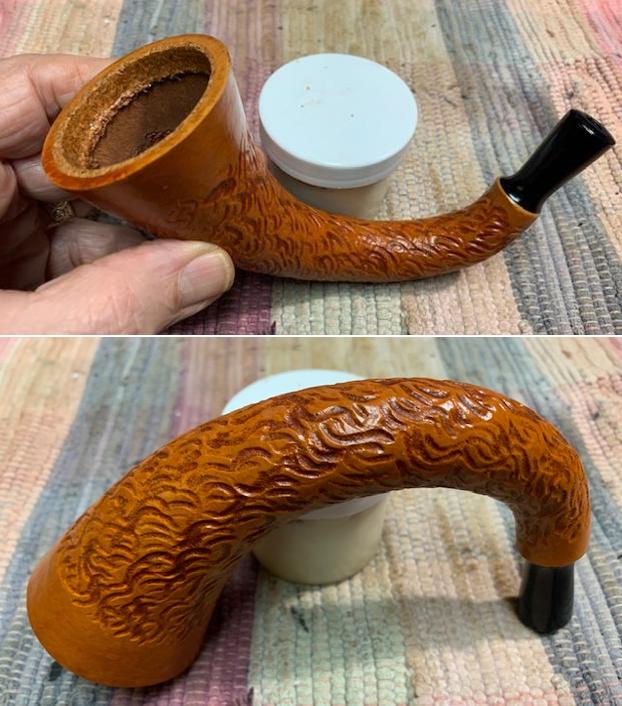
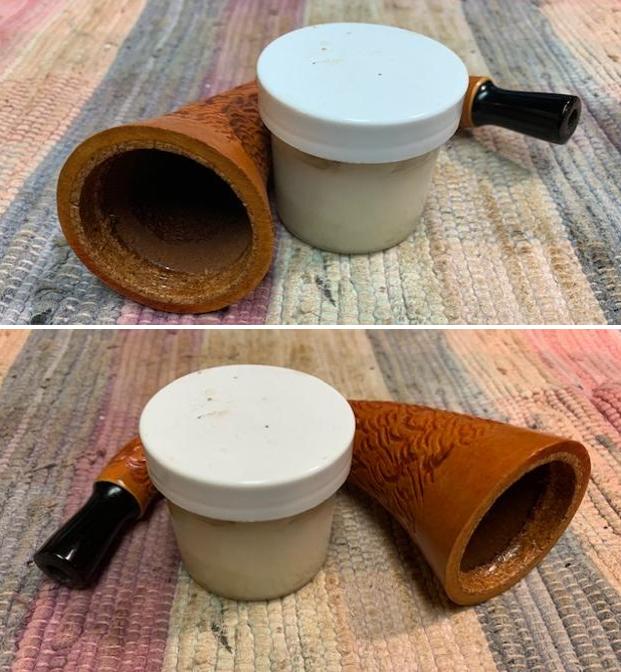
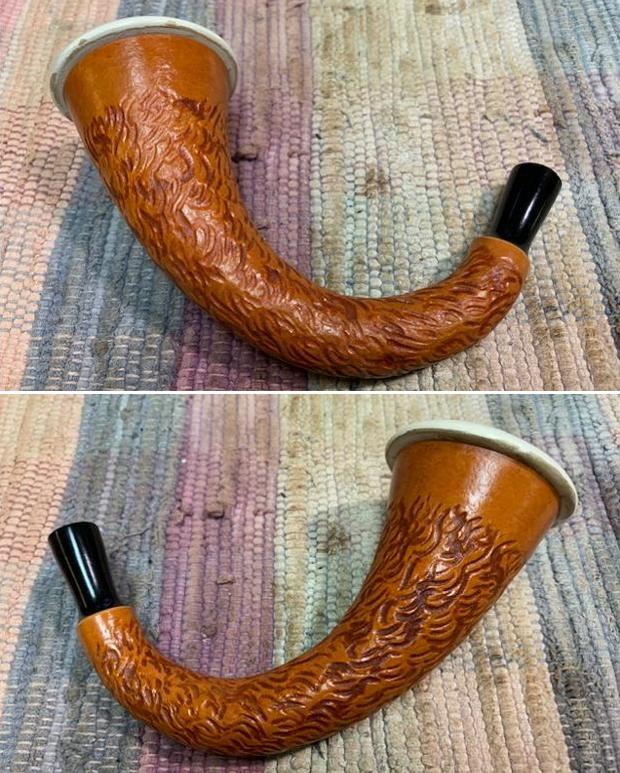
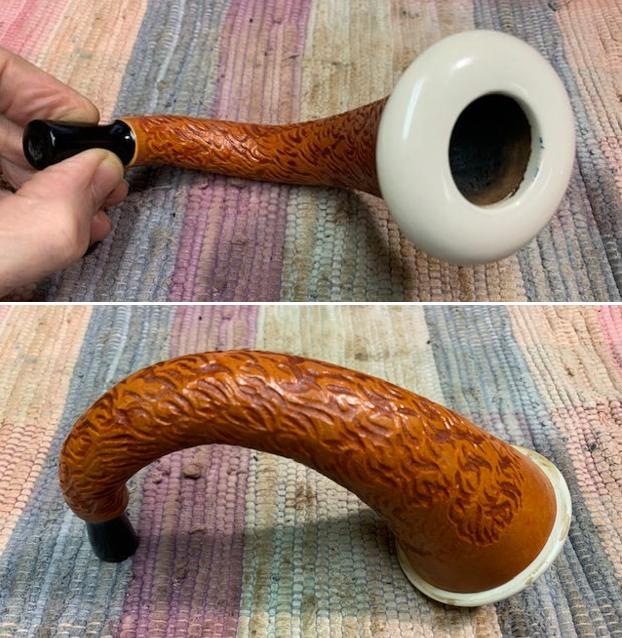
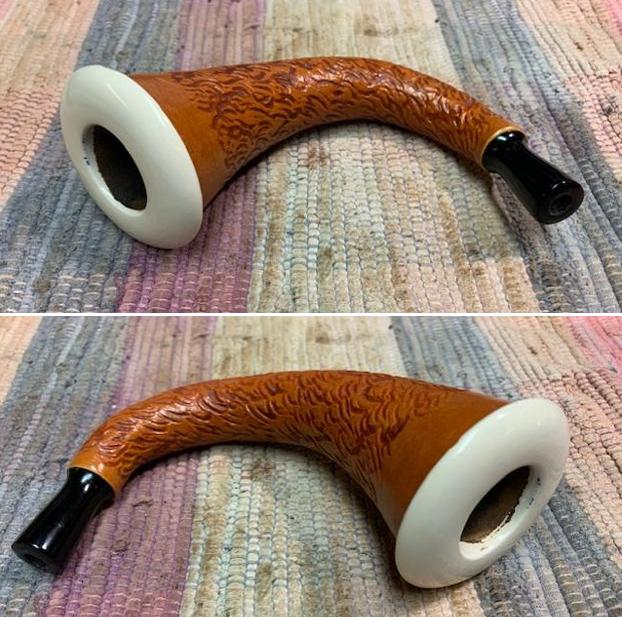
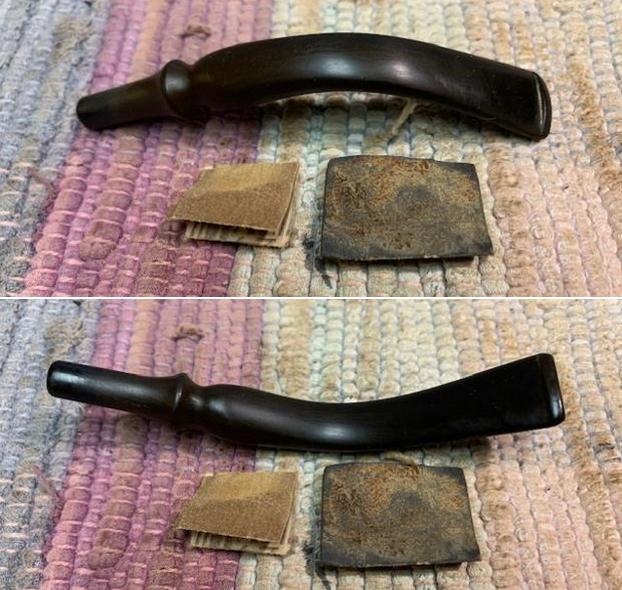
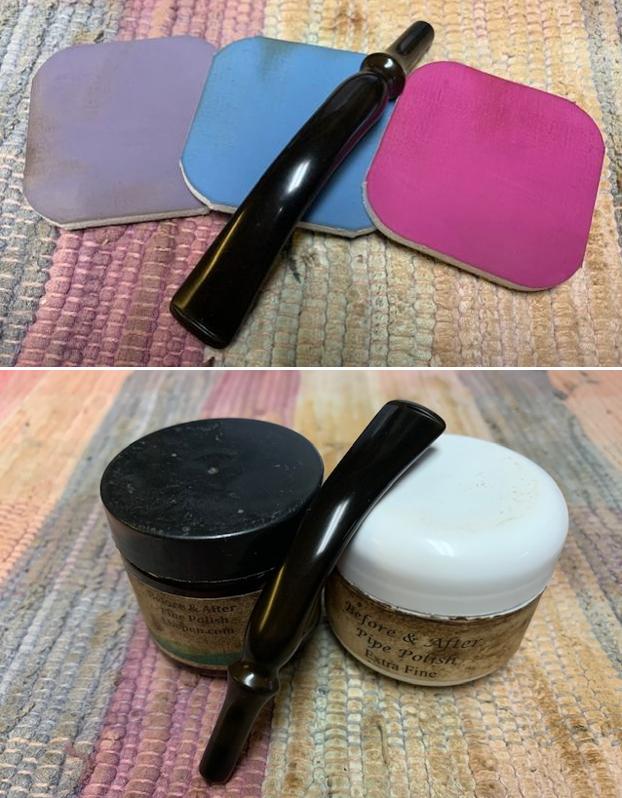
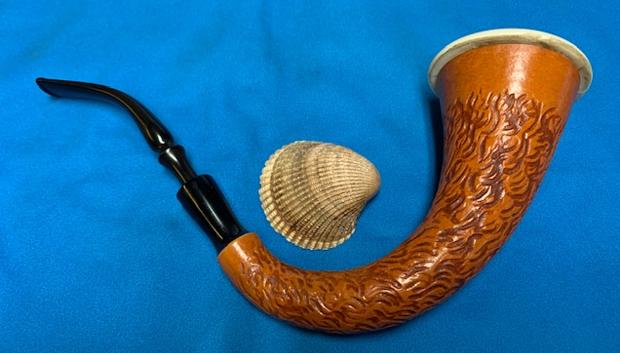
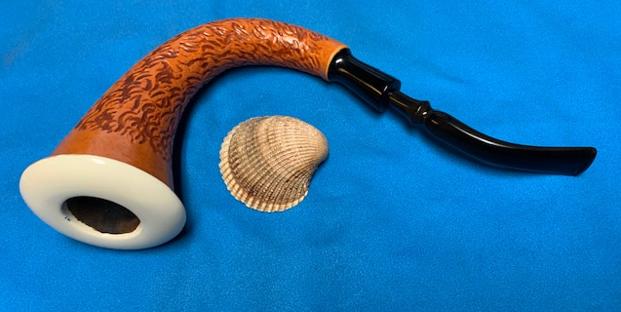
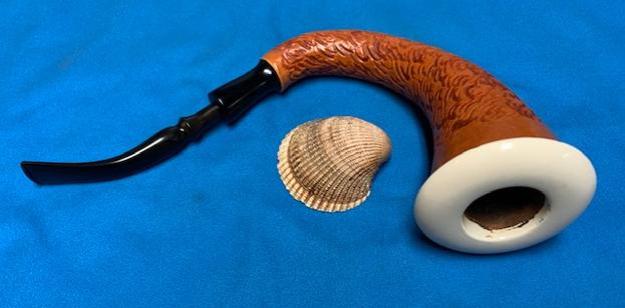
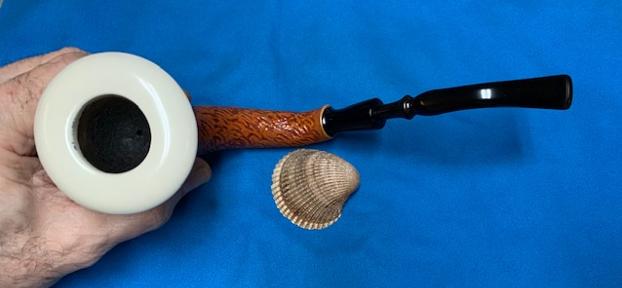
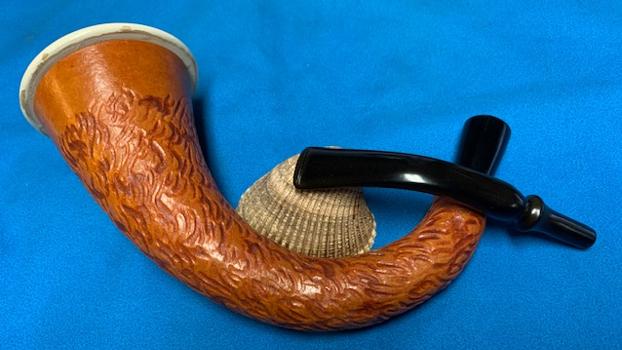
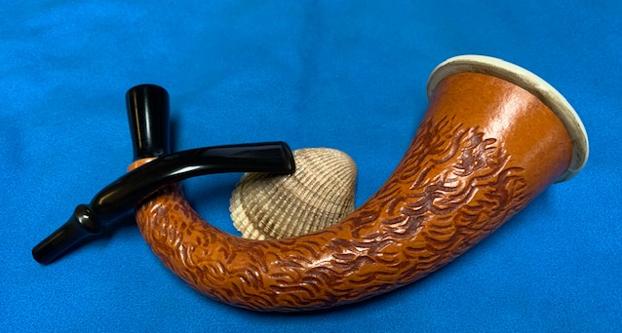
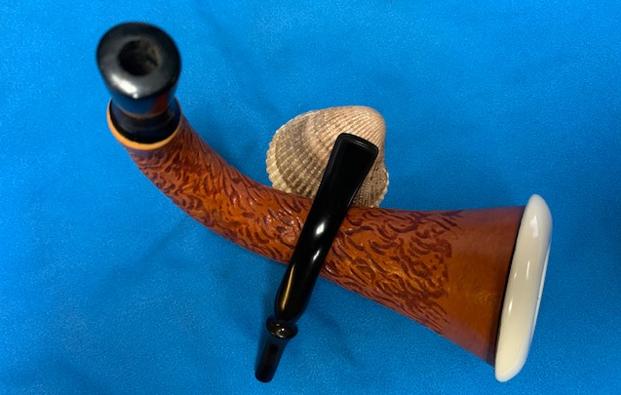
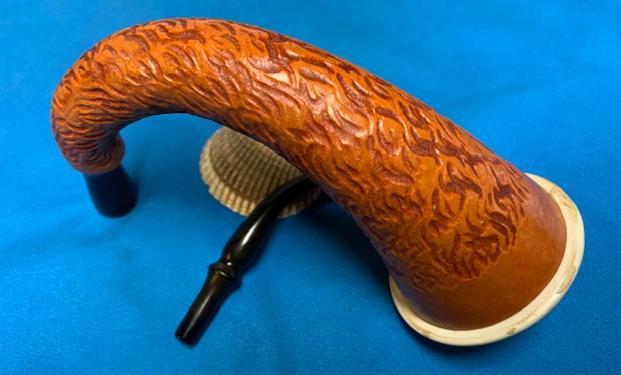
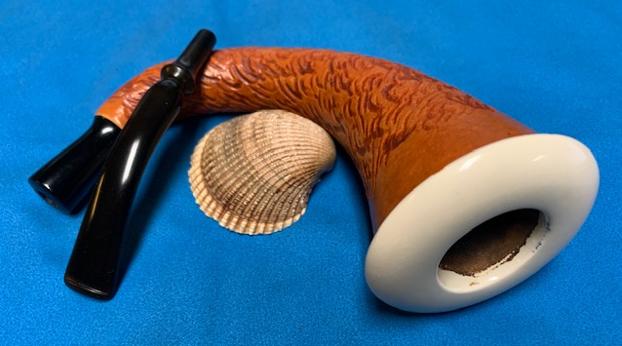
The next pipe on the table to refresh and refurbish is a smaller sized Gourd Calabash. It has the stem and shank extension that make it look like it was made by Pioneer but there is no way of knowing as it is unstamped. It is UNSMOKED/NOS but dirty and tired looking from sitting around for a long time. The gourd is etched around the sides with wavy almost hair like carving. The shank extension appears to be acrylic. The bowl is clean other than dust and some marking on the inside of the cup and on the bottom unglazed portion from storage. It is unsmoked and the inside of the Gourd is very clean. The cup in the Gourd is no meerschaum and to me looks and feels like it is porcelain. There is some thought that these bowls were composite but this one has the feel of porcelain. The fancy turned stem is oxidized and has some scratches on the surface from all the traveling it has done. I took photos of the pipe before I started my refurbishing work. I took some photos of the rim top and bowl. You can see the scuffs in the bottom portion of the bowl but it is clean just marred. The edges and cap on the bowl look very good. The glaze is intact and there is no damage. The stem photos show the oxidation in the vulcanite and is coarse to the touch. It will need to be polished and buffed. I took the stem off the shank and took a photo of the pipe. I also took the cup out of the Gourd to show the interior of the bowl and underside of the cup. It really is a nice looking pipe. I worked some Before & After Restoration Balm into the finish of the gourd with my fingertips and a horsehair shoe brush to clean, enliven and protect it. I find that the balm really makes the bowl come alive again. The contrasts in the etched surface and the smooth portion really gave the gourd a sense of depth. I let the balm sit for 10 minutes and then buffed with a cotton cloth to raise the shine. The bowl really looks good at this point. I used some Vaseline Petroleum Jelly to refresh the cork gasket around the inside of the bowl. The Vaseline enlivens the cork and gives back it flexibility. The soften cork nicely holds the cup in place snugly.I scrubbed the inside of the bowl with gentle dish soap and a tooth brush to try and remove the marks on the inside and outside of the bowl. While I could not remove all of the marks I was able to lessen them.I put the cup back in the gourd and took photos of the way that it looked after the work on the cup and the exterior of the gourd. It really is a nice looking little Gourd Calabash. To deal with the oxidation on the stem I scrubbed it down with cotton pads and Soft Scrub Cleanser and was able to remove the remaining oxidation. It looked better.I polished the stem with micromesh sanding pads – wet sanding it with 1500-12000 grit pads. I wiped the stem down after each pad with a cloth impregnated with Obsidian Oil. I polished it further with Before & After Pipe Stem Polish – both fine and extra fine. I gave it a final coat of Obsidian Oil and set it aside to dry. With refurbishing the final moment when all the pieces come back together is the tell all! I put the pipe back together and buffed the gourd and the stem with Blue Diamond. I gave the gourd and the stem multiple coats of carnauba wax. I buffed the those parts with a clean buffing pad to raise the shine. I hand buffed it with a microfiber cloth to deepen the shine. I put the cup back in the gourd and hand buffed the finished pipe. It is fun to see what the polished bowl looks like with the smooth finish and the black fancy vulcanite stem. This Small Gourd Calabash with a Porcelain Bowl is light wight and it is ready for you to load up a tobacco of preference and enjoy breaking it in for yourself. Have a look at it in the photos below. The dimensions are Length: 7 inches, Height: 2 ¾ inches, Outside diameter of the bowl (cup): 2 inches, Chamber diameter: 1 inch. The weight of the pipe is 57 grams/2.01 ounces. This is one that will go on the American Pipemakers section of the rebornpipes online store shortly. Thanks to each of you who are reading this blog. Remember we are not pipe owners; we are pipemen and women who hold our pipes in trust until they pass on into the trust of the next generation.

New Life for a Full Bent Gourd Calabash with a Meerschaum Cup


Blog by Steve Laug

I have several boxes of pipes that Jeff has sent me to work on over the past months that have some great looking pipes in them. I have chosen to work on four Gourd Calabash pipes that he picked up in several places. The last of them is a full bent Gourd with a meerschaum cup, a black acrylic shank end and a bent vulcanite stem. The gourd was very dirty with a lot of dust and grime ground into the finish. The meerschaum cup had a thick cake and an overflow of lava on the rim top. The pipe had obviously been heavily smoked which reflected on it being a great smoking pipe. The vulcanite stem was oxidized and had tooth marks and chatter on both sides ahead of the button. It is a an interesting pipe with a lot of potential under the grime and debris of the years. The  Jeff took some photos of the Gourd Calabash before he worked his magic in cleaning up the pipe. Jeff took photos of the bowl, rim top to show the thickness of the cake in the bowl and the thick lava on the rim top. The rim top and inner edge are thickly covered with lava. The meerschaum has some patina developing. He took photos of the top and underside of the stem showing the tooth marks and chatter on both sides and the overall look of the stem and shank extension on the gourd.Jeff took photos of the sides and heel of the bowl to show the condition of the gourd bowl the developing patina on the meerschaum cup. This Full Bent Gourd Calabash is another interesting looking pipe. The meerschaum bowl has developed a patina and the bent vulcanite stem looks very good with it. Everything about the pipe reminds me of the Gourd Calabash pipes that Pioneer used to make. Could this be one of those? Probably will never know.

Jeff reamed carefully reamed the meerschaum bowl and the gourd base with a Savinelli Fitsall Pipe Knife. He carefully scrubbed the exterior of the bowl with Murphy’s Oil Soap and a tooth brush to remove the grime and grit on the exterior of the meerschaum cup and rim top and lava on the rim top. He scrubbed out the internals of the bowl and the gourd with Murphy’s Oil Soap and a tooth brush. He cleaned out the shank extension, shank and the stem with alcohol, pipe cleaners and cotton swabs until the pipe was clean. The finish looks much better and has a deep richness in the colour that highlights the patina in the meerschaum and the contrast of the rusticated gourd. He cleaned the internals of the vulcanite stem with alcohol, pipe cleaners and cotton swabs. He scrubbed the externals with Soft Scrub to remove the grime on the surface and soaked it in a bath of Briarville’s Pipe Stem Deoxidizer. He rinsed it and rubbed it down with a bit of olive oil before he sent it to me. When the pipe arrived here in Vancouver I was amazed that it looked so good. I took photos of it before I started my work on the pipe.I took some photos of the bowl and meerschaum cup. The rim top looks very good after the clean up though a bit spotty. There is still some darkening and chips/marks around the inner edge of the bowl that will need to be dealt with. The stem looks good but has light tooth marks and chatter on both sides near and on the surface of the button.I removed the stem from the shank and the meerschaum bowl from the gourd and took photos of the parts from various angles. The underside of the meerschaum cup was in good condition. I started the process of cleaning up the meerschaum bowl by sanding the inner edge and bevel with a folded piece of 220 grit sandpaper. I was able to remove the darkened edges and nicks with the sandpaper. It looked better after I worked on it.I polished the meerschaum rim top with micromesh sanding pads – dry sanding with 1500-12000 grit sanding pads. I wiped the bowl down after each pad with a damp cloth to remove the sanding debris.I rubbed the meerschaum rim cap down with some Before & After Restoration Balm and worked it into the surface with my finger tips. I let it sit for about 15 minutes and then buffed it to a polish. The Balm really highlights the growing patina on the meer bowl. It works to protect and polish the meerschaum.I worked some Before & After Restoration Balm into the surface of the gourd calabash with my fingertips to clean, enliven and protect the briar. I let the balm sit for 15 minutes and then buffed with a cotton cloth to raise the shine. The photos show the bowl at this point in the restoration process. I used some Vaseline Petroleum Jelly to rejuvenate the cork gasket around the inside edge of the gourd. It would make the fit of the meerschaum snug against the gourd and the rejuvenated cork would make it smooth and easy to insert and remove the bowl.I let the cork absorb the Vaseline for about 5 minutes and then fit the bowl in the gourd. The pipe looked very good at this point in the process.I set the bowl aside and turned my attention to the stem. I sanded the tooth marks on the top and underside of the stem with 220 grit sandpaper to smooth out the marks. I started to polish the stem with 400 grit wet dry sandpaper.I polished the stem with micromesh sanding pads – dry sanding with 1500-12000 grit sanding pads. I wiped it down after each sanding pad with Obsidian Oil. I polished it with Before & After Pipe Stem Polish – both Fine and Extra Fine. I gave it a final coat of Obsidian Oil. It looks significantly better!With the bowl and the stem finished I put the beautiful Gourd Calabash with Meerschaum cup and fancy vulcanite stem back together and buffed it the bowl and cup lightly on the wheel using Blue Diamond to give it a shine. I gave the bowl and stem multiple coats of carnauba wax. I buffed the pipe with a microfiber cloth to deepen the shine. The finish on the gourd and meer is a great looking. The fancy vulcanite stem looked very good. The dimensions of the pipe are – Length: 7 ½ inches, Height: 4 inch, Outside diameter of the bowl: 2 ¾ inches, Chamber diameter: 1 inch. The weight of this large pipe is 3.81 ounces /108 grams. This Gourd Calabash is another great find. It is much more beautiful in person than these photos can capture. I will be putting it on the rebornpipes store shortly. If you would like to add it to your rack let me know by email or message. This is another pipe that has the possibility of transporting the pipe man or woman back to a slower paced time in history where you can enjoy a respite. Thanks for walking through the restoration with me.
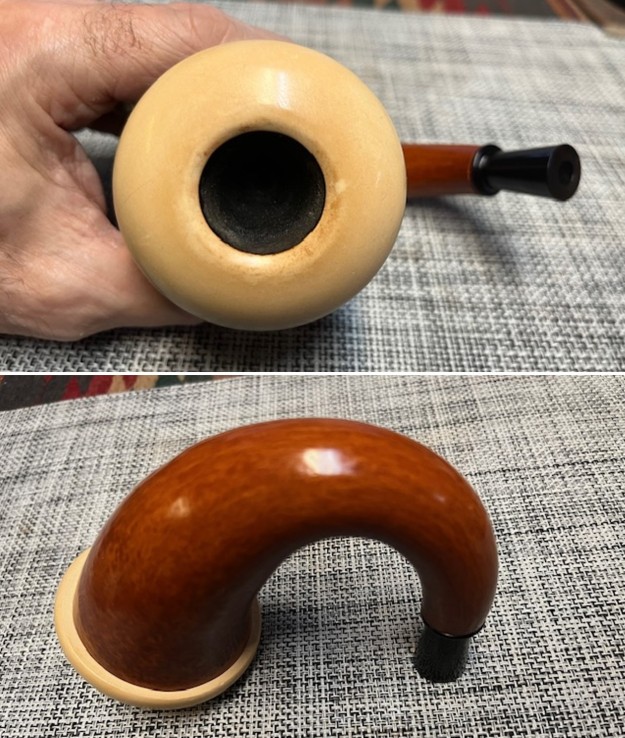
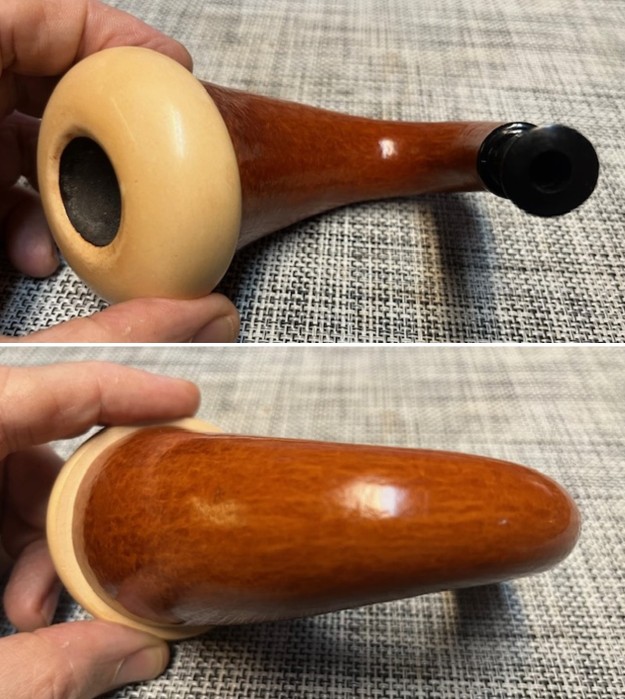
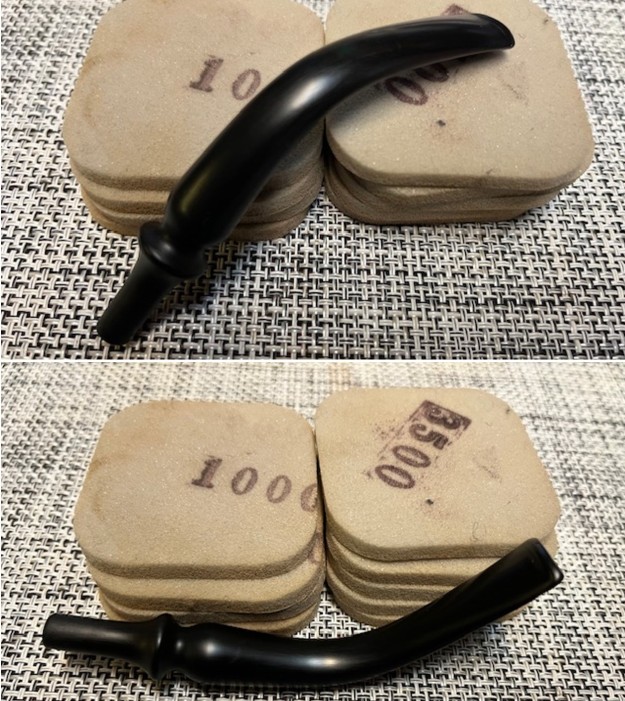
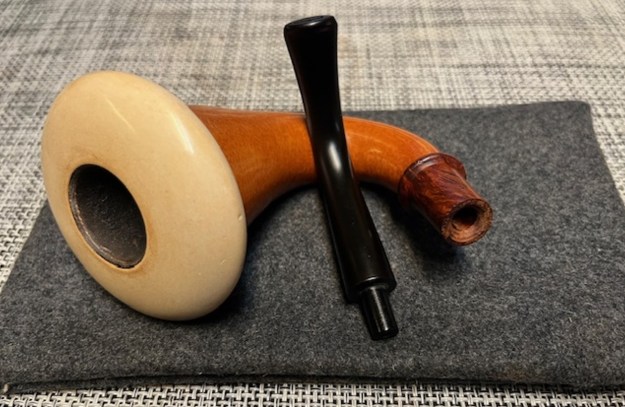
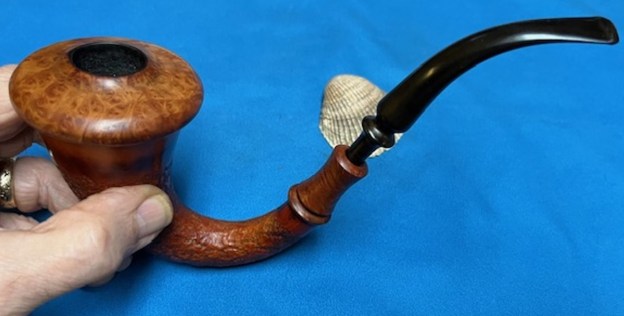
Refreshing a NOS/Unsmoked Meerschaum Bowled Gourd Calabash


Blog by Steve Laug

I received a box of pipes from Jeff recently that he had cleaned up and sent to me. It is a nice assortment of pipes that should be fun to work on. In the box were two unsmoked, NOS (New Old Stock) Meerschaum bowled Gourd Calabash pipes. The first of these is the pipe below. It is a larger sized Gourd Calabash with a meerschaum cup and a smooth gourd. The shank extension is turned briar and is smooth and reddish brown. The stem is vulcanite and is lightly oxidized. Its measurements are Length: 7 inches, Height: 3 ½ inches, Diameter of the meerschaum cup: 2 ½ inches, Diameter of the chamber: 1 inch, Depth of the chamber: 1 ¼ inches. I took photos of that pipe before my polishing work.  I took photos of the cup to show the cleanness of the bowl. It is a little scratched which I will polish out. The stem is lightly oxidized but unmarked by tooth chatter or marks. It should clean up easily and allow whoever takes it in trust to put their own teeth marks on it.I took the pipe apart and took a series of photos to show its condition and the overall appearance of the pipe. You can see that the cork gasket it dry and lifeless and needs to be rejuvenated.   I polished the meerschaum cup/bowl with micromesh sanding pads – polishing with 1500-12000 grit pads and wiping them down with a damp cloth after each pad.     I used some Vaseline Petroleum Jelly to rejuvenate the cork gasket in the bowl. I worked it into the cork with my finger tips to soften the gasket. Once it had absorbed a bit it would be soft and hold the meerschaum bowl in the gourd easily.I worked some Before & After Restoration Balm into the surface of the gourd calabash with my fingertips to clean, enliven and protect the briar. I let the balm sit for 15 minutes and then buffed with a cotton cloth to raise the shine. The photos show the bowl at this point in the restoration process.     I put the meerschaum cup in the gourd calabash bowl and took photos of this portion of the restoration of this pipe. I set aside the bowl and turned my attention to the stem. I polished the stem with micromesh sanding pads – wet sanding it with 1500-12000 grit pads. I polished it further with Before & After Pipe Stem Polish – both fine and extra fine.      I really enjoyed putting this pipe together and restoring it because I love the final touches that make it sing. I put the New Old Stock, Unsmoked Gourd Calabash back together and lightly buffed the bowl with Blue Diamond on the buffing wheel. I gave the gourd and stem multiple coats of carnauba wax. I buffed the pipe with a clean buffing pad to raise the shine. I hand buffed it with a microfiber cloth to deepen the shine. It is fun to see what the polished meerschaum bowl looks like with the smooth finished gourd and the black vulcanite stem. This richly finished Unsmoked Gourd Calabash is light weight and ready for you to load up a tobacco of preference and enjoy smoking it. Have a look at it in the photos below. As noted above, its measurements are Length: 7 inches, Height: 3 ½ inches, Diameter of the meerschaum cup: 2 ½ inches, Diameter of the chamber: 1 inch, Depth of the chamber: 1 ¼ inches. The weight of the pipe is 65 grams/2.29 oz. This is one that will go on the Meerschaum Pipemakers section of the rebornpipes online store shortly. Thanks to each of you who are reading this blog. Remember we are not pipe owners; we are pipemen and women who hold our pipes in trust until they pass on into the trust of the next generation.            

New Life for a Rusticated Gourd Calabash with a Meerschaum Cup


Blog by Steve Laug

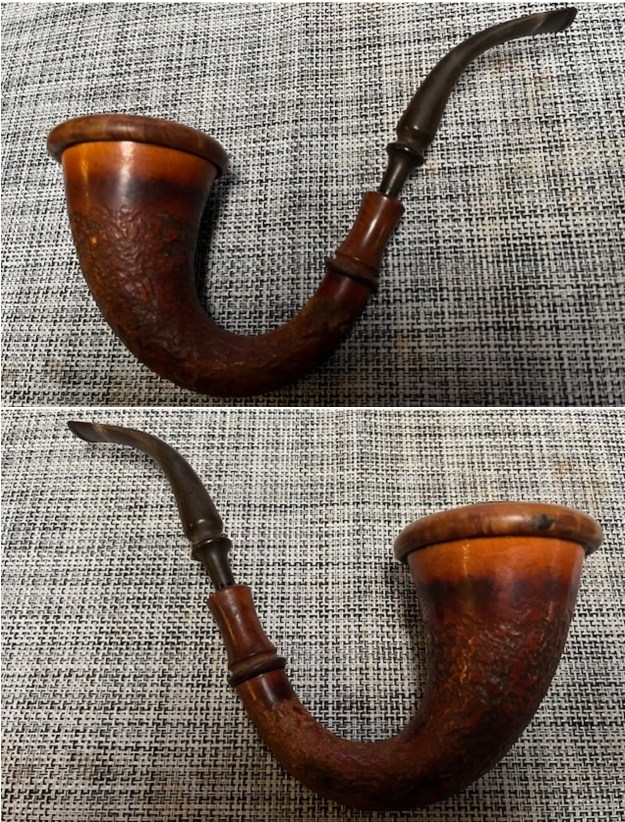
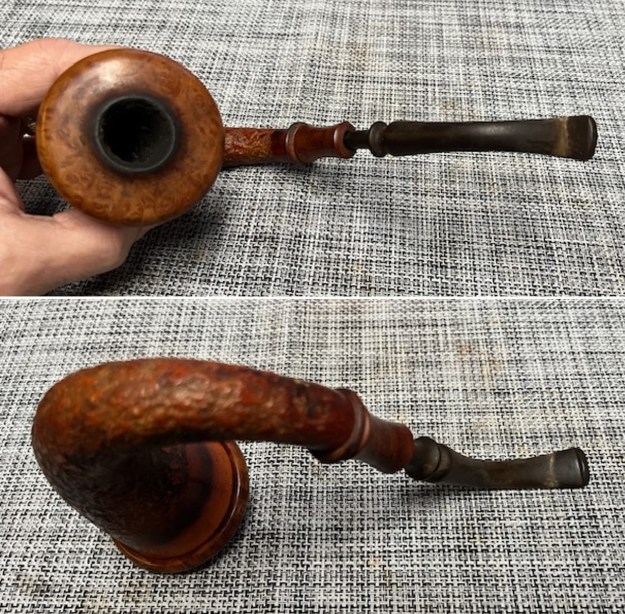
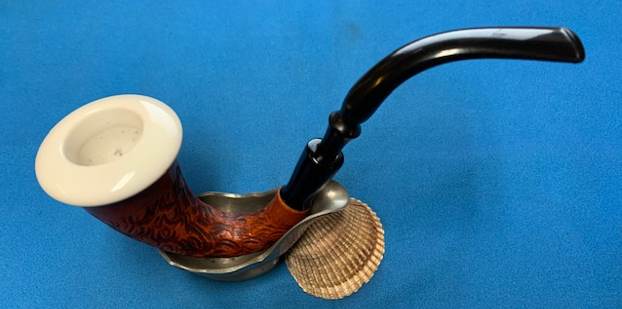
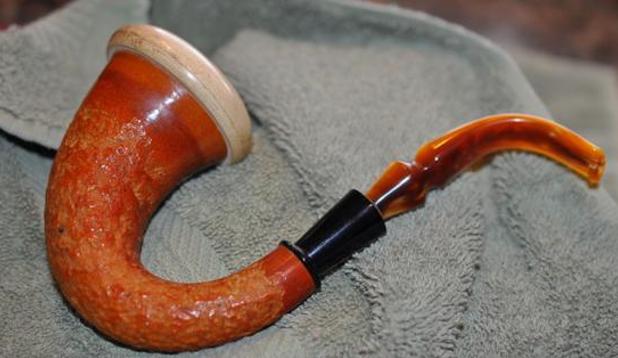
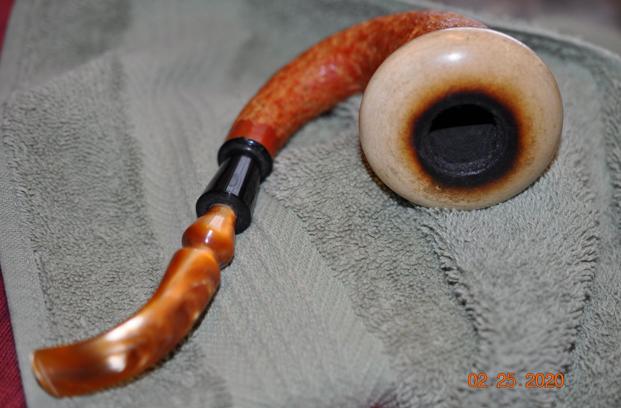
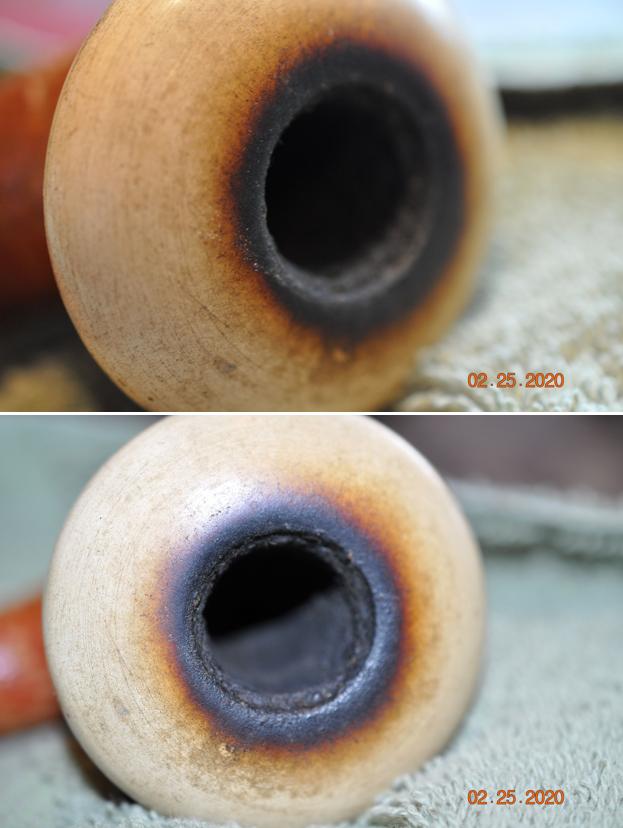
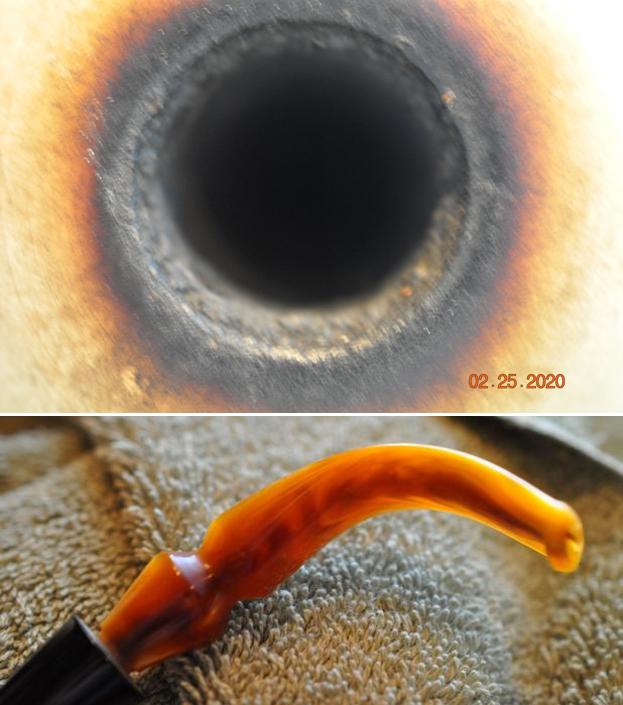
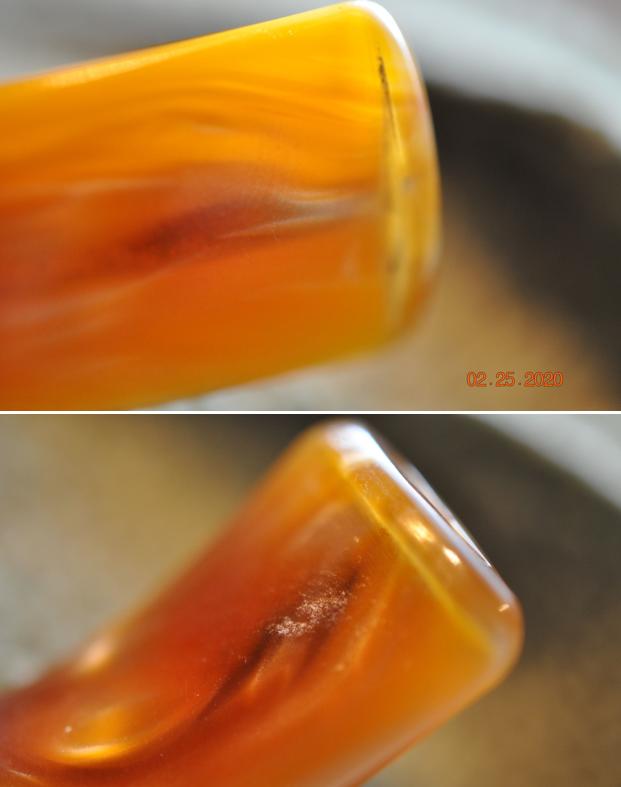
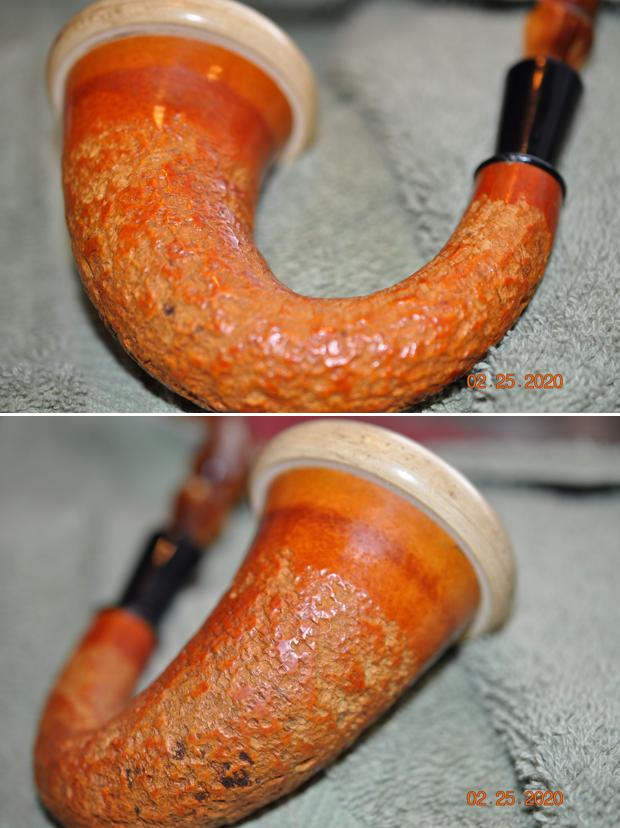
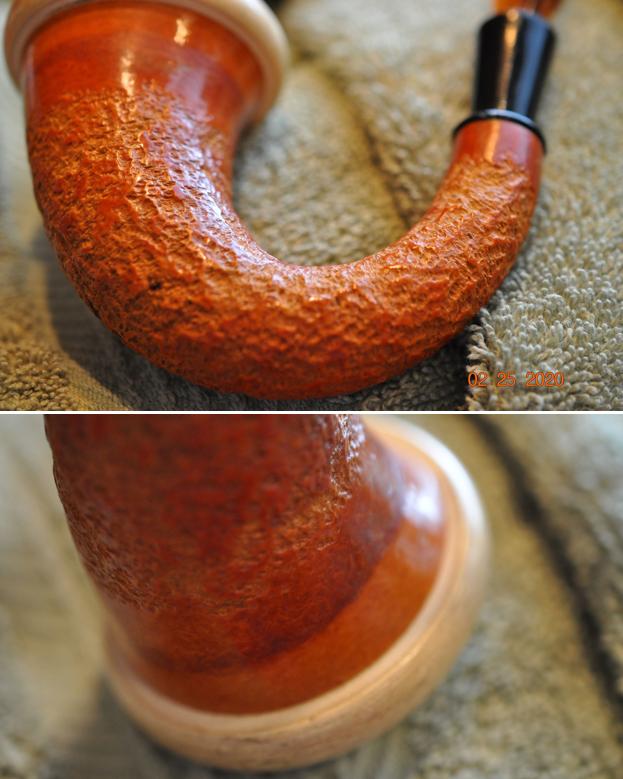
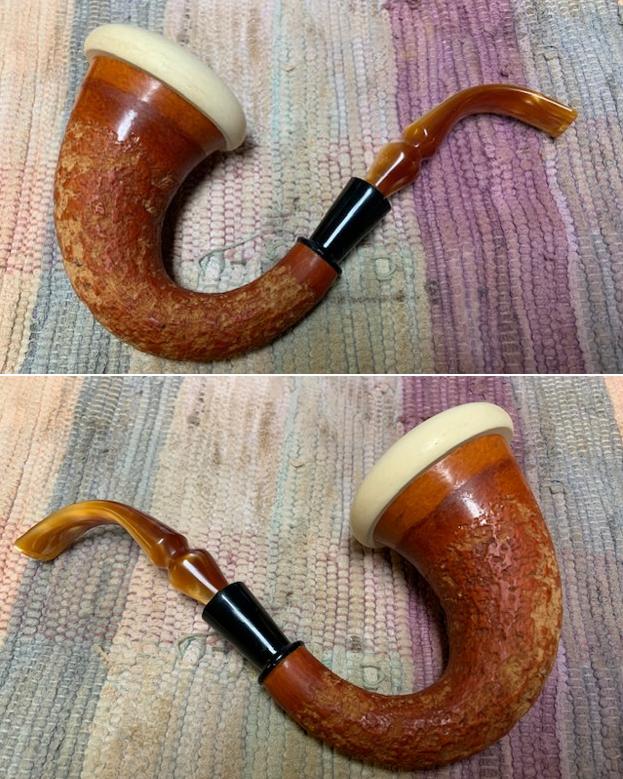
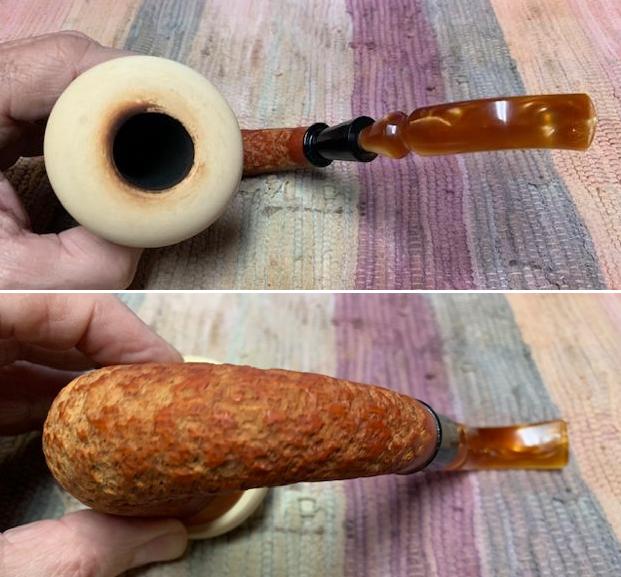
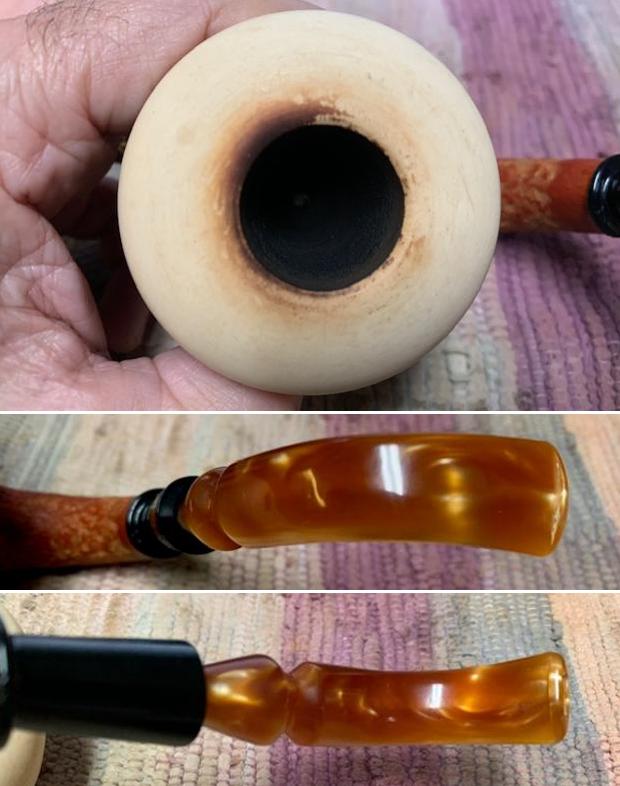
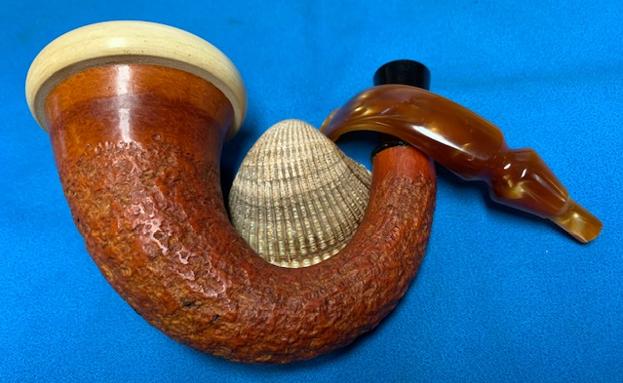
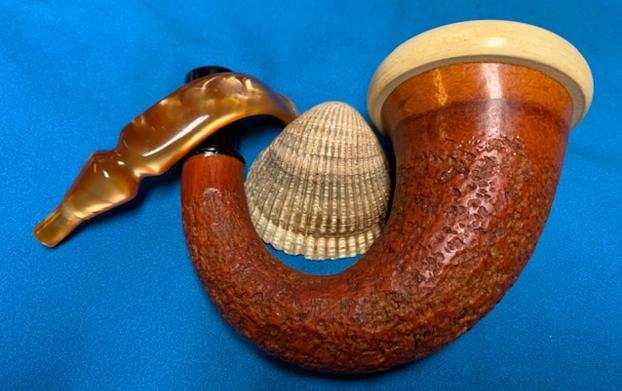
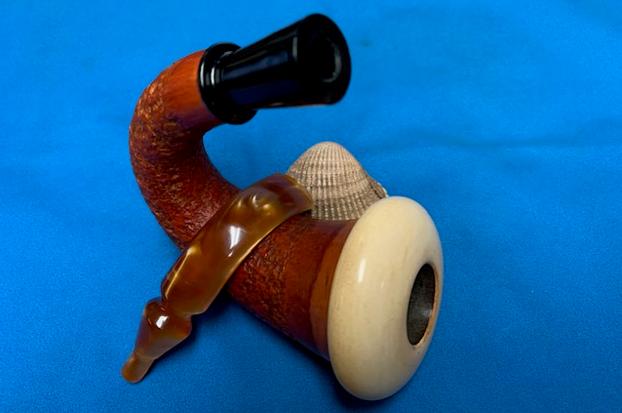
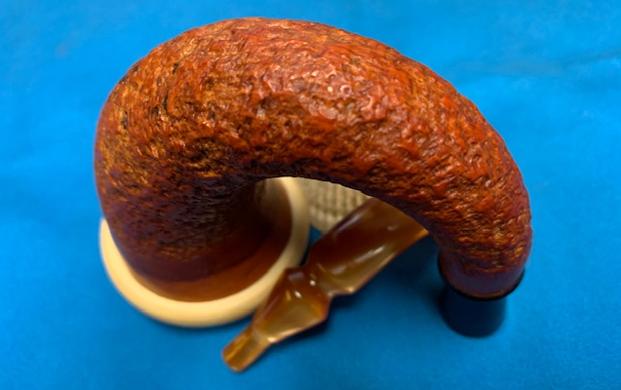
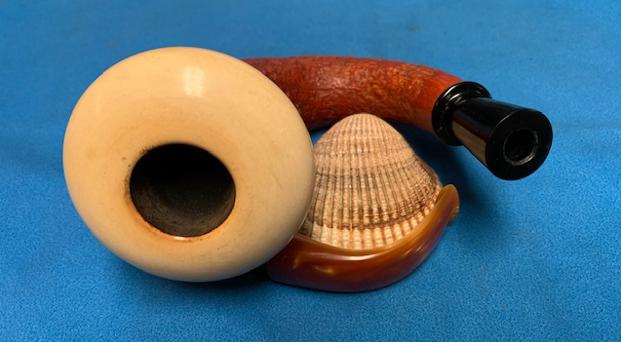
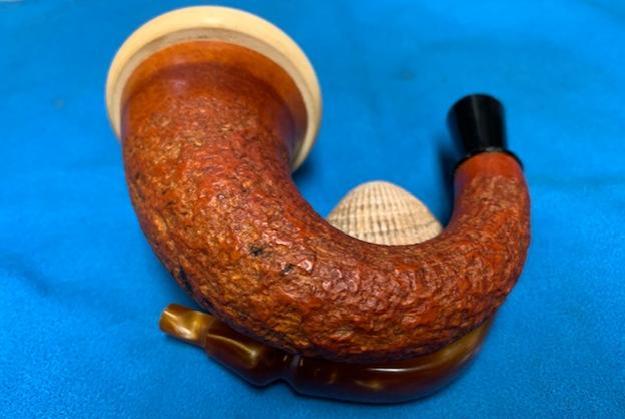
I have several boxes of pipes that Jeff has sent me to work on over the past months that have some great looking pipes in them. I have chosen to work on four Gourd Calabash pipes that he picked up in several places. The first of these is a rusticated Gourd with a meerschaum cup, a black acrylic shank end and a variegated gold/orange/brown fancy acrylic stem. The rusticated gourd was very dirty with a lot of dust and grime ground into the finish. The meerschaum cup had a thick cake and an overflow of lava on the rim top. The pipe had obviously been heavily smoked which reflected on it being a great smoking pipe. The acrylic stem had tooth marks and chatter on both sides ahead of the button. It is a an interesting pipe with a lot of potential under the grime and debris of the years. The  Jeff took some photos of the Gourd Calabash with a Meerschaum Bowl and acrylic stem before he worked his magic in cleaning up the pipe. Jeff took photos of the bowl, rim top to show the thickness of the cake in the bowl and the thick lava on the rim top. The rim top and inner edge are thickly covered with lava. The meerschaum has some patina developing. He took photos of the top and underside of the acrylic stem showing the tooth marks and chatter on both sides and the overall look of the stem and shank extension on the gourd.

Jeff took photos of the sides and heel of the bowl to show the condition of the gourd bowl the developing patina on the meerschaum cup. This Rusticated Gourd Calabash is an interesting looking pipe. The meerschaum bowl has developed a patina and the acrylic amber coloured stem looks very good with it.

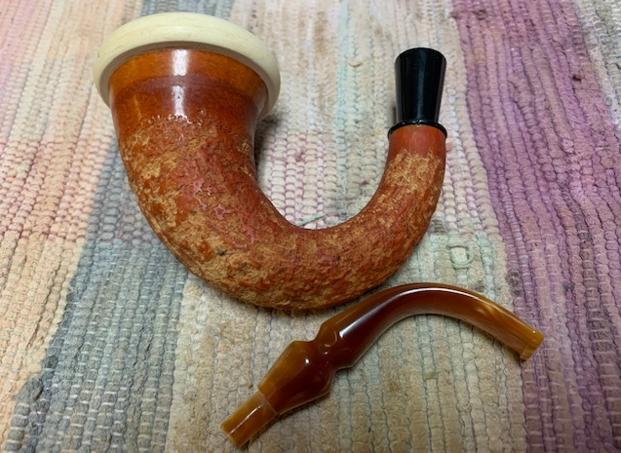
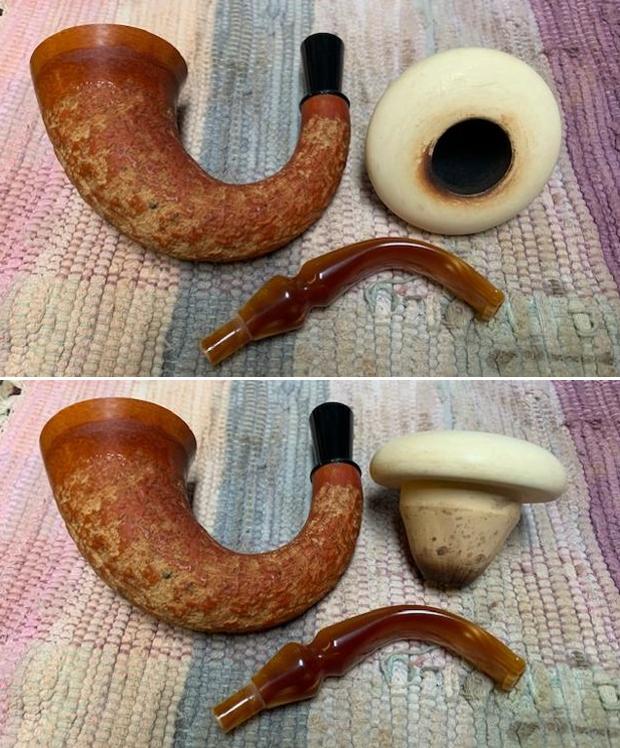
Jeff reamed carefully reamed the meerschaum bowl and the gourd base with a Savinelli Fitsall Pipe Knife. He carefully scrubbed the exterior of the bowl with Murphy’s Oil Soap and a tooth brush to remove the grime and grit on the exterior of the meerschaum cup and rim top and lava on the rim top. He scrubbed out the internals of the bowl and the gourd with Murphy’s Oil Soap and a tooth brush. He cleaned out the shank extension, shank and the stem with alcohol, pipe cleaners and cotton swabs until the pipe was clean. The finish looks much better and has a deep richness in the colour that highlights the patina in the meerschaum and the contrast of the rusticated gourd.  He cleaned the internals of the acrylic stem with alcohol, pipe cleaners and cotton swabs. He scrubbed the externals with Soft Scrub to remove the grime on the acrylic. When the pipe arrived here in Vancouver I was amazed that it looked so good. I took photos of it before I started my work on the pipe. I took some photos of the bowl and meerschaum cup. The rim top looks very good after the clean up though it is spotty. There is still some darkening around the inner edge of the bowl that will need to be dealt with. The stem looks good but has light tooth marks and chatter on both sides near the button.I removed the stem from the shank and took a photo of the parts. I removed the meerschaum bowl from the gourd and took photos of it from various angles. The underside was in good condition other than a chip out of one side of the pointed bowl bottom. I started the process of cleaning up the meerschaum bowl by sanding the inner edge and the rim top with a folded piece of 220 grit sandpaper. I was able to remove the darkened edges and top with the sandpaper. It looked better after I worked on it.I worked over the chipped bottom of the bowl with the some 180 grit sandpaper to smooth out the chipped area and round the edges. I polished the meerschaum rim top with micromesh sanding pads – dry sanding with 1500-12000 grit sanding pads. I wiped the bowl down after each pad with a damp cloth to remove the sanding debris. I worked some Before & After Restoration Balm into the surface of the gourd calabash with my fingertips to clean, enliven and protect the briar. I let the balm sit for 15 minutes and then buffed with a cotton cloth to raise the shine. The photos show the bowl at this point in the restoration process. I used some Vaseline Petroleum Jelly to rejuvenate the cork gasket around the inside edge of the gourd. It would make the fit of the meerschaum snug against the gourd and the rejuvenated cork would make it smooth and easy to insert and remove the bowl. I let the cork absorb the Vaseline for about 5 minutes and then fit the bowl in the gourd. The pipe looked very good at this point in the process. I set the bowl aside and turned my attention to the stem. I sanded the tooth marks on the top and underside of the stem with 220 grit sandpaper to smooth out the marks. I started to polish the stem with 400 grit wet dry sandpaper.I polished the stem with micromesh sanding pads – dry sanding with 1500-12000 grit sanding pads. I wiped it down after each sanding pad with Obsidian Oil. I polished it with Before & After Pipe Stem Polish – both Fine and Extra Fine. I gave it a final coat of Obsidian Oil. It looks significantly better! With the bowl and the stem finished I put the beautiful Gourd Calabash with Meerschaum cup and an amber acrylic stem back together and buffed it the bowl and cup lightly on the wheel using Blue Diamond to give it a shine. I gave the bowl and stem multiple coats of Conservator’s Wax. I buffed the pipe with a microfiber cloth to deepen the shine. The finish on the gourd and meer is a great looking. The fancy acrylic stem looked very good. The dimensions of the pipe are – Length: 6 ½ inches, Height: 3 ½ inch, Outside diameter of the bowl: 2 ½ inches, Chamber diameter: 7/8 of an inch. The weight of this large pipe is 3.17 ounces /90 grams. This Gourd Calabash is another great find from this collection. It is much more beautiful in person than these photos can capture. I will be putting it on the rebornpipes store shortly. If you would like to add it to your rack let me know by email or message. This is another pipe that has the possibility of transporting the pipe man or woman back to a slower paced time in history where you can enjoy a respite. Thanks for walking through the restoration with me.

Cleaning up another Carved Bowl Gourd Calabash with Porcelain Cup


Blog by Steve Laug

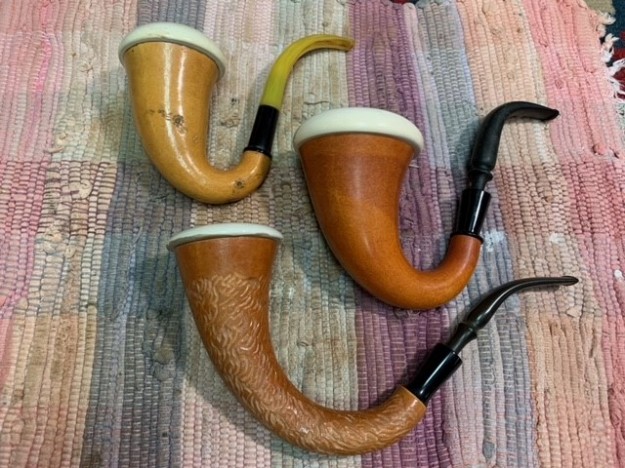
With all of the work I have been doing the last couple of days on gourd calabash pipes I decided to look through some my pipes awaiting restoration and found three more calabashes. Last night I tried to remove the stem from the top pipe with the yellow stem and the tenon broke off in my hand. That left me with the bottom pipe in the photo below. It had a carved finish on the gourd surface and a unique Porcelain cup instead of meerschaum. It was a tall narrow pipe. Jeff had done the clean up work on the interior of the gourd and the porcelain cup. There was still some darkening on the rim top but nothing serious. He had soaked the stem in Before & After Deoxidizer and then scrubbed it with Soft Scrub. I have had it in boxes here for at least a year if not longer The vulcanite stem is lightly oxidized and the porcelain is dull and needing to be polished but otherwise they are in excellent condition.The calabash on the bottom of the above photo is a tall, narrow, drawn out gourd. The gourd has a carved finish that does not come through well in the above photo. It is well done and very tactile. Its measurements are Length: 9 inches, Height: 4 ½ inches, Diameter of the porcelain cup: 2 ½ inches, Diameter of the chamber: 1 inch, Depth of the chamber: 1 inch. I took photos of that pipe before my polishing work. I took photos of the cup to show the cleanness of the bowl. It is a little scratched which I will polish out. The stem is lightly oxidized and has light tooth chatter and marks. It should clean up easily.      I took the pipe apart and took a series of photos to show its condition and the overall appearance of the pipe. The cork gasket it dry and lifeless and needs to be rejuvenated. The porcelain bowl is quite different from the normal meerschaum bowl that is generally used on these calabash pipes.     I used some Vaseline Petroleum Jelly to rejuvenate the cork gasket in the bowl. I worked it into the cork with my finger tips to soften the gasket. Once it had absorbed a bit it would be soft and hold the porcelain bowl in the gourd easily.I polished the porcelain cup/bowl with micromesh sanding pads – polishing with 1500-12000 grit pads and wiping them down with a damp cloth after each pad.  Because the gourd had been carved and the surface opened up the calabash was quite dry. I worked some Before & After Restoration Balm into the finish with my finger tips and a horsehair shoe brush. The product cleans, protects and enlivens the surface of the material that it is rubbed into and in this case it really enhanced the rustication on the gourd.   I put the porcelain cup in the gourd calabash bowl and took photos of the restoration of this pipe to this point in the process.      I sanded out the tooth marks in the vulcanite with 220 grit sandpaper and blended them into the surface of the surrounding stem. I started the polishing with 400 grit wet dry sandpaper. I wiped it down with Obsidian Oil after the sanding.    I set aside the bowl and turned my attention to the stem. I polished the stem with micromesh sanding pads –sanding it with 1500-12000 grit pads. I wiped it down after each pad with Obsidian Oil. I polished it further with Before & After Pipe Stem Polish – both fine and extra fine. I gave it a final coat of Obsidian Oil.     I really enjoyed refurbishing this pipe because I love the final touches that make it sing. I put the Gourd Calabash back together and lightly buffed the bowl with Blue Diamond on the buffing wheel. I gave the gourd and stem multiple coats of carnauba wax. I buffed the pipe with a clean buffing pad to raise the shine. I hand buffed it with a microfiber cloth to deepen the shine. It is fun to see what the polished porcelain bowl looks like with the smooth finished gourd and the black vulcanite stem. This richly finished Gourd Calabash is light weight and ready for you to load up a tobacco of preference and enjoy smoking it. The porcelain bowl is clean and ready load up with your favourite tobacco. Have a look at it in the photos below. As noted above, Its measurements are Length: 8 inches, Height: 3 ½ inches, Diameter of the meerschaum cup: 2 ¼ inches, Diameter of the chamber: ¾ of an inch, Depth of the chamber: 1 ¼ inches. The weight of the pipe is 71grams/2.50oz. This is one will be going on the rebornpipes store in  CERAMIC & MEERSCHAUM PIPES – CALABASHES, SMOOTH & FIGURALS section. Thanks to each of you who are reading this blog. Remember we are not pipe owners; we are pipemen and women who hold our pipes in trust until they pass on into the trust of the next generation.