
Blog by Steve Laug
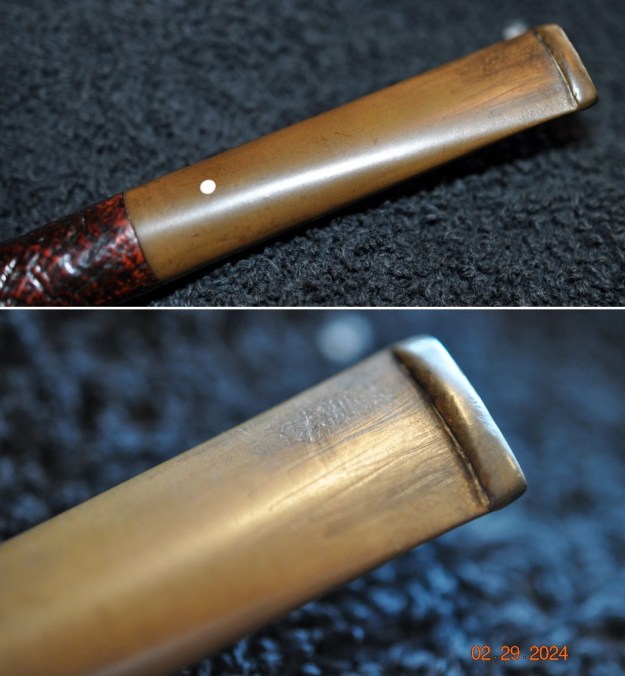
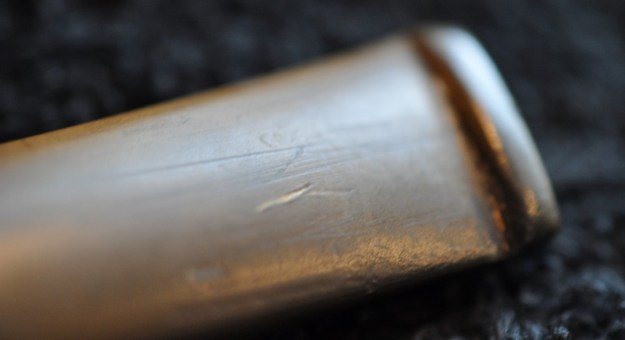
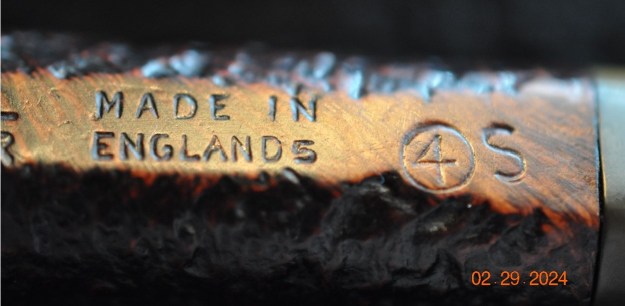
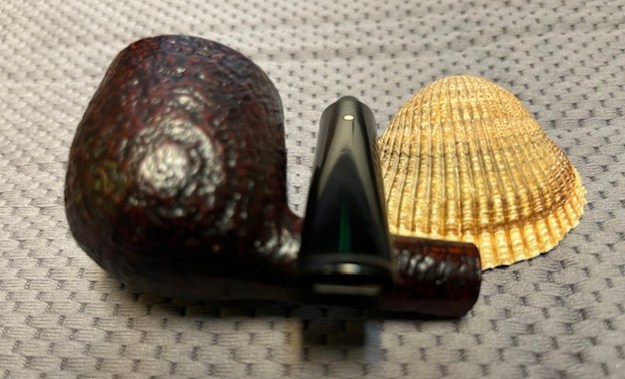
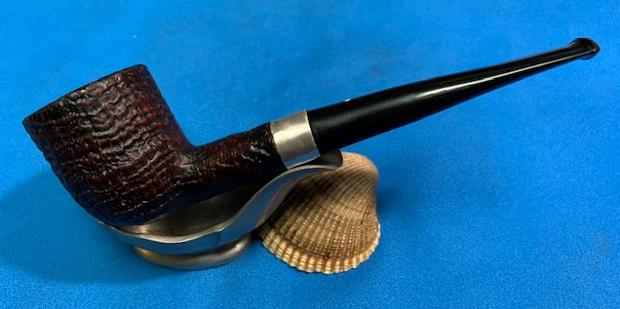
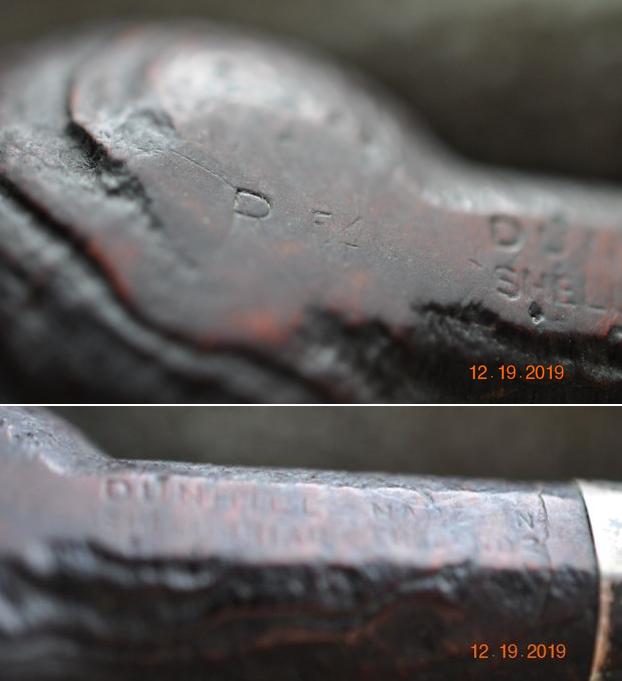
The next pipe on the table came to us from a group of pipes that Jeff and I purchased from a fellow in Copenhagen, Denmark on 02/02/2024. It is another Dunhill’s Shell Pot that is in good condition. It is stamped on a smooth panel on the underside of the shank. On the heel of the it is stamped with the shape letter R followed by Dunhill [over] Shell Briar [followed by] Made in [over] England. The date number 5 is after D and is the same size. The stamping ends with 4 in a circle followed by S which tells us it is Shell Briar in a Group 4 size. The stamping is clear and readable as noted above. The pipe has a mix of black, cordovan and brown stains on a sandblast finish and is browner than the newer Shell finish pipes. There is some amazing grain that the shape follows well. The finish was dusty around the nooks and crannies of the sandblast but otherwise fairly clean. The bowl had a heavy cake, tobacco debris and there was thick lava on the sandblasted rim top or edges. The vulcanite taper stem was oxidized, dirty and had tooth marks and chatter ahead of the button on both sides. Jeff took photos of the pipe to show what it looked like before he started working on it.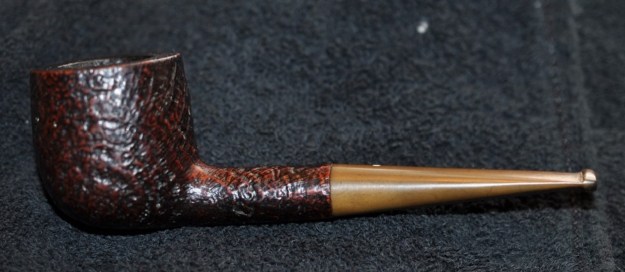
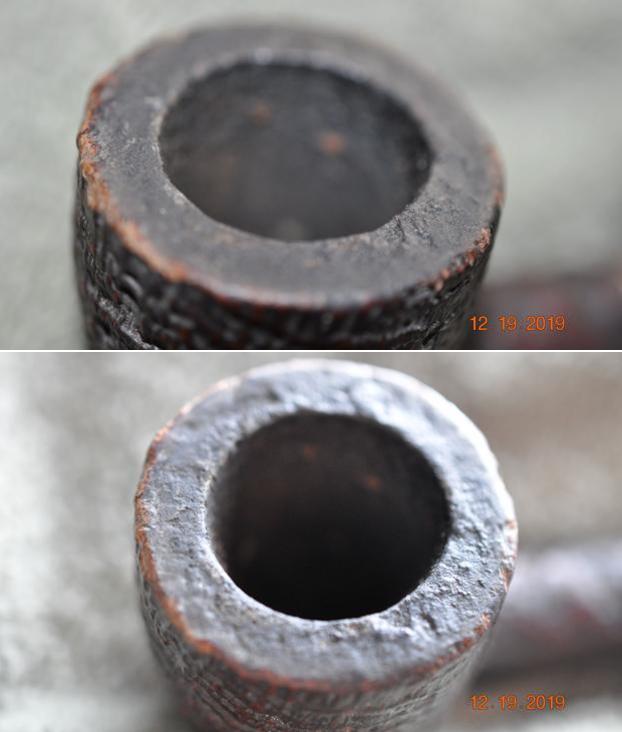
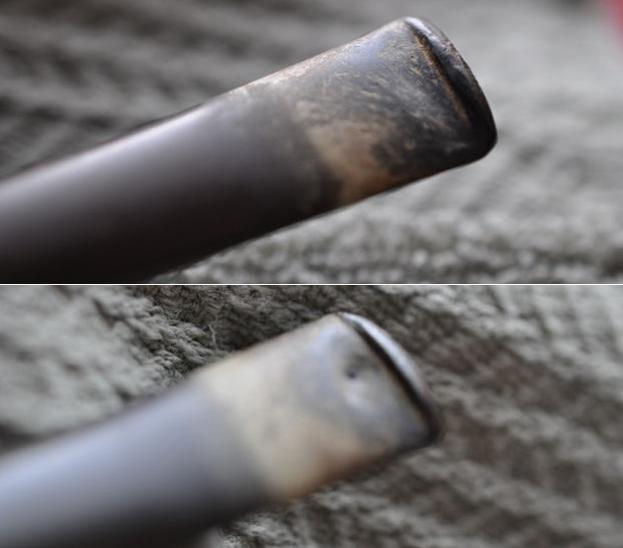
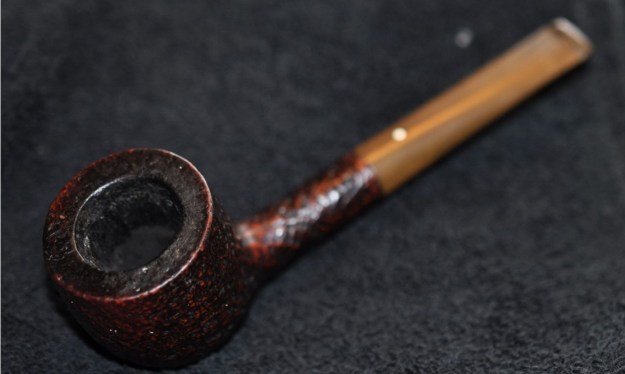 He took photos of the bowl and rim top to show their condition and of the stem to show the condition of both sides of the stem. You can see the thick cake in the bowl and the heavy overflow of lava on the sandblast rim top. It is hard to know the condition of the inner edge of the bowl at this point because of the lava. The stem shows heavy oxidation with scratches and tooth marks on both sides.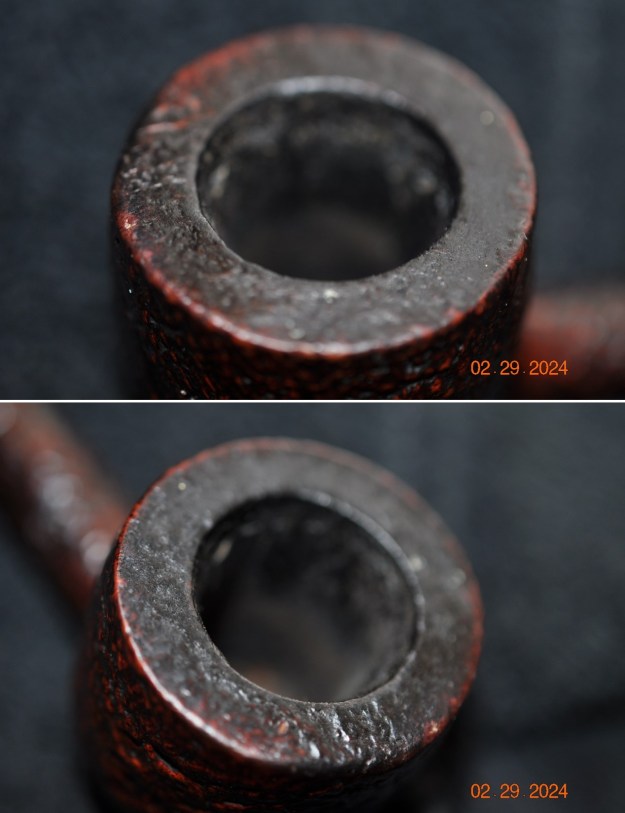
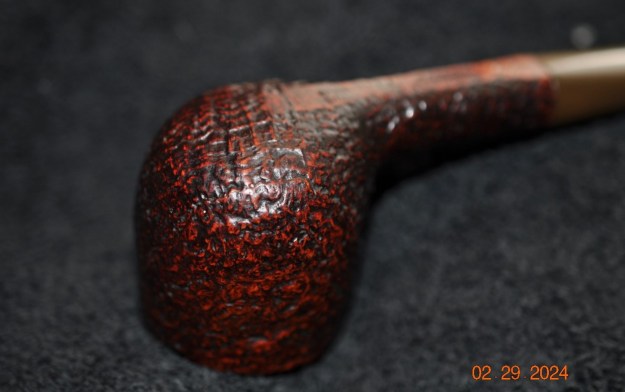
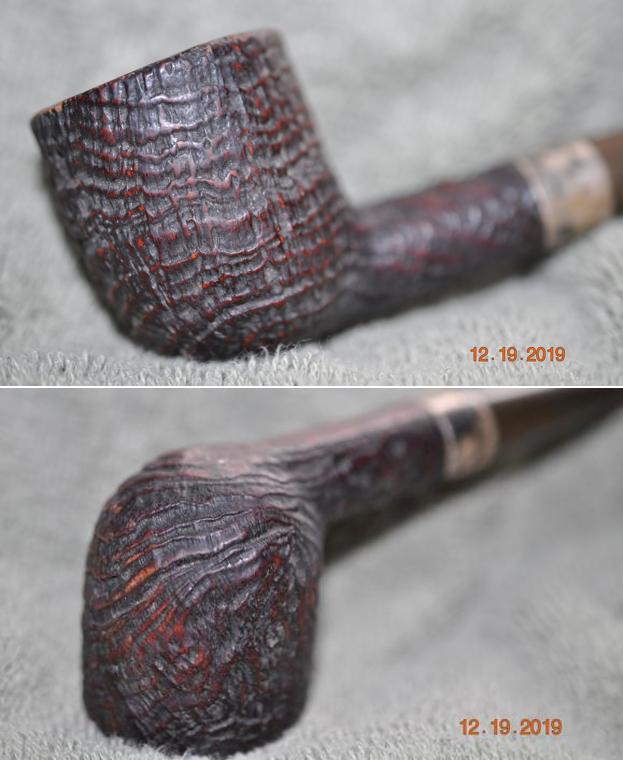
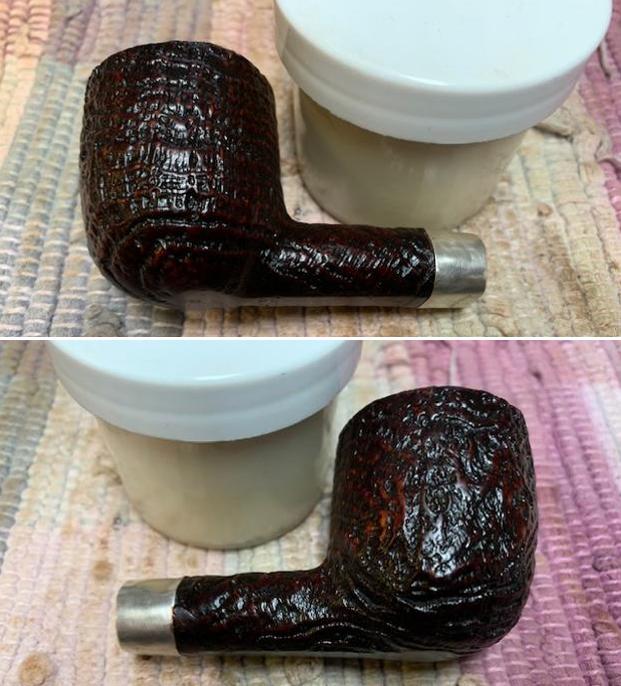
 The photos of the sides and heel of the bowl show the deep sandblast grain on the pipe. You can also see the browner colour of this older Shell Briar in comparison to the newer ones of the 80s and 90s. It is a beauty.
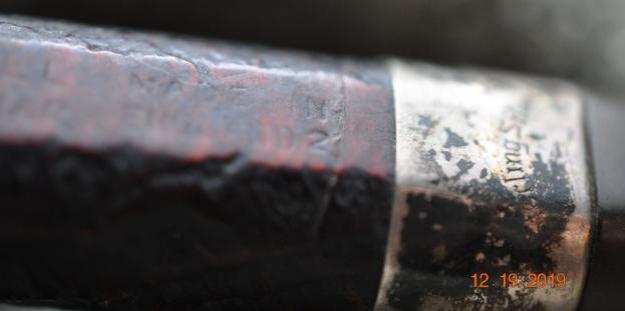
 The stamping on the underside of the shank is shown in the photo below. It looks very good and faint but readable. It reads as noted and explained above. Jeff captured the detail in the photos below.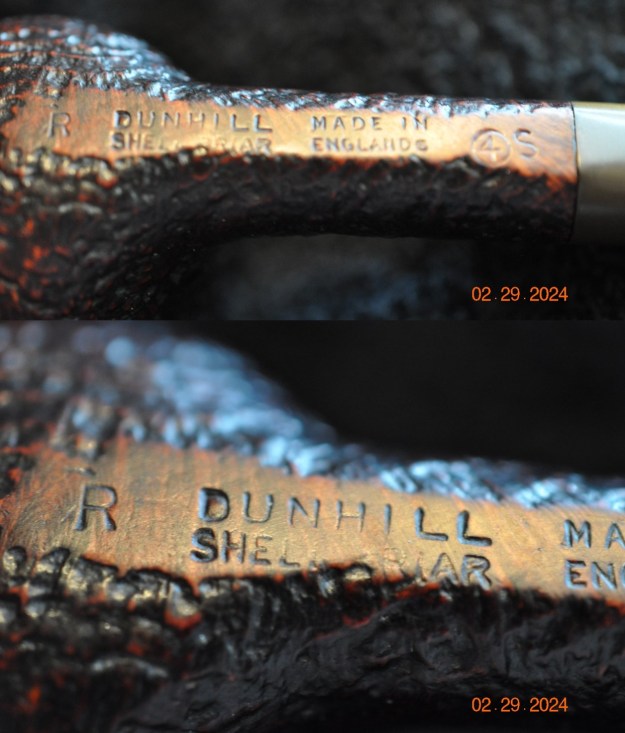
 I turned to Pipedia’s section on Dunhill Shell Briar Pipes to get a bit of background on the Dunhill finishes (https://pipedia.org/wiki/Dunhill#Root_Briar). I quote:
Shell
A deep craggy sandblast with a black stain finish (usually made using Algerian briar) – the color of the stain used has varied over the years. Although there is some doubt as to them being the first to sandblast pipes, Dunhill’s Shell pipes, and the sandblasting techniques developed to create them are considered one of Dunhill’s greatest and most lasting contributions to the art of pipe making.
The documented history of Dunhill’s inception of the Shell is largely limited to patent applications — there are no catalog pages or advertisements promoting blasted pipes at the time. The preliminary work on the English patent (No. 1484/17) was submitted on October 13, 1917. The patent submission was completed half a year later, on April 12, 1918, followed by the granting of the English patent on October 14, 1918. This was less than a month before the end of The Great War on November 11th.
In 1986 Dunhill released a line of premium Shell finish pipes – “RING GRAIN”. These are high-quality straight grain pipes which are sandblasted. Initially only Ring Grain, but now in two different finishes. In 1995 the “Shilling” was introduced with Cumberland finish – it is an extremely rare series. These pipes exhibit a deeper blast characteristic of that of the 1930’s – mid-1960’s (and the limited ‘deep blast’ pipes of the early 1980s) and show a fine graining pattern. These are considered the best new Dunhills by many enthusiasts today and are very rare. The finish is sometimes described as tasting like vanilla at first, with the taste becoming more normal or good as the pipe breaks in.
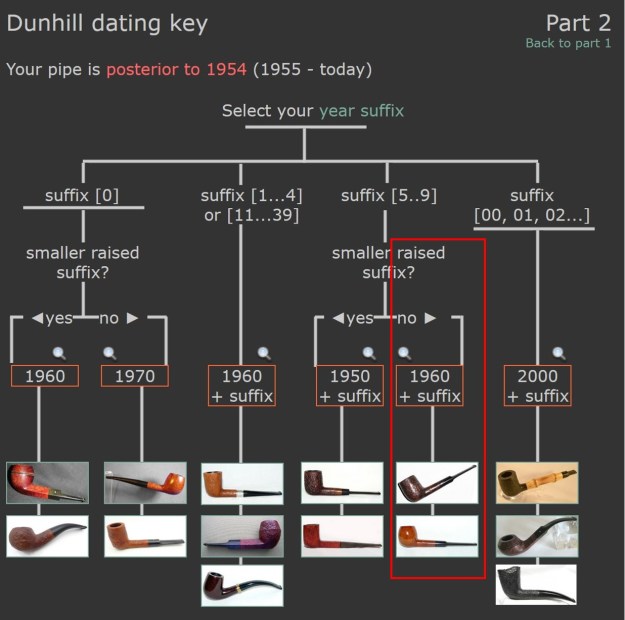
I have also included a chart from the site from Dunhill spelling out the Standard Pipe Finishes and giving short information and a timeline.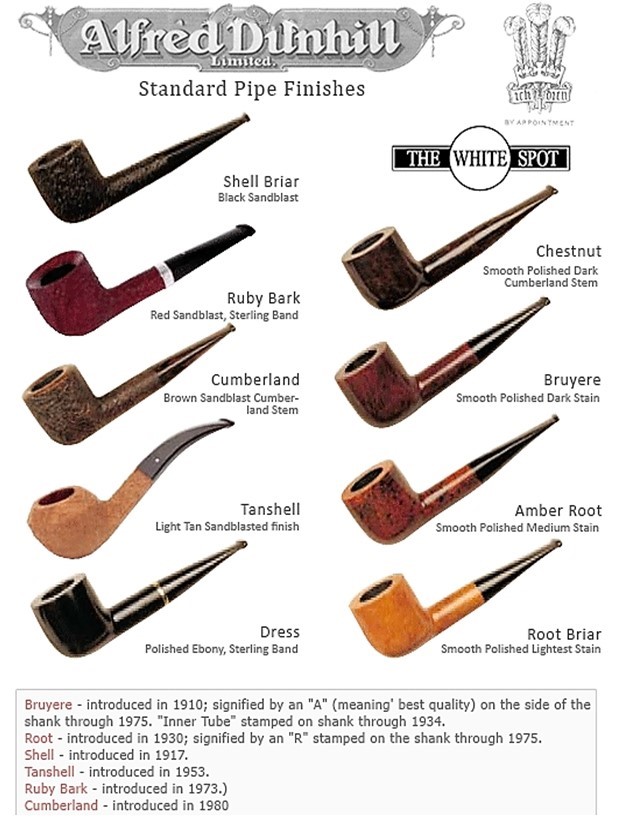 I turned to Pipephil to establish a date for a Dunhill with the stamping that was on this pipe. The date stamp 5 (http://pipephil.eu/logos/en/dunhill/cledat-en1b.html) I have marked the box below with a red box around the part of the date key that is applicable. The date can be established using the chart below. It has a date suffix after the D that is the same size so that dates it to the 1960s. Adding the suffix 5 to that makes this a 1965 Dunhill Shell Briar.
 Now it was my turn to work on the pipe. Jeff had done an amazing cleanup of the pipe. He reamed the light cake with a PipNet reamer and cleaned up that with a Savinelli Fitsall Pipe Knife. He scrubbed the internals of the bowl and stem with alcohol, cotton swabs and pipe cleaners. He scrubbed the externals with undiluted Murphy’s Oil Soap and rinsed the bowl off with running water. He soaked the stem in Briarville’s Pipe stem Deoxidizer and once it had soaked rinsed it off with warm water to remove the residual solution. He dried it off and rubbed it down to remove any oxidation that was still on the stem. The pipe looked very good when I received it.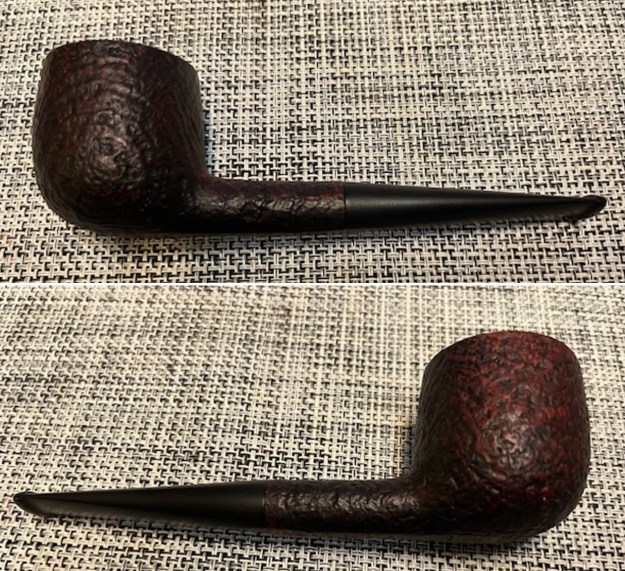
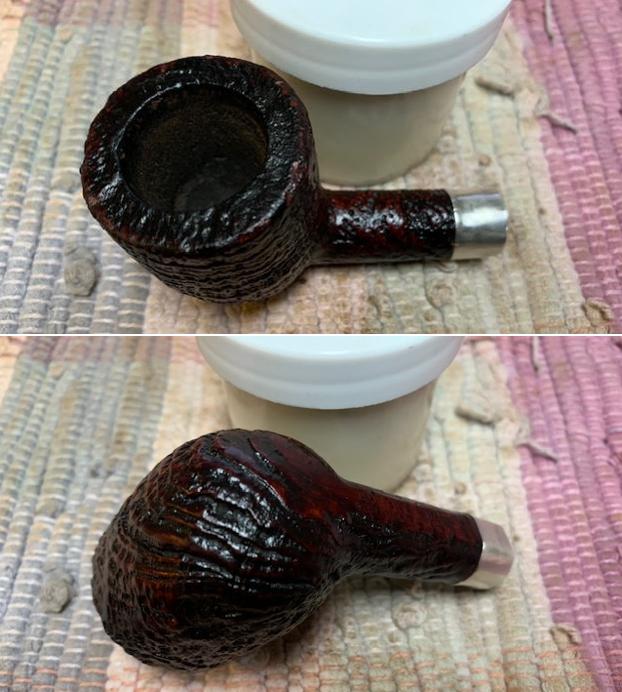
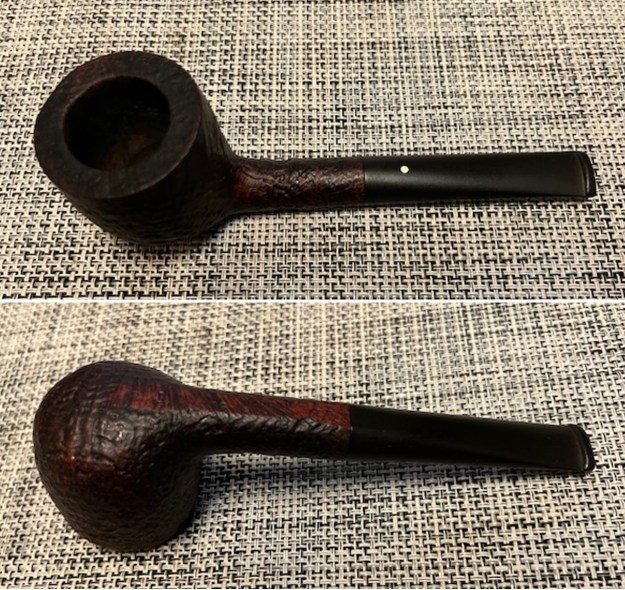 I took photos of the bowl and the rim top and edge of the bowl. It looks very good with a little damage on the front inner edge that is minimal. The photos the stem to show its condition at this point. It is clean and has light tooth marks and chatter on both sides ahead of the button. The pipe looked remarkably good for its age.
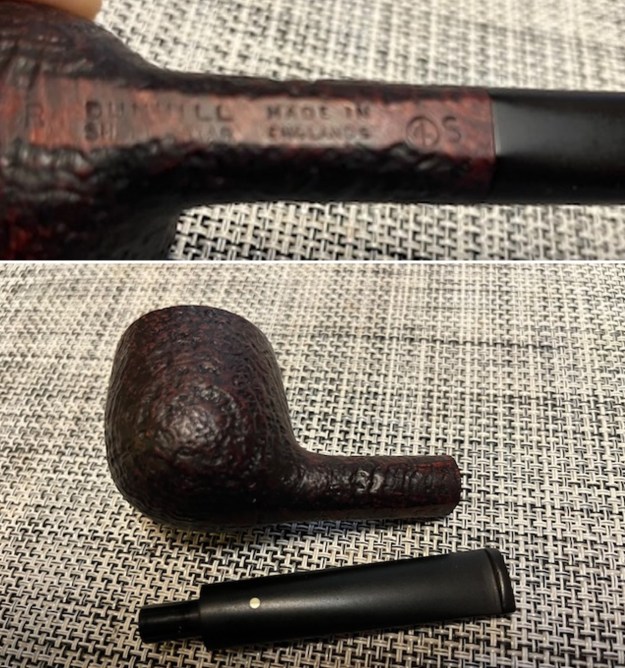
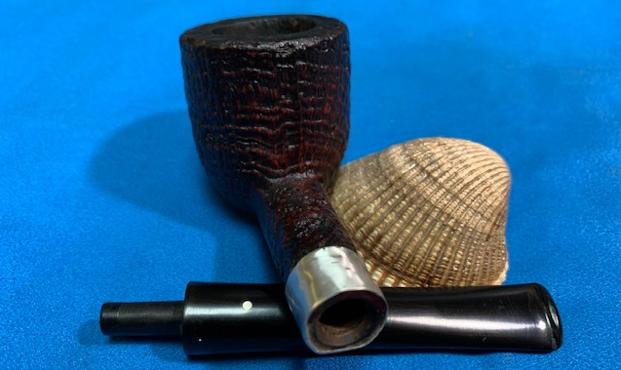
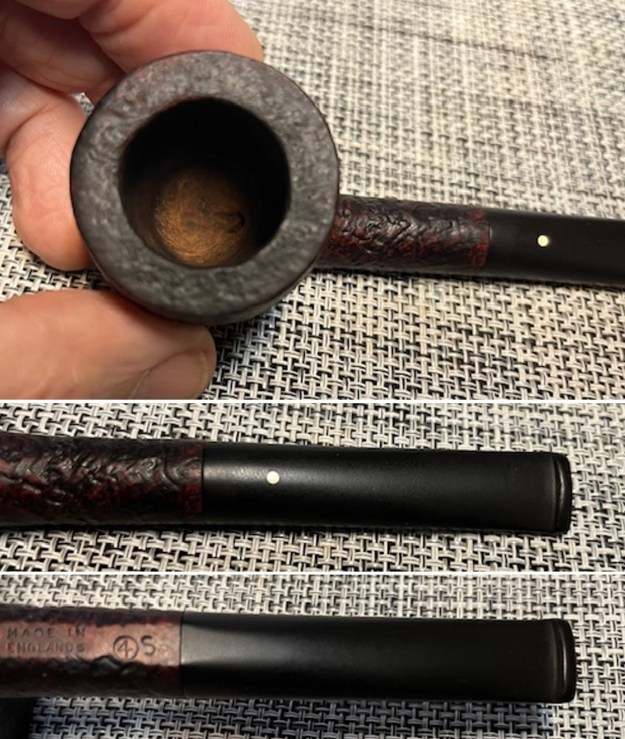 I took a photo of the stamping on the shank. The photo of the stamping is clear and readable. I also removed the stem and took a photo of the parts of the pipe.
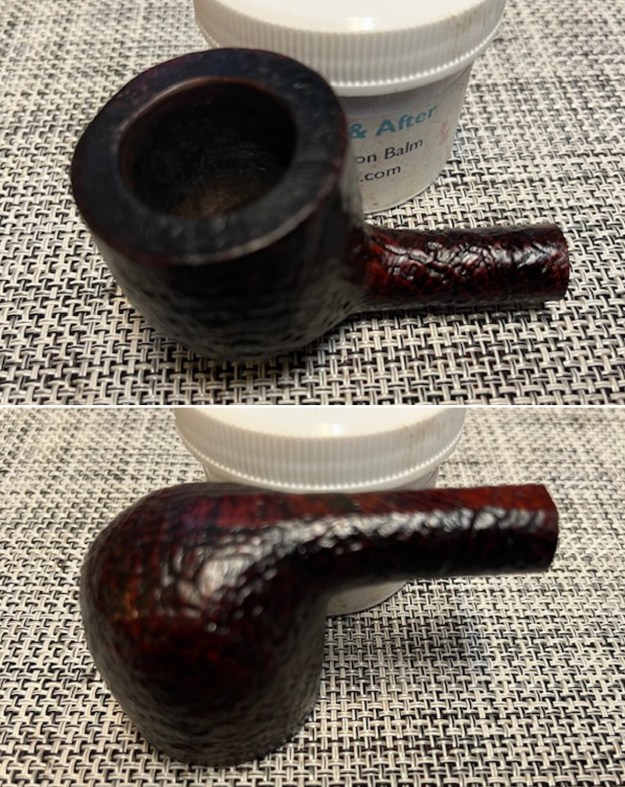
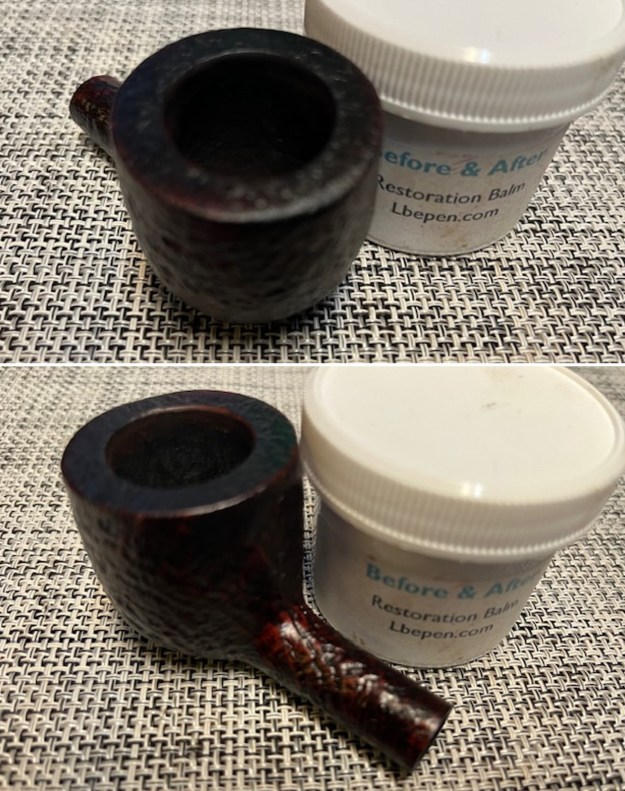
 The bowl was in such good condition that I had to do some minimal work with it. I rubbed the briar down with Before & After Restoration Balm. I worked it into the briar with my fingertips and a horsehair shoe brush to work it into the nooks and crannies of the sandblast finish. The product works to clean, enliven and preserve the briar. I let it sit for 10 minutes then I buffed it with a cotton cloth to deepen the shine. The pipe really comes alive with the balm.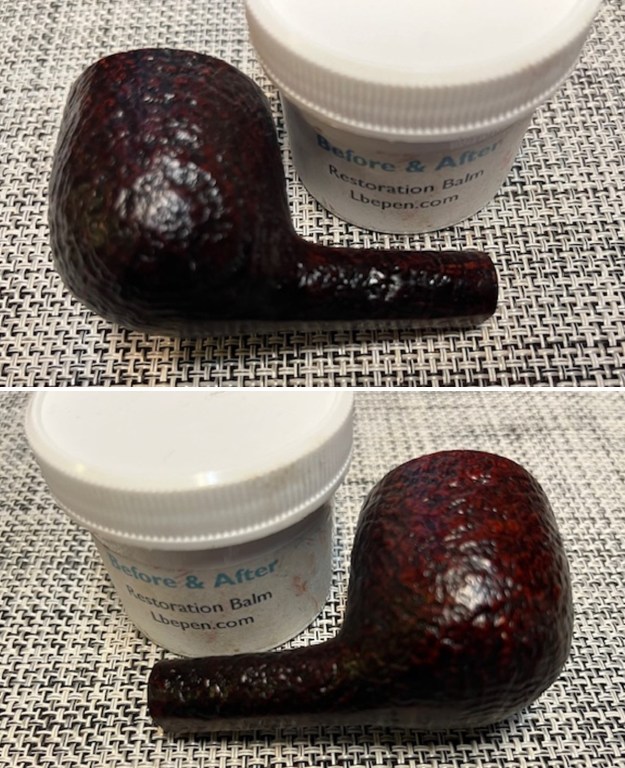
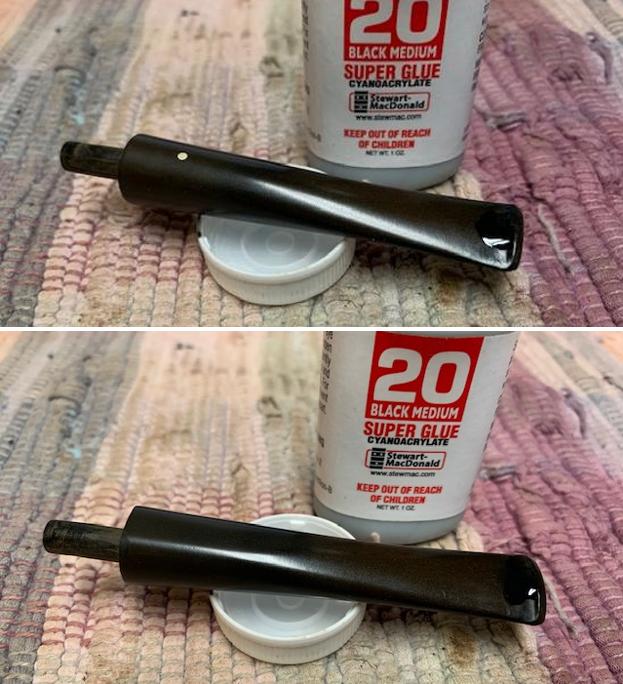
 I set the bowl aside and turned my attention to the stem. I “painted” the surface of the stem with the flame of a Bic to lift the tooth marks. I was able to lift them all significantly, I sanded the marks that remained on the surface of the stem smooth with 320-3500 grit sanding pads. They worked well to smooth things out and remove the tooth marks. When finished the stem looked much better.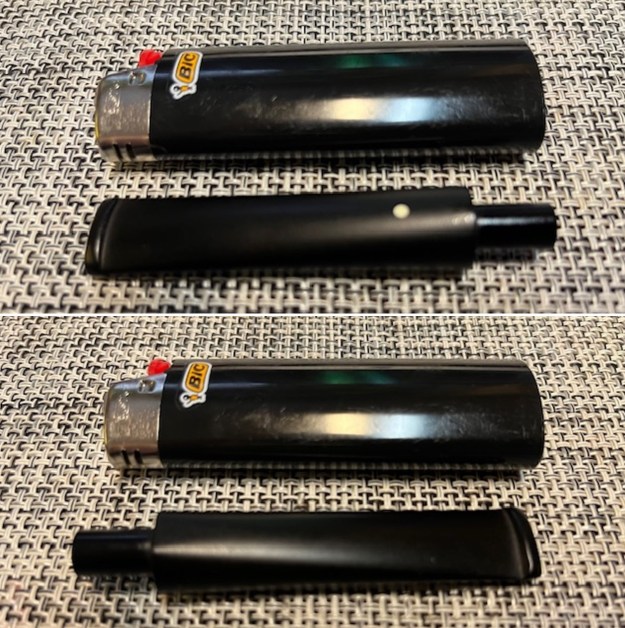
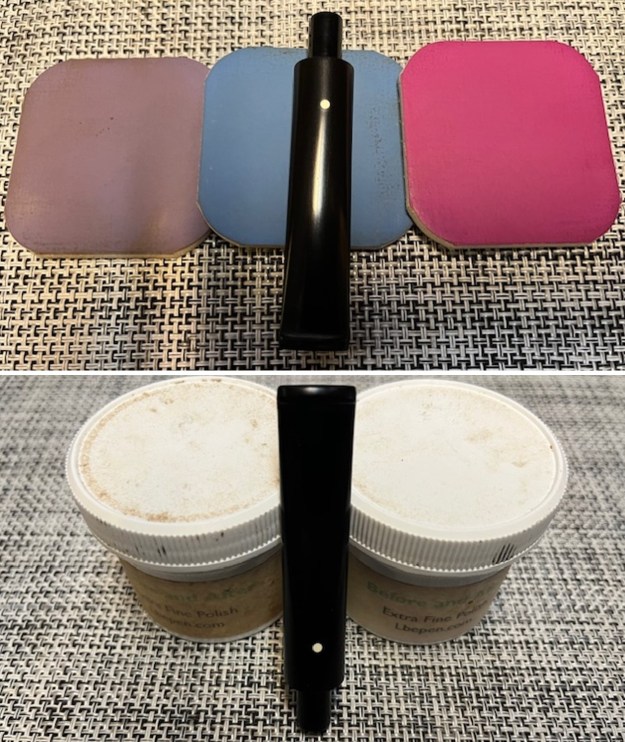
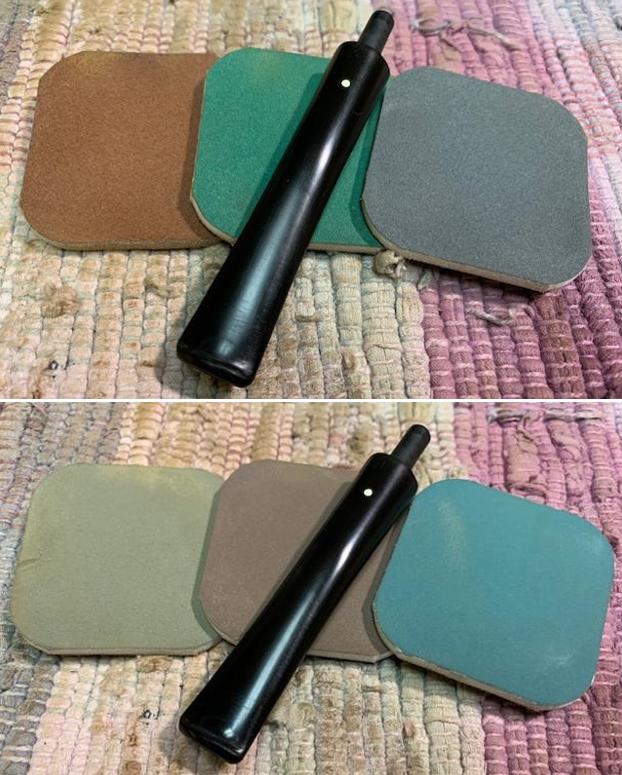
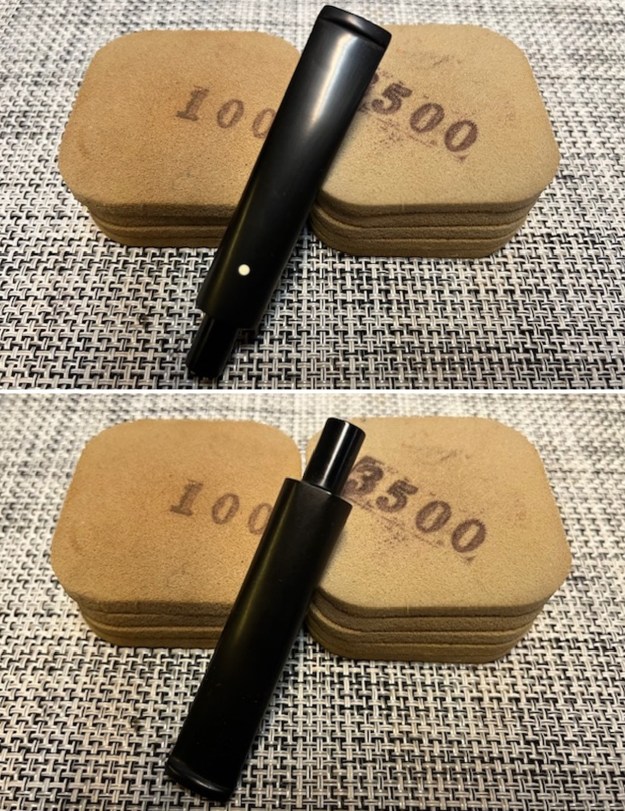 I polished the vulcanite with micromesh sanding pads – 1500-12000 grit pads. I wiped it down with Obsidian Oil after each sanding pad. I used Before & After Pipe Polish – both Fine and Extra Fine to further polish the stem.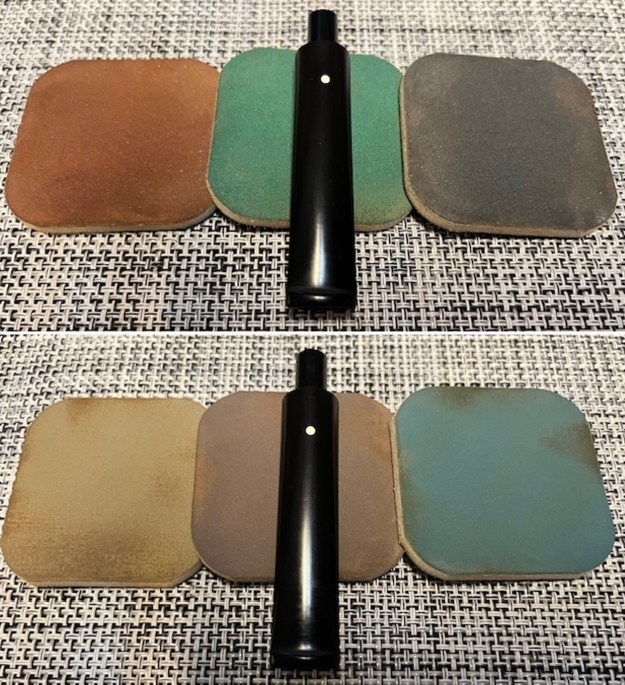
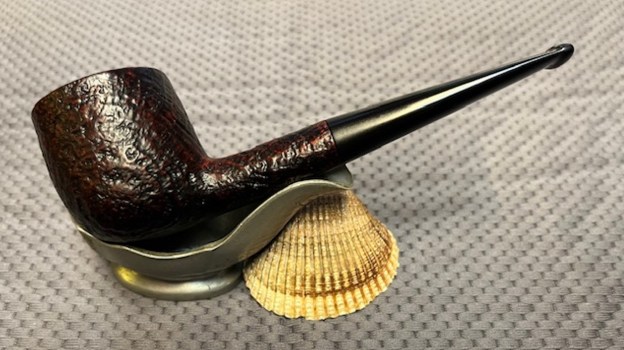
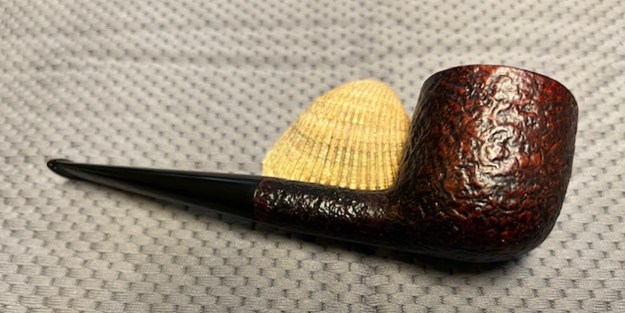
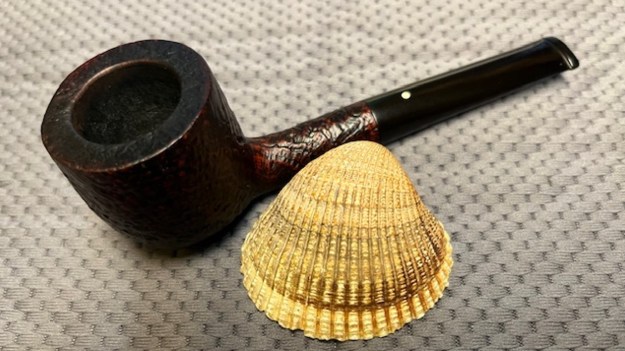
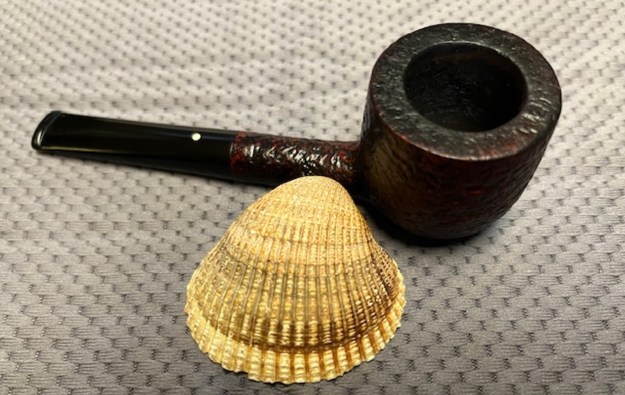
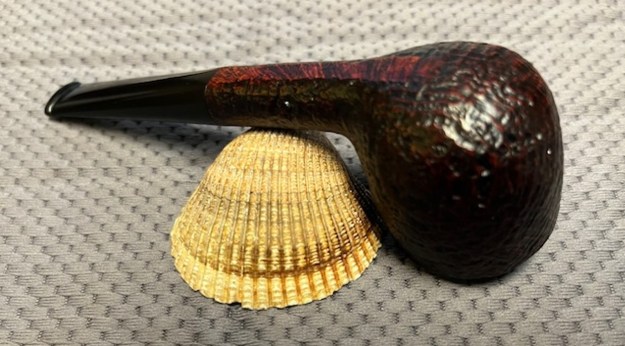
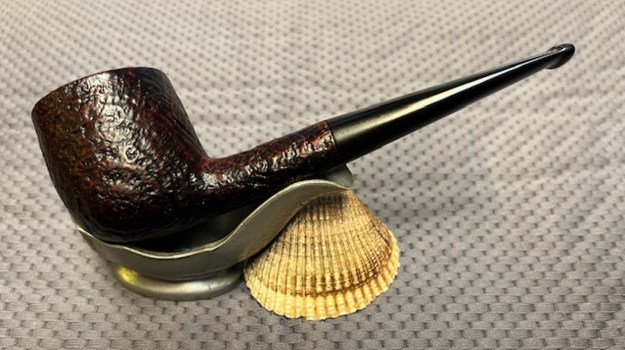
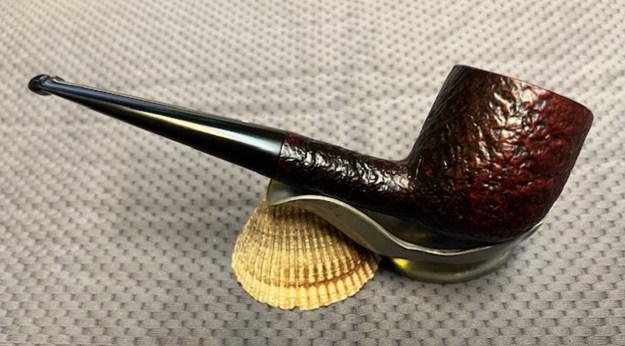
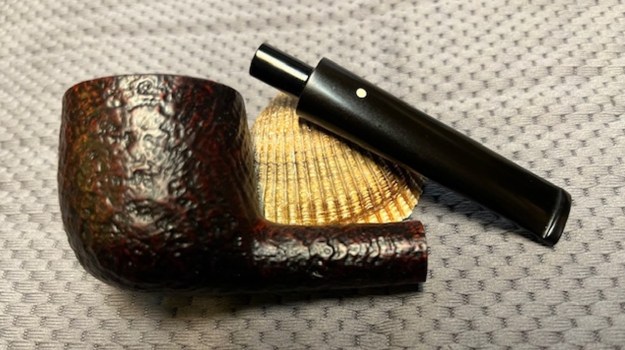
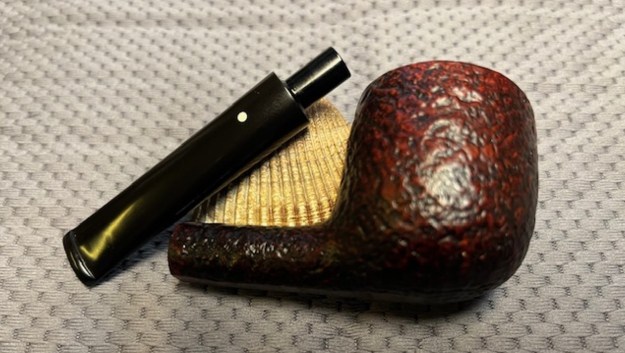
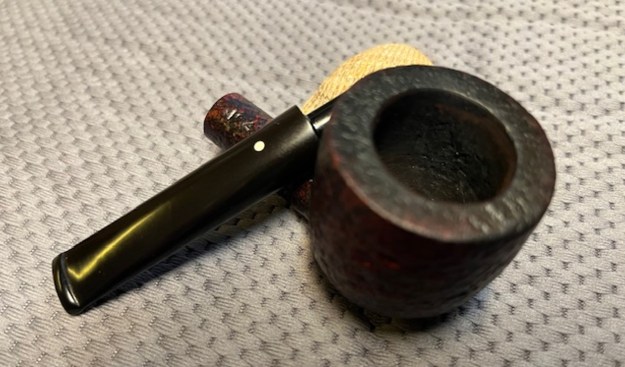
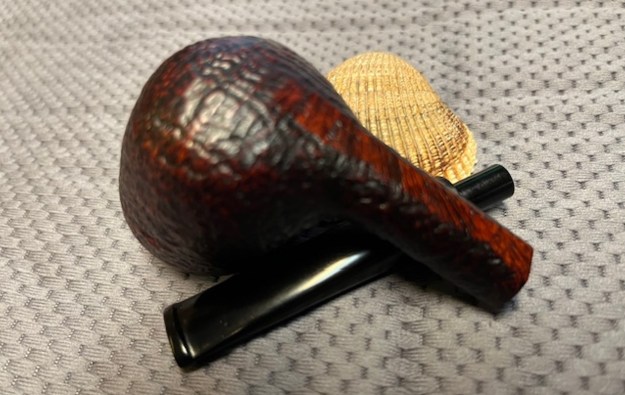
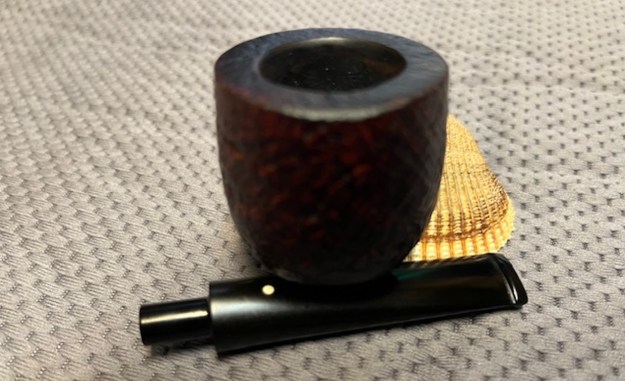
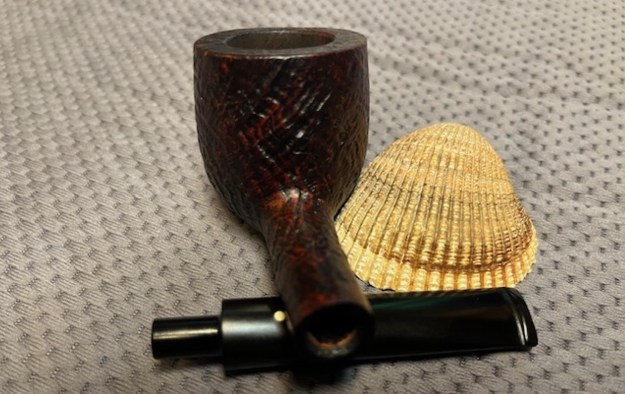
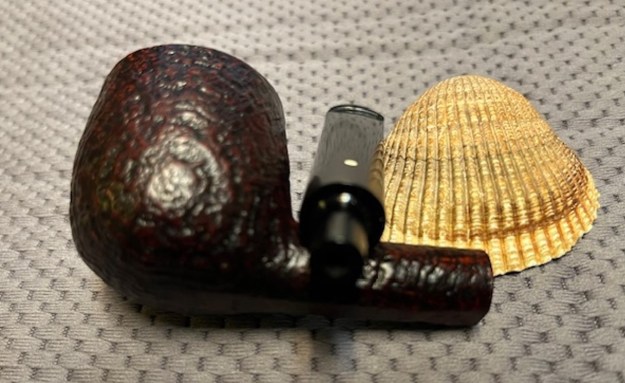
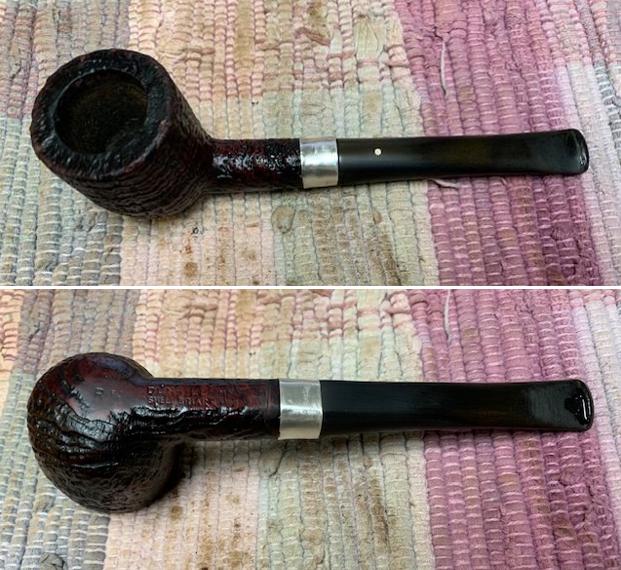
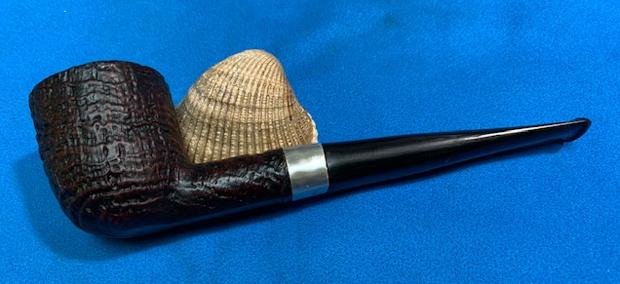
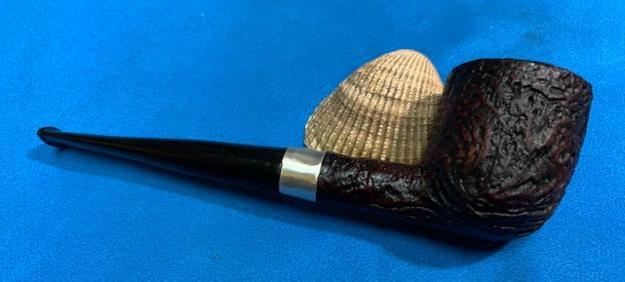
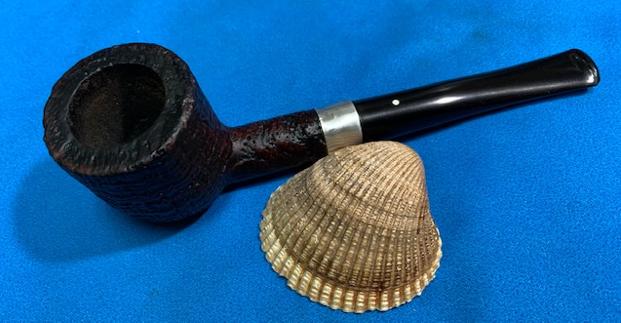
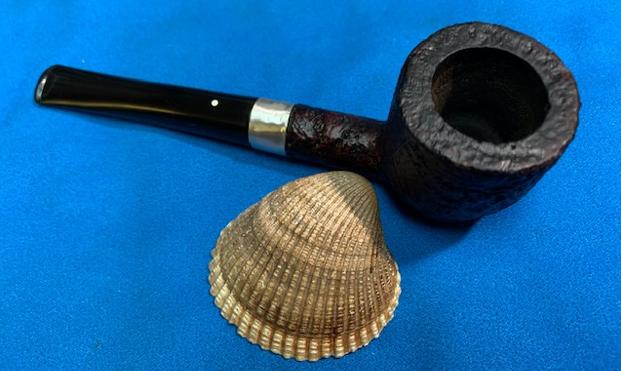
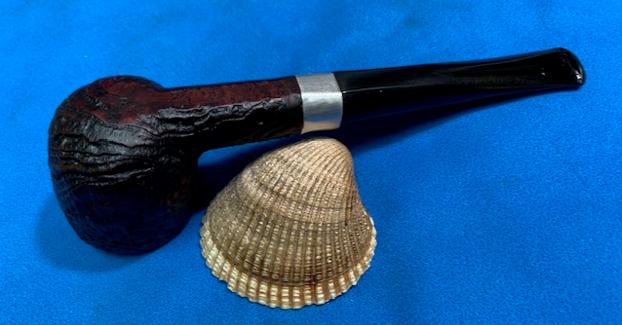
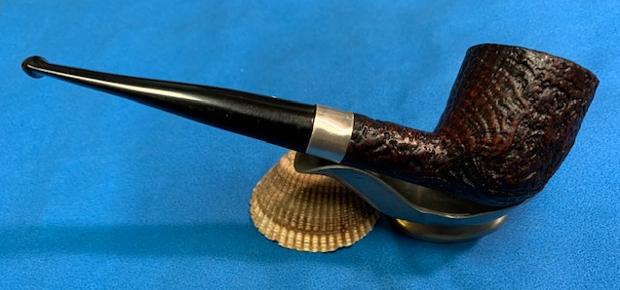
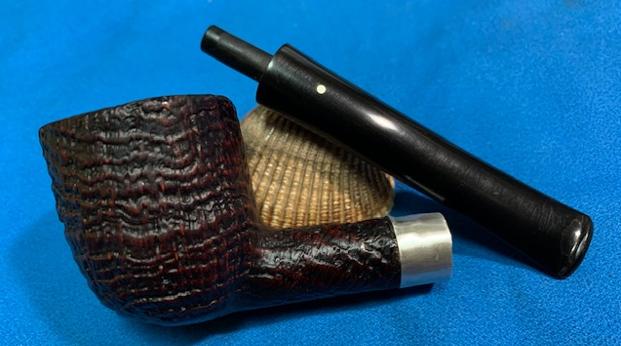
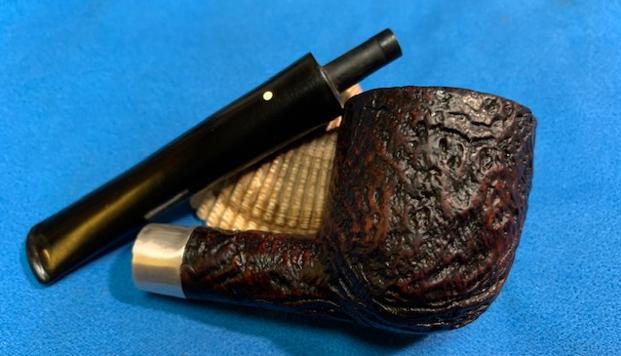
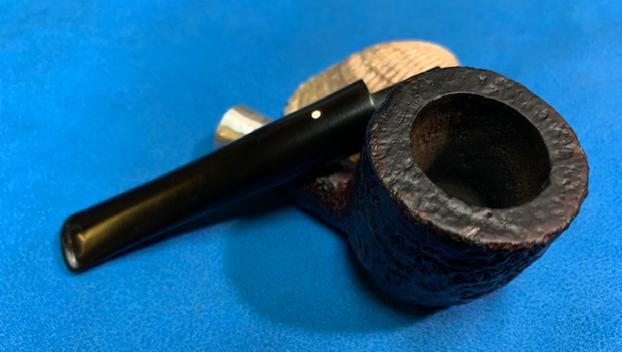
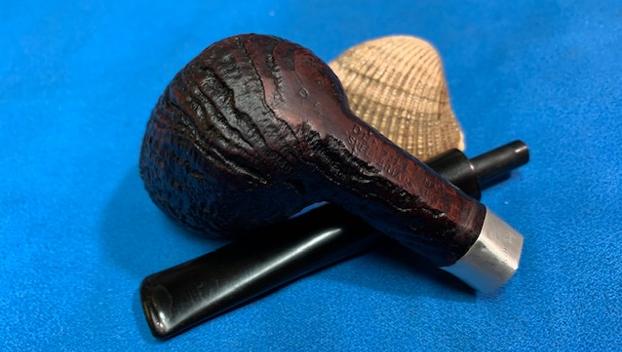
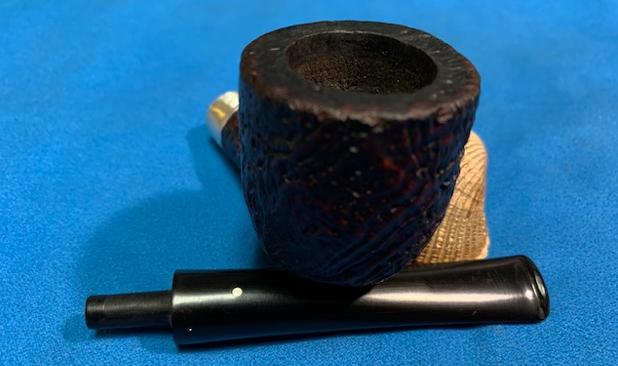
 This 1965 Dunhill Shell Briar R Pot has a beautiful, unique Dunhill Sandblast finish that is deep and craggy. The rich brown/black finish highlights some great grain around the bowl and shank. It has some great sandblast that Dunhill developed and specialized in making. The polished vulcanite taper stem adds to the mix. I put the stem back on the bowl and carefully buffed the pipe with Blue Diamond on the buffing wheel. It is critical to avoid buffing the stamping and to have a lighter touch on the sandblast briar. I gave the bowl multiple coats of Conservator’s Wax and the stem multiple coats of carnauba wax on the buffing wheel and followed that by buffing it with a clean buffing pad. I hand buffed the pipe with a microfiber cloth to deepen the shine. The finished Dunhill Shell Briar R Pot is quite stunning and feels great in my hand. Give the finished pipe a look in the photos below. The dimensions of the pipe are Length: 5 ½ inches, Height: 1 ½ inches, Outside diameter of the bowl: 1 ½ inches, Chamber diameter: 7/8 of an inch. The weight of the pipe is 1.27 ounces/36 grams. Thanks for walking through the restoration with me as I worked over another beautiful pipe. I am going to add it to the rebornpipes store in the British Pipemakers Section. If you would like to add it to your collection let me know. Thanks for your time.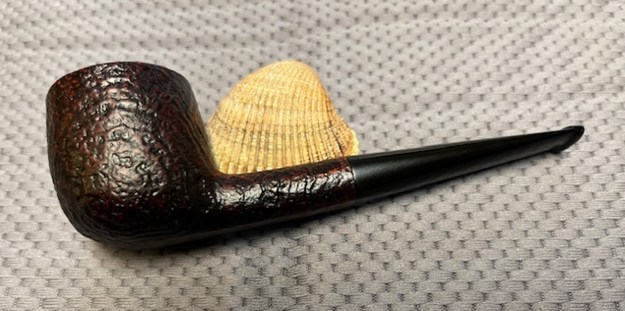







 rebornpipes