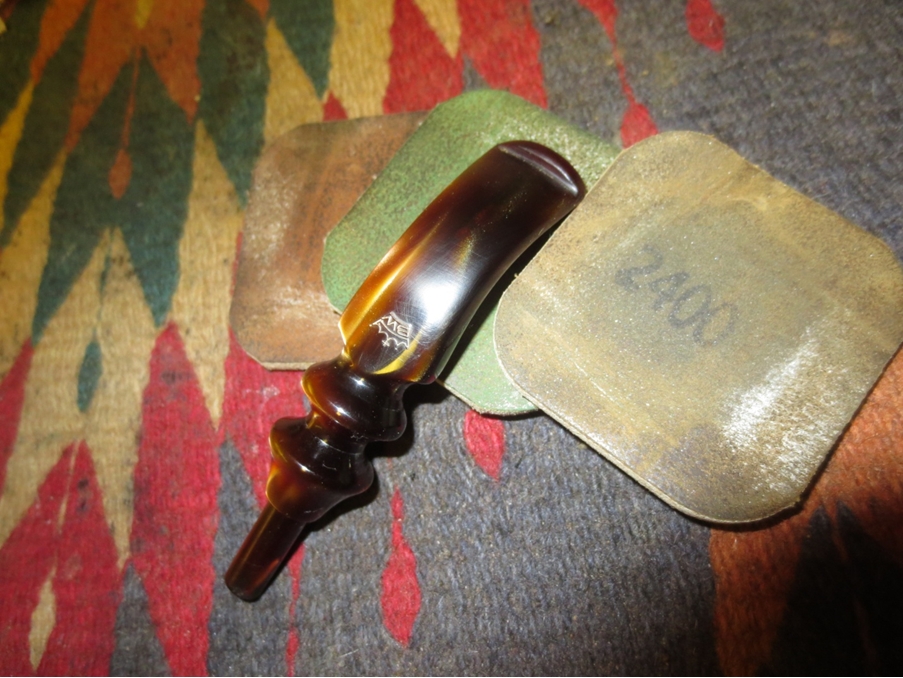
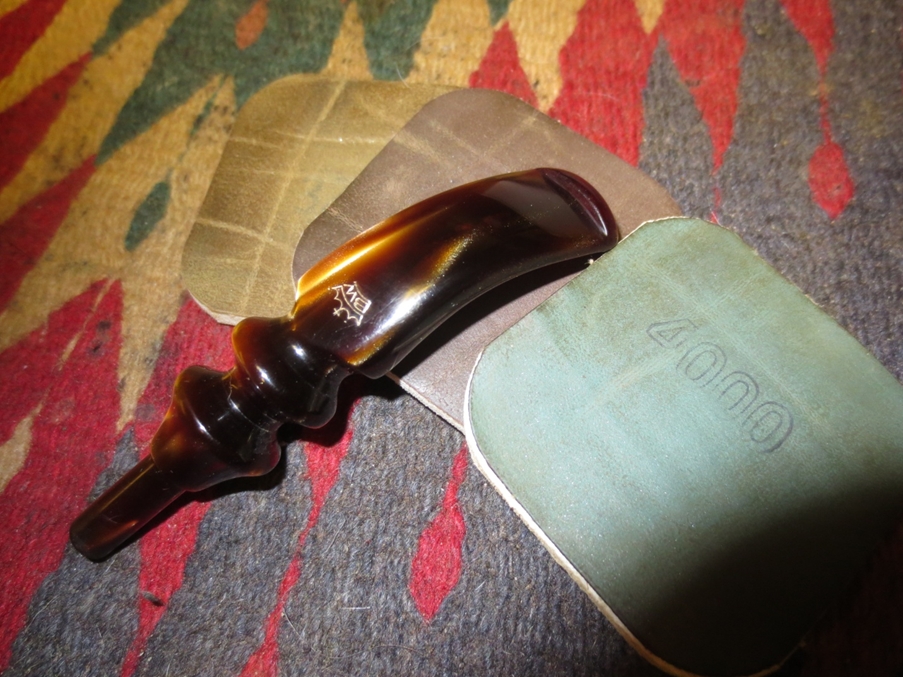
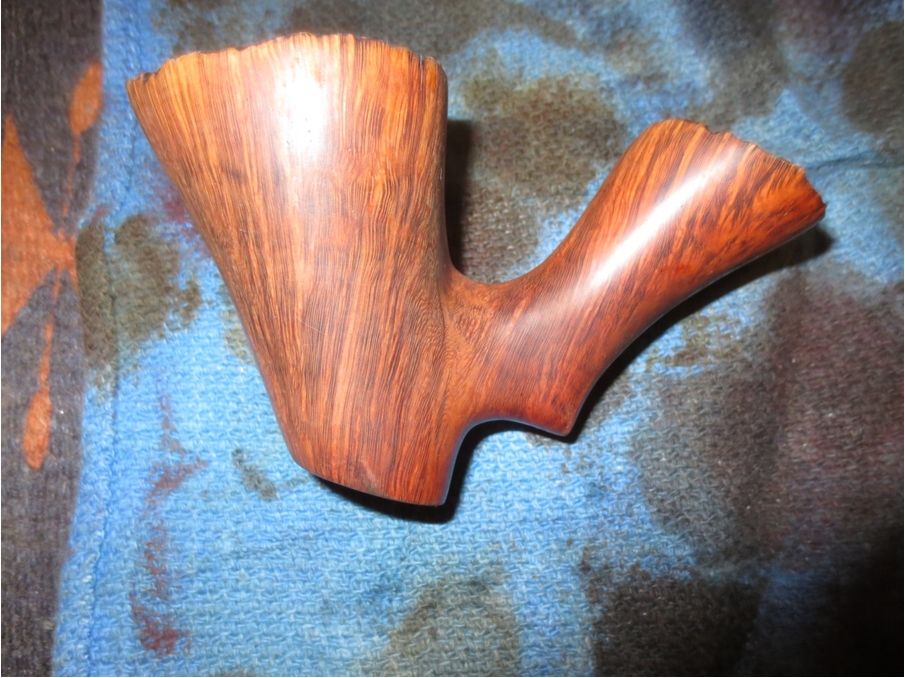
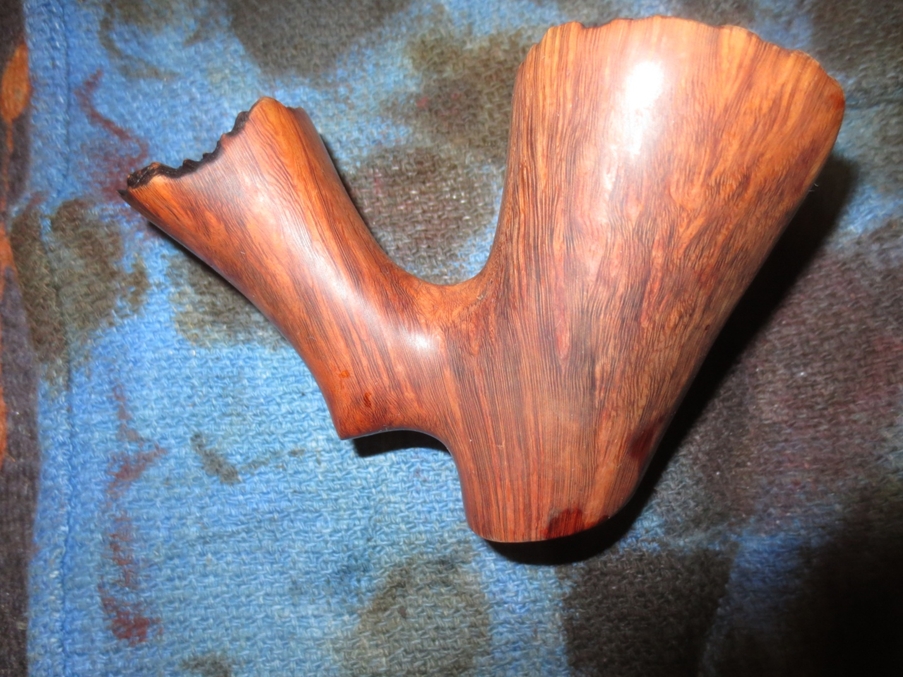
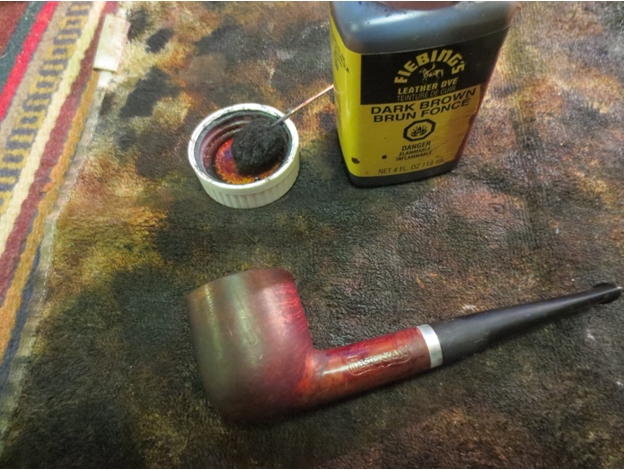
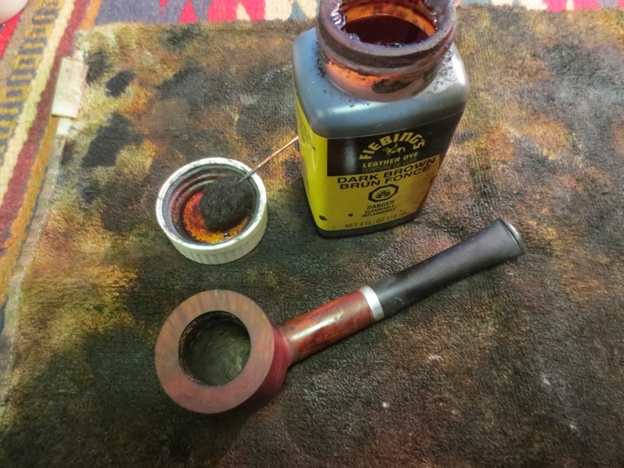
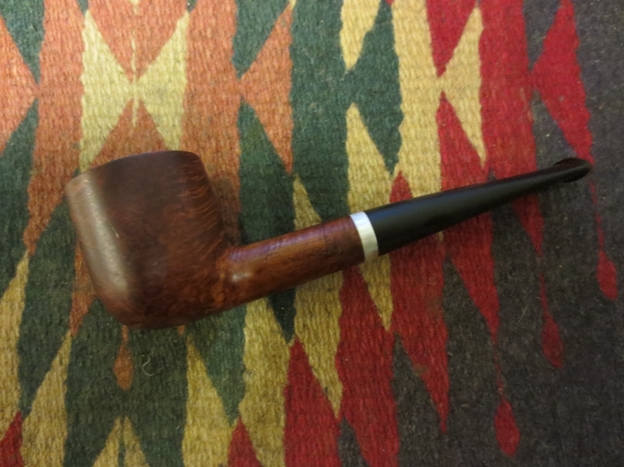
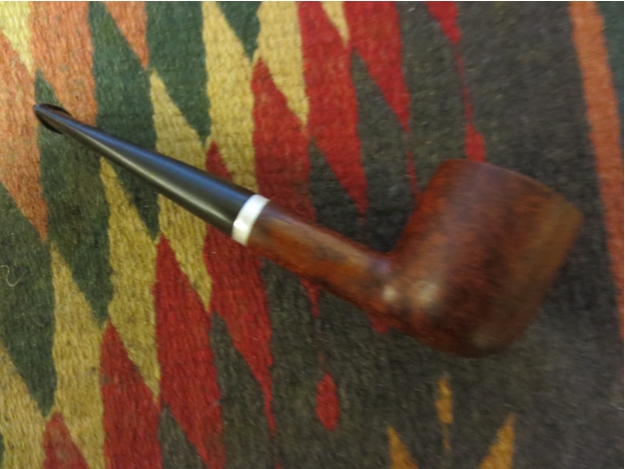
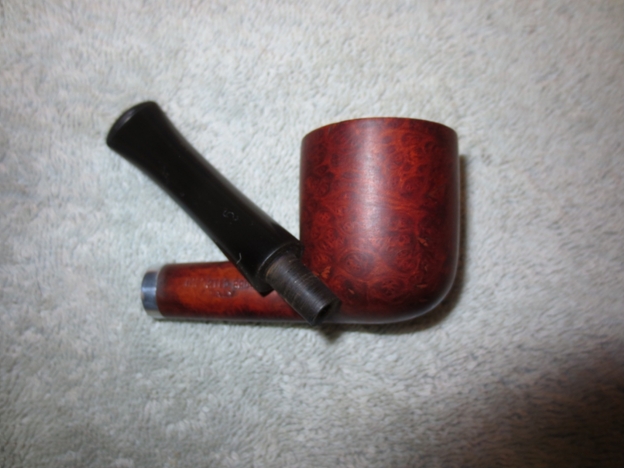
Tag Archives: contrast staining

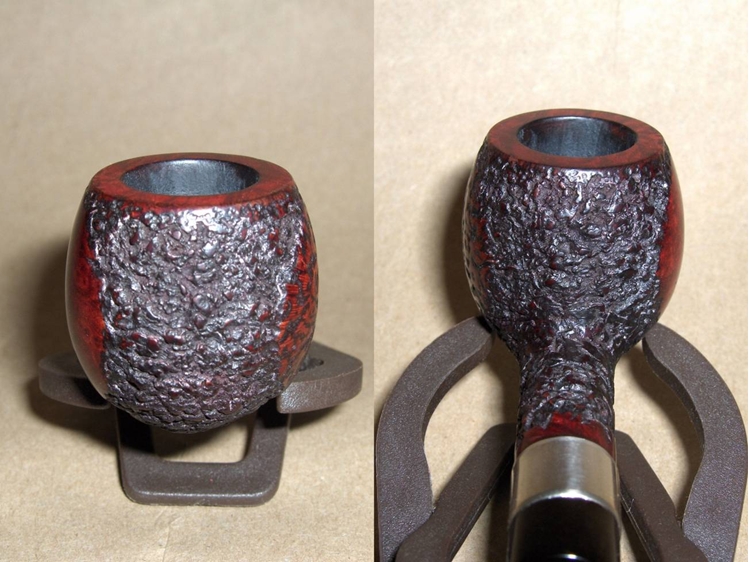
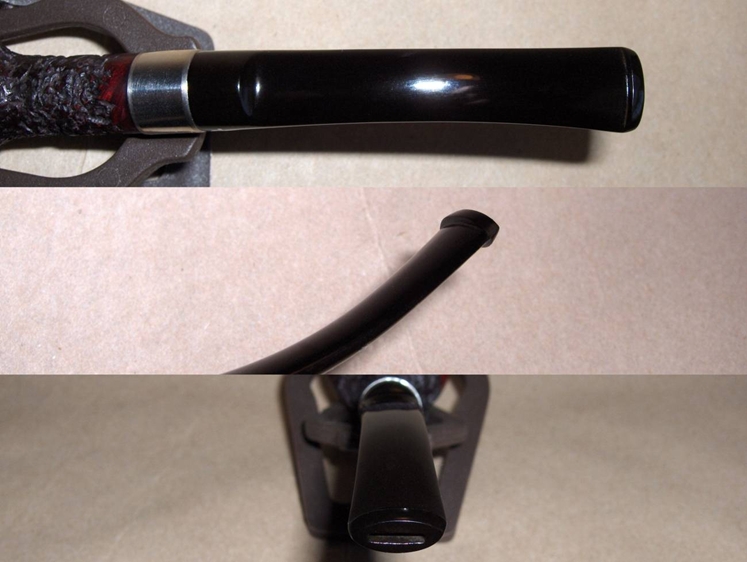
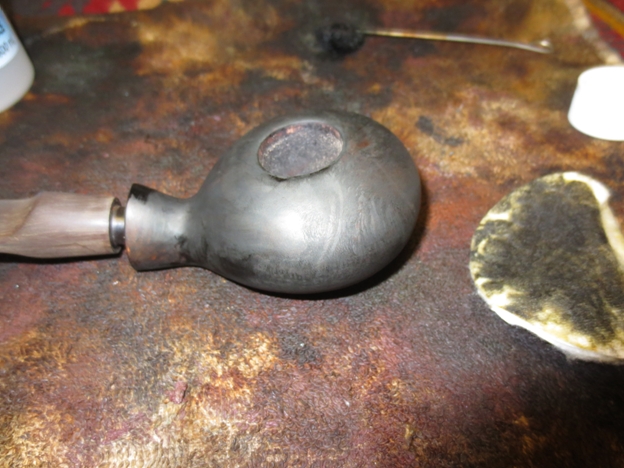
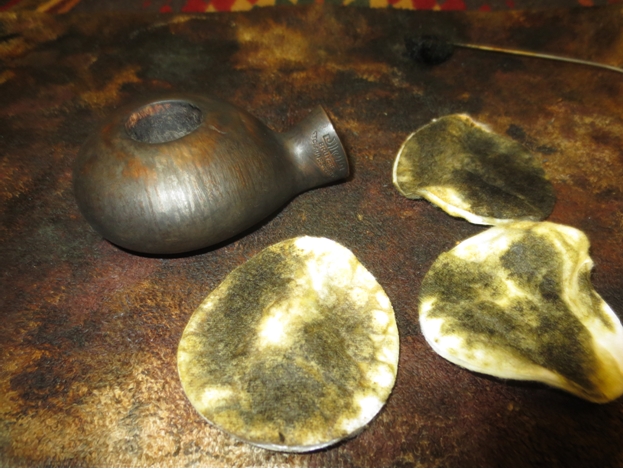
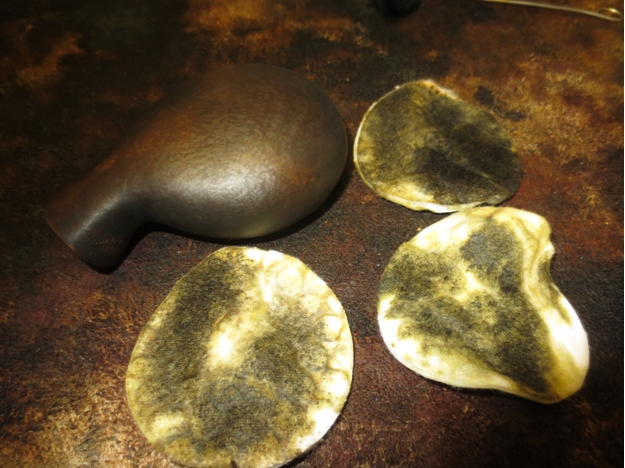
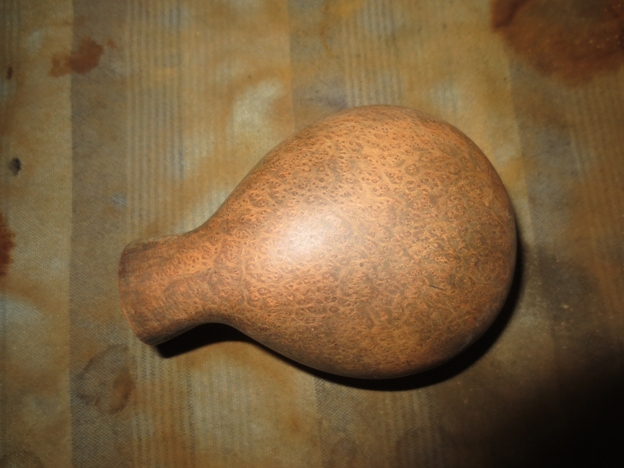
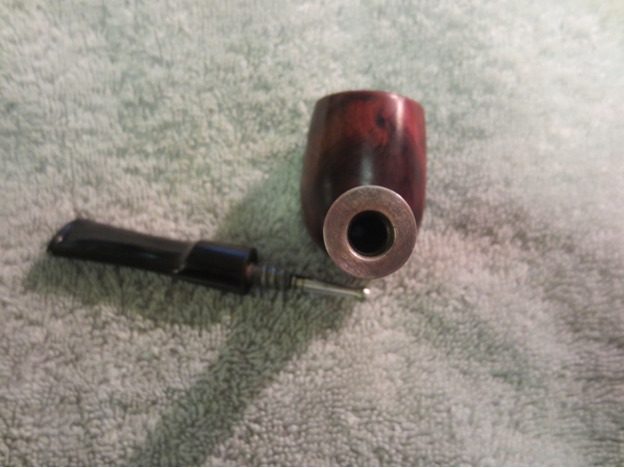
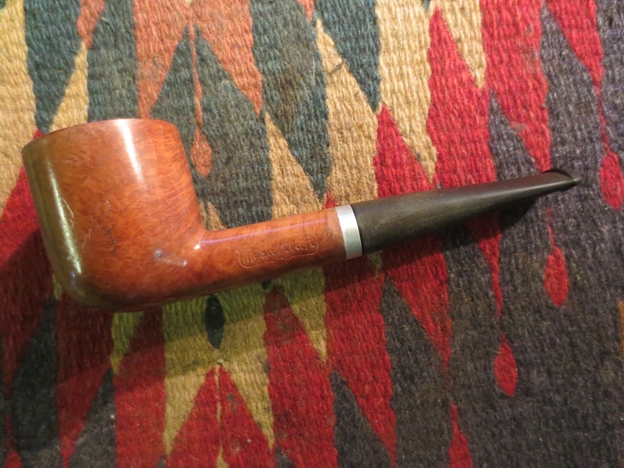
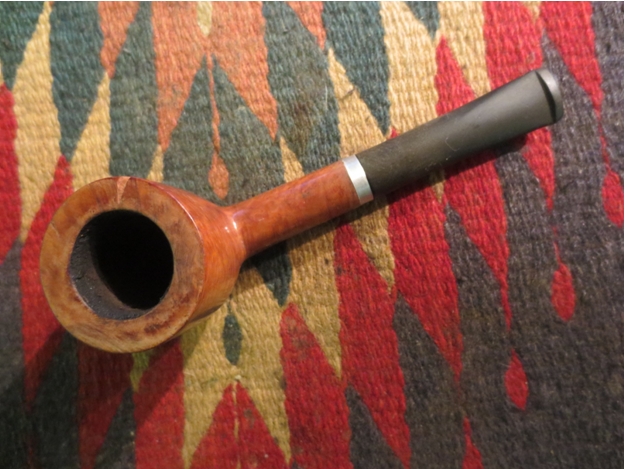
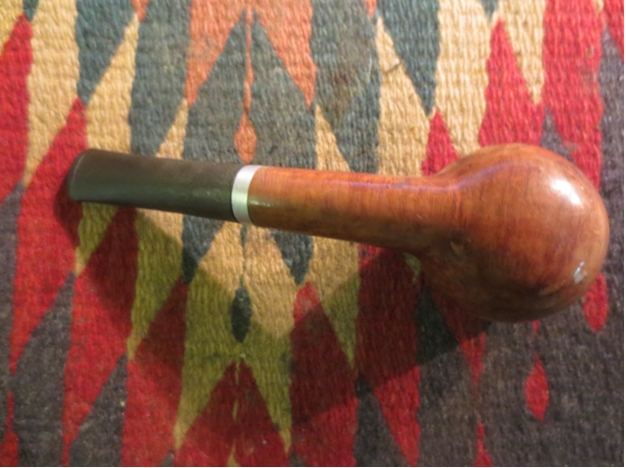
1934-35 Yello Bole Carburetor


Blog by Andrew Selking

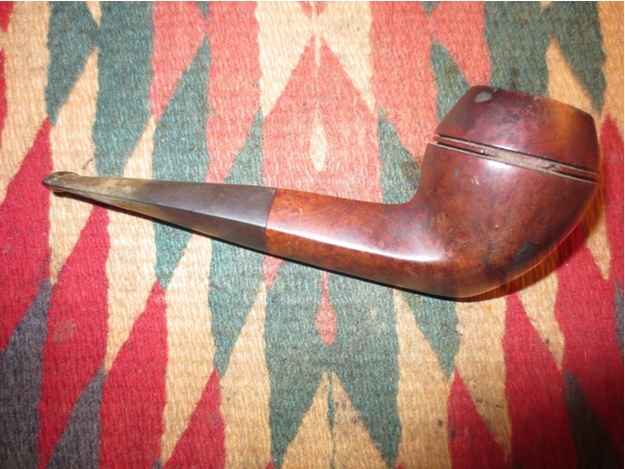
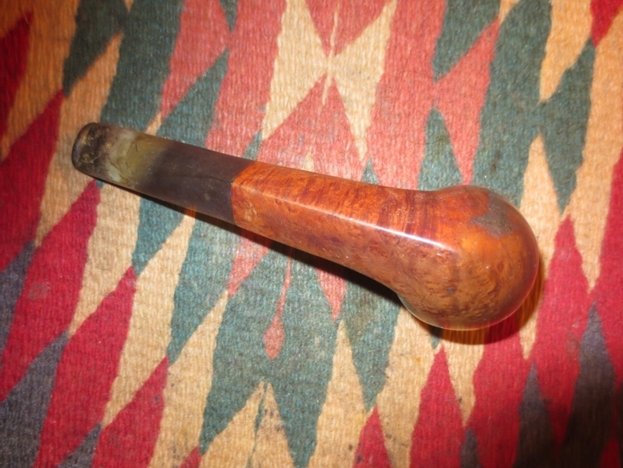
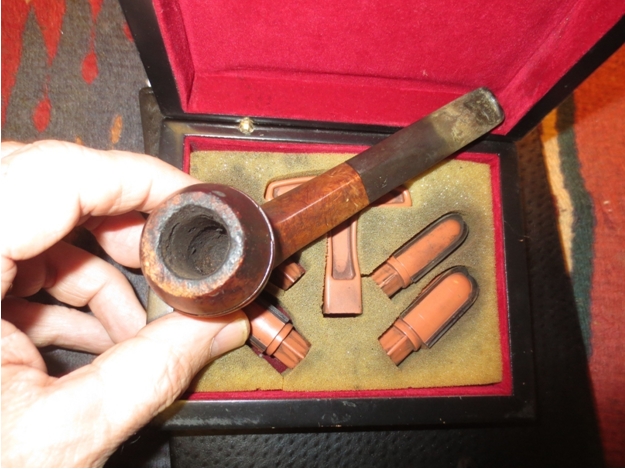
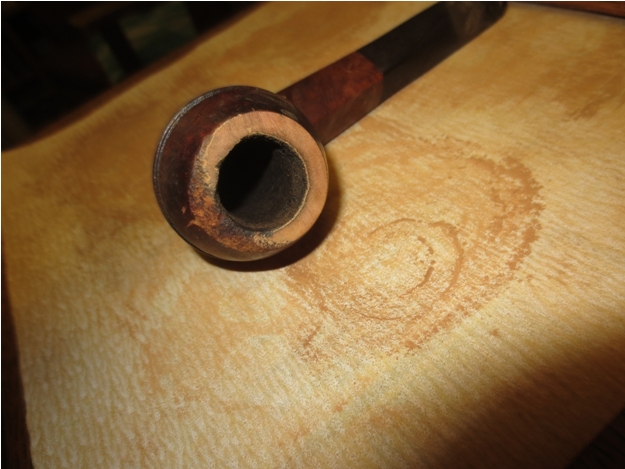
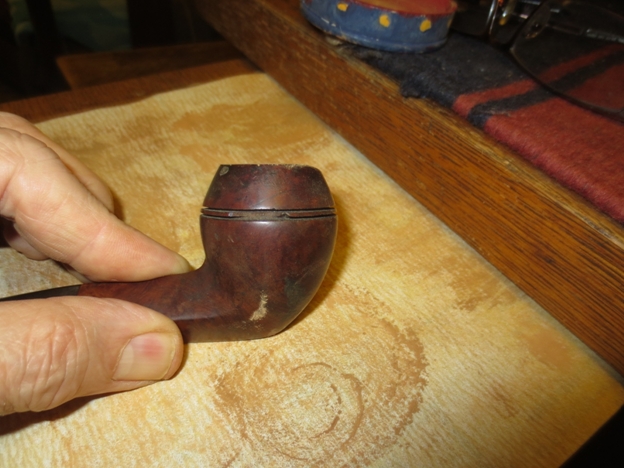
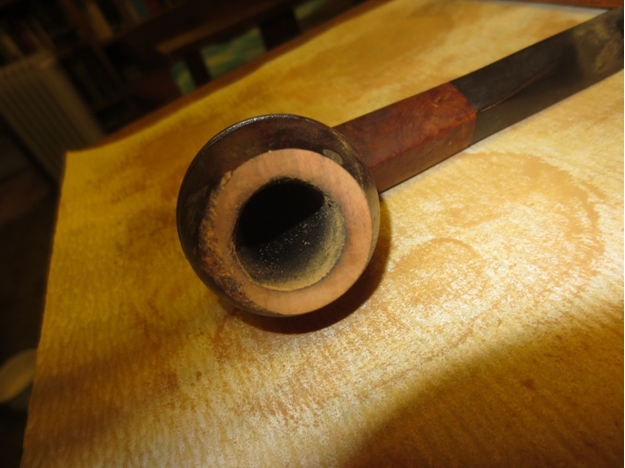
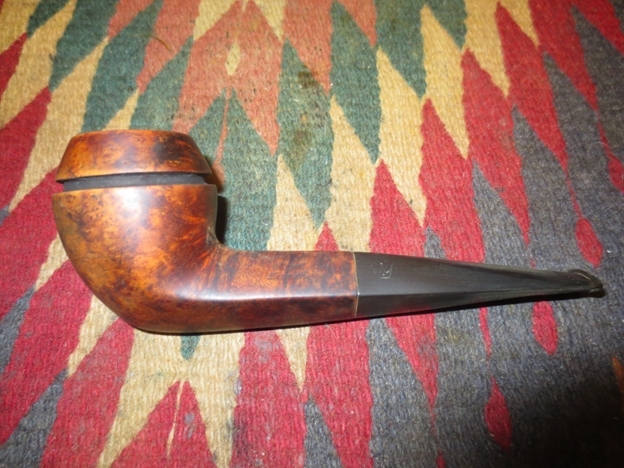
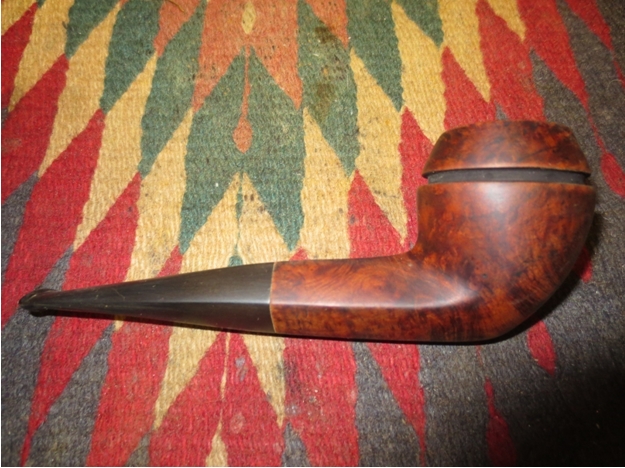
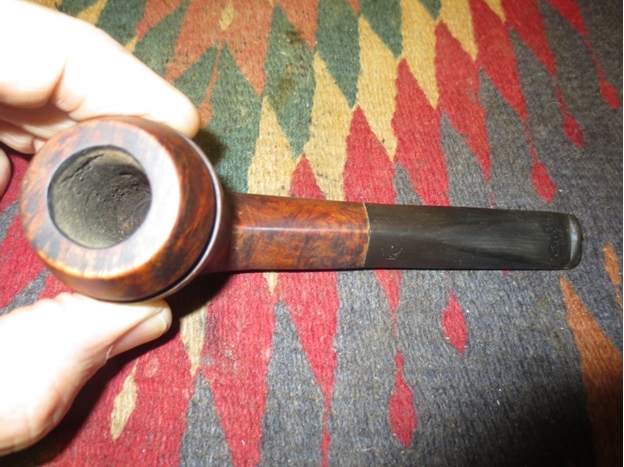
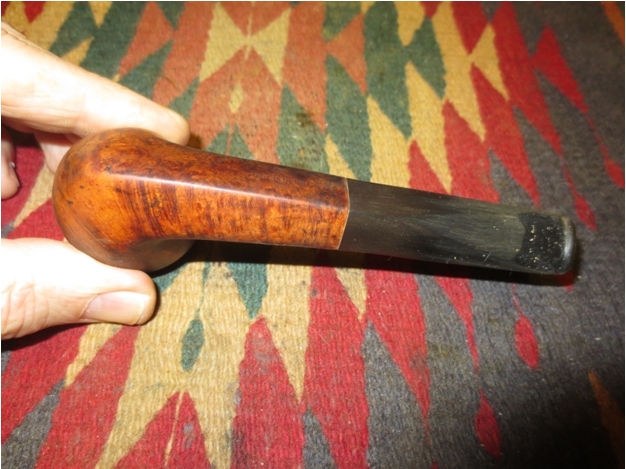
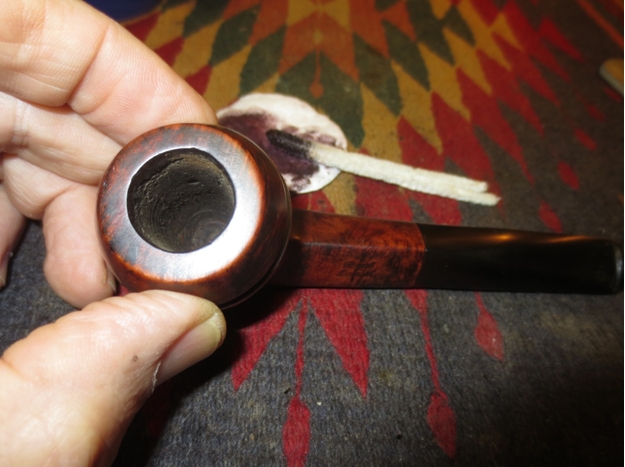
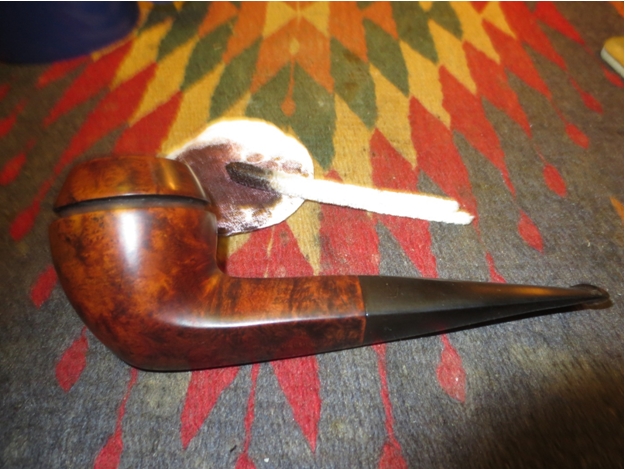
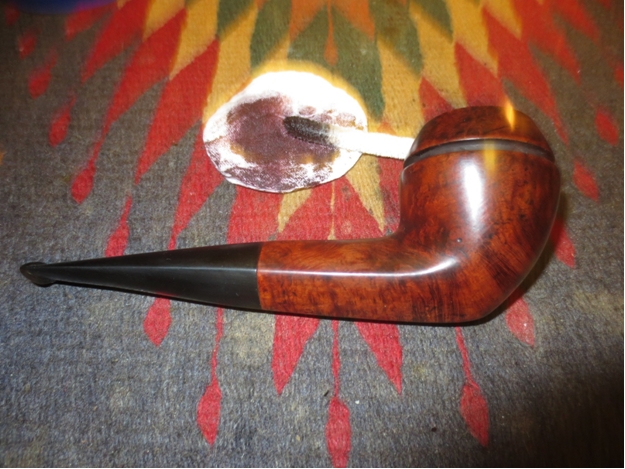
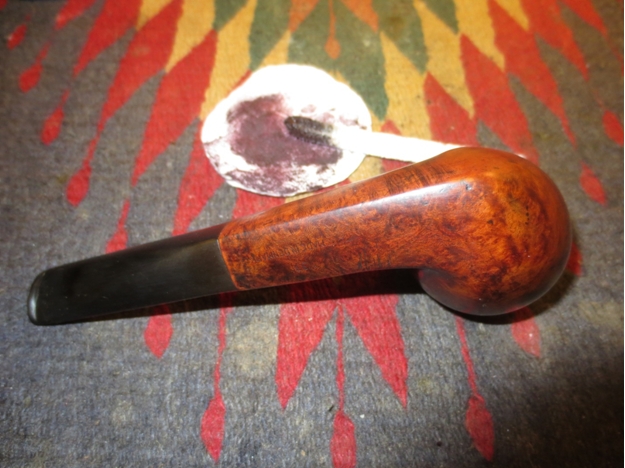
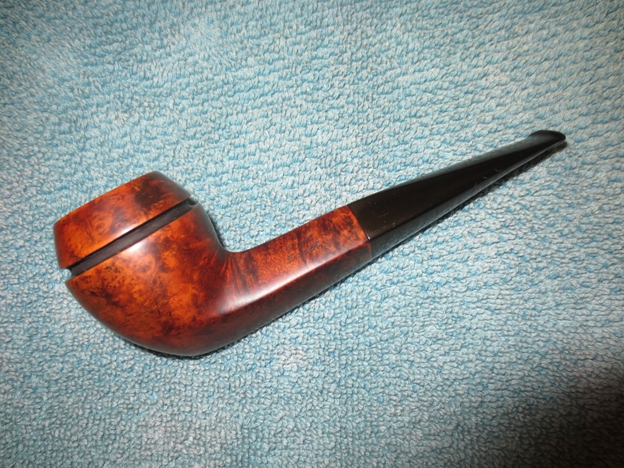
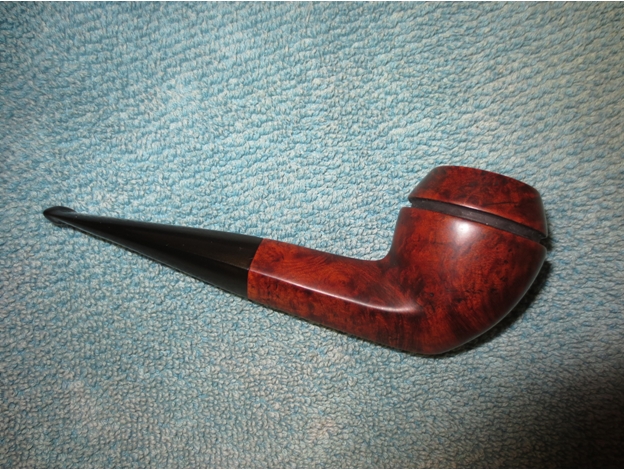
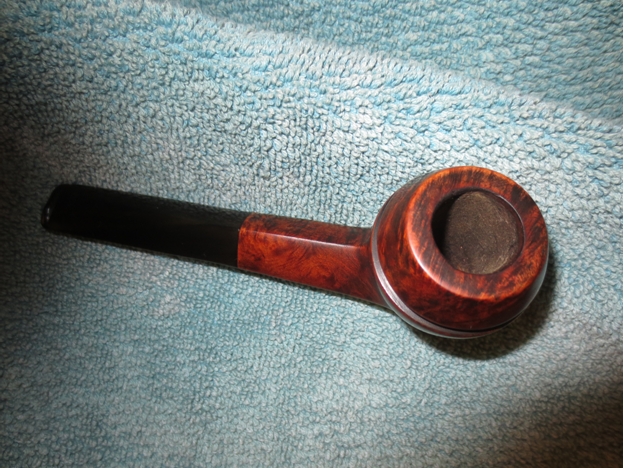
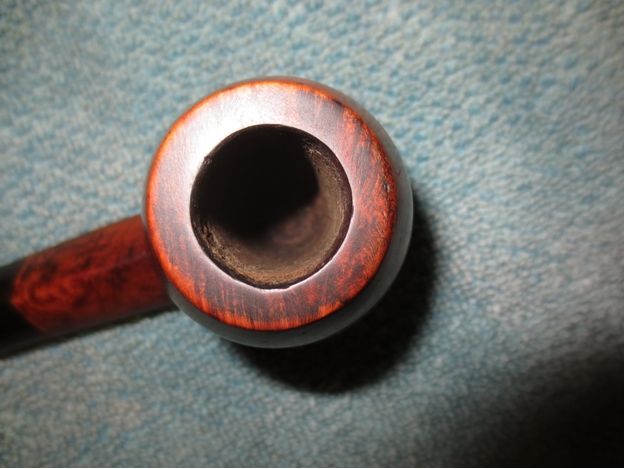
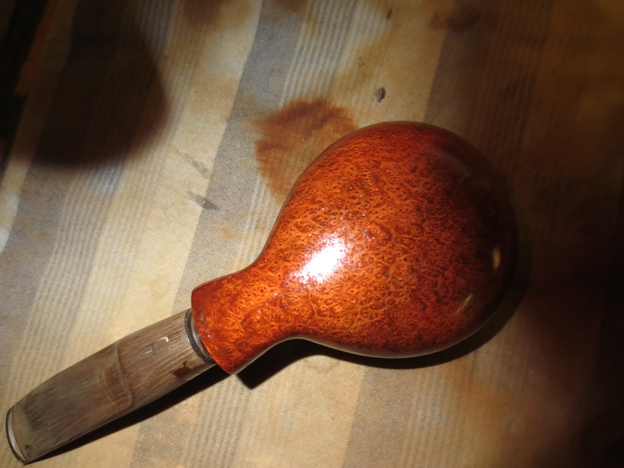
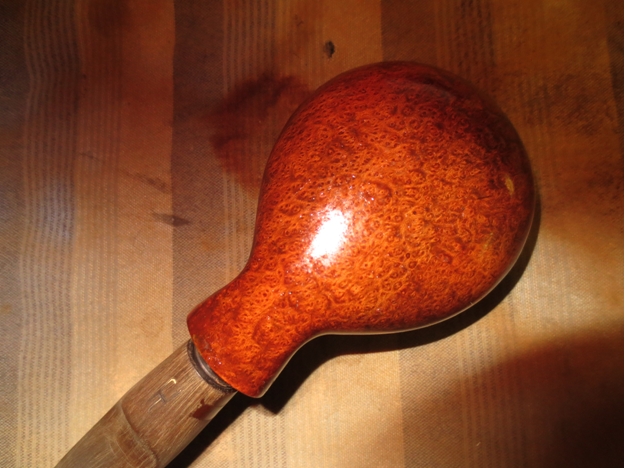
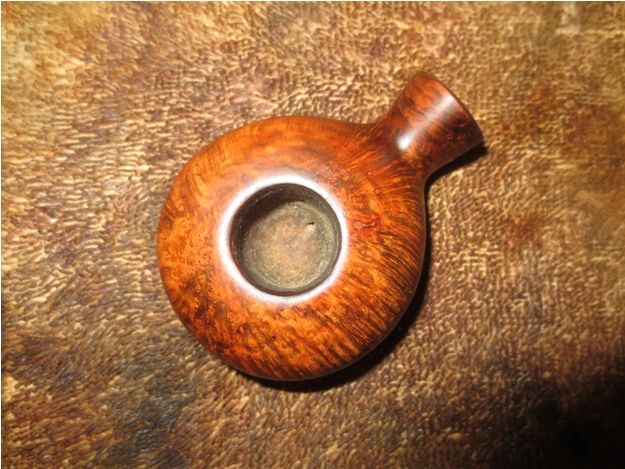
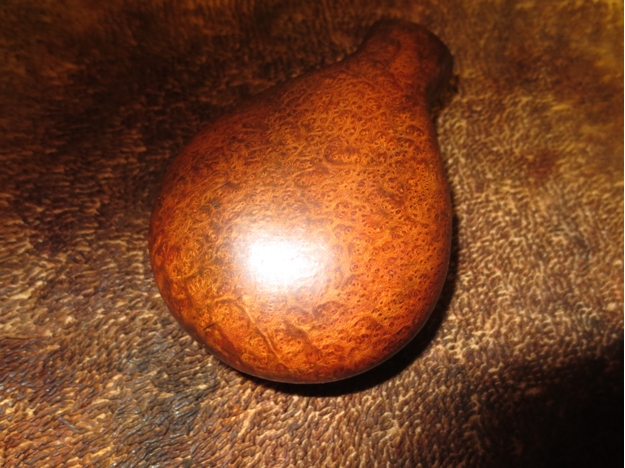
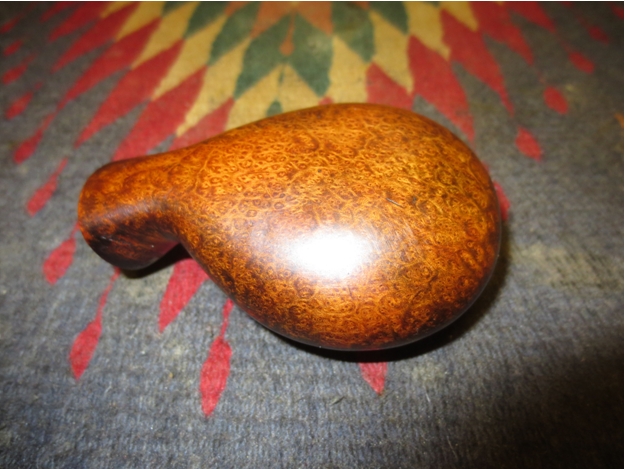
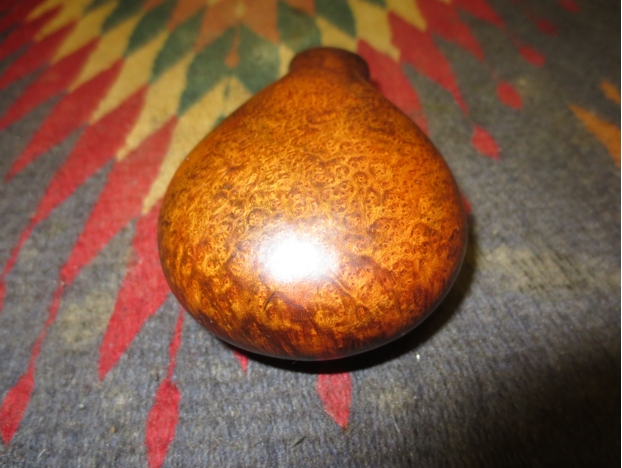
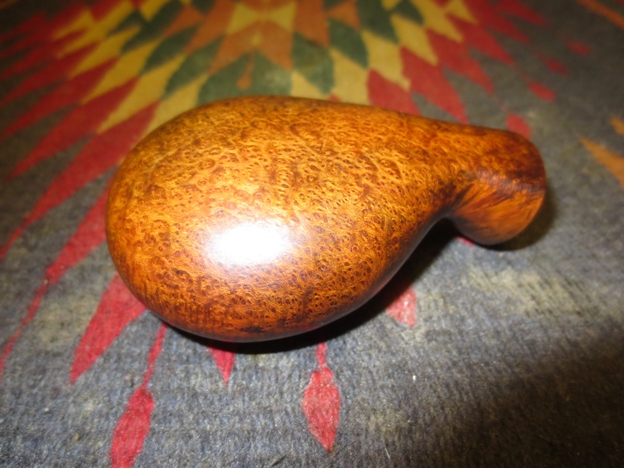
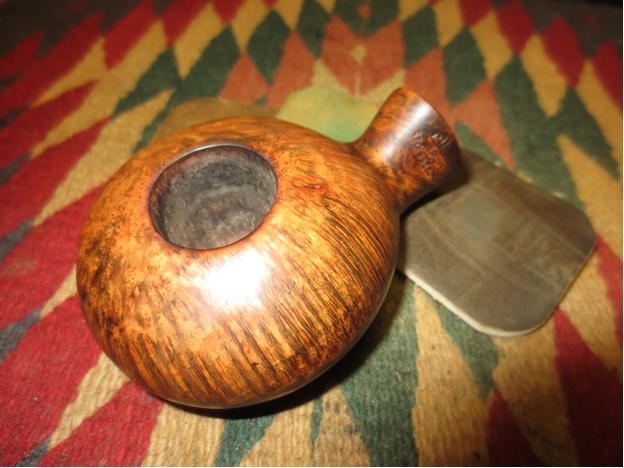
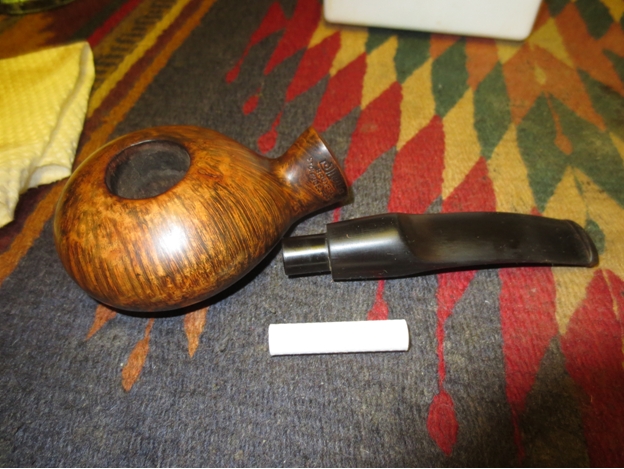
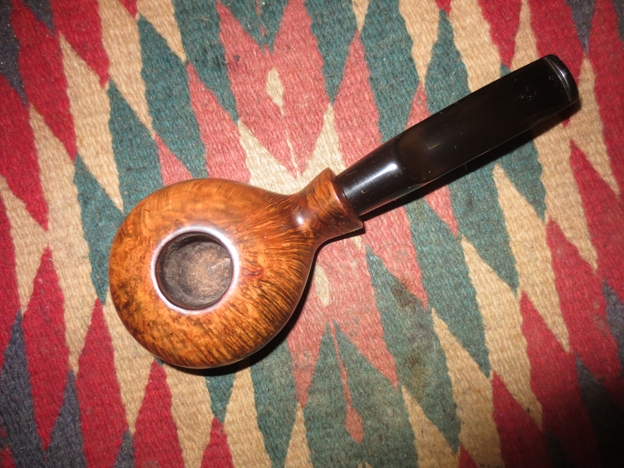
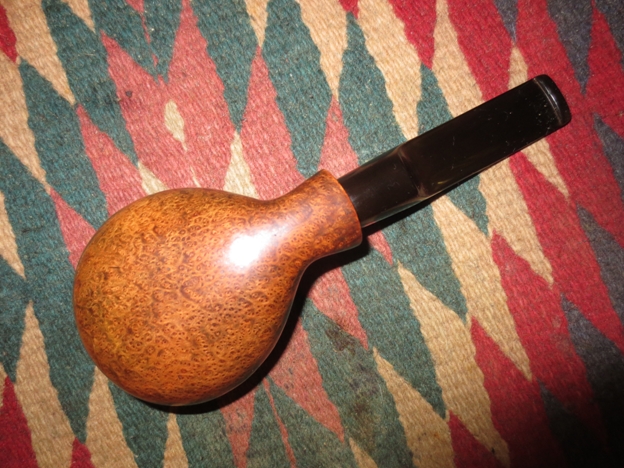
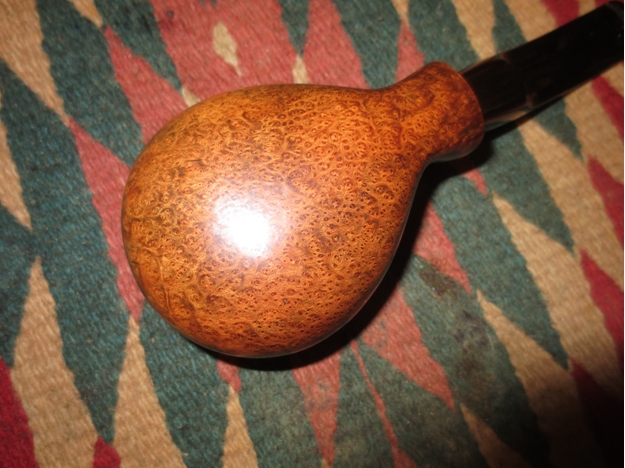
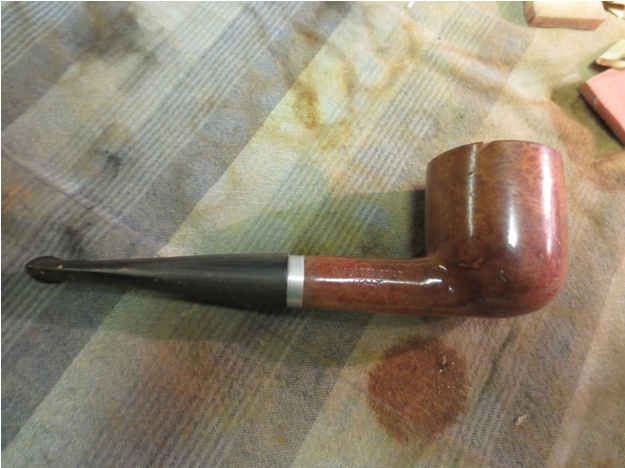
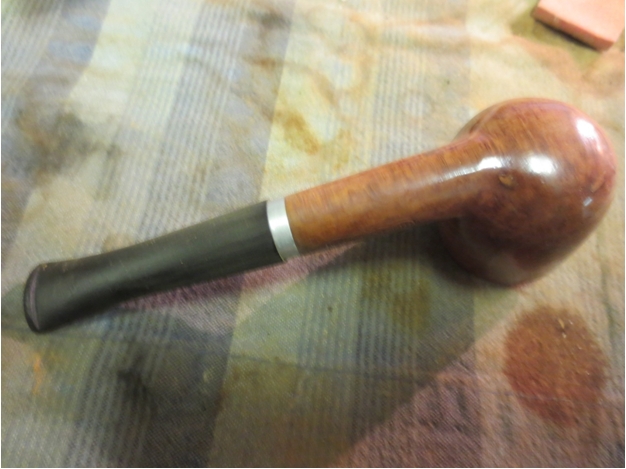
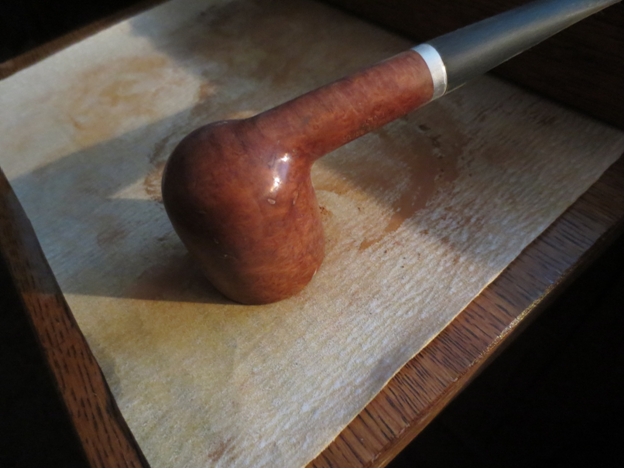
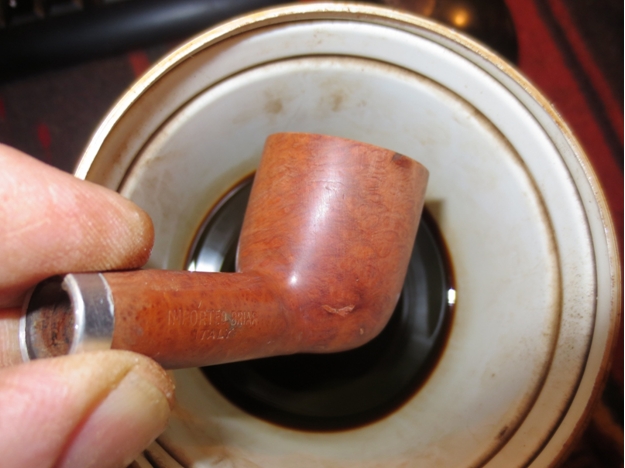
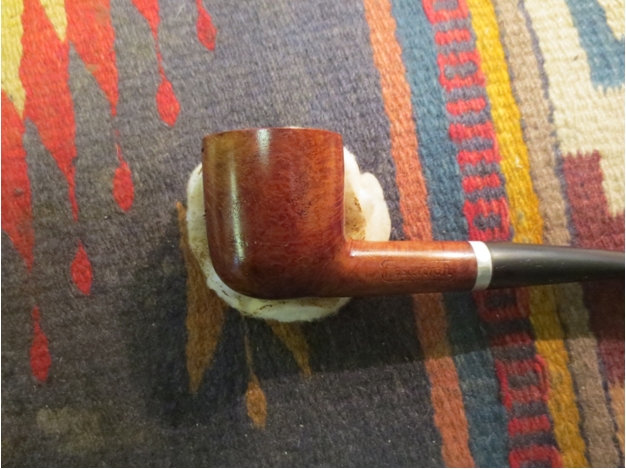
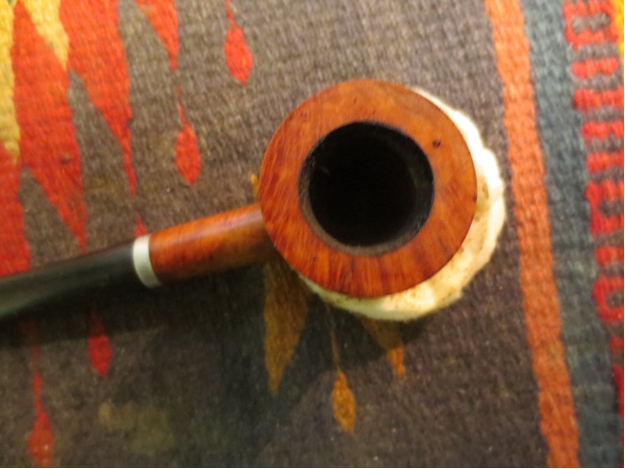
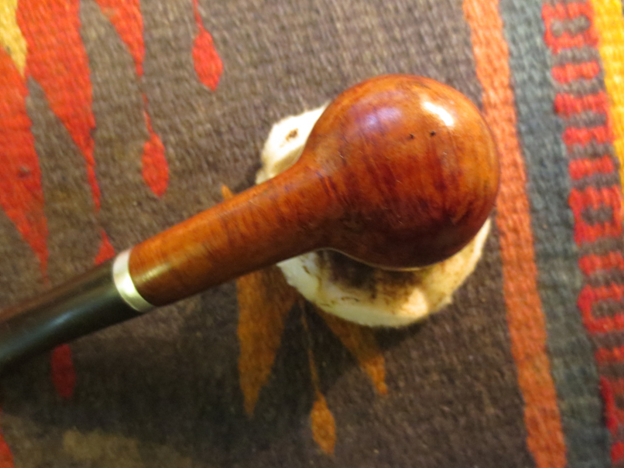
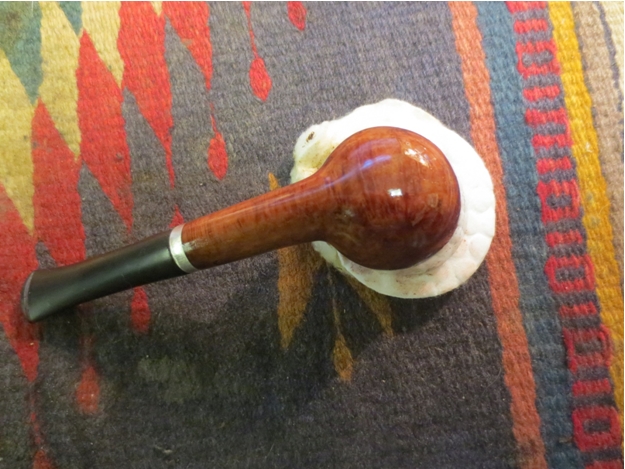
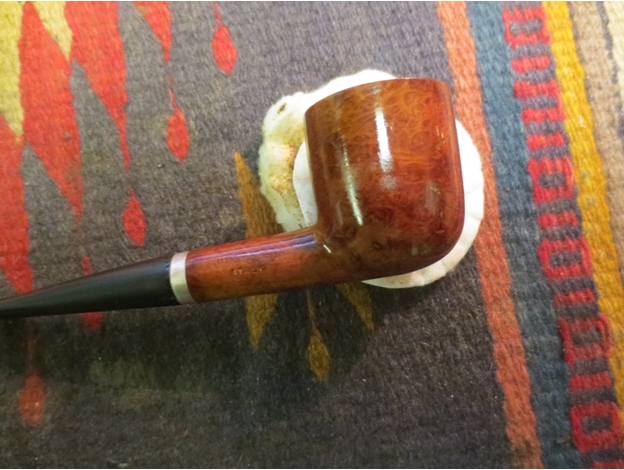
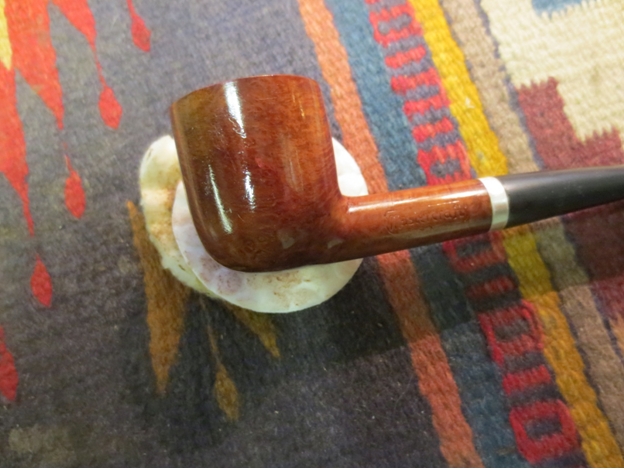
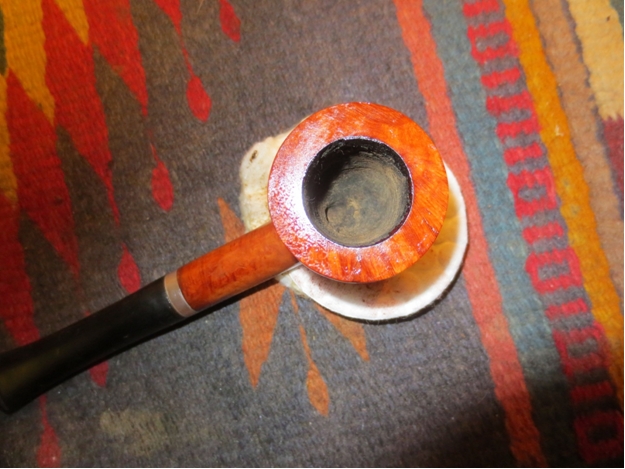
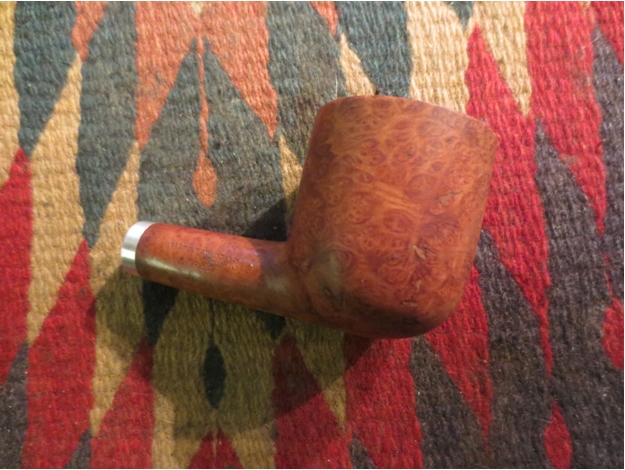
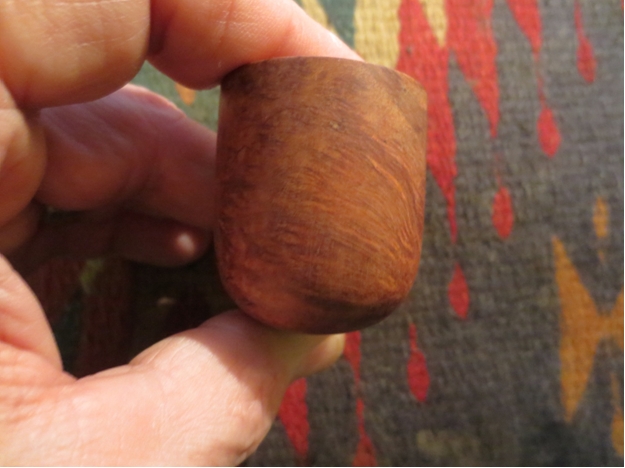
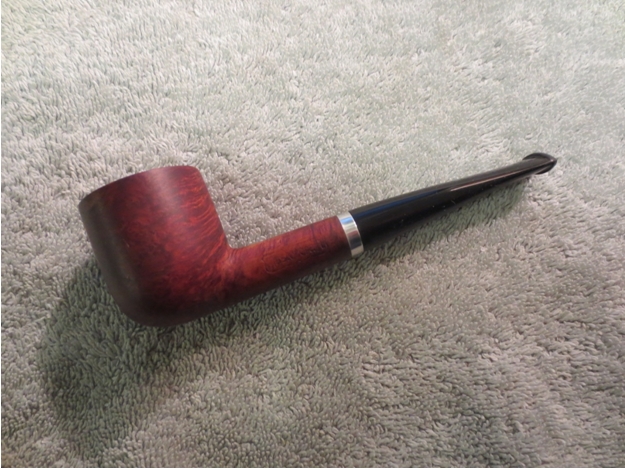
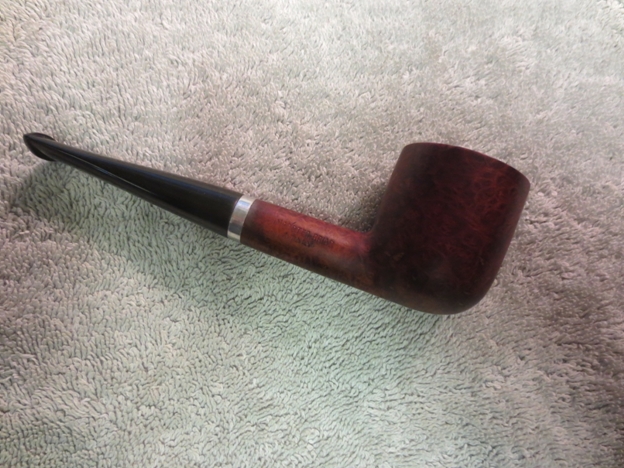
The more I work on old Yello Bole pipes, the more I appreciate them. First of all, they used the same briar that went into the higher end Kaywoodies. From my experience you might find a Yello Bole with one fill, but otherwise spectacular grain. This pipe is no exception, stunning swirling birds-eye and spectacular cross grain, with one fill on the bottom of the bowl.

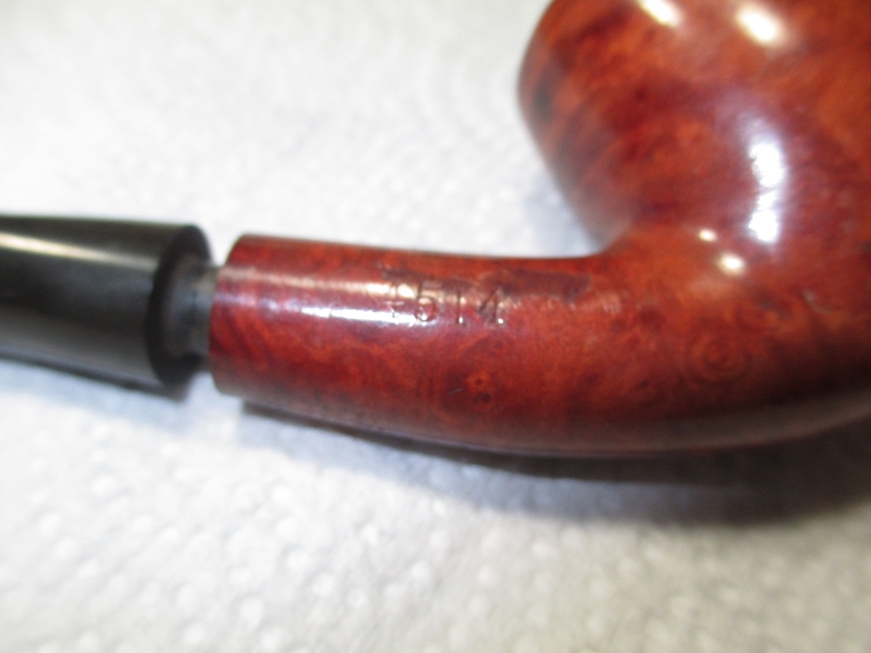
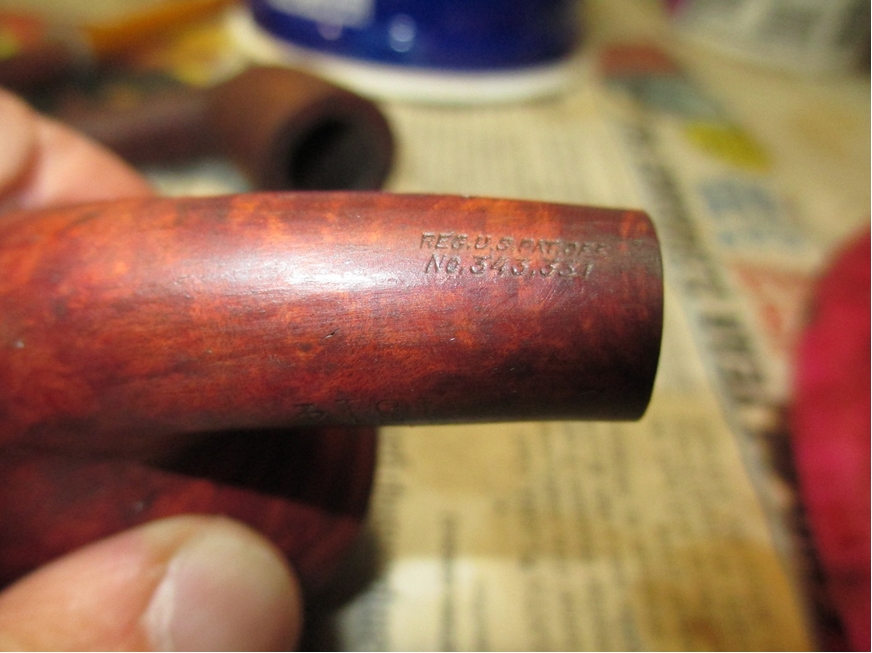
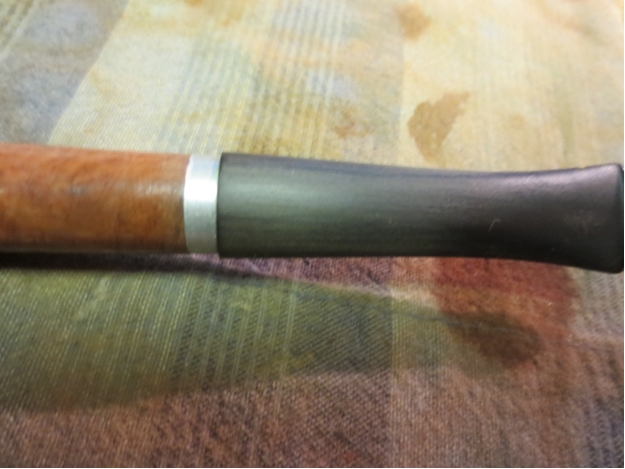
I can say with a fair degree of certainty that this pipe is from 1934 or 35. The carburetor patent was granted in 1935, this pipe is stamped “Pat Applied For.” Interestingly enough, it also has a patent number on the bottom of the shank. Additionally, the four digit number was used by Kaywoodie until 1936. The first two numbers indicate the finish and the second two numbers indicate the shape.

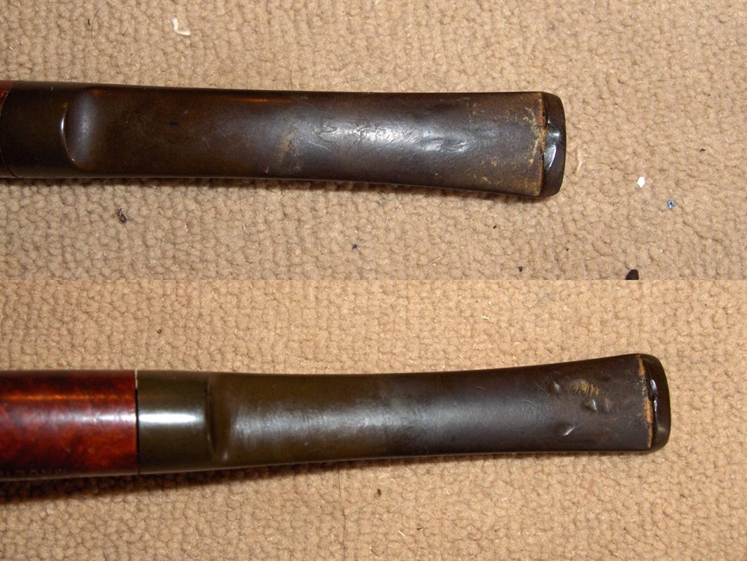
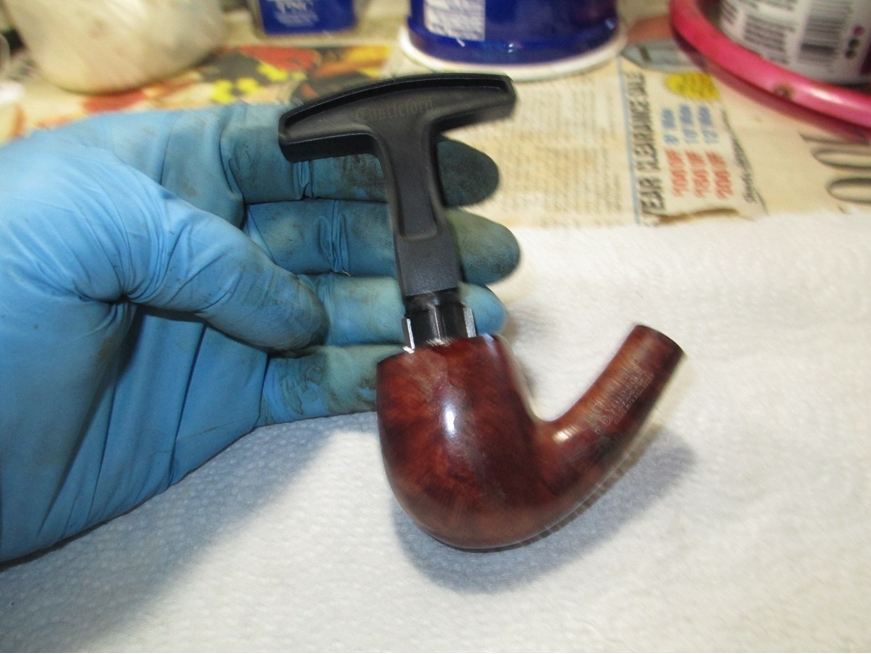
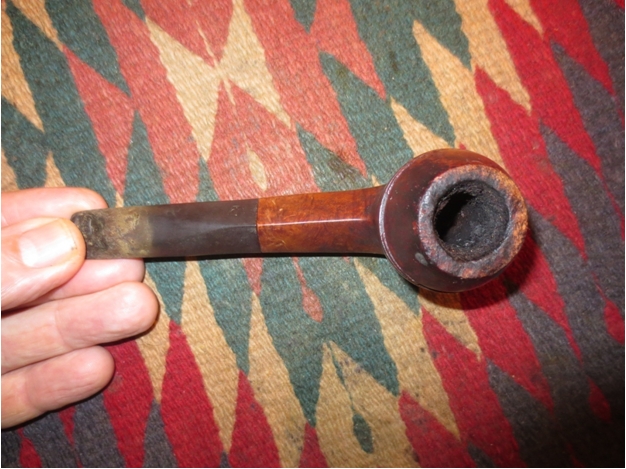
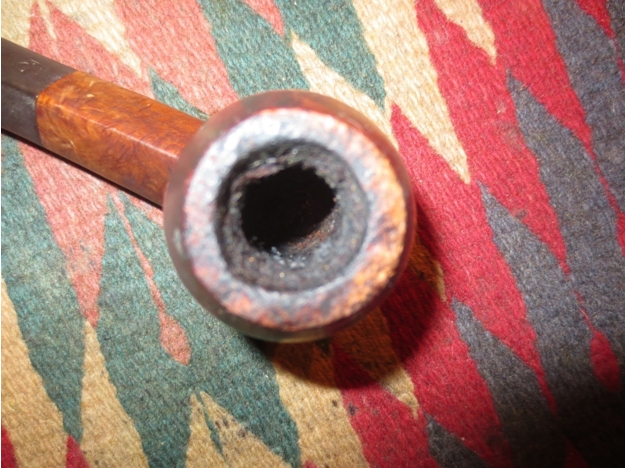
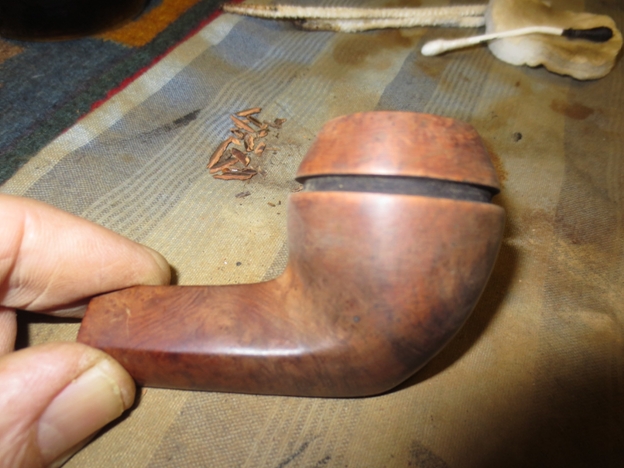
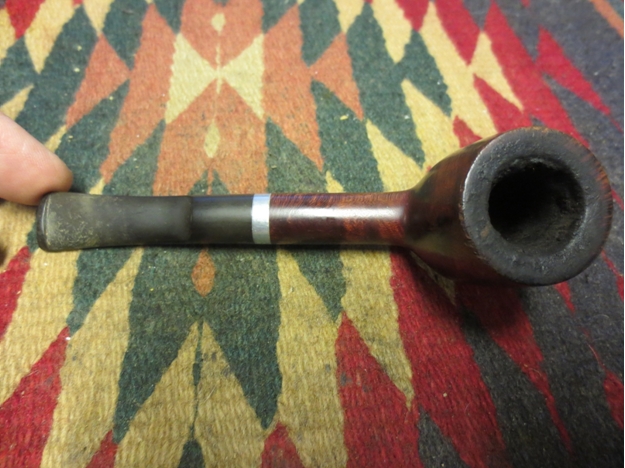
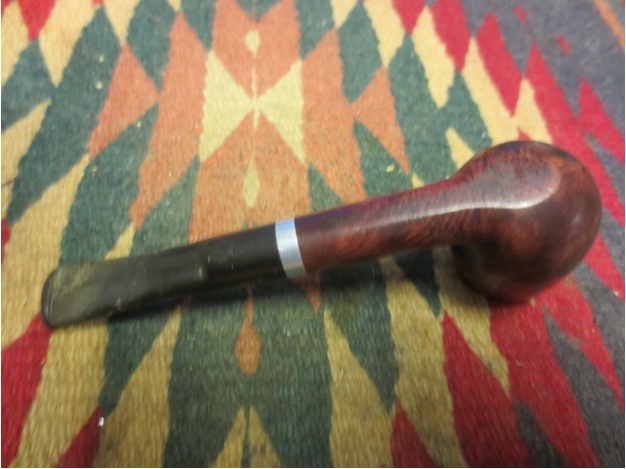
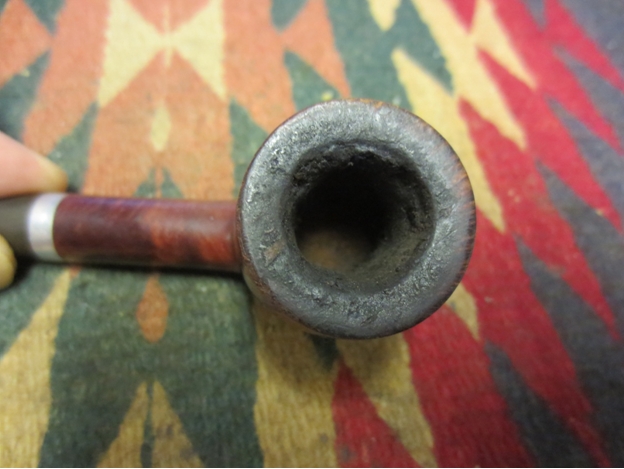
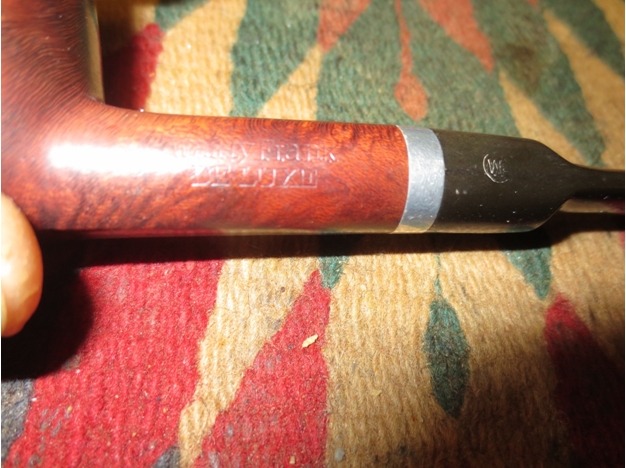
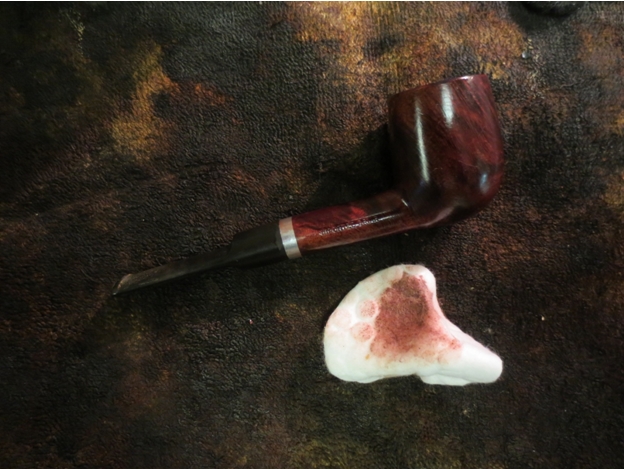
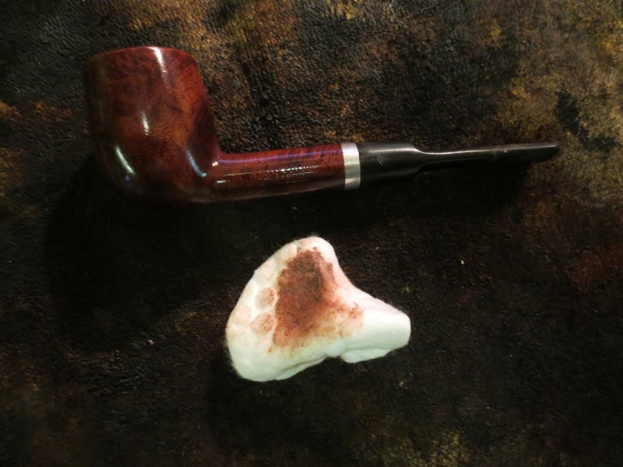
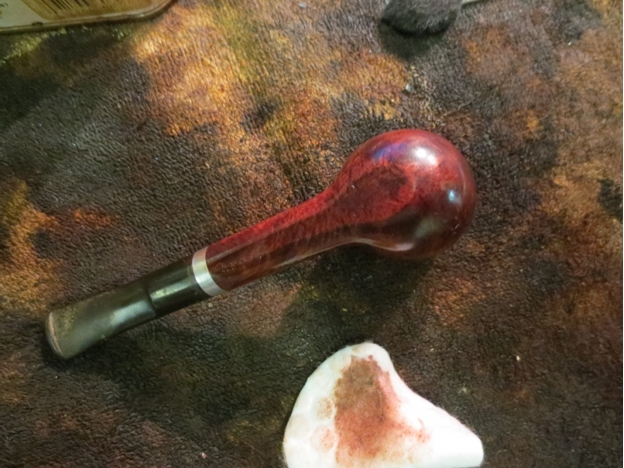
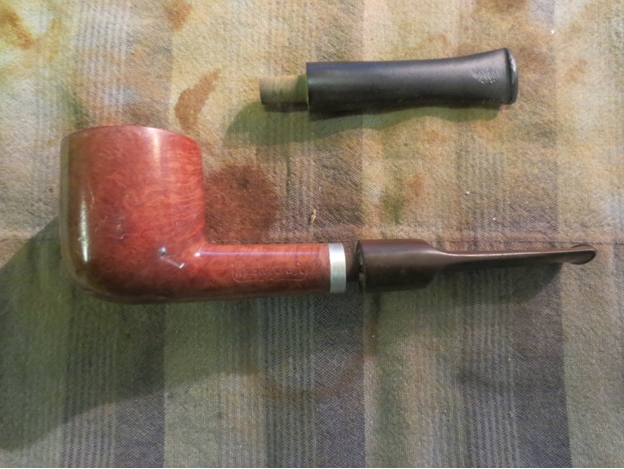
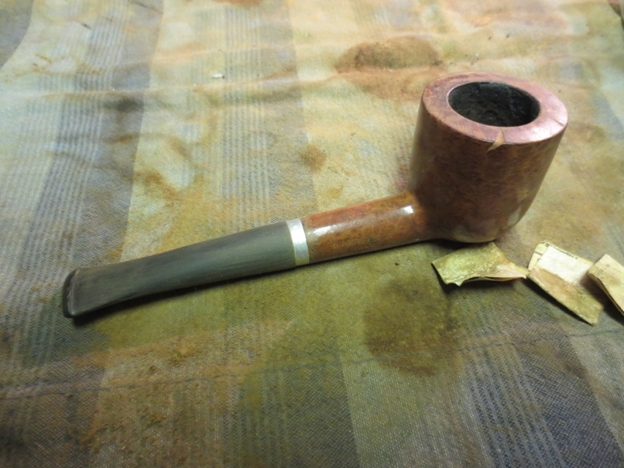
When I got the pipe it had the usual heavy finish that Kaufman Brothers and Bondy (KB&B) put on the Yello Bole line to cover imperfections.Andrew1

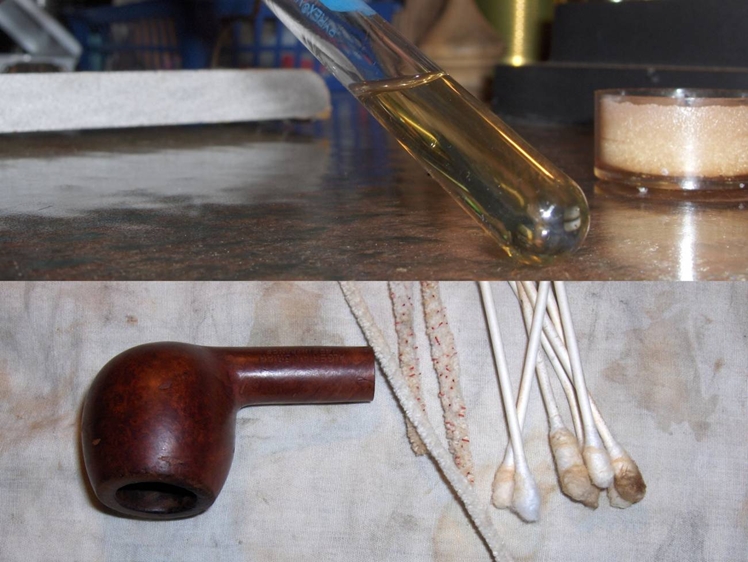
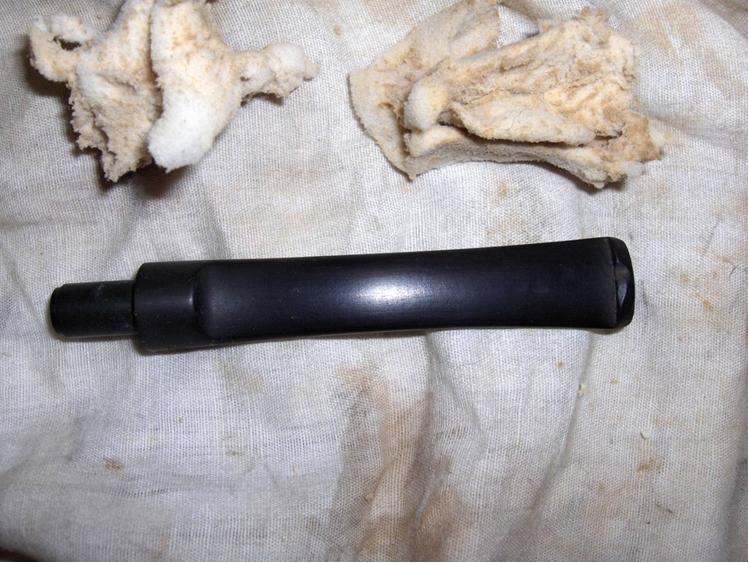
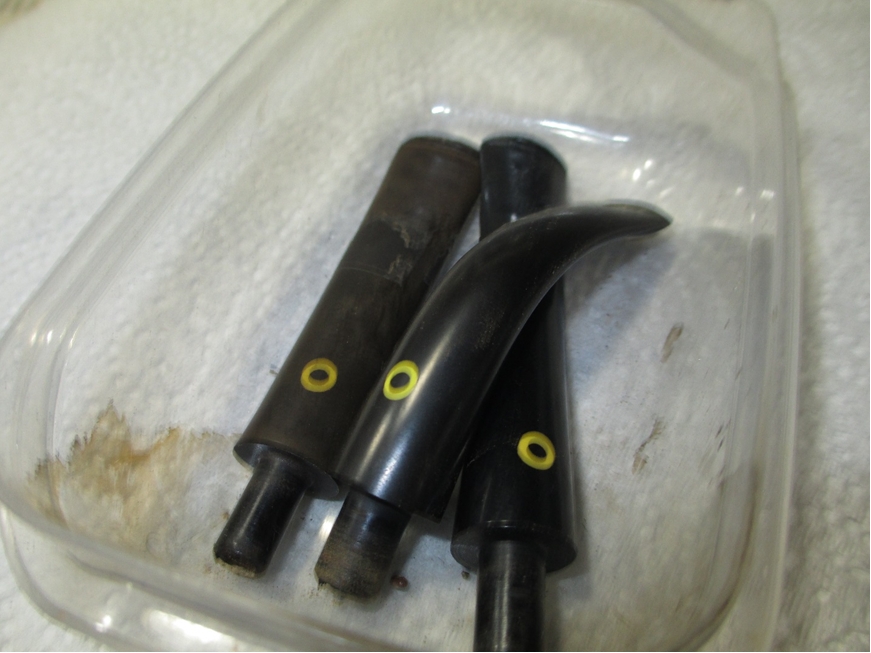
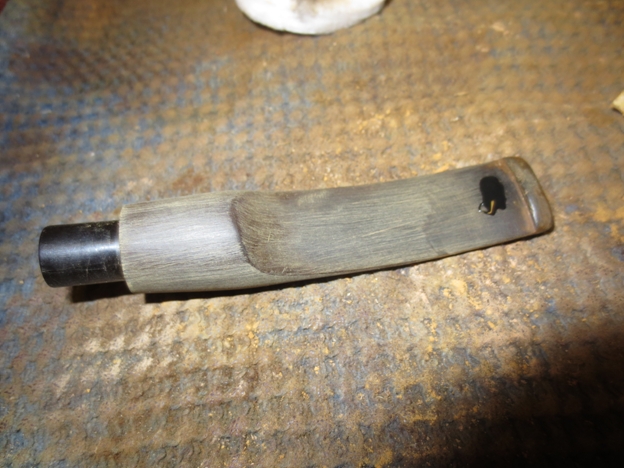
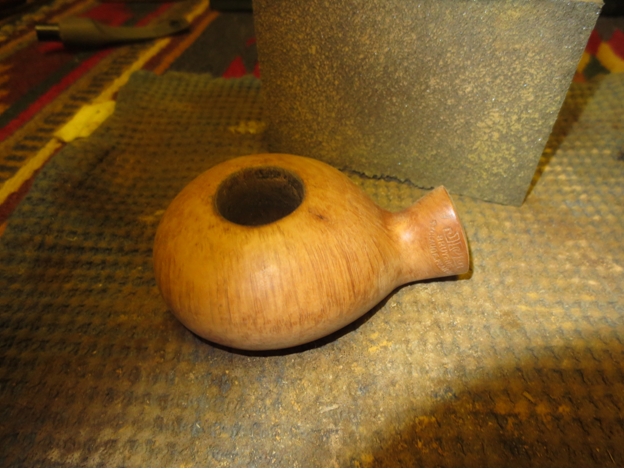
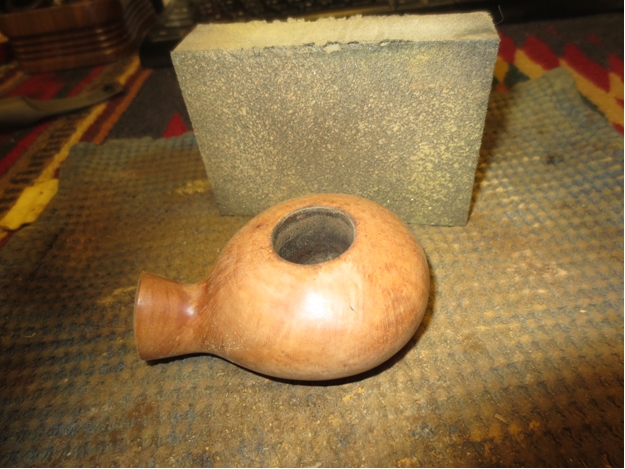
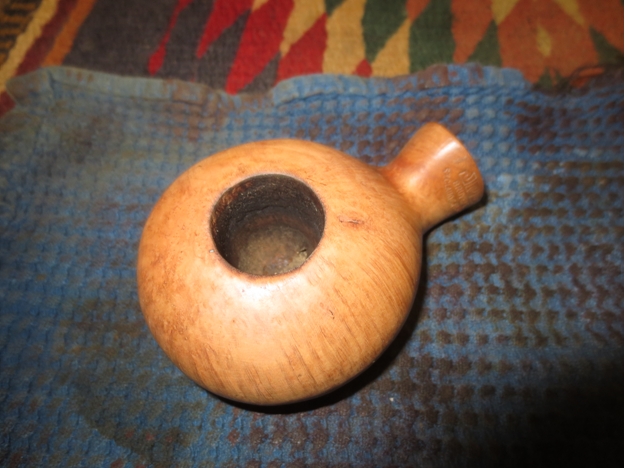
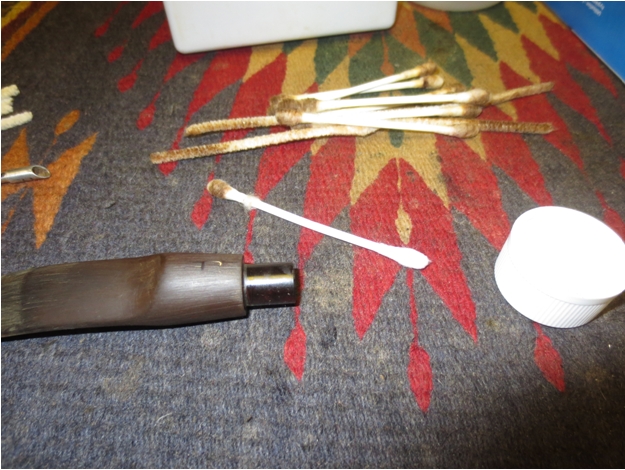
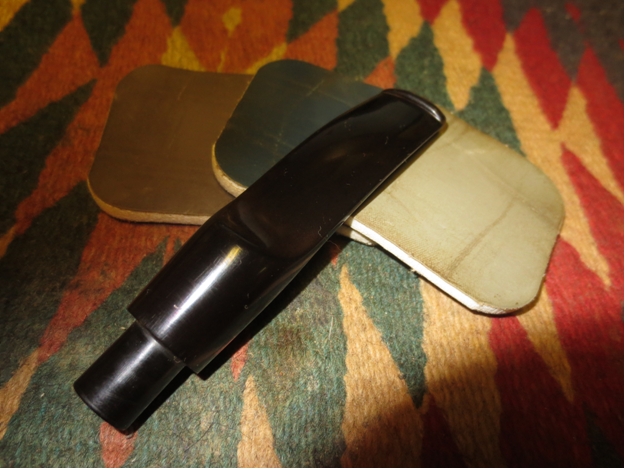
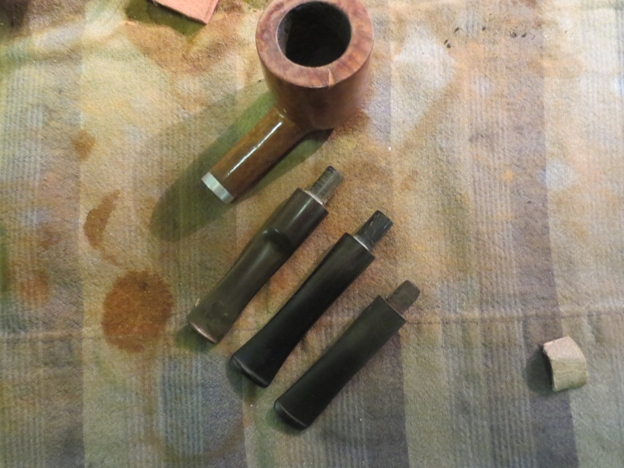
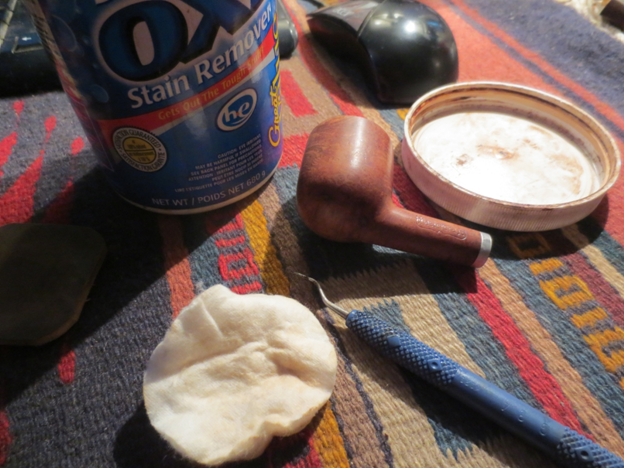
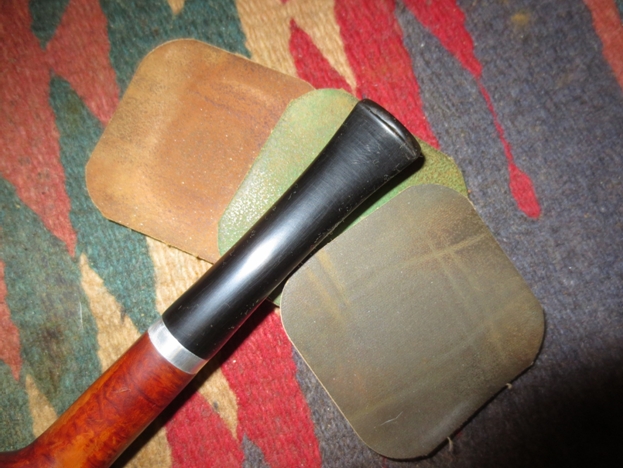
Andrew2 As you can see from the picture, I was working on more than one Yello Bole stem.Andrew3 While the stem soaked in Oxyclean, I dropped the bowl into the alcohol bath to begin loosening the gunk inside.Andrew4 After soaking overnight, I used my Castleford reamer to ream the bowl. The cake seems to come off easier if I ream the bowl right after the alcohol bath.Andrew5 I normally document cleaning the inside of the pipe, but for some reason didn’t this time. I did the usual retort on the stem and bowl, followed by scrubbing the inside of the shank with a brush, followed by q-tips dipped in alcohol. I used pipe cleaners dipped in alcohol to remove the last of the tar build up in the stem.

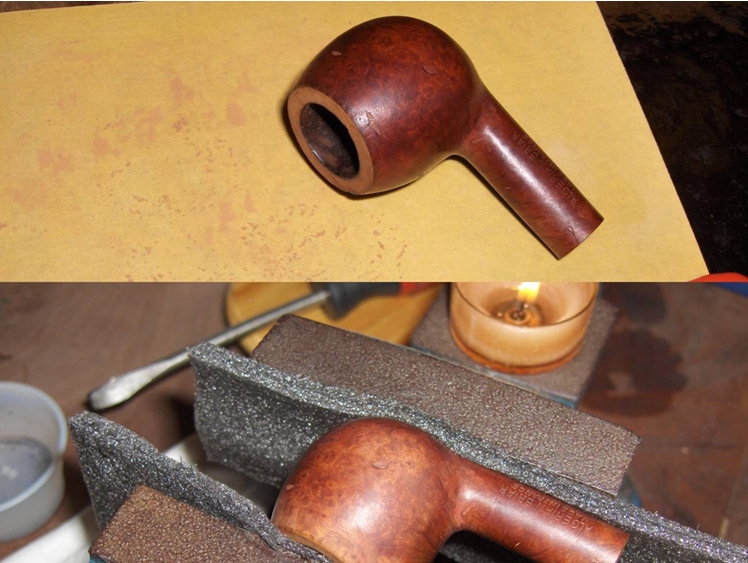
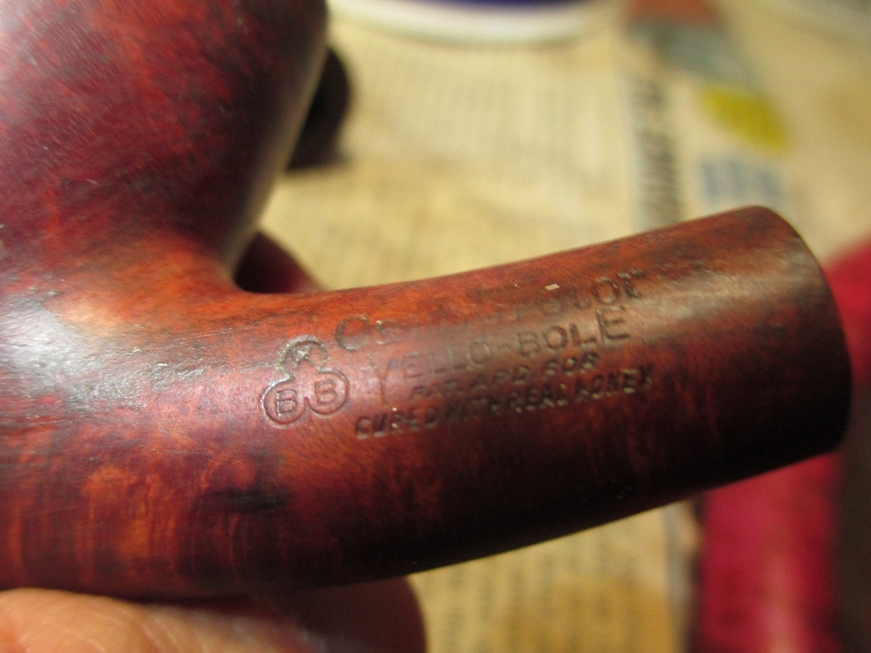
Once the internals were sorted, I decided to see what was under the varnish. I used 0000 steel wool and acetone to remove the worst of the finish.Andrew6 Here are some details of the markings on the bowl.Andrew7

Andrew8

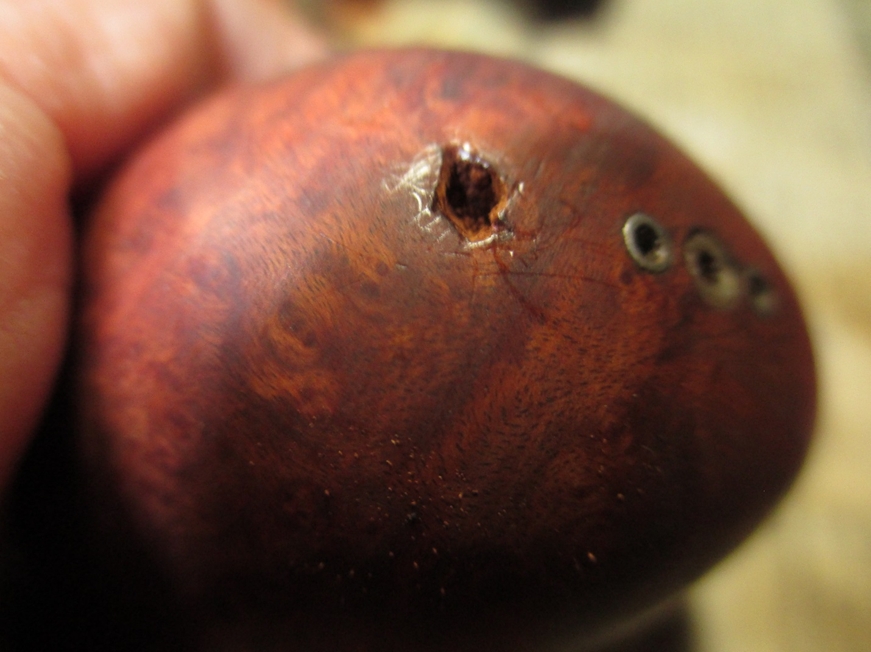
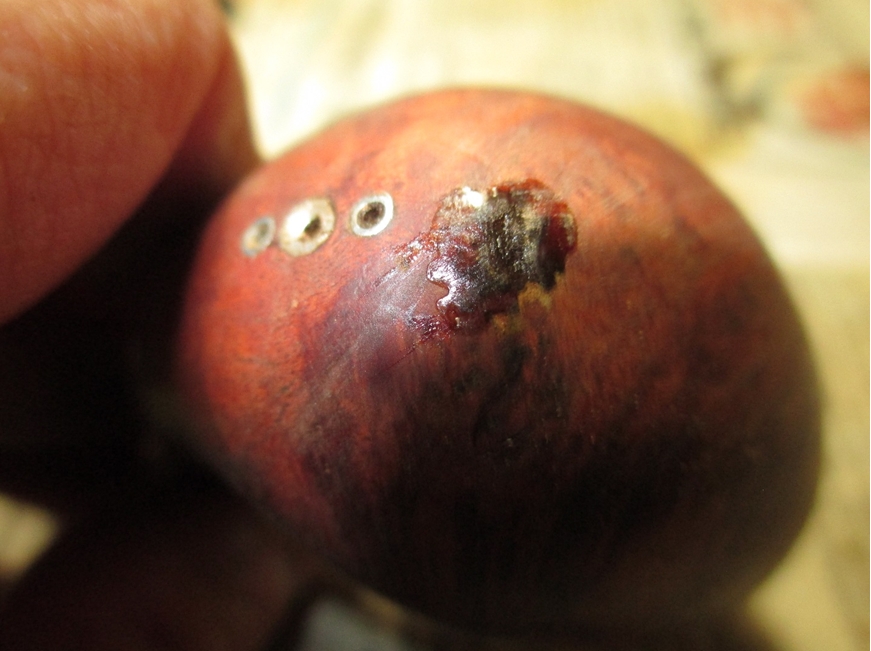
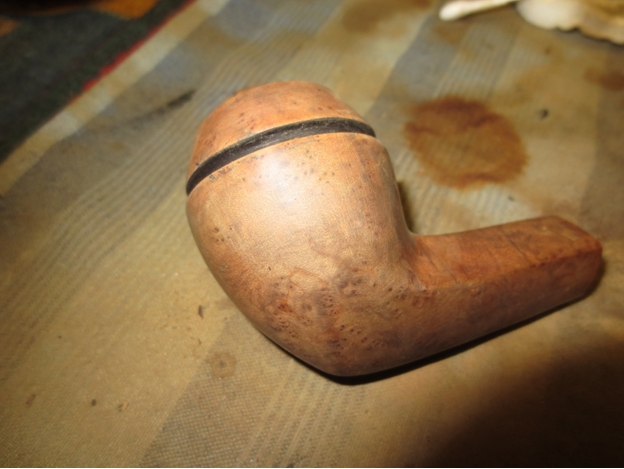
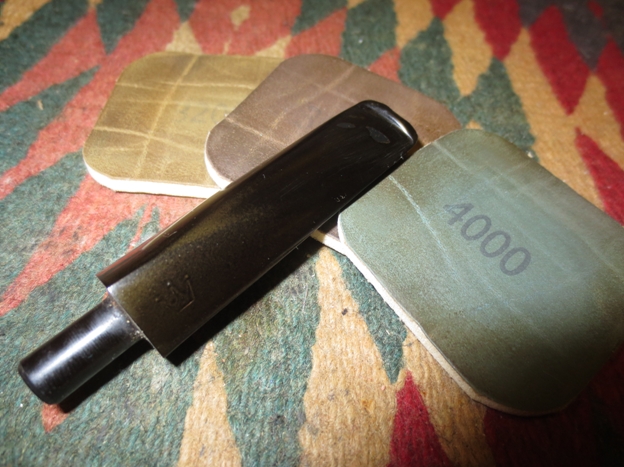
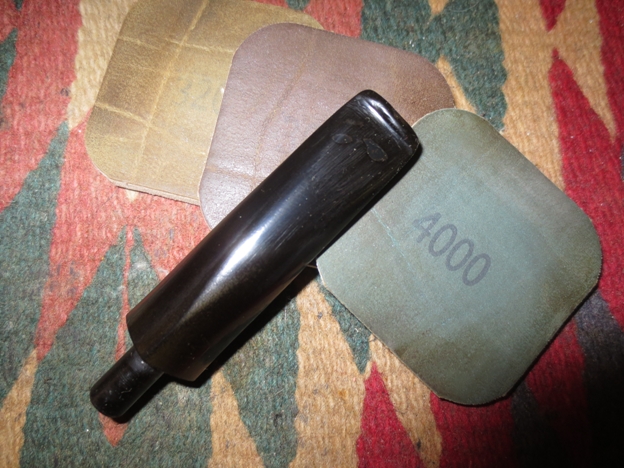
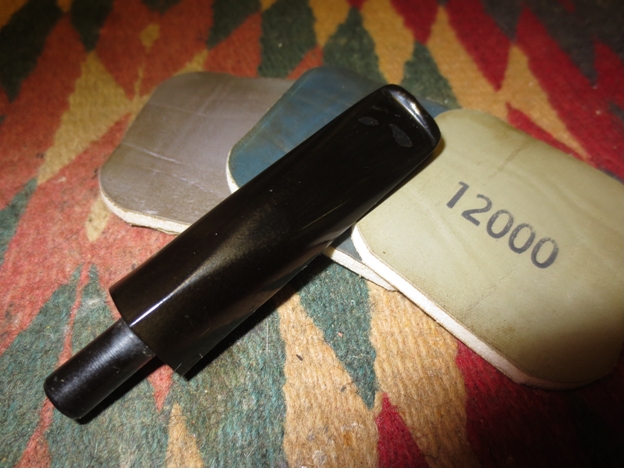
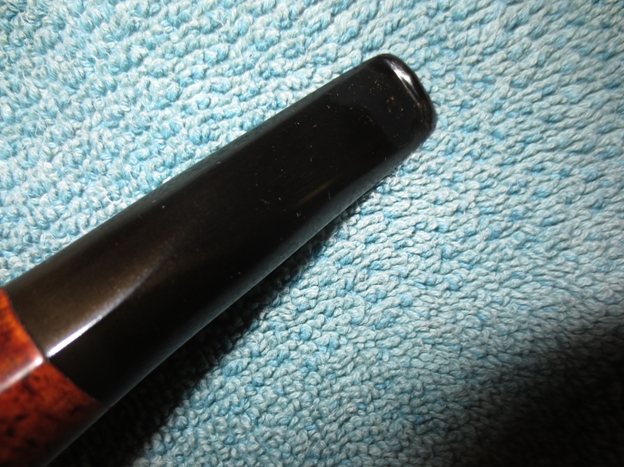
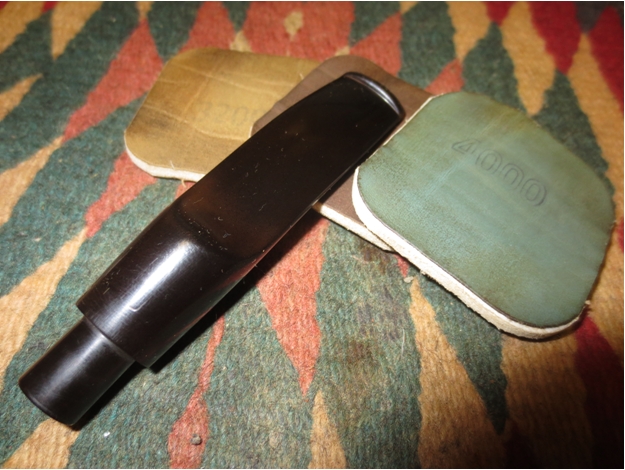
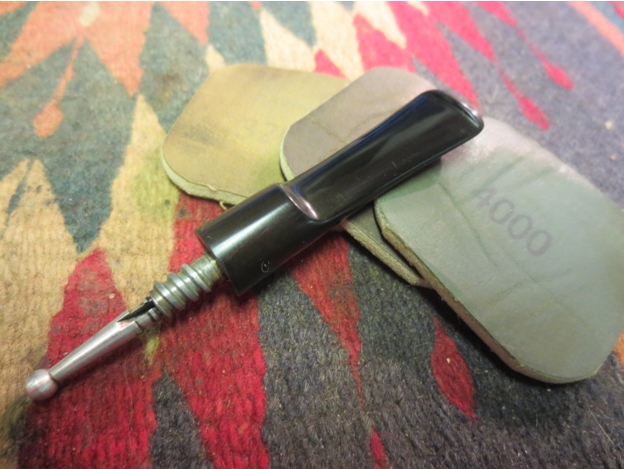
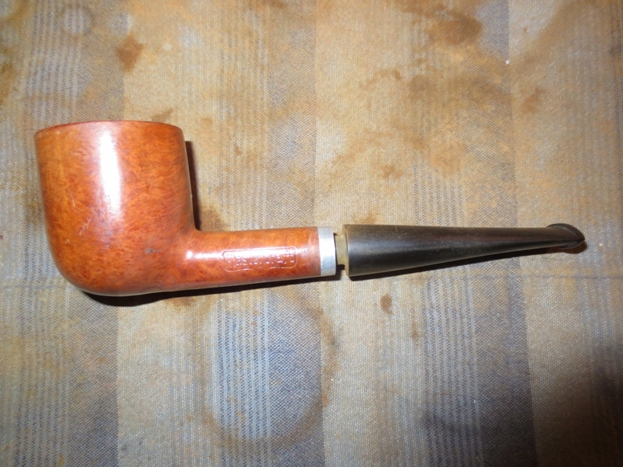
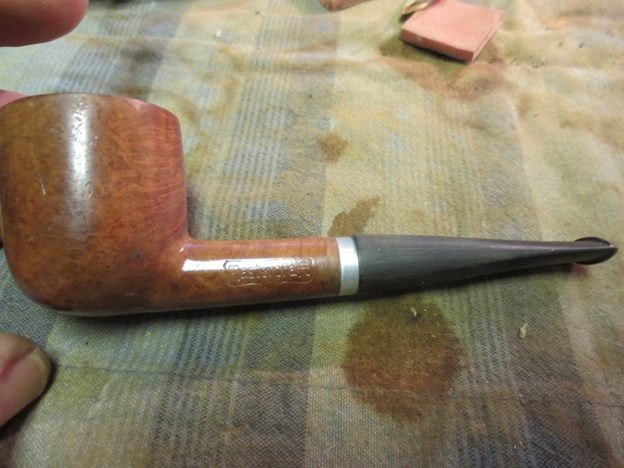
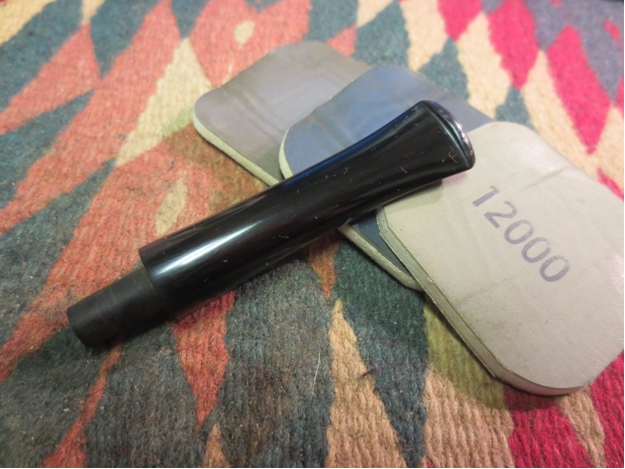
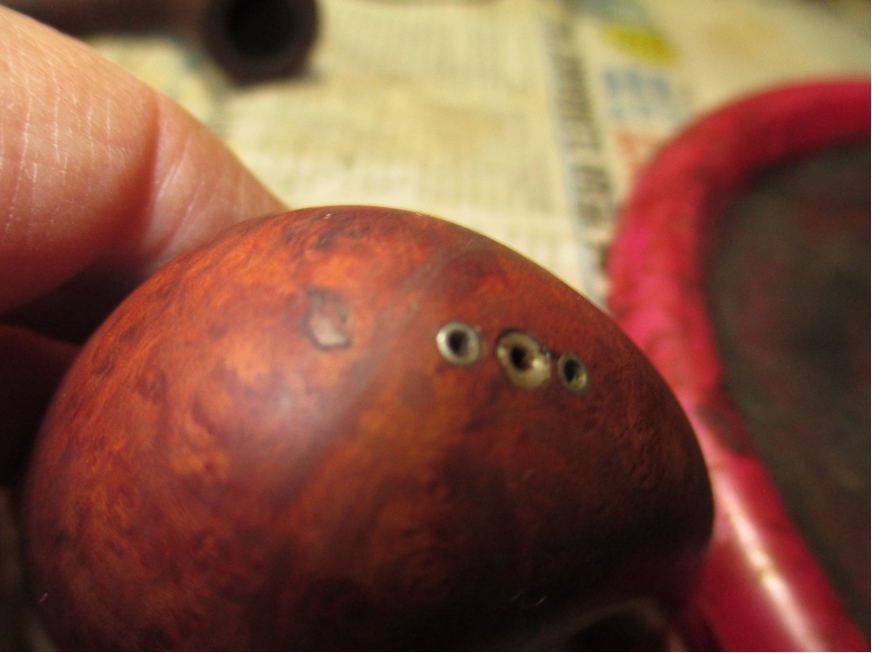
Andrew9 With the varnish off I could see the single fill on the bottom of the bowl.Andrew10 I used my dental pick to remove the fill…Andrew11 And repacked it with briar dust and CA glue.Andrew12 I use accelerator with the CA glue. This gives me the ability to start rough shaping the fill within a minute or two of application. I used 150 grit to knock of the high spots, followed by 400 grit to blend it in. I used a progression of micro mesh pads, from 1500-12,000 to remove most of the dings in the bowl and to prepare the wood for stain and final polish. I used 400 grit wet/dry with water on the stem, followed by micro mesh pads (1500, 1800, and 2400) with water. Next I used micro mesh pads without water (3200-12,000) to polish the stem. Finally I buffed the bowl with white diamond and carnauba wax on the buffer. I used my rotary tool (the generic term for a Dremel that isn’t made by Dremel) with white diamond and carnauba wax to polish the stem. Here is the final result.Andrew13

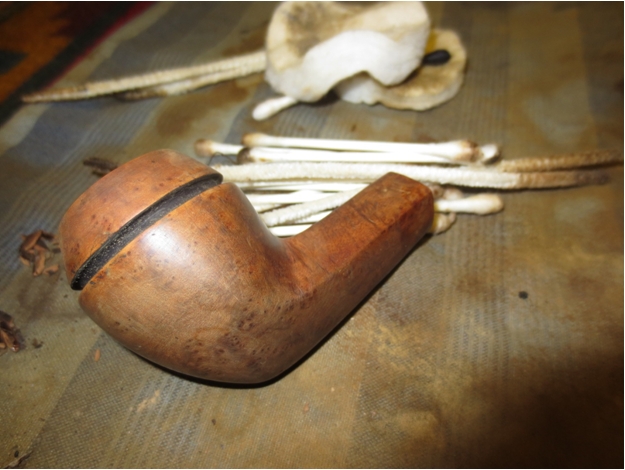
Andrew14 Some better detail of the grain.Andrew15

Andrew16

Andrew17

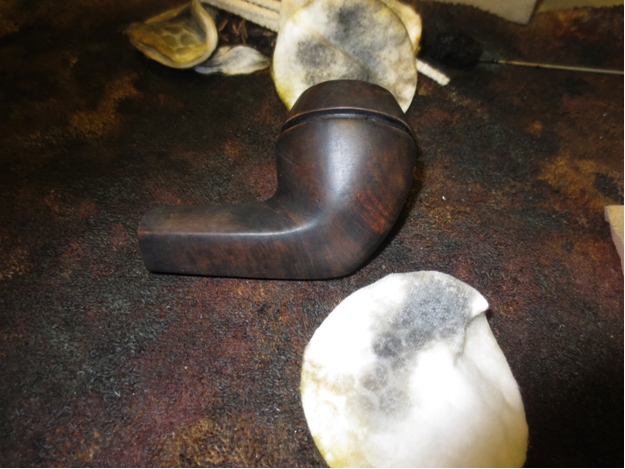
Andrew18 I forgot to mention that I tried something new to highlight the grain. I normally use a coat of black aniline dye followed by a brown or mahogany. This time I used dark walnut as the base coat. I like how it turned out.
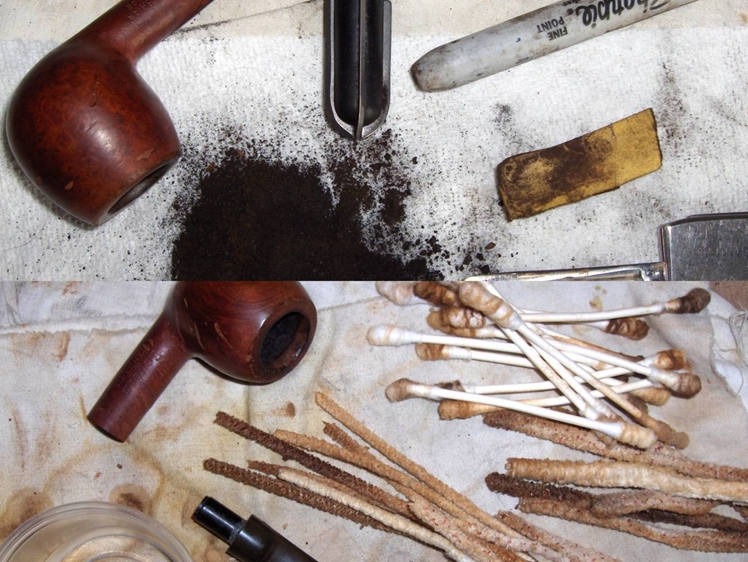
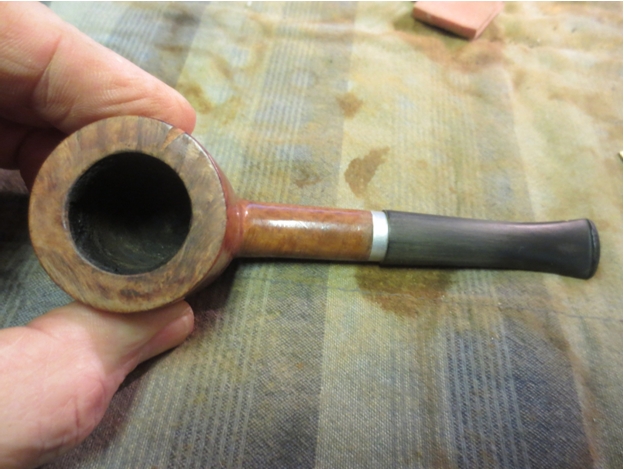
Here is a better view of the stem and bowl.Andrew19 Thanks for looking.

A Hand Made Marvic & Purdy Billiard 15


Blog by Troy Wilburn

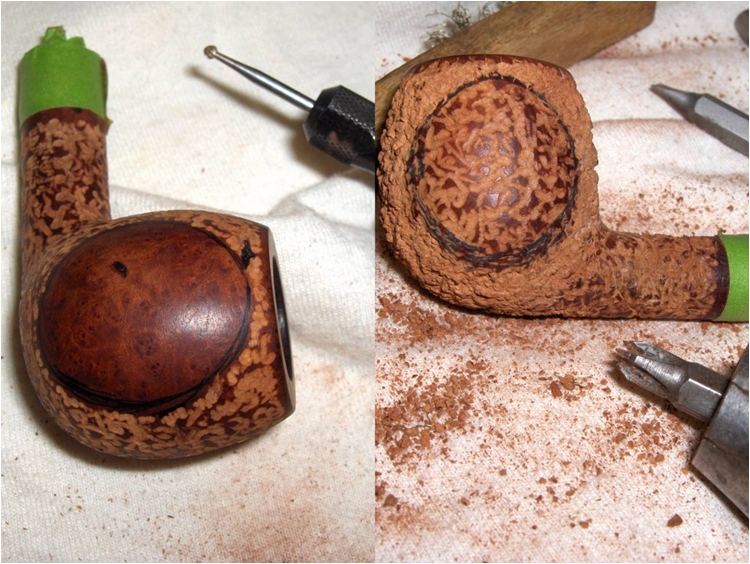
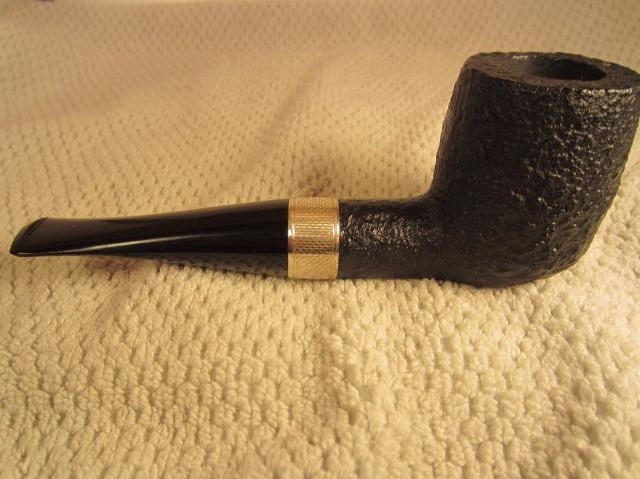
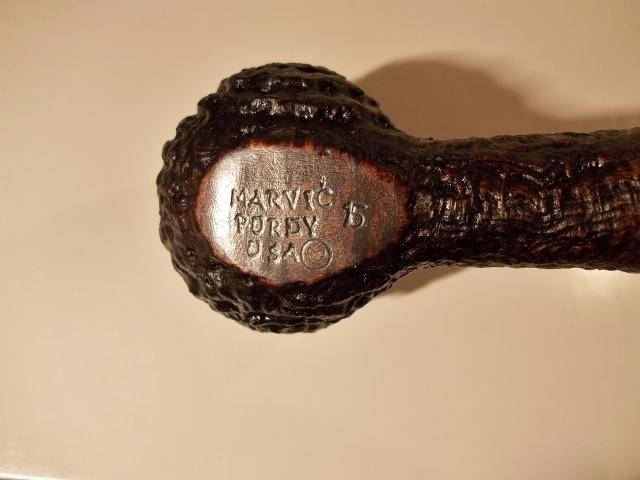
A short time back I was doing one of my favorite past times and that’s scanning for pipes on eBay. I spotted this Charatan and was just infatuated with it. The shape, style and blast just really drew my attention but I knew that it was beyond my budget.Blast1 So I got the idea to contact a friend of mine on the Dr. Grabow Collectors Forum, Gary Balestrieri Jr. Gary is a truck driver and a pipe carver who owns Marvic Pipes. I asked him if he could carve me a pipe based on that Charatan but unfinished. I suggested a narrow yellow acrylic band instead of a metal band as the only major change. To my happiness he agreed.
I then contacted another friend of mine from the forum, Carl Purdy, who does some fine sand blast work on pipes. I have posted some of his work before on here on the Jobey Lumberman I restored and he sandblasted.

With both on board to do the work for me, it was agreed that the pipe would be mailed to Carl after Gary carved it and then mailed to me and I would put the finish on it.

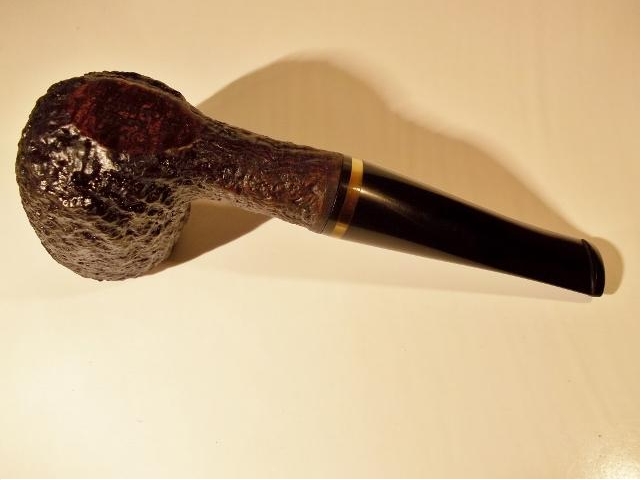
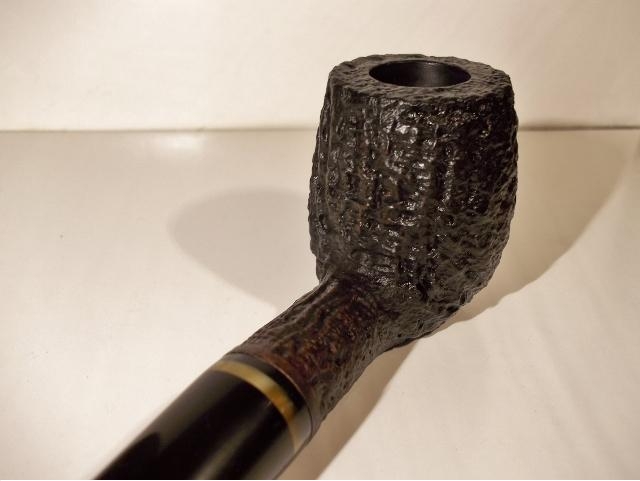
Well I got it in the mail last Saturday and I must say that I was giddy at such nice work they both did on this pipe for me. Gary nailed the shape and Carl did a masterful job on the blast. I’m very proud of both of them and honored to own this pipe now. I now have a pipe that to me is a 100 times better than that Charatan and it cost me half the price that pipe sold for. It was made with care by two friends and I consider that the most important aspect of his pipe.

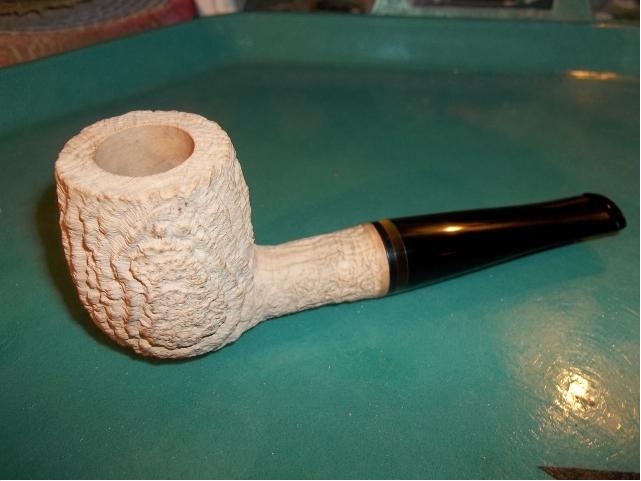
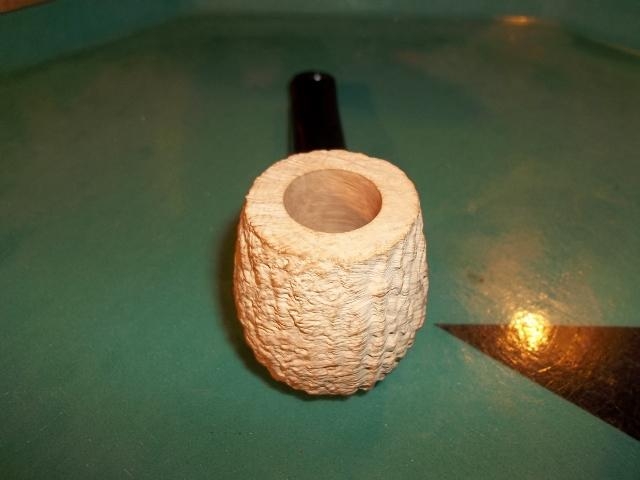
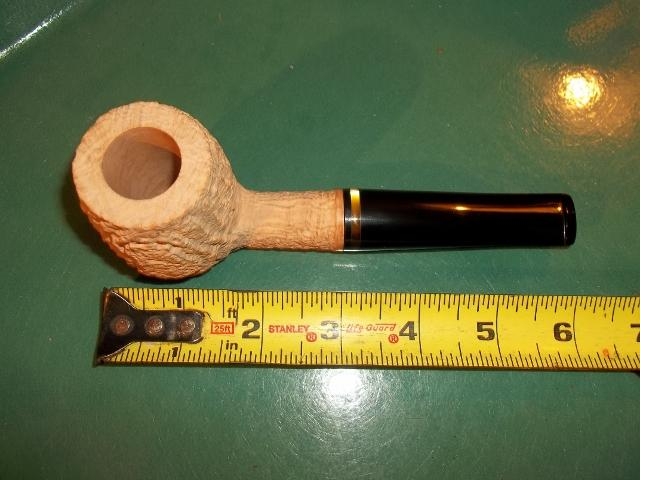
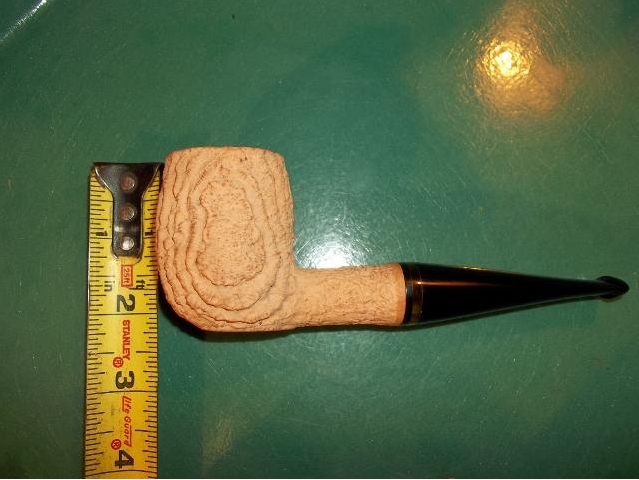
This is what the pipe looked like when it arrived in the mail.Blast2

Blast3

Blast4

Blast5 I was expecting just a plain yellow band on the stem but Gary used some kind of acrylic that changes from black to yellow. It was an unexpected and nice touch.

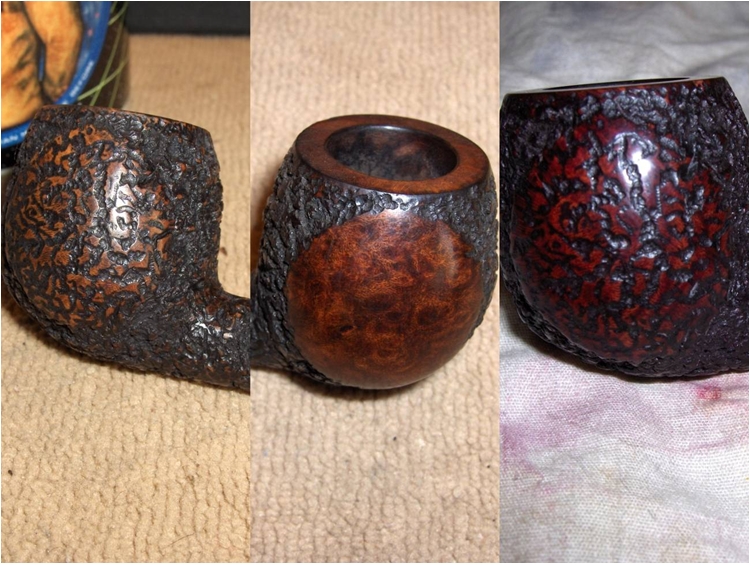
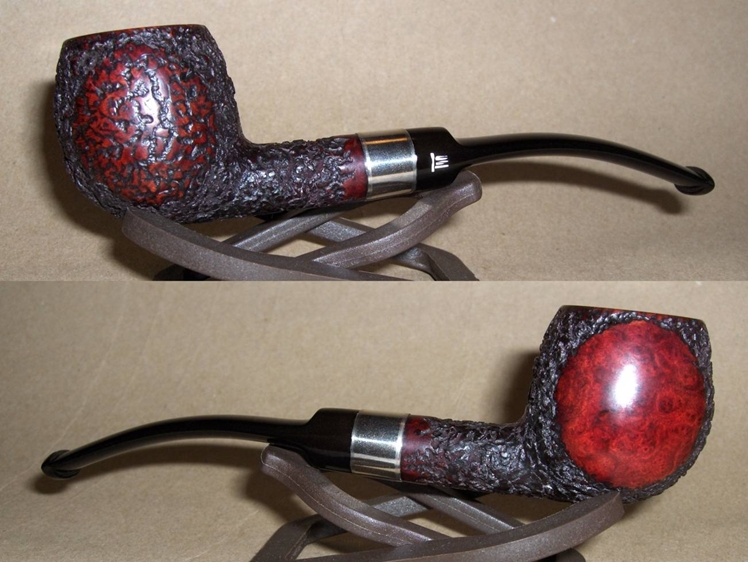
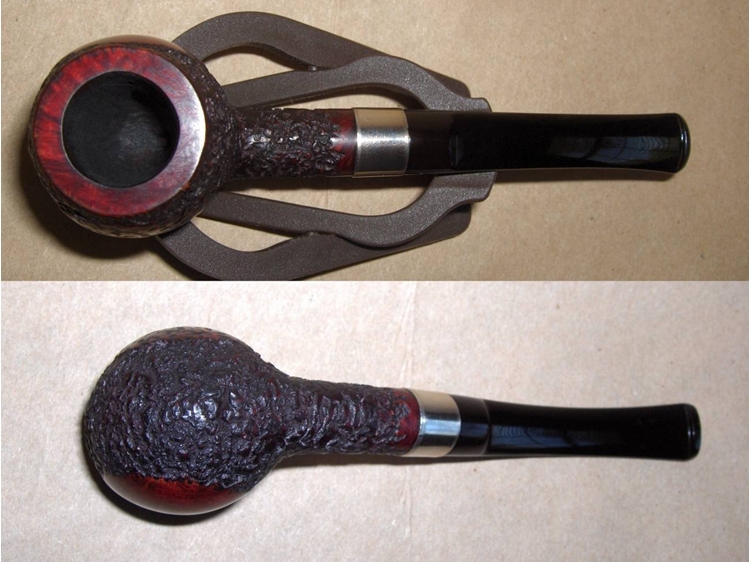
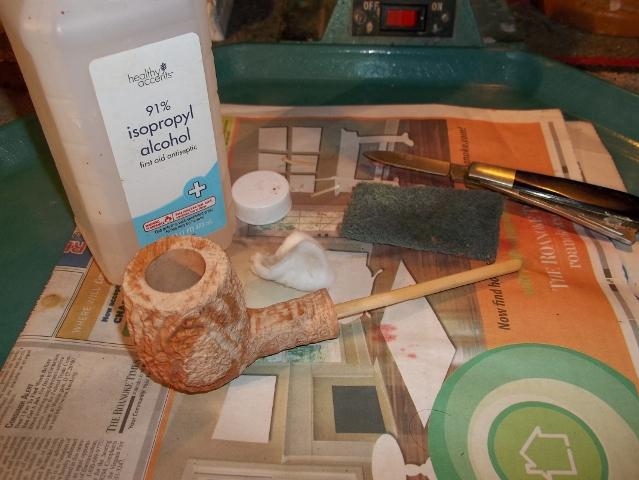
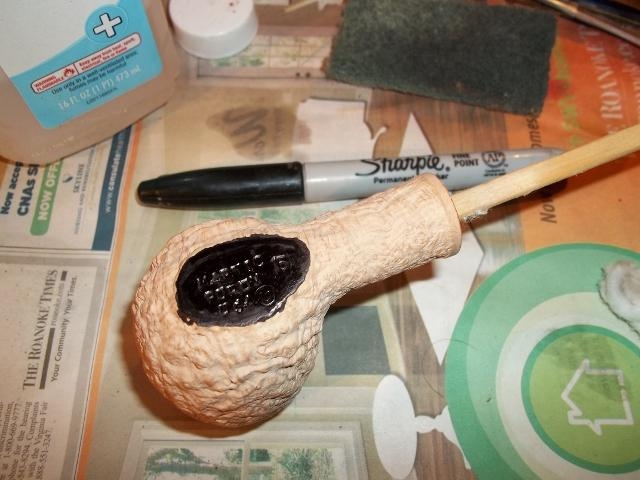
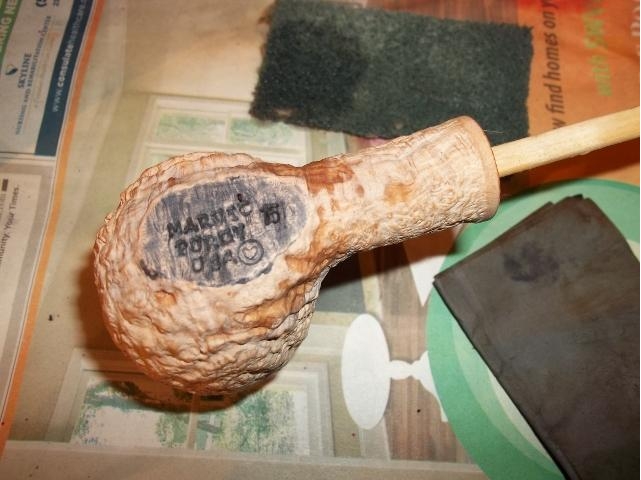
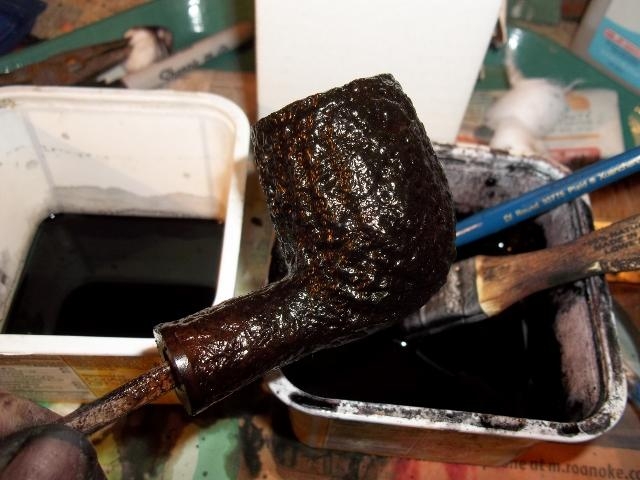
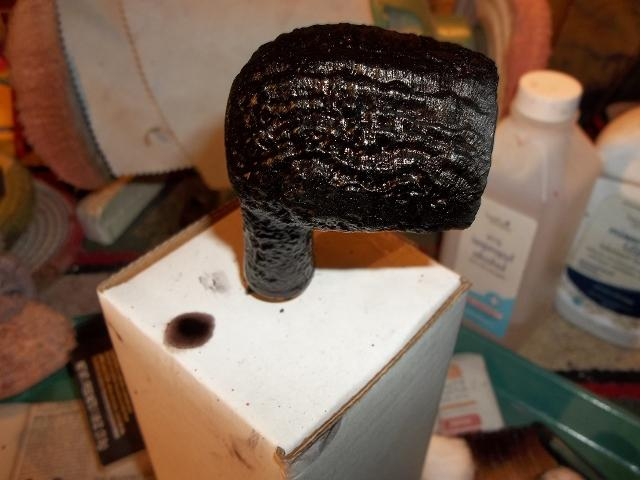
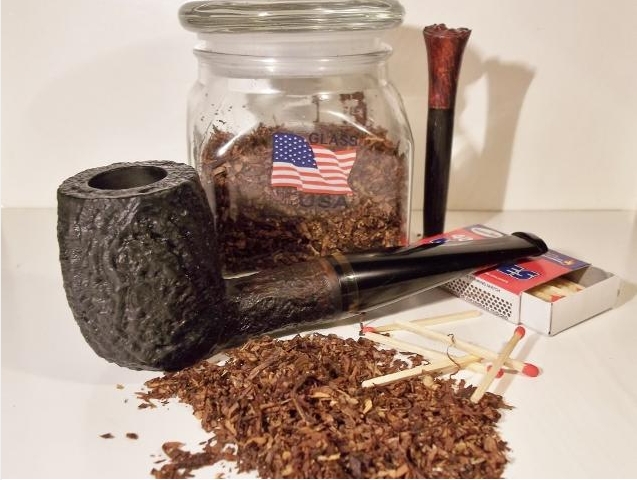
I was just going to stain the pipe a plain jet black, but after seeing the blast I decided to see if I could do a kind of Dunhill Shell look to make it more interesting and high end looking. The first thing I did was carve a holder out of a corn dog stick – nothing but the best high end equipment on my kitchen table you know. Then I wiped it down with 91% alcohol to make sure that there were no contaminants on the briar. I also rubbed the bowl with a Scotch Brite pad to soften the sharp edges on the blast.Blast6 I then did some contrast staining on the stamping using a black sharpie as I wanted the stampings to stand out. I was also glad to see both Gary and Carl’s name stamped on the pipe. That was another very nice touch.Blast7 Then I wet sanded the smooth area with very lightly using 91% alcohol.Blast8 Then to make sure that the dye would not penetrate too deeply and turn the whole smooth area black I took mineral oil and painted it on with a Q tip.Blast9 I mixed up some black RIT dye and applied several coats to the bowl until it suited me.Blast10 I set the pipe to dry in my high tech drying rack disguised as a cardboard box.Blast11 I wiped down the bowl with mineral oil and checked over the colour. It looked good. Now it was ready for some wax.Blast12 I buffed it kind of heavy on the first coat to take some color off and to get that shell look to the briar. On a sandblasted pipe after several initial coats of wax I heat it over my stove to melt the wax into all the crevices. Then I buff it with a few more coats and repeat the process until it builds up to my liking.Blast13 Here is the pipe after a couple of hours of buffing and waxing.Blast14

Blast15

Blast16

Blast17

Blast18

Blast19

Blast20

Blast21

Blast22 The pipe is a fantastic smoker and already after only a couple of ounces or so of tobacco smoked through it is beginning to break in. The draw is very easy and butter smooth. The pipe almost seems to smoke itself. I can only imagine how it will smoke after several more ounces are smoked through it.

Gary did perfection on the mechanics of the pipe and Carl put a world class looking blast on it. I couldn’t have asked for a better pipe. It turned out beyond my expectations. This will always be a cherished pipe to me. I have to add that the pictures just do not do it justice.

Saving a Pipe – Restoring a Royal Danish 33 Bulldog that had seen better days.


Blog by Steve Laug

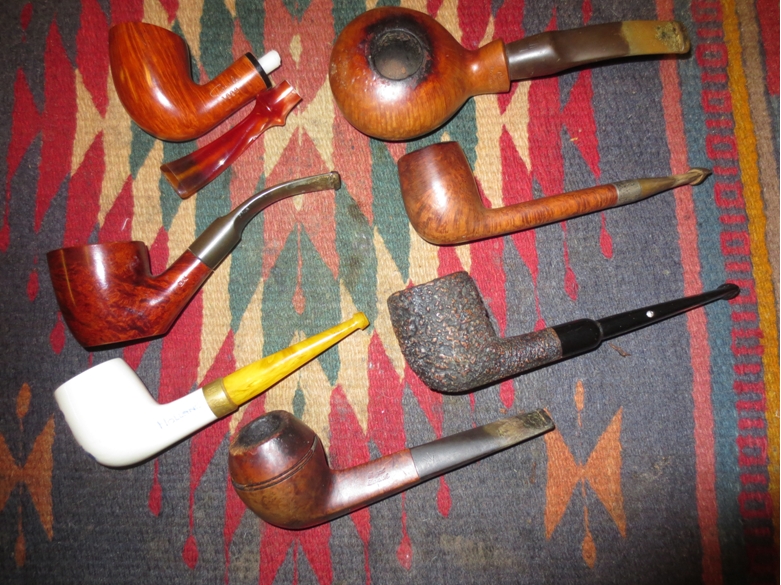
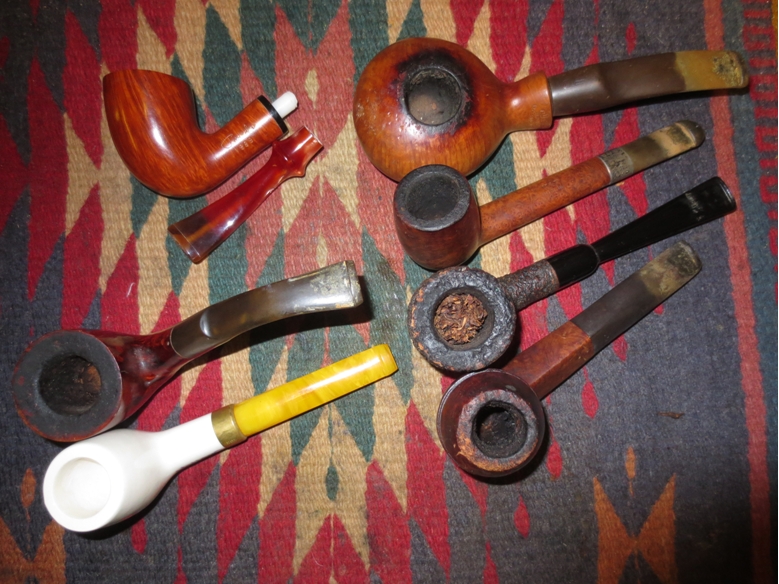
I am in the midst of a particularly labour intensive restoration of a Royal Danish 33 Bulldog. It was in very rough shape but having met the old timer who it originally belonged to I decided to make the extra effort to bring it back to life. It was obviously a favourite pipe of his and he as much as said so. I think it was the only one of the lot that he felt bad about letting go of when he sold me the lot. Often I will take time to read some of my favourite blogs during lunch break at work or even when I come home to help me unwind from a long day. I read before I pick up a pipe to work on or restore and find that it helps focus my attention. Yesterday at lunch I came across an article by Alan Chestnutt on his blog on his website Reborn Briar Estate Pipes that really resonated with what I was feeling as I worked on the particular pipe. He called the work he does as a pipe restorer – “saving the pipes”. I think that is a particularly poignant description of the work on this Royal Danish 33 Bulldog that I picked up in the lot from craigslist. It is shown in the first photo below at the bottom middle of the photo. In the second photo it is in the right hand column at the bottom of the photo.craig5

craig6 The old timer was a well loved pipe and obviously a good smoking pipe. It was in rough shape. In fact it was in the roughest shape of the lot. The photos below show the state of the pipe when I brought it to the work table. The finish was rough and dirty with lots of scratches and dents in it. The rim was shot. The front side was worn down from beating out dottle when the smoke was finished. The drop from the height at the back of the bowl to the height at the front was over ¼ inch and the surface was chewed up. The outer edge of the bowl on the front was obliterated. The rim surface was beat up as well. There were thick marks of tar or oil on the sides of the bowl and rim that were sticky. The bowl was heavily caked. The double ring around the bowl was damaged. Over ½ of the briar between the rings was broken and missing. The stem was oxidized and chewed. The topside of the stem had deep dents near the button that went up almost a half an inch. On the underside the tooth marks were even deeper and there was a hole in the stem where it had been gnawed through. Around the stem was calcification that is common pipes that have had a softie bit on the stem. I think the old timer who had this pipe slipped the softie bit over the damage so he could keep smoking his favourite pipe.Dan1

Dan2

Dan3

Dan4 The next series of photos show the thickness of the cake, the extent of the damage to the rim and the missing pieces of the briar between the double rings around the cap of the bowl.Dan5

Dan6

Dan7

Dan8 I reamed the bowl with a PipNet reamer starting with the smallest cutting head and working up to a head that was almost the same diameter as the bowl. I took the cake back to a very thin layer on the bowl.Dan9

Dan10 I decided to sacrifice some of the height of the bowl to give back some dignity to the tired bowl. I topped the bowl in stages on a topping board. The back side of the rim was significantly higher than the front of the bowl so I started by leveling out the bowl height all the way around the bowl. I brought the back side down to the same height as the damaged portion.Dan11

Dan12

Dan13 Once the height was even all the way around the bowl it was time to work on the front edge damage. At this point in the topping process I pressed the bowl down on the topping board with even pressure front and back and moved it on the sand paper in a circular motion.Dan14 I continued sanding until the damage on the front top of the rim was minimized. There was still damage on the front of the bowl that would need to be addressed to smooth out the damage to the bowl. I wiped the bowl down with acetone on a cotton pad to remove the sticky oils and tars spots on the bowl sides. I also cleaned up the damaged area on the front of the bowl so that I could repair it.Dan15

Dan16

Dan17 I dripped some super glue into the damaged surface and then pressed briar dust into the glue. I then gave it a top coat of super glue as well. In the photo below you can see the repaired edge and the repair to the gouges and damage on the bowl front. Dan18 I sanded the repaired area with 220 grit sandpaper and then with a medium and a fine grit sanding sponge to blend the repair into the surface of the briar. The next photo shows the same spot on the bowl after sanding the repair. The second photo below shows the top view of the rim repair. The dark/shiny edge at the bottom of the photo is the super glue repair.Dan19

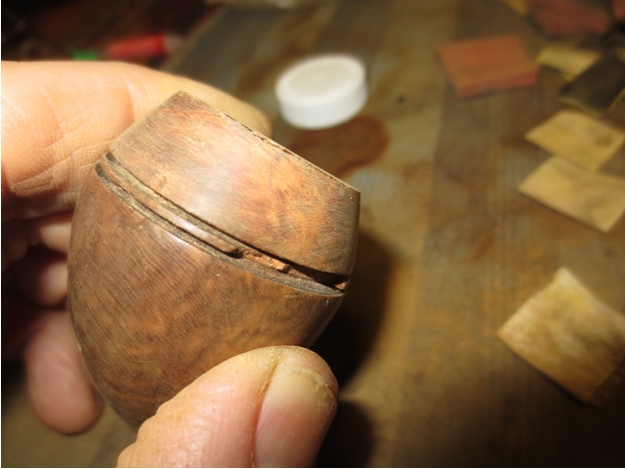
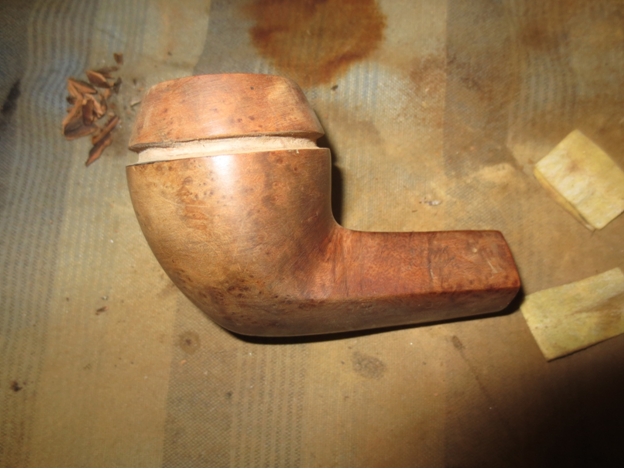
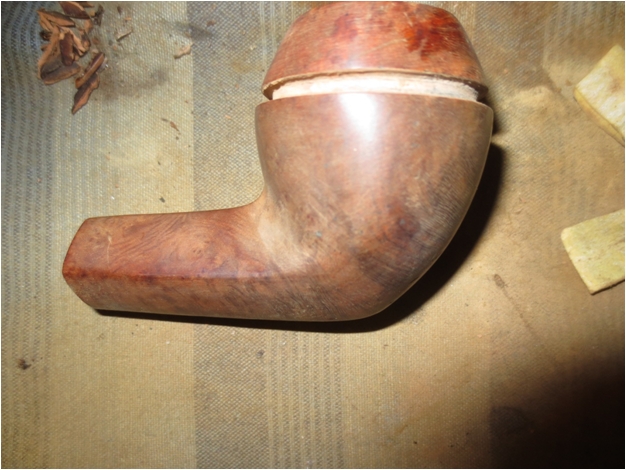
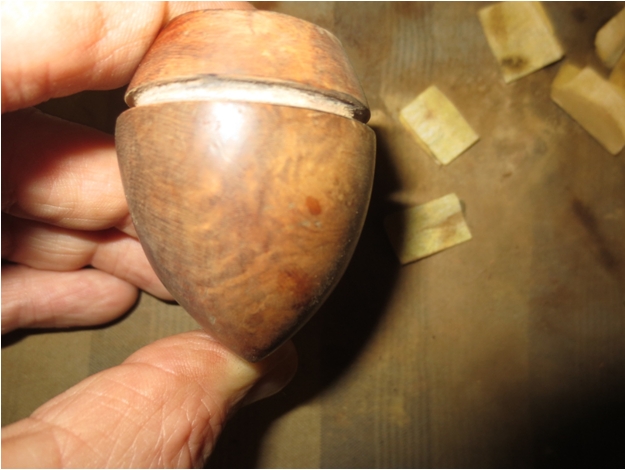
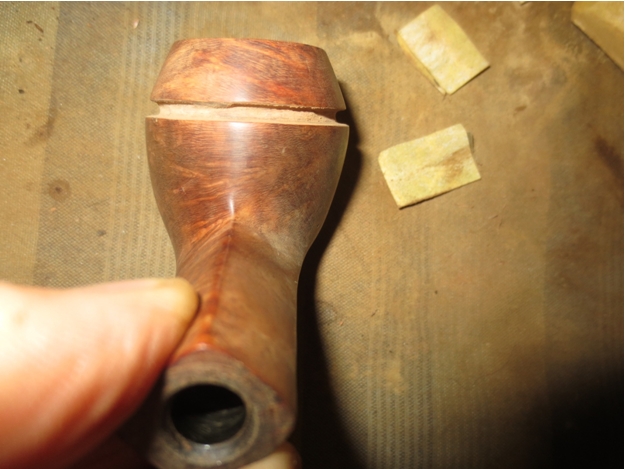
Dan20 I tried to fill in the damaged briar between the double rings around the bowl. I filled in the areas with briar dust and super glue but when I tried to re-score the two lines the fills fell out of the ring. After several failed attempts to build up the centre I finally decided to remove the centre from between the two rings. I used a sharp knife to lift out the centre portion all the way around the bowl. With that gone I used a folded piece of 220 grit sandpaper to sand the surface smooth in the groove. I also sanded it with the sanding sponges to remove the scratching.Dan21

Dan22

Dan23

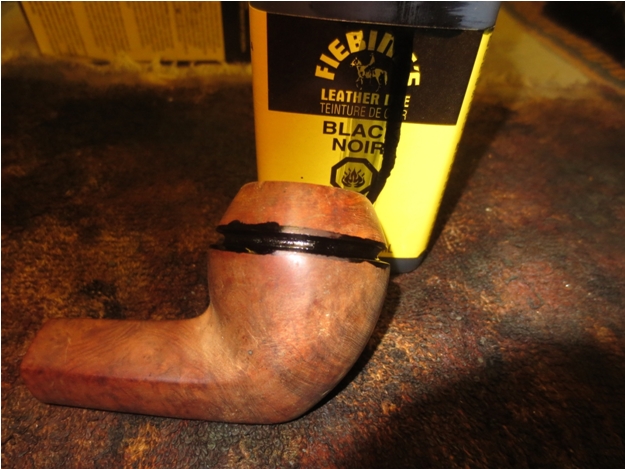
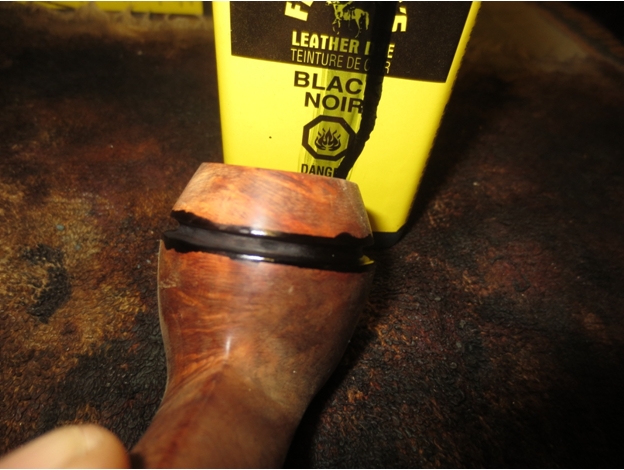
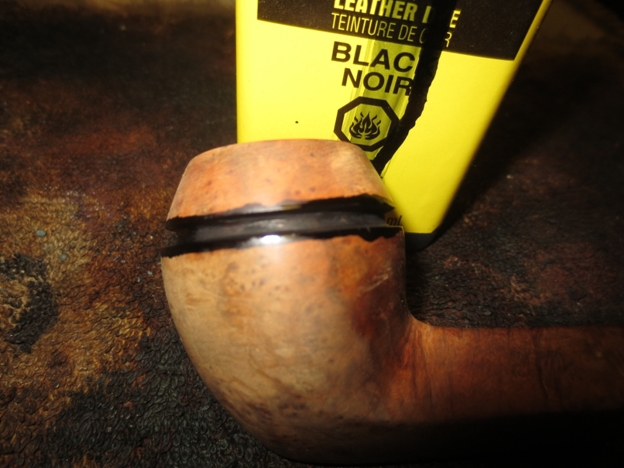
Dan24 I decided to stain the groove to highlight it rather than hide it. I used a black aniline stain and applied it, flamed it and repeated the process until I had the coverage in the groove that I wanted.Dan25

Dan26

Dan27 I sanded the bowl sides around the groove to remove the spillage of the stain. I worked on the bowl until the black was confined to the groove and the top and bottom edges. The more I sanded the bowl the more I liked the grain that I was seeing come through. There was some great flame grain, birdseye and mixed grain on the bowl and shank.Dan28

Dan29

Dan30

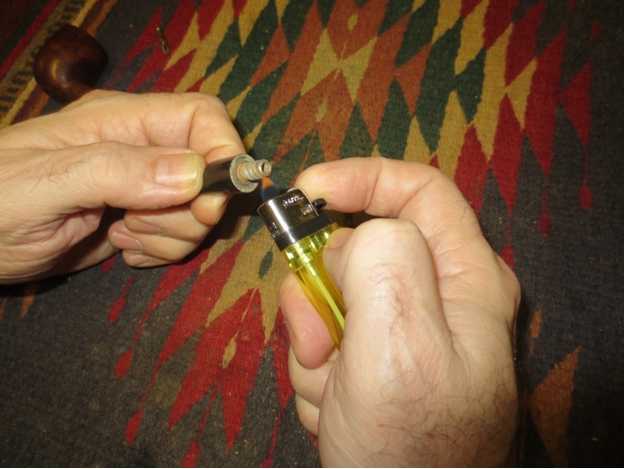
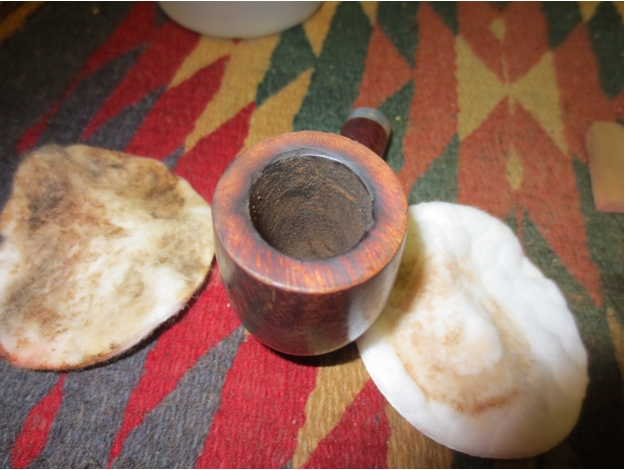
Dan31 I decided to do a contrast stain on the rest of the bowl to highlight the grain and contrast with the black stain in the groove. I heated the briar and stained it with a black aniline stain. I applied it and flamed it, and repeated it a second time. Once it was dry to touch I wiped the bowl down with alcohol and then with acetone on cotton pads to remove the black stain from the surface of the briar and leave it in the grain.Dan32

Dan33

Dan34

Dan35 I set the bowl aside to dry for awhile so I could work on the damage to the stem. I sanded the stem with 220 grit sandpaper to remove the oxidation and to clean up the calcification around the damaged areas of the top and underside of the stem.Dan36

Dan37 I wiped the stem down with alcohol to clean the surface of the stem so I could apply the superglue patch. I used a dental pick to remove debris and damage vulcanite. I greased a pipe cleaner with Vaseline and inserted it in the button underneath the hole in the stem. I built up the area around the hole with black super glue. I sprayed it with an accelerator to allow me to add a second and third coat to the repair to the hole. I then flipped the stem and repaired the deep tooth marks on the top of the stem. I filled them and also sprayed them with the accelerator.Dan38

Dan39 Once the stem patch was dry to touch I put the stem back in place on the bowl and sanded the bowl with a medium and a fine grit sanding sponge to remove more of the black stain. I also used a fine grit sanding block. The next four photos show the bowl with the black removed and the grain patterns highlighted.Dan40

Dan41

Dan42

Dan43 I set the pipe aside for the night and let the stem repairs cure over night. In the morning I sanded the patched areas with 220 grit sandpaper and with a medium and fine grit sanding sponge. I rubbed the bowl down with a light coat of olive oil to see what contrast would look like. I really liked the overall look of the bowl with the contrast. Seeing this I knew what contrast stain colour I would use on the next stain coat.Dan44

Dan45

Dan46

Dan47 There were still small pits in the patches on the top and bottom repairs. I find that when I use an accelerator the spray causes these bubbles that once dry pop and leave pits in the surface of the finish. I sanded the stem surface some more with 220 grit sandpaper to smooth it out and then added another coat of black super glue. When it dried I sanded it again to bring it smooth. In the next two photos you can still see some small pits in the finish.Dan48

Dan49 I repeated the process of filling in the pits and then finished by using some clear super glue which dries more quickly and brushing it over the pitted areas on the stem. Once I had that done I sanded the stem with micromesh sanding pads. I wet sanded with 1500-2400 grit pads. The surface was significantly smoother but the patches still showed through the finish.Dan50

Dan51 I dry sanded with 3200-4000 grit micromesh pads and rubbed the stem down with Obsidian Oil. Once it dried I repeated the sanding with the same pads. The patches are still visible but are gradually blending into the surface of the vulcanite.Dan52

Dan53 I buffed the stem with red Tripoli to remove the scratches in the rubber and to further blend the patches. I then took it back to the work table and dry sanded it with 6000, 8000 and 12,000 grit micromesh pads. I rubbed it down with another coat of Obsidian Oil and set it aside until it was absorbed.Dan54 I rubbed the stem down with Scratch X2.0 to polish the scratches. It is a plastic polish and blemish remover that is used on acrylic/plastic headlamps. It worked wonders in removing the remaining scratches in rubber stem material. I then buffed the stem with Blue Diamond on the buffing wheel and gave it several coats of carnauba wax. I buffed it with a clean flannel buff to raise the shine shown in the next two photos.Dan55

Dan56 After finishing the stem it was time to give the bowl its contrast coat of stain. I used an oxblood aniline stain. I applied it with a folded pipe cleaner to keep it out of the groove around the bowl. I flamed it, reapplied it to the briar and flamed it again.Dan57

Dan58

Dan59

Dan60 I buffed the stem and bowl with Blue Diamond and then gave the entire pipe several more coats of carnauba wax. I buffed the pipe with a clean flannel buff. The finished pipe is shown below. I think that Alan Chestnutt’s definition of the restoration process as Saving the Pipe accurately describes the work that went into restoring this beauty. The finished pipe ready to fire up and be enjoyed for many more years to come.Dan61

Dan62

Dan63

Dan64

Dan65

JPL Tomato restored and given a new look


Blog by Steve Laug

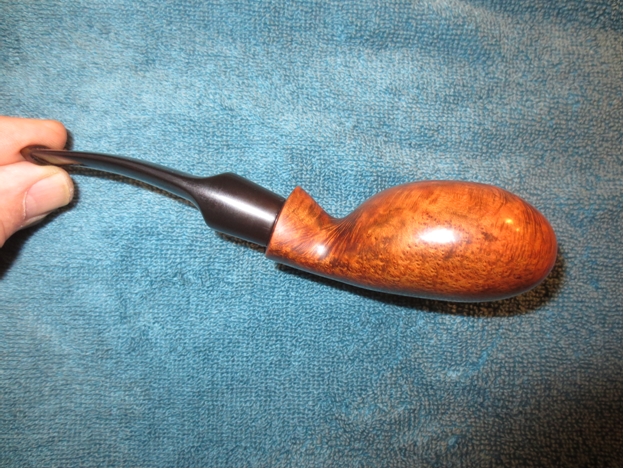
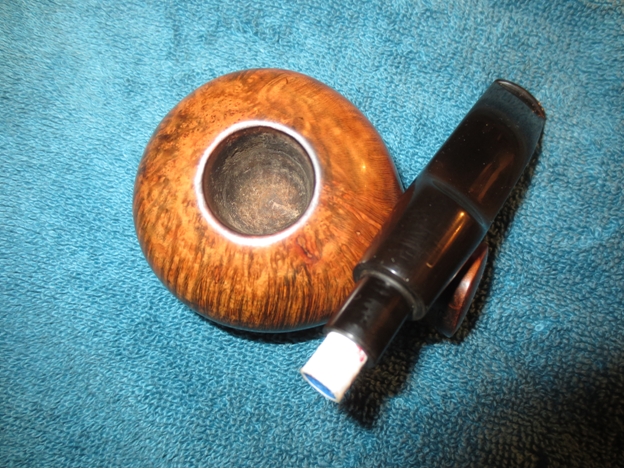
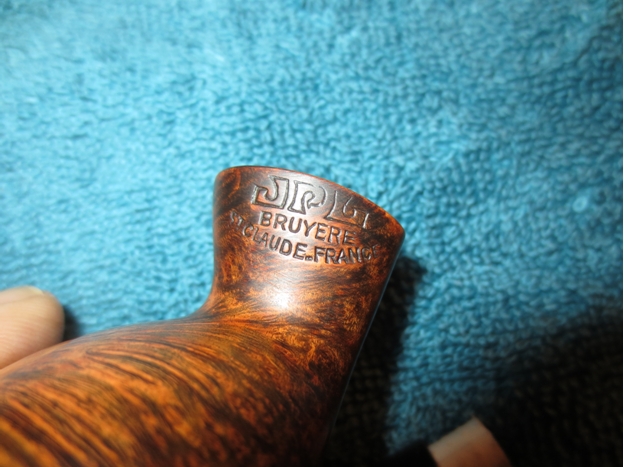
When I first saw the pipe lot on craigslist Vancouver the pipe that caught my eye was the squashed tomato that is shown in the photo below on the top right. I had no idea who the make was but it was obviously a large pipe and a unique shape that made me want to know more. It is actually the pipe that pushed me to make the phone call to the seller. I have a Rad Davis that is similarly shaped but nowhere near as large.craig5 When I got to the seller’s home and looked at the pipe I could see that it was stamped JPL over Bruyere over St. Claude France on the shank. The pipe was well smoked. The finish was pretty well dried out – I think originally it had been an oil finish over the natural briar and that was gone and in its place was a lot of grime. The top of the bowl was in the roughest shape. It had a thick coat of tar/oil that I call lava flowing over the rim. The bowl had a cake that was hard and there were remnants of tobacco stuck in the walls and bottom of the bowl. The top also had what looked like road rash on the front. There were many pin prick nicks and dents that made me think that the pipe had been dropped on concrete. The redeeming feature was that the briar had some stunning flame grain around the sides and top portion of the bowl and featured great birdseye grain on the bottom. The stem was oxidized and there were two deep tooth marks on the top and bottom sides of the stem near the button. There was also a lot of tooth chatter and it looked as if the stem had been covered at one time with a softie bit.JPL1

JPL2

JPL3

JPL4 I took the next series of three photos to show the damage to the top of the bowl and the tooth marks in the stem.JPL5

JPL6

JPL7 I was unfamiliar with the stamping on the pipe as I had not seen it before. Once Googled it on the web I found that JPL stood for Jean Pierre Lacroix. That was a name I was familiar with in previous reading on St. Claude pipe making families. I looked on Pipedia and found the following information:

“Lacroix Pipes have a rich history of pipe making tradition and the brand was started in 1962. Eugine Lacroix began making pipes for the Delacour factory in the 19th century; his sons founded their own factory in 1921. Two of the grandsons (including Jean) continued on in the business, but parted ways and struck out on their own in 1962. At that time, Jean set up Jean Lacroix pipes, coincidentally in the old Delacour building his grandfather started in 85 years prior. Today, Jean Lacroix, Chacom, Jeantet, and Vuillard are all pieces of the larger Cuty-Fort Enterprises, and Jean is actively involved with the prestigious Confrerie des Maitres-Pipiers de Saint-Claude. Jean still makes pipes; his spectacular freehands are known throughout the world. The model named “Nizza” De Luxe is made by him with scripted stamp showing his name (hard to read!). Jean Pierre Lacroix sometimes marked Maitre Pipier a Saint-Claude.” Quoted from Pipedia http://pipedia.org/wiki/Lacroix

More information is available on PipePhil’s website. http://www.pipephil.eu/logos/en/infos/lacroix-en.html#split

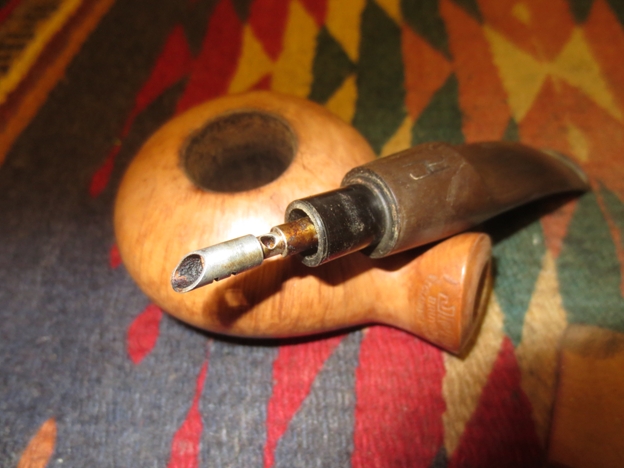
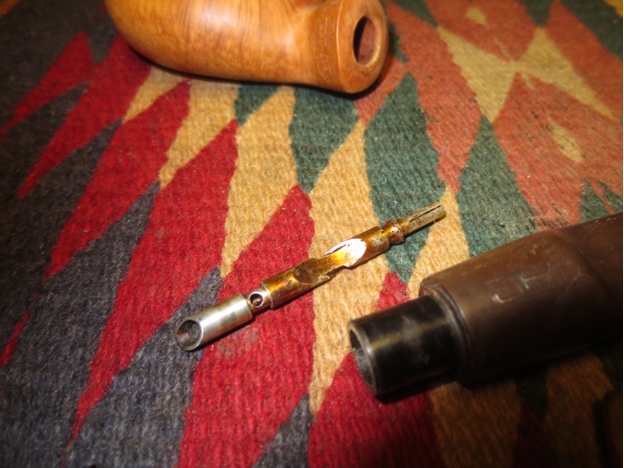
I began cleaning up the pipe by scrubbing the rim with acetone on a cotton pad. Since the pipe was unfinished and was so dirty I used acetone rather than alcohol. I scrubbed the bowl top until I had removed all of the tars and oils. I also wiped down the remainder of the bowl to remove the oils and dirt from the years of being held in the hand.JPL8 Once I had the bowl top cleaned I removed the stem to see what I was dealing with. I found that the stem and the shank was drilled for a 9MM filter but that somewhere along the way someone had inserted an ill fitting stinger apparatus in the tenon. It was pressed in place deep in the tenon and there was a lot of wiggle room around it. It did not extend very far into the shank and as such the shank was filthy. The first photo below shows the stinger in place. The second shows the length of the stinger once I removed it from the tenon.JPL9

JPL10

JPL11 I sanded the bowl with 220 grit sandpaper to remove the damage on the top of the bowl. I sanded until I had removed the road rash on the front edge and the damage to the back of the bowl. I sanded it further with a medium and fine grit sanding sponge to minimize the scratches left behind by the sandpaper.JPL12

JPL13 While I had the sandpaper out I also sanded the tooth chatter and tooth marks on the stem. You can see that after sanding I still had a fairly large tooth dent on the underside of the stem and a small one on the top near the left edge.JPL14

JPL15 I reamed the bowl with a PipNet reamer starting with the largest cutting head that would fit and working my way up to the largest head in the set. I took the cake back completely to leave the bare briar exposed and ready to build a new cake of my liking.JPL16

JPL17 I did some more sanding on the stem and was able to remove the damage from the top side near the button completely. The mark on the underside was still deep. I cleaned the surface of the stem with alcohol and picked the tooth mark clean with a dental pick. I filled it with black super glue and set it aside to dry.JPL18 I sanded the bowl with a medium and a fine grit sanding block and worked over the damaged area on the top front and some of the more minor damage on the sides and back of the bowl. I sanded it and then wiped it clean with isopropyl alcohol on a cotton pad. After wiping it down the grain really began to show. The final photo in this series shows the birdseye on the bottom of the bowl.JPL19

JPL20

JPL21

JPL22

JPL23 I scrubbed out the shank of the pipe with pipe cleaners, cotton swabs and isopropyl alcohol until it was clean and the swabs came back white. I may well use a retort on it later but at this point I stopped with the swabs.JPL24 I sanded the bowl with micromesh sanding pads – wet sanding with 1500-2400 grit pads in preparation for staining the bowl.JPL25 Though the pipe was originally unstained when it was made I decided to use a contrast stain to highlight the beautiful grain on the bowl. I heated the briar and then applied several coats of black aniline stain. I flamed the stain to set it in the grain. I wiped the briar down with alcohol on cotton pads to remove the topcoat of black stain.JPL26

JPL27

JPL28 I took the pipe to the buffer and buffed it with red Tripoli to further remove the topcoat of stain. I sanded it with a medium grit sanding sponge and the fine grit sanding block.JPL29

JPL30

JPL31

JPL32 Once I had the surface stain removed and the remaining black stain highlighted the grain I wiped the bowl down a final time with alcohol and prepared to stain it with the contrast stain. I decided to use a rich mahogany aniline stain for the contrast coat. I applied the stain and then flamed it to set it in the briar.JPL33

JPL34

JPL35 When it had dried I buffed it with White Diamond and took the following photos to show where it stood at this point in the process.JPL36

JPL37 The grain really stood out on the pipe at this point. I still needed to sand it with micromesh to develop a richer sheen.JPL38

JPL39

JPL40

JPL41

JPL42

JPL43

JPL44 I wet sanded the bowl with 1500-2400 grit micromesh sanding pads.JPL45

JPL46 I dry sanded with 3200-12,000 grit micromesh sanding pads.JPL47

JPL48

JPL49

JPL50 After sanding with the 12,000 grit micromesh pad I buffed the bowl with Blue Diamond on the buffing wheel and then gave it a coat of carnauba wax. I buffed it with a soft flannel buffing pad to raise the shine. I set the bowl aside and went to work on the stem. I cleaned out the 9MM tenon with alcohol and cotton swabs and pipe cleaners. I worked until the stem was clean.JPL51

JPL52 I sanded the stem with a medium grit sanding sponge and then rubbed it down with Obsidian Oil. I had a box of 9MM filters so I took one out of the box to try in the stem. It fit well and made the draw less open.JPL53

JPL54 I wet sanded the stem with 1500-2400 grit micromesh sanding pads and then buffed the stem with red Tripoli to remove the stubborn oxidation. I resanded it with the micromesh before moving on and dry sanding with 3200-12,000 grit sanding pads. I rubbed the stem down with Obsidian Oil between each set of three pads. After sanding with the 12,000 grit pad I buffed the stem with Blue Diamond and polished until the stem shone. I then gave it a coat of carnauba wax and buffed it with a soft flannel buff.JPL55

JPL56

JPL57 I put the stem back on the pipe and buffed the whole pipe with carnauba wax. I gave it multiple coats of wax and then a final buff with a soft flannel buffing pad.JPL58

JPL59

JPL60 The finished pipe is shown in the photos below. I really like the new look that the contrast stain gives the pipe. The colour makes the grain pop and stand out very well.JPL61

JPL62

JPL63

JPL64

JPL65

JPL66

JPL67

JPL68

Breathing New Life into a Wally Frank De Luxe Saddle Billiard


Blog by Steve Laug

I am slowly working my way through the gift box of pipes I received. The one that caught my eye next was a small Wally Frank De Luxe saddle billiard. The stem was not in too bad shape – just a bit of tooth chatter on the top and bottom of the stem along with a deep tooth mark on the underside near the button. It was lightly oxidized. The metal threaded tenon had a pressure fit metal stinger in place that was stuck. The stem was slightly overturned. The bowl was dirty – the finish spotty and damaged. There were scratches but they did not go deep in the briar. The rim had a thick build up of “lava” (tars and oils) that came out of the bowl and over the rim. The bowl was thickly caked. The left side of the shank was stamped WALLY FRANK over DE LUXE. On the saddle of the stem was worn and light stamping of what appears to be WF in a circle but the right side of the stamping is missing. On the right side of the shank it is stamped Imported Briar. The bottom of the bowl and the shank are flattened making the pipe a sitter.Wally1

Wally2

Wally3

Wally4 I took two close-up photos of the rim and the stamping on the left side of the shank to show the state of the pipe when I brought it to the work table.Wally5

Wally6 I unscrewed the stem from the shank and dripped alcohol on the stinger to loosen it from the tenon. Once it soaked a few moments I was able to carefully pull it out of the tenon. One side of the stinger insert was missing but it still fit in the tenon tightly.Wally7 With the stinger removed I heated the tenon with a lighter to soften the glue and correct the over turned stem. It did not take long to heat it enough to screw it into the shank and turn the stem on the tenon until it lined up correctly.Wally8 I reamed the bowl with a PipNet pipe reamer starting with the smallest cutting head and working up to the head that would take the cake back to bare wood.Wally9

Wally10 With cake cleaned I scrubbed the rim with alcohol on a cotton pad to remove the buildup of tars and oils. I was able to remove the majority of the overflow on the rim with elbow grease and persistence. There was some slight inner rim damage that would be easy to clean up with a light sanding. I also scrubbed the bowl with acetone on cotton pads and then with alcohol. It took off the grime and some of the mess but left the stain intact.Wally11 The shank was very dirty and the aluminum on the tenon, stinger and end of the mortise insert was oxidized. I scrubbed those with 0000 steel wool and then put the pipe back together in order to use the retort on it.Wally12 I set up the retort using a jar to lift the pipe up above the flame of the candle I used to heat the alcohol. I filled the test tube 2/3 of the way full with isopropyl alcohol and inserted the rubber stopper in it. I pulled the surgical tubing over the end of the stem and put a cotton ball loosely in the bowl. I heated the alcohol over the candle flame until it boiled through the shank and bowl. I changed the alcohol four times before I was able to get the shank clean and the alcohol coming out clean.Wally13

Wally14

Wally15 Finally the shank and stem was clean. I removed the retort and ran pipe cleaners through the stem and shank. I used pipe cleaners, cotton swabs and alcohol to remove the leftover tar and oil from both. Finally they were clean and came out as white as they were when I put them into the shank and stem.
I decided to stain the bowl and rim with a oxblood stain. I applied it to the pipe with a cotton pad and then flamed it to set it in the grain. I reapplied it until I had the coverage I wanted with the colour.Wally16

Wally17

Wally18

Wally19 I set the bowl aside to dry for a while and worked on the stem. I sanded the tooth chatter and oxidation with a medium and fine grit sanding sponge. They were hard to remove so I used a folded piece of 220 grit sandpaper to work on the tooth chatter and tooth mark on the underside of the stem. I had to use a small drop of clear super glue to fill the tooth mark. Once it dried I sanded it smooth with 220 grit sandpaper and then began the work of polishing the stem with micromesh sanding pads. I wet sanded with 1500-2400 grit pads and dry sanded with 3200-12,000 grit pads. I rubbed it down between each set of three pads with Obsidian Oil before sanding with the next set of three pads.Wally20

Wally21

Wally22 I put the stem back in the shank after sanding with the 12,000 grit pad and then buffed the pipe with White Diamond and Blue Diamond before giving the bowl and stem multiple coats of carnauba wax. I finished by buffing it with a soft flannel buff to raise a shine. The finished pipe is shown below. The new stain coat, the wax and the polished stem give it a new look and the cleaned interior a new life. This one should be a great smoker if the amount of cake and gunk I removed from the bowl and shank are any indication.Wally23

Wally24

Wally25

Wally26

Wally27

Wally28

Wally29

Wally30

Wally31

Restemming & Working on New Staining Techniques on a Mastercraft Pot


Blog by Steve Laug

The next pipe from the gift box is a Mastercraft Pot. It is stamped Mastercraft in a shield on the left side of the shank and Imported Briar over Italy on the right side. There are no shape numbers. There are a lot of fills on the bottom of the bowl and the right side of the bowl. The finish is a thick coat of what appears to be urethane – almost plastic looking. Someone had previous started refurbishing it – to bowl had been carefully reamed and the bowl topped. There was a large fill on the rim that was loose that ran from the middle of the right side of the bowl almost all the way across the rim. This pipe would be a great one to experiment with using different stains to blend the fills and highlight the grain. The urethane coat would prove a challenge to remove completely but once gone it would prove a perfect candidate for the new staining techniques I wanted to learn. The band on the shank is aluminum and is oxidized and dull. The stem is a replacement that is poorly fit. It is loose in the shank and does not fit against the shank well. The tenon is very short and almost conical in shape. I will break the work on this pipe into two parts: Part 1: Fitting a Stem and Part 2: The Staining Experiment and a Conclusion called Finishing Touches.Mas1

Mas2

Mas3

Mas4 I took a few close-up photos of the rim and the stem. These will help to give an idea of the state of affairs when I brought the pipe to the work table.Mas5

Mas6

Mas7

Mas8
Part 1: Fitting a Stem

I removed the stem and found two possible replacements in my stem can. The original replace in the one at the bottom of the photo below. The two options were a longer taper and a saddle stem. Both of them worked well with the length of the shank. They looked better than the one the pipe arrived with.Mas9 I tried the bowl with each of the stems to get an idea of the look of the pipe. I made a decision for the taper once I had seen them both in place in the shank.Mas10

Mas11 The taper stem was slightly larger in diameter than the shank so I would need to adjust the diameter. I cleaned out the shank and the stem with pipe cleaners, cotton swabs and isopropyl alcohol to remove the tars and oils from the shank. Because someone had already started the process on this pipe it was not a long clean. It took very few cleaners before the shank was clean.Mas12

Mas13

Mas14

Mas15 I sanded the stem with 220 grit sandpaper to start and then decided it was taking too much time. I used the Dremel with a sanding drum and quickly removed the excess material.Mas16

Mas17 I brought it back to the work table and sanded it with 180 and 220 grit sandpaper to smooth out the marks left by the sanding drum. I needed to fine tune the fit but it was working with the bowl.Mas18

Mas19
Part 2: The Staining Experiment

To prepare the bowl for staining I needed to do the repairs and remove the old finish. I decided to re-top the bowl to remove some of the damage and smooth out the area around the fill on the right side top and edge. I wanted to bring the top down to lessen the area that the fill intruded on.Mas20 I wiped the bowl down with acetone to remove the finish only to find that it did not work to cut through the finish. Before I intruded on the finish with my next measure I decided to repair the fill on the outer edge of the rim on the right side. I used briar dust and super glue to repair the fill on the side and top of the rim. Most of the fill had been smoothed out on the top but there was some of the fill missing on the edge of the rim. I cleaned and sanded the repair to blend it into the finish. When that was smoothed out I sanded the bowl with a medium grit sanding sponge to break the gloss of the finish and then dropped it into the alcohol bath.Mas21 When I took it out of the bath the finish was dulled but still not broken. This top coat was a real bear to remove. I needed to do quite a bit more sanding on the coating to remove the finish.Mas22 Once the finish was gone and I was at bare wood I decided I would use a three part staining process to try to hide the fills and blend them into the briar. I wanted to try something new as well with the staining of this pipe. I wiped it down a final time with acetone to clean off the dust and any remnants of finish, scrubbing hard around the stamping on the shank. I stained it with a medium walnut stain, flamed it and buffed it.Mas23

Mas24

Mas25

Mas26 When the stain dried I gave it a light buff with a cloth and a shoe brush and then gave it the second coat of stain. This time I gave it a coat of oxblood coloured stain. I wanted to bring out the grain on the sides and front and back of the bowl and try to blend the fills more. I stained it and flamed the stain.Mas27

Mas28

Mas29

Mas30 When that stain dried I buffed the bowl with White Diamond and wiped it down with isopropyl to even out the stain coat. I hand buffed it afterwards with a soft cloth. The bowl was beginning to take on the colour I wanted from these first two coats of stain.Mas31

Mas32

Mas33

Mas34

Mas35

Mas36 Then it was time for the third coat of stain. I stained the pipe with a dark brown aniline stain. I applied it and flamed it and repeated the process until I had good coverage on the pipe. The dark brown looked opaque when first applied.Mas37

Mas38

Mas39 I buffed the pipe with White Diamond on the wheel and gradually the grain began to show through the finish. The combination of stains gave the pipe precisely the colour I was wanting – a warm reddish brown with dark highlights in the grain patterns. The fills though still present, did not stick out as badly and seemed to blend into the finish.Mas40

Mas41

Mas42

Mas43
Conclusion: Finishing Touches

With the finish on the pipe completed I worked on the stem. I sanded it with a fine grit sanding sponge and then with micromesh sanding pads. I also sanded the band on the shank with the micromesh pads at the same time. I wet sanded with 1500-2400 grit pads and sanded the band without the stem present. You have to be careful with the pads when polishing metal as they will leave a dark stain on the briar and the vulcanite.Mas44 I rubbed the stem down with Obsidian Oil and dry sanded the stem with 3200-12,000 grit pads. I polished the band with the same and also with a silver polishing cloth. After each set of three pads I rubbed the stem down with the oil. When I had finished the stem I gave it a final coat of the oil and then let it dry.Mas45

Mas46 The next photos show the finished pipe. It is a rich brown/red colour that has warmth and depth to it. The silver band and the new stem make the pipe look quite rich. I figure it is at least as nice or nicer than when it left the Mastercraft warehouse.Mas47

Mas48

Mas49

Mas50

Mas51

Mas52

Mas53

Restoring a Heritage Heirloom 94C Outdoorsman


Blog by Andrew Selking

Ever since I stumbled across my first Heritage pipe, I have been on a quest to find more. Heritage pipes represent the pinnacle of American craftsmanship from the Kaufman Brothers and Bondy (KB&B) family of pipes. I will not go into great detail about the Heritage line, but here is a link for further information. https://rebornpipes.com/2014/12/23/the-wonderful-world-of-heritage-briars/

Although Heritage pipes used Kaywoodie shape numbers, this particular pipe’s shape is not in any of the Kaywoodie catalogues that I have (1936, 1947, 1955, and 1972). It has an apple shape bowl, a long shank, and a ¼ bent saddle bit. It’s a small pipe, weighing in at exactly one ounce and measuring 4.9 inches long, and as befitting its namesake I can envision the owner fly fishing while smoking it. What really amazed me about this pipe though is the cross grain. It starts at the front of the bowl and runs vertically throughout the entire pipe into the shank. I have never seen anything quite like it.

The pipe arrived in good shape, a slight tar build up on the rim, some minor oxidation on the stem, and a single tooth mark under the button. Here is what it looked like.Her1

Her2

Her3

Her4 I started by giving the bowl an alcohol bath. The purpose of the bath is not to sanitize the pipe, the alcohol just loosens up all of the crud (tar, cake, un-burned tobacco etc.).Her5 While the bowl marinated, I soaked the stem in Oxyclean.Her6 The Oxyclean brings out the oxidation and helps loosen the gunk inside the stem. I usually run a fuzzy stick through the stem while I still have the cleaning solution. That’s always a good indicator how much work I will have during the next step. Fortunately, this stem didn’t look too bad. Notice the brown oxidation. Once I finished the inside of the stem, I took an old tooth brush and some tooth paste and removed the worst of the oxidation. This also had the benefit of making the white inlay nice and bright.Her7

Her8 Next up was removing the cake from the bowl. After a 24 hour soak, it is very easy to remove even the most stubborn cake.Her9 After removing the cake it was time to tackle the shank using the retort.Her10 She was a dirty girl.Her11

Her12 I ended up retorting the shank five times! Not sure what kind of tobacco the previous owner smoked or if he ever used pipe cleaners.

Next up, the shank. As I’ve mentioned before, if you retort the shank separately make sure you plug the end to prevent boiling alcohol and tobacco juice from spewing everywhere.Her13 Fortunately most of the nastiness was in the shank and the stem only required one fuzzy stick.Her14 The final cleaning step was removing the tar and cake from the rim. I used 0000 steel wool and acetone. The steel wool does a nice job removing the tar without damaging the finish.Her15

Her16 There were a couple of dents in the side of the bowl, so I used steam to raise the dents. I then used a progression of micro mesh pads, 1500-12,000 grit in preparation for staining. Here is the bowl ready for stain.Her17

Her18

Her19 You can see the grain is everywhere.Her20 I used Pimo Pipe Supply medium walnut stain, diluted by 50%, to even out the color. Followed by a furniture pen to add a little bit of red tint. Here is the final result.Her21 I used 400 grit wet/dry sandpaper with water to remove the tooth mark and oxidation. I’ve started using a rubber washer, placed over the tenon, to make sure that I don’t round the edges of the stem while sanding. After the 400 grit, I used 1500, 1800, and 2400 grit micro mesh with water.Her22 Once the stem dried I finished polishing it with a progression of micro mesh pads, 3200-12,000 grit, followed by white diamond and carnauba wax with my rotary tool. I buffed the bowl on the buffing wheel with White Diamond and carnauba wax. Here is the finished pipe.Her23

Her24

Her25

Her26

Her27

Her28

Her29

Her30

Her31

Restoring a Dr. Grabow Starfire Wirecarved 85 Poker


Blog by Troy Wilburn

This pipe is a Dr . Grabow Starfire Wirecarved shape no.85 I picked up recently from an online auction. This is my favorite Dr. Grabow shape and I own several poker model 85s. Most of them are from the RJ Reynolds coupon era. Although the Starfire wasn’t a coupon pipe the quality was just as high on them as the RJ Reynolds pipes. I’m a big fan of the black wirecarved finish on the Starfires and Belvedere’s.

The pipe was in good shape although the wire carving was a little worn and the stem, an Adjustomatic, was stuck from corrosion. I did manage to get it unstuck after twisting on it several times really hard with hands and did not have to freeze it over night .

Before photos:Dr1

Dr2

Dr3

Dr4 After cleaning out bowl and shank I soaked bowl in alcohol and scrubbed it many times with a tooth brush trying to get as much dirt and residue as I could out of wire carving to make it crisper looking.Dr5 After a good soak in some OxyClean I managed to get stinger removed from stem and do some scrubbing on it with a scotch brite pad. I also oiled and heated the Adjustomatic and got it working correctly again.Dr6 With the bowl and stem cleaned, buffed and sanded I was ready to stain the bowl.Dr7 I decided to try a two part stain, so I mixed up some purple and black. The finish on Starfire and Belvedere wirecarved pipes is not a true black but black with purple undertones.Dr8 I applied three coats of purple dye letting it dry between coats. Then I applied three thinner mixed coats of black.Dr9

Dr10 With the staining done I now needed to let it dry for a bit.Dr11 The next photo shows the pipe back together and rubbed with mineral oil. It is ready for buffing after it dries some.Dr12 After photos:Dr13

Dr14

Dr15 This particular poker is also a less common shape stamped model.Dr16

Dr17

Dr18

Dr19

Dr20 It is a good pipe to smoke my favorite Old Codger Burleys OTCs in.Dr21

Restoring an old Wally Frank Ltd. Huntleigh Pot


Blog by Steve Laug

I gravitated toward restoring this old Pot shaped pipe next because it looked rough with a worn finish and what I thought was an oversized band on the shank. When I took it out of the box and looked at it more closely my first impression was that someone had banded it post manufacture. It covered the stamping on both sides of the shank so that on the left the HUNTLEIGH stamping only read HUNTLEI and the Wally Frank Ltd. on the right only read ally Frank Ltd. On the flat bottom of the shank it is stamped Imported Briar in a Germanic Script. You can imagine my surprise when I found that what had appeared as a band was not. It was metal mortise and cap fitting that held a threaded screw mount stem and tenon. The tenon had a stinger apparatus that extended into the shank. Now the mystery – I don’t know if this was how the pipe was shipped from Wally Frank or if it was a later addition to a favourite pipe. The saddle stem appears to be original and fits against the cap perfectly. It is the same diameter as the shank of the pipe.Wally1

Wally2 The finish on this old boy was very tired. The finish on the top half of the bowl was worn off while on the lower half it had an old varnish coat that was peeling away. The outer edge of the rim was not beat up or worn at all. The inner edge was slightly damaged and had nicks in that made the bowl out of round. The top of the rim was damaged with small pin prick holes that look like they came from knocking out the pipe on a rough surface. The end cap/mortise insert was polished aluminum and it was oxidized. The stem had a lot of tooth chatter on both sides from the button up the stem about an inch. The button itself had nicks in it and there was a small tooth mark on the top and bottom of the stem next to the button in virtually the same spot. The stinger was quite clean. The bowl had been reamed out recently.Wally3

Wally4

Wally5

Wally6

Wally7 I decided to start with cleaning up the finish on the bowl. The peeling varnish and overall worn and tired appearance bugged me so I started there. I wiped the bowl down with acetone on cotton pads to remove as much of the finish as possible.Wally8

Wally9

Wally10 I mentioned above the damage to the rim surface so I have included the first photo below to show a close up view of the damage. I topped the bowl with 220 grit sandpaper on a topping board and removed the damaged surface. I sanded until the rim was smooth and the pinpricks were gone.Wally11

Wally12

Wally13 With the rim clean and the finish partially removed I decided to drop the bowl in my alcohol bath and let it soak awhile. I figured the alcohol would loosen what remained of the finish and also lend a patina to the sanded rim and the bowl. When I removed it from the bath after an hour of soaking it looked pretty good – as long as it remained wet!Wally14

Wally15 Once I dried it off I could still see the line around the bowl where the finish had been and where it had worn off. This was a stubborn bowl. I sanded it with a medium and a fine grit sanding sponge. I also repaired some of the fills that were pitted with super glue and briar dust. The next two photos show the bowl after I had sanded the finish off. It was finally getting to the point where I could start again with the finish. There were many imperfections and fills in the bowl and shank. This one was going to be a challenge. I knew I could not remove all of them but I wanted to give the old pipe a bit of dignity and take away the tired looking finish.Wally16

Wally17 While I reflected on what to do with the bowl I worked on the stem. I sanded the tooth chatter and tooth marks with a folded piece of 220 grit sandpaper. I was able to remove all of the tooth marks and chatter. The stem would clean up nicely.Wally18

Wally19 I sanded the stem with a medium and a fine grit sanding sponge to remove the scratches left behind by the sandpaper. The stem surface was free of marks now but still needed to be polished to bring back the shine to the vulcanite.Wally20

Wally21 I cleaned out the shank and stem with pipe cleaners, cotton swabs and isopropyl alcohol. The dirty portion of the shank was the grime in the threads of the mortise. The airway ahead of the metal mortise was clean. It took a bit of scrubbing but I was able to clean out the grime. The internals of the shank were clean. I ran pipe cleaners through the stem and stinger. I was surprised that I could easily run a pipe cleaner from the slot to the bowl without major issues with the stinger. Once it was clean I threaded the stem on the shank to see what the pipe looked like so far. It had come a long way and had the potential to turn out to be a good looking pipe.Wally22 I wiped the stem down with a damp cloth and then worked it over with the micromesh sanding pads. I wet sanded with 1500-3200 grit pads this time and then dry sanded with 3600-12,000 grit pads. I rubbed the stem down with Obsidian Oil between each set of three pads. I also used the later grit pads to polish the aluminum of the mortise insert. After sanding the stem with the 12,000 grit pad I rubbed it down a final time and let it soak in before taking it to the buffer.Wally23

Wally24

Wally25 I buffed the stem with White Diamond and a blue plastic polish bar that I picked up. It really gives the stem a deep shine.Wally26

Wally27 I stained the bowl with several coats of a cherry aniline stain and flamed it. In the photos below the pipe is shown after a light buffing with a soft cloth. (These photos were taken before I polished the stem.)Wally28

Wally29

Wally30

Wally31 I sanded the bowl with the 6000-12,000 grit micromesh sanding pads and then buffed it with White Diamond. I gave the bowl and the stem multiple coats of carnauba wax and buffed it with a soft flannel buff. The finished pipe is shown below. I have also included a photo of the reworked rim and the tenon and aluminum mortise just to show the finished pipe in all of its parts. It should make someone a good smoking pipe if the original condition was any sign of the smoke-ability of this pipe.Wally32

Wally33

Wally34

Wally35

Wally36

Wally37

Giving a Face Lift to a Jobey Canadian


Blog by Troy Wilburn

This pipe has been an off and on project of mine since early to mid-November. I acquired this pipe from a friend of mine on the Dr. Grabow Collectors Forum (http://drgrabows.myfreeforum.org/forum3.php). I needed a Jobey stem emblem for a restoration. He sent me this pipe for a donor and it was nicer that the one I was restoring. The pipe was in excellent shape except for some mold stains. I saw a nice pipe hiding there behind it all. This is how it looked when I got it.Troy1

Troy2

Troy3 Well I sanded and refurbished it and even gave it a contrast stain. But the mold stains were still visible. It smoked fine and looked ok but I thought it was too nice a pipe to leave like it was.Troy4

Troy5 I put it on the back burner until after the first of the year then I contacted another from a Dr. Grabow Collectors Forum about doing some blasting for me on a couple of pipes including this one. He does some very nice blast work. I figured that the blast would get rid of or obscure the mold stains. This is what the pipe looked like when I got it back. He did some fine blasting on it. He even threw in one of his custom-made tampers that is shown in the picture with the pipe.Troy6

Troy7 I mixed up some brown Rit dye and added about 25% orange along with about 5% red as well. I wanted to match the colour of the amber stem in some way. I then coated it in mineral oil and took a scotch brite pad and went over the surface to lighten the high spots of the blast. I wanted the color of the pipe to match the dark brown of the stem at the shank so that it would look like the whole pipe fades from Brown to the amber yellow. After many coats of wax this is what I got.Troy8

Troy9

Troy10

Troy11

Troy12

Troy13

Troy14

Troy15

Troy16

Troy17

Troy18

Troy19

Troy20 I think it turned out real nice and it smokes wonderful. A gift from a friend and the blast work from another friend make this one of my prized pipes.