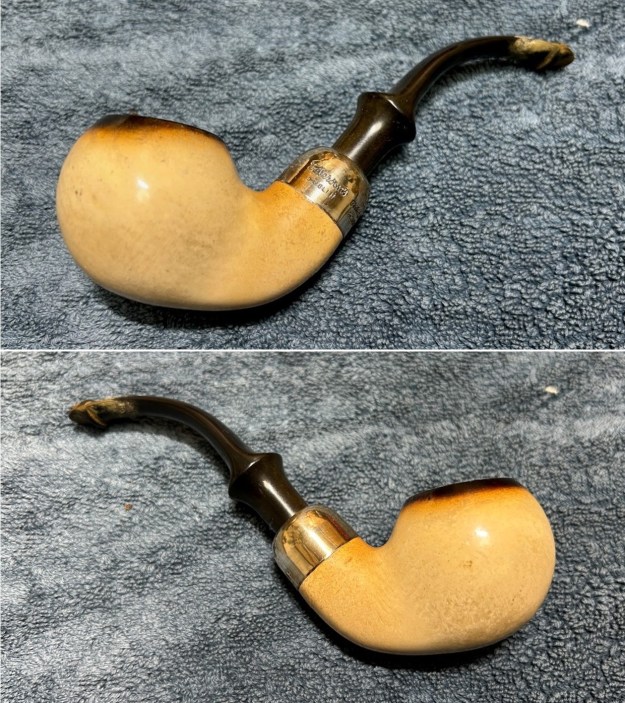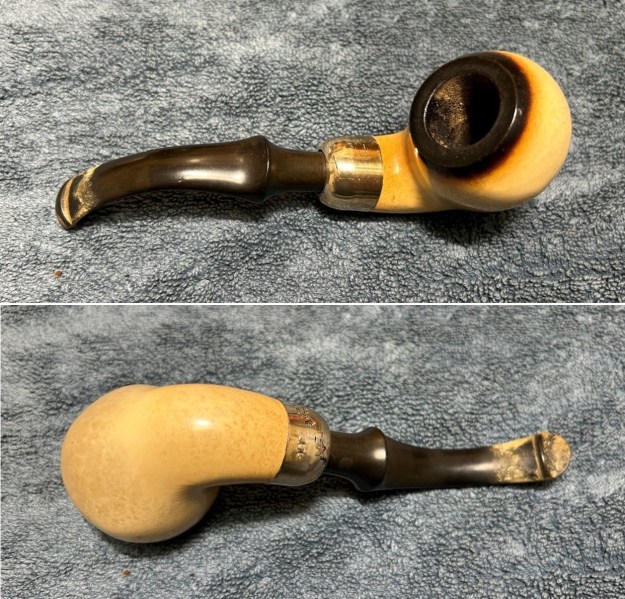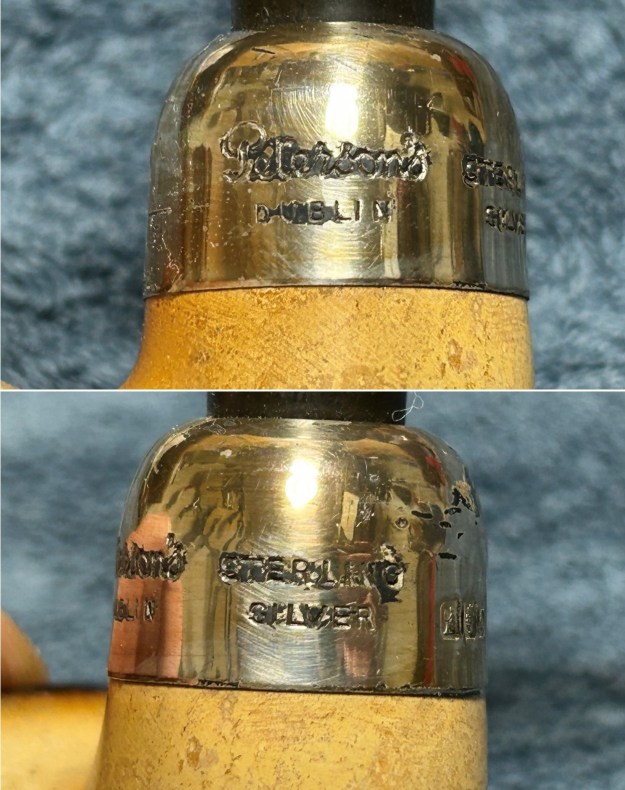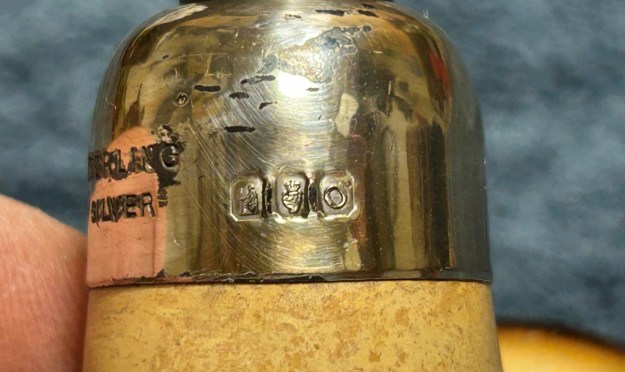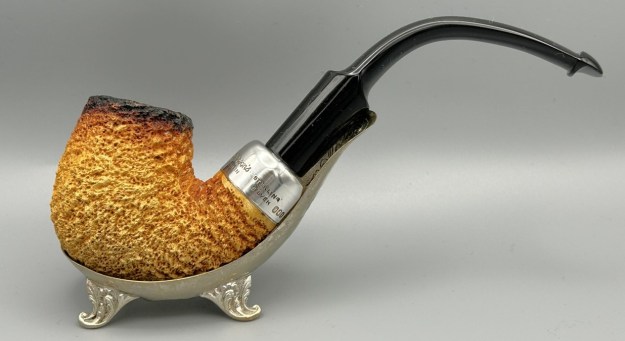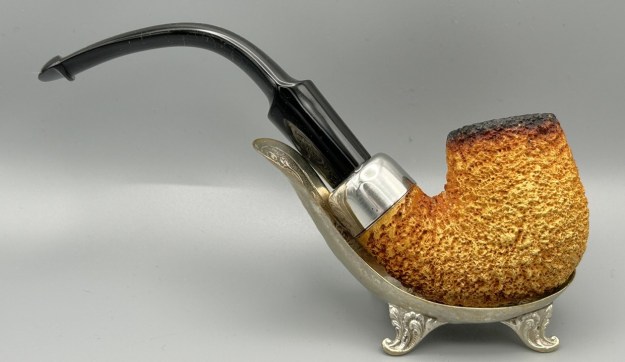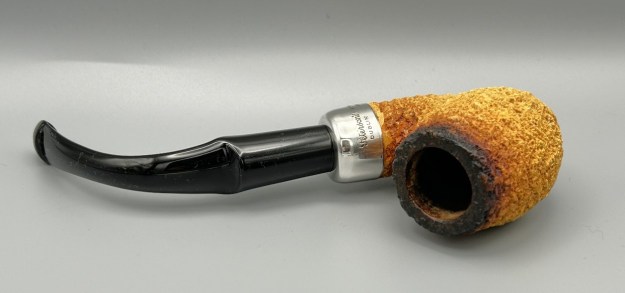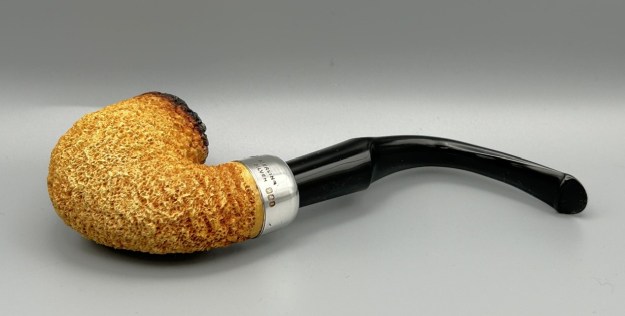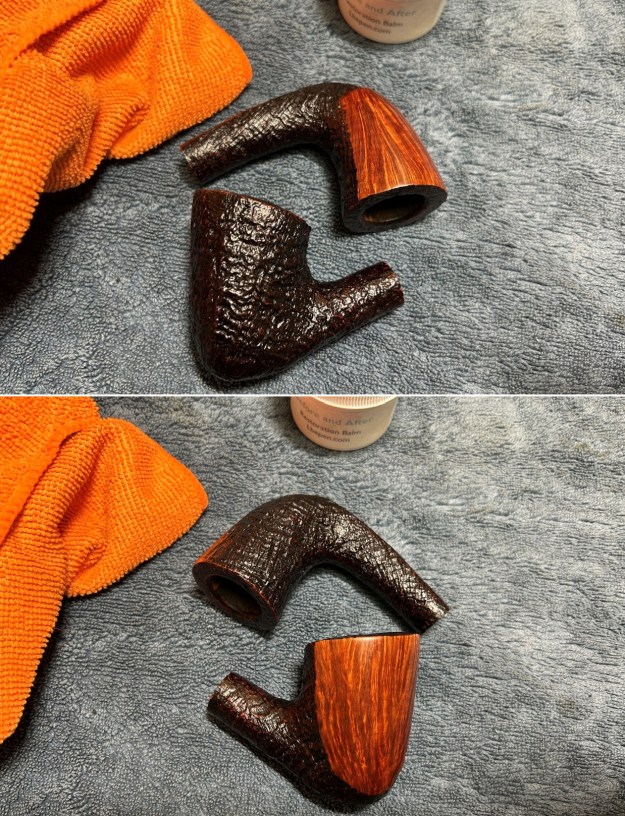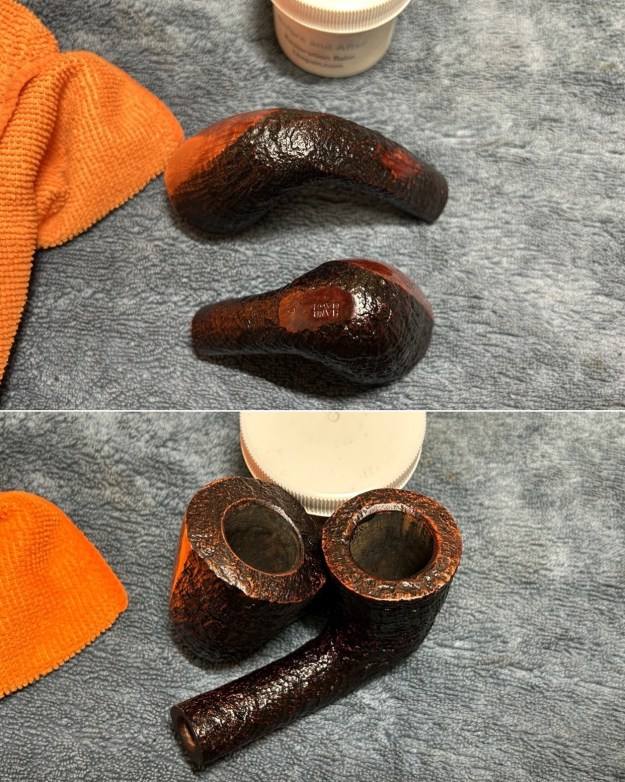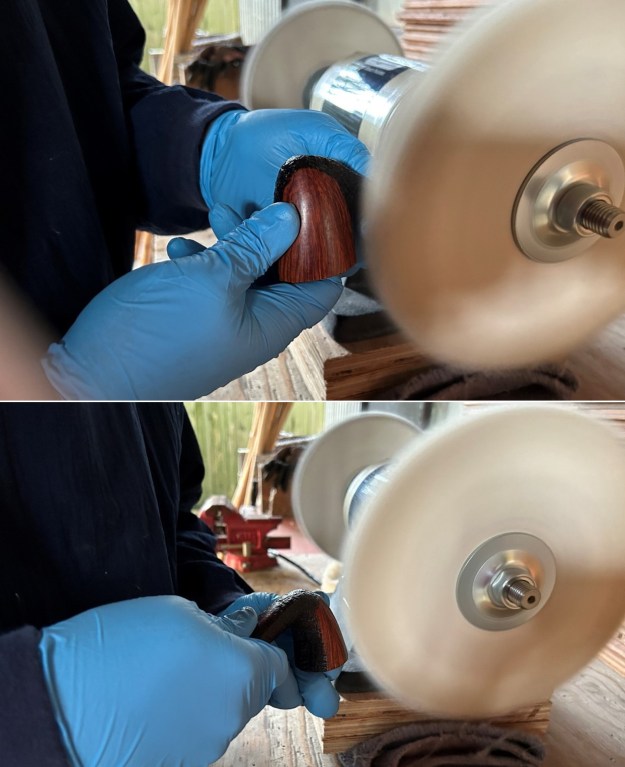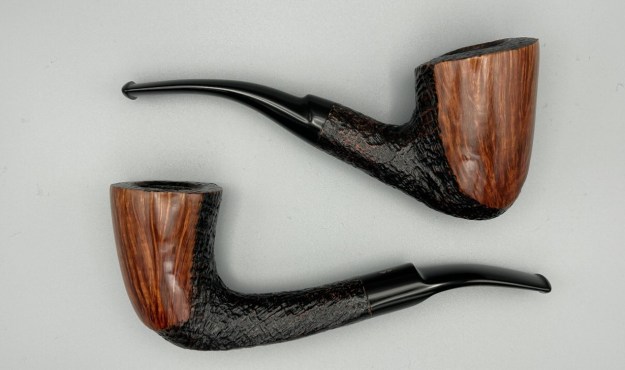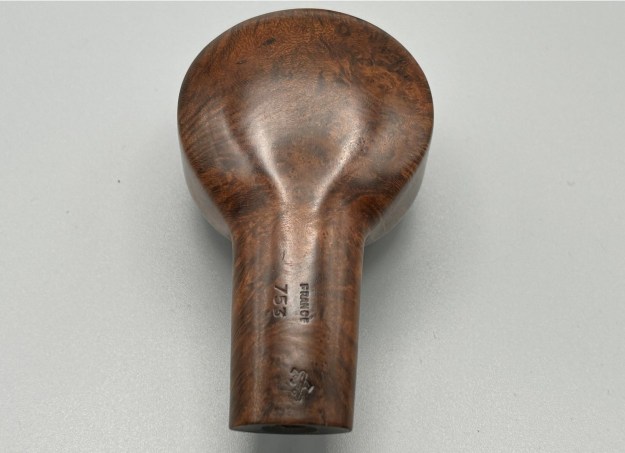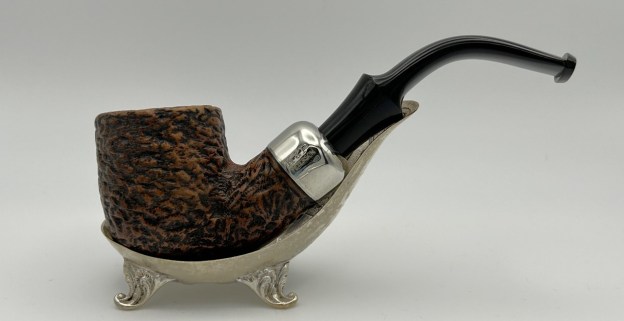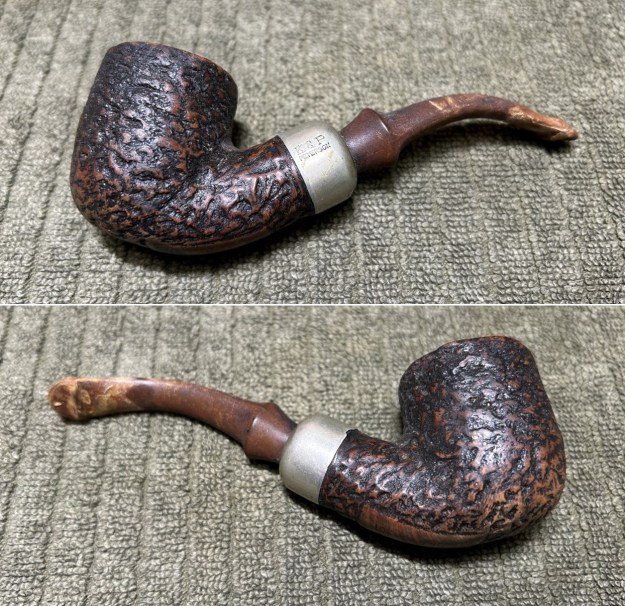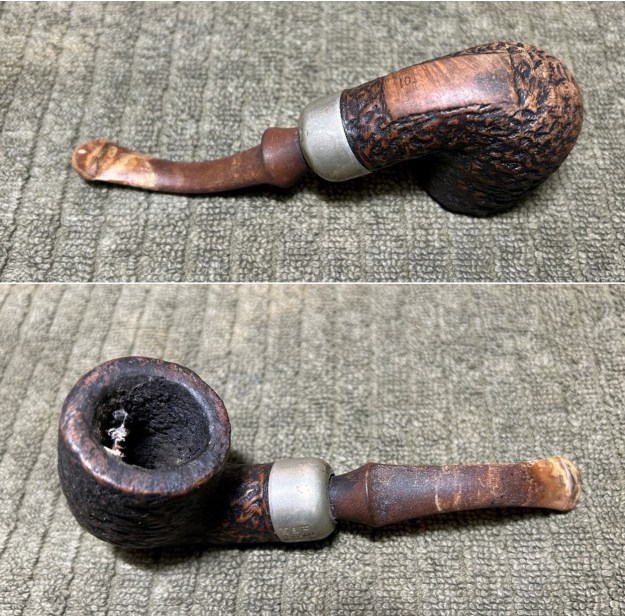
Tag Archives: cleaning with alcohol

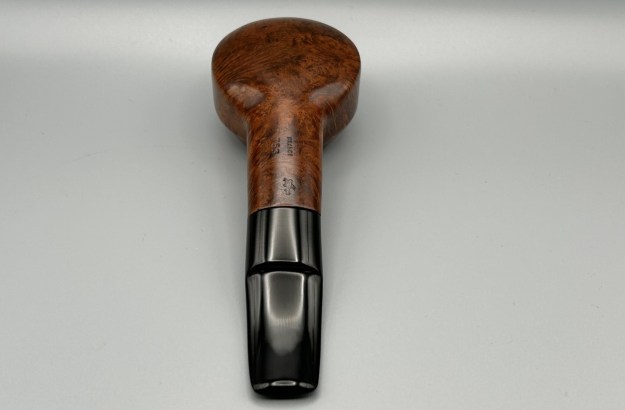
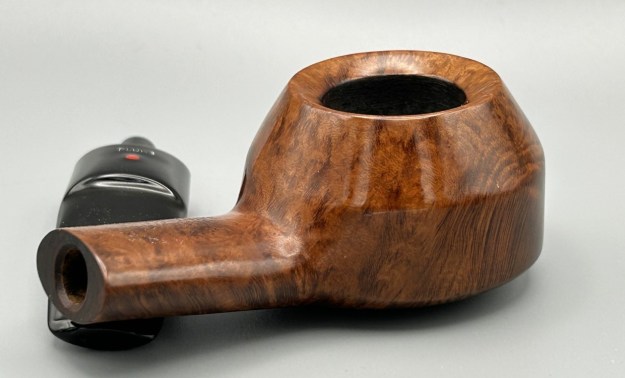
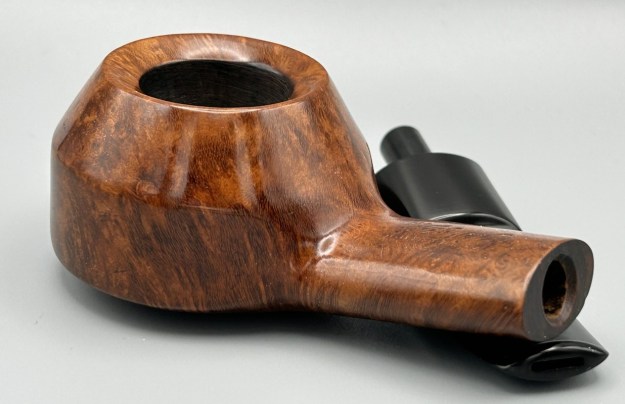
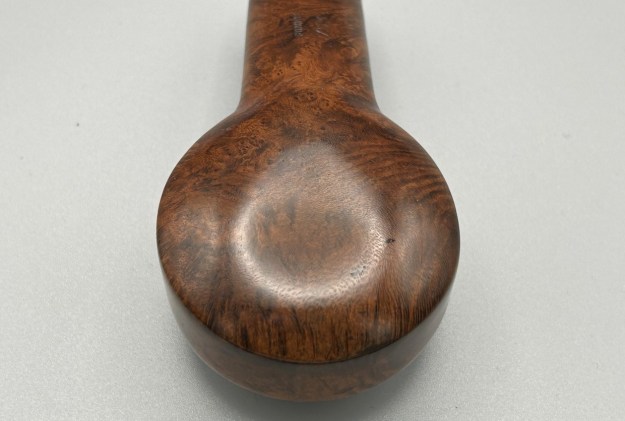
Rescuing a Remarkable Old Torpedo of Grenoble


by Kenneth Lieblich

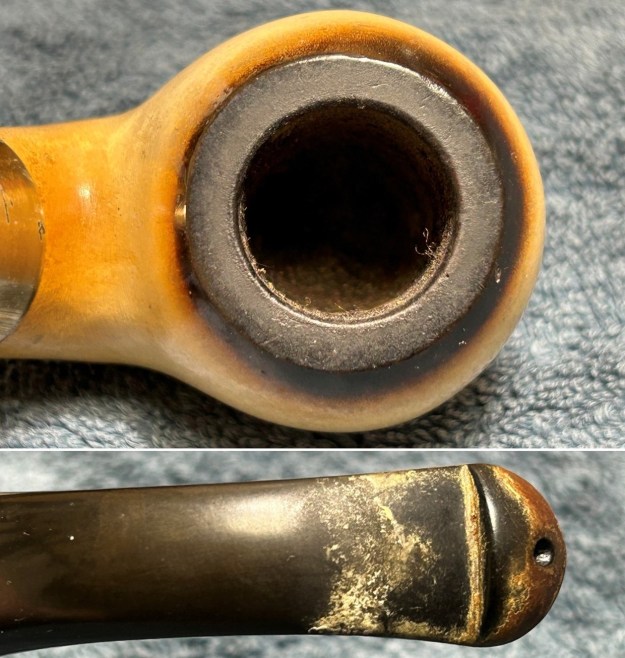
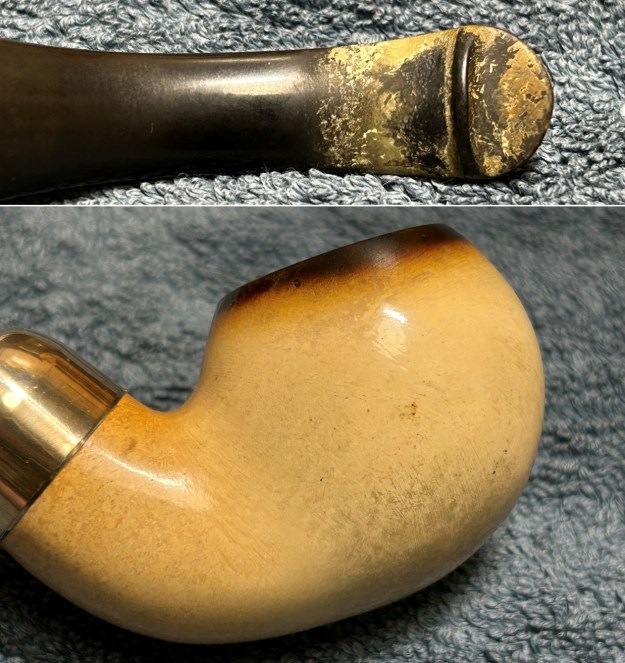
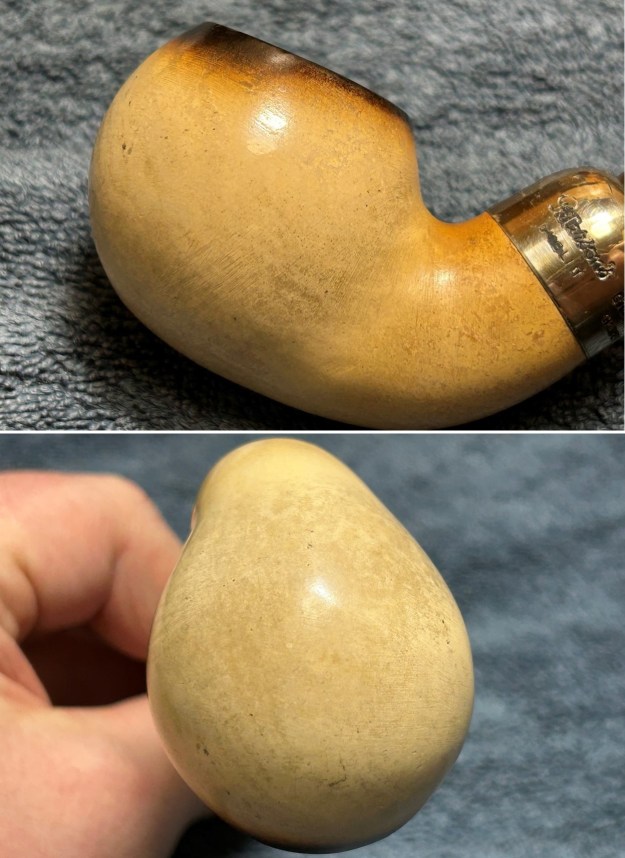
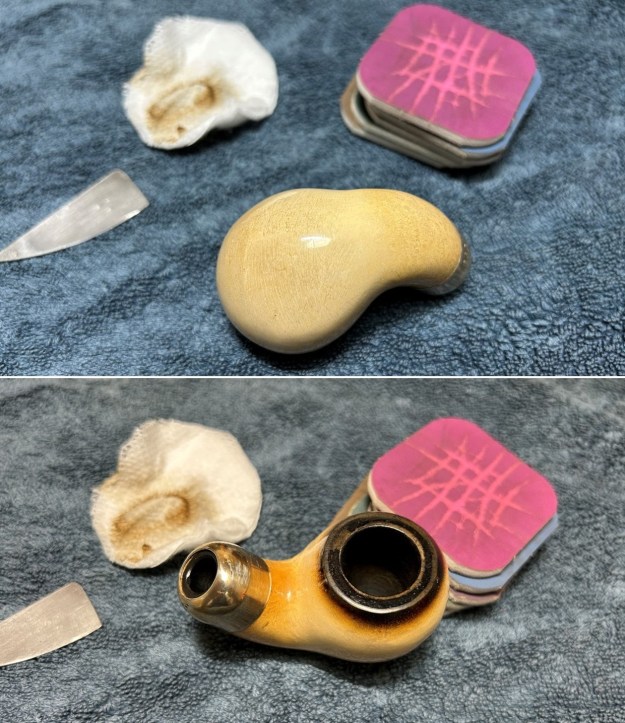
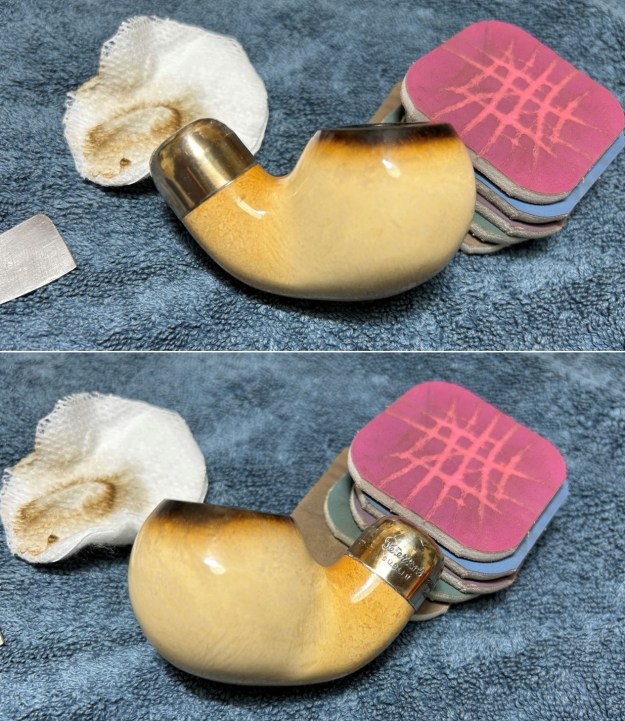
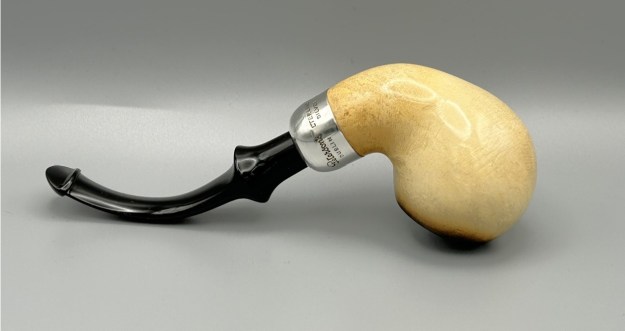
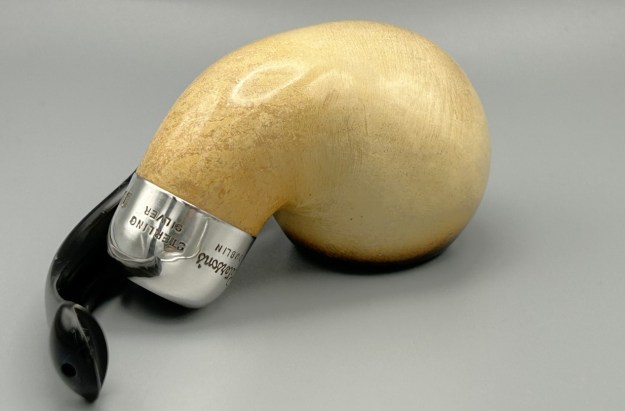
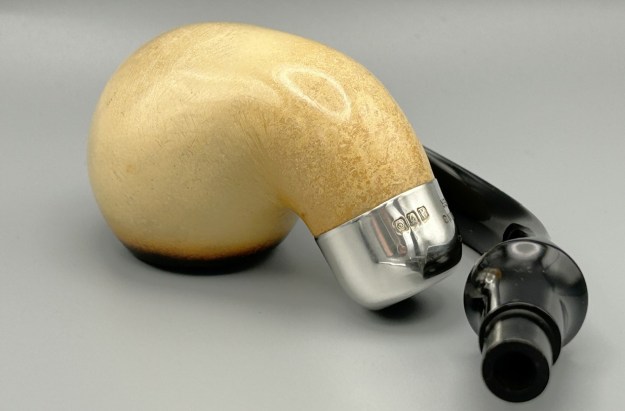
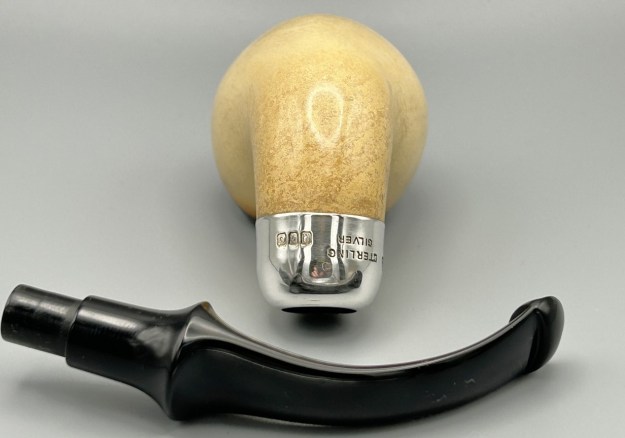
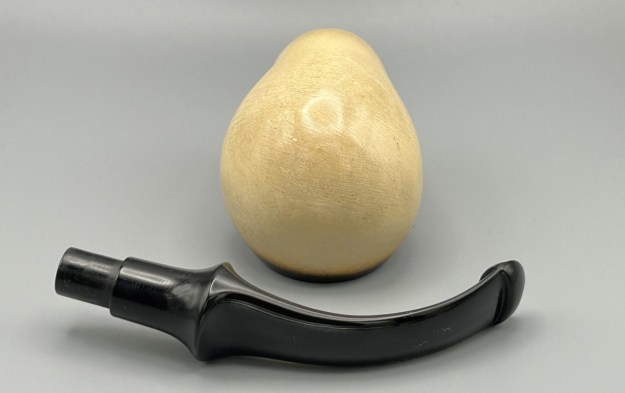
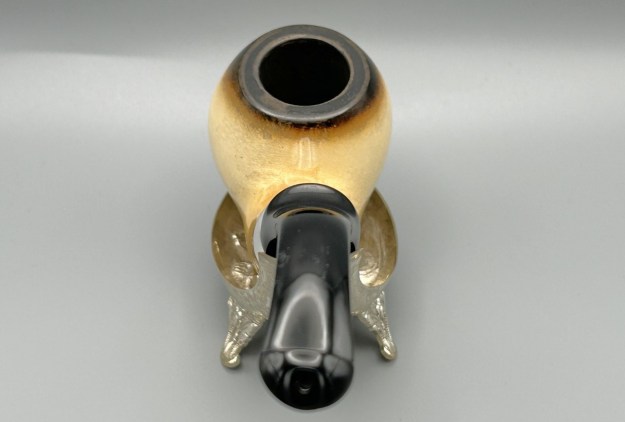
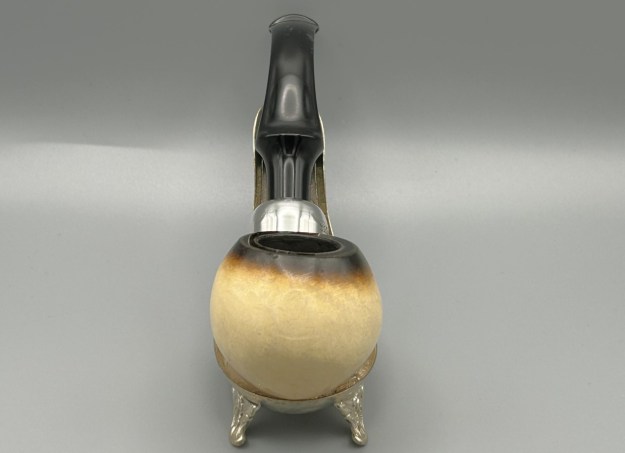
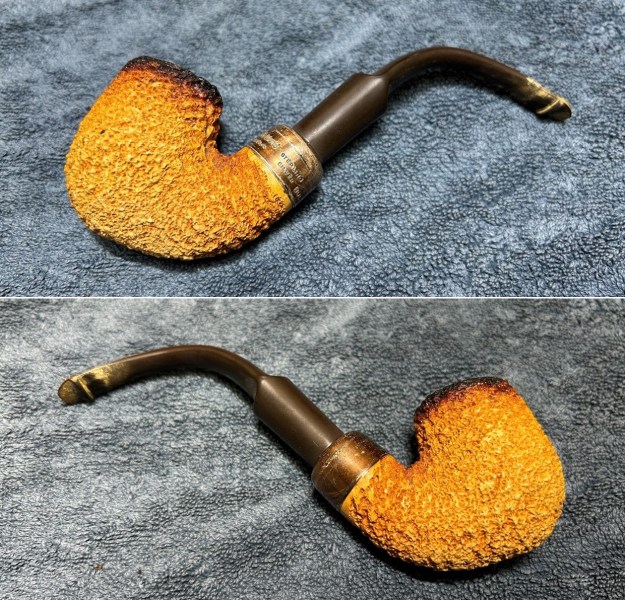
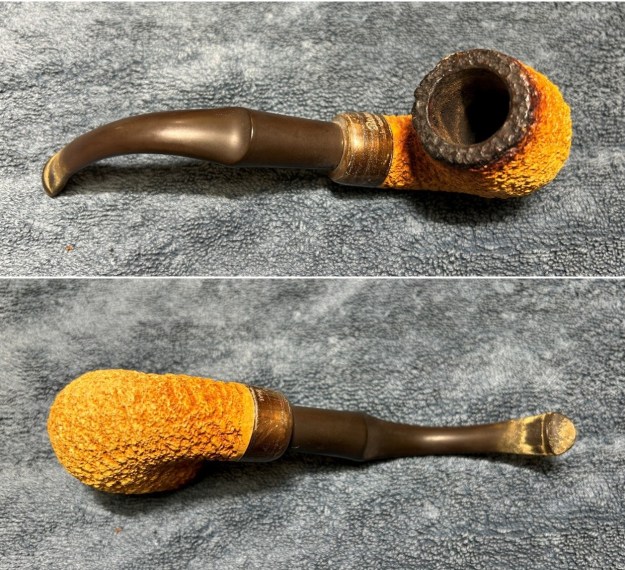
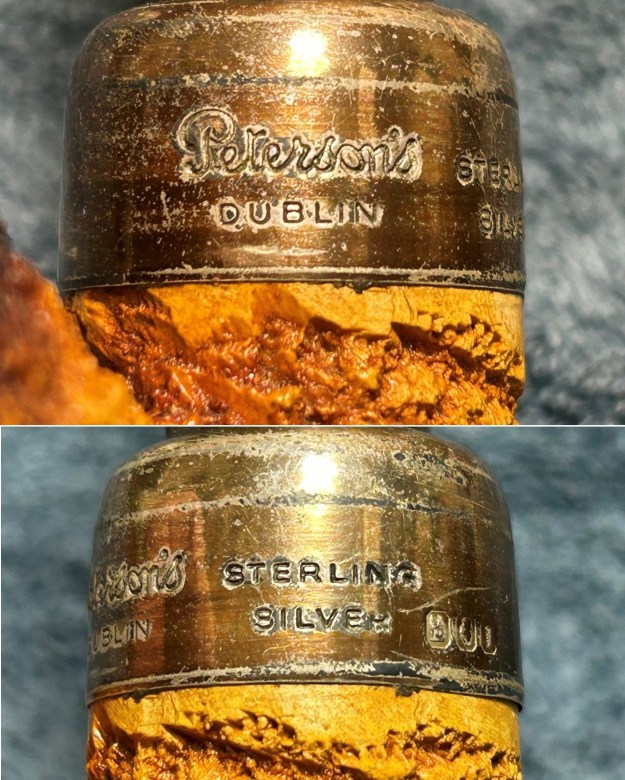
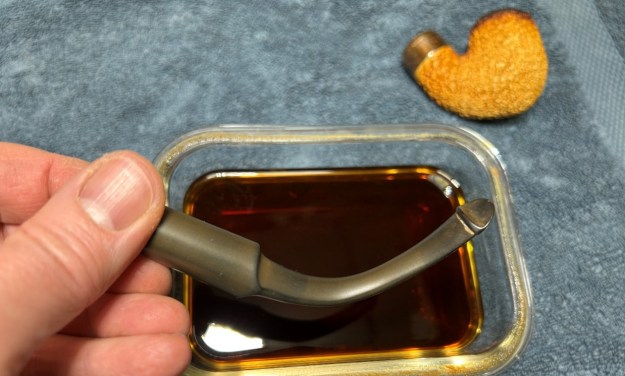
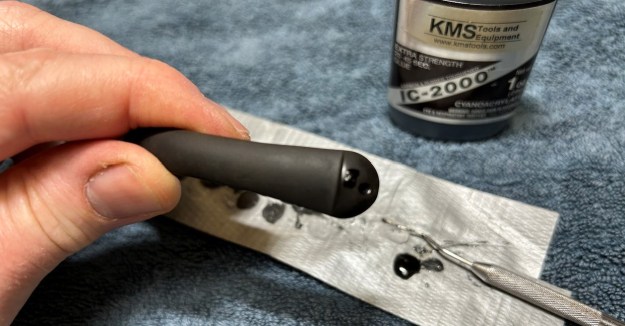
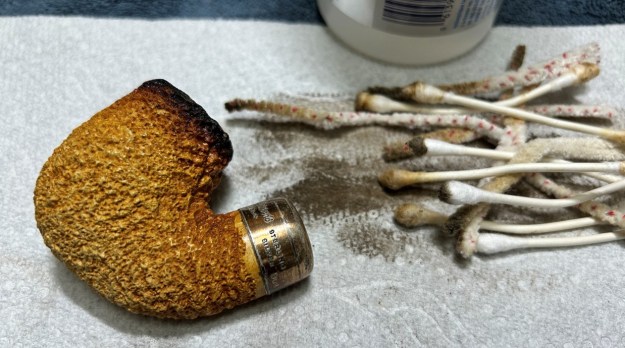
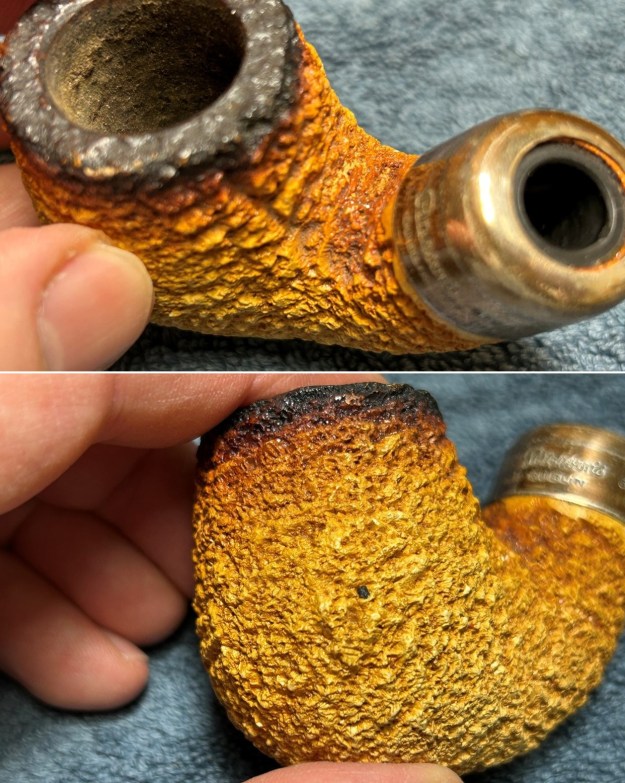
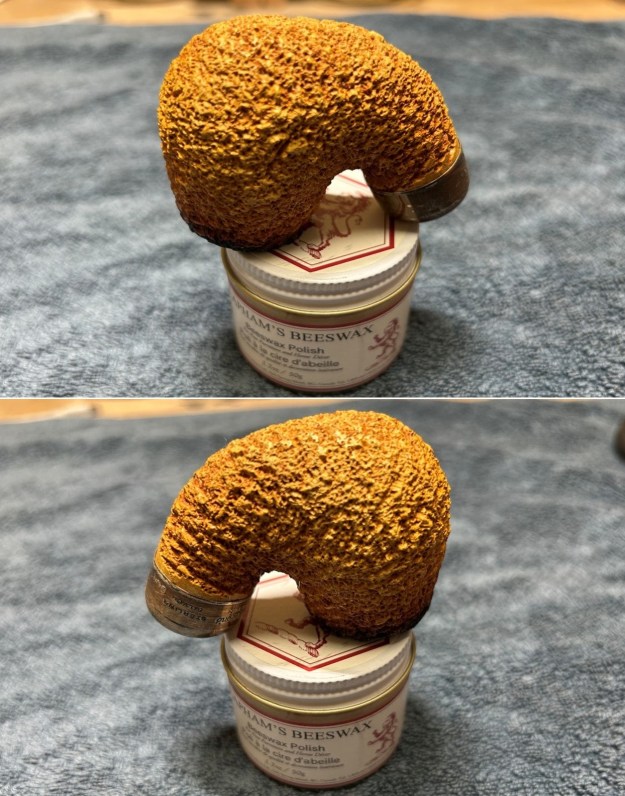
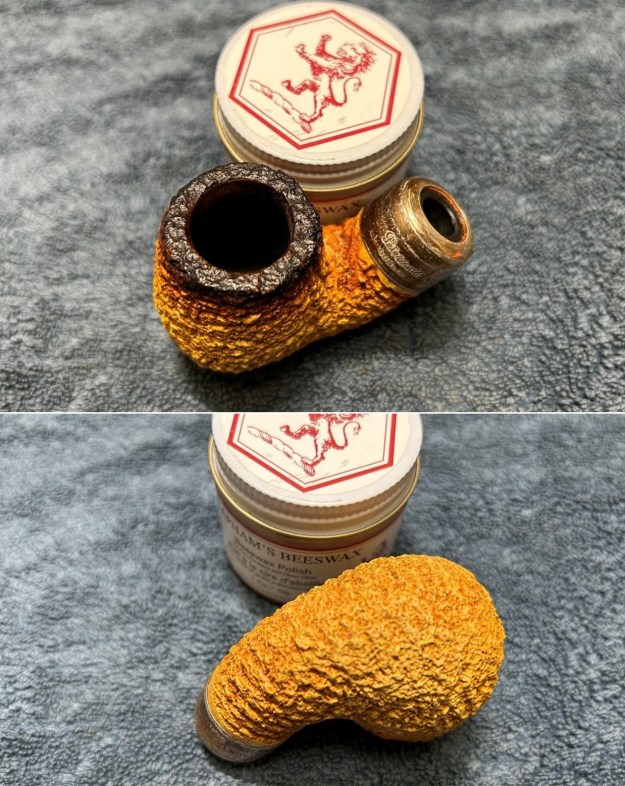
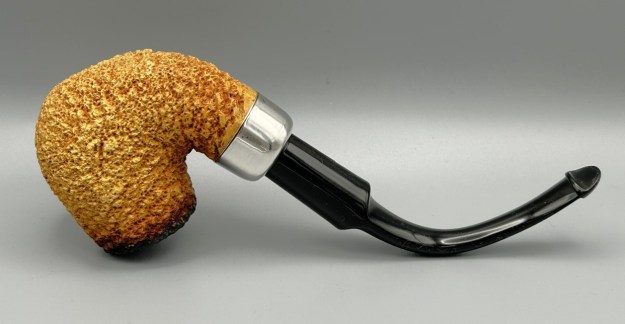
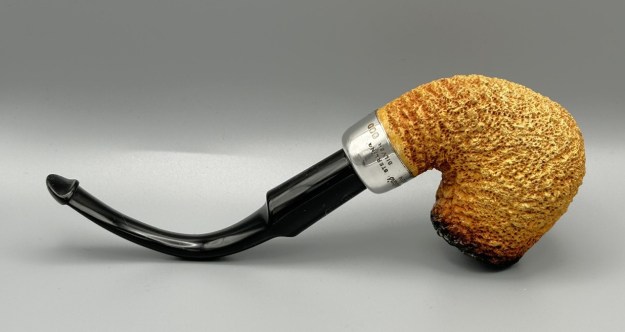
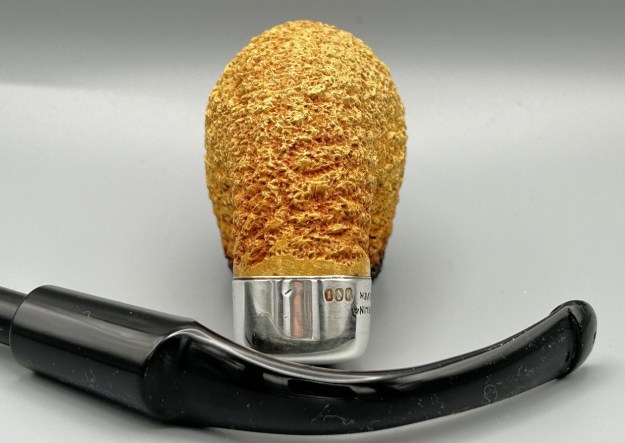
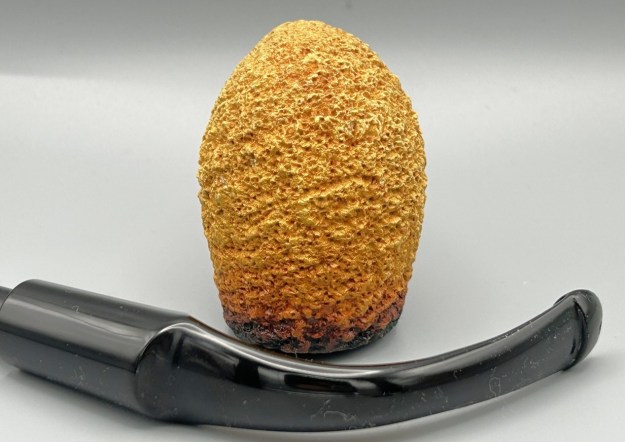
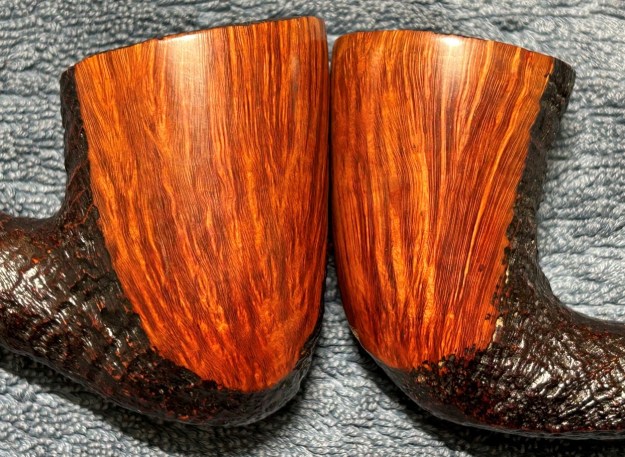
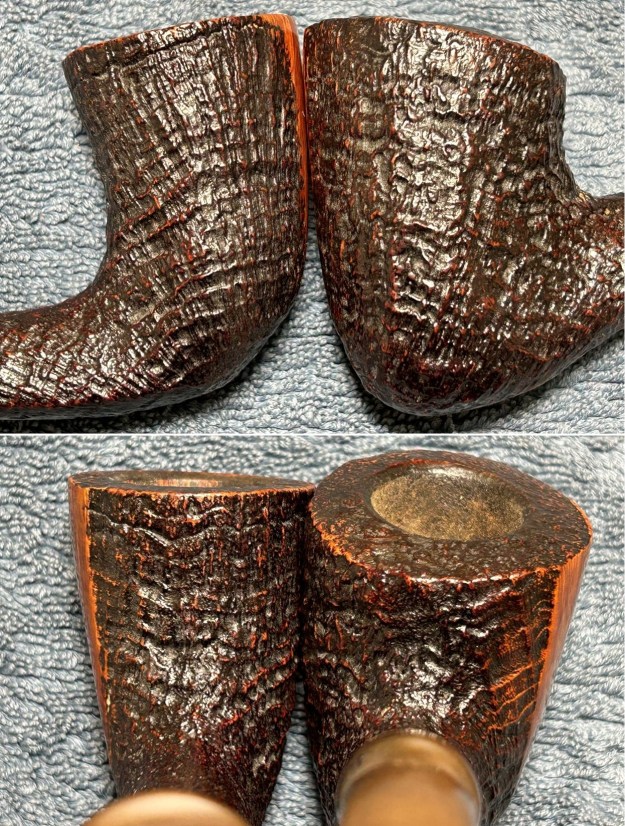
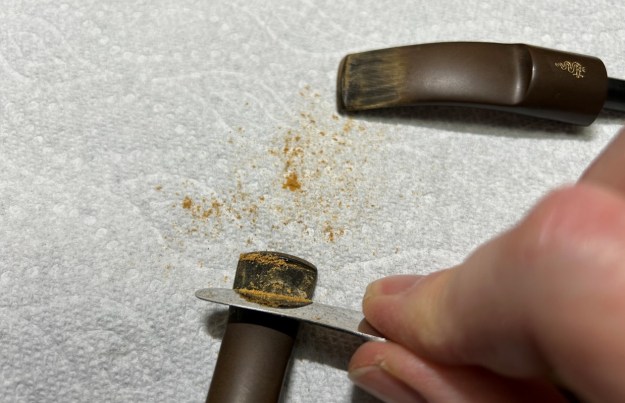
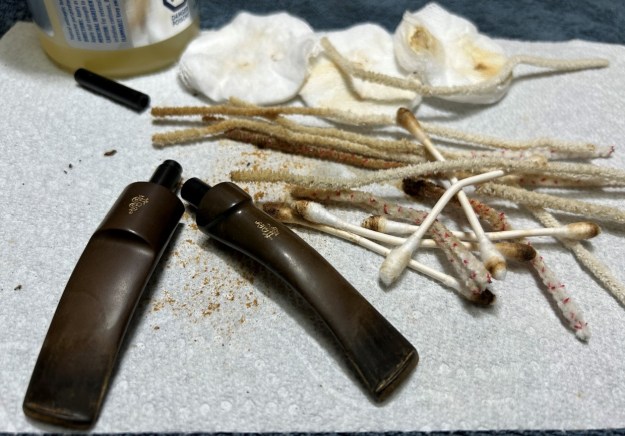
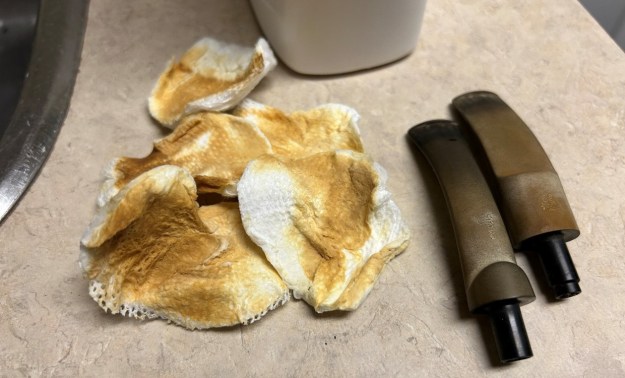
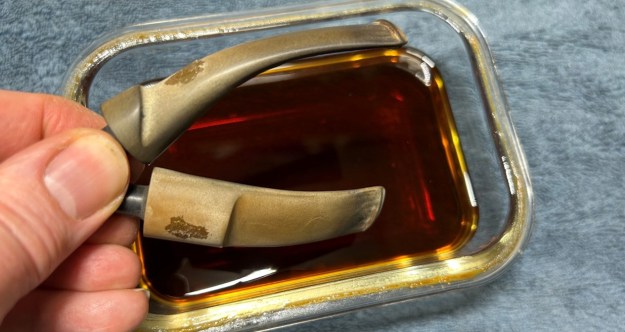
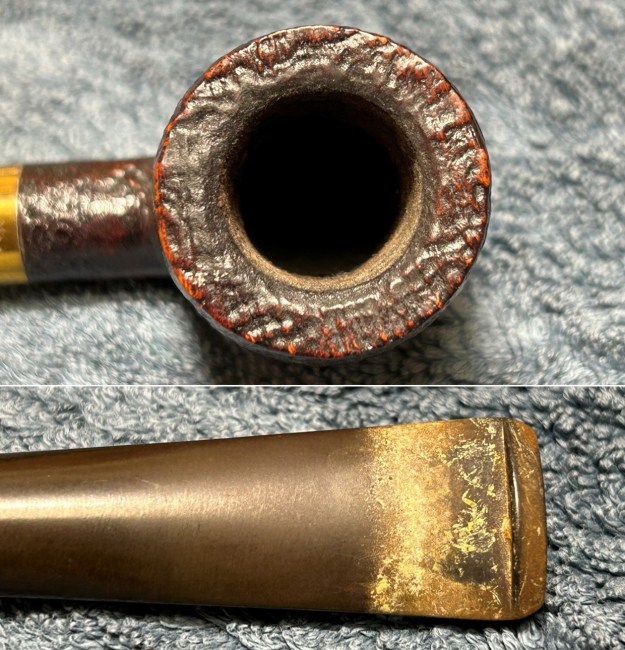
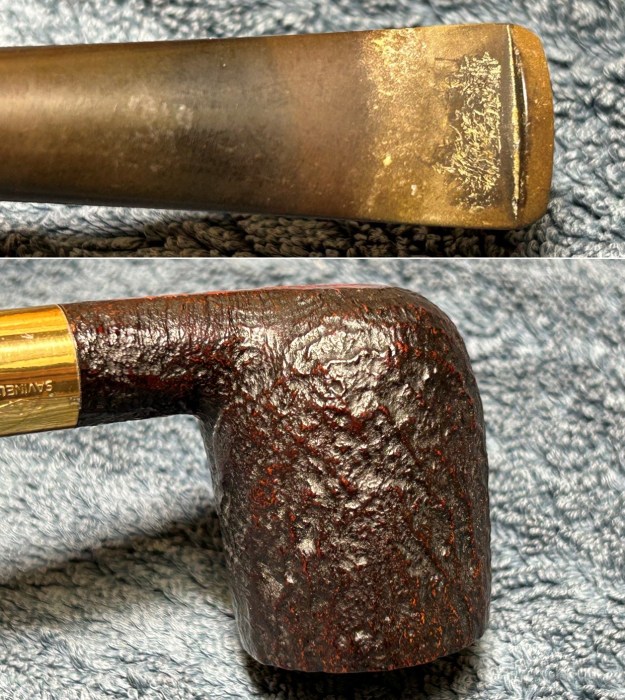
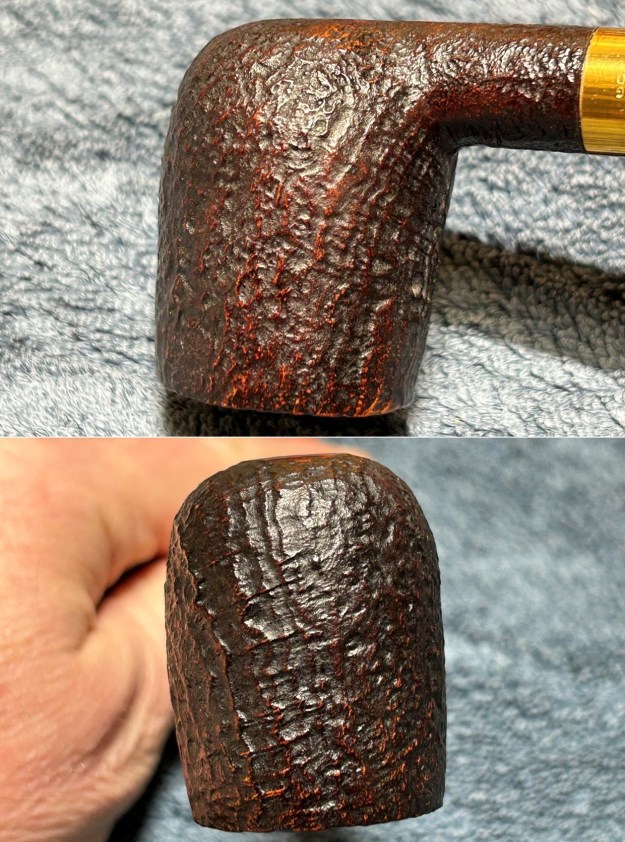
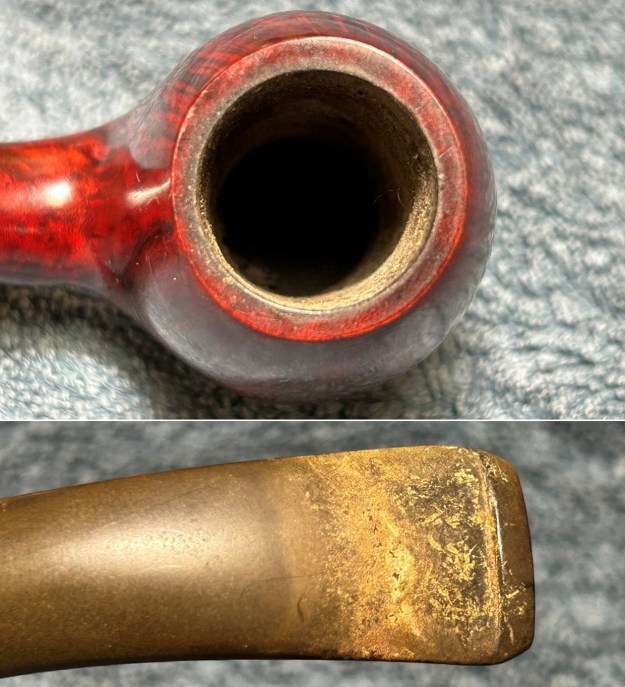
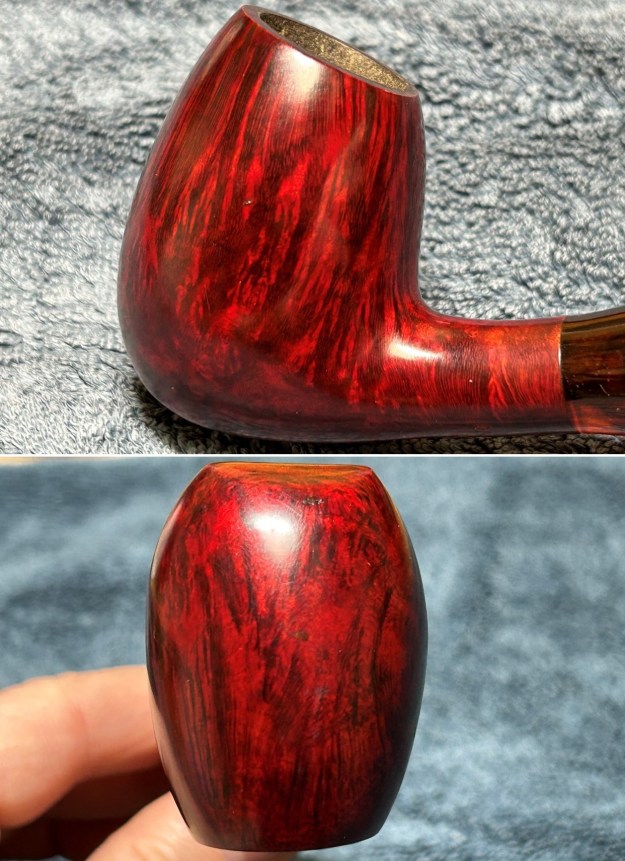
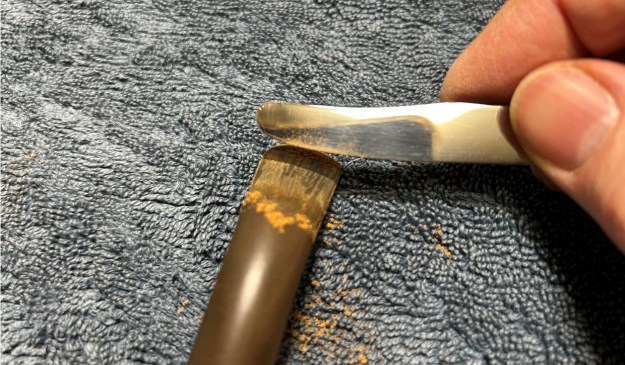
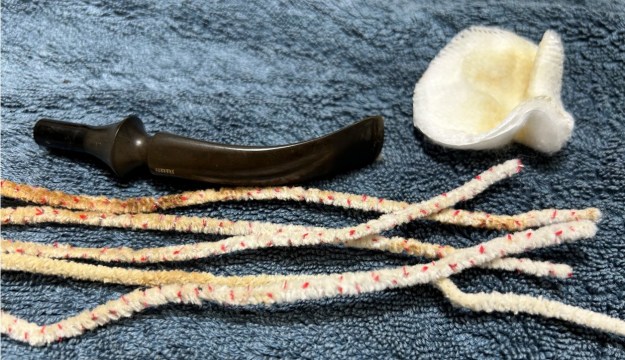
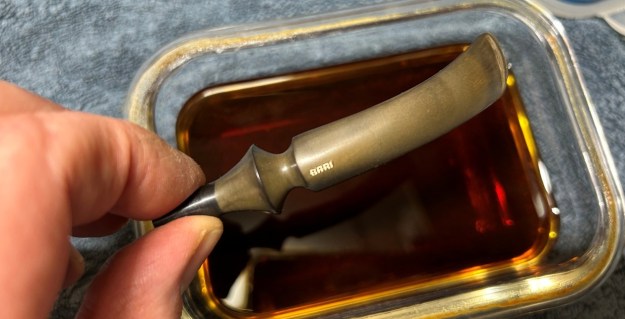
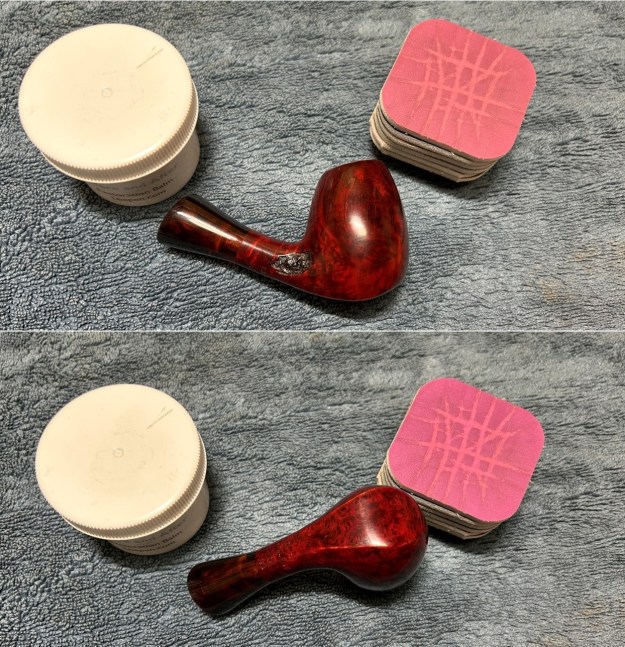
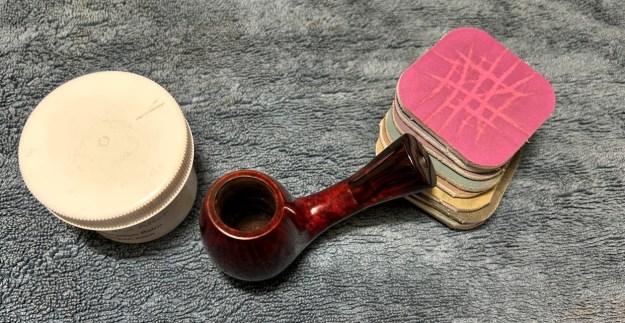
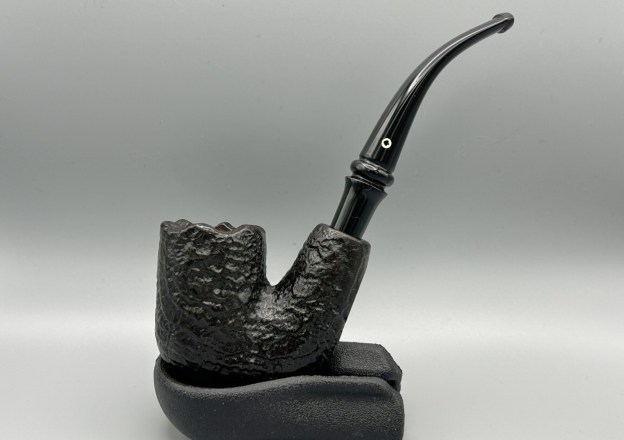
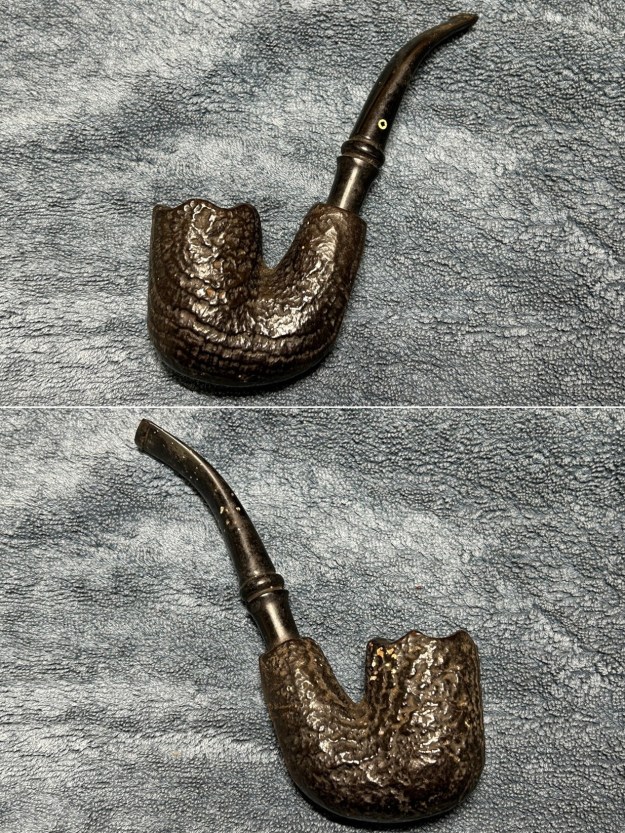
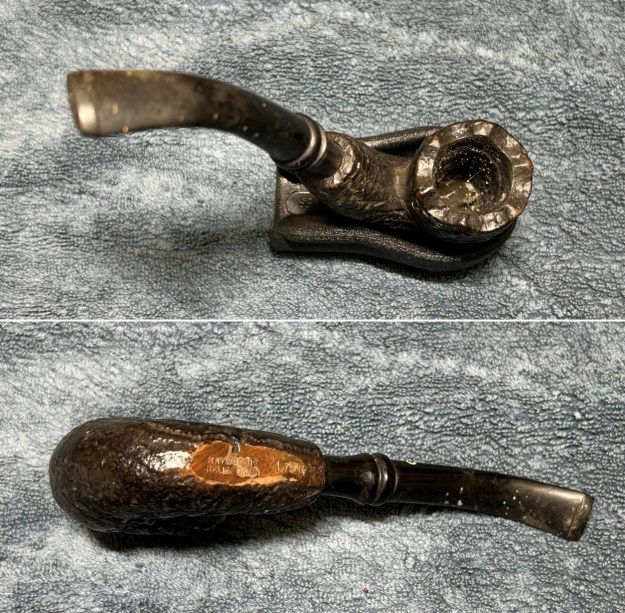
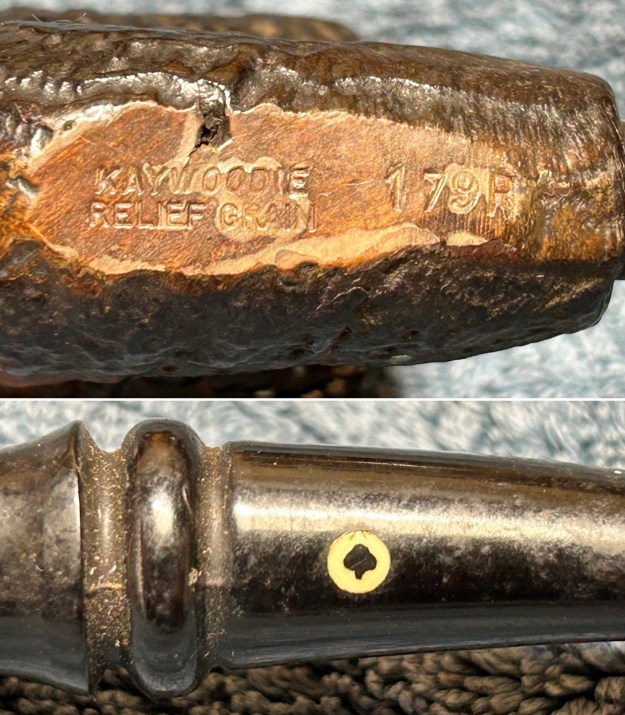
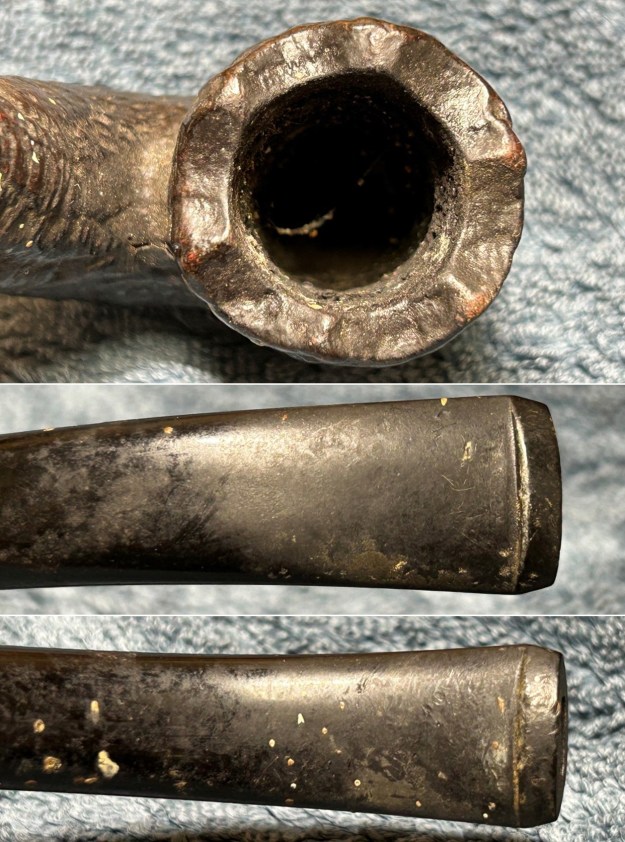
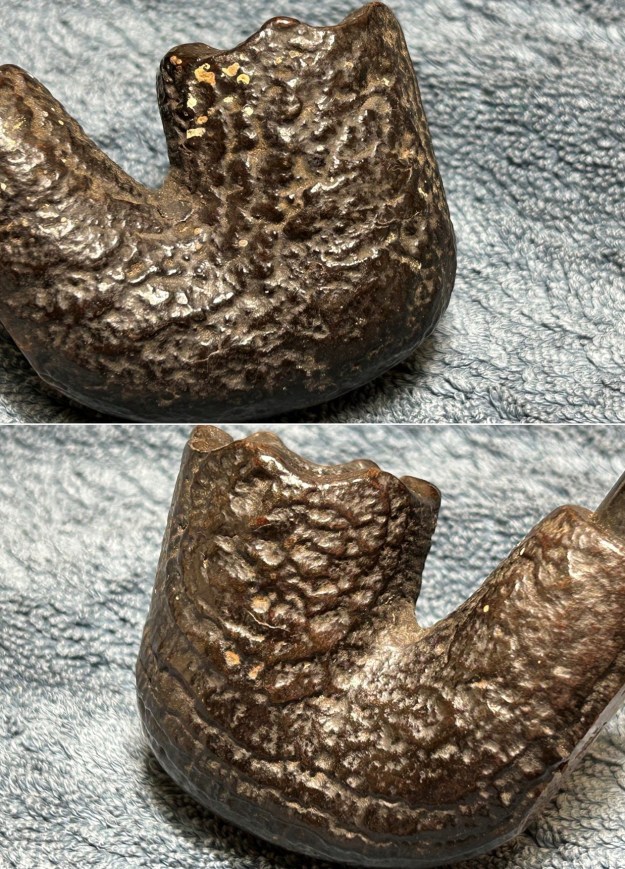
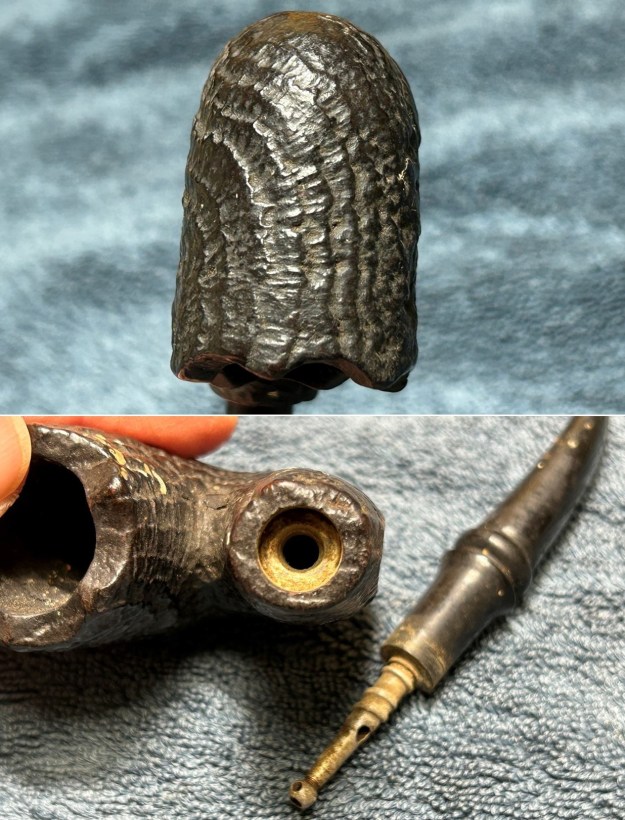
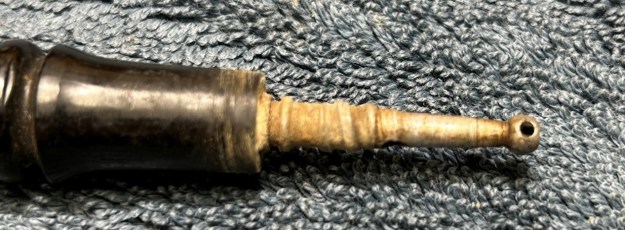
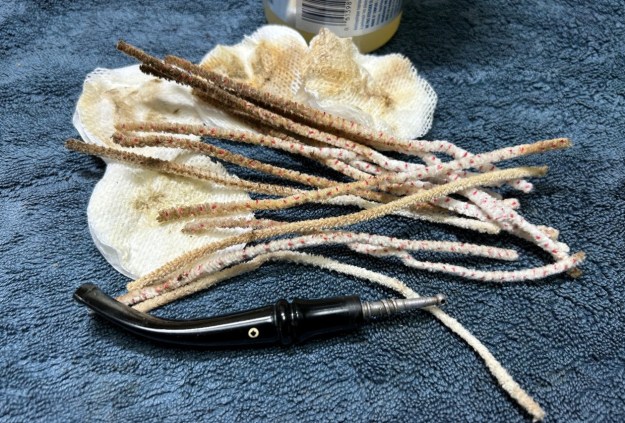
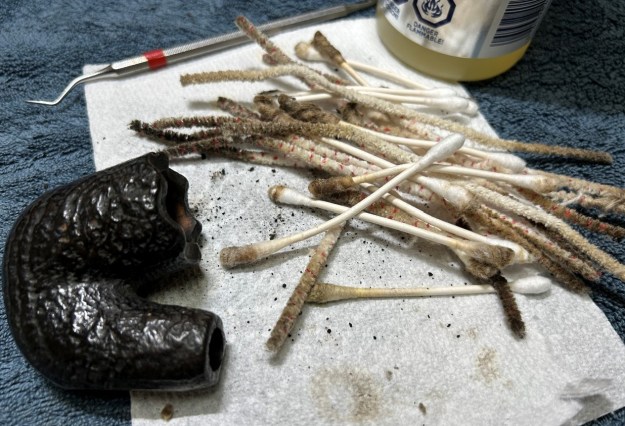
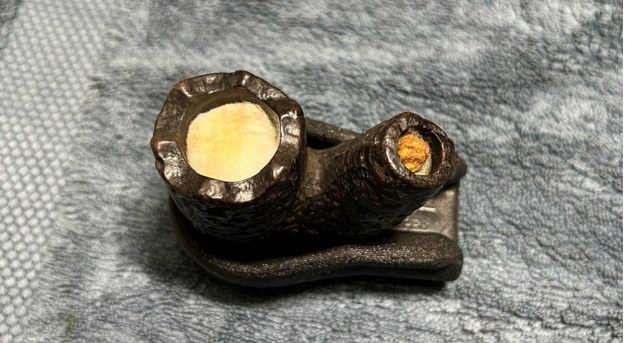
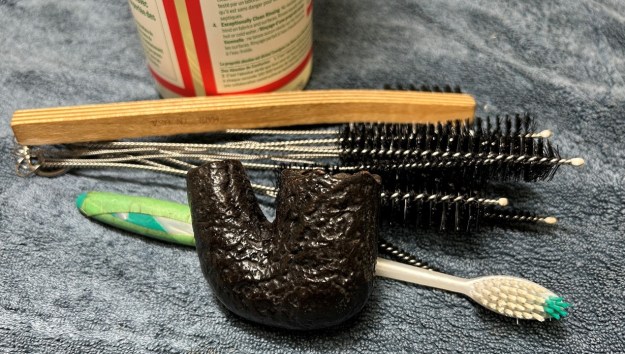
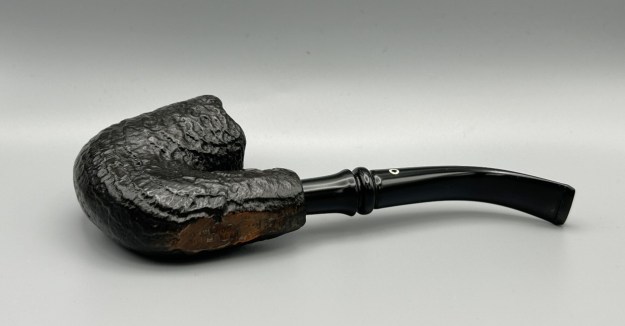
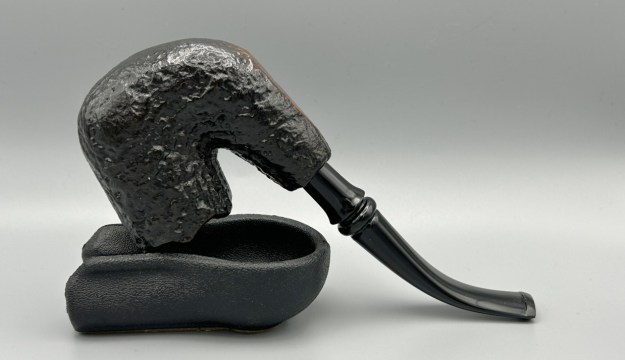
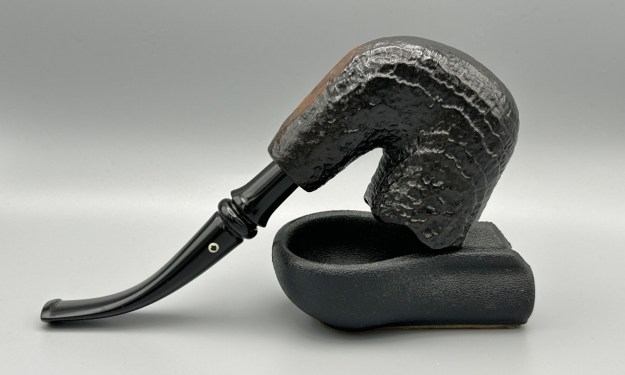
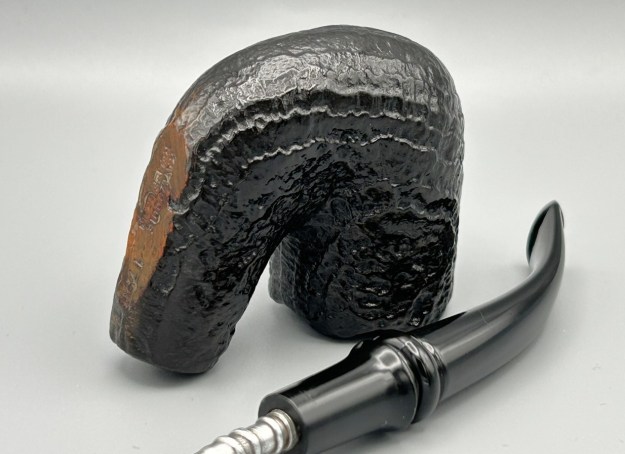
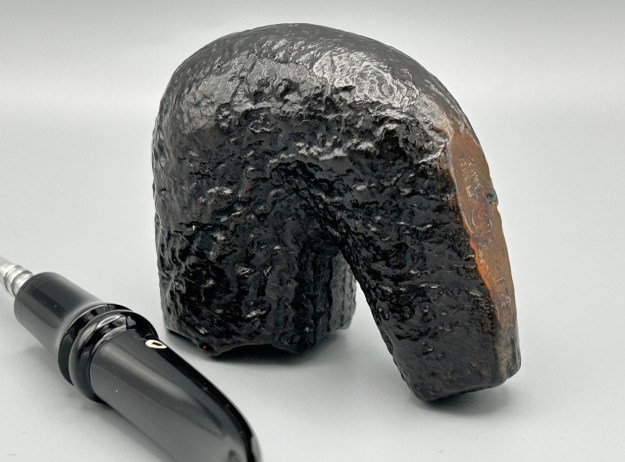
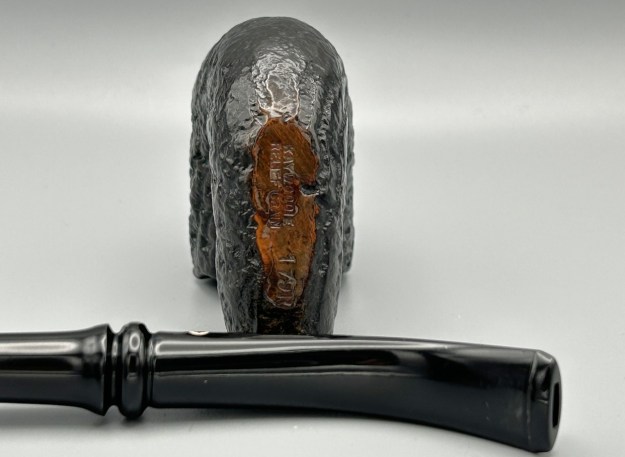
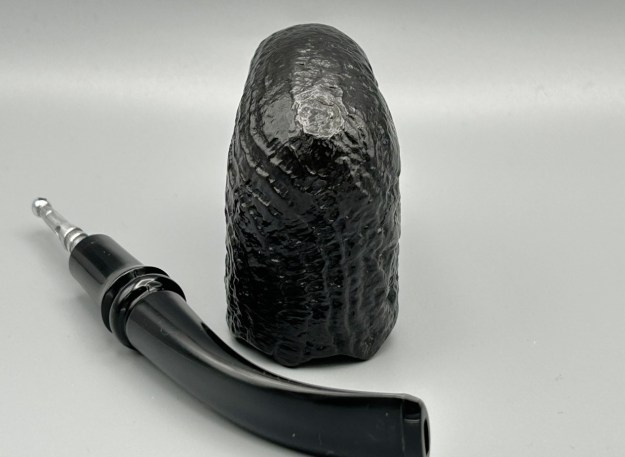
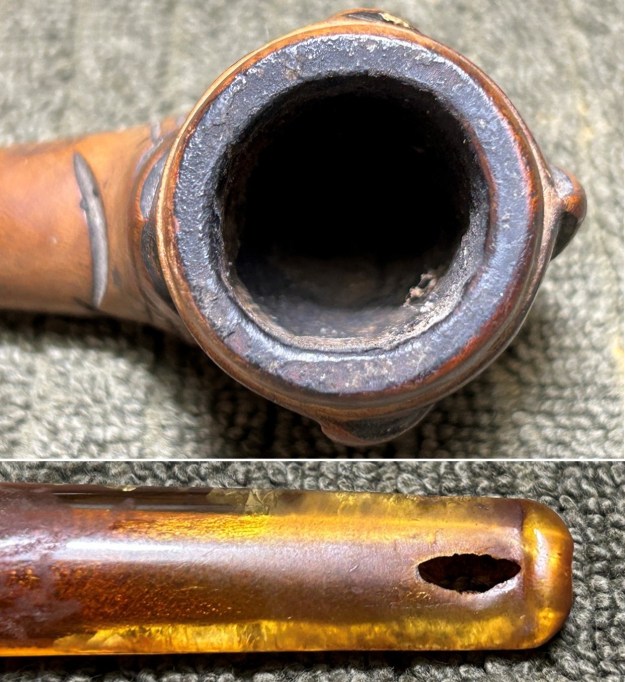
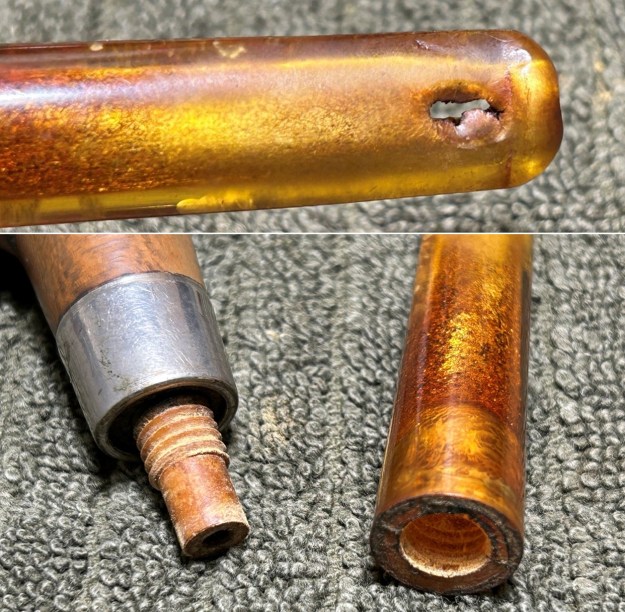
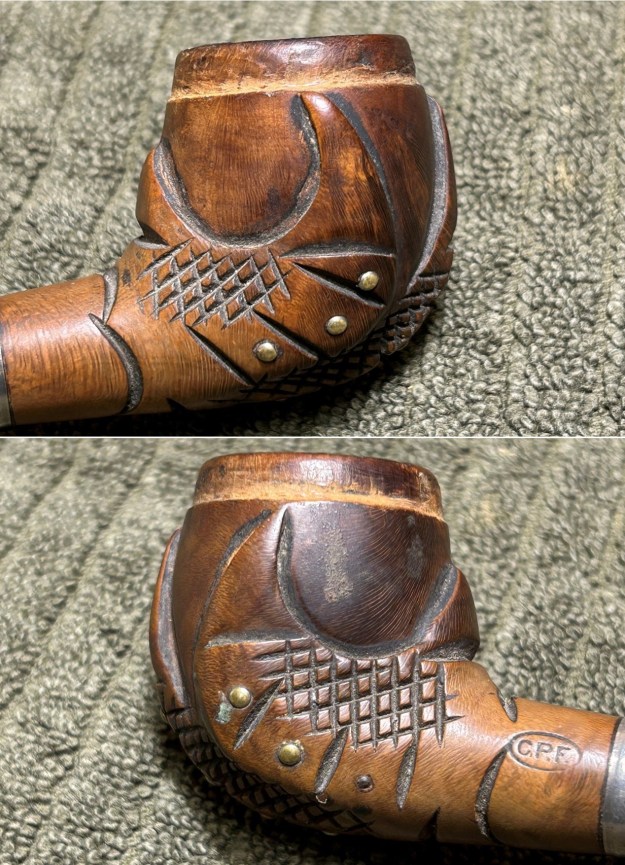
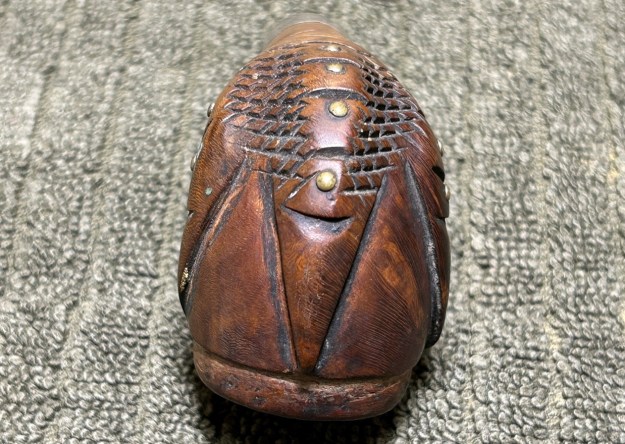
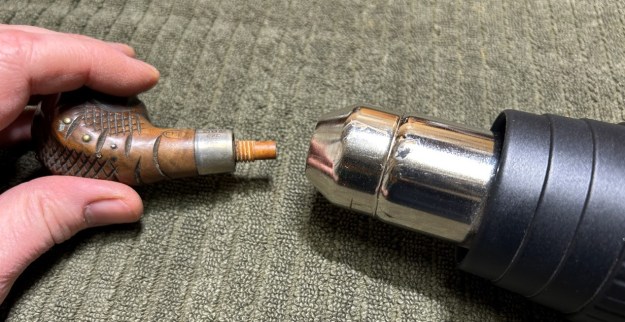
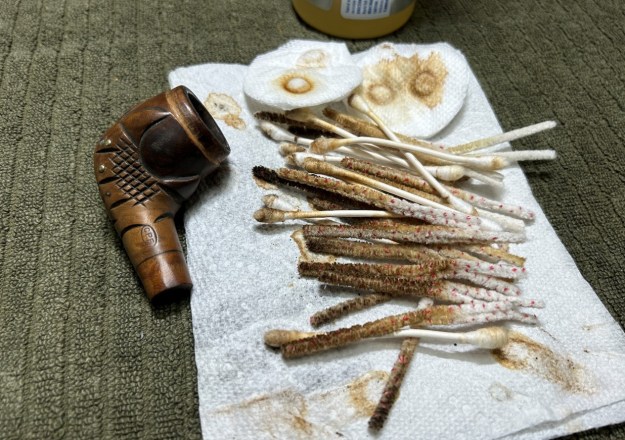
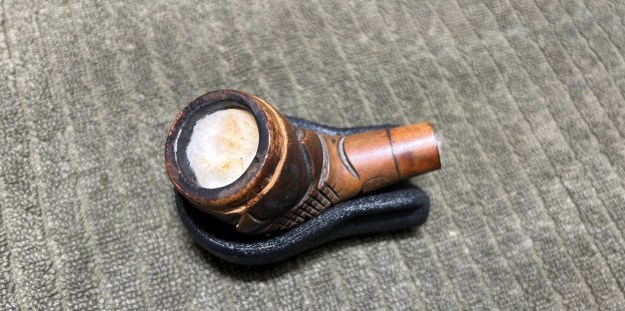
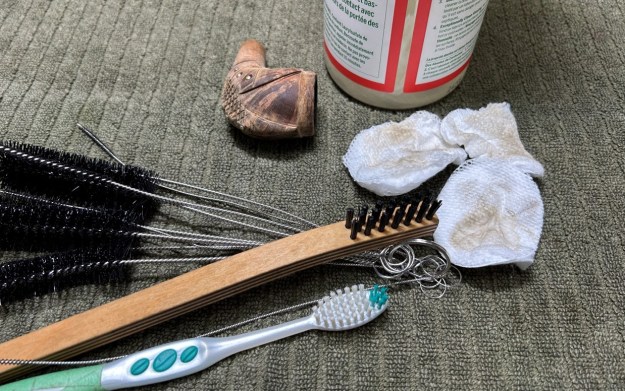
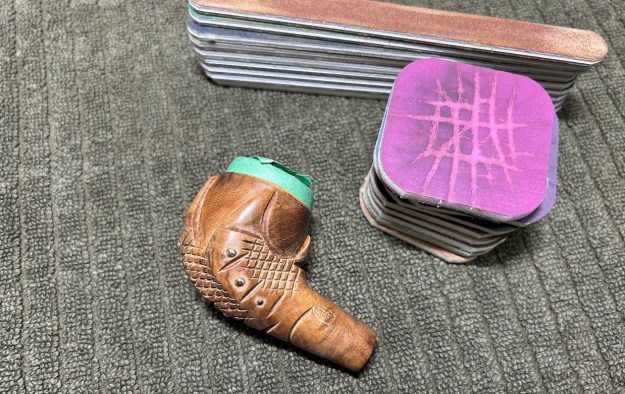
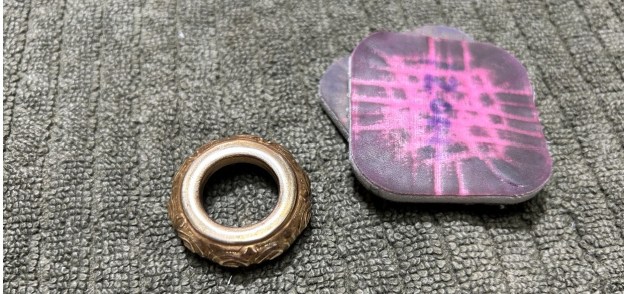
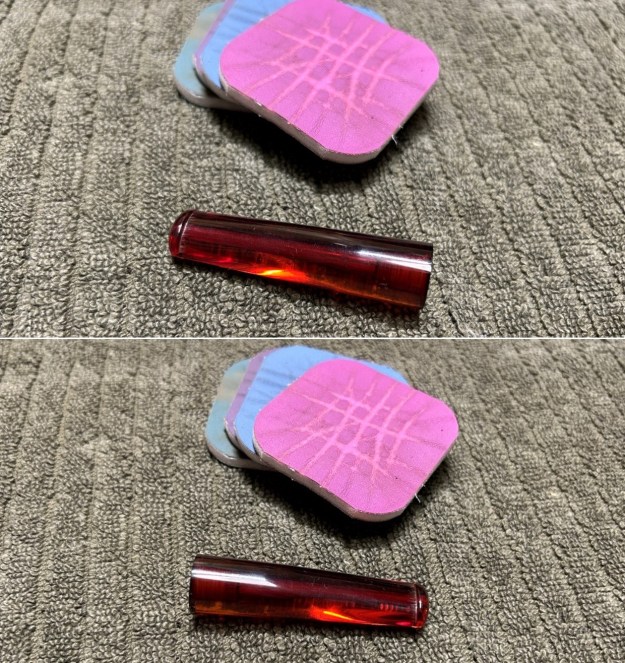
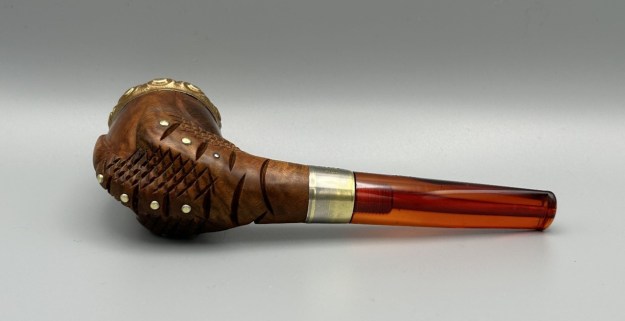
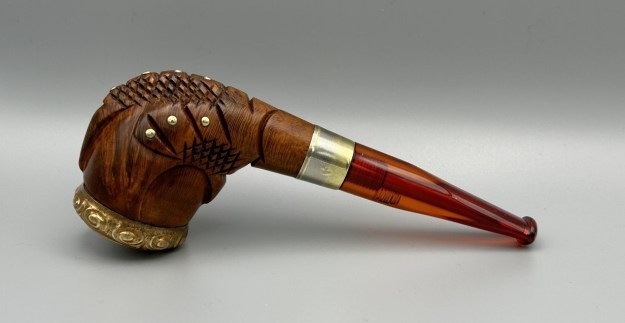
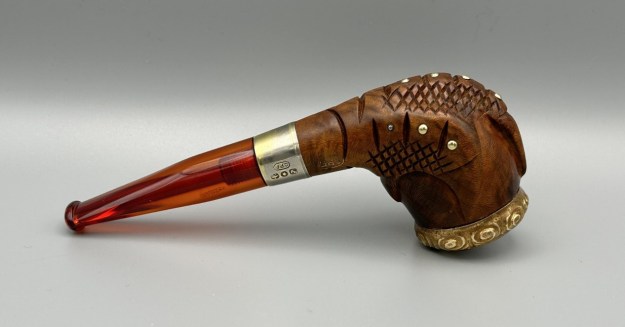
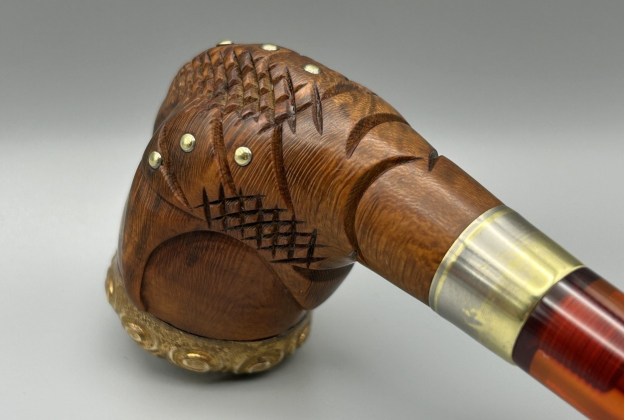
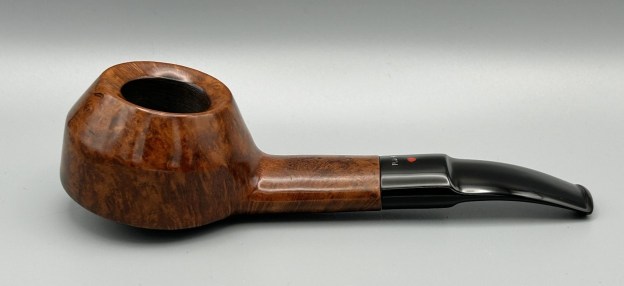
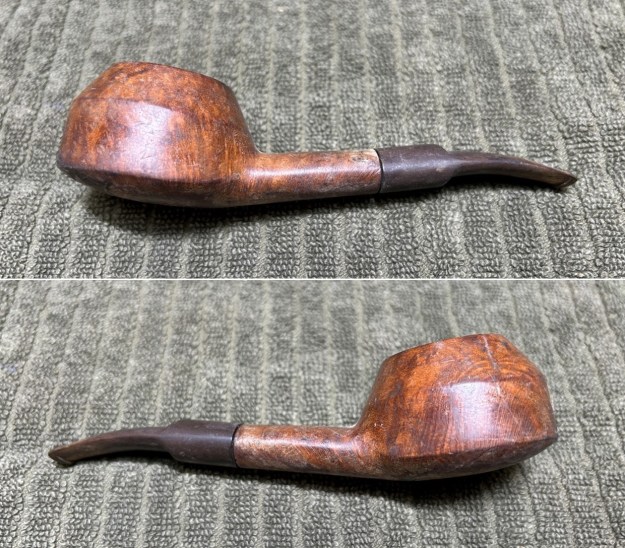
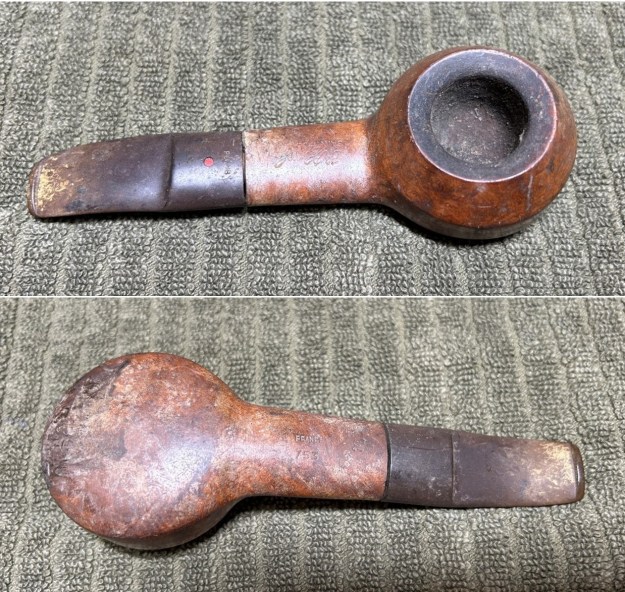
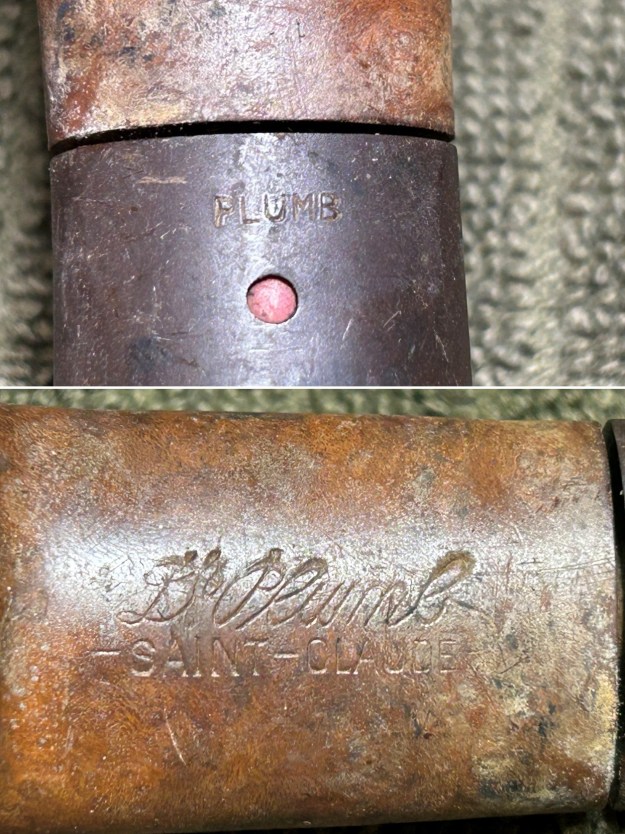
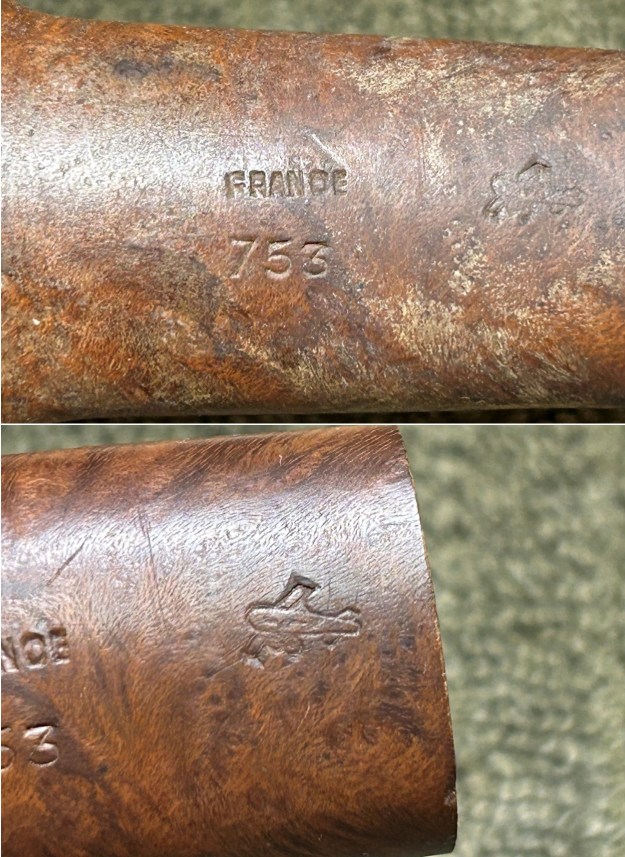
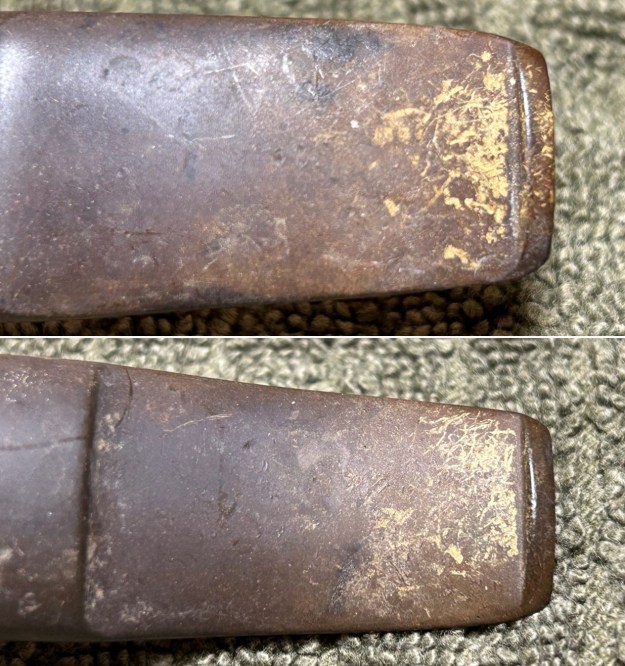
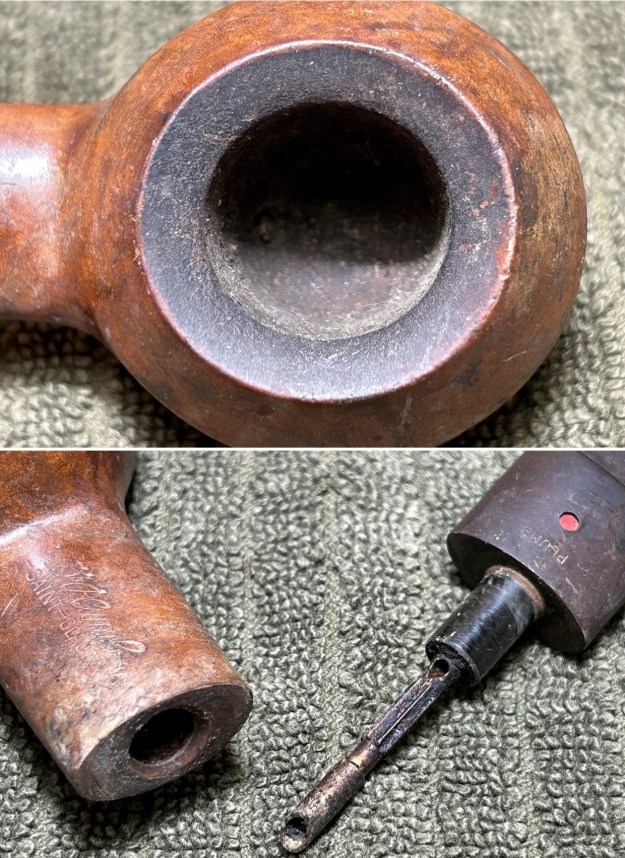
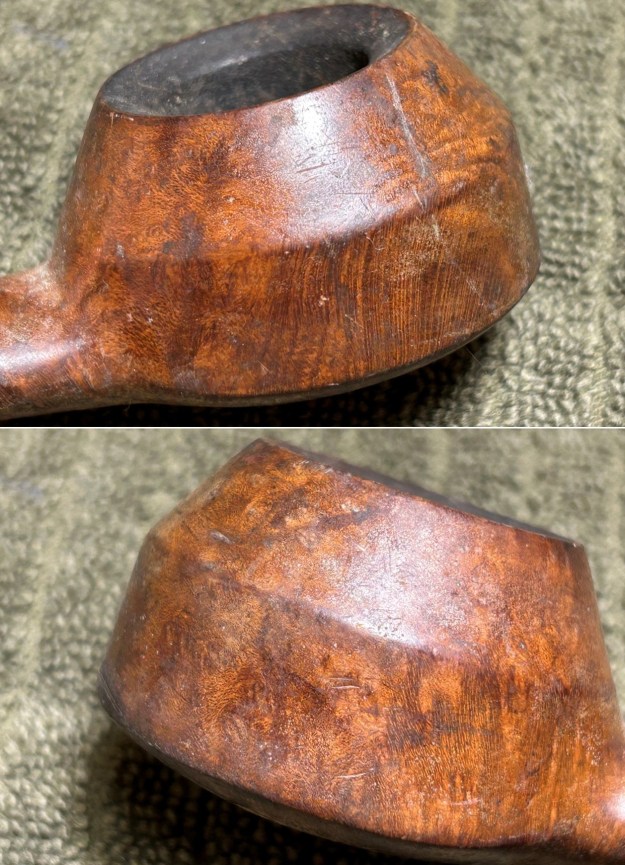
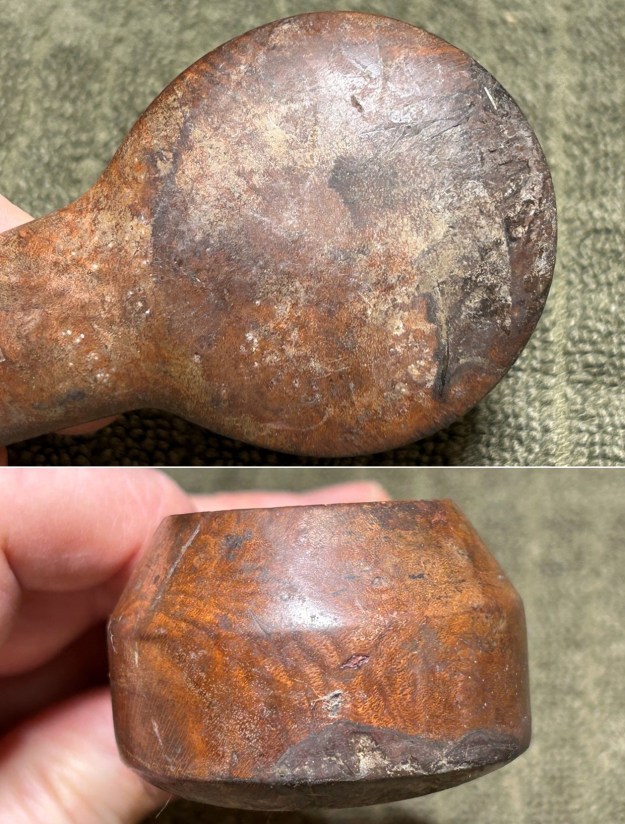
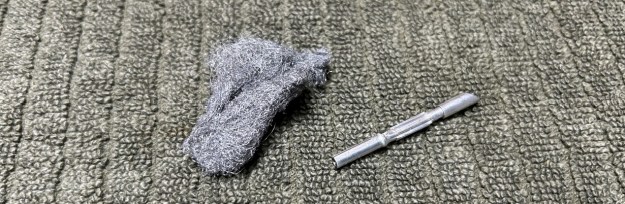
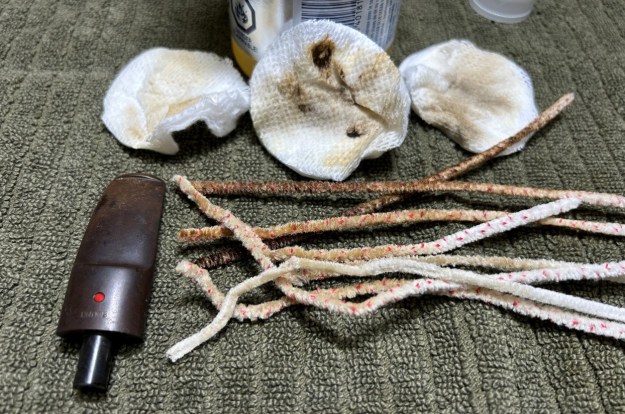
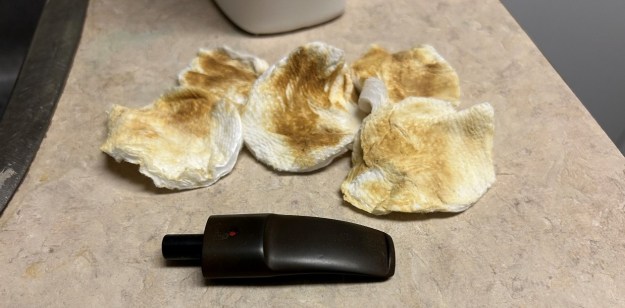
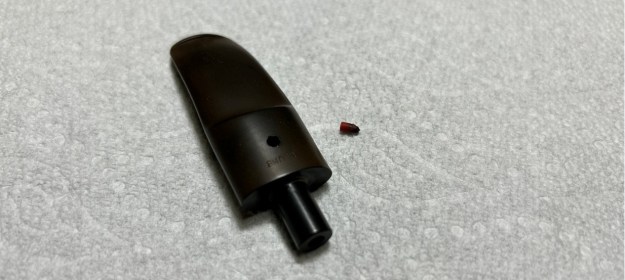
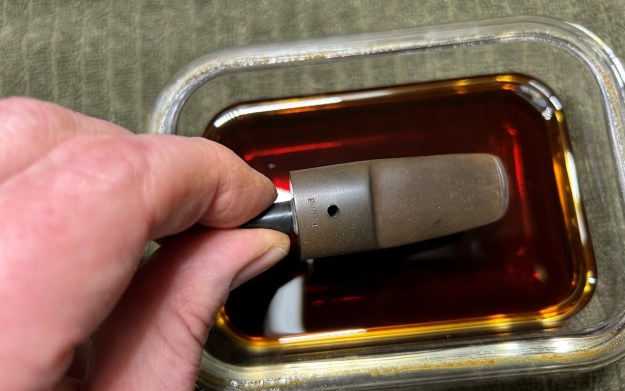
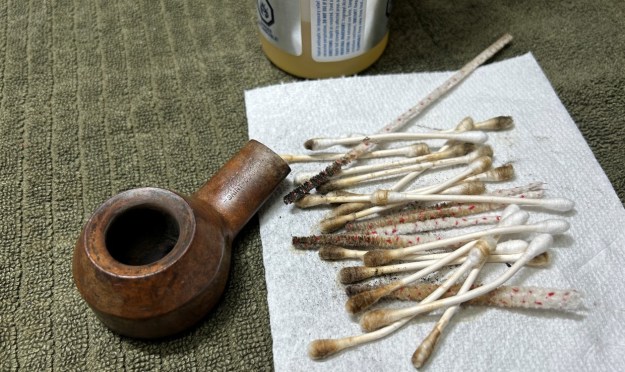
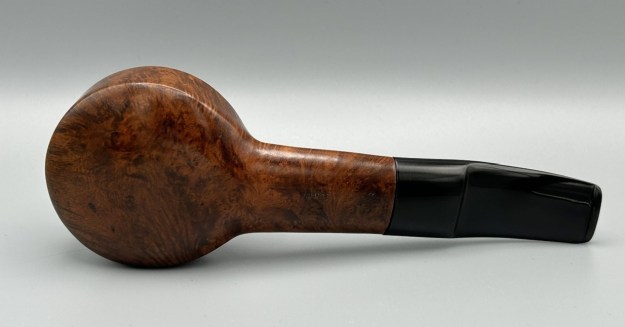
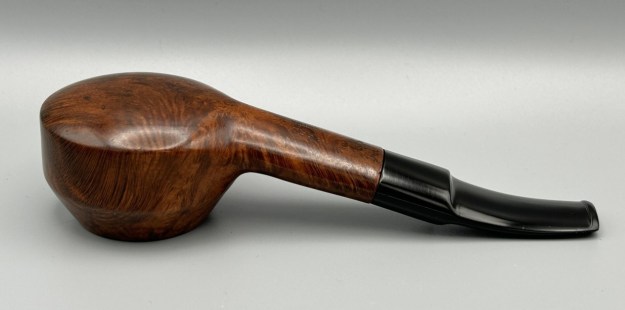
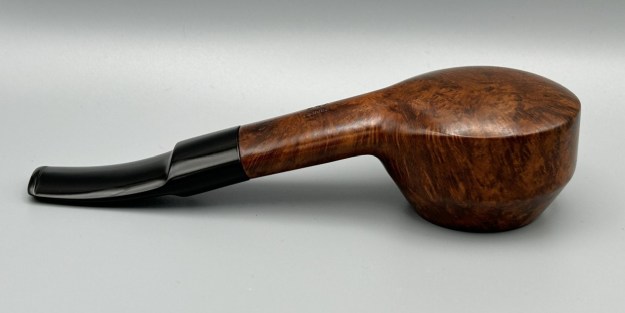
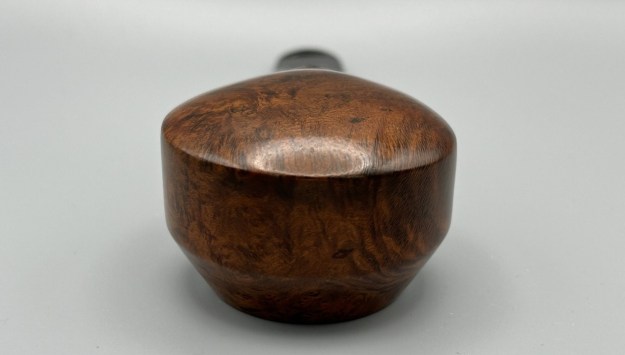
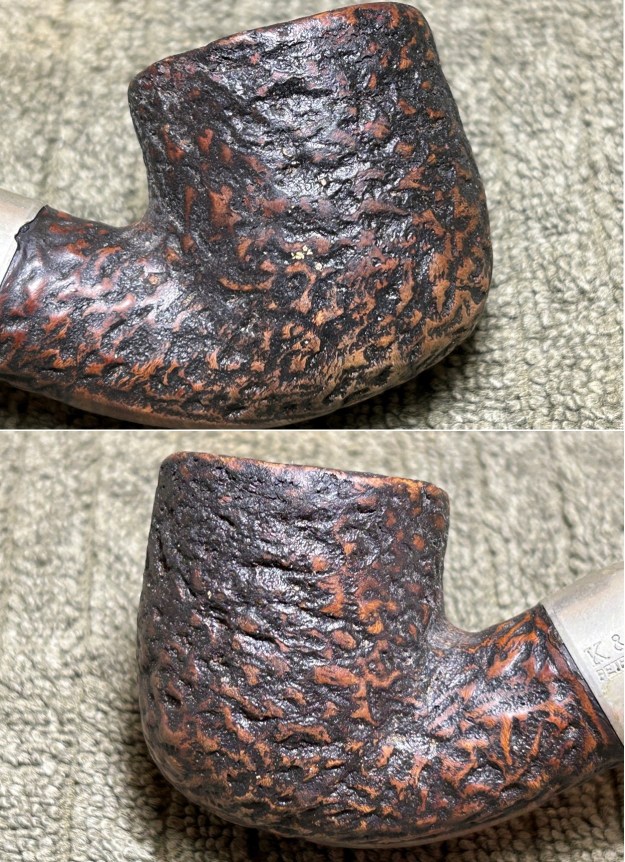
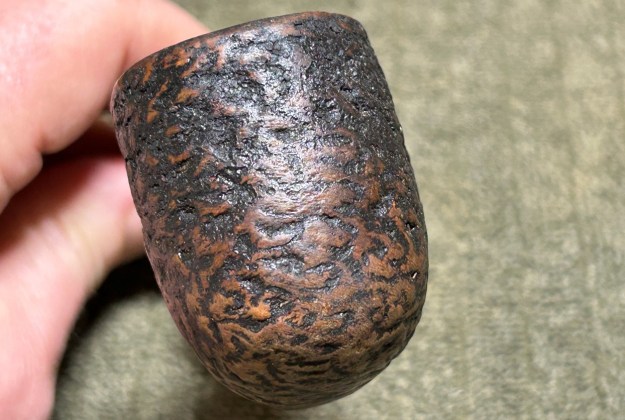
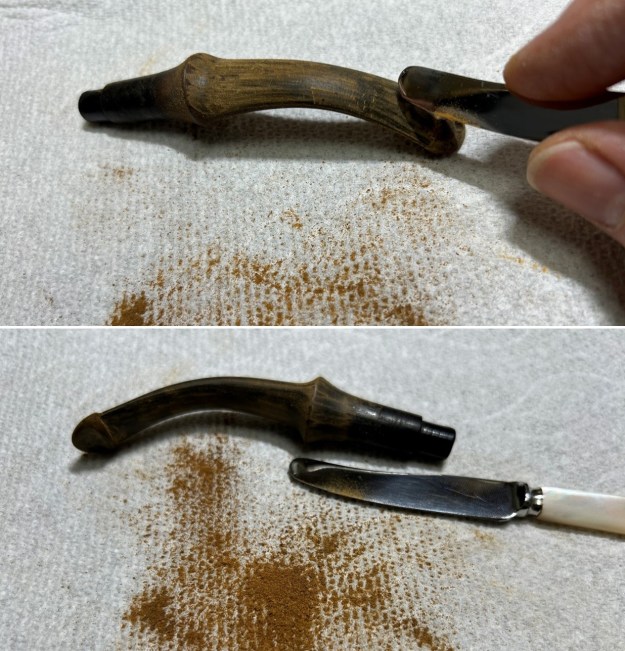
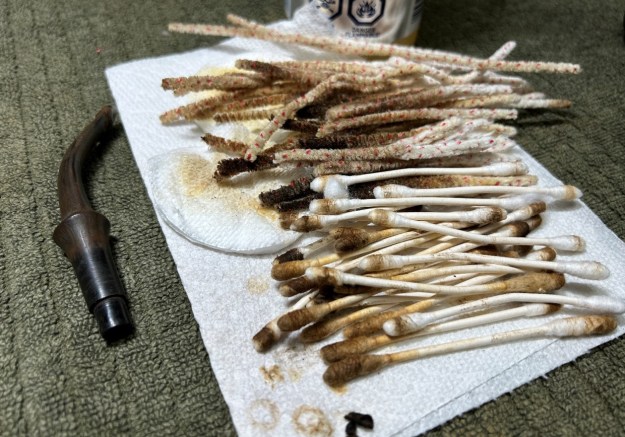
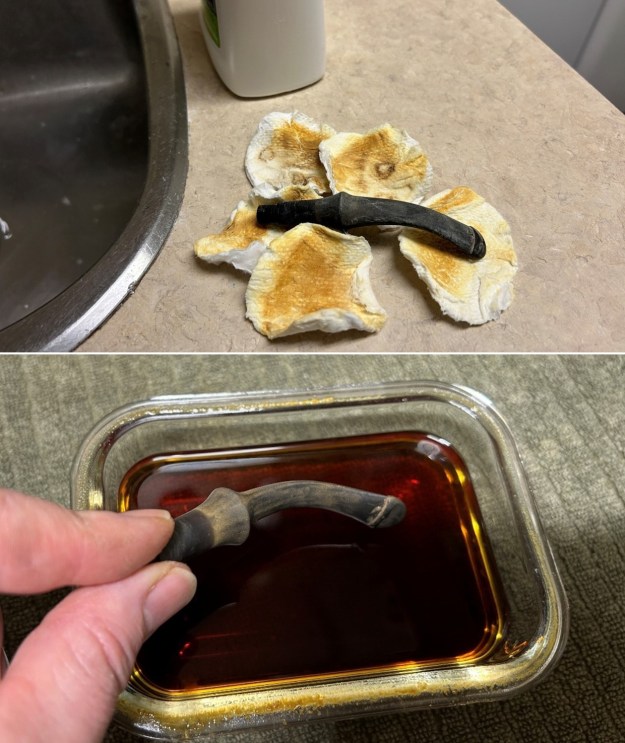
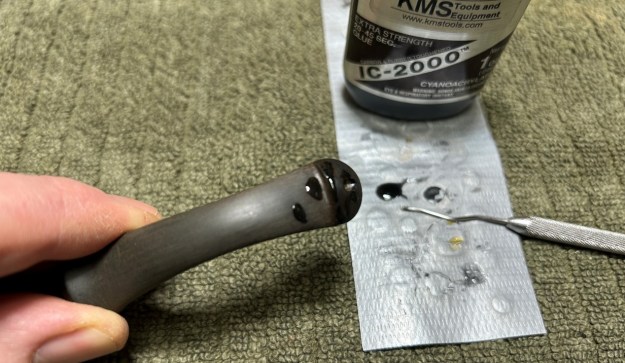
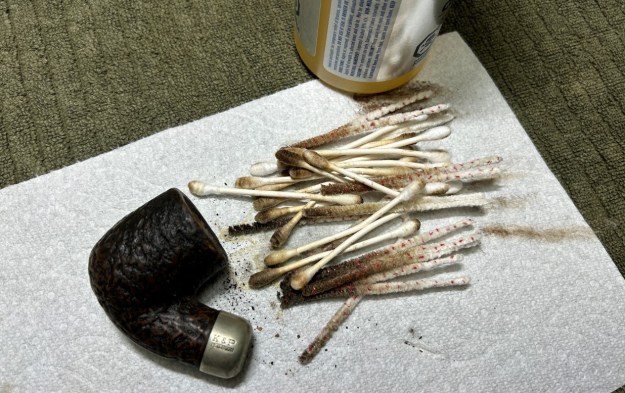
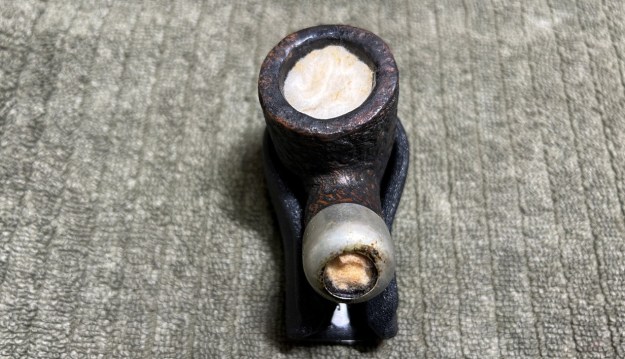
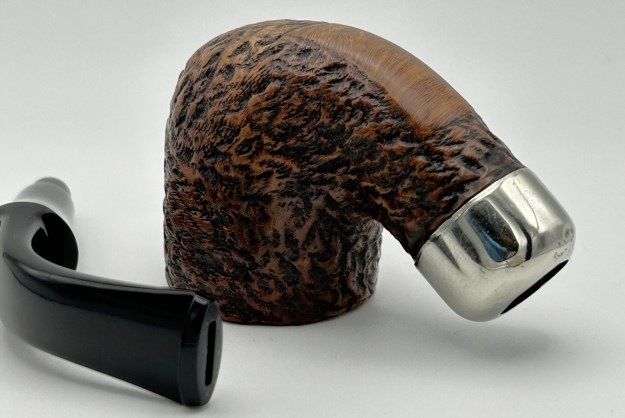
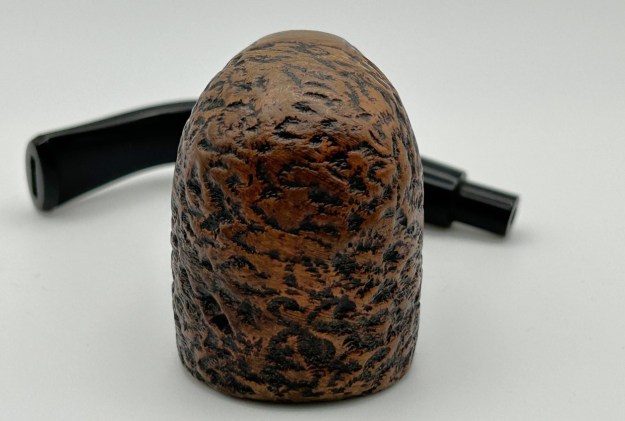
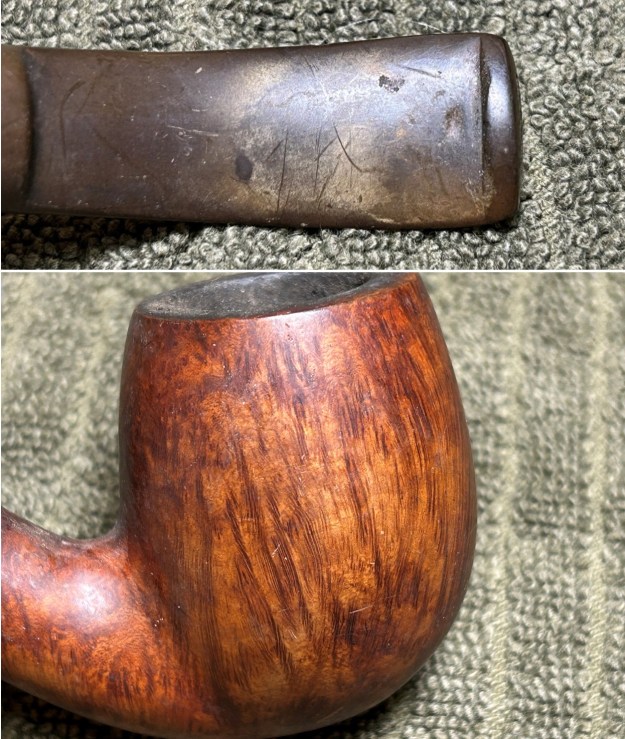
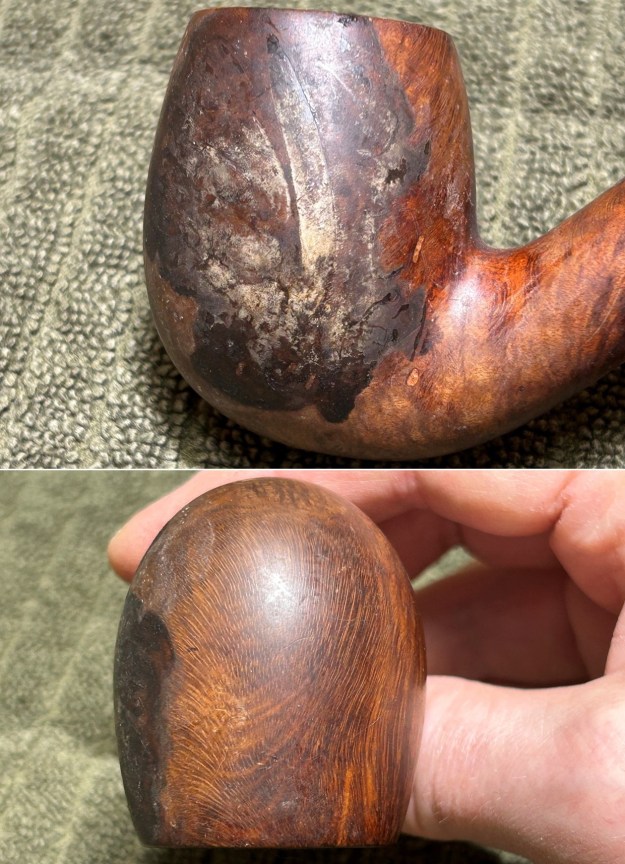
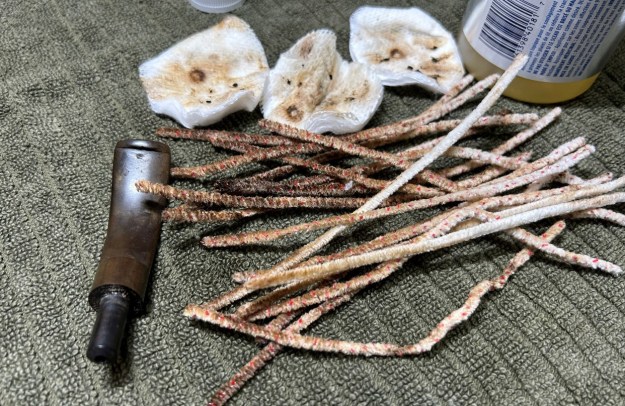
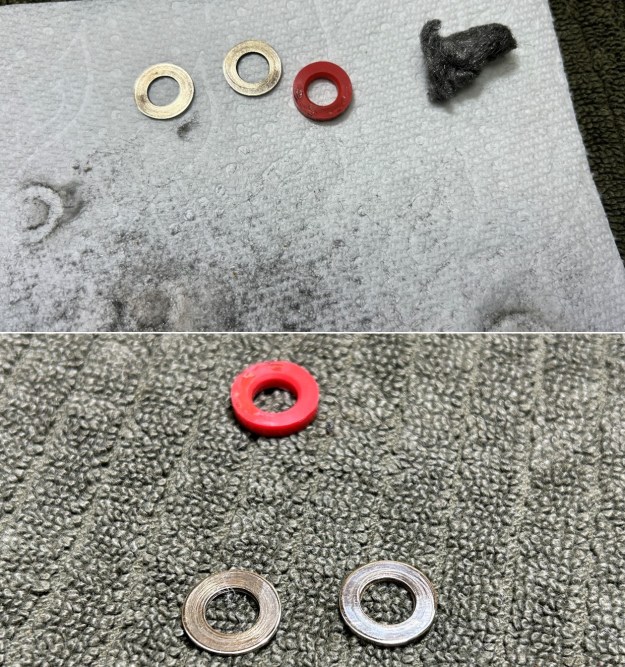
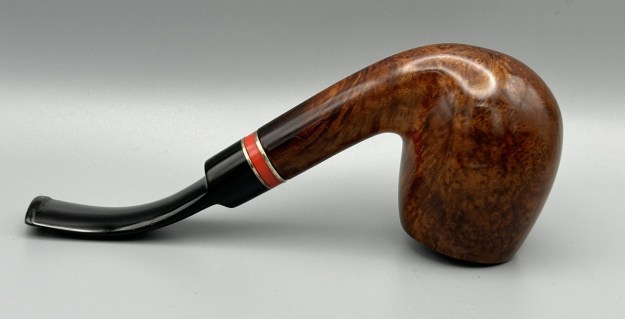
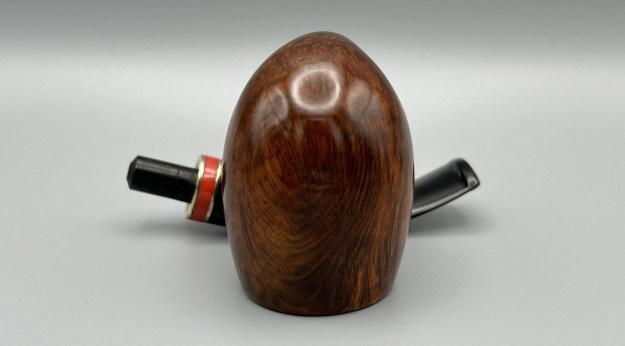
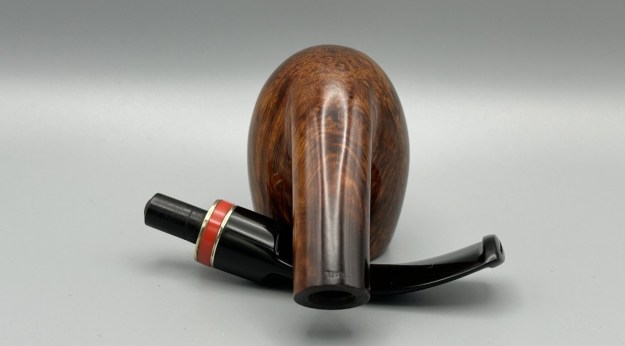
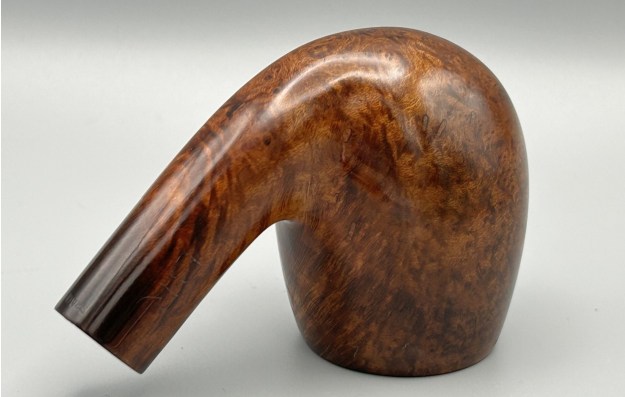
If you’re interested in an old and highly unusual pipe with incredible grain, have I got a pipe for you! This pipe is in the shape of a torpedo – but not like the screw-in zeppelin pipes you may have seen. This one is much older and more fascinating. It has a substantial chunk of briar and a lovely horn stem, with a bone tenon. I received it in a large lot of French pipes and it has been sitting in my box for a long time. Now, the time has come for it to be brought back to life. I’ve mentioned several times that I have an interest in French pipes and pipemaking. I think we’re going to have fun with this one. You may wonder why I called this pipe a torpedo, and that’s a fair question. The markings on the pipe are what gave it away. If you look at the photos below, you’ll see a difficult-to-read word on the side of the stummel. It took me a long time to figure out what it said (and I also used chalk like a gravestone rubbing), but my knowledge of the French language helped. The word is torpille, which is the French word for torpedo. Aha! The word fit the letters and the shape of the pipe. These photos also show the wonderful grain. At this point, since we’re talking about markings, I’m momentarily going to jump ahead in the story. It wasn’t until after I had cleaned the stummel (much later) that I uncovered more marks! These were very faint (as the photos below attest). Again, after quite a bit of staring with magnification, I figured out what the words were. They are A La Havane [over] Grenoble. Naturally, I was curious about this and discovered that this was the name of an old tobacco shop in the French city of Grenoble (obviously). Incidentally, A La Havane means ‘In Havana,’ which seems like a suitable name for a tobacconist. In fact, there is a tobacco shop in Grenoble to this day which is called Le Havane. I wonder if this is just the modern incarnation of that old shop. It seems likely. Here’s a Google Street View image of it:Steve has restored a couple of pipes similar to this one, but not quite the same. He referred to the pipe he had as a ‘slug’, which is both humorous and accurate. You can read about one of the restorations here. Mine is a bit different, as it has a very different stem and is missing the slug’s ‘foot’. Have a look at Steve’s here:Moving on to the state of this pipe and, well, it had seen better days. This pipe was worn, dirty, and rough. The stem was made of horn and was heavily chewed and beaten. Its tenon was made of bone and, in theory, should be able to be unscrewed – but some of these century-old pipes are awfully difficult. Meanwhile, the stummel was very dirty, with dust and grime ground into the wood. The rim was heavily burned and the insides were clogged with filth.To begin, I used isopropyl alcohol on a few cotton rounds and wiped down the stem to provide an initial cleaning of filth before moving on to the next steps. I wanted to clean out the insides next, but I felt it important to try and remove the tenon. First, I soaked the stem in isopropyl alcohol for about an hour – and that did precisely nothing. Second, I stuck the stem in the freezer for about 30 minutes – sometimes that can help the unscrewing process, but it didn’t. Third, I warmed the stem with my heat gun, hoping that that might loosen the gluey goo inside. After heating for quite a while, I could feel just a little give. I used my fingers to undo the screw. It was so challenging that I actually developed (and burst) a blister on my left index finger. But the good news is that I actually got it unscrewed. What I won’t do for pipes! The primary cleaning came next. I disinfected the inside of the stem with both pipe cleaners and cotton swabs dipped in lemon-infused 99% isopropyl alcohol. I scrubbed thoroughly to make sure the interior was very clean. I used quite a few pipe cleaners and cotton swabs. I also cleaned the tenon very well too.As the stem was now clean and dry, I set about fixing the marks and dents in the horn. This was done by filling those divots with clear cyanoacrylate adhesive. There was quite a bit of horn missing and the repair took quite a while. I left this to cure and moved on. I neglected to take photos of this stem, so you’ll just have to take my word for it.

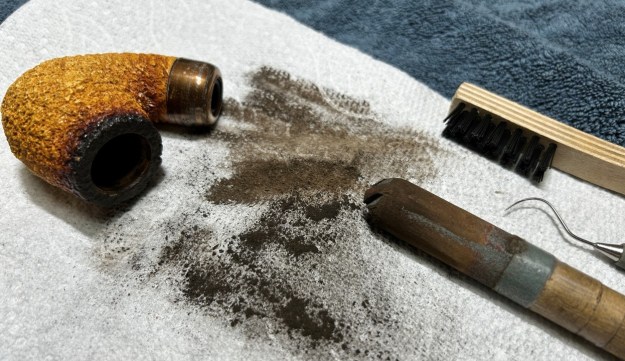
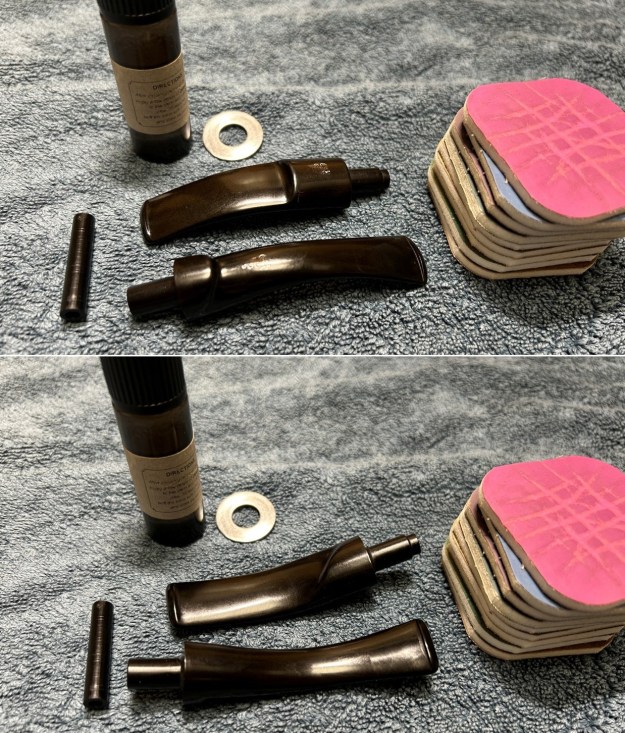
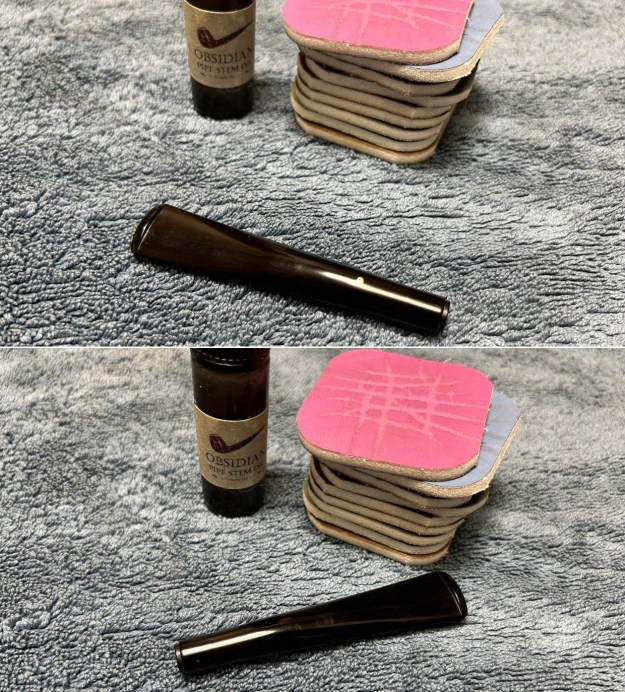
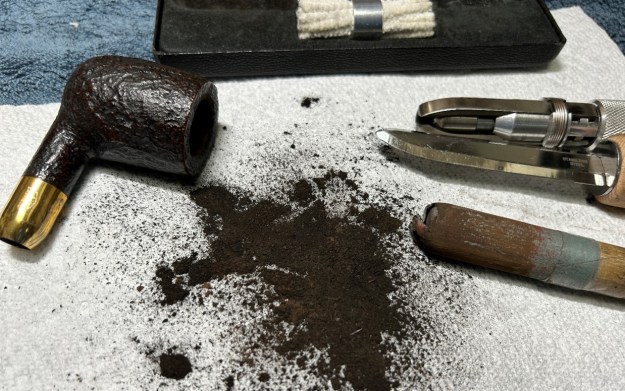
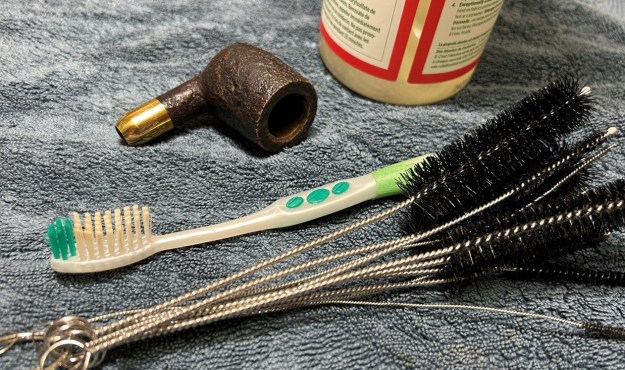
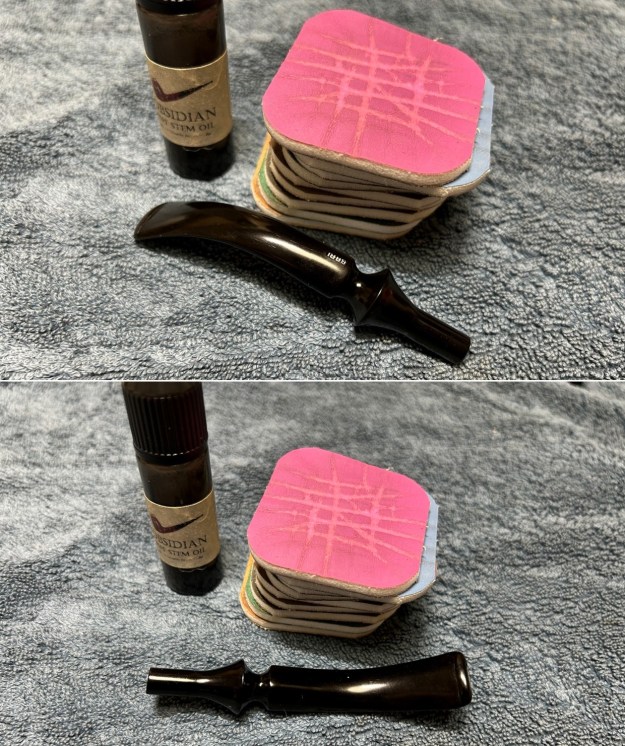
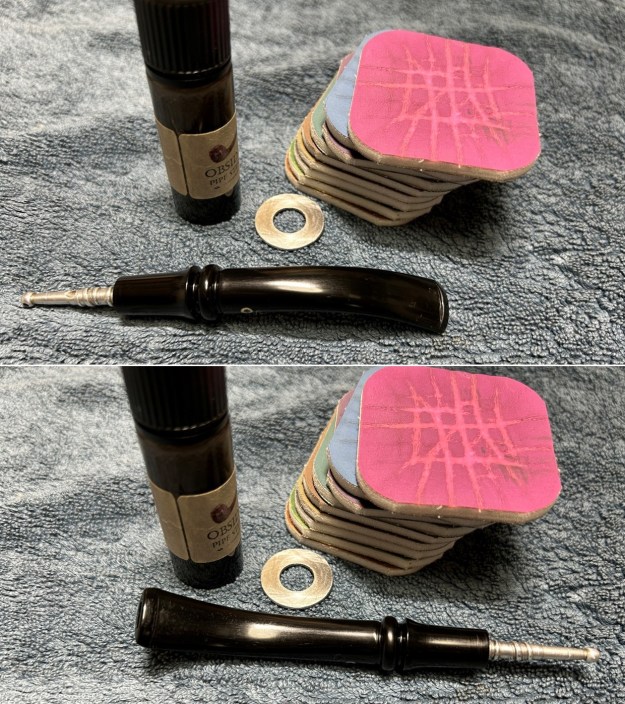
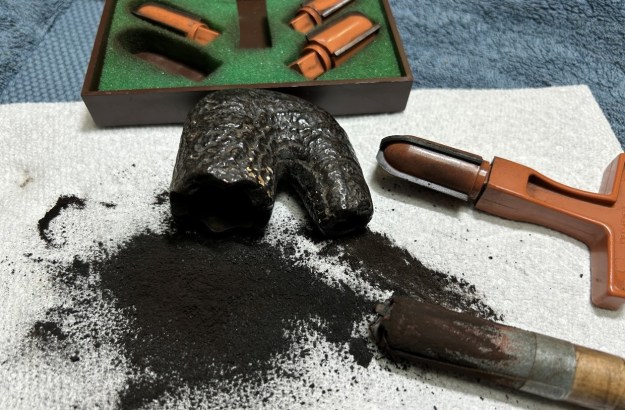
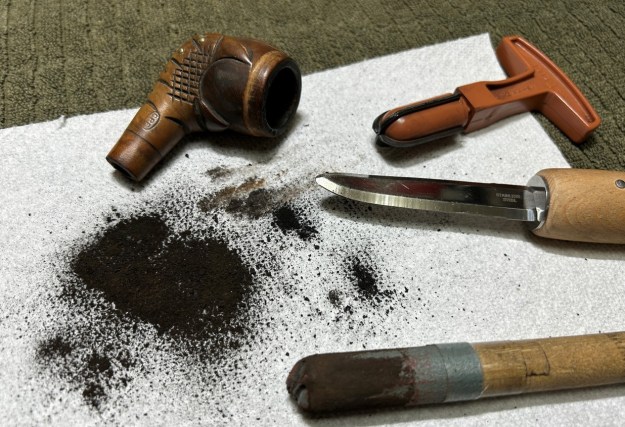
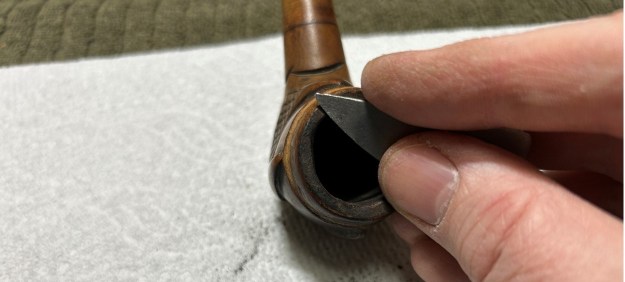
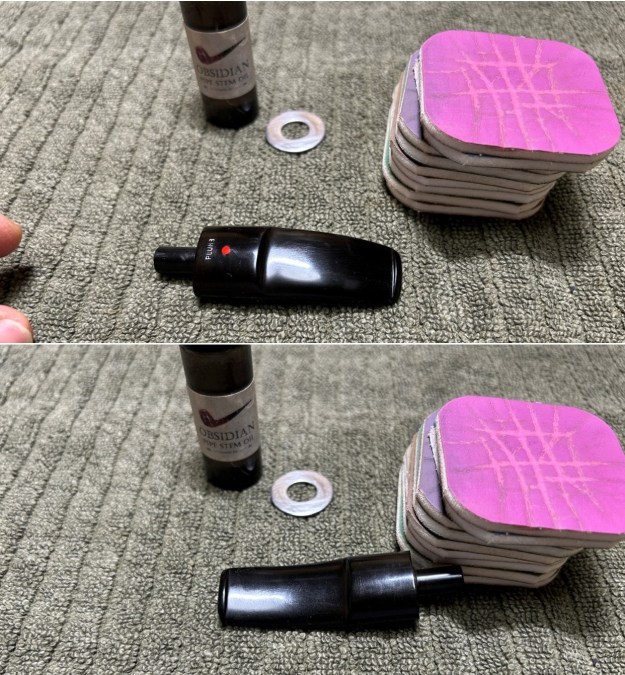
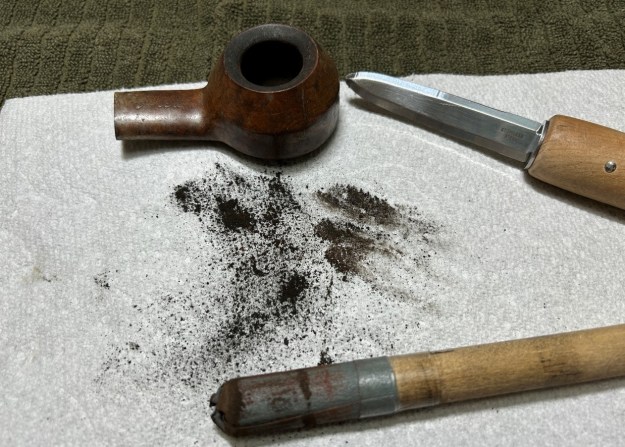
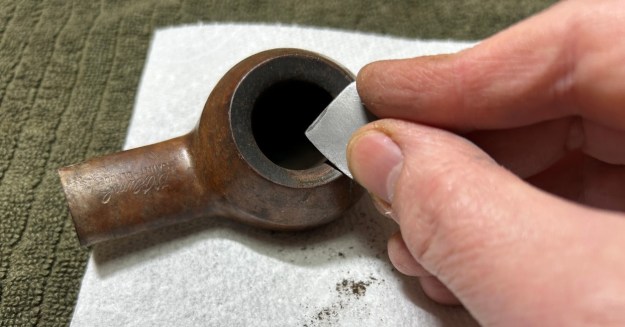
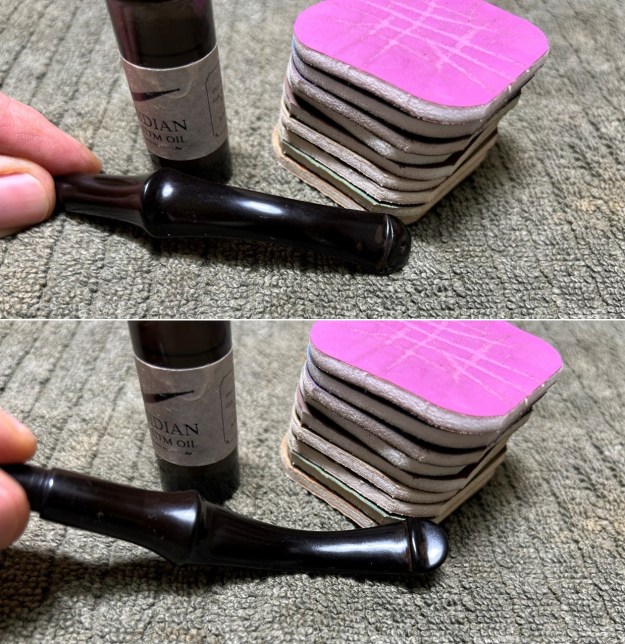
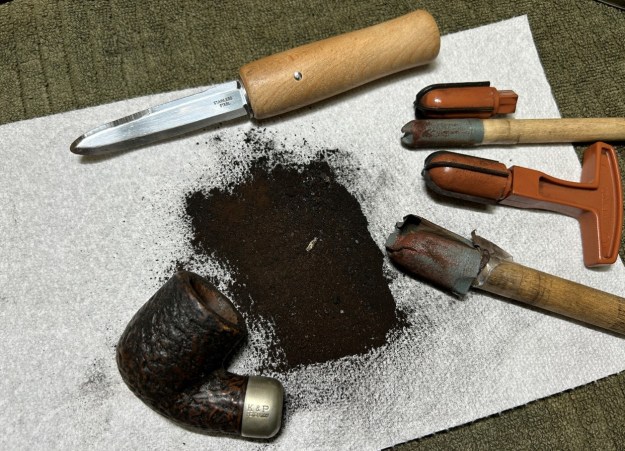
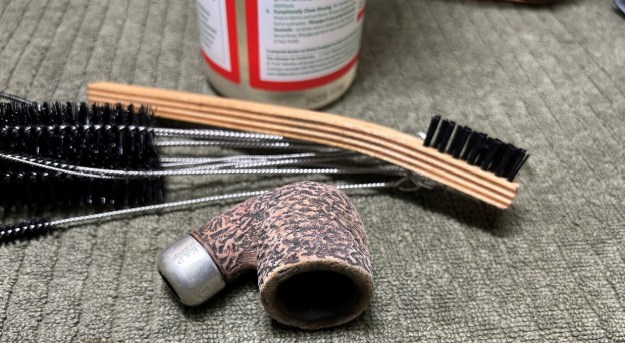
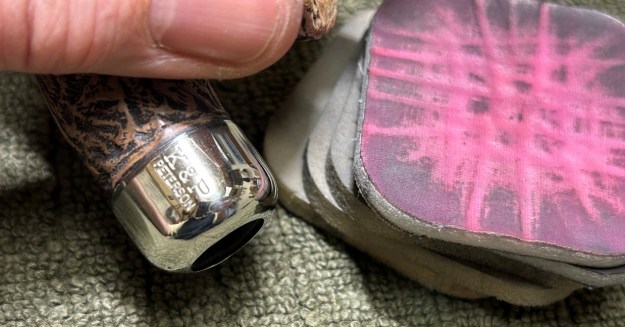
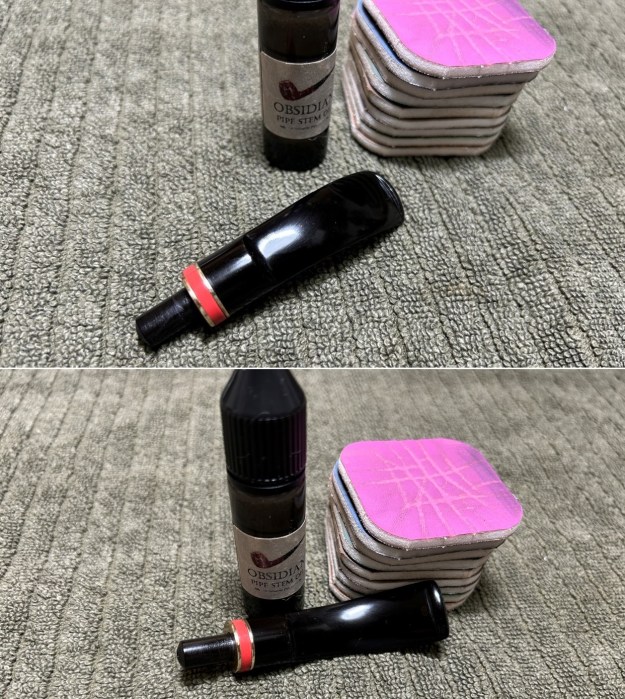
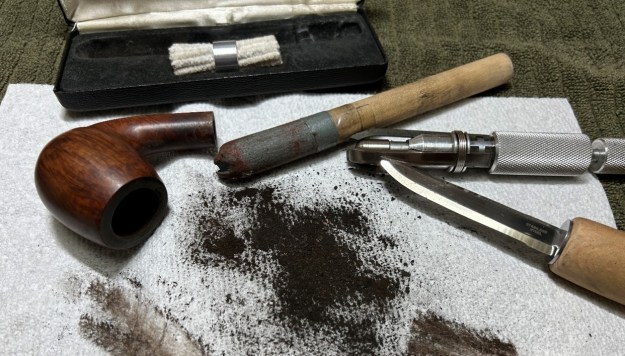
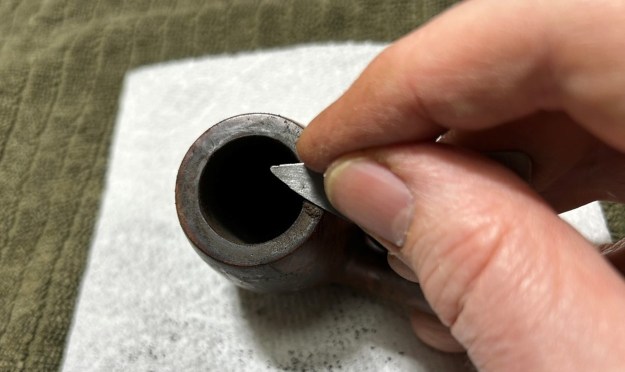
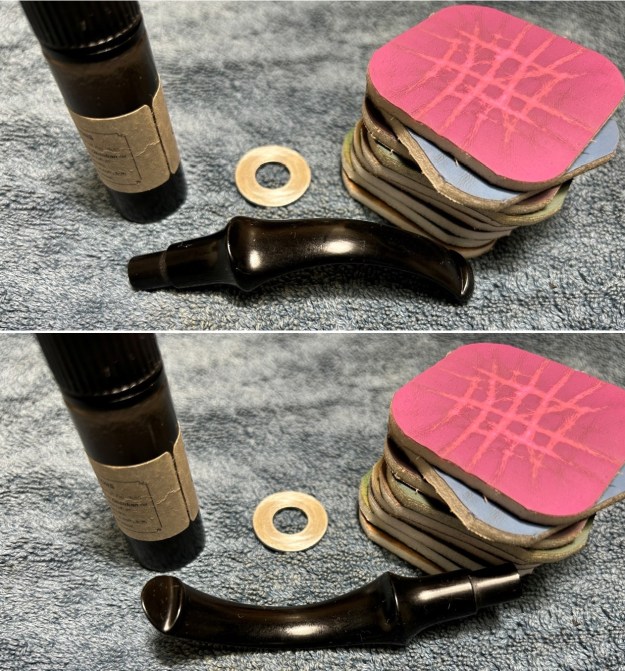
The penultimate step for the stem is sanding. First, with my set of needle files, I reduced the bulk of the cyanoacrylate repairs. I removed the excess adhesive as near to the surface as possible, without cutting into the horn. Following that, I used all nine of the micromesh sanding pads (1,500 through 12,000 grit) to sand out flaws, even out the horn, and provide gentle polishing of the finished surface. I also applied pipe-stem oil while using the last five micromesh pads. There was a wonderful shine to the stem when I was done.As the stem was (nearly) complete, I moved on to the stummel. The first step was to ream out the bowl – that is to say, remove all the cake inside the bowl. This accomplished a couple of things. First (and most obviously), it cleaned the bowl and provided a refurbished chamber for future smoking. Second, when the old cake was removed, I could inspect the interior walls of the bowl and determine if there was damage or not. I used a reamer, a pipe knife, and a piece of sandpaper taped to a wooden dowel. Collectively, these ensured that all the debris was removed. I noticed that the bottom of the bowl had been somewhat scraped out over the years, and the heel was lower than one would wish. However, I left it as it was – this is part of its history.Similar to the stem, I then cleaned the stummel with both pipe cleaners and cotton swabs dipped in lemon-infused 99% isopropyl alcohol. With a pipe this dirty, it took quite a while and much cotton to clean. Holy moly, was this pipe ever dirty!I then decided to ‘de-ghost’ the pipe – that is to say, exorcize the remaining filth from the briar. I filled the bowl and the shank with cotton balls, then saturated them with 99% isopropyl alcohol. I let the stummel sit overnight. This caused the remaining oils, tars and smells to leach out into the cotton.To tidy up the briar, I wiped down the outside, using a solution of a pH-neutral detergent and some distilled water, with cotton rounds. I also used a toothbrush in the crevices. This did a good job of cleaning any latent dirt on the surface of the briar. It was at this point in the cleaning process that I noticed the faint markings that I mentioned earlier.The last step of the cleaning process was to scour the inside of the stummel with the same mild detergent and tube brushes. This was the culmination of a lot of hard work in getting the pipe clean.I took a solid wooden sphere, wrapped a piece of 400-grit sandpaper around it, and lightly sanded the inner edge of the rim. This achieved two things: first, it removed some of the burn marks; and second (and more importantly), the circular shape and motion of the sphere gradually returned the edge to a circle. Some of the burning will always remain, but that’s fine – it is part of this pipe’s history.

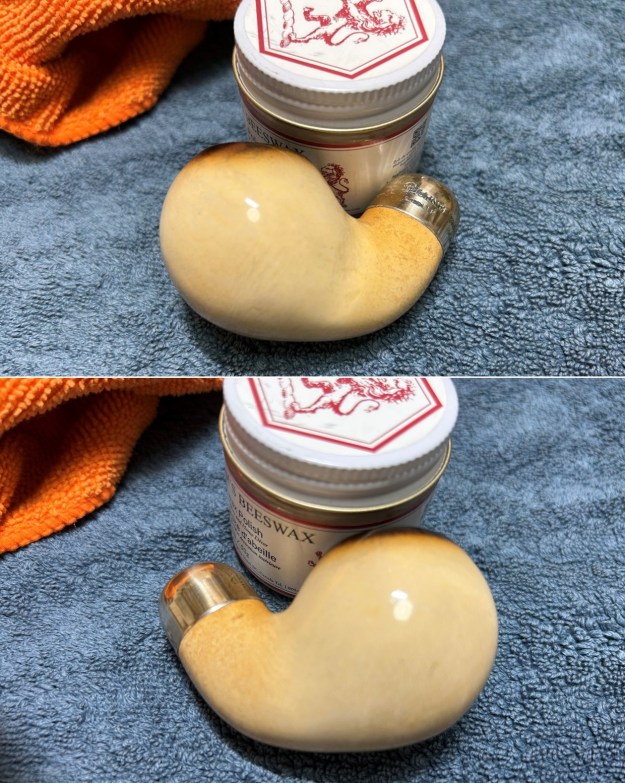
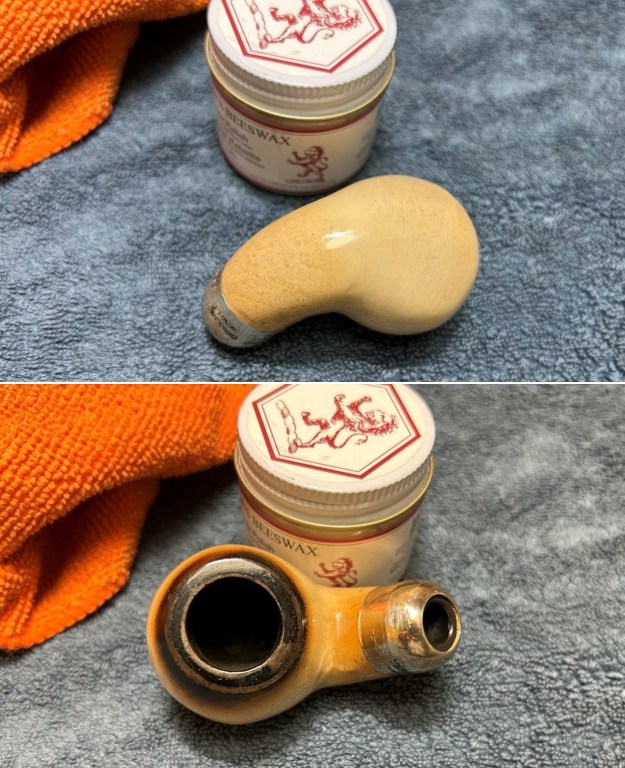
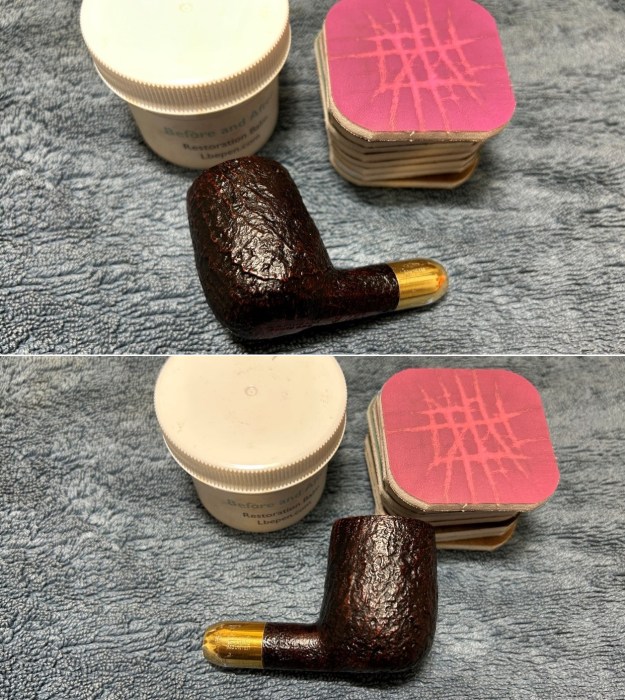
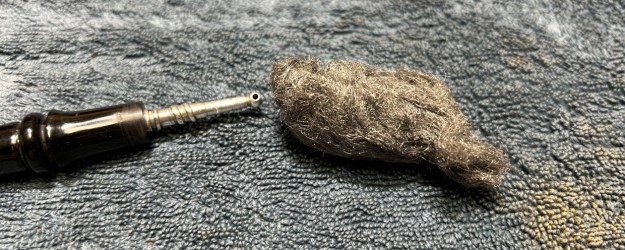
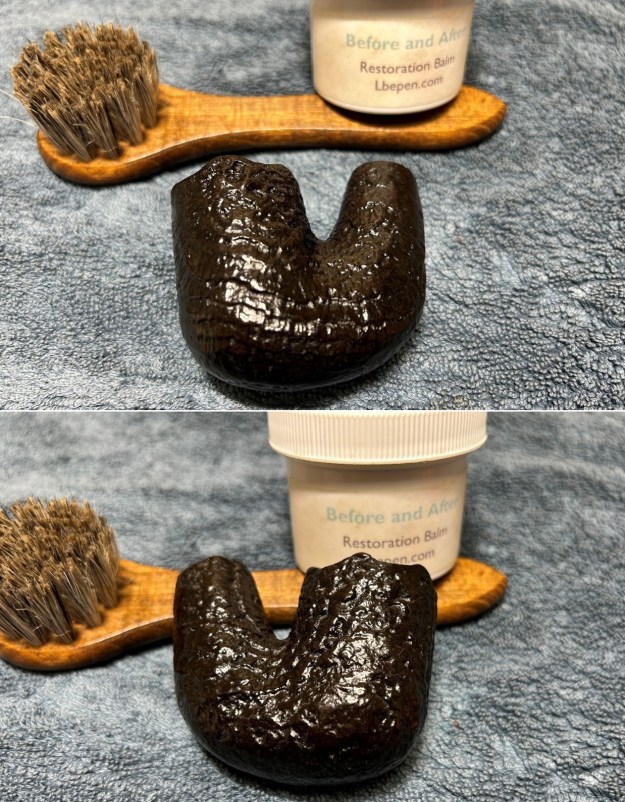
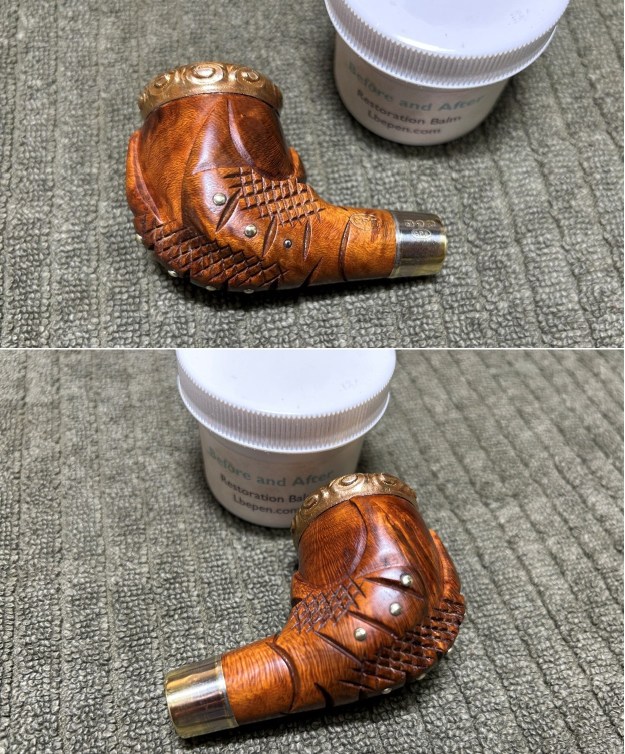
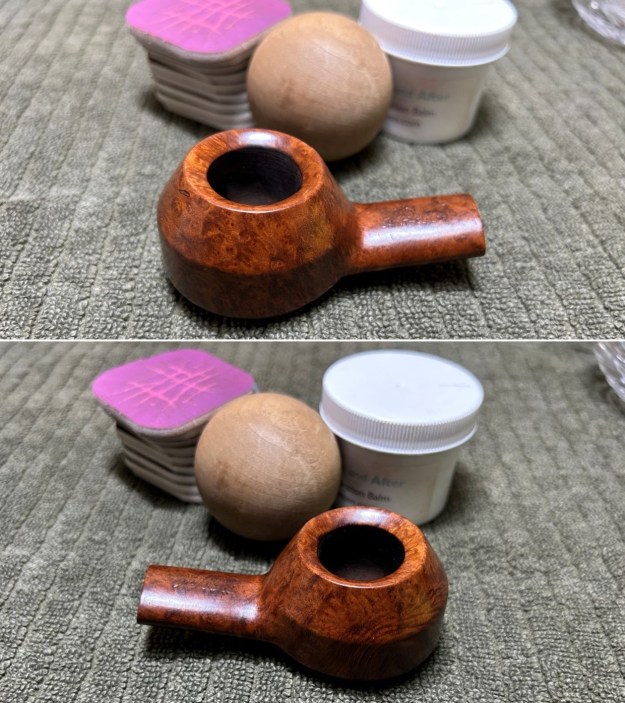
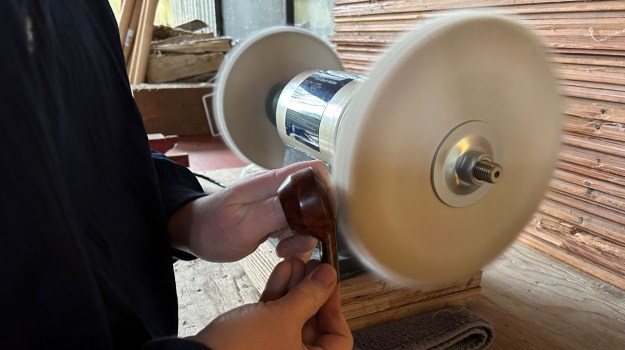
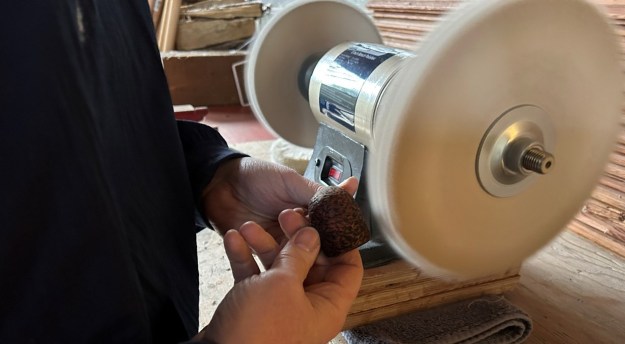
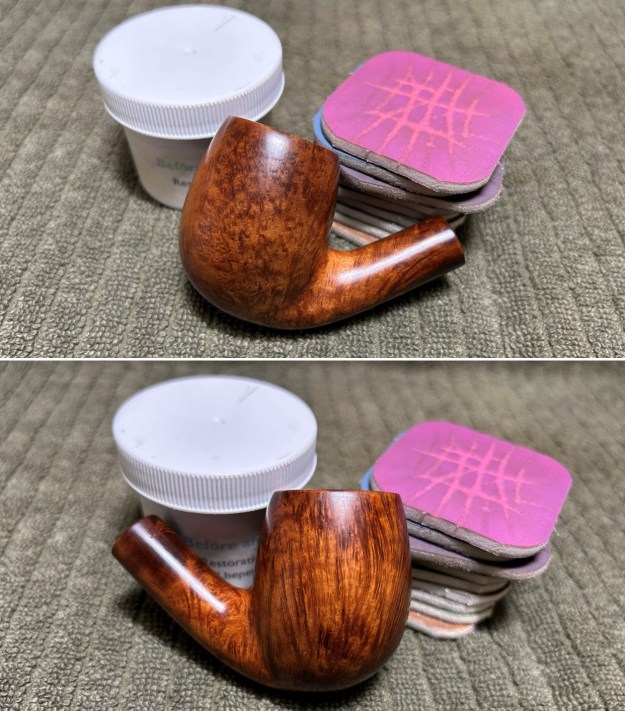
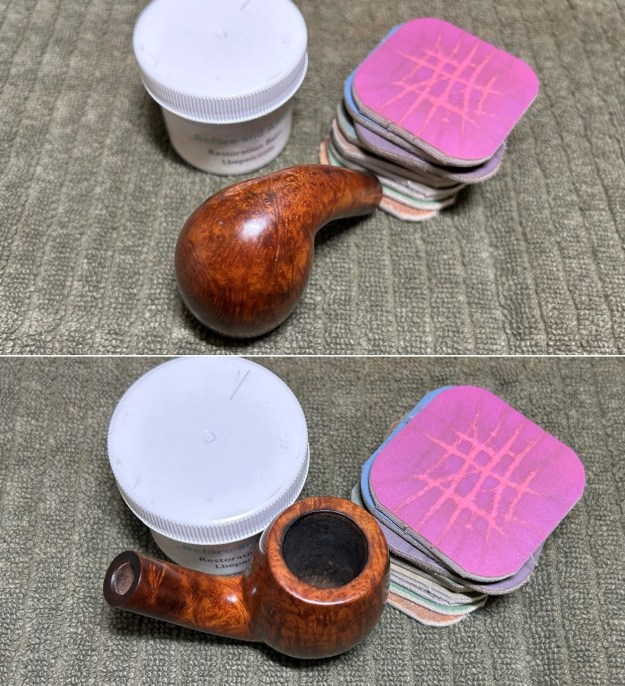
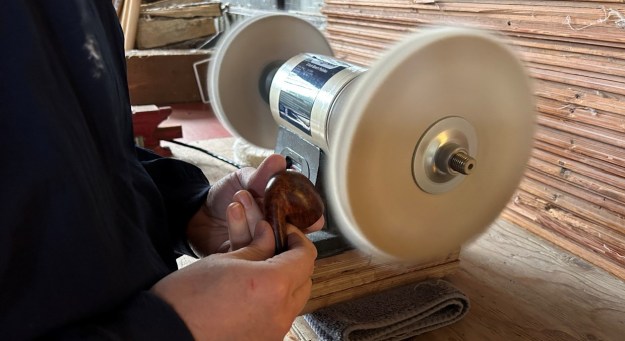
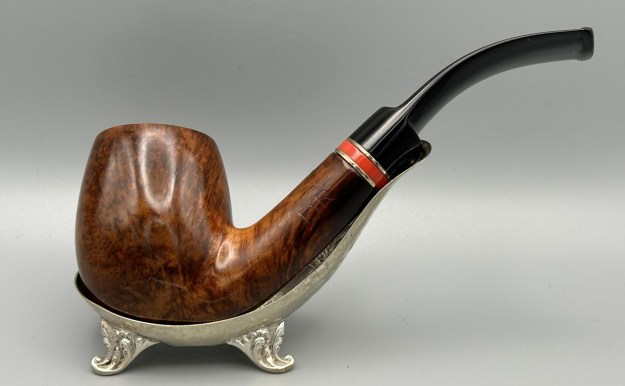
I used all nine micromesh pads (1,500 through 12,000 grit) to sand the outside of the stummel and finish it off. This sanding minimizes flaws in the briar and provides a beautiful smoothness to the wood. I rubbed some LBE Before & After Restoration Balm into the briar and let it sit for 30 minutes or so. The balm moisturizes the wood and gives a beautiful depth to the briar. I then buffed the stummel with a microfibre cloth. For the final step, I took the pipe to my bench polisher and carefully buffed it – first with a blue diamond compound, then with three coats of carnauba wax. This procedure makes the pipe look its best – the stummel sings and the stem glows.This French ‘Torpille’ Torpedo pipe looks fantastic again and is ready to be enjoyed by its next owner. I am pleased to announce that this pipe is for sale! If you are interested in acquiring it for your collection, please have a look in the ‘French’ pipe section of the store here on Steve’s website. You can also email me directly at kenneth@knightsofthepipe.com. The approximate dimensions of the pipe are as follows: length 5½ in. (140 mm); height 1¼ in. (30 mm); bowl diameter 1½ in. (36 mm); chamber diameter ¾ in. (19 mm). The weight of the pipe is 1¼ oz. (37 g). I hope you enjoyed reading the story of this pipe’s restoration as much as I did restoring it. If you are interested in more of my work, please follow me here on Steve’s website or send me an email. Thank you very much for reading and, as always, I welcome and encourage your comments.

Restoring a Work of Art from Viggo Nielsen


by Kenneth Lieblich

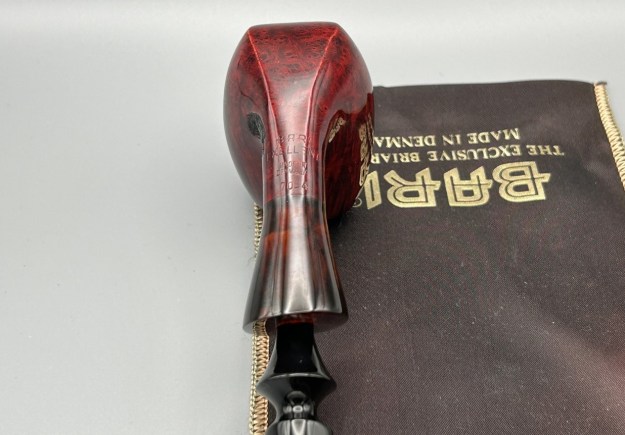
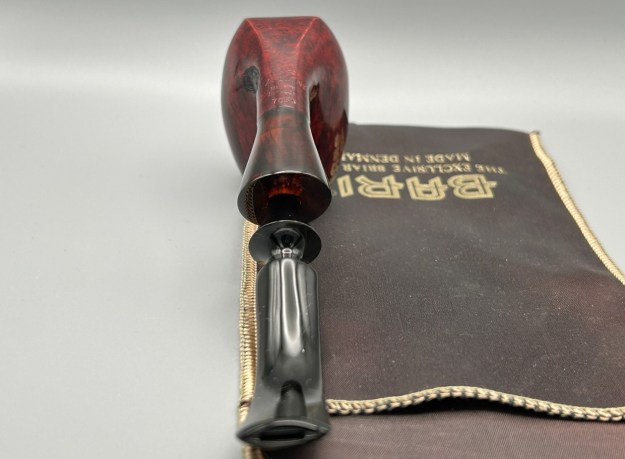
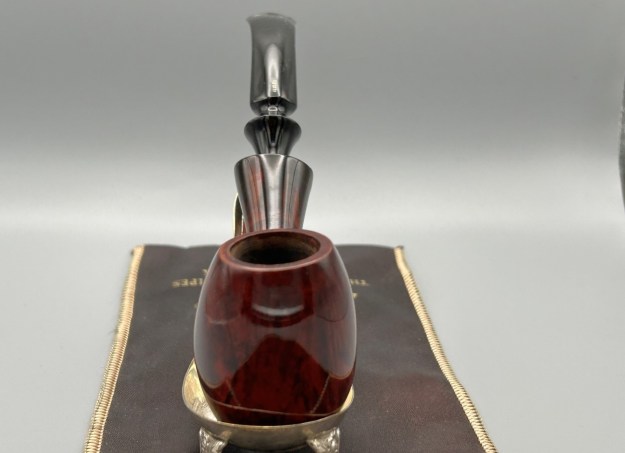
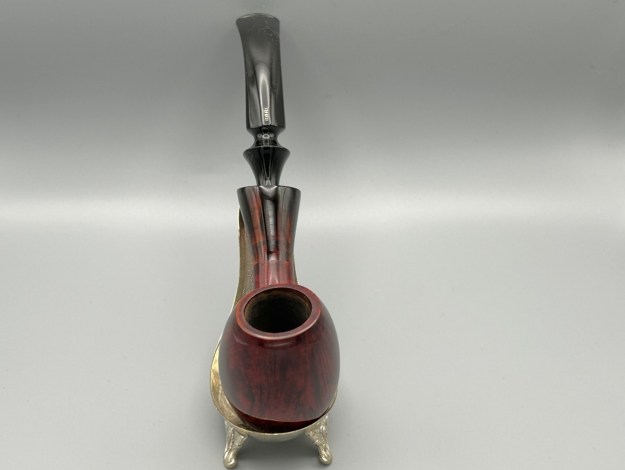
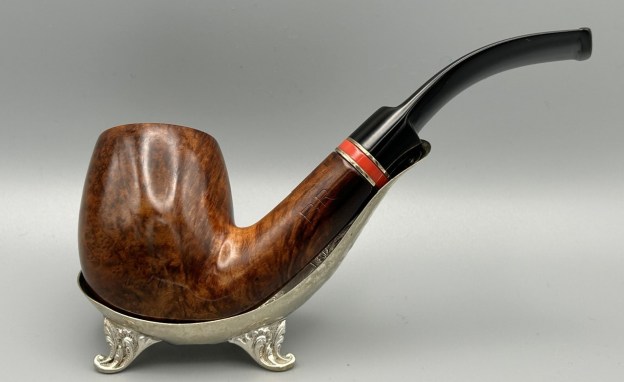
When I first saw this pipe, I thought that it was a very fine example of Danish pipemaking. But the more I worked on it, the more I recognized the incredible workmanship involved in carving it. This is a majestic, hand-finished freehand from master carver, Viggo Nielsen. This is the sort of pipe that offers you more each time you look at it. Examining the curves, angles, transitions, and plateau was very rewarding and reminded me of a rugged mountain landscape. It’s a beautiful pipe! There are some markings on the shank of this pipe and they are helpful for identification. On the left side of the shank, we see Nielsen [over] Handmade [over] in Denmark. On the right side of the shank, we see Hand [over] Finished. That’s all – no other markings to be found.It is worth looking up the work of Viggo Nielsen from the usual sources. On Pipedia, his article states:

Viggo is surely one of the seminal figures in the evolution of the Danish pipe. His pipes are all handmade – also handmade stems, often in Cumberland. Most of the pipes are quite big, and a large number are made for 9mm filter. The finish is just perfect and when holding one of Viggo’s pipes, you can tell, he’s a pro. 

Viggo Nielsen was born in 1927. During World War II he started making pipes at a now closed factory. These pipes were made of birch due to the lack of briar (because of the war). In 1948 Viggo started his own pipe factory, “Bari”. But it wasn’t until 3 years later he could actually acquire Briar wood for his pipes. The business was very successful producing both classic shapes and freehand models.

In 1978 Viggo sold the business to a German tobacco manufacturer and he began making the Fåborg Pipe together with his two sons Jørgen Nielsen and Kai Nielsen. Even when Viggo had reached the age of retirement, he could not quite leave his workshop and he still made about 100 pipes a year, some of them based on the famous “Fåborg Pibe” but also a few “Jewels of Denmark”, until he passed away.

This pipe doesn’t have a Cumberland stem, nor a filter, but it is a healthy size. I also went to Pipephil and found the following:

Artisan: Viggo Nielsen (1927 – †2009) starts making pipes during WWII. He estabishes his own Bari factory in 1948. The business is sold to a German tobacco manufacturer in 1978 and from this period on he starts the “Faaborg Pipe” (Fåborg Pibe) with his two sons Jørgen Nielsen and Kai Nielsen. The “Jewel of Denmark” stamping is reserved for perfect pipes (flawless straight grain).

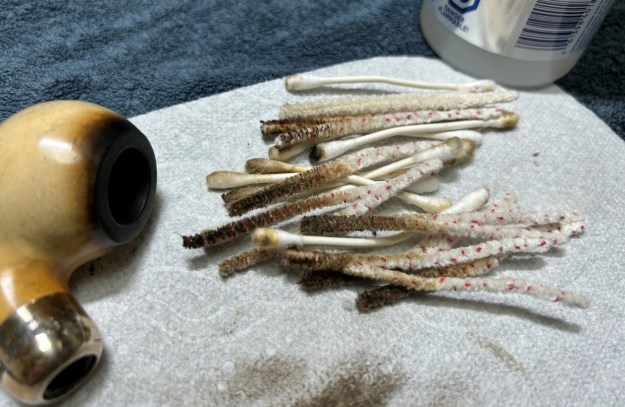
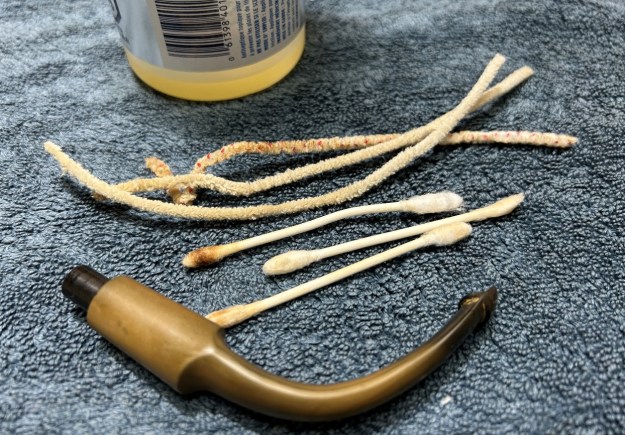
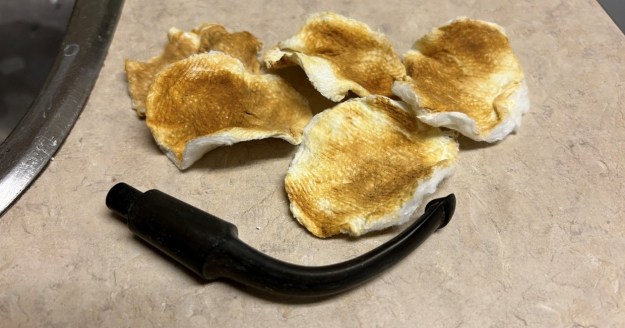
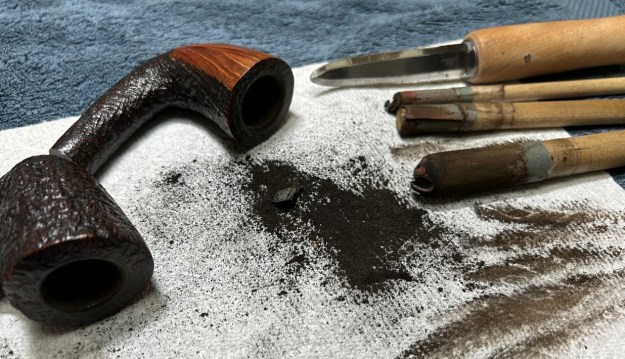
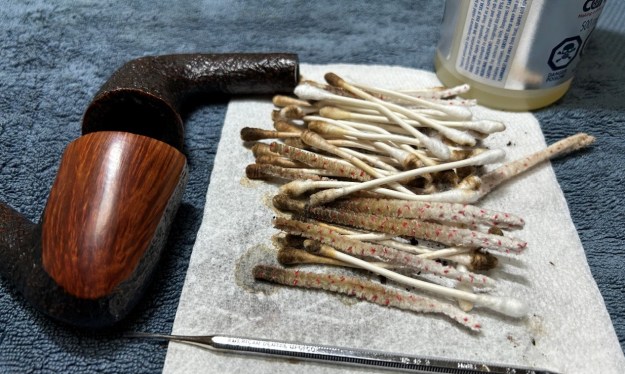
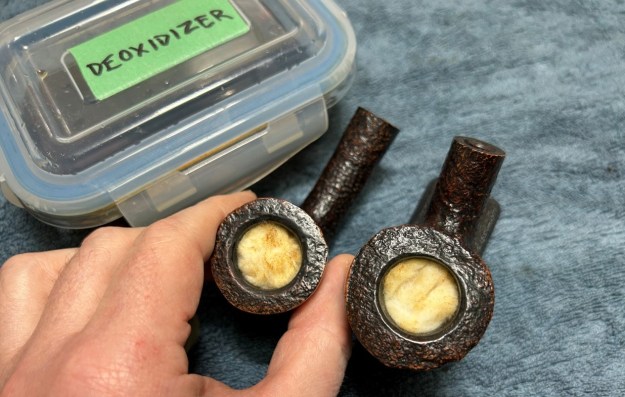
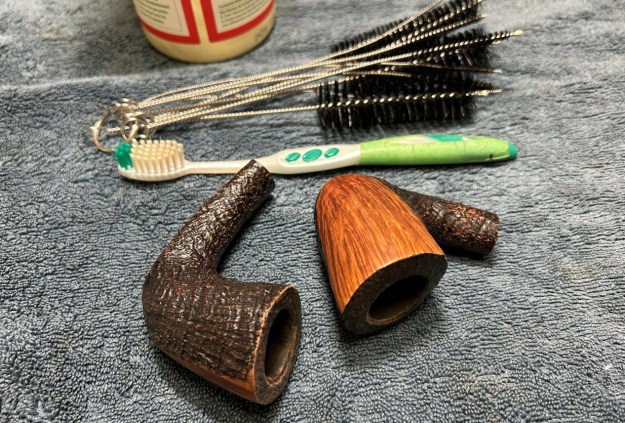
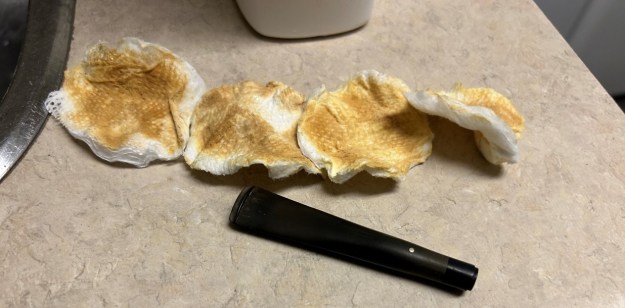
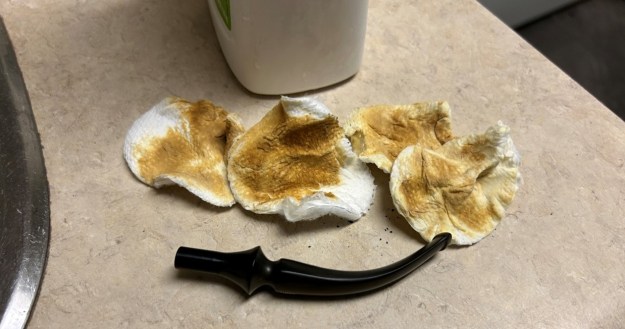
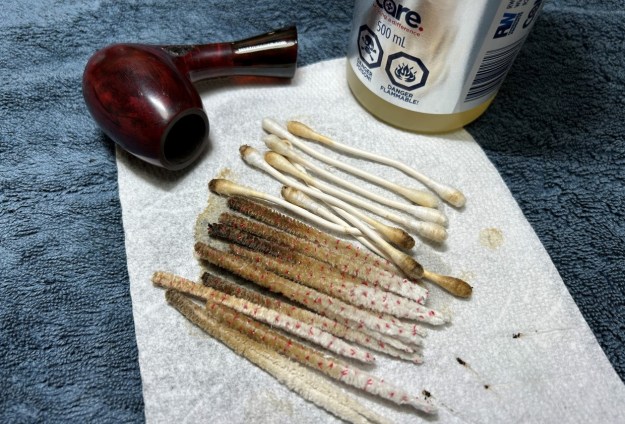
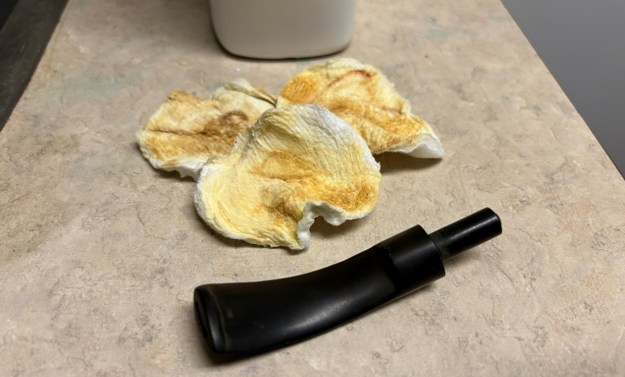
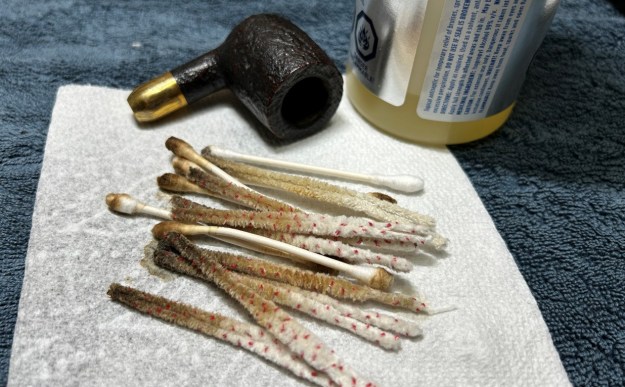
Let’s examine this wonderful specimen. The pipe was in great condition – just very dirty from lots of smoking. You can see lots of lava on the plateau rim top. The briar bowl was in nice shape, with a bit of grime ground in. The stem was well-worn, but a good, solid freehand stem. It has a few tooth marks and some oxidation, but nothing to worry about. To begin, I used isopropyl alcohol on a few cotton rounds and wiped down the stem to provide an initial cleaning of filth before moving on to the next steps. The primary cleaning came next. I disinfected the inside of the stem with both pipe cleaners and cotton swabs dipped in lemon-infused 99% isopropyl alcohol. I scrubbed thoroughly to make sure the interior was very clean. I used quite a few pipe cleaners and cotton swabs – far more than are shown in the photo.The goal of the next step is the removal (or minimization) of oxidation. Going to my sink, I used cream cleanser, cotton rounds, and a toothbrush, and scoured the stem to remove as much surface oxidation as possible. As the photos show, the result was a hideous, ochre-coloured mess – but better off the stem than on it.Once the stem was reasonably clean, I soaked it overnight in some Briarville Stem Oxidation Remover. This solution works to draw oxidation in the stem to the surface of the vulcanite. This is a major aid and an important step in ensuring a clean stem. The following day, I drew out the stem from its bath and scrubbed the lingering fluid with a toothbrush.As the stem was now clean and dry, I set about fixing the marks and dents in the vulcanite. This was done by filling those divots with black cyanoacrylate adhesive, impregnated with carbon and rubber. I left this to cure and moved on.The penultimate step for the stem is sanding. First, with my set of needle files, I reduced the bulk of the cyanoacrylate repairs. I removed the excess adhesive as near to the surface as possible, without cutting into the vulcanite. Following that, I used all nine of the micromesh sanding pads (1,500 through 12,000 grit) to sand out flaws, even out the vulcanite, and provide gentle polishing of the finished surface. I also applied pipe-stem oil while using the last five micromesh pads. There was a wonderful, deep black shine to the stem when I was done.As the stem was (nearly) complete, I moved on to the stummel. The first step was to ream out the bowl – that is to say, remove all the cake inside the bowl. This accomplished a couple of things. First (and most obviously), it cleaned the bowl and provided a refurbished chamber for future smoking. Second, when the old cake was removed, I could inspect the interior walls of the bowl and determine if there was damage or not. I used a reamer, a pipe knife, and a piece of sandpaper taped to a wooden dowel. Collectively, these ensured that all the debris was removed. And – holy moly – there was a lot of debris!Similar to the stem, I then cleaned the stummel with both pipe cleaners and cotton swabs dipped in lemon-infused 99% isopropyl alcohol. With a pipe this dirty, it took quite a while and much cotton to clean.I then decided to ‘de-ghost’ the pipe – that is to say, exorcize the remaining filth from the briar. I filled the bowl and the shank with cotton balls, then saturated them with 99% isopropyl alcohol. I let the stummel sit overnight. This caused the remaining oils, tars and smells to leach out into the cotton.To tidy up the briar, I wiped down the outside, using a solution of a pH-neutral detergent and some distilled water, with cotton rounds. I also used a nylon brush in the crevices of the plateau. This did a good job of cleaning any latent dirt on the surface of the briar. The last step of the cleaning process was to scour the inside of the stummel with the same mild detergent and tube brushes. This was the culmination of a lot of hard work in getting the pipe clean.I used all nine micromesh pads (1,500 through 12,000 grit) to sand the outside of the stummel and finish it off. This sanding minimizes flaws in the briar and provides a beautiful smoothness to the wood. I rubbed some LBE Before & After Restoration Balm into the briar and let it sit for 30 minutes or so. The balm moisturizes the wood and gives a beautiful depth to the briar. I then buffed the stummel with a microfibre cloth. Just look at that pipe! For the final step, I took the pipe to my bench polisher and carefully buffed it – first with a blue diamond compound, then with three coats of conservator’s wax. This procedure makes the pipe look its best – the stummel sings and the stem glows.This Viggo Nielsen Hand-Finished Freehand looks fantastic again and is ready to be enjoyed by its next owner. I am pleased to announce that this pipe is for sale! If you are interested in acquiring it for your collection, please have a look in the ‘Danish’ pipe section of the store here on Steve’s website. You can also email me directly at kenneth@knightsofthepipe.com. The approximate dimensions of the pipe are as follows: length 6⅛ in. (156 mm); height 3 in. (76 mm); bowl diameter 1⅞ in. (46 mm); chamber diameter 1 in. (25 mm). The weight of the pipe is 2¼ oz. (67 g). I hope you enjoyed reading the story of this pipe’s restoration as much as I did restoring it. If you are interested in more of my work, please follow me here on Steve’s website or send me an email. Thank you very much for reading and, as always, I welcome and encourage your comments.

Bringing Some Honour Back to a Dunhill 59 Billiard


by Kenneth Lieblich

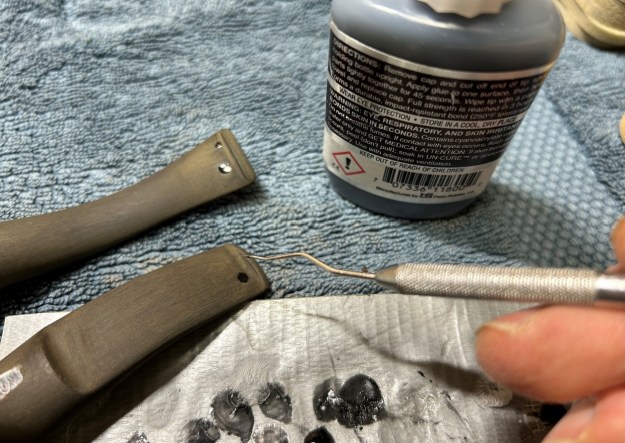
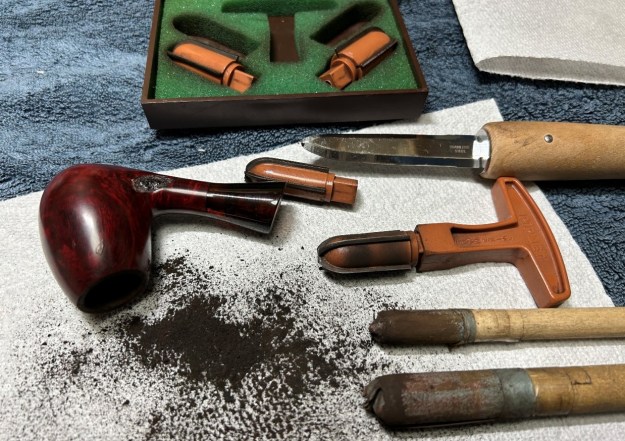
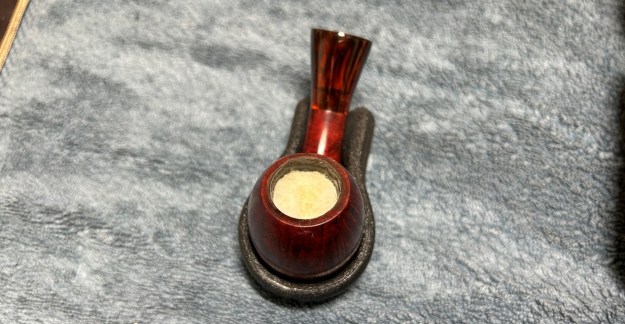
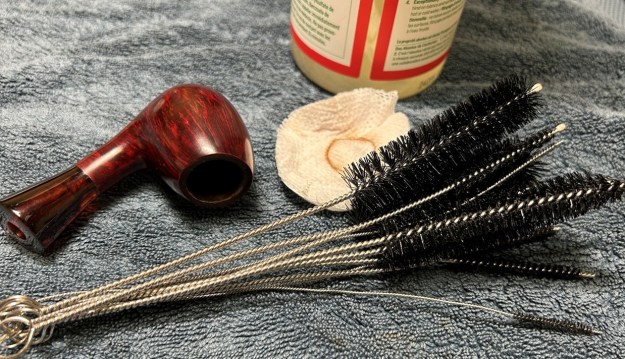
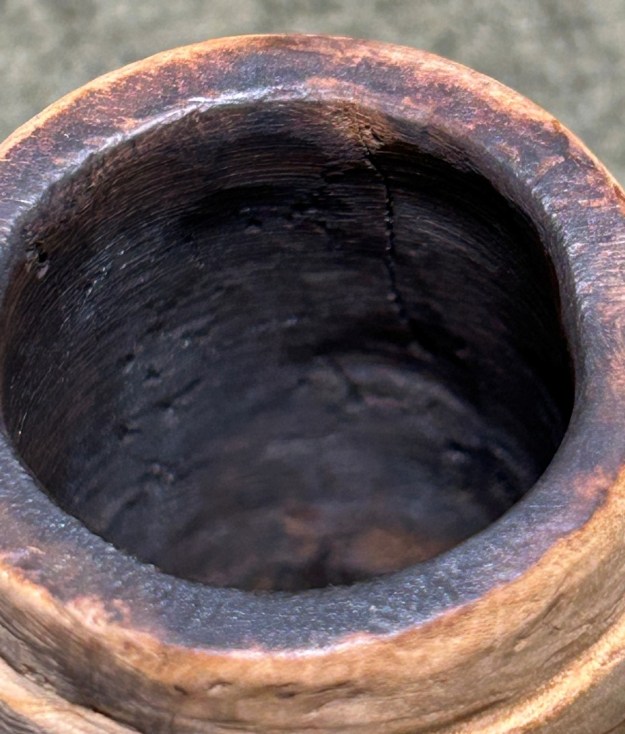
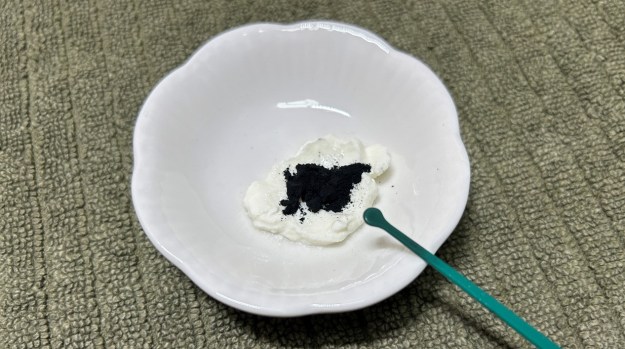
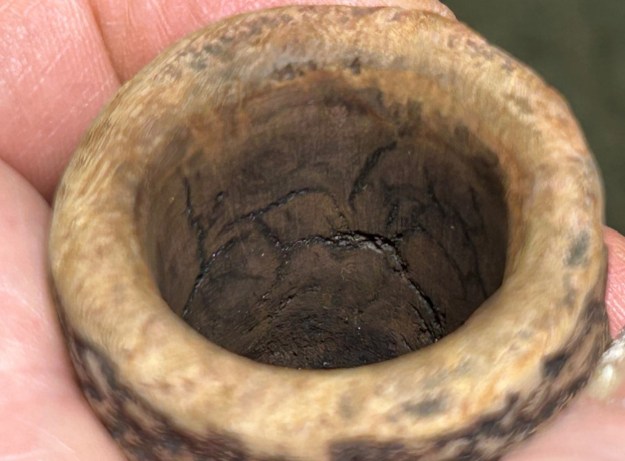
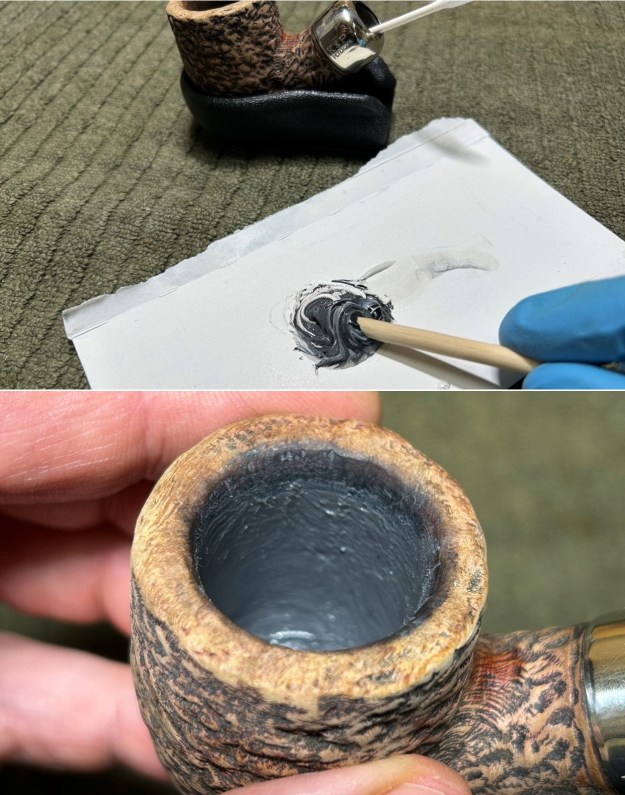
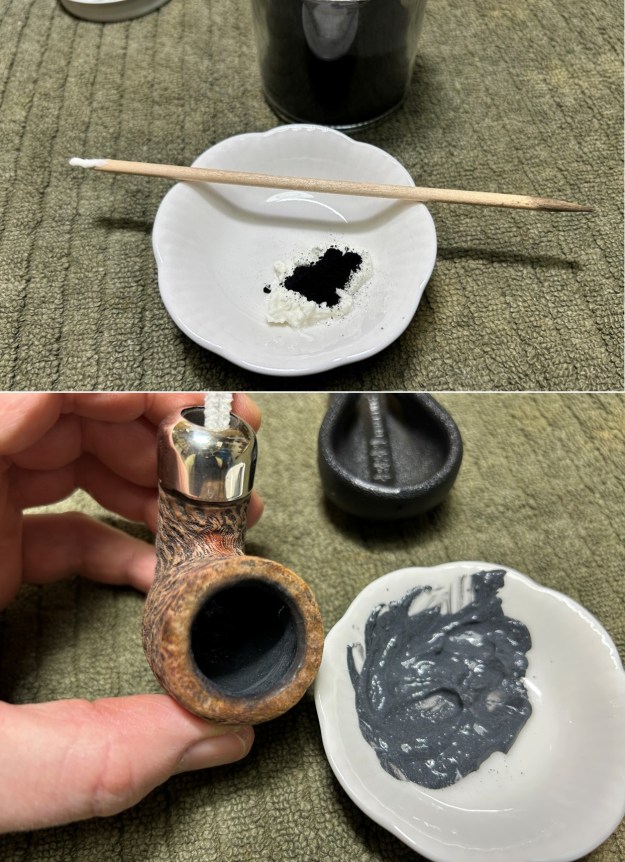
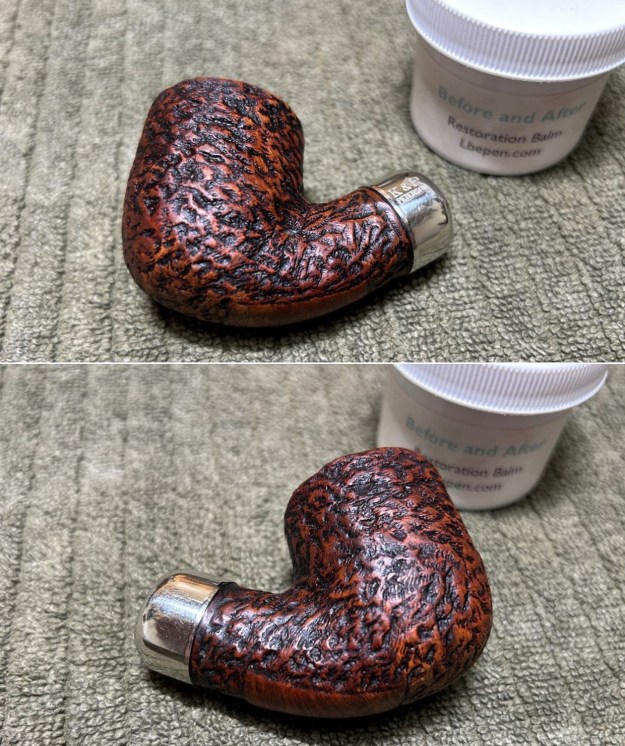
A gentleman in England contacted me recently about repairing a handsome, old Dunhill Root Briar billiard he had. He communicated to me that the pipe was in dire condition, but was such a good smoker that he needed it brought back to life. As always, I was game, but needed to see the pipe in order to assess the situation. Well, the situation was grave indeed – if this pipe was a person, I might have called a priest to administer Extreme Unction. In this case, however, I opted to be the ‘surgeon’ and I needed to operate. Let’s look at the markings on the pipe, so we know what we’re dealing with. On the left side of the shank, we can see the number 59 (the shape number). Next to that is F/T (which stands for ‘fish tail’ – the type of bit on the stem). Next to that is Dunhill [over] Root Briar. On the right side of the shank, we see Made in [over] England5. At least, I think it’s a five – it could be a six – and this indicates that the pipe was made in either 1965 or 1966. Next to that we see ④ R, which indicates the size of the bowl (group 4) and the R indicates that it is root briar.Oh boy – where to begin? There are very many issues with this pipe. The stem has about as much oxidation as any stem could handle. There is some calcification, and several tooth dents, scratches, and marks. Extra work will be required on this stem. Meanwhile, the stummel is really where the action is. It is very dirty inside and the bowl has a thick layer of cake. There are many scratches in the briar, a few nicks, and some notable chunks missing. There are also six burn marks on the outside of the bowl – that’s pretty impressive. There is grime everywhere on the briar and it has a grungy feel. Furthermore, there is a major and unsightly flat spot (likely an old burn) on the part of the bowl nearest the shank. Finally, there are no fewer than two substantial cracks in the bowl that run quite a distance. I say ‘…no fewer than two…’ because more cracks would be revealed in due course. Naturally, there was considerable damage to be found on the inside of the bowl too.This is an epic repair – it isn’t really restoration or conservation. Regardless, it was fun, nerve-wracking, and educational. Let’s get started! First of all, I used isopropyl alcohol on a few cotton rounds and wiped down the stem to provide an initial cleaning of filth before moving on to the next steps. The primary cleaning came next. I disinfected the inside of the stem with both pipe cleaners and cotton swabs dipped in lemon-infused 99% isopropyl alcohol. I scrubbed thoroughly to make sure the interior was very clean. Fortunately, the inside wasn’t too dirty at all – it’s just the outside that needs serious help.The goal of the next step is the removal (or minimization) of oxidation. Going to my sink, I used cream cleanser, cotton rounds, and a toothbrush, and scoured the stem to remove as much surface oxidation as possible. As the photos show, the result was a hideous, brownish mess – but better off the stem than on it.Once the stem was reasonably clean, I soaked it overnight in some Briarville Stem Oxidation Remover. This solution works to draw oxidation in the stem to the surface of the vulcanite. This is a major aid and an important step in ensuring a clean stem. The following day, I drew out the stem from its bath and scrubbed the lingering fluid with a toothbrush. Due to the severity of the oxidation, I then repeated the scrubbing with the cream cleanser for maximum effect.As the stem was now clean and dry, I set about fixing the marks and dents in the vulcanite. This was done by filling those divots with black cyanoacrylate adhesive, impregnated with carbon and rubber. I left this to cure and moved on.The penultimate step for the stem is sanding. First, with my set of needle files, I reduced the bulk of the cyanoacrylate repairs. I removed the excess adhesive as near to the surface as possible, without cutting into the vulcanite. Following that, I used all nine of the micromesh sanding pads (1,500 through 12,000 grit) to sand out flaws, even out the vulcanite, and provide gentle polishing of the finished surface. I also applied pipe-stem oil while using the last five micromesh pads. There was a wonderful, deep black shine to the stem when I was done. Quite frankly, the stem is now incomparable with how it started – just look at those photos!As the stem was (nearly) complete, I moved on to the stummel. The first step was to ream out the bowl – that is to say, remove all the cake inside the bowl. This accomplished a couple of things. First (and most obviously), it cleaned the bowl and provided a refurbished chamber for future smoking. Second, when the old cake was removed, I could inspect the interior walls of the bowl and determine if there was damage or not. I used a reamer, a pipe knife, and a piece of sandpaper taped to a wooden dowel. Collectively, these ensured that all the debris was removed. However, there was considerable damage, heretofore undiscovered, to the walls of the bowl. We’ll come back to that in a bit.Similar to the stem, I then cleaned the stummel with both pipe cleaners and cotton swabs dipped in lemon-infused 99% isopropyl alcohol. With a pipe this dirty, it took quite a while and much cotton to get clean. I also used a dental tool to remove the gunk, old glue, and other detritus from the cracks in the bowl.I then decided to ‘de-ghost’ the pipe – that is to say, exorcize the remaining filth from the briar. I filled the bowl and the shank with cotton balls, then saturated them with 99% isopropyl alcohol. I let the stummel sit overnight. This caused the remaining oils, tars and smells to leach out into the cotton.To tidy up the briar, I wiped down the outside, using a solution of a pH-neutral detergent and some distilled water, with cotton rounds. This did a good job of cleaning any latent dirt on the surface of the briar. The last step of the cleaning process was to scour the inside of the stummel with the same mild detergent and tube brushes. This was the culmination of a lot of hard work in getting the pipe clean.Now it was time to get serious. I performed a close examination of the many burn marks on the outside of the bowl. The good news was that they were all quite superficial – there was no deep burning of the wood. The bad news was that there were so many, and they would remain as an interesting detail in this pipe’s history. The two original cracks were now clean – and there were now two more cracks on the opposite side of the bowl. Coupled with the major flat spot I mentioned earlier, this was severe damage and was going to require significant work to salvage. Here is a photographic survey of what I was dealing with. I decided to repair the tiny cracks in the briar next. Before anything else, it is imperative that I ensure that the cracks do not continue to creep after I repair them. To that end, I took a micro-drill bit, inserted it in my rotary tool, and very carefully drilled a hole right through the wall of the shank. That hole will stop the crack from progressing. As you can see, the drill bit is incredibly thin and quite prone to snapping if great care is not taken.The next step is to line these cracks with clear cyanoacrylate adhesive. To prevent the adhesive from dripping into the bowl, I lined it with a piece of duct tape – because cyanoacrylate adhesive does not stick well to it. Applying the adhesive neatly and cleanly is not important at this stage – but being thorough is!Having completed that, I moved on to repairing the grievously damaged interior of the bowl. Prior to my customer’s ownership, this pipe was heavily smoked and not cared-for as it should have been. There are heat fissures throughout the bowl and have resulted (obviously) in the cracks migrating to the outside. To fill damage like this, I used an epoxy adhesive that is extremely hard, resistant to high temperatures, and completely inert when cured. It worked superbly. I filled the affected area with the epoxy and let it cure for a full 24 hours.I had a long discussion with my customer in England about how to proceed in addressing the large flat spot, the remnants of the cracks, the chunks missing, etc. – in other words, how do we want the pipe to look in the end? The fact is that there isn’t any all-encompassing solution to this pipe’s aesthetic woes. Having said that, the best of a bad set of options was to round off the top of the pipe and make it look even all around. We know that the cracks will always be there; we know that the burns will always be there; but we can at least do this and make the pipe better. I used my rotary tool and removed some material. I progressed with sandpaper and, below, you’ll see a series of photos which document some of this procedure. Following that, I roughened up the epoxy’s surface (inside the bowl) with 220-grit sandpaper for the next step. I thinly coated the inside of the bowl with a mixture of my wife’s homemade yogurt and activated charcoal. Once hardened, this provided a good, faintly rough surface for a new cake to build. I used all nine micromesh pads (1,500 through 12,000 grit) to sand the outside of the stummel and finish it off. This sanding minimizes flaws in the briar and provides a beautiful smoothness to the wood. I rubbed some LBE Before & After Restoration Balm into the briar and let it sit for 30 minutes or so. The balm moisturizes the wood and gives a beautiful depth to the briar. I then buffed the stummel with a microfibre cloth. The gentleman from England and I did discuss the possibility of staining the briar – but ultimately decided against it. We felt that stain would not hide the damage well anyway, so why not lean into the scars and accept them. This isn’t quite kintsugi, but it did remind me of it. So, for the final step, I took the pipe to my bench polisher and carefully buffed it – first with a blue diamond compound, then with three coats of carnauba wax. This procedure makes the pipe look its best – despite the difficult circumstances.

All done! This Dunhill Root Briar 59 billiard pipe has had a remarkable transformation and it’s hard to believe that it’s the same pipe – perhaps some would say that it isn’t. I am pleased and proud of the work and the results – I certainly hope my customer will be pleased too. I hope you enjoyed reading the story of this pipe’s restoration as much as I enjoyed restoring it. If you are interested in more of my work, please follow me here on Steve’s website or send me an email at kenneth@knightsofthepipe.com. Thank you very much for reading and, as always, I welcome and encourage your comments.

The Golden Beauty


by Kenneth Lieblich

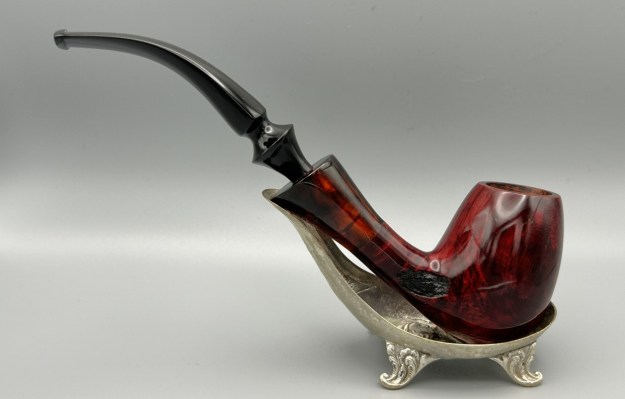
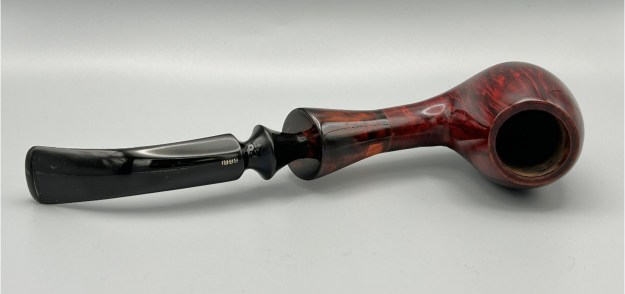
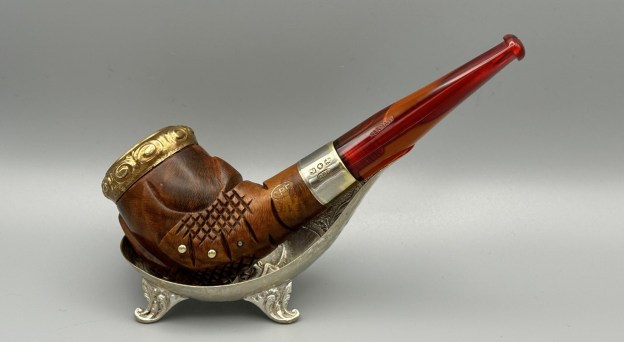
I’ve mentioned several times that I have an interest in French pipes and pipemaking. In recent decades, French pipes have received a fair amount of derision – and deservedly so. However, old French pipes are often very beautiful, well-made, and wonderful models of early pipe history. In my own small way, I am aiming to resurrect the reputation of early French pipes. There are superb pipes to be had from France. This blog post is about the restoration of a pipe that really attracted me and is going into my ‘French Collection’. This is an attractive bent billiard, with the brand name La Belle d’Or – which literally means ‘The Beauty of Gold,’ but is better translated as ‘The Golden Beauty’. It has strong, thick, briar walls, a classic, brass ferrule, and a long, luxurious, horn stem. The left side of the stummel’s shank reads, La Belle d’Or [over] Vieille Bruyère. The stamping is clear, albeit a bit worn through the middle. The right side of the stummel’s shank reads, Vieille Bruyère [over] “Double Or”. The words vieille bruyère can be literally translated as ‘old briar,’ but are probably best understood as ‘aged briar’. Why those words are mentioned on both sides of the pipe is unknown to me. The words double or literally mean ‘double gold’, and this phrase is meant to imply something extra special – not just gold, but double gold.Before examining the background of this pipe, I want to take a moment and reflect on its aesthetics. To my taste, this pipe is just sublime. The shape is an admirable exemplar of what a bent billiard should be. The proportions are right. The curves are alluring. The grain in the wood is lovely. The brass ferrule complements the thick briar perfectly. The size is comfortable (around a Dunhill ④, for comparison). The draught hole is perfectly drilled. In short, whichever pipemaker made this, he did an excellent job. As is the case with so many early French pipes, there is next-to-no information about the name, La Belle d’Or. I have access to quite a few resources on French pipes – books and websites – and I could not establish any definitive information on the brand. I do know that the pipe dates to approximately 1900, so it’s about 125 years old. I know this because the Amsterdam Pipe Museum has a pipe of the same brand, with similar features, that they date to 1900. Back in 2021, Steve restored a La Belle d’Or pipe (to my knowledge, the only one he’s done) and, unfortunately, he didn’t find any background information either. I have to assume that, based on the ample size of the bowl and the quality of the construction, this was probably an expensive pipe in its day.

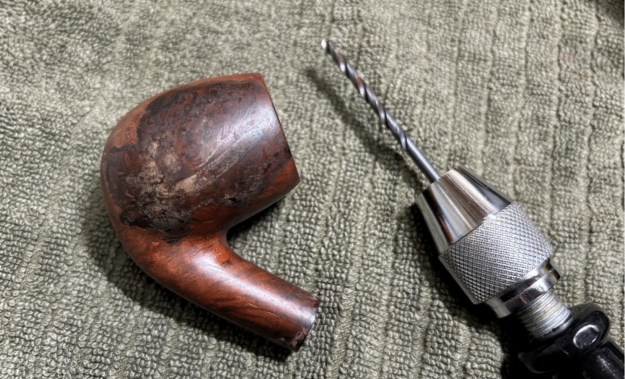
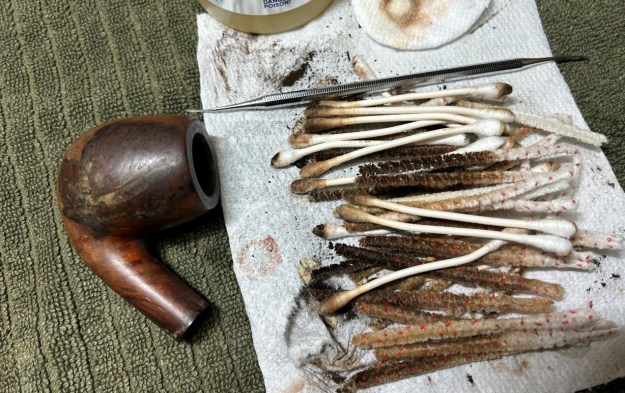
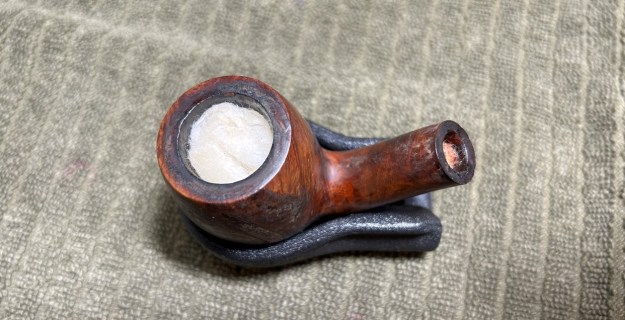
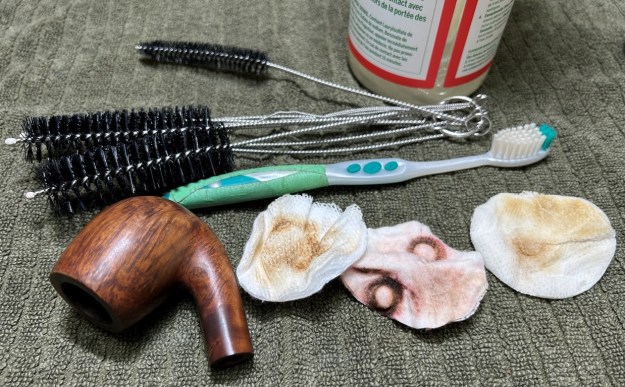
This pipe was clearly well-loved by its historic owner. The horn stem is solid, but thoroughly chomped by teeth of ages past. The stem has a bone tenon which is sound, but dirty. It also has an orific button. For more information on the orific button, please take the time to read Steve’s interesting article on the subject. The stummel is charming and dirty. As I mentioned, one can see the wonderful wood grain peeking through the grime. The bowl is thoroughly caked and obviously hasn’t been cleaned in aeons. There is also some light burning to the rim. I am excited to get this pipe cleaned up and back to its best.I used isopropyl alcohol on a few cotton rounds and wiped down the stem to provide an initial cleaning of filth before moving on. The primary cleaning came next. I disinfected the inside of the stem with pipe cleaners dipped in lemon-infused 99% isopropyl alcohol. I scrubbed thoroughly to make sure the interior was very clean. I used a lot of pipe cleaners! As the stem was now clean and dry, I set about fixing the dings and nicks in the surface of the horn. This was done by filling those divots with clear cyanoacrylate adhesive. I left this to cure and moved on.The penultimate step for the stem is sanding. First, with my set of needle files, I reduced the bulk of the cyanoacrylate repairs. I removed the excess adhesive as near to the surface as possible, without cutting into the horn. Following that, I used all nine of the micromesh sanding pads (1,500 through 12,000 grit) to sand out flaws, even out the horn, and provide gentle polishing of the finished surface. I also applied pipe-stem oil while using the last five micromesh pads. There was a wonderful, variegated shine to the stem when I was done.As the stem was (nearly) complete, I moved on to the stummel. The first step was to ream out the bowl – that is to say, remove all the cake inside the bowl. This accomplished a couple of things. First (and most obviously), it cleaned the bowl and provided a refurbished chamber for future smoking. Second, when the old cake was removed, I could inspect the interior walls of the bowl and determine if there was damage or not. I used a reamer, a pipe knife, and a piece of sandpaper taped to a wooden dowel. Collectively, these ensured that all the debris was removed. Fortunately, the inside walls looked very good.The inside of the stummel needed to be cleaned thoroughly. However, this pipe was so clogged, that I first needed to open the horribly occluded airway. So, I took a long drill bit, held in a drill chuck, and hand-cranked it to dislodge the dreadful detritus inside. Hand cranking is essential because it provides a precision and caution that a power drill cannot provide.My next step was to remove the lava on the rim. For this, I took a piece of machine steel and gently scraped the lava away. The metal’s edge is sharp enough to remove what I need, but not so sharp that it damages the rim.Similar to the stem, I then cleaned the stummel with both pipe cleaners and cotton swabs dipped in lemon-infused 99% isopropyl alcohol. With a pipe this dirty, it took quite a while and much cotton to get clean.I then decided to ‘de-ghost’ the pipe – that is to say, exorcize the remaining filth from the briar. I filled the bowl and the shank with cotton balls, then saturated them with 99% isopropyl alcohol. I let the stummel sit overnight. This caused the remaining oils, tars and smells to leach out into the cotton.To tidy up the briar, I wiped down the outside, using a solution of a pH-neutral detergent and some distilled water, with cotton rounds. I also used a toothbrush in the crevices. This did a good job of cleaning any latent dirt on the surface of the briar. The last step of the cleaning process was to scour the inside of the stummel with the same mild detergent and tube brushes. This was the culmination of a lot of hard work in getting the pipe clean.The brass ferrule is quite tarnished and needs to be cleaned up. In order to protect the wood, I taped the shank off and then created a paste of powdered salt and lemon juice. This worked very well and the metal cleaned up nicely.Next, I took a closer look at the markings in the briar. Most of them are deep and sharp, but there’s a substantial part which is thin and rubbed out. I used some Rub’n’Buff, a wax metallic pigmented finish, to recreate the original gold colour of the markings.I then used all nine micromesh pads (1,500 through 12,000 grit) to sand the outside of the stummel and finish it off. This sanding minimizes flaws in the briar and provides a beautiful smoothness to the wood. I then used some micromesh pads that I have saved solely for metal work and buffed the ferrule up to a lovely shine. I rubbed some LBE Before & After Restoration Balm into the briar and let it sit for 30 minutes or so. The balm moisturizes the wood and gives a beautiful depth to the briar. I then buffed the stummel with a microfibre cloth. For the final step, I took the pipe to my bench polisher and carefully buffed it – first with a blue diamond compound, then with three coats of carnauba wax. This procedure makes the pipe look its best – the stummel sings and the stem glows.

This La Belle d’Or Vieille Bruyère bent billiard is a beauty and has been added to my collection. It was a pleasure to work on. The approximate dimensions of the pipe are as follows: length 5⅞ in. (150 mm); height 2¾ in. (70 mm); bowl diameter 1⅔ in. (42 mm); chamber diameter ⅞ in. (21 mm). The weight of the pipe is 2⅛ oz. (61 g). I hope you enjoyed reading the story of this pipe’s restoration as much as I enjoyed restoring it. If you are interested in more of my work, please follow me here on Steve’s website or send me an email at kenneth@knightsofthepipe.com. Thank you very much for reading and, as always, I welcome and encourage your comments.

Restoring a Handsome, Classic Falcon 7D


by Kenneth Lieblich

If I remember correctly, this pipe came in a lot from the US of A last year. I don’t really remember the details of its acquisition, but no matter. Falcons are always fun, good-looking pipes. This one was already in good shape, it just looked tired and worn. This particular Falcon has a straight shank and a carved, Dublin-style bowl. The stem has a nice dental bit. Let’s have a look at the marks. On the underside of the bowl, engraved in the metal, is the word Falcon. Also engraved, inside the centre circle, is the shape number 7. At the opposite end of the shank, near the stem, is engraved the letter D. The number 7 is the mould number from the factory and the D indicates that this pipe has a dental bit (as previously mentioned). The lack of a country-of-origin mark indicates that this one was made in the USA.Looking into the background of Falcon Pipes, my first stop was SmokingMetal.co.uk – a very fine resource for all things related to metal pipes. Here are a few snippets:

There are an incredible number of combinations of Falcon pipes. many variants of the stems and of the bowls. All I can hope to do here is to show some of them. Some of course are no longer avaliable but very many are. Contrary to most descriptions you will see, the smoke tube is not a twisted alloy tube, but a tube that has been scrolled to increase the surface area for cooling.

There are at least three distinct eras of Falcon production, those stamped under the stem with just the single word ‘Falcon’ indicating a USA made pipe, those with ‘Falcon Ireland'( indicating, or it ought to, that the casting originated in Ireland but actually only some bowls originated in Ireland) and those with ‘Falcon Made in England’ which does tell us where that model actually originated from. The bowls come in an incredible range of shapes and finishes, but can always be pinned down as Falcon as they have a 4 start thread, enabling a quarter turn to lock them on the stem. Very, very few other makes have this feature. The numbers and letters under the humidome are mould numbers.

Pipedia has some good information too (which you can find here). Here is a brief summary of Falcon history:

The Falcon pipe was created in 1936 by the American engineer Kenly Bugg. However during WWII the production of the Falcon was limited. In 1949 George Hunt took over production and marketing and by 1954 6 million Falcon pipes had been sold in the U.S.A. By 1961 production started in England. In 1964 the Alco was launched. In 1967 the Brentford was launched but in 1979 it was withdrawn from the market. In 1968 production of the Falcon in Chicago, U.S.A. stopped. The Falcon International was introduced in 1977, which featured a removable mouth piece and filter.

Based on all that I read, I can conclude that this pipe was made sometime after 1948 and prior to 1968, when production was moved to the UK.Let’s take a closer look at the condition of the pipe. As I indicated before, nothing too serious – just some minor wear-and-tear to address. The bowl is lightly smoked and just needs a good cleaning. The metal body has no notable damage and I will simply clean and polish it. Finally, the acrylic dental bit also has only minor wear – should be quite straightforward. I started on the bowl. The first step was to ream it out – that is to say, remove all the cake inside the bowl. This accomplished a couple of things. First (and most obviously), it cleaned the bowl and provided a refurbished chamber for future smoking. Second, when the old cake was removed, I could inspect the interior walls of the bowl and determine if there was damage or not. Fortunately, there was none. As the cake was light, I used a pipe knife, and a piece of sandpaper taped to several sizes of wooden dowel. Collectively, these ensured that all the debris was removed.I then took a dental tool and cleaned any gunk from the grooves in the threads of the bowl. To tidy up the briar, I wiped down the outside, using a solution of a pH-neutral detergent and some distilled water, with cotton rounds. I also used a toothbrush in the crevices. This did a good job of cleaning any latent dirt on the surface of the briar. The last step of the cleaning process was to scour the inside of the stummel with the same mild detergent and tube brushes. While cleaning, I noticed the number 75 on the bottom of the bowl. I assume this is some sort of shape number. If you have more information, please let me know in the comments below! I used all nine micromesh pads (1,500 through 12,000 grit) to sand the outside of the stummel and finish it off. This sanding minimizes flaws in the briar and provides a beautiful smoothness to the wood. I rubbed some LBE Before & After Restoration Balm into the briar and let it sit for 30 minutes or so. The balm moisturizes the wood and gives a beautiful depth to the briar. I then buffed the stummel with a microfibre cloth. I then moved on to the metal body of the pipe (including the acrylic stem, which is attached). It didn’t initially look dirty, but took a surprising amount of elbow grease to clean! I disinfected the inside and outside of the pipe with both pipe cleaners and cotton swabs dipped in lemon-infused 99% isopropyl alcohol. I scrubbed thoroughly. I also used a wire brush to scrub some of the more stubborn areas.In addition, I began my polishing procedure with some 0000-grit steel wool. This worked incredibly well – I was so pleased with the results. I then used some micromesh pads that I have saved solely for metal work and buffed it up to an incredible shine. Looks fantastic! Following that, I used all nine of the micromesh sanding pads (1,500 through 12,000 grit) to sand out flaws in the stem, even out the acrylic, and provide gentle polishing of the finished surface. I also applied pipe-stem oil while using the last five micromesh pads. There was a wonderful, deep black shine to the stem when I was done. For the final step, I took the pipe to my bench polisher and carefully buffed it – first with a blue diamond compound, then with three coats of carnauba wax. This procedure makes the pipe look its best.

This Falcon 7D Dublin looks fantastic again and is ready to be enjoyed by its next owner. I am pleased to announce that this pipe is for sale! If you are interested in acquiring it for your collection, please have a look in the ‘American’ pipe section of the store here on Steve’s website. You can also email me directly at kenneth@knightsofthepipe.com. The approximate dimensions of the pipe are as follows: length 5⅞ in. (150 mm); height 2 in. (51 mm); bowl diameter 1⅝ in. (41 mm); chamber diameter ⅞ in. (22 mm). The weight of the pipe is 1½ oz. (44 g). I hope you enjoyed reading the story of this pipe’s restoration as much as I did restoring it. If you are interested in more of my work, please follow me here on Steve’s website or send me an email. Thank you very much for reading and, as always, I welcome and encourage your comments.

Restoring a Rare Peterson Kapruf 56


by Kenneth Lieblich

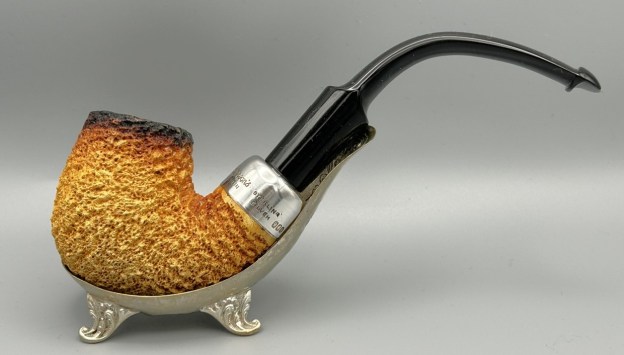
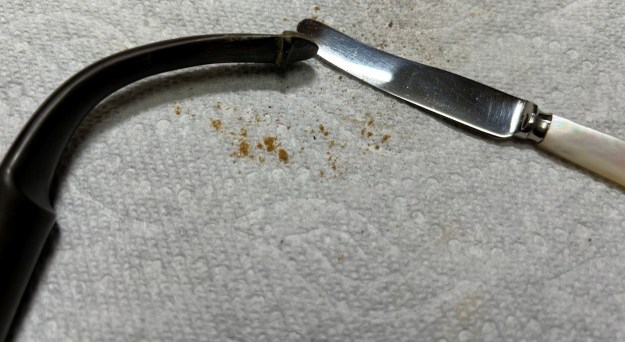
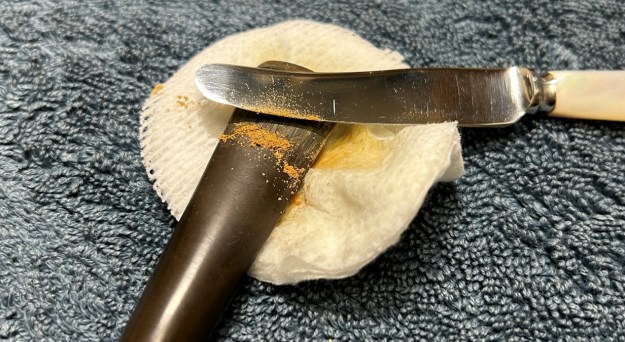
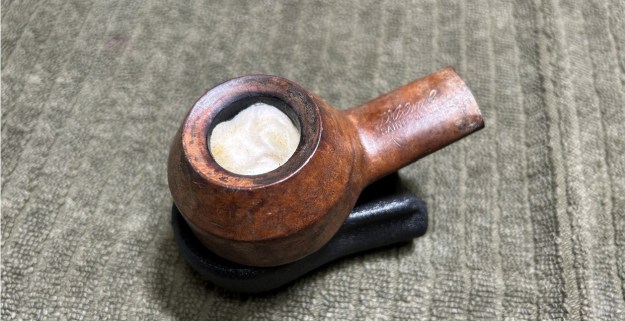
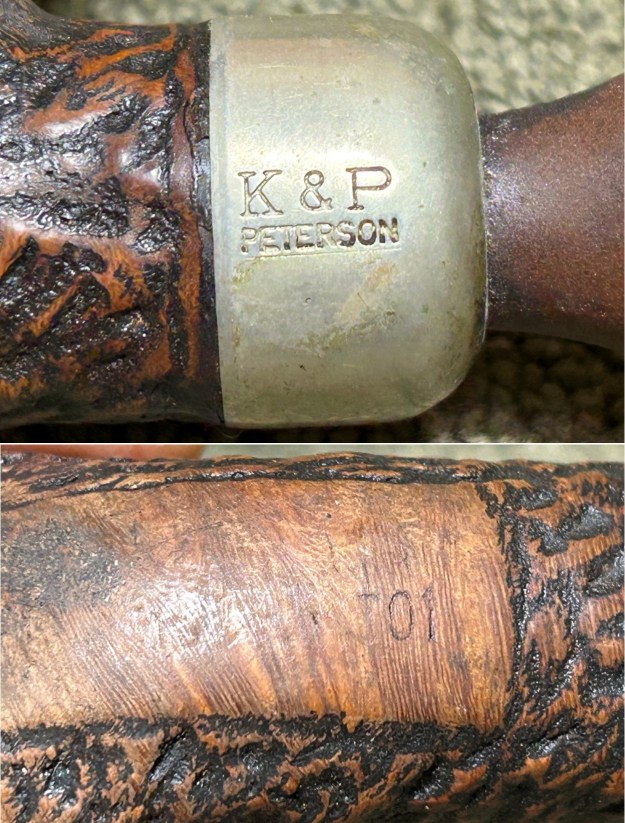
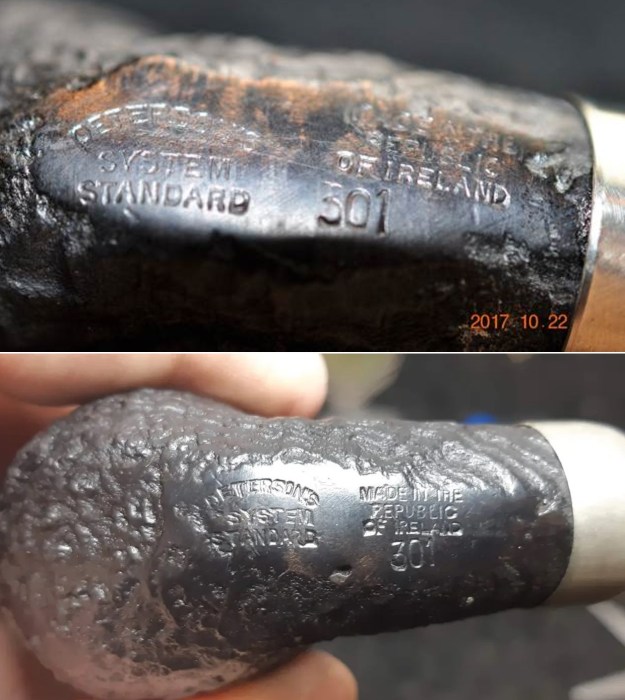
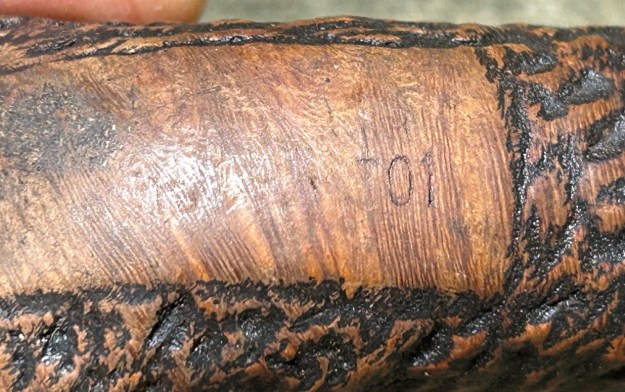
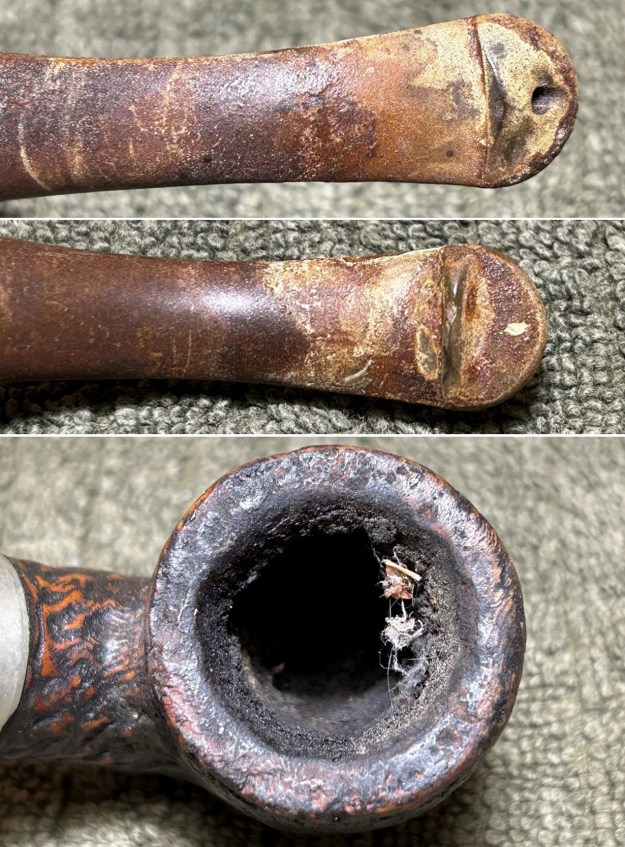
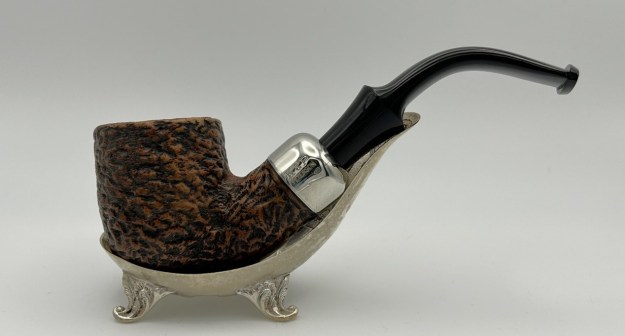
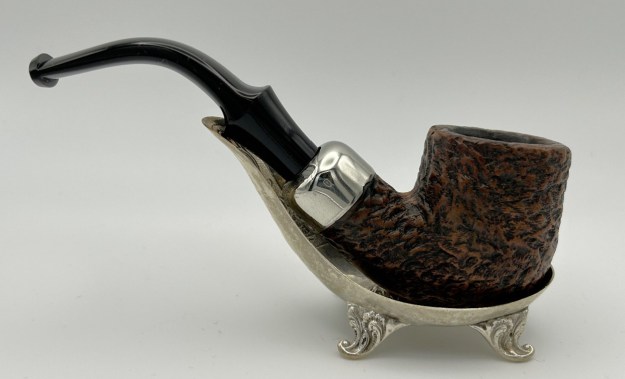
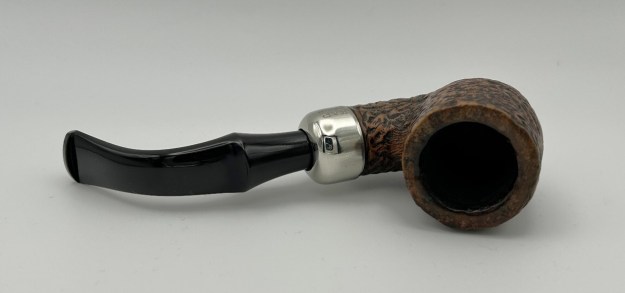
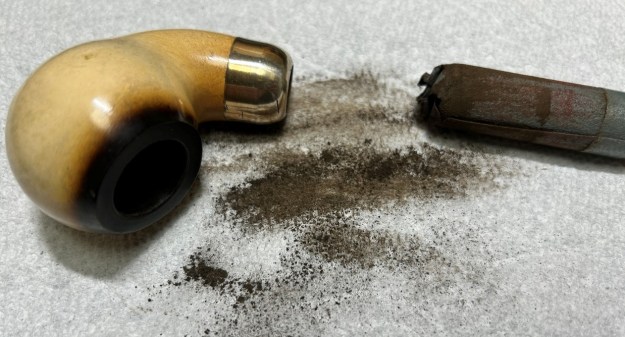
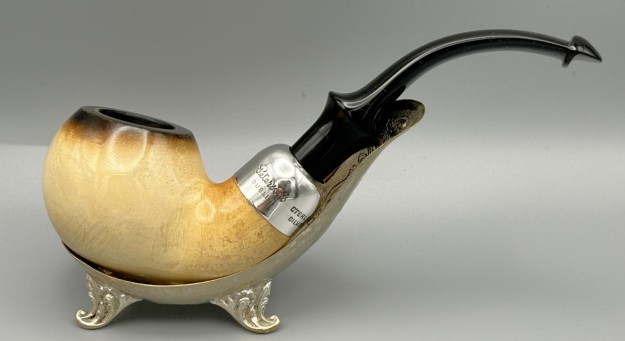
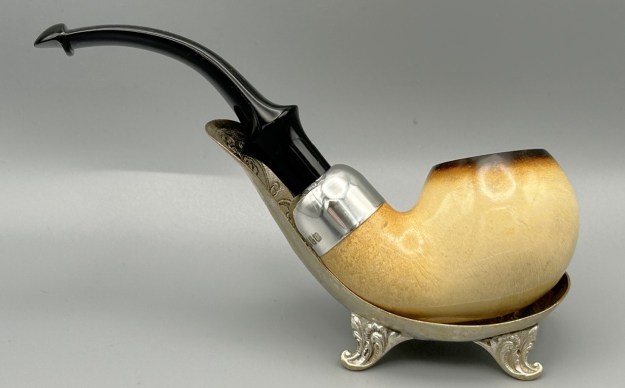
Well, now, this is quite the pipe! I recently acquired a collection from a (late) gentleman who clearly LOVED his pipes. They were all well used and, according to his family, he had a pipe hanging out of his mouth at all times. As I was looking through them, this particular Pete caught my eye. It’s a handsome one, isn’t it? It’s a Peterson Kapruf 56 chubby bent billiard, with a beautiful sandblast. This one is really worth restoring. It’s such a comely pipe and deserves to be back in someone’s collection. Let’s look at the markings. We’ve got Peterson’s [over] Kapruf. Then we have Made in the [over] Republic [over] of Ireland. Finally, there is the shape number, 56. Of course, there is also the stylized P on the stem, indicating the famous Peterson company of Ireland.The history and origins of this particular model are quite interesting. It’s an uncommon pipe and, if you’re a Pete collector, you ought to have one. In a blog post from 2019, Al Jones posted here on Reborn Pipes about a Kapruf 56 he had been working on and expounded on the background of this pipe. Rather than simply retyping what he wrote, I urge you to read his blog here and learn more. Meanwhile, here’s a catalogue photo from one of Steve’s blogs on the same pipe:I’m not going to sugarcoat this for you: the pipe was a bit of a mess. The stummel was in decent condition, but so, so dirty and clogged. The stem, on the other hand, was a localized disaster. The oxidation was extreme, the chomping of the bit was extreme, the tooth scrapings were extreme – and there was a small fissure in the vulcanite (on the underside of the P-lip to boot. I had my work cut out for me. I used a disposable lighter and ‘painted’ the stem with its flame. The gentle heat of the flame can cause the dents in the vulcanite of the stem to expand back into shape. Sadly, in this case, not much happened. The stem’s calcification was quite substantial. I used an old butter knife and gently scraped some of the thicker accretion off. Doing this now helps later in removing the oxidation.
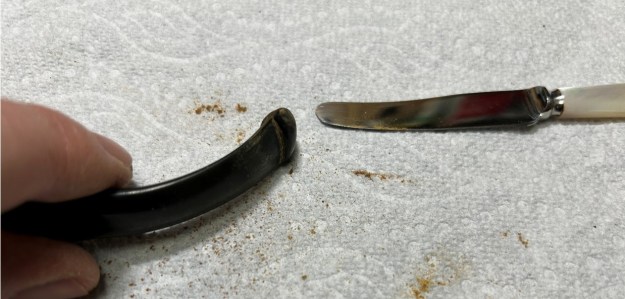
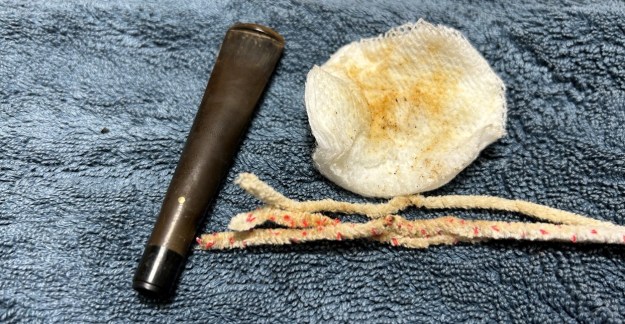
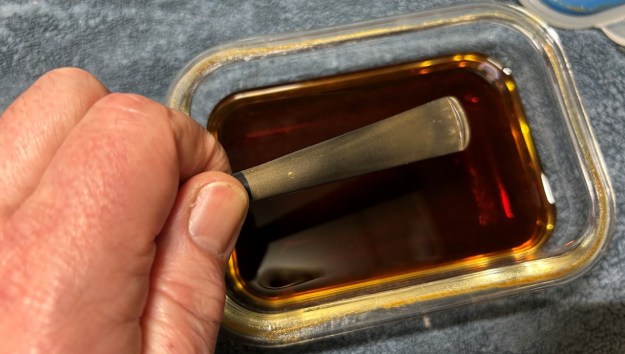
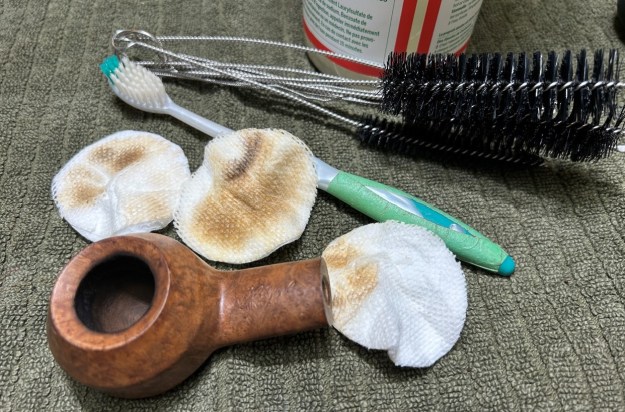
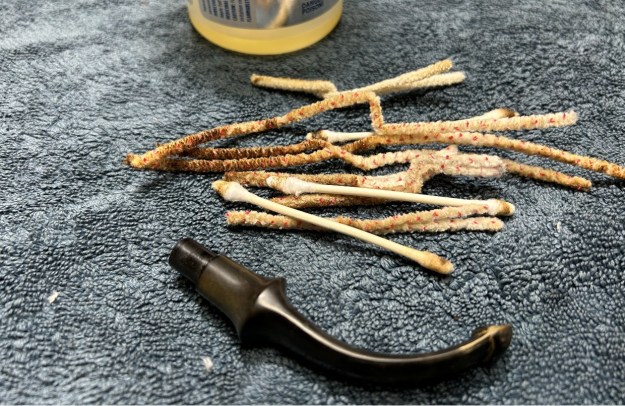
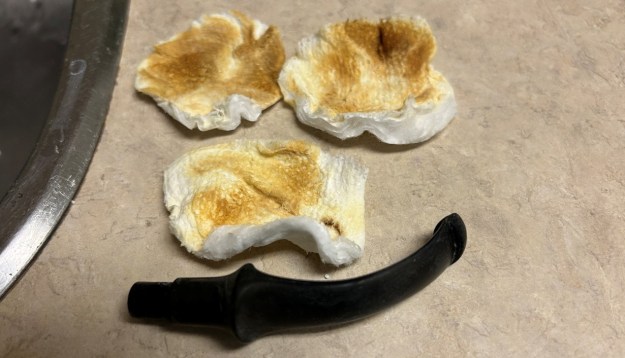
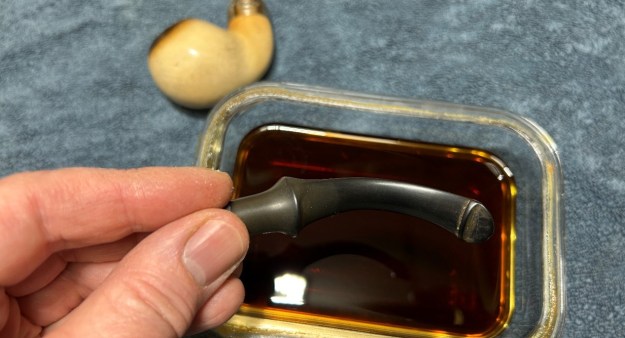
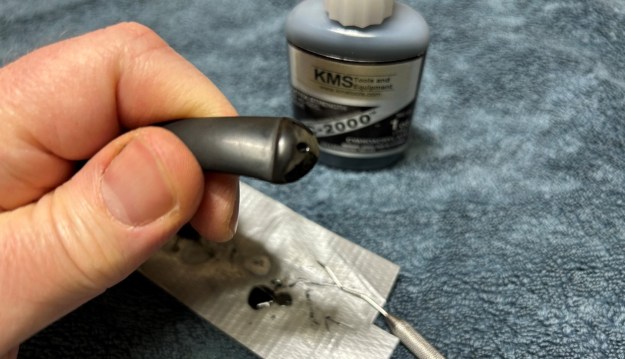
I used isopropyl alcohol on a few cotton rounds and wiped down the stem to provide an initial cleaning of filth before moving on to the next steps. The primary cleaning came next. I disinfected the inside of the stem with pipe cleaners dipped in lemon-infused 99% isopropyl alcohol. I scrubbed thoroughly to make sure the interior was very clean. Given the general state of the pipe, I was surprised at how relatively clean it was.The goal of the next step is the removal (or minimization) of oxidation. Going to my sink, I used cream cleanser, cotton rounds, and a toothbrush, and scoured the stem to remove as much surface oxidation as possible. As the photos show, the result was a hideous, brownish mess – but better off the stem than on it.Once the stem was reasonably clean, I soaked it overnight in some Briarville Stem Oxidation Remover. This solution works to draw oxidation in the stem to the surface of the vulcanite. This is a major aid and an important step in ensuring a clean stem. The following day, I drew out the stem from its bath and scrubbed the lingering fluid with a toothbrush. Due to the severity of the oxidation, I then repeated the scrubbing with the cream cleanser for maximum effect.As the stem was now clean and dry, I set about fixing the marks and dents in the vulcanite. Quite frankly, this was a substantial rebuild of the button – including the fissure on the underside. This was done by filling those parts with black cyanoacrylate adhesive, impregnated with carbon and rubber. I left this to cure and moved on. After this, I painted the logo on the stem with some enamel nail polish. I restored the logo carefully and let it fully set before proceeding.The penultimate step for the stem is sanding. First, with my set of needle files, I reduced the bulk of the cyanoacrylate repairs. I removed the excess adhesive as near to the surface as possible, without cutting into the vulcanite. Following that, I used all nine of the micromesh sanding pads (1,500 through 12,000 grit) to sand out flaws, even out the vulcanite, and provide gentle polishing of the finished surface. I also applied pipe-stem oil while using the last five micromesh pads. There was a wonderful, deep black shine to the stem when I was done. You can see in the profile photo below just how much better the P-lip looks after my work. As the stem was (nearly) complete, I moved on to the stummel. The first step was to ream out the bowl – that is to say, remove all the cake inside the bowl. This accomplished a couple of things. First (and most obviously), it cleaned the bowl and provided a refurbished chamber for future smoking. Second, when the old cake was removed, I could inspect the interior walls of the bowl and determine if there was damage or not. I used a reamer, a pipe knife, and a piece of sandpaper taped to a wooden dowel. Collectively, these ensured that all the debris was removed.The inside of the stummel needed to be cleaned thoroughly. However, this pipe was so clogged, that I first needed to open the horribly occluded airway. So, I took a long drill bit, held in a drill chuck, and hand-cranked it to dislodge the dreadful detritus inside. Hand cranking is essential because it provides a precision and caution that a power drill cannot provide. Similar to the stem, I then cleaned the stummel with both pipe cleaners and cotton swabs dipped in lemon-infused 99% isopropyl alcohol. With a pipe this dirty, it took quite a while and much cotton to get clean.I then decided to ‘de-ghost’ the pipe – that is to say, exorcize the remaining filth from the briar. I filled the bowl and the shank with cotton balls, then saturated them with 99% isopropyl alcohol. I let the stummel sit overnight. This caused the remaining oils, tars and smells to leach out into the cotton.To tidy up the briar, I wiped down the outside, using a solution of a pH-neutral detergent and distilled water, with cotton rounds. I also used a toothbrush in the crevices. I also scoured the inside of the stummel with the same detergent and tube brushes. This was the culmination of a lot of hard work in getting the pipe clean.I rubbed some LBE Before & After Restoration Balm into the briar and let it sit for 30 minutes or so. The balm moisturizes the wood and gives a beautiful depth to the briar. I then buffed the stummel with a microfibre cloth. For the final step, I took the pipe to my bench polisher and carefully buffed it – with three coats of conservator’s wax. This procedure makes the pipe look its best – the stummel sings and the stem glows.
This Peterson Kapruf 56 looks fantastic again and is ready to be enjoyed by its next owner. I am pleased to announce that this pipe is for sale! If you are interested in acquiring it for your collection, please have a look in the ‘Irish’ pipe section of the store here on Steve’s website. You can also email me directly at kenneth@knightsofthepipe.com. The approximate dimensions of the pipe are as follows: length 5½ in. (140 mm); height 2 in. (52 mm); bowl diameter 1½ in. (38 mm); chamber diameter ¾ in. (20 mm). The weight of the pipe is 1⅞ oz. (55 g). I hope you enjoyed reading the story of this pipe’s restoration as much as I did restoring it. If you are interested in more of my work, please follow me here on Steve’s website or send me an email. Thank you very much for reading and, as always, I welcome and encourage your comments.
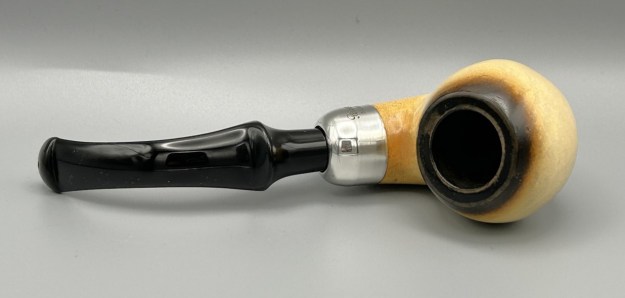
Restoring an Unusual GBD Virgin 347 Apple


by Kenneth Lieblich

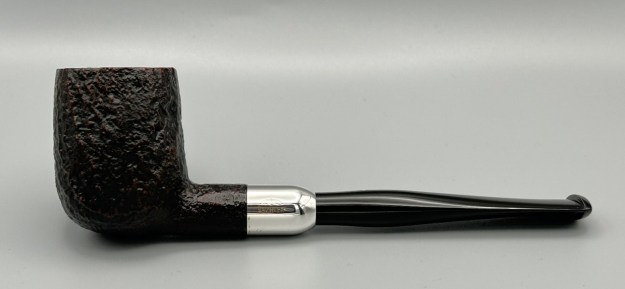
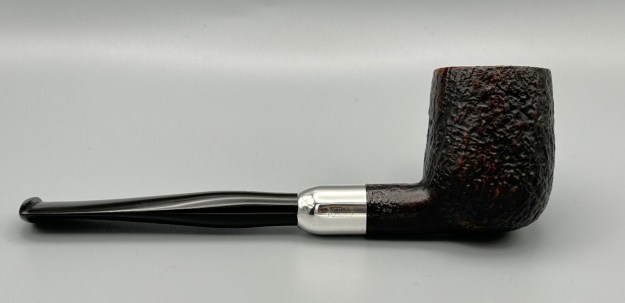
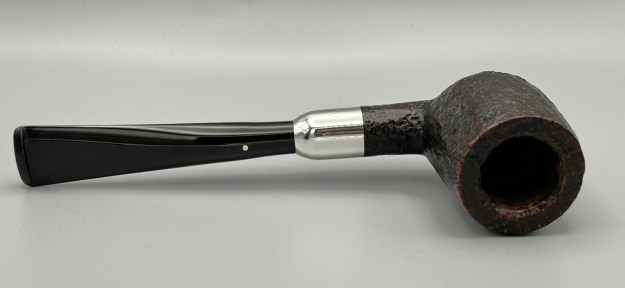
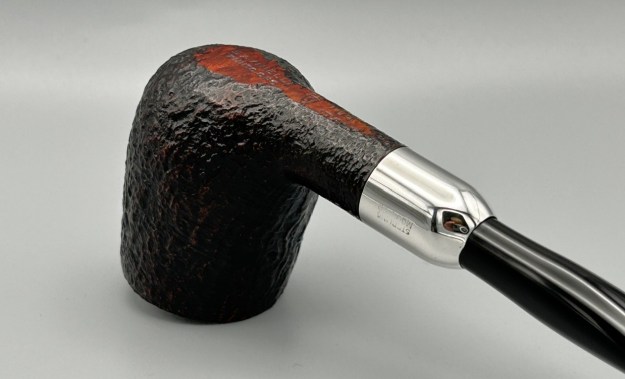
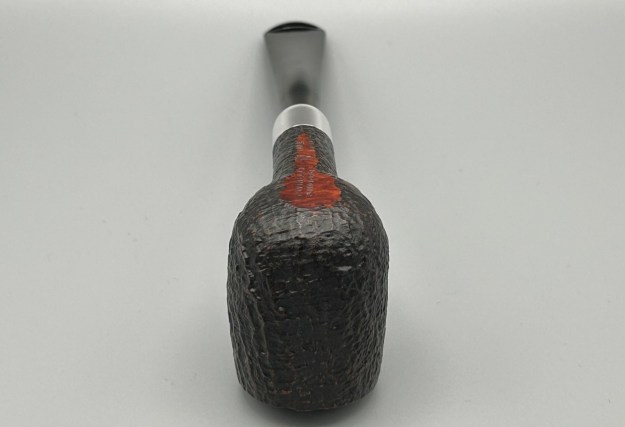
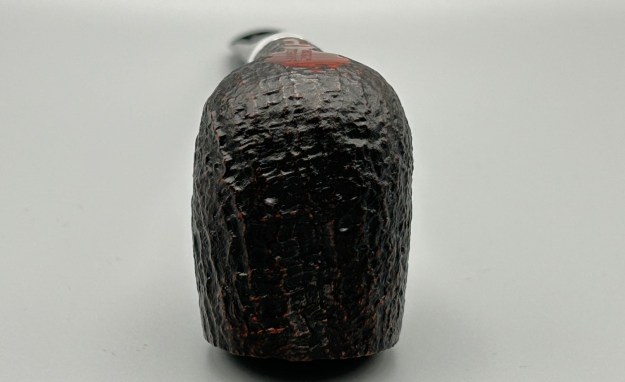
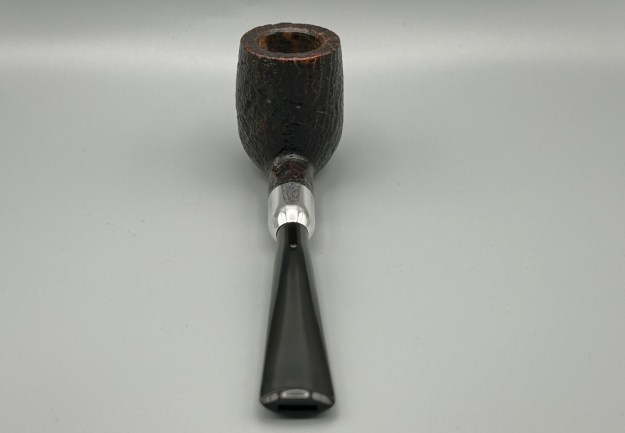
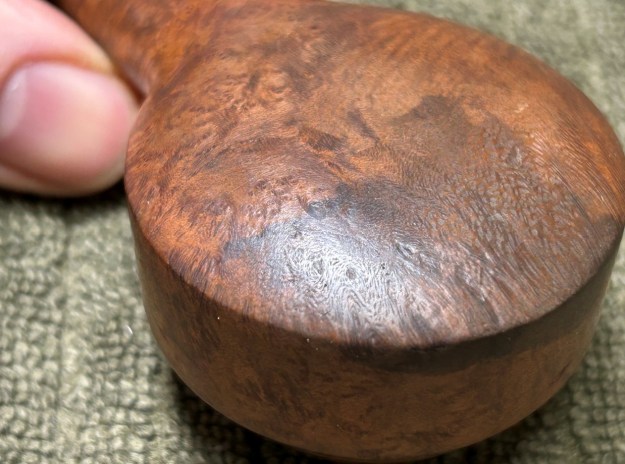
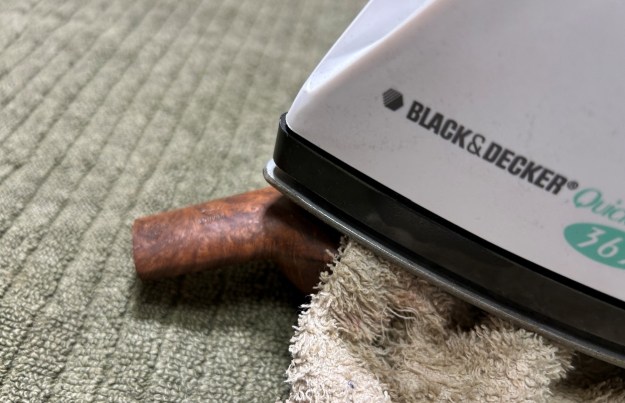
I was intrigued about this pipe as soon as I saw it. The pipe is a beautiful GBD Virgin 347 apple, with an aluminum shank extension and a tapered, Perspex stem. I hadn’t seen one quite like this and I asked Steve about it. His exact words were, “Never seen anything like it”. Hmm. We wondered if this could be someone’s aftermarket experiment, but I’m not so sure. The extension fits perfectly and seems to have been precisely designed for the stummel. Regardless, it’s a very attractive pipe, with gorgeous grain. It also has wonderful drilling and feels great in the hand. Let’s look at the marks. The left side of the shank reads, GBD [over] Virgin. The right side of the shank reads London England [over] 347. Virgin is one of the higher-end lines from GBD and the 347 is designated as a straight apple shape (no bend), with a round taper stem. Well, that’s what we’ve got here!Please take a moment to read Pipedia’s article on GBD – it’s quite thorough and provides lots of useful information. You can find that link here. Meanwhile, here are some examples of 347s from some old GBD catalogues. Let’s investigate the condition of the pipe. The stem has some serious bite marks (i.e. dents) in it, but otherwise it’s in good shape. The shank extension has only the merest hint of wear, but is a bit dirty. The stummel has some wear. It’s quite dirty, has some cake on the rim (and some minor burn marks), and has a groove in the wood. I used isopropyl alcohol on a few cotton rounds and wiped down the stem to provide an initial cleaning of filth before moving on to the next steps. The primary cleaning came next. I disinfected the inside of the stem with both pipe cleaners and cotton swabs dipped in lemon-infused 99% isopropyl alcohol. I scrubbed thoroughly to make sure the interior was very clean.As the stem was now clean and dry, I set about fixing the marks and dents in the Perspex. This was done by filling those divots with clear cyanoacrylate adhesive. I left this to cure.The penultimate step for the stem is sanding. First, with my set of needle files, I reduced the bulk of the cyanoacrylate repairs. I removed the excess adhesive as near to the surface as possible, without cutting into the Perspex. Following that, I used all nine of the micromesh sanding pads (1,500 through 12,000 grit) to sand out flaws, even out the Perspex, and provide gentle polishing of the finished surface. I also applied pipe-stem oil while using the last five micromesh pads. There was a wonderful, clear shine to the stem when I was done. I also polished up the shank extension with some micromesh pads. This turned out beautifully. I deliberately didn’t sand the shank extension’s tenon, as it fit snuggly in the shank’s mortise.I moved on to the stummel. The first step was to ream out the bowl – that is to say, remove all the cake inside the bowl. This accomplished a couple of things. First (and most obviously), it cleaned the bowl and provided a refurbished chamber for future smoking. Second, when the old cake was removed, I could inspect the interior walls of the bowl and determine if there was damage or not. I used a pipe knife and a piece of sandpaper taped to a wooden dowel. Collectively, these ensured that all the debris was removed. There actually wasn’t much in there.Similar to the stem, I then cleaned the stummel with both pipe cleaners and cotton swabs dipped in lemon-infused 99% isopropyl alcohol. With a pipe this dirty, it took quite a while and much cotton to get clean.I then decided to ‘de-ghost’ the pipe – that is to say, exorcize the remaining filth from the briar. I filled the bowl and the shank with cotton balls, then saturated them with 99% isopropyl alcohol. I let the stummel sit overnight. This caused the remaining oils, tars and smells to leach out into the cotton.To tidy up the briar, I wiped down the outside, using a solution of a pH-neutral detergent and distilled water, with cotton rounds. This did a good job of cleaning any latent dirt on the surface of the briar. The last step of the cleaning process was to scour the inside of the stummel with some mild detergent and tube brushes. This was the culmination of a lot of hard work in getting the pipe clean.Having completed that, I was able to address the notable groove on the bowl. I dug out my iron and a damp cotton flannel cloth. By laying the cloth over the affected areas and applying the iron to it, the hot and moist steam can cause the wood to swell slightly and return to shape. There was considerable improvement, as you can see in the before-and-after photos. The mark still remained to some extent, but was much better. I used all nine micromesh pads (1,500 through 12,000 grit) to sand the outside of the stummel and finish it off. This sanding minimizes flaws in the briar and provides a beautiful smoothness to the wood. I also took a solid wooden sphere, wrapped a piece of 400-grit sandpaper around it, and sanded the inner edge of the rim. This achieved two things: first, it removed some of the burn marks; and second (and more importantly), the circular shape and motion of the sphere gradually returned the edge to a perfect circle. I rubbed some LBE Before & After Restoration Balm into the briar and let it sit for 30 minutes or so. The balm moisturizes the wood and gives a beautiful depth to the briar. I then buffed the stummel with a microfibre cloth. For the final step, I took the pipe to my bench polisher and carefully buffed it – first with a blue diamond compound, then with three coats of carnauba wax. This procedure makes the pipe look its best – the stummel sings and the stem glows.This GBD Virgin 347 Apple looks fantastic again and is ready to be enjoyed by its next owner. I am pleased to announce that this pipe is for sale! If you are interested in acquiring it for your collection, please have a look in the ‘British’ pipe section of the store here on Steve’s website. You can also email me directly at kenneth@knightsofthepipe.com. The approximate dimensions of the pipe are as follows: length 6½ in. (165 mm); height 1¾ in. (44 mm); bowl diameter 1½ in. (37 mm); chamber diameter ¾ in. (19 mm). The weight of the pipe is 1¾ oz. (52 g). I hope you enjoyed reading the story of this pipe’s restoration as much as I did restoring it. If you are interested in more of my work, please follow me here on Steve’s website or send me an email. Thank you very much for reading and, as always, I welcome and encourage your comments.
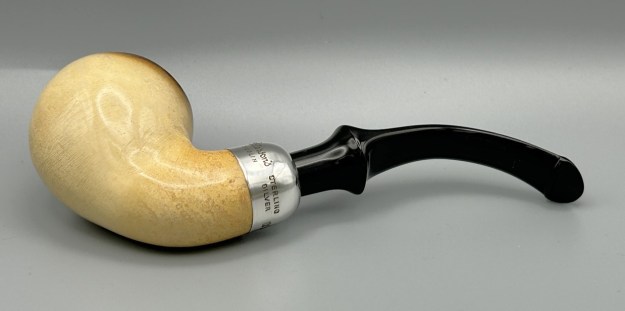
This Suave Jandrew Calabash Grew on Me


by Kenneth Lieblich

Hiding amongst the bric-à-brac, in the bottom of a box of pipes I recently acquired, was this relatively inconspicuous pipe. This pipe is a Jandrew partially-rusticated calabash with a vulcanite shank extension. It also has a thin, military-mount, vulcanite stem. I asked Steve about the brand and he mentioned its provenance. I must say, this pipe didn’t immediately catch my attention. It seemed fine, but nothing of note. But as I worked on it, it grew on me. I thought about it more and more, and I liked it more and more. The markings were brief – but very clear and readable. On the underside of the shank, were the words, Jandrew [over] 6 ∙ 99. This indicates that the pipe was made by J. Andrew Kovacs in (what I assume to be) June 1999. It also displays a handsome brass dot in the shank extension.Little information is to be had about Jandrew pipes. Using the scant information I could trawl together from Pipedia, MBSD Pipes, BlueRoomBriars, and Smoking Pipes, I have collated the following:

Jandrew pipes were made by J. Andrew Kovacs, an American artisan. He lived in both Jerome and Cottonwood, Arizona and is said to have later moved to Milwaukee, Wisconsin. He was part of a group of Arizona-based hobbyists that started carving pipes in the 1960s and 70s. Working through the late 20th century, Kovacs was part of the great American freehand scene and preferred acrylic stems. He favored the wild Danish Fancy style of shaping, and his work was once commonly found in pipe shops of the southwestern United States (especially in the Phoenix area). Horace DeJarnett (of DeJarnett Pipes) studied pipemaking for about year (on and off) in 2000 at Kovacs’ workshop in northern Arizona.

Let’s get working. As you can see, this pipe was in great shape already – not too much work needed. The stummel was a bit dirty inside, but not too bad.  The stem was also in good condition – just a few, minor tooth marks. This must be an unusual Jandrew pipe insofar as the stem (and shank extension) is vulcanite – not the usual acrylic. On the whole, the pipe looked tired, worn, but in decent shape – kind of like me. I used isopropyl alcohol on a few cotton rounds and wiped down the stem to provide an initial cleaning before moving on to the next steps. The primary cleaning came next. I disinfected the inside of the stem with both pipe cleaners and cotton swabs dipped in lemon-infused 99% isopropyl alcohol. I scrubbed thoroughly to make sure the interior was very clean.The goal of the next step is the removal (or minimization) of oxidation. Going to my sink, I used cream cleanser, cotton rounds, and a toothbrush, and scoured the stem to remove as much surface oxidation as possible. As the photos show, the result was a hideous, brownish mess – but better off the stem than on it.Once the stem was reasonably clean, I soaked it overnight in some Briarville Stem Oxidation Remover. This solution works to draw oxidation in the stem to the surface of the vulcanite. This is a major aid and an important step in ensuring a clean stem. The following day, I drew out the stem from its bath and scrubbed the lingering fluid with a toothbrush.As the stem was now clean and dry, I set about fixing the marks and dents in the vulcanite. This was done by filling those divots with black cyanoacrylate adhesive, impregnated with carbon and rubber. I left this to cure and moved on to sanding. First, with my set of needle files, I reduced the bulk of the cyanoacrylate repairs. I removed the excess adhesive as near to the surface as possible, without cutting into the vulcanite. Following that, I used all nine of the micromesh sanding pads (1,500 through 12,000 grit) to sand out flaws, even out the vulcanite, and provide gentle polishing of the finished surface. I also applied pipe-stem oil while using the last five micromesh pads. There was a wonderful, deep black shine to the stem when I was done.As the stem was (nearly) complete, I moved on to the stummel. The first step was to ream out the bowl – that is to say, remove all the cake inside the bowl. This accomplished a couple of things. First (and most obviously), it cleaned the bowl and provided a refurbished chamber for future smoking. Second, when the old cake was removed, I could inspect the interior walls of the bowl and determine if there was damage or not. I used a reamer, a pipe knife, and a piece of sandpaper taped to a wooden dowel. Collectively, these ensured that all the debris was removed. Overall, it wasn’t too bad.Similar to the stem, I then cleaned the stummel with both pipe cleaners and cotton swabs dipped in lemon-infused 99% isopropyl alcohol. To tidy up the briar, I wiped down the outside, using a solution of a pH-neutral detergent and distilled water, with cotton rounds. I also used a toothbrush in the crevices. This did a good job of cleaning any latent dirt on the surface of the briar.The last step of the cleaning process was to scour the inside of the stummel with the same mild detergent and tube brushes. This was the culmination of a lot of hard work in getting the pipe clean.I used some of my micromesh pads to sand the outside of the stummel and finish it off. This sanding minimizes flaws in the briar and provides a beautiful smoothness to the wood. I rubbed some LBE Before & After Restoration Balm into the briar and let it sit for 30 minutes or so. The balm moisturizes the wood and gives a beautiful depth to the briar. I then buffed the stummel with a microfibre cloth. For the final step, I took the pipe to my bench polisher and carefully buffed it – first with a blue diamond compound, then with three coats of conservator’s wax. This procedure makes the pipe look its best – the stummel sings and the stem glows.This Jandrew 06-99 calabash pipe is a beauty and will go into my collection (at least for now). It was a pleasure to work on. The approximate dimensions of the pipe are as follows: length 6⅜ in. (162 mm); height 1⅞ in. (48 mm); bowl diameter 1⅔ in. (42 mm); chamber diameter ¾ in. (20 mm). The weight of the pipe is 1½ oz. (44 g). I hope you enjoyed reading the story of this pipe’s restoration as much as I enjoyed restoring it. If you are interested in more of my work, please follow me here on Steve’s website or send me an email at kenneth@knightsofthepipe.com. Thank you very much for reading and, as always, I welcome and encourage your comments.

Restemming a Wonderful Peterson Specialty Barrel


by Kenneth Lieblich

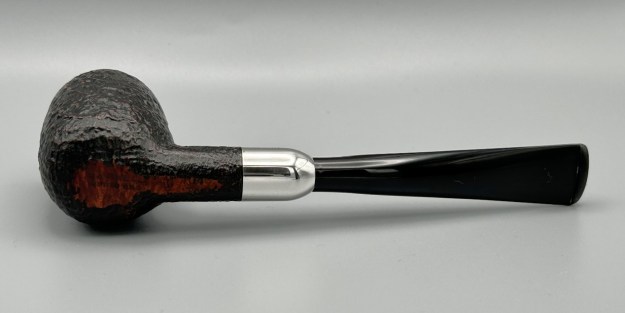
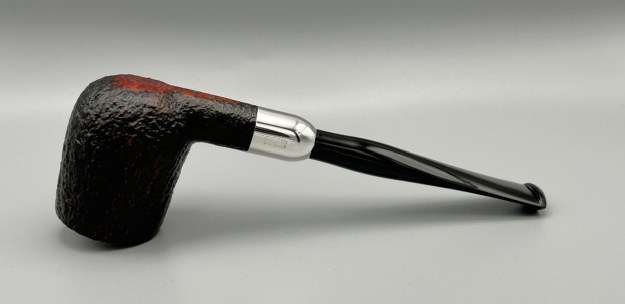
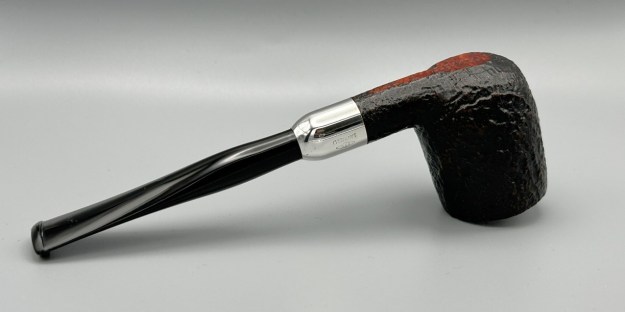
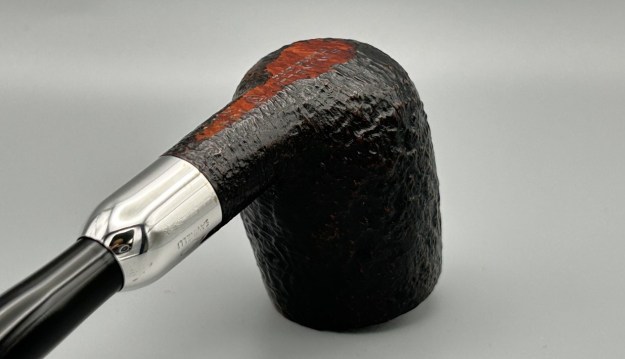
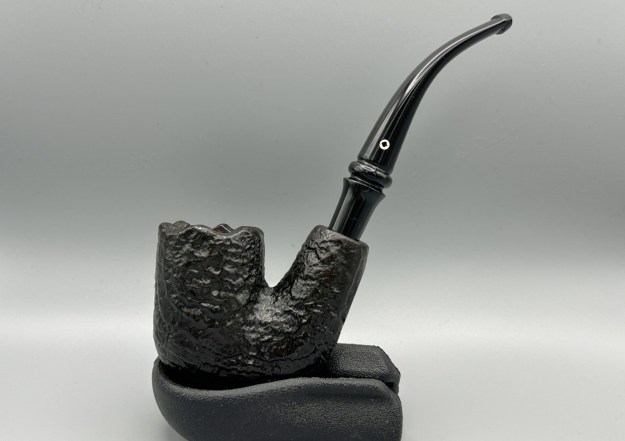
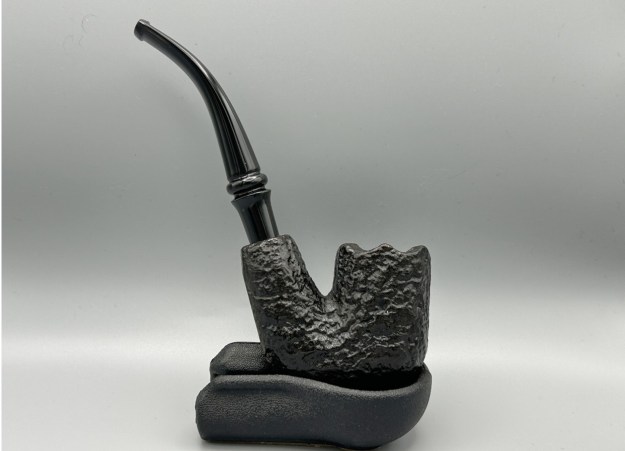
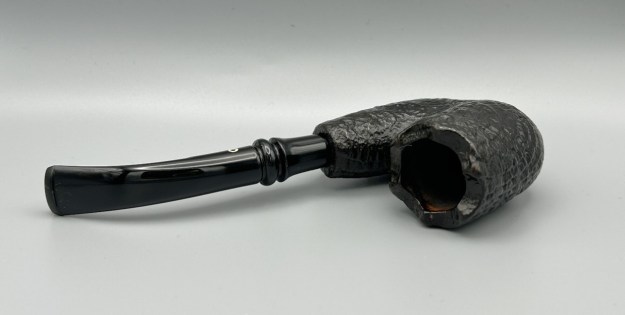
Now we’re talking! This terrific republic-era Peterson Barrel came to me in a box of pipes and pipe parts. It looked so engaging, but it was missing its stem. No problem – I can solve that! The Peterson barrel is not common, but it isn’t a rarity either. Regardless, it is a consistently popular and attractive shape – and it’s not hard to see why. No doubt, someone will be pleased to add this to their collection. Let’s look at the markings. On the underside of the stummel, it reads Peterson’s [over] Barrel [over] Made in the [over] Republic [over] of Ireland. On the nickel band, we see K&P engraved over images of the Shamrock, Wolf Hound and Round Tower. To be clear, these are not silver marks, they are nickel-mount markings of Peterson.Naturally, the Peterson brand is well-storied among collectors and I encourage you to read the Pipedia article about them: https://pipedia.org/wiki/Peterson. Obviously, I was particularly interested in learning more about the barrel, so I referred to The Peterson Pipe book, written by Mark Irwin and Gary Malmberg. It had a couple of very helpful tidbits. On page 136, we read

One collection … making its first appearance in the 1945 catalog is the line of Specialty shapes that have been Peterson favorites for nearly 70 years: the tankard and barrel, calabash and Belgique, and churchwarden.

Also, over on page 313, the following information can be found:

Barrel (1945-). P-lip or fishtail mouthpiece; smooth or rustic finish, sandblast offered in 1970.

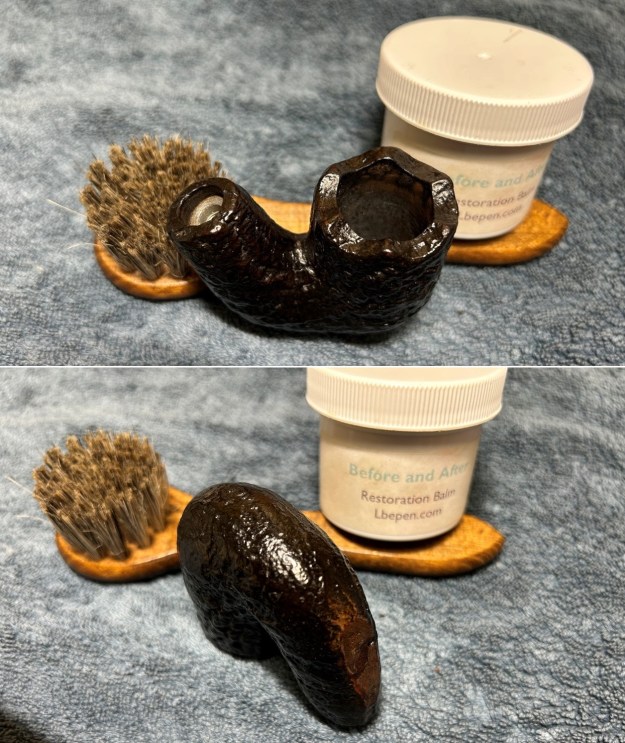
So, beyond saying that it is newer than 1945, I can’t quite tell how old this pipe is. Good to know, however, that the fishtail was an option.Let’s work on the pipe. The first thing I did was to hunt down a suitable replacement stem. It needed to be a military mount and it could be either a P-lip or fishtail. In this case, I didn’t have a P-lip that worked with this pipe – but I found a terrific fishtail, which you can see below. The stem is brand new – it even still has its casting marks!I took some sandpaper and gently sanded away those casting marks. Following that, I used all nine of the micromesh sanding pads (1,500 through 12,000 grit) to sand out flaws, even out the vulcanite, and provide gentle polishing of the finished surface. I also applied pipe-stem oil while using the last five micromesh pads. There was a wonderful, deep black shine to the stem when I was done. Over to the stummel – and they were some issues. It was very dirty and had a significant burn on the rim. The first step was to ream out the bowl – that is to say, remove all the cake inside the bowl. This accomplished a couple of things. First (and most obviously), it cleaned the bowl and provided a refurbished chamber for future smoking. Second, when the old cake was removed, I could inspect the interior walls of the bowl and determine if there was damage or not. I used a reamer, a pipe knife, and a piece of sandpaper taped to a wooden dowel. Collectively, these ensured that all the debris was removed. I then cleaned the stummel with both pipe cleaners and cotton swabs dipped in lemon-infused 99% isopropyl alcohol. With a pipe this dirty, it took quite a while and much cotton to get clean. It’s a small pipe, but so, so dirty.I then decided to ‘de-ghost’ the pipe – that is to say, exorcize the remaining filth from the briar. I filled the bowl and the shank with cotton balls, then saturated them with 99% isopropyl alcohol. I let the stummel sit overnight. This caused the remaining oils, tars and smells to leach out into the cotton.To tidy up the briar, I wiped down the outside, using a solution of a pH-neutral detergent and distilled water, with cotton rounds. This did a good job of cleaning any latent dirt on the surface of the briar. The last step of the cleaning process was to scour the inside of the stummel with some mild detergent and tube brushes. This was the culmination of a lot of hard work in getting the pipe clean.

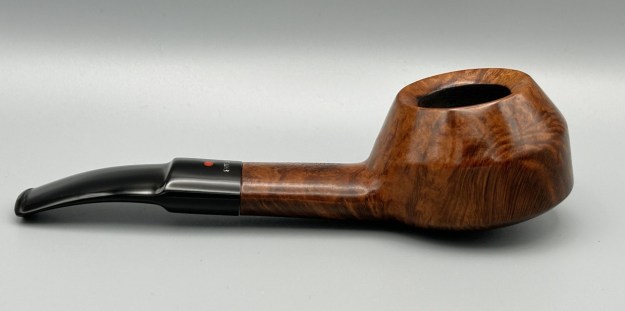
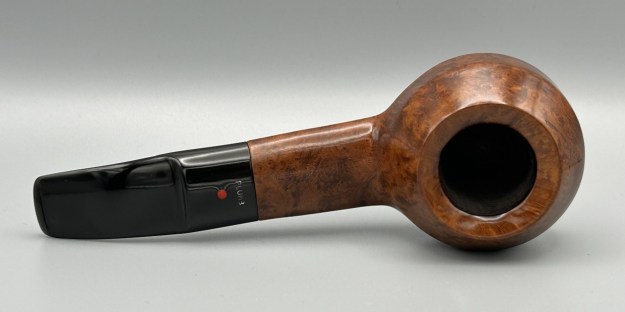
Some burn remained on the rim, so I took some crystalized oxalic acid and dissolved it in warm water. I took some cotton swaps, dipped in the solution, and rubbed the burned spot vigorously. The weak acid works very nicely to alleviate superficial burns (burns where the integrity of the wood is still sound). I took a solid wooden sphere, wrapped a piece of 400-grit sandpaper around it, and sanded the inner edge of the rim. This achieved two things: first, it removed some of the burn marks; and second (and more importantly), the circular shape and motion of the sphere gradually returned the edge to a perfect circle.I used all nine micromesh pads (1,500 through 12,000 grit) to sand the outside of the stummel and finish it off. This sanding minimizes flaws in the briar and provides a beautiful smoothness to the wood. I rubbed some LBE Before & After Restoration Balm into the briar and let it sit for 30 minutes or so. The balm moisturizes the wood and gives a beautiful depth to the briar. I then buffed the stummel with a microfibre cloth. For the final step, I took the pipe to my bench polisher and carefully buffed it – first with a blue diamond compound, then with three coats of carnauba wax. This procedure makes the pipe look its best – the stummel sings and the stem glows.This Peterson Specialty Barrel looks fantastic again and is ready to be enjoyed by its next owner. I am pleased to announce that this pipe is for sale! If you are interested in acquiring it for your collection, please have a look in the ‘Irish’ pipe section of the store here on Steve’s website. You can also email me directly at kenneth@knightsofthepipe.com. The approximate dimensions of the pipe are as follows: length 5¾ in. (147 mm); height 1⅔ in. (42 mm); bowl diameter 1¼ in. (32 mm); chamber diameter ⅔ in. (18 mm). The weight of the pipe is ⅞ oz. (25 g). I hope you enjoyed reading the story of this pipe’s restoration as much as I did restoring it. If you are interested in more of my work, please follow me here on Steve’s website or send me an email. Thank you very much for reading and, as always, I welcome and encourage your comments.
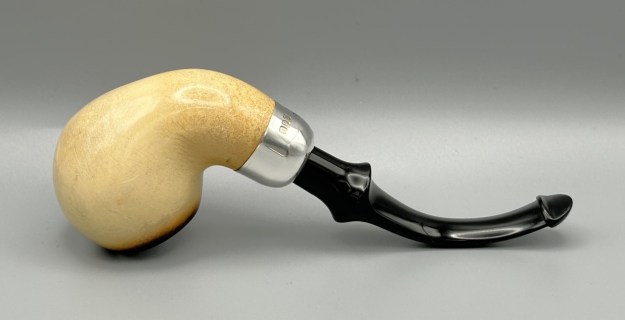
Restoring a Comoy’s Tradition 203 Cutty


by Kenneth Lieblich

Oh, I really love the look of this pipe! This older Comoy’s came to me in an auction lot and, although it was filthy, I was immediately charmed by its shape. This is a beautiful cutty shape, from the Tradition line, and marked with the 203-shape number. The briar has some very attractive grain hidden away. The pipe has a nice, long shank and a nice, long, oval, vulcanite, taper stem. It has endured a hard life, but must have been well loved over the years. Many of the marks of its hardship still remain, but they are an important part of this pipe’s story. This pipe is actually a bit of a stunner, and it’s light and comfortable to hold. Let’s look at the markings. They are slightly worn, but still very readable. On the top of the shank (but towards the left side), we see Comoy’s [over] Tradition. On the top of the shank (but towards the right side), we see the circular logo showing Made [over] in [over] London. Then below the circle is the word England. Further along the shank, we see the shape number, 203. In addition, the left side of the stem has the so-called three-piece “C”. Comoy’s shape number chart lists the number 203 as being a straight cutty with an oval stem, and that describes exactly what we’ve got. I consulted with the dating guide on Pipedia to narrow down the date of this pipe. If you want to read along, please have a look at https://pipedia.org/wiki/Comoy%27s_Dating_Guide in order to see what I’m talking about. This pipe dates from the 1950s onwards and corresponds to the first variant of Comoy’s stamp during this period, which is
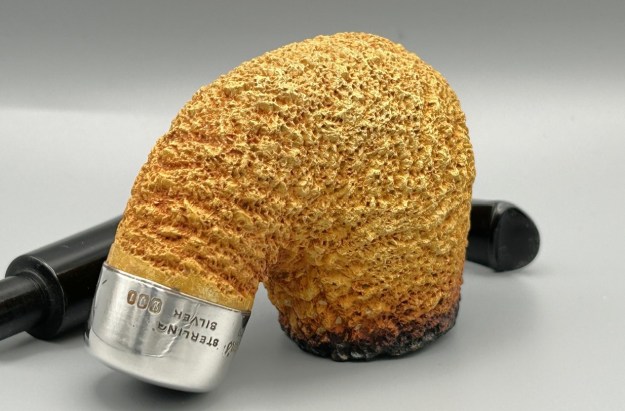
(1) A simple block-letter style without serifs but with the C larger than the other letters and the apostrophe before the “S”.

You can see that this matches my markings. Next, the Tradition line is also referenced in this article. It provides some further information:

Tradition. This grade was introduced in 1925 to mark 100 years of pipe making and continued in production until the 1970s. In 1965, it was priced at $20.In addition, the “Made in” stamp also corresponds to the same time period as above. The same article mentions the following:

This is again stamped in a circle with “Made” at the top, “In” in the middle, and “London” at the bottom, with “England in a straight line beneath the F/B. I believe this stamp was first used in the export drive in the early 1950s, and I have not seen any pre-WW II Comoy’s stamped in this way.

The three-piece “C” on the stem also dates from the 1950s onwards and was discontinued in the early 1980s, when Cadogan took over. So we know this pipe is before the Cadogan era. We are left with a date range of the 1950s to the 1970s. I am making an assumption that because this pipe corresponds to the first stamping variant listed in the guide, it is of an earlier part of that range. However, I have reason to make that assumption. I looked at Greg Pease’s writeup on Comoy’s and his dating information is basically the same as the Pipedia stuff above. Pease, however, adds this important tidbit:

Sometime in the 60’s, the serifs were returned to the “COMOY’S” lettering, though, as mentioned above, the typeface is not as fancy as the earlier one. It appears that some grades carried different stamps or at least that the stamping changed in different years for some grades. At this point, this is highly speculative, as my sample size is too small to verify it.

Based on this, I am going to suggest that this pipe probably (but not definitely) dates from the 1950s. If you can shed some light on this, please do so in the comments below.This was one dirty, harried pipe. The stem was thoroughly oxidized and had much calcification on it. This would take some work! There were a couple of small tooth marks, but nothing serious. The stummel was coated in grime and needed rejuvenating. The bowl was choked with cake and the rim had lava everywhere. Who knows what I would find under there? I could see that the edge of the rim had several small nicks, but nothing that disturbed my peace. Let’s get to work! I used a disposable lighter and ‘painted’ the stem with its flame. The gentle heat of the flame can cause the dents in the vulcanite of the stem to expand back into shape. In this case, next-to-nothing happened. Alas. The stem’s calcification was quite substantial. I used an old butter knife and gently scraped some of the thicker accretion off. Doing this now helps later in removing the oxidation. I used alcohol on a few cotton rounds and wiped down the stem to provide an initial cleaning of filth before moving on to the next steps.

The primary cleaning came next. I disinfected the inside of the stem with both pipe cleaners and cotton swabs dipped in lemon-infused 99% isopropyl alcohol. I scrubbed thoroughly to make sure the interior was very clean. Boy, was it dirty! I used many pipe cleaners and cotton swabs.The goal of the next step is the removal (or minimization) of oxidation. Going to my sink, I used cream cleanser, cotton rounds, and a toothbrush, and scoured the stem to remove as much surface oxidation as possible. As the photos show, the result was a hideous, brownish mess – but better off the stem than on it.Once the stem was reasonably clean, I soaked it overnight in some Briarville Stem Oxidation Remover. This solution works to draw oxidation in the stem to the surface of the vulcanite. This is a major aid and an important step in ensuring a clean stem. The following day, I drew out the stem from its bath and scrubbed the lingering fluid with a toothbrush. Due to the severity of the oxidation, I then repeated the scrubbing with the cream cleanser for maximum effect.As the stem was now clean and dry, I set about fixing the marks and dents in the vulcanite. This was done by filling those divots with black cyanoacrylate adhesive, impregnated with carbon and rubber. I left this to cure and moved on.The penultimate step for the stem is sanding. First, with my set of needle files, I reduced the bulk of the cyanoacrylate repairs. I removed the excess adhesive as near to the surface as possible, without cutting into the vulcanite. Following that, I used all nine of the micromesh sanding pads (1,500 through 12,000 grit) to sand out flaws, even out the vulcanite, and provide gentle polishing of the finished surface. I also applied pipe-stem oil while using the last five micromesh pads. There was a wonderful, deep black shine to the stem when I was done.As the stem was (nearly) complete, I moved on to the stummel. The first step was to ream out the bowl – that is to say, remove all the cake inside the bowl. This accomplished a couple of things. First (and most obviously), it cleaned the bowl and provided a refurbished chamber for future smoking. Second, when the old cake was removed, I could inspect the interior walls of the bowl and determine if there was damage or not. I used a couple of reamers, a pipe knife, and a piece of sandpaper taped to a wooden dowel. Collectively, these ensured that all the debris was removed. Humorously, the cake in the bowl was so hard, that I actually got a blister on my hand from cranking the reamer.My next step was to remove the lava on the rim. For this, I took a piece of machine steel and gently scraped the lava away. The metal’s edge is sharp enough to remove what I need, but not so sharp that it damages the rim. This work revealed that there was some notably burn marks and a few more nicks. Too bad, but no problem to restore. Similar to the stem, I then cleaned the stummel with both pipe cleaners and cotton swabs dipped in lemon-infused 99% isopropyl alcohol. With a pipe this dirty, it took quite a while and much cotton to get clean. Oh, it was so filthy! The previous owner must never have heard of pipe cleaners.I then decided to ‘de-ghost’ the pipe – that is to say, exorcize the remaining filth from the briar. I filled the bowl and the shank with cotton balls, then saturated them with 99% isopropyl alcohol. I let the stummel sit overnight. This caused the remaining oils, tars and smells to leach out into the cotton.To tidy up the briar, I wiped down the outside, using a solution of a pH-neutral detergent and distilled water, with cotton rounds. This did a good job of cleaning any latent dirt on the surface of the briar. However, it also revealed a mild burn on the underside of the bowl. We’ll come back to that in a moment.The last step of the cleaning process was to scour the inside of the stummel with some detergent and tube brushes. This was the culmination of a lot of hard work in getting the pipe clean.To deal with the burn, I took some crystalized oxalic acid and dissolved it in warm water. I used some cotton swaps, dipped in the solution, and rubbed the burned spot vigorously. The weak acid works very nicely to alleviate superficial burns (burns where the integrity of the wood is still sound). The burn is quite superficial and the solution did work a bit, but the burn will remain as part of the pipe’s history.The damage to the rim was significant. In order to lessen the burns and nicks on the rim, I ‘topped’ the pipe – that is to say, I gently and evenly sanded the rim on a piece of 400-grit sandpaper. This effectively minimized the damage, without altering the look of the pipe.I used all nine micromesh pads (1,500 through 12,000 grit) to sand the outside of the stummel and finish it off. This sanding minimizes flaws in the briar and provides a beautiful smoothness to the wood. I rubbed some LBE Before & After Restoration Balm into the briar and let it sit for 30 minutes or so. The balm moisturizes the wood and gives a beautiful depth to the briar. I then buffed the stummel with a microfibre cloth. For the final step, I took the pipe to my bench polisher and carefully buffed it – first with a blue diamond compound, then with three coats of carnauba wax. This procedure makes the pipe look its best – the stummel sings and the stem glows.This Comoy’s Tradition 203 Cutty looks fantastic again and is ready to be enjoyed by its next owner. I am pleased to announce that this pipe is for sale! If you are interested in acquiring it for your collection, please have a look in the ‘British’ pipe section of the store here on Steve’s website. You can also email me directly at kenneth@knightsofthepipe.com. The approximate dimensions of the pipe are as follows: length 5⅞ in. (150 mm); height 1¾ in. (46 mm); bowl diameter 1¼ in. (32 mm); chamber diameter ¾ in. (19 mm). The weight of the pipe is 1 oz. (32 g). I hope you enjoyed reading the story of this pipe’s restoration as much as I did restoring it. If you are interested in more of my work, please follow me here on Steve’s website or send me an email. Thank you very much for reading and, as always, I welcome and encourage your comments.