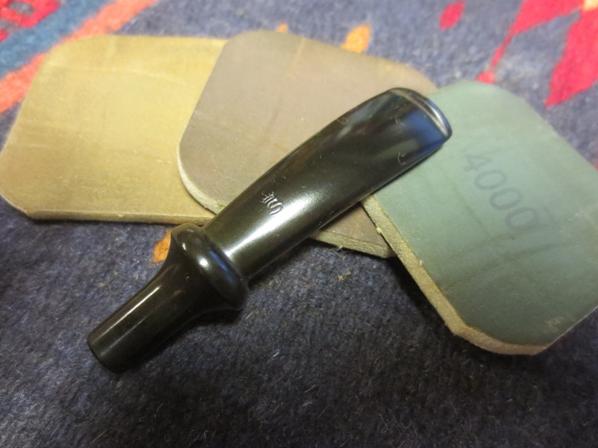
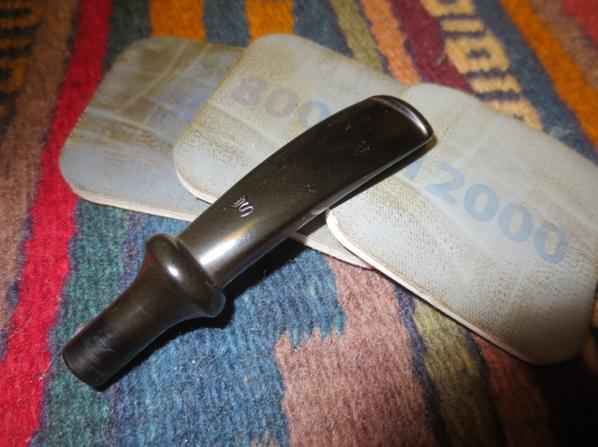
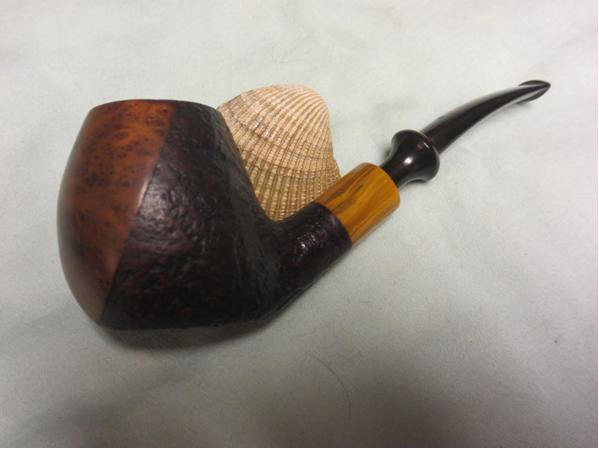
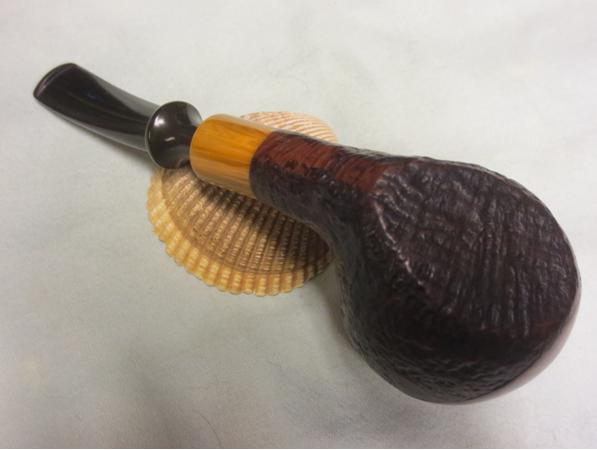
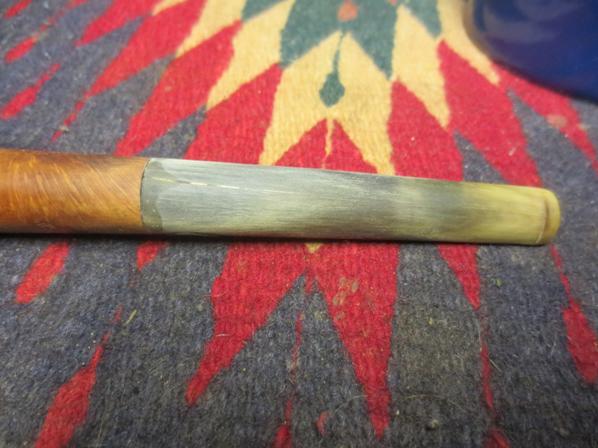
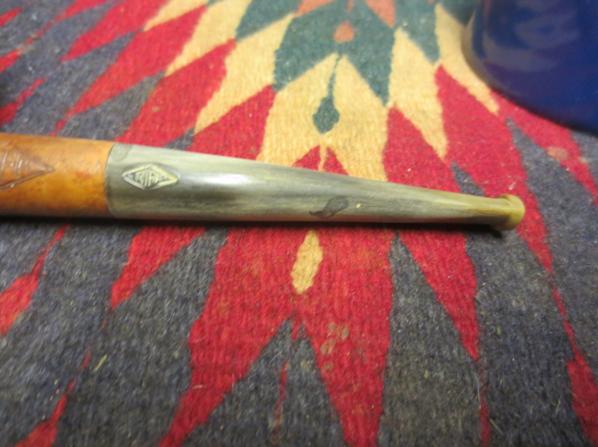
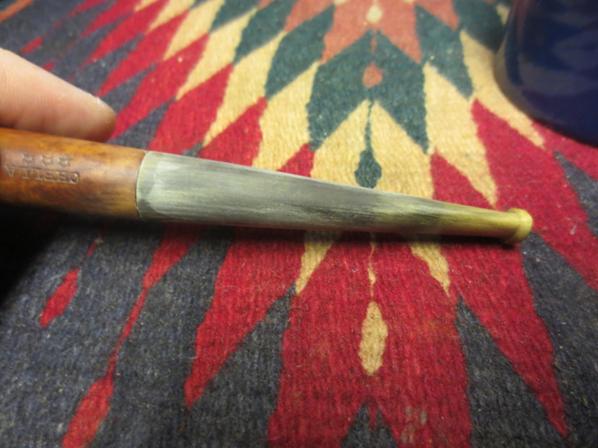
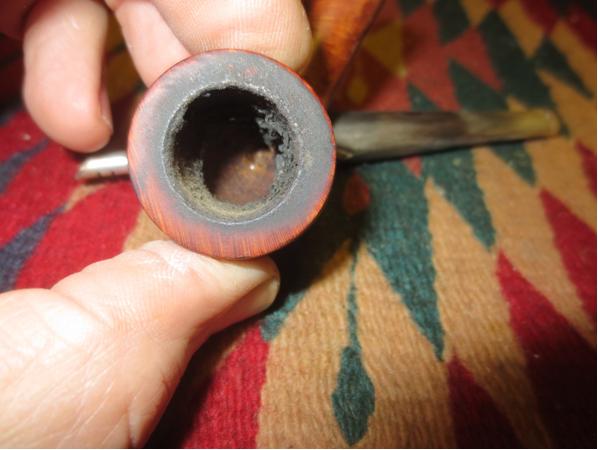
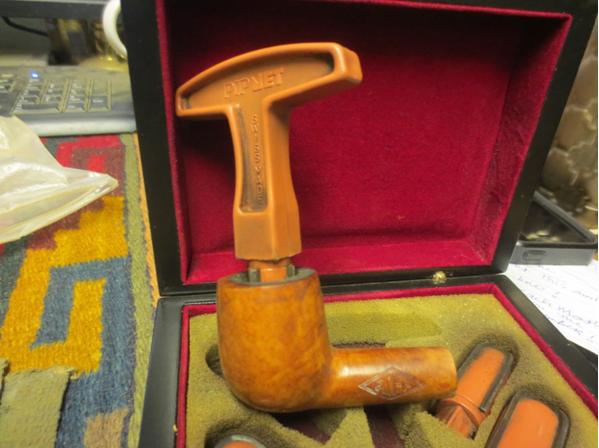
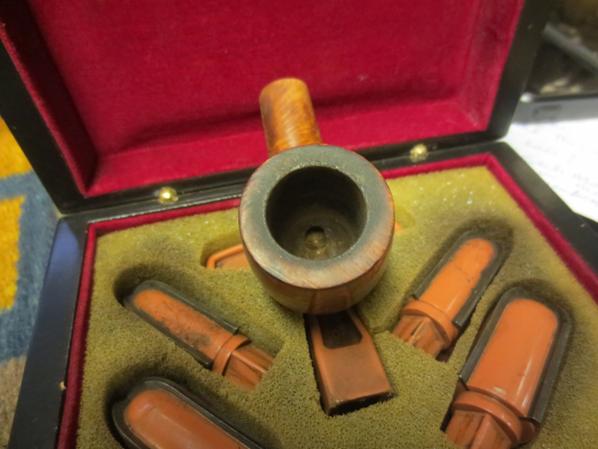
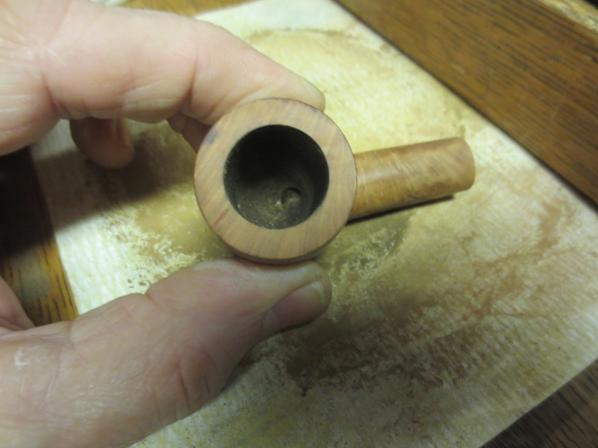
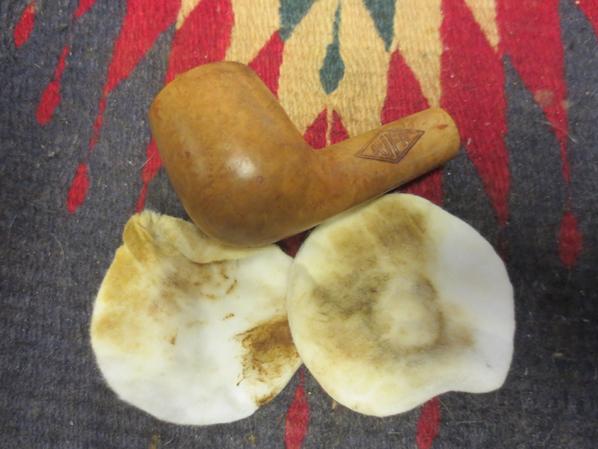
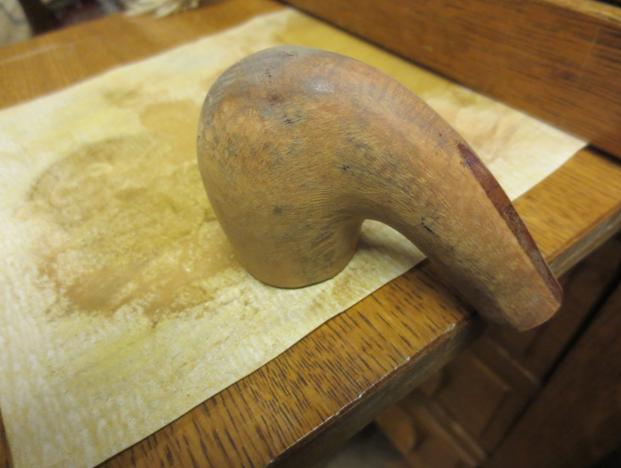
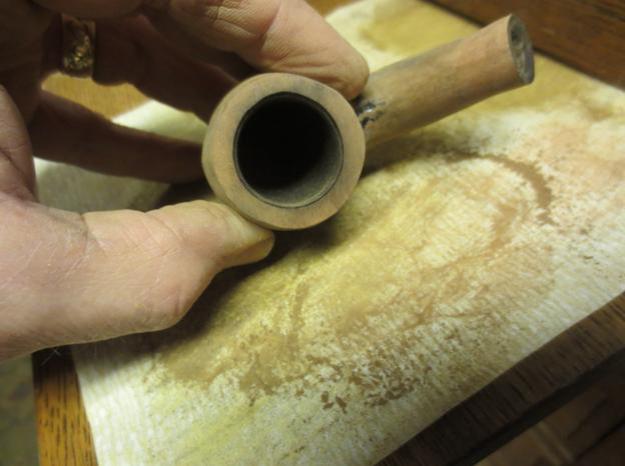
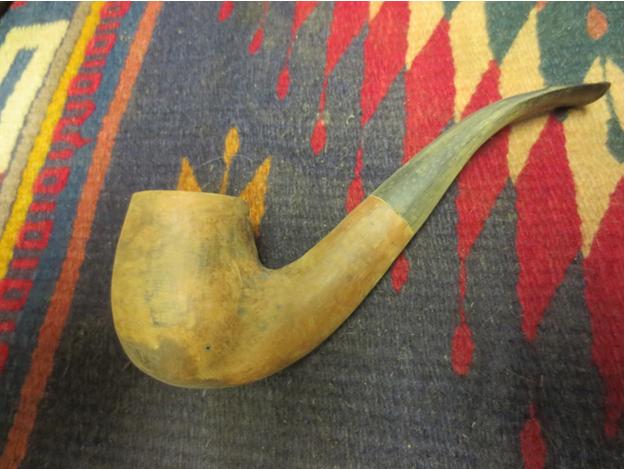
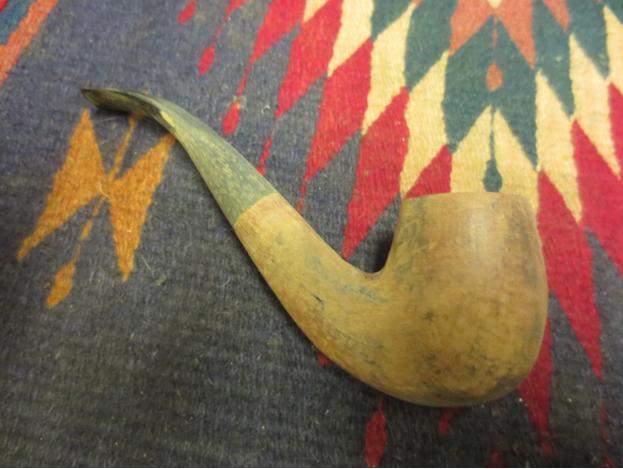
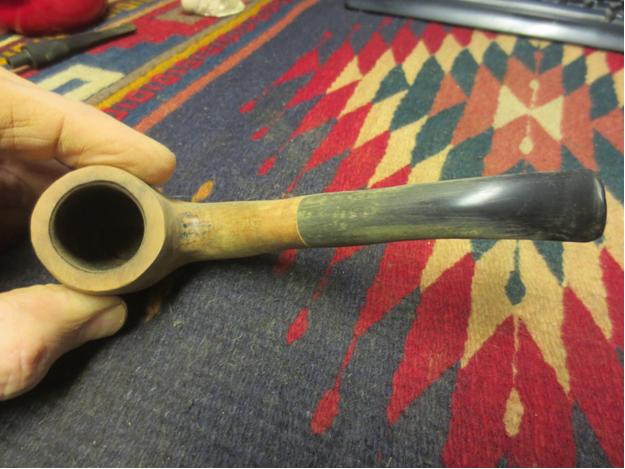
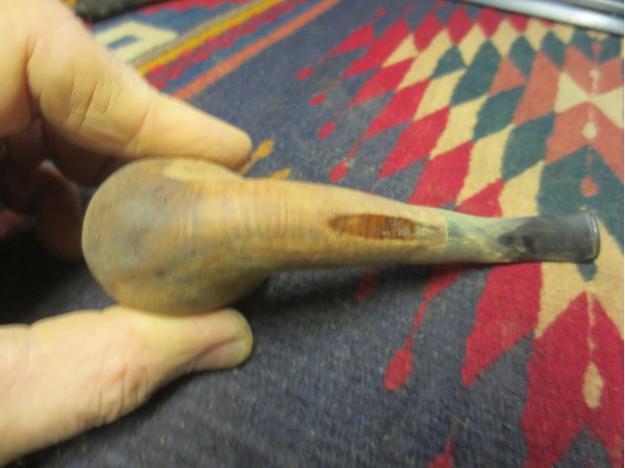
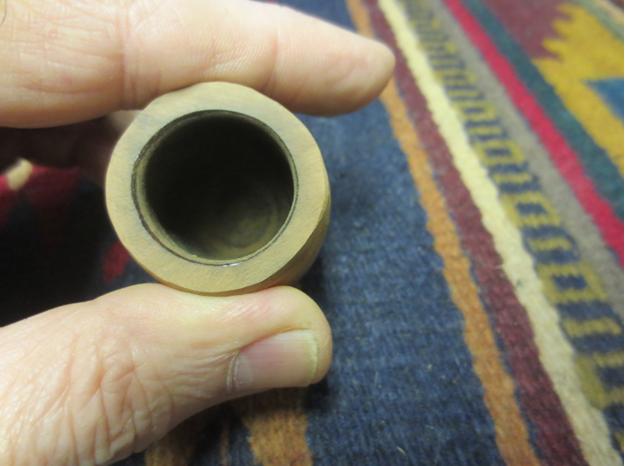
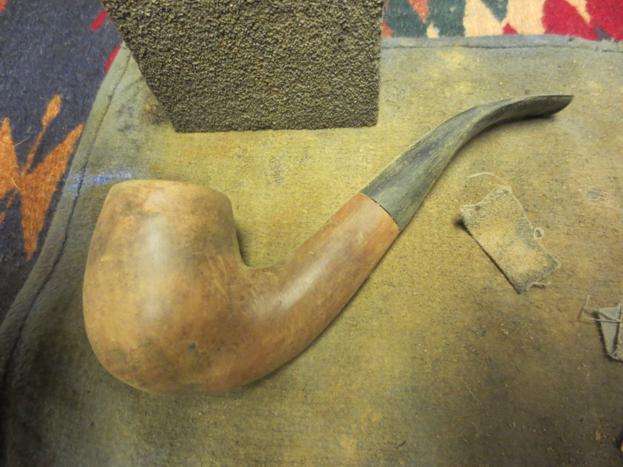
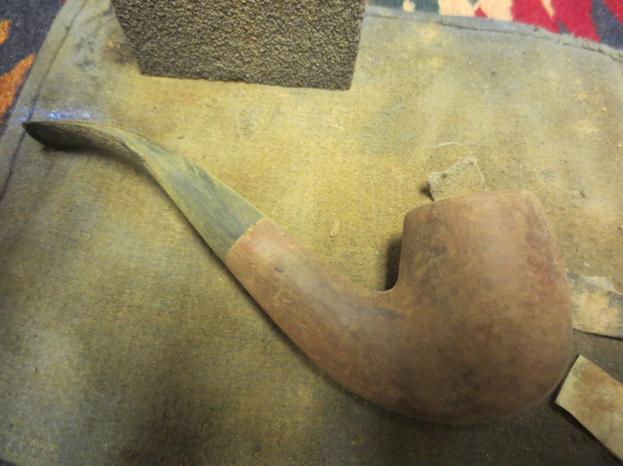
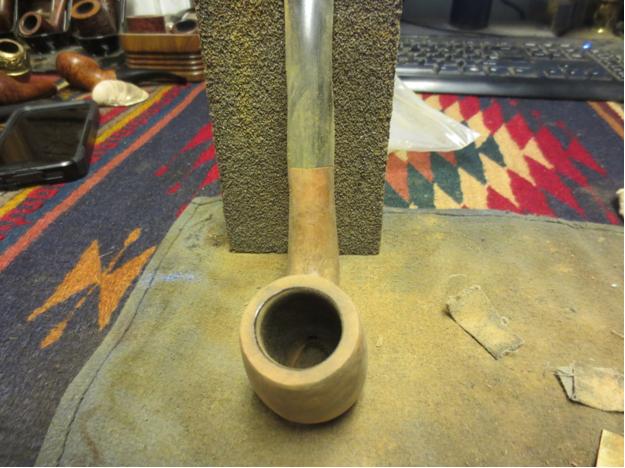
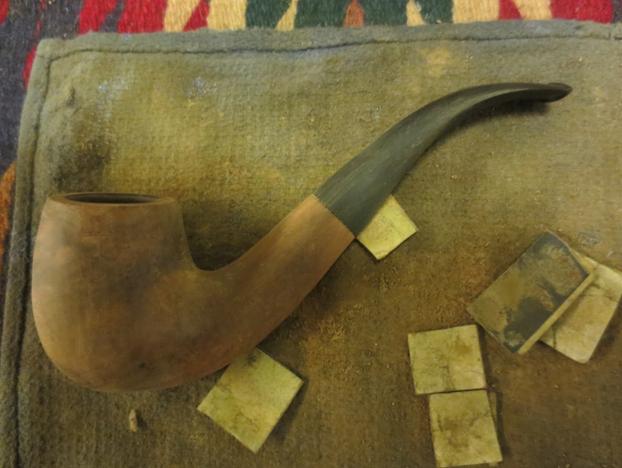
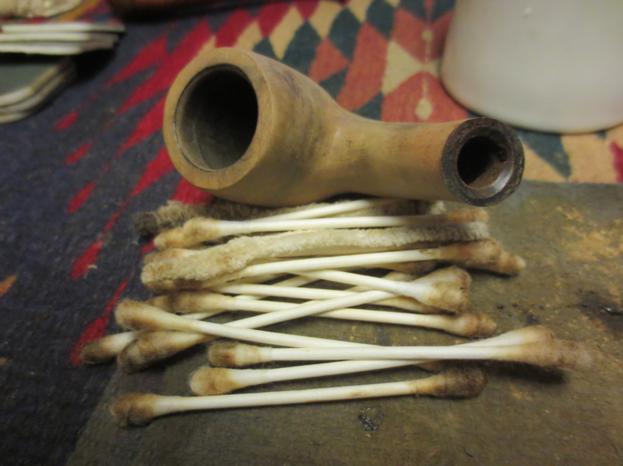
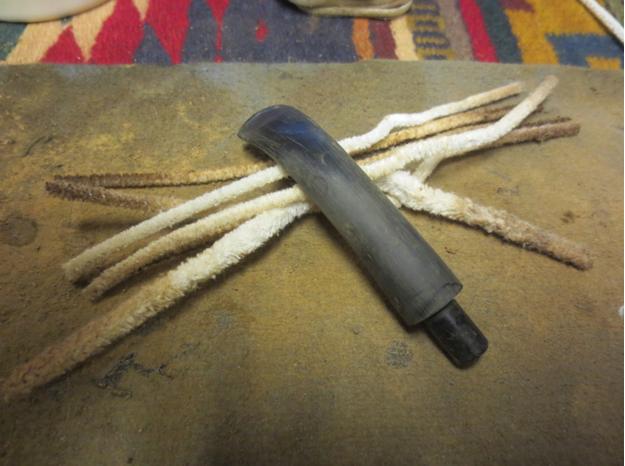
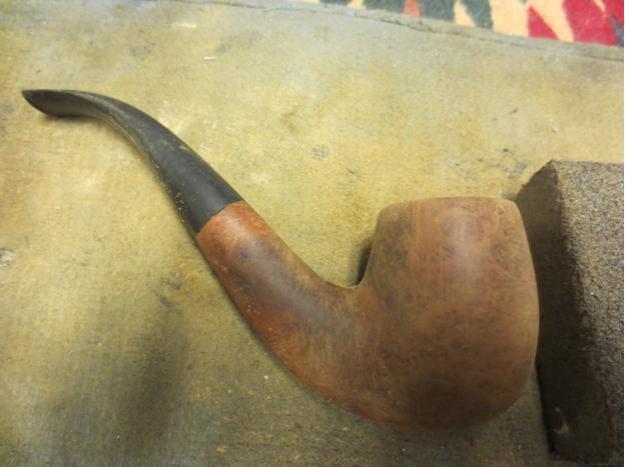
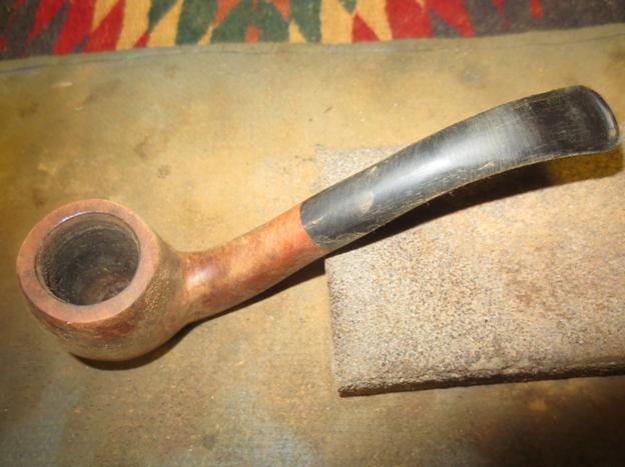
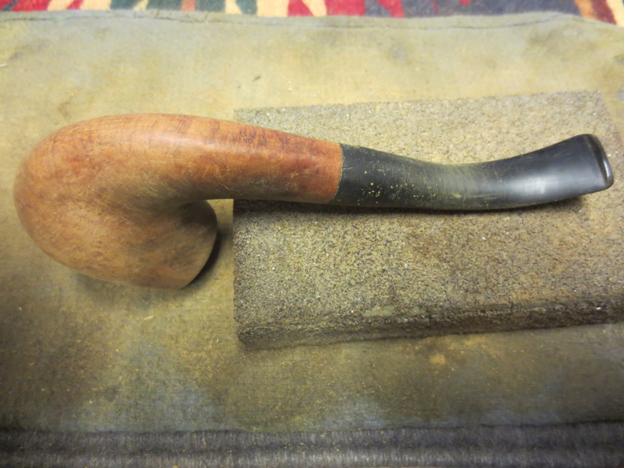
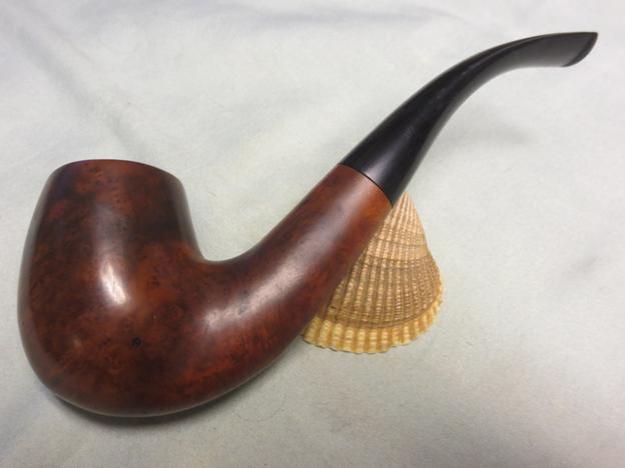
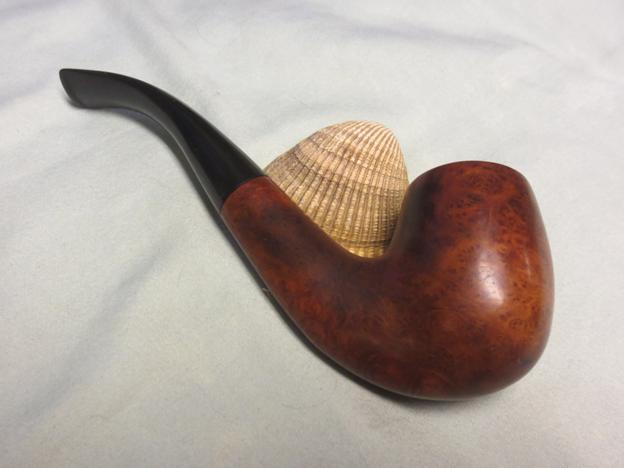
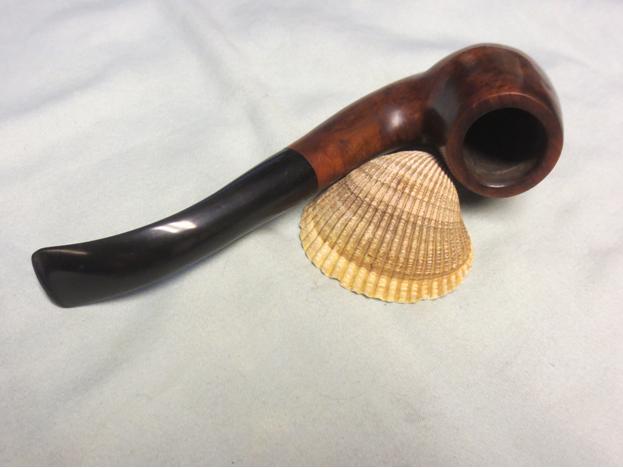
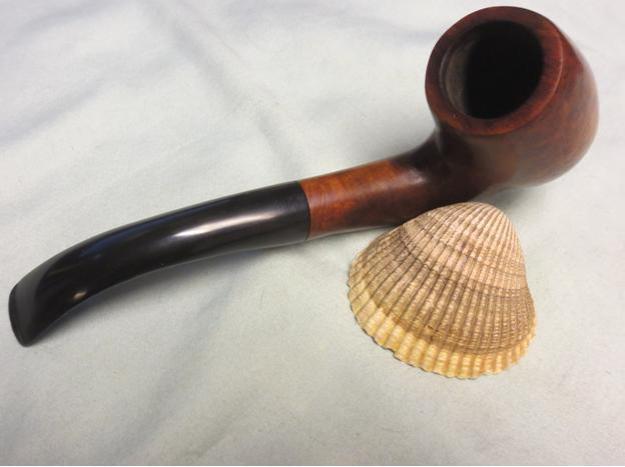
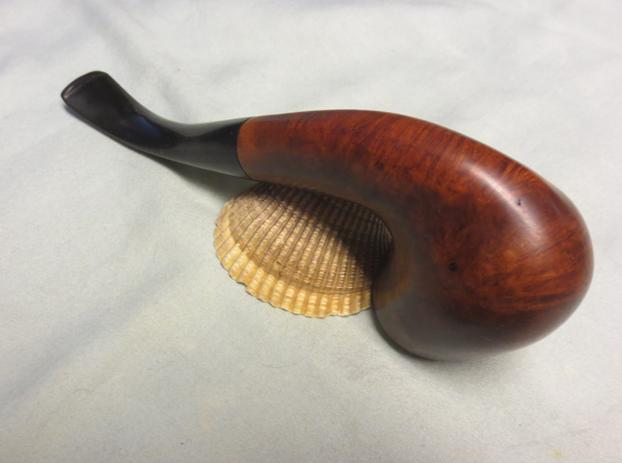
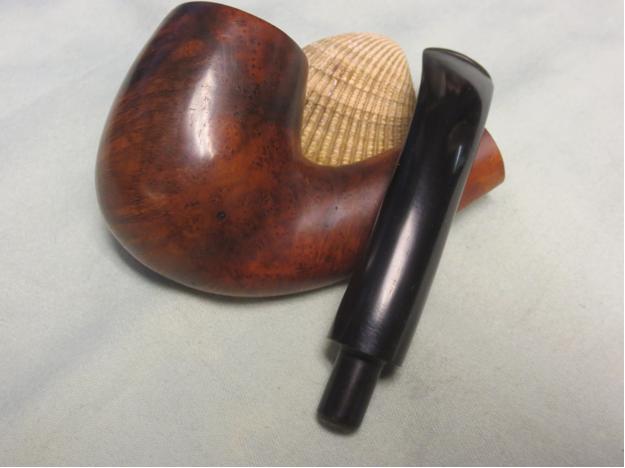
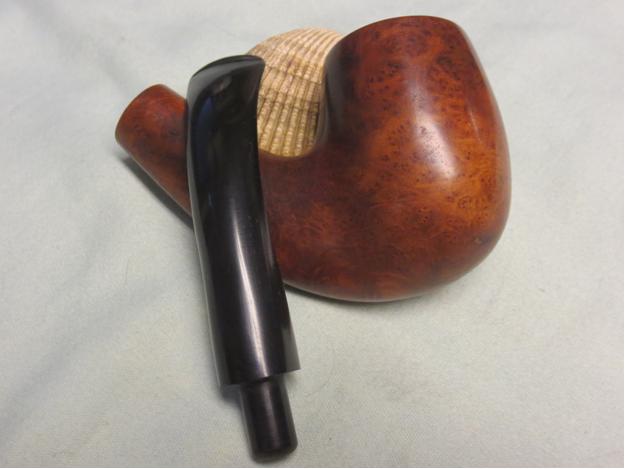
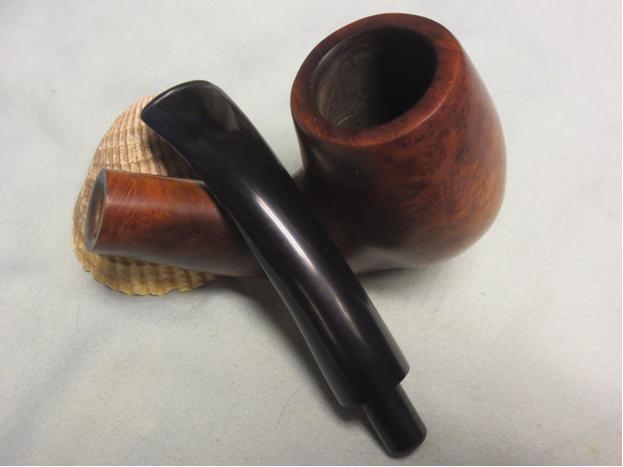
Tag Archives: bowl topping

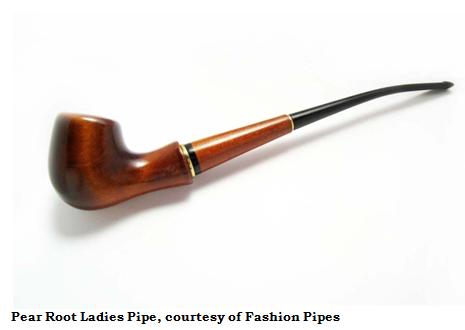
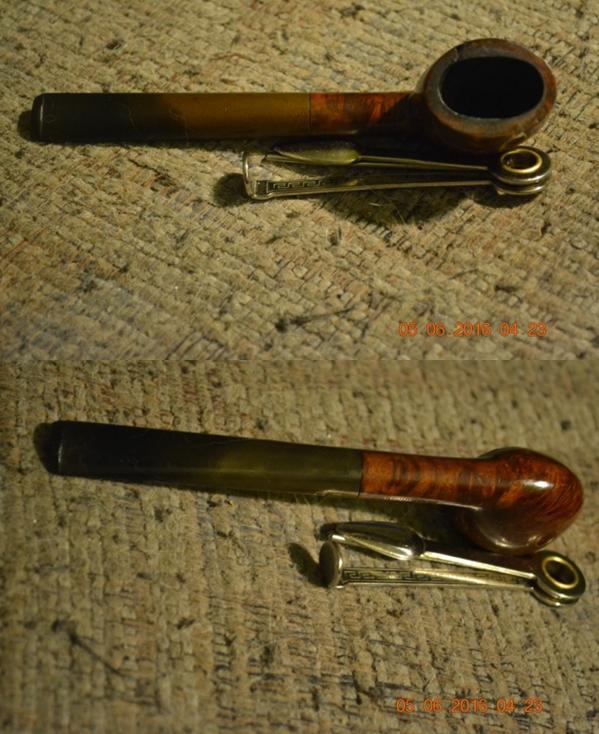
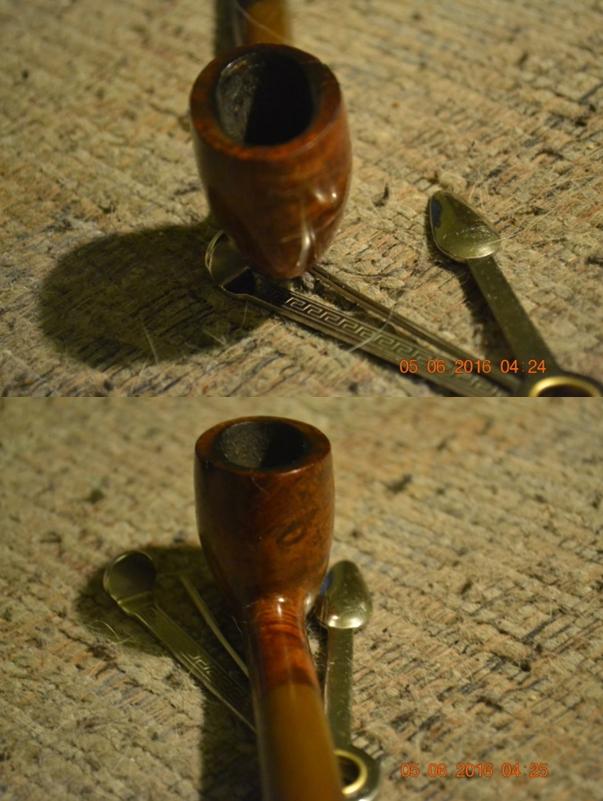
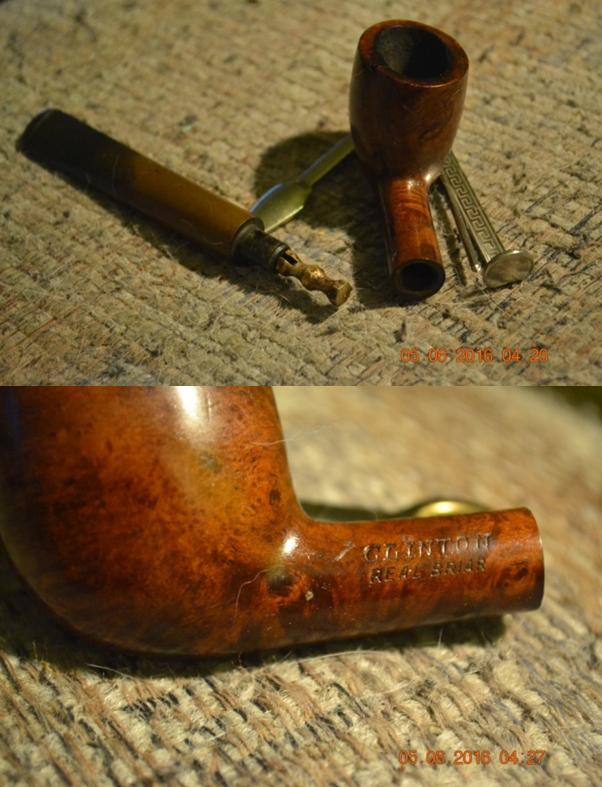
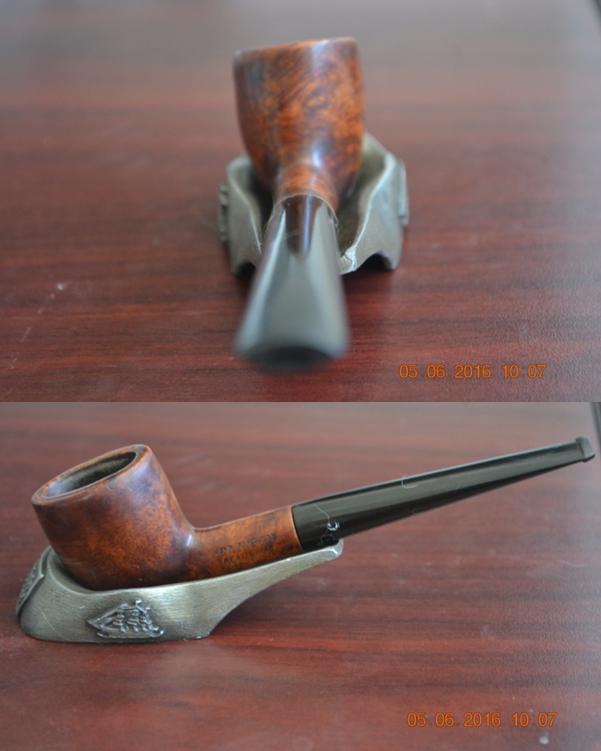
Spotlight: Ladies Pipes, Part 2/7, a Clinton Straight Oval


Guest Blog by Robert M. Boughton
Member, International Society of Codgers
Member, North American Society of Pipe Collectors
http://www.naspc.org
http://www.roadrunnerpipesnm.biz
http://about.me/boughtonrobert
Photos © the Author lady1
INTRODUCTION
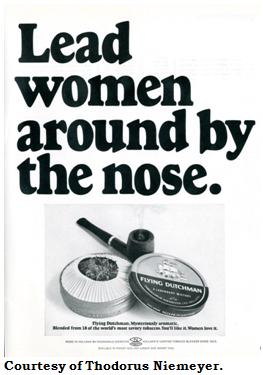
I came across a more subtle but still rather sexist yet humorous comment concerning the perceived relationship of women to pipe enjoyment, this time in the older ad above for Flying Dutchman tobacco. No longer in production, it was an aromatic blend of Kentucky Burley, Cavendish, Virginia, Oriental Turkish and “Other/Misc.” Sounds pretty good to me. But it makes me flash on an email I received from a friend on Smokers Forums UK. Her name is Liz. She wrote:

“I always wanted to smoke a pipe even when I was a child. I had seen photos of my dad smoking a pipe but he had quit smoking by the time I was born. I started smoking cigarettes in my early teens and the desire to smoke a pipe became stronger once I became an adult and started to do a lot of camping. I thought it would be very nice to sit by the campfire and smoke a pipe.”

Here comes the sad crux of Liz’ response. “But as a woman, I never felt comfortable or confident enough to go in a store and buy one. Finally in 2004 I got the nerve to go in the tobacco shop and buy a pipe. I used the excuse that I was buying it for my brother. [Emphasis added.] …I had no one to teach me anything about smoking the pipe so what I learned I found on the internet.”

I was struck by the eloquent and poignant plight of a woman I have come to think of as supremely confident and self-assured in all matters, albeit that our friendship is based in the ether world. This is a woman I should very much like to meet some day in person. Liz’ reluctance to purchase a tobacco pipe, at a tobacconist, for herself as a woman who had always wanted to partake of the pleasures she rightly imagined she would discover (around a campfire, no less, and as an alternative to the pernicious and addictive additives in cigarettes), plucked a mournful acoustic chord in my heart like listening to Albinoni’s Adagio for guitar alone on a torrential night.

This in turn sparked a connection to the woman in my previous blog of this series, the person who inspired me to tackle the subject in the first place with her soft-spoken, somewhat tentative inquiry to Chuck, at my local tobacconist, asking if he had any ladies pipes. After I read with delight and growing admiration for the fine woman Liz’ responses revealed her to be from the several questions I posed to her as a preliminary breaking of the ice in an ongoing interview process, I played back my mental tape of Chuck’s encounter with the good lady in search of a suitable pipe, and doing so recalled the trepidation in her voice and body language. With some amazement, I realized that she had probably worked herself up for untold years to that moment when at last she was determined to ask for that which she had always wanted!

As a man, I am compelled to declare that this clear and present state of social antipathy toward women who wish only to savor a pipe – and indeed the attitude must be widespread, or else I could not have come in contact with two ladies in hardly a month with the same reluctance to buy something so basic that they fancied obtaining – is intolerable. I mean good Lord, have we come so short a distance from the days when women on their own volition and in the strength of groups protested the double standard of cigarette smoking as chic by men while the practice was viewed as vulgar by females? Alas that science was not what it is today, and many beautiful pioneering civil rights women perished early from the intrinsic impurities and carcinogens of cigarettes. And let’s not forget the infamous bra burning demonstration so popular when I was a youngster (and to my natural titillation, no pun intended). With hope, therefore, these blogs will help to alleviate the barriers.

VARIOUS BRAND LADIES PIPES
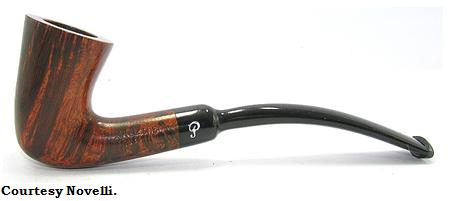
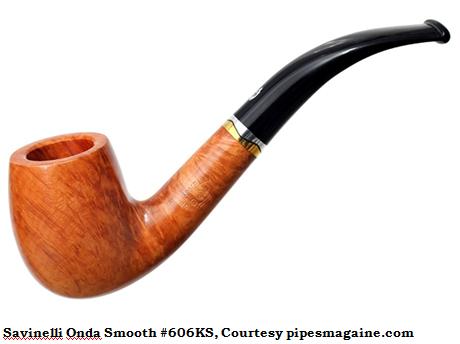
I noticed Peterson’s had at least one ladies pipe, and reader/blogger Mark Irwin, who read my previous blog on this subject, urged me to include some of them during the course of the series. Here are several samples of fine ladies pipes, starting with a Peterson I found offered in Italy, per Mark’s suggestion.lady2Paddy of SF let me know that his wife has a sweet collection of Savinelli 606 pipes, at least one for each day of the week, like the following example. BTW, Paddy writes, the missus also has “one Castello of a similar shape which she received as a gift.” Good company, indeed.Lady3 lady4And now, here is the Clinton Real Briar Oval as it came to me.Lady5 lady6 Lady7 Lady8RESTORATION
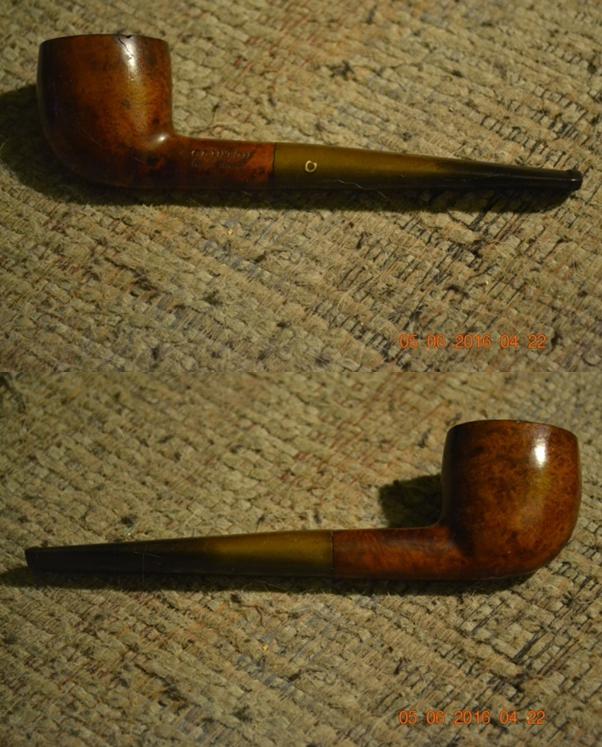
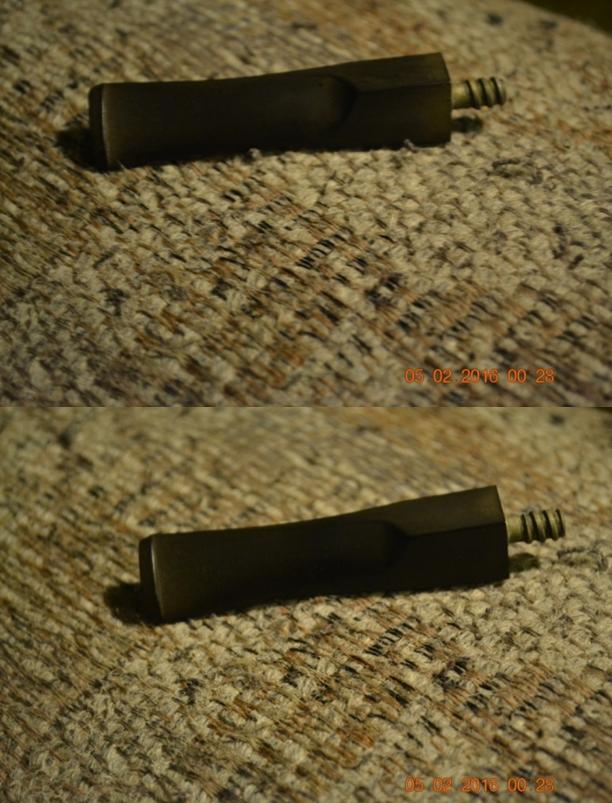
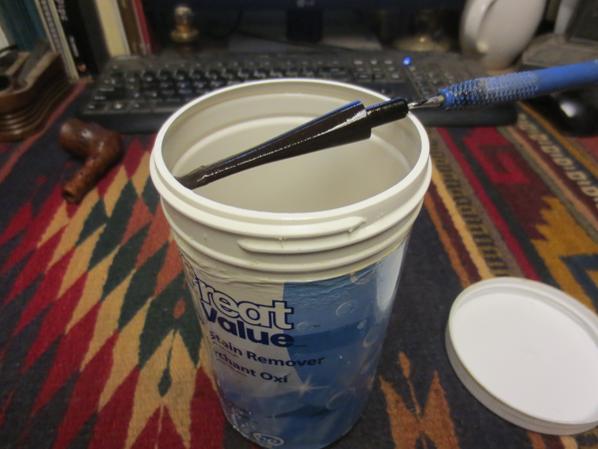
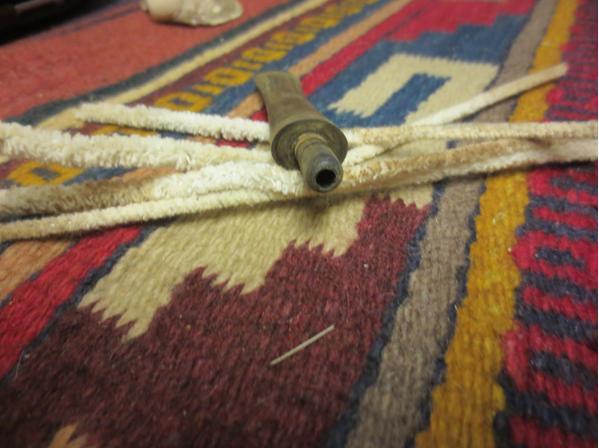
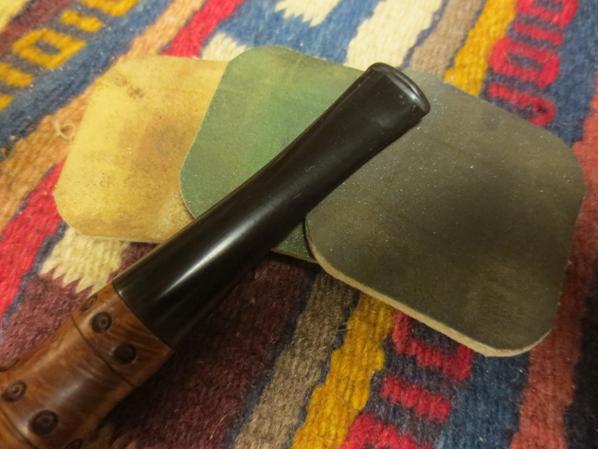
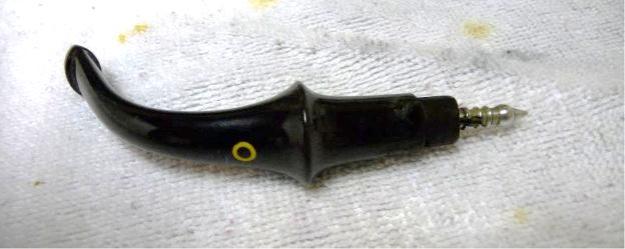
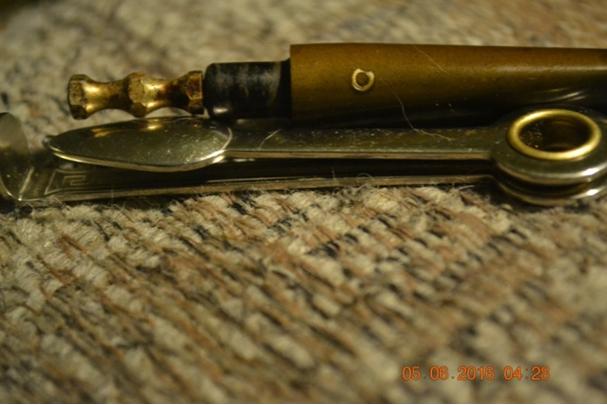
The Clinton, as well as the FRASA I restored for my first of these seven blogs, has an unusual stinger tenon, heightening my surprise that neither of them seems to have any discernible history, not even as seconds. In addition to the tenon, the Clinton also has a distinctive upside-down C on the bit.Lady9By way of synopsizing the pipe’s chief and obvious problems, the bit was badly discolored, there was a crack on the upper left side of the bowl extending from the rim downward (but not penetrating into the chamber), and the stain was far too dark for my taste, given the apparent decency of the obscured grain. And so I began by soaking the bit in an OxiClean bath and the stummel in some used Everclear I keep on hand for such occasions.Lady10The bit was ready first, about a half-hour later, and I removed it from the soak and rinsed it, then took out the stinger and ran a soft cleaner through the airway. I wiped the stinger clean with a soft cotton gun cleaner square and sanded both sides of the bit’s lip end with 200-grit paper. Then I wet micro-meshed the entire bit from 1500-12000 and had a nice bowl of D&R Two-Timer Gold in my Peterson Killarney Straight Bulldog Dress Pipe. I ordered the beautiful black “ebony” pipe online during a brief overwhelming fixation on these pipes that also landed me a sleek Nat Sherman. Both remain favorites.
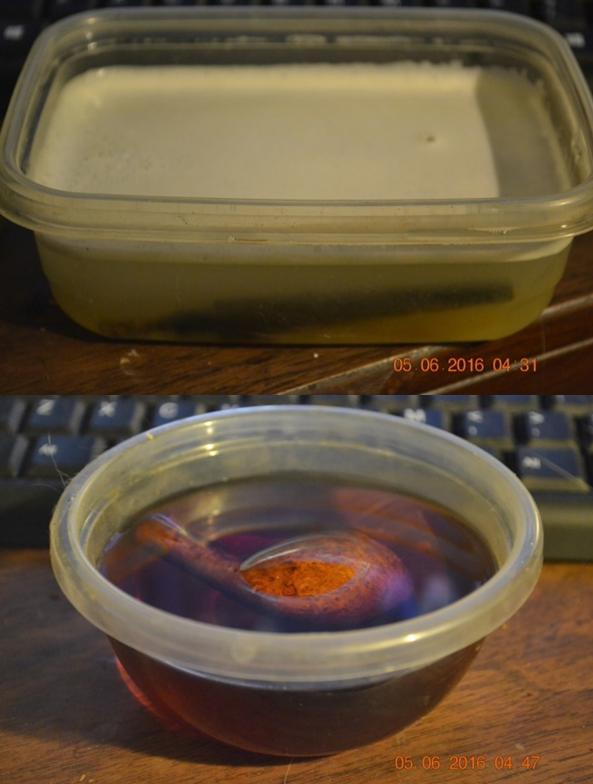
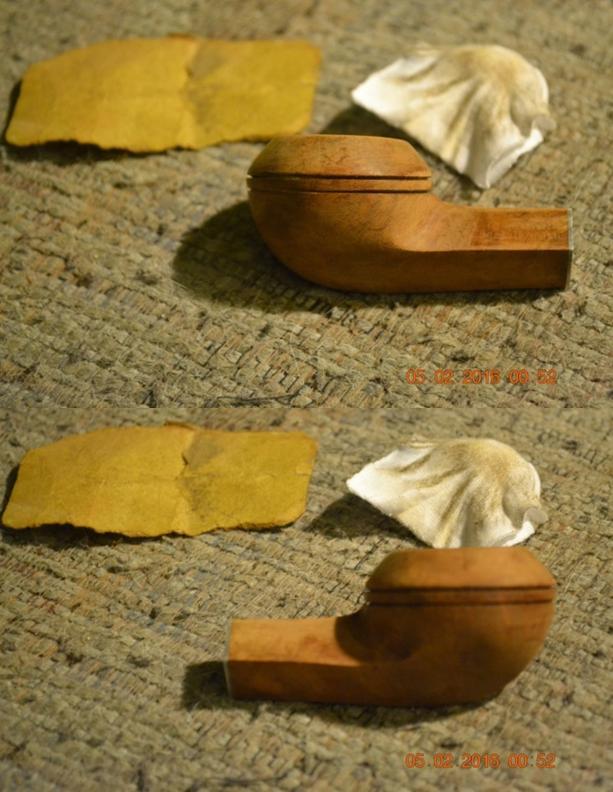
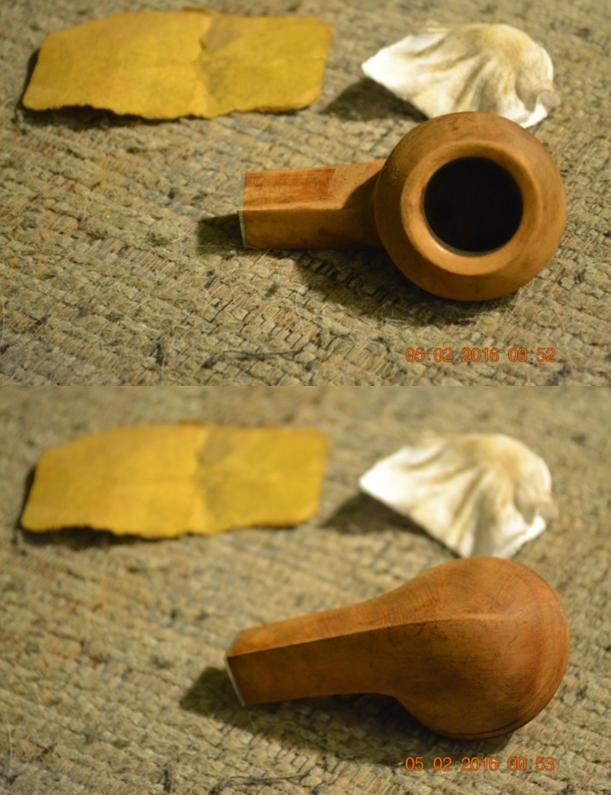
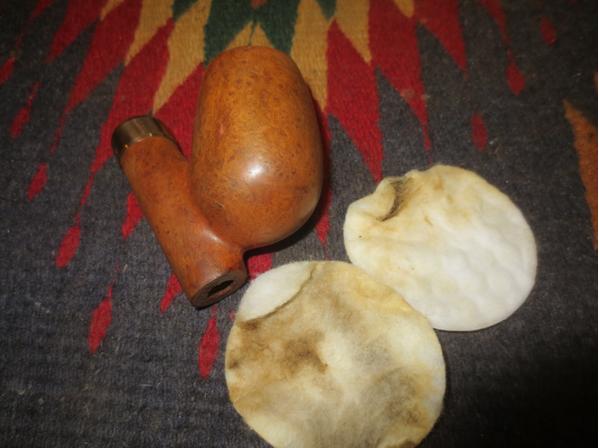
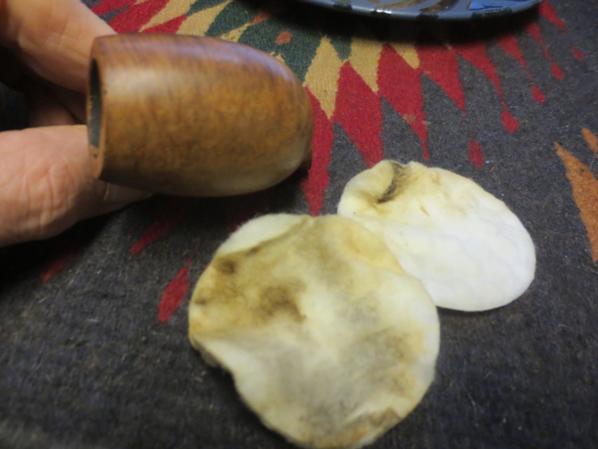
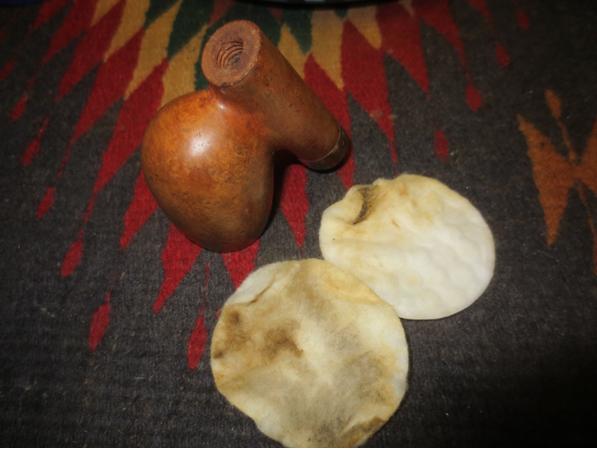
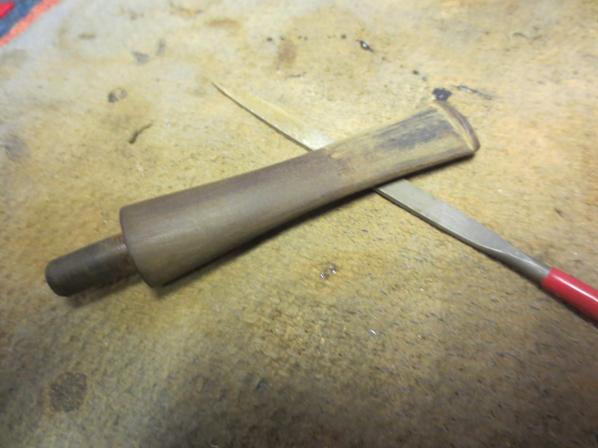
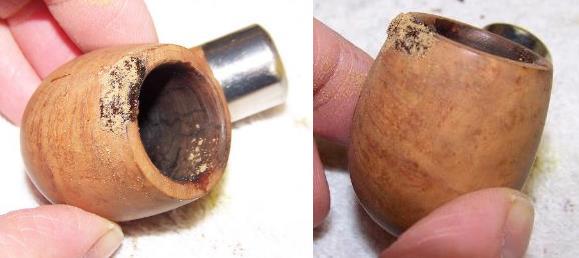
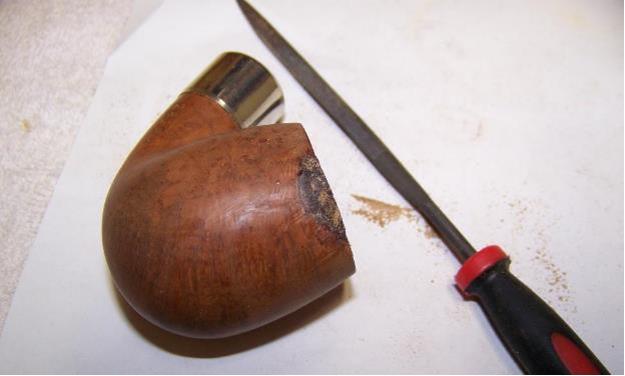
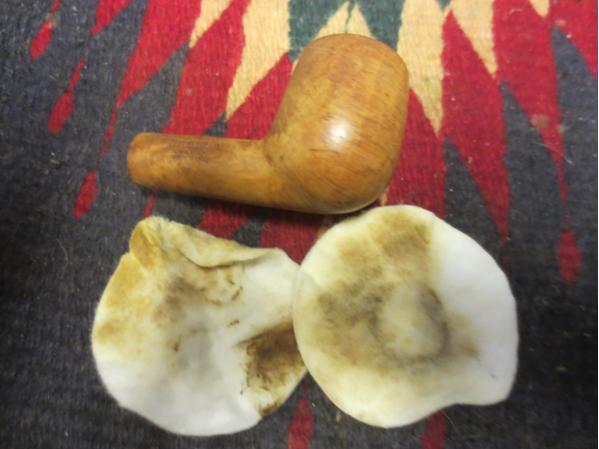
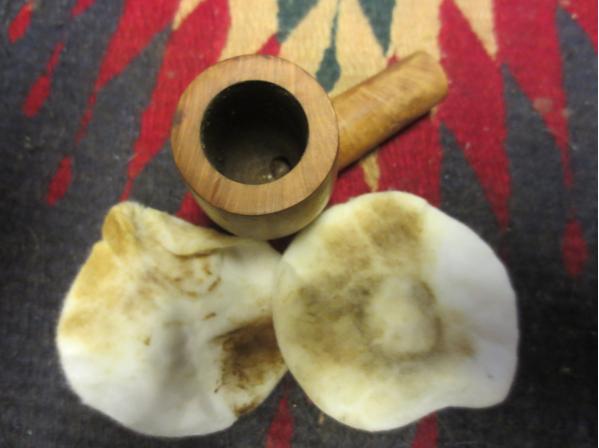
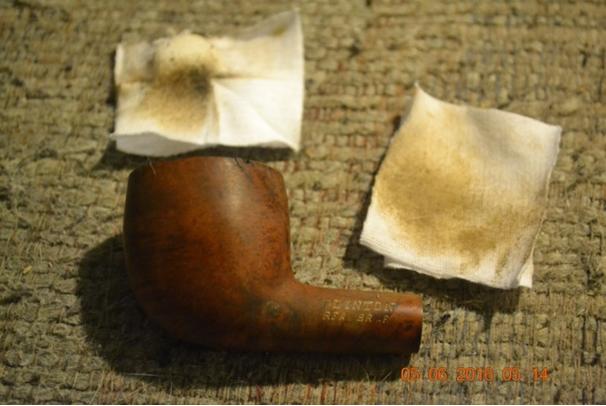
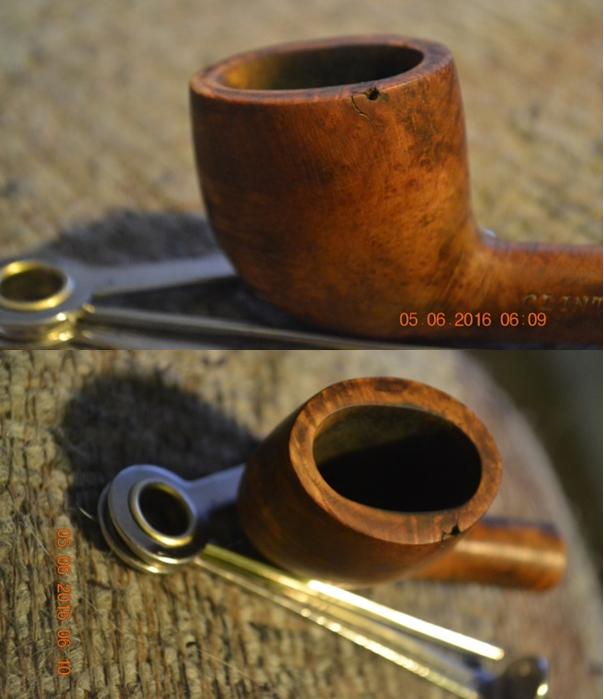
That Everclear strip lasted just long enough for my consummate Burley mix to work its way down to a fine ash – or maybe I made it last the proper time, as was my prerogative! Whichever the case may have been, I had a couple more handy cotton cloth squares ready, one to stuff into the chamber with a pinkie and twist so I could clean out any residue there and hold the body in place while I scrubbed the still wet outside of the wood with the other. Look at the scum that would have ended up trapped below the stain I later applied. Some would ask what it would matter. I like to think the devil is in the details.Lady11With considerable difficulty given the tiny chamber diameter (1” in length and 1” deep but a mere 0.5” across), I coaxed a small, limp piece of 150-grit paper inside and somehow worked it up and down enough to make a difference, then switched to 200- and finally 500-grit., finishing with a cotton cloth square with a squirt of purified water to remove the extra char. On the outside, I used 200-grit paper to clear away the stubborn remaining stain and residue from the Everclear soak.Lady12 Lady13 Lady14I micro-meshed from 1500-12000.Lady15 Lady16 Lady17I was ready at last to consider the crack.Lady18It looks pretty nasty, doesn’t it? Again, the consensus was to shave down the rim. Having Executive Power of veto, I opted for a fix I never tried before with a little concerted sanding of the rim with 150-grit paper, it comes down appreciably.Lady19Then I got a wild hair to do the unthinkable. I retrieved my file, an old, wrecked briar stummel I’ve kept for several years knowing I would never dare to try restoring it and some Super Glue, and scrape off enough of the wood to make a nice pile of super fine particles. I’ll tell you right now, the first two attempts at mixing Super Glue with the briar particles and then moving the ultra-fast-drying gloop to the top hole in the Clinton didn’t turn out well. Eventually I conclude the trick is sprinkling some of the fine wood into the gap and then sealing it with a kiss of glue.Lady20I did hasten to scrape some of the excess glue into the hole and remove the rest using the edge of a business card. When it was dry, which was in almost no time at all, I retorted the pipe Before the finishing touches, I sanded it down to smoothness with 200-grit paper and re-micro-meshed.
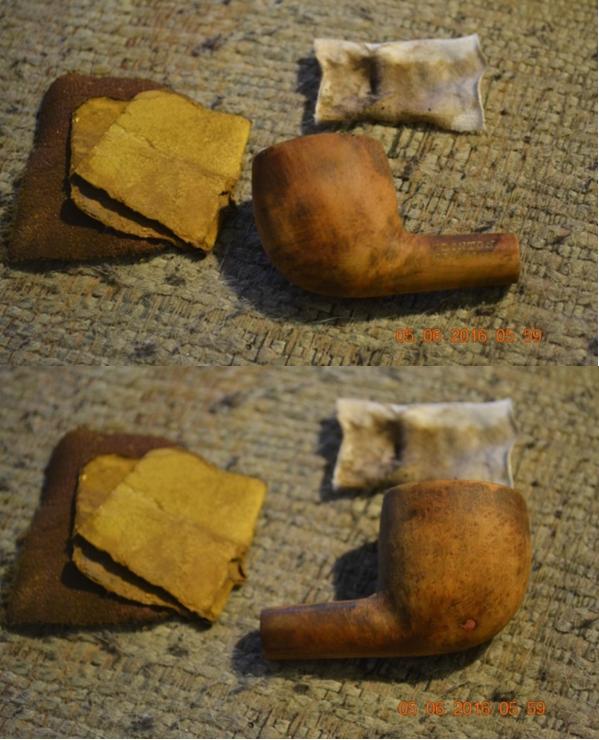
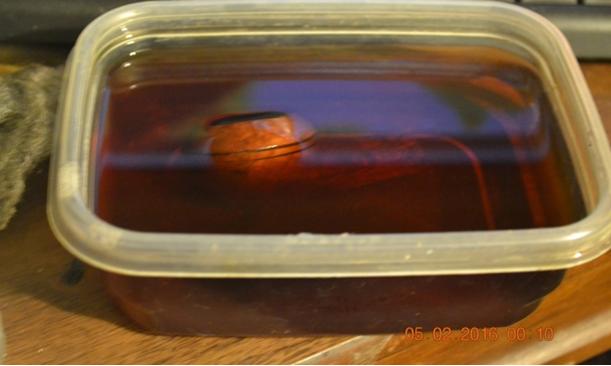
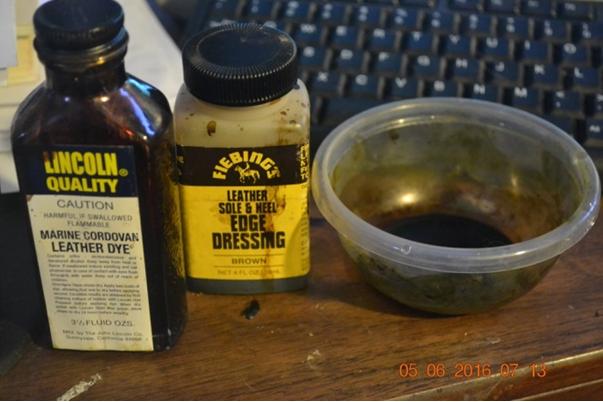
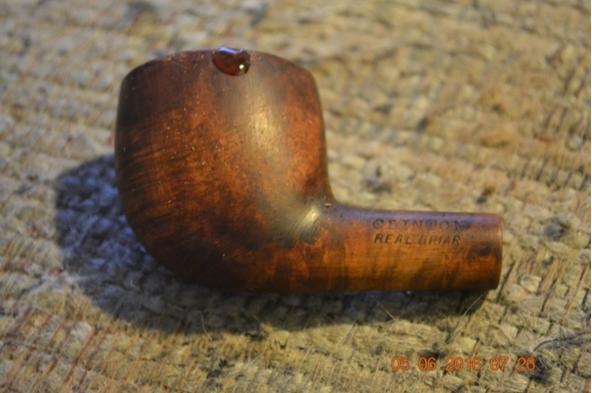
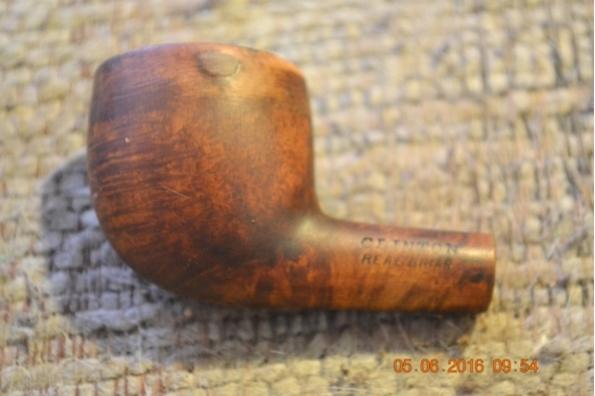
Afterward, taking the matter under full advisement and consideration, I mulled over Lincoln Marine Cordovan (burgundy) to stain it, which might have been overkill, and a mix with that and two or three times more Feibing’s Brown. I chose the latter, of course. I mixed the two stains in my small Tupperware. Lady21Staining the surface of the Clinton stummel for the most part had a nice effect, not counting the serious accentuation it gave to the small remaining hairline crack beneath the one I sealed on the rim. Therefore, following the same process I so painstakingly learned before, only going straight to the effective method, I prepared more briar shavings and, Super Glue at the ready, set the stummel down left side up and sprinkled the dust over the area where the crack was forming. After using another business card (what else are they good for?) to get the most of the particles, I squeezed a nice precise dot of glue over the spot and spread it out to let it dry in a thin coat.Lady22Of course I was forced to sand down the resulting obnoxious big round shiny bump, and in the process some of the surrounding stained surface, but it was worth it knowing the integrity of the pipe would be sound and none of my pipe aficionado friends with their eagle eyes would spot the former crack. Here is after sanding and before touch staining.Lady23And now for the finished product, after buffing with white Tripoli, White Diamond and carnauba. Red and white Tripoli, White Diamond and carnauba gave this bit a higher than usual shine.Lady24 Lady25 Lady26CONCLUSION
However lighthearted the ad with which I opened this installment of the series was intended to be, women are not here to be led around by the nose in the pursuit of so-called manly pleasures. Granted, no doubt, for the most part the pleasure of partaking of tobacco pipes has always been more the purview of men, but to think that women are incapable of such finer sensibilities of life is sheer sophistry, and shamefully self-deceptive and fallacious reasoning at that.

Furthermore, women need not have masculine qualities to favor the subtle qualities of pipe appreciation. And although most humans are capable of normal synaptic reflexes, the electrical impulses generated do not produce identical stimuli tickling the pleasure centers of the brain and kicking out uniform reactions. On the contrary, the magnificence of the human brain is that everyone’s reaction to a given stimulus is unique.

Why, then, should anyone be deprived of the deeply personal reflections facilitated by the mere puffing of a favorite tobacco in a like pipe? These are propositions that we hold to be self-evident, that all people are created equal. I would no more give up my pipes than my gun. Call me a radical or a revolutionary, but don’t call me a redneck or late for dinner.

SOURCES
https://www.smokingpipes.com/smokingpipesblog/single.cfm/post/top-pipe-picks-for-ladies Ladies pipes

https://www.youtube.com/watch?v=eo7IJY4ZjCU The Ladies of the Youtube Pipe Smoking Community


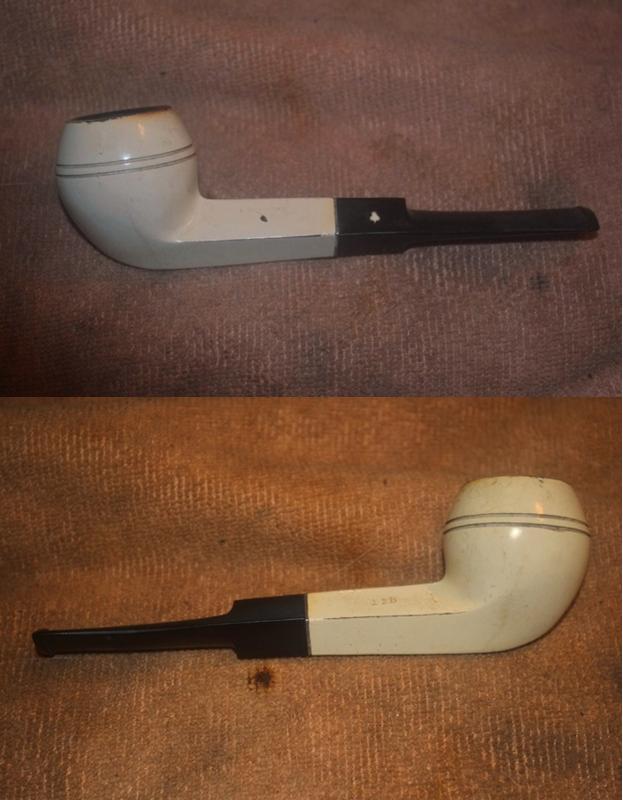
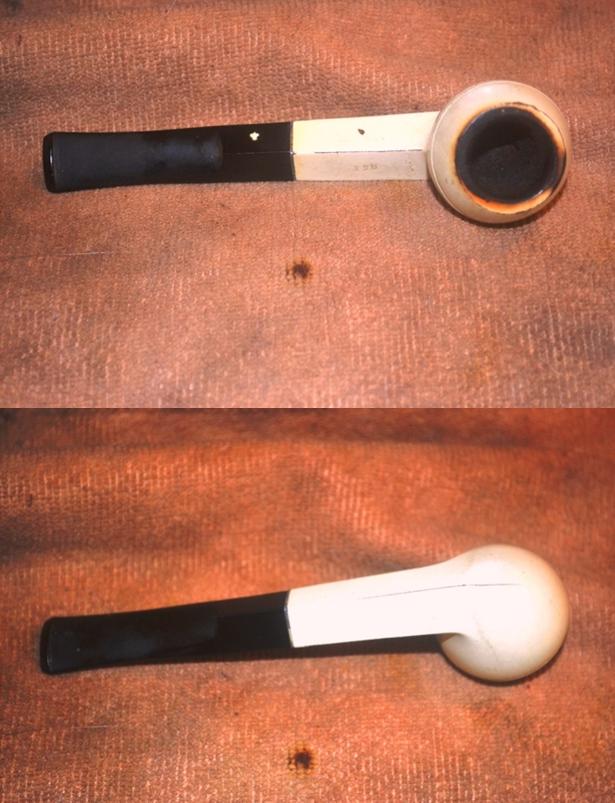
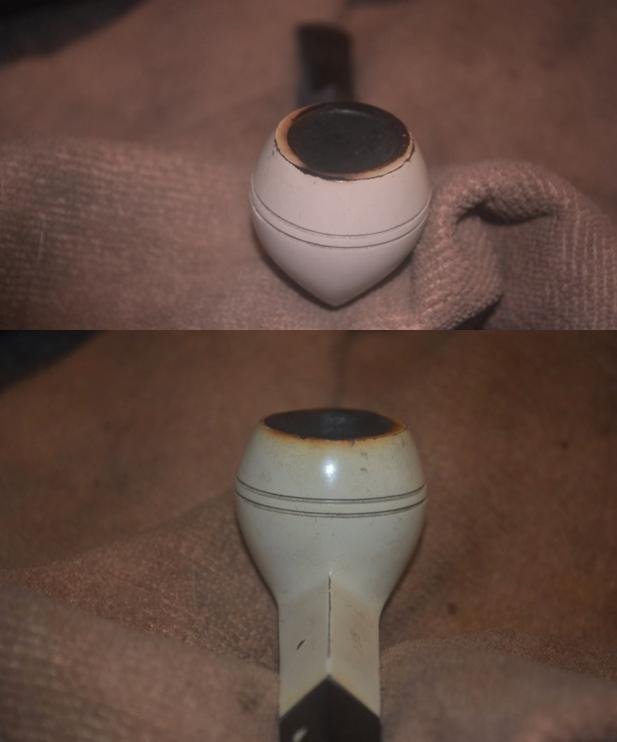
Kaywoodie White Briar Bulldog 12B


Guest Blog by Robert M. Boughton
Member, International Society of Codgers
Member, North American Society of Pipe Collectors
http://www.naspc.org
http://www.roadrunnerpipesnm.biz
http://about.me/boughtonrobert
Photos © the Author

INTRODUCTION
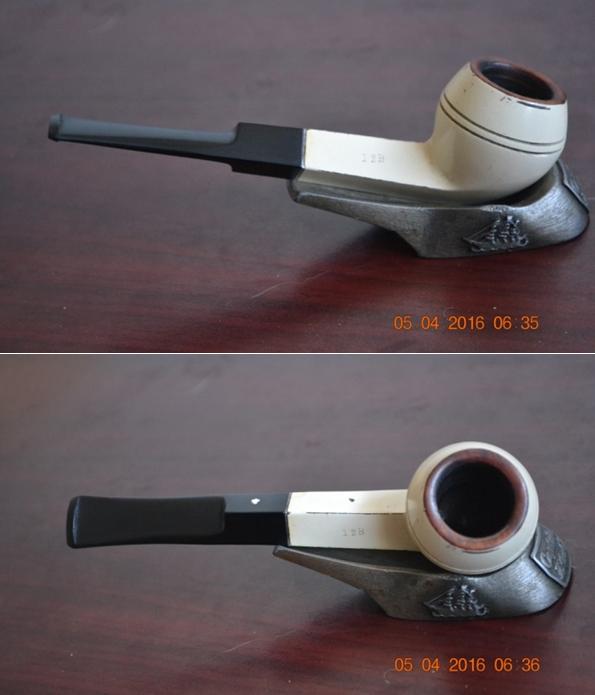
The Kaywoodie White Briar line lasted from 1951-1989. Some elusive quality, including perhaps its rough condition and the fact that I can’t find the same shape shown anywhere online, makes me suspect my bulldog is c. 1960-1970. It’s alright, I’m aware of the virtual non sequitur I just committed, and stand by it as a sort of literary tool if nothing else. Call it a hunch. Maybe I’m just a romantic. No doubt about the last part, at least.KW1 KW2 KW3 KW4RESTORATION
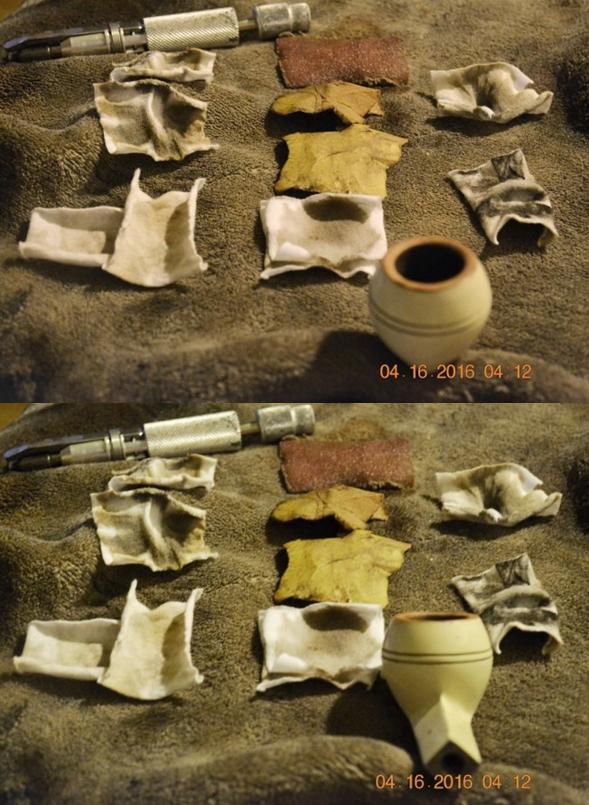
The bit was mostly just dirty.KW5I put it in an OxiClean bath and began the process of cleaning the rest of the pipe by using my Senior Reamer to remove the fair amount of char from the chamber. I followed the reamer with 150-, 200- and 320-grit papers, and removed the excess soot with soft cotton cloth squares soaked in purified water. Then I applied a little purified water to the outside of the stummel with more soft cotton cloth squares, getting rid of considerable grime.

My main concern was the rim, which appeared to be scorched to the point of no return. I used still more soft cotton cloth squares with purified water to work away at the char before switching to 1800, 2400 and 3200 micro-mesh – and just as I thought it was coming clean realized to my horror that the blackened parts of the rim, which had turned a creamy brown color, were down to the briar! In hindsight, I don’t know if I should have left the tiny amount of the original finish that was left on the rim as it was, but I saw no reason. With sadness and reluctance, I removed it for uniformity.KW6 KW7 KW8I replaced the bit, which I had removed from the OxiClean bath and used wet micro-mesh from 1500-12000 to return to a nice black smoothness, and retorted the pipe.KW9 KW10All that was left to do was an unexpected stain of the rim using Feibing’s Brown and flaming it, then buffing with white Tripoli, White Diamond and Carnauba. I buffed the bit as usual, with red and white Tripoli, White Diamond and Carnauba.KW11 KW12 KW13CONCLUSION
I’m always willing to face the music as far as responsibility for mistakes goes, but I honestly don’t know if the “mishap” I had with the rim is common with white briar restores. I didn’t use sandpaper – not until after it was already too late. But it was my restore, and so I will own it. As well as the pipe, most likely, unless anyone out there wants a good deal on a unique Kaywoodie White Briar Bulldog 12B with a brown briar rim!

Fixing a Citation Squat Bulldog


Guest Blog by Robert M. Boughton
Member, International Society of Codgers
Member, North American Society of Pipe Collectors
http://www.naspc.org
http://www.roadrunnerpipesnm.biz
http://about.me/boughtonrobert
Photos © the Author

INTRODUCTION
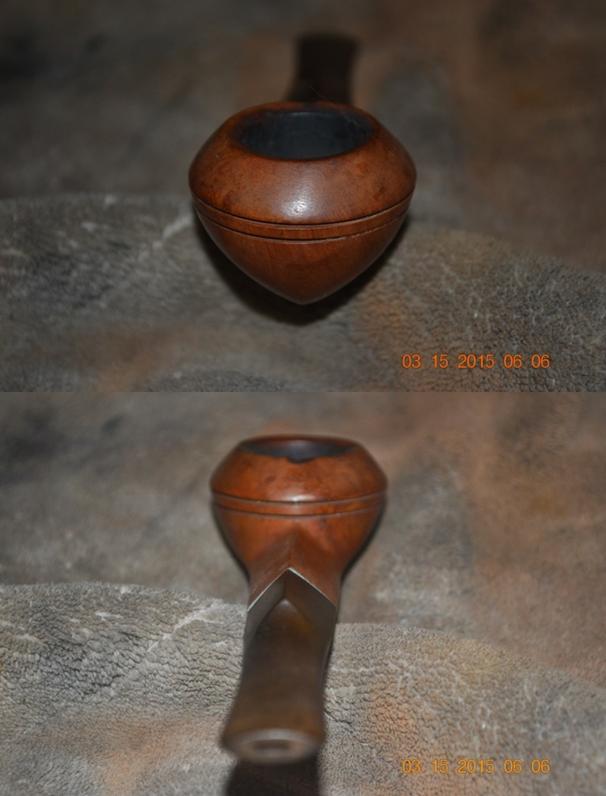
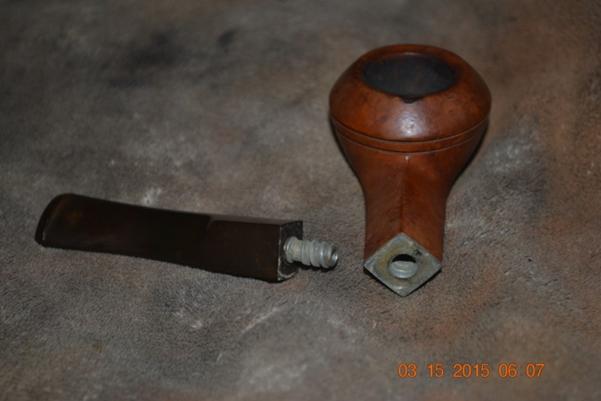
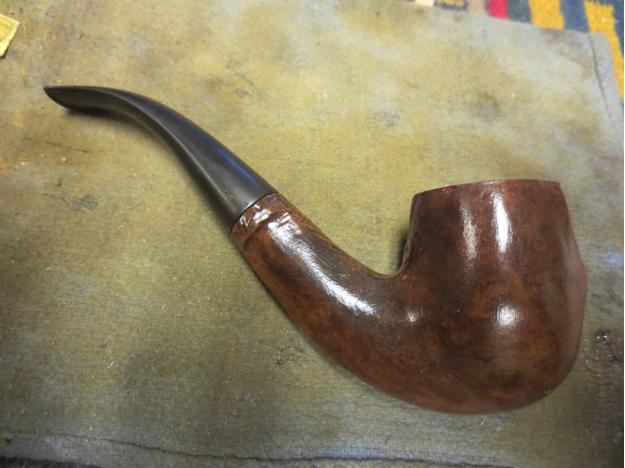
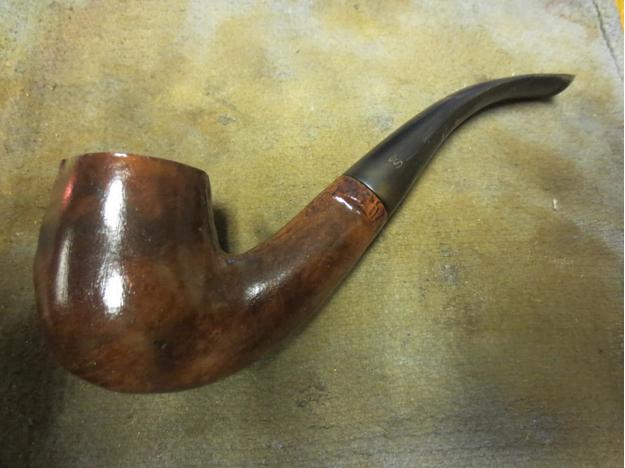
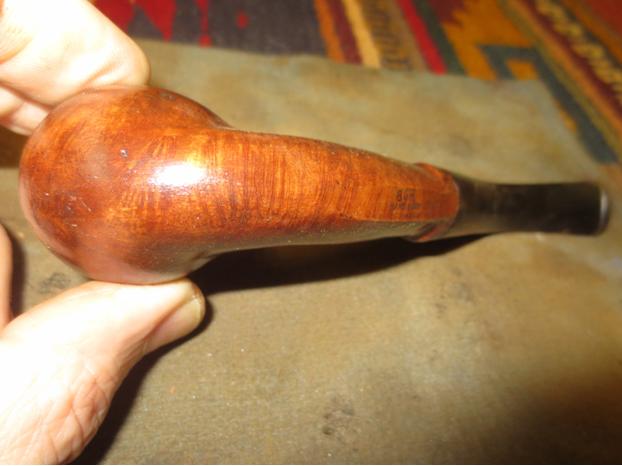
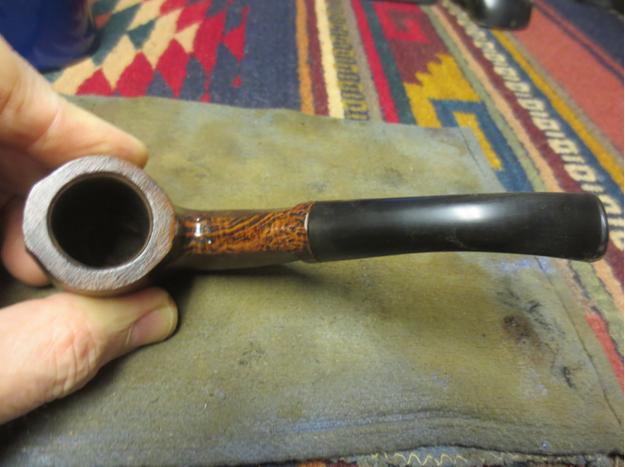
I thought I found the maker of this Citation on Pipephil, but should have taken a closer look at the nomenclature. As it turns out, the cursive style used by the U.S. manufacturer was a clear mismatch for the block letters on my squat bulldog. For now, I’m stumped. Here is the pipe as I received it.Citation1 Citation2 Citation3 Citation4The unusual cleanliness of the pipe tends to hide the need for serious work on the entire surface of the stummel, in particular a bad ding in the rim.Citation5RESTORATION
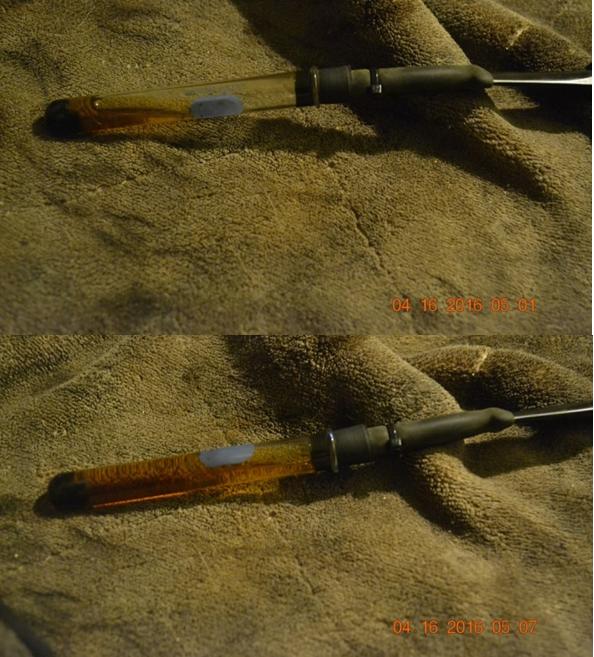
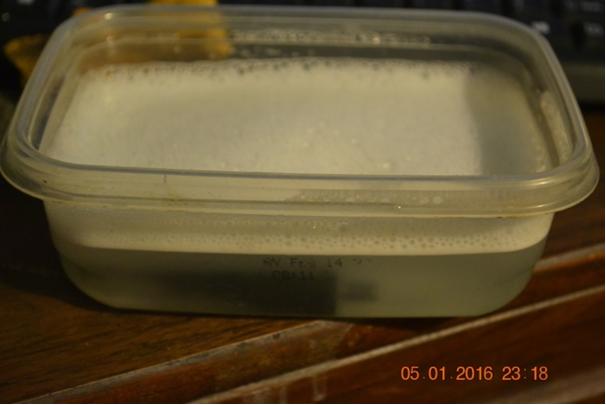
First, I tossed the bit in an OxiClean bath.Citation6While it started soaking, I used 150-grit paper evenly around the curved rim until the ding was gone and it was even all around. I also smoothed a rough spot on the right side of the top curve of the shank.Citation7Continuing just below the rim with 320-grit paper, I almost immediately realized the scratches were so pervasive and the grain so clear and fill-free that an Everclear strip was warranted. After the bit had soaked about 30 minutes, I dumped the OxiClean, rinsed the bit and ran a cleaner through it. Then I poured a jar of used Everclear in the Tupperware tub and dunked the stummel in.Citation8 Citation9

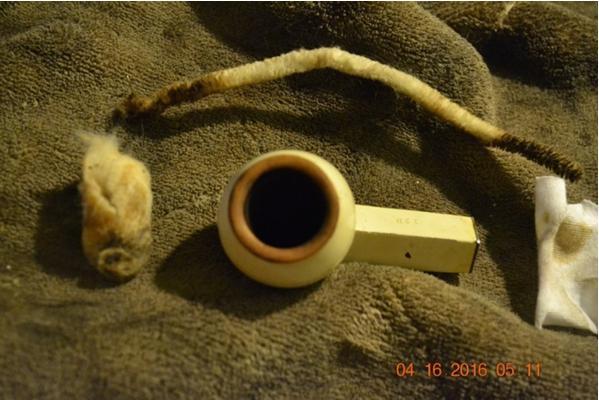
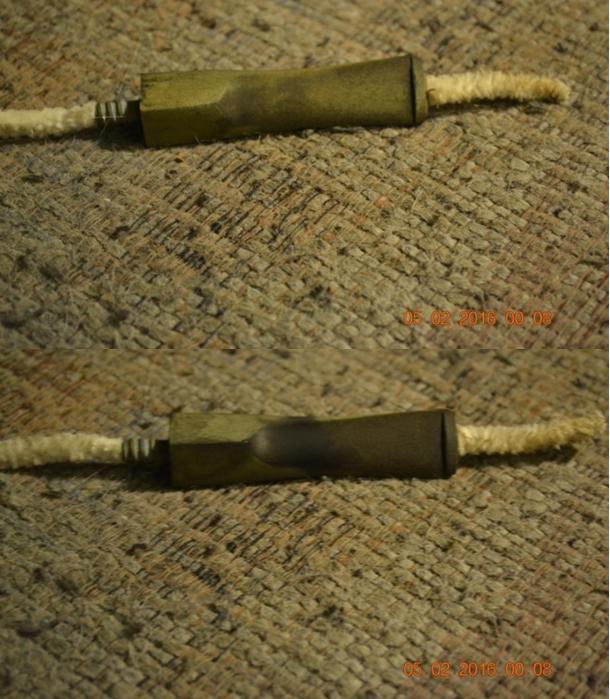
The bit was in good shape, and wet micro-mesh from 1500-12000 made it black and smooth again.Citation10I removed the stummel from the Everclear when it had soaked for an hour and wiped the chamber with a cotton cloth square before sanding the dried alcohol from the wood with 200-grit paper.Citation11 Citation12 Citation13Although I can’t explain how it works, my experiences stripping pipes with Everclear and then sanding and micro-meshing them had prepared me for the radical change in color I would notice after the full scale of micro-mesh.Citation14 Citation15 Citation16

Still, this is the first time I can remember where the grain was good enough that I didn’t need to use any stain. All I needed to do was sand the chamber and retort the pipe, the latter of which proved almost unnecessary.Citation17This is the finished pipe, after buffing with white Tripoli, White Diamond and Carnauba. I used red and white Tripoli, White Diamond and Carnauba on the bit.Citation18 Citation19 Citation20

CONCLUSION
Bulldogs always sell fast, even no-names or relatively unknown brands. But I still don’t know why I put off restoring this pipe for so long. Working on it was a real pleasure, and I did it overnight.

An Interesting Multi-Finish Stanwell Buffalo Sitter 606


Blog by Steve Laug

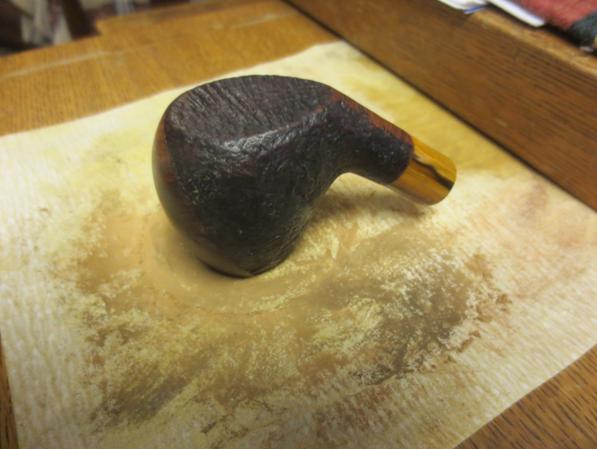
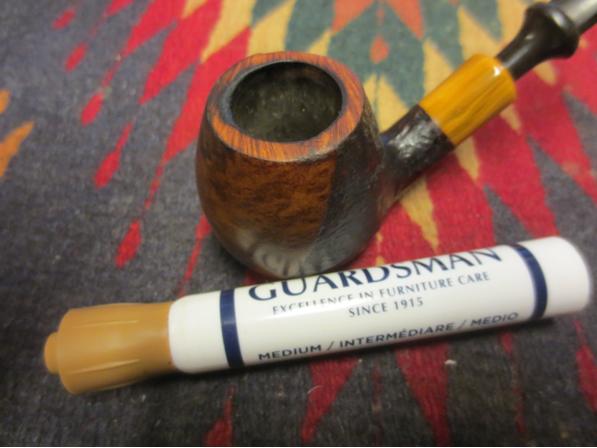
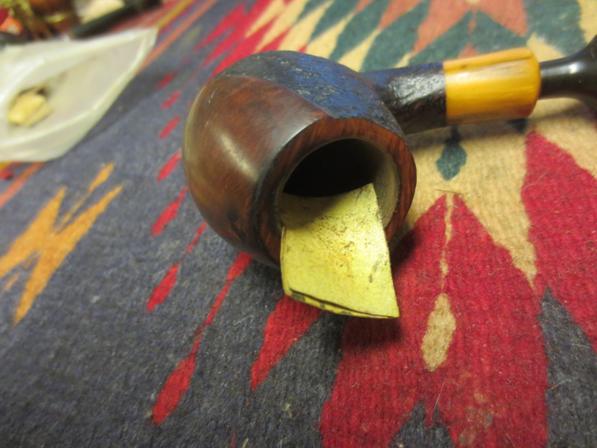
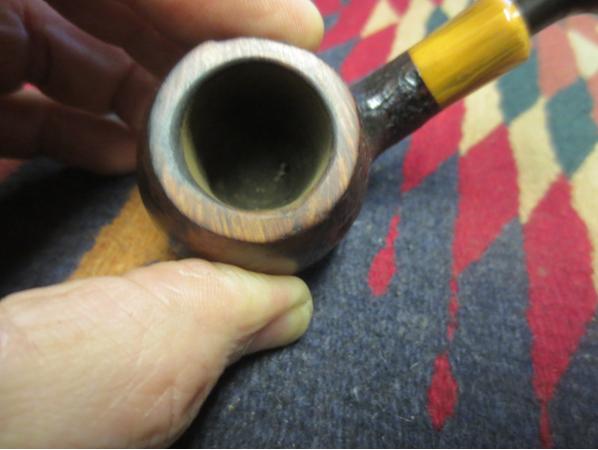
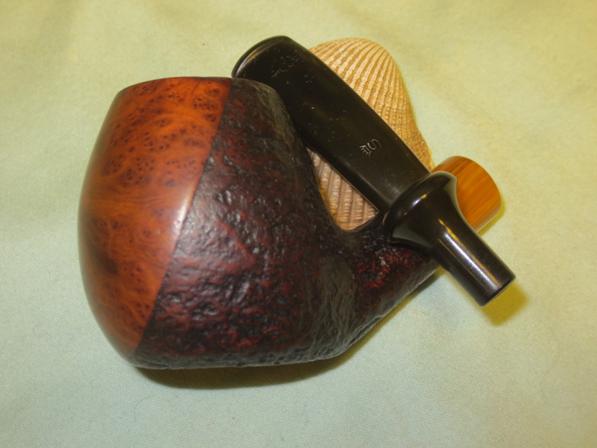
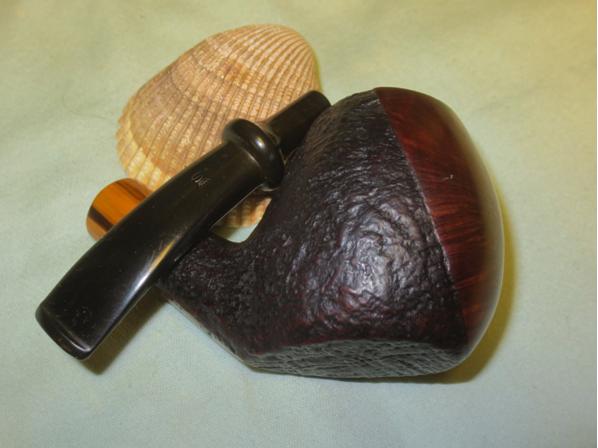
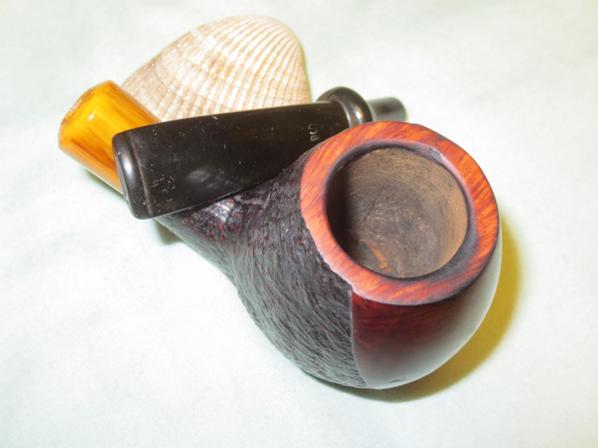
This pipe came to me in the last box of pipes that my brother sent me. It is a Stanwell as can be seen from the shape and finish. From my research I came to understand that it came from the Stanwell Buffalo line. It is stamped on the smooth underside of the shank with the words Stanwell Made in Denmark and the shape number 606. The shape number is very visible and I was unable to locate that number on the internet shape charts.The front of the bowl was smooth and there was an acrylic horn-like material as a shank extension. The bowl had a light cake and looked as if it had been reamed recently. The rim of the pipe was really dirty with lava overflow from the bowl but underneath I could see that it was originally smooth like the front of the bowl and the portion where the stamping was on the underside of the shank. There was some burn damage on the outer and the inner edges of the rim that would need to be addressed. The pipe was a mix of medium and dark brown stains and the finish had a light sand blast on the surface of the sides, back and bottom of the bowl and the top and sides of the shank. The finish was dirty with lots of grime in the grain of the blast. The stem is a military style stick bit. The stem was in good shape with only one tooth mark on the underside toward the right side of the pipe. The fit in the shank was snug. The stamping on the stem showed the Stanwell Crown and S and it was faint but visible.Buff1 Buff2 Buff3 Buff4I took a close up photo of the rim to show the state of things when I started. You can see the buildup on the surface and the burn damage on the front inner edge of the rim.Buff5I cleaned up the reaming with the Savinelli Pipe Knife and then cleaned out the internals of the bowl, shank, mortise and airway in the stem. I used pipe cleaners, cotton swabs and alcohol to remove all of the oils.Buff6 Buff7I scrubbed the stem with Meguiar’s Scratch X2.0 plastic polish to remove the oxidation. I sanded the tooth marks on the underside of the stem with 220 grit sandpaper until the stem was smooth.Buff8 Buff9I lightly topped the bowl on the topping board. I wanted to remove the damaged surface and clean up rim edges. I also wanted to expose the burn marks so that I could address them.Buff10I sanded the rim top with 1500-2400 grit micromesh sanding pads to smooth out the scratching. I then stained it with a medium brown stain pen to match the smooth portions of the pipe. You can see the burn damage on the inside edge of the front of the bowl.Buff11I folded a piece of sandpaper and worked on beveling the inside edge all the way around the bowl to minimize the damaged area on the right front edge. While the damage is still visible it is much more subtle than it was before the beveling.Buff12 Buff13I set the bowl aside and worked on the stem. I sanded it with 220 grit sandpaper to clean up some of the oxidation and then worked on it with micromesh sanding pads. I wet sanded the stem with 1500-2400 grit sanding pads and then rubbed the stem down with Obsidian Oil. I dry sanded with 3200-4000 grit pads and gave it another coat of oil. I finished sanding with 6000-12000 grit pads and gave it a final coat of oil. I set it aside to dry.Buff14 Buff15 Buff16I buffed the pipe with Blue Diamond (lightly on the bowl except for the smooth areas and the rim top and more concentrated on the stem). I gave the stem several coats of carnauba wax and buffed with a clean buffing pad. I hand waxed the bowl with Conservator’s Wax. I hand buffed the bowl with a shoe brush. I finished buffing the pipe with a microfiber cloth. The finished pipe is shown in the photos below. I am still debating rusticating the rim to match the bowl and stain it darker to blend with the sandblast but not sure… time will tell. Thanks for looking.Buff17 Buff18 Buff19 Buff20 Buff21 Buff22 Buff23

An Amazing Find – A Corsica Cavalier with a Horn Stem and End Cap


Blog Steve Laug

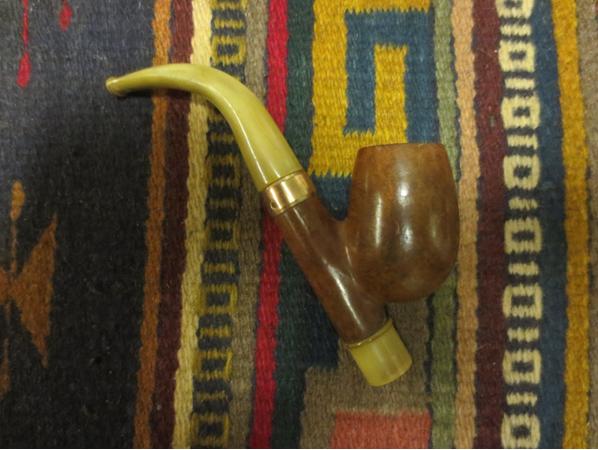
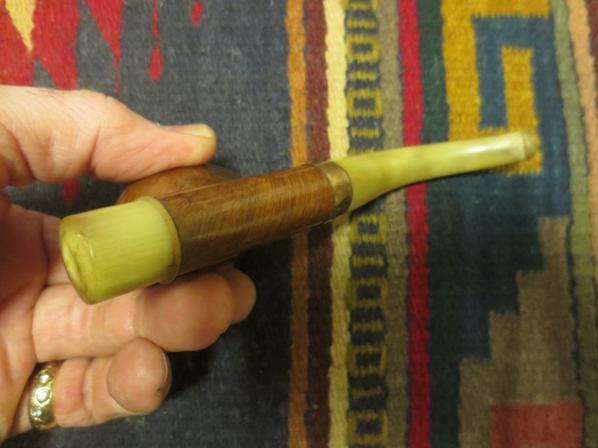
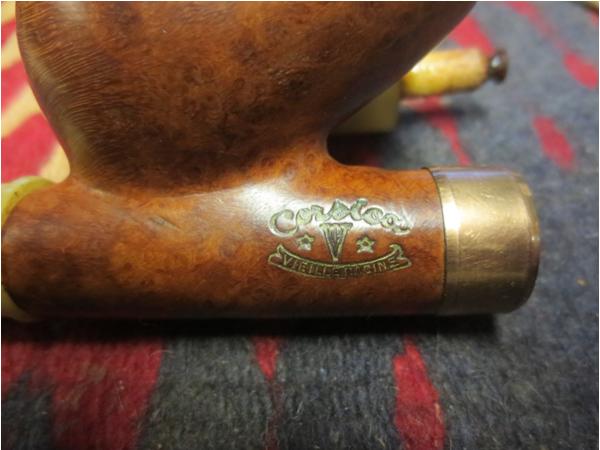
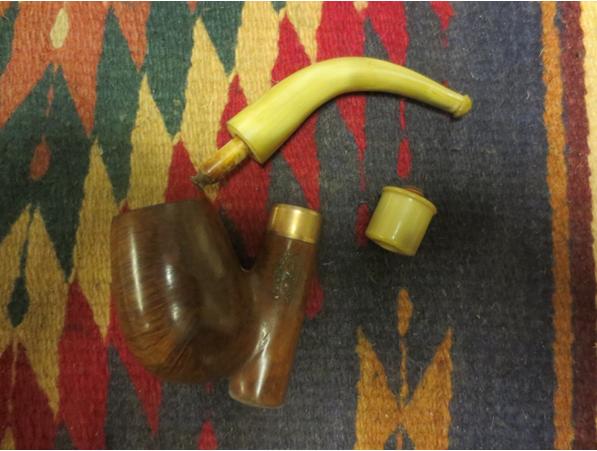
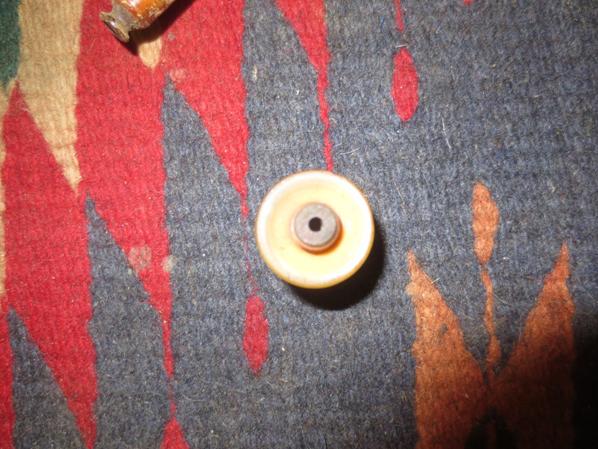
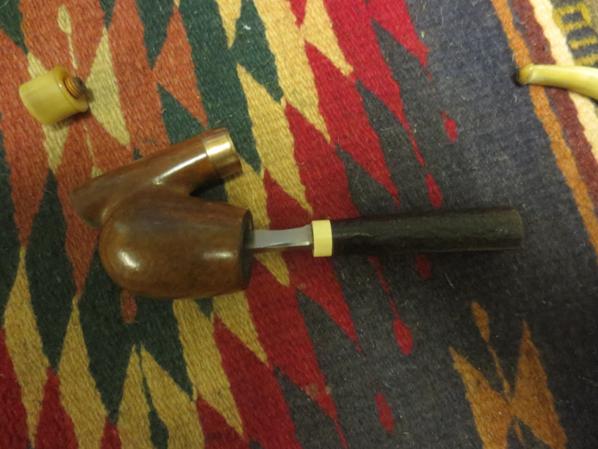
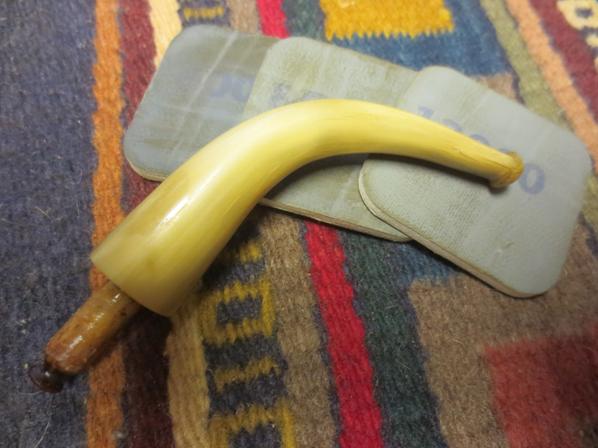
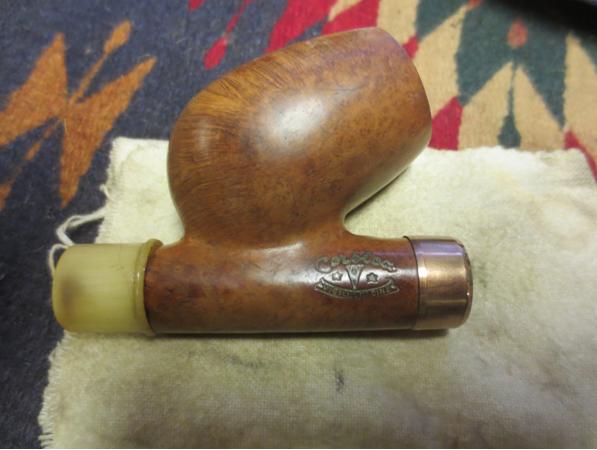
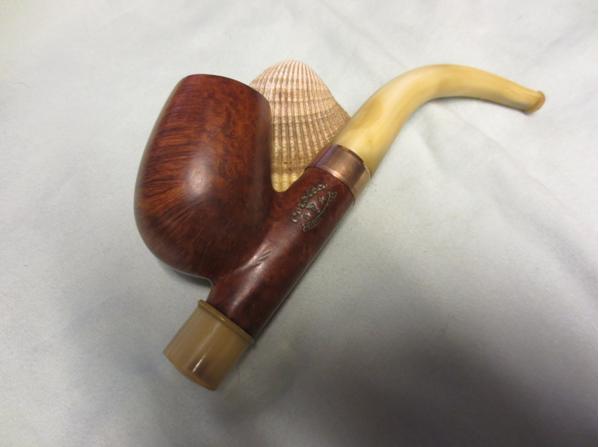
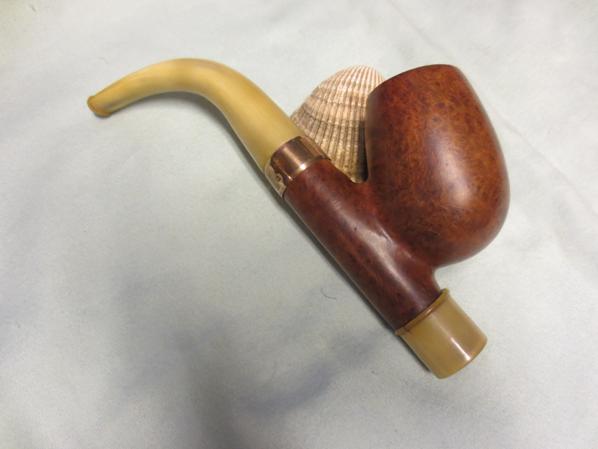
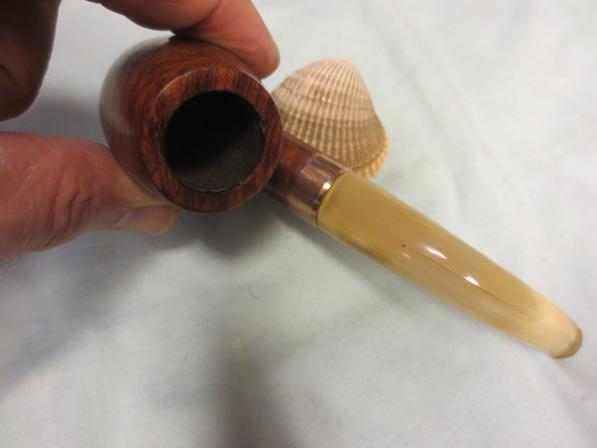
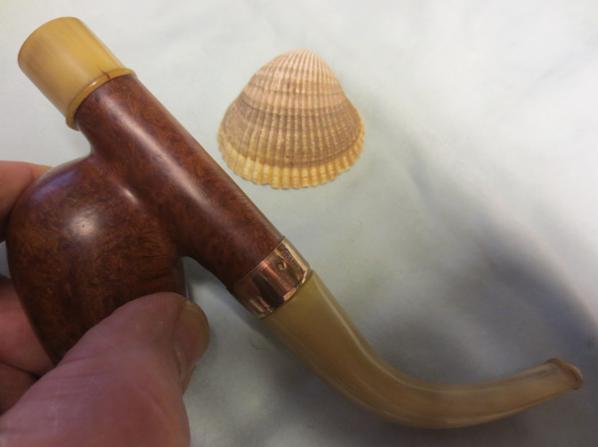
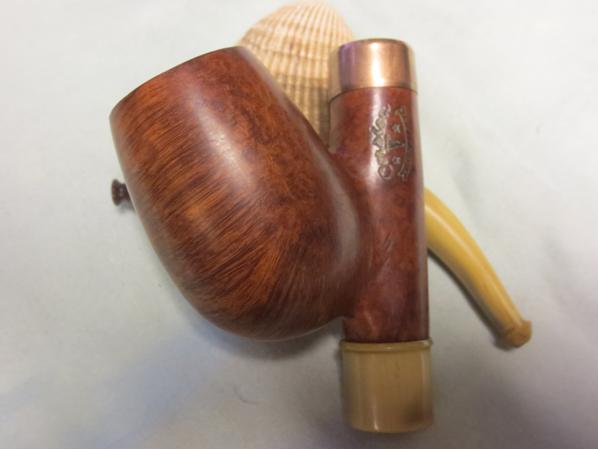
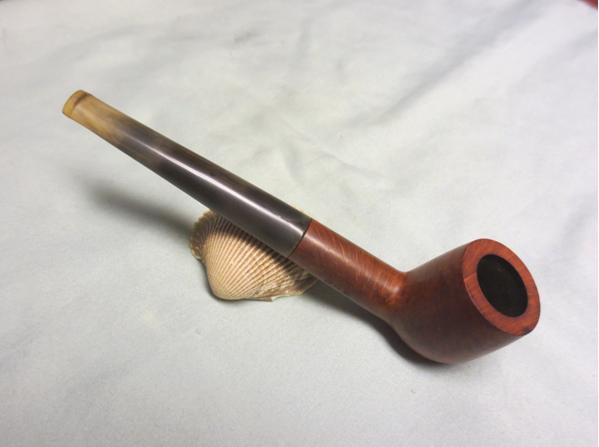
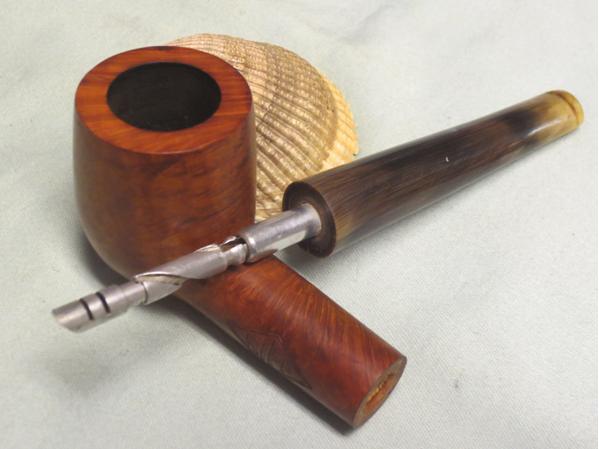
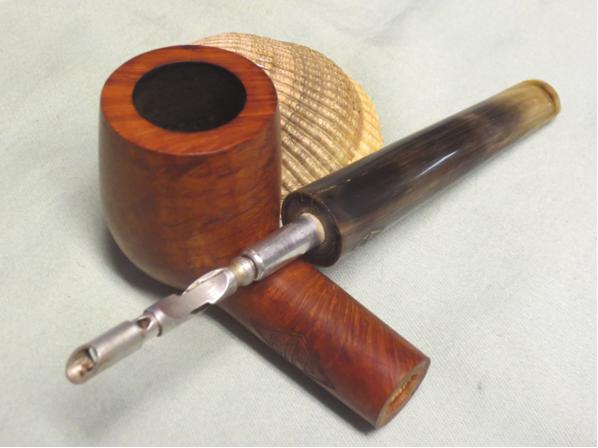
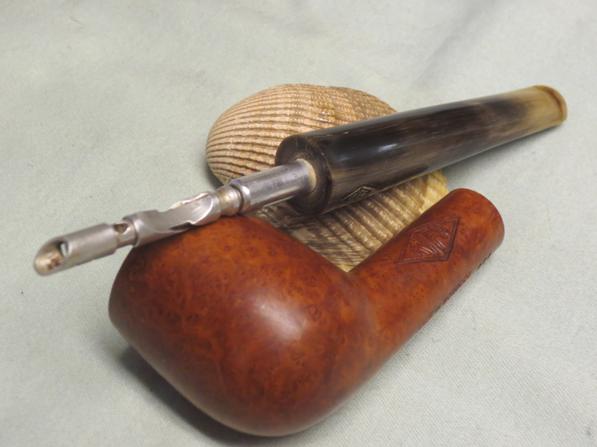
This is yet one more of my brother’s amazing finds. It is a beautiful Cavalier with a horn stem and end cap. It is stamped in classic late 19th Century fashion with gold leaf on the left side of the shank. It reads CORSICA in and arch over two stars around a capital V with what looks like an elongated 0 in the middle of the V. Underneath the *V* is VIEILLE RACINE stamped in a reverse arch. The words form and oval. It is my understanding that the Vielle Racine stamp translates literally as Old Root. The band is stamped 14K and is almost a rose gold. It is fitted to the shank and also is beveled inward covering the shank end. The horn end cap has a threaded short bone tenon that screws into the briar. It has a large bowl.

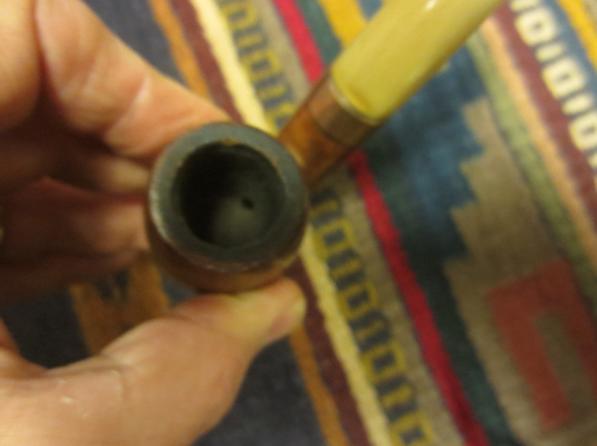
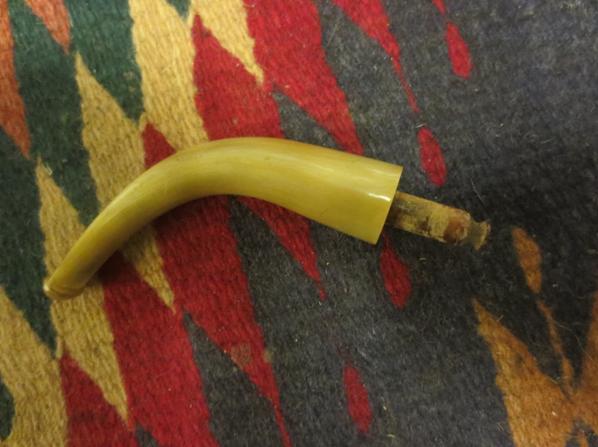
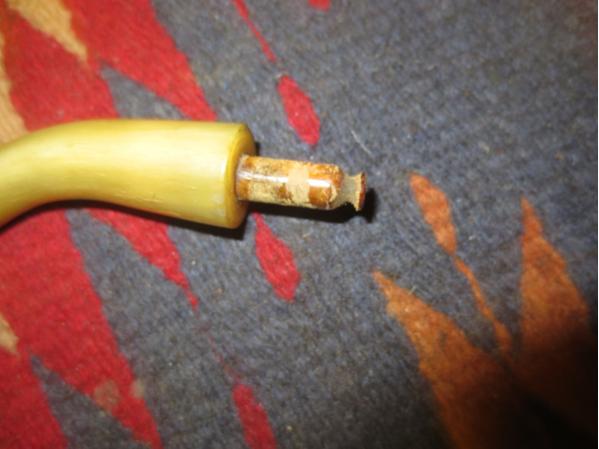
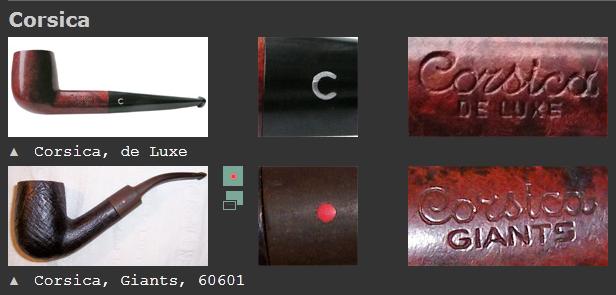
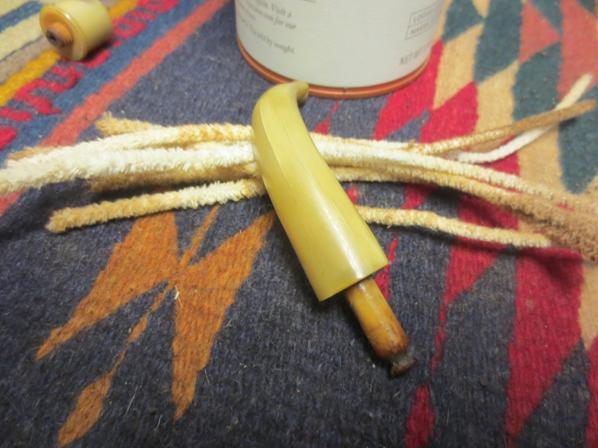
When the pipe came to me it was dirty but the bowl had been reamed. The rim had a slight build up and the inner edge had been slightly damaged when it had been reamed. The gold band was tarnished. The finish was dirty and spotted with sticky dark spots on the end cap and in the bend at the top of the shank bowl junction. The bowl had been coated with shellac that was spotty and cloudy in places. The stem looked really good at first glance but I would have to examine it more closely once I started cleaning it up. The grain on the briar was beautiful and I could not wait to clean it up and see what lay beneath the grime and the shellac.Cor1 Cor2 Cor3 Cor4I took several close-up photos to highlight different aspects of the pipe. The first of these is the state of the rim and bowl. The rim photo is a bit blurry but gives a pretty good idea nonetheless of the state of the bowl and the tars on the rim. The second photo is of the stamping on the left side of the shank. It still had the gold leaf in the stamping to highlight it.Cor5 Cor6I took the pipe apart and photographed the parts. I also took a photo of the end cap so that the bone tenon in visible.Cor7 Cor8The horn stem looked really good but looking at it up close I could see a crack along the top of the stem following the curve and a small group of them on the right side of the stem. There were also a few chips missing on the underside of the stem near the shank junction. The tenon had a unique look to it – almost a nipple on the end of it. It was coated with a little varnish as well so it much have someone’s attempt to tighten it as it was currently quite loose in the shank.Cor9 Cor10Before I started to work on it I decided to do a bit of research to fill in the gaps on another pipe brand that had not heard of before seeing this one. I was familiar with briar coming from Corsica but had not run across the pipe brand of that name. I resorted to the pipephil site to see if he had any information on the pipe and who may have made it. The site did have the brand listed. It turns out that Corsica is a brand of Henri Vuillard of Saint Claude, France. This Vuillard was not to be confused with E. Vuillard & Cie also of Saint Claude. Reading that information helped me to make sense of the large *V* in the centre of the stamping on the pipe that I am working on. Here is the link to the information: http://www.pipephil.eu/logos/en/infos/hvuillard-en.html. The site included the following photos of several pipes in this line. The cursive form of the Corsica stamp is very similar to the stamping on my pipe.Cor11The link also included a sub link to a secondary page on the history of the brand. The following is an abstract of the information that I found regarding the maker of this pipe. At the end of the 19th century the Vuillard house managed by Paul Vuillard and established at Chemin de la Coupe (Saint Claude) produced match boxes and cases for spectacles. At the beginning of the 20th century on Henri’s (son of Paul Vuillard) initiative the factory is converted to the production of briar pipes which were marketed under the “Corsica” brand.

From that information along with the materials and the design of the pipe I am pretty confident in saying that it was made in the early 20th century when the company was managed by Paul Vuillard who took the initiative to start making pipes. An interesting note is that from 1914-1918 The Henri Vuillard Factory produced pipes for the French Army. The article says that at that time they had between 170-180 employees.

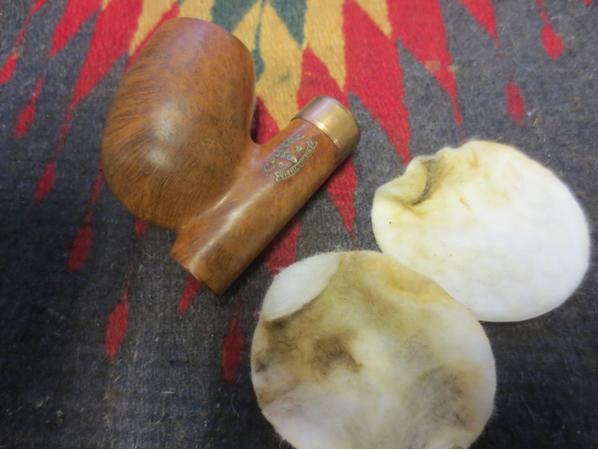
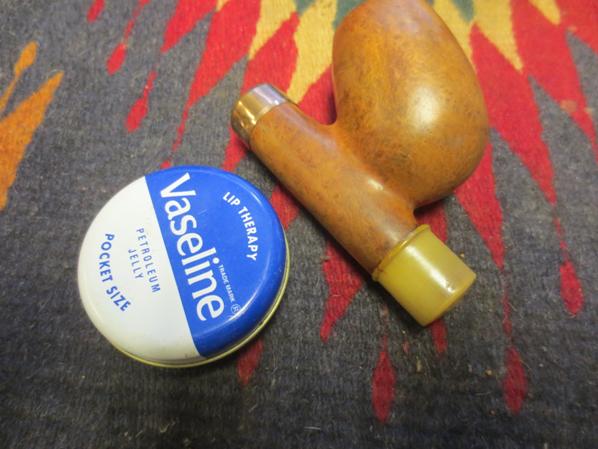
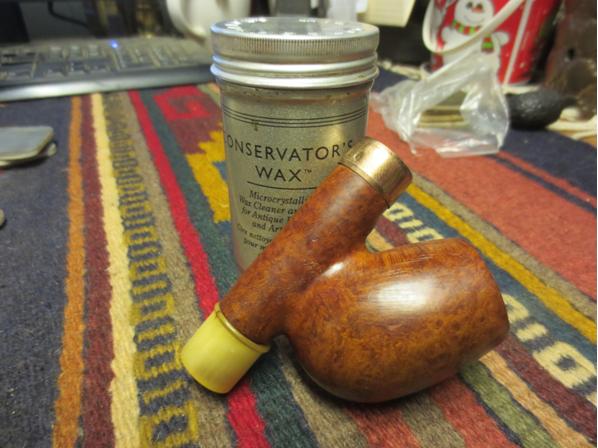
Armed with this new knowledge and an estimate of the age of the pipe I began to clean it up. The cake had been reamed already so I just cleaned up the walls of the bowl with the Savinelli Pipe Knife. I had removed the stem and the end cap so it was easy to hold the bowl and ream it.Cor12I cleaned the shank from the mortise to the end cap with pipe cleaners, cotton swabs and alcohol. The oils and tars that came out were not very dark and they did not smell like tobacco. It was almost as if they were the stain from the outside of the bowl. It did not matter though it took quite a few before the shank was clean all the way through.Cor13I cleaned the airway in the stem as well. It also was dirty. But as I cleaned off the exterior the cracks became more noticeable, particularly the one on the topside.Cor14I scrubbed the exterior of the bowl with acetone on cotton pads to remove the shellac coat. I was careful around the gold leaf in the stamping as I did not want to damage that area of the bowl.Cor15 Cor16 Cor17 Cor18I put Vaseline on the threads of the bone tenon on the end cap and carefully turned it into the end of the shank. I polished the bone of the end cap with 1500-4000 grit micromesh sanding pads to smooth it out. I rubbed it down with some Obsidian Oil and let it dry. Cor19In the photo below you can see the fine cracks in the stem near the tenon end. This is also where the chips were. I drilled a tiny hole at each end of the crack on the top of the stem with a micro drill bit. I filled the holes and the crack with clear super glue. I used the clear super glue to also stabilize the other cracks on the sides of the stem and to build up the chipped areas on the underside of the stem.Cor20 Cor21 Cor22When the glue dried I sanded the stem with 220 grit sandpaper to smooth out the repairs and to begin to polish the stem.Cor23 Cor24 Cor25 Cor26 Cor27Once the repairs were smooth I wet sanded the stem with 1500-2400 grit micromesh sanding pads and gave the stem a coat of Obsidian Oil. I dry sanded it with 3200-4000 grit pads and gave it another coat of oil. I know the oil is made for vulcanite but I wanted to bring a little life to the horn. I finished sanding the stem with 6000-12000 grit pads and gave it a final coat of oil.Cor28 Cor29 Cor30 Cor31 Cor32 Cor33I polished the gold band on the shank end with a jeweler’s cloth until it shone. I gave the briar several coats of Conservators Wax and hand buffed the bowl with a shoe brush when it dried. Cor34 Cor35I decided not to buff this pipe on the wheel because I did not want to damage the gold leaf or the horn. I hand buffed it with a microfibre cloth and polished it until it shone. The finished pipe is shown in the photos that follow. It truly is a beautiful old pipe. I only wish that the horn was more perfect. The stem glows but I see the repaired cracks. Ah well it is better than having the stem splinter apart while using it. It should be good for another hundred plus years now. Thanks for looking.Cor36 Cor37 Cor38 Cor39 Cor40 Cor41 Cor42 Cor43 Cor44 Cor45

Introduced to a Bamboo Briar of Spain Oval Shank Billiard


Blog by Steve Laug

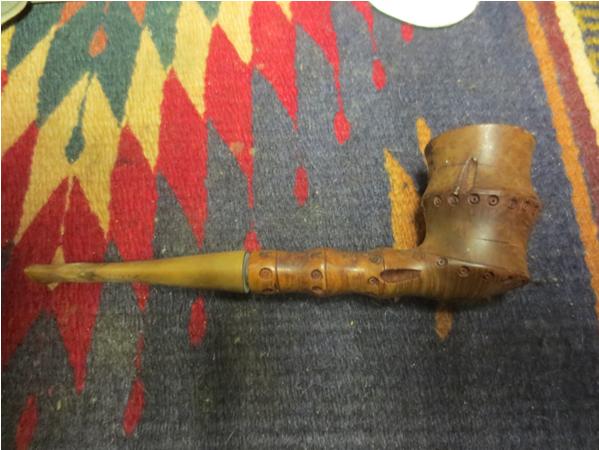
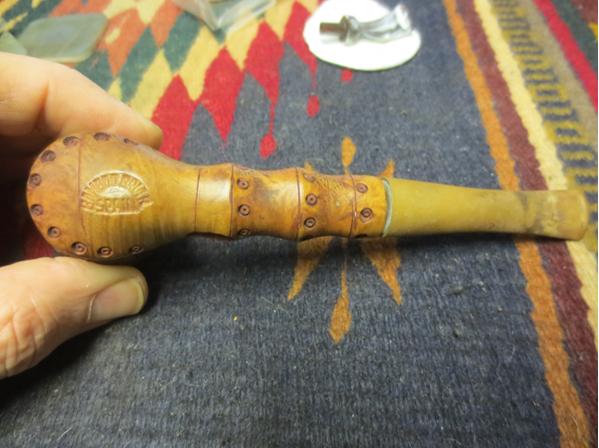
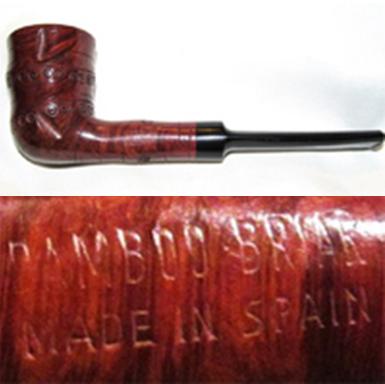
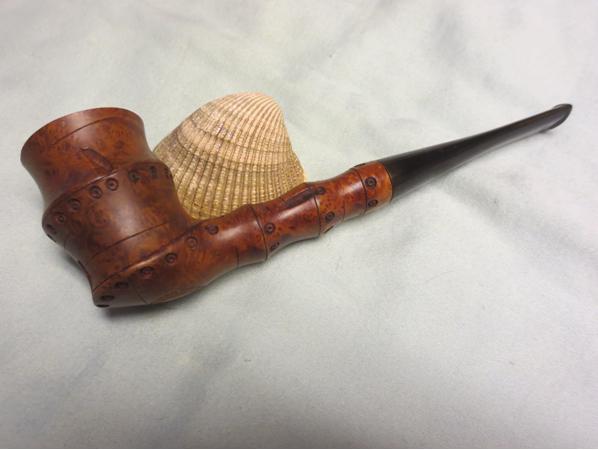
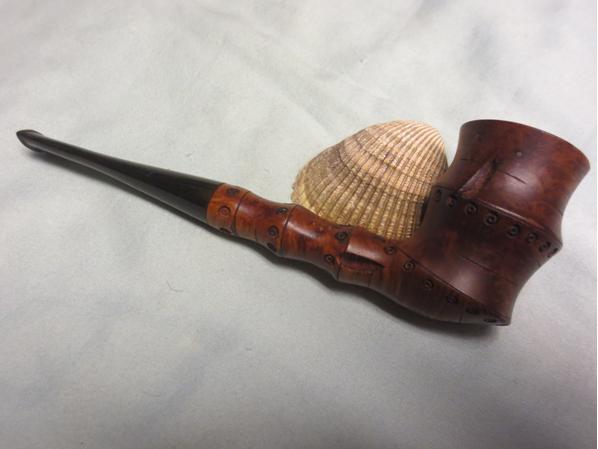
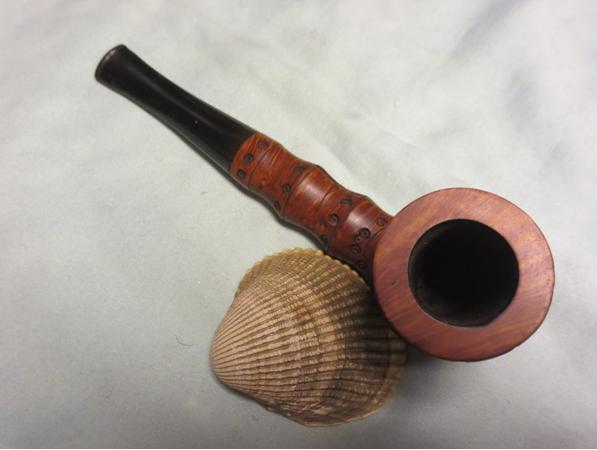
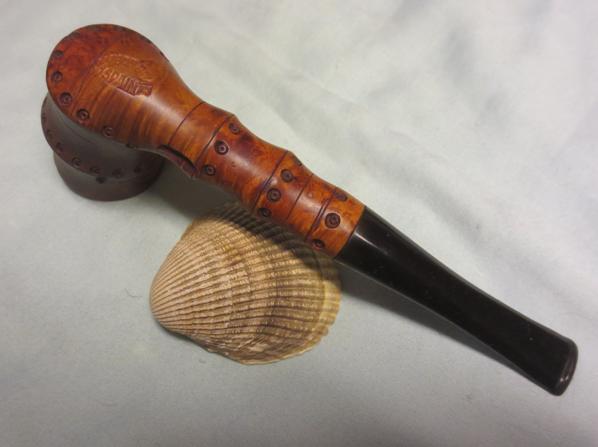
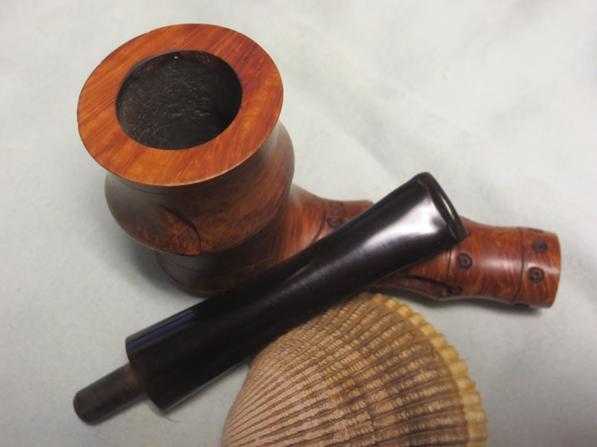
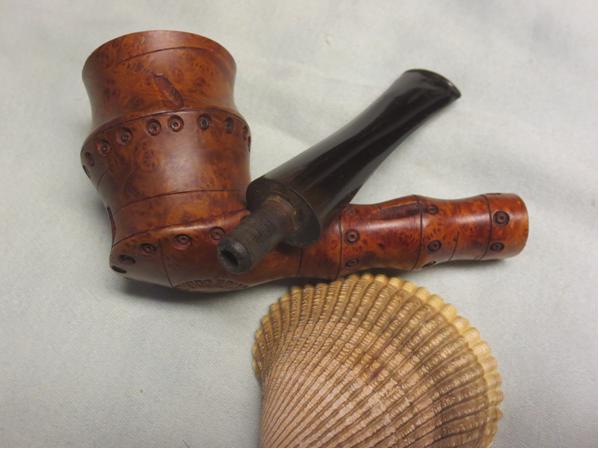
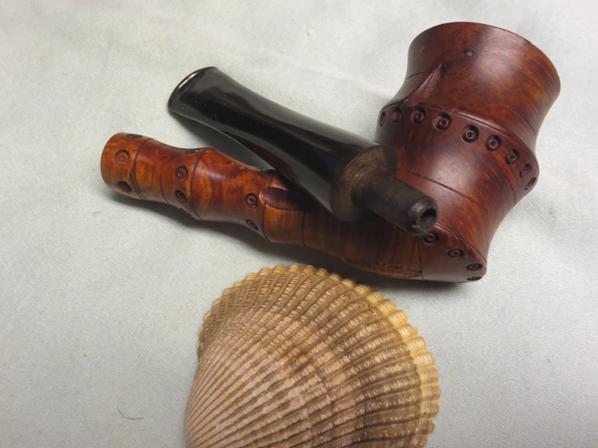
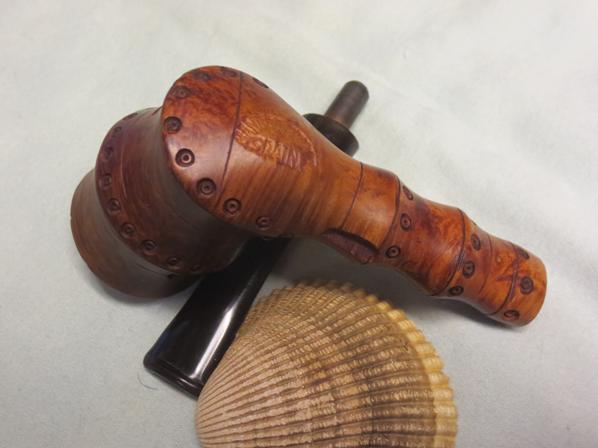
I don’t know why but I keep taking out some unique pipes from the box my brother Jeff sent me. He has an uncanny ability to find the unusual and interesting pipes for me to restore. This one is one I had never heard of before. I have seen other bamboo rusticated pipes but not one that had the stamping that this one does. It is stamped on the underside of the bowl with the words BAMBOO BRIAR in an arch over the word Spain. The carver did a marvelous job of replicating the look of bamboo in the briar. The nodules, lines and grooves that he/she put in the briar really look like bamboo. To give it even more of an interesting look they left the briar natural to highlight the subdued grain of the briar coming through the smooth areas of the bamboo and the carved nicks in the surface. It is really beautiful.

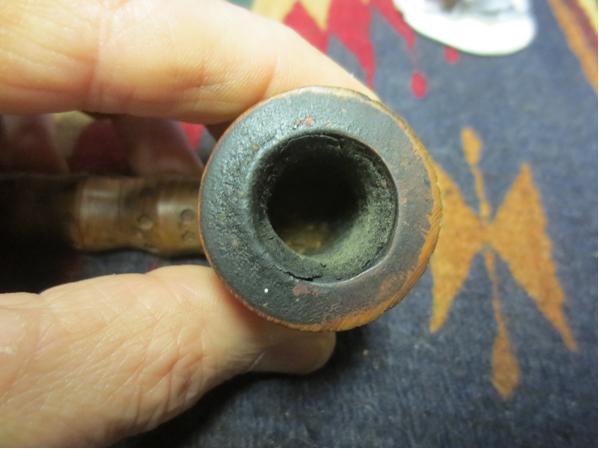
When I took it out of the box the bowl had a thick cake of carbon built up in the bowl. The rim was thickly caked as well with lava. The outer edges of the bowl had some nicks in it and there was a small burn mark on the front right inner edge of the bowl. The stem did not fully seat in the mortise because of the tars and oils there. The exposed portion of the tenon and the stem were badly oxidized. There was some light tooth chatter on the stem but overall it was in decent shape underneath the oxidation.Bamboo2 Bamboo3 Bamboo4 Bamboo5I took some close up photos of the rim and the bottom of the bowl. The picture of the rim shows the thickness of the cake and the state of the top of the rim. This old pipe was pretty clogged up with cake and tars. The picture of the bottom of the bowl shows the stamping. It reads Bamboo Briar over Spain.Bamboo6 Bamboo7Bamboo1I removed the stem and dropped in a jar of Oxyclean to soak the heavy oxidation for several hours. Before working on the bowl I did a little research on the brand and found that on my go to site, Logos and Stampings, or pipephil there was a notation. Here is the link: http://www.pipephil.eu/logos/en/logo-b1.html#bamboobriar.

On that site the pipe is described as follows: The bamboo like decorative carving was typical of Valencia’s manufacturers since the early 20th century. However it’s difficult to say who exactly the maker was.

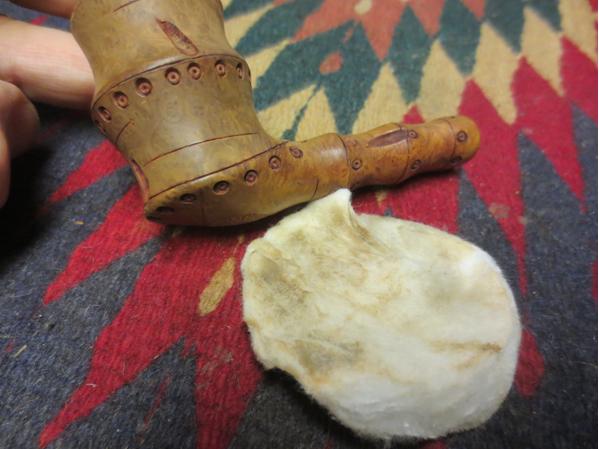
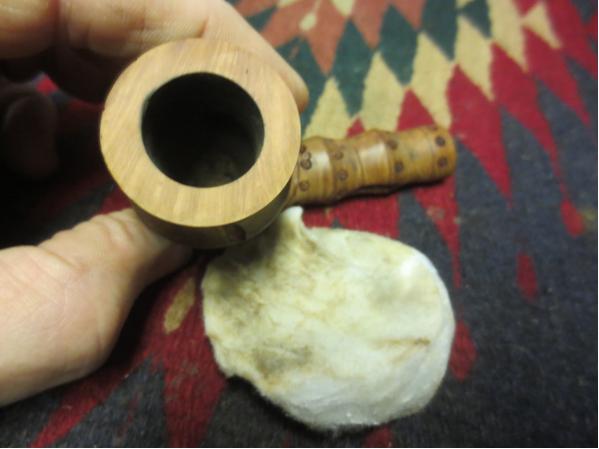
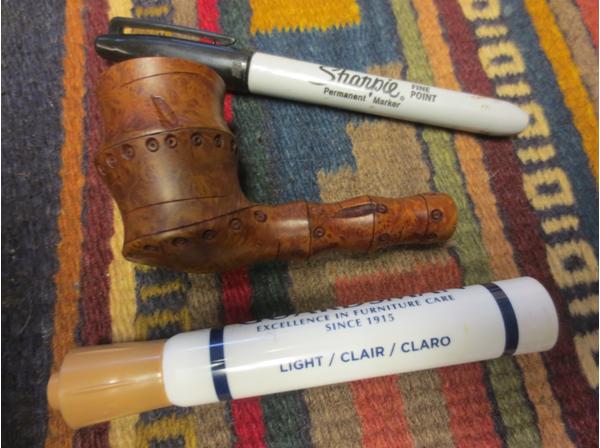
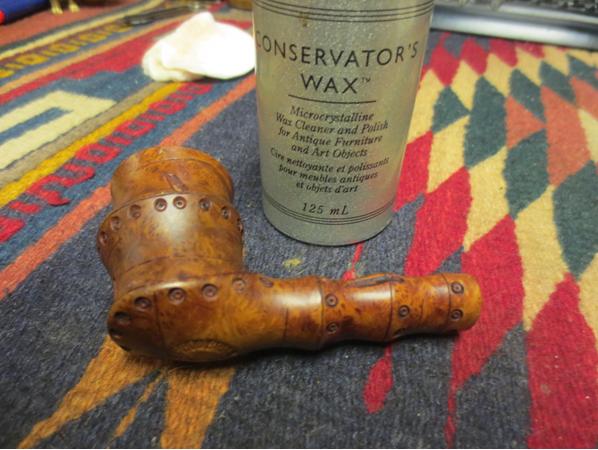
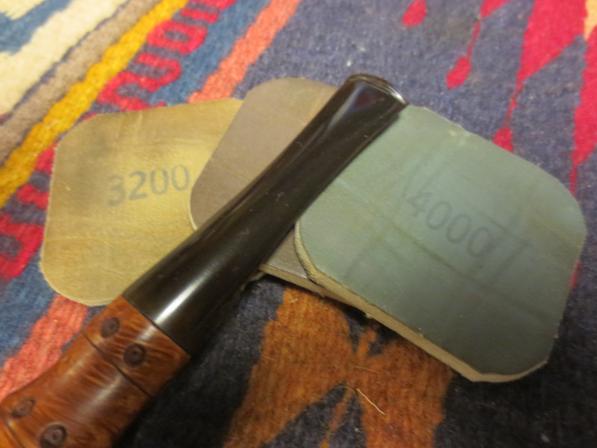
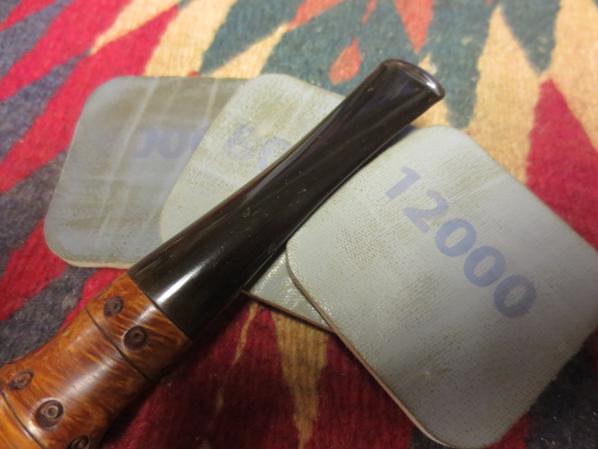
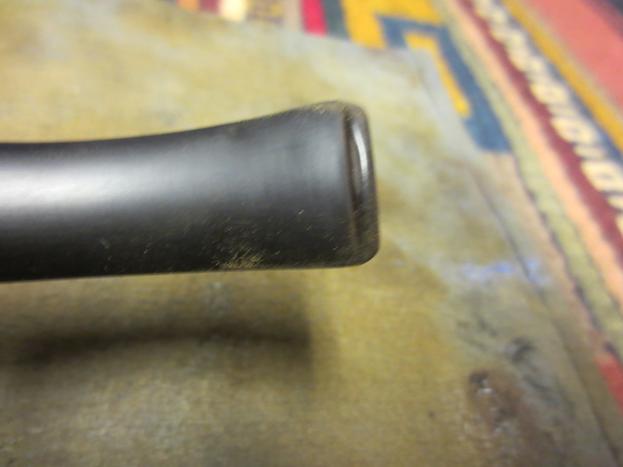
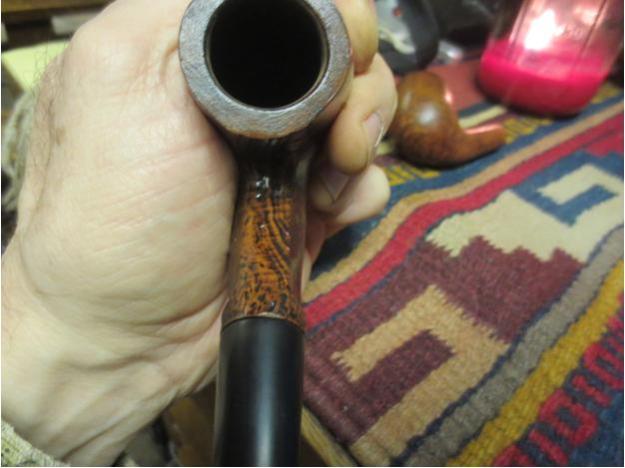
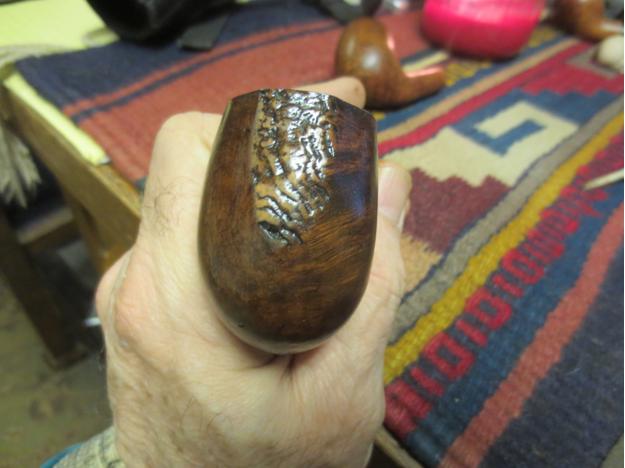
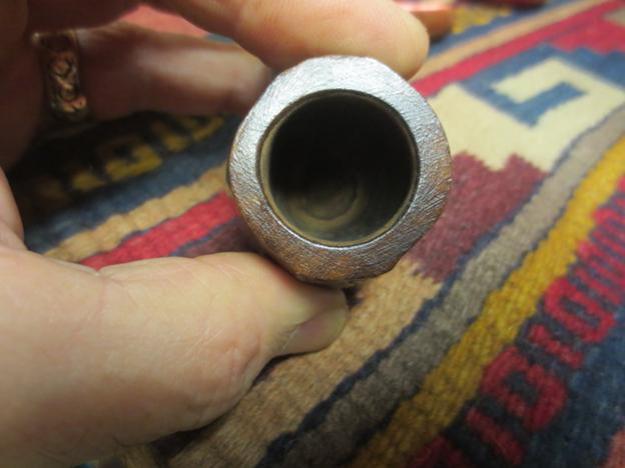
With that information in hand I went to work on the bowl. I reamed it with a PipNet pipe reamer beginning with the smallest cutting head and working up to one that was the same diameter as the bowl. I removed the cake and took it back to bare wood. I finished the reaming and cleaned up the bowl walls with the Savinelli Pipe Knife.Bamboo8 Bamboo9 Bamboo10The outer edge of the rim was rough and the top had some nicks in the briar that made topping the bowl necessary. I topped it to remove the damaged areas of the rim using a topping board and 220 grit sandpaper.Bamboo11 Bamboo12I scrubbed the exterior of the bowl with acetone (fingernail polish remover) on cotton pads to clean up the dirt and oils from the natural finish of the briar.Bamboo13 Bamboo14 Bamboo15 Bamboo16I sanded the topped rim with 1500-2400 grit micromesh sanding pads and then used a light brown stain pen to stain it to match the patina on the bowl. I used a black Sharpie pen to touch the “root nodules” of the simulated bamboo. Bamboo17I hand applied some Conservators Wax to the bowl and once it dried hand buffed it with a shoe brush.Bamboo18I took photos of the pipe after buffing it. The colour of the rim and the patina that came out on the bowl with the wax gives it an aged bamboo look that I really like.Bamboo19 Bamboo20 Bamboo21 Bamboo22I cleaned out the shank with alcohol, cotton swabs and pipe cleaners to remove the tars and oils. I was quite surprised by how little came out of the shank with the cleaning. I expected it to be far worse.Bamboo23The stem had been soaking in Oxyclean for about four hours so it was time to work on that. I set the bowl aside and removed the stem from the Oxy soak. The soak had softened and removed much of the oxidation from the surface. It had also brought the deeper oxidation to the surface.Bamboo24I rubbed the stem down to remove the softened oxidation and then used needle files to clean up and define the edges of the button.Bamboo25I used pipe cleaners and alcohol to clean out the inside of the stem and again was surprised by the lack of real oils and tars.Bamboo26I sanded the stem with 220 grit sandpaper to smooth out the file marks and to remove the oxidation on the surface. I wet sanded the stem with 1500-2400 grit micromesh sanding pads and gave it a coat of Obsidian Oil. I dry sanded with 3200-4000 grit pads and gave it another coat of oil. I finished sanding it with 6000-12000 grit pads. I gave it a final coat of Obsidian Oil and let it dry.Bamboo27 Bamboo28 Bamboo29I buffed the stem on the buffer with Blue Diamond and then gave the pipe multiple coats of carnauba wax. I used a light touch on the bowl and shank so as not to clog up the nodules or grooves in the bamboo carving with too much wax. I raised the shine with a clean flannel buff on the buffer and then gave it a hand buff with a microfibre cloth. The finished pipe is shown in the photos below. I really like the way the patina of the briar and the carvings on the bowl and shank give the pipe a look of aged bamboo. The unknown Spanish carver did a great job on this one in my opinion. Now I have to decide whether to keep this one or not. It is so unique that I think it deserves a place in my collection. Thanks for looking.Bamboo30 Bamboo31 Bamboo32 Bamboo33 Bamboo34 Bamboo35 Bamboo36 Bamboo37

A Challenging Yello-Bole Chesterfield


Blog by Aaron Henson

Although this is a standalone write up, it is also part 2 of an adventure I started with the rustication of a bent billiard about a month ago.

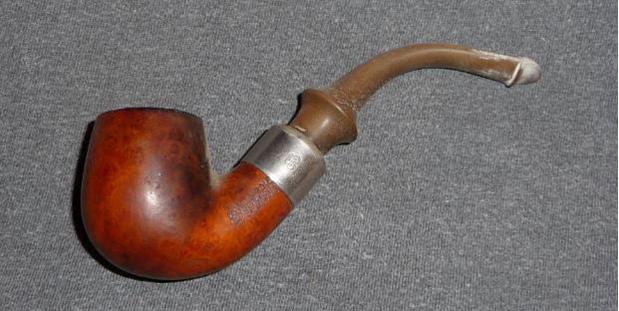
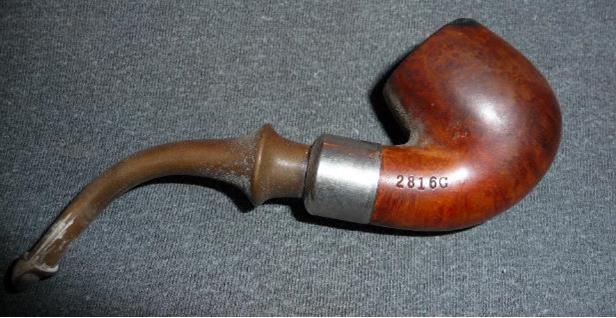
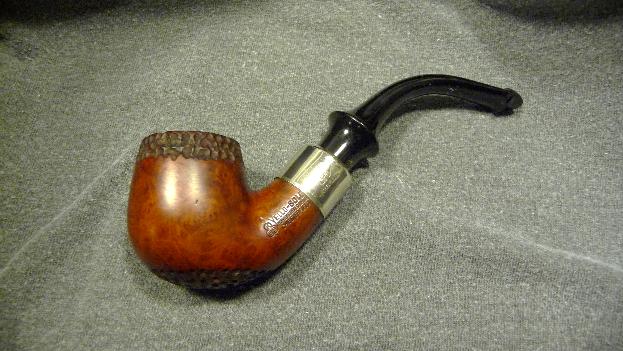
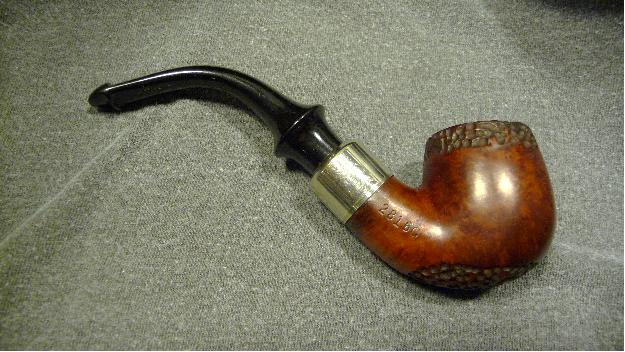
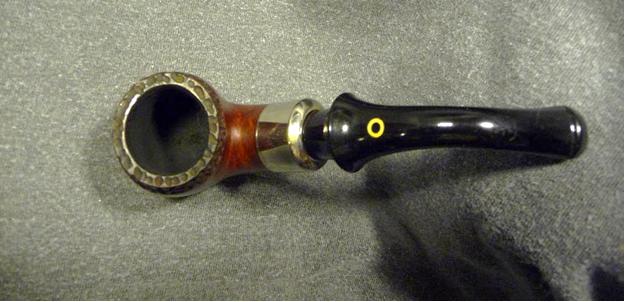
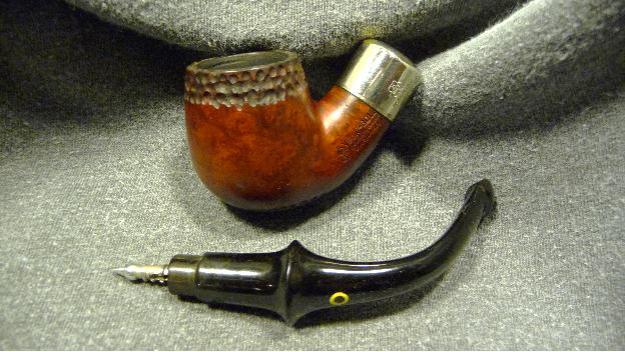
I found this Yello-Bole Chesterfield at a local flea market in town. It was part of a large estate collection, most of which were unsmoked uniquely carved pipes. My eye, however, was immediately attracted to the Peterson-like shape with military bit and P-lip stem and I was surprised to see that it was a Yello-Bole. The pipe was a bit grimy and oxidized with burn marks but after some talking we agreed on a price and I took it home.Chesterfield1The stampings on the bowl were very clear and deep, some of the nicest I have seen on an estate pipe that is as well used as this one. The left side shank read YELLO-BOLE over HONEY CURED BRIAR over CHESTERFIELD with the KBB inside the clover leaf on the left. The band was stamped with KB&B inside the clover leaf over NICKEL PLATED. The right side shank was stamped with shape number 2816C. The stem had the Yello-Bole yellow circle inset in the top and SOLID RUBBER stamped deep into the underside of the stem.

A quick search online and I was able to use the markings to date the pipe to the 1933-1936 time manufacturing period.

The briar was in great shape with beautiful bird’s eye pattern. The pipe was dusty and grimy and after wiping down with an alcohol soaked cotton pad I continued with my assessment. The rim was coated with a heavy crust of tar and there was a deep burn mark on the outside of the rim (major issue number 1). The bowl did not have a large amount of cake so I had to assume that the previous owner had reamed out at some point. And perhaps it had been over reamed, because the air hole entered the bowl about 2/3 the way down the chamber wall. This would lead to a mouth full of hot ash when you were half way through the bowl (major issue number 2). There were some minor bumps and scratches in the surface of the bowl but nothing that could not be buffed out.Chesterfield2 Chesterfield3The stem was in great shape. It was heavily oxidized with some minor tooth chatter but the airway was clear and the stinger was intact and in great condition.Chesterfield4I set the stem to soak in a Oxiclean solution and turned to the stummel. First I reamed the chamber back to bare wood. Next, I tried to clean the rim with Oxiclean on a wet green pad but the tar was just too stubborn so I resorted to a topping board and lightly sand away the tar build up. This is where I made my first mistake: I scuffed off a bit of the nickel plating when topping the bowl (I still don’t have a fix for this!). I have thought about taking the ring off and having it re-plated but several attempts to remove the ring with heat have not been successful.

To address the burn mark on the rim I used a worn piece of 220 grit sand paper I removed the burned wood trying not to remove any of the sound briar under the burn. I was surprised to see how deep the burn went and was at a bit of a loss on how to address it. As you can see below, a significant amount of wood as damaged.Chesterfield5I figured I had two options: 1) replace the burned material with glue/briar dust or 2) sand the rest of the rim to match and change the shape of the pipe. In either case I was going to need to refinish the briar so I wiped it down with acetone to remove as much of the finish as I could while I decided what I was going to do.

Looking into the chamber again, I listed out my options for addressing the air way issue. Again I came up with two options; 1) fill in the bottom 1/3 of the bowl with pipe mud, or 2) drill a new airway that comes out at the bottom of the chamber. I didn’t like either option. The first would have been a very large fill and volume change for the pipe and the second was fraught with potential problems – chiefly aligning the drill bit to come out at just the right point in the bottom of the bowl

So I figured it was time for some consultation. I outlined the issue in an email and included some picture and sent them off to Steve – our worthy “Professor of Pipe-ology” and blog host.

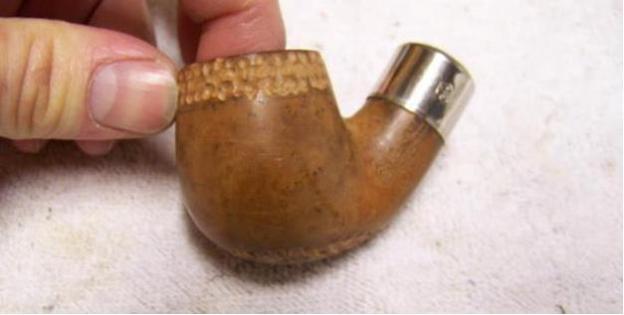
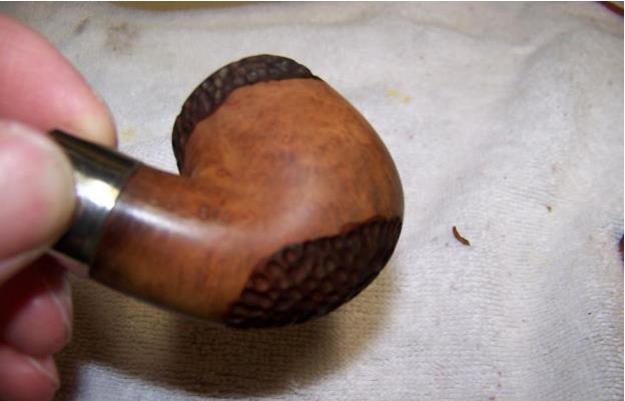
While I waited for Steve’s response I cleaned the inside of the shank and with alcohol soaked cotton swabs and pipe cleaners until then came out as clean as they went in. I also took the stem from the Oxiclean bath and removed the loose oxidation with a magic eraser. I cleaned the internals of the stem then polished it with micromesh pads 1500 – 12000. I used mineral oil every three pads to freshen the vulcanite and give the pads some traction. There was only one minor tooth mark that didn’t raise with heat and I filled it with a dab of black super glue and sanded it smooth with the 1500 mirco-mesh pad.Chesterfield6 Chesterfield7Steve responded with the recommendation of building up the burn spot with super glue and briar dust confirmed that I had the right idea. I was hoping that he had another trick up his sleeve because I knew that the repair would have to be covered up with either a very dark stain or rusticated. I applied three separate layers of clear super glue and briar dust to build up the rim then carefully sanded the repair to blend it into the shape of the rim. Chesterfield8 Chesterfield9I came across and older post where Kirk Fitzgerald rusticated a Peterson that looked very similar to my Chesterfield. Taking some note, I decided to try a similar type rustication. I lightly mark a ½” band around the top of the bowl with a pencil and corresponding area on the bottom of the bowl to balance the appearance. Using the 1/8” carving tool on a Dremel I added a dimpled texture in offset rows. I was glad I had tried using this tool on the previous project because the carving tool did have a tendency to skip on the harder grain. Chesterfield10The final texture hid the repair and was not so extensive as to hide the grain. I sanded the outside of the bowl with micro mesh pads 1500 – 3600 to smooth out the scratches.

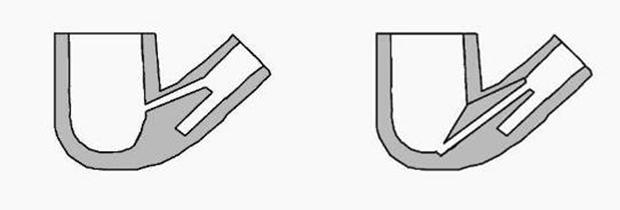
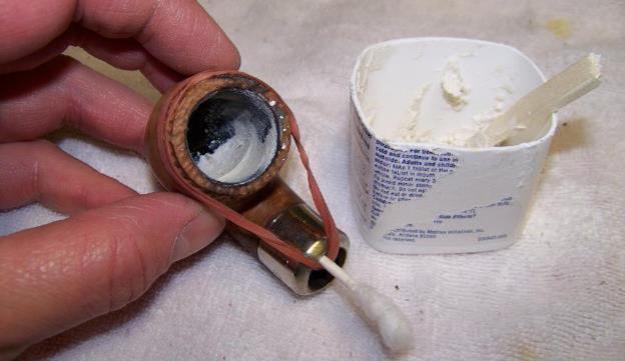
Instead of drilling a new airway, which posed the risk of additional misalignment, Steve recommended using a needle file to elongate the opening so it extended to the bottom of the bowl. The excess space could then be filled with plaster creating a new airway. This proved to be tedious work. Below are two rough cross-section of the pipe. On the left is the airway as it was and on the right is the revised airway (in theory).Chesterfield11Filing was a slow process and it took some effort to keep the elongated hole from drifting off course. I went slow and checked the progress often. Once the hole was about where I thought it should be I used the stick of a cotton swab as the place holder for the new airway. It was the rolled paper type stick that could be bent to match the curve of the bowl. Holding stick in place with a rubber band around the rim I mixed a batch of thick plaster and pushed it into the elongated hole with my finger. When plaster came out the top of the hole I removed the excess from inside the bowl and set it aside to dry for 24 hours. Chesterfield12In my first attempt at this repair, I did not have plaster so I used pipe mud (a slurry of cigar ash and water). This did not work at all. It is great for filling in the bottom of a bowl but it was too loose to stand on its own as a fill/patch. I removed the pipe mud and started over with the plaster.

The next evening, I used 100 grit sand paper wrapped around a ¼” dowel to remove the excess plaster and smooth out the repair. I carefully twisted the swab stick and it came free without damage to the patch. The next time I do this I will coat the stick with wax before securing it in place. The wax should help the stick pull free without bonding to the plaster.

It was time to finish the bowl. I chose to use straight Fiebing’s dark brown stain on the rusticated areas and then wiped it down with alcohol pad. Chesterfield13Next I applied straight light brown to the rest of the bowl. After setting the color with heat I wiped the entire bowl with an alcohol pad to blend the colors. Happy with the results I took the pipe to the buffing station. I buffed the stem and stummel separately so I could get to all the area a little more easily. I started with white buffing compound then finished with multiple coats of carnauba wax.

With the outside of the pipe complete I wanted to cover up the plaster patch inside the bowl so I applied a bowl coating. Using my finger I spread a thin coat of maple syrup evenly over the inside of the bowl then poured in the contents of a dietary charcoal capsule. I put my palm over the top of the pipe and shook the pipe so the charcoal powder covered the inside of the bowl. I set the pipe aside to dry for 5 days before emptying out the loose powder.

I want to say “Thank you” to Steve for his advice on this one… and thank you for reading.Chesterfield14 Chesterfield15 Chesterfield16 Chesterfield17 Chesterfield18

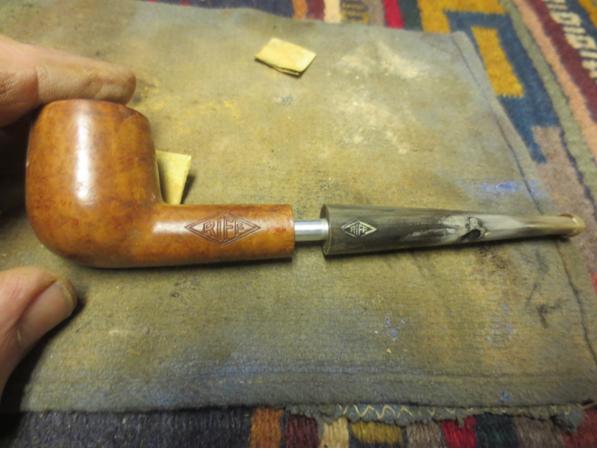
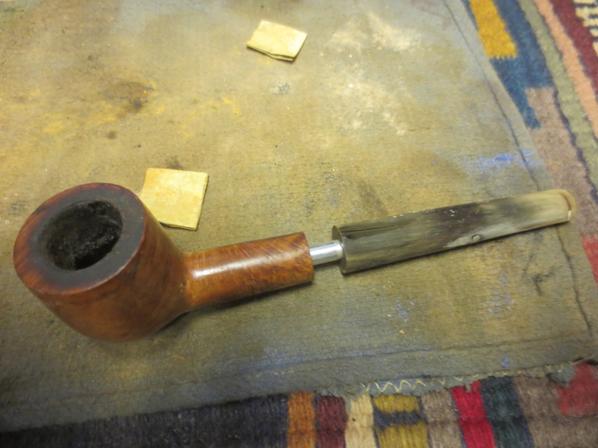
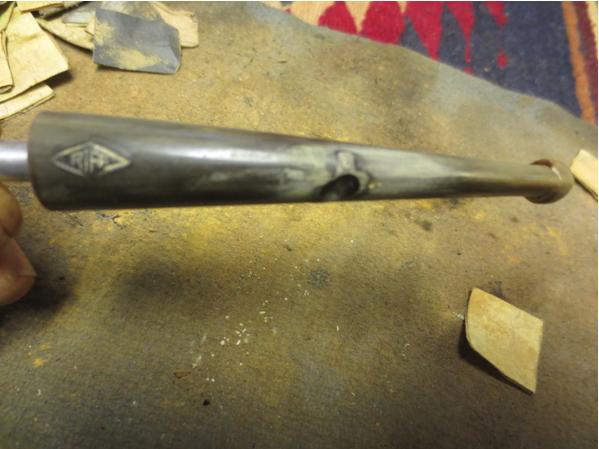
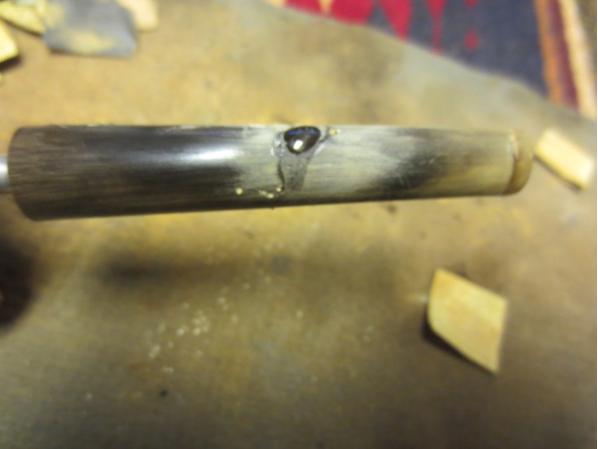
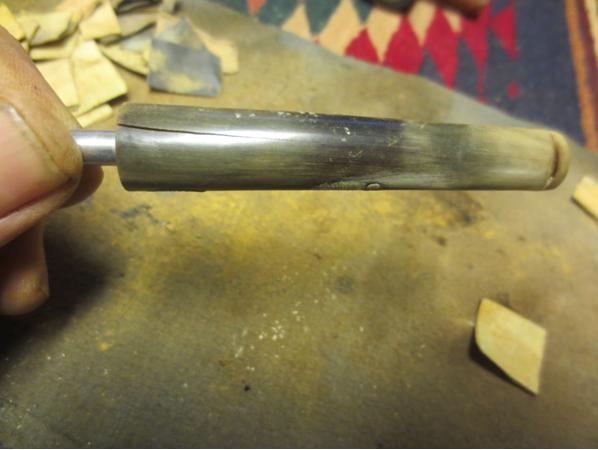
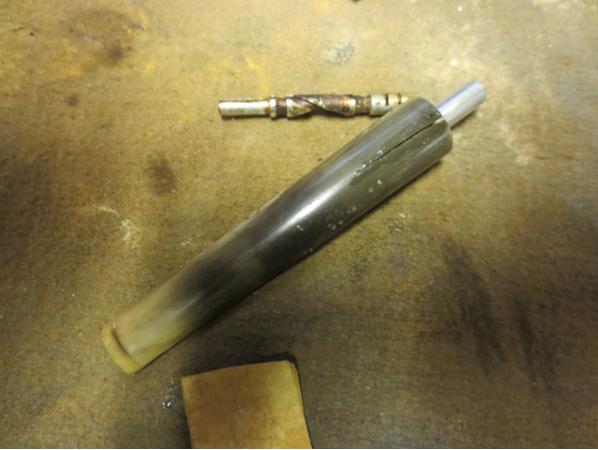
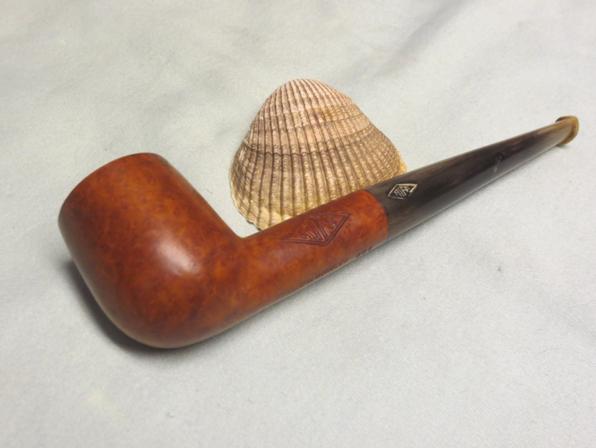
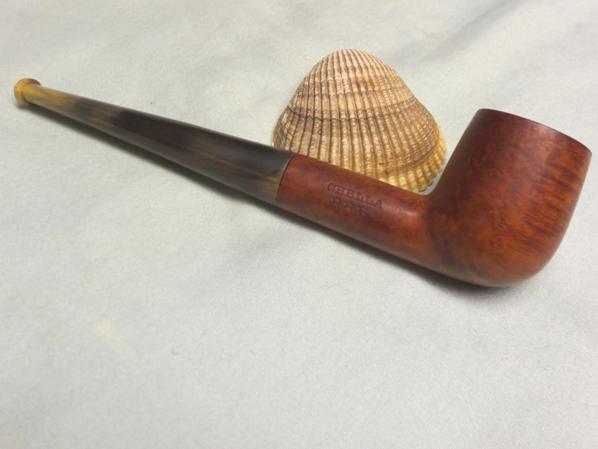
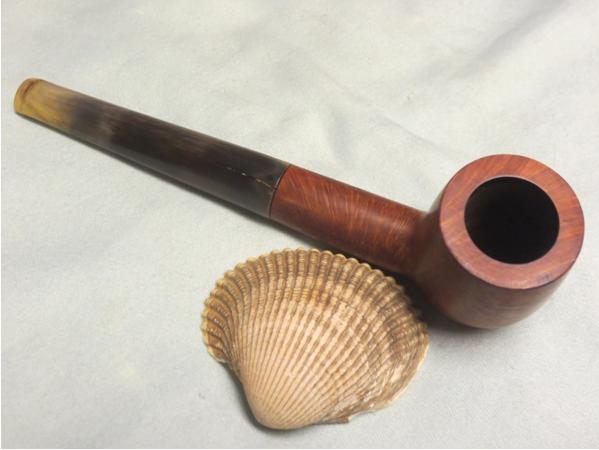
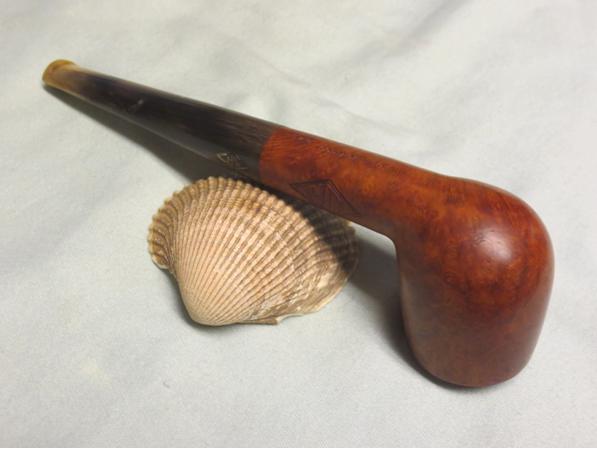
A New Brand for me – A Riff 221 Horn Stem Billiard


Blog by Steve Laug

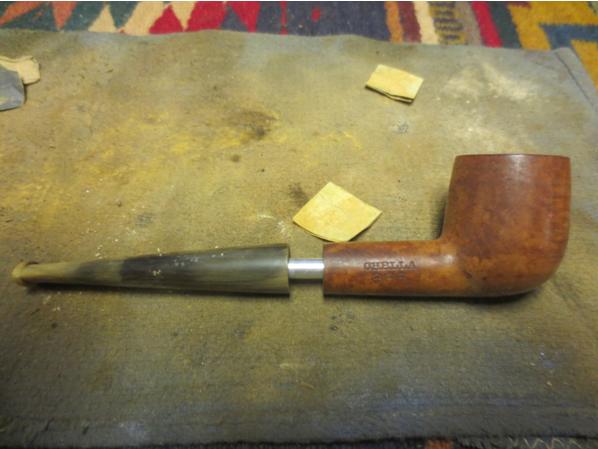
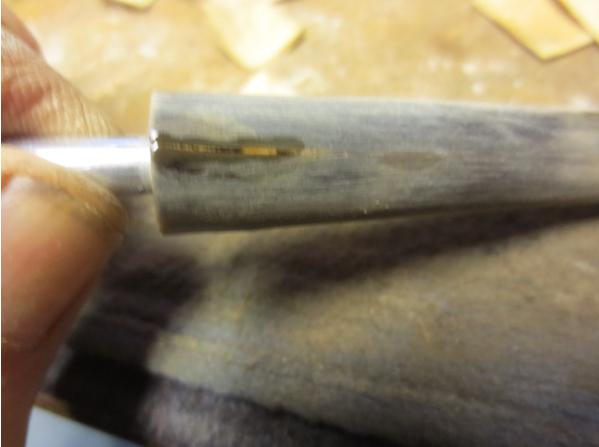
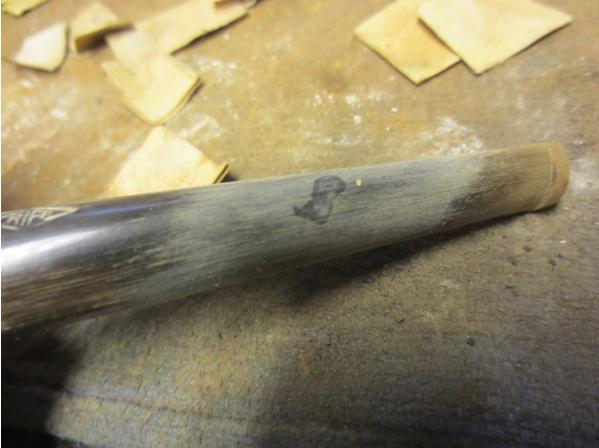
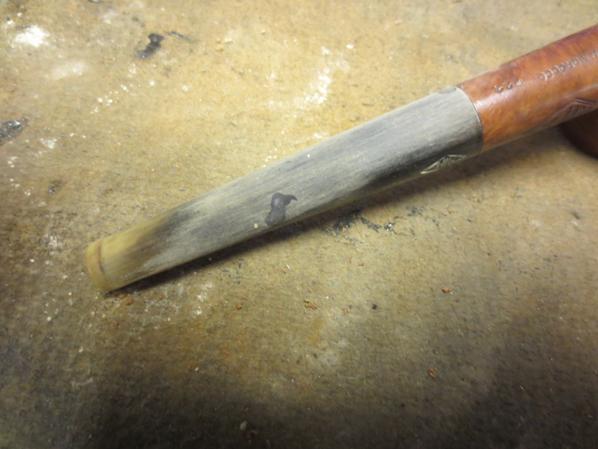
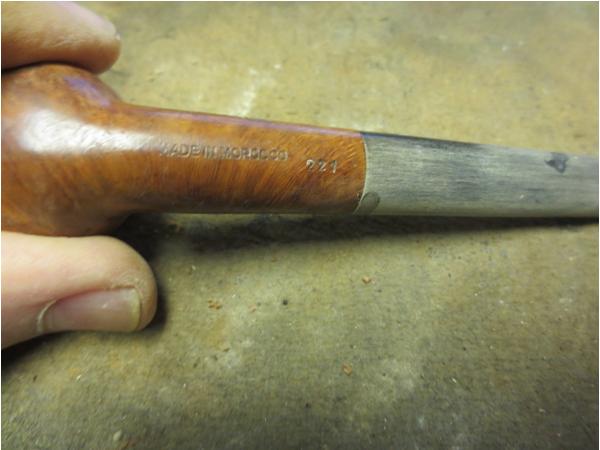
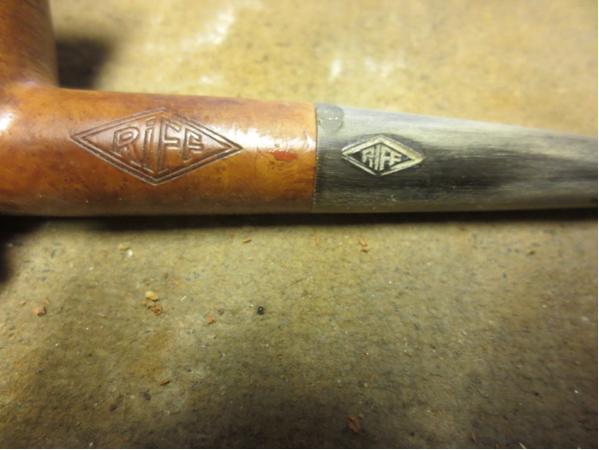
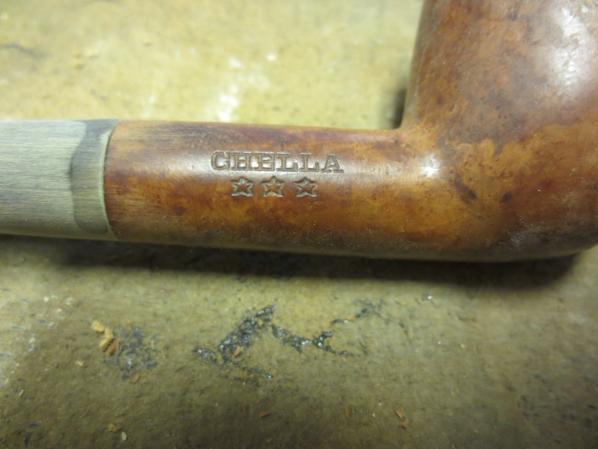
This was a new pipe brand for me. It is stamped RIFF in a double lined diamond on both the left side of the shank and on the horn stem. On the right side it is stamped CHELLA over *** (3 stars). On the underside of the shank it is stamped Made in Morocco and the shape number 221. This has to be the first Morocco made pipe that I have worked on. It was in pretty decent shape in terms of the bowl. There was a shiny shellac coat over a natural finish. The rim had some tars and oils built up on the back top side but inner and outer edge was in perfect shape. There was a slight burn mark on the front right top of the rim. The bowl had a slight cake that was uneven around the inside. The problem lay in the stem. There was a large crack in horn on the top that traveled half way down the stem. There was also a large chunk of horn missing on the underside of the stem. It was a very smooth scooped shape chunk that made me wonder how it had happened. When I pulled the stem out of the shank there was a large stinger apparatus that extended the length of the shank and ended in the bottom of the bowl. The tenon was metal. The internals of the shank and stem were quite clean.Chell3 Chello1 Chello2I was jazzed to work on this stem as it provided several challenges to me. I forgot to take pictures before I started but caught myself just after I started to work on the underside of the stem. I wiped the stem down with a cotton pad and alcohol to clean off the surface. I began to fill in the edges of the missing chunk with clear super glue. I layered the glue in place on the area until it was filled. Once it had cured overnight I would sand it down smooth with the surface of the stem.Chello4 Chello5I cleaned out the crack with a dental pick. I drilled a tiny hole with a micro-drill bit at the end of the crack – toward the button. I filled in the crack and the drill hole with clear super glue and squeezed the crack together. I repeated the fill process until it formed a ridge along the crack. Once it cured I would sanded it smooth as well.Chello6 Chello7 Chello8 Chello9While the repairs on the stem dried I worked on the stinger. I used the brass bristle brush and alcohol to scrub off the oils and tars.Chello10In the morning I sanded the stem with 220 grit sandpaper. I had built up the edge that faced on the shank to fill in the gap caused by the crack. In the photo of the top view of the stem it is the darkened band around the edge of the stem next to the shank. I sanded the stem smooth and blended the repairs into the surface of stem.Chello11 Chello12 Chello13 Chello14I took some close-up photos of the stamping to show it to you. It was unique to me. The first photo shows that the underside of the shank reads Made in Morocco 221. The second photo shows the stamping on the left side and the horn stem – RIFF in a double diamond. The third photo shows the stamping on the right side of the shank – CHELLA ***. At this point you can see the repairs have blended into the surface quite well. They are darker than the stem material but most of that will disappear as the stem is polished. The stem is smooth on the top and the bottom and the crack and the missing chunk are no long detectable to touch.Chello15 Chello16 Chello17I continued to sand the stem until the repairs were very smooth.Chello18 Chello19 Chello20 Chello21With the initial work done on the stem I worked on the bowl. I reamed it with a PipNet reamer and took the cake down to bare wood.Chello22 Chello23 Chello24The rim top was damaged with heavy tarring and a small burn mark on the front right side. I topped it lightly with a topping board to remove the damage and the build up.Chello25 Chello26I scrubbed the shellac off the bowl with acetone on cotton pads to get down to the natural briar.Chello27 Chello28 Chello29I cleaned the stem with pipe cleaners and alcohol and the shank with the same using cotton swabs along with the pipe cleaners. It did not take much to remove the grime on the inside.Chello30 Chello31I wet sanded the stem with 1500-2400 grit micromesh sanding pads to begin to polish it. The first photo below shows the top of the stem and the second shows the underside.Chello32 Chello33I rubbed it down with Obsidian Oil and then dry sanded with 3200-4000 grit pads. The cracked area on the top of the stem is visible when you look for it but it is smooth to touch. It is interesting to see the striations begin to show in the polished horn.Chello34I gave it another coat of oil and then finished sanding it with 6000-12000 grit micromesh pads. The crack is definitely less visible on the top side of the stem (first photo below) and the filled in area on the underside is almost invisible (second photo).Chello35 Chello36I rubbed the briar down with a light coat of olive oil and then buffed the stem and bowl with Blue Diamond on the wheel. I gave the pipe multiple coats of carnauba wax and buffed it with a clean buffing pad. I had buffed it with a microfibre cloth. The finish pipe is shown in the photos below. I tried to give a variety of photos and angles so that you can see the repaired areas. Chello37 Chello38 Chello39 Chello40 Chello41The photo below shows the underside of the stem and the repaired area mid stem near the spot in the photo.Chello42The next two photos below show the repaired crack in the top side of the stem from various angles. While it is visible to the eye it is smooth to the touch. The crack has been stabilized and the drilled spot at the far end has stopped it from spreading further. I am happy with the finished pipe. Thanks for looking.Chello43 Chello45

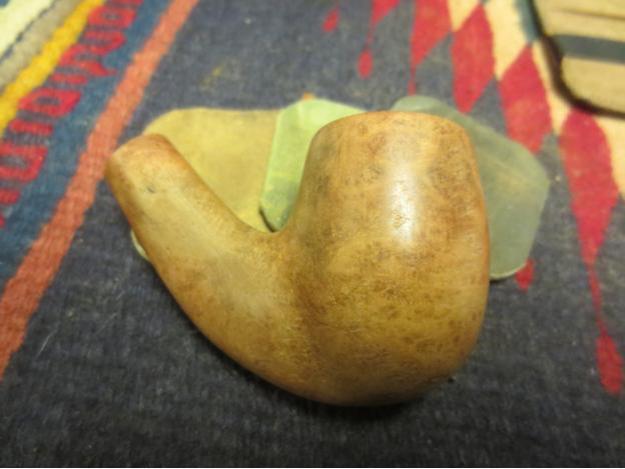
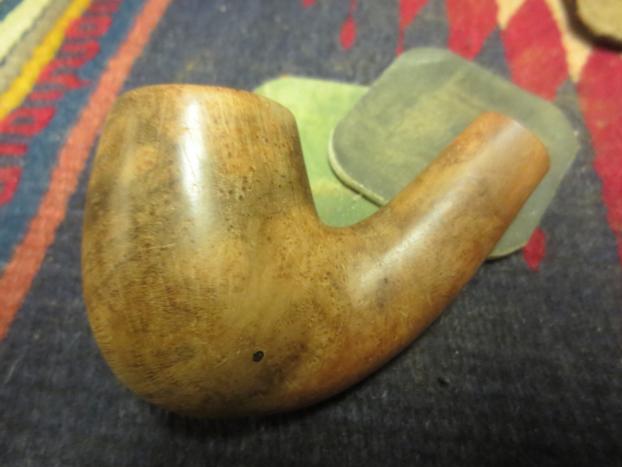
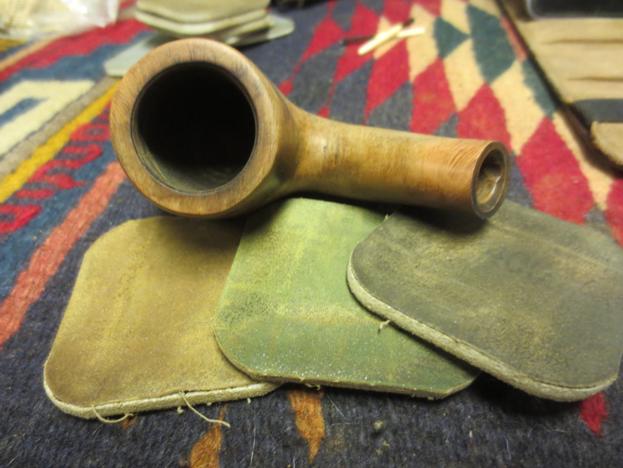
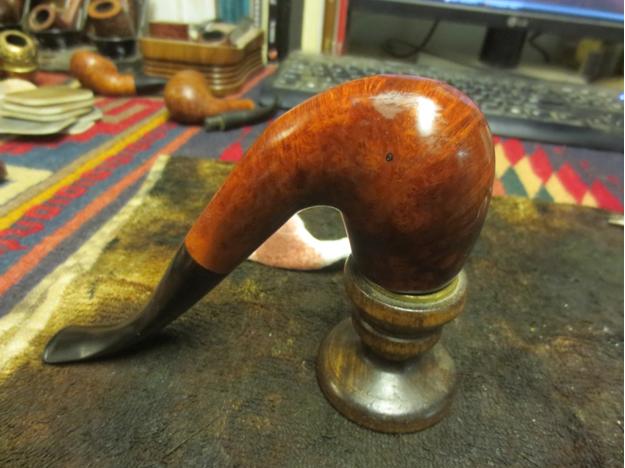
A Ruined Stanwell Handmade 80R Bent Billiard – another ugly duckling


Blog by Steve Laug

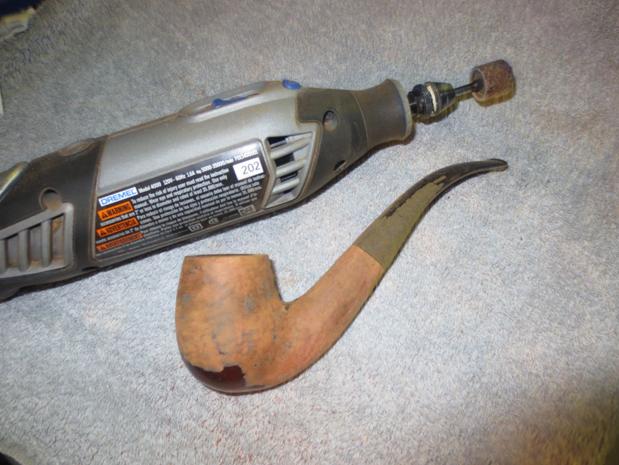
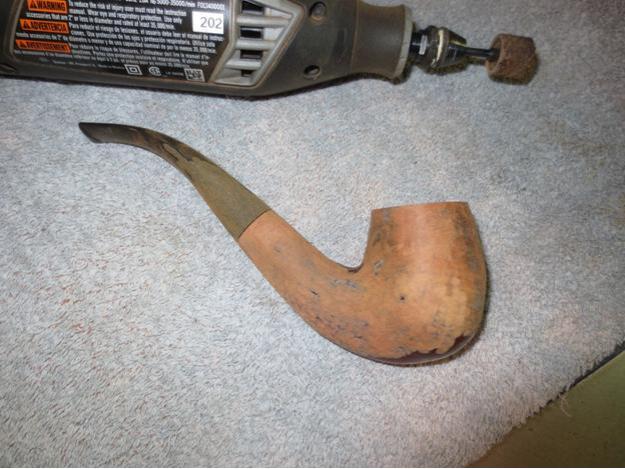
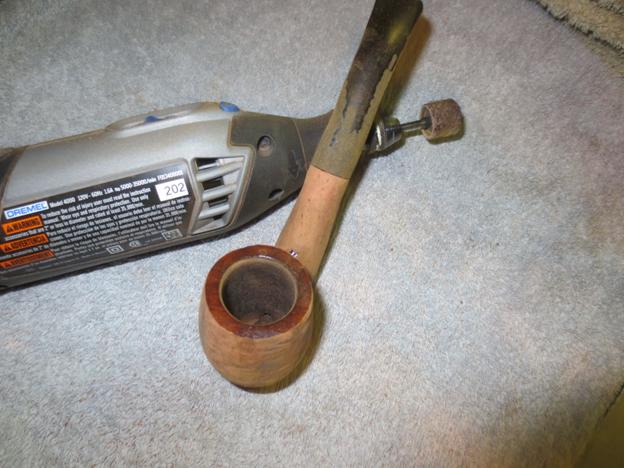
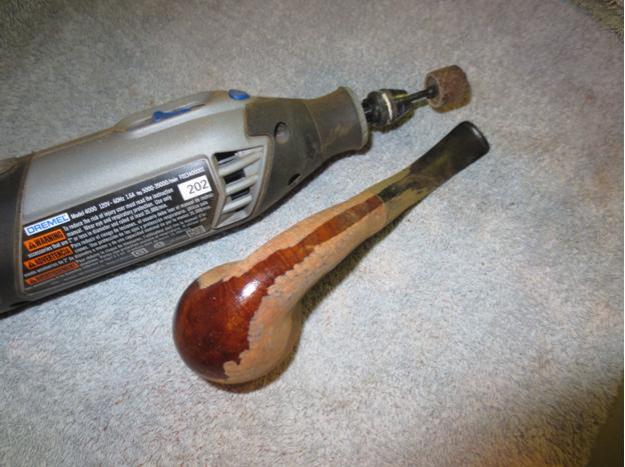
Out of the three pipes from the “hackster” – the cut off Rhodesian, the coffee grounds Dublin and this Stanwell 80R Bent Billiard I have to say that the work he did on this one was by far the worst abomination. This pipe is stamped Stanwell Hand Made 80R Made in Denmark on the underside of the shank. It was a sandblast brown contrast bent billiard that would have been beautiful when it was made. The “hackster” decided to improve upon the finish and believe it or not he desecrated the pipe. He used a Dremel or sander to remove the majority of the sandblast finish leaving a dab of it on the back of the bowl at the joint of the shank and the bowl and a dab on the front side about 1 inch long from the rim. In removing the blast he completely ruined the shank leaving a thick band near the stem and the two thick sandblasted dabs. He sanded off the blast on the shank leaving it looking anemic and awful. He ruined the shape of the bowl and left it totally out of round on the outside. He also over reamed the bowl with what looked like a Dremel and sanding drum and took the bottom of the bowl almost ¼ inch below the entrance of the airway.

He did not leave the stem safe either he reshaped the button by removing the majority of the sharp edge. Then to add insult to injury he left the stamping intact on the bottom of the shank giving credit to Stanwell for the ruination of this fine briar pipe. It went from handmade to hand ruined. Over the entire bowl and slopping onto the stem was a thick coat of shellac. Runs and drips had hardened. The file and Dremel marks were held in perpetuity under a thick coat of shellac. That is where I started with this abomination. The question was could I do anything to redeem this mess.blast1 Blast2 blast3 blast4I took some photos of the stem and the left over sandblast sections. There is also a photo of the rim shows the out of round condition of the outer edge of the rim.blast5 blast6 blast7 blast8 blast9I sanded off the remaining sandblast sections on the bowl and shank and rounded the bowl with a Dremel and sanding drum. I used the Dremel to reshape the shank and the bowl and shank. The damage done to the shank made it necessary to shape the stem into an oval instead of a round.blast10 blast11 blast12 blast13With the rough shaping work done there was a lot of fine tuning to be done to the shape of the bowl. I topped the bowl with a topping board and 220 grit sandpaper to remove the deep saw and file marks and to flatten the surface. I sanded the areas on the bowl where I left the shellac and existing finish until they were smooth as well. I left the band on the bottom of the shank where the faint stampings that the “hackster” had left behind remained. I had still not decided whether to remove them as the pipe was certainly not a Stanwell any longer and when I was finished reclaiming it the pipe would be two times removed from the pipe that came out of the Stanwell factory.blast14 blast15I hand sanded the bowl and shank with 220 grit sandpaper to further shape it. I sanded the stem as well to remove the damage that had been done to it and also to reshape it to the oval shank.blast16 blast17 blast18 blast19I worked on the outer edge of the rim and shaped the bowl with 220 grit sandpaper. Fortunately, the inner beveled rim was undamaged. The bottom of the bowl was a mess that I would need to fill with pipe mud to restore the depth of the bowl to the bottom of entry of the airway into the bowl.blast20I sanded the bowl and shank with a coarse grit sanding block to smooth out more of the curves. The larger surface of the block ensures and evenness to the contours of the bowl and shank.blast21 blast22 blast23 blast24I used the heat gun to bend the end of the stem to the angle that would have originally been present when the pipe left Denmark. I sanded the stem and bowl further with sandpaper and gradually the pipe was taking shape. The swan was beginning to appear. During the sanding process I found that there were several flaws in the briar and at least one fill. During the course of the sanding these may well disappear. Overall this is a nice piece of briar with enough meat on it that I can still end up with a nice pipe.blast25I cleaned out the shank and the airway to the bowl and in the stem with alcohol, pipe cleaners and cotton swabs. It was amazingly dirty for a pipe that had been “refurbished”. The “hackster” had left the inside absolutely filthy while destroying the outside of the bowl and stem.blast26 blast27I continued to sand the bowl and stem with a coarse grit sanding block to remove the remaining scratches left behind by the Dremel and sanding drum. Gradually the swan was beginning to emerge. I was getting excited about what this one was going to look like when it was finished. There was some nice grain emerging as I sanded.blast28 blast29 blast30 blast31I sanded the bowl with micromesh sanding pads to further remove the scratches. I wet sanded the bowl with 1500-2400 grit pads and sanded until the grain began to shine.blast32 blast33 blast34I dry sanded with 3200-12000 grit pads and then rubbed on a coat of Danish Oil Cherry stain. I gave the bowl several coats of the finish and then set it on a cork stand to dry over night.blast35 blast36I cleaned up the sharp edge of the button with needle files to redefine it as the shape was blurred into the body of the stem. I shaped the button with 220 grit sandpaper at the same time to give it definition.blast37 blast38I sanded the file marks out with 220 grit sandpaper to blend the edge of the cut into the surface of the stem. I wet sanded the stem with 1500-2400 grit micromesh sanding pads and then gave the stem a coat of Obsidian Oil. I dry sanded with 3200-4000 grit pads and gave it another coat of oil. I finished by sanding with 6000-12000 grit pads and giving it a final coat of oil. I set the stem and pipe aside for the night.blast39 blast40 blast41In the morning I buffed the bowl and stem with Blue Diamond on the wheel to bring out the shine and then gave the pipe several coats of carnauba wax. I buffed it with a clean buffing pad and then by hand with a microfibre cloth. The finished pipe is shown in the photos below. To me it looks far better than the mess I started with but what is your verdict? Did a swan emerge? The pipe certainly has some nice grain and the flaws are small in comparison to the overall look of the pipe. Thanks for looking.blast42 blast43 blast44 blast45 blast46 blast47 blast48 blast49