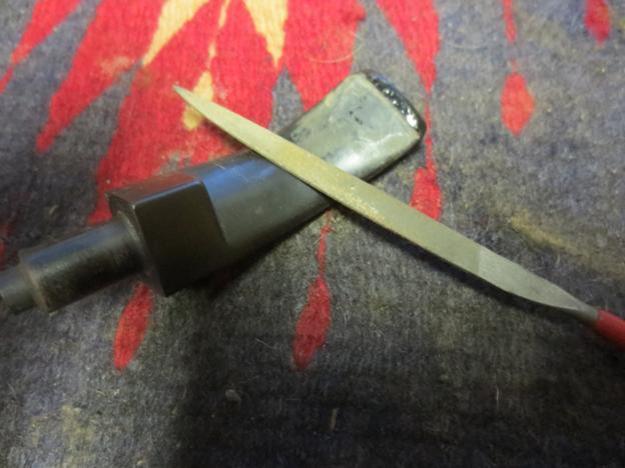
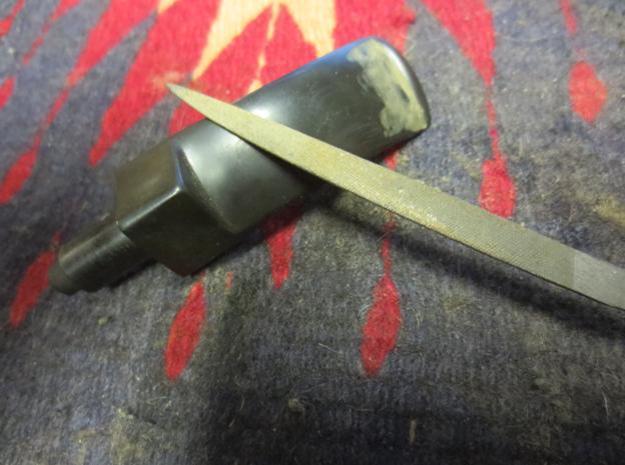
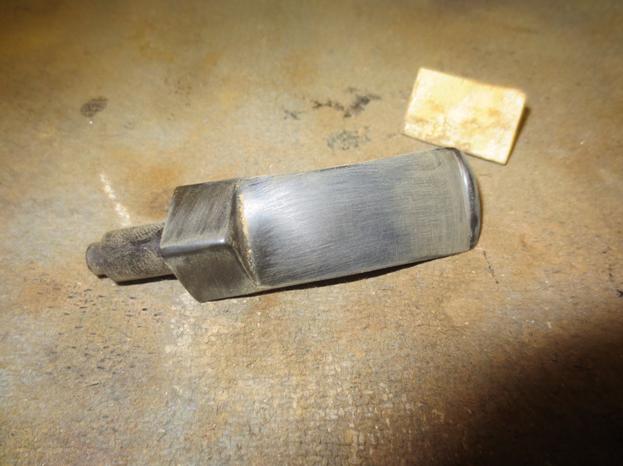
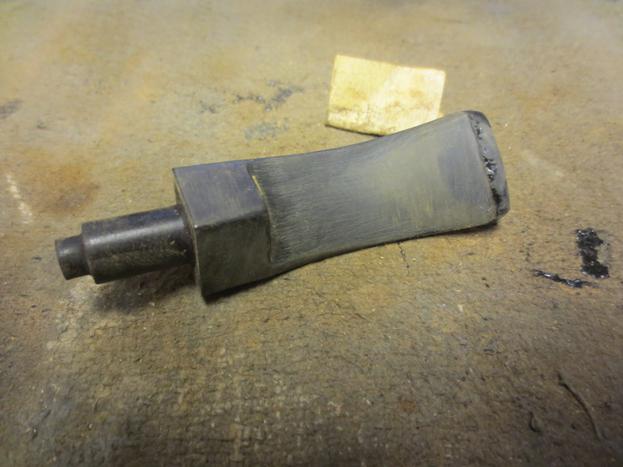
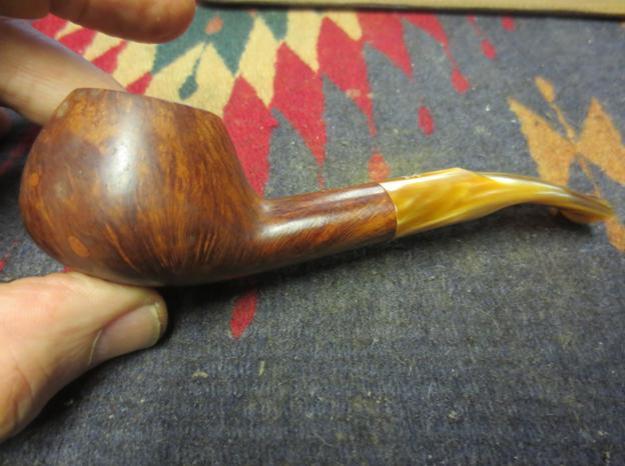
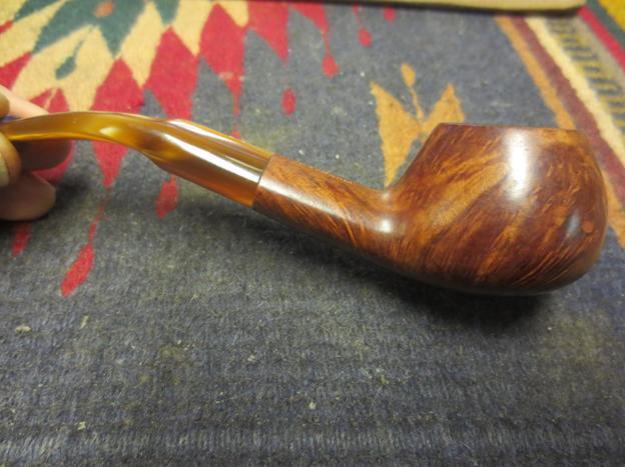
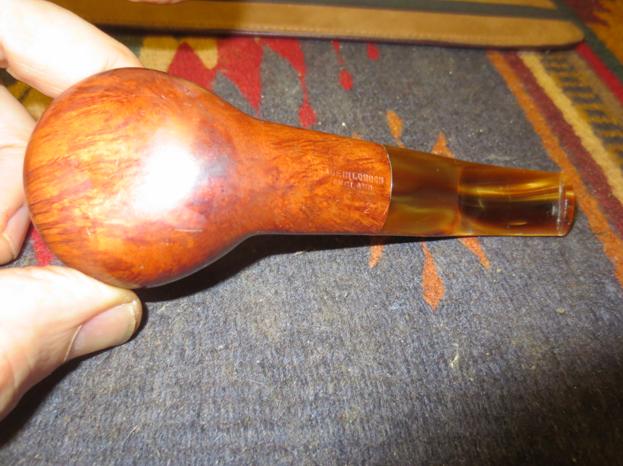
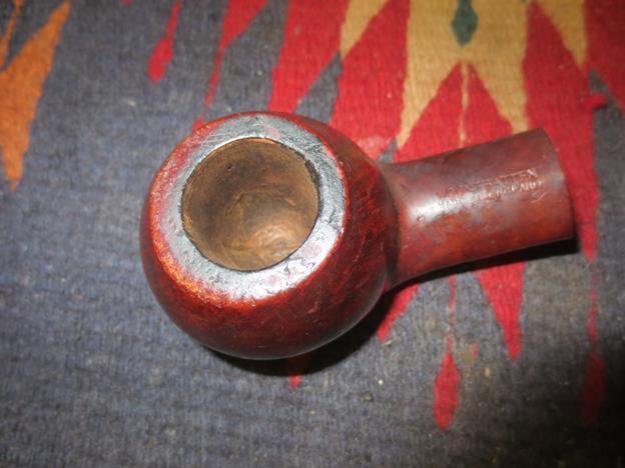
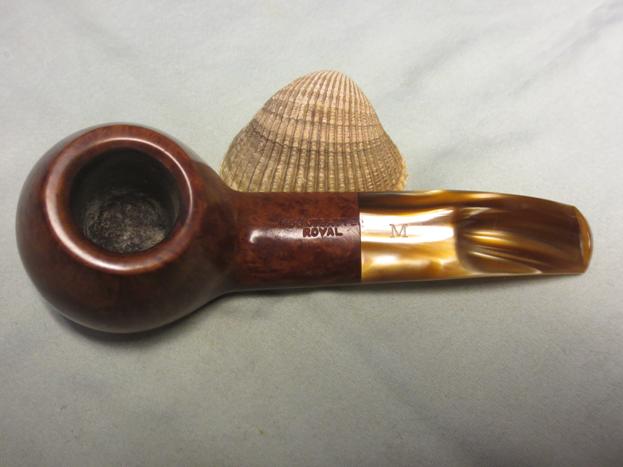
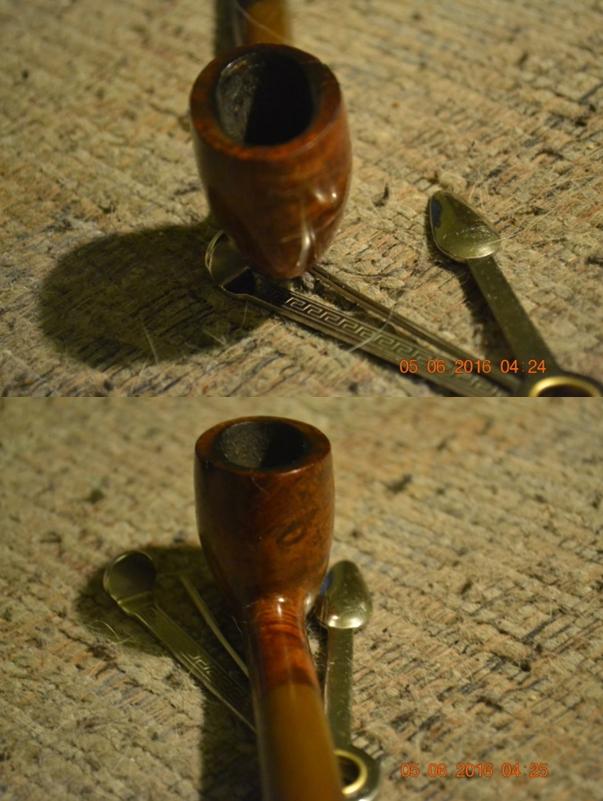
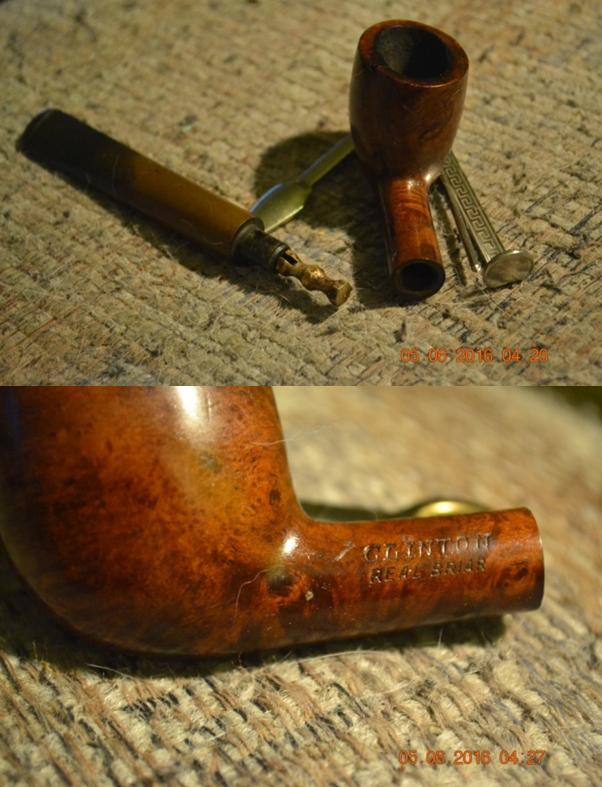
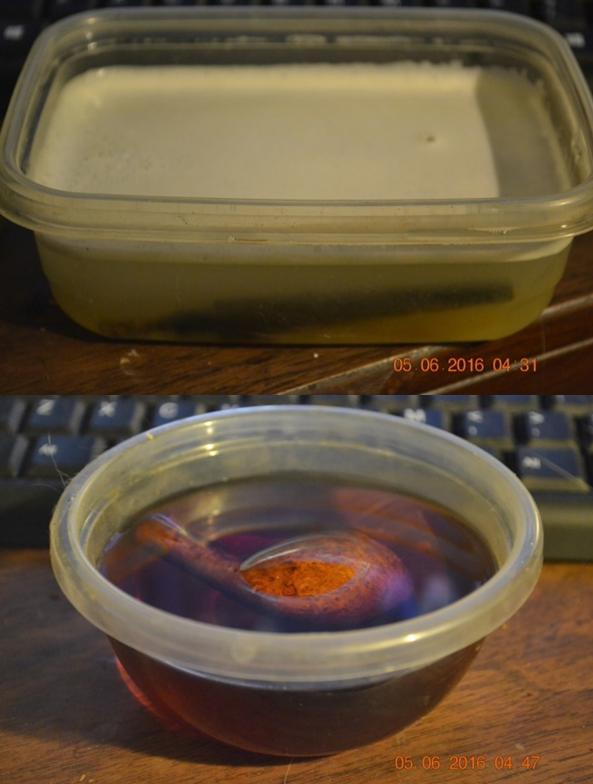
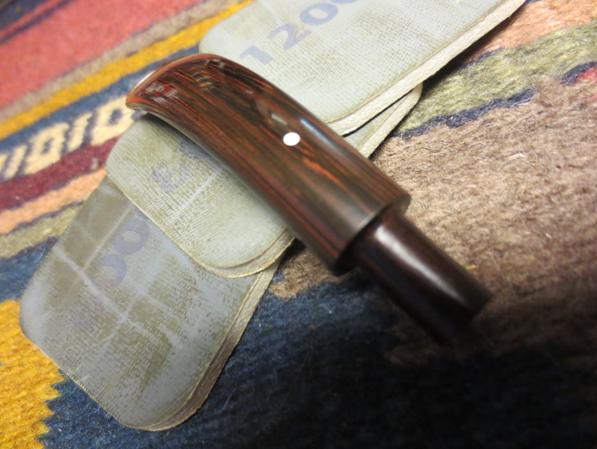
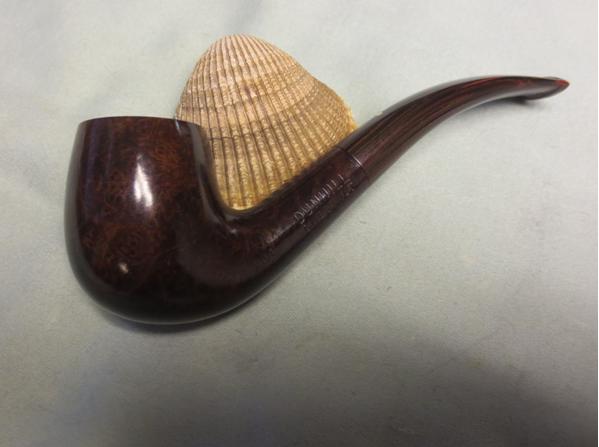
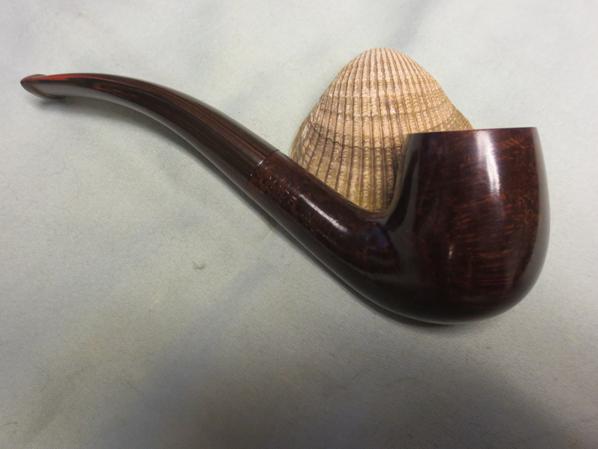
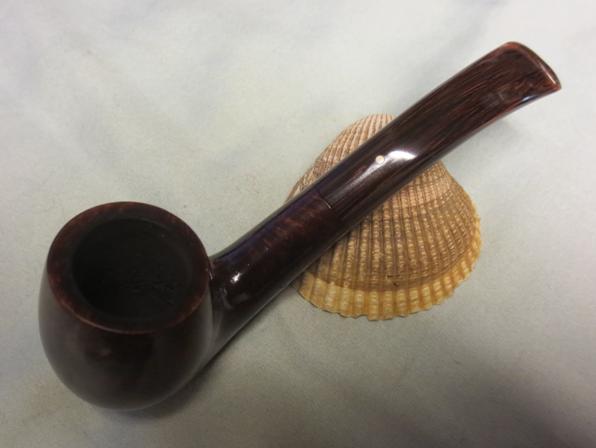
Tag Archives: Bowl – refinishing

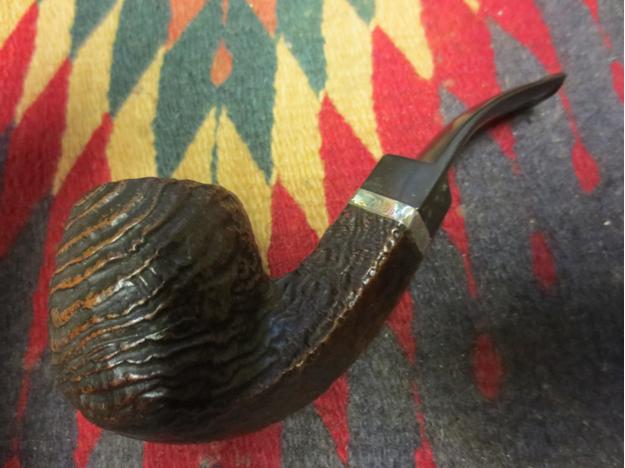
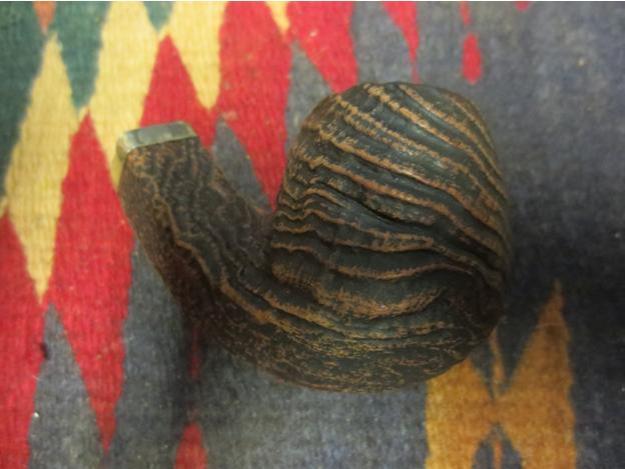
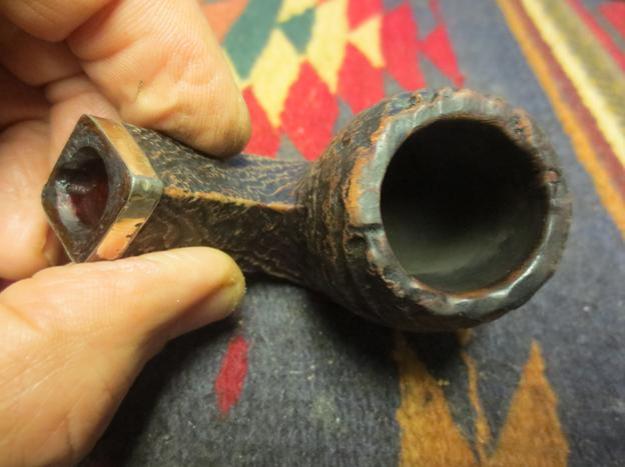
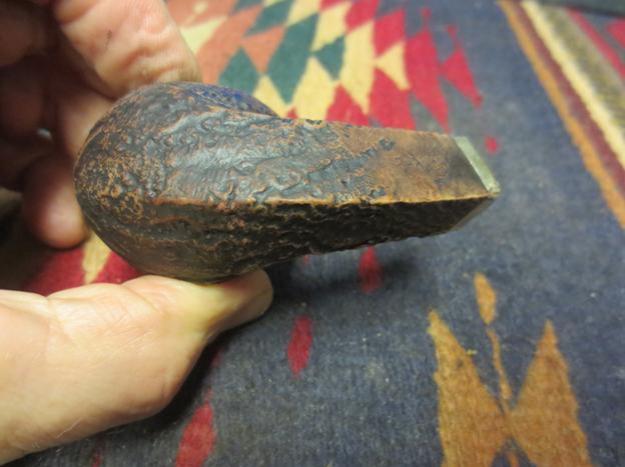
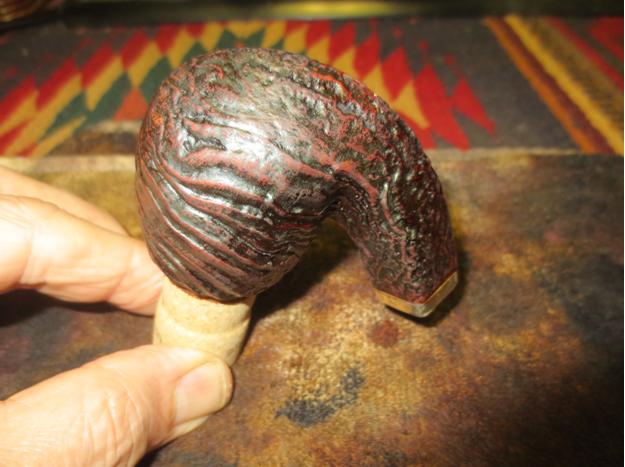
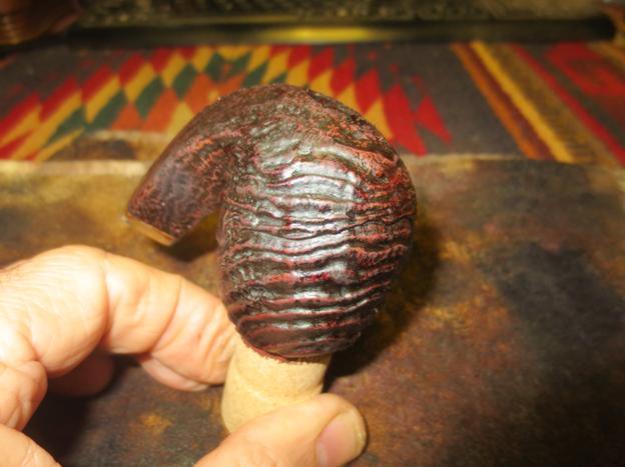
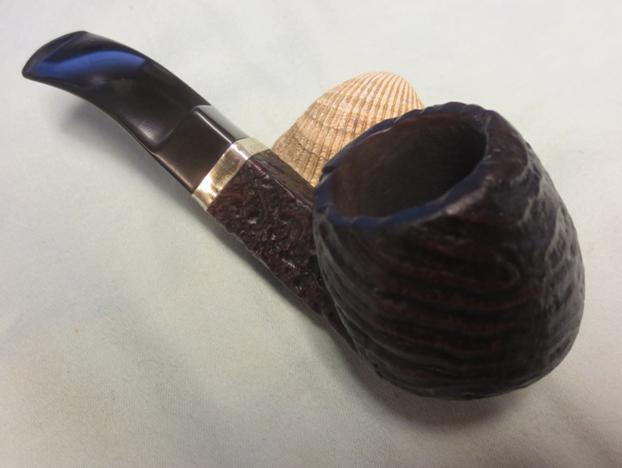
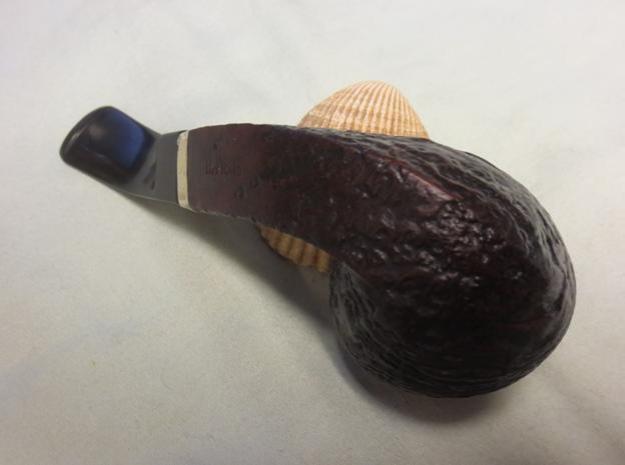
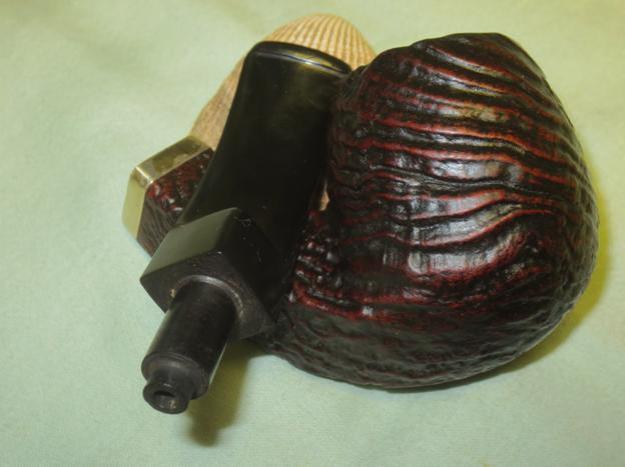
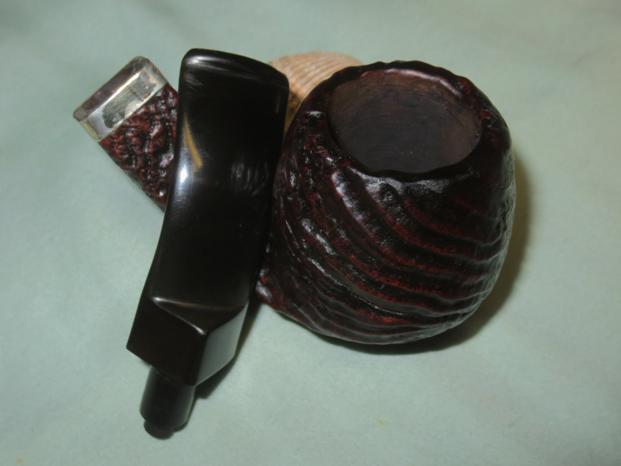
Gotta Love this Sandblast on the Ehrlich Diamond Shank Bent Billiard


Blog by Steve Laug

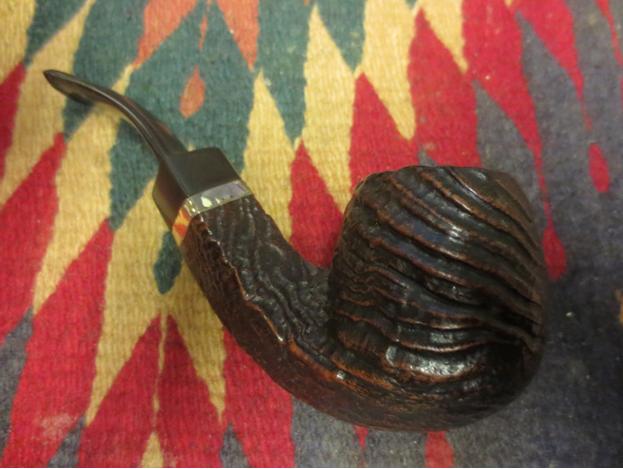
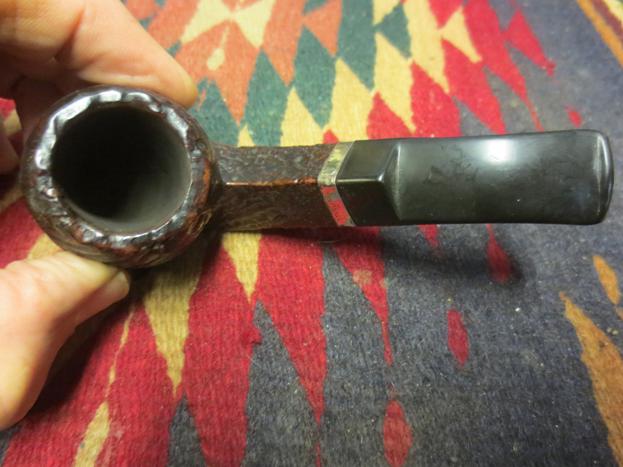
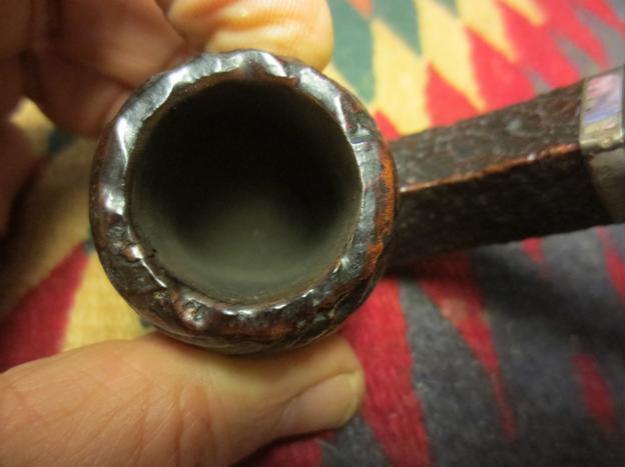
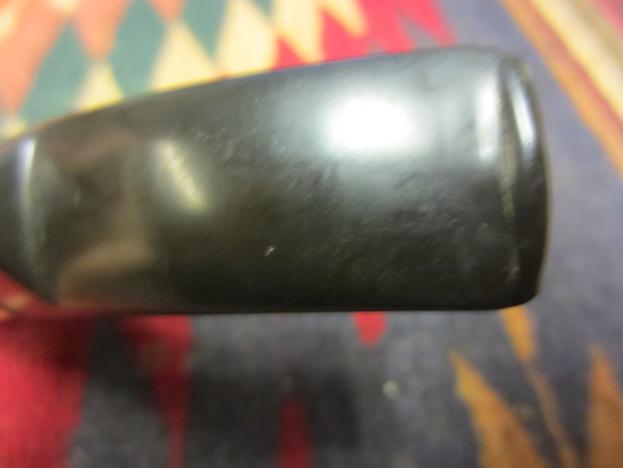
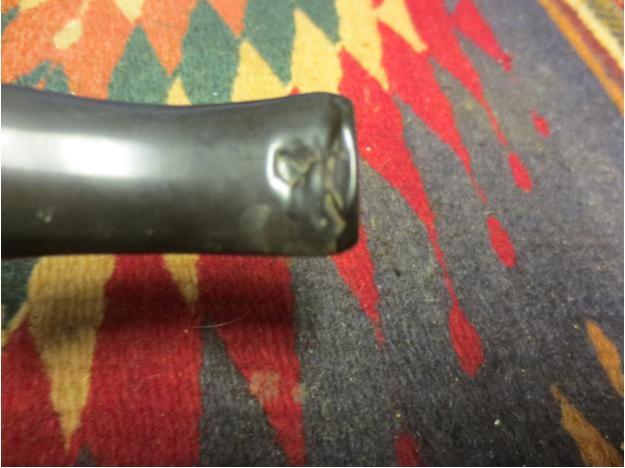
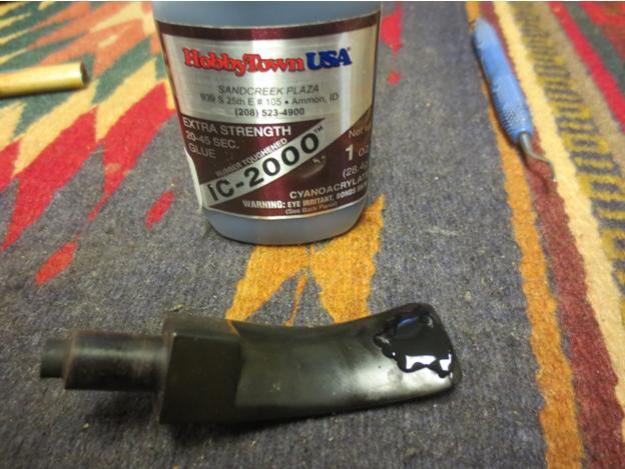
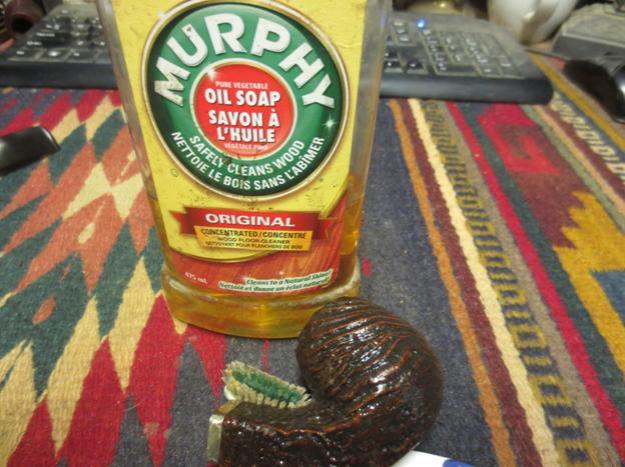
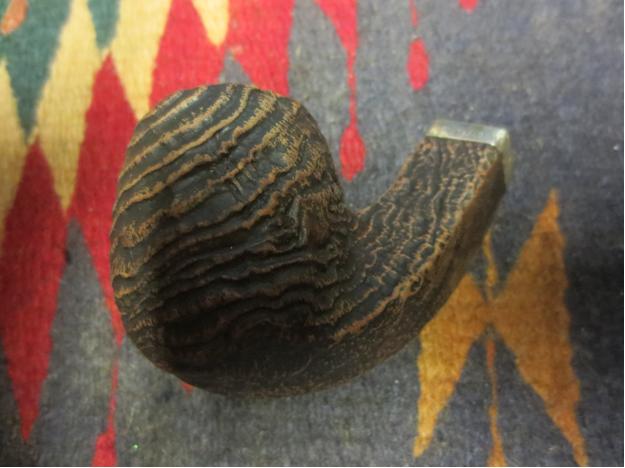
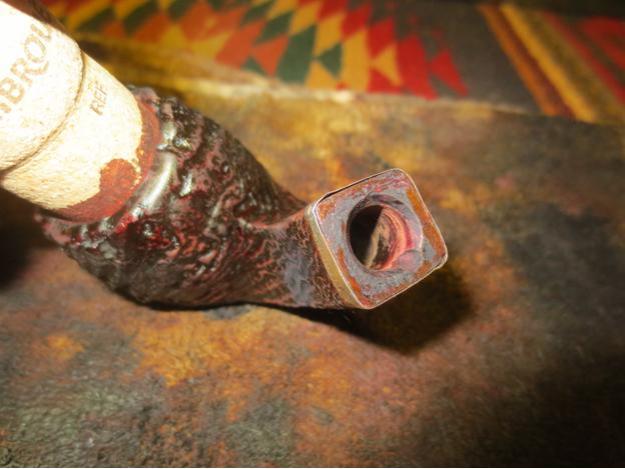
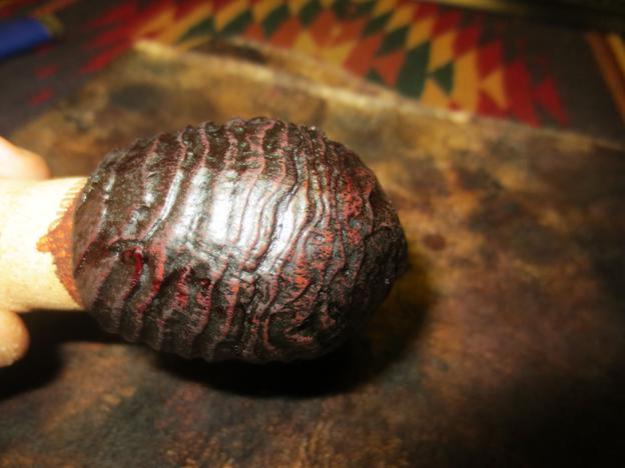
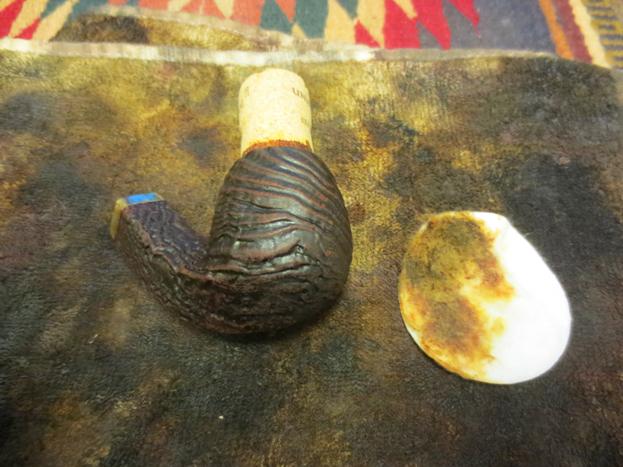
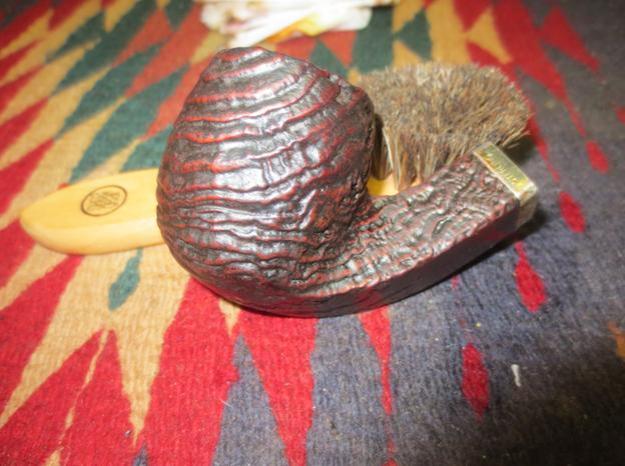
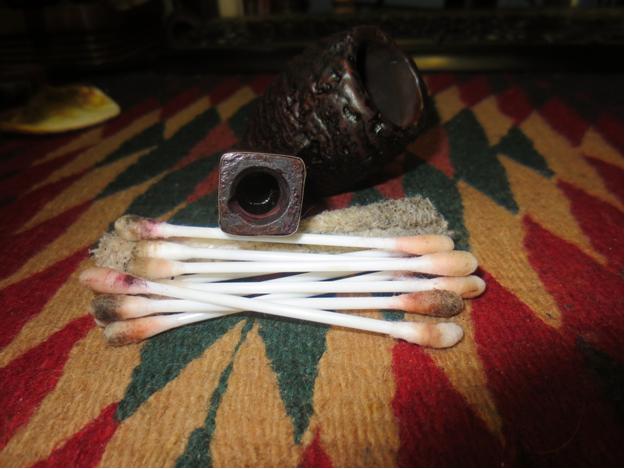
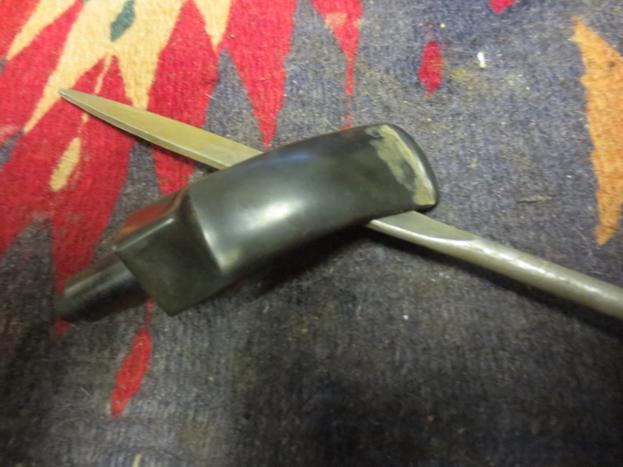
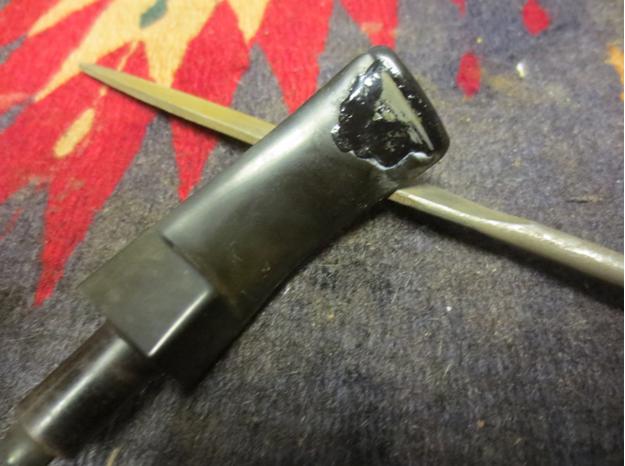
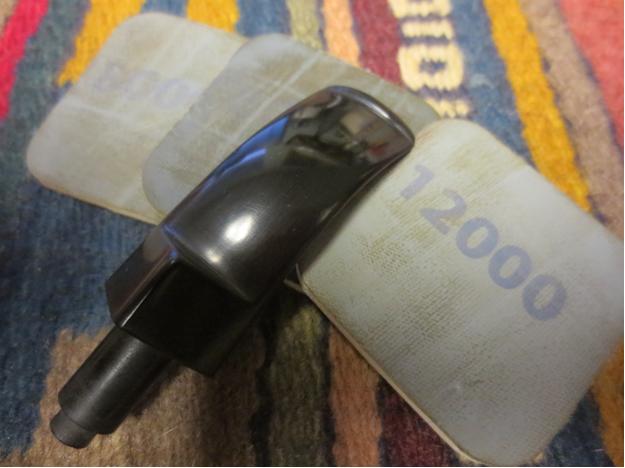
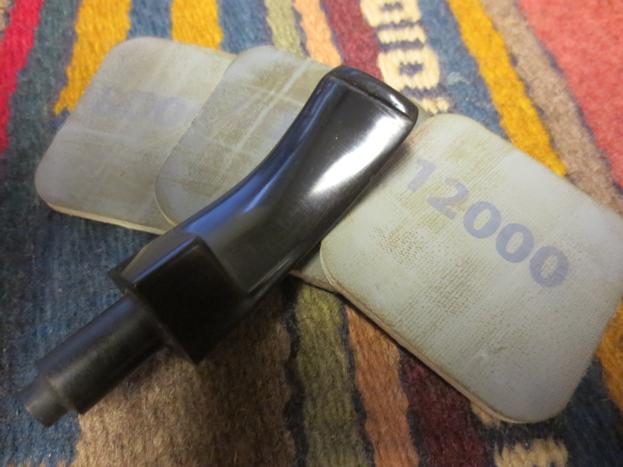
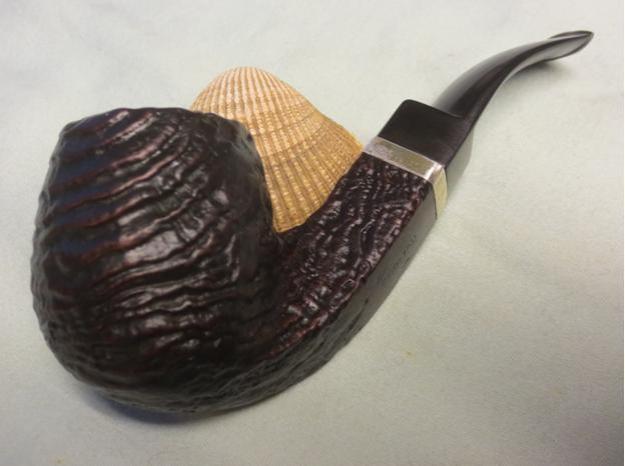
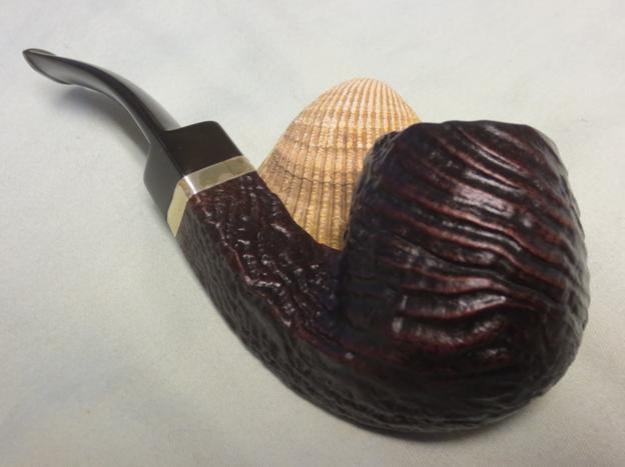
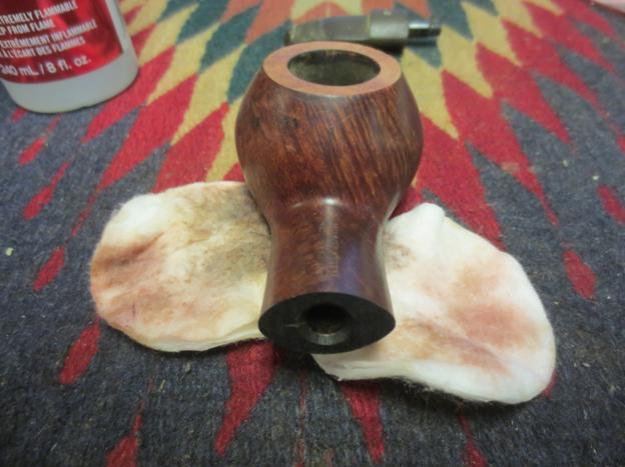
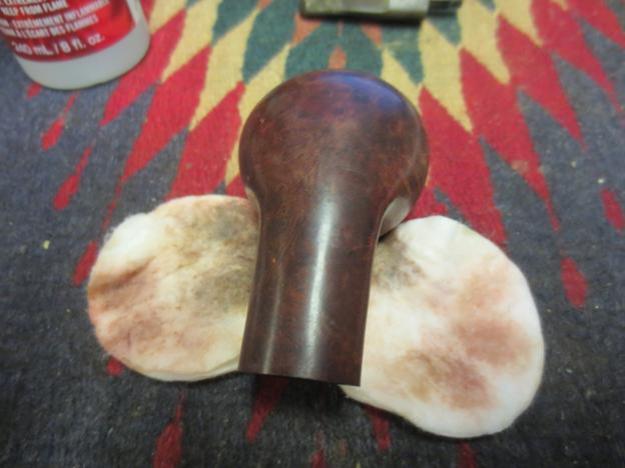
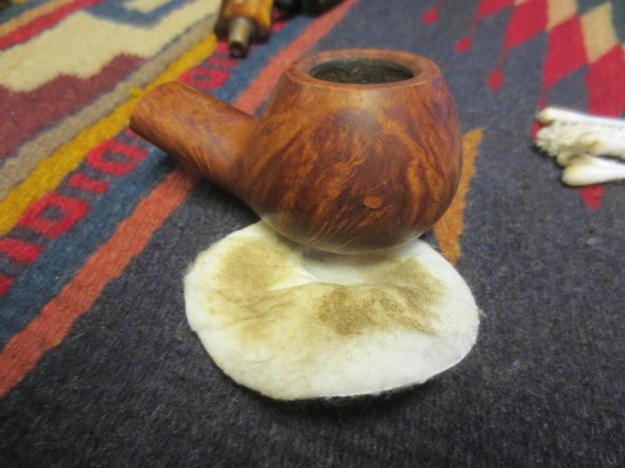
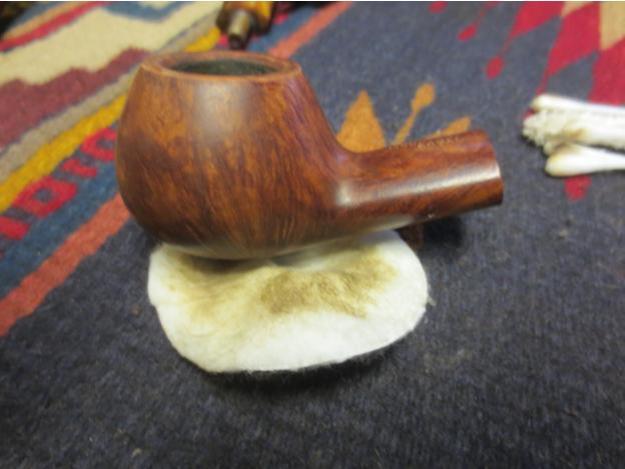
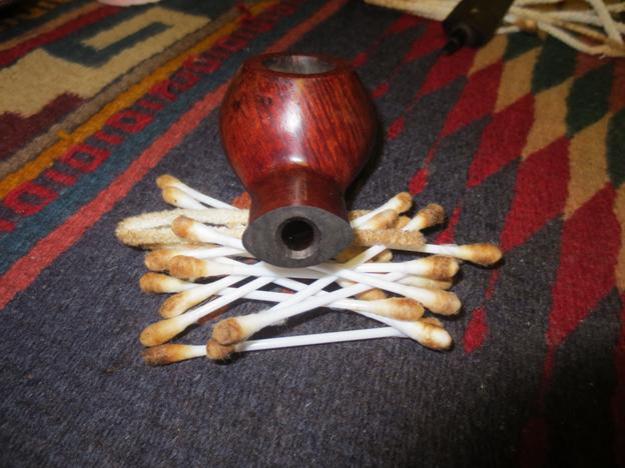
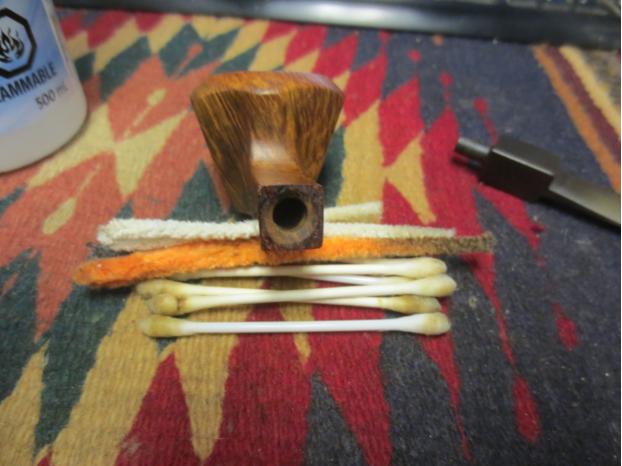
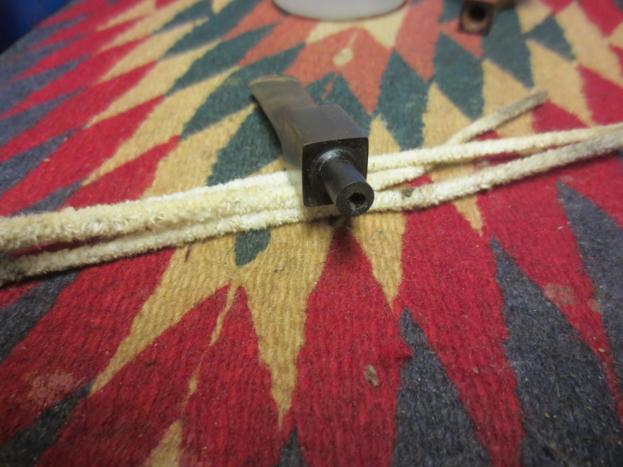
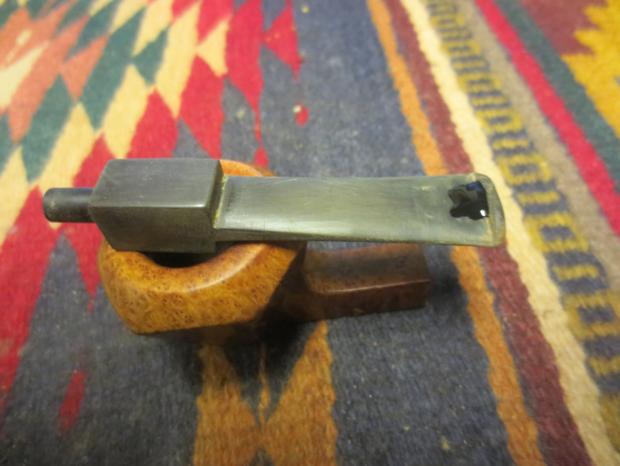
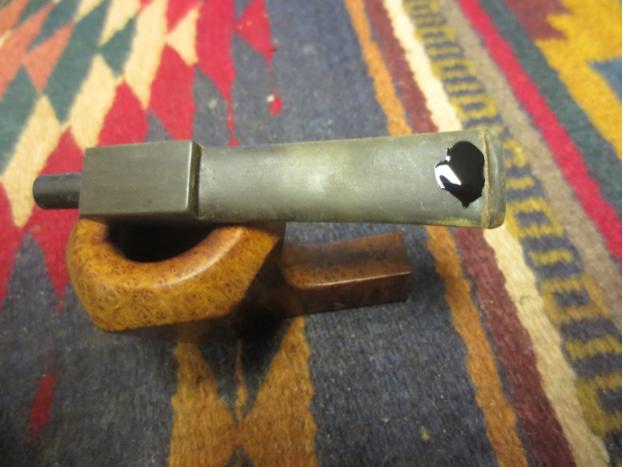
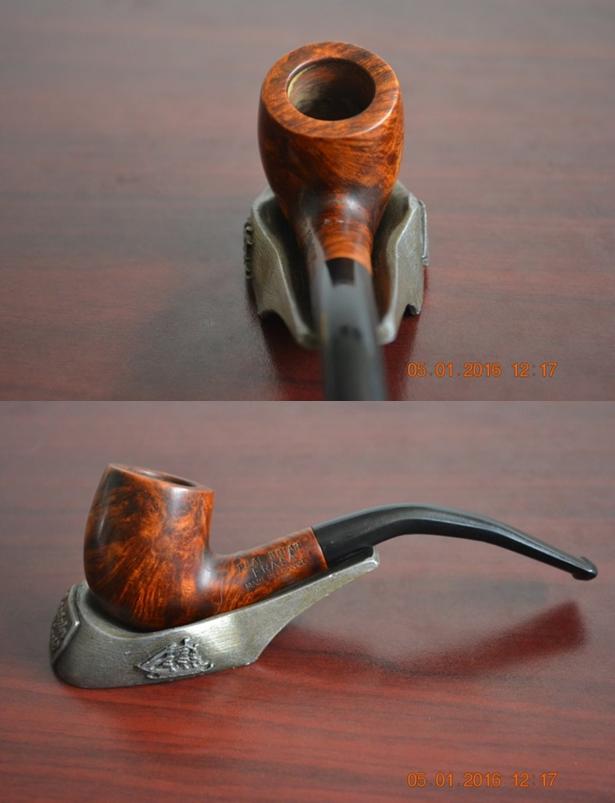
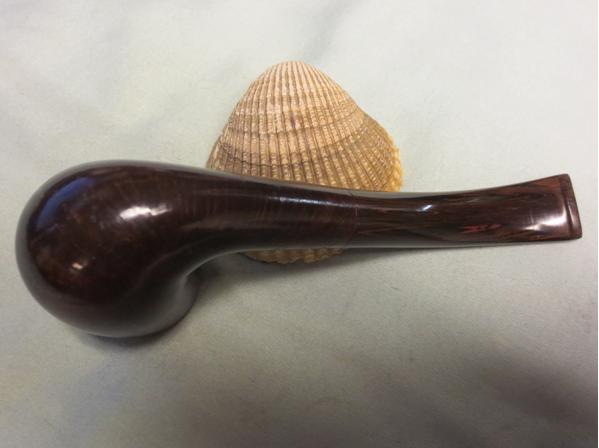
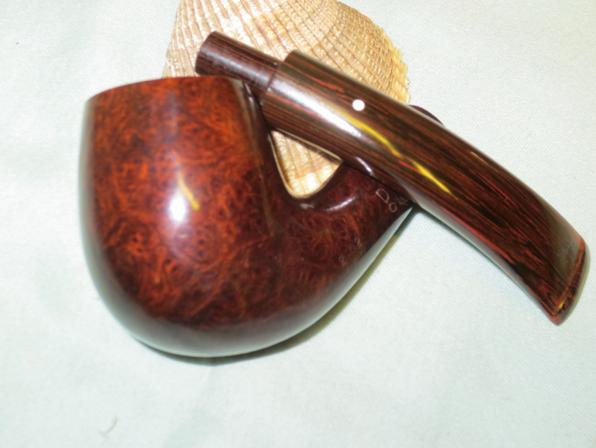
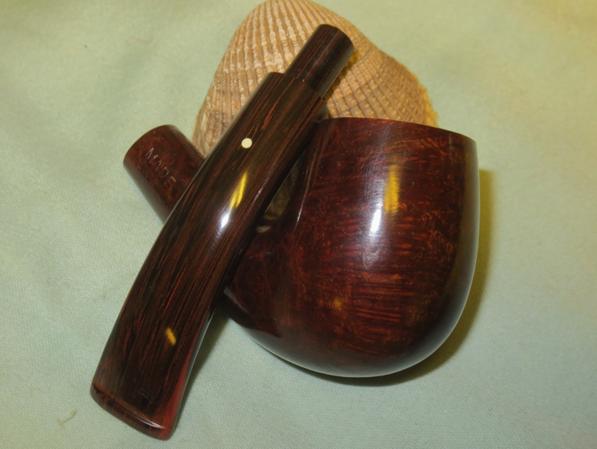
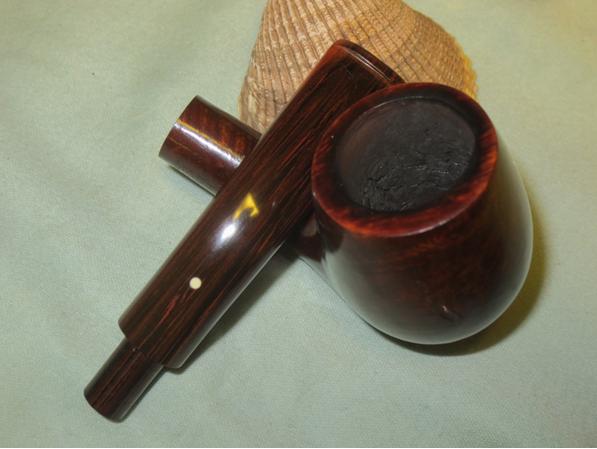
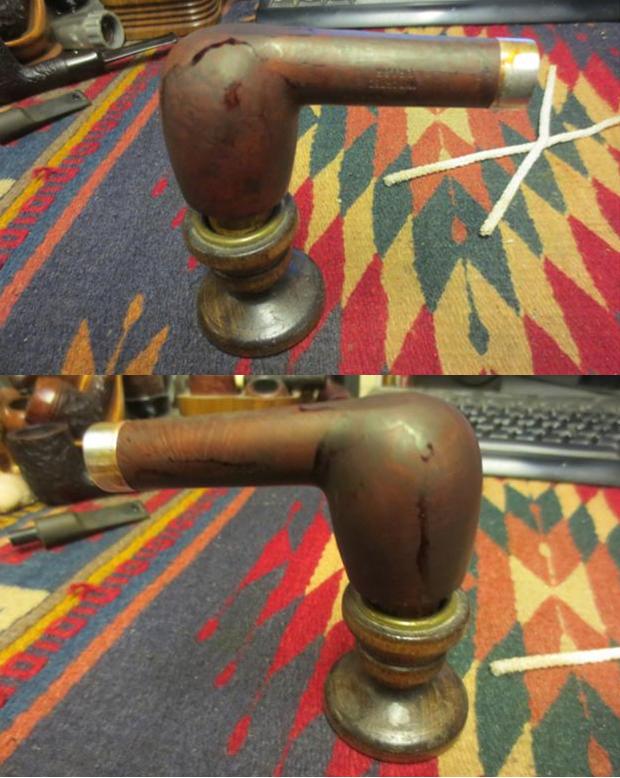
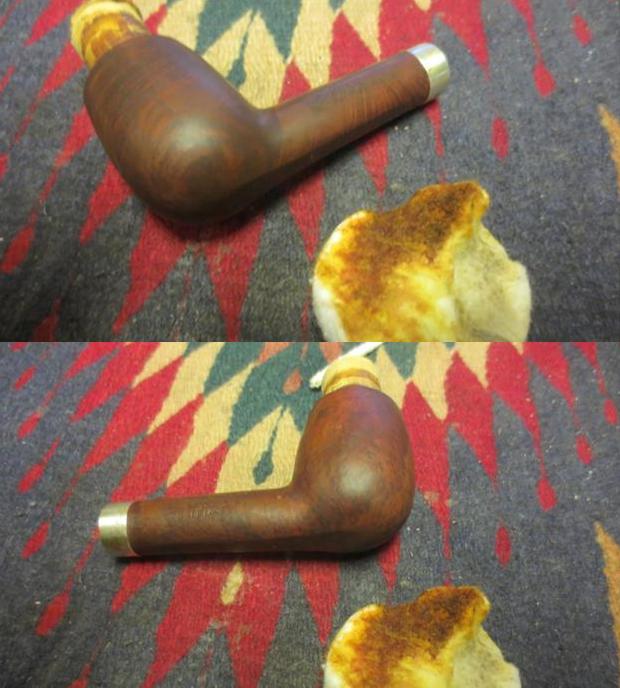
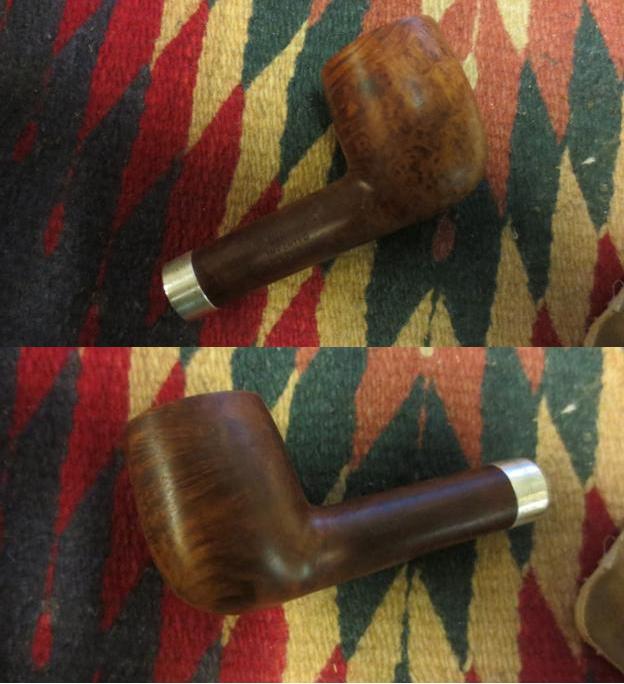
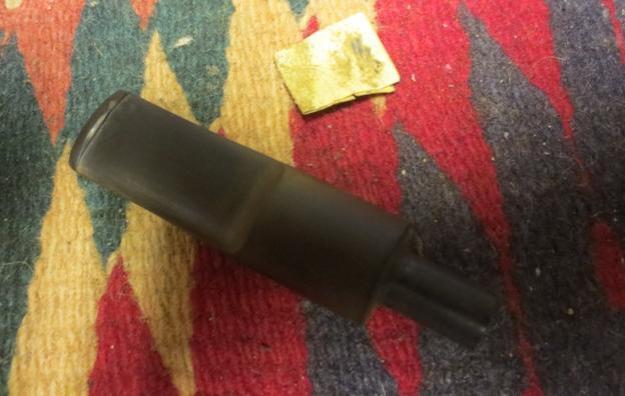
When I saw this Ehrlich Sandblast Diamond Shank bent Billiard I was immediately drawn to the cragginess of the blast on the bowl. The deep lines and grooves of the blast that go all around the bowl are really nicely done. The ridges and grooves flow with the cut of the pipe and give it a distinctive flare that I was taken by. The finish was worn but in decent shape in the EBay photos but it still looked good. When I picked up the pipe from my brother on an April visit I could not wait to work on it. I took these photos to show the state of the pipe when I received it. The finish was worn and dirty – lots of grime in the deep grooves. The rim was pretty clean. I field reamed it when I was at my brothers and took back the cake that was there to bare briar. The shank had a smooth portion on the left underside where the EHRLICH stamp resides. I have no idea how to tell the age of their pipes as all the ones I have had over the years have had the same stamping. Some added a second line – Supreme, etc. – but this one only had Ehrlich. The band on the shank end is stamped Sterling. It was obviously put on the shank after the blast and was a shop cosmetic addition. It does not hide any cracks in the shank. The stem was oxidized and had some serious bite marks on the underside that would need to be addressed. I liked the shortness of the stem as it gave the pipe a compact look that worked with this pipe.Erl1 Erl2 Erl3 Erl4I took some close-up photos of the rim and the stem to show their condition. The rim had no buildup or tars on it. The thin edges were lightly grooved – almost looked like the pipe maker had rusticated the rim to match the look of the bowl rather than risk sandblasting it. The stem was another story. The top side had lots of small dents that looked like they had been buffed out and the result was a wavy top surface. The underside had deep bite marks and tooth indentations that amazingly did not break through the surface and leave holes. I think that the thickness of the stem prevented the bite marks from going through to the airway. The sharp edge of the button and the top and bottom surfaces were pretty much obliterated by the “chomper” who had previously owned this pipe. Erl5 Erl6 Erl7I cleaned out the deep tooth marks on the stem with alcohol and cotton swabs. I removed the debris in the pits and grooves with a dental pick. I dried off the stem and then filled the bite marks with black super glue. I built up the button and filled in the sharp groove. I would need to recut that once the glue had cured. I laid the stem aside to let the glue harden.Erl8I scrubbed the grooves and ridges of the bowl and shank with a tooth brush and Murphy’s Oil Soap. I rinsed the bowl under running water and dried it off. The scrubbing had done a great job removing all of the grit and grime in the ridges and grooves of the sandblast.Erl9 Erl10 Erl11 Erl12 Erl13While the stem repair cured I worked on the bowl. I wiped it down to remove any remaining dust and then put a large cork in the bowl so that I could hold on to it while staining the bowl. I used a dark brown aniline stain that had been thinned to 50% with isopropyl alcohol to restain the bowl. I flamed it to set the stain in the blast.Erl14 Erl15 Erl16 Erl17I wiped down the bowl with alcohol on cotton pads to make it a bit more transparent and allow the dark black in the grooves to show through.Erl18 Erl19I hand buffed the bowl with a shoe brush to get a bit of a shine on the briar.Erl20With the externals pretty well cleaned up and restored I addressed the internals of the bowl and shank. I cleaned out the mortise and shank with pipe cleaners, cotton swabs and alcohol. To my surprise there was not much tobacco debris or oil in the shank. What came out with the cleaning was the original brown stain. Evidently the bowl had been dipped in stain. The amount of stain that came out on the pipe cleaners and cotton swabs was amazing. You can see it in the photo below. I scrubbed it until it was clean and I could see bare briar on the sides of the mortise.Erl21I sprayed the stem repair with some accelerator to harden the super glue more quickly. I decided to use it this time. I usually let the repair cure over night, but this time I was a bit impatient. When the glue was hard to the touch I used a series of flat needle files to begin flattening the repair and shaping the sharp edge of the button on both sides of the stem.Erl22 Erl23 Erl24 Erl25With the button edges cleaned up and the slot opened slightly with the files I sanded the stem surface with 180 and 220 grit sandpaper to smooth out the repairs and minimize the file marks in the vulcanite.Erl26 Erl27I wet sanded both sides of the stem with 1500-2400 grit micromesh sanding pads to blend in the repair on the underside. I rubbed it down with a coat of Obsidian Oil. Erl28 Erl29I dry sanded both sides with 3200-4000 grit sanding pads to further blend in the patch on the underside. By this point it was beginning to disappear into the shine of the stem. I gave it another coat of oil. Erl30 Erl31I finished sanding it with 6000-12000 grit pads and gave it a final coat of oil and let it sit until the oil was dry.Erl32 Erl33I buffed the stem with Blue Diamond and lightly touched the blast with the polish. Too heavy a touch and the grooves fill in with the polishing compound so it is critical to have a very light touch. I gave the stem multiple coats of carnauba wax and buffed it with a clean buffing pad. I sparingly applied some Conservator’s Wax to the bowl and hand buffed it with a shoe brush and with a clean buffing pad. I finished by hand buffing the pipe with a microfibre cloth to give depth to the shine. The finished pipe is shown in the photos below. I really like the way the stain turned out and I am pleased with the repair to the stem. Thanks for looking.Erl34 Erl35 Erl36 Erl37 Erl38 Erl39 Erl40

Restoring a Pair of Mountbatten Authors


Blog by Steve Laug

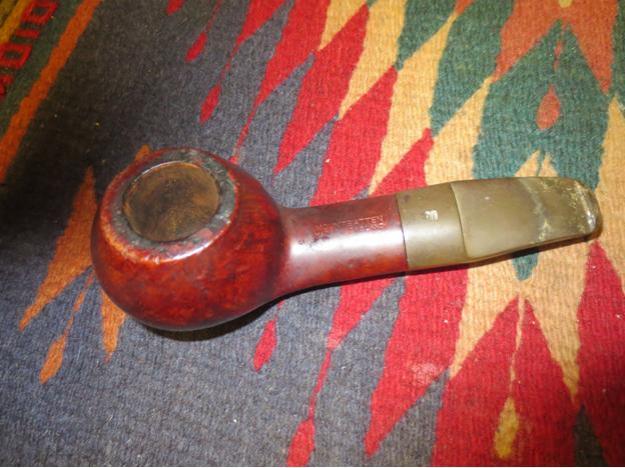
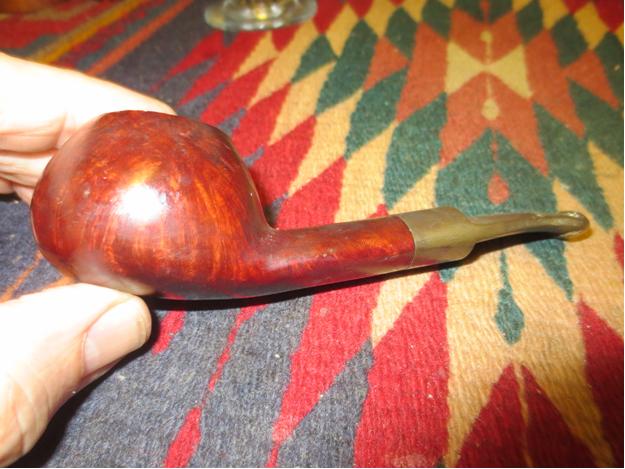
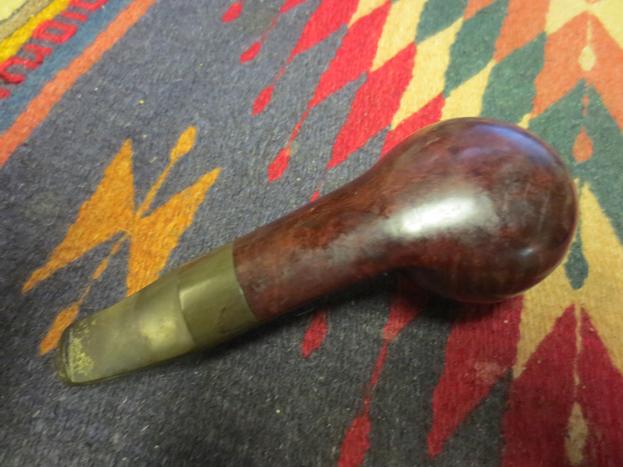
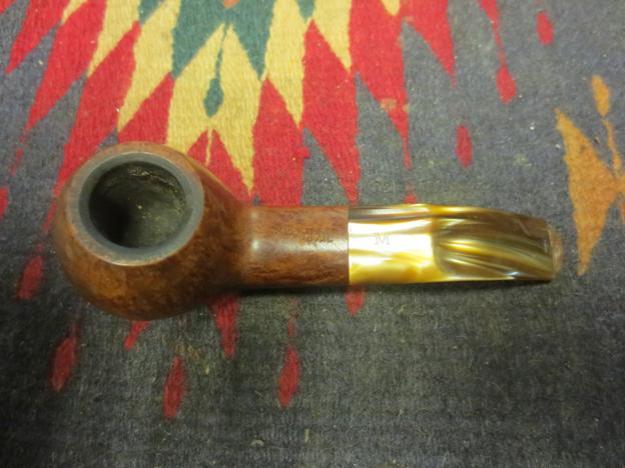
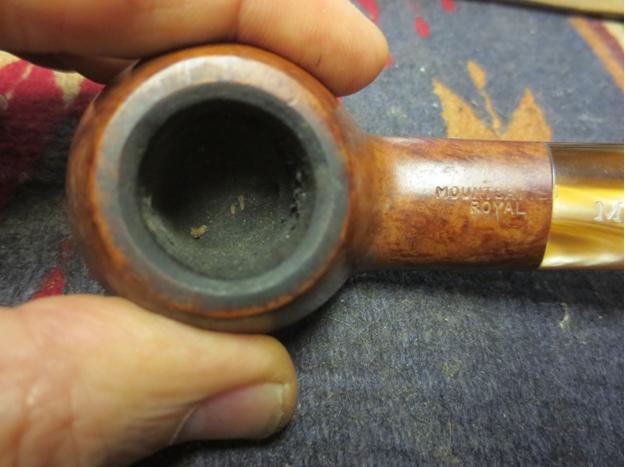
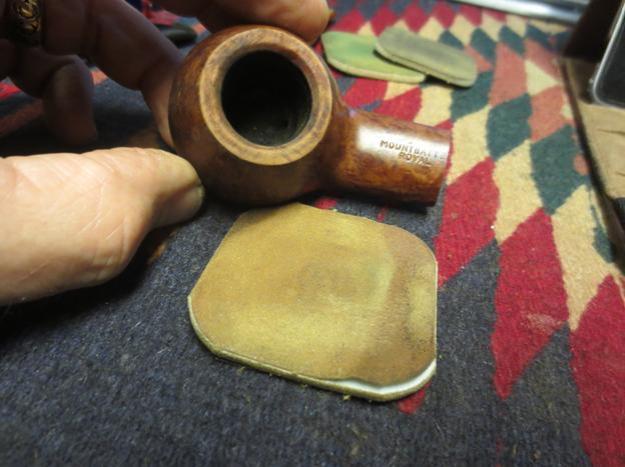
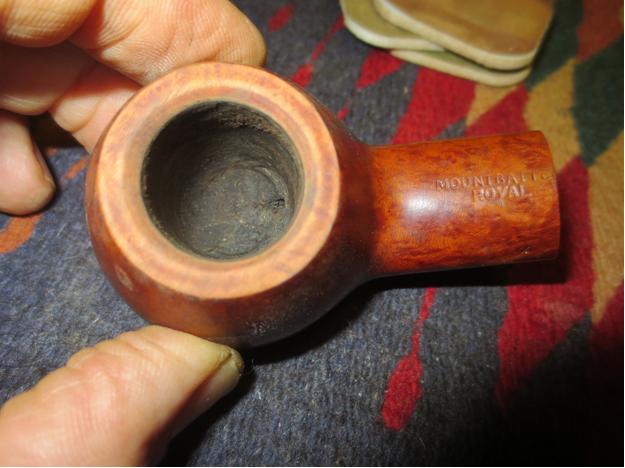
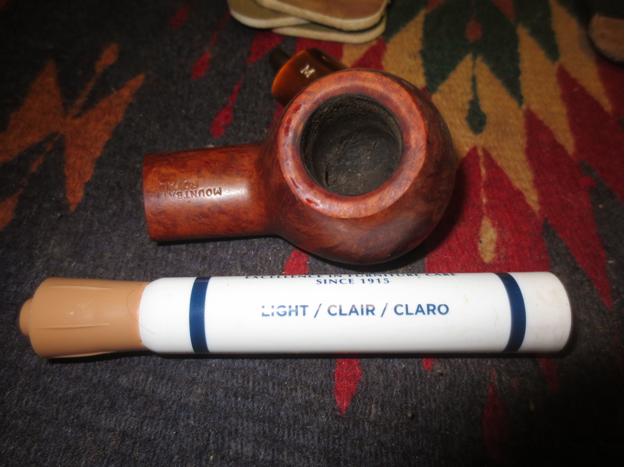
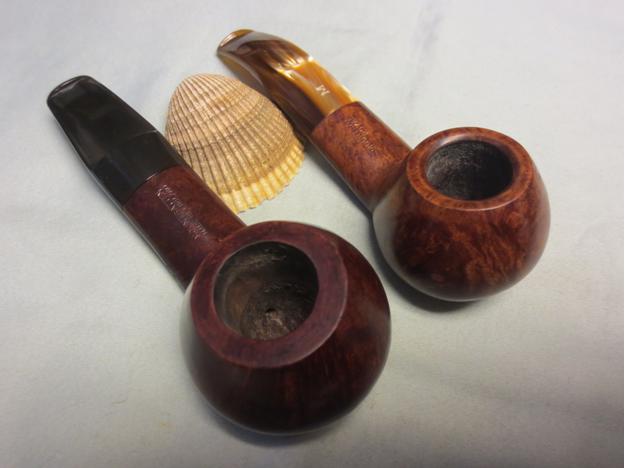
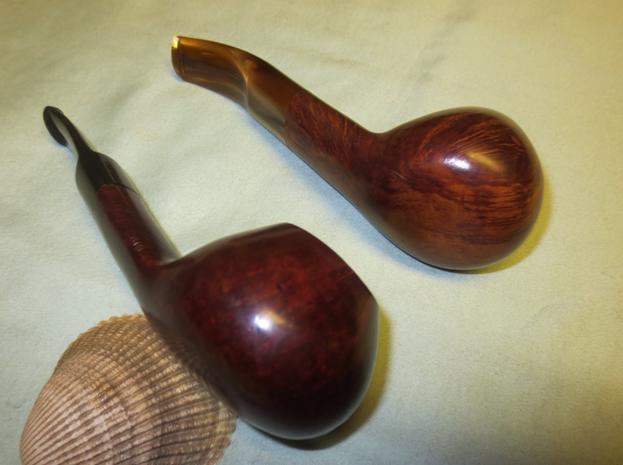
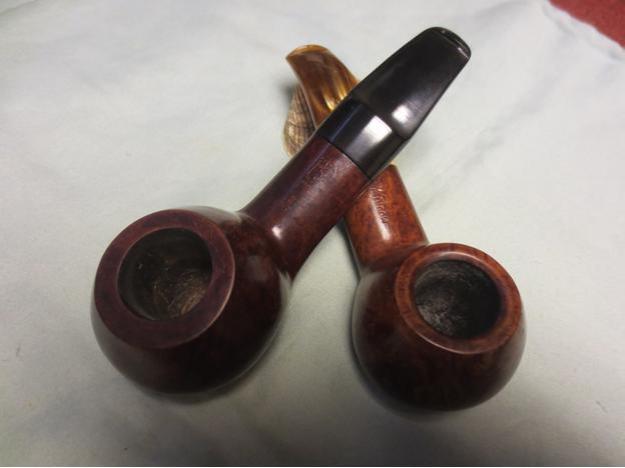
My brother sent me pictures of the first pipe in this pair of Mountbattens and wondered what I thought of it. We decided that it was worth a bid as the shape interested me. I had no idea who produced Mountbatten pipes, but this one had the look of an older one. The narrow taper on the stem back to the button, the darker stain, the narrow slot in the rounded button and the stepped down tenon all pointed to a pipe from an older time period. This one was stamped on top of the shank Mountbatten over Made in England. On the right side of the oval shank it bore the shape number 819. The finish was in decent shape other than a badly beat up rim top. The cake in the bowl was pretty thick. The stamping was distinct and clear. There were some dents and dings in the bowl sides. The stem had what appeared to be a surface logo on top of the saddle. It was not stamped and was peeling on one edge. It was oxidized and had some tooth marks on the top and underside near the button edge. The slot was so narrow that a pipe cleaner would not easily pass through to the bowl.Mt1Mt2 Mt3 Mt4He sent a picture of the second one as well – same shape as the first but having a different shape number and a Lucite stem. It was a newer version of the pipe. The shape was similar but slightly smaller. The taper on the stem was not as drastic and flowed to the button ending at the button almost the same width as the beginning at the saddle. The button shape, the shape and style of the slot in the button end, the stamping of the M on the top of the saddle all were signs of a newer version. This one was stamped on top of the shank Mountbatten over Royal. On the underside of the shank it was stamped Made in London over England. Under that near the stem shank union was the shape number. It was different from the older one – 207. The finish on this one was lighter and more of a matte. There were also quite a few fills in the sides of the bowl that were pink putty. They were pretty well blended into the grain so they would be fine. The bowl had a light cake in it and the beveled inner edge of the rim was darkened and had some lava that ran over the top edge. The Lucite stem was in good shape with some small tooth marks on the top and underside near the button.Mt5 Mt6 Mt7 Mt8This would be a fun pair of pipes to clean up and restore. Before I started to work on them I decided to do a bit of research on the brand. I started with my usual first stop – PipePhil’s Logo and Stampings site. I found out there that the pipe was made by Charatan. There were pictures of a variety of stampings on the stem and some beautiful looking pipes but no other information. Here is the link to that page: http://www.pipephil.eu/logos/en/logo-m7.html.

I did some further digging and found a link on Pipes Magazine’s forum where the brand was discussed: http://pipesmagazine.com/forums/topic/mountbatten-pipe. There was a discussion on that thread regarding the brand. Quite a few of the respondents originally said that the brand was a Charatan second. There was one dissenting voice that led to more responses similar in tone. The fellow said that the pipe was not a second. There was a quote from another site.

I googled the information and found that the quote came from a thread on pipes.org. Here is the link: http://pipes.org/forums/messages/23/45025.html?1169997817 I quote the original dissenter on the Pipes Magazine site in full because of the information that it gives. The original poster was Bill Ramsey. Here is Bill’s reply:

“Friends, after 40 years of nosing around pipes, what I have gleened is this: Charatan sold its seconds under private labels and later acquired the English rights for Ben Wade for just this purpose. Mountbatten, on the other hand was not a “second”(in that there was some physical deformity in the pipe) but rather a first line production from Charatan’s apprentice program. Each Charatan carver might have four or six apprentices at any one time of various skill levels. As they improved and started cutting pipes themselves, these pipes had to move… thus the Mountbatten. These were made on Charatan tooling with Charatan materials and teaching. Bear in mind that there was a high attrition rate and , perhaps, one apprentice in nine or ten made it to cutting their own bowls much less a Charatan carver. This is why you see more Charatans than Mountbattens on the market. You’re never going to put your kid through college by selling one but you’ve got a day to day workhorse of the first order. Good luck and happy puffing.”

That was just the kind of information I had been looking for. I close this section on the history of the brand with a quote that pretty well sums up the details that I had learned. It is taken from the same conversation that is traced in the last link above. “Yup now I know Mountbatten pipes were the fruit of an apprentice’s labor made under the supervision of a Master Pipe Maker at Charatan, most likely in the pre-Lane era; not a second, but a “sub-brand” (even though many experts still classify them as seconds anyway).”

A bit better educated about the pipes I was working on I was ready to start the refurbishing process on them both. I took some close up photos of the rims of both pipes. The first one is the older 819 pipe and the second is the newer 207 bowl. The damage to the first bowl would require topping while that on the second was less extensive and would only need a cleanup.Mt9 Mt10I set up my topping board and topped the 819 carefully so as not to remove more of the top than necessary to flatten and remove the damage to the outer edge of the bowl and rim.Mt11 Mt12

I reamed the bowl of the newer bowl with the Savinelli Pipe Knife and took out the thin cake that was on the walls. I used a flat penknife blade scrape the lava from the rim face and the inner bevel on the rim and then wet sanded the top with 1500-2400 grit micromesh sanding pads. The photo below shows the cleaned up rim surfaces.Mt13 Mt14 Mt15I carefully scrubbed the bowl walls and shanks with alcohol on a cotton pad to remove the grime. It did not take much scrubbing to clean up both bowls.Mt16 Mt17 Mt18 Mt19 Mt20 Mt21 Mt22 Mt23 Mt24

I sanded the topped bowl on the older, darker pipe with 1500-2400 grit micromesh sanding pads until the scratches left behind by the topping were gone. I then stained the top of the bowl with a dark brown stain pen. I stained the top of the lighter, newer bowl with a light brown stain pen to match the bowl sides.Mt25 Mt26

I cleaned the internals of both pipes: mortise, airway in the shank and stem and the slot in the button with alcohol, cotton swabs and pipe cleaners.Mt27 Mt28 Mt29 Mt30

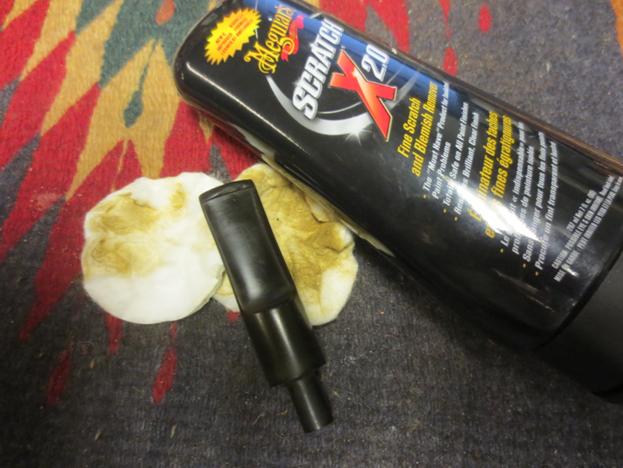
The stem clean up on each of the pipes was slightly different. The vulcanite stem needed the most attention. I sanded the tooth marks on the top and bottom side of the stem next to the button with 220 grit sandpaper and followed that with 280-600 grit sandpaper. I soaked it in Oxyclean overnight to soften the oxidation. I removed it in the morning and after drying it off scrubbed it with Meguiar’s Scratch X2.0 to remove the softened oxidation.Mt31 Mt32 Mt33The Lucite stem was much easier to work on. I sanded the tooth marks on both the top and underside of the stem at the button with 220 grit sandpaper to remove them. It took some focused sanding to remove the two marks but once I was done sanding them they were no longer visible.Mt34 Mt35With the oxidation taken care of on the vulcanite stem and the tooth marks removed from both stems it was time to work on them with micromesh sanding pads. I wet sanded both stems with 1500-2400 grit micromesh sanding pads.Mt36 Mt37I wiped the vulcanite stem down with Obsidian Oil and then dry sanded both stems with 3200-4000 grit micromesh sanding pads.Mt38 Mt39I wiped down the vulcanite stem with another coat of oil. I sanded both stems with 6000-12000 grit micromesh sanding pads. I gave the vulcanite stem a final coat of oil and set it aside. Once the oil dried I would put the stems on the bowls and buff them.Mt40 Mt41I put the stems back on the pipes and gave them a final buff with Blue Diamond polish on the wheel. I gave both multiple coats of carnauba wax and buffed them with a clean buffing pad to raise the shine. I hand buffed them with a microfibre cloth to add depth to the shine. The finished pair are shown in the photos below. The young apprentice carvers at Charatan did a great job in shaping and finishing these two pipes. They look great together. The mystery to me is the different number stamps on the pipes. They are similar in shape even though the newer is a little smaller. They look like they came from the same shape chart in terms of appearance. I suppose I will never know why the numbers are different but I do know that both should be great smoking pipes. Thanks for looking.Mt42 Mt43 Mt44 Mt45 Mt46 Mt47 Mt48 Mt49 Mt50 Mt51 Mt52

Spotlight: Ladies Pipes, Part 3/7, a Tiny Medico Acorn


Guest Blog by Robert M. Boughton
Member, International Society of Codgers
Member, North American Society of Pipe Collectors
http://www.naspc.org
http://www.roadrunnerpipesnm.biz
http://about.me/boughtonrobert
Photos © the Author

Two old buddies are heading off on their Annual Fishing Trip. For argument’s sake we’ll call them Kevin and Bob.
Bob notices that Kevin is being more grumpy than usual and tries to lighten things up by way of conversation.
Bob: “So Kev, last week was your birthday, happy belated.”
Kevin: (grudgingly) “Thanks.”
Bob: “Say, did, Laura, buy you that Estate Dunhill that you were constantly hinting at?”
Kevin: “Na”
Bob: “Well what did she get you instead?”
Kevin: “SUV.”
Bob: “New or used?”
Kevin: “New of course.”
Bob is extremely puzzled as Kevin is still driving the same beat-up pickup that was already old when Saddam was considered an ally.
Bob: “You know, Kev, you and I have been friends for a long time, and I’m entitled to say that you are an ungrateful sour puss. Laura buys you a New SUV instead of a second hand pipe, and that has you in a bad mood.”
Kevin: “Humph!”
Bob: “Well what kind of an SUV was it anyway?”
Kevin: “Socks, Underwear, Viagra”
— Thanks to mate on smokingpipes.com/forums. (I don’t know, but for some reason this struck me as a good gift idea for the next man who gives a lady grief for enjoying a pipe.)

INTRODUCTION
Steve comments now and then on the pleasure he gets from researching a pipe’s history. I know his motivation is not to tuck away, in his mind and for his own use, the information he gathers. I can’t say for sure what drives Steve, but I suspect he, also, is a natural born reporter – which is to say collector and sharer of information – with an insatiable longing to spread his news to readers as well as to supplement or in some cases create new pipe lore available online. Steve laughed at this when I suggested the notion, but I would say his crowning achievement so far is the definitive and exhaustive research that got to the bottom (which was deep) of the complex origins and Byzantine life of Brewster pipes – a close second to his exposé on the history of the Colossus Pipe Factory (CPF).

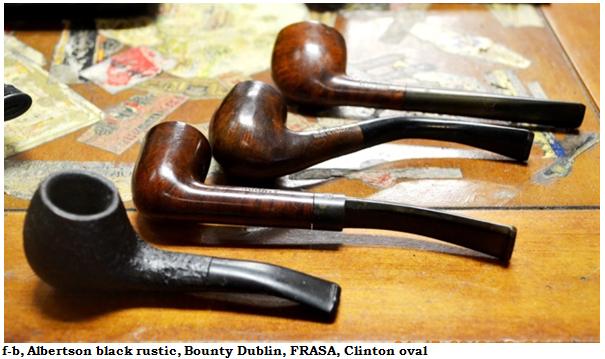
As a former freelance news reporter/photographer and still a spot news enthusiast, not to mention aspiring literary writer and pursuer of other investigative endeavors, I have a knack of my own for probing. When I can’t find any mention whatsoever of a pipe brand, I therefore become somewhat vexed. This was the case in particular with the first two pipes I restored for this series. One was a Frasa (or maybe FRASA as an acronym) French natural bent billiard;. The other was a Clinton natural straight oval that was neither the Israeli Alpha brand type nor the U.S. variety. Forever a dogged reporter at heart and also having a serious case of Obsessive-Compulsive Disorder, however, I intend to stay on these stories and others until I uncover the facts. The truth is out there.

As for Medico, there is much to be found online and in actual bound and printed books on pipes and the long, glorious history of their peaceful enjoyment. Indeed, the latter tools still exist, however tenuous their future. I hope and pray they survive for as long as Mankind occupies this planet, if not beyond. The history of Medico began with S.M Frank & Co.in New York in 1851, giving S.M. Frank the claim to the oldest pipe manufacturer in the U.S. By the time Frank formed Medico Pipes in 1957, it had already consumed eight other pipe makers, some still celebrated and others less remembered: the Manhattan Briar Pipe Co. in 1922; William DeMuth & Co. (WDC) in 1937; The Kaywoodie Co. (later Kaywoodie Pipes Inc.), Yello-Bole, Kaufman Brothers & Bondy (KB&B), the Reisss-Premier Corp. and the New England Briar Pipe Co. in 1955, and the New Jersey Briar Pipes Co. in 1956.

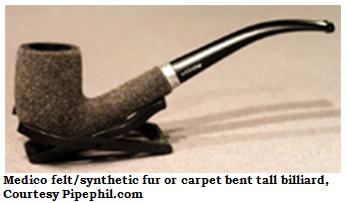
Discussions today about Medico pipes, in person or online forums, can become downright nasty, pitting vehement supporters against rabid critics. Nevertheless, older Medicos certainly possess a certain heightened quality and charm, and the brand’s lines are still made to be inexpensive and durable. As cigarsinternational.com put it, Medicos are “no-nonsense pipes made for the everyman.” That, they no doubt definitely are, at prices ranging from $15.99-$39.99. Medico has made pipes with materials including traditional briar, Brylon (an S.M. Frank synthetic invention of high temperature resin and wood flour) and even a unique bent tall billiard covered with a mysterious material described by Pipephil as either felt, synthetic fur “or a piece of wall-to-wall carpet.” Well, that settles that. To tell the truth, I would love to own one of those, if only for show-and-tell and to be able to call myself a carpet piper, despite the risk of static-electric charges and burns.Lady1SOME FEMALE SMOKERS AND PIPE MAKERS
I have put out various general calls for help in my local and online pipe communities searching for women who smoke pipes and would be willing to share some of their experiences and preferences, and my friend Liz invited me to become a Friend of her Facebook Ladies of the Briar Group. I still need to pursue that line, but at least have four blogs left to do so.

Since my second ladies pipe blog, I have re-focused my research on areas of interest I had not even considered until some other friends mentioned them. The one was revealed to me by Jennifer, the owner of Stag Tobacconist in Albuquerque where I am a very frequent fixture. The other, suggested to me by another Smoking Forums UK friend, Ed, was a fact that struck me as so obvious I was embarrassed to have overlooked the idea. Both, I believe, will prove of great interest.

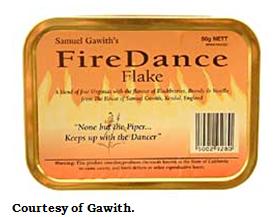
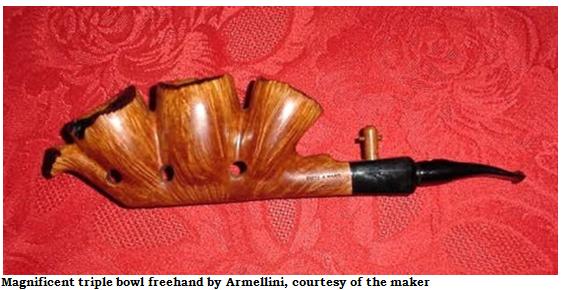
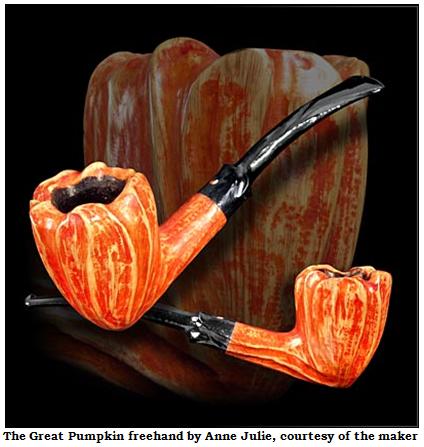
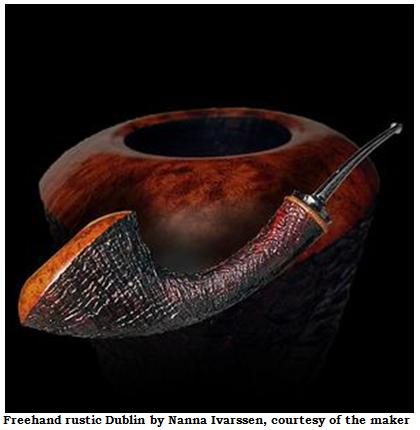
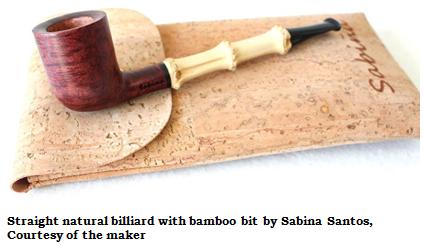
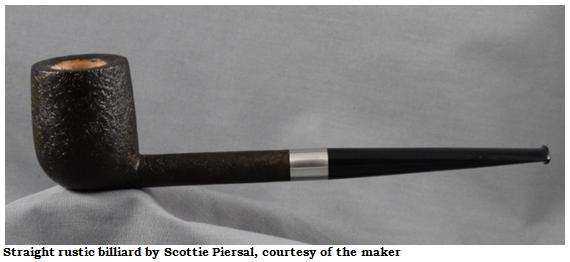
Unknown to me until Jennifer’s revelation, was that Samuel Gawith Fire Dance Flake – a Virginia mix with blackberry, vanilla and brandy flavorings that was a favorite of mine back in my aromatic-heavy days but remains a blend I still enjoy on occasion – was formulated by one of the few female tobacco blenders in the U.S. The light flavorings and Best Brown Virginia used give Fire Dance a nice little bite.Lady2Of more significance is the presence of females – ye gads, what’s the world coming to? – in the business of making pipes. Ed mentioned the following names and provided a few links, worried these were not enough, and I looked up the rest to get samples of their work: Vilma Armellini, one of three daughters of the great Italian pipe maker Mauro Armellini and who regularly assisted her father in making many of his pipes and took over the business upon his death; Anne Julie; Nanna Ivarssen, and two newcomers who have been crafting fine pipes for the past several years, Sabina Santos and Scottie Piersal. Alas, I have been unable to locate a pipe made entirely by Vilma Armellini, but the first photo below shows her father’s work that likely included her help. I will, you can bet, continue looking.Lady3 Lady4 Lady5 Lady6 Lady7In light of my severe case of P.A.D., I expect to add samples of these brilliant women’s pipe crafting art to my collection as soon as possible.

RESTORATION
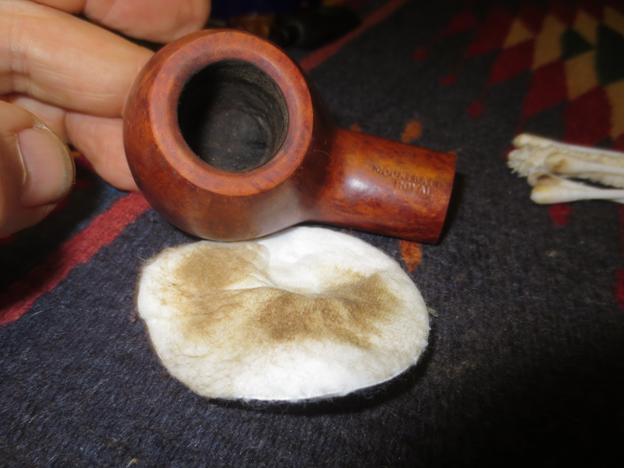
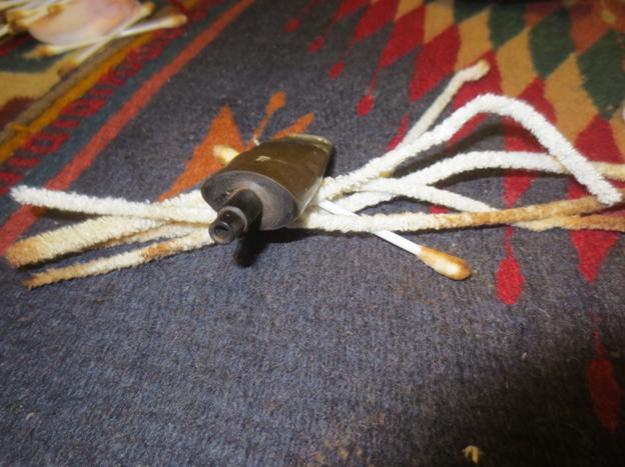
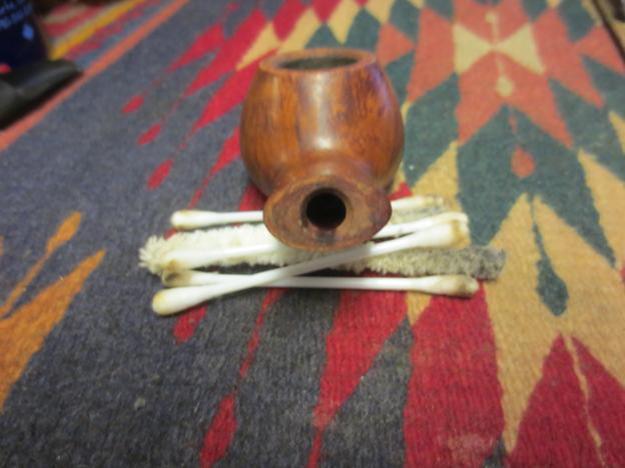
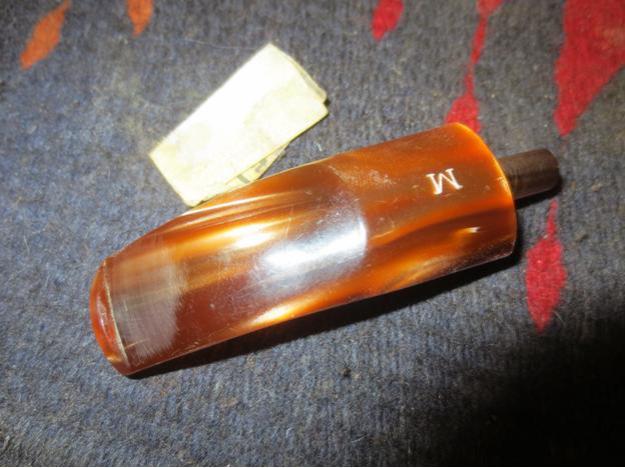
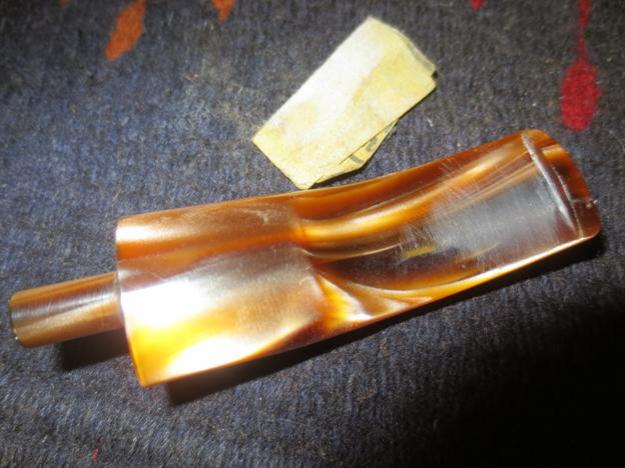
Now, for the drab little Medico Real Briar acorn as I first saw it.Lady8 Lady9 Lady10 Lady11The bit looked like this close up.Lady12I put it in an OxiClean bath and the stummel in used Everclear (not to drink, but to strip prior pipes).Lady13I took the bit out after a half-hour or so and wet micro meshed it. Then I went ahead and buffed it with red and white Tripoli, White Diamond and carnauba.Lady14I apologize for the gunk in the last photo. I just noticed it, but I assure you it came off with a wipe, or I wouldn’t have sold it the next day. About an hour after putting the stummel into the Everclear, I removed it and swabbed the chamber with one small soft cotton square and the outside with another.Lady15 Lady16 Lady17As usual, there was still old stain to remove, but other than uncommon situations such as removing that awful red varnish used on almost all pipes made in China , for example, I prefer not to let the wood soak too long. A little sanding with 220-grit paper in easy, even strokes, for the most part in the same direction, worked off the rest of the drab and dreary cloaking stain on the briar that had left darkness there and nothing more, as Edgar Allen Poe wrote.Lady18 Lady19 Lady20Call me anything other than Ismael, but I always get a distinct rush when the stummel is ready for micro meshing. In an average restoration of this type, with no serious, time-consuming obstacles, micro meshing most of the time is the halfway + 1 point, or the hump of the project. However, with five steps to go before completion of the pleasant task – it was better than the movie, which I had seen 10 times already – I was exactly halfway finished. The point, however obtuse, is that in my mind I was almost to the finish line. Oh, never mind! Alright, then, I proceeded to micro mesh from 1500-12000.Lady21 Lady22 Lady23Next up was re-staining the stummel, using Lincoln brown alcohol-based shoe and boot leather dressing.Lady24I also enjoy the brief puff of blue fire after holding my Bic or a good kitchen match close to the stain-wet wood, like flaming baked apples served with ice cream. Sort of. But that doesn’t make me a pyro. I prefer to think that life is like a bowl of ice cream, even if it’s served up on fire at times. Consequently, a few minutes after torching the stummel, I started with 2400 and 3200 micro mesh to remove the charred neon green coating. That broke through to dark brown, at which time I switched to super fine four-ought steel wool to take the darkness down a few notches.Lady25 Lady26 Lady27Ready for the second to last step in this somewhat off-the-norm order of events, I retorted the pipe at last.Lady28 Lady29After running a fluffy cleaner through the shank and clearing more last-minute soot from the chamber with a cotton cloth square, I buffed the stummel with white Tripoli, White Diamond and carnauba, using the wheel I keep clean after each to work the compounds further into the briar and keep them from smudging.Lady30 Lady31 Lady32CONCLUSION
So far, by an eerie coincidence if there is such a thing, all three of the pipes I have restored for this ladies pipes series have sold. The Frasa (or FRASA) went to my good friend and fellow pipe club member, Ashley. The Medico Acorn of this installment was snatched up by another woman, Rita, whom I met last night when she saw me smoking a pipe and mentioned that her husband “used to enjoy his pipes all the time” (I took this rather ominous wording as either a sign that the good man is no longer with us or just not with Rita), as well as the fact that she gave up cigarettes by puffing on a pipe of her own with tobacco until she weaned herself off both, and she added that she missed the feeling of the pipe in her mouth. No comment. The third pipe, a Citation Real Briar oval, sold to an 18-year-young man who also approached me because of the fine pipe in my mouth at the time. Ashley reserved hers before it was even restored while the others fell victims to my persuasive sales technique and the fortuitous circumstance that I had my available pipes with me. Still, I didn’t push any of the ladies pipes on anyone. They were all picked out of the box by the happy buyers.
SOURCES
http://pipesmagazine.com/forums/topic/smoke-jokes
https://rebornpipes.com/tag/brewster-pipes/
https://rebornpipes.com/2013/04/14/some-reflection-on-the-historical-background-on-cpf-pipes/
http://www.smfrankcoinc.com/home/?page_id=2
https://pipedia.org/wiki/S.M._Frank
http://www.pipephil.eu/logos/en/logo-medico.html
http://www.smfrankcoinc.com/home/?page_id=143 Medico pipes
http://www.cigarsinternational.com/brands/1552/medico/
http://www.tobaccoreviews.com/blend/1965/samuel-gawith-firedance-flake
http://www.theitalianpipe.com/artisans/armellini.htm
http://www.annejulie.com/pipes.html
https://pipedia.org/wiki/Ivarsson,_Nanna
http://www.sabinapipes.com/
http://mypipeclub.com/forum/index.php?PHPSESSID=18ed18b6fd1b7cfa581ca18da56449f7&topic=805.0 Scottie Piersal

Cleaning up an Edwards Unique – Hexagonal Straight Dublin


Blog by Steve Laug

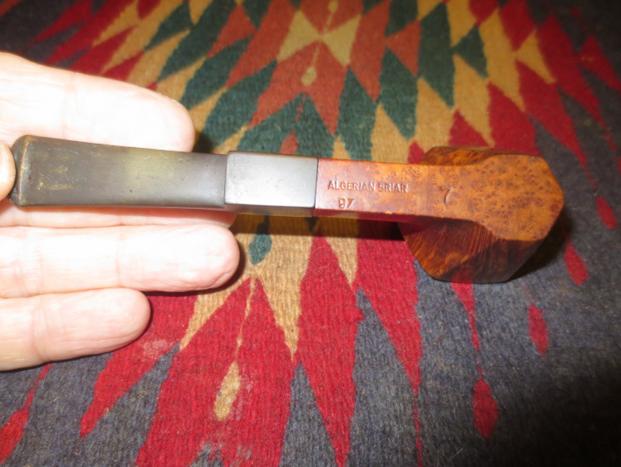
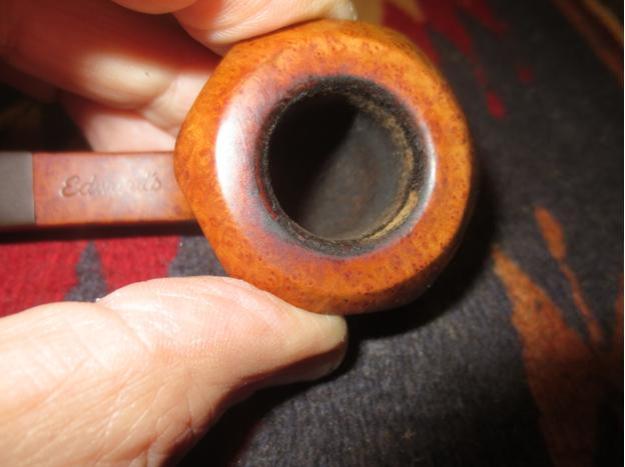
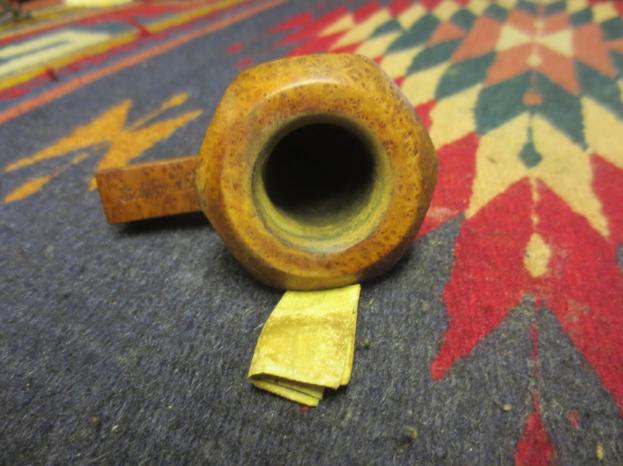
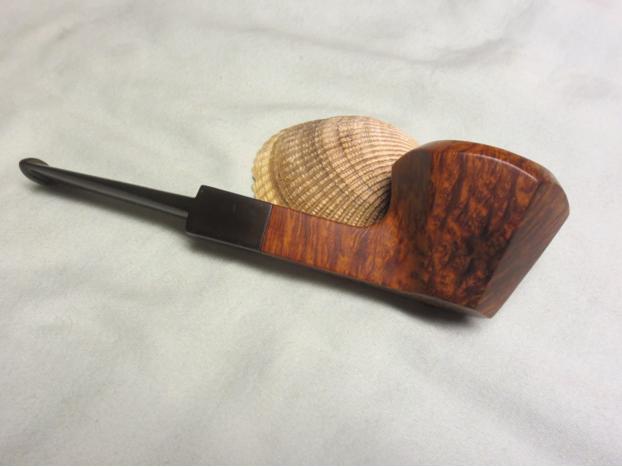
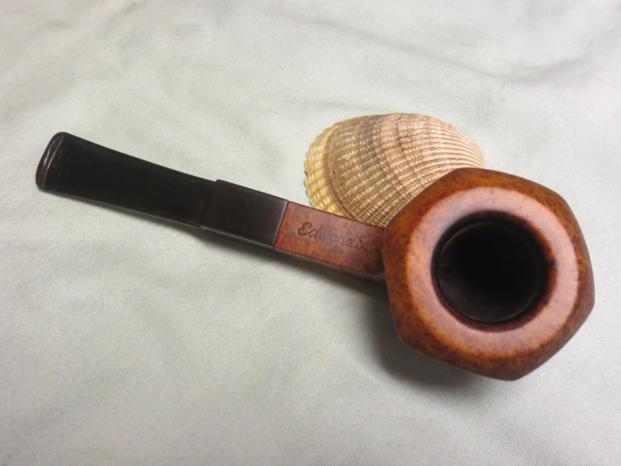
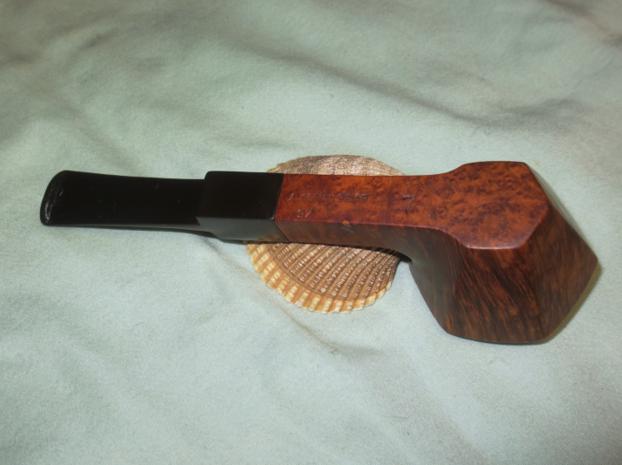
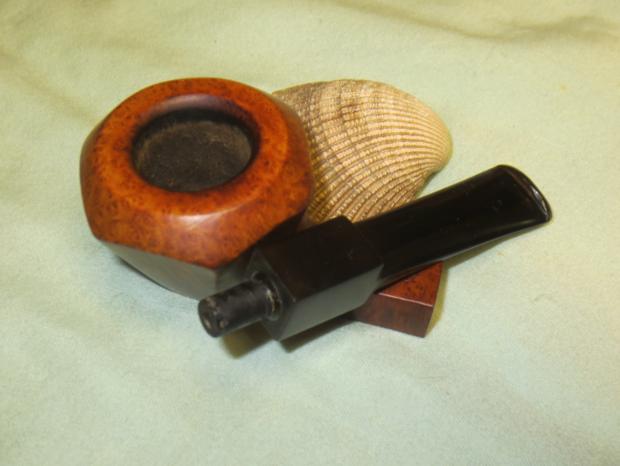
Over the years I have cleaned up, traded or kept many Edwards smoking pipes. The natural finish briar has always made these pipes attractive to me. The briar is always light weight and beautiful. Many have had a few fills in them but that in no way detracted from the beauty of the pipe. This one from my brother Jeff is different than any of the others that I have had pass through my hands. It is a square shank hexagonal Straight Dublin that has a shape that I have never seen before. The grain on it is quite stunning even though there are some small fills on the shank and on the right side of the bowl. The finish was in decent shape under the light grime on the surface. The beveled inner edge of the rim had some lava build-up and it spilled over to the flat portion of the rim toward the back side. I had field reamed the cake while I was staying with my brother in Idaho. The bowl was pretty clean and the inner edge of the rim was round. There were no dings or dents in the rim or the curved cap on the bowl. The stem was oxidized and had some fairly deep tooth marks at the button.Ed1Ed2Ed3

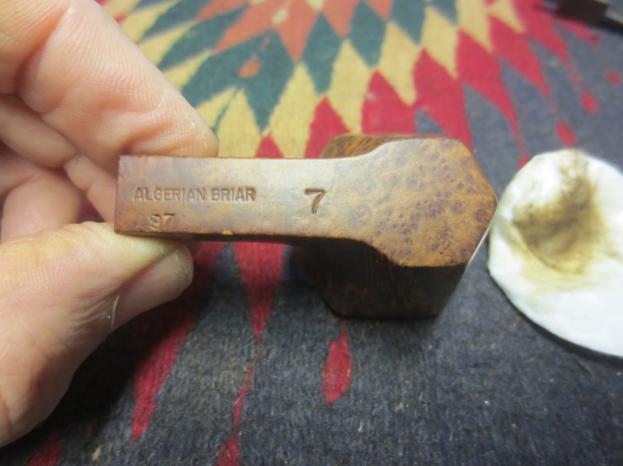
The shank was stamped on top with the word Edward’s and on the underside Algerian Briar with the shape number 87 underneath. There was a large #7 near the flat bowl bottom.Ed4Ed5

I took a close-up photo of the bowl and the rim to highlight the cleanness of the bowl and the lava on the bevel.Ed6

I sanded the rim with a worn piece of 220 grit sandpaper to remove the lava on the rim surface and also to rework the inner bevel.Ed7

I scrubbed the bowl with Murphy’s Oil Soap and cotton pads to remove the grime. I scrubbed around the rim surface as well. I sanded the rim with 1500-2400 grit micromesh sanding pads and then scrubbed it again. I was amazed at how well the rim came out.Ed10Ed9Ed10Ed11

With the externals clean I scrubbed the airway and the mortise and the stem with cotton swabs, pipe cleaners and alcohol. I used a dental pick to clear out the slot in the button.Ed12Ed13

I sanded the stem with 220 grit sandpaper to remove the oxidation. I worked on the area around the tooth marks next to the button on both sides. I scrubbed out the tooth marks with alcohol and once they were clean prepared them for the patch. I patched the tooth marks with black super glue and set the stem aside so the glue would cure.Ed14Ed15

While the glue dried I decided to work on masking the fills on the shank and the bowl of the pipe. I used a Black Sharpie and lightly drew lines across the fills on the right side of the bowl and the middle of the left side of the shank, working to blend them into the surrounding grain.Ed16Ed17

Once the patches on the stem had cured I sanded the stem with 220 grit sandpaper to blend the patch into the stem material. I sanded it with 280-600 grit sandpaper to smooth out the scratches and used a medium grit sanding stick to sand in the angles of the saddle. The oxidation on this stem was stubborn. I scrubbed it with Meguiar’s Scratch X2.0 and then spent a significant amount of time wet sanding it with 1500-1800 micromesh pads. Finally I got through the oxidation. It was not deep in the stem it was just stubbornly hard so breaking the surface took a lot of sanding. Ed18Ed19Ed20Ed21Ed22

With the oxidation finally conquered and the patches blended in I sanded the stem with 1500-2400 grit micromesh some more – this time working to polish the stem. I gave the stem a coat of Obsidian Oil and sanded it with 3200-4000 grit pads. I gave it another coat of oil and sanded it with 6000-12000 grit pads. I gave it a final coat of oil and let it dry.Ed23Ed24Ed25

I buffed the pipe with Blue Diamond on the wheel and gave the bowl and stem multiple coats of carnauba wax. I buffed it with a clean buffing pad and hand buffed it with a microfibre cloth. The finished pipe is shown in the photos below. I was able to clean up the rim so it looks almost new – little darkening on the inside bevel toward the back. The fill on the side of the bowl disappeared and the one on the shank is less glaring. The stem repairs look good and I was finally able to remove the oxidation. All in all it is a beautiful pipe with lovely grain and it should provide many more years of service. Ed26Ed27Ed28Ed29Ed30Ed31Ed32

It turned out to be a beauty – a Long Shank Vottis Billiard


Blog by Steve Laug

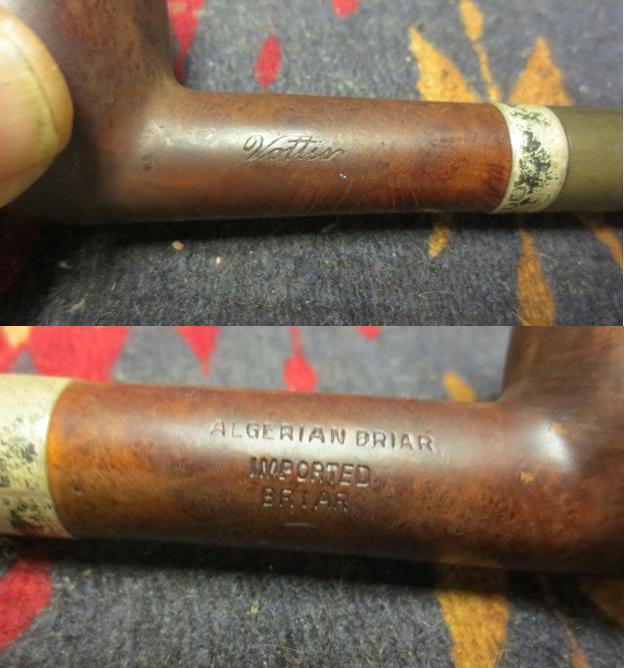
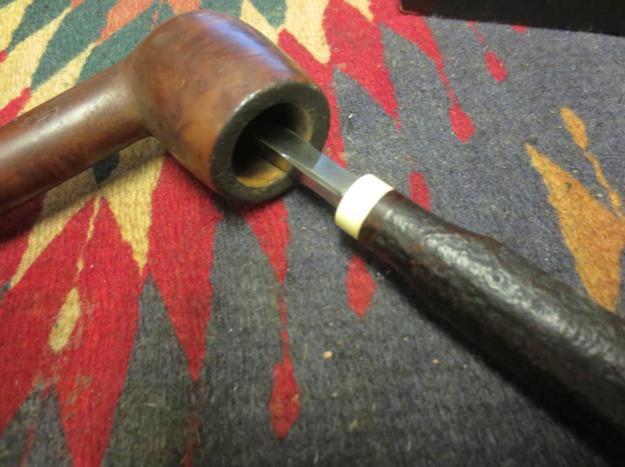
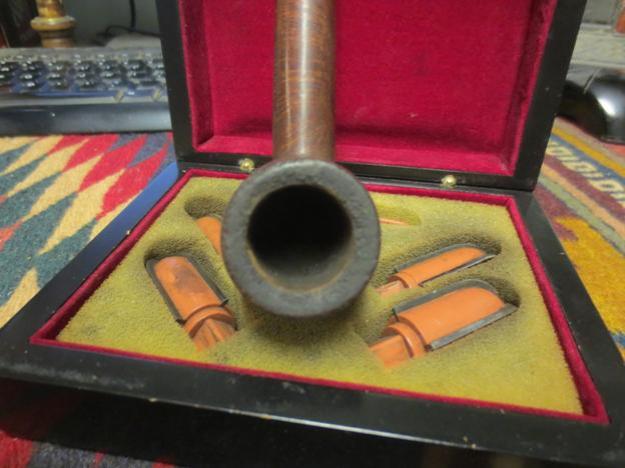
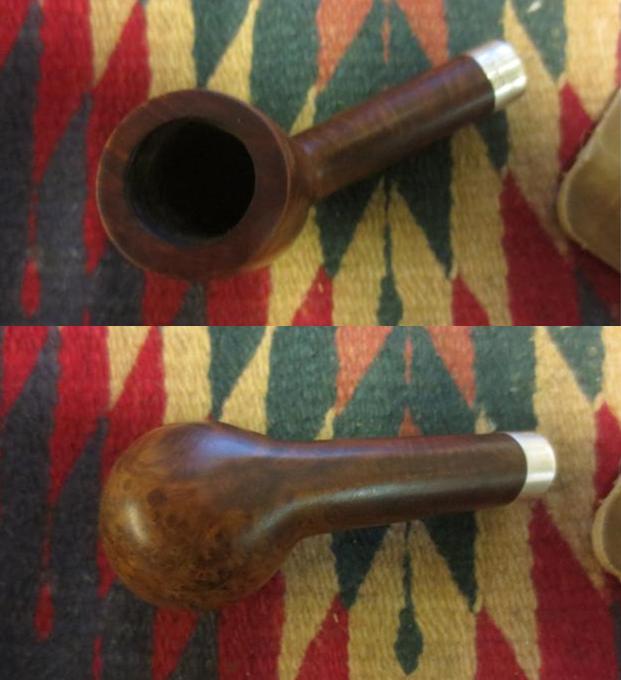
When I saw this one online there was some residual memory about the brand. I could not put my finger on it but I knew it was an American made pipe. I did not where but I remembered a name – Pat Vottis. It was a pipe on eBay that received little notice. I am not sure anyone bid on it so it became mine. I looked forward to its arrival in Canada when I could see what was under the grime and oxidation. In some of the photos below that I took upon its arrival there is some nice grain peeking through the cloudy finish.Votis1The finish was quite worn and cloudy but the sides of the bowl and shank did not have any gouges or dents. There was a dark, vertical stain on the front of the pipe that went from just below the rim edge to the curve of the bowl bottom. There was also a dark mark on the right side of the bowl toward the back. The rim was a mess. The outer edges had been knocked about to the point that the rim edge was rough to touch. There was a thick lava flow over the flat surface of the rim so it was hard to tell what was going on there. The inner edge of the bowl also looked to be damaged on the back right side. There was a thick cake in the bowl that I removed when I picked it up while visiting my brother in Idaho. That cake still needed more attention as can be seen in the photo below. There was a loose, oxidized silver band on the shank of the pipe that had blackened to the point that I could not read the stamping on the top side. The stem had some tooth marks on both the top and bottom sides that were quite deep and extended almost ½ inch up the stem from the button. The edge of the button was flattened and also had some tooth marks. Oxidation covered the whole stem. Votis2I took a few close-up photos of the rim top and the stamping on the shank of the pipe. From the first photo you can see the rim and the inside of the bowl. The remaining cake was incredibly hard. The stamping on the left side of the shank read, “Vottis” in script. On the right side it read Algerian Briar over Imported Briar. The stamping was sharp and legible.Votis3 Votis4I decided before going further on the restoration of the pipe to do some research on the Vottis brand and see if I could rattle the old memory. Sure enough my original thoughts were correct. The name was Pat Vottis. There was quite a bit of information on the web about him and his pipe making and pipe shop. (NOTE: The next section is quite long so if you do not want to read the history of the brand you can skip ahead to the next photos and the explanation of the refurb.)
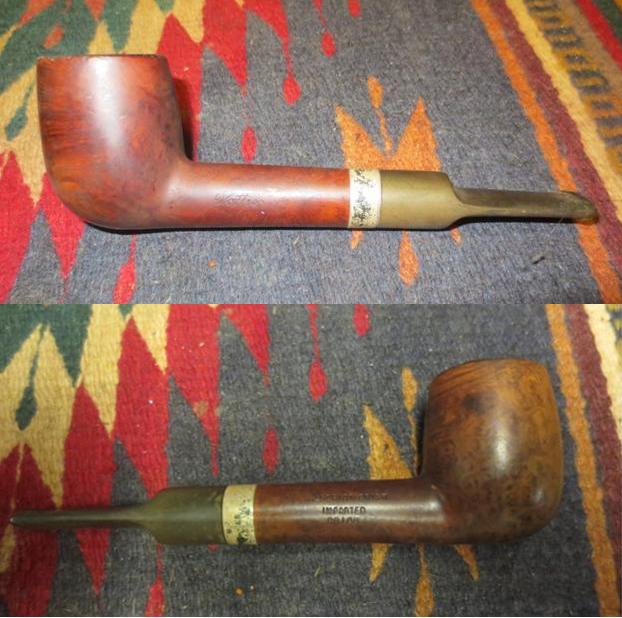
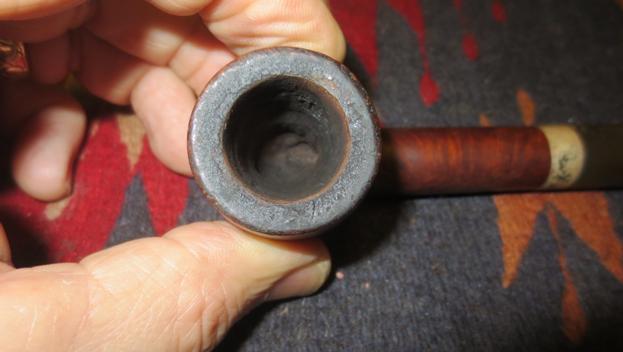
The first place I looked was on Pipedia.com. I found there that Vottis ran his workshop in Schenectady, New York. According to Pipedia he worked there from about the end of the 1940’s to the middle of the 1970’s. The article went on to say that he was one of the very first American carvers who made freehands in a moderate Danish style. This information did not help me identify the classic shaped pipe that I have. Mine is anything but a freehand, it is rather a long shank billiard or a long stem Lovat. The one thing that was interesting in the article was that Vottis pipe are well thought of to this day. I also learned that he preferred to use Corsican briar in making his pipes.

Well, that was a good start, but I wanted to know more. So I did some more digging and came across a conversation on pipes.org. The link below takes you to the conversation. The part that I have copied below was posted by Guy Vottis, Pat’s grandson in 2007. If you should want to read the context of the conversation you can follow the link.

http://pipes.org/forums/messages/23/46034.html?1171913269

Guy writes in response to a previous post. Here is the entirety of his post.

This post references Harold Vance Post #4 username hbvance and Jose Manuel Lopes Post #91 in the Archive of 2005 Sept 20 with a Subject Title of Vottis Pipes http://pipes.org/forums/discus~discus/discus~discus/discus/cgi-bin/discus/show.cgi?tpc=23&post=45187#POST451 87

Jose, I am not quite sure where you obtained your information regarding Pat Vottis but it is incorrect and I would like to share a bit of good information for the audience.

Pasquale (Pat) Vottis is my grandfather. He did not die as you have posted on the web in 2005. He actually died this morning at 99 yrs 9 months of age on Feb 18, 2007. He had a passion for the customers and the business.

My grandfather opened his first pipe shop in Albany, NY on South Pearl St. It was in the Bank Building (which took up a whole city block) at the corner of State Street and South Pearl. We also opened a second shop in Albany which was in the Empire State Plaza on the Concourse level. This was to serve all of the State Workers so they could do business at lunch time and not be strapped for time while trying to get down to the South Pearl shop. We still have the Vottis Pipe Shop Sign and the Vottis Pipe Shop Clock that was a landmark for the customers.

Harold Vance’s pipes may very well come from a pipeshop in Santa Monica. We mailed pipes all over the world. My grandfather’s sister actually lived in Santa Monica for many years. We also had a very large tobacco mail order business in which I mixed 1000s of pounds of tobacco and mailed them all around the world as well. We closed the pipe shops in the early 90s due to the numerous break-ins late at night. The locals would throw rocks through the store front windows to steal the hand carved pipes and the meerschaums.

My grandfather hand carved many, many pipes himself. He usually carved the big blocks. My grandfather, my uncle, and my father repaired pipes for everyone even if they had not bought a pipe at our shops. We had a metal lathe in the basement as well as a stove. The machined the tenon portion of the stem with a carbide cutter to match the stem of the bowl for a perfect fit every time. To match the stem or the fit of the customer, we custom bent the stems of the pipes to their satisfaction.

I recall boxes of briar blocks that were rough turned and my uncle, my father, and my grandfather would also hand finish these too. We had a lot of fun in the stores too. Mixing different formulas of tobaccos to see how the public would respond. We had numerous successful formulas. Our approach was to make all natural formulas with no sugars added, no sugar sprays, or flavorings added.

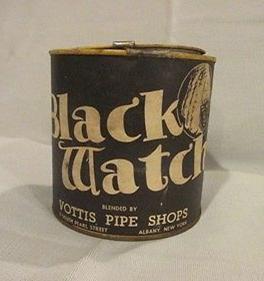
The most popular formula was created by grandfather and was called Black Watch. Some of the other blends were North Woods, Vottis’s Own, Vottis Club, Boulevard 76, No#9. These blends were comprised of burley, yellow cavendish, black cavendish, turkish, latakia, and others of which I do not recall. Ironically, for the namesake, my grandfather has died at a Nursing Home named North Woods just like one of his tobacco blends called North Woods…

That post gave me much more information including the link to Albany, New York. I went on to dig some more and found a newspaper article written by Paul Grondahl a staff writer for the local paper. The article is called “Pipe Shop’s Flame Flicker Out”. The link to the article is: http://alb.merlinone.net/mweb/wmsql.wm.request?oneimage&imageid=5580379. In that article I learned that the shop closed in 1991. I have included the article as it is very well written and gives a flavor of the shop and the proprietor.

PIPE SHOP’S FLAME FLICKERING OUT
Paul Grondahl Staff writer
Section: LIVING, Page: G1
Date: Sunday, October 27, 1991
ALBANY – The soft rattle and hum on the countertop of a battered, black wooden mixing bowl in which dozens of tons of blended pipe tobacco have been hand-kneaded for 50 years is being silenced.

The final clouds of aromatic smoke will waft past the humidor, beyond the wooden Indian perched on a box of cigars in the window and out the door of the Vottis Pipe Shop. After serving three generations of pipe smokers and shipping its custom tobacco blends across the country and to soldiers at war around the world, this South Pearl Street landmark is letting the fire burn out at the end of the month.

A handful of pipe shops still will remain in the Capital District after the Vottis Pipe Shop ceases to exist, but none who would make the bold claim, as Vottis did in 1948, of being “the world’s best-stocked pipe shop.”

No other local shop can boast of the long legacy in the trade, or having a patent on the air-cooled Vottis Rey pipe the way Pat Vottis did. And in no other shop has time essentially stood still for five decades.

It is the final chapter for a tobacconist family and its fiercely loyal customers.

“It was a fun business, and I’ve always said we didn’t have customers, we had only friends,” says Pasquale “Pat” Vottis, 84, of Guilderland. He opened the first Vottis Pipe Shop in 1941 on Erie Boulevard in Schenectady with his brother, Salvatore, before branching off with his own shop in downtown Albany in 1946. The Schenectady location was closed many years ago.

It felt a bit like a wake the other day as pipe aficionados streamed through the shop and placed a final order at the “tobacco bar.” Proprietor Vince Bonafede rang up the sales for Vottis custom blends Black Watch and Boulevard Deluxe on an antique manual National cash register. Customers paid their respects through clenched teeth, between drags on their pipes.

“An old friend is like a good smoke, Vince,” John O. McKenna was saying to Bonafede, with whom everyone is on a first-name basis. “I’m going to miss you, old buddy.”

McKenna, who works on behalf of the homeless in Albany and lobbies for war veterans, has been coming to the shop for a couple of decades, ever since he was a high school student and served as a legislative page who made cigar runs from the Senate floor for his late uncle, Sen. William F. Condon, a Westchester County Republican.

“I have delightful memories of this store, which helped me survive a place called Vietnam,” says McKenna, a non-smoker who frequently buys gifts at the shop. “The aroma of the store is something I’ll never forget. It’s extremely odiferous.”

Memories of his customers are equally pungent for Bonafede, 65, who took over the six- day-a-week business singlehandedly 15 years ago when his father-in-law, Pat Vottis, retired. Bonafede says he hasn’t had a week’s vacation since, and is eager for retirement, even though nostalgia tinges his anticipation of freedom.

“I’m happy that I’m finally going to get to rest and do what I want to do, but I’ll miss all my customers terribly,” Bonafede allows.

On this afternoon, Bonafede was leafing through letters from distraught mail-order customers who had been told the shop was closing.
There was a note from the Rev. Donald Webster, who has been ordering a pound of Vottis’ Boulevard Deluxe… religiously… each month from his home on Peaks Island, Maine, for more than 40 years.

“I wandered into the shop in the little arcade by the Schenectady railroad station in 1948,”
Webster writes. “I really felt bereft at hearing you were closing, and hate to think of going back to drugstore brands.”
Votis5There is a deep connection and intense loyalty between the serious pipe smoker and the choice of custom-blend tobacco that would be difficult to fathom for even, say, the Chivas Regal drinker or Cadillac driver who sticks with the same brand time after time.

The style of pipe and type of tobacco blend one smokes are a sort of talisman, rife with ritual and emotion.

The Vottis Pipe Shop has customers who had the pipe passion passed down from grandfathers. Others developed an allegiance to Black Watch while they were tweedy college-aged poseurs and have smoked nothing else straight through middle age and retirement.

But pipe smoking’s glory days are long past.

Pipe Lovers, “The Magazine for Men Who Love a Pipe,” published in Long Beach, Calif., had its heyday in the late-1940s. It was in that era that Pat Vottis was secretary of the Rip Van Winkle Pipe Club in Albany and club meetings, which regularly drew more than 100 pipe fanatics, were covered in the pages of Pipe Lovers.

Many cities had a pipe club. There was the Mohawk Pipe Club in Schenectady, with whom the Rip Van Winkle members held annual grudge matches. The contest was to see which club member could keep a bowl’s worth of tobacco burning the longest.

In 1949, Mohawk Pipe Club took the title with a 69-minute flame. Vottis tried to hold the honor for his Rip Van Winkle co-horts, but consumed all his tobacco and burned clean through his pipe’s briar bowl.

Gone a long time ago, too, are the Thursday evening pipe-smoking classes led by Vottis at the South Pearl shop, which were all the rage in the 1950s among women dangling dainty, jewel- encrusted pipes.

It was an innocent era, in which pipe smoking was touted as a healthy alternative to cigarettes and Vottis advertised that his Black Watch blend offered “an aroma that is accepted in every home, office or place of gathering.”

But these days, as pipe-lovers and smokers of all stripes are being made to slink with their habit past an anti-smoking phalanx and forced to steal puffs on sidewalks outside their places of work, the customers of the Vottis Pipe Shop reminisce about their golden age.

Garry Lavigne, an Albany attorney, was a Siena College student 30 years ago when he bought his first pound of Black Watch in an effort to give up cigarette smoking and he has been buying a pound of the same blend each week ever since.

“It’s disastrous that this shop is closing,” Lavigne says. “There’s no place else on Earth where I can get this tobacco.”

The Vottis Pipe Shop has always been proud of its most popular and trademark blend, the Scottish-styled Black Watch, of which they’ve sold tons at $9.75 per 12 ounces.

Vottis and Bonafede plan to go to their graves with the recipe. “Everyone tries to copy the Black Watch blend, but we’ll never let the secret out,” Bonafede vows. He says the key is its cool, mellow flavor and lack of an undesirable aftertaste.

The Vottis stamp has always been an all- natural smoke, without the vanilla, chocolate, strawberry or fruity flavorings of commercial blends. The Vottis philosophy is to let nothing get in the way of the flavor of wood and tobacco and smoke.

Vottis blends are homemade and so named, such as Connolly, a loyal customer, or Vin’s Special or Vottis’ Own. The English-styled Page No. 112 was inspired by book-lovers at Union College. North Wood is an outdoorsy, Adirondack blend and Grand Concourse was concocted by Bonafede’s wife, Marge, who ran a shop in the Empire State Plaza concourse for a decade before closing it five years ago.

The longtime Vottis customers are not happy about the prospect of change in their smoking life. They wonder will another tobacconist, besides Bonafede, will come up with novelty items such as the “crazy pipe,” a trombone- looking affair that carries the bowl behind the ear to keep smoke out of the eyes of the smoker? And will a new generation of tobacco merchants rush home after work to a basement workshop the way Bonafede did to make overnight repairs on pipe stems rendered useless by nervous teeth? And will there be other artists in Algerian briar who fashion one-of-a-kind pipes out of gnarled wood the way Bonafede does?

The Vottis Pipe Shop regulars think not, and they’re creating something of a Black Watch buying panic during the final week of business.

George Williams, chairman of Allied Capital Corp. in Washington D.C. and a 40-year customer, wrote to wish Bonafede well in his retirement and to score a five-pound order of Black Watch.

John Mason of Plattsburgh wrote to reminisce about his discovery of the Vottis Pipe Shop in 1941, while he was a student at Union College. He also ordered two pounds of Black Watch.

“I came into this shop with two friends from high school 26 years ago, and I’m the only one still smoking a pipe, and Black Watch, at that,” John Kelley, a CDTA bus driver, says during his final visit to the shop for a pound of Black Watch. “I hate the thought of going to a grocery store or CVS for a packaged blend now.”

Mike DeGulio, who works for the state division of housing, discovered the Vottis Pipe Shop six years ago after moving to Albany from New York City.

“Coming into the shop is a personal thing for me,” DeGulio says. “I shoot the breeze with Vince, I watch him blend my tobacco with his own two hands and he always takes good care of me.”

After one-half century, twilight has descended upon the Vottis Pipe Shop. The floor-to-ceiling lemon wood cabinets Vottis bought from a haberdashery have been sold. The pipe display cases have been mostly picked clean during a going-out-of-business sale, save for a few oddities, including a Calabash “Sherlock Holmes” model, marked down to $31 from $45.

Bonafede, who alternates between pipes and cigars, takes a cutter and neatly slices off the end of a thick Hoja, a hand-rolled Honduran stogey, and steps out onto South Pearl to exhale a cloud of smoky musings.

“It feels strange to be closing after all these years,” he says. “It’s been a good family business, but our children weren’t interested in carrying on and we didn’t want to sell it. The new generation just doesn’t care about the art of smoking a pipe.”

All of that information gave me what I needed to get a feel for Pat Vottis and his pipe shop including his philosophy of tobacco blending. I still did not know much about the pipe I had in my hand other than what I could deduce from the stamping. I knew that the briar was not Corsican but in this case Algerian. I also knew from the IMPORTED BRIAR stamping that the pipe was most probably made after the close of WWII when briar was once again imported into the US. I knew that the pipe was made in Albany, New York in the basement workshop of the Vottis Pipe Shop. I also knew that Pat Vottis in all likelihood carved the pipe sometime between 1946 and 1976 when his son in law Bonafede took over the shop at Pat’s retirement. So I found that while nothing was certain I could extrapolate quite a bit of information about the pipe I had found. Now it was time to get to work on it.

I had “field dressed” the pipe when I was in Idaho so when I got home at my work table I gave it another quick ream with the PipNet reamer and then followed up with the Savinelli Pipe Knife. I wanted to take the cake completely out of the bowl so I could look for burned areas or checking.Votis6Votis7 Votis8The top of bowl was a mess. The inner edges were in decent shape but the outer edge was beat down against something so the edges were rounded over and the distinct shape was compromised. I topped the bowl to clean up the edges and remove that damaged surface of the bowl. Once I removed the lava there was some burn damage to the front edge.Votis9I scrubbed the silver band with cigar ash to clean off the oxidation. Once I had it cleaned I also rotated it to centre the hallmarks on the top of the shank. There were some hallmarks on the band – a lion, an anchor and the letter T in a cartouche. To me the date on the band put it as early as the late 1890s and early 1900s. Since I knew that Vottis was not around at that time it was obvious to me that the band was added at a later date. There did not appear to be any cracks in the shank so that meant that the band was cosmetic.Votis10I removed the finish and the grime on the pipe with acetone on cotton pads. I was able to get most of the dark line of stain off the front of the bowl and also some of the dark spot on the right side of the bowl. Underneath the grime was some really nice grain on the briar.Votis11I did a light scrape of the bowl with a pen knife to take out some of the remaining carbon that stubbornly clung to the walls toward the bottom of the bowl.Votis12I cleaned out the mortise and airway in the shank and also the airway in the stem with alcohol, cotton swabs and pipe cleaners.Votis13The button edges were no longer well defined and had been worn into the surface of the stem. I recut the edges with a needle file. I also used the file to scrape the surface of the stem and remove most of the tooth marks.Votis14I sanded the stem with 220 grit sandpaper to smooth out the file marks and further remove the tooth marks.Votis15There was one small, deep mark on the underside of the stem that I filled with black super glue.Votis16While the stem repair dried I stained the bowl. I applied a dark brown aniline stain and flamed it with a lighter. I gave the bowl a second coat of stain and flamed it again.Votis17I wiped down the bowl with isopropyl alcohol to even out the stain coat and make it more translucent. The grain began to stand out.Votis18I buffed the pipe with Blue Diamond on the wheel to bring out the shine. The rim came out really well and the grain stood out on this old pipe.Votis19 Votis20With the bowl finished I worked again on the stem. I sanded the repair with 220 grit sandpaper to blend it into the surface.Votis21I scrubbed the stem with Meguiar’s Scratch X2.0 and removed much of the oxidation.Votis22I wet sanded the stem with 1500-2400 grit micromesh sanding pads and gave the stem its first coat of Obsidian Oil. I dry sanded with 3200-4000 grit micromesh and gave it another coat of oil. I finished sanding with 6000-12000 grit pads and gave it a final coat of Obsidian Oil.Votis23 Votis24I buffed the pipe on the wheel with Blue Diamond and then gave the bowl and stem multiple coats of carnauba wax. I buffed it with a clean buffing pad to raise the shine and buffed it with a microfibre cloth to deepen the shine. The finished pipe is shown in the photos below. It is a beauty. The dark spot on the right side is kind of a beauty mark in my mind. It is not a burn or damage in that way but rather a spot where the bowl sat against something that permanently darkened that spot. I chose to not hide it because I love the grain on the rest of the bowl. It came out very well to my eye. Thanks for looking.Votis25 Votis26 Votis27 Votis28 Votis29 Votis30 Votis31
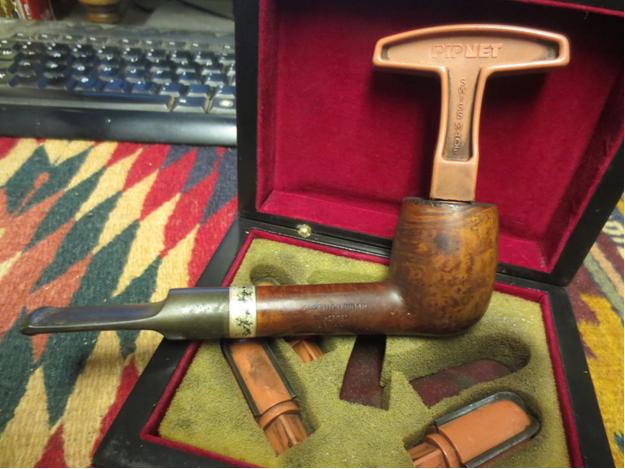
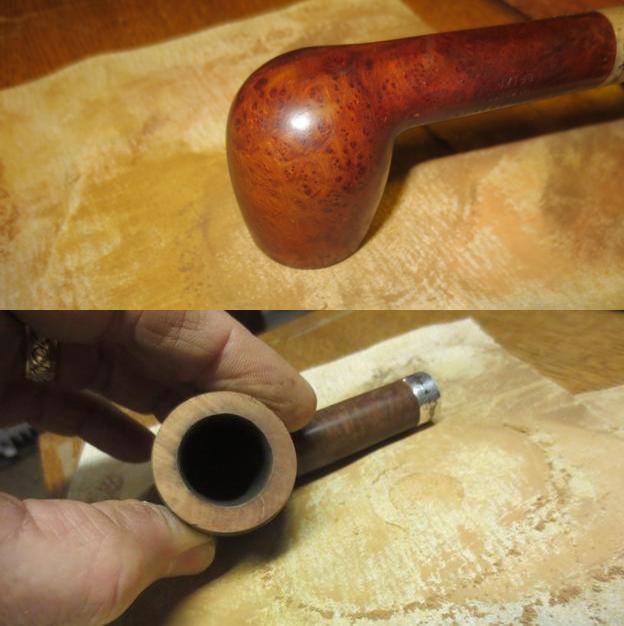
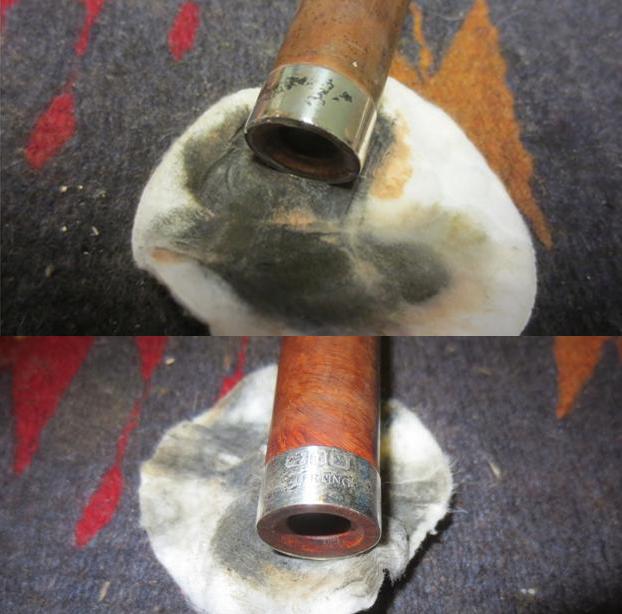
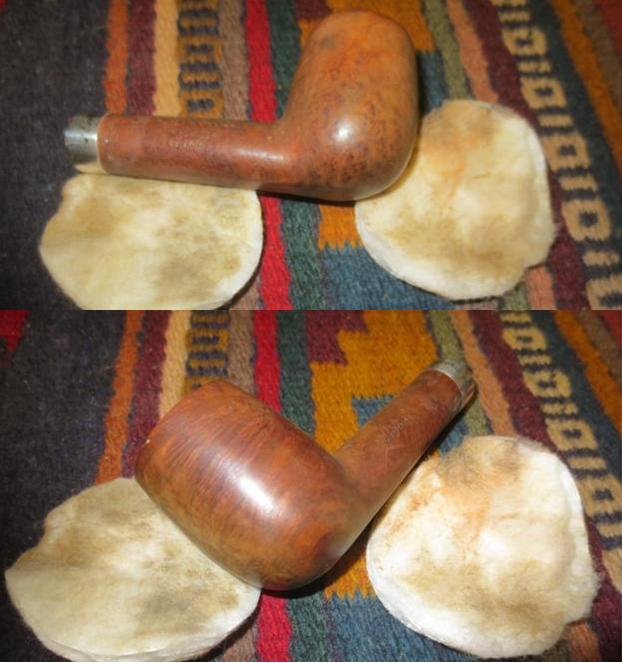
Spotlight: Ladies Pipes, Part 2/7, a Clinton Straight Oval


Guest Blog by Robert M. Boughton
Member, International Society of Codgers
Member, North American Society of Pipe Collectors
http://www.naspc.org
http://www.roadrunnerpipesnm.biz
http://about.me/boughtonrobert
Photos © the Author lady1

INTRODUCTION
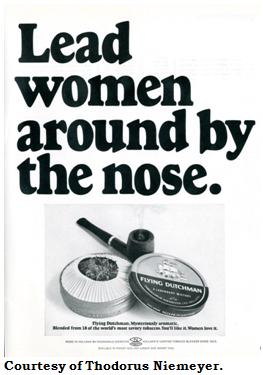
I came across a more subtle but still rather sexist yet humorous comment concerning the perceived relationship of women to pipe enjoyment, this time in the older ad above for Flying Dutchman tobacco. No longer in production, it was an aromatic blend of Kentucky Burley, Cavendish, Virginia, Oriental Turkish and “Other/Misc.” Sounds pretty good to me. But it makes me flash on an email I received from a friend on Smokers Forums UK. Her name is Liz. She wrote:

“I always wanted to smoke a pipe even when I was a child. I had seen photos of my dad smoking a pipe but he had quit smoking by the time I was born. I started smoking cigarettes in my early teens and the desire to smoke a pipe became stronger once I became an adult and started to do a lot of camping. I thought it would be very nice to sit by the campfire and smoke a pipe.”
Here comes the sad crux of Liz’ response. “But as a woman, I never felt comfortable or confident enough to go in a store and buy one. Finally in 2004 I got the nerve to go in the tobacco shop and buy a pipe. I used the excuse that I was buying it for my brother. [Emphasis added.] …I had no one to teach me anything about smoking the pipe so what I learned I found on the internet.”

I was struck by the eloquent and poignant plight of a woman I have come to think of as supremely confident and self-assured in all matters, albeit that our friendship is based in the ether world. This is a woman I should very much like to meet some day in person. Liz’ reluctance to purchase a tobacco pipe, at a tobacconist, for herself as a woman who had always wanted to partake of the pleasures she rightly imagined she would discover (around a campfire, no less, and as an alternative to the pernicious and addictive additives in cigarettes), plucked a mournful acoustic chord in my heart like listening to Albinoni’s Adagio for guitar alone on a torrential night.

This in turn sparked a connection to the woman in my previous blog of this series, the person who inspired me to tackle the subject in the first place with her soft-spoken, somewhat tentative inquiry to Chuck, at my local tobacconist, asking if he had any ladies pipes. After I read with delight and growing admiration for the fine woman Liz’ responses revealed her to be from the several questions I posed to her as a preliminary breaking of the ice in an ongoing interview process, I played back my mental tape of Chuck’s encounter with the good lady in search of a suitable pipe, and doing so recalled the trepidation in her voice and body language. With some amazement, I realized that she had probably worked herself up for untold years to that moment when at last she was determined to ask for that which she had always wanted!

As a man, I am compelled to declare that this clear and present state of social antipathy toward women who wish only to savor a pipe – and indeed the attitude must be widespread, or else I could not have come in contact with two ladies in hardly a month with the same reluctance to buy something so basic that they fancied obtaining – is intolerable. I mean good Lord, have we come so short a distance from the days when women on their own volition and in the strength of groups protested the double standard of cigarette smoking as chic by men while the practice was viewed as vulgar by females? Alas that science was not what it is today, and many beautiful pioneering civil rights women perished early from the intrinsic impurities and carcinogens of cigarettes. And let’s not forget the infamous bra burning demonstration so popular when I was a youngster (and to my natural titillation, no pun intended). With hope, therefore, these blogs will help to alleviate the barriers.

VARIOUS BRAND LADIES PIPES
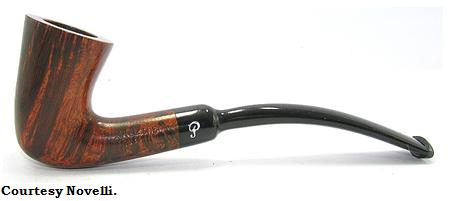
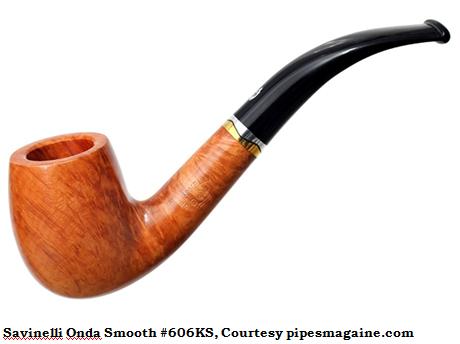
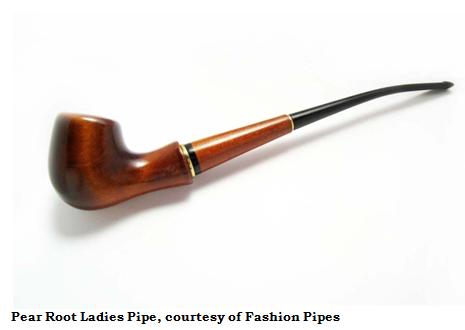
I noticed Peterson’s had at least one ladies pipe, and reader/blogger Mark Irwin, who read my previous blog on this subject, urged me to include some of them during the course of the series. Here are several samples of fine ladies pipes, starting with a Peterson I found offered in Italy, per Mark’s suggestion.lady2Paddy of SF let me know that his wife has a sweet collection of Savinelli 606 pipes, at least one for each day of the week, like the following example. BTW, Paddy writes, the missus also has “one Castello of a similar shape which she received as a gift.” Good company, indeed.Lady3 lady4And now, here is the Clinton Real Briar Oval as it came to me.Lady5 lady6 Lady7 Lady8RESTORATION
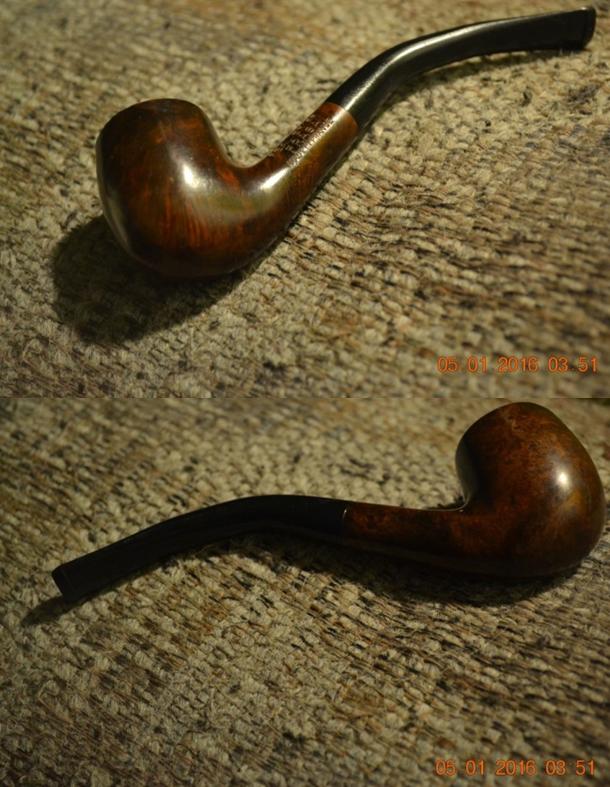
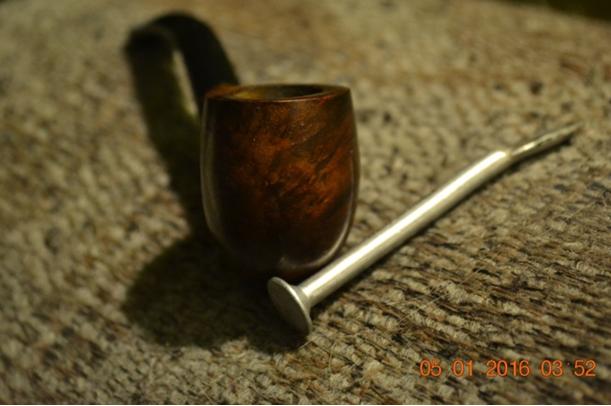
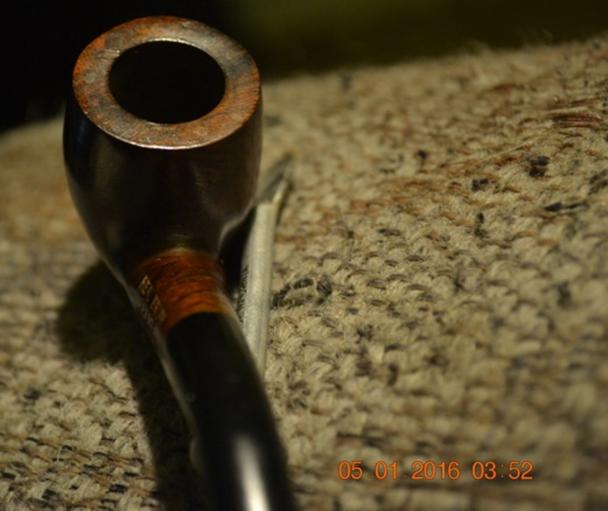
The Clinton, as well as the FRASA I restored for my first of these seven blogs, has an unusual stinger tenon, heightening my surprise that neither of them seems to have any discernible history, not even as seconds. In addition to the tenon, the Clinton also has a distinctive upside-down C on the bit.Lady9By way of synopsizing the pipe’s chief and obvious problems, the bit was badly discolored, there was a crack on the upper left side of the bowl extending from the rim downward (but not penetrating into the chamber), and the stain was far too dark for my taste, given the apparent decency of the obscured grain. And so I began by soaking the bit in an OxiClean bath and the stummel in some used Everclear I keep on hand for such occasions.Lady10The bit was ready first, about a half-hour later, and I removed it from the soak and rinsed it, then took out the stinger and ran a soft cleaner through the airway. I wiped the stinger clean with a soft cotton gun cleaner square and sanded both sides of the bit’s lip end with 200-grit paper. Then I wet micro-meshed the entire bit from 1500-12000 and had a nice bowl of D&R Two-Timer Gold in my Peterson Killarney Straight Bulldog Dress Pipe. I ordered the beautiful black “ebony” pipe online during a brief overwhelming fixation on these pipes that also landed me a sleek Nat Sherman. Both remain favorites.

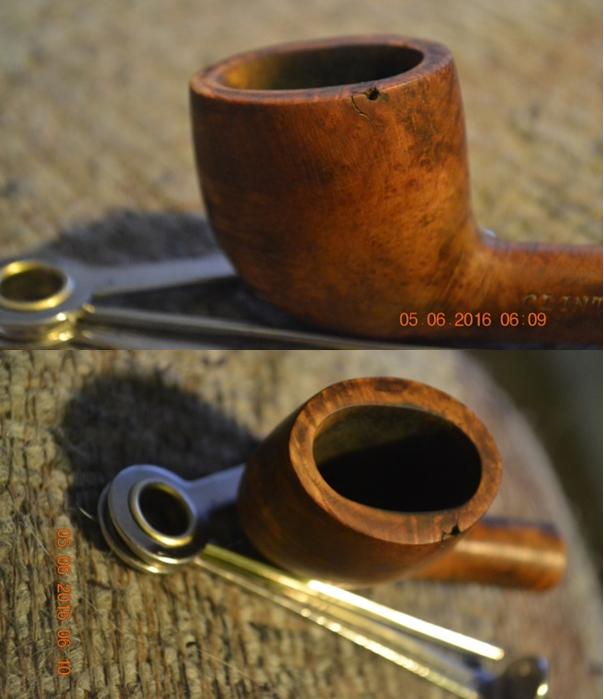
That Everclear strip lasted just long enough for my consummate Burley mix to work its way down to a fine ash – or maybe I made it last the proper time, as was my prerogative! Whichever the case may have been, I had a couple more handy cotton cloth squares ready, one to stuff into the chamber with a pinkie and twist so I could clean out any residue there and hold the body in place while I scrubbed the still wet outside of the wood with the other. Look at the scum that would have ended up trapped below the stain I later applied. Some would ask what it would matter. I like to think the devil is in the details.Lady11With considerable difficulty given the tiny chamber diameter (1” in length and 1” deep but a mere 0.5” across), I coaxed a small, limp piece of 150-grit paper inside and somehow worked it up and down enough to make a difference, then switched to 200- and finally 500-grit., finishing with a cotton cloth square with a squirt of purified water to remove the extra char. On the outside, I used 200-grit paper to clear away the stubborn remaining stain and residue from the Everclear soak.Lady12 Lady13 Lady14I micro-meshed from 1500-12000.Lady15 Lady16 Lady17I was ready at last to consider the crack.Lady18It looks pretty nasty, doesn’t it? Again, the consensus was to shave down the rim. Having Executive Power of veto, I opted for a fix I never tried before with a little concerted sanding of the rim with 150-grit paper, it comes down appreciably.Lady19Then I got a wild hair to do the unthinkable. I retrieved my file, an old, wrecked briar stummel I’ve kept for several years knowing I would never dare to try restoring it and some Super Glue, and scrape off enough of the wood to make a nice pile of super fine particles. I’ll tell you right now, the first two attempts at mixing Super Glue with the briar particles and then moving the ultra-fast-drying gloop to the top hole in the Clinton didn’t turn out well. Eventually I conclude the trick is sprinkling some of the fine wood into the gap and then sealing it with a kiss of glue.Lady20I did hasten to scrape some of the excess glue into the hole and remove the rest using the edge of a business card. When it was dry, which was in almost no time at all, I retorted the pipe Before the finishing touches, I sanded it down to smoothness with 200-grit paper and re-micro-meshed.

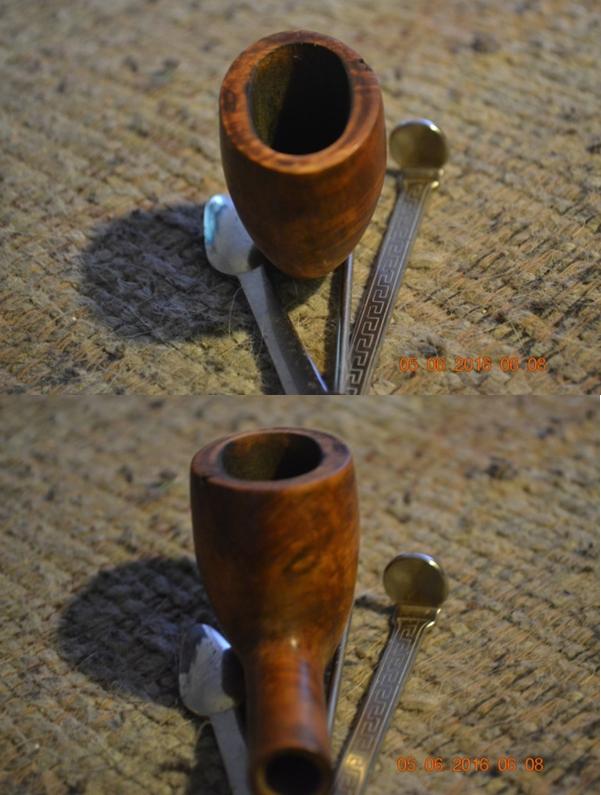
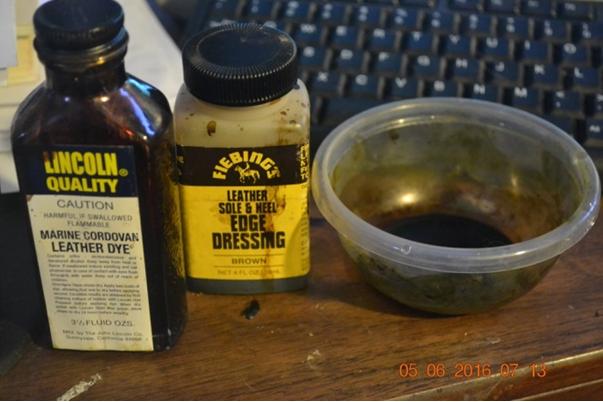
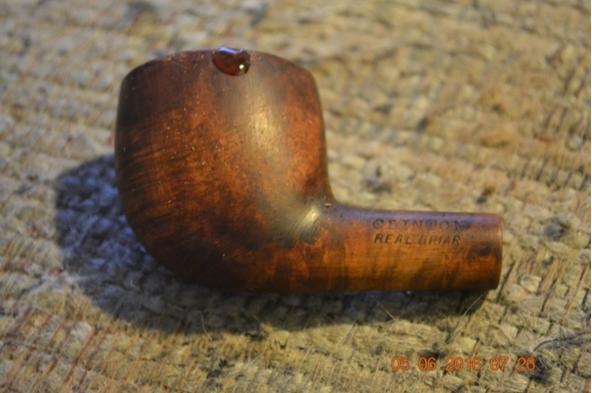
Afterward, taking the matter under full advisement and consideration, I mulled over Lincoln Marine Cordovan (burgundy) to stain it, which might have been overkill, and a mix with that and two or three times more Feibing’s Brown. I chose the latter, of course. I mixed the two stains in my small Tupperware. Lady21Staining the surface of the Clinton stummel for the most part had a nice effect, not counting the serious accentuation it gave to the small remaining hairline crack beneath the one I sealed on the rim. Therefore, following the same process I so painstakingly learned before, only going straight to the effective method, I prepared more briar shavings and, Super Glue at the ready, set the stummel down left side up and sprinkled the dust over the area where the crack was forming. After using another business card (what else are they good for?) to get the most of the particles, I squeezed a nice precise dot of glue over the spot and spread it out to let it dry in a thin coat.Lady22Of course I was forced to sand down the resulting obnoxious big round shiny bump, and in the process some of the surrounding stained surface, but it was worth it knowing the integrity of the pipe would be sound and none of my pipe aficionado friends with their eagle eyes would spot the former crack. Here is after sanding and before touch staining.Lady23And now for the finished product, after buffing with white Tripoli, White Diamond and carnauba. Red and white Tripoli, White Diamond and carnauba gave this bit a higher than usual shine.Lady24 Lady25 Lady26CONCLUSION
However lighthearted the ad with which I opened this installment of the series was intended to be, women are not here to be led around by the nose in the pursuit of so-called manly pleasures. Granted, no doubt, for the most part the pleasure of partaking of tobacco pipes has always been more the purview of men, but to think that women are incapable of such finer sensibilities of life is sheer sophistry, and shamefully self-deceptive and fallacious reasoning at that.

Furthermore, women need not have masculine qualities to favor the subtle qualities of pipe appreciation. And although most humans are capable of normal synaptic reflexes, the electrical impulses generated do not produce identical stimuli tickling the pleasure centers of the brain and kicking out uniform reactions. On the contrary, the magnificence of the human brain is that everyone’s reaction to a given stimulus is unique.

Why, then, should anyone be deprived of the deeply personal reflections facilitated by the mere puffing of a favorite tobacco in a like pipe? These are propositions that we hold to be self-evident, that all people are created equal. I would no more give up my pipes than my gun. Call me a radical or a revolutionary, but don’t call me a redneck or late for dinner.

SOURCES
https://www.smokingpipes.com/smokingpipesblog/single.cfm/post/top-pipe-picks-for-ladies Ladies pipes

https://www.youtube.com/watch?v=eo7IJY4ZjCU The Ladies of the Youtube Pipe Smoking Community


Spotlight: Ladies Pipes, Part 1/7, a FRASA French Bent Billiard


Guest Blog by Robert M. Boughton
Member, International Society of Codgers
Member, North American Society of Pipe Collectors
http://www.naspc.org
http://www.roadrunnerpipesnm.biz
http://about.me/boughtonrobert
Photos © the Author

LadyA pipe in the mouth makes it clear that there has been no mistake–you are undoubtedly a man.
— Alan Alexander Milne (1892-1956) – English author, playwright, poet essayist and storyteller best known for Winnie the Pooh – from “Smoking as a Fine Art,” in Not That It Matters, 1919, a collection of wide-ranging and manly essays

INTRODUCTION
I admit, my choice of the above quote was calculated, but not to raise the ire of any female smokers I indeed admire and whose attention I hope to draw to this forum and others, with the goal of opening a dialogue between the genders who share at least one common love. Of course, as with all well-meaning attempts at good natured humor mixed with more than a grain of satire, I should not be surprised if this one, in the spirit of political incorrectness, backfires in my face like a good ole boy’s sawed-off shotgun packed with too much rock salt.

But no, I think my message is clear. A.A. Milne was a good man and without doubt one of the most celebrated and creative writers of children’s stories of his time, albeit the product of the languid ease and floating, hypnotic comfort of his youth in the English countryside and predetermined defining crucible at Cambridge’s Exeter College at a time when his contemporaries were such traitors as Guy Burgess and Kim Philby to name but two. Yet Milne chose the right path, whatever unavoidable world-view of woman and their “rightful places” in the homes and gardens and still grander scheme of the universe. Milne escaped the abyss of prison, execution or exile to a dacha on the steppes of Mother Russia – outside of his day-to-day harrowing home life. All in all, notwithstanding the opening and somewhat tasteless quote, Milne turned out a bit alright.

So now, a few words about the earth-shattering day at the Stag Tobacconist in Albuquerque, New Mexico, US of A, deep in the Land of Enchantment. How â propos is that, I ask? Holy Shades of a Midsummer Night’s Dream, Batman! You see, I was sitting in my customary spot with a view of the entire room against the unlikely and therefore ever-present threat of imminent attack by unknown sinister forces, which seem to lurk in every corner of this wannabe city. The place continues to groan and grumble with unnatural growing pains.

I was sitting there in my comfortable cushioned chair in the smoker’s lounge, working on my laptop, when I overheard a woman who had come in looking for a “lady’s pipe.” I wasn’t eavesdropping, I just couldn’t help overhearing, along with the rest of the conversation, although my interest was piqued and my ears pricked. From her demeanor, I guessed it was her first visit to the shop. She was a rather large lady, dressed in a heavy long black coat. I knew right off that I had exactly what she was looking for at my apartment in an assortment of nice smaller pipes that nevertheless were not minis. I knew not to interfere with Chuck Richards, my friend and mentor, who had engaged the good woman

Scanning my mental knowledge of the shop’s inventory, I settled on a few of the no-name Italians and some mini carved meerschaums in the glass case below where Chuck and the lady stood at the end of the service counter, only a few yards from my curious ears and eyes. To my immense surprise, I watched Chuck (whose lips were pulled back in a look of distaste I recognized, whether or not the woman detected it) as he produced with appropriate care the open box of one of the meerschaums. The woman made a definite sound of pleasure that was stifled by Chuck’s masterful discourse on the pros and cons of meerschaum minis. He went on about the quality of the material and their ability to burn any type of tobacco without a lingering taste; their fragility and special precautions needed to use them, and in particular their construction with small push-in tenons that can be difficult to maneuver the vital cleaners through. He demonstrated and then explained how the cleaner would also be inserted into the shank after smoking but that he couldn’t handle the surface of the pipe because of its porous nature that absorbs skin oils and dirt, leading to serious damage.

Choking back a laugh, I thought I could not have discouraged a sale better if I had tried! I happen to know Chuck despises fancy, carved meerschaums for his own collection but would never hesitate to sell one to the right person. And so he moved on to several nice, shiny, natural finish no-names of medium length and bowl size. My excitement was growing. I decided if and only if Chuck proved unsuccessful in matching the female customer with a pipe – a wholly unlikely event – would I scurry out the door after her and offer the prospective customer my card and services.
But of course, Chuck sold her a very nice pipe, albeit twice the size of those I will show in this series. Thus was conceived the idea for this series, which, in my original plans, I envisioned, as usual, in a single blog. After a mere glimpse at the boggling research needed to undertake the endeavor, however, not to mention the difficulty of blogging seven restores in one space, I had the brainstorm of splitting the project into a series.
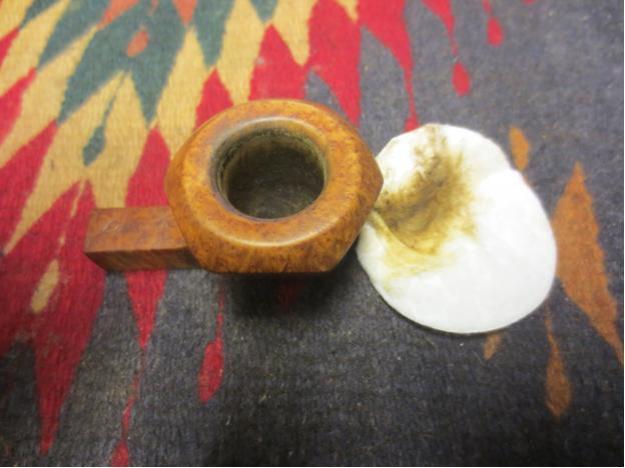
My friend on the Smokers Forums UK (http://www.smokersforums.co.uk/), who goes by the username “im2for1” there, is a Team Member at the Forums and owner of Ladies of the Briar for women only on Yahoo Groups and Friends of the Ladies of Briar of Facebook. She is also vice president of New Jersey Fellowship of Pipe Smokers on Yahoo and Facebook. With some careful, specific prodding, I hope to elicit some invaluable intelligence from Liz as this series progresses.

Here are some pictures of the seven pipes, which I relegated to a special pile on the big work desk in my office. I automatically segregated them for their unusual small sizes but had no idea that distinction would someday come in handy.Lady1 Lady2Now, for a description of my first foray into a so-called Ladies Pipes, although it could be smoked without shame by a man (if I didn’t already sell it to one of my best customers, known to some readers here as Ashley and going back to my first real restore). This is a FRASA (from the brand mark on the shank), a French piece of work about which I can find no background. Lady3I wonder if the larger capital letters indicate an acronym. It’s a lovely, little, delicately curved, natural, dark red briar billiard.Lady4 Lady5 Lady6 Lady7 Lady8RESTORATION
This was one of the cleanest pipes I’ve ever come across in a lot, but I’ve never seen one yet on which I couldn’t improve. I showed all of the pipes I’m restoring for these blogs to Ashley at one of our weekly pipe meetings a few weeks back, and I had a good idea which one she would like best. I’ve come to know her tastes, having sold her several pipes, not to mention one to her husband, Stephen. Her hand went straight for the FRASA and her eyes sparkled with P.A.D. I knew I had her. I pointed out the clean but slightly rough to the touch chamber, which took a flashlight to determine that it had indeed been lightly smoked. Then there were some minor blemishes on the bowl. I also said I’d like to lighten it up a bit, unless she liked it the way it was.
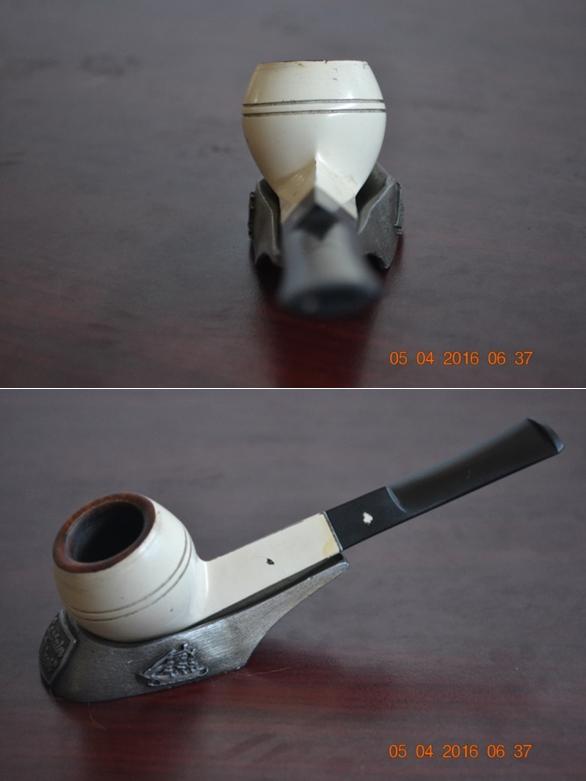
“Go for it!” she said.

And so I tossed the bit in an OxiClean bath.Lady9Moving to the stummel, I wiped it down with purified water and soft cotton cloth gun cleaners before using 320-grit paper gently and evenly before micro-meshing from 1500-12000.Lady10 Lady11 Lady12Removing the bit from the OxiClean and rinsing it, I wet micro-meshed it to a nice dark shine.Lady13I sanded the small chamber with 200- and 320-grit papers and retorted it just to be thorough, but I didn’t expect to find anything, and I didn’t. Now, that’s a clean pipe!

I finished by buffing the stummel with white Tripoli, White Diamond and carnauba, and the bit the red and white Tripoli, White Diamond and carnauba.Lady14 Lady15CONCLUSION
In the next installment, I plan on getting more to the meat and potatoes issues of relative numbers of women who partake of the magic instrument of divine contemplation – recognizing, of course, the futility of trying to get anywhere near exact numbers. I also hope to have feedback from Liz and others like her who are as active as any men in their smoking communities, with some insights into the kinds of pipes they actually enjoy, whether “ladylike” or more “manly.” Yes, sir (or ma’am), the times, they are a-changin‘.

I’ll leave you with these parting shots of two lady smokers, one real and one – ahem – well, never mind.Lady16 Lady17

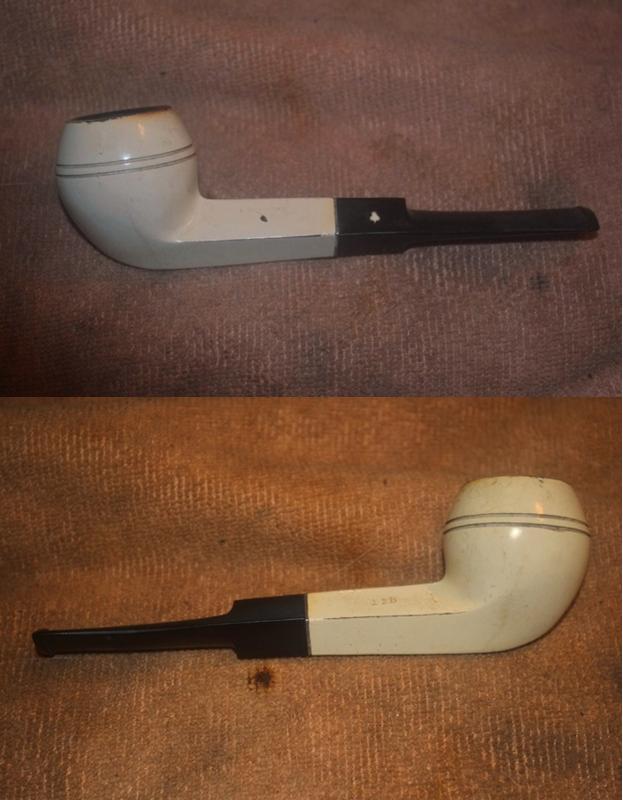
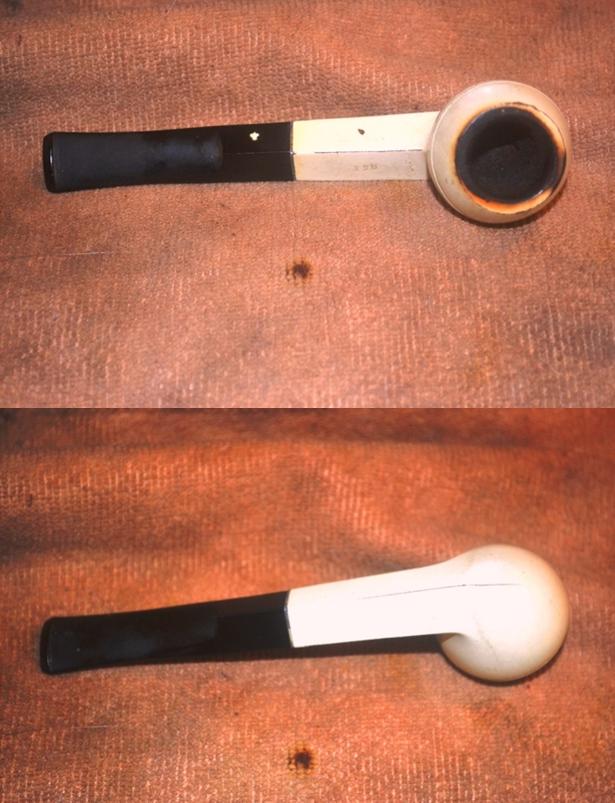
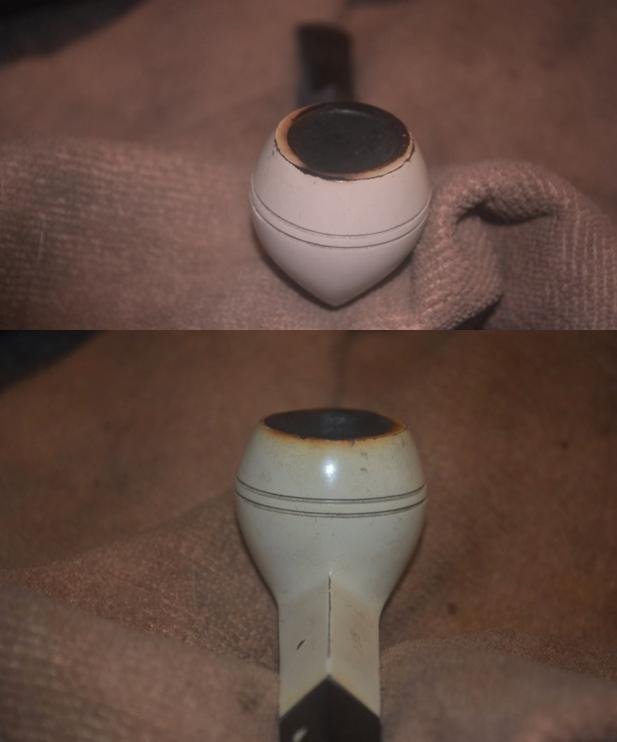
Kaywoodie White Briar Bulldog 12B


Guest Blog by Robert M. Boughton
Member, International Society of Codgers
Member, North American Society of Pipe Collectors
http://www.naspc.org
http://www.roadrunnerpipesnm.biz
http://about.me/boughtonrobert
Photos © the Author

INTRODUCTION
The Kaywoodie White Briar line lasted from 1951-1989. Some elusive quality, including perhaps its rough condition and the fact that I can’t find the same shape shown anywhere online, makes me suspect my bulldog is c. 1960-1970. It’s alright, I’m aware of the virtual non sequitur I just committed, and stand by it as a sort of literary tool if nothing else. Call it a hunch. Maybe I’m just a romantic. No doubt about the last part, at least.KW1 KW2 KW3 KW4RESTORATION
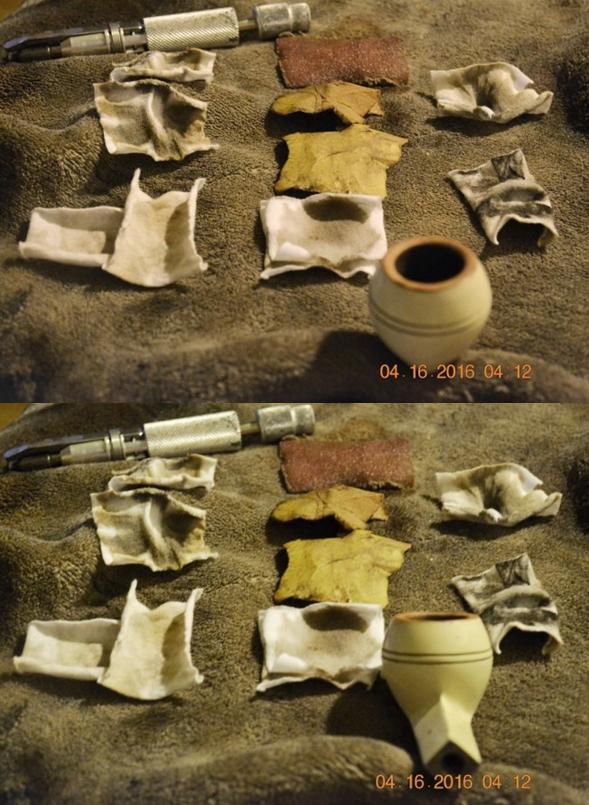
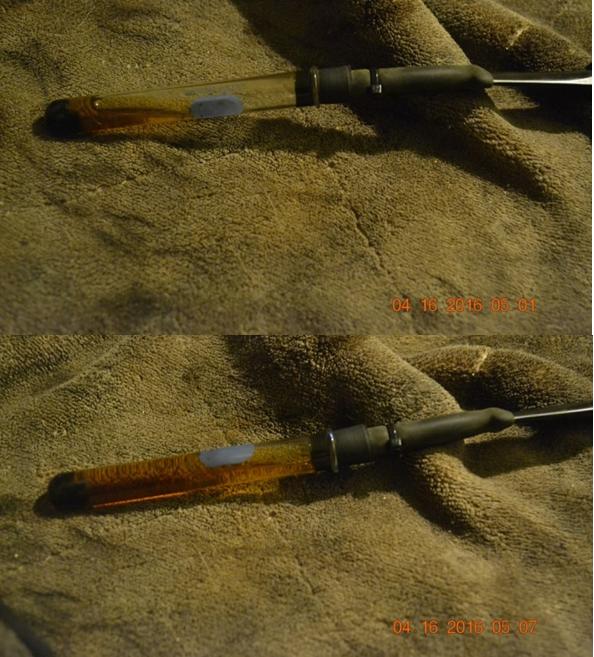
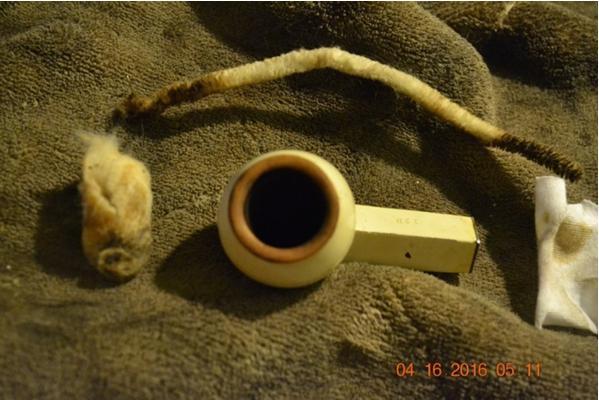
The bit was mostly just dirty.KW5I put it in an OxiClean bath and began the process of cleaning the rest of the pipe by using my Senior Reamer to remove the fair amount of char from the chamber. I followed the reamer with 150-, 200- and 320-grit papers, and removed the excess soot with soft cotton cloth squares soaked in purified water. Then I applied a little purified water to the outside of the stummel with more soft cotton cloth squares, getting rid of considerable grime.
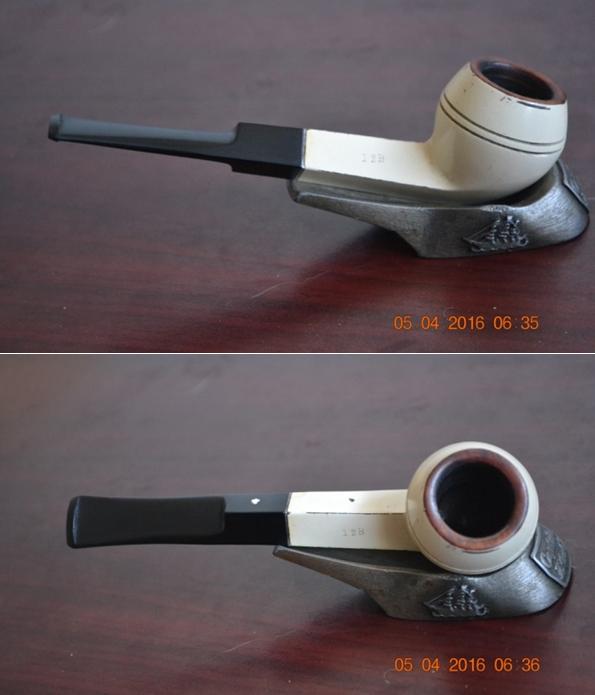
My main concern was the rim, which appeared to be scorched to the point of no return. I used still more soft cotton cloth squares with purified water to work away at the char before switching to 1800, 2400 and 3200 micro-mesh – and just as I thought it was coming clean realized to my horror that the blackened parts of the rim, which had turned a creamy brown color, were down to the briar! In hindsight, I don’t know if I should have left the tiny amount of the original finish that was left on the rim as it was, but I saw no reason. With sadness and reluctance, I removed it for uniformity.KW6 KW7 KW8I replaced the bit, which I had removed from the OxiClean bath and used wet micro-mesh from 1500-12000 to return to a nice black smoothness, and retorted the pipe.KW9 KW10All that was left to do was an unexpected stain of the rim using Feibing’s Brown and flaming it, then buffing with white Tripoli, White Diamond and Carnauba. I buffed the bit as usual, with red and white Tripoli, White Diamond and Carnauba.KW11 KW12 KW13CONCLUSION
I’m always willing to face the music as far as responsibility for mistakes goes, but I honestly don’t know if the “mishap” I had with the rim is common with white briar restores. I didn’t use sandpaper – not until after it was already too late. But it was my restore, and so I will own it. As well as the pipe, most likely, unless anyone out there wants a good deal on a unique Kaywoodie White Briar Bulldog 12B with a brown briar rim!

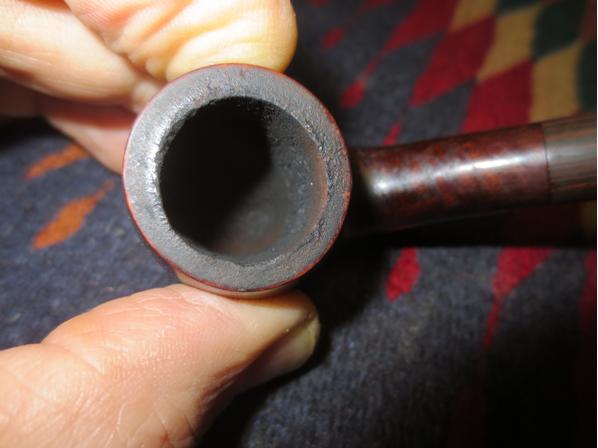
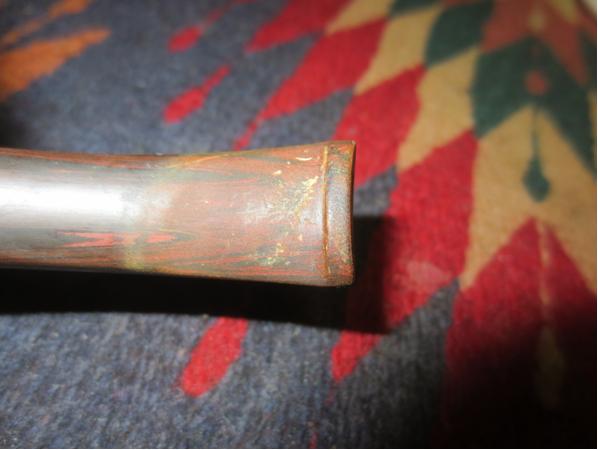
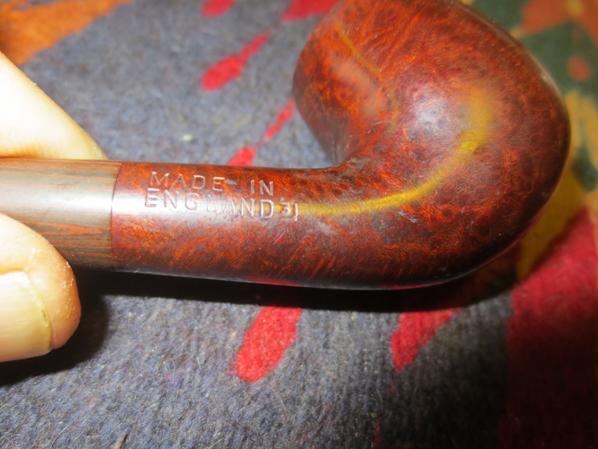
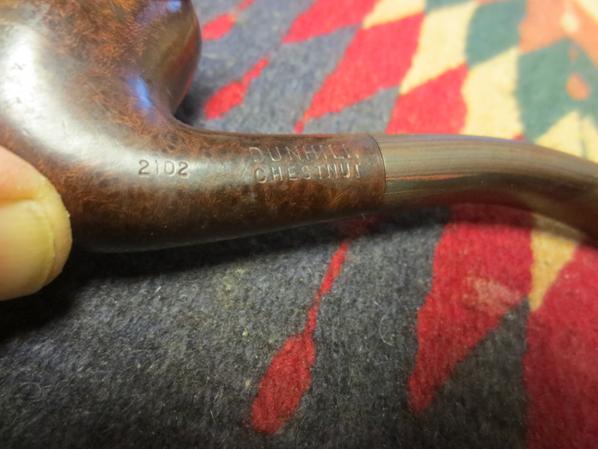
The Lot arrived and in it was a Small Dunhill Chestnut Bent Billiard


Blog by Steve Laug

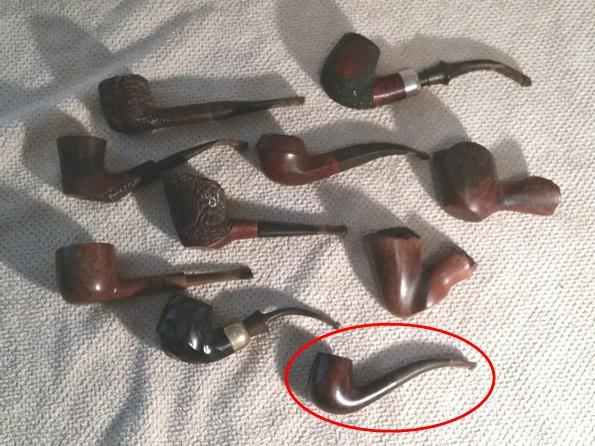
My brother sent me a link to a lot of pipes on Ebay and I loaded and viewed the pictures in full size. There in the lot was a small bent billiard. In the photo below it pipe at the bottom of the photo circled in red. To my eye it looked for all things like a small Dunhill pipe. There were some other nice pipes in the lot but that is the one that caught my eye and made me suggest that we go for the lot. It was a bit of a bidding war and at the end the pipes were ours. When I was recently in the states to visit my mom and dad I stayed with my brother. The pipes came in the mail and I could not wait to open it.Dunhill1I could not believe my eyes when I unpacked the pipes. Sure enough the little pipe in the photo was a Dunhill. It was stamped 2102 next to Dunhill over Chestnut on the left side of the shank. The four digit numeric code tells a lot about the pipe. The first digit, in this case a 2 tells me that the pipe is a Group 2 sized pipe. The second digit, in this case 1 tells me that the stem was originally a tapered stem. The third and fourth number, in this case 02 tells me the shape of the pipe – a bent billiard. The Chestnut finish also had a Cumberland stem and there under the grime on the stem was Cumberland. On the right side it was stamped Made In over England with a superscript underscored 31 after the D. From my calculations that made it a 1991. I arrived at that date by at the superscript number to 1960. The Chestnut finish with the Cumberland stem was first released by Dunhill in 1982 so this is a later version of the finish.

I took some photos of the little pipe once I got it to the work table back home in Canada. It was a beauty. The Chestnut finish was dull and dirty but looked good under the grime. The rim had a coating of lava and was slightly out of round. The bowl had a cake that was soft and broken. The stamping on the shank was crisp and distinct. The stem fit perfectly and was oxidized. The first inch of the stem from the button forward looked as if the stem had sported a rubber softee bit. There was a thick coat of calcification and crud (technical term) where the rubber bit had been. The oxidation on the stem pretty well hid the Cumberland material – the striations of colour on the stem were almost invisible. The inside of the pipe was dirty and tarred. The slot was filled in partially with debris.Dunhill2 Dunhill3 Dunhill4 Dunhill5I took a close-up photo of the bowl and rim. The picture below shows the tars and lava on the rim. I had reamed the bowl when I was staying at my brother’s so I have no picture of the cake. I would need to clean up the reaming with the Savinelli Pipe Knife. You can also see damage to the inner edge of the bowl where it is out of round. I also took two photos of the stem – the topside and the underside near the button.Dunhill6 Dunhill7 Dunhill8The next two photos show the stamping on the right and the left sides of the shank.Dunhill9 Dunhill10I scrubbed the stem with Meguiar’s Scratch X2.0 on cotton pads and removed a lot of the oxidation and the calcification. The area under the calcification was lighter than the rest of the stem so I would need to polish and sand it to blend it into the stem.Dunhill11 Dunhill12I sanded the stem with 220 grit sandpaper to blend the areas of the stem. Once I had sanded away the tooth marks and the damage on the stem it was ready to polish with micromesh.Dunhill13I cleaned out the airway in the shank and the stem with pipe cleaners and alcohol. I also cleaned out the mortise with pipe cleaners, cotton swabs and alcohol. The fit of the stem in the shank was very tight so cleaning it out would make it fit well.Dunhill14 Dunhill15To repair the out of round inner bowl edge I wrapped a piece of 220 grit sandpaper around my KleenReem pipe reamer and sanded the bowl. The size of the reamer and sandpaper was the same size as the bowl and twisting it around the inside of the bowl quickly brought the bowl back into round and cleaned it up.Dunhill16I wet sanded the stem with 1500-2400 grit micromesh sanding pads and then rubbed it down with Obsidian Oil. I dry sanded it with 3200-4000 grit pads and gave it another coat of oil. I finished sanding it with 6000-12000 grit pads, gave it a final coat of oil and set it aside to dry.Dunhill17 Dunhill18 Dunhill19I carefully scraped the surface of the rim with a sharp knife blade to remove the lava and then scrubbed the rim with a cotton pad and saliva to remove the darkening and smooth out the rim. I did not want to top the bowl but try to preserve the finish. I scrubbed until the surface was smooth and clean. I touched it up with a stain pen along the outer edge to even out the colour. I hand buffed it with a cloth. I buffed the bowl and stem with Blue Diamond on the buffing wheel and smoothed out all of the marks on the finish. I buffed with multiple coats of carnauba wax and then buffed it with a clean buffing pad. I hand buffed the pipe with a microfibre cloth. The finished pipe is shown below. It is a beauty. Thanks for looking.Dunhill20Dunhill21Dunhill22Dunhill23Dunhill24Dunhill25Dunhill26Dunhill28