Tag Archives: articles by Robert M. Boughton

Respecting a Maligned Pipe, with Two Yankee Doodler Dandies as Examples


Guest Blog by Robert M. Boughton
Member, North American Society of Pipe Collectors
http://www.naspc.org
http://www.roadrunnerpipes.com
http://about.me/boughtonrobert
Photos © the Author

Oh I went down South for to see my Sal
Play polly wolly doodle all the day
My Sally is a spunky gal
Play polly wolly doodle all the day
Oh my Sal she is a maiden fair
Play polly wolly doodle all the day
With laughing eyes and curly hair
Play polly wolly doodle all the day
Fare thee well
Fare thee well
Fare thee well my fairy fey
For I’m going to Louisiana
For to see my Susyanna
Play polly wolly doodle all the day

― Beginning of “Polly Wolly Doodle,” author unknown

INTRODUCTION
The entire ditty, made famous by Shirley Temple’s iconic, vivacious wholesomeness in the super-duper 1935 movie “The Little Rebel,” goes on about a grasshopper that picks its teeth with a carpet tack and develops such a serious case of pertussis (the whooping-cough) that the unfortunate creature “sneezes” its head off in a well-turned euphemism. This is a U.S. contribution to songs taught to small children around the world, for some perverse reason, and ranks right up there with “Frère Jacques,” who is not asleep but dead from influenza, and “La Cucaracha,” the most common version of which touches on a cockroach unable to walk for lack of marijuana to fix it.

Still, the usage of the word doodle, which is not as common these days, illustrates the reason for the name of “The Doodler,” a pipe of some fame invented by Tracy Mincer, founder of Custom-Bilt, apparently sometime in the late 1950s or early ’60s. The line was perpetuated by the National Briar Pipe Co. after Mincer’s death in 1964 and was last made in 1980. The Oxford English Dictionary defines doodler as “one who draws or scrawls aimlessly,” hence the verb doodle for engaging in this activity (or lack thereof). That must have been how the innovator had his brainstorm. It seems Mincer had a sense of humor.

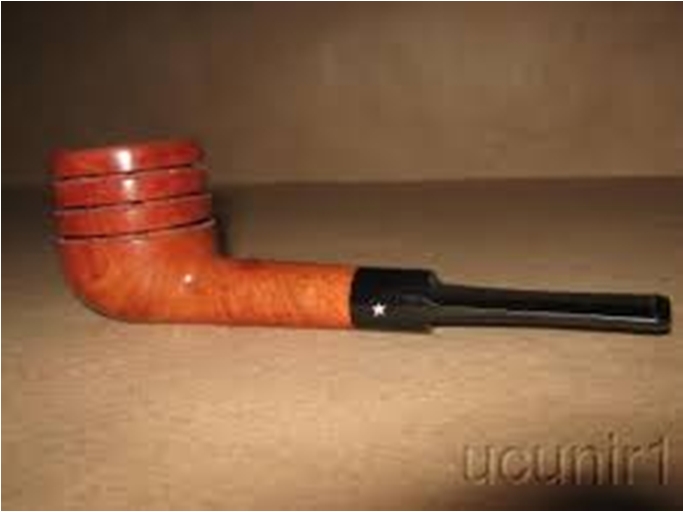
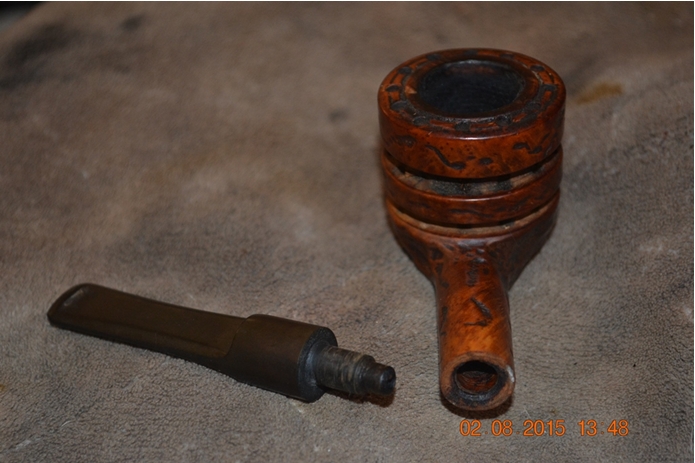
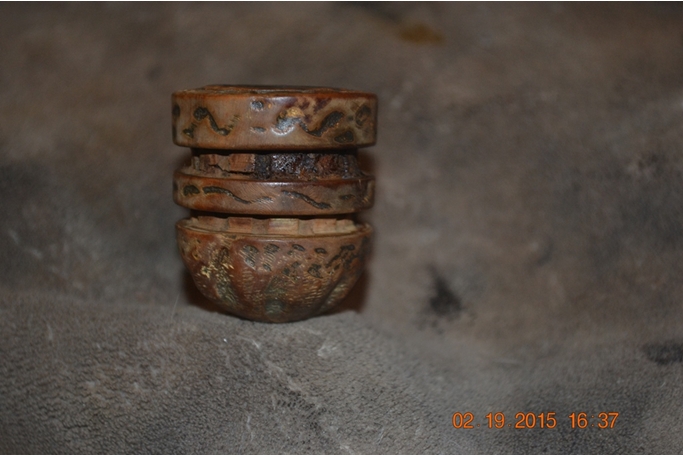
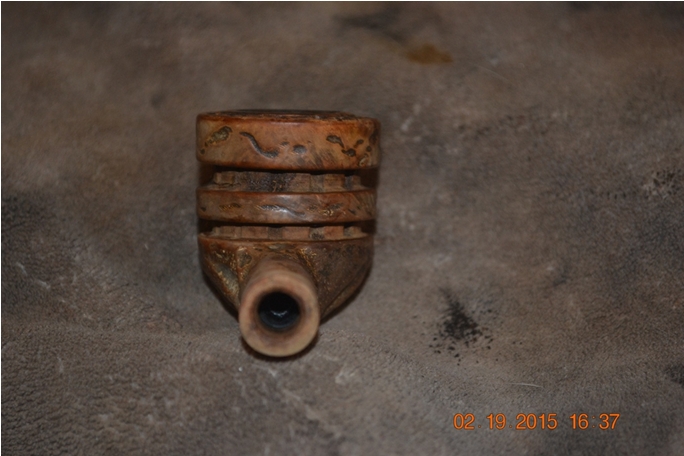
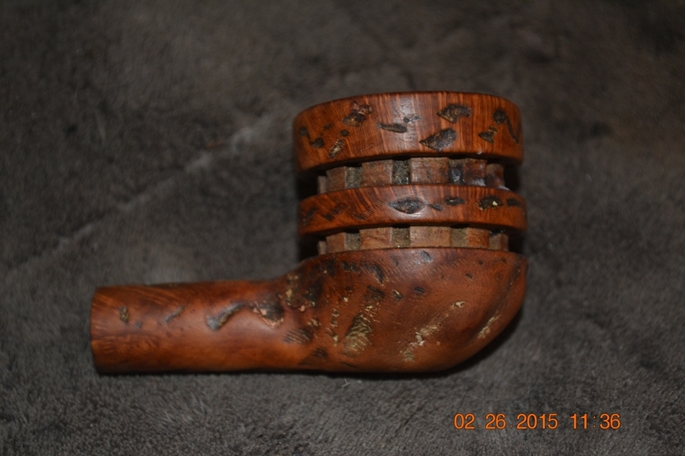
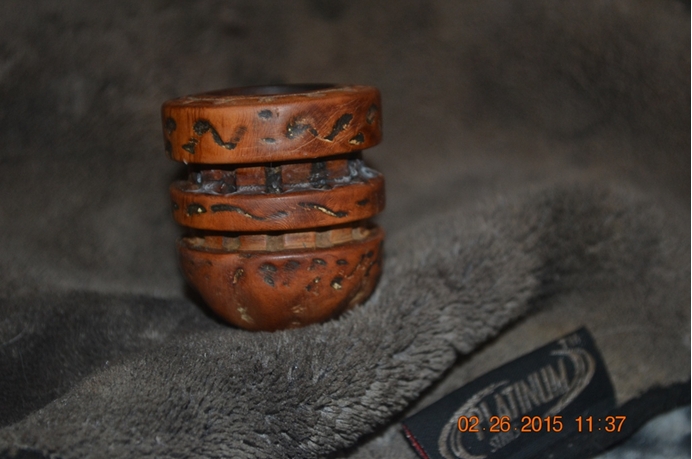
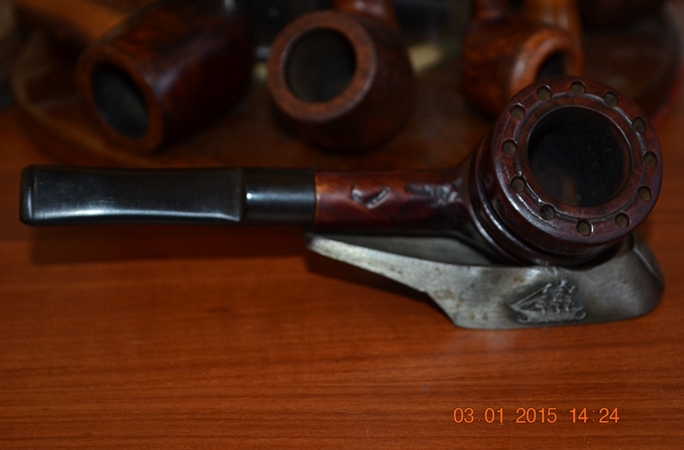
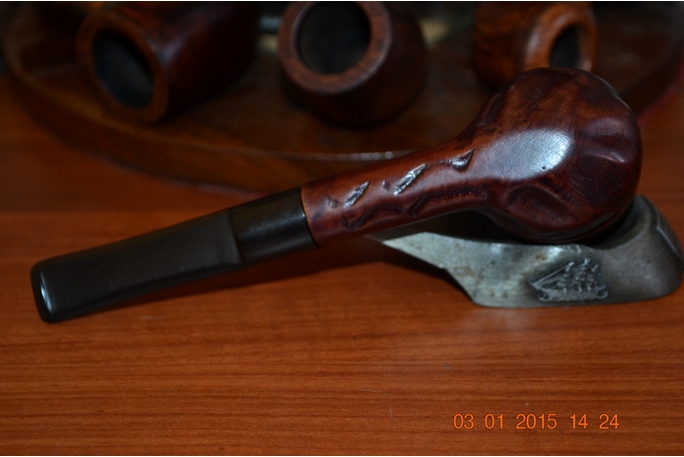
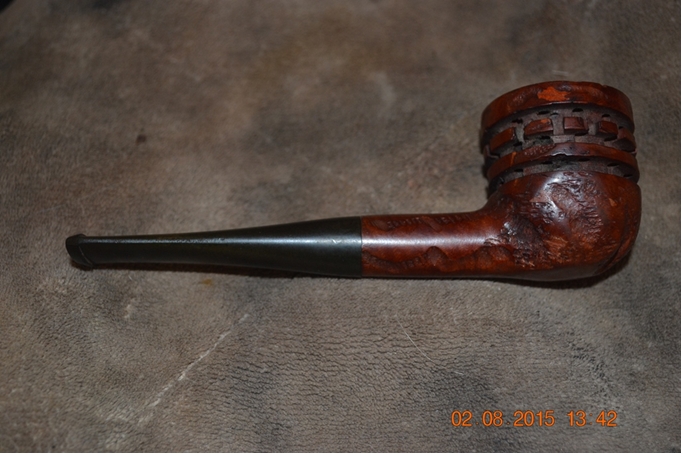
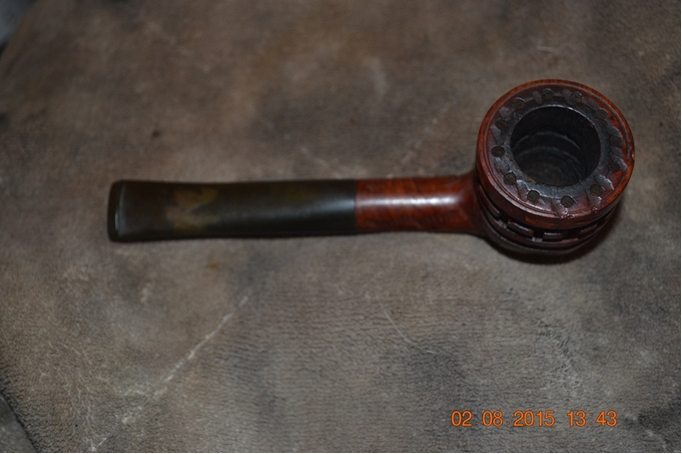
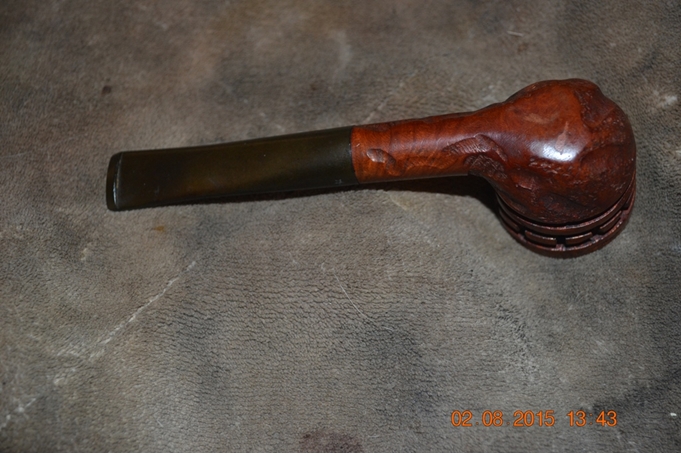
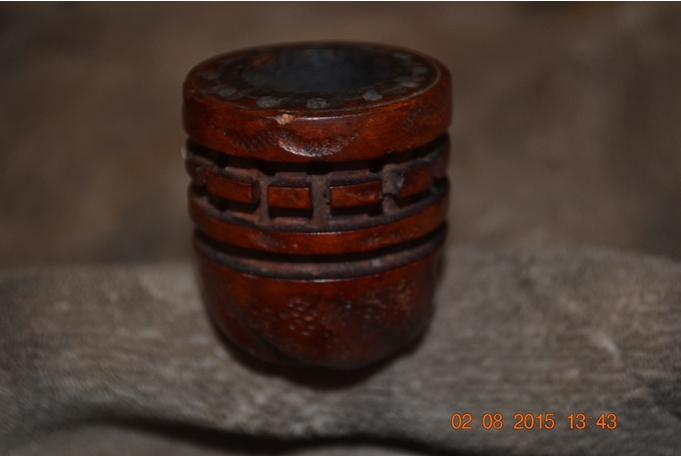
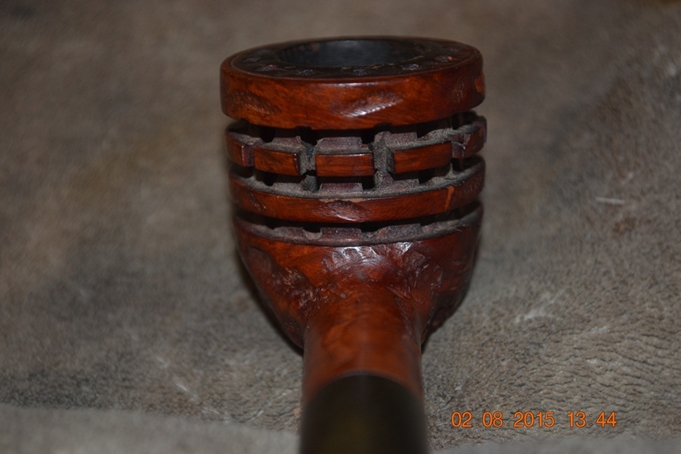
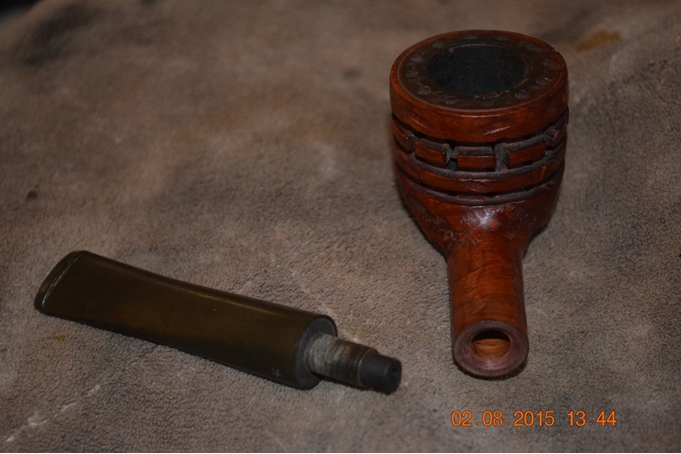
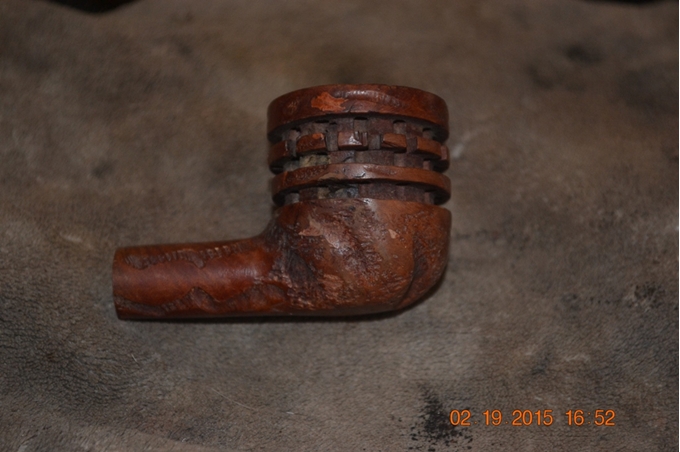
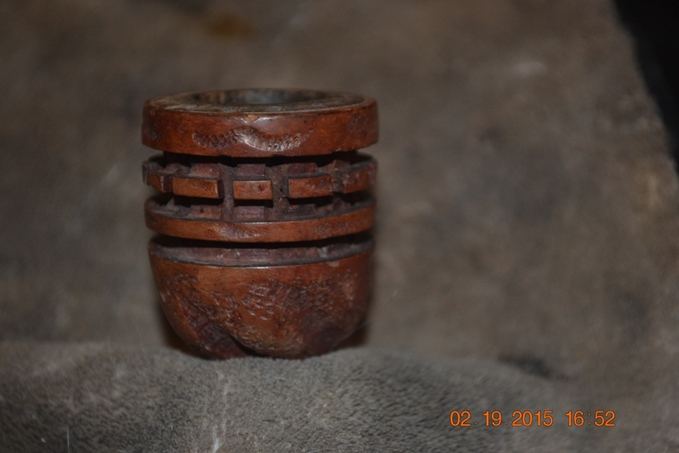
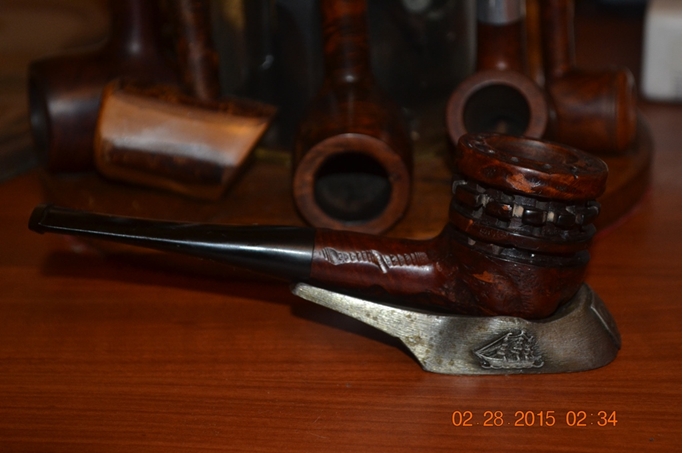
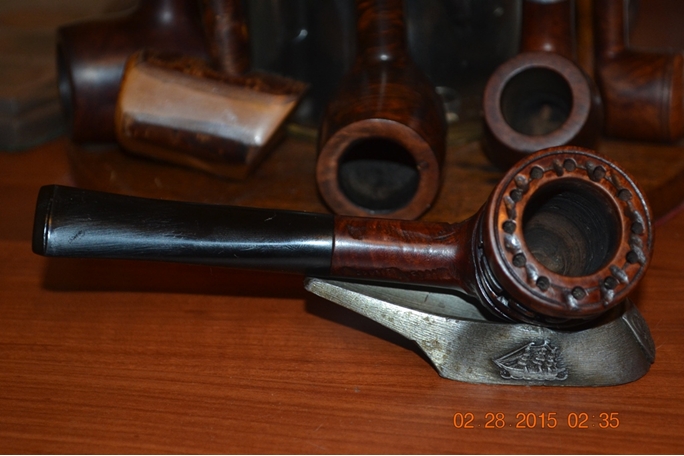
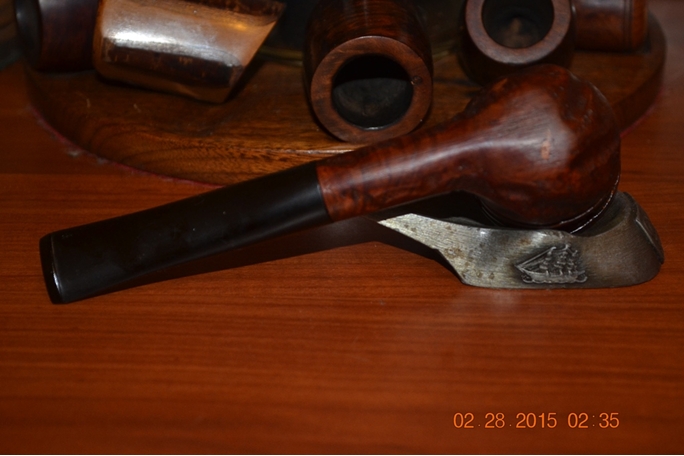
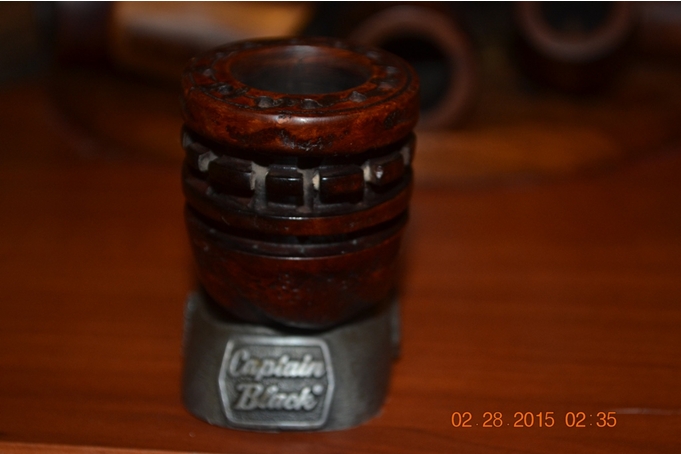
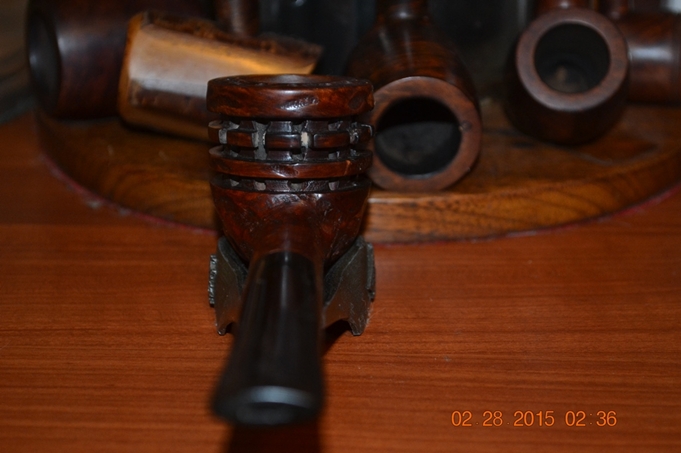
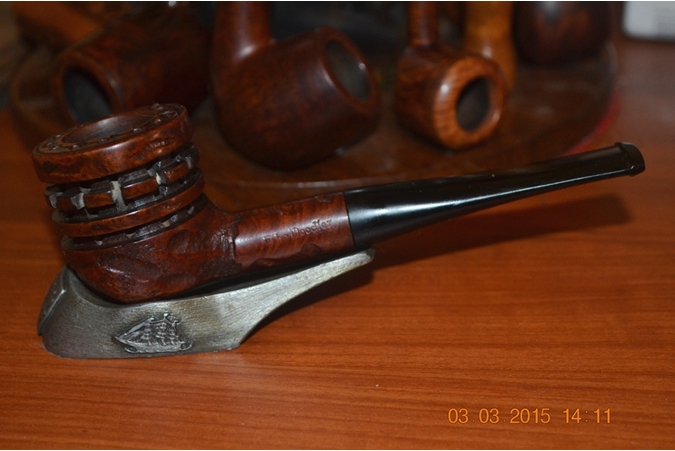
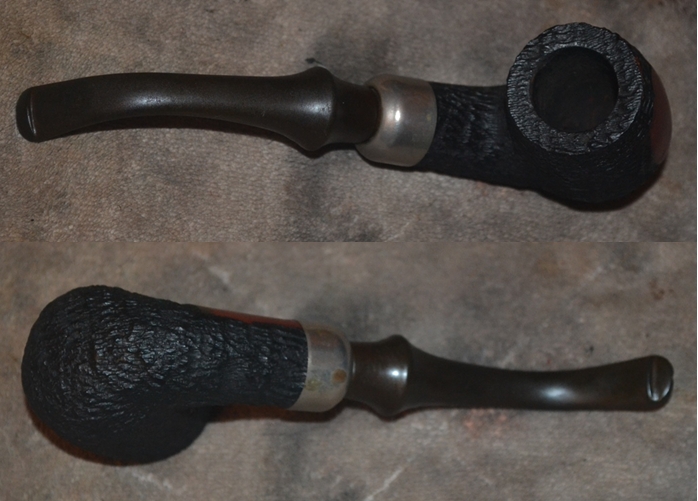
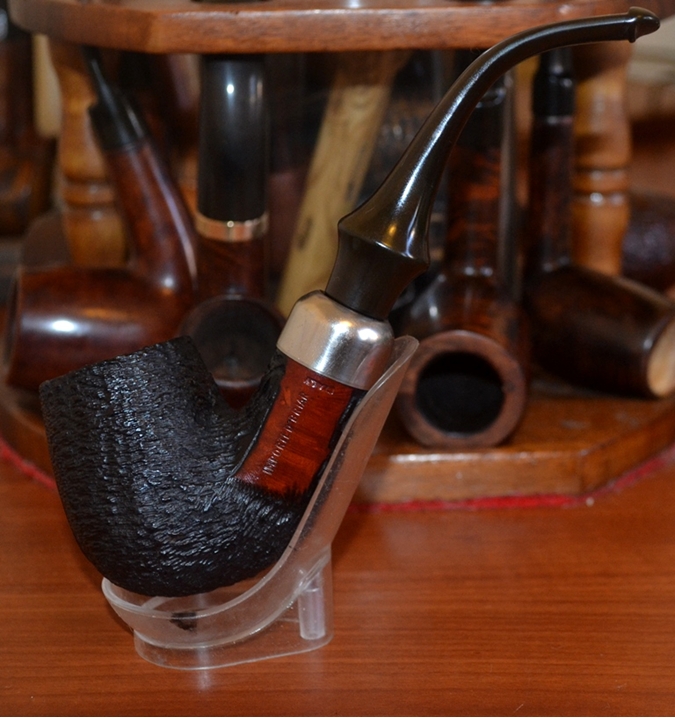
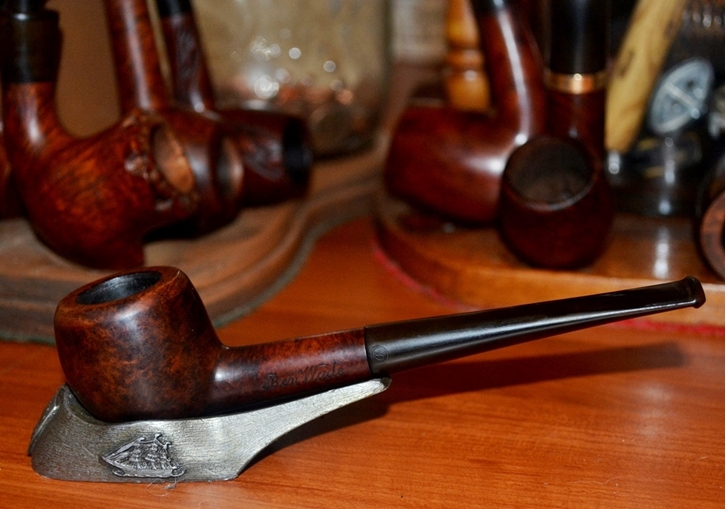
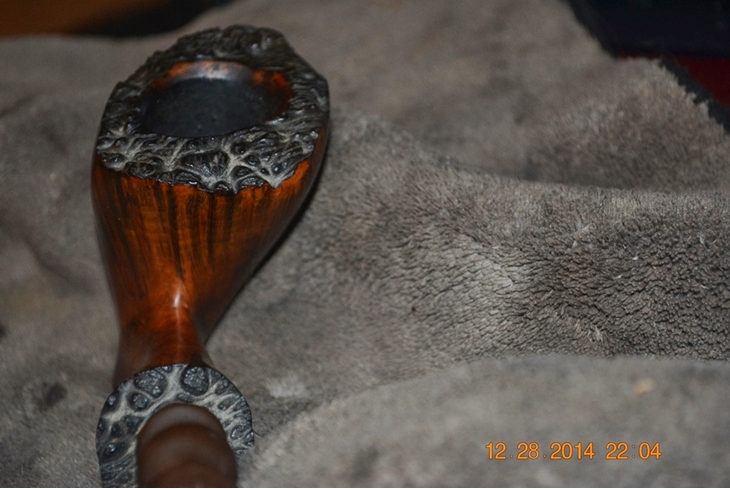
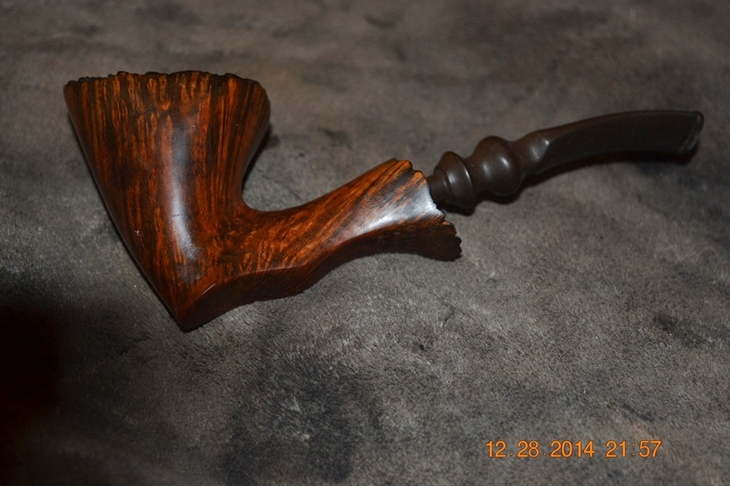
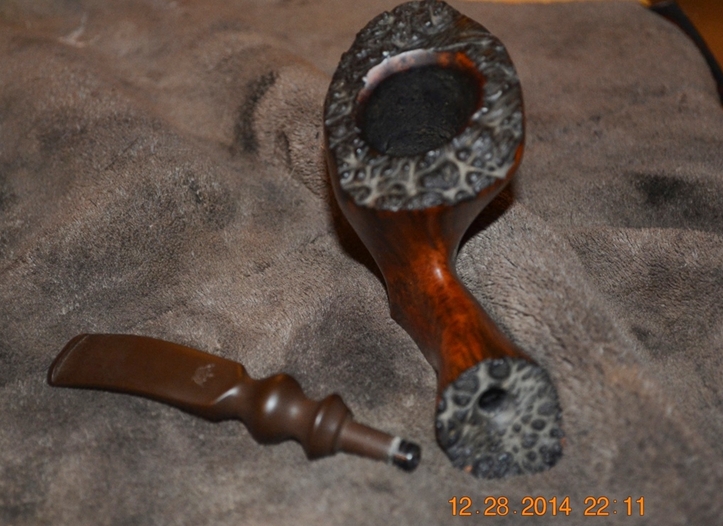
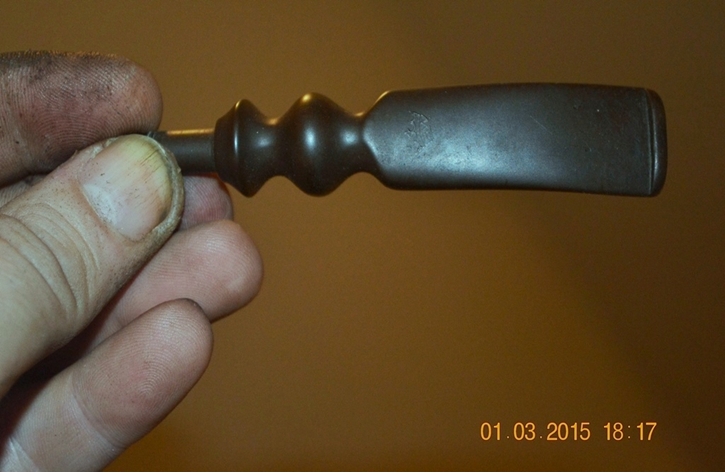
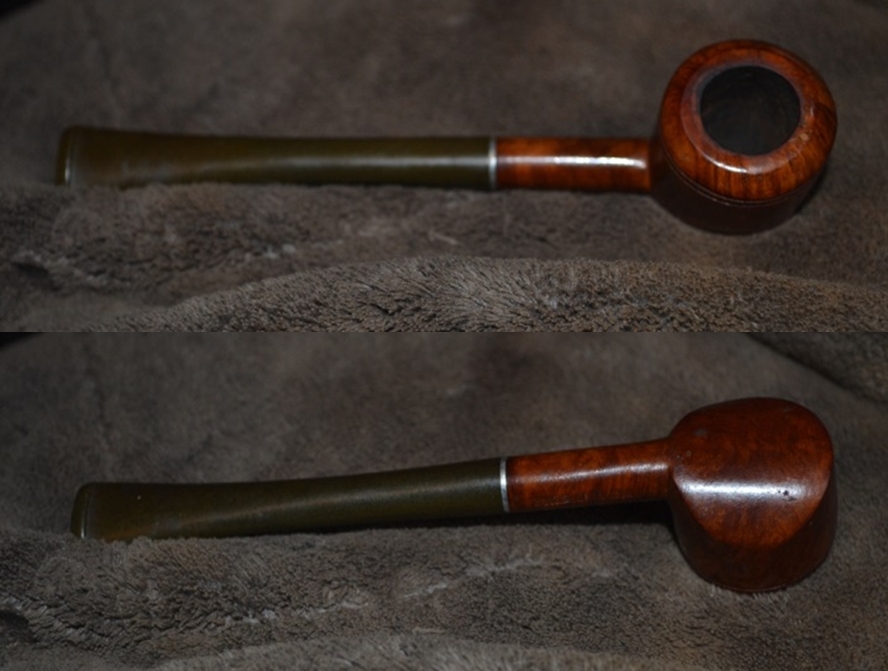
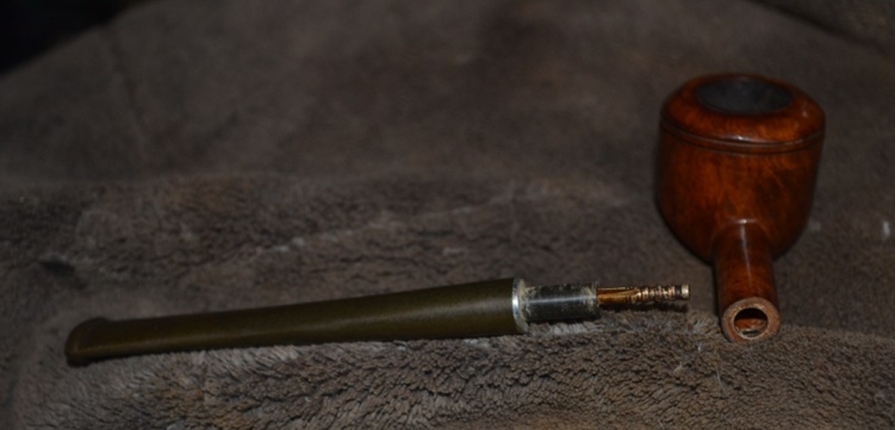
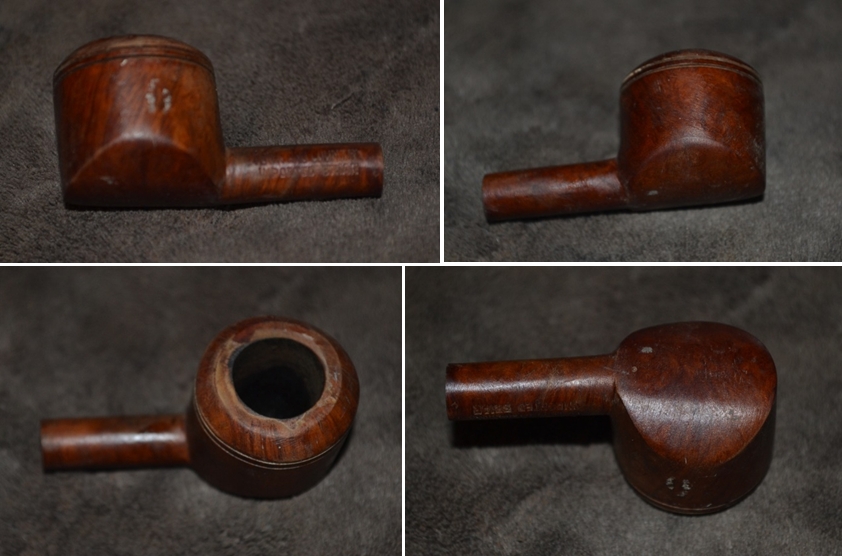
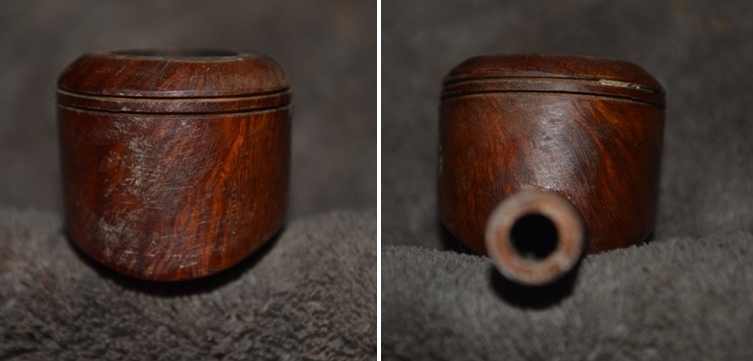
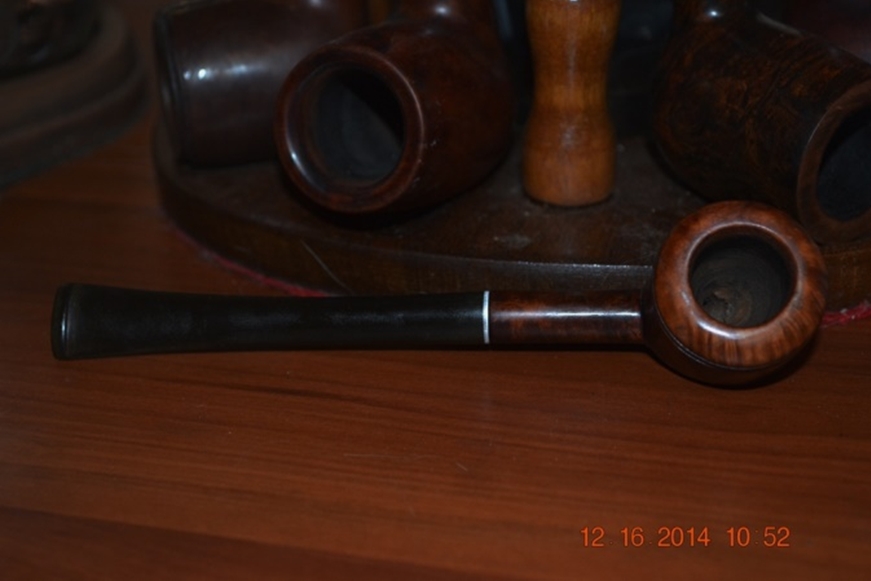
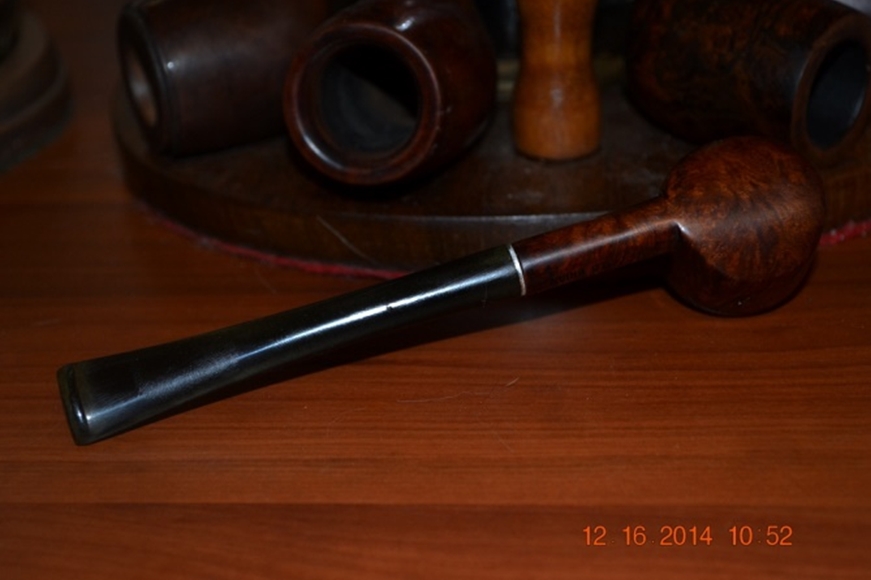
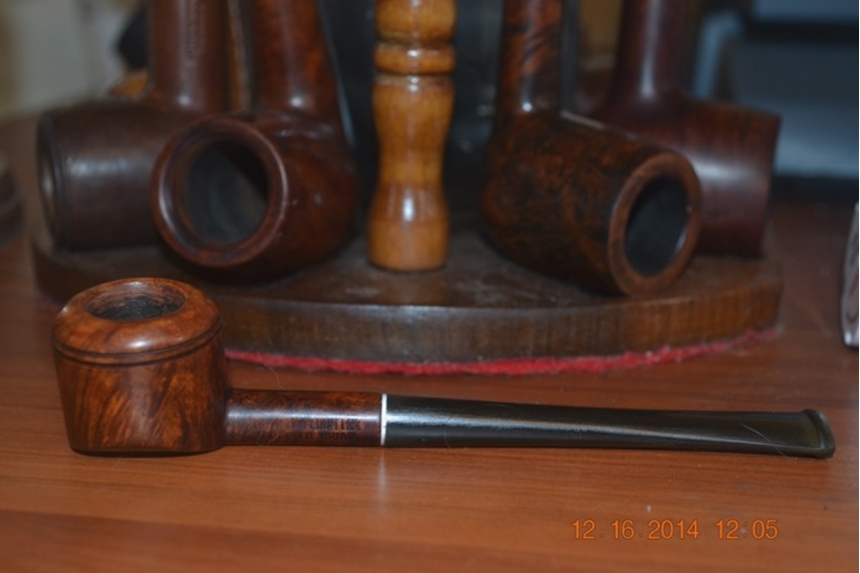
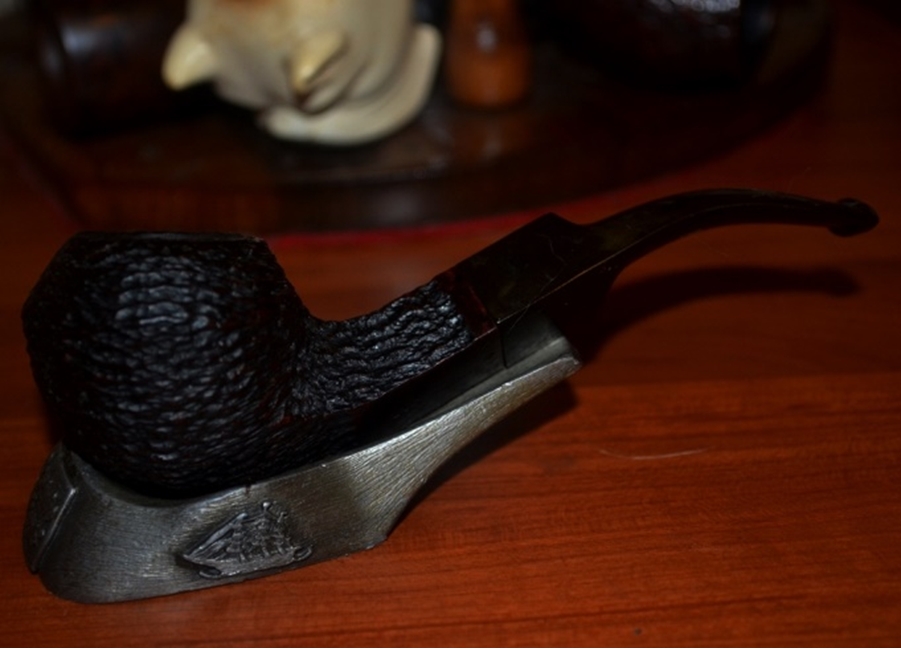
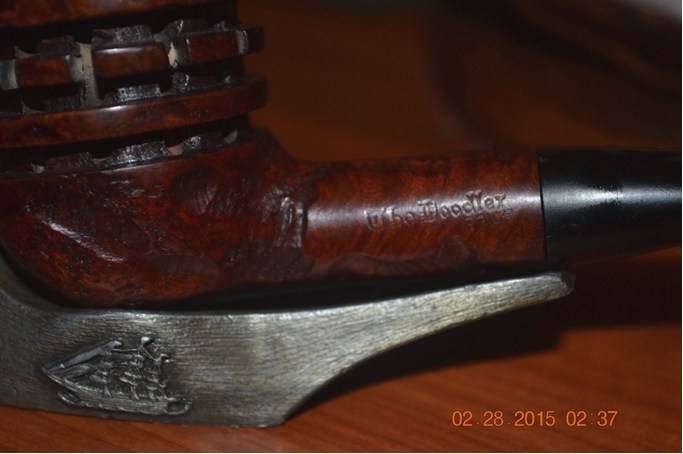
With something approaching their love of very few All-American wonders, including Mickey Mouse and Jerry Lewis, Frenchmen seem to have an affinity for The Doodler. (See http://www.pipephil.com/article-3285357.html, which should be translatable by your browser.) The author of the site calls this a “radiator” style. He also notes what he calls the brand’s unique look that he claims requires no special nomenclature or stem mark to identify one with certainty. But it just isn’t so. Take, for example, the following samples.Doodler1
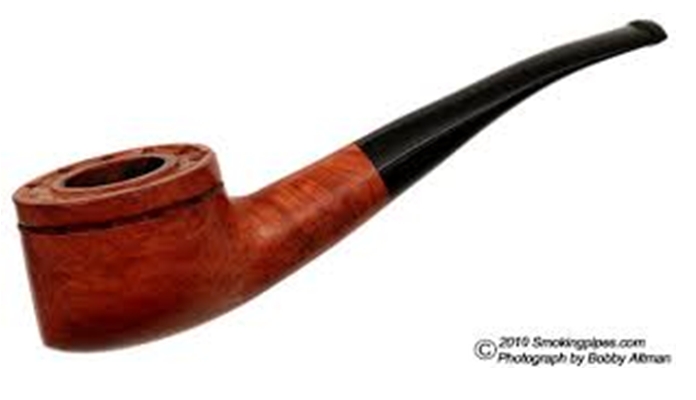
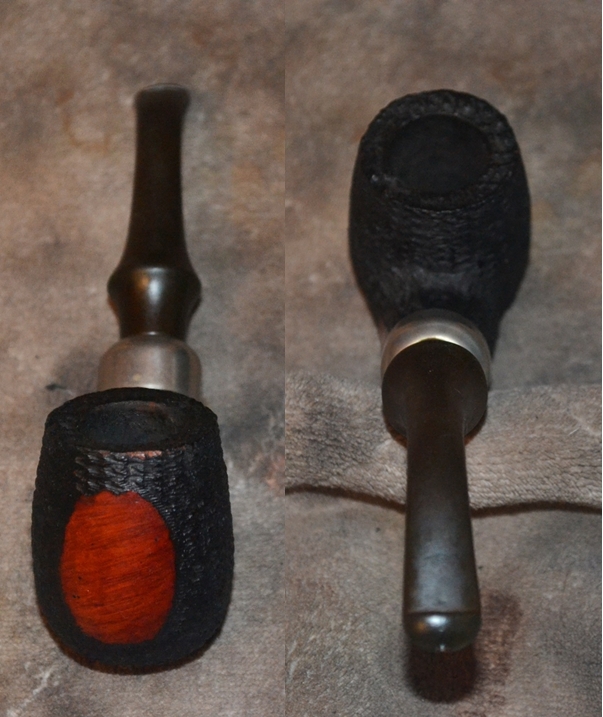
Doodler2 The Doodlers in this blog are of the type familiar to most of those pipe enthusiasts who have even heard of them. While I find beauty in many different forms, including those I restored and describe here, many of my friends, upon seeing The Doodlers for the first time, resort to evasions such as “Weird” and “I’ve never seen anything like this,” or more direct grimaces and even shudders in place of their true probable thoughts along the lines of “Ugly, ugly, ugly!” But as Margaret Wolfe Hungerford first paraphrased the ideas that many before her had suggested, in “Molly Bawn” in 1878: “Beauty is in the eye of the beholder.” And all of The Doodlers do include a stamp, with a star on some stems.

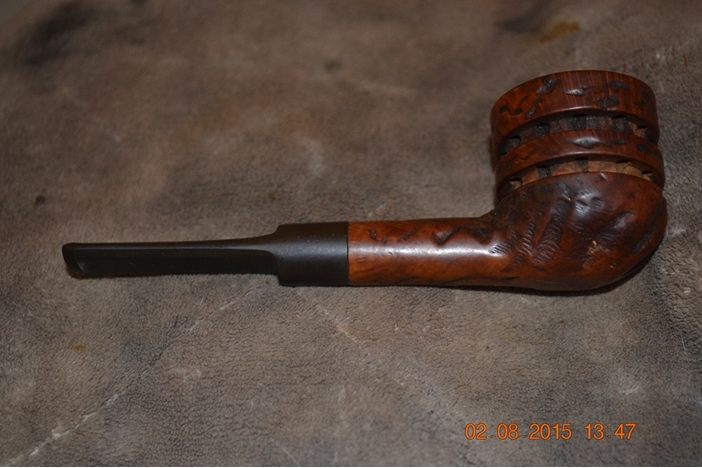
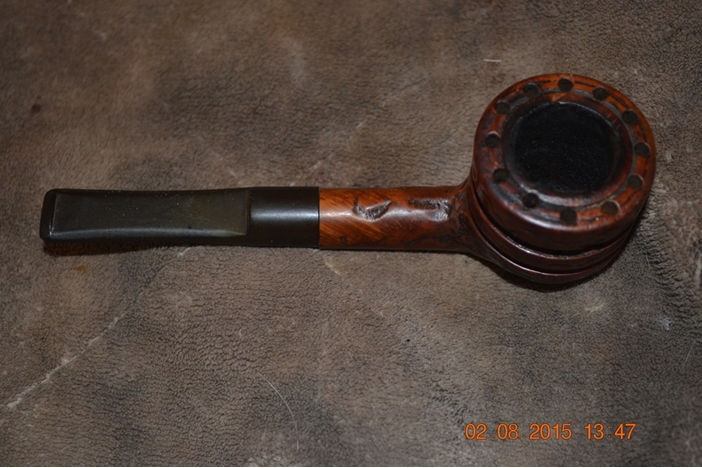
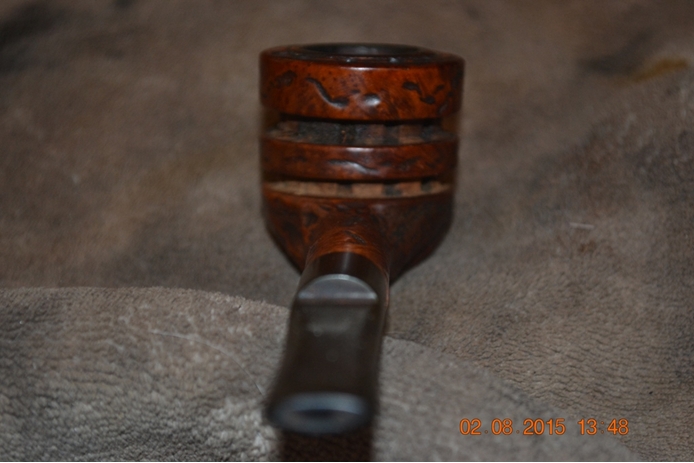
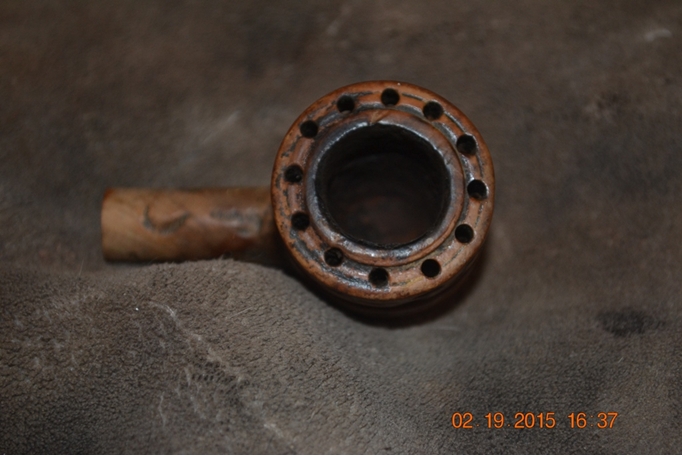
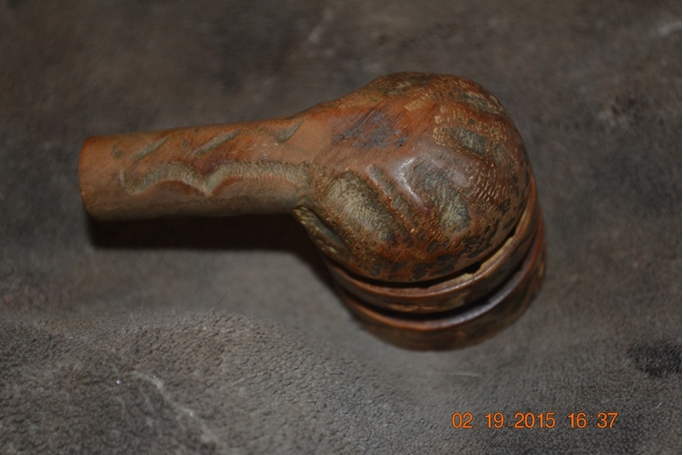
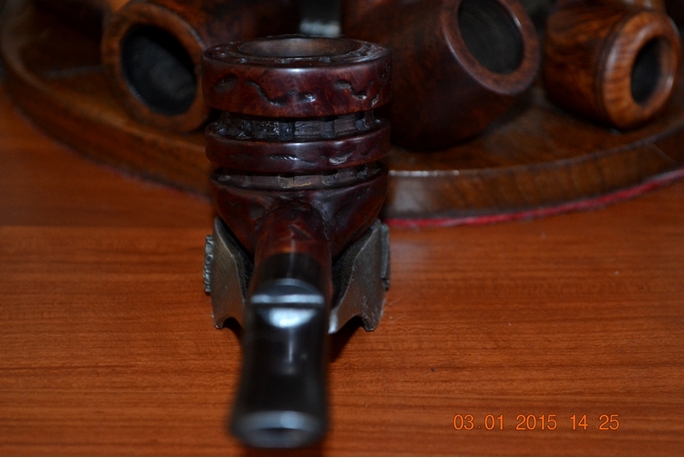
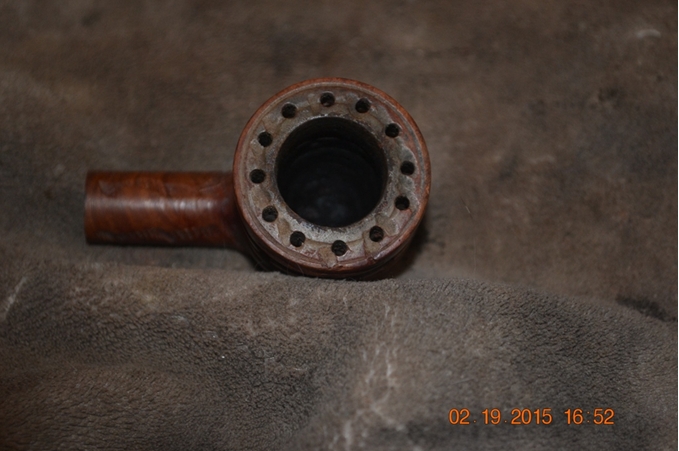
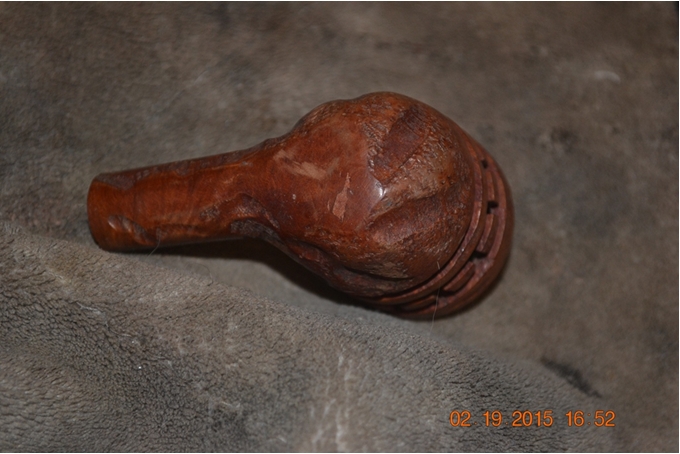
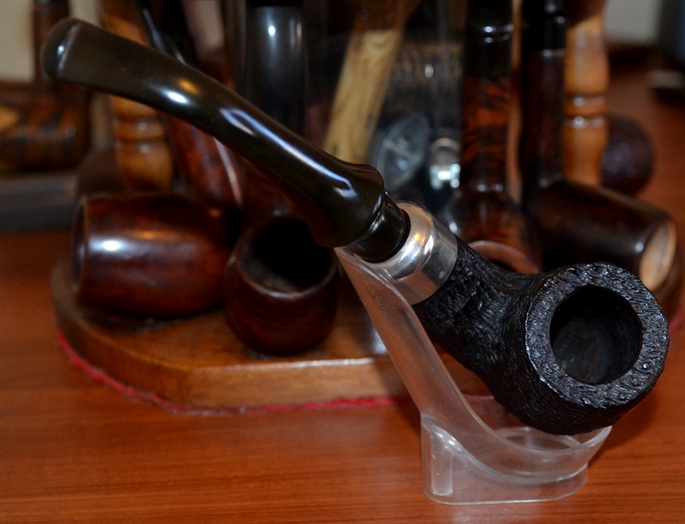
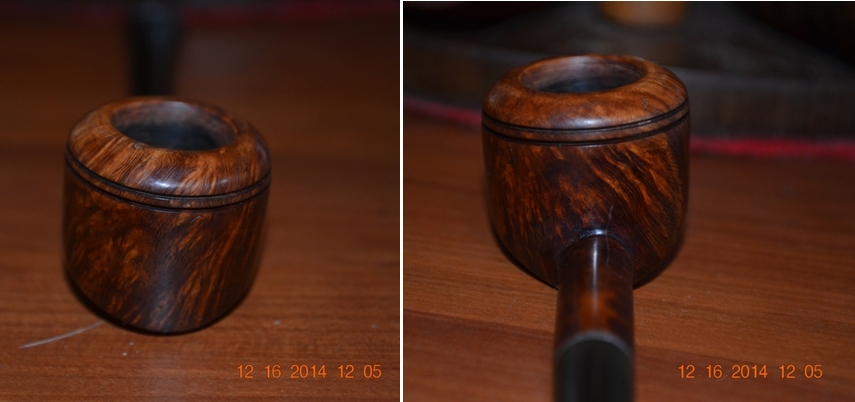
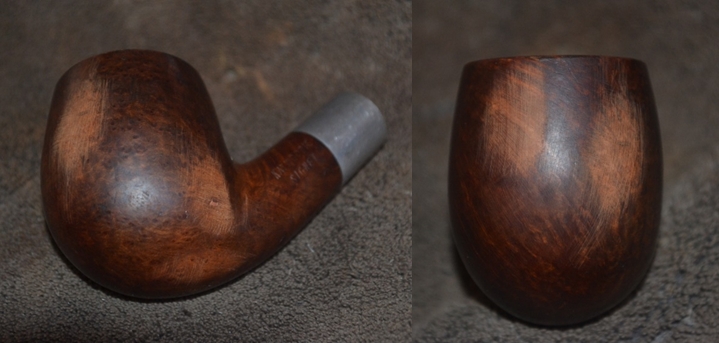
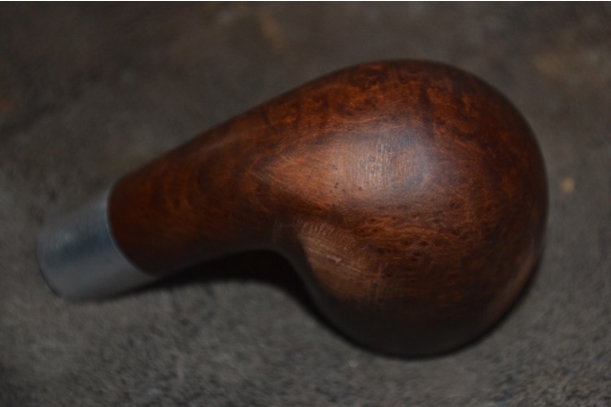
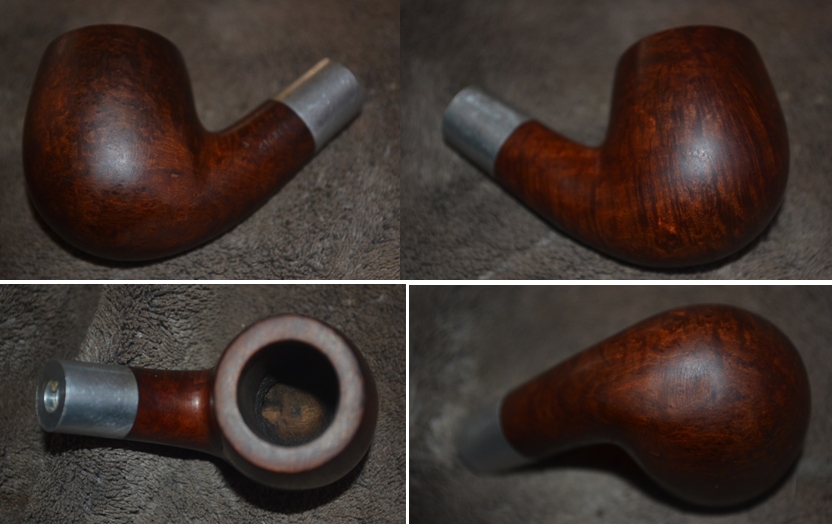
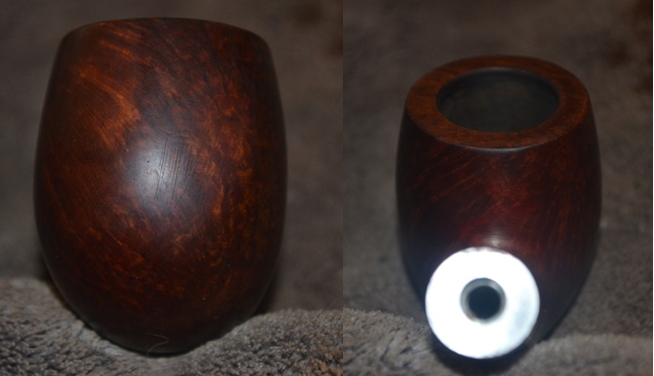
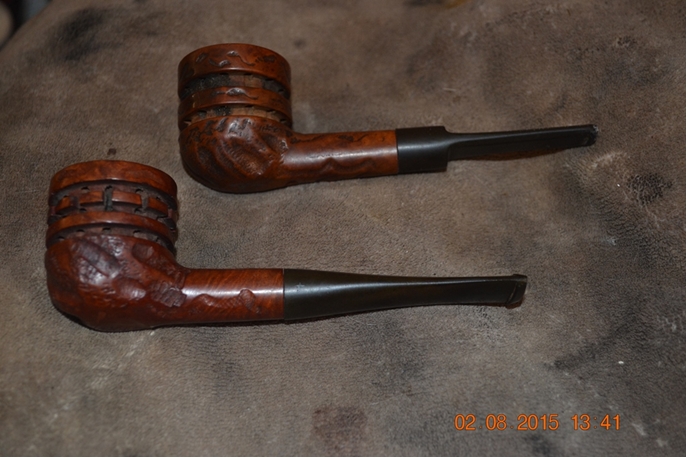
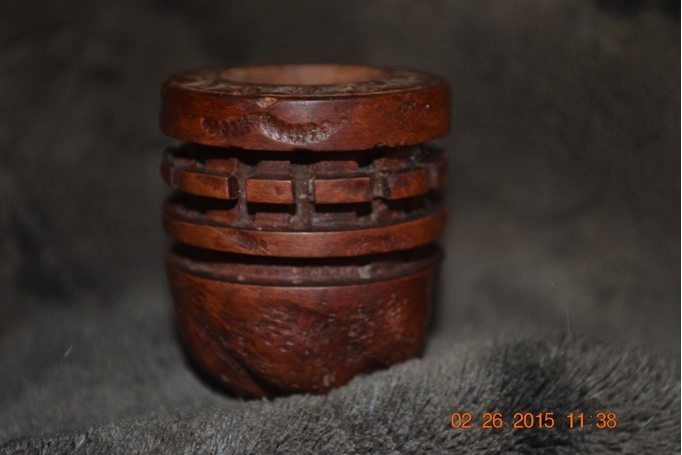
Here are two of “The Doodlers” I could not resist buying online, for a good price, as they arrived in the mail.Doodler3 I had come across the peculiar pipe in scrolling through the listings on pipephil.eu under T for “The Everyman,” which referred me tersely to Everyman. But above it was “The Doodler.” Note the well-known ridges and patterns of holes drilled through the outer ridges of the bowls, which were intended to cool the pipes with air circulation, whether or not they in fact succeed in that purpose. An interesting sideline to this serendipitous discovery and mental note to acquire one was that the very next day, on my eBay homepage, I found a “suggestion” for The Doodler. I’m not sure I buy into one friend’s claim that it was the result of Google keeping track of my search history and offering up products to buy…but then again, the same thing does seem to be happening more often.
THE RESTORATIONS

The Saddle Stem Two-Ring Doodler
Doodler4

Doodler5

Doodler6

Doodler7

Doodler8

Doodler9

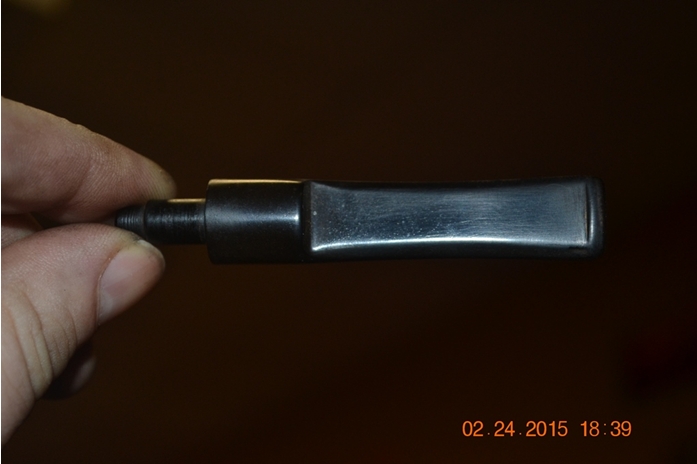
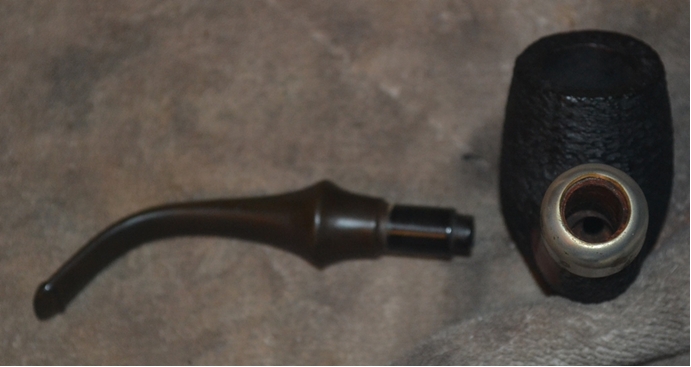
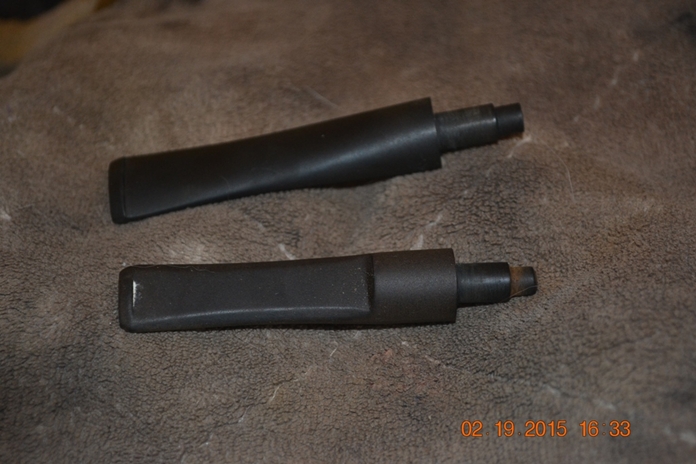
Doodler10 Neither of these stems was in bad shape other than one with some discoloration, but having determined to begin assuring even more thorough cleaning than I already have practiced the hard way, and knowing I had quite a few real messes awaiting restoration, I bought a tub of powdered OxiClean at the closest Walmart. My mentor, Chuck Richards, and others have recipes they prefer, but I have to start somewhere. I decided to begin this dual restoration with separate steps requiring two small Tupperware containers.

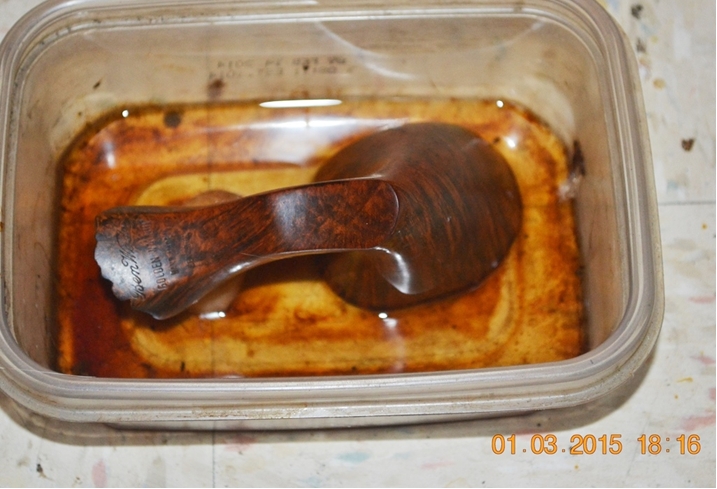
One, of course, was the OxiClean soak, for which I found instructions available on one website I located with clear directions. The other was for an Everclear strip of the old stains. And so – after filling one container with just enough warm water to cover the two stems and stirring in a little more than a tablespoon of OxiClean, and the other with a jar of used Everclear that was almost not enough to clear the tops of both bowls – I sat back and filled a pipe close at hand and relaxed for the next 20 minutes. And then while the briar dried and I finished the stem wash with cleaners and a scrubbing rag, I didn’t let those activities detract from my enjoyment of the fine tobacco. There seemed no good reason not to micromesh the saddle stem while I was at it. By the way, the foulness of the soapy water from the OxiClean soak gave me inner warmth only another restorer could understand.Doodler11
Doodler12

Doodler13

Doodler14

Doodler15

Doodler16

Doodler17

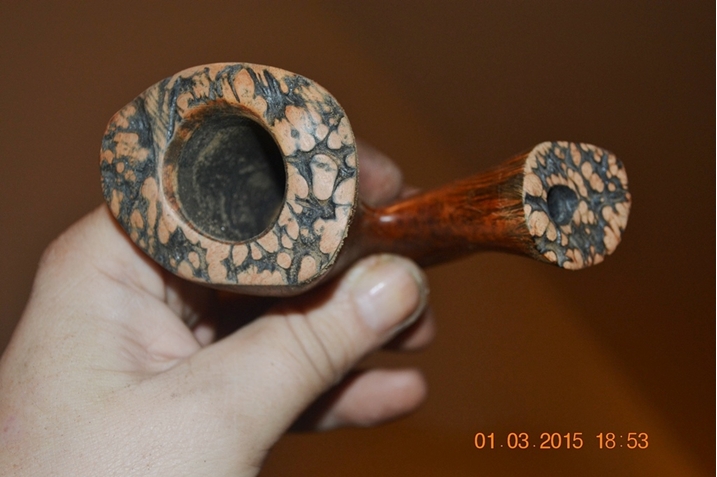
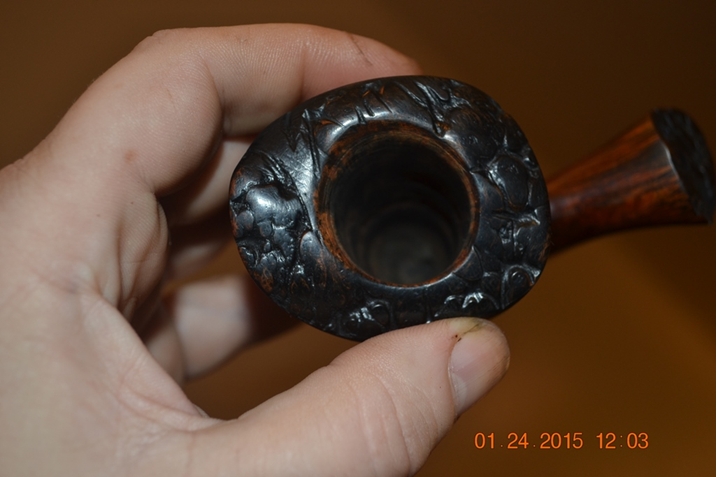
Doodler18 Running a finger around the chamber before stripping the old stain, I knew the reaming and sanding would not be easy, but I hoped the pure grain alcohol soak would ease the job more than it in fact did. Although the inside of the bowl was somewhat smoother, and bits and even a chunk or two of cake came free with my second finger inspection, I realized the carbon buildup was not the true problem. The previous owner of this pipe had enjoyed it so often and with such complete faith in the professed cooling qualities of its unique radiator design that he overheated the chamber and created an even pattern of rather deep pocks.

Therefore I took my 21mm fixed reamer (the second largest) from its box and found that it embraced the chamber just short of close enough to serve as a measurement of its horizontal and vertical dimensions. Only the small square at the end to which the handle attached extended above the rim. I reamed the chamber a few times at different angles to cover all of it, emptying out the scant amount of carbon resulting as I progressed, and cleaned the inner briar with a small cotton cloth swab soaked in alcohol. Finding, as I expected, that the pocks were still prominent, I turned to a piece of 220-grit paper that removed more cake but had little impact on the smoothness. Turning to 150-grit, as I tend to do, I began to get somewhere, and after much tenacity and aurally irritating screeching achieved a level of regularity with which I could live, after a quick finish with 300.

I dipped a pipe cleaner in the Everclear and then ran in down through each vent hole to clear out more hidden dirtiness and scrubbed until they were clean.

The oddest part of this restore, to my thinking, was the difficulty of retorting after the thorough Everclear dip. The first round dredged up so much gunk that half of the shank leading to the draught hole was clogged to the point where the soft cleaner bunched up and would not pass. Each successive beaker brought out more dark nastiness, and the cleaners I passed through the shank as well as the small cotton cloths with which I scrubbed the chamber were filthy – until the last. I boiled the alcohol through the shank and into the bowl several times to be sure. When all was done, I had used seven beakers of Everclear, five soft cleaners, three cotton balls and as many cloth squares.

For the next step I wanted to clean up the bowl and shank to see what I had to work with. I used only a light rubbing with super fine steel wool. Happy with the ongoing progress, I took both pipes to Chuck at the shop.

He had no comment about the tapered three-ridge version, which on this rare occasion I understood meant it was looking okay. But I will never cease to be astonished by his ability to glance at a pipe for no more than two seconds and see all that is wrong with it. In this case he spotted a major horizontal crack within the upper ring of the saddle bit bowl, not to mention a minor crack. Without my magnifier glasses in the fluorescent light, I still could not see them until he held it beneath a certain ray of light. Then they were as clear as day, which it was. I suggested a mix of Super Glue and briar shavings, and Chuck concurred.

I was disappointed, not because of Chuck’s keen eyes and helpfulness in pointing out the serious flaw, but due to the fact that I had intended to keep the other and to my taste nicer Doodler for my own collection and offer the saddle bit for sale. Knowing then I could not in good conscience do this, I told him so.

“Sometimes that’s just the kind of trade-off you have to make,” Master Po pronounced with his big grin, chuckling that his Grasshopper was learning.

Returning later to my abode in Albuquerque’s War Zone, I sat on the couch that is my customary main work area and scrutinized the pipe.Doodler19
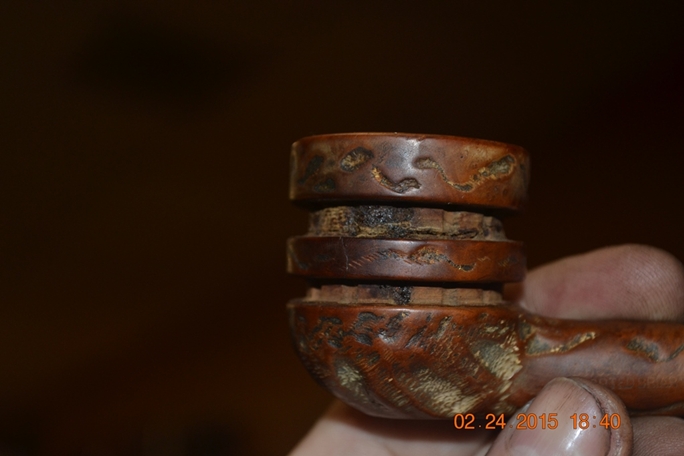
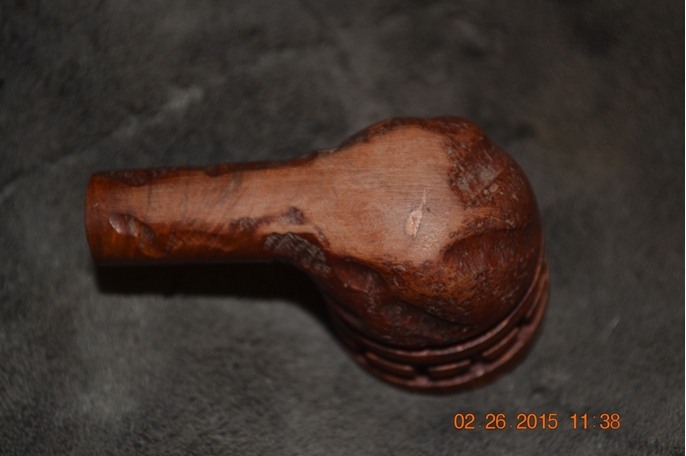
Doodler20 I sanded the bottom of the tapered three-ridge bowl and collected the fine briar dust.Doodler21 Filling the cracks required two layers of the mixture, the second of which I applied more liberally. Getting into the groove with 300-grit paper to sand away the excess glue mix was a little tricky, and I thought I was done. However, after I sanded the yellowed areas and micro-meshed the whole thing using a full barrage of 1500, 1800, 2400, 3200, 3600 and 4000, I saw the grooves needed harsher measures.Doodler22
Doodler23

Doodler24

Doodler25

Doodler26

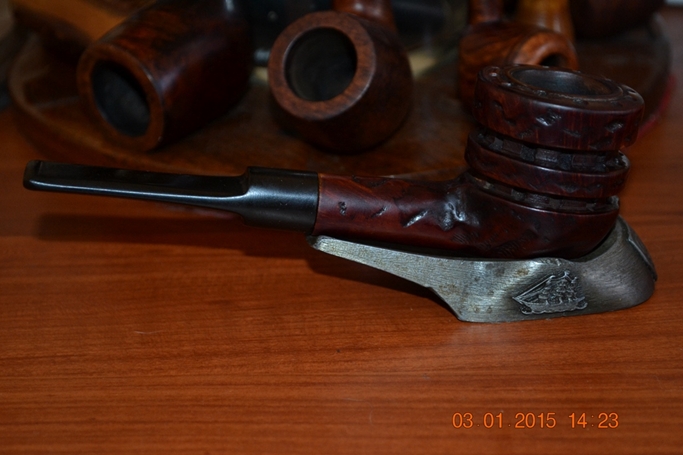
Doodler27 I broke out the 220-grit and paid as close attention as possible to the white areas of remaining glue, then repeated the previous micromesh procedure to the one groove. Success at last! I stained the wood with marine cordovan (burgundy) leather dressing, flamed it and used a very light touch of micromesh 3200. I then removed myself and the prepped briar to my official workroom, where I buffed the wood with white and red Tripoli, White Diamond and several coats of carnauba.Doodler28
Doodler29

Doodler30

Doodler31

Doodler32

Doodler33
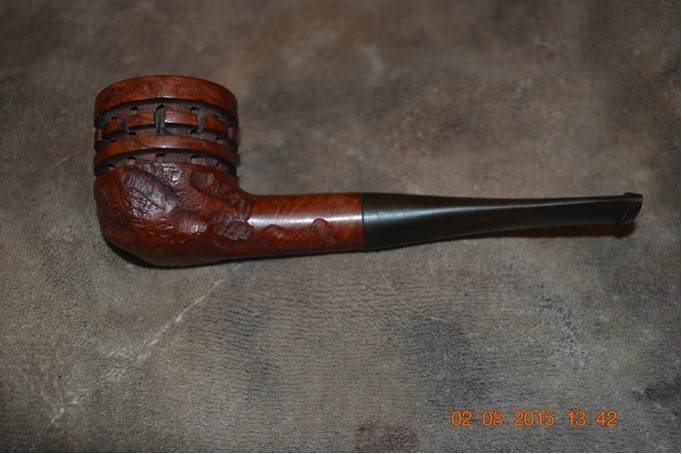
The Tapered Stem Three-Ring Doodler
Doodler34

Doodler35

Doodler36

Doodler37

Doodler38

Doodler39

Doodler40 This tapered, three-ring classic style model appeared, at least to my eyes that are still in training, to be in better shape than the saddle stem version, not counting the stem that was discolored, the rim that was more darkened and the chamber that seemed to have more severe damage. In general, those are all superficial defects easy to remedy. Still, I chose to start with the saddle stem pipe because of my perception that it would be more difficult – and in part due to its nomenclature being faint almost to invisibility, I was going to offer it for sale on my site at the lowest price I offer. But oh, did I learn how appearances can be deceiving, and this three-ring pipe turned into a three-ring circus!

First, I will start with the good news. The OxiClean soak cleared away the discoloration and most of the other crud inside and out of the stem, and the rest came clean and ready to buff with some firm rubbing of a soft cloth, minor spot sanding and regular micro-meshing.

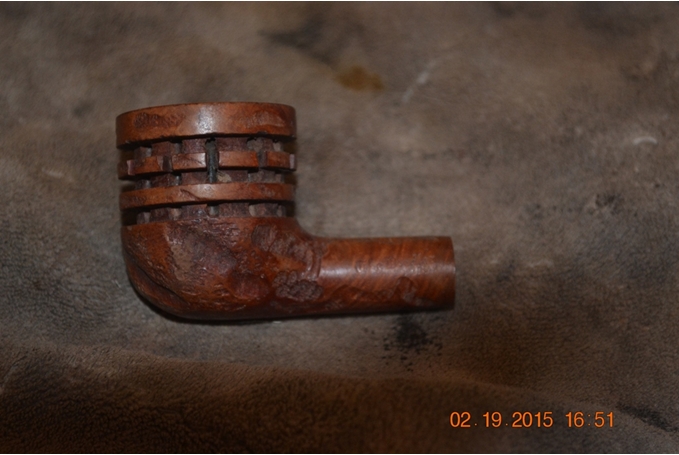
The initial problem I encountered was stripping the old stain. I have seen this happen before, of course, but not with almost identical pipes soaked for the same time with such radical results. Even after soaking the tapered pipe another two hours, it came out not down to the briar with nothing but a few yellow spots like the other pipe but almost unfazed.Doodler41
Doodler42

Doodler43

Doodler44

Doodler45

Doodler46 At least it was cleaner, in particular the rim and rings, and the chamber showed signs of improvement. Also, removing the remaining cake and evening the chamber walls was no problem. As with the saddle stem Doodler, I ran a couple of alcohol soaked cleaners downward through the vent holes and removed some leftover grime. Even the retort this time was more typical, needing only a couple of beakers of Everclear to be boiled through the stem and shank and into the chamber.

The pipe as shown above was almost ready for the buffing wheels. I hand-buffed it starting with super fine steel wool, particularly on the still somewhat blackened rim and a few areas that needed a little work on the remaining roughness from the Everclear soak. I then progressed with micromesh pads using 1500, 2400, 3200, 3600 and 4000, with the results below shown only front and back. Of course I picked out the little piece of fluff visible in the front bottom ring.Doodler47
Doodler48 The second Doodler was, indeed, ready to be stained. For the task I chose my Liebing’s brown leather stain, which is in fact a lighter shade than the Lincoln medium brown I have. Considering the large amount of residual original stain, but wanting to darken the briar a bit, I had a plan, if not yet the knowledge to carry it out to full effect. At any rate, I stained the bowl and shank as well as I could, but no matter how hard I tried, I could not work the applicator into the dratted grooves of the middle tier of smooth briar, although I was able to coat all three rings. Consulting my pictorial folder of the project that showed the original estate pipe, I noticed un-stained rings and grooves, and concluded I was ahead in the game, so to speak.

This was where I was mistaken. Have you ever had that feeling? The one that nags at you, whispering that despite all evidence to the contrary, there are the right way and the wrong, and this is definitely wrong? Yet still you didn’t follow your instincts?

Nevertheless, to make my act of self-destruction almost complete (there’s the modifier again – almost), I flamed the stain and eased off the char with 3200 micromesh before taking the pipe to the wheels. There I applied ever more beautiful coats of white Tripoli and red (to enhance the darkness of the grain) before White Diamond and a final coat of carnauba.

And so what, you might ask, was the major [expletive voluntarily deleted] malfunction with this tapered variant of The Doodler compared to the saddle stem? In short, the pipe that, to my eyes-in-training I mentioned before, appeared to be well used but more or less as its previous owner received it, had in fact been modified in a manner I did not detect. I very much suspect this pipe had only one prior owner, other than the conduit to me, after getting a close look at the crafty way he covered a ding that must have been, in tobacco pipe scale, comparable to a large patch of skin ripped from a person’s body.
And Chuck, when I showed him both pipes in progress before, pointed out the horizontal crack in the saddle stem pipe but appears to have assumed I was aware that the middle tier of smooth briar below the top ring was not made with the evenly spaced slots. I use the term “appears to have assumed” because of my utter inability to wrap my mind around the possibility that Chuck missed the alteration before he set it aside, especially considering his first words to me when I showed him the pipe I then hoped was finished. Again, I choose the word hoped because I was, at least, aware of the unstained grooves, and was hearing that shrewish voice again.

“Did you make this nick here?” Chuck asked, holding the pipe out to me and pointing, and puffing on his own pipe.

“No, it was there already,” I replied, not knowing where he was going. Surely he didn’t expect me to fashion and Super Glue a fragment of briar onto the tiny spot I beheld. Even he wouldn’t touch a blemish that small, I knew.

Chuck began to explain the situation to me, in his own way, which took me longer than usual to grasp. I felt like an idiot, although that was not Chuck’s intent. When at last I understood, a light went on in my mind.

“You mean someone, sometime slipped up and made a single gash in that area of the pipe and then, to fix his mistake, went around the bowl and made it uniform?” I said more than asked with a big smile of my own.

“Exactly!” Chuck said.

“Just like the way I had to rusticate the entire rim of the Italian No-Name Full Bent Billiard because of the one missing chunk,” I added by way of comparison.

“Yes!” Chuck exclaimed again, laughing and re-lighting his pipe. Then he brought up the missing stain and told me a small paint brush would do the trick.

And so to home I returned the first chance I had and, after lighting a bowl of tobacco, began the only other activity that has come to give me any real pleasure: restoring a pipe. Chuck’s advice to use a small brush did the trick, and I only had to stain, flame and fully buff the small circle of the truly prepped pipe. Still, I decided to add a couple more coats of carnauba to bring out an extra shine.Doodler49
Doodler50

Doodler51

Doodler52

Doodler53

Doodler54

Doodler55 CONCLUSION
I forgot to mention the extra sanding of the rim and the top tier, making it lighter than the rest of the bowl and shank, and giving me the idea for a gentle two-tone effect. At this point in a rather long blog, I just don’t feel like going back to find and edit that part. These were not the easy restorations I thought they would be, and I’m tired…but very satisfied.

To Chuck, my friend and mentor, and Steve Laug, our host and my friend and frequent guide through the endless learning process, I owe much for these restores. Thank you, gentlemen.
Parker Super Bruyere Straight Billiard


Guest Blog by Robert M. Boughton
Member, North American Society of Pipe Collectors
http://www.naspc.org
http://www.roadrunnerpipes.com
http://about.me/boughtonrobert
Photos © the Author

I have made it a rule never to smoke more than one cigar at a time. I have no other restriction as regards smoking. I do not know just when I began to smoke, I only know that it was in my father’s lifetime, and that I was discreet. He passed from this life early in 1847, when I was a shade past eleven; ever since then I have smoked publicly. As an example to others, and not that I care for moderation myself, it has always been my rule never to smoke when asleep, and never to refrain when awake.
― Mark Twain (Samuel L. Clemens, 1835-1910), U.S. author, humorist and critic, at his 70th Birthday Speech, 1905

INTRODUCTION
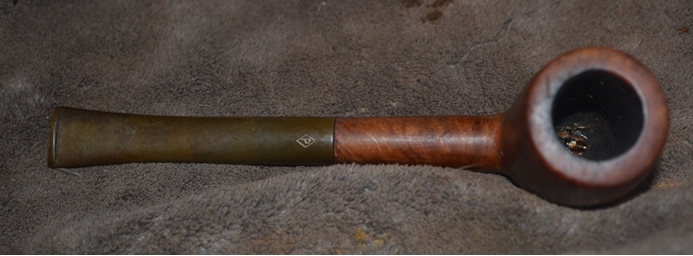
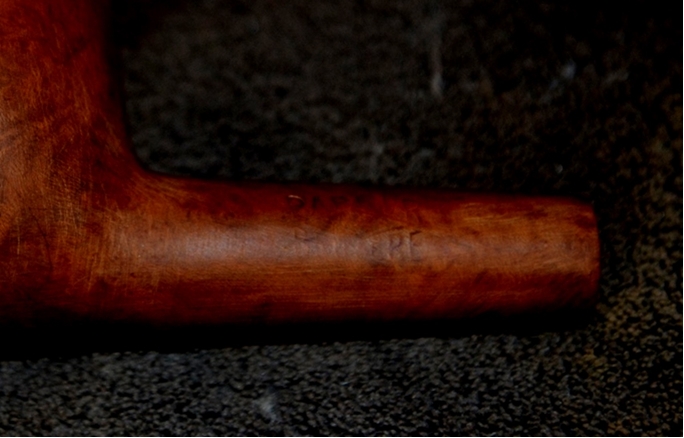
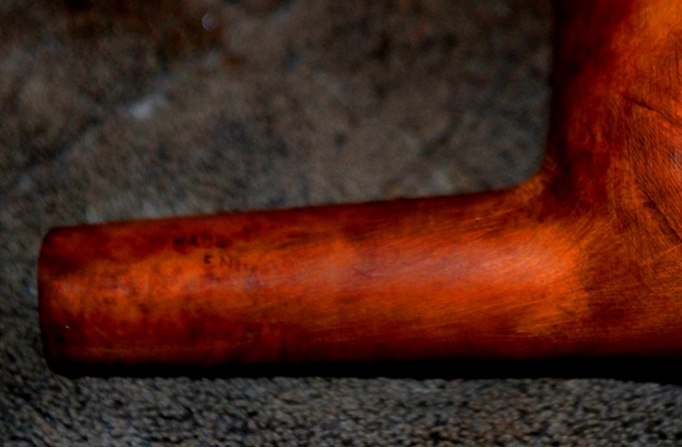
The nomenclature on this Parker Straight Billiard is worn beyond much recognition, but certain details stand out enough under the closest of scrutiny to make me confident it is a Super Bruyere, Made in London England. The following pictures, “enhanced” by various means with photo editing, are all I have to go with.Parker1

Parker2 On the left, the words Parker at the top followed in the middle with a clear enough trademark diamond and on the bottom a definite, fancy Bruyere can be made out. This combined with the very rough yet apparent Made in London England in the photo to the right seem to compare on pipephil.eu only to the Super Bruyere.

That said, the other most notable condition of the pipe as I received it, other than fading of the original stain, was the actual presence of a small amount of tobacco in the bottom of the chamber. That was a somehow endearing quality I had never before seen.Parker3 This angle also shows the majority of the kind of work I needed to do to make the once precise pipe presentable again. The stem was discolored and scratched with minor chatter but no teeth marks. There were also slight dings around the inside of the rim and some blemishes on its top that appeared elsewhere throughout the pipe’s outer area.Parker4

Parker5

Parker6

Parker7

Parker8 I apologize for jumping the gun on the sanding away of one patch of bad pits on the right side before even documenting its original state.

THE RESTORATION
The chamber needed considerable reaming, which also removed the dings in the rim diameter, before sanding with 150-grit paper followed by 200 and 320. I swabbed it with small Everclear-soaked cotton cloths, scoured the shank over and over again with a wire-handled cleaner dipped in the alcohol, did a preliminary cleaning of the stem’s air-hole and retorted the pipe.

After those steps, I sanded the top of the rim with 200 paper, eliminating the scratches there. I followed that with 320 paper over the entire bowl and shank and buffing with super fine steel wool, then 1500, 3200, 3600 and 4000 micromesh.Parker9

Parker10 As much as I liked the lighter color of the briar, I concluded that re-staining with medium brown boot dye seemed the best course. I flamed it, let the wood cool and buffed with 3200 micromesh.

The stem needed 200-grit paper before micro-meshing with 1500, 3200, 3600 and 4000 grades.

To finish, I buffed the stem with red Tripoli and White Diamond, and the wood with red and White Tripoli, White Diamond and carnauba.Parker11

Parker12

Parker13

Parker14

Parker15

Parker16 The last touch was to refill the Parker “P” in a diamond on the stem with a white marker.

CONCLUSION

This restore, I’m happy to report, went without a hitch, although that does leave me with a rather unexciting blog. I almost wish something exciting had gone wrong and required a clever solution!

An Unknown Italian Full Bent Billiard by Any Other Name Would Smell as Sweet


Guest Blog by Robert M. Boughton
Member, North American Society of Pipe Collectors
http://www.naspc.org
http://www.roadrunnerpipes.com
http://about.me/boughtonrobert
Photos © the Author

’Tis but thy name that is my enemy;
Thou art thyself though, not a Montague.
What’s Montague? it is nor hand, nor foot,
Nor arm, nor face, nor any other part
Belonging to a man. O! be some other name:
What’s in a name? that which we call a rose
By any other name would smell as sweet;
So Romeo would, were he not Romeo call’d,
Retain that dear perfection which he owes
Without that title. Romeo, doff thy name;
And for that name, which is no part of thee,
Take all myself.

― William Shakespeare (1564-1616), English playwright and poet, in “Romeo and Juliet,” Act II, sc. 2, 1597

INTRODUCTION
This splendid rusticated full bent billiard somehow overshadowed the other pipes in one of the many estate lots I purchased in rapid succession some months past, despite my inability to identify its brand in the group photo. Of course, being also a system pipe, the slim chance that it was a Peterson’s crossed my mind, but I was more than doubtful. When the lot arrived, I was eager to see who made it and set aside the others of known make and quality in a rush to examine the nomenclature of the mysterious new addition to my pipes to be restored for resale. I was surprised and intrigued to find it was a no-name Italian.It1 I began showing the unusual pipe to some of my friends more familiar with Italian crafters than I. The first of these was my mentor, Chuck Richards, as he was present at our tobacconist just after the package arrived when I tore my way past the over-taping that is the bad habit of so many shippers. His own exquisite pipe of the day in mouth, Chuck examined the specimen with the quick thoroughness of which he is capable, squinting and pursing his lips, but offered nothing by way of a comment, which in itself spoke volumes of his appraisal. In this way Chuck’s style is much like that of New Yorker Magazine reviews, which, if they have nothing at all good to say about a book, condemn the work to a brief blurb citing only its name, author and other trivial information.

Undaunted, perhaps or perhaps not with an undue sense of romanticism, I held onto my suspicion that the no-name bent billiard system was the reject of a well-known company such as Savinelli, Ser Jacopo, Castello or Velani – though I could not suspect a Romeo.

I can only add now that the bella pipa’s origins remain secret, but like Juliet in the Bard’s famous tragedy, I care not for its name.

Needing to know how this pipe smoked before the refurbish, I gave it a good initial cleaning with Everclear. I noted the ease with which the several pipe cleaners – that’s right, this pipe was so well cared for that I did not need to use half a pack of bristly cleaners just to test it with safety – passed through the stem and well-aligned shank opening and draught hole.It2 After letting it have plenty of time to dry out, I loaded a bowl and relaxed on my couch. Soon I drifted into abstracted musing.

By the time I returned to the present space-time continuum, a half-hour had passed. Faint drifts of smoke wafting upward, I realized the tobacco had not yet extinguished, yet the bowl, still in my hand, was cool. The taste of the tobacco remained fresh, without a hint of wetness to the draw. I reached for my tamper and, still puffing, found that less than a quarter of the bowl had turned to ash.

Whoever crafted this pipe, I knew, was a true artist by any name.

THE REFURBISH
Finished with my one and only enjoyment of this wonderful no-name, I turned it again in my hands for another look-over.It3

It4

It5

It6

It7 There was not a thing wrong with it that minimal cleaning and shining would not fix. The rim showed no burn. The rusticated majority of the bowl and shank was faded black from age. The deep red natural wood in two spots had but the faintest scratches. The stem was impeccable if lusterless. The steel band was in good shape. The chamber, even, was as smooth as almost any I have ever seen.

And so I began with a gentle ream of the chamber followed by a scouring using 320-grit paper to remove the mild buildup of cake. As always, I followed this by soaking a couple of small squares of cotton cloth in Everclear and washing away the carbon residue.

The next logical step was to retort the pipe. This, in fact, proved to be the step that took the most time (maybe 10 minutes), despite the previous owner’s excellent care but apparently frequent enjoyment of the bent billiard.

Following the retort, I gave the briar bowl and shank with the band, along with the stem, a bath with purified water. This revealed the minor scrapes on the patches of natural wood, which I removed with progressive increases of micromesh 1500, 2400, 3600 and 4000. I made the band sparkle with a light buff of super fine steel wool, leaving no scratches, and used the same progression of micromesh on the stem.

And that was all, other than buffing the stem with red and white Tripoli and White Diamond, and then the bowl and shank with the last of the Halcyon II I had on hand.It8

It9

It10

It11

It12

It13 CONCLUSION
The strain of my well-known pipe acquisition disorder almost proved too much to overcome with my intense and somewhat inexplicable desire to add a no-name Italian pipe to my collection that already overflows the boundary of a stand-up case with shelves of excellent examples of some of the best brands made. But such is the obsessive-compulsive beast of P.A.D. that the beauty of the pipe itself and the nagging doubt as to the mere possibility of a greater pedigree proved to be a great trial.

The tribulation ended with the wise arbiter of such matters, whence its powers are derived no serious pipe collector can say, granting me at least a reprieve. With every ounce of willpower I could summon, I listed the No-Name Italian Rusticated Full Bent Billiard for sale.

A glooming peace this morning with it brings;
The sun, for sorrow, will not show his head:
Go hence, to have more talk of these sad things;
Some shall be pardon’d, and some punished:
For never was a story of more woe
Than this of Juliet and her Romeo.

— Id., Act IV, sc. 3

Making an Ehrlich Sandblasted Billiard Less Dreary


Guest Blog by Robert M. Boughton
Member, North American Society of Pipe Collectors
http://www.naspc.org
http://www.roadrunnerpipes.com
http://about.me/boughtonrobert
Photos © the Author

Once upon a midnight dreary, while I pondered, weak and weary,
Over many a quaint and curious volume of forgotten lore –
While I nodded, nearly napping, suddenly there came a tapping,
As of some one gently rapping, rapping at my chamber door.
“’Tis some visitor,” I muttered, “tapping at my chamber door –
Only this and nothing more.”
― Edgar Allen Poe (1809-1849), U.S. poet, author, editor and literary critic, in “The Raven,” 1845

INTRODUCTION
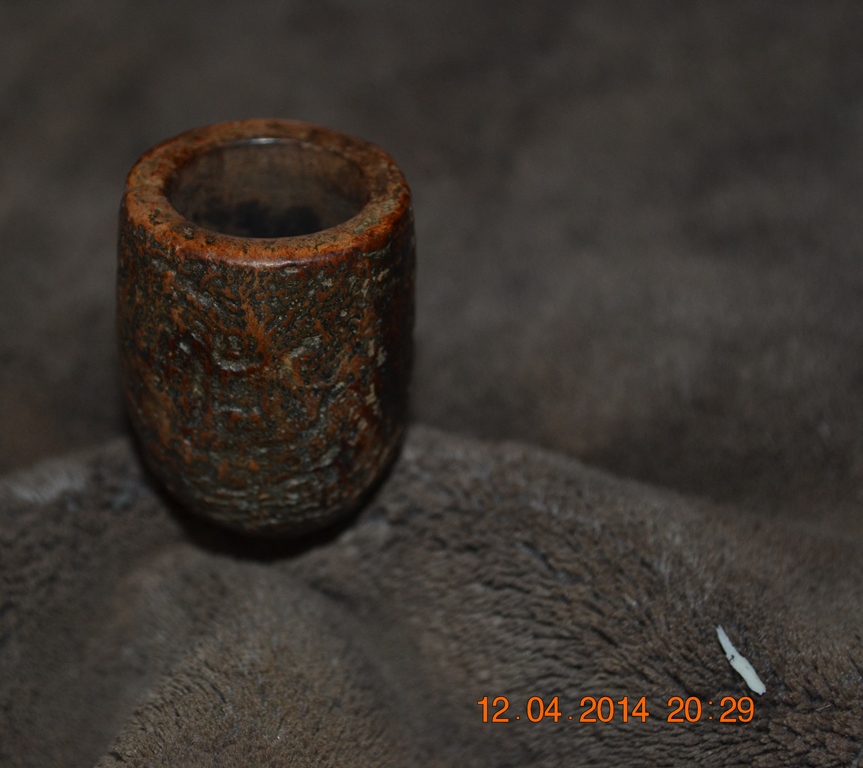
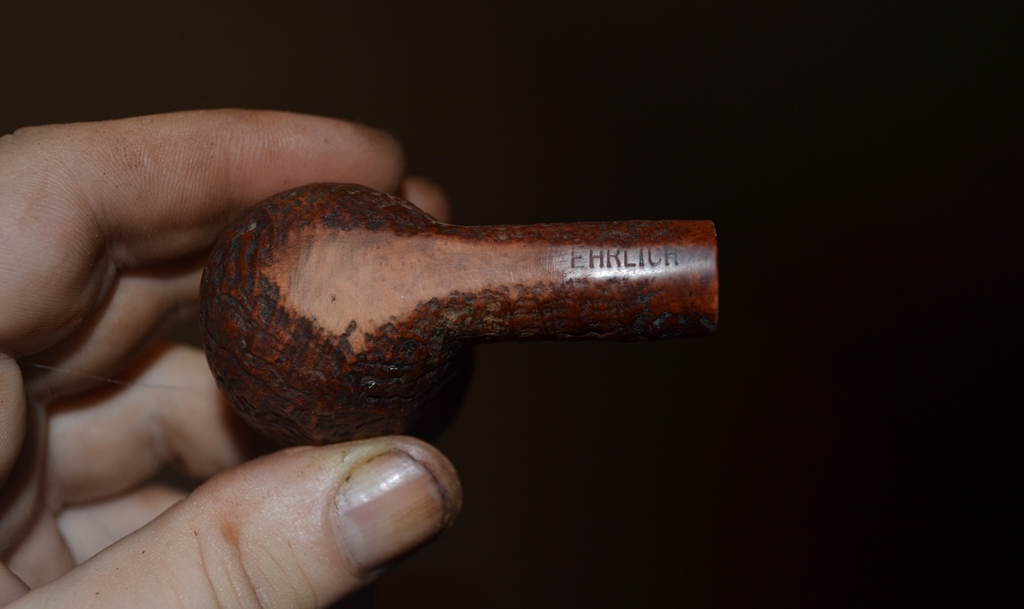
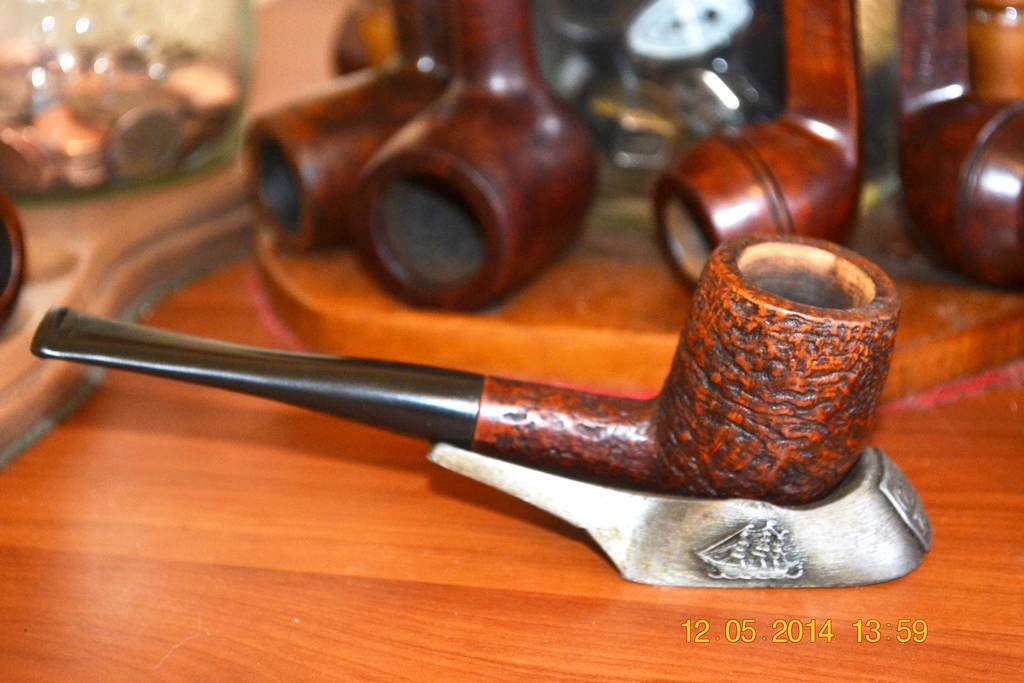
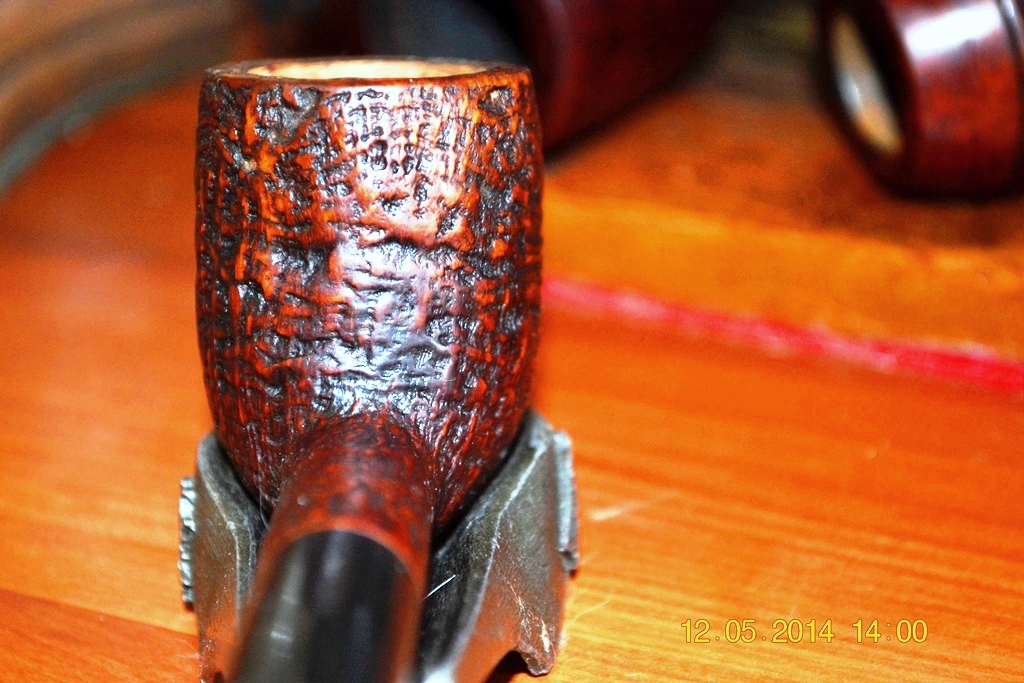
My inspiration for restoring an Ehrlich Sandblasted Straight Billiard acquired online as part of one very good estate haul was much like the opening lines to Poe’s most famous poem, except that no raven appeared to quethe negativity. Instead, the insight I gained from the gentle rapping on my creative door, which is how most of my contemplative phases before any restoration pass, was to transform the original dark and dreary pipe into something lighter and bolder.Rob1 Rob2 Rob3 Rob4 Rob5 Rob6 Rob7 Rob8 Rob9 THE RESTORATION
There are times when, to make something better of a pipe – whether it appears to have passed through a wood chipper or looks okay or at least nice enough as it first appears – calls for drastic action, such as stripping the old finish. There are two ways I know to accomplish this: the more invasive and time-consuming sanding approach, which always carries the contingency of scratches, and the faster, smoother method of soaking in Everclear. On rare occasions I have needed to start with the soaking and finish with light sanding, but for the most part I now try to avoid stripping at all because of my early restorations when I was gung-ho for the total overhaul idea. I soon enough learned there was a good reason for the darker finishes that so offended me, with a few notable exceptions.

But by either route, the initial result will be a striking step backward in the pipe’s aura. In other words, the wood is going to look like it’s been scorched by the fires of Hell. Still, I knew this was an occasion that merited stripping, and the pipe in question being sandblasted was one reason I chose the kinder, gentler Everclear.

Taking advantage of the fifteen minutes needed for the Everclear to do its work on the bowl and shank, I set upon the task of working out the few kinks in the stem. Starting with purified water on a small square of cotton cloth, I gave it a bath, then used 200-grit paper only on the bite mark below the top lip, which with concerted rubbing, to my surprise, eliminated any sign that the chatter had ever been there. I was able to finish spiffing up the stem with 2400, 3200 and 3600 micromesh.Rob10

Rob11 Removing the briar from the alcohol, I wiped down the outside and scrubbed the chamber with more cotton cloth pieces and scoured the inside of the shank with a wire-handled cleaner before I set it aside to finish drying.Rob12

Rob12a

Rob13

Rob14

Rob15

Rob16 Other upsides to the Everclear method were that the rim burn was gone and the chamber, which was not in the usual horrid state to begin with, needed no reaming at all and came smooth not even starting with my customary 150-grit first line of attack but an easy sanding with 320-grit paper.

I seized the opportunity to retort the pipe before moving to the buffing of the wood with a progression from superfine steel wool to 2400, 3200, 3600 and 4000 micromesh. I only snapped one photo of the results of this step. It captures the nice return of a lighter, golden, more natural shine to the briar as well as the only nomenclature on the Ehrlich, a brand that hails from Boston, Massachusetts.Rob17 Ready to turn the finished parts on the wax wheels, I used red and white Tripoli and White Diamond on the stem and added carnauba (not having any Halcyon II) to the bowl and shank. The carnauba only needed more intense rubbing with a soft cotton cloth to clear out the excess.Rob18

Rob19

Rob20

Rob21

Rob22

Rob23CONCLUSION
I’ve said it before. I’m more of a naturalist when it comes to pipe restoration, or a believer of using the truest color of the wood to its best effect, although for good cause I have strayed from the ideal. Most of the times I see an over-dark stain for no apparent good reason, I have an overwhelming urge to uncover the obscured richness of the wood beneath. I think I succeeded with this Ehrlich.

Grooming a Ben Wade Golden Walnut Danish Freehand


Guest Blog by Robert M. Boughton
Member, North American Society of Pipe Collectors
http://www.naspc.org
http://www.roadrunnerpipes.com
http://about.meboughtonrobert
Photos © the Author

“There is nothing like being left alone again, to walk peacefully with oneself in the woods. To boil one’s coffee and fill one’s pipe and to think idly and slowly as one does it.”
― Knut Hamsun (1859-1952), Pulitzer Prize winning Norwegian author

INTRODUCTION
When, a few years back, I became serious about collecting pipes, it was for the most part all about anything made by Peterson’s and Savinelli in particular and meerschaums in general, with an emphasis on the latter. While these pipes formed the basis for what has become a rather large, P.A.D.-fueled assemblage, I have, since those earliest days, branched out, so to speak, into many other fine brands.

Some of the brands of which I have various models greater than one include Barling, Butz-Choquin, Comoy’s, Dunhill, GBD, Karl Erik, Kaywoodie, V. Rimkus, Ropp, Stanwell and Don Warren, which do not include the large selection of individuals such as a Cavicchi 4C Silver Band Freehand, Burgundy Falcon, Charatan Make Deluxe Prince and Stefano FX Bean Pot. In short, I have become, as time passes, more attuned to the endless variety of great pipes out there, not to mention a few of more dubious origin such as a “The Pipe” (which nevertheless, in my opinion, no true collection should lack at least one sample) and a recent, still to be restored but excellent example of the odd but unique Doodler.

To use a term I recently coined in a previous blog, I am an omnitobacarius-phile, or lover of all things tobacco-related, at least as far as smoking pipes are concerned.

And, of course, there is my growing assortment of Ben Wade pipes, the latest addition to which this blog concerns.

Here are my other BW pipes, in order: a Town and Country Bent Dublin London Made with a 14K gold “Barling” band (don’t ask me how), Cheltenham Straight Billiard, Selected Grain Short Apple, London Made Dublin, Blue Diamond and Tall Canted Poker. There is also a BW that was once a Tall Straight Billiard but, due to extreme abuse by some unknown villain, suffered a large and fatal crack from the top of the bowl about halfway down, requiring a radical change in shape to a squat pot, as I call it. The result of that surgery is now a very special shop pipe.Ben1

Ben2

Ben3

Ben4

Ben5

Ben6

Ben7 What, you might well ask, do all of these pipes have in contrast to the one of which I will describe the light refurbish in this blog? They were all made in England, where BW is best known for its production, although it has also made pipes in France and Denmark. The uncommon country of origin, the unusual wood and the beauty of the freehand itself wangled my mind around the idea that I truly needed this fine specimen. Of course, I was also very strongly attracted to the Danish golden walnut freehand.
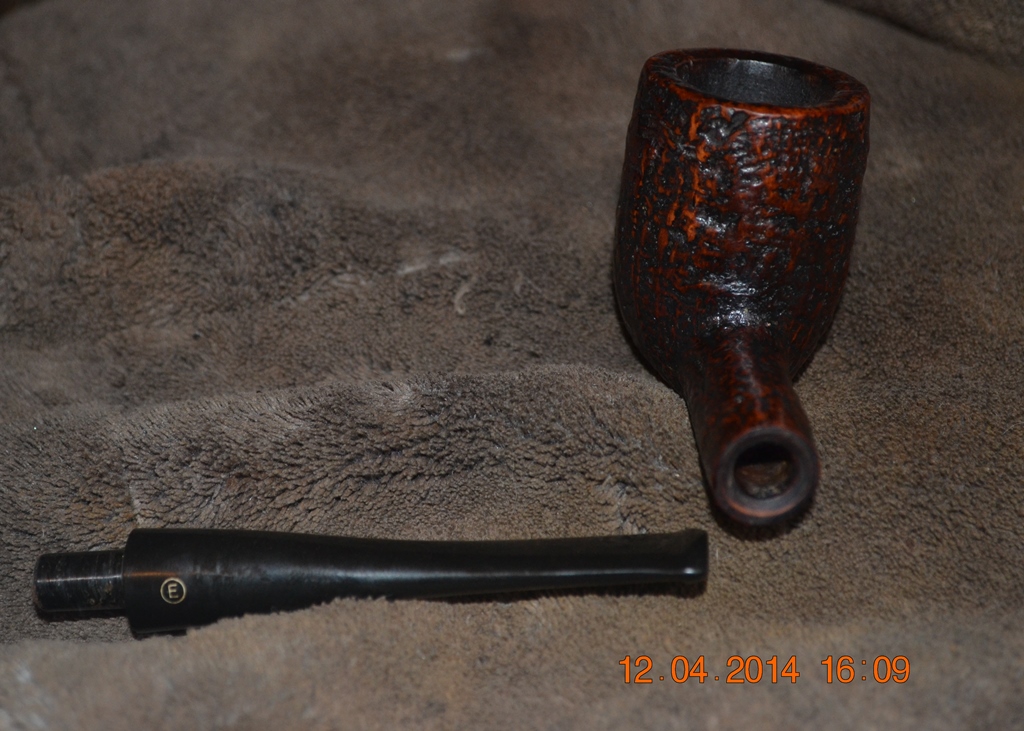
Of an incidental reason for my appreciation of this pipe, I came to suspect, during the research phase, that the beauty was crafted by the late great pipe maker, Preben Holm, who sometimes made his services available to BW. One reason is the inclusion of “Hand Made” in the nomenclature of another golden walnut freehand that Hr Holm just happened to make for BW, while a briar plateau freehand the master carver created for BW bore only the stamp “Made in Denmark.” For the rest of my reasoning, see http://www.pipephil.eu/ logos/en/logo-benwade.html to start, and click on the link to Preben Holm for more examples of his distinctive work and style.

THE GROOMING

Honestly, this was one of the few almost ready to enjoy pipes I have ever bought online. The only completely restored, cleaned and sanitized pipe I purchased by this medium was a Ropp Deluxe Cherrywood #901. I sold it for less than my cost to a prospective basic cleaning customer in Scottsdale, Arizona whose #815 of the same brand and general look was delivered to another Post Office Box holder who seems to have the deficient morals needed to abscond with it. What can I say? It seemed to be the right business thing to do, and the buyer of the 901 wrote that its condition upon arrival was “fantastic” and promised to send me future estate pipes he finds for cleaning. He will not, however, be sending them via USPS. And yo! To the deadbeat out there who stole the 815, if you’re reading this, feel free to let me do the cleaning it likely still needs, and I’ll give you the deal you deserve.

But returning to my subject, had our excellent host, Steve, not wanted to see what became of the pipe he explained was made from a piece of plateau walnut, so simple was the “refurbishing” process that I never would have bothered with a blog on it. Still, given that the Danish freehand did need slight chamber work, re-staining of the plateau rim and shank opening, minor scratch removal, retorting and stem shining, I could not help giving the pipe attention I have to rank even below refurbishing: what I call here a grooming, much as an unruly lad sometimes needs his face wiped, hair combed and shirt tucked in.Ben8

Ben9

Ben10

Ben11

Ben12

Ben13

Ben14

Ben15

Ben16 Making the dulled black stain of the plateau rim and shank opening the first order of business, I decided to remove the stain with a localized soak in Everclear.Ben17 I had hoped that removing the old plateau stain would reveal a rim suitable for buffing in its natural state and color, but such was not the case. And so I re-stained it.Ben18

Ben19 A small but clear rectangular pattern of black pits near the upper right area of the right side of the bowl annoyed me.Ben20 Trying 1500 micromesh, I was able to lessen the downgrade the presence of the pits to dots, but 800 was needed to get rid of them altogether. A quick buff with superfine steel wool returned the natural golden glow of the walnut.

There were other small defects on the bowl too small even to show up in photos, but my eye saw them, and that was what mattered. I gave the entire bowl a going over with micromesh from 2400 through 4000 and found the walnut as smooth and fresh as could be.

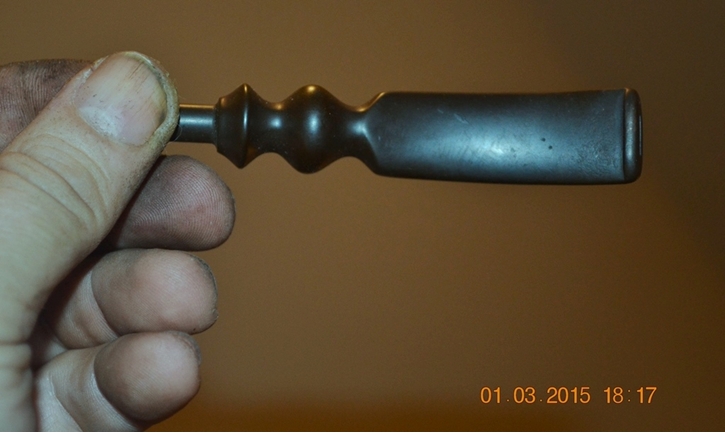
Last of all, I attacked the stem. Although I like the look of the freehand style stem, in particular this one with two rounded bulges, for lack of a better term at the moment, near the shank opening, they are always more of a bother to sand away discoloration. I always have to do the process in stages, sanding the entire stem with 200-grit paper, wiping it down with a soft cloth, then focusing on the harder areas, sometimes three or even four times until the color is uniform. Then I apply the micromesh, starting with 1500 and progressing upward to 4000.

Ready for the final buffing, I used red and white Tripoli followed by White Diamond on the stem and those waxes plus a final coat of carnauba on the bowl and shank, including the black plateau spaces. I worried – as I perhaps too often do – that the resulting shininess of the plateaus was a bit much, but that’s my nature.Ben21

Ben22

Ben23

Ben24

Ben25

Ben26 CONCLUSION
So there it is. After writing this up, I realize there was more work than I remembered, but then this pipe presented itself to me in such glory that I never considered the task as anything more than that.

I kept this one, as you might have surmised. I have come to have a genuine respect and weakness for the wonderful variety of pipes made by Ben Wade and their consistent quality of engineering, grace and high-grade pleasure of smoking.

ADDITIONAL PHOTOS AND INFORMATION

I made a comment on the blog thanking Steve for the great history he emailed me and the confirmation of the Preben Holm connection. I was troubled by not seeing the stem etching the pipephil.eu photos showed and then noticed on the pictures of the stem in my blog that the etch was still there! After filling in with a marker, I was able to make out the mark better. Here are the new before and after photos (the after shot, obviously, being before cleaning up the stem again):Robert1 Robert2

Cleaning an Older Savinelli Duca Carlo Straight Billiard and Paying It Forward


Guest Blog by Robert M. Boughton
Member, North American Society of Pipe Collectors
http://www.naspc.org
http://www.roadrunnerpipes.com
http://about.me/boughtonrobert
Photos © the Author

“As you know, Shibumi has to do with great refinement underlying commonplace appearances. It is a statement so correct that it does not have to be bold, so poignant it does not have to be pretty, so true it does not have to be real. Shibumi is understanding, rather than knowledge. Eloquent silence. In demeanor, it is modesty without pudency. In art, where the spirit of shibumi takes the form of sabi, it is elegant simplicity, articulate brevity. In philosophy, where shibumi emerges as wabi, it is spiritual tranquility that is not passive; it is being without the angst of becoming.”
― Trevanian (Rodney William Whitaker, 1931-2005), U.S. film scholar and writer, in “Shibumi,” 1979

INTRODUCTION
Although Trevanian, in the well-turned quote above from one of his diverse novels (in this case a spy story), is far less sesquipedalian yet just as articulate as the late great jack of all trades, William F. Buckley Jr., I admit I had to resort to my Oxford English Dictionary to look up pudency. To save anyone reading this the trouble, if he might be inclined to do as I did, I will say the word is defined as susceptibility to the feeling of shame, or bashfulness. I made it through that stage long ago. The passage as a whole is apt to the understated grace, style, artistry and charm, combined with simplicity and humbleness, of this lovely Savinelli Duca Carlo Straight Billiard,relative to higher end Savinelli beauties and their prices.

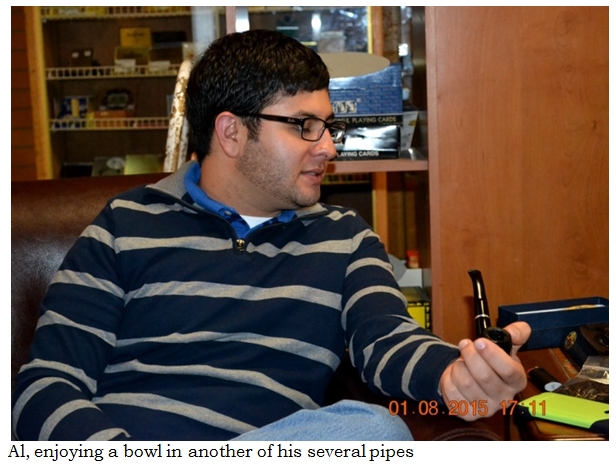
The circumstances surrounding my chance and fleeting but thoroughly pleasant encounter with the alluring implement for fine tobacco enjoyment are also appropriate for this preface. Had I not sought refuge at my local tobacconist in a fluky and serendipitous urge the other day, I might never have met Al, a 25-year-old student who is pursuing both a master’s degree in his field of study and new pipe experiences. And, of course, I would not be writing this account of my rewarding experience cleaning the Duca Carlo.Duca1 When Al introduced himself to me by his full first name, Alfred, and moved with spontaneous purpose from where he was sitting to the cushioned chair next to mine, I had been distracted, in deep concentration, working on something on my laptop. In most cases when someone can see I’m working, and still tries to engage me in conversation, I become a bit piqued. But something was different about Al. So outgoing and affable was his personality that I really can’t even remember now what had been so important to me the moment before his appearance beside me.

Al spotted the rather large, black bag on the floor by my side, which was made for carrying tools but is now my run case. In case I ever need to run to my tobacconist, to get away from the mounting pressures that consume the rest of my life, I always have my run case with its selection of pipes and jars of tobaccos du jour. It should come as no surprise that I also keep a stock of provisions within the many pockets of the run case, from an extra Bic in the event my regular pipe lighter runs out of butane to a cheap pipe nail against the times when I misplace my three-in-one tool; pipe cleaners; balsa, 6mm and 9mm filters, for the most part to have on hand for others who like to use them; sandpaper and micromesh for refurbishing on the go; a small digital caliper, and a 120-inch cloth tape measure, should I ever run into the Titanic of pipes and need to determine its exact specs. Basically, everything the OCD pipe enjoyer and restorer might want without notice. Sometimes my fellow tobacco enthusiasts poke fun at me– more often than not the cigar smokers – seeing me coming through the door with my run case and laptop in either hand like a circle and crosshair marking me as a target. Being a good former Boy Scout, I always say be prepared.

At any rate, Al somehow got the idea that I was serious about pipes, and being new to the attendant rituals, he enquired what was in the bag.As I am rather free with my tobaccos, I began taking out the jars, looking for something appropriate for a newcomer. Mostly that day I found stronger, more advanced blends such as McClelland’s Top Hat and C&D Bayou Morning (with a whopping 28% Perique content), but I also had C&D Joie de Vivre and Rattray’s High Society. Al’s sharp eyes noticed the Joie de Vivre plug, and he was intrigued. Thinking he might be up to that excellent, smooth and unusual English blend, I said so and suggested he give it a try.

Well, the next thing I knew, poor Al was puffing away and suddenly looked a bit peaked. When he told me he had opted for a bowl of the Bayou Morning, I wasn’t surprised. As his composure returned, he brought up the subject of my pipes and ended up asking me if his was “very good.” He said a college friend had given it to him, knowing he wanted to quit cigarettes. Glancing at it in his hands, I said it looked Italian, and that a good pipe was anything that made its owner enjoy the tobacco. I added that if he took care of it, the pipe would last him a lifetime. Seeing the briar had faint nomenclature of some sort, I wanted to take a closer look, and perhaps sensing this, he held it out to me.

Squinting, I made out the words Duca Carlo on the shank and exclaimed something that some might consider inappropriate for this space. Understandably alarmed, Al asked if anything were wrong. I told him it was a Savinelli, and it was apparent the name meant nothing to him. I proceeded to explain a little about the well-known Italian maker and the quality of its pipes, noting that although his Duca Carlo was not one of the high-end varieties, it was a fine pipe indeed. That was when the magical moment happened. Al said he was thinking of having it professionally cleaned.

Hmm, I thought. Chuck was gone for the day, and I supposed I had a spare half-hour that night, so I offered my services to the young newcomer. Surprised, he asked how much it would cost, and I told him I would be happy to do it for free. While I have always been reluctant to charge people for anything I enjoy doing, I suppose there were several subconscious reasons behind my impulsive offer: Al is a young student working hard to assure a secure future, similar to another young pipe-smoking friend of mine who is now studying physics at Purdue, and for whom I bought two packs of my own tobacco mix – Sneaky Rabbit, sold by my tobacconist as a house blend – since he was enjoying it so much he was almost out both times during a recent visit to his hometown for the holidays; I remember how tight my finances were in my own college days; I had a sudden desire to pay forward the many similar favors my friend and mentor, Chuck Richards, and others in my piping community have done for me, and least of all, it was just good sense for the growing business Al knew I was in. Al still tried to resist, but there was no way I was going to take his money for a simple cleaning.

Having a similar but apparently newer Duca Carlo of my own, I showed him the picture of it stored in my laptop. Al told me what he really wanted was to see the stem (which was in excellent shape but a dull, faded gray with a thin shiny streak by the shank) sparkle all over. He said he had no idea if it would be possible. I could do that, I assured him, and return it to him the next day.

So that was how the adventure began. Still a little wary, however, when he handed the pipe over to my care as we left, Al said with the sincerest note of entreaty in his voice, “Please don’t break my pipe.” I knew exactly where he was coming from.

REFURBISH
I knew from the beginning there was no way I would just buff the stem and clean and sanitize the pipe. After all, if Al were a paying customer of my business he would get the Basic Cleaning, which includes light refurbishing. All I could see the pipe needed was a little rim burn removal, touch-ups on slight scratches on the stem and bowl and a careful ream of the chamber to remove the small amount of excess cake buildup while leaving the optimal amount intact. The college friend who gave Al this pipe certainly took good care of it and knew what it was, but never said a thing of it his buddy. I liked that.Duca2

Duca3

Duca4

Duca5

Duca6

Duca7

Duca8 Wishing to work with as much efficiency and economy of movement as possible, and having observed the minor burns and other blemishes on the rim, I chose 220 sandpaper to start.Duca9 The choice of paper worked just right in removing the blackness but of course required smoothing. First I used superfine steel wool, which returned a soft sheen and coloration to the nice grain, and followed that with micromesh, buffing upward from 1500 to 2400 to 3200 to 4000.The resulting rim glimmered in its natural pale shade.I also removed the black circle around the shank opening with the steel wool.Duca10 To clear out the unneeded cake in the chamber, I used my smallest reamer, the 17mm, which was loose but close enough to gain a purchase on the walls. Several turns removed the majority of the cake, and followed by a little work with a small piece of 150-grit paper, the work there was done except for cleaning out with a swab of cotton cloth squares soaked in Everclear.

Believing the stem to be black Lucite, and also because of the thorough stripping of cake the procedure would cause, I opted against retorting. Instead I ran a single bristled pipe cleaner dipped in freshener through the stem, back and forth a few times, followed with a dry cleaner so as not to leave any possible unnecessary initial aftertaste.

The shank I cleaned as well as I could, which ended up being quite well, with a wire-handled bristle brush that I ran through the narrow passage about ten times, dipping in a small container of Everclear between each run.

Next up were the only three halfway serious scars I found on the Duca Carlo, shown below before I gave the briar a bath with purified water.Duca11 The scuffs on the right and lower left sides came off fast with micromesh using 1500, 2400 and 3200. The higher and deeper scratch on the middle left side of the bowl needed more surgical, localized work with 220-grit paper followed by the same micromesh progression. I then needed to re-stain the small higher spot on the left side using my Feibings dark brown leather dye.

After flaming it with my Bic and letting it cool for a few minutes while I re-stained the rim (for which, again on impulse, I decided to do with some Lincoln medium brown dye I had on hand, to show off the nice grain there), I used 3600 micromesh to buff the side where the blemish had been until it appeared never to have existed. By then it was time to do the same to the rim, which, as I intended, was the wood’s natural lighter color but, to me at least, gave the pipe a cool two-tone effect.

While I used 3200 micromesh over the whole of the remaining bowl and shank to be sure it was all smooth and ready to put to the wheels, I was seriously eyeballing the new two-tone, almost sick with dread at the thought that Al would be disappointed by my summary decision to alter his pipe without even a consultation. But I let my gut ruling stand, if only with the knowledge that I could reverse it in a jiffy should Al indeed show even a hint of unhappiness.

No kidding, I heard a faint drum roll when the moment came to address Al’s primary concern: the stem. As I noted several times already, this Duca Carlo was in great shape when it was entrusted to my care, and the stem, with the slightest of scratches just below the bit on both sides, was the least of the exceptions despite its almost complete lack of luster. Once more I remembered the advice of others wiser than I to use the least necessary force to correct a problem – advice I took to heart – and began with 1500 micromesh.

Tackling the miniscule scratches first, of course, I saw them vanish with the slightest of pressure before I continued over the rest of the stem to make it even and gave it a thorough rubbing with a soft cotton rag. Then I did the same with 2400, wiped it again, and finished at last with 3600. The prepped stem was looking good, and my heart began to beat harder, knowing I had to take the two precious parts to my single-speed wheels, where only God knew what might happen.

This project had become a labor of love to me, even greater than most of the much more difficult jobs I had performed without disaster before. And so I took a moment to collect my wits and think good thoughts.The phone rang. Dang! There went my happy thoughts.

I didn’t recognize the 575 Area Code and almost did not answer, as is my habit with unknown or Toll Free numbers because of the near certainty that they are spam or scam or other callers I wish would stop phoning me. But something convinced me to go for it. At first the voice on the other end failed to register, but then I realized it was – that’s right – Al. I gave him my card the night before but had no way to call him. There was a slight tone of anxiety in his voice when he asked how his pipe was doing. Relieved to hear his voice and understanding his concern more than he could have known, I almost laughed but choked it down. Feeling my own nerves settling, I told him I was just putting the final touches on the Duca Carlo and could meet him at the tobacconist between 3 and 3:30. At the end of our conversation, I realized I was calm again and good to go.
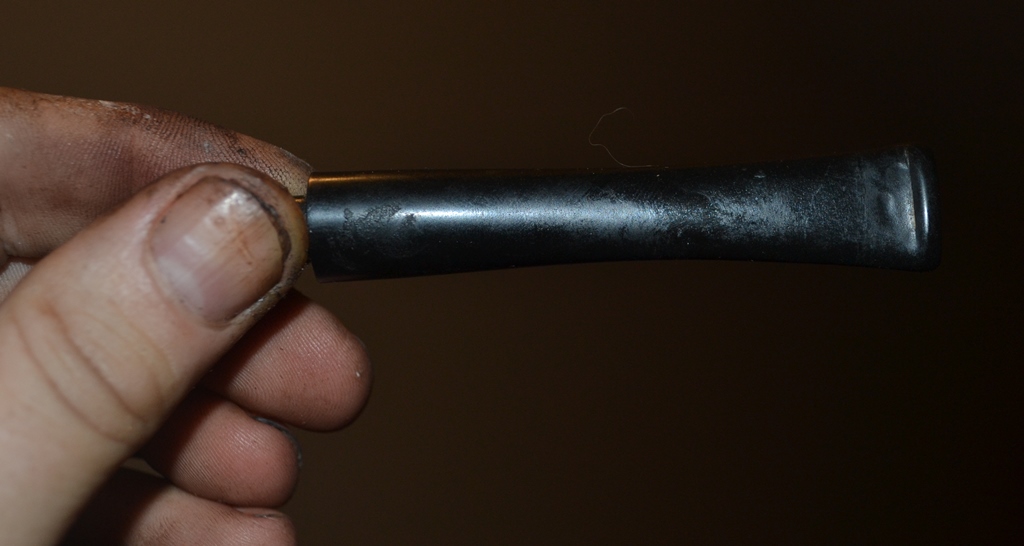
Proceeding from the living room, where I like to do most of my work in more comfort, to my workroom, with the pipe, stem, cotton rag and camera in my hands, I set everything down on my desk and turned to the small bench with my two buffing wheels. I threw the switch on the one with red Tripoli and without another thought to distract me picked up the smooth gray stem and held it in both hands with confident firmness (but not like a mother choking her child as she’s about to watch the poor kid go off to summer camp or college or wherever) and did what I knew how to do. The first step done, I wiped the stem down, removing the streaks, and flicked on the second wheel that had the white Tripoli. Ditto. Two-thirds of the way home with the stem, and seeing each buff give it a higher shine, I returned to the first wheel where I…yes, I finished it on the White Diamond pad, without a single incident or even slip through the whole process!

Stoked for the next part, I set aside the stem and went straight through the steps again with the bowl and shank, except that I used white Tripoli followed by White Diamond and ended with carnauba.

This Savinelli required one very last task, which is always a pleasure when I have the opportunity to do it. I always seem to forget one thing when I walk to my workroom ready to polish a pipe, and this time it was the white wax marker to fill in the outline of the crown on the stem. I retrieved it from my run case.Taking what I considered a well-needed rest in the office chair before my desk, I took the stem firmly in hand and, with my magnifying glasses on, scraped the little exposed end of wax first left to right across the crown, then turned the stem vertically and applied another layer top to bottom and finally added a third layer diagonally. Brushing aside a little of the considerable resulting excess wax, I pressed my thumb down across the whole blotch and waited for the heat of my skin to make the wax settle into the tiny grooves. After about a minute I lifted my thumb and used the cotton cloth gently around the edges and still more lightly over the area of the crown, which emerged visible with all of its points.

I attached the completed stem and briar and gave the fine pipe that was whole again a final wipe with the rag and millimeter by millimeter scrutiny with my glasses. It passed muster, despite my ever-growing attention to detail.Duca12

Duca13

Duca14

Duca15

Duca16

Duca17 CONCLUSION
The best laid plans of mice and men often go astray, and due to unforeseen circumstances I was a half-hour late to the tobacconist. Spotting Al sitting in the back of the shop almost as soon as I was through the door, I know he saw me, also, but pretended not to, playing it cool. I even had to say hello first as he stared at something, and when he looked up at me the forced smile told me he was sure I had broken his pipe. All of the good seats were taken by those dratted cigar smokers, except for Al sitting in his in misery that was clear to my keenly empathetic eyes.

And thus it became my extreme pleasure to walk to his side and set down my run case and laptop. Before I stood straight again, I retrieved a dark blue Savinelli box inside of which was a light brown Savinelli cloth bag containing the refurbished Duca Carlo. Al’s eyes lit on the box in my hand. Yes, indeed, that had his attention. I could not, even to save my life, lose the grin on my face as I handed it to him and watched his real smile appear in what must have been extraordinary relief.

Then to watch Al open the box slowly, like a Christmas present, only to find the bag inside that he took out with care and reached inside the open end to pull his pipe out by the stem – well, the obvious shocked surprise as he saw the glistening, dark black stem emerge first, followed by the lustrous refurbished pipe, and the initial reaction of total speechless wonder, told me everything.

“Wow,” was his first word. He went on to expand on that dazed thought, but this seems like a good place to wrap it up.

A Unique Town and Country Squat Round Bottom Rhodesian – Robert M. Boughton


Guest Blog by Robert M. Boughton
Member, North American Society of Pipe Collectors
http://www.naspc.org
http://www.roadrunnerpipes.com
http://about.me/boughtonrobert
Photos © the Author

The pipe with solemn interposing puff,
Makes half a sentence at a time enough;
The dozing sages drop the drowsy strain,
Then, pause and puff – and speak, and pause again.
— William Cowper (1731-1800), English poet, in “Conversation,” 1782

INTRODUCTION
When this odd little pipe arrived in the mail a couple of months ago, as part of an estate lot, it stood out, to be sure. Amongst a beautiful Kaywoodie Standard mixed Sandblast/Smooth Grain Billiard, an elegant LHS Park Lane DeLuxe Dublin, a vintage WDC Full Bent Billiard with 14K ring, an Ehrlich Rusticated Billiard and two others – yes, it stood out. I will leave it to the reader to determine the nature of the deviation.

Still, it did force me to reconsider the true form and figure of a Rhodesian, and to imagine the turmoil I could incite if I threw this pipe as an example into the ongoing brouhaha that is the Bulldog versus Rhodesian debate. I do have a touch of Old Nick in me that way (and I don’t mean St. Nick).

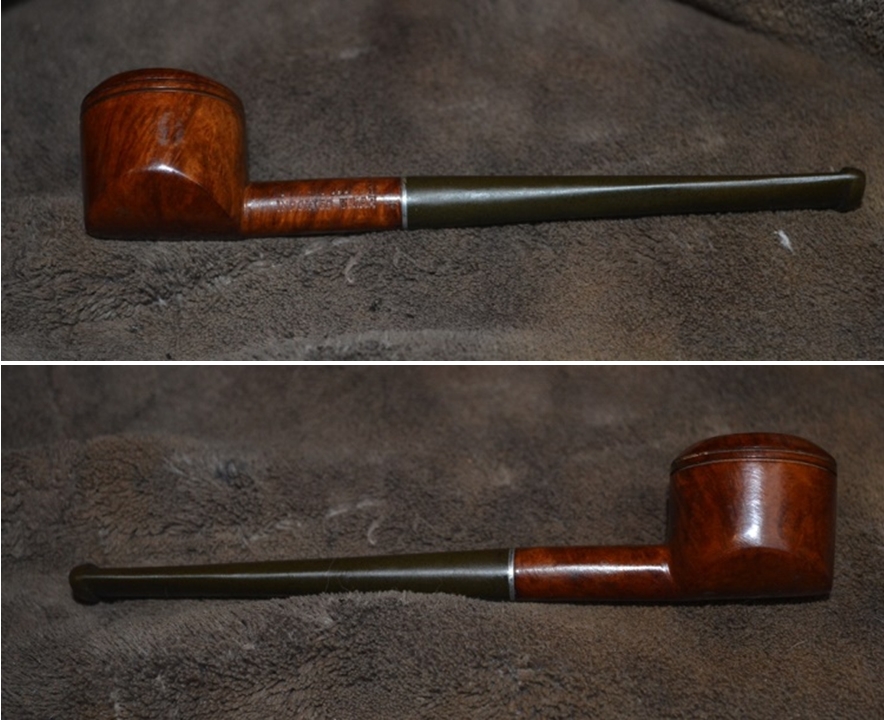
Yet how else can I describe this weird pipe, at its basest, but as a Rhodesian, despite the squatness of its stature and the roundness of the bottom of the bowl? The fact is that this Town and Country (made by the Bradberry Briar Pipe Corp. of New York) has a rounded bowl with two slits carved into its upper end below the rim and a round shank.Rob1

Rob2

Rob3

Rob4 RESTORATION
Part of me did not want to mess with the original stain, but some impulse screamed at me, “Drown this thing in Everclear and see what lies beneath!” And so, that I did. As it turned out, the voice was right. All kinds of scratches and other flaws became apparent where they were obscured before.Rob5

Rob6 Beginning the process of removing the various blemishes with a thorough sanding (except for the nomenclature)using 220-grit paper, I was careful to make smooth, even runs in the directions of the grain. After some time at this task, rubbing the fine briar dust away with a rag as I progressed, I was at last satisfied with the results.

To prep the wood for staining, I brushed the surface with super fine steel wool, which returned the natural color of the briar and created a light sheen. Then I commenced a thorough de-wrinkling treatment with micromesh pads, starting with 1500, then 1800, 2400, 3200 and 4000. Again, I rubbed the wood clear of any residue between each micromesh pad.Rob7
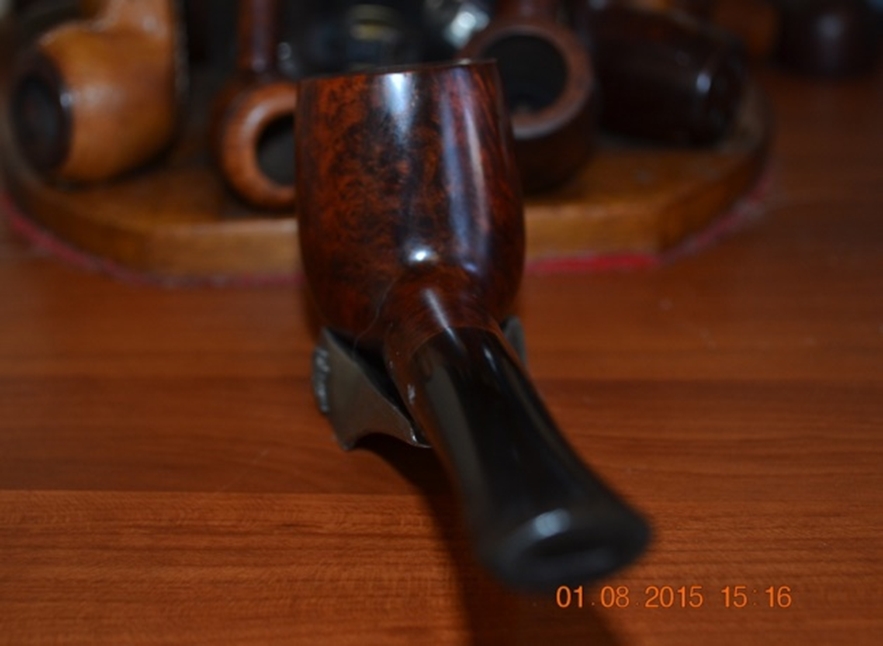
Rob8 The obvious next step seemed to be a full cleaning of the pipe’s interior. Expecting to find the usual massive buildup of crud associated with the shanks of most estate pipes, I was in fact shocked to see the wire-handled, heavy-duty bristly cleaner, dipped in Everclear, emerge from the exercise almost un-befouled the first time and spotless the second.

Still wary, I sanded the pinky-sized circumference of the chamber with a Lilliputian-sized scrap of 220-grit paper and succeeded in removing a fair amount of carbon. Then I inserted an alcohol-soaked square of gun cleaning cotton cloth and twirled it with the aforementioned pinky until most of the carbon residue was cleared from the chamber.
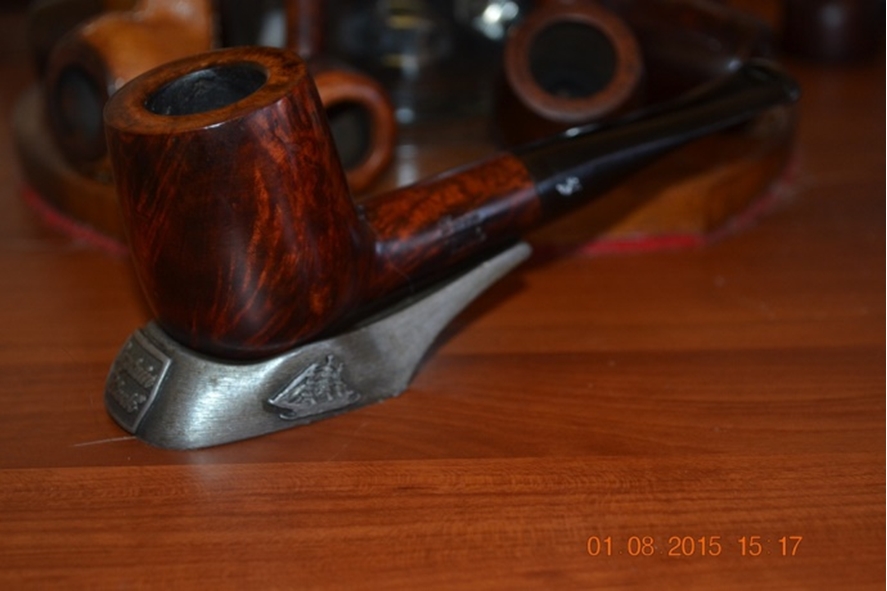
Despite the failure of the wire cleaner to dig up more than trace elements of old tobacco, and determined to assure the shank was truly ready to pass anyone’s test, I employed my newly acquired proficiency in retorting. To my utter dismay, despite my certainty that I had performed the retort without error, the remainder of the boiling alcohol – which had surged all the way into the chamber and left the cotton there somewhat dirtier than it started – returned to the Pyrex test tube clear enough to drink, if I were so inclined. Disbelieving the unheard of result, I re-boiled the alcohol in a second and sent it packing again whence it had returned once empty-handed, so to speak. The second try came back as clean as the first.

At last, my mind exploded in dizzying exultation, a clean shank at the outset!

I turned to the stem, which, other than being a uniform military green, was all but devoid of scratches or chatter. There was one small ding, but given the usual mauling of stems I encounter, this one was a gift from Heaven. As I have yet to come up with a formula for a solution in which to treat stems, I was compelled to do it the old fashioned way: by hand, using 320-grit paper to restore the stem from green to black. This step required several passes, more and more localized each time.

Next I turned to micromesh and gave the stem the same care I provided the wood: 1500, 1800, 2400, 3200 and 4000.Rob9 I tend to enjoy re-staining the wood of a pipe when necessary, and my biggest question so far had been what shade of brown to use if not marine (burgundy) red. This pipe I wanted to do as a two-tone, with the beautiful natural color and grain of the rounded rim left unchanged and the rest of the bowl and shank dark enough to show the difference. And so the only question was whether to use medium brown, which is darker than it sounds, or marine? I admit to having a fluttery, nervous feeling in my stomach when I opted for the marine. Although the result was better than okay, I won’t be showing it here for reasons that will soon be apparent.

Having stained the majority of the wood marine and left the round rim plain, I flamed out the alcohol from the boot stain, buffed the greater part of the wood with its resulting ash using 3200 micromesh and then waxed the wood and stem – from which I had removed the superfluous metal tenon extension by heating it with my Bic and yanking it out – and achieved a definite high contrast. The grain still showed through the stain, but I knew it wasn’t right.

Therefore, wishing to have a little fun and test my mentor, Chuck Richards, I took the “almost finished” product to him for his opinion. True to form, Chuck scrutinized every angle of the pipe through his glasses and handed it back to me. His critique was like the ultimate New Yorker bad book review: no comment. He still has no idea how good that made me feel!

Pleased with myself, I later returned home with the dark red body of the pipe topped by a blond head and with care again applied the super fine steel wool to remove the wax and stain on all of the wood but the rim. Ready for the correct approach, I re-stained most of the wood medium brown, went through all of the steps as before to prepare it for waxing on my two buffer machines, and applied white and red Tripoli, White Diamond and carnauba. The result was much more satisfying, and I felt no need to run it by Chuck again before submitting this blog, as I had already messed with him enough, albeit unbeknownst to my good friend.Rob10

Rob11

Rob12

Rob13

Rob14

Rob15 CONCLUSION
All fun and pranks with my big-hearted but not coddling mentor aside, I ended this restoration with more work than was necessary. I should have learned by now not to disregard the advice of that little fluttery feeling of unease I had in my stomach when I chose marine over medium brown. In the end, the stomach almost always wins in all matters over the mind.

In Retort to Claims of Unclean Restored Pipes – Robert M. Boughton


Guest Blog by Robert M. Boughton
Member, North American Society of Pipe Collectors
http://www.naspc.org
http://www.roadrunnerpipes.com
http://about.me/boughtonrobert
Photos © the Author

“A thick skin is a gift from God.” —Konrad Adenauer (1876-1967), first Chancellor of West Germany

INTRODUCTION
During the course of my serious restorations, and by that I mean the short period of time since I created an online store with the primary goal of selling estate pipes I repair, direct feedback from my local customers has been 100% positive. That, of course, is always gratifying, and I did appreciate it.But those who have read my previous blogs know I am not in the business to be gratified by elliptical, kind words of others. The real motivation is my love of all things tobacco-related and in particular returning a well-used or even battered pipe to its original beauty, or as close as I can come.But being somewhat more thick-skinned than most folks (if everyone grew up in my dysfunctional household, the whole world would have my hide), I always prefer the truth, the whole truth and nothing but the truth. So help me God. That last phrase might better be read, God help me.

In the last couple of months, you see, word has reached me of an alleged problem with the cleanliness of pipes I sold. Now, don’t get me wrong. I only use the word alleged because, having as thick of a head as my dermis and consequent confidence in my work with pipes or on any other subject for that matter, until proven wrong, my impulse was to resist the claim. The problem was that I was not hearing any complaints from customers. Such forthright criticisms might have been disappointing, but being constructive would have been treated as any direct reports: with the professionalism I apply to the daily conduct of my business.

The most unpleasant part of this experience, which as I mentioned went on (and on and on) for a couple of months, was that the feedback I kept getting was not from any friends or fellow pipe club members to whom I sold pipes, but instead from my good friend and mentor, Chuck Richards, who, to my great surprise and initial sadness, was the only person my customers, without exception, seemed to trust with such vital information.

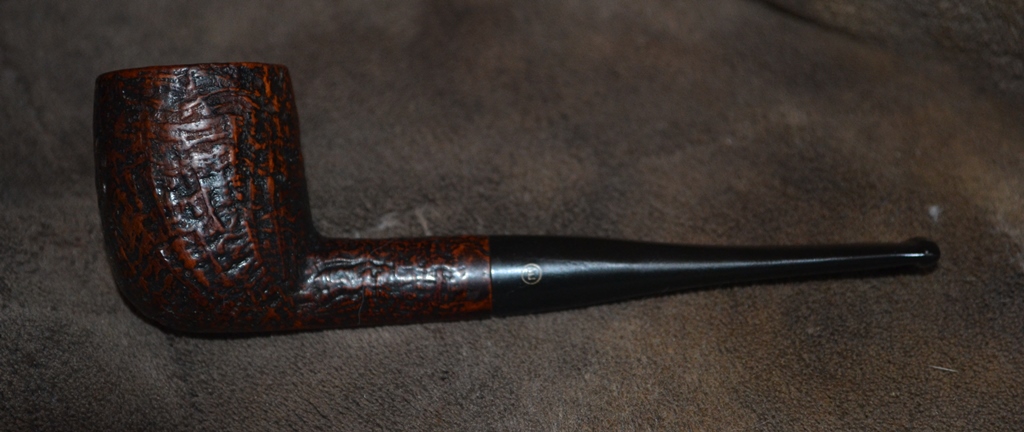
Thus I received the first “word” that I needed to be more careful cleaning my pipes. I can tell you, my pipes almost cleaned themselves when that was all Chuck could say before he was distracted and had to tend to something, giving me just enough time to become more than a tad miffed. Being familiar with Chuck’s occasional terseness, I knew he was only passing on the information and had my interests at heart. Still, my breath grew short, and the heat rose under my collar. Soon enough, I got more details, including the first name of the customer, which I didn’t recognize, and then a description of the pipe – a Londoner black rusticated bent bulldog – that I connected right away to a different first name because I had bent a rule by accepting his check. I realized he went by his second name.Robert1 Yes, I recalled the pipe and its delighted new owner, when he bought it, with clarity. The nice, rough little black bulldog was one of the few I took from my private collection, having enjoyed it for a while and then allowed it to fall back into a corner, unused and not of particular interest to my personal tastes. Could I have forgotten to clean it? The possibility existed, and although I wanted to remember following my usual routine of cleaning and sanitizing the pipe, I had no blog on which to fall back and check since it was in good condition when I decided to sell it for my growing business and dwindling selection.

Therefore, I explained this scenario to Chuck, and, having the address of the nice older gentleman who had purchased it, went to my bank for a cashier’s cheque in full refund and put it in the mail with a letter of sincere apology. I wrote that I also wished for him to keep the pipe and offered a 20% discount on his next purchase should he choose to give me a second chance. I even asked Chuck, who lived in the same neighborhood and was friends with the man, to tell him not to return the refund, as I knew where he banked and would only deposit it myself.

And so I thought the issue settled – but no. Word of my well-restored pipes with unclean shanks kept coming in, via Chuck. I think it is understandable that my mood simmered until, in time, the situation boiled over. When at last, one afternoon at the tobacconist’s, I grew so heated that I broke out in a sweat, I regret to admit I snapped at Chuck, the only person with the nerve to tell me to my face that a problem indeed appeared to exist. Of course, Chuck was only going by the words of others, but enough instances of the same complaint from a sufficient number of witnesses would convince almost anyone.

“I’m just telling you what I’ve been hearing, and not from one or two people but a good number now,” he said, and the grin, which had never left his face during my account of how many bristly cleaners soaked in Everclear I average per pipe until they come out clean, broke into his full gale force smile. I have always been, was then and suspect I ever will be defenseless against that wonderful expression of delighted amusement. It was, indeed, the best retort to my argument he could have made.
Robert2And that is how Chuck came to explain to me the relative inefficacy of bristles versus the boiled alcohol retort method that he had demonstrated to our pipe group a couple of years ago before I would have even thought of taking notes.

But enough of all that. This blog also concerns the restoration of a Kaywoodie Signet Bent Billiard, including a validation of the retort method by Chuck on the pipe I had thought was finished. I will describe and illustrate that process when the time arrives.

RESTORATION
I started this restoration under the impression that it would be just a typical exercise on a better than average estate pipe I bought, with the rim and chamber seeming to be the greatest challenges, except that the other problems (some minor scratches that disappeared with 1500-grade micromesh and deeper blemishes I fixed with high-grit sandpaper) were far fewer than usual.Robert3

Robert4

Robert5

Robert6

Robert7 I bought a new Castleford five-piece reamer set (with a T-handle and four attachable reamers ranging from 17-23mm) to see if it might be up to filling the boots of my old Senior Reamer, which fell in action during a restoration I blogged not long ago. Choosing the 17mm reamer, I went to work at a slower than usual pace to test the tool that was new to me, and seeing it worked quite well, I finished its part on the chamber.

Then I switched to 220-grit paper and sanded the inner wood to a smoothness relative to the mess it was in when I began, tamped out most of the remaining carbon, blew through the shank to clear some of the rest and rubbed a couple of small cotton squares soaked in Everclear around the chamber to pick up all but particles of the remainder. To the touch of a finger that I ran around the walls, the surface was still rough but could be finished later.

The rim burn came off with super fine steel wool, and scratches and pits uncovered from beneath the blackness were easy to deal with using 400-grit paper followed by 600, then micro-meshing using new 1500, 2400 and 3200 pads.Robert8 After finishing the chamber with 500-grit paper, dumping most of the carbon as I went, I blew through the shank to clear more and soaked a couple of thin squares of cotton cloth in Everclear to scrub the chamber. Only a small amount of residue remained, and to the touch of my finger the sides of the chamber felt silky and polished.

That was when I commenced what was my old way of cleaning the pipe. One after another, I dipped first one end of a bristly cleaner in Everclear and ran it through the shank, then the other end. After more than a dozen cleaners lay filthy in a pile and two more came out white, I repeated the process with the stem, except that it only seemed to require two or three cleaners.

To mix things up, compared to my usual routine, I followed my impulse to finish the stem and be done with it. I started with 600-grade micromesh on both sides just below the bit, and switched to 800, 1000, 1800, 2400 and 3200 micromesh. I buffed it on the wheel with red Tripoli and White Diamond.Robert9 I sanded small areas of the bowl with 400-grit paper to remove the deeper scratches, dings and pits.Robert10

Robert11 To remove the marks of sanding from the wood, I used super fine steel wool followed by my normal progression from 1500-3200 micromesh. I followed the same micromesh procedure on the entire bowl and shank.Robert12

Robert13 Finishing the wood with a buff of white and red Tripoli, White Diamond and carnauba, here is what I handed over to Chuck.Robert14

Robert15

Robert16

Robert17

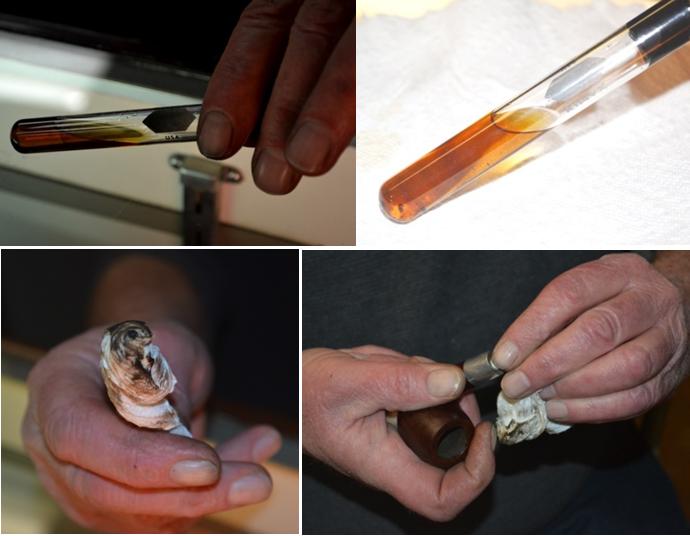
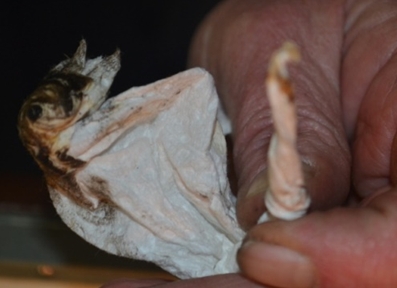
Robert18 The time, at last, has arrived for Chuck’s brilliant demonstration and invaluable contribution to the restoration of this Kaywoodie Signet Bent Billiard, and my further education in pipe restoring, shown step-by-step in the following nine photos: 1) Chuck has prepared the pipe by filling the chamber with a piece of a paper towel, having no cotton available. He has also connected the retort’s Pyrex test tube, almost filled with 190-proof Everclear, and plugged with a stopper. The stopper leads to a copper tube which in turn attaches to a rubber passage that is connected to the pipe’s stem. 2)Chuck begins to heat the alcohol in the test tube at the base. 3) The alcohol begins to boil. 4) As the alcohol soon reaches full boil, Chuck tilts the test tube slightly to allow the hot liquid to bubble through the retort apparatus and into the pipe stem, and from there all the way to the chamber. The paper towel begins its rapid transformation from white to nasty brown. 5) When the test tube is empty, Chuck tilts the pipe back enough for the remaining, filthy alcohol to drain back into the test tube. 6) The lighter product of a second run with fresh Everclear. 7) After wiping dry the chamber, this is the residue. 8) Chuck snakes the other end of the piece of paper towel into the shank and twists it.
9) The residue from that.Robert19

Robert20

Robert21

Robert1

Robert22 And I take a close look inside the chamber of the Kaywoodie that is clean all the way to the bottom.Robert23 CONCLUSION
Although my skin is tough, like a fault on the mail of a dragon of legend, my weak spot was pierced. The wound was neither superficial nor deep but still stings a bit, being inflicted as it was by so many of my friends’ and associates’ lack of trust to confide in me. Had my experiences selling restored estate pipes until now been a scientific experiment, an analysis of the data would support the conclusion that friends are unwilling to express their findings of any serious flaws to the one person who could prevent the same mistakes from being repeated.

This reluctance, of course, is created by the risk of hurting the feelings of the friend whose sensibilities the paying customers would rather spare. Such a reaction by the person on the receiving end of the message is indeed real but necessary for a demonstration of true friendship. An unfortunate fact is that too few people understand how criticism is a two-sided razor, one cutting for the positive and the other for the negative. My mind has always been open to constructive, helpful criticism while it shuts like a steel trap against anything senseless and cruel.

Now, thanks to the good but misguided intentions of some of my friends, I am compelled by dual senses of honor and good business to contact everyone who has purchased a pipe from me, in person or online, with a carefully written explanation of the error and an offer of a free correction, postage included. But also thanks to these friends, and in particular my good friend and mentor, Chuck, I now have a backlog of “completed” restores on which I can practice retorting.

So far, they’re coming along well, with some new restores thrown in.

A Sweet KBB Yello-Bole Honey Cured Bulldog – Robert M. Boughton


Guest Blog by Robert M. Boughton
Member, North American Society of Pipe Collectors
http://www.naspc.org
http://www.roadrunnerpipes.com
http://about.me/boughtonrobert
Photos © the Author

You can’t stop us on the road to freedom
You can’t stop us ’cause our eyes can see
Men with insight, men in granite
Knights in armor intent on chivalry
She’s as sweet as Tupelo honey
She’s an angel of the first degree
She’s as sweet as Tupelo honey

Just like honey, baby, from the bee — Van Morrison, Northern Irish singer-songwriter-musician, “Tupelo Honey” (1971)

INTRODUCTION
As my good friend and mentor, Chuck Richards, commented at a recent gathering of local enjoyers of the fair tobacco pipe in general, Kaufman Brothers & Bondy created the Yello-Bole line in 1932 as a less expensive alternative to its regular stable of Kaywoodie, Reiss-Premier and of course KB&B pipes.

Now the name Yello-Bole is synonymous with the terms second-rate and, worse still, just cheap, as though the measure of a good smoke were ever determined by its price. [See, for example, Peterson’s late great and noble attempt in years gone by to make pipes affordable to the Everyman.]

But its older products, such as the KBB Yello-Bole Imperial Bulldog of this discourse, “Cured with Real Honey” and with the KBB in a clover, as well as a tell-tale encircled “I” on the stem (might it be ambera?) – although crafted with briar deemed unsuitable for the older brothers of the family – nevertheless was still made from higher quality pieces of that fine wood than is, in general if ever, available today.

Also, the KBB Yello-Bole Imperial Bulldog is a definite vintage specimen (another present day determinant of value), based on the four key signs contained on the pipe, which date it to anywhere from the 1930s to the 1950s.Rob1

Rob2

Rob3

Rob4

Rob5

Rob6

Rob7

Rob8

Rob9 Beginning with the rim, I removed most of the blackening with a quick rub of purified water, and the rest except for one small, pernicious burn with a light touch of super fine steel wool that left no new scratches but also made clear the blemishes that were already present. Rob10 I sanded the rim with 400-grit paper and micro-meshed with 1500, 2400 and 3600 grades. I later succeeded in removing the one remaining burn mark shown below.Rob11 Moving on to the chamber, I was startled when most of the cake crumbled from the walls with a couple of turns of the reamer. Still more shocking was the sudden appearance of a thin coat of the original yellow product of honey curing. I knew I had a rare find and wondered at the short-term but intense enjoyment of the pipe that could have led to more than average cake but left the prominent yellowing intact. The rest of the cake came clean with gentle 400-grit sanding.

Staying with the 400-grit paper to remove scratches and dings on the beautiful briar, I lightened the color still more and found a few fills and other grain flaws that accounted for why this finely shaped bulldog didn’t end up with, say, a Kaywoodie stamp.Rob12

Rob13

Rob14

Rob15 Using micromesh at an escalation from 1500 to 2400 and 3600 grades eliminated the remaining scratches.

The cleaning of this pipe was achieved with refreshing ease and the expenditure of few bristly cleaners soaked in Everclear.

In a difficult choice, I decided to re-stain the briar with a medium as opposed to the original light brown color. I applied Lincoln boot stain and flamed the alcohol out before removing the char with 2400 micromesh and smoothing it out using 3600.

To polish the prepped pipe, I used red and white Tripoli, White Diamond and carnauba, and after rubbing the wood with a cotton rag saw it needed another round on all of the buffers except the red Tripoli.

I finished the stem with red and white Tripoli before White Diamond.Rob16

Rob17

Rob18

Rob19

Rob20 CONCLUSION
This was a very pleasant and relaxing restoration, in particular following my Ben Wade and the Chamber of Horrors brush with terror.

Tonight and tomorrow (Wednesday and Thursday), before the monthly official meeting of my pipe club at the local Moose Lodge, I will attempt to power through as many of the easier prospects as possible from my recent online purchase spree. The highlights include what I believe is a Comoy’s Smooth Bent Satin Matt Short Brandy #1770 (Made in London in a circle); a Kaywoodie Silhouette Bent Rusticated Squat Apple; a Kaywoodie Smooth Bent Signet Billiard; an Ehrlich Rusticated Straight Billiard; a LHS Park Lane Smooth Straight Poker; a Reinhard’s Smooth Straight Billiard; an Amadeus Greek Bent Billiard; a Parker Tall Tan Straight Poker; a unique small Town and Country Round-Bottom Straight Squat Rhodesian; a no-name Gourd Calabash Meerschaum Lined; a trio of old Missouri Meerschaum corncobs…and another KBB Yello-Bole, this one a Straight Four-Panel, also with the KBB in a clover but a yellow circle on the stem.

The first person to post a response challenging my ability to pull off the restorations/refurbishes of the above pipes before tomorrow night, and willing to bet a free pipe from the loser to the winner, is on for the bet. I will post before and after shots in a blog on my business Website, noted at the top of this submission, by 9:00 p.m. MDT (U.S.) tomorrow.

Our host, I trust, will vouch for my honesty in this type of wager.

Ben Wade and the Chamber of Horrors – Robert M. Boughton


Guest Blog by Robert M. Boughton
Member, North American Society of Pipe Collectors
http://www.naspc.org
http://www.roadrunnerpipes.com
http://about.me/boughtonrobert
Photos © the Author

“It is our choices, Harry, that show what we truly are, far more than our abilities.” —J.K. Rowling, “Harry Potter and the Chamber of Secrets” (1998 U.K.)

INTRODUCTION
Never has one of the quotes with which I like to begin my blogs spoken with more directness to the heart of the matter at hand than the words of J.K. Rowling above. At the risk of kicking a dead horse, I must point out how the choices of the prior owner of the Ben Wade Tall Poker (Made in London England) effected this description of its harrowing restoration. I am sure the individual lacked not in ability, only decision-making. But where do I begin? Ah, the stem pops into mind.Rob1 Just try to take in the scope of the mauling the perp inflicted on the bit and downward, from these photos alone: the complete gnashing away of the bottom lip and the gash in the upper side as shown on the left, and the chips in the top of the bit and great flat plain below it on the right. The only true cure for this degree of chewing, like a single piranha in frenzy that has been chased away by a bigger fish with no interest in pipes, is total replacement.

I believe someone even re-stemmed this pipe at some point during the old owner’s possession of it, as the bottom of the bowl is flat with ample room to stabilize it in a canted position yet the stem’s weight topples it. But that probability only serves to compound the undeserving person’s culpability. After all, imagine the debasement the original stem must have suffered. However, with another replacement in mind for the future, for now I took the mayhem as a challenge for some serious Black Super Glue practice.

Then there was the liberal, to use a kind adjective, distribution of deep pits and scratches covering the bowl and shank.Rob2

Rob3

Rob4

Rob5

Rob6

Rob7 And at last, I come to the reason for the name of this blog: the chamber and rim.Rob8 When I first saw this angle on the site where I ordered a three-pipe lot of Ben Wades (one of which, when it arrived, was a tall billiard with a huge crack extending down the side of the bowl that required amputation and is therefore now undergoing the trauma of drastic re-shaping, and the other a small apple, which I restored with success and already blogged), I thought the rim would be the biggest challenge of the project.

Although the rim did indeed present considerable obstacles to overcome, the greatest battle proved to be with the chamber of horrors itself, from which I emerged, torn and bleeding, but victorious – if there can be any genuine victory in war.

REFURBISH
Following my initial structural inspection with a couple of bristly cleaners soaked in Everclear 190-proof that I ran through the stem and shank, I concluded the pipe somehow was intact but filthy almost to the point of total clogging with black resinous goop. In fact, when I looked at the shank opening as shown in the second to last photo above and then tried to blow through it only to meet extreme resistance, I got my first clue that many sturdy cleaners would make the ultimate sacrifice before this BW was fit to enjoy.

I proceeded with the part of the restoration that has always been my first step: reaming the chamber. But this time, after about an hour of sweaty, hand- and arm-weakening cranking, I only prevailed, with repeated efforts applying the reamer at different levels and angles of attack, in dislodging multiple layers of cake that slowly made a pile of fine carbon amounting to more than half a dozen bowls. Even sanding with 80-grit paper only added another few bowls of carbon to the growing heap. It’s too bad all the pipe cake out there waiting to be converted to powder by folks of my persuasion isn’t recyclable as tobacco, but then again, there seem to be plenty of another kind of folk who enjoy the taste of massive congestion from carbon and other nasty accretions.

Deciding, based on the horrible pocks and craters remaining in the chamber, that the hallowed space would take work throughout the restoration process, I launched a concerted offensive on the rim, at first believing with reason based on experience that I would be able to salvage the nice inward curve of the briar there. However, after another considerable chunk of time flew away with each level of char I banished, all that I had done was reveal wounds so deep and close-spaced along the inside curve of the rim and several bad wounds at the top of the bowl that I knew I would have to level the rim.
Drastic situations call for equal measures, and so, not having a power sander, I chose the best weapon I possessed, said tool being a metal rasp. Thus began another arduous labor removing the once elegant curve of the rim, with heavy mental protest. I was filled with sadness as I applied the rough edge of the rasp with slow care to the rim and watched the slope disappear more and more over time.

That stage finished and the rim flat, I sanded the well-grained wood with 220-grit paper followed by 400 and then micro-meshed using 600, then 800, 1000, 1500, 2400 and ending with 3600.Rob9 Even this view does not reveal the insidious nature of the cake buildup inside the chamber from hell. The ongoing task of removing all of the cake, every time I thought I achieved smoothness all around, only uncovered still more hidden holes, similar to microcosmic pits and craters on the moon, only black.

I decided the time had come to remove all of the dings and other rough spots in the bowl and shank and used 220 paper again for the worst areas, then 2400 micromesh followed by 3600.Rob10

Rob11

Rob12

Rob13 Seeing the nice, lighter wood that lay beneath, but suspecting the dark stain was used for a reason (e.g., hiding fills), I nevertheless embarked on a removal of the original stain by hand using 400-grit paper.Rob14

Rob15

Rob16

Rob17 I know, I know! I see here and noted at the time the scratches left by my removal method, but careful, even sanding and then buffing with several levels of micromesh took them off quite well. Two important goals were accomplished by this roughness. One, I satisfied my curiosity about the potential for fills. Yes, as you can see, they are present, but nowhere near to the extent that I anticipated. Two, I removed the dings, divots, dents and most of the other defects. Of course, some might reverse the order of significance of these resolved issues.

At this juncture, I became resolved to eradicate the stubborn, troublesome cake no matter what it might take. The determination was born not only of my own obdurate nature that exceeds that of any piece of wood, but from the fact that the Ben Wade Chamber of Horrors had managed to destroy my Senior Reamer – no joke. Not wanting to discard the fallen reamer, which had been so faithful to me until it met The Chamber That Must Not Be Named, by such callous means as tossing it in the garbage, I chose rather to retire it to a place of honor on my bench. But now I had to avenge my defeated brother in restoration, not to mention buy a replacement. I already ordered a new-in-box Castleford Five-Piece Multi-Fit Reamer Kit and a full set of micromesh pads (no more paper for me) online for just more than $30, postage included.

With no small sense of retribution fuelling me, I girded myself with an entire large sheet of the coarsest sandpaper I had and cut off a few small strips before bending one into the right shape to begin the ugly but necessary task with a vengeance. Unbelievable amounts of carbon spilling from the demon chamber every time I emptied it, and my fingers blackened with soot, I kept at it with gusto, thinking I must have made progress. My left index finger was developing scrapes and calluses.

Still, the evil chamber walls in spots felt like the bowels of a volcano. In desperation, I turned to a Dremel I borrowed for the amputated Ben Wade Billiard’s re-shaping. I changed the Dremel bit to a small, fine rounded piece of sandpaper and, at the slowest speed, began making circular turns around the chamber walls.

As some of you with more experience might imagine, this approach almost led to disaster, but instead turned the tables in my favor. Granted, the Dremel (not I) left several new chinked spots where none existed before. But these occurring after the power tool caught a scent of the pure briar, the cake crisis was solved with a bit more rapid sanding that also repaired the new nicks.

With the chamber vanquished of the dreadful cake as well as it ever would be, and the hollow area covered in blackness, and the shank still needing to be purged of its mess, I plugged the shank opening with several small squares of cotton and flooded the chamber with Everclear. I set the big chunk of briar aside for about 20 minutes.Rob18 In the meantime, I felt a keen sting in my right index finger and noticed that under the True Coat of soot there appeared to be some blood and loose skin. I thought it wise to scrub my hands forthwith, with soap and water as hot as I could stand, and this ordeal ended up lasting about 15 minutes. When I was done, I realized I had no hydrogen peroxide to sterilize the cut caused by so much sanding of the wicked chamber.

But I did have Everclear, the pouring of which onto my already burning sore did not excite me. Better safe than sorry, I just got it over with.

Oh, my gosh, did it burn!Rob19 I pulled the cotton plug from the shank and let the remaining coal-black liquid ooze from it like a suppurating wound, and began the still serious business of running both ends of so many bristly cleaners dipped in alcohol through the shank that I lost count. While the darker part of my brain, made meaner by the frequent sting of more Everclear running onto my exposed wound, whispered that the little hole would never come clean, the rational side assured me that before I knew it the job would be done.

But it wasn’t happening fast enough, and so I resorted to digging through my growing and a bit disordered supplies for the wire bristle brush I knew was there. At last I found it buried in the bottom of a drawer and at once started the repetitious but effective process of wetting it with alcohol, scrubbing the inner shank, rinsing it in a shallow bowl of alcohol that grew fouler each time, squeezing the bristles clean and dry, and repeating all of these steps over and over. Of course, my reward did come when I switched back to a normal cleaner soaked in alcohol and it came out clean.

Somewhere along the line, I finished the stem work by sanding down the excess Black Super Glue and smoothing the Vulcanite with vigorous rubbings of three grades of micromesh.

After inspecting the briar for any missed flaws I could fix and finding none, I gave the bowl and shank a final purified water bath, which proved to be necessary from all of the black powder that had transferred from my formerly dirty fingers.

Ready for the final countdown, I opened a brand-new bottle of burgundy-colored Lincoln boot stain and coated the entire outer area of wood using the small, damp applicator. As fast as I could manage, I flamed it all over with my Bic, reveling in the great poofs of blue flame that rose and dissipated as the alcohol in the stain burned off.

I rubbed off the char with a piece of 2400 micromesh until I could see the good grain through the fresh, dark red stain and then put on my magnifier glasses to do the finish work with 3600. It looked good to me, so I put it aside with the stem on a thick cotton cloth for about a half-hour.

That was all I could stand before taking the pieces to my bedroom/office/shop and focusing on the two buffing wheels I use to bring out the ever-anticipated shine. Taking a deep breath to steady myself for the always risky business of touching anything fragile to the high speed wheels, I turned them both on.

Starting with the stem, I turned it with all due respect and care first on the red Tripoli wheel and looked it over as I rubbed it with the cotton cloth, then the white Tripoli wheel on the other machine, and back to the first for the final coat of White Diamond. Much better, I thought and set it aside.Rob20 To the wood I applied quick, thorough coats of white Tripoli, White Diamond and carnauba.I looked it over, noticed a spot that was duller than the rest and repeated the process there.Rob21

Rob22

Rob23

Rob24

Rob25 CONCLUSION
Fixing this pipe took me the greater part of a week, by far the longest I have spent on a project since my first real restoration two years ago. That is the reason why the concept of being finished with the Ben Wade Tall Poker is still taking time to sink in. After all the time I have spent with the BW – before the project began to make a plan of action I ended up throwing out the window, during the circuitous restoration itself and now afterward, writing about the experience – I have grown attached to the curious example of pipe craft. I would like to keep it to myself, to add it to my growing collection of Ben Wades. I have no doubt it will smoke at least as well as the others.

But I have decided to let someone else discover the accuracy of that prediction.