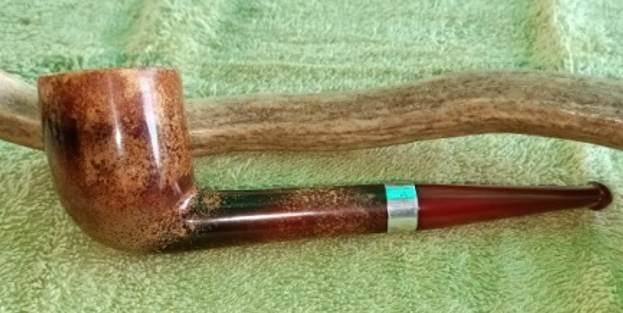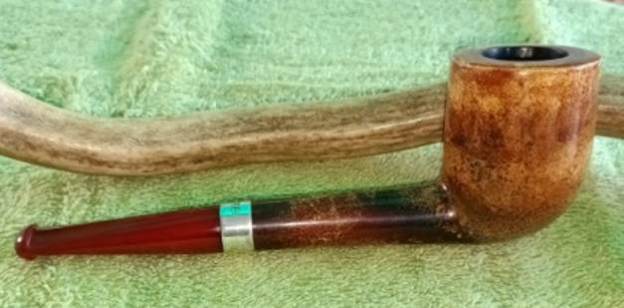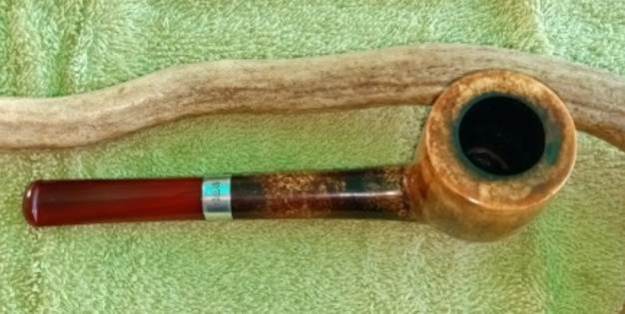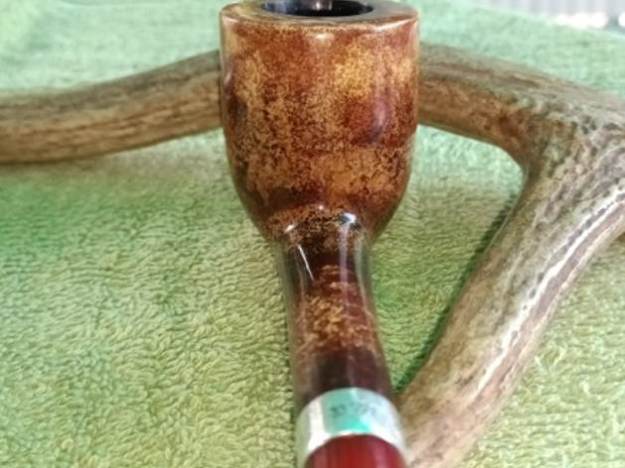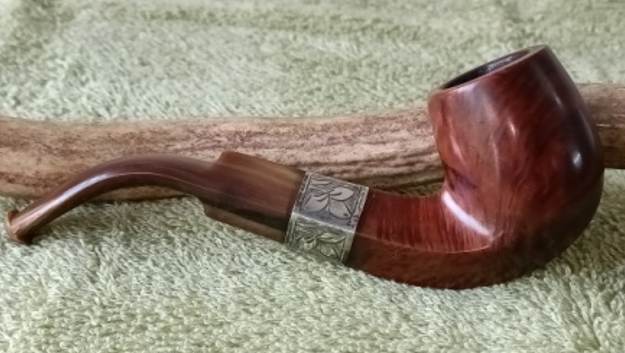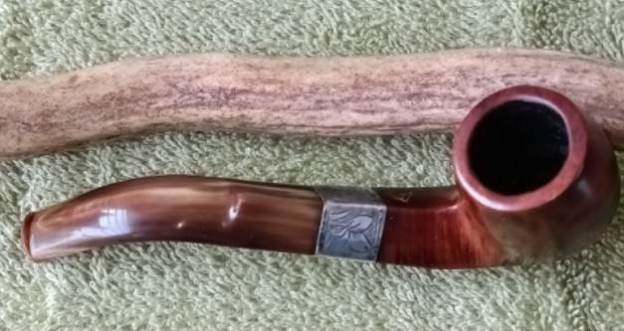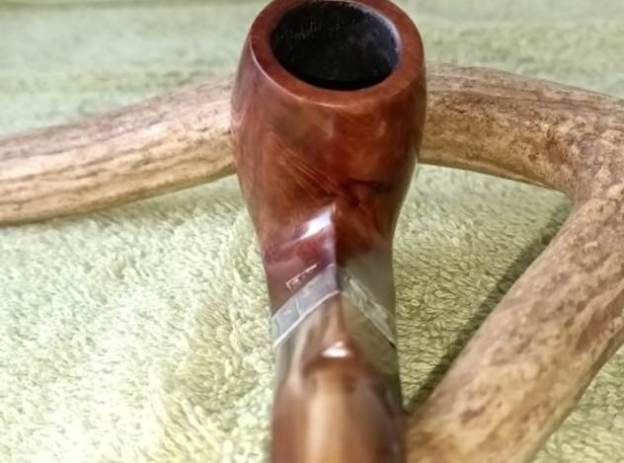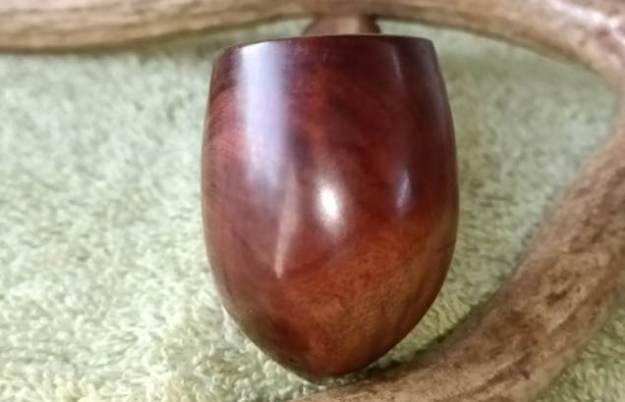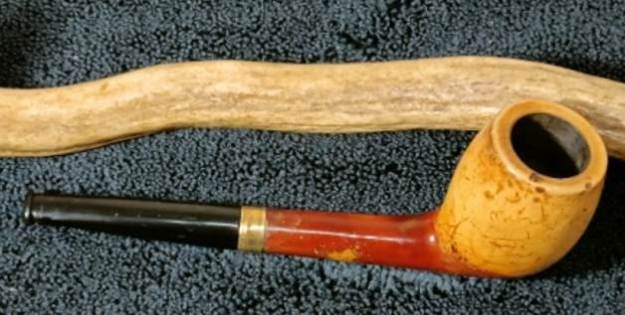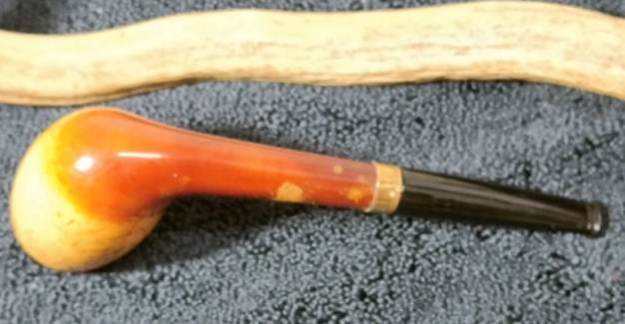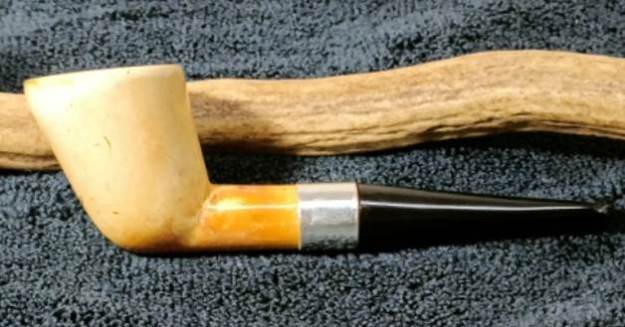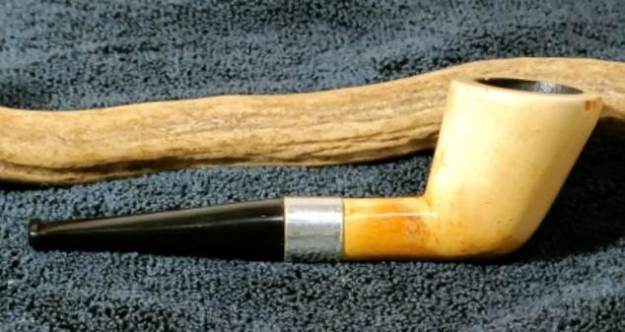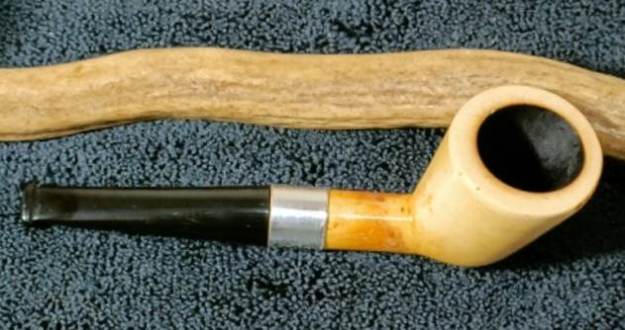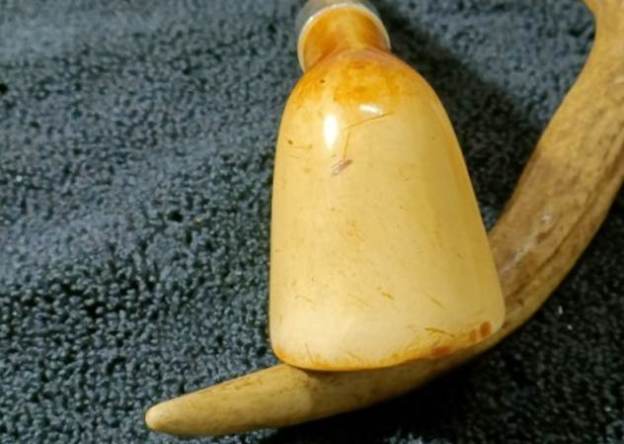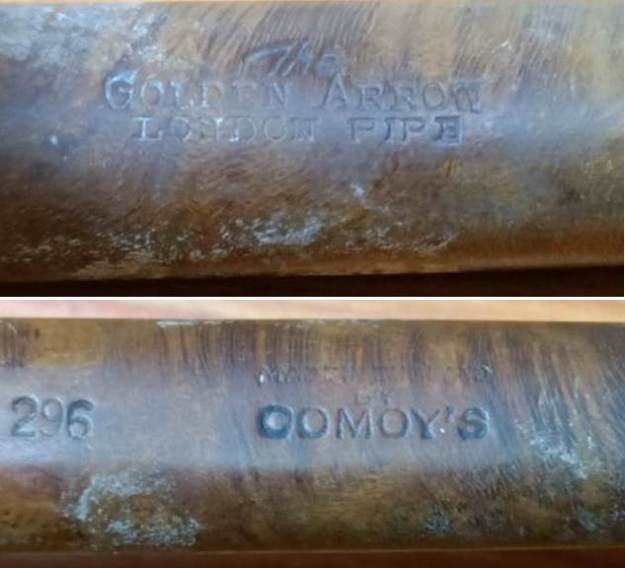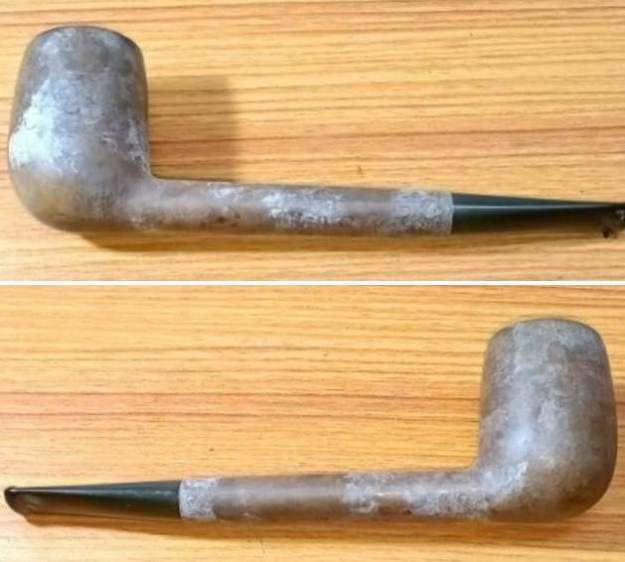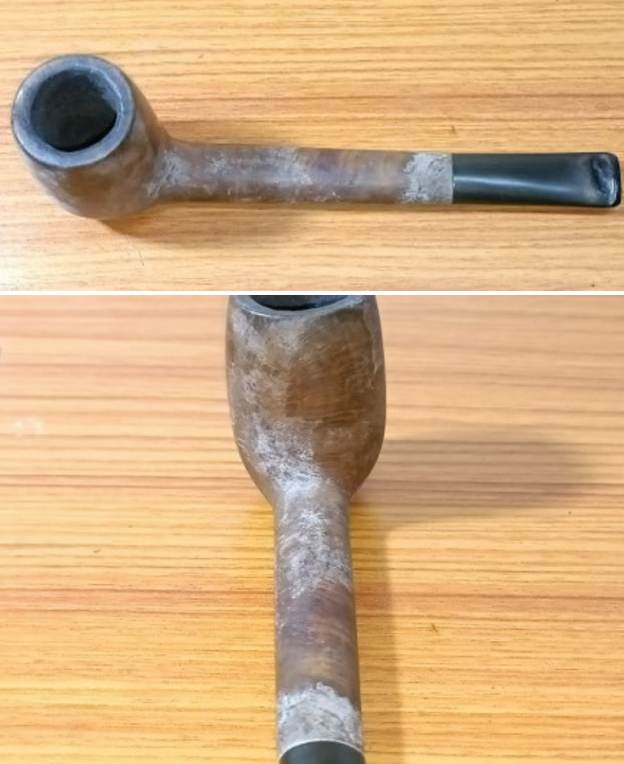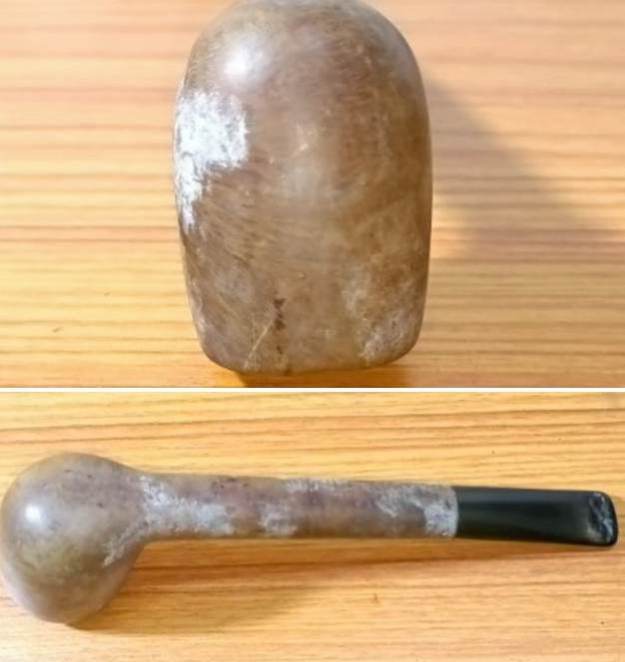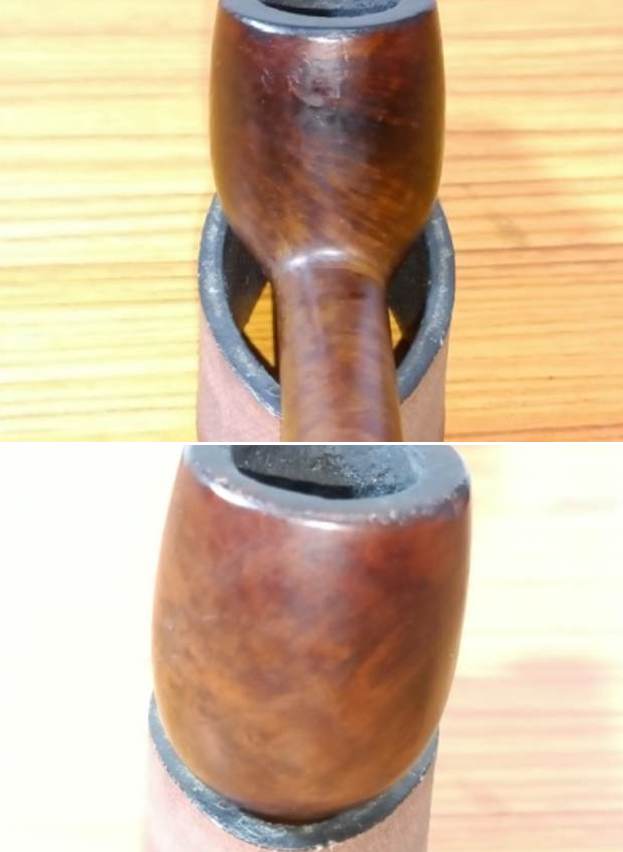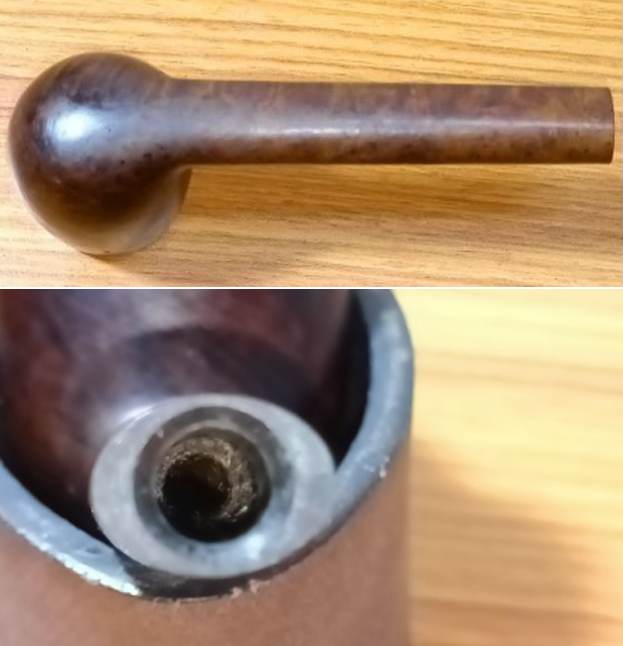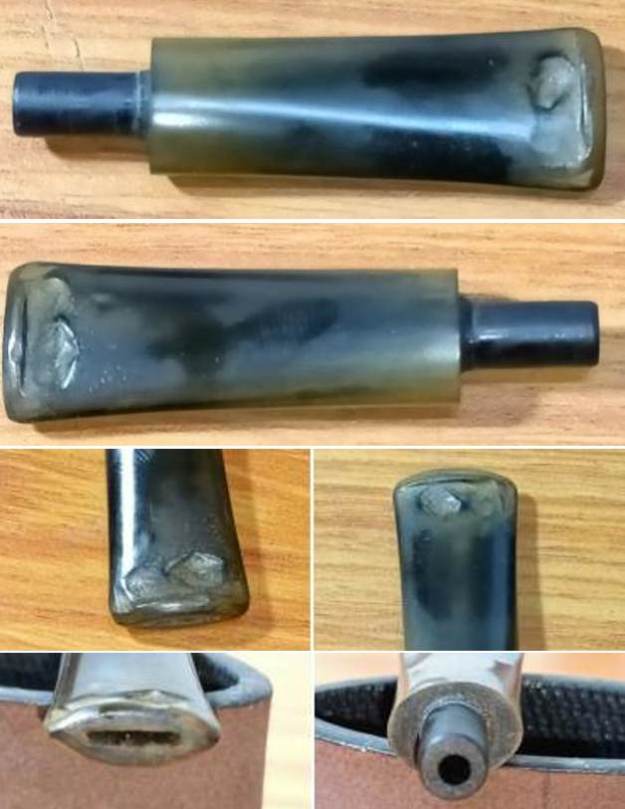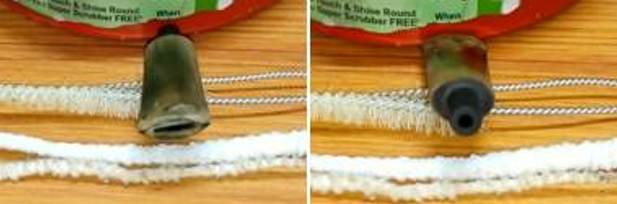
Tag Archives: article by Paresh Deshpande

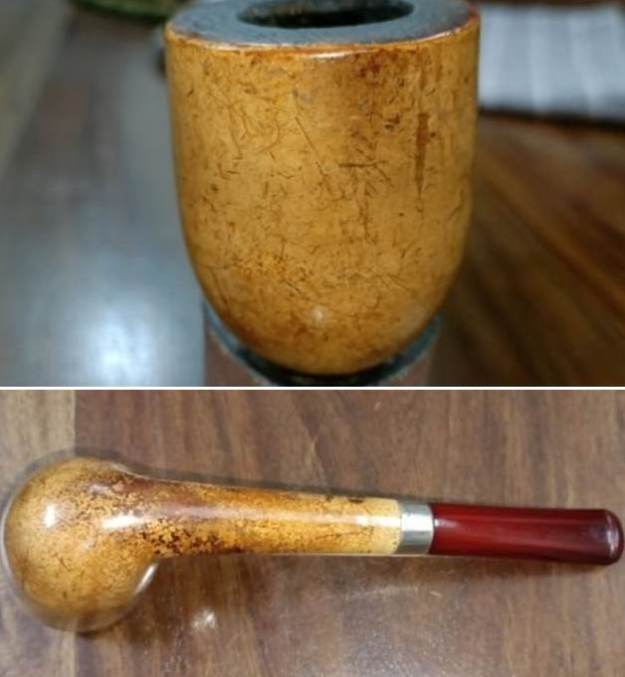
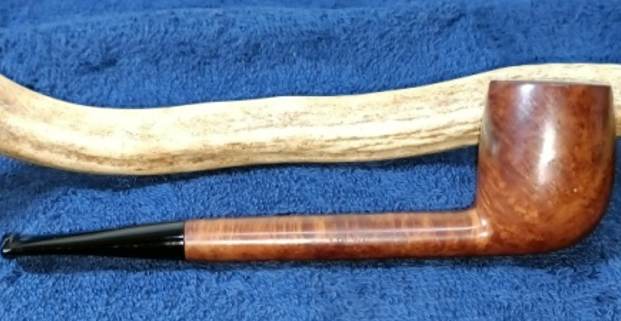
Refurbishing an Inherited c.1908 BBB Own Make Lovat


Blog by Paresh Deshpande

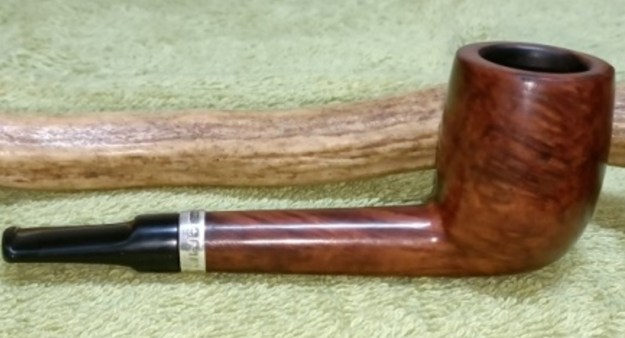
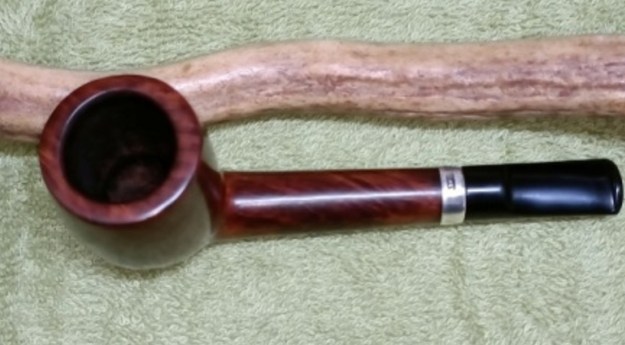
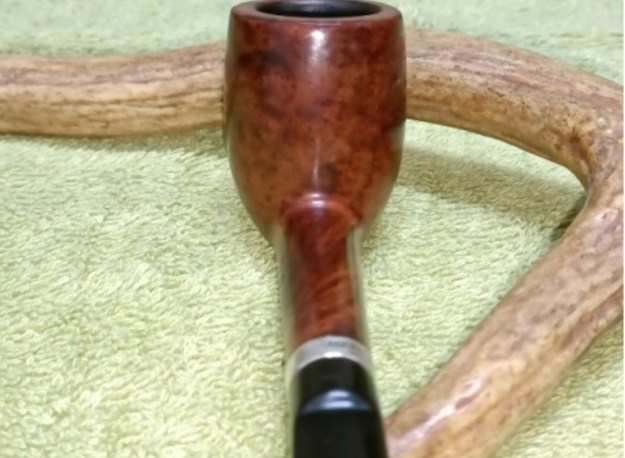
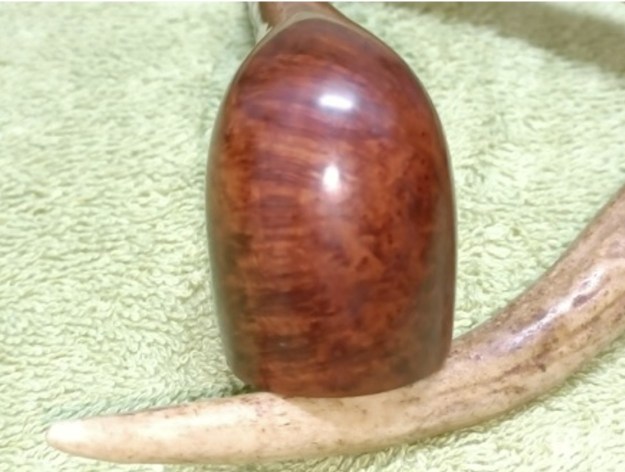
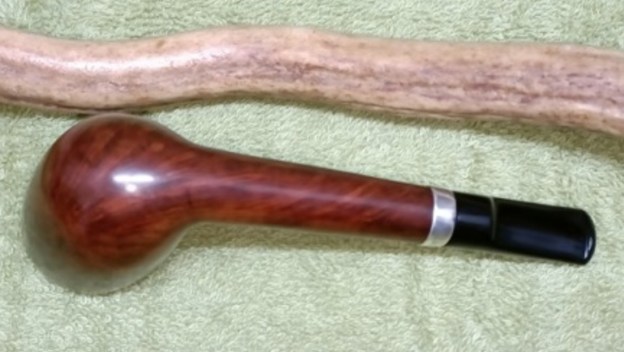
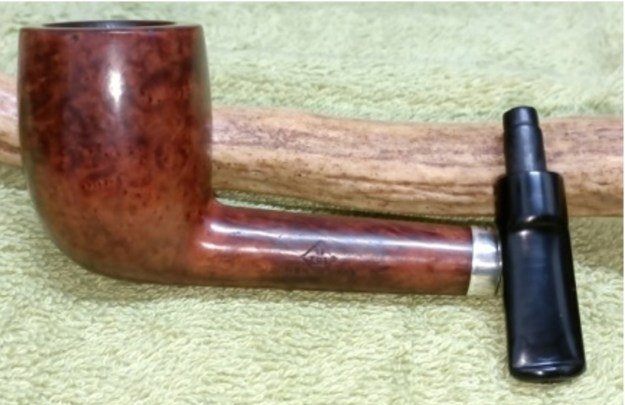
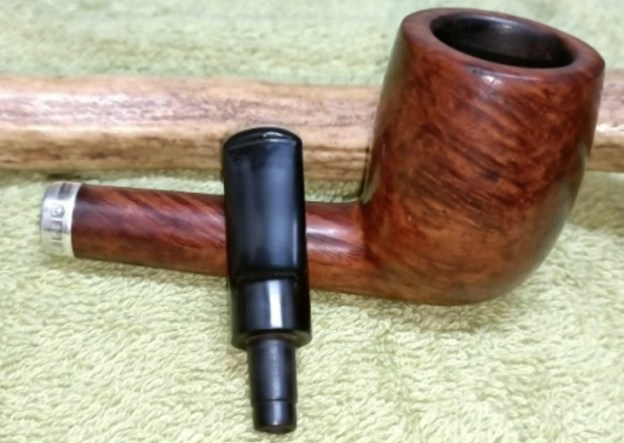
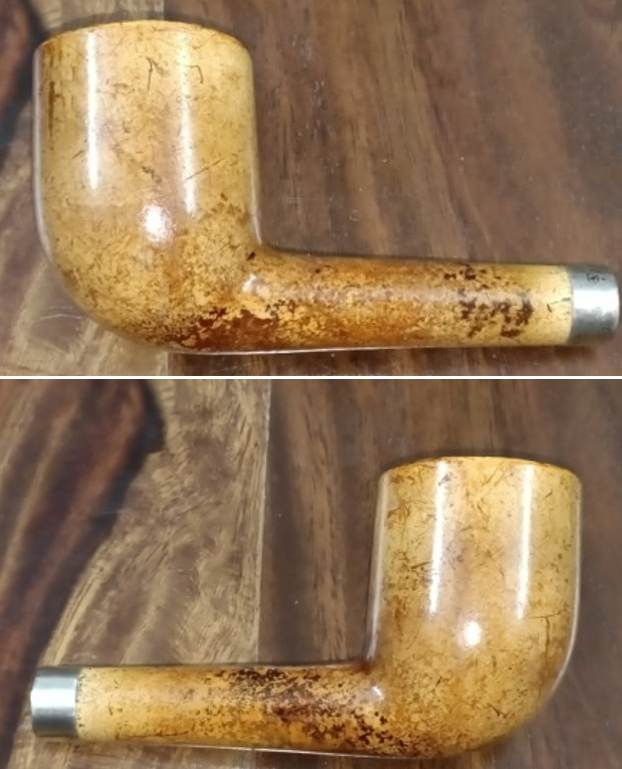
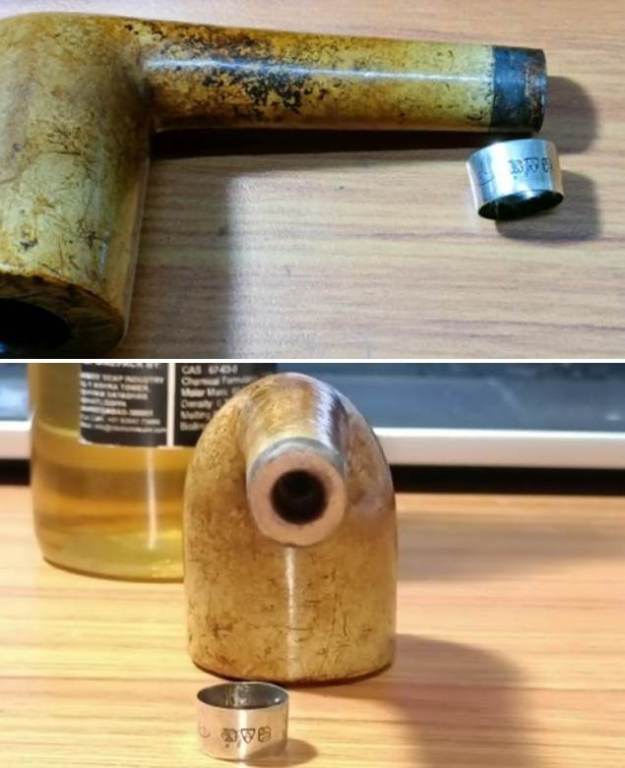
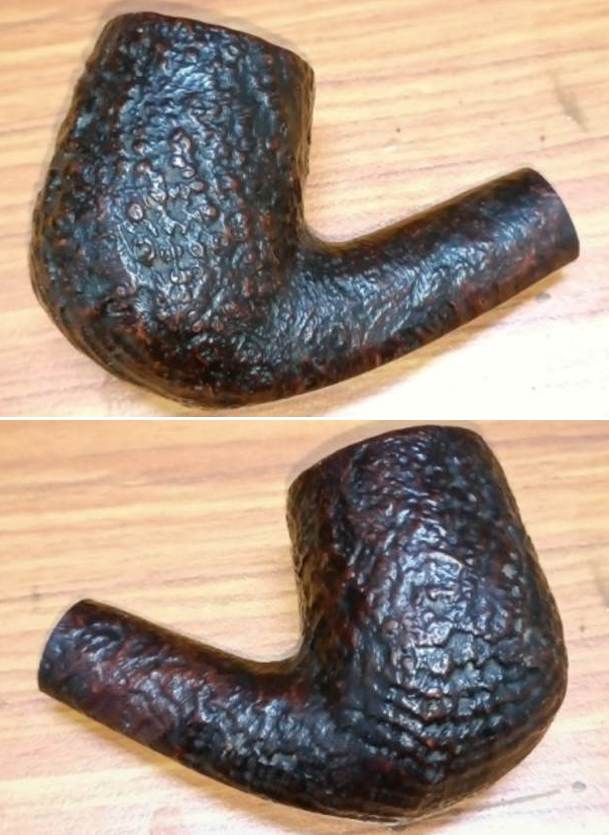
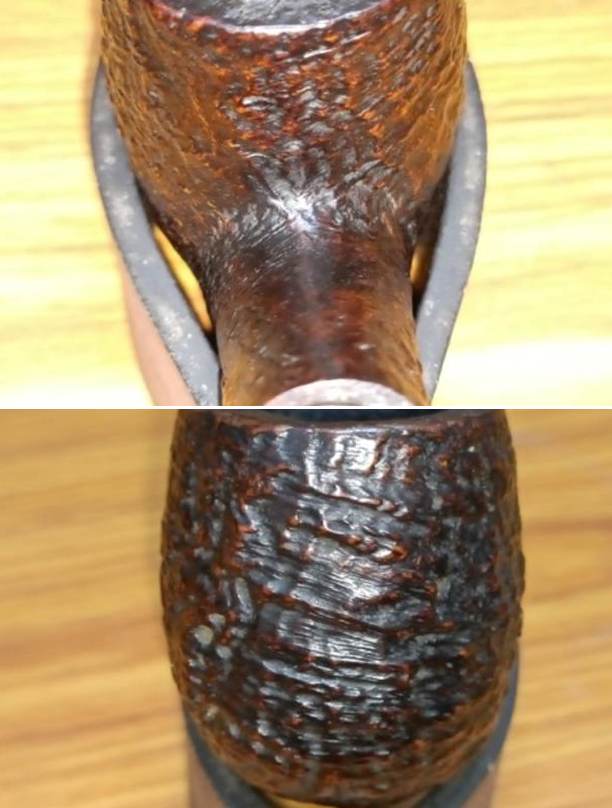
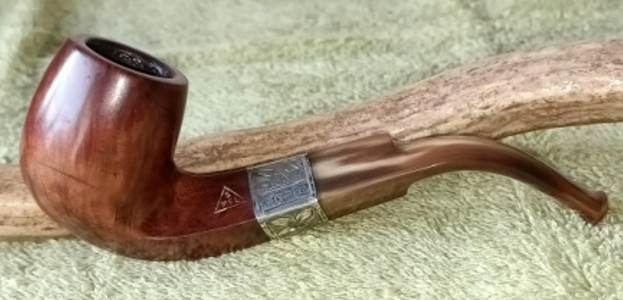
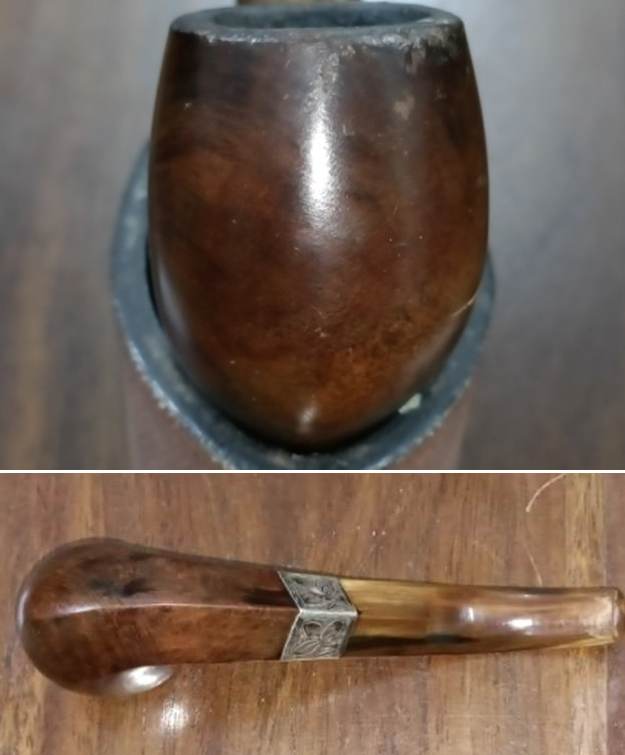
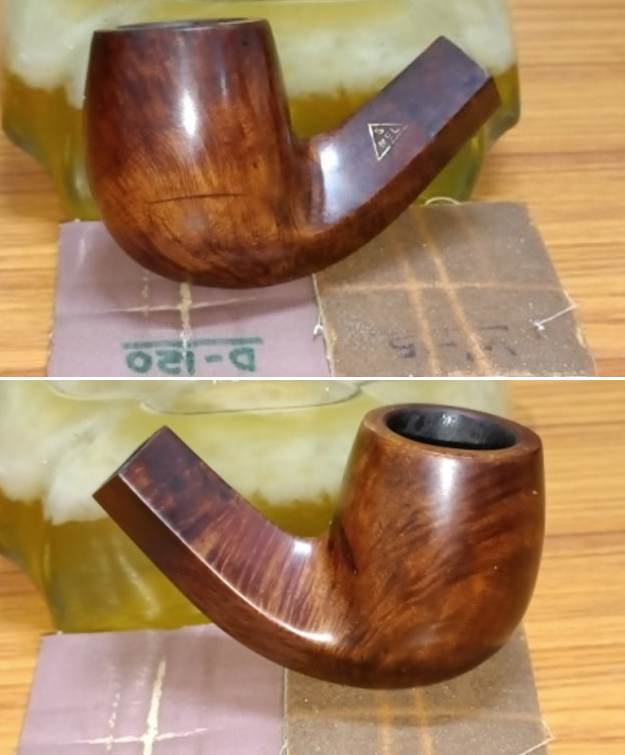
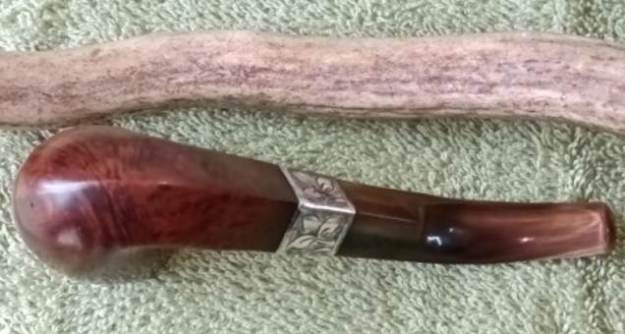
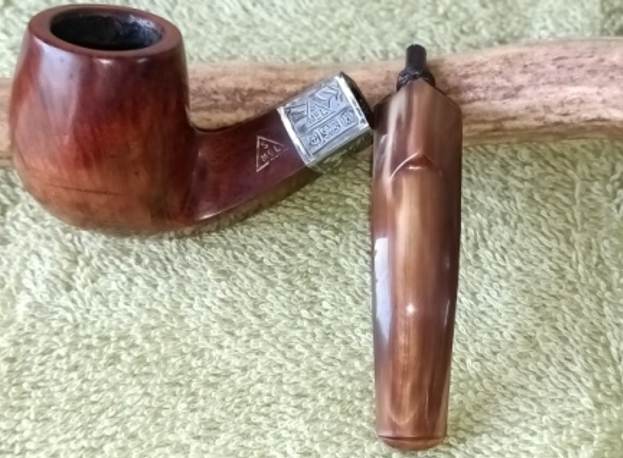
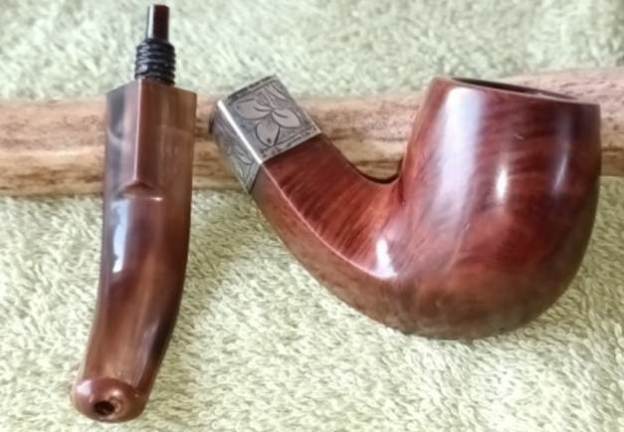
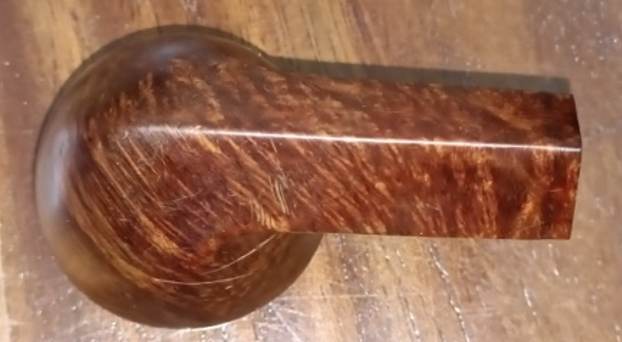
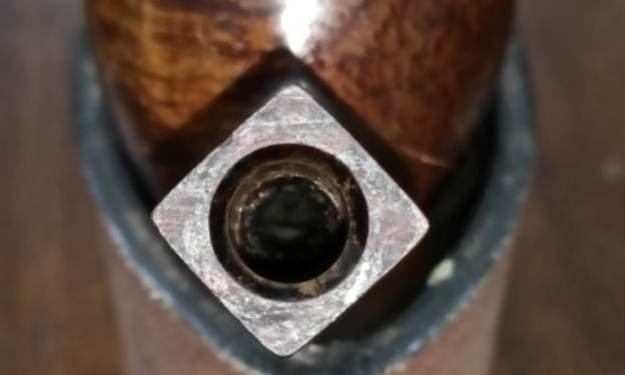
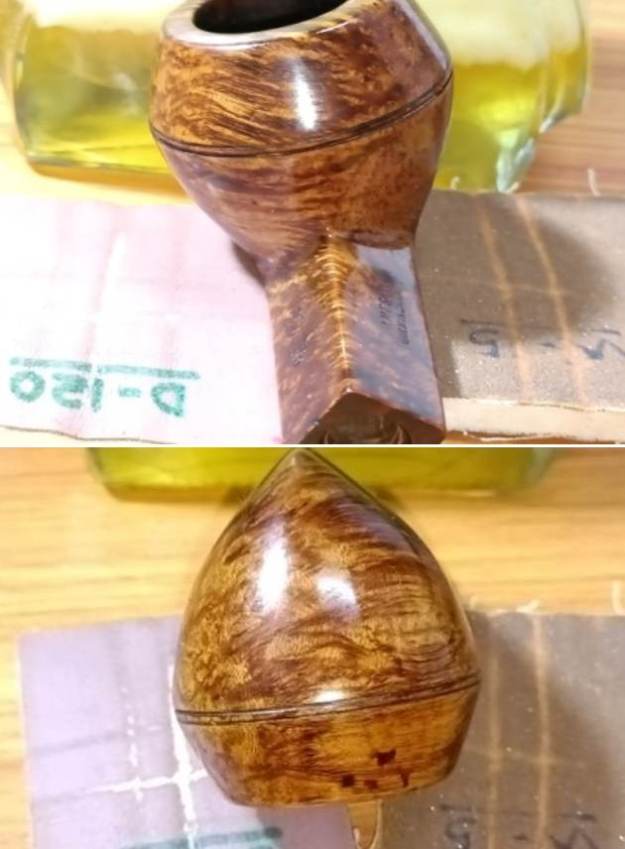
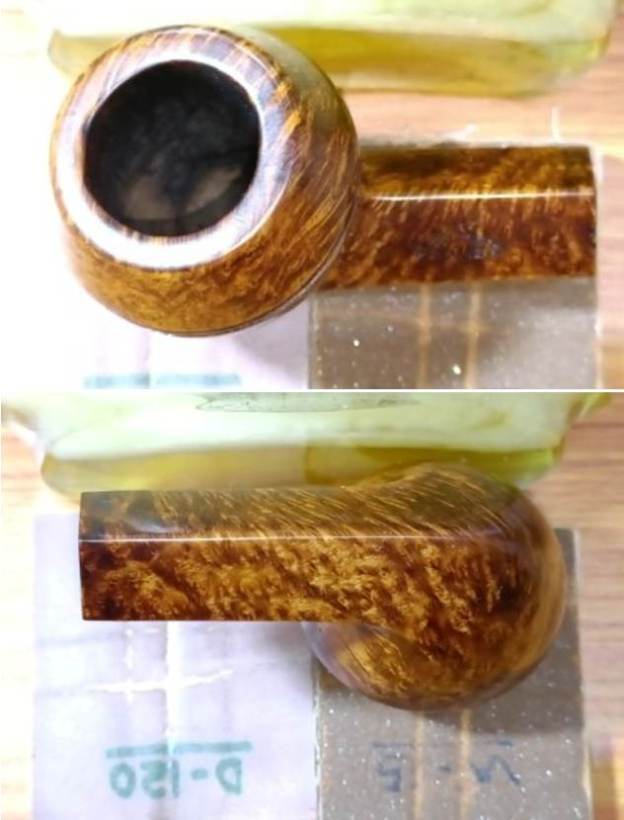
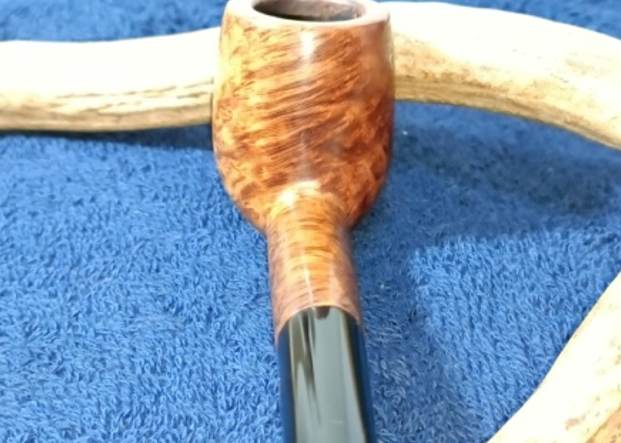
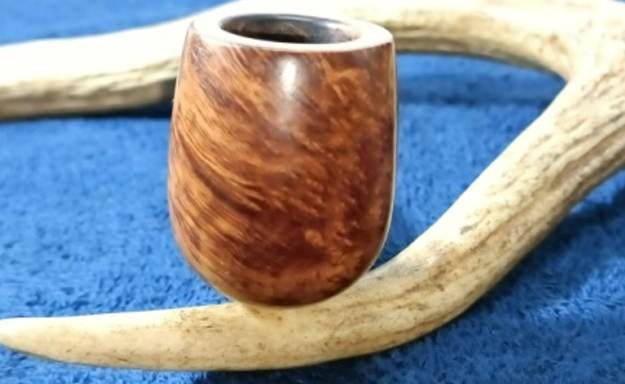
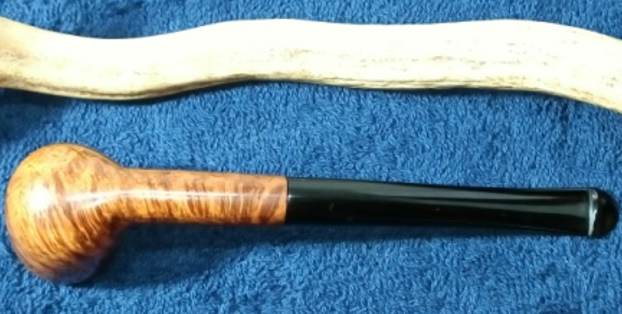
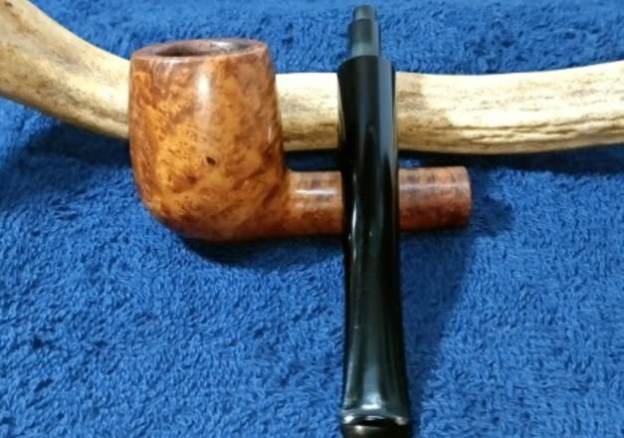
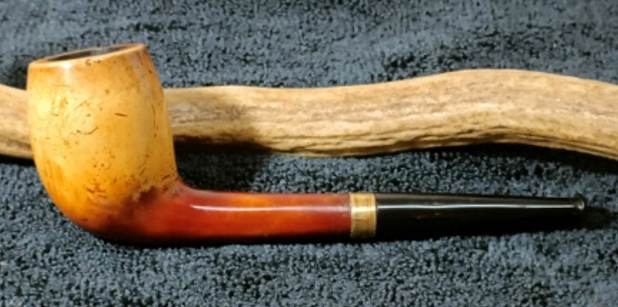
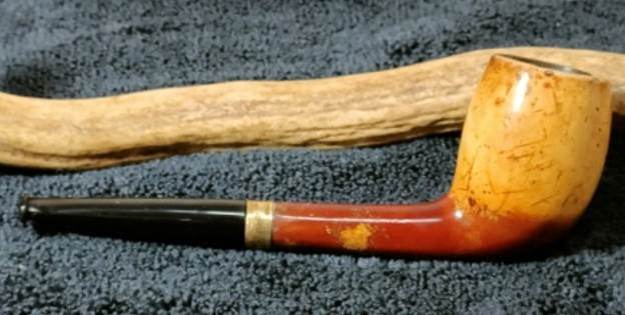
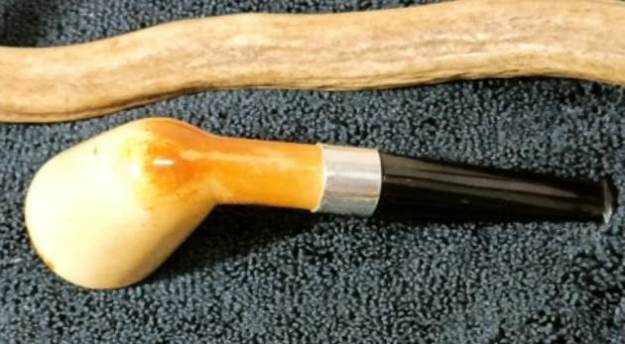
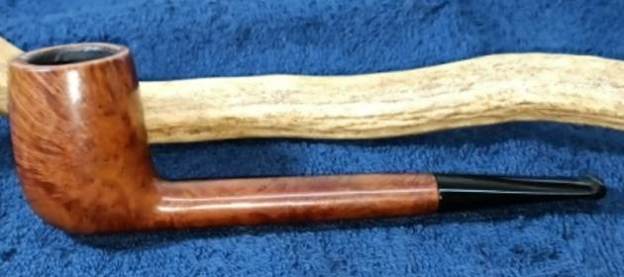
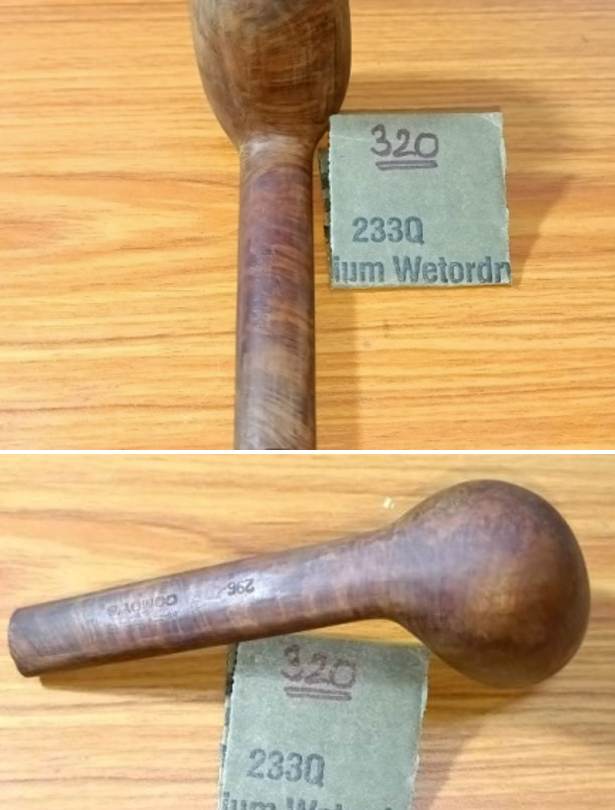
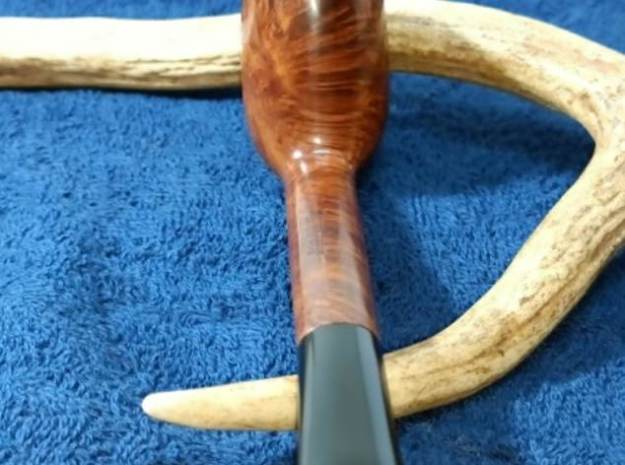
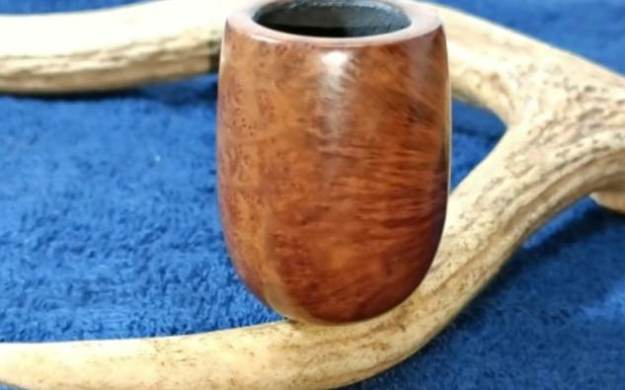
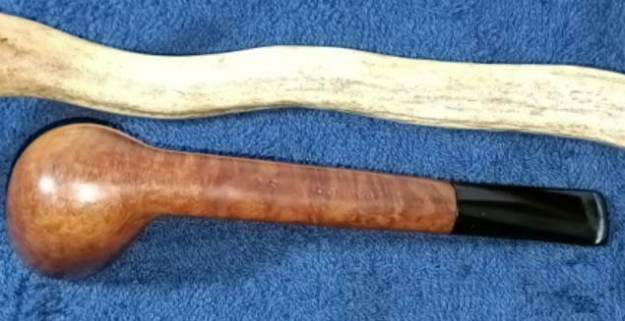
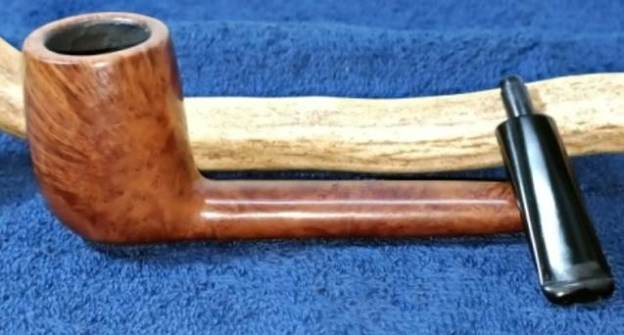
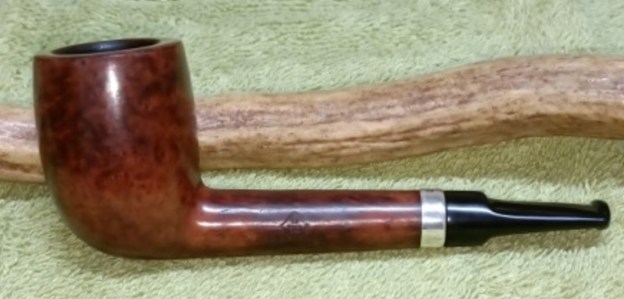
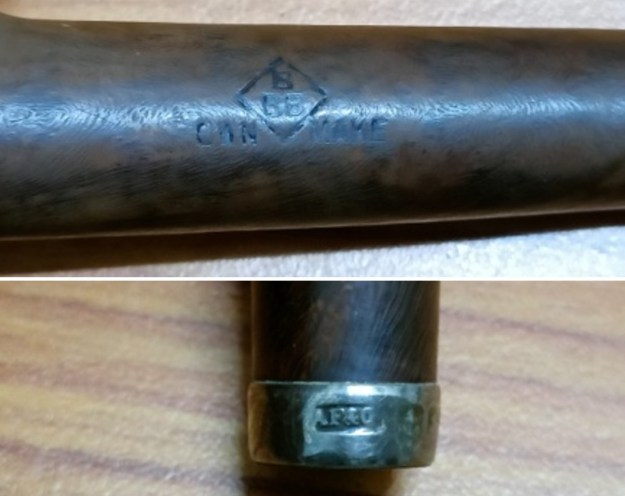
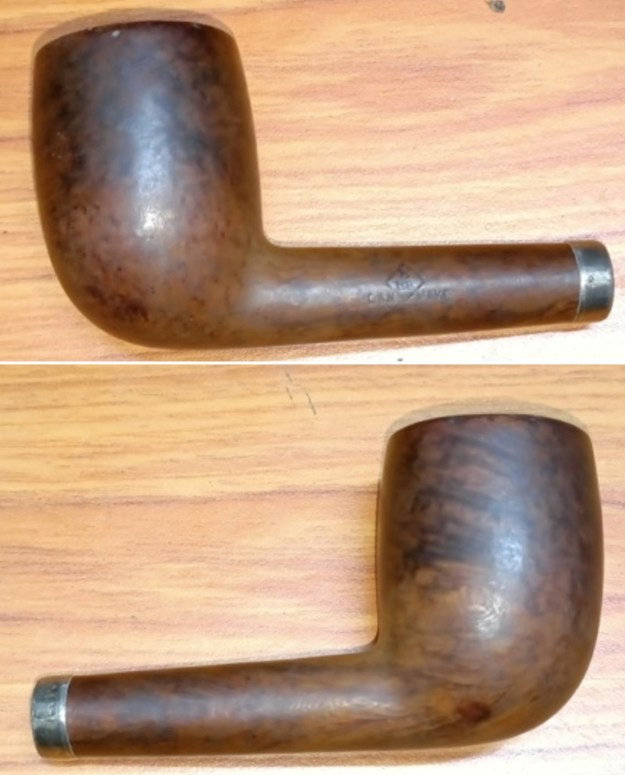
I absolutely love my classic BBB pipes that I have inherited and one such pipe is now on my worktable. This classic Lovat has some beautiful cross grains on the front, back and shank surface with beautiful bird’s eye grains on the sides that can be made out under the grime and dust covering the stummel surface. It is stamped on the left side of the shank as “BBB” in a rhombus with “OWN” and “MAKE” on either side of the rhombus. The Sterling silver ferrule at the shank end is stamped as “AF & Co.” in a rectangle followed by three cartouche bearing hallmarks. Starting from the left, the first cartouche bears the stamp of an “Anchor” for the Birmingham Assay Office followed by the “Lion Passant” certifying the silver quality and the last cartouche bears the Date letter “i” which is quite worn out and the outline of the letter can be made out only under close scrutiny under a magnifying glass. The vulcanite saddle stem is devoid of any stem logo. The stampings are clear and easily discernible except the date code letter. BBB – Pipedia has detailed information on the origins of the brand, it’s transition to the Cadogan group making this article a good read for those interested. I would like to highlight that, quote “At the beginning, BBB produces two qualities. One, BBB Own Make, became finally BBB Best Make, other pipes being simply estampillées BBB. There are reasons to believe that Own Make in fact were produced in London (Reject pipes cuts year R stamped one them.), whereas the simple BBB were imported, and this, to the paddle of the 20th century. However, if all that is not very clear, it is probable that the lines low-of-range were an import of Saint-Claude” un-quote.
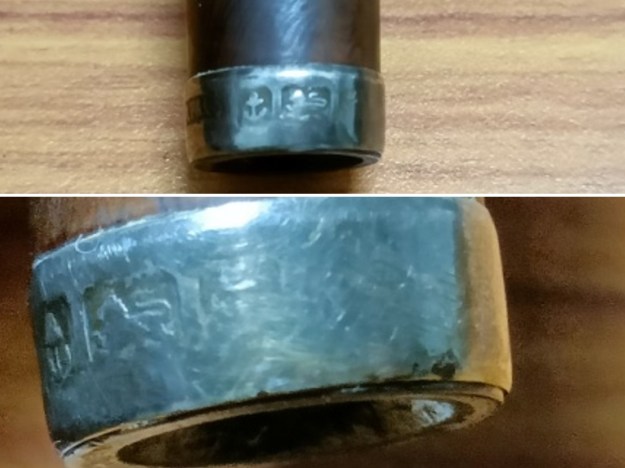
Now coming on to the most interesting and satisfying part of the research on this piece of briar and that is establishing the probable date of manufacture of this pipe. I prefer to follow English silver marks: the guide to hallmarks of London sterling silver (silvercollection.it)  while establishing the dates on the basis of the date letter in the hallmarks. The Anchor points to the Birmingham Assaying Office. Thereafter, I followed the link to the dating guide of the Birmingham Assay Office to date this pipe. I have included a hallmark chart for dating the pipe and have put a red mark around the letter for 1908. It is the same style of “i” and the cartouche that holds the letter stamp.Thus it is with certainty I say that this BBB was made in 1908, give or take a year as the ferrules were assayed in bulk and used as required. The stamp of Own Make designates this as the finest quality pipe that was made in London for the local market in limited quantities.

Initial Visual Inspection
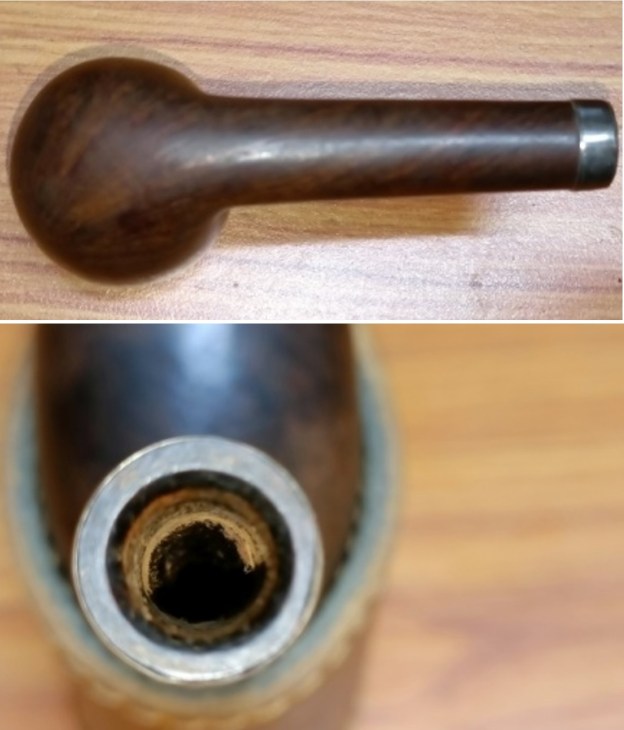
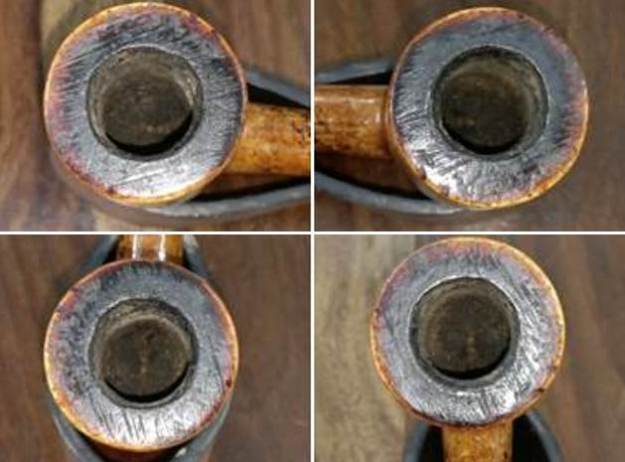
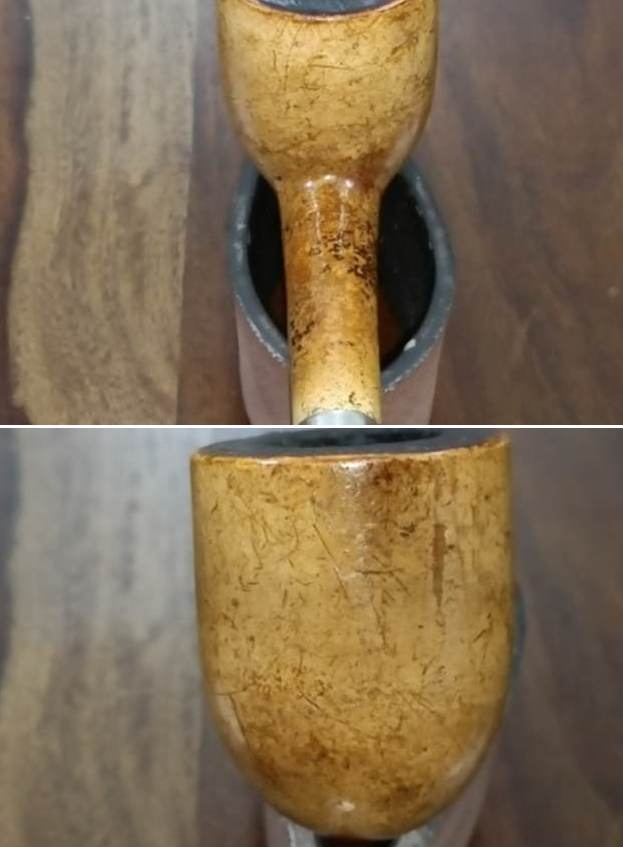
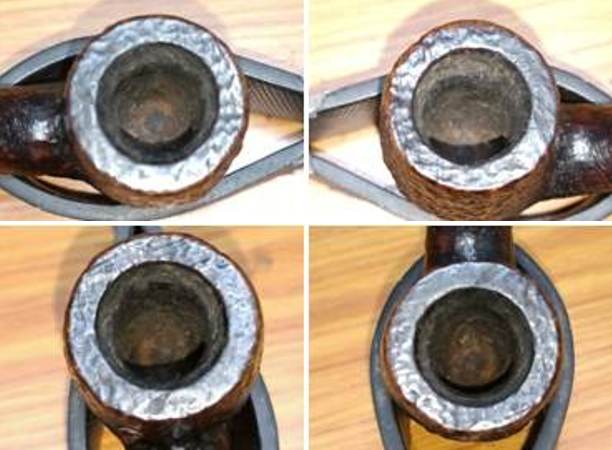
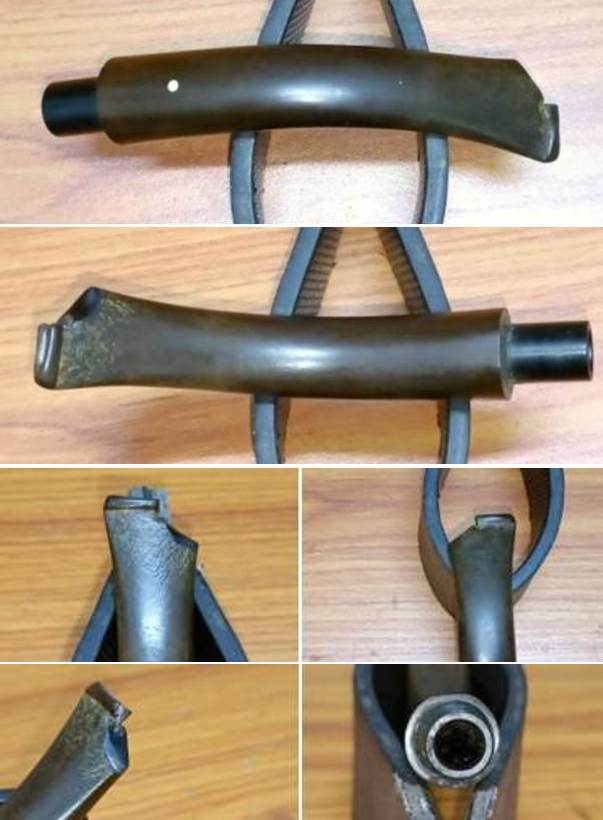
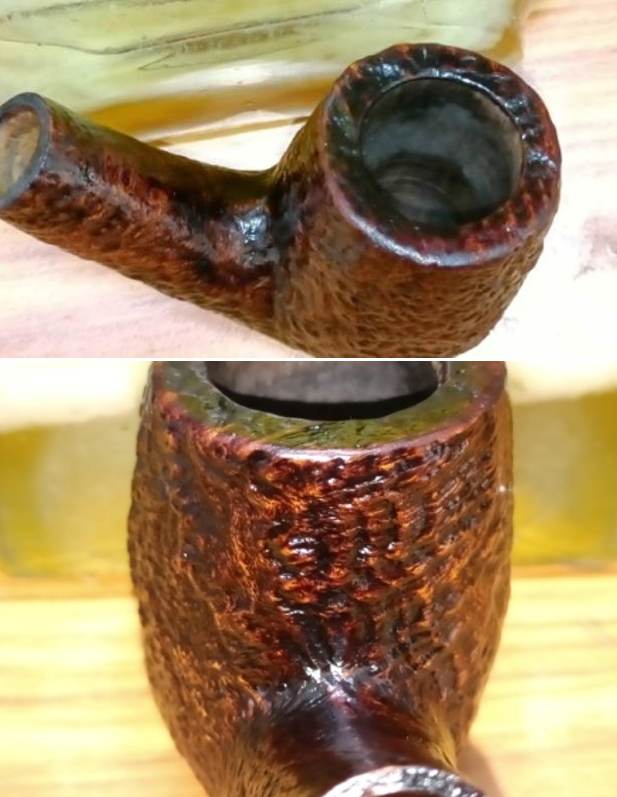
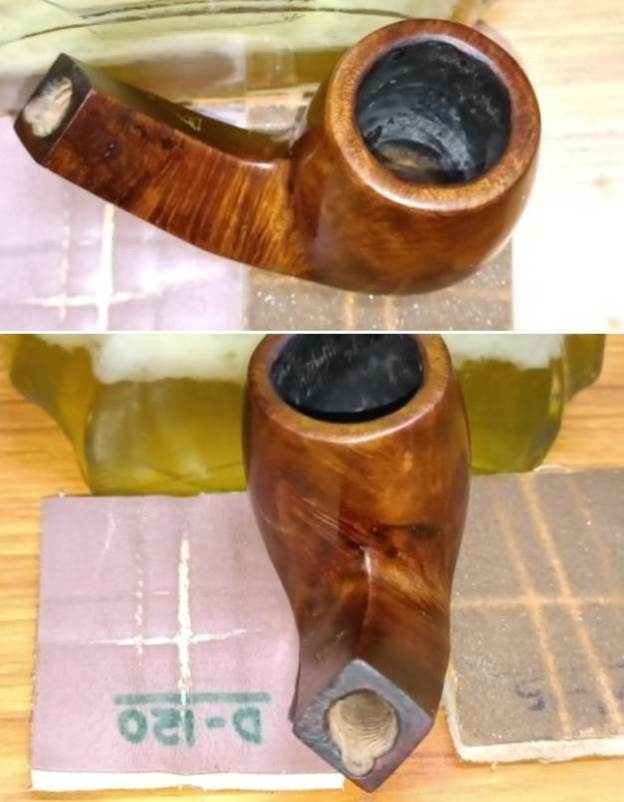
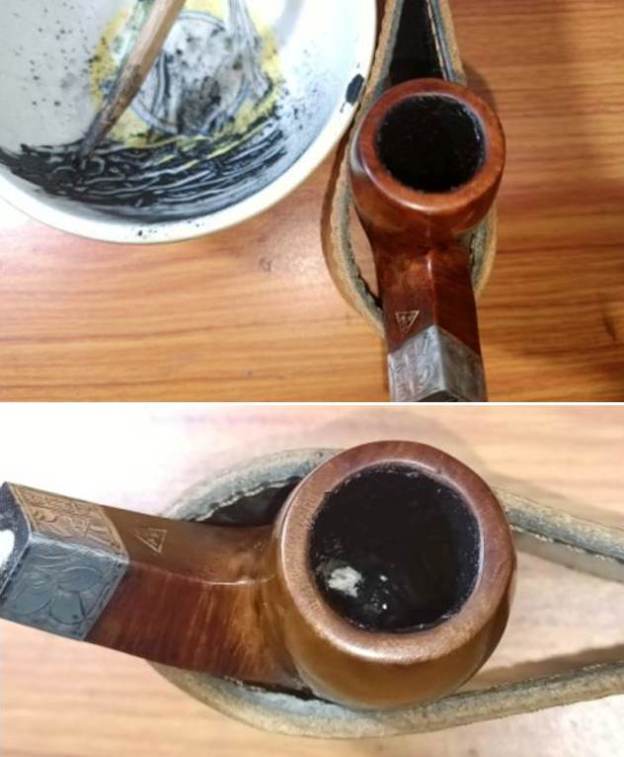
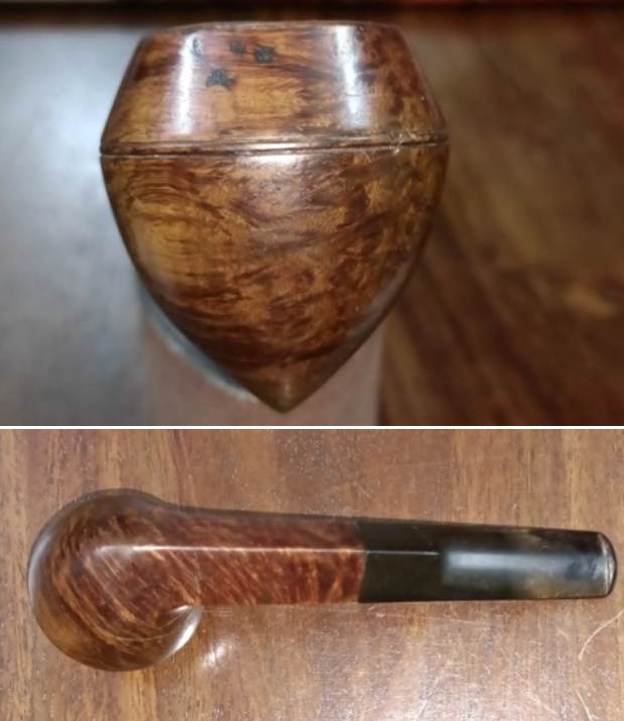
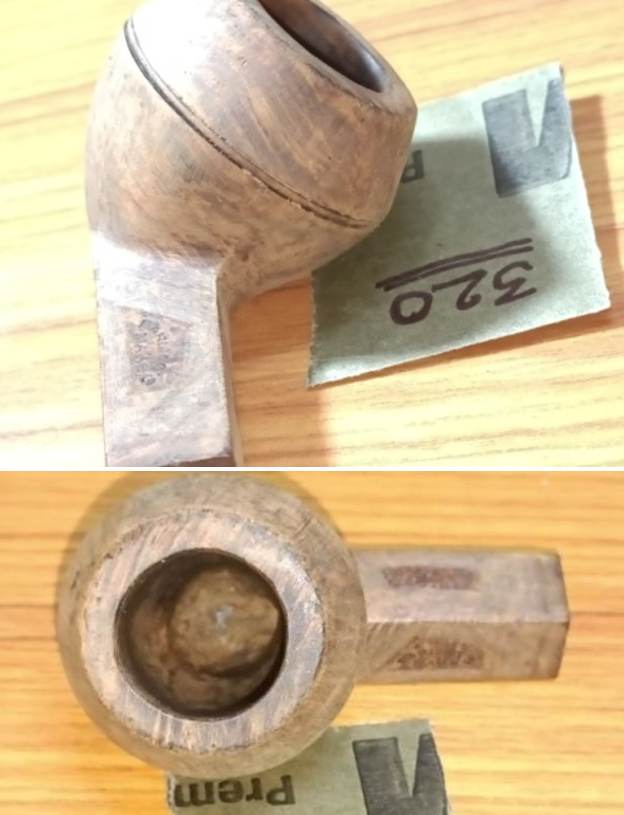
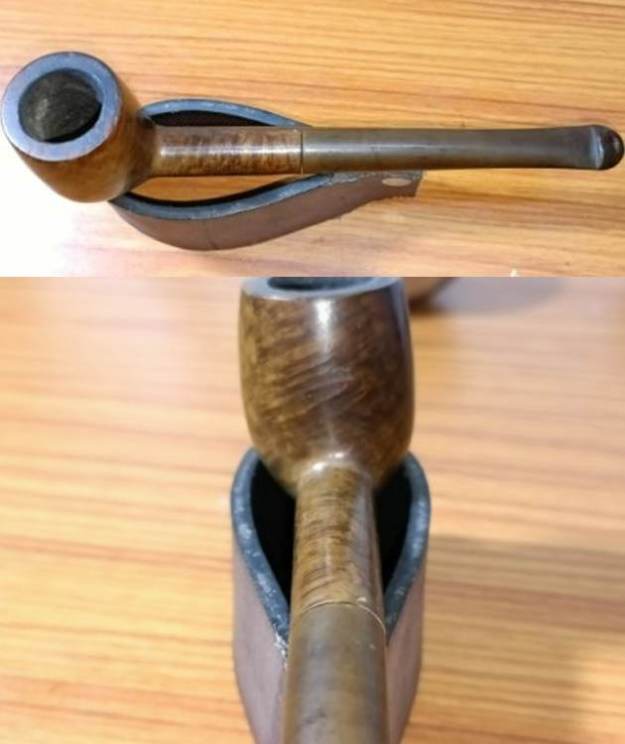
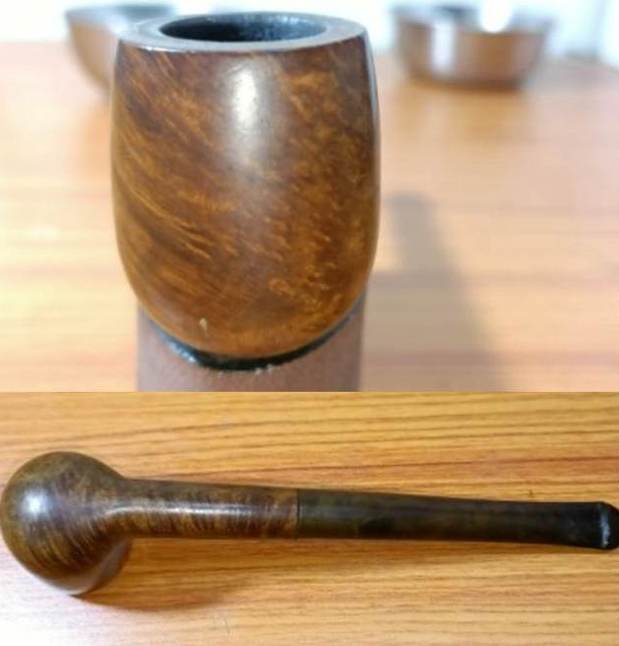
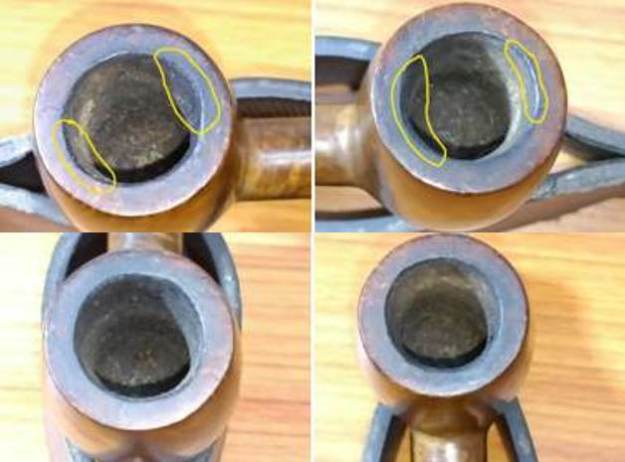
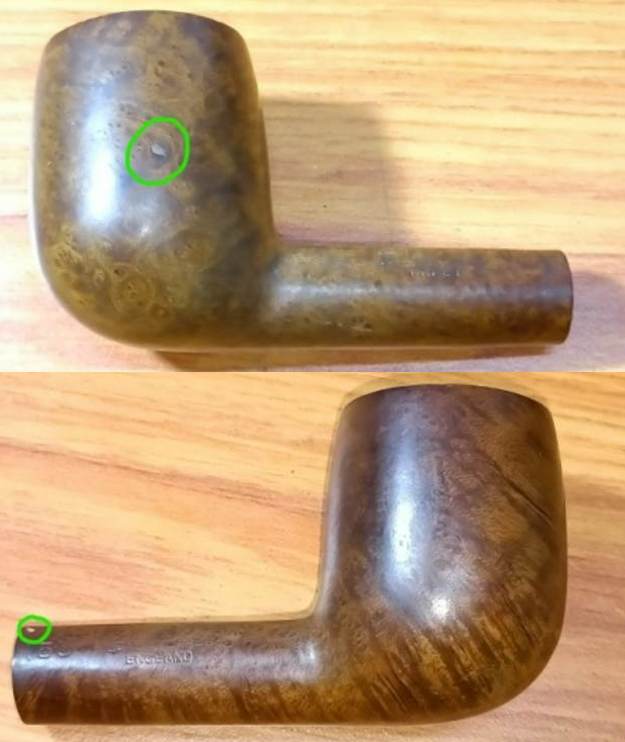
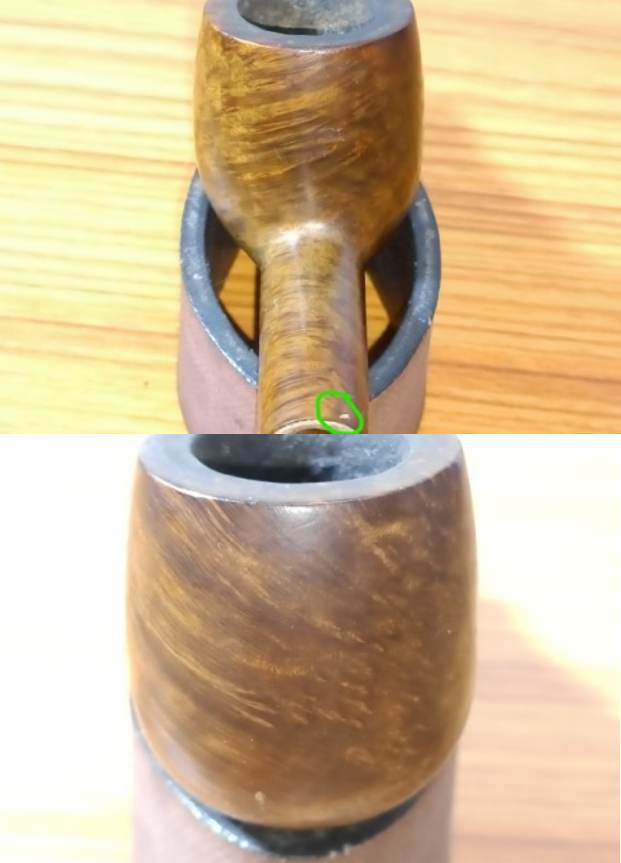
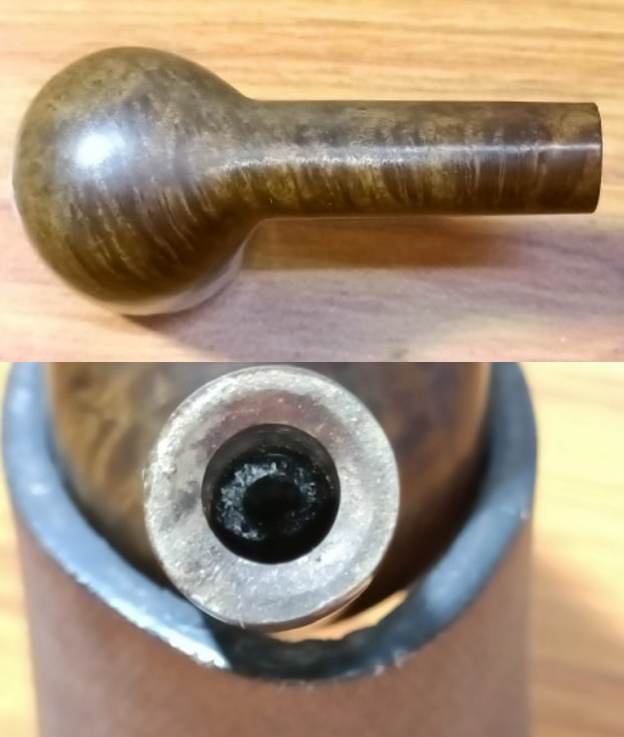
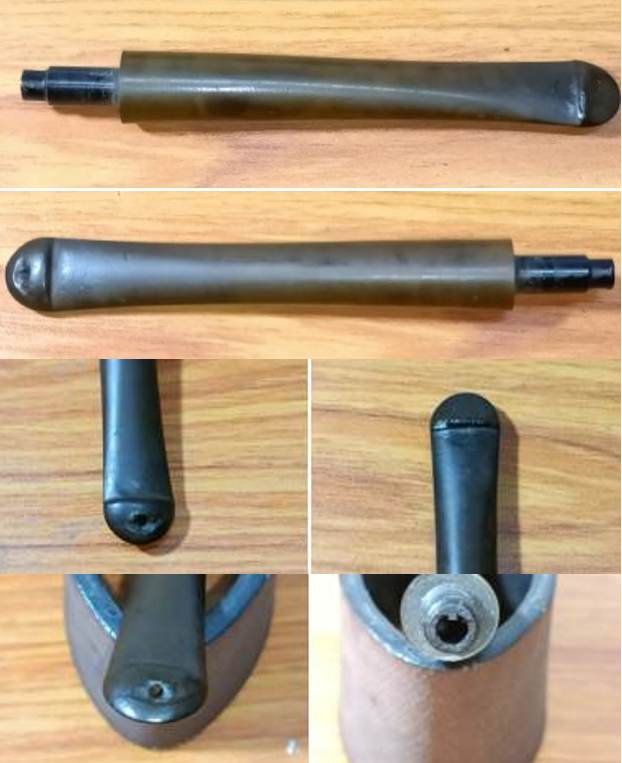
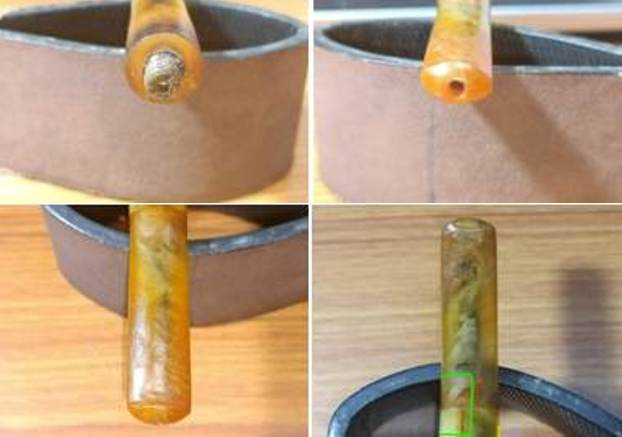
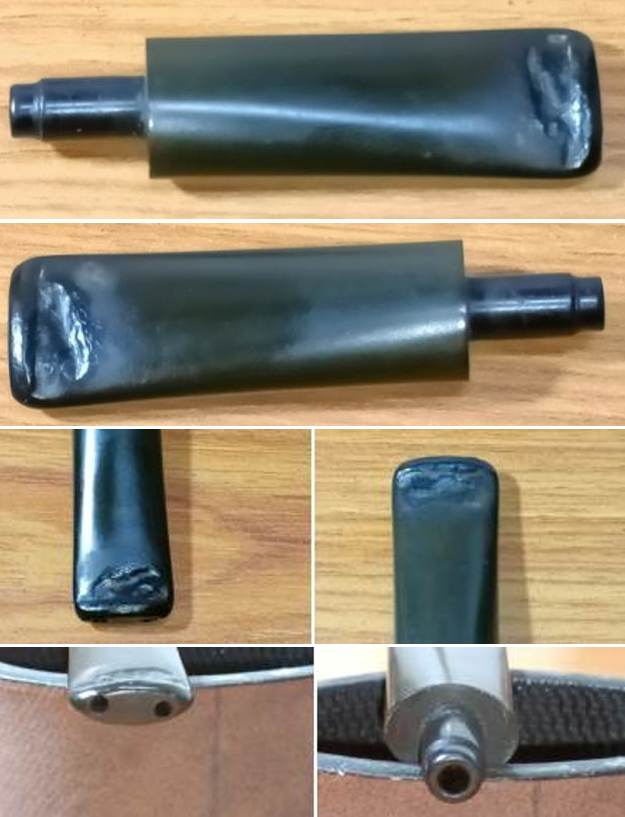
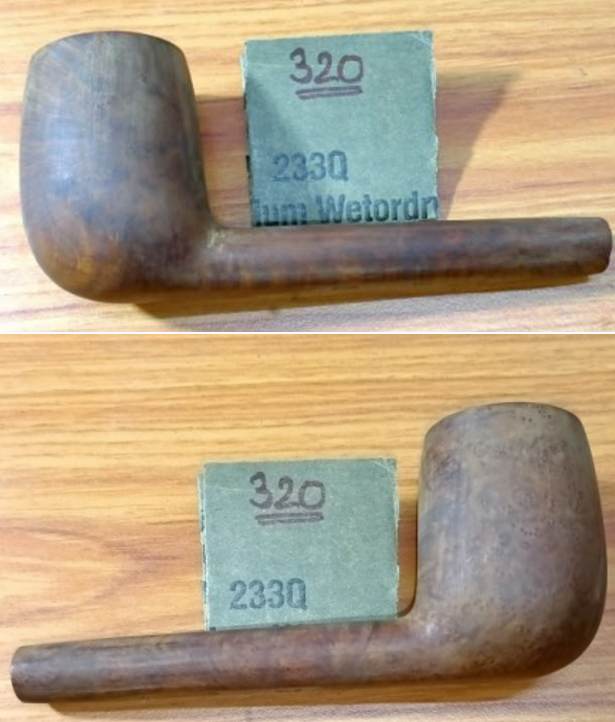
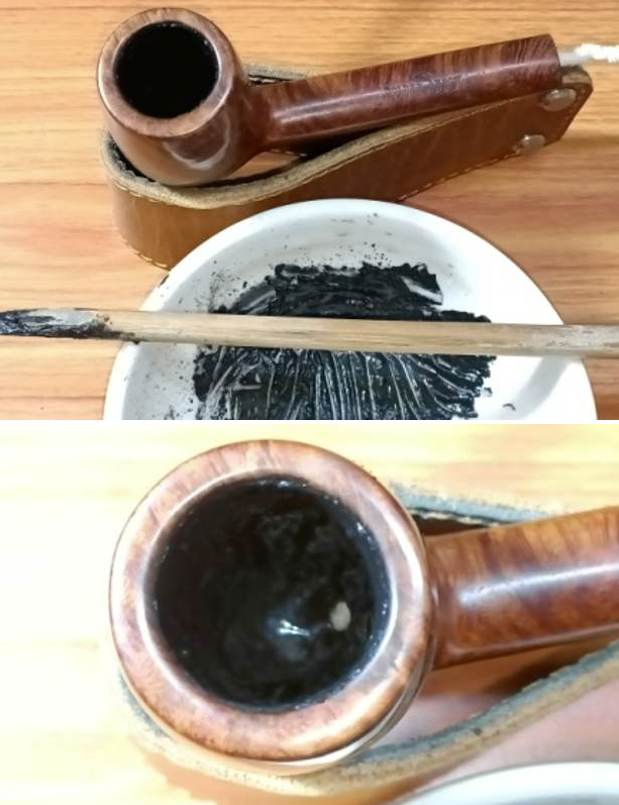
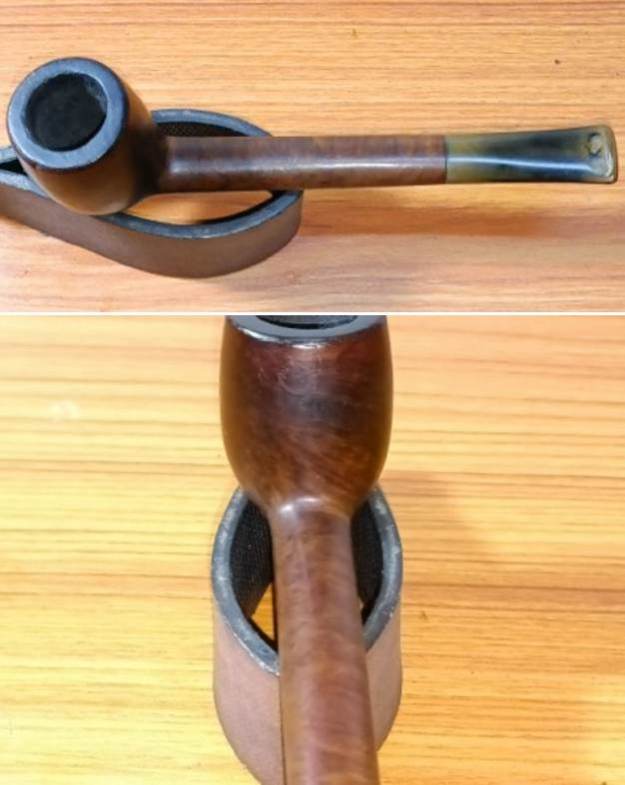
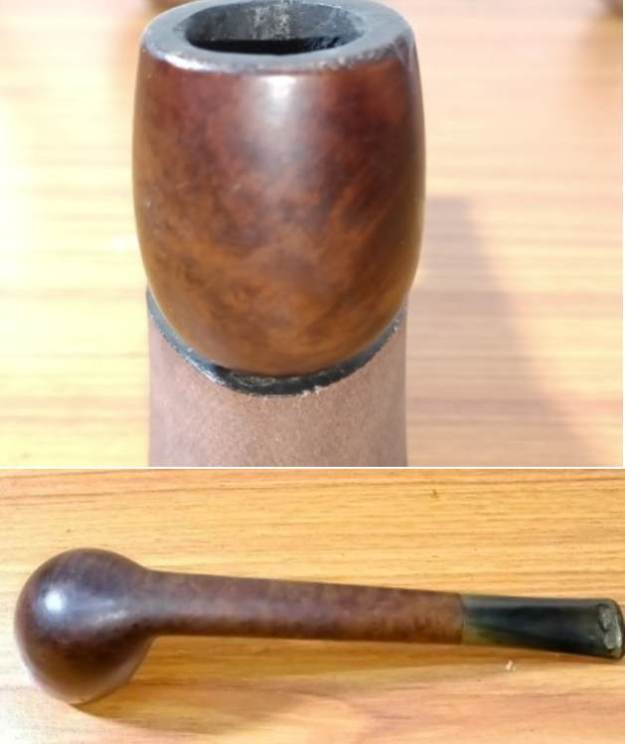
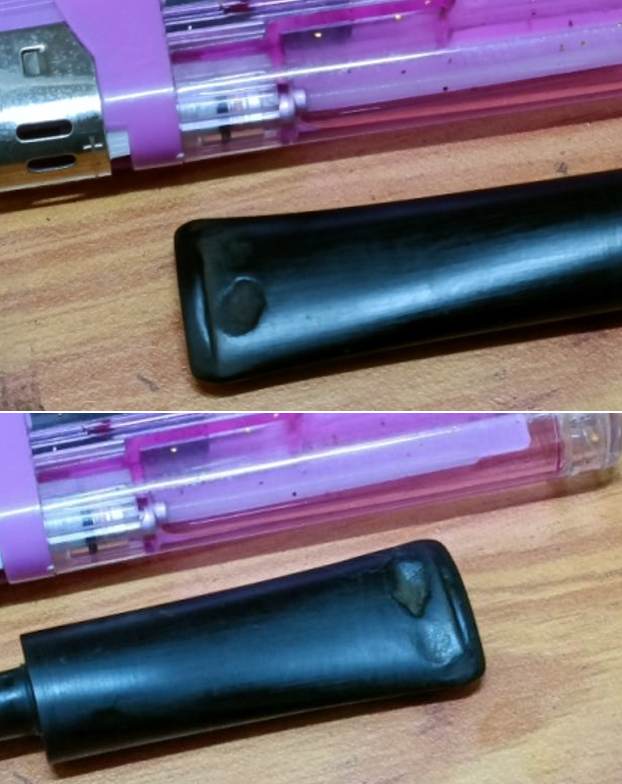
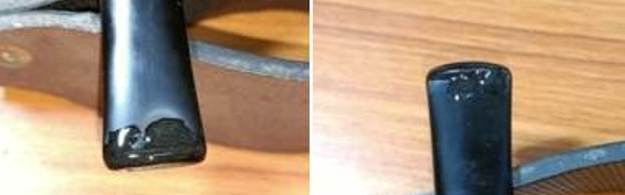
This 115 year old pipe flaunts it’s age with great dignity and élan. There is a decent layer of cake in the chamber that is even throughout. The rim top surface is covered in a layer of lava overflow. Underneath this crud and grime, the inner rim edge damage is apparent. The outer rim edge has a number of dents and dings. The stummel surface, though covered in dirt, dust and grime, has developed a nice patina. The stem has a chunk of vulcanite missing from the button and rounded orifice. The following pictures will give the readers a general idea as to the condition of the pipe as it sits on my worktable. Detailed Visual Inspection
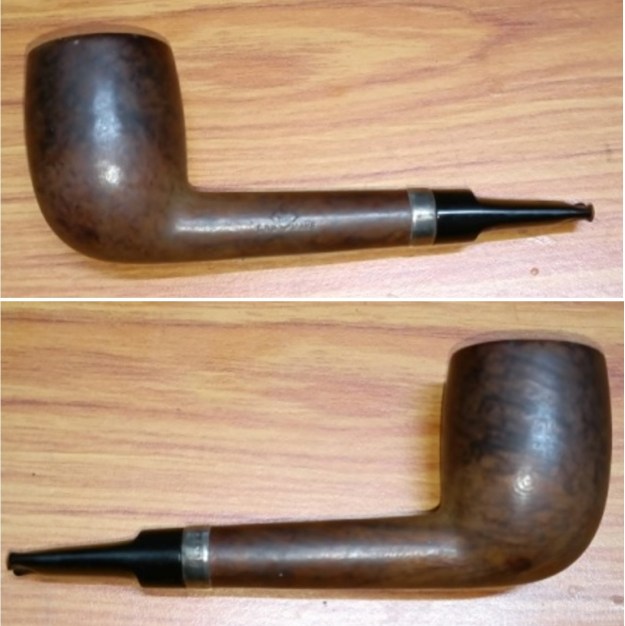
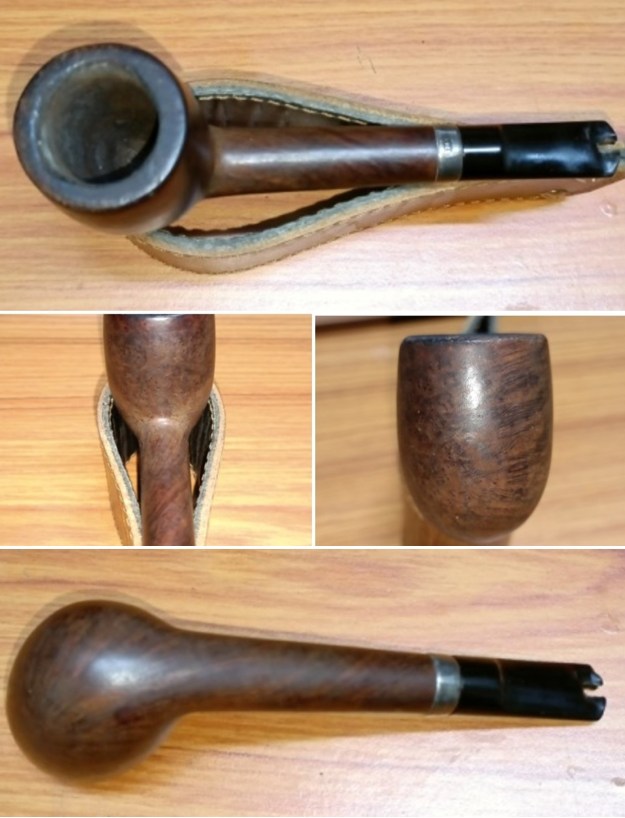
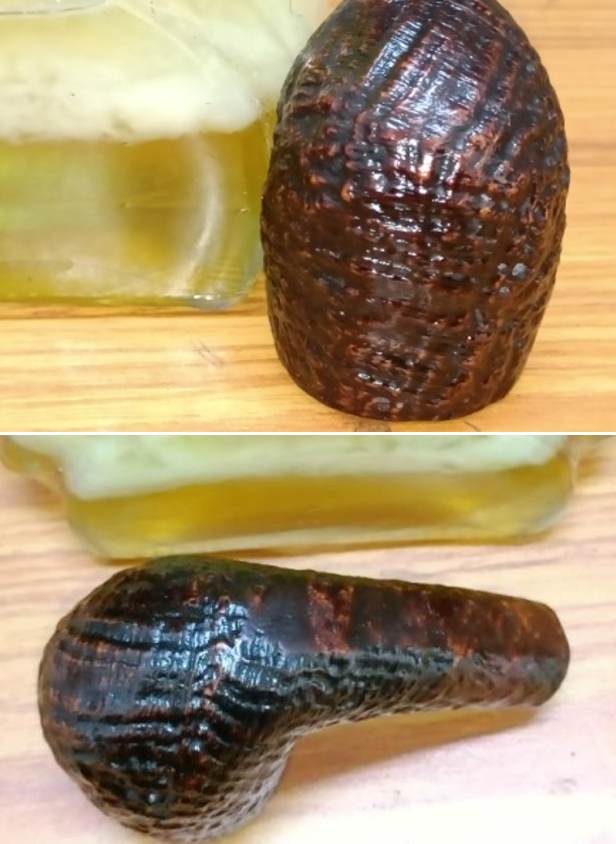
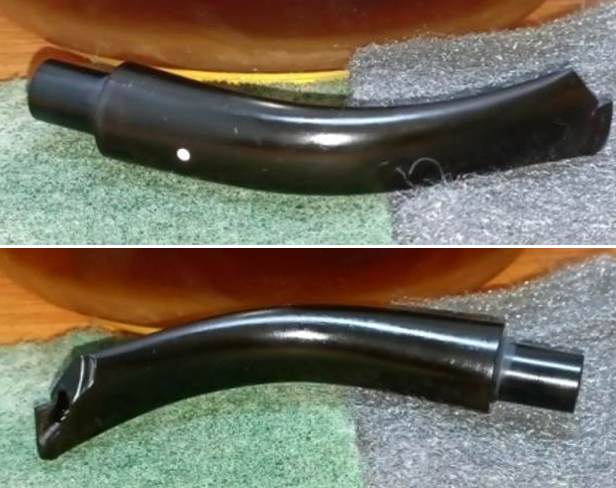
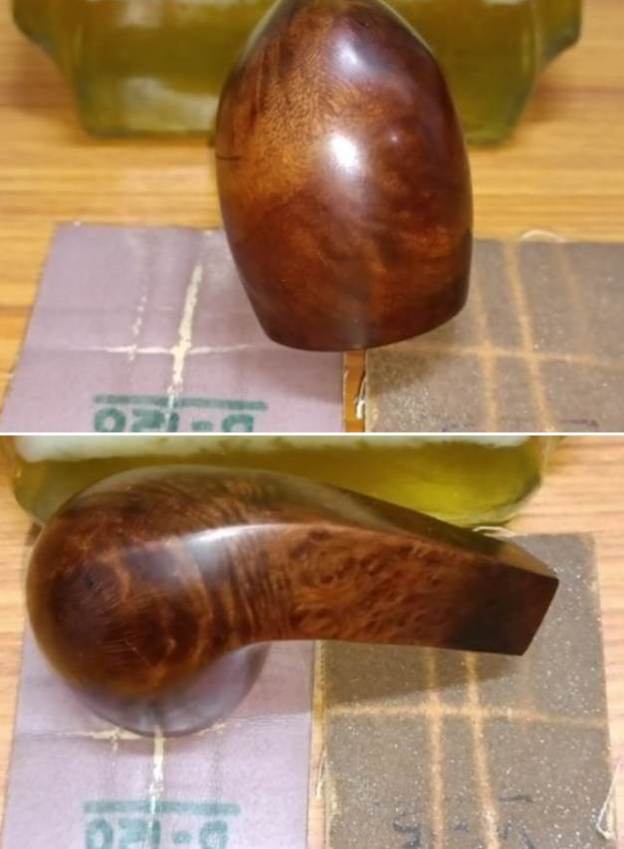
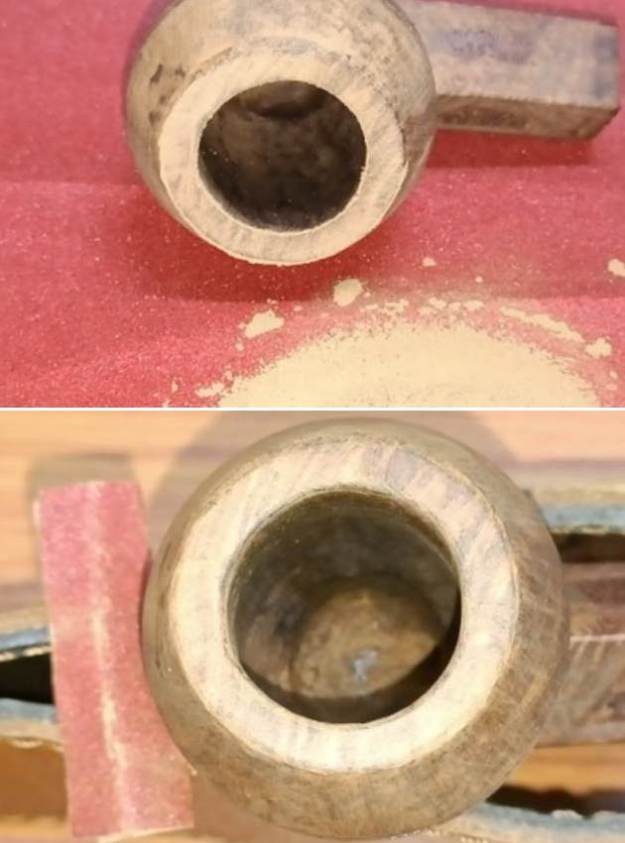
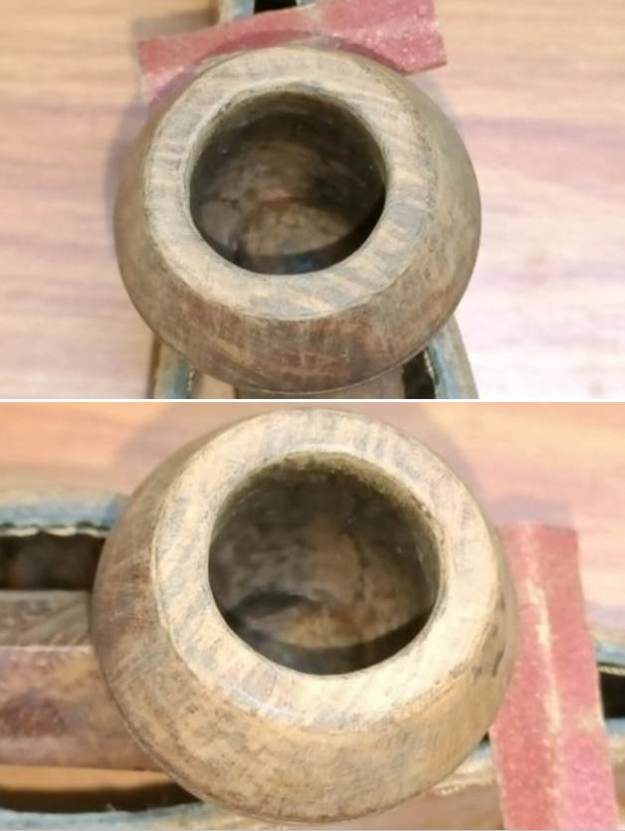
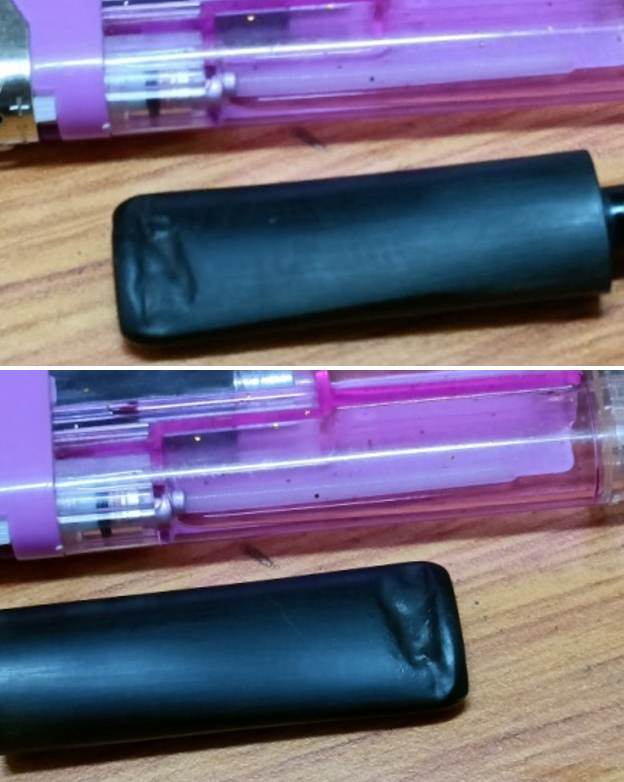
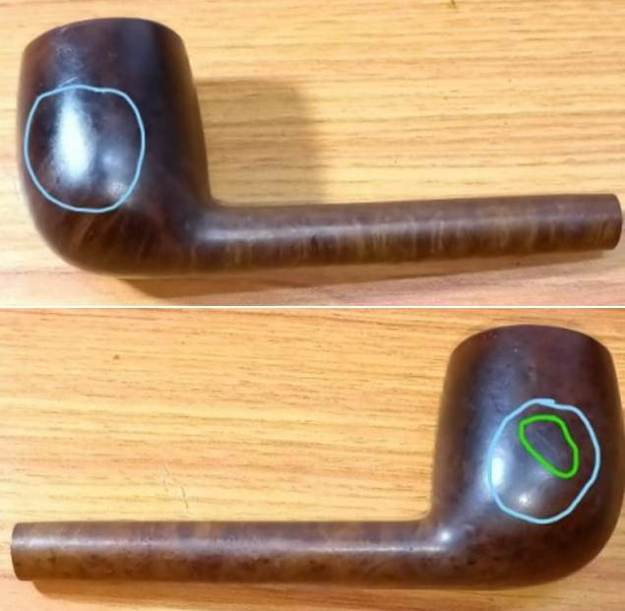
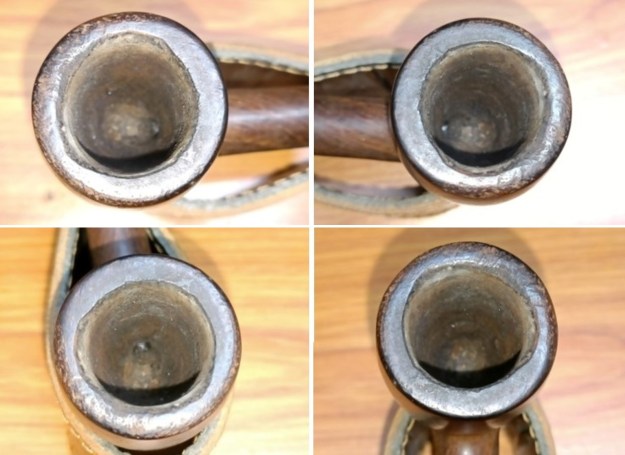
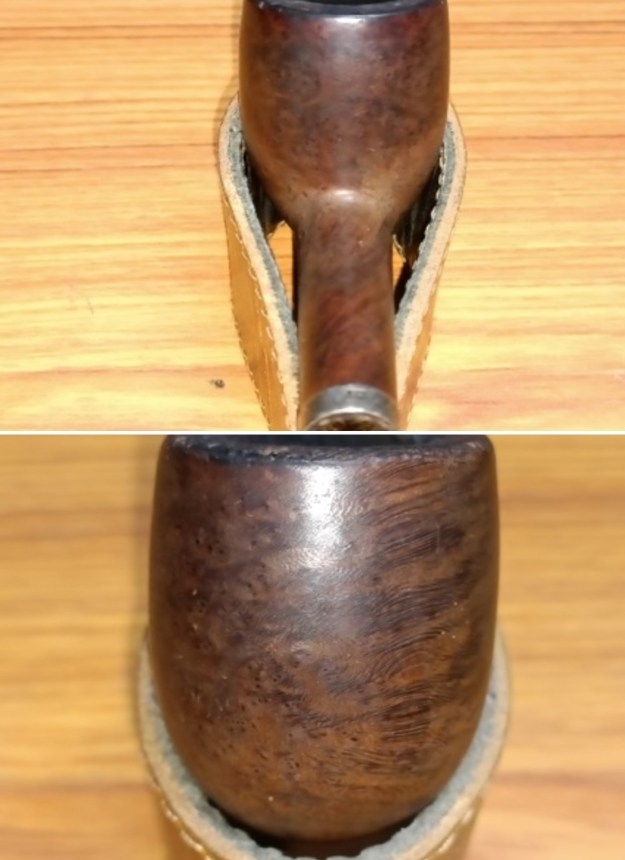
As brought out earlier, the chamber has an even layer of hard and brittle cake. It appears that the cake was being regularly reamed to maintain the correct bare minimum thickness. The condition of the chamber walls will be ascertained after the cake has been taken down to bare briar. The rim top surface is uneven and covered in a layer of overflowing oils and tars. Also the condition of the rim inner edge is indicative of it being subjected to an amateurish use of a sharp knife to remove charred surface from the edge. The end result is an uneven and an out of round chamber. The outer rim edge too has a number of dents and dings, most likely caused due to striking against a hard surface to remove the dottle. I intend to address the issue of uneven rim top surface by topping the rim surface. It will also help to address the damage to the inner and outer rim edges to an extent and what damage remains; will be masked by creating a bevel.The stummel is covered in a layer of dirt and grime from years of uncared for storage. The sides and front of the bowl appears considerably darker due to accumulation of grime over the hand oils from over a period of 115 years. However, beautiful cross grains on the front, back and shank surface with beautiful bird’s eye grains on the sides can be made out under the grime and dust covering the stummel surface. There are no scratches/dings or dents over the stummel surface. The briar has developed a beautiful dark patina over the years and it will be my endeavor to maintain it through the restoration process. The mortise is clogged with old oils, tars and ash; however, the shank face is sans any crack or deformation. This also confirms that the band is not a repair band but is original to the pipe. There is no reason to sand the stummel surface to address any dents / dings as there are none. I shall dry sand the bowl with micromesh pads to bring out the grains and impart a shine to the surface while preserving the patina. The period correct vulcanite saddle stem with a round orifice has a quality feel to it. It is oxidized and is missing a chunk of vulcanite from the bite zone including the button and the round slot. The area around the damaged portion has deep tooth indentations. The step tenon is covered in accumulation of old oils, tars and grime. I will rebuild the damaged portion of the stem using activated charcoal and CA superglue and thereafter match the repaired portion with the stem profile and the rest of the stem surface. After the cleaning and polishing regimen, the repairs should blend in well with the stem surface. The Process
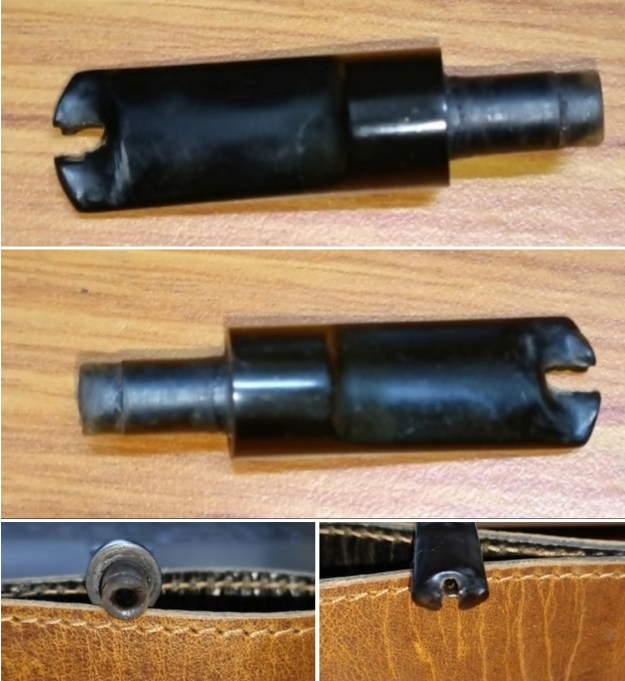
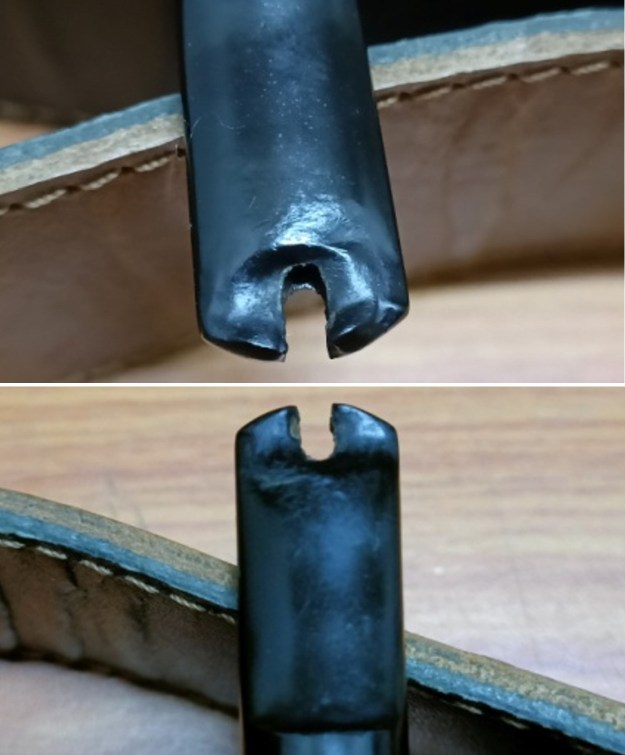
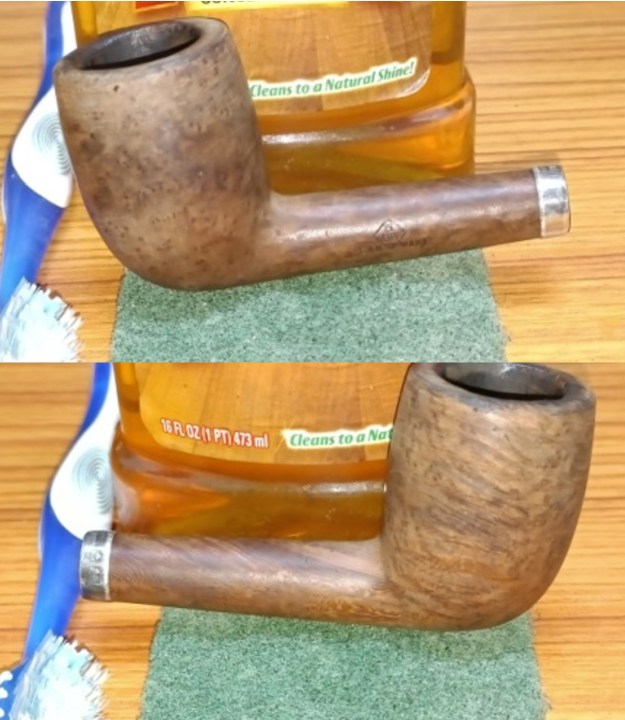
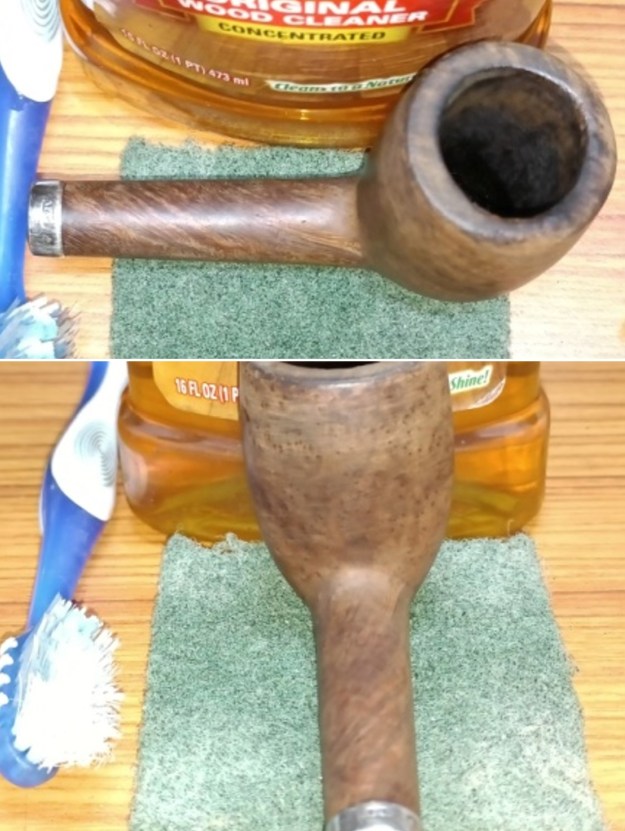
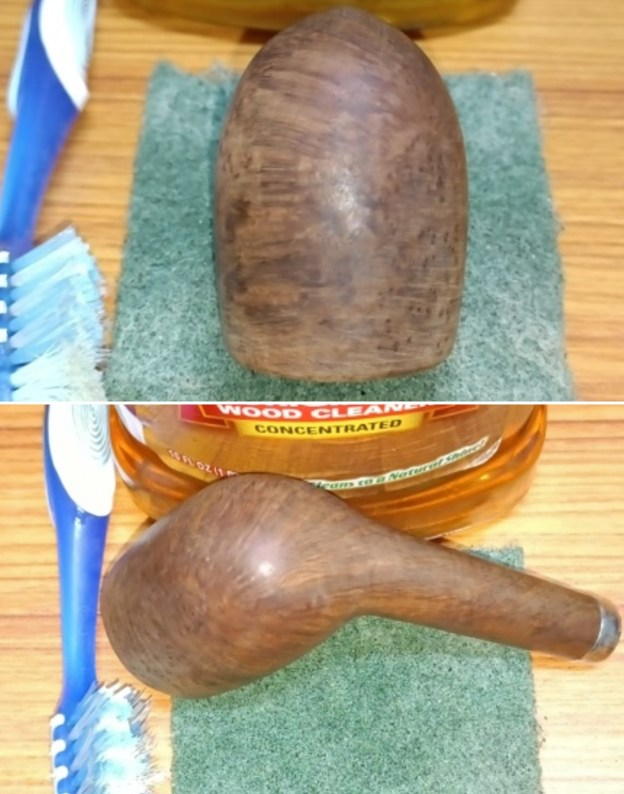
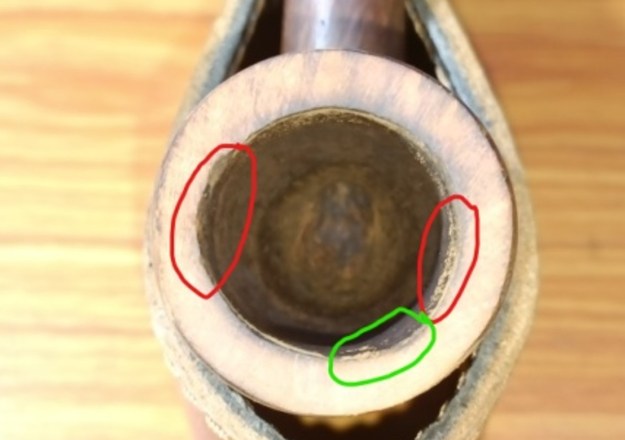
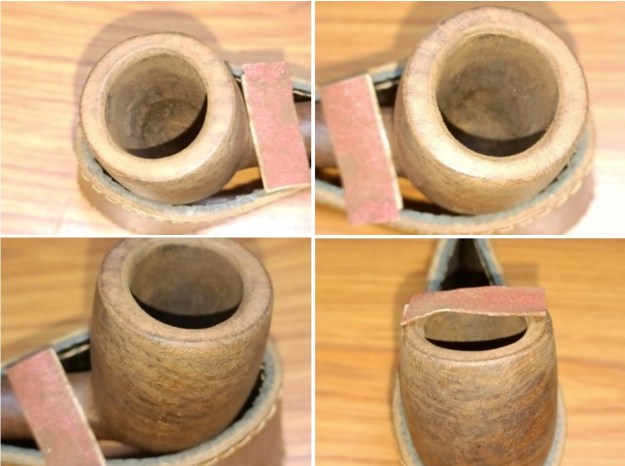
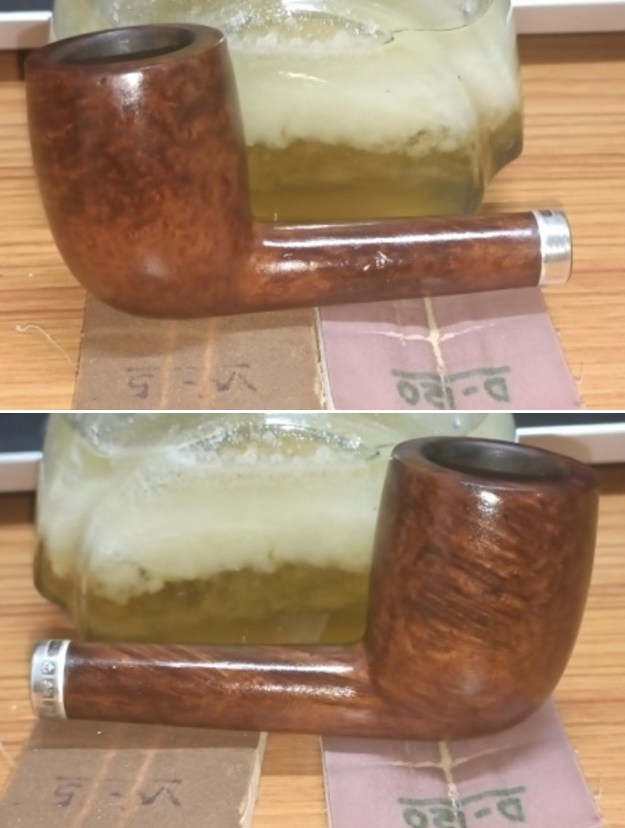
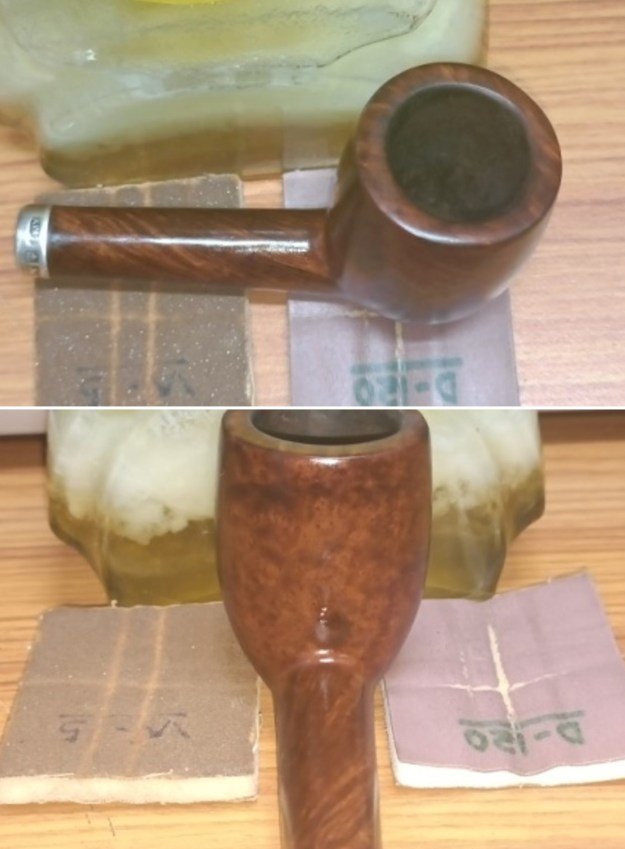
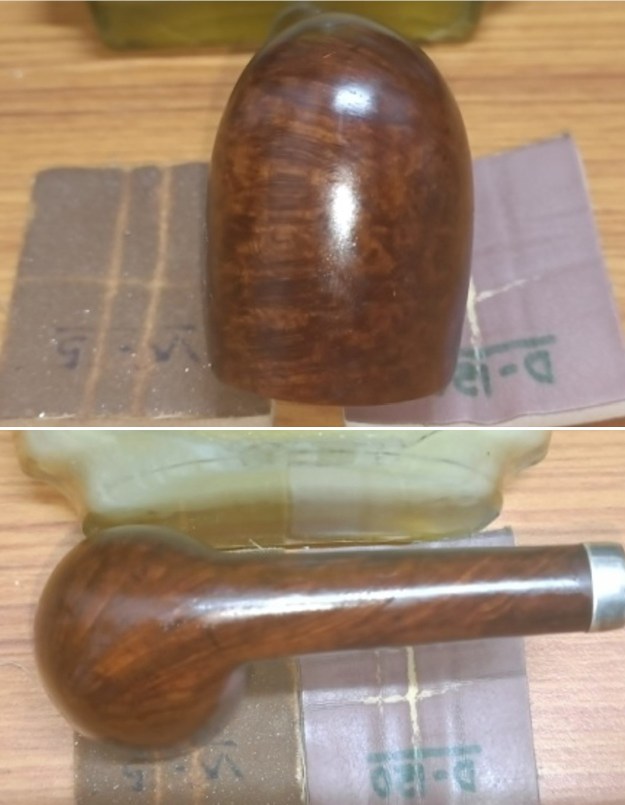
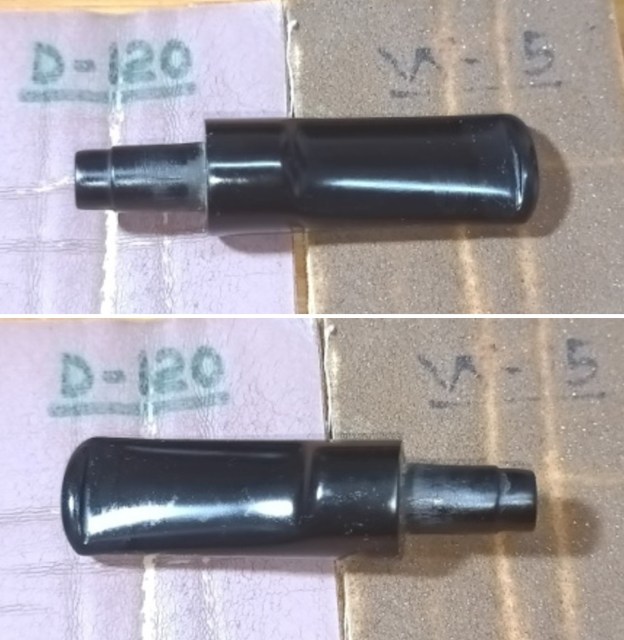
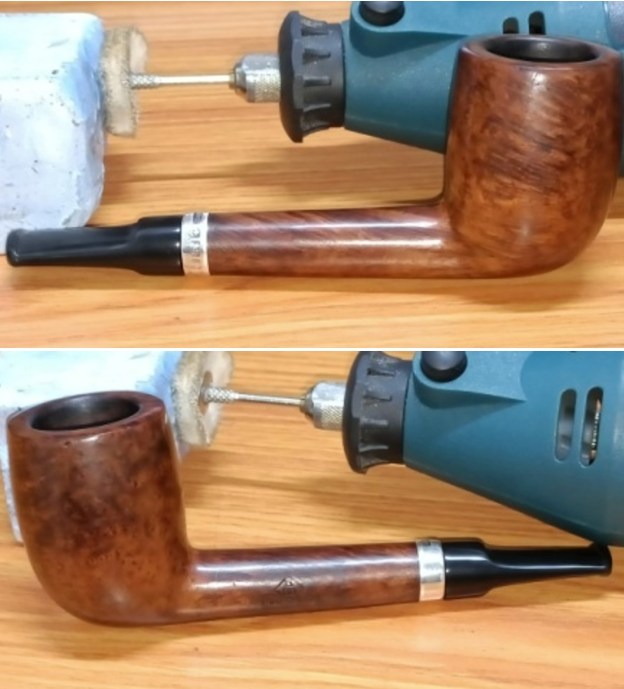
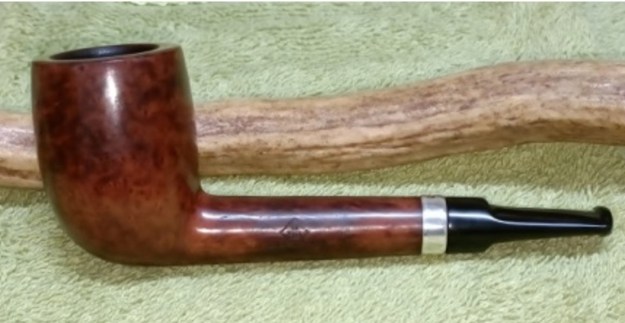
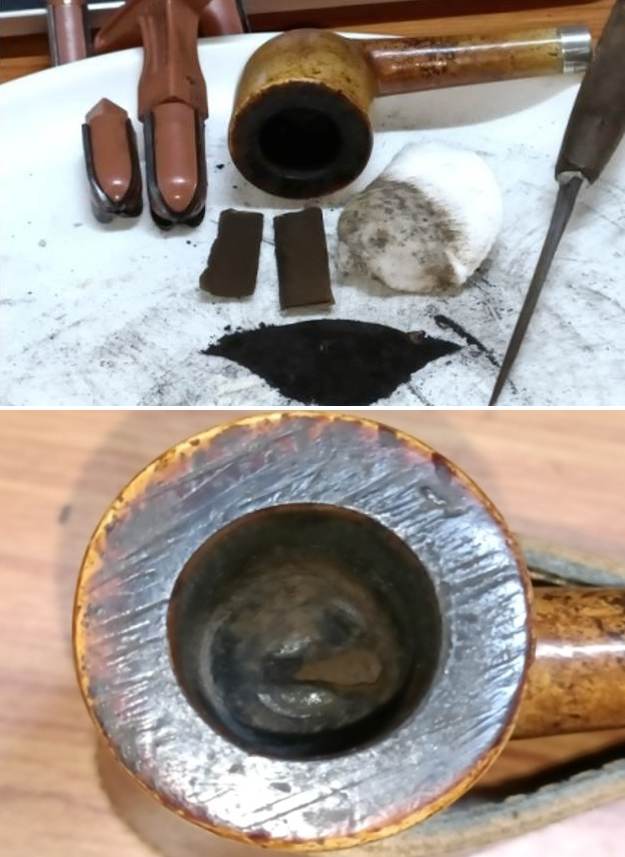
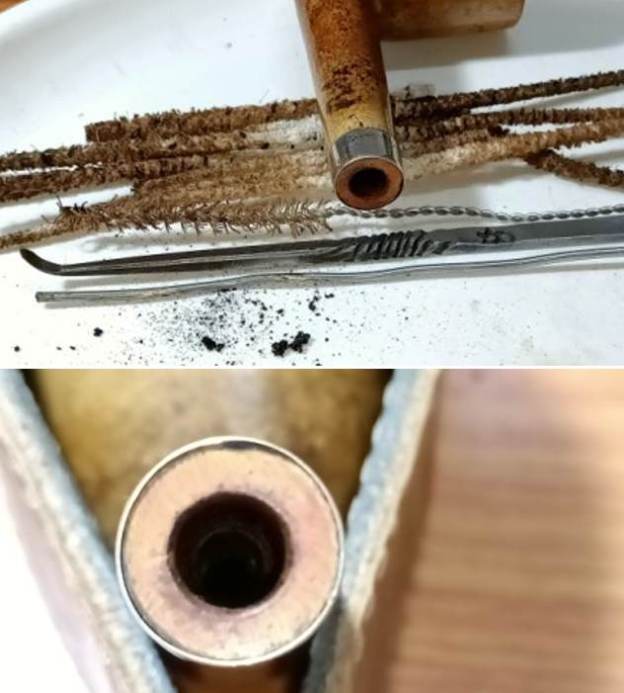
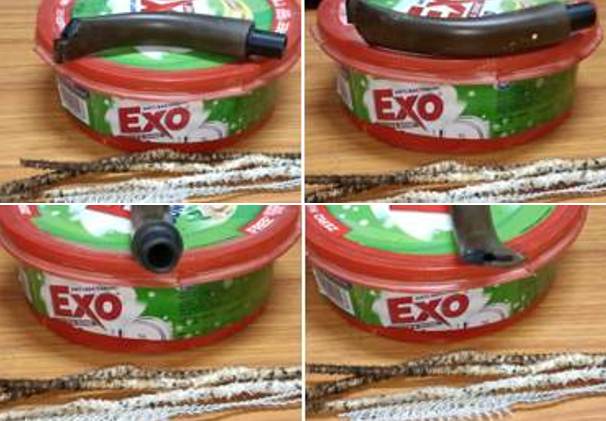
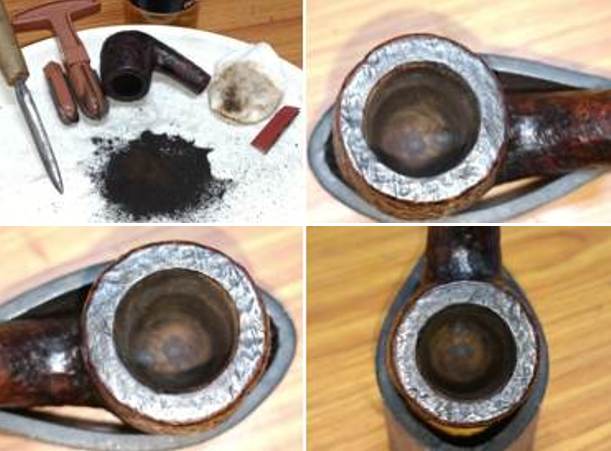
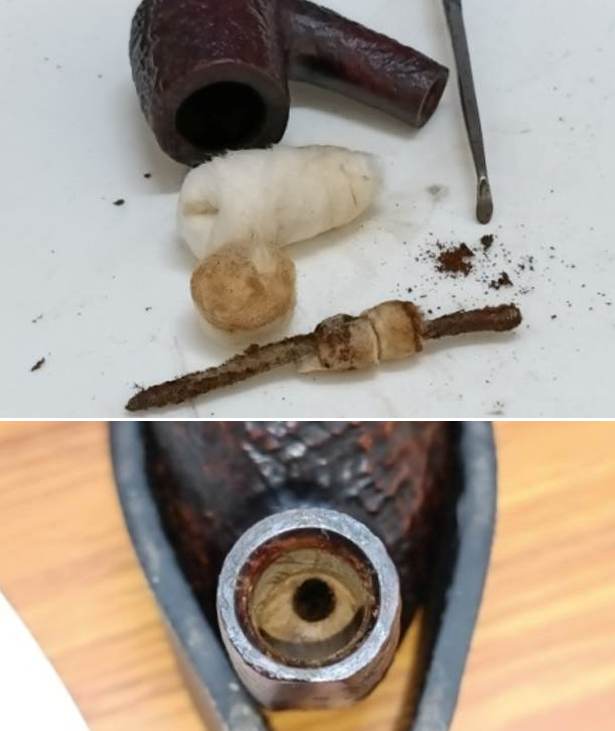
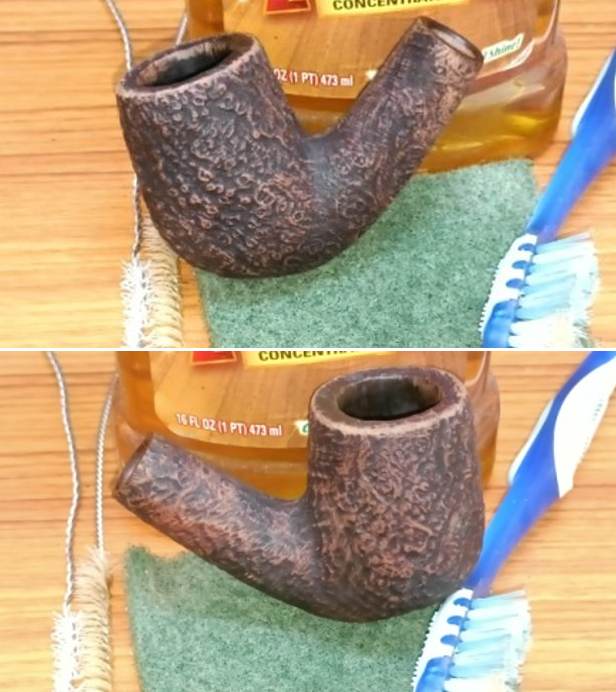
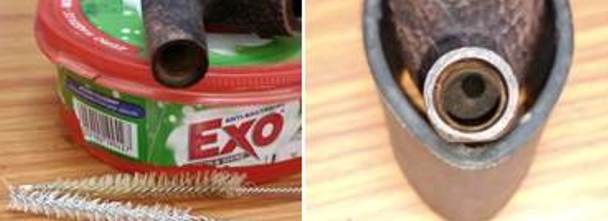
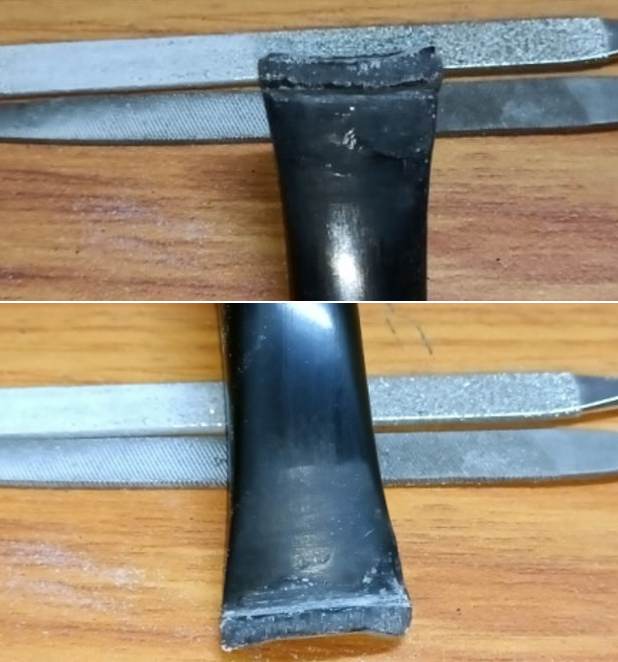
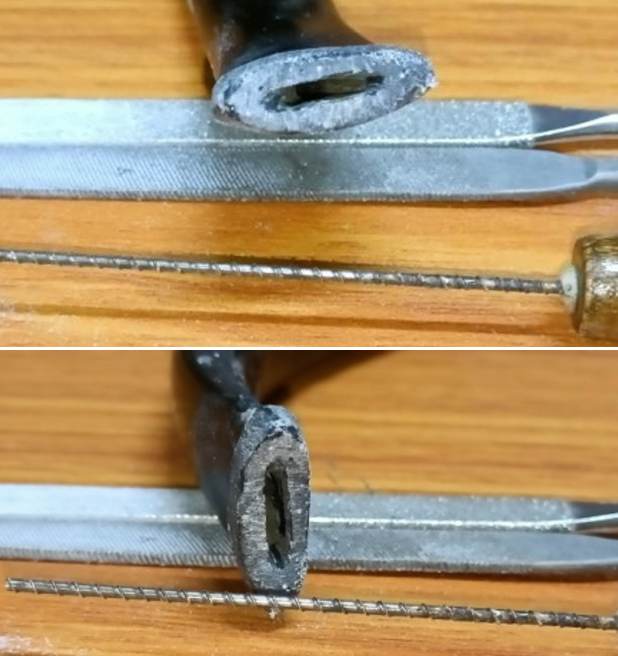
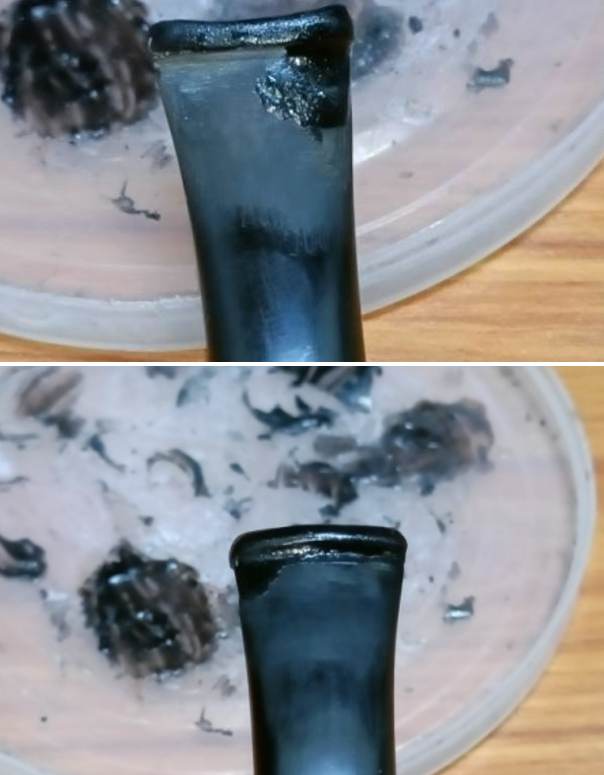
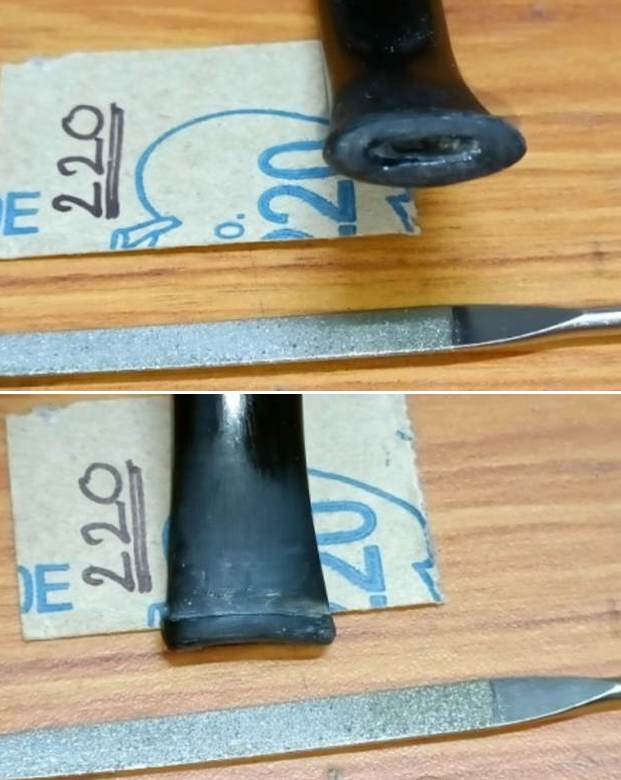
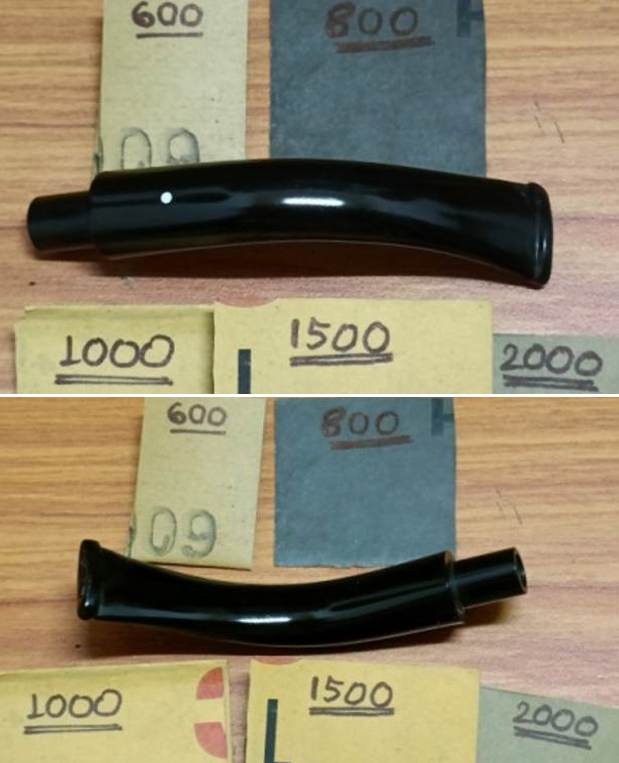
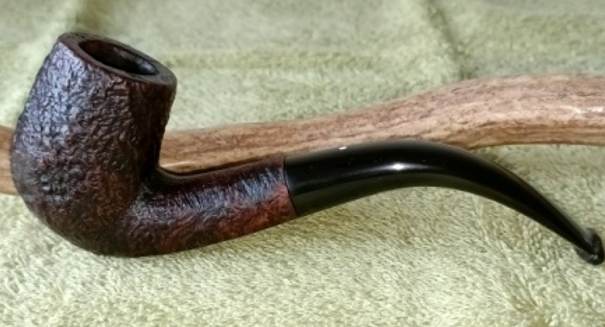
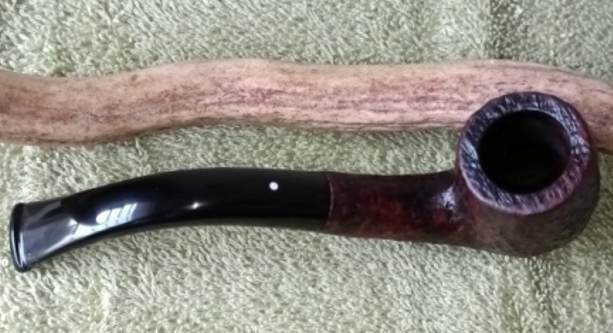
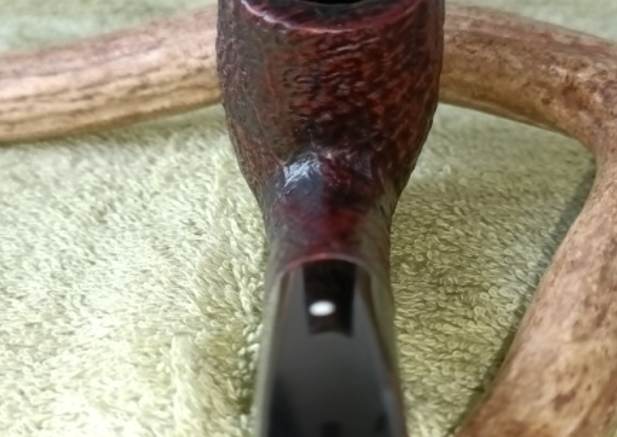
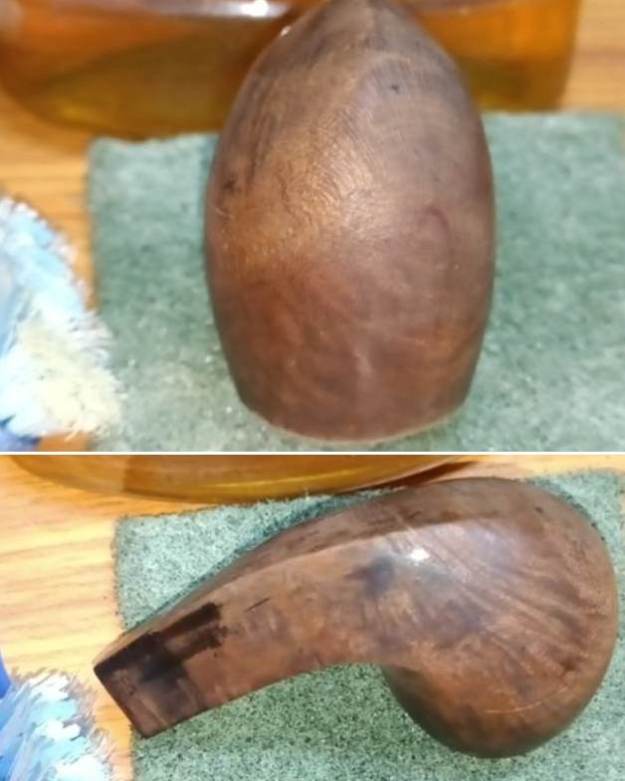
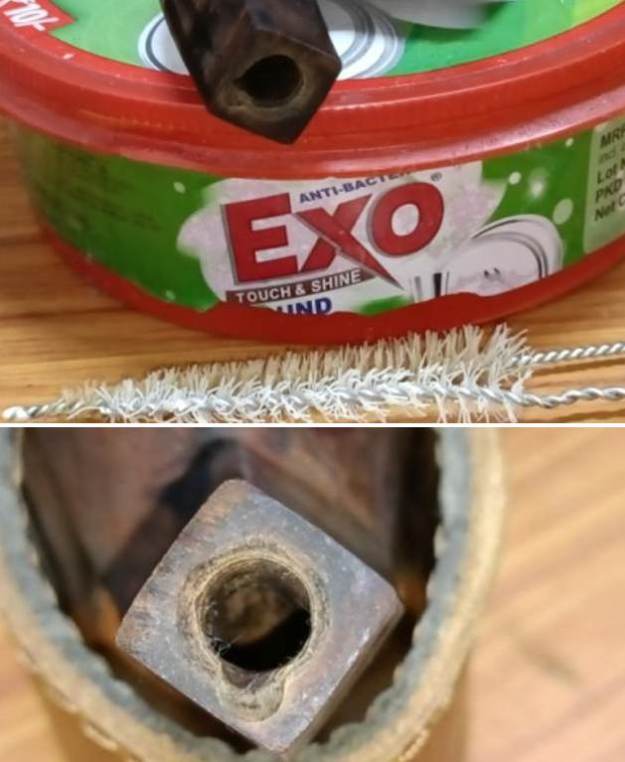
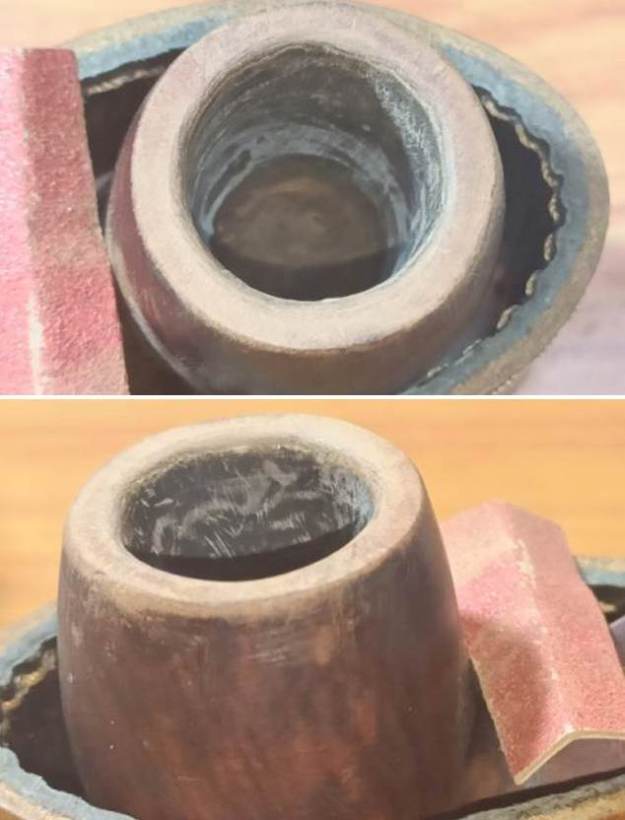
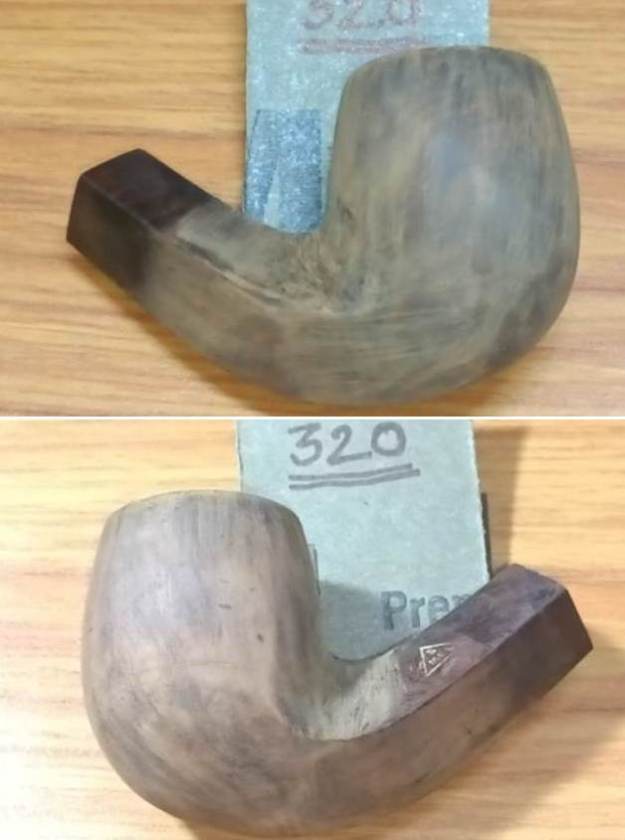
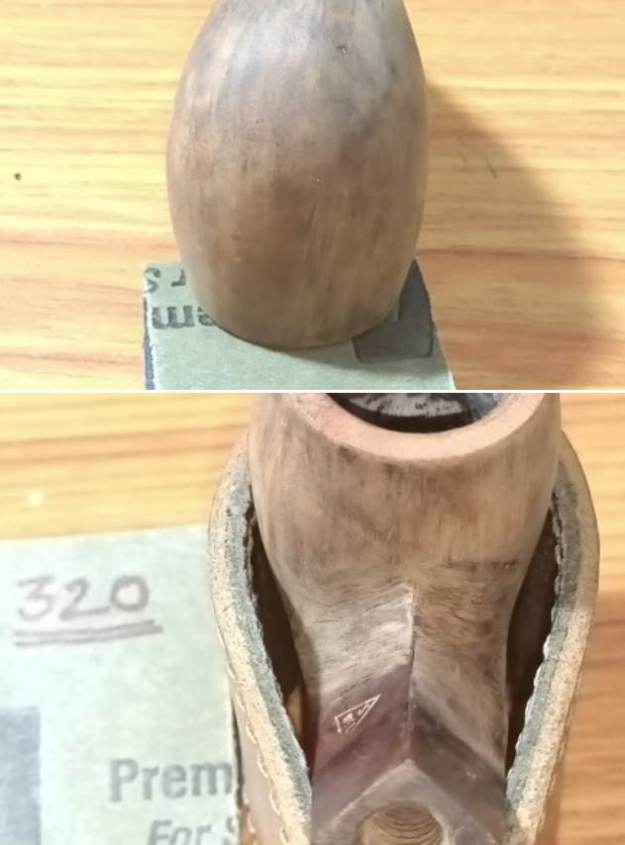
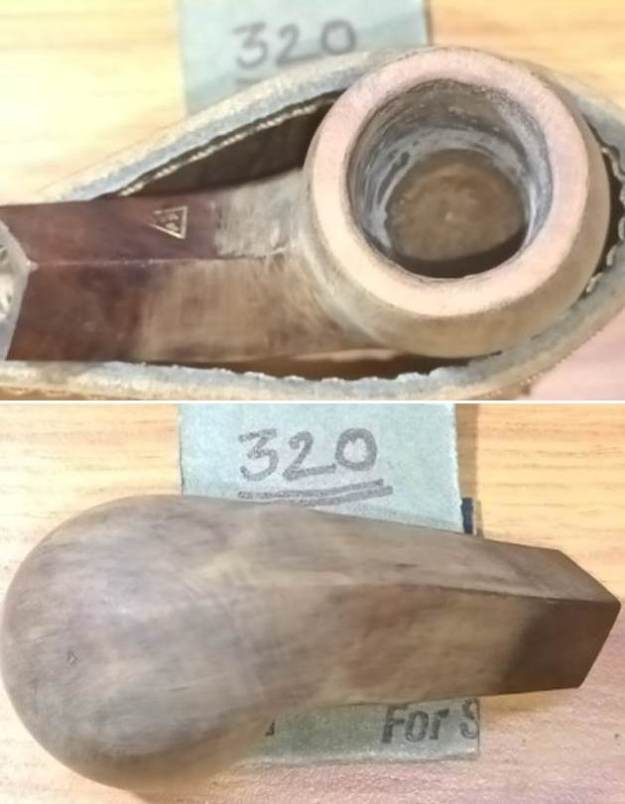
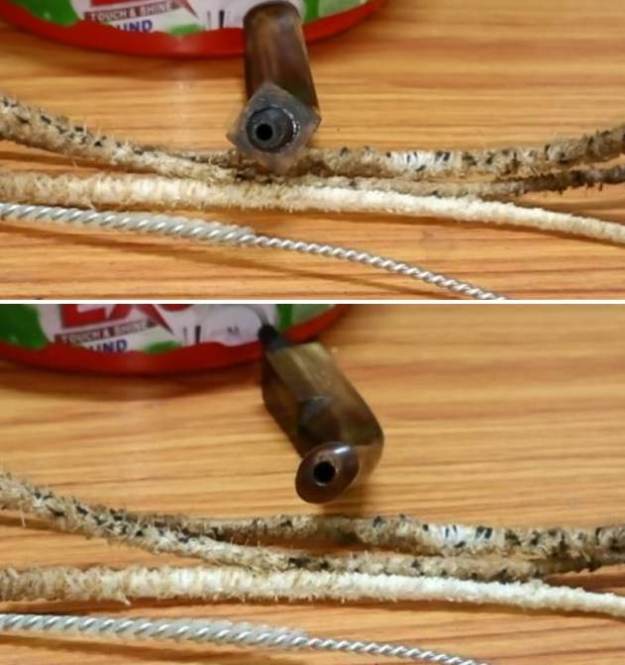
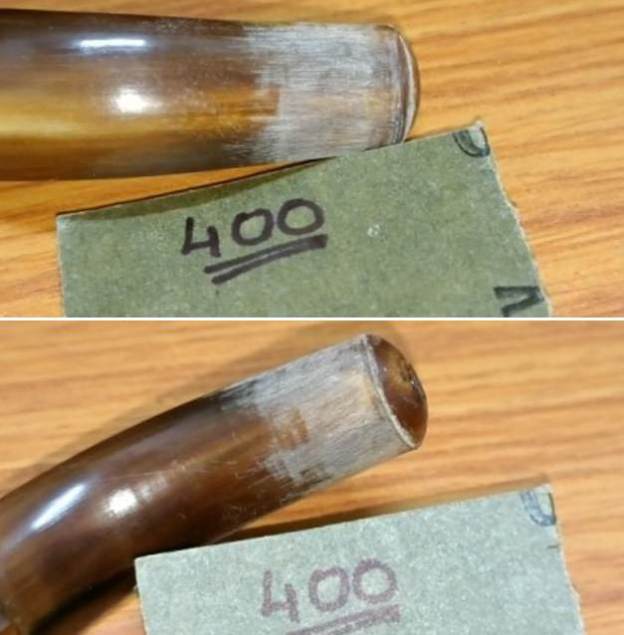
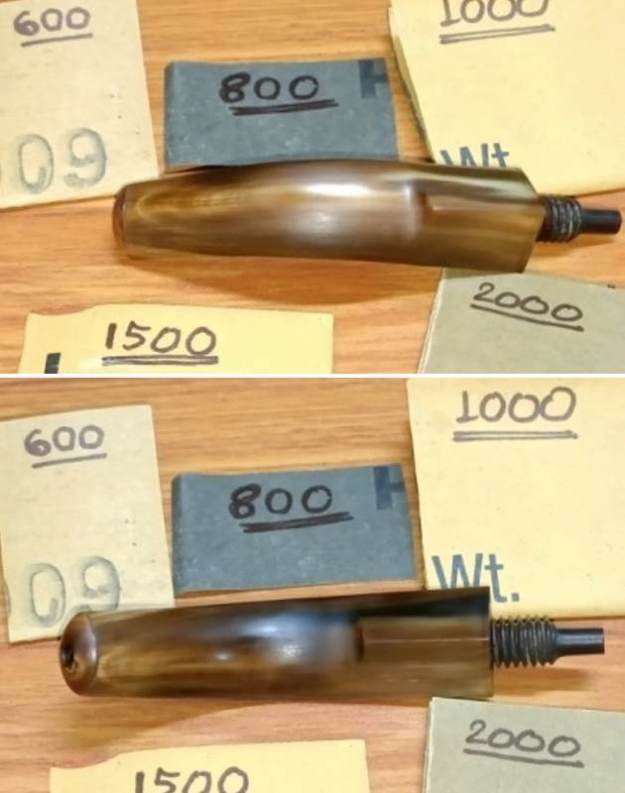
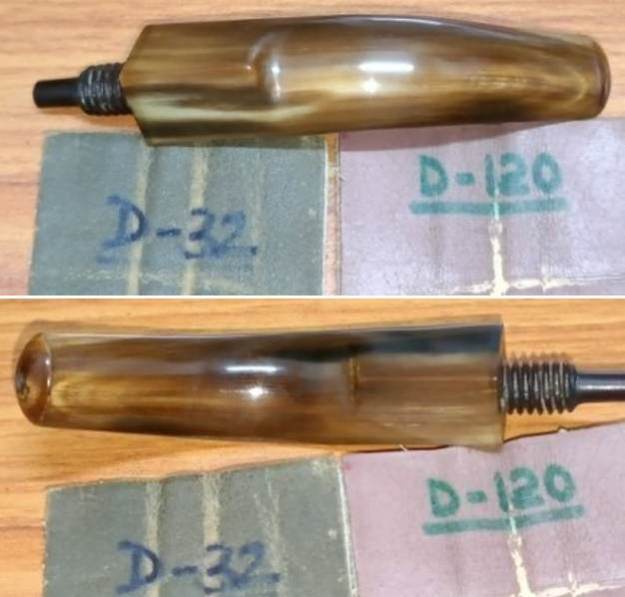
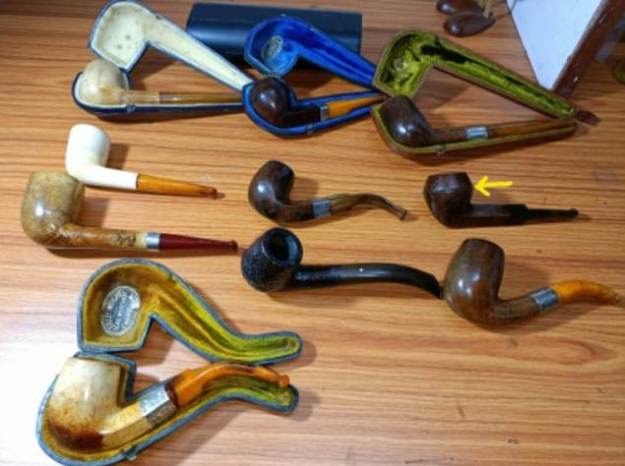
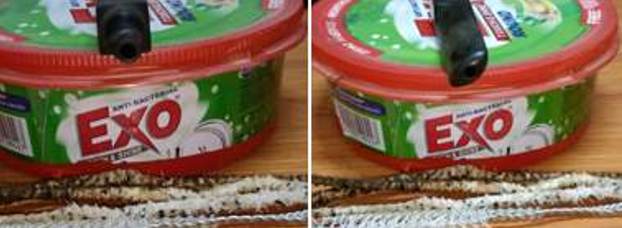
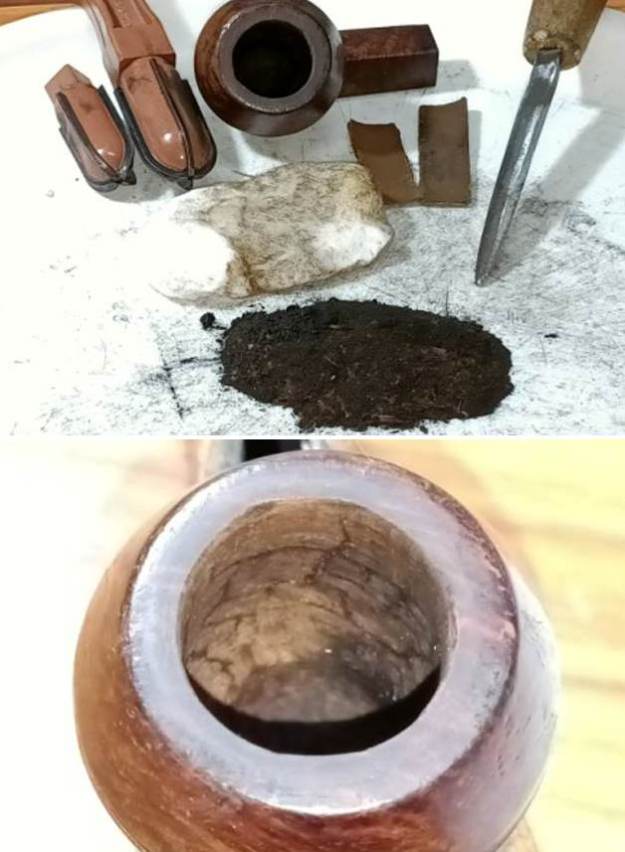
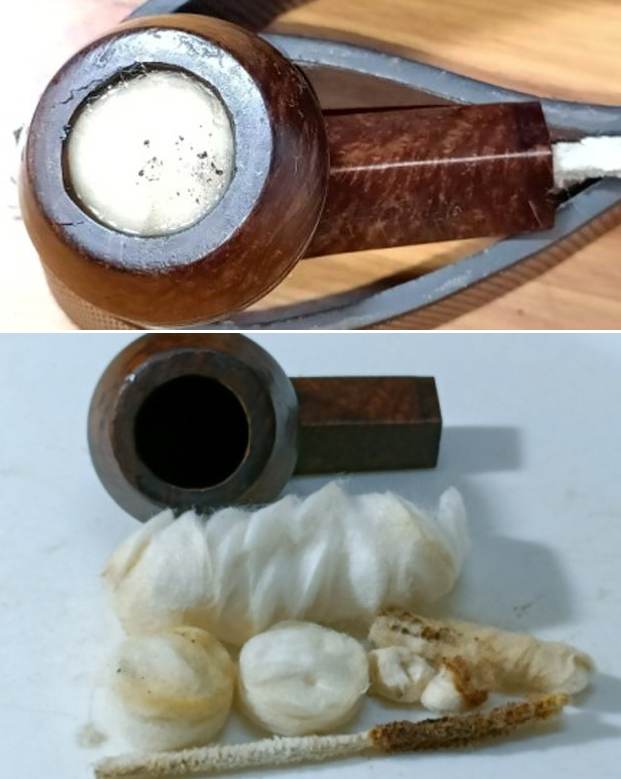
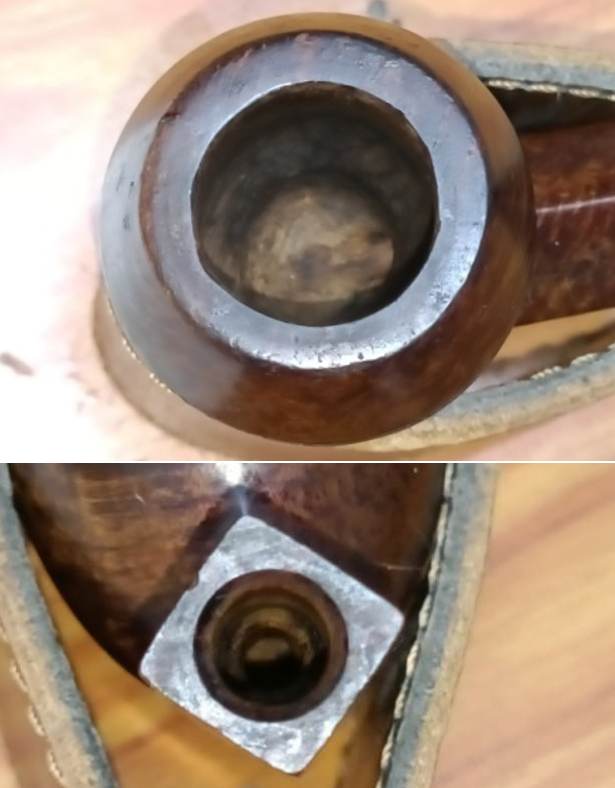
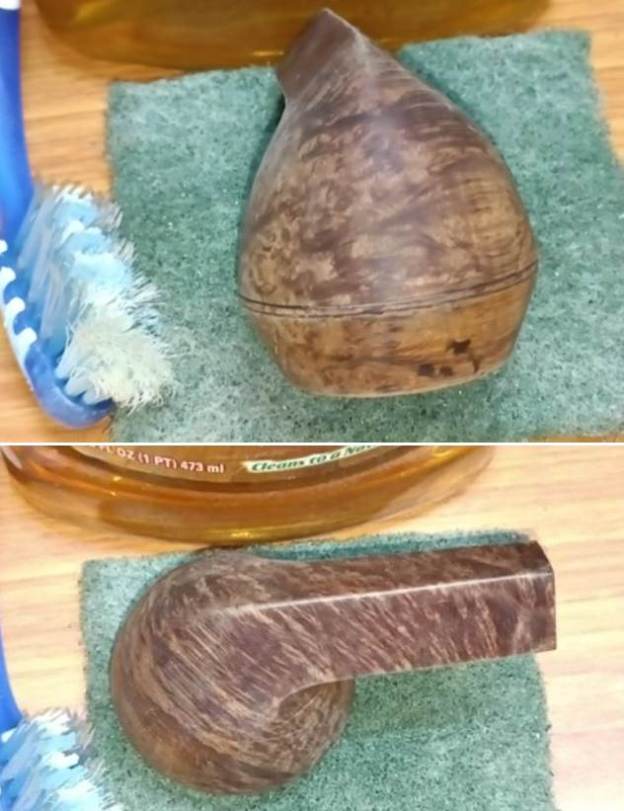
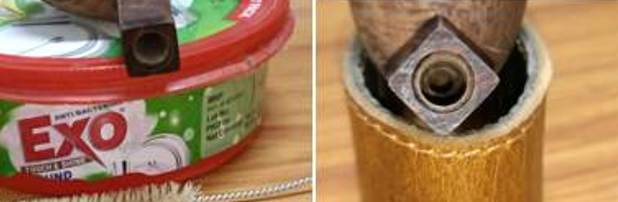
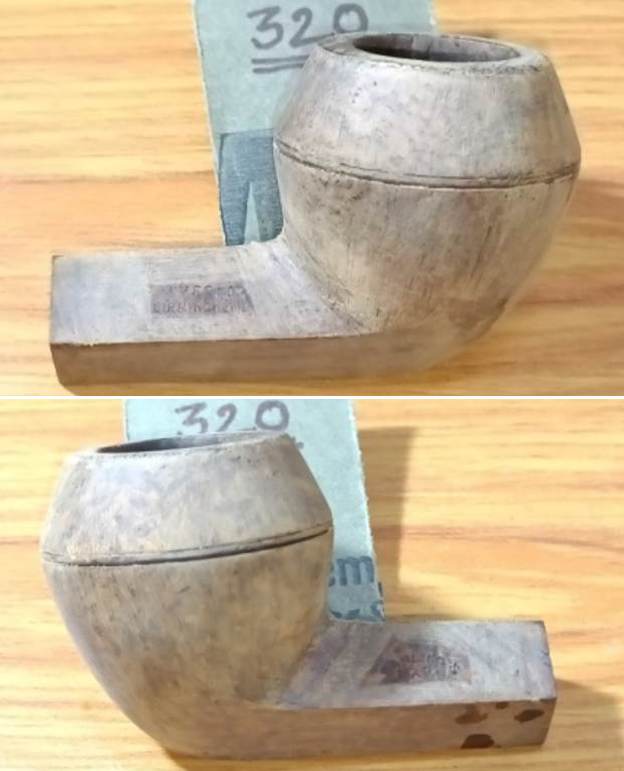
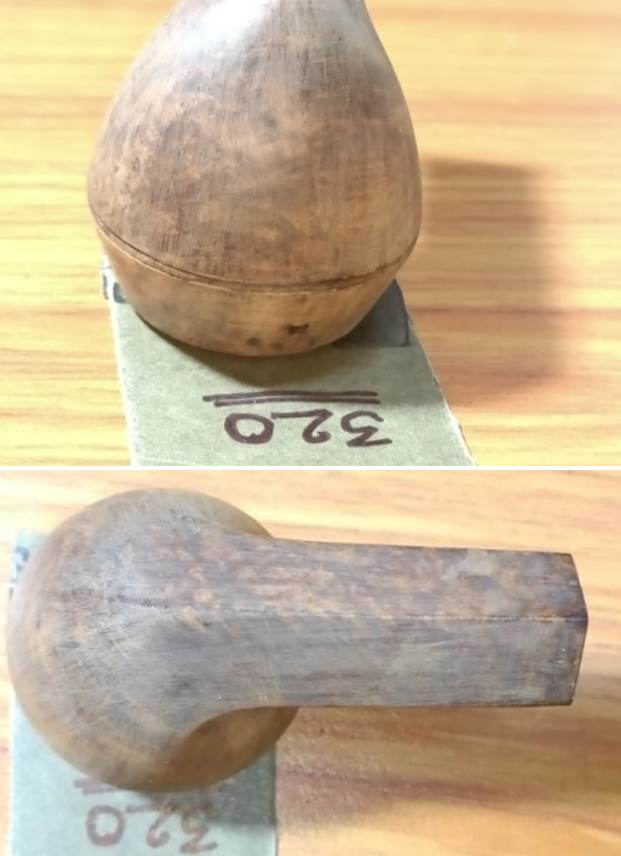
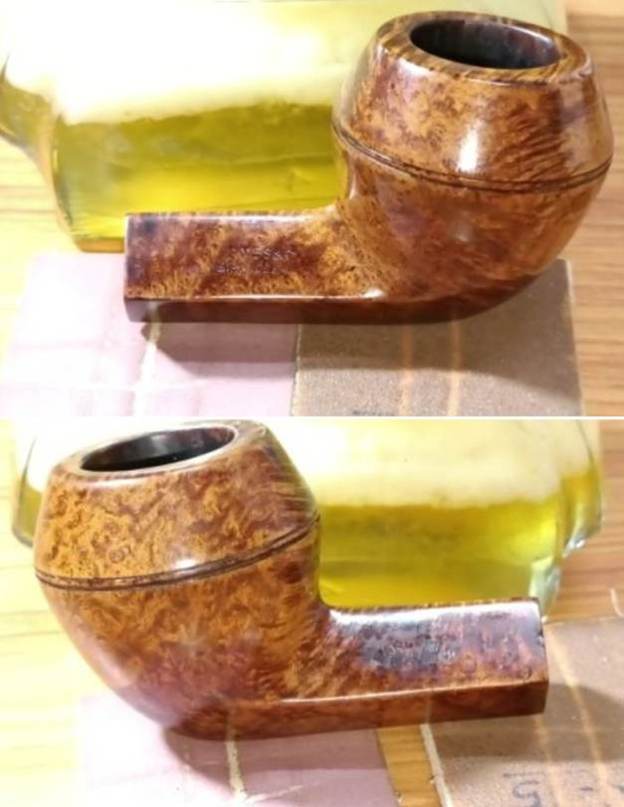
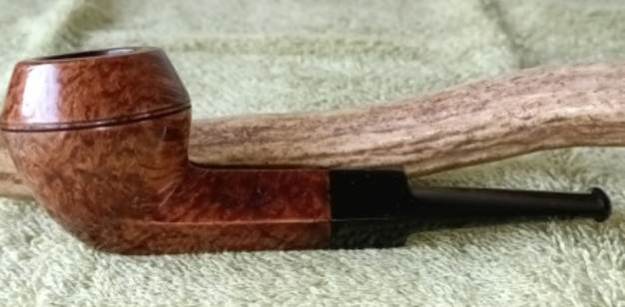
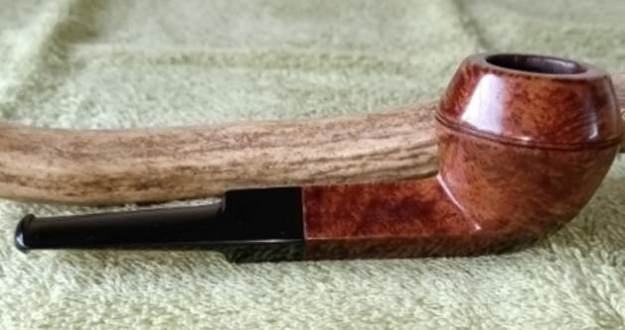
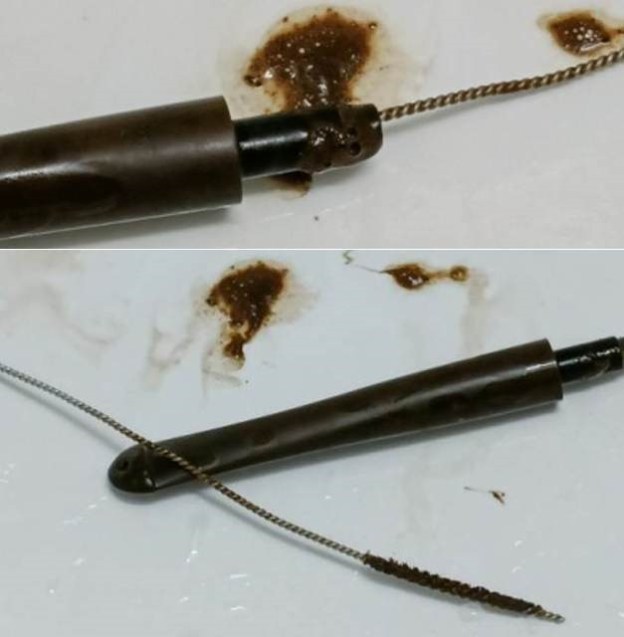
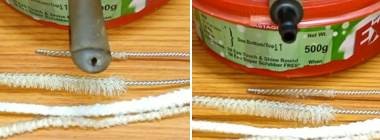
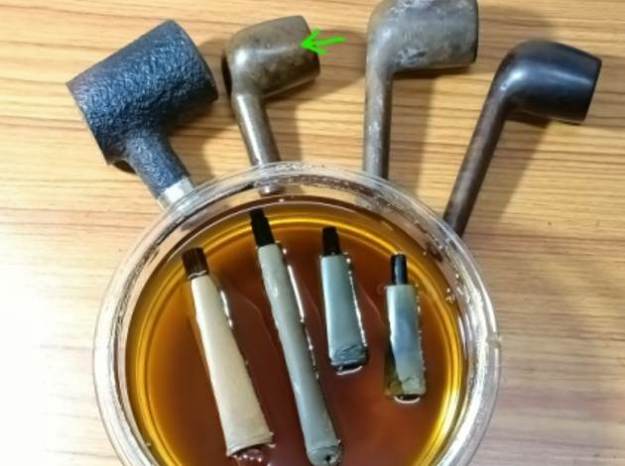
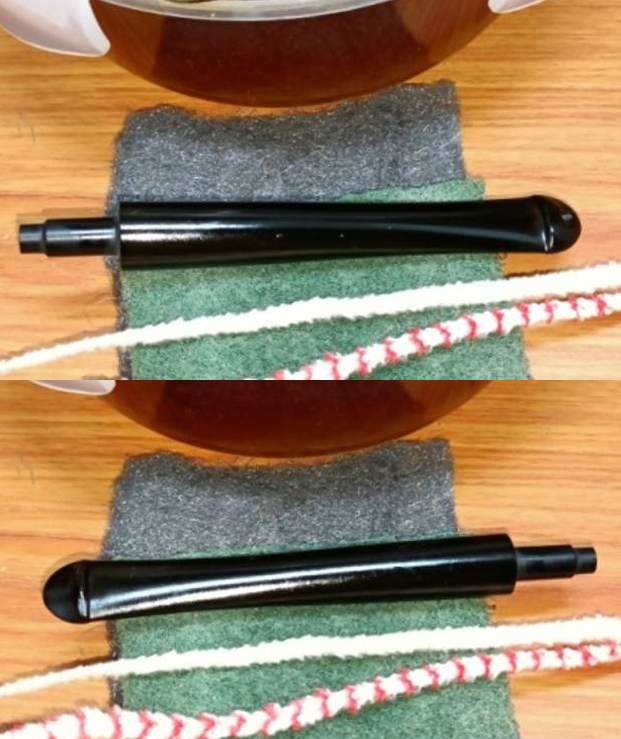
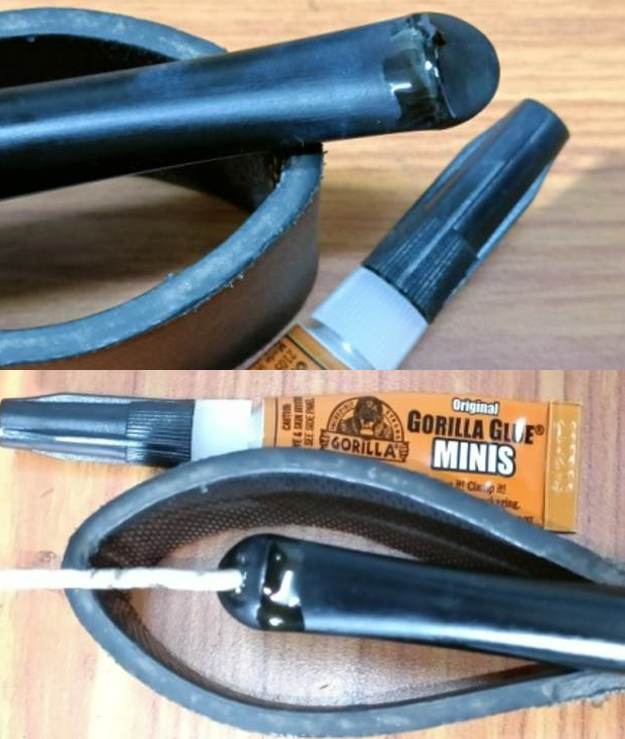
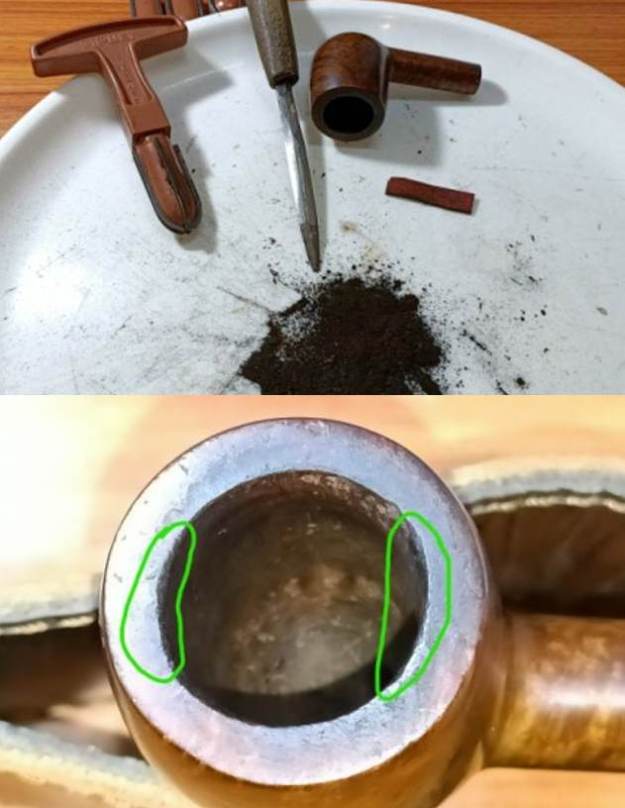
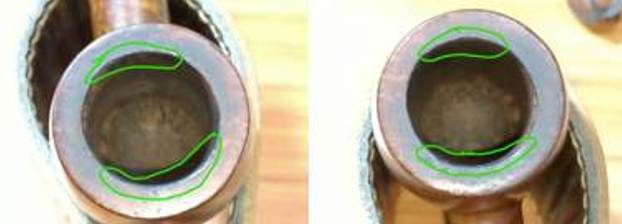
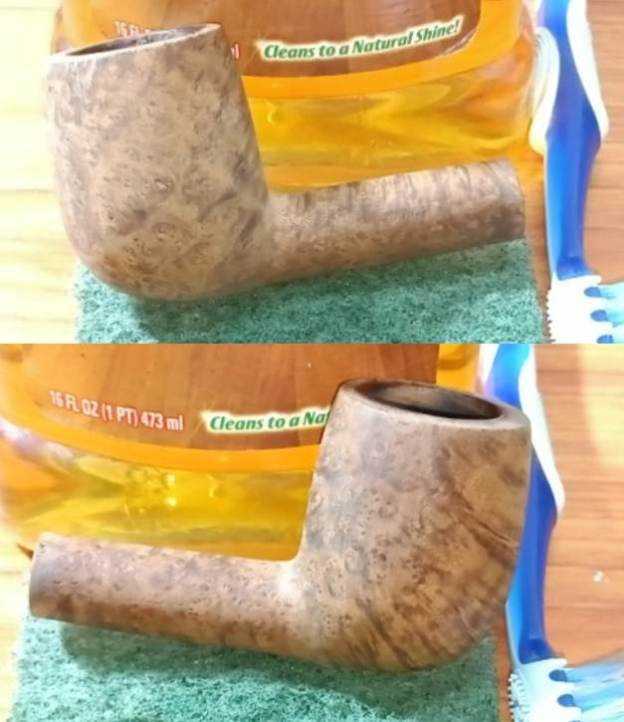
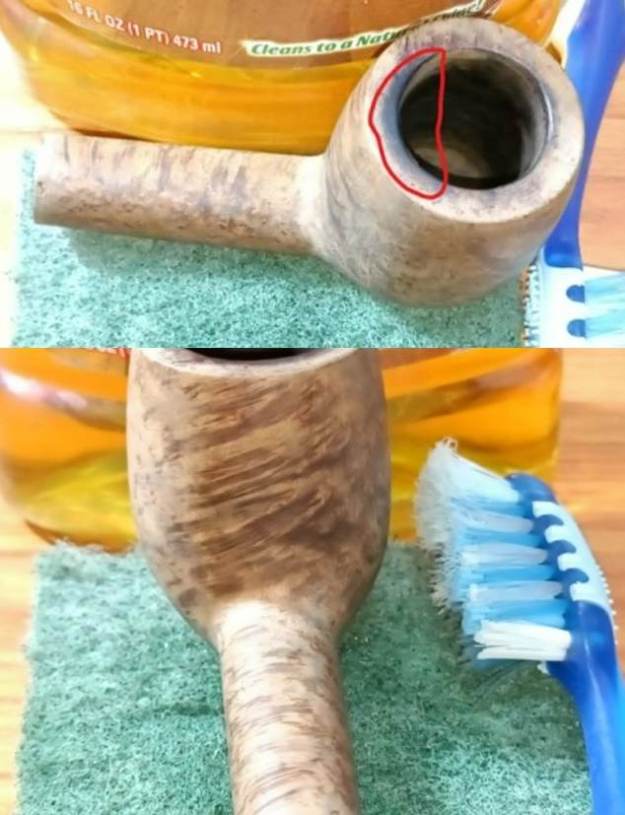
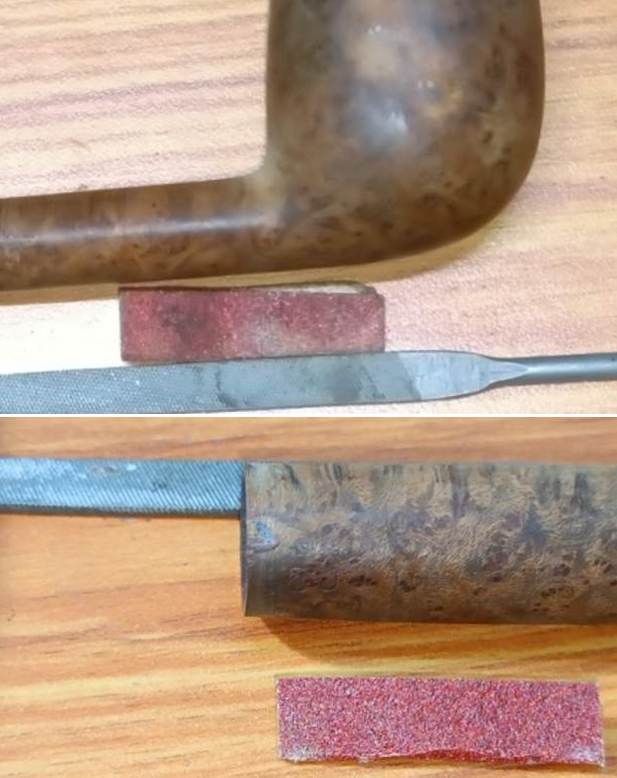
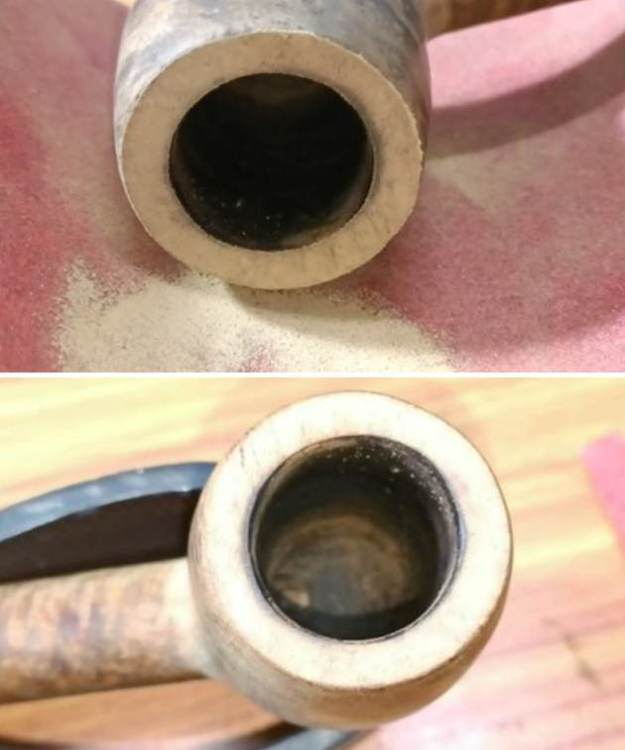
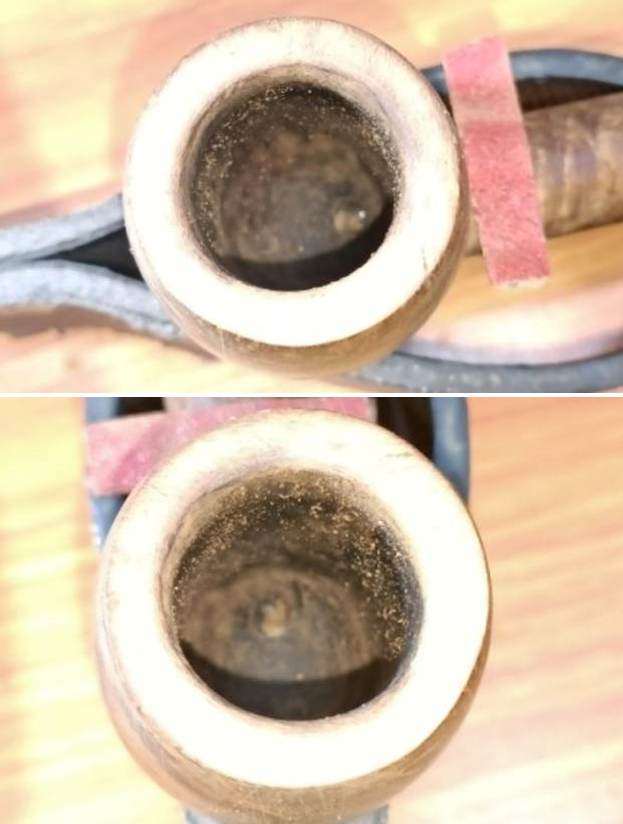
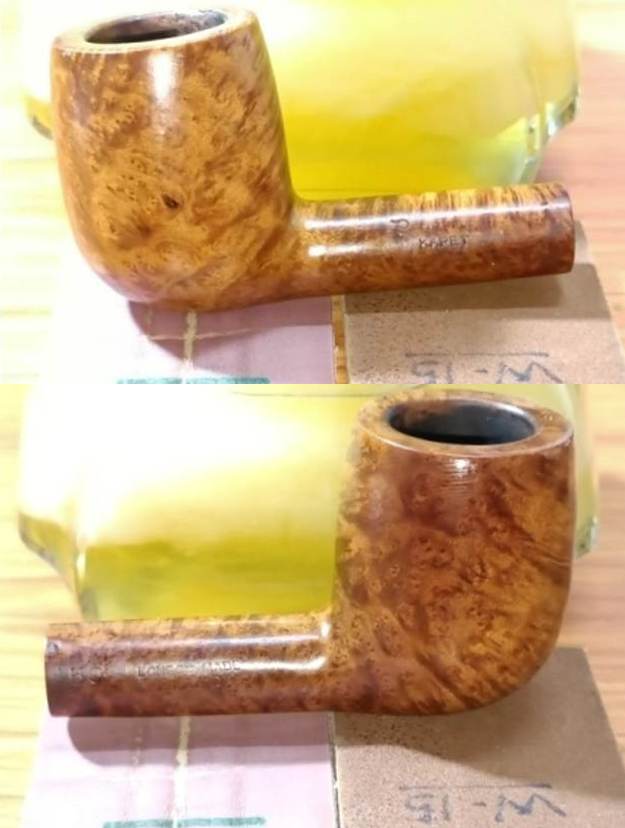
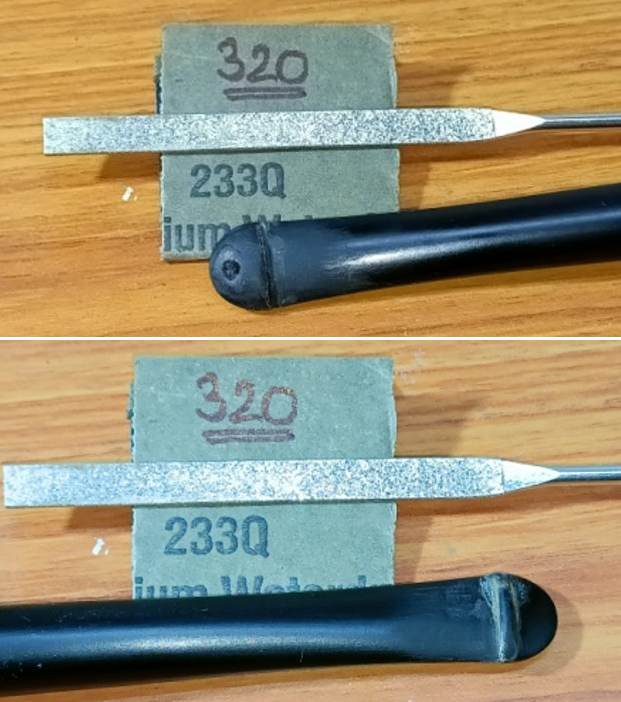
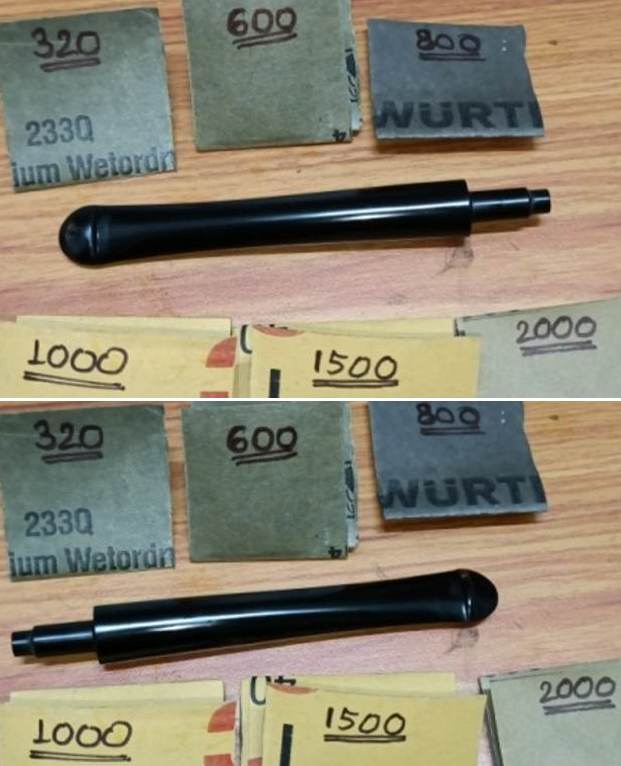
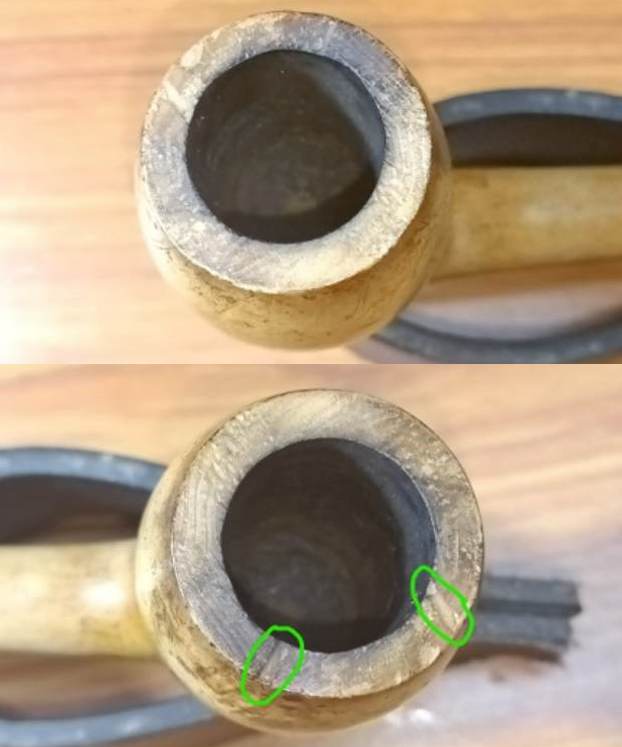
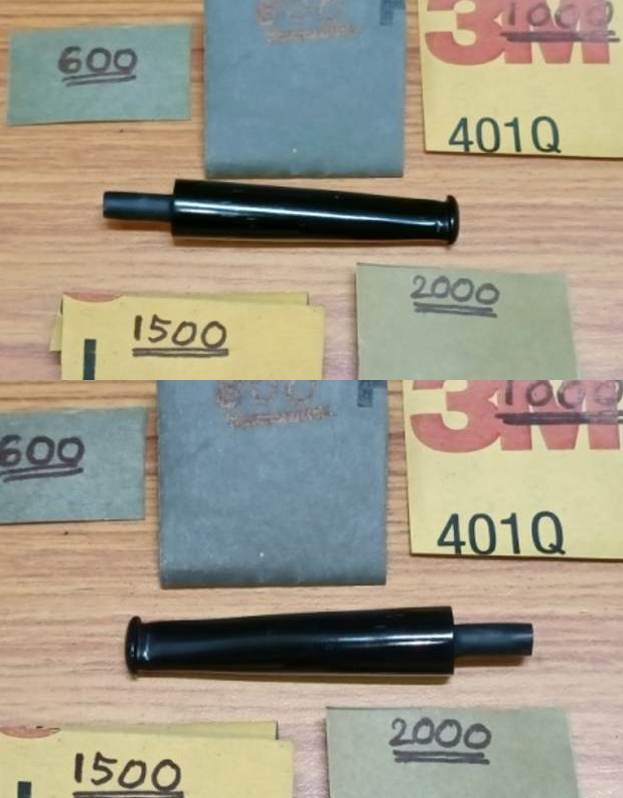
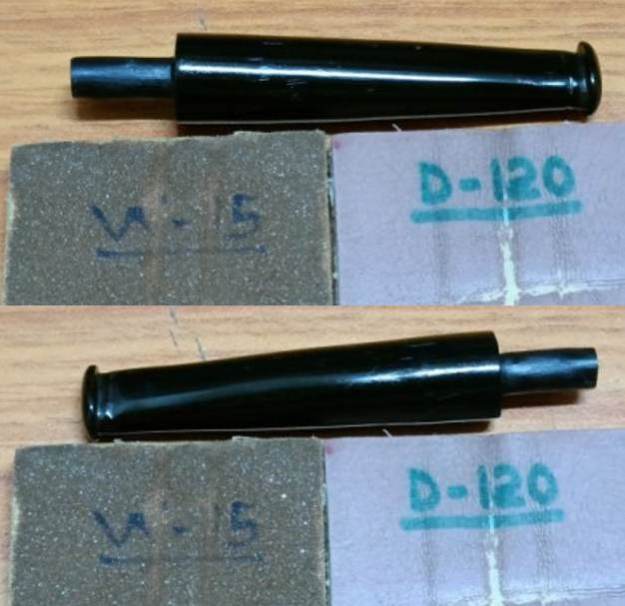
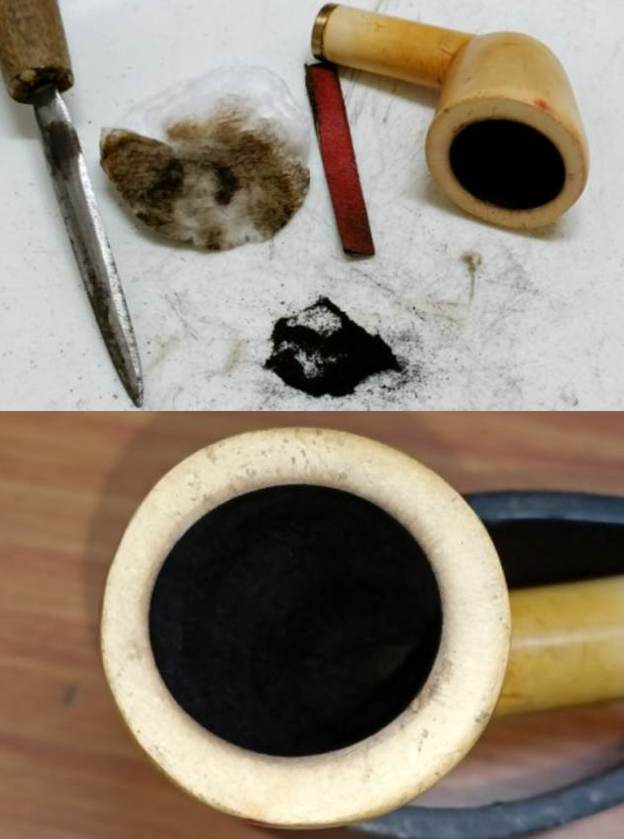
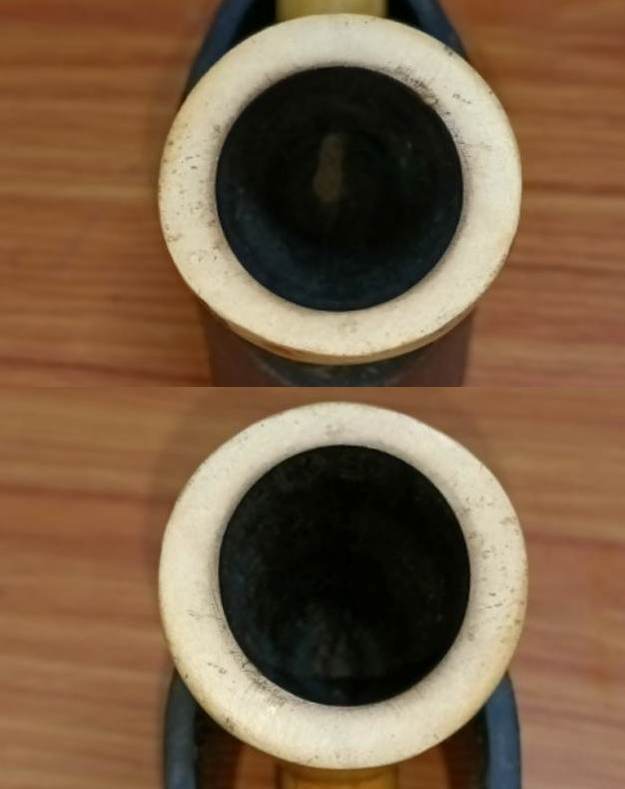
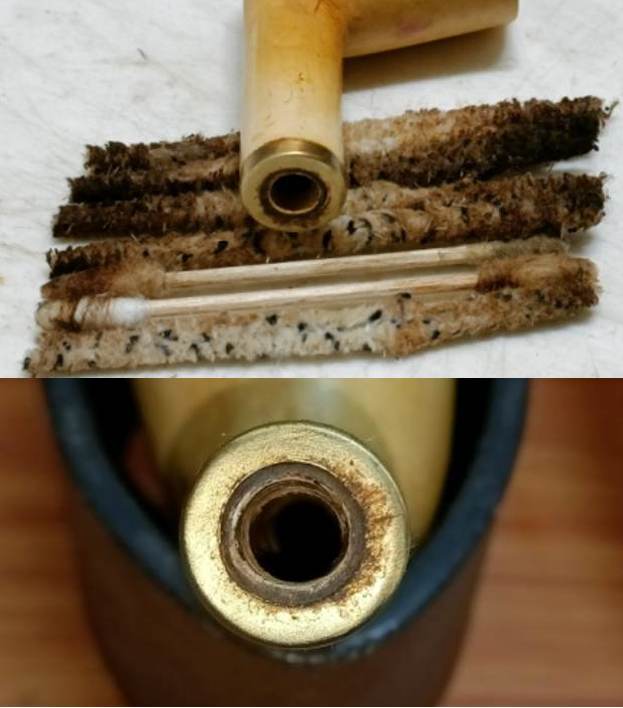
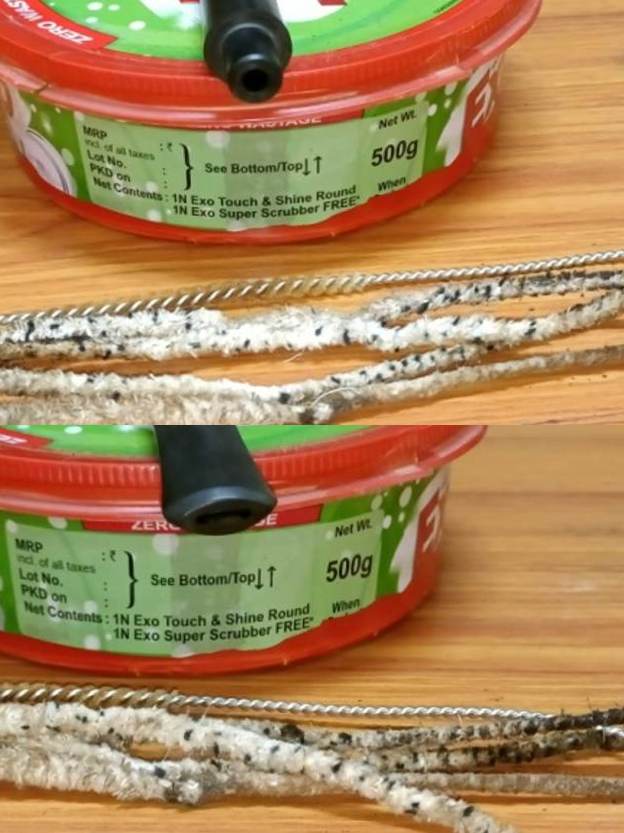
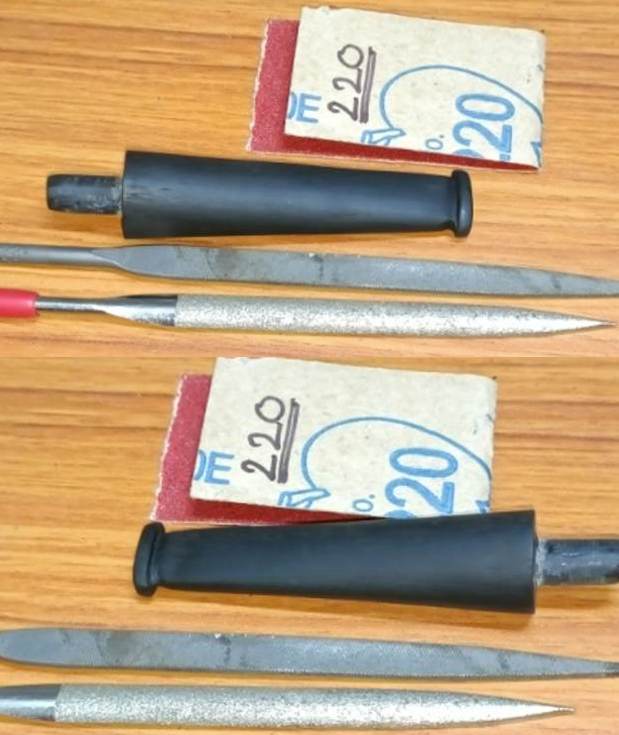
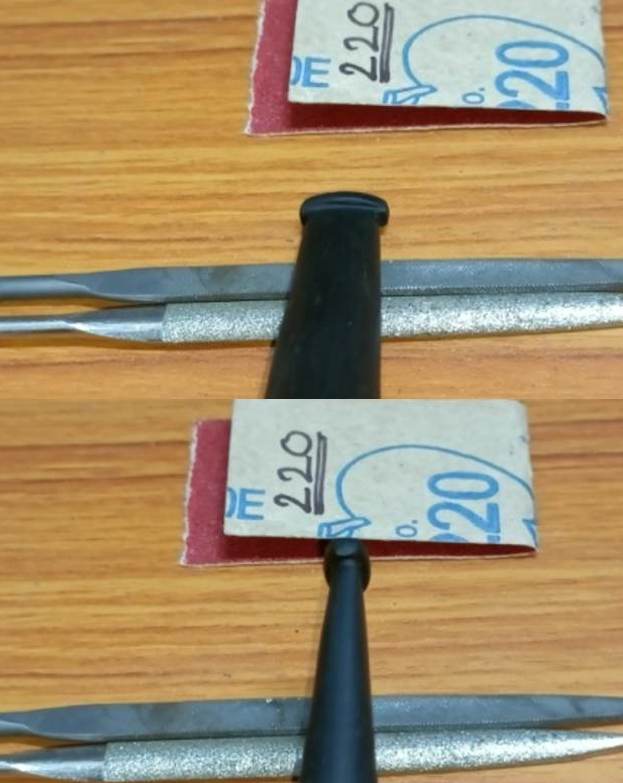
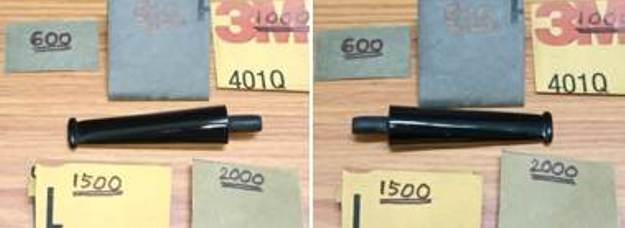
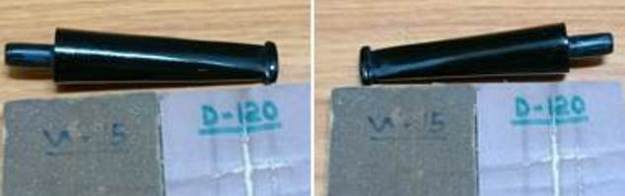
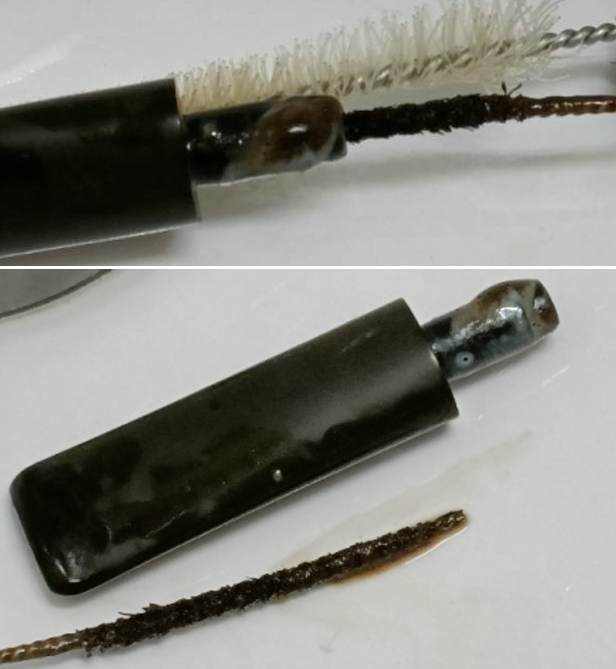
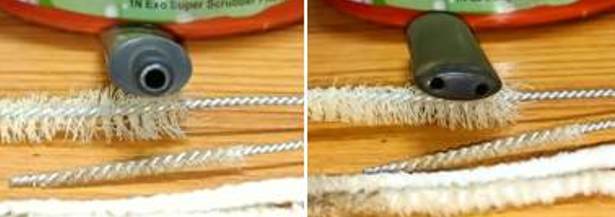
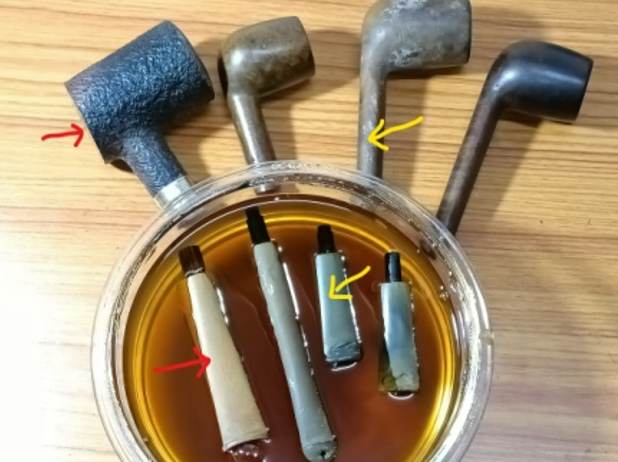
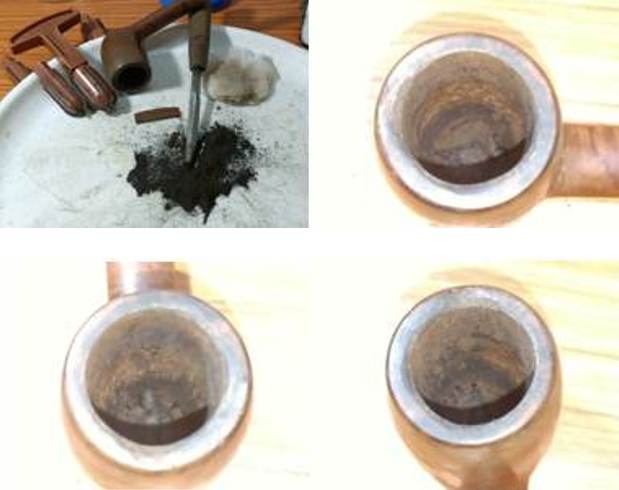
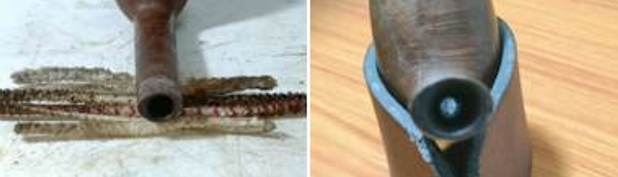
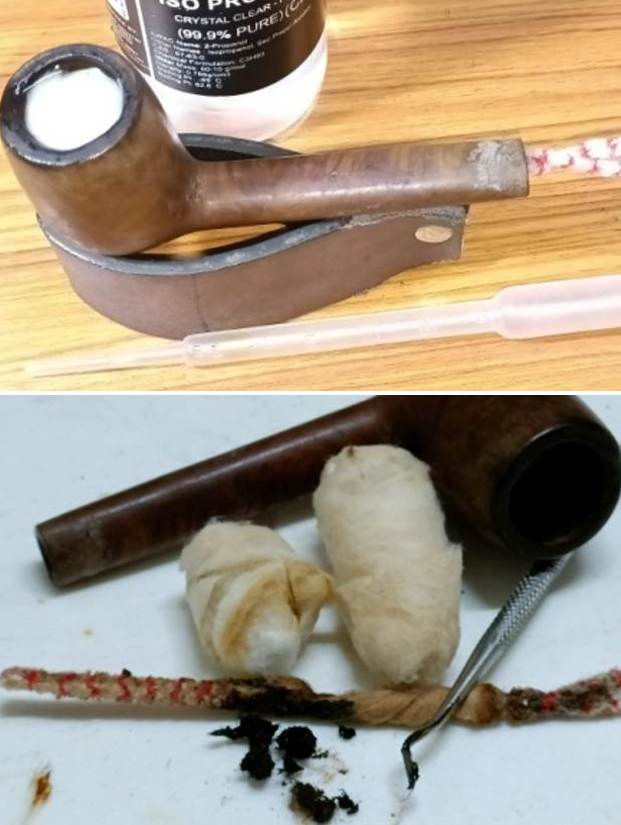
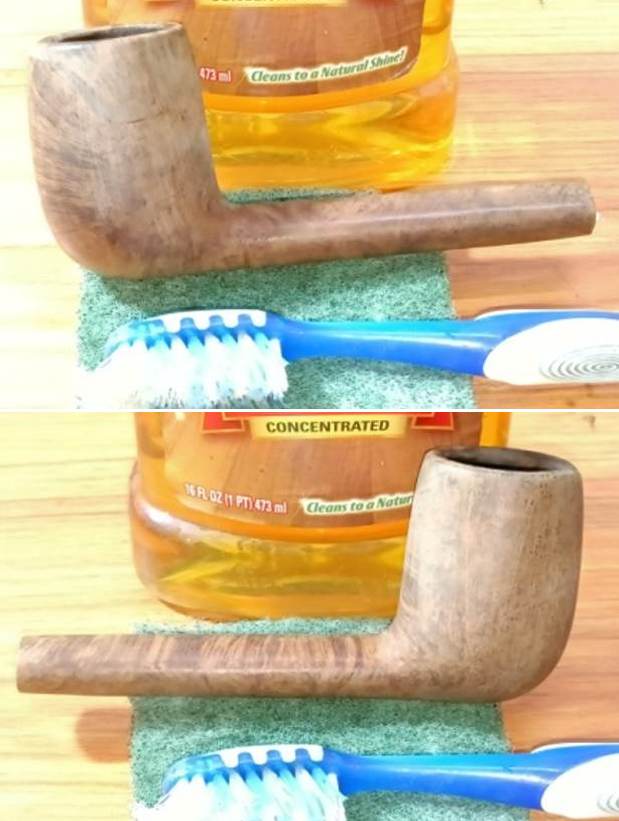
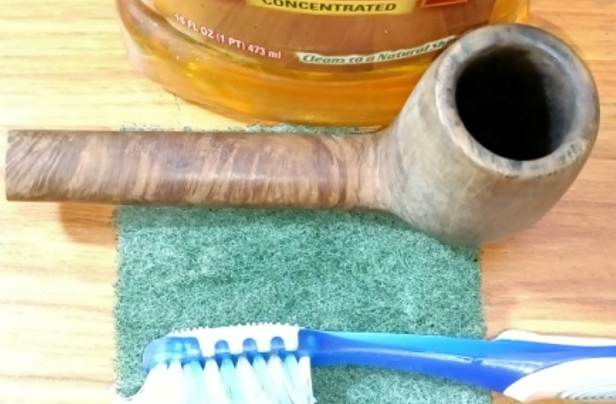
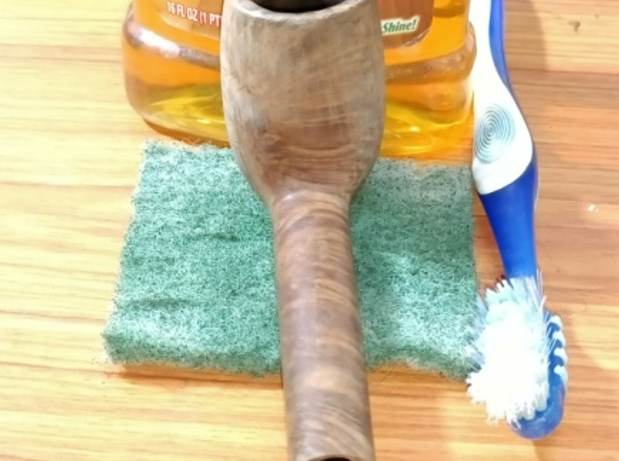
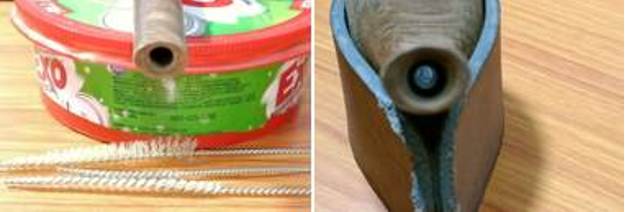
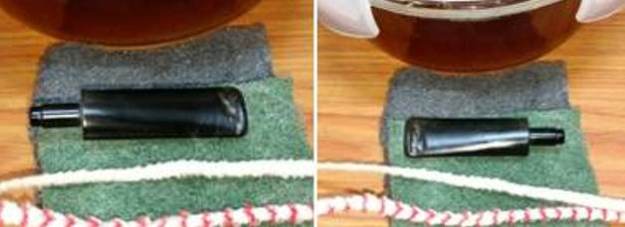
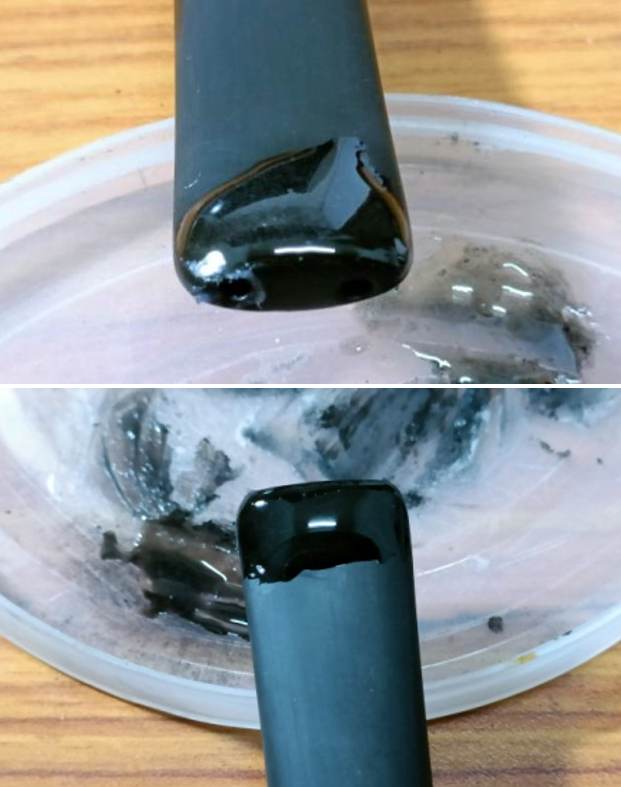
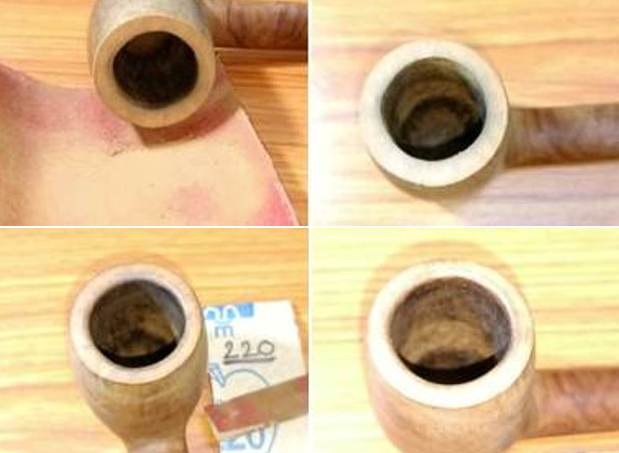
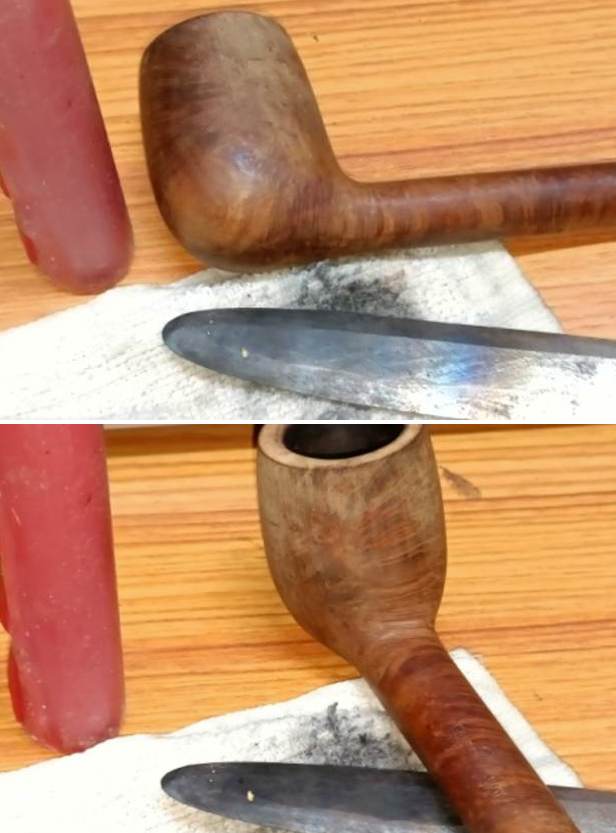
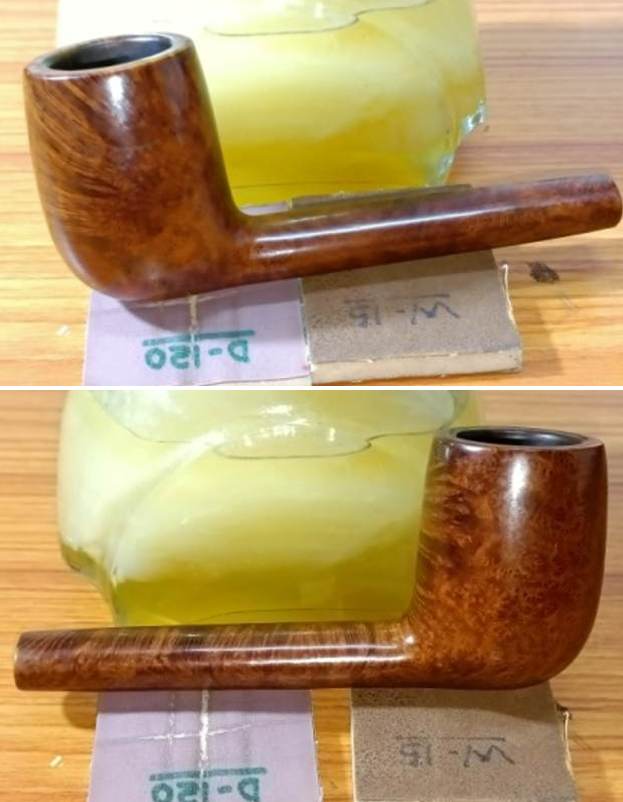
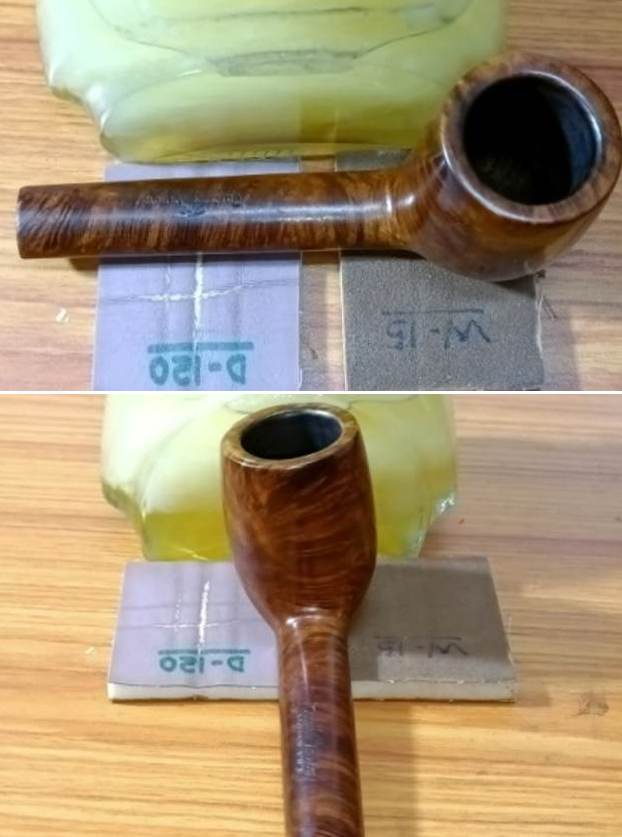
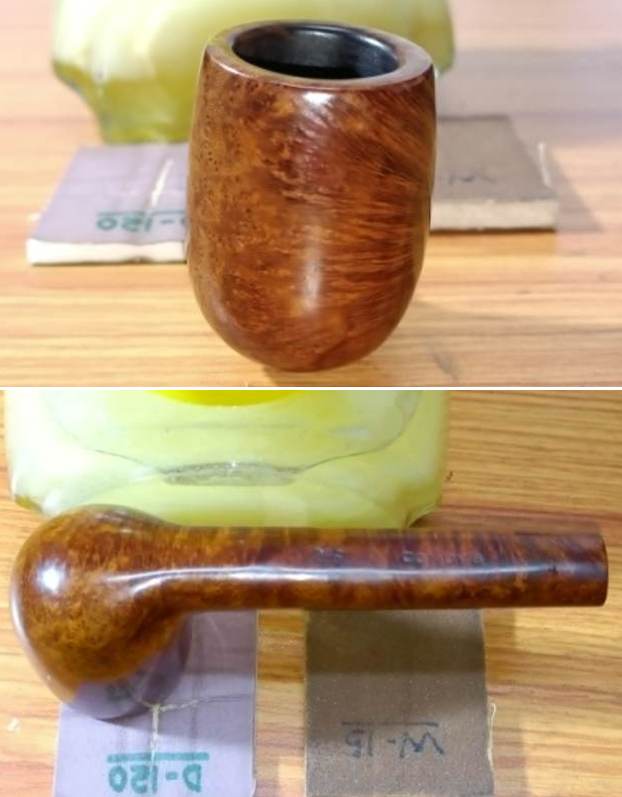
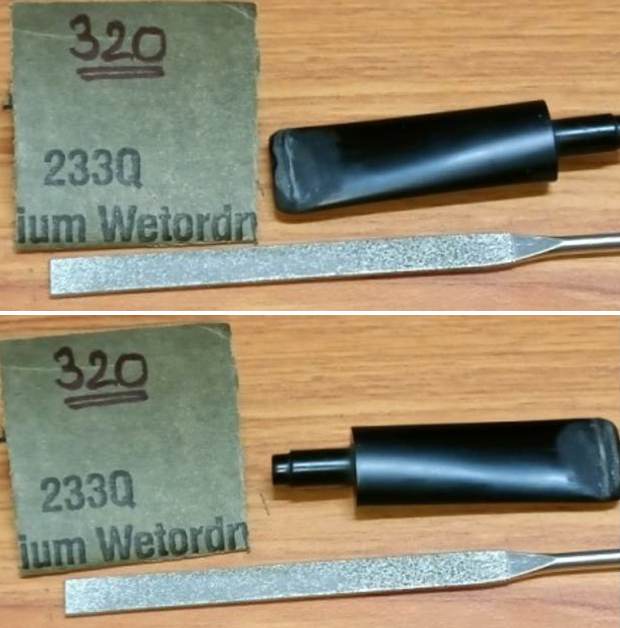
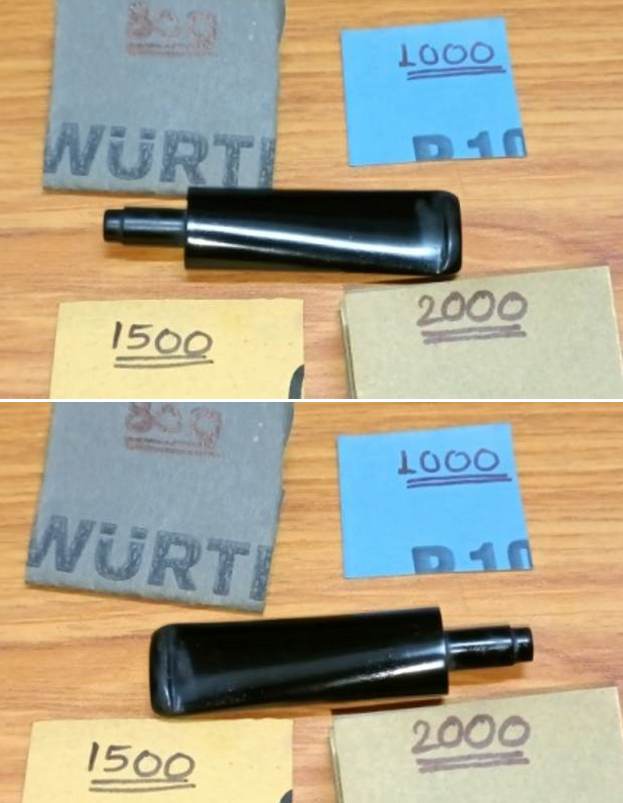
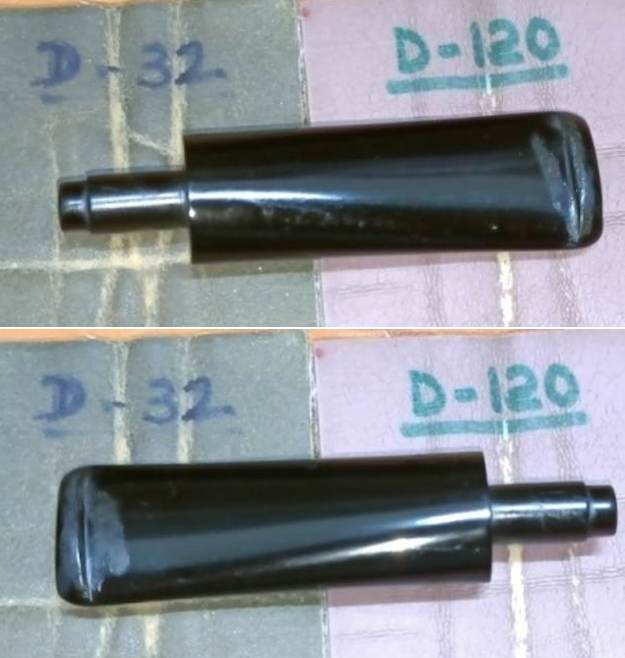
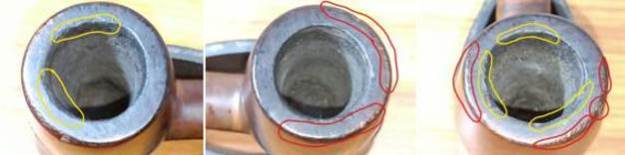
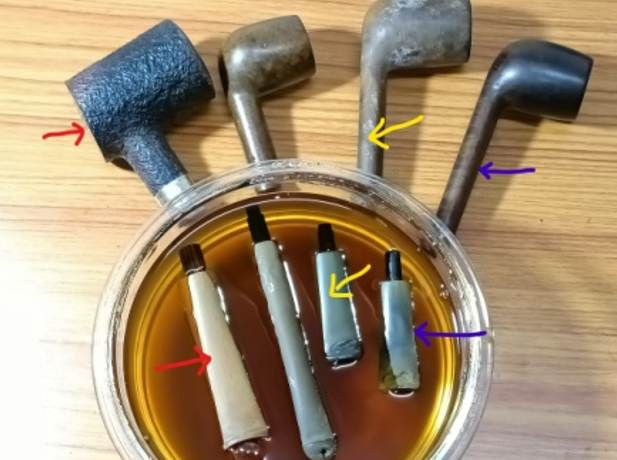
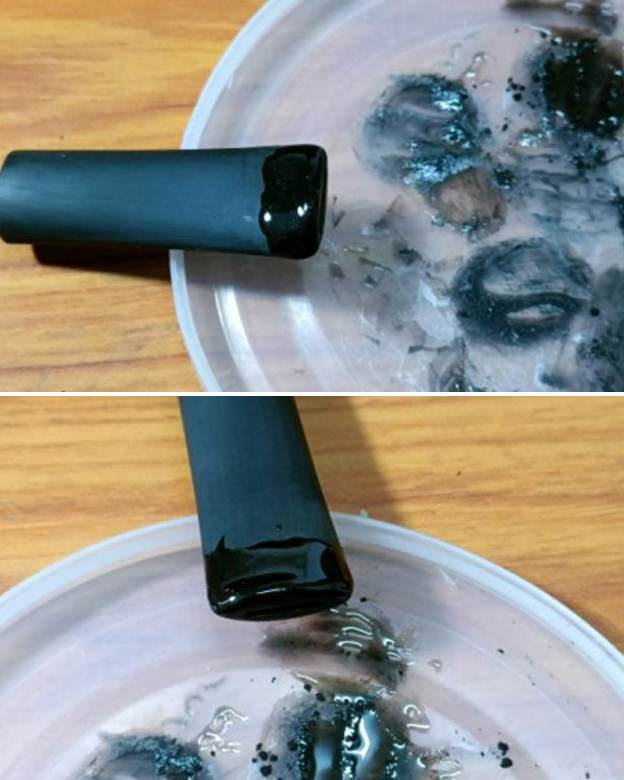
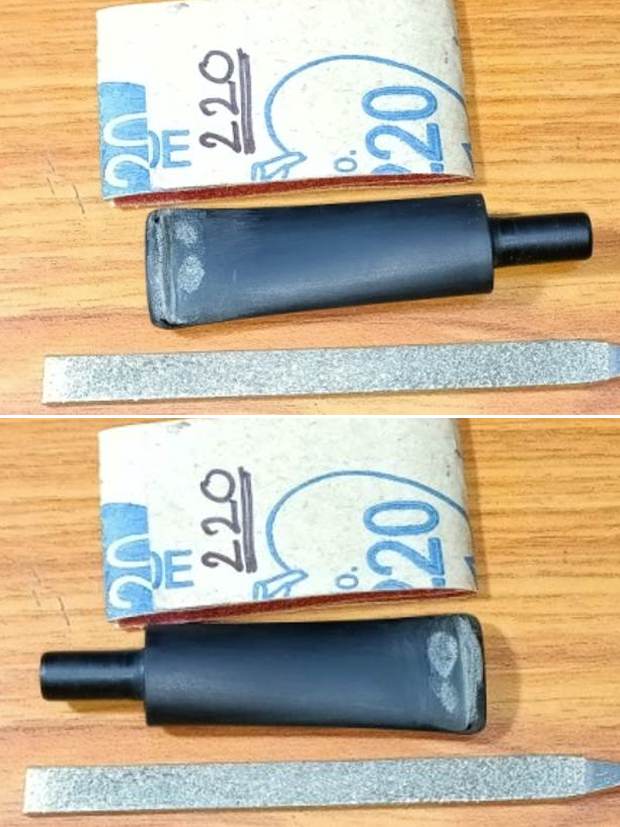
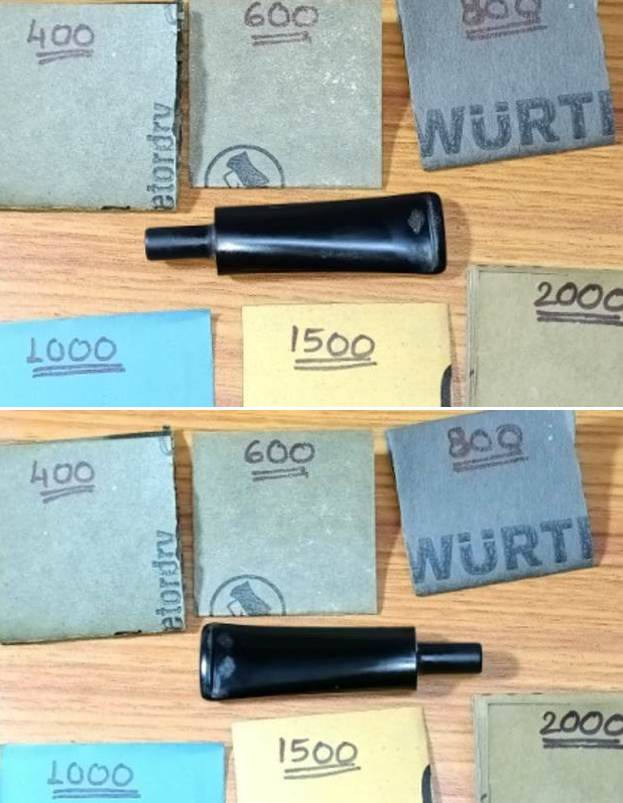
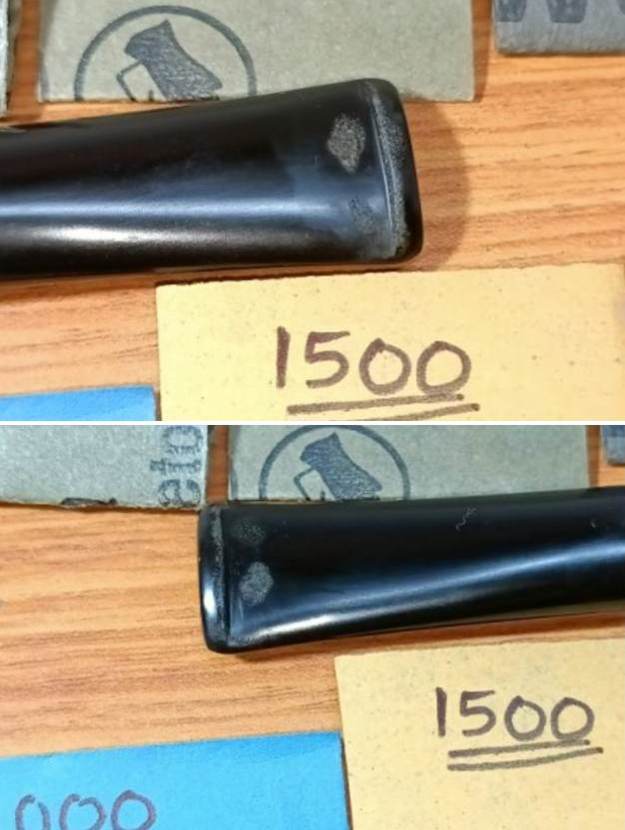
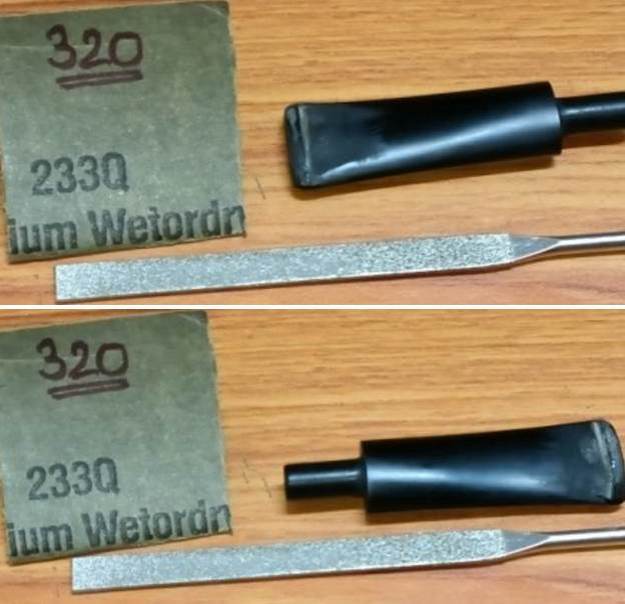
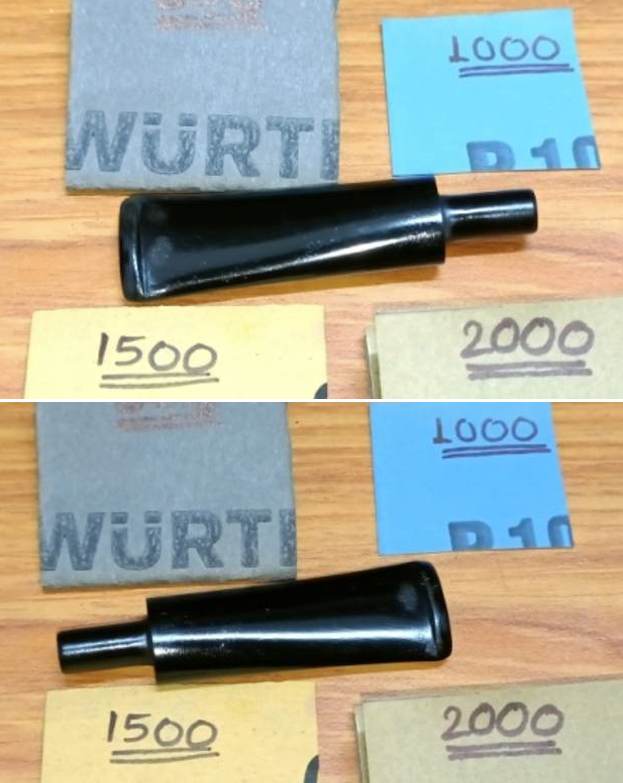
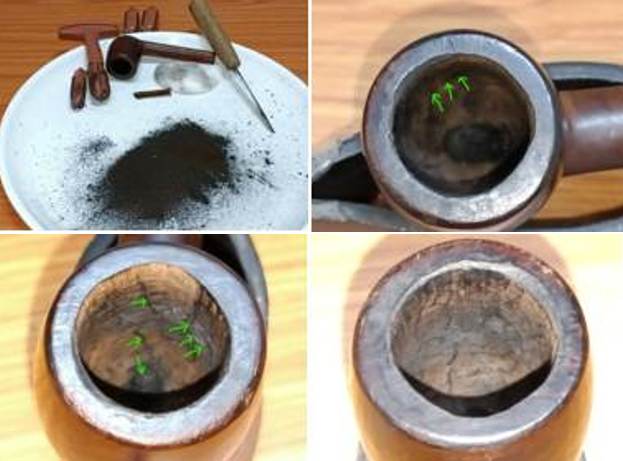
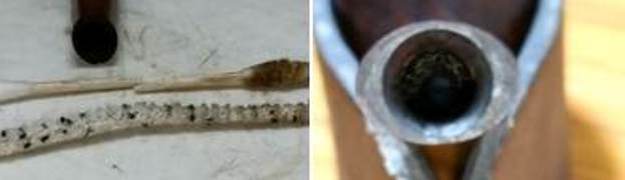
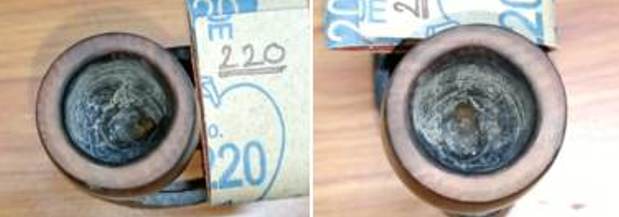
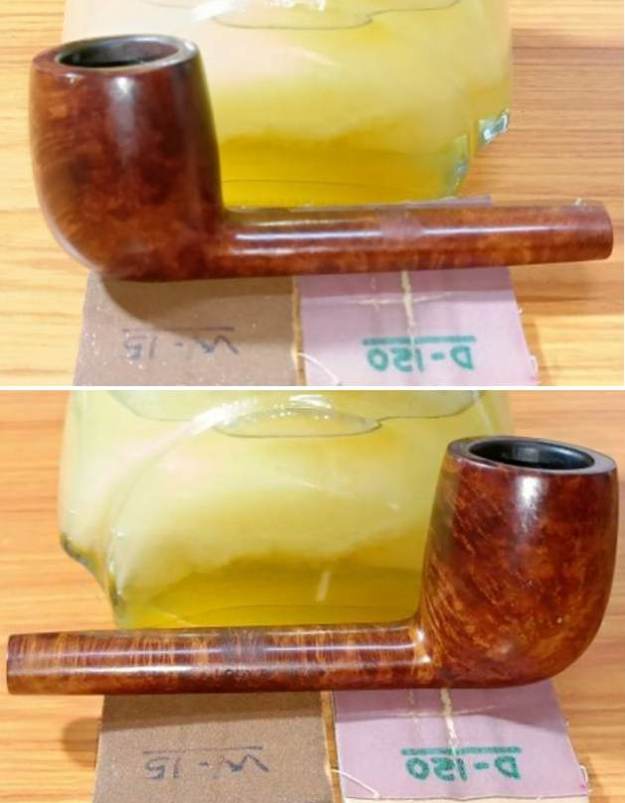
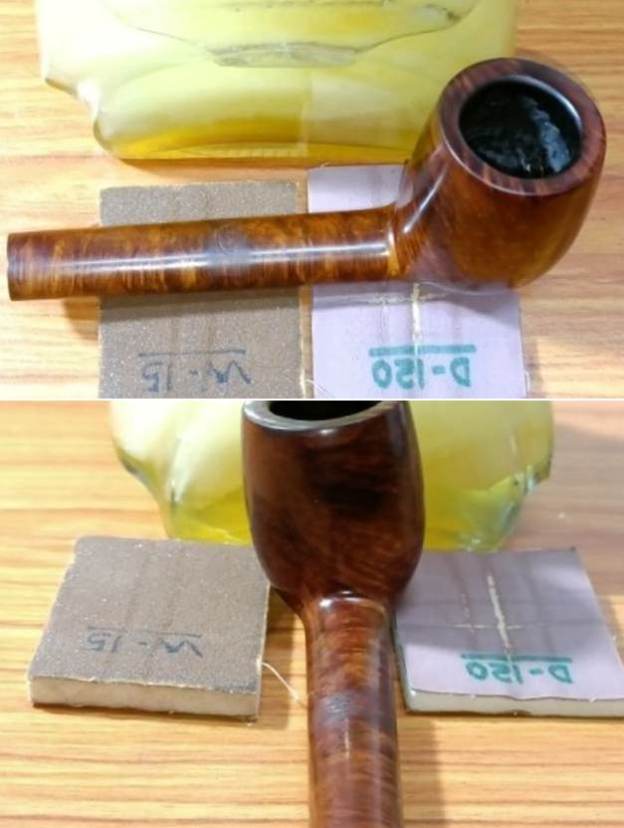
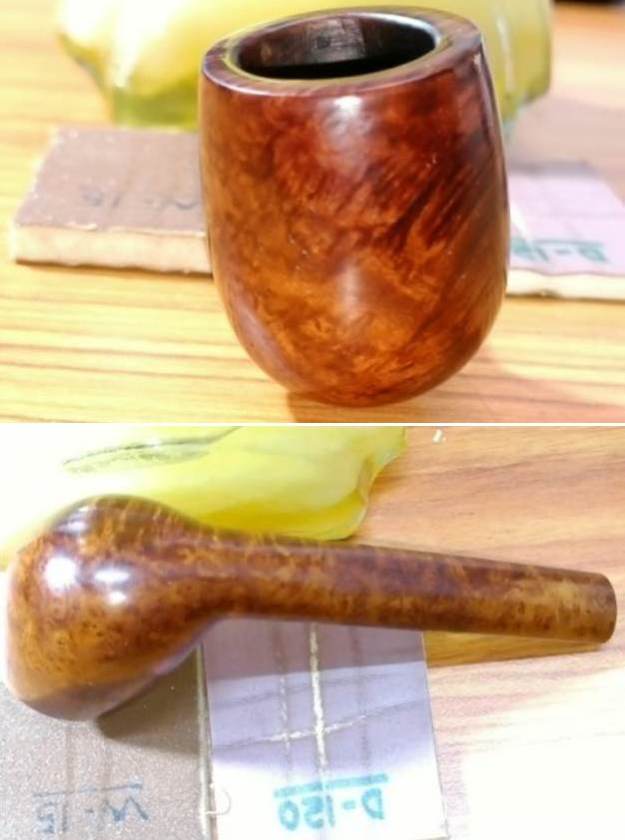
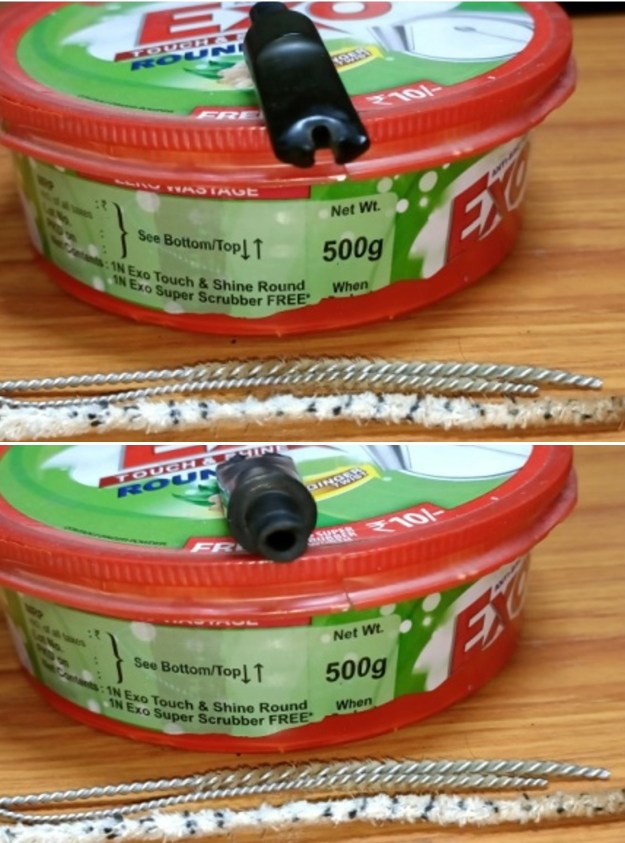
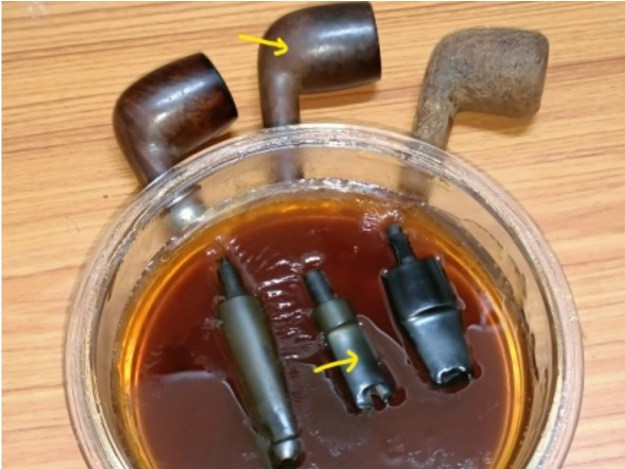
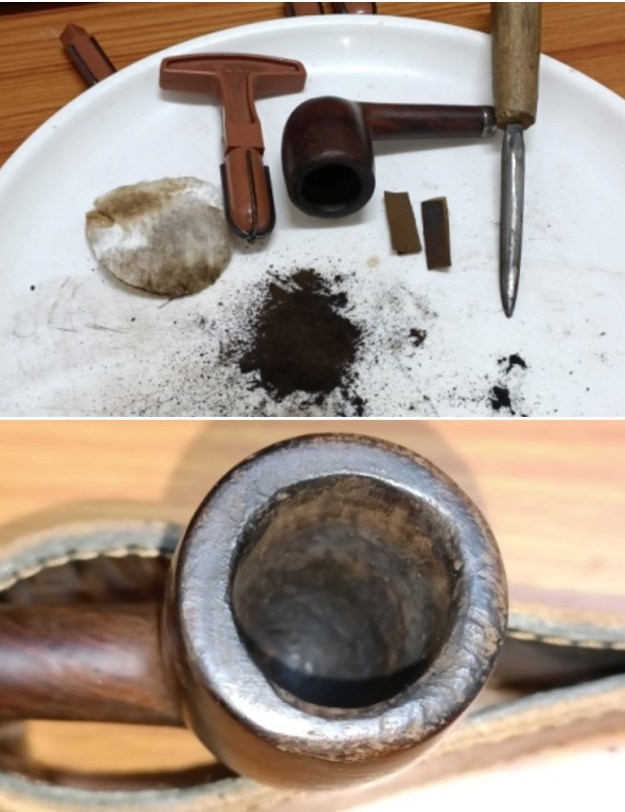
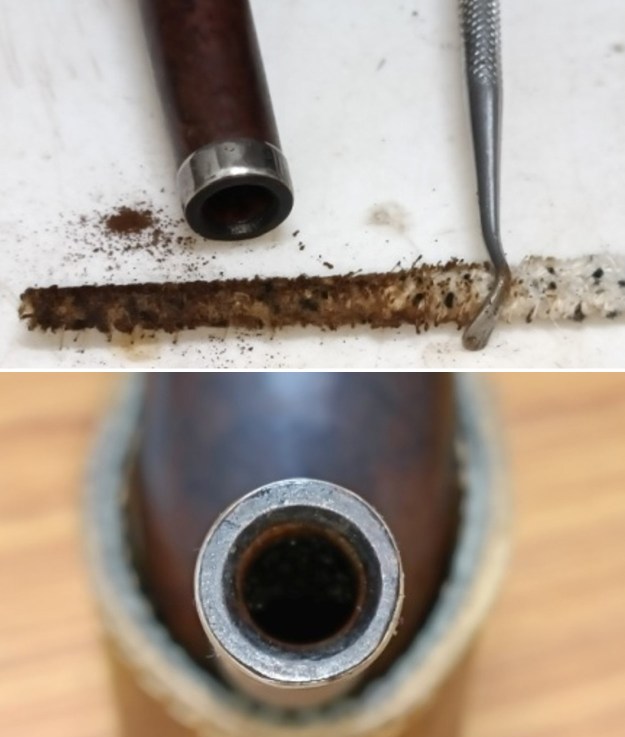
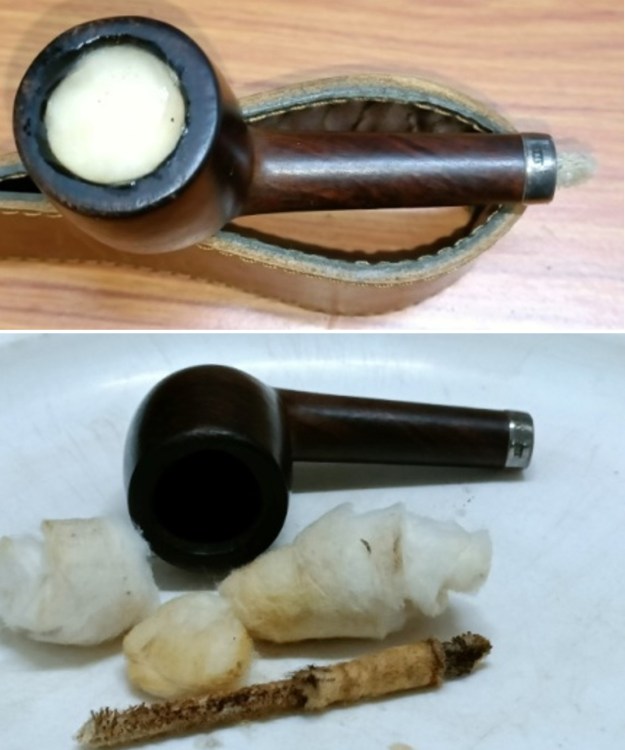
I began the repair and refurbishing process with cleaning of the stem internals. Using thin shank brushes and anti-oil dish washing soap, I cleaned the stem airway. I have modified this process of cleaning the stem airway by doing away with pipe cleaners and alcohol as it saves me a ton of pipe cleaners, which is a precious commodity for me here in India. I continued this cleaning till only white clean foam came out of the stem airway, indicating that the airway was nice and clean. I ran a couple of pipe cleaners dipped in alcohol through the airway to dry it out and make sure that there are no traces of soap and gunk hidden in the airway.With the stem internals now clean, I moved to external cleaning of the stem surface by dunking the stem into “Before and After Deoxidizer” solution developed by Mark Hoover. The solution helps to draw out heavy oxidation to the surface making it’s further removal a breeze, while the minor oxidation is eliminated to a very great extent. I usually dunk stems of few pipes that are in-line for restoration and this BARLING’S MAKE is marked in yellow arrow. I generally allow the stems to soak in this solution overnight for the solution to do its work.While the stem was soaking in the De-oxidizer solution, I reamed the chamber with size 2 head of the PipNet pipe reamer. I removed the carbon from the areas where the reamer head could not reach with my fabricated knife. To completely remove the residual carbon from the walls of the chamber and smooth out the walls, I sanded the chamber walls with a folded piece of 220 grit sandpaper followed by cleaning the chamber with a cotton swab wetted with isopropyl alcohol. The chamber walls are in pristine condition. I gently scrapped off the lava build up over the rim top using a sharp knife to avoid damage to the surface.I cleaned the mortise and shank airway using a dental pick and hard / soft bristled pipe cleaners dipped in isopropyl alcohol. I shall continue with further cleaning of the shank internals once I clean the external stummel surface.Next, I decided to subject the chamber and mortise to cotton and alcohol bath. I packed the chamber with cotton and drew out a wick from the cotton and along with a folded regular pipe cleaner, inserted it into the mortise and through the draught hole into the chamber. I tightly packed cotton balls into the remaining portion of the mortise. Thereafter, I soaked the cotton balls with isopropyl alcohol up to the brim. About half an hour later, the level of alcohol had gone down, having being absorbed by the cotton. I topped it up once again and set it aside overnight. By next afternoon, the cotton and alcohol had drawn out all the remaining oils and tars from the chamber and mortise. I removed the cotton balls and the dirt can be gauged by the appearance and coloration of the cotton balls and the pipe cleaner. With my fabricated knife and dental tools, I spent the next hour scrapping out the entire loosened gunk from the mortise. I ran pipe cleaners through the mortise and draught hole to clean out all the loosened tars and gunk that was lodged in the draught hole and mortise. The chamber and mortise now smelled clean, fresh and looked it too. I set the stummel to dry out naturally. Once the internals of the chamber and shank were cleaned, I cleaned the external surface of the stummel with Murphy’s Oil soap and cotton swabs followed by scrubbing the surface with a toothbrush and dish washing soap. This rid the stummel surface of all the accumulated dust, dirt and grime. Using a piece of Scotch Brite scrub, I deliberately cleaned the rim top and removed the crud from the surface. The damage to the rim edges is, thankfully, not as severe as I had anticipated. I also cleaned the shank internals with dish washing soap and a shank brush. I set the stummel aside to dry out naturally while I worked the stem.By the time I was done with internal and external cleaning of the stummel, the stem had been in the deoxidizer solution for nearly 24 hours. I cleaned the stem and the stem airway under running warm water and scrubbed the raised oxidation from the surface using a Scotch Brite pad and the airway with a thin shank brush. I further removed the oxidation by scrubbing the stem with 0000 grade steel wool. Once the stem was dried with paper towels, I applied a little olive oil to rehydrate the stem.I wiped the stem surface, particularly the damaged button end, with a cotton pad and alcohol to remove any traces of dirt and grime. To begin the stem repairs, I first wound a scotch tape around the tapered portion of a pipe cleaner and inserted it into the stem airway. I prepared a mix of CA superglue and activated charcoal and generously applied it over and extending beyond the broken surface and set it aside for curing over night. The tape will help prevent the mix from clogging the stem airway.While the stem fills were curing, I addressed the damage to the rim top surface by topping the rim to reduce the charred surface and bringing the bowl back to round. I always use a square piece of 220 grit sand paper and firmly hold it with my hand on my work table. I work the rim top on the sand paper in circular motion, frequently checking the progress as I want to keep the briar loss to a bare minimum necessary. The inner rim edge damage has not been addressed entirely with a few dings and uneven surface visible on the sides (encircled in red) and charred surface to the front of the bowl (encircled in green). Also a few minor dents and chipped surfaces are visible along the outer rim edge. These issues were addressed next. In order to mask the still visible damage to the inner rim edge, I created an inner edge bevel by pinching a folded piece of 180 grit sand paper between my thumb and forefinger and moving along the inner edge with a constant pressure, to minimize the charring on the inner edge of the rim. Similarly, I created a slight bevel on the outer edge of the rim to address the minor dents and chipped areas.Next, I subjected the stummel to a complete cycle of micromesh polish, wet sanding with 1500 to 12000 grit pads. I wiped the stummel with a moist cloth after every grit pad to remove the sanding dust left behind by the pads. This also helps in monitoring the progress being made and ensures early corrective action. I am happy with the progress being made until now. I massaged a small quantity of “Before and After Restoration Balm” into the briar surface with my finger tips and worked it deep into the surface and let it rest for a few minutes. The balm almost immediately works it’s magic and the briar now has a nice vibrant appearance with the beautiful bird’s eyes and cross grain patterns on full display. It was at this stage that I polished the sterling silver with a jeweller’s cloth to a nice shine. By the time I was through with the stummel polishing, the stem fills had completely cured.  I moved ahead with the process of filing and shaping the button end with a flat head needle file. With a round needle file, I reshaped the round orifice at the slot end. For a better blending, I further sanded the entire stem with a folded piece of 320 grit sandpaper. I continued to dry sand the entire stem with a folded piece of 400 followed by 600 and 800 grit sandpaper and further progressed to wet sanding with 1000, 1500 and 2000 grit sand papers. I rubbed a small quantity of EVO into the stem surface and set it aside for the vulcanite to absorb and hydrate. To bring a deep shine to the vulcanite stem, I went through the complete set of micromesh pads, wet sanding with 1500 to 12000 grit pads. I wiped the stem with moist cloth after working each pad and rubbed it down with Extra Virgin Olive oil to rejuvenate the vulcanite.To complete the restoration, I mounted a cotton cloth buffing wheel on to my hand held rotary tool and polished the stummel and stem with Blue Diamond compound. This compound helps to remove the minor scratch marks that remain from the sanding. Next, I mounted another cotton buffing wheel that I have earmarked for carnauba wax and applied several coats of the wax. I finished the restoration by giving the entire pipe a rigorous hand buffing using a microfiber cloth to raise the shine further. The finished pipe looks amazingly beautiful and is ready to join my collection. I only wish it could share with me it’s story of the past years while I enjoy smoking my favorite Virginia blend in it or maybe an English blend or maybe just keep admiring it!! The finished pipe is as shown below:- A note of thanks to all the readers who have joined me in this journey that has been such a pleasure! You and your loved ones are always in our prayers…
A Challenging Restoration of a c.1921 No Name Meerschaum Billiard


Blog by Paresh Deshpande

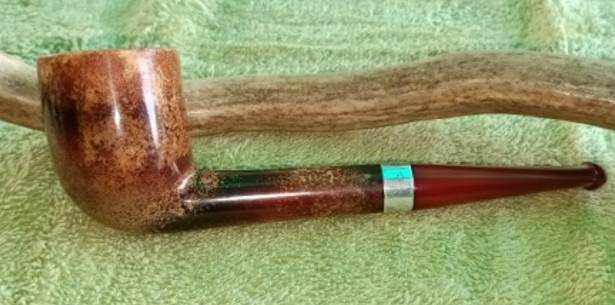
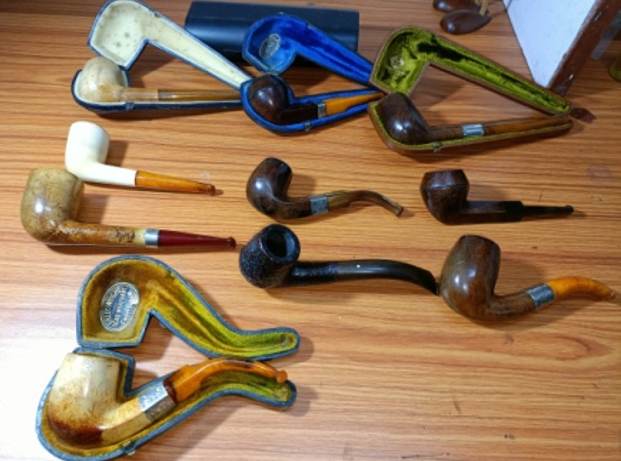
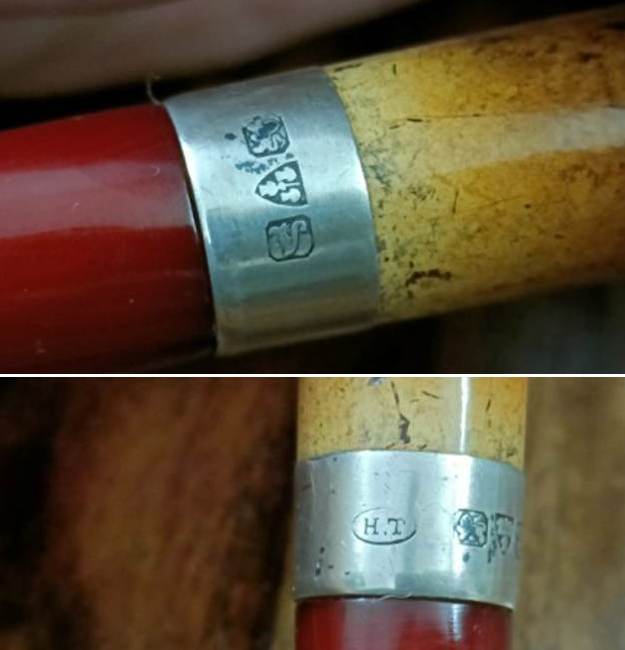
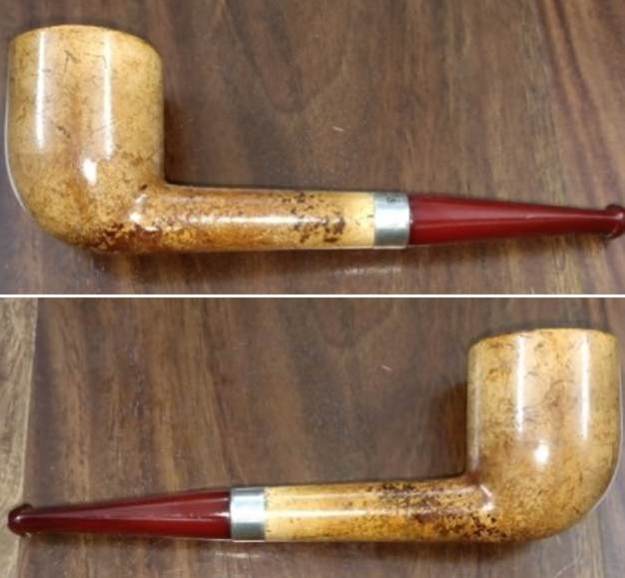
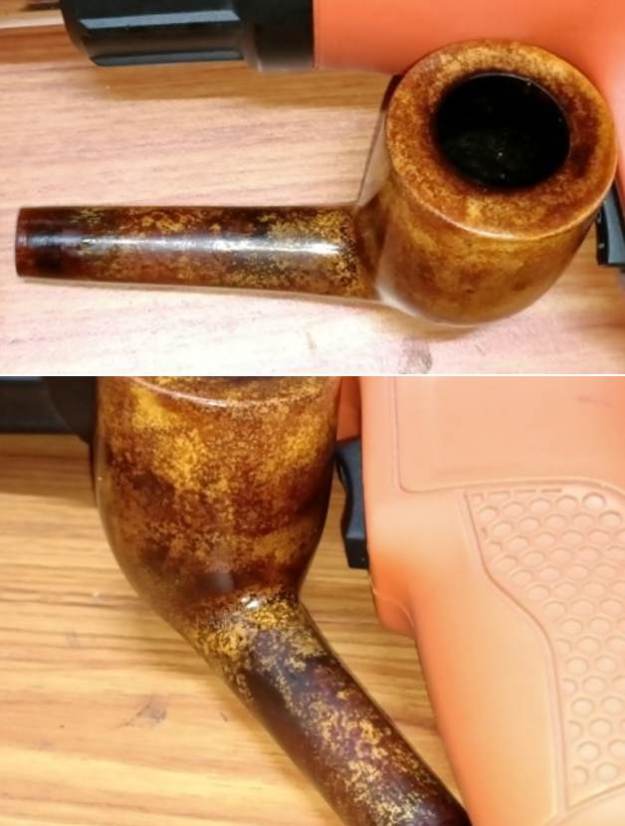
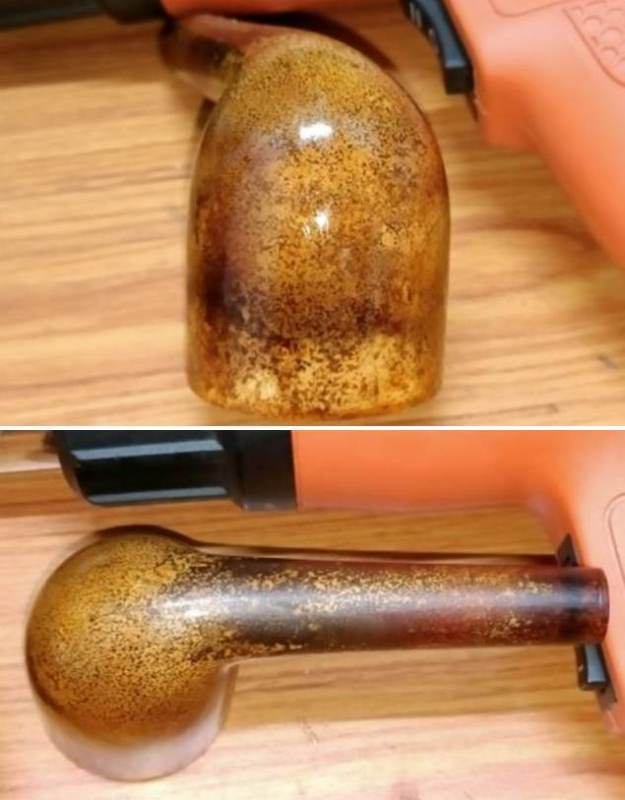
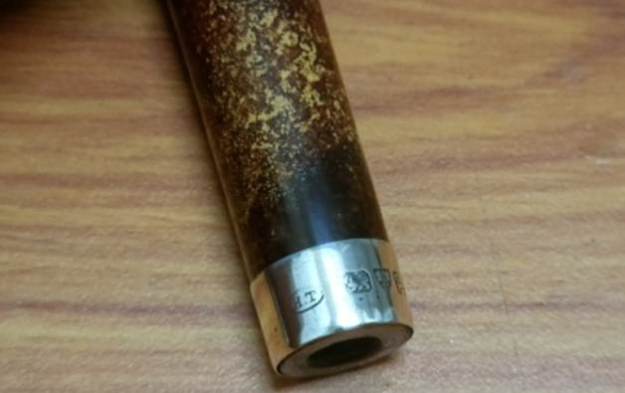
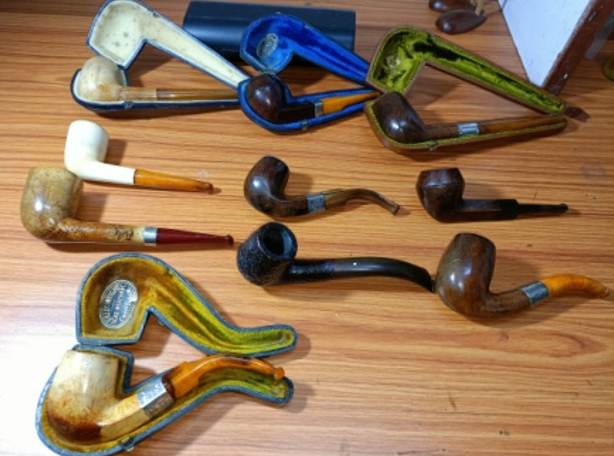
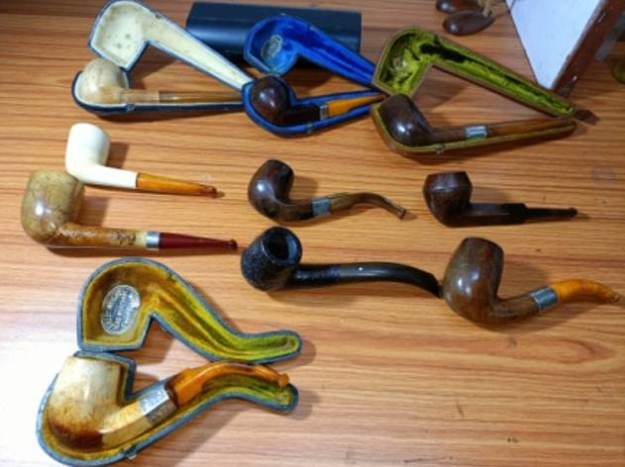
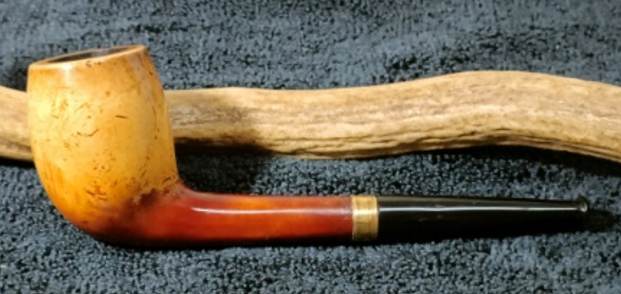
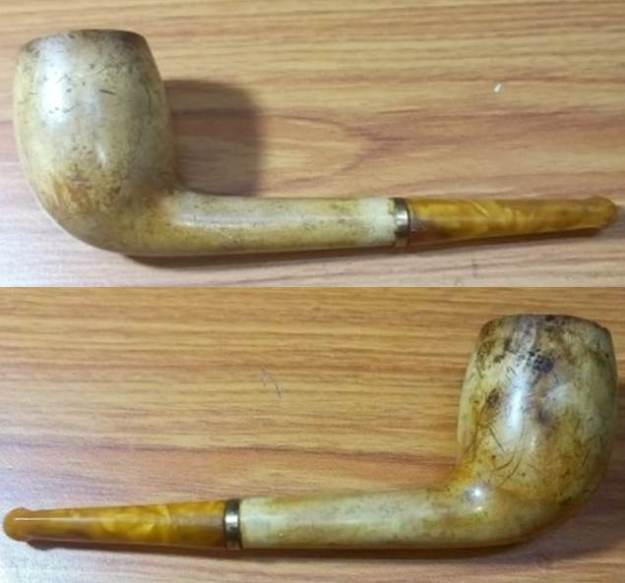
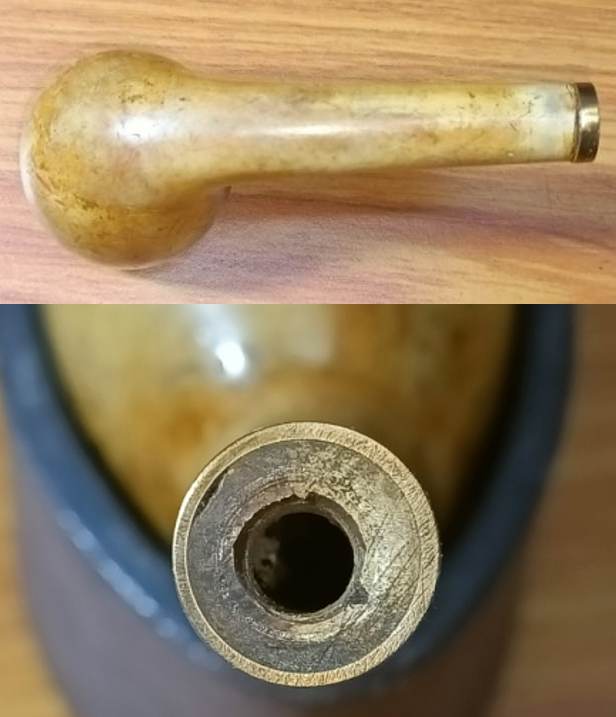
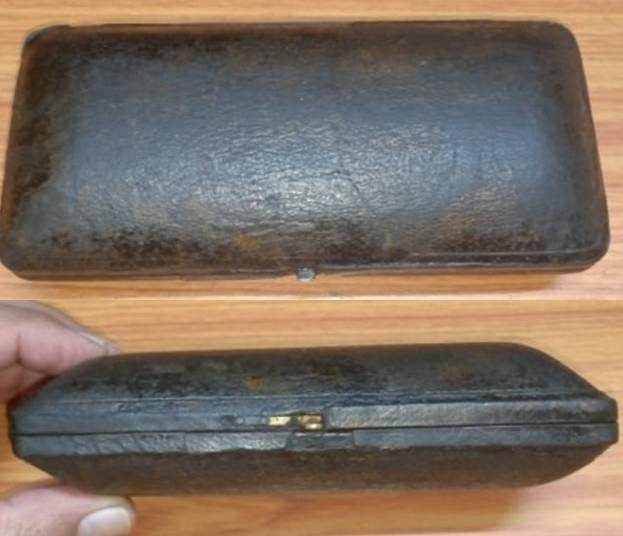
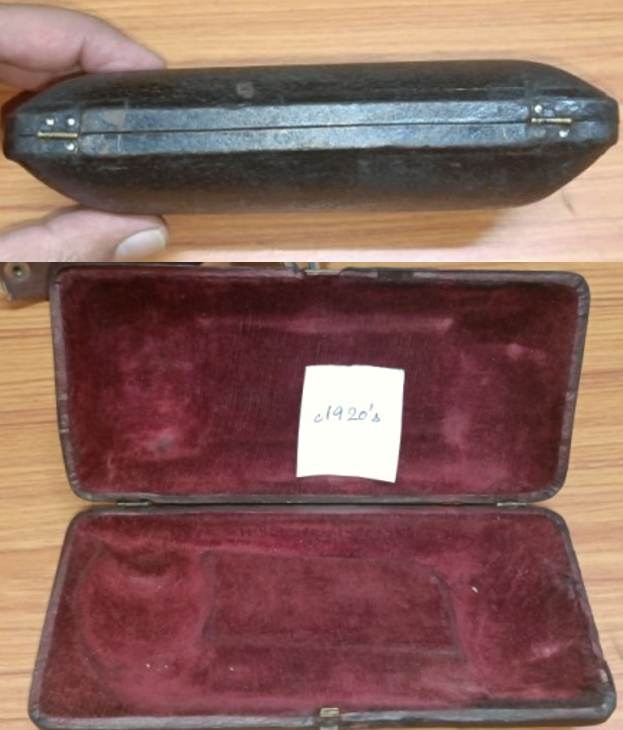
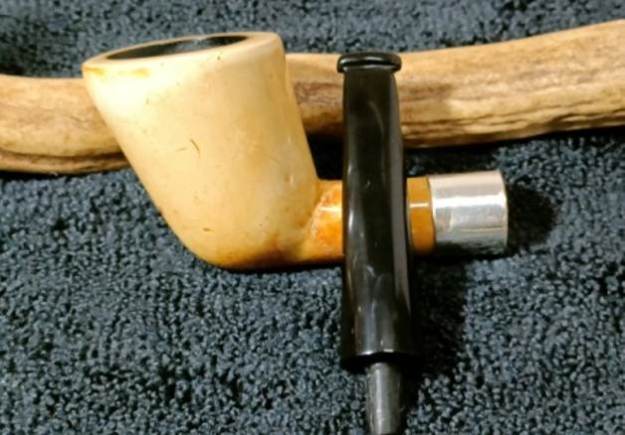
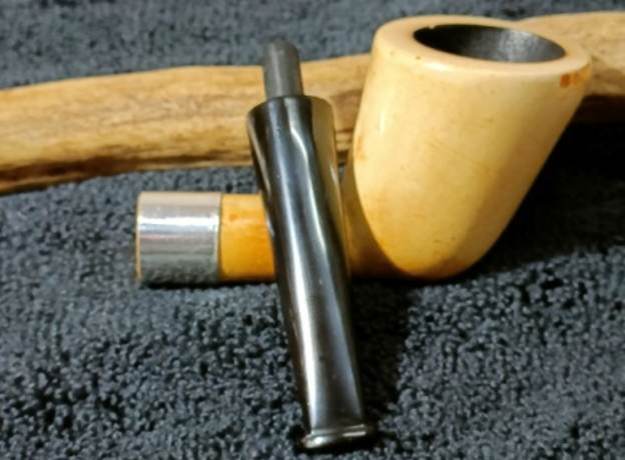
During the summer of last year while browsing on Pinterest, I came across pictures of some beautiful pipes and following the links led me to an old gentleman from the UK who was willing to sell these pipes either single or as a lot. There were around 60 odd pipes. I went through the pictures that were sent along with the rates and selected 10 pipes. After a prolonged and interesting interaction, we managed to arrive at a price point. Soon these pipes landed on the shores of India and went in to Customs hold for nearly a month. Finally, it was released and I laid my hands on these pipes after a wait of nearly 3 months! Here is a picture of the lot that I had taken moments after opening the parcel.Since then, I have refurbished, repaired a family era Barling’s Make Bulldog (yellow arrow), a c.1901 Samuel McLardy (green arrow) and added them to my personal collection while the c. 1960 Dunhill Shell (blue arrow) has made it’s way to my dear friend to enjoy. This estate lot had a beautiful block Meerschaum billiard with a Redmanol stem (red arrow) that called out to my wife. She liked the size, heft and simple classic straight lines of billiards and the way the red of the stem complimented the overall appearance of the pipe. The following picture will identify the pipes that have been restored and the meer that is now on my work table.This solid meerschaum is sans any stampings on the stummel or stem and lack of any housing case makes establishing the provenance of this pipe a tad impossible. The only pointer to this pipe being English is the stampings on the Sterling Silver ferrule at the shank end and should help in dating this pipe and identify the silversmith who mounted it on this pipe. It is stamped “H.T” in an oval over three sterling silver hallmarks. From left to right the first cartouche is with a LION PASSANT certifying silver quality followed by a cartouche with symbol for Chester Assay Office and the last cartouche contains the date code letter “V”.In order to link the maker’s mark on the silver band to a silversmith registered with Chester Assay office. I visited https://www.silvermakersmarks.co.uk/Makers/Chester-HP-HZ.html#HT  and I have reproduced the findings below that most closely matched the probable silversmith (highlighted in red).The cause for doubt in my mind with respect to the findings above is the fact that the “H.T” stamping on the silver band is enclosed in an oval whereas that shown above is in a square cartouche. However, the comment of Henry Tongue being a Pipe mounter and the period are perfectly matched. Thus the circumstantial evidence makes me want to believe that the pipe mounter of this Meerschaum pipe is Henry Tongue.  Any esteemed Reader is most welcome to shed more definitive information for the benefit of other members.

The next step was to ascertain the dating on this silver band. I frequent www.silvercollection.it for exact dating of letter code. The font style and the enclosing cartouche of the letter “V” on the shank band matches to the date year 1921. I have reproduced a screenshot of the relevant section of the date charts and the date year is indicated in red.

Now it was time to get working on the pipe.

Initial Inspection
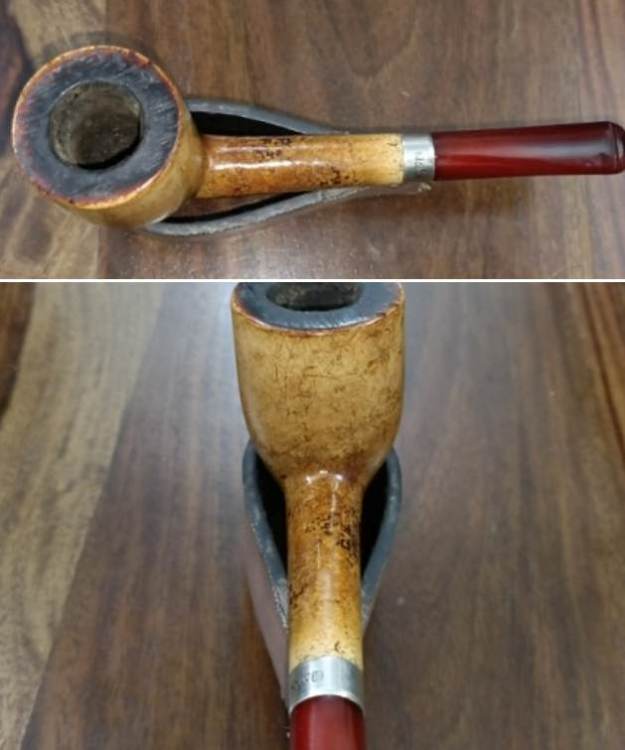
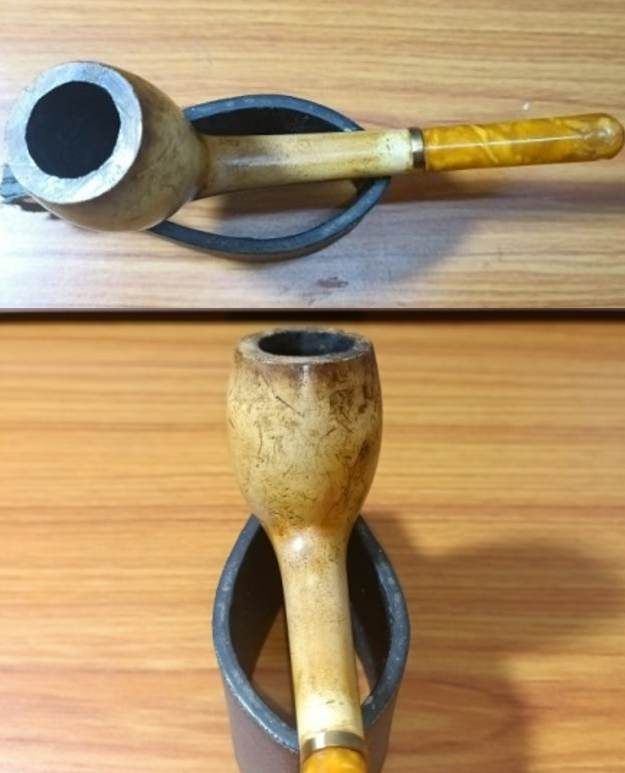
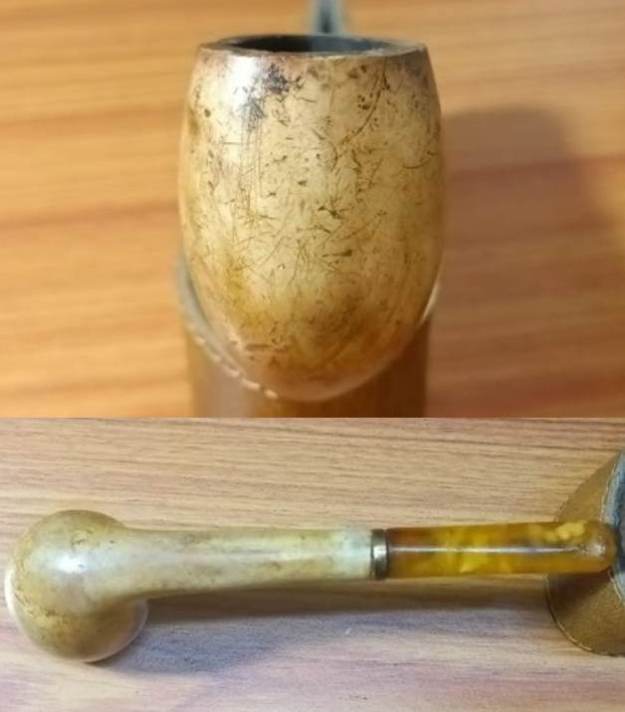
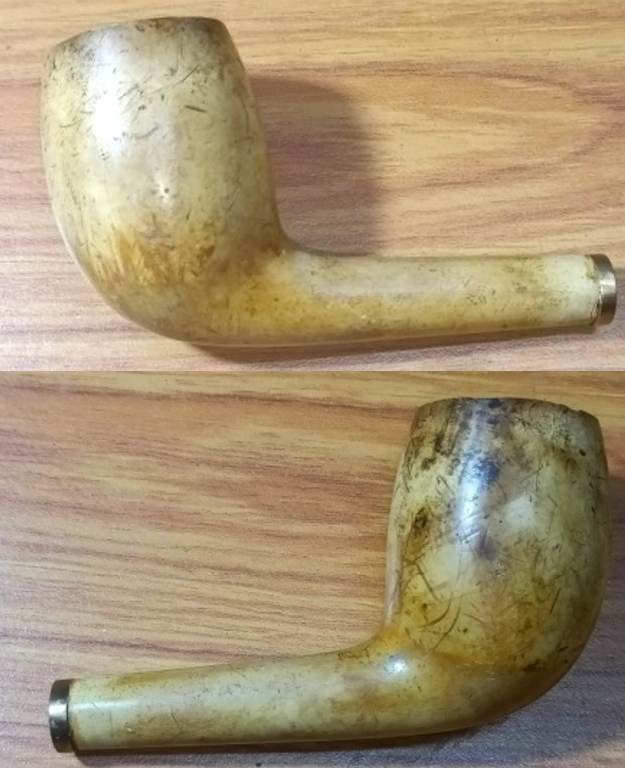
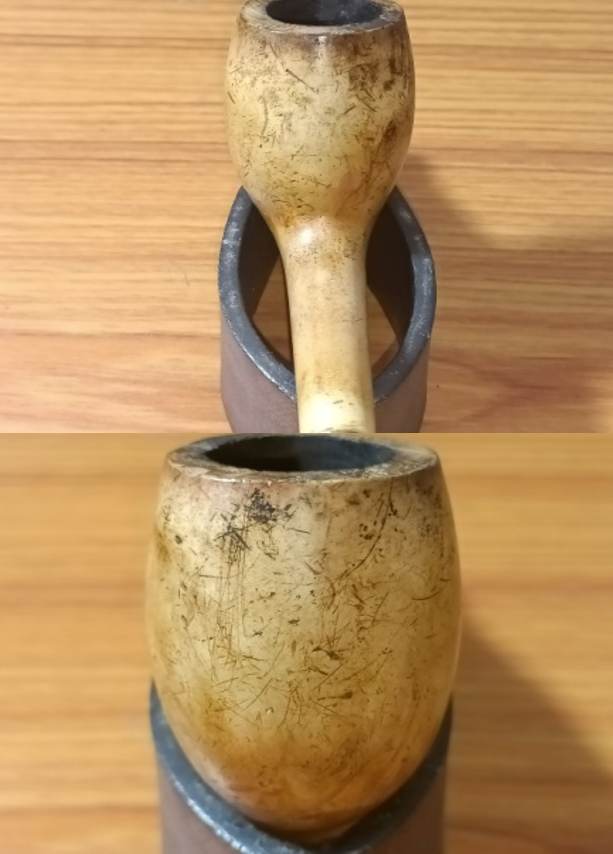
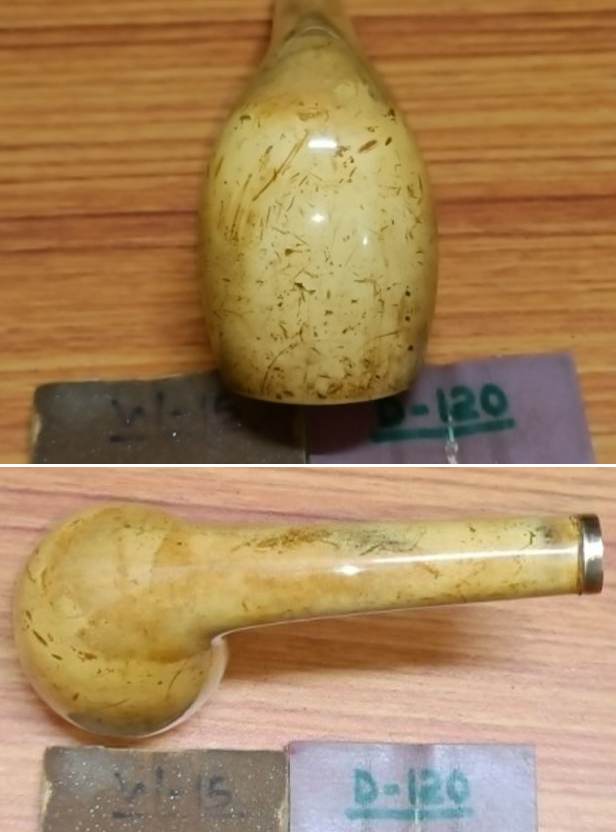
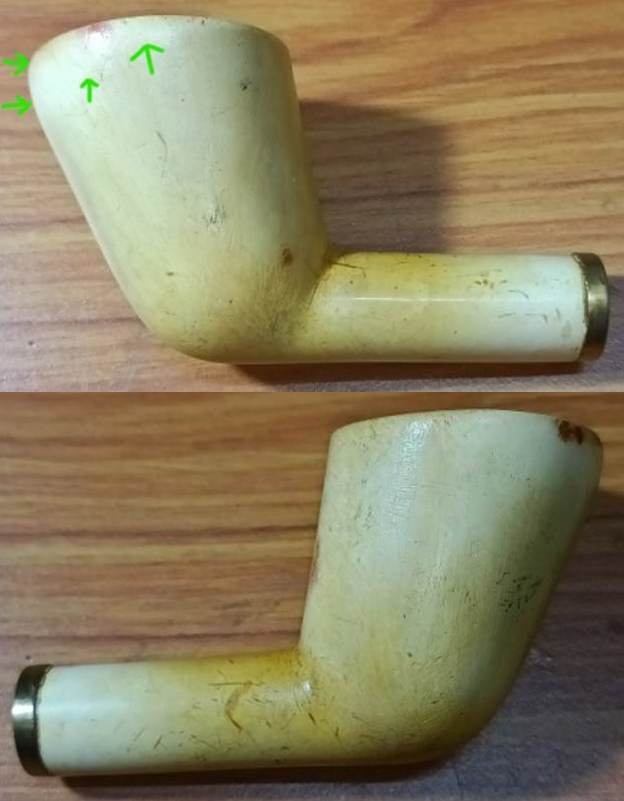
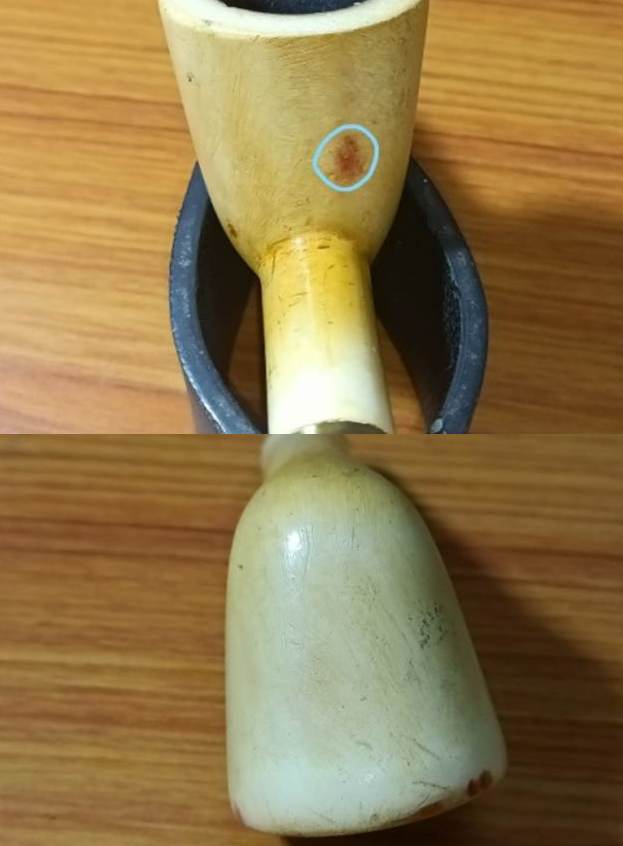
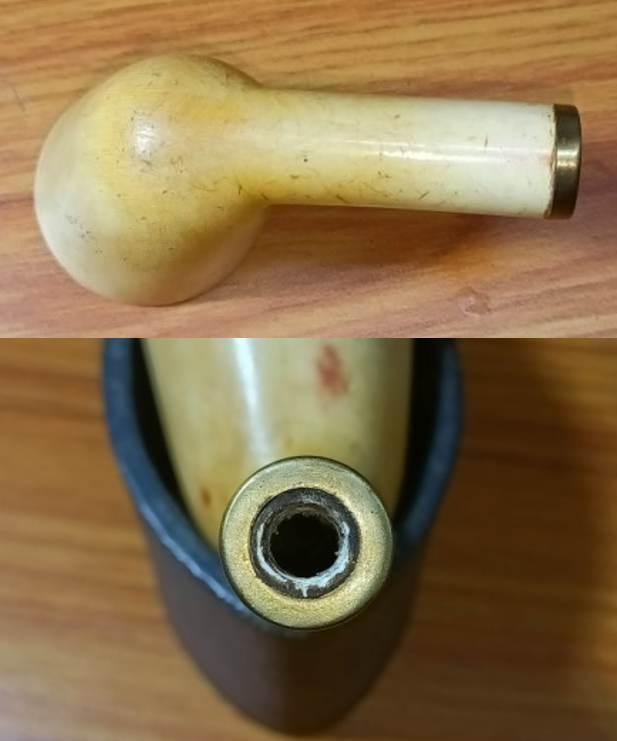
To begin with, the stummel is dirty and covered in dust, dirt and grime of over a century gone by. The age on this pipe is manifested in the number of all the handling related scratches and marks that it has been subjected to. There is a decent layer of cake in the chamber with lava overflow over the rim top surface. Under all the crud, the rim top is deeply scratched all around. The stem seats loose in the shank. The stem has a couple of tooth indentations in the bite zone and other than that the Redmanol stem is in pretty good condition. Here are a few pictures of the pipe as it sits on my worktable. Detailed Inspection
There is a thick layer of cake in the chamber. The rim top surface has lava overflow and has darkened considerably over the entire surface. The rim top is peppered with deep scratches, probably caused when someone, somewhere through the century, tried to remove the crud from the rim top using a sharp knife or it could have been caused as damage due to uncared for storage when the rim top and rest of the stummel was being rubbed against some hard objects. This uncared for storage could be the most likely reason since the stummel too has a number of scratches and marks. The inner and outer rim edges both show a few nicks and dents. The exact extent of damage to the inner rim edge will be ascertained after the chamber and rim surface is rid of all the cake and crud. The chamber walls are thick and feel solid to the touch.The stummel has a number of scratches and marks over the surface. There is a lot of dirt and grime ground in to the stummel surface giving it a dull and patchy appearance. However under all the grime and scratches, the stummel has taken on a beautiful color/ patina through the years of smoking and it is my intent to preserve it through the process. The threads in the mortise are slightly worn out and the mortise itself shows accumulation of oils and grime. Other than these minor issues, the stummel surface is sans any major damage and feels solid to the touch. The opaque cloudy Redmanol stem looks amazing as it is and should add a new dimension to the beauty of the pipe once it is repaired and all polished up. There are a couple of deep tooth indentations in the bite zone (encircled in yellow) that would need to be addressed. The stem airway leading to the round orifice shows remnants of old oils and gunk. The threaded bone tenon is covered in very fine jute threads to increase the diameter of the tenon for improved seating of the tenon in to the mortise. Yet even after this adhoc improvisation, the seating of the stem is pretty loose. I would need to figure out a more accurate, reliable and permanent way to address this issue.The Process
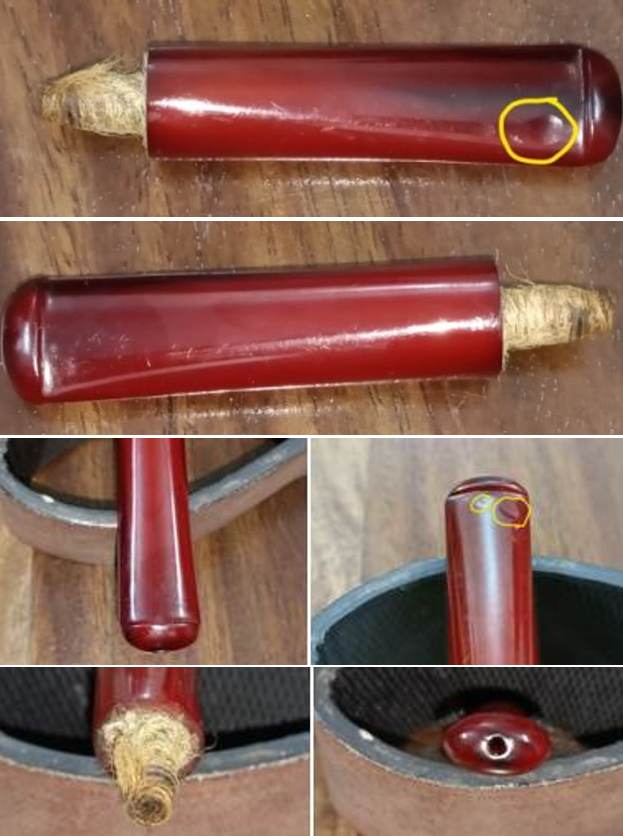
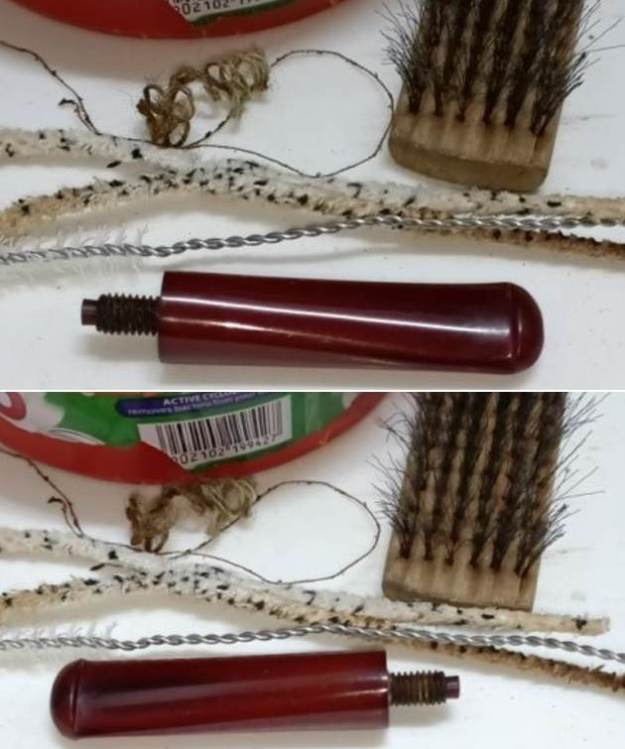
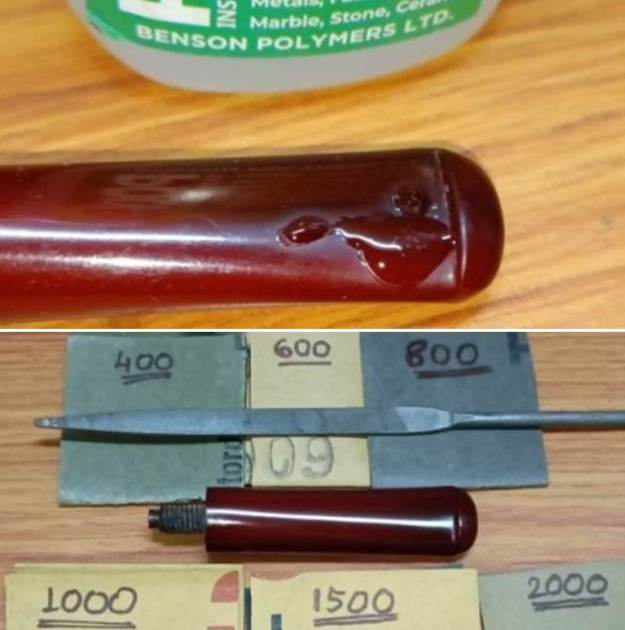
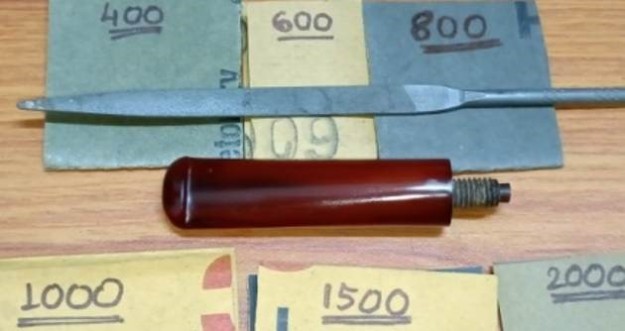
I started work on this pipe by firstly getting rid of the jute threads from the tenon end and followed it with cleaning the airway using thin shank brushes and anti oil dish cleaning soap. I ran a couple of pipe cleaners to clean and dry out the airway. Using a soft brass wired brush; I cleaned out the entire gunk from the threads of the bone tenon.I filled the tooth indentations with clear superglue and set it aside for the glue to cure. Once the glue had cured, using a flat needle I sand the fill to achieve a rough match with the rest of the stem surface. Once I was through with this step, I dry sand the entire stem with 400, 600 and 800 grit sand papers followed by wet sanding using 1000, 1500 and 2000 grit sand papers. This progressive use of higher grit sandpapers helps to, firstly, reduce the sanding marks left behind by the more abrasive ones, secondly, completely eliminate the oxidation and imparting a clean shine to the stem surface. Thirdly, this also helps to even out the minor tooth chatter from the bite zone. To complete the stem polish, I went through the entire set of nine micromesh pads, wet sanding through 1500 to 12000 grit micromesh pads.At this stage of refurbishing this pipe, little did I know that I would be carrying out further tedious and unplanned for repairs to the stem towards the end and till then, for all purposes, I have completed the stem restoration.

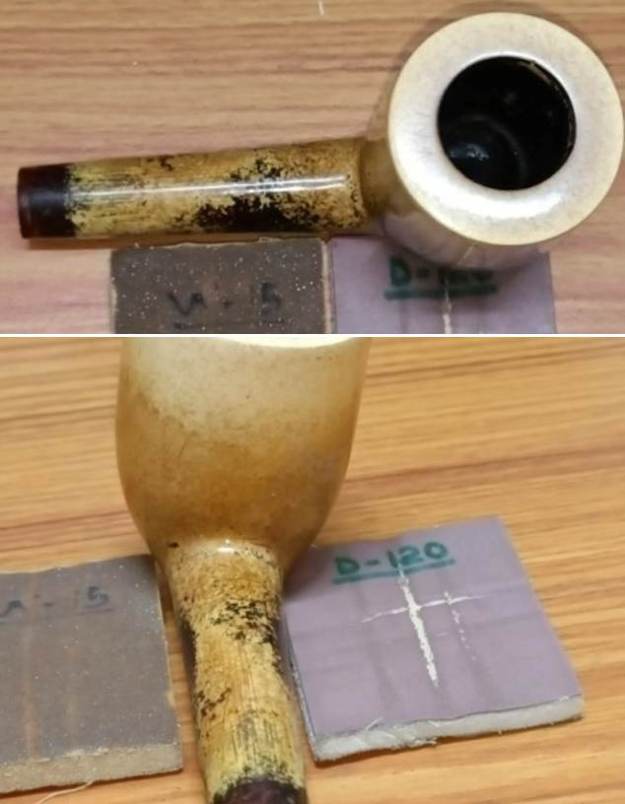
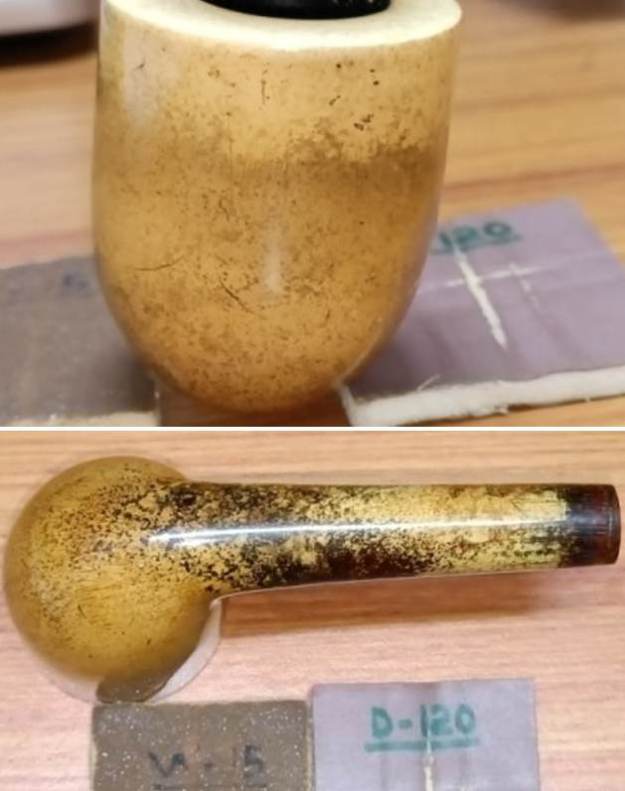
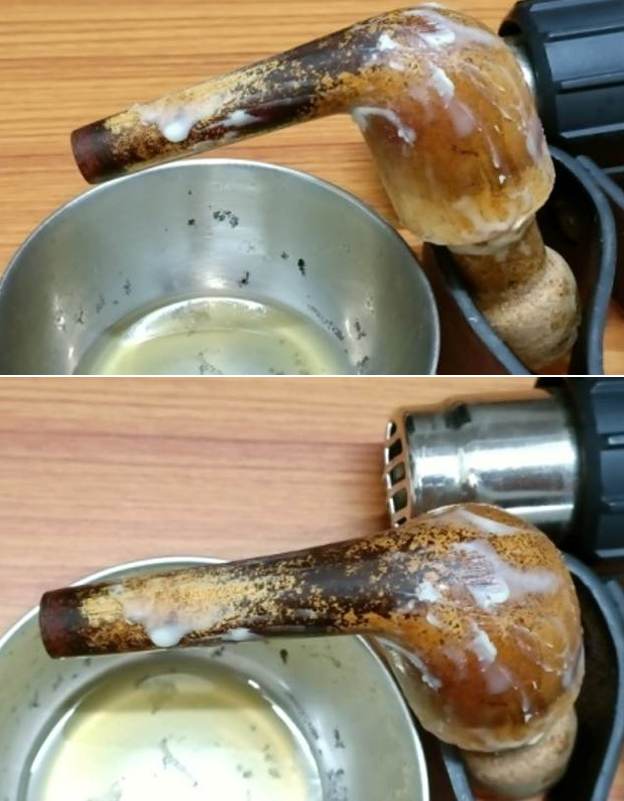
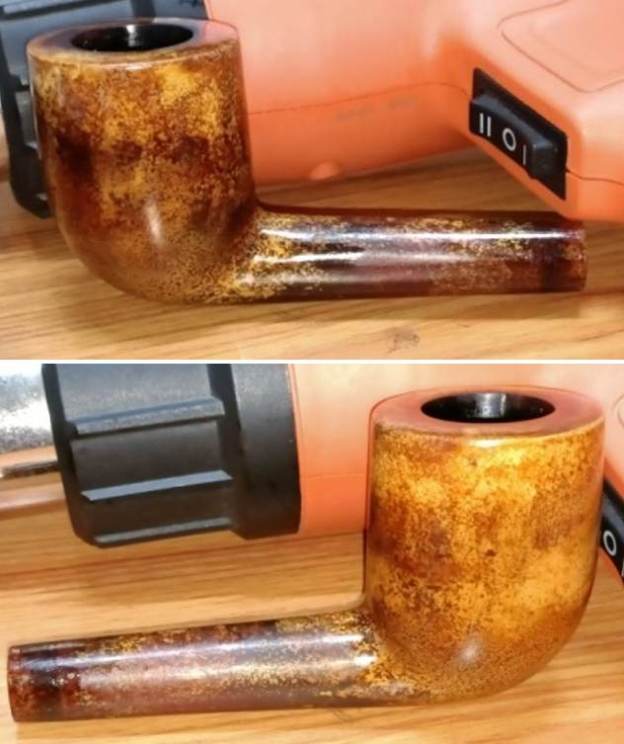
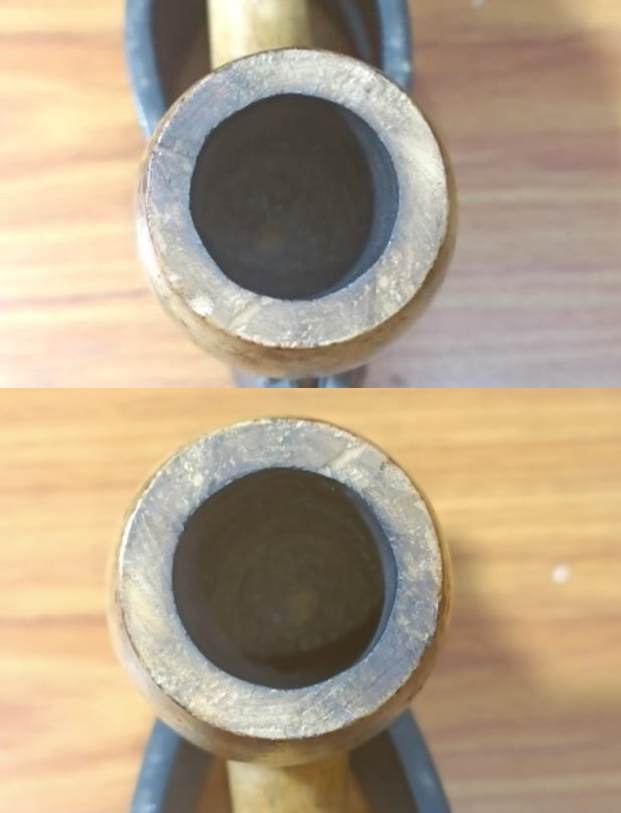
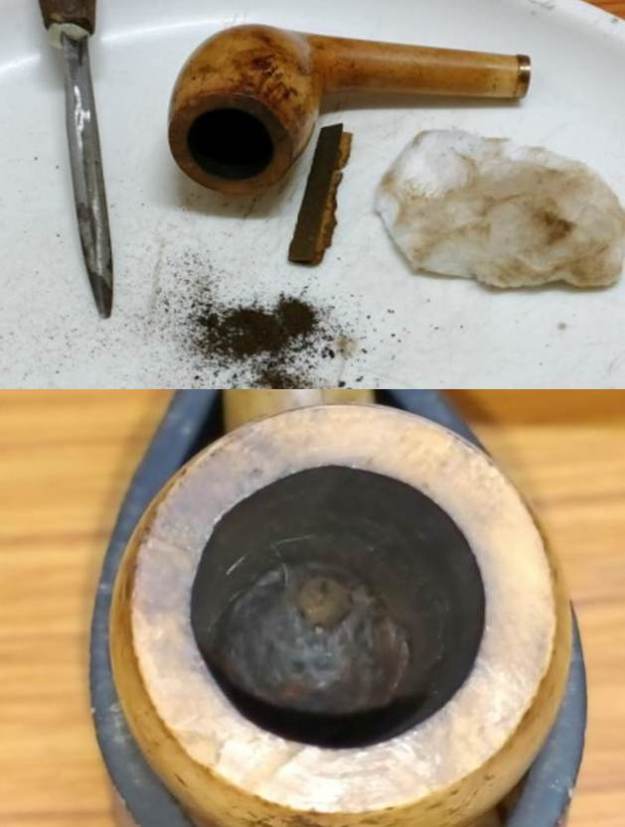
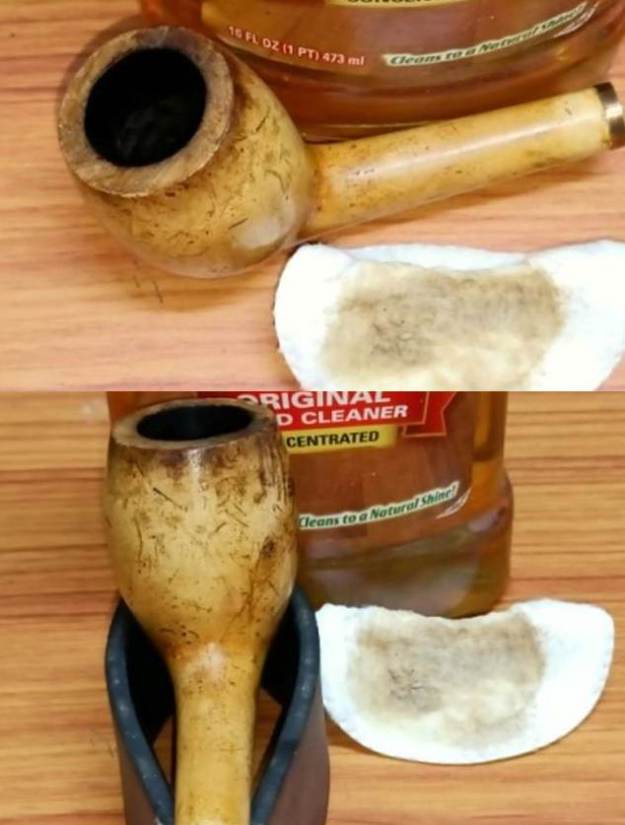
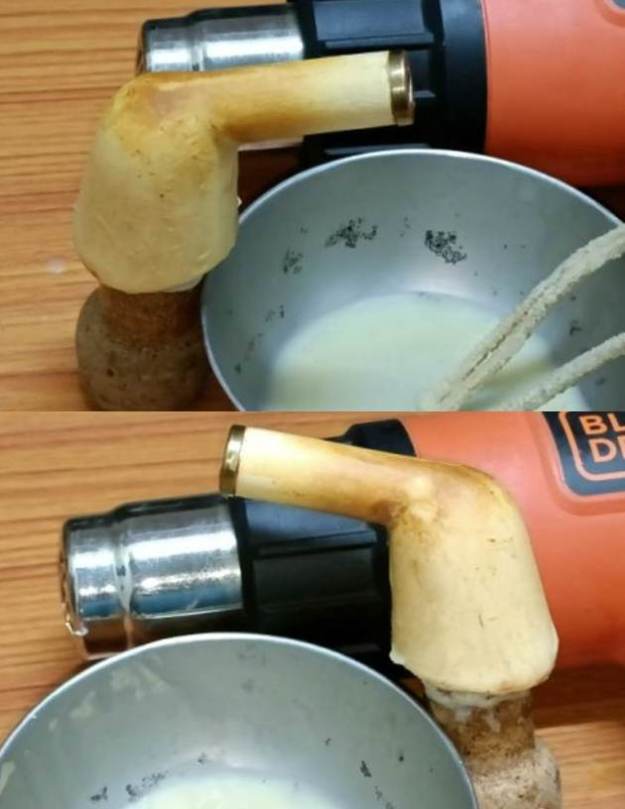
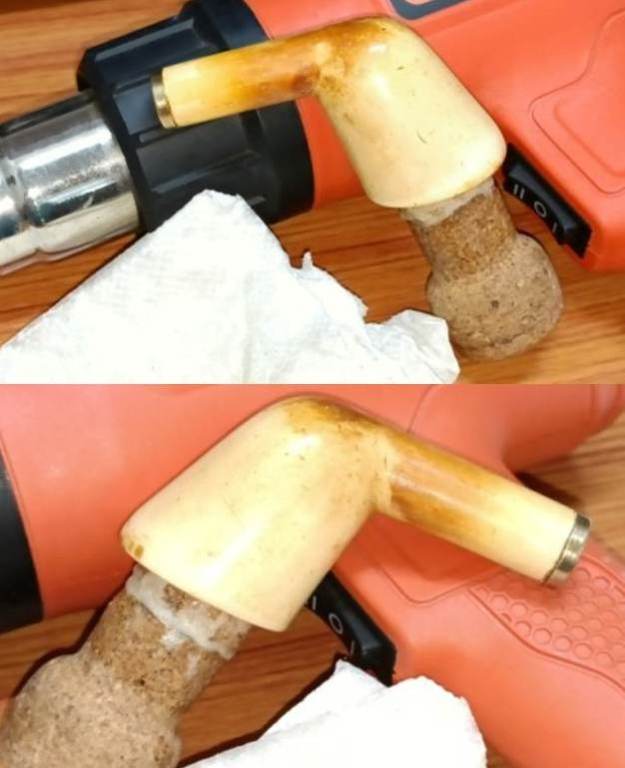
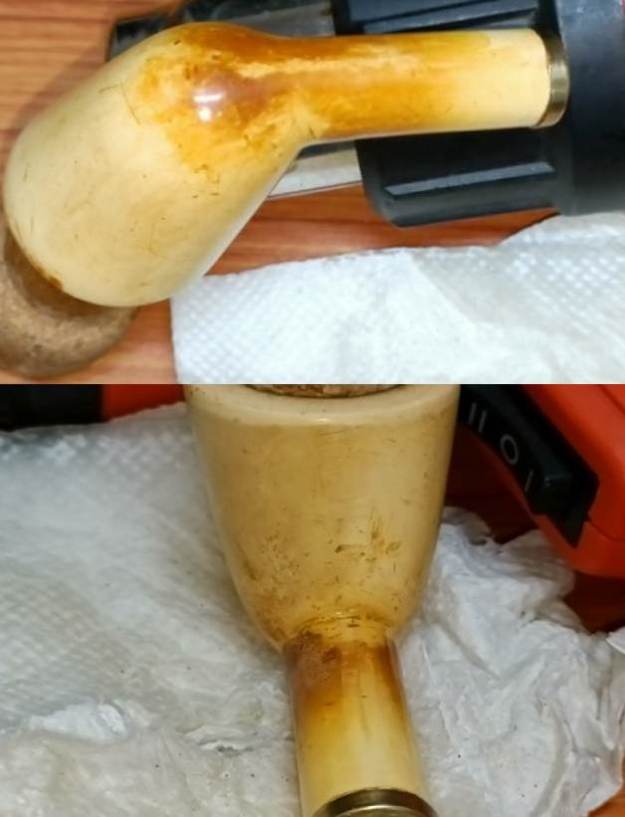
Next, I worked on the stummel. I began the stummel restoration by reaming the chamber with blade size 2 followed by size 3 of PipNet reamer. With my smaller fabricated knife, I scraped out all the carbon from difficult to reach areas. I used a 220 grit sand paper, pinched between my thumb and forefinger, to sand the inner walls of the chamber of the pipe. Once I had reached the bare walls, I wiped the chamber with a cotton swab dipped in isopropyl alcohol. This removed all the residual carbon dust and also rid the chamber of all ghost smells. The walls of the chamber are nice and solid with no signs of cracks. Using a sharp knife, I gently scraped out the overflow of lava from the rim top. The scratches on the rim surface are now clearly visible and so is the extent of damage to the outer edge of the rim. With the stummel internals cleaned up, using my fabricated tool, I scraped out the entire dried gunk from the mortise. I further cleaned the shank internals with a shank brush dipped in alcohol followed by running pipe cleaners through the shank till clean.All the while that I was cleaning the chamber and the shank, the sterling silver band came loose. I was extremely relieved to note that beneath the band, the shank was in pristine condition.To address the damages to the rim surface, I topped the rim top over a piece of 220 grit sandpaper, frequently checking for the progress made as I wanted to restrict the loss of meer material to not more than absolutely necessary. Close inspection of the rim top at this stage revealed that even though few minor scratches are still visible, they are too minor with the surface smooth to the touch. This will further even and smooth out during polishing with micromesh pads.I wiped the stummel surface with a cotton swab and Murphy’s Oil soap. The stummel surface is now free of all the dust and grime. I also cleaned out the last traces of lava from the rim top surface. The stummel and rim top surface now looks dark and dull, but it is clean. The scratches/ lacerations over the stummel surface are now more prominently visible. I shall bring back the rich shine when I polish it further using micromesh pads. This step will also help further reducing a few of the minor scratches and lacerations from the surface. At this point I was caught in a conflict; should I sand the stummel with a piece of 220 grit sandpaper to remove the scratches to make it look pristine and loose the patina that has developed over the years or preserve the coloration and patina. I decided on the later, after all it is the coloration taken on by the meer over the years which is more important and the existing scratches are a part of its journey through the years, is how I convinced myself!! I polished the stummel surface by dry sanding it with 1500 to 12000 grit micromesh pads. Some minor scratches were also addressed while imparting a nice deep shine to the stummel. The patina was also preserved. All in all, I am pleased with the appearance of the stummel at this stage. Next I gave a beeswax polish to the meerschaum bowl. I assembled the equipment and materials that would be needed during the process — a heat gun, paper towels, q-tips and a container for the wax and of course, beeswax. I stuffed the chamber with cork to prevent inadvertent seepage of the melted beeswax into either. Next, I melted a sufficient quantity of beeswax in the container using my heat gun and thereafter heated the stummel. Using the a folded pipe cleaner, I completely coated the stummel with the wax and continued the application till the surface was saturated and set the stummel aside to absorb the wax. I reheated the stummel with the heat gun about 20 minutes later and let the excess wax either be absorbed or drip off from the stummel surface. I rubbed off the excess wax with a soft cotton cloth and brought a deep shine to the surface with a microfiber cloth. The stummel now sports it’s true dark color which was drawn out by wax treatment, absolutely gorgeous I say. Next, I reattach the sterling silver band to the shank end using CA superglue after polishing the band with a silver polishing cloth.The issue that now needed to be addressed was that of the loose seating of the stem in to the shank. I had an option of either coating the tenon with clear nail polish, which is a temporary solution most suitable for briar pipes or using CA superglue to coat the tenon. This is a more permanent solution, but one needs to be careful and work fast as the tenon may get stuck in to the shank as the glue hardens rapidly. I decided to go with using the superglue.

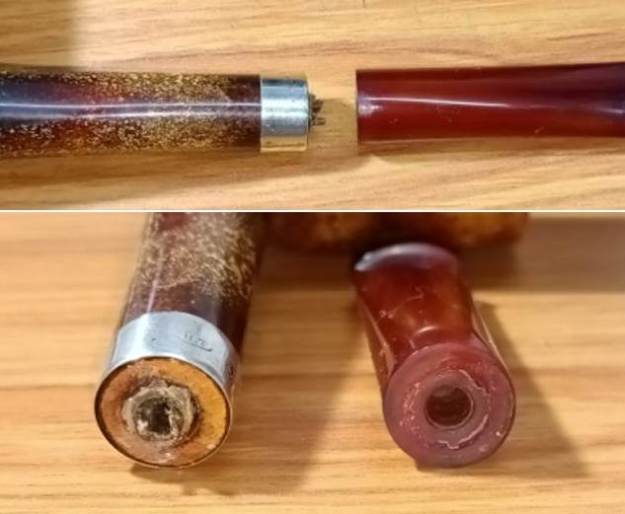
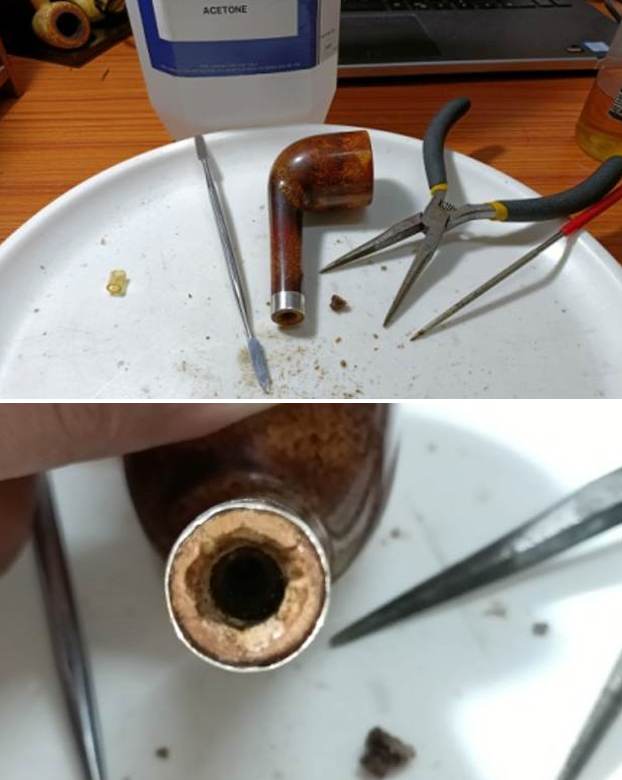
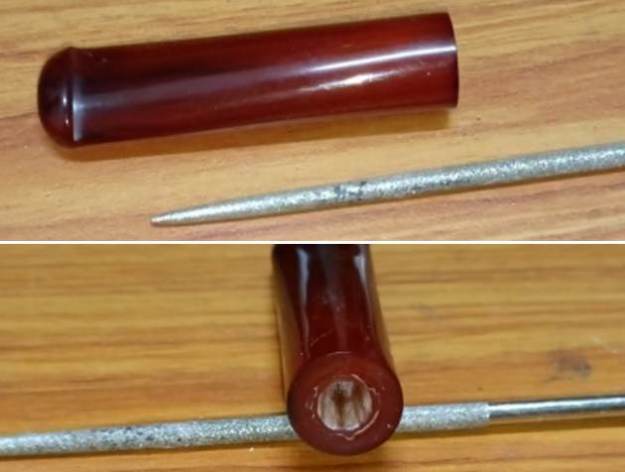
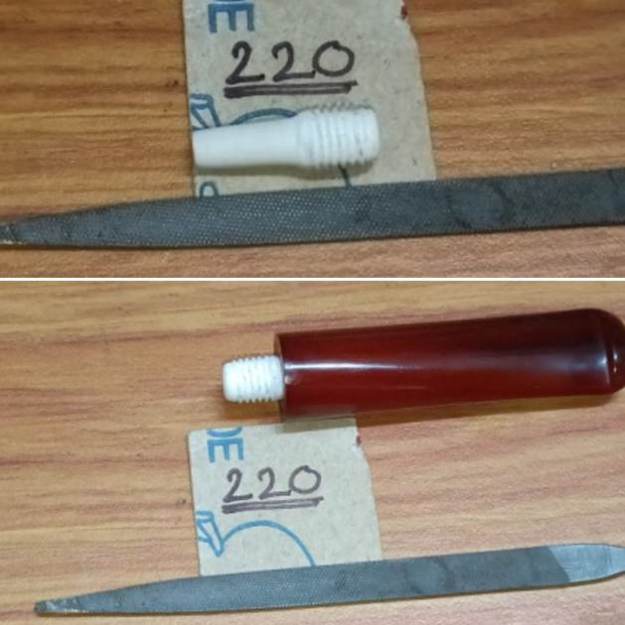
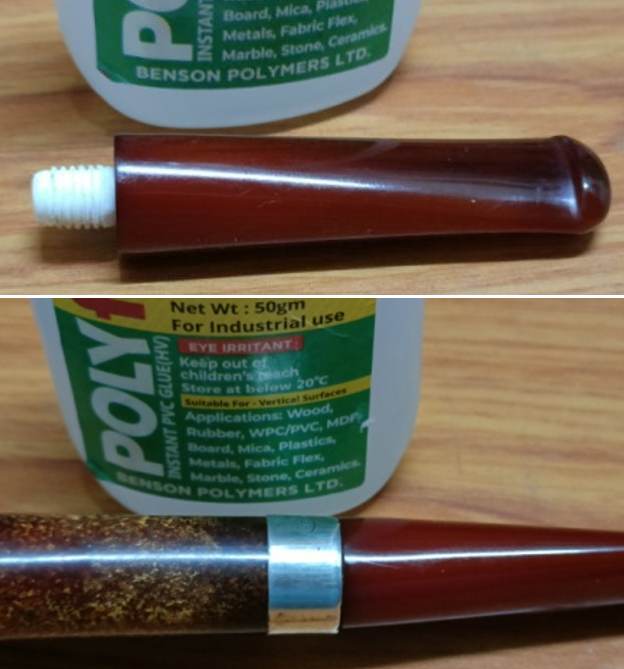
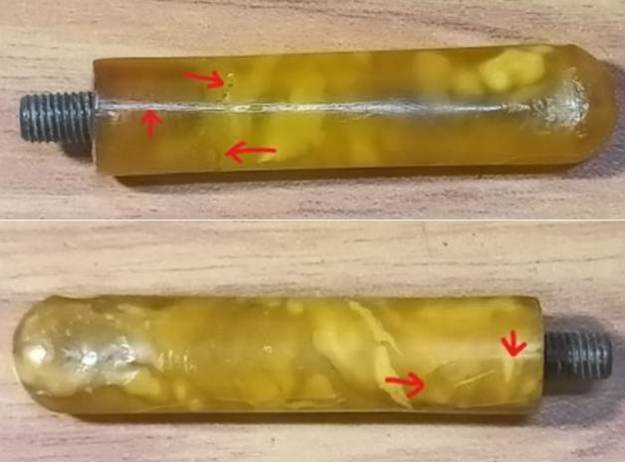
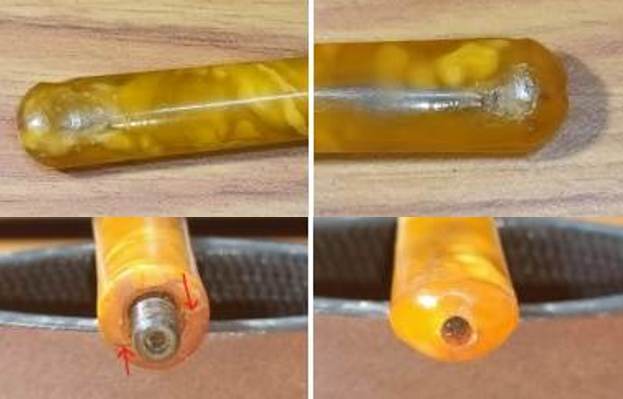
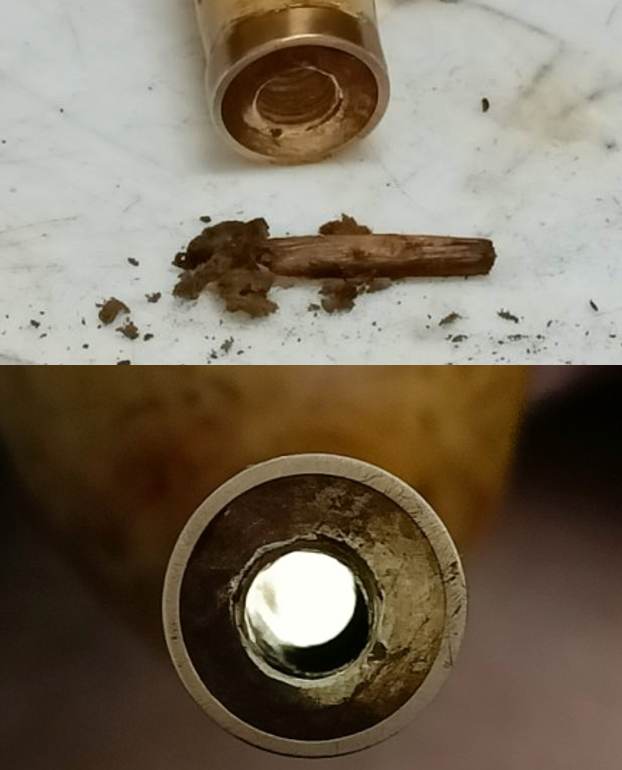
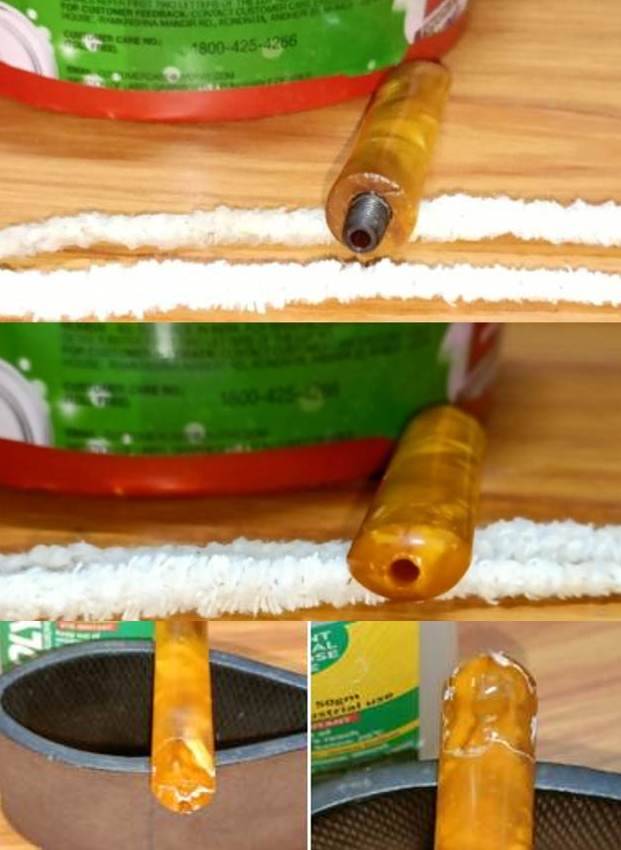
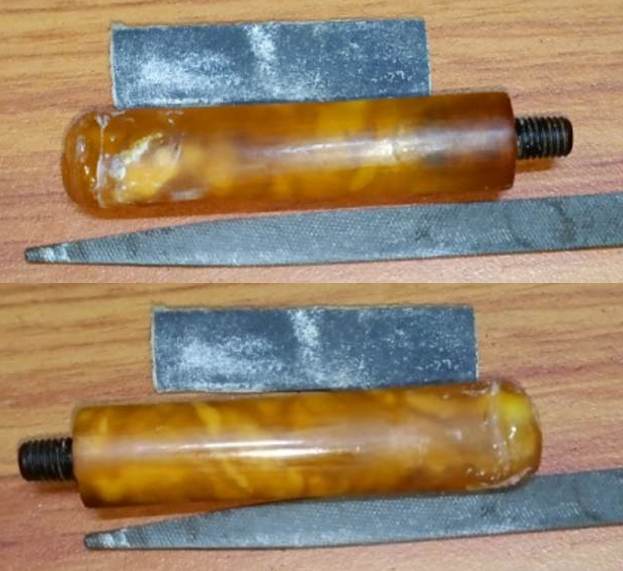
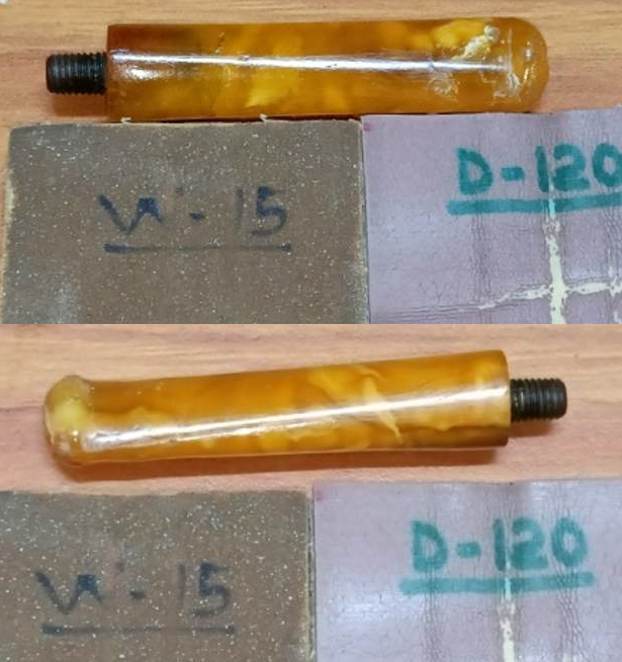
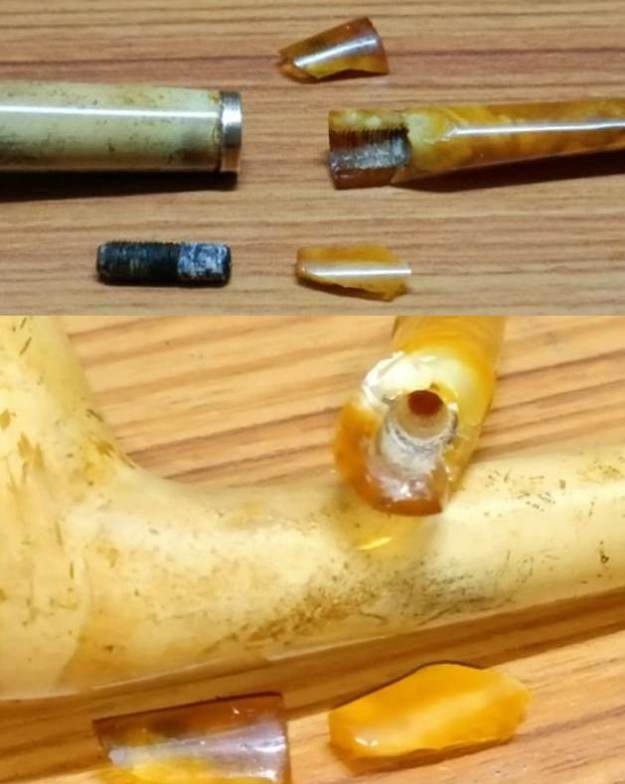
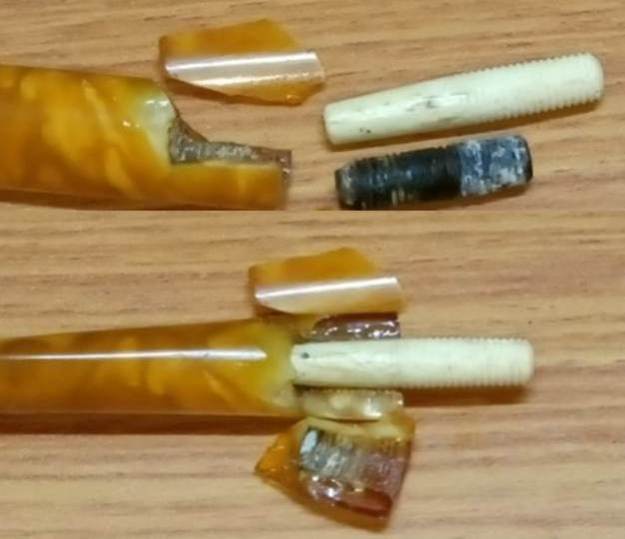
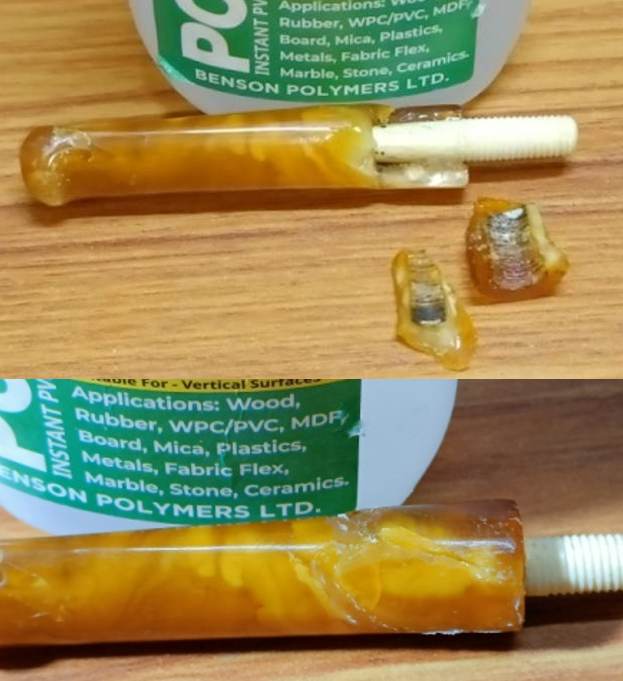
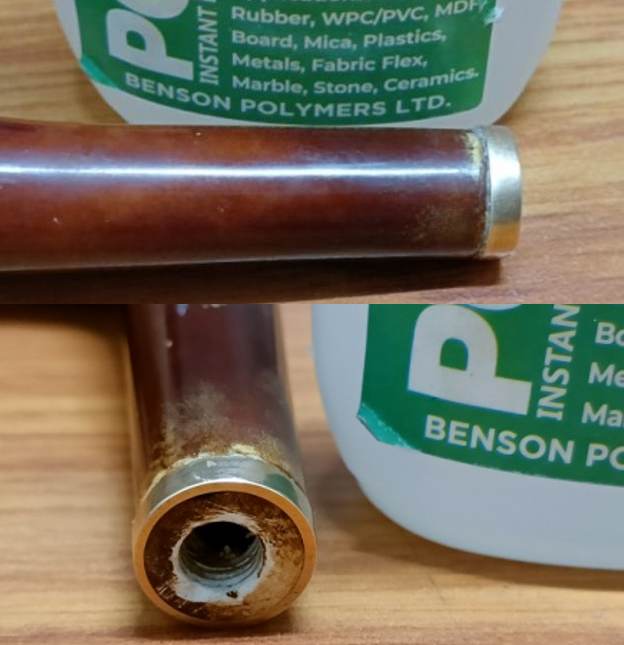
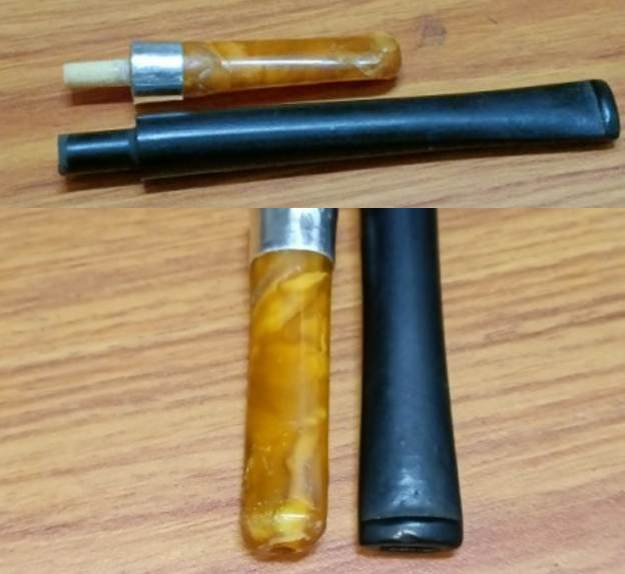
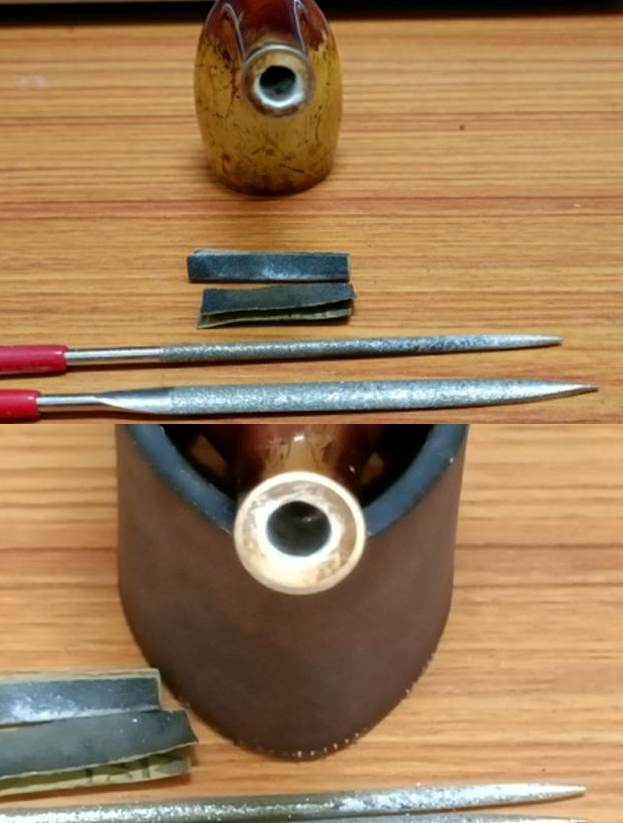
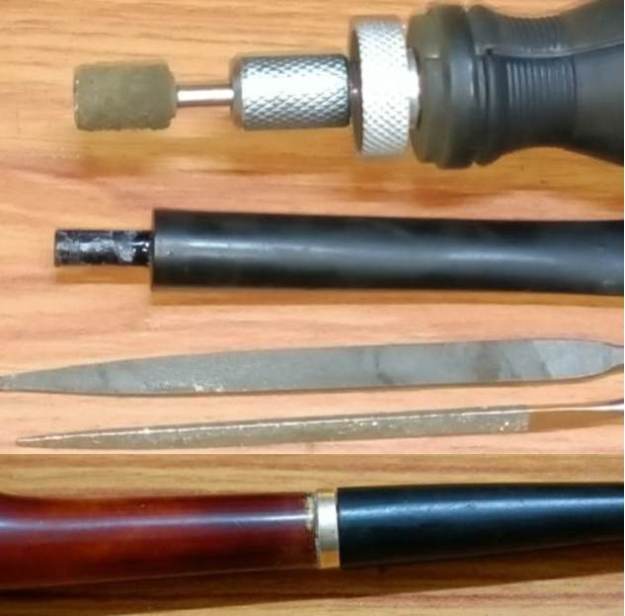
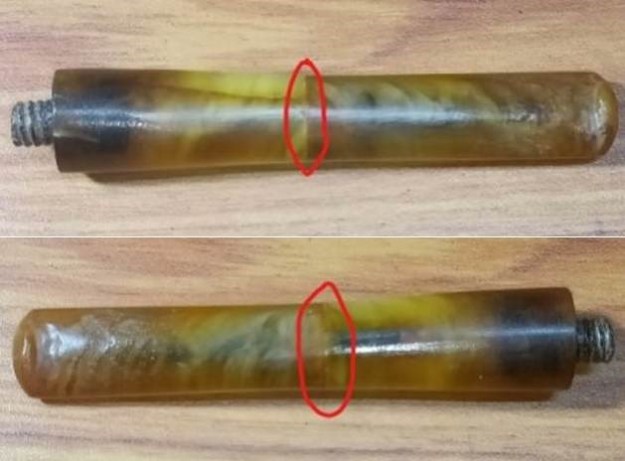
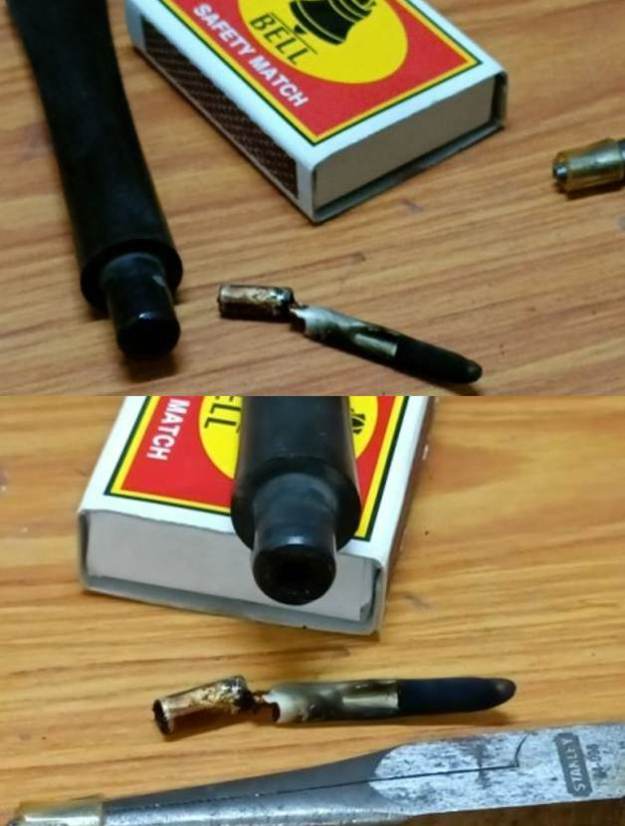
As decided, I applied a layer of superglue over the tenon surface and quickly turned it in to the shank till I had achieved a perfect alignment. I was equally quick to unscrew the tenon out from the shank to avoid having it stuck inside the shank. After a wait of few minutes to let the glue harden, I applied a second layer and followed the same process explained above. After repeating the process thrice, I decided to apply the glue one last time over the tenon to achieve a perfect thickness. Unfortunately this layer turned out to be one too many and as I was turning the tenon in to the shank, the tenon snapped at the stem end leaving it embedded within the shank. This created an altogether unexpected challenge, not to mention additional work and the need to put in extra man hours.The superglue around the broken tenon would first need to be loosened and thereafter the embedded tenon removed. I used pure acetone to loosen the glue around the broken tenon and pried it out using nose pliers, round needle files and dental tools.Next on the agenda was to fix a tenon on to the stem. From my can of spare parts, I shortlisted one Teflon Delrin screw tenon that was nearest match to the shank diameter. The shoulders of the threaded tenon perfectly seated and sealed the shank opening. The smooth end of the Delrin tenon would need some work to seat perfectly in to the stem. Following pictures will give you the general idea.I evened out the stem airway to accept the Delrin tenon using a round needle file. I was careful while working on this Redmanol stem as I did not want chipped edges on this century old stem. I, thereafter, worked the smooth end of the Delrin tenon by sanding it using a flat head needle file. I fine tuned the seating of the tenon in to the stem by sanding using a piece of 220 grit sandpaper. I checked the seating of the stem in to the mortise and alignment of the stem airway, the mortise and the draught hole. Everything was perfectly aligned. Once I was satisfied, I fixed the tenon in to the stem using CA superglue and set it aside for the glue to harden.To give the finishing touches to this gorgeous century old pipe, I reattached the stem with the stummel. I then mounted a cotton cloth wheel on to the hand held rotary tool and applied several coats of carnauba wax over the stummel and the stem. I finished the restoration by giving the pipe a rigorous hand buffing using a microfiber cloth to raise the shine further. The completed pipe, with the shining dark golden hued meerschaum stummel and complimenting red of the Redmanol stem looks lovely, fresh and vibrant; the photographs speak for themselves. I shall be adding it to my ever growing pipe collection. Thanks for the read…Cheers!!!

Rebuilding The Vulcanite Stem Of A c.1960 Dunhill Shell 56 F/T For A Friend


Blog by Paresh Deshpande

During the summer of last year while browsing on Pinterest, I came across pictures of some beautiful pipes and following the links led me to an old gentleman from the UK who was willing to sell these pipes either single or as a lot. There were around 60 odd pipes. I went through the pictures that were sent along with the rates and selected 10 pipes. After a prolonged and interesting interaction, we managed to arrive at a price point. Soon these pipes landed on the shores of India and went in to Customs hold for nearly a month. Finally, it was released and I laid my hands on these pipes after a wait of nearly 3 months! Here is a picture of the lot that I had taken moments after opening the parcel.Since then, I have refurbished, repaired a family era Barling’s Make Bulldog (yellow arrow) and a c.1901 Samuel McLardy (green arrow) and added them to my personal collection. This estate lot had a Dunhill Shell (blue arrow) that called out to my fellow Pipe Club member and a dear friend who desired this pipe as his first Dunhill! The following picture will identify the pipes that have been restored and the Dunhill that is now on my work table.This is a beautiful bent billiard pipe with a deep craggy sandblast which pre 1960s Dunhill were well known for. It is stamped on the foot and the underside of the shank with the shape number “56” followed by “F/T” followed by “DUNHILL” over “SHELL BRIAR” followed by the COM stamp “Made in England” where the letter D is followed by a numeral “0” that is smaller than the letter D and is underscored. This is followed by Group size number “4” in a circle and letter “S” for Shell towards the shank end. Dunhill White Dot adorns the top of the vulcanite stem. The stampings are clear and readable.   I have worked on a few Dunhill pipes and had extensively researched the brand. There is so much to know and study about this single British brand that has survived to till this day that each day there is some new piece of information. However, pipedia.org has adequate information on the history, lines offered and dating guide for Dunhill pipe. I strongly recommend that all Pipers should make it a point to read through the information given there.

Based on the stamping seen on this pipe, with the numeral “0” being smaller than the letter D and underscored, conclusively dates this pipe to be from 1960.

Initial Inspection
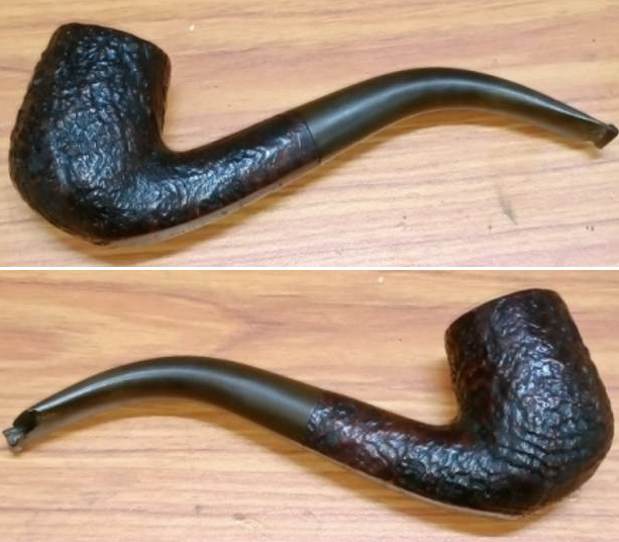
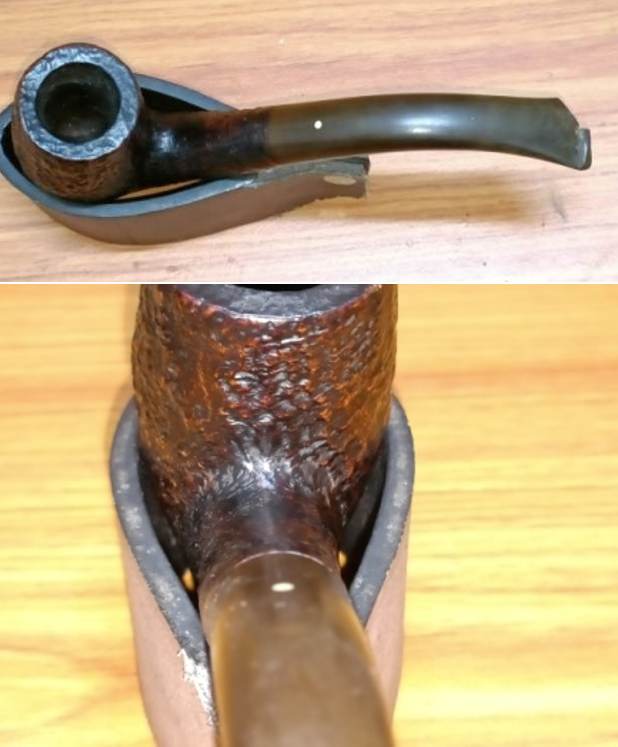
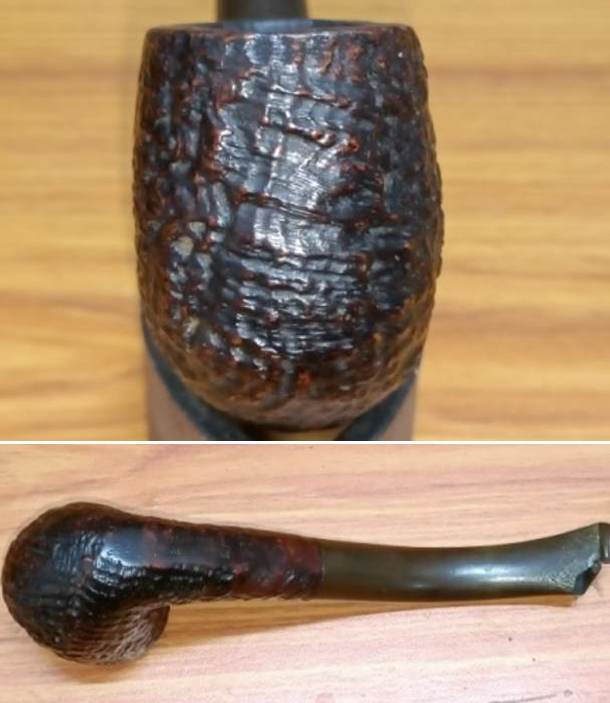
The first thing I noticed, in fact anyone would, is that the stem is severely damaged with nearly ¾ of the bite zone conspicuous by its absence! What remains of the bite zone is peppered with tooth chatter. The stem is oxidized with the white dot intact. There is a decent amount of cake in the chamber with lava overflow on the rim top surface. The stummel boasts of nice deep craggy sandblast. The dirt, dust and grime embedded in the nooks and crannies of the sandblast give a dull and lackluster appearance to the stummel. The shank is dirty with traces of old oils and gunk. The following pictures will give you a general idea about the condition of the pipe. Detailed Inspection
The chamber shows a layer of medium thick cake with small traces of lava overflow on the rim top surface. From what I can see, the chamber walls appear to be without any damage. The chamber has faint sweet smell which should reduce with the internal cleaning of the stummel. The inner and outer rim edges are in good condition which will be further ascertained once the lava overflow and cake is removed. The mortise is clean and so is the shank airway.The stummel boasts of some beautiful sandblast pattern typical of lots of bird’s eye and ring grain all around. It is dirty with grime and tar filling in much of the craggy finish. The stummel fells solid to the touch and shows no signs of hot spots. The briar looks lifeless and dull which is nothing serious to address. The round shank of the bent billiards flows into a tapered vulcanite stem which flares, like a fish tail, at the button end and hence the stamp F/T. The vulcanite stem shows significant damage to the button end, in fact, there is no button at all, similar to a Dunhill Bruyere that I had worked upon a couple of years ago!! The slot end at the right side is missing about an inch of vulcanite. This pipe would have been a favorite of the previous owner and he had continued to enjoy bowls of his favorite tobacco long after the button end had been chewed off. This is evident from the significant tooth chatter on both the surfaces of the stem. I intend to reconstruct/ rebuild this portion of the stem, including the slot, while maintaining the stem and general profile of the pipe. This will require major repairs. The quality of vulcanite is top notch.In this project, stem rebuild will be a major challenge as achieving the fish tailed profile of the stem will be crucial for overall aesthetic appeal of this piece of briar. Having previously worked on a stem rebuild/ restoration of the Dunhill Bruyere, I am aware of the challenges this restoration will present en-route.

THE PROCESS
I started this project by cleaning the internals of the stem airway. Using thin shank brushes and anti-oil dish washing soap, I cleaned the stem airway. I have modified this process of cleaning the stem airway by doing away with pipe cleaners and alcohol as it saves me a ton of pipe cleaners, which is a precious commodity for me here in India. To say that the airway was filthy would be an understatement. A lot of perseverance and tons of elbow grease later, the stem internals are finally clean.With the stem internals now clean, I moved to external cleaning of the stem surface by dunking the stem into “Before and After Deoxidizer” solution developed by my friend Mark Hoover. The solution helps to draw out heavy oxidation to the surface making it’s further removal a breeze, while the minor oxidation is eliminated to a very great extent. Unfortunately, I missed out on taking pictures of this process.

While the stem was soaking in the deoxidizer solution, I reamed the chamber with a PipNet reamer tool, using cutting blade size 2 followed by size 3 heads. I used my fabricated knife to remove cake from areas inaccessible to the reamer blades and completed the process of removing the cake by sanding the walls smooth with a folded piece of 180 grit sandpaper. I wiped the chamber with a cotton swab wetted with alcohol to clean the residual carbon dust. The chamber walls are solid with no signs of hot spots, heat fissures or webs.Continuing with the internal cleaning of the chamber, I subjected it to a salt and alcohol bath. I used cotton balls which is an at par substitute as I have realized over the years. I drew out a wick from the cotton and along with a folded regular pipe cleaner; inserted it into the mortise and through the draught hole and further into the chamber. Thereafter, I packed the chamber with cotton balls to about quarter of an inch below the rim inner edge and soaked the cotton balls with isopropyl alcohol up to the brim. About half an hour later, the level of alcohol had gone down, having being absorbed by the cotton. I topped it up once again and set it aside overnight. By next afternoon, the cotton and alcohol had drawn out all the remaining oils/ tars from the chamber and mortise and loosened out any residual cake and tar build up, fulfilling its intended task. I removed the cotton balls and ran pipe cleaners through the mortise to clean out all the loosened tars and gunk. Using my fabricated tool, I scraped out the entire loosed gunk from the mortise and further cleaned it with alcohol and q-tips. The chamber now smells clean and fresh. I set the stummel aside to dry out naturally. I cleaned the external surface of the stummel with undiluted Murphy’s oil soap and a hard bristled toothbrush. I cleaned the smooth rim top surface with the soap and Scotch Brite pad. I thoroughly cleaned the mortise with shank brush and anti-oil dish washing soap. The mortise is now thoroughly cleaned and fresh.Next, I rub a small quantity of “Before and After Restoration Balm” in to the briar with my finger tips and let it rest for a few minutes. The balm almost immediately works its magic and the briar now has a nice vibrant appearance with the beautiful contrasting hues colors that are unique to this sandblast pipe, on full display. I further buff it with a horse hair shoe brush. Now that the stummel work is nearly completed, I fish out the stem from the deoxidizer. I cleaned the stem under running warm water and scrubbed the raised oxidation from the stem surface using a Scotch Brite pad and cleaned the airway with a thin shank brush. I further removed the oxidation by scrubbing the stem with 0000 grade steel wool and applied a little EVO to rehydrate the stem. I ran a couple of pipe cleaners through the stem airway to clean the airway of the deoxidizer solution and water. To address the tooth indentations/ bite marks, I warmed up the bite zone with the flame of a lighter. The heat helps to expand the vulcanite and retain its original shape. This method may not always completely raise the depressions to the surface, but most of the times, to a great extent. In this case the tooth indentations were raised to a great extent, but the damage to the button edge would require a rebuild. I followed up the heating of the stem surface with sanding the bite zone with a worn out piece of 180 grit sandpaper to even out the surface.Next step was to start the process of rebuilding the slot end. I appropriately folded an index card and covered it with a transparent scotch tape which prevents the superglue and charcoal mix from sticking to the card. I prepared a mix of CA superglue and activated charcoal and generously applied it over and extending beyond the broken surface using the remnants of the bite zone as guiding yardstick. I set the stem aside for curing over night. I have not researched and measured the exact length that I had to reconstruct, but eyeballed the length using the longer right side of the stem where a portion of the button was still intact. Before moving ahead, I would like to mention here that I had applied this mix in layers, over the week, to achieve sufficient thickness which would help during the filing and sanding while shaping the button and achieving the correct stem profile.Once the fill had completely hardened, I moved ahead and began the process of filing and shaping the button end with a flat head needle file. This time around it was more  challenging as I had set for my self the aim of creating a fish tail shape (or rather as close a match to fish tail as possible), a straight thin slot and a concave shape to the button end as seen on original stems. This is how the stem repairs look at this point in restoration. There are many airpockets that are clearly visible and would need quite a few more rebuilds with the charcoal mix. It is not without a reason we say that Rome was not built in one day!!I marked a straight line for the slot orientation and using only the tip of the pointed needle file, I carved out the slot. I followed it up by enlarging this carved slot further using the slot carving file. I resorted to sanding with folded pieces of 180 grit sand papers to laboriously shape and widen the slot, always taking care to maintain a straight line. Once I was satisfied with the profile of the slot, I went ahead and shaped the button by first achieving a rough shape with a flat head needle file and there after fine tuning it by sanding it down with a 220 grit sand paper. A close look at the repairs confirmed the presence of some serious air pockets (seen as white spots) in the bite zone and at the slot end. Here are a couple of pictures which will point out these air pockets.I applied a mix of CA superglue and activated charcoal over the air pockets ensuring that the mix is thoroughly filled up in to these air pockets. I set the stem aside for the repairs to cure. Once the fills had cured, I sand them with a flat needle file to achieve a rough match with the rest of the stem surface followed by further sanding using a folded piece of 220 grit sand paper. Thankfully, the issue of air pockets has now been addressed. I continued to dry sand the entire stem with a folded piece of 600 and 800 grit sandpapers and further progressed to wet sanding with 1000, 1500 and 2000 grit sand papers. This helps to reduce the sanding marks left behind by the more abrasive 220 grit paper. I rubbed a small amount of EVO to hydrate the stem.To bring a deep shine to the vulcanite stem, I went through the complete set of micromesh pads, wet sanding with 1500 to 2400 grit pads and dry sanding with 3200 to 12000 grit pads. I wiped the stem with alcohol after each pad and rubbed it down with Extra Virgin Olive oil to rehydrate the vulcanite. The repairs have blended in very well and the stem now looks shiny black and beautiful. The internals of the stem was once again cleaned out using alcohol and pipe cleaners to clear the airway of all the debris resulting due to the sanding. The finished stem is shown below.To finish, I re-attach the stem with the stummel. I mounted a cotton cloth buffing wheel to my hand held rotary machine and applied White Diamond compound to the entire pipe. I wiped/ buffed the pipe with a soft cotton cloth to clear it of any leftover compound dust. I then mounted another cotton cloth wheel on to the polishing machine and applied several coats of carnauba wax. I finished the restoration by giving the entire pipe a rigorous hand buffing using a microfiber cloth to raise the shine further. The completed pipe looks lovely, fresh and vibrant. This restored pipe is now ready to be shipped out to my friend and fellow pipe club member to enjoy for decades ahead.

Another Piece Of Pipe History Restored To It’s Former Glory; A c.1901 Samuel Mclardy”


Blog by Paresh Deshpande

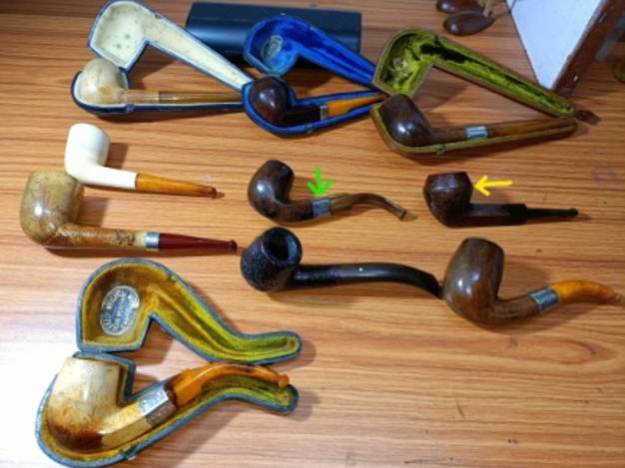
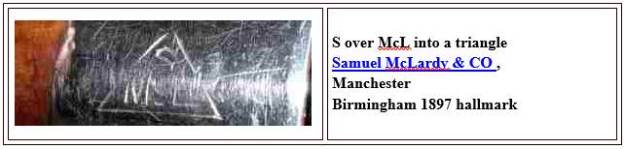
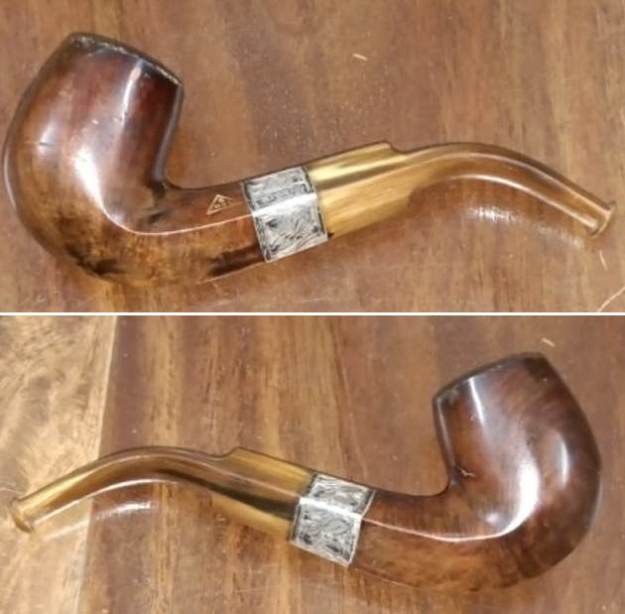
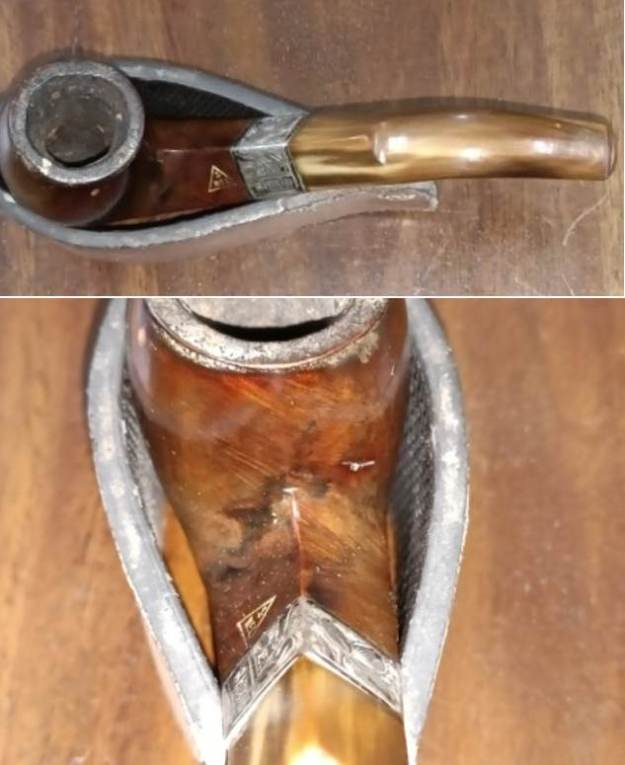
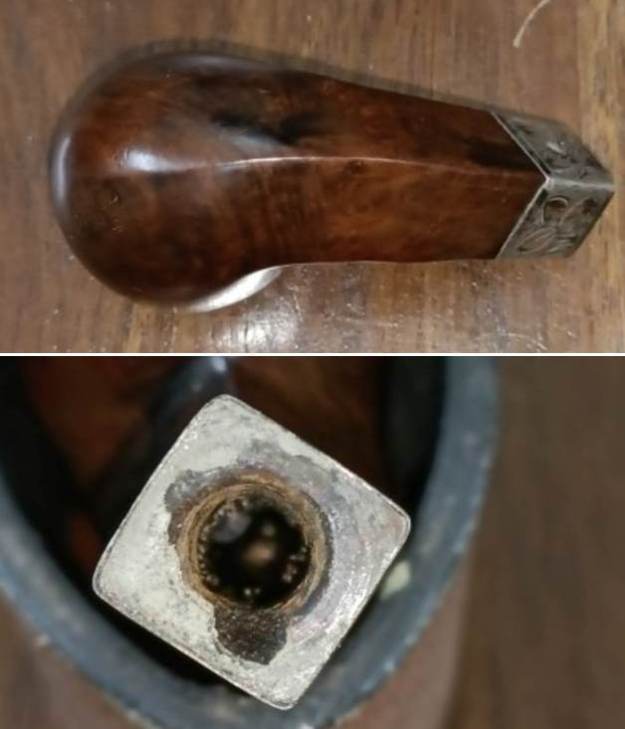
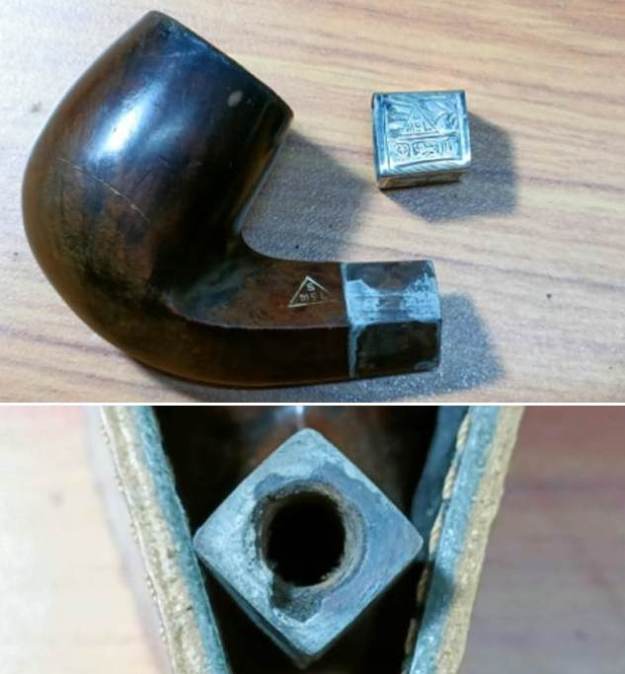
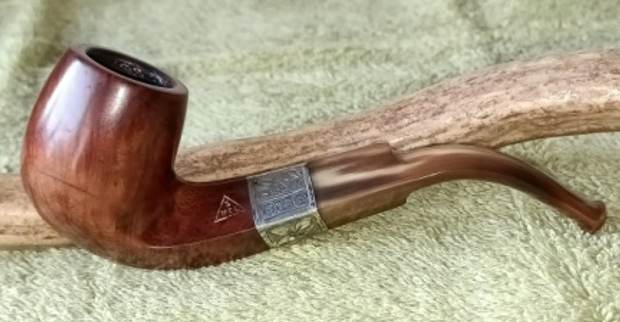
During the summer of last year while browsing on Pinterest, I came across pictures of some beautiful pipes and following the links led me to an old gentleman from the UK who was willing to sell these pipes either single or as a lot. There were around 60 odd pipes. I went through the pictures that were sent along with the rates and selected 10 pipes. After a prolonged and interesting interaction, we managed to arrive at a price point. Soon these pipes landed on the shores of India and went in to Customs hold for nearly a month. Finally, it was released and I laid my hands on these pipes after a wait of nearly 3 months! Here is a picture that I had taken moments after opening the parcel.I had restored a BARLING’S MAKE pipe from this lot earlier (indicated with a yellow pointer) and the next pipe that I have selected, again from this lot is a SMcL (indicated with a fluorescent green pointer) bent billiards with squared shank and horn stem.The pipe is a classic Bent Billiards with a square shank and a saddle horn stem with a threaded tenon. It is a typical English shaped quaint sized pipe with a nice hand feel and a light weight that makes it comfortable for clenching. It has a hallmarked silver band with filigree at the shank end. The silver filigree is stamped as “SMcL” in a triangle over three sterling silver hallmarks. From right to left the first cartouche is with a date code letter “b” followed by a cartouche with LION PASSANT certifying silver quality and the last cartouche contains the “Anchor” of the Birmingham Assay Office. The shank is likewise stamped with SMcL in a triangle in golden color while the horn stem is devoid of any stampings.This brand though faintly familiar to me through various reads and mentions, I haven’t ever worked on a pipe from this manufacturer and neither researched this old British marquee. I decided to follow the trail along the silver filigree ferrule at the shank end bearing the hallmarks. I visited www.silvercollection.it and upon searching through the index, I came across a maker’s mark that was as seen on the pipe in my hands. The maker’s mark was described as SAMUEL McLARDY & Co. Here is the link and screen shot of the details and relevant details are highlighted.

https://www.silvercollection.it/englishsilvermarksXS3.htmlThe next step was to date this pipe with the help of the hallmarks as seen on the silver filigree band at the shank end. The Birmingham City mark was easy to identify. The letter “b” perfectly matched up with the letter that identified it as being assayed by the Birmingham Assay office in 1901. Given below is the link that will take the readers to the relevant section of dating and the picture that I have taken with the date code letter marked in red.

https://www.silvercollection.it/englishsilverhallmarksBIR.html

I visited pipedia.org to know more the brand Samuel McLardy & Co. Given below is the link to the article on pipedia.org and have reproduced relevant information about the brand.

https://pipedia.org/wiki/Samuel_McLardy

The McLardy company thanks its existence to the entrepreneurial spirit of 1 person: Samuel McLardy, born in Glasgow in 1842. He was the son of a tobacconist who also produced his own clay pipes. In the paternal shop he must have learned the profession of pipe-maker. Shortly after his 20th birthday he decided to move to Manchester to start his own company. There is remarkably little known about the history of the factory. On an old advertisement it says “established 1865” so since then there must have been a steady growth. Within a couple of decades there was a massive production of clay pipes. Around 1895 the factory owned over 500 moulds which meant yearly production was around 5 million pipes! Similar to that of Dutch factory P. Goedewaagen & Zoon in that period. Over time we find Samuel McLardy at different locations. Before 1880 that was Miller Street number 16 in Manchester and it is there where the shop grew to the size of a factory. In 1890 the company moved to Shudehill number 67 where it remained active until after 1910.

The production of clay pipes was a large part of the McLardy operation and this interesting Pipe Manufacturers Catalogue shows several clay models displayed for sale. Duco’s article, referenced above, examines the historical realities impacting the Samuel McLardy Co., (typical of other UK pipe companies) by navigating through relatively prosperous years leading up to the turn of the century, the decline of interest in clay pipes, diversification of other product lines to cope with falling revenues, WWI, the growing economic bubble of the 20s leading ultimately to the collapse of the McLardy, Co., soon after the stock market crashes in September (for UK) and October (for US), 1929. I found this last statement regarding the Samuel McLardy, Co., as a matter of public record published in archives of The London Gazette regarding the liquidation of the company. Reflective of the times, there were several companies listed in the Gazette which were being “wound up”:

The Companies Act, 1929.

Special Resolution of SAMUEL McLARDY & CO. Limited.

Passed 13th January, 1930.

AT an Extraordinary General Meeting of the Members of the above named Company, duly convened, and held at No. 20, Swan-street, Manchester, on the 13th day of January, 1930, the following Resolution was duly passed as a Special Resolution: –

” That the Company be wound up voluntarily; and that Mr. George Elder, Chartered Accountant, of Edwin Collier & Co., 3, York-street, Manchester, be appointed Liquidator for the purposes of such winding-up”.

Thus to summarize, Samuel McLardy & Co. was established in 1865 by Mr. Samuel McLardy at the age of 23. This company was an established clay pipe maker and produced about 5 million pipes a year. By 1920s, the business was no longer profitable due to WW I, declining interest in clay pipes and financial meltdown of 1929. Samuel McLardy & Co was “wound up” on 13 Jan 1930 after 65 years of its existence.

With the provenance of the pipe established beyond doubts, it was logical for me to move ahead with restoration proper of this pipe.

Initial Inspection
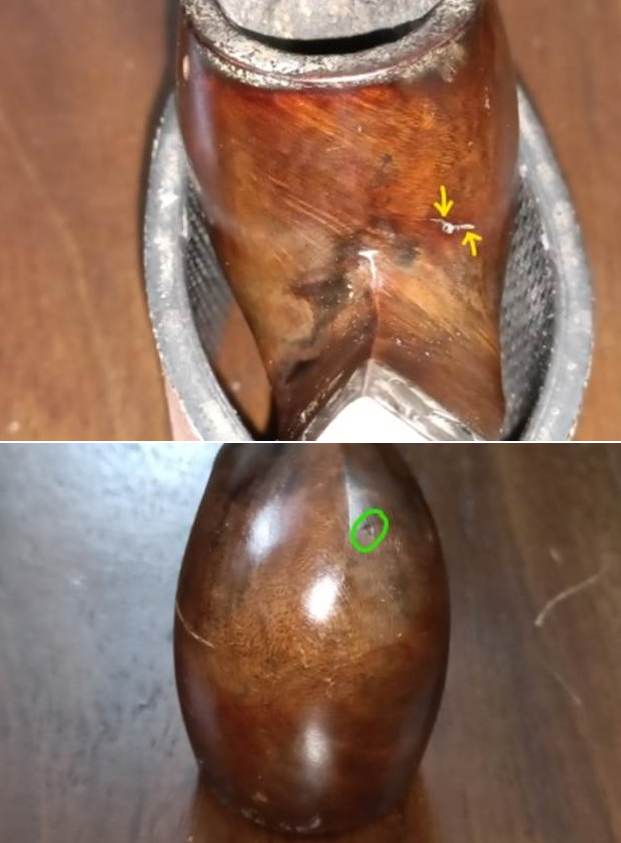
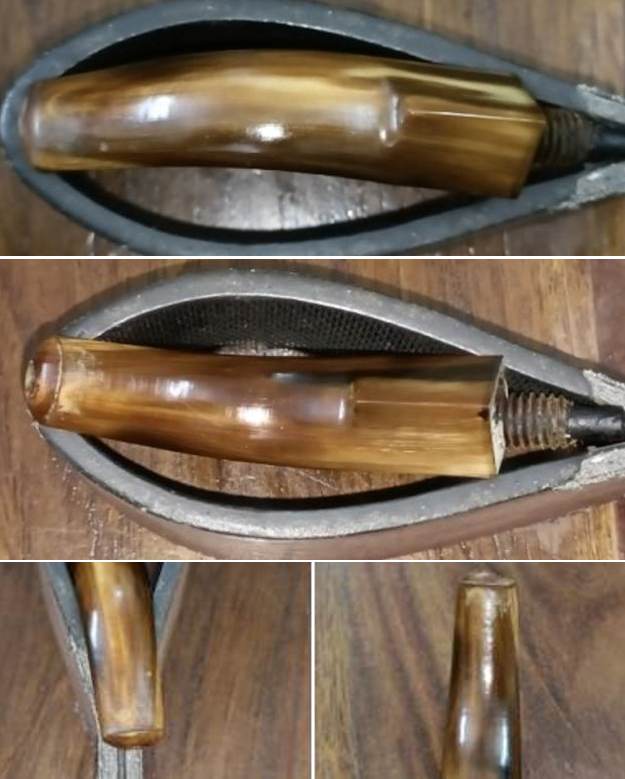
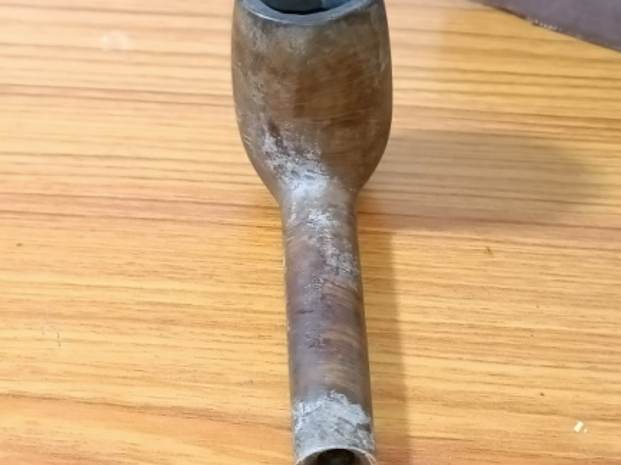
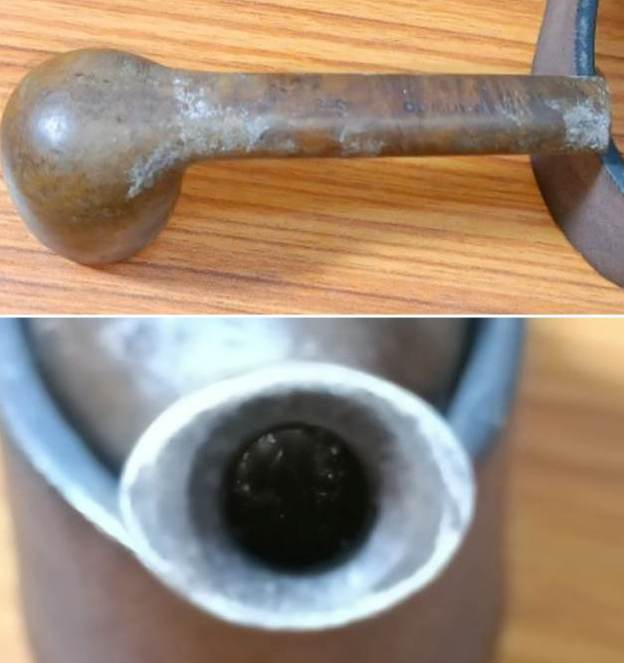
This pipe has the quintessential quaint size and shape that is nearly always seen on old British made pipes. The well seasoned briar is covered in dirt, dust and grime from decades of use. There are a couple of deep scratches on the stummel surface. There is a thick cake in the chamber with heavy overflow of cake, oils and tars over the rim top surface. The inner rim edge is uneven and charred. The outer rim edge, likewise, is peppered with dents and dings. The horn stem is in good condition with minor tooth chatter on both surfaces in the bite zone. The draw through the pipe is labored and constricted. This project should be an easy restoration, unless some gremlins are lurking unbeknown to me around the corner! Here are a few ‘before’ pictures of the pipe. Detailed Inspection
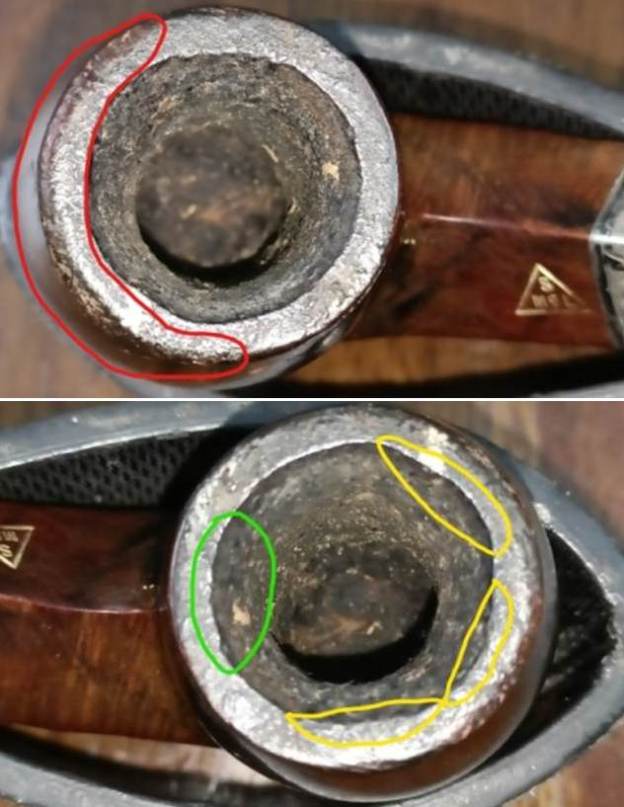
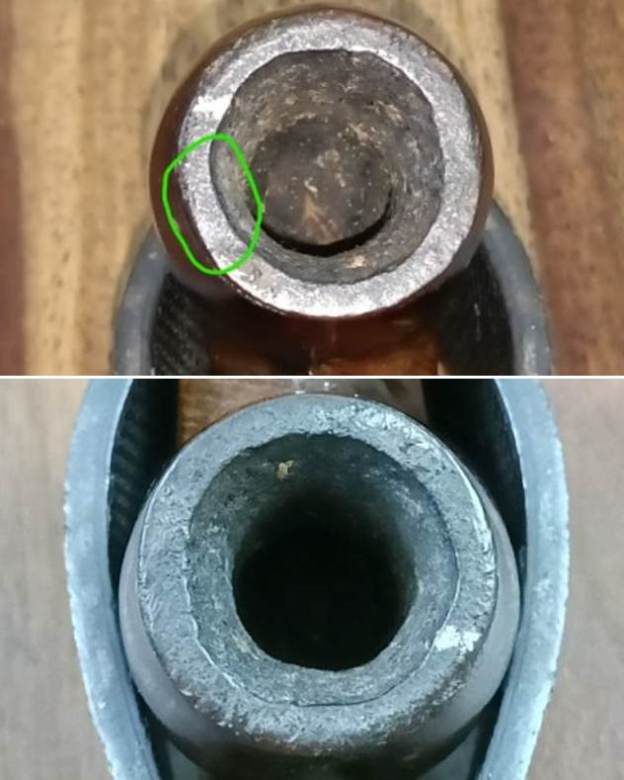
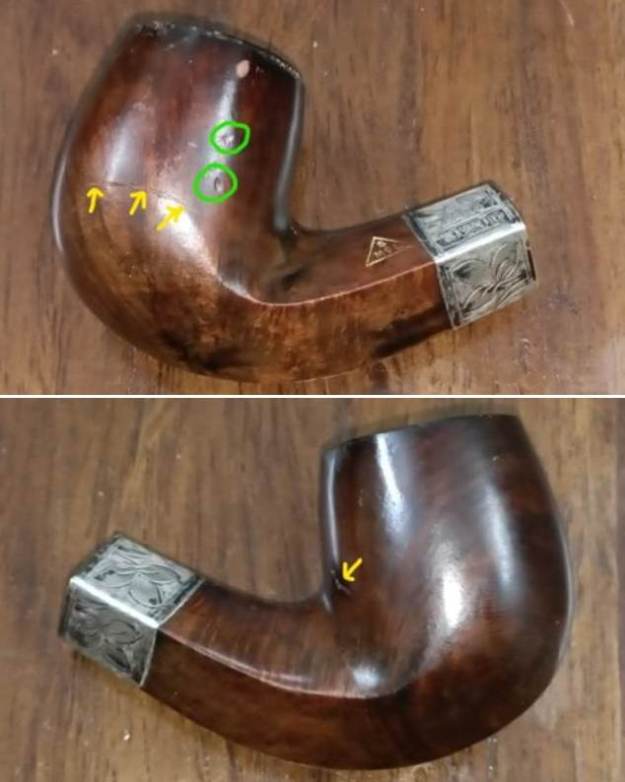
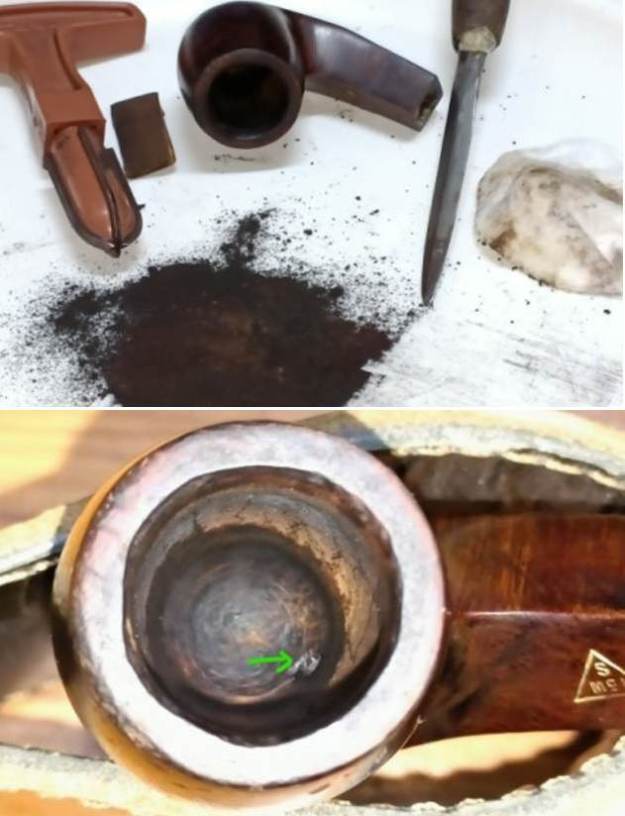
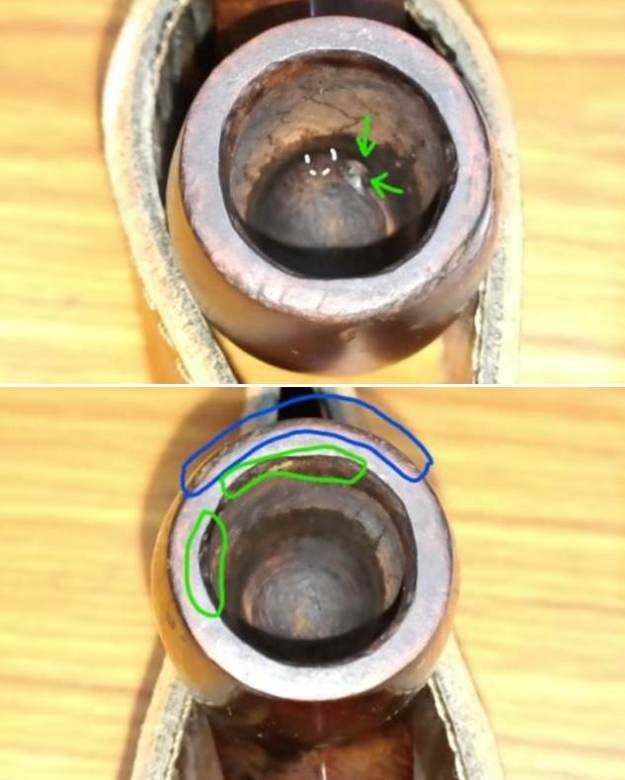
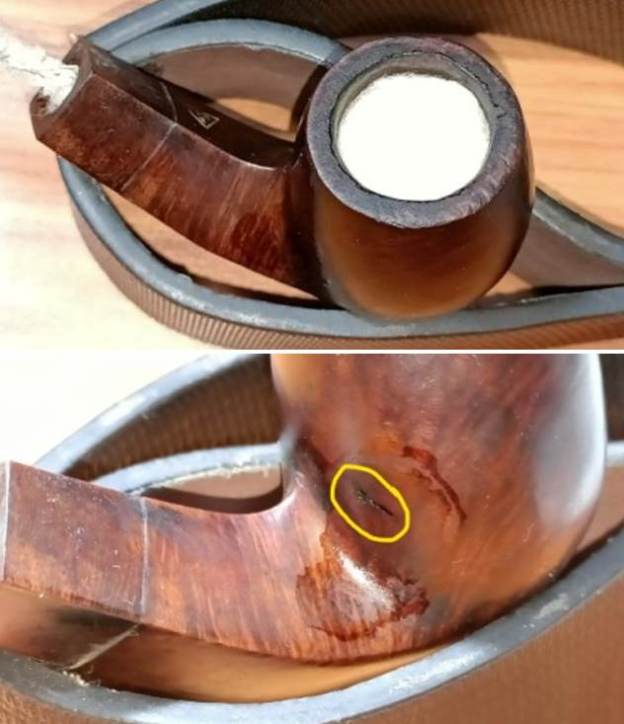
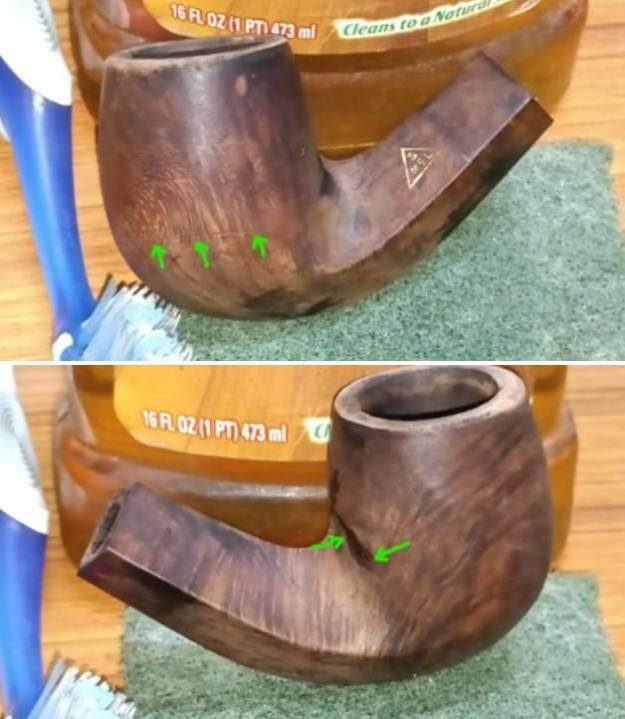
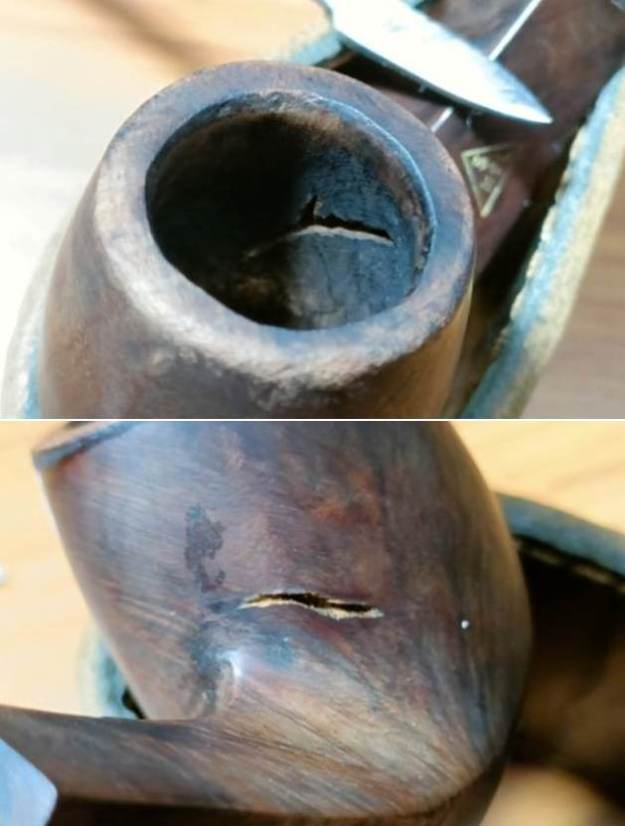
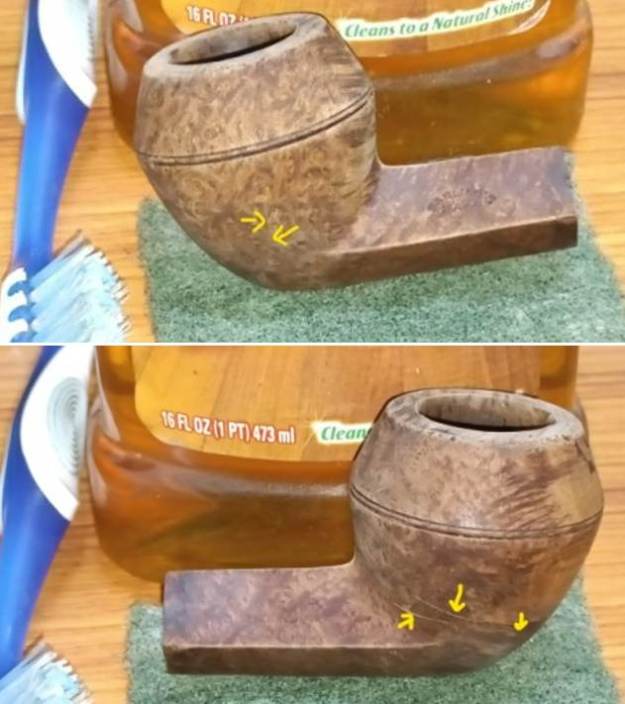
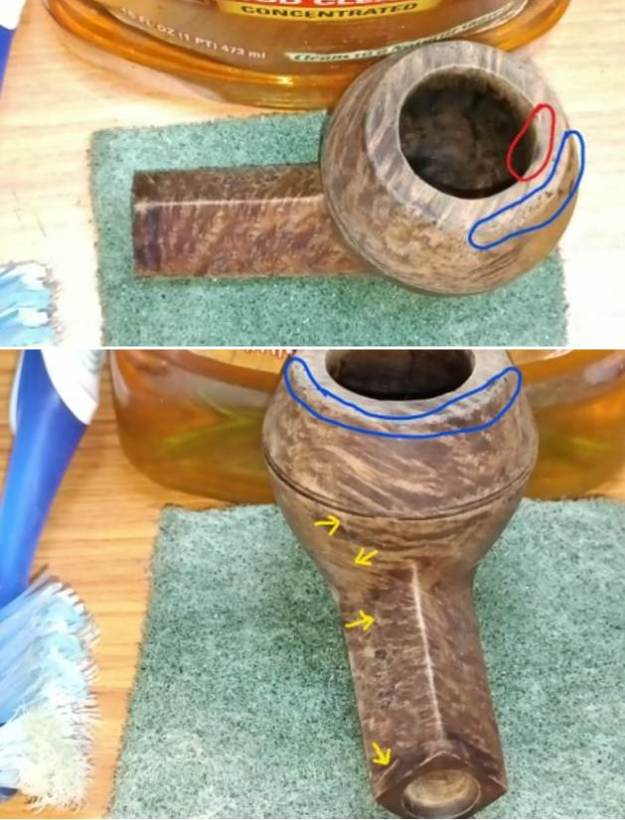
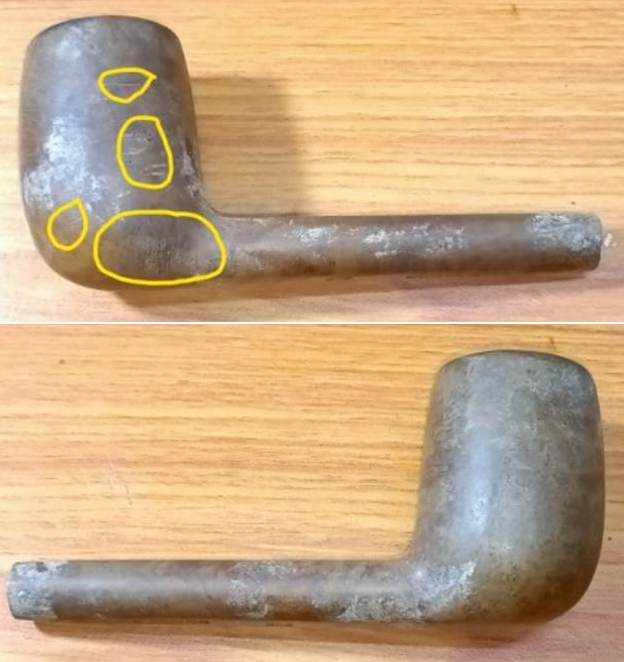
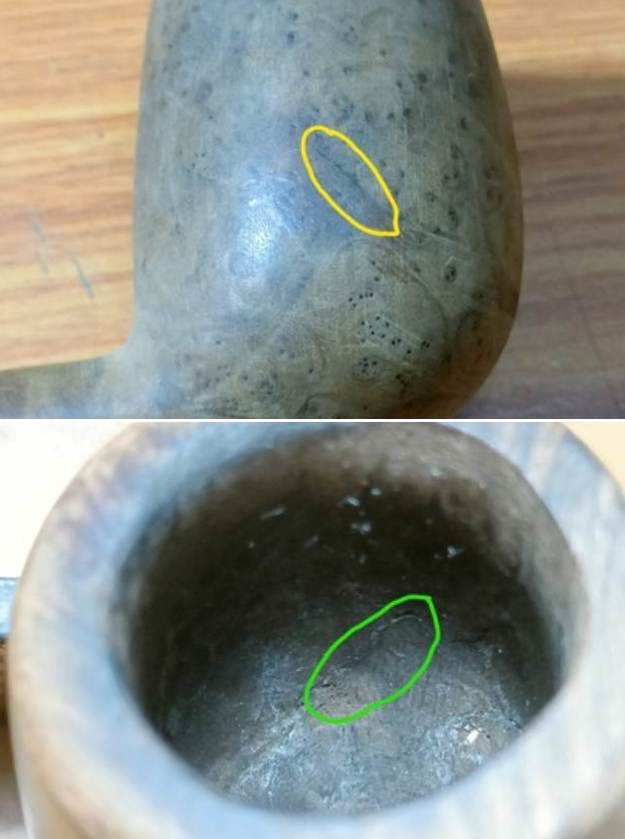
The chamber has a thick hard cake that has spilled over the rim top surface. The cake is thicker around the upper half of the chamber. The outer rim edge has dents and dings all around but is most severely damaged along the front half portion (encircled in red), a damage that can result only due to repeated strikes against a hard edged surface. The inner rim edge is unevenly gouged, probably due to use of a sharp knife to clean up the rim of the charring damage (encircled in yellow). The rim appears thinned out in a couple of places and is encircled in green. The condition of the inner walls of the chamber can be commented upon after the cake has been taken down to the bare briar. There is a strong ghost smell in the chamber which is all pervading. The stummel surface is covered in dust, dirt and grime giving a dull, lifeless and lackluster appearance to the pipe. However, the briar has taken on a nice dark patina, a result of more than 120 years of usage which would be worth preserving. However, eliminating/ addressing the deep scratches (indicated with yellow arrows) on both side of the stummel and the few dents and dings (encircled in green) would entail sacrificing the patina. This is a call that I would need to take at some stage in the restoration process. The mortise is chock-a-block with old oils, tars, ashes and grime making for a labored draw. The thick cake and blocked mortise hides the draught hole from view. These issues need to be addressed. The horn stem itself appears dull and lifeless and has some minor tooth chatter on both the surfaces of the stem. The slot is perfectly round and correct for the time period of the pipe and shows accumulation of dried tars and dirt. The threaded bone tenon also shows traces of deposition of gunk and grime within the threads and at the tenon end. The button edges are sharp and sans any major damage with a little dirt embedded at the bottom of the edges and some minor tooth chatter over the lower and upper button in the bite zone. The dark and light hues taken on by the stem over the years should polish out nicely and will add an additional touch of class to this already classy pipe. The Process
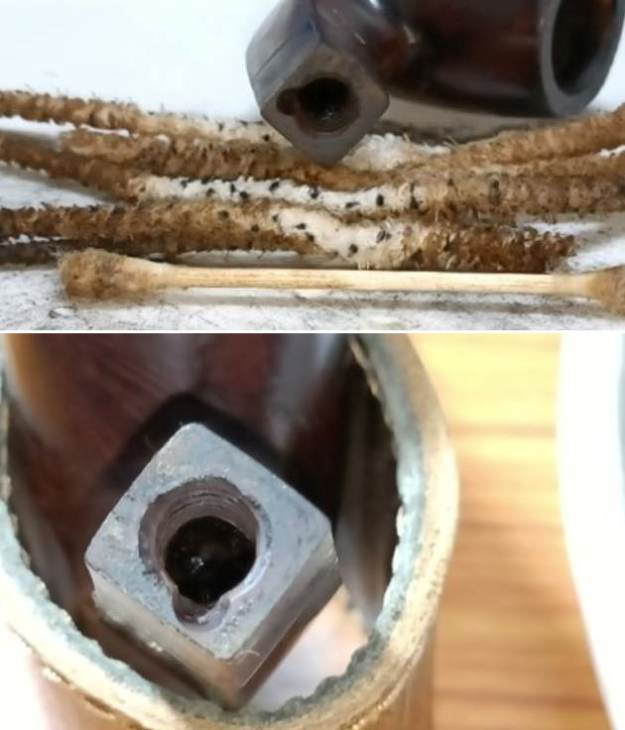
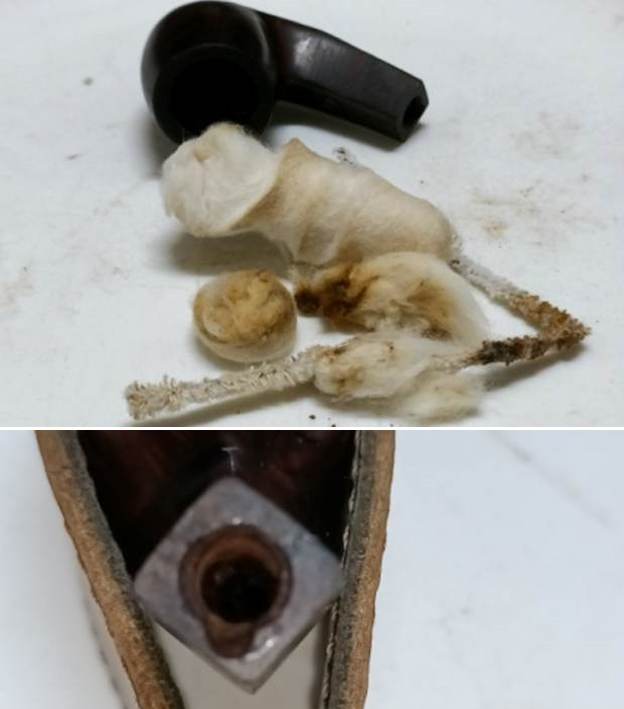
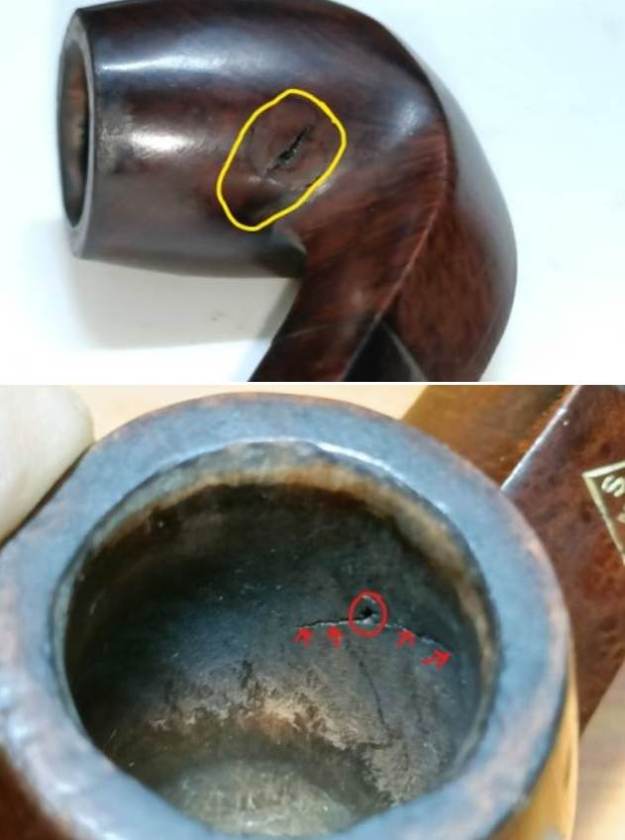
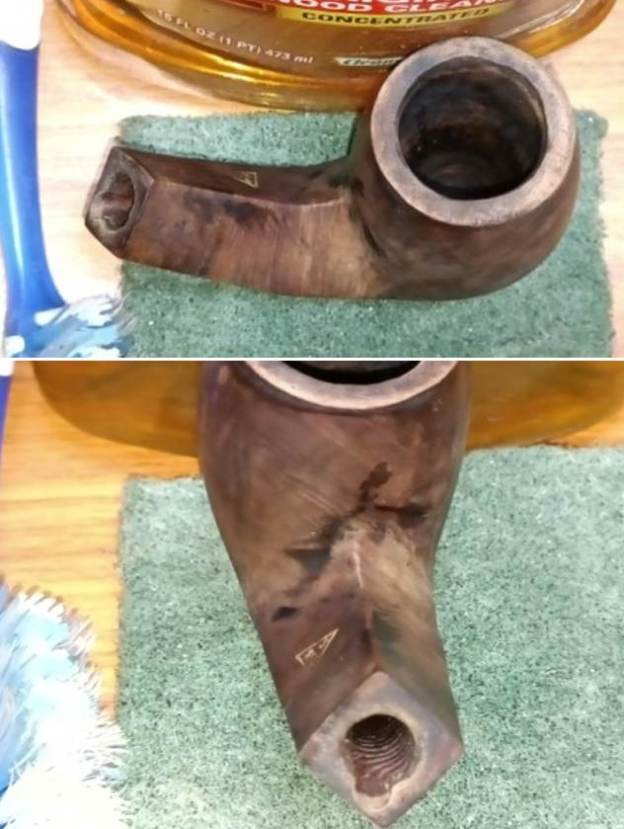
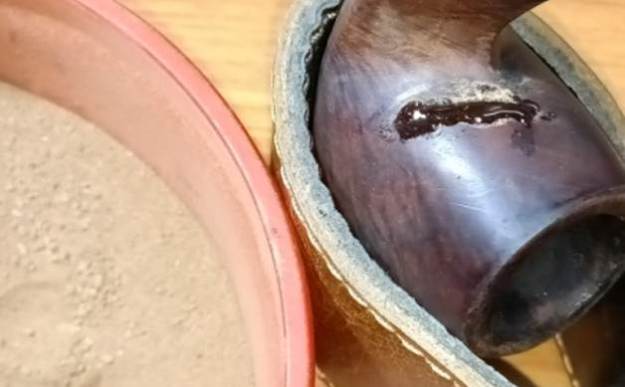
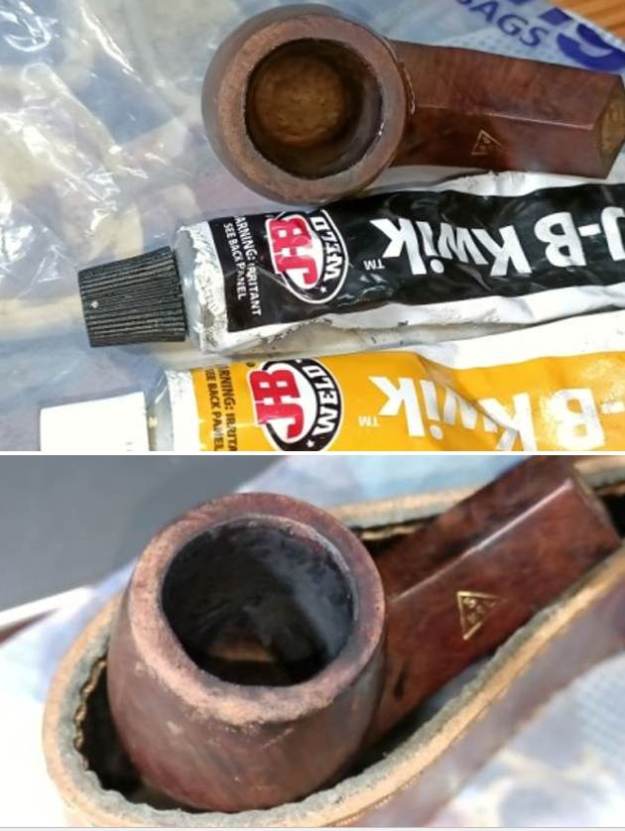
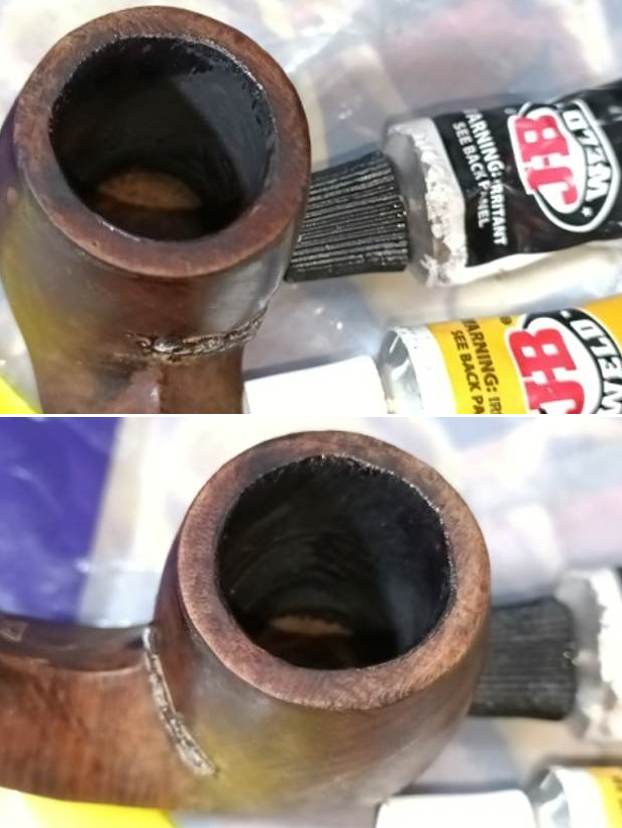
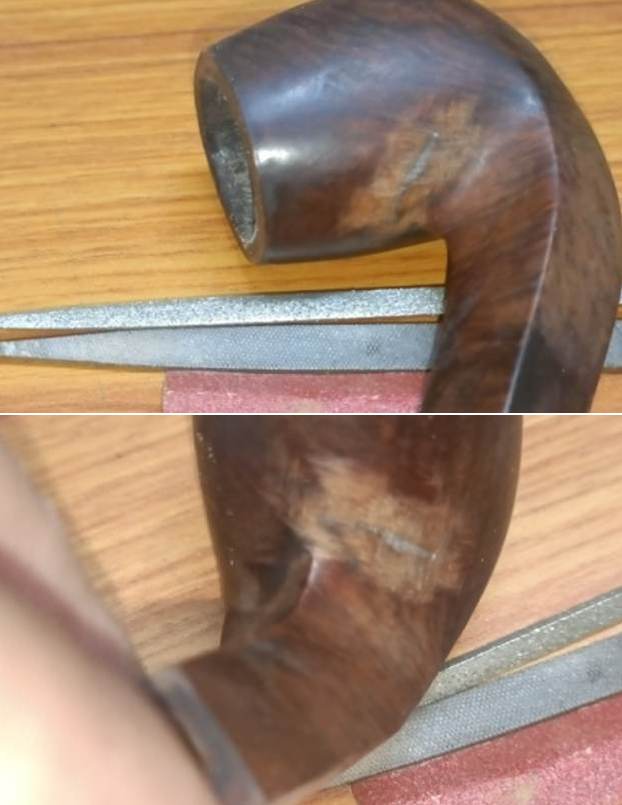
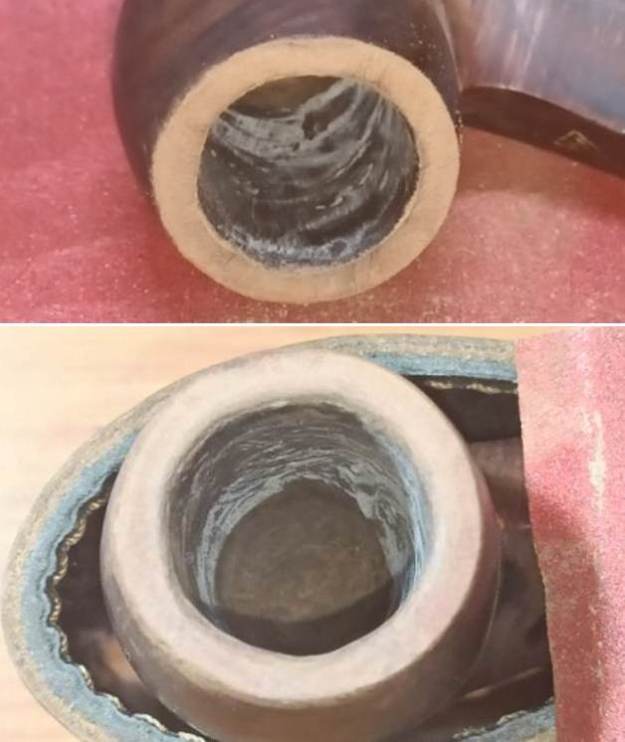
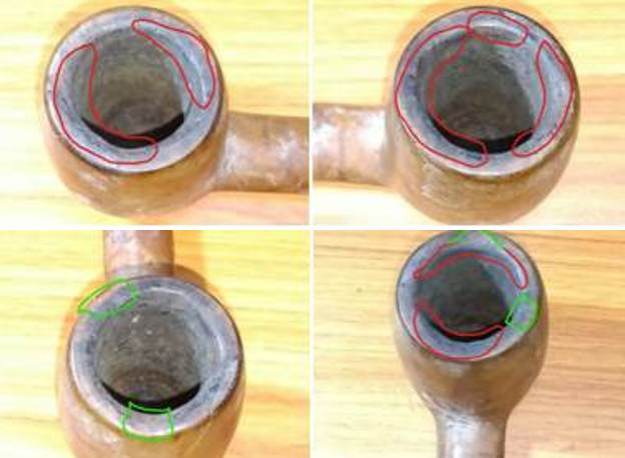
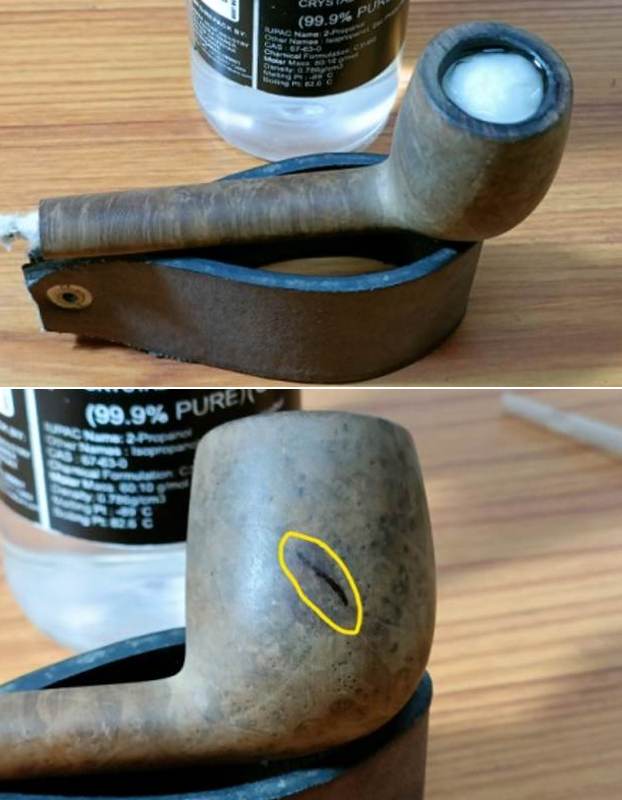
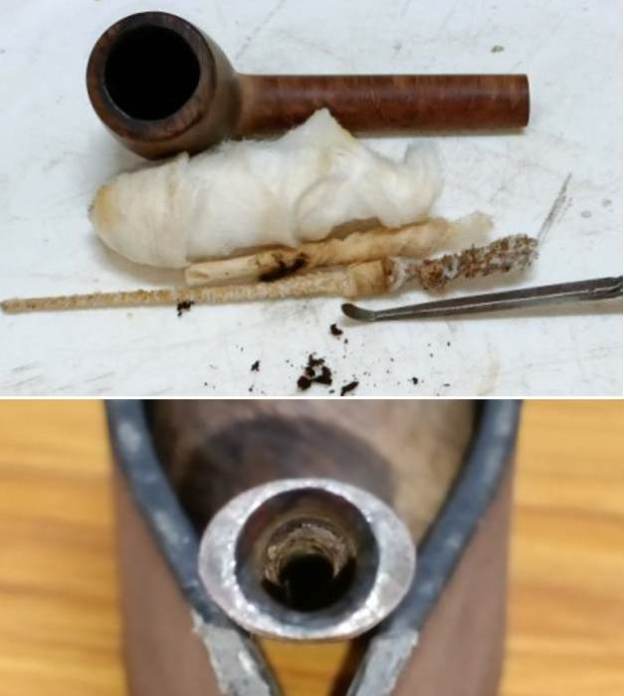
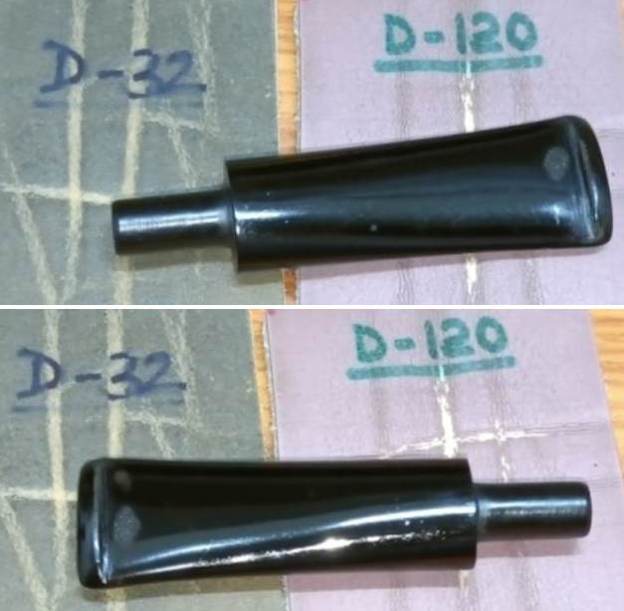
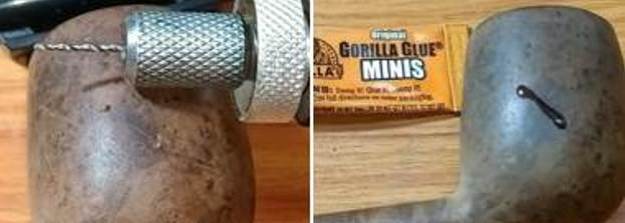
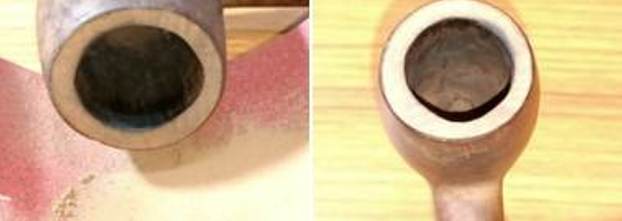
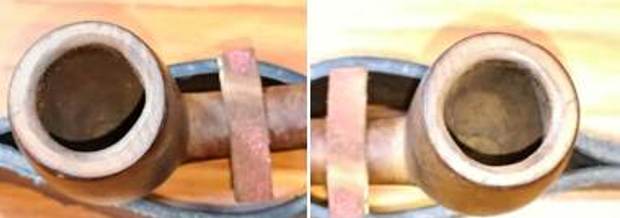
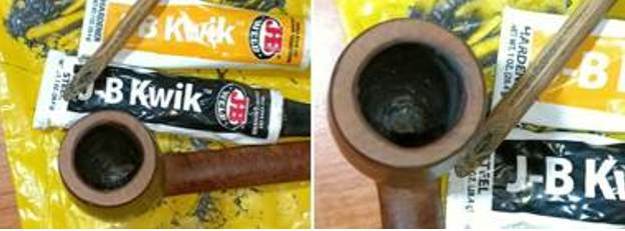
I first tried to remove the silver filigree band to check for any hidden gremlins over the shank end surface. The band came off quite easily and it was a relief to note that there were no cracks or chipped areas underneath the band as evidenced from the shank end face.Since the stummel is where maximum restoration efforts are needed, this was where I started my process to restore this pipe. I began the process of refurbishing this pipe by reaming the chamber with a PipNet reamer tool, using the second head. Using my fabricated knife; I further took the cake down to the bare briar. With a 220 grit sand paper, the walls of the chamber were rid of all the remnants of the cake, revealing smooth chamber walls. I further wiped the chamber with a cotton swab wetted with isopropyl alcohol to completely remove the sanding dust. I gently scraped the lava overflow from the rim top. Close observation of the chamber after the clean up revealed that the draught hole is not centered (centre position encircled in white) but towards the left side (indicated with green arrows). This being a manufacturing issue, there is nothing that I can do to right this wrong and even if there is something that can be done, I wouldn’t recommend it as it had previously over the last century served its owner well as can be seen from the thick cake in the chamber. The damage to the front outer edge (encircled in blue) and the out of round chamber due to damaged inner rim edge (encircled in green) can now be seen clearly and would need to be addressed. Using cotton buds, bristled and regular pipe cleaners wetted with 99.9% pure alcohol, I carried out the preliminary cleaning of the mortise. I shall continue deeper cleaning of the chamber and mortise with salt and alcohol treatment.Moving on to deeper cleaning of the chamber and the mortise…….. I use cotton balls which is an at par substitute to Kosher salt as I have realized over the years. I draw out a wick from the cotton and along with a folded regular pipe cleaner; insert it in to the mortise and through the draught hole in to the chamber. Thereafter, I pack the chamber with cotton balls to about quarter of an inch below the rim inner edge and soak the cotton balls with isopropyl alcohol up to the brim. About half an hour later, the level of alcohol had gone down, having being absorbed by the cotton. It was here that I noticed seepage on the right side of the stummel through what I had initially assumed to be a scratch. However, this patch of seepage points to a through crack which if left unattended would lead to a burn-out.  I topped it up once again with alcohol and set it aside overnight. By next afternoon, the cotton and alcohol had drawn out all the remaining oils and tars from the chamber and mortise, fulfilling its intended task. I removed the cotton balls and ran pipe cleaners through the mortise to clean out all the loosened tars and gunk. I set it aside to dry out naturally. It is such unexpected curve balls that are thrown at you which make any restoration a challenging one. Once the stummel had dried out completely, using my fabricated tool I scraped out the entire loosened gunk from the mortise and further cleaned it with alcohol and q-tips. I cleaned out all the debris and gunk in the crack from the outside (encircled in yellow). I also scraped the chamber walls to remove all the loosened cake and charred briar; especially form the corresponding insides of the external crack. A closer examination of the chamber walls shows the extent of damage (indicated by red arrows) and most likely this is a result of some flaw in the briar wood which was exposed during previous use and reaming to maintain cake. I would love to hear about your opinions on what had caused this damage. This issue needs to be addressed immediately to avoid ruining this 122 year old specimen of pipe history.Before moving on to addressing the above, I decided to clean the exterior surface of the stummel. I used a hard bristled tooth brush and Murphy’s oil Soap, to scrub the stummel, chamber walls and rim top. I washed the stummel under running warm water with anti oil dish washing detergent till the stummel surface was clean and dried it using paper towels and soft cotton cloth. The deep scratch on the left and the ‘now determined’ through crack on the right (indicated by green arrows) are all too clearly visible. I simultaneously cleaned the shank internals with the detergent and hard bristled shank brush and set the stummel aside to dry out naturally.With the stummel now clean both internally and externally, it was time for me to address the issue of the through crack on the right stummel surface. Using a sharp dental tool, I removed the charred and damaged briar from along the chamber wall until I reached the hard solid briar underneath. Similarly, I cleaned out the crack from the outside by clearing out the debris and grime and the damaged briar using the sharp dental tool. Next, I drilled counter holes at either ends of the crack using a 1mm drill bit. These counter holes will prevent spread of the crack any further in either direction. I was careful in ensuring that the counter holes are drilled at the exact end points of the crack and that these holes were not drilled through and through. I filled this crack and counter holes with a mix of briar dust and CA superglue and set it aside to cure.Next I decided to fill only the heat fissure from where I had removed the charred briar with layer of J B Weld. J B Weld is a two-part epoxy Cold Weld in two tubes; hardener and steel which are mixed in two equal parts (ratio of 1:1) with hardening time of 5-6 minutes and complete curing time of 6-8 hours. I poured the contents of the two tubes and mixed it well. I applied this mix, pressing as deep and as evenly as possible, over the heat lines in the chamber wall surface. As I was applying the mix, I decided to apply this coat over the entire chamber surface as I had some of the mix remaining and it wouldn’t harm in any which way. I worked fast to ensure an even coat before the weld could harden. I set the stummel aside for the application to harden and cure overnight. Once the external crack fill had cured completely, using a flat head needle file, I sand this fill to achieve a rough match with the rest of the stummel surface. I further fine tuned the matching of the fill by sanding fill surface with folded piece of 220 grit sandpaper. The stummel surface was now clean and even.Next, with a folded piece of 150 grit sandpaper, I sand the coat of J B Weld from the internal walls of the chamber keeping just a thin layer of coat along the wall; just enough to provide an inert and heat resistant layer between the burning tobacco and the damaged briar. I shall further enhance this separation by adding a bowl coat of activated charcoal and yogurt.Next I addressed the issue of the uneven rim top, damaged outer rim edges and out of round chamber. I began with topping the rim over a 220 grit sand paper, frequently checking for the progress being made. I stopped once the damaged outer rim edge was evened out to an acceptable- to- me level and the thickness of the rim top was close to even all round. To get the chamber back to round, I created a bevel over the inner and outer edge with a folded piece of 220 grit sand paper. I am pretty pleased with the progress being made thus far. I followed it by sanding the entire stummel surface using a piece of 320 grit sandpaper to address the scratches and the dents and dings. This was a decision which I had deliberated for a while. One of the major considerations in favor of sanding was the deep scratch on the left side which could be minimized by using sandpaper to sand it down to an acceptable level. Sanding will also help in addressing the few dents and dings and minor scratches from the surface. I had decided that the sanding would be kept to bare minimum and the scratches, dents and dings that remain shall be maintained as part of the pipe’s journey thus far. To remove the sanding marks and bring a deeper shine, I polished the stummel with micromesh pads, dry sanding with 1500 to 12000 pads. I wiped the surface with a soft cloth at the end of the micromesh cycle. The stummel looks amazing with a deep shine. Next, I rub a small quantity of “Before and After Restoration Balm” in to the briar with my finger tips and let it rest for a few minutes. The balm almost immediately works its magic and the briar now has a nice vibrant appearance with the beautiful darkened grain patterns on full display. I further buff it with a horse hair shoe brush. Now that the stummel repairs/ refurbishing are completed save for the final polish, it was time to work the stem. I cleaned the internals of the stem with a thin shank brush and anti-oil dish washing soap. This ensures a thorough cleaning of the stem airway while saving me number of pipe cleaners, elbow grease and most importantly, time. With the stem internals cleaned, I scrubbed the external surface with the dish soap and Scotch Brit pad. I was particularly careful while cleaning the threaded tenon surface as the old residual oils and tars were deeply embedded in to the threads. I rinsed the stem under warm running water and wiped it with a paper napkin to dry it.I addressed the minor tooth chatter in the bite zone by sanding the bite zone with a folded piece of 400 grit sand paper. I could have filled the tooth indentation with clear superglue, sanded and polished the stem, but decided against this since the stem was thick and the tooth chatter was superficial enough to be addressed just by sanding it out. To eliminate the sanding marks and also bring a deep shine to the bone stem, I wet sanded the entire stem surface with 600, 800, 1000, 1500 and 2000 grit sandpapers. I rubbed a small quantity of EVO in to surface and set it aside to be absorbed by the bone stem. To bring a deep shine to the horn stem, I went through the complete set of micromesh pads, wet sanding with 1500 to 12000 grit pads. I wiped the stem with moist cloth after each pad and rubbed it down with Extra Virgin Olive oil to rejuvenate the horn.   I completed the mundane but equally important task of polishing the Sterling Silver filigree band. I used a local product that is available only in India to polish the band. The liquid polish was applied to the band and wiped it out after a few seconds. The polish completely removed the oxidation and gave a nice shine to the band which was further improved by polishing it with a jeweler’s cloth. Using CA superglue, I reattached the band at the shank end.To complete the restoration, I mount a cotton cloth buffing wheel on to my hand held rotary tool and polished the stummel and stem with Blue Diamond compound. This compound helps to remove the minor scratch marks that remain from the sanding. I mounted another cotton buffing wheel that I have earmarked for carnauba wax and applied several coats of the wax. I finished the restoration by giving the entire pipe a rigorous hand buffing using a microfiber cloth to raise the shine further. The finished pipe looks amazingly beautiful and is ready to join my collection. I only wish it could share with me its life story of the past years while I enjoy smoking my favorite Virginia blend in it or maybe an English blend or maybe just keep admiring it!! P.S. There was only one more issue that needed to be addressed and one that could not be ignored, being a functional issue. After I had applied and sanded down the JB WELD to a thin coat, I wanted to further protect the chamber briar while adding another layer between the JB WELD and burning tobacco. I addressed this by mixing activated charcoal and plain yogurt to a thicker consistency, just enough that it would spread easily and applied it evenly all along the chamber walls after inserting a folded pipe cleaner through the draught hole to keep it open. Once dry and set, this will not only protect the walls but also aid in faster build up of cake.Big thank you to all the readers who have joined me on this path by reading this write up as I restored and completed this project.

Restoring A Beautiful Family Era “Barling’s Make” Bulldog To Its Former Glory


Blog by Paresh Deshpande

During the summer of last year while browsing on Pinterest, I came across pictures of some beautiful pipes and following the links led me to an old gentleman from the UK who was willing to sell these pipes either single or as a lot. There were around 60 odd pipes. I went through the pictures that were sent along with the rates and selected 10 pipes. After a prolonged and interesting interaction, we managed to arrive at a price point. Soon these pipes landed on the shores of India and went in to Customs hold for nearly a month. Finally, it was released and I laid my hands on these pipes after a wait of nearly 3 months! Here is a picture that I had taken moments after opening the parcel.Save for four pipes, remaining pipes came with Amber stems that were in fairly decent condition. The next pipe that I decided to work on is from this lot. It has that classic English bulldog shape and size that I like the most. That it’s a Barling’s Make meant that it will be added to my Barling collection. This pipe is indicated by a yellow arrow in the picture below.From the above picture it is amply evident that this pipe is small when compared to the group 4 sized Dunhill that is seen in the picture, but the bowl is medium sized and holds a decent quantity of tobacco. The stummel boasts of some beautiful mix of bird’s eye and cross grains along the entire surface. It is stamped as “BARLING’S MAKE” on the left shank surface in small simple capital letters while the right shank face bears the stampings “JAMES & Co.” over “BIRMINGHAM”. These stampings are a bit different than the ones I have come across in that there is no model number and neither is there any size stampings e.g. SS, S-M, L, EL etc.I have worked on quite a few Barling’s pipes and have read up as much material as I could lay my hands on anything related to Barling’s pipe. A simple look at the stampings on the left shank surface indicates that this pipe is from the Family Era. There are certain pointers like, the small font size, simple capital letter, lack of stamp denoting the size of the pipe and the minimalistic stamping, which place this pipe between 1930s and Pre-WW II period, 1941 to be precise.

According to Tad Gage, Pre-1946 stampings are minimal. Pre WW2 pipes rarely have size, shape or grading. Thus, I can confidently date this pipe to the Family era and to have been roughly made during the period 1930 to 1941.

You may consider visiting the under mentioned link for a detailed read about the Barling company and dating guide.

https://pipedia.org/wiki/Barling#The_Company

The stampings on the left side shank surface has provided all the clues to establish the provenance of this beautiful classic British pipe, but what about the JAMES & Co over BIRMINGHAM stampings?

An internet search threw a number of businesses and Business houses with the name James & Co, including variations of the searched name, from Birmingham and nearby areas. However, nothing concrete came up that strongly connected the Barling’s pipe to any business house.

However, when I searched for James & Co. after including 1930s, my screen was flooded with images and information about JAMES CYCLE & Co.!!!! The connection between this Barling pipe and the company somehow felt logical. Here is what I found out about JAMES MOTORCYCLES……

The James Cycle Co Ltd., GreetBirmingham, England, was one of many British cycle and motorcycle makers based in the English Midlands, particularly Birmingham. Most of their light motorcycles, often with the characteristic maroon finish, used Villiers and, later, AMC two-stroke engines.

James were prolific bicycle and motorcycle manufacturers from 1897 to 1966. The company was taken over by Associated Motor Cycles in 1951 and combined with Francis-Barnett in 1957. In 1966 the company became one of the many British motorcycle companies forced out of business by Japanese competition.

In early twentieth century, it was a popular promotional practice amongst business houses to give away quality pipes that were commissioned from reputed pipe makers like Comoy’s, Charatan, GBD, Barling’s etc, as gifts to their clients with the firm name duly stamped on the pipe.

In this instance, the time period of making this pipe matches with the period of the existence of James Cycle & Co and also pipes and motorcycles are supplementary to masculinity. Is it possible that this Barling pipe was commissioned by James & Co of Birmingham as complimentary gift to their client? Please comment and let me know.

With the vintage of the pipe established with certainty and speculations about the connection of this particular pipe with motorcycle manufacturer, James & Co. Birmingham, it’s time to move ahead with the process of restoration.

Initial Visual Inspection
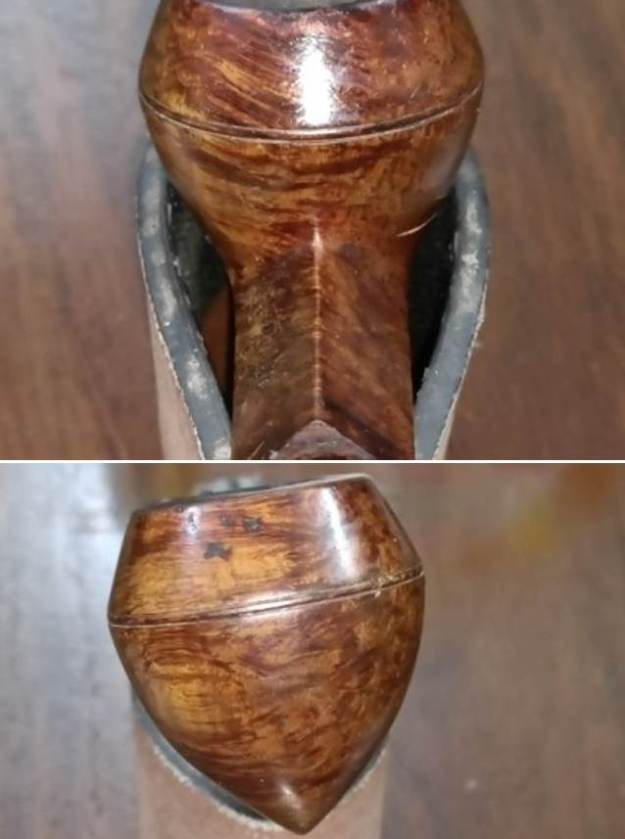
This pipe has the classic straight Bulldog shape with a diamond shank and a medium sized bowl. The stummel boasts of some beautiful bird’s eye and cross grains all over the bowl and shank. The stummel surface is covered in dirt and grime of the overflowed lava. There is not a single fill in the briar which speaks of high quality of the briar. The chamber appears out of round and has a thick layer of cake. The saddle vulcanite stem is heavily oxidized with tooth chatter and very light tooth indentations on button edges on either surface in the bite zone. Detailed Inspection And Observations
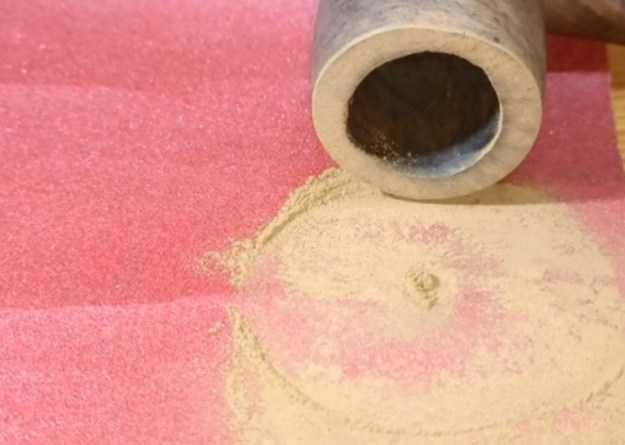
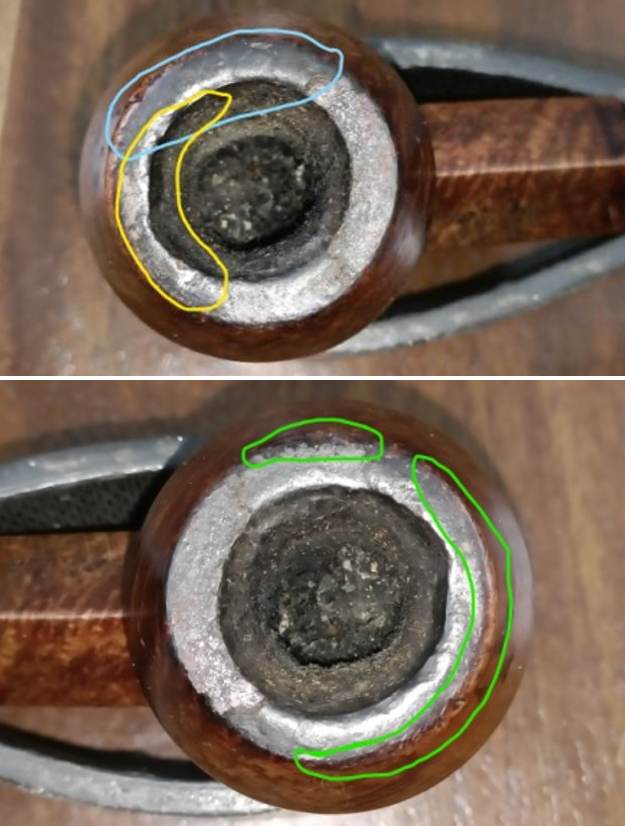
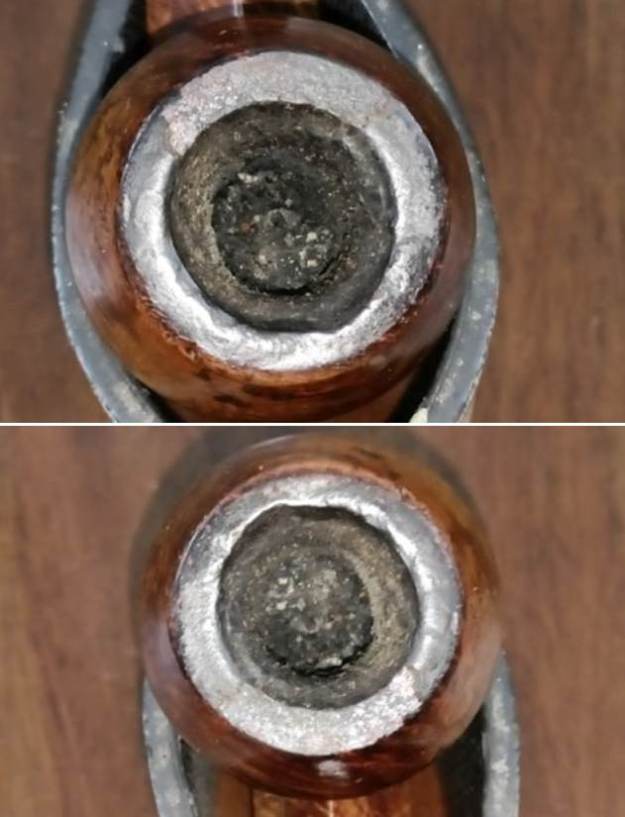
The overall proportion of this pipe is small with a decent sized chamber. The draught hole is at the bottom dead center of the chamber. The chamber has an even layer of very thick hard cake with remnants of un-burnt tobacco seen at the heel of the chamber. The rim top surface is covered with thick lava overflow and is pretty banged up along the right side (encircled in pastel blue). The inner rim edge is charred and damaged between 10 o’clock and 12 o’clock directions (encircled in yellow) which make the chamber appear out of round. The outer rim edge has dents and dings all around but is most severely damaged towards the front and back of the bowl (encircled in green), a damage that can result only due to repeated strikes against a hard edged surface. The condition of the inner walls of the chamber can be commented upon after the cake has been taken down to the bare briar. The strong ghost smell in the chamber is all pervading. The stummel appears solid to the touch all around and hence I do not foresee any serious damage to the walls in the form of burnout/ deep heat fissures/ lines or pits. The dark inner rim edges may be charred further than anticipated and the same will be confirmed after the surface has been thoroughly cleaned. I need to resort to topping the rim top in order to address the damage to the surface. The ghost smells should reduce once the cake from the chamber is removed and the shank has been cleaned. There are a few scratches that can be seen on the sides and on the shank surface of the stummel. Both the stummel and the shank are covered in grime and dust from years of use and subsequent storage, giving it a dull and a lackluster appearance. The surface has taken on a nice patina which I intend to preserve. Through all the dirt and grime, beautiful mixed grains peek out from the stummel surface. A nice clean and polish will further accentuate this play of grains over the stummel surface. Given the condition that the chamber was in, it was no surprise that the mortise was chock-a-block with accumulated oils, tars and residual gunk. This is also the major cause of the strong ghost smells from the pipe. This would need a very thorough and deliberate cleaning.The diamond saddle vulcanite stem is oxidized with calcification observed in the bite zone. The entire stem surface is covered in patches of sticky substance/ grime. The button edges on either surface has minor tooth indentations which should raise to the surface once heated. The minor bite marks in the bite zone, likewise, should be completely addressed by heating the surface and sanding thereafter. Traces of dried accumulated gunk can be seen at the round slot end and the step tenon opening.The Restoration Process
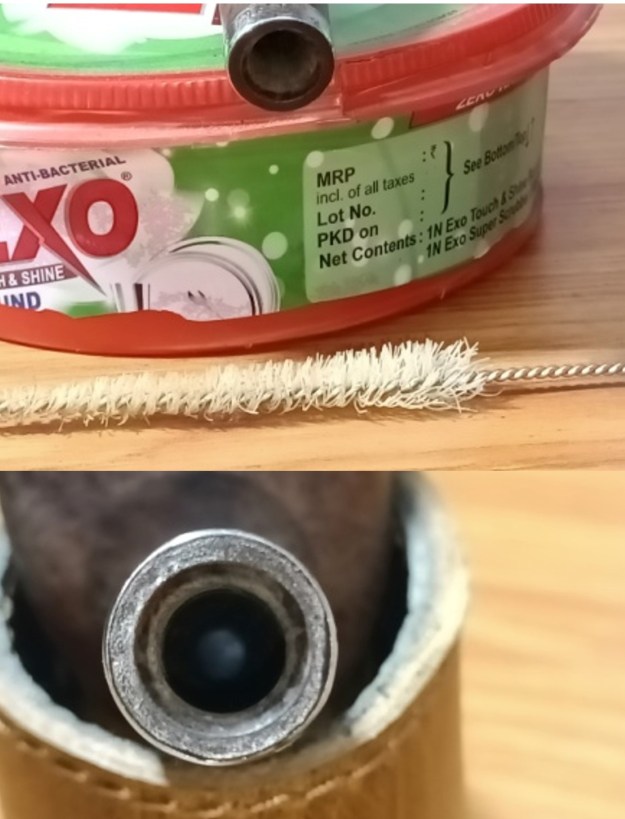
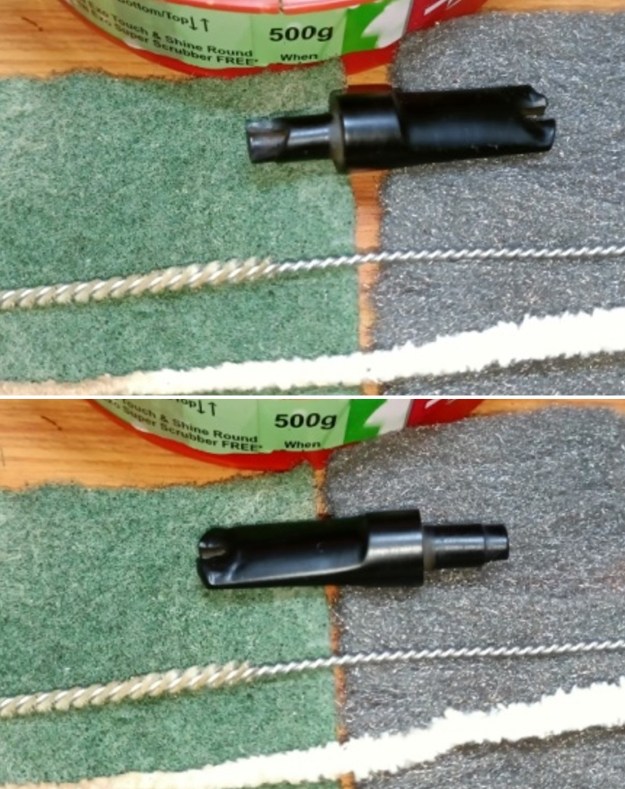
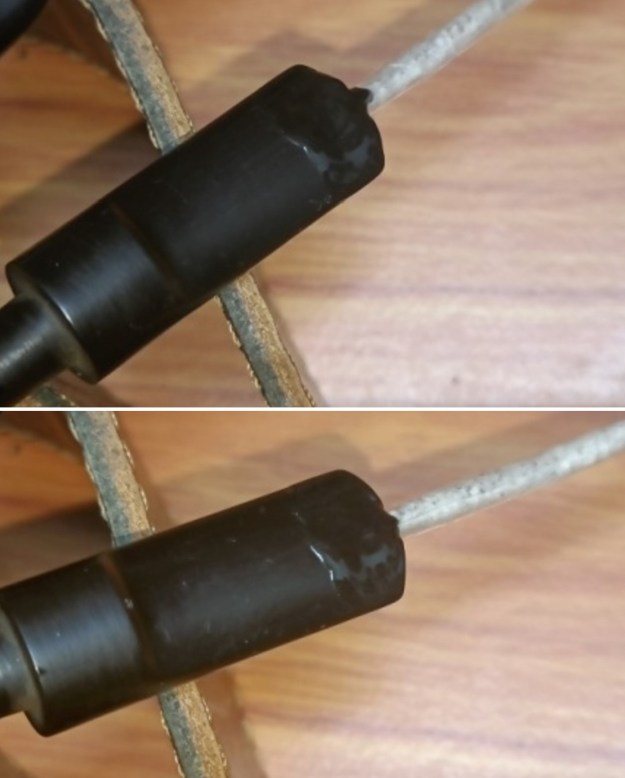
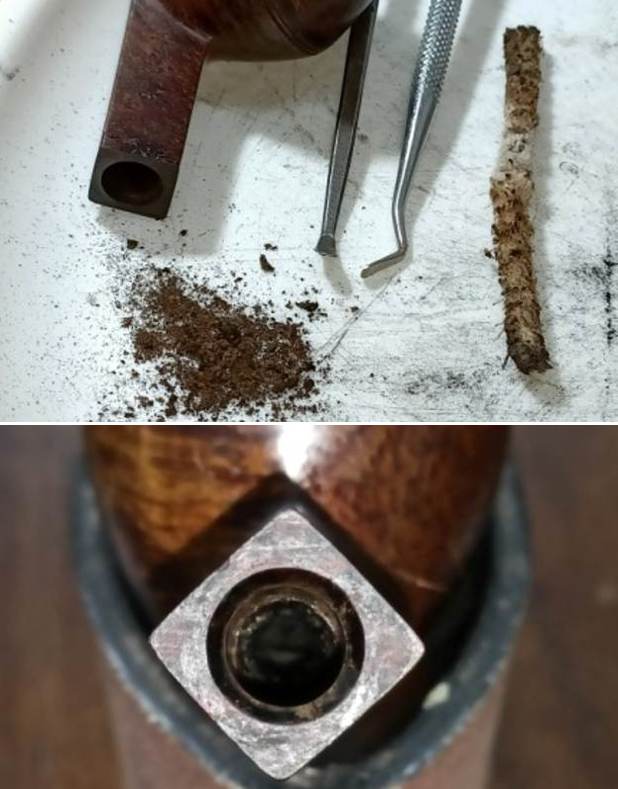
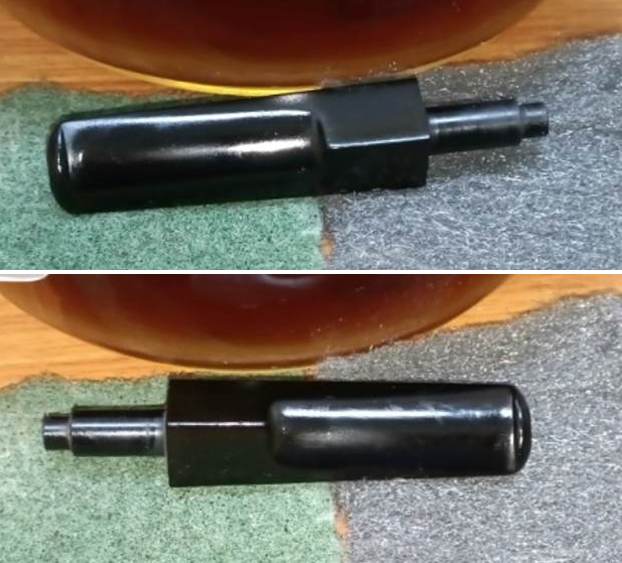
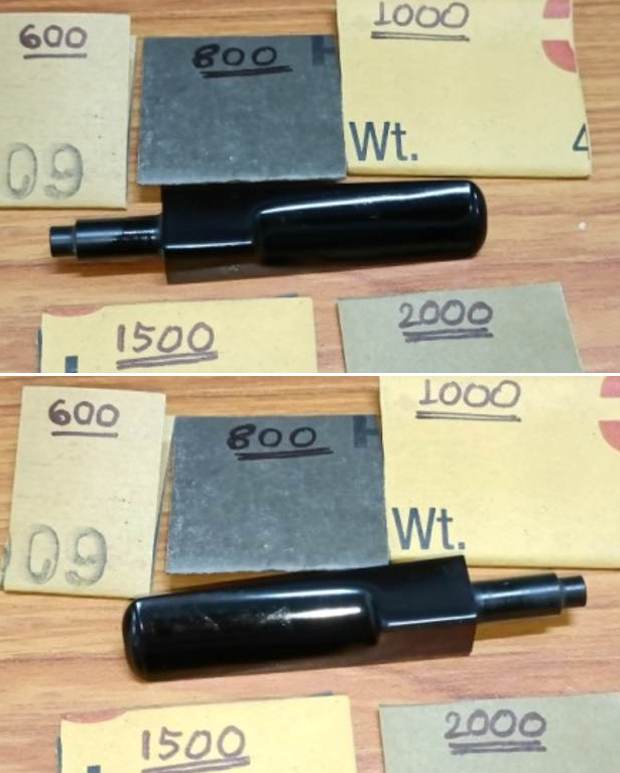
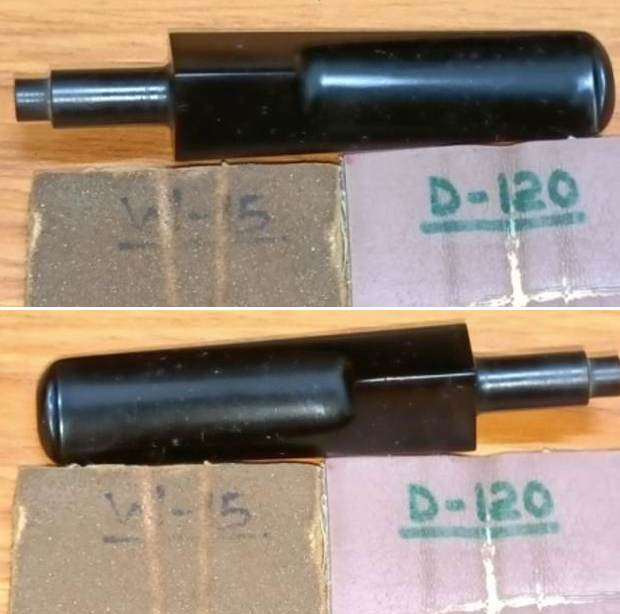
I decided to tackle the damaged stem at the start. Before I could proceed with actual repairs, I cleaned the stem internals first. Using a thin shank brush and anti-oil dish washing soap, I cleaned the stem airway. The airway was filthier than I had imagined as can be judged from the following pictures. I took me a considerably long time, but eventually the airway was clean. I ran a couple of pipe cleaners through the stem to confirm that the airway was clean and also to dry it out. With the stem internals now clean, I moved to external cleaning of the stem surface by dunking the stem into “Before and After Deoxidizer” solution developed by my friend Mark Hoover. The solution helps to draw out heavy oxidation to the surface making its further removal a breeze, while the minor oxidation is eliminated to a very great extent. I let the stem soak in the solution overnight.

Progressing ahead, I reamed the chamber with head size 1 and 2 of my PipNet reamer blade. I used my fabricated knife to remove cake from areas inaccessible to the reamer blades and completed the process of removing the cake by sanding the walls smooth with a folded piece of 180 grit sandpaper. I wiped the chamber with a cotton swab wetted with alcohol to clean the residual carbon dust. The chamber walls are solid and the minor thin veins that are visible over the walls are not heat fissures but an ultra thin layer of carbon which will be addressed once the cake is loosened up after a salt and alcohol bath, or at least that is what I hope for.I cleaned the internals of the mortise by scrapping the mortise walls using dental tools. The amount of dried oils and crud that was scrapped out, on one hand is indicative of uncared and rough use of this beauty by the previous Piper while on the other, a testimony of this pipe being one of his/ her favorite and one that he/ she reached out for quite often. I ran a couple of pipe cleaners through the airway to clear away the loose debris that would have lodged itself in the draught hole. I shall continue the internal cleaning by subjecting the stummel to a salt and alcohol soak.Now that the internal cleaning of the stummel was nearly done and also the stem had now been soaking for more than 24 hours, I removed the stem from the solution. I first scrubbed the stem surface with a Scotch Brite pad, always being mindful of the stem logo on the left side. I followed this scrubbing with a nice cleaning of the surface using a 0000 grade steel wool. I rinsed the stem under running water to rid the stem of the thick deoxidizer solution. I ran a couple of pipe cleaners to remove any residual deoxidizer solution from the airway.I followed it up by wet sanding the entire stem surface using 600, 800, 1000, 1500 and finally with a piece of 2000 grit sand paper. This serves to reduce the sanding marks of the more abrasive sand papers. I also sharpened the button edges while sanding. I wiped the stem with a moist cotton swab to remove all the oxidation and sanding dust from the surface. I applied a little Extra Virgin Olive oil over the stem and set it aside to be absorbed by the vulcanite.I went through the 3200 to 12000 grit micromesh pads to dry sand the stem. The stem now has a nice deep shine with no traces of oxidation around the entire stem surface. The stem appears a tad dull at this stage; however, after a good polish using Blue diamond and carnauba wax, the shine will deepen further.With the stem nearly completed, it was time to work the stummel again. Continuing with the internal cleaning of the chamber and shank, I subjected it to a salt and alcohol bath. I used cotton balls which is an at par substitute of Kosher salt as I have realized over the years. I drew out a wick from the cotton and along with a folded regular pipe cleaner; inserted it into the mortise and through the draught hole and further into the chamber. Thereafter, I packed the chamber with cotton balls to about quarter of an inch below the rim inner edge and soaked the cotton balls with isopropyl alcohol up to the brim. About half an hour later, the level of alcohol had gone down, having being absorbed by the cotton. I topped it up once again and set it aside overnight. By next afternoon, the cotton and alcohol had drawn out all the remaining oils/ tars from the chamber and mortise and loosened out any residual cake and tar build up, fulfilling its intended task. I removed the cotton balls and ran pipe cleaners through the mortise to clean out all the loosened tars and gunk. Using my fabricated tool, I scraped out the entire loosed gunk from the mortise and further cleaned it with alcohol and q-tips. I also scraped the moist cake from the chamber using my knife and sanding it smooth with 180 grit sandpaper. The chamber now smelled clean and fresh and the tiny veins observed in the chamber were eliminated. I set the stummel to dry out naturally. I cleaned the external surface of the stummel with undiluted Murphy’s oil soap and a hard bristled toothbrush. I cleaned the smooth rim top surface with the soap and Scotch Brite pad. I thoroughly cleaned the mortise with shank brush and anti-oil dish washing soap. The few scratches (indicated by yellow arrows) and minor dings over the stummel surface are now plainly visible while the damage to the rim top, rim inner edge (encircled in red) and outer edge (encircled in blue) is clearly defined. These issues need to be addressed.  I followed up the external cleaning of the stummel with internal cleaning of the mortise and shank using anti oil soap and shank brushes.Using a folded piece of 320 grit sandpaper, I diligently sand the entire stummel surface and thus addressed the issues of scratches and minor dings. To address the damage to the rim inner and outer edge, I topped the rim surface on a piece of 220 grit sandpaper. I limited my topping to the extent that the damage was just adequately addressed. With a folded strip of 220 grit sandpaper pinched between my thumb and index finger, I created a smart thin bevel over the inner and outer rim edges to mask the damage that remained after topping. I am quite pleased with the progress this far.   Next, I polished the stummel with micromesh pads, wet sanding through 1500 to 12000 pads. I polished the freshly topped rim surface to a nice luster, wiping the surface with a soft cloth at the end of the micromesh cycle. The stummel looks amazing with a deep shine and beautiful grains popping over the stummel surface. I am surprised that the rim top surface has the same deep brown coloration as the rest of the stummel surface and that the use of a stain pen was not required. I massaged a small quantity of “Before and After Restoration Balm” with my fingers into the briar. The immediate and incredible transformation that takes place is a worthy reward for all the efforts!!! I let the balm sit on the surface to be absorbed in to the briar for about 20 minutes. The bowl now looks fresh and attractive with the grains popping out any which way you look at the briar. I polished off the balm with a soft cloth to a lovely shine. To apply the finishing touches, I mounted a cotton cloth buffing wheel on to my hand held rotary tool and applied a coat of Blue Diamond to the stummel and the stem to polish out the minor scratches. With a cotton buffing wheel that I use for carnauba wax, I applied a coat of carnauba wax and continued to work on it till the complete coat of wax had been polished out. I mounted a clean cotton cloth buffing wheel and gave the entire pipe a once over buff. I finished the restoration by giving the entire pipe a rigorous hand buffing using a microfiber cloth to raise the shine further. The finished pipe looks beautiful and is ready to be added to my collection of inherited pipes. There was only one more issue that needed to be addressed and one that could not be ignored, being a functional issue. After I had reamed and sanded the chamber walls, I had observed very minor and superficial web of thin heat fissures/ pits all along the chamber walls. I addressed this by mixing activated charcoal and plain yogurt to a thicker consistency, just enough that it would spread easily and applied it evenly all along the chamber walls after inserting a folded pipe cleaner through the draught hole to keep it open. Once dry and set, this will not only protect the walls but also aid in faster build up of cake.Thanks to all readers of rebornpipes who have spared a moment of their invaluable time in reading through this write up and as is always, your suggestions and advice are always welcome.
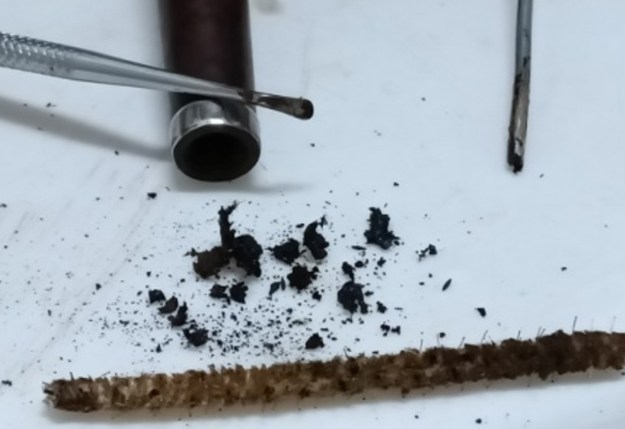
Refurbishing a beautiful classic billiard from Peterson’s – a Kapet # 150, London Made, England


Blog by Paresh Deshpande

The next pipe that I selected to work on is a beautiful classic billiard shaped Peterson’s pipe with a P-lip tapered stem. The very appearance of this pipe shouted “ol’ timer” to me even before I saw the stampings. The size also indicated that this pipe was from an era when large bowl were not in vogue, specifically the English made.

The pipe boasts of some beautiful mixed grains of bird’s eye and cross grains hidden beneath the layer of dirt and grime. That this pipe is from a quality pipe maker is evident from the quality of fit, finish and the briar used. There are only a couple of small fills that I could identify. The tapered P-lip vulcanite stem also oozes quality and points it to be a Peterson’s pipe. The pipe is stamped on the left side of the shank as “PETERSON’S” with a forked P over “KAPET”, all in capital letters. The left side of the shank is stamped as “LONDON MADE” over “ENGLAND” and followed by shape code “150” towards the shank end. The stem has the trademark letter P in cursive hand over the left side.I have worked on quite a few Peterson’s from pre-1960s and from those researches; I know that this pipe is from the classic range of pipes from Peterson’s and belongs to the period when Peterson’s had an office in London up to late 1950s when the shop was closed. I referred to pipedia.org just to refresh my knowledge about the history of Peterson’s pipes. It always does make for an interesting read and is highly recommended. Given below is the link to this detailed history of the brand Peterson’s.

https://pipedia.org/wiki/Peterson

Given below is the link to the Dating Guide for Peterson’s pipes at the end of the article on pipedia.org.

https://pipedia.org/wiki/A_Peterson_Dating_Guide;_A_Rule_of_Thumb

To summarize, this pipe is from the classic range of Peterson’s, an entry level Pete pipe. This is evidenced from the KAPET stampings and a couple of fills in the briar surface. The COM stamp points to a period between 1895, when Peterson’s opened a shop in London, and late 1950s when this shop was closed. Thus this pipe definitely dates to pre-1960s.

INITIAL VISUAL INSPECTION
The chamber of this classic billiard shaped pipe has a thick coat of even cake with small traces of lava flow over the rim top surface. The rim top itself has a few dents and dings along its surface. The stummel surface is dull, dry and covered in grime giving it a lackluster appearance. The shank shows accumulation of old oils, tars and gunk. The vulcanite stem does not sit flush with the shank face. The stem bite zone has signs of deep tooth indentations over the button edges and around the round slot end. Here is how the pipe appears as it sits on my work table. Detailed Inspection
The chamber has a decent layer of even cake that lightly overflows over the rim top surface. The condition of the chamber walls can be commented upon once the cake has been completely taken down to the bare briar. The inner rim edge is charred in 6 o’clock and 11 o’clock directions (encircled in yellow). The rim top itself is dotted with dents and dings. The outer rim edge too has a few minor chipped areas, but nothing serious.The stummel is covered in dust and grime of all the years of use. There are a couple of fills (marked by green). The shank is filthy with the accumulated old oils, ash and grime. This clogging could be the reason for the seating of the stem not being flush with the shank face.  Other than these issues, the stummel is in a decent condition. The P-Lip straight vulcanite stem is oxidized with severe tooth indentations on the button edge on either surfaces of the stem in the bite zone to the extent that the round slot at the top is completely deformed. The step tenon end shows heavy traces of dried oils and tars and remnants of ash and the heavy draw through the stem airway convinces me that there is heavy accumulation of gunk throughout the airway.The Process
I started the process of restoration by first cleaning the stem internals with anti-oil dish cleaning soap and thin shank brushes. The stem air way was filthy to say the least. I further cleaned the stem internals with hard bristled and regular pipe cleaners and isopropyl alcohol. A lot of elbow grease and a pile of pipe cleaners later, the pipe cleaners emerged white and I knew that the stem internals were now clean and fresh. I dunked the stem into the deoxidizer solution have overnight for the oxidation to be pulled out to the surface. I usually have around 4-5 pipes lined for restoration and this Pete is indicated by a green arrow.The next afternoon, Abha fished out the stem from the deoxidizer solution and scrubbed it with a Scotch Brite pad to get rid of the loosened oxidation from the surface. She followed this scrub with a second scrub using 0000 grade steel wool and this helped in further removal of raised oxidation from the surface and even out the minor scratches resulting from using the Scotch Brit pad. She rinsed the stem under warm running water to completely remove the solution from the airway and slot end. She ran a couple of pipe cleaners to remove the last traces of residual deoxidizer solution from the airway and dry out the airway.With the external and internal cleaning of the stem completed, Abha handed over the stem to me to complete the repairs. Continuing with the stem refurbishing, I heated the bite zone with the flame of a lighter to raise the tooth indentations to the surface. Though the results were not what were expected, the vulcanite was raised a little leaving behind deep tooth compressions over the button edge on either surfaces. These surfaces of the stem were filled with a mix of CA Gorilla superglue and activated charcoal powder and set aside for the fill to cure. I really hope that this time around I get better results with using this new CA glue. With the stem repairs set aside to harden, I started with the stummel repairs by reaming the chamber with the smallest of the PipNet reamer blade. I used my fabricated knife to remove cake from areas inaccessible to the reamer blade and completed the process by sanding the walls smooth with a folded piece of 180 grit sandpaper. I wiped the chamber with a cotton swab wetted with alcohol to clean the residual carbon dust. The chamber walls are solid with decades of residual service life. However, the rim has slightly deformed due to charring at 6 and 12 o’clock directions and encircled in green. I cleaned the external surface of the stummel with undiluted Murphy’s oil soap and a hard bristled toothbrush. I cleaned the smooth rim top surface with the soap and Scotch Brite pad. The darkened inner rims edge in the 6 o’clock direction is now clearly visible (marked in red) and confirms a charred rim edge. Simultaneously, I thoroughly cleaned the mortise with shank brush and anti-oil dish washing soap. This ensured that the stummel now smells clean and fresh. I dried the stummel internals and externals with paper towels and soft absorbent cotton cloth and set it aside overnight to completely dry out before I worked on it any further.By next afternoon, the stummel had dried out and I decided to address the issue of fills over the surface. With a sharp dental tool, I extracted the old and loosened fills and cleaned the area with a cotton swab and alcohol. Using clear CA superglue, I filled up the pits over the stummel surface and set it aside to cure. Once the fill had hardened, I first sand the fills with a needle file to roughly match the fill with the rest of the surface followed by sanding with a folded piece of 220 grit sand paper to further blend in the fills with the rest of the briar surface.Next, I moved on to address the charred edges over the rim top surface. I topped the rim over a piece of 220 grit sand paper by slowly rotating the rim over the sand paper. I hate to lose briar any more than absolutely necessary and so frequently checked the progress I was making. I was quite pleased with the appearance of the stummel at this stage in restoration.With a folded piece of 220 grit sandpaper pinched between my forefinger and thumb, I imparted a nice bevel to the inner rim edge. This eliminated the minor charring that had remained over the inner rim edges.Now that the stummel repairs were complete, Abha took over the bowl to work her magic and bring alive the grains over the briar surface. She went through the complete set of micromesh pads, wet sanding through 1500 to 12000 grit pads. Next, she rubbed a small quantity of “Before and After Restoration Balm” deep in to the briar with my finger tips and let it rest for a few minutes. The balm almost immediately works its magic and the briar now has a nice vibrant appearance with the beautiful grain patterns displayed in their complete splendor. I really like the looks of the stummel at this point in restoration. The grains and the clean lines of this piece of briar is really appreciable. While Abha was polishing the stummel, I worked on the stem repairs. The fill had cured and with a flat head needle file, I worked on the filling till I had achieved a rough match with the surrounding surface and had sufficiently sharpened the button edges. For a better blending, I further sand the entire stem with 320.Next, to impart a nice shine, I dry sanded the entire stem with 320, 600 and 800 grit sand papers followed by wet sanding using 1000, 1500 and 2000 grit sand papers. This progressive use of higher grit sandpapers helps to, firstly,  reduce the sanding marks left behind by the more abrasive ones, secondly, completely eliminates the oxidation while imparting a clean shine to the stem surface. Thirdly, this also helped to even out the minor imperfections from the bite zone. I applied a little EVO and set the stem aside for a few minutes for the oil to be absorbed in the stem surface. To bring a deep shine to the vulcanite stem, I went through the dry sanding with 3200 to 12000 grit micromesh pads, and wiped the stem with Extra Virgin Olive oil to rehydrate the vulcanite. The repairs have blended in very well and the stem now looks shiny black and beautiful. The finished stem is shown below.To refresh the stem logo, I coat the stem logo with white correction ink and let it dry out completely. Once the ink had dried out, with a toothpick, I gently removed the excess ink from the surrounding surface. Though the logo is not very crisp, this is the best that was possible given how worn out the stamping was to start with.This is that part in pipe refurbishing that I love and enjoy the most. I began the final polishing cycle by mounting a cotton cloth buffing wheel on to my hand held rotary tool and applying a coat of Blue Diamond to the entire pipe to polish out the minor scratches. With a cotton buffing wheel that I use for carnauba wax, I apply a coat of carnauba wax to the stummel and stem and continued to work on it till the complete coat of wax had been polished out. I mount a clean cotton cloth buffing wheel and gave the entire pipe a once over buff. I finished the restoration by giving the entire pipe a rigorous hand buffing using a microfiber cloth to deepen the shine further. This classic Billiards shape pipe from Peterson’s oozes a solidity and beauty that draws you to it. Here are a couple of pictures of the pipe at the end of the restoration process. P.S. I shared the pictures of this pipe on our club’s WhatsApp group and was immediately snatched up by one of the members. As I completed the write up, I have received a fantastic feedback on the smoking qualities and aesthetics of this pipe…..and this is truly the most satisfying experience of the entire process!!

There are some interesting pipes that I have lined up next…..keep following rebornpipes for the write ups. Stay safe and keep the pipe lit.

A tale of two pipes- restoring a pair of vintage cased meerschaum pipes – Part-11


Blog by Paresh Deshpande

I had been working on a pair of meerschaum pipes that came in a beautiful well preserved case. I have completed refurbishing the first pipe, a straight Dublin. Though I had worked on both these pipes simultaneously, I have done the write up in two parts.

For detailed information on the brand and other general information about the pipe, please read PART- I of this series.

Part- ll: Straight Billiard

Initial visual inspection
Of the two pipes in this set, this Straight Billiards appears to have seen the max abuse as well as use. The chamber has a thin layer of cake while the rim top surface has a couple of dents and dings. The inner rim edge has a couple of nicks and darkened in couple of areas. The stummel surface is marked by a number of scratch marks and is dirty with grime rubbed in to the surface. The Amber stem is badly damaged with cracks towards the tenon end and tooth indentations in the bite zone. The seating of the tenon in to the mortise is loose. The shank end has white silicon or some such tape sticking out and was likely used to tighten the fit of the stem in to the shank. Here is how the pipe looks as it sits on the worktable. Detailed Inspection
Both the pipes in the set appear to have been reamed prior to storage as is evident from the very thin layer of carbon in the chamber of both these pipes. The rim surface is clean of any lava overflow with slight darkening in 5 o’clock direction. However, there are a number of scratches and a couple of slight gouges (encircled in green) along the rim surface. The inner and outer rim edges have a few minor dings and would need to be addressed. The draught hole is right in the center and at the bottom of the chamber making these pipes a fantastic smoke. The stummel is peppered with minor as well as some slightly deep scratch marks. These scratches are predominantly on the right side of the stummel surface. There is a ton of grime and dirt over the surface. The shank end has a brass band and close scrutiny confirmed that the band is not a repair band. The white silicon (?) duct tape that is seen along threads inside of the mortise is indicative of having been placed to tighten the seating of the tenon in to the mortise. The mortise is severely clogged with tobacco ash, oils and gunk making the draw labored. Notwithstanding the present appearance of this pipe, I think that this pipe has some really beautiful coloration hiding beneath all the dirt and grime. The butterscotch yellow Amber stem with its threaded bone tenon sits very loose in to the mortise. I also noticed that the bone tenon is on the shorter side and does not extend all the way in to the mortise. Amber is a highly brittle material and with age and use is highly prone to develop cracks. This Amber stem is no exception. There is major fault line starting from the top surface of the stem at the tenon end, moving down for about an inch and branching off towards either sides of the stem. The crack line on the left side takes an upward turn on the lower surface and extends towards the stem face again. These cracks appear to have been repaired by gluing them together.  All these cracks are indicated by red arrows. The bite zone on either stem surface has tooth indentations with chipped surfaces and these would need to be filled up. The round orifice has chipped areas around the edges. The leather covered case is in very good condition. The inside of the case is lined with deep maroon velvet that shows signs of being worn down, but intact. The intact outer leather covering is dirty and looks dull and lifeless with the brass pins and latches/locks all in working condition. This leather case should clean up nicely and be ready to accept these freshly refurbished pipes soon. The Process
I started this project by first reaming the chamber to rid the walls of the little cake that was visible. I used my fabricated knife to gently scrap off the cake. I followed this up by sanding the walls of the chamber with a piece of 180 grit sandpaper. This sanding not only helps to completely remove the cake but also helps to even out the wall’s surfaces. A wipe using 99.9% pure isopropyl alcohol on a cotton swab ensured that the carbon dust that remained is completely lifted from the wall surface and the ghost smells are eliminated.I followed the cleaning of the chamber with cleaning the shank and mortise. If you recollect, I had mentioned that the draw through the mortise is heavy/ labored and assumed that it was due to accumulation of oils/ tars and gunk. However, during the cleaning, I was unable to get a pipe cleaner in through the airway and out through the draught hole. It was at this point that I handed over the stummel to Abha, my wife to see if she could clear the air way. By the late afternoon, when I came back from some work, Abha had removed the blockage from the shank air way and it was a solid piece of wood (clearly seen in the picture). She ran a few hard bristled and regular pipe cleaners dipped in 99.9% isopropyl alcohol  through until the shank and mortise was spotless clean and disinfected. Close inspection of the piece of wood extracted from the mortise makes me believe this piece to be remnants of a 6mm Balsa filter. How and why would anyone even think of doing so, let alone do it, is beyond my comprehension.With the stummel internals all cleaned and spruced up, I cleaned the external surface of the stummel with cotton swab and oil soap. Once the grime was cleaned, I wiped the surface with a moistened cotton swab to completely remove the residual soap and grime from the surface. The scratches are now distinctly visible all across the surface. Also, the color at the foot of the stummel and over the shank surface is succinctly visible. With this external cleaning, the damage to the rim top is now clearly visible. I topped the rim surface on a piece of 220 grit sandpaper, frequently checking for the progress. Once I was satisfied that the damage is sufficiently reduced, I stopped the process of topping. Though the damage to the rim top is still visible, it is now in much better state than before. I think I shall let these signs of damage remain as a part of this pipe’s journey to date. I polished the bowl with micromesh sanding pads. I dry sanded the entire stummel with 1500 to 12000 grit pads. I wiped the bowl down with a damp cloth to remove the dust that was left behind by the sanding. While I was working on the bowl top I also worked over the sides and bottom of the bowl to polish them as well. I wanted to minimize the scratching but not necessarily remove them all. These lacerations and dings must have had a history and I wanted to preserve it. I like the appearance of the stummel at this stage of restoration. I set the stummel aside and started with refurbishing of the stem. I cleaned the stem internals using anti oil detergent and thin shank brushes and rinsed it under warm water. I also cleaned the external surface of the stem using the soap and Scotch Brite pad. I further cleaned the stem airway with pipe cleaners and 99.9% pure isopropyl alcohol. I filled the tooth chatter with clear CA superglue and set the stem aside for the fill to cure.While the stem repairs were set aside to cure, I started with cleaning the leather covered case that housed the pipes. I used a hard bristled toothbrush and warm soap water to clean the maroon velvet lining the insides of the case and wiped it completely dry using paper towels. I cleaned the external surface of the case using cotton swabs and Murphy’s Oil soap and set it aside to dry out naturally.I checked the repairs over the stem and found that the fills had cured completely. Using a needle file, I roughly blended the filled surface with the surrounding surface. With a folded piece of 220 grit sandpaper, I further fine tuned the blend by sanding the filled areas to match with the stem surface. The progress so far is good.To bring a deep shine to the stem, I went through the complete set of micromesh pads, dry sanding with 1500 to 12000 grit pads. Though the repairs are visible, they are meant to be as it is after all a repair. I have made peace with this.With the stem repairs and polish completed, I checked the leather case. It had dried completely. Next, I applied a liberal coat of Neutral color shoe polish over the leather and kept it in the sun for the leather to absorb the wax from the polish. I followed it up with a nice polish using a horse hair shoe brush. The leather is now nicely hydrated and taken on a nice shine.At this stage, the stummel has been polished with micromesh pads, the stem repairs and polishing is completed and the leather case has been cleaned and polished. I decided to address the loose seating of the tenon in to the mortise. I thought of using clear CA superglue to coat part of the tenon surface at the stem end and fit it in to the mortise. The rotation of the coated tenon within the mortise would create a thread pattern on both the tenon and mortise wall. I gave a few in and out rotations for the threads to set in to the coat. Once I was satisfied with the seating and alignment of the stem, I set it aside for the glue to set. I seem to have lost pictures of the process at this stage or may have not even taken them as after this complete project went in to a downward spiral….

Once the tenon coating had completely cured, I checked the seating of the stem in to the mortise again and heard a small cracking sound (though utterly deafening to my ears) and I knew that I was in trouble, rather huge trouble. The Amber stem cracked exactly along the fault lines that I had indicated early on. The pain, frustration and the agony is indescribable!! I decided to set the carnage aside and took a break.A couple of days later, I had a fresh look at the broken stem and worked out a POA to address the damage. I decided to replace the old tenon with a fresh bone tenon from my cache of spare tenon and glue the broken stem pieces together. I would further stabilize and strengthen the cracked portion of the stem with a sterling silver band. This replacement of the tenon would also address the issue of shorter tenon that I had mentioned above.

I selected a bone tenon that would fit snugly in to the mortise as well as in to the broken stem. I fixed the tenon in to the remaining intact part of the Amber stem using superglue. Once the glue had cured, I fixed the broken parts of the stem around the tenon with superglue and set it aside for the glue to cure completely. Once the glue had cured, I sand the repaired surface with a piece of 320 grit sand paper to match with the rest of the stem surface. Thereafter I attached a sterling silver band, which I had got specifically made for this stem, using superglue. The repairs are solid and I am quite satisfied with the progress being made.The gentleman who had commissioned this set had made it amply clear that the scratches/dents and dings over the stummel surface should remain as it is a part of the pipe’s past journey. I too agreed with the new owner and decided to move ahead with polishing and waxing of the stummel with beeswax. I brought a deep shine to the surface by dry sanding with micromesh pads and followed with a microfiber cloth. I assembled the equipment and materials that would be needed during the waxing process viz heat gun, paper towels, q-tips and a steel container graciously lent by Abha from the kitchen and of course, beeswax. I stuffed the chamber with cork and the shank end with folded pipe cleaners to prevent inadvertent seepage of the melted beeswax into either. Next, I melted a sufficient quantity of beeswax using my heat gun and thereafter heated the stummel. Using the a folded pipe cleaner, I completely coated the stummel with the wax and continued the application till the surface was saturated and set the stummel aside to absorb the wax. I reheated the stummel with the heat gun about 20 minutes later and let the excess wax either be absorbed or drip off from the stummel surface. I rubbed off the excess wax with a soft cotton cloth and. The deep golden brown coloration that the meerschaum has taken is a visual treat. With the stummel now completed, I was through with repairs and refurbishment of this cased pair. I reattached the Amber stem with the stummel for a final inspection and polish. Unfortunately, this was not the end of the journey with this pipe!!! As I reattached the Amber stem, the shank band broke free and fell on the table along with a small portion of the threads. Luckily, the concave surface of the shank face and the convex surface of the band were intact and I decided to glue them up again as was done originally.Since the threads were now damaged, I decided to do a complete stem replacement and shortlisted a near matching sized stem as a replacement to the Amber stem. The two aspects that I needed to match was the stem face diameter and the second was the matching of the taper and width with the Amber stem.This decision to replace the stem on this pipe has now necessitated that I consider replacing the replacement stem on the Dublin from this set. All the efforts that had gone in to fabricating and shaping the acrylic stem on the Dublin are for naught!! I did the replacement of the acrylic stem on the Dublin and the end results are more than satisfying (you can read all about it in Part-I of this restoration).

Using needle files and folded piece of sandpaper, I evened out the threads inside the mortise wall. This would make it easier for the mortise to accept a push pull tenon type.Next I tackled the sizing of the tenon. I first did the major hard work by sanding the tenon with a 150 grit sanding drum mounted on a hand held rotary tool. The challenge of achieving a perfect fit of the tenon in to the mortise was achieved by sanding the tenon using sandpaper. It did take a few man hours, tons of elbow grease and patience to achieve perfect fit.With snug seating of the stem in to the mortise ensured, it was time to adjust the length and other parameters of the replacement stem. I wanted an old style stem with an orifice to match the correct time period of 1920s. I marked the length of the stem that would fit in to the case and cut off the excess with a blade. This cutting off of the stem provided me with a rounded slot and a taper that nearly matched the required shape.I cleaned out the stem internals using shank brushes and anti oil dish washing soap. I ran a couple of pipe cleaners through the airway to further clean and dry out the stem internals.I firstly evened out the slot end of the shortened stem by topping on a piece of 220 grit sandpaper. Thereafter began hours of hard and laborious task of shaping the stem to match the shape and rebuild buttons on either stem surface using needle files and sandpapers. It did take hours of work and eyeballing to get the shape I desired and most importantly, the slot end. I am pleased with the results achieved. Next, I wet sand the entire stem with 600, 800, 1000, 1500 and 2000 grit sand papers. This progressive use of higher grit sandpapers helps to, firstly,  reduce the sanding marks left behind by the more abrasive ones, secondly, completely eliminate the oxidation while imparting a clean shine to the stem surface. Thirdly, this also helped to even out the sanding marks left behind by the flat needle files. I applied a little EVO and set the stem aside for a few minutes.This was followed by wet sanding the stem with 3200 to 15000 to bring a deep shine and smooth finish to the stem. I applied a small amount of EVO and set it aside.To put finishing touches to this pipe, I polished the stem with Blue Diamond compound and subsequently with carnauba wax using my hand held rotary tool and vigorously buffed the stummel with microfiber cloth to bring a deep shine. This pipe looks absolutely stunning and I am sure that my friend will like it too.

A tale of two pipes- restoring a pair of vintage cased meerschaum pipes – Part 1 (A)


Blog by Paresh Deshpande

Recently I had purchased a few pipes on eBay and this time the delivery was effected without any issues from the Seller. All the Sellers had described the pipes just as they are received, items were well packed and shipping was record quick making this a nice experience (far cry from all my previous experiences on eBay!). I shared the pictures of the pipe haul with members of my Pipe Club and this pair of cased Meerschaum called out to one of the founding members of the club and more importantly a dear friend of mine.

Looking at the pipe set, it is apparent that these pipes had seen many a summers, many a number of repair jobs more so to the stem including splicing and many ages of (mis?)use. The case consists of two Meerschaum pipes; a Dublin and a Billiard (or maybe a Tulip or even an Apple shape!!!). There are no visible stampings or markings either on the pipe or on the hard leather case except a small note with c.1920’s written on it (well, again veracity of this note cannot be established and needs to be considered with a pinch of salt, or rather a handful of salt!). This makes it impossible to firmly establish the provenance of this pipe set. However, the overall feel, appearance and quality make me want to believe that small little note. Here are a couple of pictures of the cased set of meer as it sits on my table. Though both the pipes were worked on simultaneously, for the sake of brevity and convenience of explaining the process and how issues that cropped up on one pipe affected the other, I shall divide the write up in to two parts.

Part 1: Dublin
The Dublin shaped meerschaum pipe is in pretty good condition with a thin layer of cake in the chamber. The rim top surface is clean and in good condition with no dents or dings over the rim edges. The major issue on this pipe is with the stem. Somewhere down the line during its previous innings, the Amber stem on this pipe must’ve broken in half and was repaired using a multicolored acrylic or cheap plastic stem spliced in to place at the tenon end. The seating of the tenon in to the shank end is very loose and barely holds the walls of the mortise. This seems to be the main reason why this pipe was so sparingly used as evidenced by the thin layer of cake in the chamber. The following pictures will give a general idea of the condition of this pipe as it sits on my workbench. Detailed Inspection
The chamber is clean with a thin layer of even cake. The rim top surface is clean and in pristine condition without any dents and dings over the rim top. The inner and outer rim edges are smooth, even and without any darkening along the edges. The rim appears thinned out in 12 o’clock direction along the outer rim edge. I think it is the design feature which has the stummel in a slight inwards turn near the upper surface. However, the chamber itself is perfectly rounded. The stummel surface shows a few scratches, but none serious enough to draw away your attention from the beauty of the bowl. The inward turning shape to the upper surface of the stummel that I have mentioned above is indicated by green arrows. There are a couple of dark spots over the stummel surface and encircled in pastel blue. The shank end shows residual white tape and is indicative of an earlier repair work to the shank end. The band, though identical to the other pipe in this set, appears to be fixed after the pipe was completed. The white Teflon tape, in all probability, was used to tighten the seating of the threaded tenon in to the mortise. However, this was an utter failure as the tenon is too loose in the mortise and is the reason for this pipe being so sparingly used. The stem is where maximum repair work is required. The stem has been spliced and repaired previously with the rounded slot end made of Amber while the tenon end is a similar colored variegated acrylic or plastic stem. The joint is easily discernible and is encircled in Red. Though the stem airway is aligned, the stem shape is not. The mismatched stem shape is indicated by green. The tenon is too short and filthy and very loose fitting in the shank. The slot end has tooth indentations and chipped surface. Given the present condition of the stem and its seating in to the mortise, I shall be replacing the stem itself to make it both functional and aesthetically appealing to the eye (that’s what the intention is!). The Process
I started this project by reaming the chamber with my smaller fabricated knife and scraped out all the carbon from chamber. I used a 220 grit sand paper, pinched between my thumb and forefinger, to sand the inner walls of the chamber of the pipe. Once I had reached the bare walls, I wiped the chamber with a cotton pad dipped in isopropyl alcohol. This removed all the residual carbon dust and also rid the chamber of all ghost smells. I followed it up by cleaning of the mortise and air way of the pipe using hard bristled and regular pipe cleaners, q-tips dipped in alcohol. The mortise and the draught hole were given a final clean with shank brushes dipped in alcohol. I dried the mortise with a rolled paper napkin. The shank internals and the draught hole are now nice and clean with an open and full draw.I cleaned the external surface of the Meerschaum bowl with Murphy’s Oil soap and cotton swabs. I wiped the bowl surface with a moist cloth to remove the soap and grime that remained on the surface. The stummel surface cleaned up nicely. The scratches and dents and dings over the stummel surface are now clearly visible and will be addressed to an extent when the stummel is polished using the micromesh pads. I polished the rim top surface and rim edges with micromesh pads. I then went on to dry sand the entire stummel with 1500-12000 grit pads and wiped the bowl down with a damp cloth to remove the dust that was left behind by the sanding. I had planned to minimize the scratches but not necessarily remove them. These lacerations and dings must have had a history and I wanted to preserve it. Once I was done with the micromesh cycle, I applied a small quantity of Paragon wax and vigorously polished it off with a microfiber cloth. The stummel now has a nice deep shine to it. Next I decided to address the stem repairs or rather stem replacement since the damage to the already repaired stem was far too extensive and yet it would not make this pipe fully functional since the tenon was too loose and too short. The stem that I selected is a beautiful yellow acrylic stem that perfectly matched the shank face diameter. I selected a Delrin tenon that perfectly threaded in to the mortise for a snug fit.Now it was necessary to down size the smooth end of the tenon to fit in to the stem face. I mounted a 150 grit sanding drum on to my hand held rotary tool and sand down the smooth end of the tenon till I had achieved a rough seating of the tenon in to the stem face. My previous experience has taught me an invaluable lesson; “SAND ONCE AND CHECK TWICE”!! Once I had achieved a rough seating, I got down to the arduous and time consuming task of manually sanding down the smooth portion of the tenon with a folded piece of 220 grit sandpaper till I had achieved a perfect seating of the tenon in to the stem. Here I was extra careful and vigilant while sanding the sides of the tenon and frequently checked the alignment of the tenon airway with the stem airway and finally through the shank airway and right through the draught hole.   Once I was sure that the tenon, stem and shank face and airways are all aligned and seated flush, I glued the tenon in to the stem. I took some time to admire the overall appearance of the pipe and I like it very much.Next on the agenda was to match the length of the replacement stem with that of original stem. Using needle file and 150 grit sand paper, I sand the slot end of the replacement stem till I achieved a perfect length match. Even though it took me a few man hours and lots of efforts, I was able to achieve the desired length. I checked the seating of the pipe in to the case and noted with satisfaction that the case closed without any gaps. However, in achieving the desired length, the button edges on the new stem were sanded down. This necessitated rebuilding of button edges on the new stem.With clear CA superglue, I rebuild the buttons using layering technique. Once the glue had hardened, using a needle file, I roughly shaped the buttons and further fine tuned the buttons using a piece of 330 grit sandpaper. The slot end at this stage is rounded and the horizontal slot needs to be carved. I marked the center line on either sides of the orifice and using a slot file, I carved out a horizontal slot. The stem looks good at this stage.Next the stem was subjected to a full cycle of polishing using micromesh pads.With the shaping and polishing of the replacement stem completed, I turned my attention back towards the stummel. I gave a beeswax polish to the meerschaum bowl. I assembled the equipment and materials that would be needed during the process viz heat gun, paper towels, q-tips and a Katori, a steel container graciously lent by Abha from her kitchen and of course, beeswax. I stuffed the chamber with cork to prevent inadvertent seepage of the melted beeswax into it. Next, I melted a sufficient quantity of beeswax in the katori using my heat gun and thereafter heated the stummel. Using a folded pipe cleaner, I completely coated the stummel with the wax and continued the application till the surface was saturated with the beeswax and set the stummel aside to absorb the wax. I reheated the stummel with the heat gun about 20 minutes later and let the excess wax either be absorbed or drip off from the stummel surface. I rubbed off the excess wax with a soft cotton cloth and brought a deep shine to the surface with a microfiber cloth. With the replacement stem all shaped and aligned and the bowl waxed and polished, I had completed the refurbishing of this pipe from the cased pair and set the pipe aside.

However, little did I know at this stage that all the man hours and efforts that I had put in making this replacement stem to make this pipe aesthetically beautiful and functionally sublime would come to a naught due to certain challenges that I was presented with while working on the second pipe from the set. I shall cover those aspects in Part- II of the write up. It will suffice to say here that I had to discard this stem and fabricate a new vulcanite stem from scratch.

PART-I (B)
Now that I have decided to match the stem on this pipe to the vulcanite stem that I had fabricated on the second pipe from the set, I first selected a vulcanite stem that would more or less be a perfect match to the butterscotch yellow acrylic stem that was made earlier. I would need to shape the flare at the slot end to a nice smooth taper (indicated by yellow lines), reshape the slot end to an orifice with old style rounded buttons and would need to greatly reduce the diameter of the tenon (indicated by red arrows) for a snug fit in to the mortise. Once that was achieved, I would need to clean and polish the vulcanite to a nice black shine. Here is a picture to give you an idea of both the stems.First I removed the metal stinger from the tenon end by heating it with the flame of a match light and pulling it out with a pair of nose pliers. I followed this with cleaning the stem internals using anti-oil dish washing soap on a thin shank brush and rinsing it under warm running water. I ran a couple of pipe cleaners through the airway to completely remove any residual traces of soap and also to dry it out. With a 150 grit sanding drum mounted on my hand held rotary tool, I sized down the tenon to achieve a rough match with the mortise size. I fine tuned the seating of the tenon in to the mortise by sanding it further with a 180 grit sand paper till I had achieved a snug fit.As I was trying out the seating of the tenon in to the mortise a second time, the brass ring separated from the shank end with threaded portion of the mortise while revealing a minor crack at the shank end (unfortunately, in my haste to address the newly presented challenge, I missed out on taking pictures of the damaged shank end). The problems are continually mounting unabated!!

Luckily, I had a Sterling silver band that I previously got made from a local silversmith which perfectly fit the shank end. I filled the crack with thin CA superglue. Once the glue had seeped in to the crack and hardened completely, I attached the band over the shank end with CA superglue and set it aside for the repairs to cure.Now I turned my attention back to the stem. The tenon mod was completed and next I decided to address the extra flare at the slot end of the replacement stem. I wanted an old style stem with an orifice to match the correct time period of 1920s and had achieved it to a certain extent on the billiards pipe from the set. I cut about half an inch off the slot end. This achieved two aims; firstly, the flare was reduced and secondly, I now had an orifice at the slot end. I further evened out the cut surface by sanding the surface over a 220 grit sand paper.Thereafter began the arduous task of eyeballing and filing with flat/ semi-circular needle files. It did a take long time and lots of elbow grease to achieve a rough desired shape. I further fine tuned the rough edges and shape by sanding the stem surface using a 220 grit sand paper. Next, I wet sand the entire stem with 600, 800, 1000, 1500 and 2000 grit sand papers. This progressive use of higher grit sandpapers helps to, firstly,  reduce the sanding marks left behind by the more abrasive ones, secondly, completely eliminate the oxidation while imparting a clean shine to the stem surface. Thirdly, this also helped to even out the sanding marks left behind by the flat needle files. I applied a little EVO and set the stem aside for a few minutes.I went through the 1500 to 12000 grit micromesh pads to wet sand the stem. The stem now has a nice deep shine along the entire stem surface. I rubbed a small quantity of EVO and set the stem aside for the oil to hydrate the stem surface.To finish the restoration of this pipe, I polished the stem with Blue Diamond compound and subsequently with carnauba wax using my hand held rotary tool. I once again vigorously buffed the stummel with microfiber cloth to bring a deep shine. The finished pipe actually looks much attractive in person than in the pictures below.

Transforming a Sad Looking Comoy’s Second “The Golden Arrow”


Blog by Paresh Deshpande

It’s been a while that I had worked on any of my inherited pipes and decided to fish out one from the last remaining large box that I had received a few years back. The pipe that I selected to work on is a very sad and tired looking Canadian with an oval shank that just shouted as being an English made pipe.

The entire stummel is covered in dull grey patches of water stain, dust and grime through which some great cross grains over the front, aft and shank surface, awaits exposure. The pipe is stamped upper flat surface of the oval shank as “The” over “GOLDEN ARROW” over “LONDON PIPE”. The underside of the shank is stamped, starting from bowl end to shank end, with shape code “296” followed by “MADE IN ENGLAND” over “BY” over “COMOY’S”. The COMOY’S stamp is in simple block letters without serif, letter C is the same size as the rest of the letters and with an apostrophe before letter S. The stem is without any stem logo.   I have a keen interest in studying and collecting English made pipes and in this quest, I have read up as much material as I could lay my hands on and still continue on this path till date. Pipedia.org has detailed information on the origins of Comoy’s brand; it’s dating guidelines and shape chart, all aspects well supported with pictures of pipes, stampings and old flyers/ catalogues. Here is the link to the article (https://pipedia.org/wiki/Comoy%27s)

After refreshing my knowledge and based on the stamping on the pipe, I know that I am working on a Comoy’s Seconds from the 1950-1960s. This is based on the way COMOY’S is stamped, firstly, the stamp is in simple block letters without any serifs, secondly, the letter C is the same size as the rest of the letters and lastly, presence of an apostrophe before the letter S.

Furthermore, G L Pease, in his research on Comoy’s states that “Sometime in the 60’s, it the serifs were returned to the “COMOY’S” lettering, though, as mentioned above, the typeface is not as fancy as the earlier one”. (http://www.glpease.com/Pipes/Comoy.html)

At the end of the article on Comoy’s on pipedia.org, is a link to Comoy’s shape number chart. The chart tells me that the shape # 296 as seen on this pipe corresponds to a large straight Canadian with oval shank/ stem.

With the provenance of the pipe now established, I moved ahead with my initial visual inspection.

Initial Visual Inspection
The stummel is covered in dirty grayish white water stains and the surface appears dull and lifeless. The first look would dissuade anyone from even considering it for restoration. However underneath all that grime and stains, lurked a solid beautiful 60/ 70 year old English pipe. The stummel surface has a couple of scratches and dings/ dents. The chamber has a decent layer of uneven carbon cake with the lava overflowing over the rim top surface. Under the coat of lava, the rim top surface appears uneven. The inner rim edge appears uneven and charred. The mortise is filthy and shows accumulation of ash and oils and gunk. The smells of old tobacco inside the chamber and mortise are strong and acrid. It seems that my grand old man was out to prove to the world that the tapered vulcanite bite proof stem was anything but bite proof. The stem has some seriously deep tooth indentations on either surface in the bite zone. The stem would require major efforts to reconstruct the bite zone, including the buttons. Following pictures will give you a general idea of the condition of the pipe before I start my work on resurrecting the pipe. Detailed Inspection
The chamber has a decent layer of cake that is even all around. The condition of the walls of the chamber will be ascertained once the cake has been evened out. Given the solid feel and even color of the stummel, the probability of serious damage like a burn out or deep heat fissures to the walls is a distant possibility. The rim top surface is uneven and signs of having been knocked against hard edges is evident at 12 o’clock and 4 o’clock directions where the surface is chipped (enclosed in green). The beveled inner rim edge appears charred in 12 o’clock to 9 o’clock and 4 o’clock to 6 o’clock direction (enclosed in red) and is uneven along the complete edge. The outer rim edge has a few minor dings and chipped surfaces and should be easily addressed by sanding. The smells of old tobacco are pretty strong and would need to be addressed.The entire stummel is covered in dirty grey white water stains and grime, a result of the pipe being stored in some damp place for years. The stummel appears to be dull and lifeless beneath all the grime and water stains. However, beautiful cross grains can be seen along the surface underneath the grime. There a number of small scratches and road rash marks on the surface can be seen, notably over the left side of the bowl (marked in yellow). The shank is dirty and clogged with old ash, oils and tars.   The twin bore tapered vulcanite stem is deeply oxidized and has significantly deep bite marks on both upper and lower surfaces of the stem. The buttons too are damaged and rendered out of shape due to the bite marks. The airflow through the stem is laborious and could be either due to the compression of the airway due to the bite marks or could be due to accumulation of old oils, tar and gunk in the airway. I have purchased GORILLA CA glue as I had read rave reviews about it and am excited to try it out.    The Process
The first repair that I decided to tackle was the damaged stem. Before I could proceed with actual repairs, I cleaned the stem internals first. Using a thin shank brush and anti-oil dish washing soap, I cleaned the stem airway. The airway was filthier than I had imagined as can be judged from the following pictures. I took me a considerably long time, but eventually the airway was clean. I ran a couple of pipe cleaners through the stem to confirm that the airway was clean and also to dry it out. With the stem internals now clean, I moved to external cleaning of the stem surface by dunking the stem into “Before and After Deoxidizer” solution developed by my friend Mark Hoover. The solution helps to draw out heavy oxidation to the surface making it’s further removal a breeze, while the minor oxidation is eliminated to a very great extent. I usually dunk stems of 5-7 pipes that are in-line for restoration and the THE GOLDEN ARROW is marked in yellow arrow. I generally allow the stems to soak in this solution overnight for the solution to do its work.With the stem soaking in the deoxidizer solution, I moved on to reaming the chamber with my PipNet pipe reamer. I started the reaming process with head size 2 of the PipNet reamer blade and progressed through to head size 3. I used my fabricated knife to remove cake from areas inaccessible to the reamer blades and completed the process of removing the cake by sanding the walls smooth with a folded piece of 180 grit sandpaper. I wiped the chamber with a cotton swab wetted with alcohol to clean the residual carbon dust. The chamber walls are solid and a few minor thin heat veins are visible on the aft and right side of the walls of the chamber. I shall give the chamber a bowl coating as a precautionary measure against future damage. Next, I cleaned the mortise by scraping out all the dried oils and tars from the walls with a dental tool. I further cleaned the mortise using bristled and regular pipe cleaners dipped in alcohol.Continuing with the internal cleaning of the chamber and mortise, I subjected it to a salt and alcohol bath. I used cotton balls which is an at par substitute as I have realized over the years. I drew out a wick from the cotton and along with a folded regular pipe cleaner; inserted it into the mortise and through the draught hole and further into the chamber. Thereafter, I packed the chamber with cotton balls to about quarter of an inch below the rim inner edge and soaked the cotton balls with isopropyl alcohol up to the brim. About half an hour later, the level of alcohol had gone down, having being absorbed by the cotton. I topped it up once again and set it aside overnight. By next afternoon, the cotton and alcohol had drawn out all the remaining oils/ tars from the chamber and mortise and loosened out any residual cake and tar build up, fulfilling it’s intended task. I removed the cotton balls and ran pipe cleaners through the mortise to clean out all the loosened tars and gunk. Using my fabricated tool, I scraped out the entire loosed gunk from the mortise and further cleaned it with alcohol and q-tips. The large blobs of now moistened gunk that was removed from the mortise should give the readers an idea of how filthy the mortise was when I started the process of cleaning. The chamber now smells clean and fresh. I set the stummel to dry out naturally.    I cleaned the external surface of the stummel with undiluted Murphy’s oil soap and a hard bristled toothbrush. I cleaned the smooth rim top surface with the soap and Scotch Brite pad. The prominent dip on outer rim edge in the 12 o’clock direction is now clearly visible (marked in red). I thoroughly cleaned the mortise with shank brush and anti-oil dish washing soap. The mortise is now thoroughly cleaned and fresh. With the internal and external surface of the stummel now nicely cleaned, I fished out the stem that had been soaking in the Before and After deoxidizing solution for nearly 24 hours. I first scrubbed the stem surface with a Scotch Brite pad. I followed this scrubbing with a nice cleaning of the surface using a 0000 grade steel wool. I rinsed the stem under running water to rid the stem of the thick solution. I ran a couple of pipe cleaners to remove the deoxidizer solution from the airway.Continuing with the stem refurbishing, I heated the bite zone with the flame of a lighter to raise the tooth indentations to the surface. Though the results were not what were expected, the vulcanite was raised a little. The button edges and deeper tooth indentations on either surface of the stem were filled with a mix of CA superglue and activated charcoal powder and set aside for the fill to cure. I would like to bring out here that I had purchased a new tube of Gorilla Superglue gel after reading rave reviews and it was this glue that I had used to prepare the mix to fill in the tooth indentations. That this was a bad purchase for me personally became amply evident later during the restoration process. While the stem fills were set aside to cure, I addressed the damage to the rim top surface of the stummel by topping it on a piece of 220 grit sandpaper. I frequently checked the progress being made as I had no desire to lose any briar estate than was absolutely necessary. Once satisfied with the result, I wiped the rim top surface with a moist cloth. The uneven darkened rim top had been addressed completely, however, the beveled inner rim edge was still dark and the chamber was still slightly out of round (though greatly reduced) with slight charring visible in the 12 o’clock direction. I addressed this issue by simply running a piece of 220 grit sand paper along the inner rim edge bevel, till the darkening was eliminated.Next, I addressed all the dings over the stummel surface by steaming them out by heating my fabricated knife on a candle and placing it on a wet towel covering the dents. The generated steam pulls the dents to the surface leaving behind a slightly discolored and uneven patch. I evened out the discoloration and stummel surface by sanding the entire surface with a piece of 320 grit sandpaper. At this stage in restoration, I turned over the stummel to Abha, my wife, for her to work her magic in polishing the stummel while I turned my attention to the stem repairs.

The stem repair fills had cured nicely and I moved ahead with the process of filing and shaping the button end with a flat head needle file. For a better blending, I further sanded the entire stem with 220. At this stage, the fills appear as ugly grey patches that are very uneven. I hoped that further sanding with progressively higher grit sandpapers would help in blending of the repairs.I continued to dry sand the entire stem with a folded piece of 400 followed by 600 and 800 grit sandpaper and further progressed to wet sanding with 1000, 1500 and 2000 grit sand papers. However, the fills still appear dirty grey and a closer look showed the entire filled surface peppered with numerous tiny air pockets. I refilled the patches with a fresh mix of CA superglue gel and activated charcoal and set the stem aside.During the time that I was struggling with the stem repairs, Abha completed the polishing of the stummel by wet and dry sanding the surface with 1500 to 12000 grit micromesh pads. She massaged a small quantity of B & A Restoration balm and set it aside for 10 minutes for the briar to rehydrate. Thereafter, she gave a rigorous hand rub using a microfiber cloth. The appearance of the stummel at this point is truly satisfying. Once the stem refills had cured completely, I went through the complete process of sanding and shaping the fills using a needle file followed by sanding with sandpapers as described above. Though the finish is better this time around, the coloration of the patch still remains a light shade of grey and easily discernible against the rest of the stem surface. I would like to inform our esteemed readers that I had to go through the complete repairs six times before this attempt and for the sake of brevity, I deliberately kept it short. Yet, the results are not what I expected and have been achieving consistently with other brands of superglue. There was only one more issue that needed to be addressed and one that could not be ignored, being a functional issue. After I had reamed and sanded the chamber walls, I had observed very minor and superficial web of thin heat fissures/ pits all along the chamber walls. I addressed this by mixing activated charcoal and plain yogurt to a thicker consistency, just enough that it would spread easily and applied it evenly all along the chamber walls after inserting a folded pipe cleaner through the draught hole to keep it open. Once dry and set, this will not only protect the walls but also aid in faster buildup of cake.   To apply the finishing touches, I mounted a cotton cloth buffing wheel on to my hand held rotary tool and applied a coat of Blue Diamond to the stummel and the stem to polish out the minor scratches. With a cotton buffing wheel that I use for carnauba wax, I applied a coat of carnauba wax and continued to work on it till the complete coat of wax had been polished out. I mounted a clean cotton cloth buffing wheel and gave the entire pipe a once over buff. I finished the restoration by giving the entire pipe a rigorous hand buffing using a microfiber cloth to raise the shine further. The finished pipe looks beautiful and is ready to be added to my collection of inherited pipes. Thanks to all readers of rebornpipes who have spared a moment of their invaluable time in reading through this write up and as is always, your suggestions and advice are always welcome. P.S. – The opinion that I have expressed about the Gorilla CA superglue Gel is my personal opinion based on my personal experience. There are definitely others who have had fantastic results using this product, but not me.

Resurrecting A Loewe “Sloane”


Blog by Paresh Deshpande

The next pipe is also from my inheritance and is similar to the “THE GOLDEN ARROW” that I had worked on earlier. This too is a large Canadian with an oval shank and flat stem. The stummel is covered in dirt and grime accumulated over the long years of uncared for storage. Through all the grime, beautiful cross grains and swirls can be seen and are waiting to be unraveled. This pipe is stamped on the top flat surface of the oval shank as “L & Co” in a lozenge while the right side of the shank edge is stamped as “LOEWE” over “LONDON. W”. The bottom of the oval shank is stamped “SLOANE”. The stem is sans any stampings.  I have worked on Loewe & Co. pipes before and also have many in my personal collection and I am fairly well versed with this brand. However, I visited pipedia.org and refreshed my memory with the history of the pipe, dating guide and shape names. The 1930s Loewe catalog is an interesting read and also has a  pipe stamped exactly as the one currently on my work table. Here is the link to the catalog: (https://pipedia.org/images/8/88/Loewe_pipes_1930.pdf).

However, further down on pipedia.org is a link to the 1967 Loewe catalog and it has no mention of the shape name SLOANE!

I have reproduced the details relevant to dating this pipe as found on pipedia.org below.

1920-1955 middle Haymarket era

Left shank: – L & Co. (in oval)

Right shank: – Loewe London W.

Underside of shank: – shape name Made in England (encircled) this may just have been on export pipes

*Prior to 1955 Loewe had no series, stamping only the shape name on the underside of the shank.

Thus, the pipe currently on my work table dates to pre-1955.

Initial Visual Inspection
The entire pipe is covered in dirt and grime and is sticky to the touch. There are dark patches on either sides of the bowl that would need to be checked thoroughly. There is a thick layer of cake in the chamber with lava overflowing the rim top surface. The inner rim edge is chipped and damaged giving the chamber an out of round appearance. The outer rim edge too has a number of minor chipped surfaces. The mortise is clogged and the vulcanite stem is deeply oxidized with deep tooth indentations in the bite zone. The button edges are damaged due to bite marks and would need to be rebuilt and reshaped. The pictures below would give you the general idea as to the condition of the pipe. Detailed Inspection
The chamber has a thick layer of even cake with overflow of carbon over the rim top surface. The condition of this Loewe, like all other Loewe pipes that I have inherited, has seen extensive use. Such extensive use, without proper care and maintenance, may cause heat related issues along the chamber walls. Here, the condition of the chamber wall will be known once the cake is taken down to bare briar. The inner rim edge is uneven and has suspected charring at 6 o’clock direction and between 9 o’ clock to 11 o’ clock on the left and also between 1 o’ clock and 3 o’ clock directions on the right side. The inner rim damage is encircled in yellow. The outer rim edge too has not been spared any punishment. There are minor dents/ dings and chipped surfaces all along the outer rim edge, likely as a result of knocking against a hard surface to remove the dottle. The outer rim damage is encircled in red. The extent of the damage to the chamber walls and rim of this pipe will be clear once the cake is completely taken down to the bare briar and the rim top surface is free of all the accumulated crud. The ghost smell are very strong and would need to be addressed.The stummel surface is covered in dirt/ grime and feels sticky to the touch. The surface has darkened considerably on either side of the bowl (enclosed in pastel blue) and at the rear and would need to be examined up close once the stummel is thoroughly cleaned both internally as well as externally. I suspect there is a crack (encircled in green) on the right side of the bowl within the darkened area (or it could even be a scratch) and needs to be verified. However, beneath the dull grime layer, beautiful cross and bird’s eye grain await being brought to the fore. Heavy accumulation of old oils, tars, ash and gunk is seen in the mortise as expected. The tapered vulcanite stem is heavily oxidized and has deep bite marks on both the lower and upper surface in the bite zone. The button edges are deformed as a result of these tooth indentations and would need to be reconstructed. My last project had thrown up some bad experiences about the end results of using the Gorilla superglue that I had recently purchased and will try it out again this time around. If the results are not up to standard, this and the other tubes will find their way out the door. The slot and tenon end show presence of dried gunk and would need to be thoroughly cleaned. The Process
I started the process of restoration by first cleaning the stem internals with anti-oil dish cleaning soap and thin shank brushes. I scrubbed the stem surface with the soap using a Scotch Brite pad, firstly to rid the surface of old oils and gunk and secondly to remove the loose surface oxidation. I ran a couple of pipe cleaners through the stem airway to remove all the traces of soap and dry out the stem internals.Next, I moved to external cleaning of the stem surface by dunking the stem into “Before and After Deoxidizer” solution developed by my friend Mark Hoover. The solution helps to draw out heavy oxidation to the surface making it’s further removal a breeze while the minor oxidation is eliminated to a very great extent. I usually dunk stems of 5-7 pipes that are in-line for restoration and the LOEWE SLOANE is marked in blue arrow. I generally allow the stems to soak in this solution overnight for the solution to do its work.The next afternoon, Abha fished out the stem from the deoxidizer solution and scrubbed it with a Scotch Brite pad to get rid of the loosened oxidation from the surface. She followed this scrub with a second scrub using 0000 grade steel wool and this helped in further removal of raised oxidation from the surface and even out the minor scratches resulting from using the Scotch Brite pad. She rinsed the stem under warm running water to completely remove the solution from the airway and slot end. She ran a couple of pipe cleaners to remove the last traces of residual deoxidizer solution from the airway and dry out the airway.  With the external and internal cleaning of the stem completed, Abha handed over the stem to me to complete the repairs. Continuing with the stem refurbishing, I heated the bite zone with the flame of a lighter to raise the tooth indentations to the surface. Though the results were not what were expected, the vulcanite was raised a little leaving behind two deep tooth compressions on either surfaces. The button edges and deeper tooth indentations on either surfaces of the stem were filled with a mix of CA Gorilla superglue and activated charcoal powder and set aside for the fill to cure. I really hope that this time around I get better results with using this new CA glue. Once the stem fills had cured completely, I moved ahead with the process of filing and shaping the button end with a flat head needle file. For a better blending, I further sanded the entire stem with 220. However, my worst fears came true…..I saw grey patches with air pockets, just as I had observed earlier while working on The Golden Arrow. I think the Gorilla glue does not work for me and I shall discard it after I get my regular brand of superglue in next few days. I continued to dry sand the entire stem with a folded piece of 400 followed by 600 and 800 grit sandpaper and further progressed to wet sanding with 1000, 1500 and 2000 grit sand papers. However, the fills still appear dirty grey and a closer look showed the entire filled surface peppered with numerous tiny air pockets. I refilled the patches with a fresh mix of CA superglue gel and activated charcoal and set the stem aside. After the stem refills had cured completely, I went through the complete process of sanding and shaping the fills using a needle file followed by sanding with sandpapers as described above. Though the finish is better this time around, the coloration of the patch still remains a light shade of grey and easily discernible against the rest of the stem surface. It should be noted here that just like The Golden Arrow that I had restored earlier, I had to go through the complete repairs six times before this attempt and for the sake of brevity, I deliberately kept it short. Yet, the results are not what I expected and have been achieving consistently with other brands of superglue. I rubbed a small quantity of EVO into the stem surface and set it aside for the vulcanite to absorb and hydrate. With the stem repairs completed, save for the polishing cycle, I started with the stummel repairs. I started with reaming the chamber with my PipNet pipe reamer using head size 1 of the PipNet reamer blade and progressed through to head size 2. I used my fabricated knife to remove cake from areas inaccessible to the reamer blades and completed the process by sanding the walls smooth with a folded piece of 180 grit sandpaper. I wiped the chamber with a cotton swab wetted with alcohol to clean the residual carbon dust. The reasons for darkened sides of the bowl that I had noted during my detailed inspection were now evident. There are signs of charring to the walls of the chamber on the sides and at the bottom of the bowl. Also there are a few heat lines along the walls of the chamber. All these issues are indicated by green arrows.I gave a preliminary cleaning to the mortise and shank internals using q-tips and pipe cleaners dipped in alcohol. I shall continue with thorough cleaning of the shank internals during the external cleaning of the stummel. Next, I cleaned the external surface of the stummel with undiluted Murphy’s oil soap and a hard bristled toothbrush. I cleaned the smooth rim top surface with the soap and Scotch Brite pad. The darkened areas over both sides of the stummel and the rim top surface are now clean, exposing the gremlins hidden beneath the layer of dirt. I followed up the external cleaning of the stummel with internal cleaning of the mortise and shank using anti oil soap and shank brushes.  This external cleaning of the stummel has now clearly defined the suspected crack that I had noted during my detailed inspection (encircled in yellow). Also the internal cleaning of the chamber has brought the charring of the sides of the chamber walls to the fore (encircled in green). I now need to ascertain if this external crack is a direct result of the observed damage to the walls of the chamber. If it is so, it’s a clear sign of this crack developing into a burn out due to the thinning of the chamber walls.   Continuing with the internal cleaning of the chamber and mortise and also to ascertain if the external crack over the stummel surface is a result of the damage to the chamber walls, I subjected it to a salt and alcohol bath. I used cotton balls which is an at par substitute as I have realized over the years. I drew out a wick from the cotton and along with a folded regular pipe cleaner; inserted it into the mortise and through the draught hole and further into the chamber. Thereafter, I packed the chamber with cotton balls to about quarter of an inch below the rim inner edge and soaked the cotton balls with isopropyl alcohol up to the brim. About half an hour later, the level of alcohol had gone down, having being absorbed by the cotton. I observed that the alcohol had seeped out from the crack (encircled in yellow) as can be seen from the picture below. This needs to be addressed. However for now, I topped it up once again and set it aside overnight.By next afternoon, the cotton and alcohol had drawn out all the remaining oils/ tars from the chamber and mortise and loosened out any residual cake and tar build up, fulfilling its intended task. I removed the cotton balls and ran pipe cleaners through the mortise to clean out all the loosened tars and gunk. Using my fabricated tool, I scraped out the entire loosed gunk from the mortise and further cleaned it with alcohol and q-tips.While I was working on the stummel, Abha polished the stem by wet sanding the surface with 1500 to 12000 grit micromesh pads. She applied a little EVO to the stem surface for it to be absorbed in to the rubber. Though the grey repair patches are visible in the pictures, it is not so glaring in person.Staying with the stummel repairs, I first decided to stabilize the crack. I marked the end points of the cracks and drilled counter- holes using 1 mm drill bit mounted on a hand held rotary tool. I filled the crack and counter-holes with clear CA superglue and set it aside to cure.A while later, once the crack fills had sufficiently hardened; I addressed the rim top darkening and unevenness by topping the surface on a piece of 220 grit sandpaper. I frequently checked the progress being made as I hate to lose briar more than what is absolutely necessary. The chamber now appears more out of round than before and would be addressed by creating a bevel over the inner rim edge.With a folded piece of 220 grit sandpaper pinched between my forefinger and thumb, I imparted a nice bevel to the inner rim edge. This masked the out of round appearance of the chamber and also eliminated the minor charring over the edges.   Next, to protect and isolate the chamber walls from coming into direct contact with the burning tobacco and prevent a burn out, I coated the walls of the chamber with an even layer of J B Weld. J B Weld is a two-part epoxy Cold Weld in two tubes; hardener and steel which are mixed in two equal parts (ratio of 1:1) with hardening time of 5-6 minutes and complete curing time of 6-8 hours. I poured the contents of the two tubes on to a plastic sheet and mixed it well. I inserted a petroleum jelly coated regular pipe cleaner through the draught hole to prevent it from getting blocked due to the J B Weld mix. I applied this mix, as evenly as possible, over the entire chamber wall surface. I worked fast to ensure an even coat over the chamber walls before the weld could harden and set the stummel aside for the application to harden and cure overnight. The J B Weld coat had hardened completely by next day evening. I mounted a sanding drum onto my hand held rotary tool and setting the speed to half of the full RPM, I sanded the excess coat from the chamber walls. To further fine tune and keep the coat to a minimum thickness, I further sanded the coat with a 220 grit sand paper till I had a coat of a thickness that was just sufficient to protect the briar underneath. Here is how the chamber appeared at this stage.At this same stage, I also sanded and evened out the fills over the crack with a flat needle file and further matched it by sanding it with a piece of 220 grit sandpaper. Unfortunately, I missed out on taking pictures of this process.
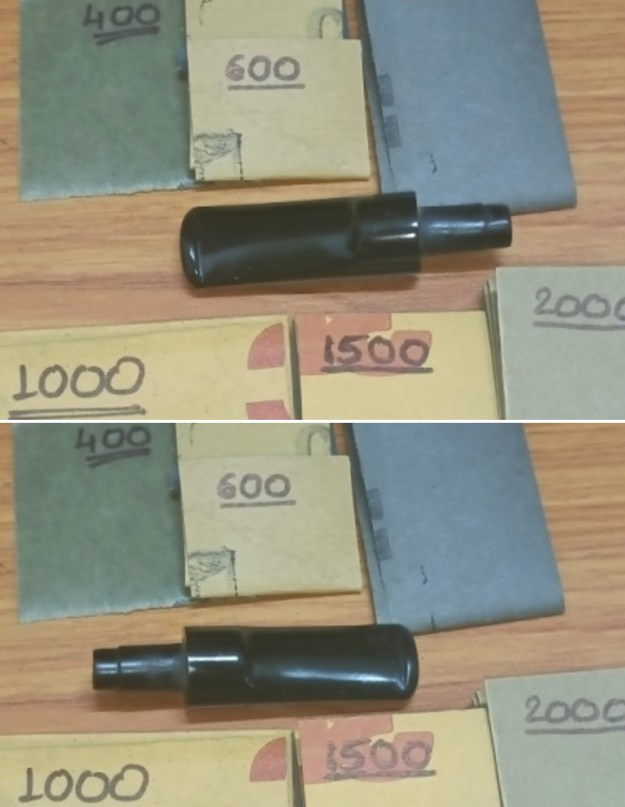
Abha completed the polishing of the stummel by wet sanding the surface with 1500 to 12000 grit micromesh pads. She wiped the stummel with a moist cloth in between the pads to gauge the progress being made. She massaged a small quantity of Before & After Restoration balm and set it aside for 10 minutes for the briar to rehydrate. Thereafter, she gave a rigorous hand rub using a microfiber cloth. The stummel now has a nice vibrant shine to it with the beautiful cross grains and bird’s eye grains resplendent in all their glory. I just can’t thank Abha enough for her help in polishing the stems and stummel of all the pipes that I restore. After I had protected the heel and the walls of the chamber with a coat of J B Weld, it was necessary to prevent this coat from coming into contact with the burning tobacco. I addressed this by mixing activated charcoal and plain yogurt to a thicker consistency, just enough that it would spread easily and applied it evenly all along the chamber walls after inserting a folded pipe cleaner through the draught hole to keep it open. Once dry and set, this will not only protect the walls but also aid in faster buildup of cake. I set the bowl aside for the bowl coat to cure for 72 hours.72 hours later, to apply the finishing touches, I mounted a cotton cloth buffing wheel onto my hand held rotary tool and applied a coat of Blue Diamond to the stummel and the stem to polish out the minor scratches. Next, I mounted a cotton cloth buffing wheel and setting the speed to ¼ of the full power, I applied a coat of carnauba wax over the stummel and the stem. I worked the complete pipe till the time all the wax was used up for polishing the stummel and the stem. The pipe now boasts of a beautiful and lustrous shine. I vigorously rubbed the pipe with a microfiber cloth to deepen the shine and also to clean away any residual wax that had been left behind. I am very happy with the way this beauty has turned out. P.S. I am personally not happy with the way the stem repairs have turned out and will surely rework on it once the CA glue that I regularly use reaches me in next couple of weeks.  A big thank you to all the readers of this write up for sparing your valuable time and hope for your continued patronage. Until the next write up, be safe and healthy…