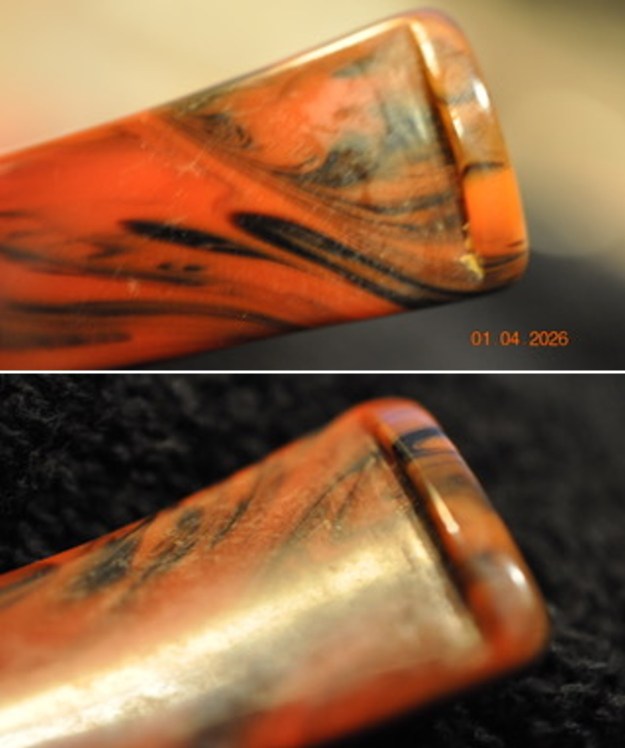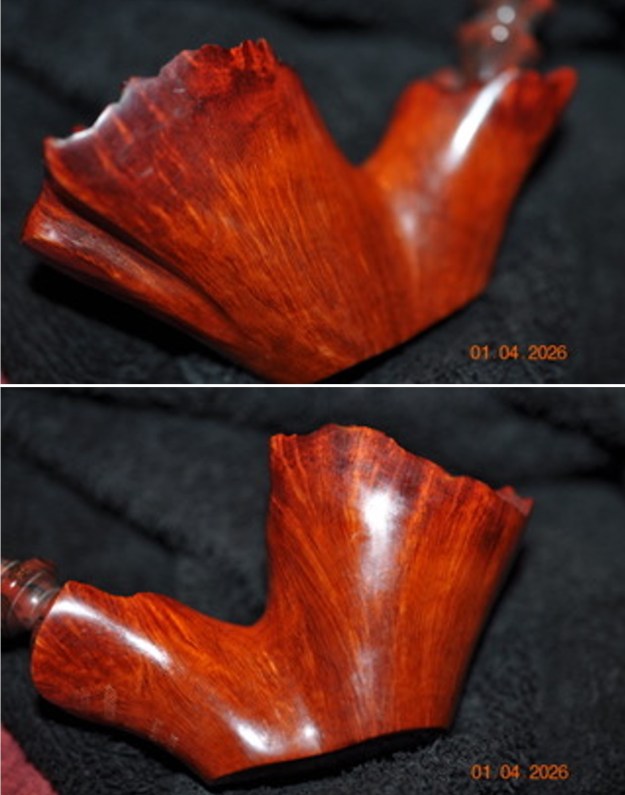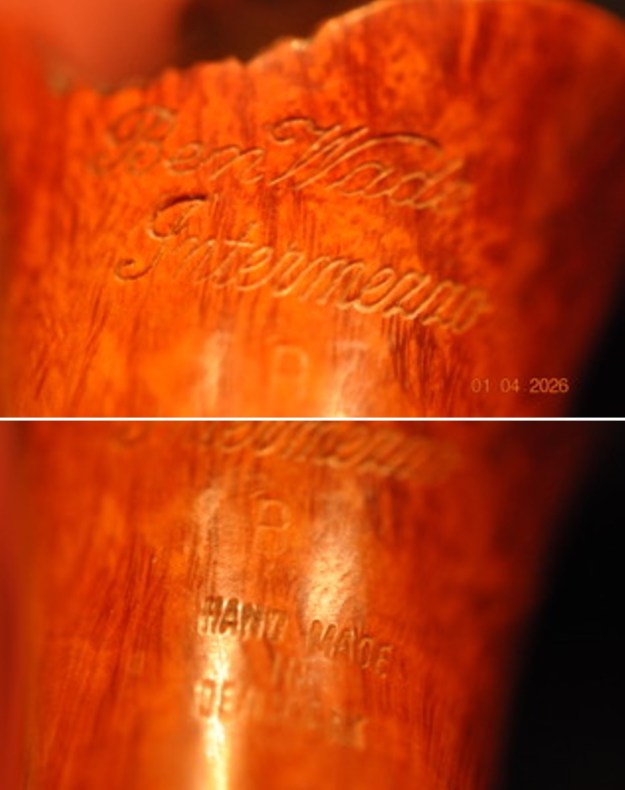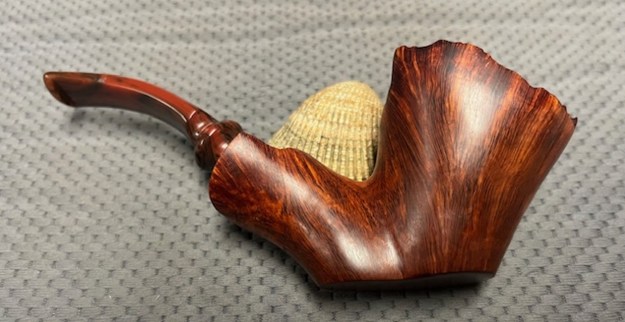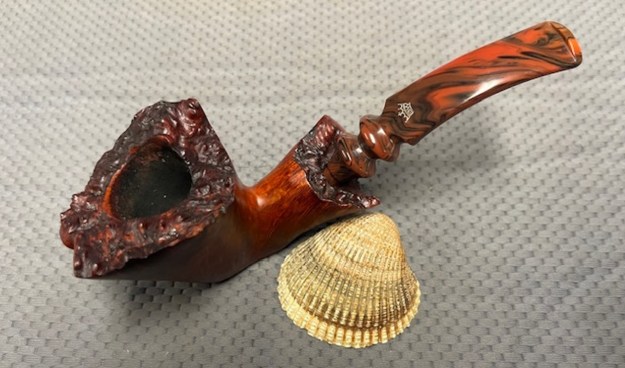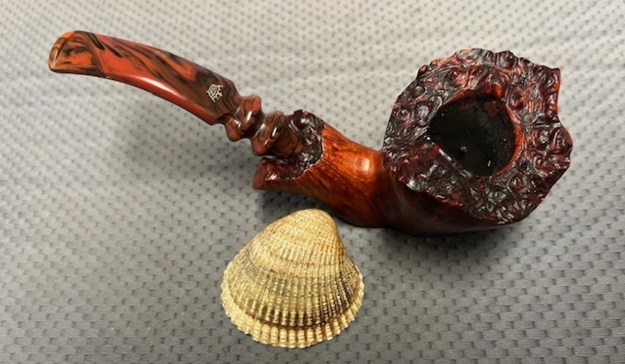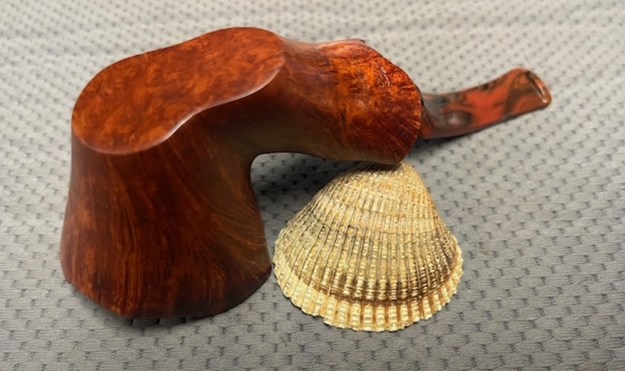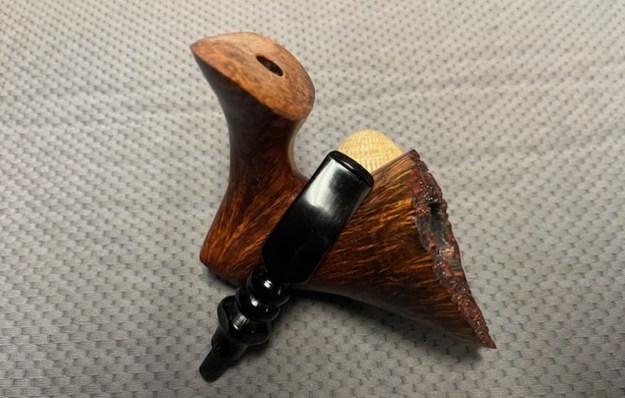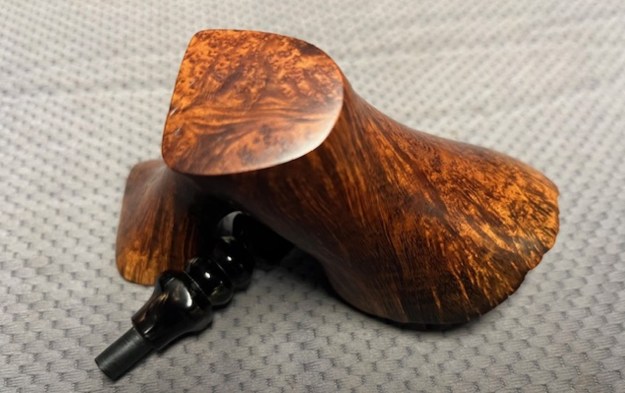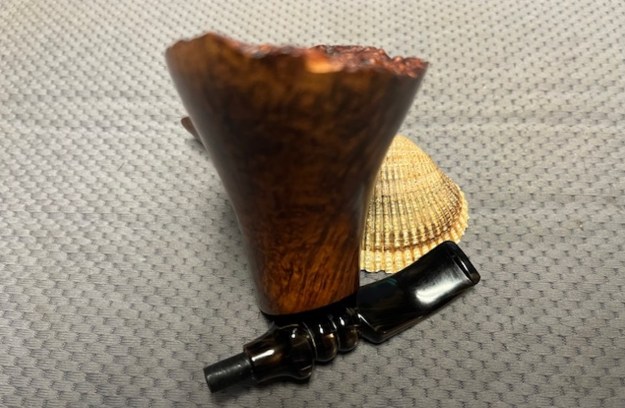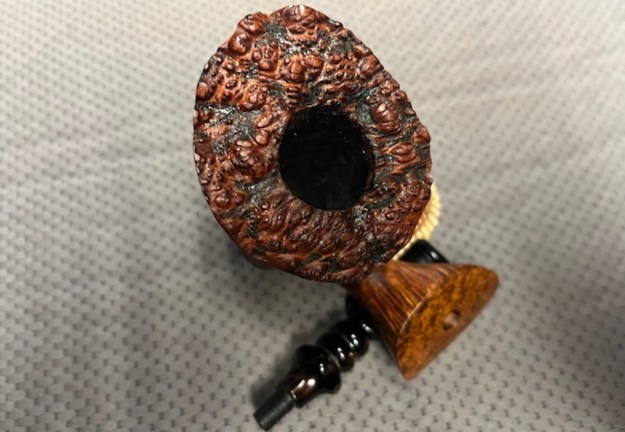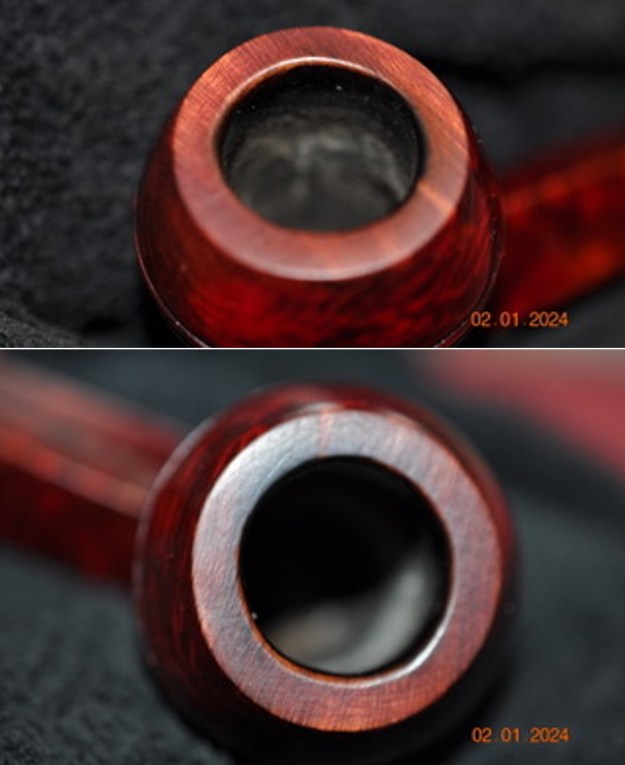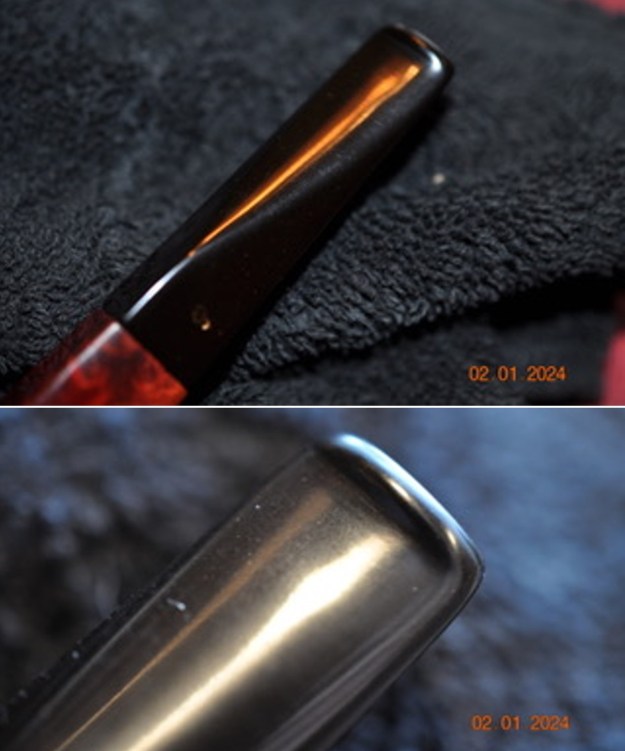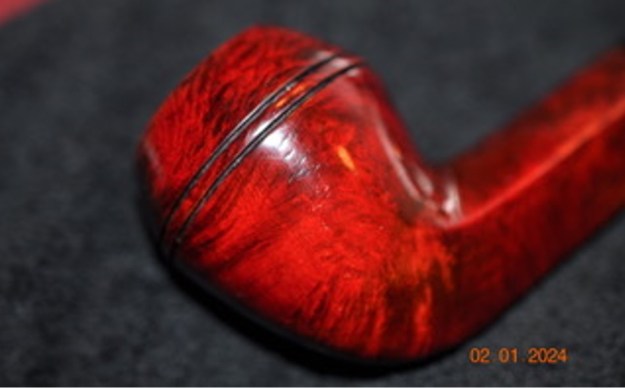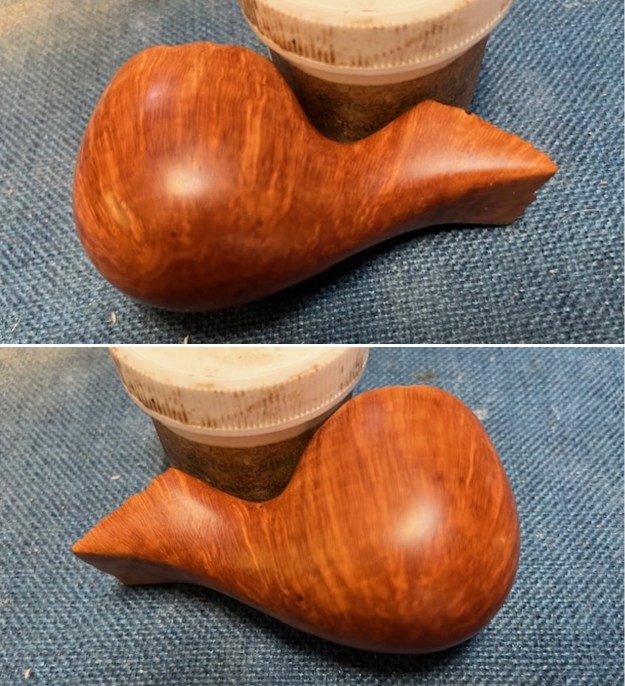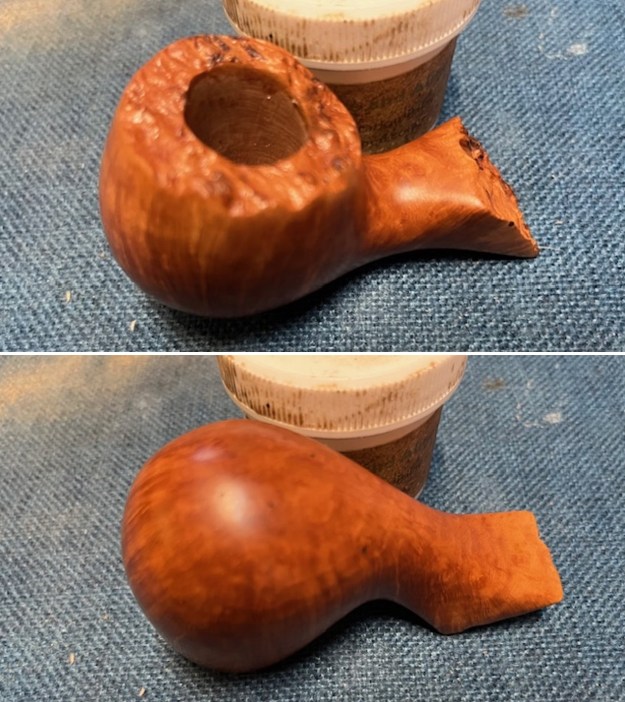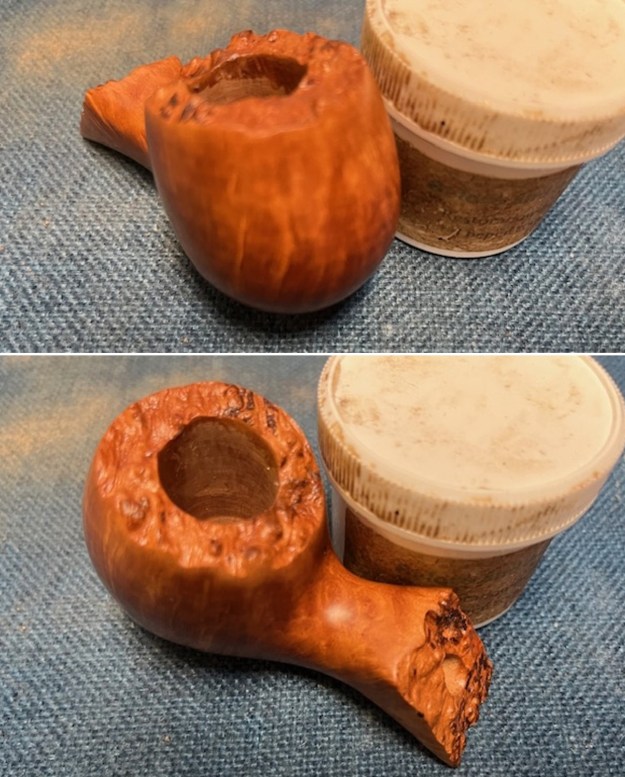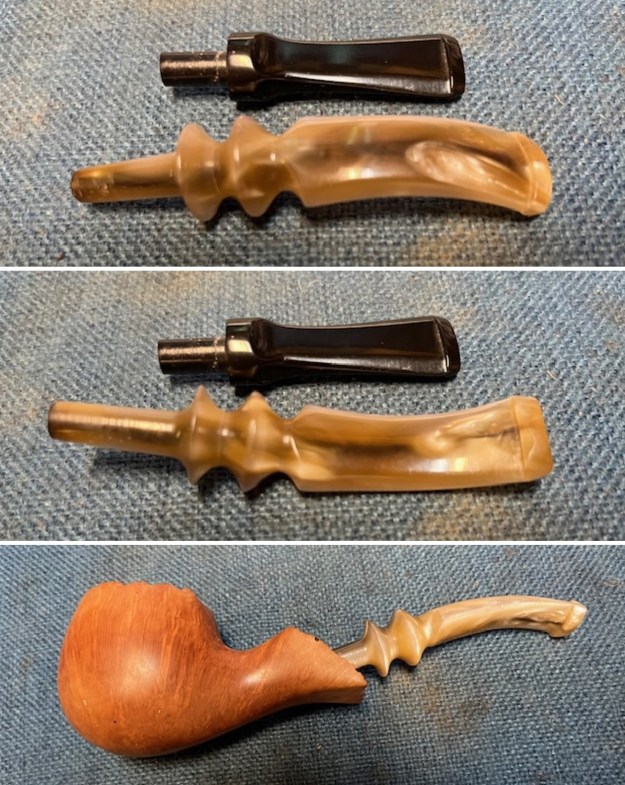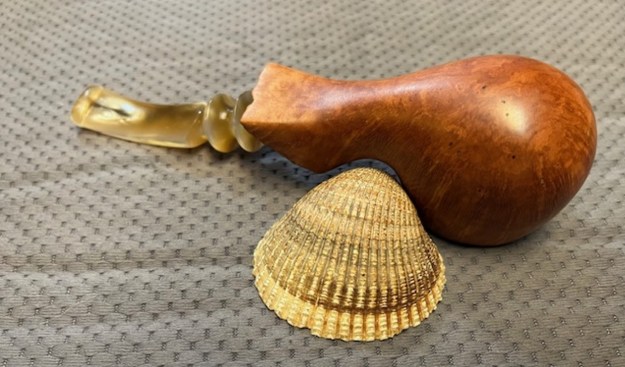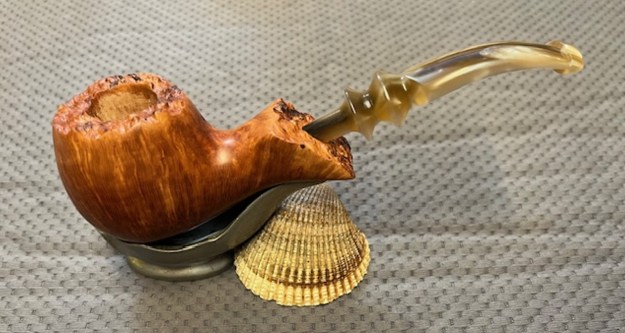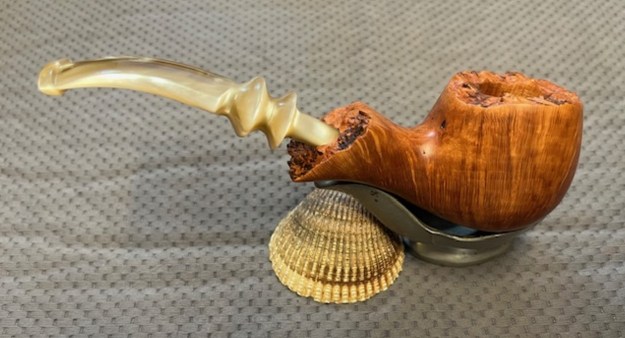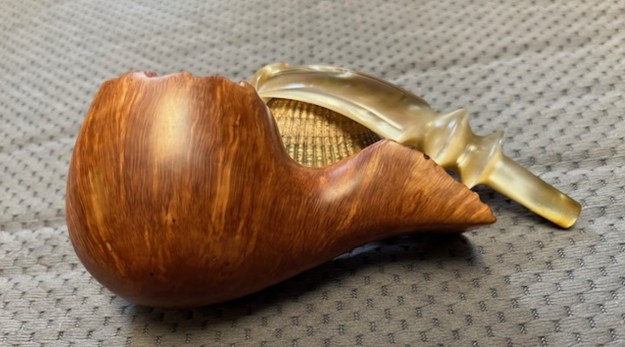
Tag Archives: acrylic

Putting together the pieces to Craft a Gourd Calabash with a Maplewood Bowl


by Steve Laug

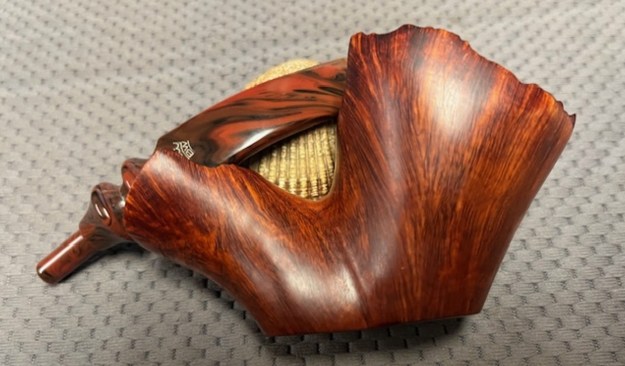
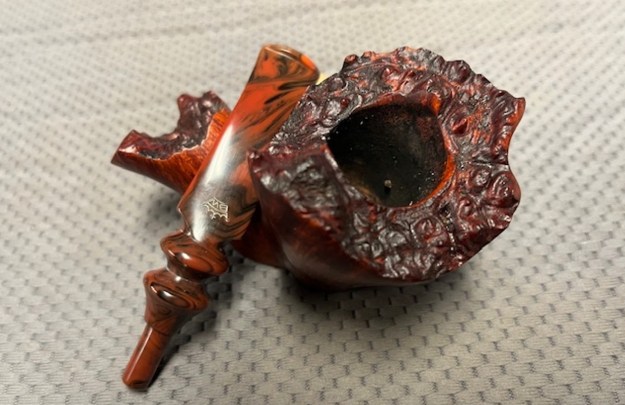
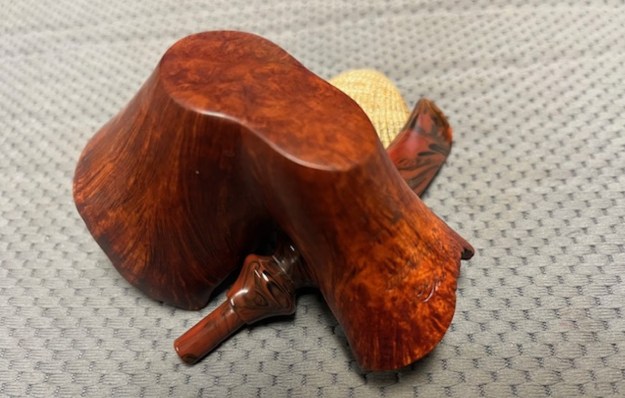
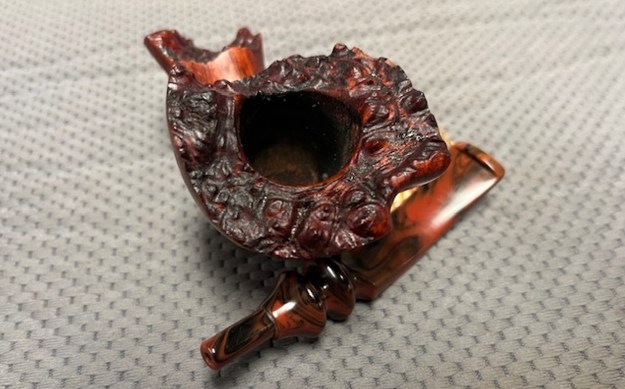
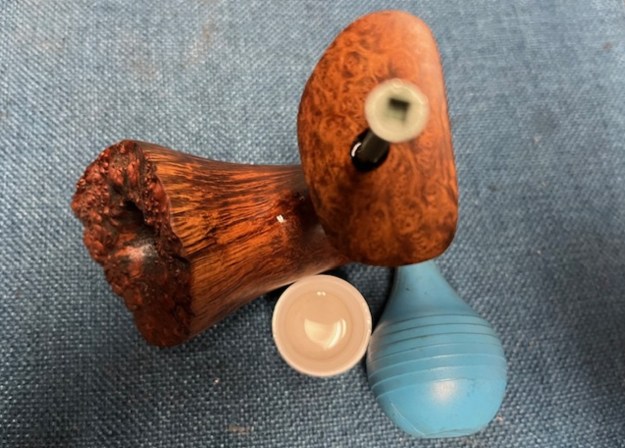
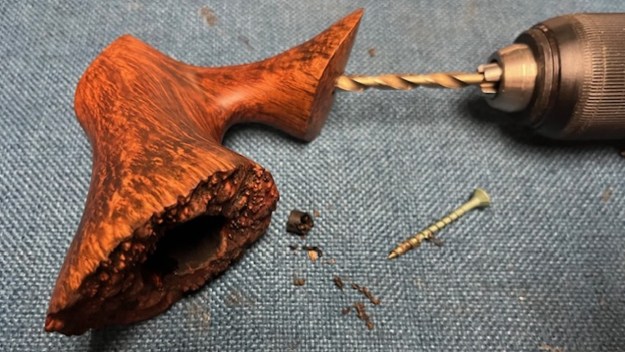
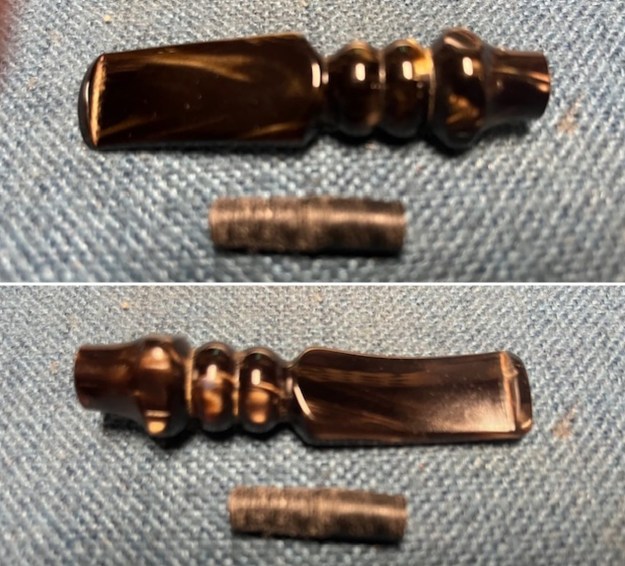
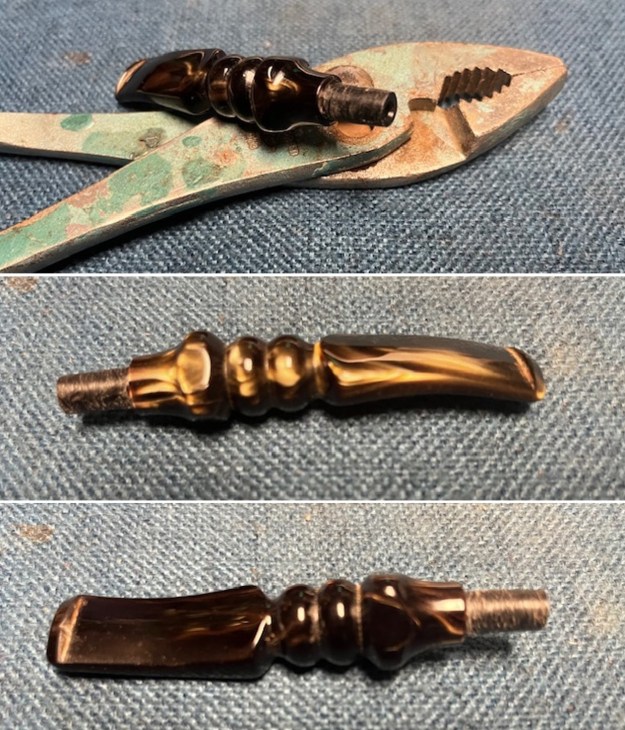
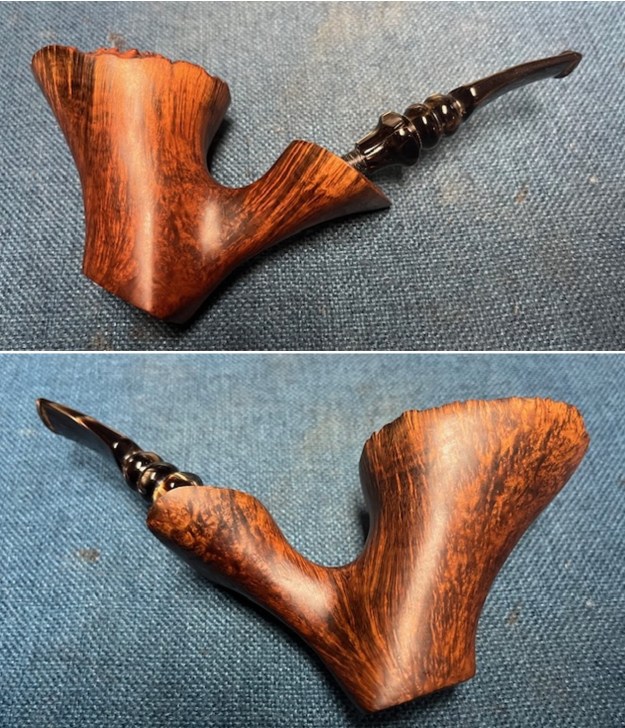
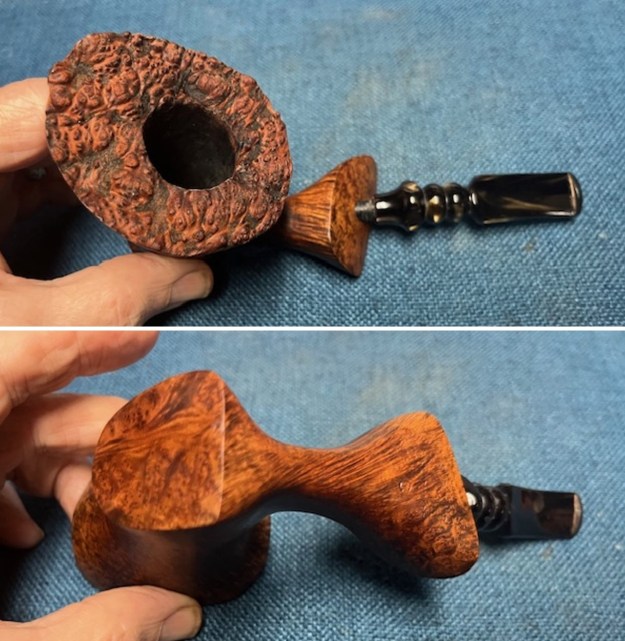
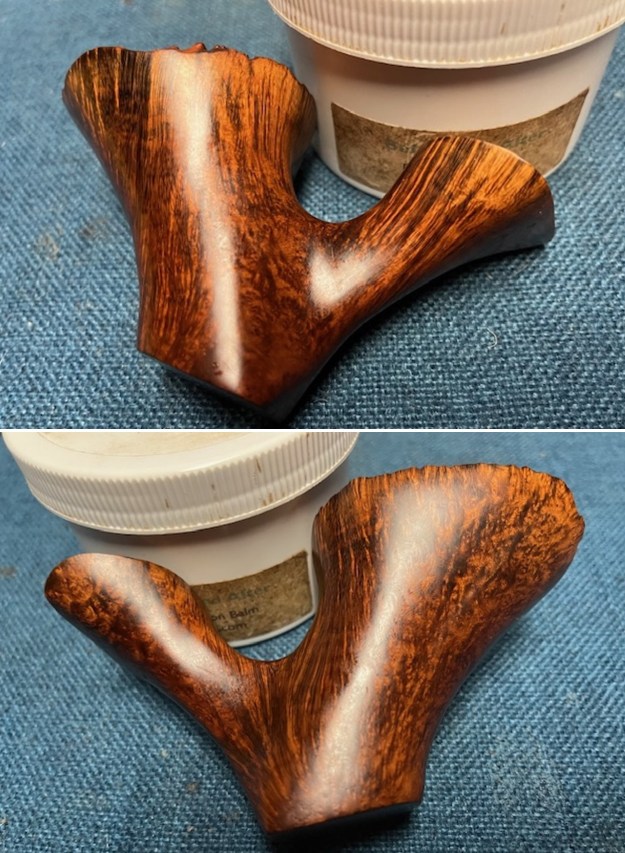
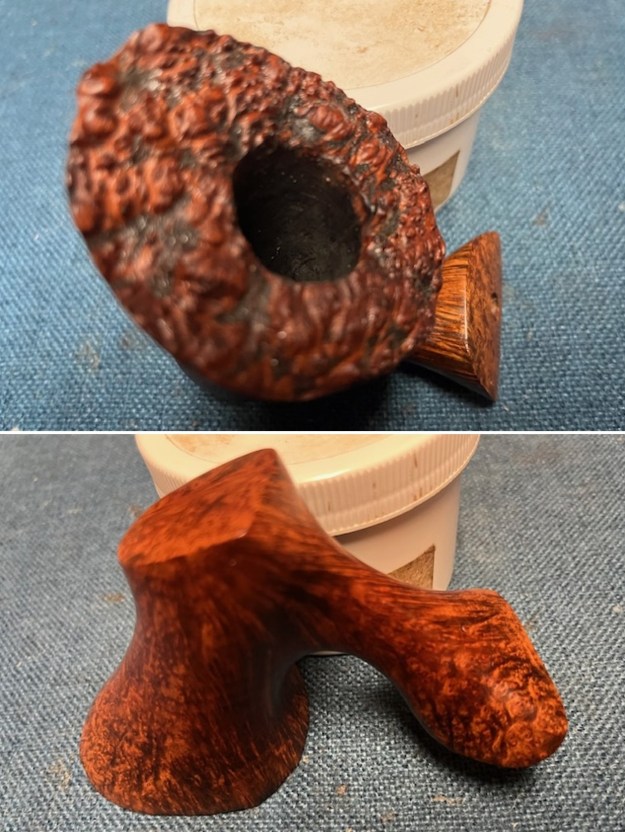
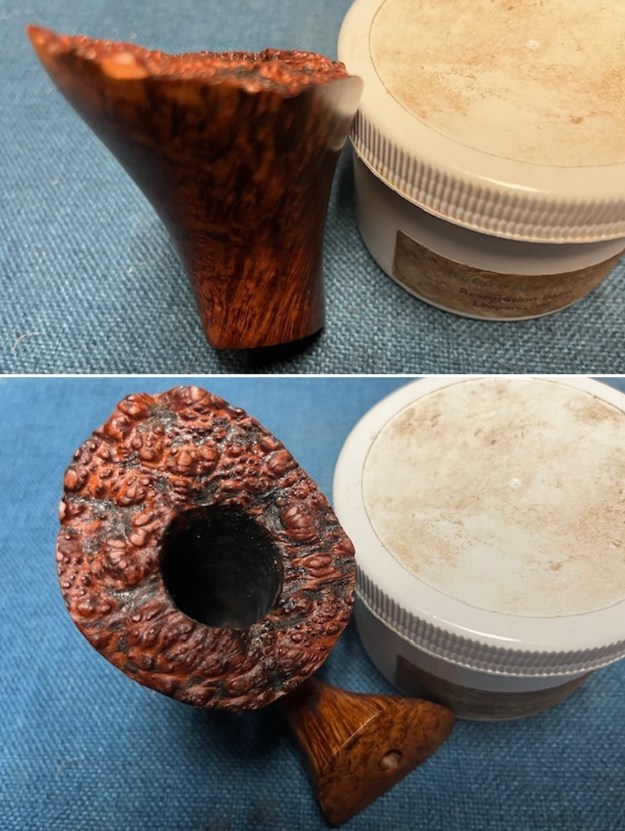
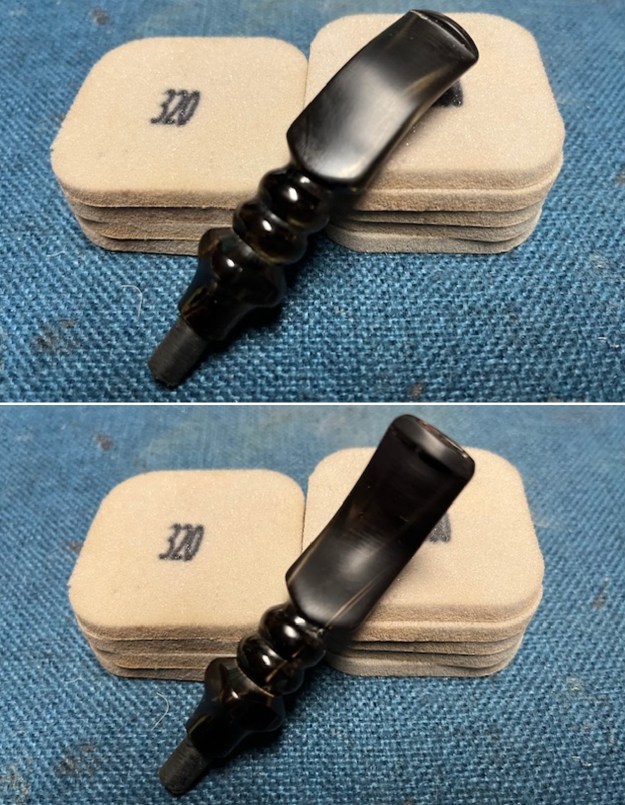
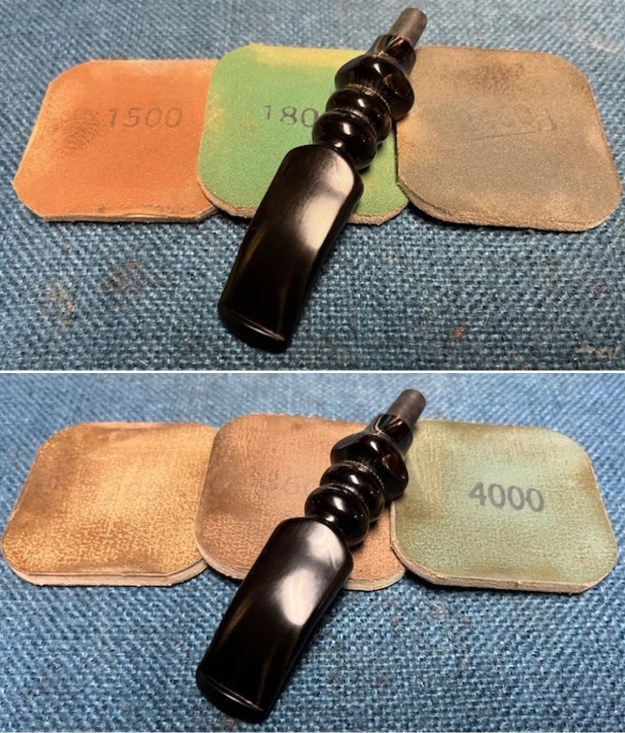
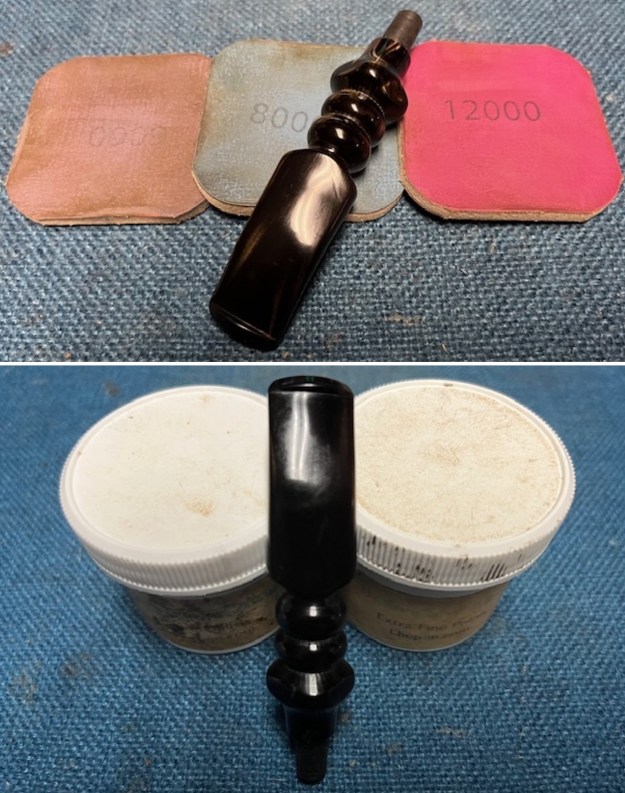
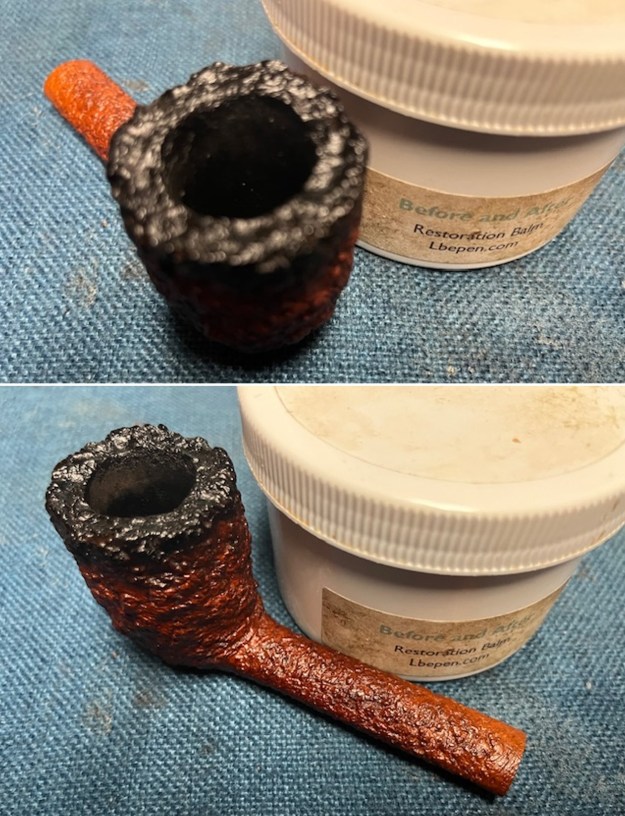
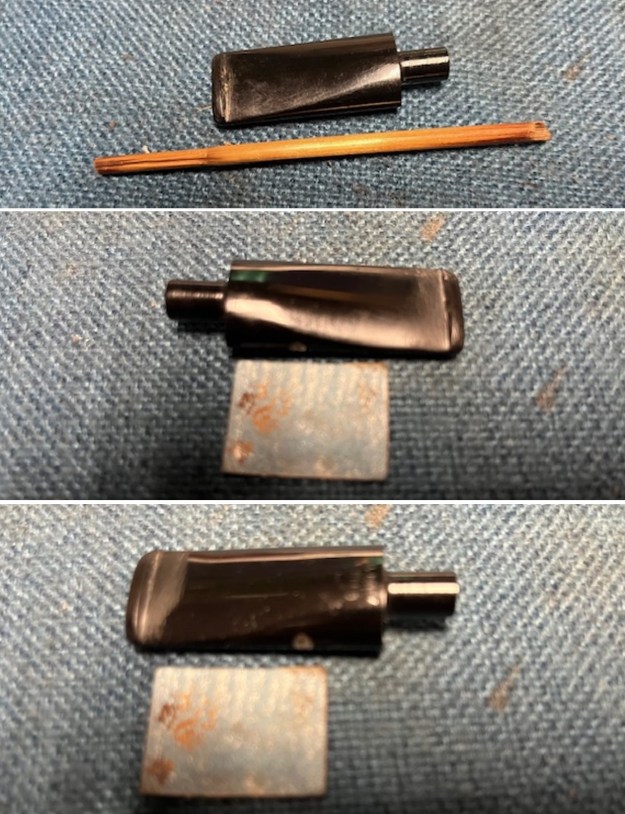
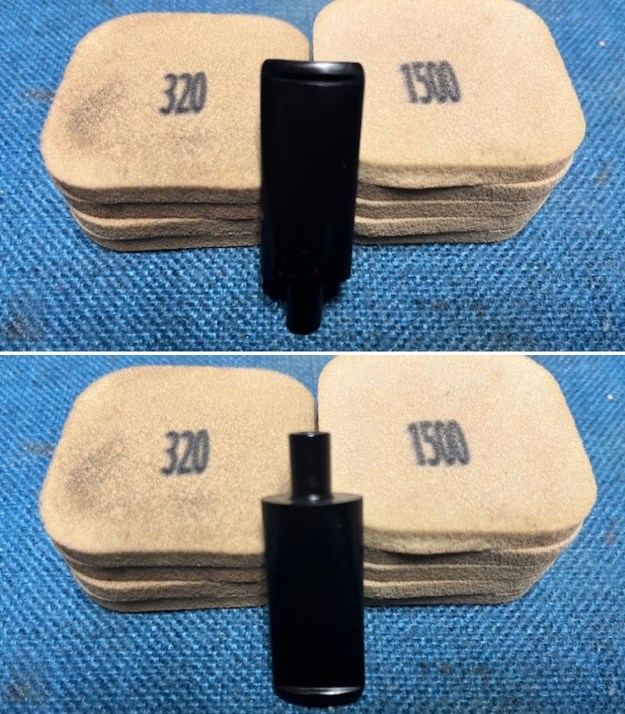
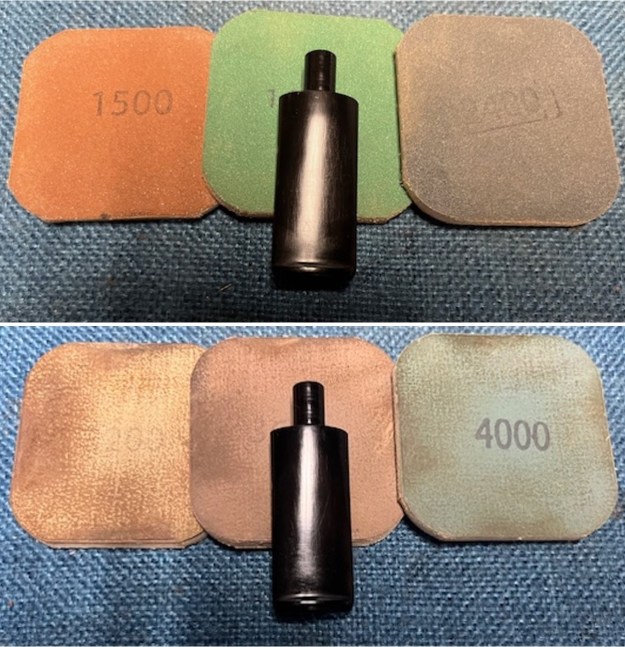
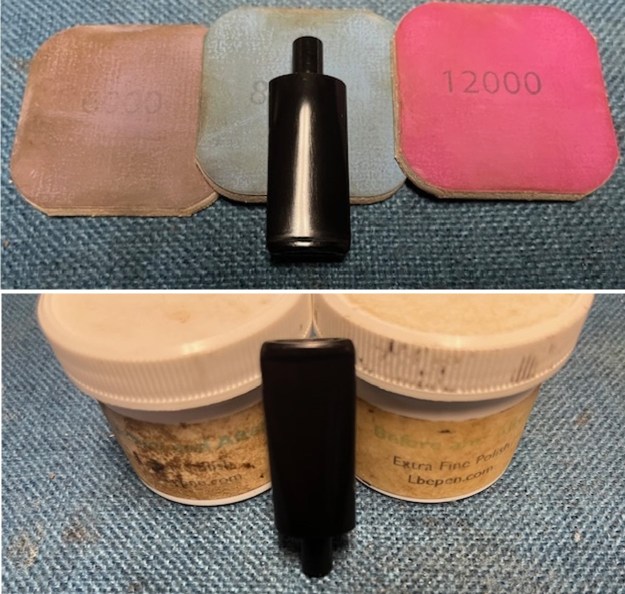
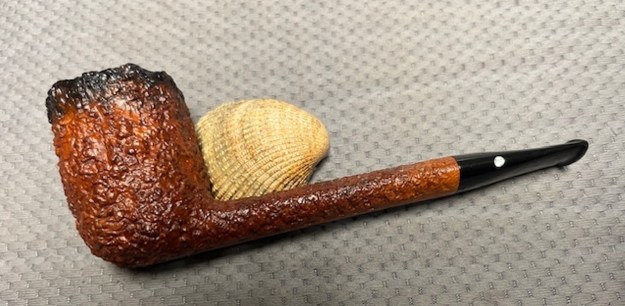
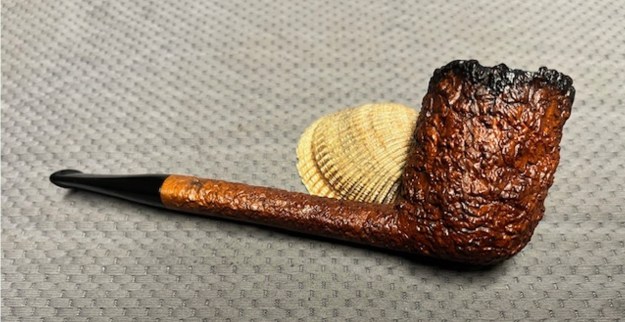
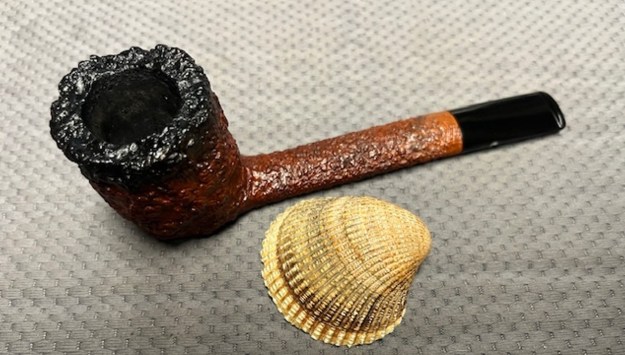
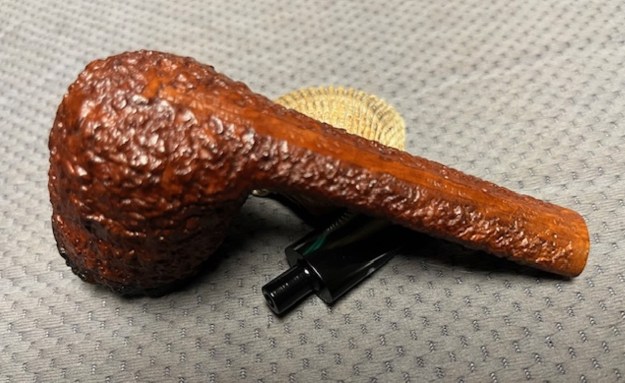
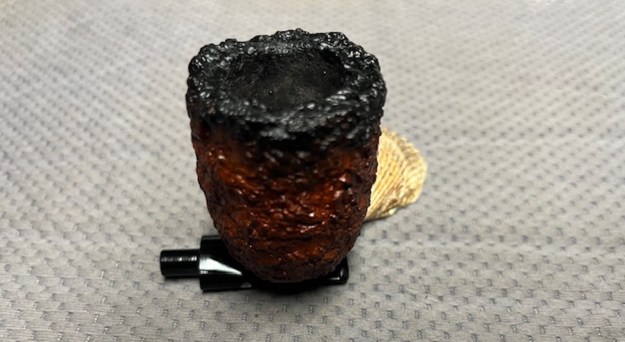
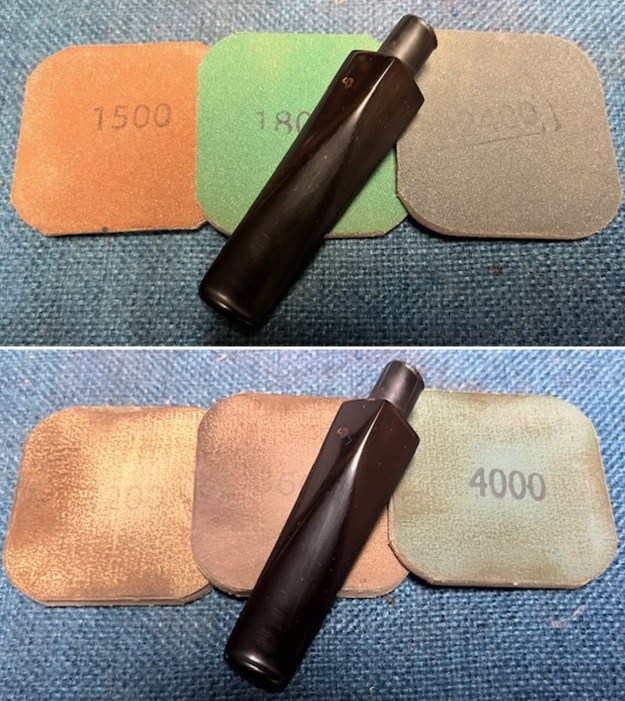
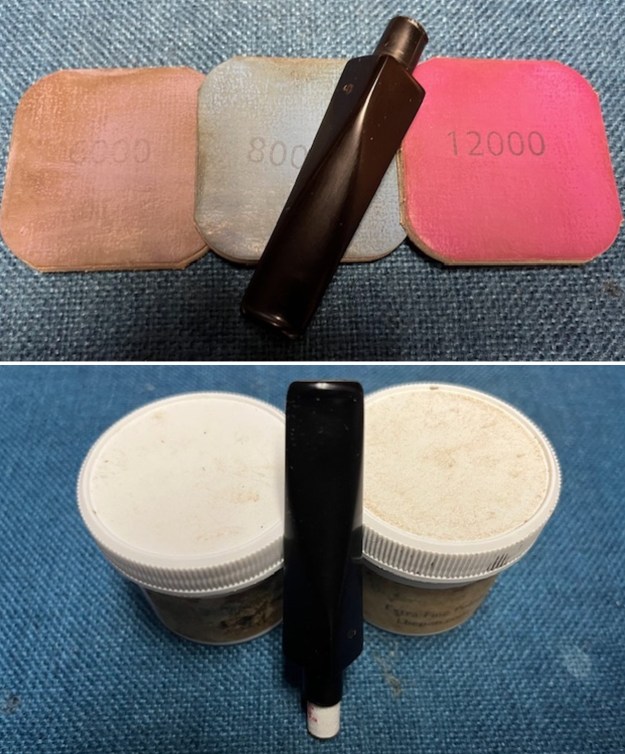
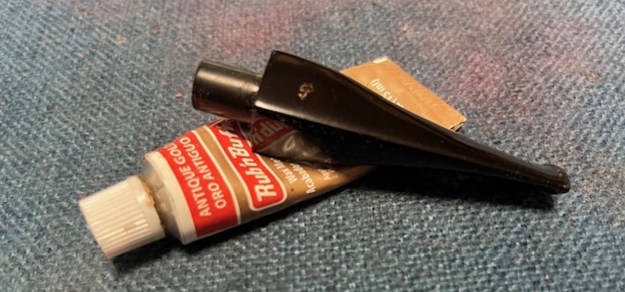
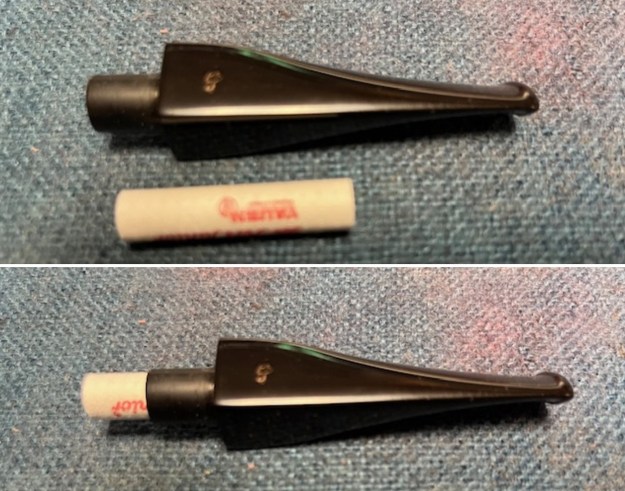
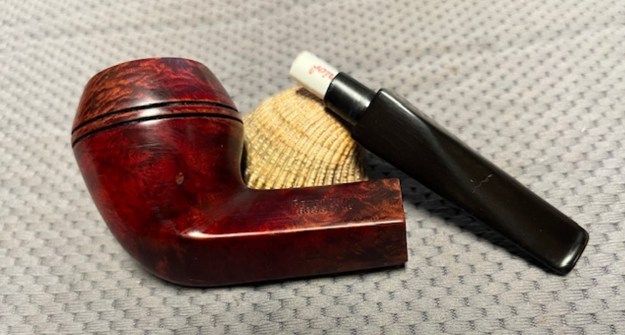
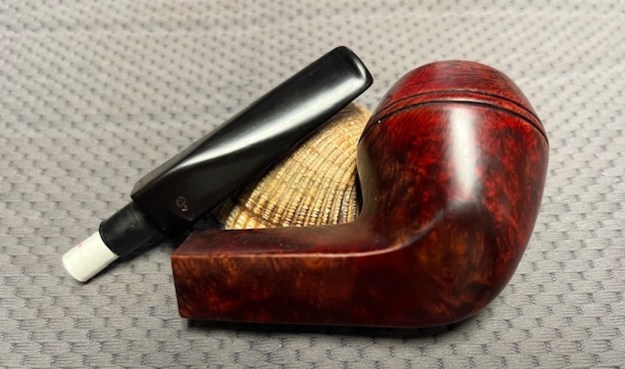
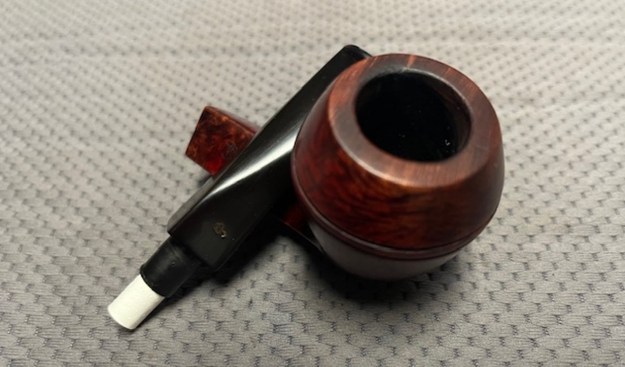
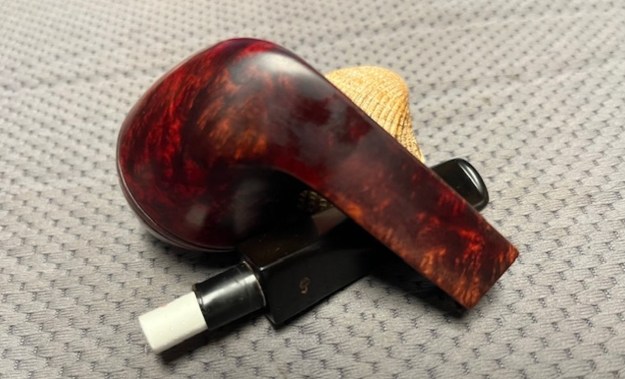
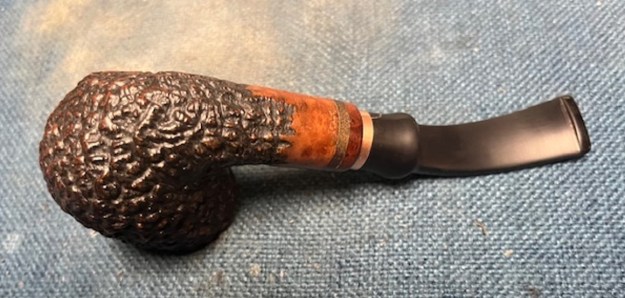
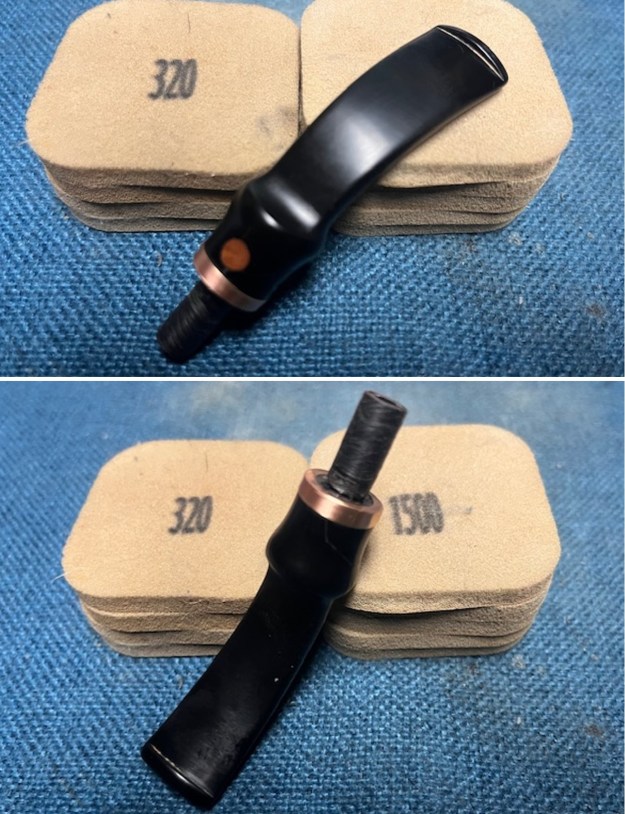
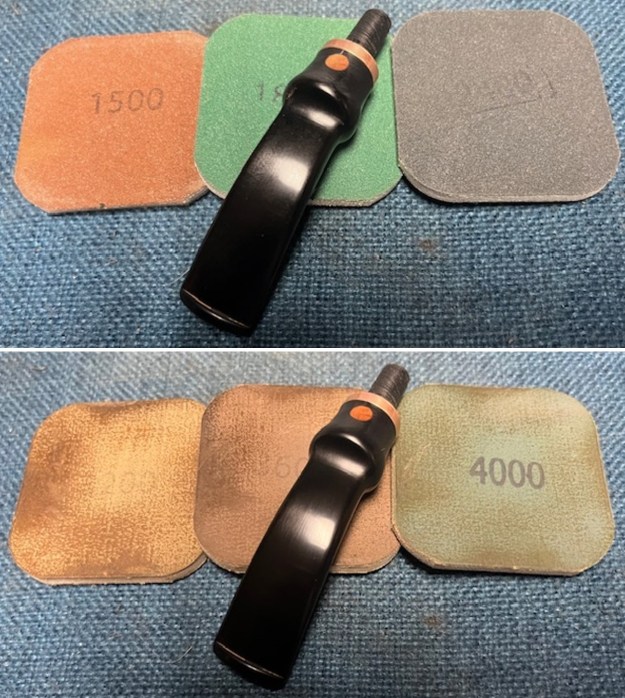
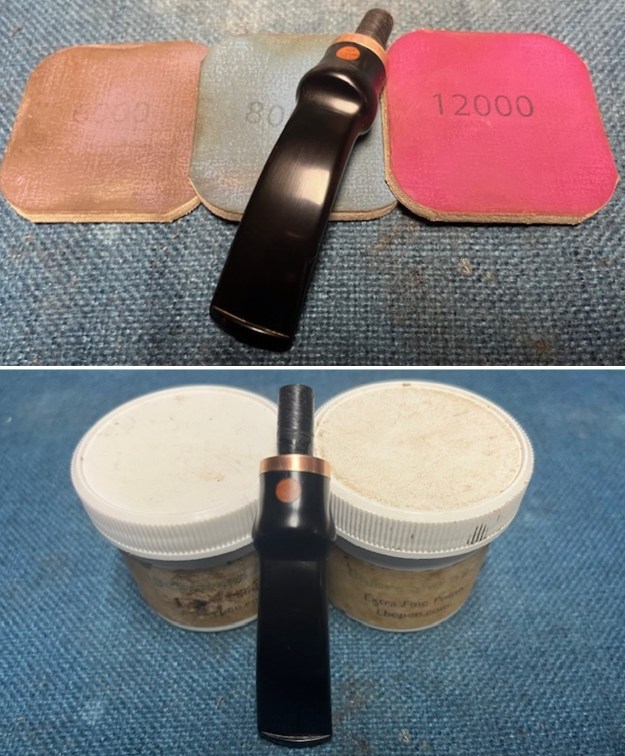
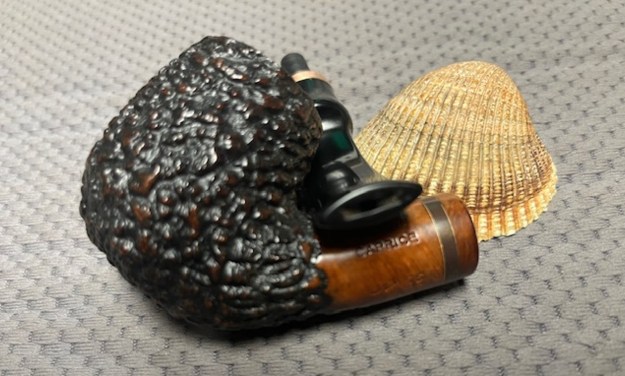
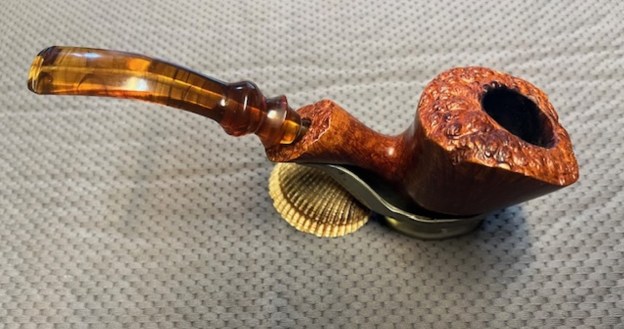
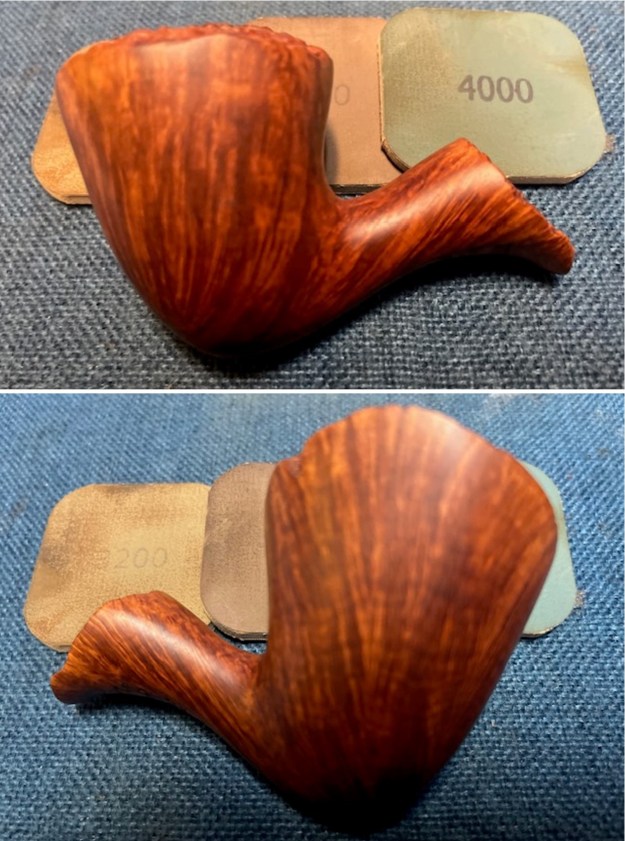
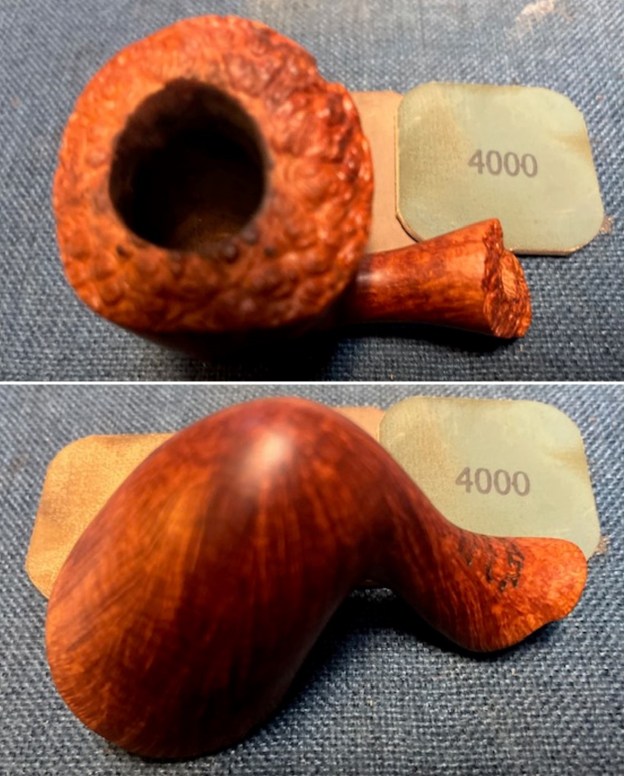
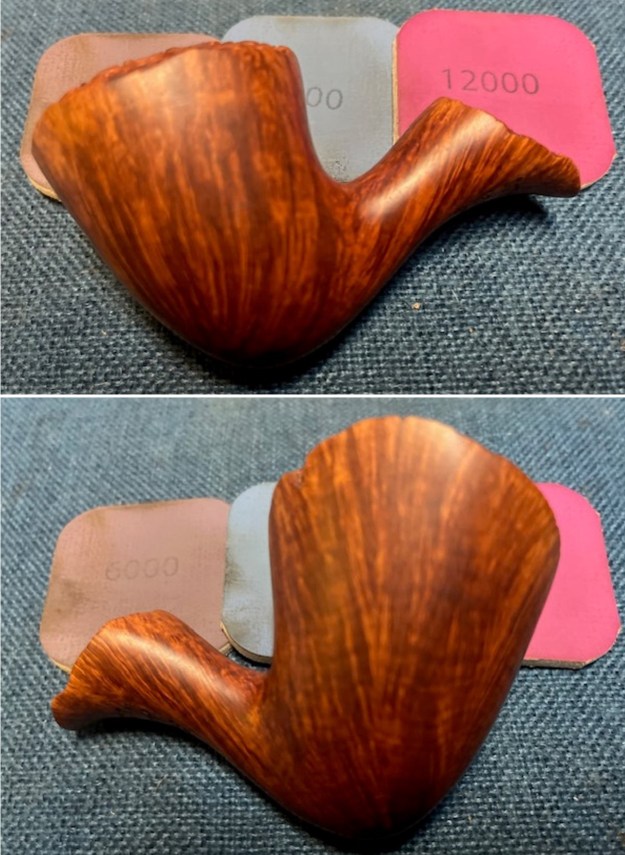
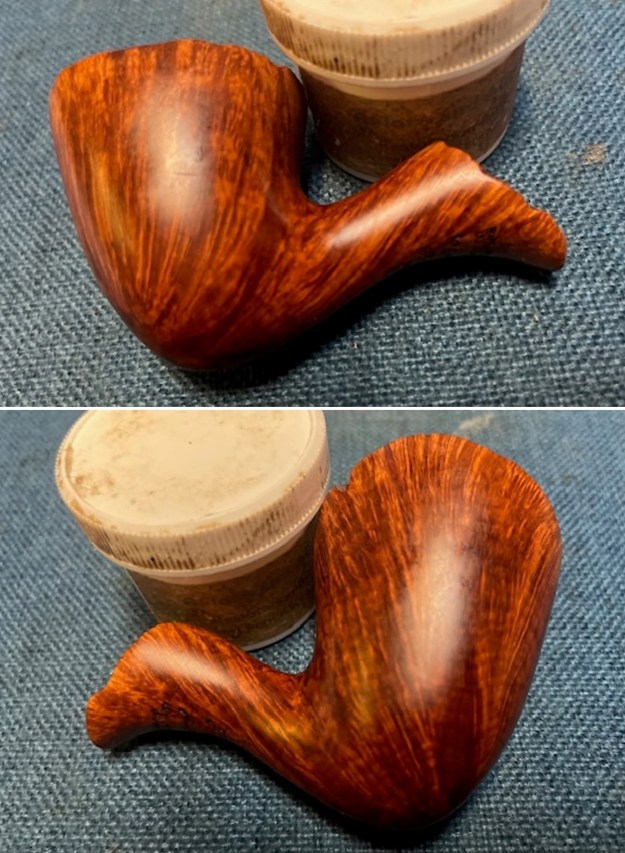
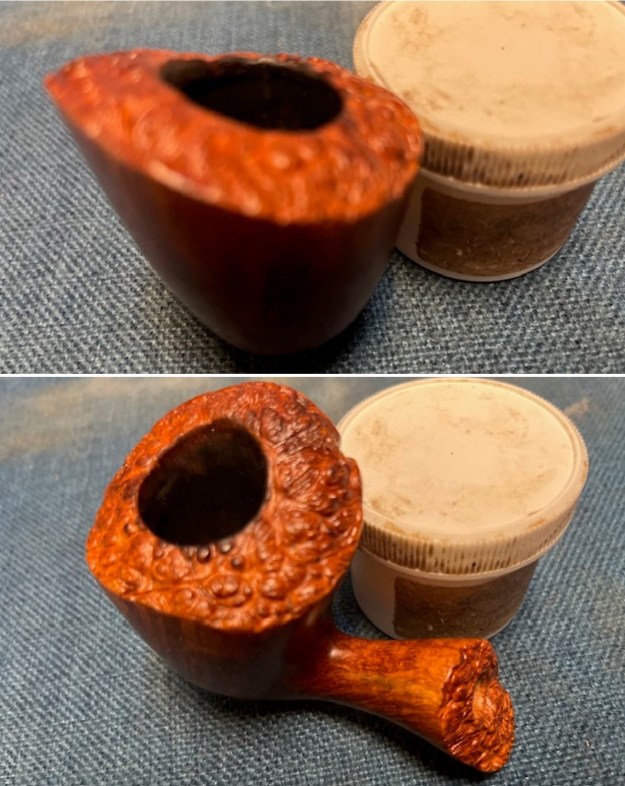
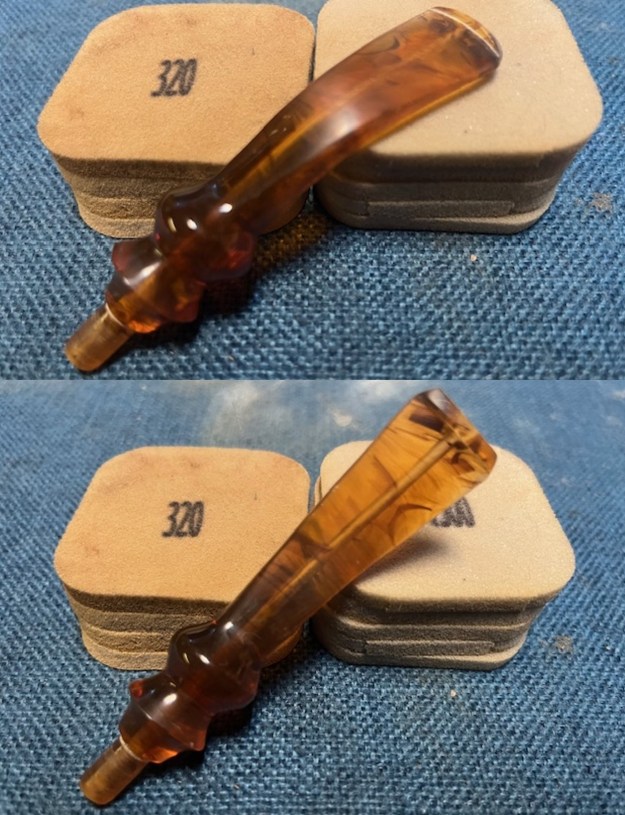
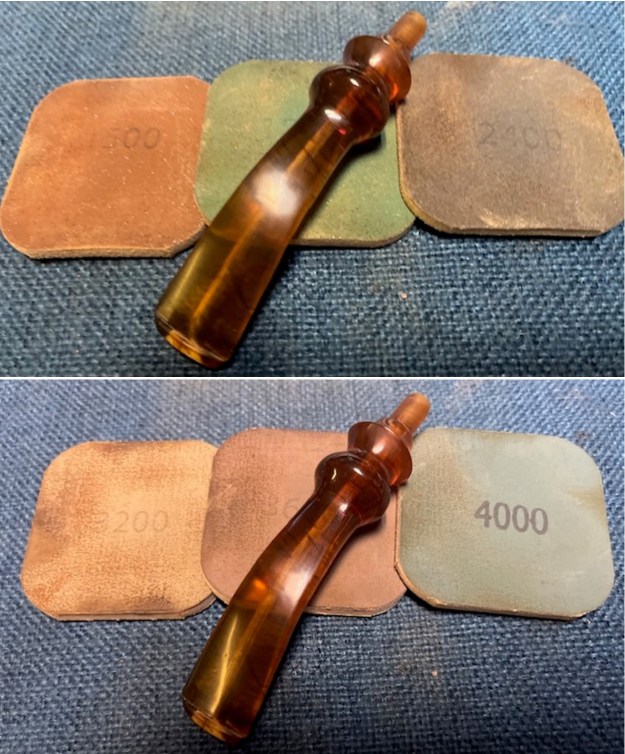
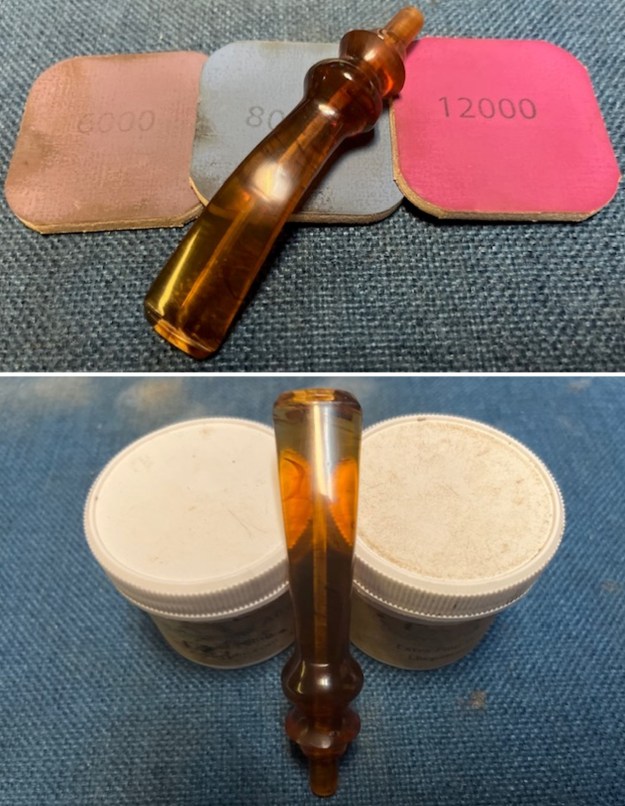
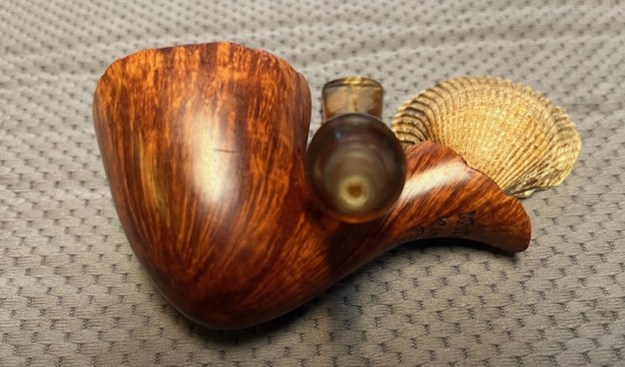
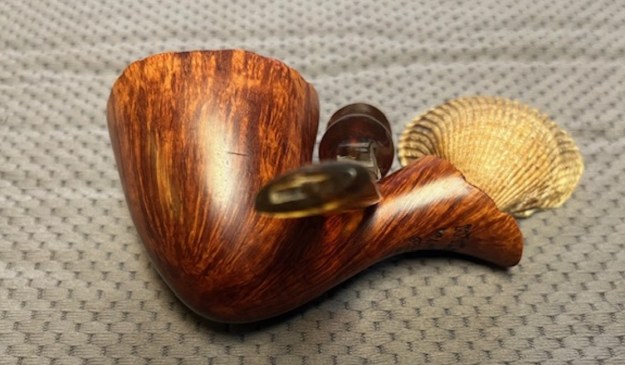
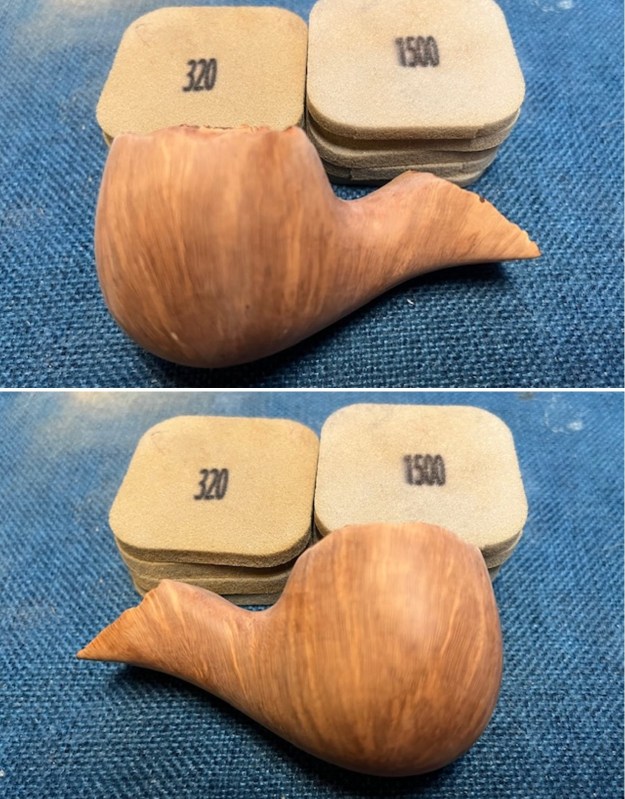
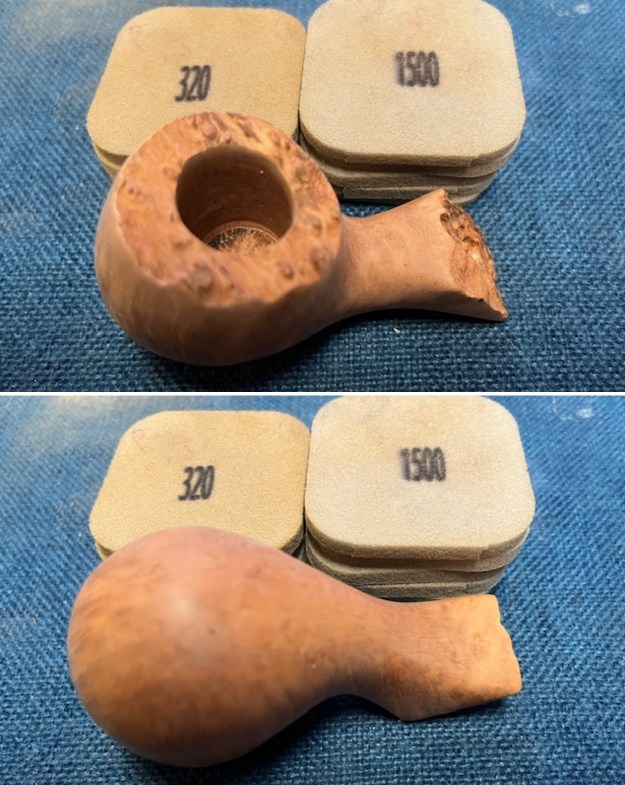
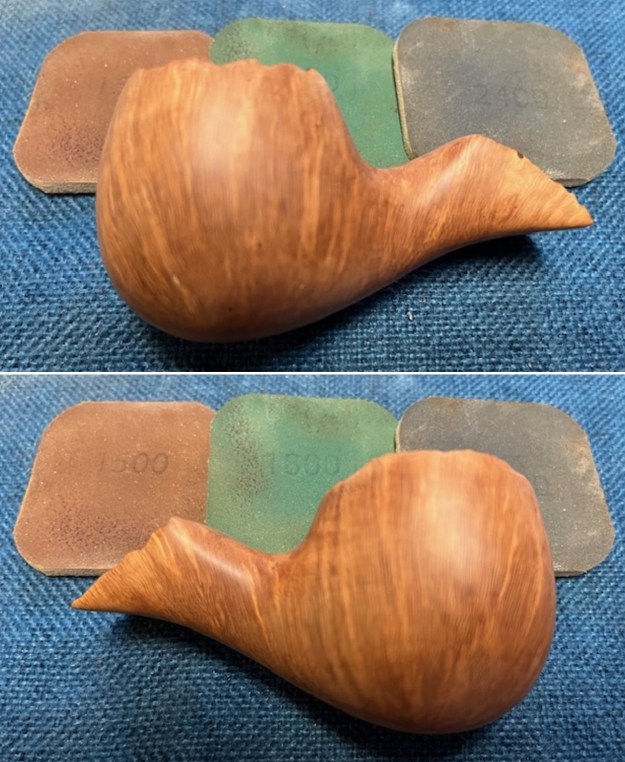
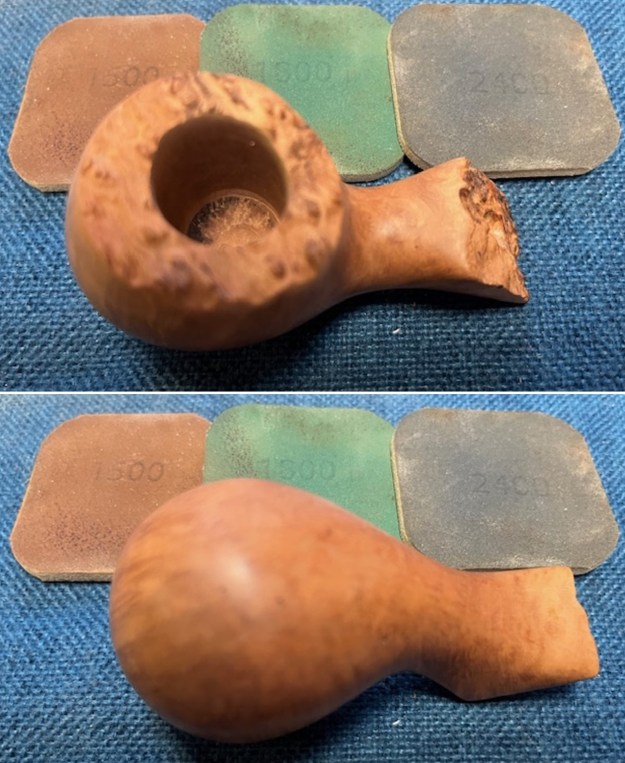
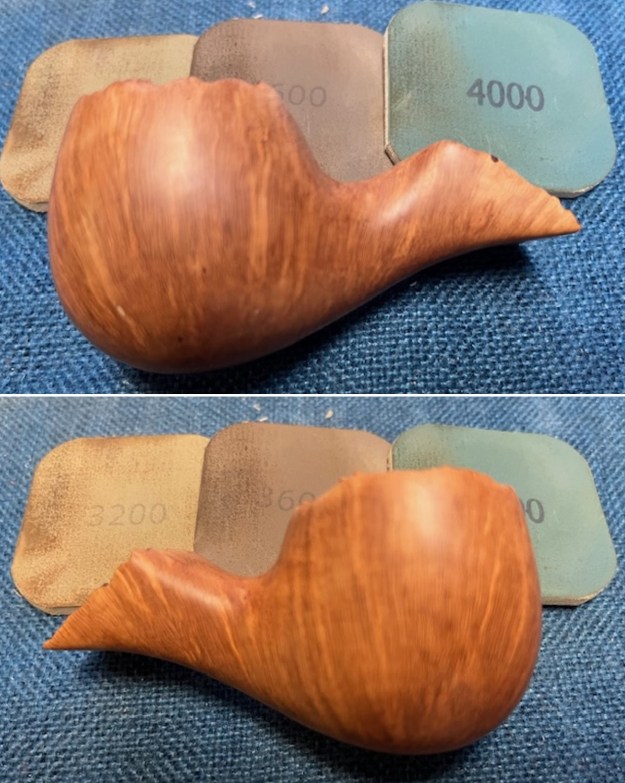
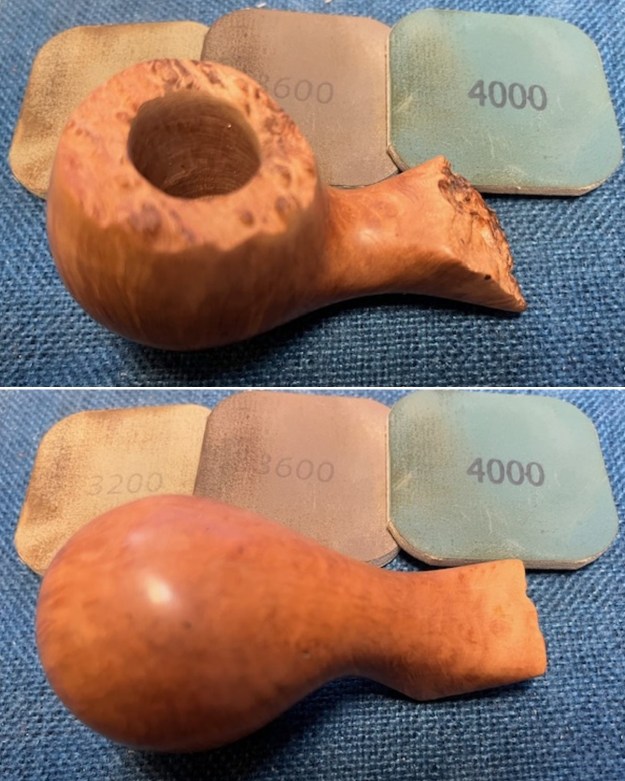
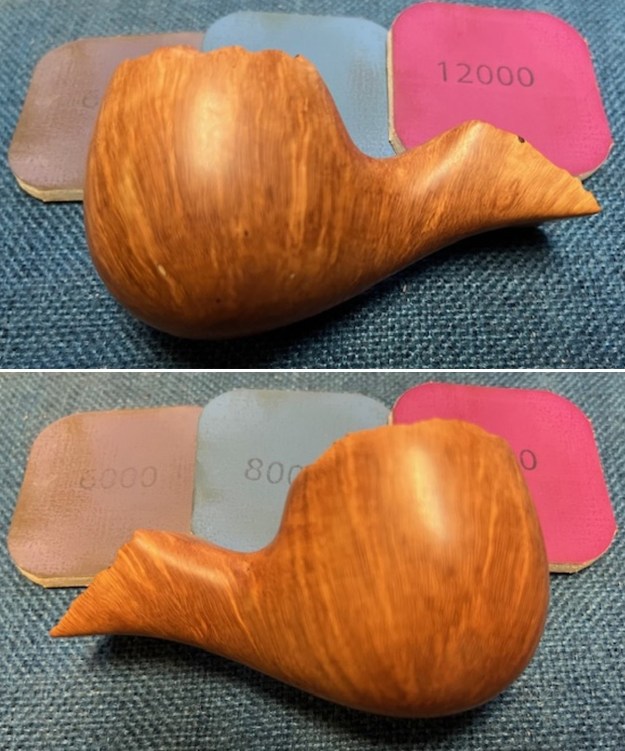
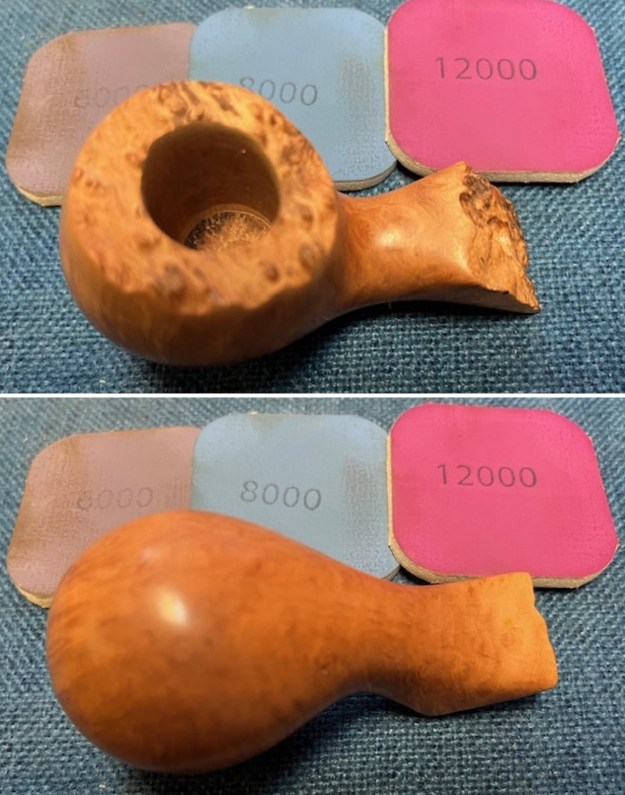
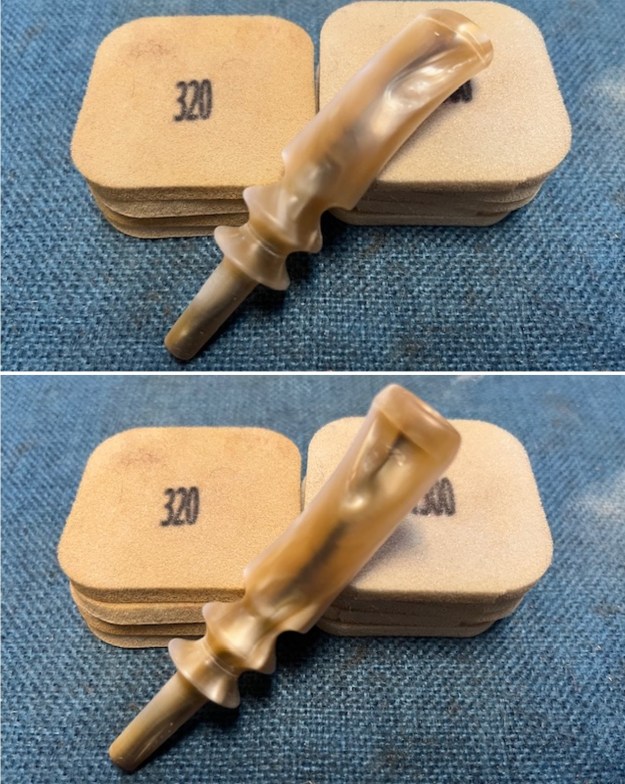
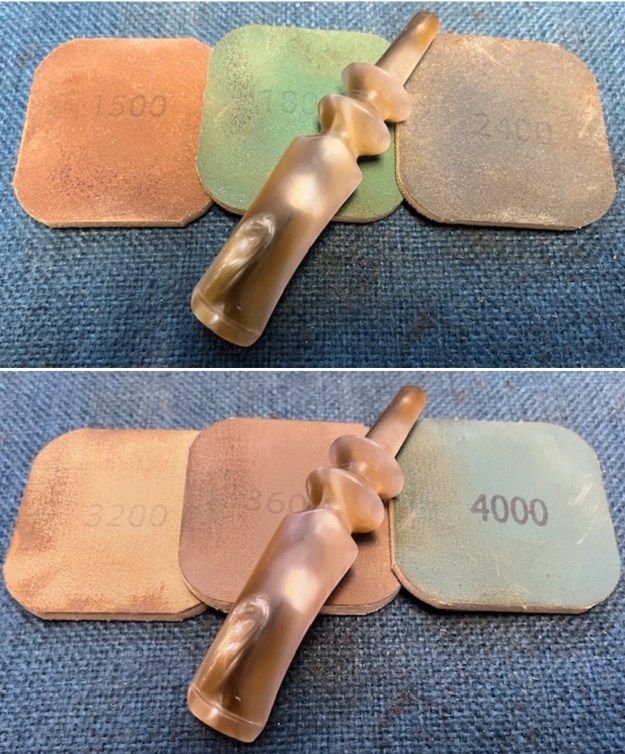
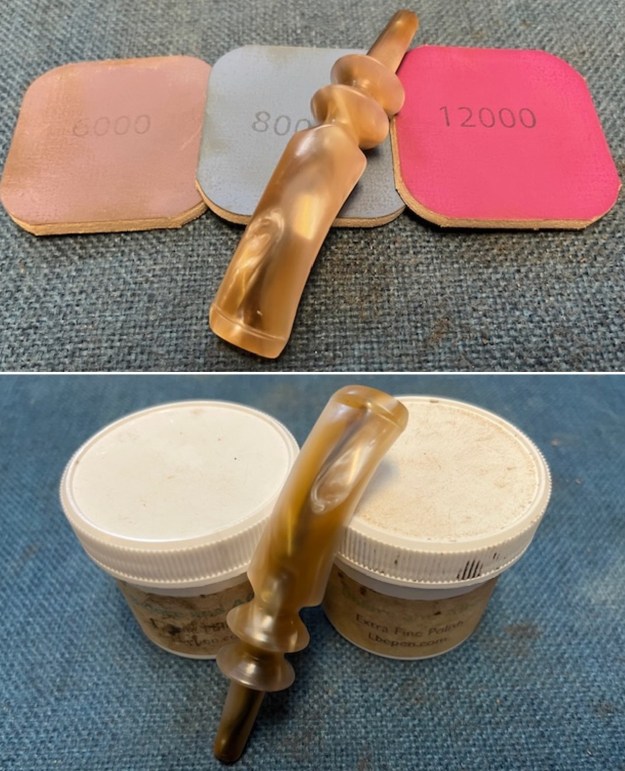
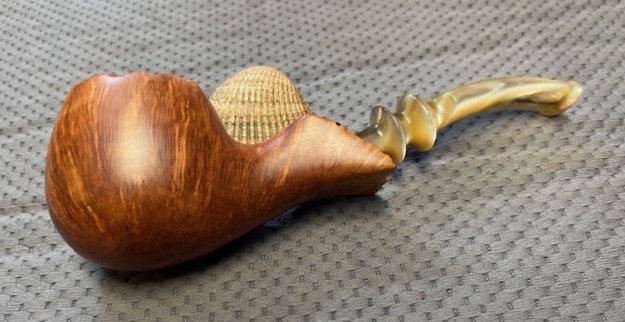
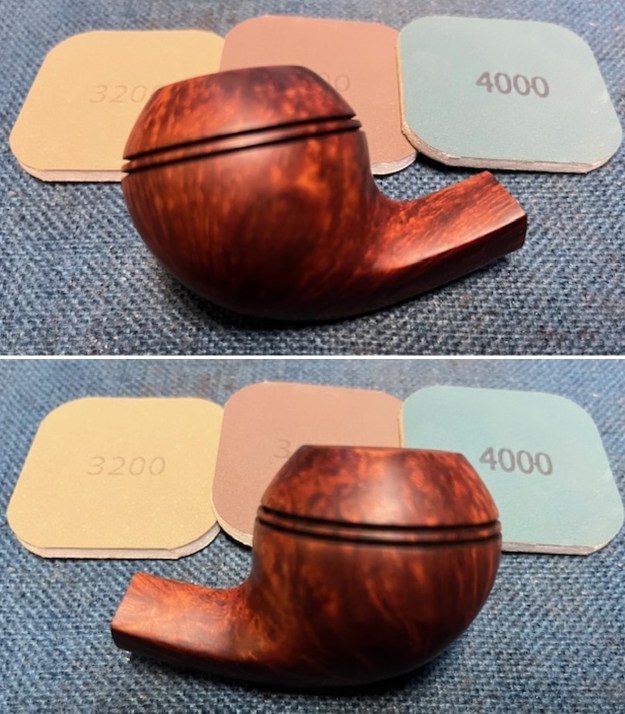
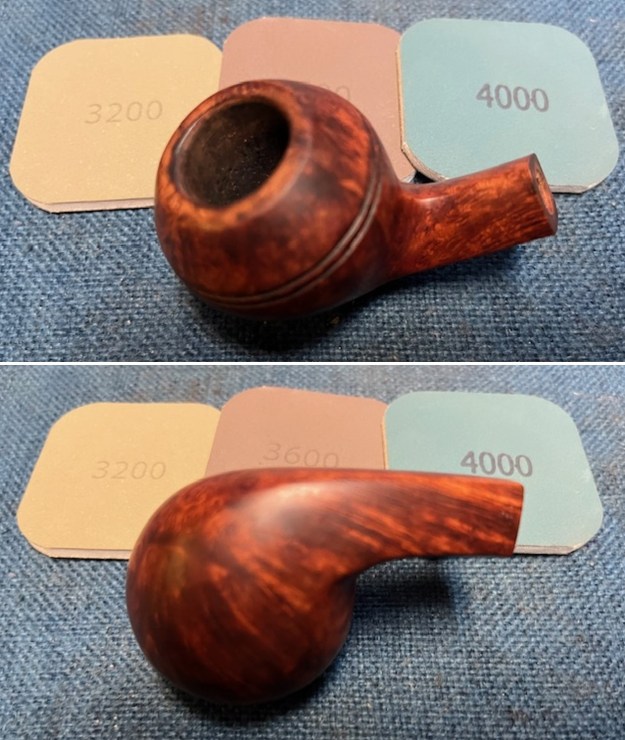
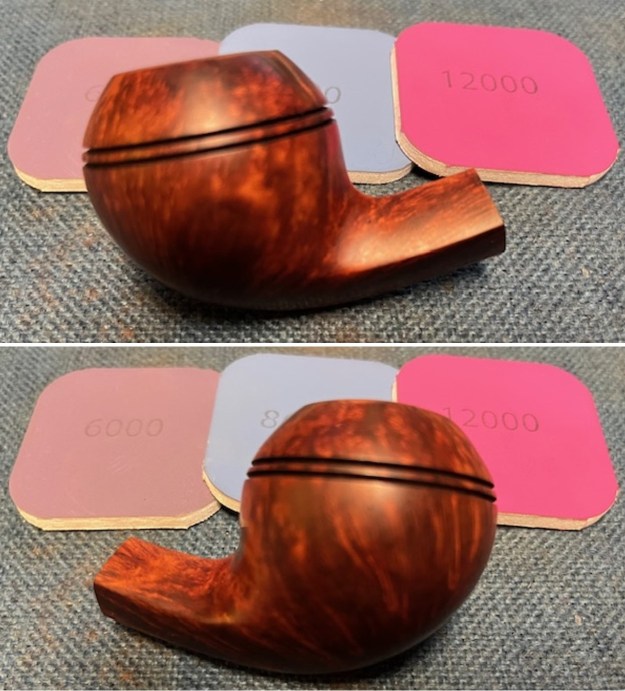
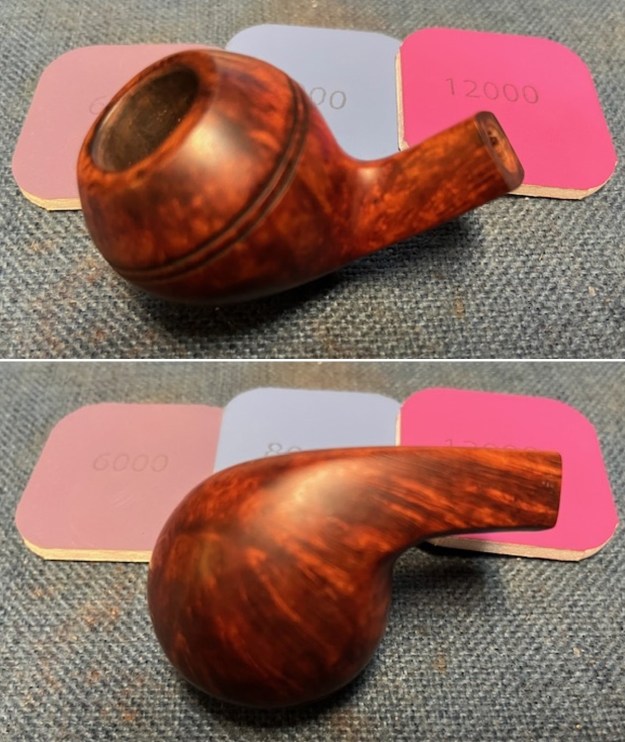
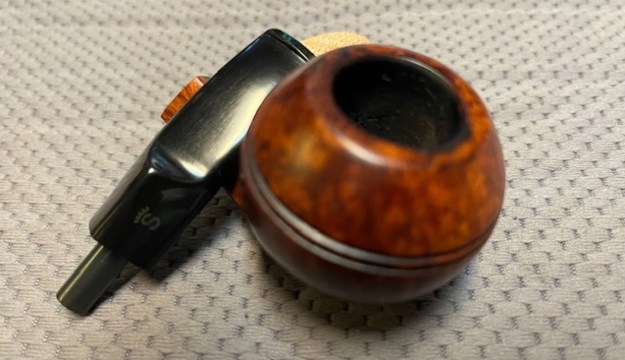
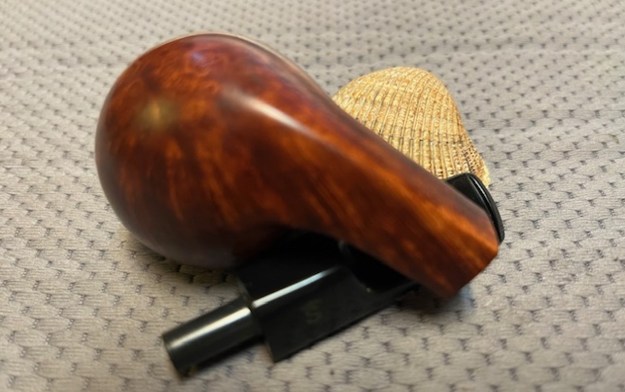
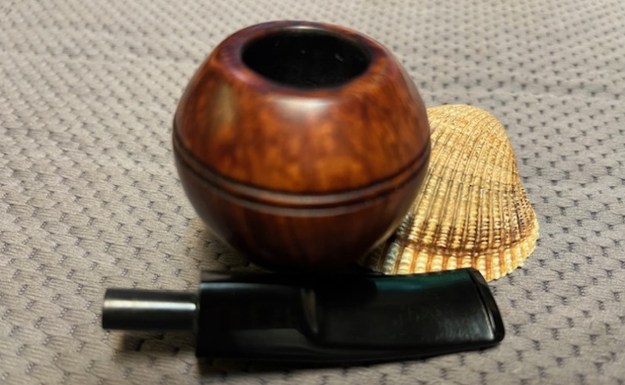
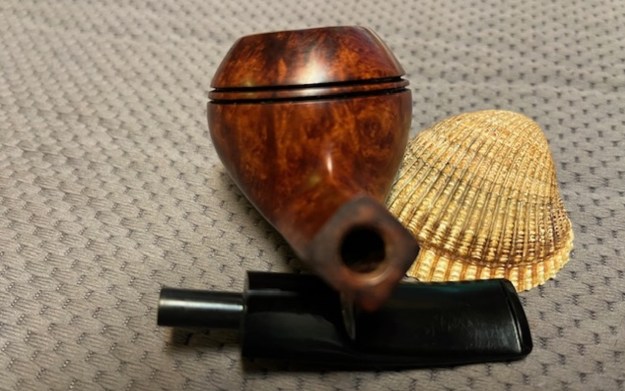
One of the things I enjoy doing is putting together varied and assorted pipe parts and crafting a pipe. Sometime the pieces are sitting here for a long time waiting for either the inspiration or the proper parts. This old calabash gourd sitting here for a few years now. It was cleaned and did not have either a cork gasket to hold a bowl or stem to fit the briar shank extension on the shank end. It just languished in a box of old bowls that I have here. (They say confession is good for the soul so I will tell you that box is full of probably over 100 bowls. Did I tell you I have a problem throwing pipe parts away?). In this case I did not have any meerschaum or porcelain cups that would fit the size of the gourd and I had not bothered to look through my stems to find one that fit the shank. So the old gourd just sat here waiting. In October I visited a fellow pipe repairer in Vancouver, Washington, USA and he gifted me a lot of pipe parts. Included in the mix were two turned wooden cups for a gourd calabash and one porcelain cup. Yesterday I remembered them and took them out to try. Like Goldilocks in the childhood fairy tale checking out the beds at the tree bears house I tried each one. The “baby bear” porcelain cup was far too small for the gourd and the “papa bear” cup was too large. But like Goldilocks found, the “mama bear” middle wooden cup one fit just right! While I was at it I also pulled an acrylic stem out from my collection of stems that I thought would work with this pipe. Now it was time to put it all together. Here is a picture of the parts. I decided to work on the gourd portion of the pipe first. I cut some cork to fit a gasket in the inset area around the top of the calabash. I used a white all-purpose glue and coated the gourd edge and pressed the cork against it. It took a bit of holding it in place to get the glue to harden. But it worked well. Once the glue cured is used a knife blade to trim the cork flush with the top of the gourd. I smoothed it out with a Dremel and sanding drum to make for a snug fit for the cup to the cork but not too snug and have it pull away.I greased the cork with Vaseline Petroleum Jelly. I worked it into the surface of the cork before I called it a night last evening and then once again this morning. I find that it softens the cork and make it more pliable when the bowl is pressed into place.While the cork/glue was curing I drilled the airway in the bottom of the wooden insert. It was undrilled. I marked the centre and then drilled the airway in the bottom of the cup. I drilled it with a cordless drill and a small bit from the inside of the bowl rather than the outside. I pressed it against a piece of wood and drilled it through. My concern in doing it from the outside was the pressure on the cup and the potential of cracking it.I started sanding the wood cup (which I think is Maple) with 320-3500 grit sanding pads. I wiped the bowl down with a damp cloth after each sanding pad to remove the sanding debris.I polished the bowl with micromesh sanding pads – dry sanding with 1500-12000 grit pads. I wiped the bowl down after each sanding pad with a damp cloth to remove the debris. I worked on the inner edge of the bowl to smooth that out and the slight bevel on the inner edge. It really began to take on a rich glow. With cup polished and the cork gasket set in the gourd I pressed the cup into the gourd calabash and it went in snugly and looked great. I took photos of the fit to show you all. I sanded the gourd with 320-1500 grit sanding pads to smooth out the nicks in the surface and minimize the two dark spots on the curve of the shank. I also sanded the briar shank extension to reveal the grain. It looked better and the rich grain began to shine through. I polished the gourd with micromesh sanding pads – dry sanding with 1500-12000 sanding pads. I wiped the gourd down with a damp cloth after each sanding pad to remove the sanding debris and dust. It really began to take on a shine. I rubbed the gourd and the maple cup down with Before & After Restoration Balm. I worked it into the surface with my fingertips. The product works to clean, enliven and preserve the pipe. I let it sit for 10 minutes then I buffed it with a cotton cloth to deepen the shine. The gourd came alive with the balm. I set the bowl aside and turned my attention to the stem I had chosen. The acrylic orange/amber stem would look good once I finished.The fit of the stem to the shank was quite good. The briar shank extension on the gourd is canted slightly and the shank extension follows the angles. With that the stem fit tight against the left side of the shank but not on the right side. I had an idea of fitting a brass band/cap on the end of the stem to compensate for the angels on the shank end. It fit very well and the band/cap was snug on the stem. I sanded the tooth chatter on both sides of the stem with 320-3500 grit sanding pads to smooth it out and blend it into the surface of the acrylic. I started the polishing of the brass stem cap on the shank end at the same time. It started looking very good.I polished the Lucite with micromesh sanding pads – 1500-12000 grit pads. I wiped it down with a damp cloth after each sanding pad. I used Before & After Pipe Polish – both Fine and Extra Fine to further polish the stem. It really took on a shine and once buffed it would look amazing. I carefully polished the parts – the cup, the gourd and the stem with Blue Diamond on the buffing wheel. I gave each piece of the pipe multiple coats of Carnauba Wax and buffed it with a clean buffing pad. I hand buffed the parts with a microfibre cloth. Once it was finished I put the parts back together. The Maple cup looked beautiful with the darkened gourd calabash. The polished briar shank extension was deeply shined. The brass stem adornment went well with the orange acrylic stem. The large Gourd Calabash with its wooden cup is beautiful. The dimensions of the pipe are Length: 7 inches, Height: 4 ½ inches, Diameter of the cup: 2 ¾ inches, Diameter of the chamber: 1 ½ inches. The weight of the pipe 95 grams/3.35 ounces. It should be a great smoker once it is loaded with a favourite tobacco and fire is put to the blend. It will definitely be a cool dry smoke. Thanks for walking through this reconstruction with me. I appreciate your patience in reading through the steps.

Turning a Plateau Freehand on its side with JHW


by Steve Laug

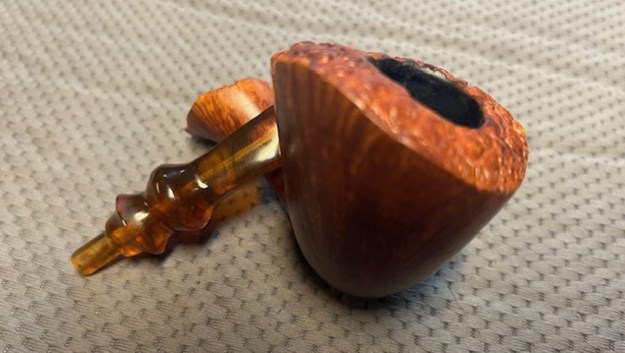
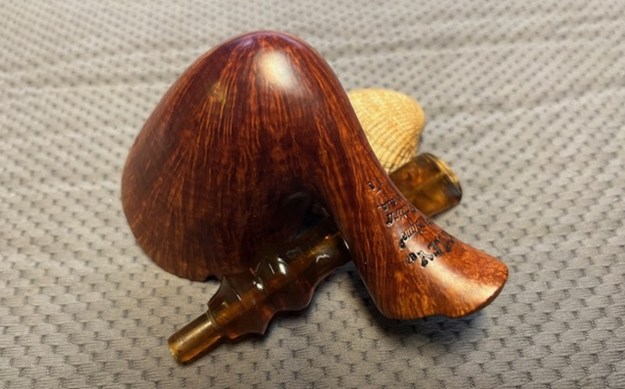
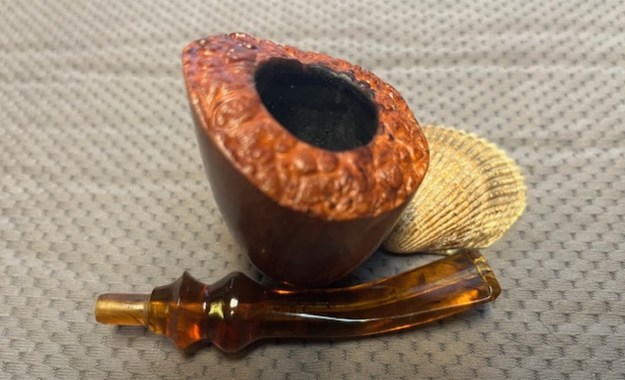
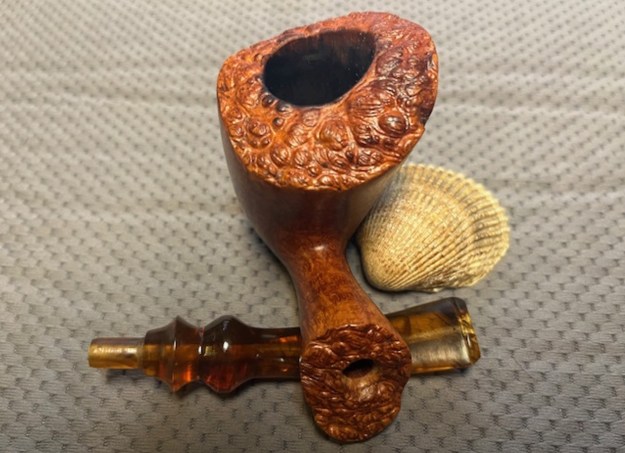
When Jeff and I were contacted about an estate in Santa Cruz, California, USA for sale I was excited to see what was in the lot. There were some great Freehand pipes by known carvers. There were also several with no other stamping on the shank than JHW. I have to say that I have seen very few JHW pipes in my years of working on pipes and my heart skipped a beat when I saw not just one but 7 JHW pipes. All were Freehands and all were very unique – maybe even odd you might say! We purchased the estate on 05/28/2024. I am finally getting around to working on the first of the pipes. Now you might ask who is JHW? Why so excited about three initials? Well I have to tell you right up front that JHW is Jack H. Weinberger. Who is that? That does not help either? Jack H. Weinberger was a pipe maker in West Caldwell, New Jersey. Still not helping? He hired young lads from the local high school to help him out as he carved 10-12 hours a day. Two of these are none other than Curt Rollar and Mark Tinsky went on to become the American Pipe Company. There was a long list of pipe carving luminaries who came through Jack’s shop and JHW pipes but these two you probably have heard of. So JHW or Jack H. Weinberger was an important part of the American Pipemaking scene and gave many carvers a start and they have continued to this day. Now maybe you understand my excitement – being able to work on a few of Jack’s pipes and bring them back to their former glory.

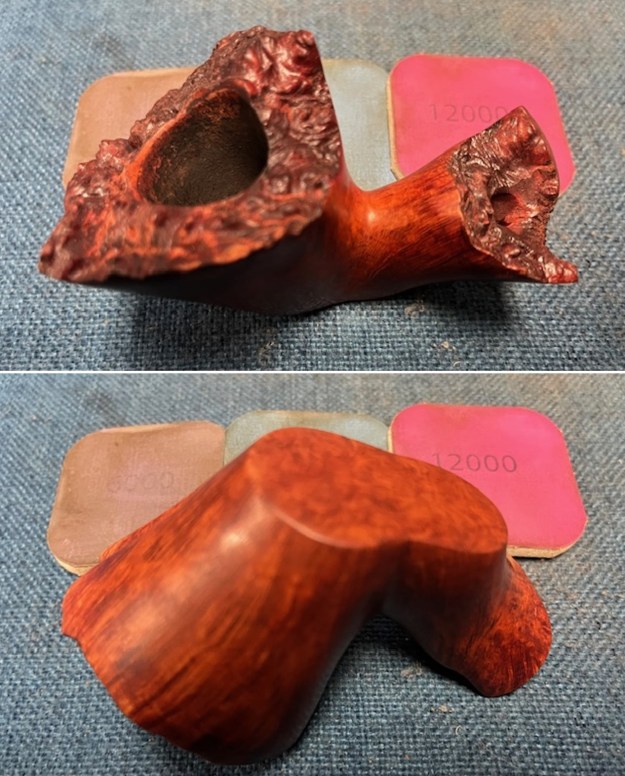
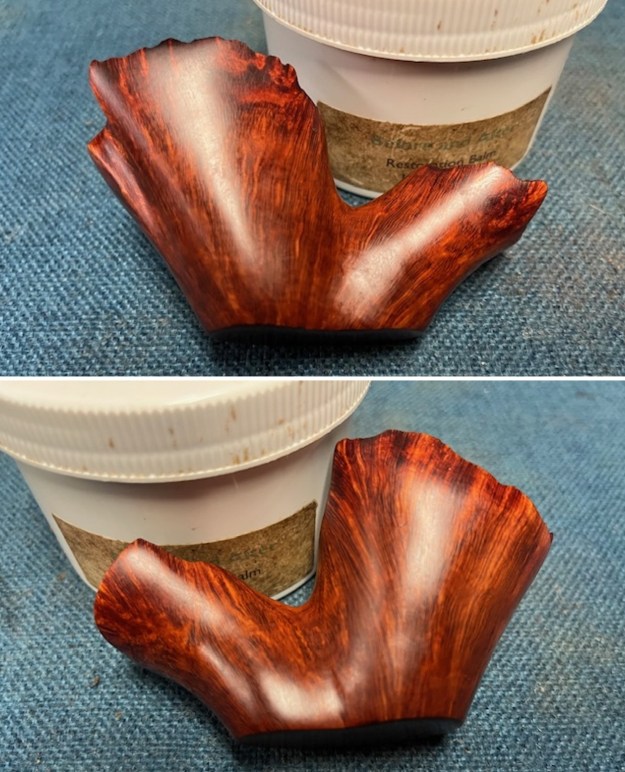
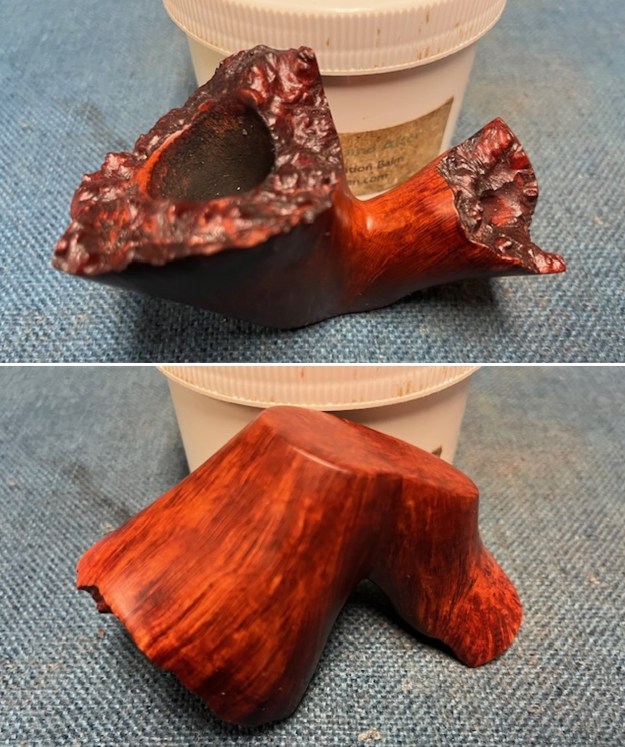
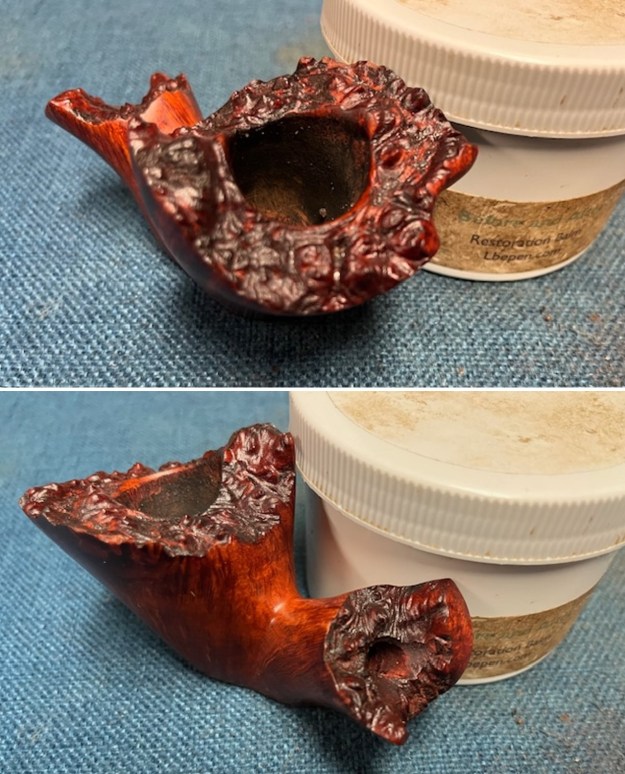
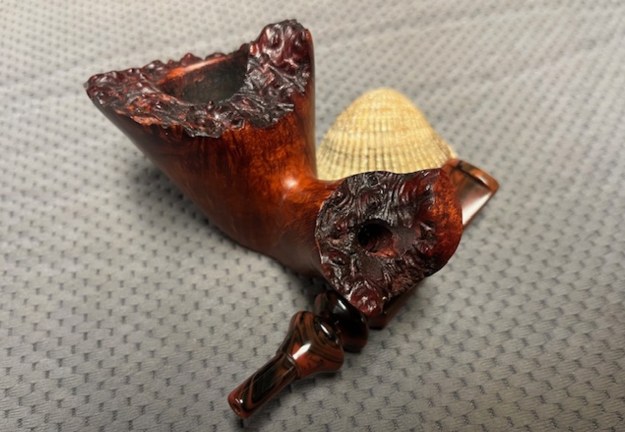
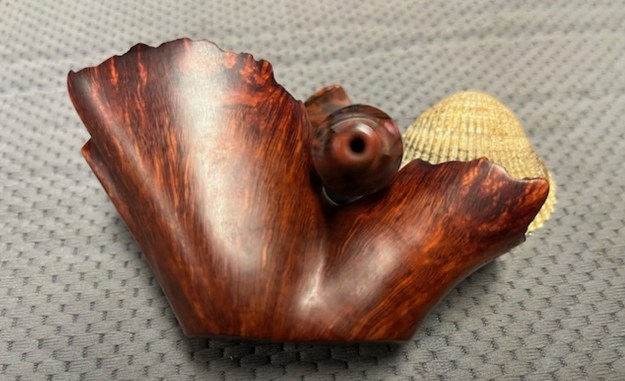
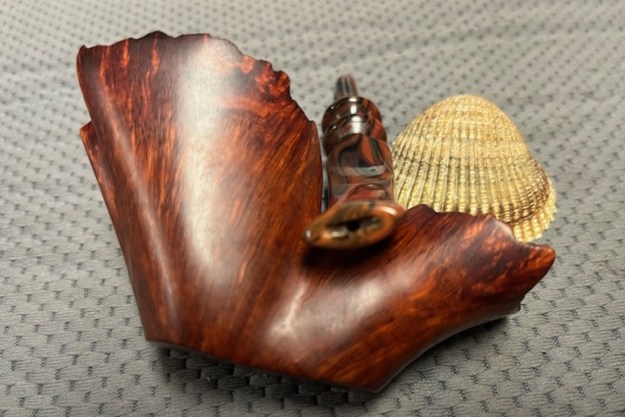
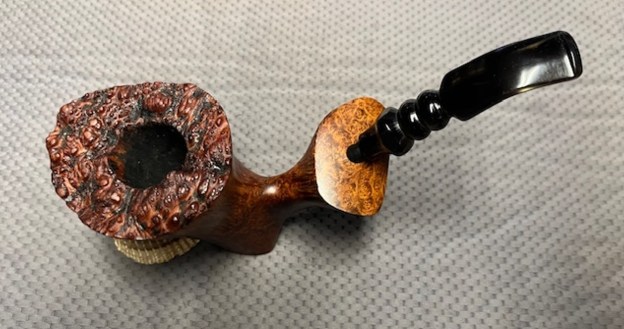
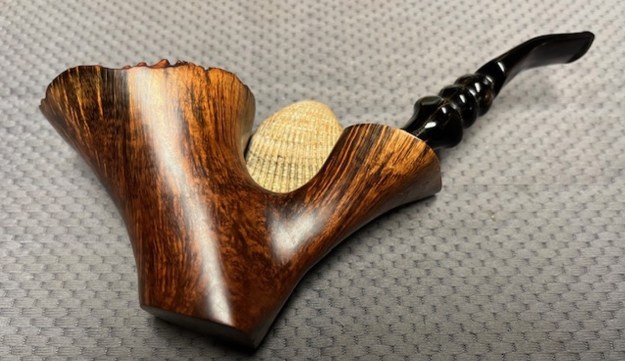
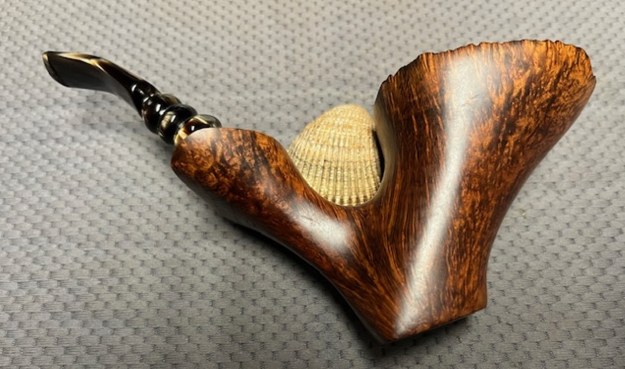
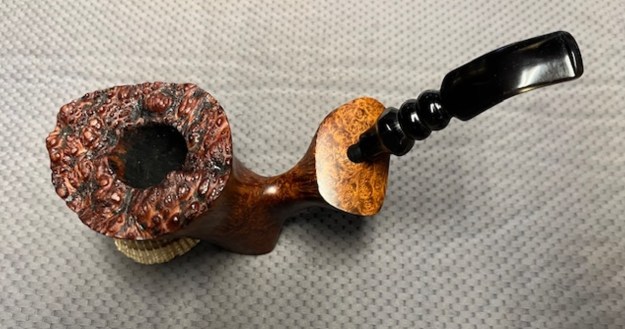
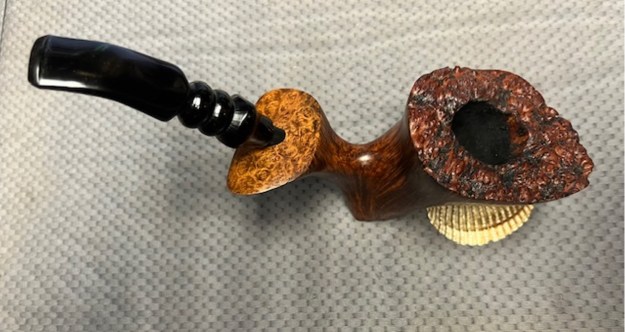
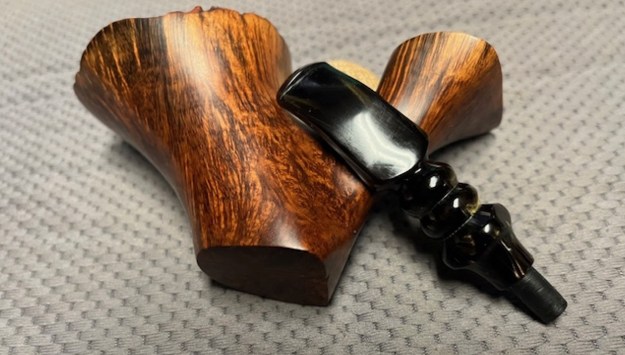
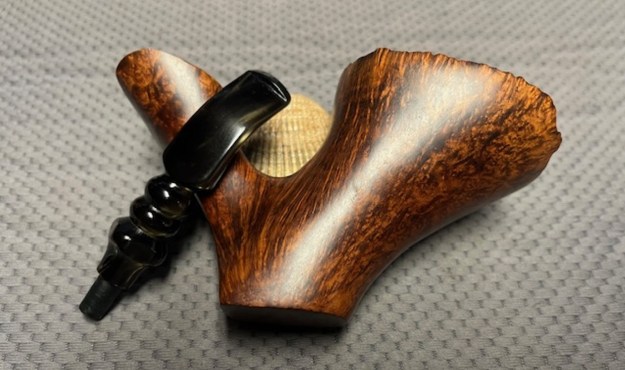
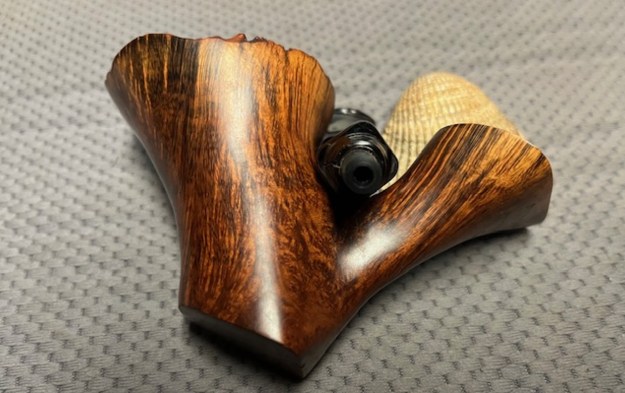
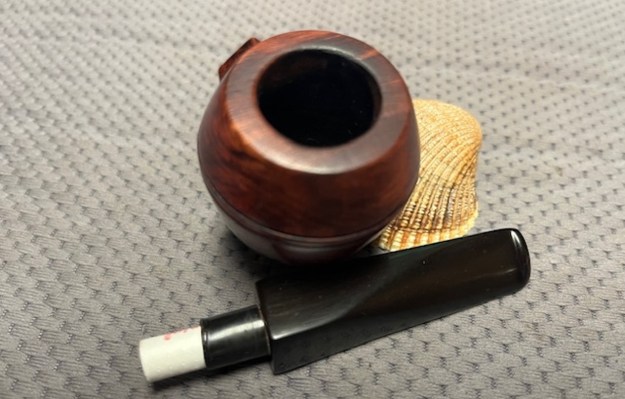
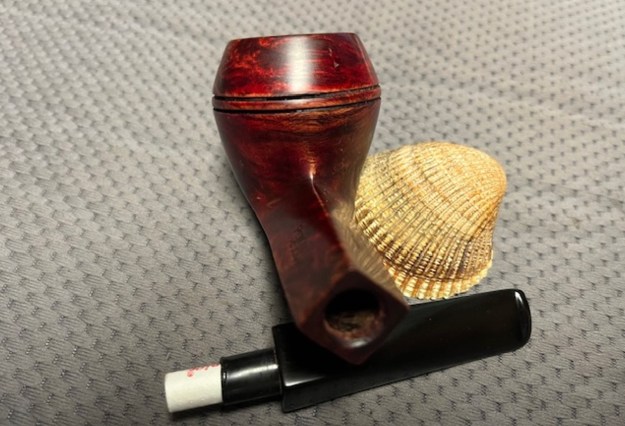
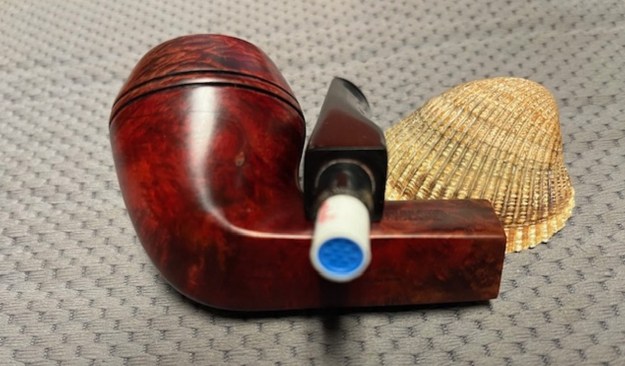
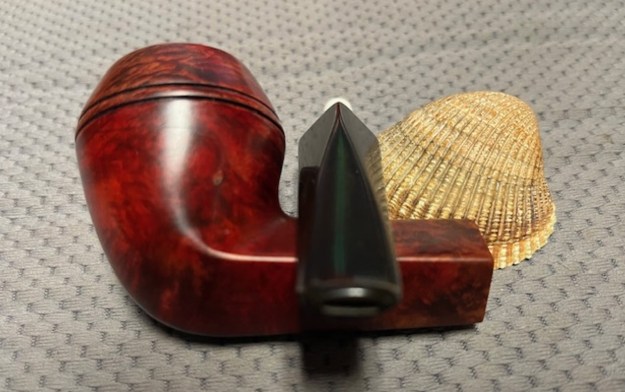
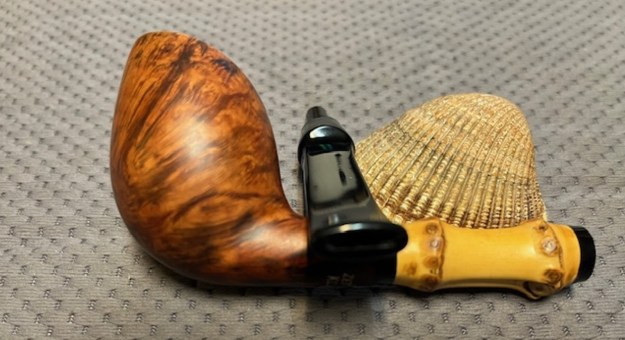
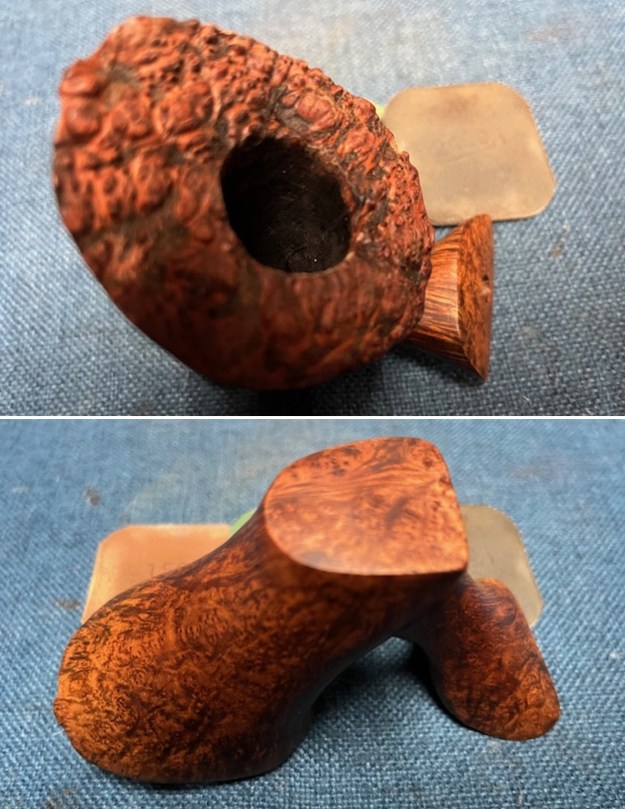
This first pipe I chose to work on was an unusual one. It is a great piece of plateau briar with straight grain all the way around the bowl and shank. It is a beautiful piece of briar! But Jack chose to use this block very differently than most would have used a straight grain, plateau block.  He turned the pipe on its side. The bowl is on what most would have said was the right side. The plateau is on the left side of the pipe and a flat panel is on the right side. The photos show what I mean about the geography of the pipe. Very unusual but something just calls out to you. When the pipe came to us it was dirty. There was a thick cake in the bowl and lava on the rim top. The plateau was dirty with dust and debris and the finish dirty as well. The stem was a variegated brown acrylic saddle that had tooth marks and chatter on both sides just ahead of the button. There appeared to be some darkening on the left side of the inner edge of the rim and on the top itself. It was dirty but that did not hide the beauty of the briar. Jeff took photos of the pipe as a whole before he started his cleanup work. I include them below.Jeff took some close up shots of the rim top to show the bowl and cake. You can see the lava on the rim top and the nicks and scratches in the finish it is dirty and it is neglected. The stem photos also show the condition it was in when we received it. Lots of promise with the pipe but some work too! Jeff took some photos of the sides – top, bottom, left and right to give a sense of the lay of the pipe on the block of briar. It is certainly unusual and unique. Here is a photo of the stamping on the left side of the shank. The J is a stylized pipe followed by uppercase HW. It is clear and readable.Take some time to read the great writeup on Pipedia and JHW pipes and influence they had on the American pipe making scene. It is a well written and enjoyable read. Here is the link: (https://pipedia.org/wiki/JHW_Pipes).

Armed with that information I turned to work on the pipe itself. Jeff had cleaned up the pipe with his usual thoroughness. He reamed the pipe with a PipNet pipe reamer and removed the rest of it with a Savinelli Fitsall Pipe Knife. He scrubbed the bowl with undiluted Murphy’s Oil Soap with a tooth brush. He rinsed it under running warm water to remove the soap and grime. He cleaned out the inside of the shank and the airway in the stem with alcohol, cotton swabs and pipe cleaners and shank brushes. He soaked the stem in Briarville’s Pipe Stem Deoxidizer and rinsed it off with warm water. I took photos of the pipe before I started my part of the restoration work.  The rim top cleaned up really well. The rim top and inner edge of the bowl look good. There was some darkening on the inner edge and a dark spot on the left side toward the back of the bowl. There were light scratches in the finish around the bowl. The stem surface had small tooth marks and chatter on both sides near the button. The stamping on shank sides is clear and readable. It is stamped as noted above. I removed the stem and took a photo of the pipe to give a sense of the whole.I cleaned up the inner edge of the bowl with a folded piece of 220 grit sandpaper to smooth out the damage and to clean up the darkening on the back of the rim top. Once finished it looks much better even with the damage and the darkening on the edge.I polished the briar with micromesh sanding pads – dry sanding with 1500-12000 grit sanding pads. I wiped the bowl down with a damp cloth after each pad. By the end of the process it looked quite good. I rubbed the bowl and shank down with Before & After Restoration Balm. I worked it into the surface of the bowl sides and shank with my fingertips. I worked it into the plateau finish with a shoe brush. It works to clean, enliven and protect the briar. I let the balm sit for 15 minutes and buffed with a cotton cloth to raise the shine. The grain came alive. I set the bowl aside and turned my attention to the stem. I sanded out the tooth marks and chatter with 220 grit sandpaper until it was smooth.I polished the stem with 320-3500 grit sanding pads. I wiped the stem down after each sanding pad with an Obsidian Oil impregnated cloth. It removes the dust and also gives the sanding pads some bite. By the final pad it was looking quite good.I polished the vulcanite stem with micromesh sanding pads – 1500-12000 grit pads. I wiped it down with Obsidian Oil after each sanding pad. I used Before & After Pipe Polish – both Fine and Extra Fine to further polish the stem. I rubbed it down with a final coat of Obsidian Oil and let it dry. This rare and unique Jack H. Weinberger Sideways Volcano is a great looking pipe. The beautiful grain around the bowl is quite stunning and works well with both the shape and the polished vulcanite taper stem. I put the stem back on the bowl and carefully buffed the pipe with Blue Diamond on the buffing wheel using a light touch on the briar. I gave the bowl and the stem multiple coats of carnauba wax on the wheel and followed by buffing the pipe with a clean buffing pad. I hand buffed the pipe with a microfiber cloth to deepen the shine. The finished Jack H. Weinberger (JHW) fits nicely in the hand and feels great. Give the finished pipe a look in the photos below. The dimensions of the pipe are Length: 6 ½ inches, Height: 2 inches, Outside diameter of the bowl: 2 ½ inches x 2 inches, Chamber diameter: 7/8 of an inch. The weight of the pipe is 113 grams/3.95 ounces. I will be putting it on the rebornpipes store in the American Pipemakers Section shortly. If you are interested in adding this pipe to your collection send me a message or an email. Thanks for reading this blog and my reflections on the pipe while I worked on it. I appreciate your support and time!
Restoring a Castello Old Antiquari KKKK Swan Neck Bent Billiard


By Steve Laug

A week or so ago I traded some pipes for the two Castello Pipes below. The fellow I traded them with and I both felt we got a great trade. I chose to work on the bottom pipe in the photos below next. It is a sandblast finished Castello that is quite stunning. It is stamped on a smooth panel on the underside of the shank and reads US [followed by] Castello [over] Old Antiquari [followed by] Made in Cantu [over] Italy. That is followed by Kino in script in an oval. The bowl had a light cake and smelled primarily of Virgina tobaccos. There was some light lava on the smooth rim top but the inner and outer edge looked very good. The sandblast finish was dusty but the sandblast grain was beautiful. The acrylic stem has a white Castello bar on the topside of the taper. On the underside it is stamped Hand Made [over] Castello. There was a Softee Bit protector on the stem that had bite marks in it so I was a bit worried what might be underneath. When I removed it there was some light build up along the inner edge of the rubber bit guard but the acrylic was free of any bite marks or chatter. When the pipe arrived, it was in the Castello original box with the rich wood colour. The box is hinged on the back of the box and has no damage on the box but a tear on the back right corner of the lid. The hinge was in good condition. The top of the box has the Castello Castle logo with Trade on the left side and Mark to the right of the mark. Underneath that it is printed Castello [over] Artigianato Della Pipa – Cantu. On the end of the box it is stamped with the Castle logo followed a box with CASTELLO [over] a box for a shape or pipe shape/line designation. Underneath it is stamped Made in Italy.I opened the box and took a photo of the pipe inside. The inside of the cover it is stamped with the logo over PIPA CASTELLO [over] Made in Italy. The box had a cream coloured yellowish suede leather material with the same logo and stamp. The stem had a Softee Bit in place that I removed before I took the photo below.I took photos of the pipe itself to give a sense of what was needed in the cleanup of the bowl and shank. I would need to ream and clean the internals of the bowl and shank. The stem had grime on it where the edge of the Softee Bit was on the stem. There was no tooth damage or chatter on the acrylic surface. I took a photo of the bowl and the rim top. You can see the light lava on the rim top, slightly heavier toward the backside. You can also see the cake in the bowl. It is light to moderate in terms of thickness. The stem surface is undamaged on both sides ahead of the button. Other than the grime left behind by the Softee Bit the stem looks very good.I took a photo of the stamping on the underside and stem. It is clear and readable as noted above. I removed the stem from the shank and tried to capture a bit of the beauty of the birdseye grain on this lovely piece of briar. The grain is the same on both sides with cross grain on the front of the bowl, the back of the bowl and the underside of the shank at the end.I checked on Pipephil’s site (http://www.pipephil.eu/logos/en/logo-castello.html) and found a section on the Old Antiquari. It also had some information on the family line of the Scottis. I included that information below the screen capture of one of the pipes.Castello PIPA CASTELLO di Carlo Scotti & C. was founded in 1947 by Carlo Scotti († 1988). Franco Coppo (AKA “Kino”) who married Carlo Scotti’s daughter Savina, manages (2012) the corporate since 1985.

A great history of the brand is available on Pipedia (https://pipedia.org/wiki/Castello). It is worth a read.

I did a google search on the Castello Old Antiquari Swan Neck Billiard and found a link to an apple shaped Castello Old Antiquari pipe with a very similar profile along the underside of the shank (https://www.smokingpipes.com/pipes/new/castello/moreinfo.cfm?product_id=345891). Chuck Stanion has a brilliant description of the pipe that easily applies to the pipe that I have in hand here. I quote:

The heel of this Castello Apple is quite long, adding to the goose-neck quality of the shape’s silhouette, but it has not been flattened for sitting, so you’ll need a pipe stand. The smooth rim matches the highlights of the sandblast perfectly, and is brightly contrasted by the pure-white mouthpiece. The blast is craggy and deep, offering substantial hand comfort for long smoking sessions. – Chuck Stanion

Now it was time to work on the pipe. I started my work by reaming the pipe. I scraped out the light cake with a Savinelli Fitsall Pipe Knife. I took the cake back to bare briar. I sanded the walls smooth with 220 grit sandpaper wrapped around a piece of dowel. The bowl walls looked very good with no burn damage or checking on the walls. I scraped the smooth rim top with the Fitsall Knife edge. I was able to get the thick grime off. I scrubbed it down with a damp paper towel and it looked much better.I cleaned out he internals of the shank, mortise and airway in the shank and the stem with alcohol, cotton swabs and pipe cleaners.I polished the rim top with micromesh sanding pads. I dry sanded with 1500-12000 grit sanding pads. I wiped the rim top down after each pad with a damp cloth to remove the debris. I touched up the rim top with a Cherry stain pen to match the smooth patch on the bottom of the shank. I scrubbed the externals of the bowl with undiluted Murphy’s Oil Soap and rinsed it off with warm water to remove the soap and the grime. I dried it off with a soft cotton towel. It looked much better at this point and the grain really stood out on the bowl sides. I rubbed the briar down with Before & After Restoration Balm. I worked it into the smooth surface with my fingertips. The product works to clean, enliven and preserve the briar. I let it sit for 10 minutes then I buffed it with a cotton cloth to deepen the shine. The briar really comes alive with the balm. The stem was in such good condition that I polished the acrylic stem with the higher grit micromesh sanding pads – 3200-12000 grit pads. I wiped it down with Obsidian Oil after each sanding pad. I used Before & After Pipe Stem Polish – both Fine and Extra Fine to further polish the stem. This beautiful Castello Old Antiquari Sandblast KKKK Swan Neck Bent Billiard with a taper acrylic stem looks amazing after the work on it. The briar is clean and the blast really came alive. The rich brown stains gave the finish a sense of depth with the polishing and waxing. The finish really popped. I put the stem back on the bowl and buffed the pipe with Blue Diamond on the buffing wheel using a light touch on the briar. I gave the bowl and the stem multiple coats of carnauba wax on the buffing wheel. I buffed the pipe with a clean buffing pad to raise the shine. I hand buffed the pipe with a microfiber cloth to deepen the shine. The finished Castello Old Antiquari Swan Neck Billiard really is a beauty and feels great in the hand and looks very good. Give the finished pipe a look in the photos below. The dimensions of the pipe are Length: 6 inches, Height: 2 inches, Outside diameter of the bowl: 1 ¼ inches, Chamber diameter: ¾ of an inch. The weight of the pipe is 46 grams/1.62 ounces. I will soon be putting this pipe on the rebornpipes store in the Italian Pipe Makers section. It should make a great smoker that the next steward will enjoy. Thanks for reading this blog and my reflections on the pipe while I worked on it. It was a fun one to work on.
Restoring a Castello Collection Occhio di Pernice ¾ Bent Egg


By Steve Laug

A week or so ago I traded some pipes for the two Castello Pipes below. The fellow I traded them with and I both felt we got a great trade. I chose to work on the top pipe in the photos below. It is a smooth finished Castello that is quite stunning. The fellow called it an Oom Paul but to me it is more of an egg with a ¾ bent to the shank and stem. It is stamped on the left side of the shank and reads Castello [over] Collection [over] Carlo Sciotti signature extending onto the underside. Underneath the signature it is stamped Occhio di Pernice [over] Kimo in script in an oval. Mid shank on the underside it is stamped US. On the right side of the shank it reads Made in Cantu [over] Italy. The bowl had a light cake and smelled primarily of Virgina tobaccos. There was some light lava on the rim top but the inner and outer edge looked very good. The finish was dull but the grain was beautiful. The acrylic stem has a white Castello bar on the topside of the taper. On the underside it is stamped Hand Made [over] Castello. There was a Softee Bit protector on the stem that had bite marks in it so I was a bit worried what might be underneath. When I removed it there was some light build up along the inner edge of the rubber bit guard but the acrylic was free of any bite marks or chatter. When the pipe arrived, it was in the Castello original box with some light water marks and damage but still the rich wood colour. The box is hinged on the back of the box and has no damage on the box or the hinge. The top of the box has the Castello Castle logo with Trade on the left side and Mark to the right of the mark. Underneath that it is printed Castello [over] Artigianato Della Pipa – Cantu. On the end of the box it is stamped with the Castle logo followed a box with CASTELLO [over] a box for a shape or pipe shape/line designation. Underneath it is stamped Made in Italy.I opened the box and took a photo of the pipe inside. The inside of the cover it is stamped with the logo over PIPA CASTELLO [over] Made in Italy. The box had a cream coloured yellowish suede leather material with the same logo and stamp. The stem had a Softee Bit in place that I removed before I took the photo below.I took photos of the pipe itself to give a sense of what was needed in the cleanup of the bowl and shank. I would need to ream and clean the internals of the bowl and shank. The stem had grime on it where the edge of the Softee Bit was on the stem. There was no tooth damage or chatter on the acrylic surface. I took a photo of the bowl and the rim top. You can see the light lava on the rim top toward the back surface and left side of the bowl. You can also see the cake in the bowl. It is light to moderate in terms of thickness. The stem surface is undamaged on both sides ahead of the button. Other than the grime left behind by the Softee Bit the stem looks very good.I took photos of the stamping around the shank sides. It is clear and readable as noted above. I removed the stem from the shank and tried to capture a bit of the beauty of the birdseye grain on this lovely piece of briar. The grain is the same on both sides with cross grain on the front of the bowl, the back of the bowl and the underside of the shank at the end.I checked on Pipephil’s site (http://www.pipephil.eu/logos/en/logo-castello.html) and found a section on the Occhio di Pernice. It also had some information on the family line of the Scottis. I included that information below the screen capture of one of the pipes.Castello PIPA CASTELLO di Carlo Scotti & C. was founded in 1947 by Carlo Scotti († 1988). Franco Coppo (AKA “Kino”) who married Carlo Scotti’s daughter Savina, manages (2012) the corporate since 1985.

A great history of the brand is available on Pipedia (https://pipedia.org/wiki/Castello). It is worth a read.

I did a Google search for the Castello Collection Occhio di Pernice line of pipes and found an interesting conversation on the Brothers of the Briar site where the brand was clearly defined and explained (https://www.brothersofbriar.com/threads/castello-question.3661/). I quote:

Castello Collection Occhio di Pernice

The mark “Occhio di Pernice” was born in the beginning of ‘ 80. Before, pipes featured by this particular cut were catalogued as “Collection”. Since January 2003 “Occhio di Pernice” has been graded using the classical “K” system.”

Occhio de Pernice means Eye of the Partridge, or birdseye. It is a special designation within the Collection line for crosscut pipes that have remarkable birdseye. Previously, Ochio stamped pipes were a grade of Collection line pipes unto themselves – meaning there was no differentiating level of quality at least as far as nomenclature went. A Collection pipe with spectacular birdseye was graded Occhio, and an Occhio was an Occhio was an Occhio, even though the quality of the pieces ranged widely. Now the Occhio is still a special classification within the Collection line, but they are also graded with the K designations to note differing grades of quality.

If your pipe is not stamped “Occhio de Pernice” it is not an Occhio, regardless of date. It may or may not be worth as much as a Collection pipe, depends on the quality of the individual pipe.

From that information I knew that the pipe was made between 1980 and 2003 when the K system was added.

Now it was time to work on the pipe. I started my work by reaming the pipe. I scraped out the light cake with a Savinelli Fitsall Pipe Knife. I took the cake back to bare briar. I sanded the walls smooth with 220 grit sandpaper wrapped around a piece of dowel. The bowl walls looked very good with no burn damage or checking on the walls.I scraped the walls of the shank with a pen knife. I then cleaned out he internals of the shank, mortise and airway in the shank and the stem with alcohol, cotton swabs and pipe cleaners.I scrubbed the externals of the bowl with undiluted Murphy’s Oil Soap and rinsed it off with warm water to remove the soap and the grime. I dried it off with a soft cotton towel. It looked much better at this point and the grain really stood out on the bowl sides. I polished the briar with micromesh sanding pads. I dry sanded it with 1500-12000 grit sanding pads and wiped the bowl down after each pad with a damp cloth. By the final pads the briar really had a shine and the grain really stood out. I rubbed the briar down with Before & After Restoration Balm. I worked it into the smooth surface with my fingertips. The product works to clean, enliven and preserve the briar. I let it sit for 10 minutes then I buffed it with a cotton cloth to deepen the shine. The briar really comes alive with the balm. The stem was in such good condition that I polished the acrylic stem with the higher grit micromesh sanding pads – 3200-12000 grit pads. I wiped it down with Obsidian Oil after each sanding pad. I used Before & After Pipe Stem Polish – both Fine and Extra Fine to further polish the stem. This beautiful Castello Collection Occhio di Pernice Bent Egg with a taper acrylic stem looks amazing after the work on it. The briar is clean and the grain really came alive. The rich brown stains gave the finish a sense of depth with the polishing and waxing. The birds eye almost winked at me. I put the stem back on the bowl and buffed the pipe with Blue Diamond on the buffing wheel using a light touch on the briar. I gave the bowl and the stem multiple coats of carnauba wax on the buffing wheel. I buffed the pipe with a clean buffing pad to raise the shine. I hand buffed the pipe with a microfiber cloth to deepen the shine. The finished Castello Collection Occhio de Pernice really is a beauty and feels great in the hand and looks very good. Give the finished pipe a look in the photos below. The dimensions of the pipe are Length: 5 ½ inches, Height: 2 ¼ inches, Outside diameter of the bowl: 1 ½ inches, Chamber diameter: ¾ of an inch. The weight of the pipe is 76 grams/2.68 ounces. I will soon be enjoying this beautiful pipe with a bowl of Balkan Sasieni that I brought home from my recent trip to the Oregon Coast. It should make a great smoker that I will enjoy. Thanks for reading this blog and my reflections on the pipe while I worked on it. It was a fun one to work on.
Restoring a Comoy’s Consort 1057 Rhodesian with an Acrylic Saddle Stem


Blog by Steve Laug

The next pipe on the table is a great looking Bent Rhodesian with great grain around the bowl. It has a well shaped variegated acrylic stem. We purchased it from an estate sale in Spring Branch. Texas, USA on 02/29/2024. I have included the photos below that the seller sent to me so I could see what the pipe looked like. When the pipe arrived Jeff took photos of it before cleaning it up. Here is what we saw. The pipe is stamped on the left side of the shank and reads Comoy’s [over] Consort. On the right side it is stamped Made in London in a circle [over] England. Underneath the COM stamp is the shape number 1057. To the left of that next to the stem shank junction it is stamped with a letter M. The acrylic stem has the newer Comoy’s C logo worn decal on the left side of the saddle. The bowl had been reamed recently and the inner edge of the bowl looked very good. The rim top has some grime and some lava on the surface. There were oils and grime ground into the bowl sides gives the finish a flat look though there is some great grain. The shank has a slight curve to it giving the pipe a Bent Rhodesian shape. The bend of the saddle stem matches the curves of the bowl and shank. The variegated rose acrylic stem is a dirty and has some light tooth chatter on both the top and underside of the stem just ahead of the button.He took photos of the pipe’s bowl and rim top to show the reamed bowl and the spotty lava coat overflowing onto the top. He also took photos of the stem to capture its condition before clean up. He took photos of the sides and heel of the bowl to show the rich grain around the bowl and the amount of grime ground into the surface of the briar.   He took photos of the stamping on the sided of the shank. It is clear and quite readable. It reads as noted above. You can also see the decal of the Comoy’s logo on the side of the stem. It is worn off in places but still identifiable. I knew the pipe was probably newer and a Cadogan period pipe by the style of the stamping, the line and the acrylic stem but I wanted to see if I could get a cleared date on the pipe. I turned to Pipedia’s guide for dating Comoy’s pipes and have included what I found below (https://pipedia.org/wiki/Comoy%27s_Dating_Guide#%E2%80%9CMade_In%E2%80%9D_Stamp). I quote the pertinent section –

Made in London England

Appears in two versions. This is again stamped in a circle with “MADE” at the top, “IN” in the middle, and “LONDON” at the bottom, with “ENGLAND” in a straight line beneath. It can be assumed that this stamp was first used in the export drive in the early 1950s. On a Bulldog Sandblast from the early 50s the Comoy name no. 2 above was used together with “MADE IN LONDON” over “ENGLAND”. There are no known examples of pre-WW II Comoy’s stamped in this way. The second version is the same as above but in a “rugby ball ” shape…

I was correct in assuming it is Cadogan produced the English line. The Rhodesian I am working is a Comoy’s shape 1057. It is a real beauty and the variegated stem looks very good with it. Now it was time to work on it.

 Jeff had done a great job cleaning up the pipe as usual. He cleaned up the inside of the bowl with a PipNet reamer and a Savinelli Fitsall Pipe Knife. The bowl walls looked very good. He scrubbed the interior of the bowl and shank with shank brushes, pipe cleaners, cotton swabs and alcohol to remove the tars and oils. He scrubbed the exterior of the pipe with Murphy’s Oil Soap and a tooth brush to remove the grime from the finish. He worked on the rim top lava and darkening with the soap and tooth brush. He scrubbed the inside of the stem with alcohol and pipe cleaners. He scrubbed the exterior with Soft Scrub and rinsed it with warm water to remove the soap and debris. The pipe looked far better. I took photos of the pipe when I received it before I started working on it. I took photos of the bowl and rim top to show how clean it was. The top and the inner edge of the rim look quite good with just some small scratches. The stem looks clean of debris and grime. There are light tooth marks and chatter on both sides of the stem.I took photos of the stamping on the sides of shank. The stamping is clear and readable (much clearer in person than the photos show). I took a photo of the pipe with the stem removed to show the overall look of stem, tenon and profile of the pipe. I started polishing the bowl by sanding it with 320-3500 grit sanding pads. I wiped the briar down with a damp cloth after each pad to remove the sanding dust. It looked better and the scratches disappeared. I polished the briar bowl and shank with micromesh sanding pads – dry sanding with 1500-12000 grit sanding pads. I wiped it down with a damp cloth after each pad to remove the debris. The bowl took on a rich glow. I rubbed the bowl down with Before & After Restoration Balm. I worked it into the surface of the briar with my fingertips to clean, enliven and protect it. I let the balm sit for 10 minutes and then buffed with a cotton cloth to raise the shine. Mark Hoover’s Balm is a product that I have come to appreciate and one I use on every pipe I have been working on. I set aside the bowl and turned my attention to the stem. I sanded the stem with 320-3500 grit sanding pads to smooth out the chatter on the surface of the stem.I polished the acrylic with micromesh sanding pads – 1500-12000 grit pads. I wiped it down with a damp cloth after each sanding pad. I used Before & After Pipe Polish – both Fine and Extra Fine to further polish the stem. I put the stem back on the Comoy’s Consort 1057 Rhodesian and took it to the buffer. I worked over the bowl and stem with Blue Diamond to polish out the remaining small scratches. I gave the bowl and the stem several coats of carnauba wax on the wheel and buffed the pipe with a clean buffing pad to raise the shine. I hand buffed it with a microfiber cloth to deepen the shine. The pipe polished up really well and the rim top and edge looked good. I was happy with the look of the finished pipe. The photos below show what the pipe looks like after the restoration. The rich reddish, brown bent Rhodesian is a beautiful take on a classic shape. The polished acrylic saddle stem looks really good with the rich reds of the briar. The dimensions of the pipe are Length: 5 ½ inches, Height: 1 ½ inches, Outside diameter of the bowl: 1 1/8 inches, Chamber diameter: ¾ of an inch. The weight of the pipe is 1.76 ounces/50 grams. I will be putting it on the rebornpipes store in the British Pipe Makers and Companies Section shortly, if you are interested in adding it to your collection. This Bent Rhodesian looks and feels great in the hand. This one should be a great smoker. Thanks for walking through the restoration with me on this beauty!

Replacing a Broken Tenon & Restoring a Family Heirloom Pioneer Meerschaum


Blog by Steve Laug

While I was travelling in Nepal I was contacted by a fellow here in Vancouver about restoring a pipe that had originally belonged to his grandfather. We planned on getting together once I was home. I called and within a few hours he was at the door with the pipe. We are dog sitting my daughter’s dog Frank and he rang the alarm to let us know someone was at the door. I met him on the porch and looked over the pipe. He lovingly took it out of his pocket and showed me the hard case in his hands. It was a good looking black hard case that was in good condition with a few wear marks on the surface. Little did I know what I was getting into with this restoration.He handed it to me and I opened the case. This is what I saw. The case bore a Pioneer Genuine Block Meerschaum label on the inside of the cover. It had the classic Pioneer covered wagon logo below the words. The bowl had some colour/patina on the shank and bowl. The rim top was dirty with tars. There were some small cracks in the shank ahead of the Sterling Silver band on it. The band was oxidized and dirty with black tarnish. The stem was acrylic. The bone tenon was snapped off in the shank but the stem end was clean and open threads. The bowl was dirty as was the inside of the stem.I took the pipe in to work on. I would call the owner once I had finished it. I had a few pipes in the queue ahead of it so I was slow getting started. Between that and the shortened attention span due to the jet lag of many time changes on the journey home I did not start working on it until Friday, March 1. I took it out of the case and brought it to the table. I took photos of the pipe to show its condition at this point. You can see the grime and dirt ground into the bowls sides and heel. Looking carefully at the left side where the shank joins the bowl there appears to be some signs of small cracks. The bowl also had some carved flowers on the bowl side on the right side of the bowl.I took photos of the rim top and bowl to show the build up of tars and oils on the top and edges. You can also see the snapped tenon in the photos below.I took a photo of the heel of the bowl to show the developing patina on the curves of the bowl bottom. It is a pretty pipe.I tried to loosen the broken bone tenon with a little alcohol around the edge of the tenon and the mortise. I put the alcohol in with an ear syringe. I examined it and found that the tenon had been glued in place. There was a thick coat of glue on the tenon and oozing out at the top of the mortise. I examined it and saw a lot of small hairline cracks in the shank coming from under the band. I think that when the shank cracked many years ago someone had glued the tenon in the shank to strengthen the shank. The fact that the tenon was glued made the next steps tricky. I was worried that if I drilled it out I might crack the shank worse. I put a bit in the drill and carefully turned the bowl onto several different drill bits by hand. I was able to remove some of the tenon but I stopped after the 11/64th drill bit. My concern was that if I went any further I would break the shank.I stopped the drilling and worked on the rest of the tenon with hand files. It was slow and tedious work to remove the glued remnants of the bit from the shank. I used round, oval and half circle files to open the mortise and thin down the tenon pieces. I spent over eight hours slowly and carefully filing out the broken tenon and opening the shank for the new tenon. I polished the meerschaum bowl and shank with micromesh sanding pads to minimize the scratches. I was able to polish out many of them. There was no way to remove all of them without damaging the shape of the bowl. I opted to leave them as they are a part of the pipe’s story. I used 1500-12000 grit sanding pads to smooth it out and polish the meerschaum and the silver band. Each sanding pad brought more shine to the surface of the bowl and shank. I waxed the bowl with Clapham’s Beeswax/Carnauba mix. I covered the bowl and the shank with the wax and once it dried I buffed it off with a soft cloth to raise a shine. I changed my original plan to use another bone tenon when I could not completely, safely remove the old tenon. I smooth out the mortise sides with the files so that I could use a different push tenon instead of a threaded one. I had a Delrin tenon that would work with some slight adjustments. I set the bowl aside and turned to work on the stem.I used a Dremel and sanding drum to reduce the diameter of the threaded portion slightly, knocking off the highspots on the threads. The fit was perfect in the stem. I put a drop of clear CA glue on the tenon and pressed it into place. I shortened the tenon on a topping board with 220 grit sandpaper to remove the excess length for a good fit in the shank. Once I finished shortening it I polished the tenon with micromesh pads to make a smooth fit in the shank.This Pioneer Bent Billiard Meerschaum is finally finished. There were points in the process that I really wondered if I had bit off more than I could chew. It was a painful process to see the bone tenon that had been glued in slowly – and I mean very s l o w l y take shape and open the mortise to receive a the new tenon. The pipe has a rich patina on the shank and developing up the bowl sides. The polished acrylic taper stem adds to the mix. I put the stem back on the bowl and hand buffed the pipe with polish on a soft cloth. I did not want to chance damaging it on the wheel. I gave the bowl and the stem multiple coats of Clapham’s Beeswax and buffed it with a clean microfiber cloth to raise the shine. The finished Pioneer Meerschaum Bent Billiard is quite nice and feels great in the hand. Give the finished pipe a look in the photos below. The dimensions of the pipe are Length: 5 inches, Height: 1 ½ inches, Outside diameter of the bowl: 1 1/8 inches, Chamber diameter: ¾ of an inch. The weight of the pipe is .99 ounces/28 grams. Thanks for walking through the restoration with me as I worked over this challenging meerschaum pipe. I am going to call the pipeman who owns it later today as I know he is excited to see it. Thanks for your time.

What Great Bones on this nice Sandblast Straight Bulldog


Blog by Steve Laug

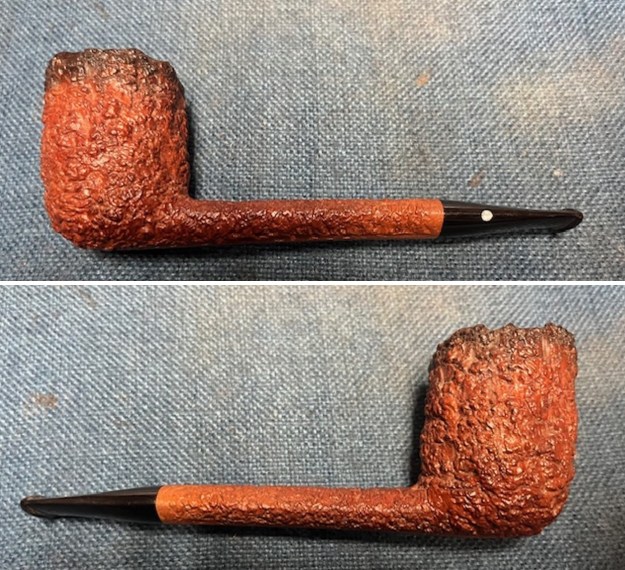
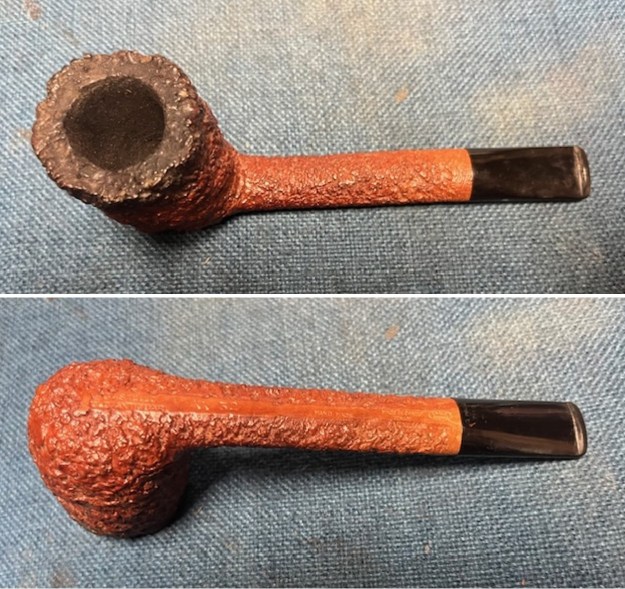
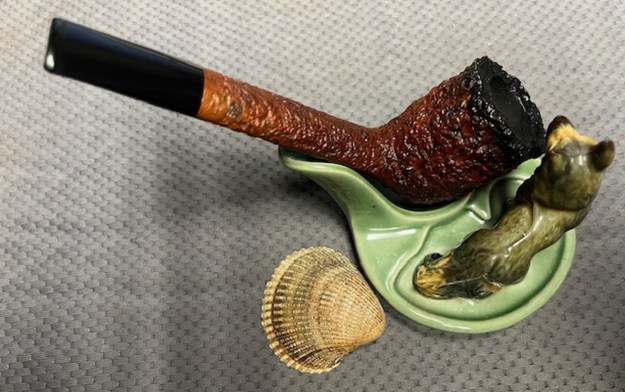
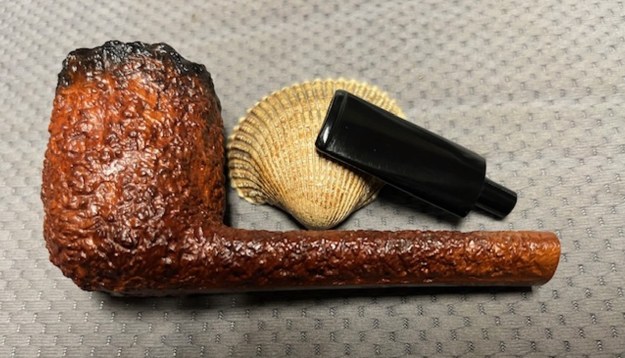
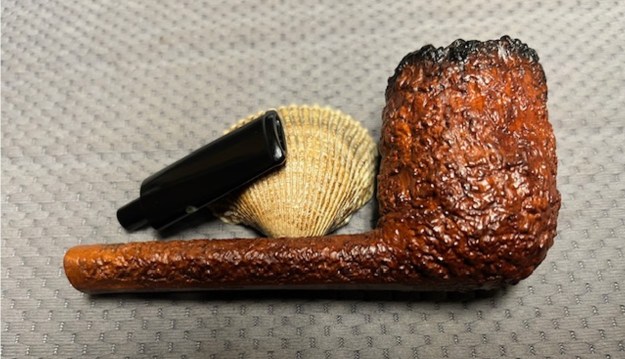
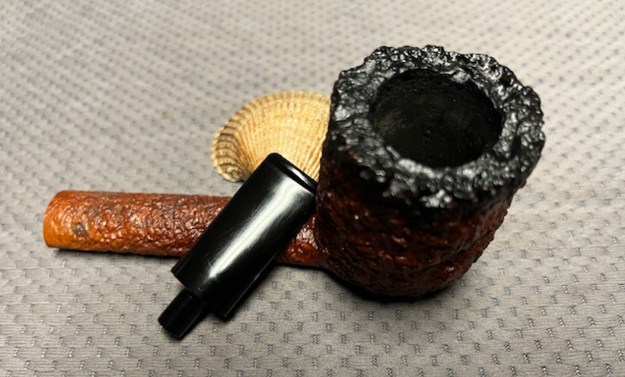
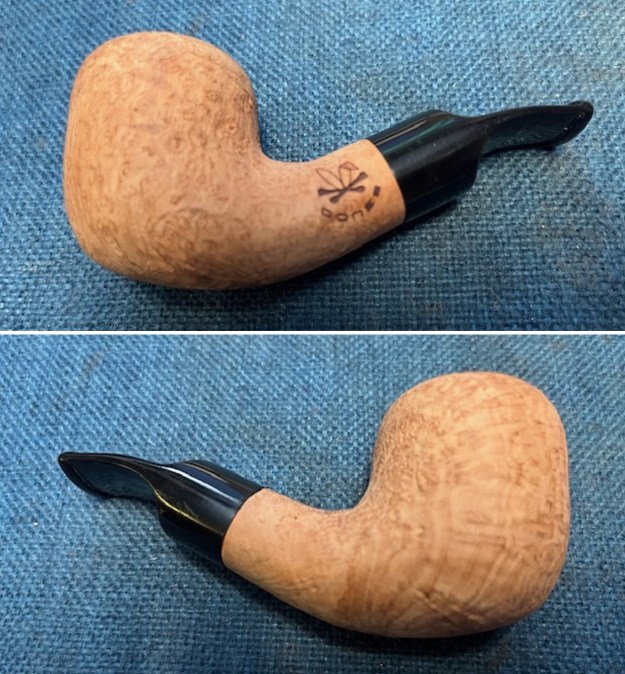
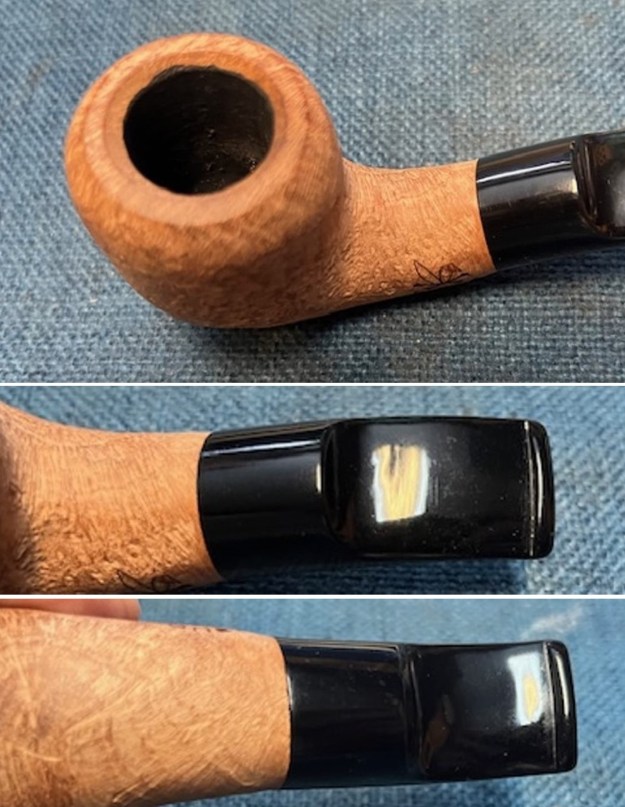
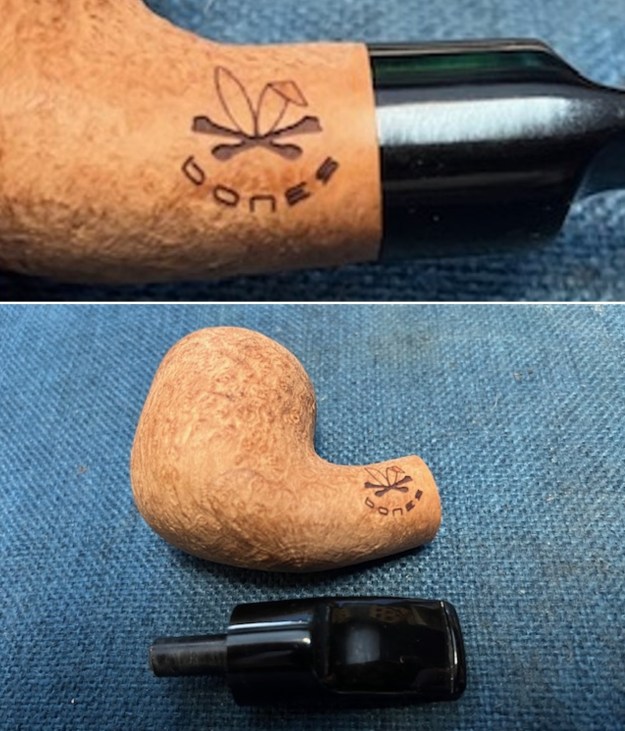
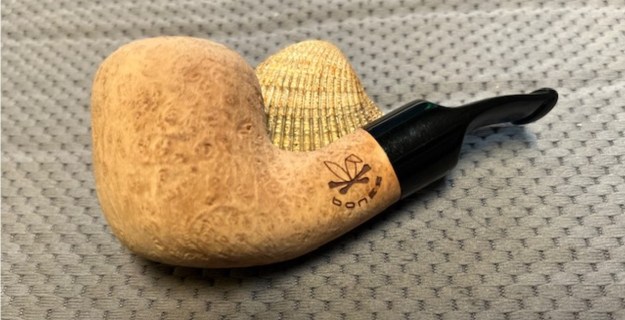
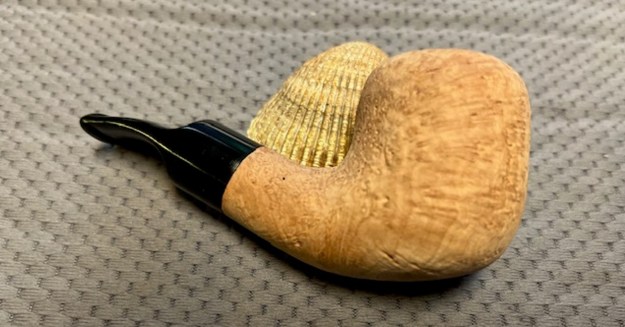
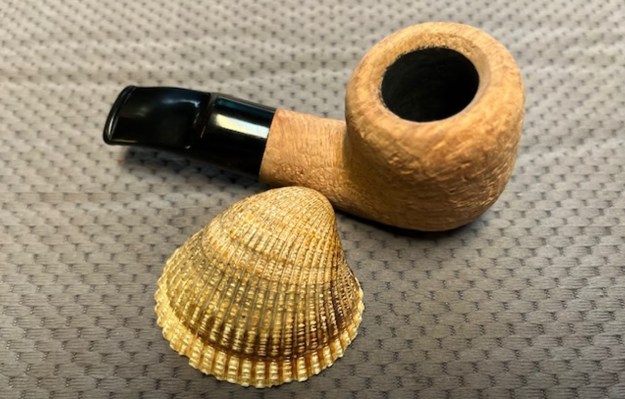
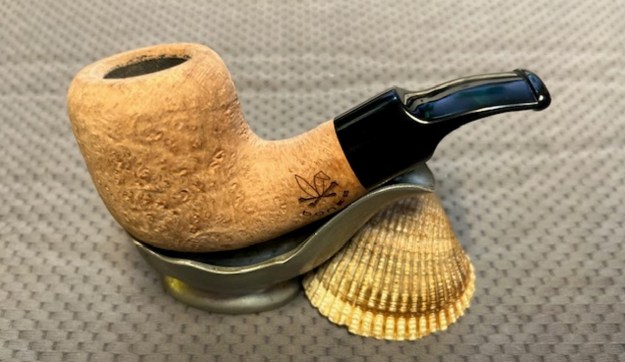
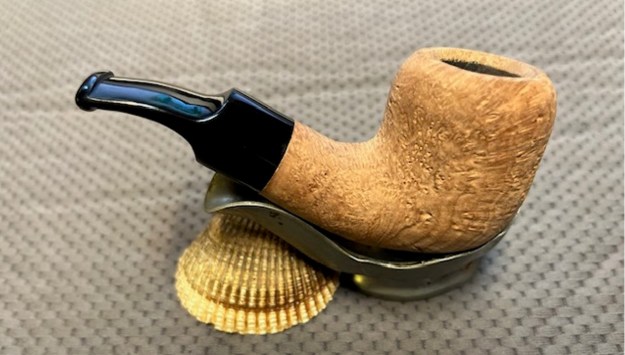
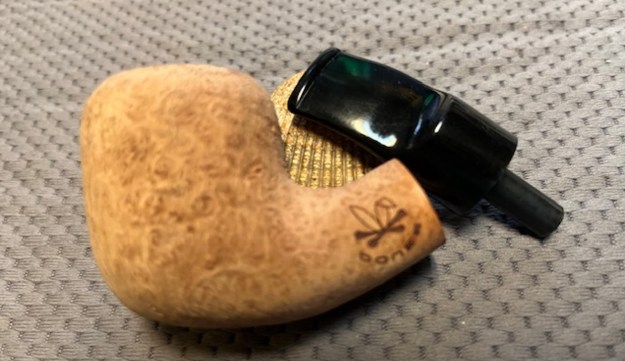
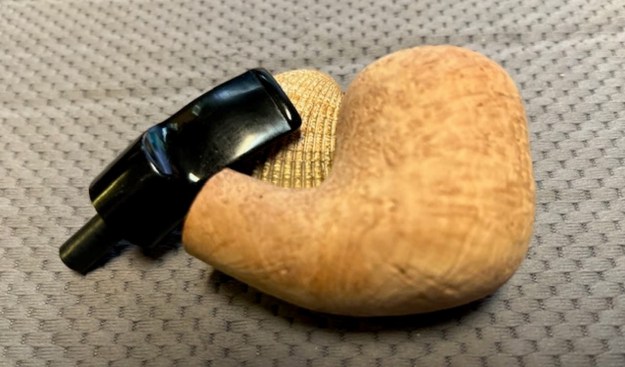
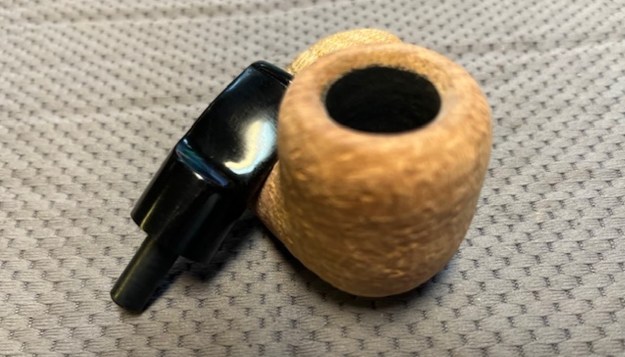
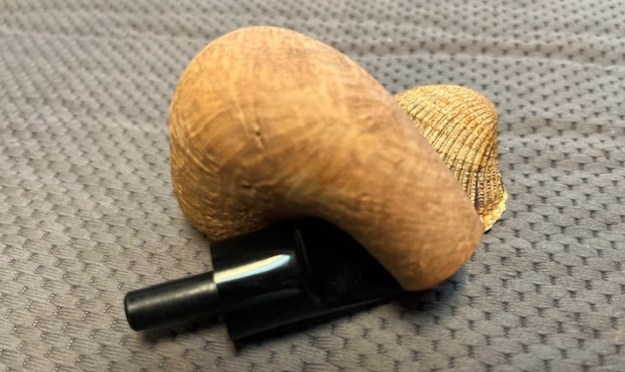
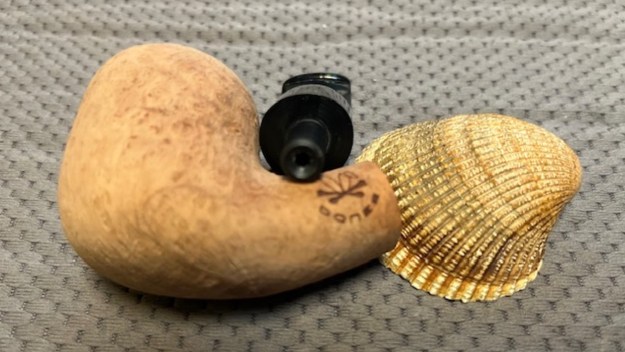
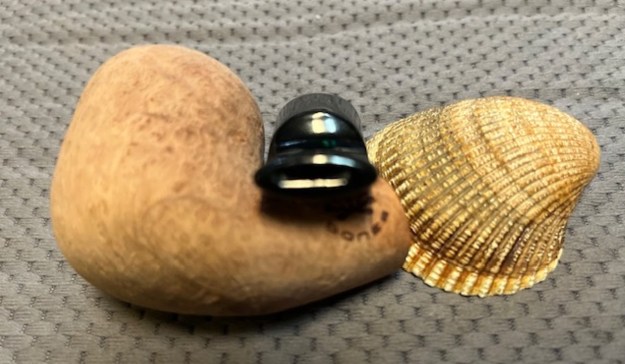
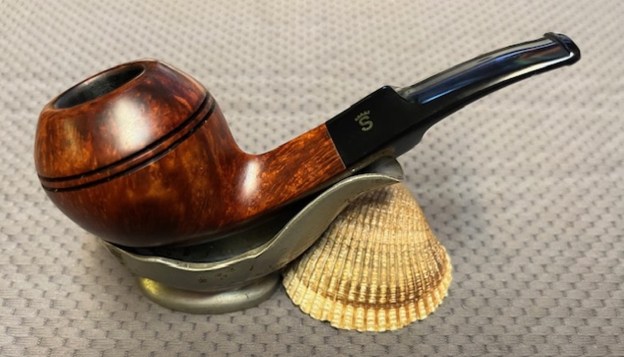
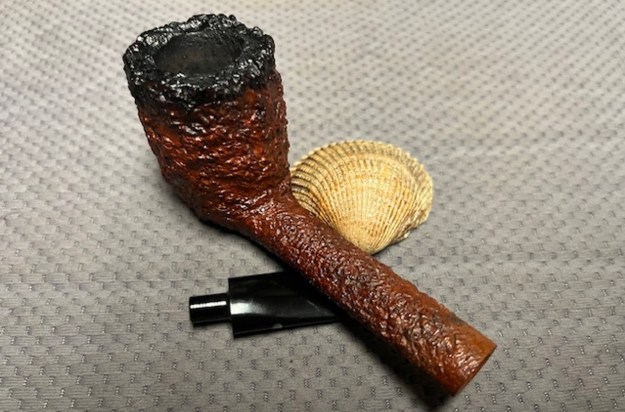
This interesting sandblast Bulldog pipe was purchased from an estate in Nampa, Idaho, USA on 11/09/2023. It is a natural sandblast briar with great grain around the bowl and shank. The stem is an acrylic taper stem. The sandblast finish had some oils and grime on the surface and in the grooves. It had begun to darken in spots around the bowl sides. The bowl was lightly smoked with raw briar on the lower half of the bowl. The rim top was quite clean and the inner and outer edge looked very good. The pipe is stamped on the left side of the shank and has crossed bone and rabbit ears [over] BONES. The acrylic stem had no stamping on the sides. It had scratches, light tooth marks and chatter on both sides ahead of the button. It was really an interesting sandblast with twists and turns in the briar. Jeff took photos of it before he worked his magic in the cleanup process. The exterior of the pipe was soiled with oils and dust but still looked very good. The rim top was in very good condition. The bowl itself had a was quite clean but there was a light cake on the sides of the top half. The lower half of the bowl was raw briar. The acrylic taper stem surface had some light scratches and marks on both sides. Jeff took photos of the sides of the bowl and shank to give a better feel for the condition of the bowl. You can see the interesting grain on the bowl side and front. He took a photo of the stamping on the left side of the shank. It is clear and reads as noted above.I took a few moments before working on the pipe to do a bit of research on the Bones pipes line. I knew they were made by Morgan Pipes so I started there. I looked up the Morgan Pipes site  (https://morganpipes.com/collections/bones) and quote from there:

Bones Pipes are pipes – Thats it – No fancy stuff… If you want a pipe to start with or just build your collection, Bones are the pipes for you. Toss it in a tackle box or a backpack and go. These pipes are, simply put, the absolute least expensive honest briar pipe on the market. A simple smoking machine.

I Googled and found a great link to Cupojoes tobacco shop (https://www.cupojoes.com/tobacco-pipes/morgan-bones/). They had a great description of the line from the perspective of the seller. I have included that below.

Chris Morgan began making pipes in 2006, and has since become renowned name within the pipe smoking community. The reason being: the world famous Bones Pipe. The Bones pipe is exactly what it sounds like, the bare naked skeleton of a pipe, that we often never get a chance to see. While other companies rely heavily on staining and sandblasting techniques, the Bones comes in a truly unfinished, natural beauty, making each one (even if the same shape) unique. Praised for their affordability, Bones pipes are the perfect pipe for travel & on the go, often small enough to fit into pockets. Chris offers other lines such as the impeccably built Black Jack series, and the famous patented cigar style pipe called the “Briar Cigar”.

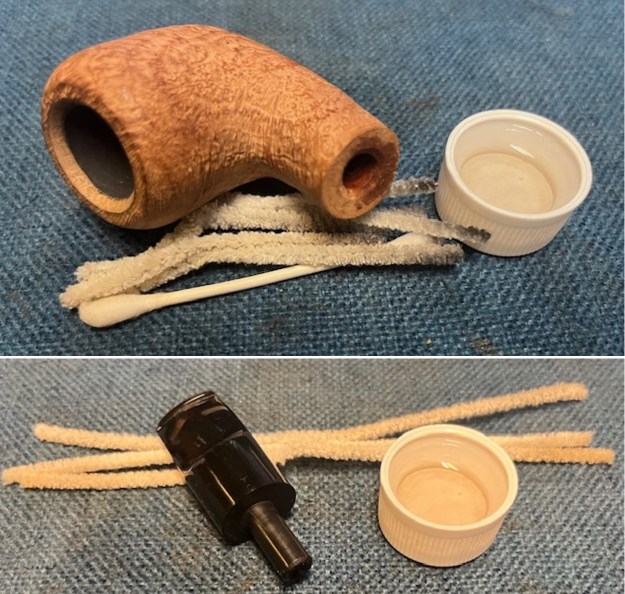
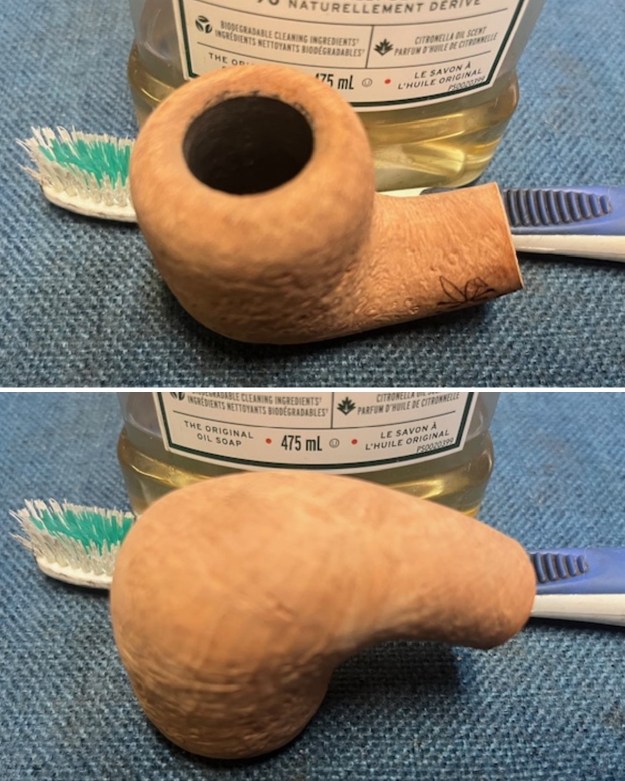
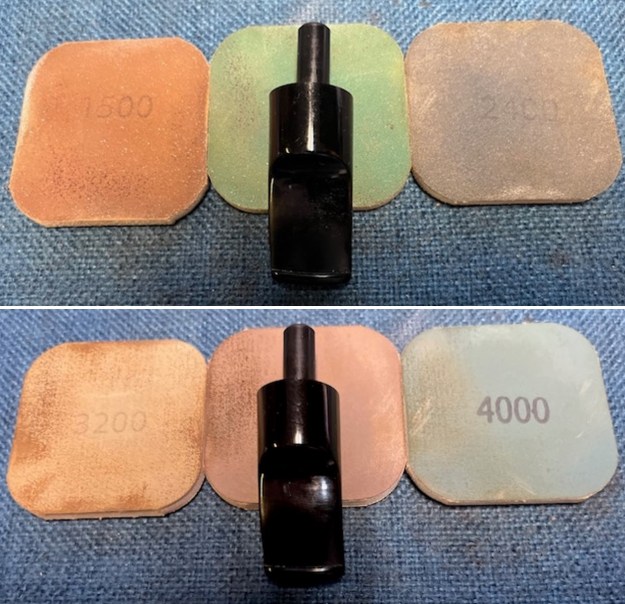
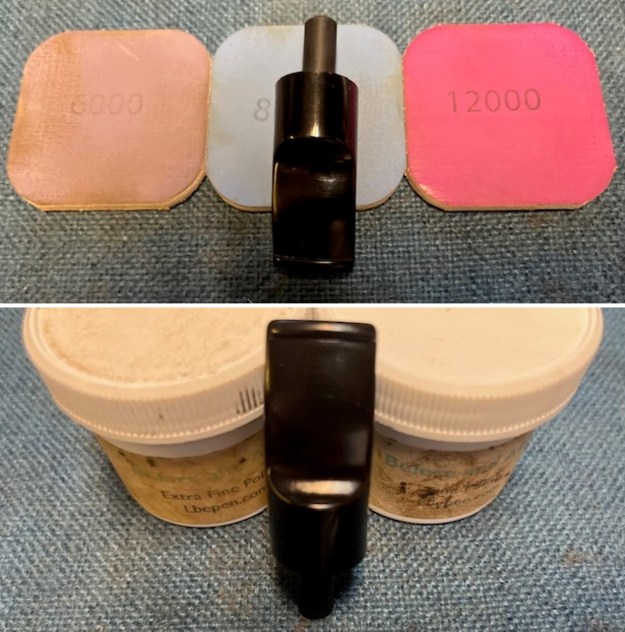
Now it was time to do my work on the pipe. Jeff reamed it with a PipNet pipe reamer and cleaned up the remaining cake in the bowl with a Savinelli Fitsall Pipe Knife. He scrubbed out the internals with alcohol, pipe cleaners and cotton swabs until the pipe was clean. He scrubbed the exterior of the bowl with Murphy’s Oil Soap and a tooth brush to remove the grime and grit on the bowl and on the rim top. The finish looks very good with good looking grain around the bowl and shank. The finish is also a bit darker than when started. The rim top looked very good. He scrubbed the stem surface with Soft Scrub to remove the grime on the acrylic. When the pipe arrived here in Vancouver for the second stop of its restoration tour it looked a lot better. I took photos before I started my part of the work. I took a photo of the bowl and rim top to show how well it had cleaned up. The top and the edges of the bowl are in very good condition. The stem had some light marks and chatter on both sides ahead of the button.I took a photo of the stamping on the shank and took the stem off the pipe to give a sense of the proportions of the pipe. It is a nice one.I started the simple cleanup work by rubbing Before & After Restoration Balm deep into the smooth finish to clean, enliven and protect the briar. The briar was in excellent condition so I hand rubbed it with my fingers and worked it into the finish with a shoe brush. I set it aside to dry for 10-15 minutes. I wiped it off with a soft cloth. I buffed the bowl with a cotton cloth to polish it. It really began to have a deep shine in the briar. I took some photos of the bowl at this point to mark the progress in the restoration. The grain on the bowl stands out with interesting lines moving across the sides of the bowl. I set the bowl aside and turned my attention to the stem. I polished the acrylic stem with micromesh sanding pads – dry sanding it with 1500-12000 grit pads. I wiped the stem down after each sanding pad with Obsidian Oil and set it aside to dry. I polished it further with Before & After Pipe Polish – using both the Fine and Extra Fine Polishes. I gave it a rubdown with Obsidian Oil one last time and set it aside. I put the Chris Morgan made Bones ¼ Bent Bulldog back together and worked the pipe over on the buffing wheel using Blue Diamond to lightly polish the bowl and the acrylic stem. I buffed the bowl and stem to raise the gloss on the briar and the acrylic. I gave the pipe multiple coats of carnauba wax. I buffed the entire pipe with a clean buffing pad to raise the shine. I hand buffed it with a microfiber cloth to deepen the shine. The finished the Bones Bulldog is shown in the photos below. The natural sandblast finish had taken on a patina and the Bulldog shaped bowl works well with the rich black acrylic stem. It looked quite amazing! The dimensions of the pipe are: Length: 5 ½ inches, Height: 2 inches, Outside Diameter: 1 ¾ inches, Diameter of the chamber: ¾ of an inch. The weight of the pipe is 43 grams/1.48 ounces. This is an sandblast on the bowl and shank that reveals the grain underneath. I really like how the briar and the acrylic work well together. This one will soon be on the rebornpipes store in the American (US) Makers Section. If you are interested in adding this Bones pipe to your collection this may well be the one for you. Thanks for walking with me through the restoration process.

Restoring an Amazingly Grained Kirsten Full Bent Sitter E


Blog by Steve Laug

I bought my first Kirsten – a Mandarin in the early 80s from a pipe shop that specialized in them in Idaho Falls, Idaho. That shop is long since gone but there is still something about Kirsten pipes that attracts my attention. It may be the design look of the pipe and it may be the stubborn resolve that gave birth to it when Kirsten invented it after getting word from his doctor that he had to stop smoking. I don’t what it is but I like the boxy look of the base and shank, the grooves in the machined metal, the beautiful grain on the smooth bowls and the gentle curves of the stem. They always catch my eye. This one is no exception. We purchased it at an estate sale on 09/16/2023 in Idaho Falls, Idaho, USA. It has O rings on the stem and the end valve and a base on the bowl so I know that it is one of the more modern renditions. It also has the same kind of thick marbled acrylic stems that the one I purchased had. The pipe is a large one with a silver tone barrel. The smooth Mandarin style bowl has some great grain on it under the grime on the surface. The bowl was thickly caked with a light lava overflow pouring over the rim top. It was hard to know the condition of the inner edge and rim top underneath the lava but cleaning that up will tell the story. The acrylic stem had light tooth marks and chatter on both sides ahead of the button. The internals were heavily tarred and the metal tube and intake to the stem was also very dirty. The valve on the front of the bowl was tight but it was not frozen. It had a flattened base that allowed the stem to stand. Jeff took photos of it before he worked his magic in the cleanup process. The exterior of the pipe was very dirty – grime and grit ground in from years of use and sitting. The rim top was covered with a coat of thick lava that overflowed the bowl. There was also some darkening and lava on the rim top. The bowl itself had a thick cake with flecks of tobacco stuck in the cake on the sides. The acrylic stem surface was dirty and had some tooth marks and chatter on both sides. Jeff took photos of the sides of the bowl to give a better feel for the condition of the bowl. You can see the interesting grain on the bowl side and front. He took photos of the pipe taken apart to show the constituent part s of the pipe. IT really was a well-made piece of engineering from the Kirsten factory. I was looking forward to working on it. The next photos show the stamping on the sides of the barrel shank and it is very readable. It reads Kirsten on the left side of the barrel and on the underside Made in USA E.Before doing cleanup work on the pipe I decided to do some research on the pipe. I have several Kirsten catalogues on the site and turned to the 1993-94. Here is the link to that catalogue (https://rebornpipes.com/2022/11/17/1993-94-kirsten-pipe-catalogue/). I have included several of the pages below. The first shows the bowl shape and the Radiator barrel. The bowl is the Mandarin shape bowl below, the second from the top in the drawings of bowl shapes. The stem is shown in the second catalogue page below. It is a bronze coloured Italian Lucite with a bent. With that information in hand I went over the details of the stamping on a previous blog that I had posted by Dave Whitney who wrote Old Briar. He gave a helpful guide to dating a Kirsten pipe by the stamping and component parts. He separated them into generations – 1, 1.5, 2, 3. Going over the details I concluded that what I was dealing with a Generation 3 pipe that was made between 1985 and the present. Here is the link and a portion of the blog. I have italicized the portions that pertain to this particular pipe (https://rebornpipes.com/2012/11/03/kirsten-generation-1-1-5-2-3/).

Generation 3 – 1985 to the present                                                                         

All current models stamped “Made in U.S.A.” and all have O rings on both the valve and stem. They come in the following models:

Straights

JX Jewel Brass

M Mariner

L Lancer

Quarter-Bents

RX Regent Brass

H Horizon

Full bents

Advertisement

EX Esquire Brass

DX Designer Brass

FOOTNOTE ON VARIATIONS IN LETTER DESIGNATIONS:  Generally speaking, the X added to a model letter like “S” stands for brass tone finish, i.e., “SX.” There is one exception to this: In the 1960s Kirsten made a brass tone model with an “Eternalum” finish that gave the brass tone an antiqued look. They were marked with a “X” designation following the model letter. The B added to a model letter like “M” stands for black finish, i.e., “MB.”

He ended his answer to the questions with this great note: “Now the fun part…. this is how they came from the factory. What people did to them after they got them is what makes it an inexact science. Parts for the different sizes are not interchangeable, except for the bowls. I have a Gen 1 – M and -S…nothing interchanges but the bowls. If you get a Gen 1 that has been badly abused, you can end up losing either the bit or metal insert, or both, no matter what you do or how long you try.”

References used:

Whitney, Dave (2009) Old Briar – Pipe smoking on a budget. Pipesbywhitney http://www.kirstenpipe.com/

I now knew that the pipe I was working on was a Generation 3 made between 1985 and the present. It was a Full-Bent and the E made it an Esquire Version. The E is for Esquire shape and it has a silver finished. Now it was time to work on the pipe.

Jeff reamed it with a PipNet pipe reamer and cleaned up the remaining cake in the bowl with a Savinelli Fitsall Pipe Knife. He scrubbed out the internals with alcohol, pipe cleaners and cotton swabs until the pipe was clean. He scrubbed the exterior of the bowl with Murphy’s Oil Soap and a tooth brush to remove the grime and grit on the briar and the lava on the rim top. The finish looks very good with good looking grain around the bowl and shank. The rim top had some significant damage on the back part of the bowl. It had been burned from repeated lighting with a torch lighter. Jeff took the pipe apart and cleaned the barrel, the adjustable valve and the stem with alcohol, pipe cleaners and cotton swabs. He scrubbed the stem with Soft Scrub and soaked it in Briarville’s Pipe Stem Deoxidizer to remove the grime on the acrylic. When the pipe arrived here in Vancouver for the second stop of its restoration tour it looked a lot better. I took photos before I started my part of the work. I took a photo of the bowl and rim top to show how well it had cleaned up. The top and the edges of the bowl are in very good condition. There does not seem to be any damage on either the inner or outer edges and the rim top. The stem had light tooth marks and chatter on both sides ahead of the button.I took photos of the stamping on the left side and underside of the shank. It is clear and readable.I remove the stem from the barrel and took a photo. I removed the bowl from the barrel and took another photo.I started my work on the pipe by polishing the bowl and rim top with micromesh sanding pads – dry sanding with 1500-12000 grit pads. I wiped the bowl with a damp cotton pad after each sanding pad. The surface began to take on a nice shine. I worked Before & After Restoration Balm deep into the smooth finish to clean, enliven and protect the briar. I hand rubbed it with my fingers and worked it into the finish. I set it aside to dry for 10-15 minutes. I wiped it off with a soft cloth. I buffed the bowl with a cotton cloth to polish it. It really began to have a deep shine in the briar. I took some photos of the bowl at this point to mark the progress in the restoration. The grain on the bowl stands out with interesting lines moving across the sides of the bowl. I set the bowl aside and sanded the stem with the 2 inch square 320-3500 grit sanding pads. I wiped down the stem after each sanding pad. I was able to remove the tooth marks and chatter on both sides with the pads. The stem looked very good.I polished the acrylic stem with micromesh sanding pads – dry sanding it with 1500-12000 grit pads. I wiped the stem down after each sanding pad with Obsidian Oil and set it aside to dry.I polished it further with Before & After Pipe Polish – using both the Fine and Extra Fine Polishes. I gave it a rubdown with Obsidian Oil one last time and set it aside.I put the Kirsten Generation 3 Full Bent Mandarin E back together and worked the pipe over on the buffing wheel using Blue Diamond to lightly polish the bowl and the acrylic stem. I buffed the bowl and stem to raise the gloss on the briar and the acrylic. I gave the pipe multiple coats of carnauba wax. I buffed the entire pipe with a clean buffing pad to raise the shine. I hand buffed it with a microfiber cloth to deepen the shine. The finished the Kirsten Gen 3 Full Bent Mandarin is shown in the photos below. The medium brown stains on the smooth Bulldog shaped bowl works well with the rich bronze Italian acrylic stem. The dimensions of the pipe are: Length: 6 inches, Height: 2 ½ inches, Outside Diameter: 1 ½ inches, Diameter of the chamber: 1 inch. The weight of the pipe is 61 grams/2.15 ounces. This is an interesting piece of briar, cross grain and birdseye on the bowl and shank. I really like how the briar and the vulcanite work well together. This one will soon be on the rebornpipes store. If you are interested in adding a Kirsten to your collection this may well be the one for you. Thanks for walking with me through the restoration process.

Is there any hope that this Made in Denmark Bari Dana 20 can be Reborn?


Blog by Steve Laug

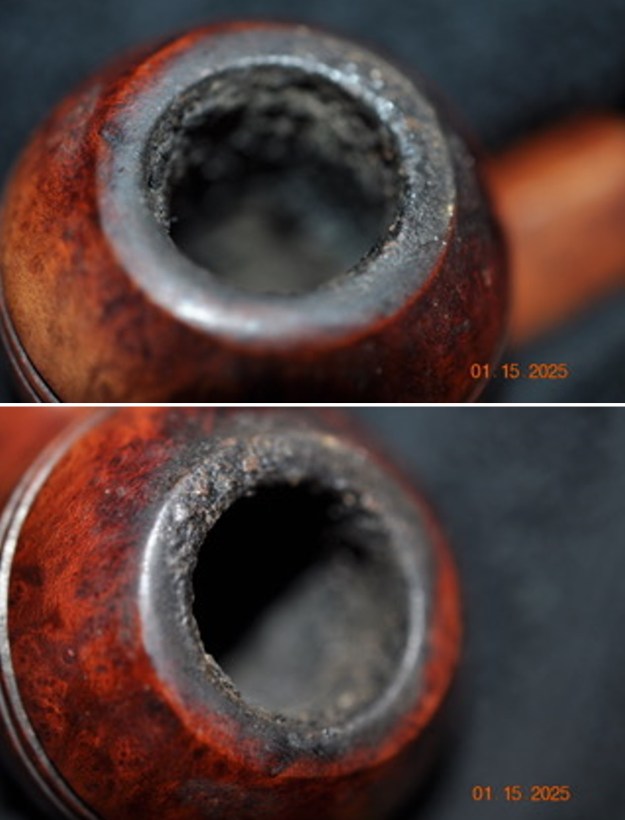
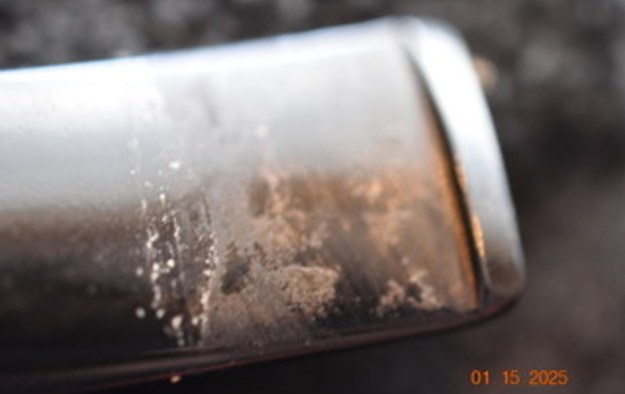
The next pipe I am working on was purchased on 03/05/2020 from an antique store in Logan, Utah, USA. This was a wreck of a pipe with a lot of wear and tear and obviously it had been someone’s favourite smoker. It was one of those pipes that when I look at I wonder why we picked it up. Only when I look closely can I seen the interesting grain around the bowl and shank. The pipe is stamped on the topside of the shank and reads Bari [over] Dana. On the underside it is stamped Made in Denmark [over] the shape number 20. The dirty smooth finish was not able to hide the beauty of the grain around the bowl and shank. There were tars and oils ground into the surface of the briar. There were fills missing on the right side of the bowl near the top and also on the left side at the shank junction. There were some flaws on the underside and on the front of the bowl. The bowl had a very thick cake that flowed over the top of the smooth rim in a heavy lava coat. The inner edge was so heavily coated that it to assess its condition. The stem was a black vulcanite oval, saddle stem stamped BARI on the top of the saddle. It had some light tooth marks and chatter on both sides ahead of the button. It had a lot of oxidation and calcification on the first inch of the stem ahead of the button. The stem was in far better condition than the bowl. Jeff took photos of the pipes before he started his clean up work.Jeff took photos of the rim and bowl to show the heavy cake and heavy lava coat covering the rim top. The inner edge of the rim appeared to be OK under the cake and lava. It really was a dirty pipe but still had some interesting grain and features to the shape. He also took photos of the stem surfaces to show its overall condition when it arrived. The photos of the sides and heel of the bowls show some interesting cross grain. The brown stain on the briar adds depth finish on the pipe and makes the grain really stand out on the sides. Jeff took photos of the fills and flaws on the right side of the bowl near the top as well as the nicks and scratches on the left side of the shank.He also took photos of the stamping on the sides of the shank. It is clear and reads as noted above. The top of the stem is stamped on the saddle BARI and was once filled in with white paint. It is also in good condition. Before I started working on the pipe I wanted to do a bit of work on the Bari Dana line to gather some information. I started with Pipephil’s site (http://www.pipephil.eu/logos/en/logo-b1.html) and was surprised to find that the second photo in the post was a Bari Dana and that it was stamped exactly as the one I am working on. I have included a screen capture of the section and the side bar notes below.Brand founded by Viggo Nielsen in 1950 and sold to Van Eicken Tobaccos in 1978. At this time Age Bogelund managed Bari’s production. The company has been bought in 1993 by Helmer Thomsen. Bari’s second: Don, Proctus

I turned then to Pipedia to see there as anything on the Dana line (https://pipedia.org/wiki/Bari). There was nothing specific there. It did have a great short overview of the history of the company. I quote below.

Bari Piber was founded by Viggo Nielsen in Kolding around the turn of 1950/51. Viggo’s sons Kai Nielsen and Jørgen Nielsen both grew into their father’s business from a very young age and worked there till 1975.

Bari had very successfully adapted the new Danish Design that had been started mainly by Stanwell for it’s own models. When Viggo Nielsen sold Bari in 1978 to Joh. Wilh. von Eicken GmbH in Hamburg Bari counted 33 employees.

From 1978 to 1993 Åge Bogelund and Helmer Thomsen headed Bari’s pipeproduction. Thomson bought the company in 1993 re-naming it to Bari Piber Helmer Thomsen. The workshop moved to more convenient buildings in Vejen. Bogelund, who created very respectable freehands of his own during the time at Bari got lost somehow after 1993.

Bari’s basic conception fundamentally stayed the same for decades: series pipes pre-worked by machines and carefully finished by hand. Thus, no spectacular highgrades but solid, reliable every day’s companions. The most famous series are the smooth “Classic Diamond” and the blasted “Wiking”.

So now I knew that I was working on an older one! The pipe was probably made between 1951-1975 when Viggo Nielsen was making pipes. Now it was time to start my work on the pipe.

I was looking forward to looking over the damages on the bowl and shank after Jeff cleaned up the pipe for me. I was curious to know what was happening there. He reamed the bowl with a PipNet pipe reamer and cleaned it up with a Savinelli Fitsall Pipe Knife. He scrubbed the exterior with Murphy’s Oil Soap and a tooth brush to clean off the grime off the finish and the overflow of lava on the rim top. The cleaning had removed the grime on the rim top. I examined the flaws and fills on the right side of the bowl at the top edge. Jeff’s scrubbing had lifted some of the nicks and scratches on the surface of the bowl and shank. He cleaned up the internals of the shank, mortise and stem with pipe cleaners, cotton swabs and alcohol to remove all of the oils and tars in the pipe. He soaked the stem in Briarvilles Pipe Stem Deoxidizer and was able to remove any remaining grime on the surface and inside. The fit of the stem to the shank made it look like an original even though there was not a Stanwell logo on it. When it arrived here in Vancouver it was a clean pipe and I knew what I had to work with. I took photos of it before I started my part of the restoration. I took a photo of the rim top and the stem to show their condition. Jeff was able to clean up the cake and the lava overflow that was shown in the rim and bowl photos above. The rim top and the inner edge both looked very good. The stem looked better, though there were light tooth marks and chatter on both sides near the button. I took photos of the stamping on the shank top and underside. It is clear and readable as noted above. You can also see the Bari stamp on the top of the saddle stem. I started my work on the pipe by addressing some of the darkening on the rim top and edge. I used a folded piece of 220 grit sandpaper to remove the darkening on the inward bevel of the rim top and edge. It looked much better.The next step in the work was to address the fills that were shrunken and the nicks that surrounded the bowl and shank surfaces. I used a clear super glue to fill them in and repair the damaged areas. Once the repairs cured I used a folded piece of 220 grit sandpaper to start the process of blending them into the surface. I sanded the surface of the bowl with 320-3500 grit sanding pads to smooth out the repairs and blend them into the rest of the bowl. I also wanted to make the grain stand out more. The pipe looked so good that I started my work by polishing the smooth rim top and bowl with micromesh sanding pads. I dry sanded it with 1500-12000 grit pads. I wiped the bowl down after each pad with a damp cloth. The pipe began to take on a rich shine and grain was beginning to stand out. I sanded with all of the pads and wiped the bowl down after each pad with a soft cloth. I rubbed the bowl and shank down with Before & After Restoration Balm to deep clean the finish on the bowl and shank. The product works to clean, enliven and protect the briar. I worked it in with my fingers to get it into the briar. I used a horsehair shoe brush to work it into the sand blast. I let it sit for 10 minutes then I wiped it off and buffed it with a soft cloth. The briar really began to have a rich shine. I took some photos of the bowl at this point to mark the progress in the restoration. It is a beautiful bowl.  I set the bowl aside and worked on the stem at this point in the process. I touched up the BARI stamp with white acrylic fingernail polish. I let it dry and then scraped off the excess and polished the stem with 1000 grit sanding pads. The stamping was faint but I was able to capture it to some degree.I polished light tooth marks and chatter out of the stem with micromesh sanding pads – dry sanding with 1500-12000 grit pads. I wiped the stem down after each sanding pad with Obsidian Oil. I polished the stem with Before & After Pipe Stem Polish – both Fine and Extra Fine. I gave it a coat of Obsidian Pipe Stem Oil. It works to protect the stem from oxidizing. I set it aside to dry. I put the stem back on the Bari Dana Made in Denmark 20 Oval Shank Egg and took it to the buffer. I buffed the bowl and stem with Blue Diamond to polish the briar and the vulcanite. Blue Diamond does a great job on the smaller scratches that remain in both. I gave the bowl and the stem several coats of carnauba wax and buffed the pipe with a clean buffing pad to raise the shine. I hand buffed it with a microfiber cloth to deepen the shine. I am amazed at how well it turned out. The finished pipe is shown in the photos below. This is a beautiful Bari Dana 20 Oval Shank Egg – the vulcanite saddle stem and smooth finish combine to give the pipe a great look. The dimensions of the pipe are Length: 5 ½ inches, Height: 1 ¾ inch, Outside diameter of the bowl: 1 inch, Chamber diameter: ¾ of an inch. The weight of the pipe is 1.41 ounces /41 grams. This is another pipe that I will be putting on the rebornpipes online store in the Danish Pipe Pipemaking Companies Section shortly, if you are interested in adding it to your collection. Thanks for walking through the restoration with me on this beauty!

As always, I encourage your questions and comments as you read the blog. Thanks to each of you who are reading this blog. Remember we are not pipe owners; we are pipe men and women who hold our pipes in trust until they pass on into the trust of those who follow us.