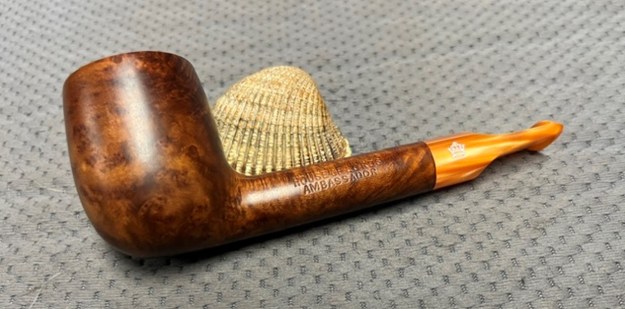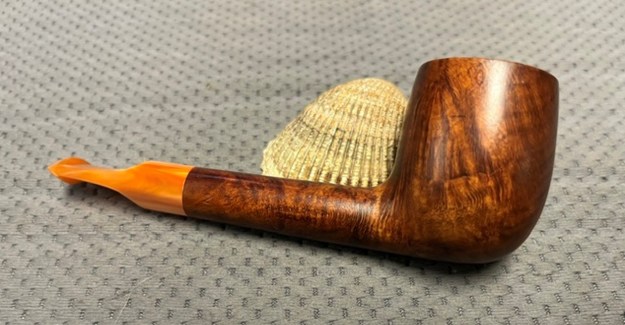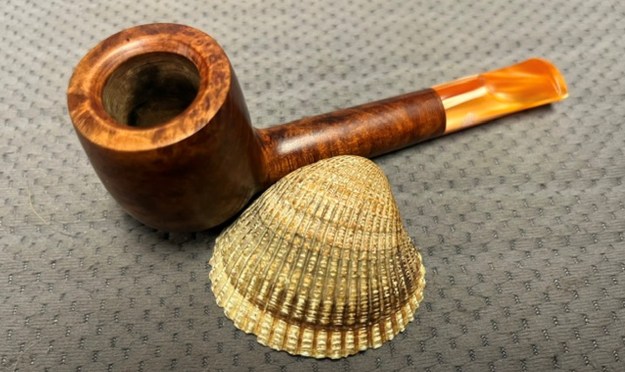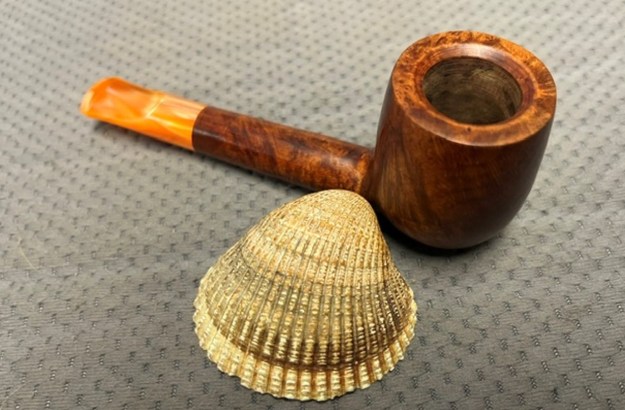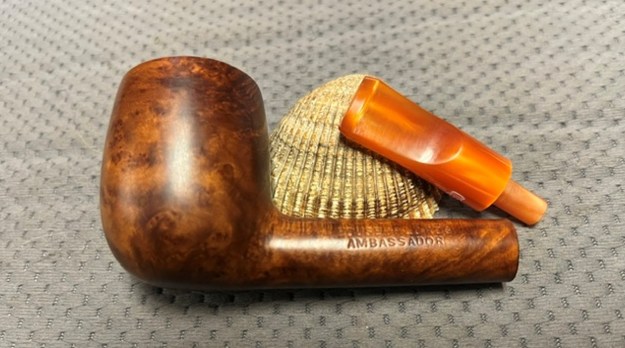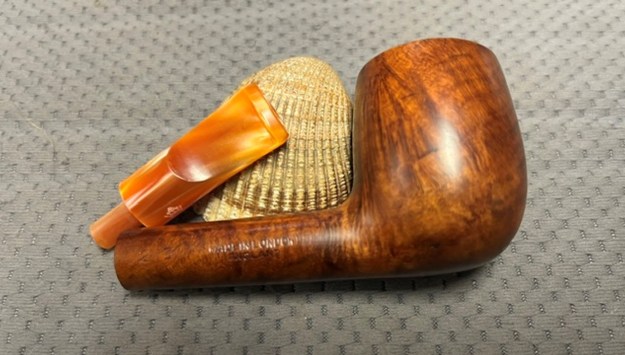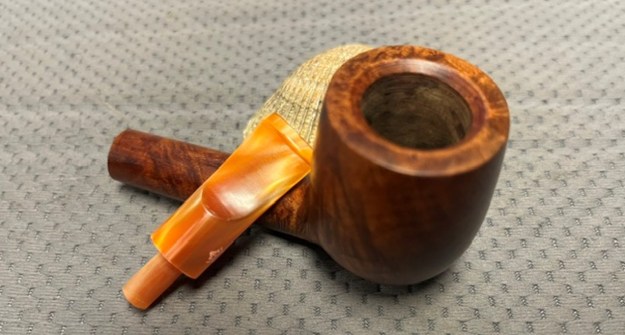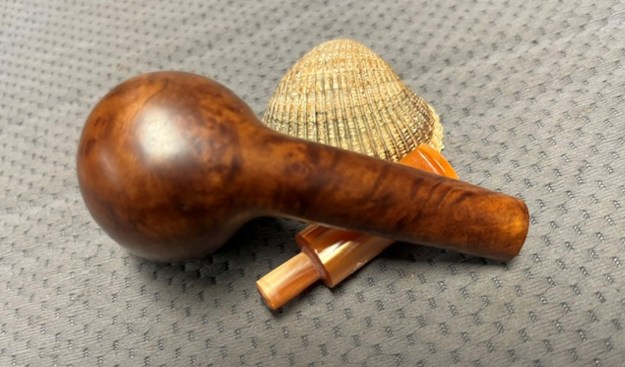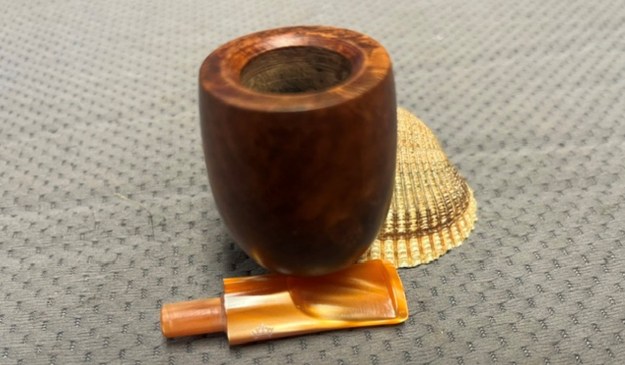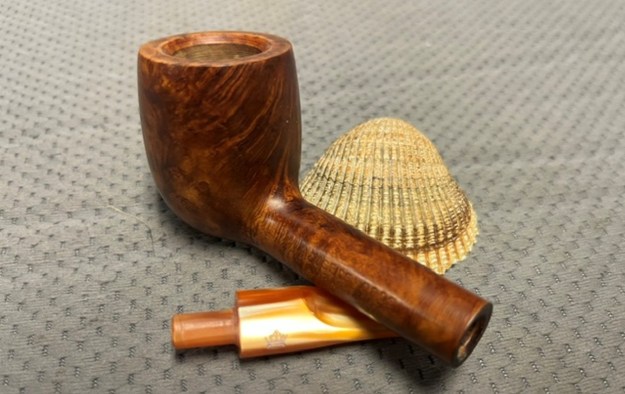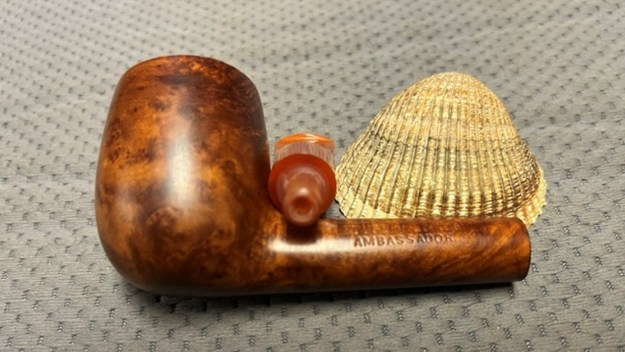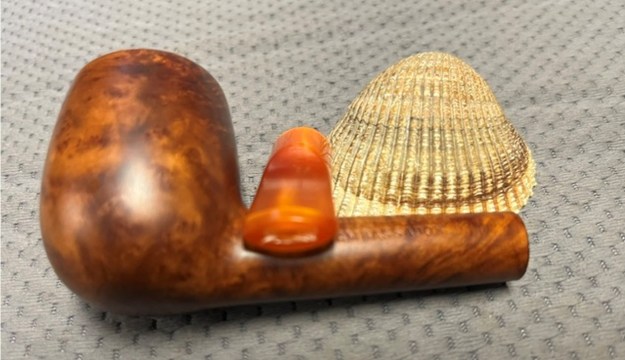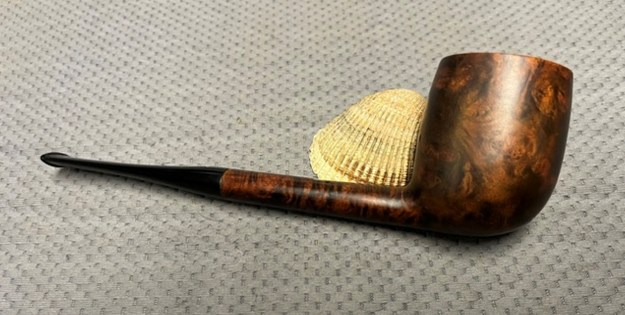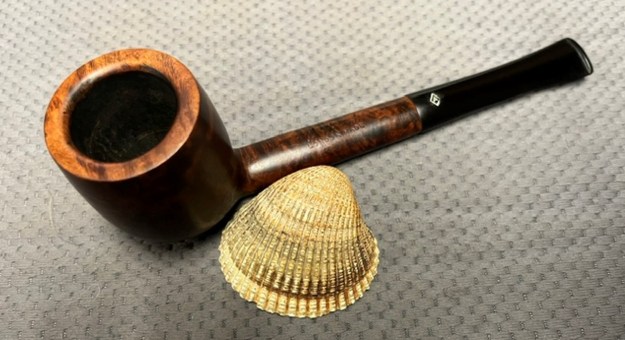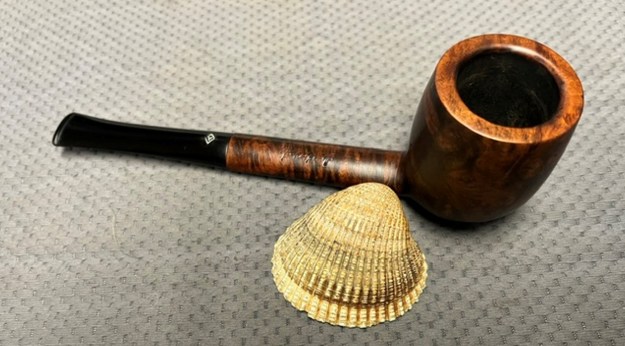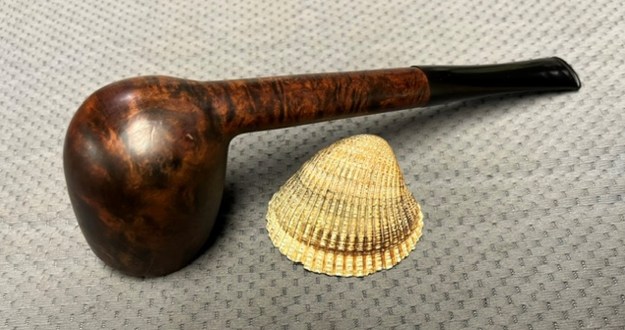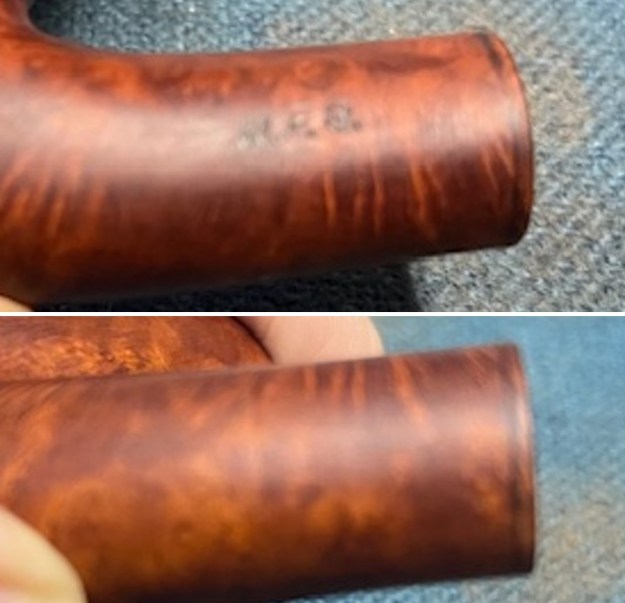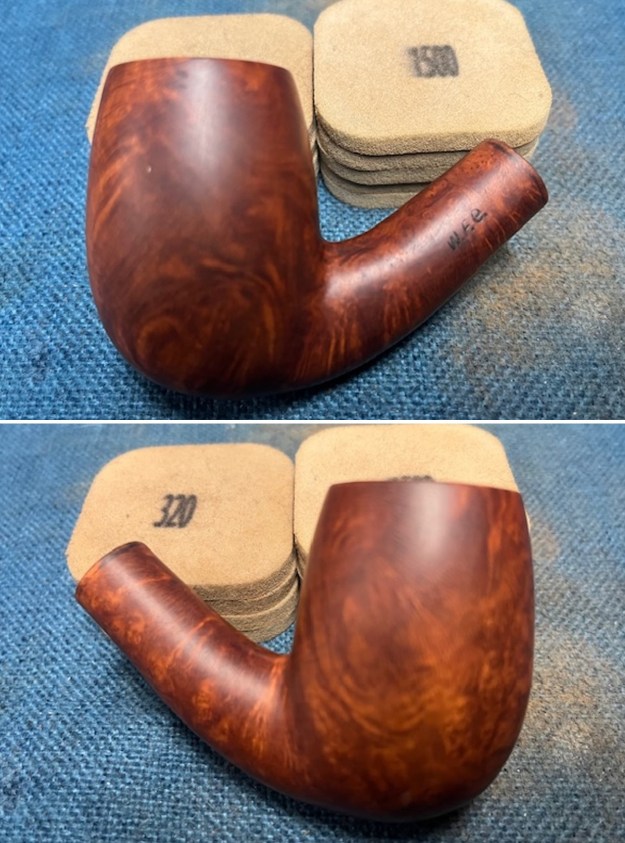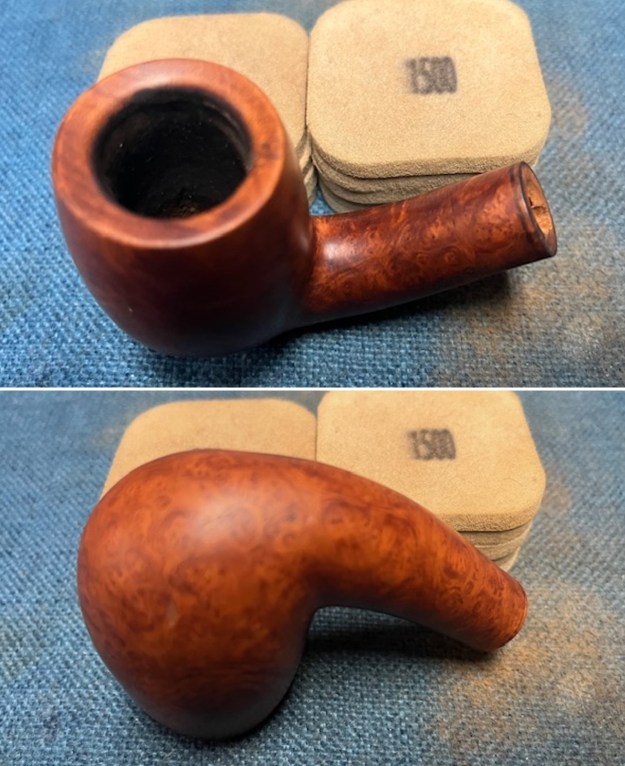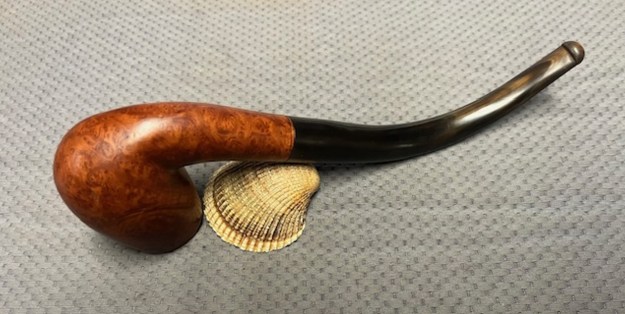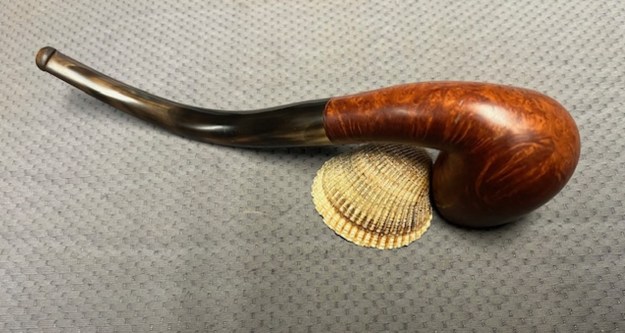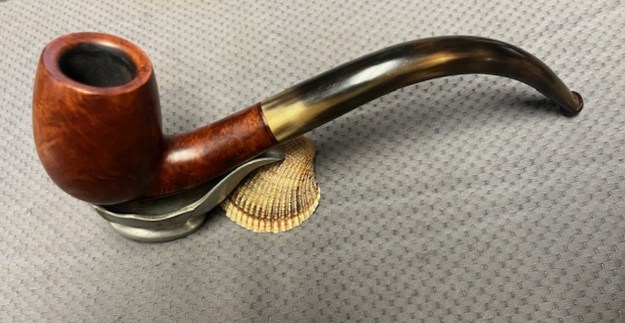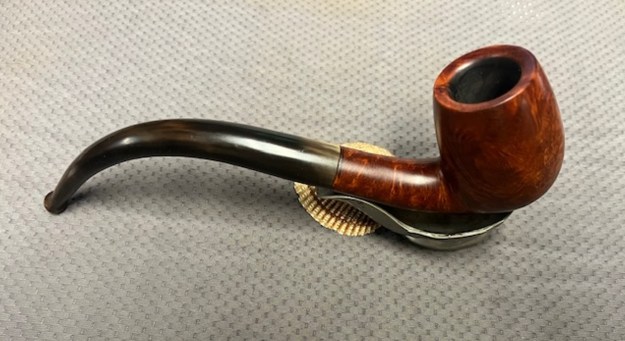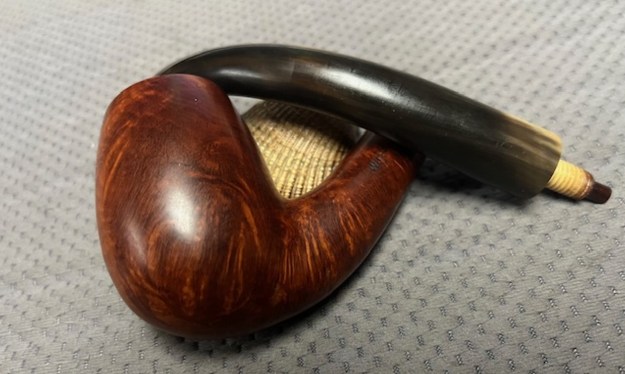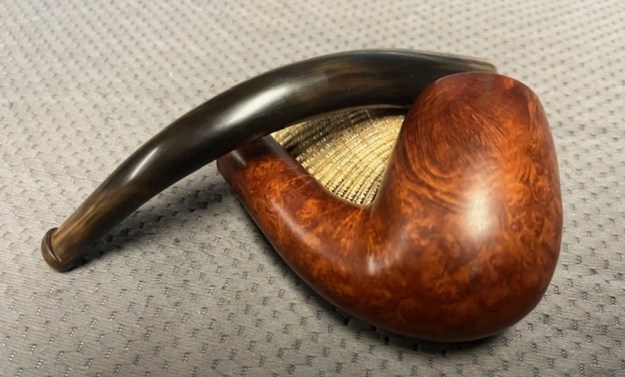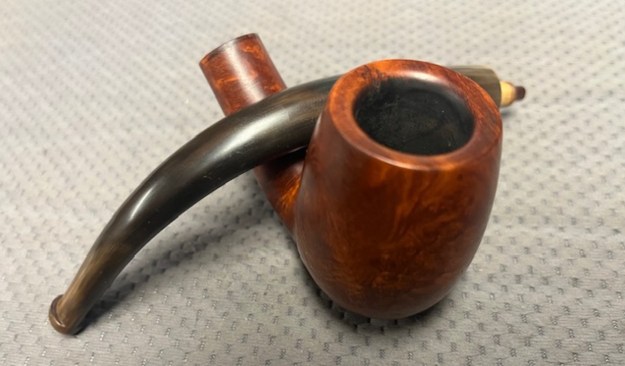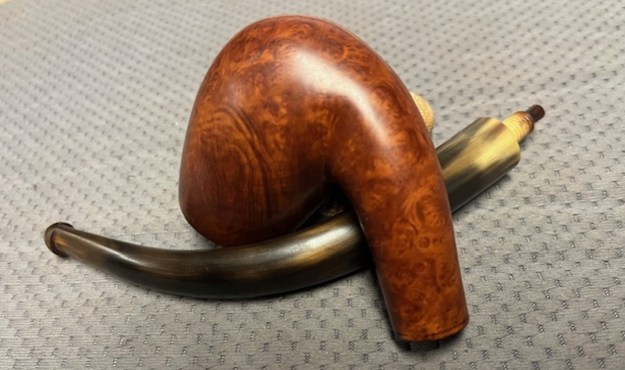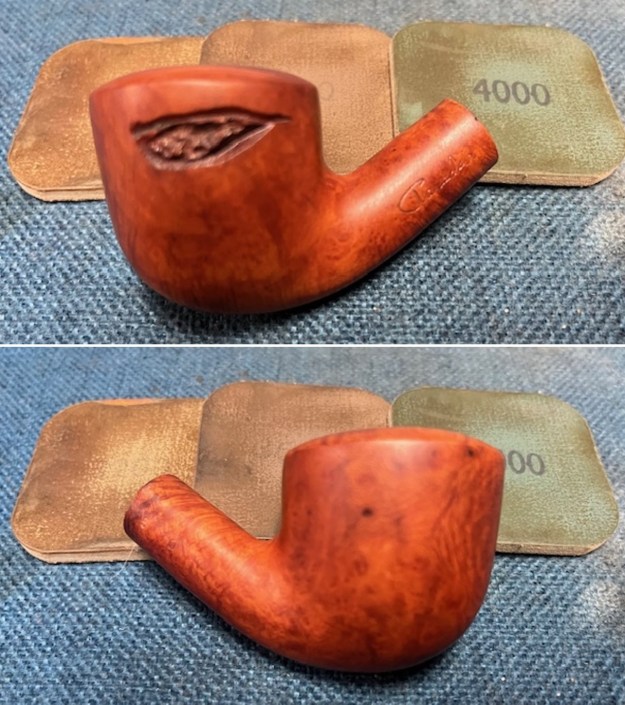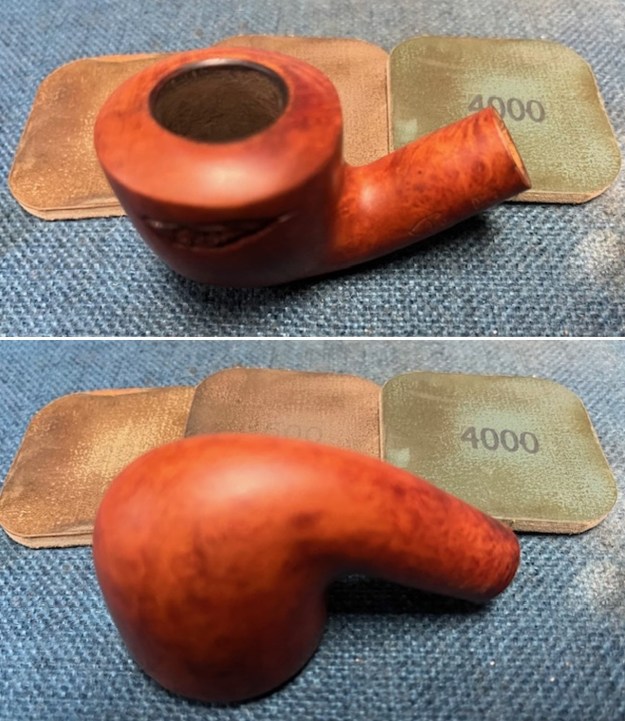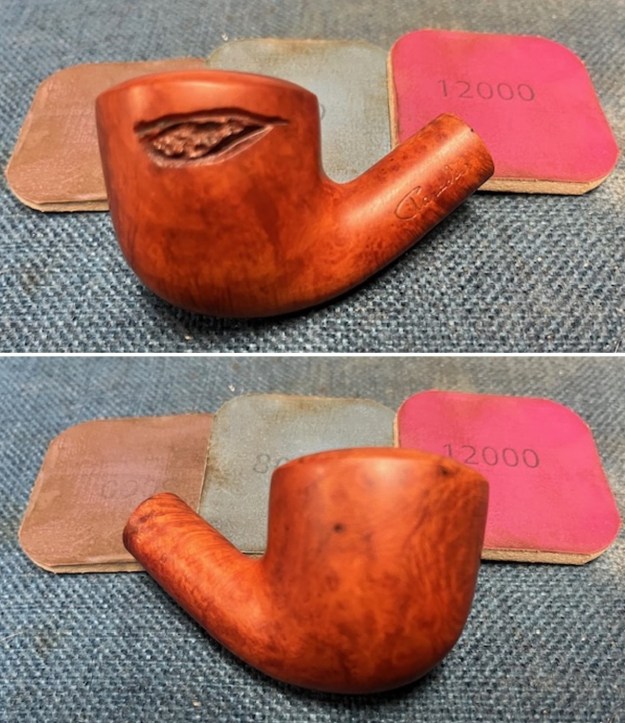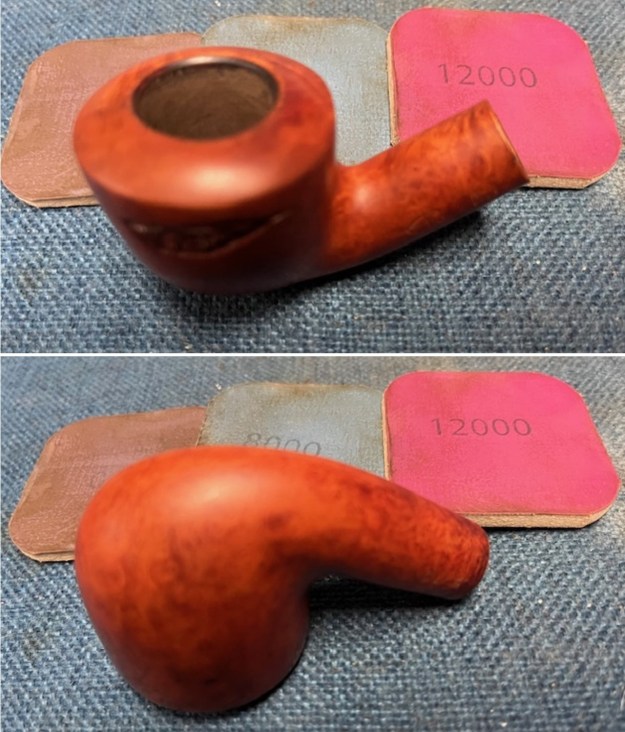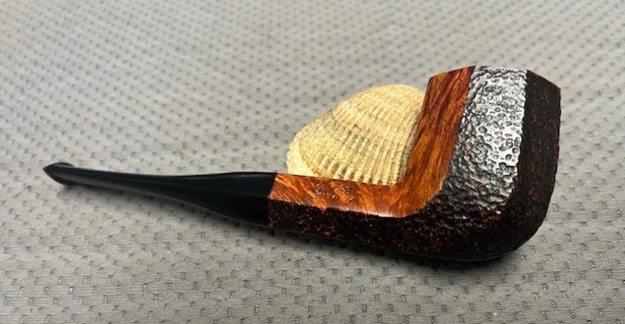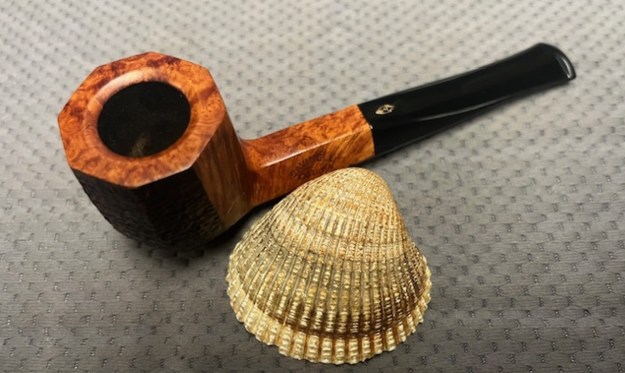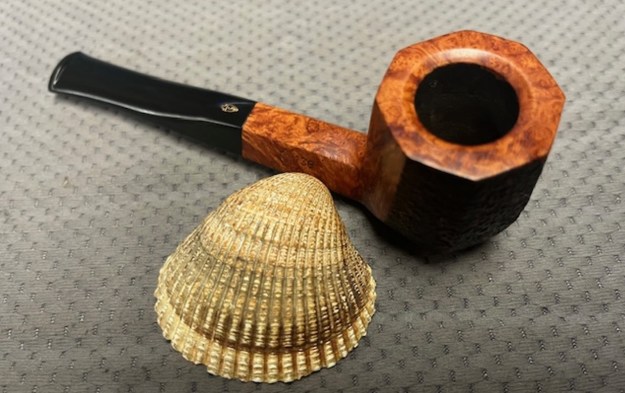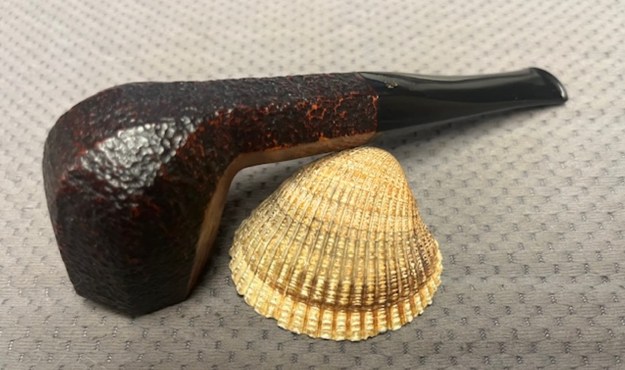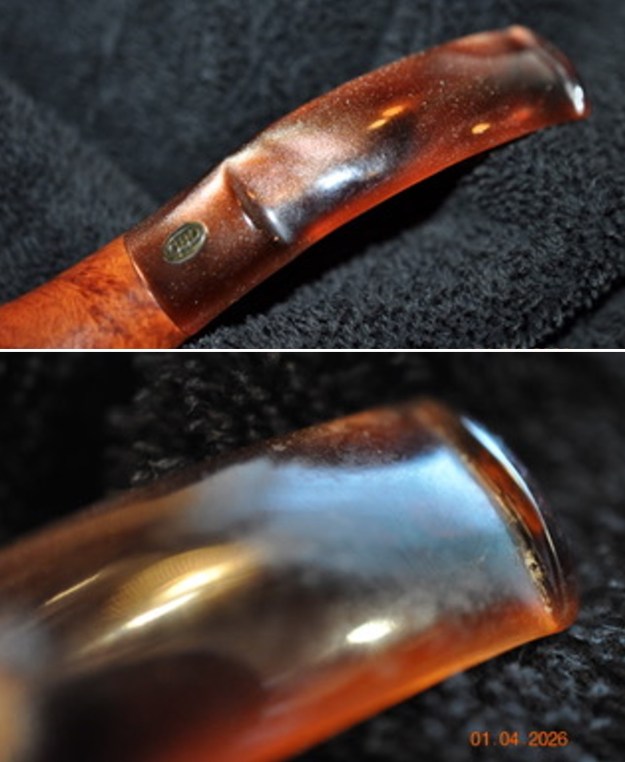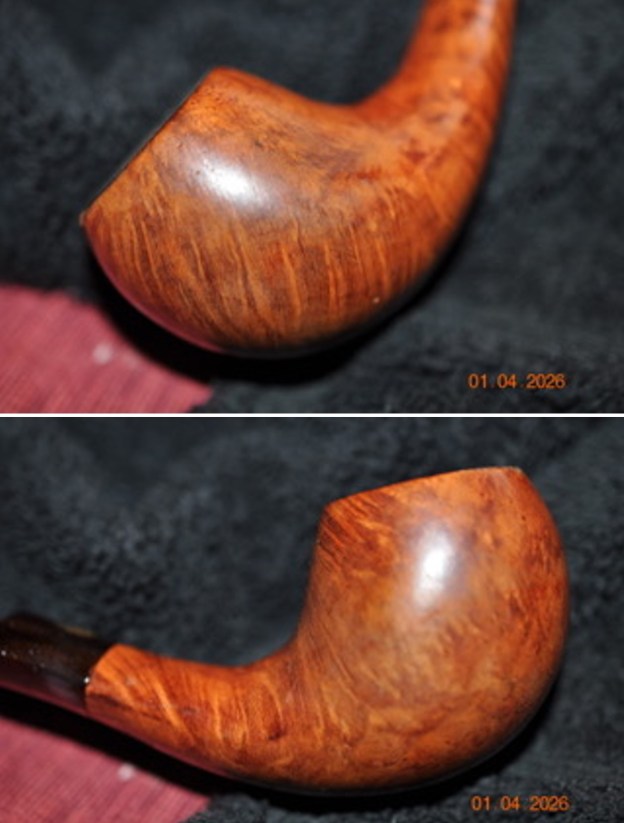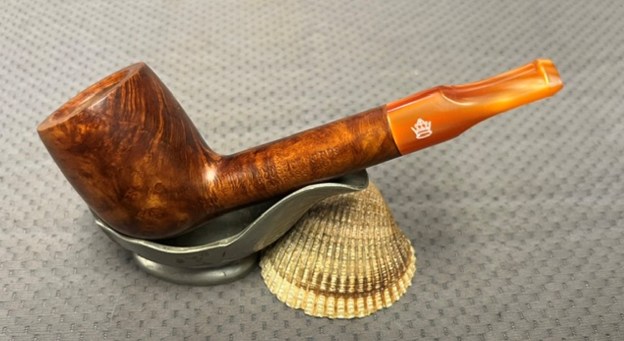
Tag Archives: acrylic

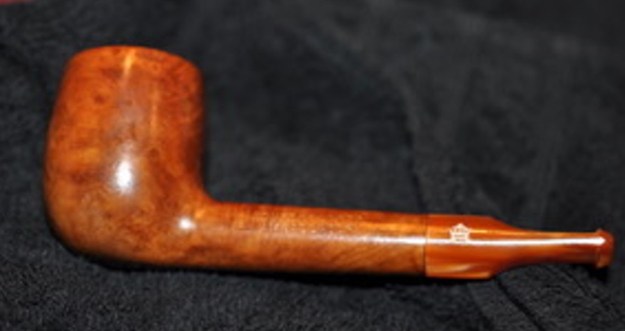
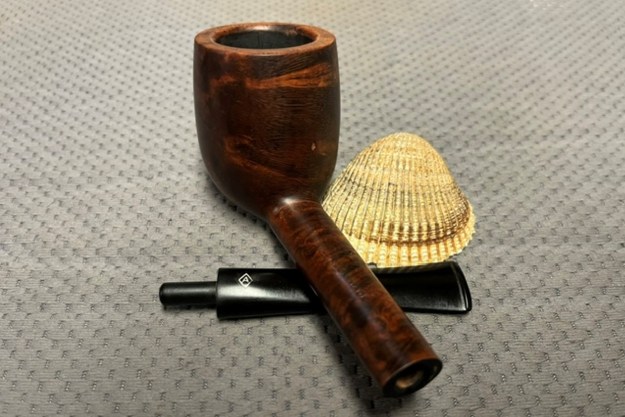
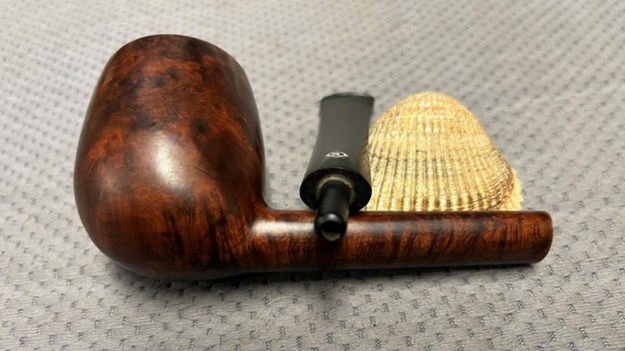
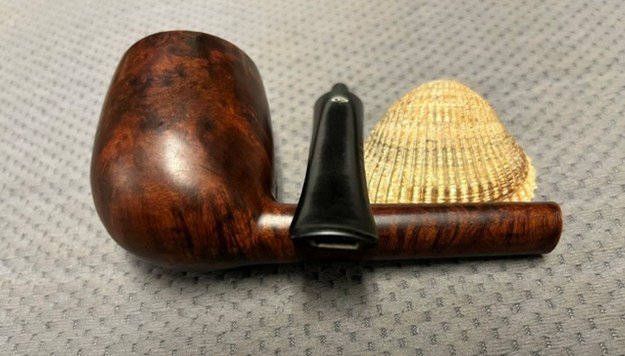
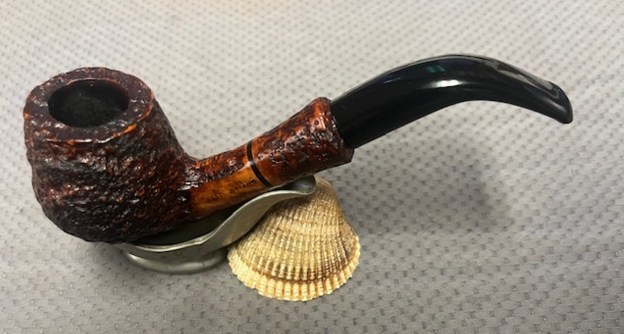
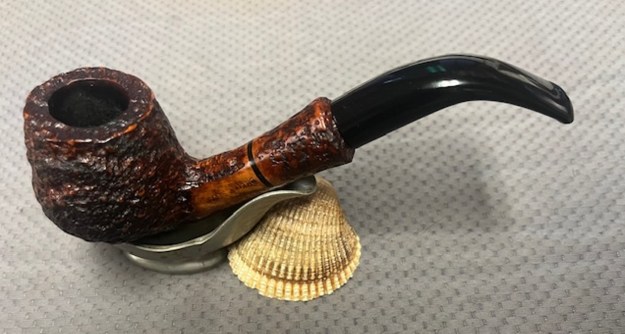
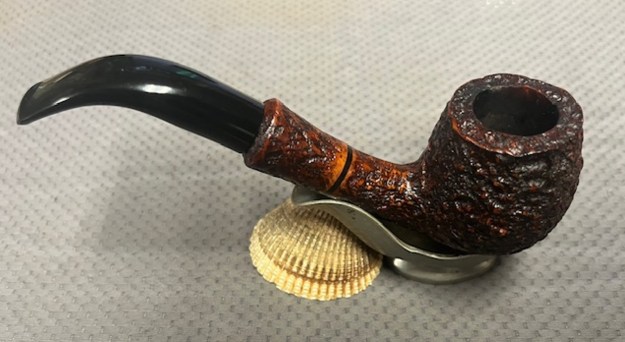
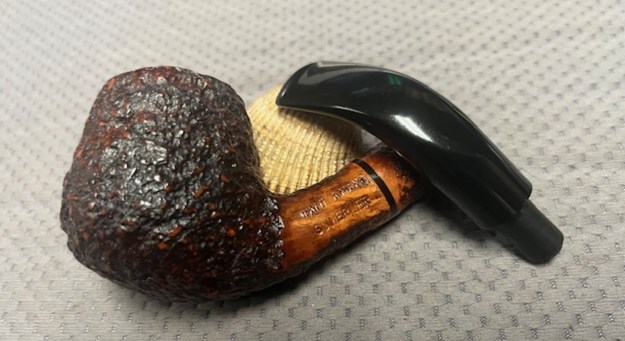
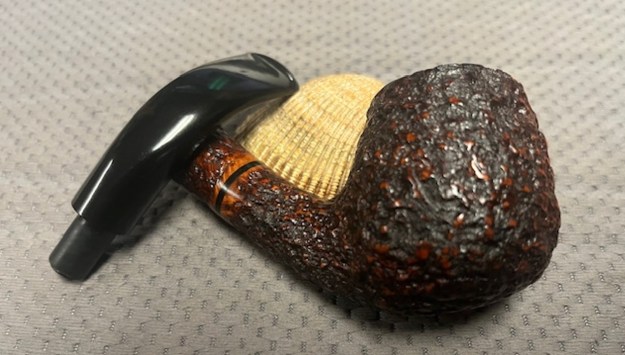
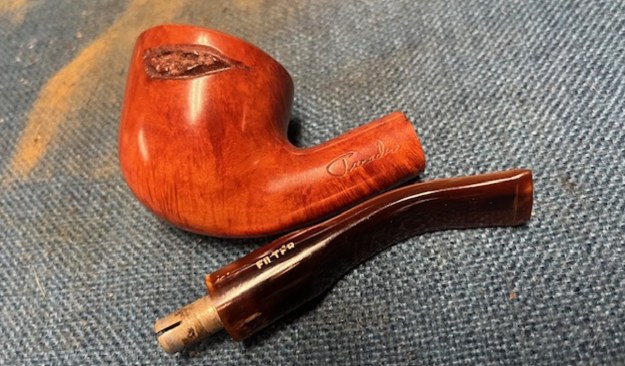
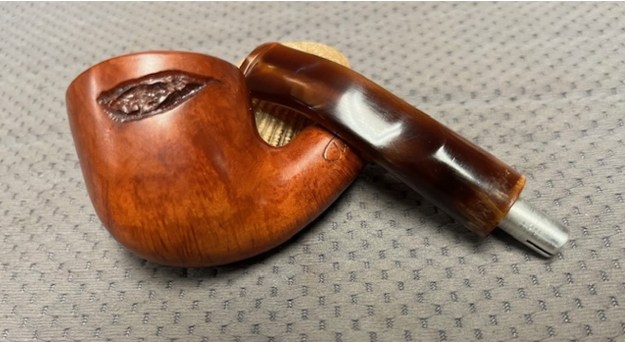
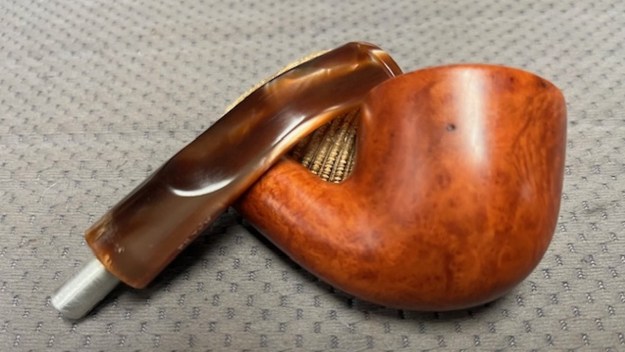
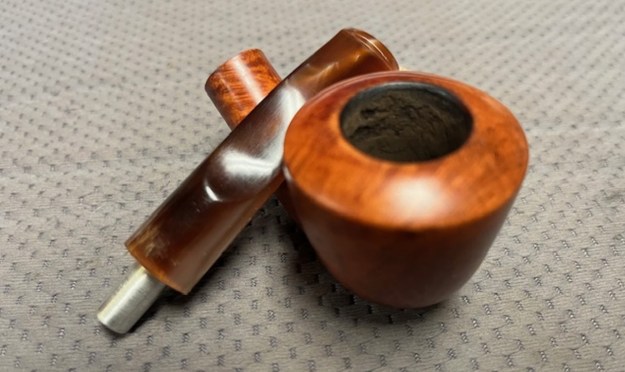
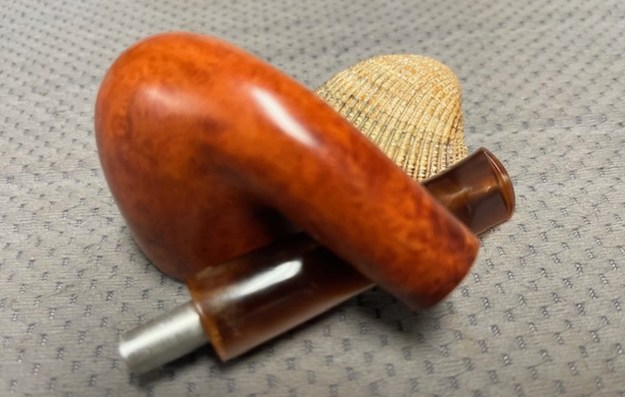
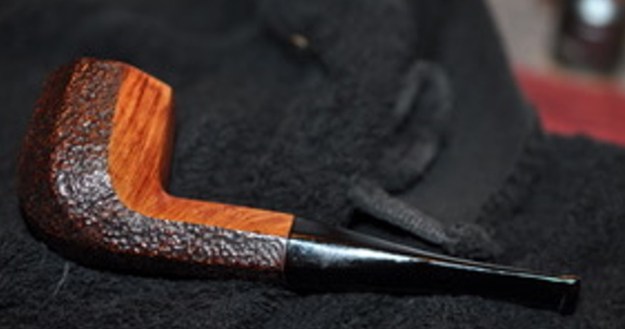
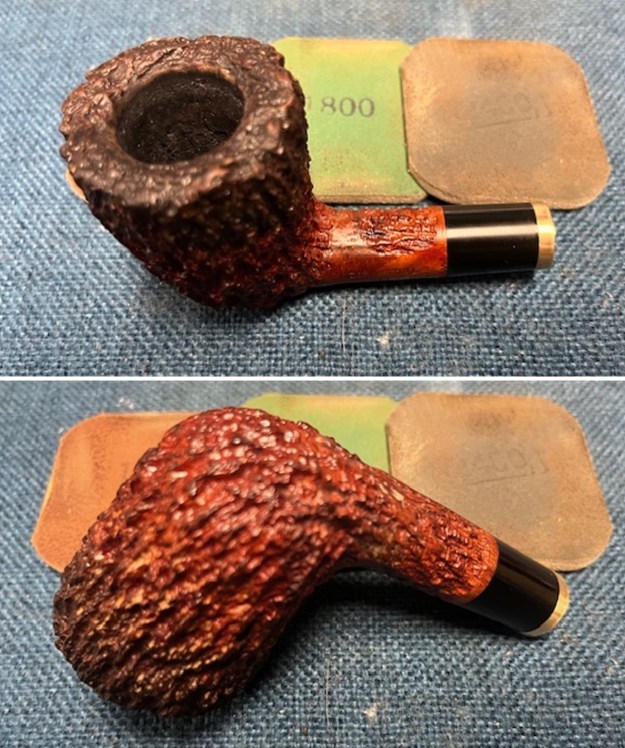
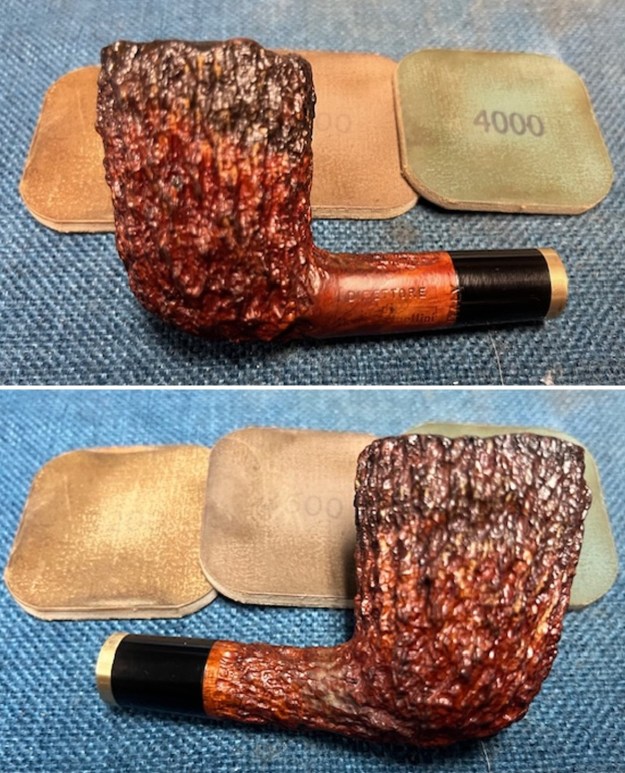
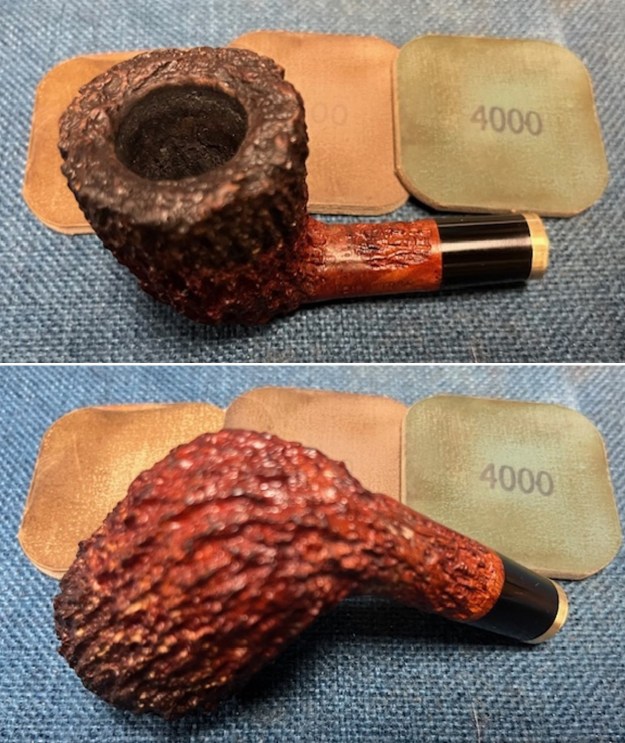
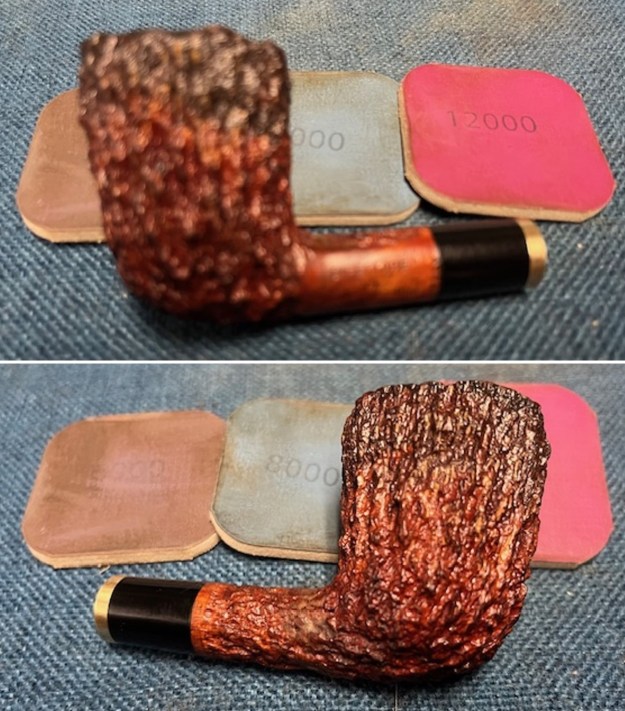
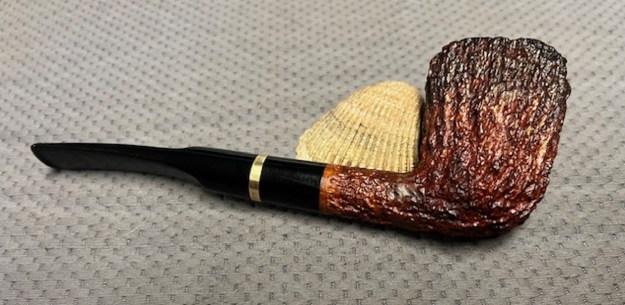
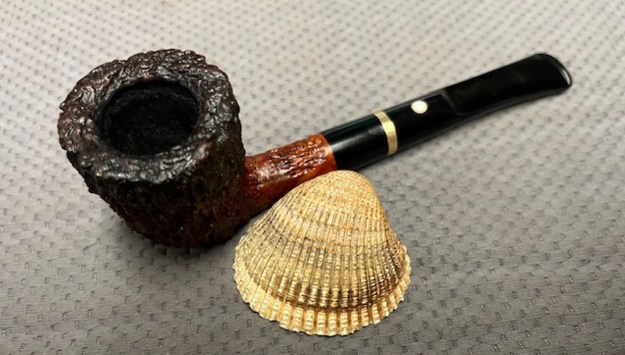
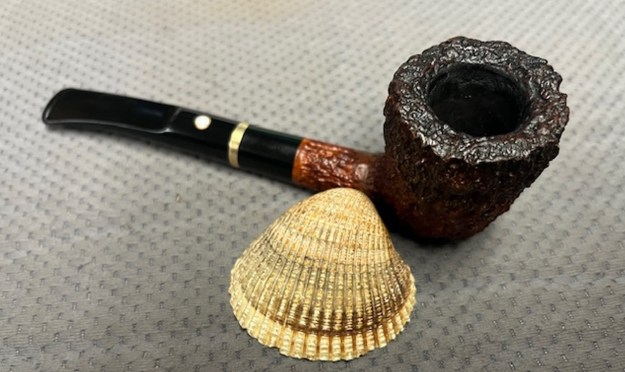
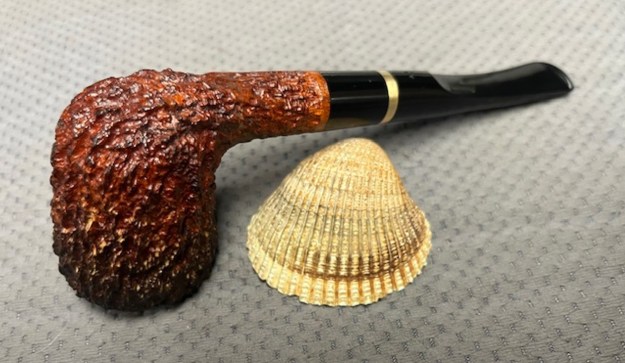
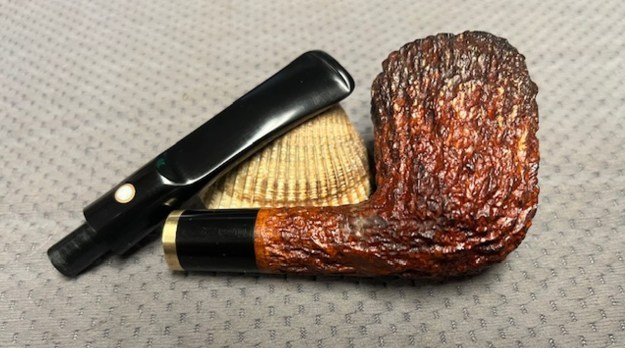
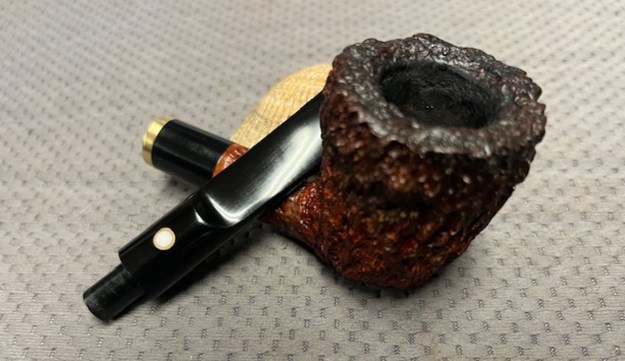
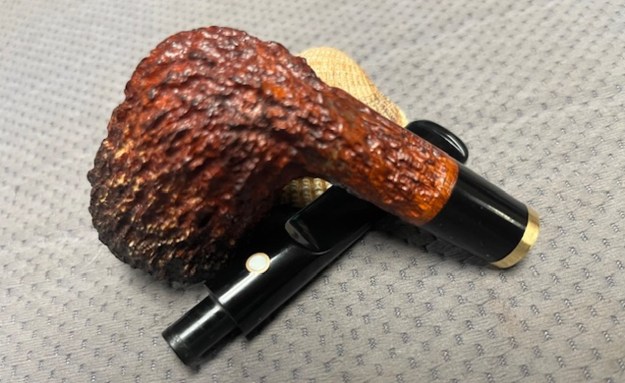
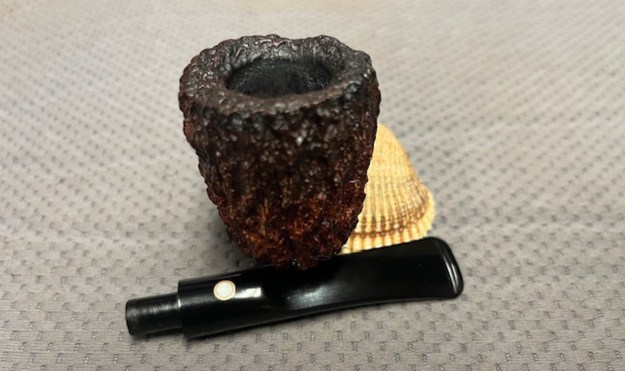
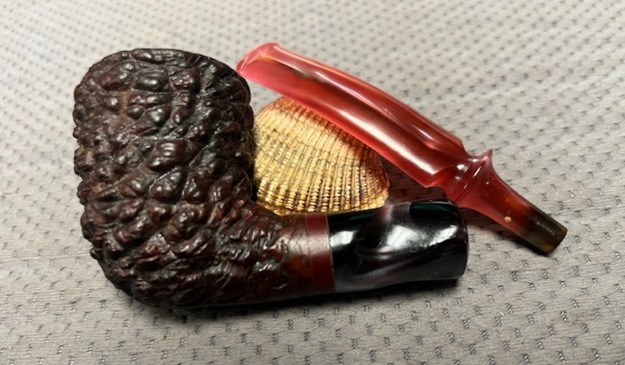
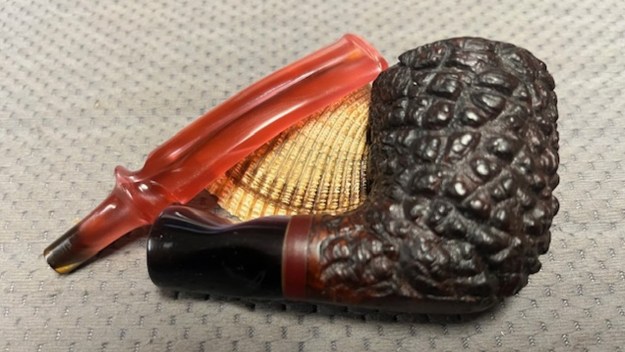
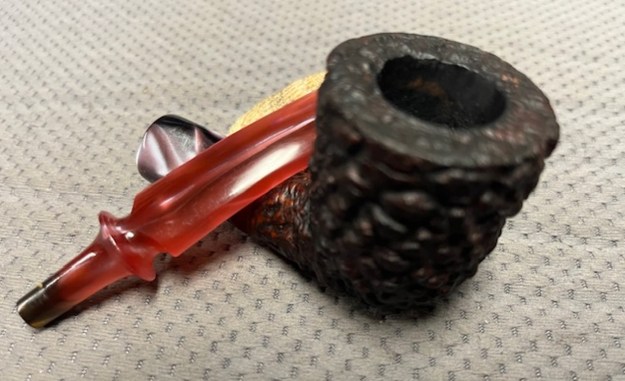
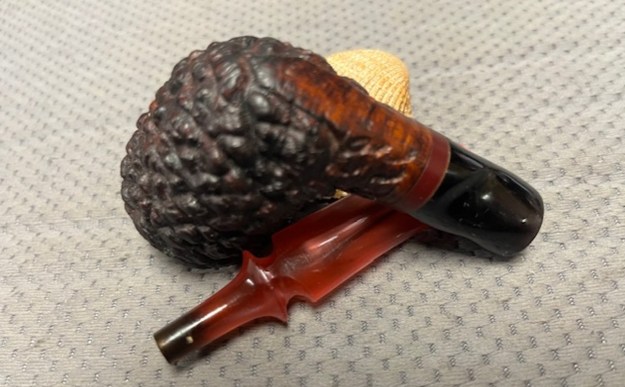
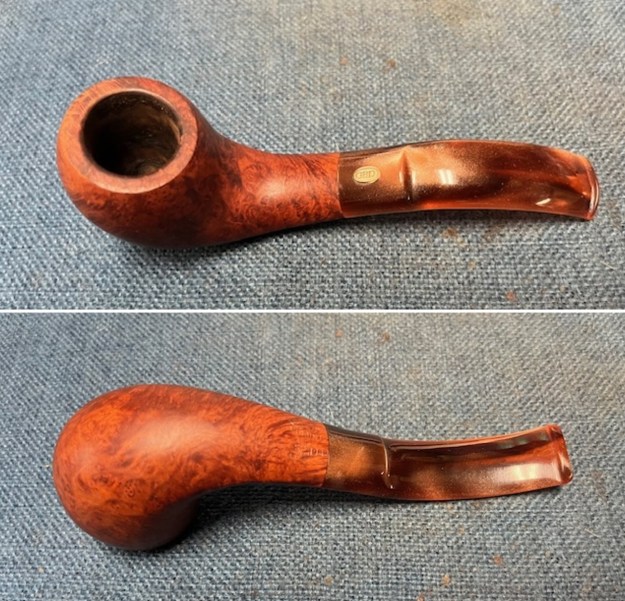
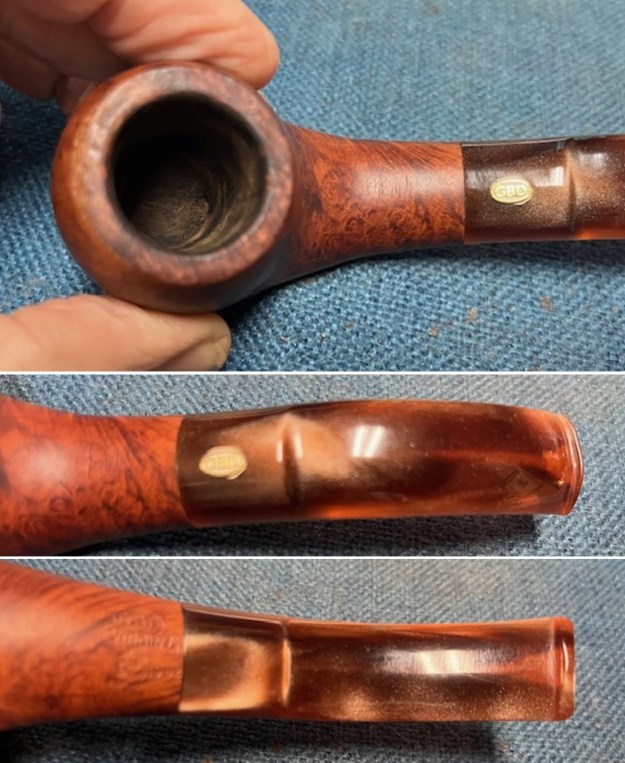
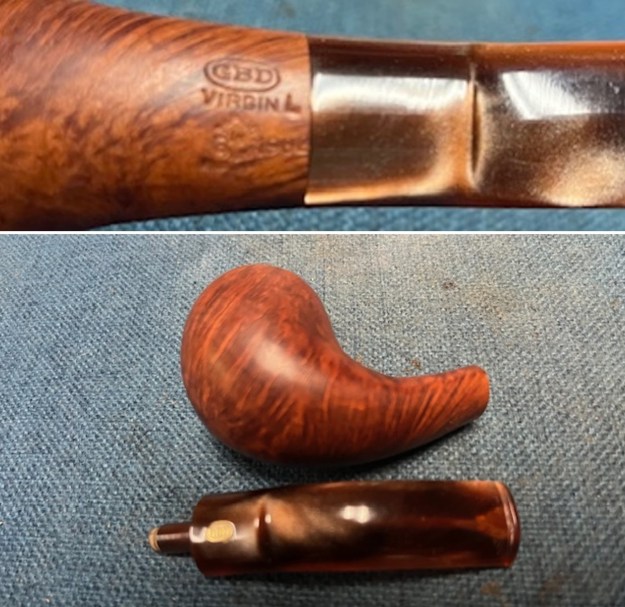
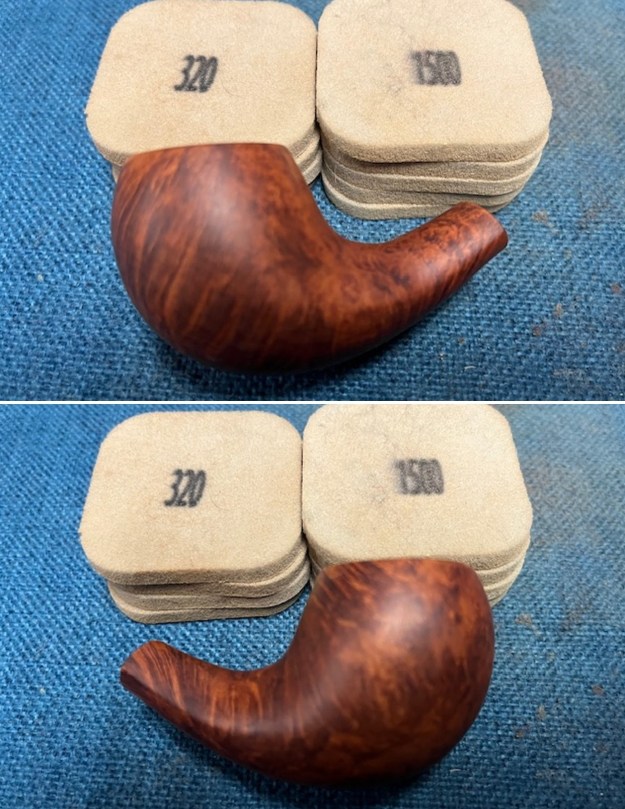
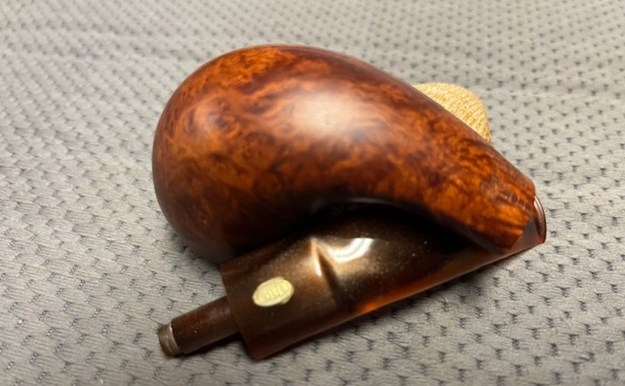
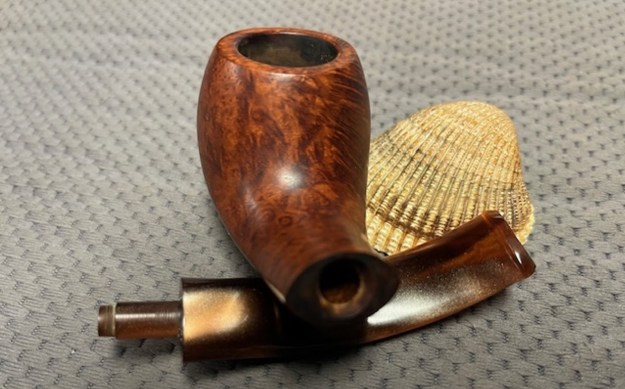
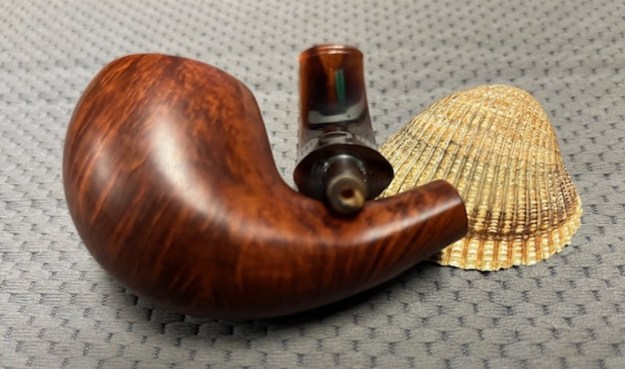
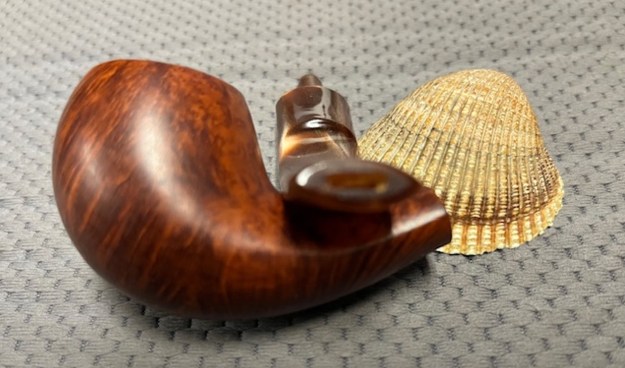
New Life for a Castello Old Antiquari KK 32 Hand Made Canadian


by Steve LaugView post

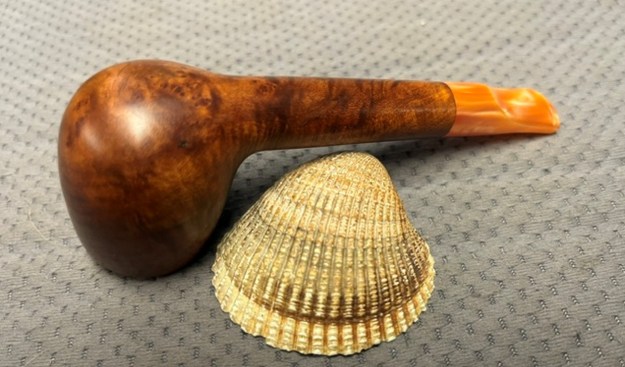
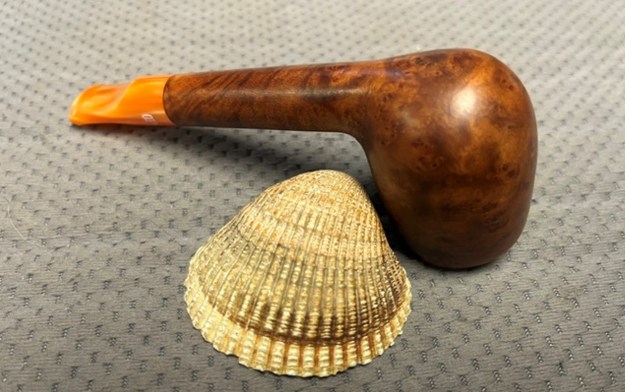
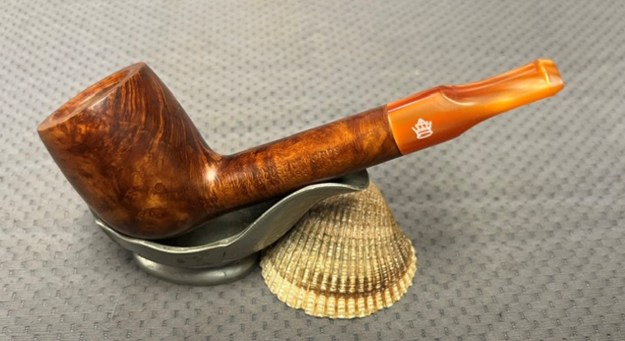
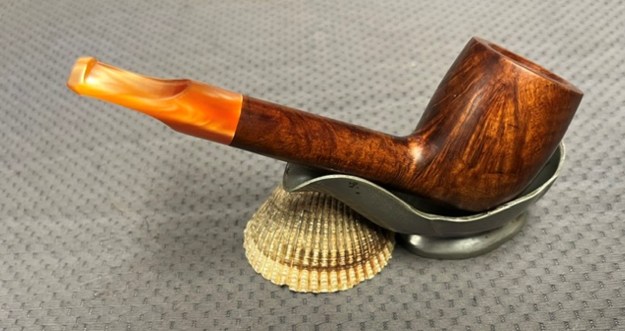
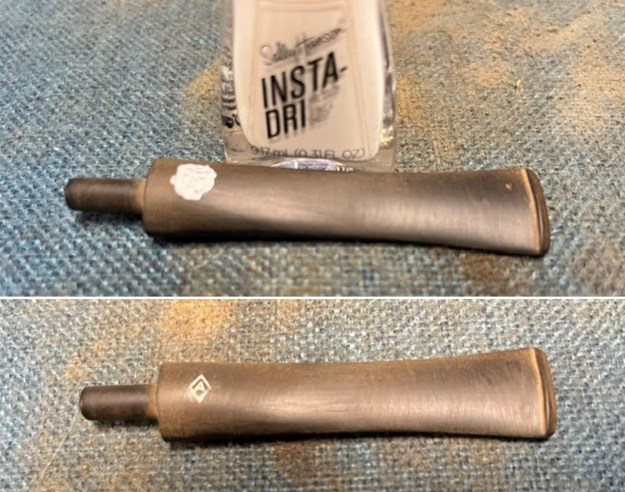
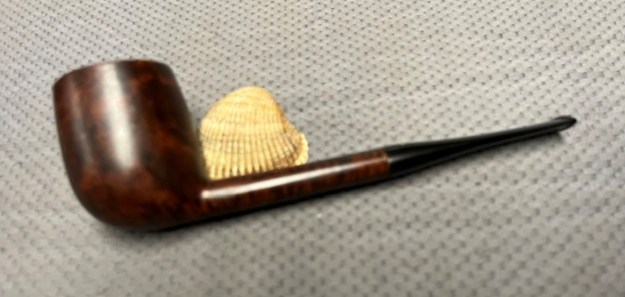
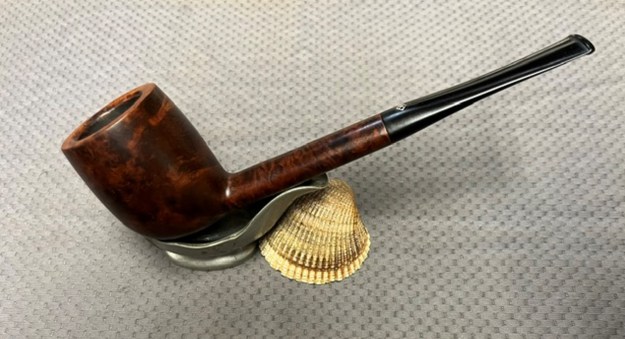
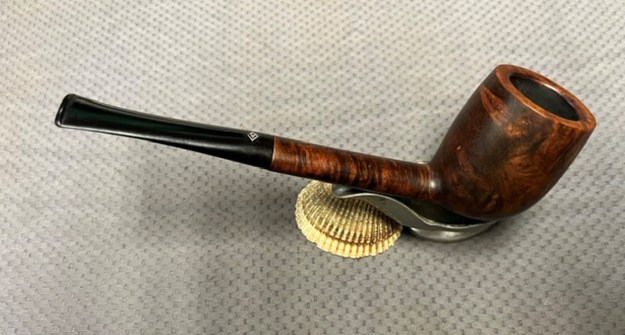
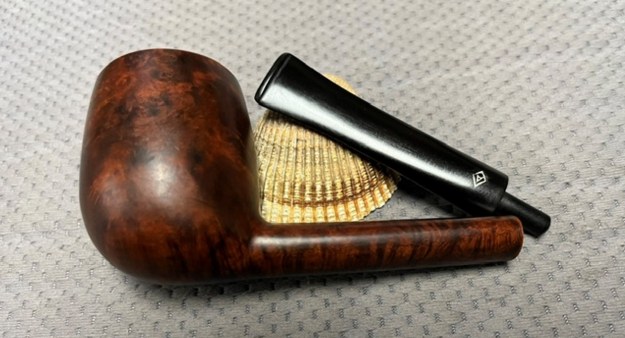
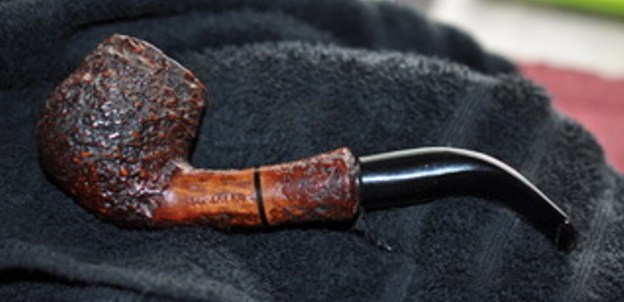
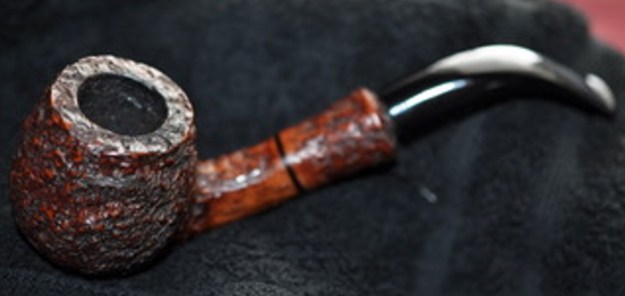
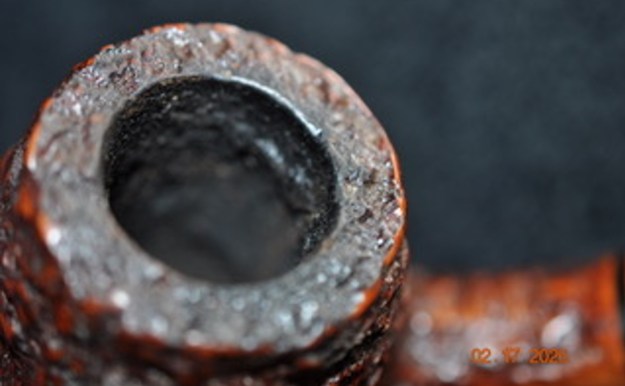
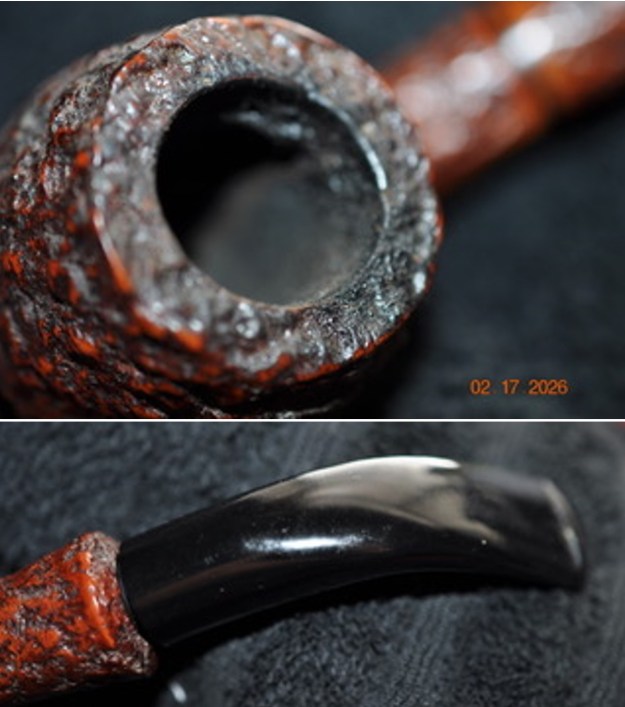
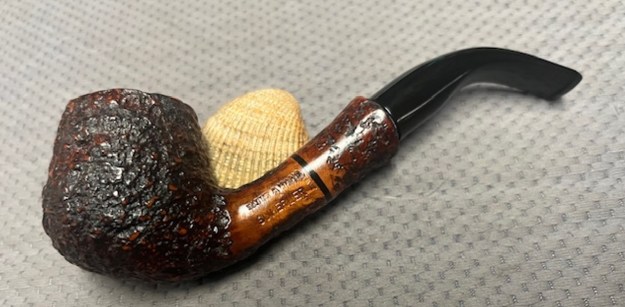
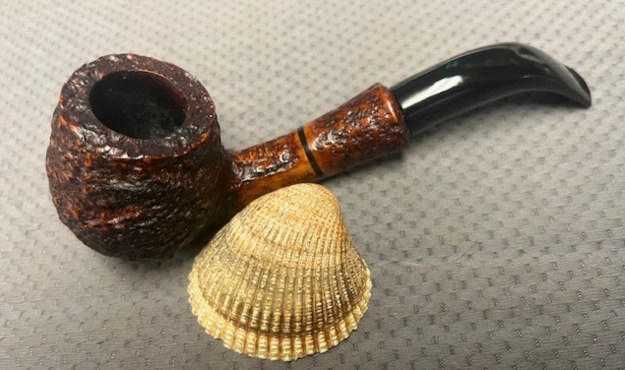
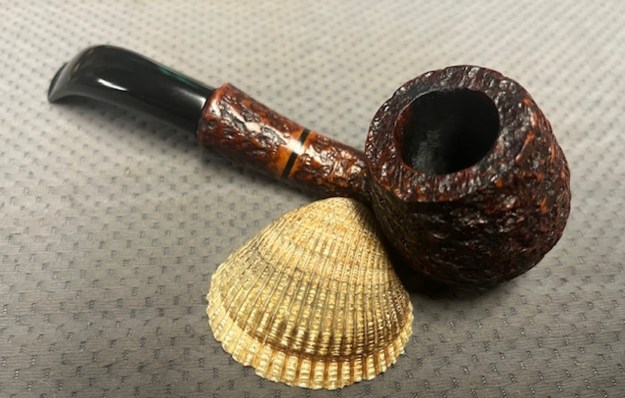
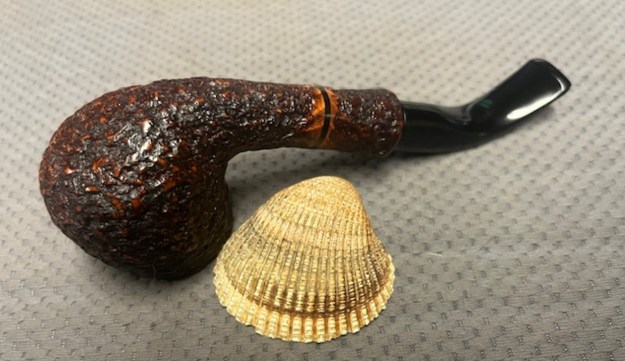
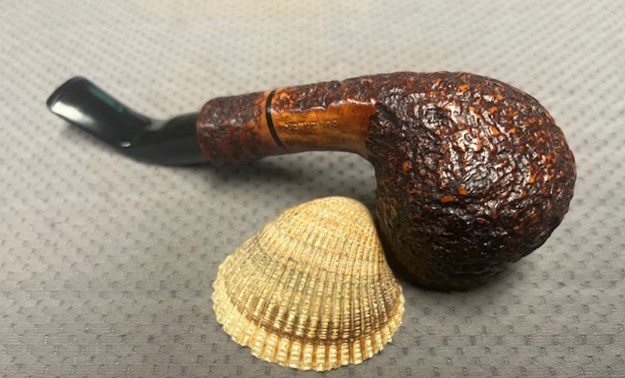
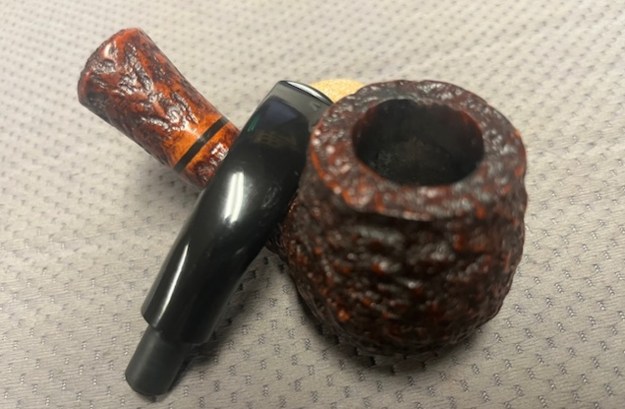
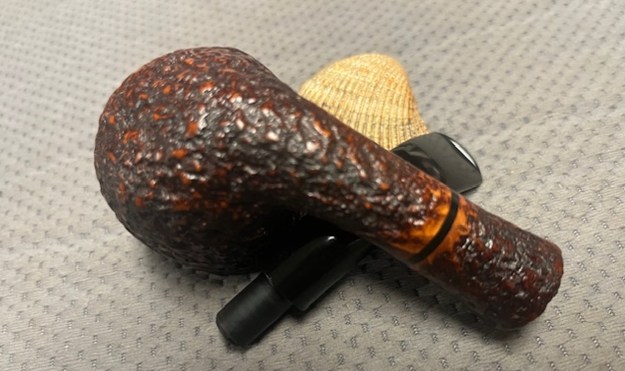
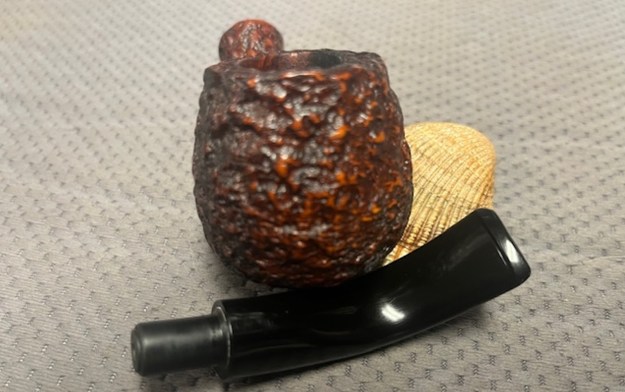
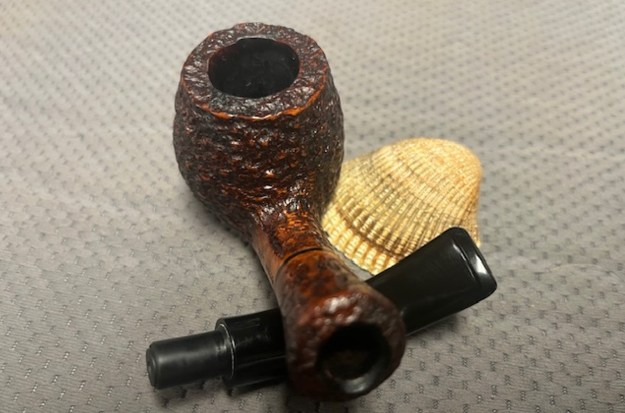
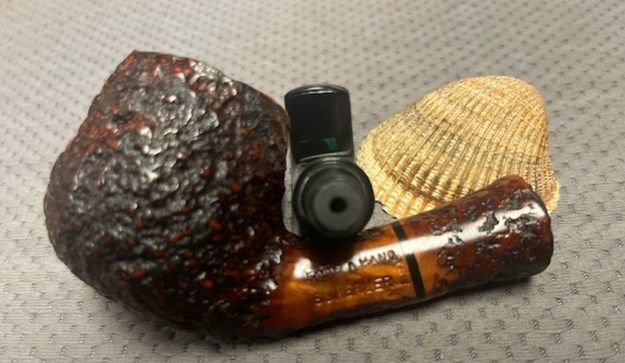
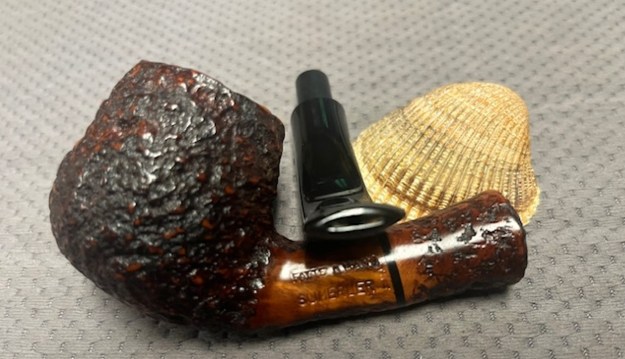
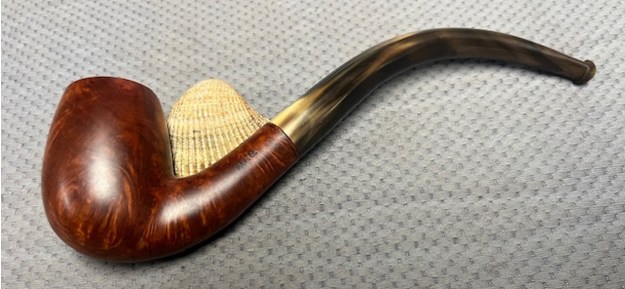
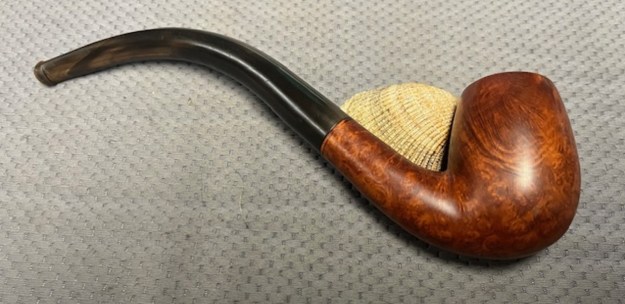
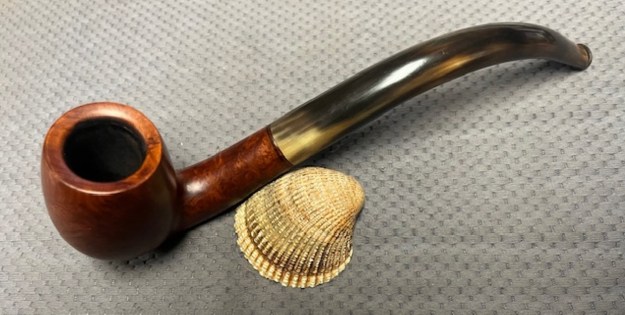
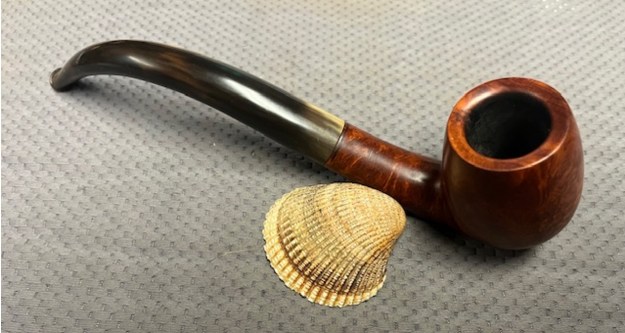
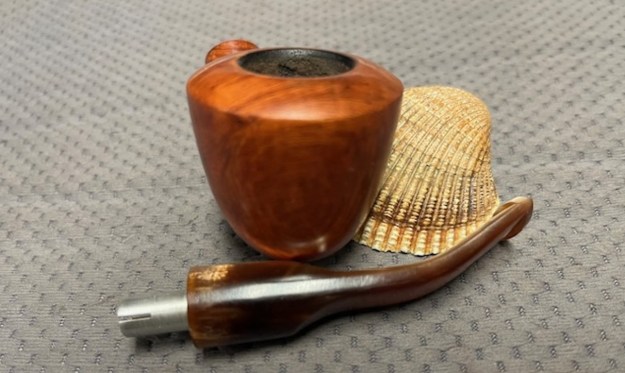
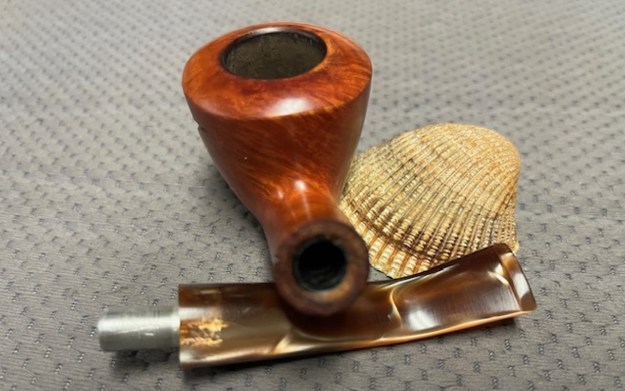
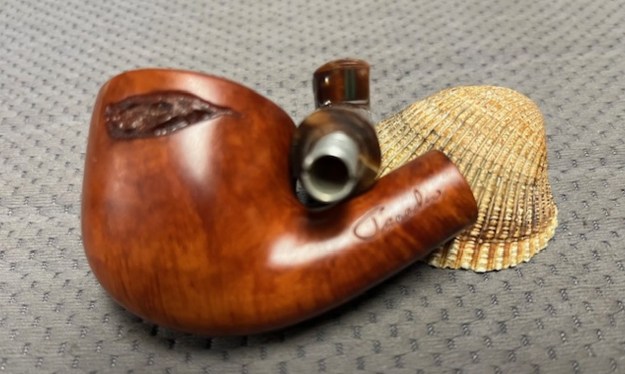
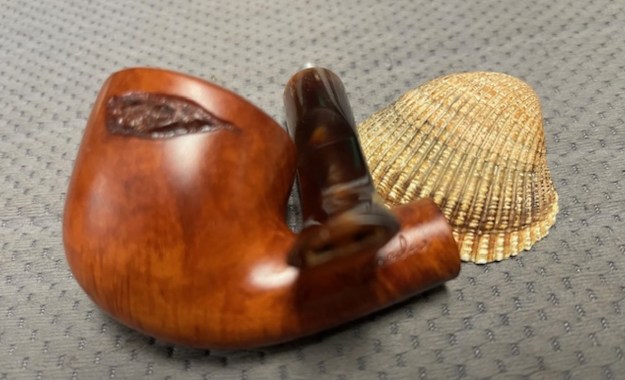
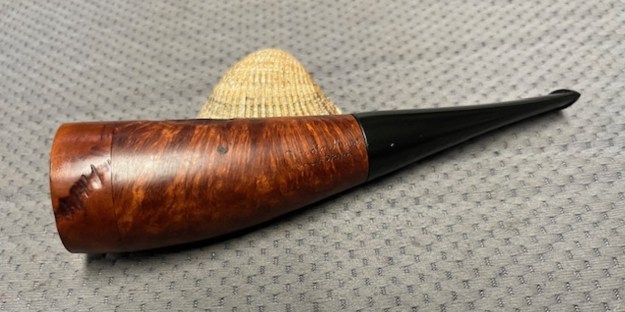
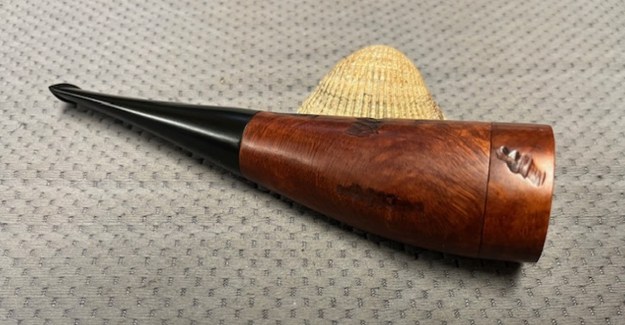
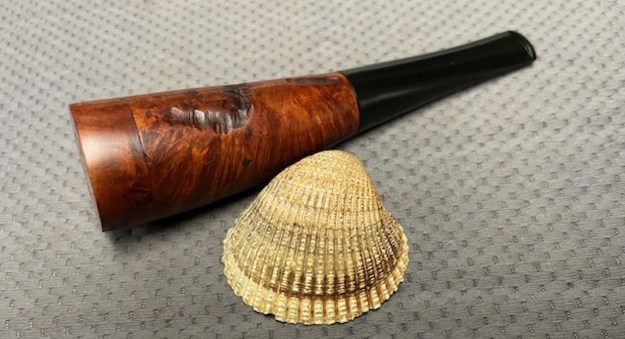
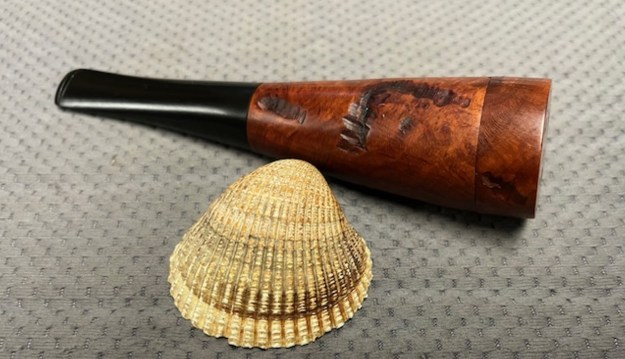
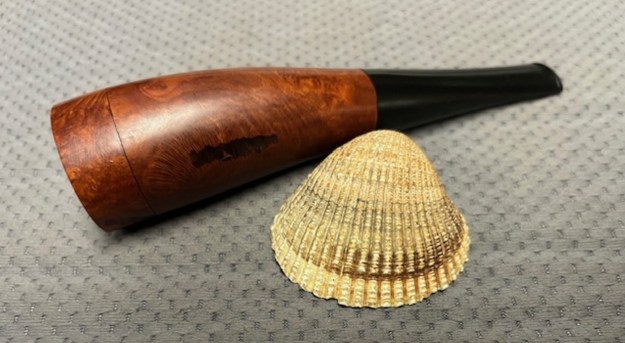
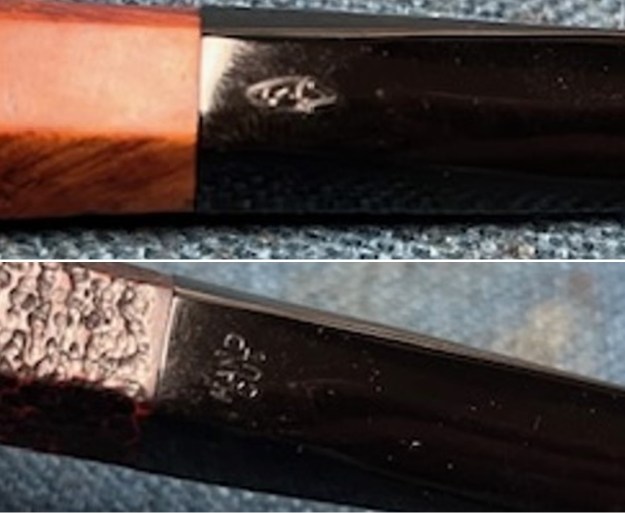
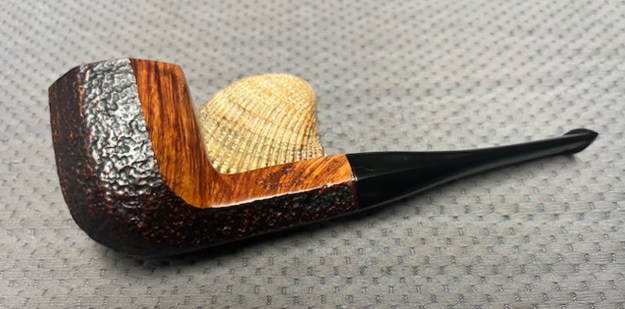
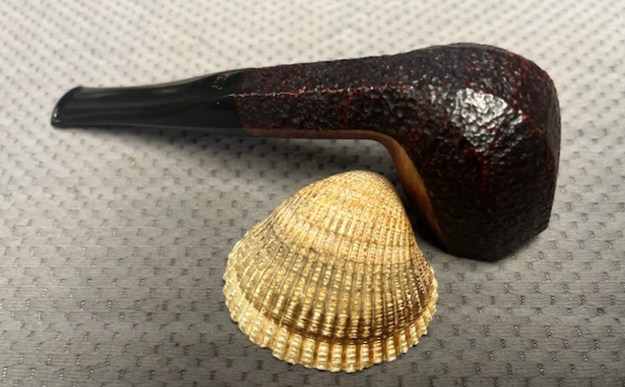
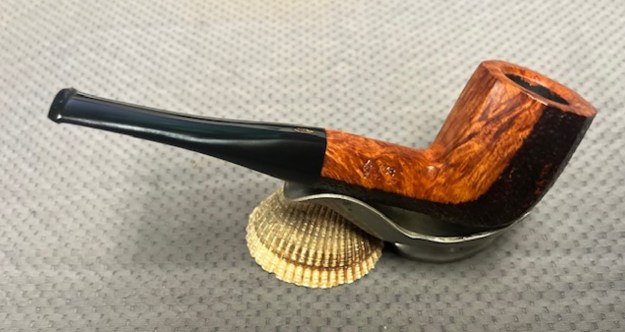
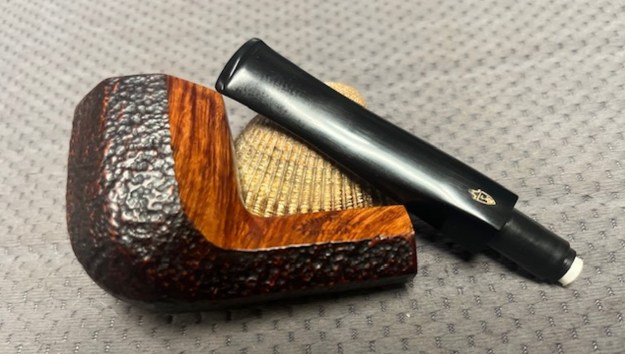
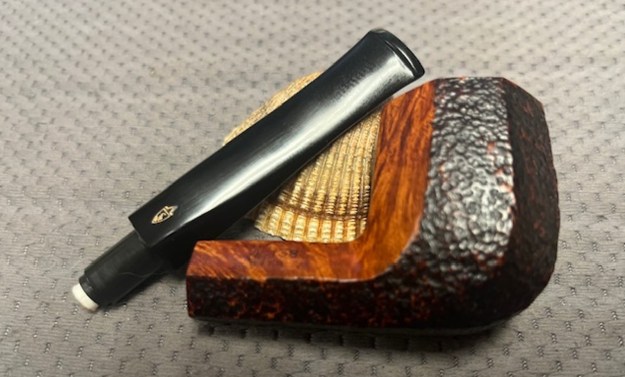
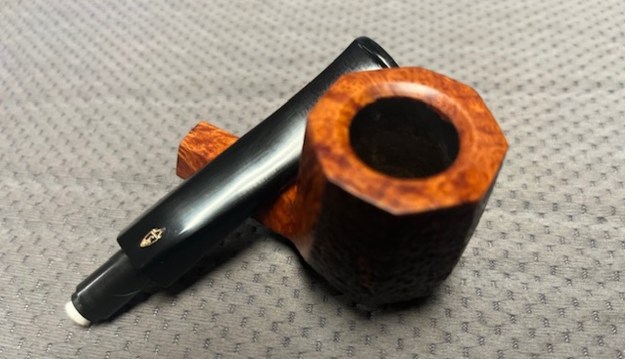
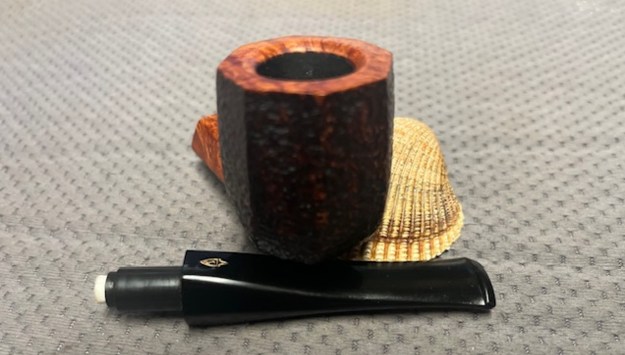
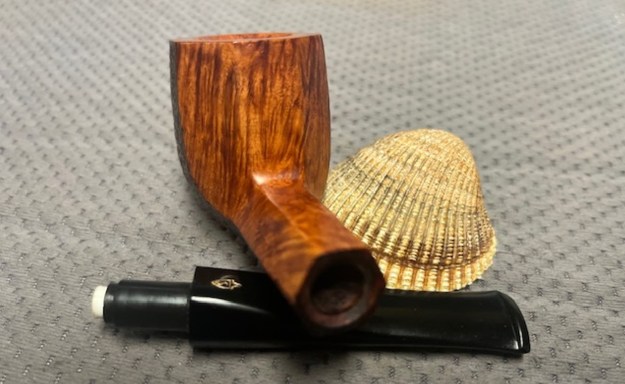
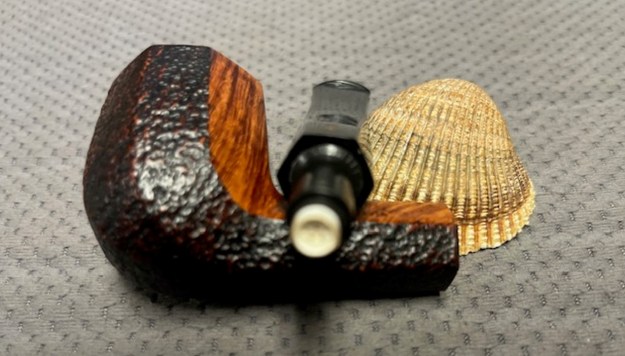
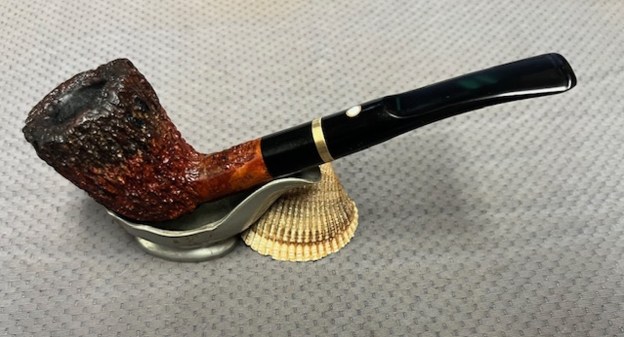
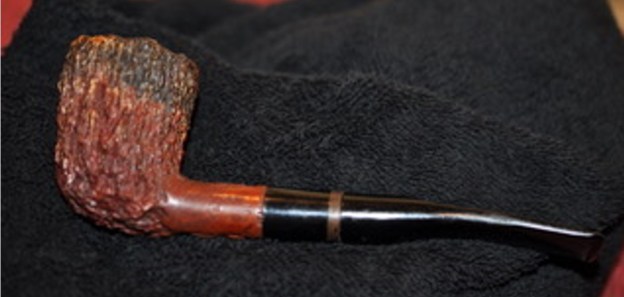
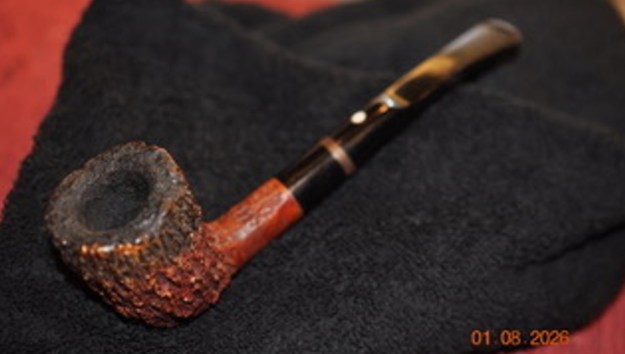
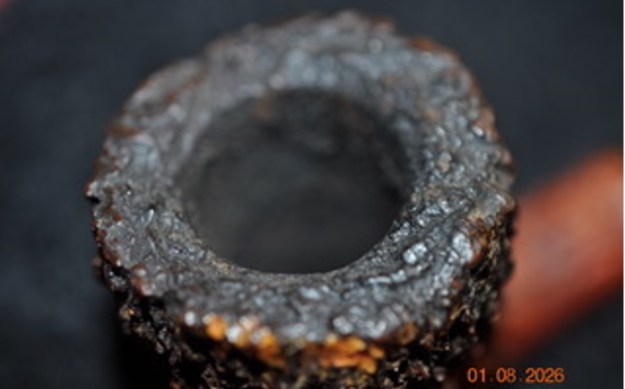
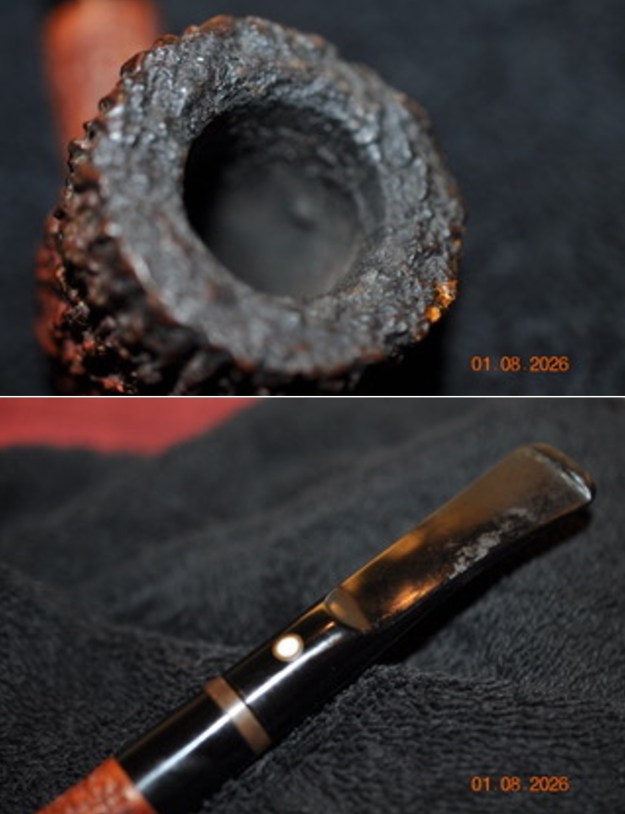
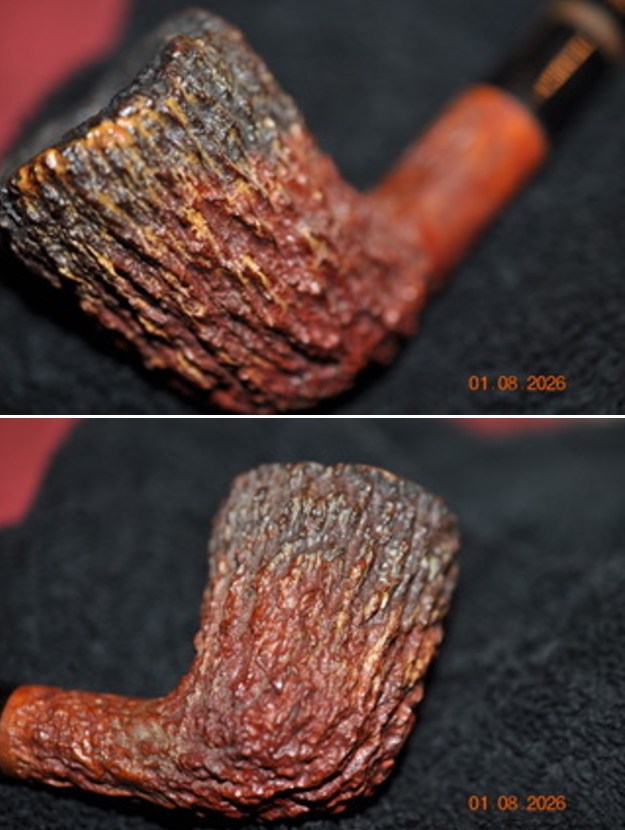
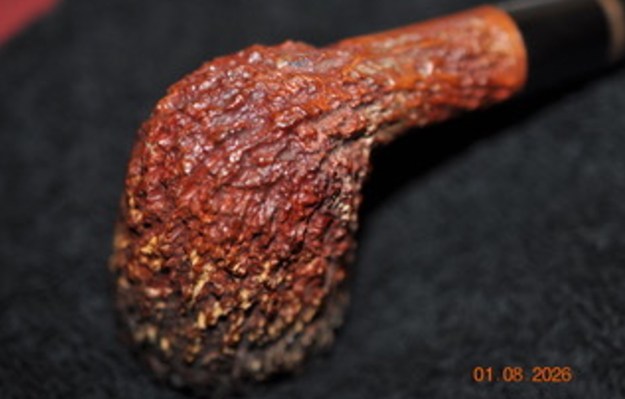
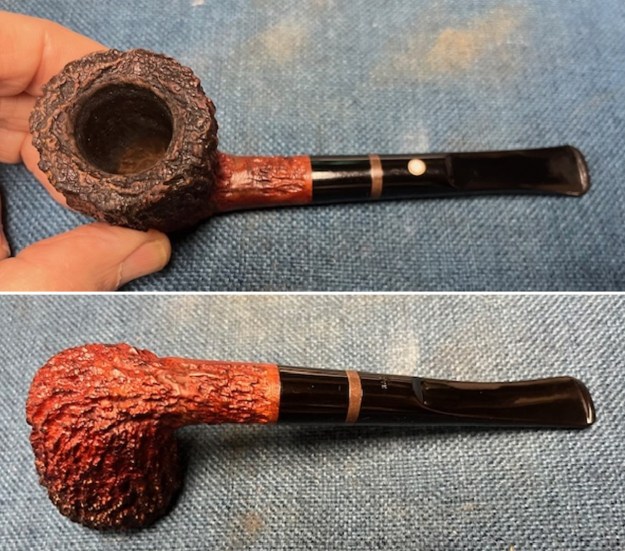
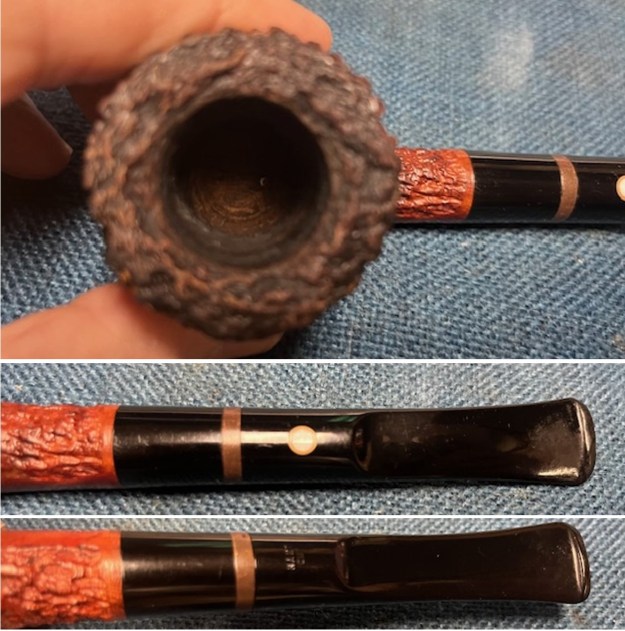
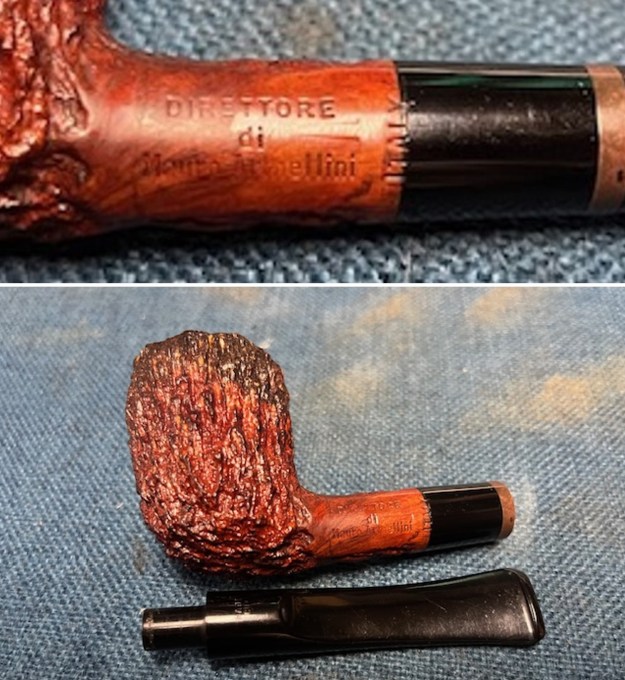
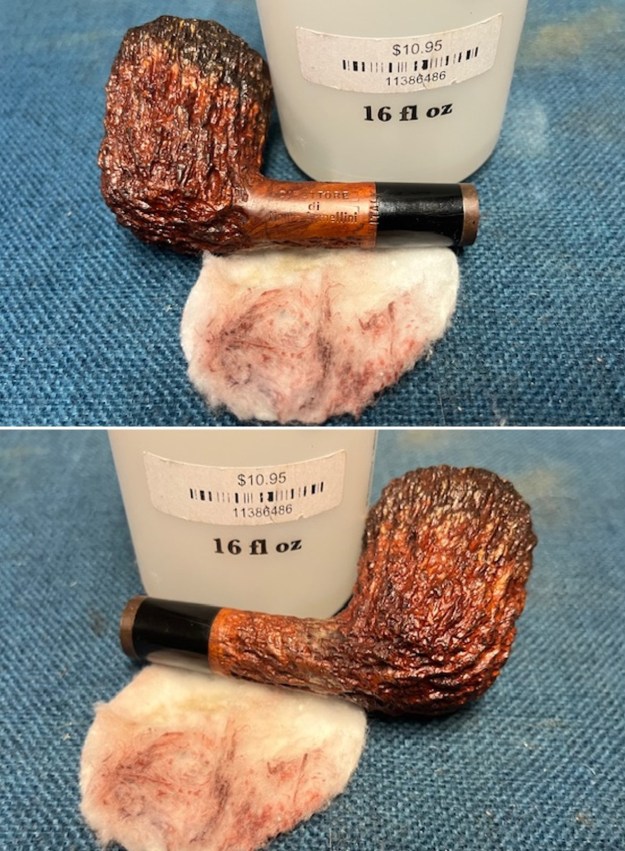
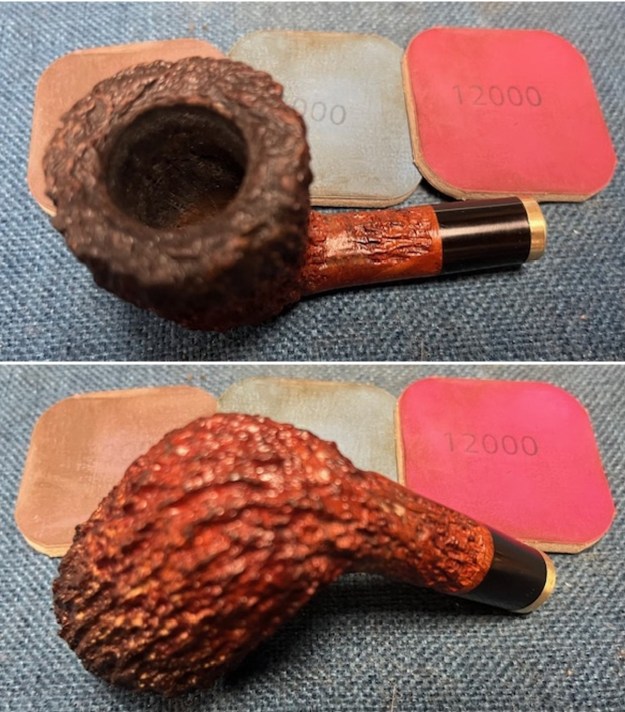
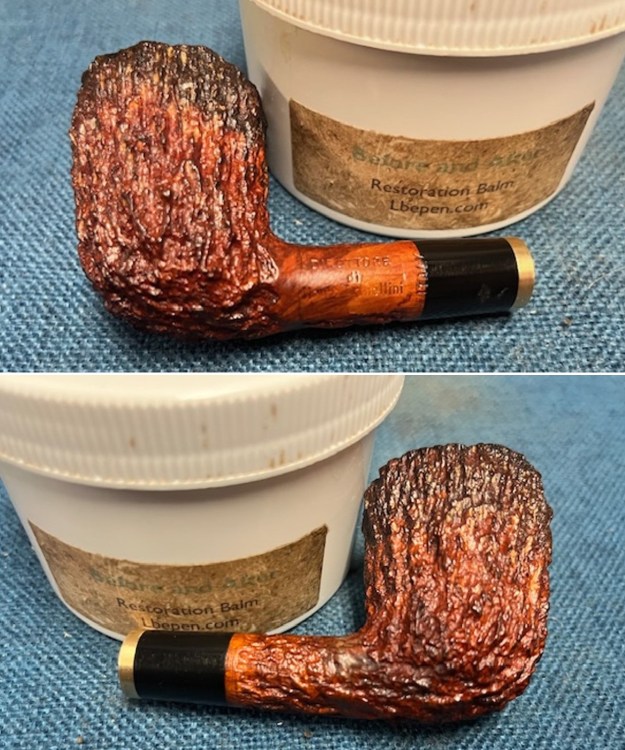
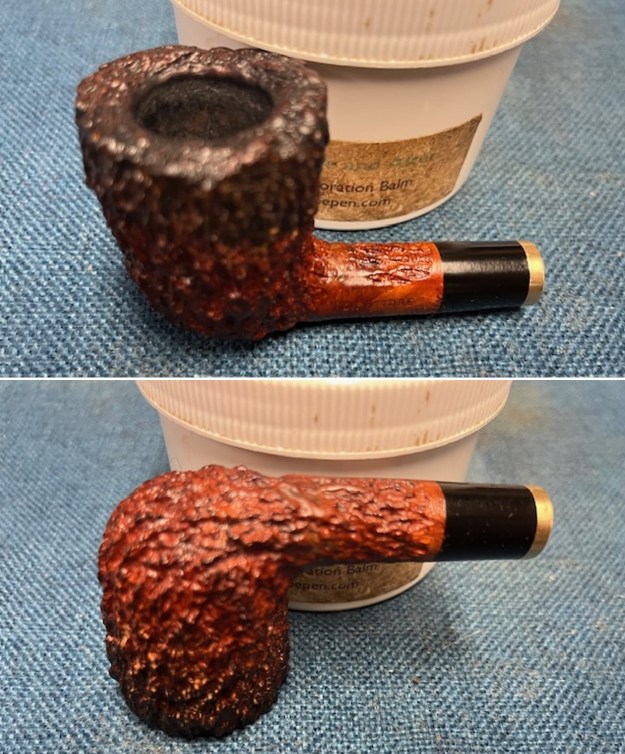
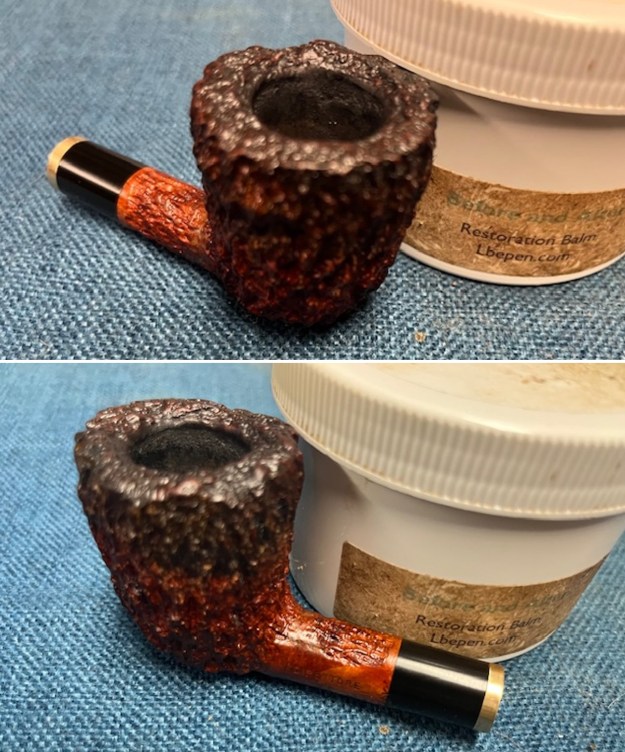
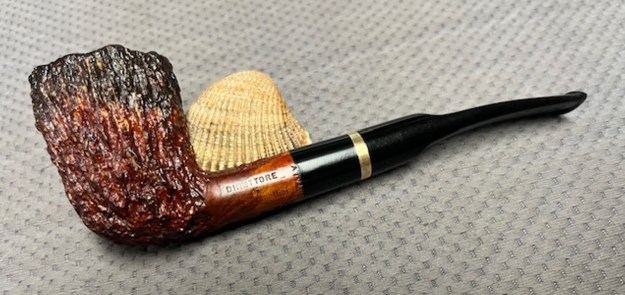
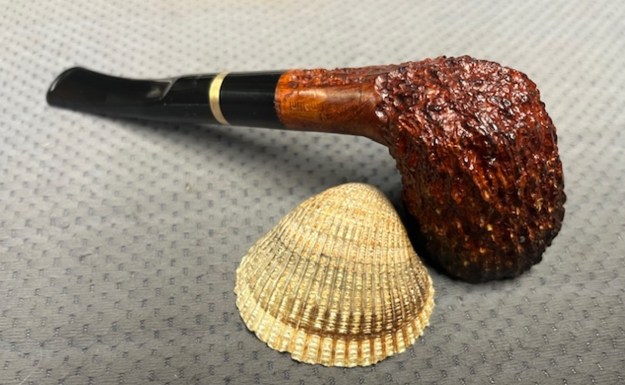
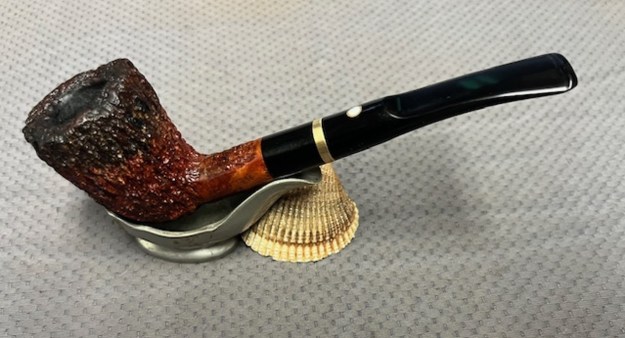
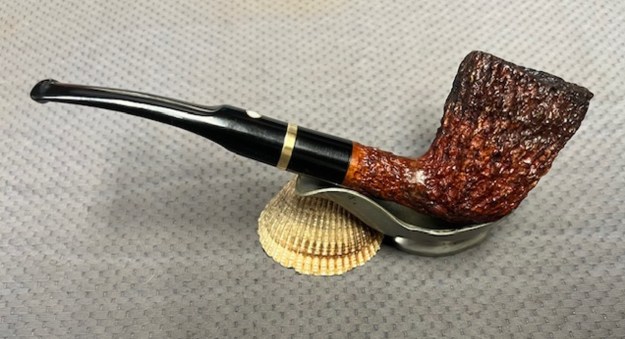
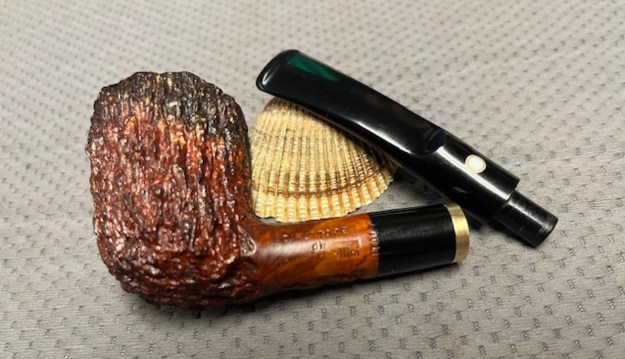
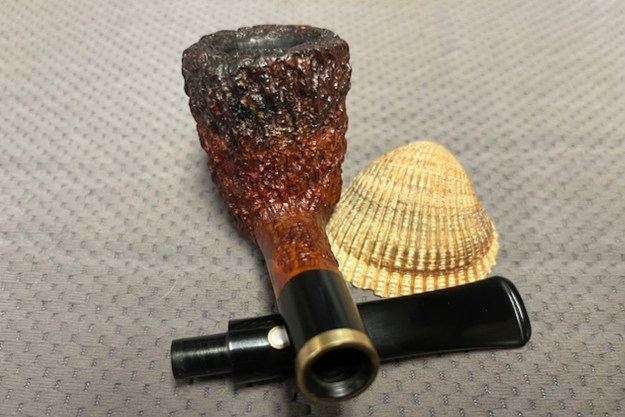
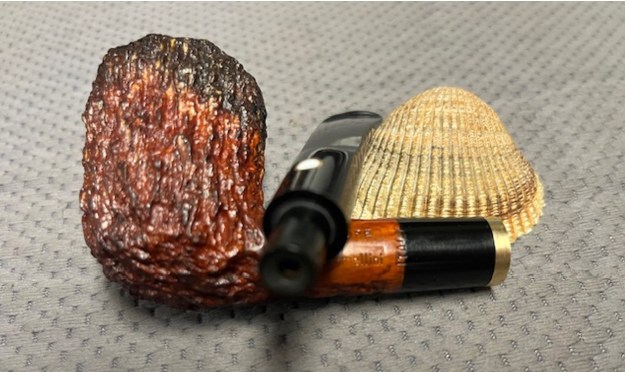
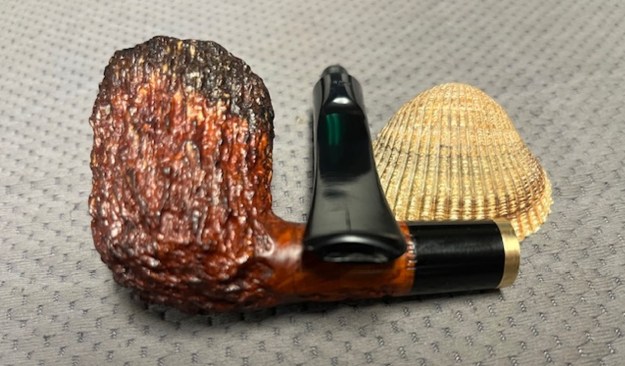
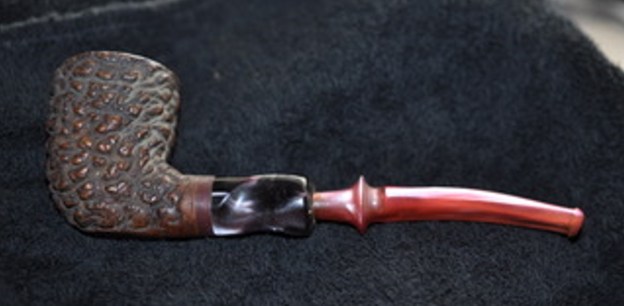
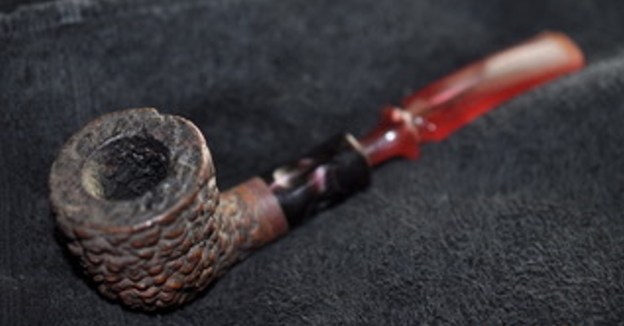
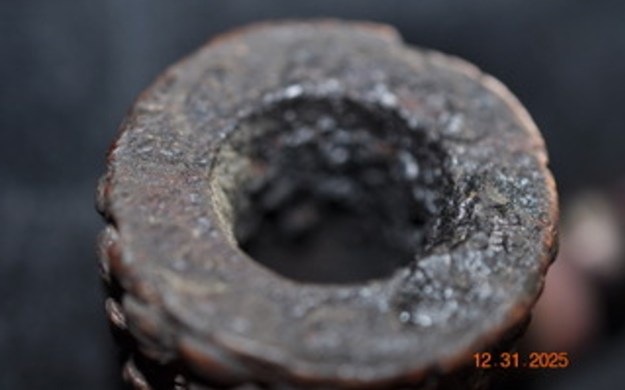
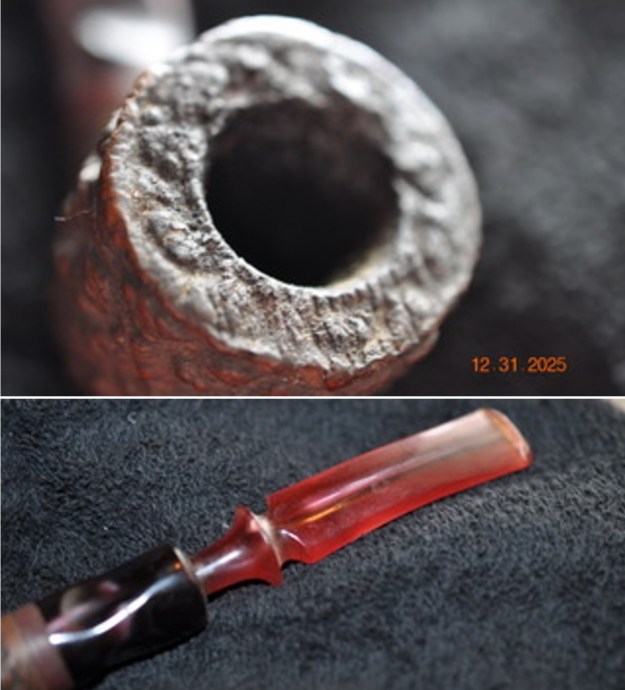
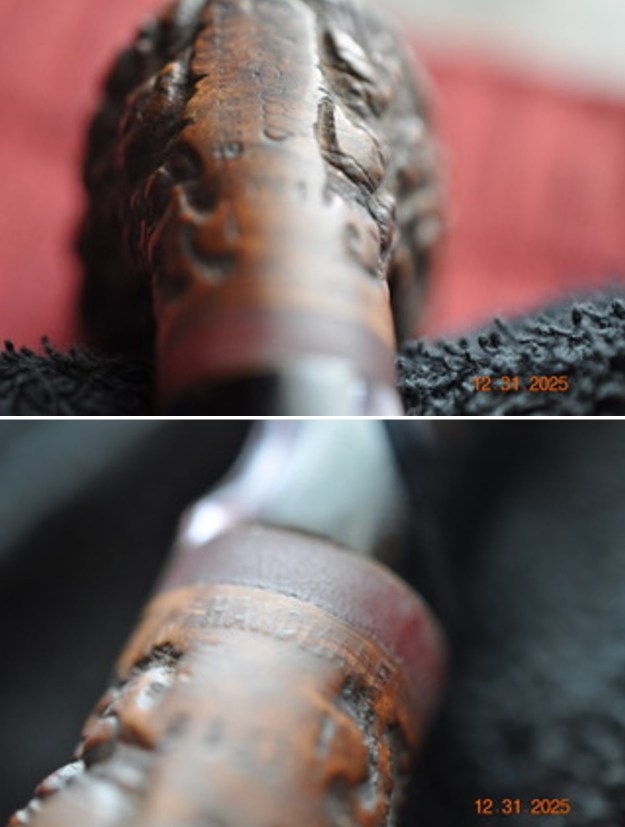
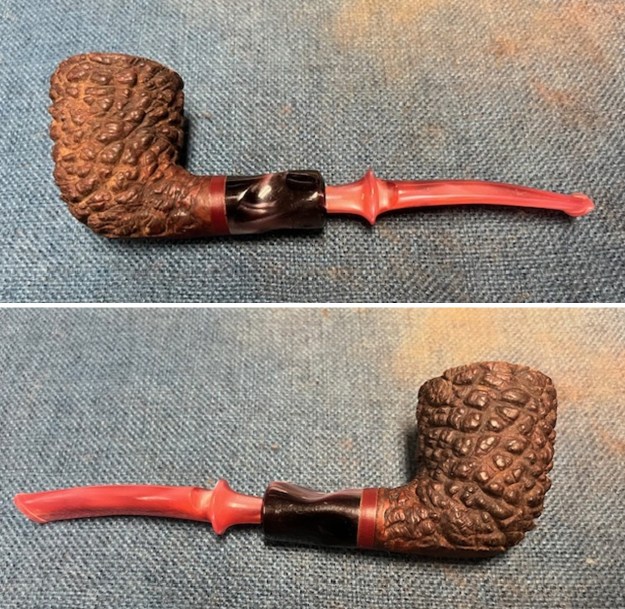
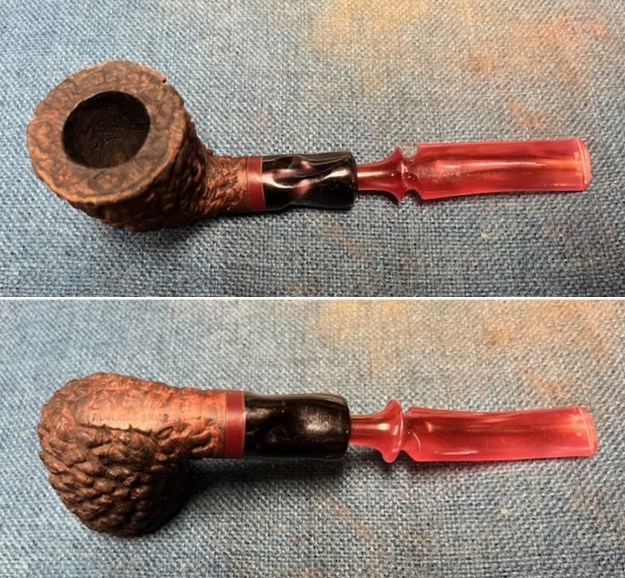
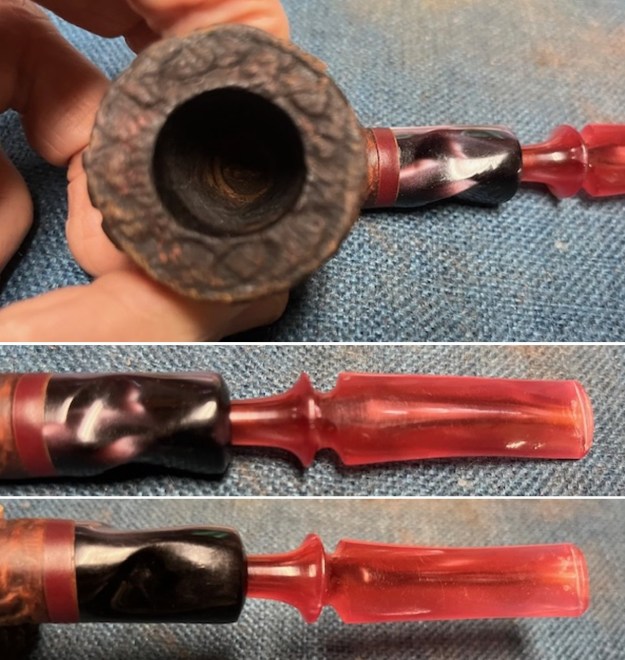
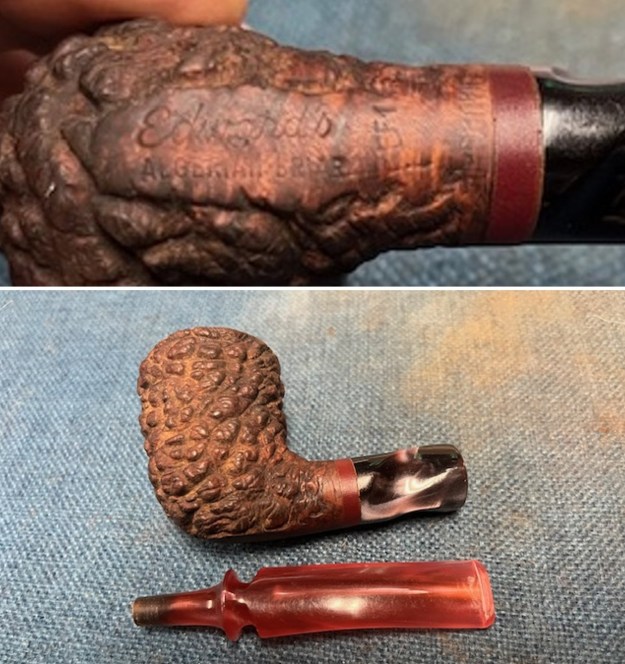
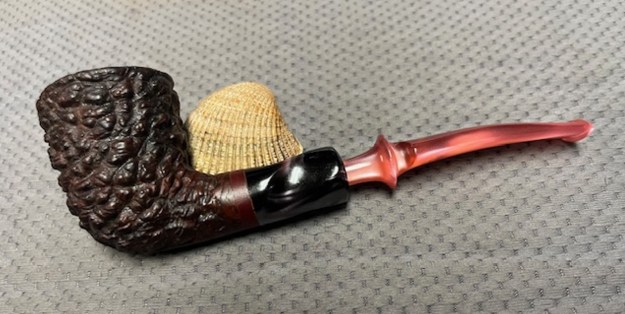
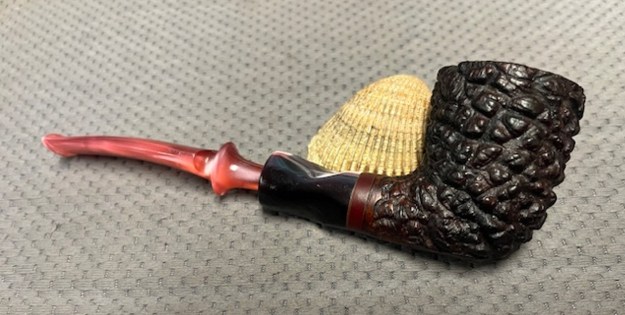
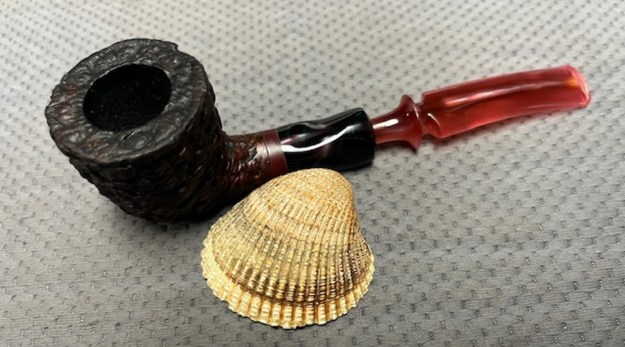
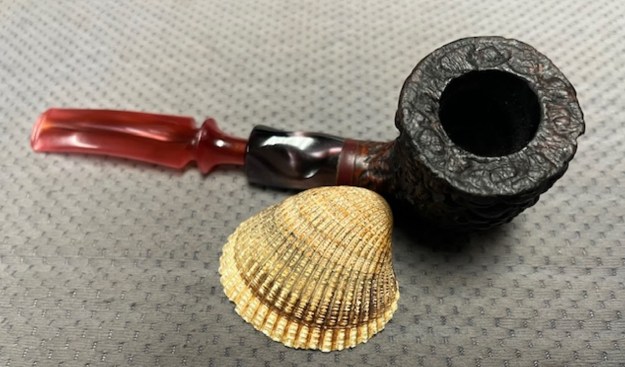
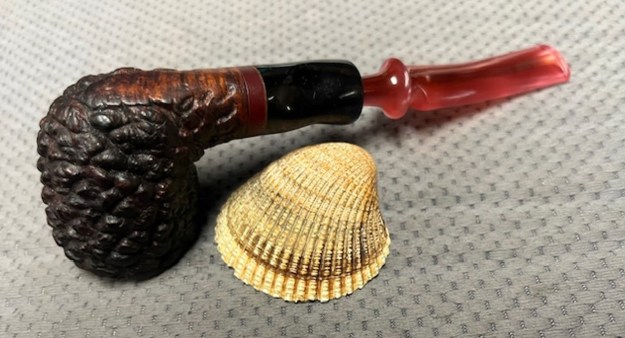
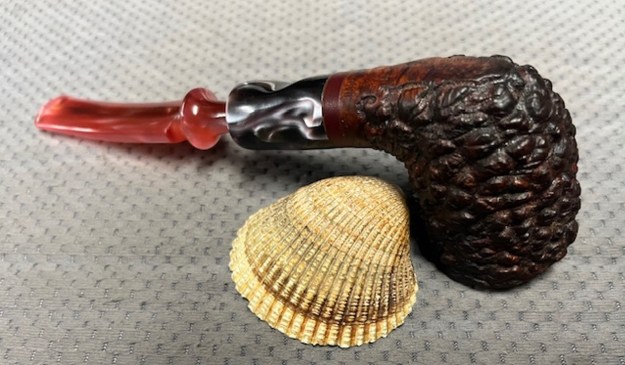
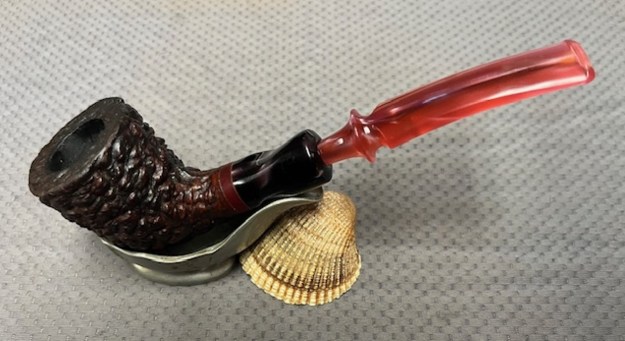
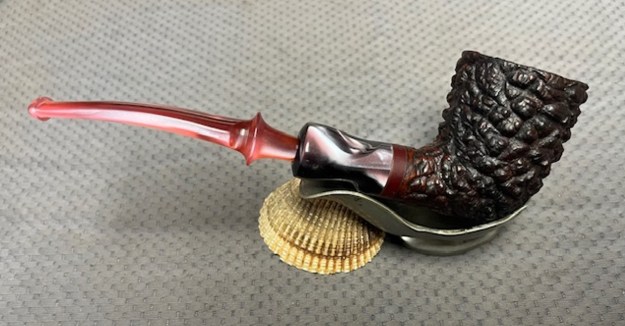
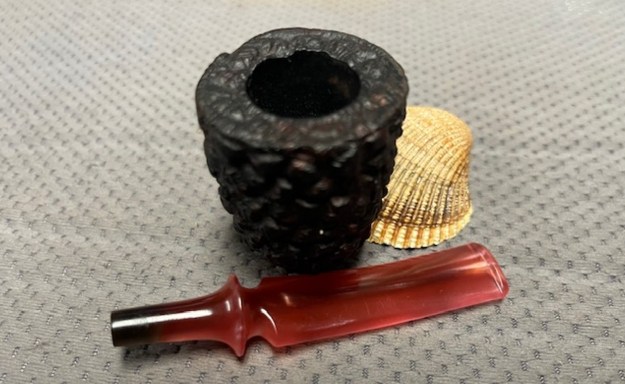
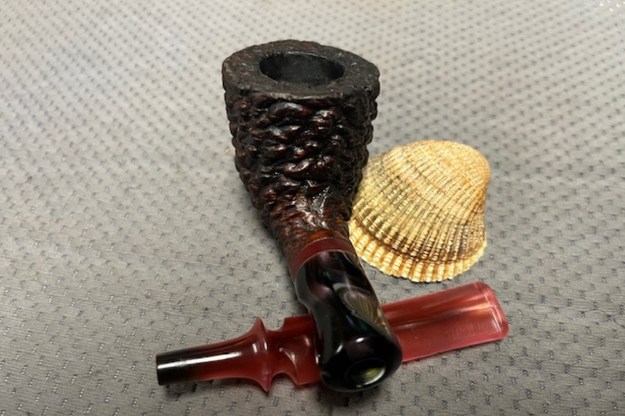
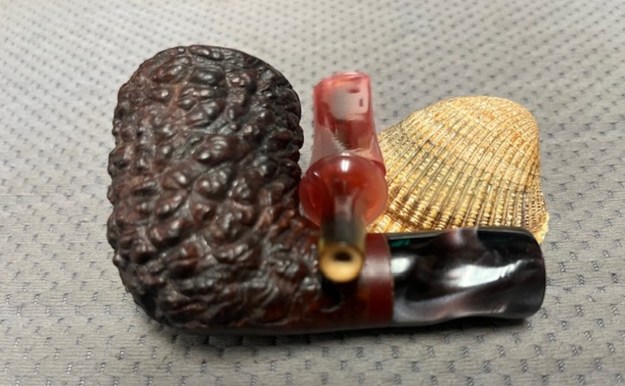
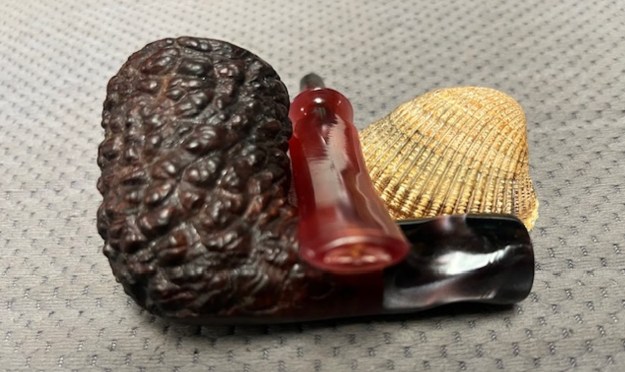
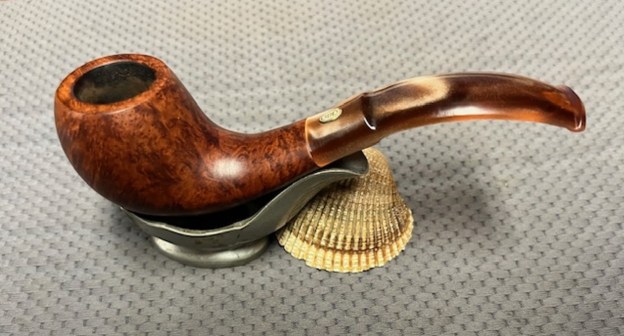
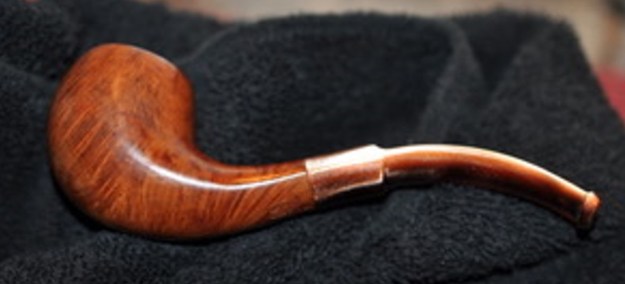
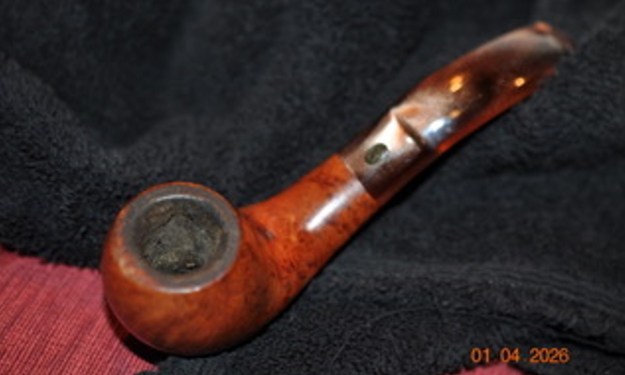
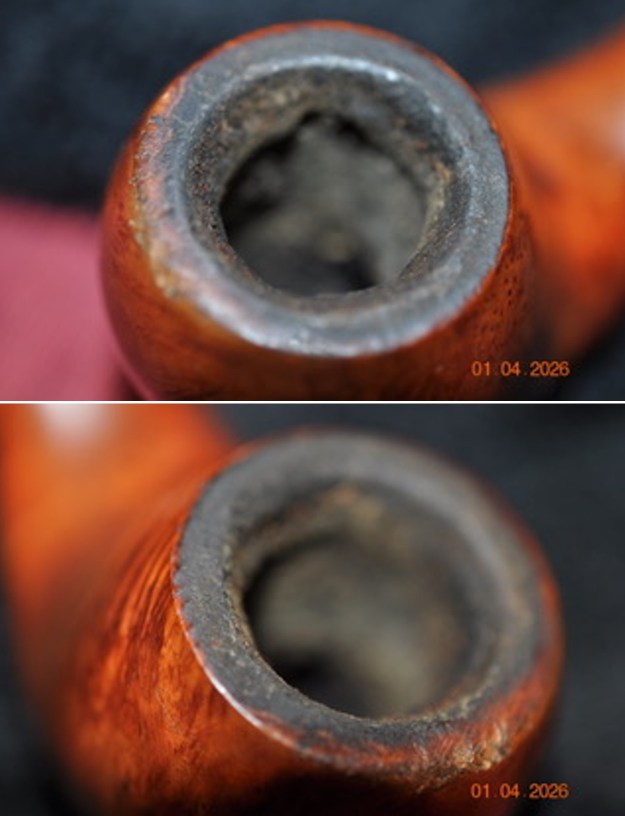
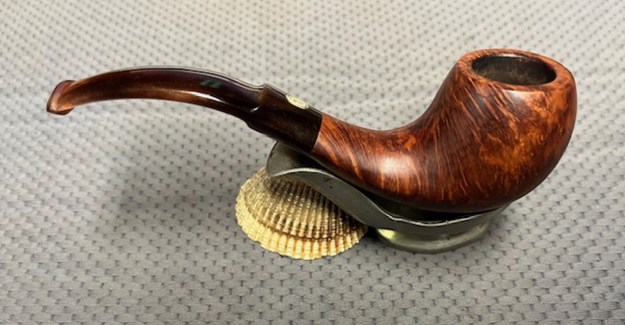
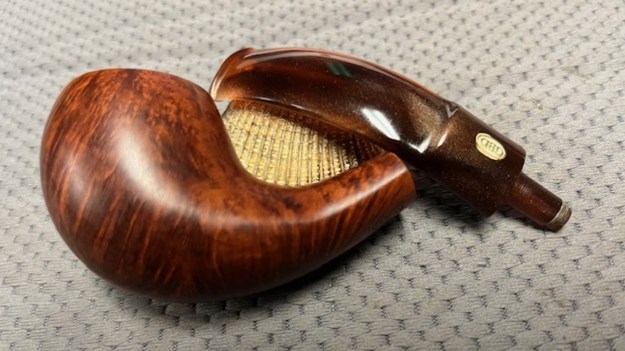
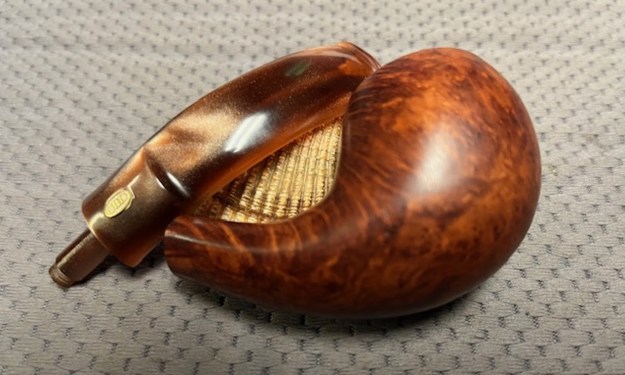
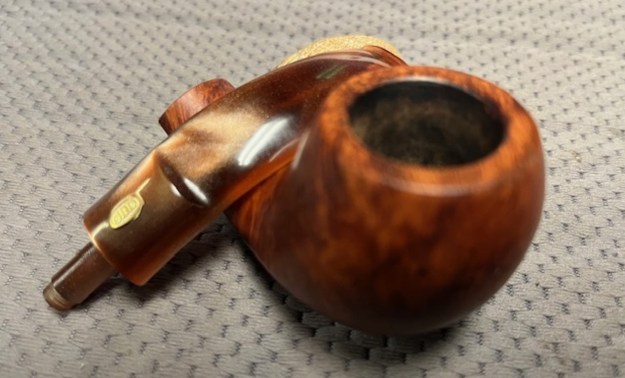
The next pipe on the table is another one that came to us from the seller in Caldwell, Idaho, USA on 07/12/2025. It is a Castello Rusticated Canadian with an acrylic taper stem with the faux diamond on the left side of the stem. It is in dirty but in good condition as can be seen in the photos below. It is stamped on a smooth panel on the underside of the shank and reads Castello [over] Old Antiquari [followed by] KK 32 [followed by] Hand Made [followed by] Made in Cantu [over] Italy [followed by] Carlo arched over Scotti in an oval. The stamping is clear and readable. The pipe has rich Tan and Brown stains on a deep rusticated finish and a dark stain flume around the rim top and down the bowl sides about ¼ inch. The finish was dusty and lightly dirty with grime in the nooks and crannies of the rugged, deep sandblast. The bowl had a moderate cake and there was tobacco debris in the bowl. The rim top had a thick lava coat in the sandblast rim top and edges. The original taper stem is dirty and oxidized. It has the crumpled diamond look to the logo. I took photos of the pipe before I started working on it. I took photos of the bowl and rim top to show the thickness of the cake and the lava coat on the rim top. There was some tobacco debris in the bottom of the bowl. The stem photos show the condition of the taper stem ahead of the button. The stamping on the heel of the bowl is clear and readable as noted above. I took a photo of the pipe with the stem removed to give a sense of the proportions of the pipe. It is a real beauty. Interestingly, there was a clean foil inner tube in the tenon.

As usual I cannot seem to retain the details on Castello pipes in my head for long for some reason. The stamping on this one – Castello and the Carlo Scotti stamp left me with some questions that I need to answer before I began to work on the pipe. I turned first to the Pipephil site (http://www.pipephil.eu/logos/en/logo-castello.html) because of the general quick summary of information I get there along with a screen capture.Castello PIPA CASTELLO di Carlo Scotti & C. was founded in 1947 by Carlo Scotti († 1988). Franco Coppo (AKA “Kino”) who married Carlo Scotti’s daughter Savina, manages (2012) the corporate since 1985.

The site also gave a good summary of the grading and sizes of the pipes. I quote that in full.

Sizes (ascending):

1K to 4K, G (Giant) and GG (Extra large)

Rusticated grading: SEA ROCK, OLD SEA ROCK, NATURAL VERGIN,

Sandblasted grading: ANTIQUARI, OLD ANTIQUARI

Smooth grading (ascending): TRADEMARK, CASTELLO, COLLECTION

Other stampings: Great Line (Non-standard or freestyle) Fiammata (Straight grain)

Production (2012): ~4000 pipes / year

I also found a note on the page that the Rhinestone logo was originally on pipes for the US market. It is occasionally used now.

I turned then to Pipedia for more information on the brand (https://pipedia.org/wiki/Castello). The majority of the information was what was already quoted above in abbreviated form.

…All carved Castello pipes are graded by the number of K’s that are stamped on each piece and are K-graded by SIZE.  1K is the smallest and fairly rare, 2K is small to medium, with 3K or 4K being the most common and ranges from medium to medium large. Large pieces are stamped “G” for giant and extra-large pieces are stamped “GG” for double giant.  In addition to the number of K’s on a carved Sea Rock piece the shape number is almost always added. As a rule a Sea Rock Castello is stained Black, although recently there have been quite a few coming in stained deep brown and still stamped “Sea Rock”. American Logo’d Sea Rocks are all priced the same to the consumer, although most are 2 or 3 K’ed models. G/GG models are charged at a higher price on American pieces and are basically the same as their European counterparts.

The Castello Old Antiquari Briar KK 32 I was working on was definitely one made for the American Market with the Rhinestone in the stem. It had a brown or tan finish with a black flume around the top and the outer edge of the bowl. The Castello Old Antiquari in my hands was 2K graded. That told me that it is a mid-sized pipe. The number 32 makes it a short Canadian shape.

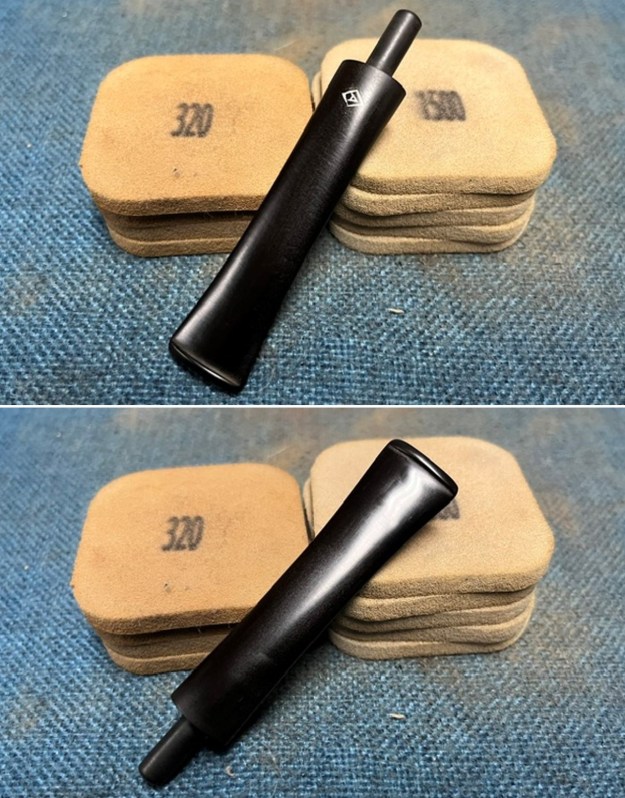
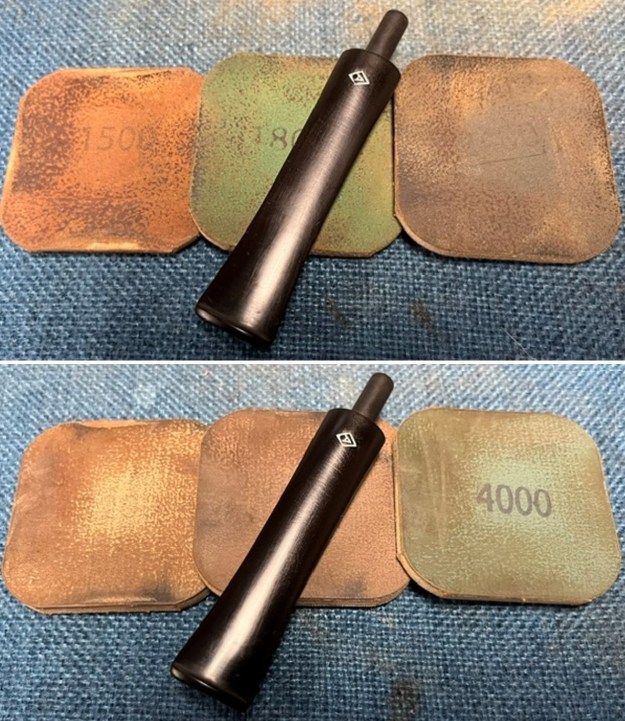
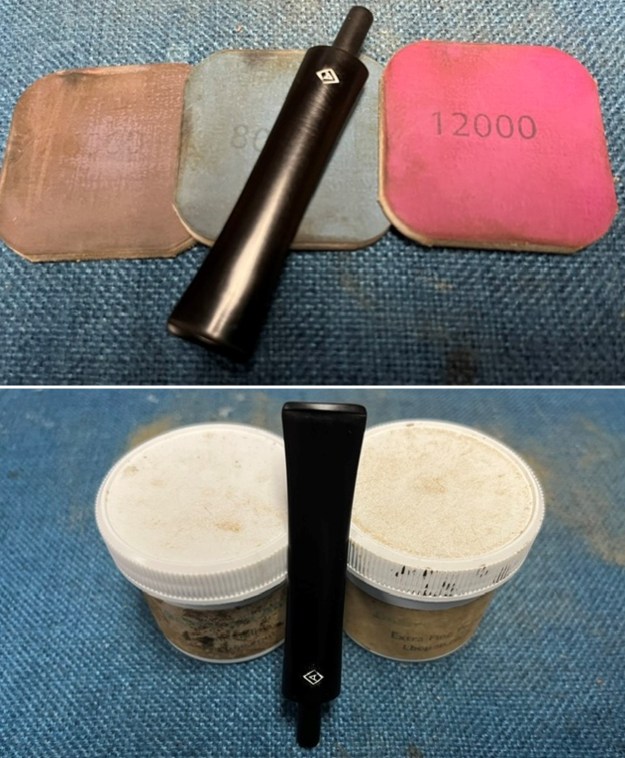
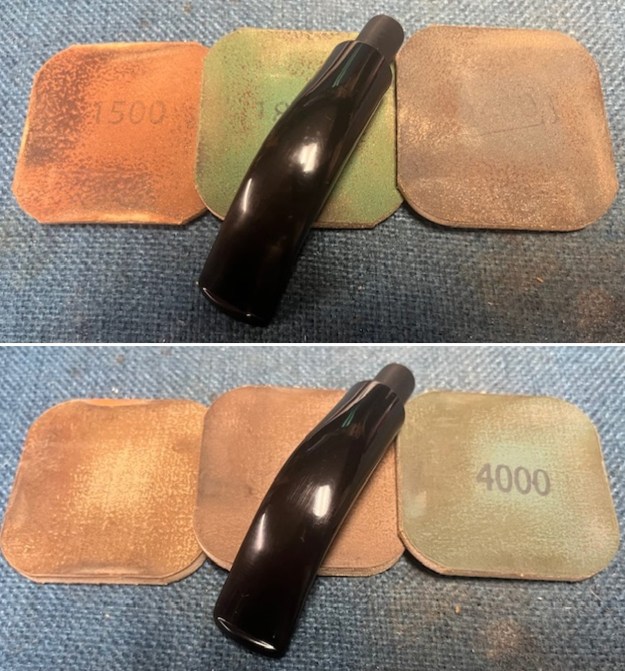
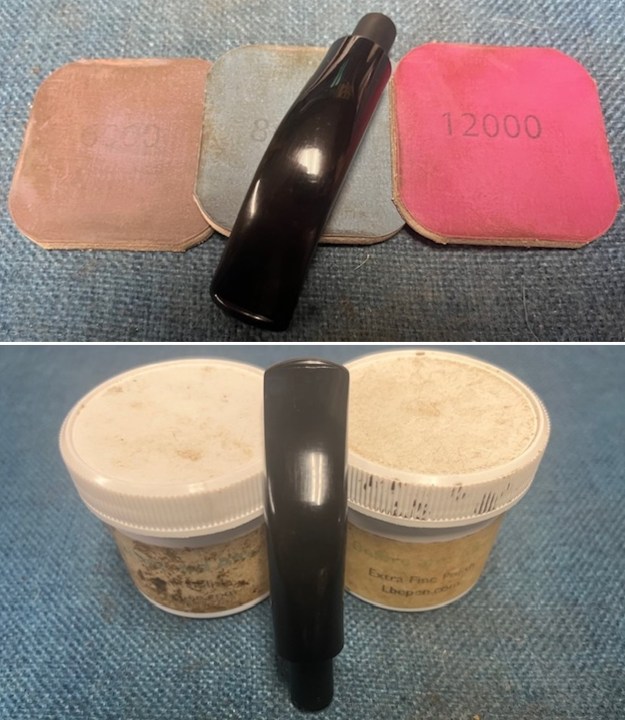
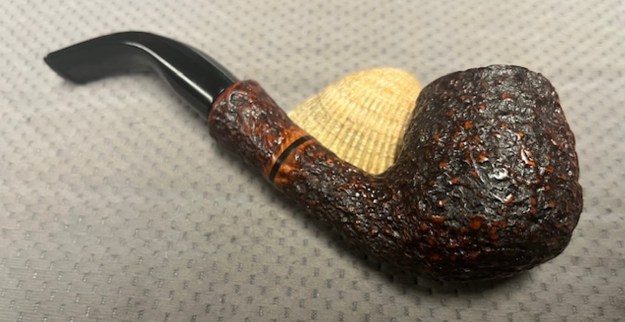
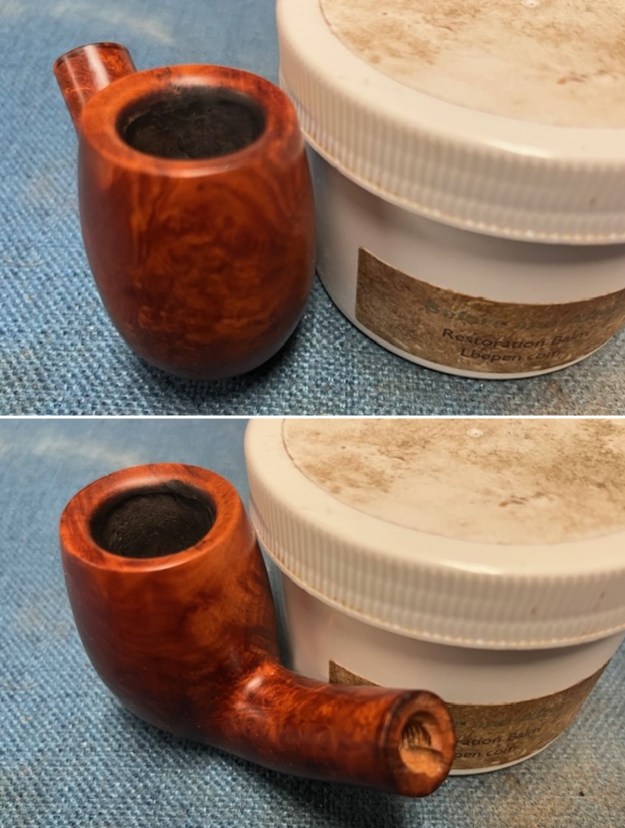
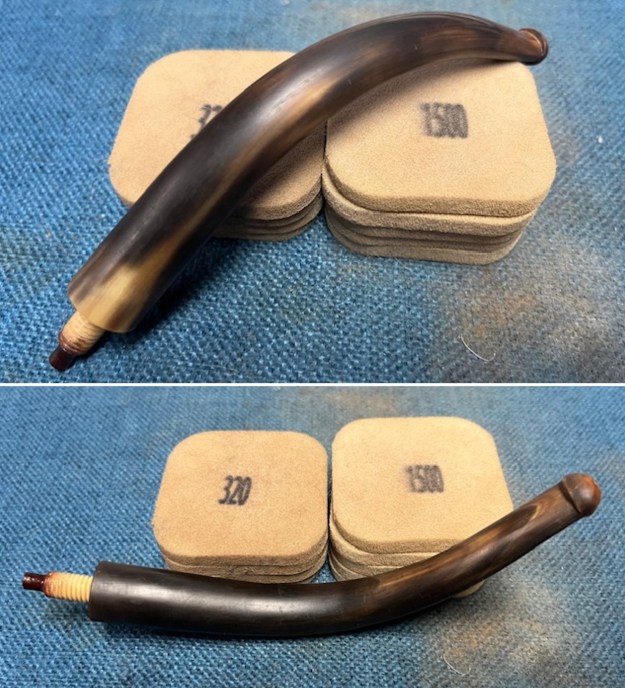
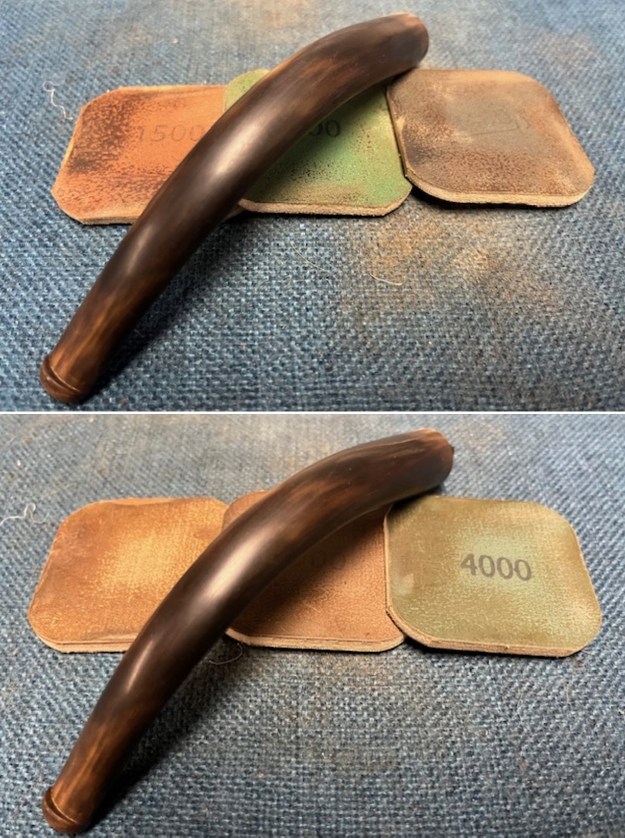
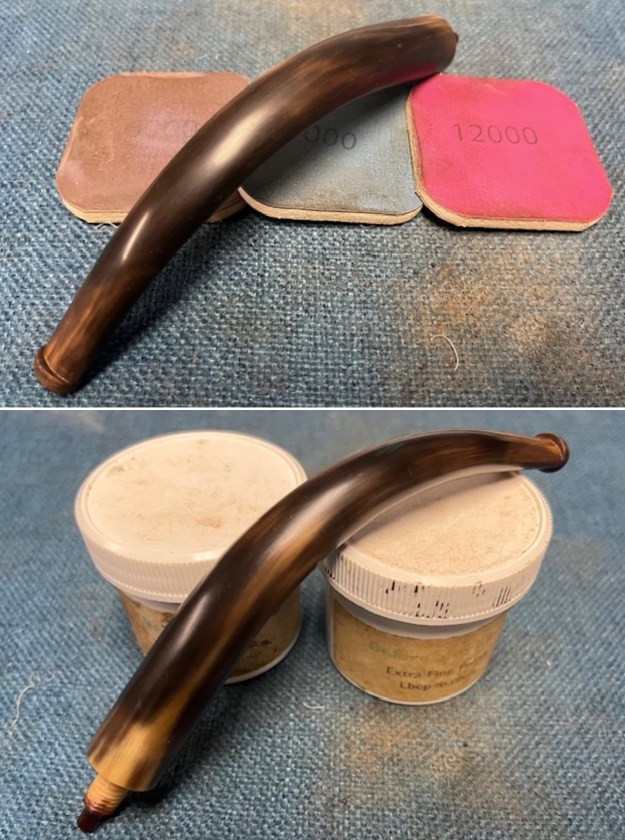
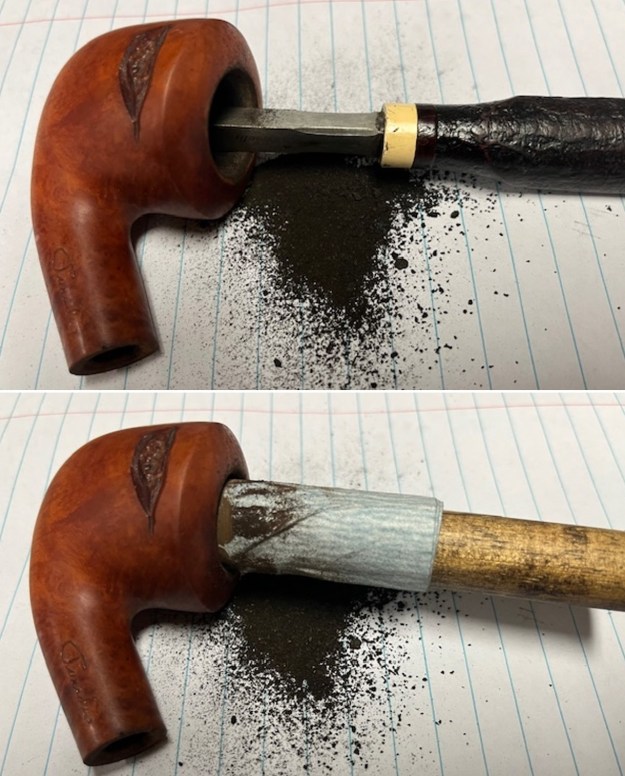
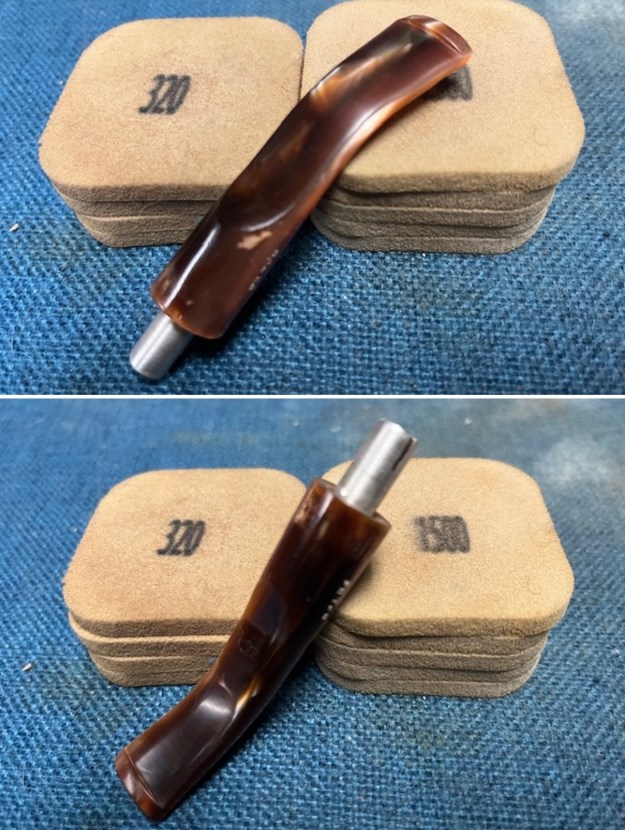
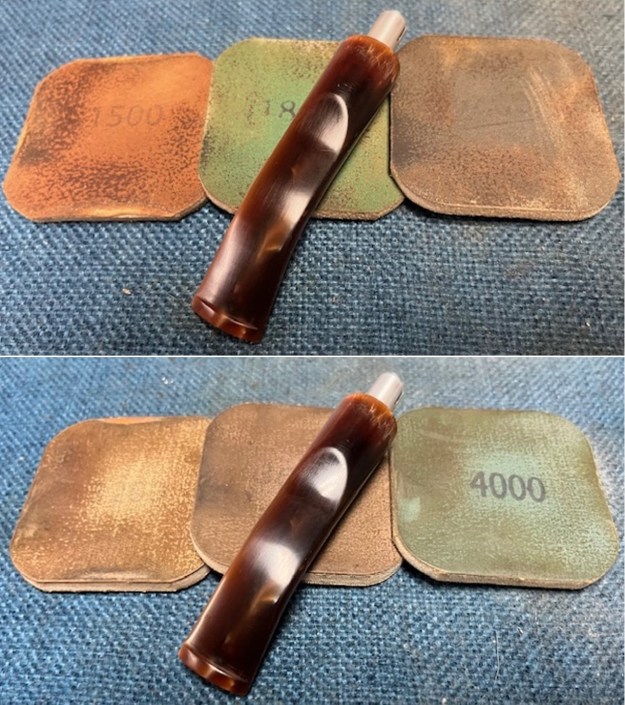
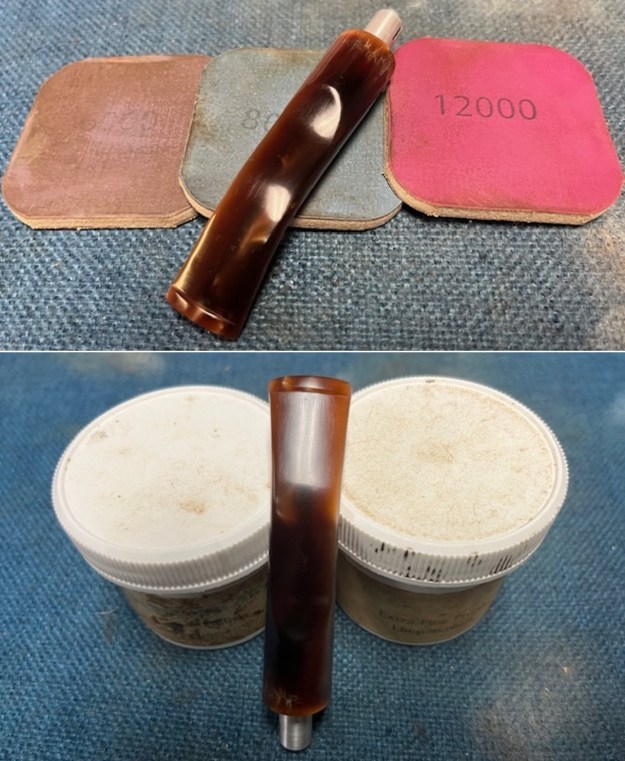
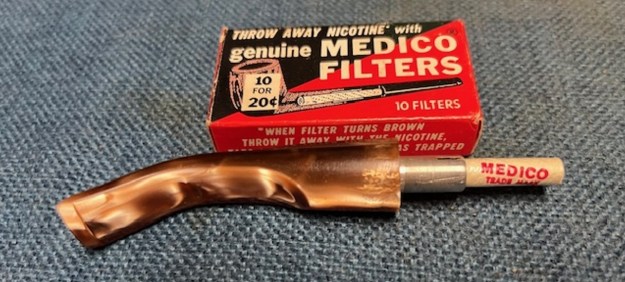
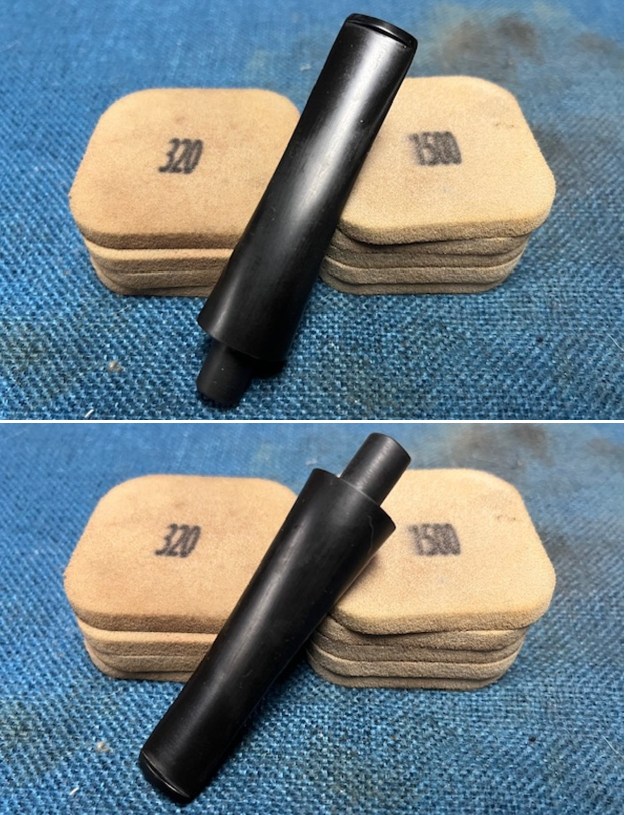
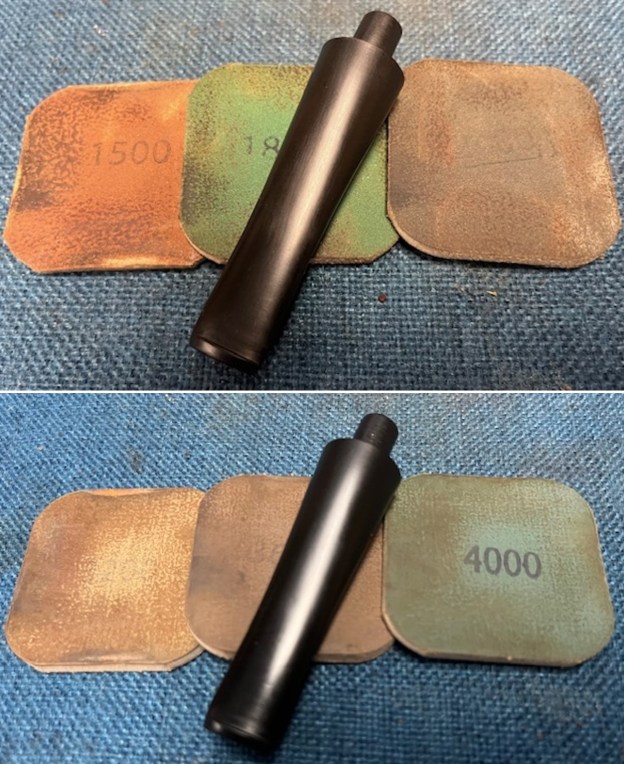
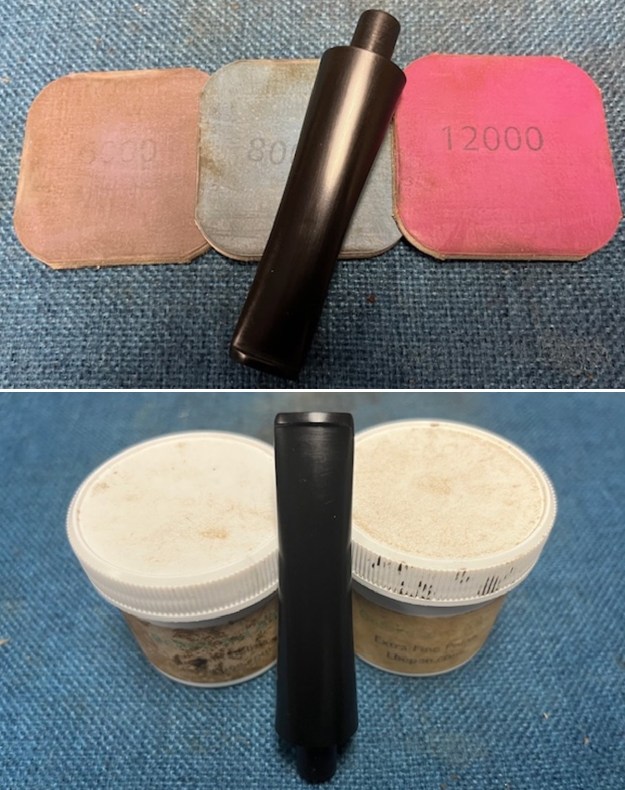
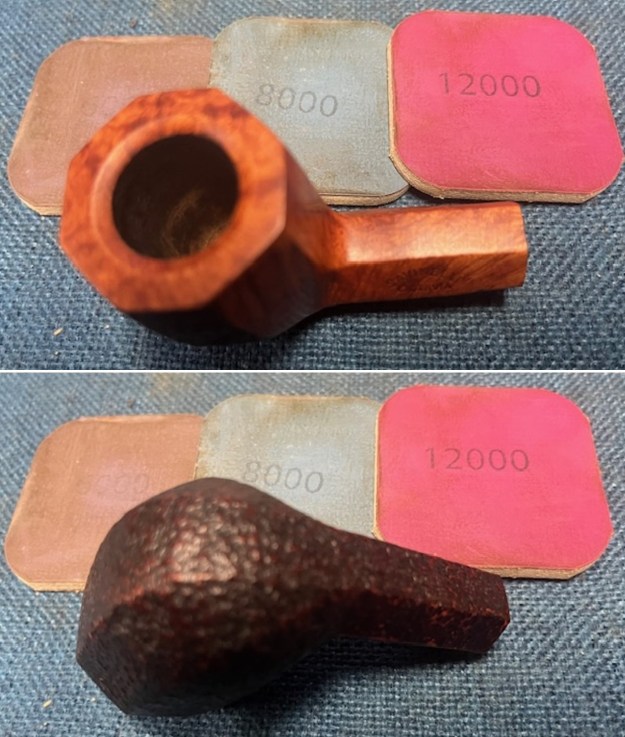
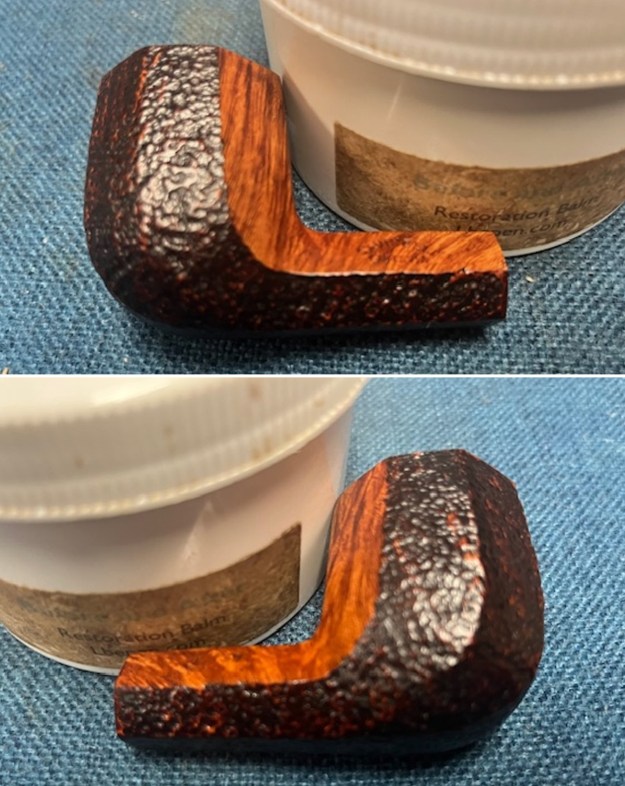
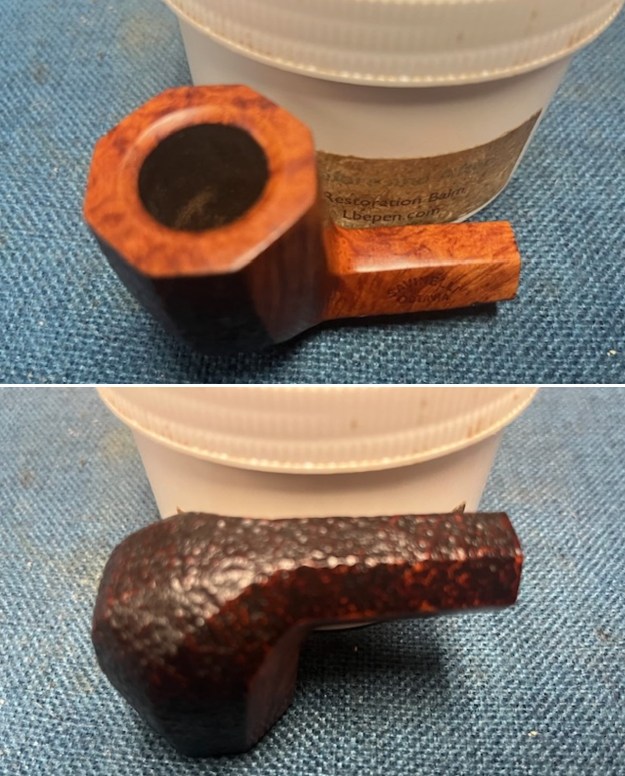
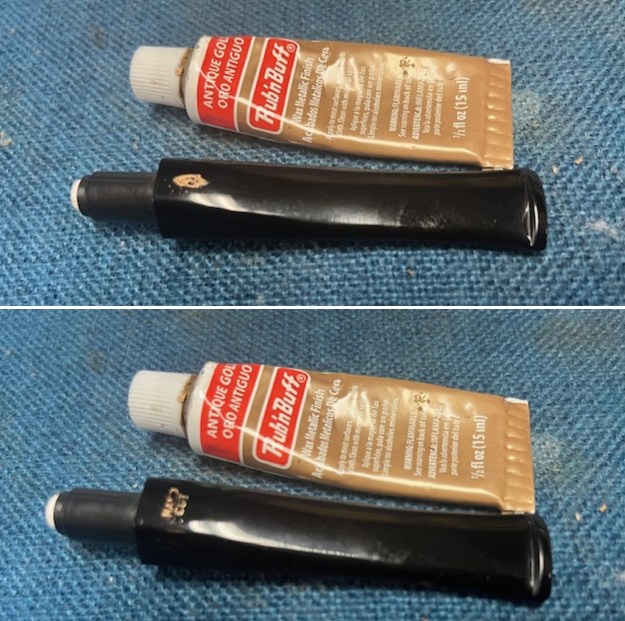
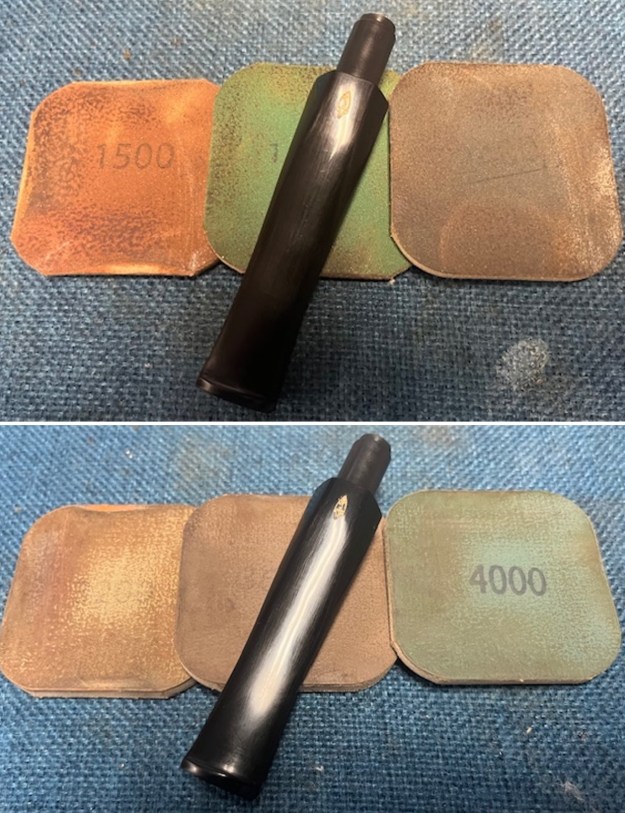
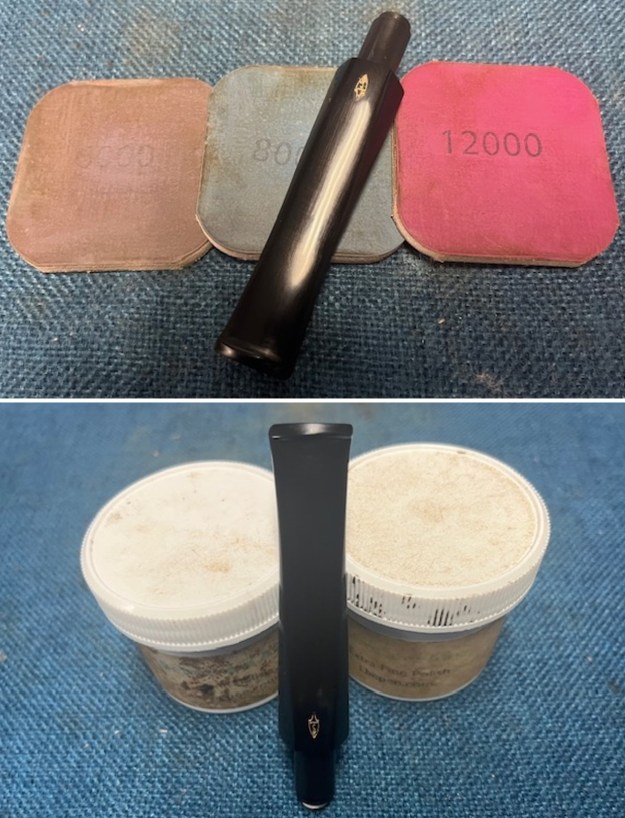
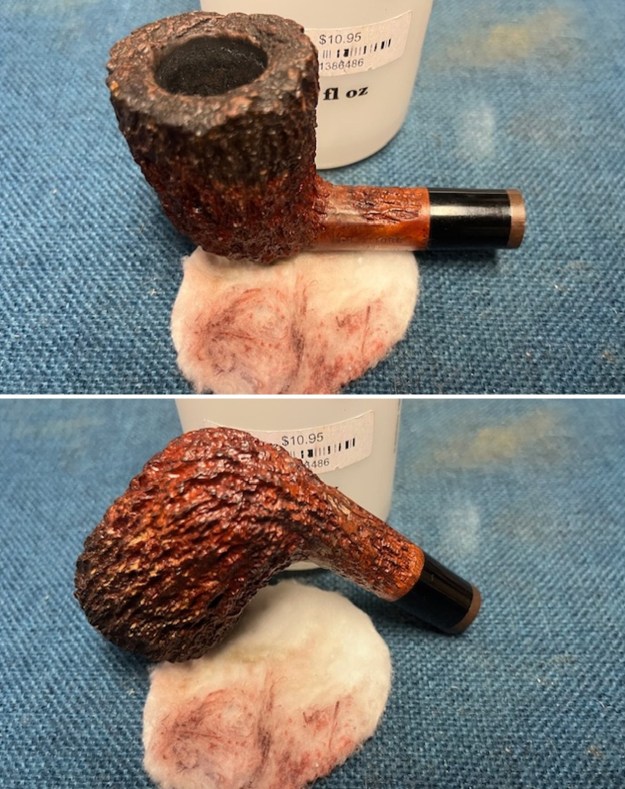
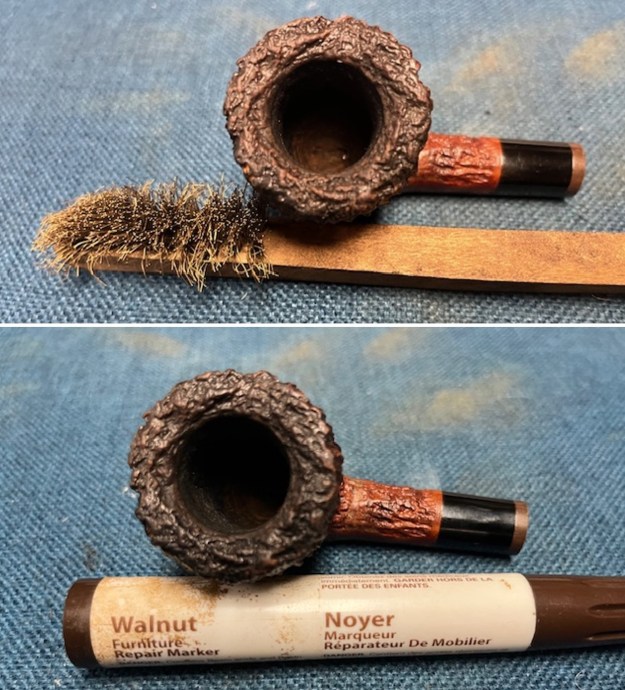
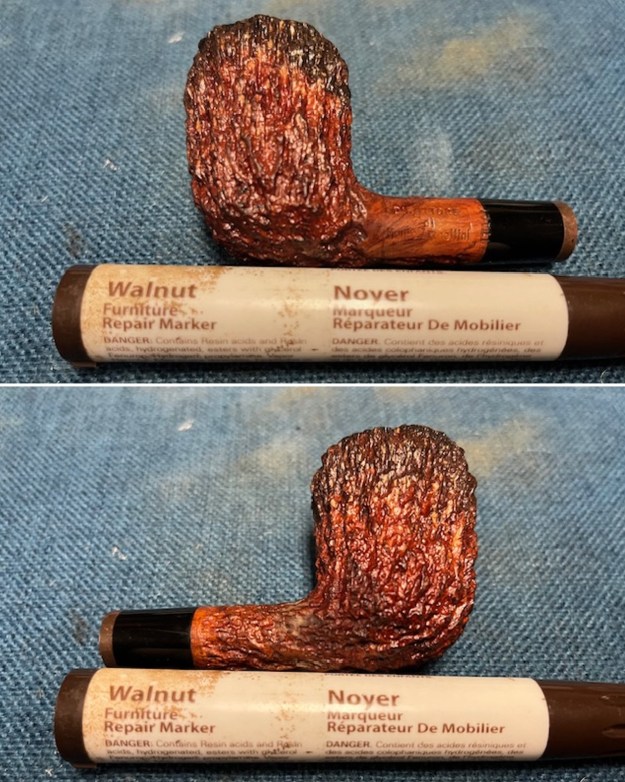
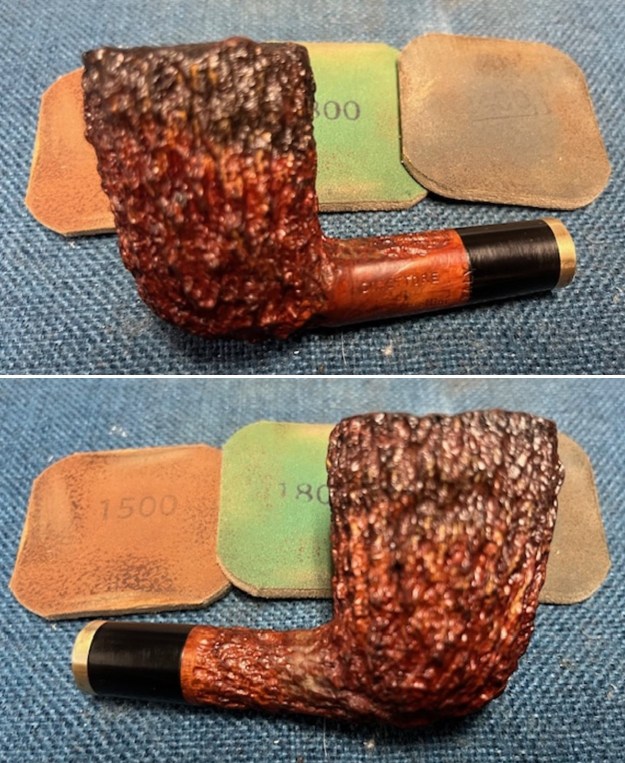
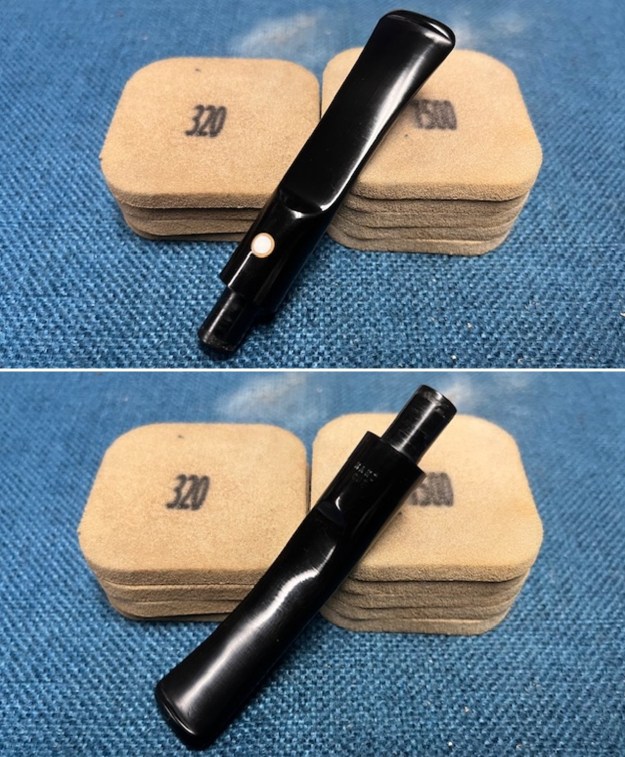
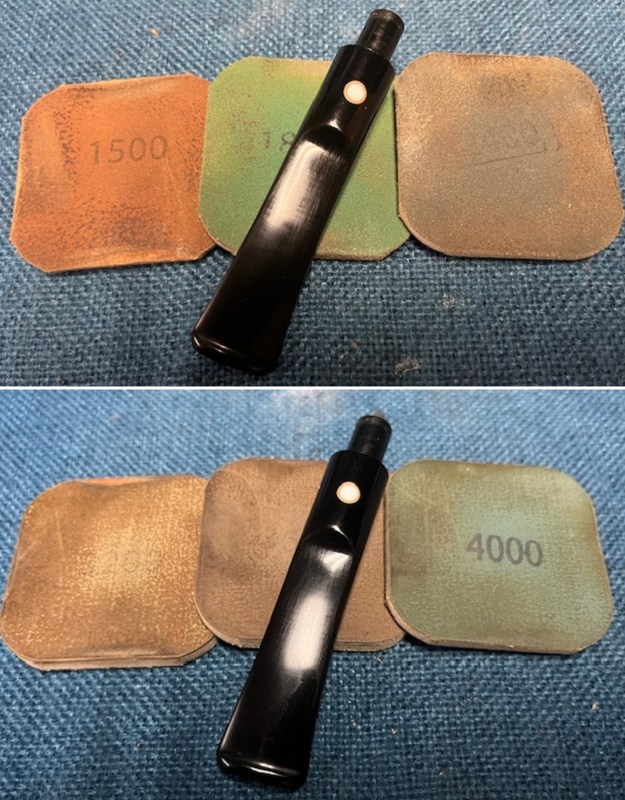
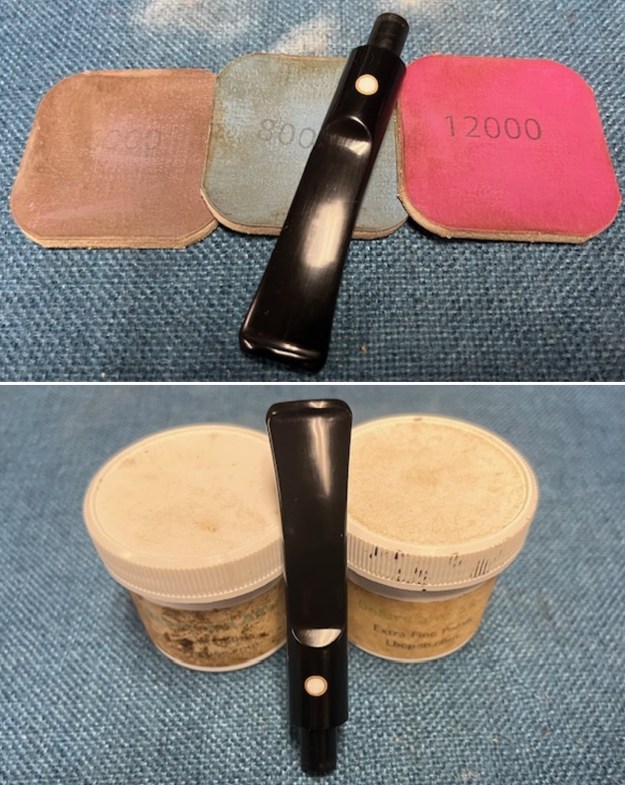
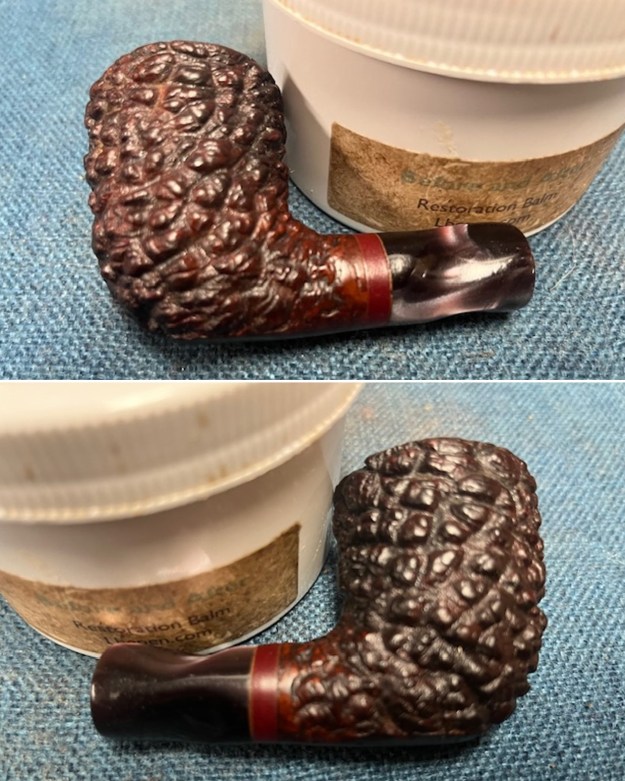
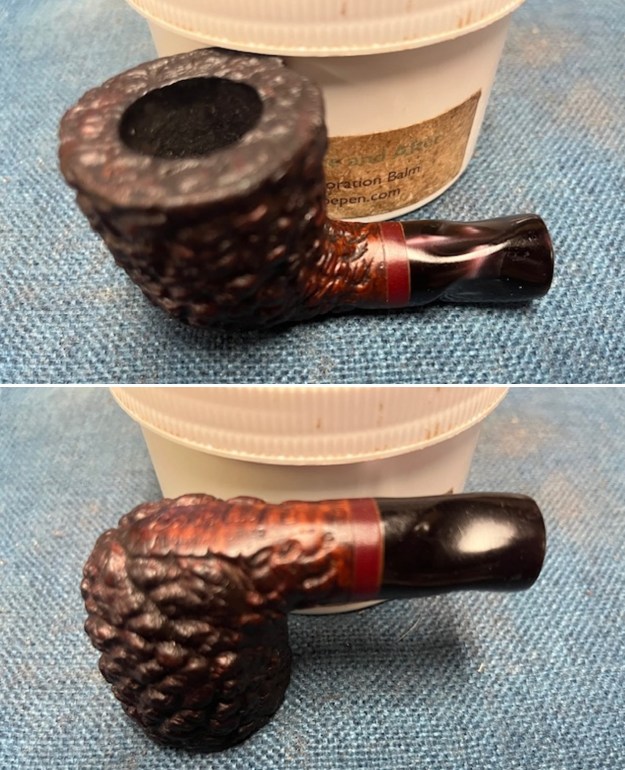
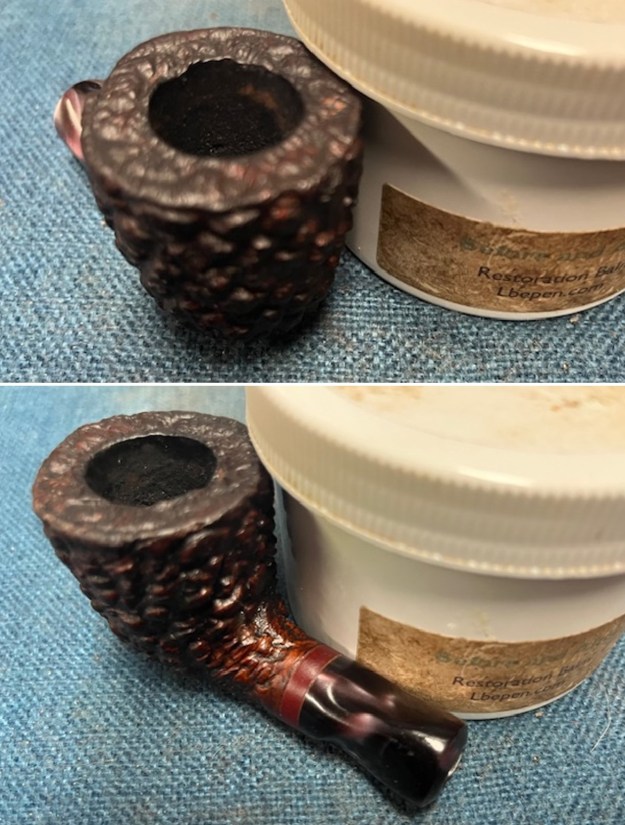
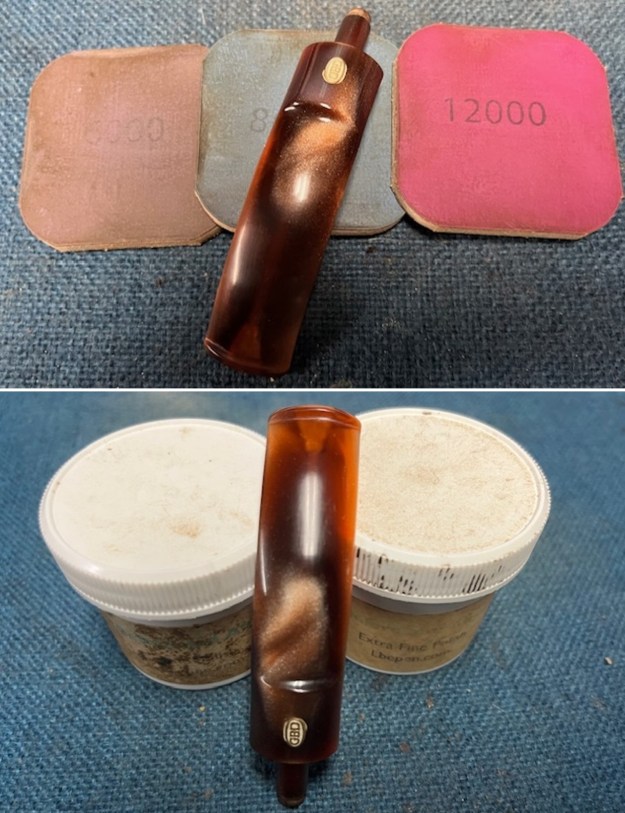
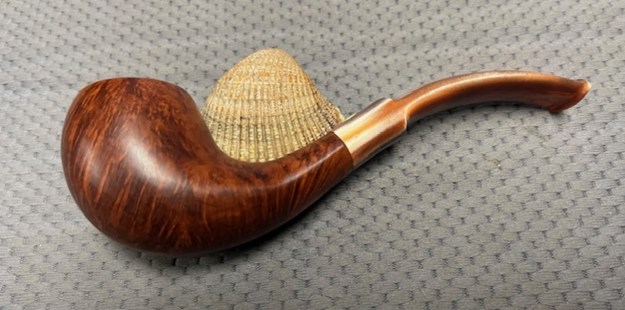
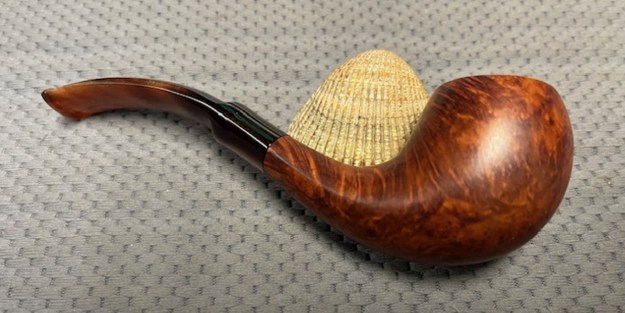
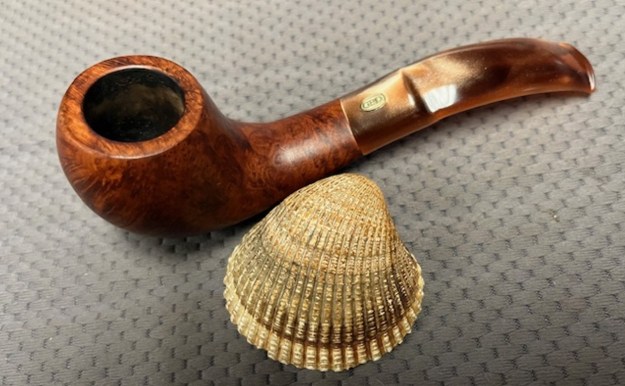
Now it was time to work on the pipe. I started my work by reaming the pipe. I scraped out the light cake with a Savinelli Fitsall Pipe Knife. I took the cake back to bare briar. I sanded the walls smooth with 220 grit sandpaper wrapped around a piece of dowel. The bowl walls looked very good with no burn damage or checking on the walls. I worked over the rugged rustication on the rim top to remove the tars and lava on the rim top with a brass bristle wire brush.I cleaned out the inside of the shank and the airway in the stem with alcohol, cotton swabs and both bristle and regular pipe cleaners. I scrubbed the bowl and shank with a tooth brush and some undiluted Murphy’s Oil Soap. I rinsed it off with warm water to remove the dust and soap from the finish. I dried it off with a soft cloth. The rim top was still darkened in the grooves of the sandblast. I touched up the black of the flume finish on the rim top and outer edge of the bowl with a black stain pen. It looked much better at this point with the finish cleaned of the dust and debris in the finish. It is a rich and rugged rustication.I rubbed the briar down with Before & After Restoration Balm. I worked it into the briar with my fingertips and a horsehair shoe brush to work it into the nooks and crannies of the sandblast finish. The product works to clean, enliven and preserve the briar. I let it sit for 10 minutes then I buffed it with a cotton cloth to deepen the shine. The briar really comes alive with the balm. I set the bowl aside and worked on the stem. The stem was stamped on the underside and read TRADE MARK [over] CASTELLO [over] 7. I sanded the oxidation and the tooth marks and chatter with 220 grit sandpaper. I was able to remove all of the light tooth damage on the stem and the majority of the oxidation. I sanded the stem and tenon surface with 320-3500 grit 2×2 inch pads. I wiped the stem down with an Obsidian Oil cloth after each sanding pad.I polished the vulcanite with micromesh sanding pads – 1500-12000 grit pads. I wiped it down with Obsidian Oil after each sanding pad. I used Before & After Pipe Polish – both Fine and Extra Fine to further polish the stem. This beautiful Castello Old Antiquari Rusticated Flumed Top KK 32 Short Canadian with a taper acrylic stem looks amazing after the work on it. The briar is clean and the deep rustication really came alive. The rich brown stains gave the finish a sense of depth with the polishing and waxing. The flumed black rim top and edges were a great contrast. The finish really popped. I put the stem back on the bowl and buffed the pipe with Blue Diamond on the buffing wheel using a light touch on the briar. I gave the bowl and the stem multiple coats of carnauba wax on the buffing wheel. I buffed the pipe with a clean buffing pad to raise the shine. I hand buffed the pipe with a microfiber cloth to deepen the shine. The finished Castello Old Antiquari Rusticated KK 32 Canadian really is a beauty and feels great in the hand and looks very good. Give the finished pipe a look in the photos below. The dimensions of the pipe are Length: 6 inches, Height: 2 inches, Outside diameter of the bowl: 1 1/2 inches, Chamber diameter: 7/8 of an inch. The weight of the pipe is 47 grams/1.66 ounces. I will soon be putting this pipe on the rebornpipes store in the Italian Pipe Makers section. It should make a great smoker that the next steward will enjoy. Thanks for reading this blog and my reflections on the pipe while I worked on it. It was a fun one to work on.

Restoring a Republic Era Peterson’s Rosslare XL13 fishtail stem 9mm Filter Bulldog


by Steve Laug

The next pipe I have chosen is another Peterson’s Rosslare Bulldog. This one is a large size Bulldog with a Peterson’s taper, fishtail stem. It came to us from our contact in Copenhagen, Denmark on 11/21/2023. This pipe was obviously a favourite of the previous pipe smoker. It had been well smoked but it had been reamed and cleaned recently. The briar was dirty with grime and oils ground into the finish and the varnish coat was spotty and peeling. The pipe was stamped on the left side and read Peterson’s [over] Rosslare. On the right side it had the three-line Republic of Ireland stamp [over] the shape number XL13. On the left underside of the diamond shank it is stamped HUBER [over] MUNCHEN. The acrylic stem was clean without tooth marks. It was a 9mm filter stem. The Peterson’s P logo was present but the gold had washed out over time. Jeff took photos of the pipe before he started his clean up work on it. Jeff captured the light cake in the bowl and the clean rim top in his photos. The edges looked to be in excellent condition and the varnish coat had been removed from the rim top. The taper, fishtail stem surface was very clean. He took photos of the sides and the heel of the bowl to show the interesting grain patterns in the briar. The varnish coat is spotty on the rim top and shank end. Even so it was quite beautiful. He also took some photos of the shank sides to capture the stamping on the shank. It was also stamped Huber Munchen on the underside and he did not capture that in a photo. I wanted to understand the Rosslare line to see where it stood in the Peterson’s hierarchy. I turned to page 311 of “The Peterson’s Pipe” by Mark Irwin and Gary Malmberg and read about the line. I quote:

Rosslare (2003-) Upper-grade line, Classic Range and select B shapes in smooth or black sandblast, sterling band often fitted with faux spigot, amber fishtail acrylic mouthpiece, embedded aluminum P in the first years and hot foil P more recently. Not to be confused with the Rosslare Royal Irish (2010)

I turned to (http://thepetersonpipeproject.blogspot.com/2007/07/dating-peterons-pipes.html) to lock down a rough period of time for the Republic Era. I quote:

Stamping of Bowl: During the years of Kapp and Peterson’s business operations, the country of Ireland has undergone several name changes and K&P’s stamping on their pipes reflects these changes. Knowing these changes, a Peterson pipe can be roughly dated and placed in “eras.”

The Republic Era is from 1949 until the present. The Republic of Ireland was formed on 17 April 1949. From 1949 to present the stamp for this era is “Made in the Republic of Ireland” in a block format generally in three lines but two lines have been used with or without Republic being abbreviated.

Finally, on the underside of the shank it is stamped Huber [over] Munchen. From a past restoration I did a lot of work on the stamping (https://rebornpipes.com/2023/10/14/petersons-kildare-special-hg-republic-of-ireland-10-canadian/). Have a look if you are interested.

To learn more about the Huber Munchen stamp I turned to page 300 of “The Peterson’s Pipe” by Mark Irwin and Gary Malmberg as noted by him in the previous blog and found a great paragraph on the stamping. I quote in full.

GH Retailer’s Monogram (c. 1960s) George Huber of Munich, Germany, a Peterson distributor and retailer for decades, stamped their monogram on pipes sold in their store, G overlaid on H. Peterson shared in the 1988 commemoration of Huber’s 125th year in business by producing a special pipe with a sterling rim cap, stamped HUBER over CELEBRATION.

The pipe I have is one that does not bear that monogram and does not appear to have ever had the sterling rim cap and was not stamped HUBER over CELEBRATION. It was however, stamped Huber [over] Munchen – the city where the shop was located. With that information I turned my attention to working on the pipe.

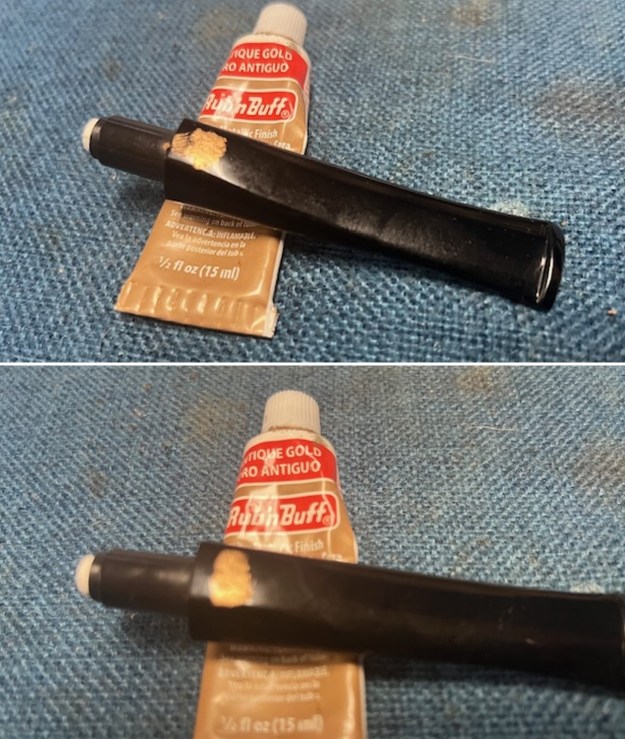
Jeff cleaned this filthy pipe with his usual clean up process. He reamed it with a PipNet pipe reamer and cleaned up the reaming with a Savinelli Fitsall Pipe Knife. He scrubbed out the internals with alcohol, pipe cleaners and cotton swabs until the pipe was clean. He scrubbed the exterior of the bowl with Murphy’s Oil Soap and a tooth brush to remove the grime and grit on the briar and the lava on the rim top. The finish looks very good with great looking grain around the bowl and shank. Jeff soaked the acrylic stem in Briarville’s Pipe Stem Deoxidizer to remove the grime on the surface. When the pipe arrived here in Vancouver for the second stop of its restoration tour I was amazed it looked so good. I took some close up photos of the rim top and the stem surface. I wanted to show how well it had cleaned up. The rim top and inner and outer edge looked very good. It did not have any varnish on the rim and the shank end was also missing the varnish on the first inch from the shank end. It was ragged looking. Once stripped of the varnish it should polish well. I also took close up photos of the stem to show the condition of the stem surface near the button.I took photos of the stamping on the sides of the shank. You can see that it is stamped as noted above. It is faint in spots but readable. I removed the stem and took a photo of the pipe to have a look at the parts and overall look. To address the spotty varnish on the bowl sides and shank, I wiped it down with acetone and cotton pads. I removed a lot of the varnish coat and sanding it with the sanding pads would remove the rest of the coat. I sanded the briar with 320-3500 grit 2×2 inch sanding pads to remove the remainder of the varnish coat that the acetone did not remove. I wiped the bowl down with a damp cloth after each sanding pad to remove the sanding debris. It really looks much better. I polished the briar with micromesh sanding pads – dry sanding with 1500-12000 grit pads. I wiped the bowl down after each pad with a damp cloth. I rubbed the bowl down with Before & After Restoration Balm. I worked it into the surface of the bowl sides and shank with my fingertips. The product works to clean, enliven and protect the briar. I let the balm sit for a little while and then buffed with a cotton cloth to raise the shine. I set the bowl aside and turned my attention to the stem. I polished the stem with micromesh sanding pads – dry sanding it with 1500-12000 grit pads. I wiped the stem down with Obsidian Oil after each pad. I polished it with Before & After Pipe Polish – both Fine and Extra Fine and gave it a final coat and set it aside to dry. I touched up the gold P stamp on the left side of the stem with Rub’n Buff Antique Gold. I pressed it into the stamp with a toothpick. I buffed it off with a soft cloth. I fit the stem with a 9mm filter and put the pipe back together again. The fit was perfect. I am excited to finish this Peterson’s Rosslare XL13 Bulldog. I put the pipe back together and buffed it with Blue Diamond on the buffing wheel. I gave the bowl and the stem multiple coats of carnauba wax. I hand buffed the pipe with a clean buffing pad to raise the shine. It is fun to see what the polished bowl looks like with beautiful mixed grain all around it. Added to that the polished black vulcanite stem combined with the bowl and sandwich brass/nickel/brass band on the shank and made a stunning pipe. This smooth Classic Peterson’s Rosslare XL13 Straight Bulldog is great looking and the pipe feels great in my hand. It is light and well balanced. Have a look at it with the photos below. The dimensions are Length: 5 ½ inches, Height: 2 inches, Outside diameter of the bowl: 1 ¼ inches, Chamber diameter: 7/8 of an inch. The weight of the pipe is 44 grams/1.55 ounces. It is a beautiful pipe that I will soon be putting on the rebornpipes store in the Irish Pipe Makers Section. If you are interested in adding it to your collection send me an email or a message. Thanks for walking through the restoration with me as I worked over this pipe. Thanks to each of you who are reading this blog.

As always, I encourage your questions and comments as you read the blog. Thanks to each of you who are reading this blog. Remember we are not pipe owners; we are pipe men and women who hold our pipes in trust until they pass on into the trust of those who follow us.

Replacing a Tenon and Repairing a Crack in a Saddle Stem on a Velani Caprice Bent Billiard


by Steve Laug

I received an email from a fellow pipeman, Larry about a pipe he had that had been knocked off the stand and the tenon had snapped. I have included his email below.

I have a Pipe stem that broke on a Velani Caprice, and I was wondering how much you would charge to replace the stem. The pipe was knocked off my stand and broke the stem from the pipe; I was able to get the part that broke out from the pipe. I would like your opinion and what you would charge. I could send you pictures as well. Thank you. – Larry

I wrote back with my normal questions about what had broken and if he was able to send me photos of the pipe so I could more thoroughly assess what had happened to the pipe. He sent me the following photos that clearly showed the damage. When the box arrived from Larry yesterday I opened it to see what I was dealing with. The pipe was stamped on the left side of the shank and read Velani [over] Caprice and AV 75 on the underside. It was also stamped Italy against the acrylic spacer in the shank end. The stamping was clear and readable. The heavily coral like rusticated finish was quite clean and the bowl inside was smooth and appeared to have been recently reamed. The rim top was smooth and it was quite clean. It was dusty but otherwise clean. The stem was wrapped along with the broken tenon in the box. The saddle portion of the stem had cracked off and Larry had glued it back together with epoxy. He had done a great job and the crack was solid. There were still some light crevices where the repair had been done that would need to be filled in. I set the pipe aside so that I could think about the repair. I took photos of the broken parts of the pipe and have included them below. I took photos of the stamping on the shank. It was clear and readable as noted above. I turned to Pipephil to refresh my memory of the brand understand a bit more about it before I started working on the stem (http://www.pipephil.eu/logos/en/logo-a3.html#aldovelani). I am including a screen capture below. From the side bar on Pipephil I was reminded that Aldo Velani is the fictional name for a sub-brand of Barontini that was mainly intended for export.

I turned to Pipedia to see if I could learn a bit more about the brand and the link took me to Cesare Barontini’s page (https://pipedia.org/wiki/Aldo_Velani). It also confirmed the information from the side bar above. Now it was time to work on the pipe.

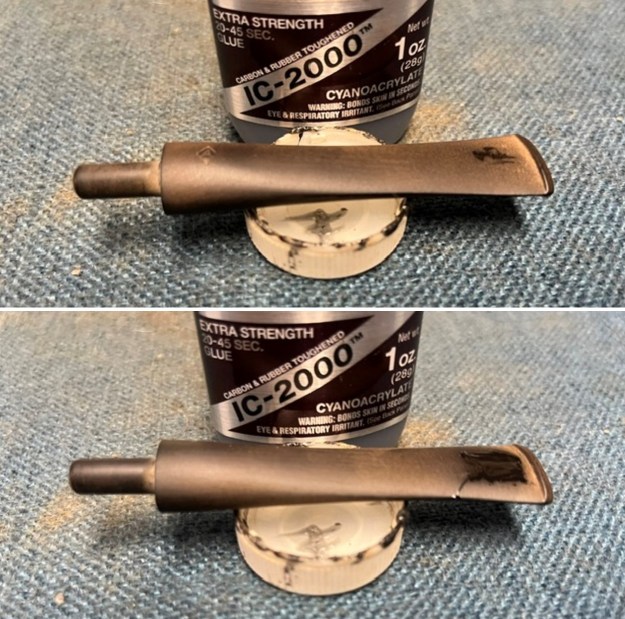
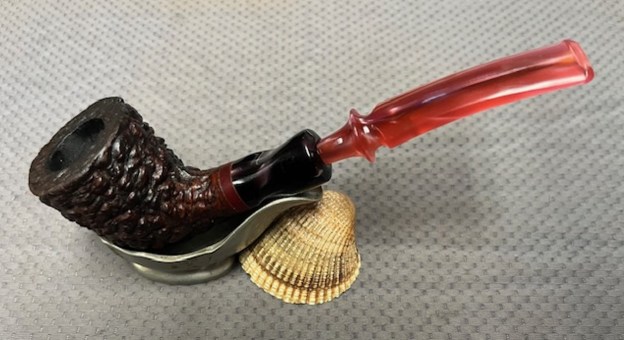
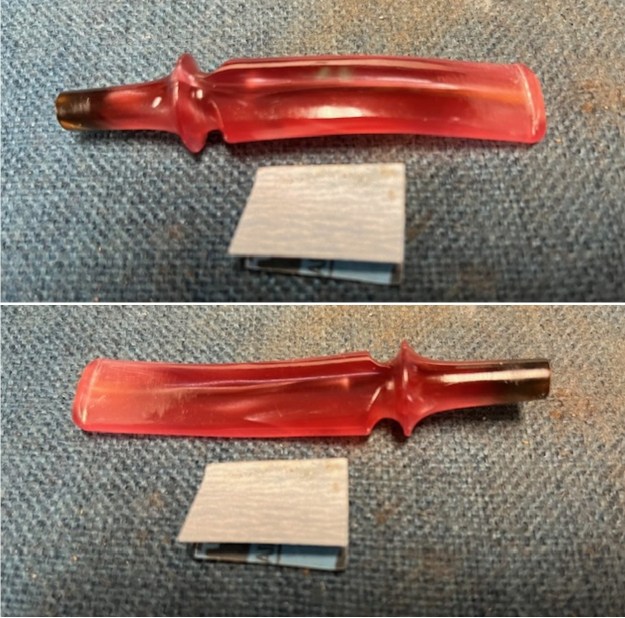
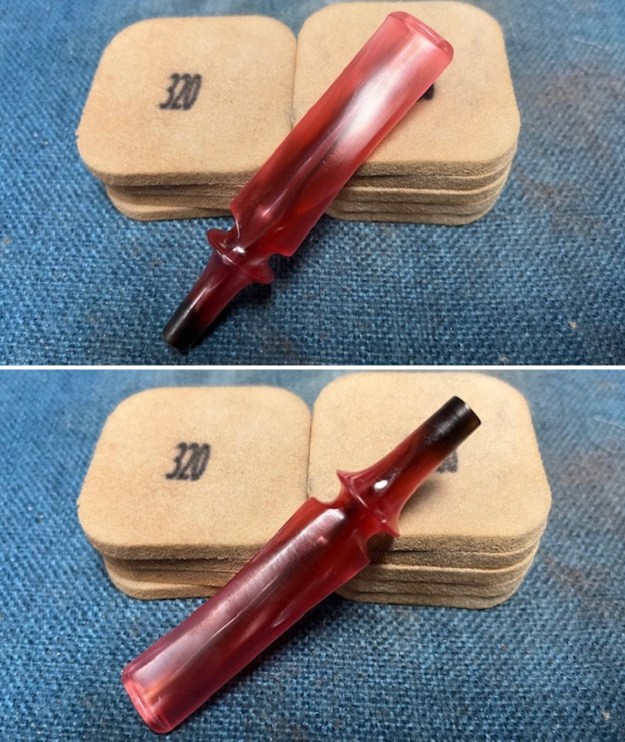
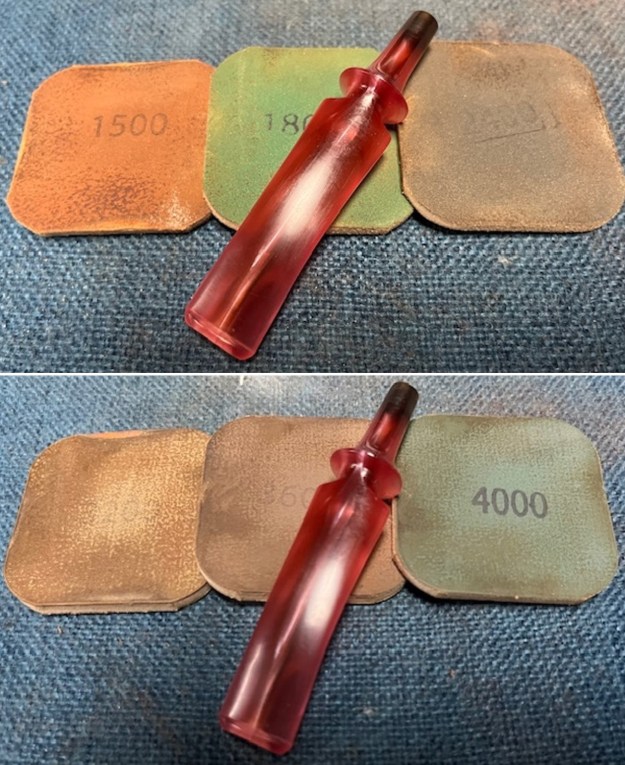
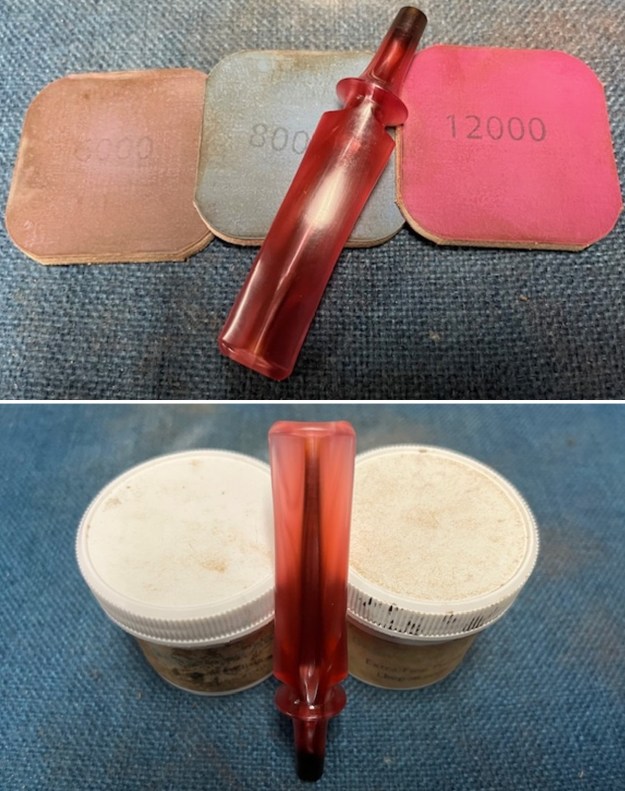
I began my work on the pipe by addressing the cracked portion of the saddle stem. I cleaned out the surface of the repairs that Larry had done and filled in the shallow grooves with black CA glue.  I sanded the repairs with 220 grit sandpaper to smooth them out. I sanded the end of the saddle and fitted it with a thin brass band. I thinned the depth of the band with a topping board to reduce the profile so that it would not cover the briar dot on the top of the saddle. It would function as an external band to hold the repairs tight while I drilled the airway for the new tenon. I coated the inside of the band with white glue and pressed it on the stem. Once the band was solid on the stem I drilled the airway open with two progressively larger drill bits on the cordless drill. I needed it open enough to hold the new tenon in place. It would also provide an internal tube that the stem was bound to. The repair that Larry had done, the band on the outside and the new tenon would provide a solid repair for the crack in the saddle portion of the stem. I went through my bag of tenons and found one that was the right fit for the shank. I used a tenon that was made for the Jobey link system. I removed the ridge around the tenon that was made for the Jobey stem and would inset. I used my Dremel to remove that ridge as it was not necessary for a regular tenon.I reworked a second tenon and once it was done I painted the threads on the tenon with black CA glue and inserted it in the opened airway on the stem. I set it aside to cure.I took a photo of the finished tenon and then once cured I inserted it in the shank and took more photos of the finished repair. I still need to polish the pipe to be finished but the fit was correct. I finished working on the stem by sanding it with 32-3500 grit 2×2 inch sanding pads to smooth out the repair and to remove the tooth chatter. The pipe stem was looking very good. I polished the stem with micromesh sanding pads – wet sanding with 1500-12000 grit pads and wiped down the stem with some Obsidian Oil after each sanding pad. I finished the polishing with some Before & After Stem Polish – both fine and extra fine. I gave it a final coat of Obsidian Oil and set the stem aside. I polished the smooth rim top and portions of the shank with 1500-12000 grit micromesh sanding pads. I wiped it down with a damp cloth after each pad to remove the debris. I worked over the inner edge of the rim at the same time. The smooth portions began to look very good. I rubbed the bowl and shank down with Before & After Restoration Balm. I worked it into the surface of the bowl sides and shank with my fingertips to clean, enliven and protect the briar. I let the balm sit for a little while and then buffed with a cotton cloth to raise the shine. The Balm did its magic and the grain stood out. This rusticated Velani Caprice 75 Bent Billiard with a fancy saddle stem is a great looking pipe now that it has been restored and the tenon and stem repaired. The briar around the bowl is clean and the rustication really came alive. The rich brown stains of the rustication took on a sense of depth with the polishing and waxing. The grain really popped. I put the acrylic stem back on the bowl and carefully buffed the pipe with Blue Diamond on the buffing wheel using a light touch on the briar. I gave the bowl and the stem multiple coats of carnauba wax on the buffing wheel. I buffed the pipe with a clean buffing pad to raise the shine. I hand buffed the pipe with a microfiber cloth to deepen the shine. The finished Velani Caprice Rusticated Bent Billiard is a beauty and feels in the hand and looks very good. Give the finished pipe a look in the photos below. The dimensions of the pipe are Length: 5 ½ inches, Height: 2 inches, Outside diameter of the bowl: 1 ¼ inches, Chamber diameter: ¾ of an inch. The weight of the pipe is 1.76 ounces/49 grams. Thanks for reading this blog and my reflections on the pipe while I worked on it. There are many more to come!

Looking good a Wiley 87 ‘Unique’ Patina USA 11 Freehand with an Amber acrylic stem


by Steve Laug

This afternoon I decided to work on the pipe that Jeff picked up on Facebook Marketplace from a seller in Seattle, Washington, USA on 02/26/2025. It is a beautifully grained larger Freehand with a Plateau rim and shank end. It has a fancy amber coloured acrylic saddle stem. It is a beautiful grained piece of briar that I can appreciate why he chose it. The pipe is stamped on the underside of the shank and reads Wiley 87 [over] ‘Unique’ [over] Patina [over] U.S.A. [over] 11. The briar is dirty from use with a moderate cake in the bowl and a light overflow of lava on the rim top filling in the inner edge and some of the plateau around the edge. The plateau shank end was dusty and dirty. The stem fit well against the shank end. The amber coloured acrylic saddle stem had some light tooth chatter and scratches on the top and underside of the stem ahead of the button. There was no logo on the stem. Jeff took photos of the pipe before he started his clean up work on it. I have included them below. Jeff took some close up photos of the bowl and rim top. You can see the light lava coat in the plateau top. The inner edge of the rim looks good with a spot of darkening and damage on the left back side. There is a light cake in the bowl that seems to have been recently reamed. The photos of the stem show the scratching and tooth marks in the stem at the button. Jeff took photos of the sides and heel of the bowl to give a sense of the beautiful grain on this piece briar. It is a really stunning pipe. Jeff took photos to capture the stamping on the underside of the shank. It is clear and readable as noted above. I am guessing that the pipe was made in 1987 from the stamp next to Wiley. The 11 after the USA is probably a grade stamp.I looked on my usual sites for information on the brand. I turned first to Pipephil’s site and did not find a listing for the brand. That is unusual. I then turned to Pipedia to see what was available there (https://pipedia.org/wiki/Wiley). I quote from that article below:

Having been apprenticed in wood carving, Randy Wiley fell into pipe making in the 1970s as a means to follow to his passion. At the age of 25, and after two years with a Florida based pipe manufacturer, Wiley struck out on his own and has since become one of the most recognizable craftsmen in American pipe making.

Randy Wiley is a distinctive maker as he never sandblasts his work and remains one of the few makers that will oil-cure a pipe. He currently produces around 1000 pipes annually, and the majority are smooth or completely rusticated. Sometimes he will carve a feather over a sandpit, which allows the beautiful grain to not be covered in texture. Aside from his shallow rusticated pieces (done with a rotary tool), Randy also makes some craggy carved pieces for his Old Oak line. All of his stems are made from acrylic, and many of them are very colorful, and twisted by design. Courtesy, Smokingpipes.com

Jeff cleaned up the pipe for me. He reamed the bowl with a PipNet pipe reamer and cleaned it up with a Savinelli Fitsall Pipe Knife. He scrubbed the exterior with Murphy’s Oil Soap and a tooth brush to clean off the grime off the finish and overflow of lava on the rim top. He cleaned up the internals of the shank, mortise and stem with pipe cleaners, cotton swabs, shank brushes and alcohol to remove all of the oils and tars in the pipe. He soaked the stem in Briarville’s Stem Deoxidizer, rinsed it with warm water and looked amazingly clean. When it arrived here in Vancouver it was a clean pipe and I knew what I had to work with. I took photos of it before I started my part of the restoration. I took photos of the rim top and the stem to show their condition once it arrived in Canada. Jeff was able to clean up the thick cake and lava overflow that was shown in the rim and bowl photos above. The plateau outer edge and the beveled inner edge of the rim look quite good. The plateau shank end also cleaned up well. He was also able to get rid of the grime and grit in the surface of the briar. There was still some darkening on the rim bevel that I would need to remove. The stem looked very clean and with polishing would shine. The amber acrylic worked well with the bowl. There were light tooth marks and chatter on both sides near the button.I have noticed on some repairs that folks don’t pay much attention to the stamping when they are restoring a pipe. To me this is a critical part of the restoration – to leave it undamaged. It is the only link we have to who made the pipe. I took a photo of the stamping on the underside of the shank to show that it was readable and undamaged by the cleanup work. I removed the stem from the shank and took a photo of the parts to give a sense of what the pipe looks like.I started polishing the briar and the inner edge of the bowl with micromesh sanding pads. I wet sanded it with 1500-12000 grit pads. I wiped the bowl down after each pad with a damp cloth. The bowl began to take on a rich shine and grain was beginning to stand out. I wet sanded with all of the pads and wiped the bowl down after each pad with a soft cloth. I rubbed the bowl and shank down with Before & After Restoration Balm to deep clean the finish on the bowl and shank. The product works to clean, enliven and protect the briar. I worked it in with my fingers to get it into the briar. I used a horsehair shoe brush to work it into the plateau top. I let it sit for 10 minutes then I wiped it off and buffed it with a soft cloth. The briar really began to have a rich shine. I took some photos of the bowl at this point to mark the progress in the restoration. It is a beautiful bowl. I set the bowl aside and worked on the stem at this point in the process. I sanded the stem surface with 220 grit sandpaper to remove the marks chatter on the stem surface. I further sanded it with 320-3500 grit 2×2 inch sanding pads and smoothed out the sanding marks further. I wiped it down after each sanding pad with an Obsidian Oil cloth to remove the sanding debris. It was looking very good by the last pad.I polished the stem with micromesh sanding pads – dry sanding with 1500-12000 grit pads. I wiped the stem down after each pad with a damp cloth to remove the sanding dust. I finished by wiping the stem down with a final coat of Obsidian Oil and set it aside to dry. I put the stem back on the Randy Wiley 87 Unique Patina 11 Freehand pipe and took the pipe to the buffer. I buffed the bowl and stem with Blue Diamond to polish the briar and the acrylic. Blue Diamond does a great job on the smaller scratches that remain in both. I gave the bowl and the stem several coats of carnauba wax and buffed the pipe with a clean buffing pad to raise the shine. I hand buffed it with a microfiber cloth to deepen the shine. The pipe polished up really nicely with a great contrasting stain look to the briar. The finished pipe is shown in the photos below. This is a beautiful Randy Wiley 87 Unique Patina Freehand – the fancy turned acrylic stem and plateau rim top and smooth shank end give the pipe a great look. The polished amber acrylic stem looks really good with the rich browns standing out in the grain. The dimensions of the pipe are Length: 6 ½ inches, Height: 2 ½ inches, Outside diameter of the bowl: 2 inches, Chamber diameter: 1 inch. The weight of the pipe is 2.57 ounces/73 grams. This is another pipe that I will be putting on the rebornpipes online store in the American Pipe Makers and Pipemaking Companies Section shortly, if you are interested in adding it to your collection. Thanks for walking through the restoration with me on this beauty!

As always, I encourage your questions and comments as you read the blog. Thanks to each of you who are reading this blog. Remember we are not pipe owners; we are pipe men and women who hold our pipes in trust until they pass on into the trust of those who follow us.

What Great Bones on this Lightly Smoked Sandblast Nosewarmer Billiard


blog by Steve Laug

This interesting sandblast sandblast Bent Billiard Nosewarmer pipe was purchased on 04/20/25 on Facebook marketplace from Portland, Oregon, USA. It is a natural sandblast briar with great grain around the bowl and shank. The stem is an acrylic saddle stem. The natural sandblast finish was quite clean even with the light dust and hand oils on the surface. The bowl was lightly smoked and had a faint aroma of tobacco in the bowl and shank. The rim top was quite clean and the inner and bevelled edge looked very good other than a bit of darkening on the bottom edge. The pipe is stamped on the left side of the shank and has crossed bone and rabbit ears [over] and arched BONES. The acrylic stem had no stamping on the sides. It had scratches, light tooth marks and chatter on both sides ahead of the button. It was really an interesting sandblast with twists and turns in the briar. I took photos of it before I started the cleanup process. The exterior of the pipe was soiled with oils and dust but still looked very good. The rim top was in very good condition. The bowl itself had a was quite clean but there was darkening and a faint smell of tobacco. The acrylic taper stem surface had some light scratches and marks on both sides.I took a photo of the stamping on the left side of the shank. It is clear and reads as noted above. I also removed the stem and took a photo of the parts of the pipe. It is a great looking pipe.I took a few moments before working on the pipe to do a bit of research on the Bones pipes line. I knew they were made by Morgan Pipes so I started there. I looked up the Morgan Pipes site  (https://morganpipes.com/collections/bones) and quote from there:
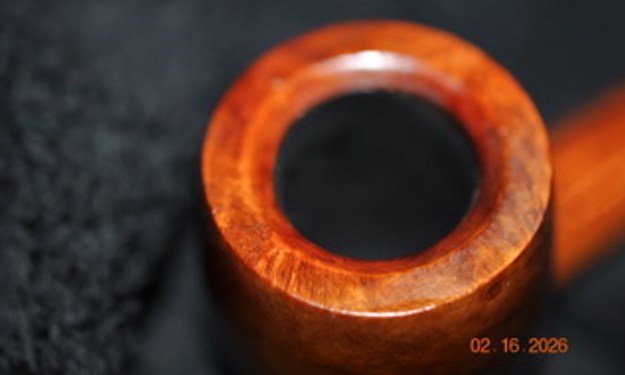
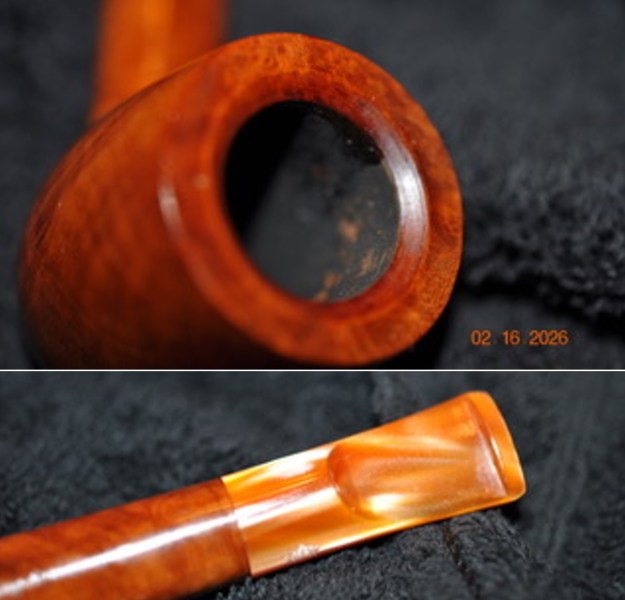
Bones Pipes are pipes – That’s it – No fancy stuff… If you want a pipe to start with or just build your collection, Bones are the pipes for you. Toss it in a tackle box or a backpack and go. These pipes are, simply put, the absolute least expensive honest briar pipe on the market. A simple smoking machine.

I Googled and found a great link to Cupojoes tobacco shop (https://www.cupojoes.com/tobacco-pipes/morgan-bones/). They had a great description of the line from the perspective of the seller. I have included that below.

Chris Morgan began making pipes in 2006, and has since become renowned name within the pipe smoking community. The reason being: the world famous Bones Pipe. The Bones pipe is exactly what it sounds like, the bare naked skeleton of a pipe, that we often never get a chance to see. While other companies rely heavily on staining and sandblasting techniques, the Bones comes in a truly unfinished, natural beauty, making each one (even if the same shape) unique. Praised for their affordability, Bones pipes are the perfect pipe for travel & on the go, often small enough to fit into pockets. Chris offers other lines such as the impeccably built Black Jack series, and the famous patented cigar style pipe called the “Briar Cigar”.

Now it was time to do my work on the pipe. I cleaned out the airway in the stem and the shank with pipe cleaners – both bristle and normal as well as cotton swabs and isopropyl alcohol.I scrubbed the surface of the bowl and the inside with undiluted Murphy’s Oil Soap and a tooth brush. I rinsed it off with warm, running water. I was able to remove the grim on the bowl sides and the bowl smelled far better. I set the bowl aside and turned my attention to the stem. I polished the acrylic stem with micromesh sanding pads – dry sanding it with 1500-12000 grit pads. I wiped the stem down after each sanding pad with Obsidian Oil and set it aside to dry. I polished it further with Before & After Pipe Polish – using both the Fine and Extra Fine Polishes. I gave it a rubdown with Obsidian Oil one last time and set it aside. I put the Chris Morgan made Bones Sandblast Bent Nosewarmer Billiard back together and worked the stem over on the buffing wheel using Blue Diamond to lightly polish the acrylic stem. I left the pipe natural finished and did not wax or polish it. I gave the stem multiple coats of carnauba wax. I buffed the entire pipe with a clean buffing pad to raise the shine. I hand buffed it with a microfiber cloth to deepen the shine. The finished the Bones Nosewarmer Billiard is shown in the photos below. The natural sandblast finish works well with the rich black acrylic stem. It looked quite amazing! The dimensions of the pipe are: Length: 4 inches, Height: 1 ¾ inches, Outside Diameter: 1 ¼ inches, Diameter of the chamber: ¾ of an inch. The weight of the pipe is 48 grams/1.69 ounces. This is a sandblast on the bowl and shank that reveals the grain underneath. This one will soon be on the rebornpipes store in the American (US) Makers Section. If you are interested in adding this Bones pipe to your collection this may well be the one for you. Thanks for walking with me through the restoration process.

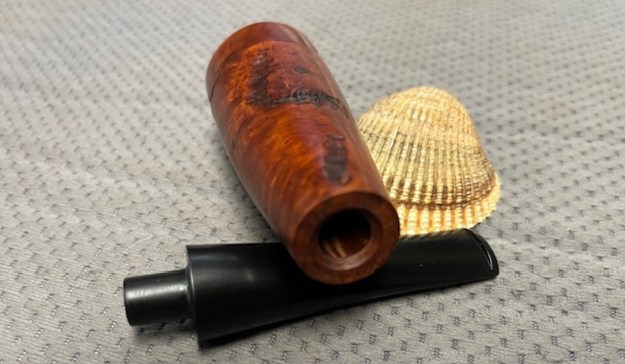
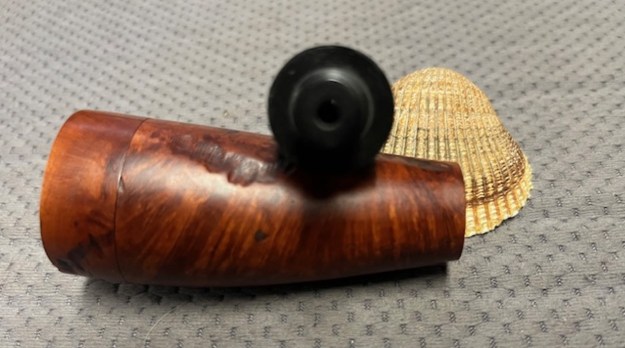
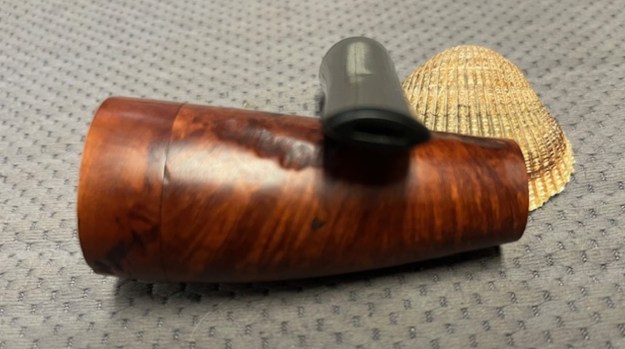
Fitting a stem on an UNSMOKED Freehand bowl from the estate of Byron Harwood


by Steve Laug

The next pipe I chose to work on was one that we purchased on 12/28/2024 from as part of an estate that belonged to a pipeman and carver, Byron Harwood from Missoula, Montana, USA. This Freehand was one of Byron’s own handmade pipes. It is a lovely piece of plateau briar (rim top and shank end) that was shaped with an apple bowl that highlighted the grain. The bowl and shank were smooth and highlighted some beautiful grain. The airway in the mortise and shank are well executed and the draught is very good. The bowl was unsmoked and other than dusty when we received it, the pipe was in excellent condition. The stem that came with it really did not fit – more of a Lovat style saddle stem on a midsized freehand. It looked like it had just been put in the shank before shipping. Everything about the stem said “restem me” to this repair guy. The pipe fit well in the hand and had a small bowl but there was a charm to it! Here is what it looked like when I brought it home from Jeff’s place. I took some photos of the rim top and bowl to give a clear picture of the condition of the rim top and bowl. You can see the drilling and the plateau. It is an unusual pipe. I also took photos of the stem to show its condition also the general look of it and why I don’t think it is a good fit.I sanded the briar bowl with 320-3500 sanding pads. I wiped the briar down with a damp cloth after each sanding pad. It began to look very good. I polished the bowl with micromesh sanding pads – wet sanding with 1500-12000 grit pads and wiping it down after each sanding pad with a damp cloth. The grain of the briar began to shine. I worked some Before & After Restoration Balm into the surface with my finger tips. I let it sit on the bowl for 10 minutes and then buffed it off with a paper towel and soft cloth. The product is a great addition to the restoration work. It enlivens, enriches and protects the wood while giving it a deep glow. It is a product I use on every pipe I restore. I went through my stems and found an acceptable acrylic saddle stem. It had been used for a short time and the airway was stained with dark tobacco stains. I would be able to remove some of the stain but not all. I took a photo of the two stems together. I put it in the shank of the bowl at hand and took a photo of the look with a new stem. The combination works very well.I cleaned the airway in the stem with alcohol and pipe cleaners – smooth and bristle. I followed up on that by cleaning it again with Soft Scrub cleanser. I gave it a quick rinse of alcohol to remove the residue of the cleanser and the swirls of tans, creams, ivory, browns and black look very good. There is some heavy darkening stain that I cannot remove but the stem is very clean.I set the bowl aside and worked on the stem. I filled in the tooth marks in the acrylic with clear CA glue. Once they cured I flattened the repairs with a small file and then sanded the repairs smooth with 220 grit sandpaper. I sanded out the light tooth marks and chatter with 320-3500 grit sanding pads. I wiped the stem down with an Obsidian Oil cloth after each sanding pad. The stem looked better at this point.I polished the stem with micromesh sanding pads – wet sanding with 1500-12000 grit sanding pads. I wiped it down after each sanding pad with Obsidian Oil. I polished it with Before & After Pipe Stem Polish – both Fine and Extra Fine. I buffed the stem with a soft cloth to raise the shine. I gave it a final wipe down with Obsidian Oil to add shine to the acrylic. I don’t know what it is about finishing a restoration but I have to tell you that it is my favourite part of the process. It is the moment when everything that I have worked on comes together. I can compare it to where I started and there is always satisfaction that it does indeed look better than when we picked it up. As always, I put this Byron Harwood Freehand Apple and new stem back together and buffed it with Blue Diamond on the buffing wheel. I gave the bowl and the stem multiple coats of carnauba wax. I buffed the pipe with a clean buffing pad and hand buffed it to raise the shine. It is fun to see what the polished bowl looks like along with the polished clear acrylic stem. This Byron Harwood Freehand Apple is a great looking pipe and I am sure that it will be comfortable in hand when smoking as it is light and well balanced for a pipe of this size. Have a look at it with the photos below. The dimensions are Length: 6 inches, Height: 2 inches, Outside diameter of the bowl: 1 ½ inches, Chamber diameter: ¾ of an inch. The weight of the pipe is 2.26 ounces/64 grams. It is another beautiful pipe and one that will be on the rebornpipes store soon. You can find it in the section of Pipes by American Pipe Makers. If you are interested in adding it to your collection let me know. Thanks for walking through the restoration with me as I worked over this pipe. Thanks to each of you who are reading this blog.

As always, I encourage your questions and comments as you read the blog. Thanks to each of you who are reading this blog. Remember we are not pipe owners; we are pipe men and women who hold our pipes in trust until they pass on into the trust of those who follow us.

Restoring a Zettervig Kolding Bamboo Shank Scoop


By Steve Laug

The next pipe on the table is one that we picked up in the lot from our contact in Copenhagen, Denmark on 02/16/2023. The shape/size, grain, finish and the bamboo caught our eye. It is stamped on the underside of the shank and reads Zettervig [over] Kolding. The shape is a scoop with a two knuckle bamboo shank extension. It is capped on both ends with a black acrylic spacer. The bowl has a smooth finish that is stained reddish/brown that highlights the beautiful grain around the bowl and short shank. Both go well with the acrylic saddle stem. The bowl is conical and the airway enters at the bottom. It appears to be moderately caked and the inner edge and the top show some lava overflow and damage. The acrylic stem is dirty and there are light tooth marks and chatter on the top and underside ahead of the button. There is no stamping or logos on the stem. Jeff took some photos of the pipe to show the general condition of the pipe before he started his clean up. He took some photos of the rim top and bowl from various angles to give me a clear picture of the condition of the rim top and bowl. You can see the lava and damage on the rim top and inner edge of the bowl. The cake is visible as well but is thicker on the top half of the bowl. He included photos that show the top and underside of the stem. It is as described above. Jeff took some photos of the sides and heel of the bowl to show the condition of the finish on the pipe. The photos showed some great grain around the bowl and shank under the dirt and grime of use. It is a great looking piece of briar. He took a photo of the stamping on the underside of the shank. The stamping was clear and readable as noted above.I turned to Pipedia to see what I could find out about this stamping. It is a very short article and I have included the link and the article in its totality (https://pipedia.org/wiki/Zettervig).

In the 1960s and into the early 1970s Ole Zettervig had a shop in Copenhagen, Denmark where he was carving high quality pipes equal to Stanwell, Jørgen Larsen, Anne Julie, Bjørn Thurmann, Bang and others. These early pipes were marked “Copenhagen” and are very collectible. He sold his shop at some point in the 1970s and moved to Kolding and continued to produce pipes as a hobby, but the quality of briar and workmanship is said to not equal the early production. The later pipes he now marked as Kobenhaven rather than Copenhagen, and these were sold by Ole at flea markets throughout Europe.

The stamping on the pipe told me it came from the shop that Ole started in Kolding and was one that he had produced as a hobby. However, that being said it is a beautiful pipe nonetheless.

Armed with that information I turned to work on the pipe itself. Jeff had done a great job cleaning up the pipe as usual. He cleaned up the inside of the bowl with a PipNet reamer and a Savinelli Fitsall Pipe Knife. The rim top and the inner edge of the bowl look much better. The damage on the inner edge and top are visible. The bowl walls looked very good. The conical bowl is clean. He scrubbed the interior of the bowl and shank with pipe cleaners, shank brushes, cotton swabs and alcohol to remove the tars and oils. He scrubbed the exterior of the pipe with undiluted Murphy’s Oil Soap and a tooth brush to remove the grime from the finish. He worked on the rim top lava and darkening with the soap and tooth brush. He scrubbed the inside of the stem with alcohol and pipe cleaners. He scrubbed the exterior with Soft Scrub and then soaked it in Briarville’s Pipe Stem Deoxidizer. He washed it off with warm water to remove the deoxidizer. The stem looked good with only light chatter on both sides ahead of the button. I took photos of the pipe when I received it before I started working on it. I took close up photos of the bowl, rim top and stem to show how clean the pipe was. The bowl was clean and the rim top and the inner edge show some damage. The inner edge is rough and the top has some marking that need to be cleaned up. The stem was clean and the light tooth marks and chatter can be seen in the photos.I took a photo of the stamping on the underside of the shank. It is very clear and readable for the most part. The last letters of the Zettervig are faint as are those of Kolding. However, it clearly read as noted above. I also removed the stem from the shank and took photos of the pipe to show the look of the parts.I started my work on the pipe sanding the bowl and rim top with 320-3500 grit sanding pads. I wiped the bowl down after each pad with a damp cloth. The pipe cleaned up very well with the sanding and the grain began to stand out. I polished the briar with micromesh sanding pads – dry sanding with 1500-12000 grit pads. I wiped the bowl down between pads and was happy with the rich shine. The exterior of the bowl look better after the polishing with micromesh. I worked some Before & After Restoration Balm into the briar and the bamboo with my finger tips. I let it sit on the bowl for 10 minutes and then buffed it off with a paper towel and soft cloth. The product is a great addition to the restoration work. It enlivens, enriches and protects the briar while giving it a deep glow. It is a product I use on every pipe I restore. It set the bowl aside and turned to the stem. I really like Zettervig’s stems as they are comfortable and thin to my liking – not chunky as can often be the case with acrylic stems. I polished it with micromesh sanding pads – dry sanding with 1500-12000 grit pads and wiping the surface down with Obsidian Oil after each sanding pad. It is really shining. I polished it further with Before & After Stem Polish – both Fine and Extra Fine. I gave it another coat of Obsidian Oil to finish this step. I put the Zettervig Kolding Bamboo Shank Scoop back together and worked the pipe over on the buffing wheel using Blue Diamond to lightly polish the stem. I buffed the bowl with a light touch so as not to get any of the buffing compounds in the grooves of the bamboo. I buffed the stem to raise the gloss on the acrylic. I gave the bowl and the stem multiple coats of carnauba wax. I buffed the entire pipe with a clean buffing pad to raise the shine. I hand buffed it with a microfiber cloth to deepen the shine. The finished Zettervig Bamboo Scoop looked beautiful with the briar, the bamboo and the black of the acrylic stem. The dimensions of the pipe are: Length: 6 inches, Height: 1 ¾ inches, Outside Diameter: 1 ¼ inches, Diameter of the chamber: ¾ inches. The weight of the pipe is 1.20 ounces/34 grams. This on will be joining the other Danish Made pipes in the Danish Pipe Makers Section of the rebornpipes store. If you want to add it to your collection let me know. Thanks for walking through the restoration with me.
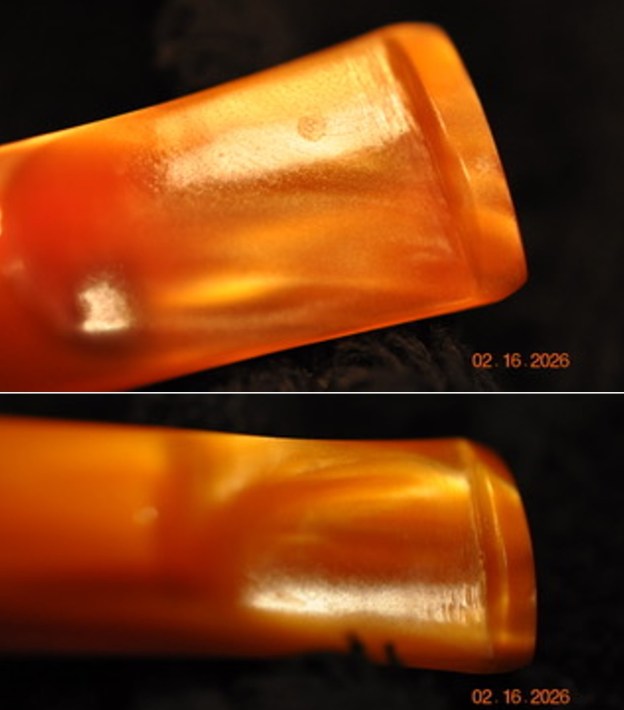
As always, I encourage your questions and comments as you read the blog. Thanks to each of you who are reading this blog. Remember we are not pipe owners; we are pipe men and women who hold our pipes in trust until they pass on into the trust of those who follow us.

Restoring a Stanwell Made in Denmark Colonial 191


by Steve Laug

I moved on to work on another pipe. The next one I chose was another Stanwell. We purchased this on a Facebook auction on 05/06/2018 from a seller in Oceanside, New York, USA. The stamping on the pipe was very clear and readable. On the left underside of the diamond shank it reads Stanwell [over] Made in Denmark [over] Colonial. On the right underside of the shank, next to the shank was the shape number 191. The stem had a gold stamped Crowned “S” Stanwell logo on the left side of the saddle stem. The bowl had a thick cake that overflowed onto the rim top and edges in thick lava. There were spots where it ran down the outer edges of the bowl. The finish was in okay condition underneath grime and oils ground into the surface of the bowl. The twin rings around the bowl cap were filled in with grime but appeared to be in good condition. The stem was dirty acrylic and had been protected from tooth marks by a Softee Bit. It showed a lot of promise through the grime. The pipe was well used and was obviously someone’s favourite pipe! Jeff took photos of the pipe as he saw it at this stage of his clean up. The next photos of the rim and the shank show the condition of the pipe at arrival in Idaho. The grain around the rim top is quite stunning to me. You can see the cake in the bowl and the grime on the top. It was a mess but the stain makes the grain even show through the grime around the bowl sides and cap. Jeff removed the softee bit from the stem to see what it hid. The stem looked good with light marks on the top and underside at the button edge. Jeff took photos of the grain on the sides and heel of the bowl. It really is a stunning piece of briar. The contrast stain really makes it stand out clearly. The next photos show the various stamping on the shank sides and bottom. It is clear and readable as noted above. He also captured the Silver Crown “S” Stanwell logo on the left side of the saddle stem. I did some looking through the catalogues on Pipedia and the information there and did not find the line listed. I did have a look at the article on Shape Numbers and Designers there (https://pipedia.org/wiki/Stanwell_Shape_Numbers_and_Designers). From there I found that the shape 191 is a small Rhodesian that was designed originally by Tom Eltang.

Jeff had done a great job cleaning up the pipe as usual. He reamed the pipe with a PipNet reamer and cut back the cake back to the bare briar. He cleaned up the walls with a Savinelli Fitsall Pipe Knife. He scrubbed the interior of the bowl and shank with pipe cleaners, cotton swabs and alcohol to remove the tars and oils. He scrubbed the exterior of the pipe with Murphy’s Oil Soap and a tooth brush to remove the grime from the finish. He worked on the rim top lava and darkening with the soap and tooth brush. He scrubbed the inside of the stem with alcohol and pipe cleaners. He scrubbed the exterior with Soft Scrub and then soaked it in Briarville’s Pipe Stem Deoxidizer. He washed it off with warm water to remove the Deoxidizer. The pipe looked far better when it arrived. I took photos of the bowl and rim top as well as the stem to show how clean they were. You can see that rim top and edges look very good. The stem is clean and the tooth and chatter on both sides ahead of the button is very light.I took photos of the stamping on the sides of the shank. The stamping is readable as noted above. I took the stem off the shank and took a photo to give a sense of the flow and proportion of the pipe. It is a beautiful looking pipe.I started my work on the pipe by addressing the burn marks and damage on the inner edge of the rim. I used a folded piece of 220 grit sandpaper to smooth out the damage and shape the inner edge.I polished the briar with micromesh because it was in such good condition. I polished it with 1500-12000 grit micromesh sanding pads. I wiped the bowl down after each sanding pad with a damp cloth. I rubbed the briar down with Before & After Restoration Balm. I worked it into the briar with my fingertips. The product works to clean, enliven and preserve the briar. I let it sit for 10 minutes while I worked on the stem. After the time passed I buffed it with a cotton cloth to deepen the shine. The briar really comes alive with the balm. I set the bowl aside and turned my attention to the stem. I polished the stem with micromesh sanding pads – dry sanding with 1500-12000 grit pads. I wiped the stem down after each sanding pad with Obsidian Oil. I polished it with Before & After Pipe Stem Polish – both Fine and Extra Fine. I gave it a coat of Obsidian Pipe Stem Oil. It works to protect the stem from oxidizing. I set it aside to dry. I am excited to put the finishing touches on this Tom Eltang Made in Denmark Stanwell Colonial 191 Rhodesian. I put the pipe back together and buffed it with Blue Diamond on the buffing wheel. I gave the bowl and the stem multiple coats of carnauba wax. I buffed the pipe with a clean buffing pad to raise the shine and hand buffed it with microfiber cloth to deepen the shine. It is fun to see what the polished bowl looks like with the polished black, fancy turned vulcanite stem was beautiful. This Stanwell Made in Denmark Colonial 191 is nice looking and the pipe feels great in my hand. It is light and well balanced. Have a look at it with the photos below. The dimensions are Length: 5 inches, Height: 1 ¾ inches, Outside diameter of the bowl: 1 ¼ inches, Chamber diameter: ¾ of an inch. The weight of the pipe is 1.69 ounces/48 grams. It is a beautiful pipe and one that I will be putting in the Danish Pipemakers Section on the rebornpipes store. Thanks for walking through the cleanup with me as I worked over this pipe.

As always, I encourage your questions and comments as you read the blog. Thanks to each of you who are reading this blog. Remember we are not pipe owners; we are pipe men and women who hold our pipes in trust until they pass on into the trust of those who follow us.

Life for a W.O. Larsen Handmade Danish Sandblast Freehand Dublin


by Steve Laug

It may seem I have endless choices of pipes to work on. While we do have a lot of pipes that are in the queue to be restored it is far from endless. This next pipe I chose to work on was one that we purchased a few years ago on 10/17/2022 from our contact in Copenhagen, Denmark. The pipe is stamped on the underside of the shank and reads W.O. Larsen [over] Handmade [over] Made in Denmark. This one is a unique beauty with a shallow sandblast on a stylized bent Dublin shape flowing up a curved shank and fancy saddle stem. The briar bowl and shank were sandblasted as was the rim top. The exterior of the pipe had a shiny coat of varnish that covered some of the dust and debris in the blast. There was a moderate cake in the bowl and some lava and darkening on blast of the rim top. The acrylic stem is a fancy turned saddle stem that is comfortable. There is no logo on the stem. As it is acrylic there is no oxidation and had minimal tooth marks and chatter on both sides ahead of the button. Jeff took photos of the pipe before he started his clean up work. Jeff took photos of the rim top and stem to show the general condition of the pipe. The bowl is moderately caked and there was some light lava on the sandblasted rim top. The stem looked good under the dirt and grime. There was light tooth marks and chatter. It should cleanup very well. Jeff took photos of the bowl sides and heel to show the beautiful blast that was around this bowl even though the grime on the finish hides it some. The pipe had obviously been well loved and cared for by the previous pipeman. He took a photo of the underside of the shank to show the stamping. The stamping is clear and readable in the photos below as noted above.I have worked on quite a few W.O. Larsen pipes that are well made Danish takes on classic shapes. Several of them have been Brandy shaped pipes. This sandblast Canadian has a bowl that is almost a Brandy shape. Here is a link to the blog describing the background and history of the brand (https://rebornpipes.com/2021/10/25/restoring-a-sandblast-canadian-hand-made-designed-by-w-o-larsen-super-tan-65/). I quote from that blog in information that follows.

I turned to Pipephil (http://www.pipephil.eu/logos/en/logo-l2.html) to get a quick view of the brand once again. I did a screen capture of the site’s information and have included that below. The pipe I am working on is a W.O. Larsen as it is stamped similarly to the ones in the photos. I quote from the sidebar below:

In the 1960s Ole Larsen, owner of the Copenhagen tobacco store, retails pipes carved by Sixten Ivarsson, Poul Rasmussen, Sven Knudsen or Peter Brakner. Faced with the success and urged by Sven Bang (store manager), Sven Knudsen and Former (Hans Nielsen) are successively hired to carve pipes in the basement of the shop at the beginning and in the old Larsen cigar factory afterwards. Carver like Teddy Knudsen, Tonni Nielsen, Jess Chonowitch, Peter Hedegaard work a while in this context. When Nils, son of Ole Larsen, succeeds his father he acquires the Georg Jensen pipe factory to focus on less expensive pipes. This turns out to be an error ending with the sale of W.O. Larsen trademark to Stanwell. The famous tobacco shop at Strøget, Amagertorv 9 closed down for good on Dec 31, 2004. Do not confuse W.O. Larsen with: Jorgen Larsen

I turned to Pipedia (https://pipedia.org/wiki/W.%C3%98._Larsen) for a quick read. The site is worth reading the history of the shop and the brand and its influence on Danish pipe carving. I quote a portion of the article below:

The workshop of W.Ø.Larsen

W.Ø.Larsen is Denmark’s oldest and probably most famous pipes and tobacco store, placed in the center of Copenhagen on the main pedestrian street, Stroget. If you visit Copenhagen and do a “pipe crawl” this store is a must. In the beginning of the 1960’s the store began to sell Danish hand-made pipes, especially those of Poul Rasmussen. This went very well and Poul Rasmussen could not keep up with the demand. W.Ø.Larsen, with their dynamic business manager Svend Bang (who later started his own pipe business), decided to establish their own workshop in rooms next to the store.

The first manager of the pipe workshop was Sven Knudsen, but he soon left to make pipes under his own name. The next manager was Hans Nielsen, also known as “Former” (named after the late British actor George Formby, whom he was said to resemble. Coincidentally, in Danish, “Former” means “shapes”). Under the management of Former the workshop grew and W.Ø.Larsen pipes became a prominent name abroad. Among the prominent pipemakers educated here were Else Larsen (Denmark’s first female pipemaker),Poul Ilsted, Ph. Vigen, Teddy Knudsen, Tonni Nielsen, and Peter Hedegaard.

Typical for the W.Ø.Larsen School were semi-classic shapes, meaning classic shapes, but with slight differences, often bring a little more full or round. The pipes often had lower center of gravity. A typical billard would have a bowl shaped more like a pear and the connection between the bowl and the shank would be clearly distinguished. Yellow and orange were colors more widely used for the finishes.

What I learned from the research is that the pipe is a W.O. Larsen pipe made by one of the famous carvers who worked in the shop. It is a beautiful pipe in both shape and finish.

Jeff did a great job cleaning up the pipe. He reamed the bowl with a PipNet pipe reamer and cleaned up the cake with a Savinelli Fitsall Pipe Knife. He scrubbed out the mortise and the airway in the shank and the stem with alcohol, shanks brushes, cotton swabs and pipe cleaners. He scrubbed the exterior of the bowl, rim and shank with a tooth brush and Murphy’s Oil Soap to the oils and tars on the bowl, rim and shank. He removed the light lava coat on the top of the rim. He rinsed the bowl under running water. He dried it off with a soft cloth. Once the grime was removed the finish underneath was in good condition. The stain and the look of the finish was very well done. He scrubbed the exterior of the stem with Soft Scrub and rinsed it with warm water. He wiped the bowl and stem down with a light coat of olive oil and buffed it with a soft cloth. The pipe really was quite stunning. I took photos of the pipe to show its condition before I started my work on it. I took a close up photo of the rim top and edges to show how well it had cleaned up and the edges around the bowl. I also took close up photos of the stem to show the light tooth chatter on the surface ahead of the button on both sides.I took a photo of the stamping on the underside of the shank. It is clear and readable as noted above. I removed the stem and took a photo of the pipe to show the proportions of the pipe. It is a beauty.I used a brass bristle wire brush to go over the rim top and knock off the remaining lava and debris in the sandblast. It looked much better. I worked some Before & After Restoration Balm into the surface of the briar with my fingertips and a shoe brush to clean, enliven and protect the briar. I let the balm sit for 15 minutes and then buffed with a cotton cloth to raise the shine. The photos show the bowl at this point in the restoration process. I polished the stem with micromesh sanding pads – dry sanding with 1500-12000 grit sanding pads. I wiped it down after each sanding pad with Obsidian Oil. I polished it with Before & After Pipe Stem Polish – both Fine and Extra Fine. I gave it another coat of Obsidian Oil. I am really happy with the way that this W.O. Larsen Handmade Freehand Dublin turned out. It really is a beautiful looking pipe with a unique shape and shallow sandblast finish. The fancy acrylic saddle stem is really nice. The briar really came alive with the buffing. The rich brown and black stains of the finish gave the pipe a sense of depth with the polishing and waxing. I put the stem back on the bowl and carefully buffed the pipe with Blue Diamond on the buffing wheel using a light touch on the briar. I gave the bowl and the stem multiple coats of carnauba wax on the buffing wheel. I buffed the pipe with a clean buffing pad to raise the shine. I hand buffed the pipe with a microfiber cloth to deepen the shine. The finished W.O. Larsen Handmade Dublin really is a beauty and feels great in the hand and looks very good. Give the finished pipe a look in the photos below. The dimensions of the pipe are Length: 6 ½ inches, Height: 2 ½ inches, Outside diameter of the bowl: 1 ¾ inch, Chamber diameter: ¾ of an inch. The weight of the pipe is 51 grams/1.80 ounces. The pipe will be going on the rebornpipes store in the Danish Pipe Makers Section if you would like to add it to your collection. Thanks for reading this blog and my reflections on the pipe while I worked on it. It was a fun one to work on!
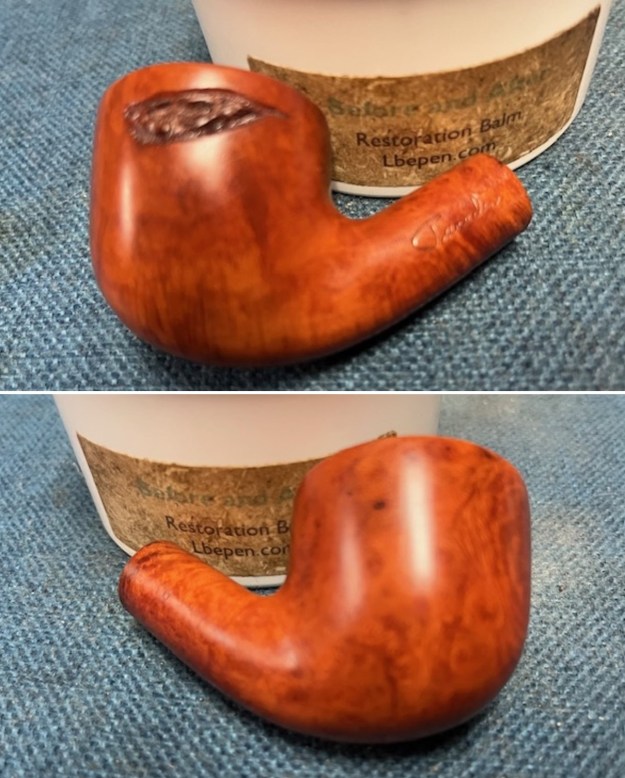
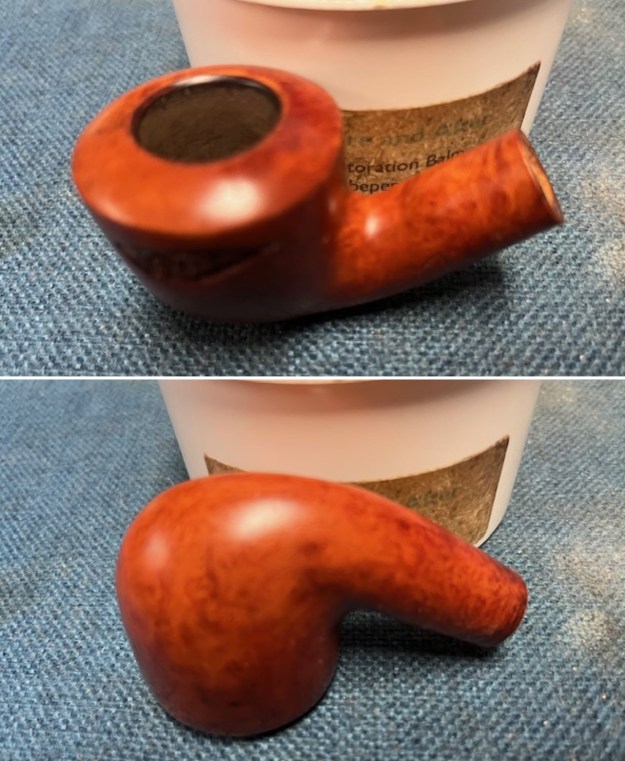
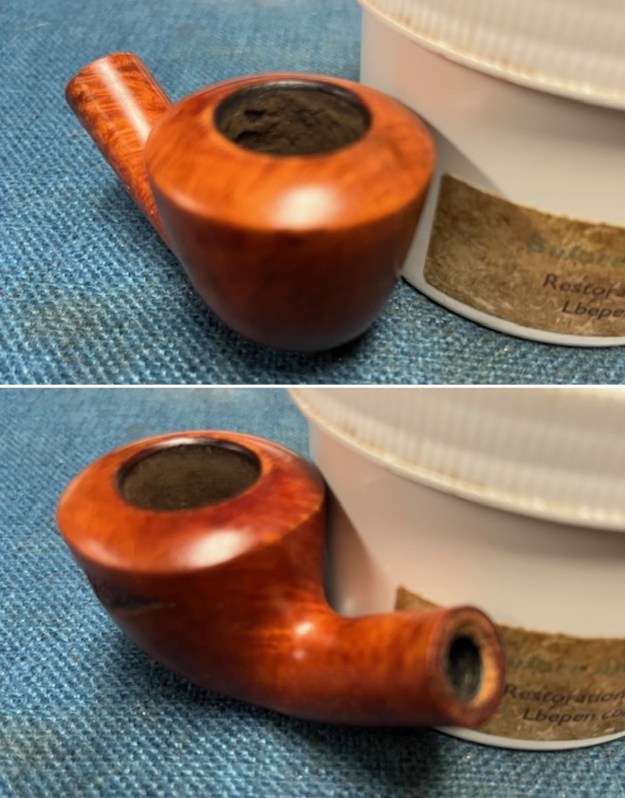
Restemming and Restoring a Rogers Rarity Imported Bruyere 310 Bulldog


by Steve Laug

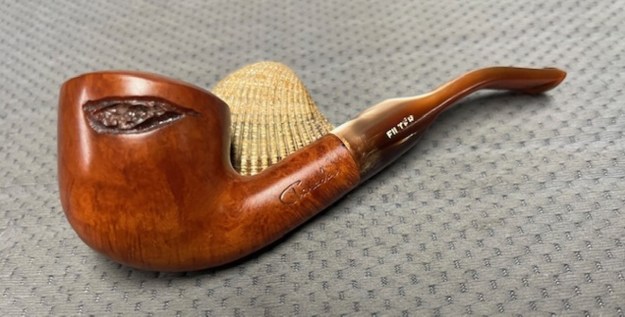
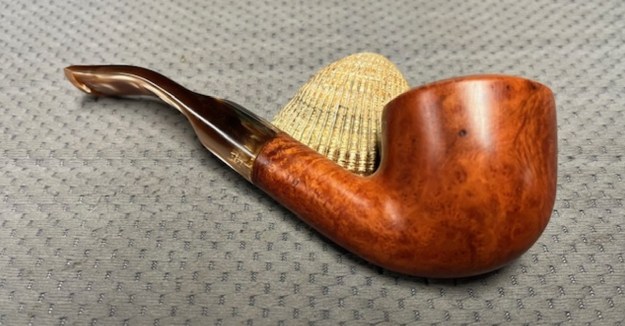
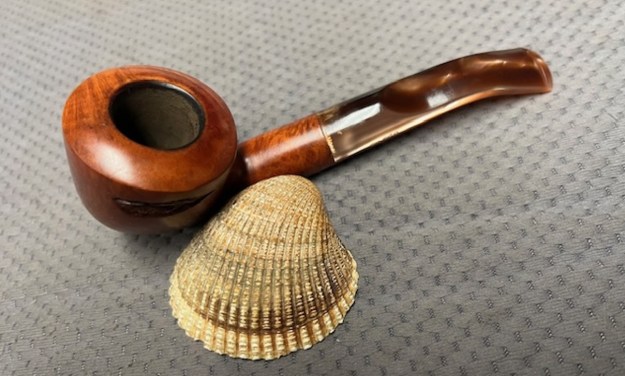
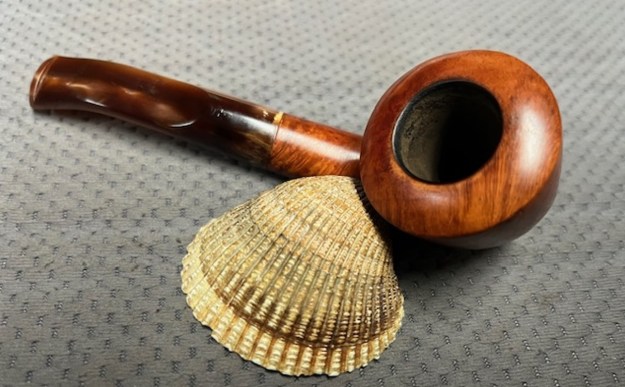
I decided to restem another bowl that I had here in the box. Jeff and I purchased on 10/17/2017 from am antique shop in Pocatello, Idaho, USA. It is a nicely grained bowl that came with some odd stem stuck in the shank. It was obviously the wrong one so it would have to go. The left side of the shank is stamped and reads Rogers [over] Rarity in an oval. The right side is stamped Imported [arched over] the shape number 310 and underneath was arched Bruyere. The bowl had a thick cake and lava overflow on the rim top and inner edge. The briar is oily and dirty with some lava coming down the outer edge of the rim top onto the bullcap. There was some great grain hidden by the grime. Jeff took some photos of the pipe before he started his work on cleaning it up. He included photos of the stem that came on it when we purchased it.He captured the cake in the bowl and the thick eruption of lava on the rim top and edges exceptionally well in the next photo. It was very clear that the pipe had not been seriously cleaned in a very long time. But it is also very clear that it was an exceptional smoker! The incorrect stem is oxidized and dull with tooth marks and chatter on both sides ahead of the button. It was going to be replaced but I always find it interesting to see what pipesmokers do to make a pipe remain usable. Jeff somehow captured some of the beauty of the shape and the grain in the next photos. You can certainly see what lies beneath the grime on the briar. You can also see a few small fills in the bowl and along the twin rings of the bullcap. He took photos of the stamping on the top left and right of the shank. It is clear and readable as noted above.From reading Bill Unger’s book on Custom-Bilt Pipes I remember “Rogers Rarity” was made by the same company as one of its non-sculptured or rusticated pipes. I did a Google search to see if I could confirm that online. I found a pipe labeled Rogers Rarity for sale on Worthpoint, an online sales site (https://www.worthpoint.com/worthopedia/rogers-rarity-custombilt-large-briar-1821532853). In the description they made the link to Custombilt. I quote:

Rogers Rarity briar pipes were made by Custombilt, and show all the beauty and originality of the brand.

I searched further and found a conversation asking about the brand on Pipesmagazine online forum. There was a great conversation about the brand.

(https://pipesmagazine.com/forums/threads/help-with-dating-a-pipe.62314/). I found a particular response by Jon Guss of the Seattle Pipe Club particularly helpful. I quote from Jon in full.

First, “Rodgers” is a misspelling; it was always spelled “Rogers”. Three generations of the Rogers family ran one of the leading importers of pipes (including Petersons for a number of years) and resellers of pipes and smokers articles; they also did a bit of manufacturing. The name of the company was Rogers Imports, Inc.

Second, for several reasons I also believe that Rogers Rarity pipes were made for Rogers Imports by CustomBilt.

The Rogers Rarity line was introduced by the company in late 1945. The advertising copy from the spring of 1946 described Rogers Rarity pipes as “The height of pipe luxury and enjoyment”, and claimed that they were “Carved by hand of Algerian bruyere over 150 years old”. Was it true? I would guess not, but age fabrication regarding the briar from which pipes were made was a kind of industry trope for generations. While most of the Rarity pipes apparently sold for $5, the listed price range stated various models cost from $5-25. The $5 pipes were available in natural and grain finishes; there was also a $10 version called the Rogers Rarity Deluxe that was sterling banded and meerschaum lined.

I can’t be sure when the line ceased production, but believe it was by the end of 1949. Certainly Rogers Rarity pipes are no longer listed in the RTDA Almanac from 1950 on, and mentions of the pipe in advertisements to consumers become thin on the ground. More tellingly newspaper ads from 1951 show the pipe heavily discounted, suggesting that excess inventory of an obsolete line was being flushed through the channel…

Now I knew that my memory was correct. The pipe was made by CustomBilt for Rogers Imports. I also knew that it was made between 1945-1949 when the line was no longer made. It was a bit of an old timer… Now it was time to work on the pipe.

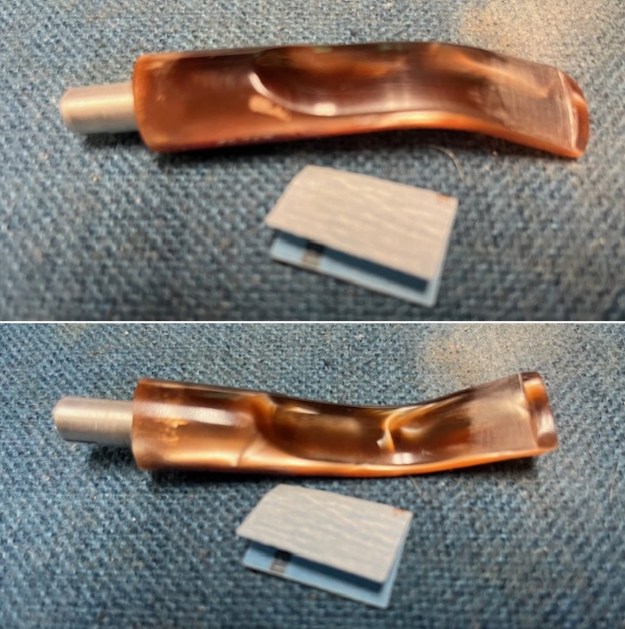
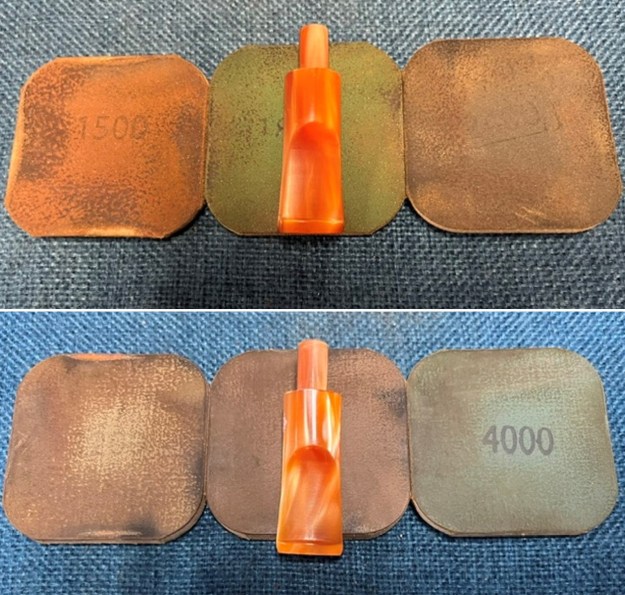
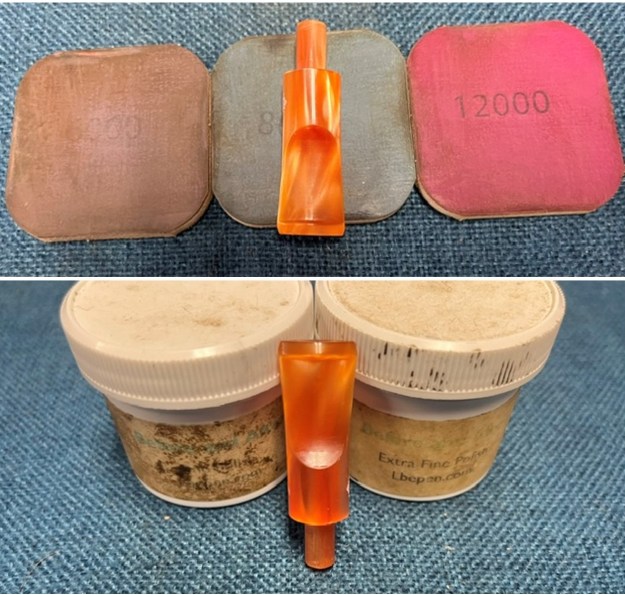
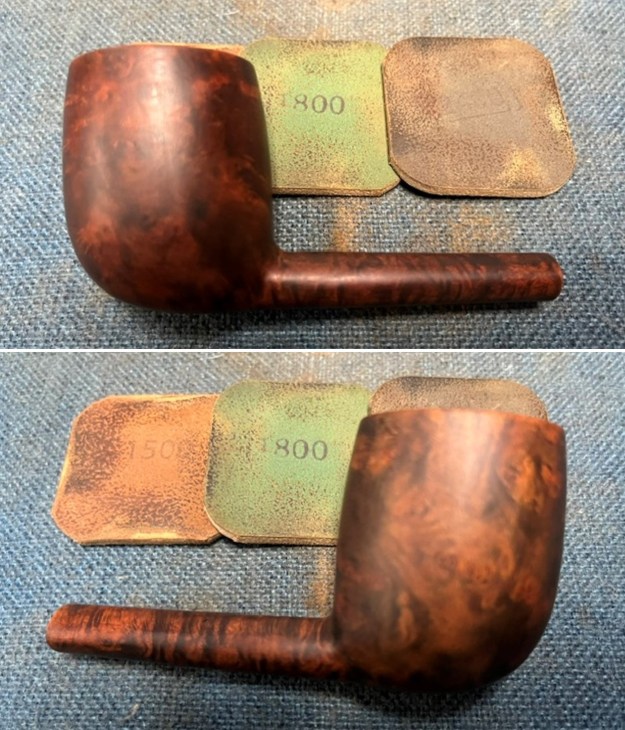
I was amazed at how clean and new the pipe looked when I took it out of the box. It is really a beautiful piece. Jeff had done a great cleanup on the pipe. He reamed the bowl with a PipNet pipe reamer and followed up with a Savinelli Fitsall pipe knife to remove the cake. He scrubbed out the mortise and the airway in the shank and the stem with alcohol, cotton swabs and pipe cleaners. He scrubbed the bowl exterior with a tooth brush and Murphy’s Oil Soap to remove the grime on the finish of the bowl and the lava from the rim top. He rinsed it under running water. One of the benefits of this scrub is that it also tends to lift some of the scratches and nicks in the surface of the briar. He dried it off with a soft cloth. We put the stem in our stem can. I took photos of the pipe bowl as I saw it when I put it on the table. I took photos of the rim top to show the condition. The rim top had some darkening on the top and outer edge but did not look deeply damaged. The inner edge of the bowl showed some damage and was slightly out of round.The stamping on the top left and right sides of the diamond shaped shank are clear and readable as noted above.I started my work on this pipe by fitting a new stem to the shank. Once I had that done I would move on to cleaning up the bowl. I had a stem picked out that was a clear/Perspex style acrylic that would look great on this pipe. I first adjusted the fit of the tenon to the shank with my Dremel, files and sandpaper. Once I had a fit I took some photos. I think the stem would work very well with this pipe. As is usual with pipes the shank was not a true diamond and I needed to adjust the facets of the diamond shank to properly match those of the shank. I did this by hand using a folded piece of 220 grit sandpaper. I was fortunate that the top facets lined up well so I could avoid the stamping on them. I set the stem aside and dealt with the damage to the inner edge of the bowl. I used a folded piece of 220 grit sandpaper to smooth out the inner edge and give it form once again. It worked quite well. Then I used a wooden sphere and a piece of 220 grit sandpaper to lightly bevel the inner edge of the rim to remove the burn damage. The result was actually quite good. I sanded the bowl with 320-3500 grit sanding pads. I worked over the rim top, bowl sides, shank (carefully avoiding the stamping). I wiped it down with a damp cloth after each sanding pad. The briar began to look very good and the grain richly shone. I polished the briar with 1200-1500 micromesh sanding pads and wiping it down with damp cloth after each sanding pad. As I worked through the cycle of pads the shine developed with each change of pad. The pipe looks very good. Now it was time to bend the stem. I have had better luck bending acrylic/Perspex stems with boiling water than a heat gun. I boiled some water in the microwave and put the stem in the hot water. I repeated it several times to soften the acrylic. I bent it over a pill bottle to give it a correct bend. I set the bend with cool water. I put it partially in the shank to check the bend. I and happy with the way it turned out. It had a nice smooth bend.The button had a small round opening. I used a slot saw and three different files to shape an oval slot in the shank. It was a well-shaped slot that I smoothed out. With the bend in the stem and new slot it was very workable. I fit the stem in shank and took photos of the new look to the slightly bent bulldog. The Perspex stem fit well and looked very good. I removed the stem and rubbed the bowl and shank down with Before & After Restoration Balm. I worked it into the surface of the bowl sides and shank with my fingertips to clean, enliven and protect the briar. I let the balm sit for 10 minutes, then buffed with a cotton cloth to raise the shine. The Balm did its magic and the grain stood out on the briar. I set the bowl aside and turned my attention to polishing the stem. I sanded it with 320-3500 grit sanding pads. I wiped it down between pads with a Obsidian Oil impregnated cloth. It was looking much better.I polished the stem with micromesh sanding pads – dry sanding with 1500-12000 grit sanding pads. I wiped it down after each sanding pad with Obsidian Oil. I polished it with Before & After Pipe Stem Polish – both Fine and Extra Fine. I wiped down again with Obsidian Oil and set it aside while I worked on the stem. This Chubby 1945-49 Rogers Rarity 310 Bent Bulldog with an Acrylic/Perspex saddle stem is a well grained pipe with a flowing shape that looks great. The rich browns of the darkened natural finish make the grain come alive with the polishing and waxing. I put the stem back on the bowl and carefully buffed the pipe with Blue Diamond on the buffing wheel using a light touch on the briar. I gave the bowl and the stem multiple coats of carnauba wax on the buffing wheel and followed that by buffing the entire pipe with a clean buffing pad. I hand buffed the pipe with a microfiber cloth to deepen the shine. The finished Rogers Rarity Bent Bulldog really is a beauty and fits nicely in the hand and looks very good. Give the finished pipe a look in the photos below. The dimensions of the pipe are Length: 6 inches, Height: 1 ¾ inches, Outside diameter of the bowl: 2 ¼ inches, Chamber diameter: ¾ of an inch. The weight of the pipe is 1.90 ounces/54 grams. This old timer will soon be on the American Pipe Makers Section of the rebornpipes store if you would like to add it to your collection. Thanks for reading this blog and my reflections on the pipe while I worked on it.