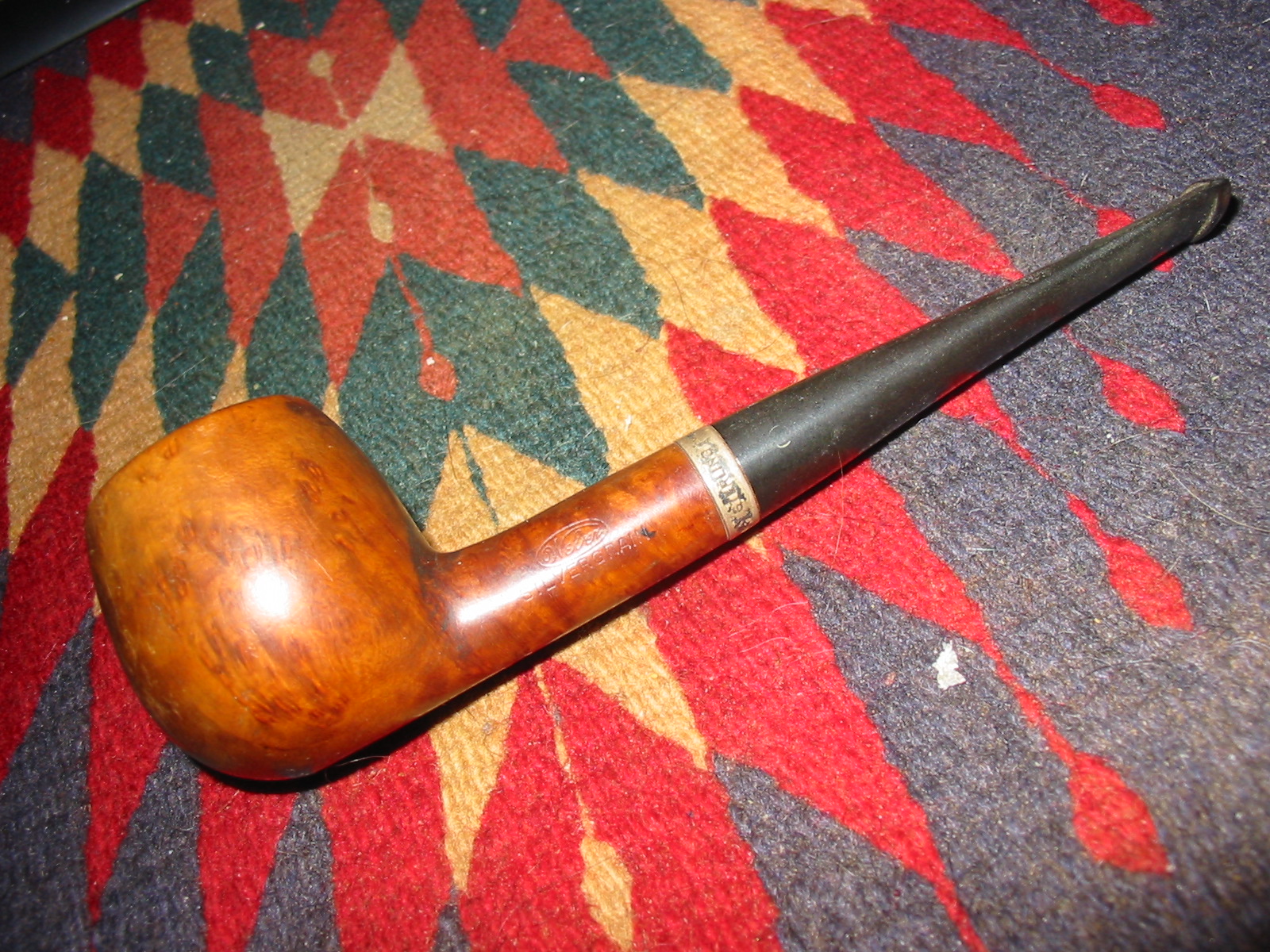
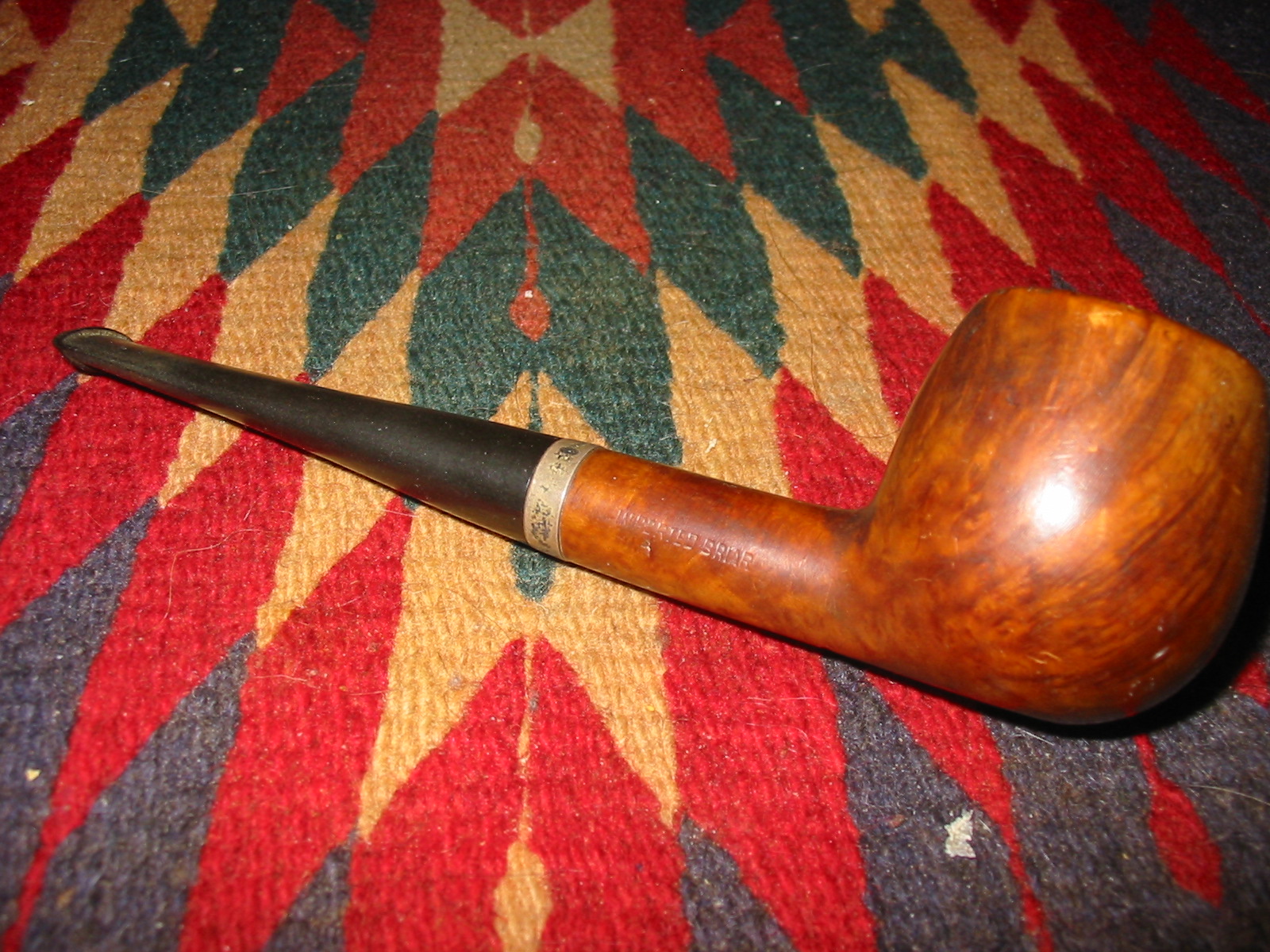
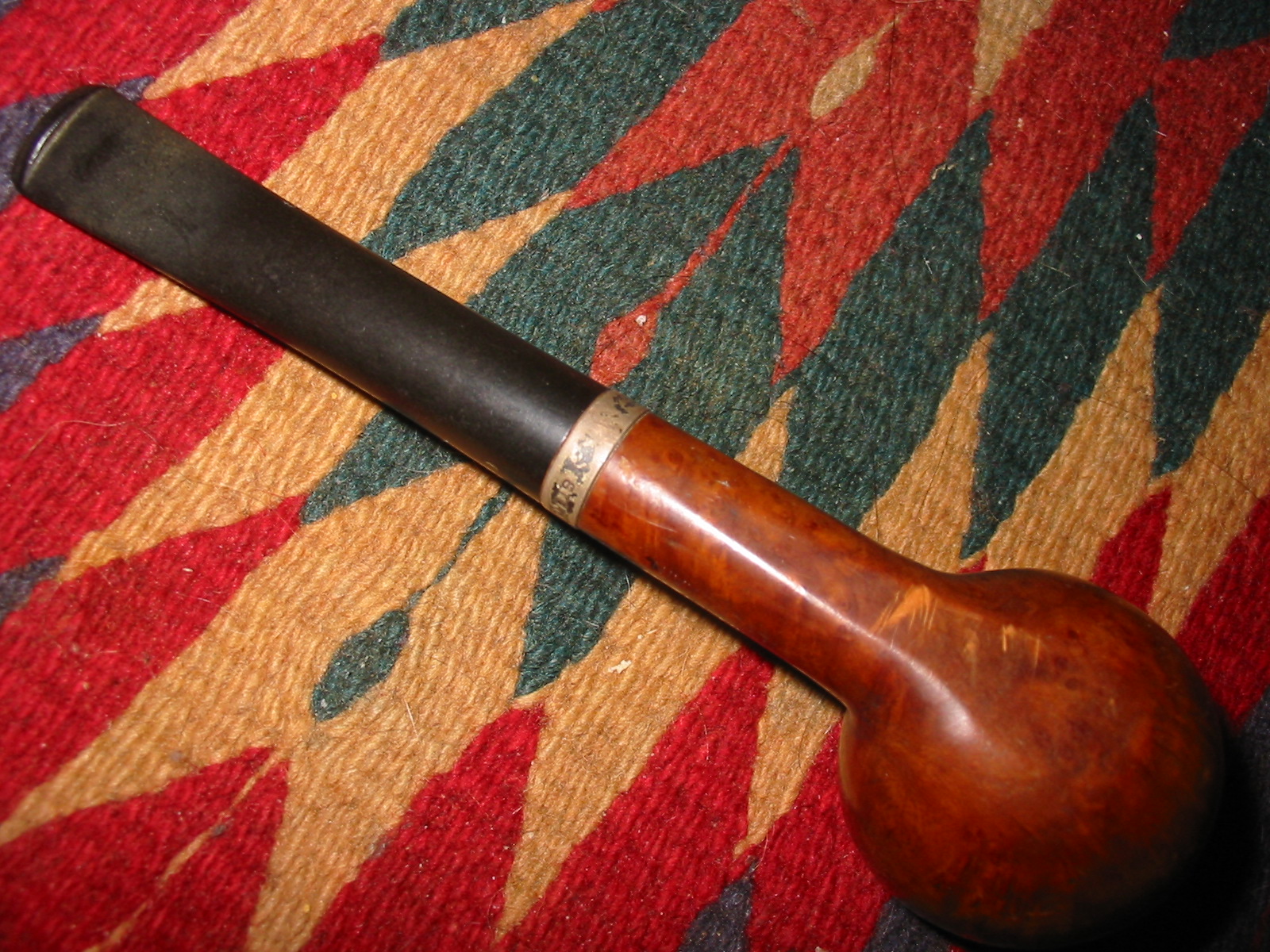
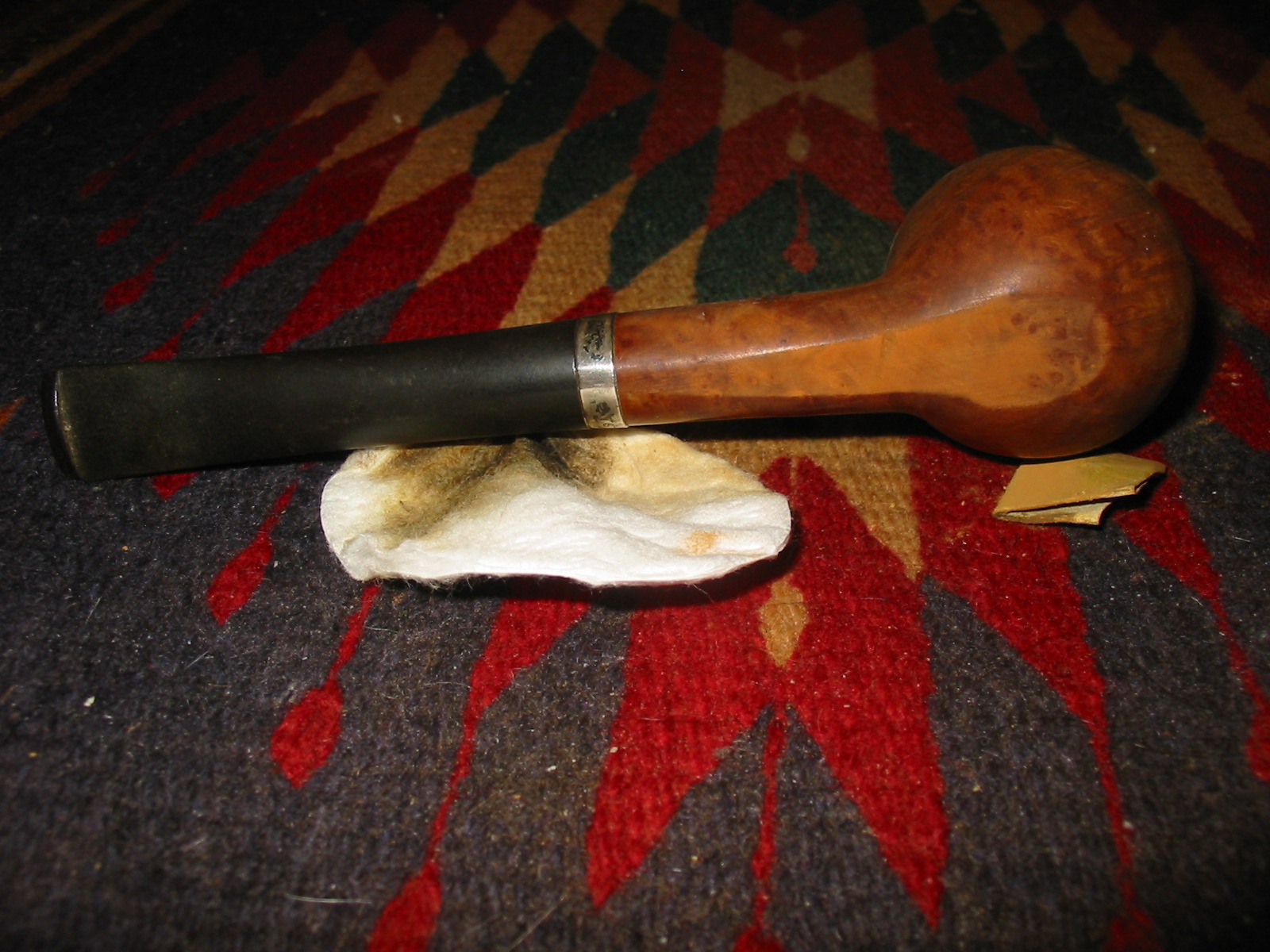
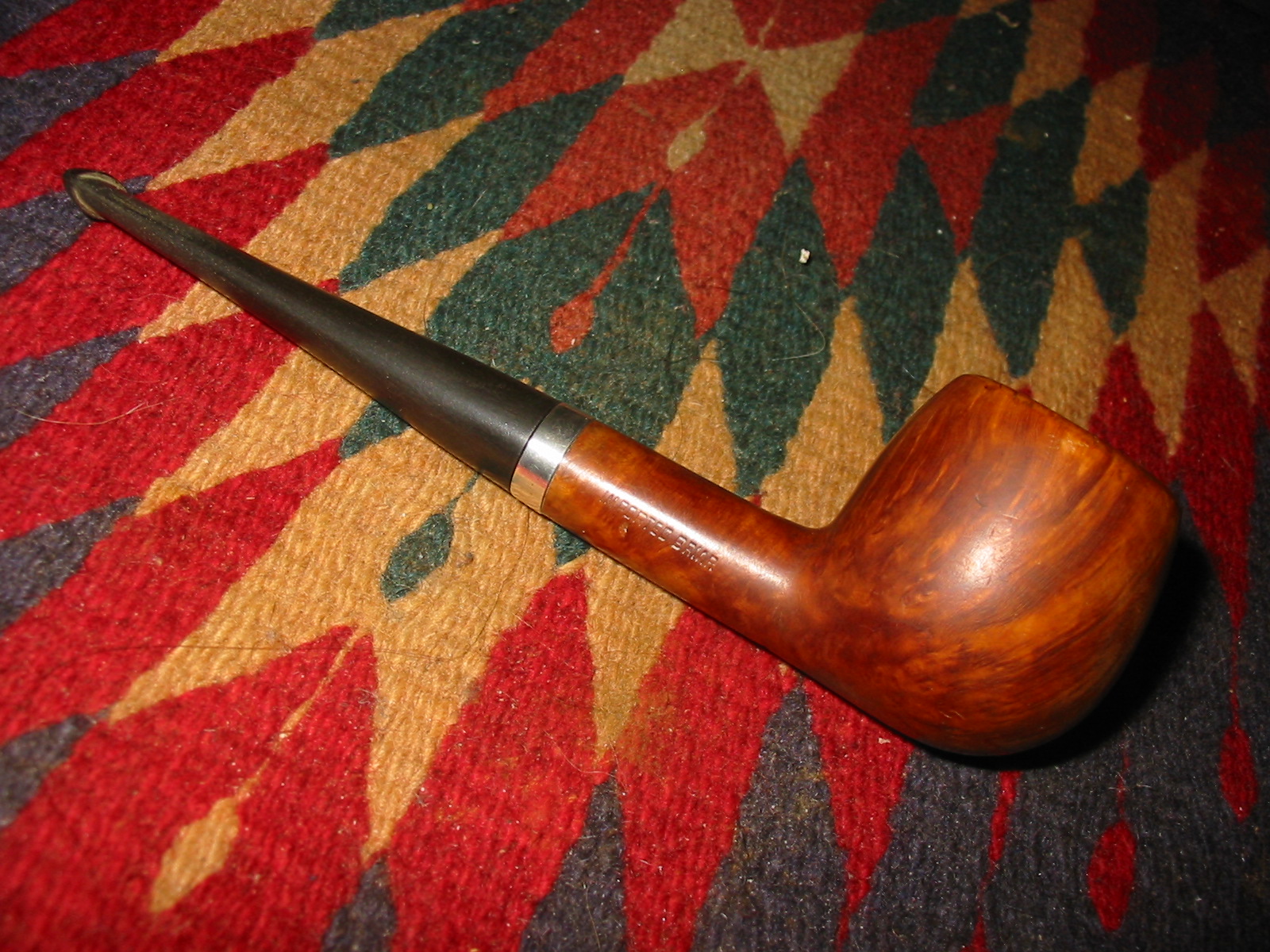
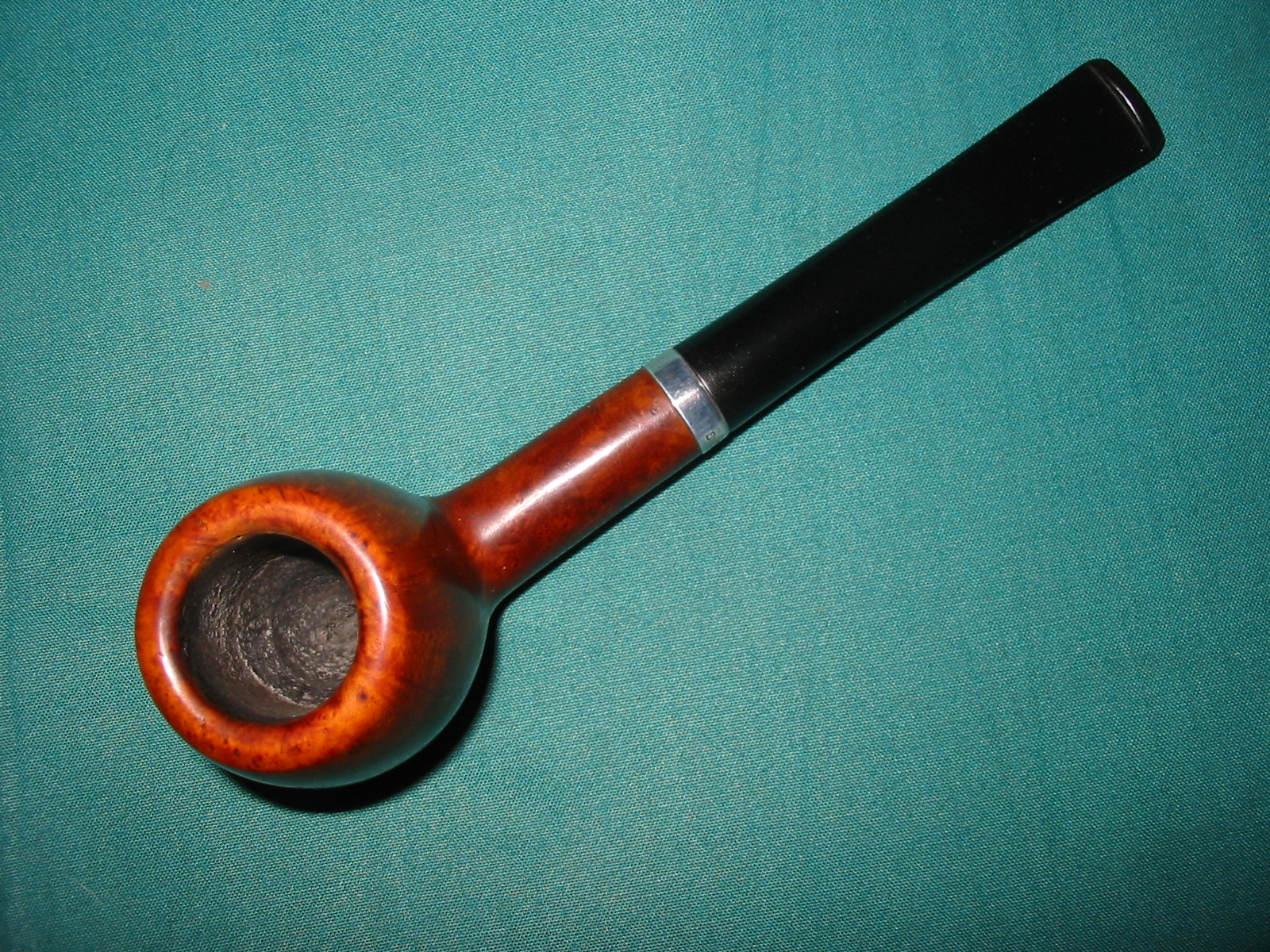
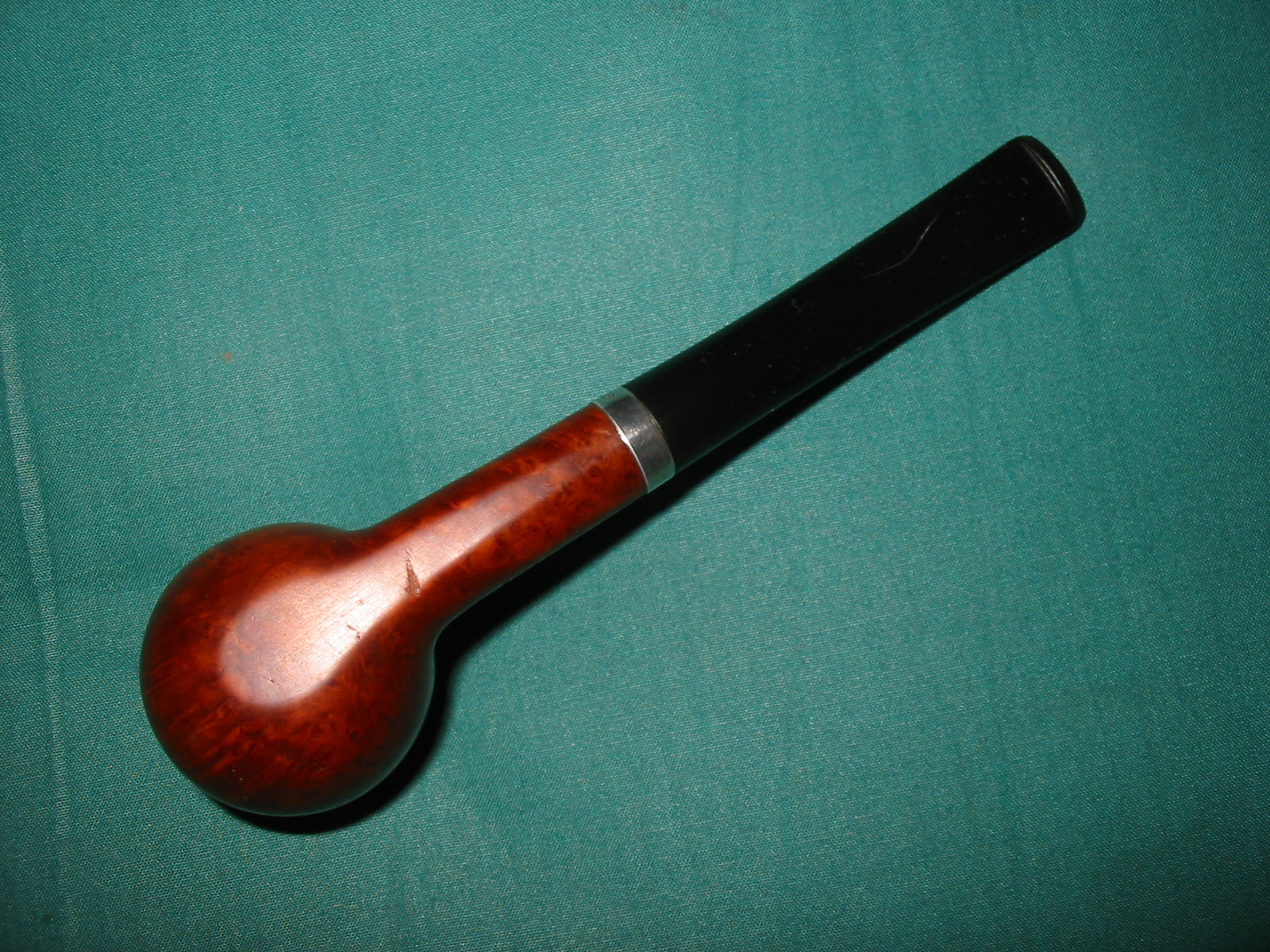
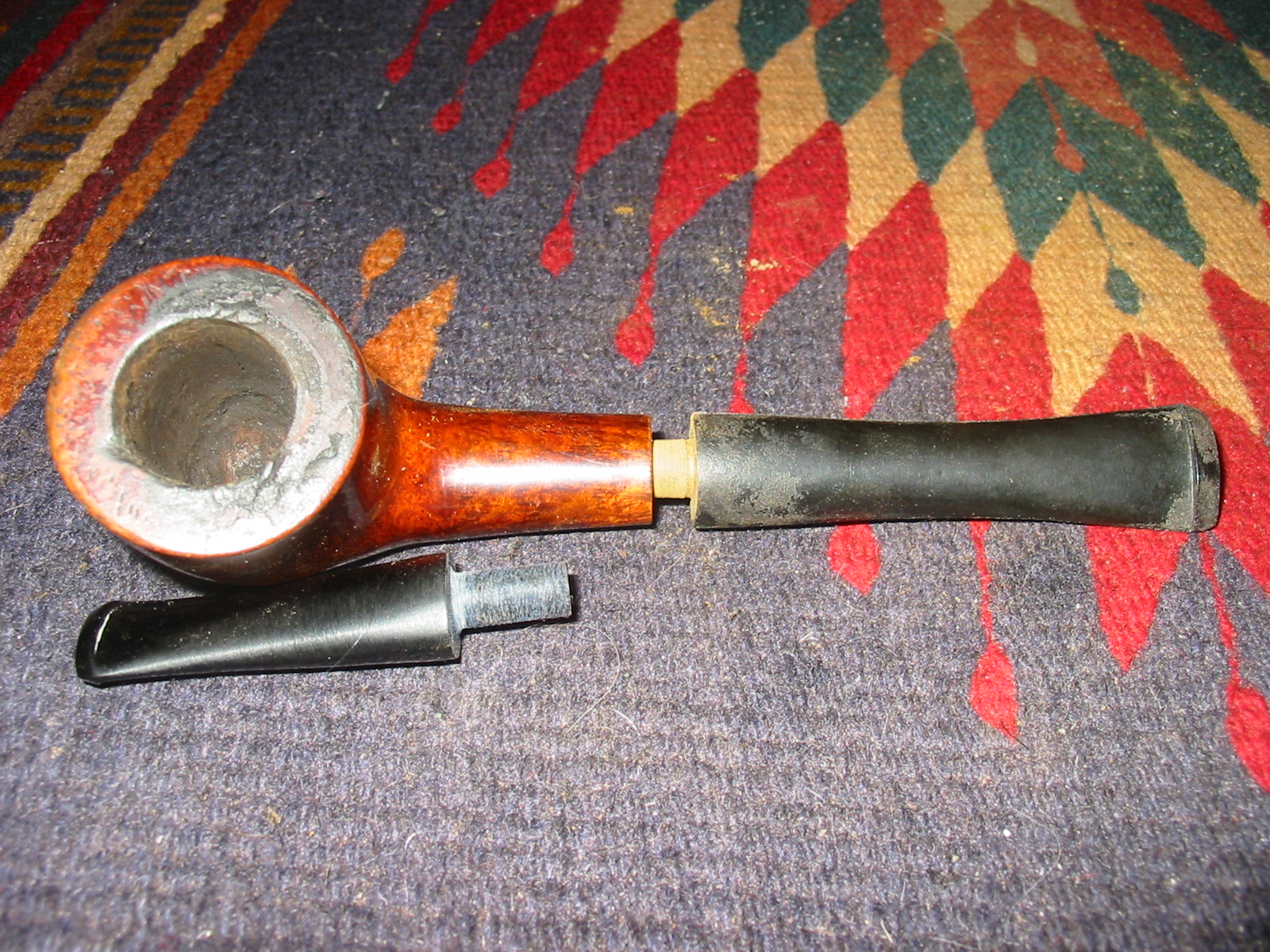
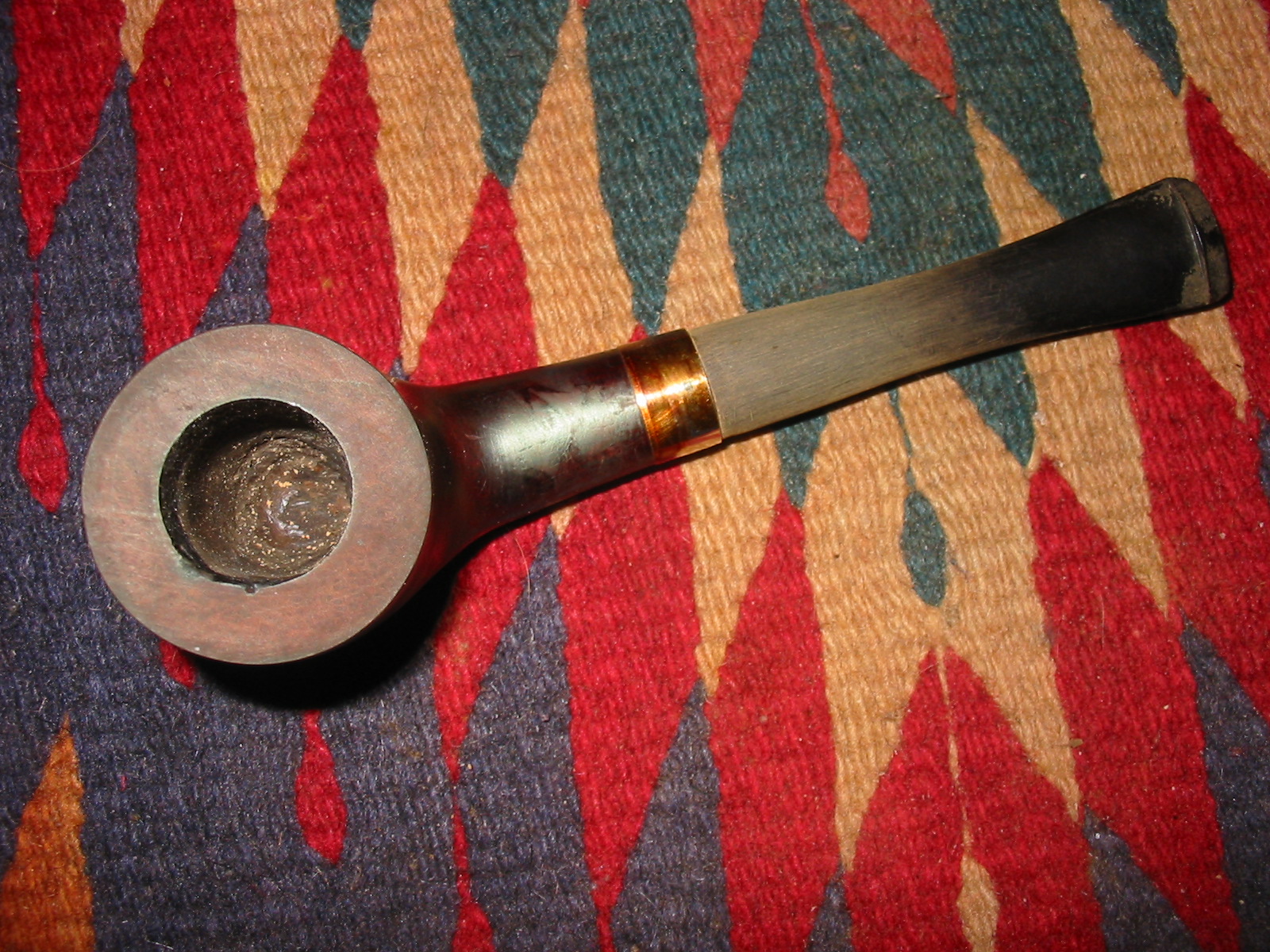
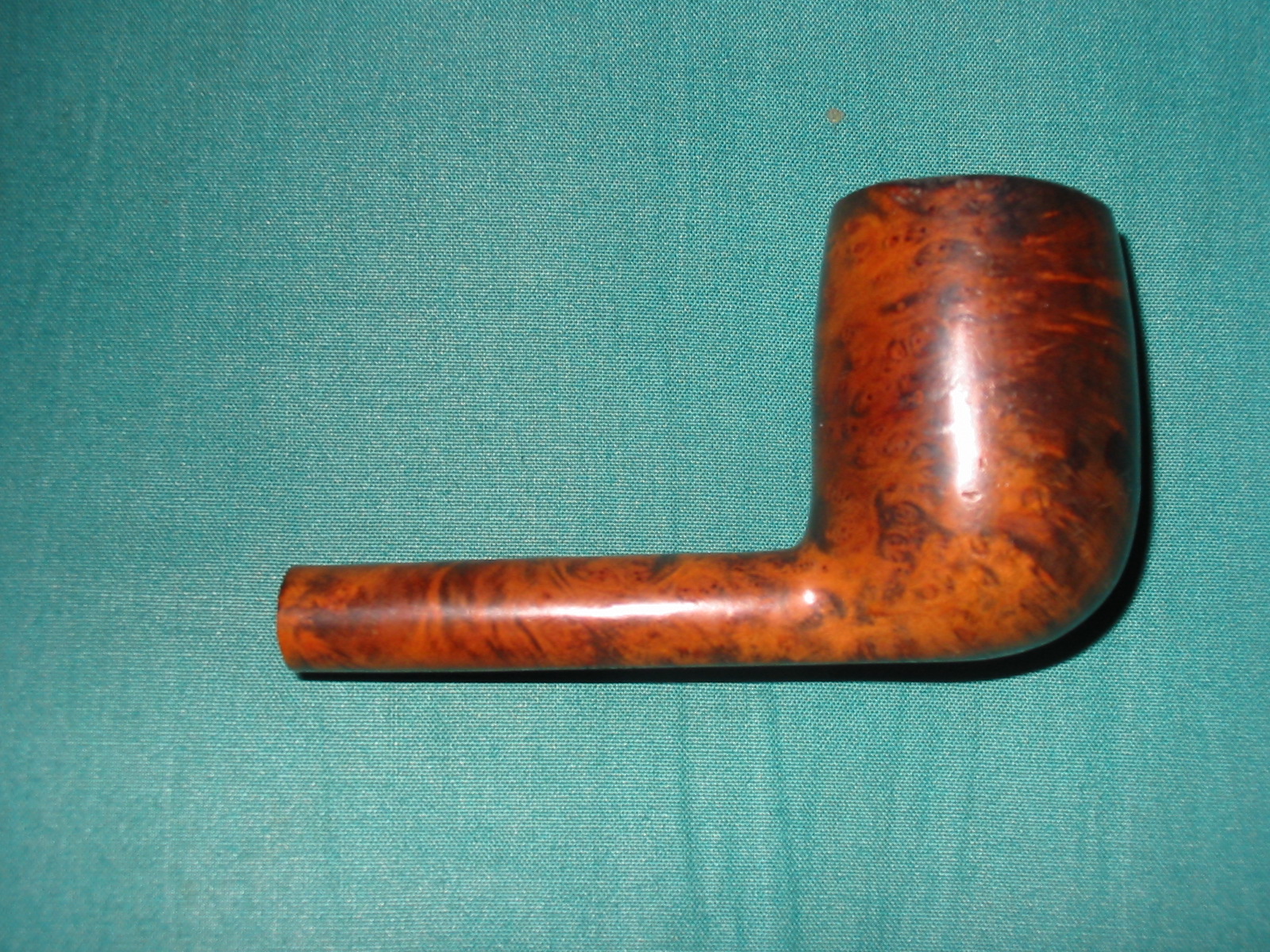
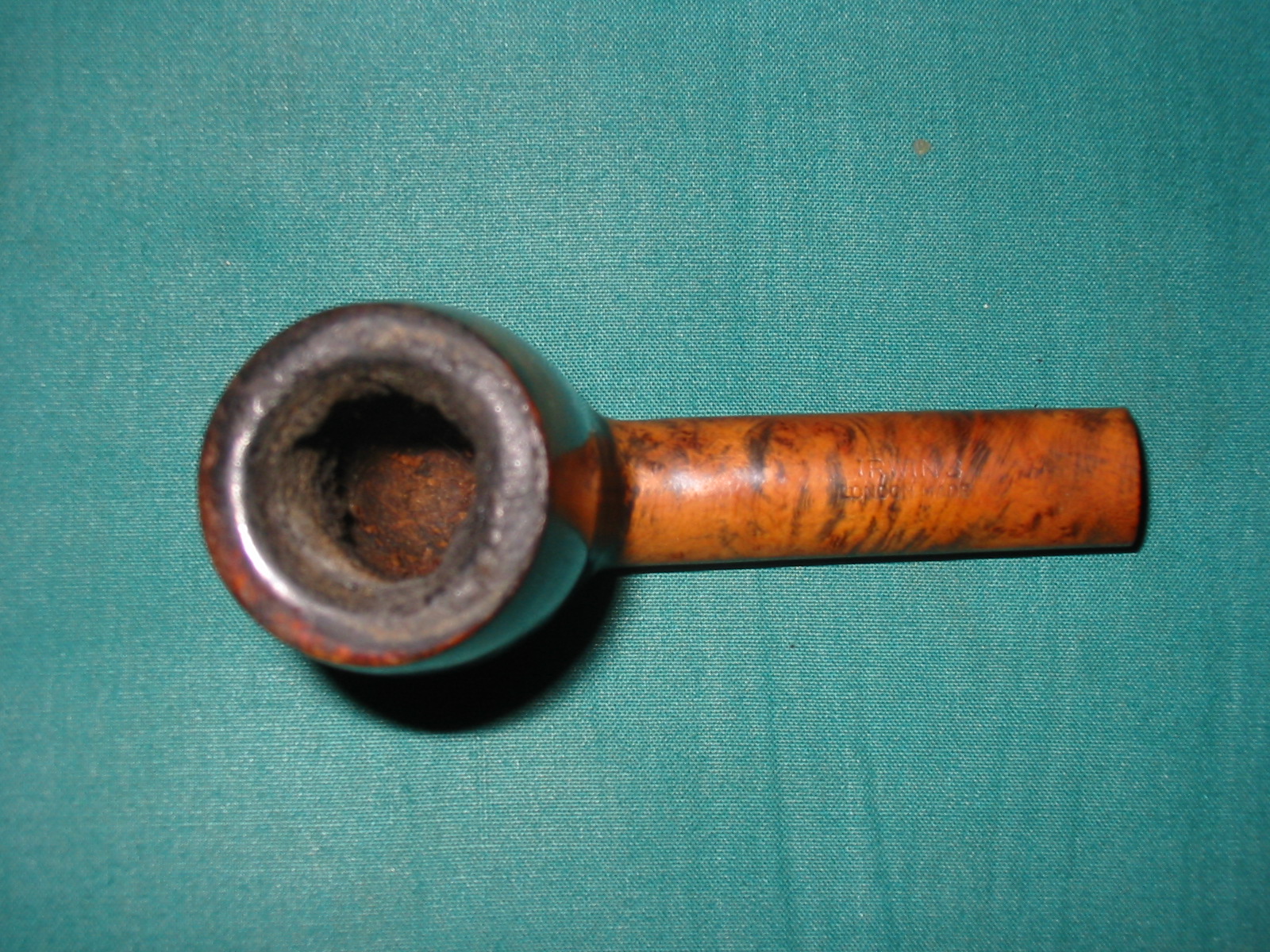
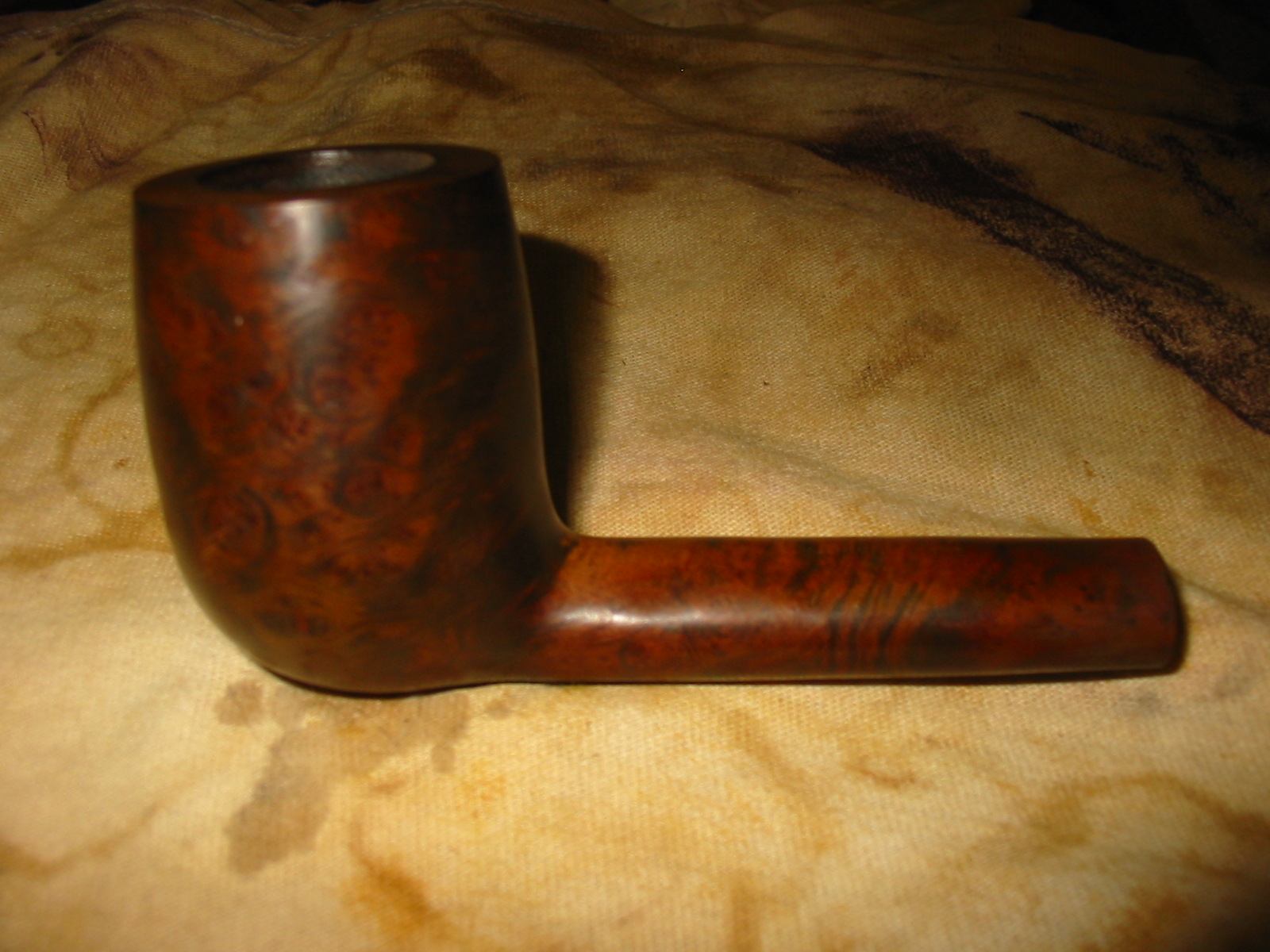
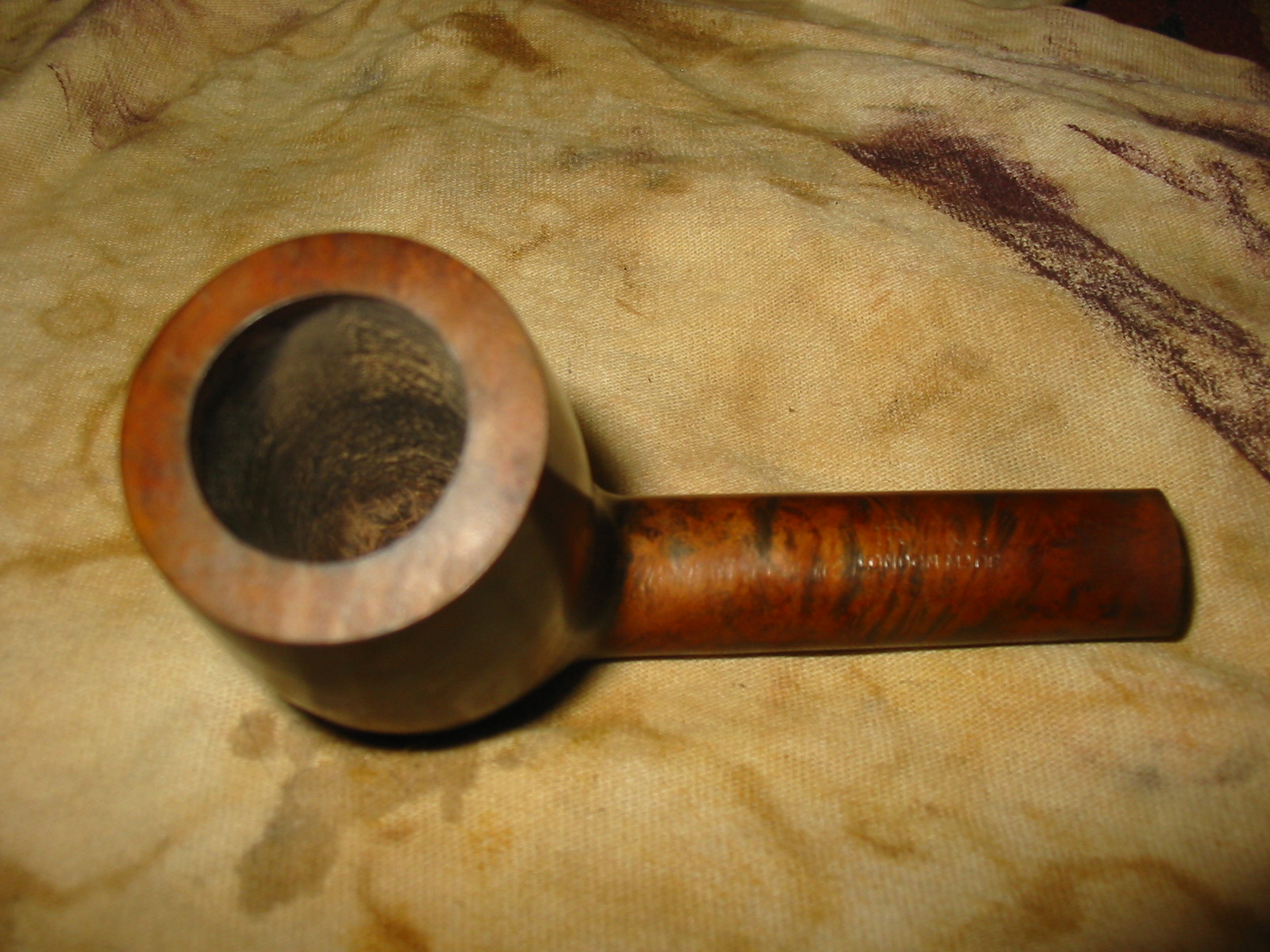
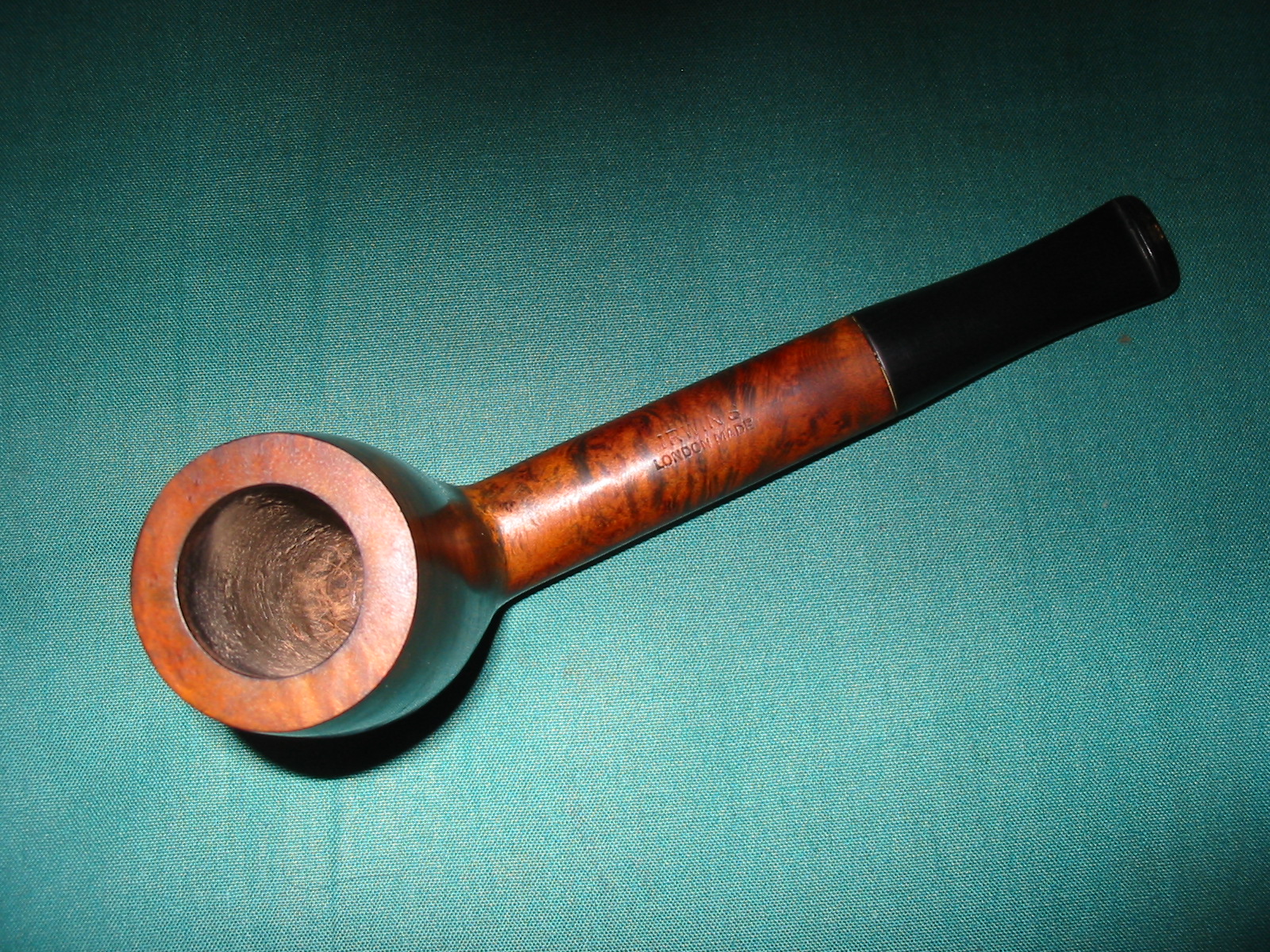
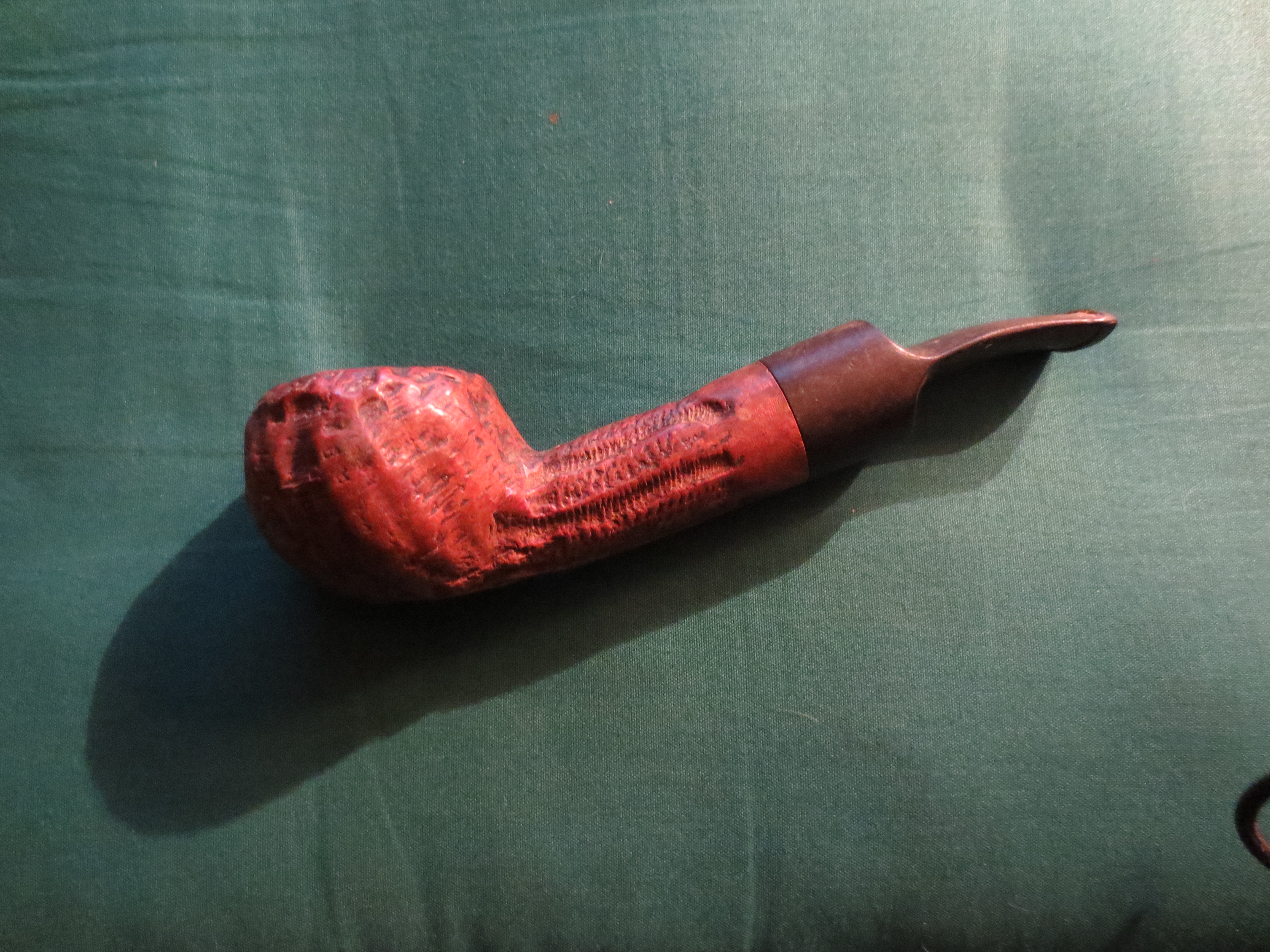
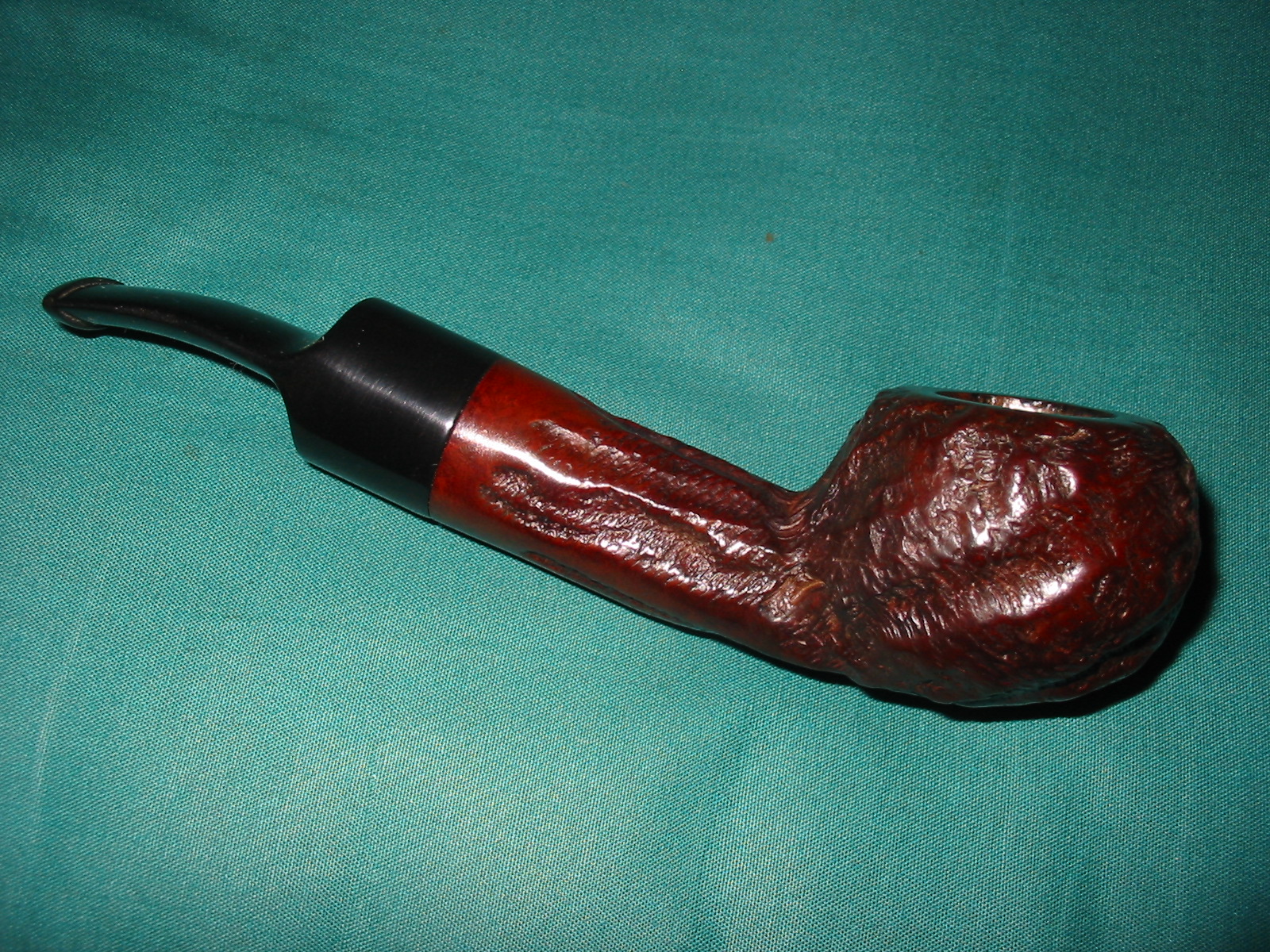
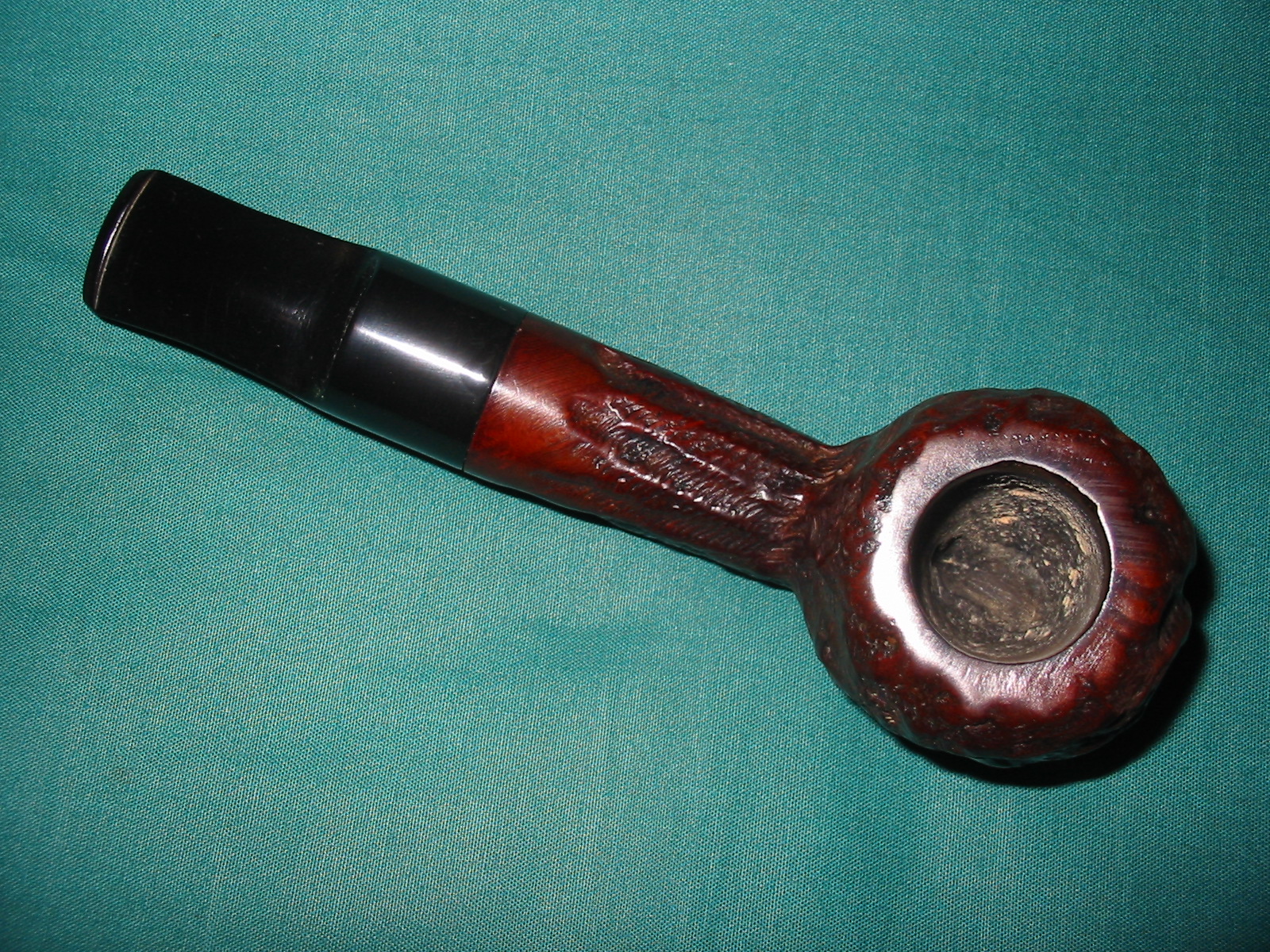
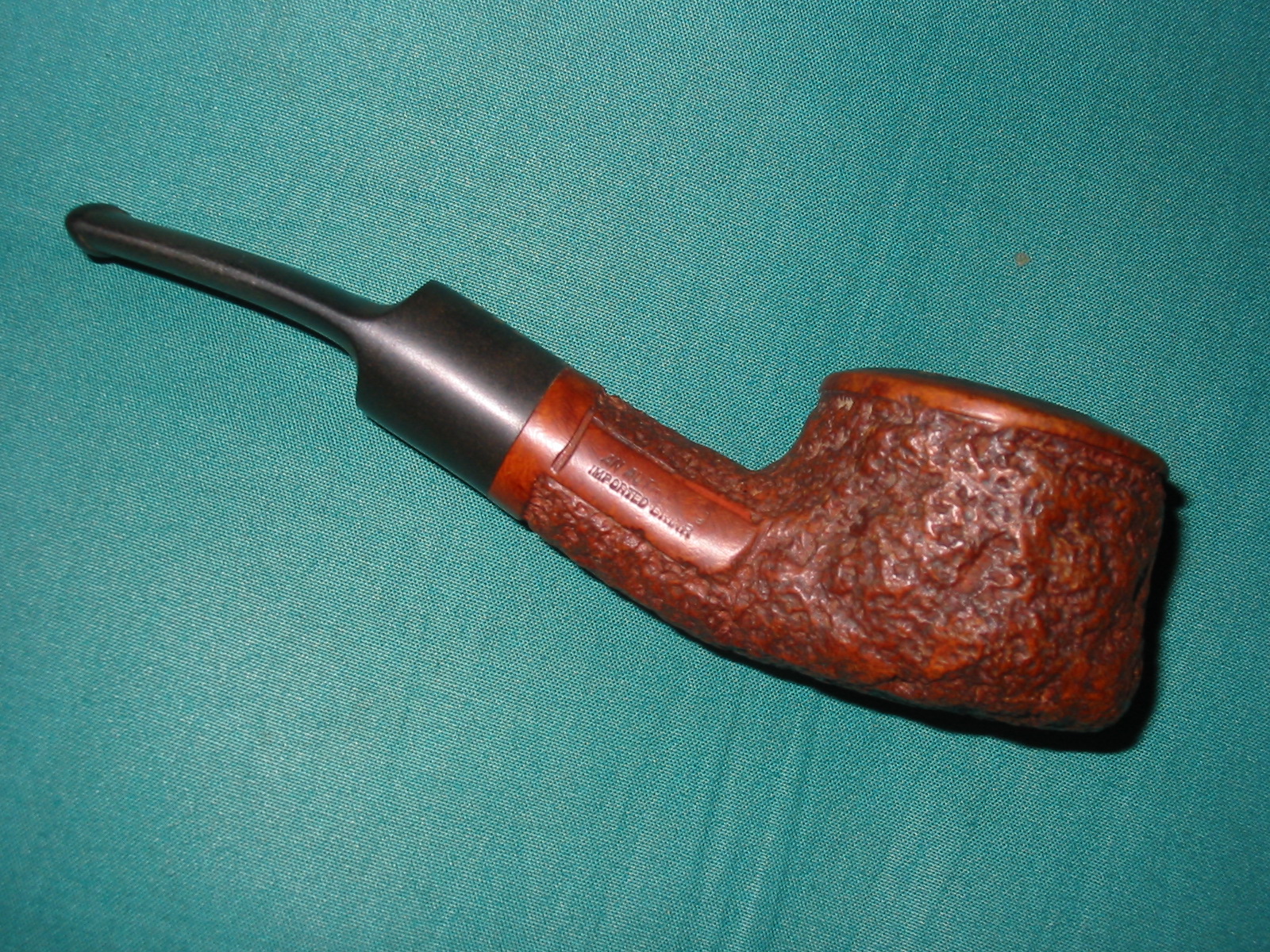
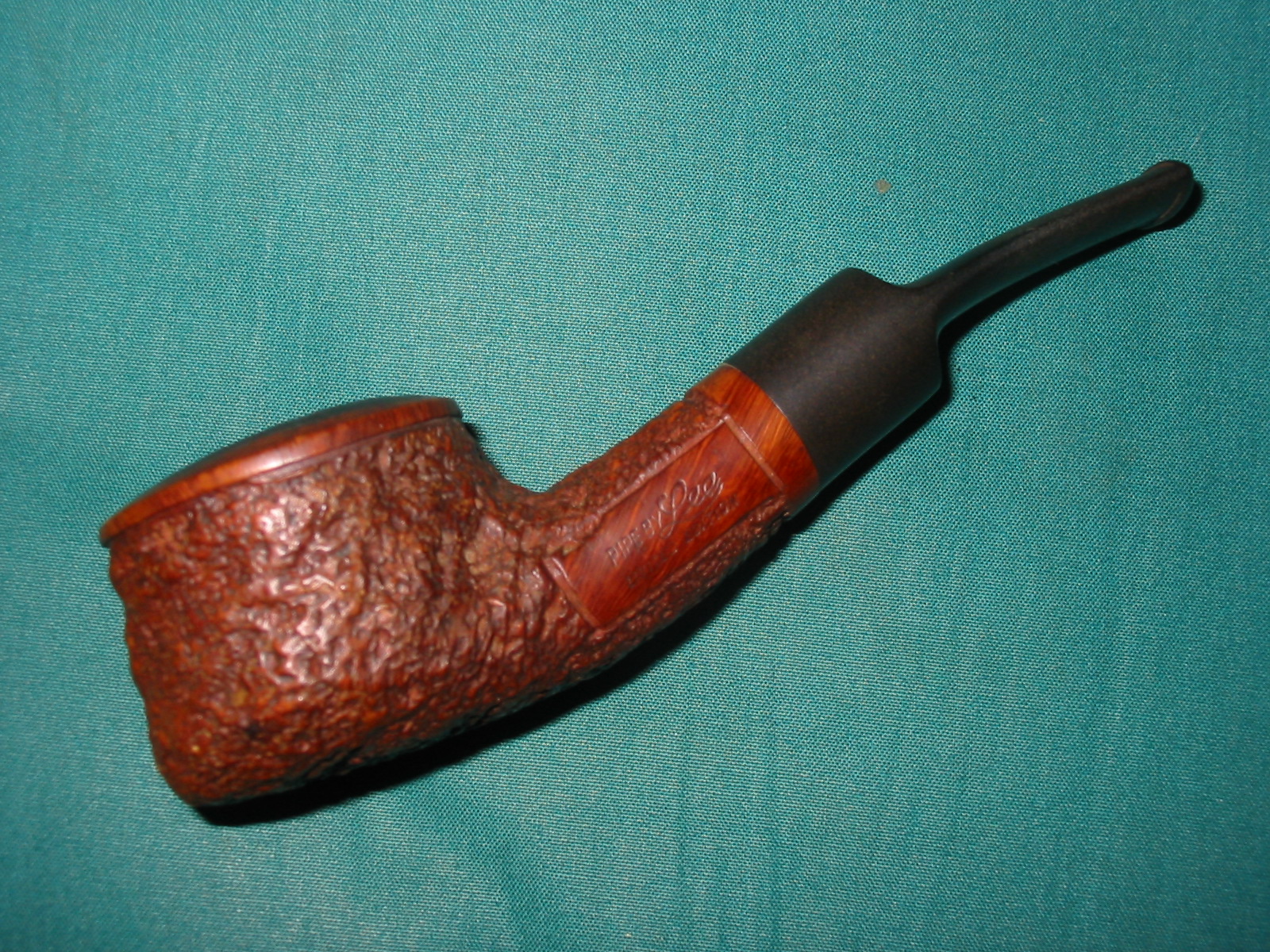
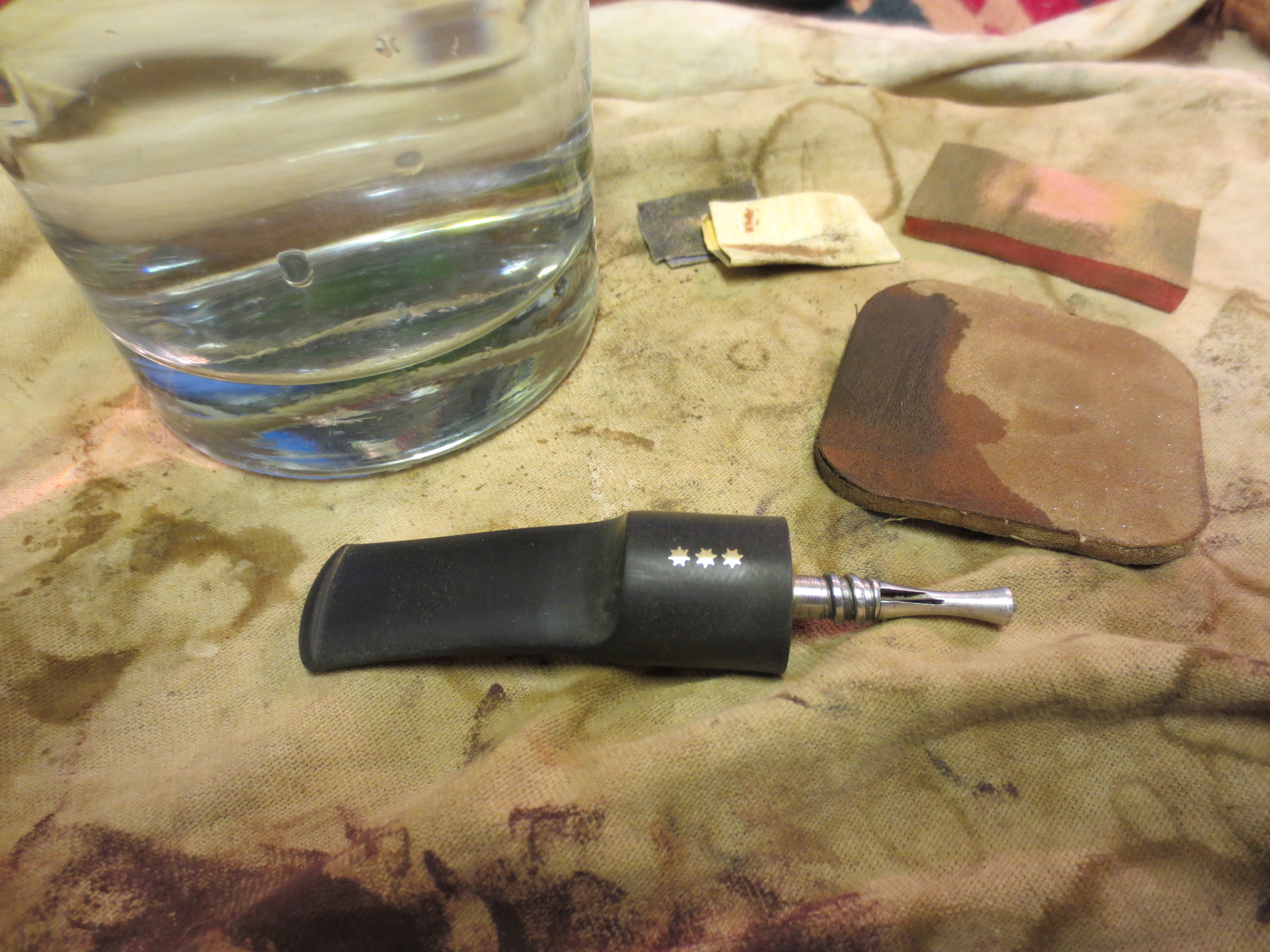
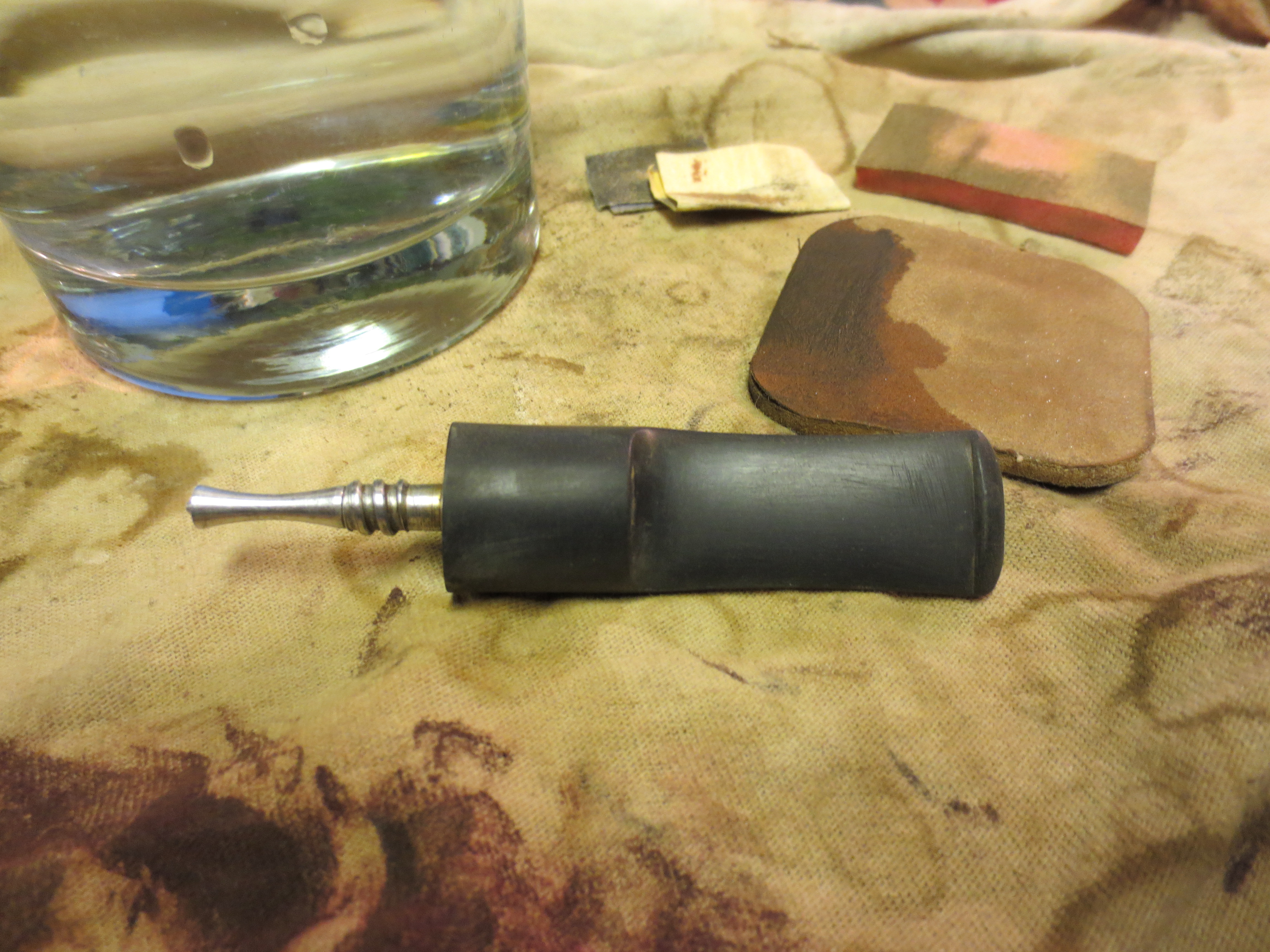
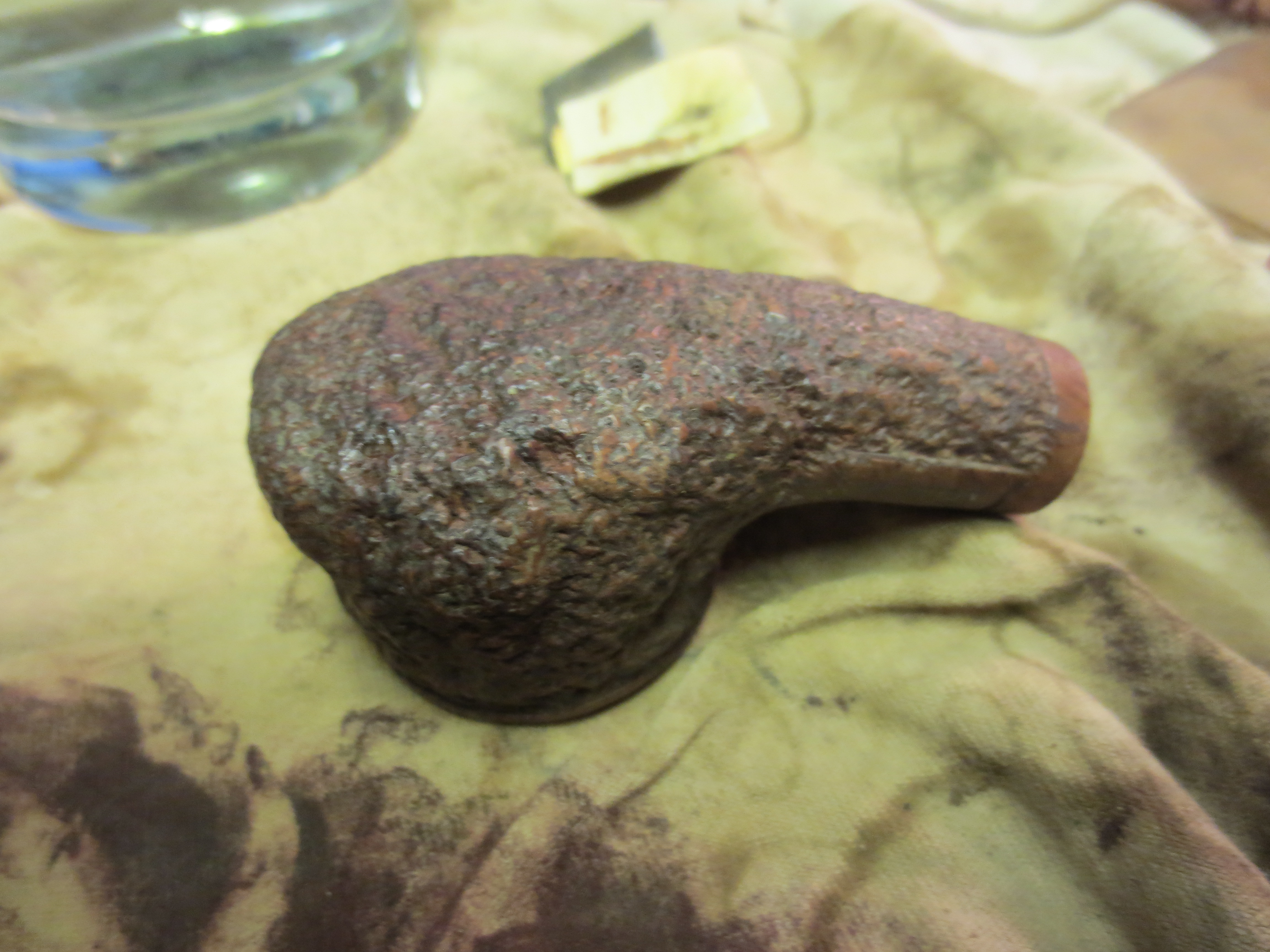
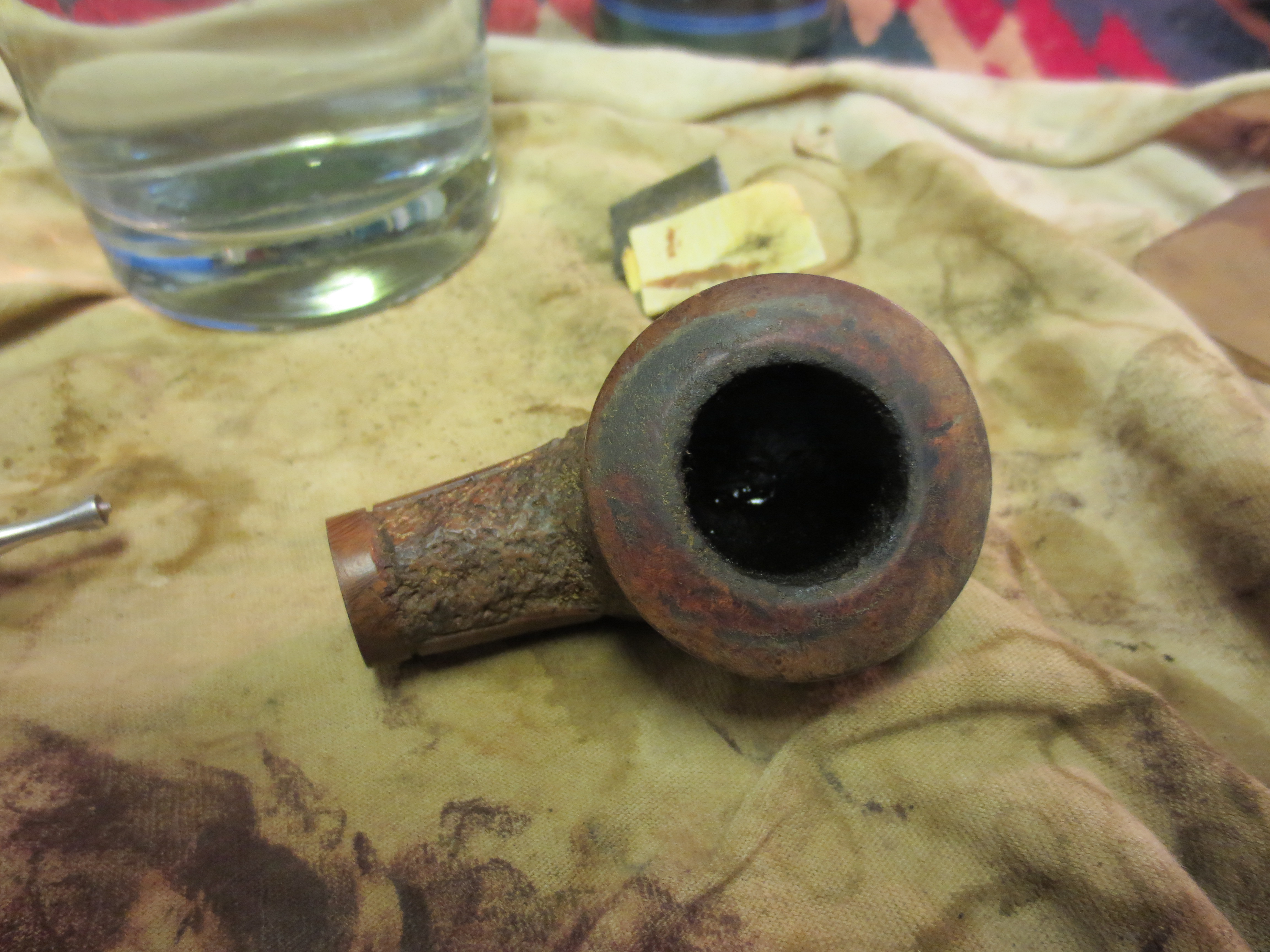
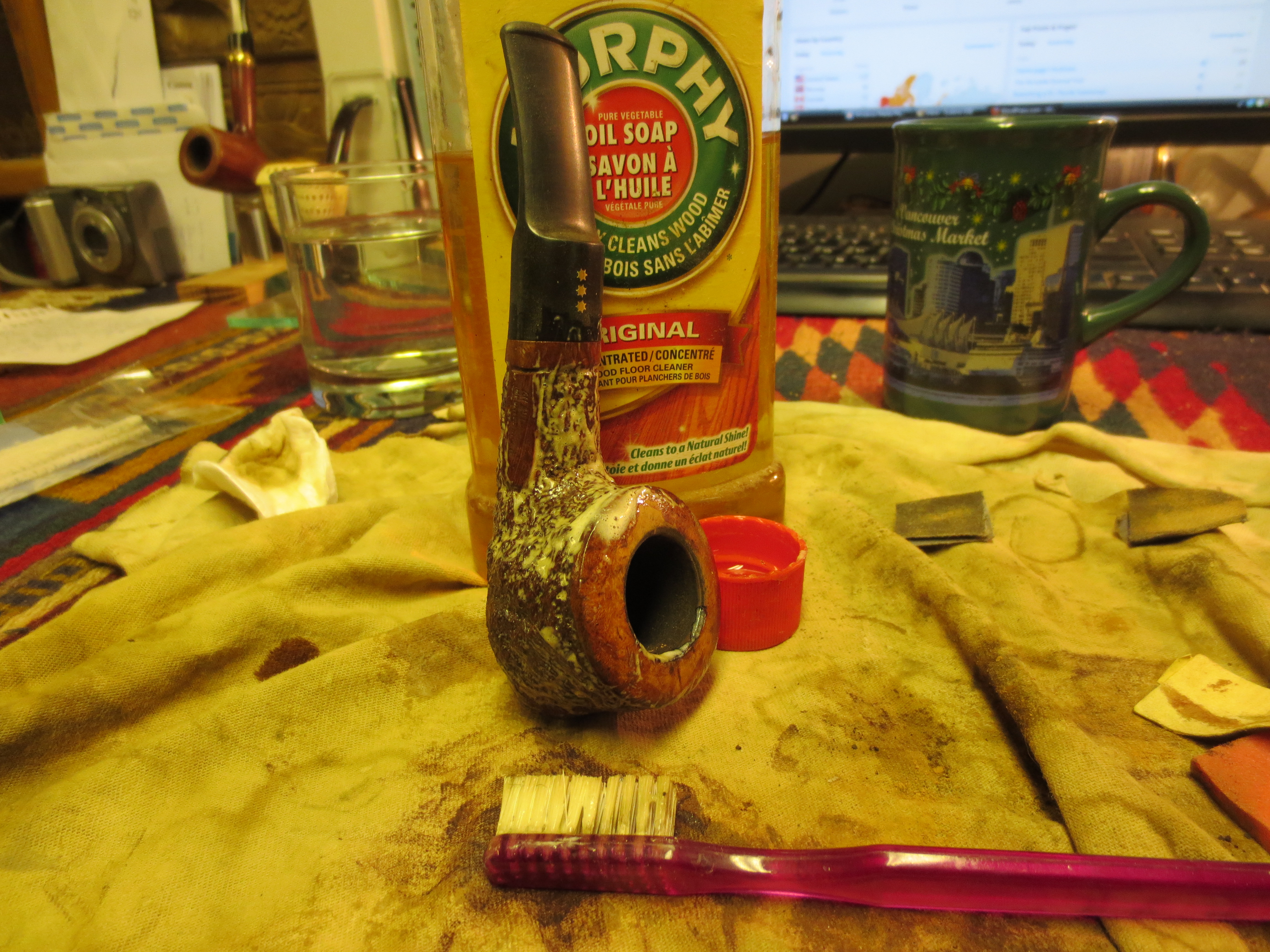
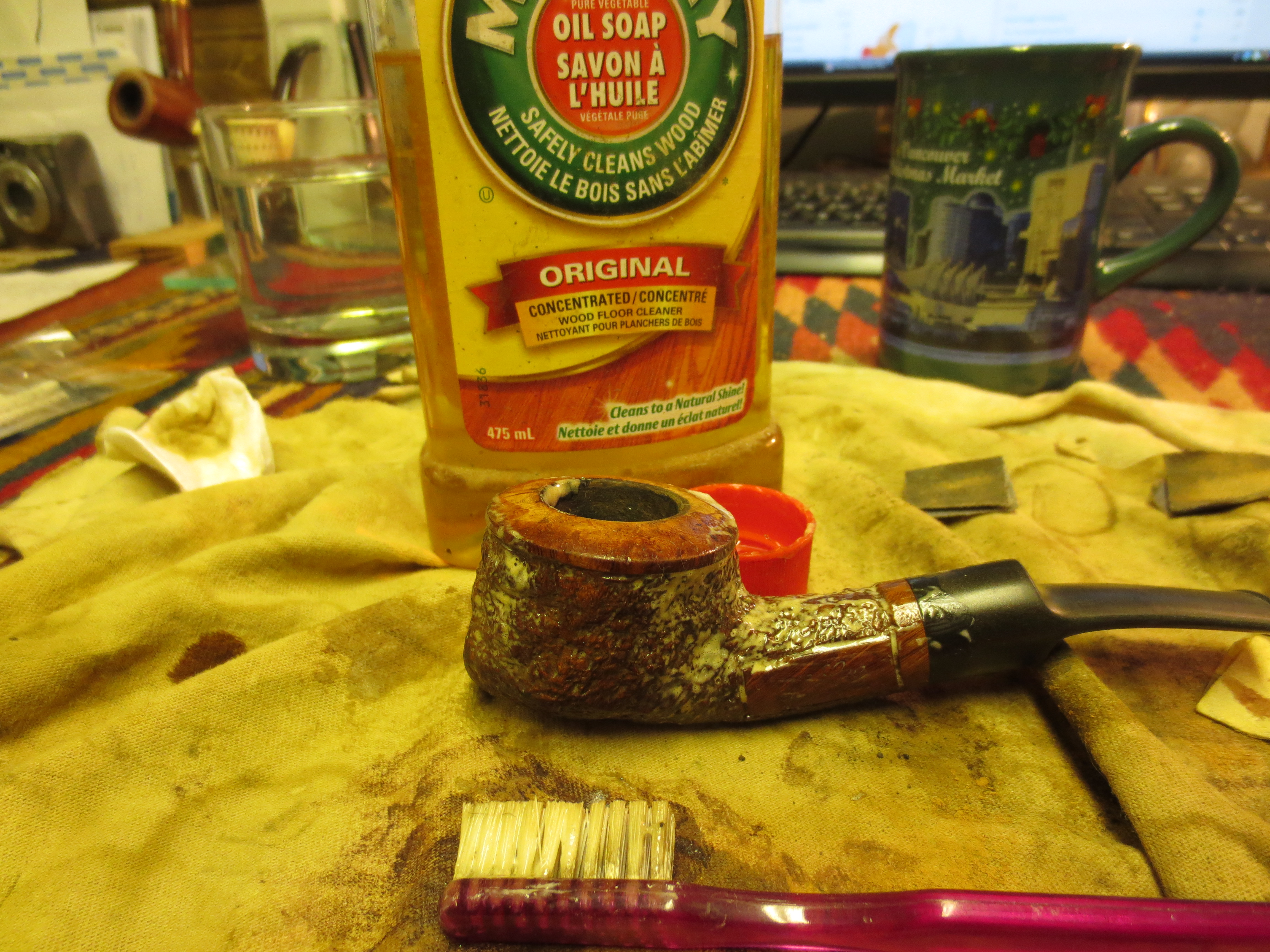
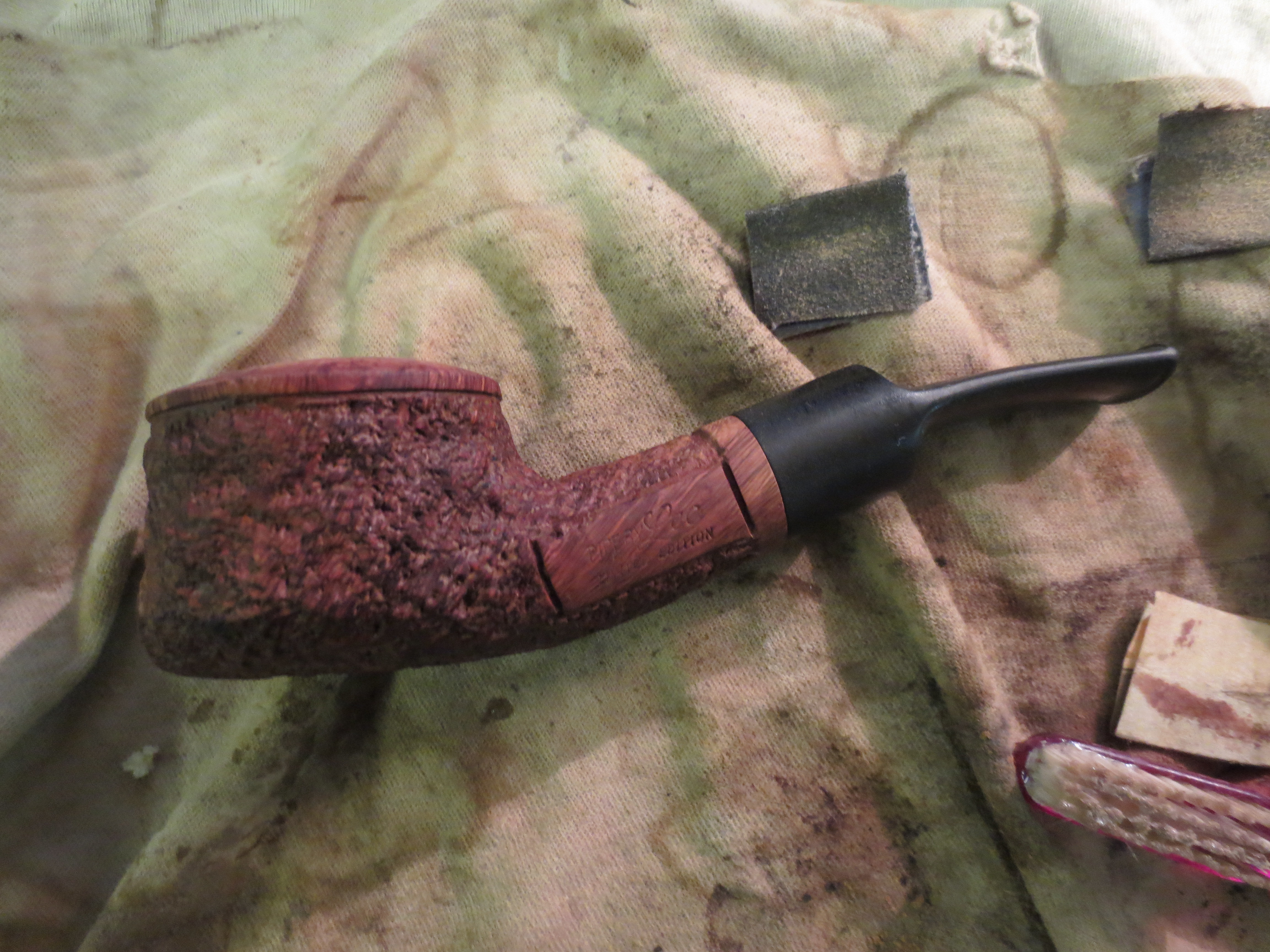
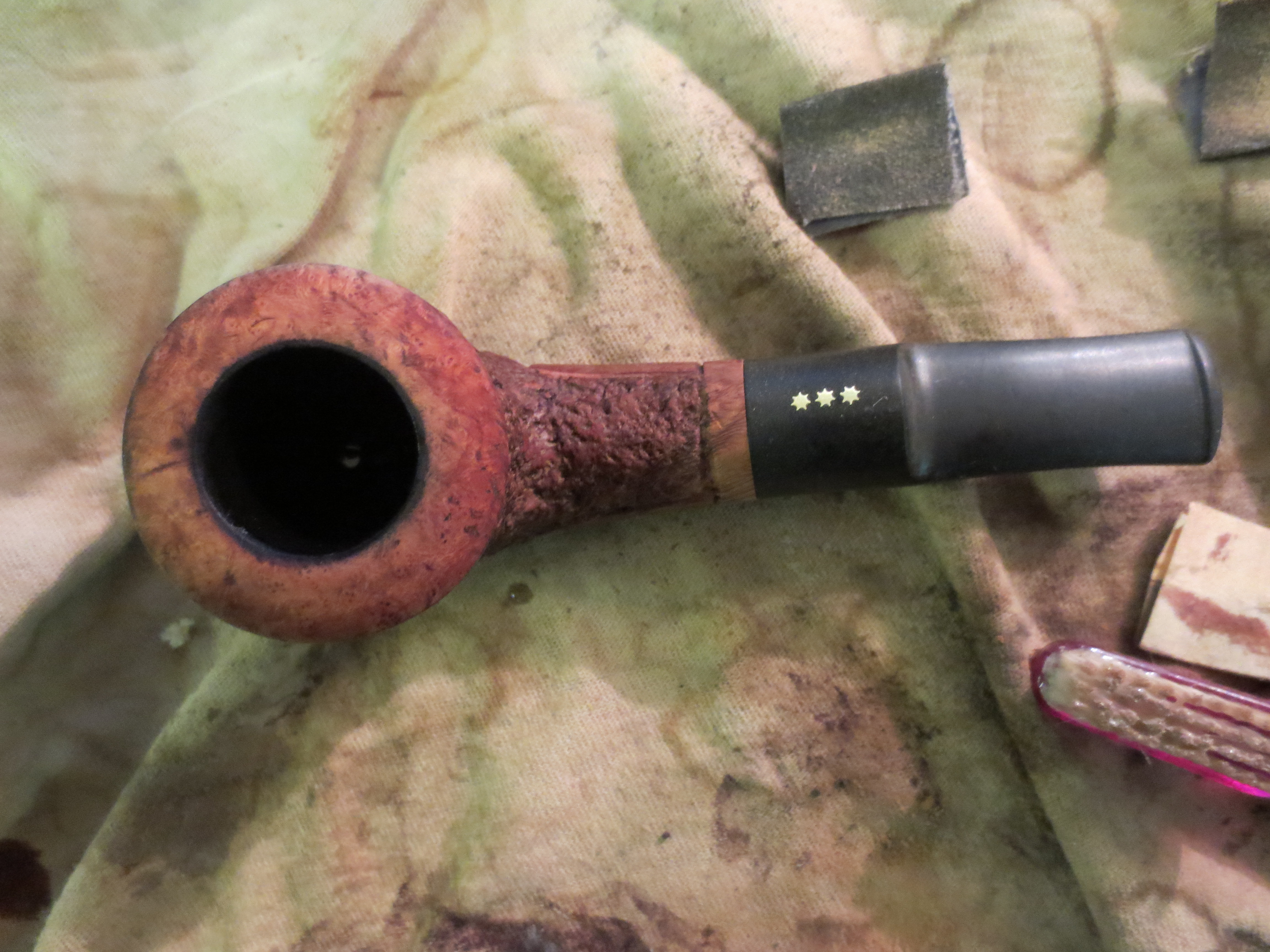
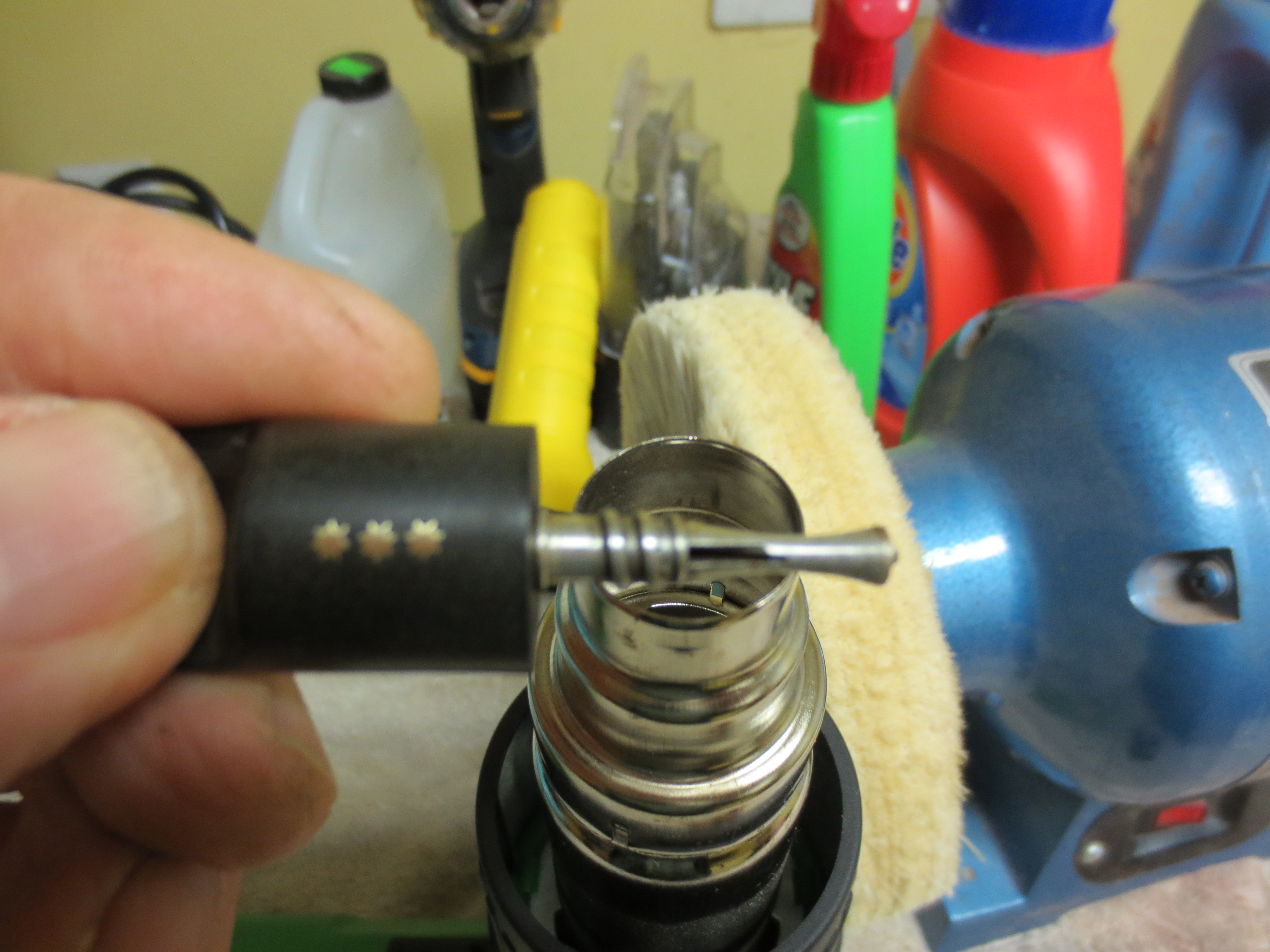
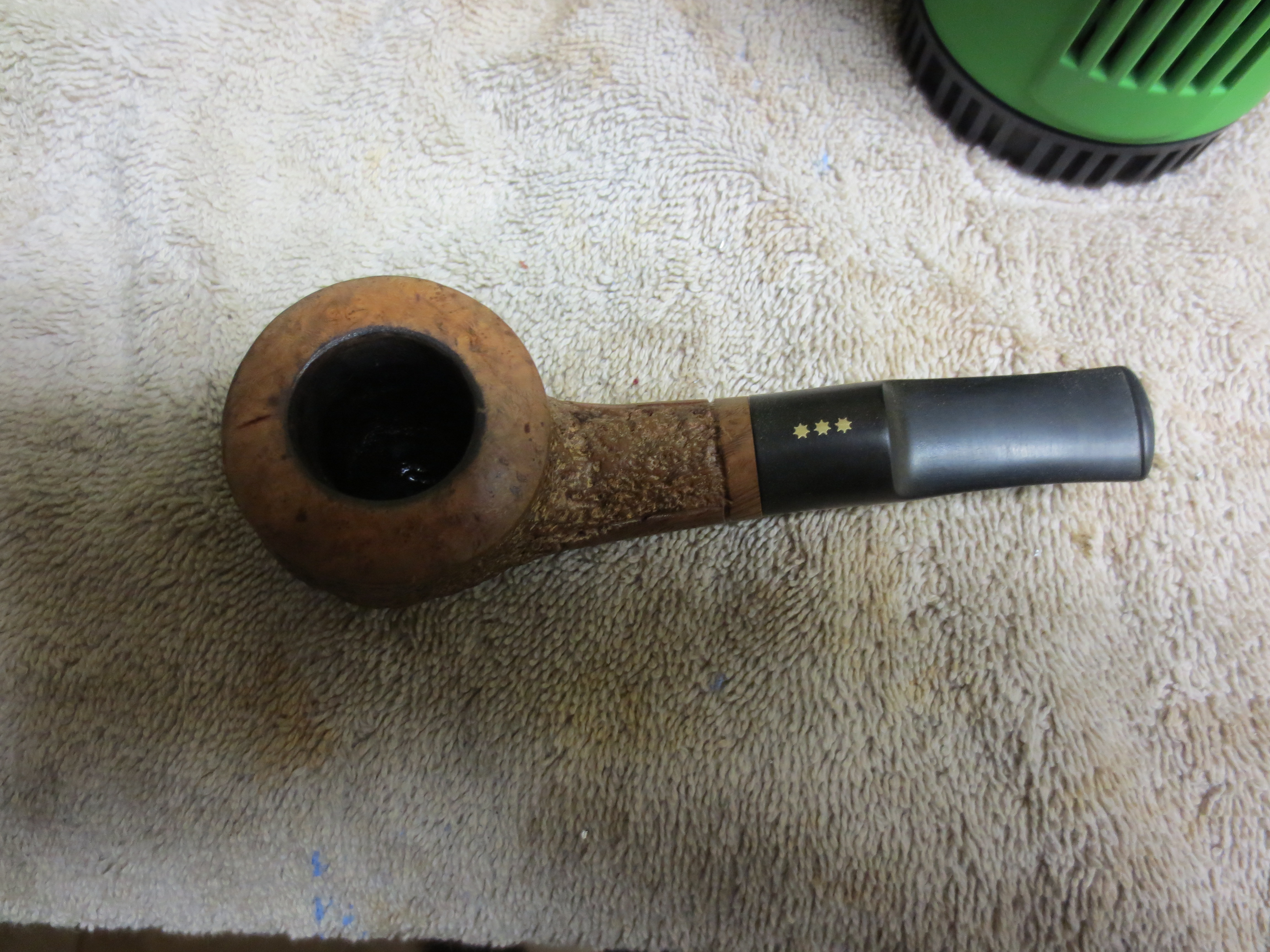
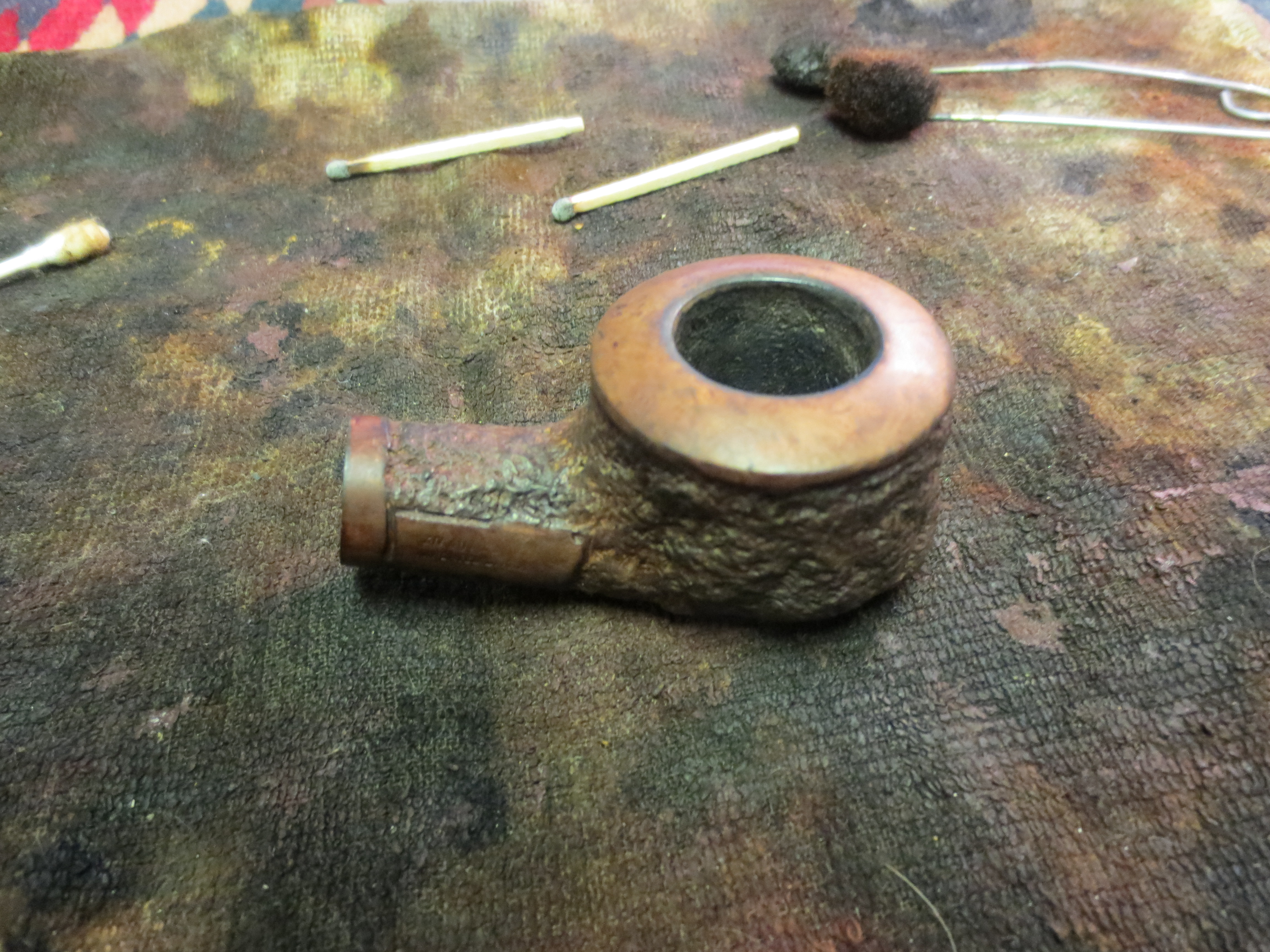
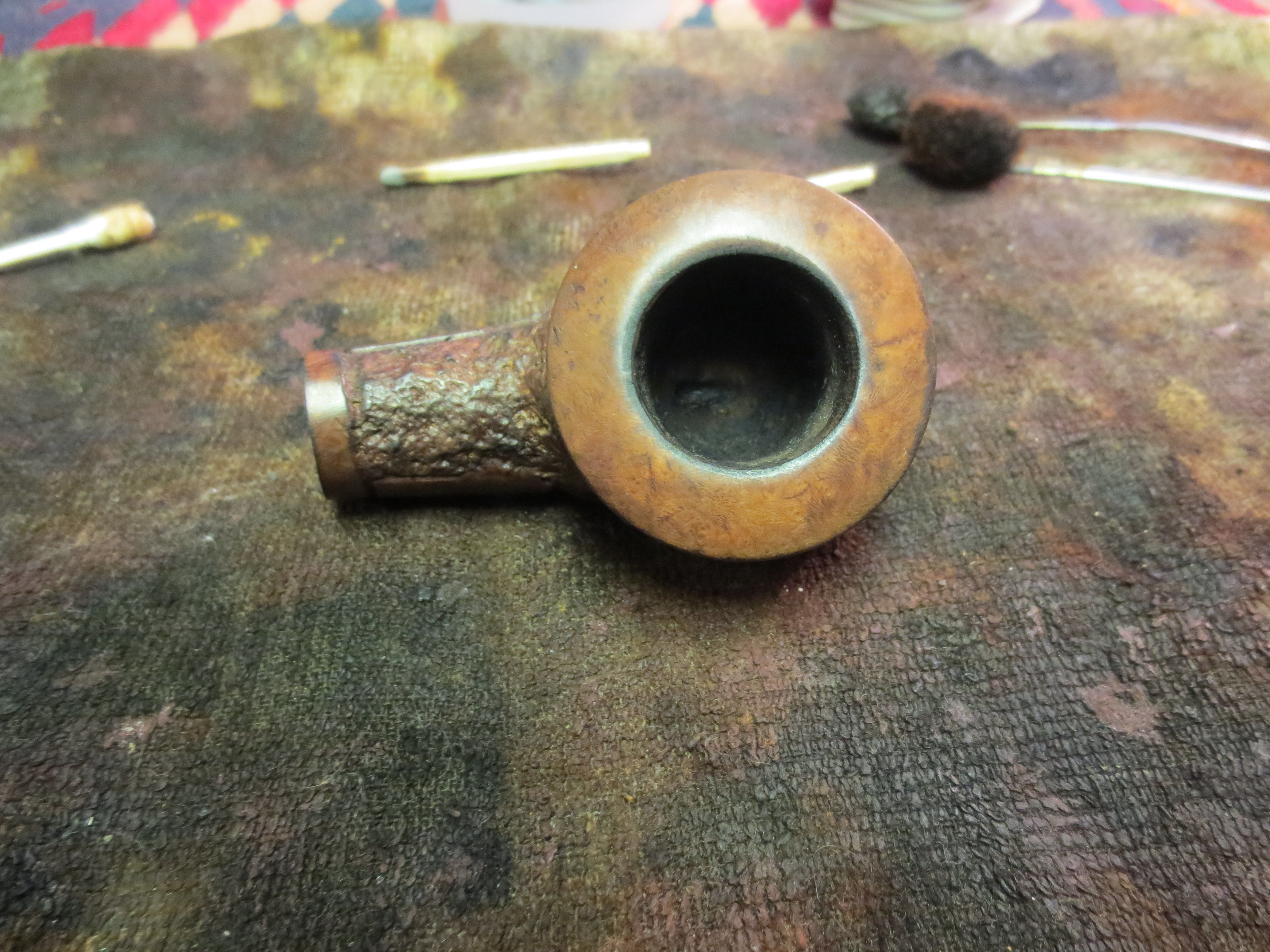
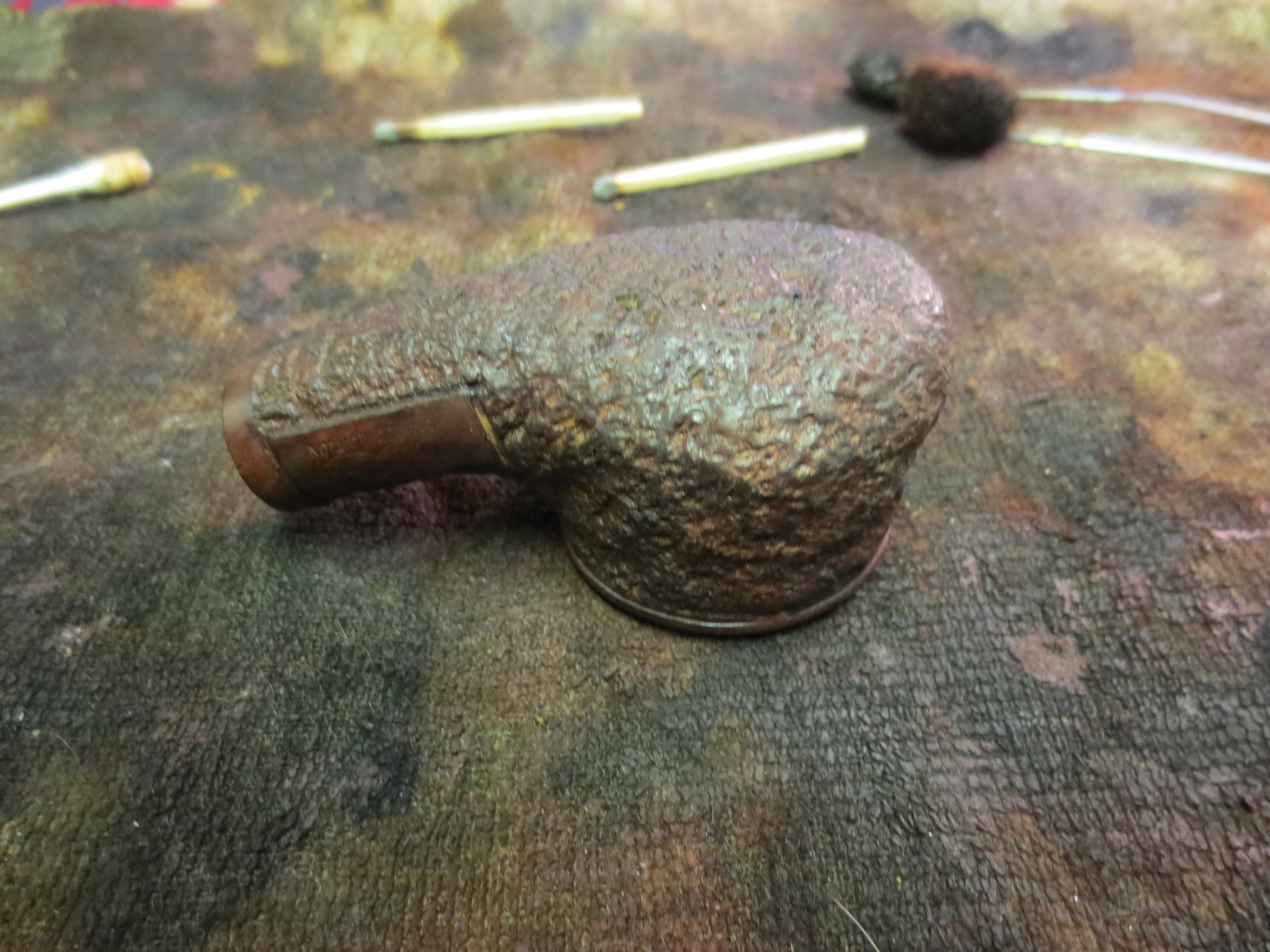
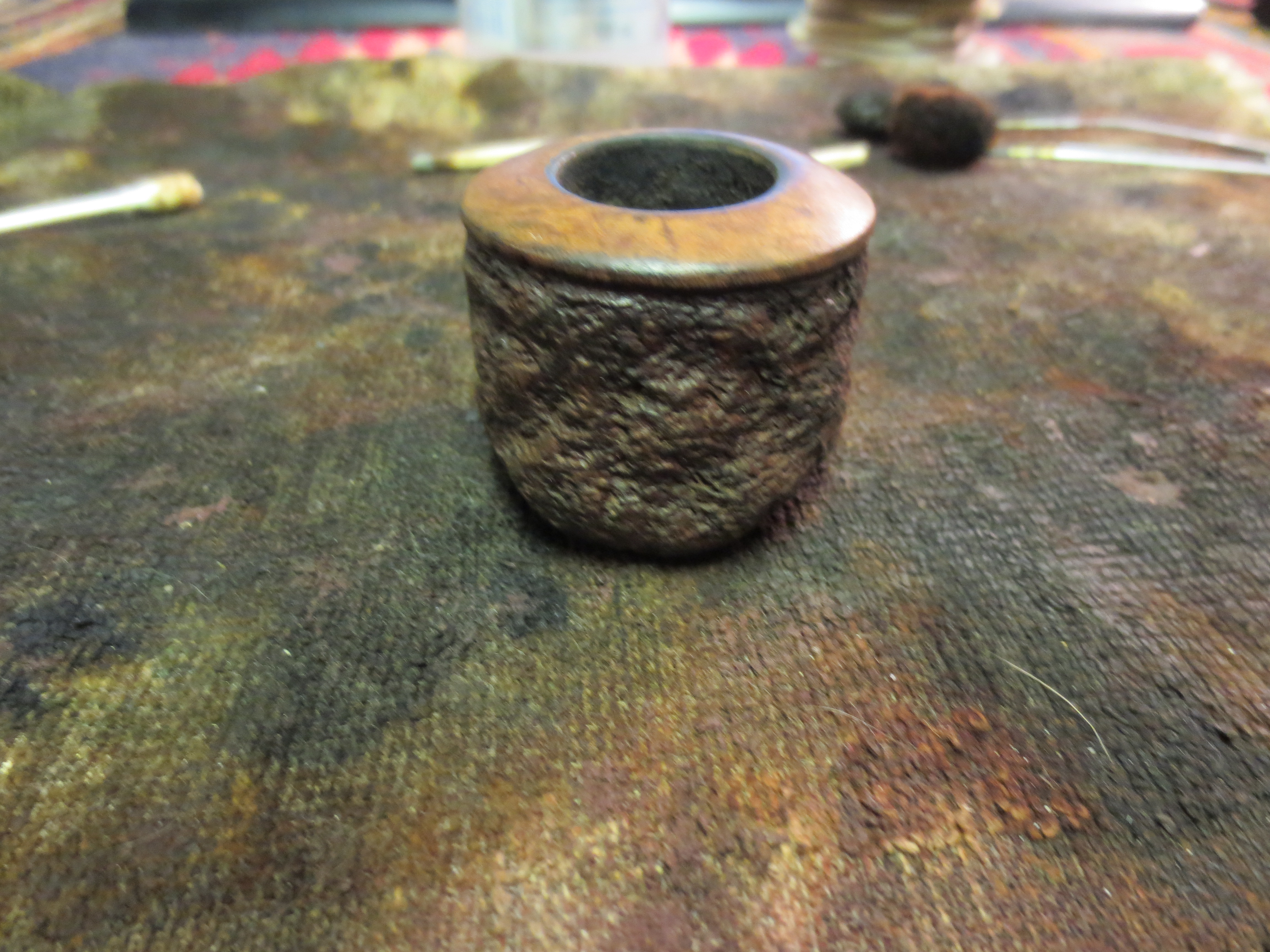
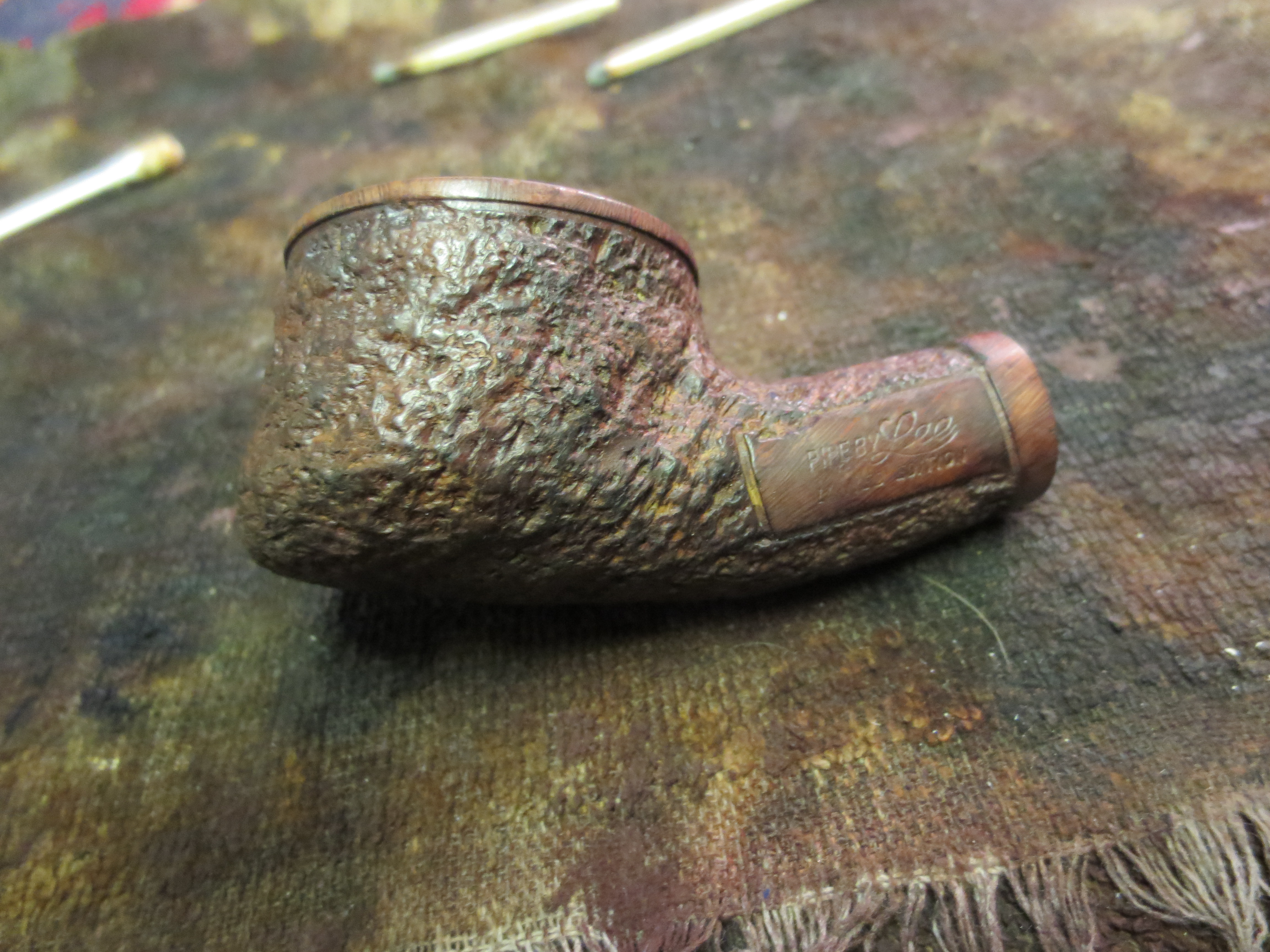
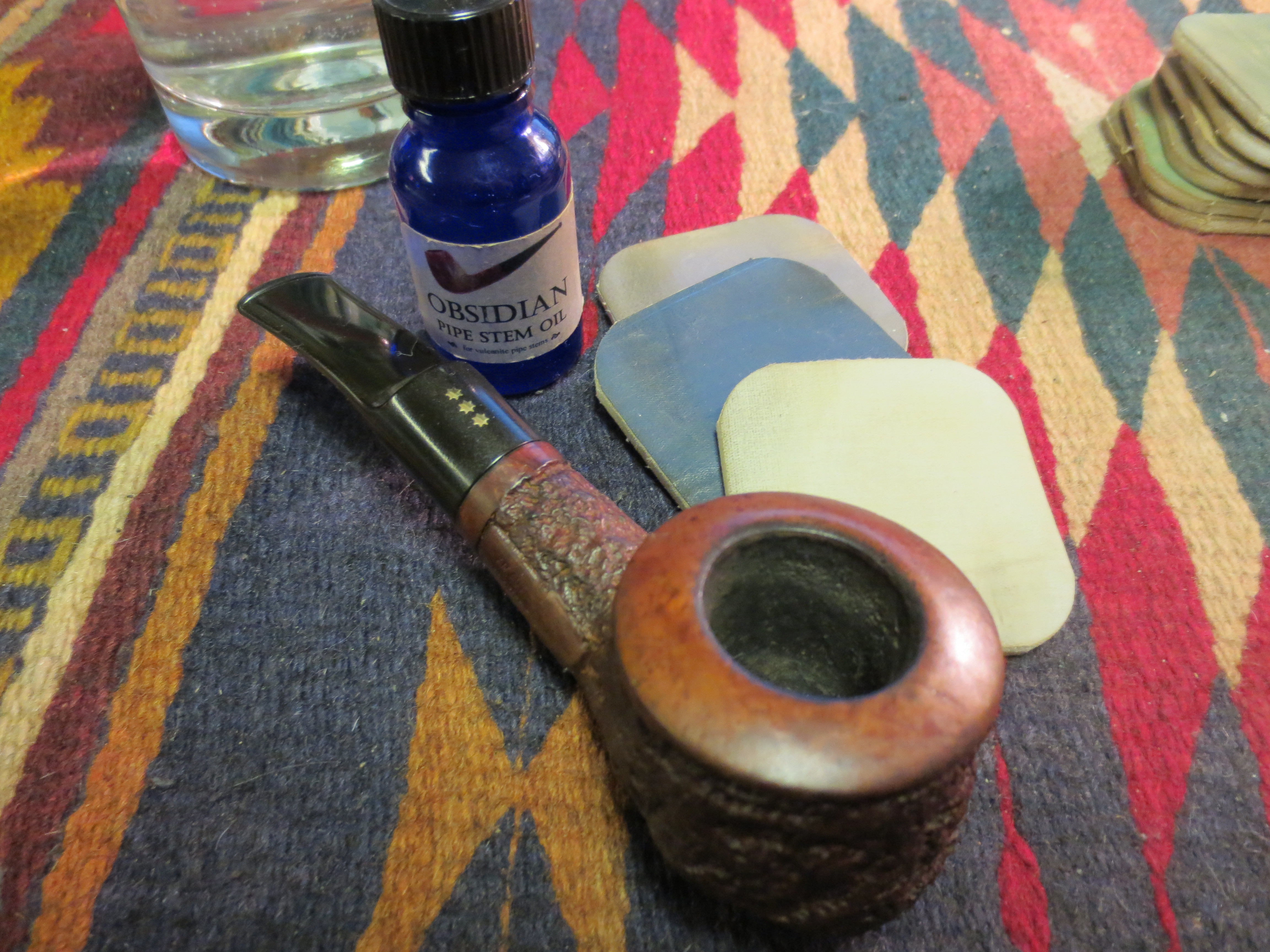
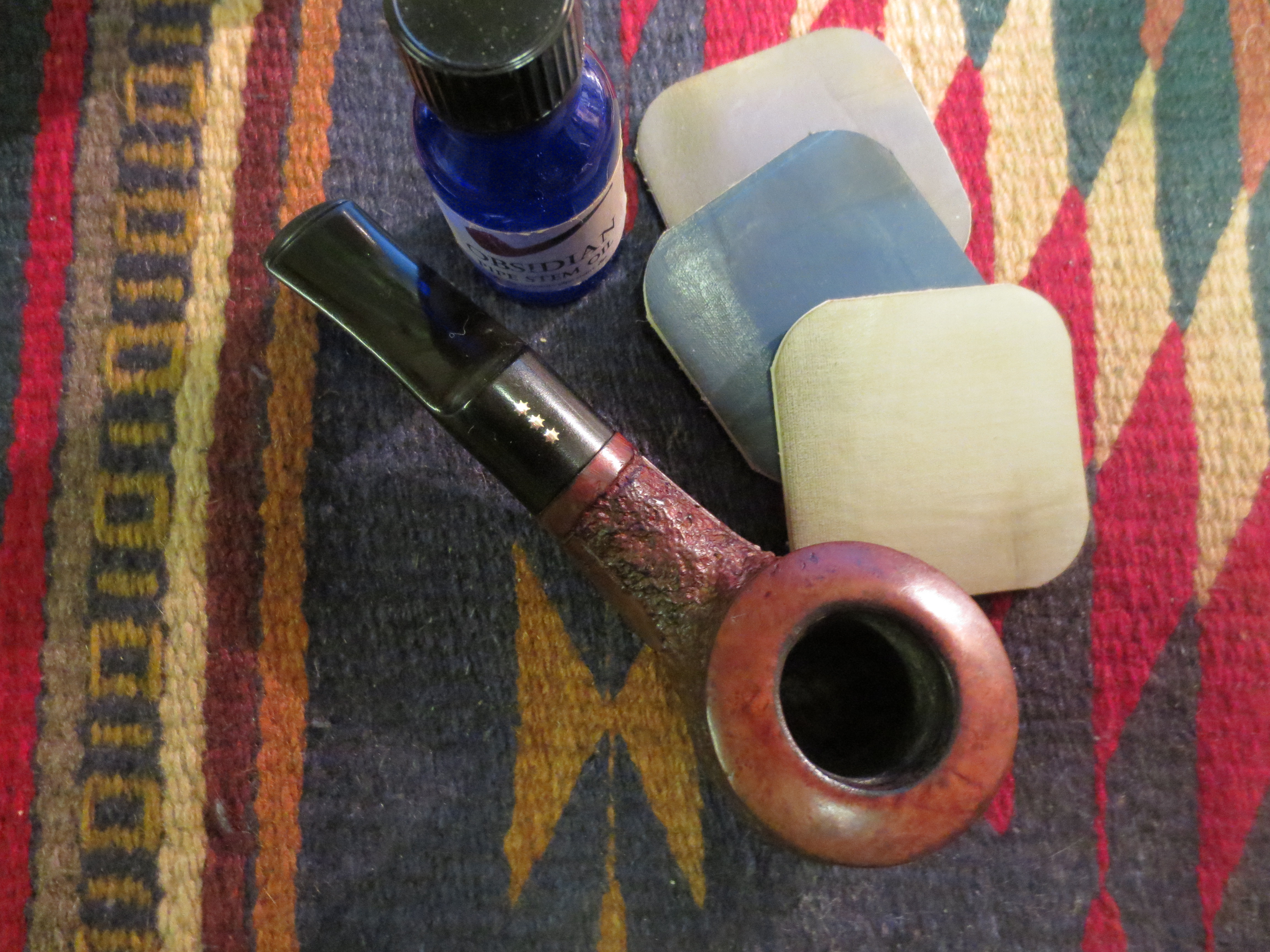
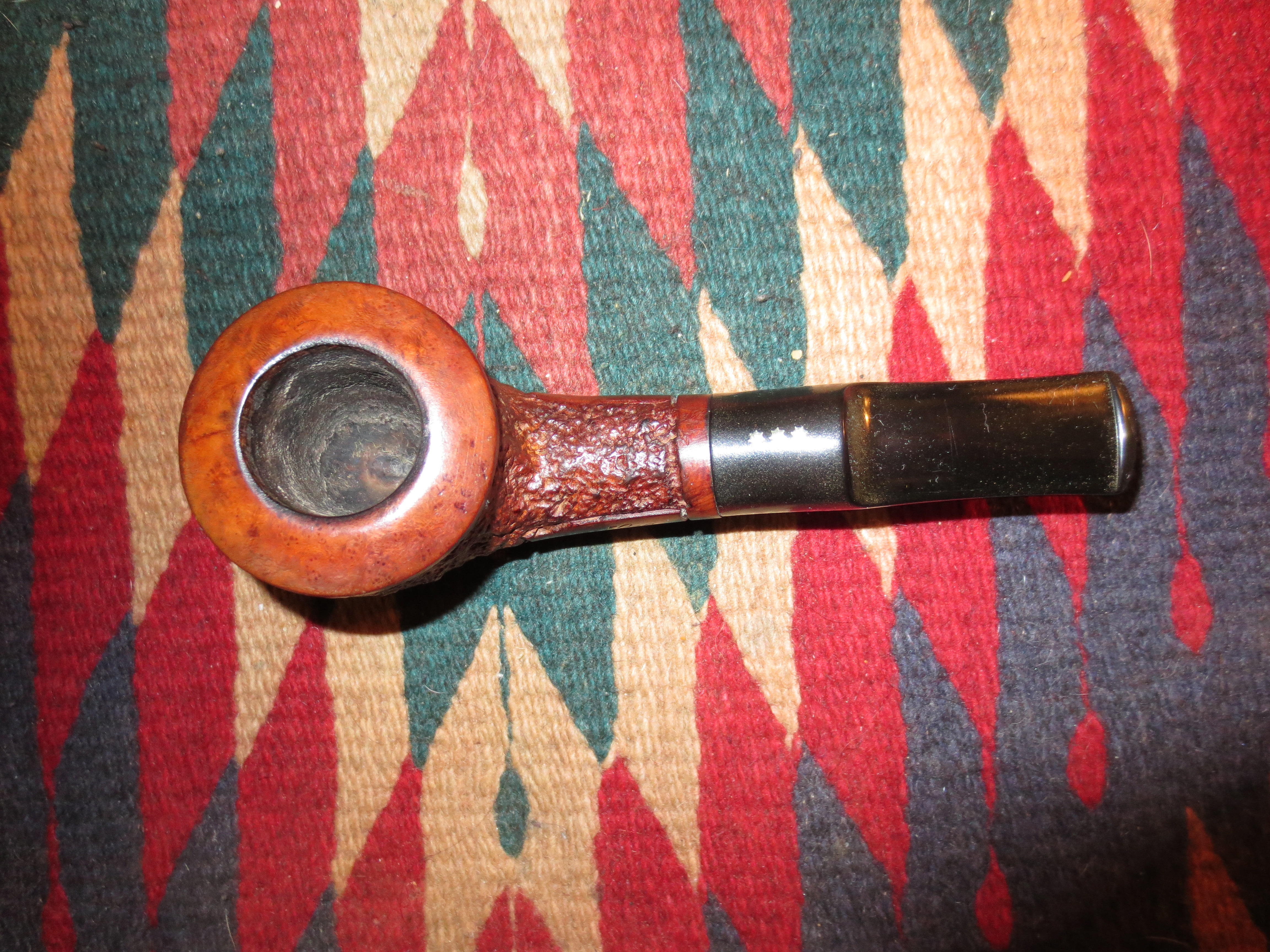
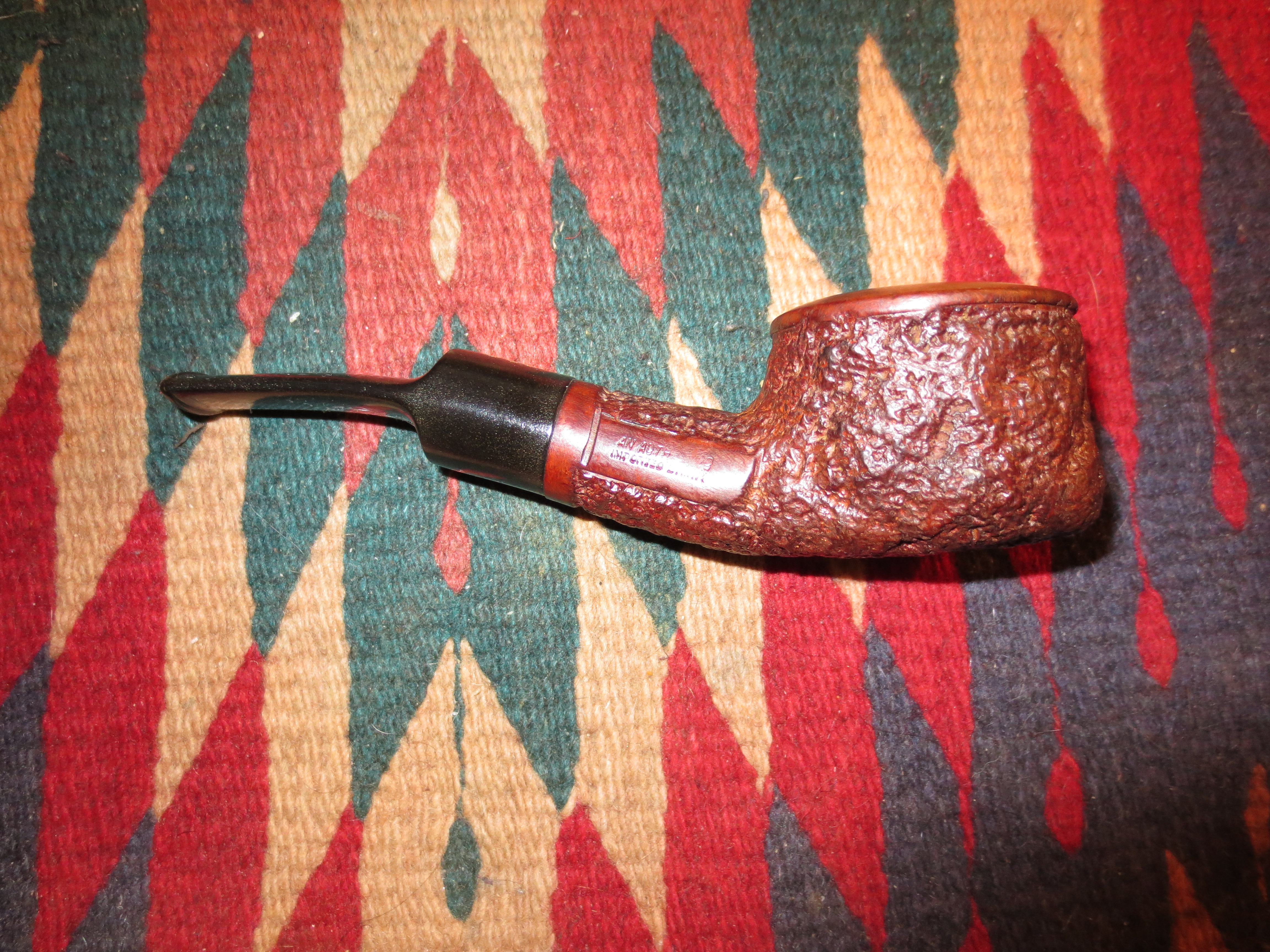
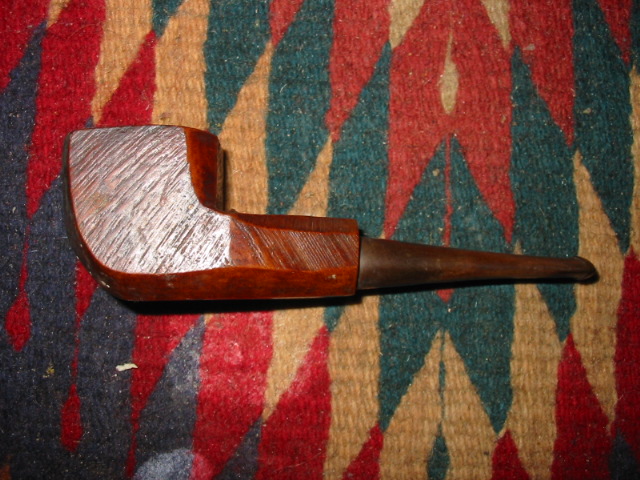
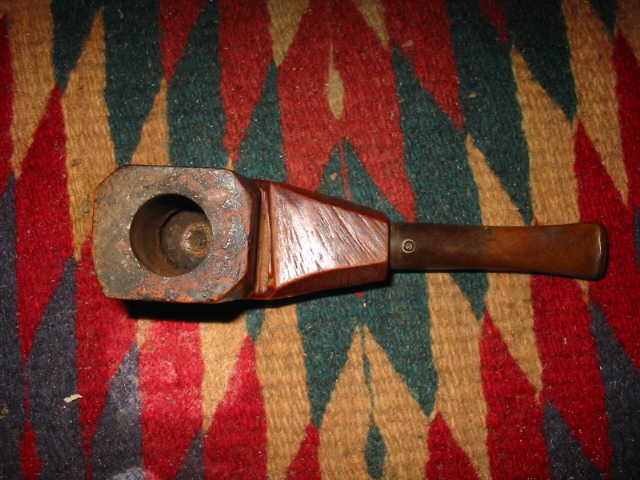
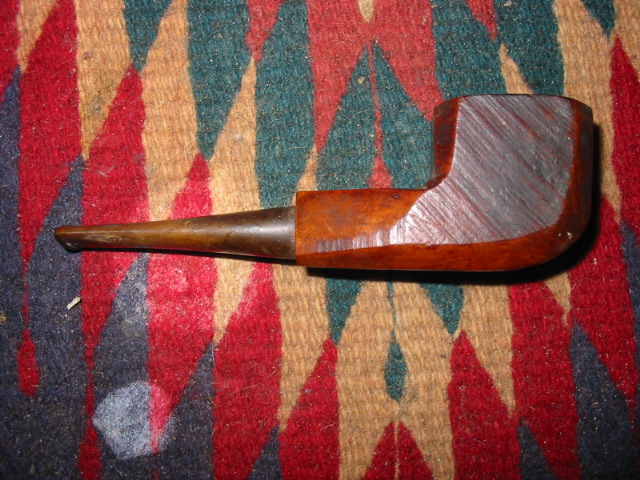
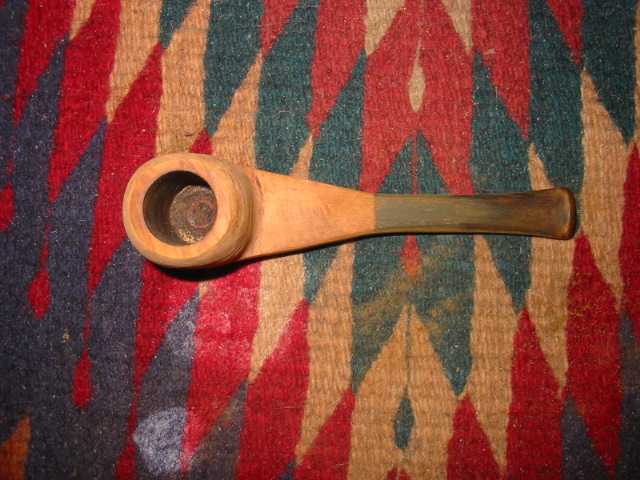
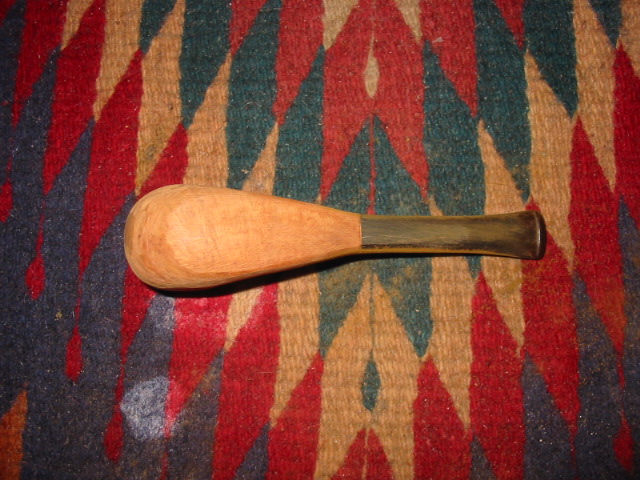
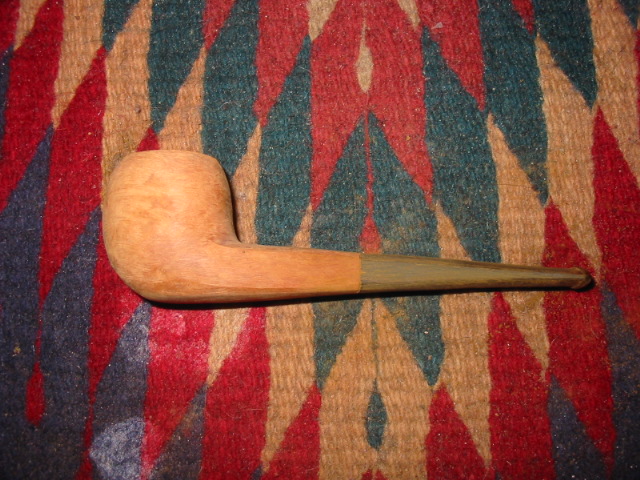
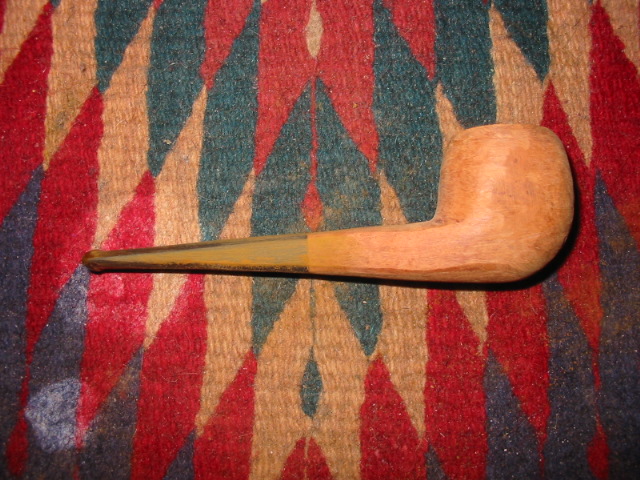
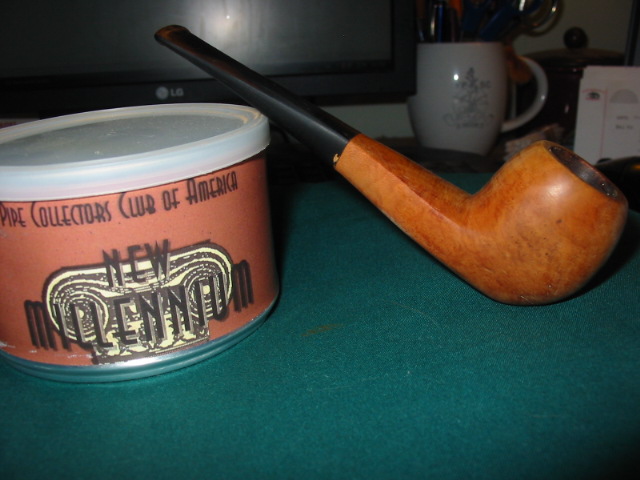
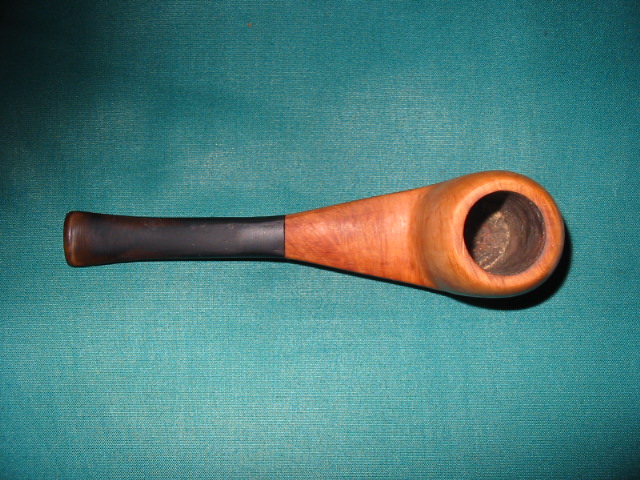
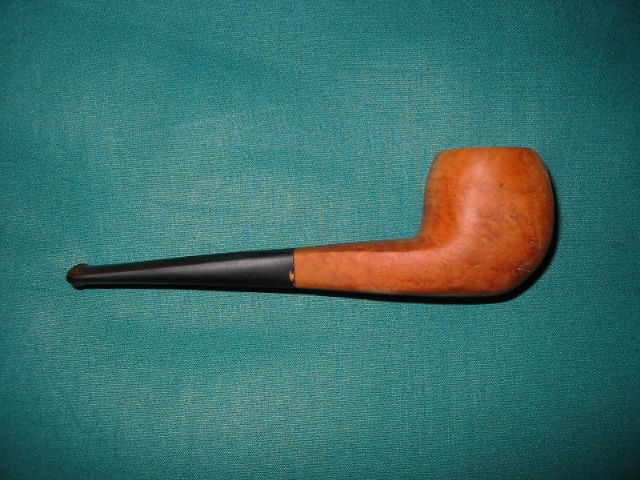
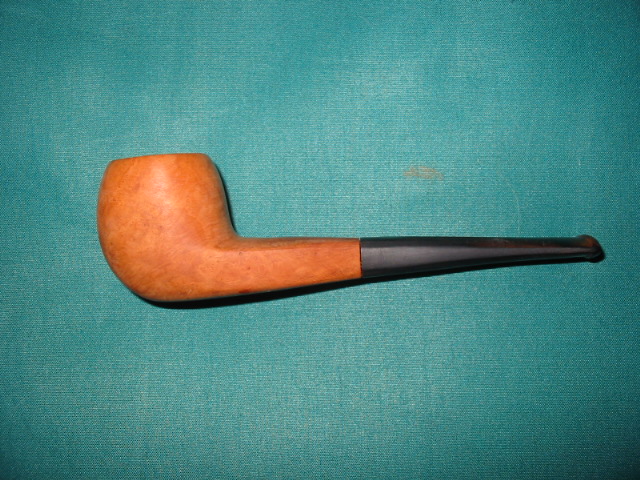
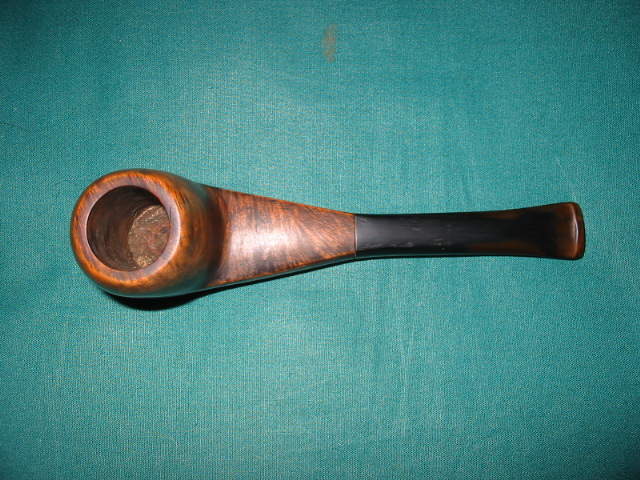
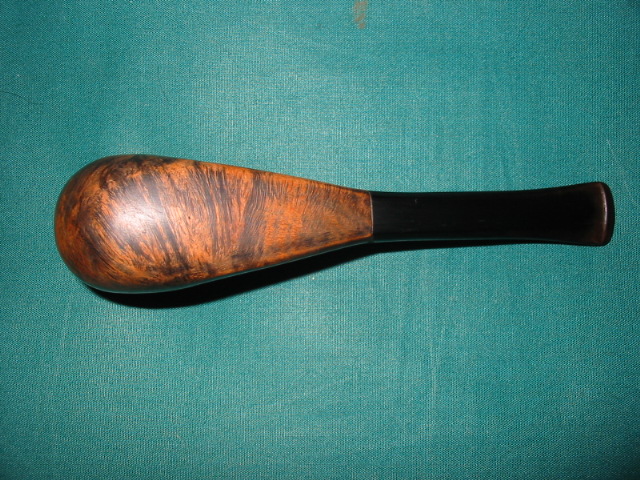
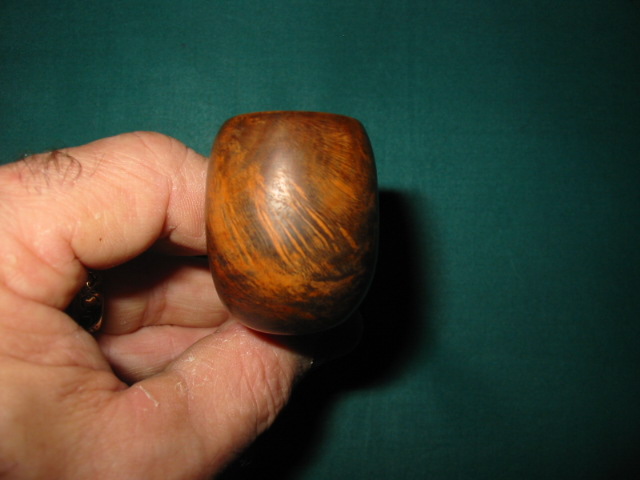
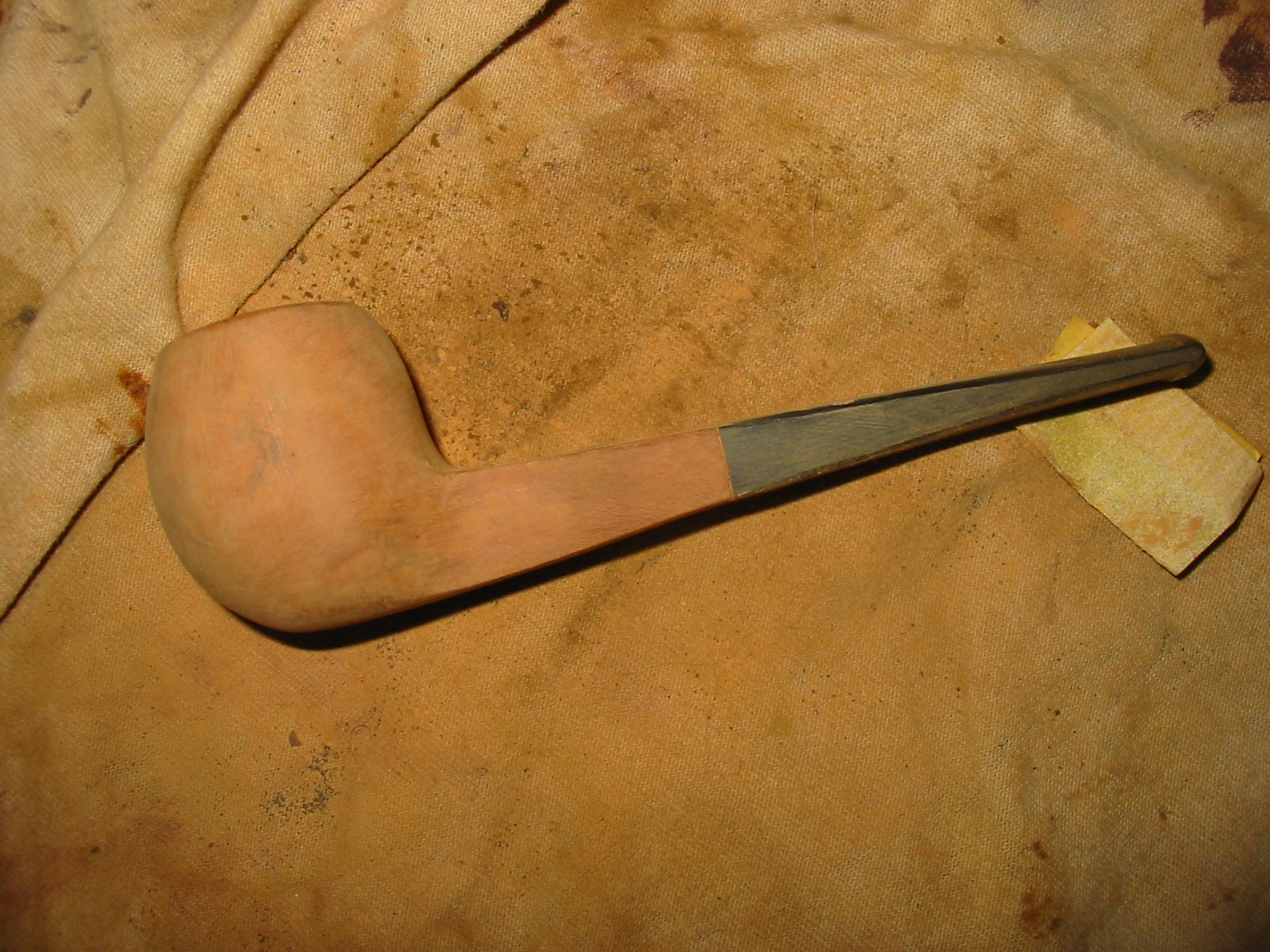
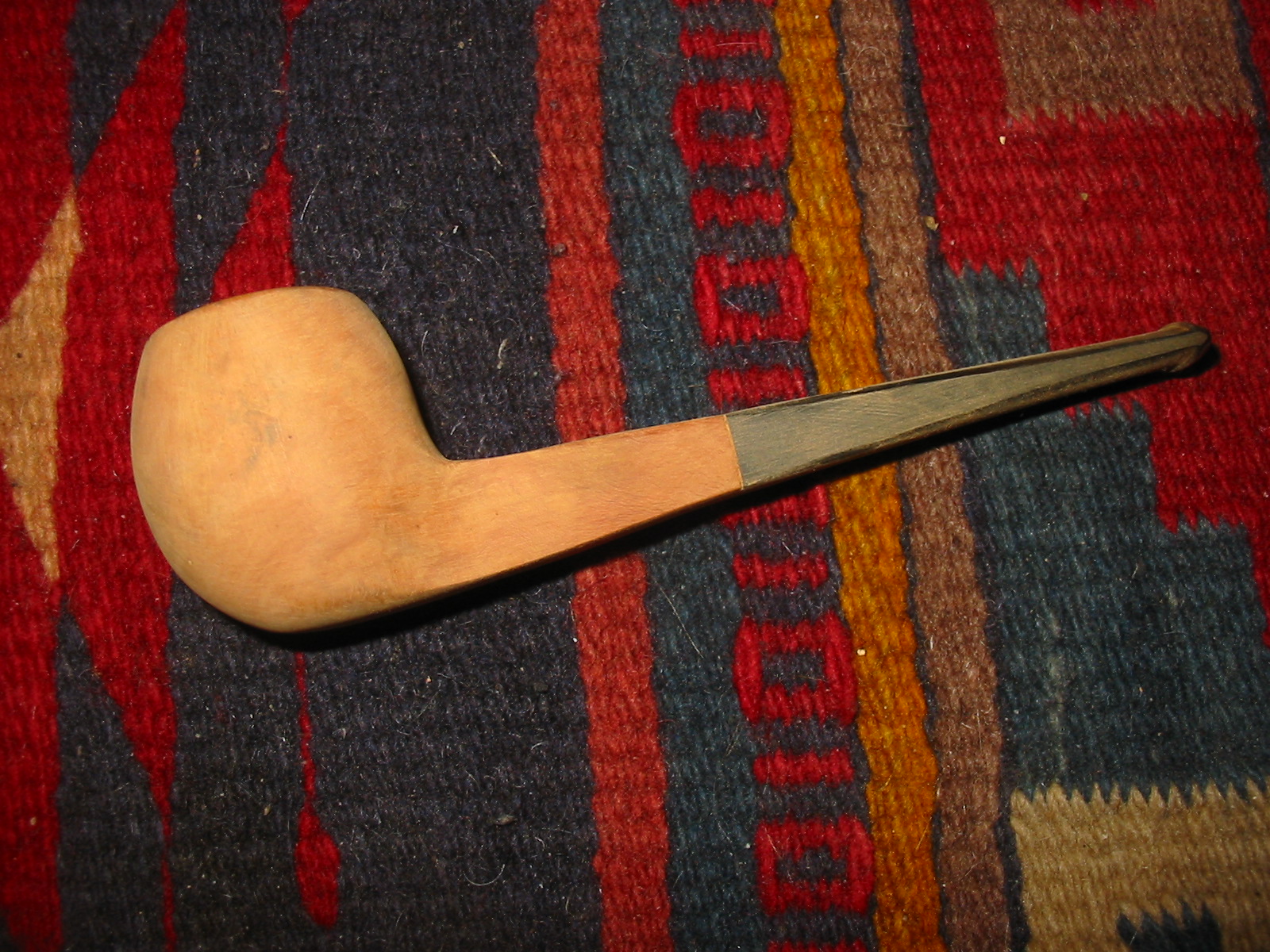
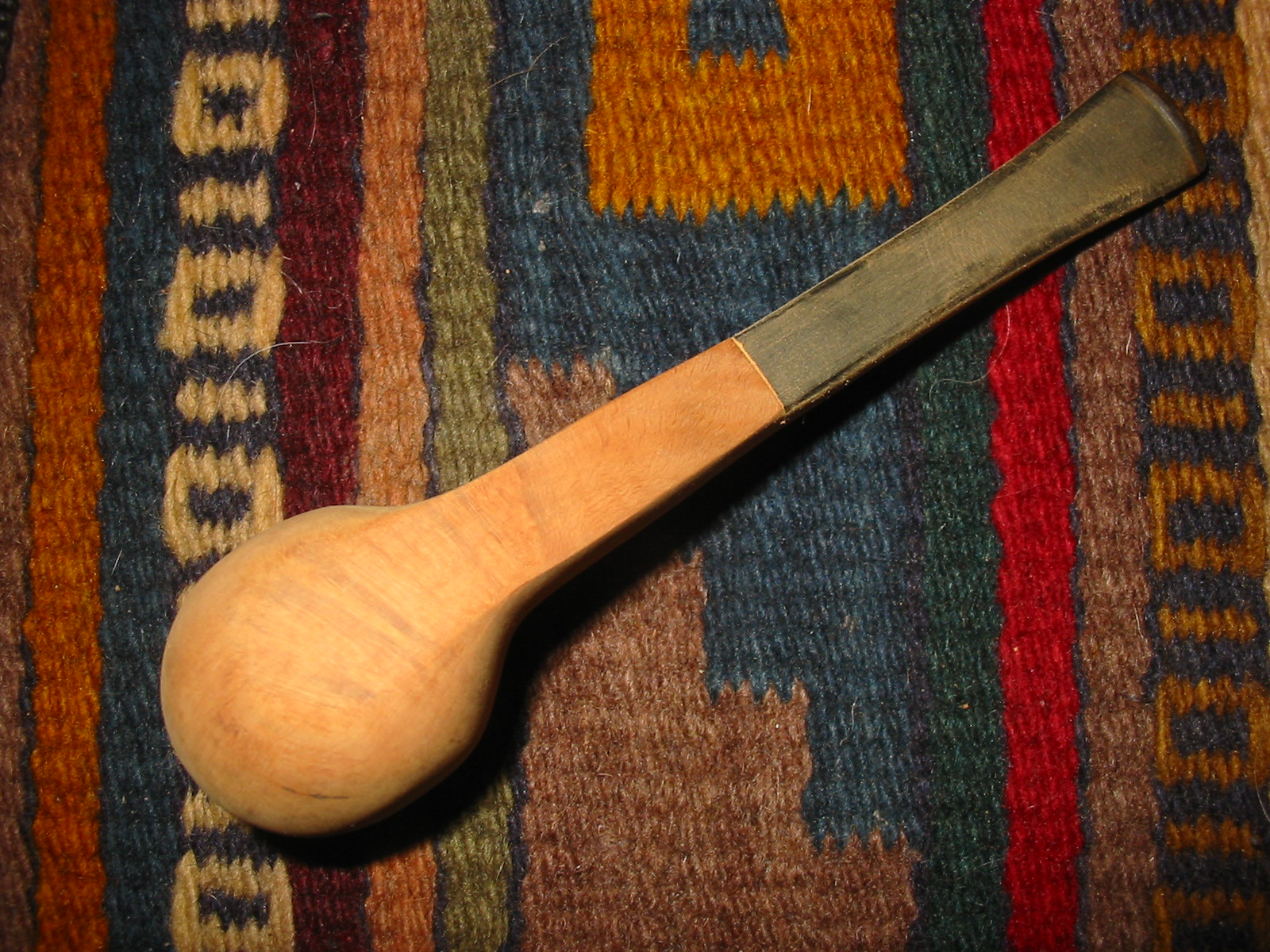
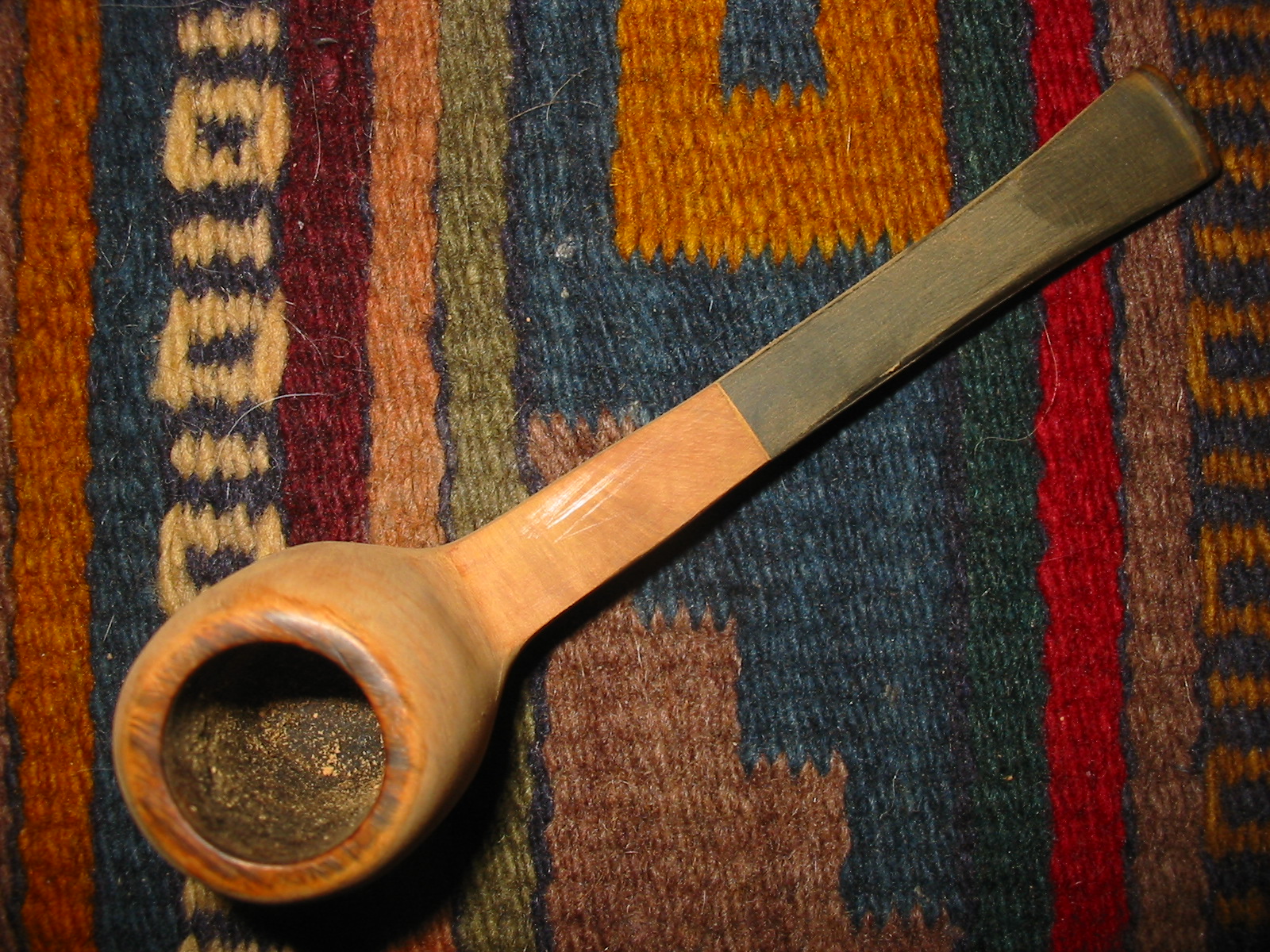
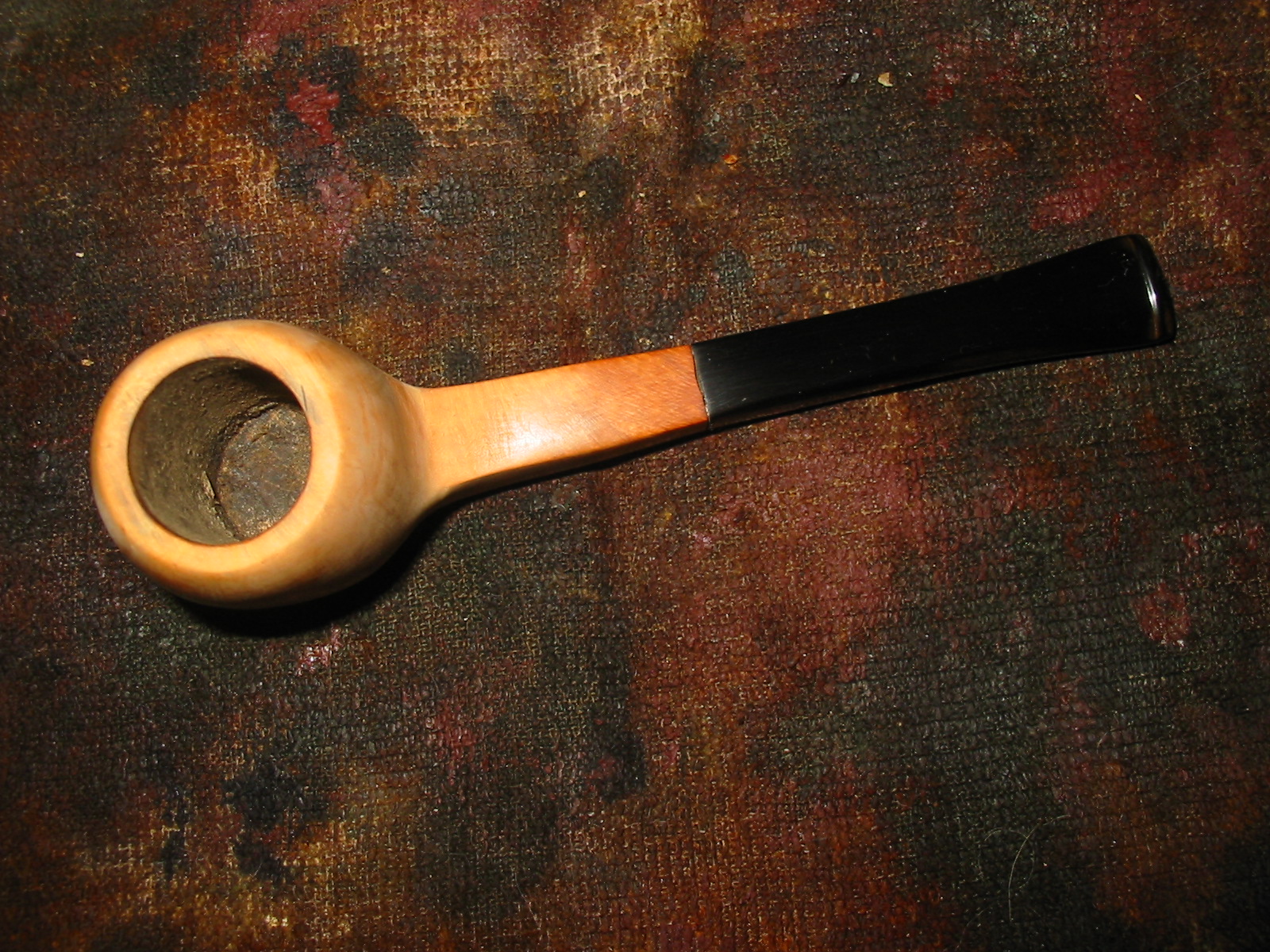
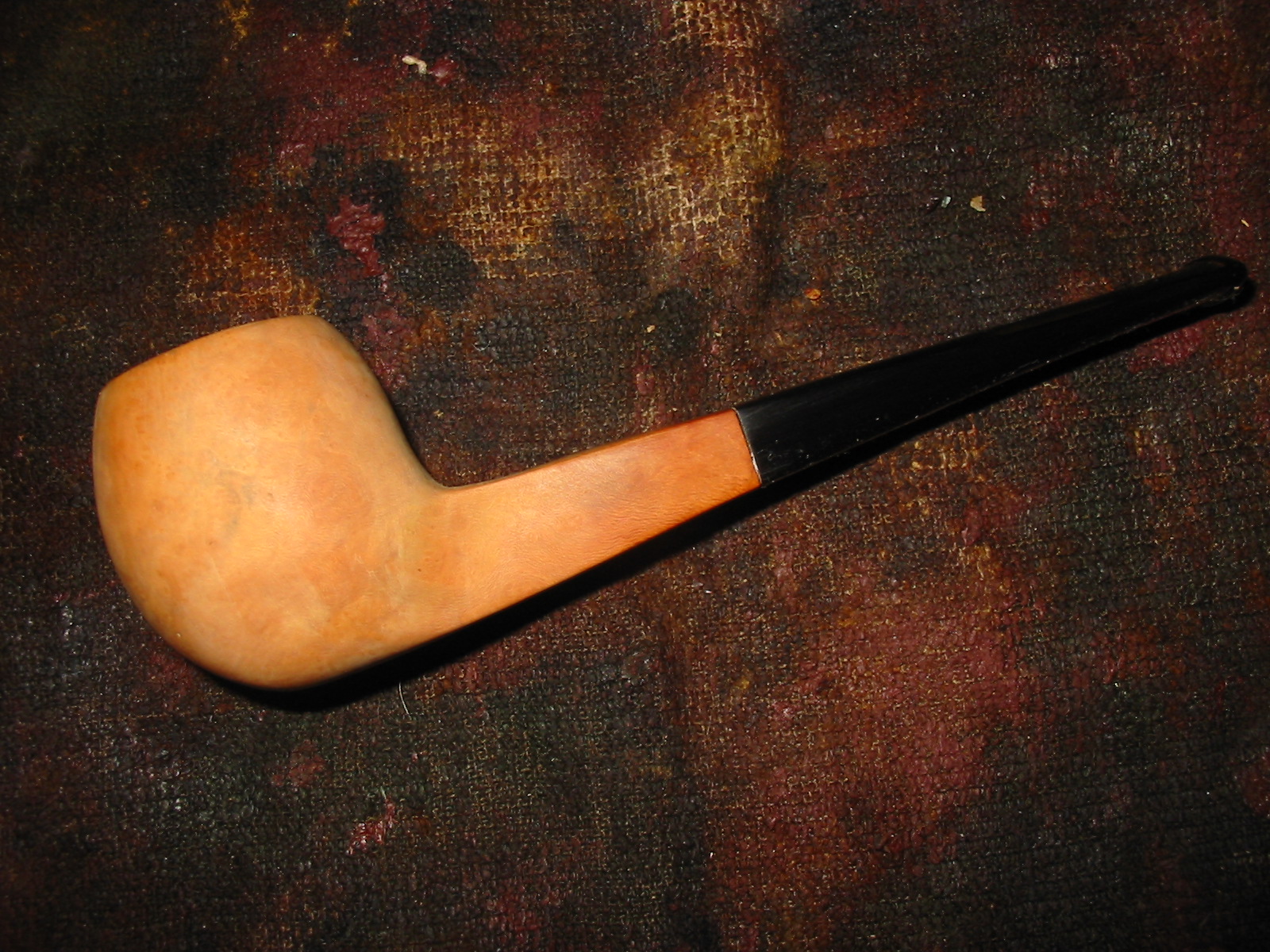
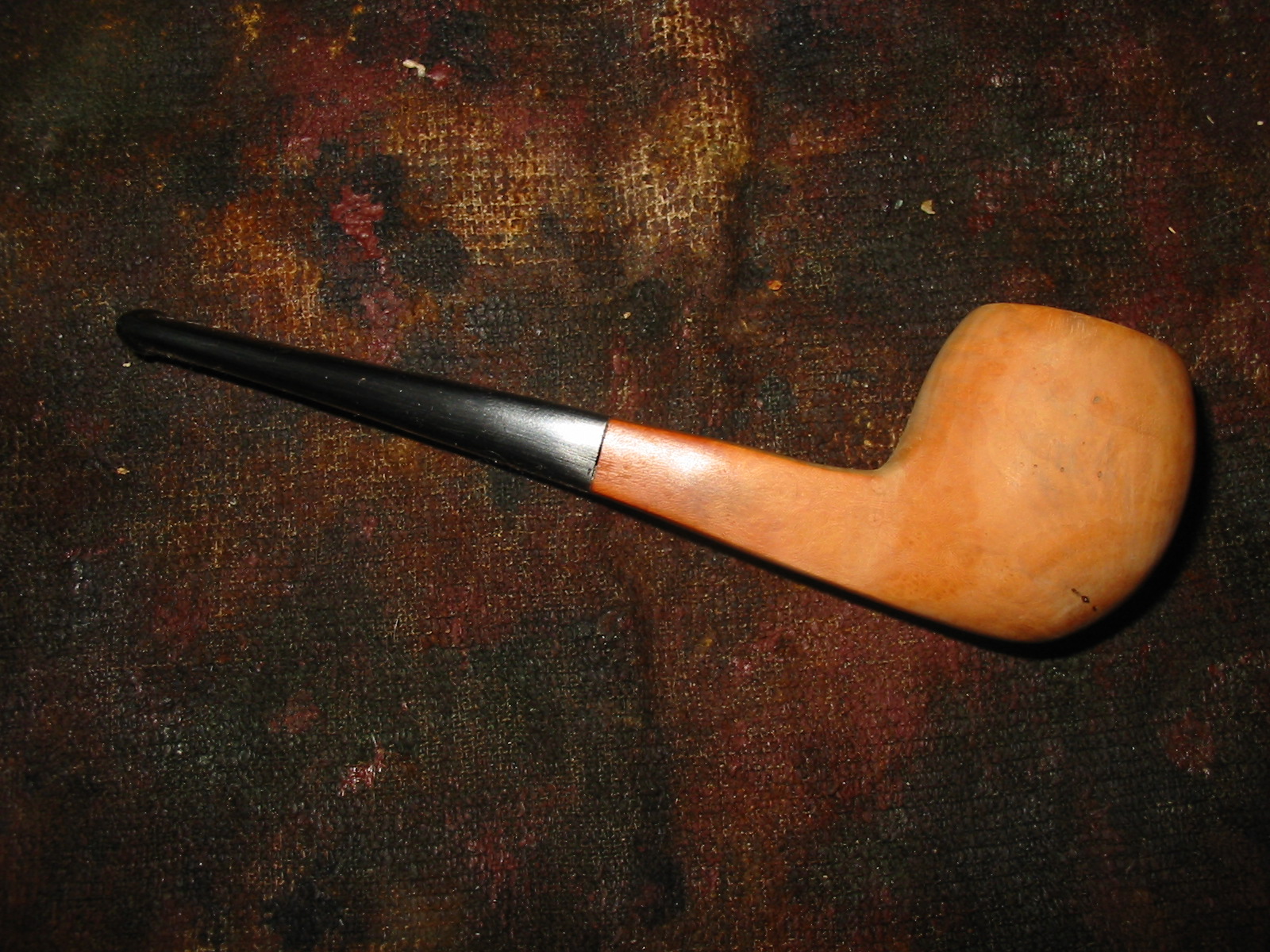
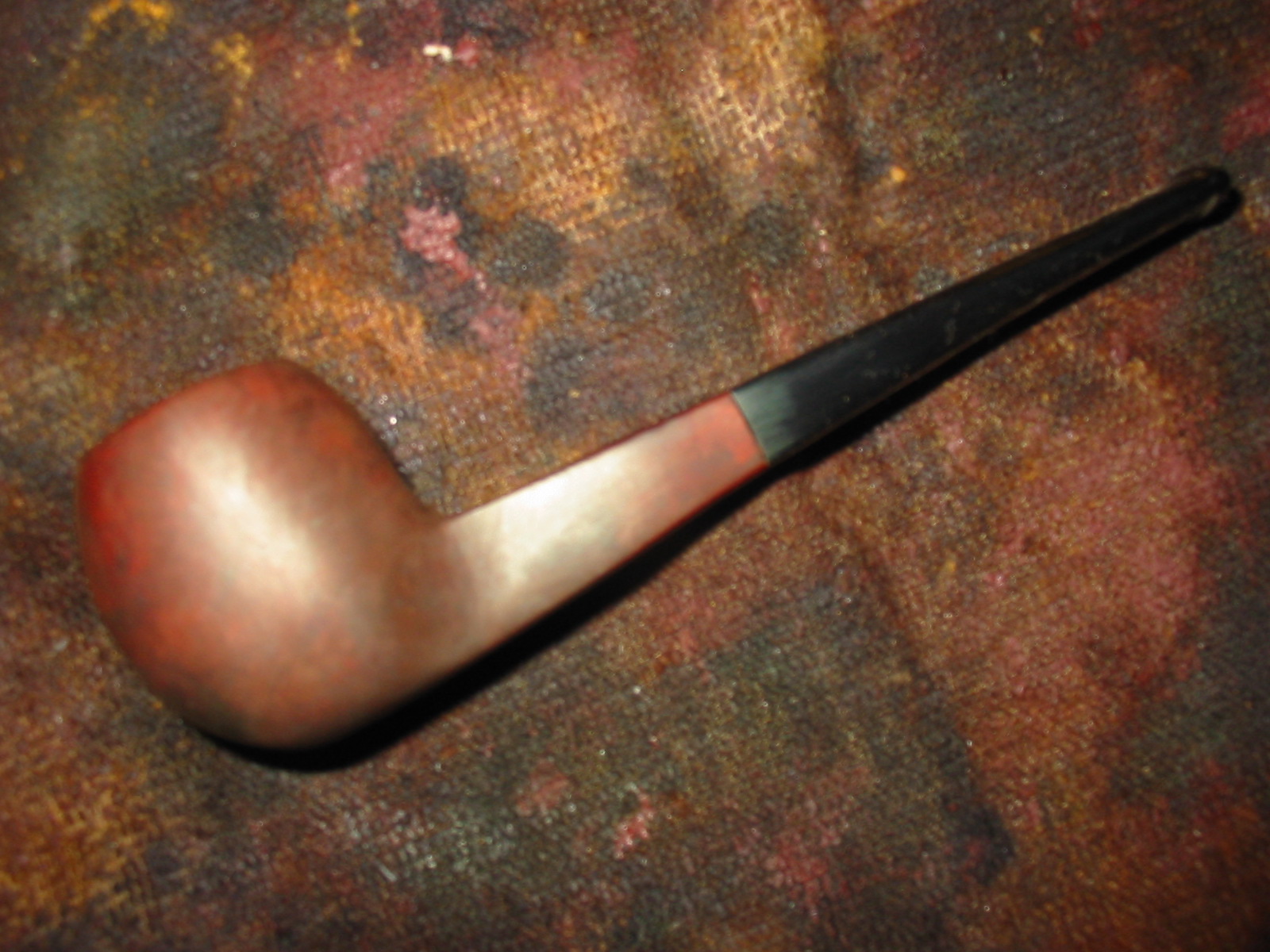
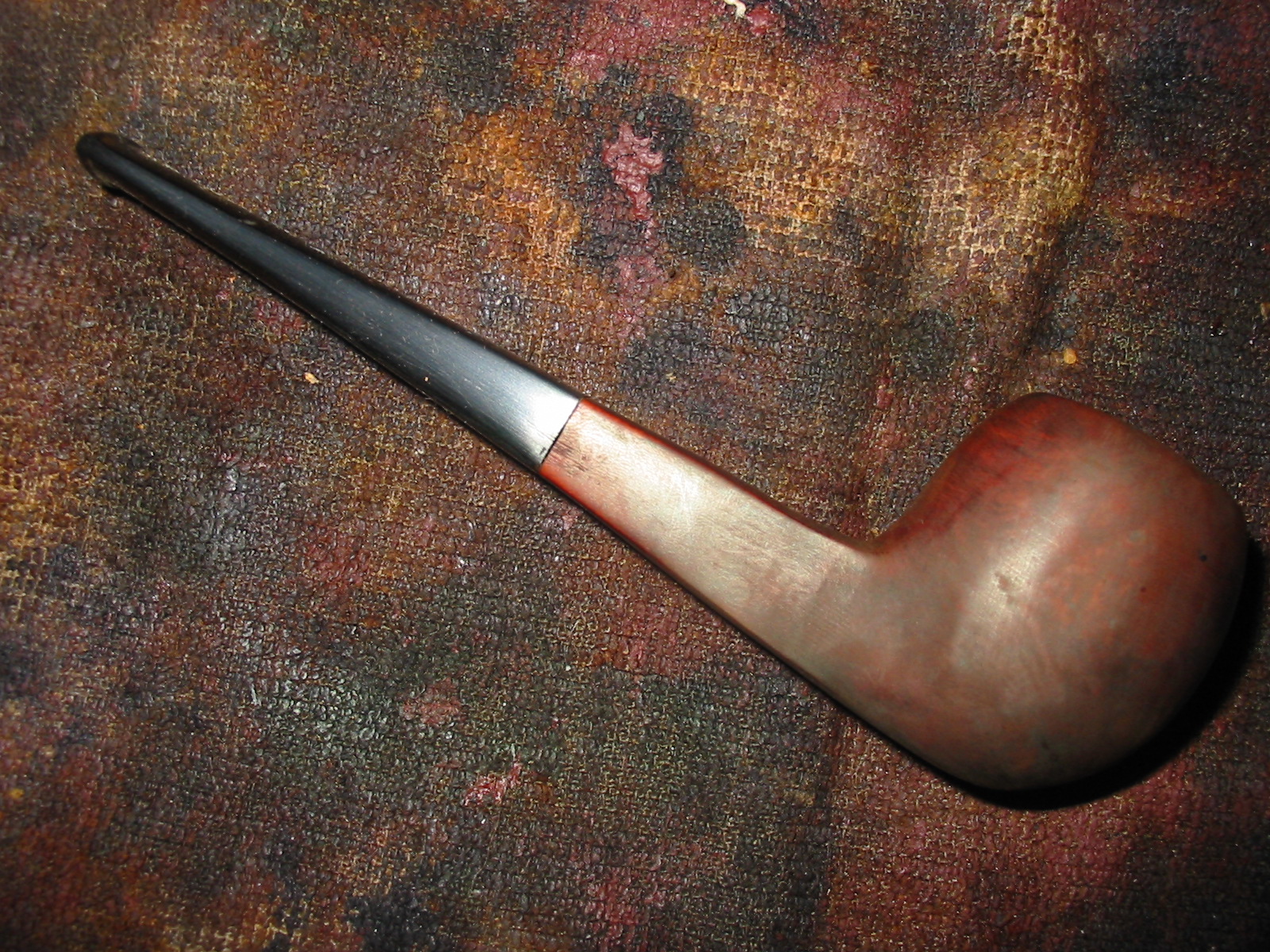
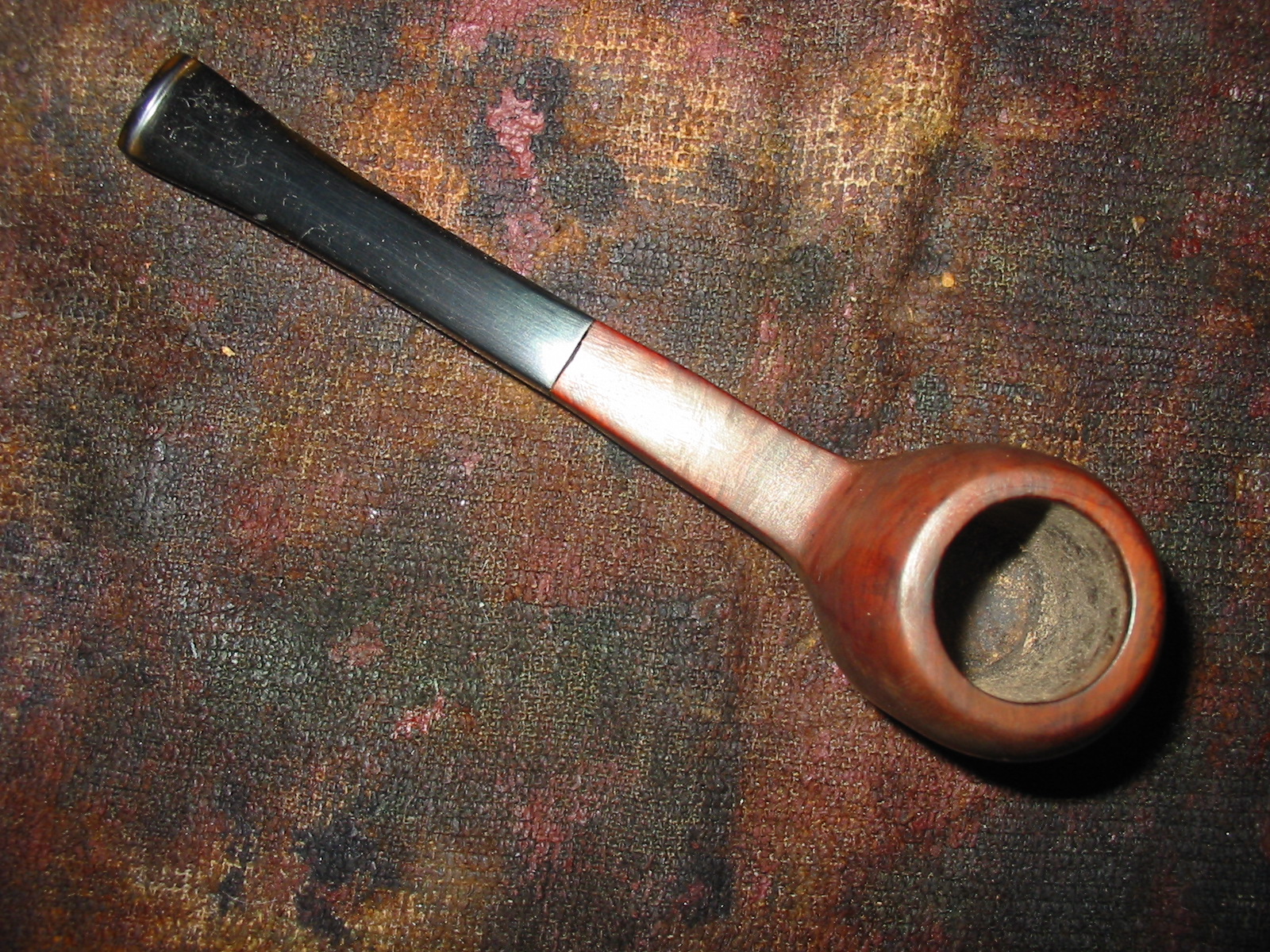
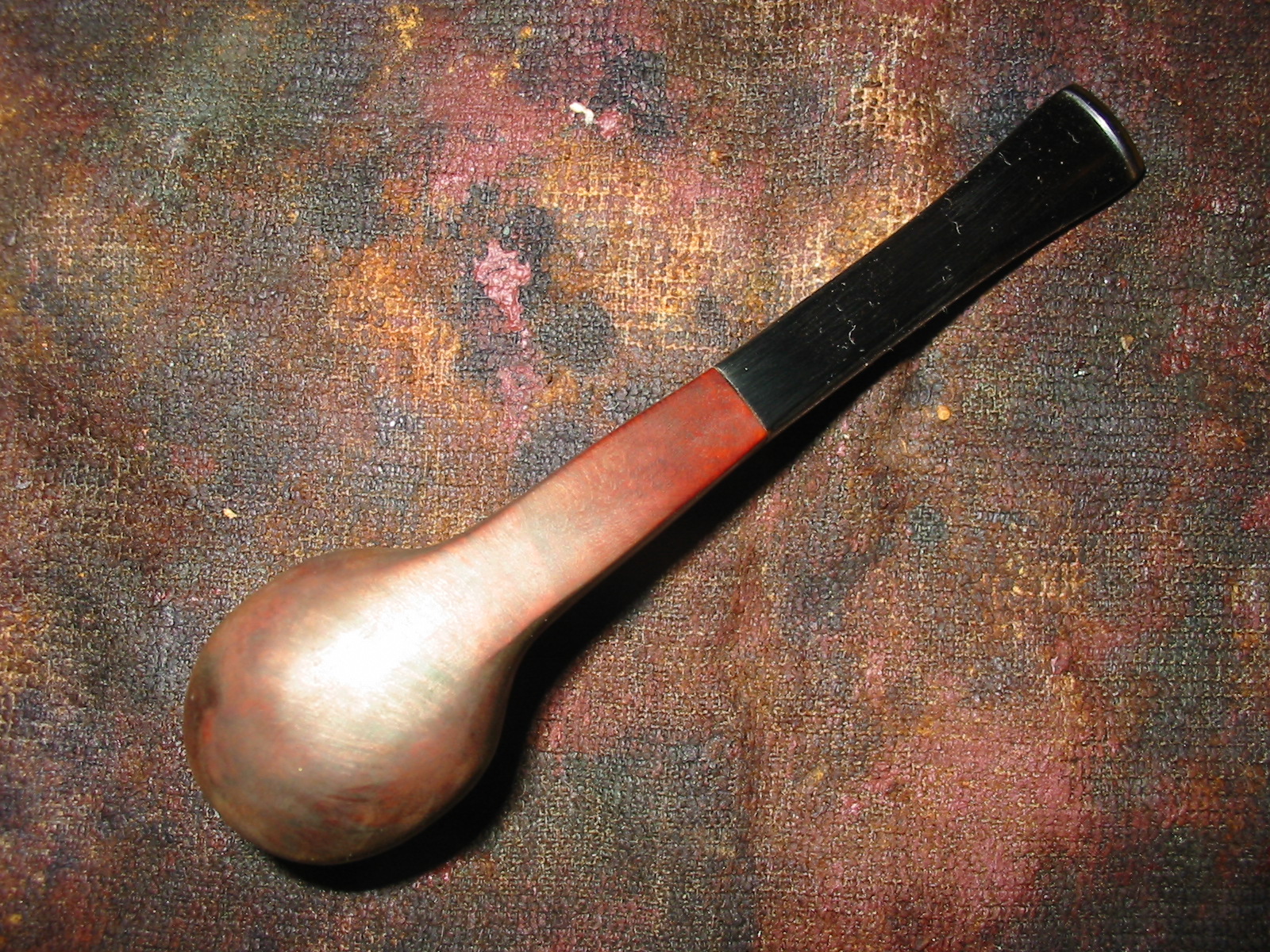
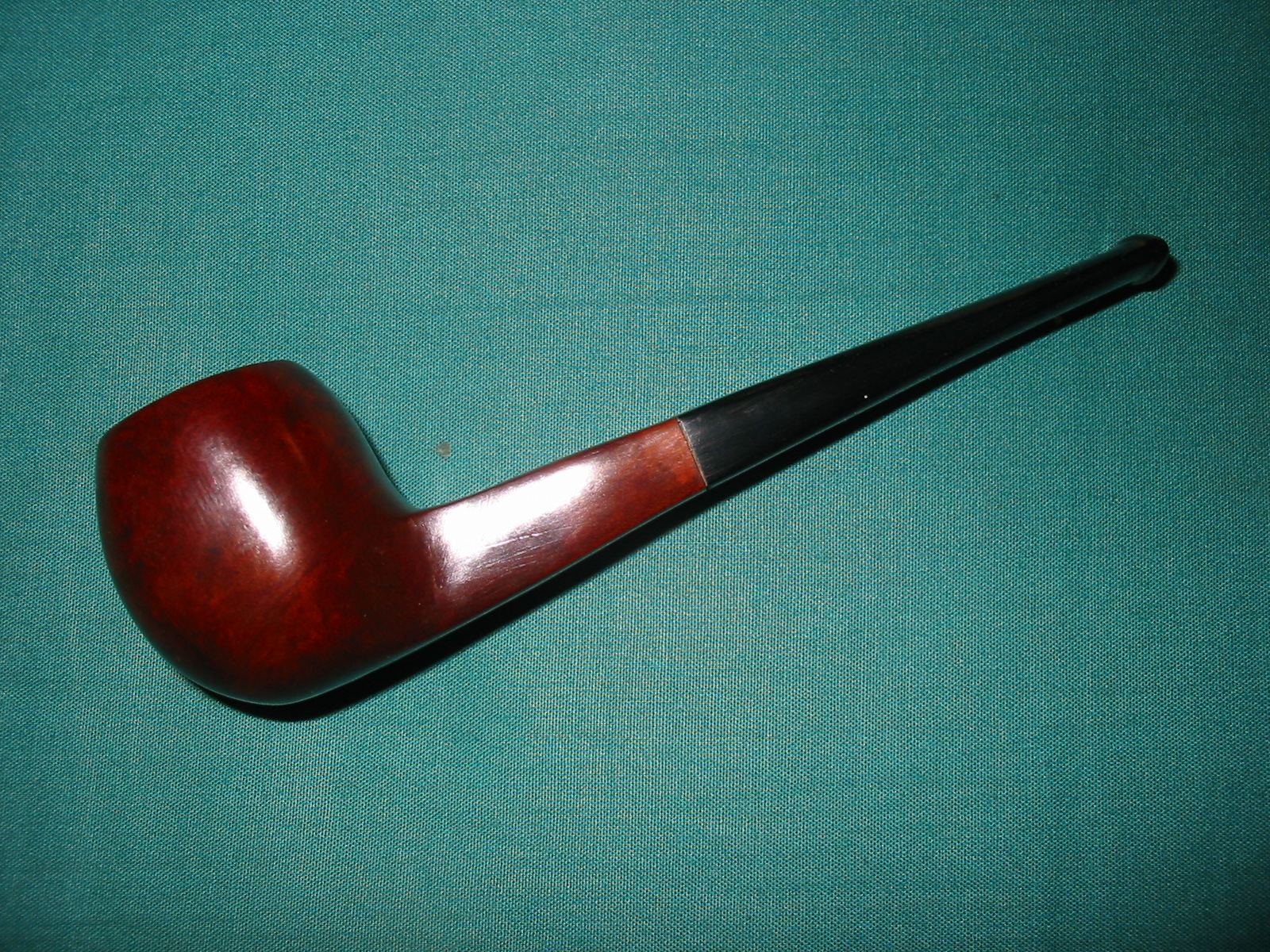
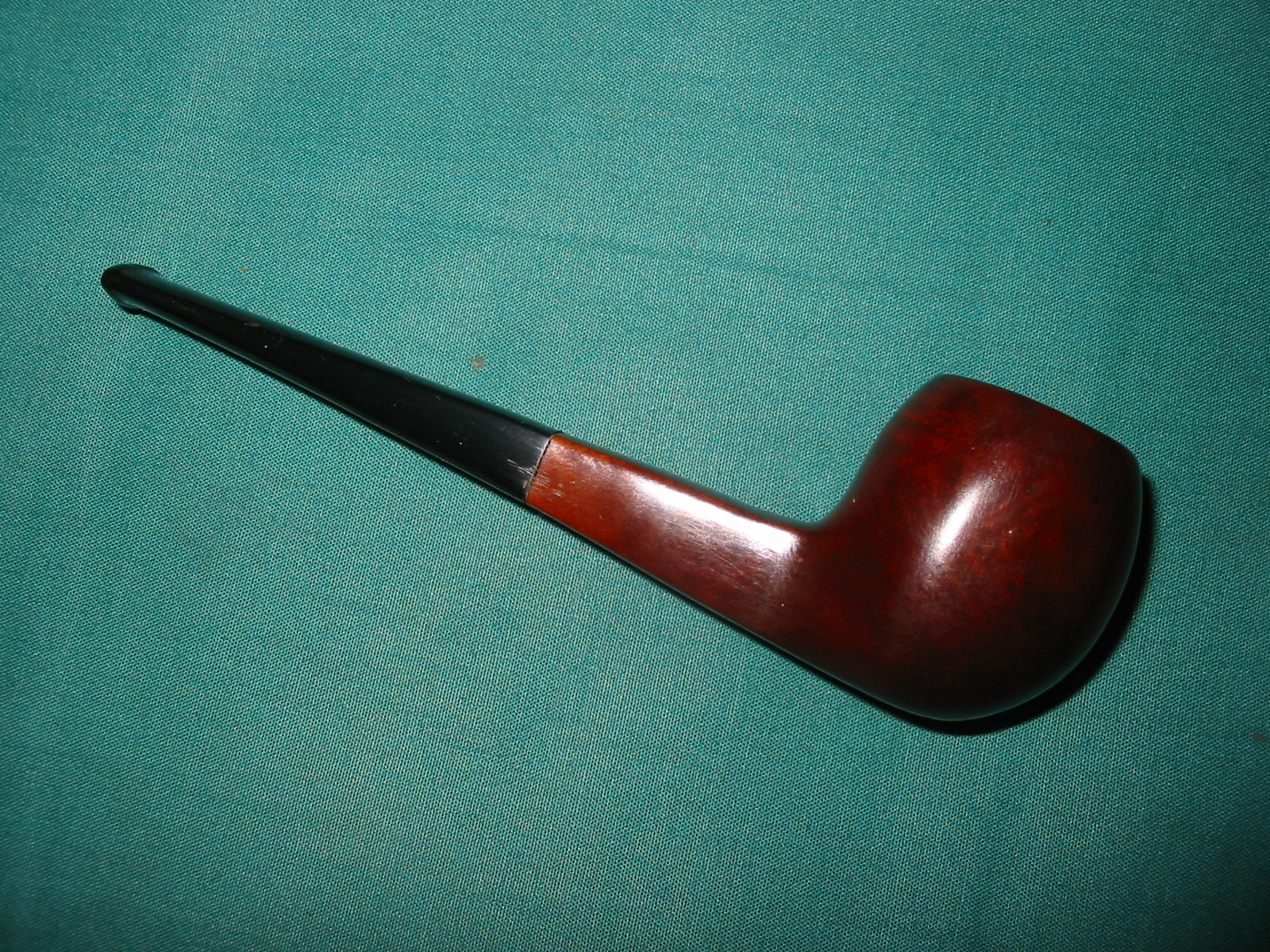
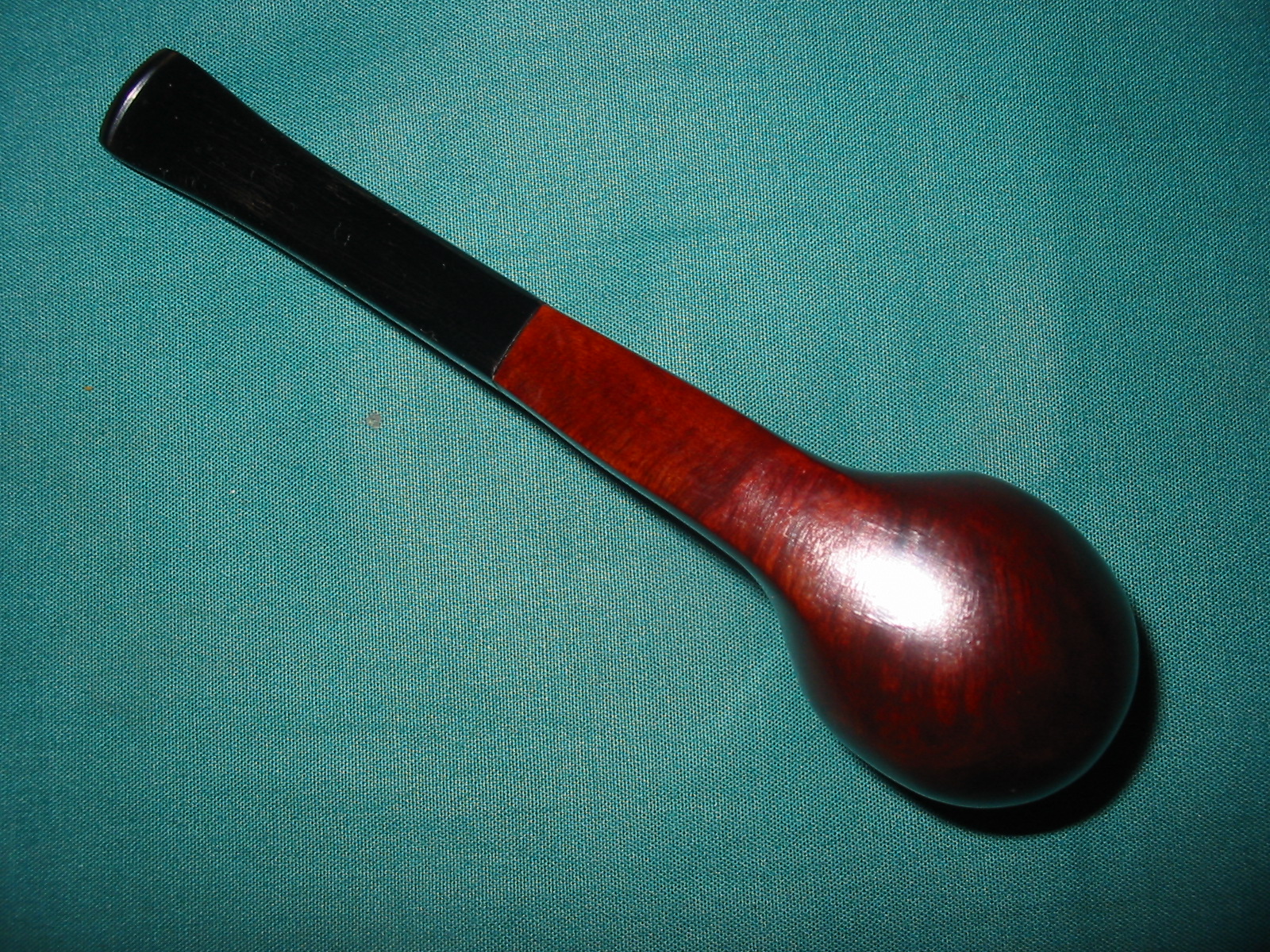
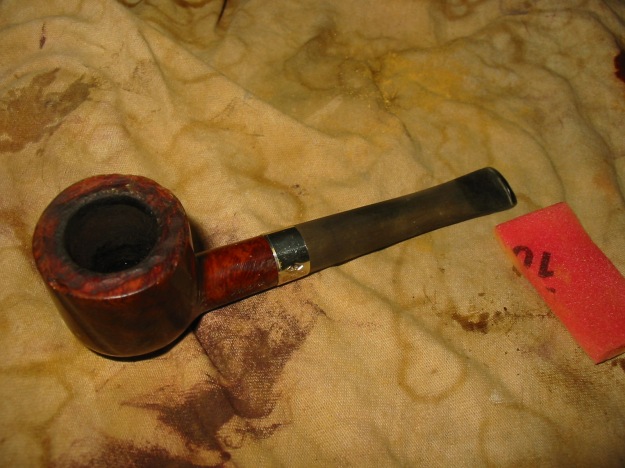
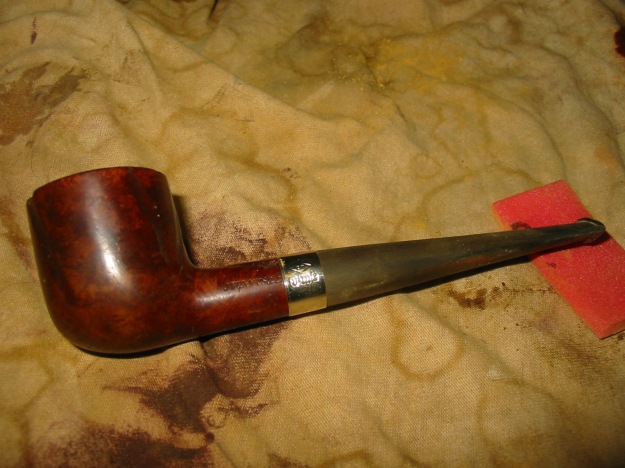
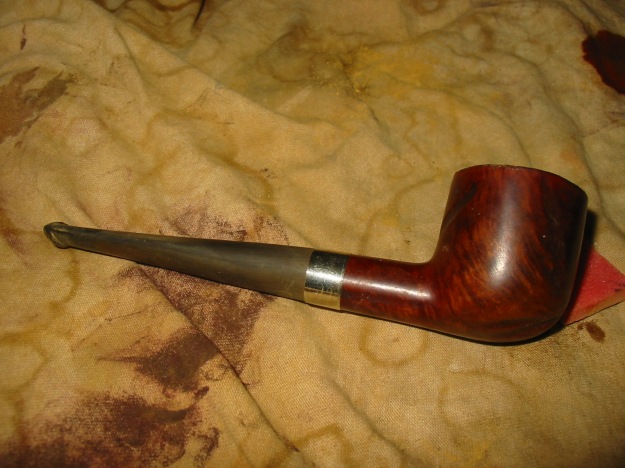
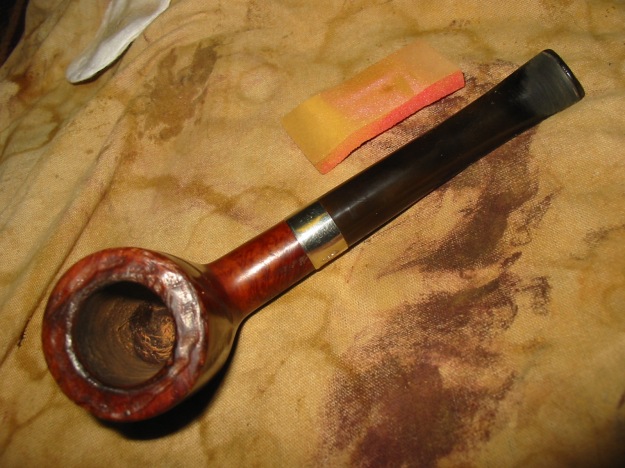
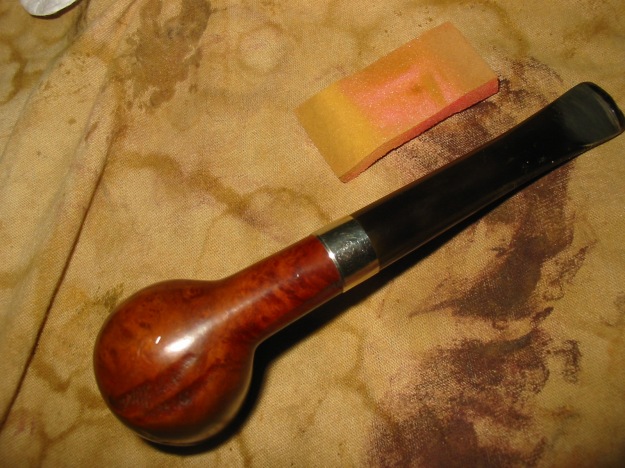
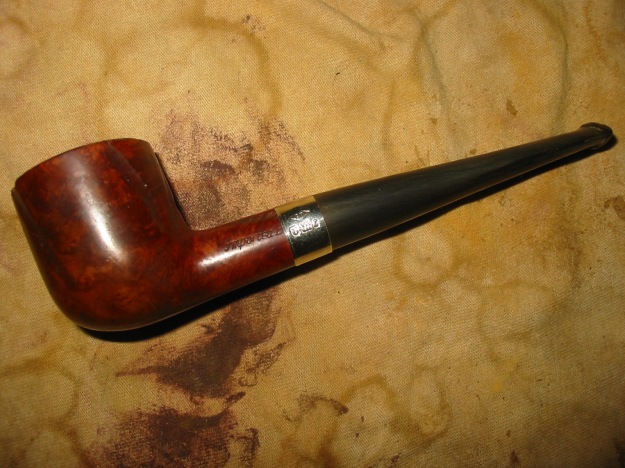
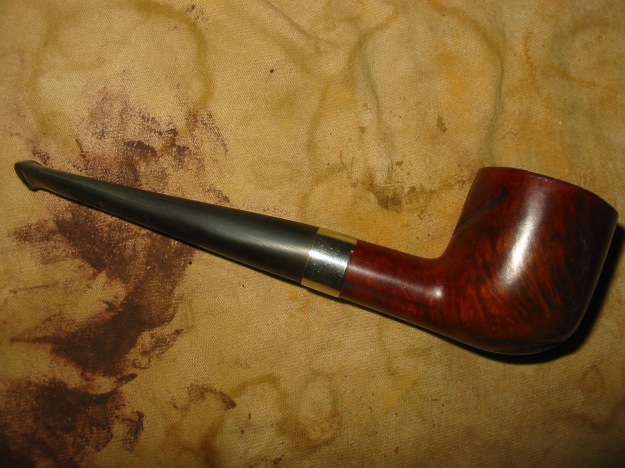
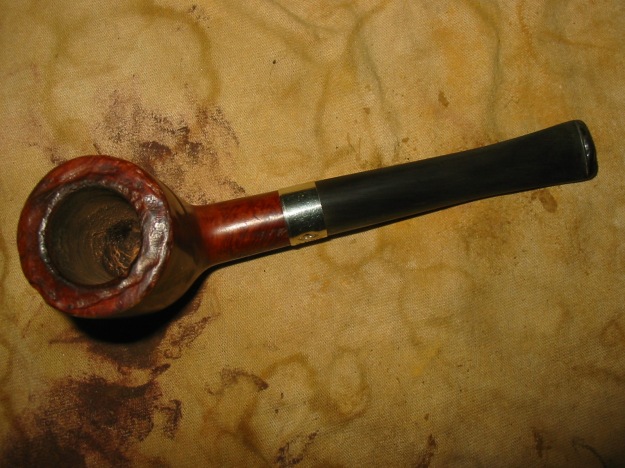
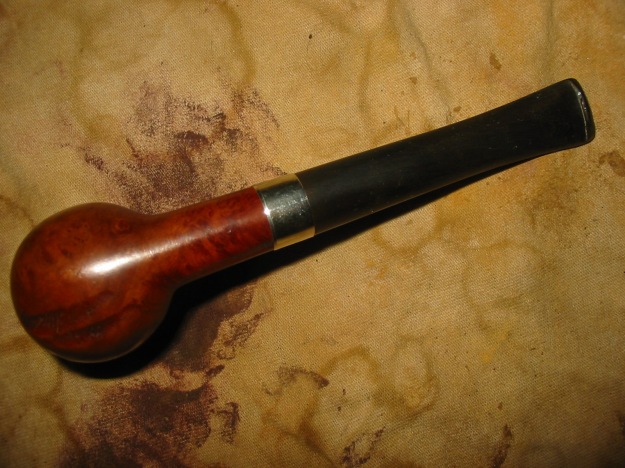
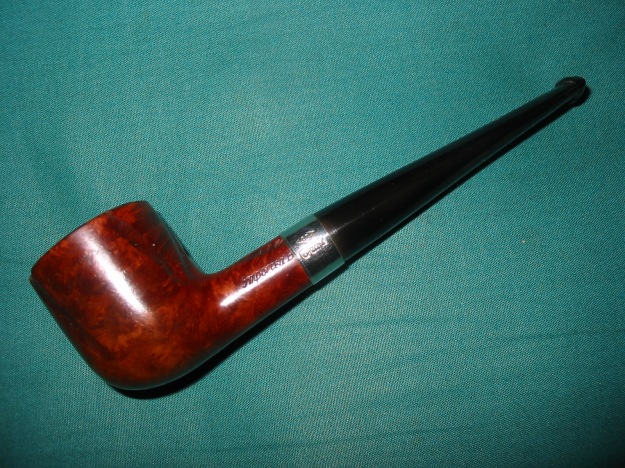
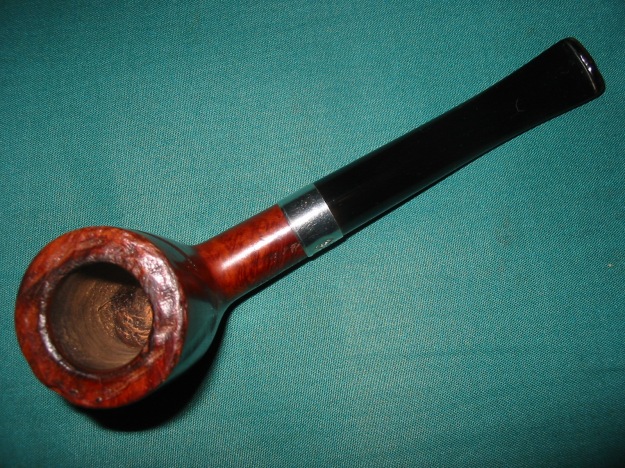
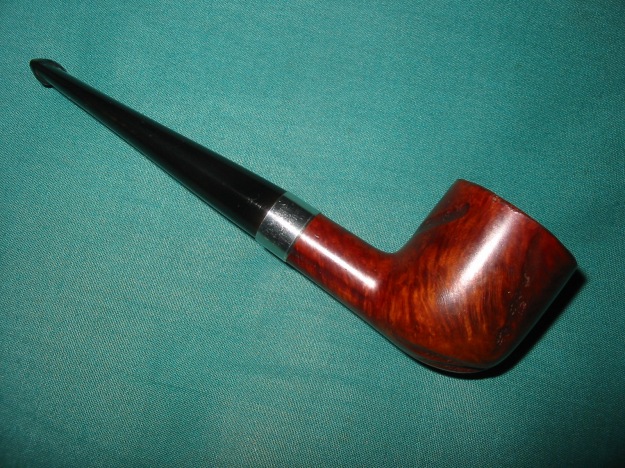
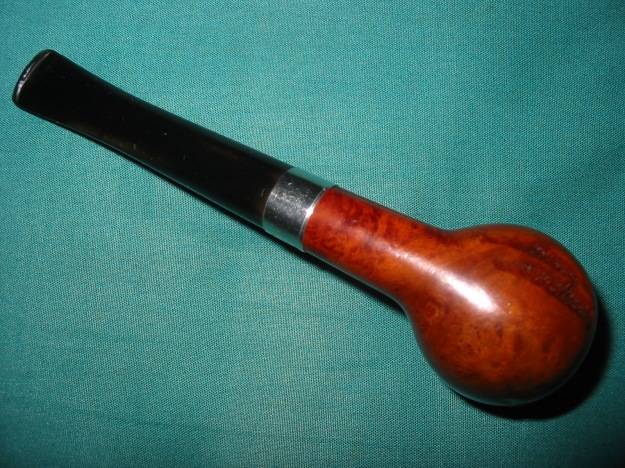
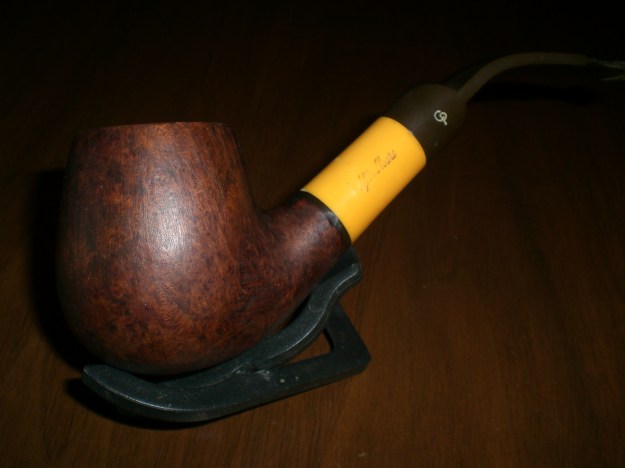
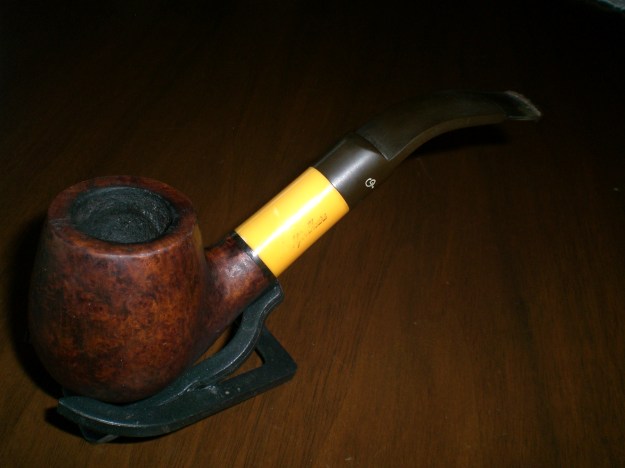
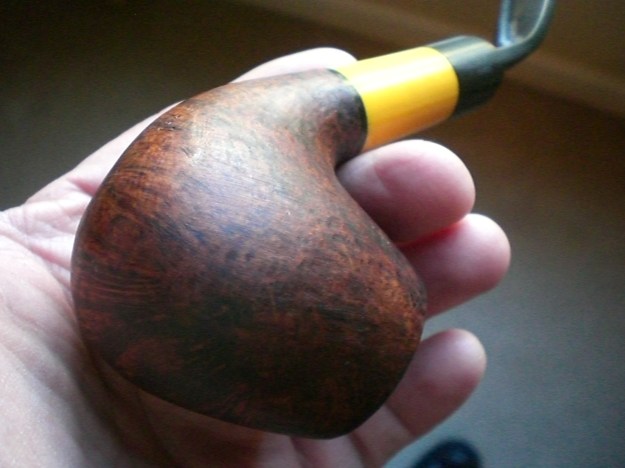
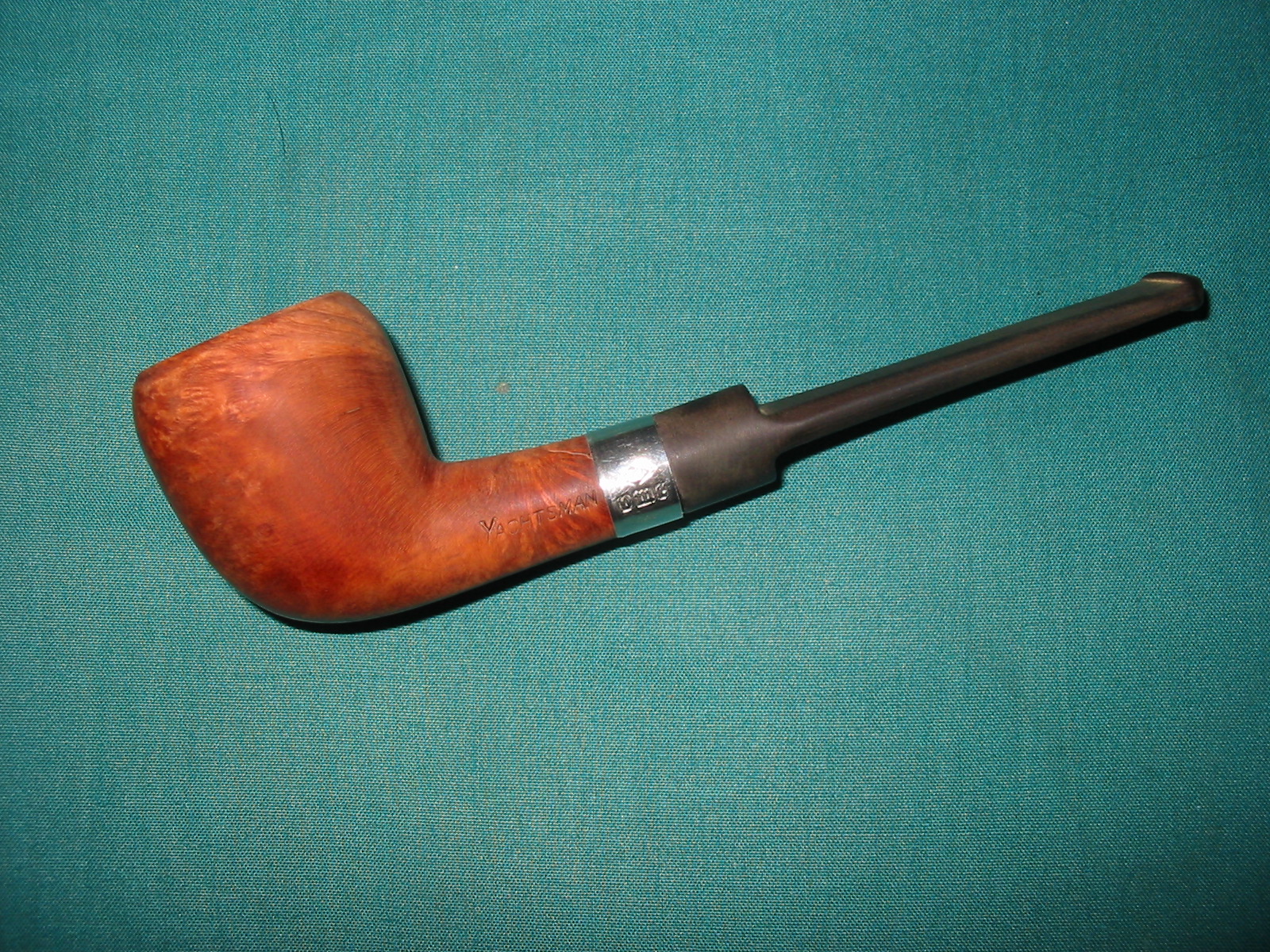
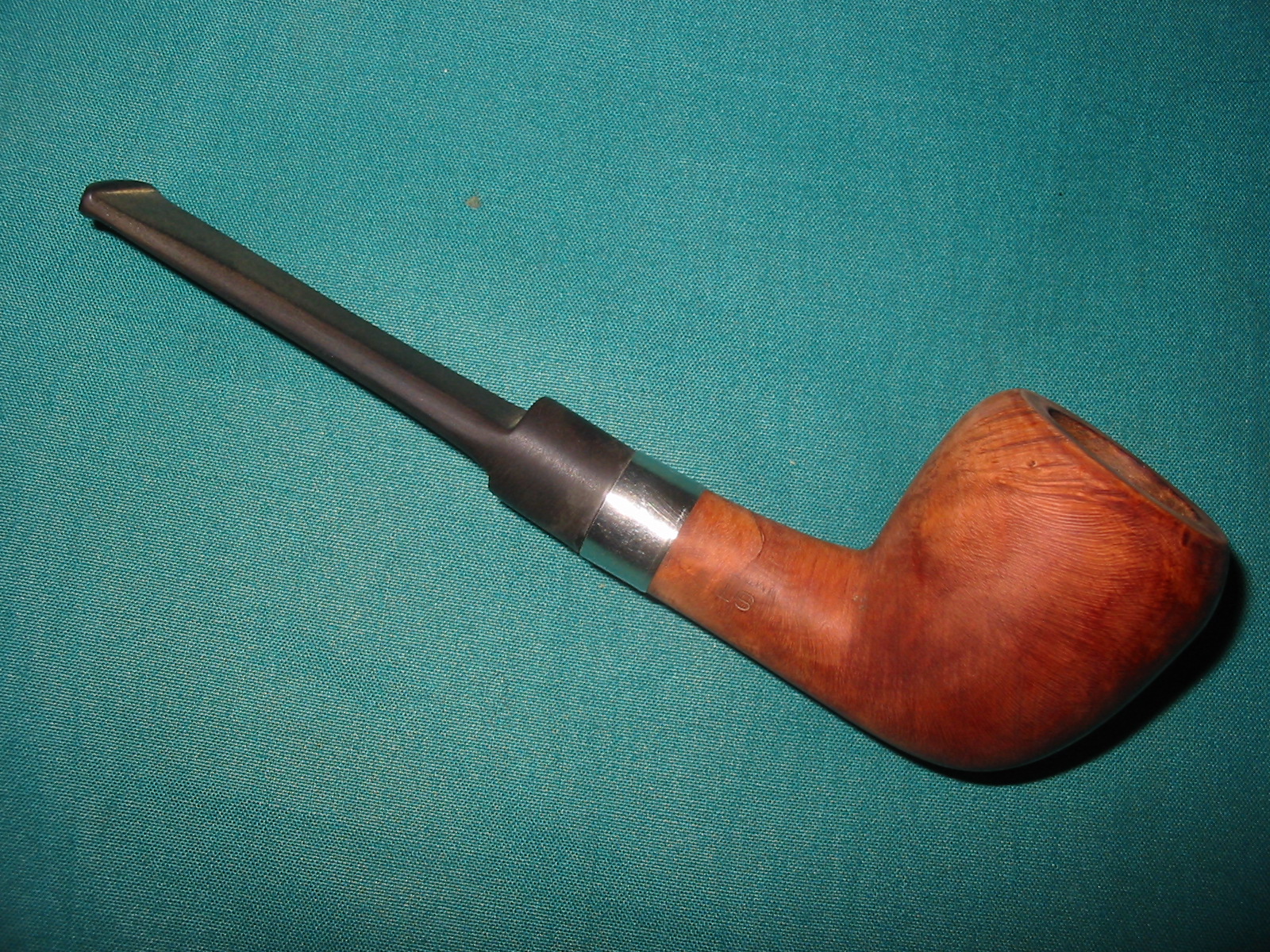
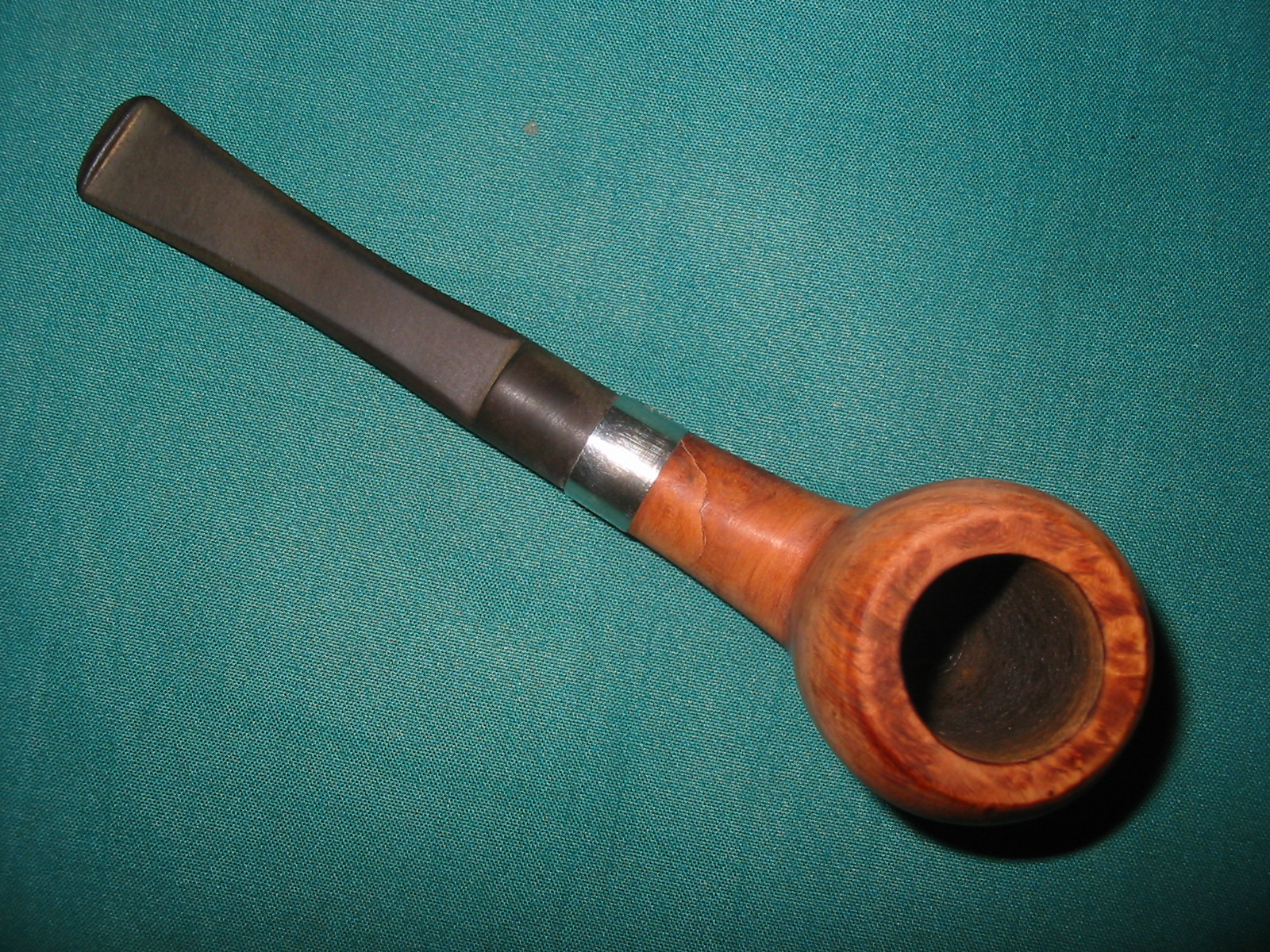
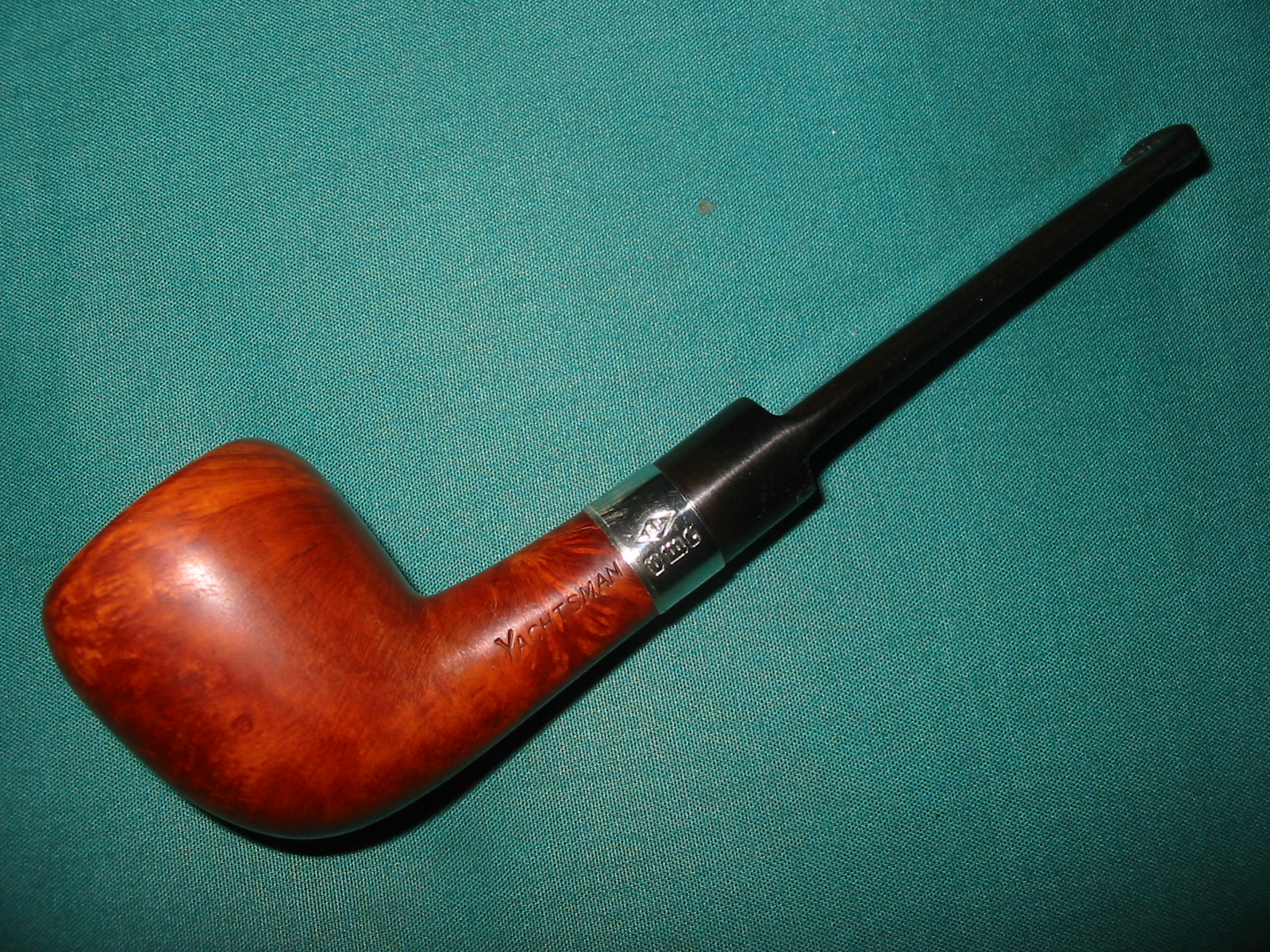
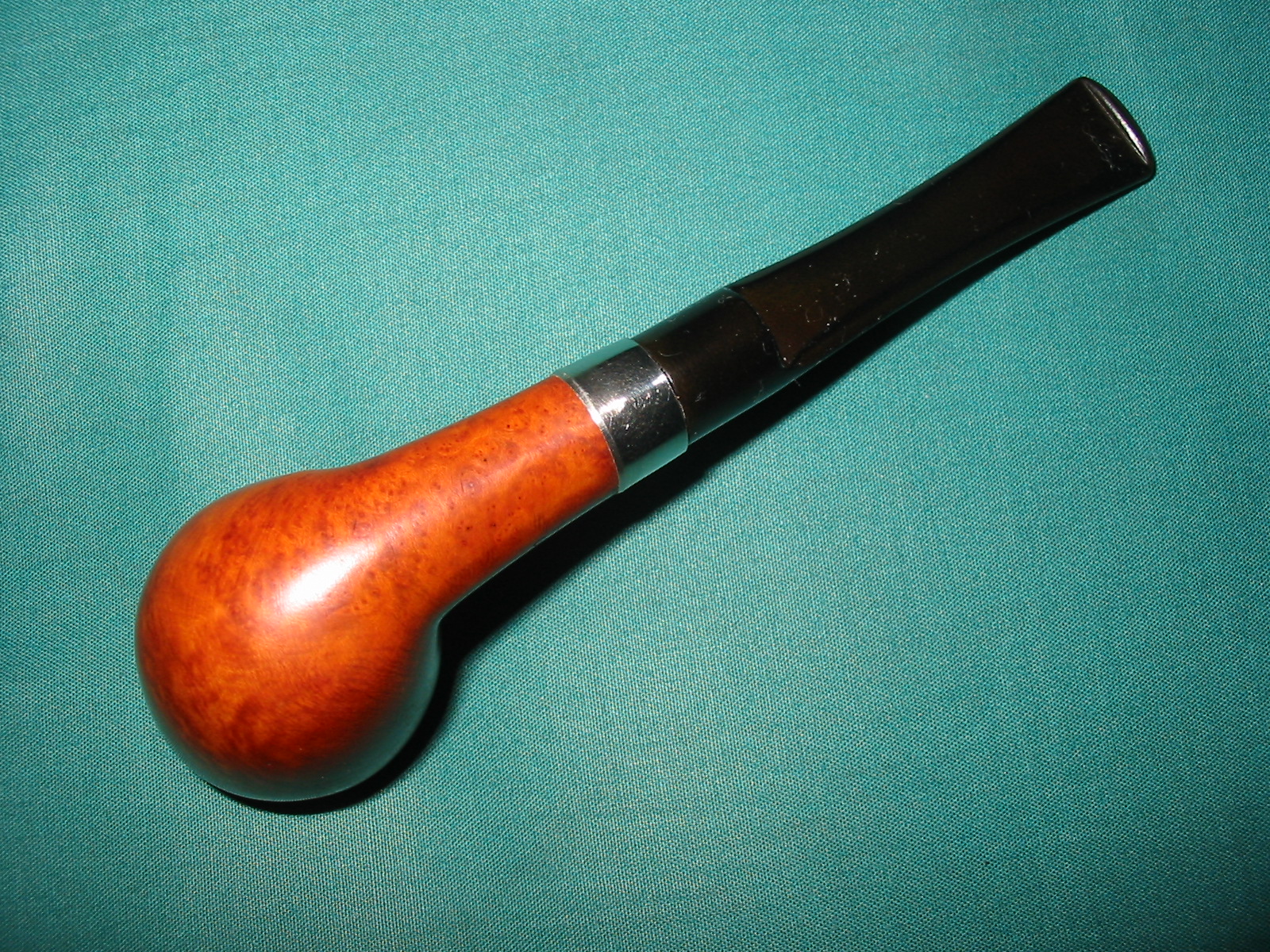
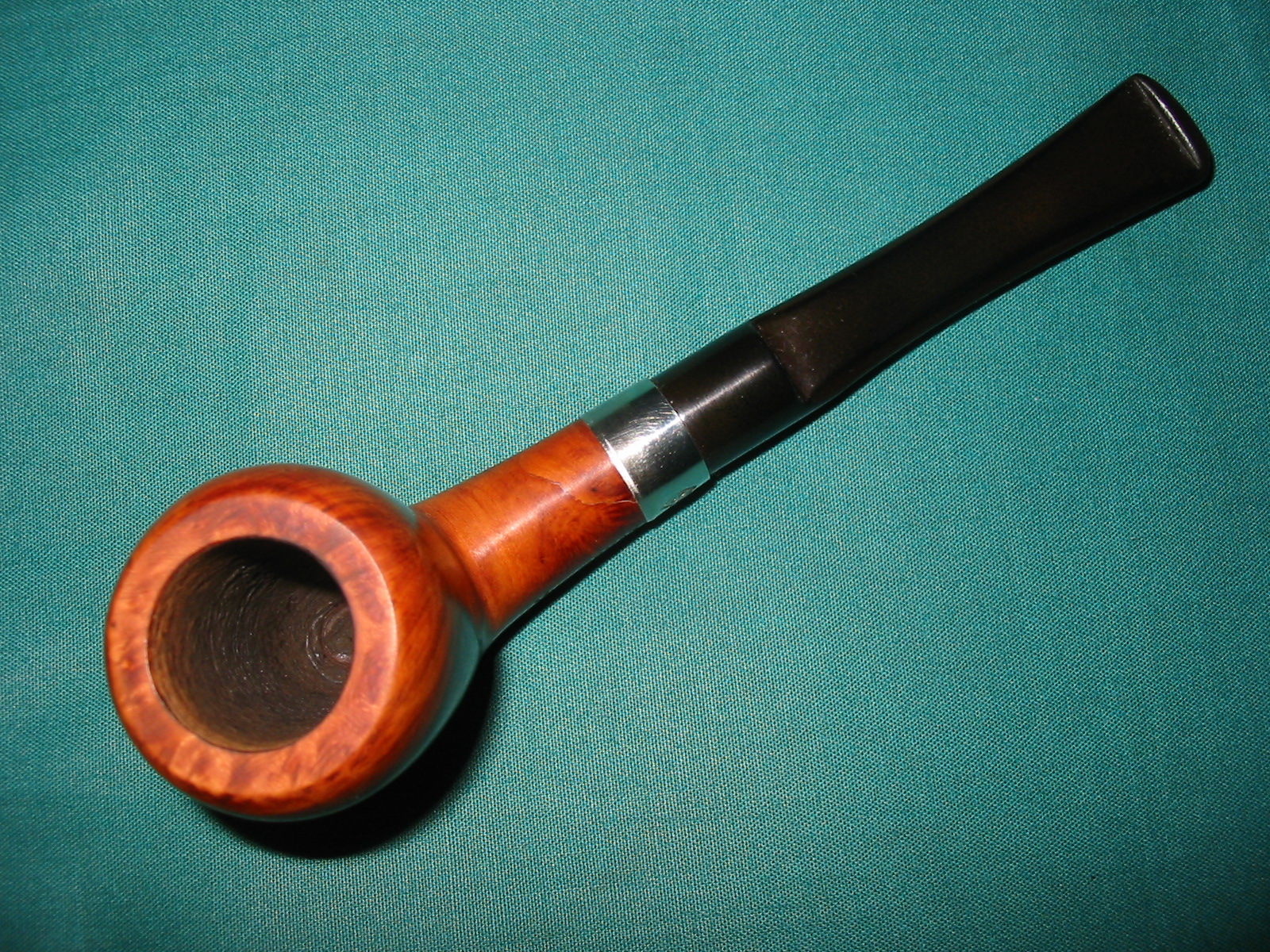
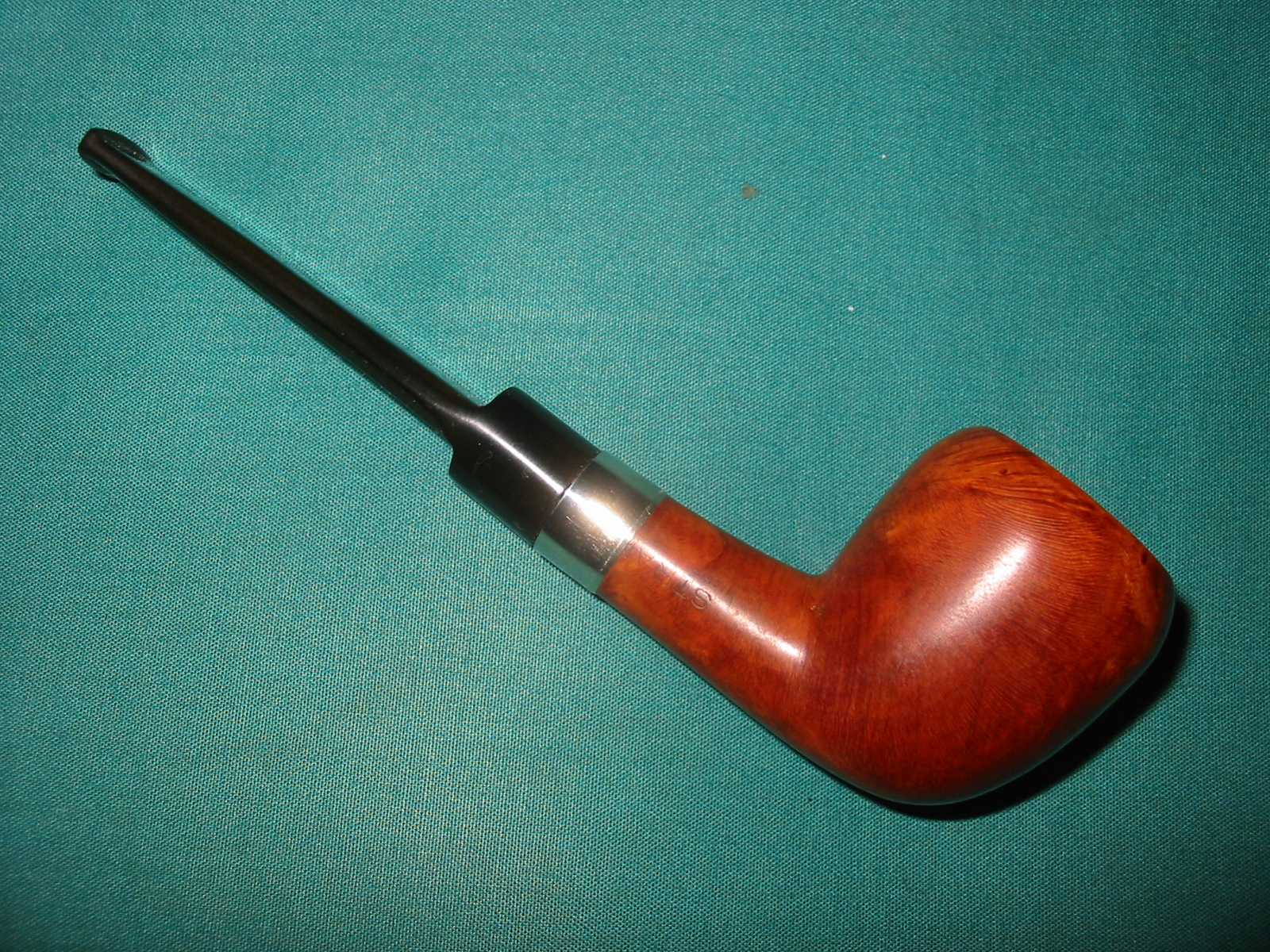
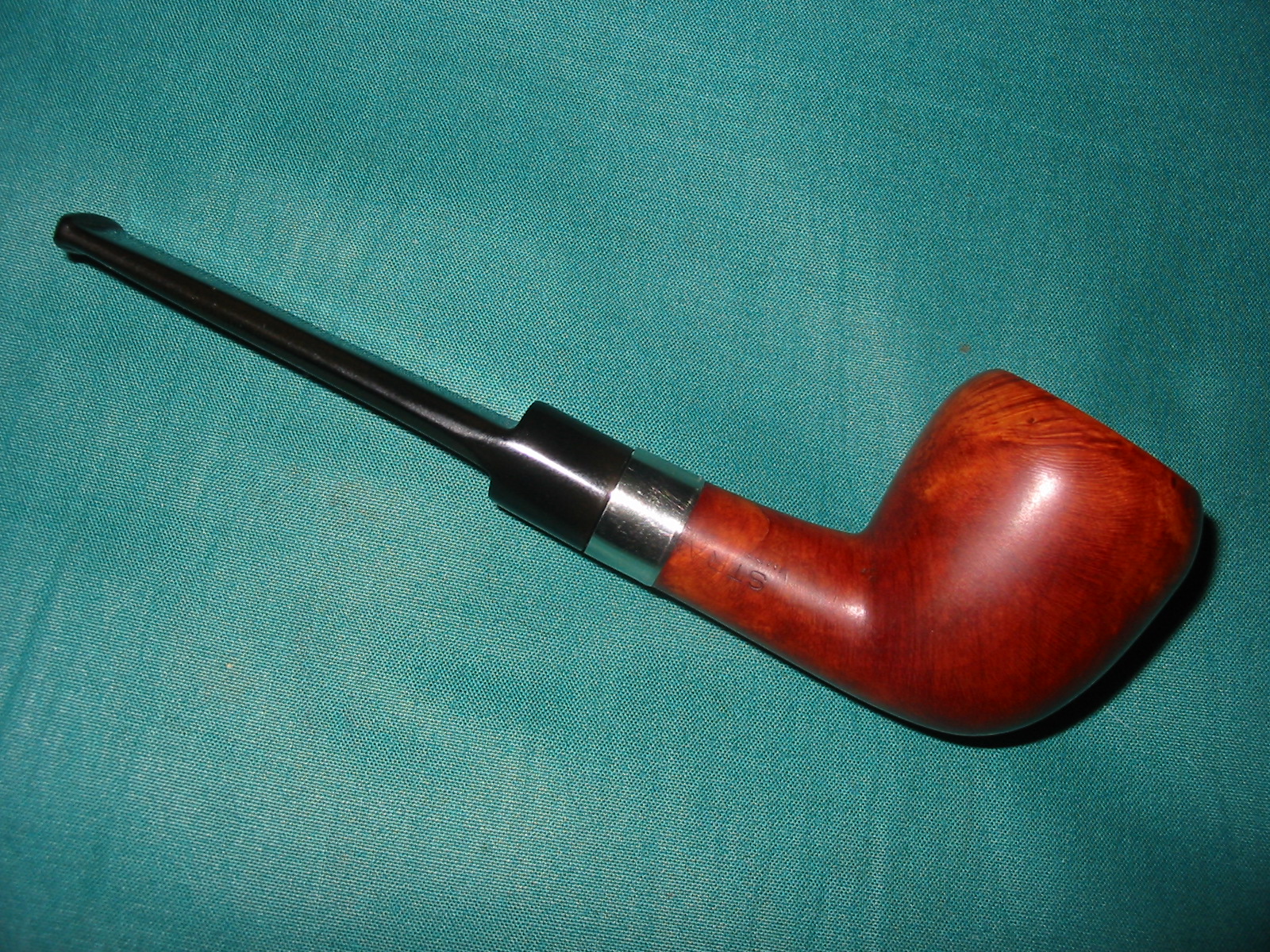
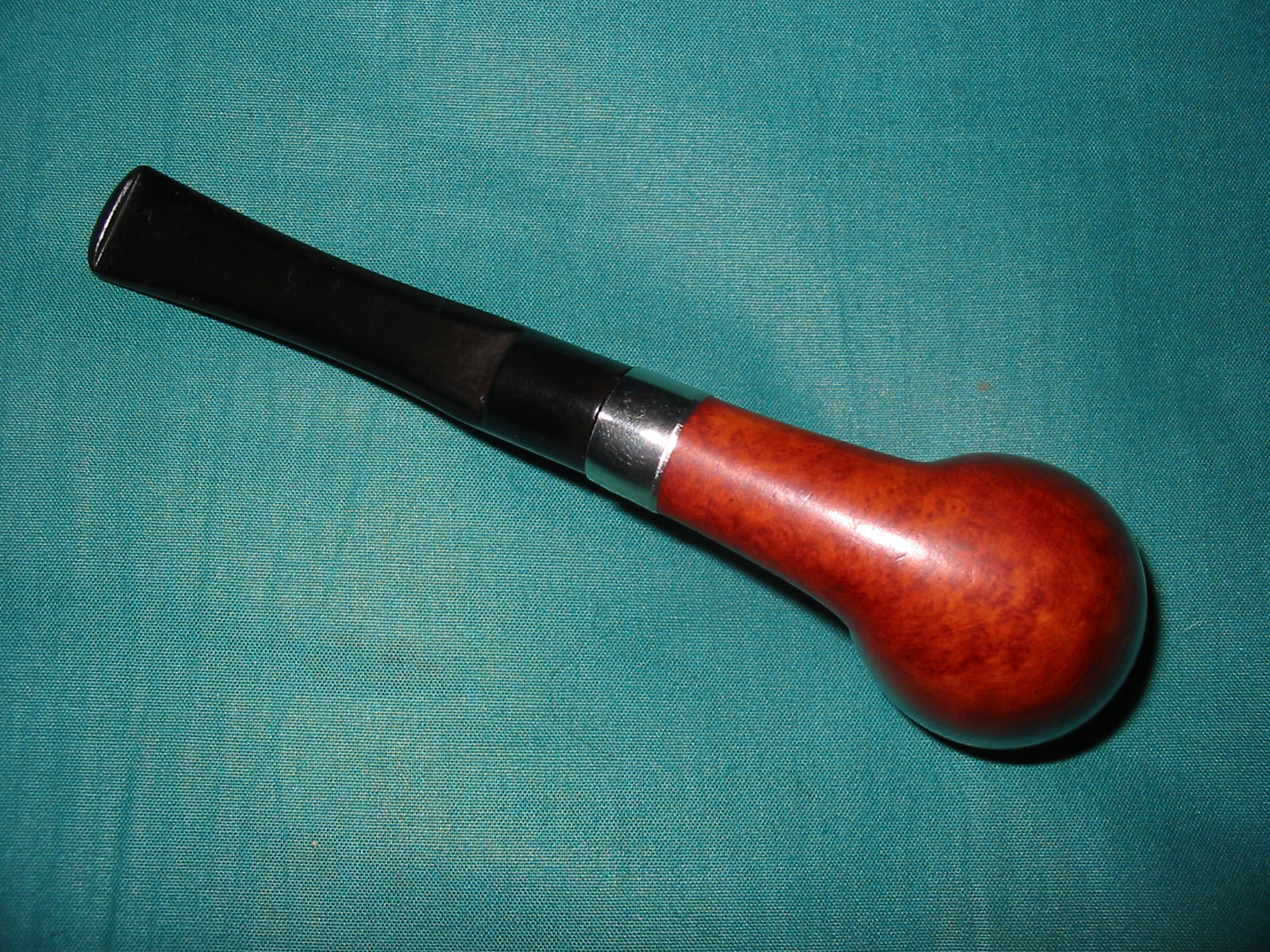
GBD Bulldog #549 New Standard Restoration


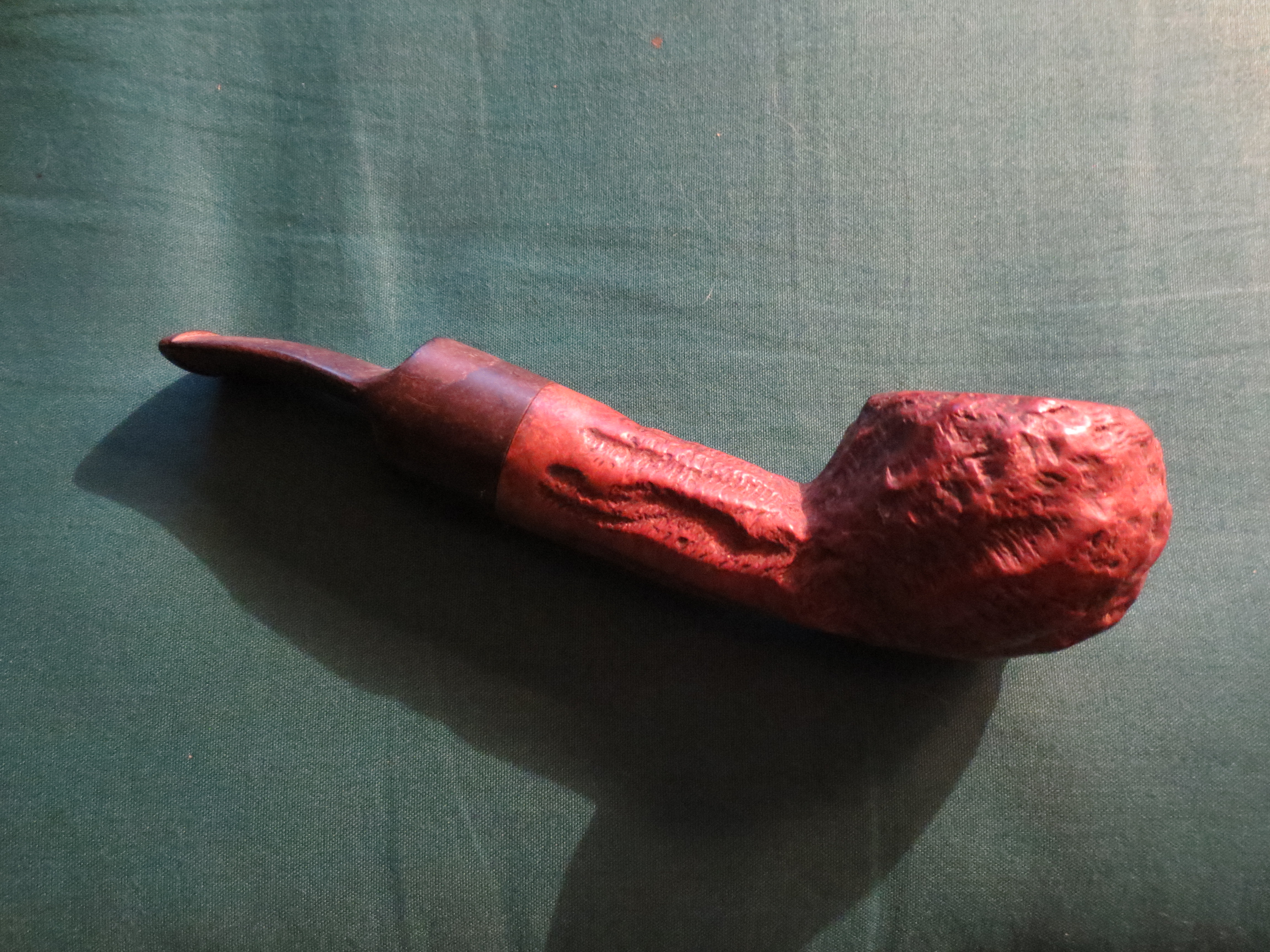
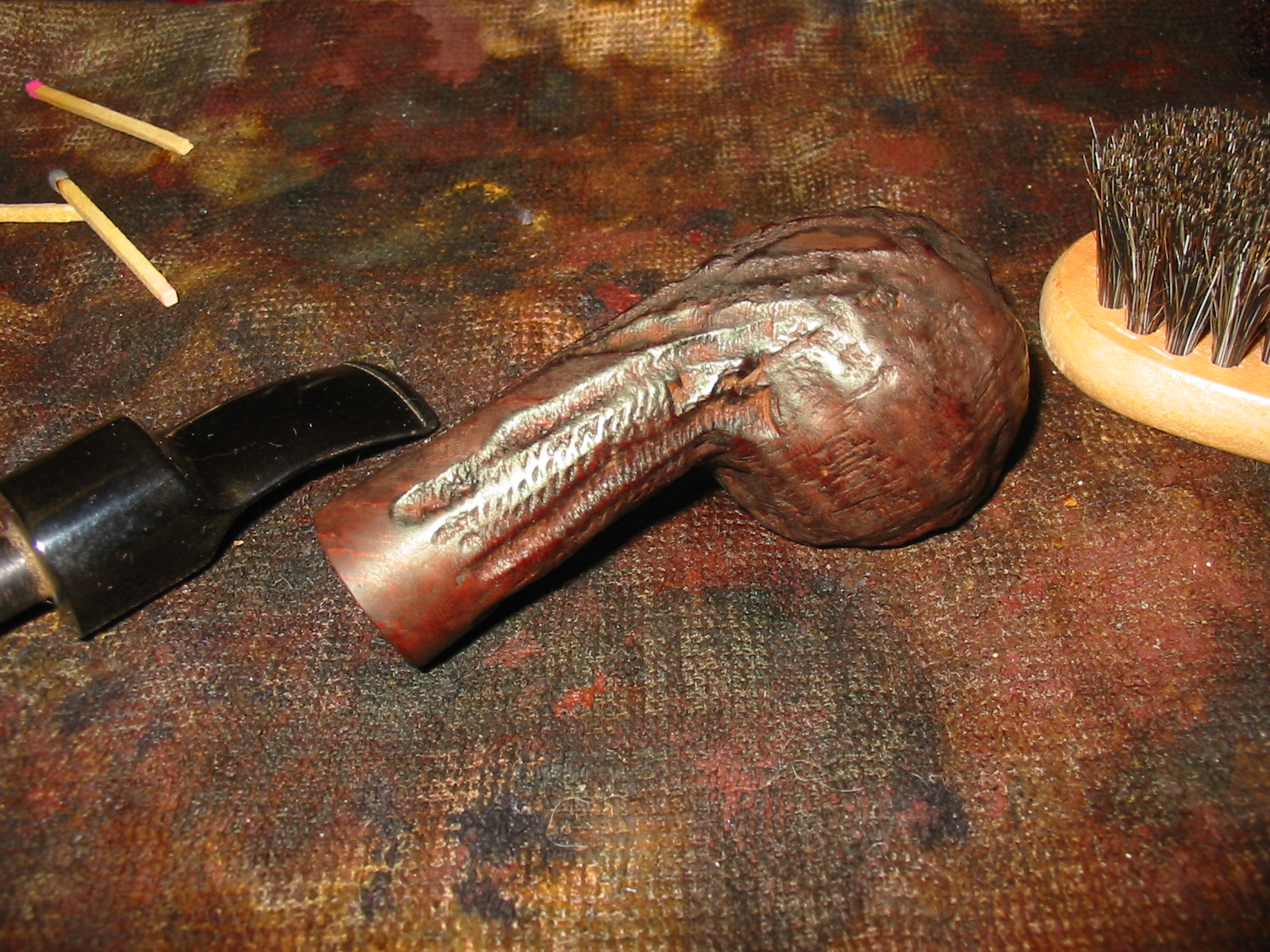
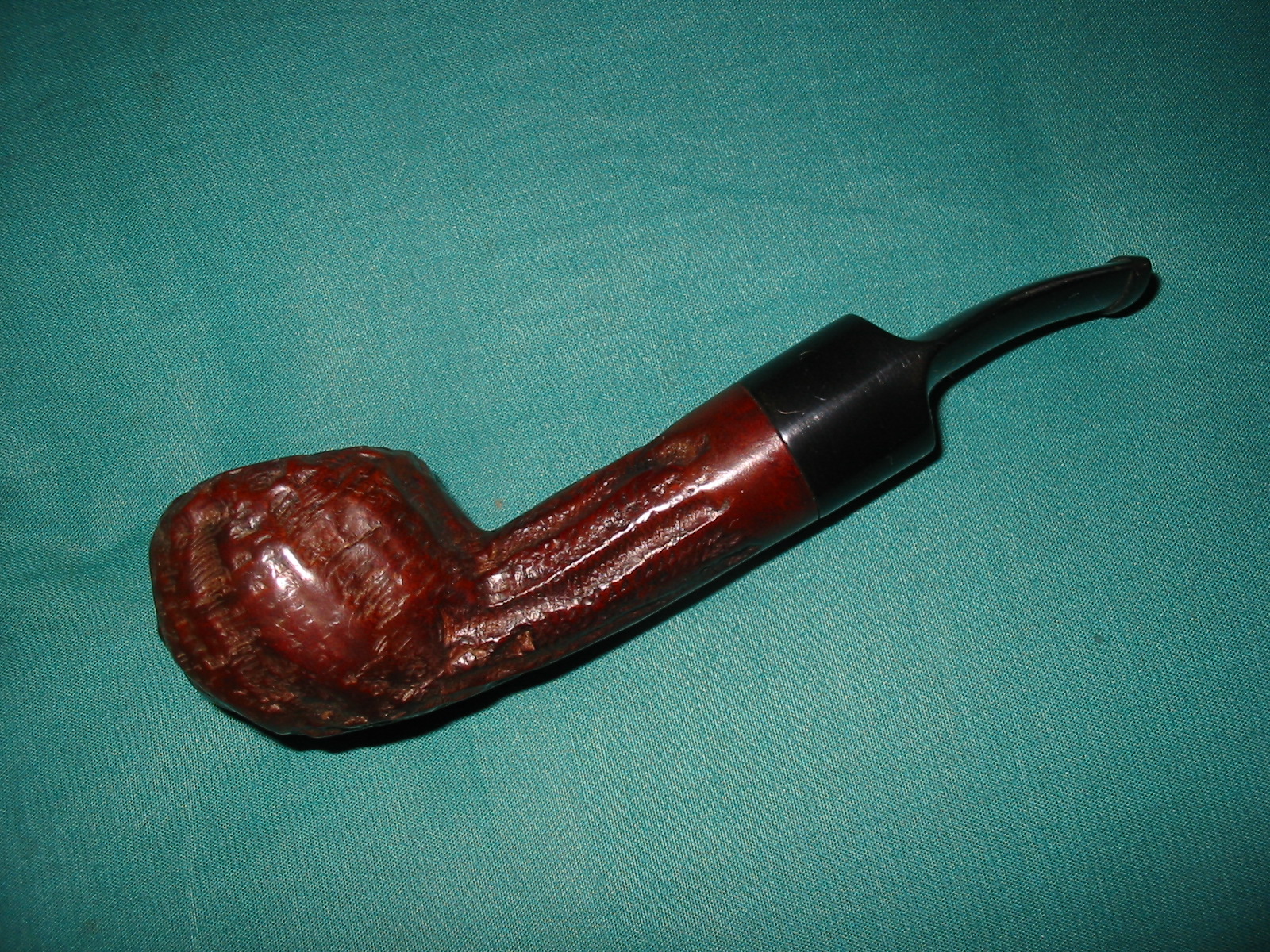
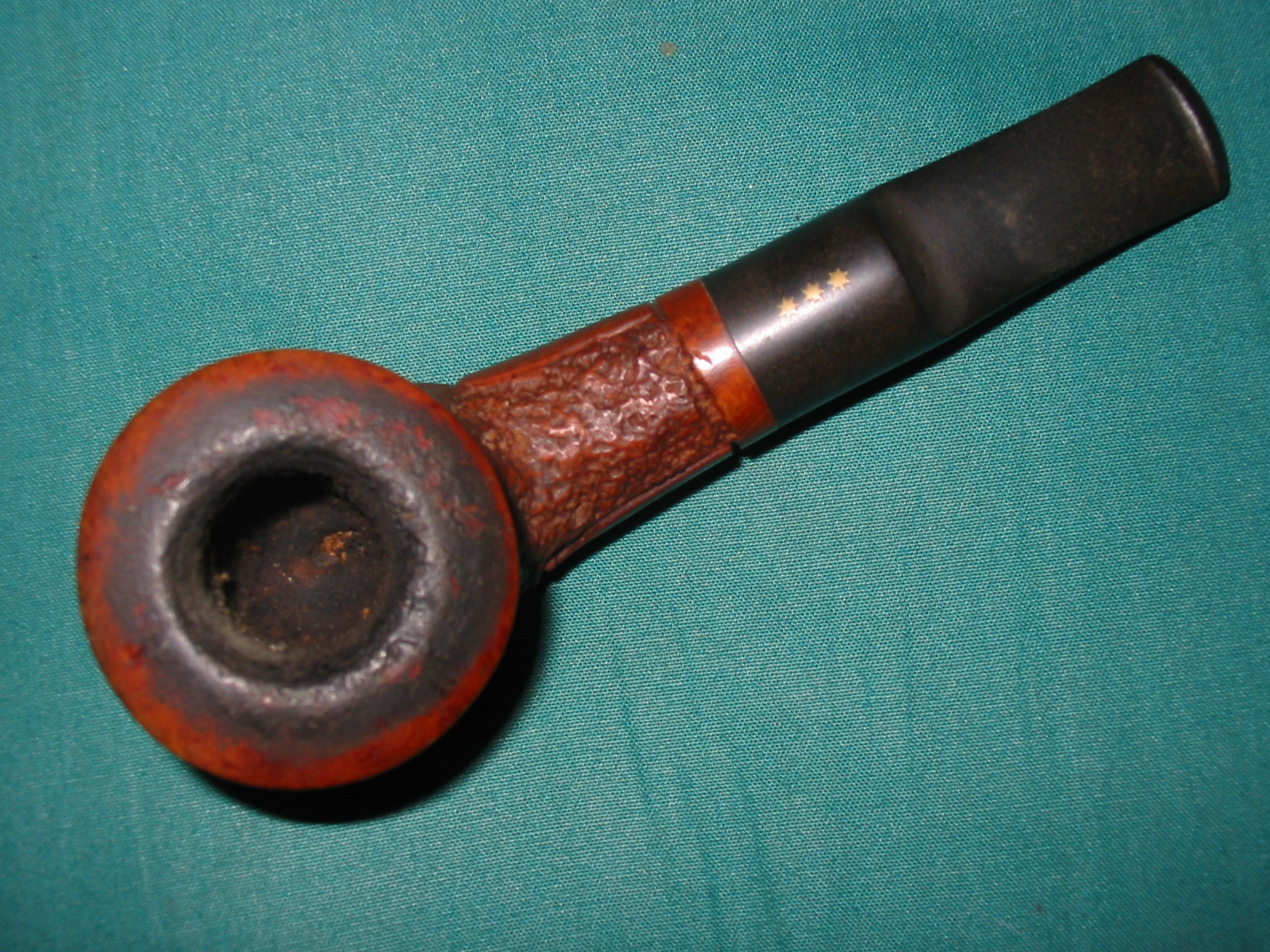
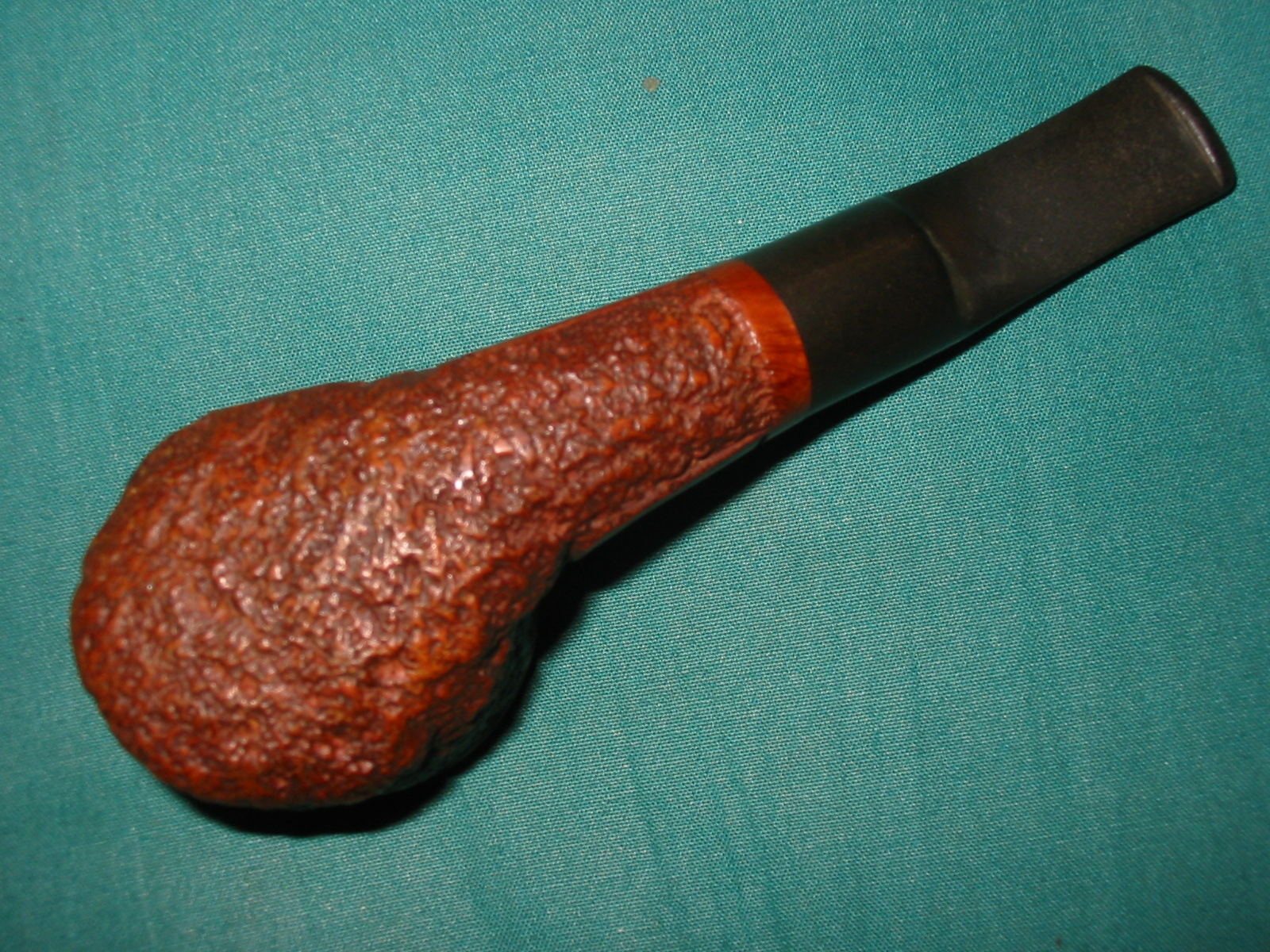
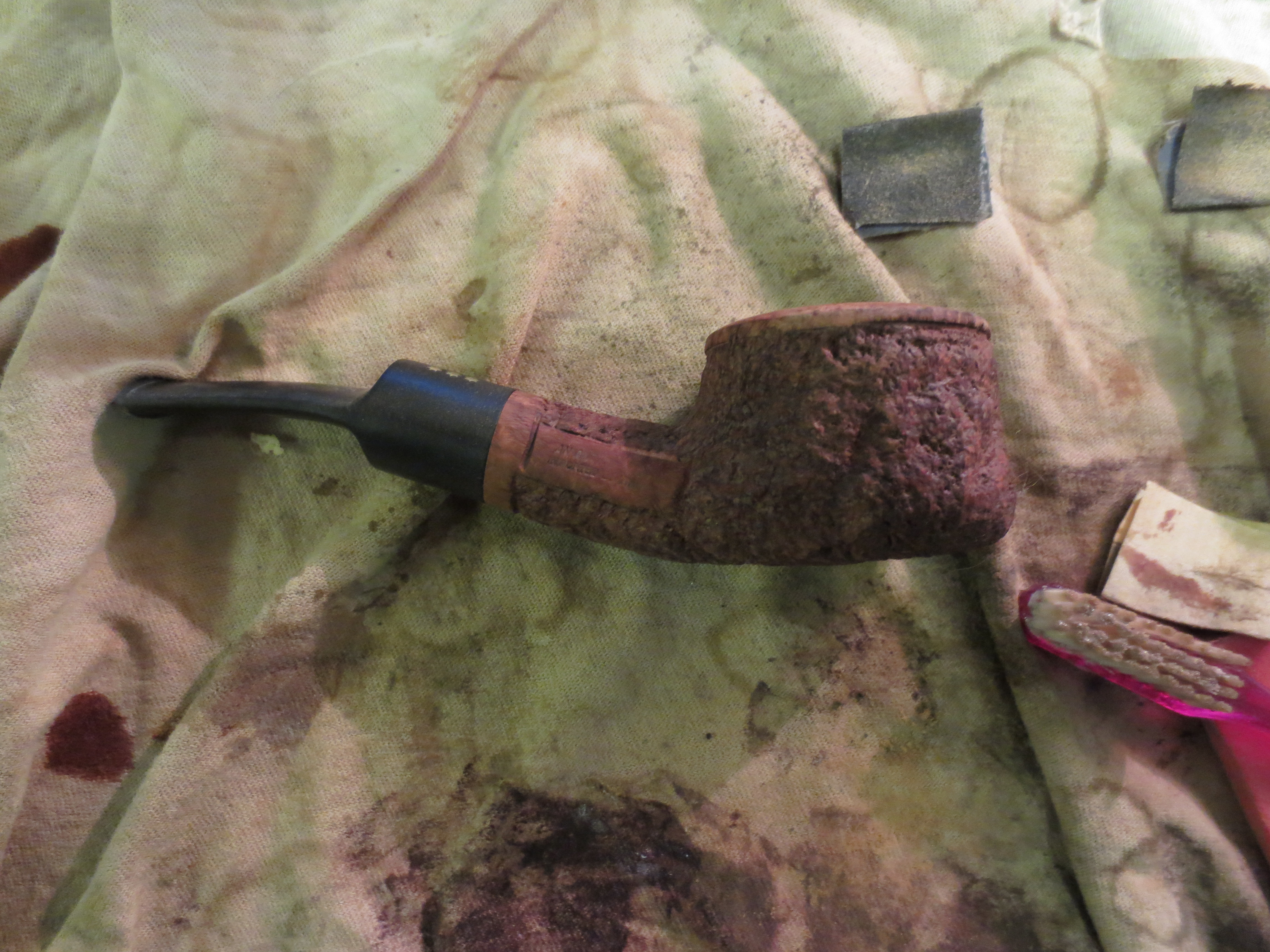
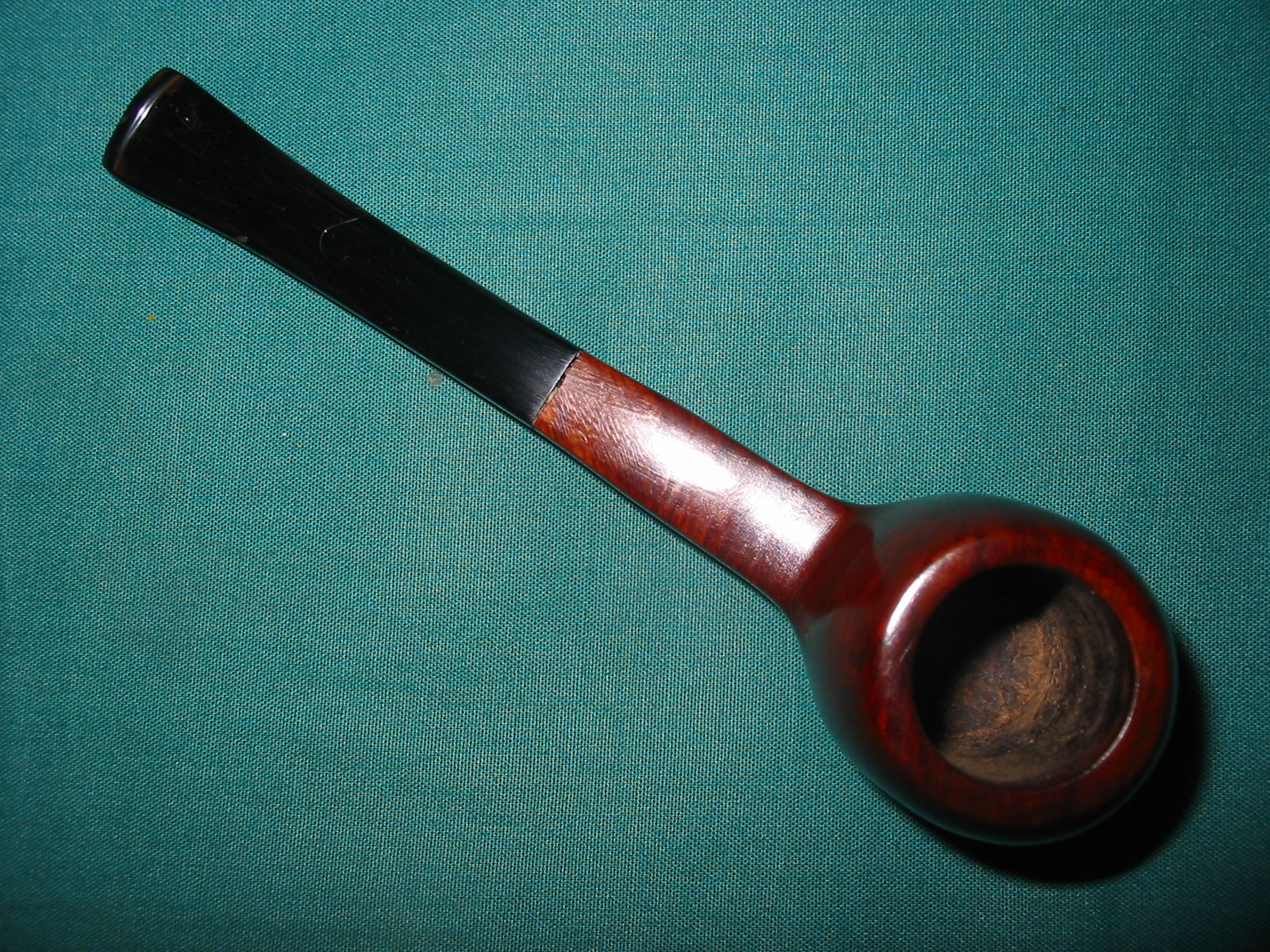
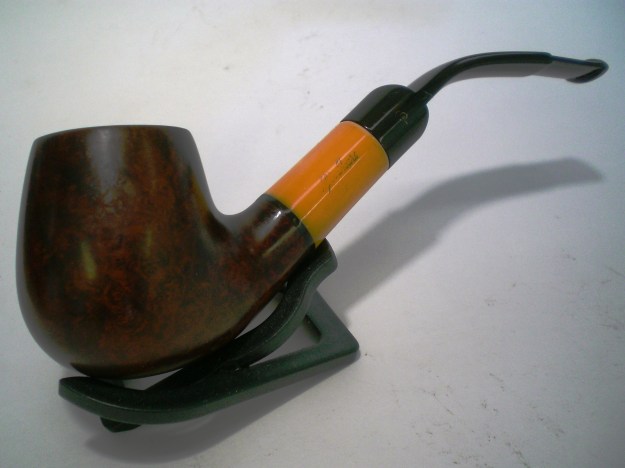
I picked up this New Standard GBD bulldog on Ebay recently.
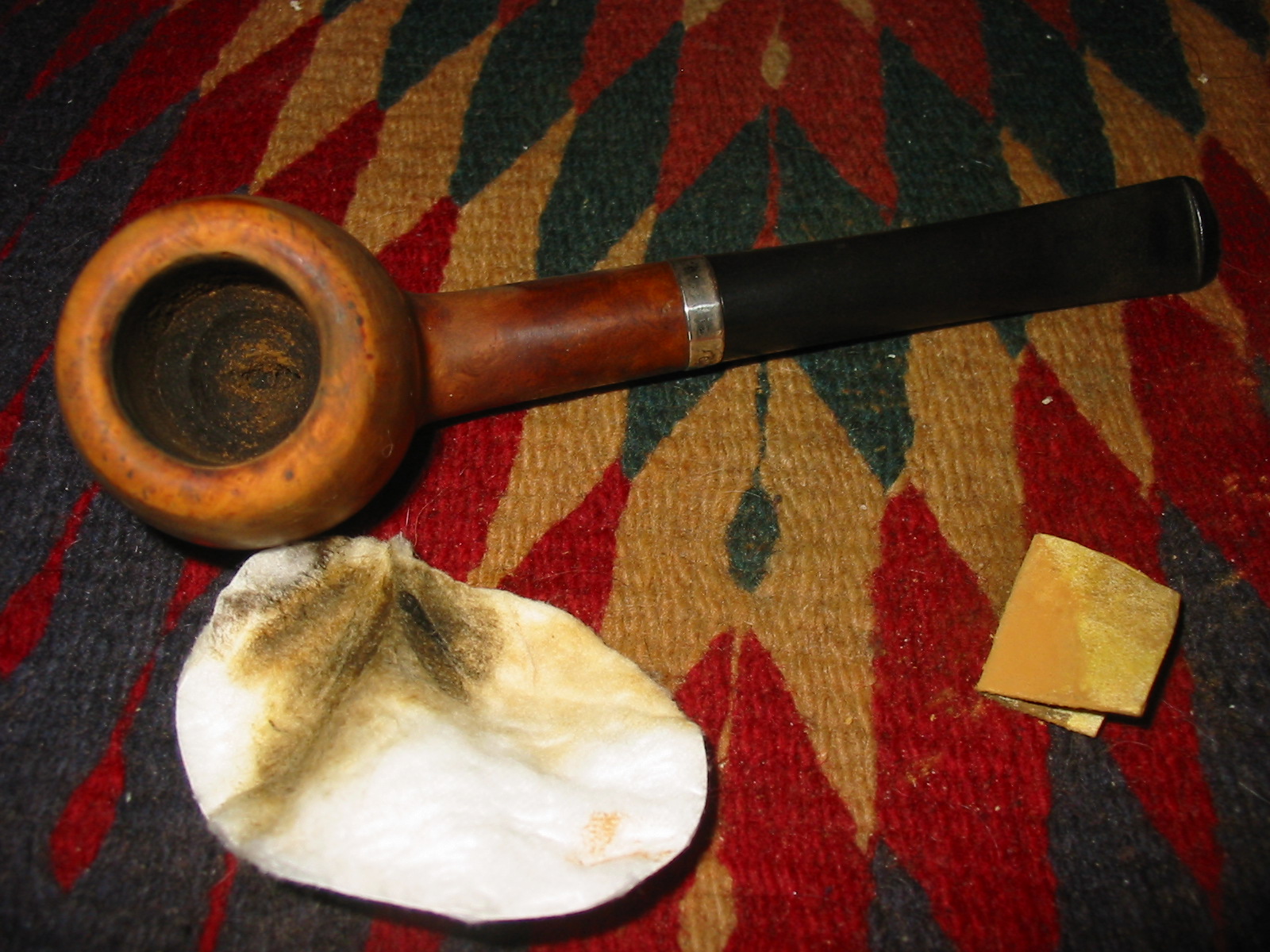
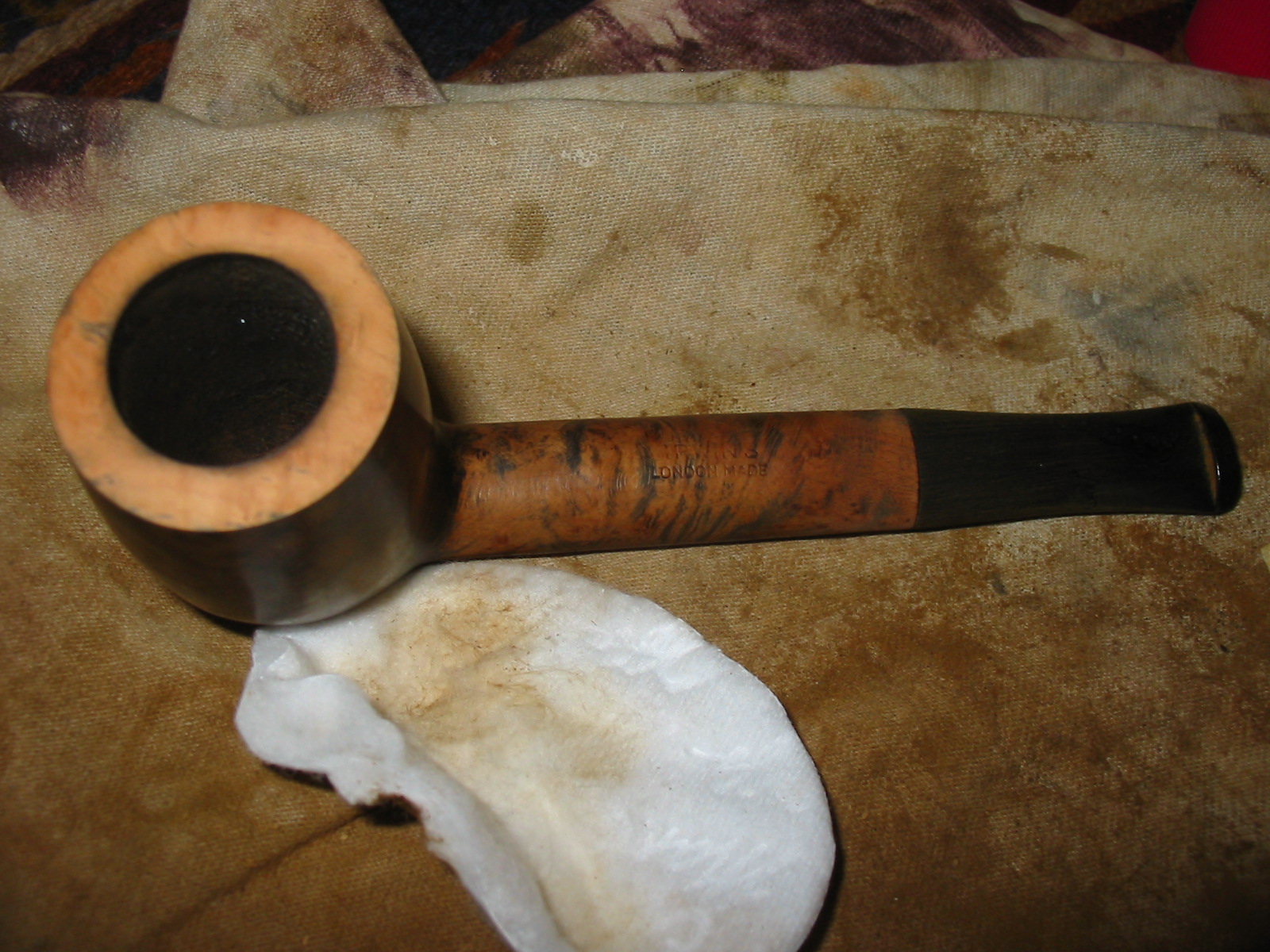
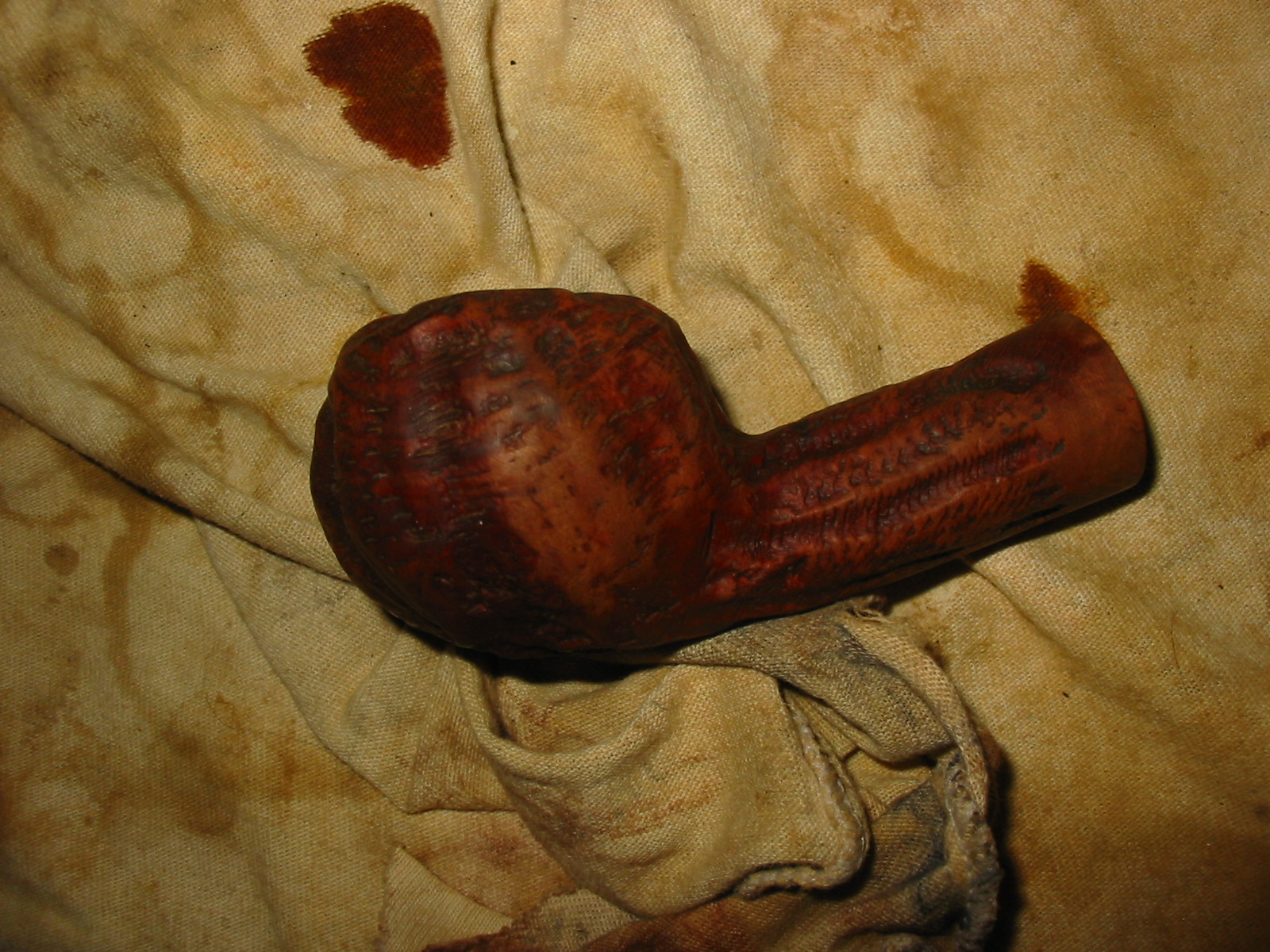
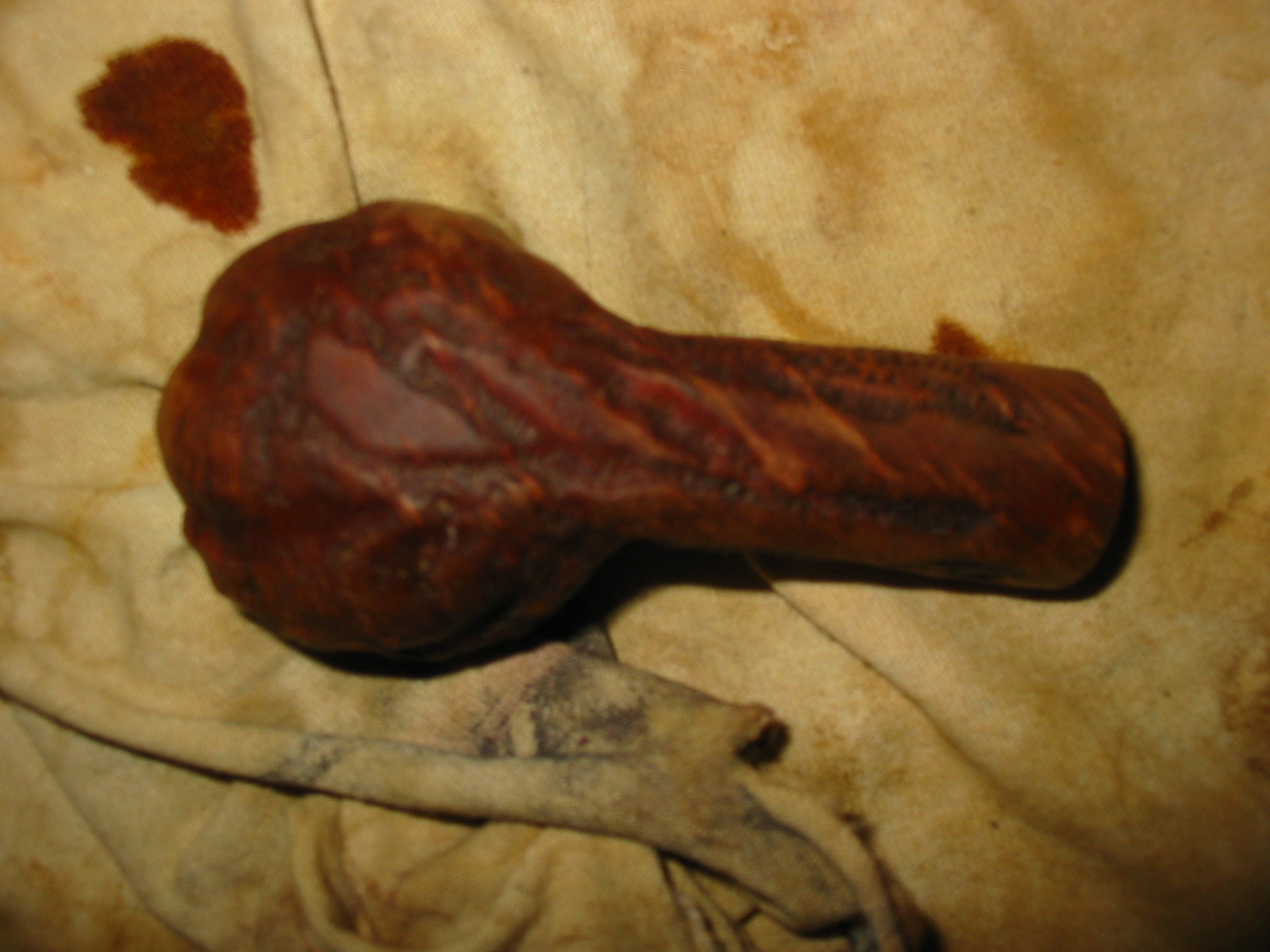
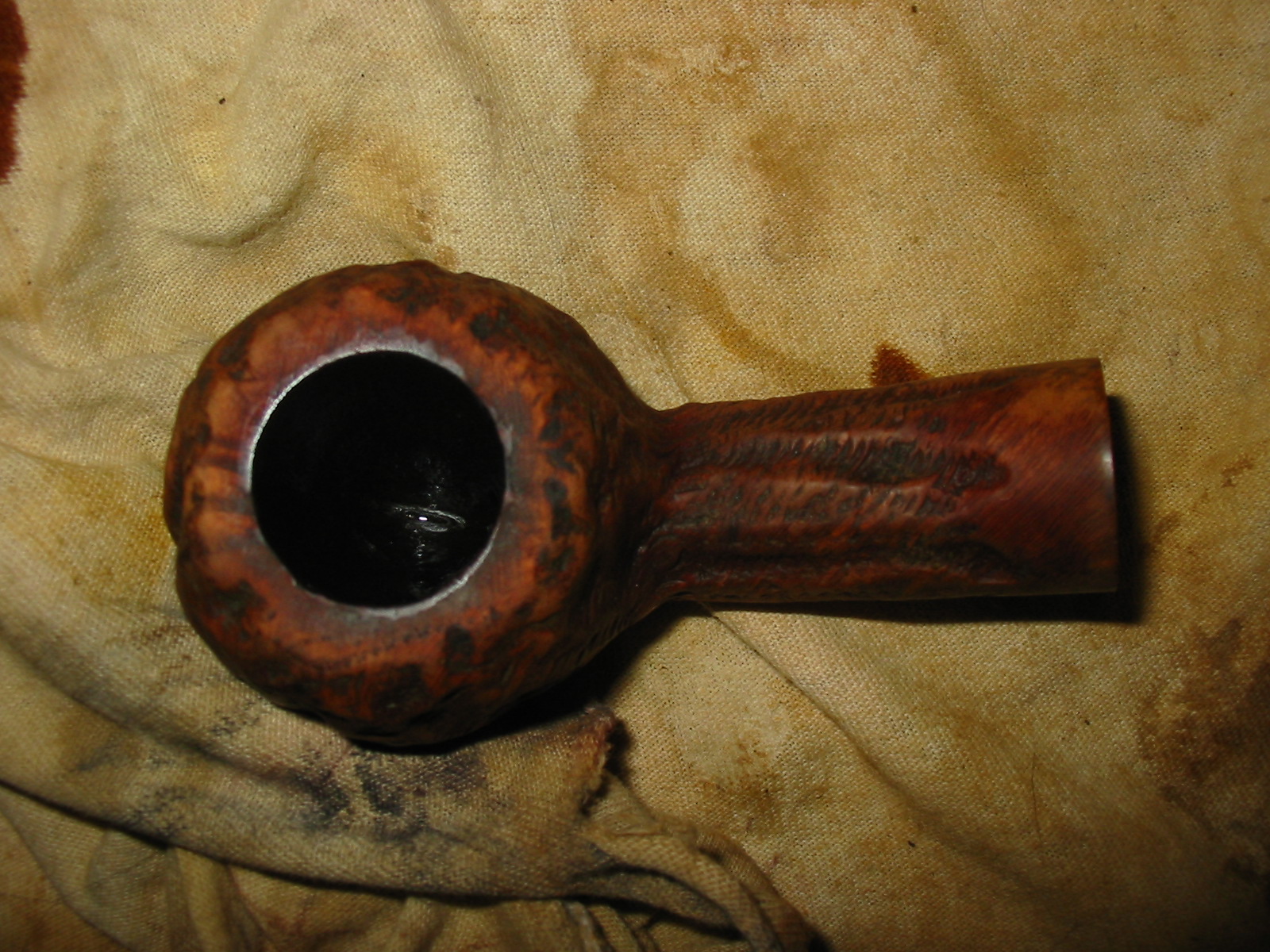
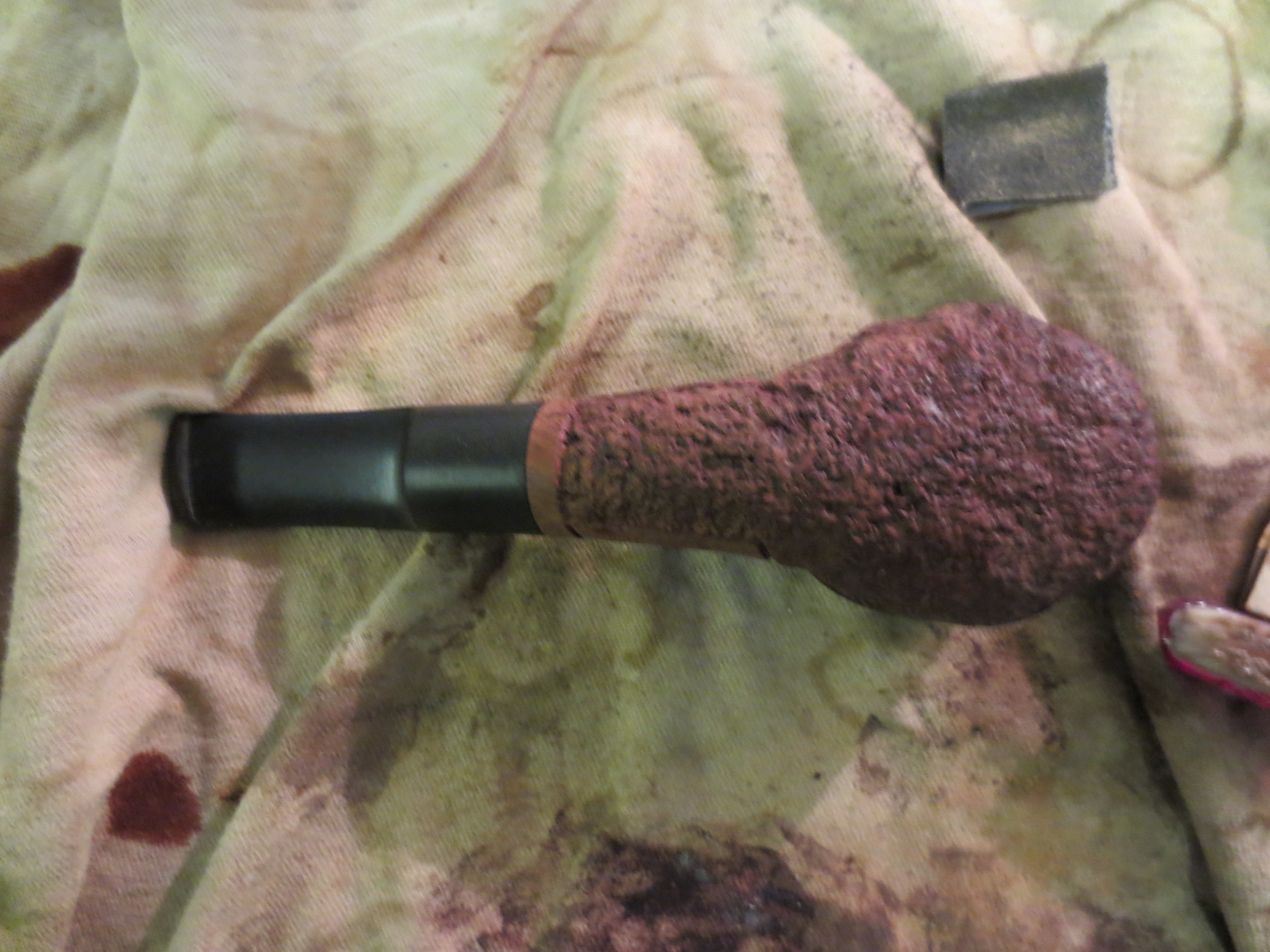
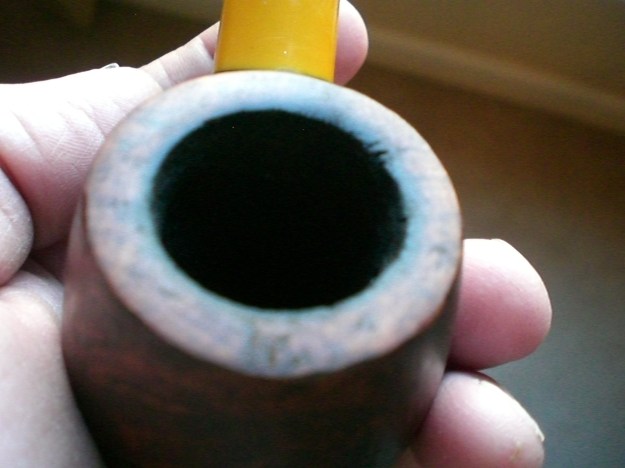
They briar had quite a build-up of what I hoped was just tars on the bowl top and the stem had a small amount of chatter that I thought could be removed.

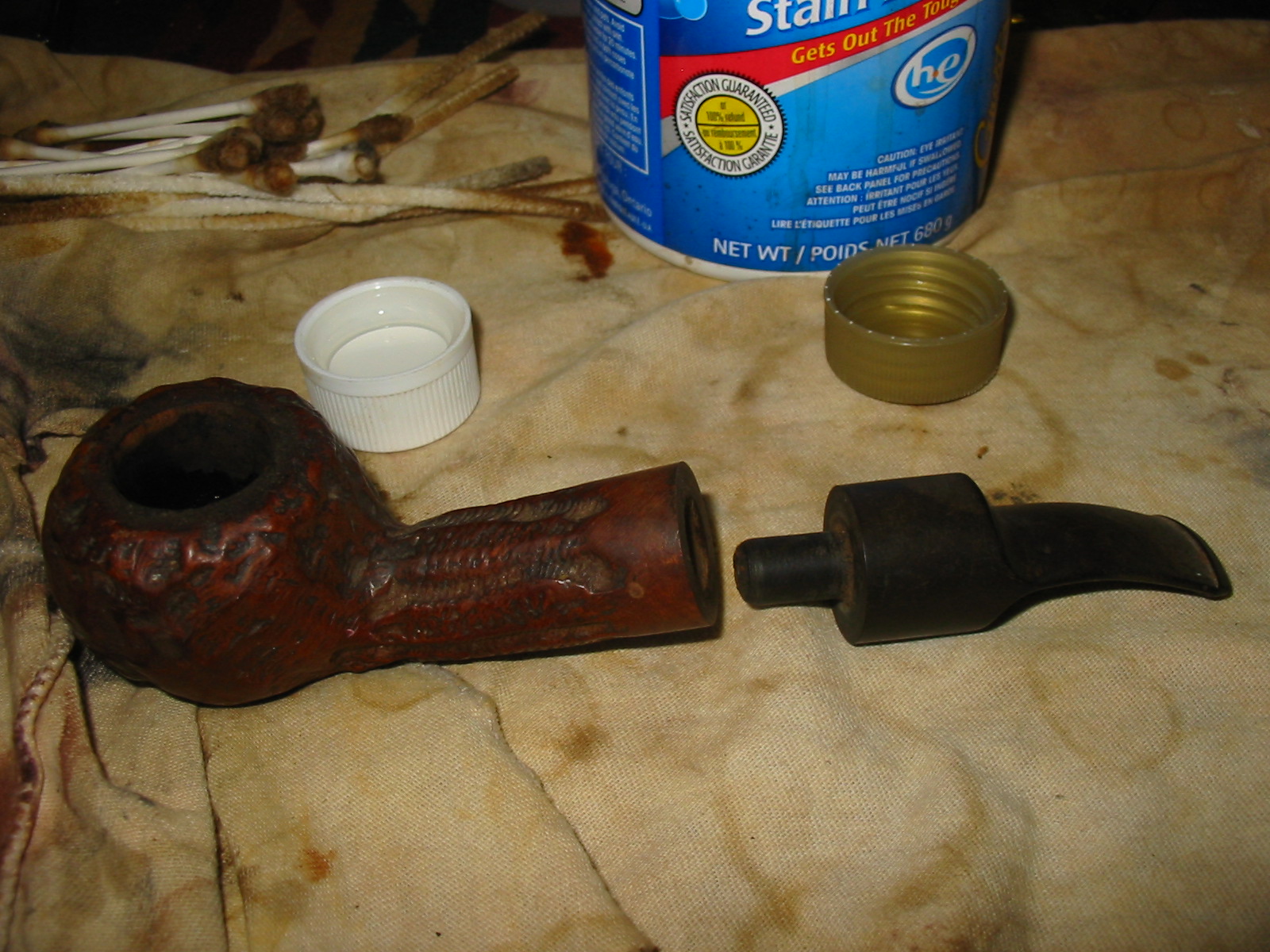
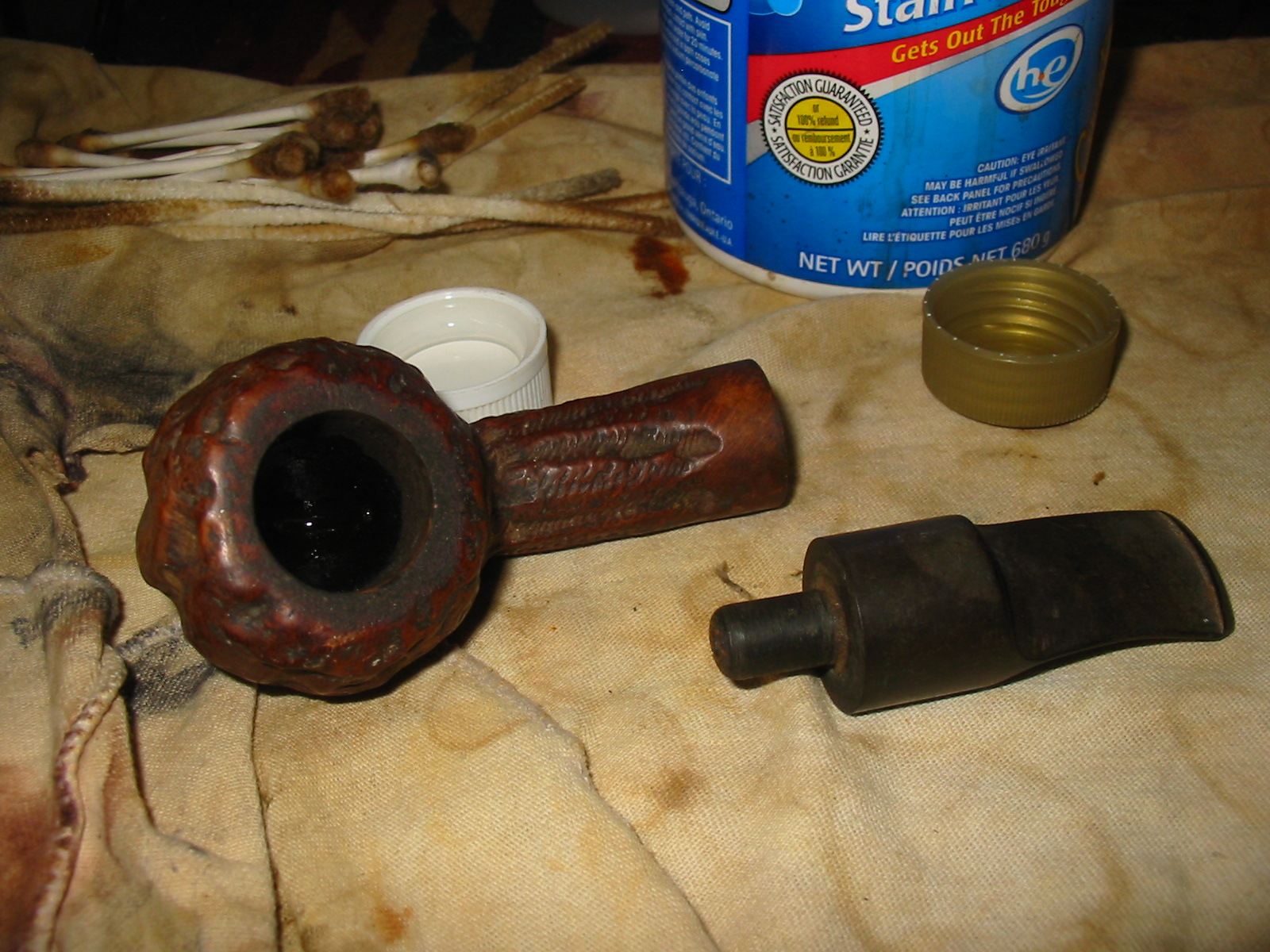
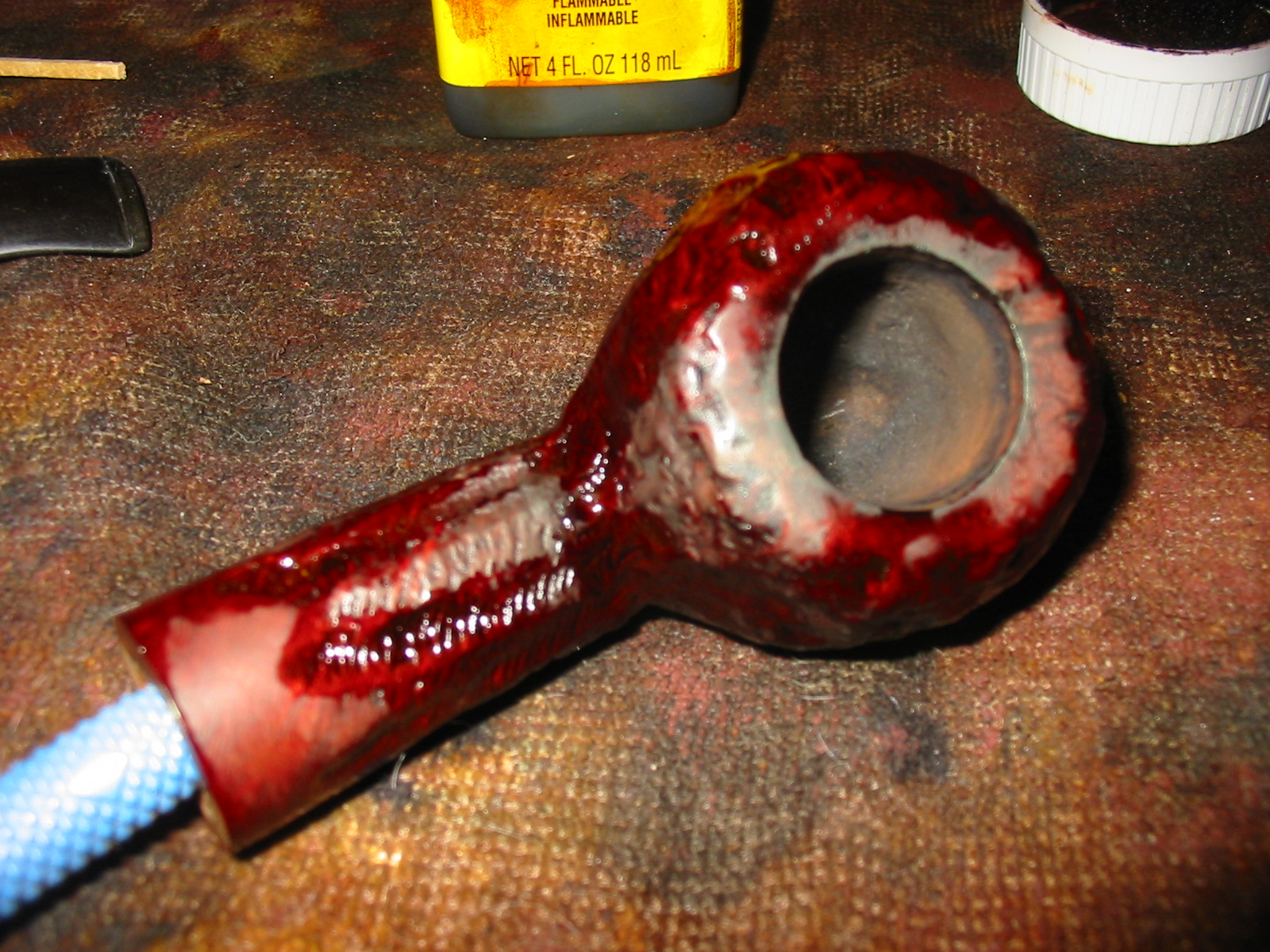
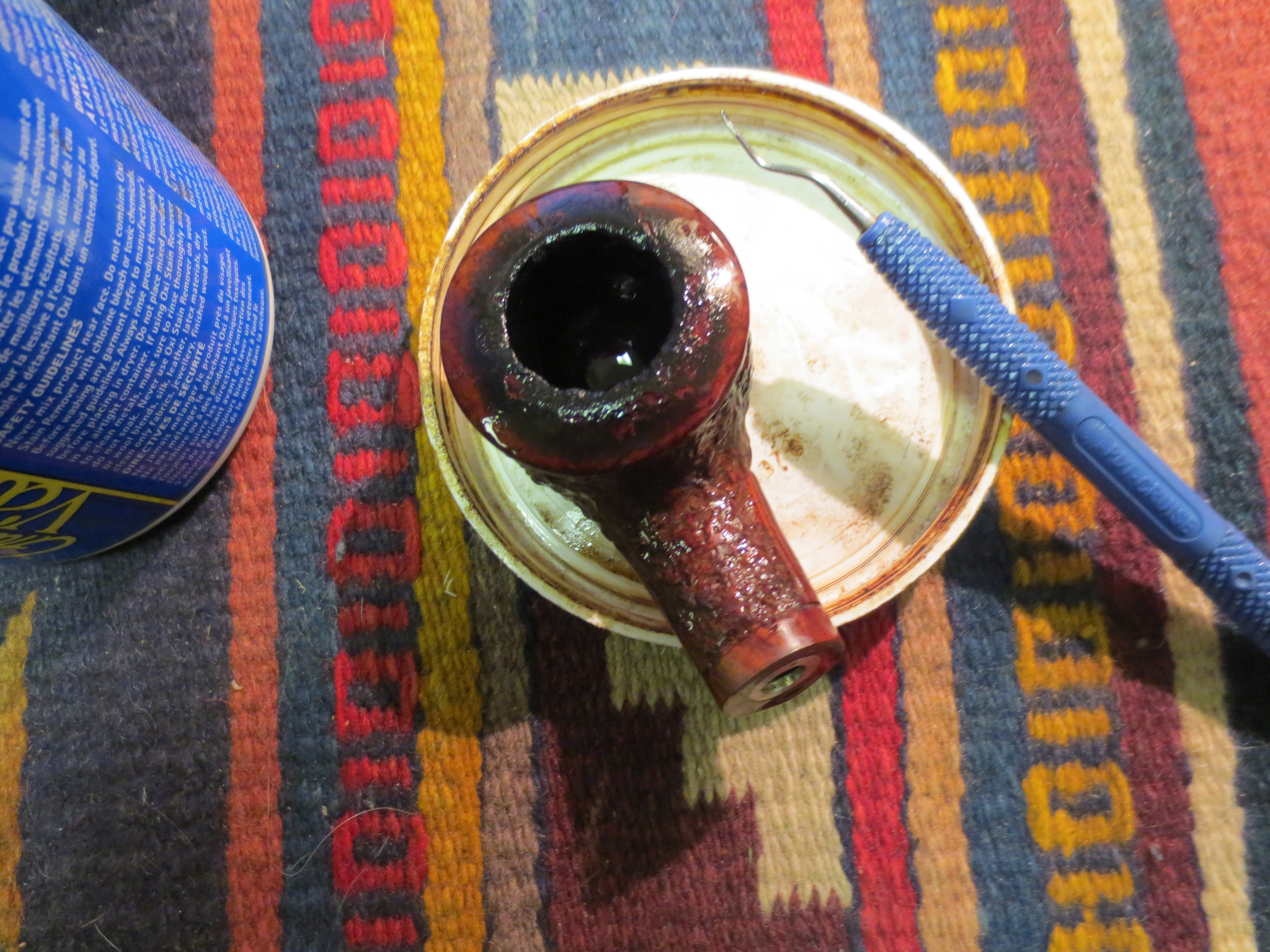
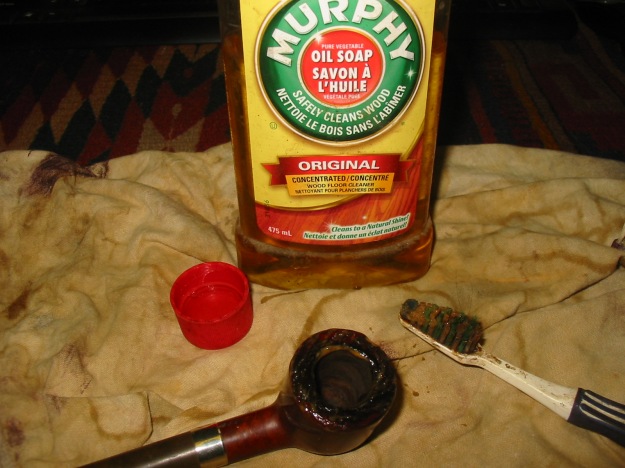
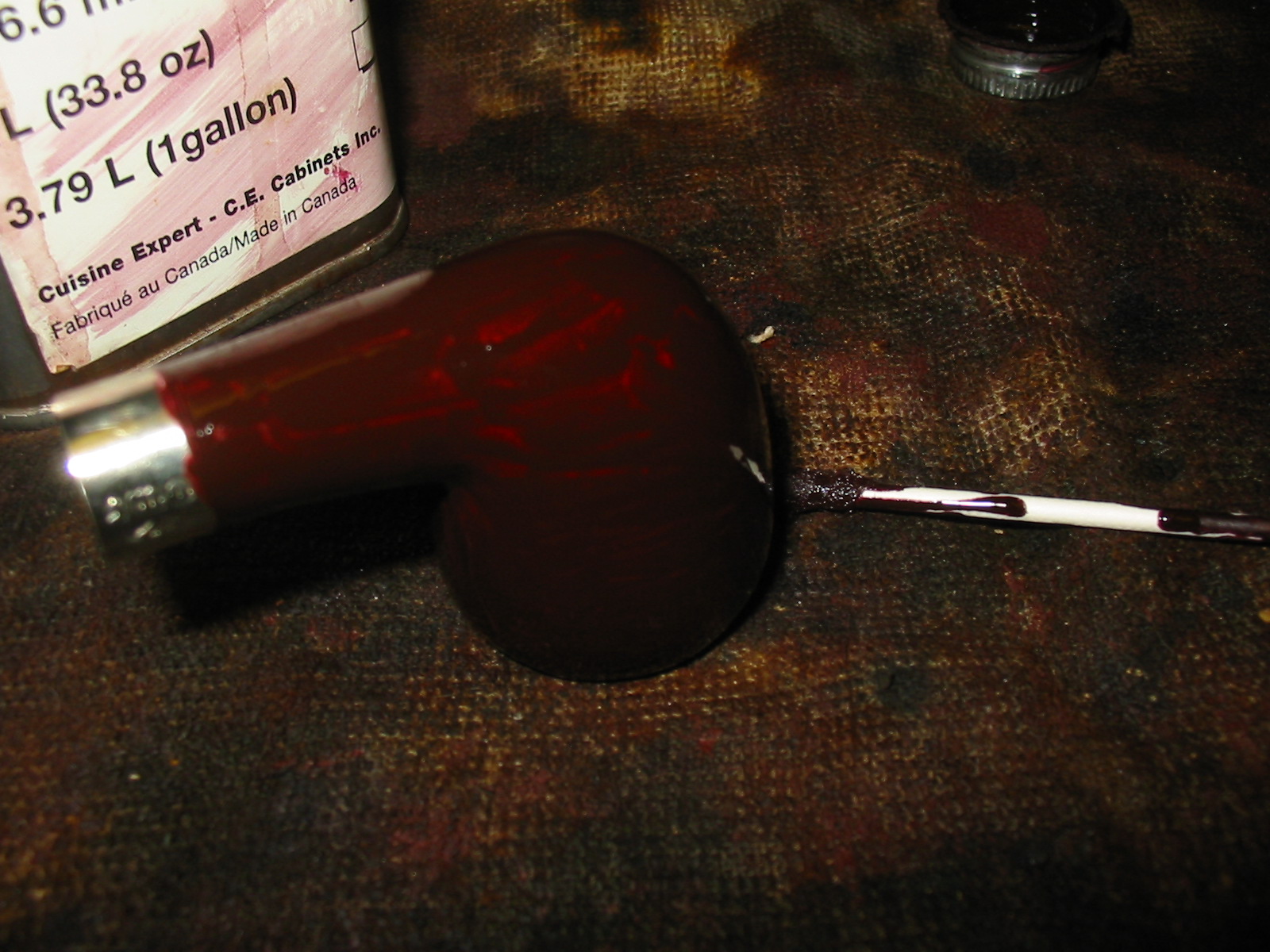
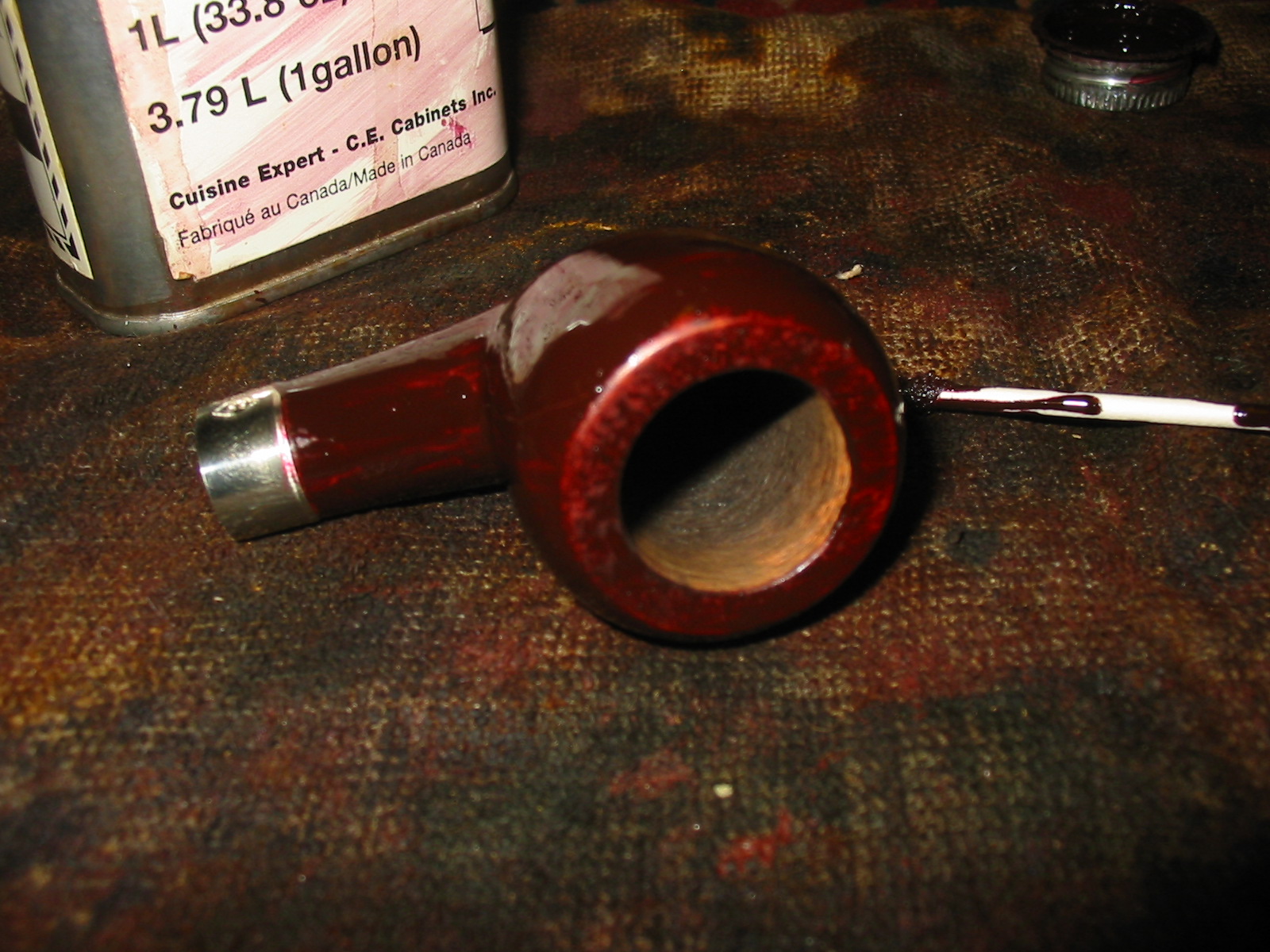
I reamed the bowl and soaked in in 91% isopropyl alcohol and sea salt.  The stem was soaked in a 3:1 solution of Oxyclean and water.  I put a dab of grease on the brass GBD rondelle.  Here is the bowl soaking in oxyclean.

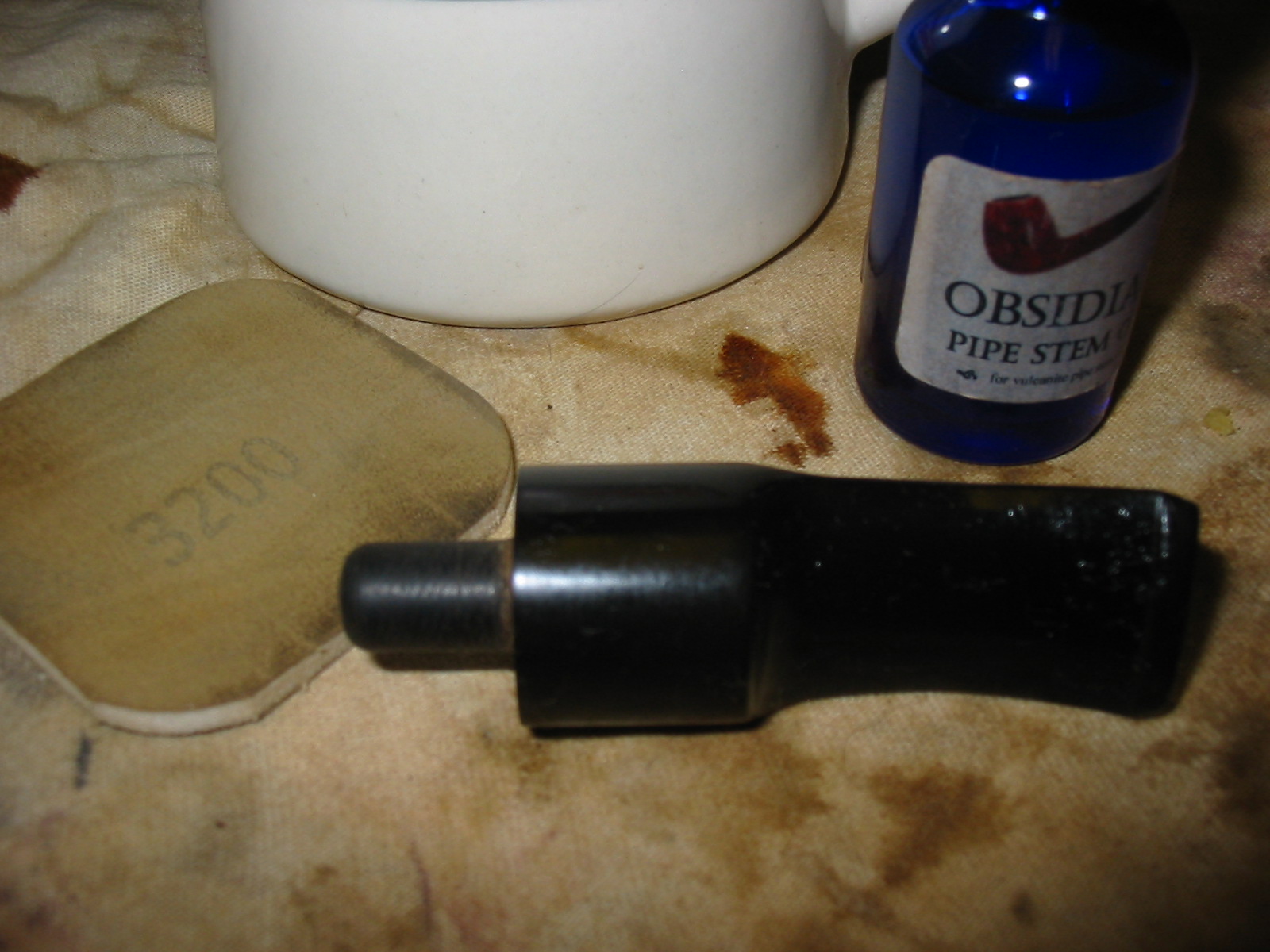
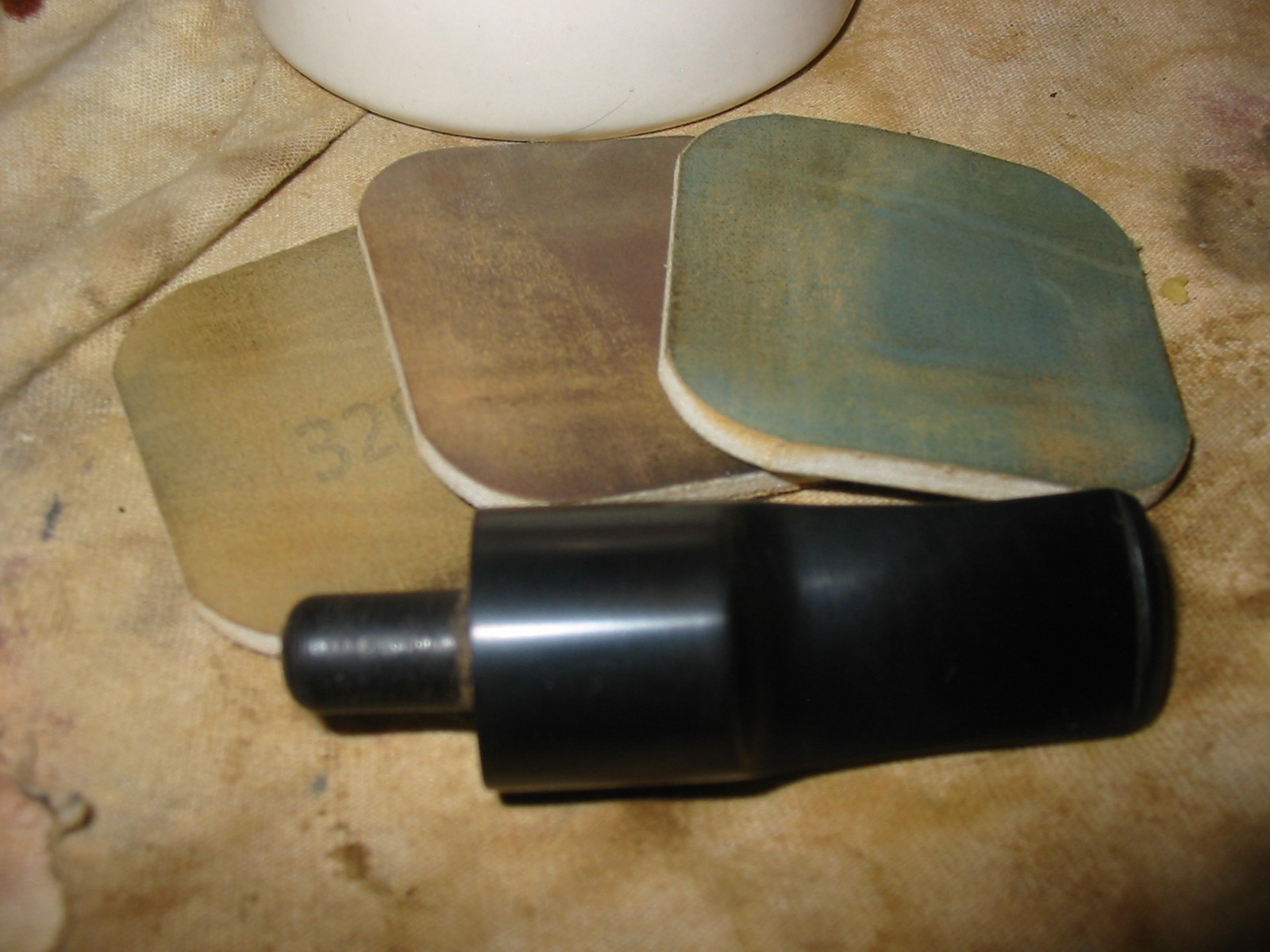
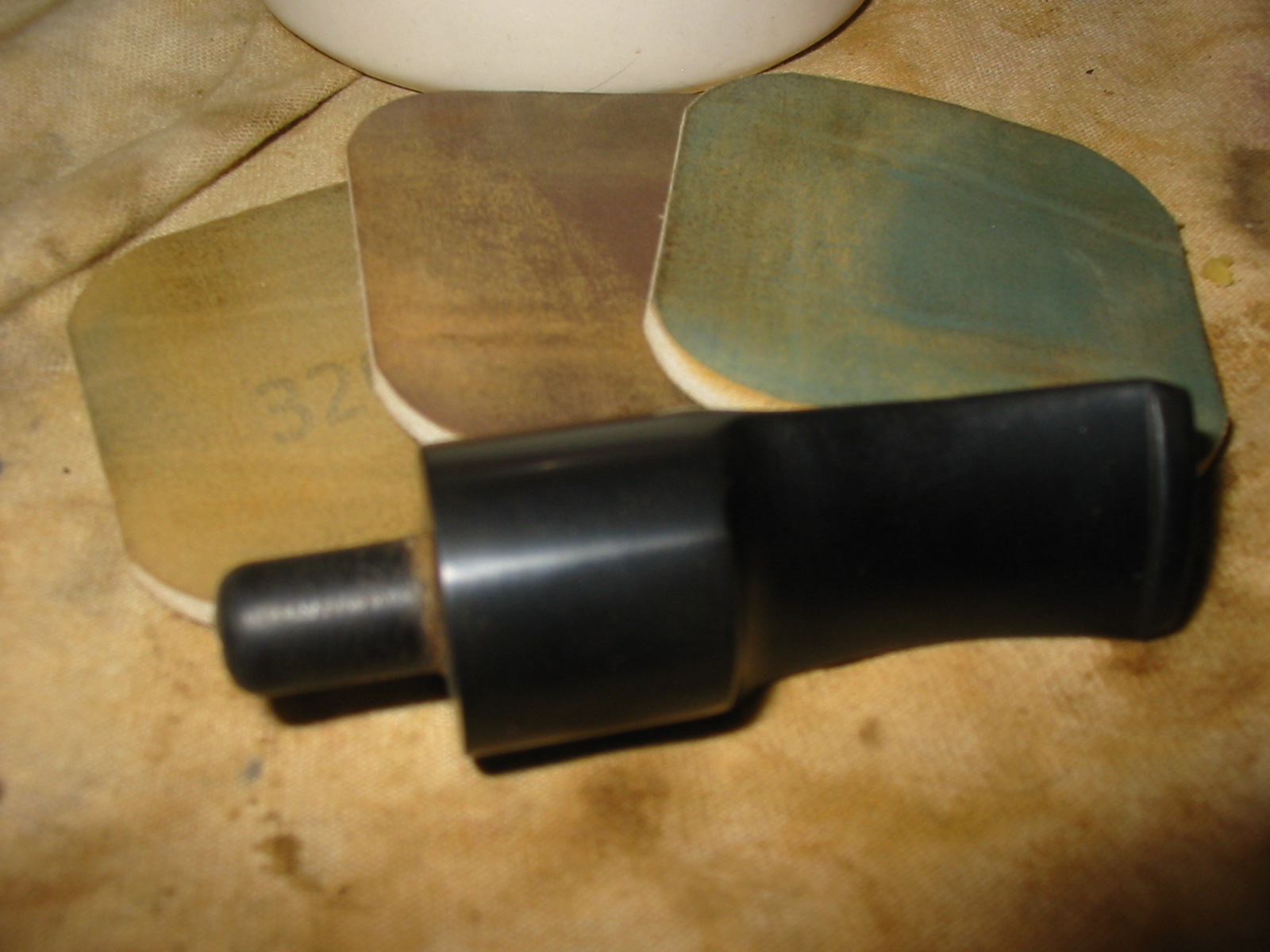
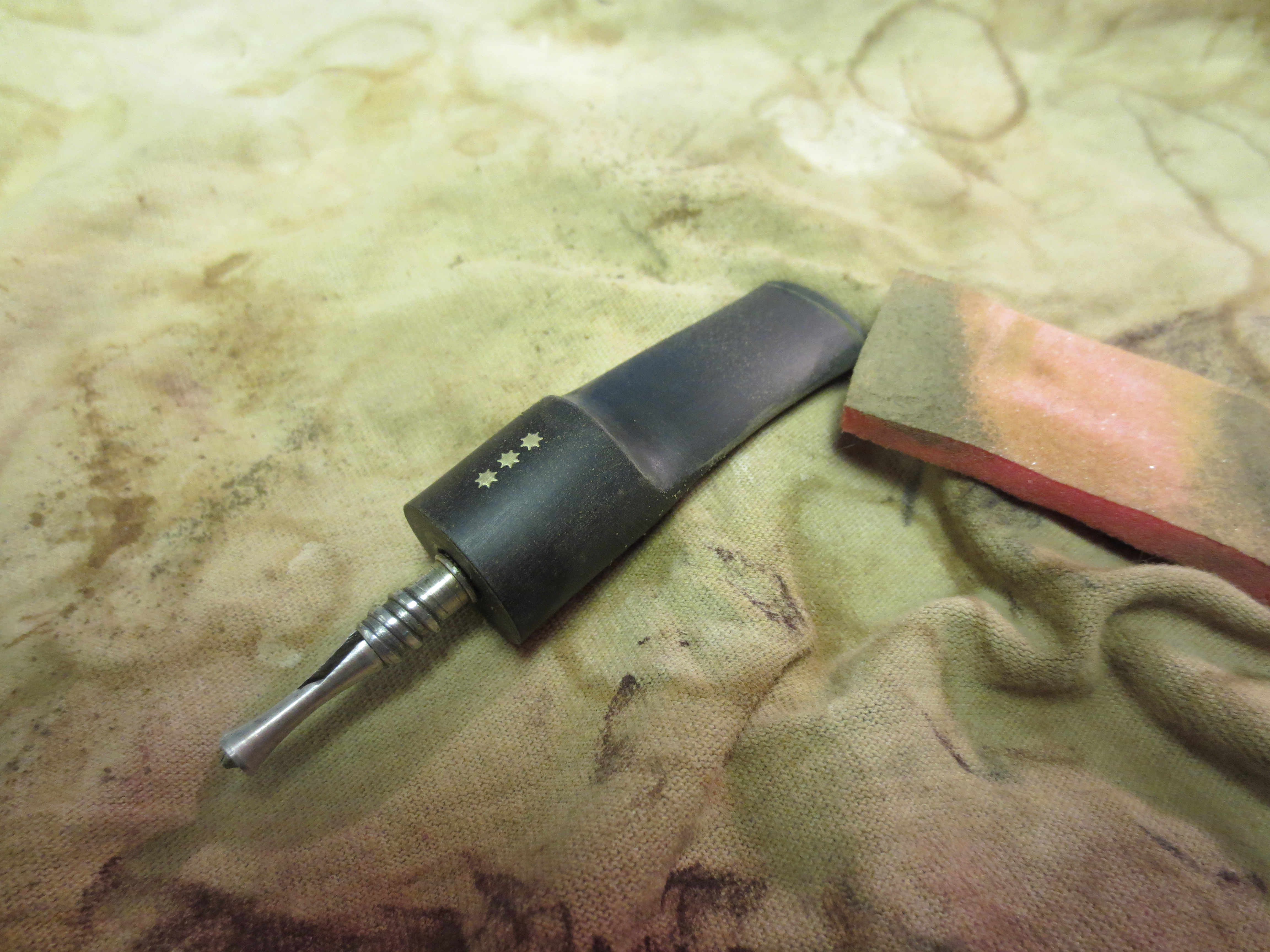
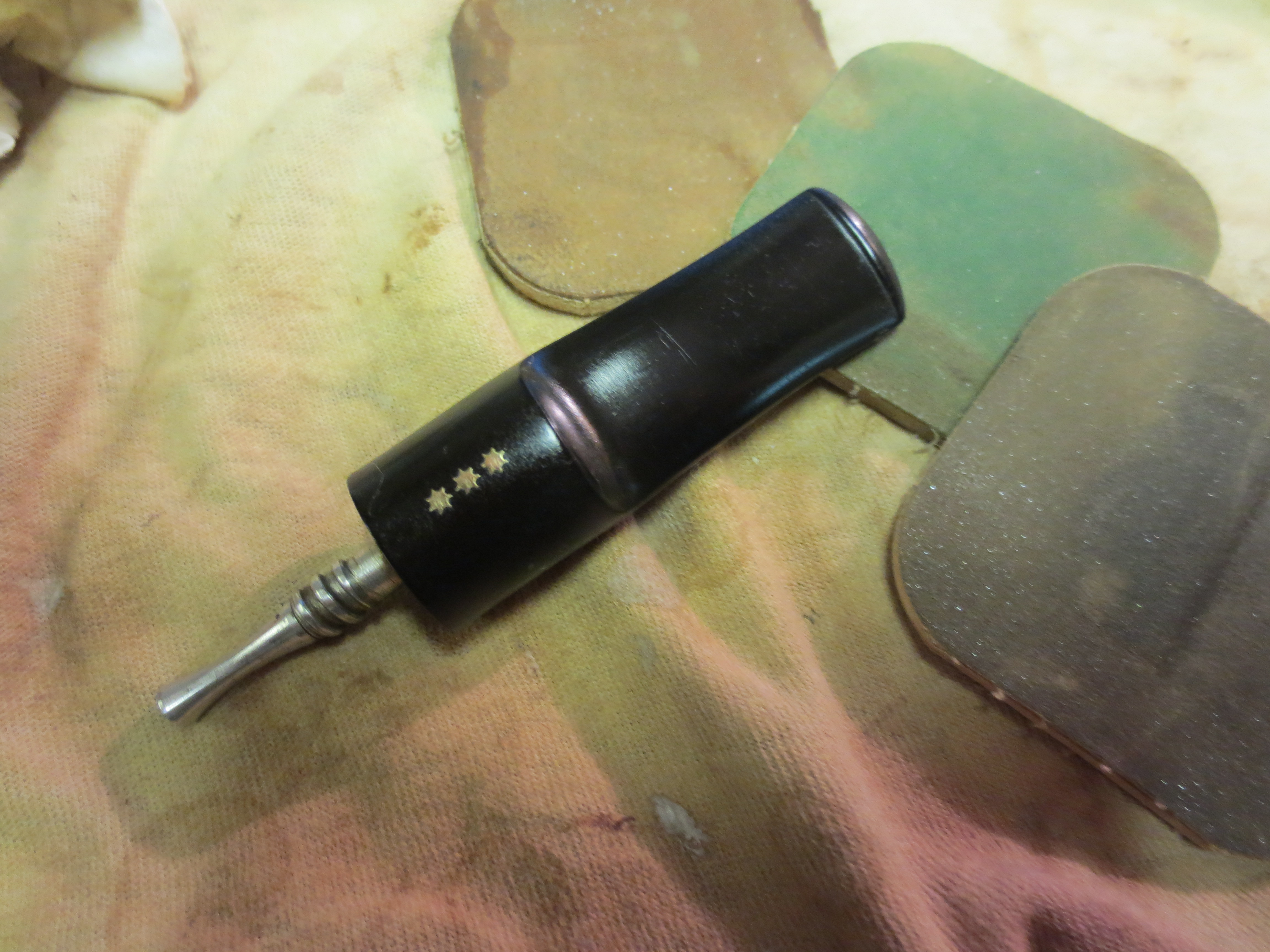
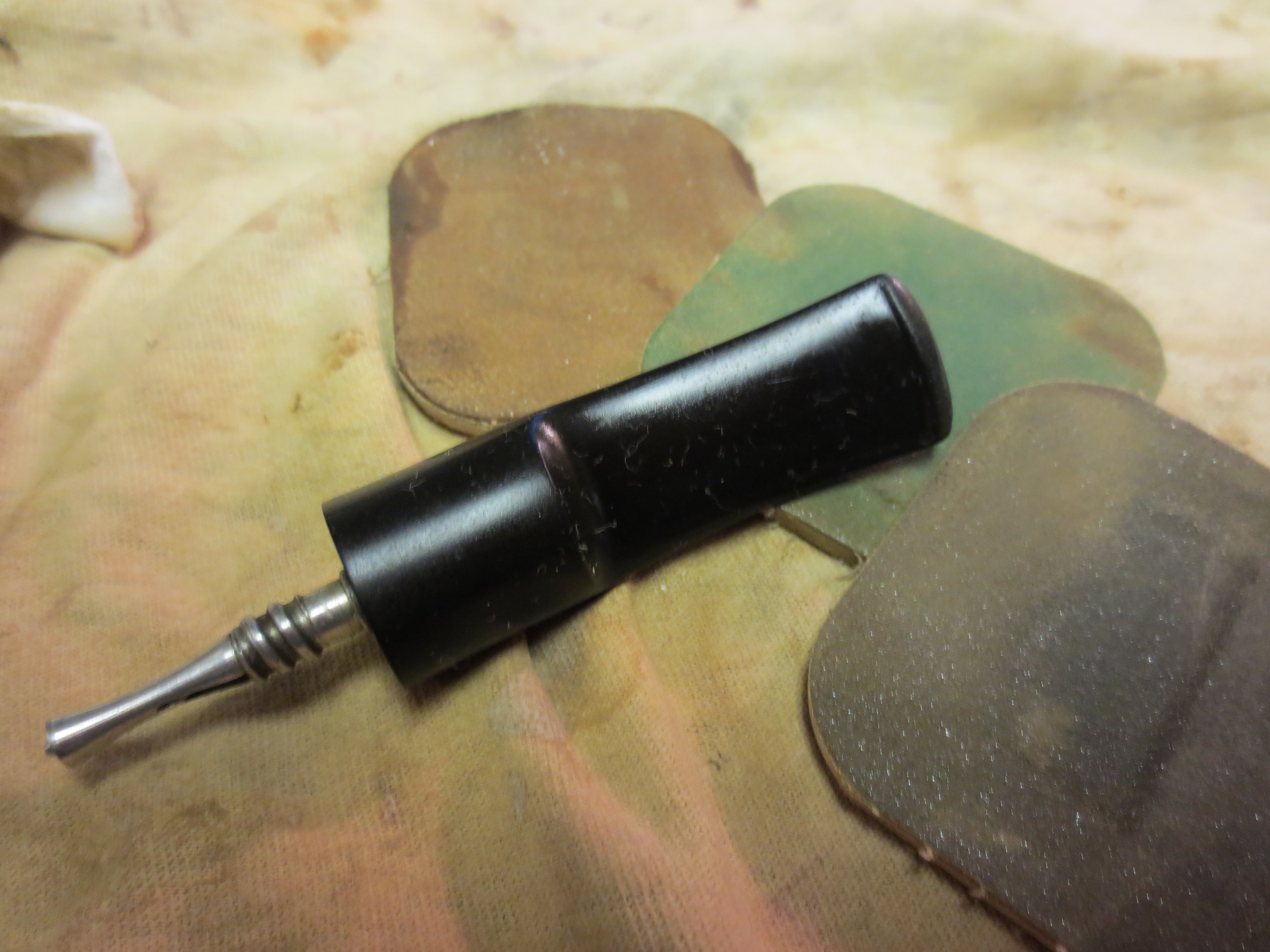
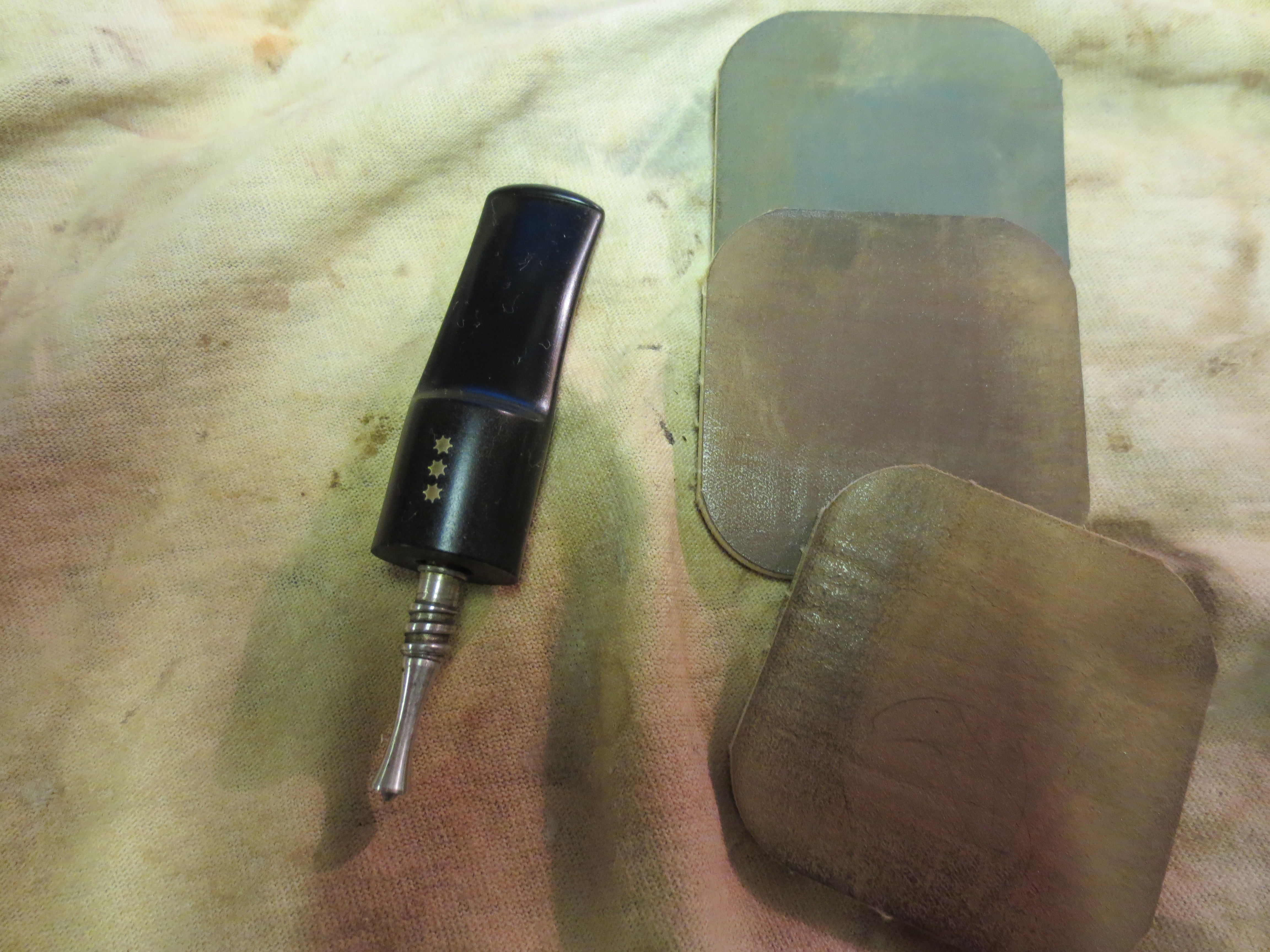
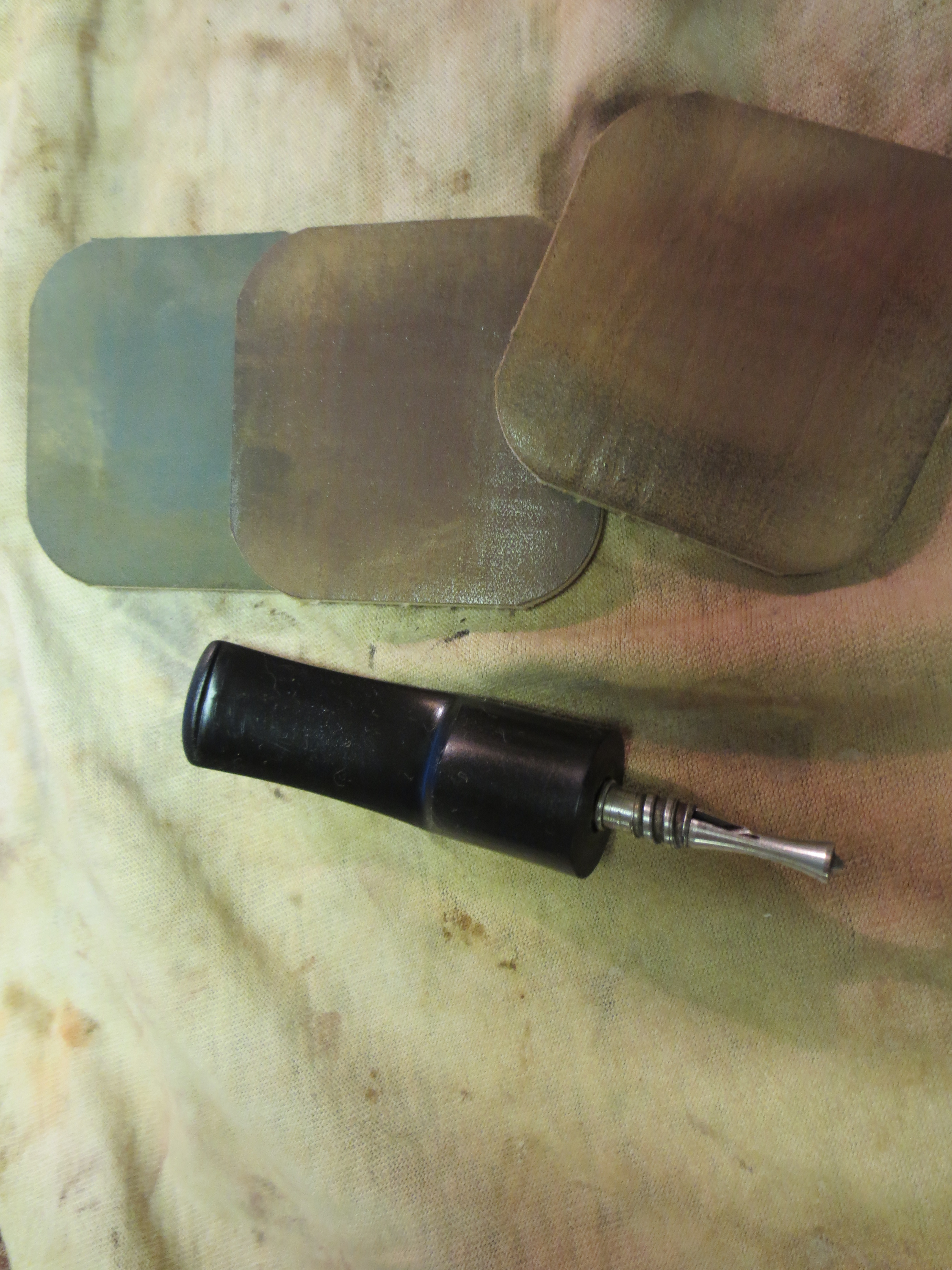
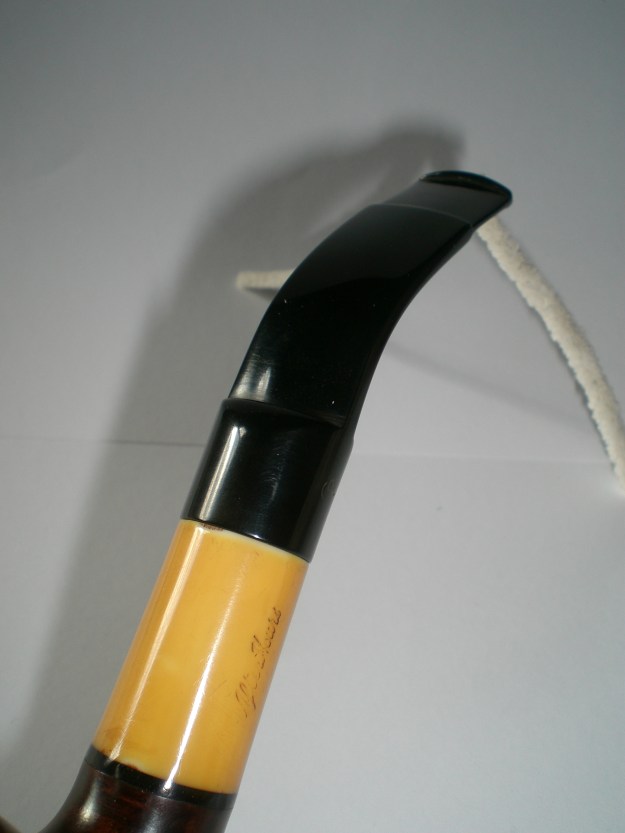
After a few hours of soaking in the Oxyclean solution, the stem was ready for sanding.  I removed the teeth chatter with 800 grit wet paper. One tooth indention remained, but it was small enough I didn’t bother trying to fill it.  1500 and 2000 grit wet papers were used next to bring up the shine.  The stem looked like this after the 1500 grade paper:

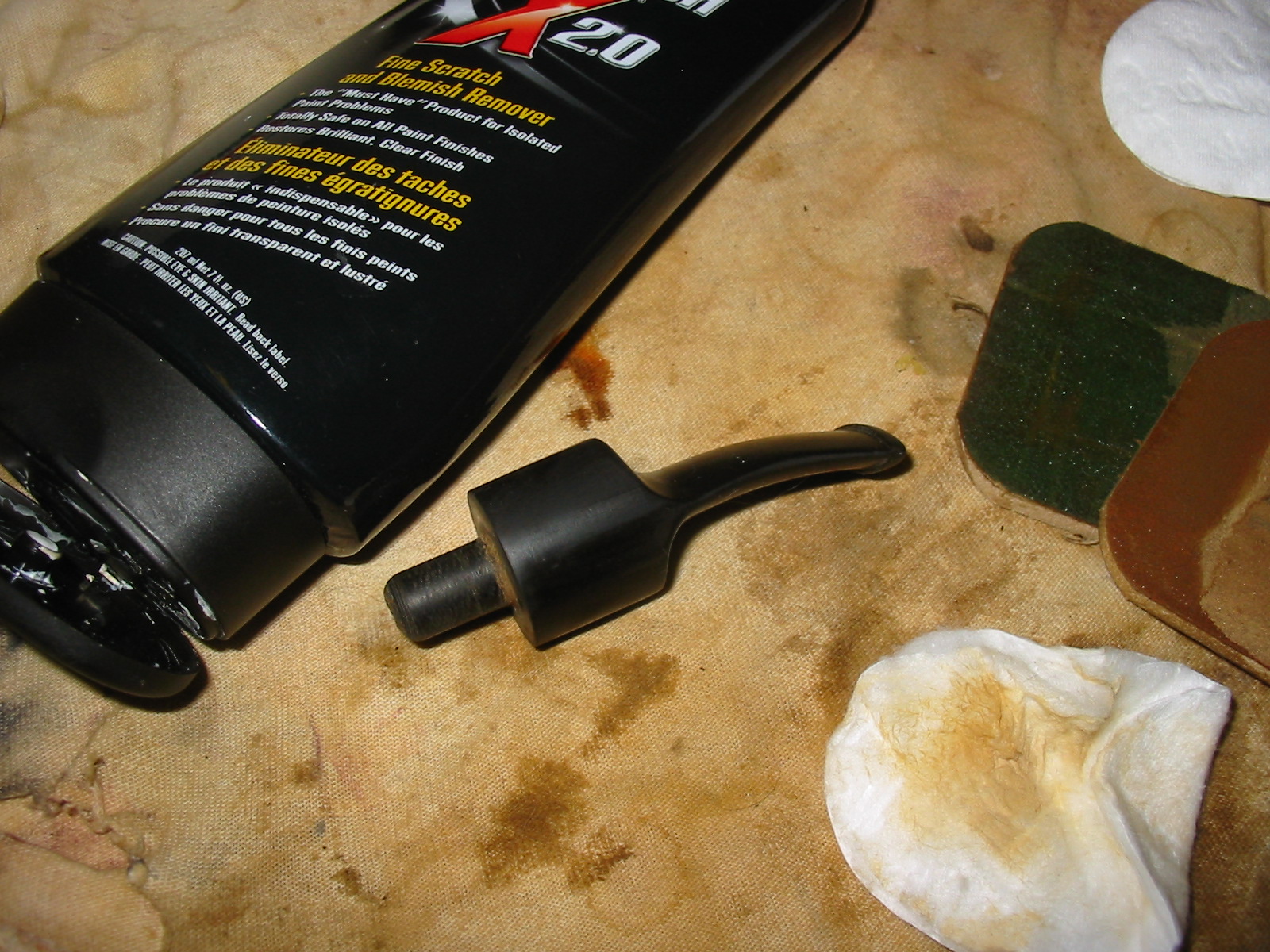
I then buffed it on a machine with tripoli rouge which removed most of the oxidation.  Then, back to the micromesh papers, using the 8000 and 12000 grades of paper to bring up the shine.  The stem was then finished with white diamond on the buffer followed by an automotive plastic polish.

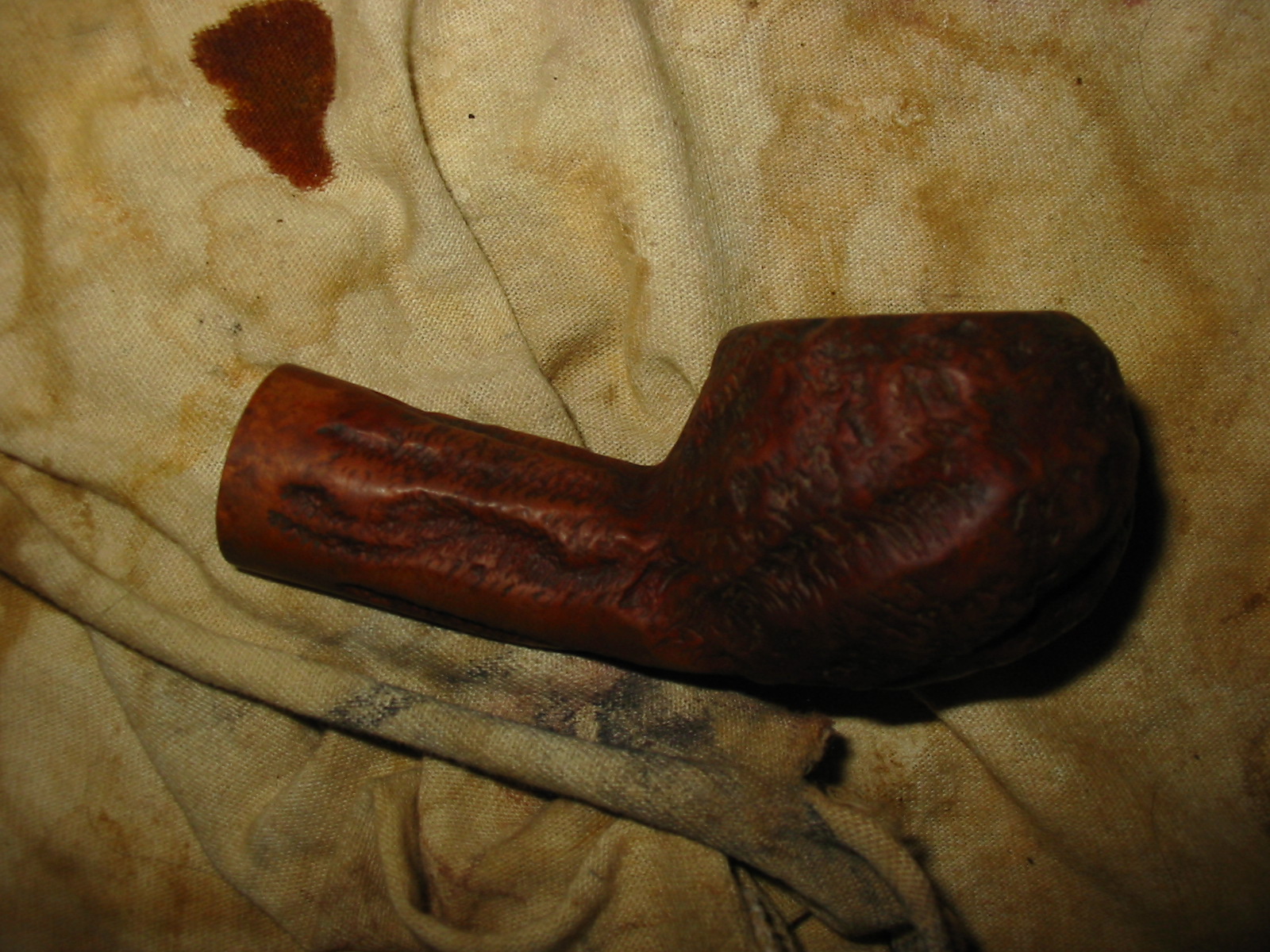
After the bowl was done soaking, I turned my attention to it.  It was buffed on the wheel with tripoli, white diamond and finally several coats of carnuba wax.  Despite the heavy cake and tar buildup, inside the  shank was really clean inside.  So, I anticipate no ghosting.
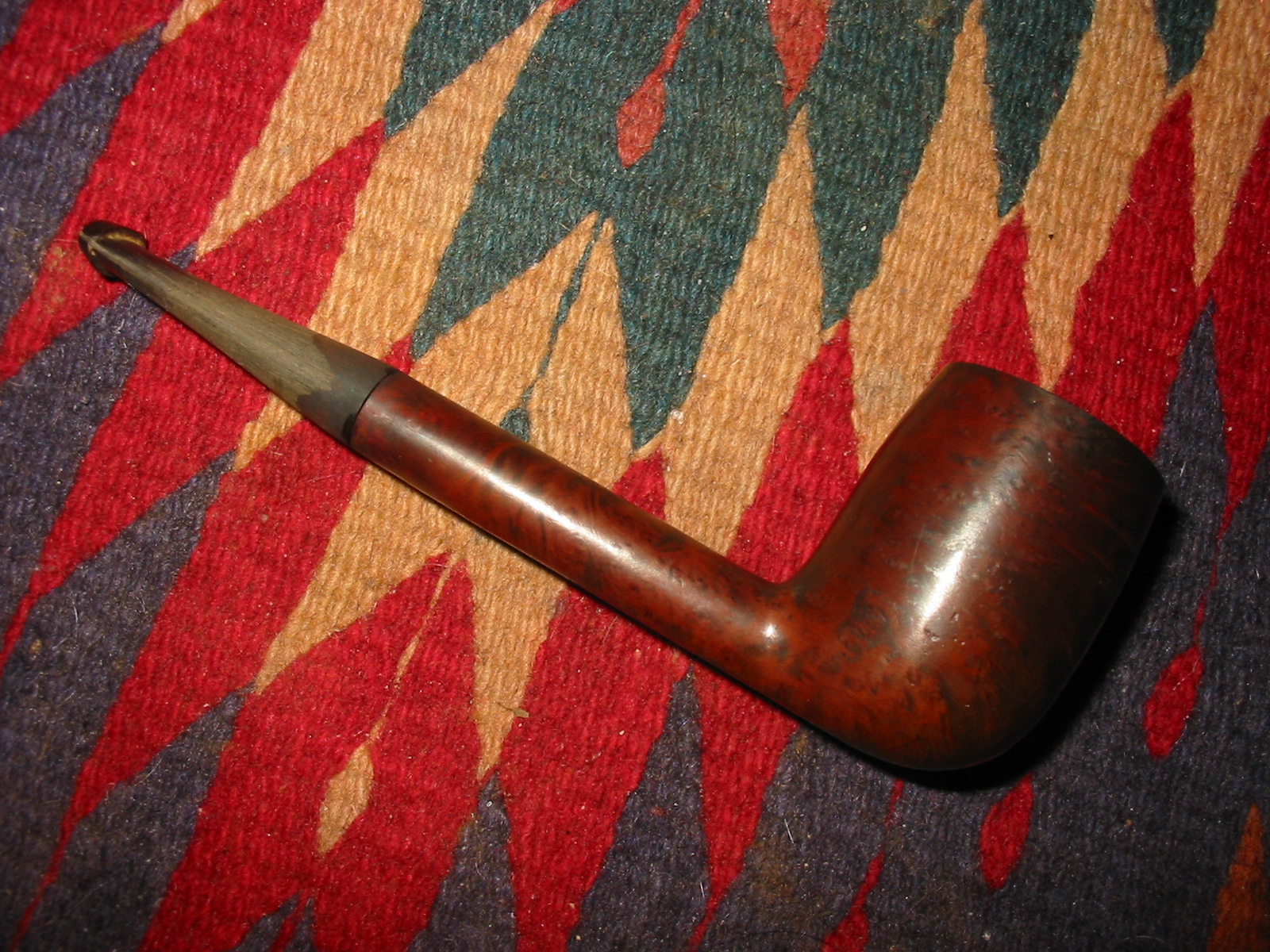
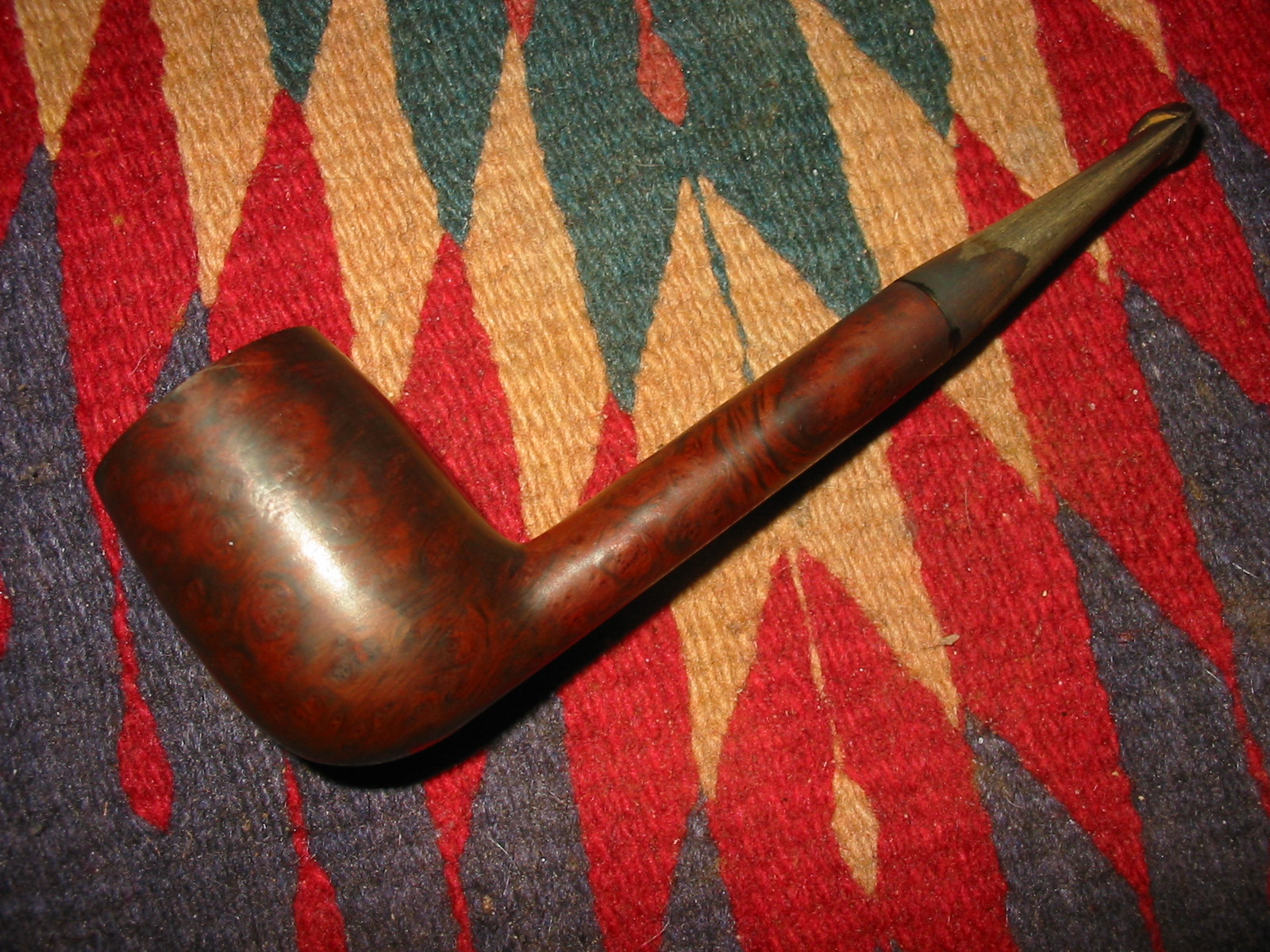
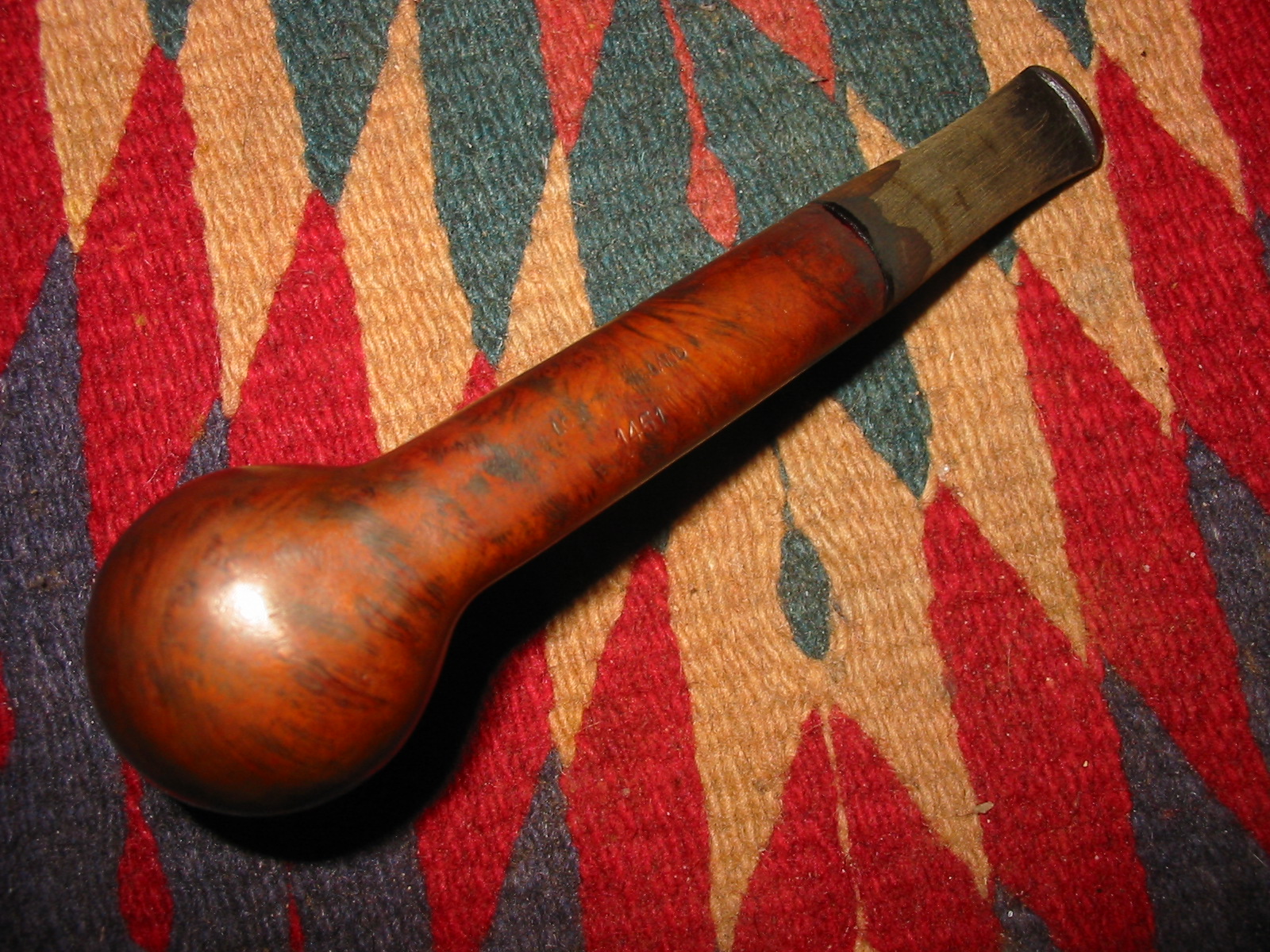
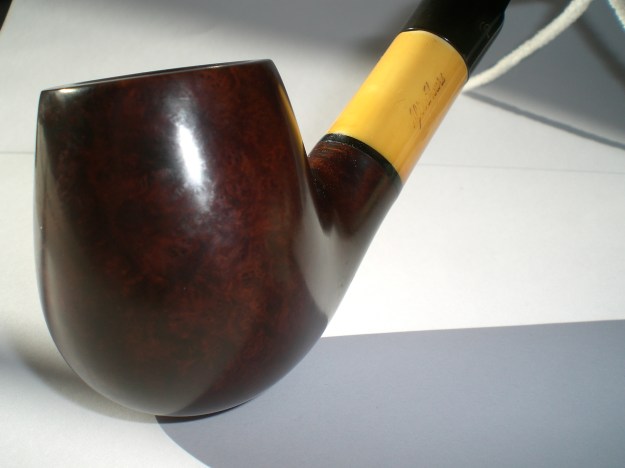
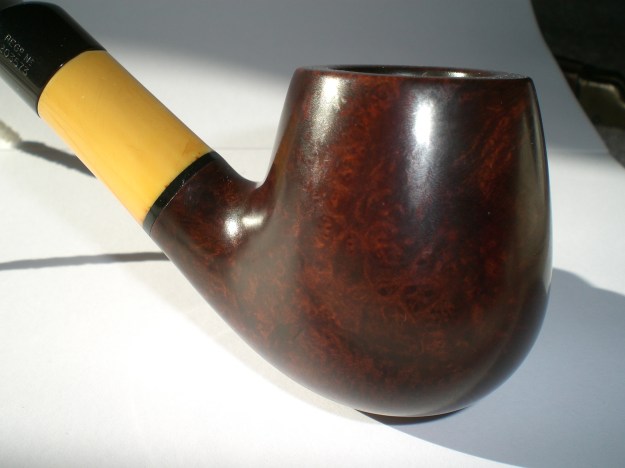
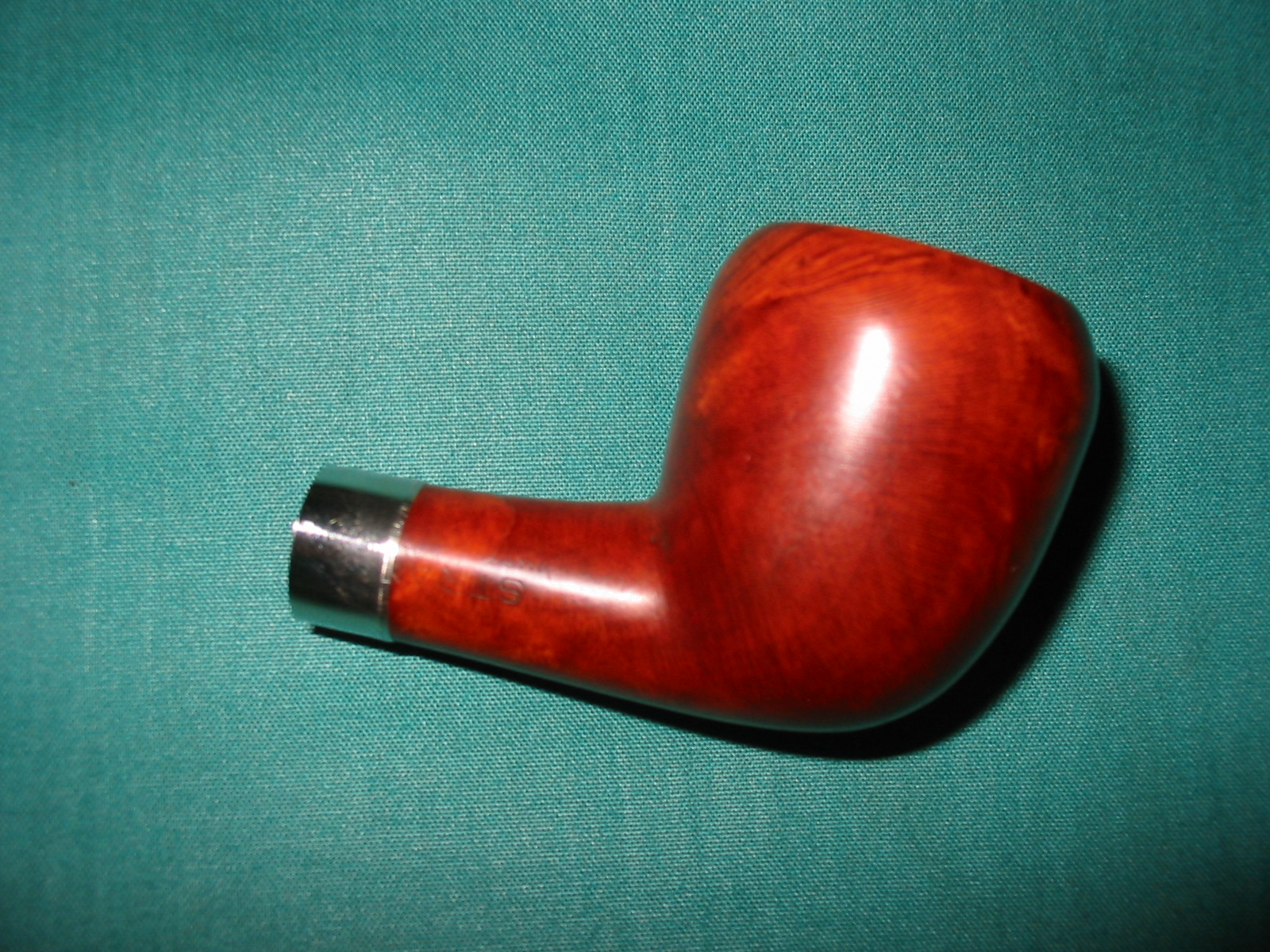
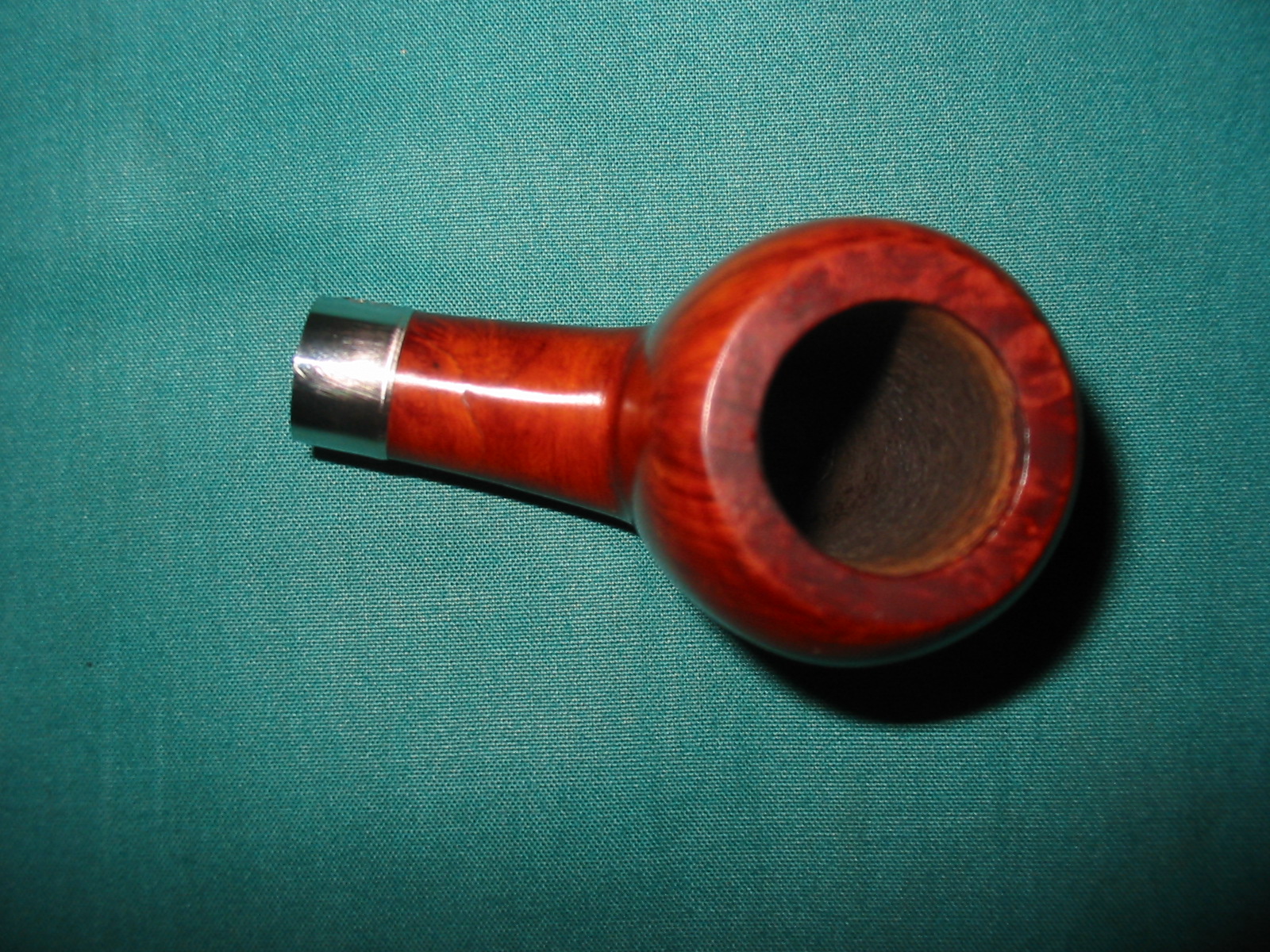
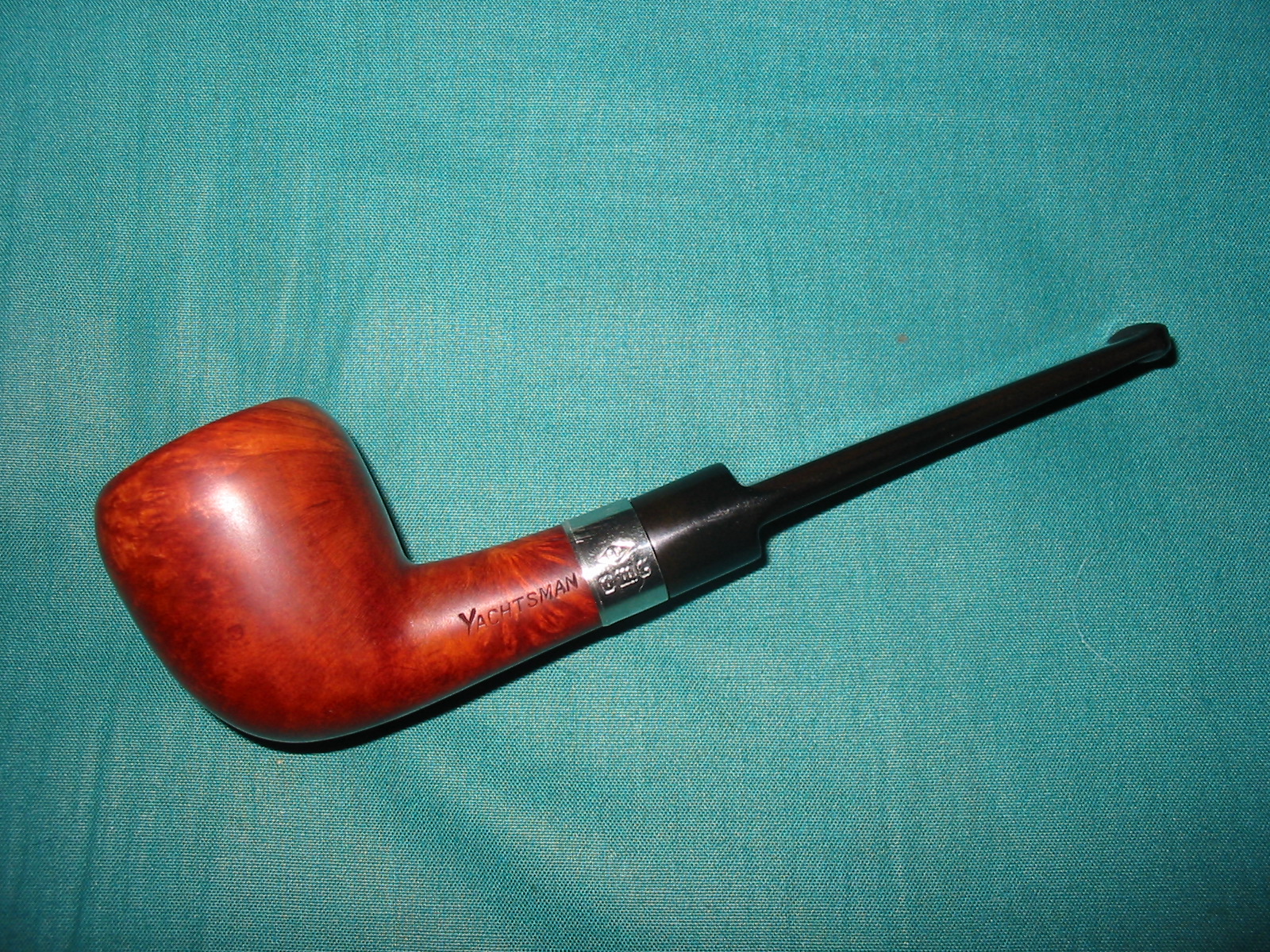
Below is the finished pipe, which is being enjoyed by its new owner who lives in Norway and happens to be a reader of this blog – Enjoy!

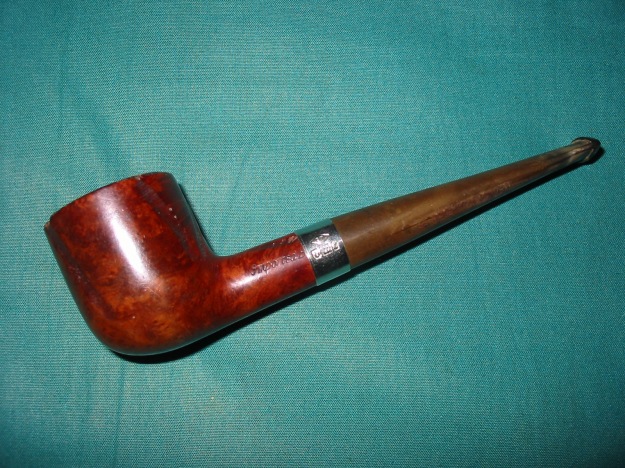
A Bruyere Dublin – Given New Life


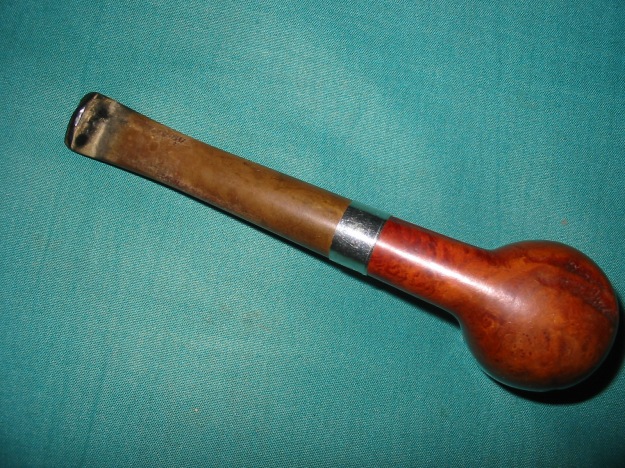
This little Bruyere pipe came to me in a box from a friend in Germany. It had a lacquer coat on the bowl and the rim was blistered a bit and the outer edges damaged from tapping it out. The bowl had a light cake that was incomplete – leaving the bottom of the bowl uncaked. The stem was oxidized but did not have any tooth marks or dents on it. The overall condition was promising and needed a bit of time. I removed the stem and put it in the Oxyclean bath that I have made up. It takes a full scoop of Oxyclean and two cups of warm water. It has a lid so I shake the mixture until it is well mixed. The stem sat in the bath while I worked on the bowl.
Bru1

Bru2

Bru3

I reamed the bowl with the smallest bit on my Pipnet reaming set. I wiped the top of the bowl and the outside of the bowl with cotton pads soaked in acetone to remove the lacquer finish. I find that while the acetone does not remove the lacquer it does soften it enough that it sands off easily. I set up the sandpaper on the board I use for topping a bowl and work the top of the bowl on the sandpaper until it was smooth and the roughened edges were not as noticeable. I then used sandpaper to bevel the outer edge of the rim to further hide the rim damage. I sanded the entire bowl using 380 grit sanding pads and removed the remaining lacquer finish. I wiped it down between sanding with acetone. The final sanding was done with micromesh sanding pads 1500-12,000 grit. I restained the bowl with a medium brown aniline stain, flamed it and then buffed it with White Diamond.

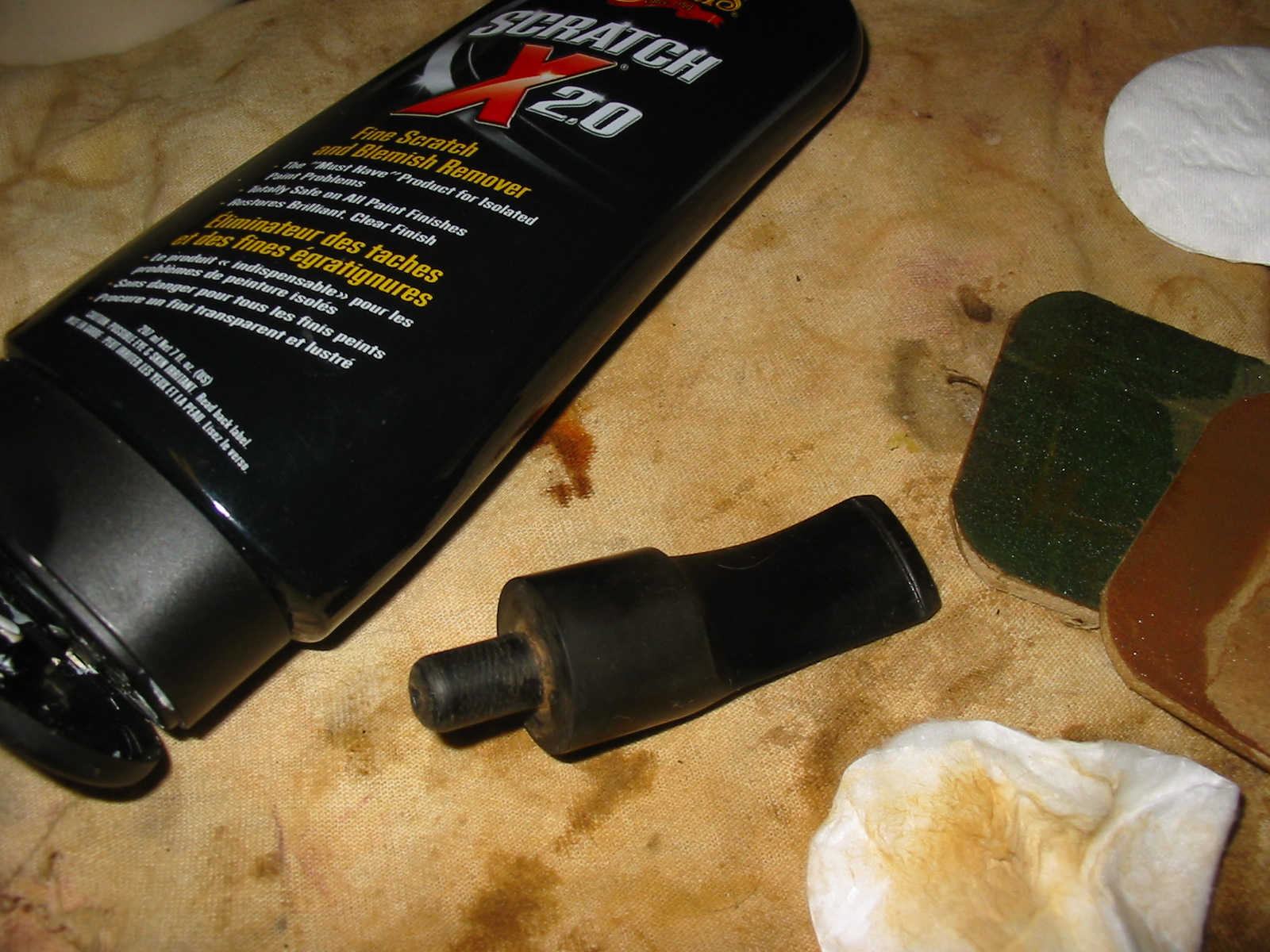
I took the stem out of the bath and wiped it dry with a rough cotton cloth that removed the moisture and also removed the top layer of oxidation. I then buffed the stem with Tripoli and White Diamond before returning to the work table to sand it with micromesh pads. I sanded it with 1500-3200 grit micromesh pads and water. I dried it and polished it with the Meguiar’s Scratch X 2.0 polish. I wiped it down and then finished the sanding with the 3600-12,000 grit micromesh. I dry sanded with these grits. Once the stem was smooth and shiny I put it back on the bowl and buffed the pipe with White Diamond and multiple coats of carnauba wax.
Bru4

Bru5

Bru6

Bru7

Really? Why wouldn’t you stop after doing this the first time?


I was browsing EBay this morning and came across a group of Dunhill pipes that were being sold individually by the same seller. There are four pipes all being sold at strangely high prices with several bidders. All of them obviously came from the same pipe smoker. The three below are the worst of the lot. The last of the foursome is probably redeemable with a light topping and reshaping of the rim. These three would take quite a lot of work. The incredible thing to my mind is the amount of damage caused to all of them. I look at them with sadness and wonder at the person who would do that to that many pipes. Personally I would think that if I had one pipe sustain that damage I would change my habits. Not so with the pipe smoker of this trio, all nice lovats. If you look at the pictures below you will see that all three have a burn in pretty much the same spot. The sacrifice of briar to the flame is absolutely unnecessary.

From my experience this kind of burn is caused by repeatedly using a torch lighter and carelessness in directing the flame into the bowl. Repeatedly lighting the pipe in the same way from the same angle produces the results visible in these photos. I know that they are Dunhill’s and odds are they were not cheap pipes. But they are still selling on EBay at a price that a similarly burnt no name or low name pipe would never see.

I have repaired a lot of burned rims and damaged rims but these seem so unnecessary to me. Ah well I won’t be bidding on them. All three would need a serious topping to bring them to even close to pristine condition and would also ruin their value to collectors. Why buy them at all? I suppose some folks would fall under the spell of the white dot or maybe they are just going for the well kept stems.
burn1

burn2

burn3

burn4

burn5

An Interesting Weatherproof Wally Frank “Pepper Shaker”


I picked up this interesting piece of tobaciana somewhere though I no longer remember where it came from. It is an oval bowled pipe by Wally Frank and it has a briar wind cap that is attached via a brass peg. To me it looks like a Pepper shaker so that is what I have named it. I have a few other ones like this but the cap is made out of Bakelite and is on a side pin that allows it to flip forward. This one spins to the side or can be removed should the pipeman not want to use it covered.

It came to me unsmoked and clean on the inside. The finish was very poorly done. There was a coat of varnish or lacquer on the pipe. It was spotty and in some places seemed to have bubbled or ran when it was applied. The stain that was underneath obscured the grain on the pipe. I decided to refinish the bowl and give it a new stain. I soaked it in an alcohol bath and then wiped down the bowl with acetone to clean the finish off. Once it was removed I sanded it with micromesh pads to get it smooth. I restained it with a nice cherry aniline stain. I flamed the stain to set it in the grain and then buffed the bowl to remove the excess and surface stain. The stem and pipe were buffed as a whole with white Diamond and then several coats of carnauba. Here is the finished product.
Frank1

Frank2

Frank3

Frank4

Refurbed Rutledge Author


This old Rutledge pipe is the one that came with the Beuchner Ashtray Reamer that I wrote about in an earlier blog post. I have not found a lot of information about the brand or the maker of this pipe so it is a mystery that remains for me. However, the author shape is one that I particularly like so it finally got the attention needed to clean it up. You can see from the first two pictures the state of the pipe. The stem was badly oxidized and needed some work. The bowl was clean but dusty and even had a cobweb or two in it. The rim had some tar build up but was not dented or dinged. When I removed the stem – a screw mount stem – I found that it had originally had a KW stinger that had been clipped. It was fairly oxidized as well and the aluminum on the threads was pitted and darkened with tars and oils.
rut1

I unscrewed the stem and cleaned it out and used 0000 steel wool on that to clean the tenon and remove the oxidation and grime. I also used it to smooth out the pitting. One it was clean I dropped it in a bath of Oxyclean and warm water to soak while I worked on the bowl. I gave the bowl a light reaming and scrubbed the rim with a soft cloth and some Murphy’s Oil Soap. I wiped the entirety down with a cotton pad and some acetone and then buffed the bowl on my buffer with White Diamond and Carnauba wax. The metal band at the end of the shank made this quite easy to do without the stem attached. I never do that with a regular shank as it can round the edges and ruin smoothness of the shank stem junction. With the bowl finished I took the stem out of the Oxyclean bath and began to work it over with micromesh sanding pads from 1500-12,000 grit. I polished the stem with plastic polish after that and reattached it to bowl and gave the whole pipe several coats of carnauba wax and buffed with a clean flannel buffing pad to polish it.
rut2

A Journey from Oxidation to Shine – Refurbishing a Wally Frank Meerlined Billiard


I have had this old meerlined billiard in my box for refurbishing for quite awhile. The stamping on it says Made in London England on the right side of the shank. On the underside of the shank it is stamped Wally Frank Limited. The finish on the bowl was cloudy from many coats of wax and there was a gummy substance on the front of the bowl from a sales label. The rim was dented and the inner edge of the meer lining was damaged. There was a heavy buildup of cake on the meer. The stem was badly oxidized.
ox1
ox2
ox3
ox4

ox5 I decided to work on the interior first so I used a plumbers wire brush (used for smoothing the edges of a newly cut pieces of pipe or tubing). It is a ¾ inch brush (see the photo to the left of this text) and I have found that if it is used carefully it is good at removing the initial cake build up on the interior of a meerlined bowl. I say carefully because too much and the brush scratches the meer lining. In this case I ran it through one time and then dumped out the ash and carbon buildup. The two photos below show the brush inserted in the bowl and give an idea of the tool itself.
ox6
ox7

Once the brush has done its work I use a blunt edge letter opener/knife to smooth out the rest of the cake that is still present. The next photo gives a clear picture of the pipe bowl after I have used the brush in it and just inserted the knife. There was still some stubborn cake left that I used the knife to scrape away. The second photo below shows the bowl after I have finished with the knife. Once the bowl was at this point it was time to use sandpaper in the bowl to smooth out the edges and rough spots.
ox8

The next photo shows the bowl after the initial sanding on the cake. I had lots more to sand at this point but I wanted to document the process. At this point in the process I removed the stem and put it in a jar of Oxyclean to soak and soften the oxidation while I continued to work on the bowl.
ox9

I used many cotton swabs on the inside of the bowl to remove the sanding dust and to clean out the inside of the shank once the stem was removed. The mortise had a thick coating of tars and the airway into the bowl was constricted with tars as well. It took many swabs and about the same number of pipe cleaners to get the interior clean. I dipped the swabs and pipe cleaners in 99% Isopropyl alcohol and washed out the inside. The first swabs came out almost black with the tars. I did some more sanding on the rim and the inner edge of the rim and meer lining. The rim was quite dented and had some chunks missing so I topped it lightly using the methods I have written about in other articles on the blog. I also used a folded piece of sandpaper to bevel the edge of the meer lining inward to take care of the damaged edge of the meer.
ox10

Once the bowl was finished I wiped it down with some acetone on a cotton pad to remove the wax buildup and give me a clean surface to work with. I took the stem out of the soak and went to work on it. I wiped it down with a soft cotton cloth to dry it and to remove the softened oxidation. I then filled a cup with warm water and began to work on the stem with the micromesh sanding pads 1500-12,000. I took pictures of each successive micromesh pad and the result of using it to show the progression of the polishing.

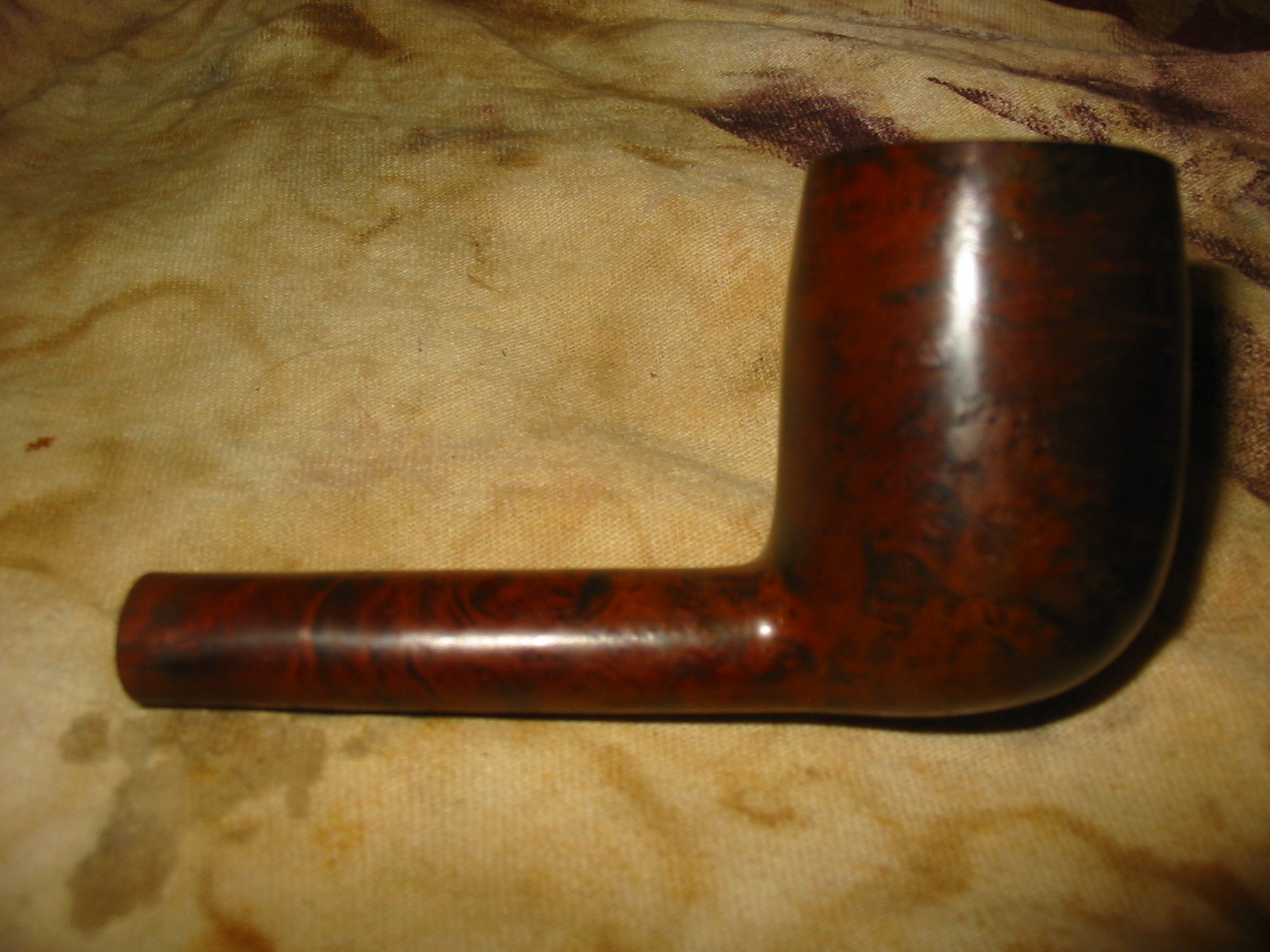
The first four pictures below show the stem after wet sanding with the 1500 rust coloured sanding pad. You can also see the inner rim and bowl top after my work on them as well. The first sanding took what remained of the majority of the oxidation off the stem and gave it a dull matter finish. I wet the sanding pad down and sanding with it wet. I repeated the sanding of the stem repeatedly until the oxidation was gone. Then I wiped it down before the picture to show the progress.
ox11

ox12

ox13

ox14

Once I was satisfied that the majority of the oxidation was gone I move on to the green 1800 grit micromesh sanding pad. I also used this pad with water and wet sanded the stem repeatedly. You can see the remaining oxidation still showing up on the wet sanding pad in the two photos below. The two photos show the stem after multiple sanding. I wiped it down with a soft cloth to dry it off and wipe away the grime left behind by the wet sanding. The stem is beginning to take on a bit of a shine. The matte finish of the 1500 grit is getting a polish.
ox15

ox16

The next two photos show the 2400 grit micromesh disk (grey coloured). I used this pad without water to polish and shine away some of the scratches. I found on the left side of the stem near the button there was a fairly deep scratch on the edge. I used some 280 grit sandpaper to remove this scratch and then repeated the 1500 and 1800 grit micromesh sanding. Once finished I gave the entirety of the stem a sanding with the 2400 grit pads to smooth out the finish. I also used the pad to sand the top of the bowl and the edge of the meer lining.
ox17

ox18

A 3200 grit micromesh pad (tan coloured) was used next. I also dry sanded the stem with this one the first few times I sanded it. The last time I wet sanded the stem. The next two photos show the stem after the sanding. I wiped it down with a soft cotton cloth to remove the dust and residue from the wet sanding.
ox19

ox20

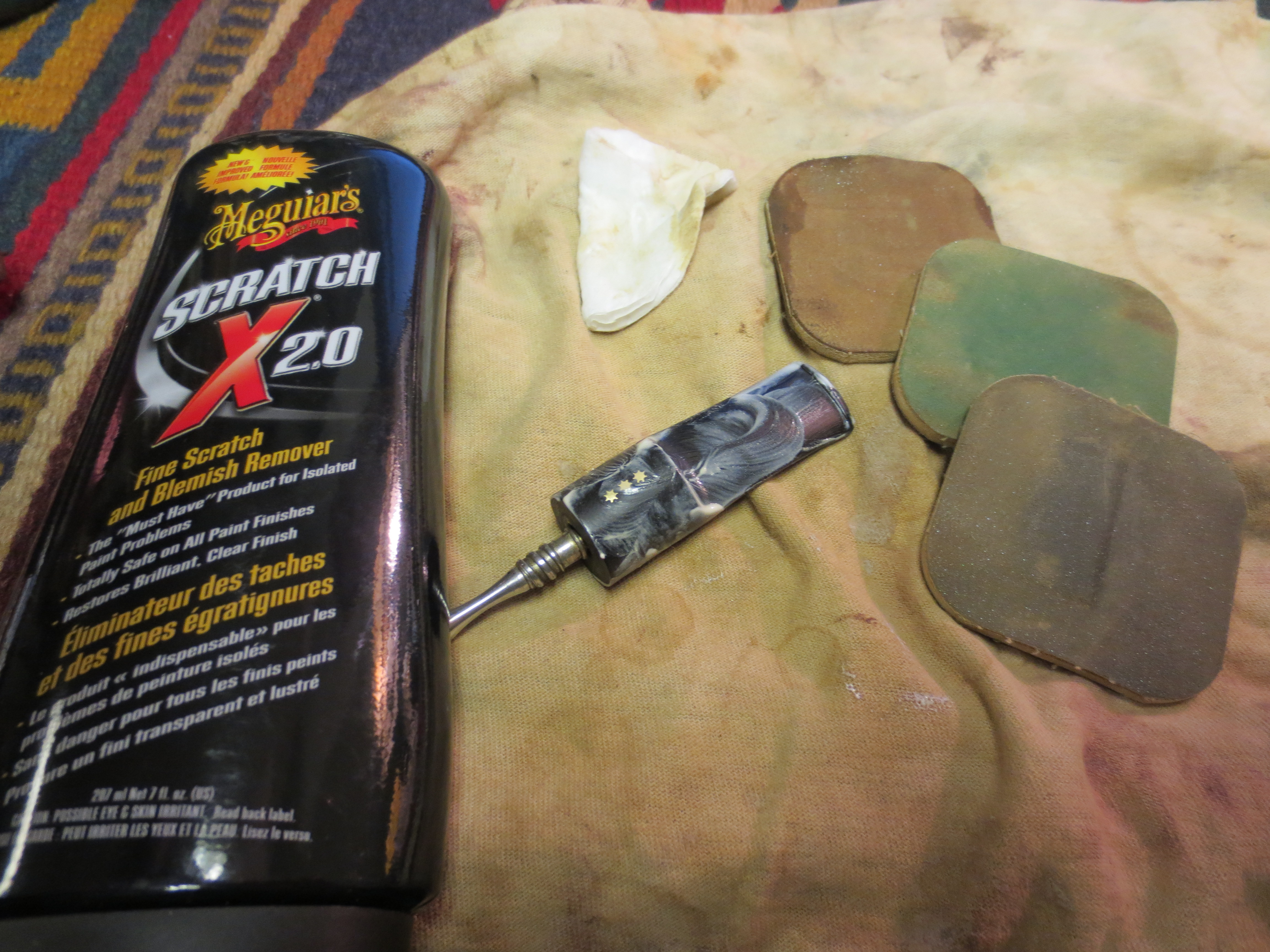
Once I got to this point I decided to try some Mequiar’s Scratch X 2.0 fine scratch and blemish remover that I picked up at an auto parts store. It is used to polish headlight lenses. I applied the polish to the stem and let it dry a short time before wiping it down and polishing the stem with the cotton cloth. The first two photos show the application of the white polish. The last two show the result of the polish on the stems at this point in the process.
ox21

ox22

ox23

ox24

At this point in the process I decided to continue with the micromesh sanding pads. I wanted to take them through the 12,000 grit pad and document the progressive shine that comes alive in the stems. The next two photos show the wine/brown 3600 grit sanding pad and the results. I sanded the entirety of the stem repeatedly before wiping it down for the photos below. I dry sanded with this grit pad and also with the remaining micromesh pads.
ox25

ox26

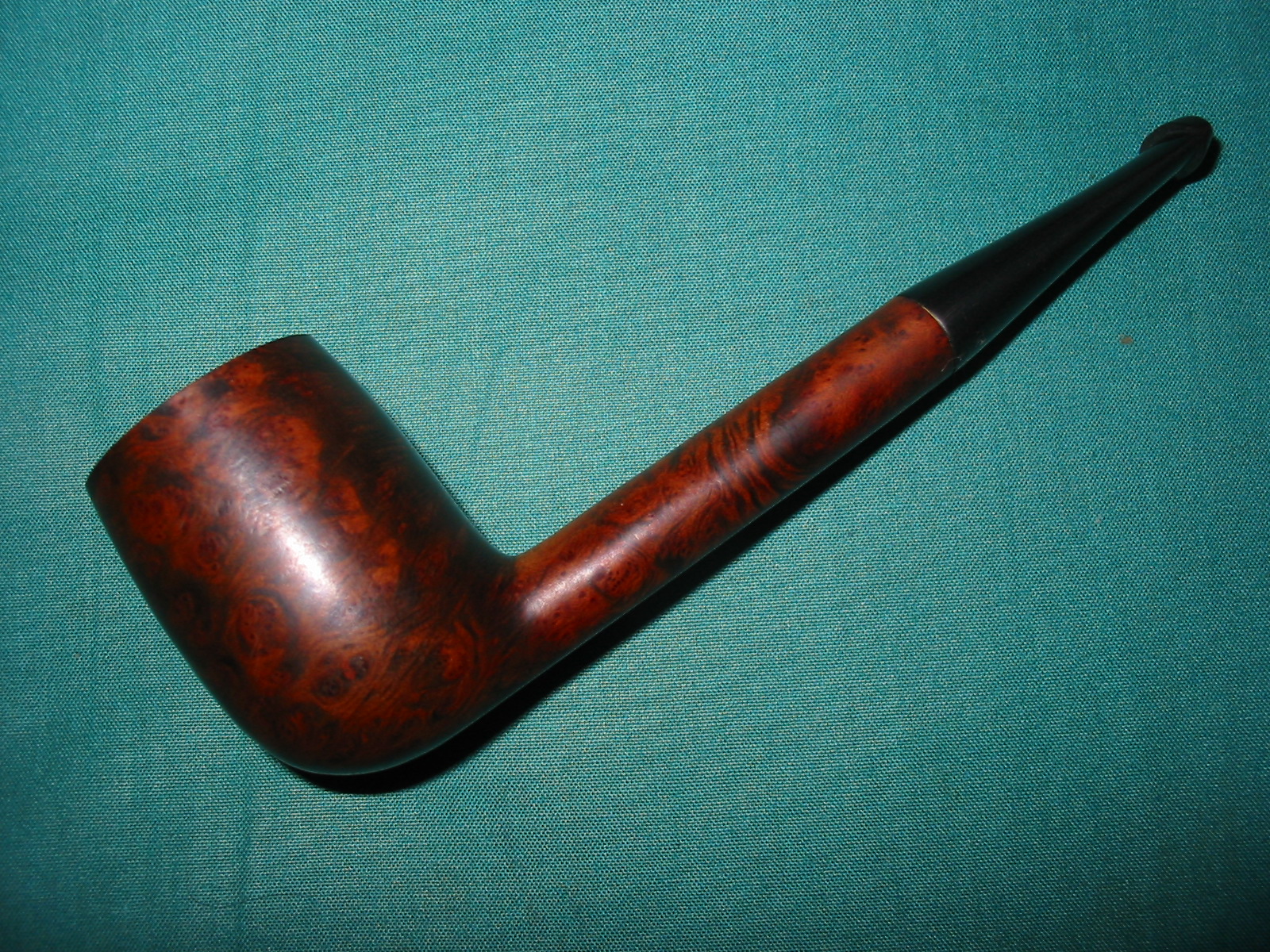
A 4000 grit Teal coloured micromesh pad was next. I also dry sanded with this pad. The next two photos show the shine starting to come alive on the stem.
ox27

ox28

A 6000 grit Purple coloured micromesh pad was next. I dry sanded with this pad as well. The next two photos show the shine after I repeatedly sanded the stem.
ox29

ox30

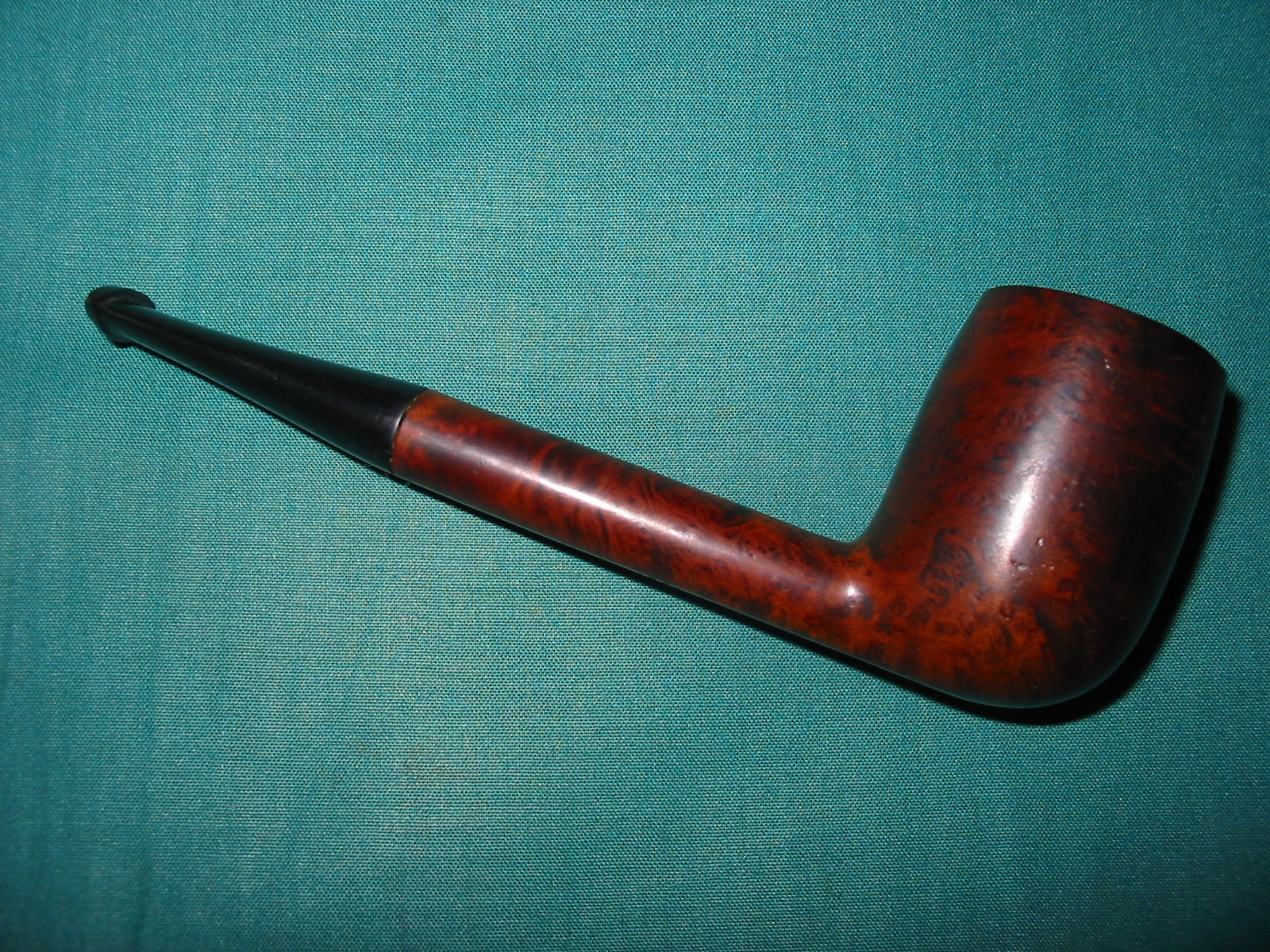
An 8000 grit Royal Blue micromesh pad was the next in line to be used. The difference in shine between the 6000 and the 8000 grit is quite remarkable. The shine takes on a depth that the early grits did not bring out in the vulcanite. The next two photos show the stem after sanding several times with this grit pad.
ox31

ox32

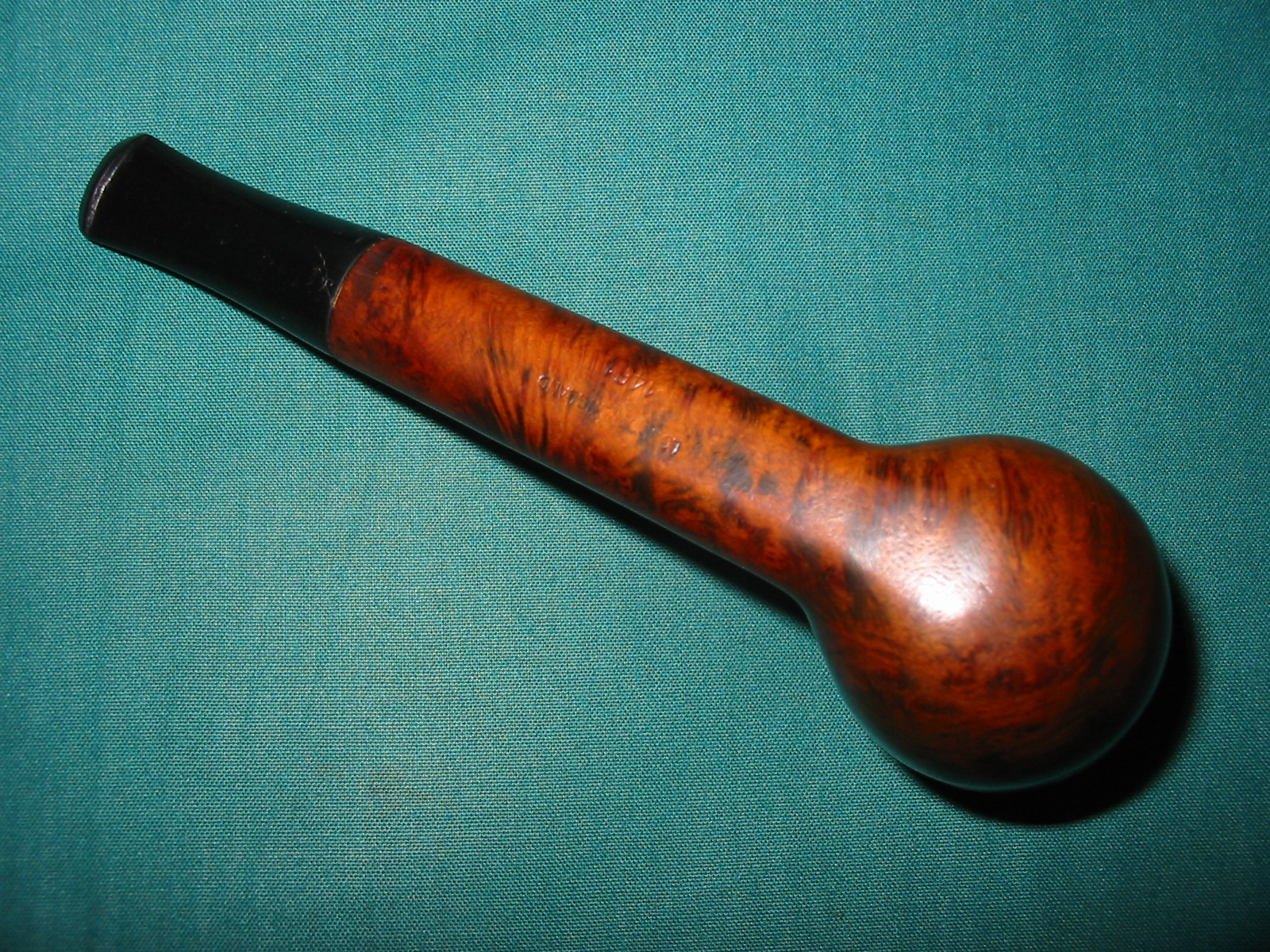
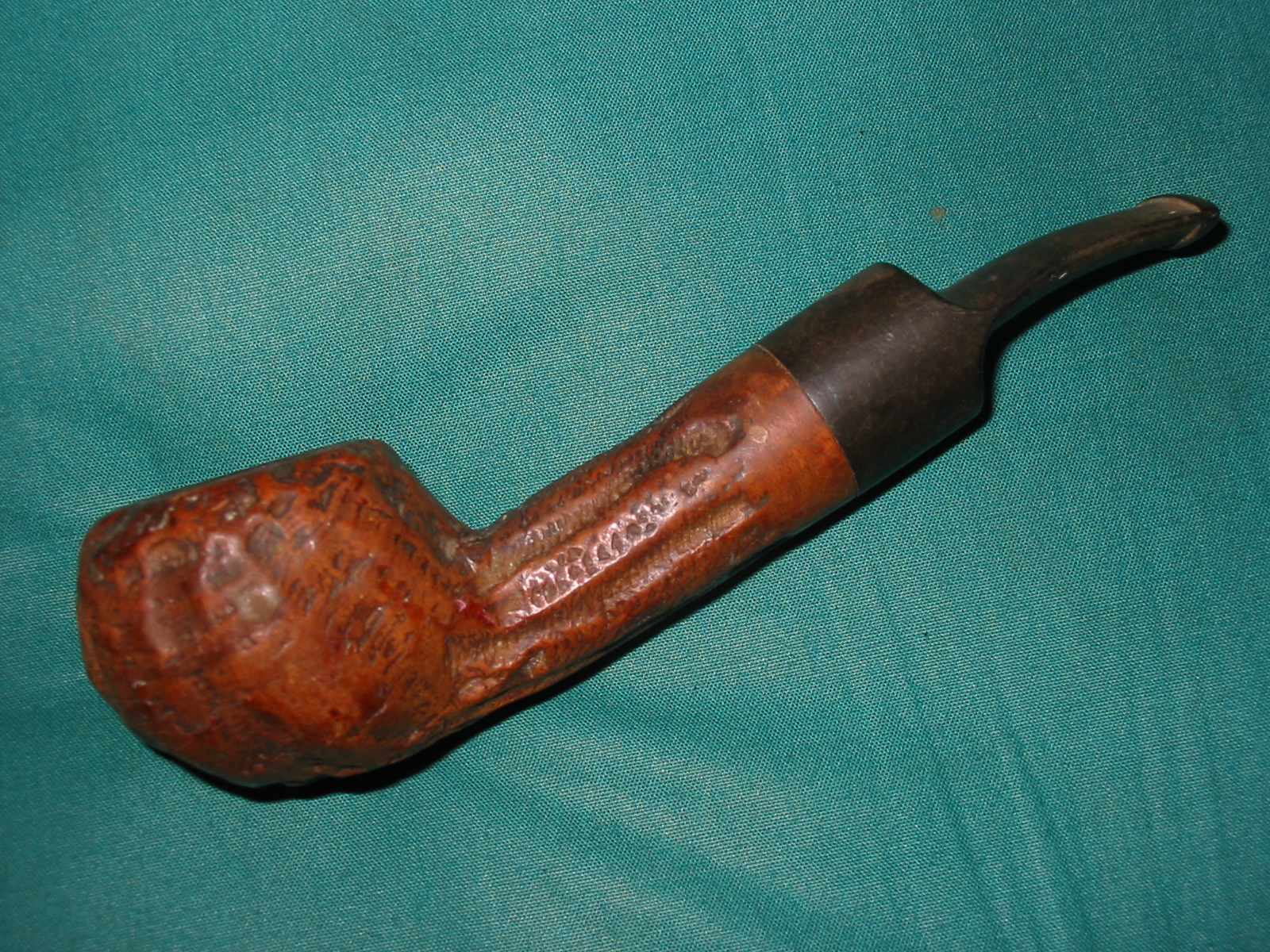
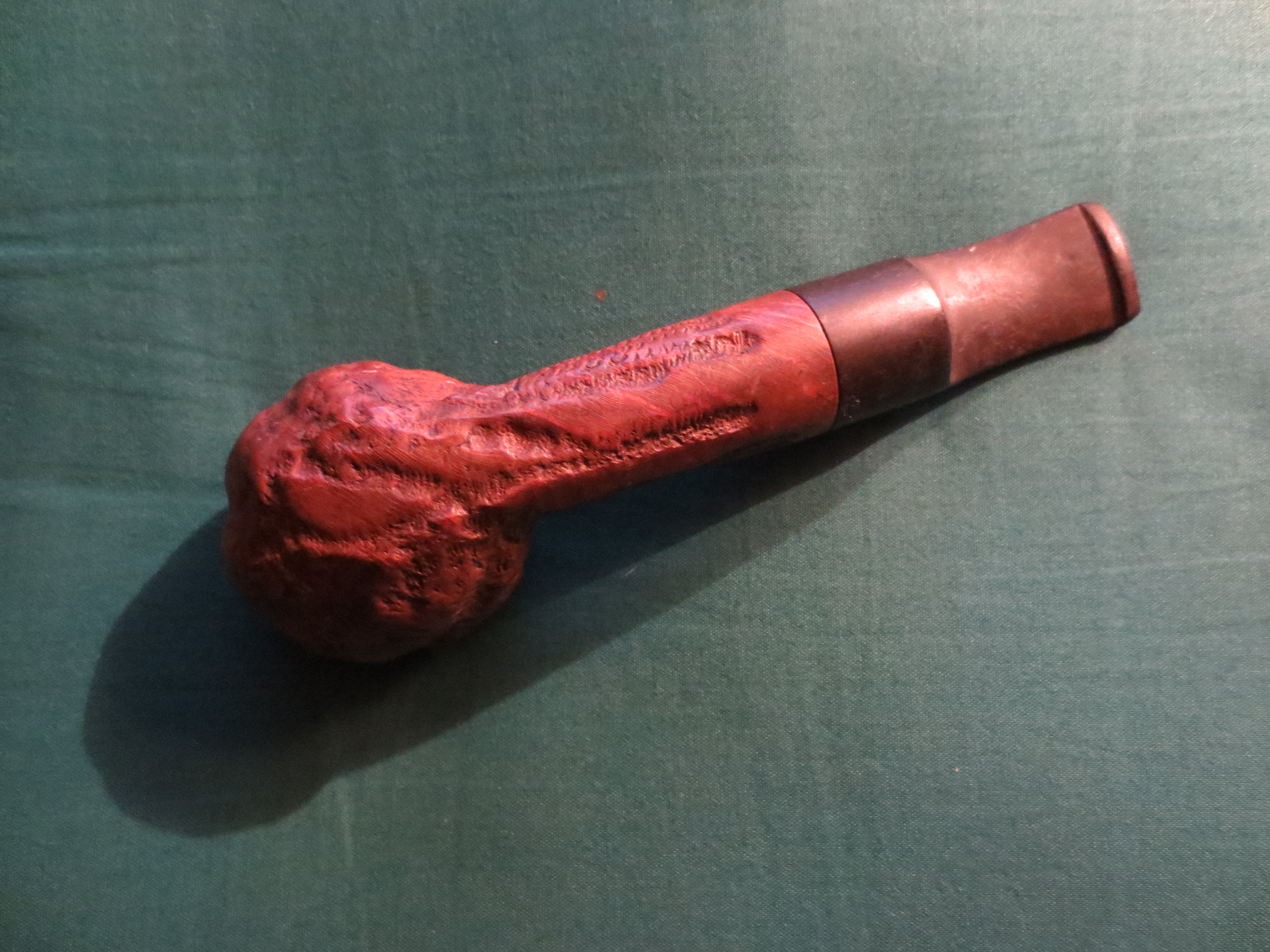
The final micromesh pad to be used was the Grey coloured 12,000 grit pad. I also dry sanded with this pad. I sanded the stem several times until the vulcanite shine had a depth that was visible. The two photos below show the result of the final sanding.
ox33

ox34

At this point in the process I once again wiped the stem down with the Meguiar’s polish and buffed it off by hand with a soft cotton cloth. I then took it to the buffer and gave it several coats of carnauba wax. I also buffed the bowl with White Diamond and then carnauba wax as well. The finished pipe is in the four photos below.
ox35

ox36

ox37

ox38

Refurb – a Lovely Jobey Poker


This came across my desk as part of a lot I picked up somewhere along the way. It gets pretty bad when you cannot remember where you found a certain pipe. When I picked this up I figured it would be one that came and went. I have bought, sold and traded many Jobey pipes over the years and kept none of them. Nothing personal against Jobey’s I just always used them as a step towards something else I wanted more. This one was a bit unique. I had not had a Jobey like this or a poker before so this one was a new one for me. In terms of a Jobey it does not have the patented Jobey connector for the stem and shank. I was a normal push tenon. The tenon also was stepped down. The pipe is stamped English Para on the stem. The bowl itself is quite a nice piece of briar – no fills. It is stamped Jobey in script and Hand Rubbed under that. The other side of the shank gives the shape number 370.

Its condition was quite easy to work on and needed only to be reamed and cleaned. The finish was only dirty and had become cloudy from the many coats of wax that it carried. I wiped it down with a cotton bad dampened with 99% isopropyl alcohol to remove some of the grime. I do this carefully so as not to remove the underlying finish. In this case it worked beautifully and the finish remained. The grain was once again very clear and had a matte look. I took it to my buffer and used some White Diamond to buff it and then gave it several coats of carnauba wax.
Jobey

Kiseru Pipes – A Unique Experience, But If You Blink You Will Miss It


Blog by Steve Laug

Kis1
A few years ago a friend of mine called and said that he wanted to stop by for a bowl on the front porch and that he had an interesting gift for me. I don’t know about you but that kind of phone call makes me wonder. I loaded a pipe and sat on the porch to await his arrival. I had no idea what he was bringing. When he arrived he opened his pipe bag and took out the gift he brought for me and another for himself. Until that time I had not heard of the Kiseru pipe and knew nothing about it. Now if you have not smoked a Kiseru you have no idea how small the bowl is or how fine the tobacco is. I personally did not have a clue. So I looked the box and small envelope over before opening either one of them. I did not have the benefit of the photo above that gives you an idea of what to expect.

kis2
The photo above shows the box of tobacco and the envelope that held the pipe. If you can imagine the small envelope that holds take out chop sticks then you have an idea of the size of this little envelope. The box is also pretty small. I have no idea what the characters say and would love to know what they say. The label on my little box is identical to the one in the opening photo that I took off of a Japanese catalogue of Kiseru pipes.

kis3
I decided to open the envelope first and took out the spiraled brass pipe. The brass is polished and golden in colour. The airway is very open and the pipe is a solid unit. The tip has a formed button that can be held in the teeth to clench the pipe. The other end of the tube is upturned and flared into a bowl. The spiraling on the shank is actually quite beautiful. In the photo below I took a picture of it with a measuring tape so you can get an idea of the overall size of the pipe. It is about 4 ¼ inches long. The bowl is about a ¼ inch in diameter and height.
kis4

After I had blown through the pipe and looked it over bow to stern I opened the box of tobacco. In the picture below you can see the finely spun tobacco. The smell is of a Virginia tobacco and the cut is a very fine angel hair like cut. It smells grassy and sweet. It is condensed and pressed into the box and held in a waxed paper envelope. The box is about 3 ½ inches long by an inch wide and an inch high. I have smoked probably 20 or more bowls and the tobacco does not seem to disappear. As I pull off a small chunk to roll into a ball the remaining tobac springs into place.
kis5

To load the Kiseru you take a small clump of tobacco and roll it into a small ball and press it into the bowl of the pipe. It honestly does not take much so the tobacco that comes with the pipe lasts a long time. My box has been in my humidor for probably 4 or 5 years and is the same moisture level it was when I first opened it. Lighting the bowl is very simple and takes a flick of the lighter and a single light. There is no tamping involved and no fiddling. It is a quick smoke that tastes delightful and burns easily. The flavour is a rich grassy Virginia taste that makes you want to smoke more. The nicotine hit on the bowl is minimal. One day I will have to try it with a small ball brown rope. In the photo below you can see the dottle that is removed from the pipe. There is also a ball of the tobacco in the ashtray that was not smoked for comparison sake.
kis6

If you have not tried a Kiseru it is worth the experience. They do not cost much in the grand scheme of things and they will provide you with an experience that is comparable to nothing else that I am aware of. Now that I have written this I think it is time to go and load the bowl and have a puff. One caution though. Once you have lit the pipe, do not blink or you might very well miss the smoke.

About Stem/Bit Shapes


Blog by Steve Laug

The matter of bit/stem shapes can be confusing when speaking about our pipes to others or inputting information on stems into database programs such as Pipe Smokers Unleashed or P&T Foundations. I have been asked several times to put together a simple article on the shapes of stems. So here it is. It is not rocket science or anything profound, it is just a simple method that I use in differentiating stems. I have found several pictures that are from different websites to help with the explanations.

There are three basic stem shapes SADDLE, TAPER AND COMBINATION. The MILITARY OR STICK BIT stem is a variation of one of the other three. The stems can either be straight or bent according to the shape of the pipe. Each stem shape also has variations on the theme – gentle taper, fat taper, long taper, thin taper etc. Same with the saddle there are variations on the saddle – 1/2 saddle, full saddle, etc. Both of these also come in geometric shapes Diamond, Triangle, Square, Round and Oval.
Stem1

The stick bits or military also come in the same shapes though the taper is fairly standard. Add to the confusion regarding bits, the Peterson faux military or stick bits which have a tapered tenon that fits the shank and the various freehand stems that have unique shapes and you get the picture.
Stem2

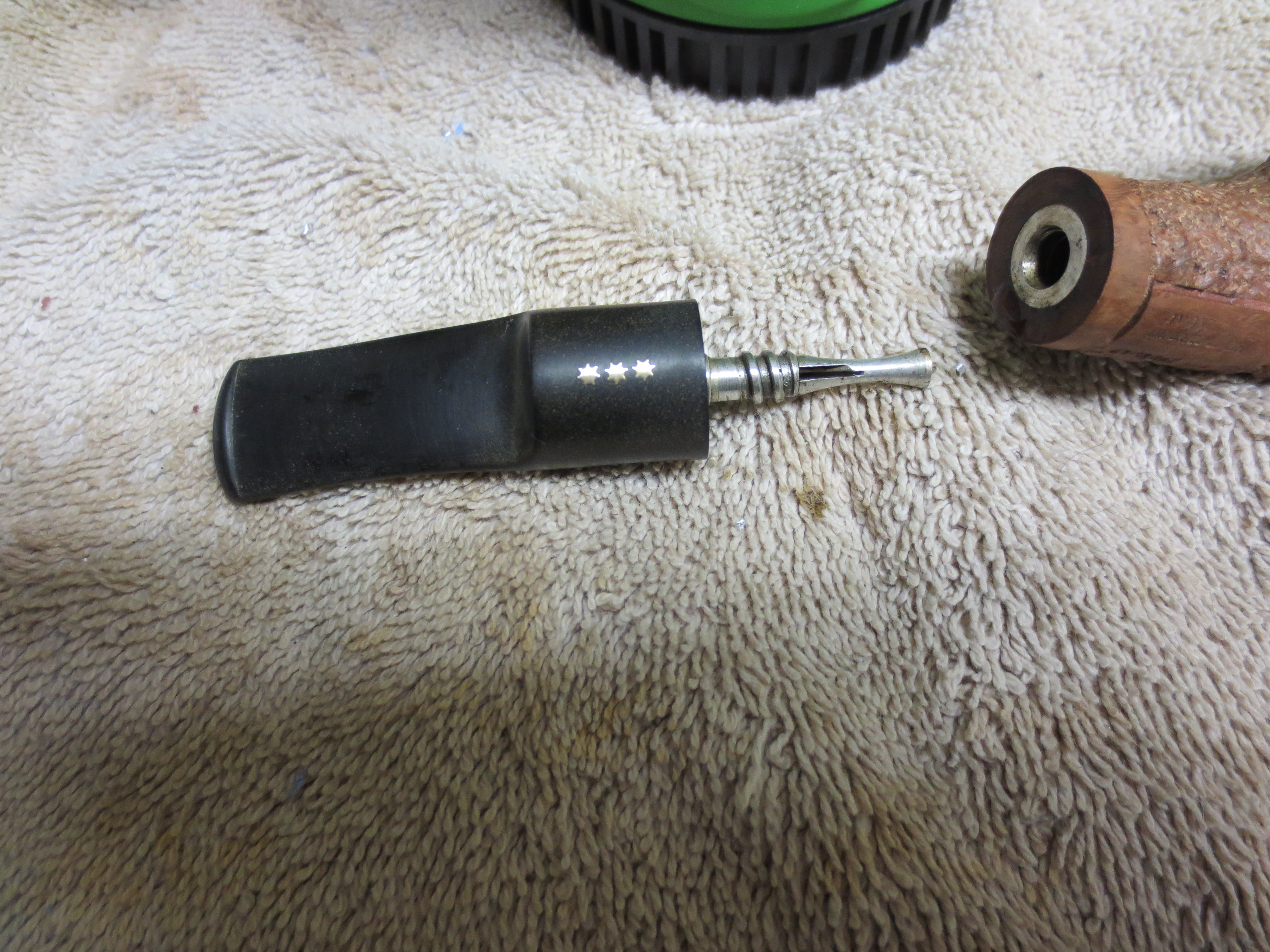
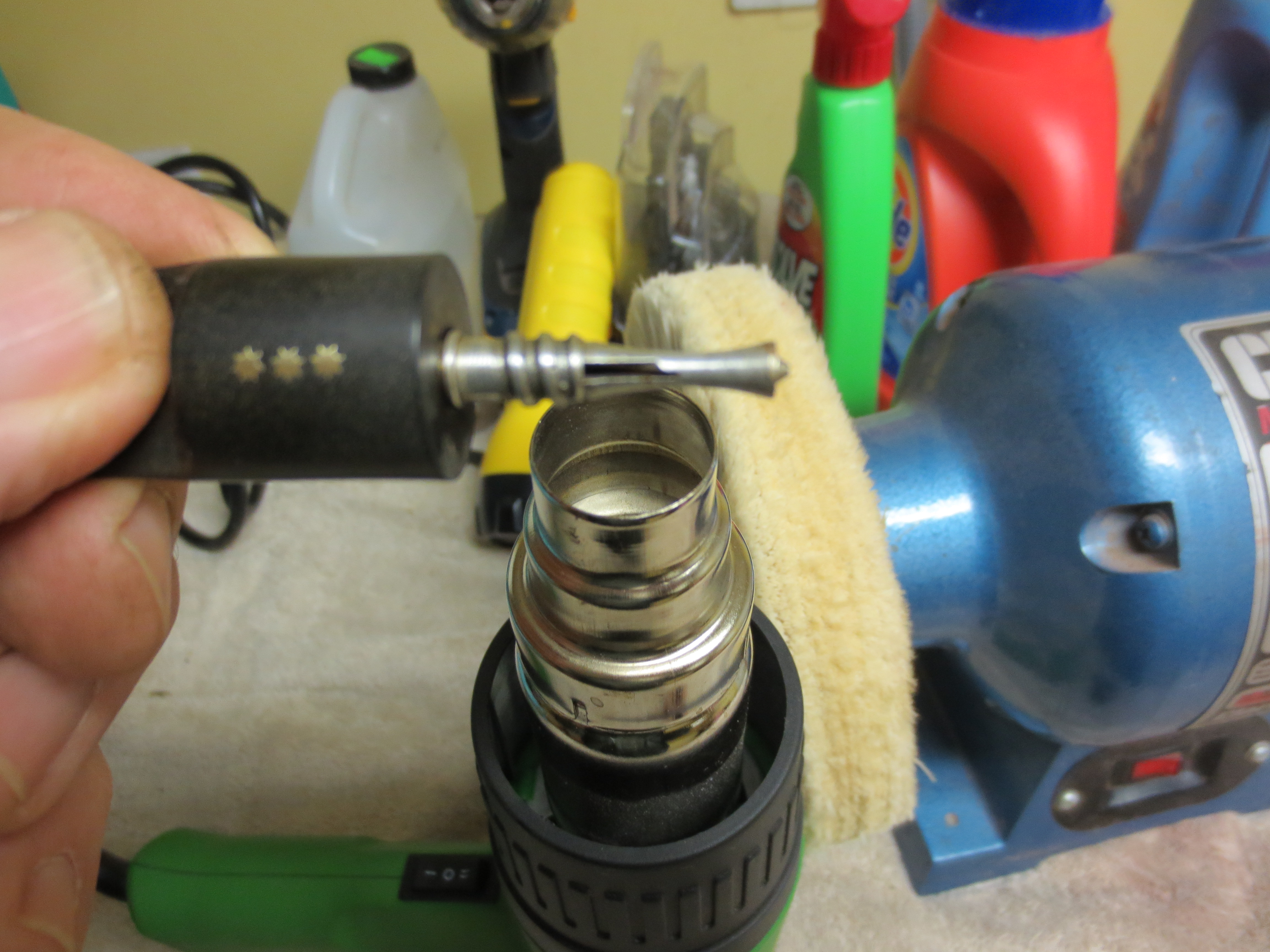
Tenons are either push style or threaded. The push style can be integral to the stem or can be a Delrin insert. Both hold the shank by friction. I personally find the push tenon more to my liking than the metal or bone threaded tenon. The threaded tenon is screwed into the matching threads in the shank of the pipe. In both the bone and the metal versions these are often over or under turned in estate pipes. Generally, heating the tenon allows the tenon to be readjusted to fit properly.

The shape of the bit from the button forward is also varied. I was able to find the following picture that spells out the various shapes of the bits. There are basically five bit shapes that also have variations in their form according to the pipe maker or manufacturer. These are the standard straight bit, fishtail bit, p-lip bit, denture bit, wide comfort bit and the double comfort bit (stepped bit that was developed by Charatan). The bore on the bits is generally a single bore as pictured below. But the double bore or twin bore was also developed to make a bit more bite resistant.
Stem3

The slot or airway in the button also has three variations – the circle or orific hole, the straight slot and the oval. The descriptions are pretty clear from the names of the airway or slot. The orific or circle is exactly as it sounds. It is generally used on older pipe stems – both meerschaum and briar. I have found it on pipes from the 1800’s and early 1900’s. The oval and straight slots are similar. The oval is a reworked and opened slot. The oval gives the opening a wider more open draw.

It would be great to hear if others of you who read this have further explanations that add clarity to the discussion. Please feel free to post a comment to this regard.

The Versatile Dremel Tool


Throughout various articles on the blog I have mentioned the use of the Dremel Tool in my refurbishing and carving of pipes. I thought it would be helpful to write a bit about the ones that I use regularly and refer to often.

I have two Dremels that I use for working on pipes for repair and those I have carved. The first one is a relatively new one that my girls gave me for Christmas last year. It is pictured below and is a MultiPro. It is a variable speed precision handheld rotary tool with ball-bearing motor that drives a wide variety of bits at any speed from 5,000 to 35,000 RPM. The Model 395 Multi-Pro tool came with an assortment of accessories that are pictured below – sanding drums, grinding stones, sanding and cutting disks and polishing disks, a drill bit. The tool itself has carbon motor brush set; keyless chuck, wrench, quick-change collet nut and a Windowed organizer case.
dremel1

dremel2

My second Dremel is the one pictured above. I have had this one for over 10 years and it has been trouble free since I purchased it. It has seen a lot of work on stems and briar. I have had to clean out the brushes and opening with an air gun several times over the course of the years but it has become and old standby. It is a Dremel MultiPro 200-N/40 Rotary Tool. It came with a full kit like the first Dremel but includes a few more accessories as listed below.

Kit Accessories:
• Drill Bit
• High speed cutter
• Mandrel
• Coarse 1/2″ sanding drum
• Coarse 1/2″ sanding band (3)
• Emery cut-off wheel (5)
• Coarse sanding discs (36)
• Small felt wheel (4)
• Heavy duty emery cut-off wheel (3)
• Emery wheel (2)
• Fiberglass cut-off wheel
• Large felt wheel
• Coarse 1/4″ sanding drum
• Coarse 1/4″ sanding band (3)
• Fine 1/2″ sanding band (3)
• Fine 1/4″ sanding band
• Aluminum oxide wheel
• Aluminum oxide stone

I use many of the accessories in a variety of ways. The one that use the most is the sanding drums like the ones pictured below and on the picture of the Dremel with the sanding drum attached. I have found that in my restoration work I use the sanding drum for shaping a stem and adjusting the diameter of the stem at the shank junction. It takes a steady hand to not nick the shank of the pipe but the tool really makes short work of removing excess vulcanite or Lucite material. I also use it on a low speed to sand out the bowl and remove excess cake. I insert the drum into the bowl before turning it on and then adjust to a low speed on the Dremel to slowly sand away excess cake or smooth out existing cake. It does not work in the heel of the bowl and that work must be done with a reamer or a piece of dowel and sandpaper.
dremel3

I also use the sanding drums when carving briar pipe kits or shaping a drilled block of briar. It quickly and easily removes excess briar and is very maneuverable in shaping the angle and curves of the block into the shape of the pipe I am carving. The sanding drums come in two sizes. The one pictured below is the one I use the most in both refurbishing and carving. It is ½ inch in diameter. The smaller size is half the diameter (1/4 inch) and comes with its own head for holding the sanding drum. I find that I use it when working on more detailed work in refurbishing or shaping a stem. In carving I use it for the bowl shank union.
dremel4

I know others hang the Dremel from a stand and use a long flexible shaft attachment to carve and shape briar and stems. I have not found that I need a flex shaft though I have one in my tool box. I like the up close control of the tool as it is. It is probably a matter of what I have grown accustomed to in my work. I have also had competitor models and lower priced models over the years but have come back to the Dremel as it outlasts all the competition. I believe I have burned through at least two other rotary tools made in China and found that the brushes and motors just do not last for long. They are also very noisy to use in comparison to the Dremel.