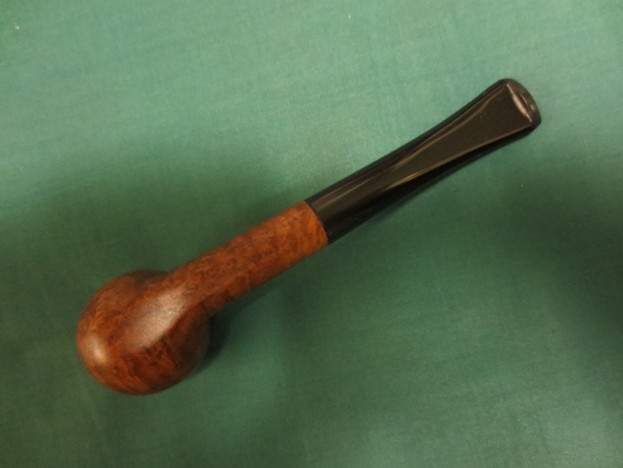
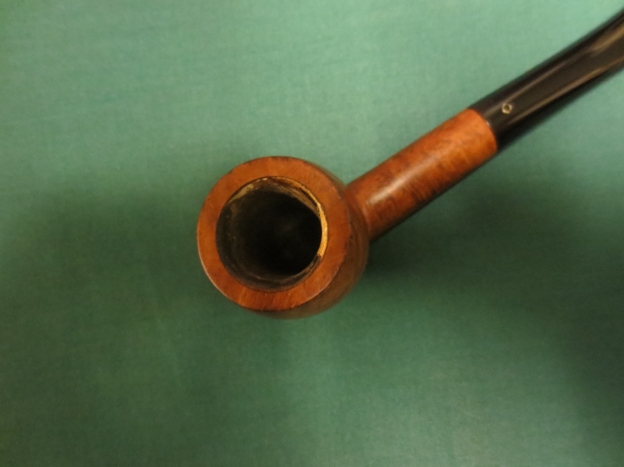
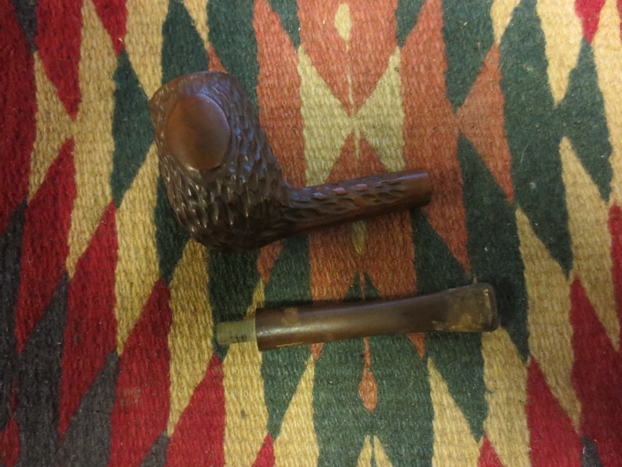
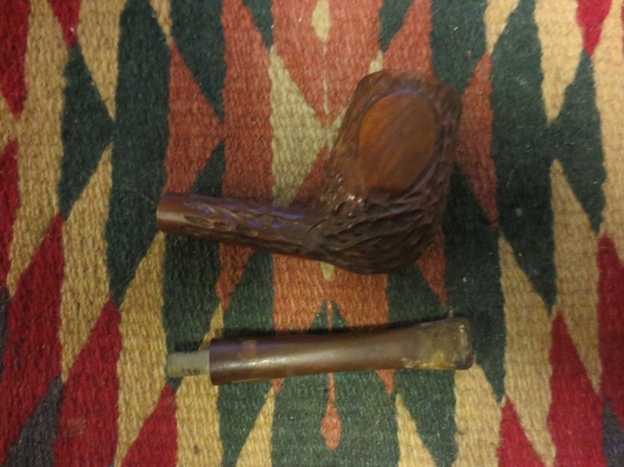
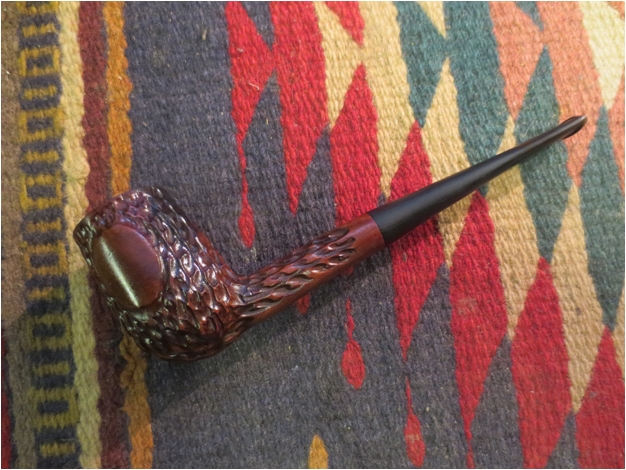
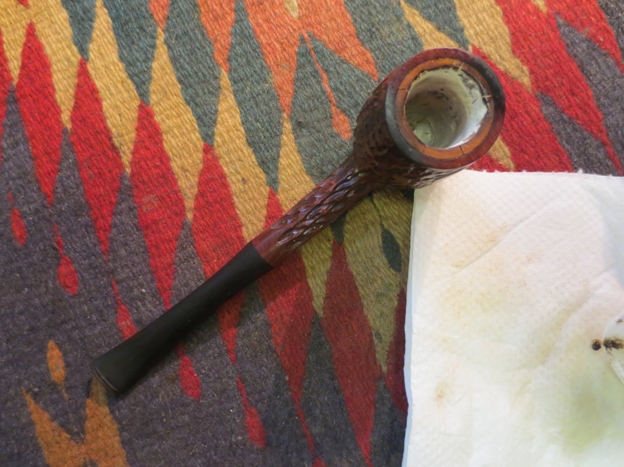
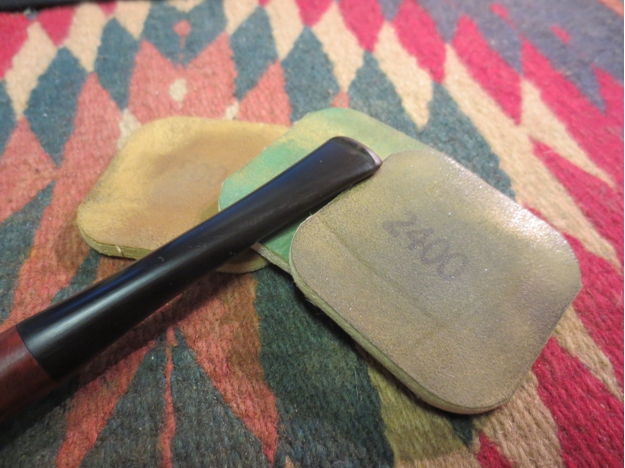
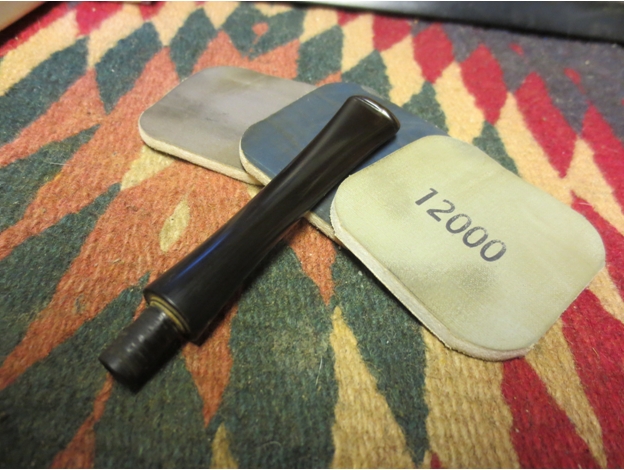
The Ongoing Experiment of Fill Replacement – Wood Glue and Stained Briar Dust


Over the past few years I have been experimenting with many different materials to use for fill replacement. I started with various wood putties that were supposed to be stainable and found that all did not take stain well enough to blend well with briar. I tried super glue and briar dust and found that the repair was more acceptable – instead of the pink, tan or white of putty I was left with a very dark repair. The super glue and briar dust dried almost black. I tried wood glue and briar dust with much the same result. I fiddled with the proportions of the mixture and with the kind of glues. I tried Gorilla Glue, Krazy Glue and Super Glue from Stewmac. All of them ended up with a dark patch. I got used to working with that and using stains and contrast to blend the fill into the finish – generally it was still present but less intrusive to the eye.

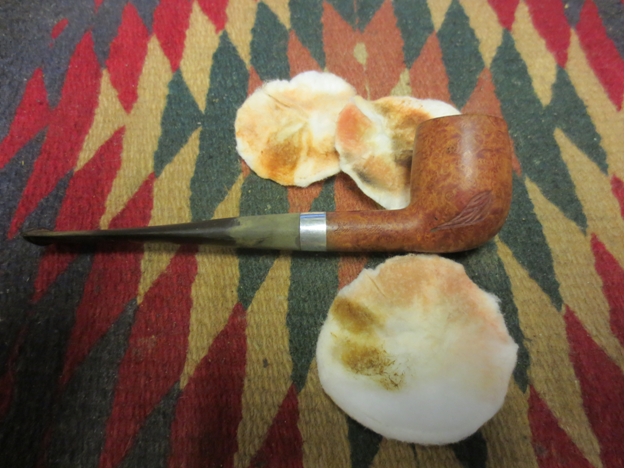
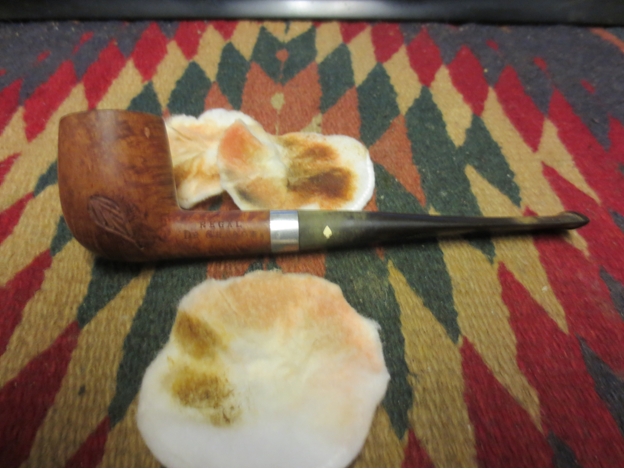
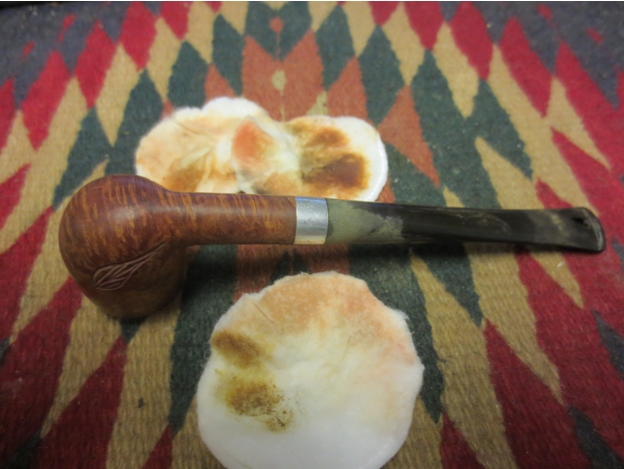
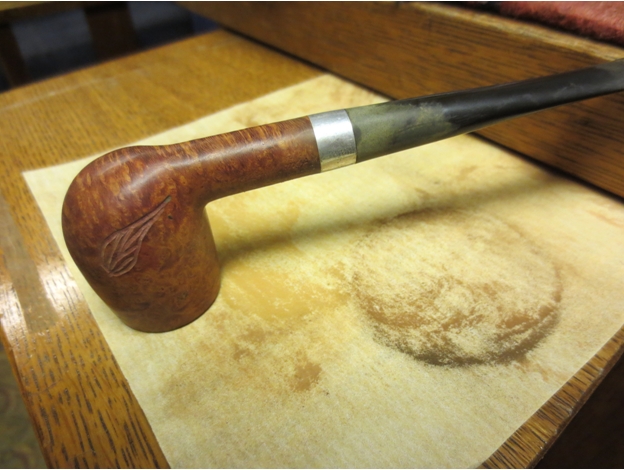
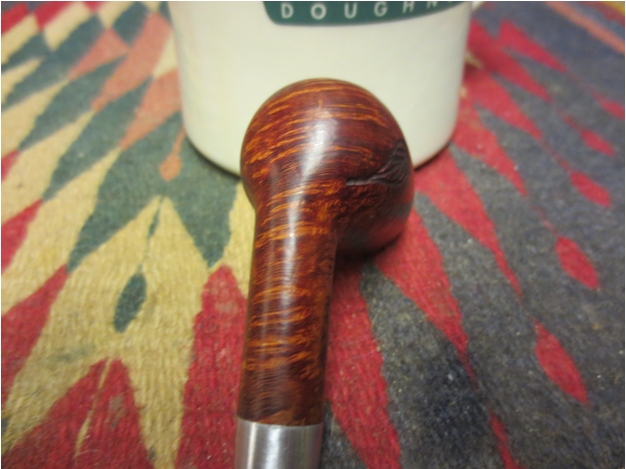
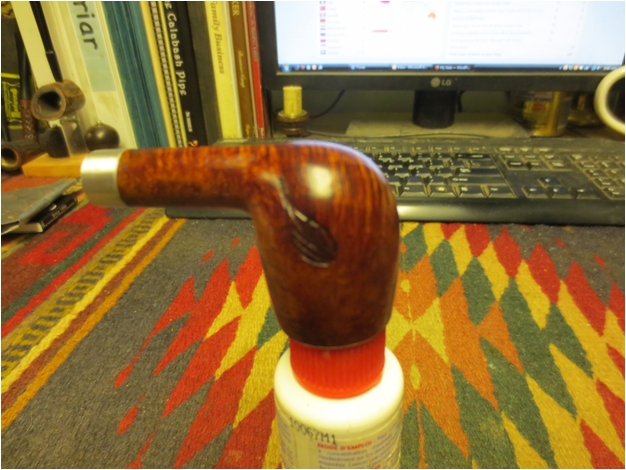
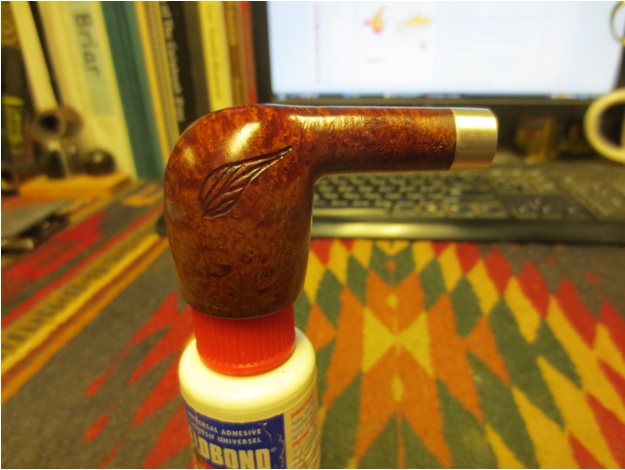
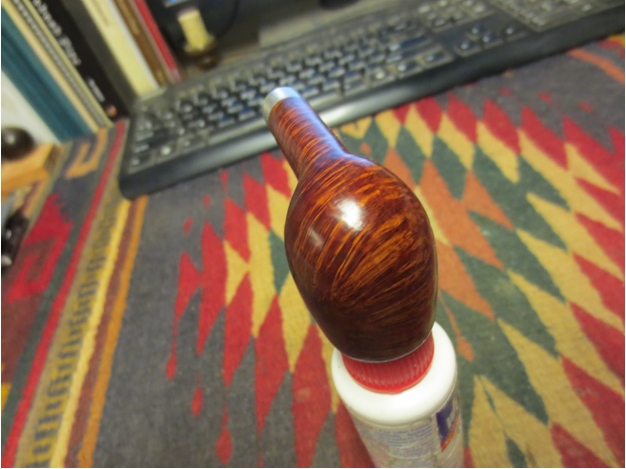
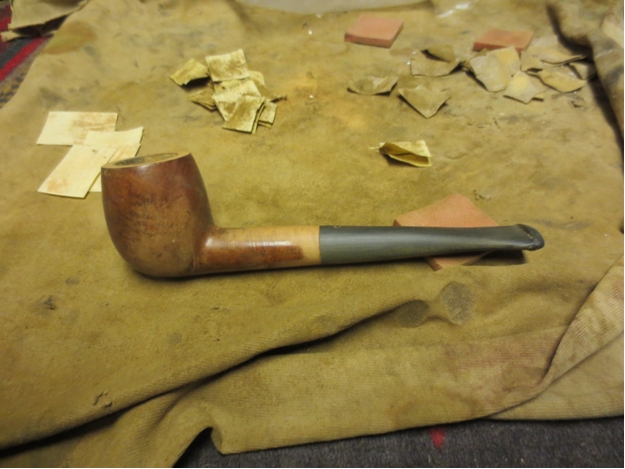
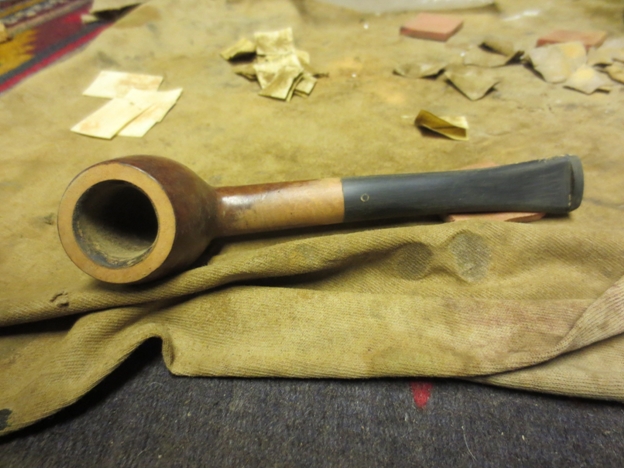
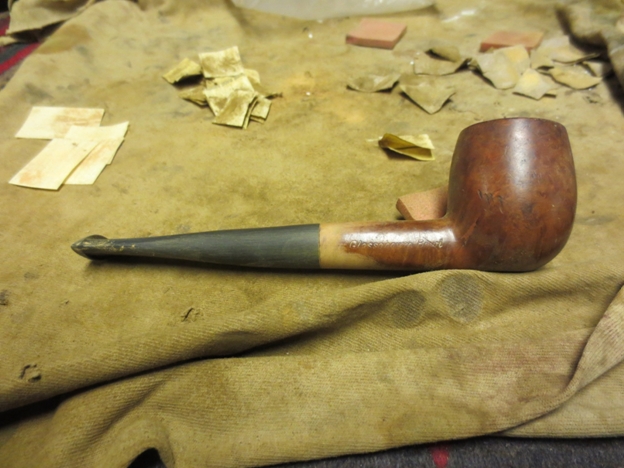
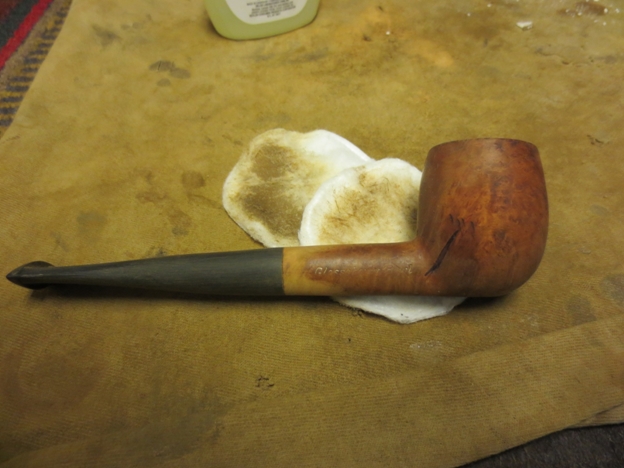
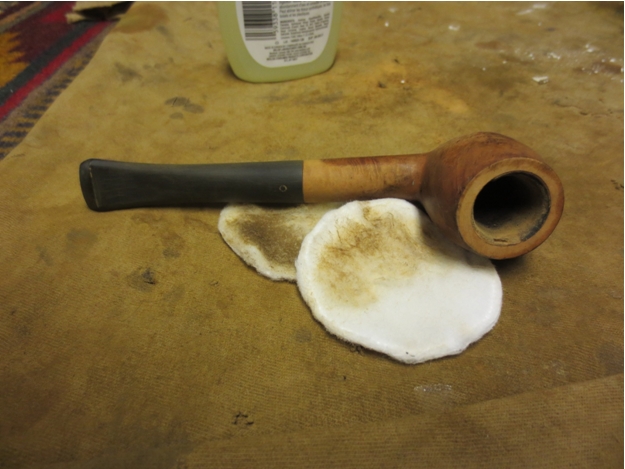
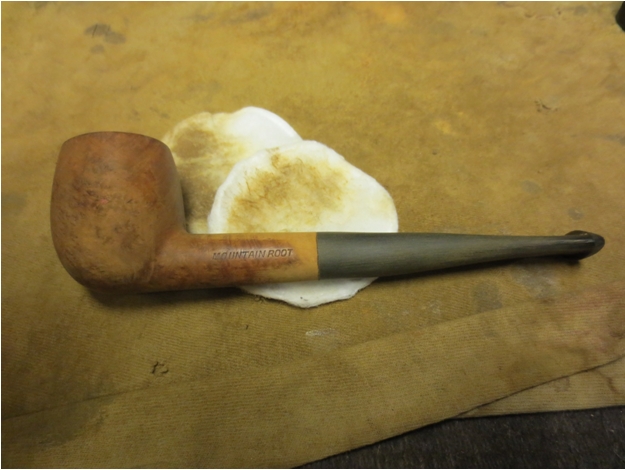
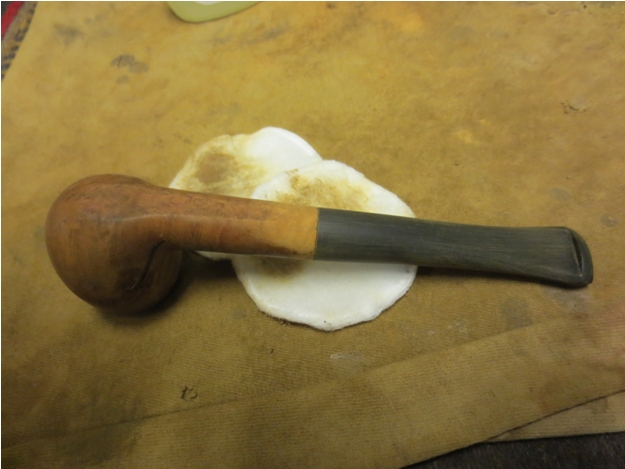
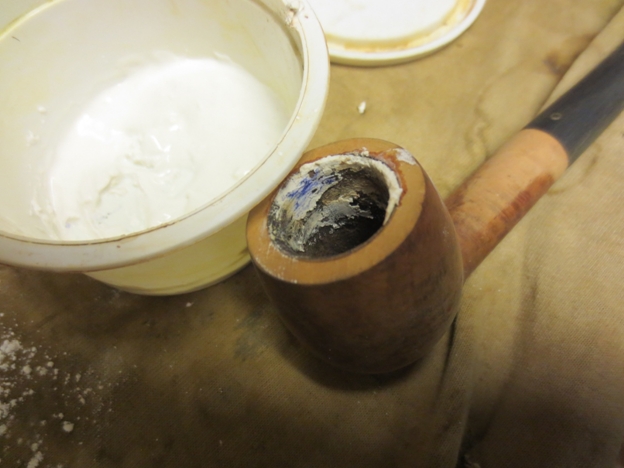
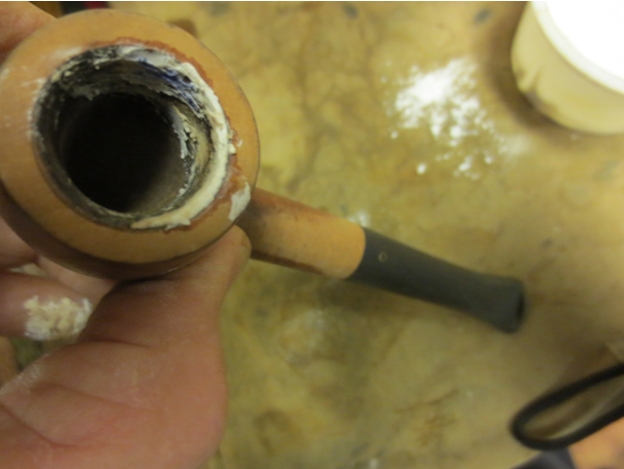
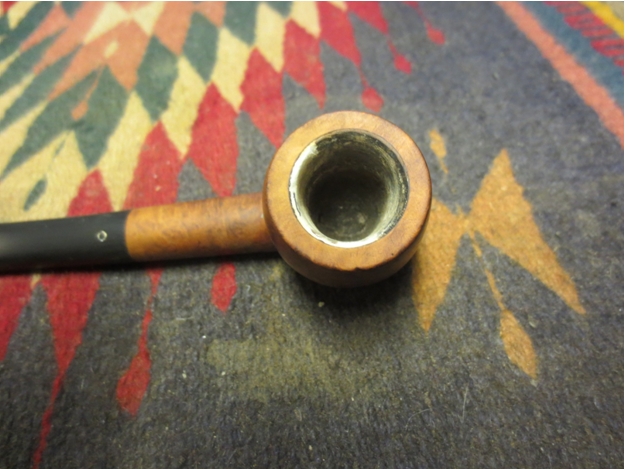
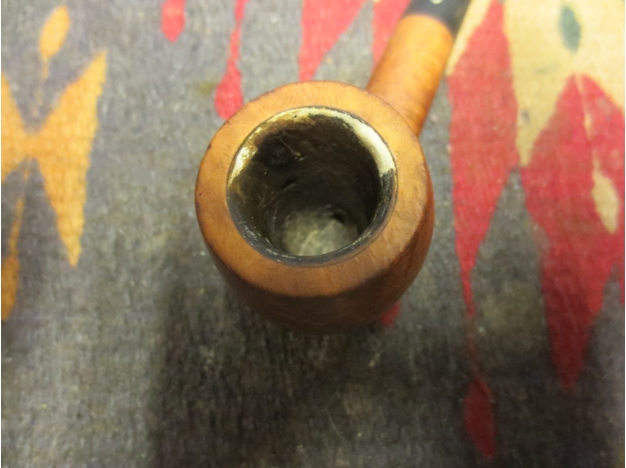
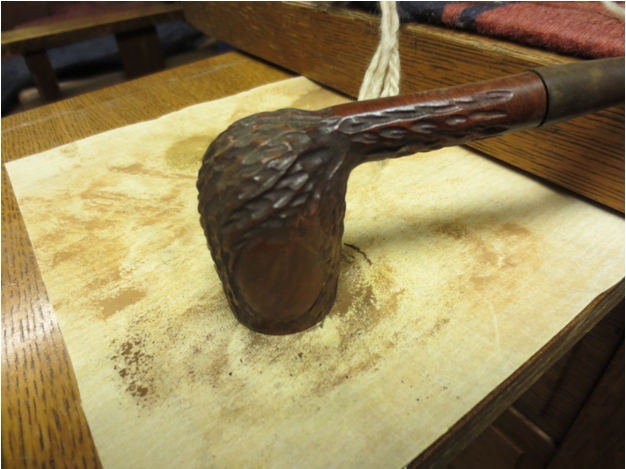
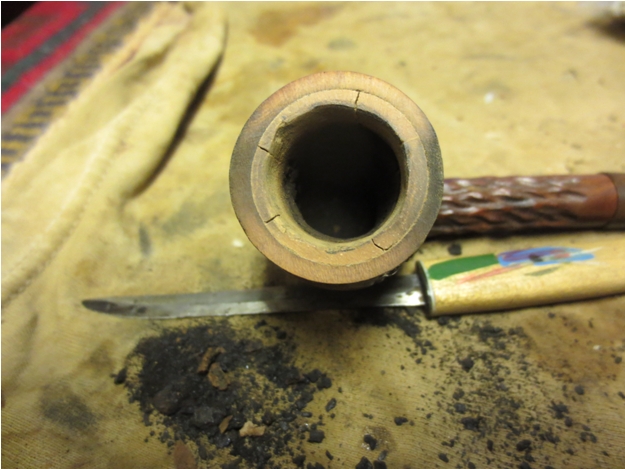
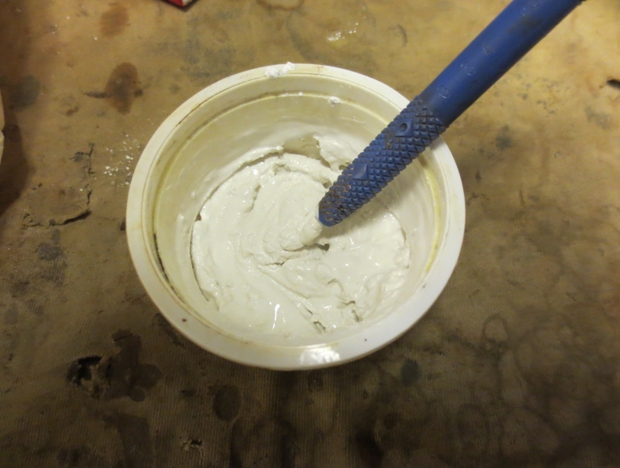
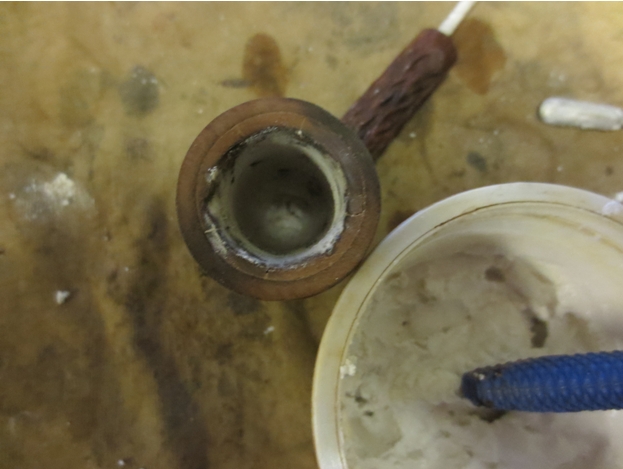
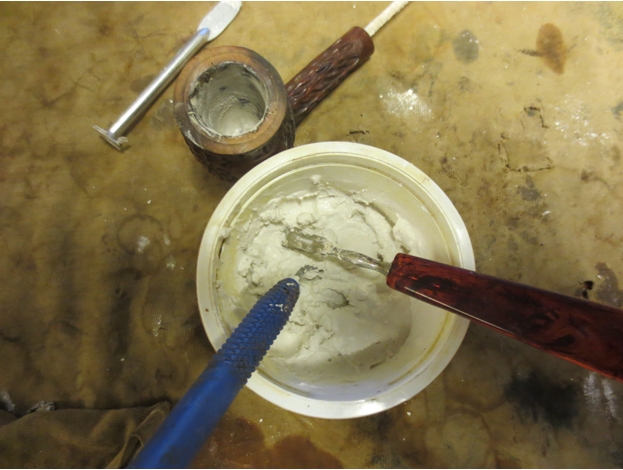
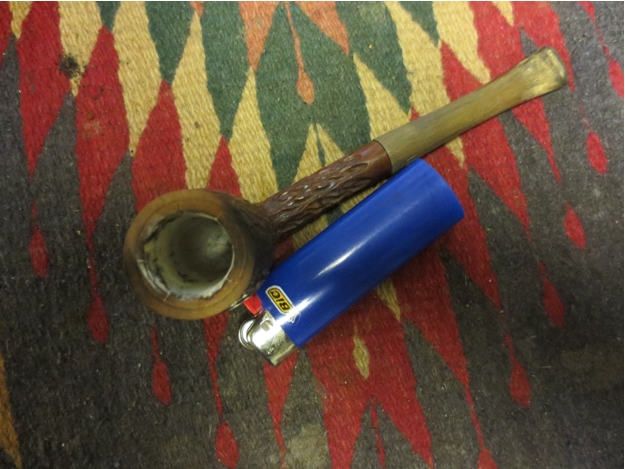
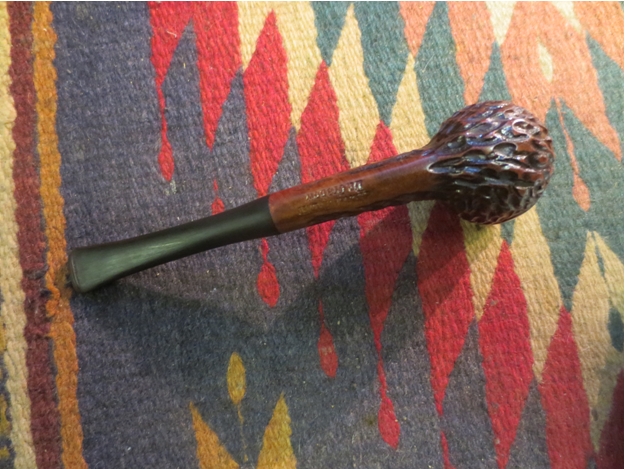
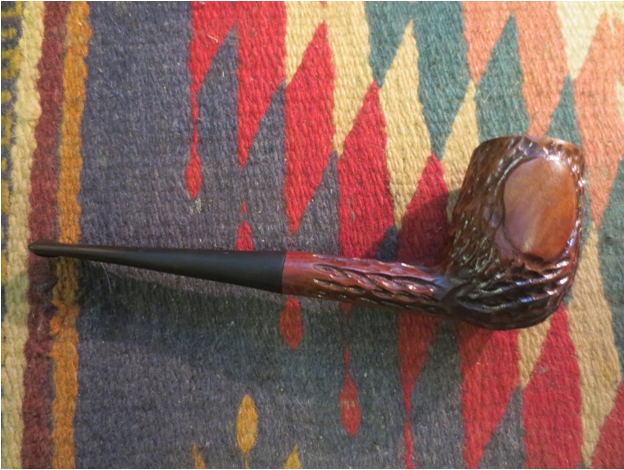
I was gifted two old pipe bowls that would be great pieces to continue the experiment on. They both had large fills on the bowl. The first was a pot shaped piece with relatively good grain all the way around the bowl. On the right side of the bowl was a large fill. I took several photos of it to try to capture it. It was a tan coloured material and stuck out like a sore spot to my eye. The bowl was dirty and covered with a thick coat of varnish. IMG_7786 I reamed the bowl and worked at picking out the fill with a dental pick. Once I had removed the top coat of the fill it was white hard putty that was impermeable. There was no way that the stain would penetrate that putty. I picked the fill until I got down to the bottom of the fill. I cleaned up the area with acetone on a cotton pad. Once I had the hole completely cleaned of the white putty the briar underneath was raw and unstained.IMG_7788 For this experiment I decided to try something I had not used before. I used a small mixing cup I have in the work cupboard and put in a small mound of briar dust. I collect the briar dust when I top a bowl or from when I am carving a pipe. IMG_7792 I have used briar dust for the repairs for a long time but never tried staining the dust before using it in the patch. This time I used an ear syringe to drop some aniline stain into briar dust. I used Fiebings Dark Brown stain this time. I mixed it with the saw dust to get a dark dust. I mixed it in with a cotton swab and the end of a dental pick to get the stain and saw dust all mixed. The result was the colour of coffee grounds. I will have to try the same mixing with various stains to see if the result will vary at a later date. IMG_7793 TV13 I have wood glue that I regularly use here that is labeled Weldbond. It is the same make up as Elmers Glueall – a white glue that dries clear. It is not a liquid but the same consistency as Elmers. I added the glue to the stained briar dust and stirred it in with the dental pick. The result was a clumping of the briar dust around the glue. I kneaded the briar dust and glue until the clumps were well mixed. When I was finished I had a small soft ball of briar dust and glue that had a paste like consistency. It was not dry but quite tacky or sticky. TV9 TV14 I took a small piece of the doughy ball and pressed it into the hole in the side of the bowl. I pushed it into the crevices of the hole with the dental pick until the hole was solidly filled with the mixture. At this point it was slightly darker than the stain on the bowl.TV7 I cleaned up the new fill with the end of the dental pick and feathered it out to make the surface smooth. I overfilled the repair to allow for shrinkage as the glue mixture dried. TV4 TV5 I let the patch dry overnight. In the morning it was solid and hard to the touch. I tested it with the end of the dental pick to make sure that it was dry all the way through and not just on the surface of the repair. I wiped down the bowl with acetone on a cotton pad avoiding contact with the patch but removing the varnish coat. I also topped the bowl. I wanted to check the rim to see if the hole had any “tentacles” reaching the rim. There was a small pit the size of a pen tip but it was solid so I left it alone. IMG_7796 IMG_7797 I sanded the bowl patch with 220 grit sandpaper to remove the excess and blend it into the bowl surface. The patch was very hard so it took quite a bit of sanding to smooth it out. IMG_7800 IMG_7805 I used 150 grit sandpaper and was finally able to remove the majority of the excess. It left the surface scratched but sanding it with higher grit sandpaper would take care of that. In the photo below the size of the patch is clearly shown. It is still dark brown in colour. IMG_7806 I sanded the bowl with 220 grit sandpaper and then a medium and fine grit sanding sponge. That further cleaned up the repair. IMG_7810 I needed to address the scratches in the briar so I sanded it with 400 grit wet dry sandpaper and then wet sanded with 1500-2400 grit micromesh sanding pads. Once the surface was smooth and polished I used the same dark brown aniline stain on the bowl. I applied the stain and flamed it, repeating the process until I had an even coat on the entire bowl. The stain at that point was too opaque to my liking so I wiped it down with isopropyl alcohol on cotton pads to lighten the finish coat. The patch remained darker than the bowl at this point in the process but it was still dark brown and not black. IMG_7816 I buffed the bowl with red Tripoli and then White Diamond to polish it. The patch still stood out but was dark brown rather than the light tan it had been to begin with. The photo below shows the patch after buffing and polishing. The surface looks to be pitted but is smooth to the touch and is flush with the surface of the briar.photo 2 photo 1 I sanded the bowl further with 4000-12,000 grit micromesh sanding pads. I gave the bowl a finish coat of walnut stain Danish Oil. The photo below shows the patch before buffing and polishing. It is by no means hidden or blended into the finish. IMG_7823 In viewing the end result of the patch using the wood glue, stain and briar dust I have to say that overall experiment failed in terms of making a matching patch. The dark brown stain created a dark brown patch that is hard to blend into the stain. It is more visible than the black patch left behind by the mix of superglue and briar dust. I want to further experiment with lighter stains and wood glue and see if I can make the patch lighter in colour. That might facilitate blending it into the finish better.

An Elegant New Look for a Forester Pinecrest Chubby Apple


I worked on this chubby apple over the weekend. It was in rough shape when I started the stem had a bite through on the end and was missing a large chunk. It was badly oxidized and dirty. The pipe itself had many fills in the bottom side and small sandpit fills all over the bowl. The rim was dirty and damaged on the inner and outer edge. There were missing pieces from it as well. The finish was absolutely gone but it has some really nice looking grain on it and that is why I picked it up – that and it was a chubby apple which is one of my favourite shapes. The stamping on the left side is FORESTER over Made in England and on the right side reads PINECREST. There was a stinger in the tenon that was tarry and stained. I went digging on the web and could find nothing on the brand of pipe. PipePhil had photos and a question mark as to the maker. No one showed any information as to the manufacturer so this one will remain a mystery.

I have to apologize for the lack of detailed photos of the pipe before and during the initial stages of the refurb. I had some great photos of the pipe before and during these stages but sadly they are no longer available to me. During the course of last evening my dog died in our arms and somehow in the fog of that I erased the majority of the photos of this old timer. So… you will have to take my word for the work that needed to be done.

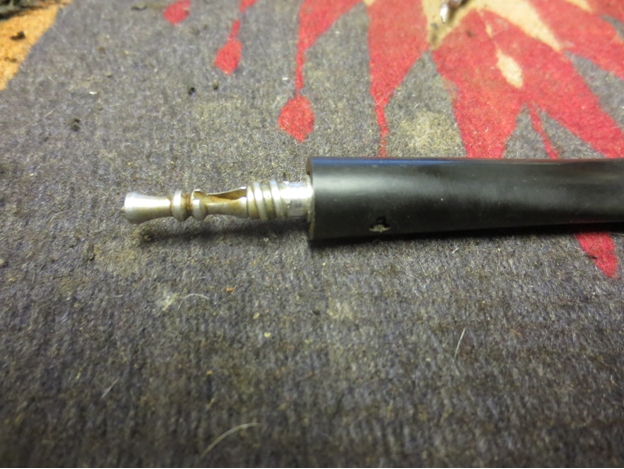
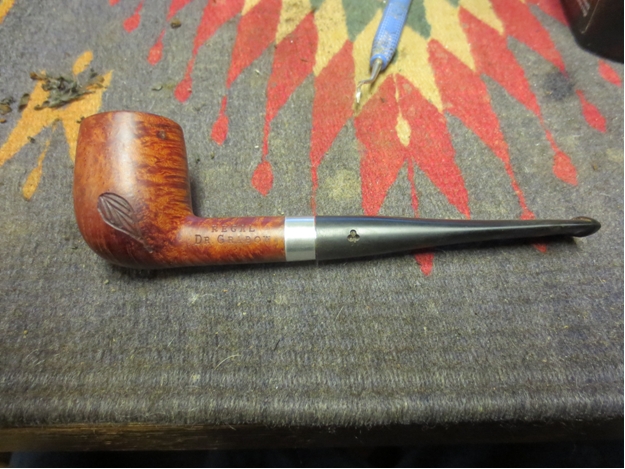
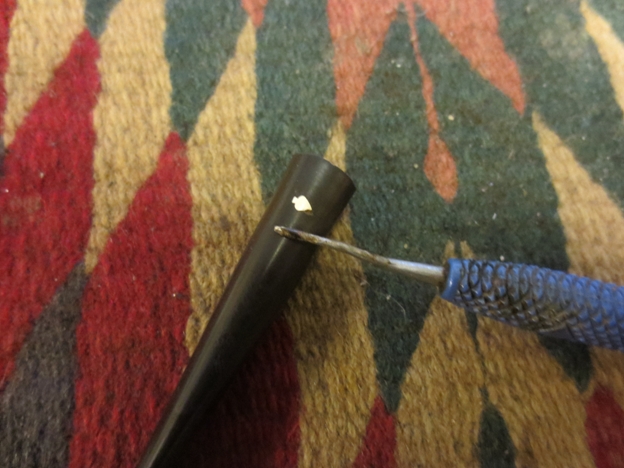
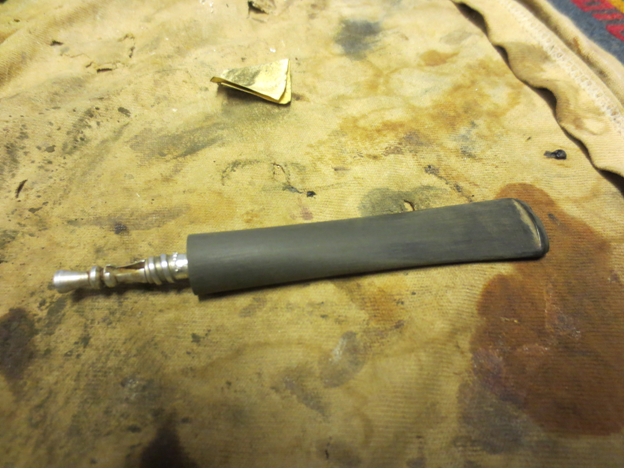
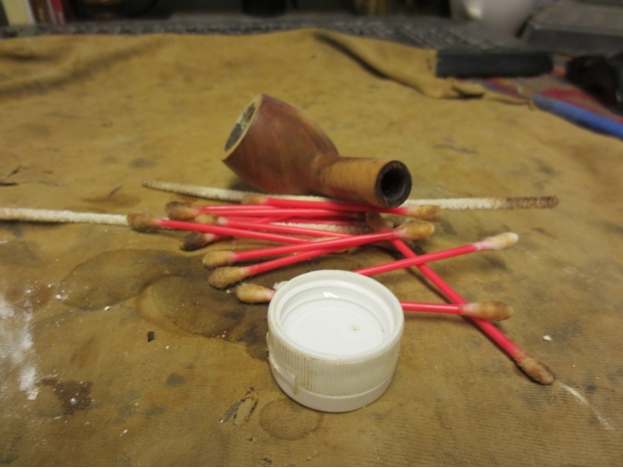
In the two photos below I show the bowl after I had fit the new stem. I had turned the tenon on my PIMO Tenon Turning Tool and then hand fit it. I had to shorten the tenon as I wanted to be able to use the stinger on the pipe. I sanded the stem and the shank to get a good fit against the shank. I wiped the bowl down with acetone on cotton pads to remove the finish that remained. I reamed the bowl with a PipNet reamer and then hand shaped the inner and outer edge of the rim with a folded piece of 220 grit sandpaper and then medium and fine grit sanding sponges. IMG_7748 IMG_7749 I drilled out the tenon to receive the stinger apparatus and glued it in place with metal and wood glue. With heat it is removable. In the photo below you can see the old stem and the new one. I added about ½ inch of length to the new stem and made the taper more defined. I liked the added length to the stem and thought it would look good with the bowl. IMG_7753 I cleaned out the shank with cotton swabs, pipe cleaners and isopropyl alcohol. I cleaned it until the swabs came out clean. The pile of pipe cleaners and swabs shown in the photo is about half the number it took to clean this old timer. Normally I would have used a retort but I needed the therapeutic repetitiveness after we buried our old spaniel. IMG_7754 IMG_7755 I inserted the stem part way into the shank so I had something to hold onto while I stained it. I used a dark brown aniline stain and stained, flamed and repeated the process until the coverage was sufficient. I then wiped the bowl down with isopropyl alcohol on cotton pads to help the grain stand out through the stain. IMG_7756 IMG_7757 I sanded the stem with fine grit sanding sponges and then with the usual array of micromesh pads. I wet sanded with 1500-2400 grit pads and then dry sanded with 3200-12,000 grit pads. I rubbed the stem down with Obsidian Oil between each set of three pads. I also sanded the bowl and shank with the higher grades of micromesh from 6000-12,000 grit. IMG_7760 IMG_7761 IMG_7768 Once the bowl was dry I used a black permanent marker and used it to darken the fills – spots and larger ones on the bowl sides and bottom. I then gave the bowl a coat of Danish Oil with a walnut stain in it. I know that using this product bothers some folks but I like the way it seals the black touch ups on the fills and helps to mask them and blend them into the finish. I used a wine cork in a candle holder to hold the bowl until it dried. The grain on this old pipe really pops now and the birdseye and cross grain look quite stunning with the top coat. IMG_7763 IMG_7764 IMG_7765 When the pipe dried I gave it a light buff with White Diamond and buffed the stem more rigorously. I gave the entire pipe a buff with multiple coats of carnauba wax and buffed with a soft flannel buff between coats. The finished pipe is shown in the next series of photos below. The new stain and stem give it an attractive and rather elegant look. IMG_7776 IMG_7777 IMG_7778 IMG_7779

Restoring a Tracy Mincer “The Doodler”


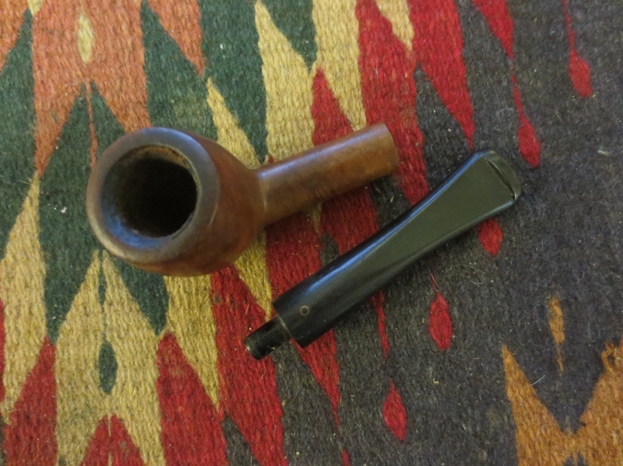
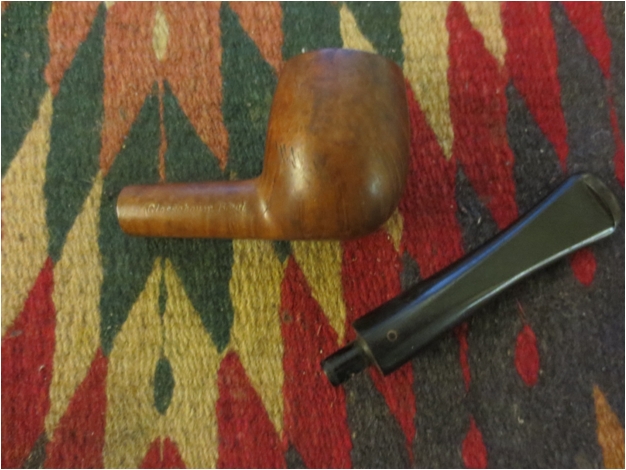
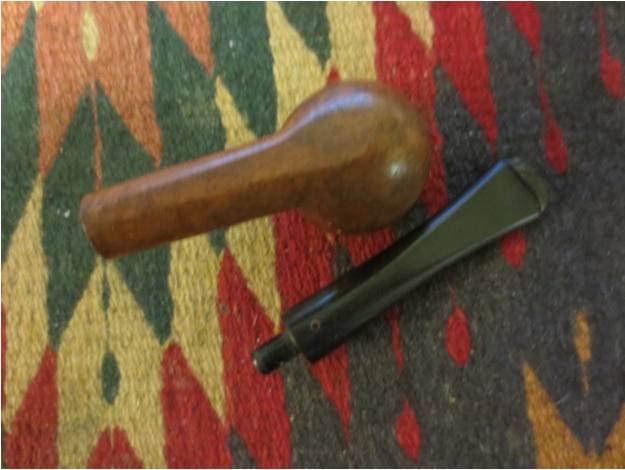
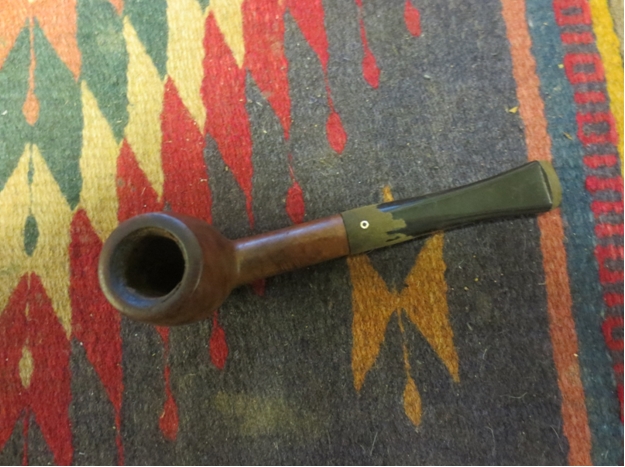
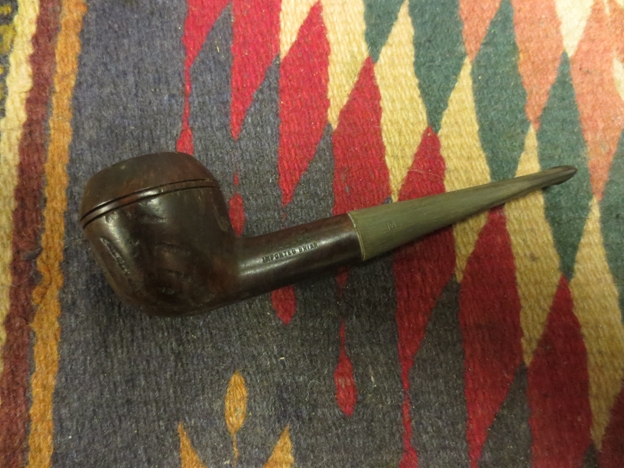
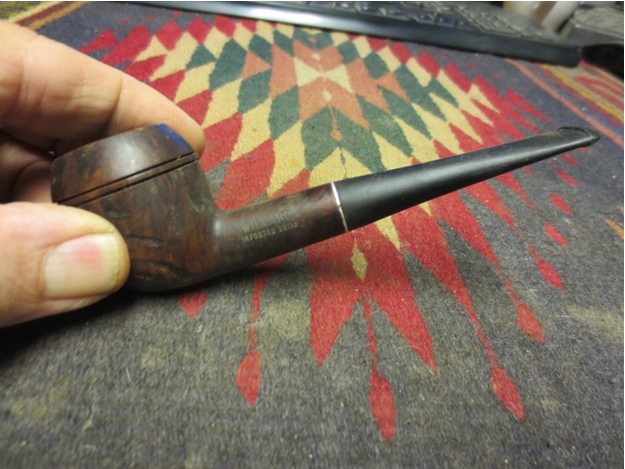
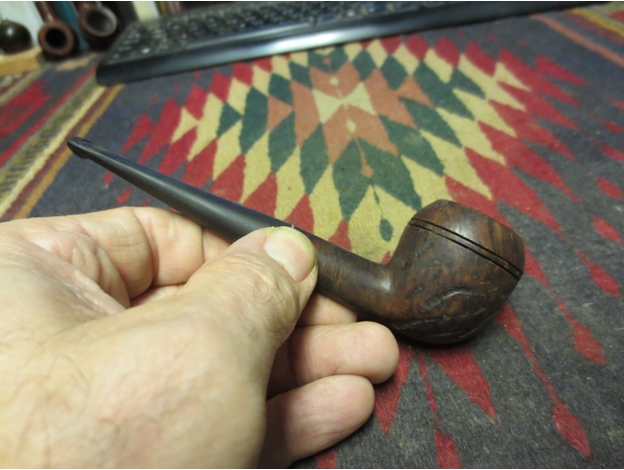
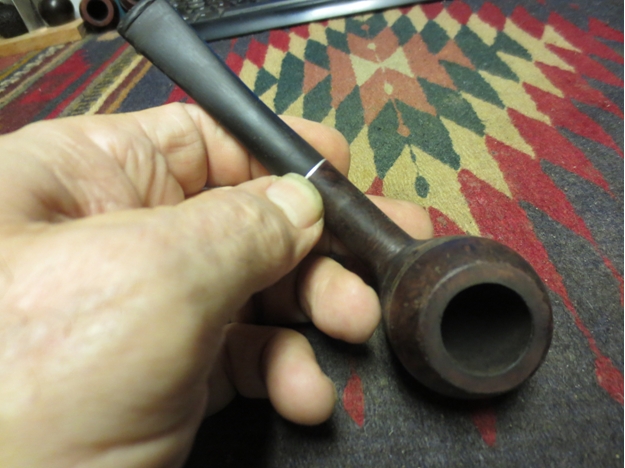
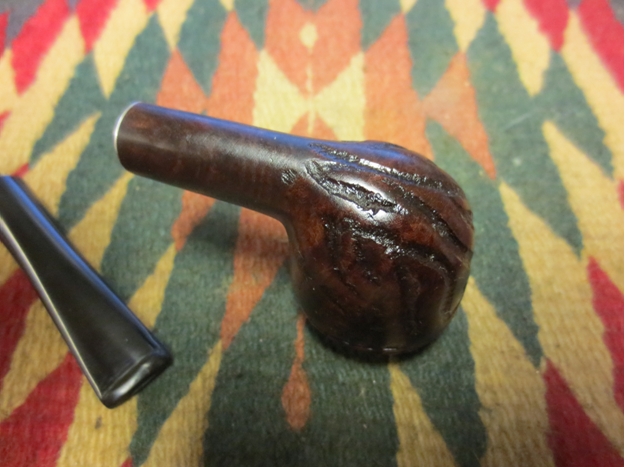
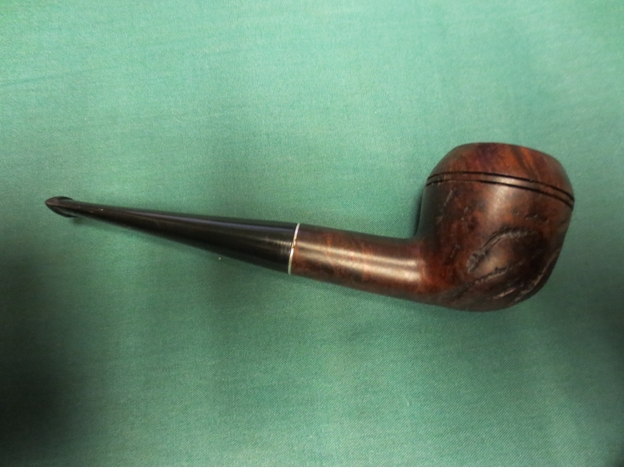
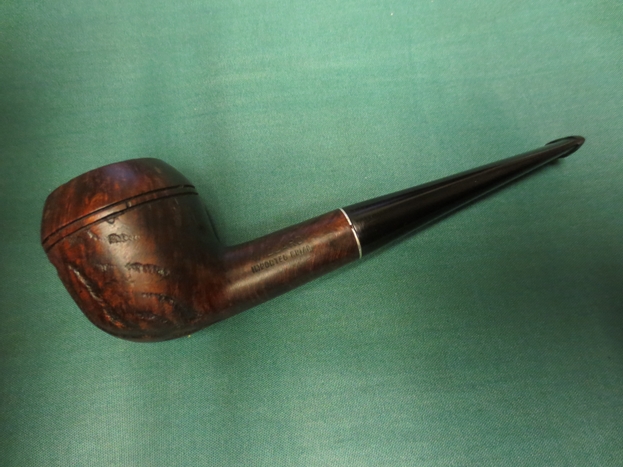
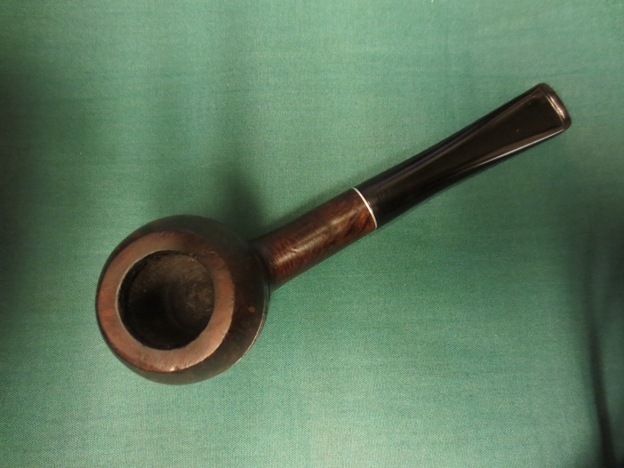
A pipe I picked up on a recent trip to La Conner, Washington was a billiard that has the drilled flutes from the top to the bowl of the bowl all the way around. It is stamped “The Doodler” over Imported Briar on the left side of the shank. On the right side of the bowl is a burn mark that covered two of the rings. The finish was in good shape. The outer edge of the rim had cuts and broken edges from hitting the bowl to empty it. On the back side of the bowl one of the rings have two notches out of the lower edges. The inside rings of the bowl were unstained. Usually on a Doodler there is a scoring ring around the top of the rim. On this rim that was missing on most of the rim. The bowl had a poorly developed cake and the shank was dirty. The rustication on the bottom of the bowl was rough in the grooves and smooth on the surface. The stem was original and had a stepped down tenon. There was also some oxidation on the stem and tooth chatter on both sides near the button.
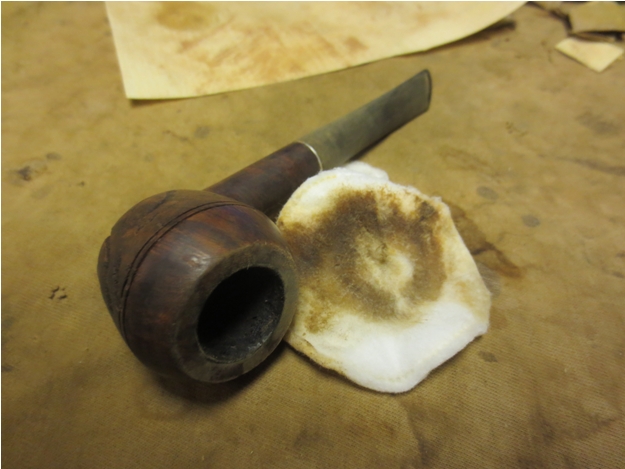
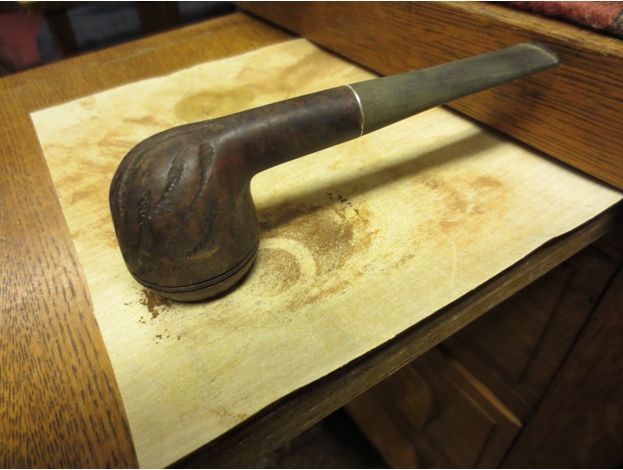
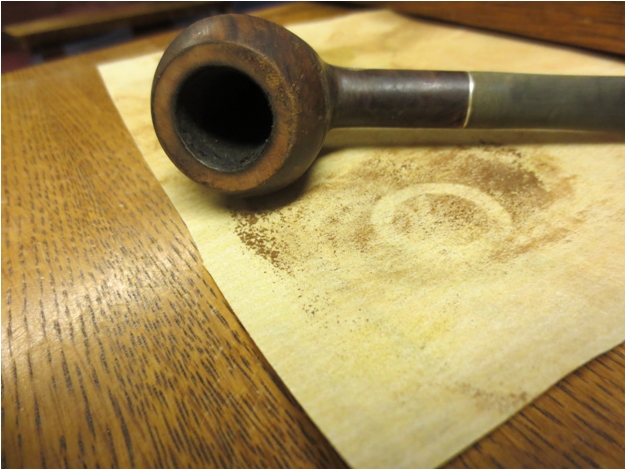
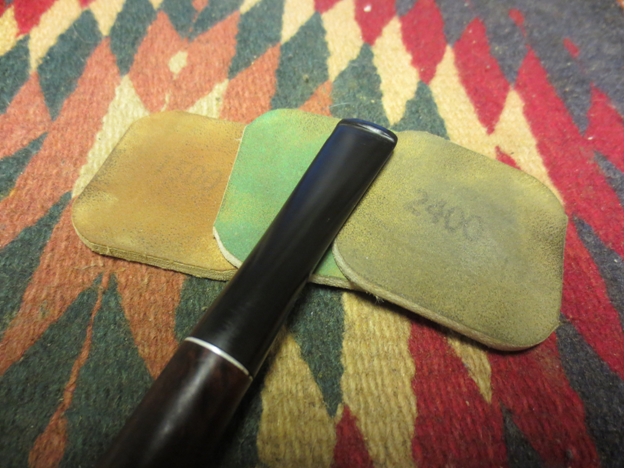
IMG_7692 IMG_7693 IMG_7694 IMG_7699 I wiped down the bowl with acetone on cotton pads to remove the finish. It took some scrubbing to remove the finish and the buildup on the rim. Once the finish was removed the burn on the right side was very clear. It fortunately was not too deep in the briar and would be less problematic to minimize when I refinished the bowl. IMG_7700 IMG_7701 IMG_7702 IMG_7703 I reamed the bowl with a PipNet reamer. I used the third cutting head and took back the cake to the bare briar. I had to also use the second head to remove the cake from the bottom of the bowl. IMG_7704 I cleaned out the shank and the bowl with isopropyl alcohol and cotton swabs and pipe cleaners. I used many of each and was able to remove much of the tars and oils in the shank. IMG_7706 The pipe cleaners and cotton swabs came out very dirty so I decided to set up a retort and boil out the shank and airways with hot alcohol. The alcohol in the test tube was heated with the votive candle and the boiling sent the hot alcohol into the shank. I had plugged the bowl with a cotton pad. I repeated the process until the alcohol came out clean. IMG_7707 IMG_7708 IMG_7709 Once I removed the retort I cleaned out the interior of the stem and shank with pipe cleaners and cotton swabs and more isopropyl. The remainder of the oils came out with this cleaning. I sanded the bowl with a medium and fine grit sanding sponge to smooth out the damage to the rim and the burn area. I followed that with 1500-2400 grit micromesh sanding pads. After sanding I wiped it down with isopropyl alcohol on a cotton pad. I stained the bowl and shank with a dark brown aniline stain thinned 2:1 with isopropyl. I flamed the stain and then repeated the process until the coverage was even. IMG_7711 IMG_7712 IMG_7713 IMG_7714 I sanded the stem with 220 grit sandpaper and then with a medium and a fine grit sanding sponge. I followed that by sanding it with micromesh sanding pads. I wet sanded with 1500-2400 grit pads and dry sanded with 3200-12,000 grit pads. Between each set of three pads I rubbed the stem down with Obsidian Oil. IMG_7715 IMG_7716 IMG_7718 I buffed the bowl and stem with White Diamond and then gave the bowl and stem multiple coats of carnauba wax to shine and protect. I buffed it with soft flannel buffing pads to give it a final shine. The finished pipe is shown below. IMG_7720 IMG_7726 IMG_7721 IMG_7727 It is now joins my other Doodler and Holy Smoke Pipes in my pipe cupboard. If it is anything like the others it will smoke very well and stay cool throughout the entire smoke due to the drilling all around the bowl. Noname

Interpreting the Stampings on Brigham Pipes


2007 Brigham logo for webI have received quite a few emails and tweets over the years about how to read the stamping on Brigham pipes. I have hunted for information in the past and almost always had to do more digging than should have been necessary. So yesterday when I was asked again to help with the stamping on a particular pipe I did some digging. The friend who asked said the stamping was 5955 on the underside of the shank. He said he had called Brigham and that they had told him that number was not on their shape charts. He had hit a dead-end. We connect on Twitter so he contacted me and asked for help. I thought I would give it a try to see what I could find out about the pipe. I Googled and read various online pipe forums where information was given. I searched for Brigham shape and numbering charts and old catalogues. Nothing helped. Then I decided to go to the Brigham site itself and go through the layers of information there and see what I could dig up. I was certain the clue to the mystery had to be there. It was just a matter of spending the time reading through the layers of information there to see what could be found.

The Brigham Pipes website is found at http://www.brighampipes.com. I read through a lot of the pages on the site and took notes as I read. I have edited the material I found and organized it here in one place so it would be easy to use in the future. I am thankful to Brigham for putting this information on the site because it certainly made identifying the pipe my friend wrote me about quite simple once I had read through the information on the website and in the various blog posts I found.

I have many older Brigham Pipes in my collection as do many of you who read this blog. The information I have collated will be useful to more people than me and the person who sent me the question. I have collected older Brigham pipes for over 15 years and enjoy smoking them with and without their patented maple filter system. Brigham pipes were made in Canada for nearly 100 years, though I am told that recently they are made in Italy and finished in Canada. There have been variations in the stamping on the pipes over the course of the years and I have most of the variations in my collection. However, the one constant has been has been the 3 digit stamping code on the underside or the side of the shank. The pipes are organized in several groups designated from the 100 series to the 700 series (100, 200, 300, 400, 500, 600, 700). The quality of the pipes goes up as the series numbers rise. The 100 series pipes are entry-level pipes and each level above that increases in quality and price. The 700 series is made of the highest quality of briar and workmanship.

Using this information I took the number that was given to me – 5955 stamped on the bottom of the pipe’s shank – as my starting place. The first number in the stamp denoted the series (1 to 7). Thus the pipe was a 500 series pipe. The next 2 numbers indicated the shape number which in this case was 95. I am assuming that is the shape number for the Zulu or yachtsman shape of this pipe. Summarizing what I had learned so far – I now knew what the first three digits in the stamping meant. The “595” indicated a 500 series pipe in shape #95. Reading further I found that a letter could follow the numbers in the stamp – particularly on older pipes. The letter indicated the size of the bowl. Thus the letter S = small, M = medium, ML = medium/large, L = large. I wrote the questioner and asked him to magnify the stamping on his pipe. Sure enough, the pipe was a 595S – the final stamp was the letter S, making this pipe a 500 series Zulu with a Small bowl. Mystery solved on this one. Armed with this information I went through my older Brigham pipes and was able to interpret all of the stamping.

I knew from previous research and refurbishing these pipes that Brigham utilized a dot system to denote the pipe series. Brass pins were inserted on the side or top of the stem in dot patterns and these were what I looked for to ascertain that I had an original stem on a Brigham pipe that I had found in a thrift shop, antique mall or garage sale. In my reading online this time I found out that these were more than mere decorations or emblems in that they were originally used to secure the special Brigham aluminum tenon into the shank of the pipe. Later they came to be used to denote the quality of each pipe. This also accounts for the use of the term “dot” instead of “series” among all of the Brigham collectors that I have met. From the website and web forums I found the following information regarding the “dot” grading system and created the comparison with the series numbers in the chart below. (This information is correct to the best of my knowledge though it is certainly open to correction and adjustment.)

There were originally 8 separate grades noted by the number and arrangement of the brass dots. These are arranged in the list starting with the lowest and ending with the highest grade. I have put the series number next to the dot information in the list below. brigham chart More reading led me to the next information I have edited and collated from the Brigham website. It is very helpful in terms of the stamping of the Brigham logo and patent information. It gave some direction for dating pipes to a certain era. Many of the pipes that I have in my collection that use the dots also have the Brigham patent number stamped on the shank, under or next to the name. It reads CAN PAT 372982. This number was stamped beside or under a cursive “Brigham” logo. This signature was thinner than the signature on the pipes found today. During the transition from this thin signature and patent stamping to the new logo adopted in the late 70s there were at least two variations of a cursive “Brigham” signature stamped into the pipes including two horizontally type-set fonts. I found out that the patent number appeared on pipes up to approximately 1980. After that date the new logo which is similar to the modern stamping though with the maple leaf, was used exclusively. All of my patent number pipes thus were pre-1980.

One interesting fact I found out was that there were several other series of pipes made by Brigham between the 60s and 80s including a selection of handmade ones. These handmade pipes were known as the Valhalla and Norseman Series. There were others as well but I could not find identifying names on the site or through Google searching. These handmade pipes were typically much larger than the 100-600 series pipes and had freehand bowls in a Danish style. They incorporated the patented Brigham filter system. The finishes and stamping on the pipes were unique to the lines. For example the Norseman line of pipes were fully rusticated and marked with a “W” followed by a shape number. There were 3 dots on the stem that were horizontally aligned with a larger dot in the center. The Valhalla pipes were smooth or partially rusticated in the same shape as the Norseman pipes and had the same dot pattern.

In approximately 1980 the 7-grade dot system was started. The reason given for the new system was that it simplified the pinning of pipes and made them more easily identified. When the system made its appearance the specific names for each grade stopped being used. The vertical and horizontal 3-dot pinning pattern was also no longer used. In higher series, a small number of interesting experimental shapes were carved and these had an “S” stamped beside or near the shape number. I am wondering if the 598S that I mentioned above came from this time period and the S indicates not the bowl size as a small but the experimental shape. I am prone to thinking that this particular pipe does not fit this category because it is a standard Zulu shape with no intricate of special carving. Brigham did not keep a catalogue of these shapes so they are unique and represent a time of experimentation by Brigham.

Hopefully this information will be an aid to others who are seeking to understand the stamping system on Brigham pipes. The numbers unlock the series and shape of the pipe and the Brigham script gives an approximate date for the pipes whether before the transition, during or after. This is a part of the hobby that I truly enjoy – hunting down information on a brand and trying to understand the background on a pipe.

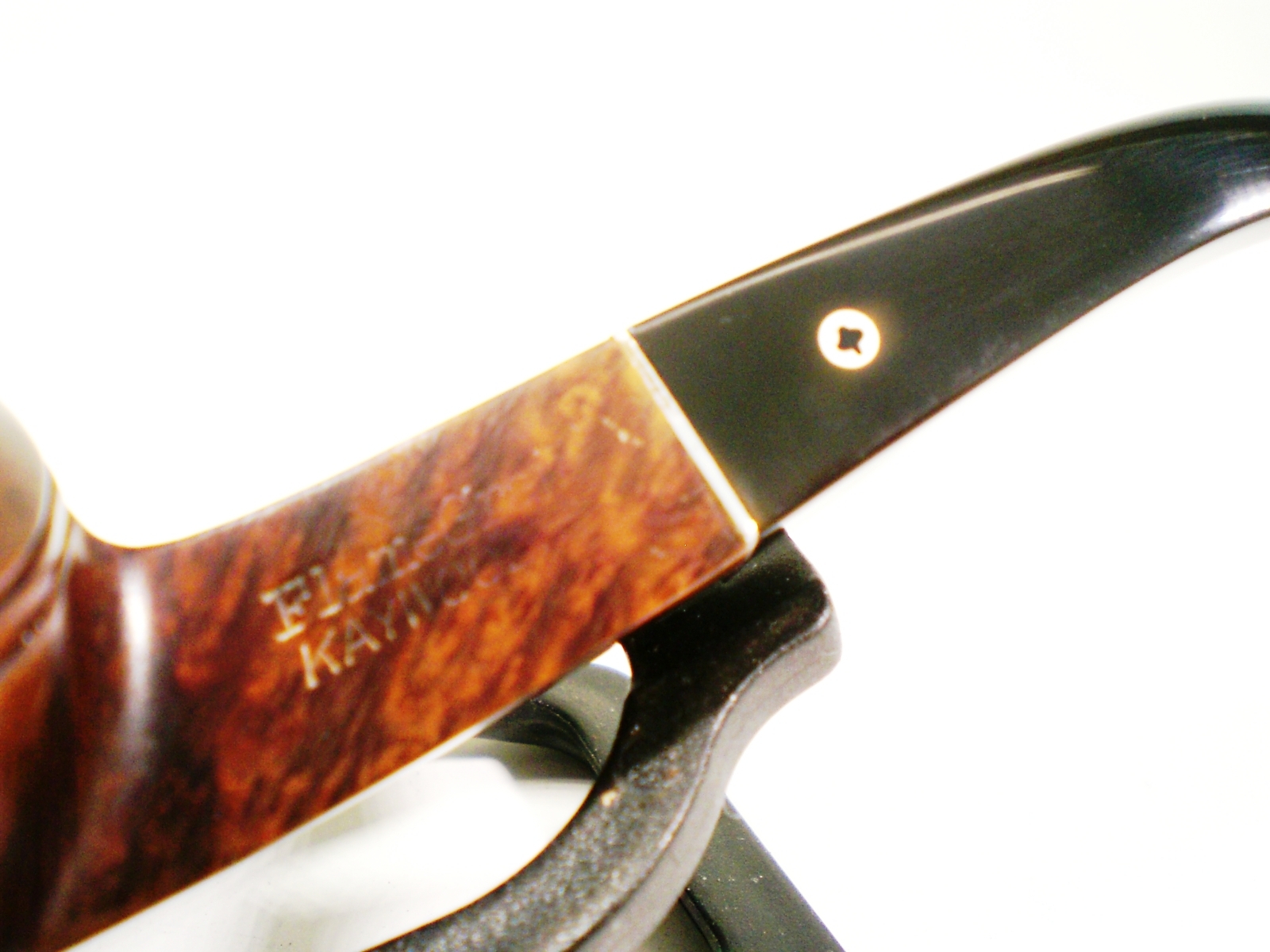
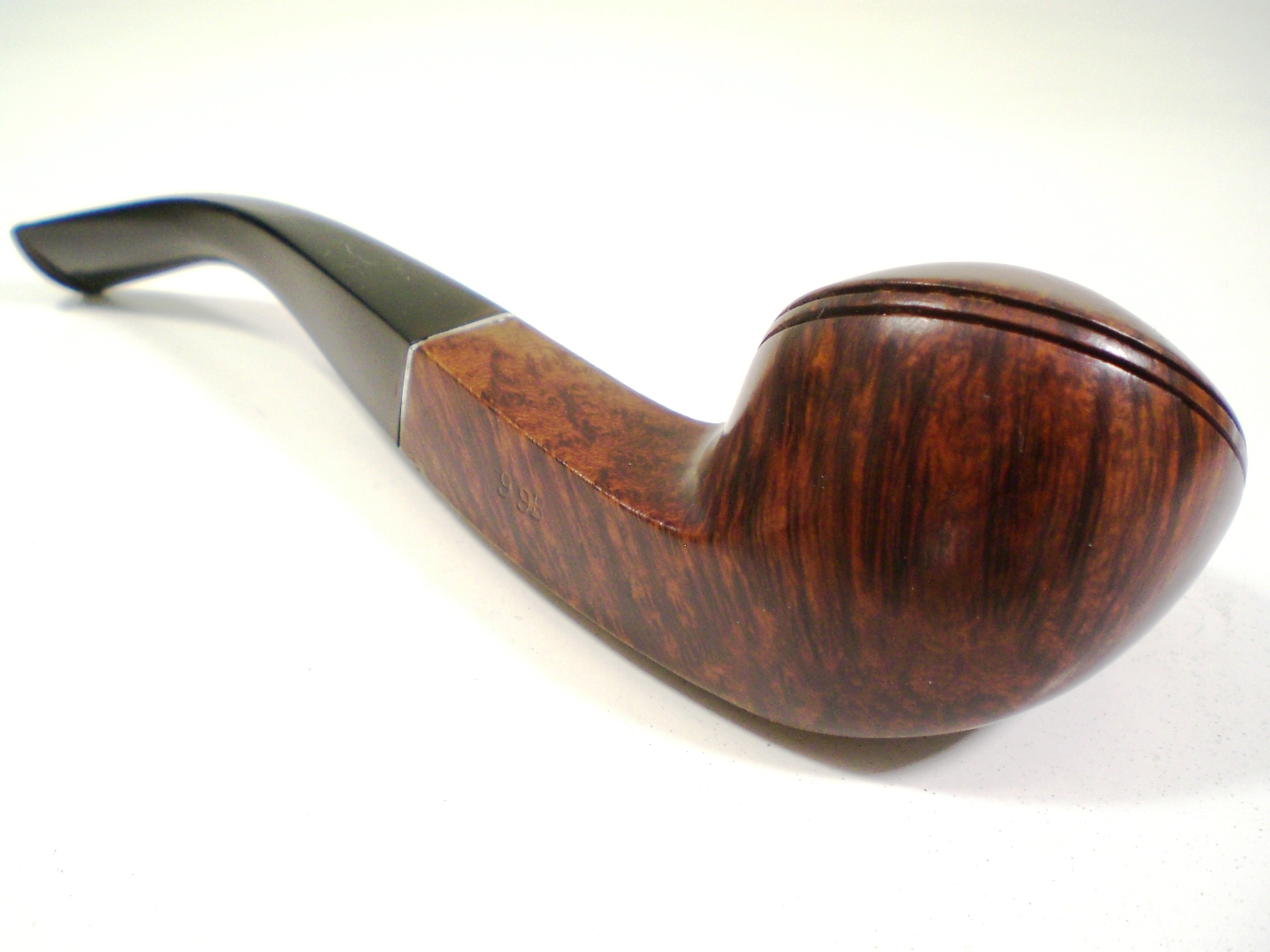
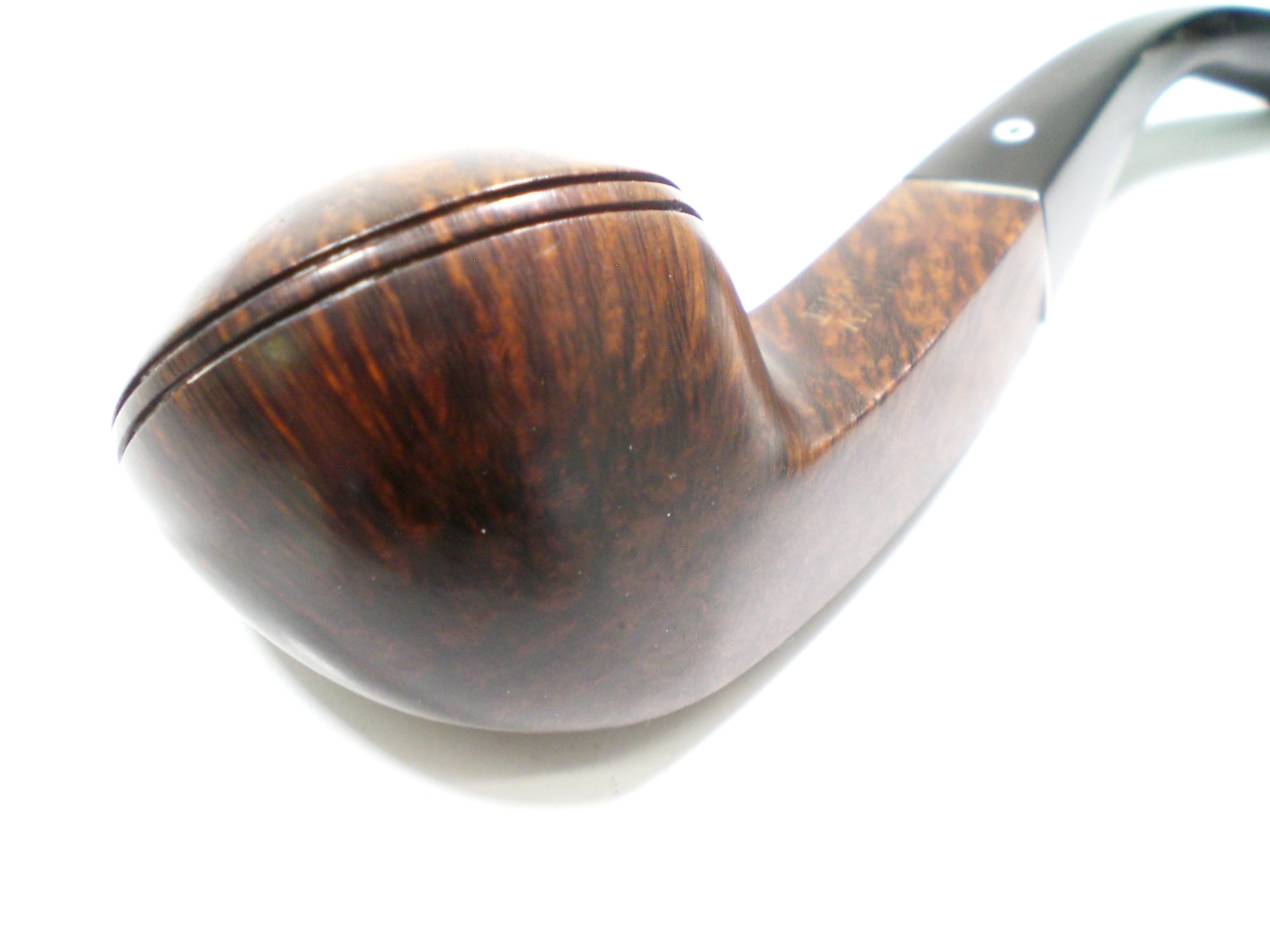
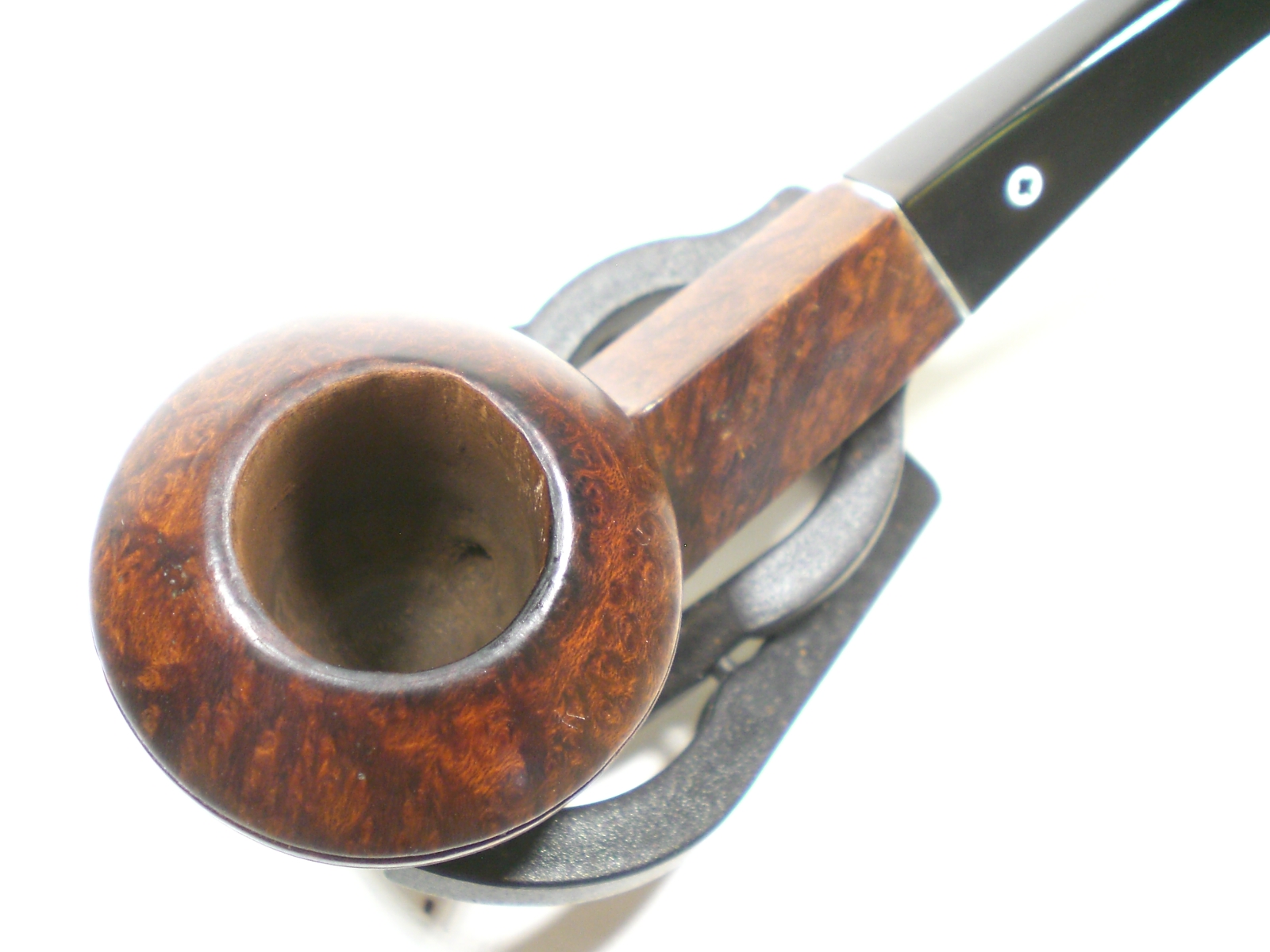
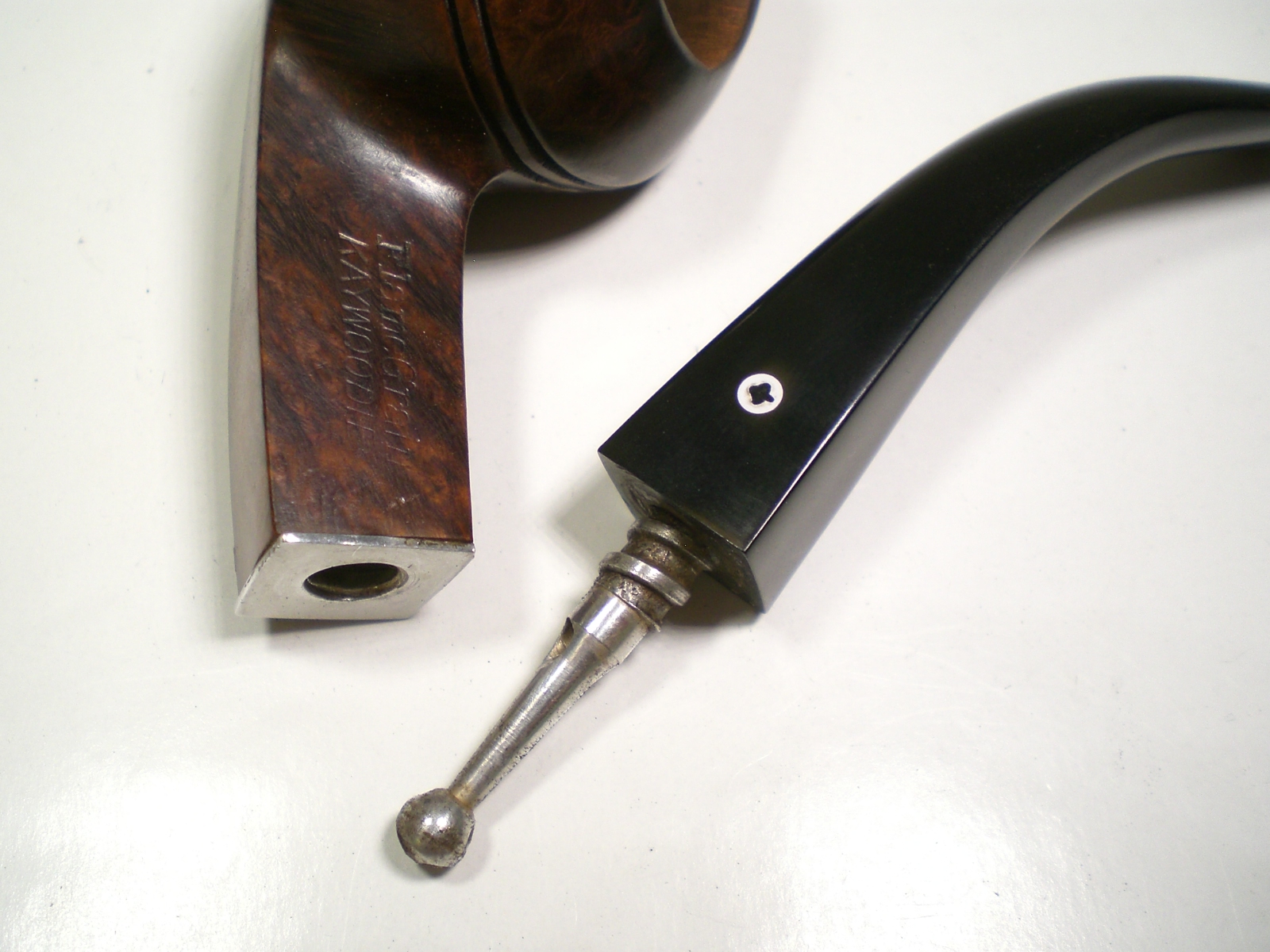
Kaywoodie Supergrain 13B (3 Hole Stinger)


Blog by Al Jones

This pipe was a wonderful gift from member “irish: on the PipesMagazine forums. He has an impressive collection of Kaywoodies that spans the decades. His collection can be viewed here:
http://pipesmagazine.com/forums/topic/kaywoodie-collection-pictures

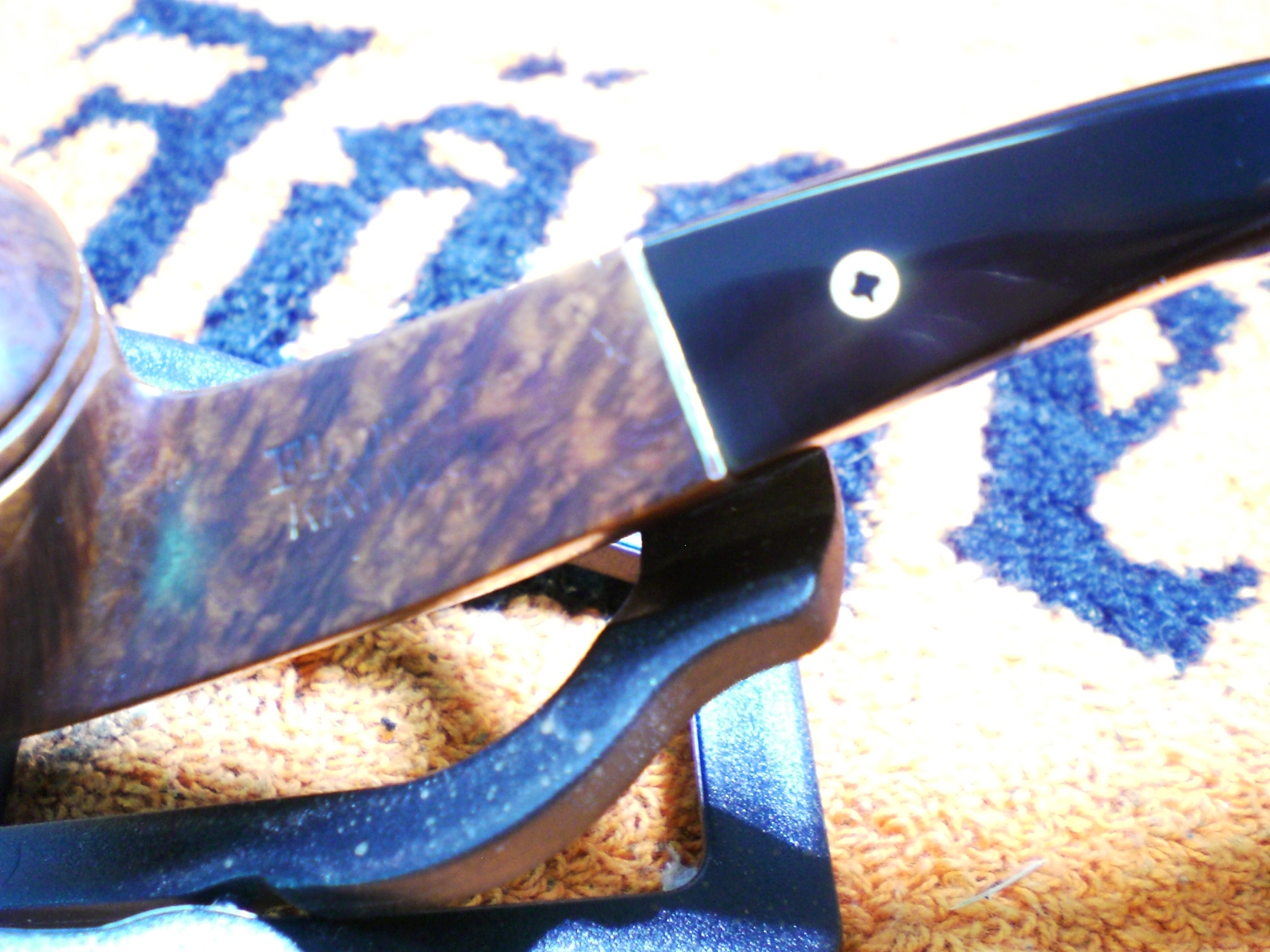
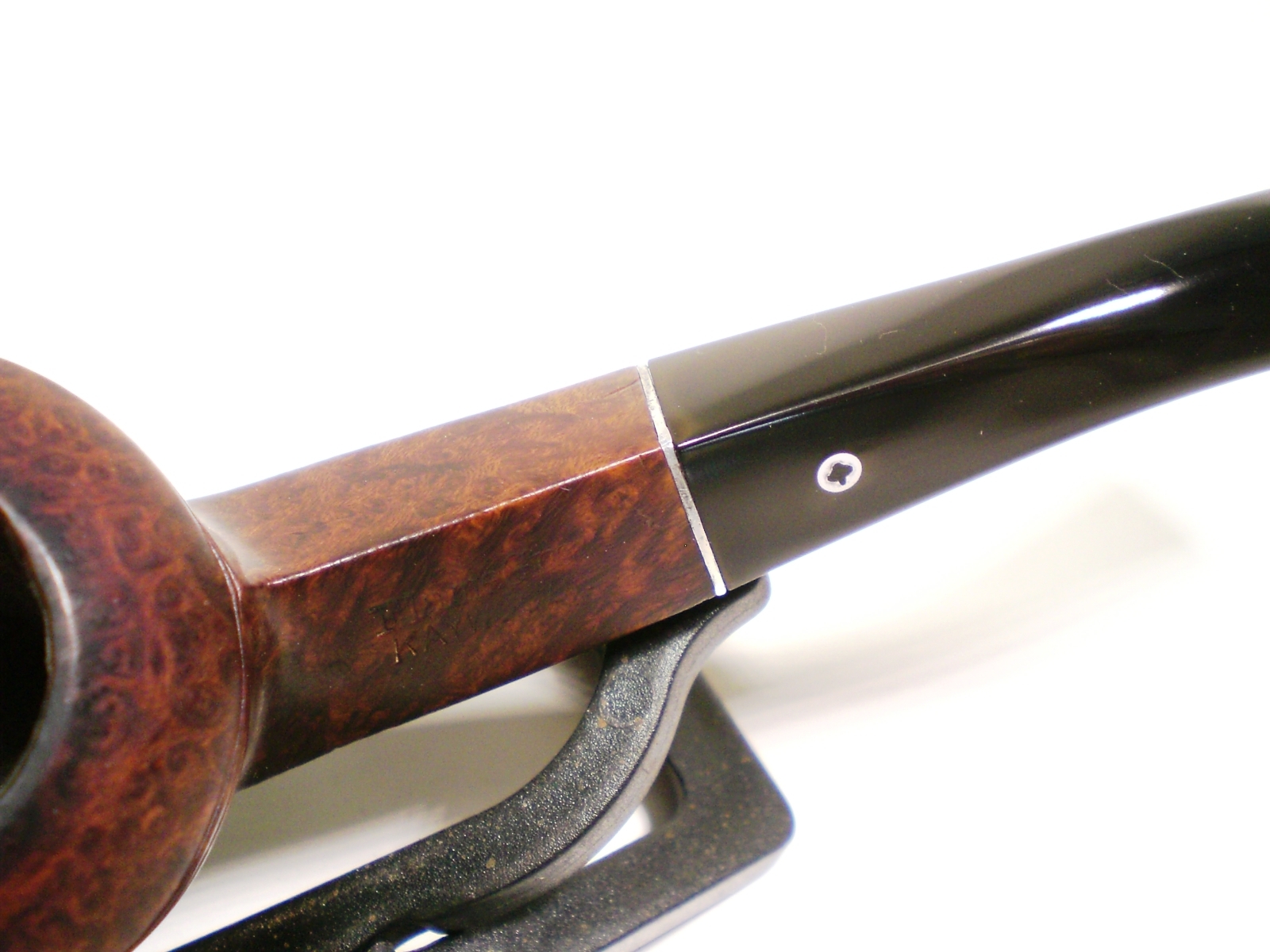
It wasn’t much of a restoration, as the pipe was in immaculate condition. I soaked the bowl in alcohol and sea salt, but really didn’t need that effort. I touched up the stem a bit with 1000>1500>2000 grit paper, than the 8000 and 12000 grades of micromesh. I gave the bowl a light buff with White Diamond and then a few coats of carnuba wax.

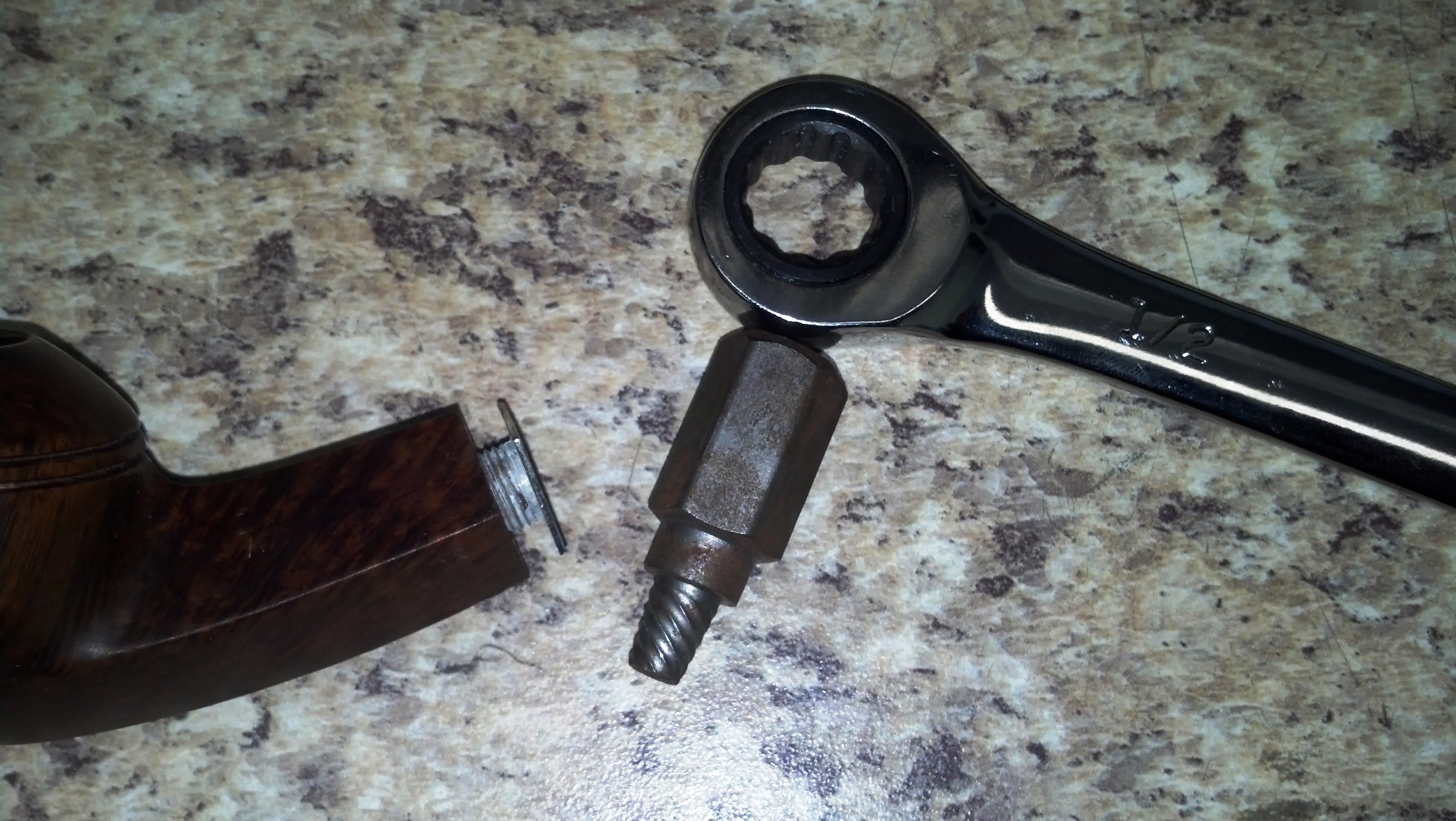
The pipe is a 3-hole stinger pipe and it smokes equally well as my older 4-hole stinger Supergrain. I enjoy flakes in these pipes as the stinger makes me sip a little slower than usual. Kaywoodie switched to the three hole stinger sometime in the 1950’s, but I don’t know how long they were used. I did learn that the small groove in the base of the stinger is for a rubber o-ring. The pipe seems to smoke quite well without it, but I’ll pick one up at my local hardware store.

The 13B is a beautiful streamlined shape and perhaps one of the most beautiful Author shapes made.

Kaywoodie_13B_Gallery

Kaywoodie_13B_Gallery (2)

Kaywoodie_13B_Gallery (3)

Kaywoodie_13B_Gallery (1)

A Painful Stem Refitting – a Schowa Briar Selected Billiard


Yet another gift bowl made its way to the work table today. It is stamped Schowa Briar Selected. The brand was one I had never heard of and never seen before. There is little background information on the brand on the internet. What I could find came from Pipephil’s website http://www.pipephil.eu/logos/en/logo-s4.html There I read that the brand belongs to the Schum family who were established in Bad König (Odenwald, Hesse), Germany. The name was a combination of the Schum name and Odenwald. The factory crafted briar and porcelain pipes (Bavarian style). I have no idea on the date or time of the brand. I did find some porcelain examples of their work from the mid to late 1970’s and some nice briar pipes with no dates. They seem to also have carved figurals in briar. That was the extent of information I could find.

This bowl is on the small side with the stamping on the left side of the shank. It was pretty clean internally. The finish was gone and what remained was bare briar. There were several nicks in the sides of the bowl. The inner edge of the rim has some burn damage and there was a burn mark on the front middle top of the rim and inner edge. The back outer edge of the rim had a large divot out of it. The shank was pinched at the end and was out of round. The left side was significantly thinner than the right side. Restemming it was going to be a bit of a challenge in terms of getting a good clean/smooth fit of the shank and stem.
IMG_7619 IMG_7620 IMG_7622 IMG_7623 I found a stem in my stem can that would work with this bowl and sanded the tenon so that it would fit in the shank. The diameter of the stem was larger than the shank and the out of round and pinched shank was going to make getting a proper fit an issue. IMG_7624 IMG_7625 IMG_7626 IMG_7627 IMG_7628 I took down the excess material with a Dremel and sanding drum and then hand sanded with 220 grit sandpaper to smooth things out. I could easily sand about ¾ of the shank to get a smooth fit but the left side stamping made working on that side a challenge. IMG_7630 IMG_7631 IMG_7632 In the photo below of the top of the pipe the indent on the left side is visible. The stem and the shank dip in at the joint and make the fit less than I wanted to achieve. The other three sides were perfect. IMG_7633 I decided to leave the bothersome fit of the stem and work on the bowl. I topped the bowl with my usual method of a sanding board and 220 grit sandpaper to remove the burn damage on the front and the large divot on the back of the rim. I was able to remove most of it with a light topping. The remaining dark spot on the front of the rim would blend in to the stain fairly well. IMG_7634 IMG_7635 I wiped down the bowl with acetone on cotton pads to remove the finish that remain and to prepare the pipe for staining. IMG_7637 IMG_7638 I cleaned out the shank with pipe cleaners, cotton swabs and isopropyl alcohol until the cleaners came out with no colour. IMG_7639 The dip in the left side of the union of the stem and shank bothered me. I took photos of the shank end and the end of the stem to show the degree that they were out of round. These are slightly out of focus but the problem can be seen. The left side of the stem next to the tenon is thinner than the right and the same is true of the shank. The stem is straight and clean edged but the shank is pinched inward. The union of the two would always be slightly pinched on the left. IMG_7640 IMG_7643 I was not happy with the fit but decided to leave it for the moment. I stained the bowl with a dark brown aniline stain (Fiebings) and flamed it. I repeated the process until the coverage was even. I wiped down the bowl and shank with isopropyl alcohol on cotton pads to lighten the stain on the bowl and make it less opaque. (In the first photo the troublesome left side joint really stands out.) IMG_7644 IMG_7645 IMG_7646 The joint bothered me enough that I took out a second stem and fit it in the shank. I sanded the outer diameter until it was a close fit to the shank. This time I did not sand the shank any further and avoided the junction on the left side altogether. I decided to focus on keeping the profile of the stem straight and not worry about the pinched end on the left side of the shank. I knew that it would look slightly oversized on the left when finished but I could live with that look. IMG_7671 IMG_7672 IMG_7673 I washed down the bowl when I was finished with isopropyl alcohol on cotton pads to clean up the sanding dust from the stem and further lighten the look of the stain on the briar. IMG_7674 IMG_7675 Once I had finished with the bowl I worked on the stem. I sanded it with a medium and find grit sanding sponge to clean up the scratches left behind by the sandpaper and then used micromesh sanding pads to polish it. I wet sanded with 1500-3200 grit pads and dry sanded with 3600-12,000 grit pads. I rubbed the stem down with Obsidian Oil between the wet and dry sanding and also between each successive group of three grits of micromesh pads. This time the fit on the shank was better though far from flawless. It would work for me though. One day I may well end up banding this pipe but not today. IMG_7676 IMG_7677 IMG_7678 I buffed the pipe and stem with White Diamond and then gave it repeated coats of carnauba wax to raise a shine and protect the new finish. The finished pipe is shown below. While the stem fit is far from perfect it is now a serviceable pipe and ready for use. IMG_7682 IMG_7683 IMG_7686 IMG_7689

Ten Steps to Restoring Estate Pipes for Beginners


I have been reading on a variety of pipe refurbishing sites on the web how different refurbishers list the steps they take to clean up an estate pipe. Interestingly enough, there is little variation among them on the steps that they take in the process. I think it is fair to say that regardless of who you read and who you learn the trade from you will pretty much follow the same steps. The one addition that I would make to the list that each restorer has made is really a step previous to the one they list – that is to take the time to thoroughly examine the pipe that you will be working on to make a list of what will need to be done to that particular pipe. What does the rim look like? What about the bowl, does it need reaming? Is the bowl plugged? Is the bowl out of round? What is the finish like? Are there dark areas? Is the briar solid in those areas? What about the finish? What does the stem look like? Those and a multitude of other questions become almost automatic as you turn the pipe over in your hands examining it before beginning. By doing this a lot of surprises can be avoided and an order of work can be established.

That being said, I thought that it would be good to make a basic beginners guide for cleaning up estate pipes and restoring them. This guide will enable newcomers to the art of refurbishing a straightforward and basic step by step process for cleaning up some of those great old estate pipes that they add to their collection. I have learned that it is always wise to be prepared for the worst state/condition you can imagine (and even worse) a pipe might be found in and then when you work on it you won’t be surprised by what you find when you begin to work on your newly found treasure. Remember, there are very few issues in an old pipe that cannot be addressed one way or another. When in doubt ask questions.

images I have listed my own supply list for refurbishing in another blog post that can be read at the following link: https://rebornpipes.com/2012/05/31/list-of-supplies-for-refurbishing/ Have a look at that list to gather the basic supplies you will need to do the clean up. Before I get to the basic techniques, I will include a short list of equipment and materials for the job. This short list is designed for the refurbishing beginner who does not have access to a lot of tools. As you get more involved in the art you will want to add more of the equipment I list in the extended list in the above blog post. But here are the essentials:

* Pipe Reamer – to me the best is the PipNet reamer – a T handle and four insertable heads.
* Isopropyl Alcohol, a minimum 91% though the higher percentage is better. I generally look for 99%
* Murphy’s Oil Soap or some other Fine Wood Soap (use undiluted)
* OxyClean powder
* Tooth brush
* Pipe cleaners – fluffy, thin, tapered, bristle
* Cotton swabs or Qtips
* Cotton Balls – I buy them in huge bags at the Dollar Store
* Cotton Make-up removal pads
* 220, 400 and 600 grit sandpaper
* micromesh sanding pads 1500-12,000 grit (12 pads in all available in hobby stores)
* Halcyon II and Paragon Wax available online
*A shoe brush
* Cotton Cloths for polishing

I know that many of you who have been doing this for a while – old timers in the refurbishing game will have all kinds of things you will want to add to the above list. You will no doubt have things you will want to add to my ten steps but truly, this list will give a person all they need to refurbish an estate and polish it by hand. As they get deeper into the hobby of course there will be items to add to the list – buffers, etc. But this will get anyone started. I would also recommend sticking with the isopropyl alcohol over high proof rum or spirits. In Canada where I am Everclear is unavailable and I know that is true other places as well. That is why I suggest the iso and encourage starting there. It evaporates quickly and leaves no residue so use it.

tenSteps Now for my ten steps: I am assuming at this point that you have examined the pipe you have before you purchased it and it is in sound working order. It does not need a new stem. The bowl is intact and dirty but not burned out. Those are the kind of issues that I deal with in many of the posts on this blog so if you want information about those they are accessible to you on the blog. That disclaimer being said here are the steps.

1. Take the pipe apart. This may sound simple but it may not be so simple in actuality. Do not force the stem off the bowl. If it is stuck it may be a screw on stem – gently try twisting it counter clockwise (to your left). If it is still stuck then put the pipe in the freezer for up to an hour and then check it. The stem and bowl material will react differently to the cold and often this is enough to allow you to loosen the stem. Once you have the stem and bowls separated move on to the next steps.

2. Ream the pipe. Choose the smallest reaming head from the PipNet set and start with that. Work your way up to the size of the bowl. Make sure that the head is absolutely vertical in the bowl and remains that way as you turn it. An angle on the head can make the bowl out of round. Personally I ream the cake in the bowl back to the briar and start fresh. Others leave a thin layer of cake on the walls of the pipe. I remove it all because I want to examine what is underneath the cake. I want to check for damage in the briar.

3. Scrub the internals of the bowl. Use Qtips, pipe cleaners and alcohol to remove all of the tars and oils in the shank. Work until the pipe cleaners come out with no colour. Use a folded pipe cleaner to wipe out the inside of the bowl and pick up any alcohol that may end up in the bowl from the cleaning of the shank.

4. Scrub the externals of the bowl. Use the cotton make up pads and the Murphy’s Oil Soap (undiluted) to wipe down the surface of the bowl and shank. Scrub it as hard as necessary to remove the grime on the surface. The rim takes extra scrubbing and I will often let the soap sit on the rim to soak into the buildup. Once it softens the buildup it scrubs off quite easily. If you are working on a rusticated or sandblast finish use the tooth brush to scrub the surface with the soap. Once you are satisfied it is clean rinse it carefully with running water (keep the water out of the bowl and shank). Dry it off with a clean cotton cloth. (Some use saliva to wipe down the rim. I have done that but often resort to the oil soap as I find it works better. Some also say that the soap removes stain from the briar – I have not had that problem though it does lighten the stain slightly due to the removal of oils and residue from the briar.) Set the bowl aside and turn to the stem.

5. Clean the internals of the stem. Use the Qtips (Cotton swabs), pipe cleaners and alcohol to clean out the stem. I use the cotton swabs to clean out the end of the tenon and the area around the tenon and the face of the stem. I use the pipe cleaners to clean out the slot in the button end of the stem and remove any build up in that area. Again clean the internals until the pipe cleaners and the cotton swabs come out with no colour when run through the stem.

6. Clean the externals of the stem. Scrub the stem down with alcohol on a cotton make up pad and make sure to get the buildup out of the groove on the button. Carefully scrub around the stamping or inset logo on the stem. The idea behind this step is to remove any calcification or buildup left behind on the stem. We will address the brown colour/oxidation in the next step.

7. Remove the oxidation. Oxidation is the greenish/brown colour that is taken on by vulcanite stems with age, sunlight and heat. Mix a scoop of OxyClean in a bowl jar with warm water. Make sure the container is deep enough to immerse the stem in. Place the stem in the mixture for 30-60 minutes to soak. The soak softens the oxidation on the stem. Wipe down the stem with a dry cloth. Sand lightly with 220 grit sandpaper to loosen the oxidation and then wet sand with 400 and 600 grit sandpaper until the oxidation is gone. Be careful around the stamping or emblems. Also be careful not to round the edges of the stem at the tenon end. This takes much care to avoid. You can wrap the shank of the pipe with painters tape and then put the stem in the shank and sand it in place. Once it is clean sand with the various grits of micromesh sanding pads from 1500-12,000. I wet sand with the 1500-2400 grit and dry sand with 3200-12,000 grit pads. I will sometimes use a drop of olive oil/vegetable oil on the stem while I am sanding. I find that with the micromesh it gives it a good bite on the stem material.

8. Put the pipe back together. Once you have finished the stem put the pipe back together and wipe it down with a soft cloth and a drop of olive oil. I find that this give some life to the briar and the vulcanite. Be careful how much you use. I use a small drop on a cotton pad or even a paper towel and wipe down the pipe. I dry it with a clean cloth after it soaks for 5-10 minutes.

9. Apply the wax to the bowl and stem. I use Halcyon II to wax rusticated or sandblast finished pipes and Paragon on smooth briar pipes. If you do not have access to these waxes you can use a neutral coloured Kiwi Shoe Polish (it is made of carnauba wax). I do not use Kiwi wax on rustic or sandblast pipes as it tends to gum up in the grooves. Apply the same wax to the stems as the bowl. I do both at the same time.
10. Buff the pipe with a shoe brush. Once the wax has dried I buff the pipe and stem with a shoe brush. I buff it until the pipe and stem shine. It does not take long. I often use the shoe brush after smoking a bowl in the pipe as well. The wax heats on the surface of the bowl so a quick buff keeps things shiny and polished.

Hopefully you will find this brief annotated list helpful if you are starting out in the refurbishing of estate pipes. It is meant to be a starting place and not the final word. The beauty of the hobby is that it lets you be innovative and creative in how you address the issues facing you on the cleanup of any particular pipe. These are some of the basic cleaning techniques I use to this day with some fine tuning of the steps and tools to bring back estate pipes to usefulness.

Thanks to Father Tom I have a Base for the Yello-Bole Airograte Bowls


Blog by Steve Laug

Those of you who have followed the blog for a long time will get the irony of the title. I have written quite a few Father Tom stories over the years and have had them on the blog. I am hoping that a book of these stories will be published in the near future. Anyway on the Pipe Smokers Unlimited Forum I posted that I was looking for a base unit/stem for some Yello-Bole Airograte pipe bowls that I had been gifted. I had refurbished the bowls and written of them here on the blog: https://rebornpipes.com/2014/07/17/restoring-a-couple-of-yello-bole-airograte-bowls/ Father Tom sent me a private message saying that he had one and would be glad to send it to me. We exchanged a few messages and settled on a trade. Last evening when I got home from work I was greeted by a package from him. The pipe had arrived. He had put a Grabow Viking bowl on the stem just for traveling and when I opened the box and removed the pipe from the wrappings I was excited to get to work on it. I removed the Grabow bowl and went to work cleaning the stem. I used pipe cleaners, cotton swabs and isopropyl alcohol to remove the buildup from the bottom of the base and the dental pick to clean out the threads.
IMG_7647 Once it was clean I used Vaseline to lubricate the threads so that the bowls would turn easily into the base. I applied it with cotton swabs to get it into the threads. In the background are some brass screens that Tom sent along that go in the base between the bottom and the bowls. The open bottom on the bowls sit against this screen. Tom has found that these brass screens work far better than the original metal plate with holes that originally formed the grate for the bottom of the bowls. He says they clog far less frequently. IMG_7648 IMG_7649 The Airograte base has two small airholes in the sides of the bowl just below the ledge where the grate or screen sits. These tiny holes allow air to the bottom of the tobacco when smoked. When air is drawn in the bowl, it enters through these small airways. In this particular base the airways were clogged. I used an unfolded paper clip to open them again. I pushed out the clogs from both sides of the base from both the inside and the outside. The airflow is now unrestricted in those airways.IMG_7651 IMG_7652 I put the brass screen in place in the base once I had the cleaning finished. The bowl will screw on top of the screen and the tobacco when loaded will sit on top of the screen. IMG_7650 With the above statement about the bowl sitting on top of the screen I thought that it might be helpful to take a photo of the two different bowls. The one on the left is the bowl for the Airograte while the one on the right is for Grabow Viking. The Airograte is more of a tube that sits on top of the grate. The tobacco burns on the grate. IMG_7653 The Viking bowl also fits perfectly on the nylon stemmed pipe I have written about earlier. I am pretty certain that the nylon one is also a Grabow though it is unstamped. The photo below shows the bowl from the nylon pipe and the Grabow bowl from the bottom. IMG_7654 While I was cleaning up the bowl base I noticed the Patent and Patent pending information on the bottom of the bowl. This made me curious to see exactly what was patented/patent pending. I went to the US Patent Office on line ( http://patft.uspto.gov/ ) and searched the number on the bottom of the base. I was able to find that the patent had been applied for in 1949 by Samuel Lawrence Atkins of New York City. The patent was for the airograte that sat between the airway in the bowl and the tobacco and the two small holes in the bottom sides of the bowl. It was designed to give a dry and even burning smoke and keep bits of tobacco from entering the airway and mouthpiece. I have included a copy of the patent document with a diagram below. I find that it is always interesting to read the pitch that is made in terms of purpose for the design. The ongoing hunt for the perfect pipe continues to this day. yellobole patent3 yellobole patent4 yellobole patent With the bowl finished, the base cleaned and the airway opens and clean all that remained was to tidy up the stem. The nylon stem, though similar to the ones on Vikings and Falcons had a slimmer profile. The thinness made it very comfortable in the mouth. There was tooth chatter against the button on the top and the bottom of the stem as well as some deep tooth marks mid stem that had been poorly sanded out leaving dents in the flat surface of the stem midway up the stem on both sides. I sanded the stem with 220 grit sandpaper to remove the tooth chatter and to smooth out the flow of the taper. I followed that by sanding with a medium and fine grit sanding sponge to work on the scratches. IMG_7658 IMG_7660 Once the dents and scratches were gone I worked on the stem with micromesh sanding pads. I wet sanded with 1500-3200 grit pads. I found it really frustrating work to try to remove the scratches and marks. Wet sanding did not seem to really do the job – so I started over with the pads and a drop of olive oil. The oil seemed to do the trick. It proved to be the right medium for the micromesh. It gave bite to the pads and really worked quite well. IMG_7661 I continued to sand with the drop of oil through the 3200-4000 grit pads. The scratches really began to disappear and the stem was getting smoother. IMG_7662 I did the same with the 6000-12000 grit pads and a drop of olive oil. IMG_7663 Once I had finished sanding the stem with the micromesh I gave it a light buff with White Diamond. A light touch is essential when buffing nylon stems or you make more of a mess than you started with. I rubbed the stem down with Obsidian Oil and when dry I coated it with Paragon Wax and hand buffed it. Below are some photos of the pipe with each of the two bowls in place. I really like the looks of the finned shank on this one. The flat stem makes it very comfortable. I am looking forward to loading a bowl and trying out the patented “Airograte” screen that is on the bottom of the bowl. IMG_7664 IMG_7665 IMG_7666 IMG_7667 IMG_7668 IMG_7669 IMG_7670

Yellow Acrylic Stem Patch – Part 3 – by Joyal Taylor (aka holymolar)


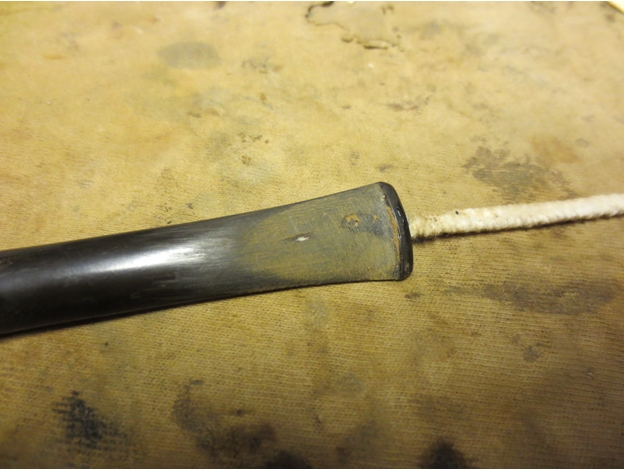
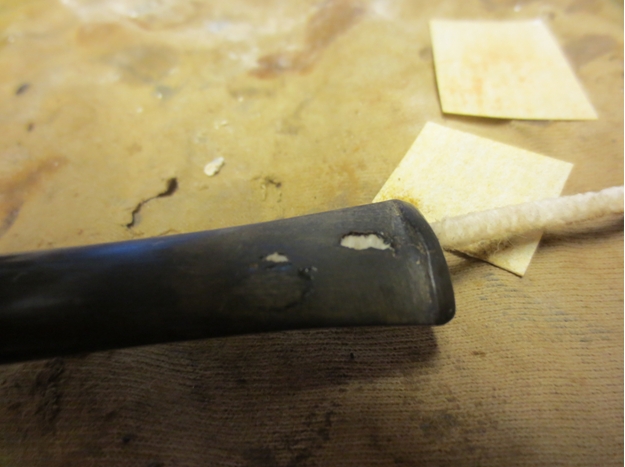
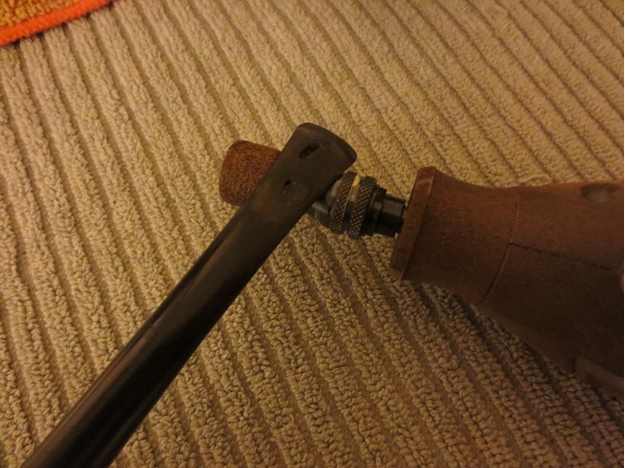
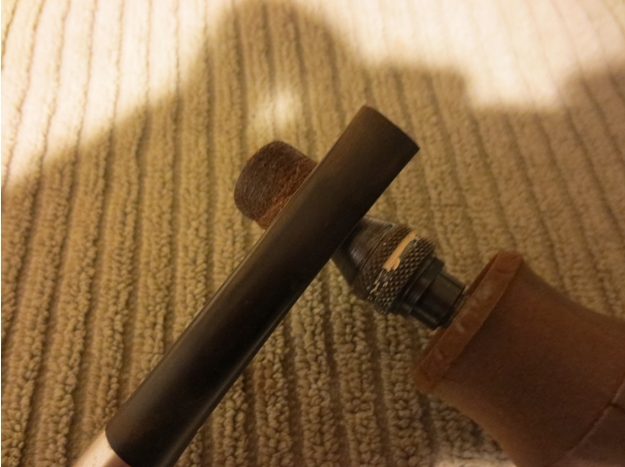
This is the third part of Joyal’s article on the yellow acrylic stem patch. His earlier parts of the article chronicle the various methods and procedures he has used in his try to get a matched patch on the acrylic stem he was working on. Please read the earlier installments to see the complete experiment. Part 1 can be found at this link: https://rebornpipes.com/2014/07/08/stem-patch-using-amber-super-glue-joyal-taylor-aka-holymolar/ Part 2 can be found here: https://rebornpipes.com/2014/07/08/yellow-acrylic-stem-patch-part-2-joyal-taylor-aka-holymolar/

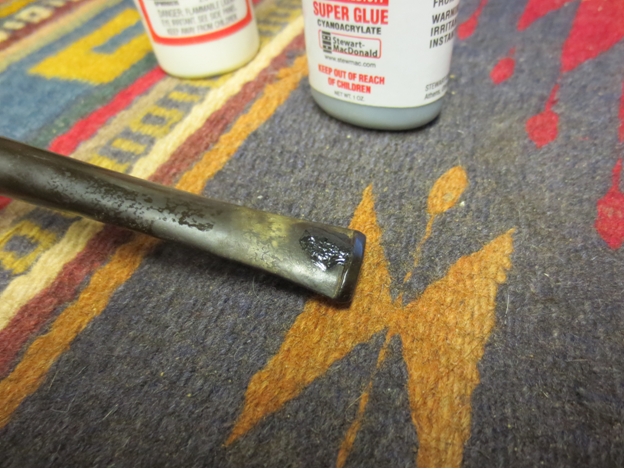
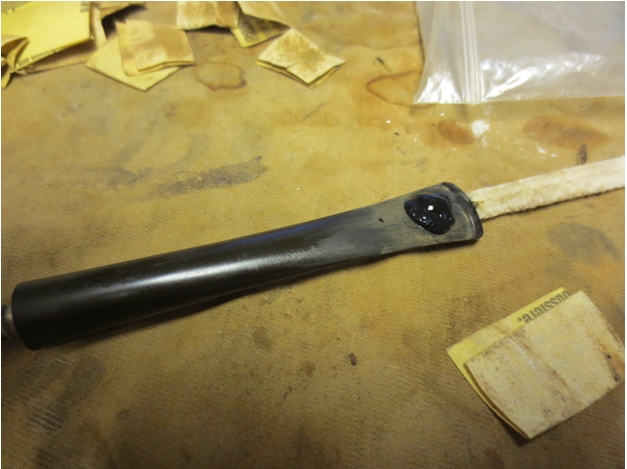
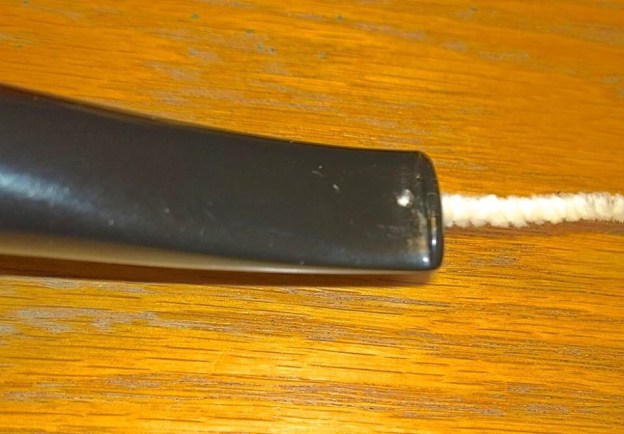
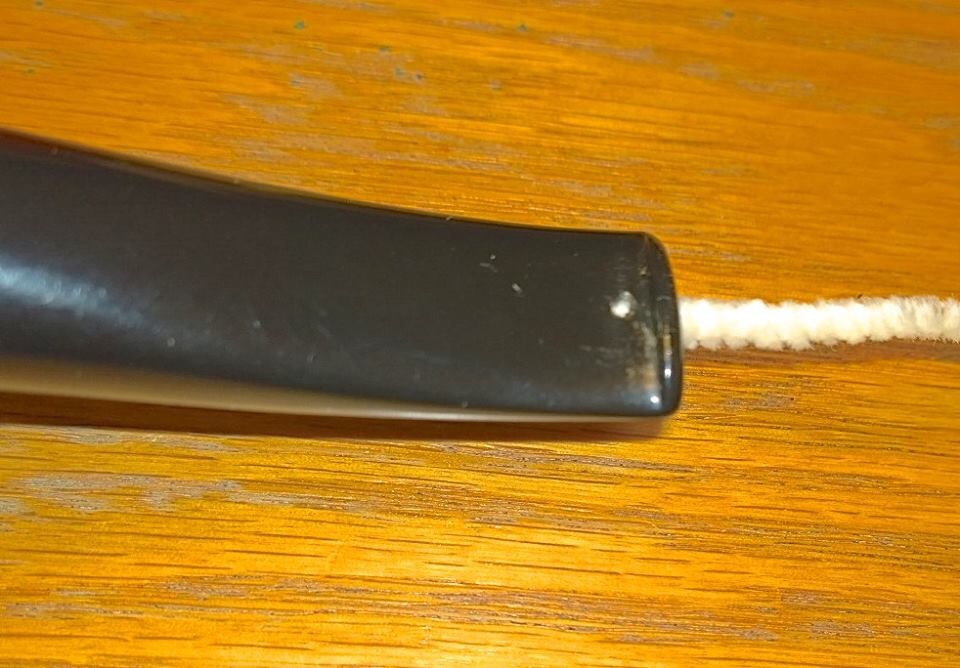
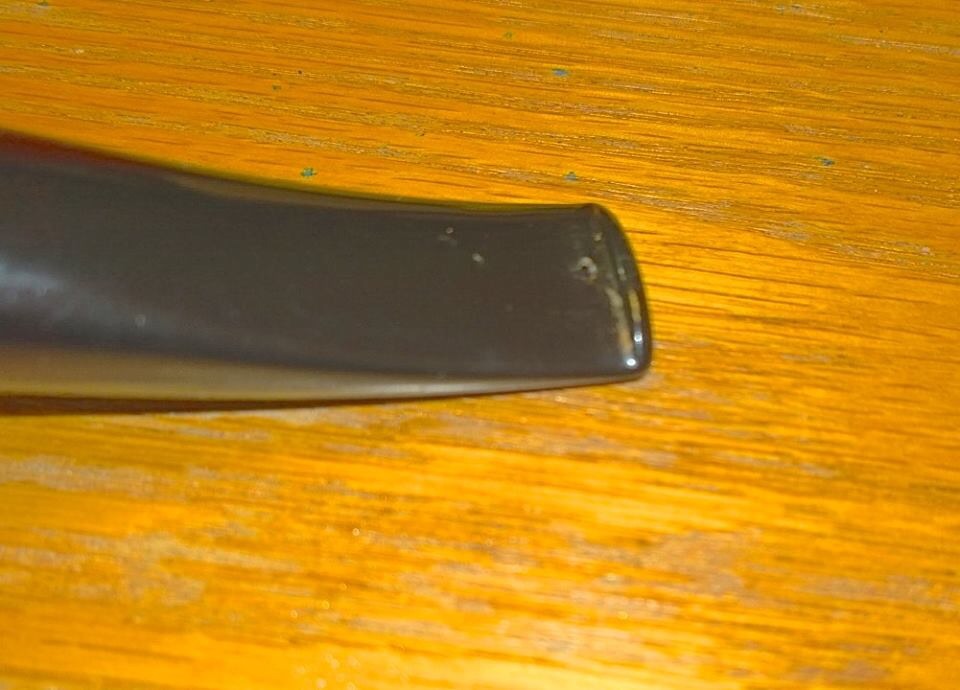
This time I tried Behlen’s yellow powder w/ StewMac’s thick clear superglue.
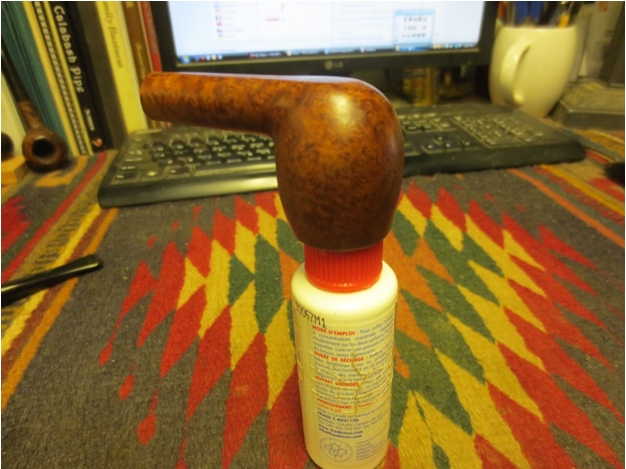
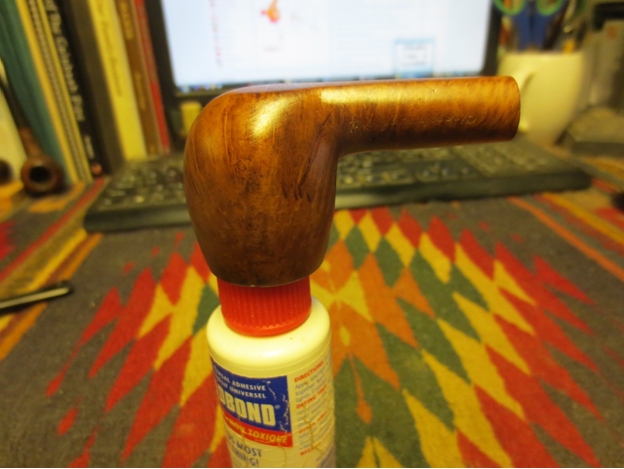
This is the best so far. Good color and opaque. Some of the powder didn’t mix in but it all polished smoothly. I had to leave the patch thick at the edge because every time I tried to sand it smooth it to the acrylic, I would remove more of the original color from the acrylic and have to add more patch material. Oh well, this may be as good as I can do, for now.
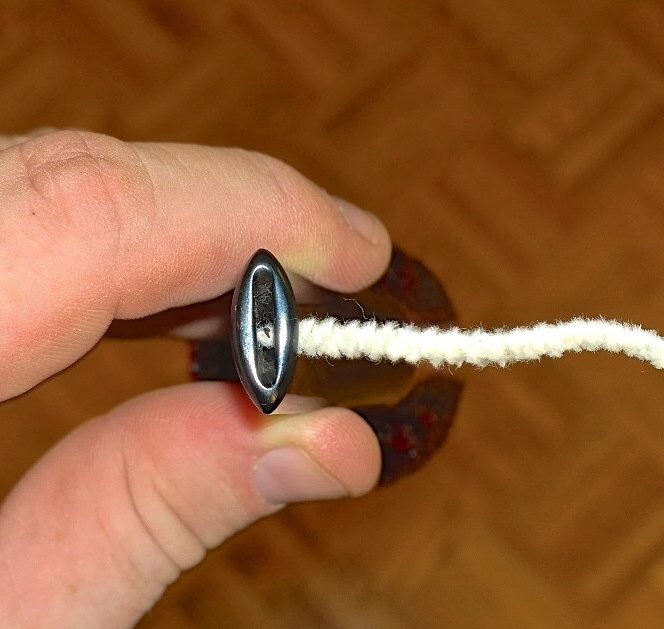
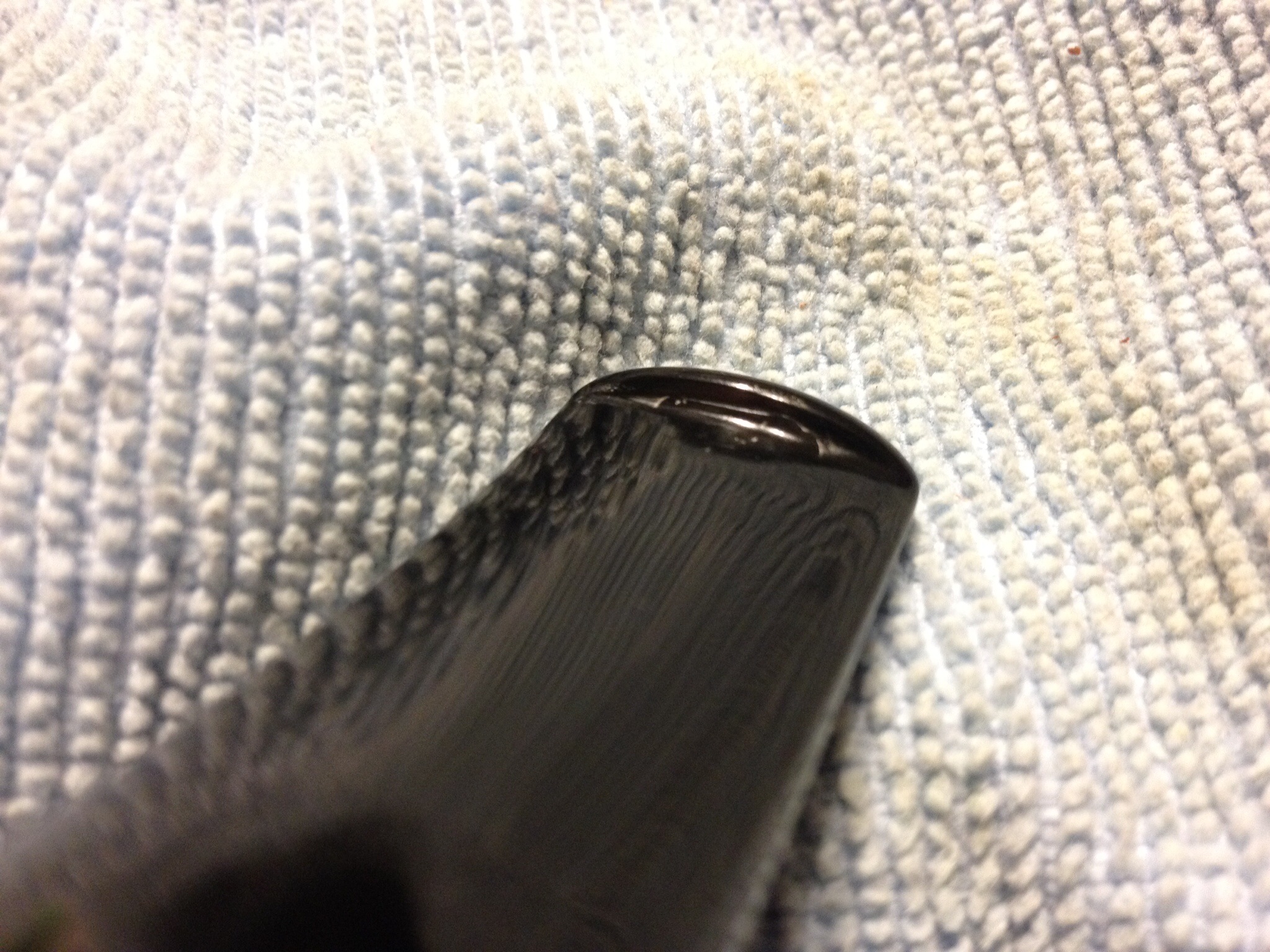
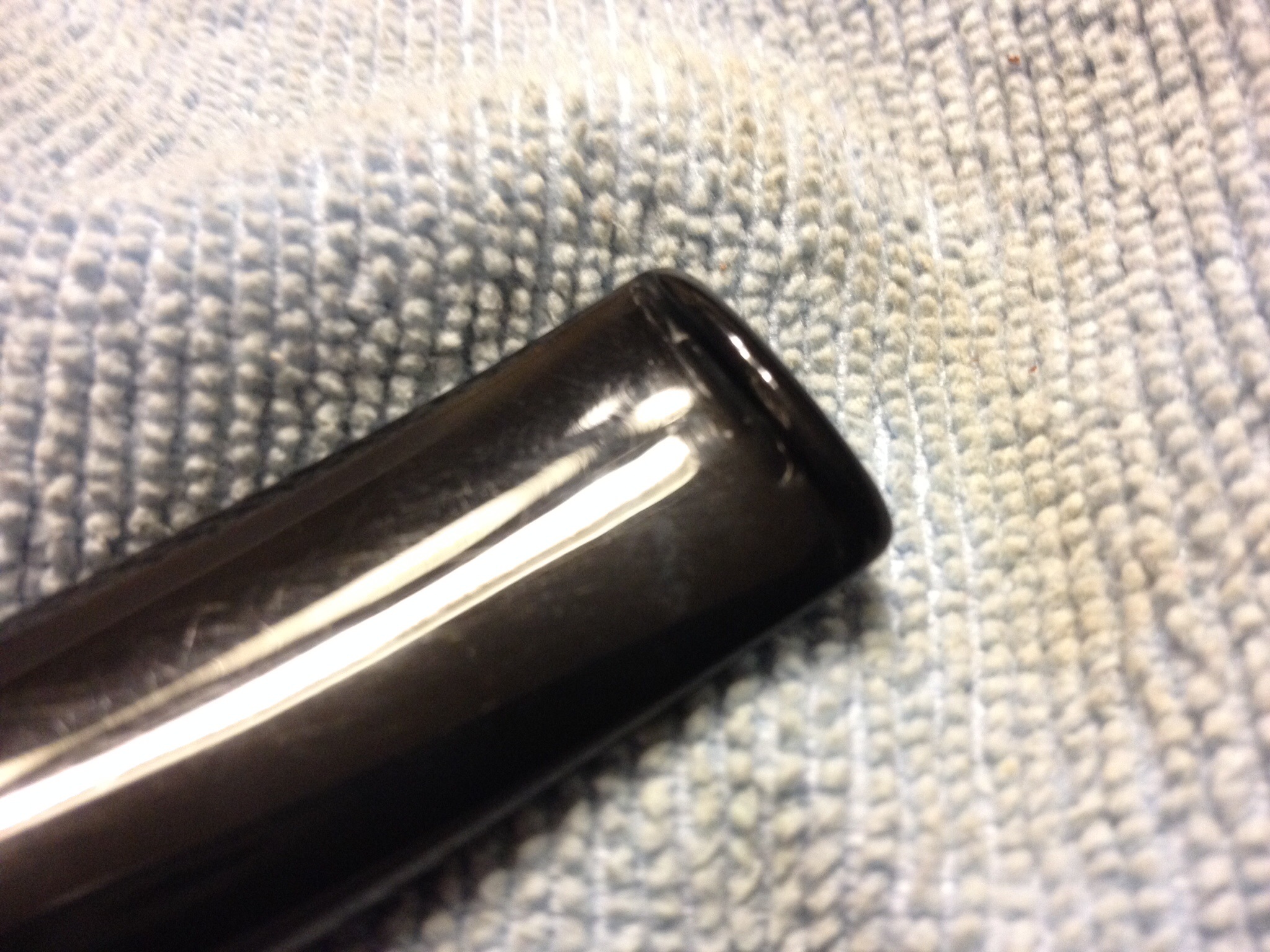
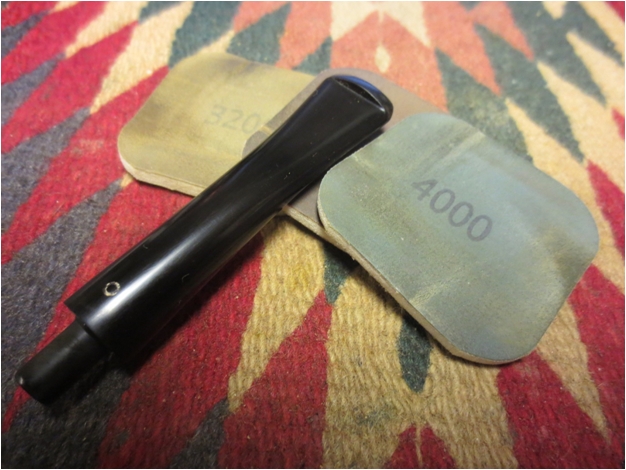
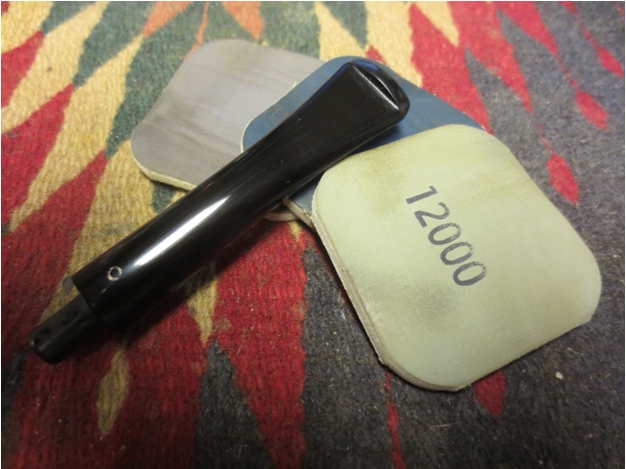
Photo 1 Photo 2 Photo 3