Beall Wood Buff System Modified & Used – Eugen Schlaak


Many years ago now, I was searching for information on the Beall Wood Buff System and came across this article by Eugen Schlaak, a woodworker from Niagara Falls Ontario Canada written August 15, 2006. I devoured his article on the system and on the modification he made to it for his own use. I found his write-up on the various supplies he used also helpful. I remember hunting down the Beall system and gathering supplies based on Eugen’s recommendations. While they are written for wood turners and hobbyist bowl makers the principles and tools are very applicable to those of us who work with the restoration of pipes for a hobby. The article below is the complete text of Eugen’s article. Enjoy the read! – Editor

Many systems always existed for polishing properly sanded work produced on the wood-turning lathe, but all components required to achieve good end results had to be assembled by the wood turner and in many cases also had to be purchased from different sources.

Some years ago the BEALL Tool Company started marketing a kit with all the necessary components, such as the wheels, buffing compounds and the hardware required to fix the different wheels to the lathe output shaft or a freestanding motor.

This kit is called “The Beall Wood Buff” system and is an easy, three-step wood polishing system which produces astonishing results on bare or oiled wood. It mainly consists of three graded polishing wheels, Tripoli compound, White Diamond compound and Carnauba wax.
The buffing system can be used on any surface finish, not only on penetrating finishes, but extreme care has to be taken that the heat created by the buffing wheel does not melt the finish previously applied to the surface, such as on a lacquer finish.

I have been using this system since its inception with much success, but I added another additional step to the polishing routine, by using a coat of “Renaissance” brand micro-crystalline wax as the final step. This product is marketed as a furniture conservator’s wax which protects any surfaces against finger marks and airborne pollutants, as well as providing some moisture resistance. This particular brand is manufactured by Picreator Enterprises Ltd, in London England and is available through many woodturning supply stores in Canada and the USA. This combination of micro-crystalline waxes (petrochemical based) is also widely used by art galleries and museums all over the world on many other surfaces besides wood, such as on leather.

The major components, including a keyless chuck are shown in Figure 1.
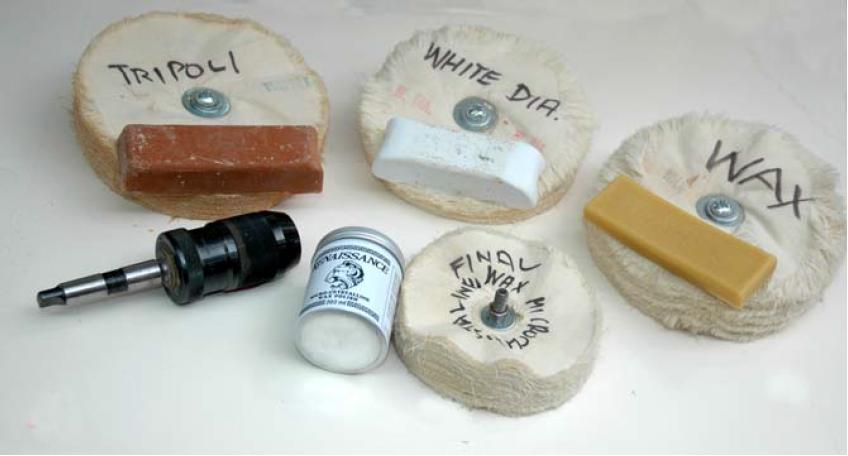
Figure 1

Figure 1


There are many ways to mount these polishing wheels to the lathe and/or motor shafts and all components for this task are included in the kit produced by Beall Tool Company.

In my shop I have used a keyless chuck with an attached # 2 Morse taper shaft adapter in my head stock spindle and properly inserted this assembly will not come loose during usage, as is evident in later illustrations.

A model “SUPRA “, 5/8” capacity keyless chuck produced by “RHOEM” in Germany (shown in the photos), including the adapter, can add as much as $ 200.00 to your tool inventory, if you purchase this chuck intended to be used for the machine shop environment and metal work. But this one is very accurate easy to tighten and will last forever.

But for use on the wood-turning lathe there are many less expensive chucks available produced off shore.

A keyed chuck will also suffice, but considerable time can be saved using a key less chuck when the buffing wheels are changed frequently. Fig. 2 shows a typical assembly using the heavy duty “RHOEM” chuck. A slight tap with a soft mallet may be required to seat the Jacobs taper securely in the lathe drive spindle at the headstock.

Figure 2

Figure 2


In addition to the standard 8” diameter buffing wheels, ball type goblet buffs as shown in Fig.3 are also available from Beall and smaller buffing wheels can be purchased from other manufacturers, the smallest ones are available from companies supplying tools for the denture and jewelry industry and are shown in Fig. 4 together with a ¼” drill rod extension for reaching into deeper hollow vessels.
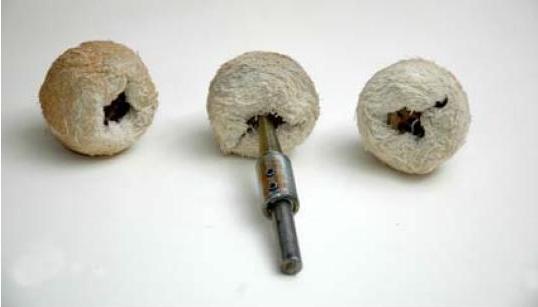
Figure 3

Figure 3

Figure 4

Figure 4

Over the years I have collected a wide assortment of different size wheels and the most common wheel buffs used in my daily routine are stored within easy reach of my lathe, Fig 5. A fairly new set of wheels at 8” diameter is shown and my first set I purchased which is almost worn down to 6” diameter. I addition to the standard wheels shown in the photo, there is a wheel of very soft cotton to polish the final coat of micro-crystalline wax at low speed.

It is also a good idea to permanently mark each wheel for the procedure it is intended for, because the factory applied descriptions are hard to read.

Figure 5

Figure 5

So much for the tools you need to purchase, let me describe the process as suggested by the Beall Tool Company in their instructions supplied with the buffing system:

While most woods may be buffed bare, a more durable finish will be achieved if a sealer or penetrating oil finish is applied first. Sand your work to at least 220 grit, but I power sand to 400 grit, which of course results in a higher gloss on the buffed piece.

After sanding I apply one or more coats of a good quality penetrating oil finish such as “Minwax” Antique Oil, “Watco” Clear Danish Oil or tung oil. When the oil is completely dry the buffing process can begin.

The process begins with the all-linen Tripoli Wheel and the red Tripoli Compound, Figure 6.
Apply a generous amount of compound to the spinning wheel and begin buffing the work piece. You must hold it tight and position it slightly below the center of the wheel, so the wheel cannot “grab “ the piece. You will be surprised how much damage can be caused to your prize winning turning if it leaves you grip. I have heard of turners placing a heavy padded blanket on the lathe bed and behind it, to avoid too much damage just in case you lose your grip, especially on irregular shaped pieces or items which have a ragged rim, which easily can be caught by the revolving wheel.

Several applications of the compound maybe required if you work on a larger item.
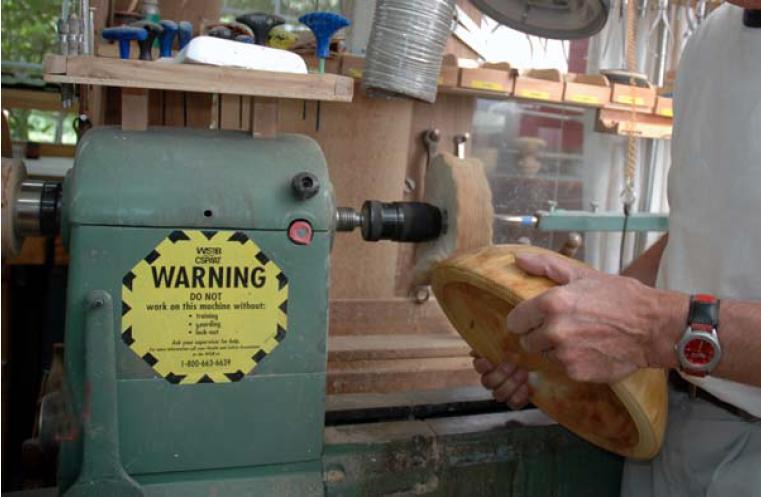
Figure 6

Figure 6

On a new wheel a heavier application of the compounds may be necessary, than later, when the wheel is loaded.

The next step requires the softer, linen-cotton blend White Diamond Buff and the harder, drier White Diamond Compound. Only a relatively small amount of this compound is applied to the revolving wheel and the work piece is buffed lightly. If there is any residue left from the Tripoli, it will be removed at this time during the final polishing. Fig. 7 shows the inside of a larger bowl being polished. Again: HOLD ON TIGHT, when the wheel gets near the rim!

At this stage I want to point out that I do not like an arrangement where all the polishing wheels are mounted on one shaft. As is evident from this photo that a large bowl like the one shown could not be polished on the inside with all wheels spaced and mounted on one shaft. But it could be time-saving if turnings only require to be polished on the outside.
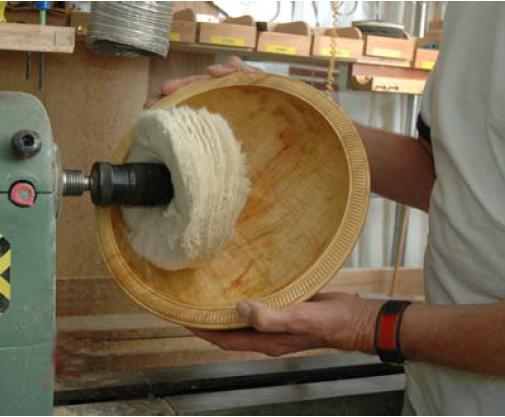
Figure 7

Figure 7

The final step in polishing is applying the pure Carnauba wax, known as one of the hardest waxes available and the third wheel, an all-flannel wheel, is used. Once the wheel has been charged with the yellow carnauba wax a few times, only VERY SMALL additional applications will be needed. Just touching the wheel for a second will deposit enough wax to polish.

If the wheel gets loaded with too much wax, streaks of melted wax will appear on the surface being polished and at times it is almost impossible to remove these blemishes by additional polishing.

This last step of buffing the work piece very lightly on the wax wheel will quickly produce a beautiful protective sheen, Fig 8.
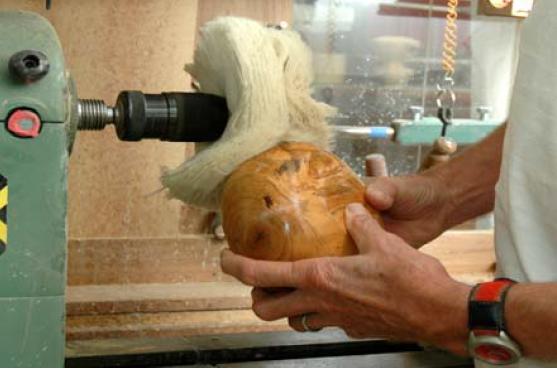
Figure 8

Figure 8

As mentioned previously, I add an additional step by lightly covering the surfaces with a coat of micro-crystalline wax. This type of wax is available from various suppliers to the wood-turning trade and can be used sparingly and a small tin will last for a long time. Only a light polishing at a low-speed is required after this wax has dried for a short time and after the surface does not feel sticky to the touch any more.

I use a dedicated clean soft cotton flannel wheel for this last polishing step.

From the steps described above it is evident that buffs with different compositions are used: The Tripoli Wheel is a somewhat stiff all-linen fabric, the White Diamond Wheel has linen plies interspersed with softer cotton ones and the Wax Wheel is very soft all cotton flannel fabric.

Many turners advocate assembling their own system by searching and buying the individual components and therefore save some money. I have tried this method, but in the end the cost was about the same and I was never 100% sure I had the right wheels for composition, diameter and thickness. So at this point I suggest for a beginner turner to purchase a fully assembled kit.

Other turners are suggesting to have dedicated motors for each wheel with about 1750 rpm. That seems to be a good idea, but we turners already have the “Motor”, the wood-turning lathe, why not make use of it? The biggest advantage of doing this is that most lathes have some sort of speed control, which is very advantageous when polishing inside hollow vessels or forms of various diameters. Whilst a buffing wheel at full rotational speed cannot be inserted into a vessel, which has an opening smaller than the wheel itself at a low-speed the wheel can be squeezed and forced into the opening and all the steps of polishing can be achieved safely, but at a slightly slower speed, see Fig.9 and 10.
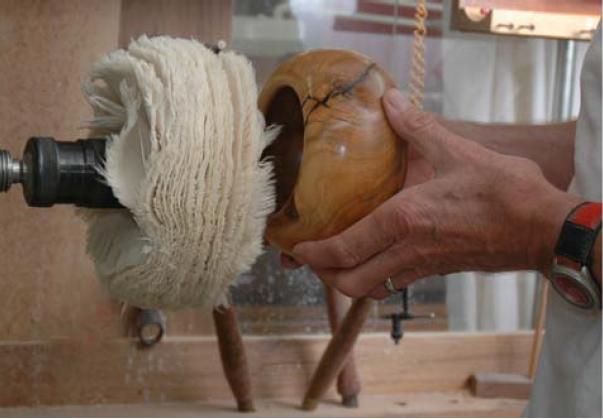
Figure 9
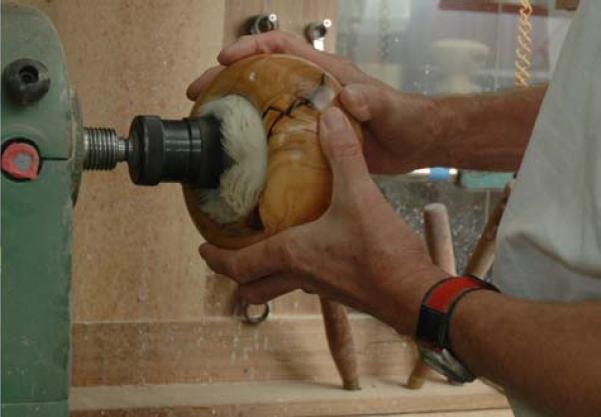
Figure 9


Figure 10

Figure 10

For smaller type turnings or goblets, smaller type wheels or ball type goblet buffs as shown in Fig. 3 and 4 can be utilized. But I find that the goblet buffs with the special tapered mounting pins are filling up quickly with compound or wax and become very stiff in a short time. These buffs, made by the Beall Tool Company, require frequent cleaning with a nail type rake or coarse wire brush to keep them “fresh”.

The use of such a buff is shown in Figure 11.
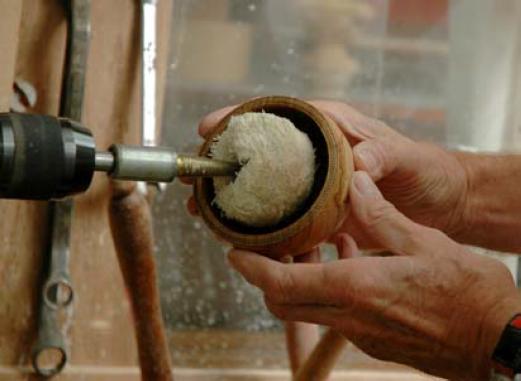
Figure 11

Figure 11

Because of the different construction of each buffing wheel, it is most important to change wheels between each step in the buffing process.

The White Diamond and wax wheels never require cleaning or washing. Once they are loaded, only fresh compound or wax are needed as required. They are actually getting better with age, but a bit smaller in diameter!

If the Tripoli compound becomes too built-up on the all-linen wheel it has to be cleaned. In order to do this, simply back a piece of coarse grit sandpaper with a piece of scrap wood or use a fine wire brush and hold it up against the spinning wheel until the built-up is removed. I find that I have to this only on very few occasions.

A bit of a safety advice when using the polishing wheels:
Always wear eye protection and a suitable dust mask. The Tripoli Compound contains silica quartz and may cause temporary irritation of eyes, ears, nose and the respiratory tract and prolonged excessive inhalation may result in a respiratory disease.

Do not wear loose clothing while performing any polishing procedure, but that applies of course to any work around the woodturning lathe

I have attempted to describe a finish and polishing process, with which I am very familiar. I have used it for many years in addition to other finishes, such as lacquers etc. For simplicity and speed in any wood-turning shop, it is hard to beat the system described here, not necessarily the assembled Beall system but any system using the same components from various suppliers.
Many of the instruction shown here are gathered from the clearly written operating instructions, which accompany every kit supplied by the Beall Tool Company.

Figure 12 shows some typical bowls finished and photographed for this article and I welcome any comments and/or corrections with regards to the above described procedures.
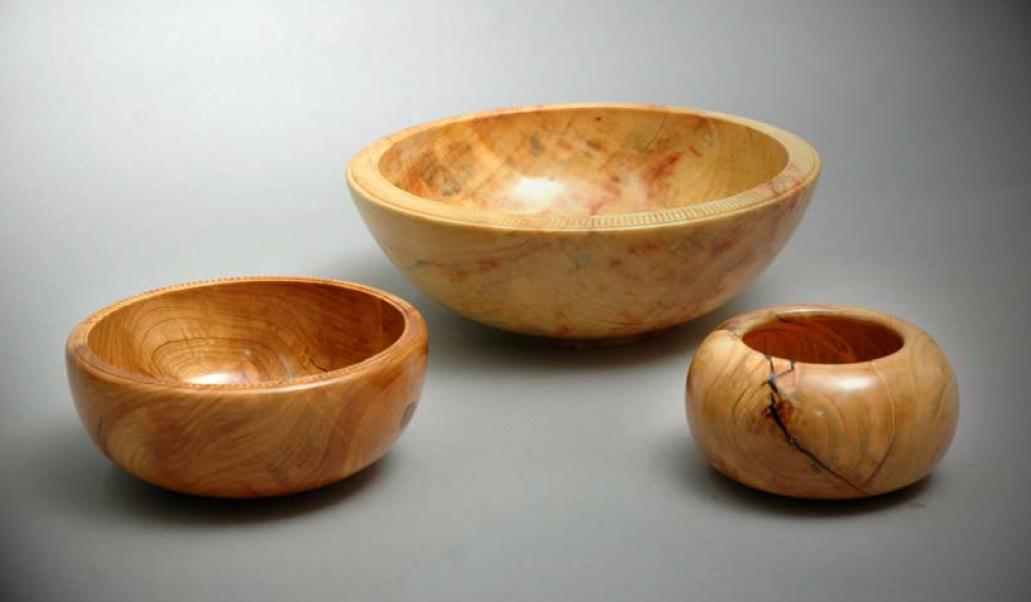
Figure 12

Figure 12
Kaywoodie Drinkless Bent


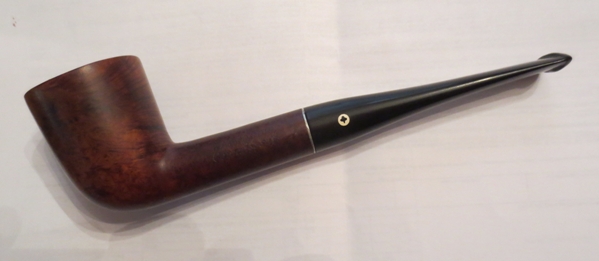
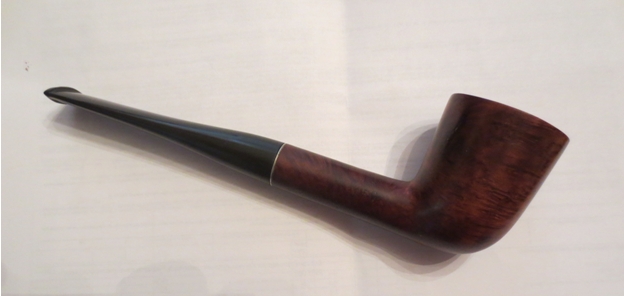
Another refurb by reserectedpipes – a Bent Kaywoodie. Nicely done

ReserectedPipes's avatarReserectedPipes

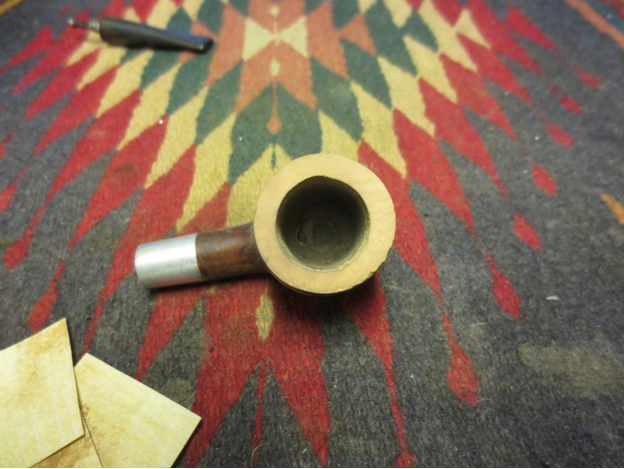
Recently I won a pair of Kaywoodie Bents on eBay. When they  arrived they were in pretty good shape. Here is the first Reserection of the pair.

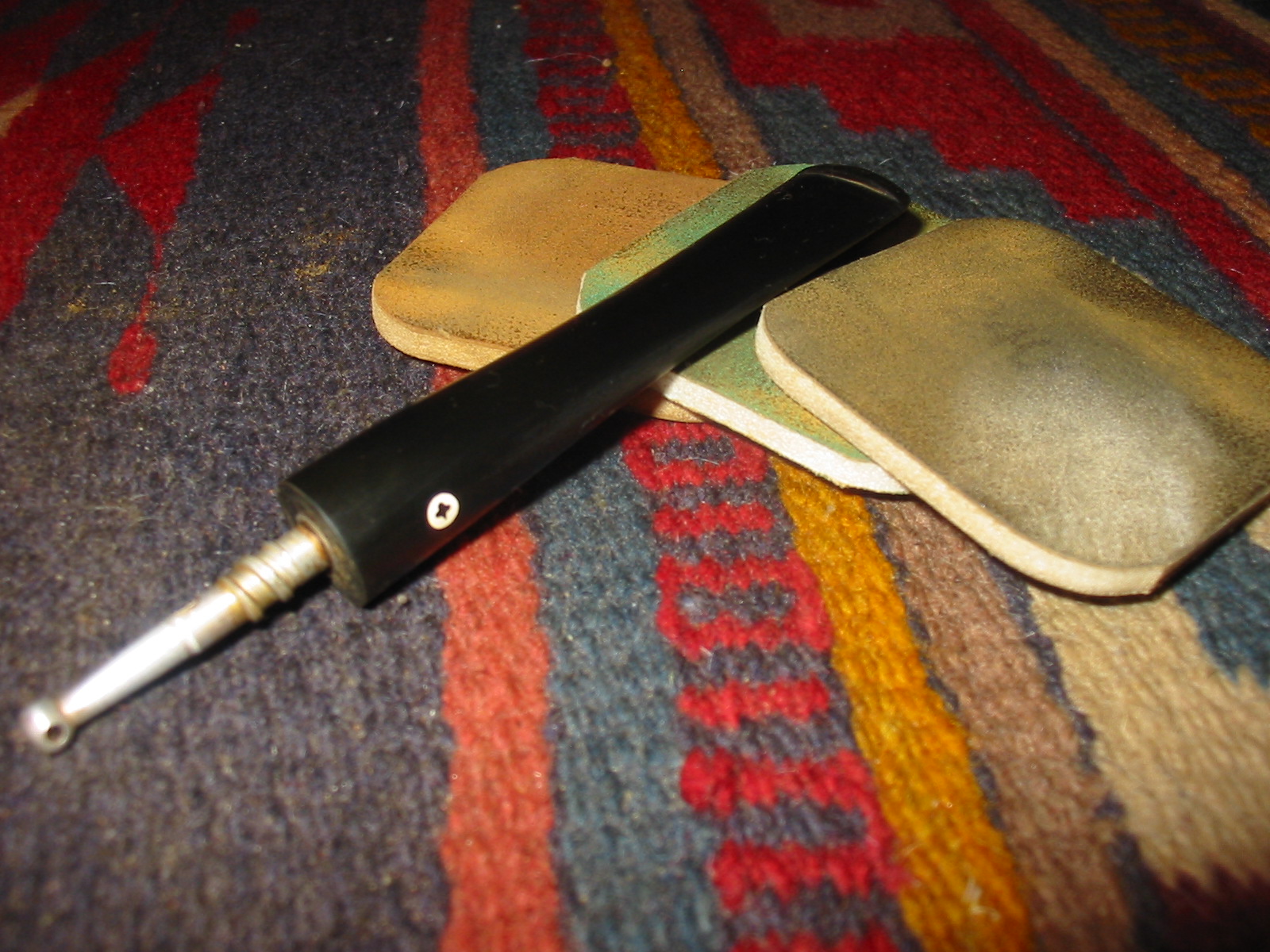
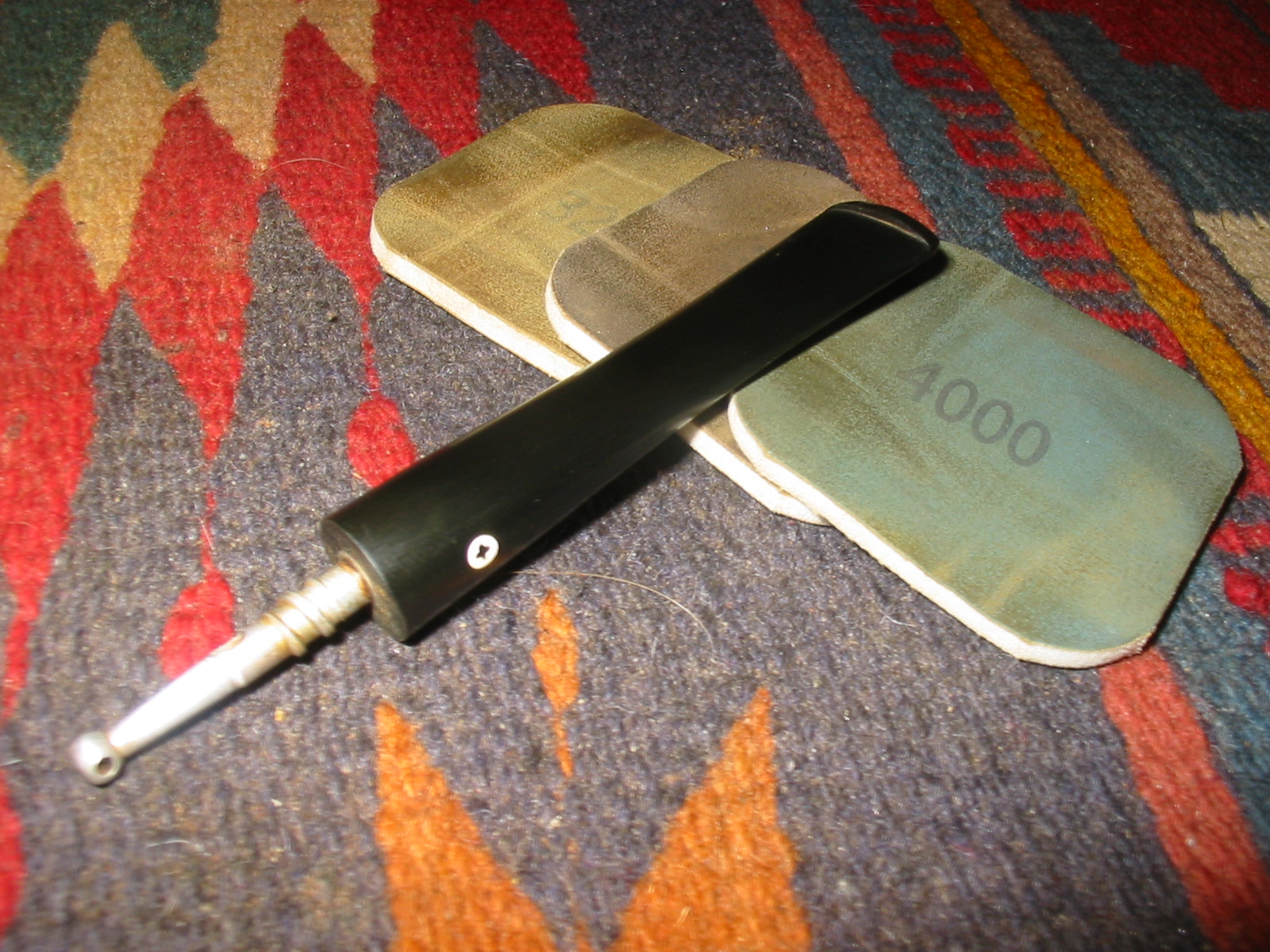
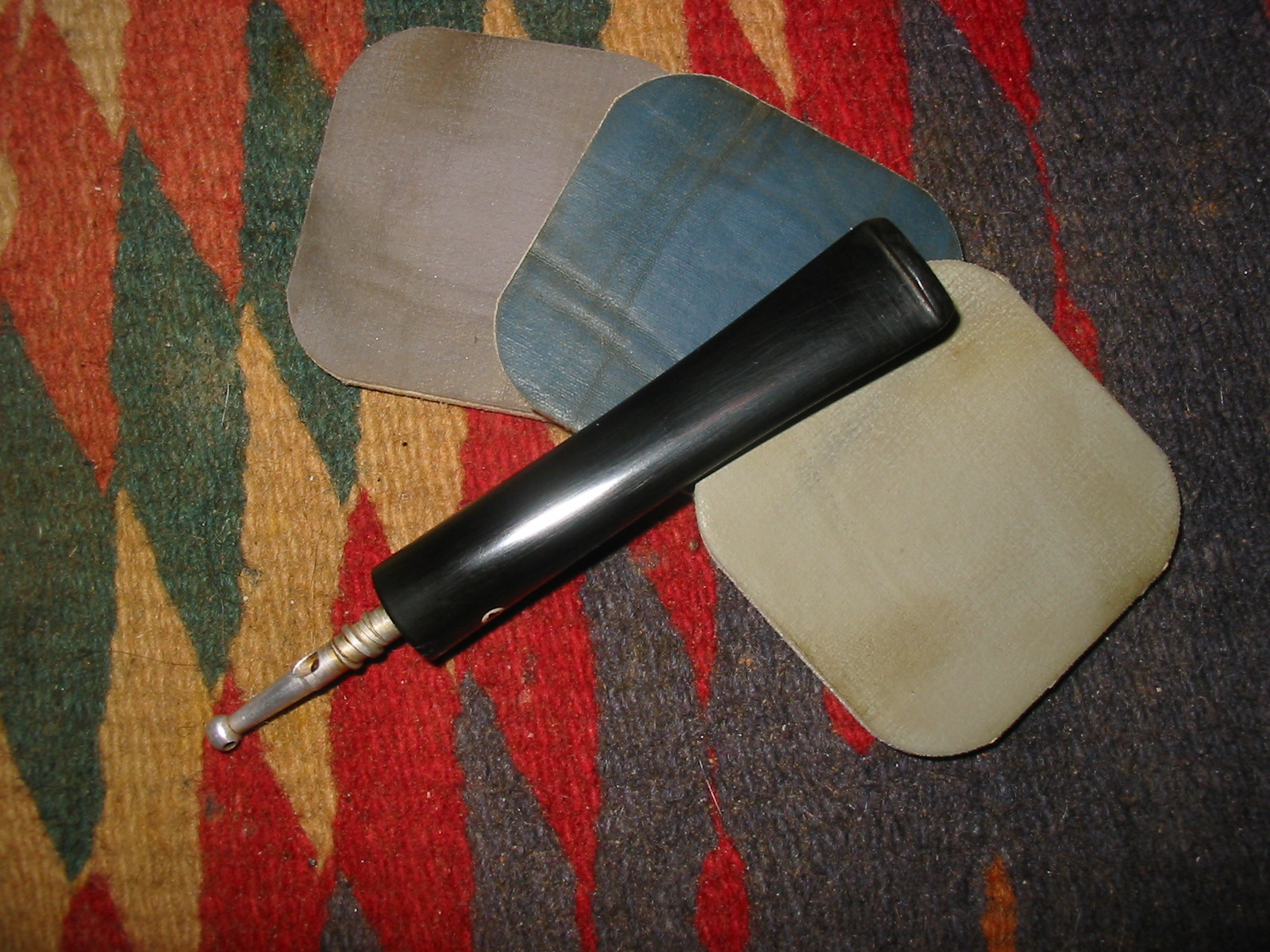
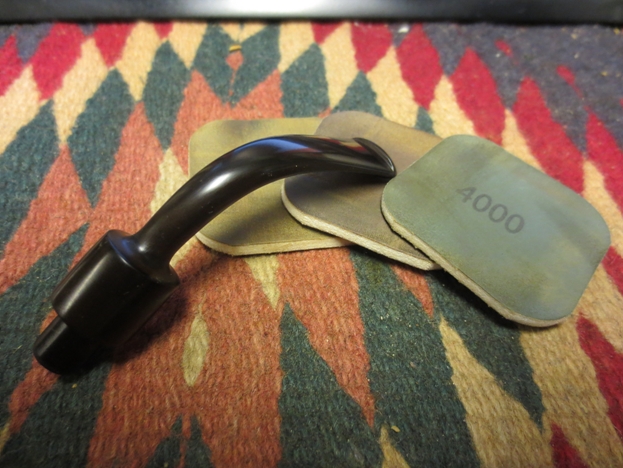
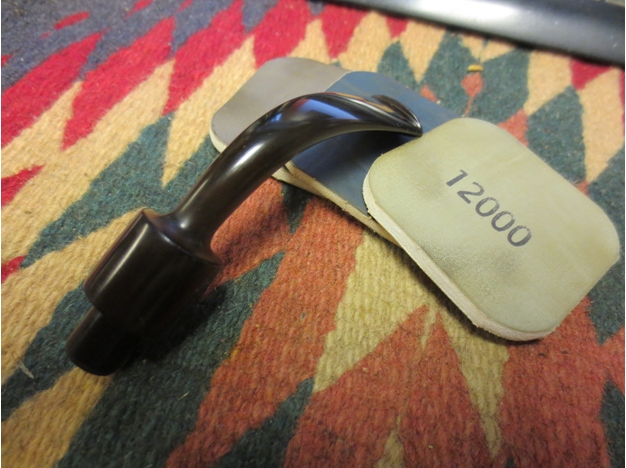
I gave it a light ream with my Castelford ream set followed by a nice alcohol cleaning and cleaned the rim with some saliva and alcohol. The stem had some chatter at the bit and I sanded it out with wet pads from 1200-4000 grit and dry sanded it through 12000 grit.

Using a black stain I redid the rusticated areas and then with a dark brown stain I went over the rest of the bowl. Lastly I gave it a ride on the buffing wheel and used some Brebbia Stem Polish on the stem to bring it back up.

View original post

A unique pipe tool that arrived in the bottom of my gift box


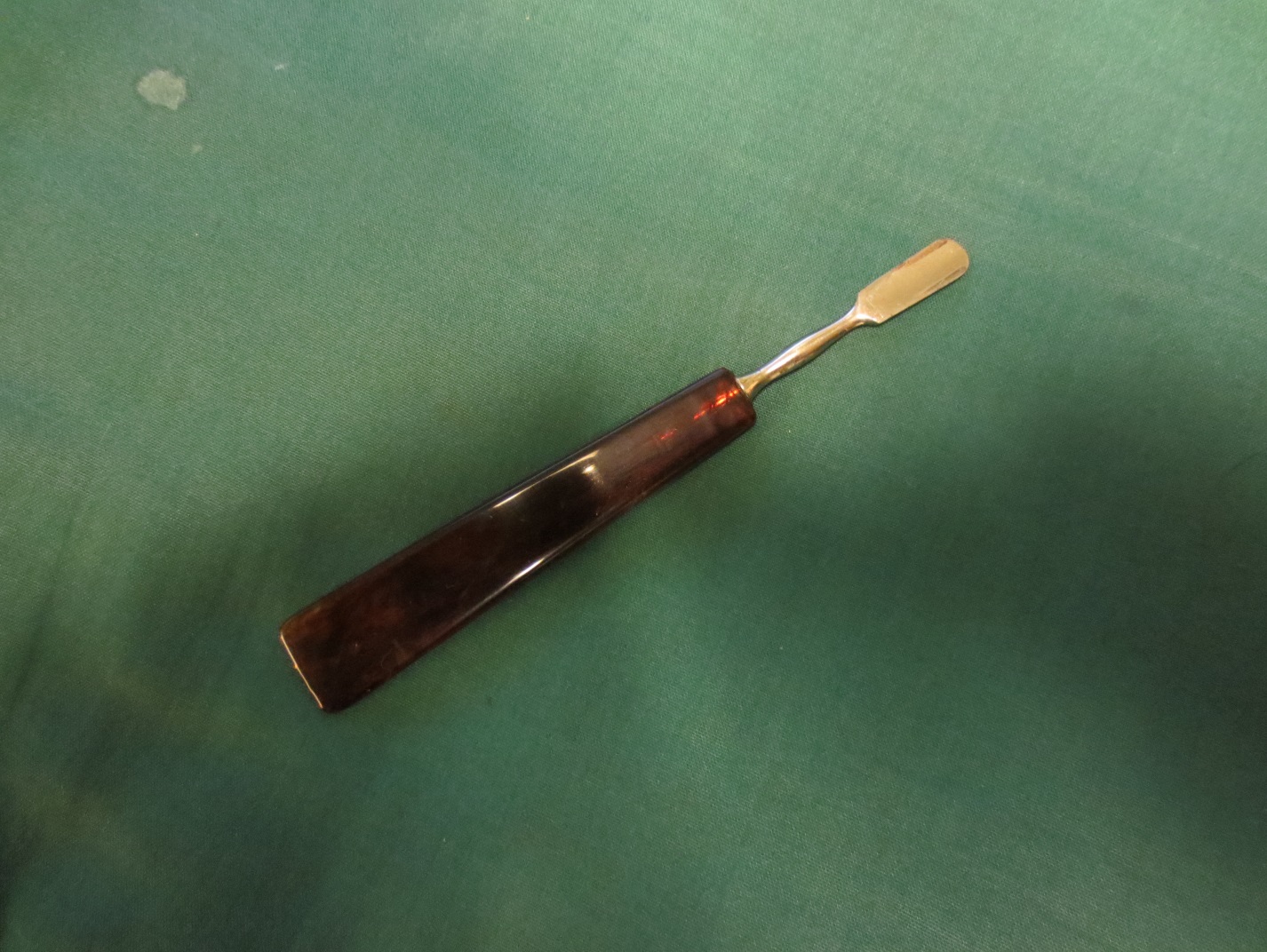
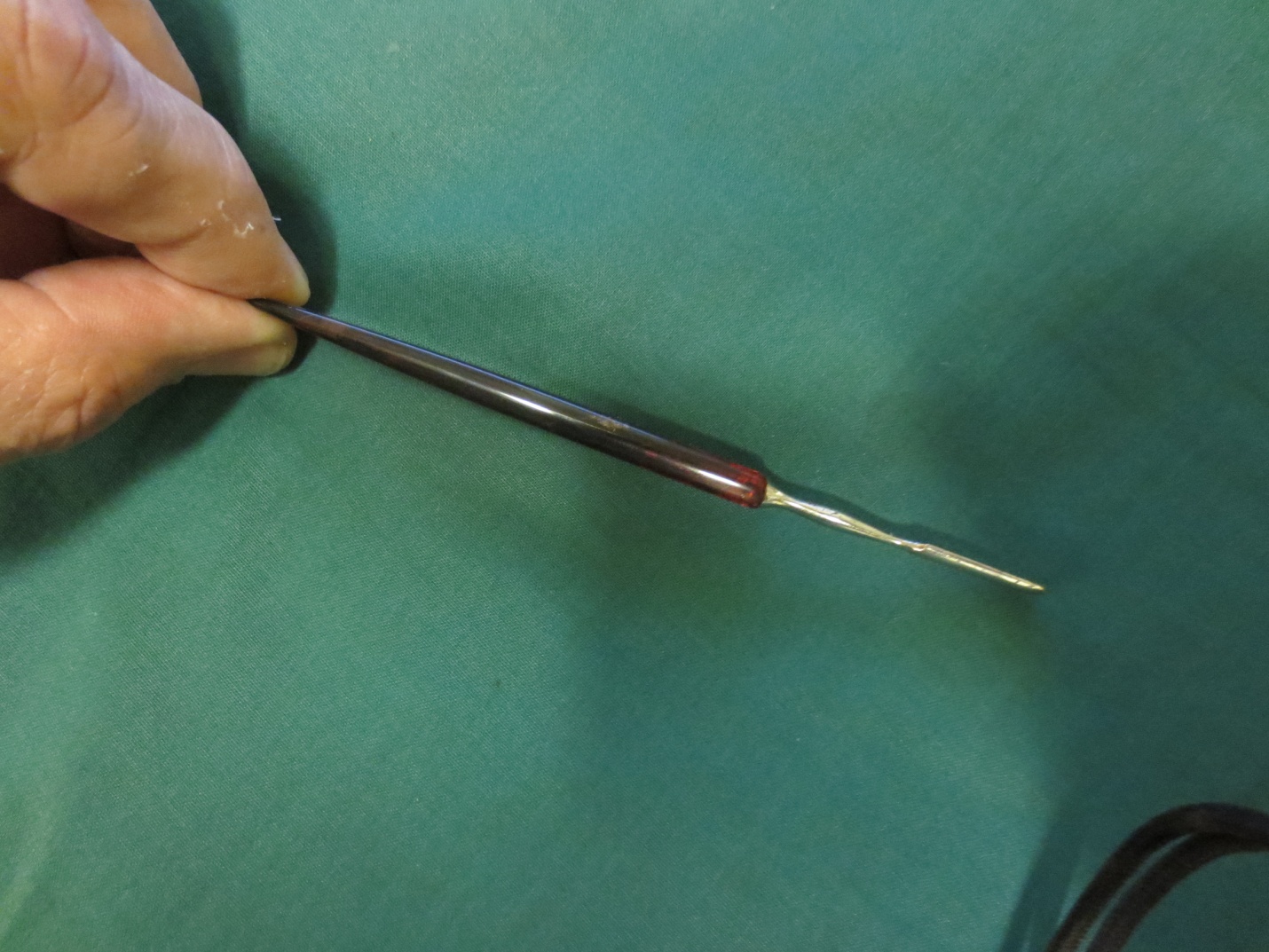
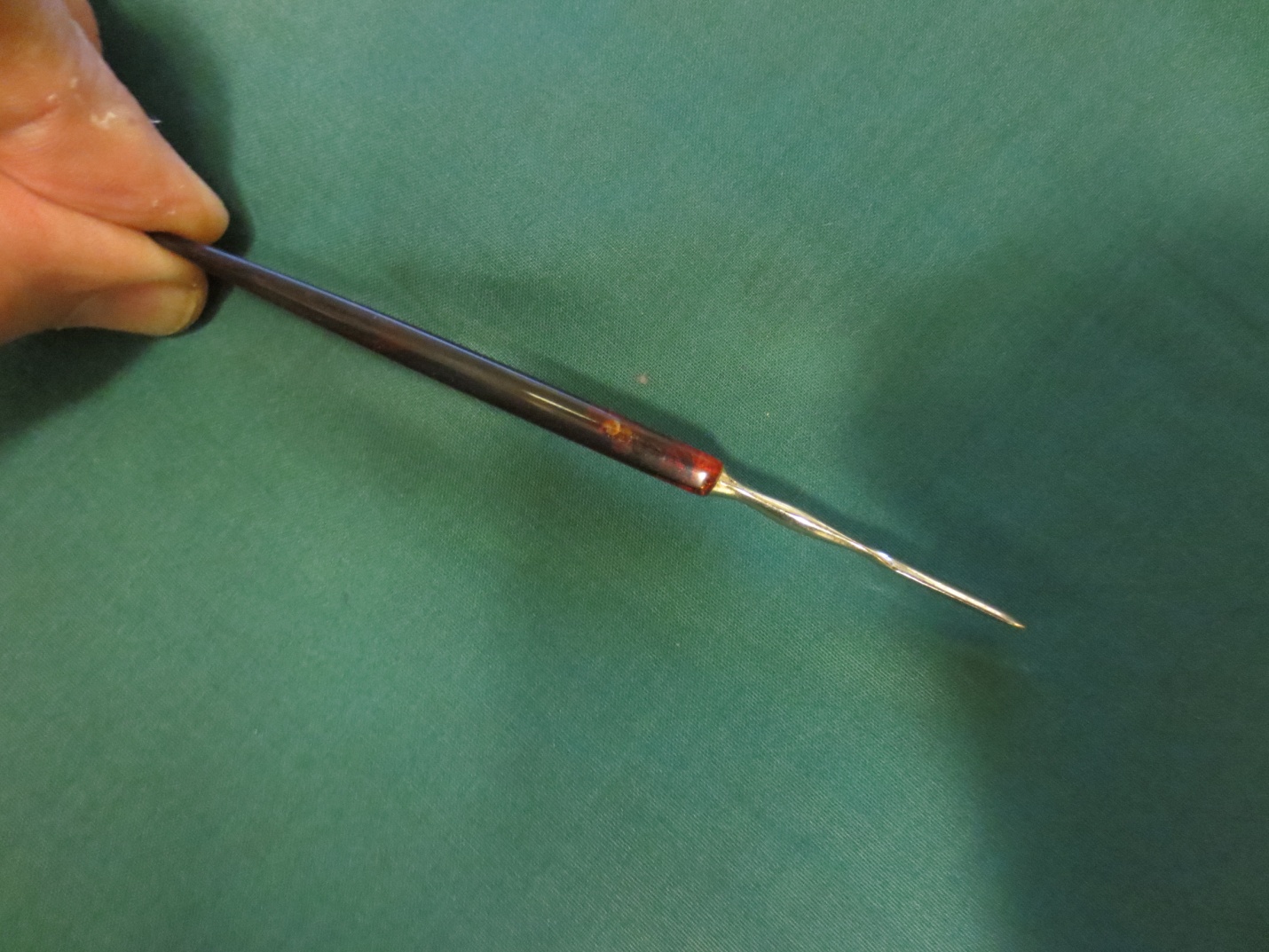
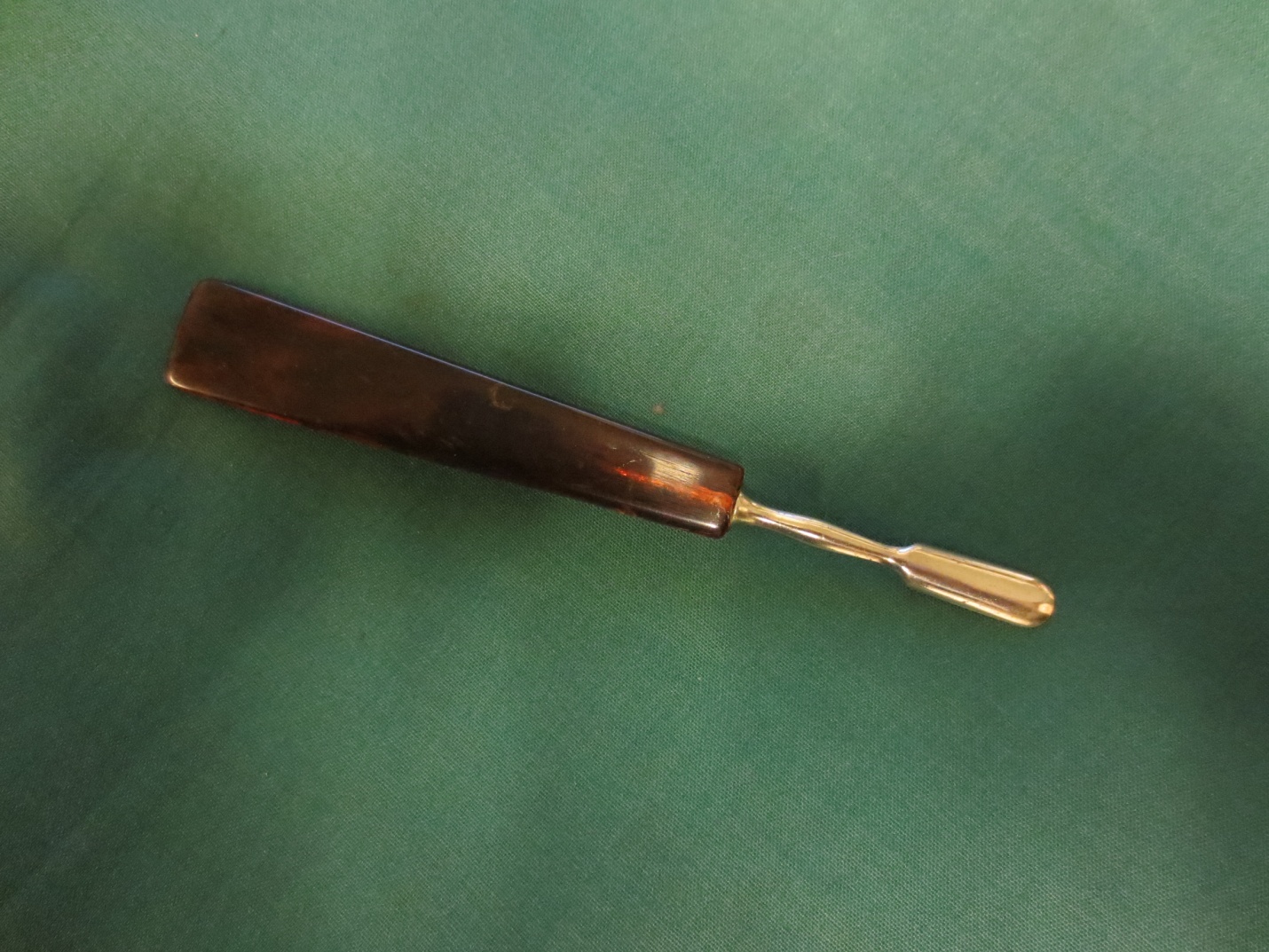
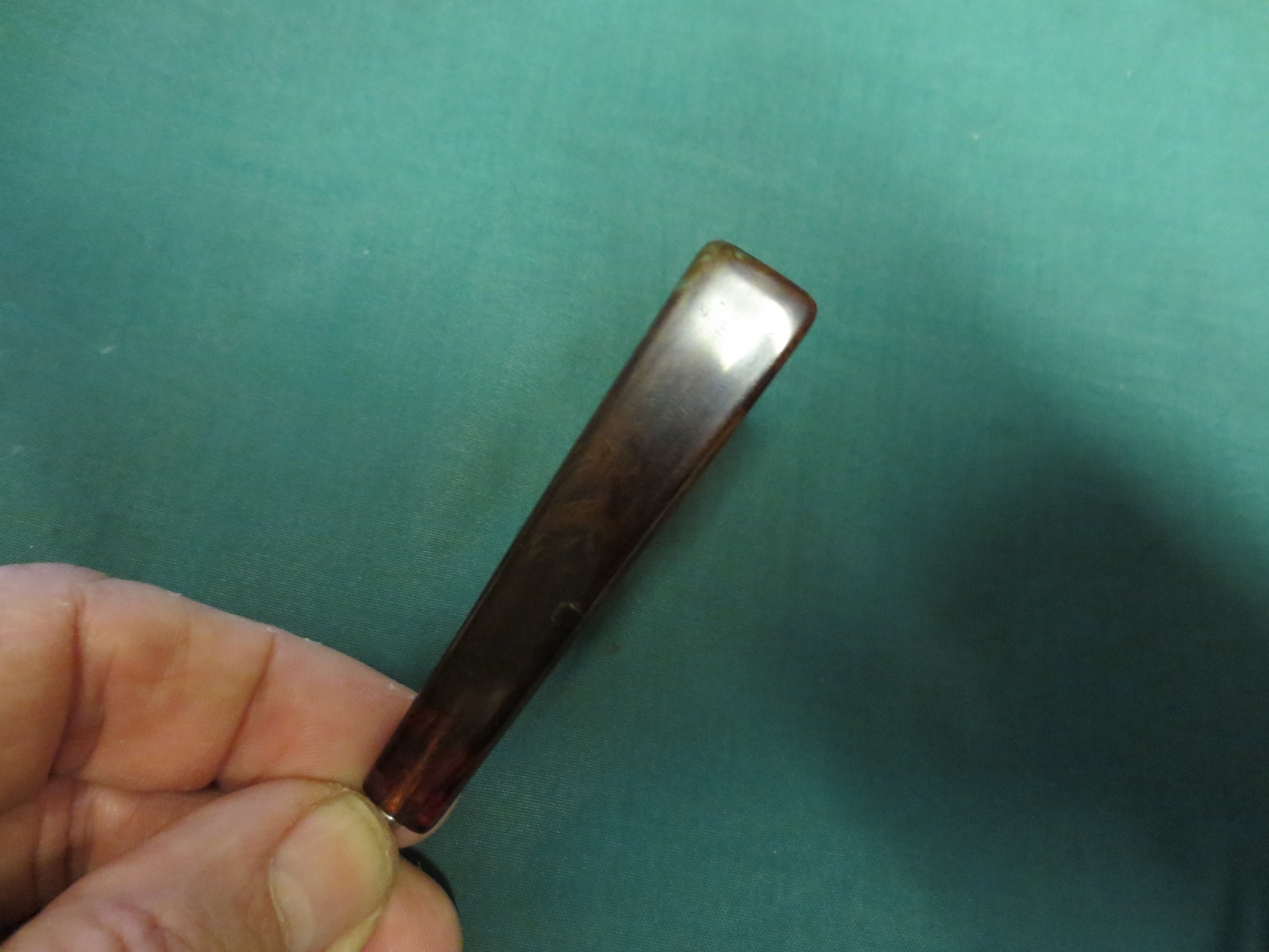
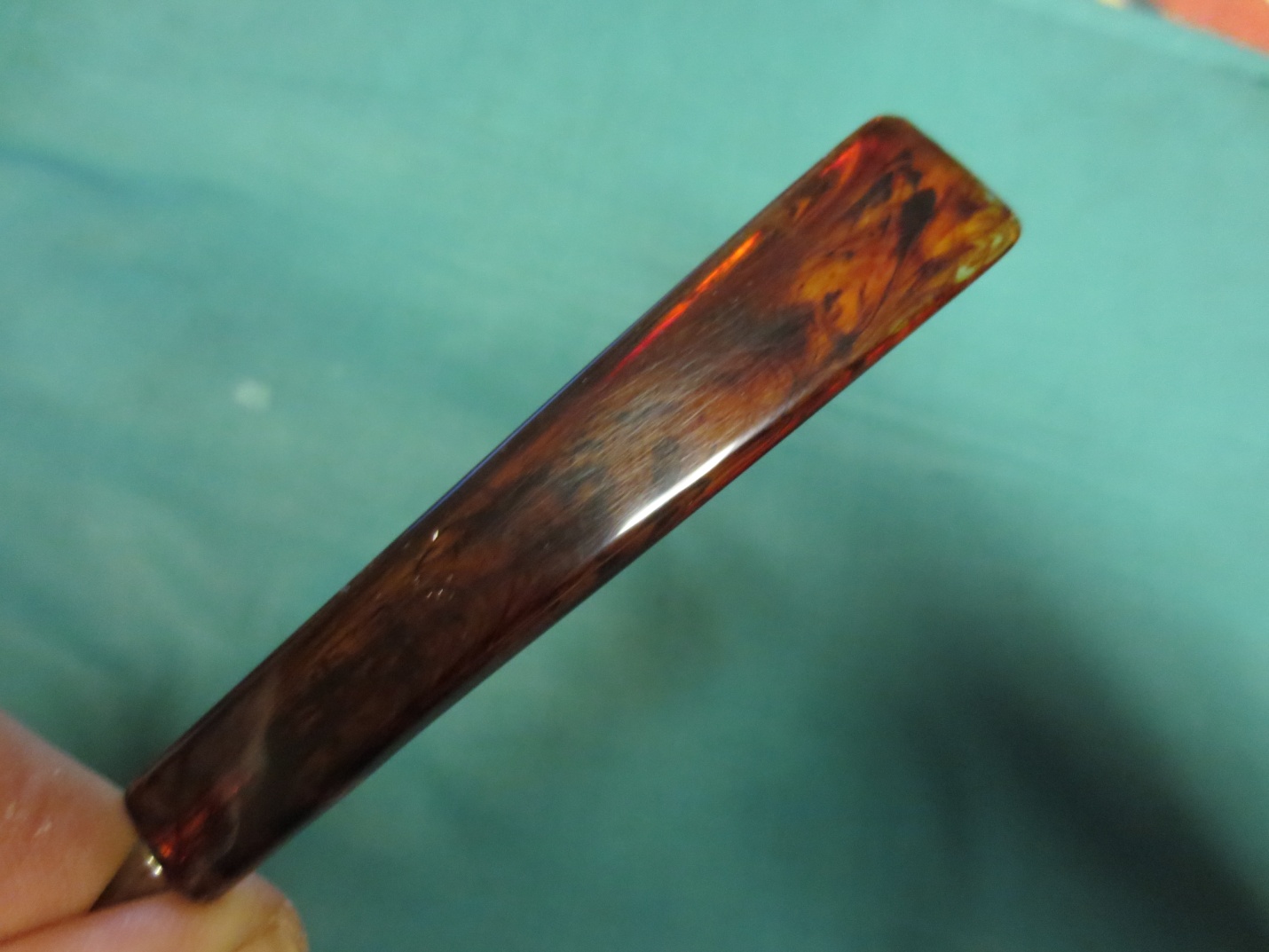
In my gift box from Jim there was a small pipe tool in the bottom of the box. It has an amberoid handle that is flat and very translucent. The amberoid material has flecks and pieces in it that are almost like real amber. It has a beautiful handle. The handle is flat and thin – the same thickness as the blade on the spoon end of the tool. It is very lightweight. The spoon end and shaft are chrome and polished up very nicely. The blade is fixed in the handle. It works amazingly well as a tool to clean out dottle in a bowl and also to gently scrape estate pipes that I am cleaning up. The spoon end is curved and fits against the curved wall of the bowl perfectly. The edges are thin but not sharp so it is not a scraper in the true sense of the word but works on soft cake and the crumbly cake in some estates.

Top side of the scraper

Top side of the scraper


Side view of the scraper with top up

Side view of the scraper with top up


IMG_1793
The handle had a few damaged spots or nicks along the edge that needed to be repaired. They were rough to the touch and I was afraid of them breaking further. I cleaned the handle with alcohol on a cotton pad and then repaired the nicks with clear super glue. I sanded the glue smooth with 220 grit sandpaper and then a medium and fine grit sanding sponge. I finished by sanding the handle with micromesh sanding pads – wet sanding with 1500-2400 grit pads and dry sanding with 3200-12,000 grit pads. I buffed the handle carefully with White Diamond and then rubbed it down with Obsidian Oil and gave it several coats of carnauba wax to polish and protect it.
IMG_1794
IMG_1795

view of the handle of the scraper


The final photo below shows the handle with light shining through it. The amber colour and dark flecks give it a very attractive look. The tool has already found its way into my refurbishing tool kit and I use it regularly now to clean out the bottom of a bowl that I have just reamed. I also have used it to apply pipe mud and find the rounded back of the spoon works perfect to press the mud into the sides and bottom of the bowl.
IMG_1796

close up view of the handle of the scraper


I have no idea if the tool was originally designed to be used with pipes or not but it certainly works for me and will remain a usable tool for as long as I do refurbishing work. Thanks Jim.

Worn and Tired No Name Pot Given a New Look


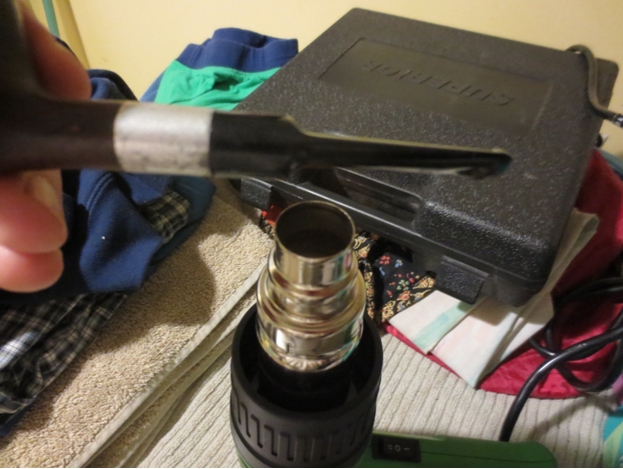
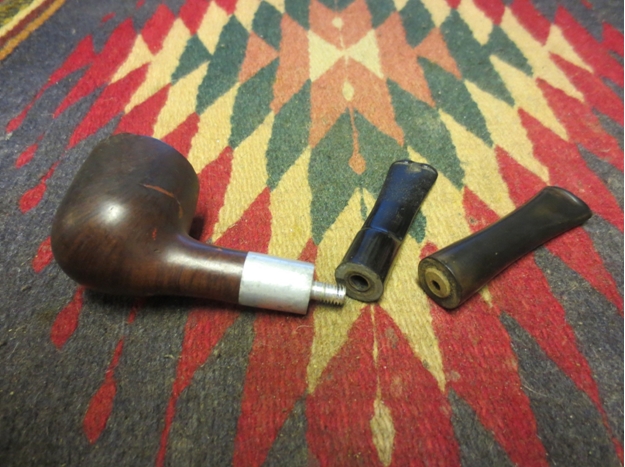
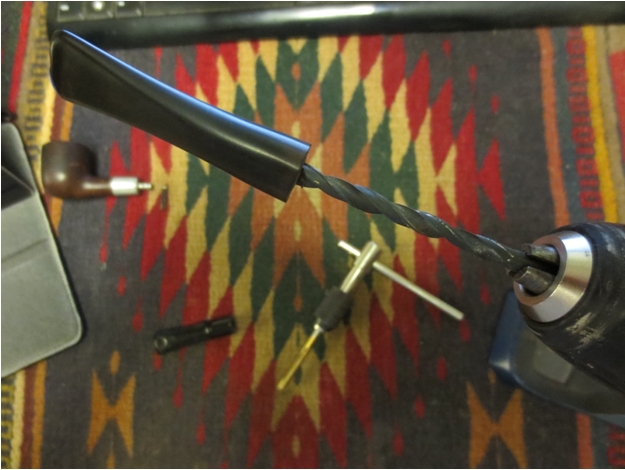
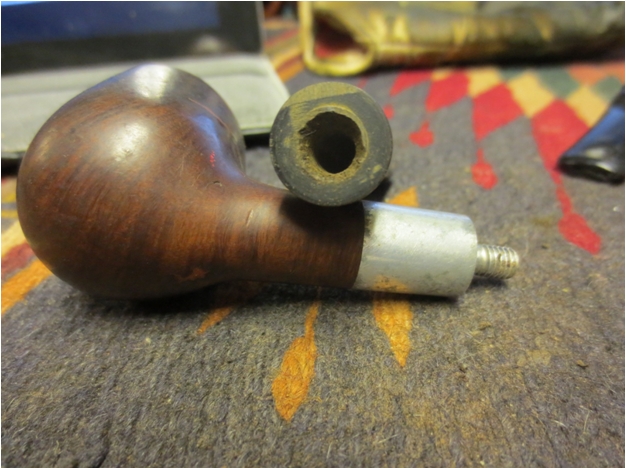
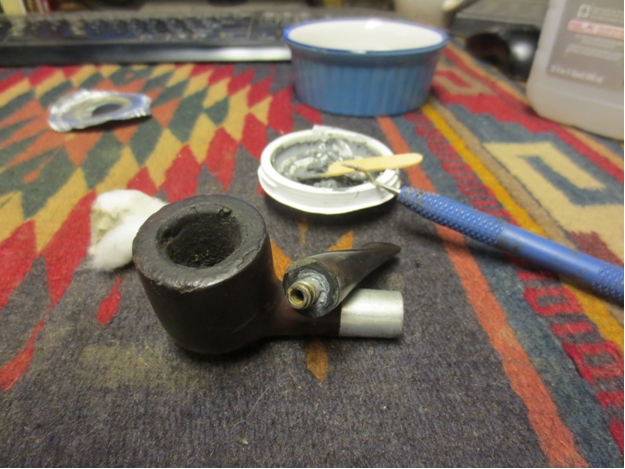
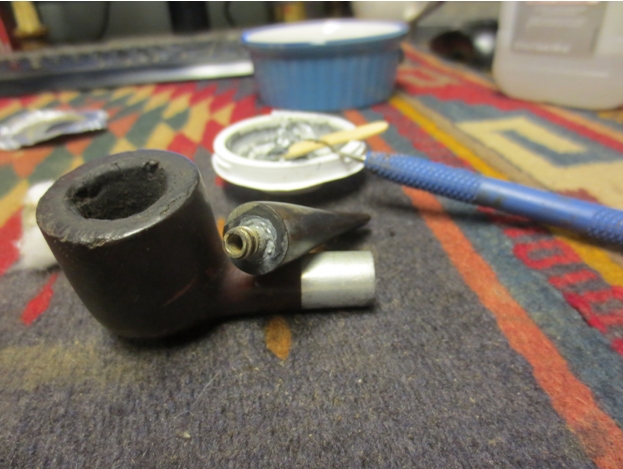
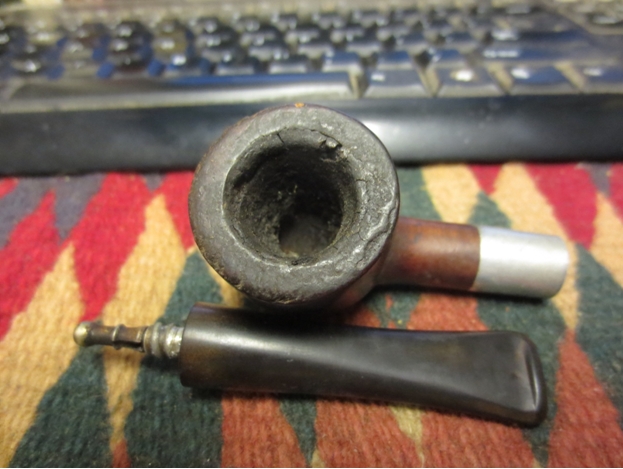
The next pipe I decided to work on from the gift box was a no name pot shaped bowl without a stem. There was a stem in the box that fit well in the threaded metal shank. The problem with the stem was that it was worn out. There was a large dent on the top of the stem and a large hole in the underside of the stem that also had much damage around the hole. The stem was also over turned. The shape was unique in that the bowl had a slight cant to it. The finish was ruined and the grit and grime on the bowl was heavy. There were four fills using pink putty that stood out on the bowl left side, front and bottom. The rim was thickly tarred and oiled. The outer edge was damaged all the way around the bowl. The cake was quite thick and was crumbling at the bottom of the bowl. The shank was thick with tars as well. The aluminum was oxidized. IMG_1745 IMG_1746 IMG_1747 IMG_1748 I used a lighter and a heat gun to heat the metal tenon and was able to adjust the stem to a proper fit on the shank. It softened the glue and lined up nicely but when I heated the top side of the stem to try to raise the dent it bubbled even at a distance of three inches plus above the heat source. Yet another reason I don’t like nylon stems. IMG_1749 IMG_1750 IMG_1751 IMG_1757 Looking at it carefully after I had straightened it out I could see that the stem was really worn out and would be better used on a different pipe after it had been cut down. I heated the tenon once again and was able to remove the stem from the tenon. The tenon itself was threaded and screwed into the stem. I had a taper stem in my can of stems that had a broken tenon. I sanded the remainder of the broken tenon until it was smooth. Noname The new stem was the slightly longer than the original stem and it was vulcanite. I drilled out the airway until the metal tenon end fit the in the stem. I held the drill firmly and turned the stem onto the drill bit by hand. I used a tap to cut threads in the freshly drilled hole. IMG_1759 IMG_1761 I beveled the drilled hole to accommodate the lip on the threaded tenon so that it would sit flush with the face of the stem. I mixed a batch of two part quick dry epoxy and coated the threaded end of the tenon before threading it into the hole in the stem. IMG_1762 IMG_1763 I set the stem aside to let the epoxy cure and turned to work on the bowl. The bowl needed to be reamed so I used a PipNet reamer to do the work. I started with the smallest cutting head and continued until I used one the same size as the bowl of the pipe. I scrubbed out the shank and bowl with alcohol and pipe cleaners and cotton swabs until the shank and bowl were clean. IMG_1764 IMG_1765 I set up my topping board and a piece of 220 grit sandpaper and topped the bowl to remove the out rim damage and sharpen the edges of the bowl. I folded a piece of sandpaper and sanded the outer edge once it had been topped. I smoothed out the rough edges until the damage was minimized. IMG_1766 IMG_1767 I used a dental pick to remove the pink putty fills. I cleaned the surface with acetone to remove the dust and the remaining putty in the holes after I had picked them out. IMG_1768 IMG_1769 IMG_1770 IMG_1771 I packed briar dust into the holes in the briar and then dripped super glue into the briar dust to mix with the dust and make a hard fill. I over filled the holes in the briar with the dust and glue so that when it shrunk as it dried it would not leave dips in the surface of the briar. IMG_1772 IMG_1773 IMG_1774 I sanded the filled areas with 220 grit sandpaper to remove the excess and smooth out the fill until it was even with the surface of the briar. I sanded it with a medium and a fine grit sanding sponge and a fine grit sanding block. The new fills were black instead of the bright pink that was previously used in the repairs. Once stained they would be less obvious in the surface of the bowl than the previous ones. IMG_1775 IMG_1776 IMG_1777 I stained the bowl with Danish Oil and walnut stain and set the bowl aside to dry. IMG_1778 IMG_1779 IMG_1780 IMG_1781 The next morning I checked the fit of the stem as the epoxy had plenty of time to set and cure. I sanded the stem to reduce the diameter at the shank. I used 150 grit sandpaper to remove the excess while repeatedly screwing it into the shank to check that I had removed enough but not too much. IMG_1782 IMG_1783 IMG_1784 IMG_1785 I sanded the stem further with 220 grit sandpaper to remove more of the excess and to also reduce the scratches left behind by the 150 grit paper. I polished the aluminum with a fine grit sanding sponge and removed the oxidation and the scratches. When I had finished sanding the fit of the stem was exactly what I wanted and it only needed to be polished with micromesh sanding pads. IMG_1786 IMG_1787 IMG_1789 IMG_1790 I wet sanded with 1500-2400 grit micromesh sanding pads and dry sanded with 3200-12,000 grit sanding pads. I rubbed the stem down with Obsidian Oil between each set of three grits. I buffed the stem with White Diamond to give it a final polish and then rubbed it down a final time with the Obsidian Oil. Once it was dry I hand buffed it and fit it on the pipe. IMG_1797 IMG_1798 IMG_1799 I buffed whole pipe with White Diamond and gave it several coats of carnauba wax to raise a shine. I wanted to protect and shine the bowl and stem. The finished pipe is shown in the photos below. The new stem with the retrofitted metal tenon fit extremely well. I like the overall look of the pipe far better than the original look with the saddle stem. The pipe is ready to give many more years of service to the next pipeman whose rack it graces. The end of the stinger is removable so that the pipe can be smoked with or without the stinger. IMG_1800 IMG_1801 IMG_1803 IMG_1804

Giving New Life to a Kaywoodie Connoissuer Dublin Shape 45C


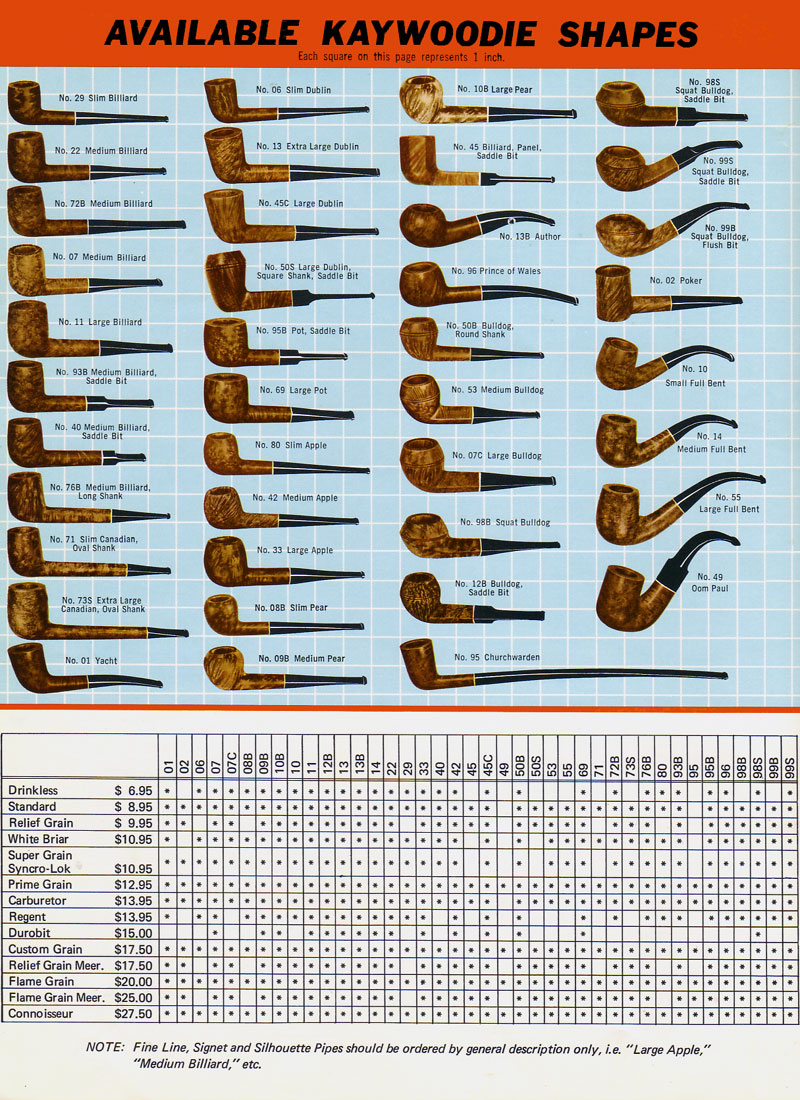
This is the third old-timer I received in my gift box from Jim. It is stamped Kaywoodie over Connoissuer on the left side of the shank and 45C on the right side near the bowl. It was in rough shape. The finish was gone and the bowl was almost black with grit and grime. There were places on the sides and bottom of the bowl that had black spots of a sticky, oily substance. The rim was heavily caked and damaged as well. There were rough outer edges on the rim on the back right side and the front as well. The bowl was badly caked and appeared to be out of round from reaming with a knife. The stem was in pretty decent shape however. There was a buildup of calcium on the end of the stem about ½ inch from the button forward but there was only minimal tooth chatter and no deep bite marks. The stem even fit correctly and was not over turned in the shank.IMG_1710 IMG_1711 IMG_1712 IMG_1713 IMG_1714 I looked up an old Kaywoodie shape chart to make sure the shape number 45C was indeed a Dublin, in fact a Large Dublin. I found it in the second column, third entry down that column in the chart below. I think that the name is quite relative as the size is not that large and would easily be a group 3 sized bowl in Dunhill terms. I also found that the Connoisseur line was the top of the line (at least in this chart of pipes). Read the notes on the bottom of the page, the last line that shows a price of $27.50 – the highest priced KW on this chart. Kaywoodie_shapes70_71 When I removed the stem the stinger was black with buildup but was not damaged. It only had two holes in it, a flattened head rather than a ball and a space on the top of the stinger where the air went through. This was obviously a pre-Drinkless stinger. IMG_1715 I reamed the bowl with a PipNet pipe reamer and used a dental pick to clean out some of the scale around the edges of the airway. IMG_1716 IMG_1717 I started with the smallest reaming head and worked up to one approximately the size of the bowl. I wanted to try to minimize the rim damage and bring the bowl back to as close to round as possible with the reamer. IMG_1718 The amount of damage to the edges of the outer rim and the broken spots on the inner rim required that I top the bowl. I set up a topping board and 220 grit sandpaper and sanded the top of the bowl. I press the bowl into the sandpaper, taking care to keep the rim flat against the board so as not to slant the top of the bowl. I worked it until the top was clean and the outer edge was sharp once again. The second photo shows the topped rim and the damage down to the roundness of the bowl inner edge. It was going to take some work to work this back to round as much as possible. IMG_1719 IMG_1720 I sanded the inner edge with a folded piece of 220 grit sandpaper to even it out and give it more of a round shape once again. I wiped the bowl down with acetone on cotton balls to remove the grime on the finish. I decided against using the oil soap this time around as the finish was basically gone any way so the acetone would make short work of removing the finish. I scrubbed it longer and harder than I expected to remove the grime. The next series of photos show the bowl after scrubbing. There was some nice grain under the blackness. IMG_1721 IMG_1722 IMG_1723 I sanded the bowl and the stem with 220 grit sandpaper and also with a medium and fine grit sanding sponge and fine grit sanding block to further clean things up on the surface of the bowl and stem. IMG_1724 IMG_1725 IMG_1726 The photo below shows the bowl after the work on the inner edge of the rim. It certainly has come a long way from the beat up inner edge pictured above. IMG_1727 IMG_1728 I dropped the bowl into the alcohol bath to soak out some more of the grime from the briar. I turned my attention to the stem. I cleaned up the stinger with alcohol, pipe cleaners and cotton balls until the aluminum shined once again. I continued to sand the stem with the medium and fine grit sanding sponges to remove the surface scratching. I cleaned out the area around the slot with a dental pick and finally after many pipe cleaners was satisfied with the cleanness of the internals of the stem. IMG_1729 I sanded the stems with micromesh sanding pads – wet sanding with 1500-2400 grit pads and dry sanding with 3200-12,000 grit pads. I rubbed the stems down with Obsidian Oil between each set of three pads. I buffed the stem with White Diamond and polished it with a coat of carnauba wax to raise a shine. IMG_8249 IMG_8250 IMG_8252 I took the bowl out of the alcohol bath and dried it off with a cotton cloth. I sanded it lightly with a fine grit sanding sponge to remove the last of the grit and grime softened by the bath. The bowl is shown in the photo below. It is cleaned and ready for staining. IMG_8253 There were two areas that were dark on the bowl – the left side midbowl toward the front and the right side midbowl toward the back. I cleaned and stained the bowl with some Danish Oil and walnut stain and in the dark spots two small minor cracks showed up. At this point the cracks are not visible in the inside walls of the bowl. They may well be there and not seen in the darkening of the interior walls. Once the oil dried I exposed the two cracks with a dental pick to make them accessible. I then used superglue and briar dust to repair the cracks. I overfilled them with the glue and briar dust to ensure that the repair is solid and would have no pits in the surface once I sanded them. I sanded the repairs with a well used piece of 220 grit sandpaper and followed that with a fine grit sanding sponge and 1500-2400 micromesh sanding pads.IMG_1730 IMG_1731 I wiped the sanded bowl down and then gave it a coat of Danish Oil with Walnut stain to touch up the repairs and the entire bowl. IMG_1732 IMG_1733 IMG_1735 IMG_1734
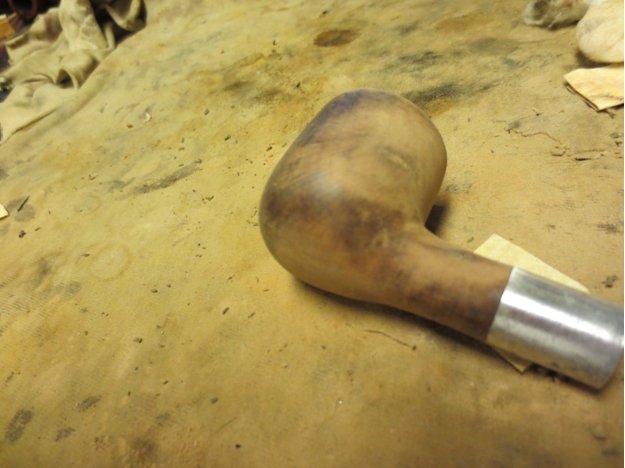
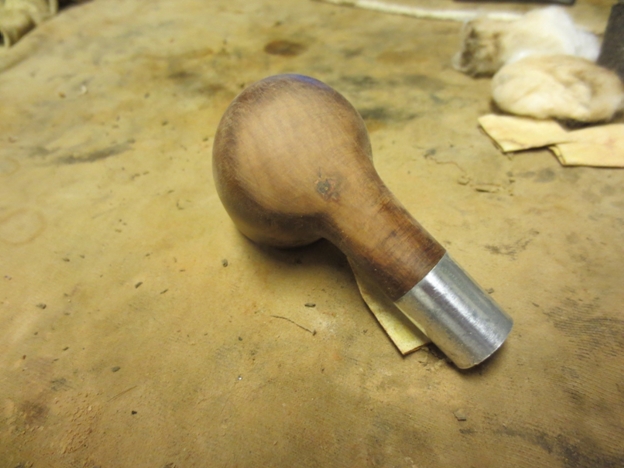
When the pipe was dry I buffed it with White Diamond and polished the bowl and stem. I gave it multiple coats of carnauba wax to protect and give it a shine. I buffed it with a soft flannel buff. The pipe is finished. It has come a long way from the pipe that I started with when I took it from the box. The repairs, though visible look pretty good. I expect them to hold for a long time and provide a quality smoke in an old Kaywoodie for whoever ends up with this old pipe. It is cleaned and ready for the next pipeman. IMG_1741 IMG_1742 IMG_1743 IMG_1744

One I had not seen before: Anabaso Genuine Meerschaum Absorbent Smoking Filters


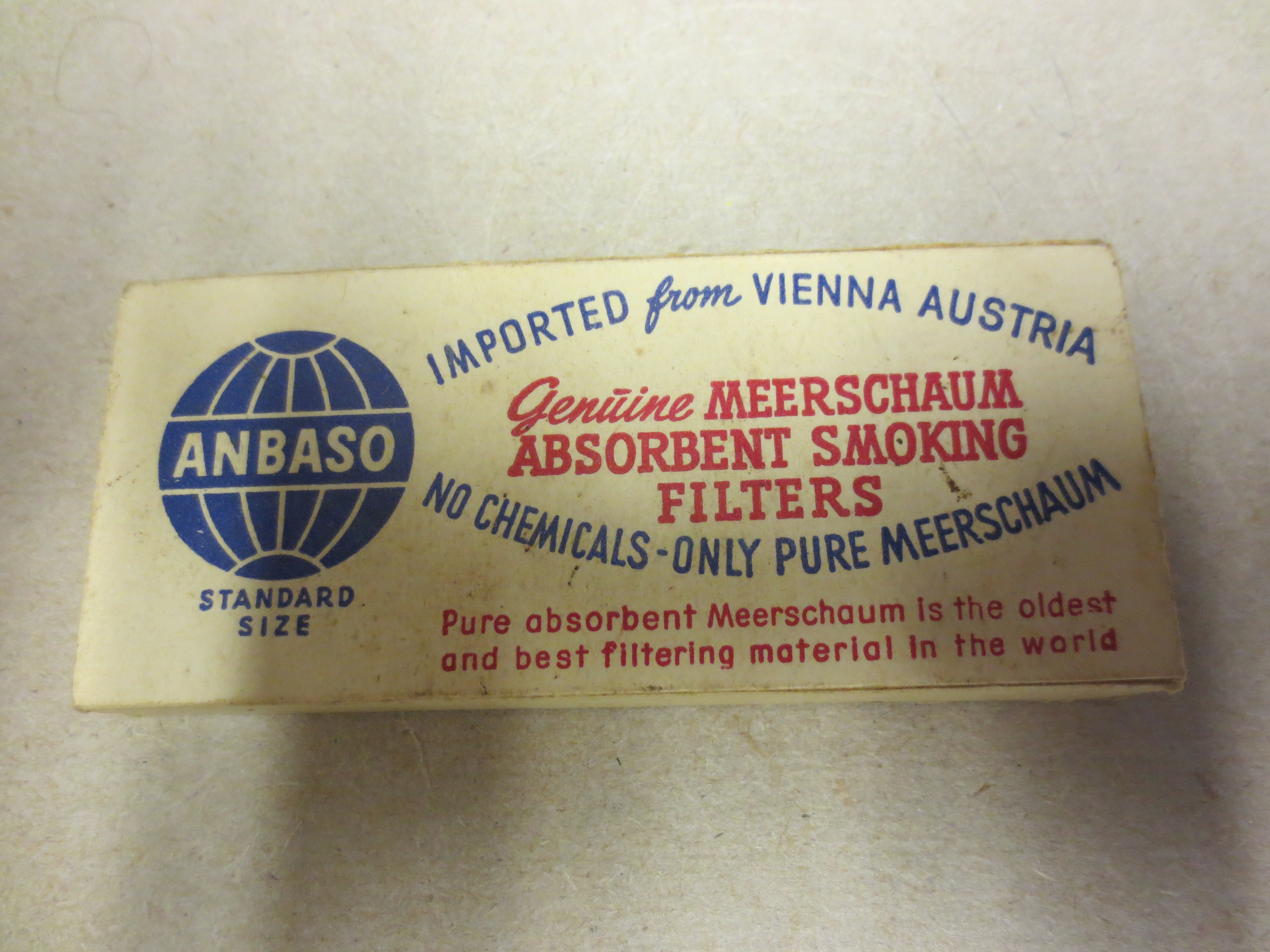
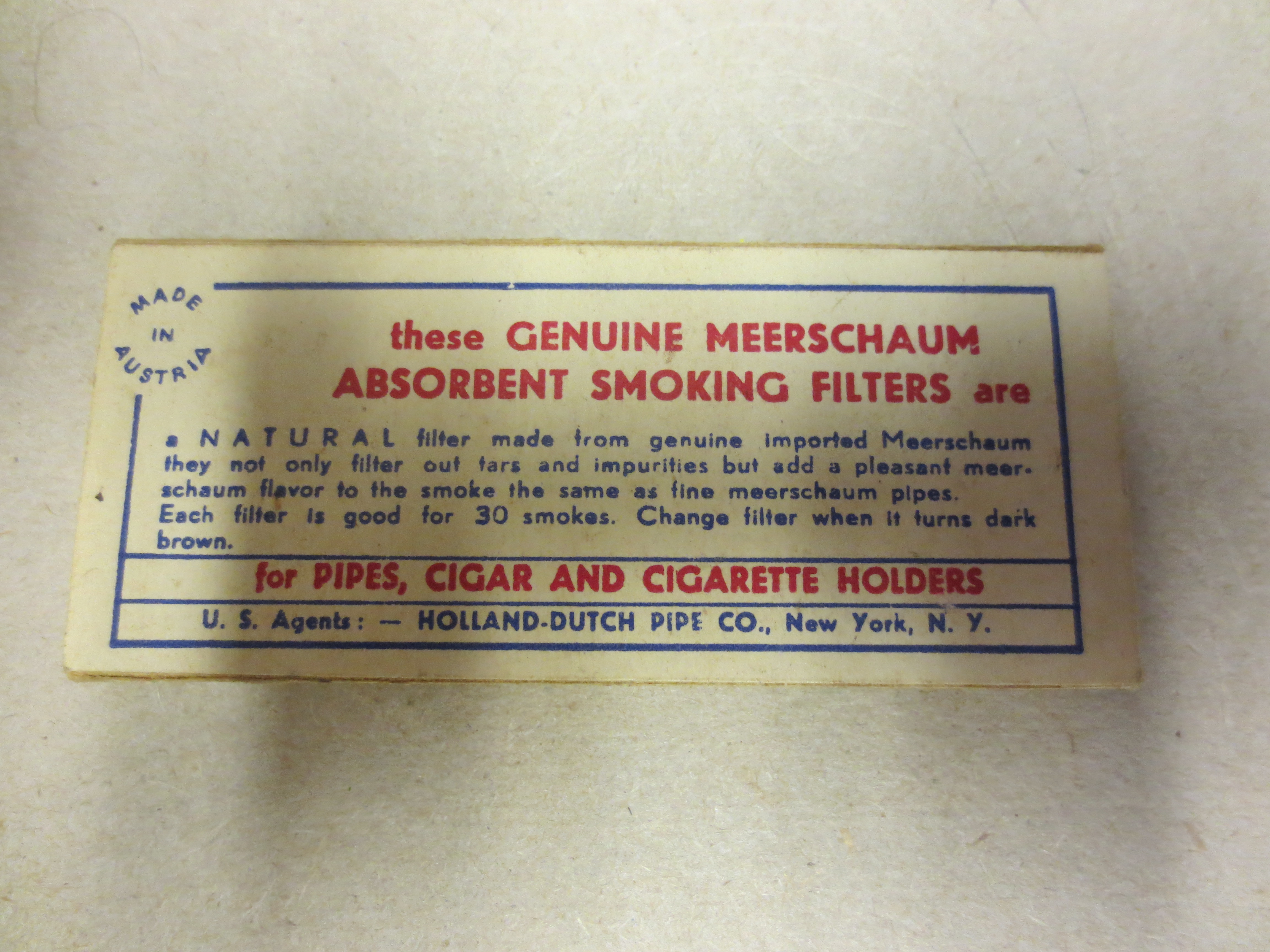
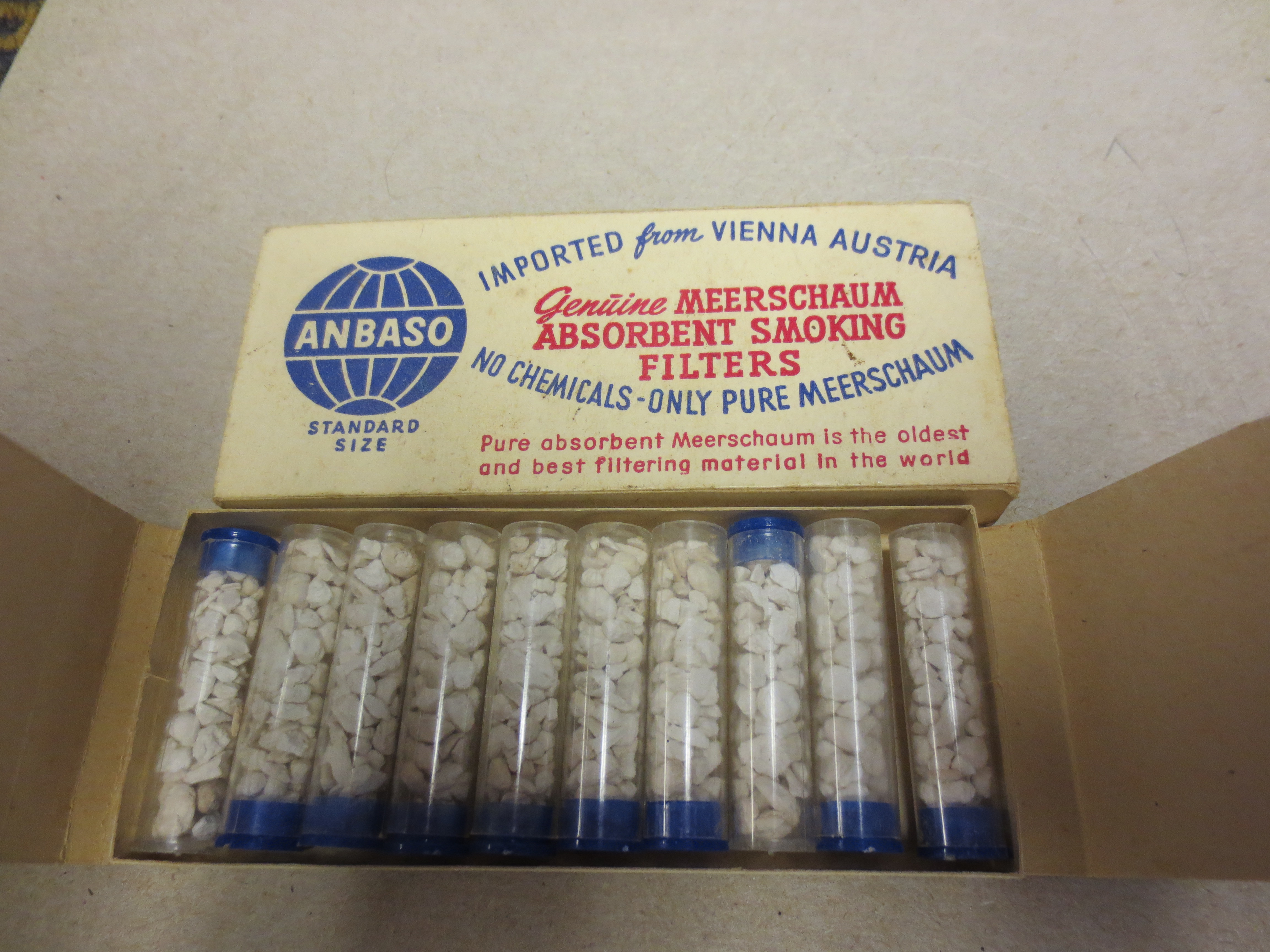
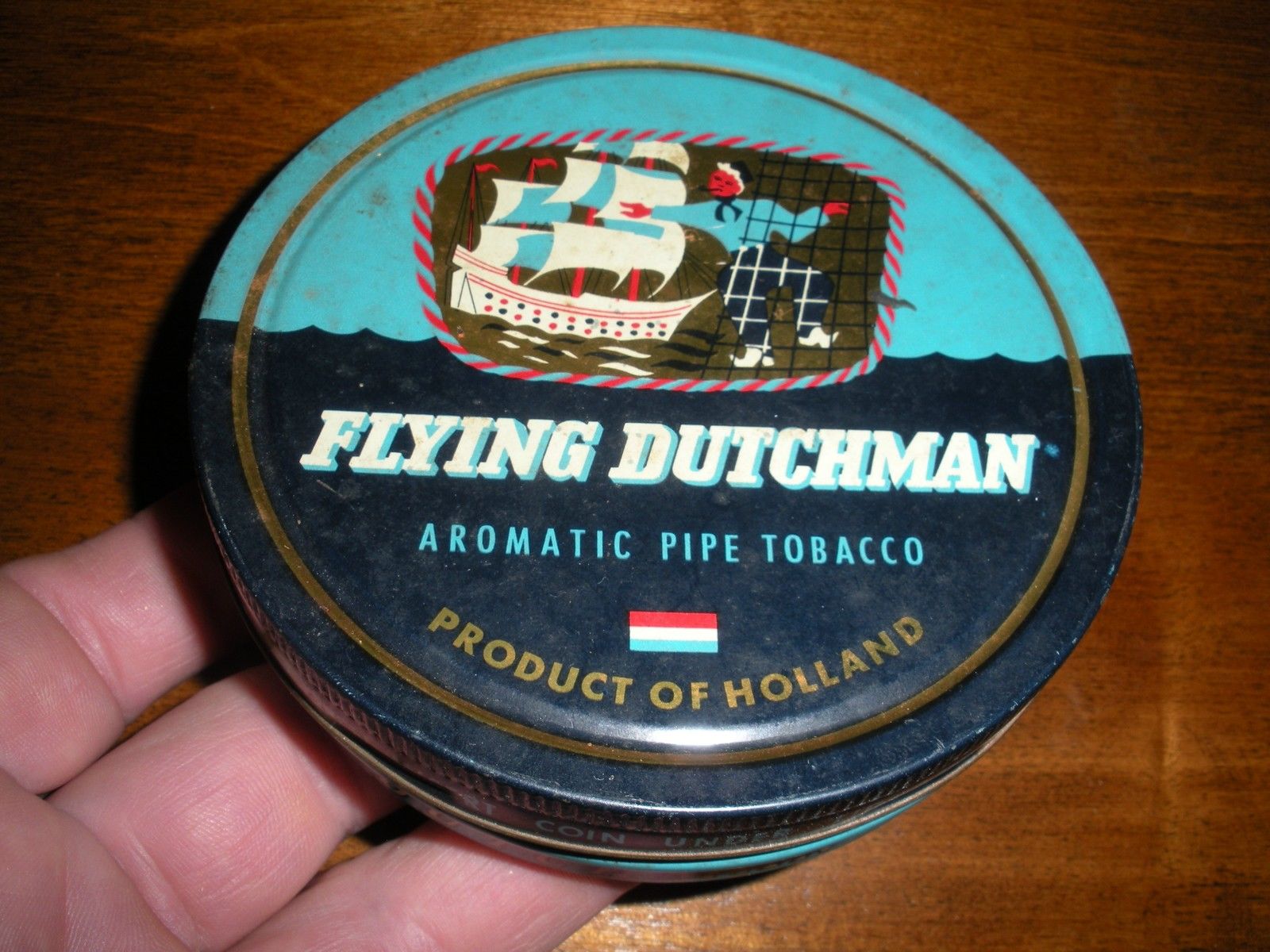
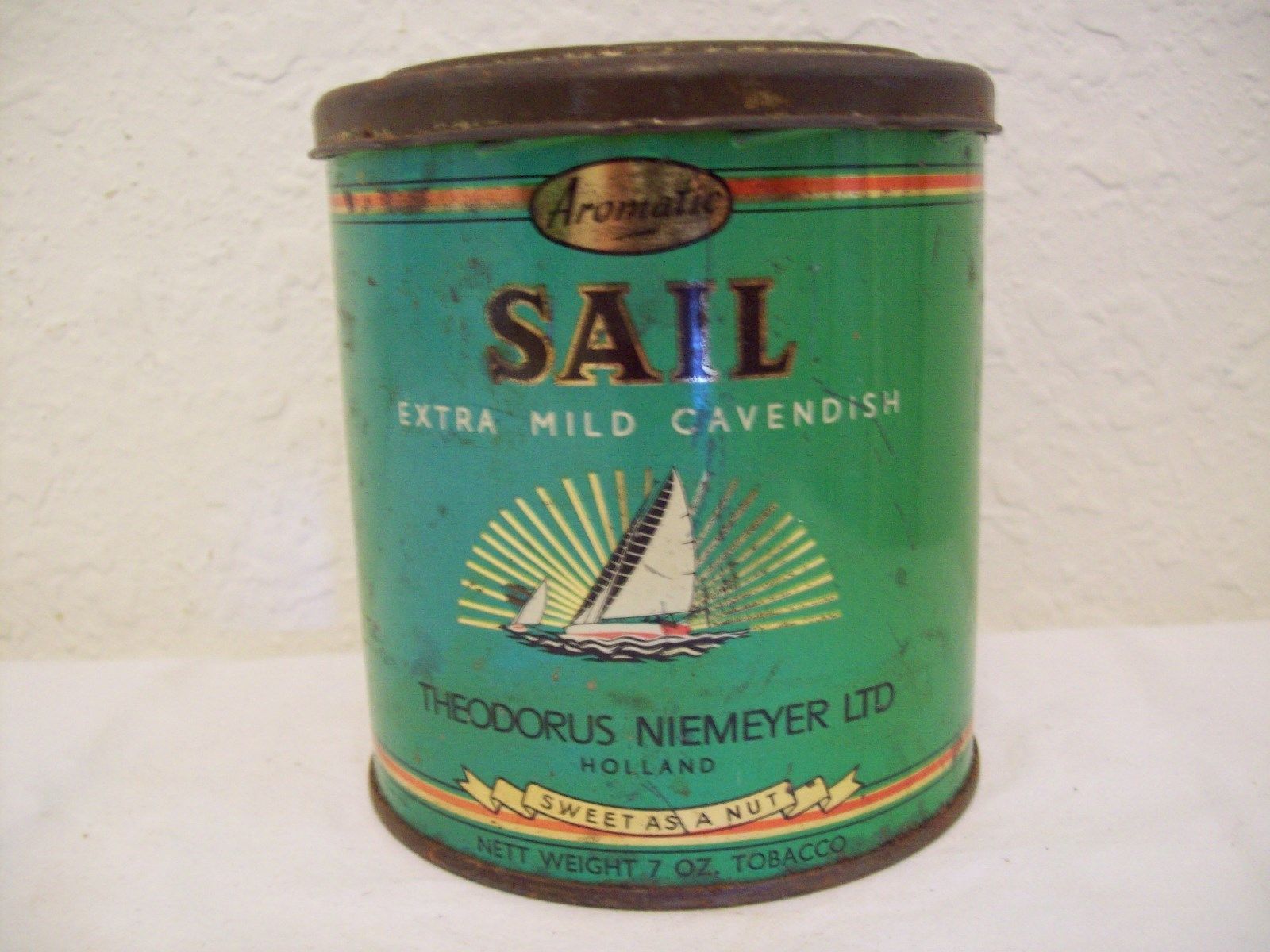
I received a gift box of pipe bowls today and in the box was this little package of filters. It has a price tag of .25 for 10 filters. Someone had penciled in $1 under the .25 on the tag. The front is printed Anabaso in a globe over Standard Size. Next to that it reads Imported from Vienna, Austria over Genuine Meerschaum Absorbent Smoking Filters. Underneath it reads No Chemicals – Only Pure Meerschaum. Underneath all of the above it reads Pure absorbent Meerschaum is the oldest and best filtering material in the world. IMG_1670 On the back side of the box it reads: Made in Austria in a circle in the left corner. Next to that it reads as follows: these Genuine Meerschaum Absorbent Smoking Filters are a natural filter made from genuine imported Meerschaum they not only filter out tars and impurities but add a pleasant meerschaum flavor to this smoke the same as fine meerschaum pipes. Each filter is good for 30 smokes. Change the filter when it turns dark brown. In a band on the bottom of the backside it reads for Pipes, Cigar and Cigarette Holders. The last line reads U.S. Agents – Holland-Dutch Pipe Co., New York, N.Y. IMG_1671 Inside was a sliding tray. On each end it is printed 10 Filters. The tray holds 10 plastic filters. The clear plastic tube is filled with meerschaum chips with a blue plastic cap on the top. The cap and the tube both have two have moon openings for the smoke to flow through. The meerschaum chips collect the tars and the imperfections. IMG_1672 This is a great piece of Tobacciana that I had not seen before. In the back of my mind I vaguely remembered the Holland-Dutch Pipe Co. But I could not quite connect it with what they had made. I did some digging online to try to identify the Holland-Dutch Pipe Co. of New York and found a link to Theodorus Niemeijer Holland Dutch Pipe Co. NY. This was the company that made and imported Flying Dutchman Tobacco and the various blends of Sail Tobacco into the US. I have smoked quite a few of their blends over the years and have enjoyed them all at various times in my journey with the pipe. $T2eC16NHJIYFHNr7trBOBS!je0DN9Q~~60_57 $(KGrHqZHJBYFHyTwqIb7BSDuDu5nNg~~60_57

Restoring an Old BBK Hunter Pipe


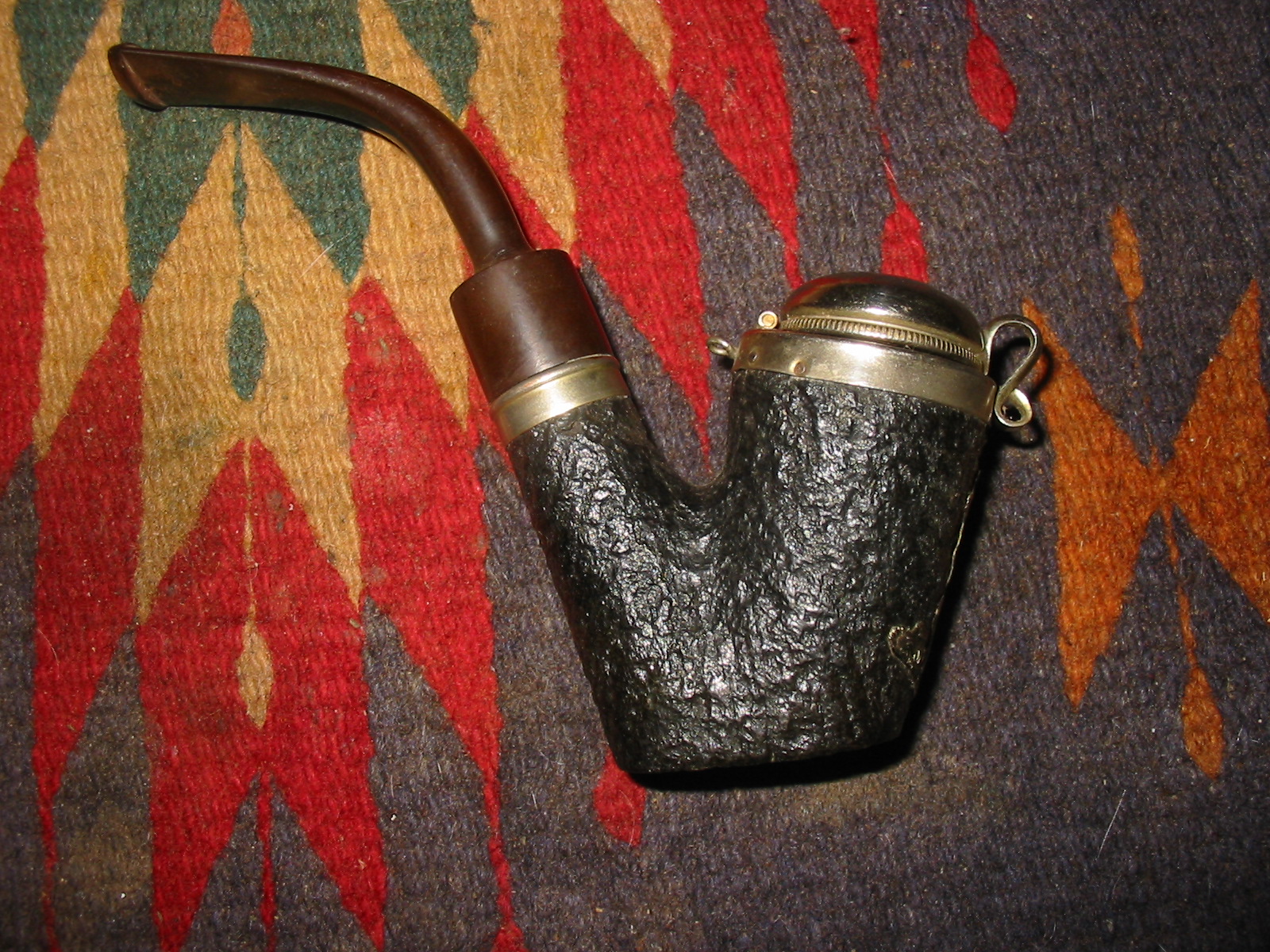
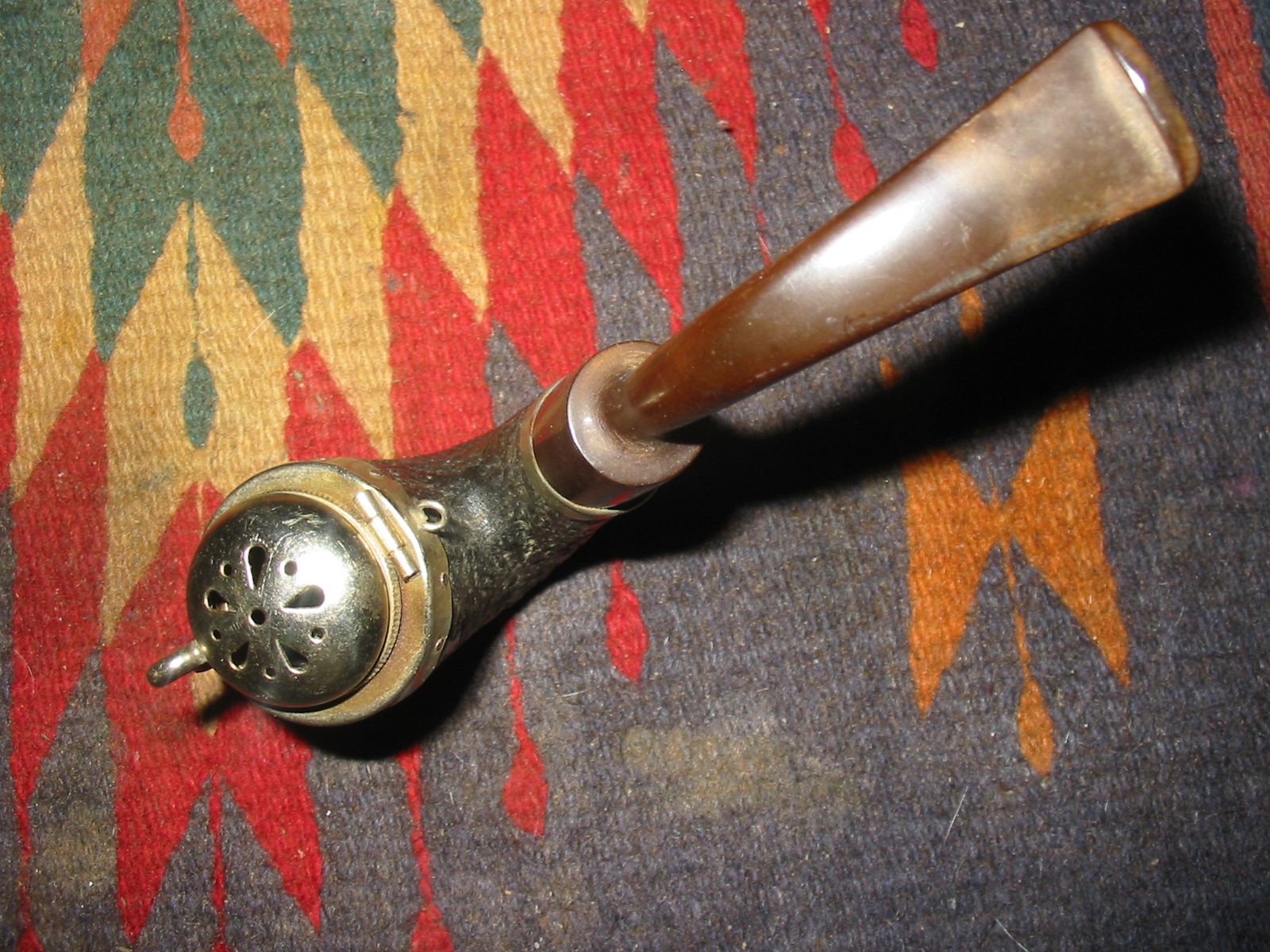
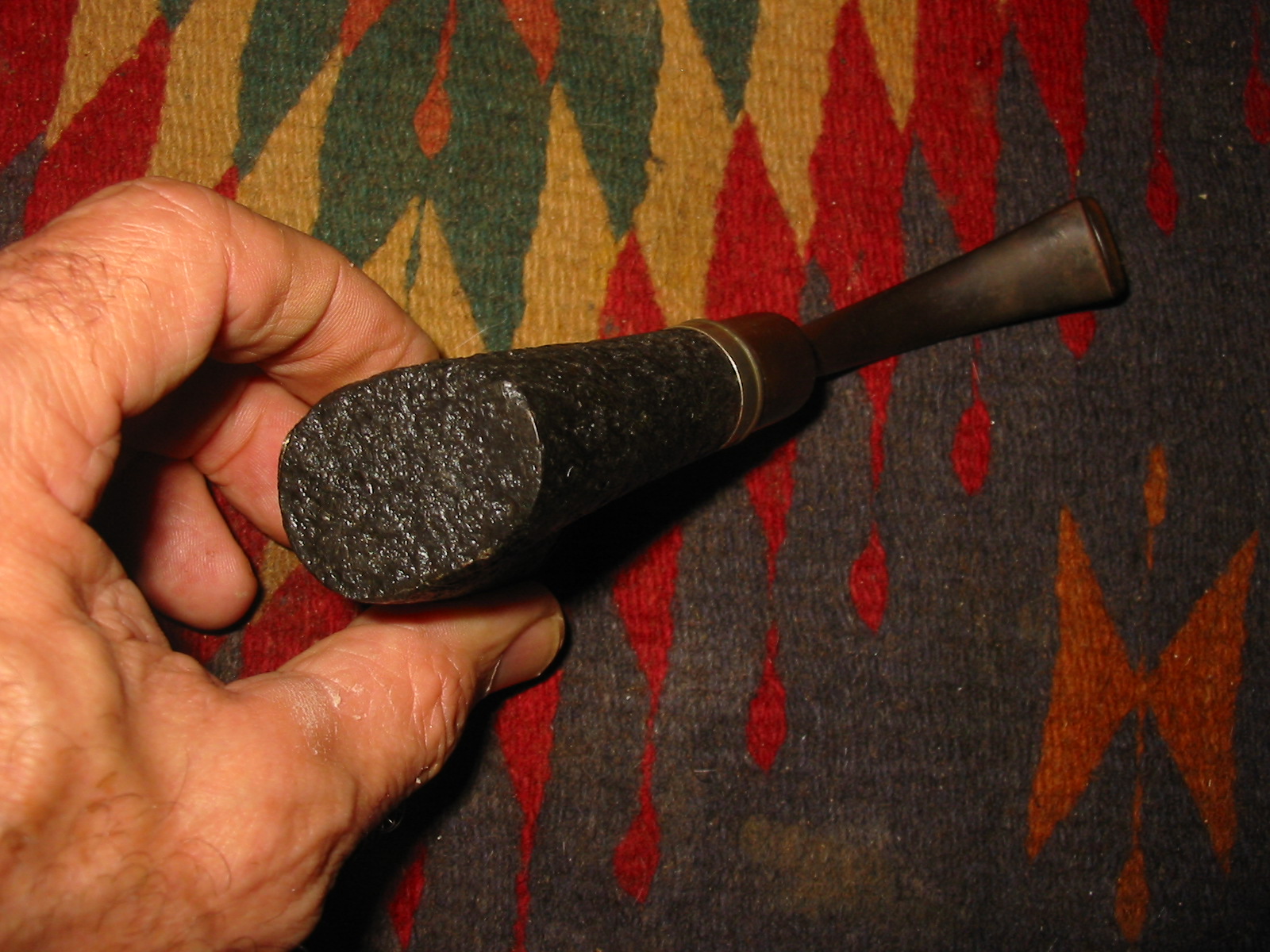
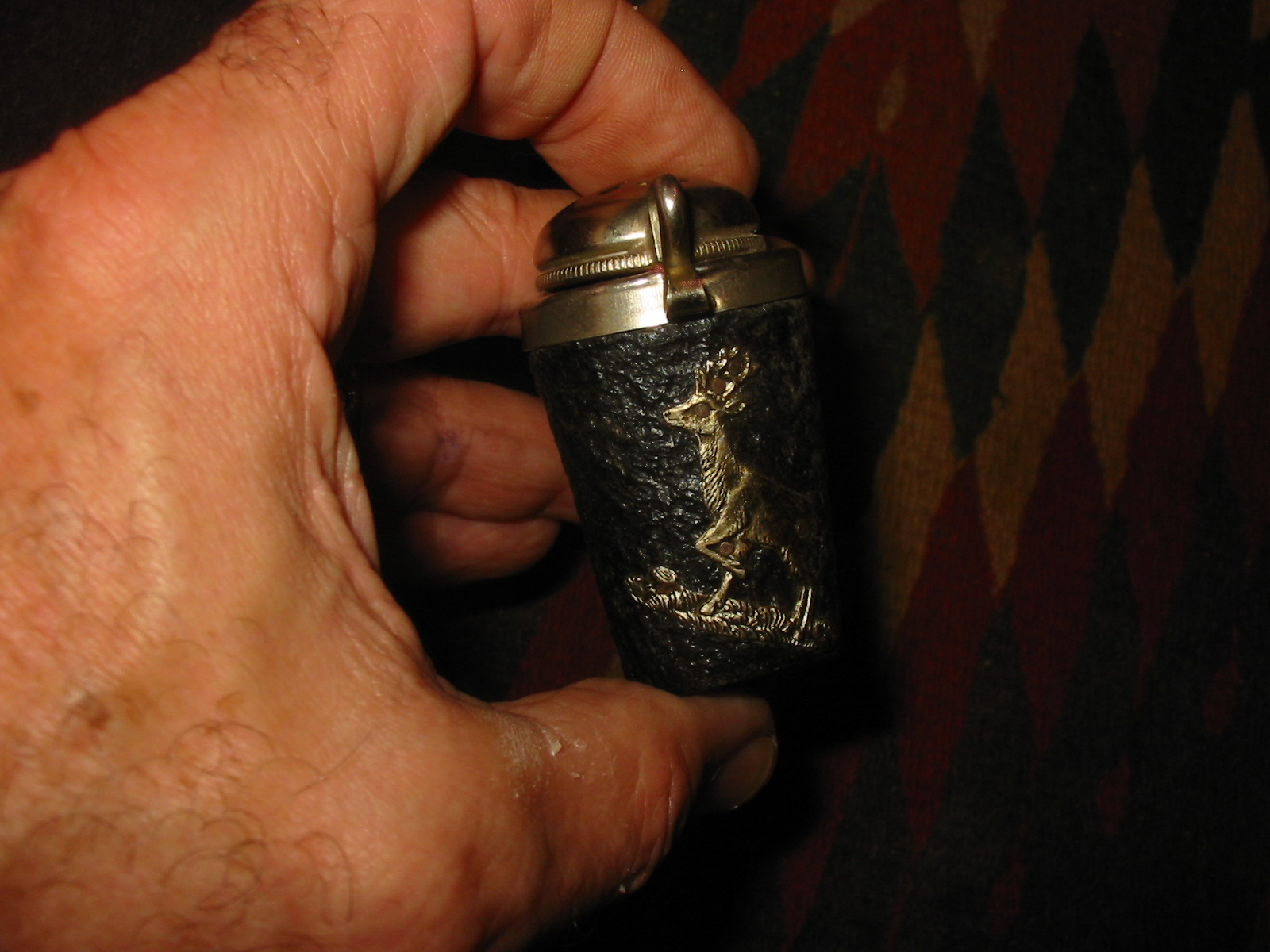
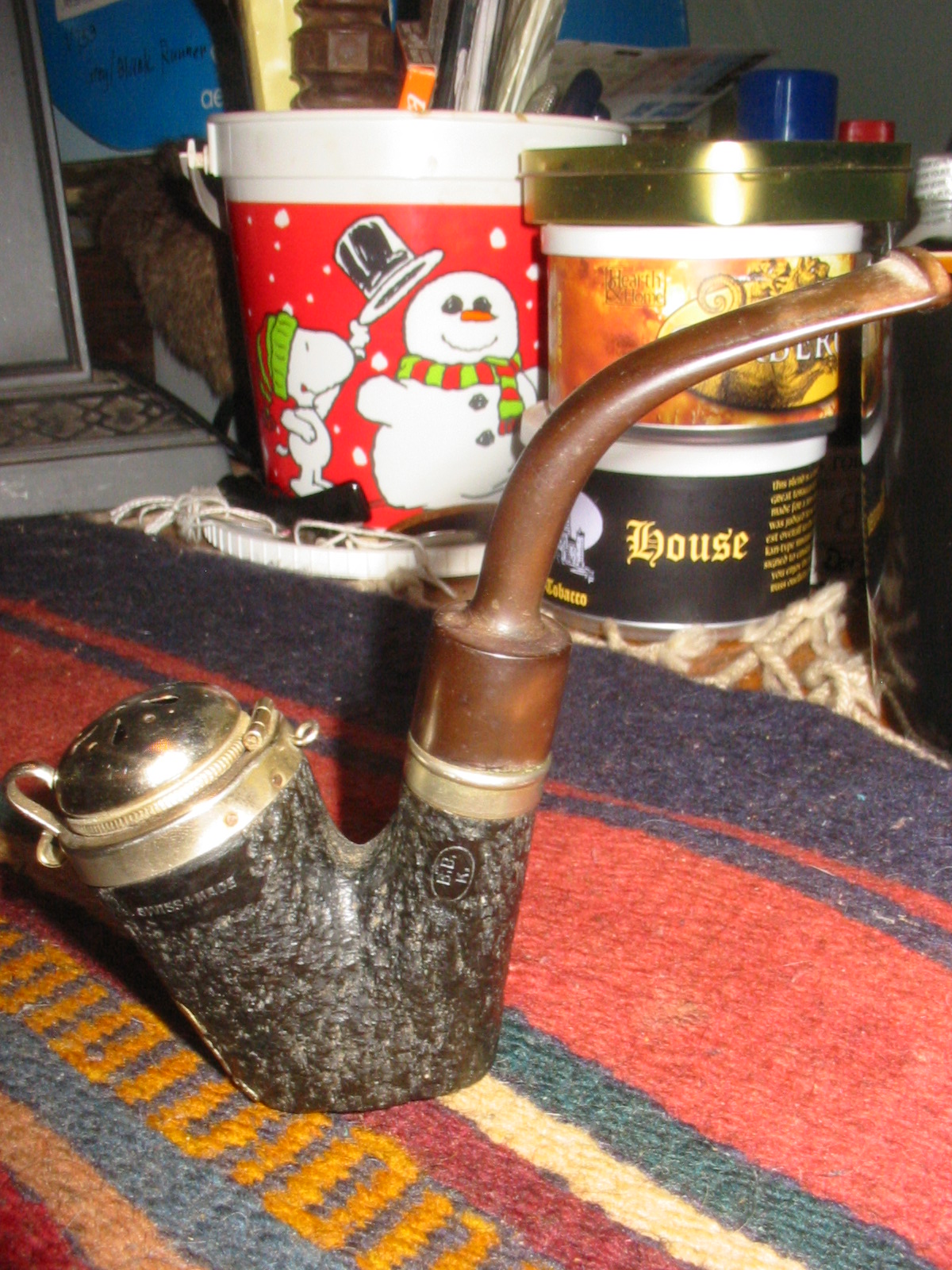
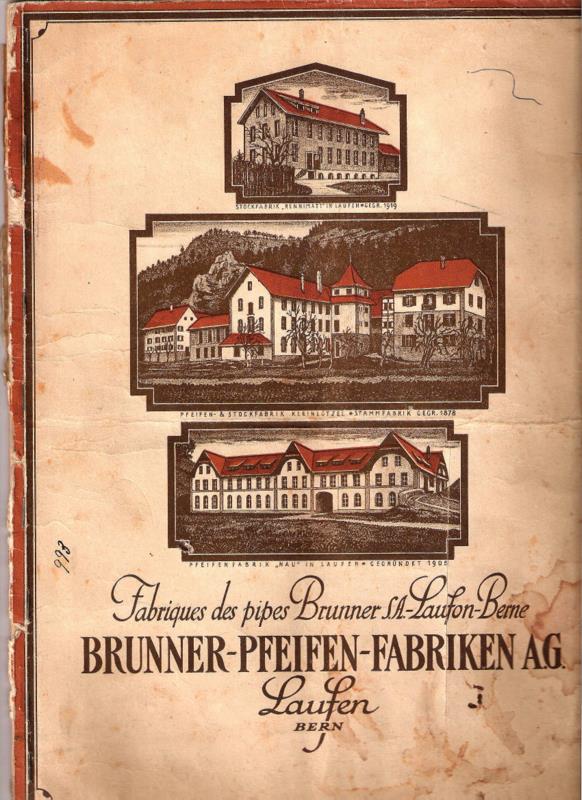
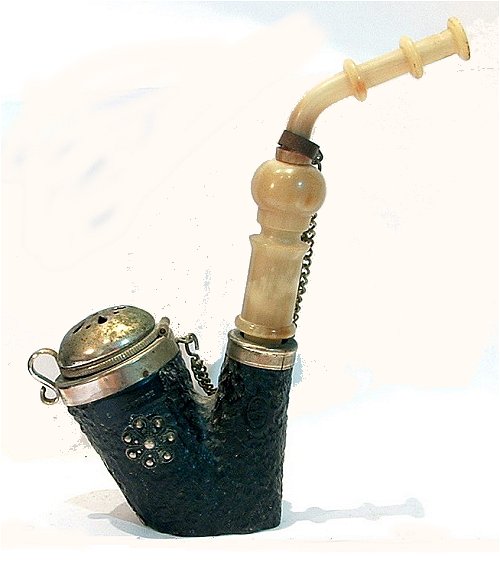
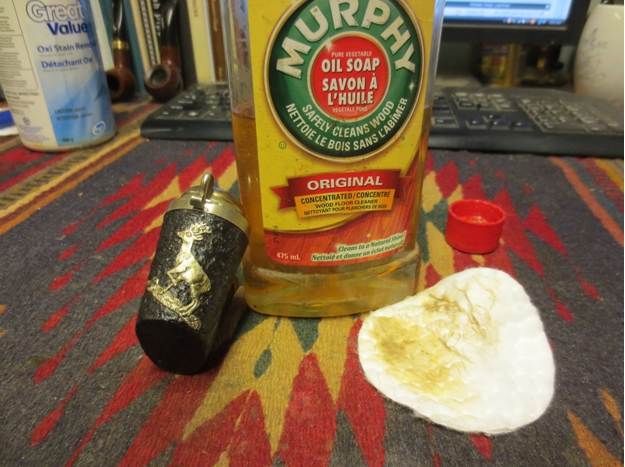
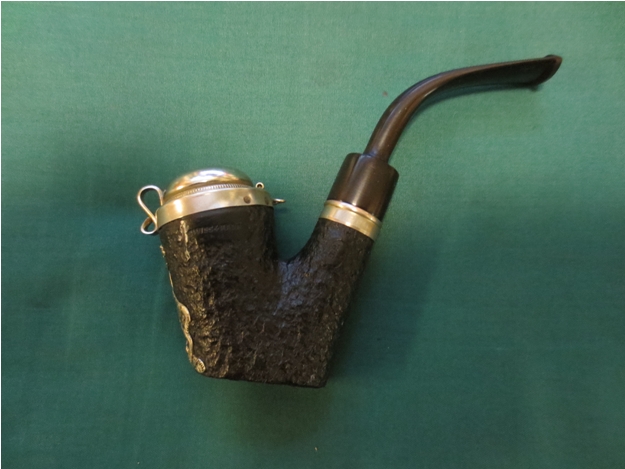
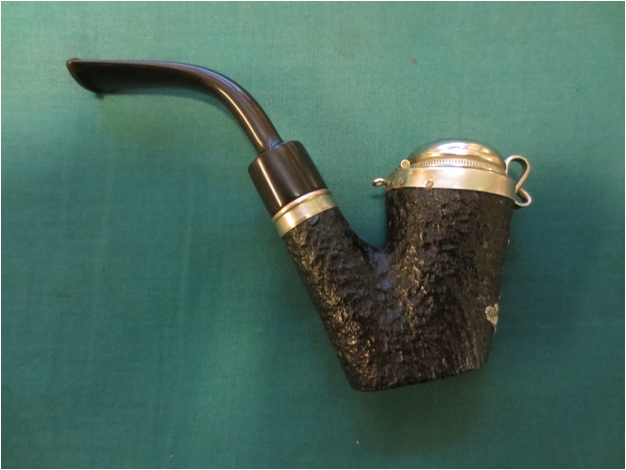
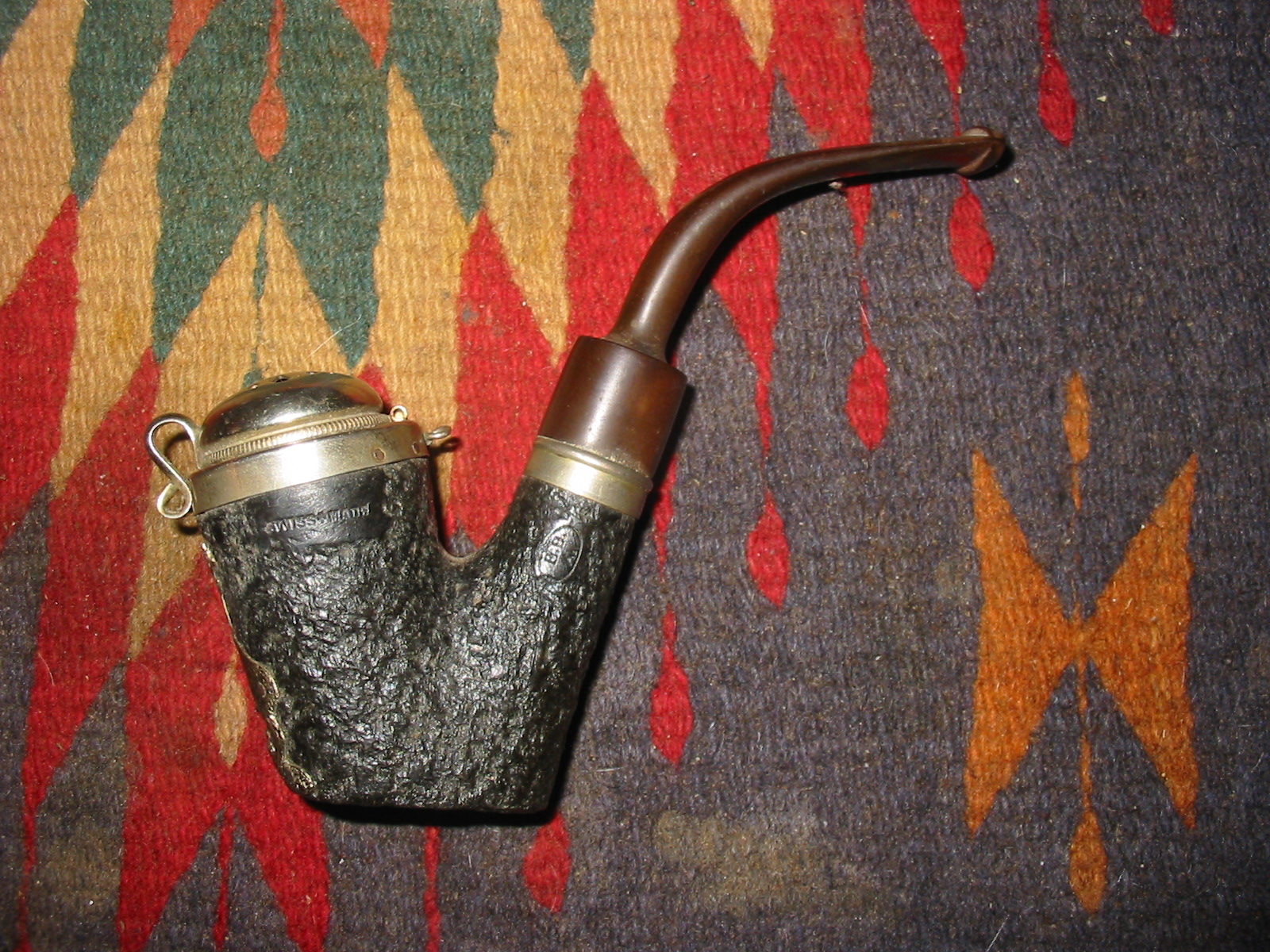
In the box of pipe bowls that I received was a complete sitter with a silver shank band and windcap. Upon looking at the side of the bowl I could see that it was stamped Swiss Made and on the side of the shank it was stamped BBK. The finish was sandblasted and well done. The stain was either a dark brown or a black. The cap was in good shape. Under the cap the silver rim trim was also blackened and tarry. The end cap/band on the shank was also silver and quite nice. Inside the cap was blackened and the bowl was caked with a crumbly aromatic smelling cake. The inside of the shank was black with tars and oils and the stem was very tight in the shank. The stem was clean of tooth marks and dents but was badly oxidized. On the front of the bowl was a carved/pressed stag climbing the bowl. There were nails holding the top rim cap and the stag emblem on the briar. On the back of the rim cap was a small silver ring where a chain had obviously been sometime along the way. It was missing as was the place on the stem where it attached to the stem. I have seen these before on German-made pipes as a means of keeping the stem and bowl together.
IMG_8233 IMG_8234 IMG_8236 IMG_8237 IMG_8238
I have cleaned up several BBK pipes over the years. The last one was a square shank panel billiard that I have written about previously on the blog https://rebornpipes.com/2012/09/21/refurb-on-a-bbk-panel-billiard-swiss-made/. I had never done much research on the maker or the meaning of the BBK initials. I knew that it was a Swiss made brand as the shanks of all the pipes I had cleaned up and restored were stamped with that moniker. I did not however have any idea of the history of the brand. This time I decided to do a bit of digging and see what I could find out about the pipemaker. IMG_8245 I checked one of my usual sources of information, Pipedia and found that there was actually quite a bit of helpful information to be found there. http://pipedia.org/index.php?title=Bru-Bu. I have copied, edited and summarized that material below. I find the information quite fascinating to read and gives me more appreciation for the pipes themselves.

“Josef Brunner, oldest son of the farmer Konstantin Brunner from the hamlet Nieder-Huggerwald, belonging to the community of Kleinlützel (Canton Solothurn), was sent in 1871 to a pipe turner in Winkel/Alsace for his apprenticeship. As was usual at that time, Brunner wandered as a journeyman after ending the apprenticeship. Eventually, he went to Saint-Claude, France which was then the world’s stronghold of briar pipe manufacturing. There, Brunner was able to increase and deepen his knowledge in the field of industrial pipe making. When he returned home in 1878, he installed a small turner’s workshop in the house of his father. With the energetic support of his two younger brothers, he began to produce tobacco pipes of his own calculation, taking them to the markets in the surrounding area. In 1893, Bernhard Brunner’s wife inherited the mill in Kleinlützel. At this point, the pipe fabrication was transferred to an annex belonging to the mill. Now it was possible to drive the machines by water power – an important relief to the workers and a considerable innovation compared to the previous pedal-driven system.

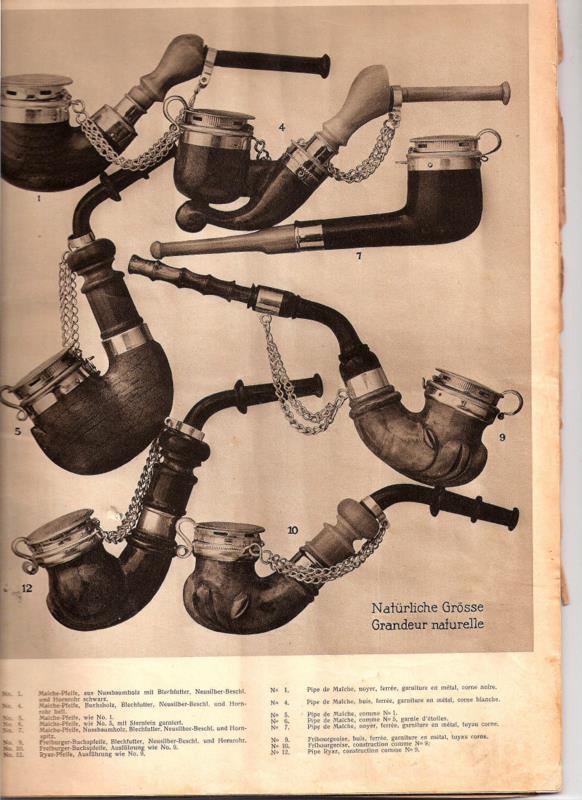
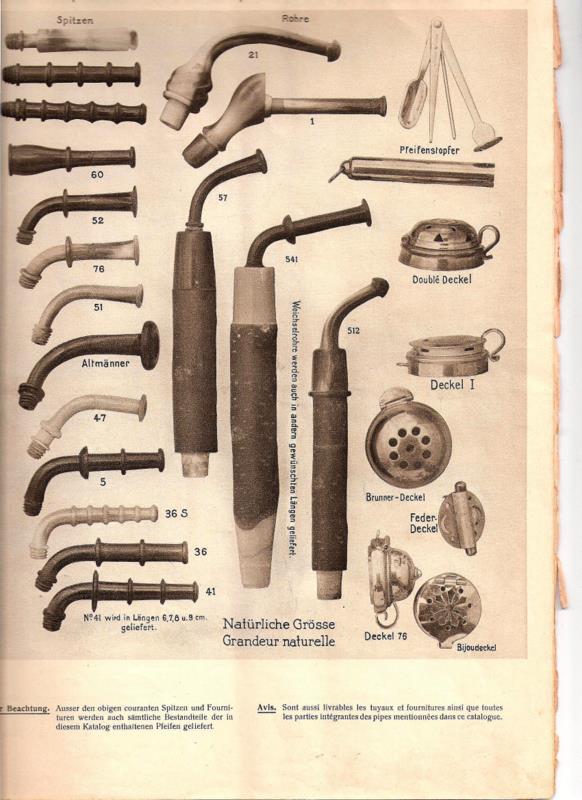
On the Pipedia site they also had some photos of a catalogue from BBK that was interesting. They note that it was an early catalog and came to them courtesy of Guido Brunner, Josef Brunner’s grandson.” Unbenannt Unbenannt2 Unbenannt3

Also on the Pipedia site was a photo of a pipe that was very similar to the one I have but obviously older. The stem on mine is not horn but is rather a hand cut vulcanite that makes it much newer in age than the one below. However the shank cap, the rim cap, the Double Deckel wind cap (pictured on the last page of the above catalogue are the same. The one I have is also missing the chain from the cap to the stem but the finish and everything else about the pipe below is parallel to the one I worked on. It was interesting to see how they attached the chain to the stem. That gave me an idea on how to attach a new chain to the one that I have. The stem on this one however made me question whether the one that I had was an original or some newer replacement stem. More digging would be required to know whether my stem was original or not. BBK_9 A bit more digging revealed one for sale on EBay that had the exact same stem as the one I have. It also was missing the chain and the shape and top cap was slightly different but the stem was identical. Now I knew that the one I had was at least original. BBK Further information was found on the Pipedia site that spoke of the growth of the company. “The production was boosted, and business developed pleasantly. A new factory building was realized by 1896. Corresponding to another demand, a department producing walking sticks was added in 1900. The pipes from Kleinlützel were well appreciated and received many awards, e.g., a gold medal for outstanding craftsmanship at the National Swiss Fair in Bern in 1914.

The business developed so well after the turn of the century that even a lack of workers in Kleinlützel occurred. The problem was solved by founding a subsidiary company in the small nearby town Laufen an der Birs in the Canton of Bern. This plant didn’t exist too long. The disastrous economic crisis in the 1920’s and early 1930’s forced the Brunner family to restrict the fabrication of pipes dramatically. In addition the big French pipe factories in Saint-Claude – although suffering from the same circumstances – flooded the Swiss market with pipes at prices that couldn’t be matched by Swiss producers. By 1931 ca. 150 of 180 Brunner employees had been sacked – the rest remained in Kleinlützel, where the cheap electric energy ensured a meager survival.

In 1932, Mr. Buhofer joined the Brunner family. The company was named Brunner-Buhofer-Kompagnie, and, shortly thereafter, Bru-Bu. Buhofer had made his fortune in the United States but, homesick, returned to Switzerland to search for a new challenge.

Bru-Bu’s fabrication program was expanded with many handcrafted wooden art articles: carved family coats of arms, bread plates, fruit scarves, and – more and more – souvenir articles for the expanding Swiss tourism industry. Pipes remained in the program continuously, but the offerings changed from traditional Swiss pipes to the more standard European shaped pipes. Bru Bu is widely known as BBK.”

One further point of interest to me was found in the last paragraph of the Pipedia article linking BBK pipes to Former Nielsen. I have two of Former’s pipes so this stood out to me.

“At some point in the late 1970’s, Bru-Bu went out of business. Some of the Brunners, as far as known, continued as timber traders. But in 1986 new life filled the old Bru-Bu pipe workshop, when Dr. Horst Wiethüchter and “Former” Nielsen started to produce the high-grade Bentley pipes there.”

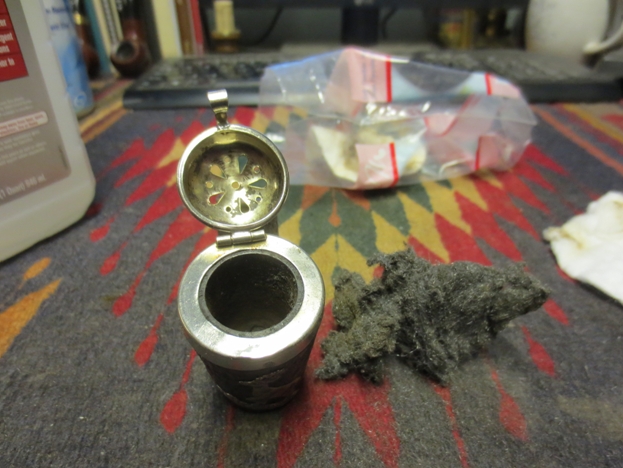
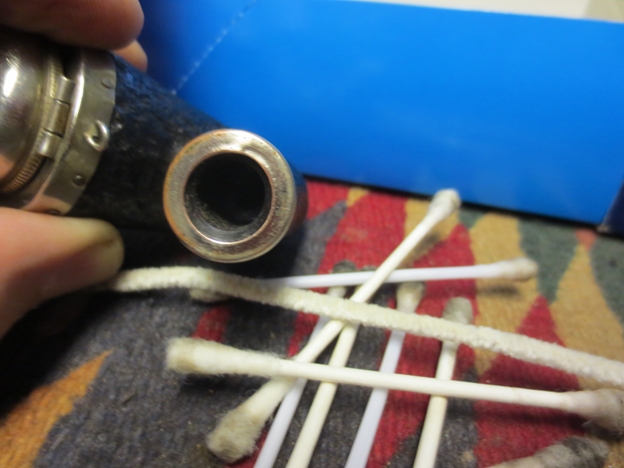
I am not sure why it works this way but once I have some background information on a pipe I move into cleaning and restoring it with more gusto. It seems to energize me knowing a little about the company or individual who carved the pipe I am working on at the moment. I took the next two photos show the inside of the lid and the front of the bowl before I started cleaning up the pipe. The tars and oils on the inside of the lid were rock hard did not come off with scrubbing with alcohol or oil soap. Instead it would take more work to remove it. IMG_1685 IMG_1686 I reamed the pipe with a PipNet reamer (also Swiss Made by the way) to remove the cake buildup around the inside of the rim. Once the bowl was clean and smooth I wiped it out with cotton swabs and isopropyl alcohol. IMG_1690 IMG_1691 I scrubbed the briar with undiluted Murphy’s Oil Soap and then wiped it off with a cotton pad. The finish was in great shape under the grime and once polished with a soft cloth and Halcyon II wax it had a rich glow to the sandblast. I wiped down the silver with a silver polishing cloth and the tarnish on the rim cap, the shank cap, wind cap and stag emblem came off very easily and the silver shone. IMG_1692 IMG_1694 IMG_1693 I scrubbed the inside of the windcap and the rim with 0000 steel wool to remove the tars and oils that had hardened on the surface of the caps and the inside of the windcap. It came off easily and then I polished with the silver polishing cloth. IMG_1695 I cleaned out the inside of the shank with pipe cleaners, cotton swabs and isopropyl alcohol. The tars that came out of the shank were black and thick. It took quite a few swabs before the shank and sump area were clean and the cotton was still white after I ran it through the shank. IMG_1696

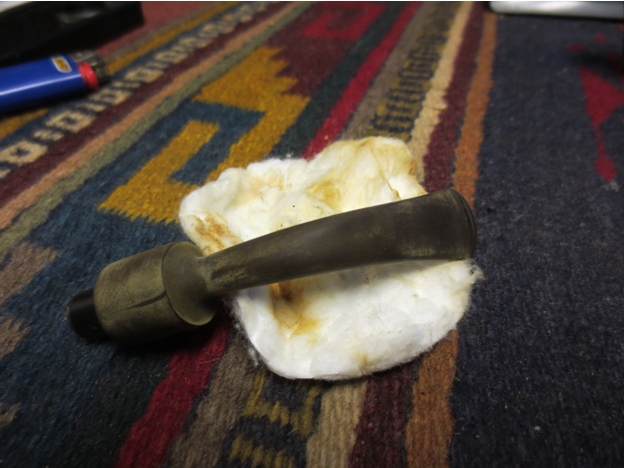
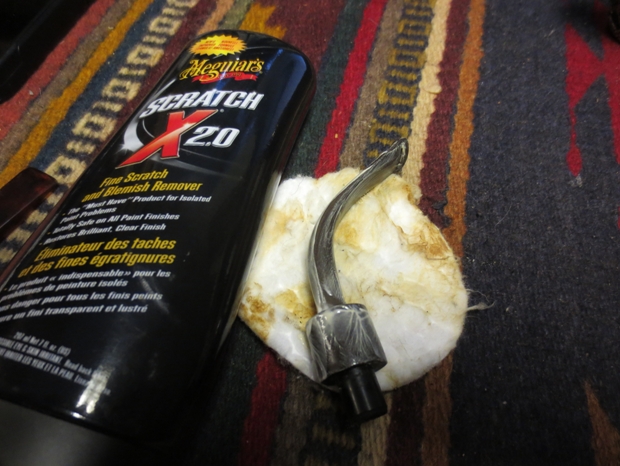
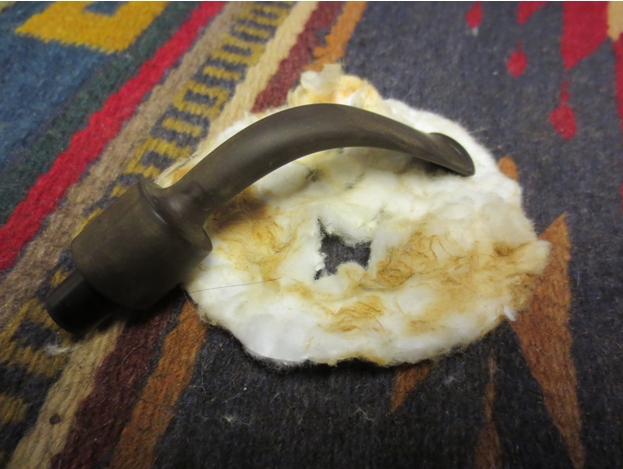
IMG_1697 The stem had been soaking in Oxy Clean while I worked on the bowl. I removed it from the bath and dried it off. The oxidation had softened significantly and I was able to see the black of the vulcanite show through the brown oxidation. IMG_1698 I scrubbed the stem with Meguiar’s Scratch X2.0 and once dry wiped it off to see how much more of the oxidation had been removed. The second photo shows the stem after I had wiped off the polish. There was still a lot of work to do on this stem. IMG_1699 IMG_1700 I sanded the stem with 220 grit sandpaper and then with medium and fine grit sanding sponges to remove more of the surface oxidation. It took some careful sanding but the oxidation was finally coming off and the stem was moving toward the place where I would sand it with micromesh sanding pads. IMG_1701 I buffed the stem with red Tripoli and White Diamond before sanding with the micromesh pads. I wet sanded with 1500-2400 grit pads and dry sanded with 3200-12,000 grit pads. I rubbed the stem down with Obsidian Oil between each set of three pads. I buffed the stem with White Diamond and then rubbed it down with Obsidian Oil one last time. I buffed it with carnauba wax and then a soft flannel buffing pad to raise the shine. IMG_1702 IMG_1703 IMG_1704 I gave the silver caps a final polish with the silver polishing cloth, buffed the pipe by hand with a shoe brush and then took the final photos below. The finished pipe is ready to load a bowl and fire up its inaugural smoke. I still have to do a hunt for a piece of chain to connect the cap to the stem and make a strap or connector to hold it to the stem. IMG_1705 IMG_1706 IMG_1707 IMG_1708 IMG_1709

It’s All About The Aesthetics……. Isn’t It? – Alan Chestnutt


logo This article on Alan’s blog was one in which I was particularly interested. I had recently purchased and estate pipe that was advertised as carefully restored only to find that both the externals and the internals had not been truly cleaned. It seemed that the pipe had only received a good buff and polish and that was it for the cleanup and restoration. I found it irritating to say the least that I had purchased a pipe that cost me enough that it should have been cleaned and wasn’t but that the damage to the exterior had also not been dealt with. In this article Alan speaks about the methodology used at reborn briar to clean estate pipes. It also provides a check list for the hobbyist when he wants to clean up the estate pipes discovered on a pipe hunt. Thanks Alan. The original article can be read at http://estatepipes.co.uk/pipeshop/blog/its-all-about-the-aesthetics-isnt-it.html. Also be sure to check out other articles on the blog and visit Alan’s online shop.
259-1 The aesthetics of a restored estate pipe are an important factor. How the pipe looks on the outside is where most restorers concentrate their efforts. Especially if selling your pipes on the online marketplace, you will want the pipes to look good in photographs. These pictures are what the buyer sees, and will most likely base his opinion on whether to buy the pipe or not. I get tons of emails from satisfied customers after they receive their pipes about how good they look – that they are like a brand new pipe. But these are just external aesthetics, which is the easiest part to achieve

However, to me the most important part of any estate pipe restoration lies not in the external aesthetics, but in the internal functions, cleanliness and sterilisation of the pipe. This is the point that most pipe restorers miss. You have to be prepared to roll your sleeves up and get your hands dirty to accomplish this task properly. I am amazed at the number of so called restored estate pipes that I get in from eBay that look wonderful on the outside, but have had no attention paid to the inside of the pipe – and I have to start the cleaning process from scratch.

The following is how I prepare the inside of a pipe to make it pleasurable and safe for a new smoker.
The Stem: It is amazing the number of pipes I receive that seem to have never had a pipe cleaner put through the stem. I have had pipes where the stem is completely blocked with tar. When I soak the stem in a bath to soften any outside oxidation, this also helps to start to soften any internal tars. A final bath in hot water and soap helps this process along. The inside of the stem will first be scrubbed with bristle pipe cleaners, and then the stem sill receive a hot alcohol retort. This will help to soften any remaining stubborn tar in the stem. Continual scrubbing with both bristle and normal pipe cleaners using alcohol follows until they come out clean. Particular attention is given to the sides of the slot and any filter chambers, as these are the places where most tars gather. Finally the stem airway and slot is polished internally to allow for smooth transition of the smoke. This provides both a clean and sterilised mouthpiece to the pipe.

The Bowl Chamber: All excess cake and carbon are removed. If you are restoring one of your own pipes, it is advisable to leave a thin layer of cake inside. The cake in a pipe will retain the oils of the smoked tobaccos. As I don’t know what either the previous smoker or the new smoker’s preferred tobacco is, I do not want to leave any ghosting in the pipe which is why I remove all remnants of carbon. The inside of the bowl is then hand sanded with 600 grit wet and dry paper to leave a smooth finish. Removing all the cake also lets me examine the inside of the chamber for defects.
shank-internal
The Airway & Draft Hole:
Thick tars accumulate in the airway of a pipe, especially if they are not cleaned regularly after every smoke. I receive a number of pipes where the airway is completely blocked and wonder how the previous smoker was able to smoke the pipe at all. Pipes in this condition require the airway to be initially hand drilled using the correct size bit to remove this solid build up, as they will not even pass a pipe cleaner. After this the shanks are scrubbed with shank brushes and bristle pipe cleaners dipped in alcohol. This will never entirely remove all the residue on the first clean. The bowl is then given a hot alcohol bath using our special process. This will soften any remaining residue and the airway is again scrubbed with shank brushes and pipe cleaners until normal pipe cleaners come out clean. Finally the bowl receives a final hot alcohol retort to leech out any remaining flavours and totally sanitise the pipe leaving it clean and fresh.

The Shank: To me this is the most vital area of cleaning, yet it is the most disregarded area by the majority of restorers. The shank gathers a cake like build up, especially between the end of the airway and tip of the tenon. Given that this build up is made up from a mixture of tobacco tars and juices, ash and human saliva – it is vital that this is removed before the pipe is passed on to a new smoker! No amount of rubbing with Q-tips and alcohol will remove this hardened build up. In fact the cotton tips may come out looking clean leading the restorer to think that the area is ready for use – wrong! We use a specially adapted tool to scrape out this cake like residue. The first attempt at this will not remove all remnants. Only after the pipe bowl has been given its initial special process hot alcohol bath, will this soften the remaining residue and the shank is scraped out again. The shank can now be scrubbed out with a shank brush and Q-tips dipped in alcohol until they come out clean. Finally the stummel will be given a hot alcohol retort which will remove any remaining oils and leave the pipe clean, fresh and sanitised. The picture shows a before and after shot of a recently restored 1906 Peterson Patent pipe, displaying what a properly restored shank should look like.

At Reborn Briar, we pride ourselves on both the appearance of our restored pipes and the attention to detail of the internal mechanics. Using our special processes means that you will receive a restored pipe that will smoke as clean and fresh as a new pipe and provide you with many years of smoking pleasure ahead.

Yello-Bole Spartan – A Brylon Pipe Restemmed and Restored


Blog by Steve Laug

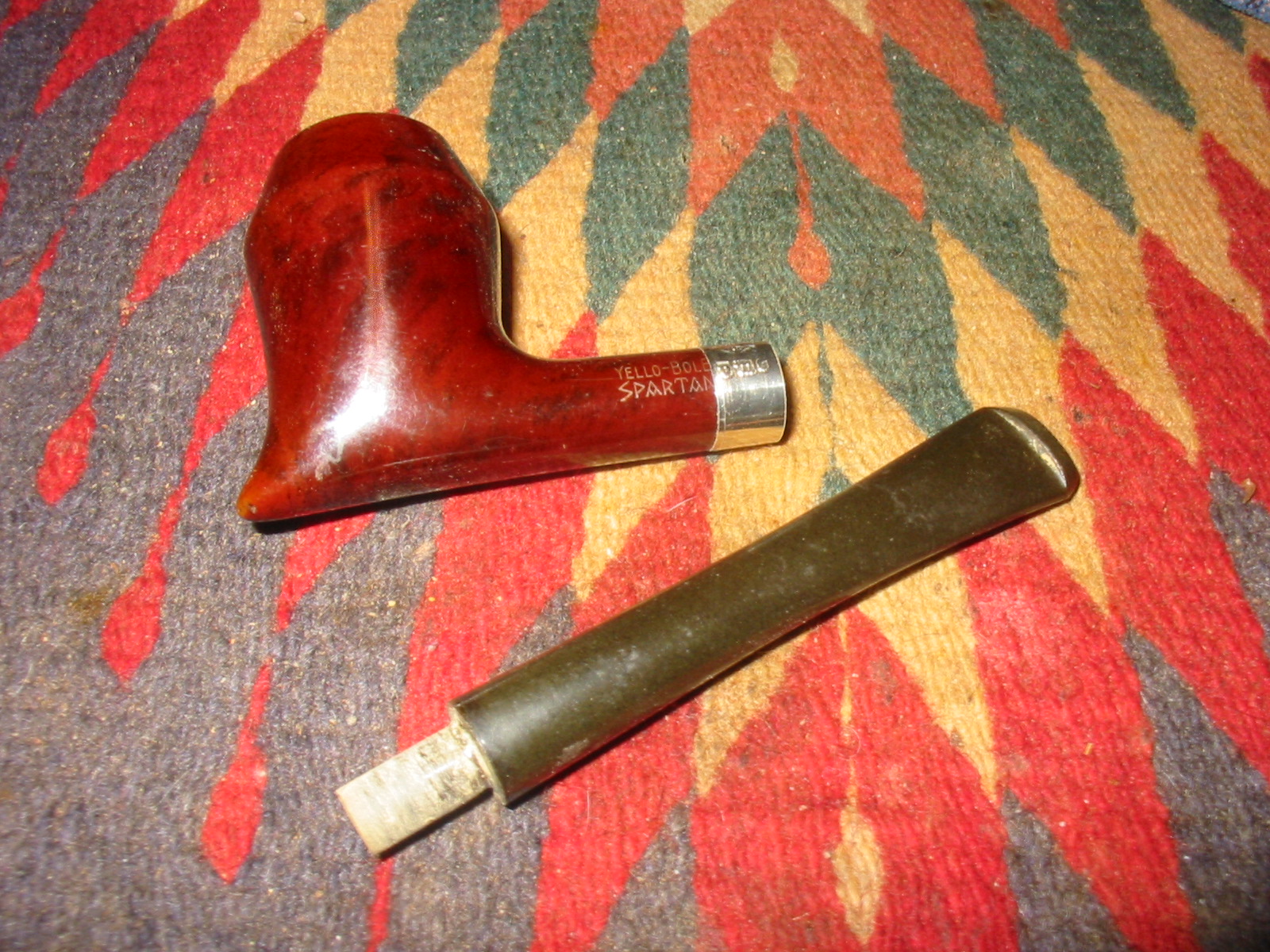
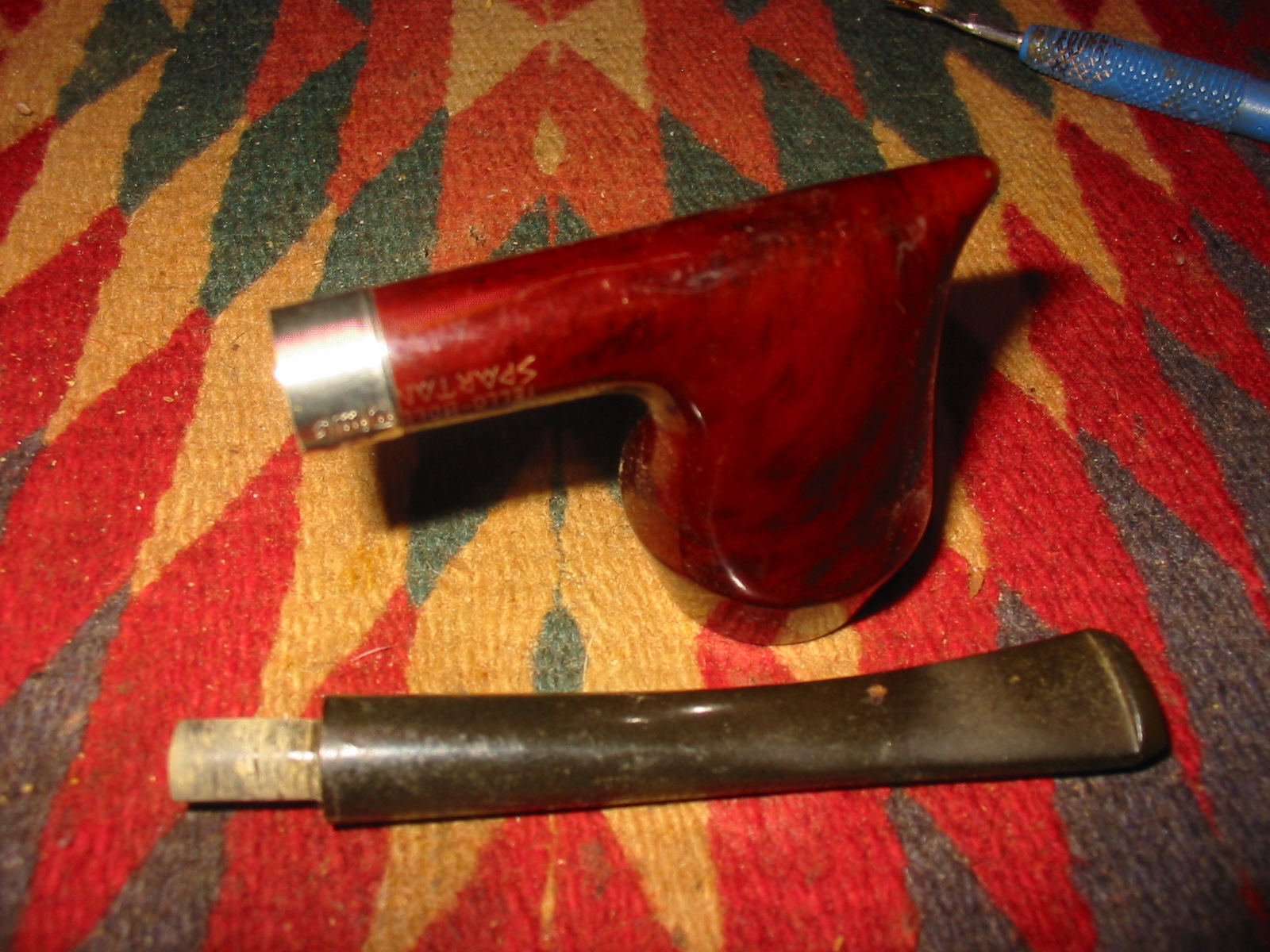
I was gifted a box of pipe bowls and stems from Jim Wagner on Smoker’s Forums. It is a great to have this box of interesting old pipes. Jim, I sure appreciate the gift box and am enjoying looking at it and choosing what to do next. The first one that caught my eye was a Yello-Bole Spartan. From reading about them the Spartan was originally a briar pipe but this one was definitely not briar. It was synthetic for sure and brown like some of the older Bakelite pipes that I have picked up over the years. I knew though from the feel of it that I was dealing with a Brylon pipe. Many folks hate them because they say the burn hotter and are heavier than briar pipes. While that may well be true I still have an older Medico I picked up 32 years ago when my first daughter was born and have smoked it a lot since that time. Several years ago I put a long Church Warden stem on it and a brass ferrule and made it into a good-looking long pipe. I have smoked it long enough that it even has developed a cake and now smokes quite well. If I am mindful to not puff hard it stays relatively cool.

Knowing that it was a Brylon pipe made me want to do a bit of digging into the history of the material. I looked on the S.M. Frank website (http://www.smfrankcoinc.com/home/?page_id=2) and found the following information:

“In 1966, S. M. Frank developed a synthetic material called Brylon as a cheaper alternative to briar. The material, a high temperature resin mixed with wood flour, was cheaper than briar, more resistant to cracking, chipping, charring and burnouts. However to some there are some drawbacks, heavier in the mouth, hotter when smoked quickly, and also simply put, “wasn’t briar.” Millions of these pipes have been sold in the 3 decades since and continue to be part of the Yello-Bole and Medico lines. Two Brylon lines in Kaywoodie, Marmont and Impulse, were briefly tried and abandoned in the late 80′s.”

I know that Brylon has a bad name among pipemen and gets a lot of disparaging comments whenever it is brought up on the pipe forums. However, pipes are still being made and sold so there must be some enduing quality. Maybe it is the indestructibility of the pipe. Perhaps we will never know what attracts folks to them. But I have one in my hand that needs work and I am loath to pass up the opportunity to learn from the process of rejuvenating this old pipe.

As usual reading the history of the material helped to give me a clearer picture of the pipe that I was working on this time. It also gave me some background on another Brylon pipe that I have in my collection. I bought that Brylon new at a 7-Eleven convenience store along with a pouch of Borkum Riff the day my oldest daughter was born. It was a delicate billiard and attracted me that early morning in 1982. I have smoked it enough that it has developed a good cake and finally smokes very cool. A few years back I restemmed it with a long Church Warden Stem and banded it with a brass ferrule to liven it up a bit. The finish was worn to I polished it. I still smoke that old Brylon and enjoy it.

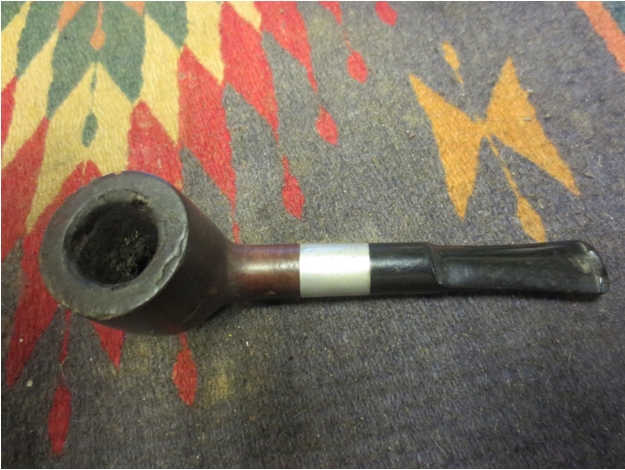
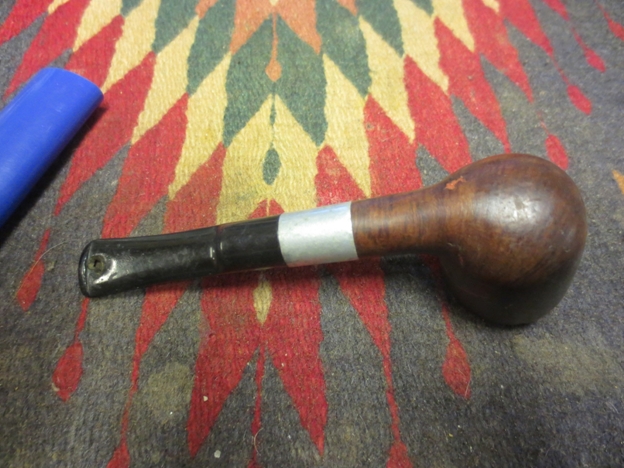
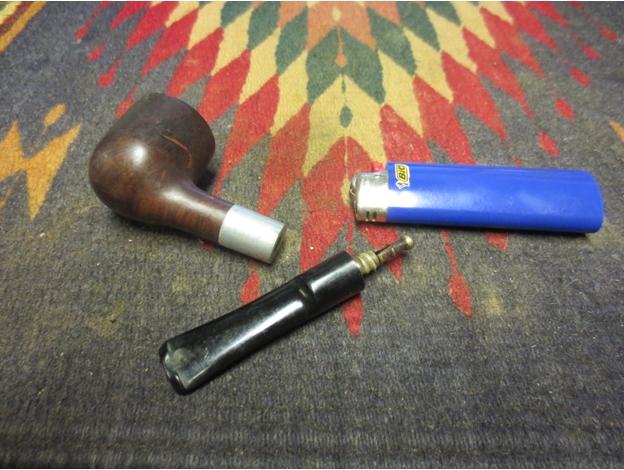
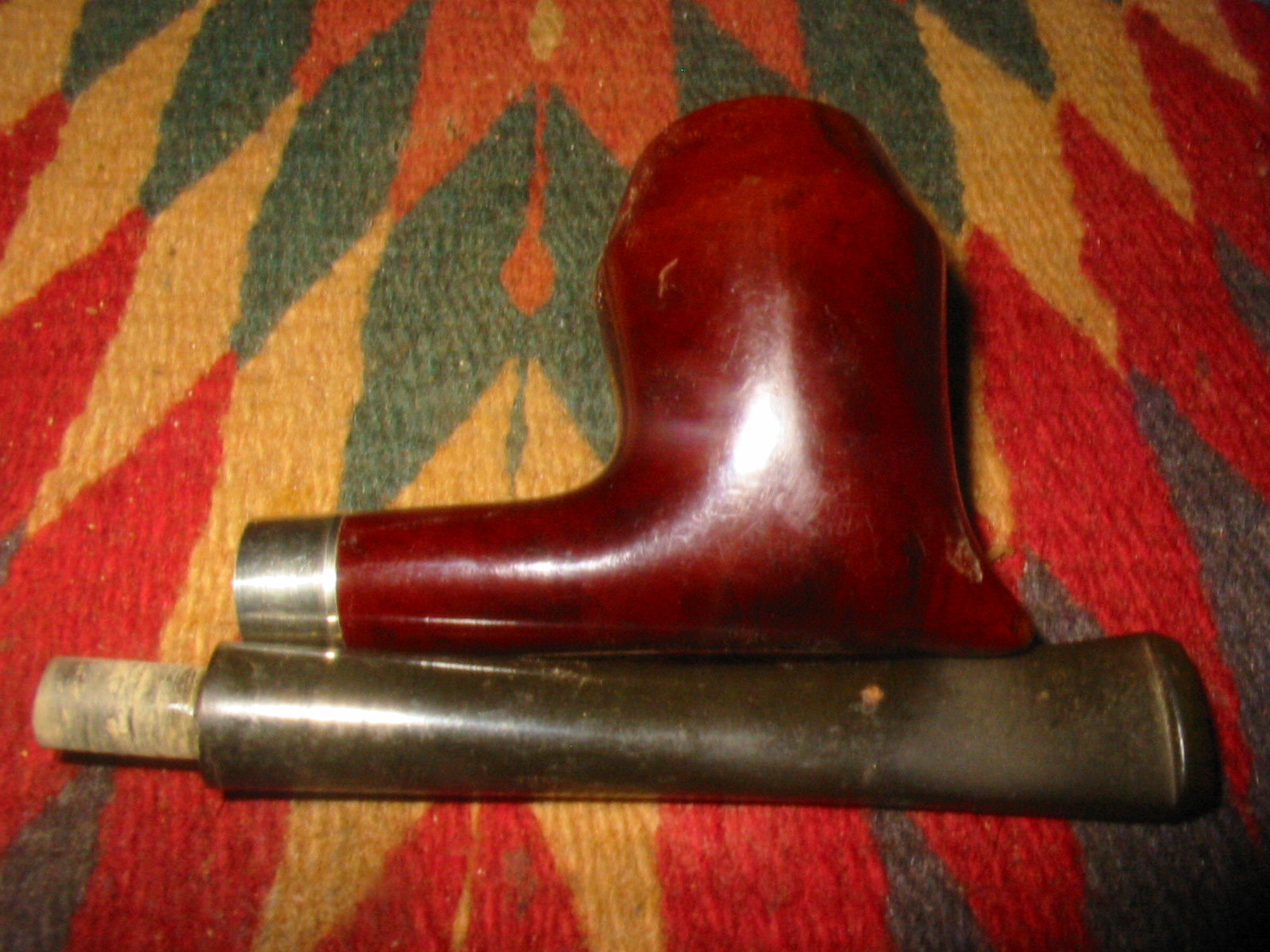
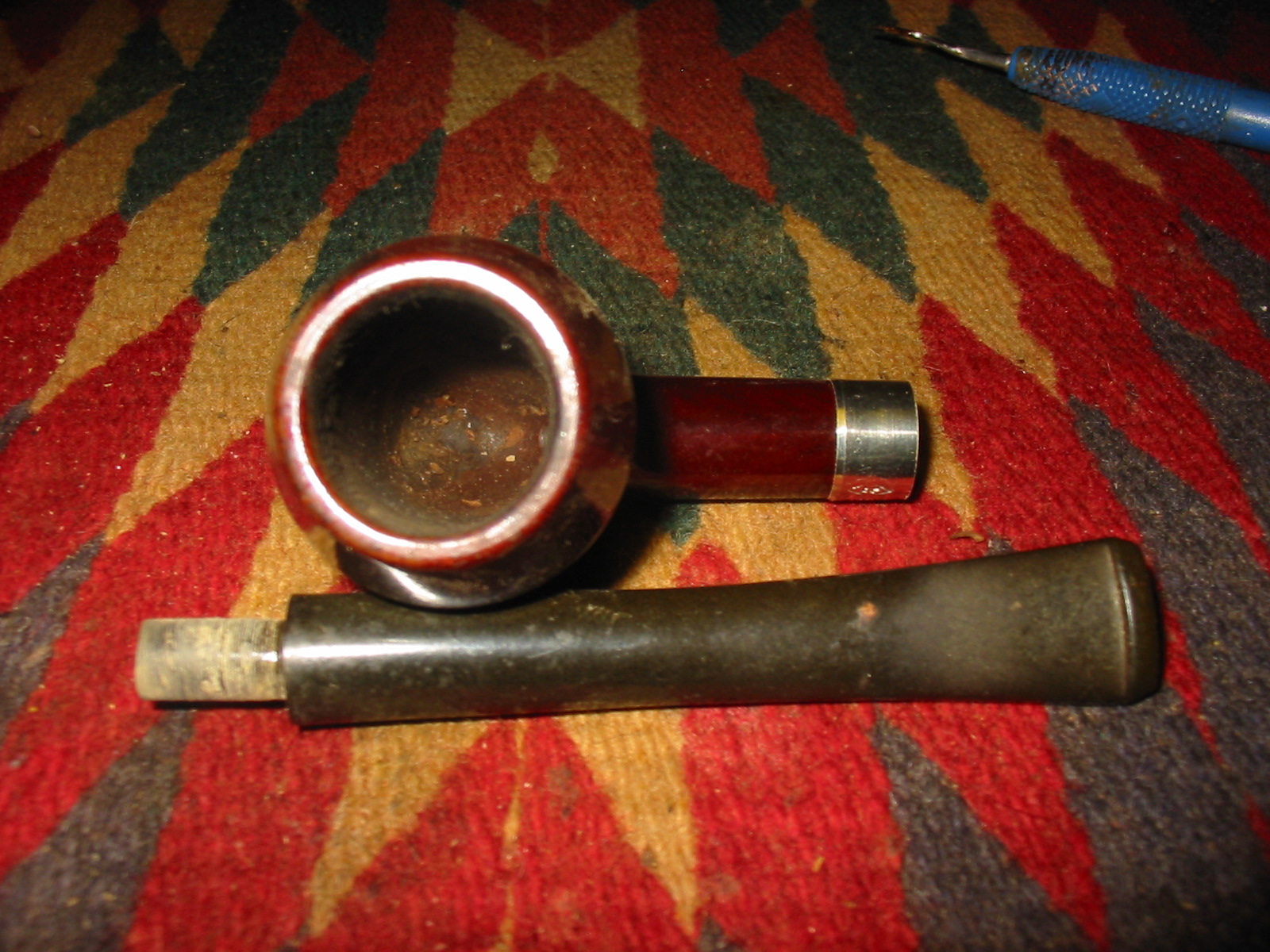
However, back to the Brylon pipe at hand. This bowl was an unusual shape and one that I had not seen before. It was smoked but clean. There was the beginning of a cake in the bowl so it would soon be a cool smoker as well. It was without a stem so I found one in my stem can with a slight bend that had the same diameter as the shank and sanded the tenon by hand with 220 grit sandpaper until it was a snug fit in the shank. It looked good on the pipe but there was still something missing when I sat back and looked at the pipe. I thought maybe a bit of bling would do the trick so I went through my nickel bands and found one that was the perfect size to press on the shank and not cover the stamping on the left side.

I heated the band with a lighter and then pressed it into place on the shank. Heating the band causes it to expand and slide on to the shank while it is still hot. Once the band cools it contracts and the fit is tight unmovable. I used a sharp knife to bevel the inside edge of the mortise to accommodate the new stem solidly against the end of the shank. IMG_8222 IMG_8226 IMG_8225 IMG_8223 The stem was one that I repurposed from another pipe and it looked like it belonged on the Spartan in my opinion. The slight bend looked good with the shape of this Brylon Spartan. The stem was oxidized and dirty but did not have any tooth marks of gouges. Once I had the pipe banded I pushed the stem into place and took the photos below. IMG_8228 IMG_8231 IMG_8230 IMG_8229 I removed the stem and sanded it with 220 grit sandpaper followed by a medium and a fine grit sanding sponge. For me this step always cleans up the stem and allows me to deal with subtle reshaping of the stem. In this case the reshaping was minimal but I did some work on the underside to give it more of an arc than originally was present. I sanded until the scratches and oxidation was removed from the stem. It was clean and the flow and angles were what I was looking for. Then I sanded with micromesh sanding pads – wet sanding with 1500-2400 grit pads and dry sanding with 3200-12,000 grit pads. I rubbed the stem down with Obsidian Oil between each set of three micromesh pads. Since Brylon is plastic like I decided to also sand the Brylon bowl to remove some of the scratches and smooth out one small nick in the surface of the bowl. Each successive grit of micromesh gave the finish a deeper shine and the contrasts in the Brylon surface began to stand out. IMG_8240 IMG_8243 IMG_8241 When I had finished sanding the bowl and the stem I buffed them with White Diamond and then gave the pipe several coats of carnauba wax. I polished it with a soft flannel buff to give a shine. In retrospect, I think that Brylon must be pretty indestructible and I figure I could have just thrown the pipe in the dishwasher to sanitize it. I am sure it would not have caused the least bit of damage. The finished pipe is shown below. It is cleaned, has a light cake and is ready to be fired up with an inaugural smoke. Who knows I might even like it enough to keep it around as a yard pipe. IMG_1677 IMG_1683 IMG_1682 IMG_1678

Gold & Silver Hallmarks On Pipes – Alan Chestnutt


logoI receive Alan’s newsletter from reborn briar and also follow his blog so I read what he has written with expectation that I will learn something new and so far I have never been disappointed. (You can access his blog by clicking here.) Often he clarifies things for me that I have long believed to be true but have not done enough research on or thinking about to make conclusions. In the case of this blog post Alan has given us a very useful tool on interpreting hallmarks in the gold of silver work on pipes. I have used many of the sites that Alan has linked but never seen them in one place like this. I wrote Alan and asked if I could post it here on rebornpipes. He responded that he would be glad to have it posted here. Thanks Alan for doing the hard work for us and giving us access to what you have learned.

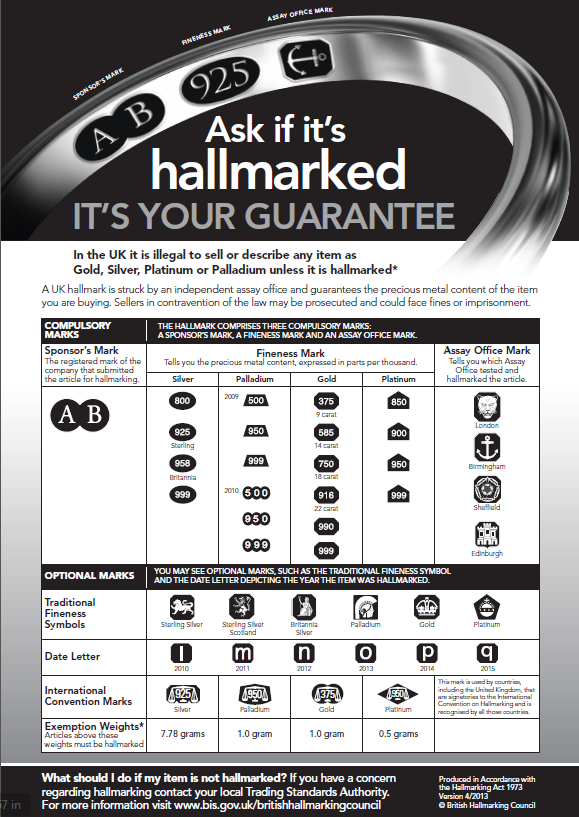
Hallmarks have been around in the UK for over 800 years. They were originally introduced by a law in 1300 to protect the public from being defrauded into being sold an item not made of the purity of the precious metal that was being advertised. Hallmarking is a legal requirement in the UK as well as in many other countries, mostly in Europe. The countries in which it is a requirement have formed a Convention of hallmarking, and if the item has been hallmarked in one of the Convention countries, then it is officially recognised in any other Convention country. Many countries do not have any hallmarking requirements, the USA being one. But what exactly is hallmarking?

Background to Hallmarking

Hallmarking is the guarantee that an item of precious metal has been officially assay tested. It is a legal requirement that any item of precious metal in the UK is officially hallmarked before it is offered for sale. If no hallmarks exist then it is unlawful to describe an item as silver, gold or platinum and the item can only be referred to as white or yellow metal. The relevant Act of parliament governing hallmarks in the UK today is The Hallmarking Act 1973 which states:

Prohibited descriptionsof unhallmarked articles.
(1)Subject to the provisions of this Act, any person who, in the course of a trade or business –

(a) applies to an unhallmarked article a description indicating that it is wholly or partly made of gold, silver or platinum, or

(b) supplies, or offers to supply, an unhallmarked article to which such a description is applied, shall be guilty of an offence. hallmarks
The process of hallmarking means that every single item of precious metal has to be sent to an officially recognized Assay Office which is a member of the British Hallmarking Council. There were a number of these around the UK in the past, though some have now closed and the remaining offices are London, Birmingham, Sheffield and Edinburgh (plus Dublin in the Republic of Ireland – relevant for hallmarking of Peterson pipes).

In the Assay Office, a sample of the metal is scraped from an inconspicuous part of the item. This sample is then chemically tested to verify its purity of precious metal. Items are hardly ever made purely of the precious metal alone (bullion excepted). They are normally alloys with other metals or contain other impurities. The standard for Sterling Silver is 925 which means that 925 parts in every thousand are pure silver. Purity of gold items vary from 9k gold (375 parts per 1000), 14k (585), 18k (750), 22k (916) up to 24k (999) which is virtually pure gold. Once the purity of the precious metal has been confirmed by the Assay Office, they hallmark the item accordingly, which is the symbol of guarantee.

Hallmarks consist of at least 4 symbols. The largest of the symbols is usually at the top and is normally referred to as the maker’s mark (read the term maker’s mark loosely as will be explained later). This is followed underneath by 3 further symbols which represent:

1. The official symbol for the Assay office which carried out the testing.

2. The symbol for the purity of the precious metal.

3. A symbol which represents the year in which the test was carried out.

In more recent times an additional symbol has been introduced which is internationally used and recognised throughout the Convention countries to symbolise the purity, which consists of a set of scales with the purity value written below (e.g. 925 for silver).

Hallmarks on Pipes

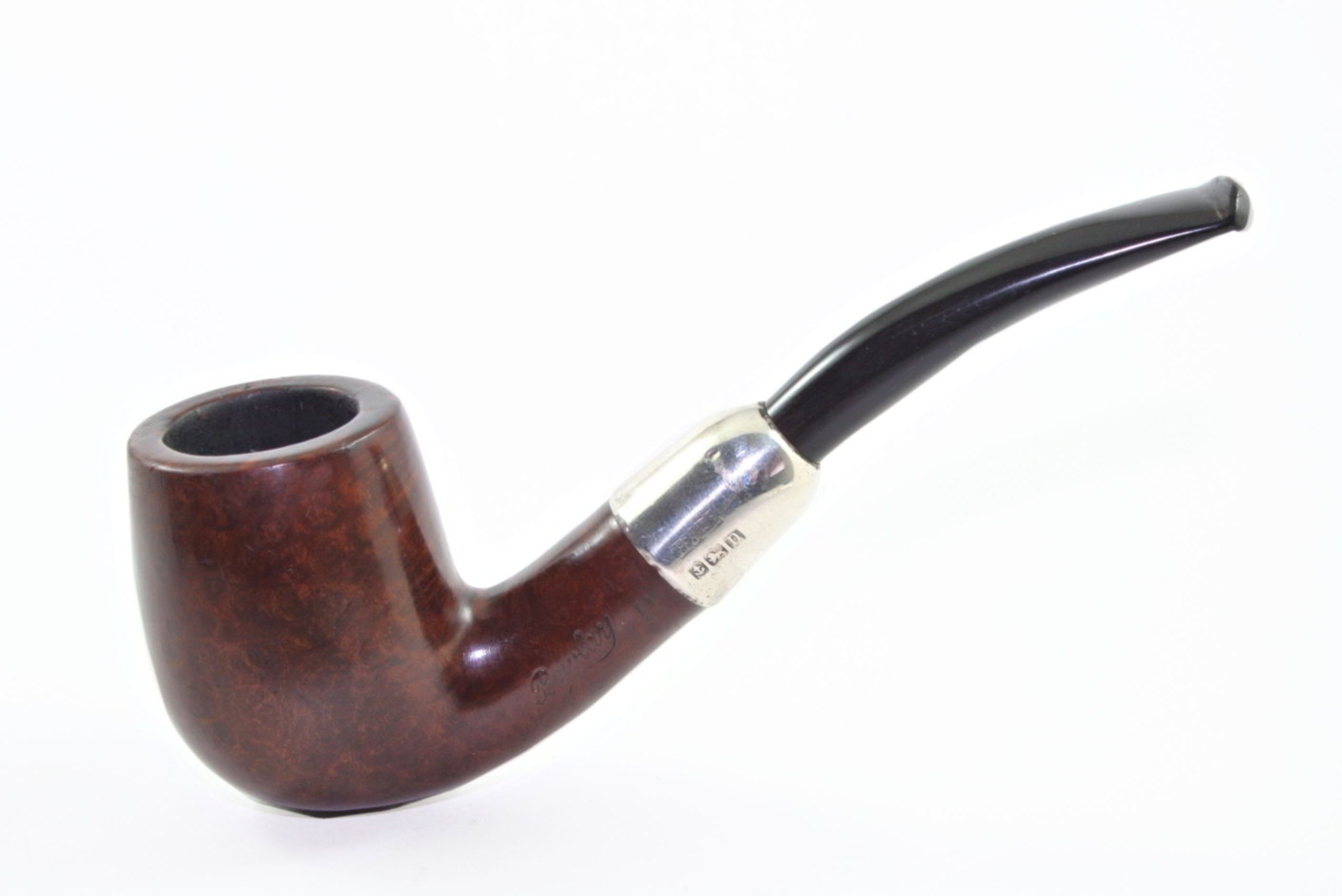
Hallmarking on the silver and gold decorations of pipes allow us certain advantages. They can be used in (most) cases to establish who made the pipe and when it was made. I state (most) cases as there are certain anomalies that we must take account of. We must remember that it is only the silver which needs to be hallmarked and this need not be (and in 99% of the cases would not have been) already applied to the pipe. It has been said in the past that some Peterson pipes have a silver collar with a date stamp which precedes the introduction of a certain series of designs. On others, the date mark on a silver collar does not match that of the date mark on a silver rim. This most likely occurs by Peterson sending off a large batch of silver collars to the Dublin Assay Office to be tested and hallmarked, which then sit in the factory until they are fitted to a pipe sometime later. In these instances it is more accurate to use the introduction date of that series of pipes than the date letter on the official hallmark. Or in the case of a mismatch of dates between a collar and a rim to use the later date mark. Why would this happen? It is a simple case of economics of scale. There can sometimes be anomalies in the maker’s mark too.

The “Maker’s” Mark

I stated above to read the term “maker’s mark” loosely. It was called this in the past, but as the law relates to the sale of these items, the legal liability for hallmarking ultimately lies with the retailer. This is an important issue to remember. The mark is officially called the Sponsor’s Mark and is referred to in the Act as such:

3 Sponsors’ marks.

(1)Before an article is submitted to an assay office to be struck with the approved hallmarks there shall be struck on the article a mark indicative of the manufacturer or sponsor and known as the sponsor’s mark:

Provided that the assay office and the manufacturer or sponsor of an article may make arrangements for the sponsor’s mark to be struck by that assay office upon submission of the article to be struck with the approved hallmarks.

Every sponsor’s mark in the UK is unique. It is made up of three elements:

1. the shape surrounding the mark (or shield)

2. the string of letters or initials

3. the font used in the letters

The combination of these three elements will make a unique mark for every sponsor. Before an item can be hallmarked, the sponsor must first register their sponsor’s mark with the assay office they wish to use.

tdMy knowledge of hallmarking comes from being involved in jewellery retailing. A number of years ago, my partner and I sold jewellery items online. We imported the items from abroad. They did not have any UK hallmarks on the items, and before we could sell the items as being gold, we had to have them hallmarked. We have a sponsor’s mark registered with the Birmingham Assay Office which comprises of the initials TD in Arial font inside a lozenge shaped shield.

Registering a sponsor’s mark is an expensive business. Firstly you must design a mark which must be unique to be accepted by the The British Hallmarking Council. Then you have the actual cost of registration. Then you must have a metal stamp made to stamp the items. As shown in the above extract from the Act, we had an arrangement with the assay office to hold our stamp on our behalf so that they could stamp the items with our mark whilst hallmarking, so I have never actually ever seen or held it. This involves a further fee. Even though most hallmarking today is carried out using a laser etching service, it is still a legal requirement to have an official metal stamp made!

Large jewellery companies in the UK like H. Samuel and Beaverbrooks do not make their own jewellery. Yet all the jewellery in their stores bears their own mark. This makes perfect sense. If an item is imported, the original maker will never have a registered mark in the UK to begin with, so the task must be undertaken by the retailer to comply with the law. So how does all this relate to pipes?

Confusion Surrounding Hallmarks

Hallmarks are not definitive and can lead to confusion in certain cases. I have already pointed out above some of the confusion surrounding dates. The sponsor’s mark can in certain circumstances lead to even greater confusion as to who actually mad1099-1e a particular pipe.

I was prompted to write this article while I was selling this 1910 Bewlay pipe, which I described as possibly being made by Barling, who were the largest supplier to Bewlay at the time. I received a message from a respected Barling authority – someone who I have the utmost respect for and who has helped me on many occasions. He said that the pipe in question could not be a Barling pipe as it did not have the EB.WB hallmark. He told me that he actually owned a Bewlay pipe from 1900 made by Barling. The shank was stamped Bewlay, but the silver band was hallmarked with the EB.WB hallmark. He rightly pointed out that other manufacturers also made pipes for Bewlay and that he could not quite make out the “maker’s mark”, which might show who actually manufactured the pipe.

I will digress for a moment. As I have my own registered sponsored mark, I could send off a pipe to the assay office to have the silver band hallmarked. However, the cost of sending over a single pipe to be hallmarked is likely to be around £30, which would be more than the value of the silver in the band to begin with. It therefore wouldn’t make economic sense. The cost would be made up of the following:

1. posting the pipe to the assay office

2. a “checking in” fee

3. a “per item” fee for the actual testing and hallmarking.

4. a “checking out” fee

5. The cost applied by the assay office for return shipping which must be fully insured (read expensive!)

The least expensive of these fees is the actual hallmarking fee! It therefore makes sense to send a large number of items to the assay office at the same time to spread out the overall cost of the other ancillary fees – especially for silver items. Obviously Barling as a manufacturer could take advantage of this economy of scale.

Barling made pipes for many pipe retailers around the country. They would in most cases (sometimes exclusively) stamp the shank with the name of the retailer, while the silver band retained the EB.WB stamp which allows us to distinguish them today as a Barling made pipe. So why was this? It was not the case that it was Barling’s responsibility to hallmark the bands. It was simply the case that most pipe retailers were single outlet businesses and the simple economy of scale would mean that it was cost prohibitive for the small retailer to register his own mark and they were happy that the manufacturer had taken the responsibility.

Back to the pipe in question, I already knew what the sponsor’s mark was on this pipe. It was B&Co which was the registered sponsor’s mark for Bewlay& Co. This obviously didn’t help distinguish who made the pipe. Other companies who supplied Bewlay like Loewe and Charatan also had their own hallmarking arrangements, so why was this stamped as B&Co?

At the time, the House of Bewlay was the largest tobacconist and pipe retailer in the UK. It had many outlets all over the country. So why did a retailer who could have bought in all their pipes already hallmarked want to register their own mark? To many small retailers the hallmarking of a few pipes would have been expensive and an administrative burden. But to Bewlay’s, who had the economies of scale, the answer is simple. Having your own mark brought about a symbol of prestige and proprietorship. Not only could the shanks of their pipes be stamped exclusively with their own name, but now the silver bands could be too. I can imagine the minutes of a meeting between Bewlay and the pipe manufacturer’s proceeding as follows:

Managing Director of Bewlay – “From now on, we would like you to supply all your pipes without hallmarking the silver band” (thinking…prestige and ownership).

Managing Director of Pipe Company: (thinking Bewlay is their largest single customer!) “Certainly Sir!” (… also thinking about cost reductions due to the headache of hallmarking being removed)

This though does not explain the 1900 Bewlay pipe which has the silver band hallmarked by Barling themselves. A little investigation into this reveals the most likely answer. Although Bewlay was officially founded in London in 1780 it was not until the early 20th century that it saw its major expansion, having been bought by Imperial Tobacco Company. Imperial also acquired the Salmon &Gluckstein retail empire in 1902 which at that time was the largest tobacconist in the country. Hence a ready made retail network of stores which were re-branded as House of Bewlay in 1902.The sponsor’s mark B&Co was not registered until 1903, hence the 1900 pipe still retaining the Barling hallmark.

In conclusion, the presence of the B&Co sponsor’s mark means we cannot definitively say that the pipe was made by Barling. Likewise we cannot definitively say that it was not! We therefore have to rely on experience of the look and feel of the pipe against what the other manufacturers were producing around that time, and rely upon a best guess analysis.