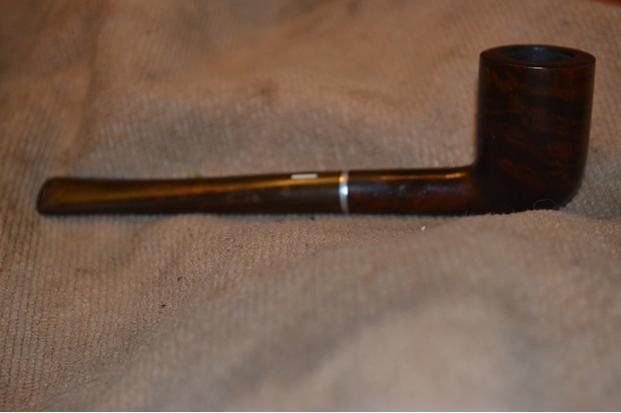
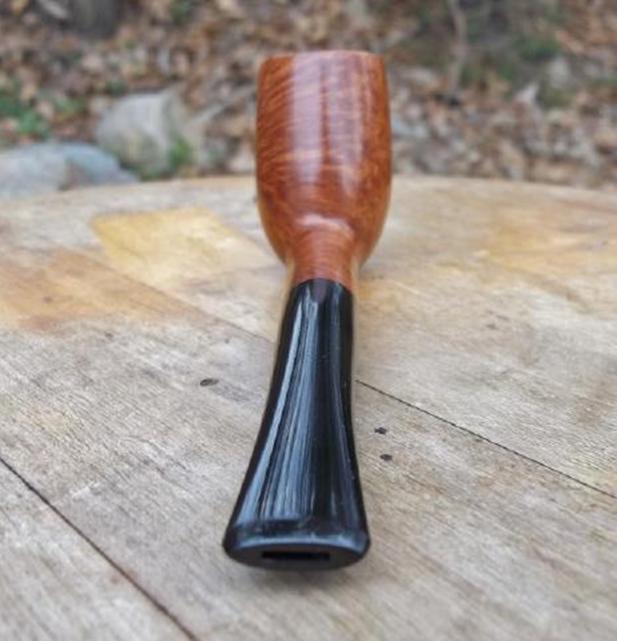
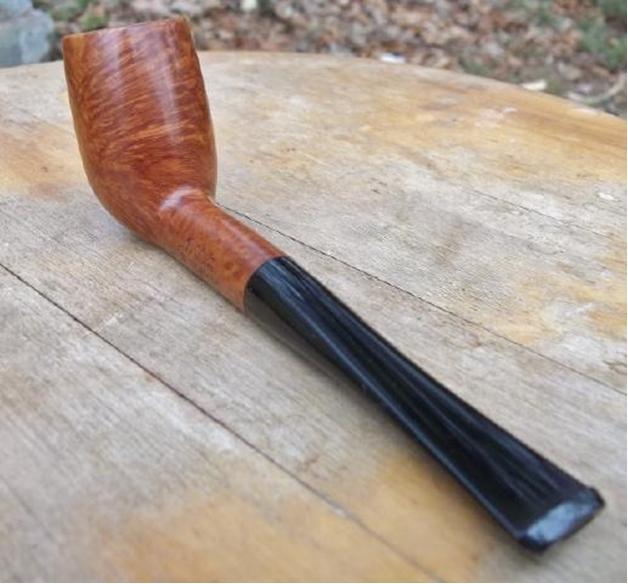
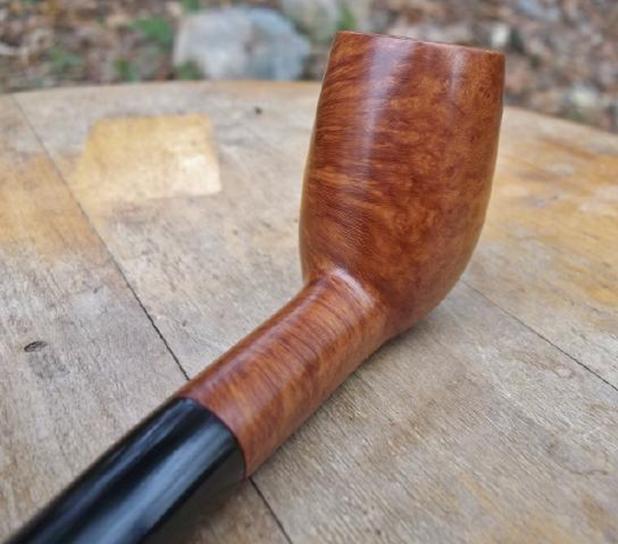
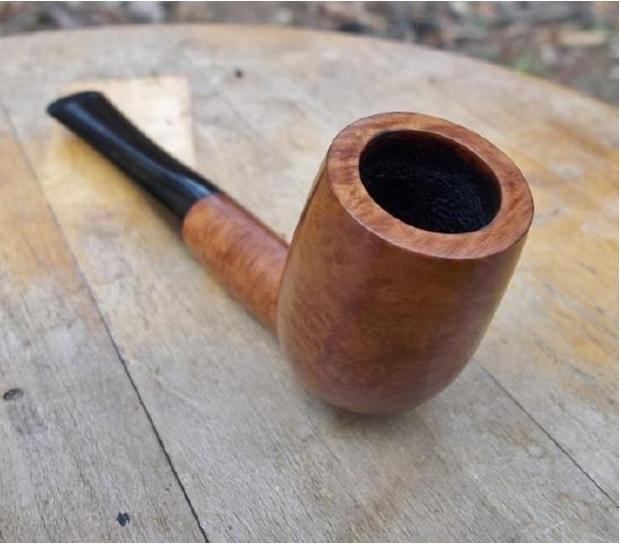
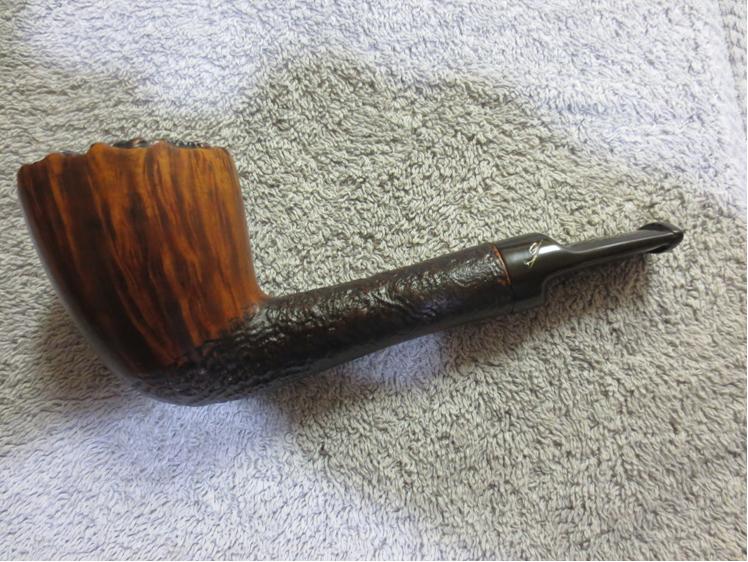
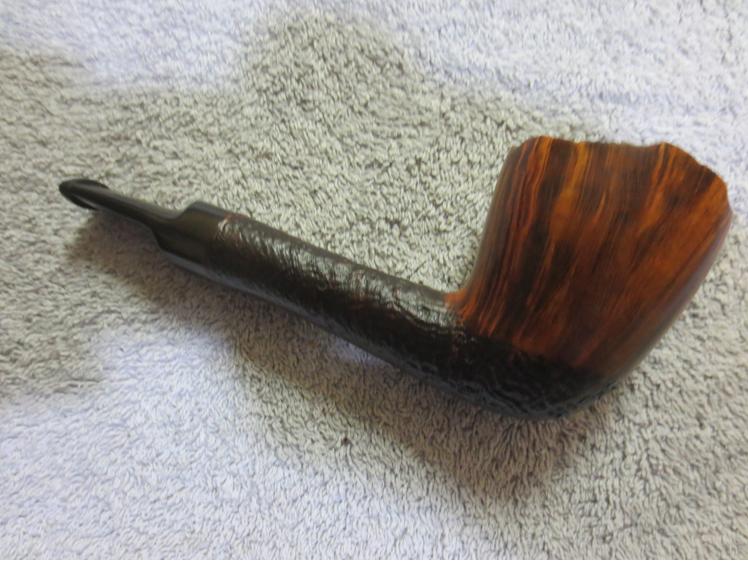
Restoring a 1967 Dunhill Oom Paul 591


Blog by Steve Laug

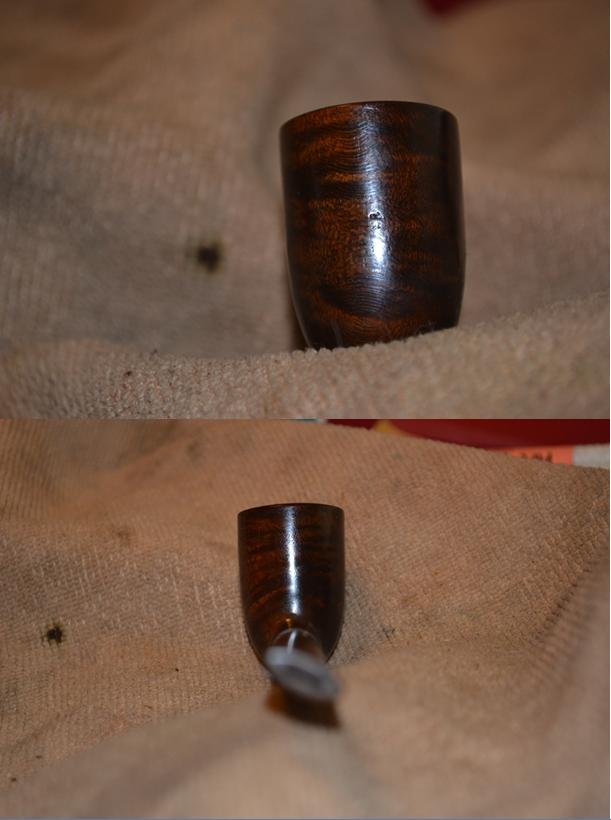
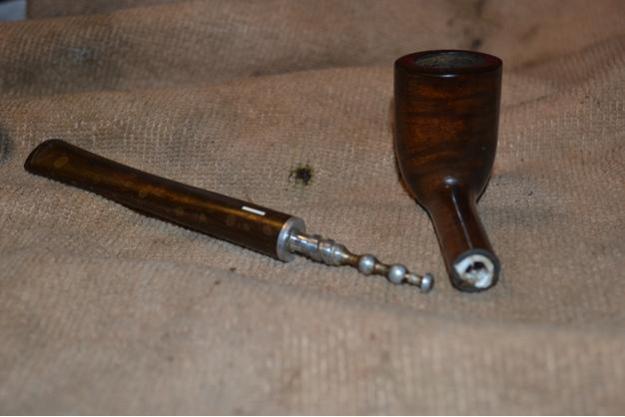
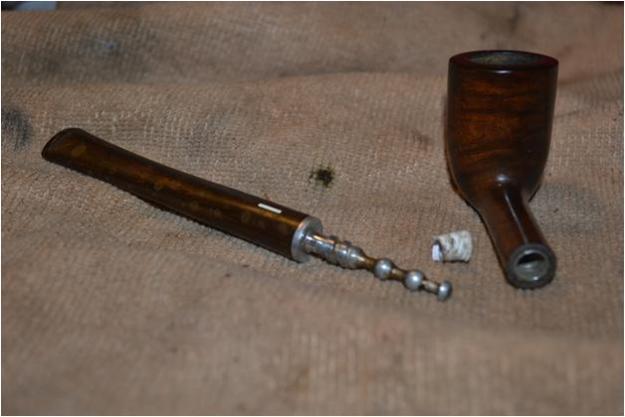
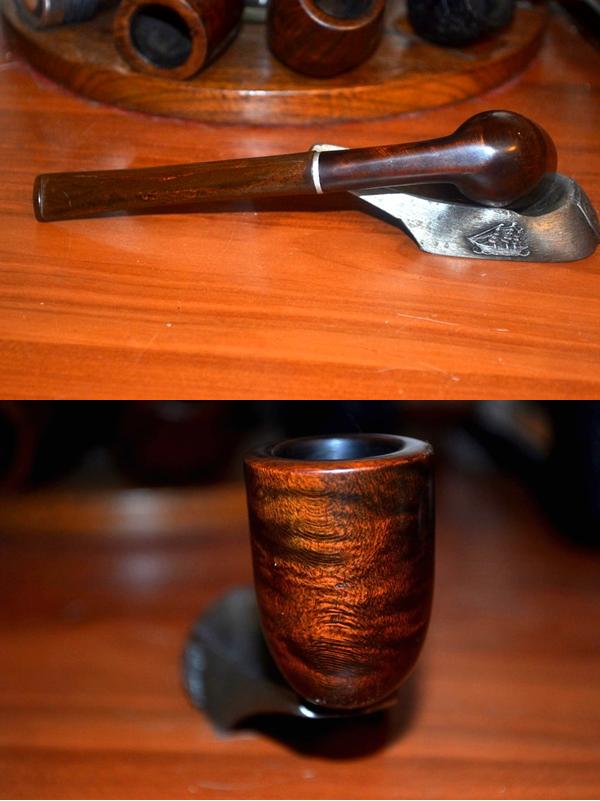
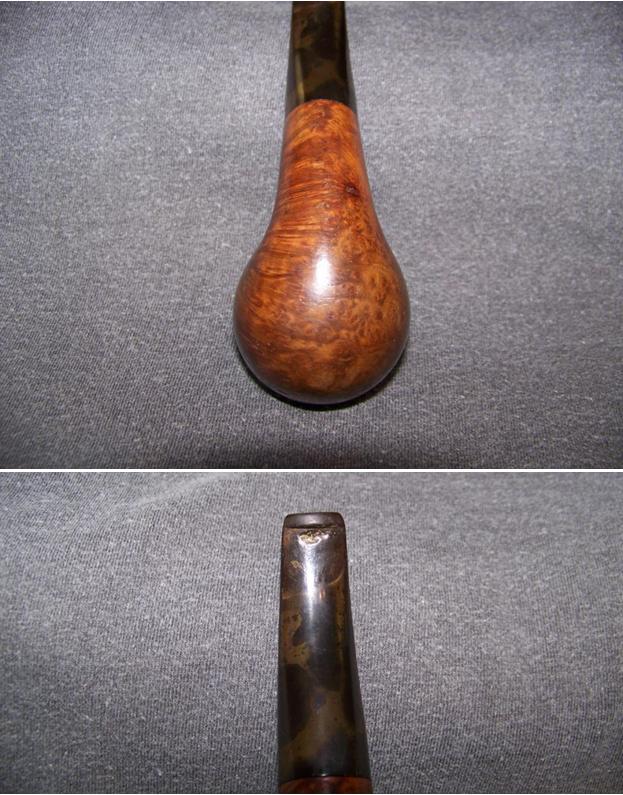
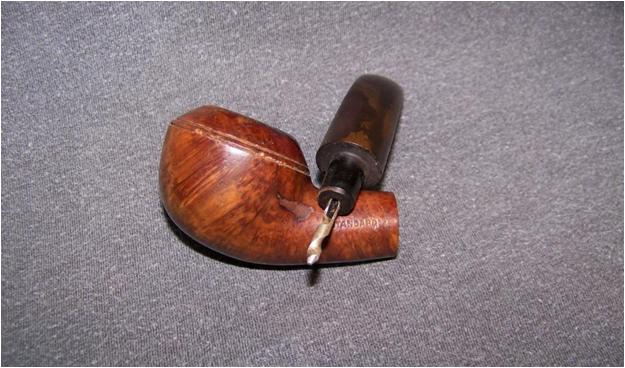
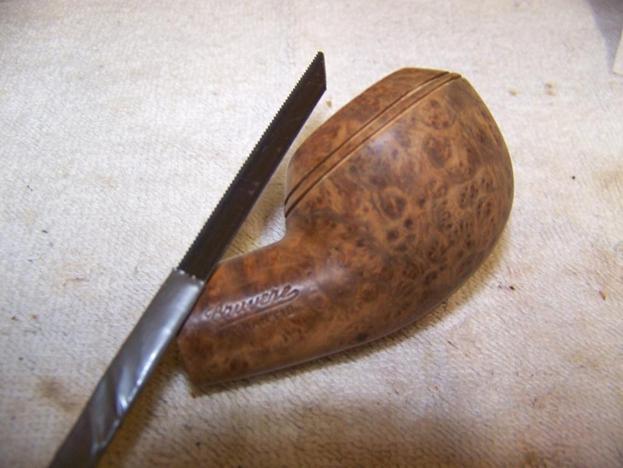
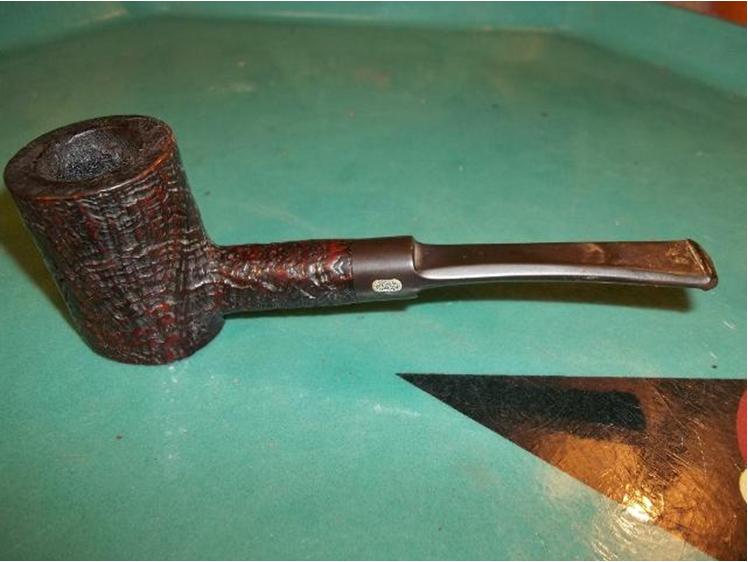
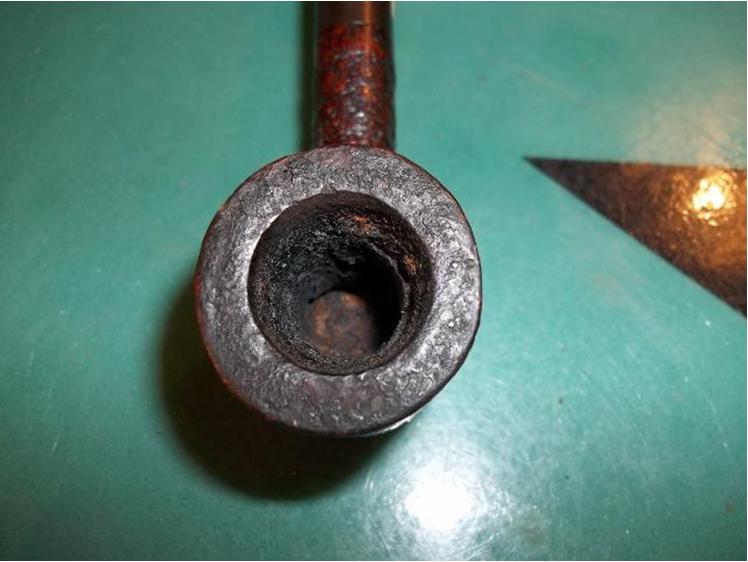
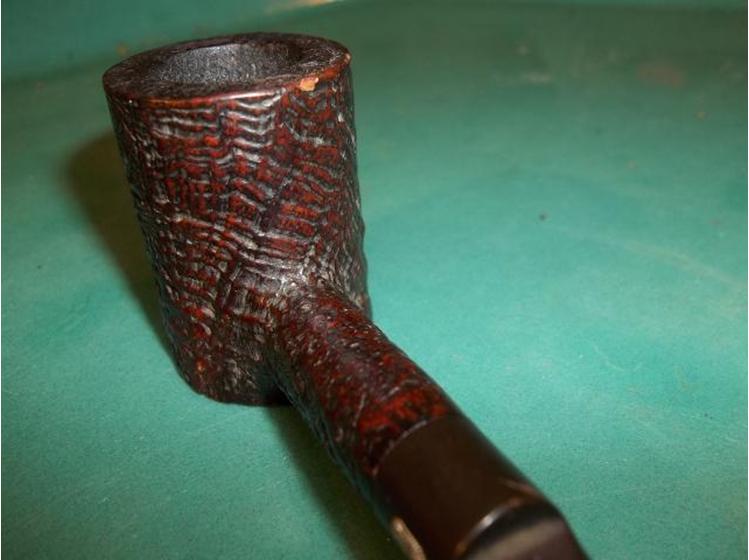
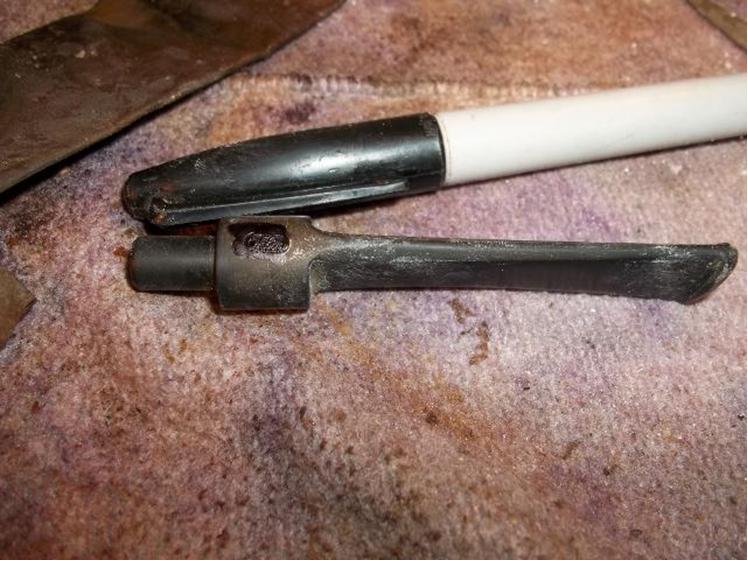
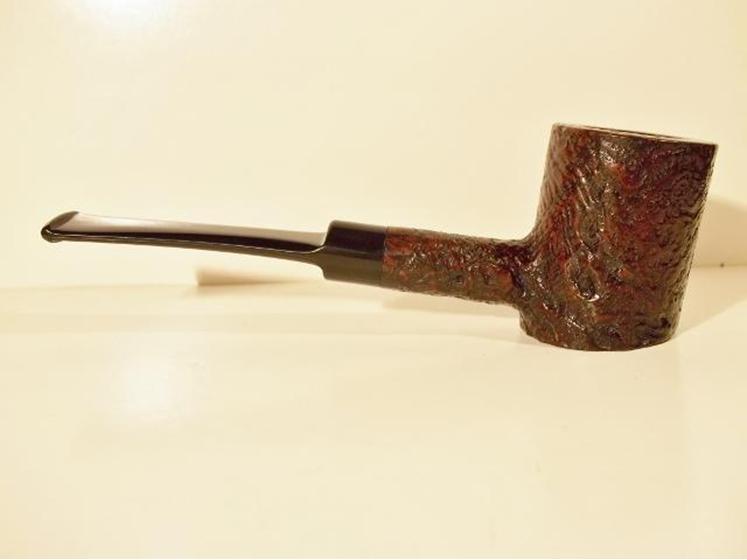
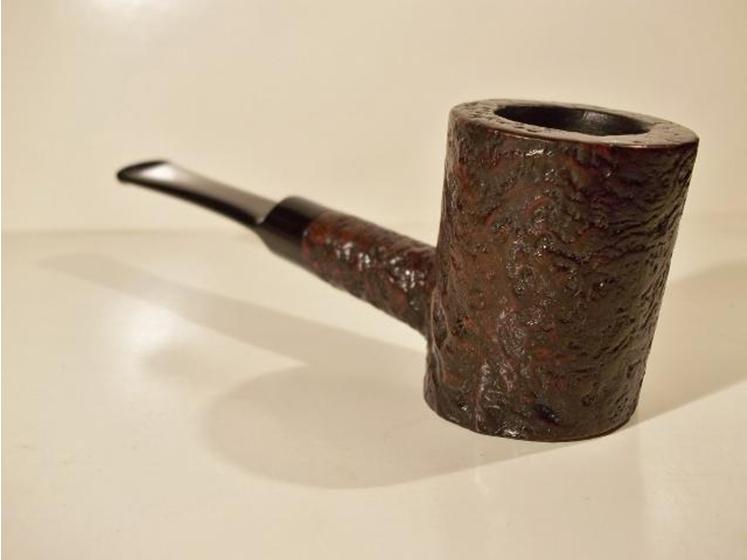
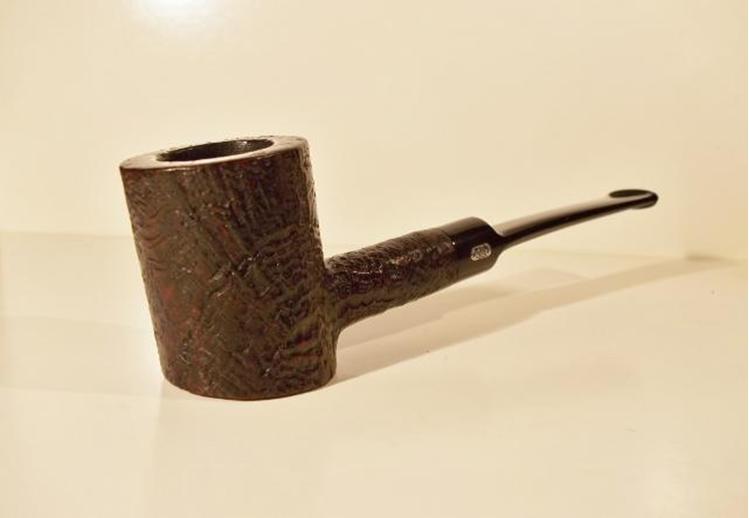
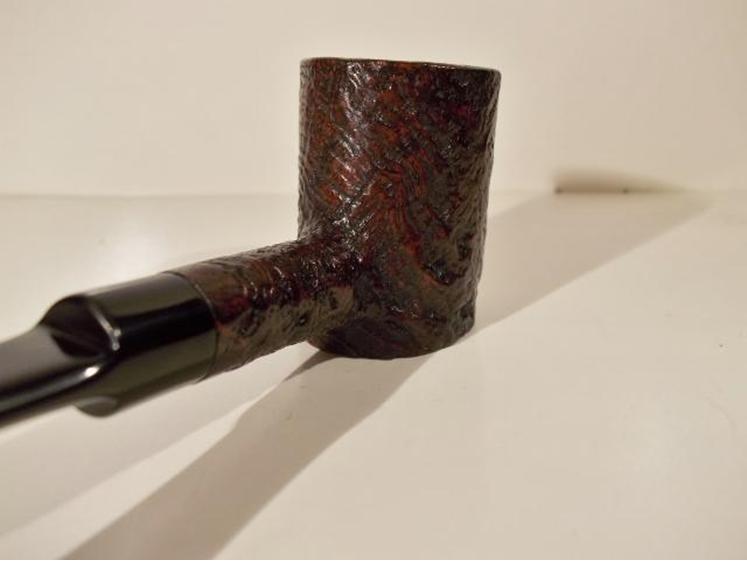
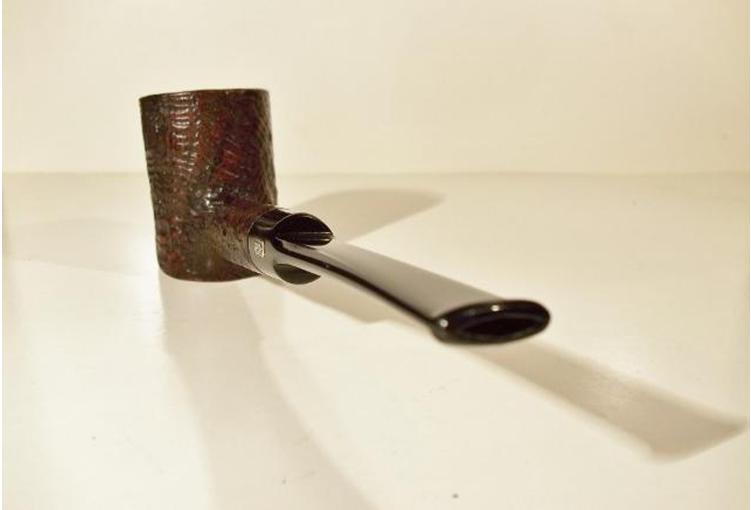
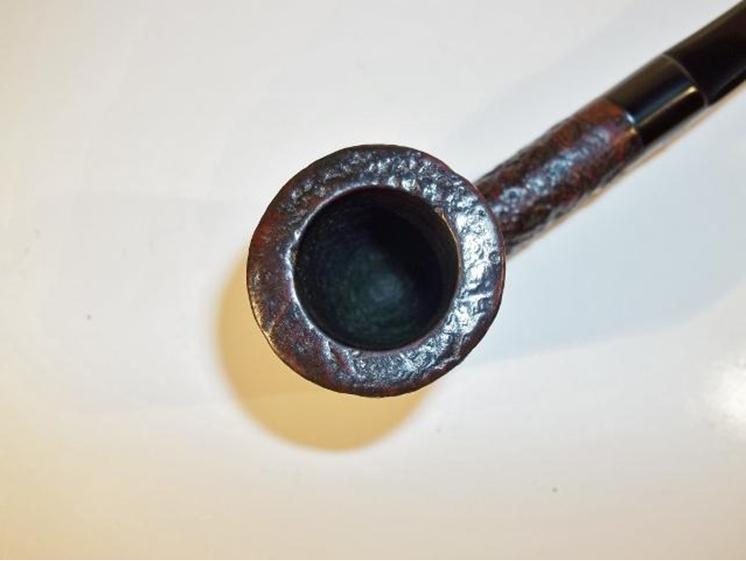
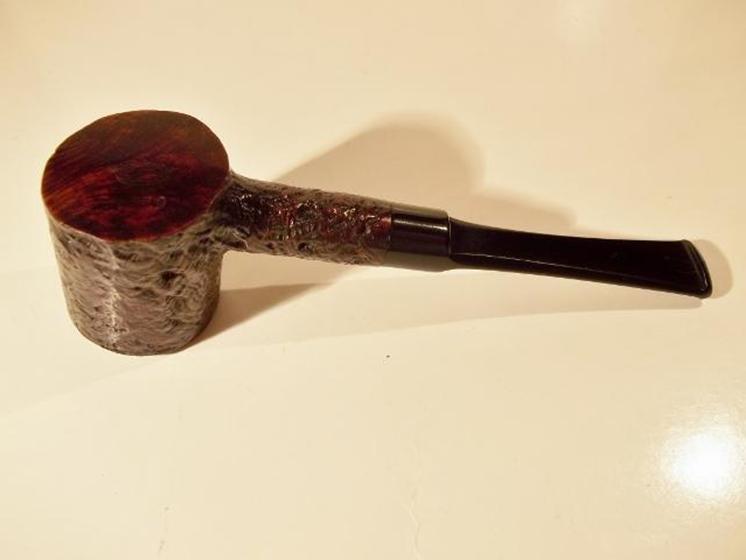
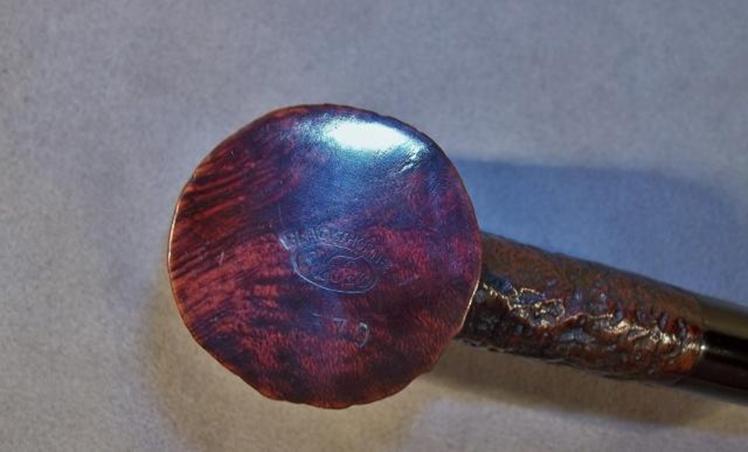
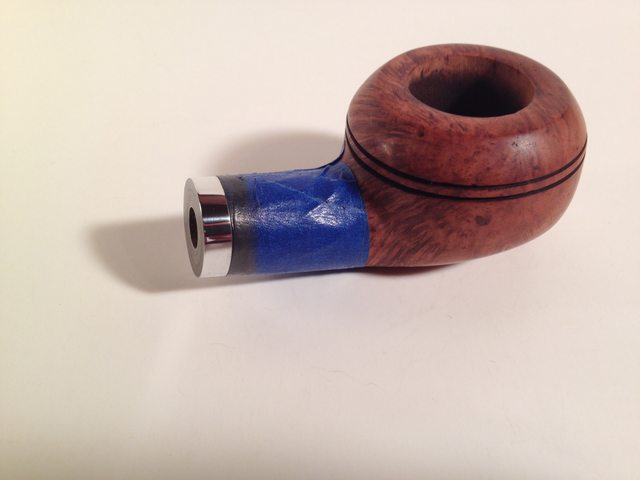
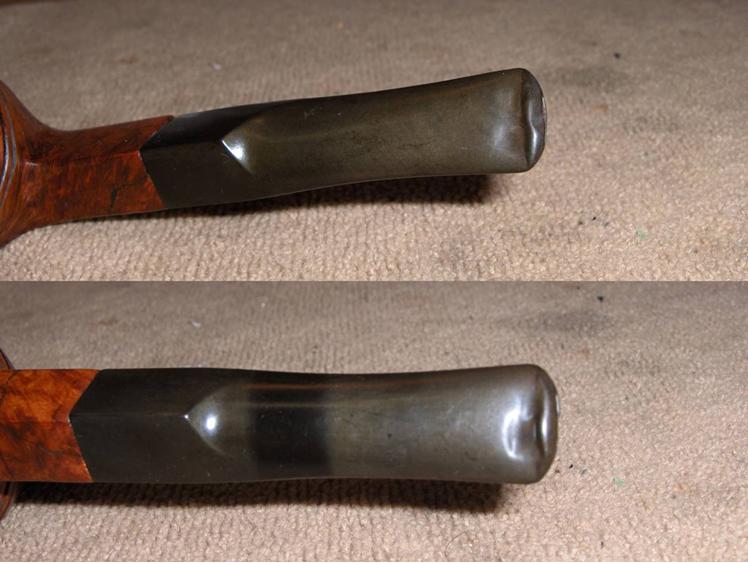
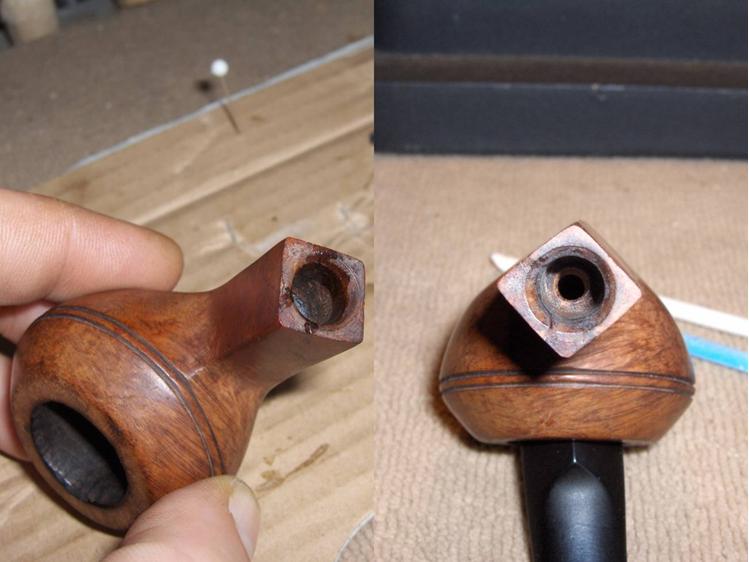
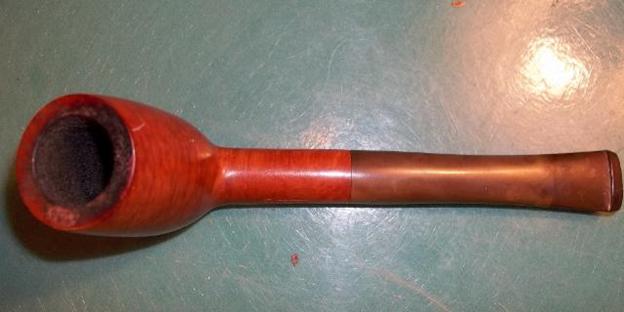
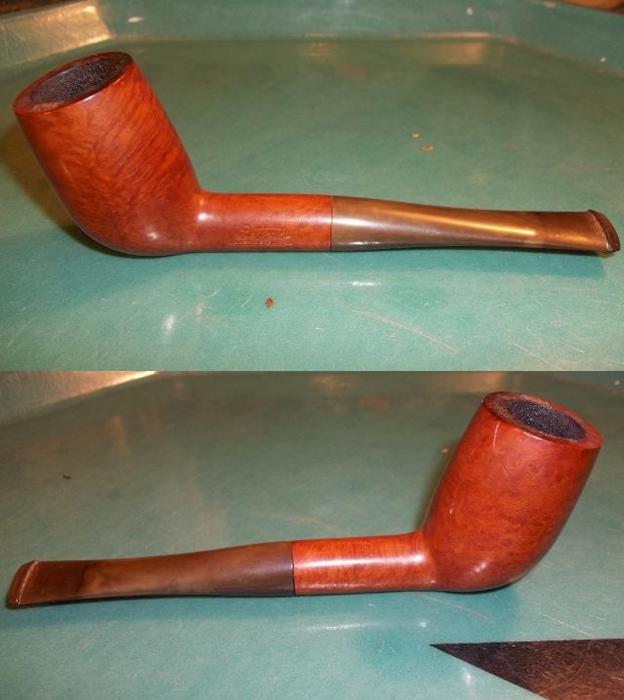
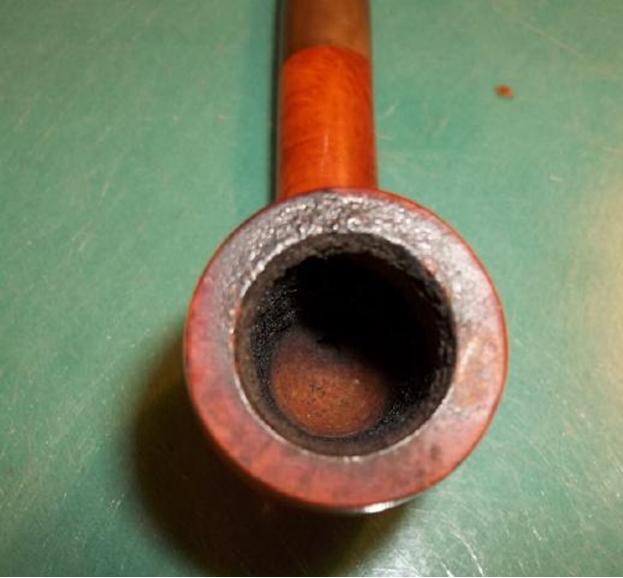
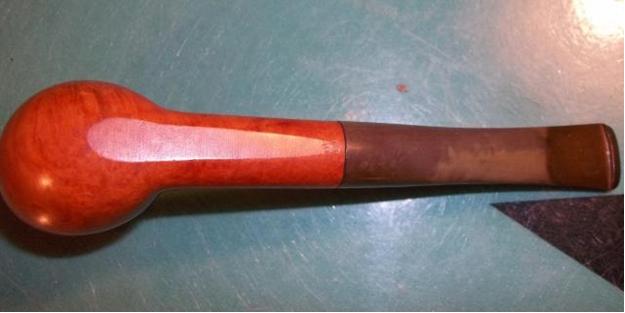
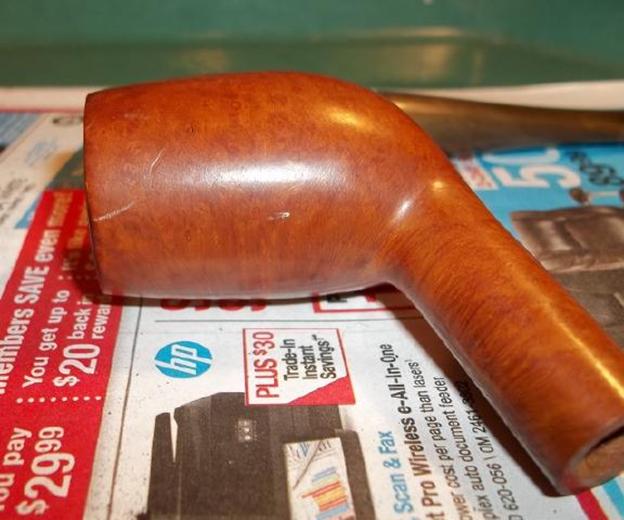
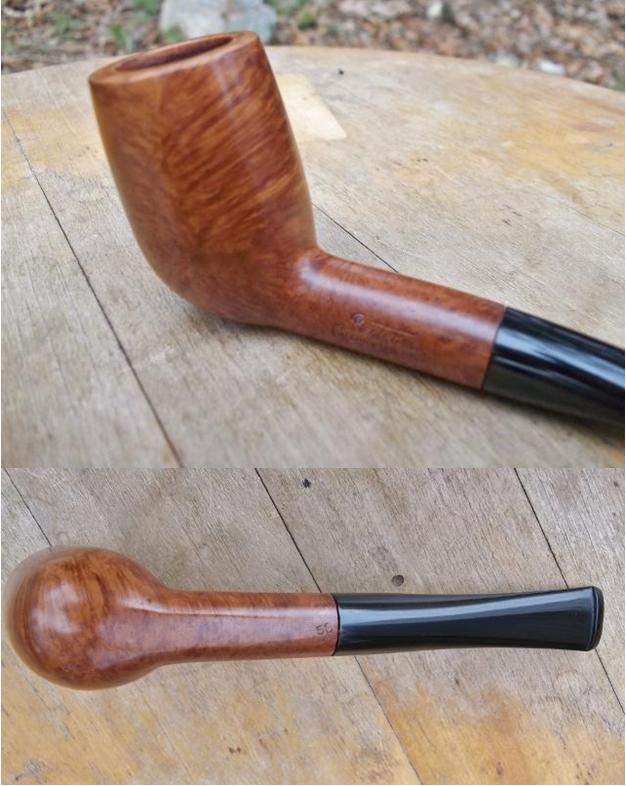
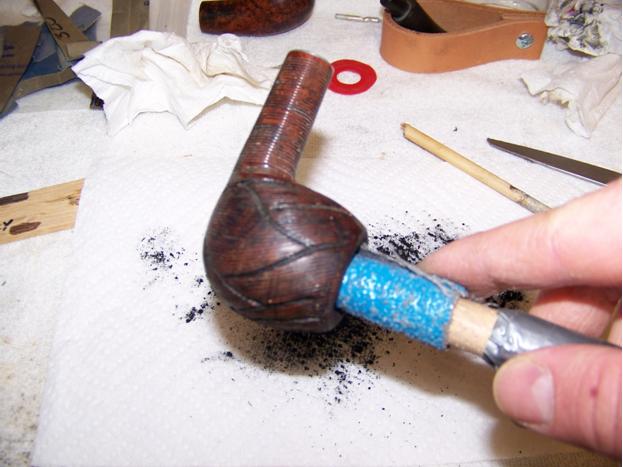
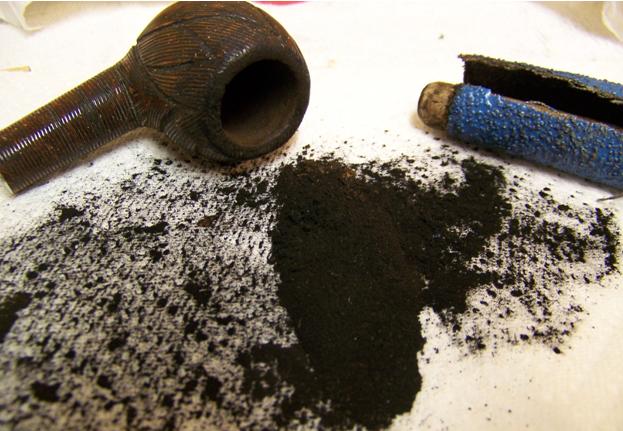
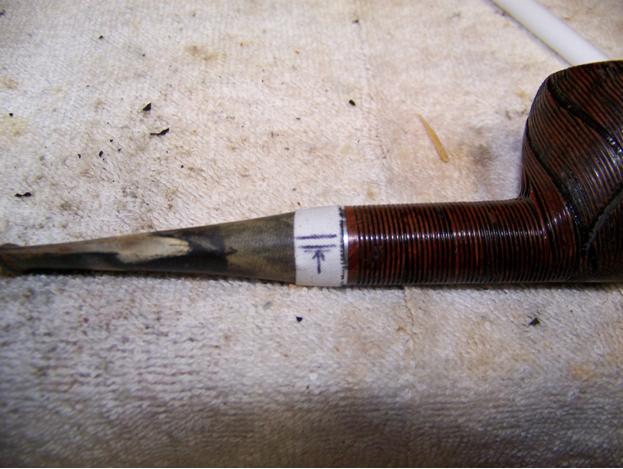
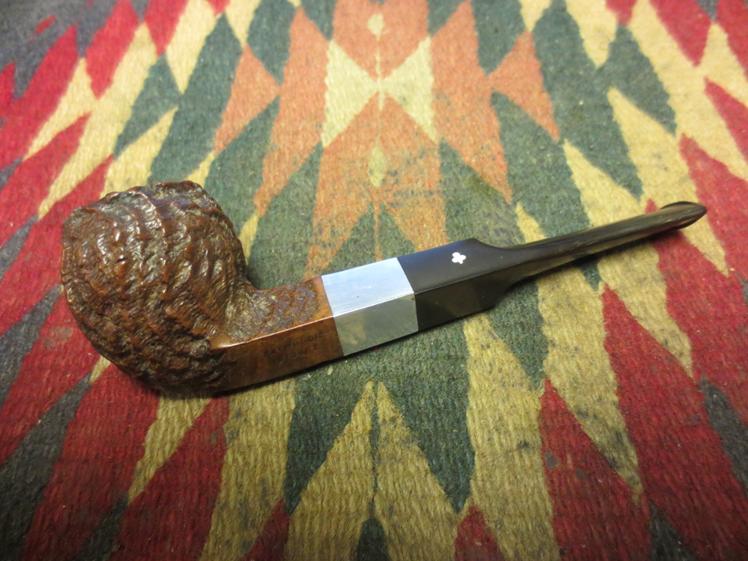
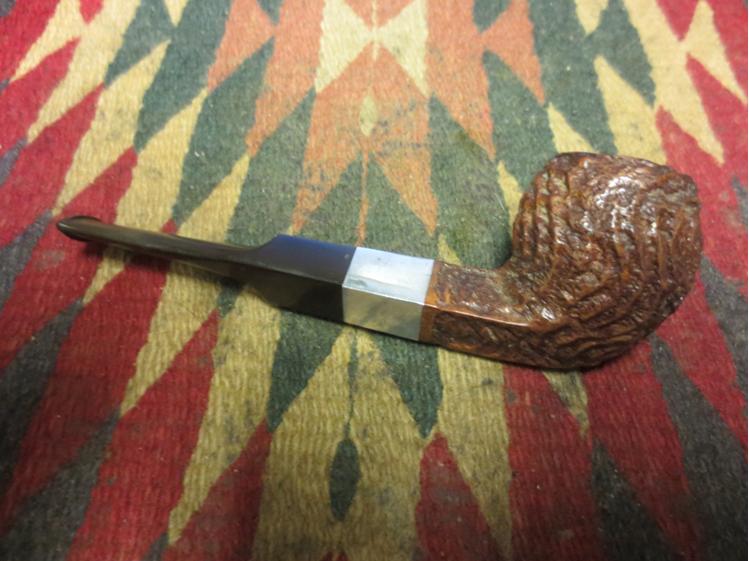
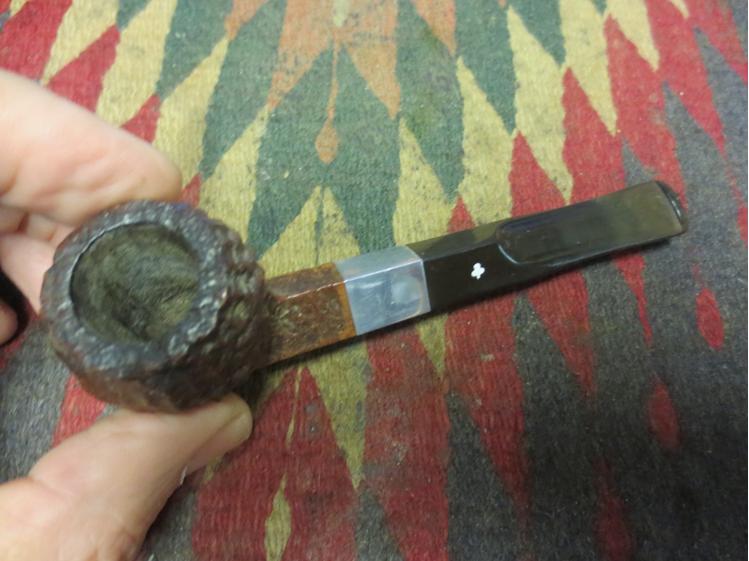
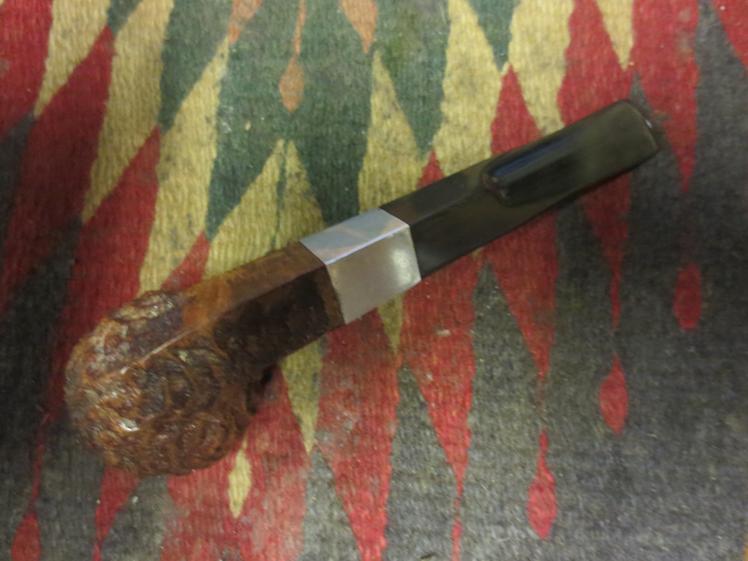
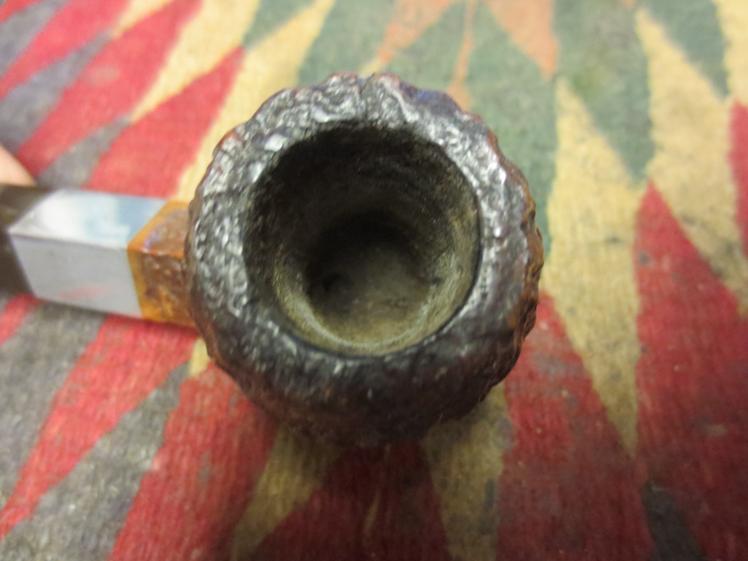
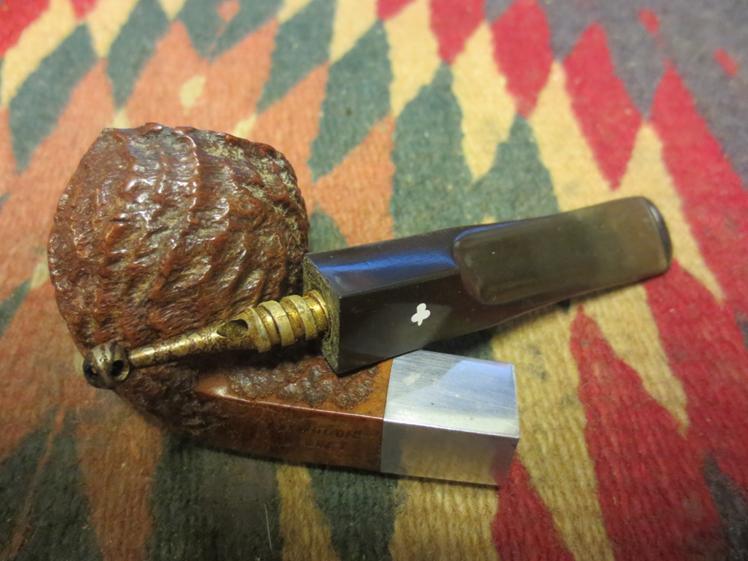
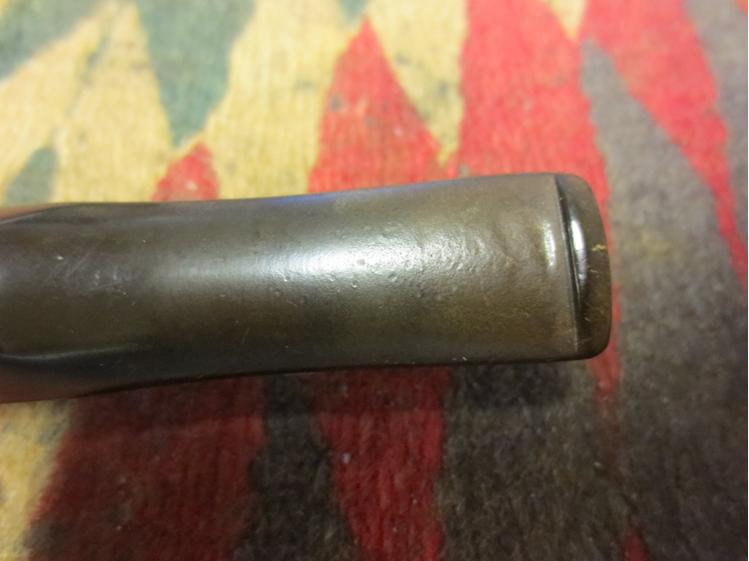
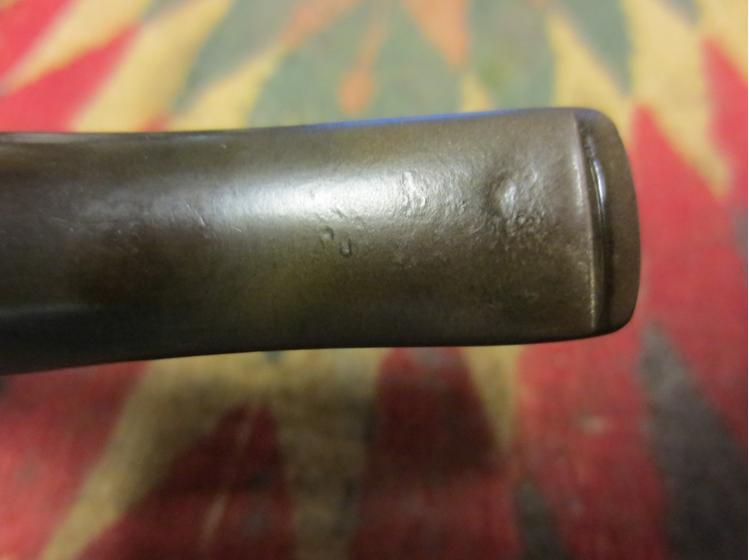
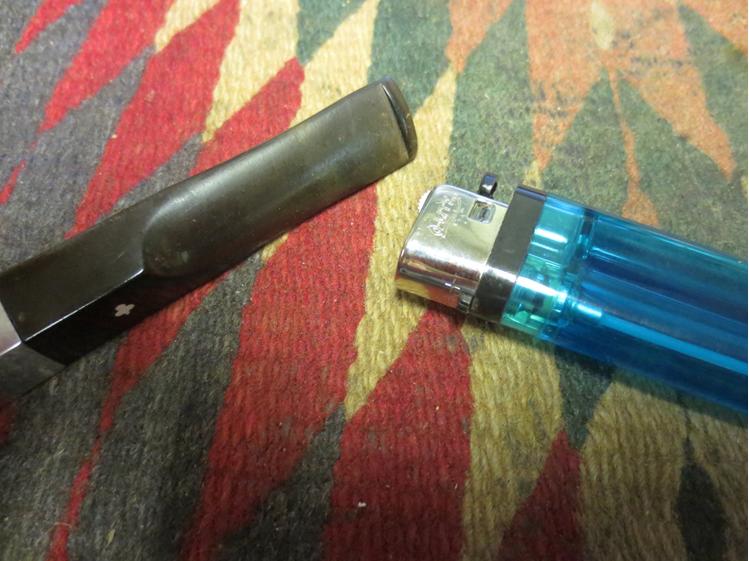
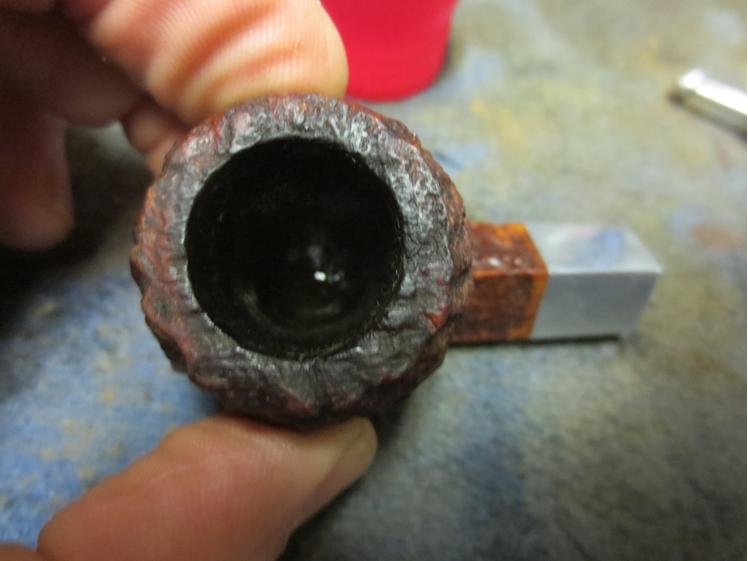
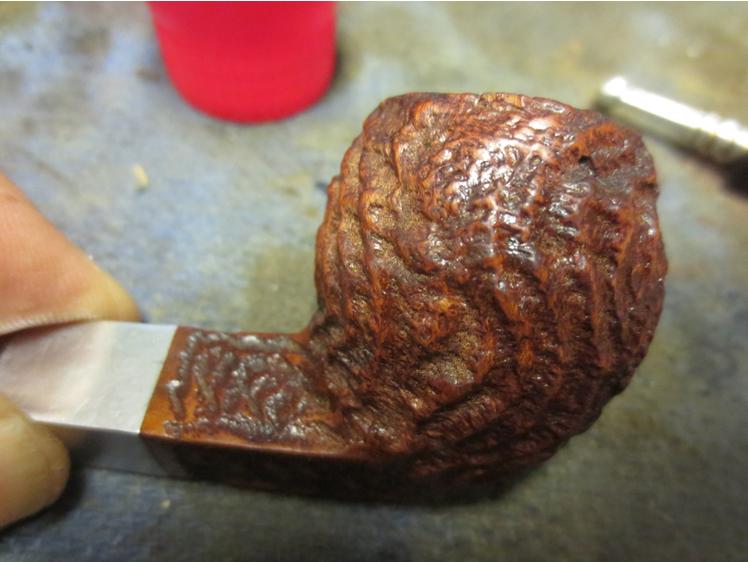
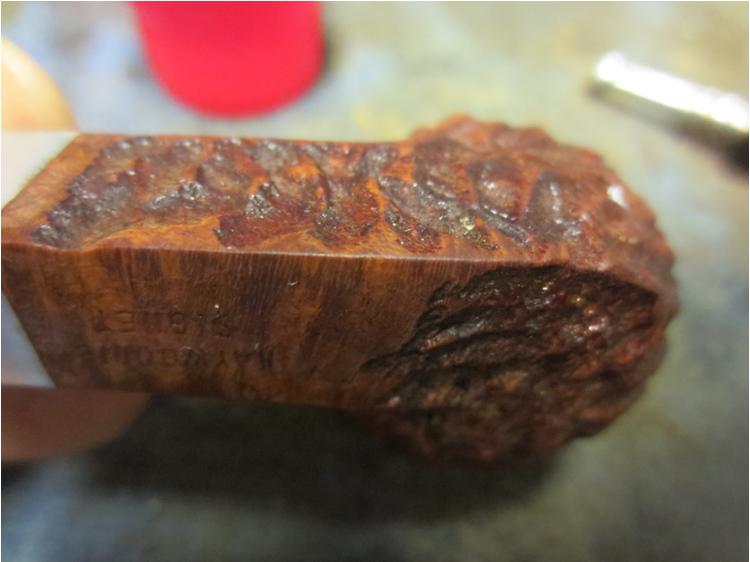
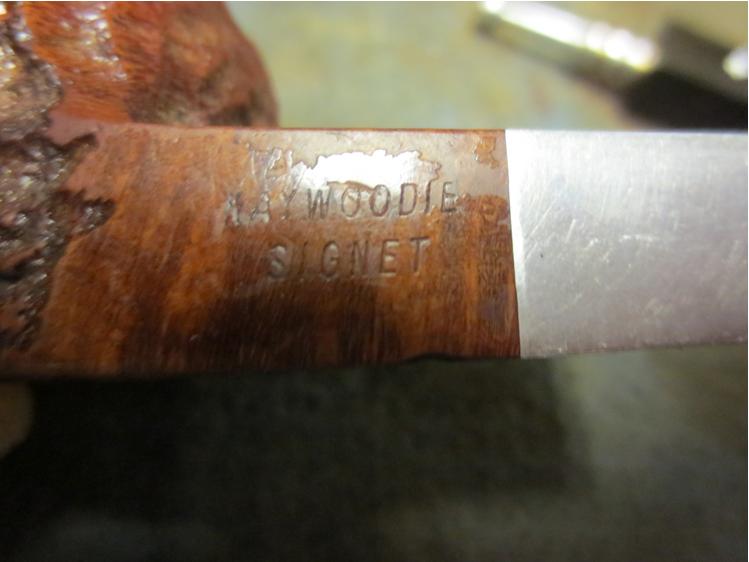
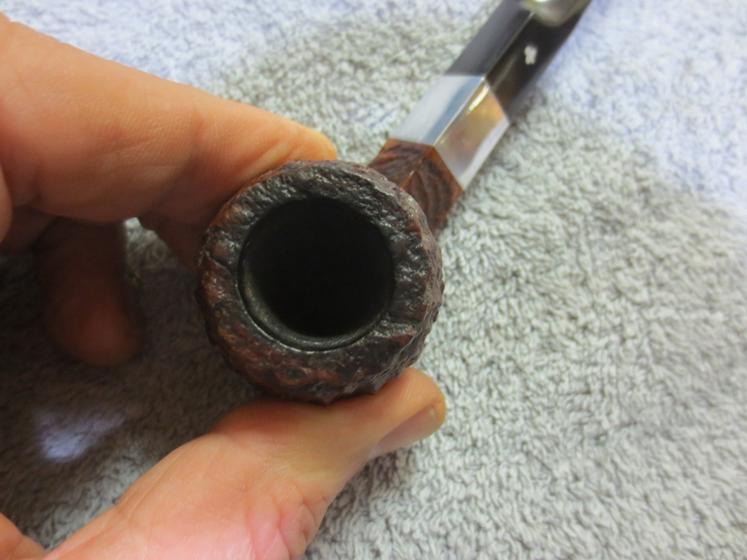
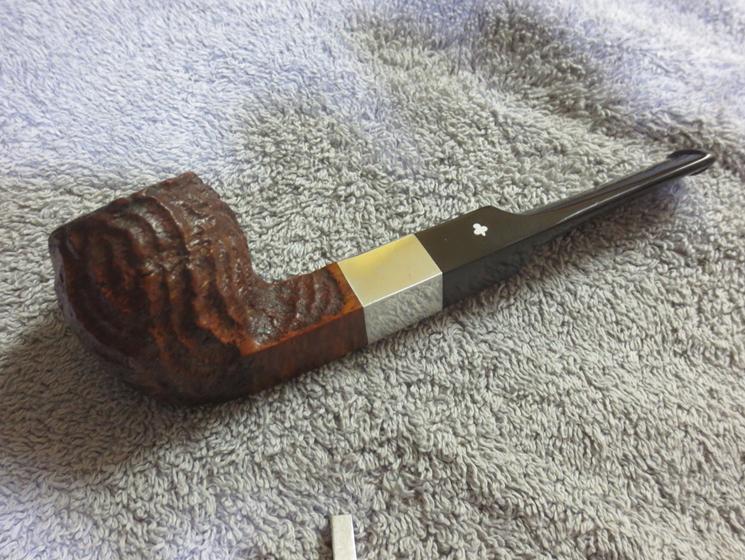
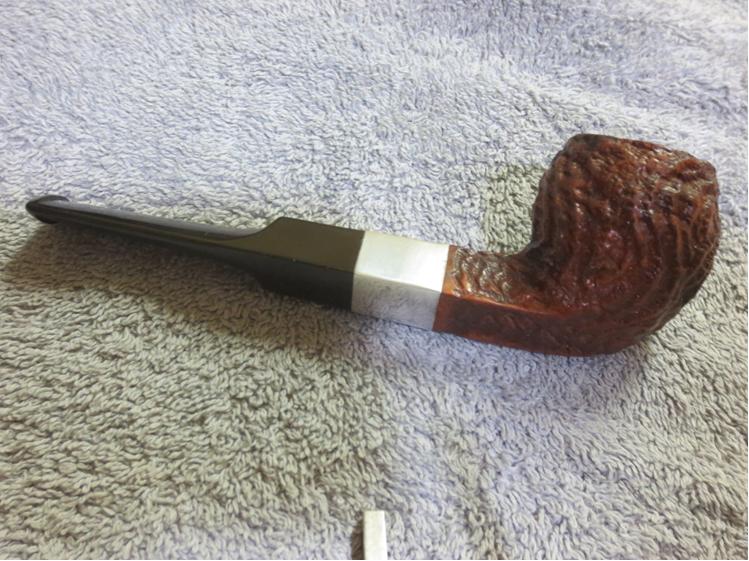
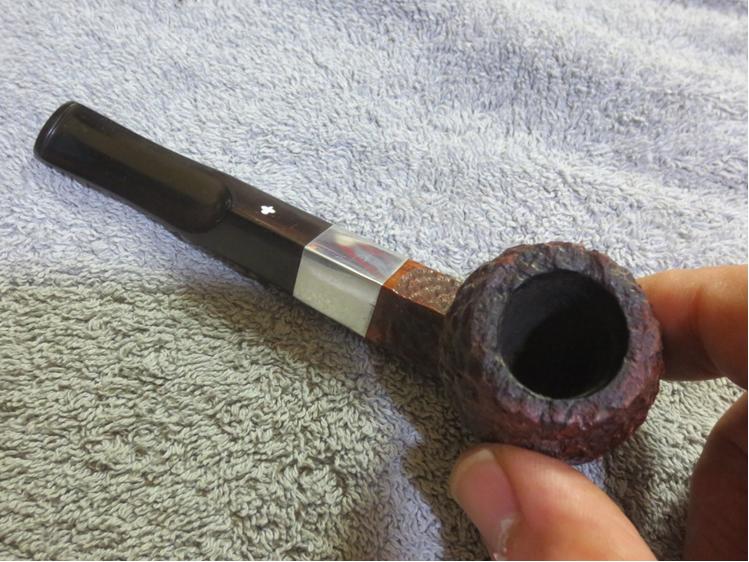
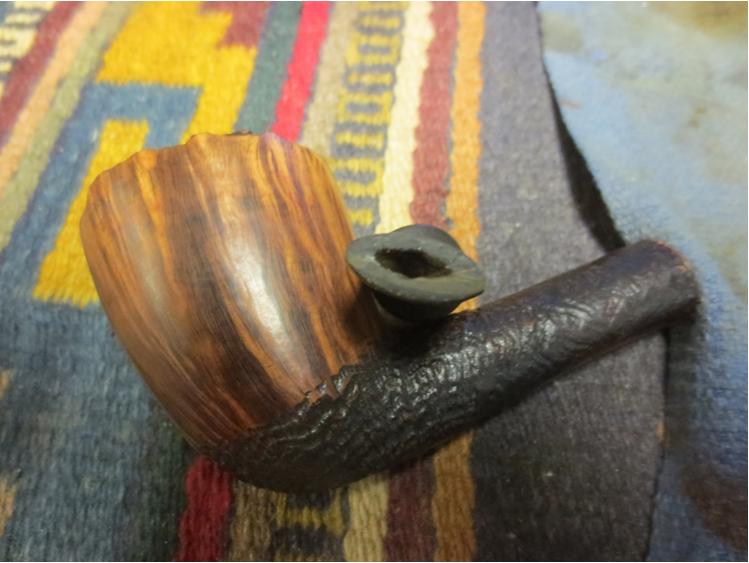
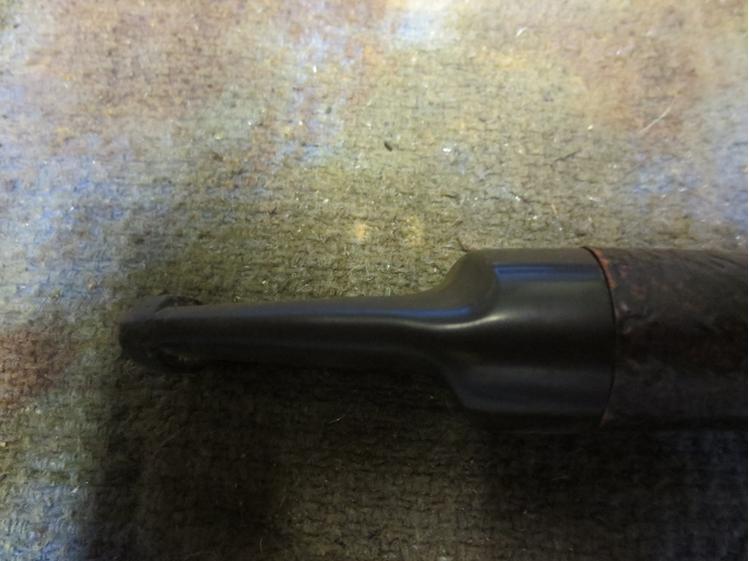
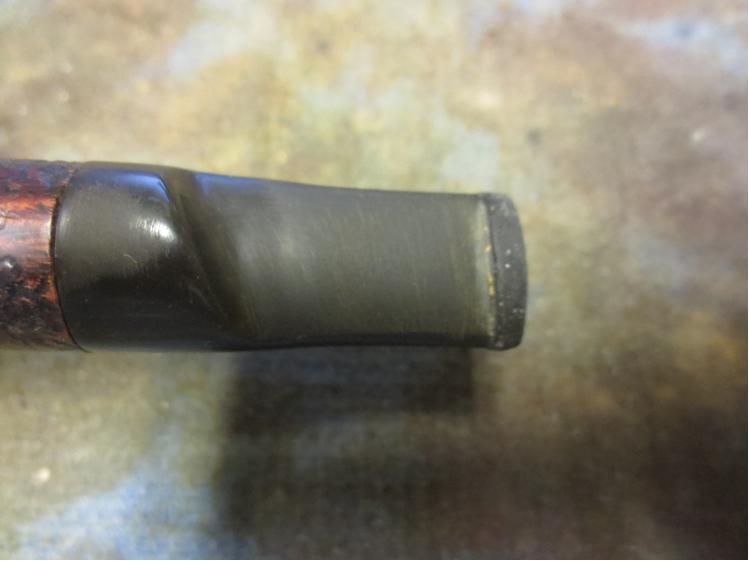
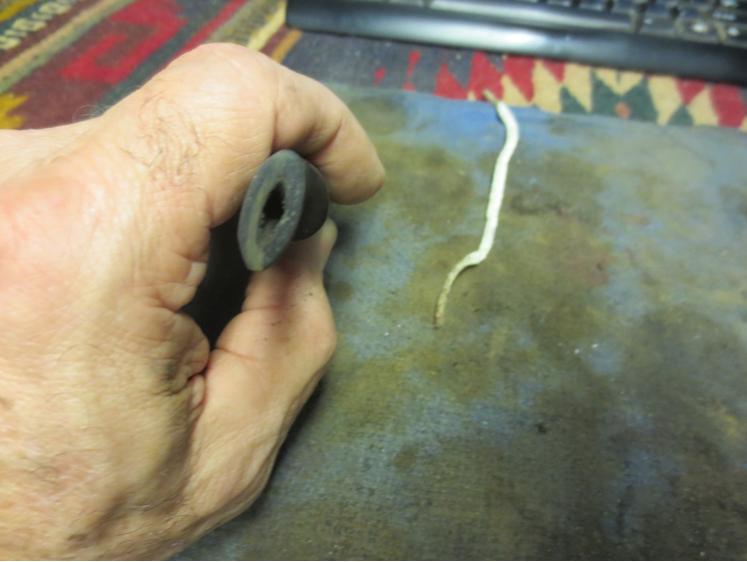
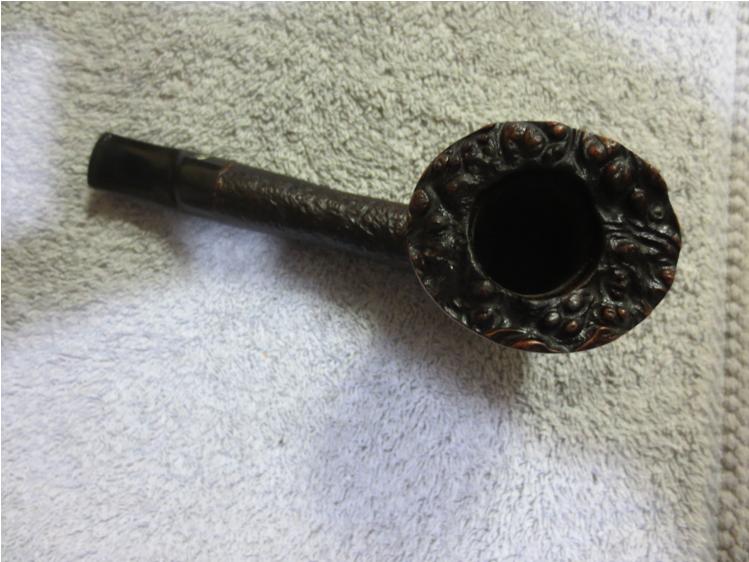
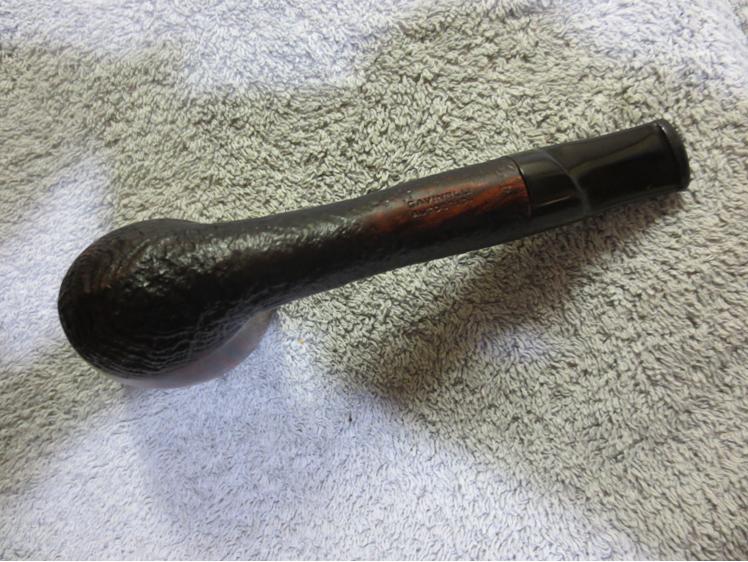
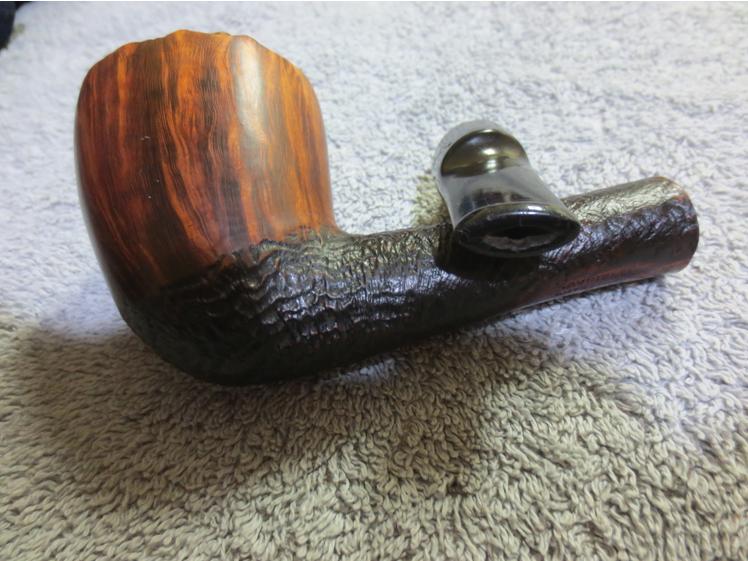
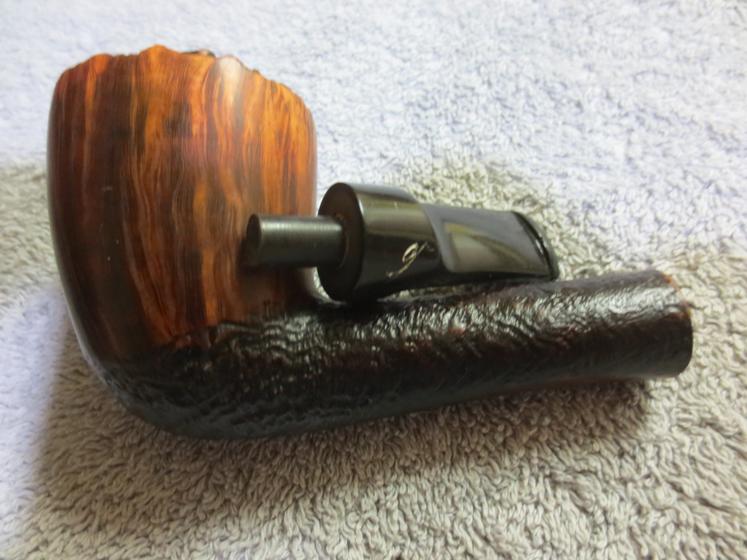
The next one to my work table was a Dunhill Oom Paul 591. It was a Dunhill shape that I had not seen before. The stamping on the left side showed the shape number 591 next to DUNHILL over BRUYERE. On the right side of the shank it was stamped Made in England7 and next to that Circle 4A designating the size of the pipe. From several sources I was able to ascertain that the pipe was made in 1967. The finish on this one was in good shape. There was a light build up on the top of the rim and there was an uneven cake in the bowl. There were some small dents in the sides of the bowl but not enough for me to steam them out and risk harming the original finish. The stem would not fit down into the shank. In the pictures below you can see how far it would go into the mortise. I removed the stem and the mortise was dirty and black. The stem was oxidized and had some minimal tooth chatter on the underside near the button. There was also a shallow tooth mark on the underside amidst the chatter.Dun1

Dun2

Dun3

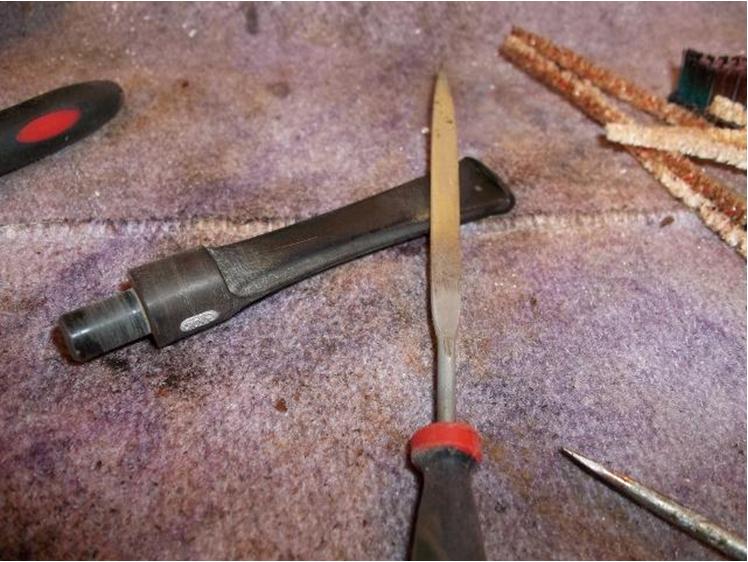
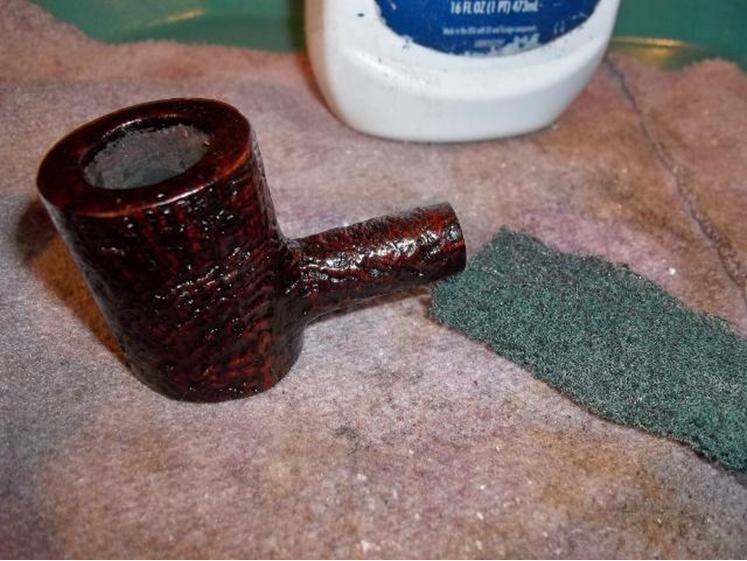
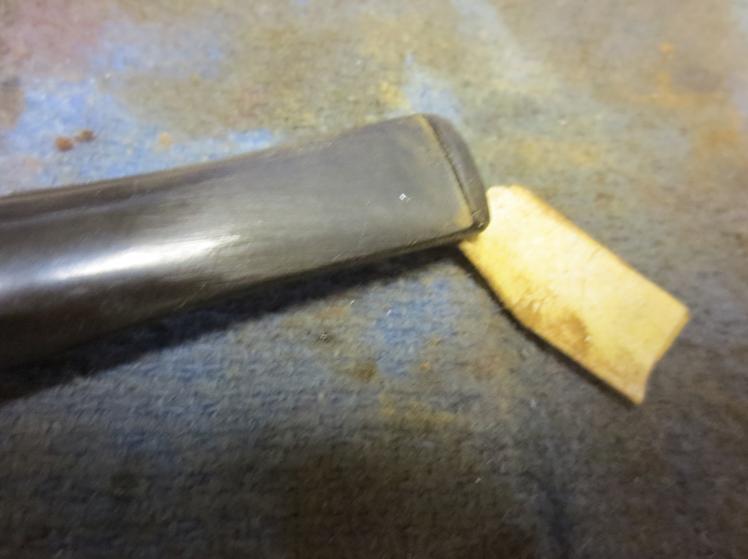
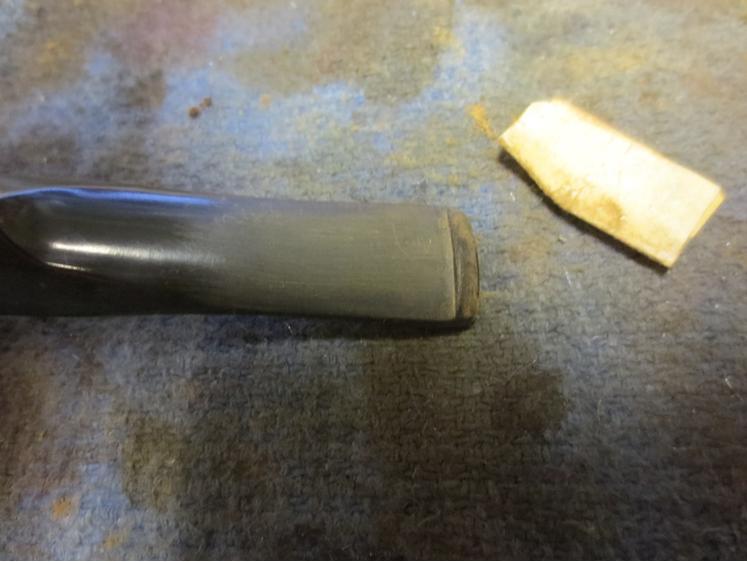
Dun4 I cleaned out the shank with pipe cleaners, cotton swabs and isopropyl alcohol until the swabs came out clean. I cleaned the airway to the bowl and gave the bowl a light reaming to remove the uneven build up. I scrubbed down the rim and removed the light build up that was there and polished the bowl with carnauba on the buffer.Dun5 I lightly sanded the stem with a medium grit sanding sponge to loosen the oxidation and with 220 grit sandpaper to remove the tooth chatter and small dent.Dun6

Dun7

Dun8

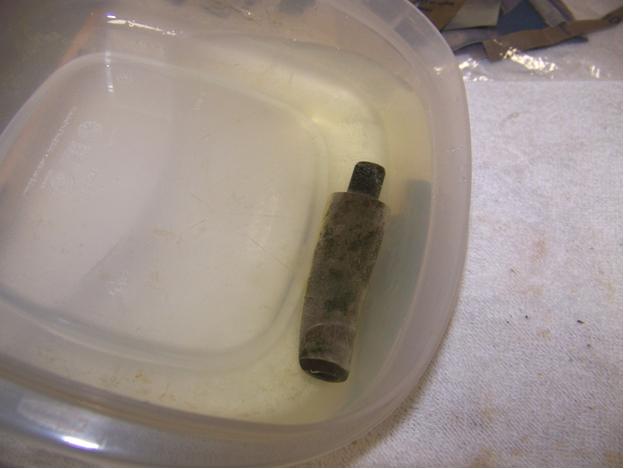
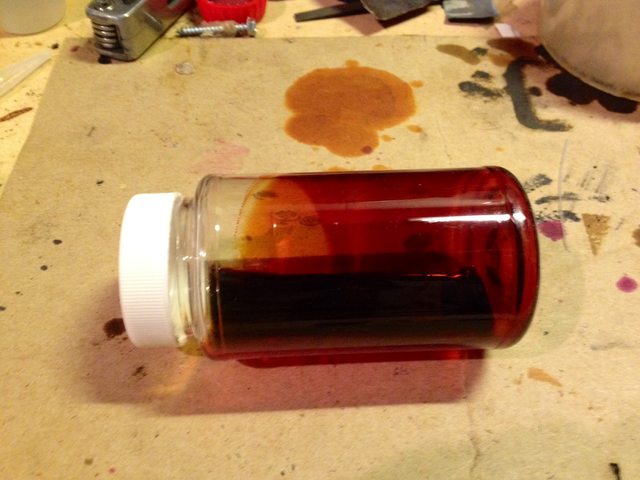
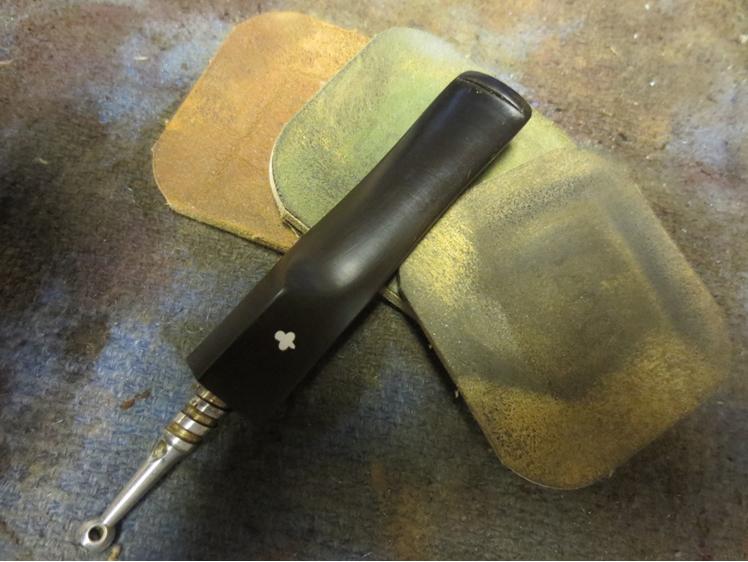
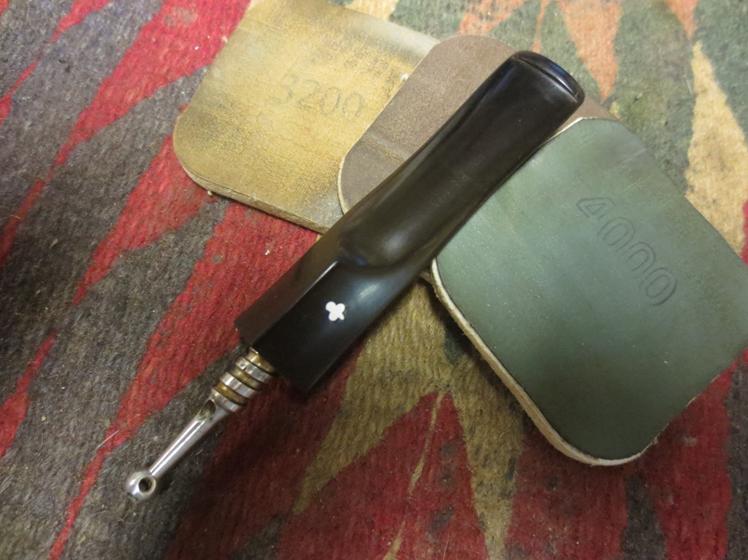
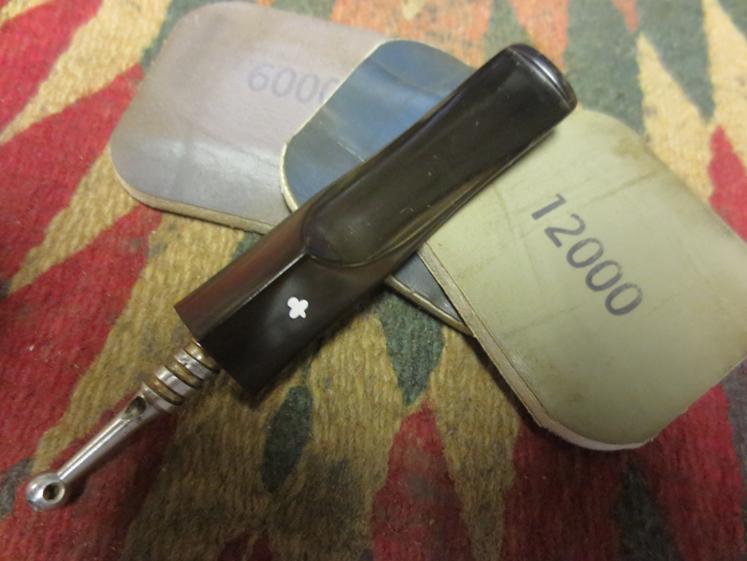
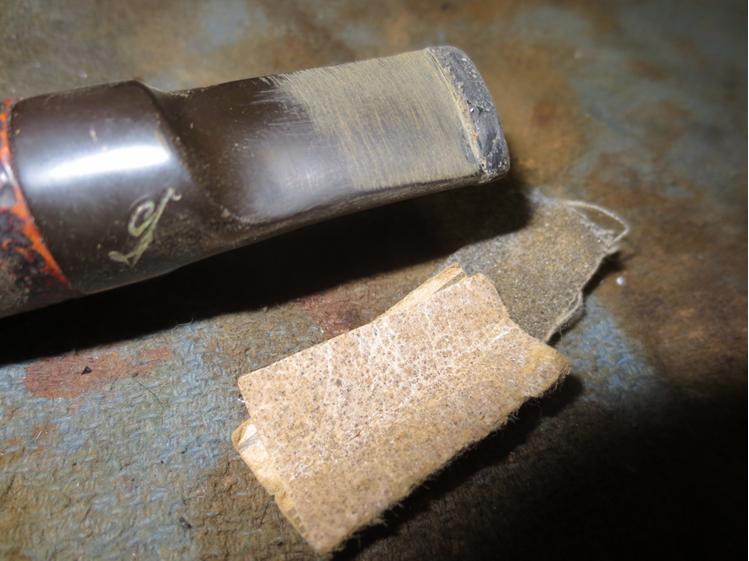
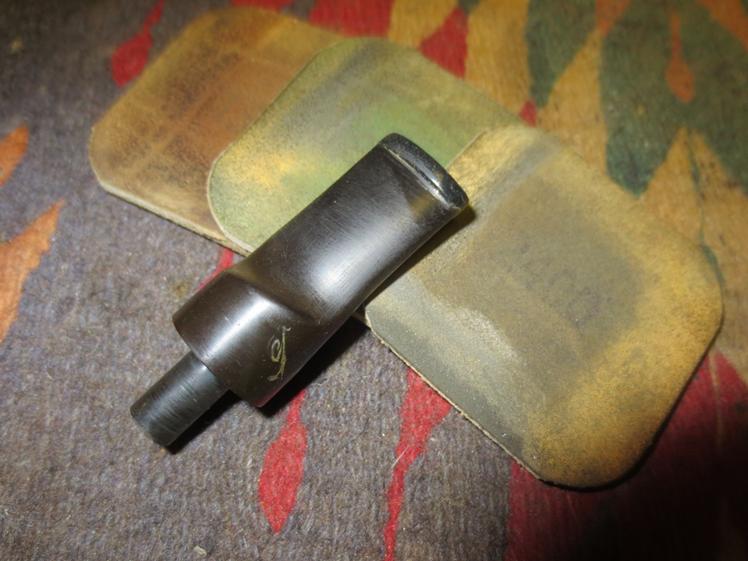
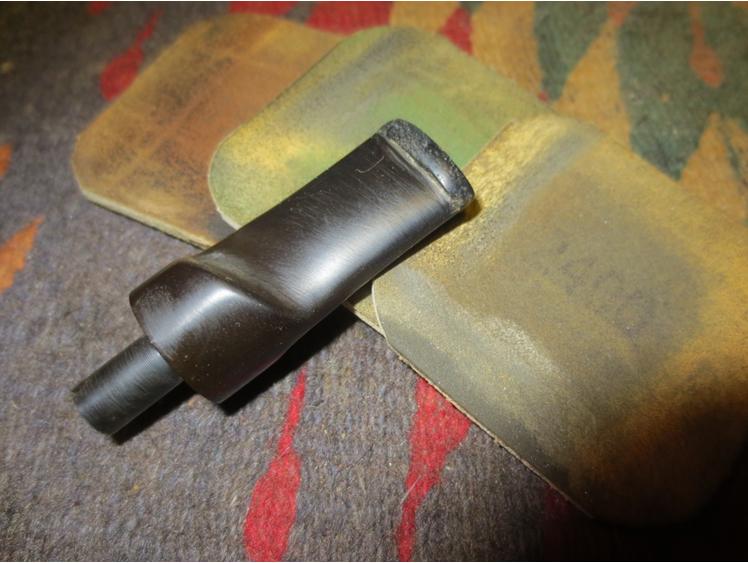
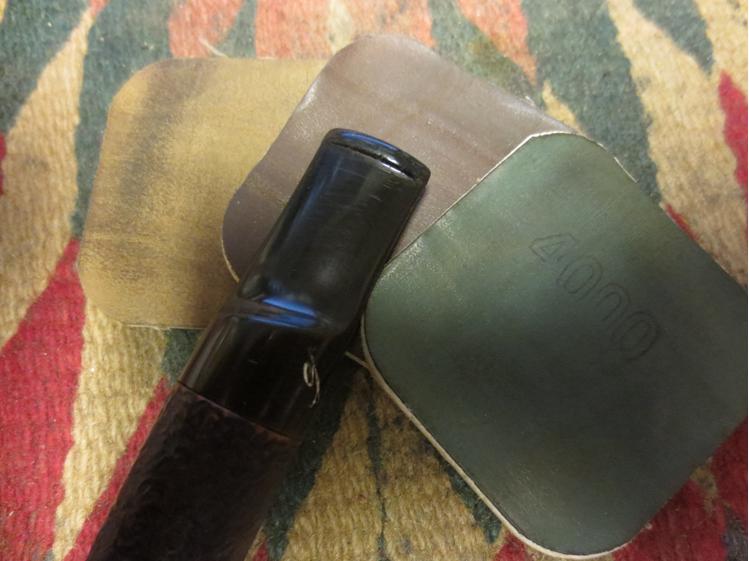
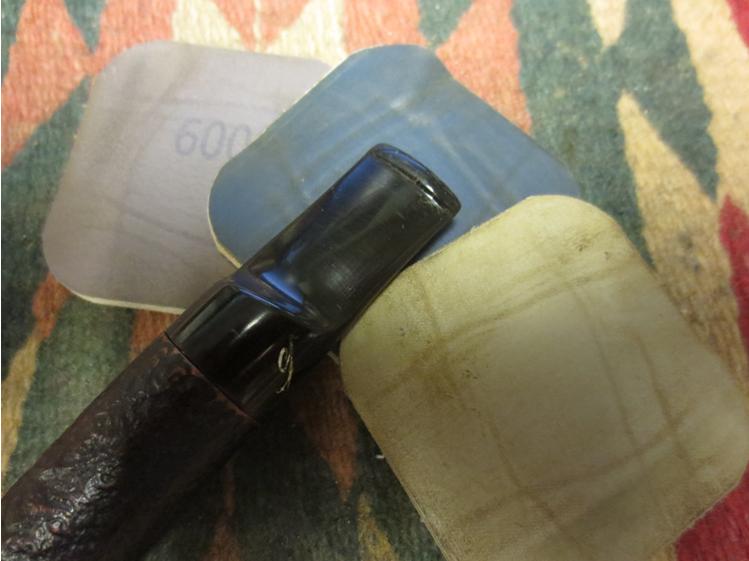
Dun9 I mixed up a batch of oxyclean and put the stem in the bath to soak overnight.Dun10 In the morning I took the lid off the container and removed the stem. The water had turned amber coloured. The oxidation had risen to the surface of the stem and I rubbed most of it off with a coarse cloth. I cleaned out the stem with alcohol and pipe cleaners and used the dental pick to clean out the slot on the stem.Dun11 I sanded it with a medium and a fine grit sanding sponge to remove the softened oxidation.Dun12 Then it was time to polish it with the micromesh sanding pads. I wet sanded with 1500-2400 grit pads and dry sanded with 3200-12,000 grit pads. I rubbed the stem down with Obsidian Oil between each set of three pads. I buffed the stem with red Tripoli after I finished with the 2400 grit pad and with White Diamond after the 12,000 grit pad.Dun13

Dun14

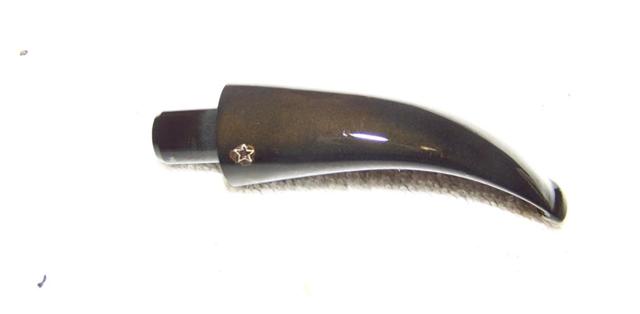
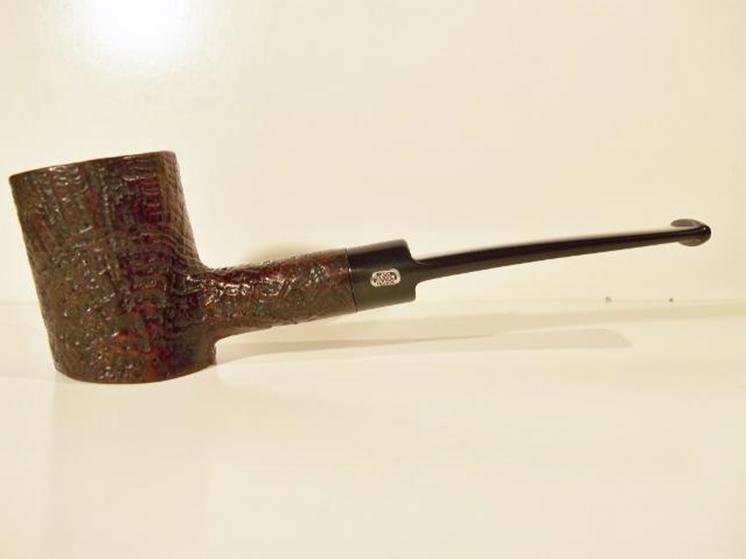
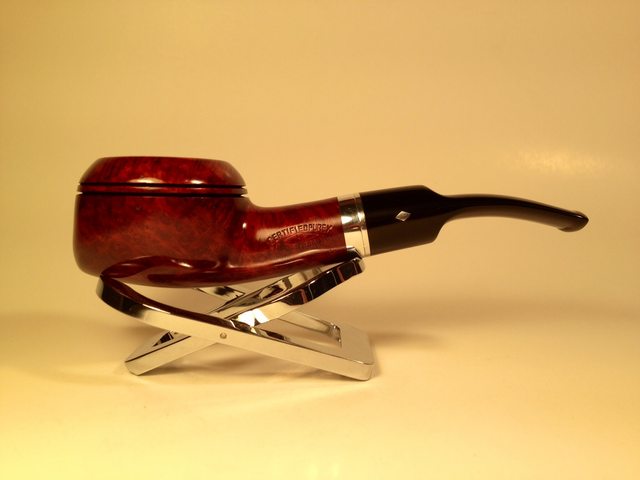
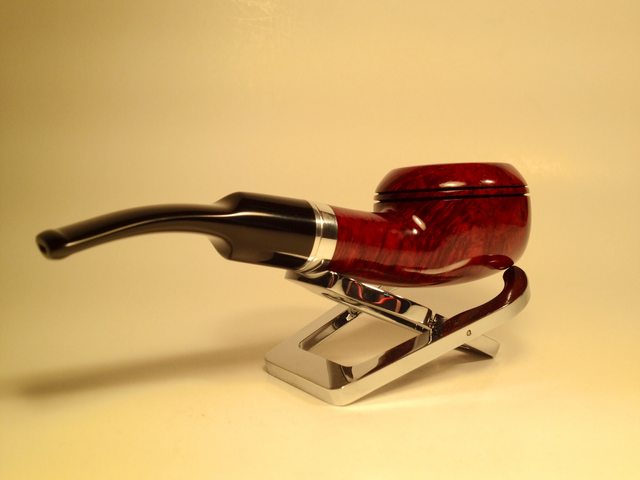
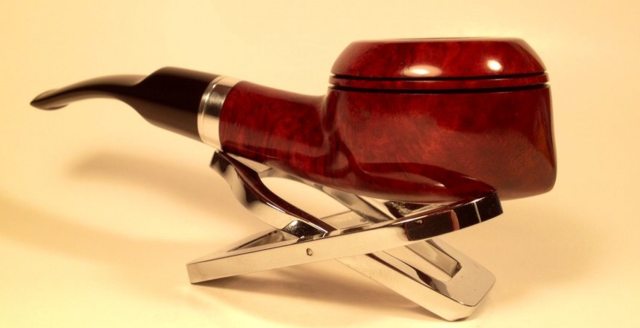
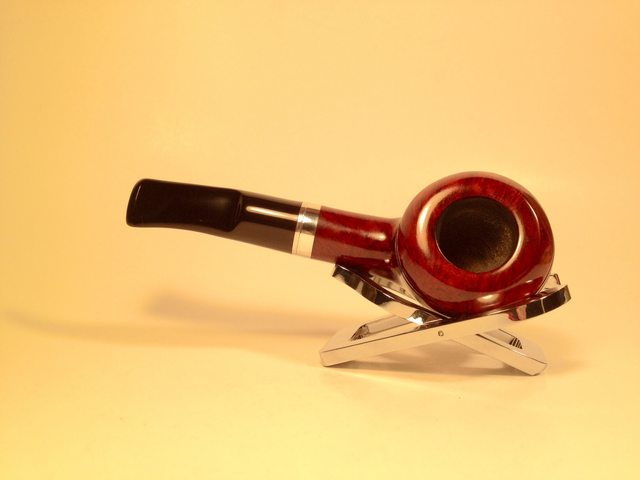
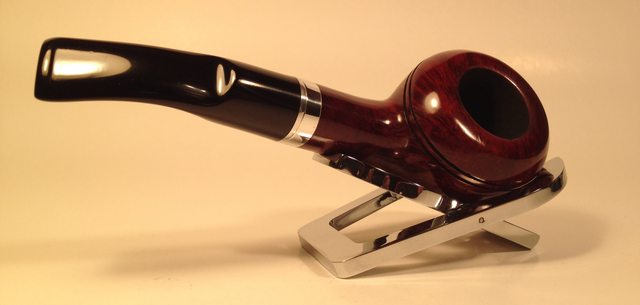
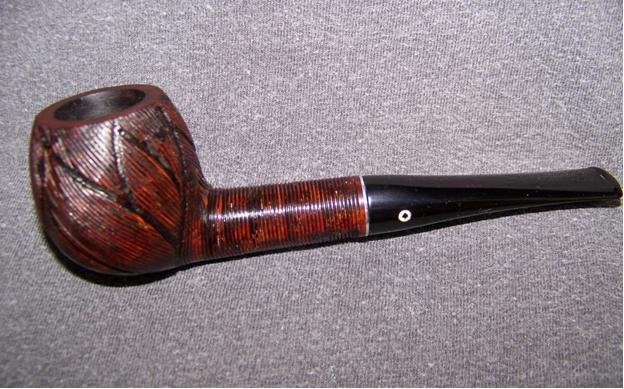
Dun15 There were still some scratches that showed up in the bright light of the flash so I worked it over again with the last set of pads and then buffed it with Blue Diamond Plastic Polish on the wheel. I finished by giving the bowl and stem multiple coats of carnauba wax and then buffing it with a clean, soft flannel buffing pad to raise the shine. The finished pipe is shown below. Somehow in the photos the fluorescent lights lend the photo a yellow tint that I normally do not get. The stem is absolutely shiny and black and the bowl is a rich oxblood red. It is ready to be smoked and enjoyed.Dun16

Dun17

Dun18

Dun19

Dun20

Dun21

Dun22 Thanks for looking.

Peterson 9BC “Kapruf” (Pre ’59)


This isn’t a restoration, but I hope you will indulge my fascination with the Peterson 9BC shape.

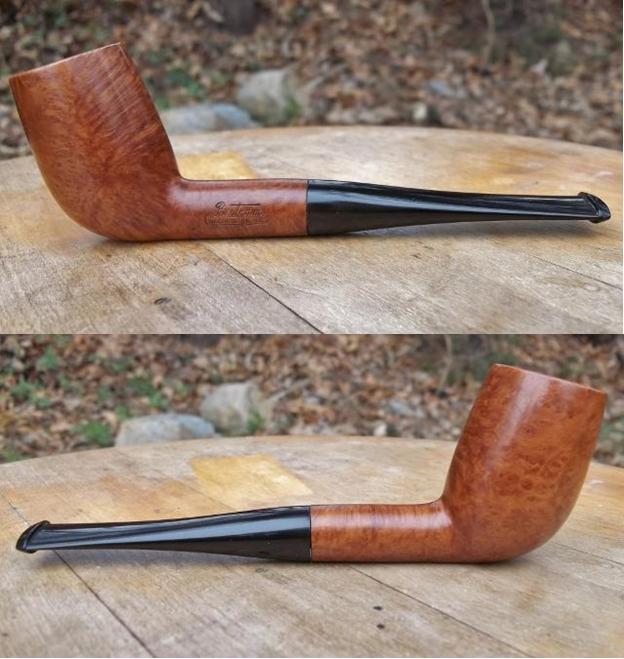
I enjoy collecting different finishes for my preferred shape and recently, the Peterson 9BC has caught my attention as of late. I found this “Kapruf” finish pipe on Ebay (via infamous seller Shinypipes…) and made an offer that was accepted. 9BC shapes don’t show up that often, but curiously, the seller had not identified the model in the ad, which was to my advantage. They had the pipe incorrectly listed as a “Pre-Republic, 1940’s-1950 era pipe. The stamping is worn but completely legible with the naked eye. The round “Made in England” stamp was reportedly used up to 1959, at least by the Pipepedia article.

I didn’t know much about the Kapruf line. It is described in a 1960’s catalog as:

Quote :
A fine sandblast finish distinguishes this range of light natural grained pipes with their distinctive red colouring. Very popular with sportsmen.

The second page shows the 9BC shape.

Peterson_Page- Rogers Catalog 1957

1965-Peterson-Catalogue - Kapruf Line

This one has a little grain and some flaws that would have otherwise been fills on a smooth pipe. It has plenty of character, that is for sure.

Peterson_9BC_Kapruf_Gallery

Peterson_9BC_Kapruf (2)

Peterson_9BC_Kapruf (4)

Peterson_9BC_Kapruf (3)

Peterson_9BC_Kapruf (1)

Peterson_9BC_Kapruf_Nomenclature

Compared with my other 9BC (Premiere Selection), this one is incrementally smaller in all dimensions and 67 grams vs. 72 for the smooth pipe. The P on the stem is long gone (as were most I’ve come across, save my smooth) but the robust p-lip button has the same profile as the smooth pipe.

Peterson_9BC_Kapruf (5)

Restoring an Ascorti Business KS Bent Brandy with a broken stem


Blog by Steve Laug

The next pipe that I have on my work table was an Ardor Business KS Bent Brandy with severe damage to the end of the stem. The bowl still had some unsmoked tobacco in the bottom half and the cake was crumbly and concentrated around the middle of the bowl. The top portion of the bowl had a light cake. The bottom portion was fairly clean. The shank and stem were dirty with a lot of black tars and oils. The mortise was black and the airway from the bowl entered the mortise quite high. Part of it was actually above the mortise – very different angle of drilling. The tenon was flared on the end so that the smoke was funneled into the stem. The finish was in excellent shape – the rustication had a reddish top coat over a dark brown/black undercoat. Even the rim was clean and undamaged.As1

As2

As3

As4 The stem has the same stepped look as the Caminetto Business pipe that I just completed. The saddle portion of the stem was flawless. The top of the stem and the underside were damaged near the button. There was a large chunk of the Lucite missing on the underside and there were some deep tooth marks on the top side. The button itself was gnawed on as well on the top side. I had some choices to make with regard to this stem. Should I try a patch on the large missing chunk from the stem or should I cut of the stem and reshape a new button? That was the big question on this stem. I took the next two close-up photos to give a clear idea of how badly the stem was damaged.As5

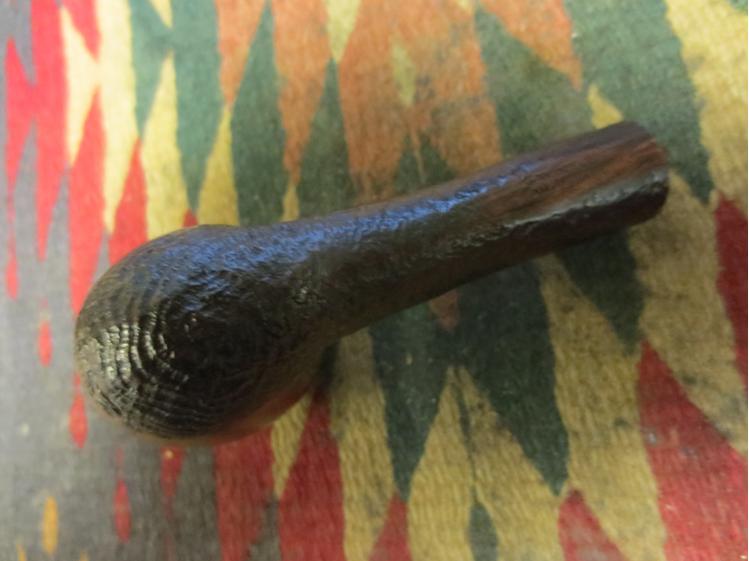
As6 I measured the length and took pictures to get a feel for the look of the pipe with the present stem length and with the shortened length. When I had a good picture in my mind of how it would look I used my Dremel and sanding drum to remove the damaged portion of the stem and cut it back to where the undamaged stem material would allow me to shape a new button and slot.As8

As9 I took the next photos of the pipe with the shortened stem to see what it looked like with 1/2 of an inch cut off the length.As10

As11 I took the next two photos of the cut off end to show how I had worked the Dremel to give it a straight edge. Once I took it back to the work table I would work on cutting in the edge of the button and start giving it shape.As12

As13 I used some black super glue to fill in the deep tooth marks that remained on the stem and also ran a small band of super glue along the area where the button would eventually be cut.As14

As15 When the glue dried I used a flat blade needle file to cut the sharp edge of the button on the end of the cut back stem.As16

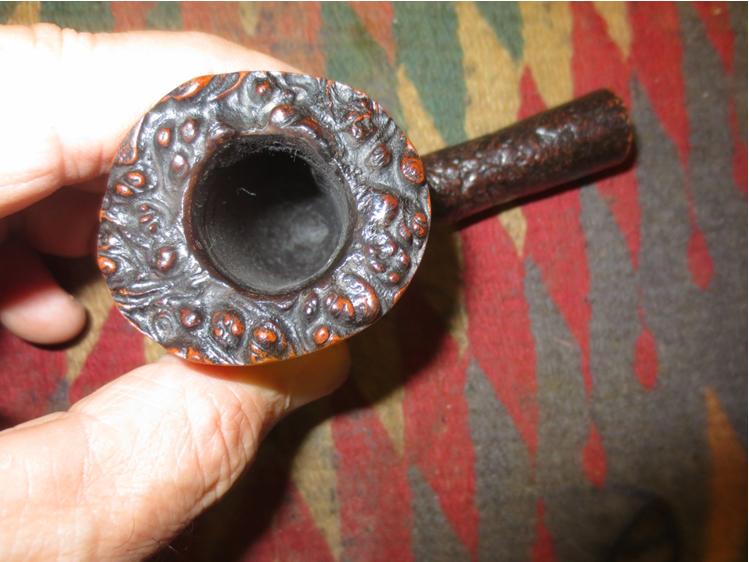
As17 I used a knife edged needle file to carve back the thickness of the stem to the newly cut straight edge. I wanted a taper from the bend back toward the sharp edge. It takes some work to carve back Lucite, as it is significantly harder than vulcanite.As18

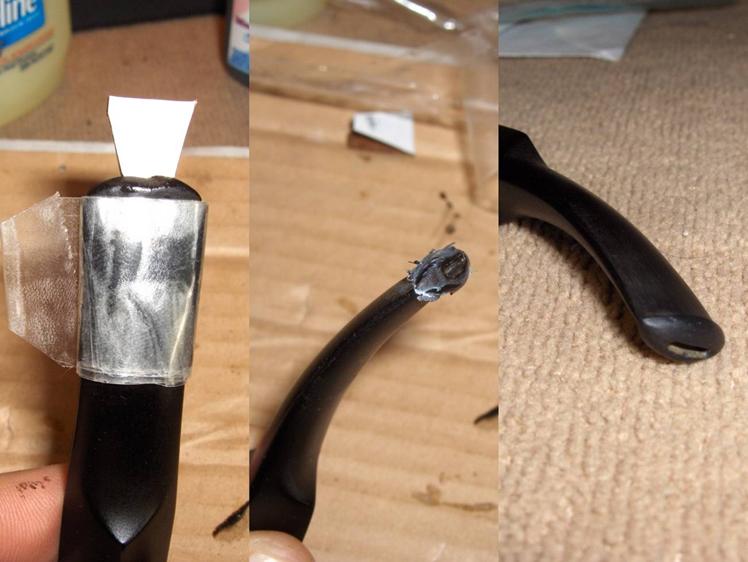
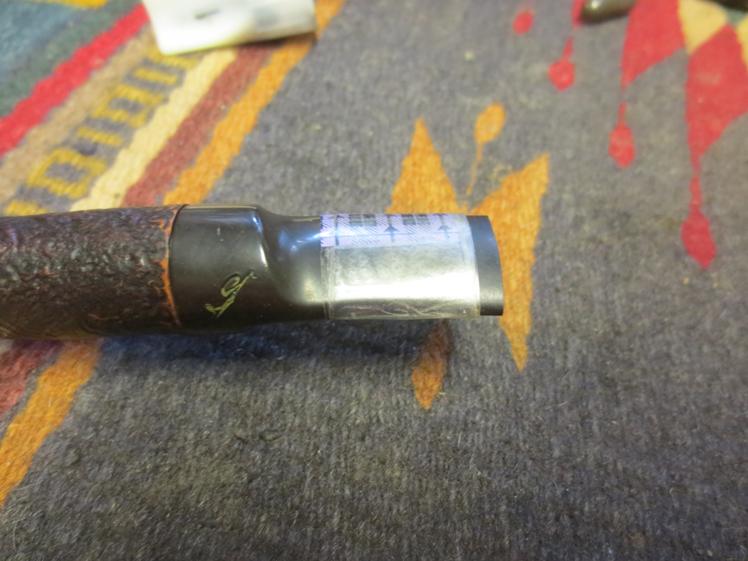
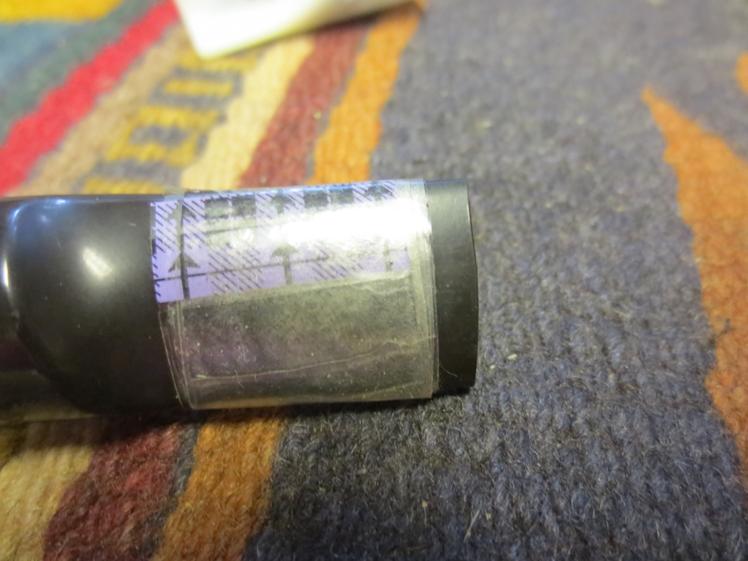
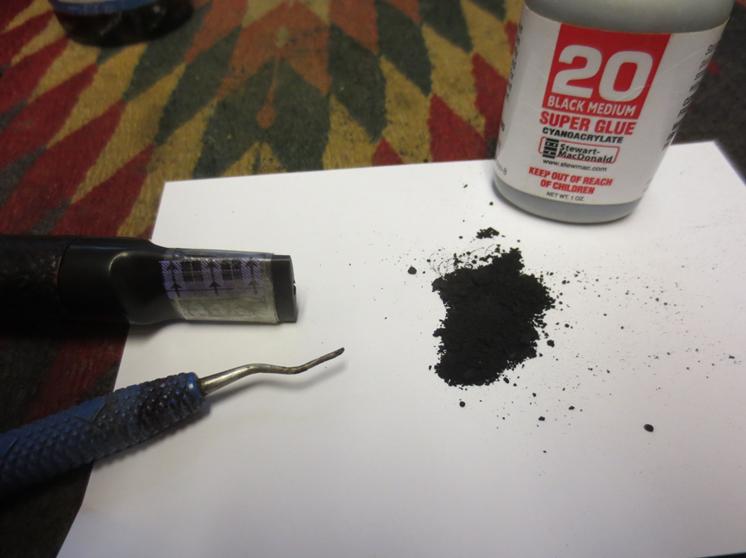
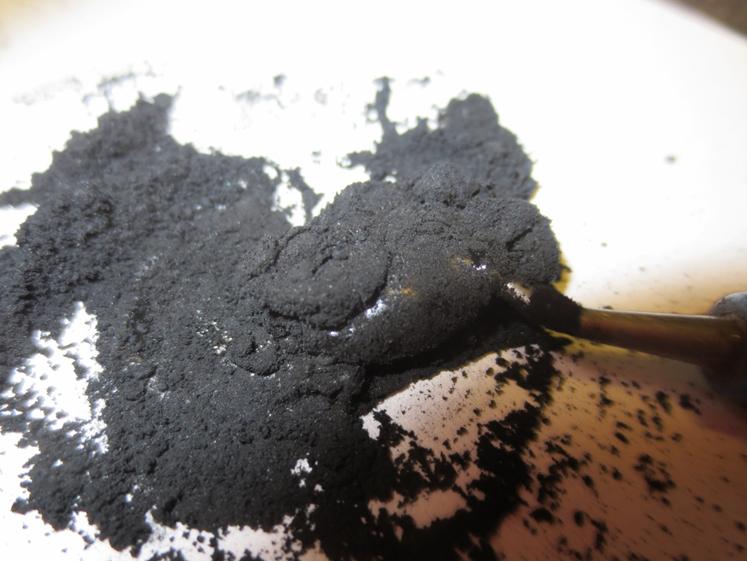
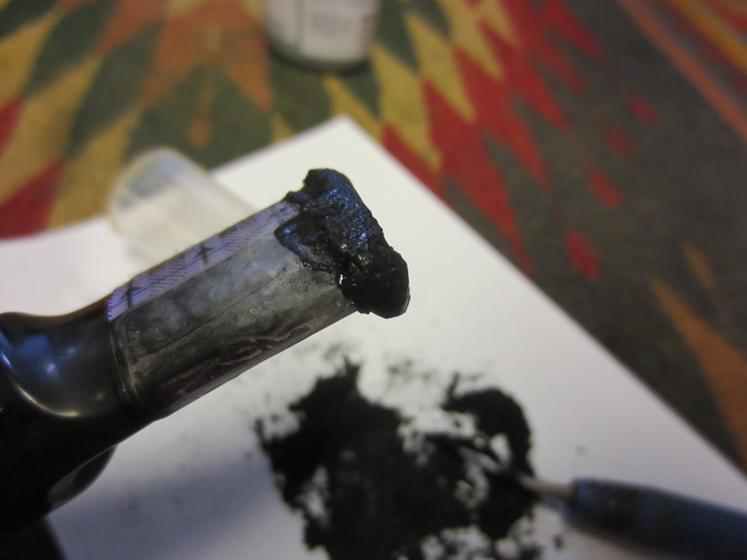
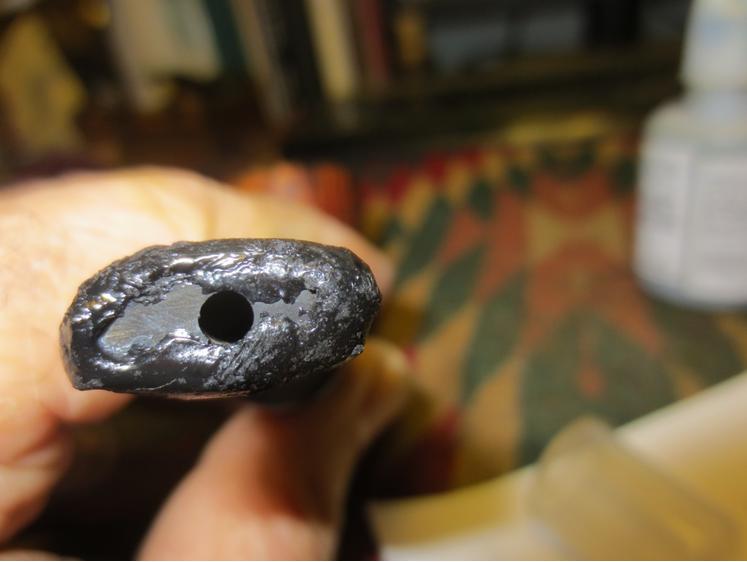
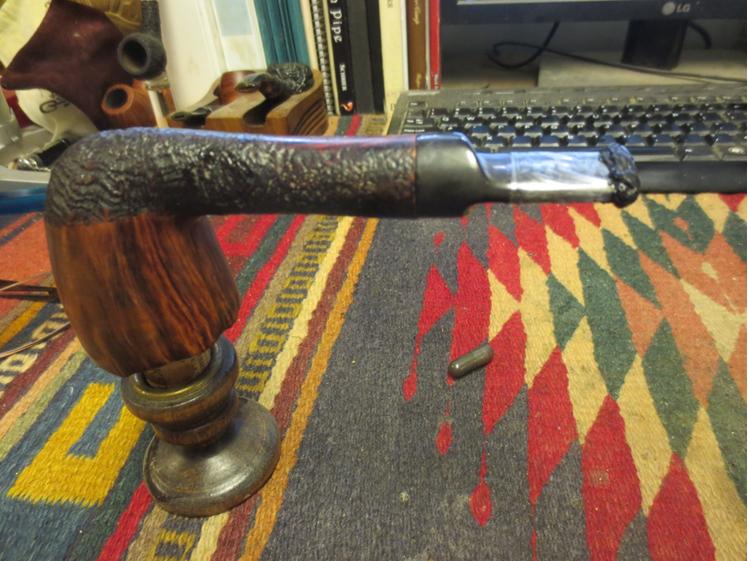
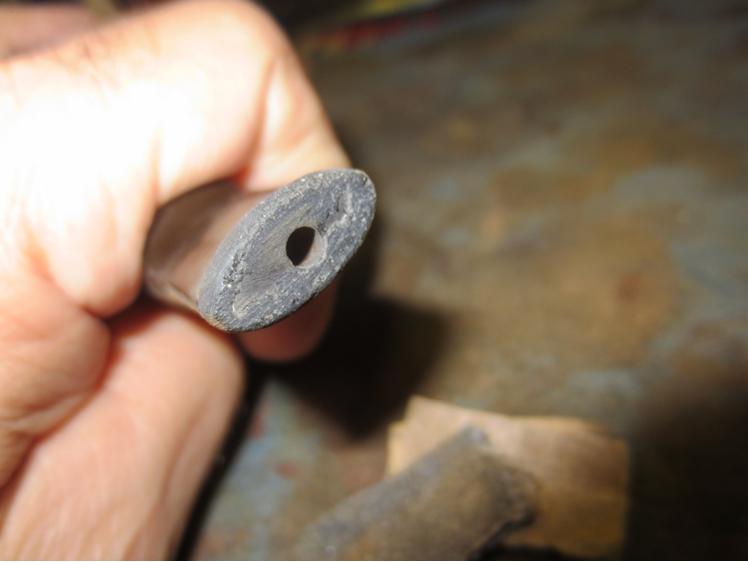
As19 As I examined the end of the stem I realised that I did not have enough thickness to the material on the top and bottom of the airway. It would not allow me to go deep enough to have a good edge on the button. I decided to build it up and created the button thickness I needed. I used a mix of activated charcoal dust mixed with black super glue to make a putty like substance that would stick to the stem.As20 Using a suggestion from Andrew Selking, I wrapped the end of the stem with scotch tape to create a straight edge to work against when I put the putty on the stem. I then gave the stem a light coat of black super glue and then used the dental pick to press the charcoal and super glue mix on the stem end against the scotch tape. I used a flat dental trowel to flatten the material in place and save some sanding for myself.As21 When the repair was hard to the touch I removed the scotch tape and found that I had a fairly thick button built up on the stem end and that it had a pretty sharp edge to it.As22

As23 I sanded the newly built button with 220 grit sandpaper to begin shaping it. I would have to use the needle files to sharpen the edge of the button and then sand the new button to shape it more like the one on the Caminetto stem that I had worked on previously. I was using it as the pattern for the shape and look of this one.As24

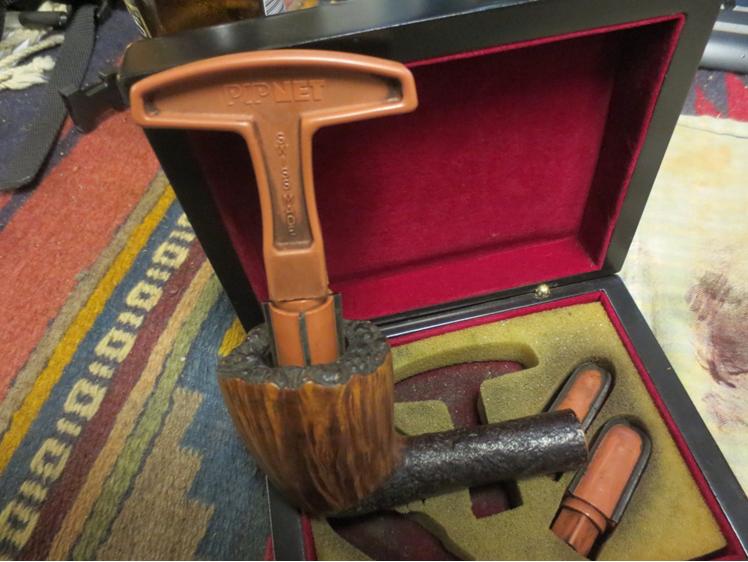
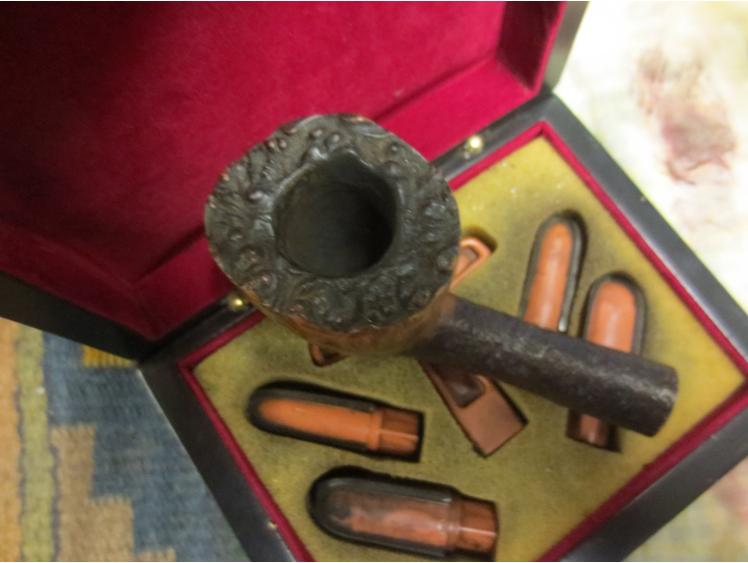
As25 When I had it shaped as much as I could without damaging it I set it aside to cure over night and then worked on the bowl. I used the dental pick to remove the remaining third of a bowl of tobacco that was in the pipe.As26 Once that was gone the bowl needed a good reaming. The shape and detail of the cake in the bowl can be seen in the next photo.As27 I used the PipNet Reamer with the smallest cutting head to start reaming the bowl and worked my way up to the third cutting head which was the closest I had to the diameter of the bowl. It was a deep bowl and took time to remove all of the cake. The middle portion of the bowl had a hard cake. I worked it with the second cutting head until I finally was able to cut through it. I used the third head to work the cake back to bare briar. I also used a sharp pen knife to clean out the area in the bottom third of the bowl where the cutting head left behind a ridge of cake.As28

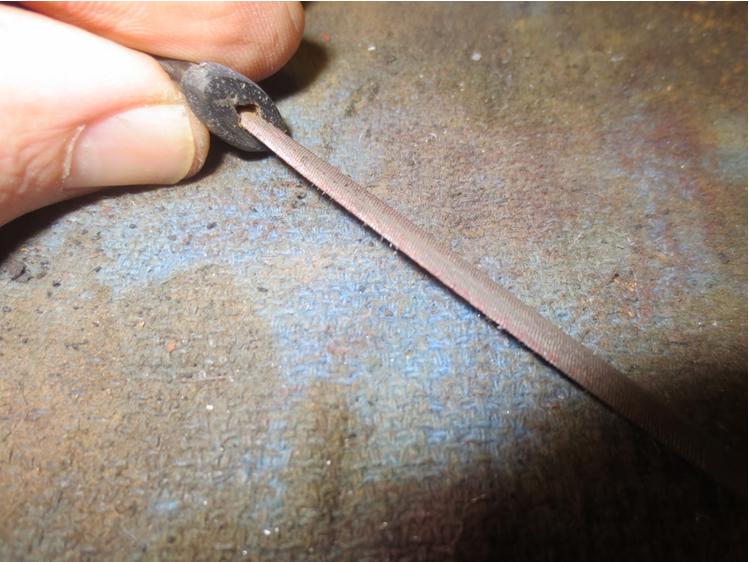
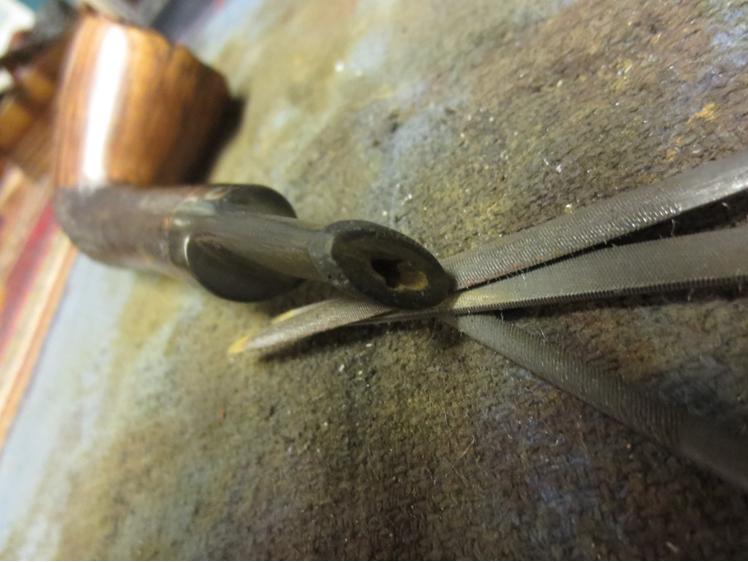
As29 The next day I did not get to work on the stem as it was a heavy day at work and we had meetings into the late evening so the stem sat for two days. When I finally got the time to work on it I decided to start with shaping the slot and the button from the end view. I started by sanding the end of the stem with 220 grit sandpaper to smooth out the end and give me a flat canvas for cutting the slot with needle files.As30 I began to work on the airway with an oval shaped needle file to begin to open the airway and create a flare in the slot.As31 I also used and fatter oval needle file and a round file to further open the lot and the flare in the end. It took a lot of file work to get it to the place that is shown below. You can begin to see the Y shaped slot taking form. There is still a lot of filing and sanding to do at this point.As32 I worked on the slot area with the needle files for probably 1 hour at this point and the photo below shows the result of the methodical filing and shaping. It is coming along but needs to be more open and the top and bottom edges of the slot need to be smoothed out around the air hole.As33 I folded a piece of 220 grit sandpaper when I was able to insert it in the newly cut slot and worked on the shape and smoothness of the Y. I also sanded the face of the button to remove the scratches and marks that were there. The second photo below shows the shape of the slot and the button. It is very close to the one I was copying on the Caminetto.As34

As35 I finished the end of the stem and the slot with micromesh sanding pads. I wet sanded with 1500-2400 grit pads and dry sanded with 3200-12,000 grit pads. I buffed the end of the stem with White Diamond. The finished slot is shown below.As36 After I finished shaping the button and the slot from the end view it was time to work on the top and bottom edges and the overall look of the new button from both points of view. I sanded them with 220 grit sandpaper to shape and flatten them and then used a flat needle file to sharpen the edges on both sides. I really wanted the new button to look seamlessly part of the stem. It took a bit of work to sculpt it to the right shape. I then sanded it with a medium and a fine grit sanding sponge. When I was finished with the shaping and sanding I began to work on it with micromesh sanding pads. I wet sanded with 1500-2400 grit pads concentrating on the flat surfaces and the sharp edges first and finishing with the end of the button and slot.As37 The wet sanding revealed more scratches and a bit more shaping that was needed to the edge of the button so I worked it over again with the medium and fine grit sanding sponges before going back and repeating the wet sanding with the first three grits of micromesh pads. I rubbed the stem down with some Obsidian Oil and when it dried, I dry sanded it with 3200-4000 grit micromesh.As38 I dry sanded with the last three grits of micromesh – 6000, 8000 and 12,000 grit pads. I rubbed the stem down with Obsidian Oil and let it dry before taking it to the buffer.As39 I buffed the stem with Blue Diamond plastic polish on the wheel and then gave the stem several coats of carnauba wax. I finished by buffing it with a soft, clean flannel buff to raise the shine. I gave the bowl a light buff with the carnauba and also with the soft flannel buff. The finished pipe and reshaped button is shown in the photos below.As40

As41

As42

As43

As46

As47

As48 Thanks for looking.

Midterm Exam #1: Repairing a Cracked Bowl on a Pre-1956 Medico Billiard


Blog by Anthony Cook

Anthony1 The photo above represents the start of my first semester at the University of Reborn Pipes (by the way, Steve, we need T-shirts, a mascot, and a fight song). It was taken several months ago and it shows the first batch of pipes that I had collected for restoration practice. It’s a motley crew to be sure, but I have a special fondness for each of them. You never forget your first, as they say.

I’ve completed the restoration of the majority of these since the photo was taken (sadly, I failed the cob test, but it was rigged I tell you), but four of them were placed back into the box after cleaning and have remained there. Those four had issues that required either tools, materials, or experience that I just didn’t have at that point. Over time, other pipes attracted more of my attention and those remainders continued to linger in the dark and gather dust once again.

Now that I’ve acquired a few credit hours, I thought it might be time to drag them back out into the light; sort of as midterm exams to see if I’ve learned anything. The pipe that is second from the right in the group photo above is the one that I selected for my first exam.Anthony2 It’s an unnamed Medico billiard. The stamping on the shank reads simply “MEDICO” over “IMPORTED BRIAR” and the stem bears the “F” stamp found on some older Medicos. I learned from Dave Whitney, author of Old Briar, that the “F” stamp was probably discontinued in 1955, which gave me some idea of the pipe’s age.

The main reason that this one was shuffled back into the box was because of the extensive damage to the bowl. There were large fills within the carved rustication on the right side and several cracks had developed in the area both outside and inside the bowl. I discovered during cleaning that at least one of them penetrated completely into the chamber.

Below, you can see more of the original pictures that I took of the pipe shortly after it arrived. I had not done anything with it other than ream the bowl at the time these photos were taken.Anthony3

Anthony4

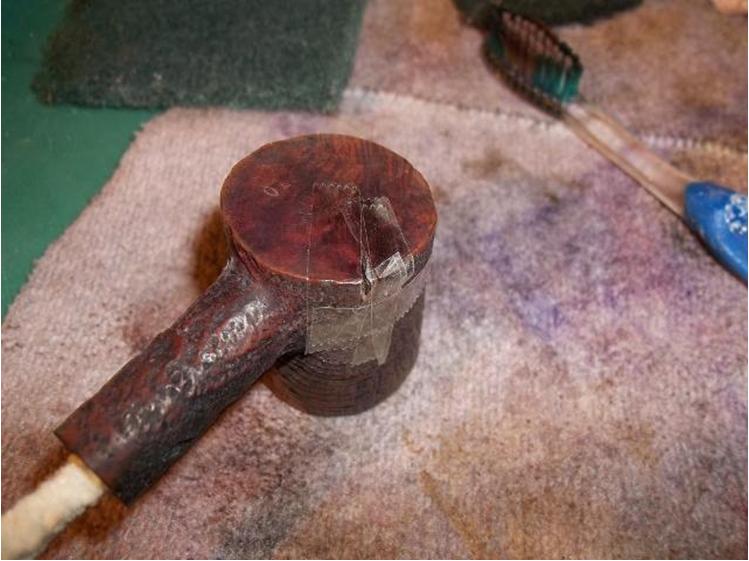
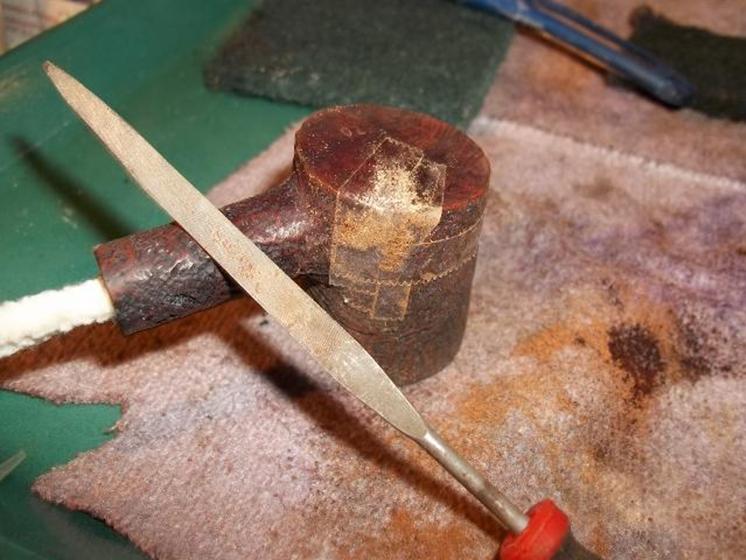
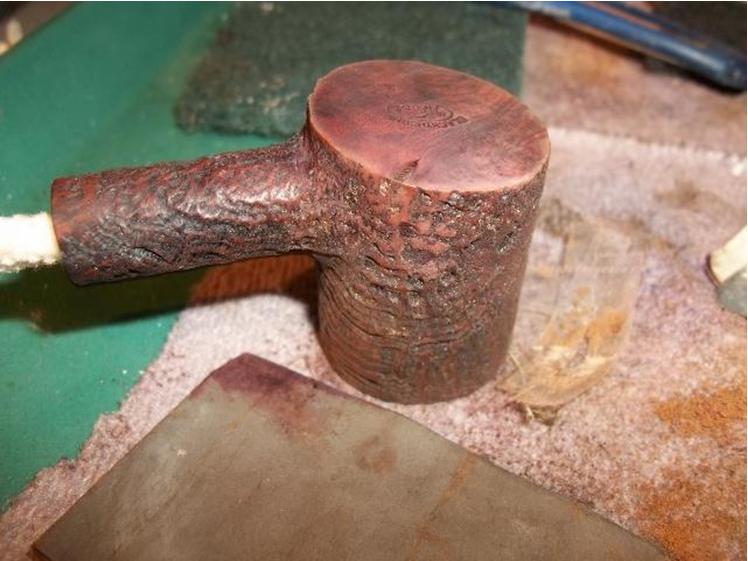
Anthony5 As I mentioned, I had already cleaned the internals of the pipe before dropping it back in the box. So, I started work by dropping the stummel into a jar of alcohol to soften the lacquer finish. The metal ferrule at the end of the shank was loose enough to fall off. So, it was removed it and set aside. After a couple of hours, I removed the stummel from the bath and wiped it down with a cotton cloth. Then, I used acetone and #0000 steel wool to remove the lacquer coating. I also picked out the pinkish-orange putty from the fills, and then used the pick to scrape any loose or charred wood from the cracks.Anthony6 A lot of scratches and gouges were revealed once the rim was clean. So, I set up my topping surface and lightly sanded the majority of the blemishes away using 220-grit and 320-grit sandpaper.Anthony7 I mixed together powdered pumice, activated charcoal, and sodium silicate to make a bowl patch. After protecting the airway with a pipe cleaner, I applied a small amount of the patch mix directly to the cracks with a flat toothpick and firmly tamped to push it into the cracks. Then, I used the scoop on my pipe tool to apply a thin layer across the entire area for protection.Anthony8 Next, I addressed the cracks and pits on the outside of the bowl by filling them with a few layers of briar dust and CA glue. I applied the glue with the end of a toothpick to avoid getting glue into the carved areas as much as I could. After the patches had dried, I sanded them down with 220-grit and 320-grit sandpaper. The same progression of grits was used to put a slight chamfer on the outside of the rim to remove the gouges that remained there. While I was working the bowl, I also sanded the chamber patch smooth with 400-grit paper.Anthony9 I sat the stummel aside for a time to pay some attention to the stem. There was a lot of chatter near the button and tooth dents on both sides of the stem. I applied black CA glue (medium thickness) to the dents with a toothpick and dripped a couple of drops of activator over it to set it up quickly. When it was completely dry, I sanded out the glue patch and leveled the chatter with 220-grit paper. The two photos below show the patch before and after rough sanding.Anthony10 While I was working, I decided that I didn’t like how worn and rounded the edge of the button had become. So, I decided to build a new, sharper edge. I wrapped clear packing tape around the stem to mask it just below the button. I built up the layers until it was the depth that I wanted my new button to be. Then, I used a flat toothpick to “paint” black CA glue (thick) along the edge of the mask and dripped activator over it when I was satisfied with the coverage. Before the glue could completely set up, I quickly peeled the tape away to reveal my new (although rough at this point) button edge.Anthony11 I used 220-grit paper and a sanding file to start shaping the button, and then 320-grit and 400-grit to refine the button shape and further blend the patch area. I also used 400-grit paper to remove the unsightly (to my eyes) molding seams along the sides of the stem. I placed a rubber washer over the tenon to preserve the sharp edge of the stem face and lightly sanded the entire stem with 600-grit and 1200-grit paper.Anthony12 The stem logo was in fair condition, but the paint was cracked and discolored. So, I filled it in using a grout pen and carefully sanded off the excess with 1200-grit paper. The grout paint left a slight, white residue smeared around the logo, but that would be removed with further polishing.Anthony13 Before polishing the stem, I rubbed it down with a drop of mineral oil, let it sit for a couple of minutes, and wiped it away. I hoped that this would moisturize the surface a bit and maybe prevent some of the nylon fiber splintering that always seemed to leave behind fine scratches in the finished stem. Then, I polished with micro-mesh pads 1500-grit to 12000-grit. I added a second and third drop of oil between 2400/3200 and 4000/6000 pads. I was pretty pleased with the results. The final stem was much more blemish-free that the previous nylon stems I’ve worked on.

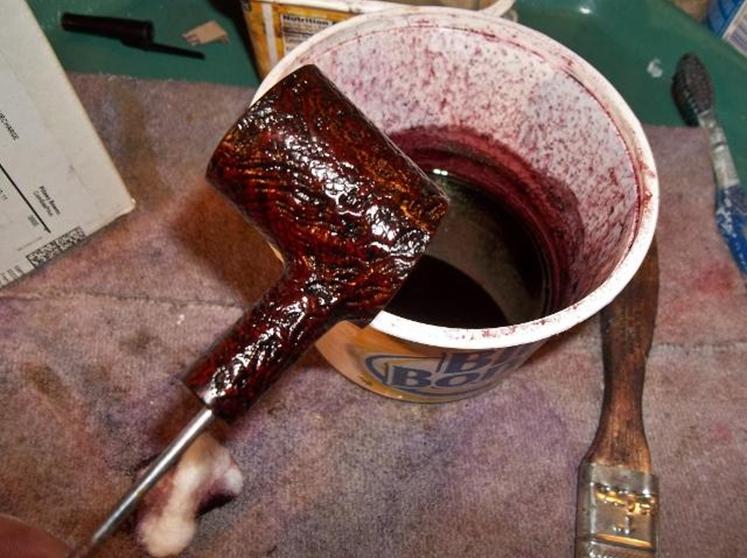
With the stem finished up, I returned to the metal ferrule that I had set aside earlier. I gave it a once over with #0000 steel wool, and then polished it with Semichrome polishing paste and a soft cloth. I buffed of the excess with my Dremel and a small buffing wheel to give it a nice shine.Anthony14 Back to the stummel, I applied a 3:1 mixture of isopropyl alcohol and Fiebing’s black dye, hand-buffed the stummel with a soft rag to remove the excess, and then used 600-grit paper to remove the scratches and most of the dark stain except for inside of the carved rustications and what had set into the grain. I also made small adjustments to the width and angle of the rim chamfer with the sandpaper to make sure that it was even all the way around.

Next, I applied a 3:1 stain solution of isopropyl alcohol and Fiebing’s dark brown, buffed off the excess by hand, and lightly sanded the entire stummel with 1200-grit sandpaper to smooth the surface and soften the edges of the rim. Then, I applied a 3:1 solution of ox blood stained and hand buffed again.

Finally, I polished the stummel with micro-mesh pads 1500-2400 before applying a 4:1 mahogany dye mix. I wiped the stummel down with an alcohol dampened cloth until I achieved a dark copper color and finished up by polishing with the remaining micro-mesh grits.Anthony15 Then it was time to put all of the pieces back together and give the pipe the final touches. I reattached the ferrule to the stummel with some 5-minute epoxy. When that had set, I applied a bowl coating mix of sour cream and activated charcoal to help promote the cake formation in the repaired chamber. I let that dry for about two hours before reattaching the stem and taking the pipe to the buffer. I buffed the stummel and stem with White Diamond, and then I gave the pipe several coats of carnauba wax.

With all of that done, I turned in my first exam. I’m feeling pretty good about it, but I never really know how I’ve done on these things until the grades finally come back. I’m not going to worry about it now, though. I still need to cram for the second exam. It’s going to be a long night.Anthony16

Anthony17

Anthony18

Anthony19

rebornpipes Celebrates its Third Anniversary on WordPress


anniversary This morning I received this message from WordPress. Time has flown by since the day in May three years ago when I started rebornpipes. Many weeks and months of articles have come and been posted and the blog has grown from my own posts and refurbishing work to additional writings and work from many individuals around the globe. I want to take time to thank each of the contributors to the blog for their contributions to rebornpipes and to invite them to continue to share their work. I also want to thank the supportive readers of the blog and encourage them to share their experiences in the work of refurbishing with the rest of us. There is always more to learn and new tools and methods to work with.

Thank you all! Here’s to many more years ahead!
Steve Laug

Different methods for removing a ghost from a pipe


Blog by Steve Laug

The latest pipe I worked on came with a stubborn ghost so I was forced to use almost all the tools in my arsenal for removing the ghost. As I worked through the various procedures that I use I thought it would be helpful to spell out each method individually for ease of reference. Some of the pipes I work on are quite easy to clean and merely take pipe cleaners, cotton swabs and alcohol. Most though need a thorough reaming and cleaning. Other like the one in the photos below take a lot of elbow grease and a lot of different methods to remove the ghosts and deliver a clean smelling pipe.

1. Thorough cleaning and reaming – the first method is by far the one I use the most. I have found that 9 times out of 10 I ream the pipe with a PipNet reamer with four different sized cutting heads. I generally start with the smallest head and work my way up to a cutting head that is close to the size of the bowl. I will finish any portion left behind with a sharp pen knife. I use cotton swabs, pipe cleaners and isopropyl alcohol to scrub out the shank and bowl as well as the stem. This method works well on many of the lightly smoked pipes that I clean out. I also find that those pipes used to smoke straight Virginia tobaccos or Virginia Perique tobaccos are the cleanest and generally do not have a ghost. The worst for tars and buildup are the pipes used for aromatics. Those smoked with English/Balkan blends are somewhere in between.Cam8

Cam9

Cam15 2. Retort – The second tool in the kit is a retort. A retort is a simply made tool that includes a test tube, cork, a connector and surgical tubing. The surgical tubing is stretched over the stem or inserted in the shank (see Andrew Selking’s posts). A cotton ball is stuffed into the bowl and alcohol put in the test tube. Canned heat, an alcohol lamp or a candle is used to heat the alcohol to boiling and it is pushed through the stem, shank and bowl. When the test tube is removed from the heat source the cooled alcohol returns to the test tube. It carries with it tars and oils that have been boiled out of the pipe. I have found that I have to often repeat this process several times before I get a clear alcohol back in the cooled tube. I am currently working on a pipe that I have used the retort on four times and just now am getting a clear alcohol return in the test tube. Once I remove the cotton ball and the tubing I use pipe cleaners, cotton swabs and alcohol to remove any remnants of tars and oils. Once the pipe dries out the retort has generally removed all but the most stubborn ghosts and leaves the pipe smelling clean.Cam10

Cam11

Cam12

Cam13

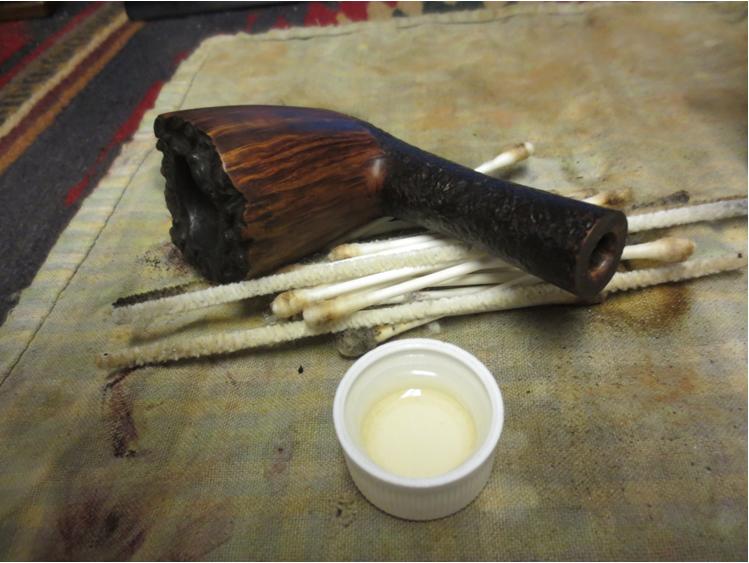
Cam14 3. Cotton ball and alcohol treatment – This treatment is one that I use instead of the salt and alcohol treatment that many have written about. Sometimes I use this method instead of a retort – if the pipe has a ghost but is not terribly dirty. Other times I use it along with a retort. I stuff the bowl full of cotton balls all the way to the bottom. I stick a cotton swab in the shank to plug the airway or in some cases put a rubber stopper or cork in the end of the shank. I use a rubber ear syringe to fill the bowl with alcohol. I used 99% isopropyl alcohol and fill it until the cotton is covered. As it evaporates I add more alcohol to the bowl. The alcohol generally goes into the shank as well and draws the oils and tars into the cotton balls in the bowl. I leave the pipe sitting in an old ice cube tray over night or until the cotton is darkened. Then I remove the cotton balls and repeat the process until the cotton remains white. Once the bowl is empty I use pipe cleaners, cotton swabs and alcohol to clean out any remaining oil and tars in the bowl and shank.Cam16

Cam18 4. Kosher salt and alcohol treatment – The salt and alcohol treatment is a variation on the above method. I used it for years and had no issues with pipes that I did the treatment on. Many have spoken of split shanks and bowls cracking after this treatment and will not use it. I have never had a problem so I continue to use it on stubborn bowls and ghosts. I use a Kosher sea salt that is in rock salt form and fill the bowl with it. I then use the rubber ear syringe to fill the bowl with alcohol. I prepare the shank in the same way either plugging it with a cork or stopper or even a cotton swab. I let the alcohol run into the shank and then set the pipe in the ice cube tray overnight. The alcohol wicks out the oils and tars from the briar and turns the salt dark. In the bowl in the pictures I had already used a retort and the cotton ball and alcohol treatment. The salt and alcohol treatment drew out more oils that were left. I empty the darkened salt from the bowl and then clean out the bowl and shank with alcohol, cotton swabs and pipe cleaners. The key is thoroughly flush out the salt with the alcohol and pipe cleaners/cotton swabs. I let the pipe dry for three or more days before I smoke a bowl in it.Cam19

Cam20

Cam21 5. Cotton ball and white vinegar treatment – This treatment is also a variation on the alcohol/salt and alcohol/cotton ball treatment. Instead of using alcohol as the liquid in the bowl I use white vinegar. I have found that it works wonders to draw out the tars and oils that are left behind by the alcohol. I also use it to freshen the foulest bowl. No need to rinse the bowl afterwards as the vinegar evaporates leaving behind a faint smell. I stuff the bowl with cotton balls and then fill it using an ear syringe. Like the previous methods I leave the pipe sitting overnight. I remove the cotton balls and clean out the bowl and shank with alcohol, pipe cleaners and cotton swabs to remove any remaining oils.Cam17 6. Activated Charcoal and heat treatment – The final option is to fill the bowl with activated charcoal pieces (I pick them up from aquarium shops or from the pet area at Walmart) and set it in a metal pan in the oven on the lowest heat setting that is available. The heat softens the oils and they are drawn out into the charcoal. I usually leave it in the oven for 15-30 minutes though could probably leave it in longer. I then dump out the charcoal and clean the bowl and shank with alcohol, pipe cleaners and cotton swabs.

The last pipe I worked on I used all of the methods other than the charcoal one. I may still have to use that as there is a faint ghost remaining in the pipe. For most of the pipes I work on a combination of one or two of the above methods accomplish the task. Only the most stubborn need to use all of them. Experiment with the methods and let us know what works for you and also any variations you might have adapted to improve the methods. Pass on what you have learned as for me that is the best part of the hobby – learning from another refurbisher what works for them.

Cleaning and Restoring a Blatter of Montreal Bent Egg


Blog by Steve Laug

When I received this Blatter of Montreal Egg pipe I sat down and looked it over carefully to assess what would need to be done to restore it. The finish was very dirty and worn but underneath the dirt and oils there was some amazing grain. On the right side of the bowl, near the top there was a fill that had popped out and left a large divot in the briar. The size of the missing fill distracted from really seeing the beauty of the pipe. Looking at the top of the bowl I could see that the inner edge of the rim was slightly out of round and the rim had been previously topped. Both the stain and the topping were not even. The outer edge of the rim had been rounded from sanding and was no longer a clean sharp edge. Sometime ago the bowl had been reamed and a broken uneven cake left on the sides of the bowl. The airway at the bottom of the bowl had a groove carved from the opening across the bowl bottom that appeared to come from using too heavy a hand with a pipe cleaner over the years.

The stem was in good shape in terms of not having any tooth damage or chatter. The button was still quite sharp and distinct like the other Blatter pipes that I have cleaned. It was oxidized and somewhere along the way someone had sanded or buffed the stem with it removed from the pipe. The edges of the stem at the shank junction had rounded shoulders and because of that the fit against the shank was not perfect. The diameter of the shank was slightly larger than the stem due to the rounded shoulders. There would need to be some work done on that area to reduce the damage though I am not sure that it can all be removed. I find this kind of rounding of the shoulders on the stem or the shank on pipes that have been overbuffed or worked on by someone new to the refurbishing hobby.

I took the pipe apart to look at the internals of the stem and the shank. The shank has an interesting design. The mortise ends with a slight ridge and then the airway drops into a kind of sump/or chamber to capture the moisture – kind of like the Peterson system pipes. This chamber had the airway drilled toward the top end. It was filled with a lot of black sticky tar and oil. It would take a lot of scrubbing to clean that area. The mortise itself was pretty clean. The end of the tenon was almost clogged with the buildup around the end. The same was true of the slot in the end of the tenon. It was reduced in size by about half. The stem would also take some work to clean out the thick build up inside.Blatter1

Blatter2

Blatter3

Blatter4 The next photo shows a close up of the area of the missing fill. It is quite large and will need to be repaired.Blatter5 I scrubbed the bowl with cotton pads and isopropyl alcohol to remove the grime and prepare the missing fill for repair. I picked out the loose particles from the area and scrubbed it down again.Blatter6 I filled the hole with larger particles of briar dust and then filled it with superglue. I added more briar particles to the top of the repair.Blatter7 I sanded the repair with 220 grit sandpaper to remove the excess and smooth out the patch. The size of the patch can be seen in the next photo. The larger particles of briar dust worked differently than the fine dust I used in the past.Blatter8 I used a folded piece of sandpaper to bevel the inner edge of the rim to take care of the damage that had made it out of round. Beveling the rim inward took care of the damage and brought the rim back into round.Blatter9 I sanded the rim with a medium and a fine grit sanding sponge and also sanded the repaired area on the side of the bowl. Each successive grit of sanding sponge smoothed out the repair and blended it into the bowl.Blatter10 Once the patch was sanded smooth I scrubbed the bowl down with acetone on a cotton pad to remove the rest of the finis and the remaining wax buildup on the bowl. The birdseye briar was stunning on the left side of the bowl.Blatter11

Blatter12

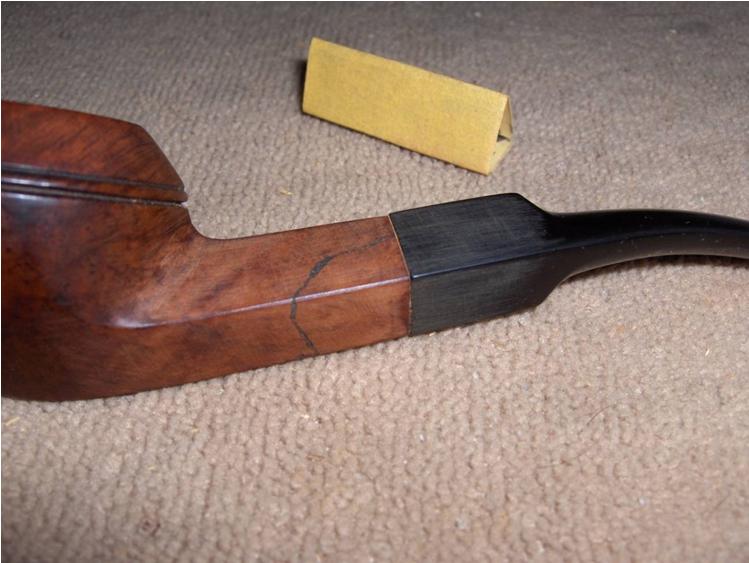
Blatter13 I also scrubbed the top of the rim with the pads and found that the work on the rim had really cleaned up the look of the pipe from the top.Blatter14 I worked on the rounded shoulders of the stem. First I sanded it with 220 grit sandpaper blending the flow of the shank with the stem. The key was to reduce the shoulder rounding without changing the shape of the shank. Once I had the transition as smooth as I could make it I sanded it with a medium and a fine grit sanding sponge. The finished shank/stem transition can be seen in the next series of photos.Blatter15

Blatter16

Blatter17

Blatter18 With the repair finished on the side of the bowl and the transition smoothed out at the stem/shank junction it was time to give it a coat of stain to blend it in with the rest of the briar. I used a dark brown stain touch up pen to work on those two points on the bowl.Blatter19

Blatter20 I probably should have done this sooner, but I chose not to. The bowl had already been reamed but I wanted to clean up the reaming job and try to smooth it out. I used a PipNet reamer and chose a cutting head that fit the bowl tightly and removed the odds and ends of broken cake left in the bowl.Blatter21 I then set up the topping board to repair the round outer edges of the rim. It did not take too much topping to make that edge sharp and clean once again instead of rounded. I finished sanding the rim afterward with a medium and a fine grit sanding block to remove the scratches left behind by the 220 grit sandpaper.Blatter22

Blatter23 I used the same dark brown stain pen to stain the rim. I applied the stain until the coverage was acceptable. I lightly buffed the bowl with White Diamond to smooth out the stained areas and blend them into the rest of the bowl.Blatter24

Blatter25

Blatter26

Blatter27 With the externals finished on the bowl it was time to address the internals. The airway in the stem and shank and the sump in shank all were filthy. I decided to use a retort on the pipe. I set up the test tube and connector to the stem and then stuffed the bowl with a cotton ball before boiling the alcohol through the bowl and stem.Blatter28

Blatter29 I boiled the alcohol through the bowl and shank the first time and the alcohol came out a dark brown.Blatter30 I took the retort off the stem and ran pipe cleaners and cotton swabs and alcohol through the shank and stem. While they were definitely cleaner there was still a lot of “sludge” present.Blatter31 I set up the retort and boiled another tube of alcohol through the bowl. This time the alcohol was definitely lighter but still dark.Blatter32 I emptied the tube and boiled a fresh tube through for the third time. While it was definitely getting lighter it was still brown.Blatter33 I ran a fourth tube of alcohol through the stem and shank and finally it came out clear. This was one dirty pipe. I used pipe cleaners, cotton swabs and alcohol to finish cleaning the shank and stem. I used the dental pick to clean out the edges of the slot on the button. With the internals clean I turned my attention to the stem. I sanded it with 220 grit sandpaper and then with the medium and fine grit sanding sponges. Using those I was able to remove the oxidation on the surface.Blatter34

Blatter35

Blatter36 I switched to micromesh sanding pads. I wet sanded with 1500-2400 grit sanding pads and rubbed the stem down with Obsidian Oil.Blatter37 Afterwards I buffed it with White Diamond to polish the stem and lessen the scratches. I dry sanded the stem with 3200-12,000 grit micromesh sanding pads and rubbed the stem down with Obsidian Oil between the 4000 and 6000 grit pads. I also gave it a final rub down with Obsidian Oil after the 12,000 grit pad.Blatter38

Blatter39

Blatter40 I buffed the pipe with Blue Diamond Plastic Polish and then gave it several coats of carnauba wax. I buffed it to a shine and then used a clean flannel buff to raise the shine. The finished pipe is shown in the photos below. I have also included a photo of the repaired rim. Note the repaired fill on the right side of the bowl. The pipe is cleaned, polished, repaired and ready to smoke. I think it is a beautiful pipe in one of my favourite shapes. Blatter41

Blatter42

Blatter43

Blatter44

Blatter45 Thanks for looking.

Rejuvenating a Caminetto Business Long Shank Stack


Blog by Steve Laug

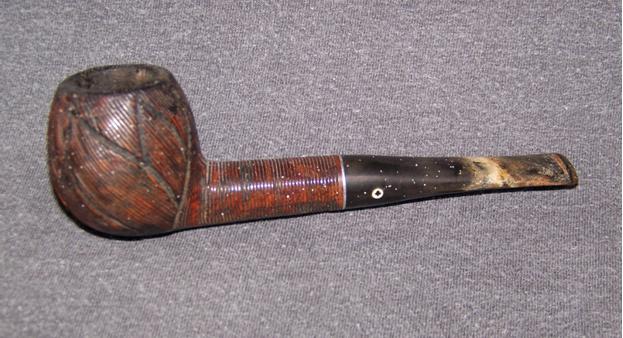
I just finished working on a long shank Caminetto Stack. It is stamped on the left side of the shank Caminetto Business. On the right side of the shank it is stamped Ascorti over Radice over Cucciago over Cantu Italy. Next to it is a shield. The finish is a rustication that looks very much like the older Castello Sea Rock finish. The bowl needed a thorough reaming to clean out the remnants of the old cake. The internals of the shank will also need a thorough cleaning. The pipe has a strong English smelling ghost that would need to be exorcised by a retort treatment. If that did not kill it then it would need to be given a cotton ball and alcohol treatment to further remove the ghost. The inner and out rim edges look really good. There is a build up tars and oils in the rustication on the top of the rim that will need to be scrubbed out. The deep rustication is also harbouring a lot of dust in the crevices that will also need to be scrubbed as well. Cam1

Cam2

Cam3

Cam4 The stem needs some work. It is loose in the shank and I will need to see what the fit is like once the shank is cleaned. There is a deep tooth mark on the underside of the stem next to the button. It is not quite broken through the surface of the stem but it is deep. There are also marks on the topside of the stem in the same place though nowhere near as deep. The stem was almost clogged and will need to be cleared. The slot is tight and hard to get a pipe cleaner through easily. It will need to be opened to make cleaning the pipe a simpler procedure. Between the semi-clogged stem and the tight slot the draw is constricted. Once the repairs are made to the stem it will need to be polished.Cam5

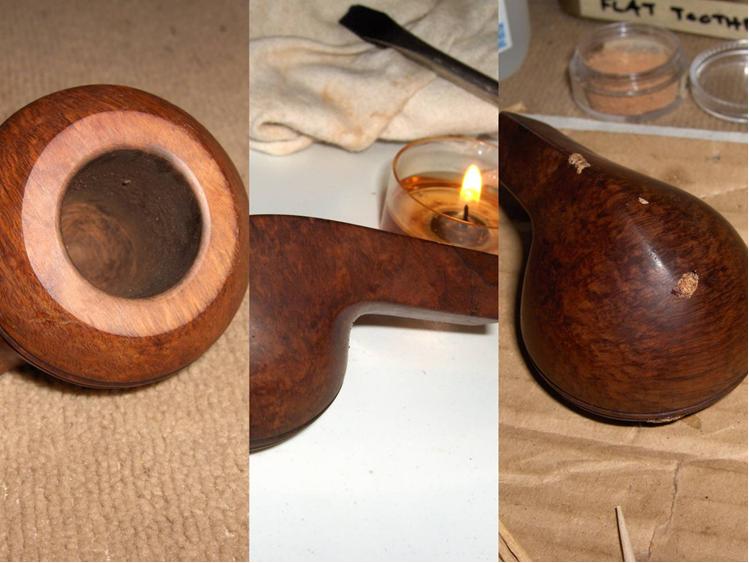
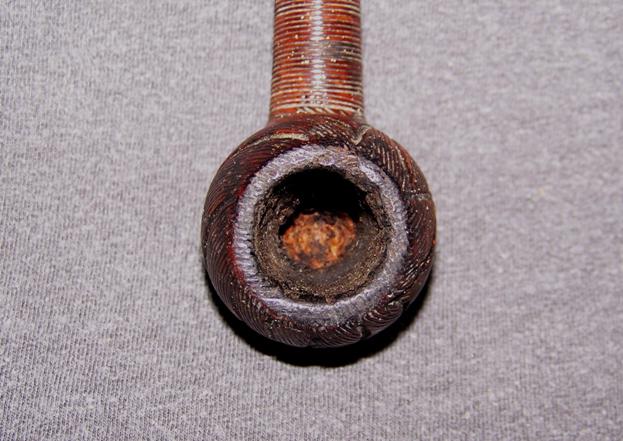
Cam6 I took a close-up photo of the rim for you to see clearly the build up on the rim. There were tars and oils deep in the grooves of the rustication on the surface of the rim. There was also a thin cake on the walls of the bowl that would need to be removed to address the heavy Latakia smell that was in the pipe.Cam7 I reamed the bowl with a PipNet reamer using the smallest cutting head and working up to the third head that was the same diameter as the bowl. I then scraped the inside lightly with a sharp pen knife.Cam8

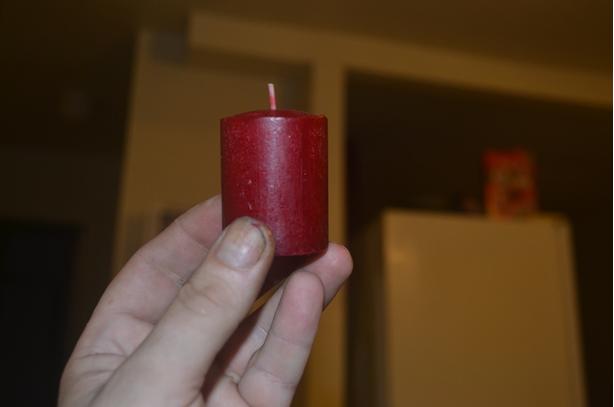
Cam9 I scrubbed the inside of the shank with pipe cleaners and cotton swabs and isopropyl 99% alcohol before setting up a retort to boil alcohol through the inside of the pipe. I stuffed a cotton ball in the top of the bowl and then fit the rubber end of the test tube stopper over the stem. I place the bowl in a pipe rest and held the test tube over a candle. As the alcohol heated and boiled in the test tube it circulated into the bowl and when removed from the flame the alcohol would carry the tars and oils back to the test tube. I continued to boil the alcohol and remove it from the flame until the alcohol turned amber from the inside of the pipe.Cam10

Cam11

Cam12

Cam13 I changed the alcohol and boiled it through the pipe again. This second time the alcohol came out clean. I kept it boiling through for about 15 minutes and then removed it from the flame. The photo below shows the relatively clean alcohol after this retort.Cam14 Once I had removed the retort I cleaned out the bowl and the shank with isopropyl alcohol on cotton swabs and pipe cleaners. This time they came out relatively clean.Cam15 The problem was that the pipe still smelled strongly of Latakia. The ghost was stubborn and persistent. I decided to use a cotton ball and alcohol soak to see if I could draw out some more of the oils and smell. I stuff two cotton balls into the bowl and plugged the shank. I used an ear syringe to fill the bowl with alcohol and tipped it back and forth to run the alcohol through the shank. I unplugged the shank and set the bowl in an old ice cube tray over night to draw out the oils. The next three photos were taken over a 12 hour period and show what happened with the soak.Cam16

Cam17

Cam18 When I removed the cotton balls and let the pipe dry out the ghost still persisted. I cleaned out the bowl and shank again, then put some white vinegar and cotton in the bowl and shank and let it sit for 3 hours. I cleaned out the shank and the ghost still remained. I was beating it but it was still present. I then filled the bowl with Kosher rock salt and then used an ear syringe to fill it with alcohol. I set it aside in the ice cube tray to let the salt do its magic.Cam19

Cam20

Cam21 Once I removed the salt and alcohol and cleaned out the shank and bowl a final time the ghost is pretty well exorcised. There is a faint tobacco smell but the overpowering smell is gone.

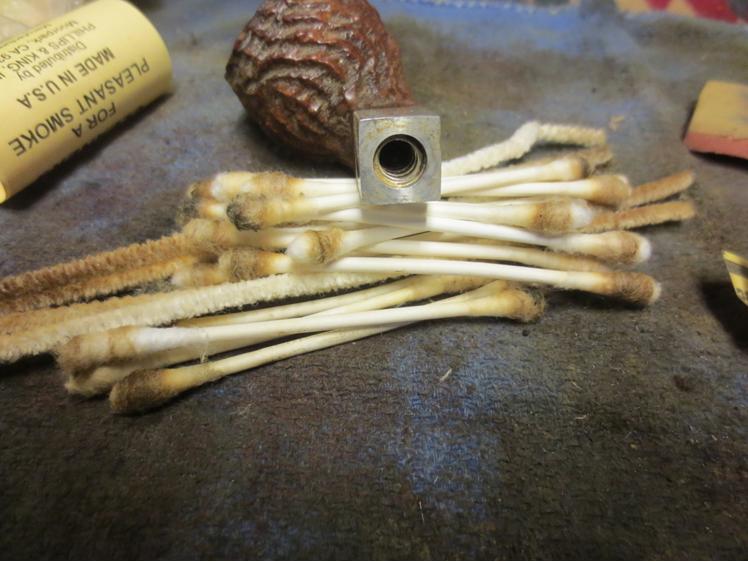
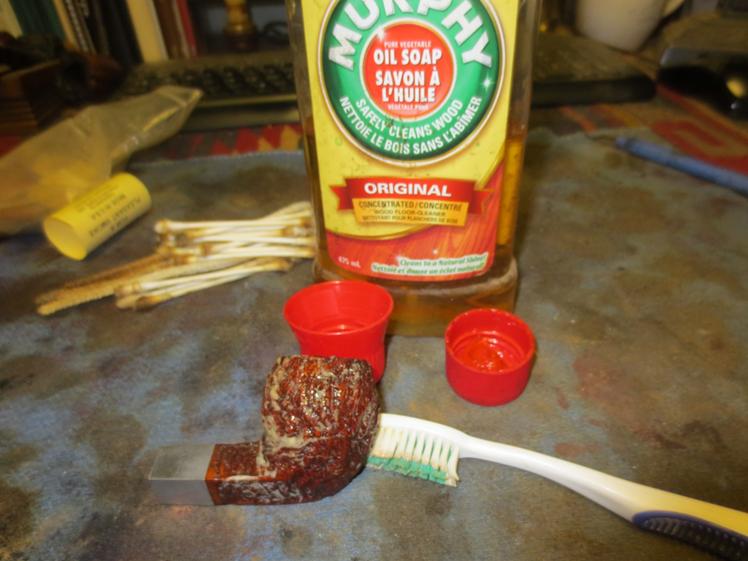
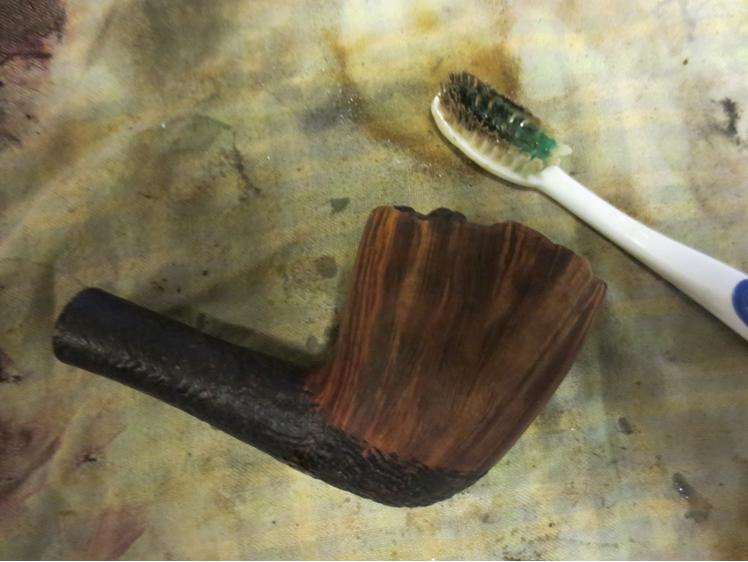
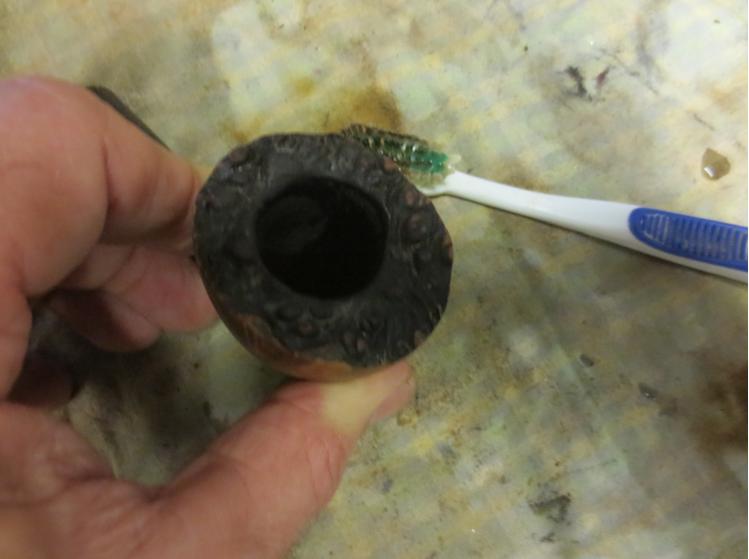
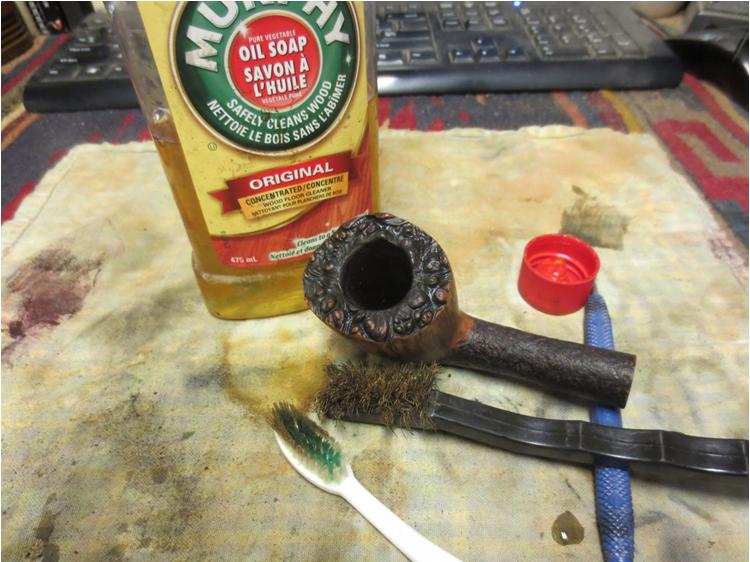
I scrubbed the top of the rim with a brass bristle tire brush and then rescrubbed it with a tooth brush and Murphy’s Oil Soap. I scrubbed it hard enough to remove the dust and grime from the crevices of the rusticated finish.Cam22

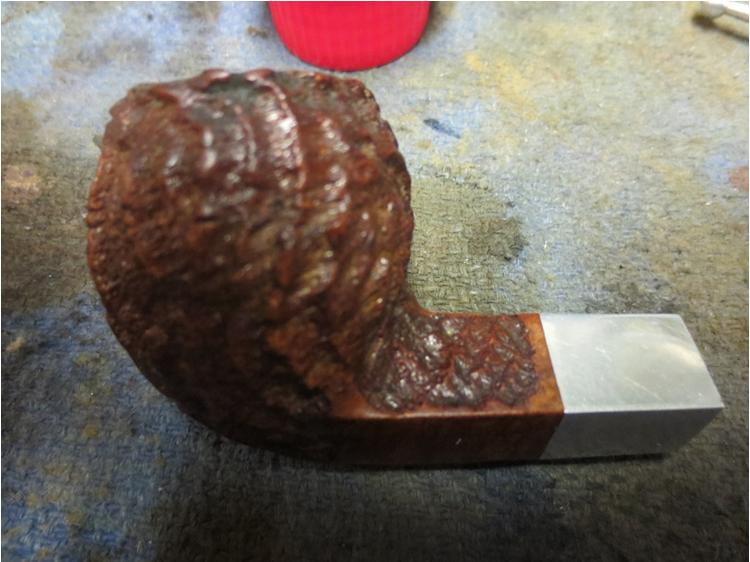
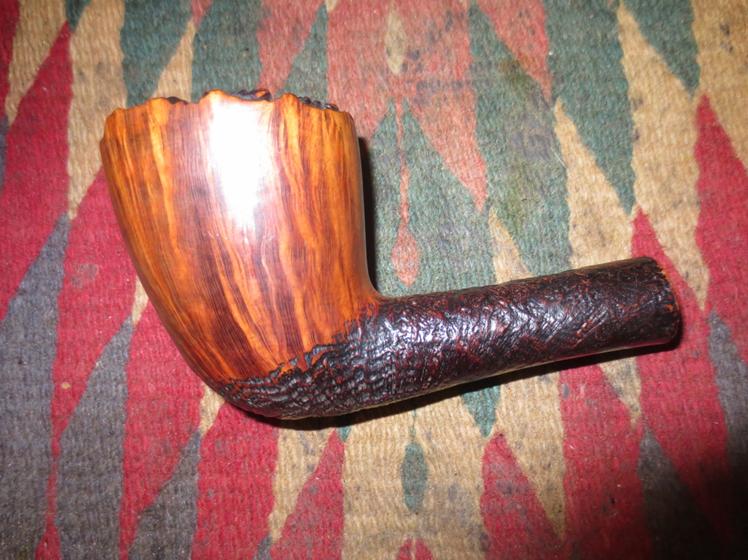
Cam23 I rinsed the bowl under running water to remove the soap from the finish, being careful to not get any water in the bowl. I dried it off with a cotton cloth. The photos below show the cleaned bowl. The finish was dull and had lightened slightly.Cam24

Cam25

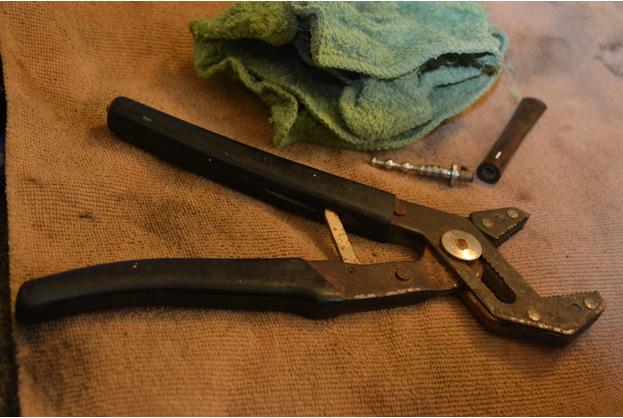
Cam26 I used a wash of brown aniline stain mixed 4 parts alcohol and one part stain to restain the bowl and shank. The next four photos show the pipe after it had been restained and buffed with Blue Diamond. I buffed it with a light touch and then rebuffed it with a shoe brush.Cam27
Cam28

Cam29

Cam30 With the bowl finished it was time to work on the stem. I decided to start with the narrow slot and airway on the end of the stem. I used three different needle files to open it up. I started with a flat file to widen the gap on the top and the bottom edge of the slot. I needed it open enough that I could use a flat oval file to smooth out the slot and open both the top, bottom and sides of the slot. I finished with a round file to taper the edges of the slot at an angle to the airway in the stem. While this was done to a slight degree I increased the angle and also opened up the end of the airway. I used the round file to also enter from the tenon end of the stem and smooth out what appeared to be rough transitions from the airway to the slot. I finished by sanding the inside of the slot with a folded piece of 220 grit sandpaper and then finishing with a bristle pipe cleaner and a little scrubbing powder.Cam31

Cam32

Cam33

Cam34 I still needed to clean up the end of the stem when I worked on the stem surface itself but the basic shape was finished and the slot was wide enough to easily handle a pipe cleaner. I sanded the stem with 220 grit sandpaper and also with a medium and fine grit sanding sponge to remove the tooth chatter on the top side of the stem and to clean up around the deep tooth mark on the surface of the stem. I picked out the debris from the tooth mark and then filled it with black super glue. I set the stem aside overnight to let the glue repair cure.Cam35

Cam36 The next morning I sanded the repaired area with 220 grit sandpaper and then the sanding sponges to remove the excess patch and to blend it into the surface of the stem.Cam37 Once the repair was smoothed out it was time to sand the stem with micromesh sanding pads. I wet sanded with 1500-2400 grit pads and rubbed it down with Obsidian Oil. Once it had dried I gave it a quick buff with White Diamond.Cam38 The tooth chatter was gone on the top of the stem and the repair on the underside blended in quite well. At this stage in the sanding it still showed but would begin to disappear into the stem with further sanding with micromesh. I dry sanded the stem with 3200-4000 grit pads and then rubbed it down again with Obsidian Oil. The first photo below shows the topside of the stem. The tooth chatter is gone. The second shows the underside of the stem. The tooth mark is repaired and the repair no longer shows. The next three grits of micromesh will make the patch disappear in the shine of the stem.Cam39

Cam40 I dry sanded with 6000-12,000 grit pads and then gave it a final buff with Blue Diamond. I rubbed in a final coat of Obsidian Oil and let it dry.Cam41

Cam42 The next two photos show the finished stem. The repair is blended into the vulcanite and it is polished and clean.Cam43

Cam44 I gave the pipe a light buff with Blue Diamond Plastic polish and then gave the stem several coats of carnauba wax. I lightly buffed the bowl with carnauba and then buffed the entire pipe with a clean flannel buff to raise the shine. Here is the finished pipe. Thanks for looking.Cam45

Cam46

Cam47

Cam48

Cam49

Restoring an Ed Burak Connoisseur Tall Stack


Blog by Steve Laug

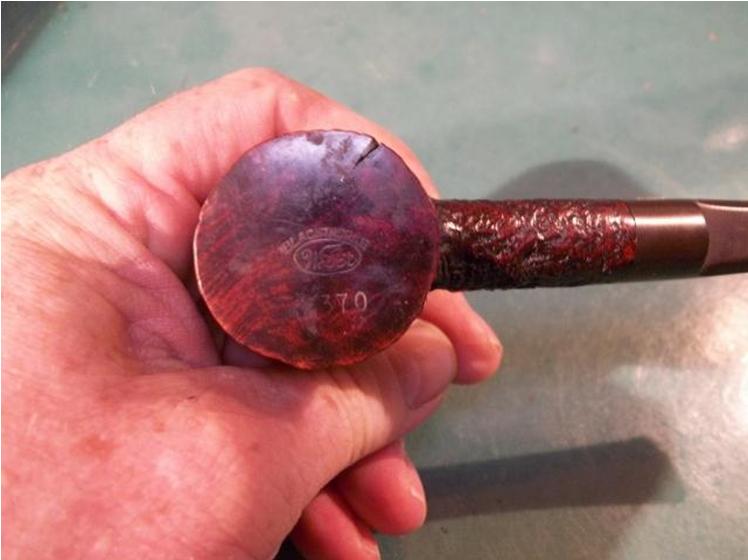
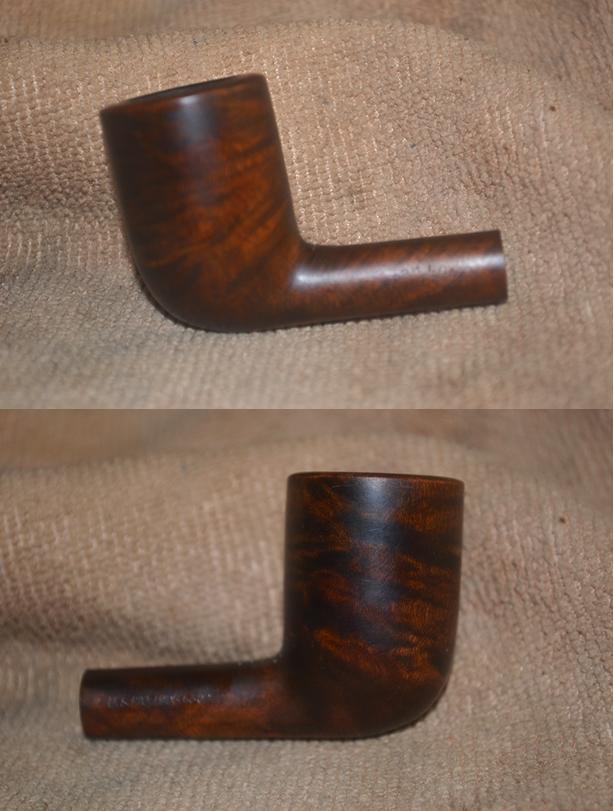
The next pipe that came to my worktable was the shapely stack pictured below. It is stamped Connoisseur over N.Y.C. on the left side of the shank and then below that E. Burak in script. The majority of the stamping is very sharp. The N.Y.C. is a bit faint. There is no other stamping on the pipe or shank. The briar was natural and unstained. It had darkened slightly with age. The finish was dirty and there were a few dents and dings in the briar. The stem was badly oxidized and had several small tooth marks on the surface. It was over bent and the way it hung in the mouth would dump the ash in your lap. The rim had a tarry buildup on the back top surface. The inner and outer edges of the rim were in perfect shape. There were some small sandpits in the briar on the left side of the bowl and on the underside of the shank. The inside of the shank was dirty and black with tars and oils. The bowl inside was thickly caked with a crumbly soft cake that was flaking away in some parts of the bowl. The shank itself was interesting to me in that it looked perfectly round. Once the stem was removed the drilling of the mortise was centered but low on the shank. The drilling was perfectly aligned but the airway seemed constricted. My guess was that there were tars and oils clogging the airway in the shank and the over bent stem made the draught constricted.Con1
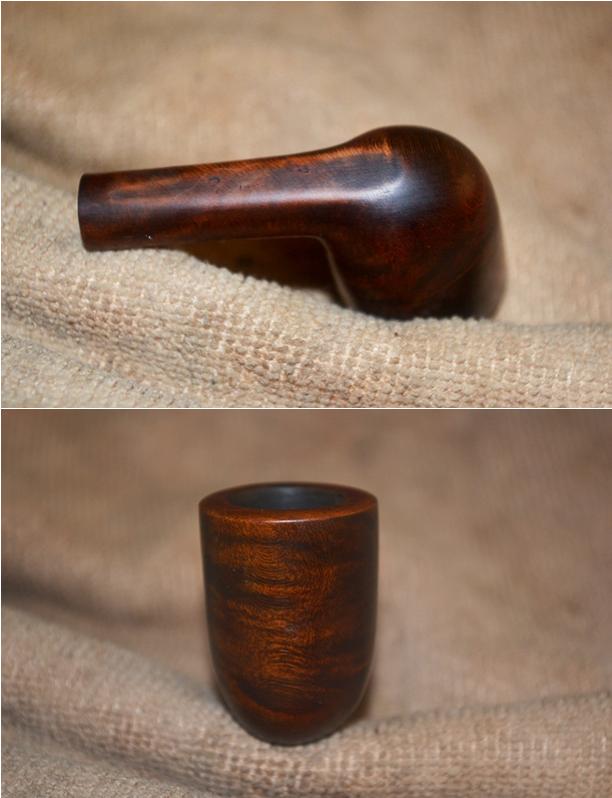
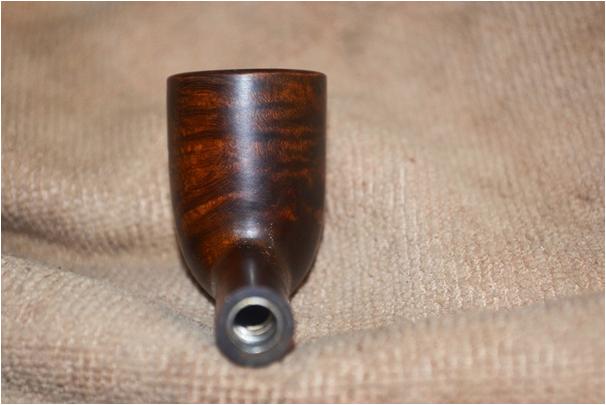
Con2

Con3

Con4 Over the years I have had several Connoisseur pipes but none of them were stamped like this one. I wondered about the stamping. It was my guess that it somehow helped with dating the pipe to a particular time in Ed Burak’s pipe making career but I did not know for sure. I decided that before working on this particular pipe I would do a little research on the brand and the maker on Google. I always check Pipedia to see what they might have on a maker. In this case I was not disappointed. There as a great article on the site. The link to that is: http://pipedia.org/wiki/Burak.
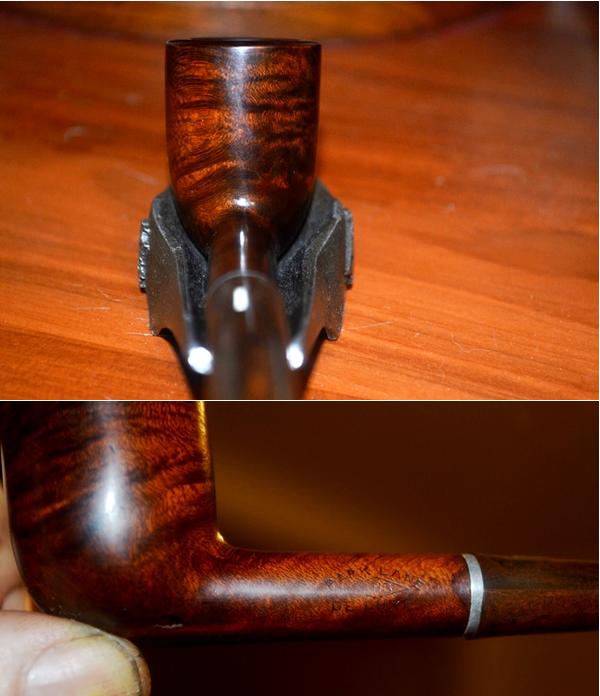
On that site I found not only some history on Ed Burak and the brand but also a photo of a pipe that was the same shape as the one I was working on. I was fortunate to find it because it confirmed my earlier assessment that the stem was over bent. With the photo and a second one that I found on another site I would be able to correct the bend on the stem and open the airflow from the bowl to the button.
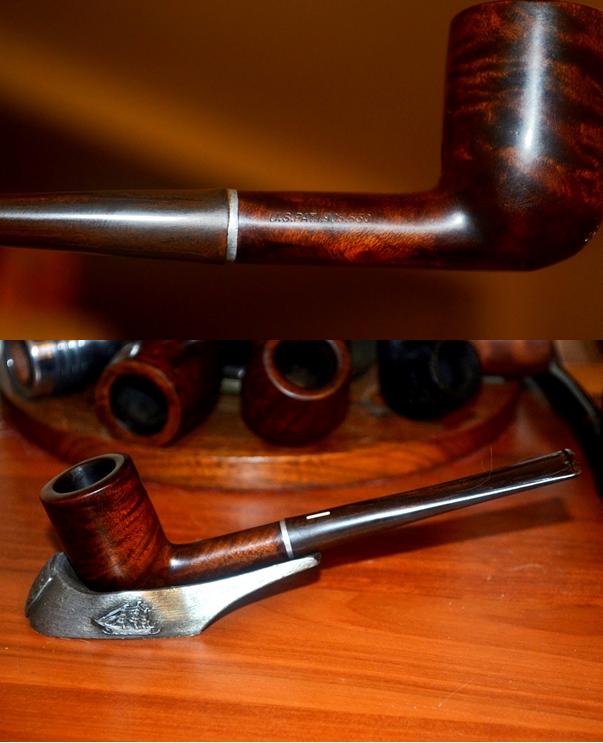
I also found some great information on the site regarding Ed Burak. I quote from that article below. If you should wish to read it in its entirety click on the link noted above. The article is entitled, The Art of Edward F. Burak, Dean of American Pipe Designers.
Con5“Ed Burak is the dean of American pipe designers whose work has had a worldwide influence on the thinking and the work of contemporary pipe makers.”

“…he met and subsequently began working with Meerschaum master Paul Fisher, with whom he stayed 5 years. During that time he produced a small number of Meerschaum pipes, a few of which are still extant in collections. He also worked for Wally Frank as a pipe designer. In 1968 he bought the Connoisseur Pipe Shop, where he was able to concentrate on his own designs. Burak’s pipes have been carved by a number of well-regarded pipe makers, among them Joe Corteggione and Tony Passante. Several of his freehands are in the Museum of Modern Art in New York and have been part of a traveling exhibit of the American Craft Museum.”

“Burak’s work is best known as pipe design as fine art. He admires pays tribute to the classic English designs of the old Barlings and Comoy’s and offers a line of “Classics” which begin with these traditional values yet reflect his own interpretations.”

“Because these pipes are different, so carefully crafted, they not only please the eye, but educate it. Most pipe makers will start with an idea and work the wood toward that goal, but will change their original design to accommodate the briar. Burak does not allow the medium to modify the intent. Minor surface flaws are left on the pipes. No staining is permitted; all Connoisseurs have a natural finish, with only carnauba was added.”

“As a significant footnote, the reader should note that Ed Burak’s pipes are NOT made by Paul Perri, nor Weber, nor Jobey, as erroneously stated in Lopes’s book “Pipes: Artisans and Trademarks.” Burak prefers not to disclose the name of his current pipe carver.”

I also learned on Pipephil’s website, http://www.pipephil.eu/logos/en/about-en.html that the stamping did indeed give some information that helped in identifying the period that a particular pipe was made. There I found that one may generally separate Connoisseur pipes date of manufacture into three periods.

From late 1960’s until 1974: no stampings
From 1974 until 1981: CONNOISSEUR over N.Y.C.
From 1981 on: CONNOISSEUR over N.Y.C. and Ed Burak’s signature

The pipe I was working on was stamped like the photo below. It had the Connoisseur over N.Y.C. stamp and Ed Burak’s signature. That dated the pipe to the time period from 1981 to the time that the Connoisseur Pipe Shop in Manhattan closed in 2009 on Ed’s retirement. Included with the photo of the stamp was a picture of a tall stack pipe that looked identical to the one that I was working on. Using the photo above and this photo gave me a clear picture of what the bend of the stem was like originally.Con6 I took a photo below of the stamping on the left side of the pipe that I am working on for comparison with the one above. You can see that they have the same stamping.Con7 On the Puff.com Pipe Forums I found a thread on Connoisseur pipes that confirmed how the pipes were finished when they were originally made. http://www.puff.com/forums/vb/general-pipe-forum/299824-ed-burak-pipes-man.html. There in the latter part of a post by a member identified as Mr. Rogers was the information that I was seeking confirmation about.

“His premium pipes were like nothing I had seen before. He finished all of his pieces with only wax, no stain. He incorporated blemishes into his designs and made no attempt to hide these flaws with fillers. I frequented the CPS (Connoisseur Pipe Shop) as a high school, college, then grad school student, never really having the funds to purchase his premium pieces. As luck would have it, once I became established in my work/field, the CPS was long gone…”

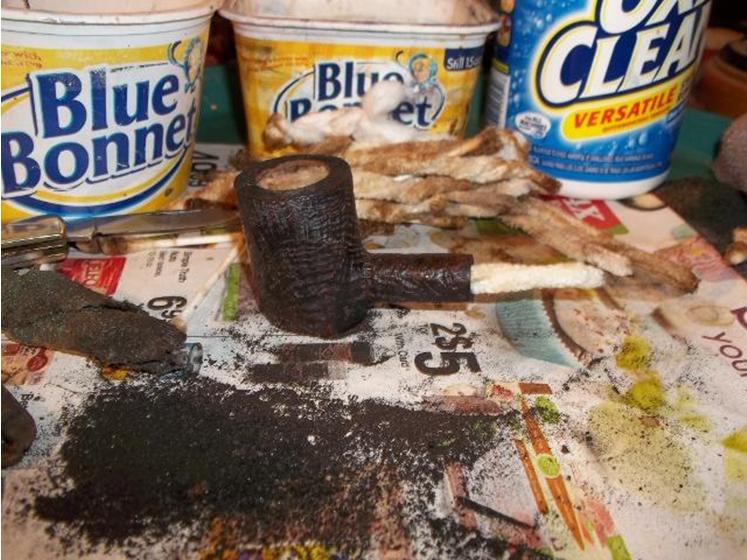
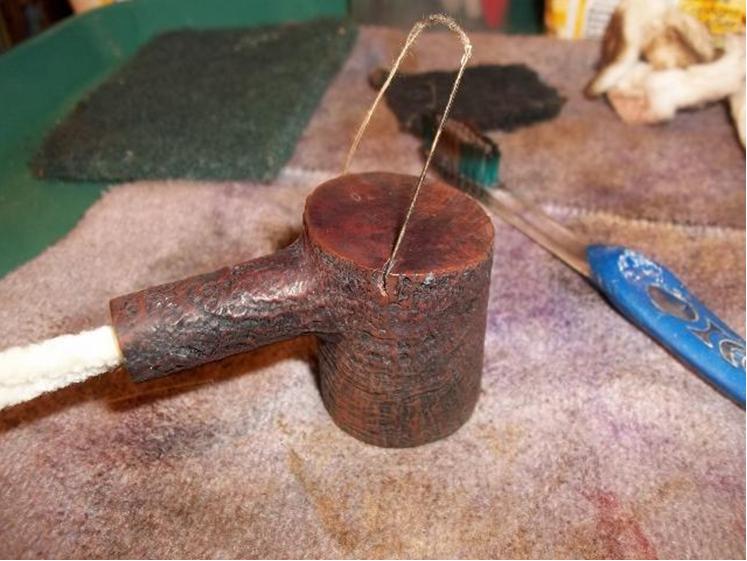
Now that I had a pretty good idea of when the pipe was made and what the stamping meant, it was time to go to work cleaning up this beauty. I took a close-up photo of the bowl to show the state of the uneven broken cake that was formed on the walls of the bowl. The cake had a fuzzy appearance that bothered me. So before I cut into it with the reamer I examined it with my lens to see if it was mold. I was glad to see that it was merely dust particles. I was able to blow them out before with a blast of air before I reamed back the cake. You can also see the flaw on the back side of the rim centered between the inner and outer edge of the rim.Con8 I reamed the bowl with a PipNet reamer. I started with the smallest cutting head and worked up to a cutting head the same diameter as the original bowl. The bowl was U-shaped but narrowed slightly half way down the bowl so I had to use the second cutting head to clean out the bottom half of the bowl and smoothed out the transition between the two cutting heads with a sharp pen knife. I took the cake completely back to the bare wood so that a good, clean, solid cake could be formed.Con9

Con10

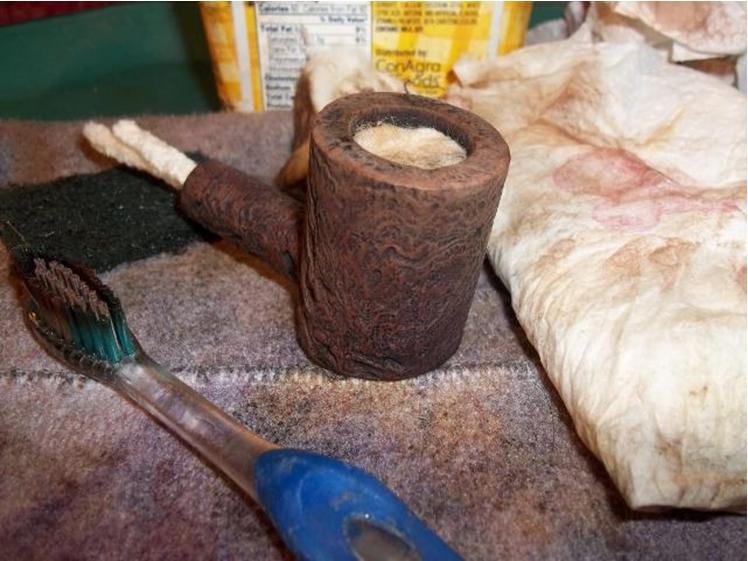
Con11 I scrubbed the exterior of the natural briar with alcohol on cotton pads. It removed the grime, oils and ground in dirt from the finish and left the briar clean.Con12 I dropped the stem in a bath of Oxyclean. Almost as soon as it hit the water and I shook it the mixture turned amber coloured as the Oxy worked on the oxidation. I set the bath aside to let the stem soak and turned my attention to cleaning up the bowl.Con13 Before I could repair the flaw on the rim I needed to clean it up. I lightly topped the bowl on the topping board using 220 grit sandpaper. Once I had topped it lightly I washed it down with alcohol on a cotton pad to remove the sanding dust and blew out the dust in the bowl.Con14 I picked out the dust and grime in the flaw and used a drop of clear super glue and some briar dust from the topping of the bowl to fill in the flaw. Once it was hardened I sanded it with 220 grit sandpaper on the topping board and then with a medium and a fine grit sanding block to smooth out the scratches and polish the rim.Con15 The photo below shows the repair to the rim as well as the oils and tars on the cotton swabs and pipes cleaners that I used to clean out of the mortise and airway. I also wiped down the inside of the bowl with alcohol on cotton swabs to remove the dust and any remnants of the old cake.Con16 With the bowl cleaned and repaired I took the stem out of the Oxy bath. It had been soaking for about 2 hours and the oxidation was softened and brought to the surface enough that when I scrubbed stem to dry it off I was able to remove much of it.Con17

Con18

Con19 I put the stem in the shank and used a heat gun to heat the vulcanite and reduce the angle of the bend in the stem.Con21 I took it back to the work table and took the next four photos of the new angle of the stem to see how it looked from the comfortable distance of the computer screen. I took it back and heated it again to bend it slightly more. The angle was close but I would need to adjustments to get to what I wanted for the bend in the stem.Con22

Con23 While this photo was taken to show the stem it also gives a good picture of the repair to the rim on the pipe. It blended in very well and looks far better than the original crevice.Con24

Con25 I sanded the stem lightly with 220 grit sandpaper paying special attention to the tooth marks and tooth chatter near the button on both the top and bottom of the stem. Once I had removed the marks and chatter I sanded it with a medium and a fine grit sanding sponge to remove the scratches.Con26

Con27

Con28

Con29 The next four close-up photos show what the stem looked like at this point in the process of removing the oxidation and scratches.Con30

Con31

Con32

Con33 To highlight the beautiful mixed grain on this piece of briar I rubbed it down with a light coat of olive oil and let it soak into the briar.Con34

Con35

Con36

Con37 I sanded the stem with micromesh sanding pads – wet sanding with 1500-2400 grit pads. Once I finished with the 2400 grit pad I buffed it with White Diamond and then rubbed it down with Obsidian Oil.Con38 I dry sanded with 3200-4000 grit micromesh pads and again rubbed it down with Obsidian Oil. Once it dried I lightly buffed it again with White Diamond to give it a deeper polish. Then I continued sanding it with 6000-12,000 grit micromesh sanding pads.Con39

Con40 I gave it a final coat of the oil and took the pipe to the buffer and buffed it with Blue Diamond Plastic Polish.Con41

Con42

Con43

Con44 I buffed the whole pipe with Blue Diamond and gave it multiple coats of carnauba wax to protect the finish and the stem. I finished buffing it with a clean, soft flannel buff and no buffing compounds to raise the shine on the finish and the stem. The finished pipe is shown below. Thanks for looking.Con45

Con46

Con47

Con48