Category Archives: Pipe and Tobacco Historical Documents

An Old Sealed Package of Eight Brothers Long Cut Tobacco


Blog Steve Laug

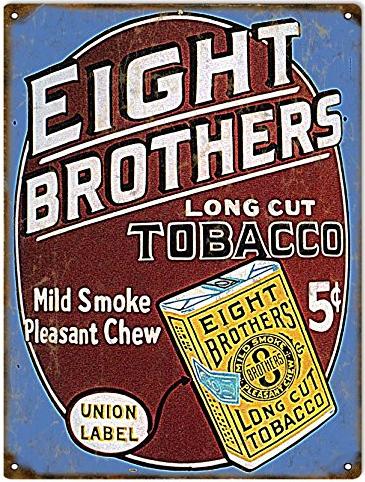
I was visiting my brother in Idaho and we went pipe hunting to see what we could find in the various antique shops and malls near by his home. One of the places we went was closing and they had some junk pipes for sale, a boxed set of bowls for a Koolsmoke metal pipe and a few tobacco tins that they were trying to sell out before the shop closed forever. Everything was 50% off so I was hooked to do a bit of looking at things I don’t normally buy. I picked up the Koolsmoke pipe bowls, an old tobacco tin the read Allen & Ginter’s Genuine Louisiana Perique, Made in Richmond, Virginia on the top and sides and a cellophane sealed pouch of Eight Brothers Long Cut Tobacco. I have seen the brand advertised before and I have seen it sold back in my early years or so I thought! I have no idea what it is or what tobacco is in the pouch. I don’t know if it was a Virginia, Burley or even a Latakia. I can’t seem to find any information on the contents of the tobacco. I decided to do a bit of research and see what I could find out about the brand.

I started my search on Google with the name “Eight Brothers Long Cut Tobacco”. I found lots of empty tins for sale and thought that was a dead end. But it was not! I started to notice that the tins had different company names printed on them. Some were marked Swisher International Inc., others were marked Schmitt Brothers Tobacco Works, Penn Tobacco Company, Bloch Brothers Tobacco Company, Helme Tobacco Company, General Cigar & Tobacco Company and also Culbro Co. I had no idea of the historical line of the brand and where it started. I did not know which company came first and which came next, etc. I just new that the package I found read General Cigar & Tobacco Co. a Division of Culbro Corporation. So my work was cut out for me.

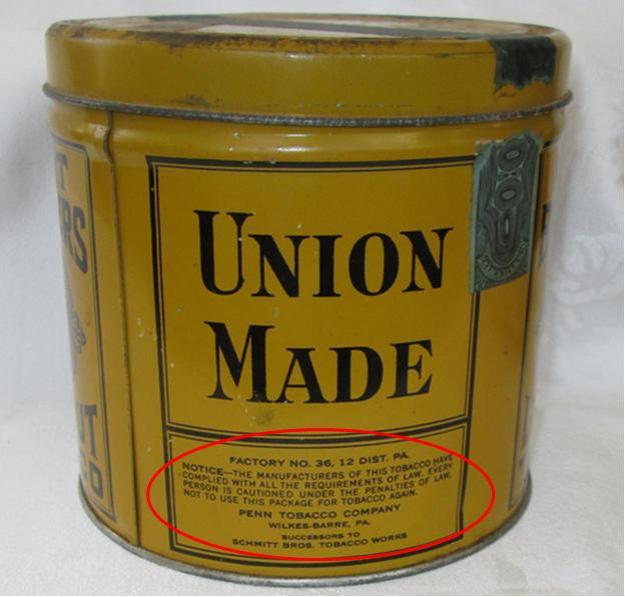
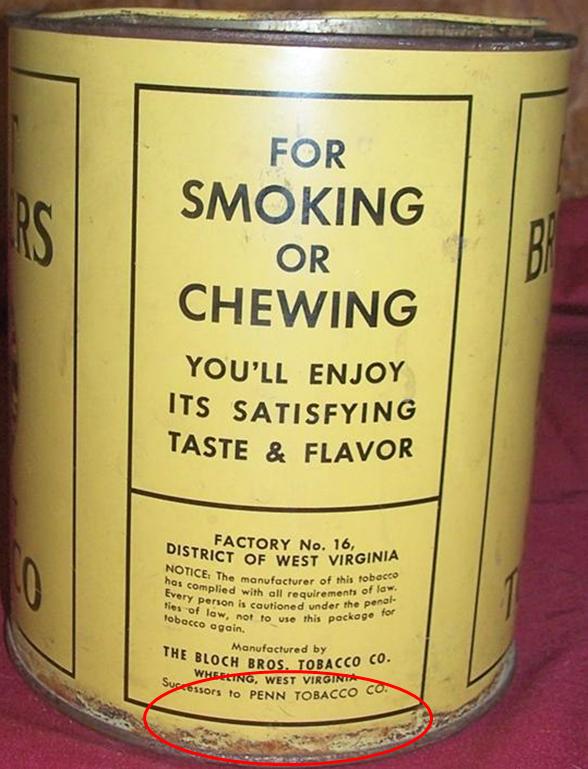
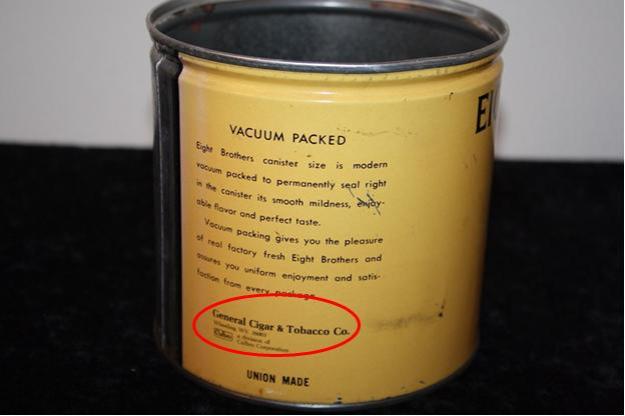
Here is what I found. (Throughout this blog I will use pictures I found on the web for this tobacco. The tins show the various iterations of the tobacco through various manufacturers.)

On the US Trademark website (http://www.trademarkia.com/eight-brothers-71539750.html) I found out that the brand was first owned by Swisher International, Inc. (Helme Tobacco Company). Here is what I read on the site: On Friday, October 31, 1947, a U.S. federal trademark registration was filed for EIGHT BROTHERS by Swisher International, Inc., JACKSONVILLE 32206. The USPTO has given the EIGHT BROTHERS trademark serial number of 71539750. The current federal status of this trademark filing is EXPIRED. The correspondent listed for EIGHT BROTHERS is JUDITH D. COHEN of KANE, DALSIMER, SULLIVAN, KURUCZ, LEVY,, EISELE AND RICHARD, 711 THIRD AVENUE, 20TH FLOOR NEW YORK, N. Y. 10017 . The EIGHT BROTHERS trademark is filed in the category of Rubber Products . The description provided to the USPTO for EIGHT BROTHERS is SMOKING AND CHEWING TOBACCO.

It seems that the blend was sold to Schmitt Brothers Tobacco Works. This was an independent tobacco manufacturer, which was later bought by the Penn Tobacco Company of Wilkes-Barre, Pennsylvania. Tins were printed Penn Tobacco Company during that time frame. In the photo below it reads Penn Tobacco Company and underneath it reads Successors to Schmitt Brothers Tobacco Works.I also found one that was printed Bloch Brothers Tobacco. From what I could find out on the web Bloch Brothers purchased the brand from Penn Tobacco Company and moved it to Wheeling, West Virginia. The tin below bears the name of Bloch Brothers and underneath reads Successors to Penn Tobacco Co.In 1969 Bloch Brothers/Penn Tobacco Co was sold to the General Cigar and Tobacco Company, which became a division of Culbro in 1978. The tin below is printed with the name General Cigar & Tobacco Co. I did some reading on the Culbro Company. Here is a link to the their website and specifically to the section on their history. http://www.culbro.com/about-us/our-history.html

Quoting from their site:

The Cullman family has a long history in all parts of the cigar industry. In 1961, Edgar Cullman, Sr., son of a tobacco grower and grandson of a tobacco merchant, entered the business of cigar manufacturing with the purchase of General Cigar, then a large maker of mass market cigars in the US. Under Edgar’s leadership, General Cigar entered the premium cigar industry and over time became the largest manufacturer and marketer of premium cigars in the US. Its leading brands include Macanudo, Partagas, Punch and Hoyo de Monterrey.

The cigar business was the core of General Cigar, but in the 1970s and 1980s, as cigars were experiencing declining consumption, the company diversified its holdings and changed its name to Culbro Corporation. During those years, it acquired, managed and sold a large number of businesses including Ex-Lax, a laxative maker, Bachman Foods, a snack food company, The Eli Witt Company, a wholesale distributor, Centaur Communications, a publishing company, CMS Gilbreth Packaging Systems, a manufacturer of packaging and labeling systems, and Bermas Plastics, a plastic cigar tip manufacturer. Culbro Corporation also formed a real estate development corporation which, when combined with Imperial Nurseries, ultimately became Griffin Land & Nurseries, Inc. and invested in HF, which subsequently became Doral Financial Corporation. Both of these companies were public spin-offs.

In 1997, when interest in cigars had resumed, Culbro once again took General Cigar public and split off the other businesses. A few years later, public markets lost interest in cigars, and General Cigar went private with the assistance of Swedish Match, a multiline tobacco business. Five years later Swedish Match acquired the whole business.

Culbro, LLC was formed in 2005 to bring the financial and operating experience of acquiring and managing businesses to bear in the private equity industry.

The label on my package is printed with the General Cigar & Tobacco Co. of Wheeling, West Virgina label. I know then that tobacco was manufactured between the dates noted above 1961-1969. 1969 was the date when Bloch Brothers Tobacco Co./Penn Tobacco Co. sold the brand to General Cigar & Tobacco. The other article note is that in 1961 Edgar Cullman, Sr. of Culbro Co. purchased General Cigar and tobacco. I believe that the package I have was made sometime during the 1960s (1961-1969).

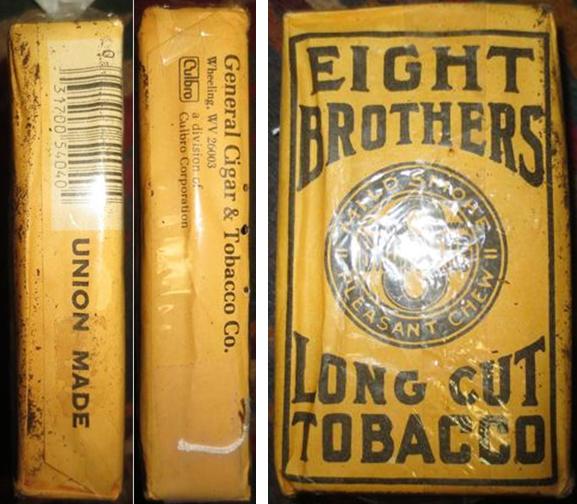
A cellophane sealed Yellow Eight Brothers Tobacco package. Black print reads “Eight/Brothers/Mild Smoke/8 Brothers” over a circle that reads “ Mild Smoke on the top of the circle and “Pleasant Chew” on the underside. I the centre is an 8 over the word BROTHERS. Underneath the circle it reads “Long Cut Tobacco”. Both front and back are the same. On one side it reads “General Cigar & Tobacco Co.” with the following address: Wheeling, West Virginia. Underneath it has a CULBRO logo and reads “A Division of Culbro Corporation. On the other side it reads  “Union Made” and has a bar code.Now I have a decision in front of me – do I open the pouch and fire up a bowl or do I leave it as a historical pouch from 50+ years ago. What do you think?

A friend on the Gentlemen’s Pipe Smoking Group on FaceBook posted the following link for more information. https://www.wvencyclopedia.org/articles/549 What follows is an interesting addition to the above information.

“Jesse Bloch was president of the company from 1937 to 1947. During his tenure, the company expanded by acquiring the Pollack Crown stogie and the Penn Tobacco Company. Jesse’s son, Thomas, continued as head of the company, adding the firm of Christian Peper Tobacco Company and its line of pipe tobacco products to the mixtures being made in Wheeling. Bloch Brothers was sold in 1969 to the General Cigar and Tobacco Company, which became a division of Culbro in 1978. The company was acquired by the Helme Tobacco Company in 1983 and now uses the name Swisher International. Mail Pouch, described by tobacco chewers as drier and not as sweet as some other chewing tobaccos, remains a popular product.”


A Review of “Rattray’s Booklet on Tobacco Blending: A Disquisition for the Connoisseur,” and the Original Text


Review by Robert M. Boughton

Member, International Society of Codgers
Member, North American Society of Pipe Collectors
Member, Facebook Gentlemen’s Pipe Smoking Society
http://www.roadrunnerpipes.com COMING SOON!
http://wordpress.com/roadrunnerpipes/  Blog
http://about.me/boughtonrobert
Photos © the Author except as noted

“Look at almost any painting.  Three-quarters of the can vas is covered by the background.  Tradition is the background of our life.  Take away the background, and you have spoilt the painting.”
— Charles Rattray (1880-1964), quoted in “Up in Smoke,” article by Russell Kirk, Chicago Sunday Tribune, December 9, 1956A FOREWORD FOR MODERN TOBACCO CONNOISSEURS
Charles Rattray
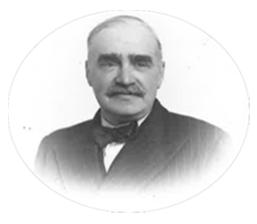
Had I not chanced upon one of Gregory L. Pease’s always informative and entertaining essays in a browser search for better information about Charles Rattray, the late great Scottish tobacco blender, than the scads of teasing, contradictory bits and pieces that clutter the so-called Information Superhighway, I might never have learned about the “Disquisition.”  I was working on a review of Rattray’s Jocks Mixture, determined to dig up some real dirt about the blend and the methods of the man whose name was on the tall orange tin.  Just when I thought I had wasted almost an hour making frequent refinements to the search terms, up popped Mr. Pease’s listing at the top of the page, with the wholly irrelevant seeming title “Those Pesky Non-Polar Molecules.”  Doubtful but intrigued, I scanned the URL’s blurb that ended with the incomplete sentence, “In fact, Charles Rattray, in his ‘Disquisition….”  Stifling some very ugly words even though I would have been the only human to hear them, but with the presence of mind to consider the sensibilities of my cat, Tiger Lily, I jabbed the blue link.

Speed reading the piece, the gist of which was fine and dandy but all about the different ways to preserve tobacco and maybe even improve its taste, blah-blah-blah, I came across the sentence I was gasping to find.  As I read, I stopped breathing altogether.  Here are the only words in the entire essay, which I saved to my Favorites because I gathered enough to know I would enjoy the real subject more at a later date (as I did), that began my quest anew: “In fact, Charles Rattray, in his ‘Disquisition for the Pipe Smoker,’ wrote that the last bowl from his tins would be the best.”

And so, typing the given title for another search, I saw there were 1,950 entries, the top three being other links to the same article by Mr. Pease, followed by everything from pipe smoking in Middle Earth to a disquisition on the evils of using tobacco.  Well, I can tell you, I had just about had it.  But being relentless, I added “rattray” before the same title, and although the possibilities were a touch fewer at 1,139, well down the first page I felt a glimmer of hope in the description of a site called “Welcome to the Pipe Tobacco Aging, Storage, and Cellaring FAQ!”  Maybe the exclamation point stopped me enough to spy, among various sentence fragments separated by more damned ellipsis marks, one with Rattray’s in bold and another being “Disquisition for the Connoisseur.”  Clicking on this link to verify that Mr. Rattray was indeed the author of said Disquisition, I had to exercise a level of patience that is atypical to my normal threshold, and forced myself to venture 47 pages – or halfway down my scroll bar – into the bowels of the collection of documents, on the subject with the exclamatory heading noted above, before I came across yet another Mr. Pease quote, this one referring to Rattray’s “Disquisition for the Connoisseur.”  Why, in the name of all that’s holy, I beseeched myself, had I not just Googled that whole term in the first place?  At any rate, there is a purpose to all of this verbiage.

Mindful of not being the only tobacco pipe aficionado to have read the famous and extraordinary discourse by Mr. Rattray, founder of the famed House of Rattray, I am certain of the high probability that still many more like-minded pipe folks out there remain oblivious to its existence.   The sole reasons for such a detailed description of the blocks I encountered while hunting for a bona fide version of the work are to demonstrate the sometimes arduous task of locating the exact document one knows exists somewhere, even with search terms one would have every right to believe are sufficient, and to make the fruit of this personal crusade available with fewer trials to others who also seek accurate details of Mr. Rattray’s lifework, including his own published wisdom.  The Disquisition that follows my foreword is essential reading toward that end.  The clear opinions in this opening commentary are my own.

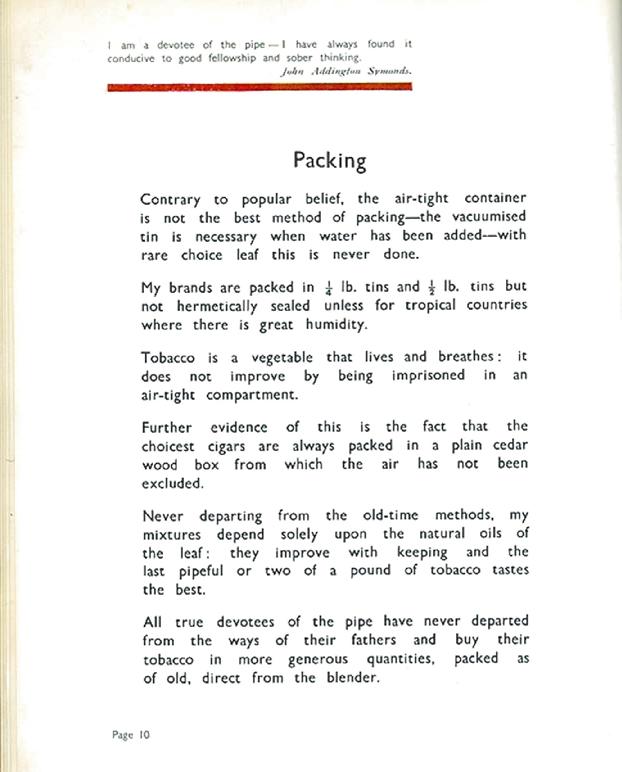
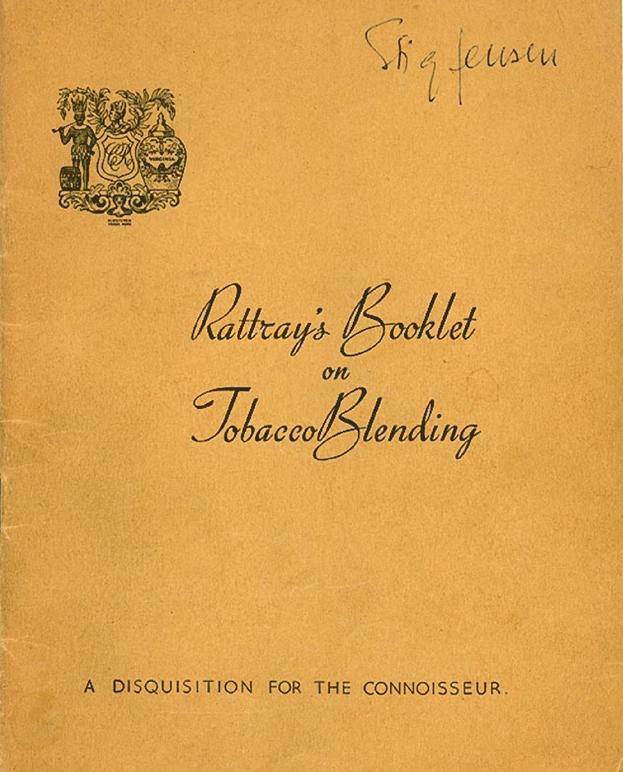
Steve Laug is, as am I, an acknowledged enthusiast of the habitual conditions called Pipe Acquisition Disorder (P.A.D.), Tobacco Acquisition Disorder (T.A.D.) and Pipe Tobacciana Acquisition Disorder (PTAD) – which I propose henceforth be referenced in combined form as Pipe, Tobacco and Tobacciana Acquisition Disorder, or PTTAD for those of us who are self-diagnosed or in denial.  As such (with an emphasis on PTAD, under which category I suppose the Disquisition falls), Steve published the same copy in 2012, calling the booklet a catalog and adding only a brief opening comment recommending it to readers.  The full name of the 30-page tract is somewhat misleading given the use of the prepositional phrase “on Tobacco Blending” followed by the subtitle “A Disquisition for the Connoisseur.”  The two parts combined suggest far more particulars of the contents of the Rattray’s mixtures, meaning the nine available when the Disquisition was written, than the blender’s seminal publication reveals.  Even so, the work remains a fascinating insight into the personality and philosophy of its author as much from its disclosures as its omissions.  Some of these show apparent deliberation while others tend perhaps toward the subconscious.  By the way, as of today, more than 40 Rattray’s blends have been released.

My frustration locating an online copy of the great work, even after the attempts already described and one more that pulled up a boggling number of references in tobacco discussions, articles and commentaries, turned out to be the result of my own failure, which I concede in advance was a bit stupid, to add the single word “online” after the second part of the Disquisition’s name.  In frustration, and with my tail between my legs, I dispatched a message to Mr. Pease, an eminent blender of fine pipe tobaccos in his own right, soliciting his aid.   His quick and thoughtful response led to the copy included here in its entirety, and by example to links of many others.  A quick but excited first reading set my mind abuzz with perceptions garnered from the primary source of this review that for the most part I did not find echoed anywhere else in my research.

Unlike some facsimiles, the PDF to which I was guided includes curious handwritten notes on the title page and one other.  Having exhausted every means of deciphering the words, which I considered might or might not be in English, and even consulting online Scottish alphabet and cursive handwriting sources, I made an unconditional surrender as to the words on the title page.  Regarding those on page 22, I ventured a guess that I thought was grasping.  In the end of this particular pursuit, I reached out for Steve’s almost encyclopedic opinion.  Two mornings ago, just in time to begin the final revisions to this review (or so I thought), I was rewarded with his agreement, in the latter of two responses via email, that the second note seems to be “write re shipping.”  But Steve’s initial response, appearing in my inbox below the other and concerning the title page, astounded me.  He interpreted it as a name, “Sh q. Jensen.”  Smiling and nodding in silence, almost laughing out loud, I revisited the title page and could only concur – with one suggested amendment: building upon Steve’s astute conclusion, the notion that Sh might be an abbreviation taken from some book owners’ proprietary need to write or in other more OCD examples stamp words to the effect of “From the library of (insert name),” I reasoned that Sh could be an abbreviation for “shelf,” as in “From the shelf of Q. Jensen.”  With a final search for words and acronyms involving the two letters in question, I confirmed the wild guess at the fifth Web link in my list of sources.

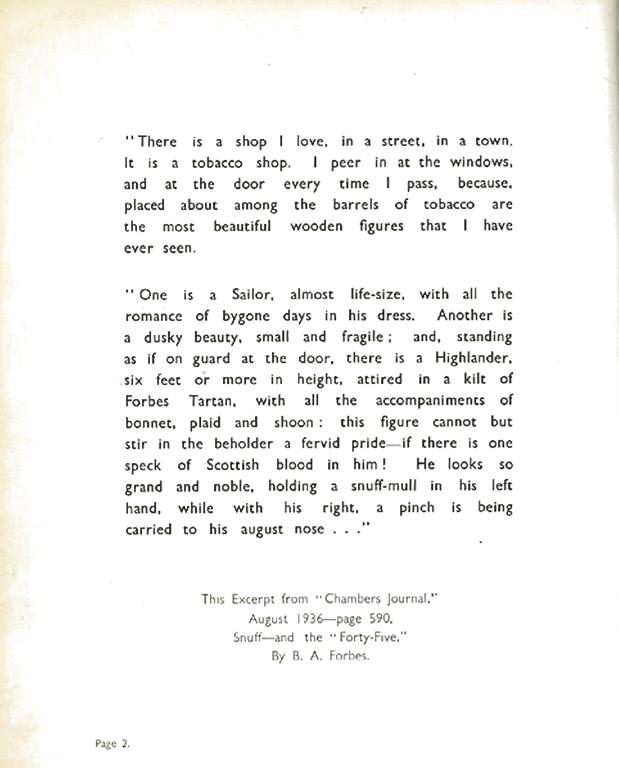
Nevertheless, the original year of the Disquisition’s distribution remains a mystery, but be assured I will not give up trying to find a definitive determination.  For now, I can report with certainty that the booklet was issued much later than I had believed, considering the extended quote on page 2, replete with the type of romantic nostalgia popular to many Scots of great and lesser renown, and most often encountered in the bawdy singing heard in pubs of that proud and sentimental country that forms roughly the northern half of Great Britain.  Attributed to a certain gentleman whose prose leaves no doubt he was a Scotsman with literary aspirations, by the name of B.A. Forbes, the essay, titled “Snuff – and the ‘Forty-Five’,” appeared in Chambers’s Journal of Popular Literature, Science, and Arts in August 1936.  For the edification of anyone familiar with or interested in this magazine, it was published under that name in London from 1854-1956 as the continuation of its predecessor, Chambers’s Edinburgh Journal (1832-1853, published in Edinburgh).

For a glimpse at Rattray’s nationalistic pride and his personality in general, and tobacco blending philosophy in particular, the primary source of which I have already hinted, of course, is Rattray’s Booklet on Tobacco Blending: A Disquisition for the Connoisseur.  Again, there are frequent mentions of “Rattray’s Disquisition” or just “the Disquisition,” the latter reminiscent of rare classical music masterpieces, for example Johan Pachelbel’s Canon in D Major for strings, with its alternating melancholy and somewhat more upbeat parts, being referred to as “the Canon”; J.S. Bach’s Toccata and Fugue in D Minor for organ, called “the Fugue,” and Tomaso Albinoni’s Adagio in G Minor for strings and organ, a work of a profound  sense of impending doom that builds into an almost harrowing conclusion, known as “the Adagio.”

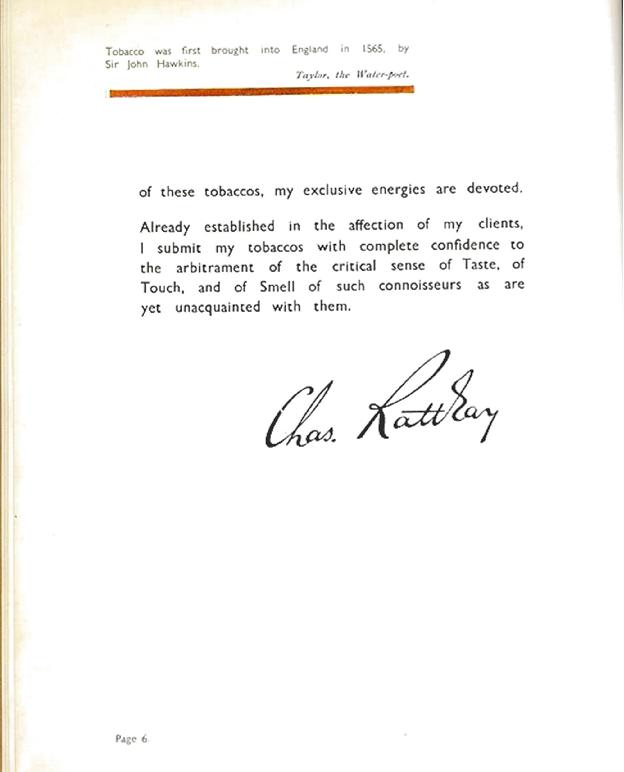
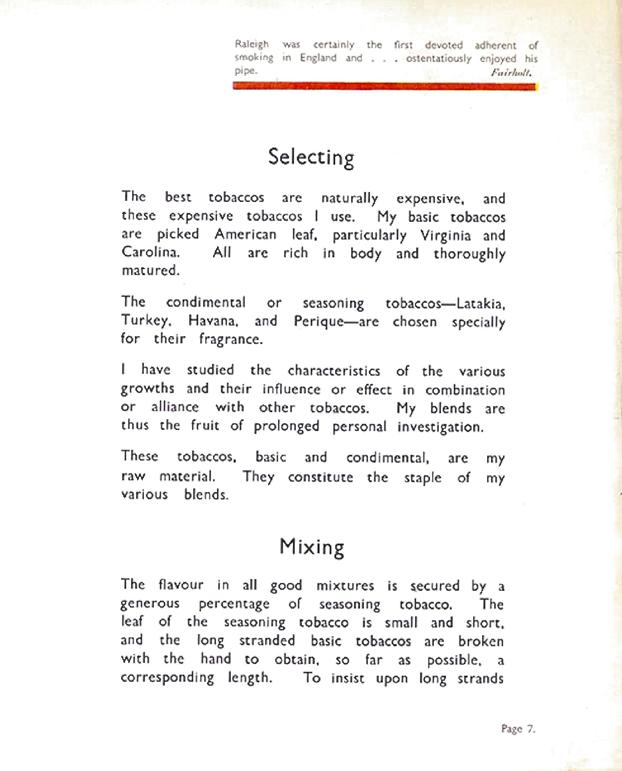
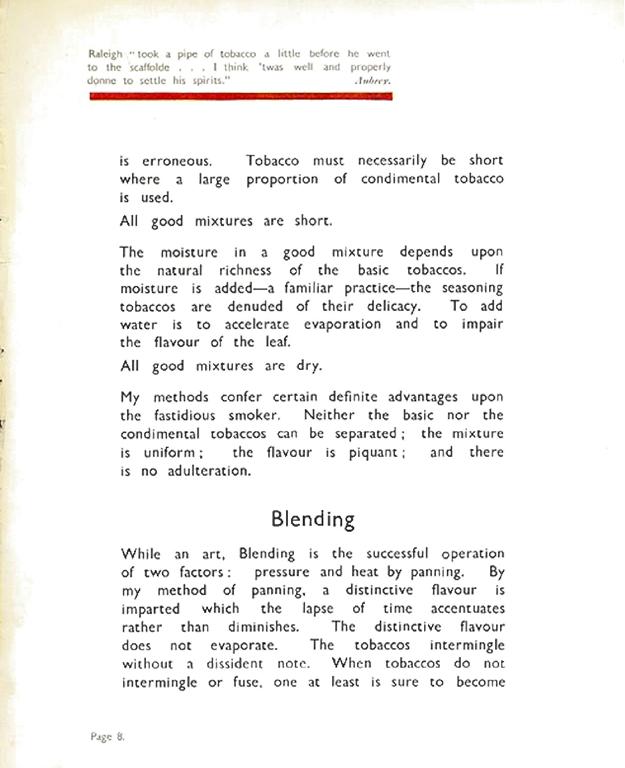
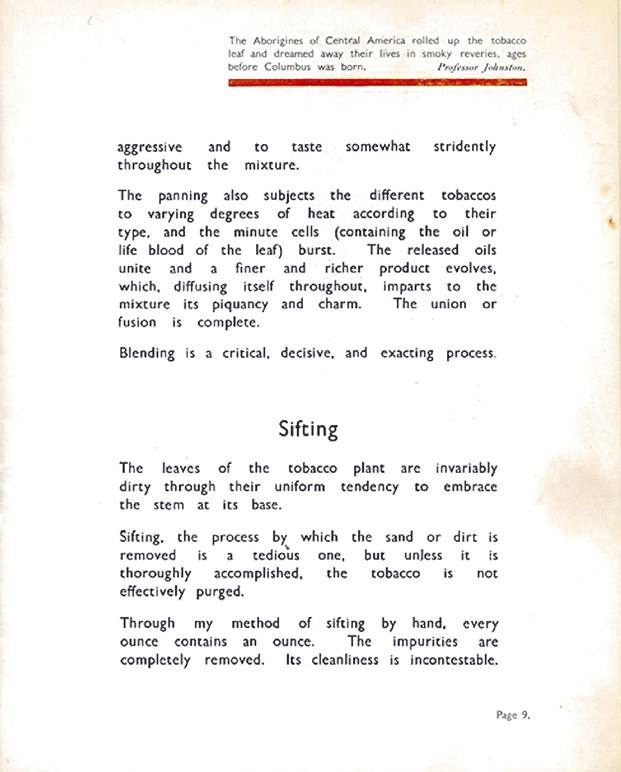
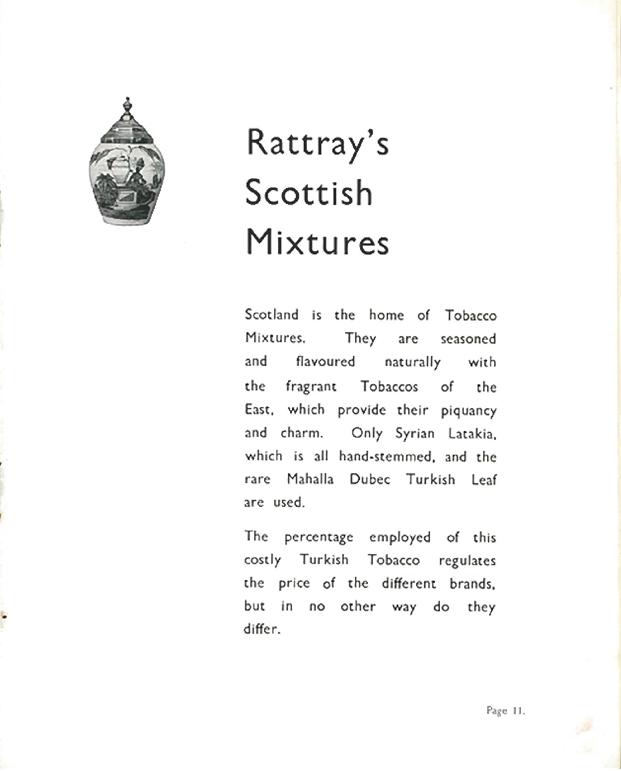
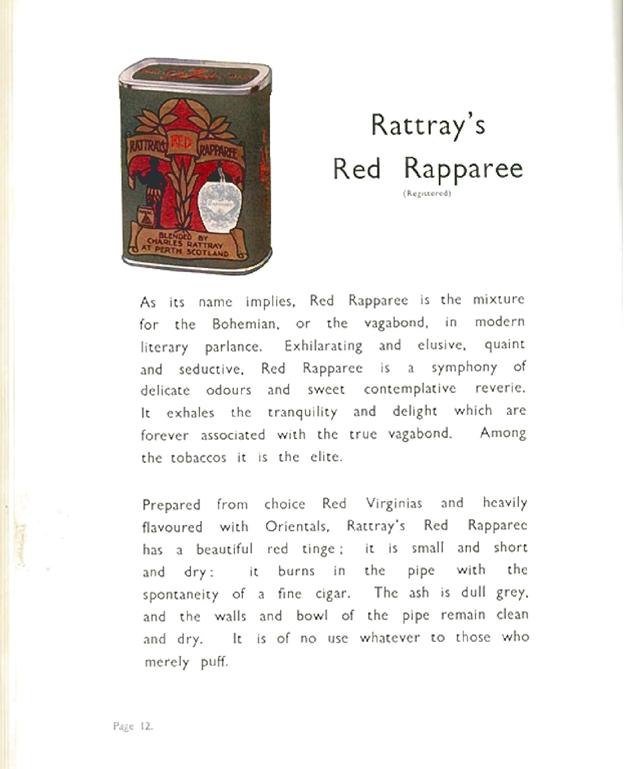
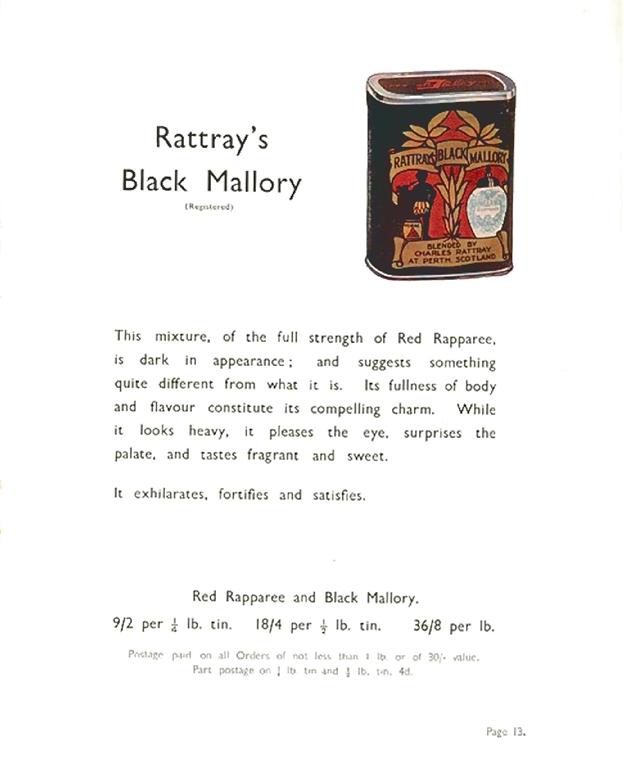
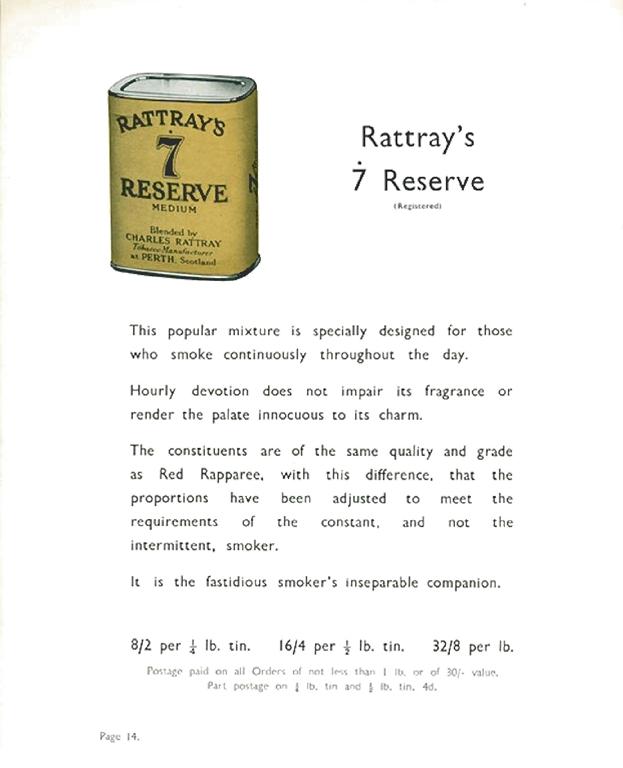
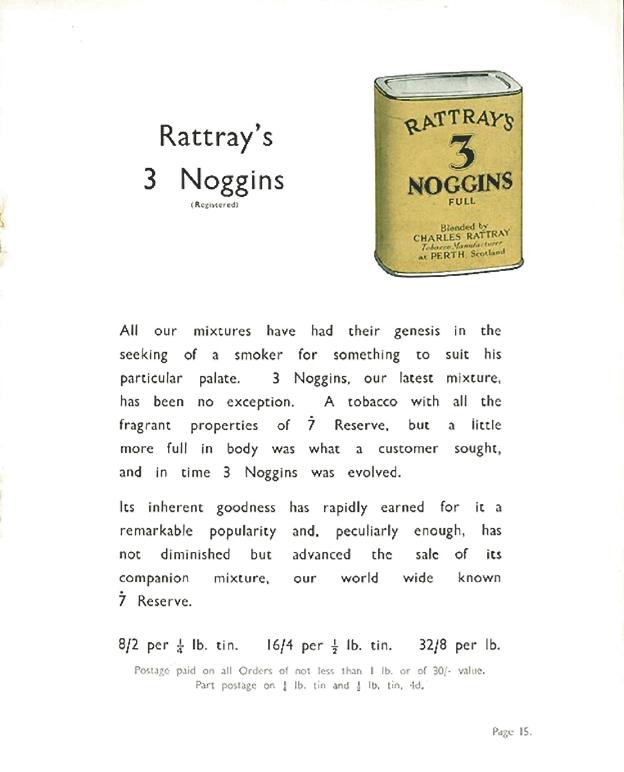
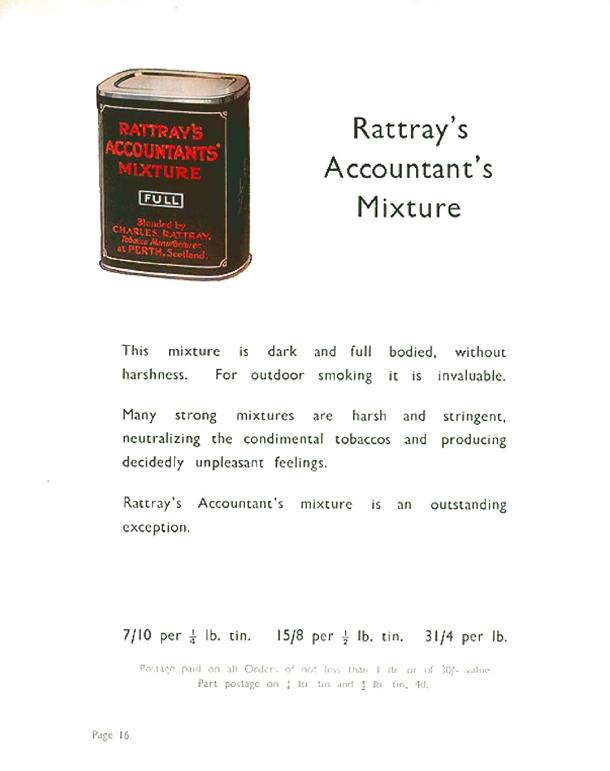
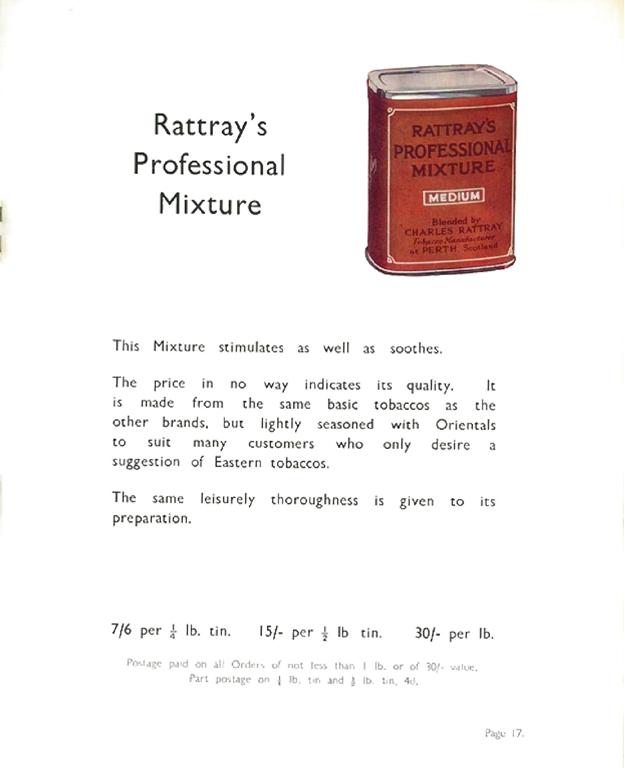
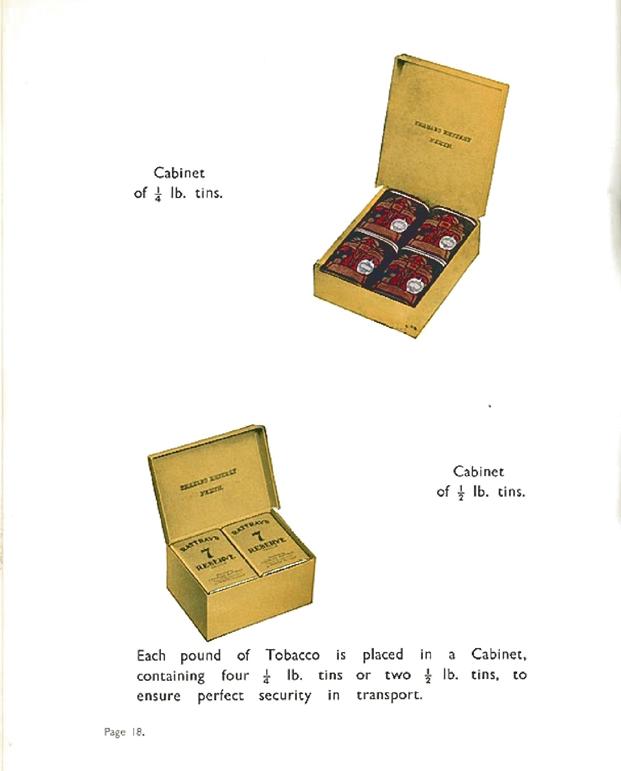
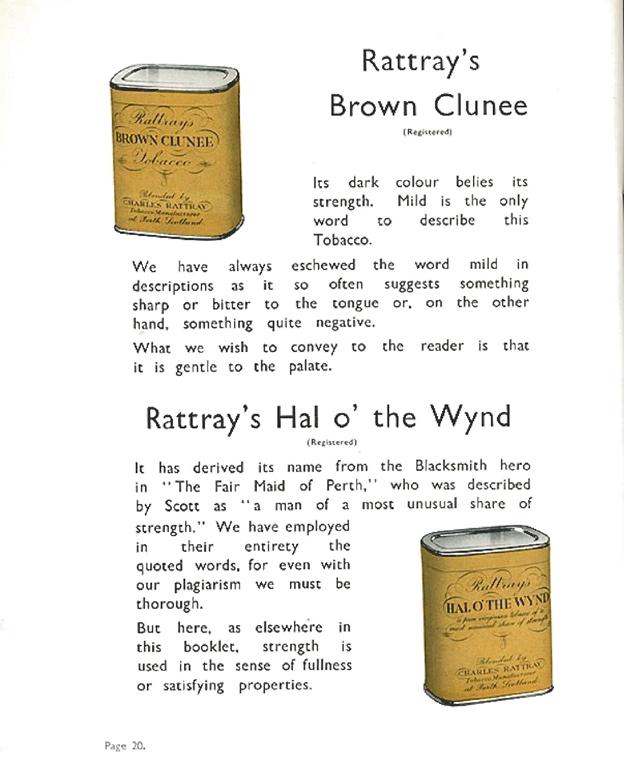
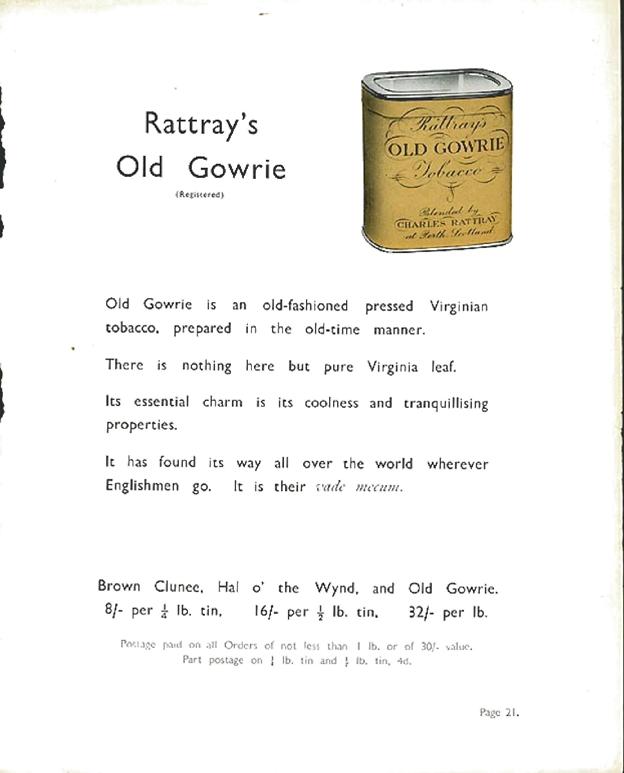
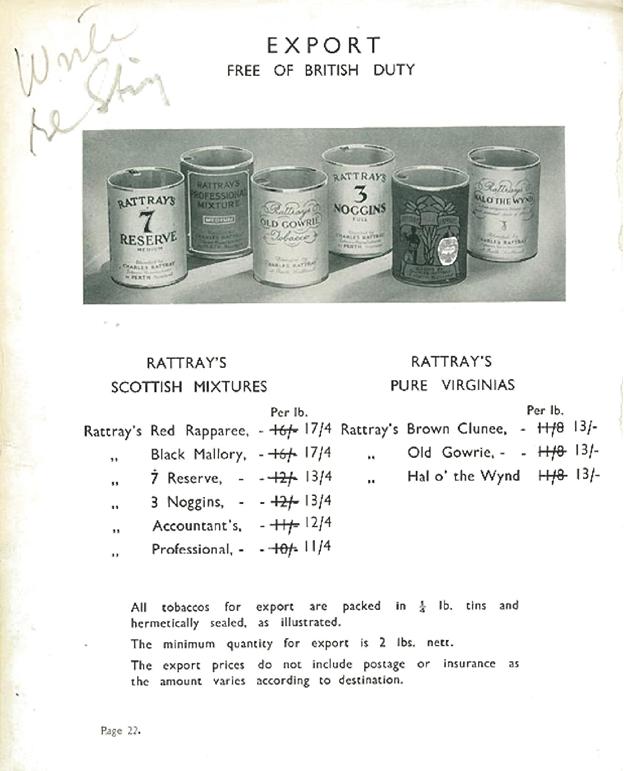
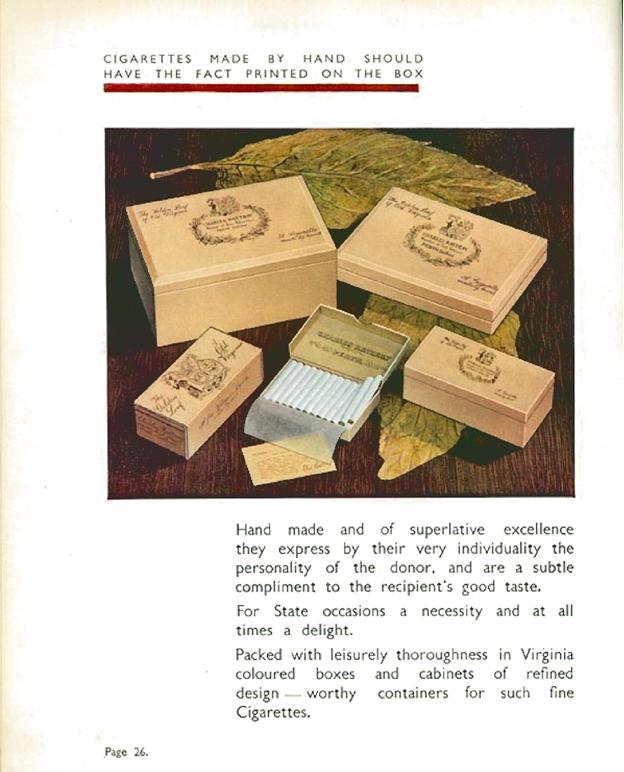
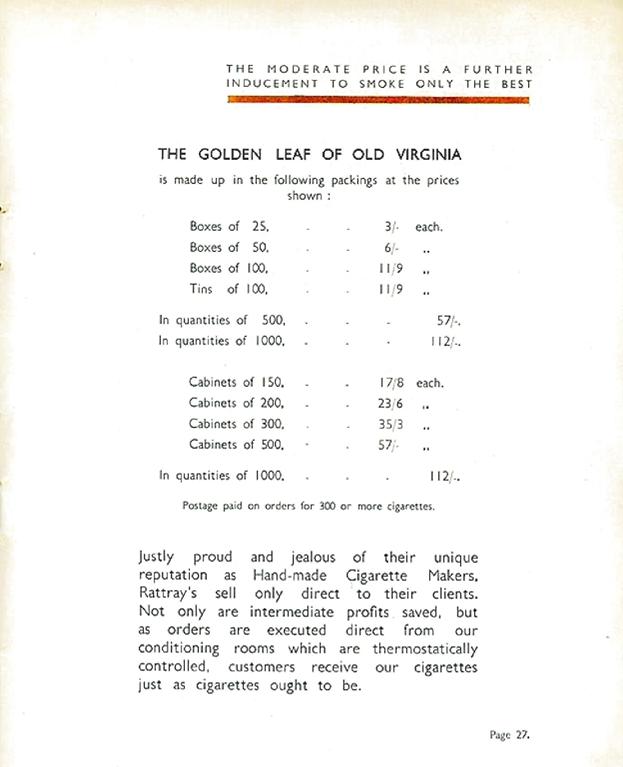
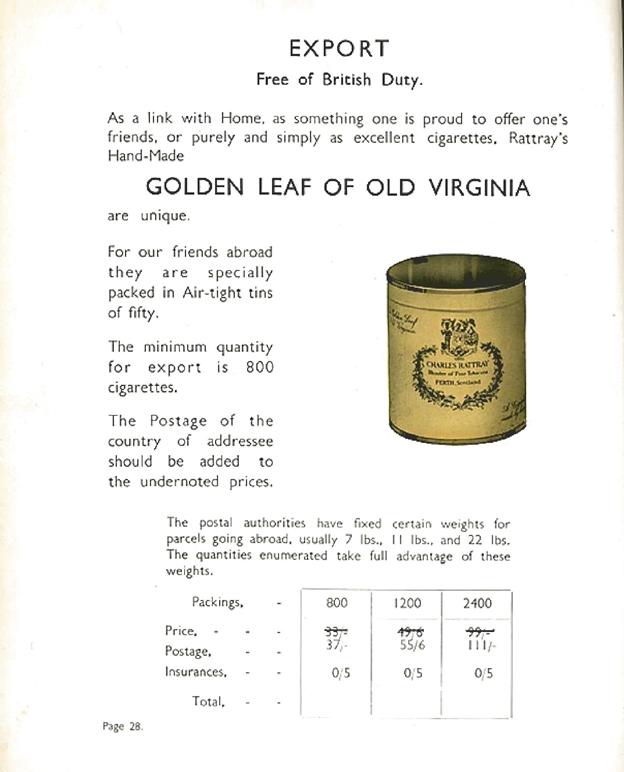
The Disquisition is divided into eight parts: an informal preface; the foreword proper; a synopsis of the five elements of creating what the master blender and author called the House of Rattray’s “adherence to the true unhurried craftsmanship, the secret of our success;” six blends specifically identified as Scottish Mixtures, showing their domestic prices; “Cabinet,” or sampler pack choices with their prices; three All-Virginian Mixtures giving the same pricing; Export Prices for the pipe tobaccos, and, described last but with effusive pomp, Rattray’s Hand Made Cigarette (the Golden Leaf of Old Virginia), the reason “why we have one cigarette and one only,” again with domestic and Export Prices depending on the quantity ordered.  All prices are stated in shillings and pence.  For example, the lowest domestic price per ¼ lb. tin of Red Rapparee and Black Mallory is shown as 9/2, or nine shillings two pence.

Every pipester, as Mr. Pease sometimes calls us, whether he coined the term or not, should give the Disquisition thorough consideration.  If the reader is as inquisitive as I am, he (and I use the pronoun in the formal writing sense, not to exclude the many women among us) will find himself more and more engrossed, compelled to keep turning the pages, as it were.  In fact, I, for one, hope someday to own a genuine, ink and paper original printed edition of the prideful, almost swaggering presentation.  Moving forward from the weathered but elegant title page, take in every detail and nuance that combine to create a portrait of Charles Rattray, the man, the Scot and the tobacco blender.

Read every word of the text, as all of them were chosen by the author with the skill of a master craftsman, the cunning and wile of a politician avoiding the real answers to questions, the reluctance of the true chef to reveal too many secrets of his recipes – and, last but above all else, the fierce pride of the Scotsman who created the invaluable legacy of the now almost forgotten traditions of quality tobacco blending.

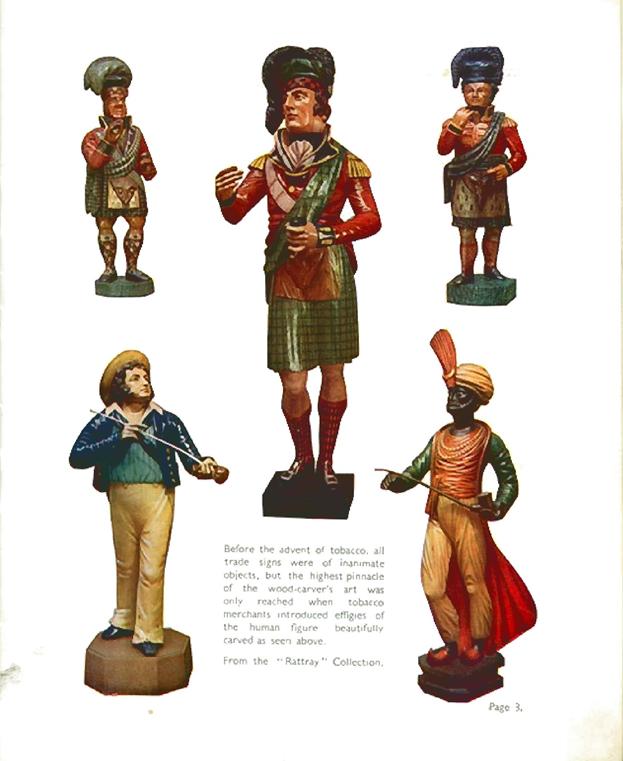
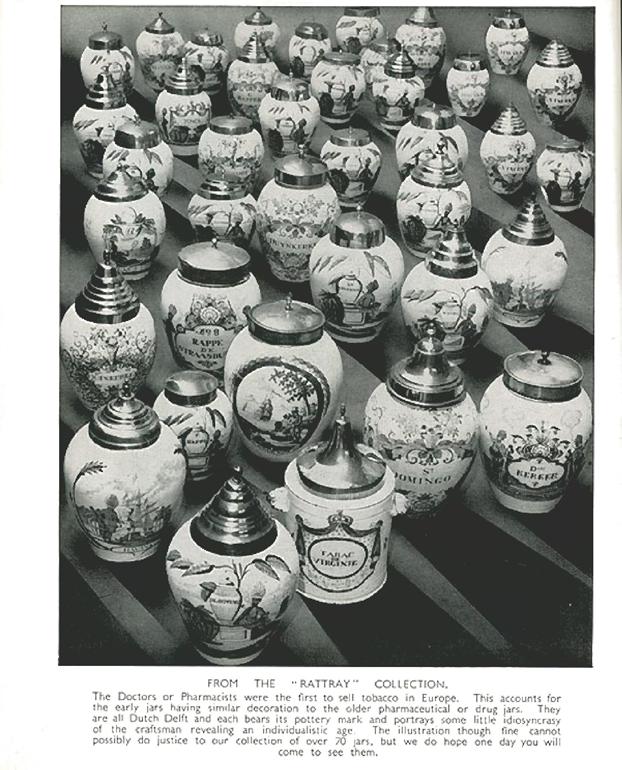
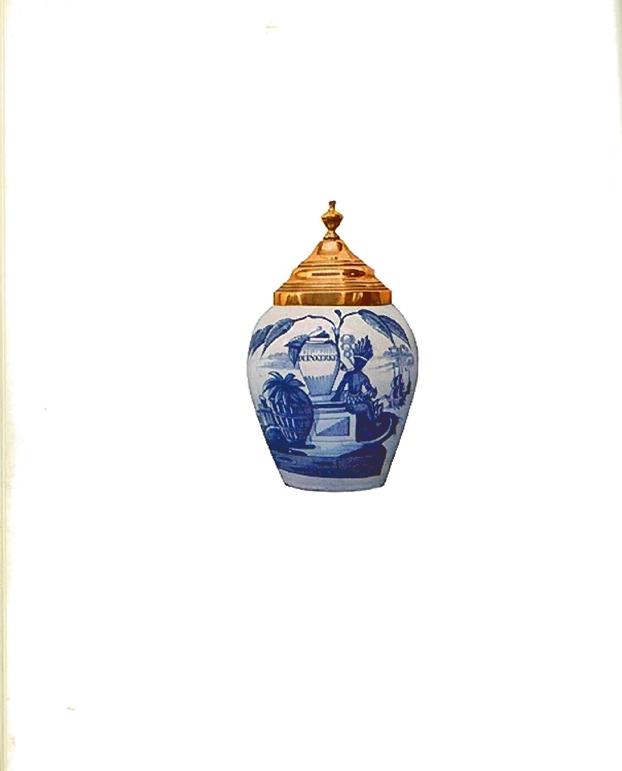
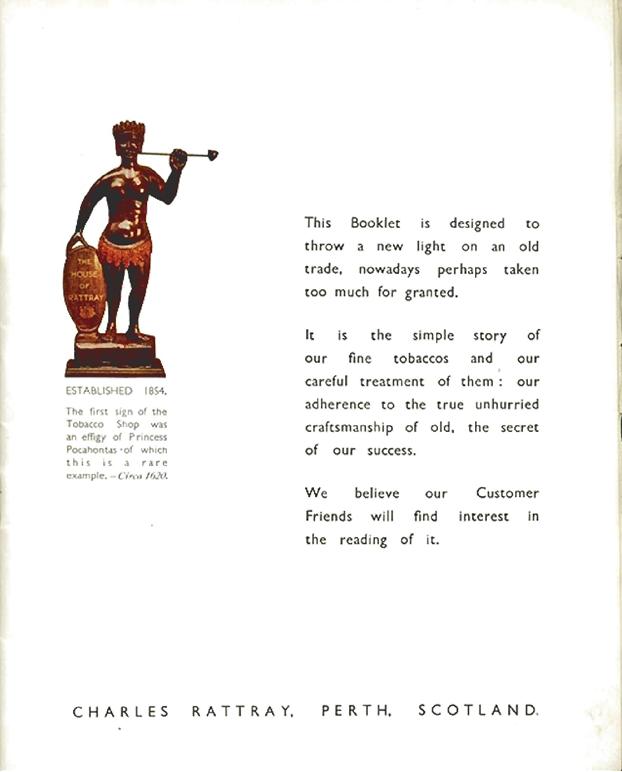
Study every image of antique statuettes and jars, each of them a special illustration of the centuries old history, traditions and values of the tobacconist’s trade, and singled out by the hands of the founder of the House of Rattray from his family’s vast, treasured collection.

Don’t miss a single quote related to the enjoyment of pipes and tobaccos, selected by Mr. Rattray with the same attention to history and tradition that is the theme of his Disquisition, which further illustrate the purpose behind his vocation and business, and when combined with the images of priceless tobacciana are especially telling of his sentiments.    Beginning with the longest from B.A. Forbes found at the end of the preface, the quotes, all derived from sources subject to the British Crown, continue in small bars heading each page of the following Foreword and the synopsis of the four fundamental preparatory acts, with the fifth being the final choices of which leafs and their quantities to choose for a given blend, and provide an enhanced understanding of the Rattray story.

That story and a large part of Mr. Rattray’s pride began with the Clan Rattray.  According to legend, the Clan dates to the early11th century, when Malcolm II, born c. 954, King of Scots from 1005 until his death in 1034,  granted one of the first men of the Rattray surname –which at the time was an ancient variation –the position of Laird of Rattray.  The royal appointment as laird, or landed proprietor, gave the early Rattray immediate authority over the occupants of Perthshire, now the County of Perth, and also made him accountable to the king for payment of certain incomes in that period’s equivalent of taxes.  It was true then as it is now: every promotion comes with a price.  For more details of the legend of Clan Rattray’s origin, based on the accounts passed down through the family for more or less a millennium, there is as always a link in my sources.

When Mr. Rattray died in 1964, his son, Charles Rattray, Jr., inherited the Scottish tobacco throne.  At some unclear point in the 1970s (or, in the alternative provided by less reliable sources, the 1960s), Robert McConnell Tobaccos of London assumed responsibility for some of the Rattray’s blends.  Which specific blends is unclear, depending on the source consulted.  Some say all of the Rattray’s English blends were assigned to McConnell; others posit the vague notion that “blends intended for export to the U.S.,” which category begs interpretation as either specific blend names made for sale in the U.S. alone, or those that were available here.  Either way, the latter idea seems, perhaps only to me, laughable considering the lack of any handy evidence supporting a theory that any product made by Rattray’s was excluded for sale in the rest of the world or not available to U.S. importers.  The tenuous claims I have mentioned are intended for the reader’s own conclusion or, I hope, to inspire debate, and in no way alter the fact that both McConnell and Kohlhase Kopp became involved in the evolution of the House of Rattray after the founder’s death, with the latter at whatever date assuming current ownership.  I always desire and appreciate input readers may have concerning these or any other statements I make in my various contributions to this forum.

The complete transition of Rattray’s ownership is also subject to debate.  Kohlhasse Kopp & Co. of Germany was formed in 1979, not long before the universal dating of the House of Rattray’s closure in 1980.  The question remains, however, whether McConnell ever had complete control of Rattray’s production until 1990, when the best sources I can find assert Kohlhasse Kopp’s acquisition.  There is no doubt, at least, that Rattray’s pipe tobaccos are now manufactured in Denmark.

I will leave the final point of contention in the worldwide community of tobacco pipe smokers, relative to the overall quality of Rattray’s products after Mr. Rattray’s death, to the many members of that clan.
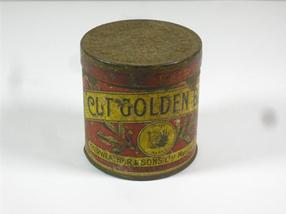
Antique Fairweather & Sons tobacco tin, courtesy of the Internet

If there is such a thing as predestination, Charles Rattray is the perfect example.  The man who can reasonably be credited with perfecting if not creating a style of tobacco known today as the Scottish mixture was born in Dundee – where he began learning the skills and knowledge that led to his long reign as the premier blender in Scotland – at Fairweather & Sons.  Some of his early blends while in the employ of Fairweather were deemed suitable for sale at that establishment.
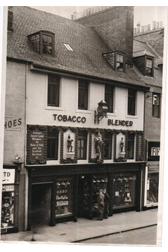
House of Rattray, found on Pipedia

The details of Rattray’s ascension to the throne vary in the sources cited at the end, but my account of his rise is based on the most reliable of these.  He remained in Dundee until 1903, when, at only 23, he set out for the capitol city of Perth and worked at the Brown Tobacco Shop on High Street 158, which he purchased eight years later and renamed as the House of Rattray. The rest, as the saying goes, is history.
SOURCES

http://archives.chicagotribune.com/1956/12/09/page/24/article/up-in-smoke#text
http://glpease.com/BriarAndLeaf/?p=28
https://rebornpipes.com/tag/rattrays-tobacco/
http://www.glpease.com/about.html
https://www.allacronyms.com/SH/Construction
https://pipedia.org/wiki/Rattray’s
https://www.lincolnwatchclinic.co.uk/rattray-s-tobacco
http://atthebackofthehill.blogspot.com/2008/11/astleys-no-99-full-latakia-mixture.html
http://www.loringpage.com/attpipes/tobdatepaper.html
http://www.tobaccopipes.com/blog/rattrays-past-present-and-future/
http://kohlhase-kopp.com/ceemes/tabak/rattray-s/?ref_pfeifentabak
http://www.clanrattray.com/about-the-clan.aspx
http://de.kompass.com/et/c/kohlhase-kopp-co-gmbh-co-kg-tabakwaren-import-und-grosshandel/de187782/
http://www.fumeursdepipe.net/telecha/rattraysbooklet.pdf

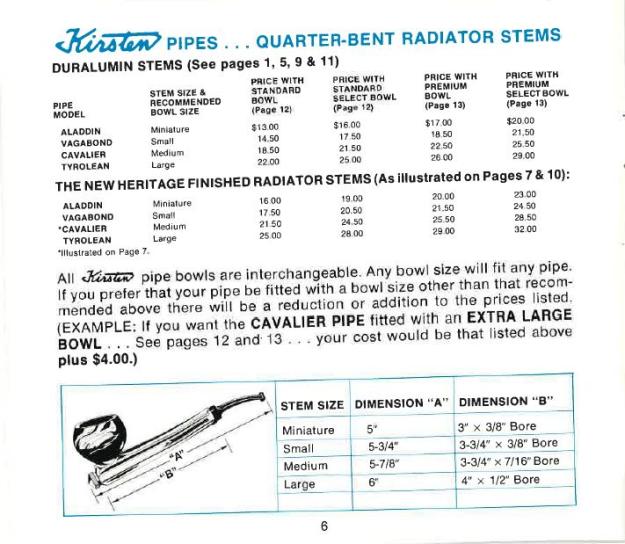
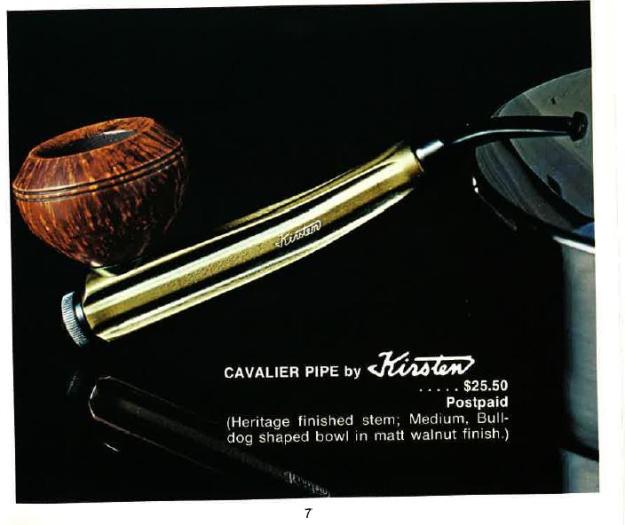
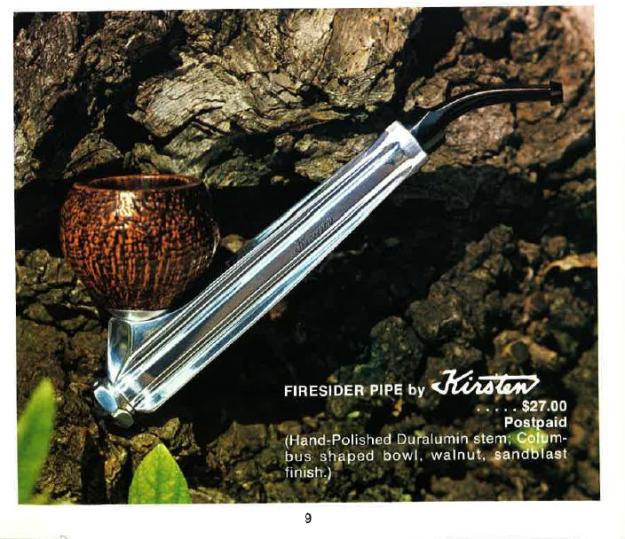
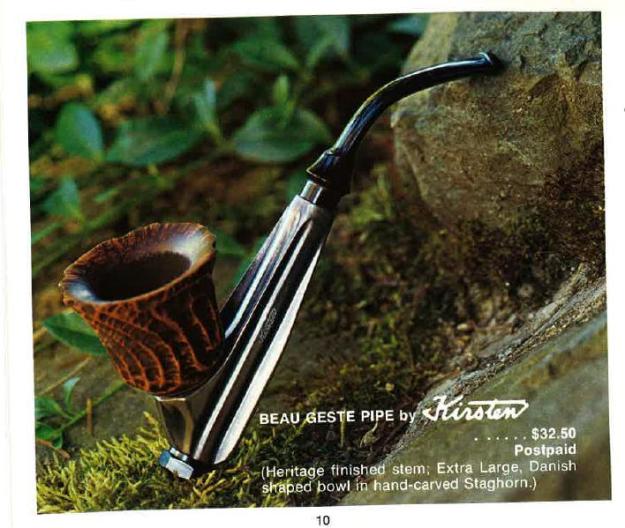
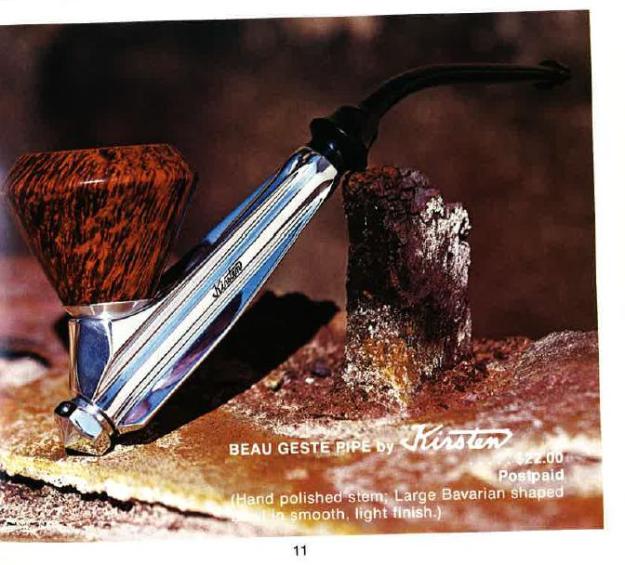
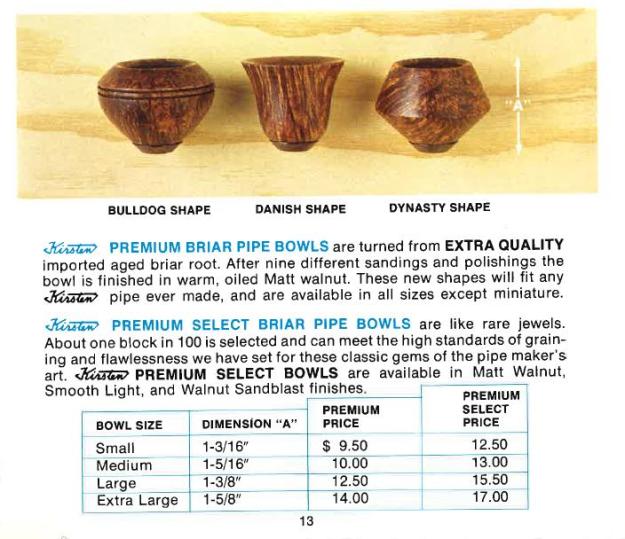
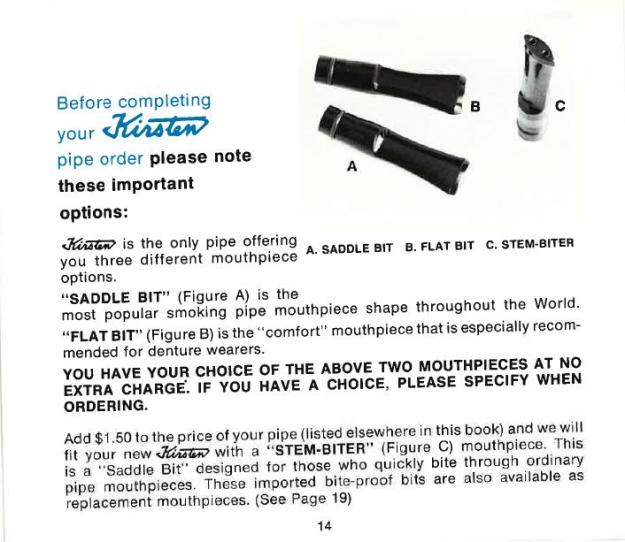
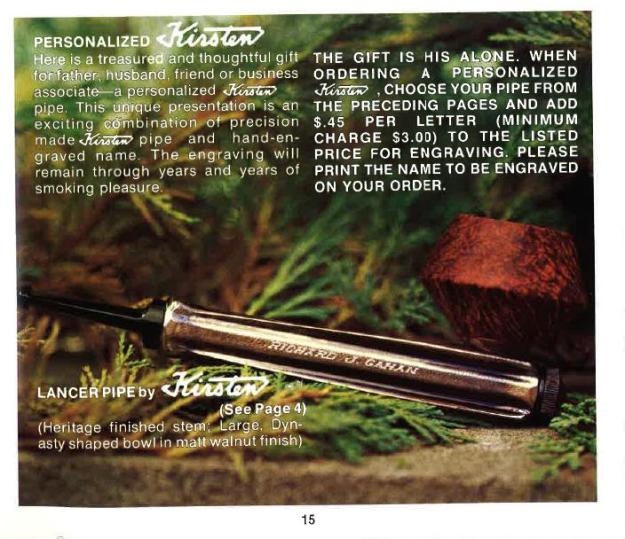
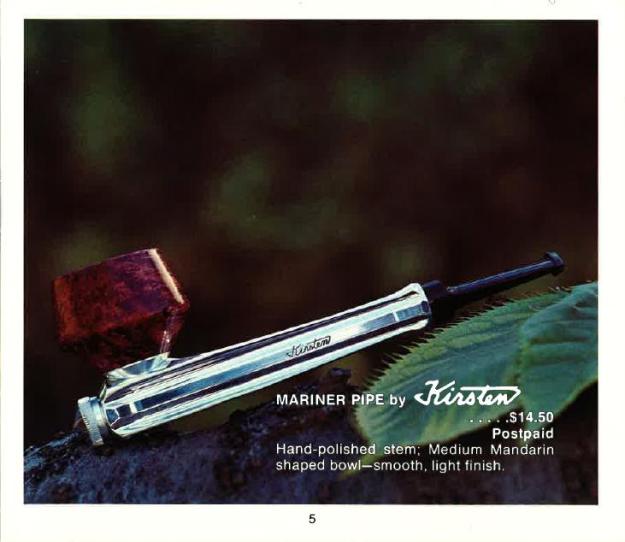
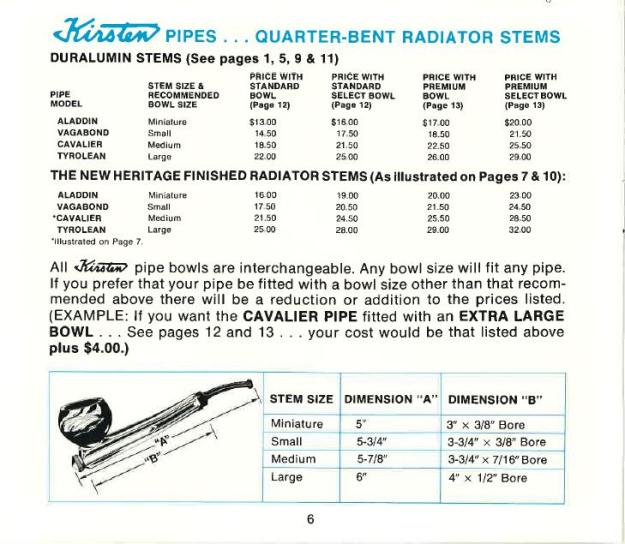
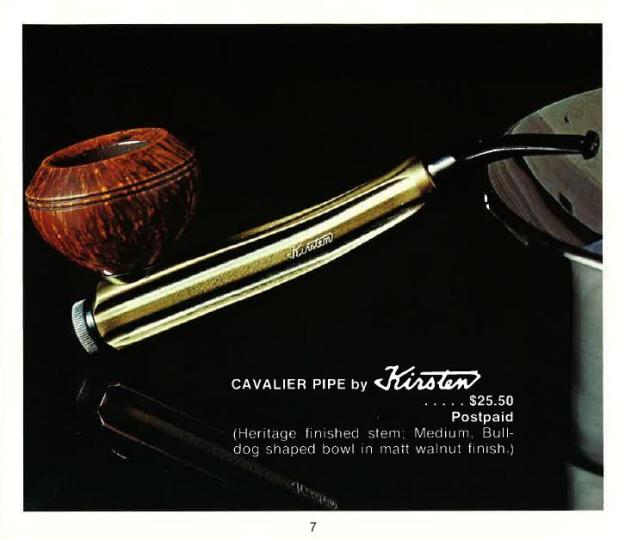
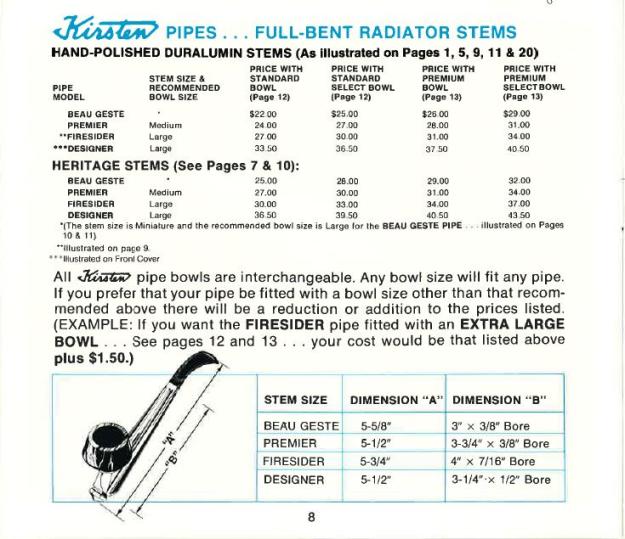
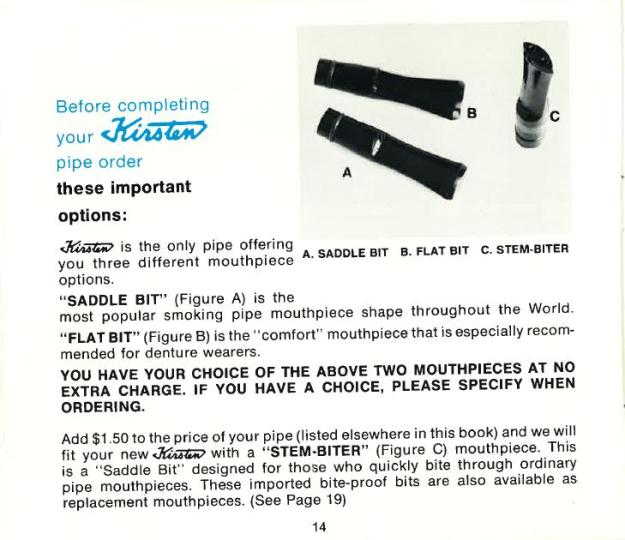
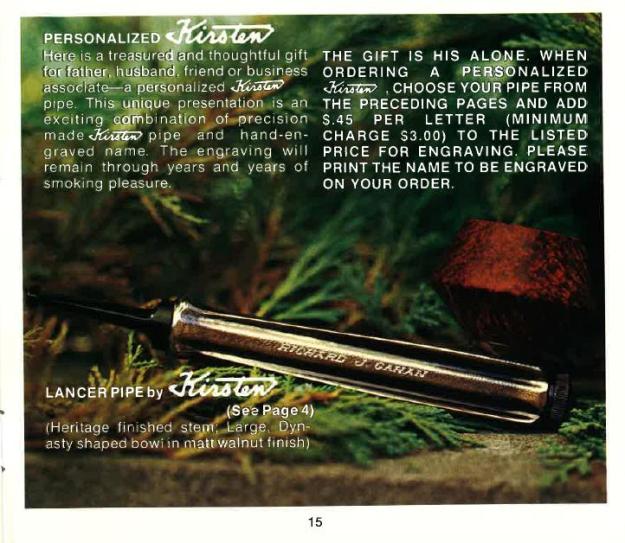
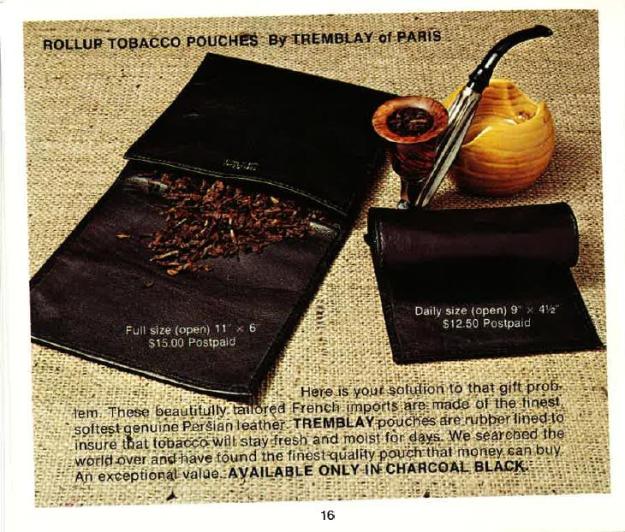
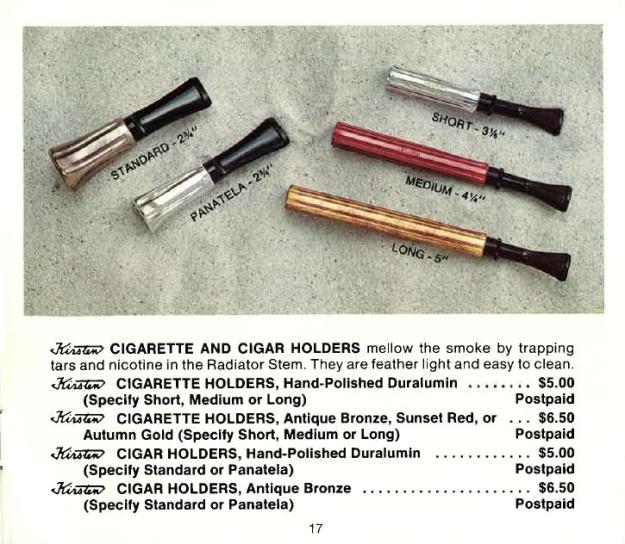
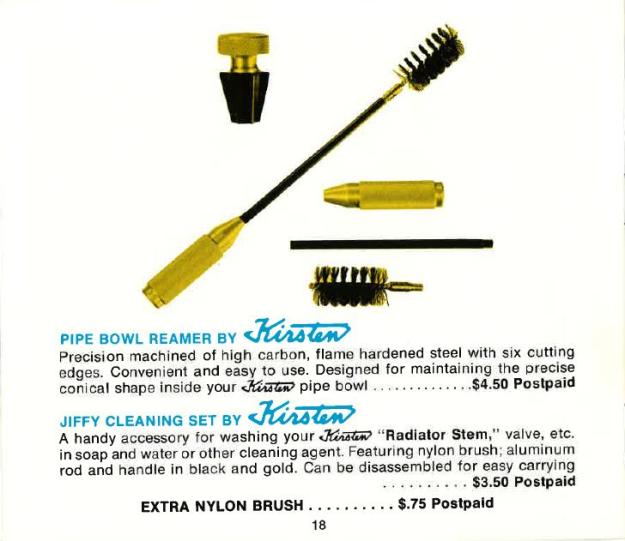
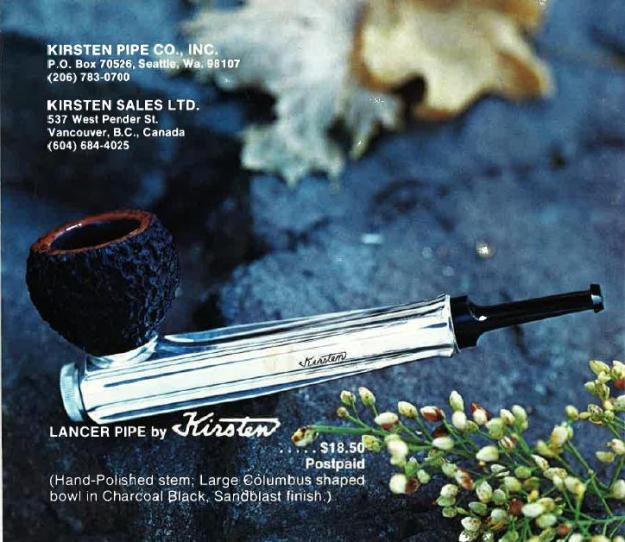
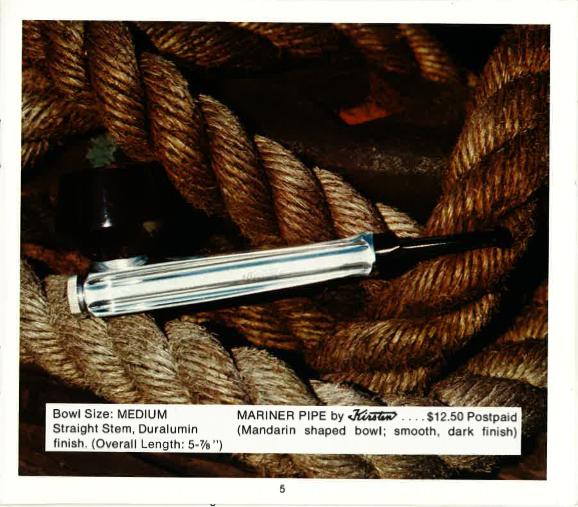
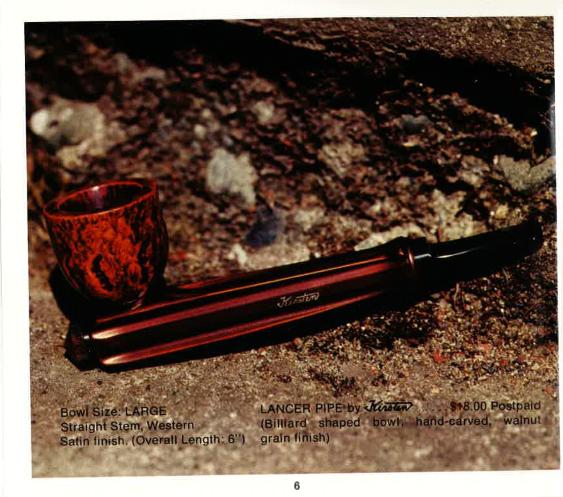
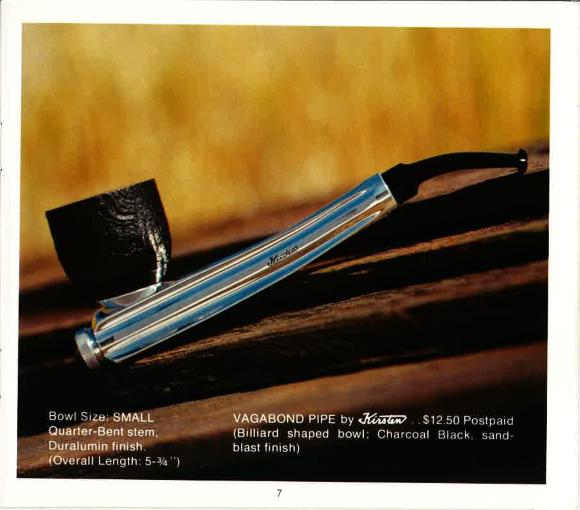
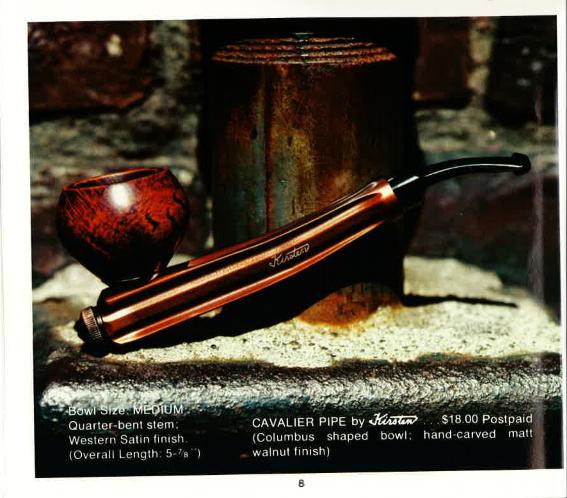
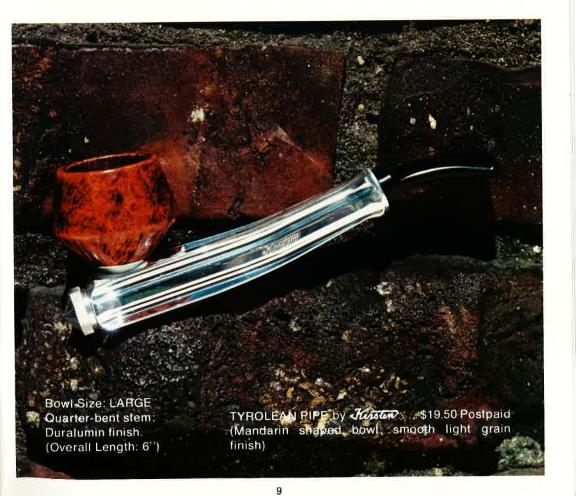
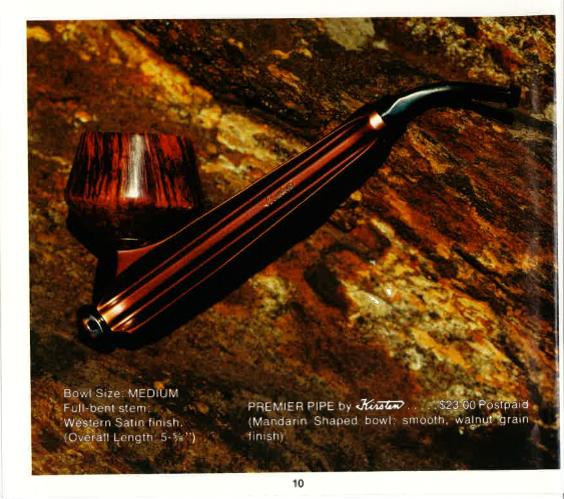
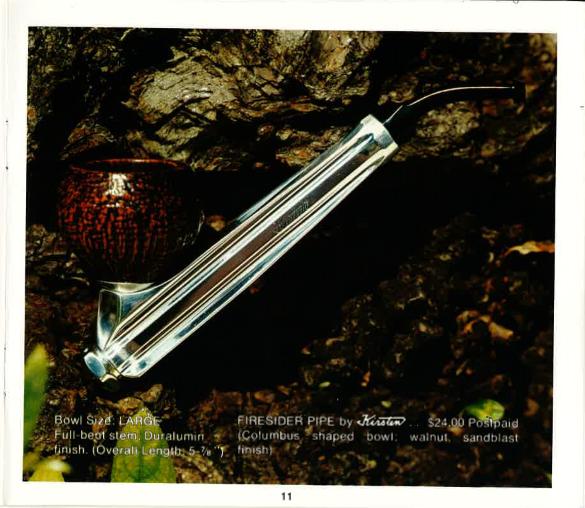
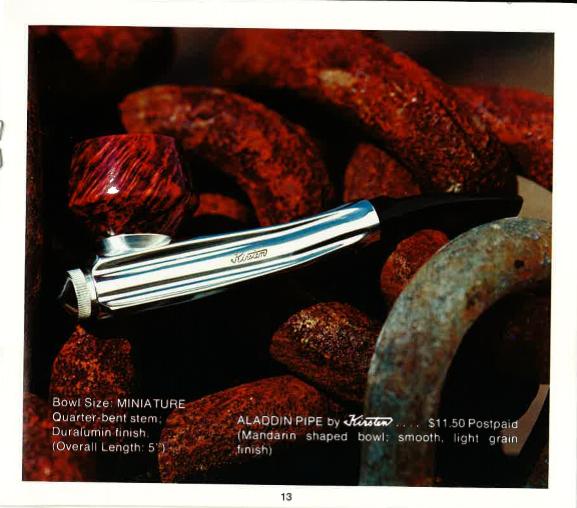
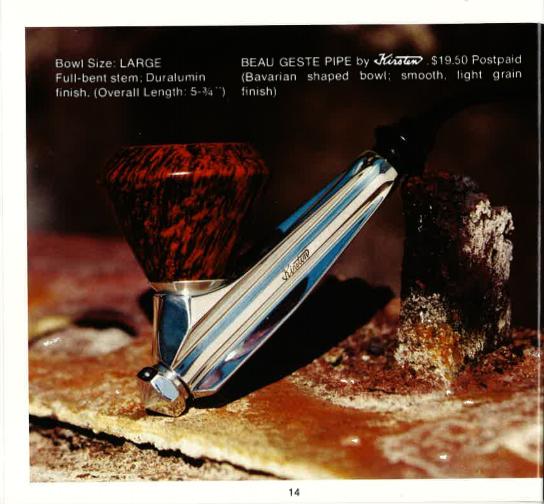
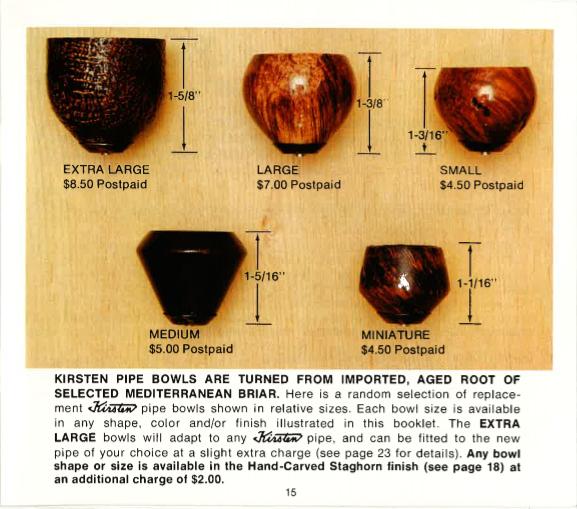
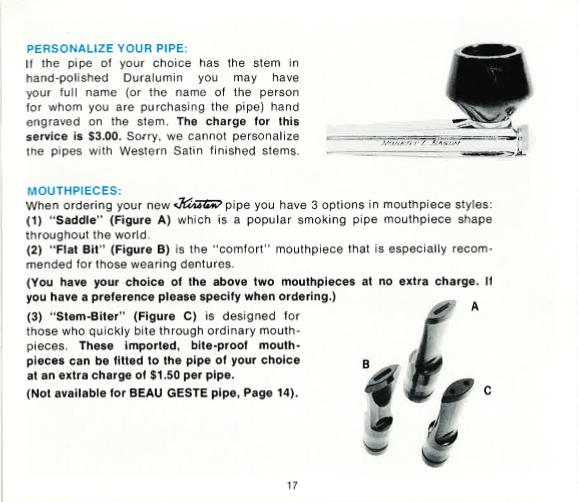
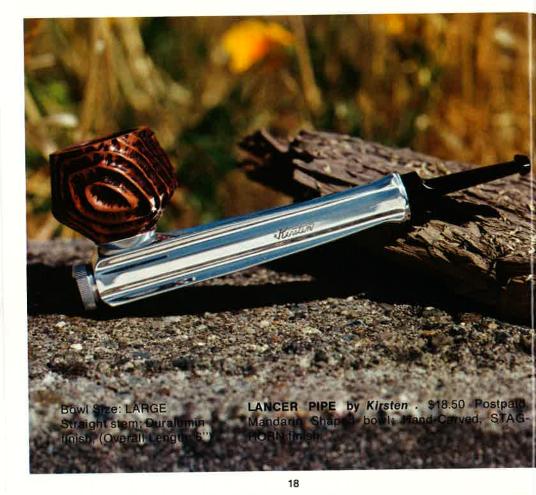
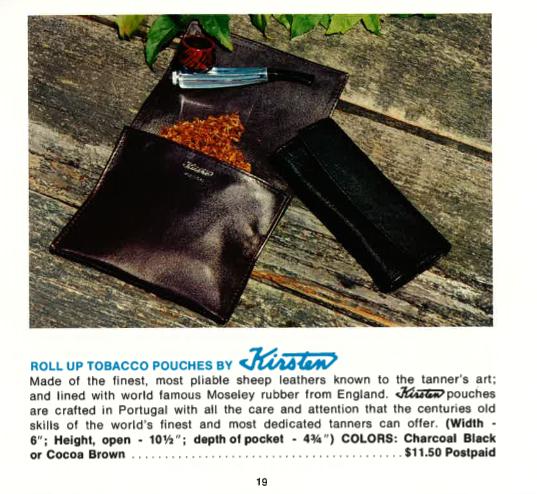
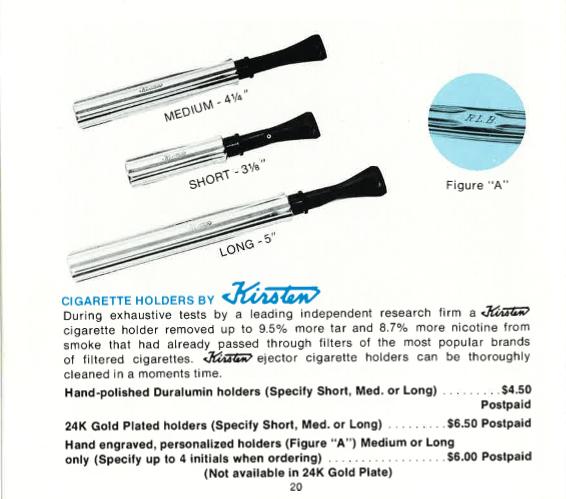
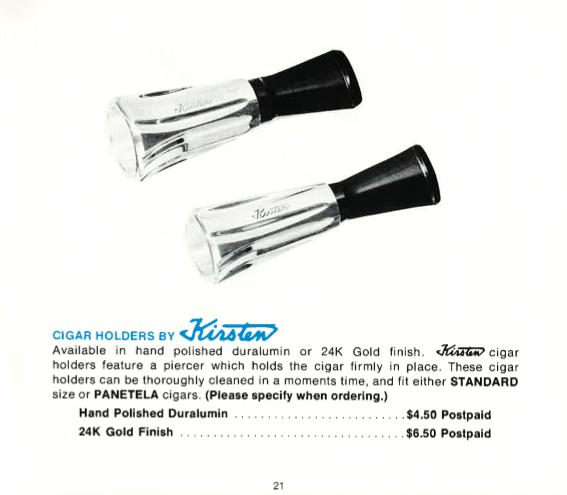
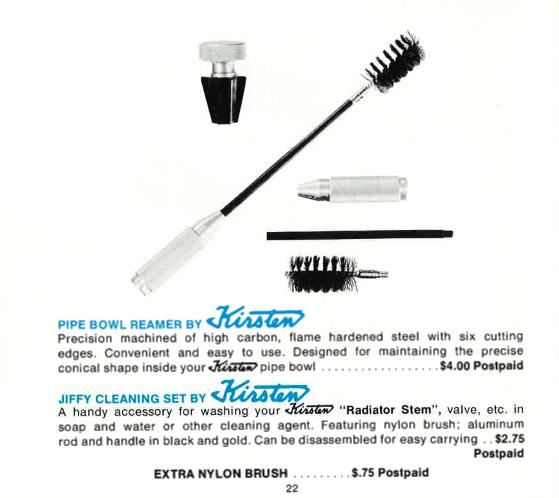
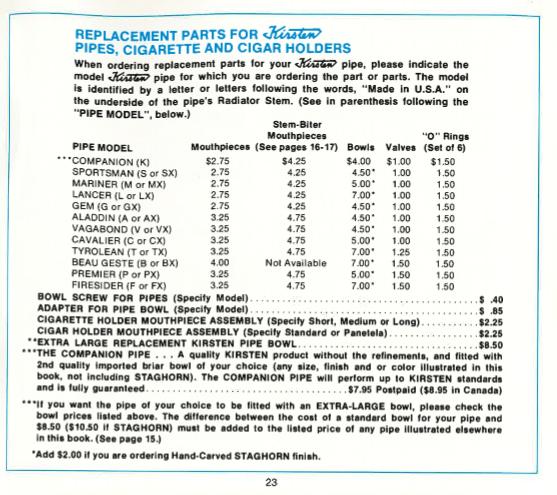
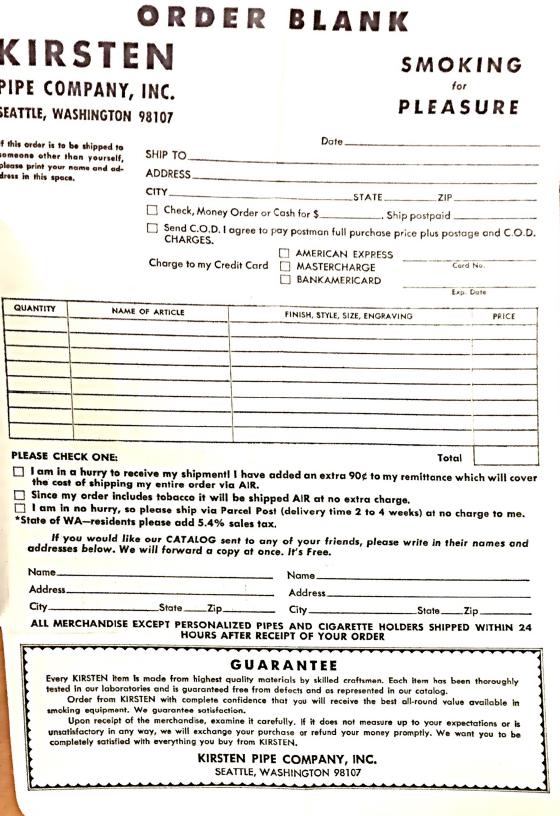
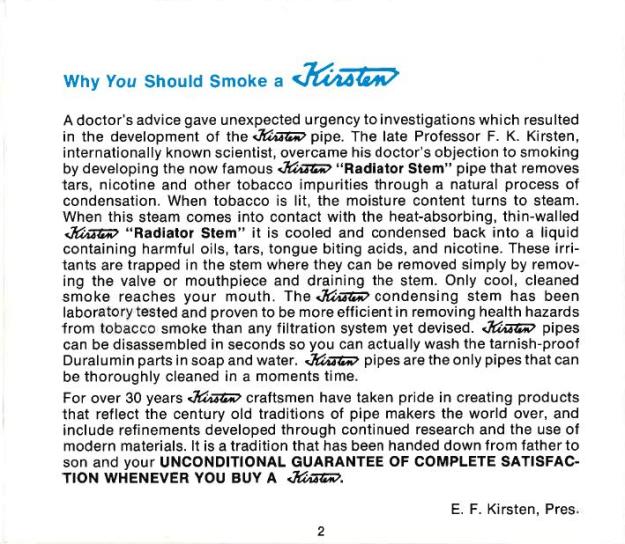
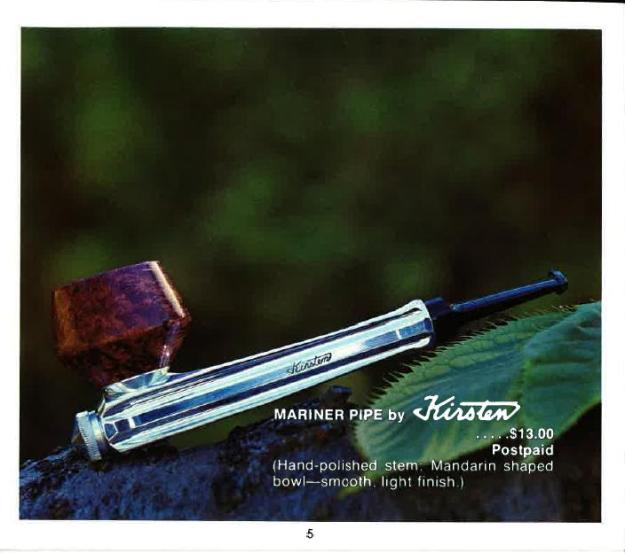
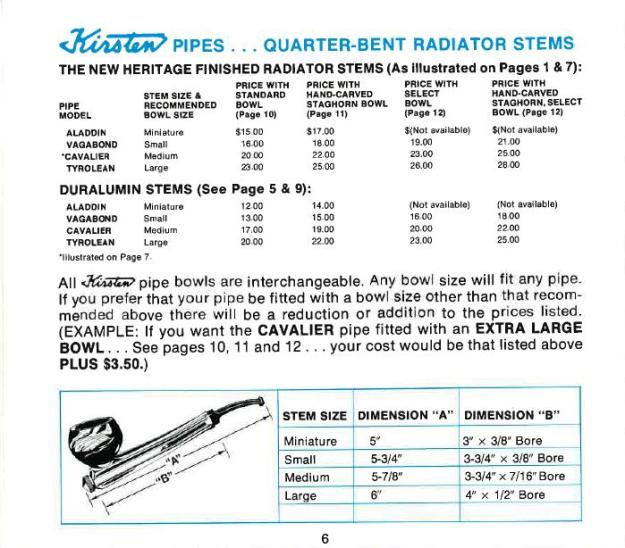
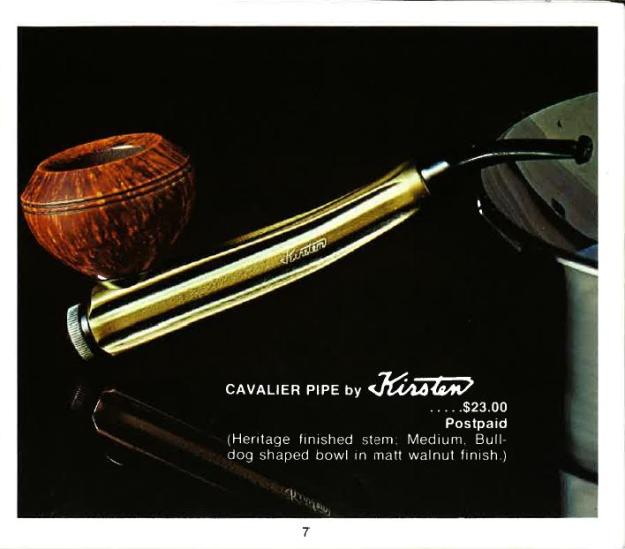
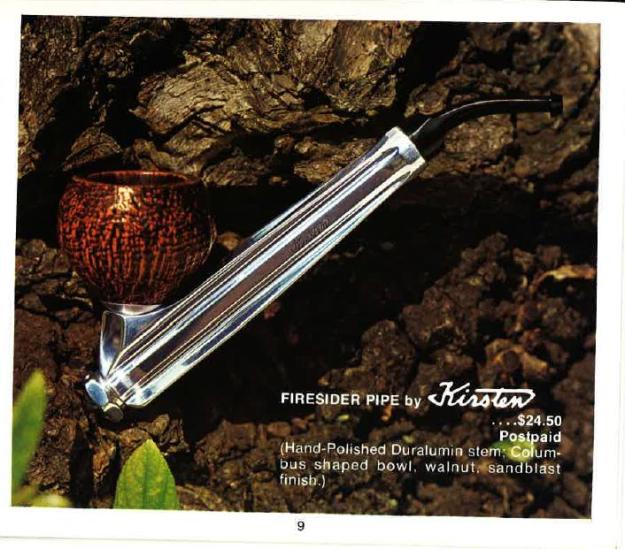
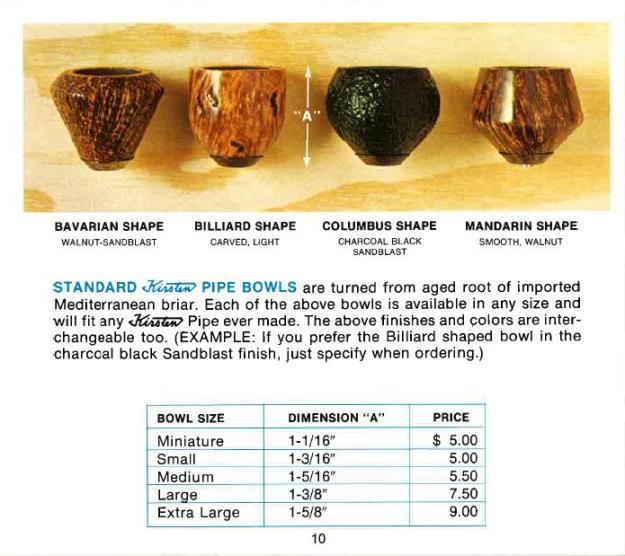
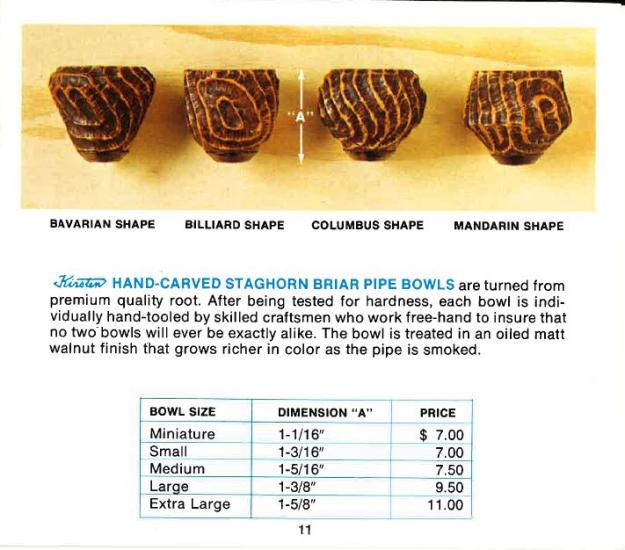
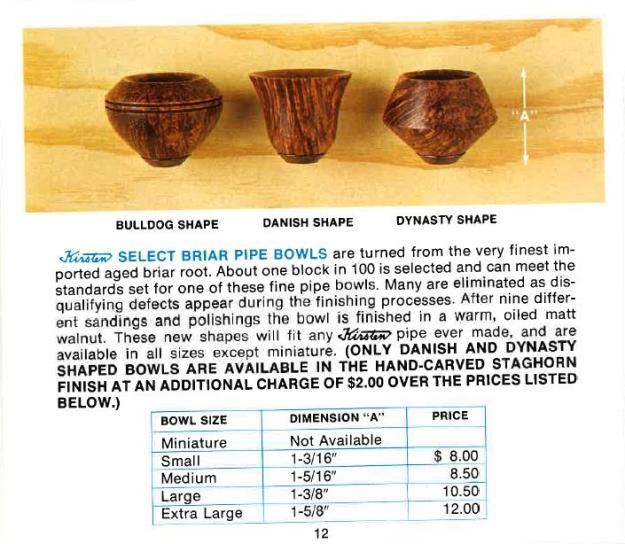
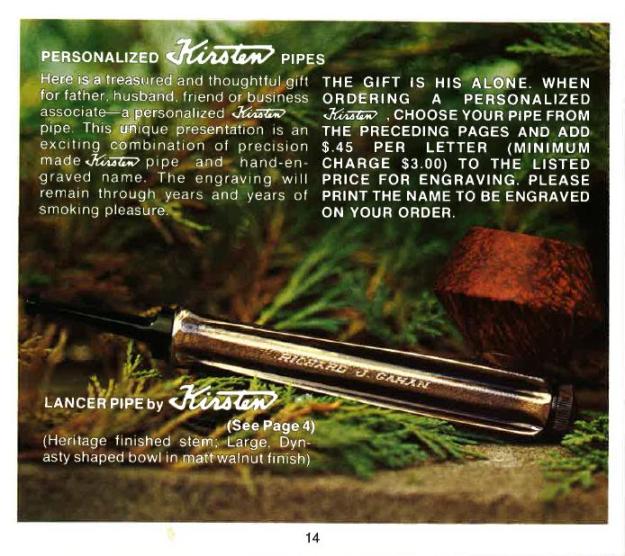
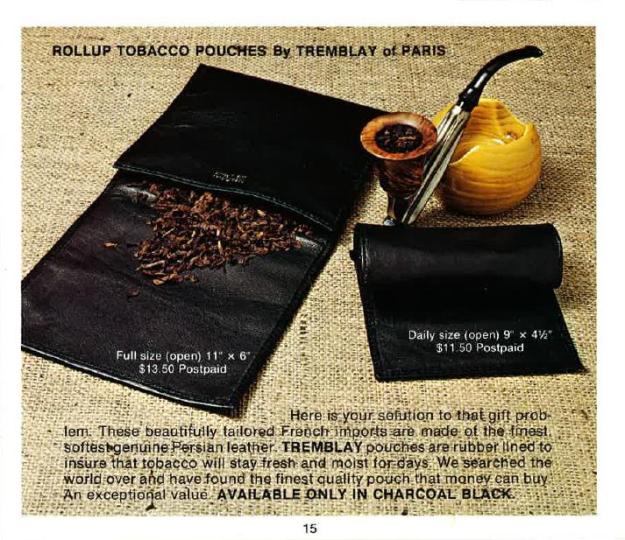
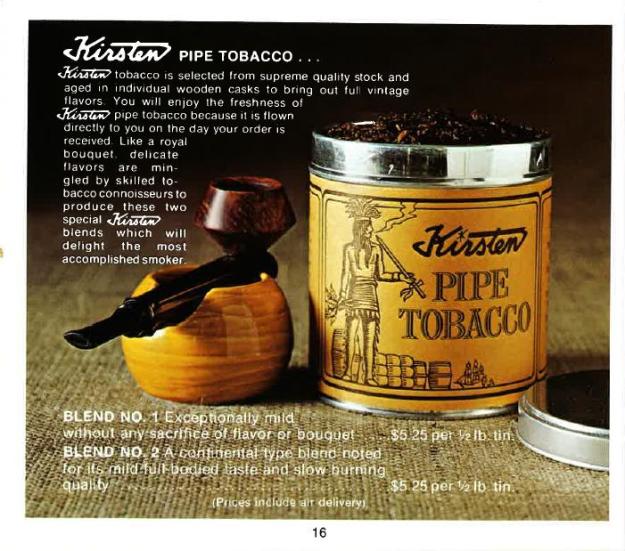
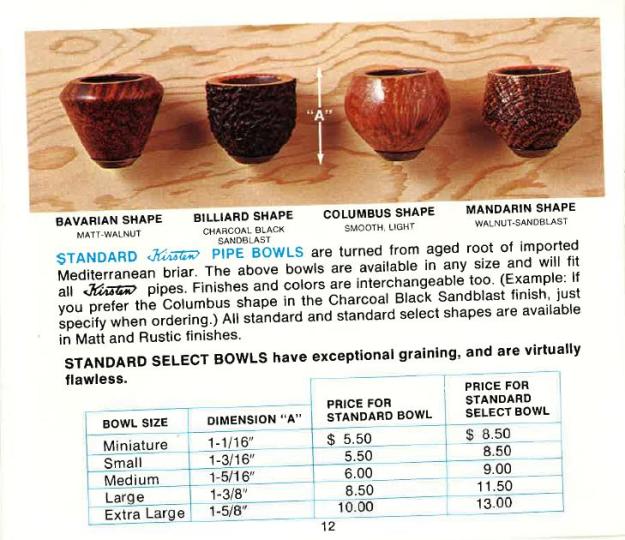
Since 1936 There’s Been No Match For a Kirsten – 1980s Era Catalog


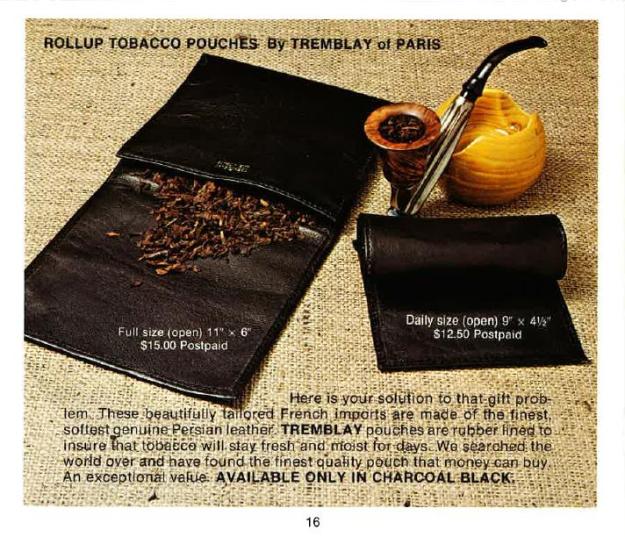
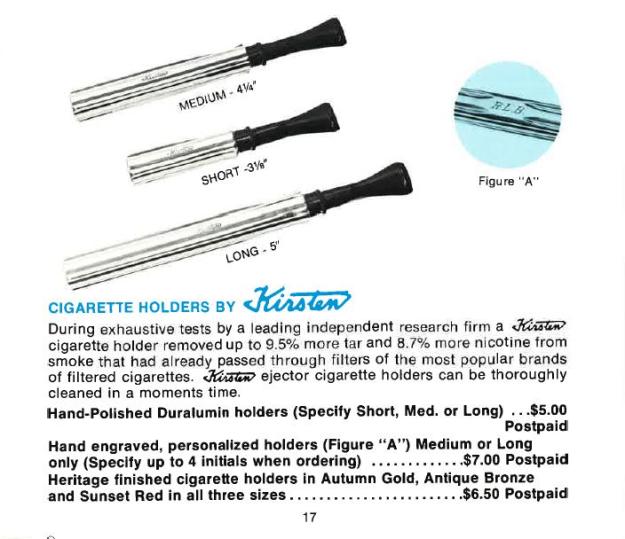
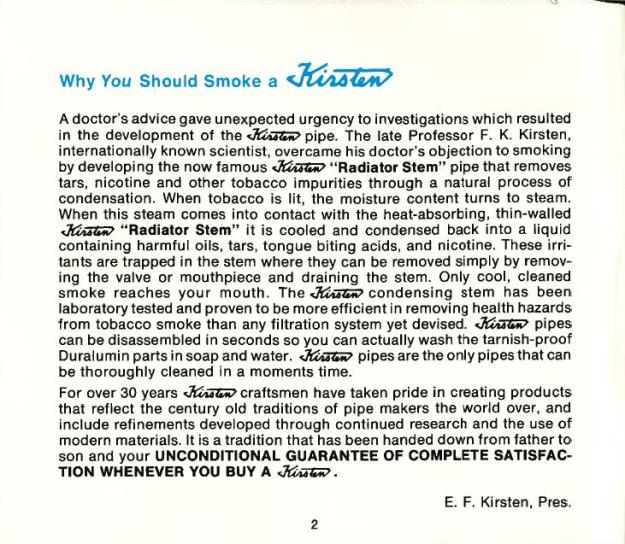
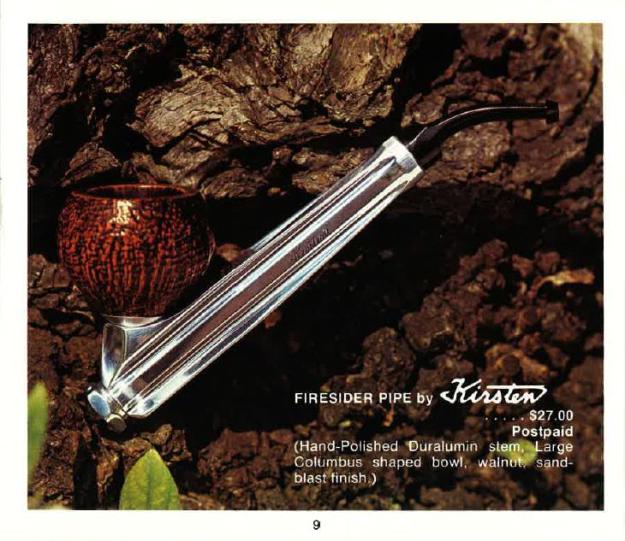
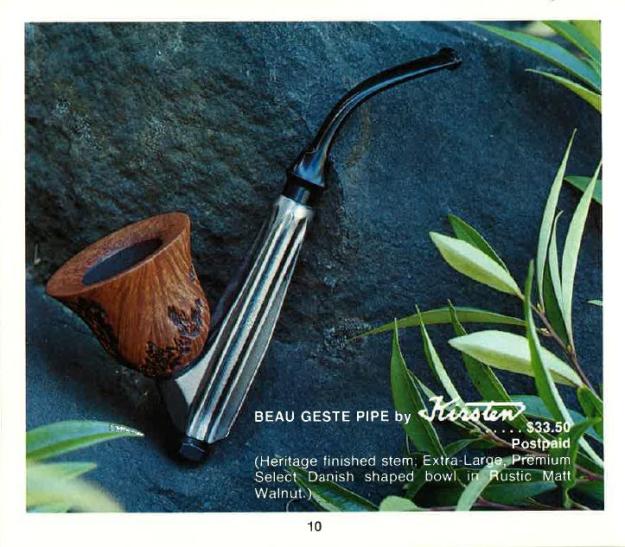
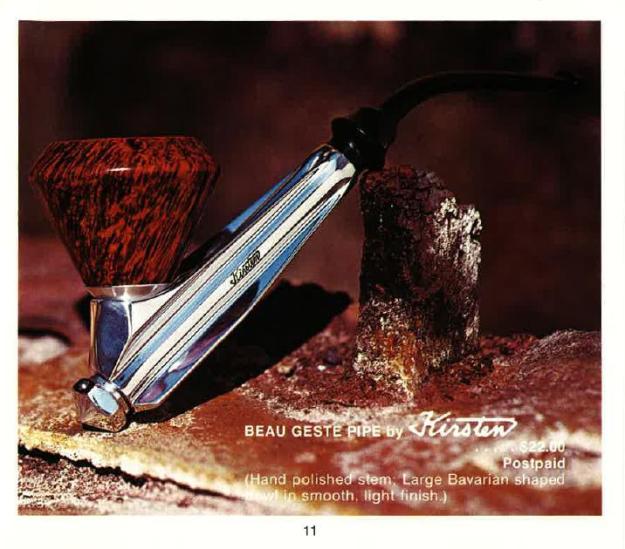
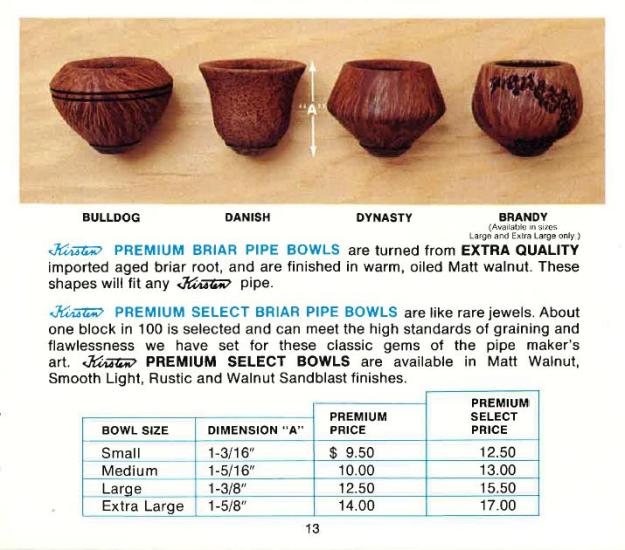
After all my recent post of Catalogues from the 70s I have been sharing them on the Facebook Metal Pipe Smokers Group. Samuel R. Vior who has written a blog here on rebornpipes in the past sent me some scans of some of his catalogues. The one that follows is recent one that he think came from the 80s as it is a booklet and the models are Designers stand up. Sam gave me permission to post these here. This is the first of them. It has some great historic information and photos that add to my Kirsten knowledge. I hope you enjoy it. Thanks Sam.

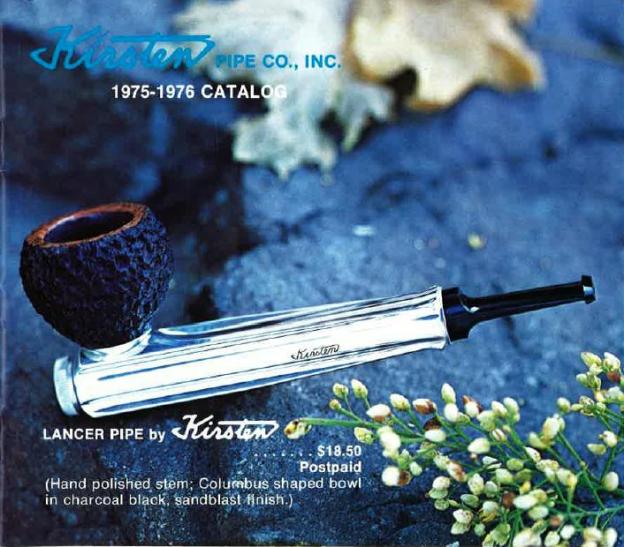
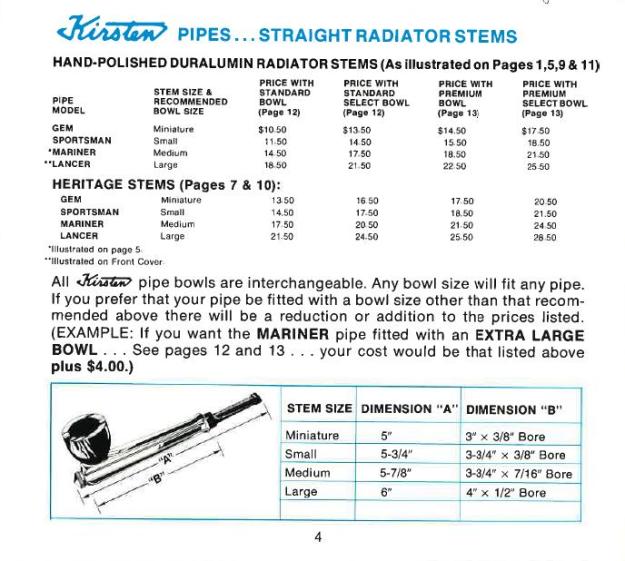
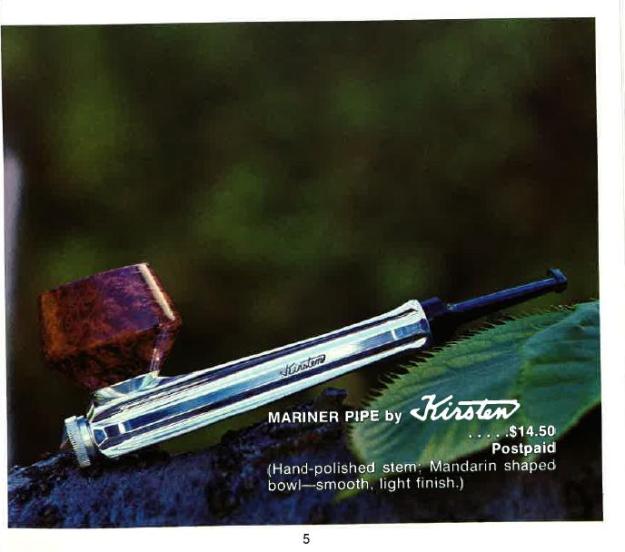
1975-1976 Kirsten Pipe Company Catalog


This is the last of the Kirsten Pipe Catalogs that I received. It is from 1975-1976. Once again enjoy this blast from the past. It comes from the year I got married – 40+ years ago now. I remember I picked up my first Kirsten not long after that time. There is something about the design that intrigues me so I really like reading the old pieces of literature from the company.

1976-1977 Kirsten Pipe Company Catalog


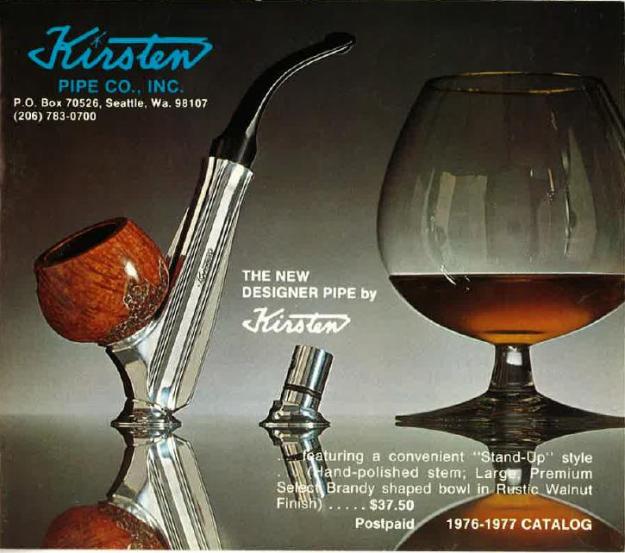
This is the third of the catalogues that I received with the recent Kirsten purchase. Once again there are a lot of similarities to the previous catalogues I posted but notice the price increase and the changes in the style of some of the pipes. I enjoy reading these older documents for nostalgic reasons but also to learn the changes in a brand over time. Enjoy.

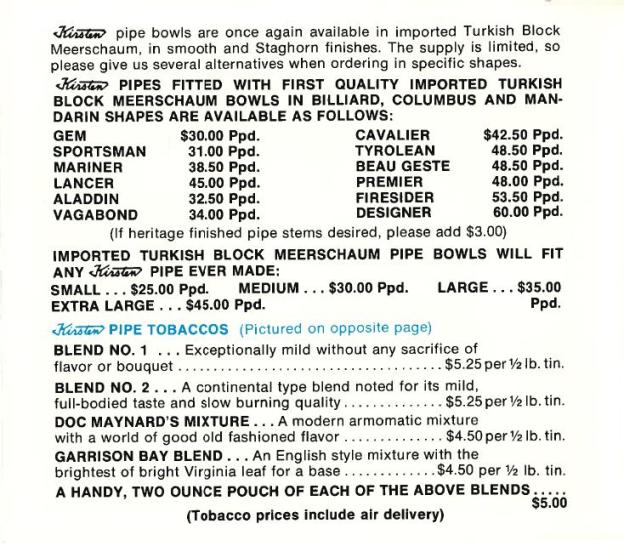
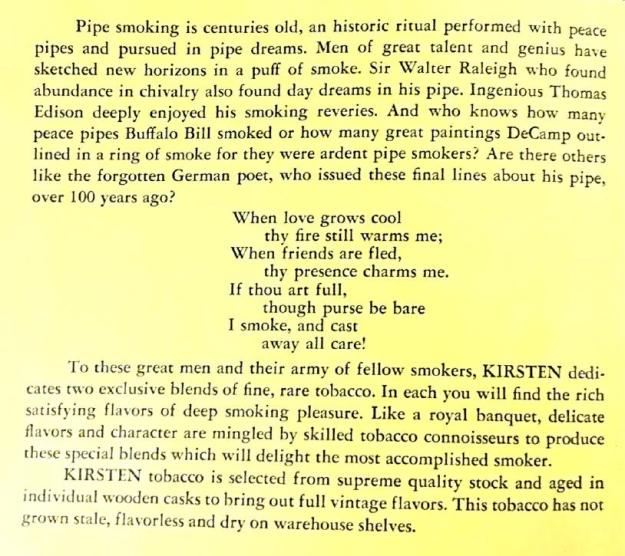
This catalogue also included an insert on their meerschaum bowls and tobaccos. It differs from the previous one slightly.76meer176meer276meer376meer4

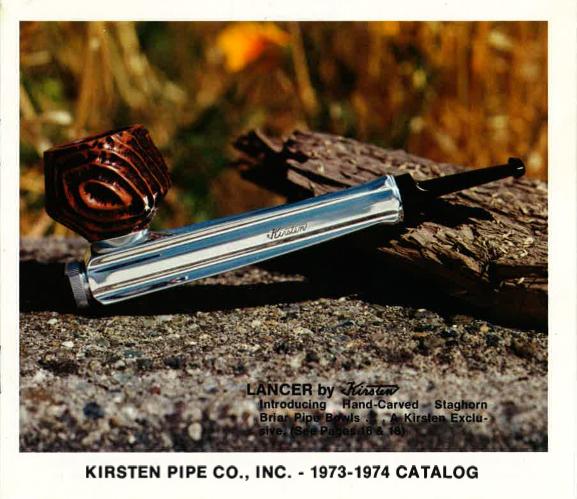
1973-1974 Kirsten Pipe Company Catalog


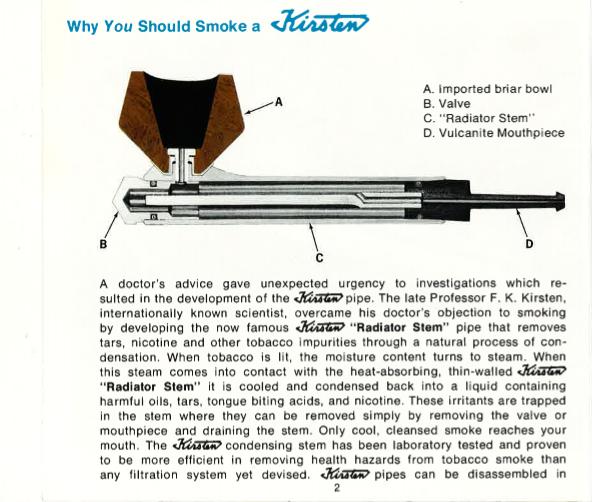
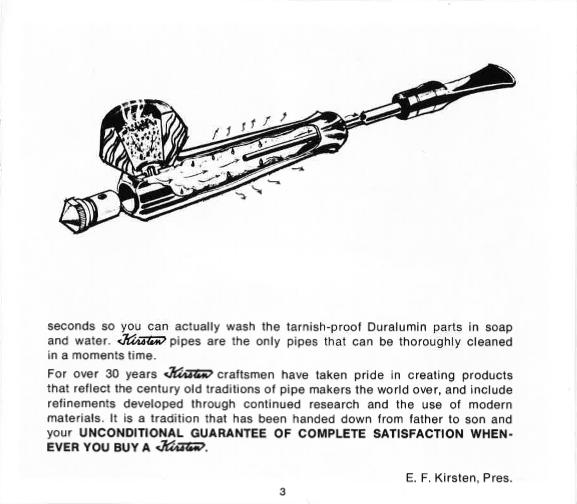
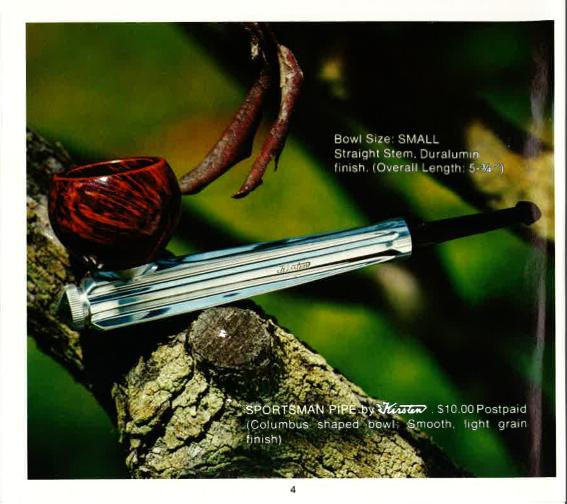
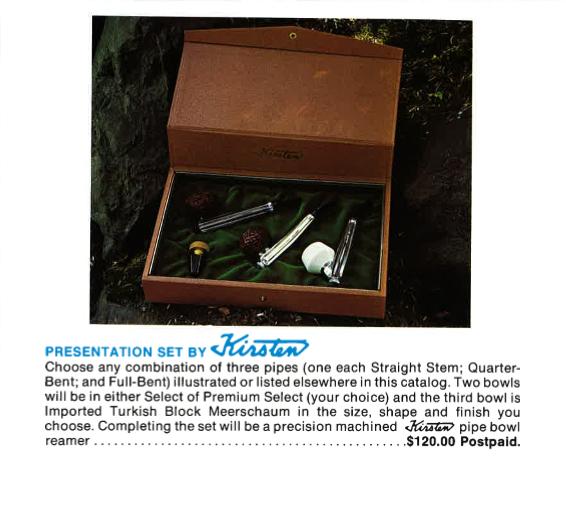
This is the second of the Kirsten Pipe Company Catalogues. While there are some similarities between the first one I posted and this one notice the subtle changes in colour, in bowl shapes offered and of course in prices. I have two more catalogues to scan from the years that follow and I find this kind of thing fascinating to read. If you are like me in this then enjoy! Inserted in the cover was a Kirsten Meerschaum bowl and pipe leaflet as well as advertisement for a boxed set of pipes.

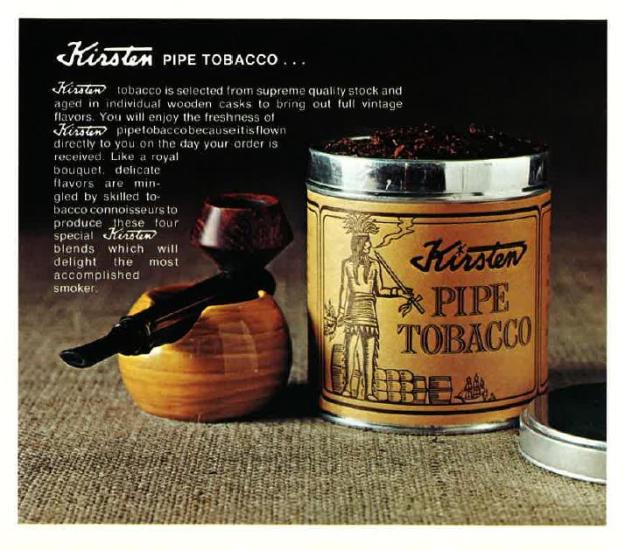
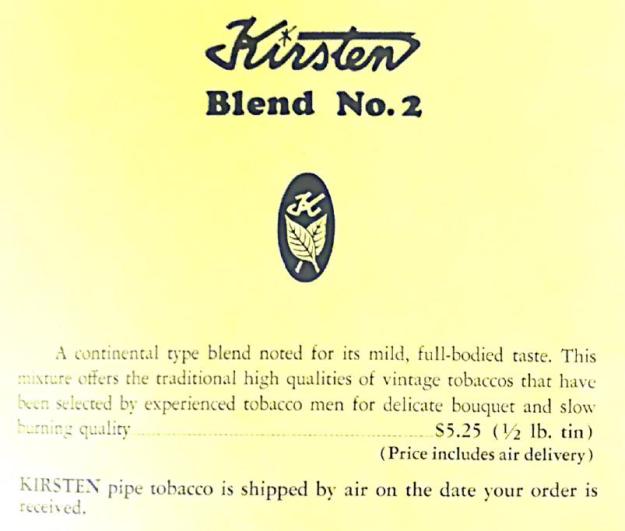
1974-1975 Kirsten Pipe Tobacco Flyer


This flyer came to me in the lot of Kirsten pipes that I purchased recently. I find these old flyers fun to read and get a flavour of the marketing and also of the prices and items available in days gone by. Enjoy the read.


1974-1975 Kirsten Pipe Company Catalog


I received an email while I was traveling to my mom’s 90th birthday from a reader who was selling 6 Kirsten pipes and wanted to know if I was interested in buying them. He sent a photo and to my surprise they included not only the pipe but some parts, boxes, extra bowls and some catalogs. This is the first of them – a 1974-1975 Catalog. I thought you all might be interested in having a look.


Checkered History and Heritage of an East German Howal Old Briar Rustified Dublin


Blog by Dal Stanton

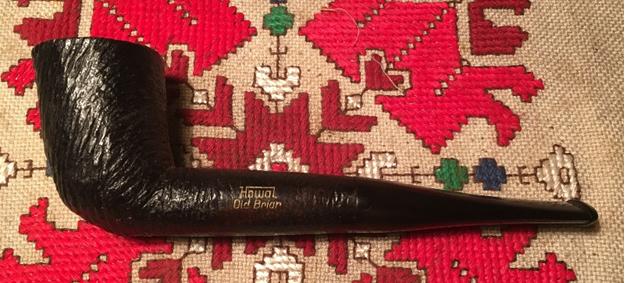
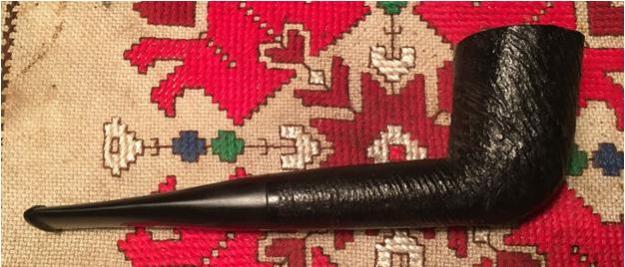
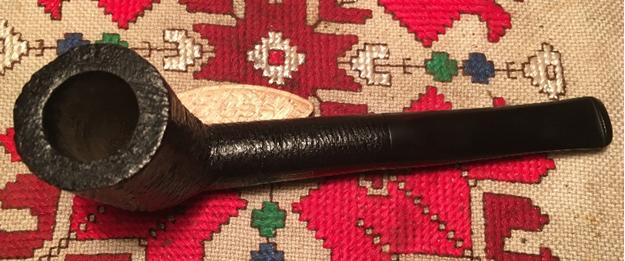
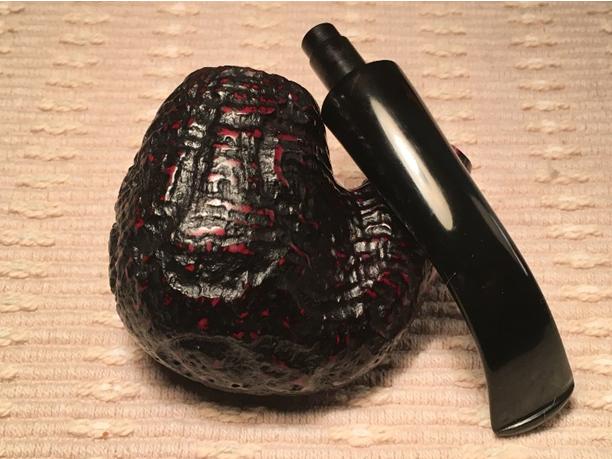
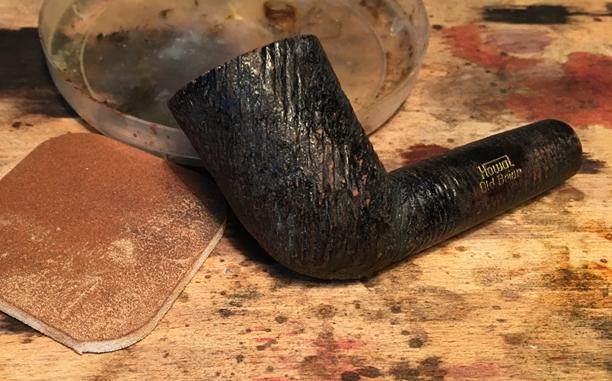
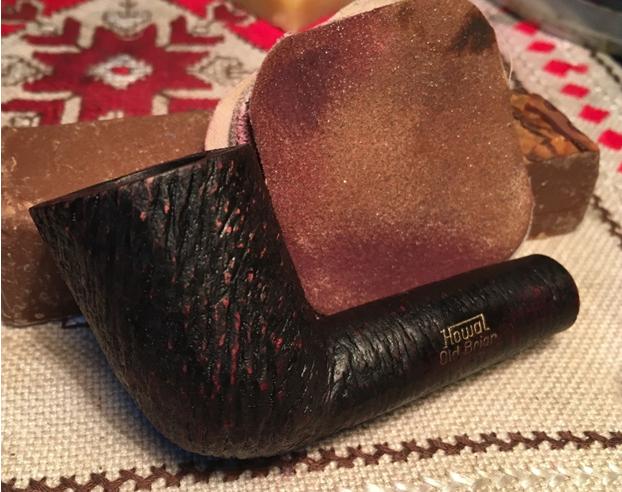
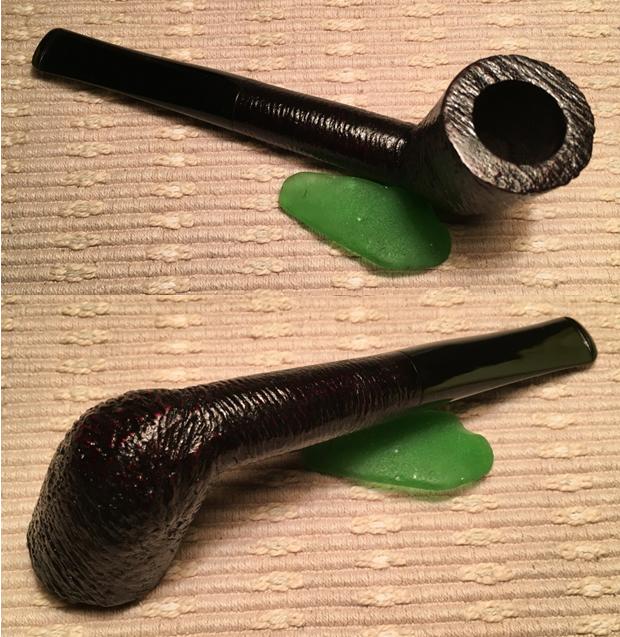
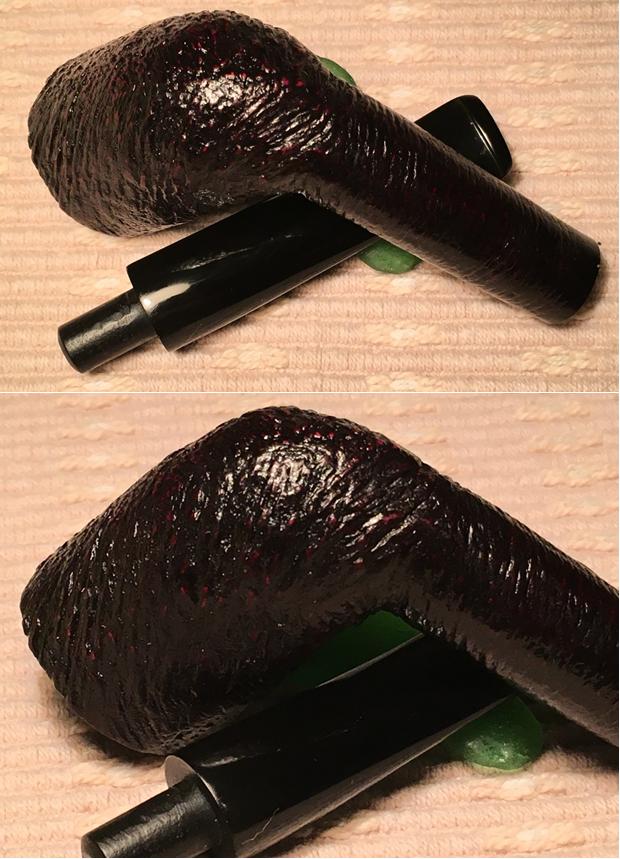
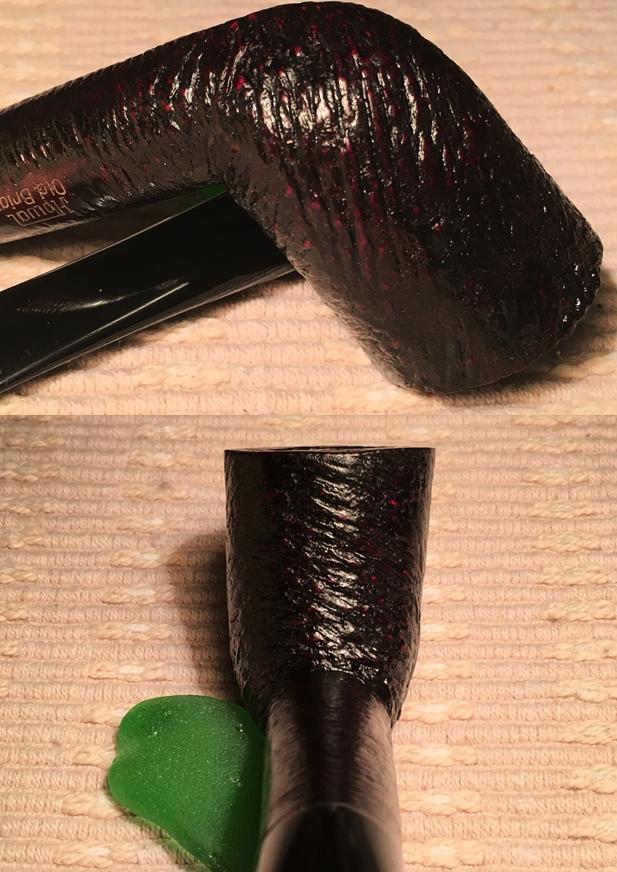
Finally, a ‘simple’ clean up!  Or, so I hope.  The Howal has been in my ‘Help Me!’ basket for some time.  I bought him from a vendor in an antique market, in the shadow of Nevski Cathedral in downtown Sofia, Bulgaria.  It was from the same young man I purchased, out of his bag of pipe parts, an orphaned stummel which became my maiden restoration project published on Reborn Pipes.  I titled it, A Newbie Restore of a Dr. Plumb 9456 Oom Paul – only it wasn’t an Oom Paul.  Al Jones’ (aka, Upshallfan) comment to my first blog observed correctly: “the 9456 is a classic GBD shape, although it is considered to be a Bent Billiard (rather than a Oom-Paul).”  I’m thankful for much ‘newbie’ grace I have received!  Though, the pipe’s name is still Chicho Pavel, Bulgarian for Uncle Paul!  He continues to be a favorite in my rotation and a special friend.  The Howal (over Old Briar) Rustified Dublin now before me is of interest to me partly because of its origins.  The pictures from my work table give an overview of the pipe itself.howal1 howal2 howal3 howal4 howal5 howal6The Howal name is of interest to me because it originated from behind the former ‘Iron Curtain’ in East Germany during a geopolitical climate rife with change and human tragedy.  My wife and I have spent over two decades living behind what was formerly the Iron Curtain and this is the second Howal I’ve found in the same Antique Market here in Bulgaria.  The question that comes to my mind is whether Howals are more commonly found in Eastern Europe where perhaps, they were circulated under the old USSR in an enforced socialist, command economy?  Pipedia’s article was both interesting and helpful in understanding the predecessor of and origins of the Howal name:
C.S. Reich howal7was founded by Carl Sebastian Reich in Schweina, Germany in 1887. By its 50th jubilee in 1937 C.S. Reich was the biggest pipe factory in Germany.  In 1952, however, the owners of the company were imprisoned and the company itself was nationalized as Howal, an abbreviation of the German words for “wood products Liebenstein” or “Holzwaren Liebenstein”.  By the 1970’s Howal, after acquiring many other smaller pipe making firms, was the sole maker of smoking pipes in East Germany. In 1990, with the fall of the Berlin Wall and reunification of the Germanys, the company was closed.

While helpful for a broad sweep, I discovered much missing from this summary and it raises more questions.  From another interesting source, Edith Raddatz’s lecture on tobacco pipe production in Schweina at the Tobacco Pipe Symposium in 2003, it describes a history of pipe production in this central German village that was reminiscent of my research into France’s pipe mecca, St. Claude.  A strong development of the pipe making industry can be traced in the 1800s to the apex of the C.S. Reich Co. being Germany’s largest pipe producer in 1937, but Raddatz’s lecture reveals that other producers of pipes were also based in the German village of Schweina.  Pipedia’s article above describes how the owners of the C.S. Reich Co. were arrested and imprisoned followed by the nationalization of the Reich Co. and becoming ‘Howal’, an acronym for “Wood Products Liebenstein” – Bad Liebenstein was the town that bordered and absorbed the village of Schweina. The question begs to be asked – which, unfortunately introduces the human tragedy wrapped around the name ‘Howal’ – Why were the owners arrested?  In an unlikely source, the website of the ‘Small Tools Museum’ adds the names of those imprisoned: shareholders Robert Hergert and Karl Reich.

Edith Raddatz’s lecture (referenced above) brings more light to the difficult geopolitical realities these people faced (Google translated from German – brackets my clarifications):

By 1945 the company, which had meanwhile [passed to] the next generation – Kurt Reich And Walter Malsch – [had] about 100 employees.   Among them were many women who mainly did the painting work.  At the beginning of the 1950s, an era ended in Schweina. The first [oldest] tobacco pipe factory in Schweina closed their doors. There were several reasons for this. Kurt Reich passed away in 1941, [and] Walter Malsch [in] 1954.  The political situation in the newly founded GDR made the conditions for private entrepreneurship difficult. The heirs of the company “AR Sons” [Reich family] partly moved to West Germany. The operation was nationalized and later toys were made there.

howal8In post WWII occupied Germany, the Soviet occupied section was declared to be a sovereign state and the German Democratic Republic (GDR) was established in 1949 (See link).  With a rudimentary understanding of Marxism and the economic philosophy undergirding it, it is not difficult to deduce what brought the demise of the C. S. Reich Co. and the formation of Howal.  Solidification of the FDR’s hold on power paralleled the necessity to nationalize private ownership and to institute a State-centered command economy.  These efforts gained momentum and forced companies/workers to work more with no additional pay.  In 1952, the year that the owners of C. S. Reich Co., were arrested, this edict was advanced (See link):

In July 1952 the second party conference of the Socialist Unity Party of Germany (SED) took place in East Berlin. In SED General Secretary Walter Ulbricht‘s words, there was to be the “systematic implementation of Socialism” (planmäßiger Aufbau des Sozialismus); it was decided that the process of  Sovietization should be intensified and the importance of the state expanded. The party was acting on demands made by Soviet premier Joseph Stalin.[2]

howal9As a result, Germany remembers the Uprising of 1953 which started in East Berlin, as factory workers revolted against the repression of the GDR, and spread to all East Germany.  Many lost their lives as Moscow responded to squelch the unrest with tanks on the streets.  In play also, was the mass exodus of people fleeing to West Germany, which included, per Edith Radditz’s lecture, the Reich family, who would have been heirs of the family’s legacy and company – pipe making.  Also in 1953, completing the State forced abolition of any Reich claim, the largest pipe making company of Germany was seized, nationalized, and changed from C. S. Reich Co. to Howal.  As ‘Howal’, pipes continued to be produced, undoubtedly with the same hands and sweat of the people of Schweina, along with other wooden products, such as toys.  In the Pipedia article I quoted above, it said:

By the 1970’s Howal, after acquiring many other smaller pipe making firms, was the sole maker of smoking pipes in East Germany. In 1990, with the fall of the Berlin Wall and reunification of the Germanys, the company was closed.

My curiosity piqued, what does it mean when it says that Howal acquired many other smaller pipe making firms?  Should we question whether these words can be understood in the normal free market enterprise way we are accustomed?  Doubtful.

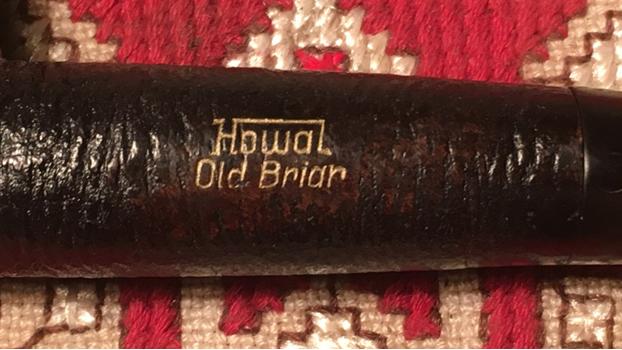
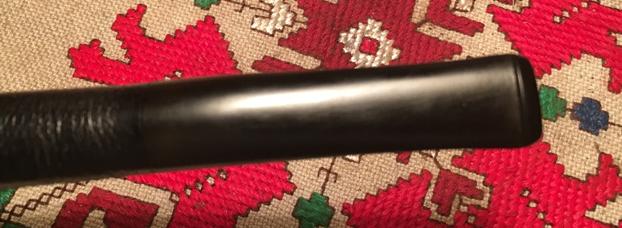
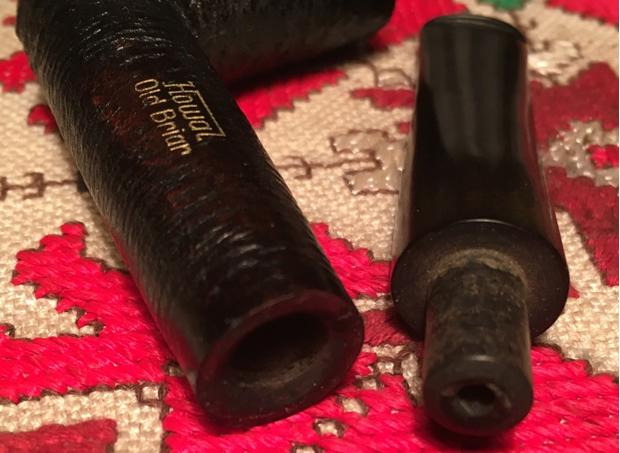
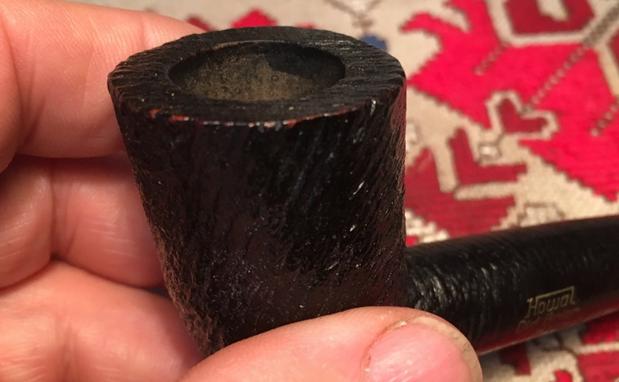
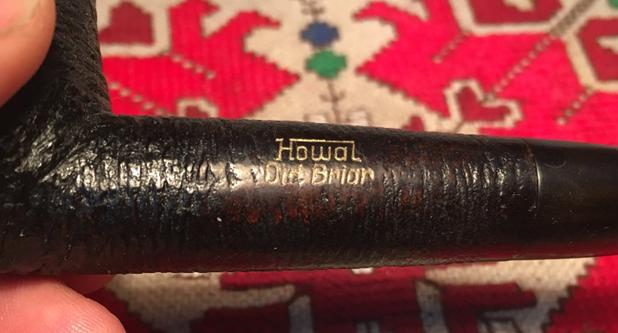
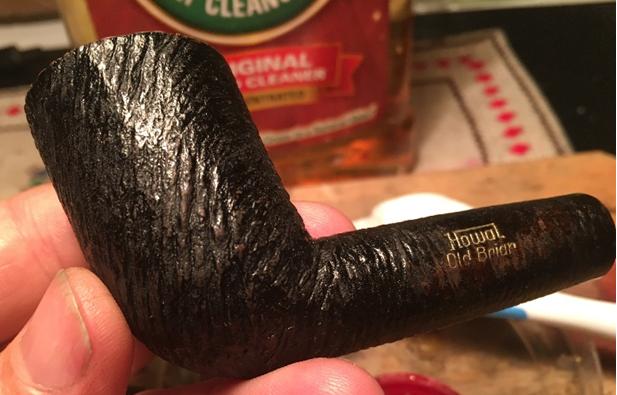
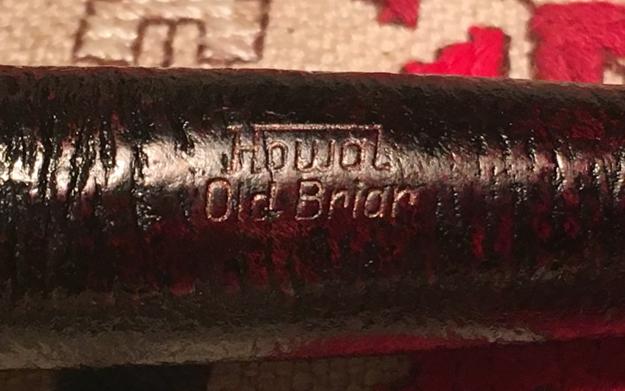
As I now look at this Howal before me, it is with a greater connection to its checkered past, the people of Germany’s pipe making heritage, and specifically, to the hands that drilled, shaped and finished the pipe.  The possible dating of this Howal spans from 1953 to 1990, when the Howal factory was closed for good with the fall of the Berlin Wall and the old USSR (See link).  The Howal markings on the left side of the shank are in very good shape.  The rustification is very attractive in the Dublin style – definitely an ‘olde world’ feel.  There are some marks on the rim.  The bowl is totally free of cake – someone did some clean-up work before coming to me.  The dark color of the stummel appears to be paint or a black stain – I can see brown around the nomenclature on the shank.  I will clean the stummel with Murphy’s and see what happens.  There is no oxidation on the stem nor teeth chatter or dents.  So, could this Howal be only a simple cleaning and freshening?

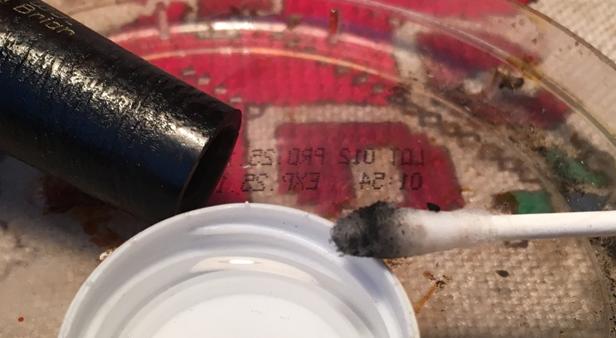
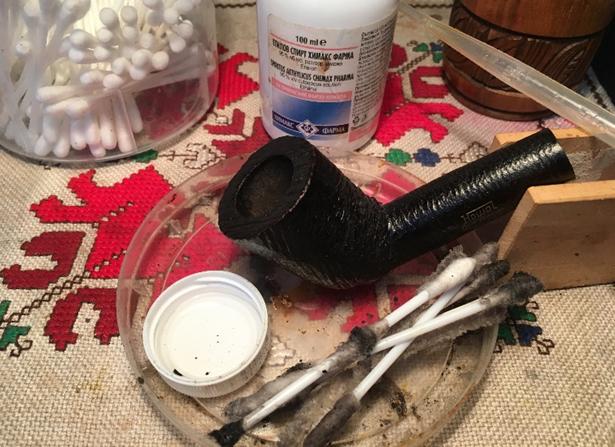
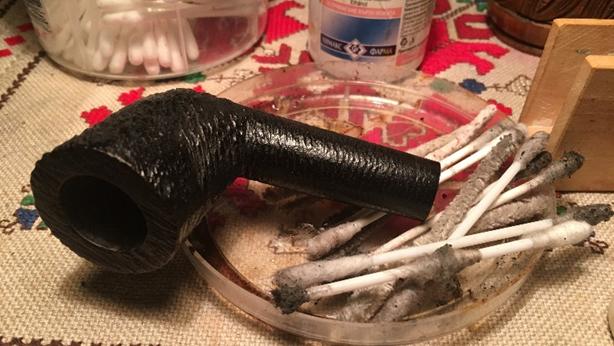
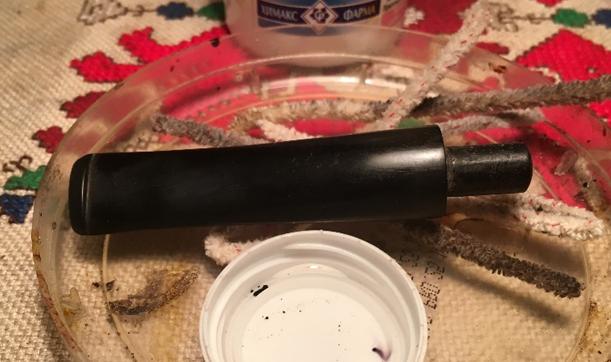
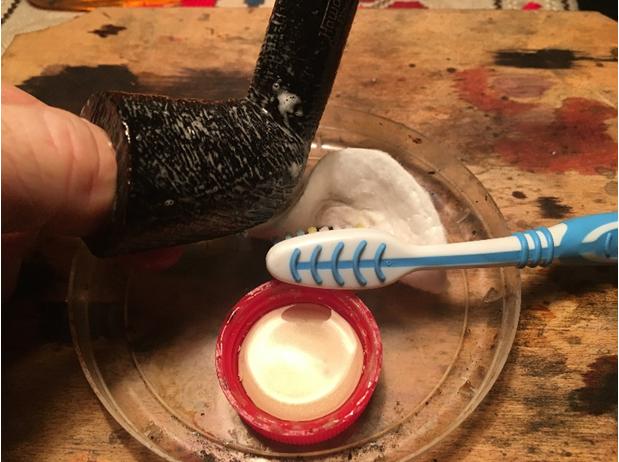
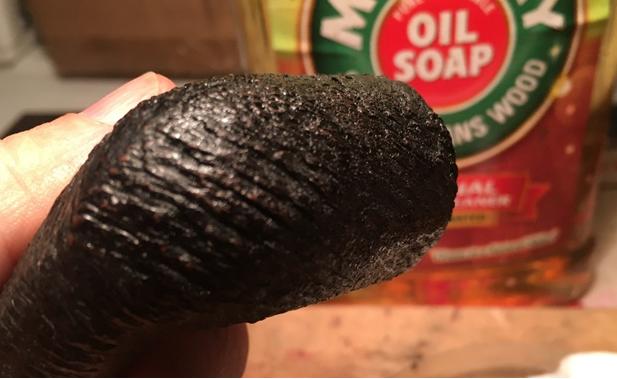
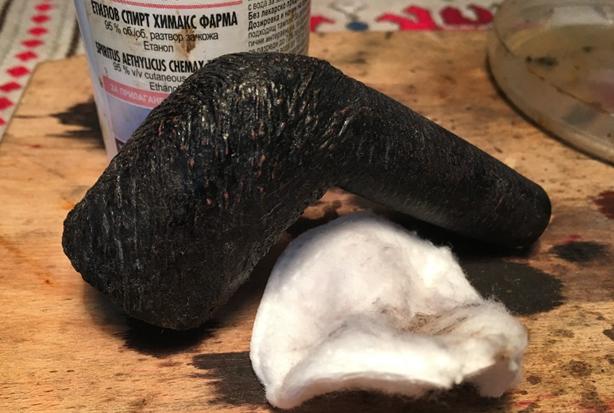
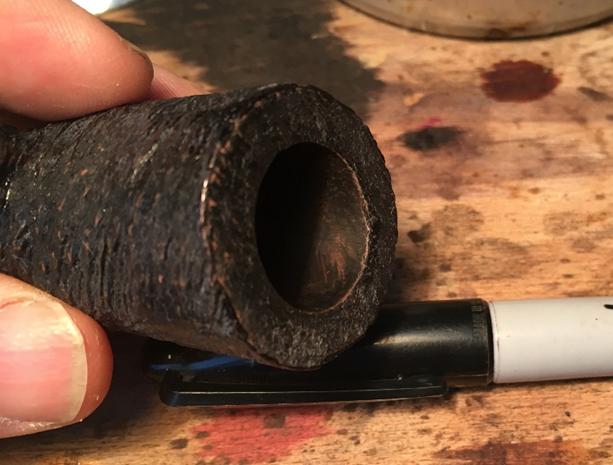
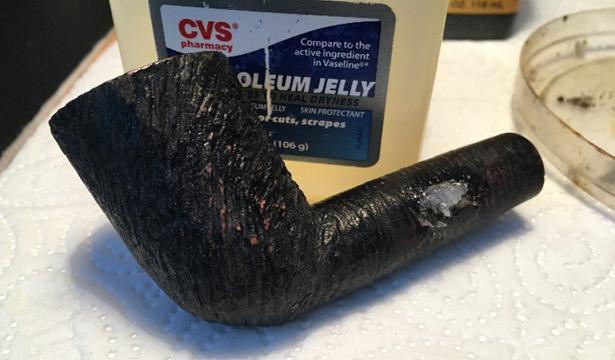
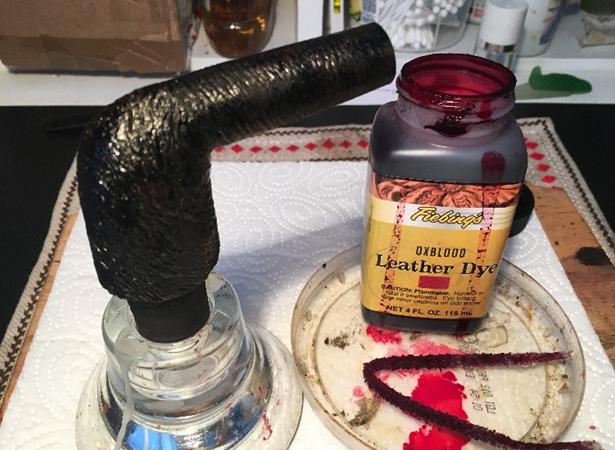
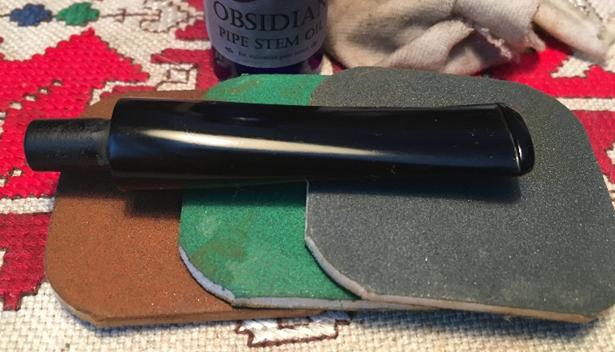
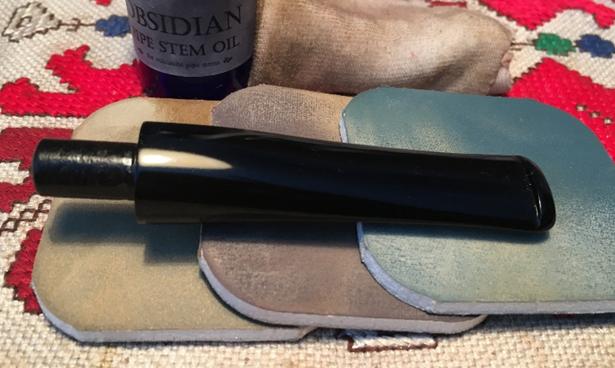
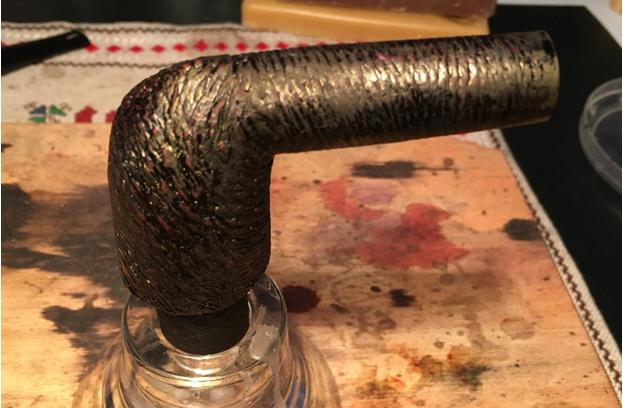
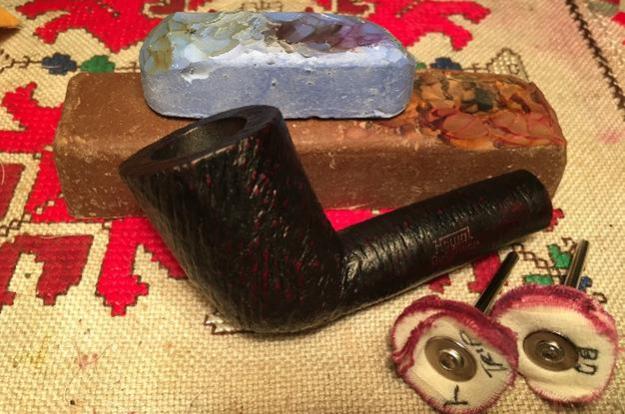
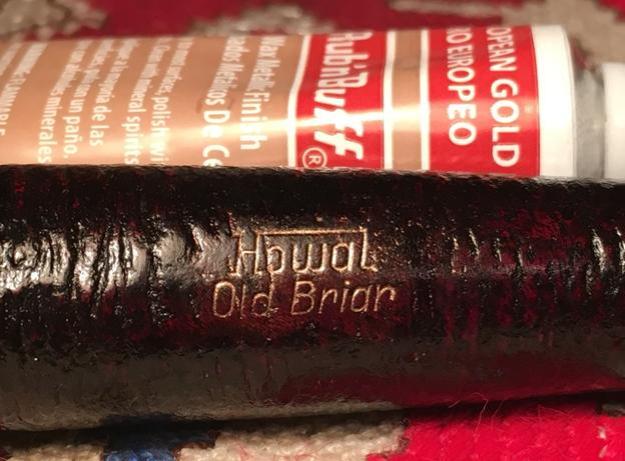
I start by taking a picture of the rim and markings to take a closer look at areas of question.  Then using Q-tips and pipe cleaners with isopropyl 95% I start cleaning the stummel internals.  After only one plunge of a Q-tip, I see that the mortise is full of the black finish that is also on the external surface.  I find no tobacco gunk in the mortise, only black dye – or whatever it is.  After several Q-tips and some pipe cleaners, I decide simple to fill the mortise with isopropyl and let it soak for a few hours.  This did the trick.  After pouring off the dirty isopropyl the Q-tips, after the soak, started coming out clean very quickly.  Stummel done.  The stem required very little effort.  The pictures show the progress.howal10 howal11 howal12 howal13 howal14 howal15I take undiluted Murphy’s Oil Soap and scrub the stummel surface with cotton pads and a bristled brush. I want to test the finish to see how solid it is as well as clean the grime out of the rustification ridges.  After a good scrub, I rinse the soap of the stummel with tap water, careful not to allow water inside. howal16After drying, I have two impressions of the black finish.  First, the splotched glossy areas left over from the Murphy’s scrub remind me of the acrylic finishes that I’ve seen on smooth briars.  Secondly, the finish now is speckled where the briar is coming through.  Decision time.  A plan starts formulating in my mind.  I like the rustification of the Howal Dublin and I very much like the feel of the Dublin in my hand – it has a good ‘meditation’ appeal, which is a good quality for a pipe J.  Yet, truth be known, I’m not a fan of the black finish.  To me it is plain and stark – it lacks depth and interplay with the tight, crisp rustification patterns.   I decide to continue scrubbing the surface with Murphy’s Soap to remove the remaining glossy spots but to leave the black hue in place.  After Murphy’s, I use some isopropyl 95% with a cotton pad and work on the glossy areas.  While not 100% gloss free, the last picture shows sufficient progress.  I will give more thought to the plan at this point.  The pictures tell the story.howal17 howal18 howal19With a night of rest now fueling the thoughts, I decide to use the dark stain on the stummel as a back coat for a subtle Oxblood over-coat.  My goal is to create more depth in the rustification by introducing another hue.  I begin preparation of the stummel by very lightly sanding the top peaks of the rustification ridges with a 1500 grade micromesh pad.  I do this to create entry points for the new dye in raw briar opened by the sanding.  I’m thinking of the restoration I did with the classic rustified Lorenzo Rialto for the basic approach I’m now employing.  I want the surface to be clean so I follow the sanding by wiping the surface with a cotton pad and isopropyl 95%. I use a black Sharpie pen to darken the worn ring of bare briar around the rim of the Dublin for better blending.  I included a picture of the Lorenzo Rialto to get an idea of where I’m hopefully heading!howal20 howal21 howal22 howal23In preparation to apply the stain, I cover the Howal gold lettering stamping with a bit of Petroleum Jelly to protect it. Using my wife’s hair dryer, I warm the stummel to open the briar to the new dye. Using a cork inserted in the bowl as a handle, I liberally apply Fiebing’s Oxblood Leather Dye to the surface of the stummel with a doubled pipe cleaner – careful to cover the entire stummel and rim.  After the initial application, I fire the aniline dye and the alcohol burns off quickly setting the hue in the briar.  After a few minutes, I repeat the process to assure an ample coverage and put the stummel aside to rest. The pictures show the progress.howal24 howal25With the newly dyed stummel resting, since the Howal’s stem came to me in good condition – no tooth chatter or dents, I start wet sanding the stem using micromesh pads 1500 to 2400.  I follow the wet sanding with an application of Obsidian Oil on the hungry vulcanite.  I then dry sand with micromesh pads 3200 to 4000 and then 6000 to 12000 – following each set with an application of Obsidian Oil.  The stem looks great – that newly polished vulcanite pop is very nice.  I put the stem aside to dry.  The pictures show the progress.howal26 howal27 howal28Time to ‘unwrap’ the fired, crusted Oxblood dye I applied to the dark stummel.  I mount a new felt polishing wheel on the Dremel and set the speed to the slowest setting and utilize the fine abrasion of Tripoli compound to take the crusted layer off.  Patiently, I move the wheel across the surface in a circular motion, allowing the RPMs of the Dremel and the compound to do the work – I apply little downward pressure on the briar.  As the results started to appear, I see the Oxblood speckling I was hoping to see, but not as much.  I decide to follow by lightly sanding the rustified surface with a 1500 micromesh pad.  This resulted in the direction I wanted to go, but I wanted the Oxblood hints, beginning to peek out, to be a few shades darker, richer.  Even though I had already put away the stain and cleaned up, I decide to repeat the staining as before – hopefully to realize the results I can envision in my mind.  The bottom picture in the set shows the stummel after the second staining with Frieberg’s Oxblood Leather Dye – not looking much different than before but simply to chronicle my procedure.  The first picture, after the Tripoli then after, the sanding show the developing motif with the Oxblood and the rustification. howal29 howal30 howal31After several hours, admittedly, I was a bit impatient to unwrap the fired crust the second time around.  In the time in between, I had some time to think about the next step. My usual approach is to use a felt polishing wheel with the application of Tripoli compound to smooth briars.  A felt wheel is flatter and firmer than a cotton cloth wheel and therefore, more abrasive than the cotton cloth wheel.  With use on a rustified surface, I’m thinking that the felt wheel might possibly ride more naturally on the peeks of the raised ridges and possible do its work unevenly – at least in theory.  My usual approach with the Dremel is to use a cotton cloth wheel when coming to the carnauba wax polishing stage.  I decide to mount a cotton cloth wheel for both compounds I employ, Tripoli and Blue Diamond, and see how it goes.  With the new cotton cloth wheel mounted on the Dremel, I’m ready to put theory into practice first with the Tripoli compound.  The only problem breaking in a new cotton cloth wheel is that loose fibers run amuck and I’m covered!  I continue to use the slowest speed the Dremel can offer for the compound.  After the Tripoli, again with a new cotton cloth wheel, I apply Blue Diamond compound.  I am truly amazed at the subtle Oxblood texturing that emerges – it is working!  I find that I spent more time with the Tripoli as the Tripoli was the abrasive that created the effects of the Oxblood speckles.  Where there were none or few Oxblood accents, I focused the Tripoli wheel at that area and the highlights would begin to appear.  With the Blue Diamond I spend much less time as it was shining what was already revealed not bringing out more.  I take a picture after the compound phase.howal32 After the compounds, I hand buff the stummel with a cotton cloth, not so much as to shine the stummel but to remove residue compound powders left over.  I do this before the application of carnauba wax, also with a cotton cloth wheel, but with the Dremel increased to number 2 of 5 (being the fastest).  After reuniting the stummel and stem, I give both several applications of carnauba wax.  The only difference in technique with the wax is that with a small, Dremel polishing wheel, I am able strategically to apply the wax so it doesn’t get gunked up in the ridges of the rustification.  I keep the wheel parallel with the grain and follow the ridges/valleys as I apply the carnauba.  With the compounds, you are still sanding and ‘taking off’ from the finish, even though it’s shining things.  With the wax, you’re not taking but leaving something behind – the wax has the purpose of polishing and protecting the finish. After applying the carnauba, I decide to do one more thing to recommission the rustified Dublin.  With Rub ‘n Buff European Gold Wax Metallic Finish, which I just acquired during my Christmas visit to the States, I spruced up the Howal nomenclature.  I applied the Rub ’n Buff with a pointed Q-tip and carefully wiped the excess.  After dried, again I spruced up the area with a few passes of the carnauba wax wheel.  A few pictures show the before and after.howal33 howal34To finish, I give the stummel and stem a rigorous hand buffing with a micromesh cloth to bring out and deepen the shine.

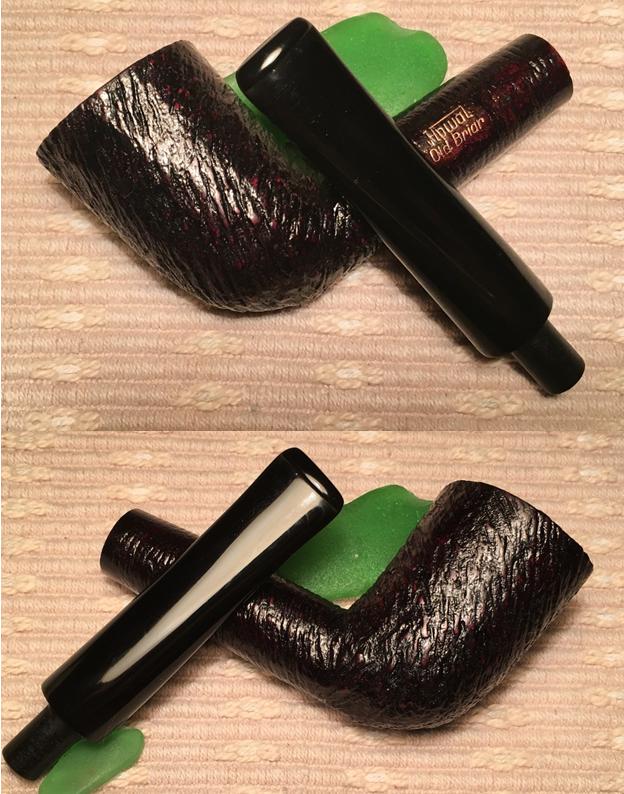
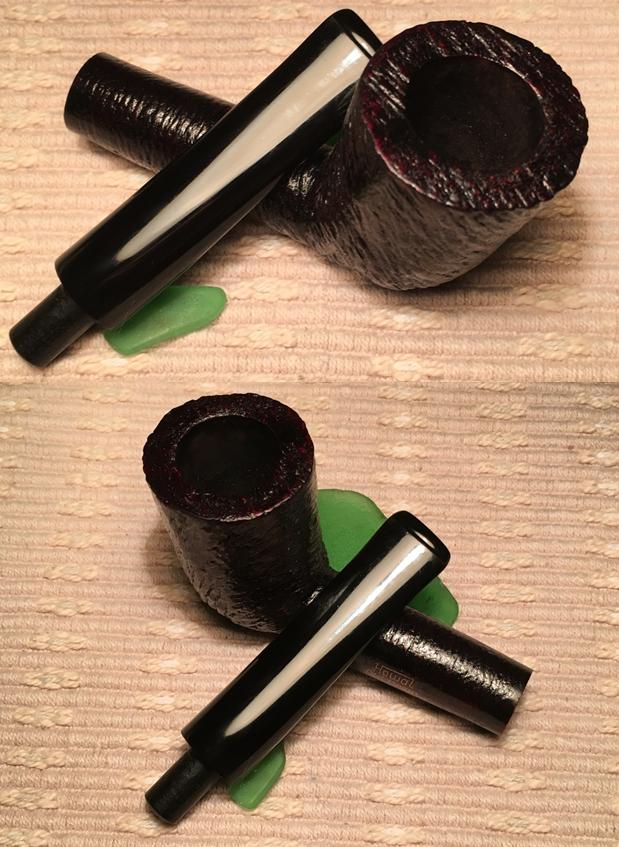
I have a deeper appreciation for the name this rustified Dublin carries.  Understanding the past helps us to stay rooted in the present.  I appreciate better the legacy of the Howal name and the journey of the Carl Sebastian Reich family beginning in Schweina, Germany in 1887.  I’m very pleased with the results of the Oxblood finish.  In the presentation pictures below, I had to take some unusually close shots to see the subtle Oxblood highlights hidden by the reflection of the light.  To me, the finish adds depth and texture to the attractive rustified Dublin.  If you would like to add this Howal Old Briar to your pipe collection and stories, see my blog at The Pipe Steward.  Thanks for joining me!howal35 howal36 howal37 howal38 howal39 howal40


A Sterling Hall Pamphlet


Blog by Steve Laug

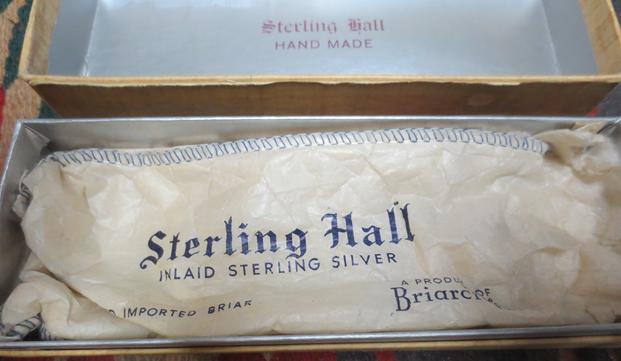
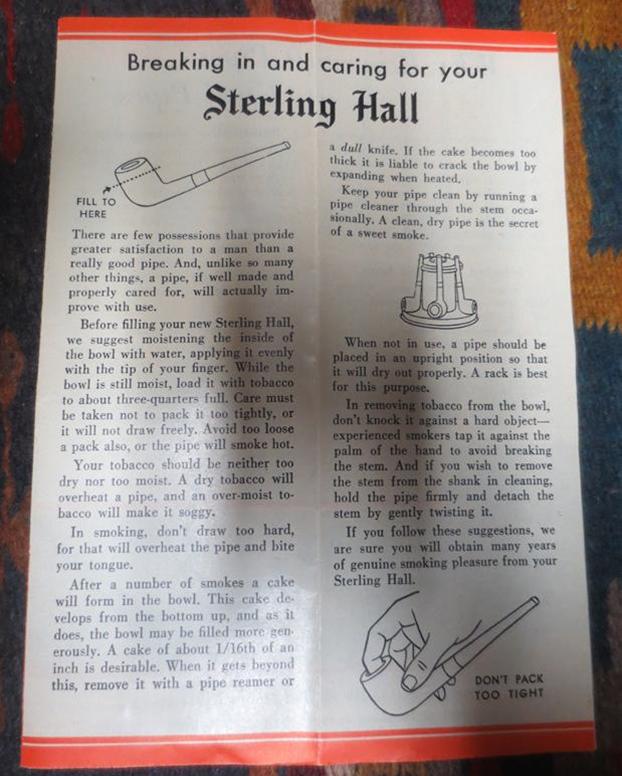
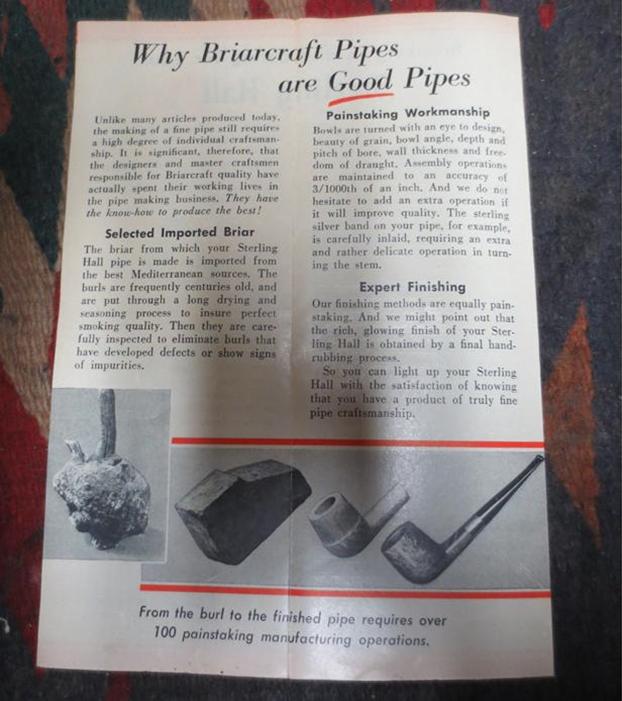
I included this in a blog that I just posted on a New Old Stock (NOS) WDC Wellington that my brother found (https://rebornpipes.com/2016/12/23/when-he-opened-the-sterling-hall-hand-made-pipe-box-i-did-not-see-what-i-expected/). It came in a cream coloured Sterling Hall Hand Made Pipe Box that had the Briarcraft B logo in a shield in the left corner over Aged Imported Briar Root in the lower left corner. In the lower right corner it read Inlaid Sterling Silver. On the silver coloured inside cover of the box it read Sterling Hall over Hand Made. In the bottom of the box was a pipe sock with the same stamping as the cover of the box other than it also read A Product of Briarcraft.

sh1 sh4

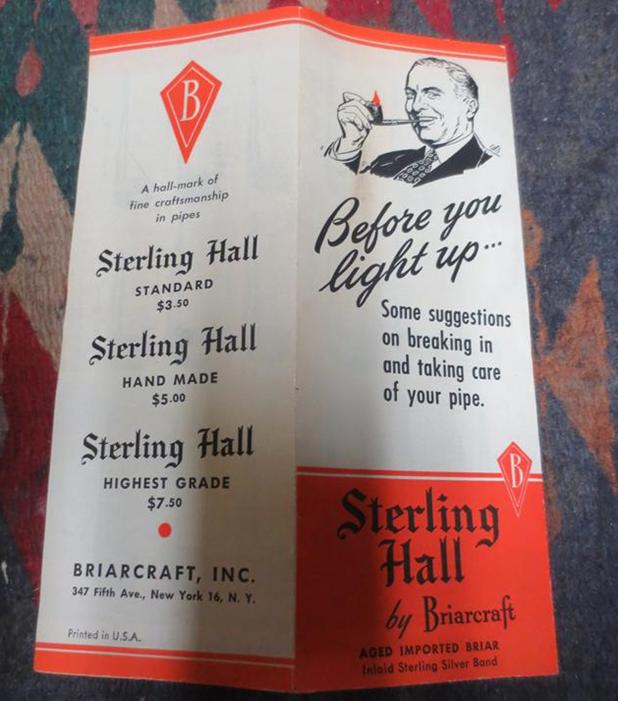
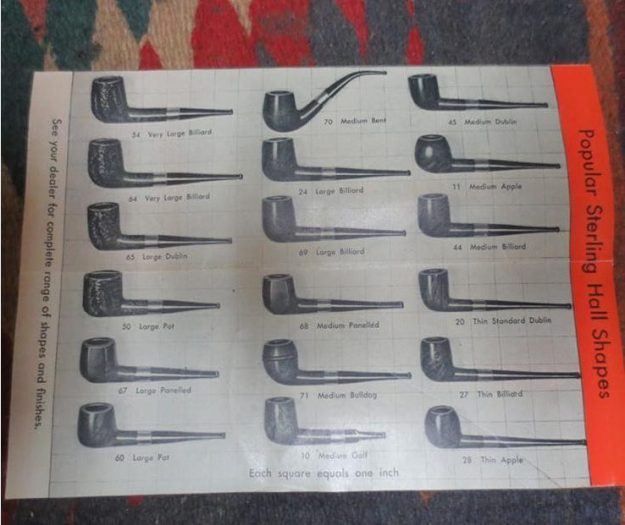
I took photos of the pamphlet that was included with the original Sterling Hall pipe. It gives directions on breaking in your new briar as well as a small shape chart in case you are tempted to order another pipe. It is a good read and I had to chuckle when I saw the prices. I wanted to share it with you all! Enjoy. sh7 sh8 sh9 sh10