Author Archives: rebornpipes

London Made Reject – Hand Made


Blog by Steve Laug

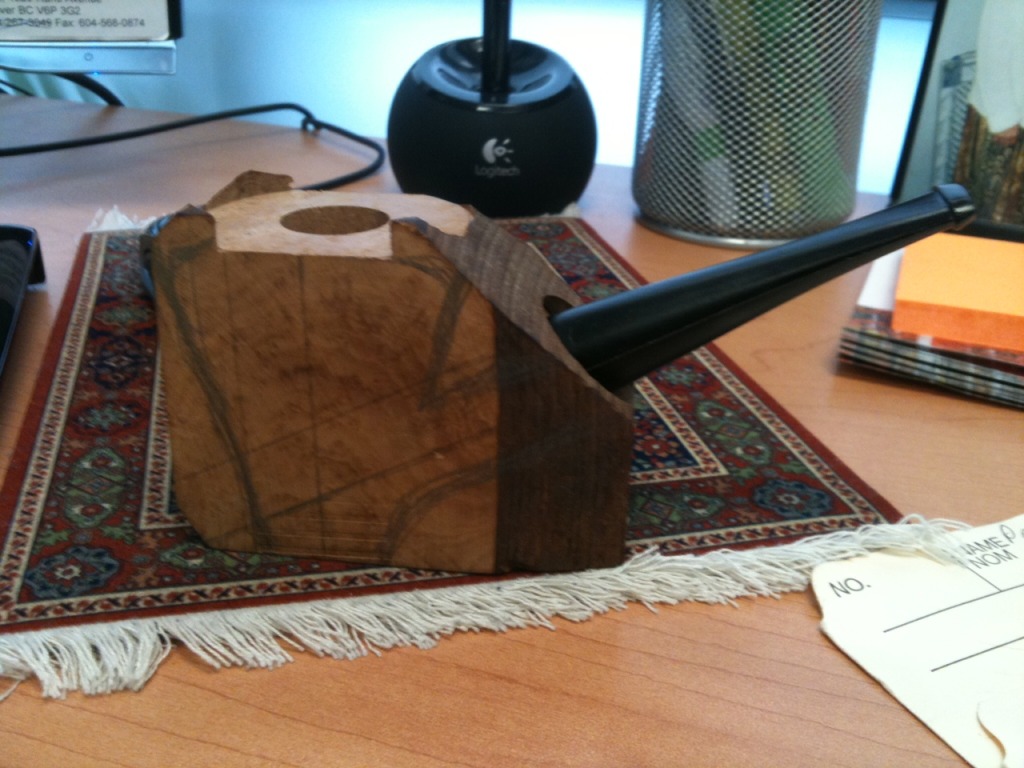
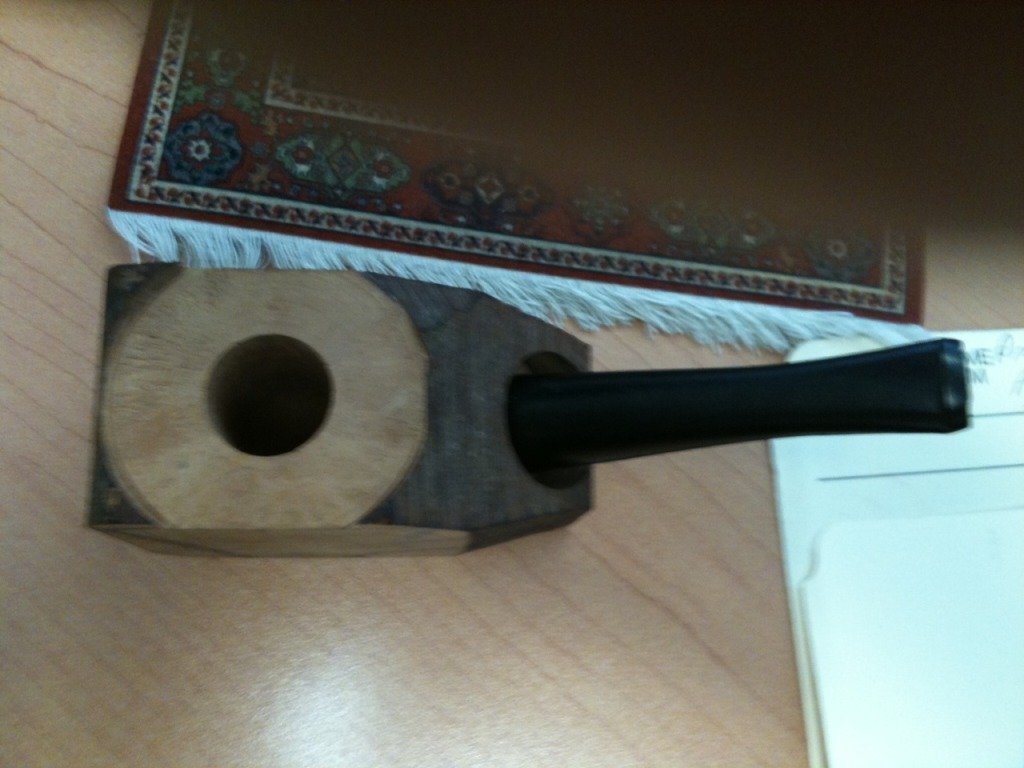
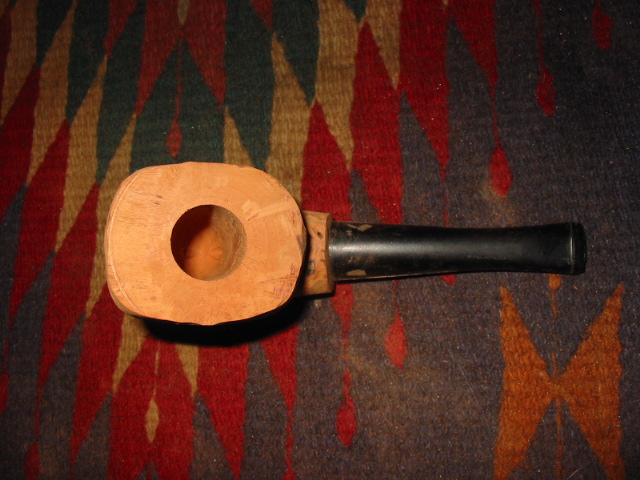
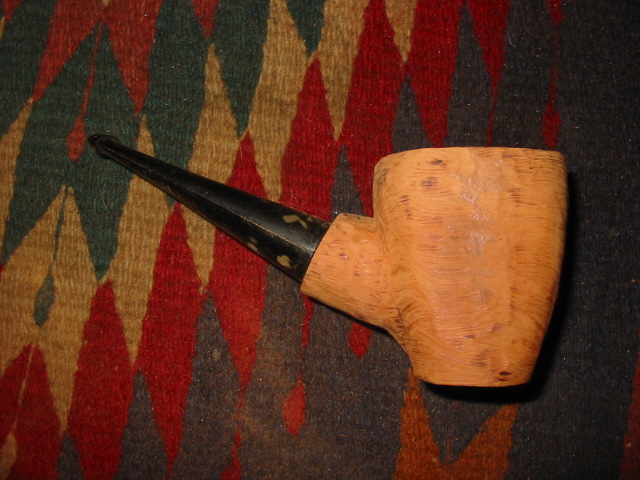
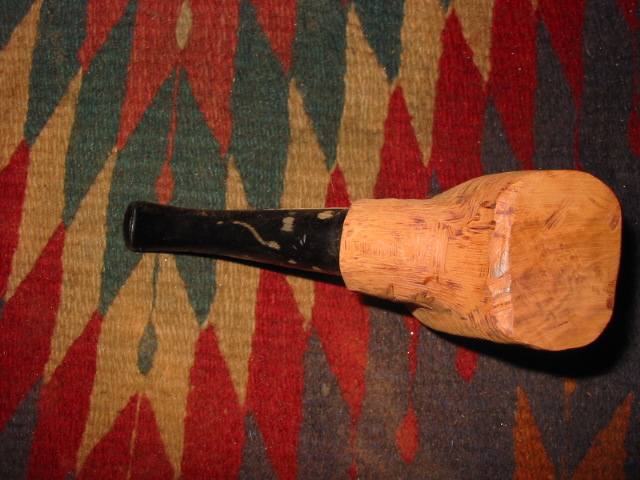
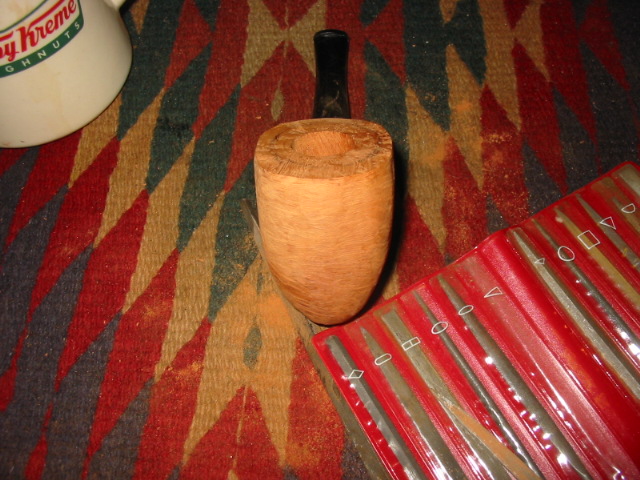
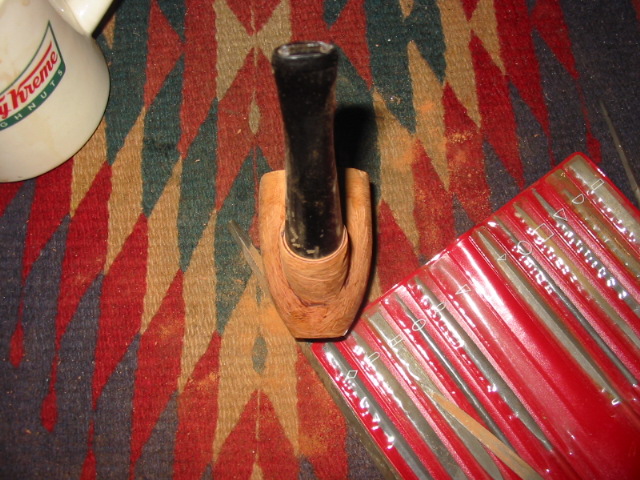
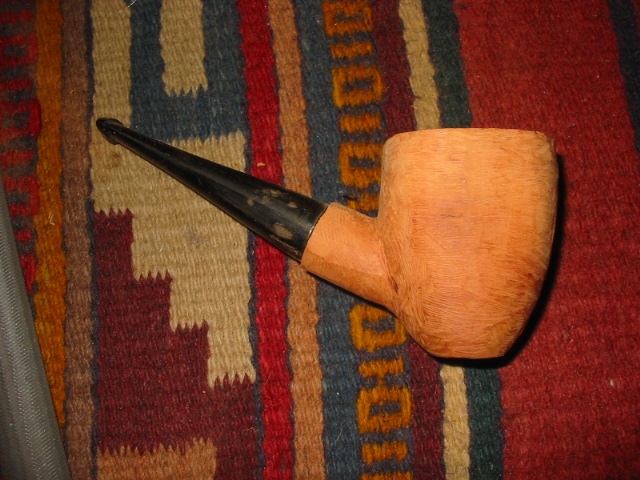
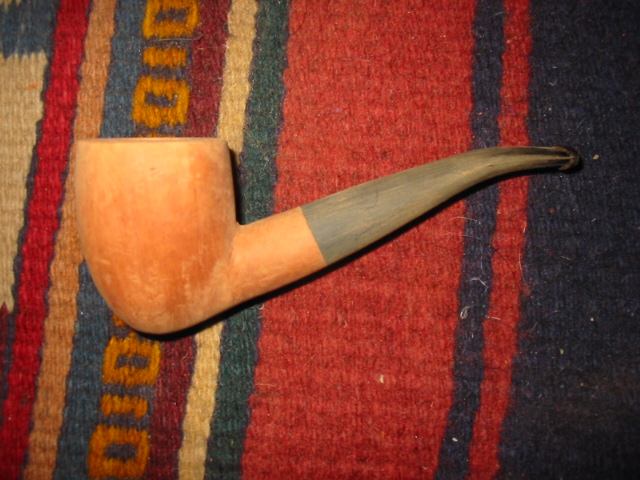
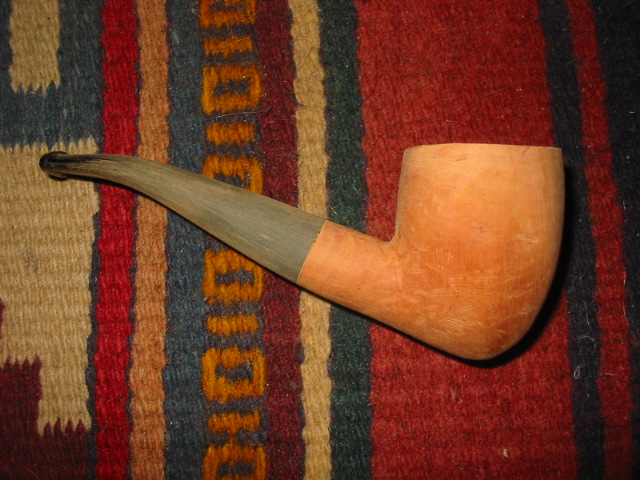
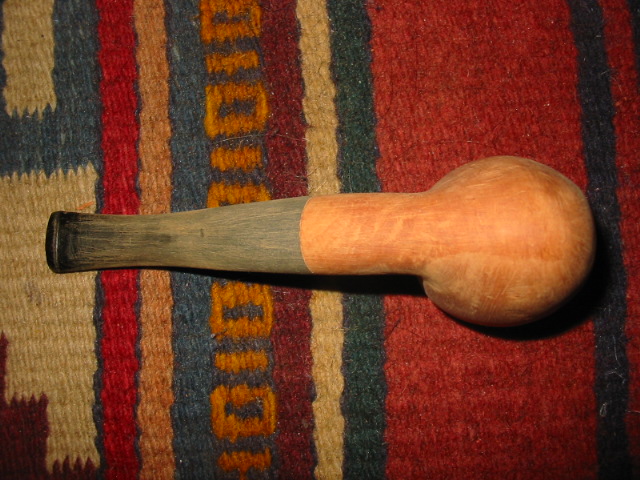
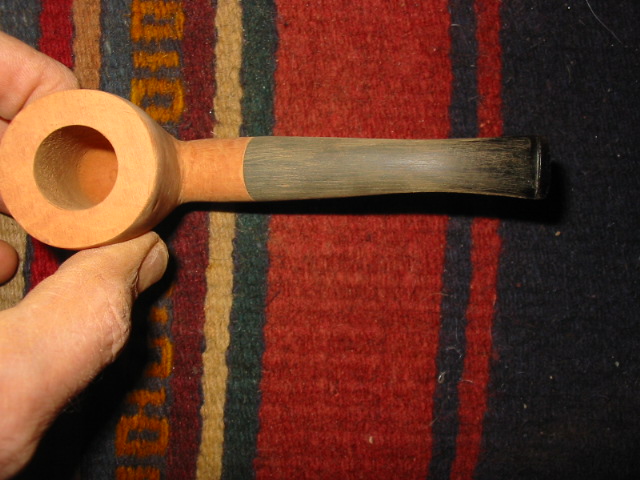
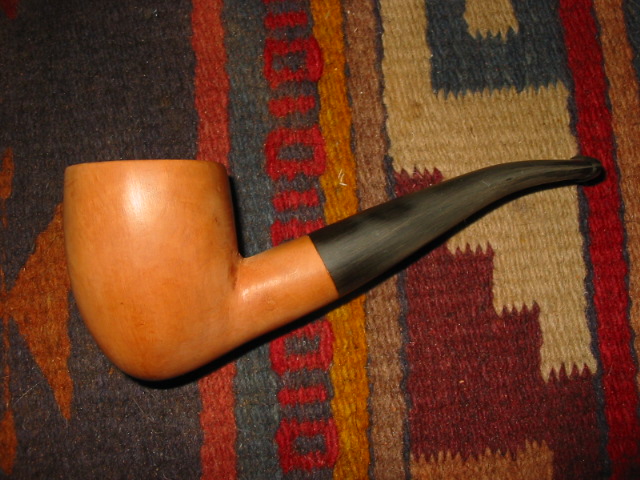
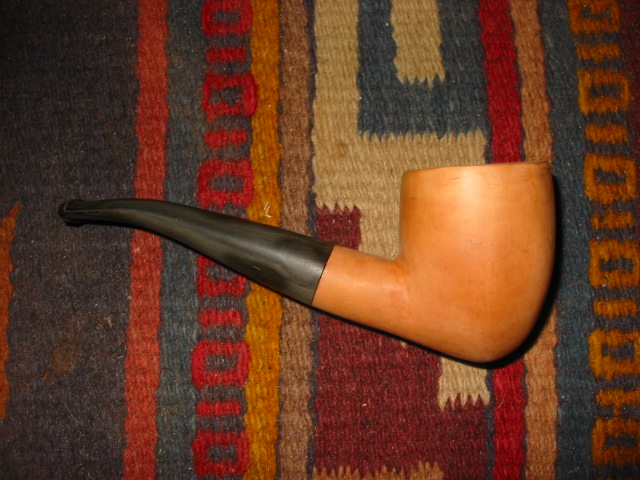
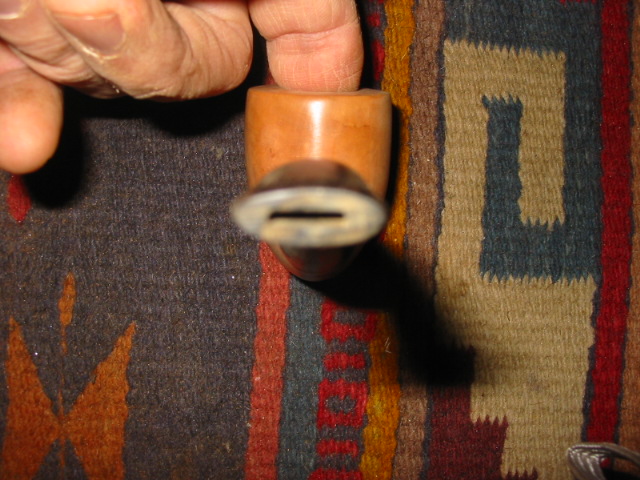
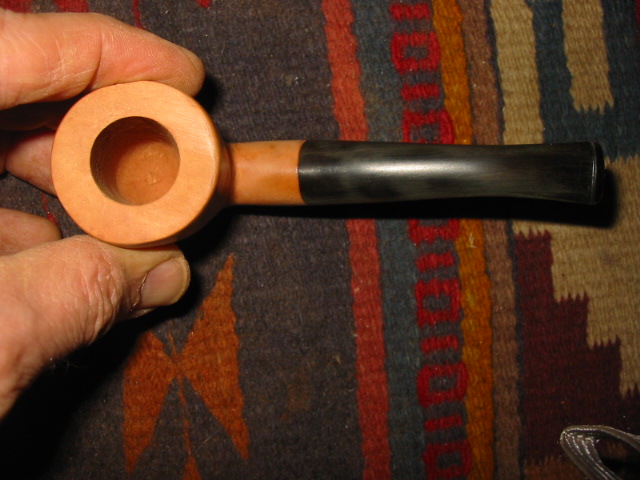
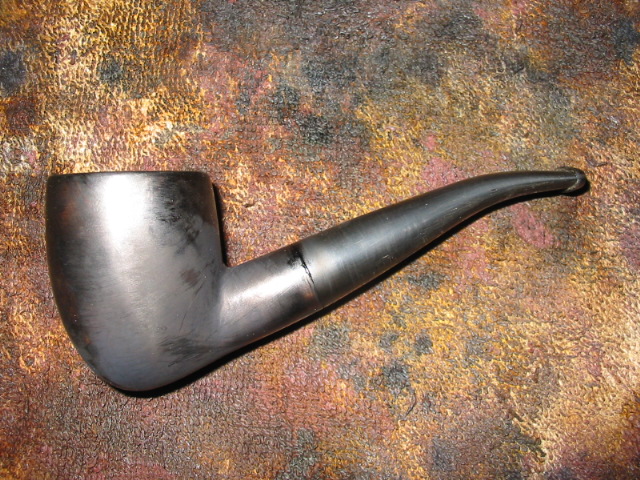
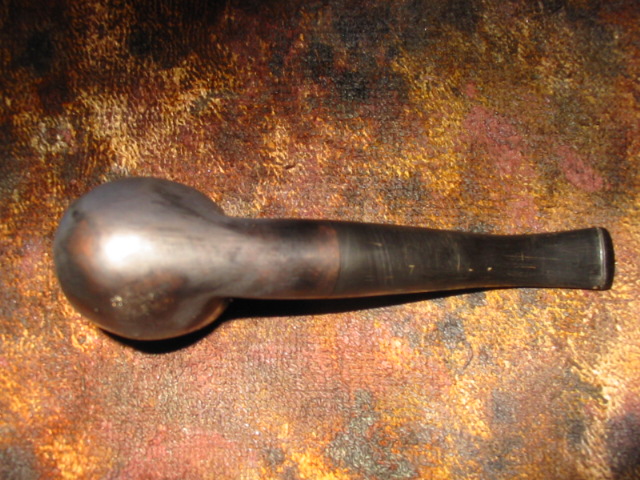
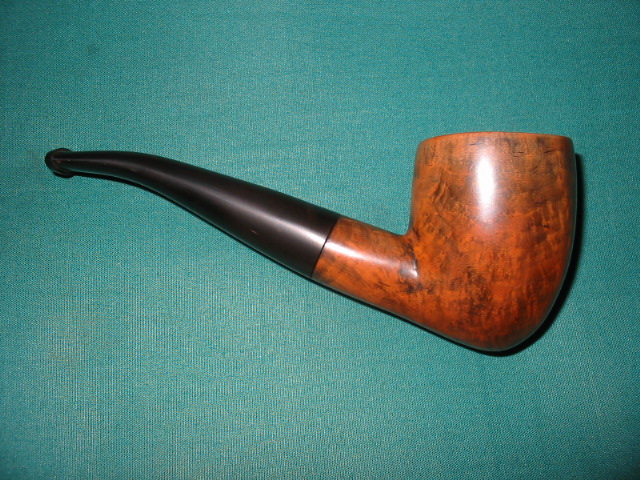
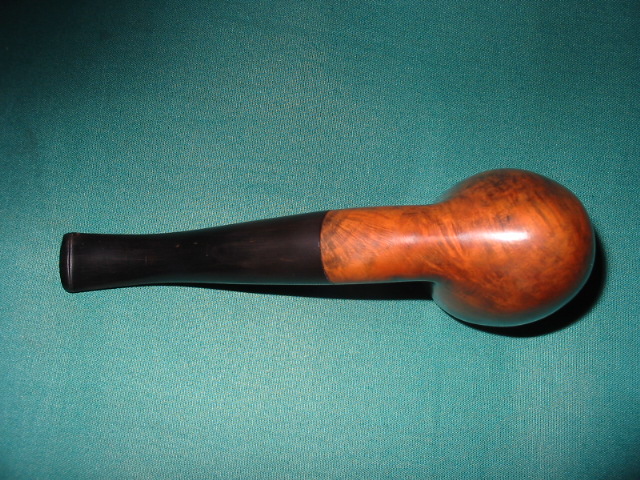
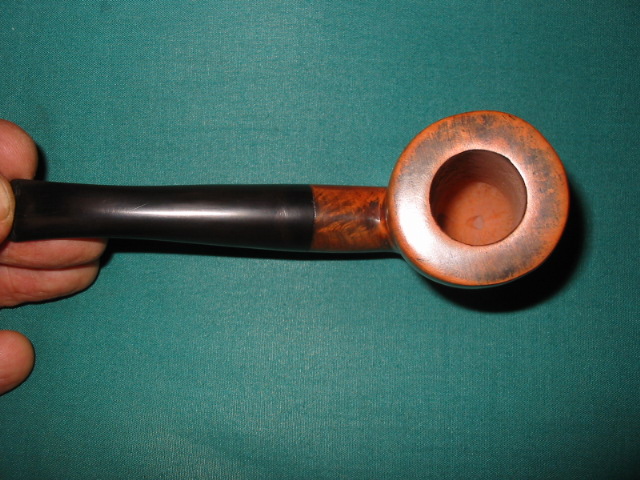
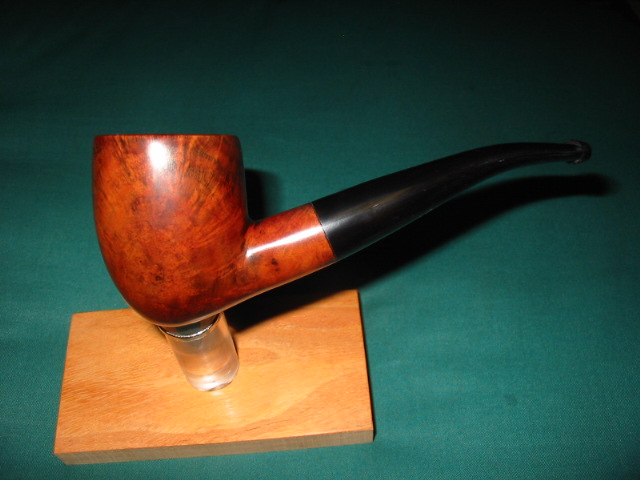
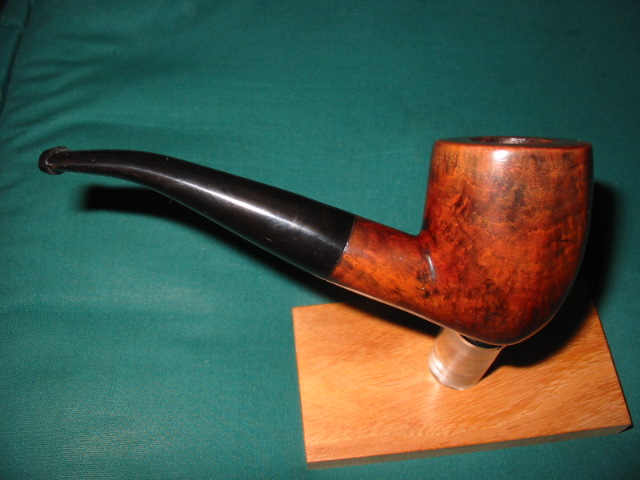
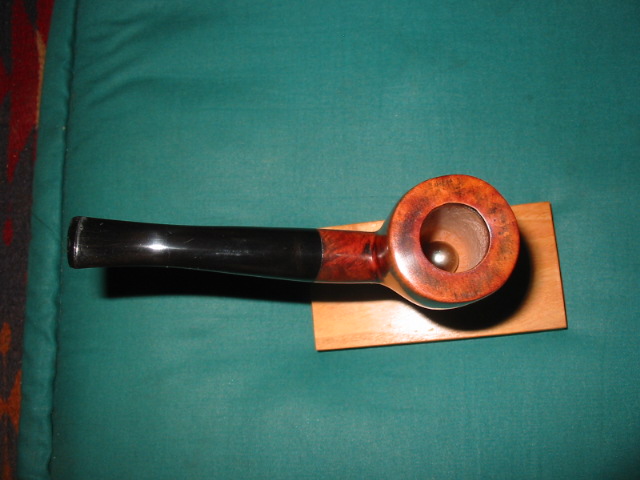
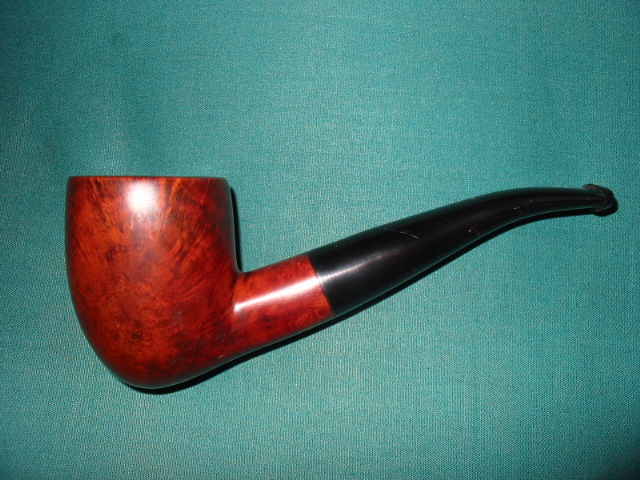
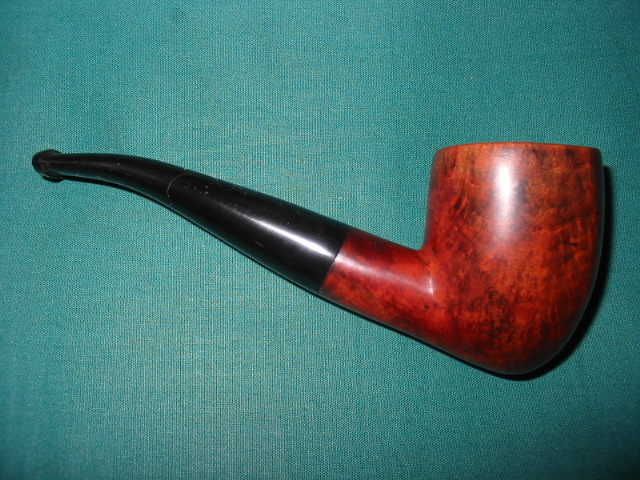
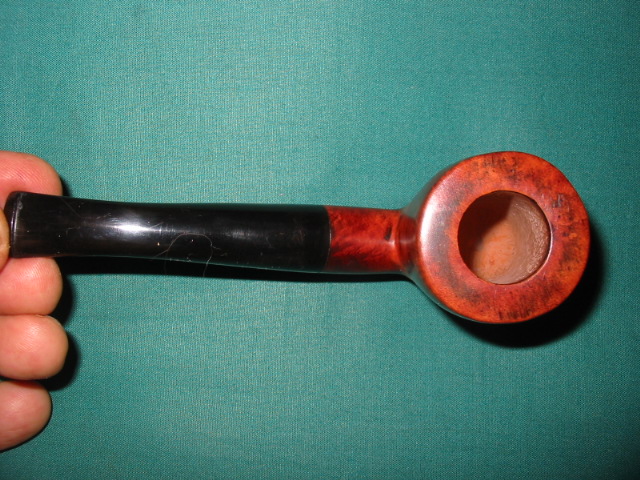
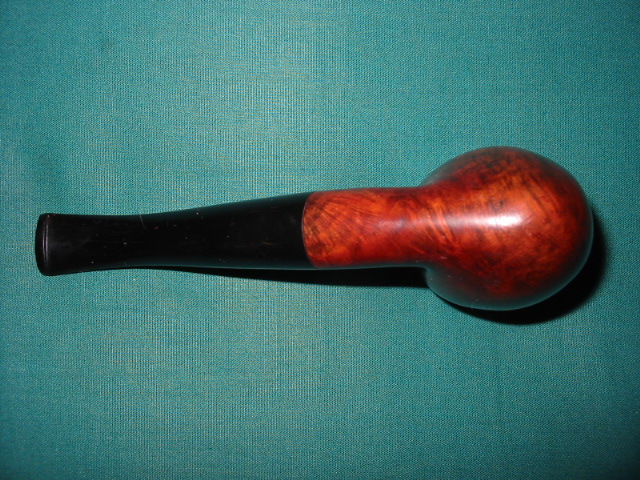
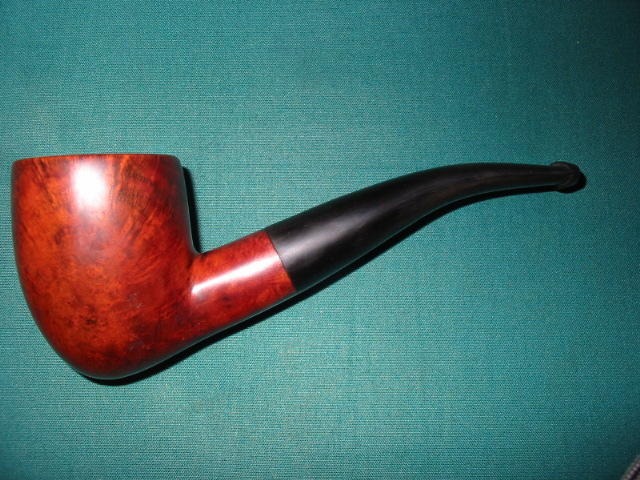
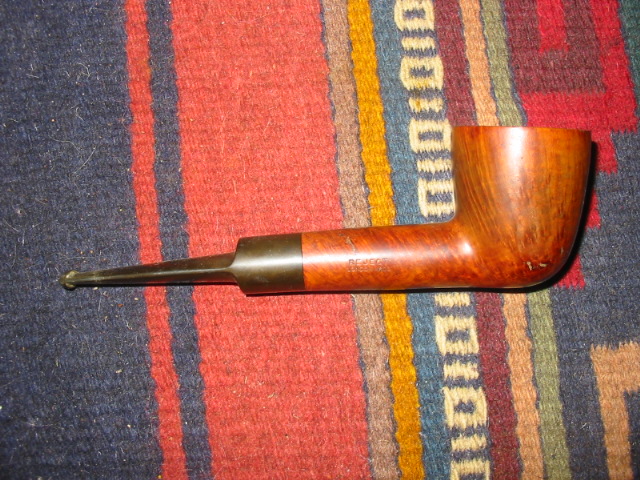
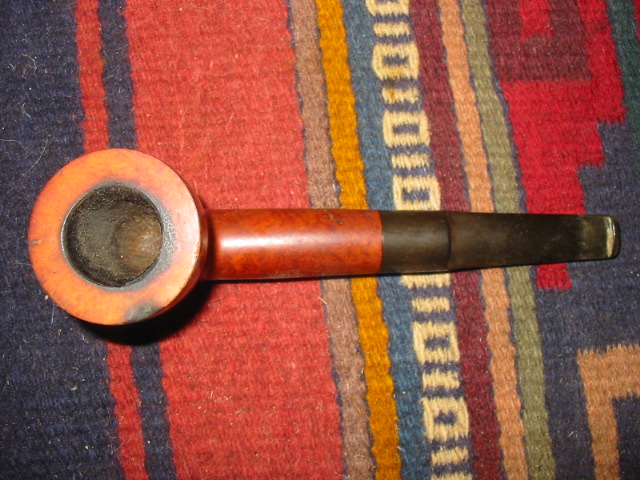
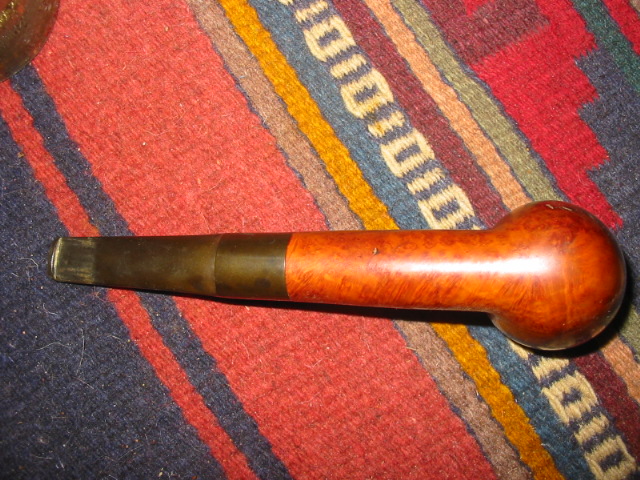
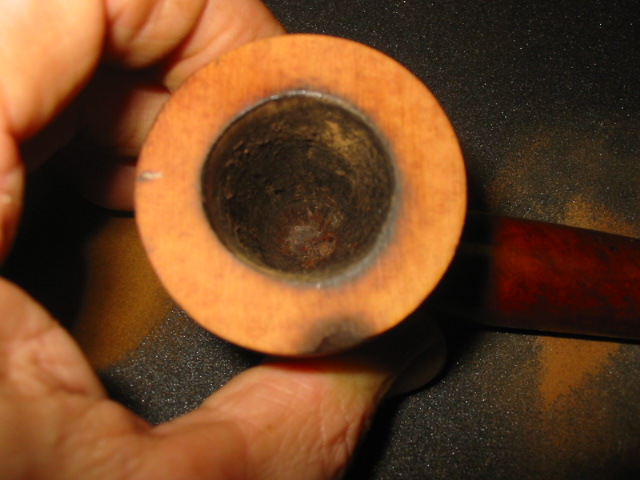
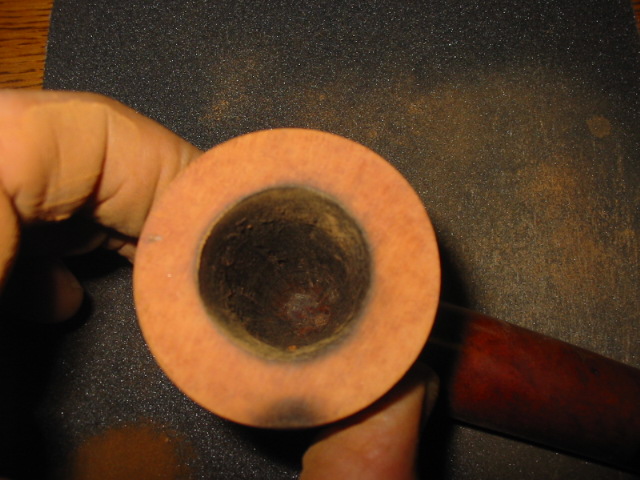
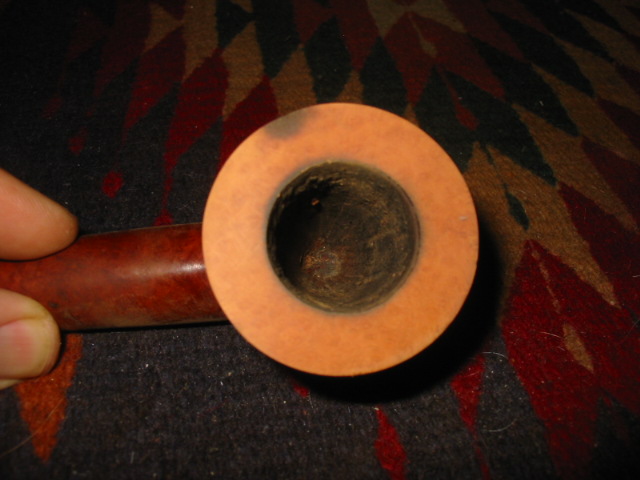
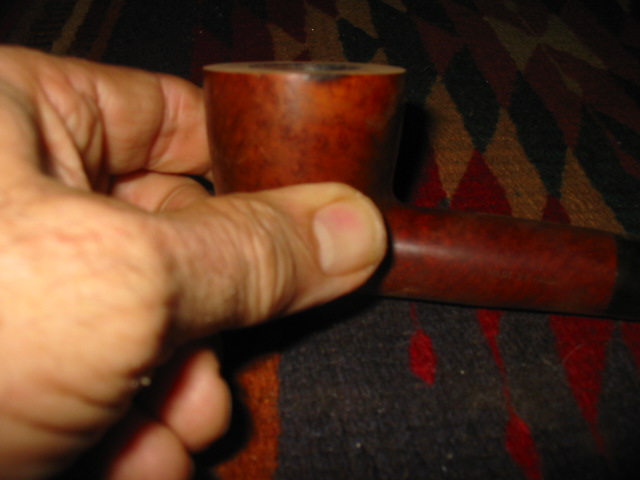
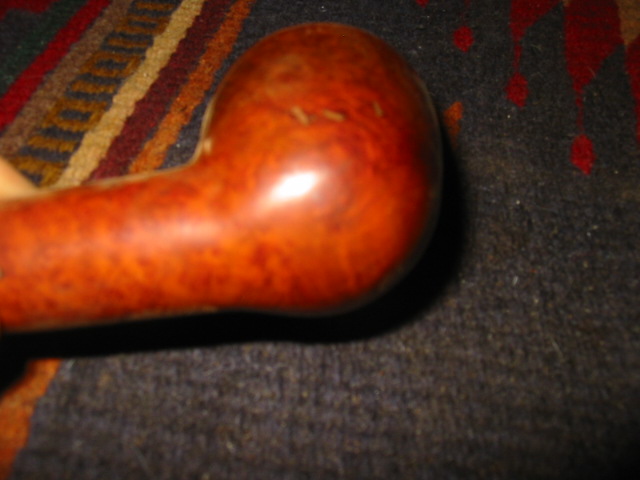
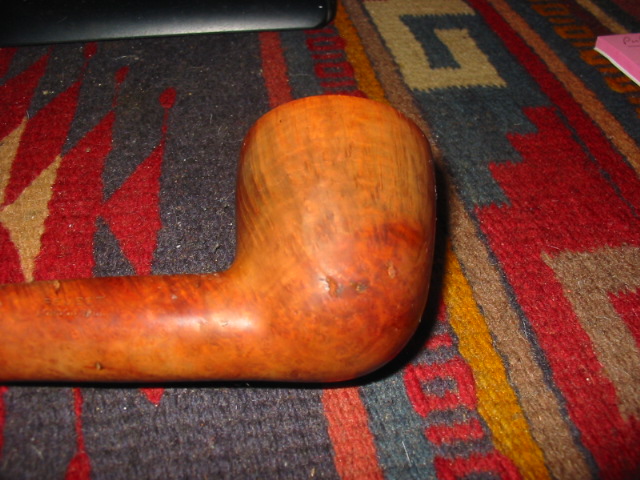
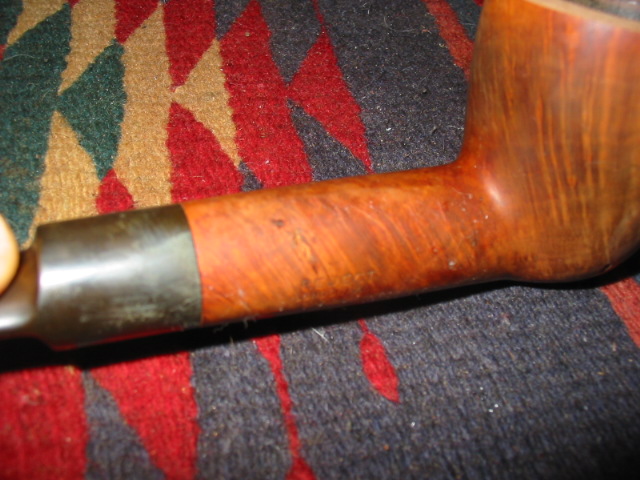
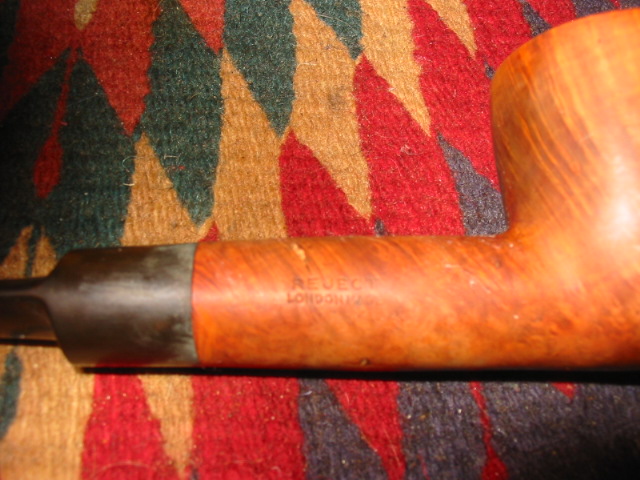
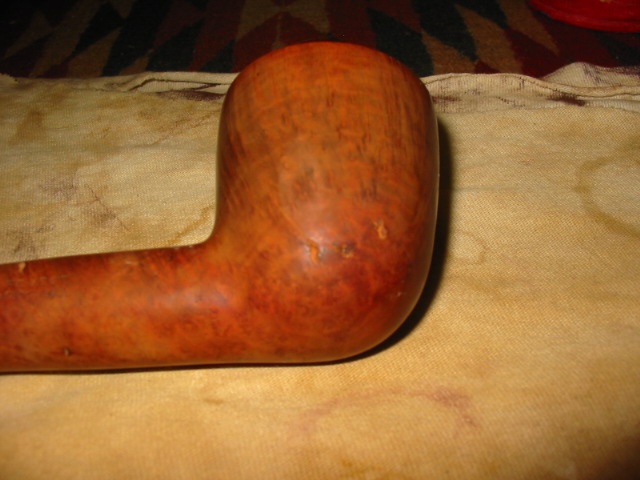
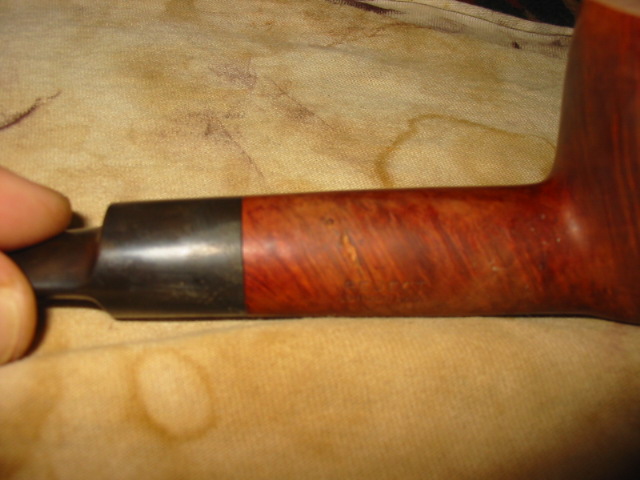
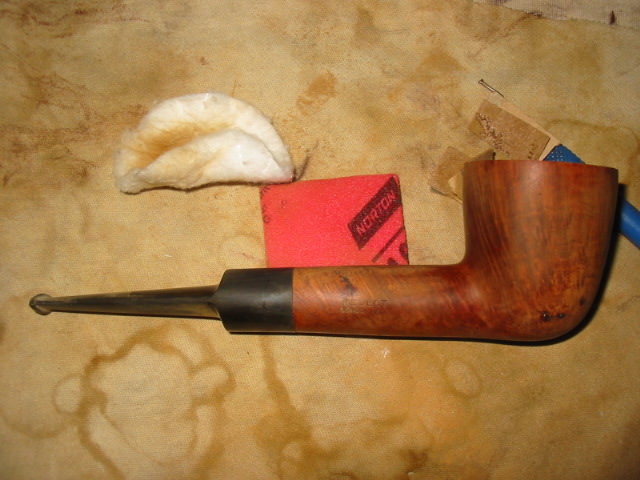
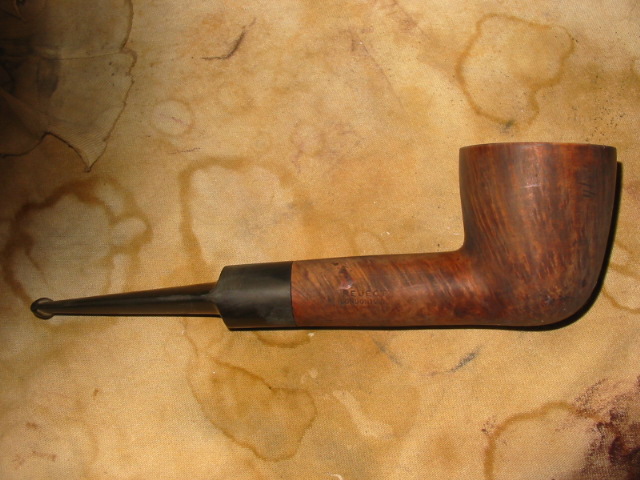
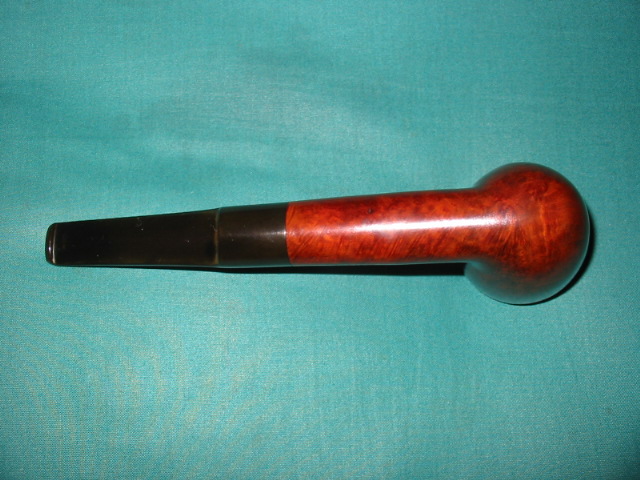
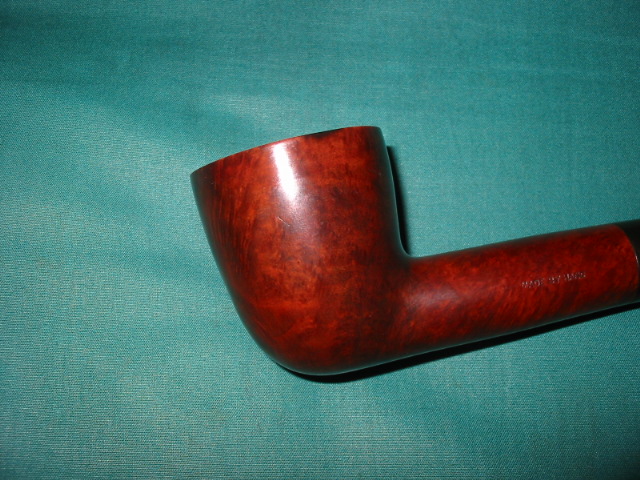
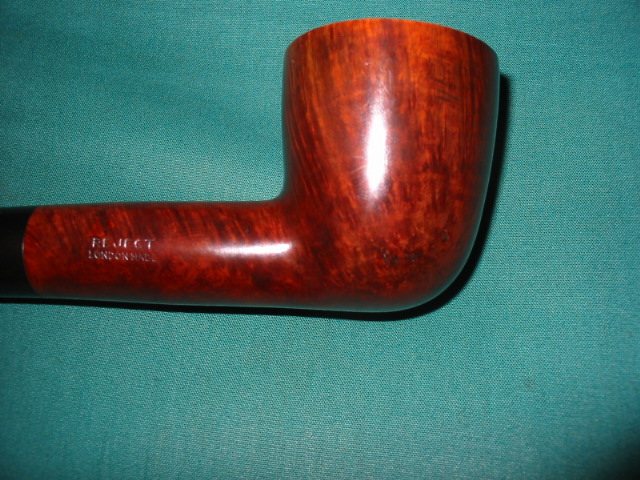
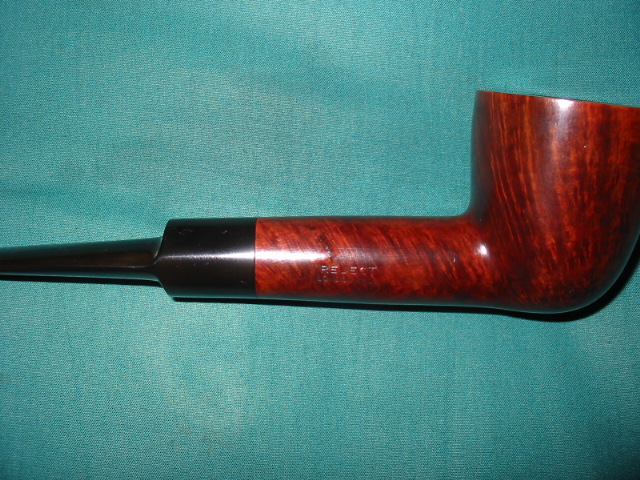
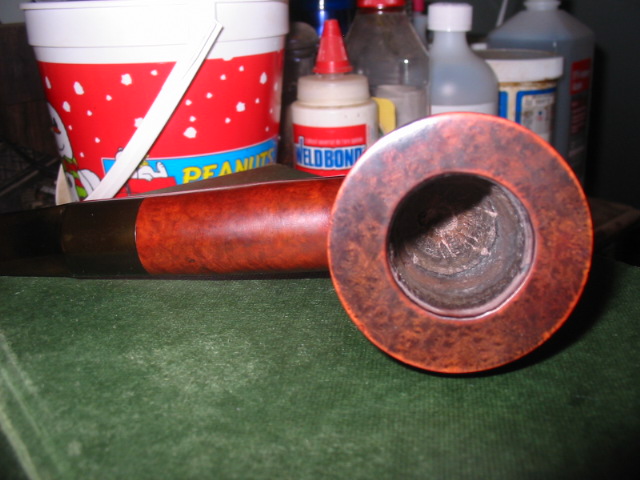
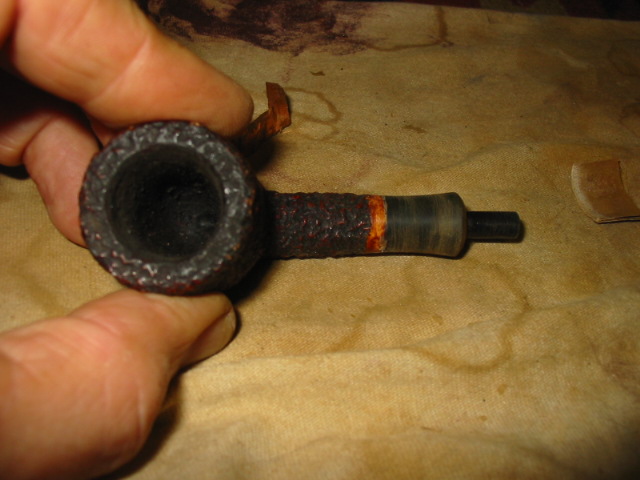
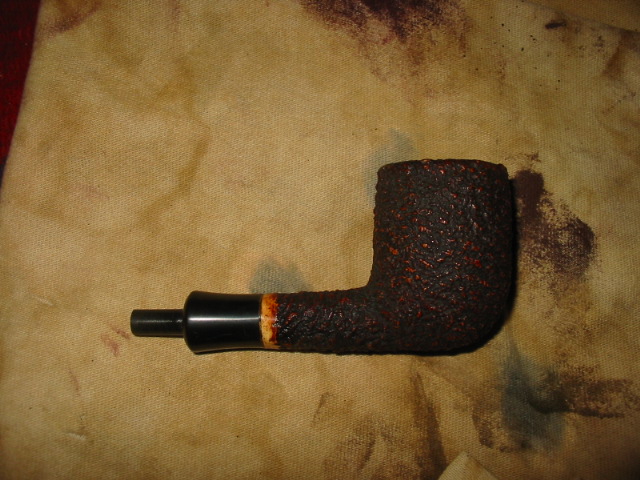
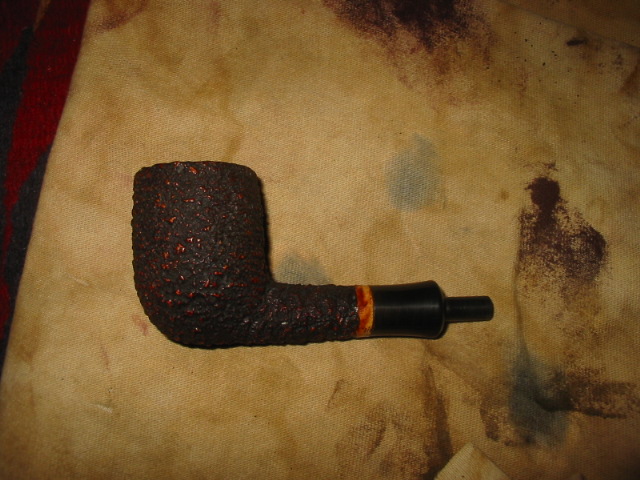
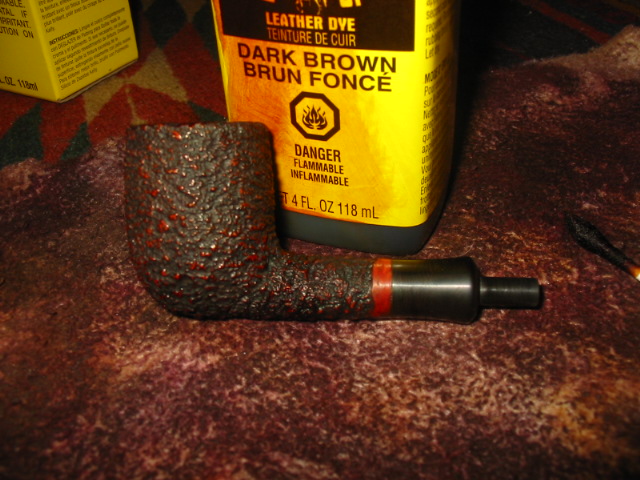
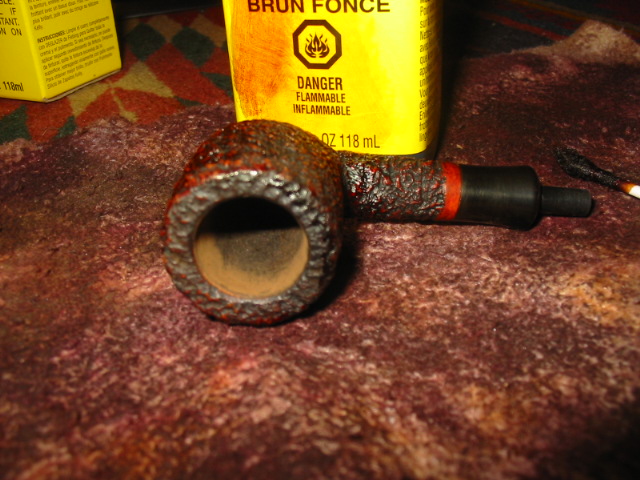
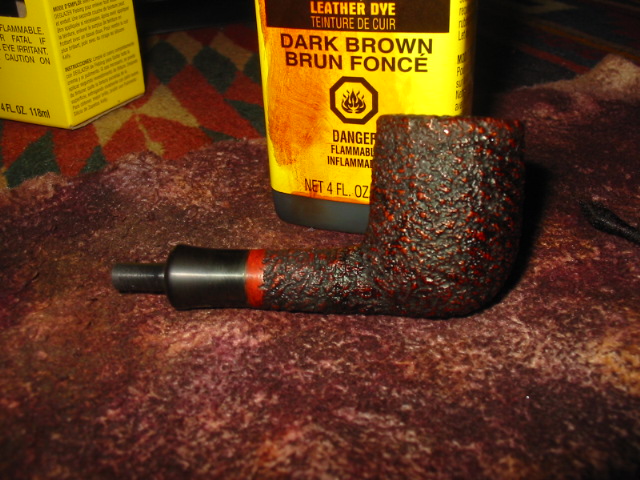
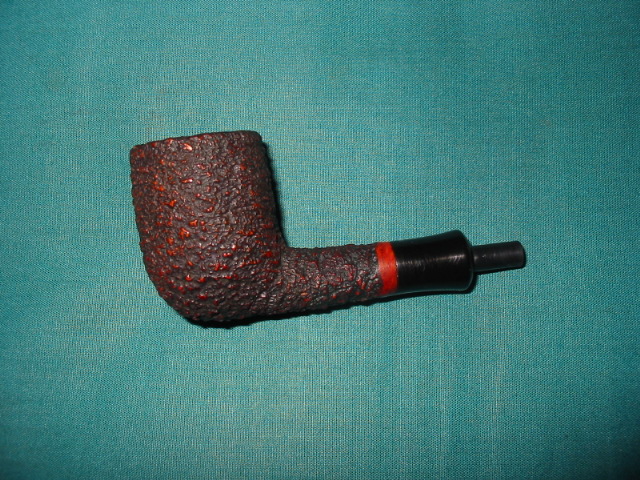
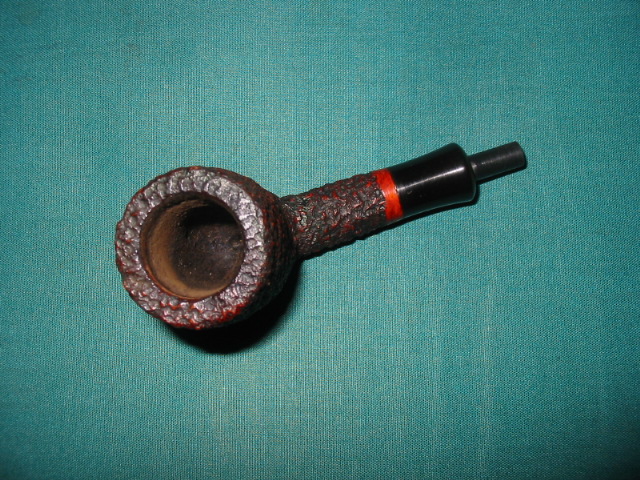
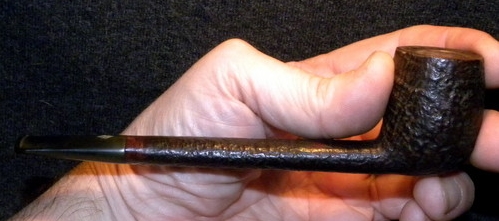
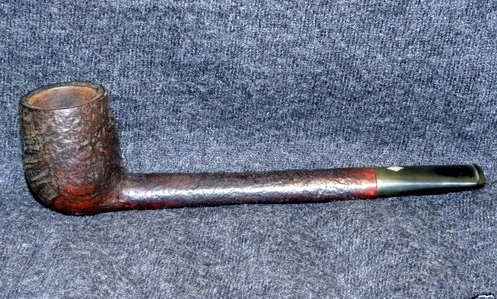
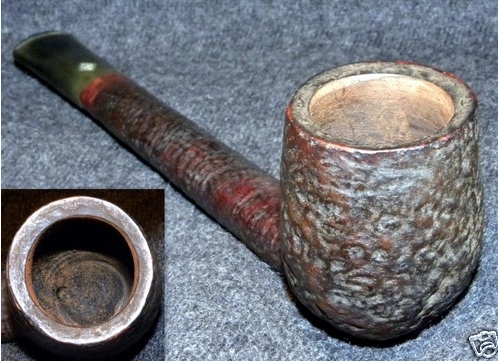
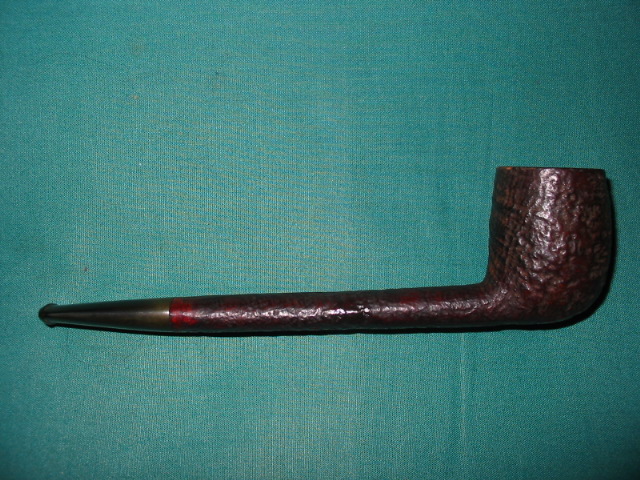
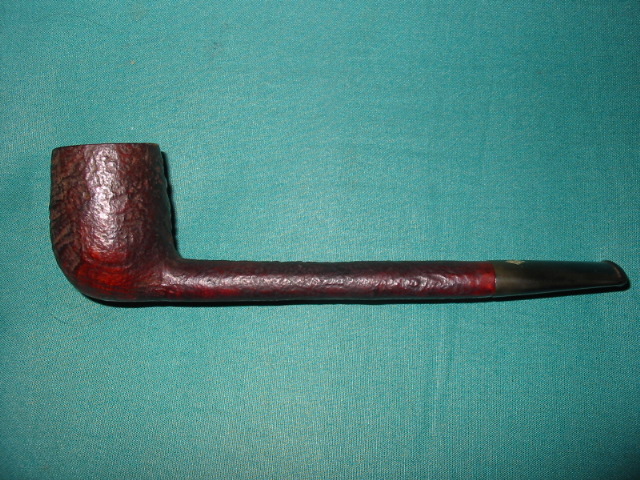
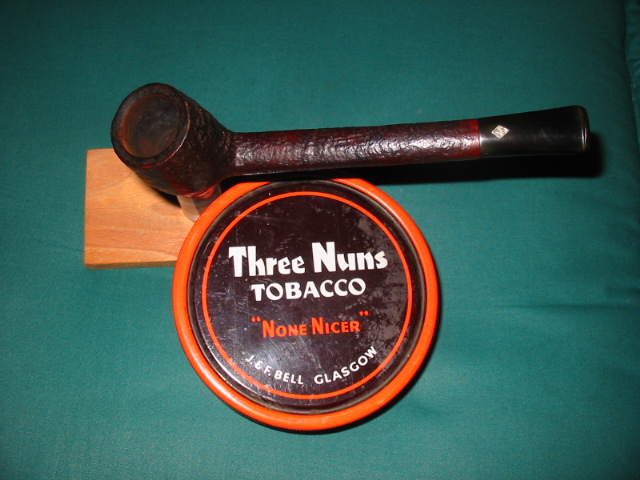
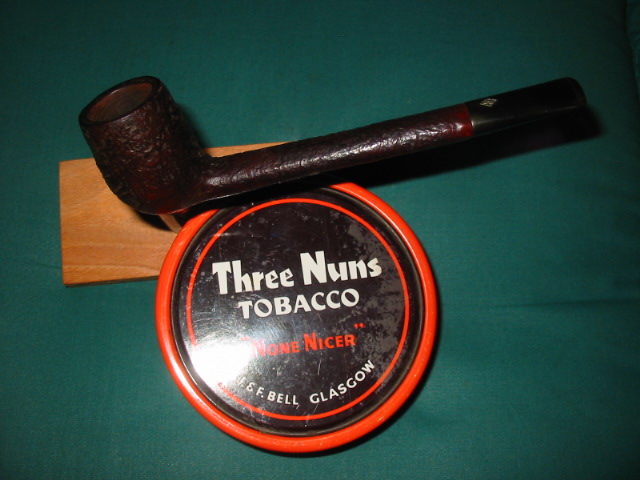
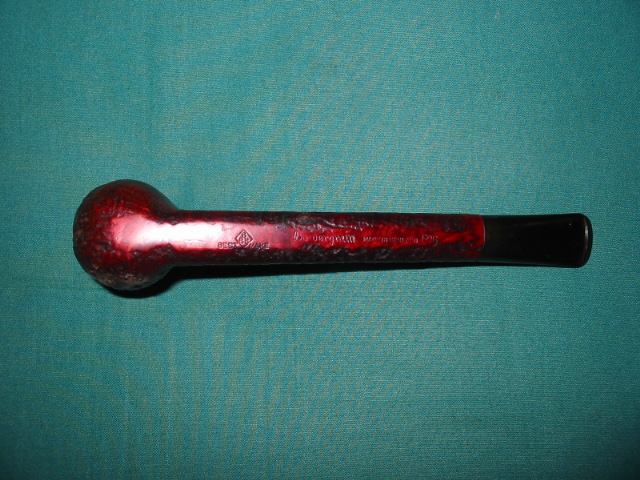
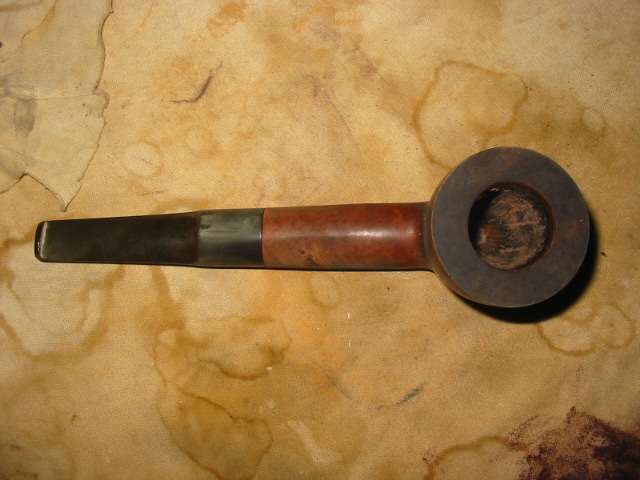
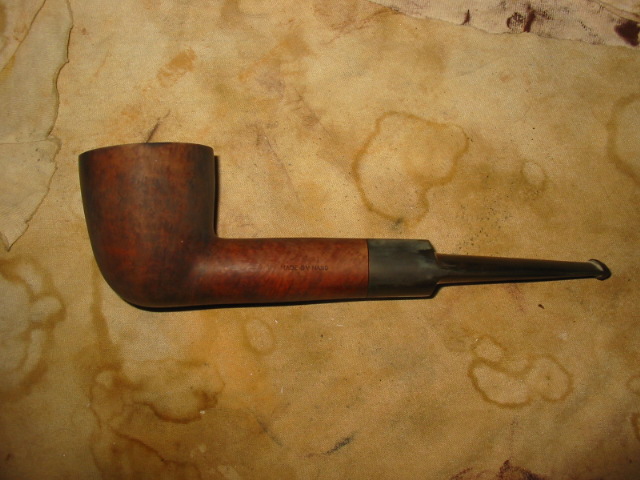
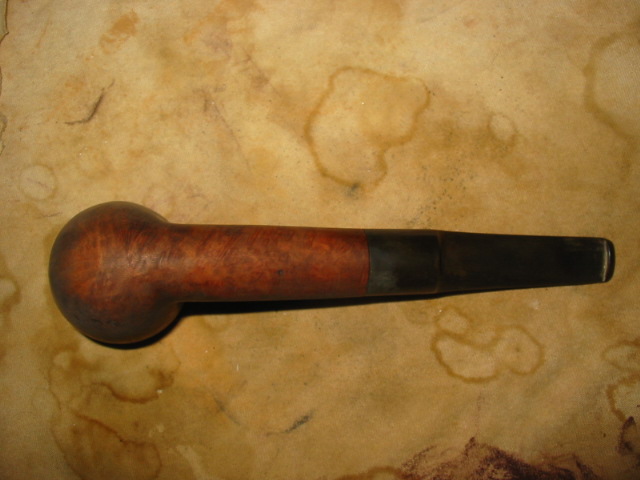
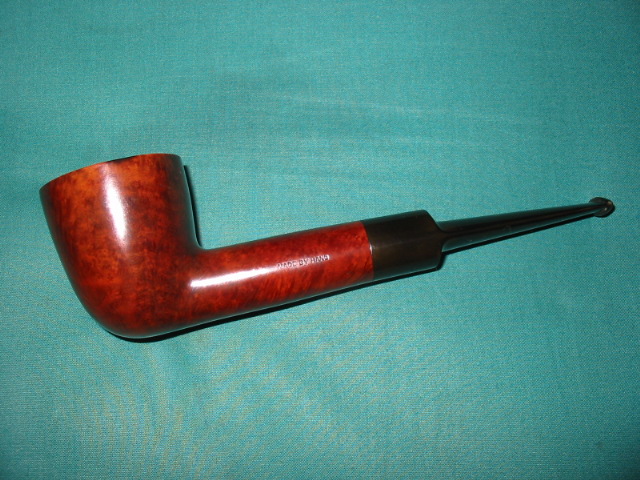
This is one big pipe. I got it in a group of pipes I bought on EBay. The others in the lot were Barlings and Bewlays. They were normal group 3 and 4 sized pipes. This one is just over 7 inches long and 2 inches tall. The outer diameter of the bowl is 1 ¾ inches and the inner diameter of the bowl is 1 inch. It presented some interesting issues that would need to be addressed in the refurbishing process. The biggest of those was a significant cigarette burn on the outer edge and the top of the rim. It was quite deep and was an actually divot in the surface of the bowl. The rim – inner edge toward the stem also was charred and tarred. The finish was actually worn and had lost most of the stain. There were some very obvious pink putty fills on the right side of the bowl near the bottom and on the top of the shank near the stem. The stem was oxidized and there was a bit of tooth chatter.
ImageImageImageImage

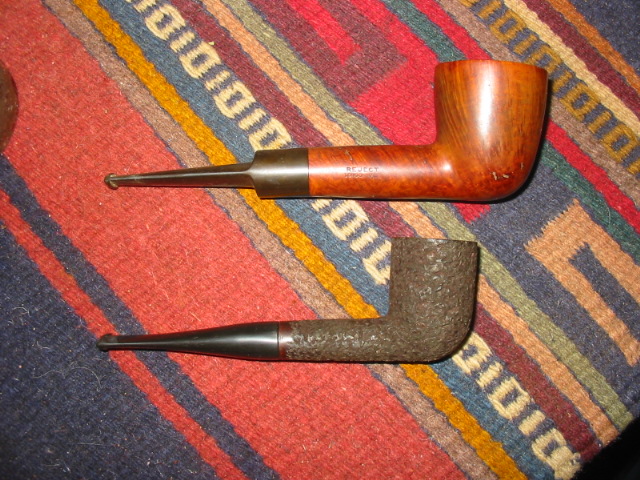
I have taken a picture of the pipe with a group 4 sized billiard to give an idea of the massive size of this old beauty. It is stamped on the left side of the shank “Made By Hand” and on the right side of the shank ‘Reject” over “London Made”.  I am pretty sure that it is a Charatan reject though I cannot be certain. What do you all think? Who is the maker? The only thing making this a reject are the few fills as it has some pretty decent grain all the way around.

Image

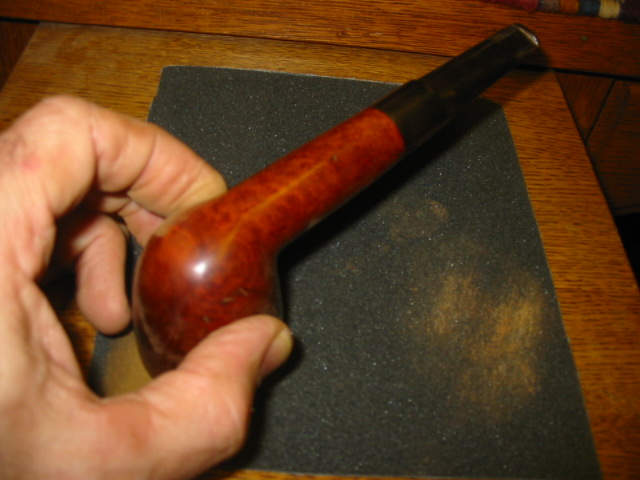
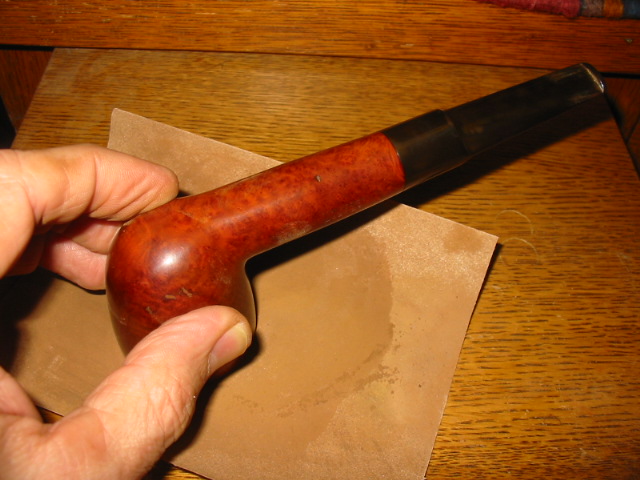
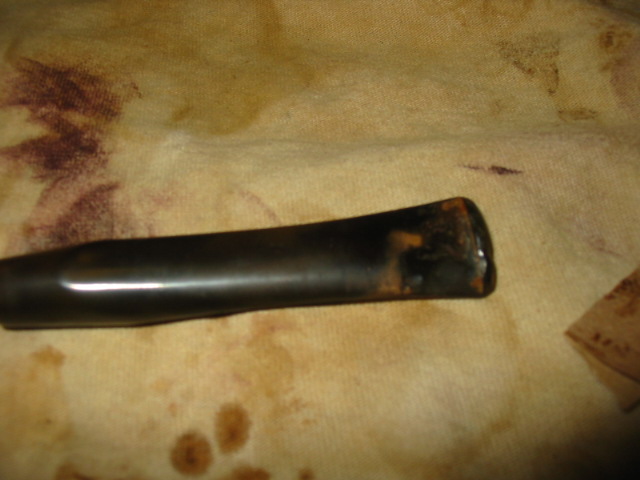
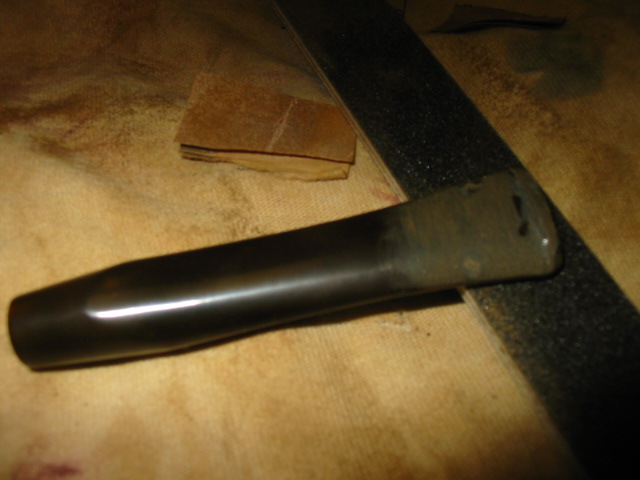
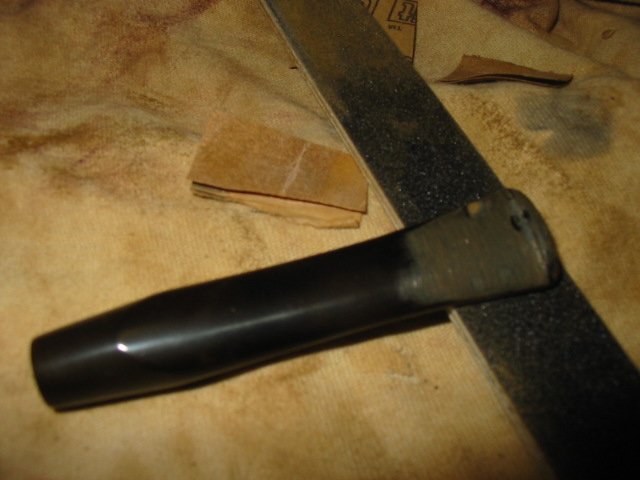
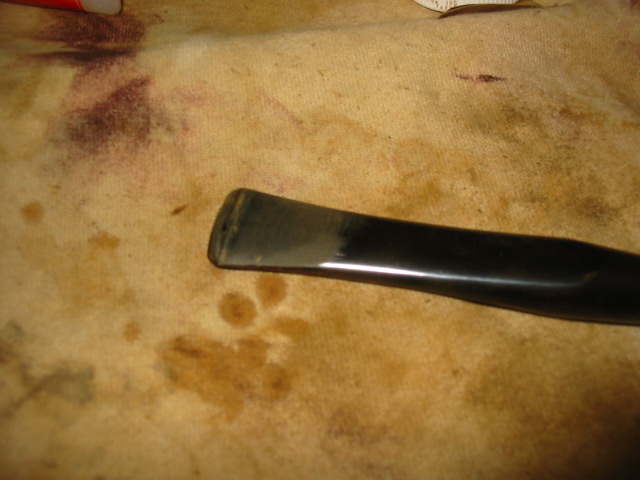
After I reamed and cleaned the pipe inside with isopropyl alcohol I decided to address the cigarette burn on the top and side of the rim. The only way to remove it was to top the pipe. The next series of four photos show the emery cloth attached to a cutting board so that I could work on the topping procedure. The first photo shows the angle of attack that I use on the bowl. I place it flat on the cloth and work it in circles on the paper. I keep the bowl rim flat on the paper to ensure that the surface does not become angled or slanted. The next three photos show the top after sanding. Each photo is sequential so that you can see the progress in removing the divot. The second photo below shows the side shot of the damage and you can see the depth of the burn. The next two show the gradual removal of the burn and the flattening out of the surface of the rim.

ImageImageImageImage

When I finished with the emery cloth I used 240 grit sandpaper to smooth out the surface and remove scratches left by the emery cloth. I used the same circular motion to sand the rim. I find that the circular motion leaves fewer scratches and also keeps the bowl flat as I work on it. The next series of three photos show the rim and side after sanding with the 240 grit sandpaper. The burn mark is now flattened out and the edge of the rim is smooth. The divot is gone. The decision I had to make at this point was whether to continue sanding to remove all of the darkening on the bowl rim or to use stains to hide it a bit and keep the profile at its current height. I opted to use the stains on the burn mark and leave it at this point. Once I had the bowl rim at this point I proceeded to use 400 and 600 grit wet dry sandpaper and then micromesh from 1500-6000 grit to smooth out the surface of the rim.

ImageImageImage

From there I decided to work on the fills. The pink putty just does not work for me. It does not take stain and it is always glaringly present in the finished pipe. The next two photos show the fills on the right side toward the bottom of the bowl and on the shank near the stem.

ImageImage

I wiped the bowl down with acetone (fingernail polish remover) to get the stain and finish removed. Then I used the dental pick to remove the fills. The next five photos show the opening up of the pits that were under the fills. I use the sharp point of the dental pick to pick away all of the putty and leave the holes open and free of debris. I also wipe the bowl down with acetone before filling them with the new patch.ImageImageImageImageImage

After wiping down the surface of the pipe and cleaning out any remaining debris in the pits or holes I filled the holes with briar dust that I had saved from sanding the rim. I packed the dust into the hole with the dental pick. I find that if I wet the end of the pick the briar dust clumps on the pick. I scrape it over the holes and then tamp them full with the briar dust. I purposely over fill them with the dust. Then I drip super glue onto the briar dust patch. In the three photos below you can see the patches after the initial sanding with a fine grit pink sanding pad. They are the dark spots on the right side of the photo and on the shank near the stem. These dark spots lessen with more sanding. The second photo also shows the state of the rim from the top shot.ImageImageImage

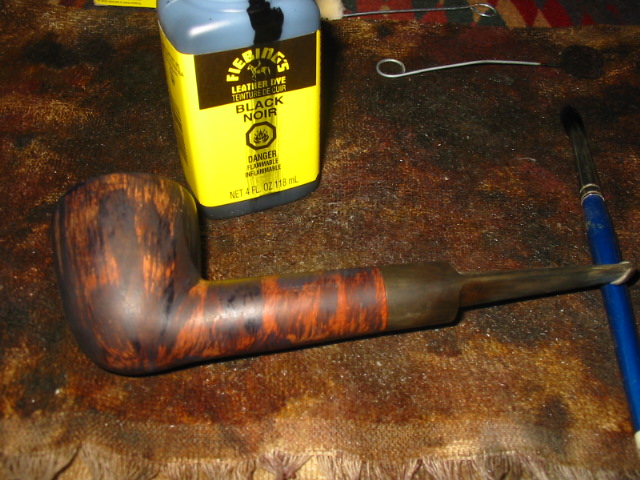
I heated the bowl so that I could do the contrast staining to highlight the grain. I used an artist’s brush to apply black aniline stain to the bowl. I follow the lines of the grain. I painted the bowl, shank and rim with the black stain. Then I lit it with a lighter to flame the stain and set it. Once it was dry I sanded the stain to remove the excess.Image

The next series of four photos show the bowl after the initial sanding. I had removed much of the stain. The reason I am showing these photos is to highlight how the fill on the side of the bowl and on the shank have faded into the finish of the pipe. The black stain not only highlights the grain but also blends in the fills with the contrast stain on the bowl. In the second and third photo I also wanted to show how the stain takes care of the burn mark on the bowl side and rim. It is still present in terms of the darkening but it is less visible at this point. That is what I was aiming for. From this point I took the pipe to my buffer and used Tripoli and White Diamond to buff out a bit more of the black so that it would highlight the grain but not be the overwhelmingly dark coat under the finish stain that I would later use. I also used micromesh pads from 3200 to 6000 grit to work out any of the remaining scratches on the rim and bowl surfaces.ImageImageImageImage

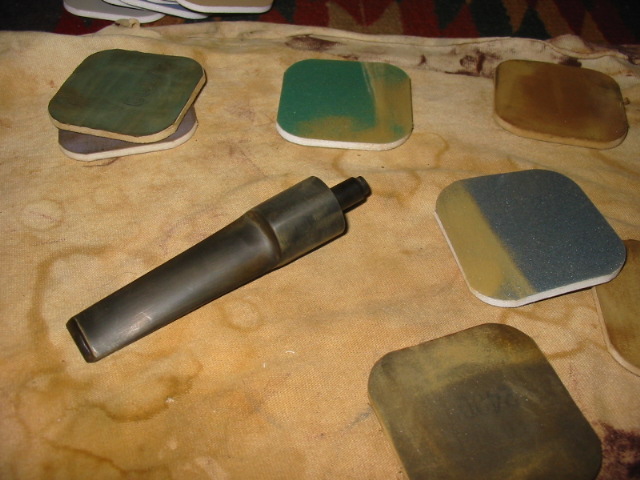
At this point I set the bowl aside and went to work on the stem. In the picture below you can see the variety of micromesh pads that I use to remove the oxidation. The brown dust on the pads is the oxidation that comes off with the sanding. I always have a bowl of water at the side of the table to dip the pads in and wash off the oxidation dust and grime and also to give the pads more bite when I am sanding the stem. I went back and forth through the pads and the buffer with Tripoli and White Diamond to bring the stem back to the rich black that it had originally. I always buff the stem with it back on the pipe. I do not want to risk rounding the edge at the point where it sits against the shank. Once it was shiny black and acceptable I took the pipe back to the work table to give it the final stain coat.Image

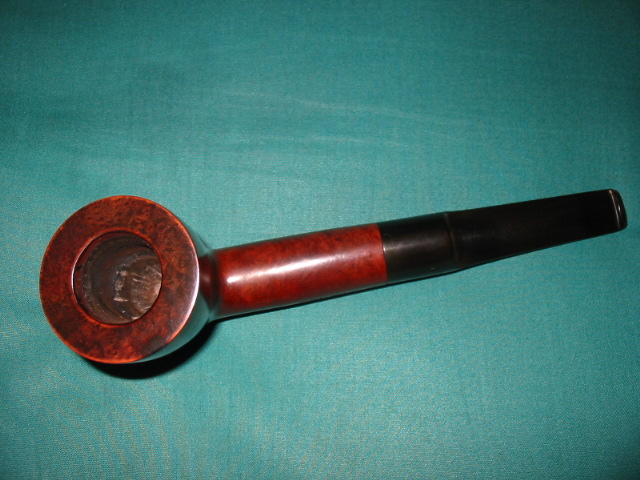
For a top coat of stain I chose oxblood coloured aniline stain. I find that the contrast between it and the black undercoat work well together. The next series of four photos show the finished pipe. The first shows the left side and what remains of the burn mark near the top of the rim. It is still present but certainly less visible and it is smooth to touch. The second photo shows the right side of the pipe and how well the stain has hidden the reworked fills on the shank and near the bottom of the bowl. If you did not know they were present you would have a hard time seeing them. The third photo shows the rim and how well the stain has hidden the burn mark and brought out the birdseye grain on the rim. The final photo shows the bottom of the bowl and is included to show the contrast stain and the graining on that part of the bowl.ImageImageImageImage
The next series of photos show closer views of the repairs that were down and how they blend in with the contrast stain. The first is the left side of the bowl and you can see the darkening of the rim where the burn mark was. It is smooth to touch and none of the profile of the pipe is affected. The second photo shows the part of the bowl where I removed the putty fills, refilled them with briar dust and superglue and then restained with the two coats of contrasting stain. The third photo shows the same repairs on the shank. The final photo is of the rim of the bowl. The birdseye grain is highlighted. In the slight glare at the top of the photo you can see the remaining mark from the burn. The black and oxblood stains minimize the visibility of the burn darkening. I finished the pipe by giving the entirety several coats of carnauba wax to give it a rich glow. The pipe is finished and ready to give many years of service to whoever becomes the next owner.
ImageImageImageImage

Refurbishing another Mystery Pipe


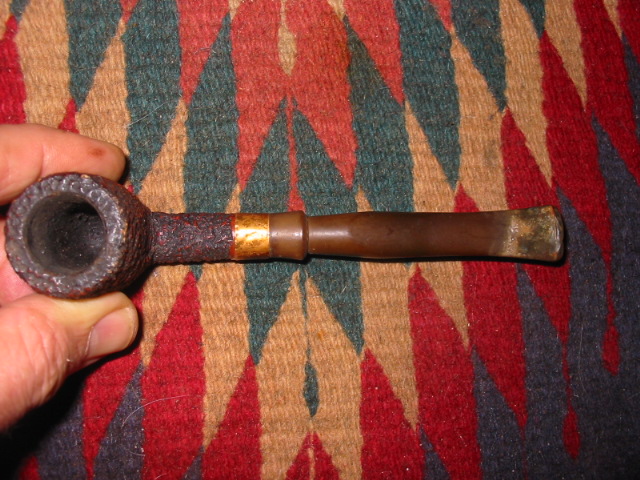
I picked up this pipe in an EBay lot recently. The other pipes were older Barlings and Bewlays. I know that it belonged to the same gent originally because all the stems have matching tooth marks. This guy must have had jaws of steel. His bite marks showed a repeated pattern of biting down in an identical place on each pipe. The amazing thing on this one is that though the bites were deep they did not break through the surface of the stem.

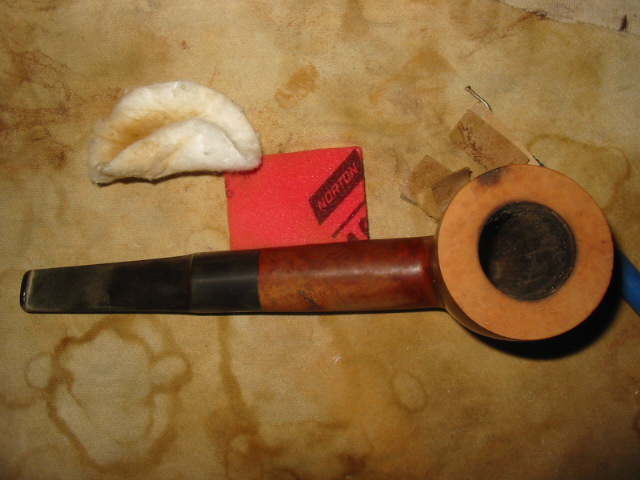
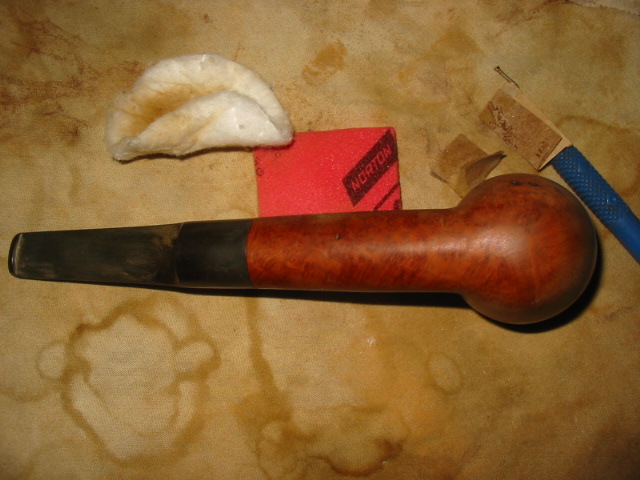
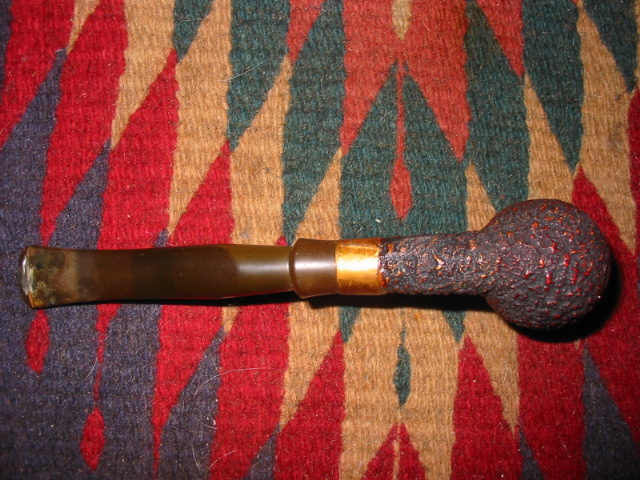
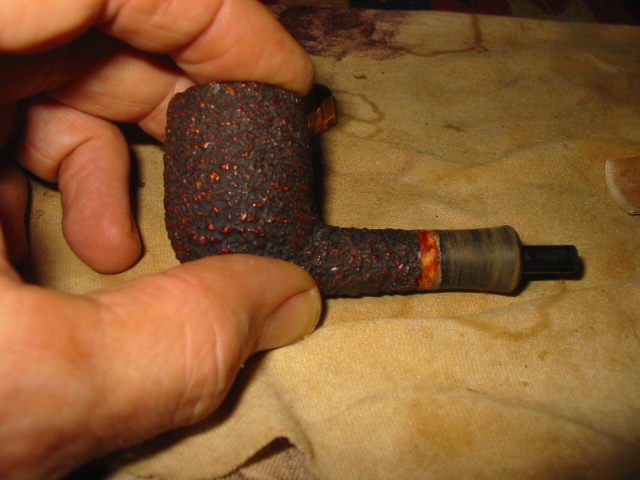
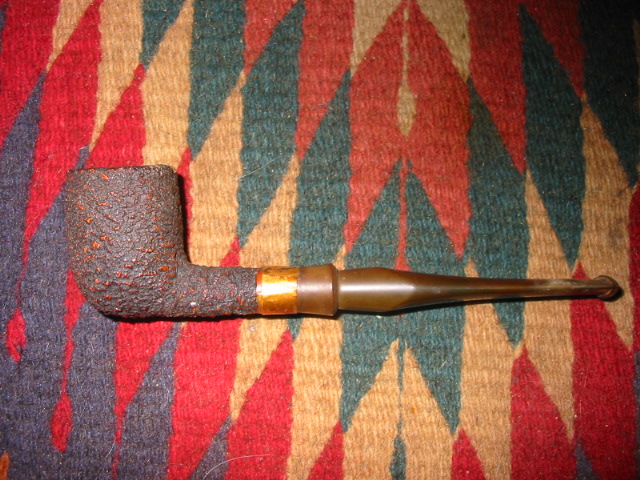
The first series of pictures below show the pipe as it came to me in the lot. Rim had some tars and cake build up. The bowl was dirty but not caked. The exterior of the pipe was also dirty but not damaged. The mystery to me is the material that this bowl is made of. It is very light weight and a bit odd. There is some resemblance to Laxley meers from the Isle of Mann. They made meers for Peterson, Nording and Barling as well as some under their own brand. I have found that those I have worked on and now own are uniformly heavy and thick bowled. This one is not that way at all. This little guy – and I say little as in 1 1/2 inch tall and a bowl outer diameter of 1 1/8 inches and bore of 3/4 inches – is somehow incredibly light weight. Think in terms of a featherweight briar and you are close. The stem is heavier than the bowl… Those are the things that leave me mystified with this one. I wonder if it is not some sort of resin????

The copper coloured band on the shank is actually copper tape. It was covered with a coating of glue to give it some resilience I would guess. The shank extension is vulcanite as is the stem. The stem is badly bitten but no bite throughs. It will take a bit of work to take care of those and to remove the deep oxidation. The tenon is also a reverse tenon. It extends from the shank like a Carey Magic Inch tenon. The stem slides over the tenon.

ImageImageImageImage

Using my dental pick as a lever I pried away the tape on the shank. I wanted to see what was underneath to know if I was dealing with a separated shank extension or what. As can be seen in the next photo it appears that the tape was merely cosmetic. The shank extension and the joint of the two parts were liberally coated with glue. It appeared to have been wood glue and it was very hard. I was able to peel away bits and pieces of the glue by picking at it with the dental pick and my finger nail. Note also the reverse tenon on the shank that I spoke of above. It is anchored in the shank and is not removable. It seems to be an integral part of the shank extension.Image

The next two photos show the junction of the shank and the shank extension with the glue removed. I used some 180 grit sandpaper to work on it and then finished with 220 and 240 grit to remove the remaining bits. The junction appeared to be sound. There were no cracks and once the glue was removed the connection was tight and smooth.ImageImage

I continued sanding the shank and extension through 400 and 600 grit wet dry sandpaper as well as the usual micromesh pads from 1500-6000 grit. The three photos below show the finished shank. You will note that the band between the bowl and the extension is also sanded clean. The glue was so built up on it that it needed to be sanded to clean away the build up.ImageImageImage

Once the bowl had reached that point I cleaned the rim with a brass tire brush to remove the tars and buildup that was in the rustication on the rim. I wiped it down with a soft alcohol dampened cloth to remove the dust and remnants after brushing. I decided to restain the rim and the band on the shank. While I was at it I also freshened the stain on the bowl. The odd thing to me was that the stain was not absorbed when I put it on the bowl. It literally sat on the surface until it was dry. To get the coverage to do any good at all involved repeated applications of stain to the band and the rim edges. If the pipe had been briar or meer the stain would have quickly absorbed into the heated surface. This is yet another piece of the mystery of this pipe. What is this material that does not accept the stain?ImageImageImage

Once the stain was dry I did not buff the pipe at all with my buffer but wiped it down with a soft cotton cloth and hand buffed it with a soft bristle shoe brush. In the pictures below you can see the finished bowl. The band and the highlights in the bowl are almost a reddish brown. It is an attractive pipe when all is said and done. You can see the inside of the bowl after I sanded it down to clean it. It appears to be a brownish colour and feels like briar to the touch and yet there is something different in the feel of it.ImageImage

From the earlier pictures above you can see the state of the stem with the bite marks on the top and bottom near the button. I used my heat gun to raise them as much as possible before sanding the stem to remove the remaining marks. The first two photos below show the stem after heating and sanding with the 240 grit sand paper. The top photo is the top side of the stem. There were four remaining marks as can be seen – three on the surface of the stem and two along side of the button edge. There was also damage to the button surface that is visible. The second photo shows the bottom side of the stem – it was a bit better after the heating than the top side. It still had two bite marks and the button was dented.ImageImage

I sanded the marks to smooth them out and then cleaned the surface of the stem with an alcohol wipe to remove the dust. The first photo below shows the spots of super glue on the surface filling the dents in the stem surface. I do not use much glue, just a spot. When it hardens it is not easily sanded so the less I use on the surface the better in my opinion. I also did a bit of work rebuilding the button edge and surface with the glue. When I am using the glue I work on one side at a time in order to have the glue set without running and making a mess of things.Image

The next two photos show the repairs to the top (first photo) and the bottom (second photo) of the stem after the initial sanding. I used an emery board that I picked up at a local department store to sand the surface at this point. It is sold in the area where they sell beauty supplies and is used for fingernails. I learned the usefulness of these by “borrowing” one from my daughters and really like the usefulness. Both photos show the patches disappearing into the surface of the stem.ImageImage

The next two photos show the patches on both the top (first photo) and the bottom (second photo) of the stem after sanding with 220 and 240 grit sandpaper. The patches are getting to the point where they are invisible. I continued sanding both sides of the stem until I was ready to work on the sheen and polish.ImageImage

From this point I sanded the stem with 400 and 600 grit wet dry sandpaper until the patches disappeared into the smooth surface of the stem. I then progressed through the usual regimen of micromesh pads from 1500-6000 grit to polish the surface. Several times in the process I took the stem to the buffer to polish it with Tripoli and White Diamond to see where I needed to do more work on the scratches. I resanded the stem until the scratches were gone – each time using the buffer in between to see the progress. Once it was completed I put it on the pipe and used White Diamond to polish the shank and stem. I coated the stem and shank extension with Obsidian Oil and rubbed it in once it had soaked in. I then gave the entirety several coats of carnauba wax. I did not wax the bowl or use the buffer on it as I wanted to maintain the appearance and cragginess of the finish. In the four photos below you can see the finished pipe. The patches are virtually invisible unless you know where to look. The surface is shiny and black. There is still a bit of oxidation that I need to remove on the stem at the shank extension but overall it is like a new pipe.ImageImageImageImage

The mystery remains, what is it made of? Is it meer? Is it clay? Don’t know. I plan on smoking it later today so maybe the way it handles the heat of the burning tobacco may add some information to the mix.

Pipe Gadgets: A Bakelite Pipe Cleaner Ash Tray


by Steve Laug

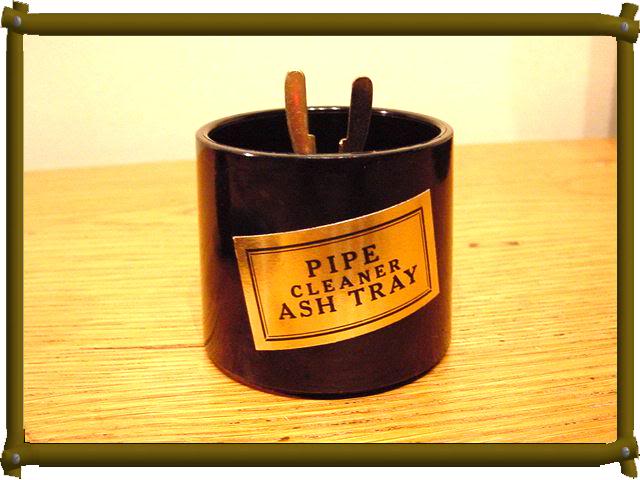
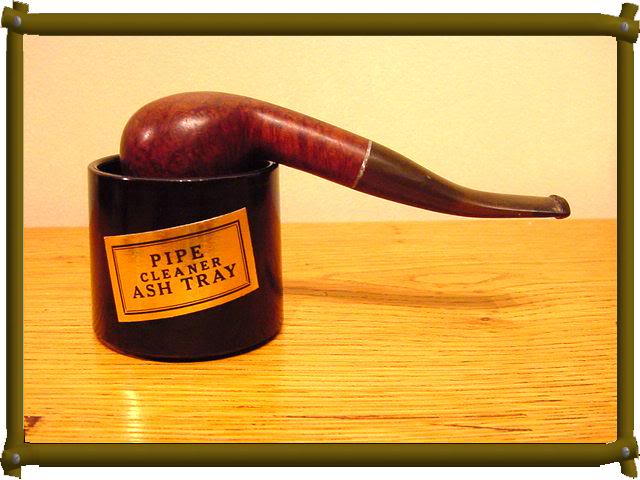
One of the side hobbies that comes with being a pipe smoker and pipe accumulator is the collecting of pipe smoking ephemera. I am always looking for old pieces that go along with pipes whether they be Bakelite pieces such as Wunup Baccyflaps, ash trays or tobacco jars or other interesting pieces of pipe paraphernalia. Something about these old pieces brings to mind quieter times. It makes me wonder if I am just an old soul born in a wrong era! Ah well, I continue to pick up interesting pieces along the way and enjoy having them in my pipe cupboard in my office. The one that I wish to show you all today is a great little piece – a Pipe Cleaner Ash Tray made out of Bakelite.

Image

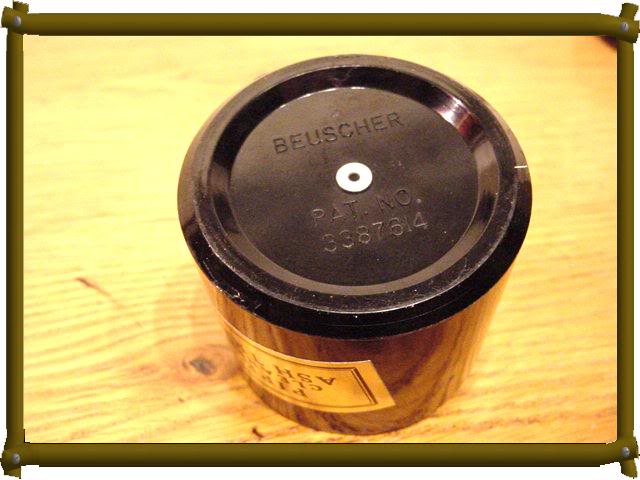
On the bottom of the ashtray there was a patent number cast in the Bakelite. I used that number to research the patent information on this interesting piece of ephemera. One of the beauties of the internet is that you can quickly do a patent search of the United States Patent Office Database. This website is your entry to a world of historical information on some of the pieces that you may have in your pipe cabinet or on your desk. http://www.uspto.gov/patents/process/search/ Once you are on the site you can search for information either by patent number or by the company name that is on the product. Quite quickly you are taken to a Quicktime picture of the patent information. It is there for you to read on line or you can copy it and save it for later reference. Image

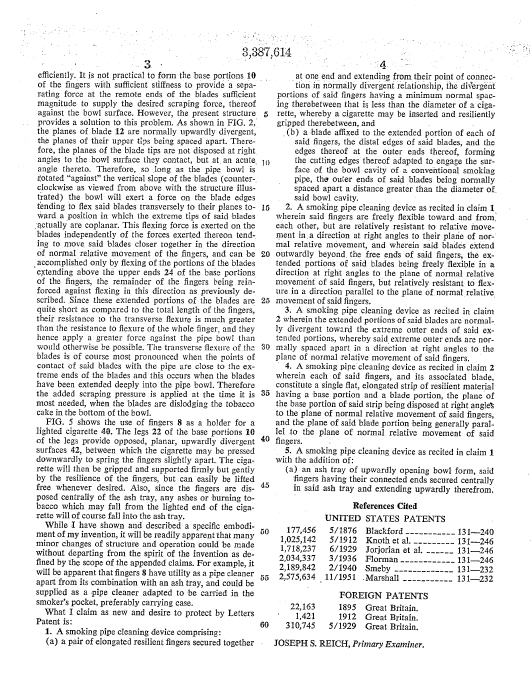
In this case there was indeed a patent taken on the piece by W.B. Beuscher. The patent information included drawing of the invention and also a great verbal description of the piece. I have included them below because they are fascinating information to have at hand for these old pieces. I have used that US Patent Office database for a lot of different patent information from pipes to reamers and always am intrigued by the inventiveness of pipe smokers who are on the hunt for the best tools of the craft for cleaning and smoking their pipes! Have a look at the drawings and the description of this 1966 item.  ImageImageImage

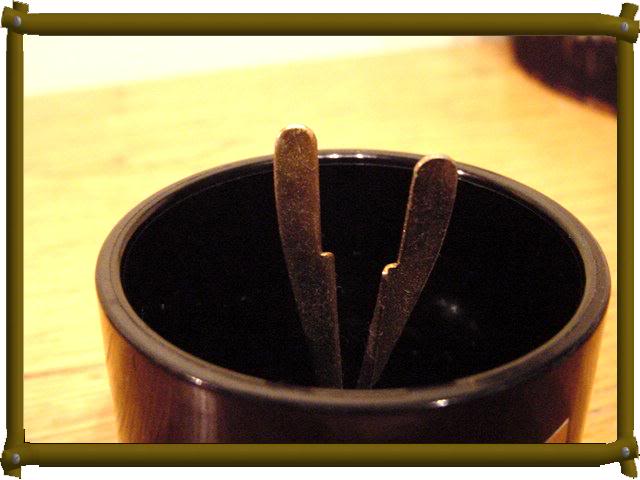
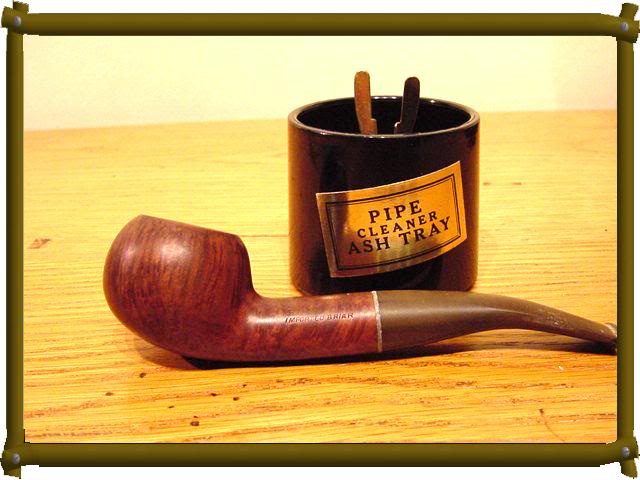
The particular piece that I have is a Beushcer and it is about the size of a coffee or tea mug. It is different from the drawing above only in terms of the ash tray itself. In mine it is a cup and anchored to the bottom of the cup are the patented pair of blades that can be squeezed to adjust to the width of a pipe bowl. The picture below shows the inside of the bowl and the blades a bit more clearly so that you can see the details. Image

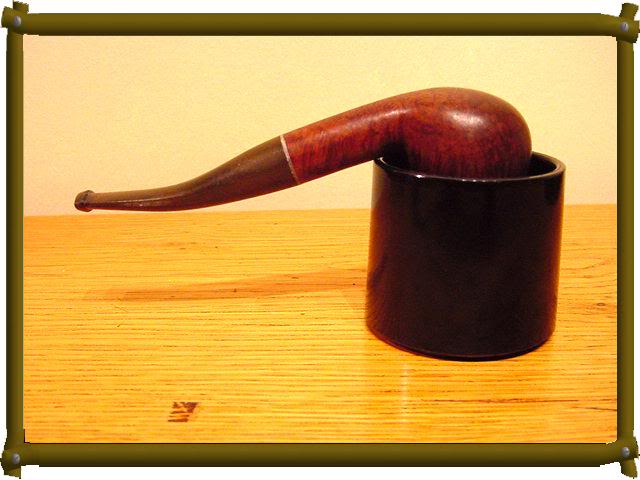
The next series of photos show the ash tray with a pipe that has been fit on the blades. The basic concept of the gadget is that after smoking a bowl of tobacco you turn your pipe over on top of the blades and give it a twist or two and the dottle and remainder of your tobacco is quickly removed into the ash tray for easy disposal. Then is a folded pipe cleaner is used to give the bowl a quick swab, another is run through the shank and stem and you are ready to reload your pipe for another enjoyable bowl in a clean pipe. ImageImage
Image

The inventiveness and creativity seen in these gadgets never ceases to amaze me. I don’t think I will ever use this one but it is a great piece of pipe history to have around. The patent data gives a intimate glimpse into the mind of its creator. It gives me the ability to see what the basic idea was and what the inventor hoped to achieve with his invention.

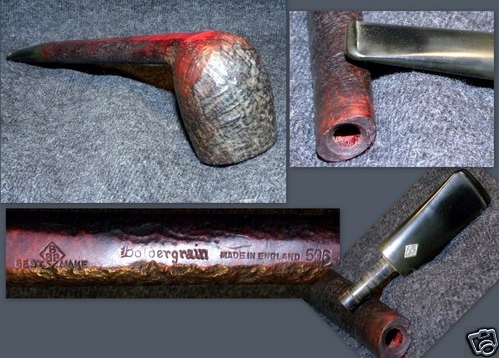
A surprise awaited me when I opened the package and looked at this BBB Boldergrain Canadian


Blog by Steve Laug

When I saw this one show up on EBay I had to have it. Multiple reasons made it one that I wanted to own. The first is that I love the older BBB pipes. I like the way they look and smoke. I like the classic shapes and the old patinas that grace them. Then of course for me was the fact that in my reading and buying estates I had not come across this line of BBB pipes. It was new to me. So I placed a bid on it and won it – it turns out that I was the only bidder so no surprise really.

The first series of four pictures show the pipe as it appeared on EBay. The finish looked to be very worn, the stem oxidized but it did look promising to me. It looked like it would need a bit of work to bring it back to life. The stain would probably have to be redone. The stem cleaned and polished and who knows what the inside would be like. The second picture gave me a bit of hope that maybe the pictures were not quite the whole story. The final picture of the bowl looked like it may have been over reamed and I wondered if there was not a crack in the bowl. But I would know more when it arrived.

Image

ImageImageImage

When the box arrived from England I opened it to see what would await me in terms of cleanup and restoration. You can imagine my expectations and what went through my mind as I cut the tape and the wrapping paper to open the box. When I took the bubble wrap off of the pipe and stem I was amazed at the pipe. It did not even look like the one in the pictures above. The three pictures below show the pipe just after I took it out of the box. The stem was slightly oxidized but the finish was actually not too bad at all. It was nothing that a good buff with some carnauba could not take care of.

ImageImageImage

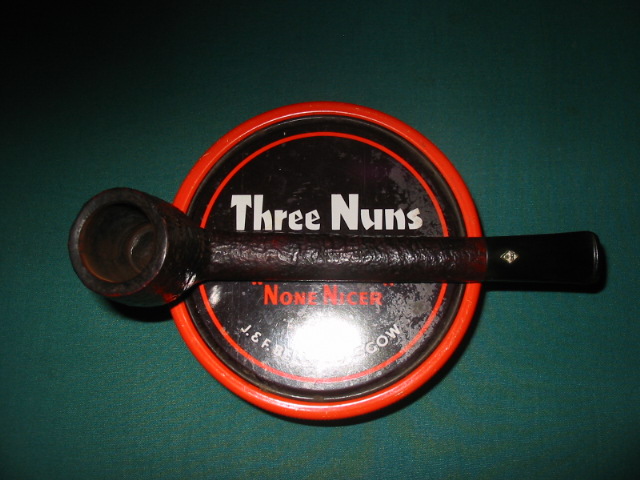
The next series of photos show what the pipe looked like once it was buffed and the stem polished and the oxidation removed. This probably took the least amount of effort to clean of any of my EBay purchases. Even the inside was very clean. The shank and bowl were clean. I ran a few pipe cleaners through to check it out and they came out spotless. There was no old tobacco smell to the pipe at all – it smelled new. I loaded it up and smoked some older Three Nuns that I had around and enjoyed what appeared to be a very clean pipe. The first smoke was clean and flavourful with no hints of ghosts or residual flavours that I have come to expect from old estate pipes. This one was like smoking a well broken in pipe that had been thoroughly cleansed and exorcised of previous ghosts. It has since become a favourite of mine!

ImageImage

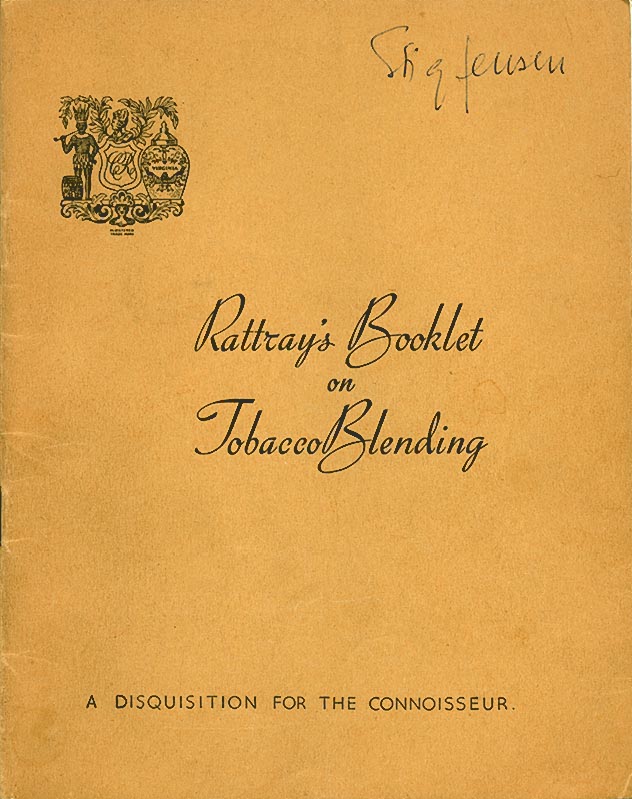
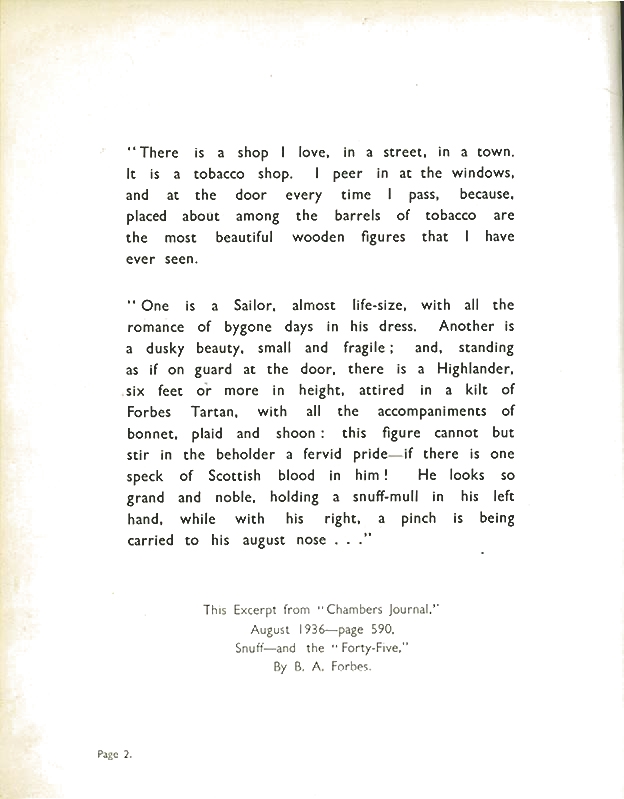
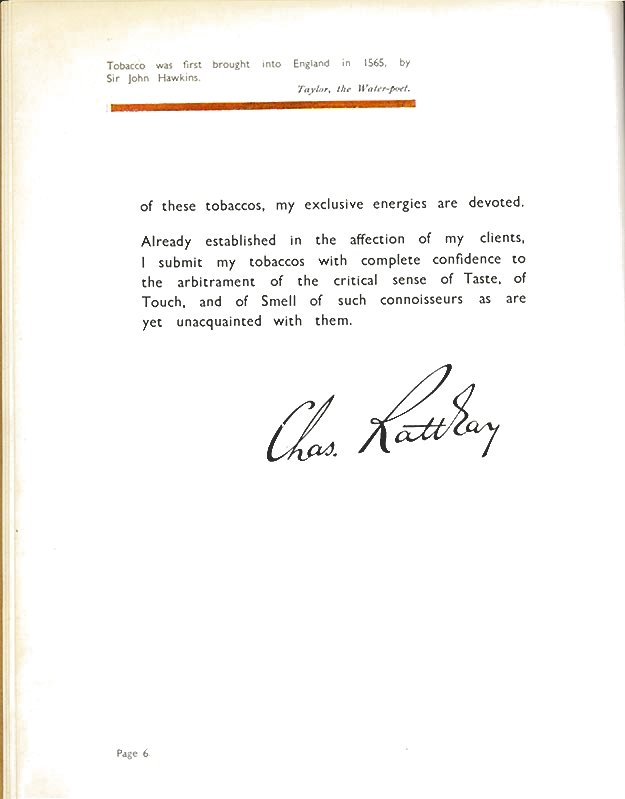
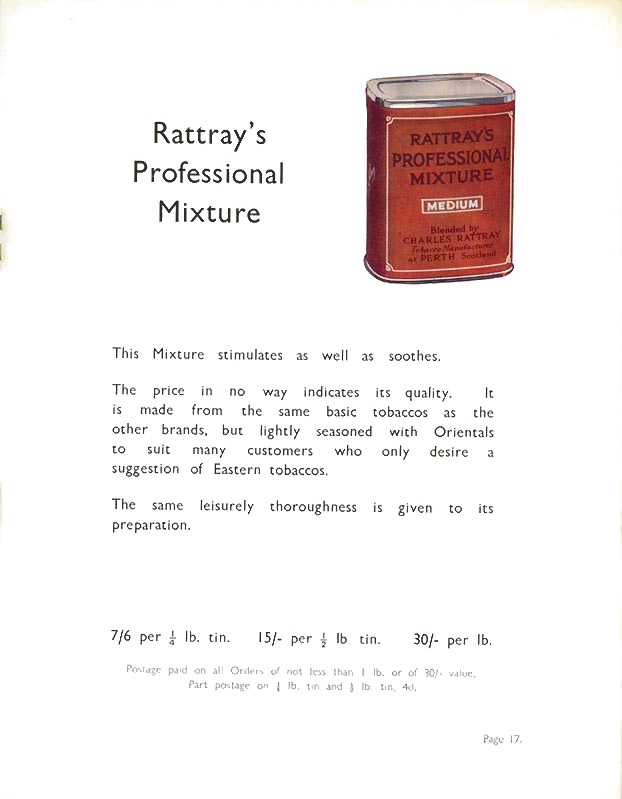
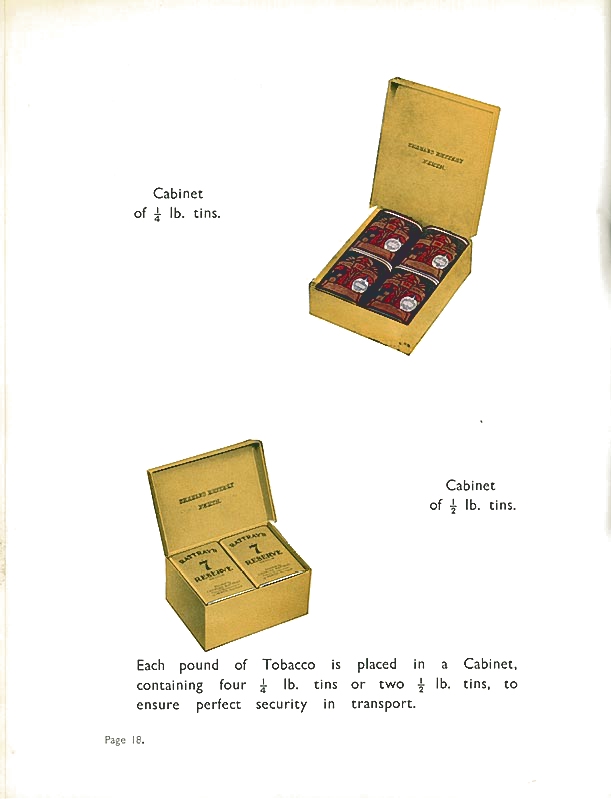
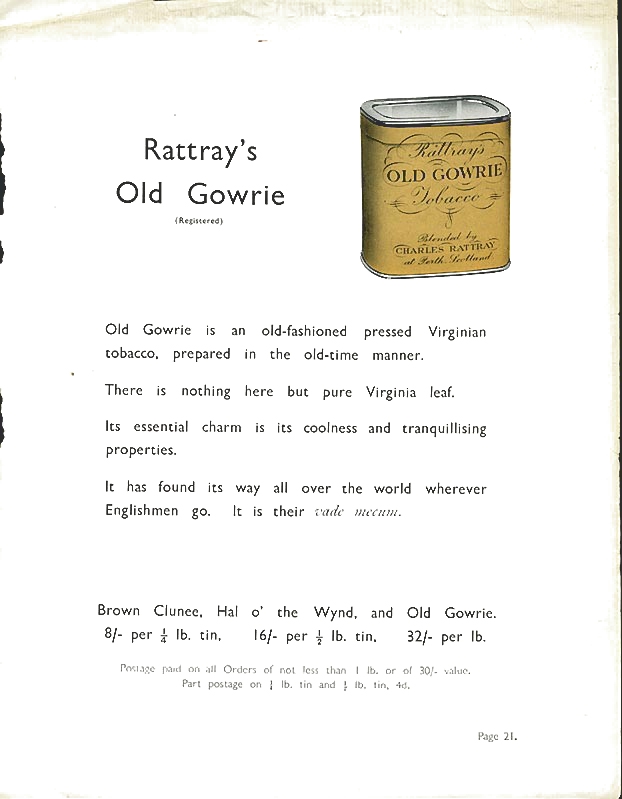
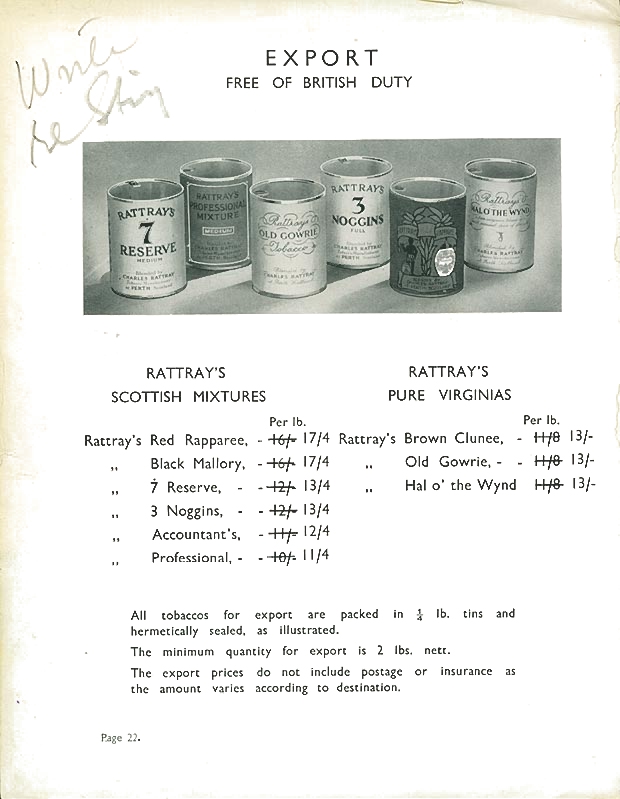
Charles Rattrays of Perth Catalogue


Blog by Steve Laug

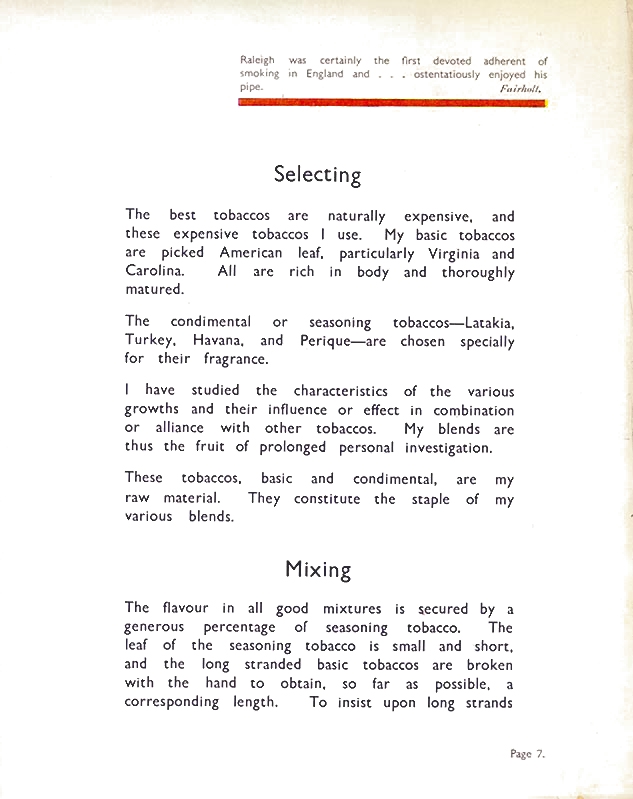
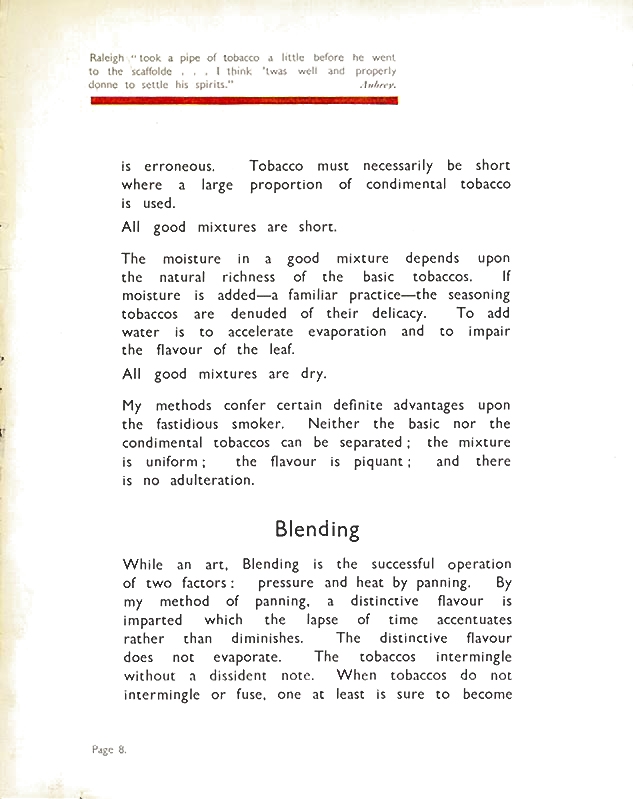
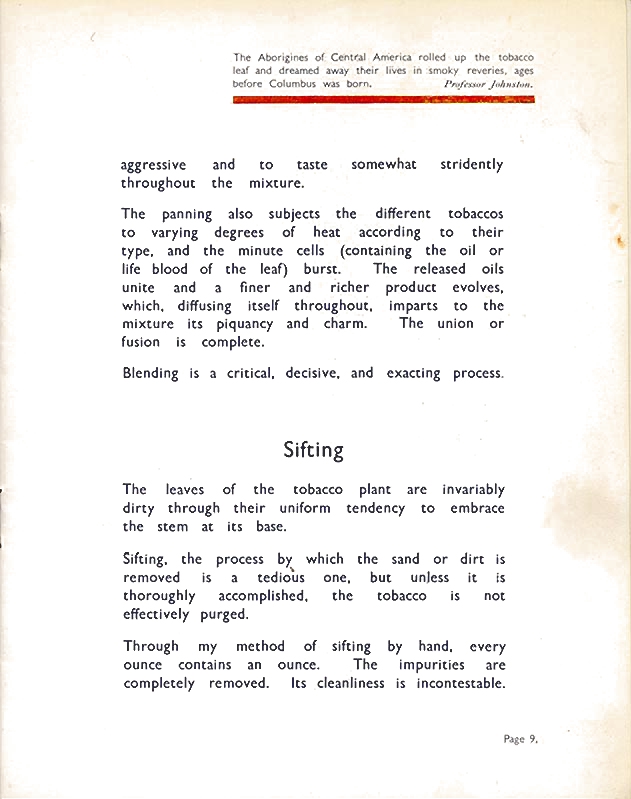
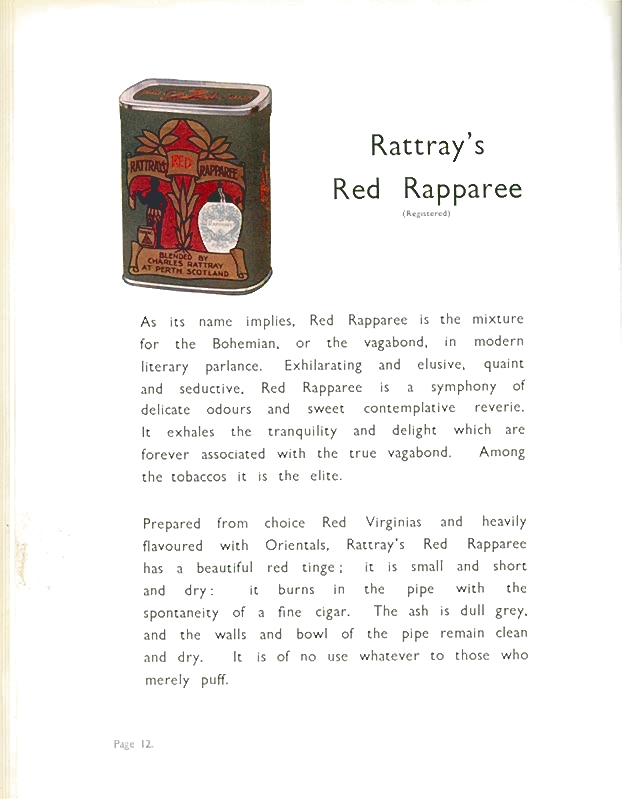
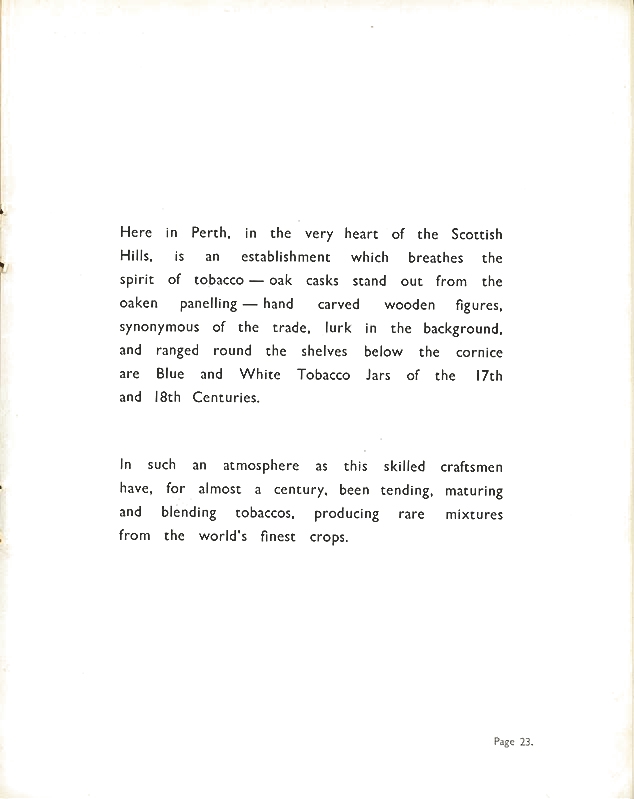
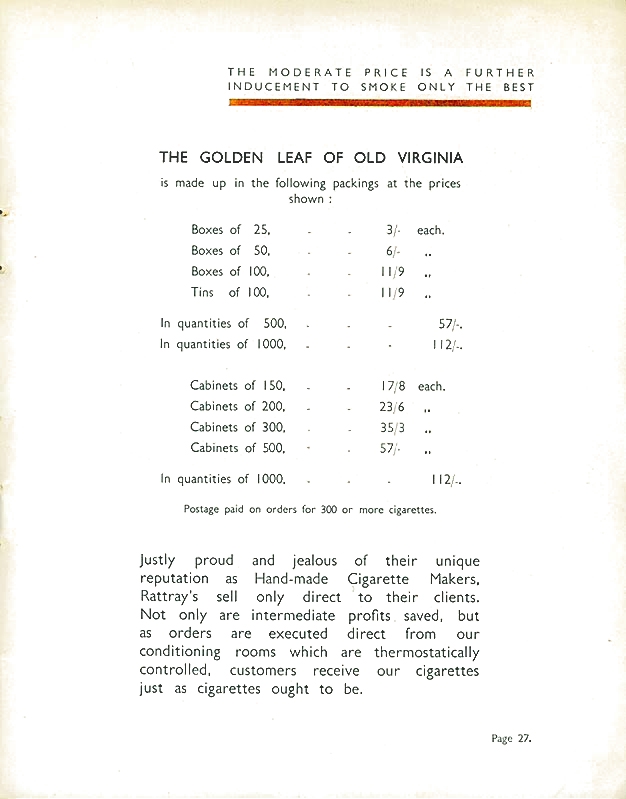
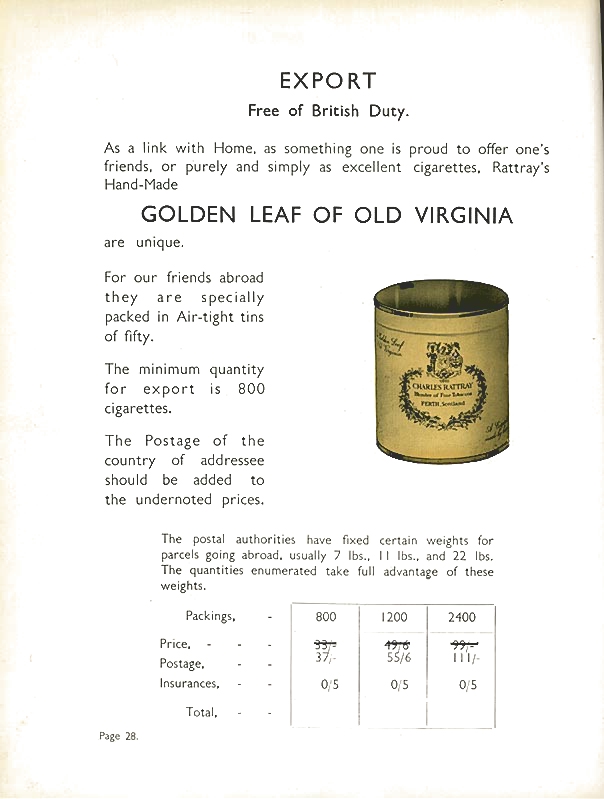
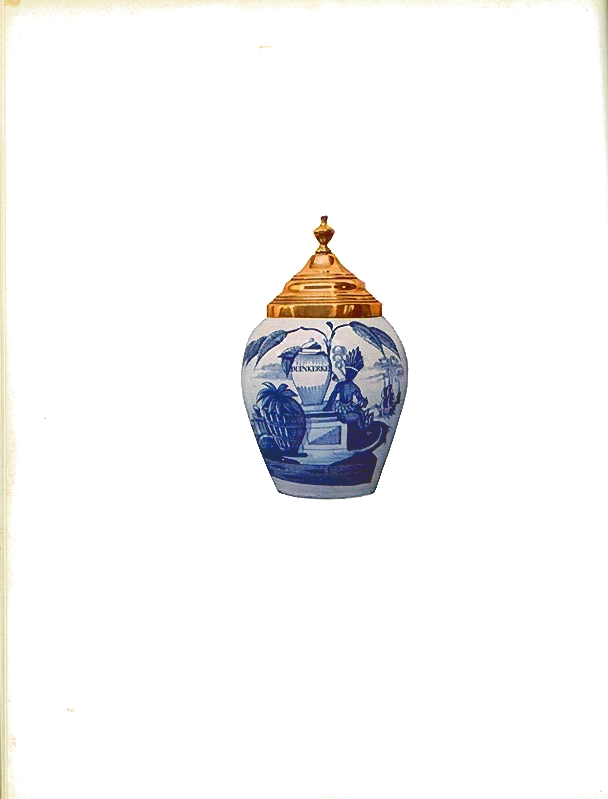
I came across this catalogue from Rattrays of Scotland some time ago. I thought I would post it here so that you can share in the history of the great tobacco blends that came out of Scotland.

ImageImageImageImageImageImageImageImageImageImageImageImageImageImageImageImageImageImageImageImageImageImageImageImageImageImageImageImageImageImage

I Guess I Collect Pipe Reamers


Blog by Steve Laug

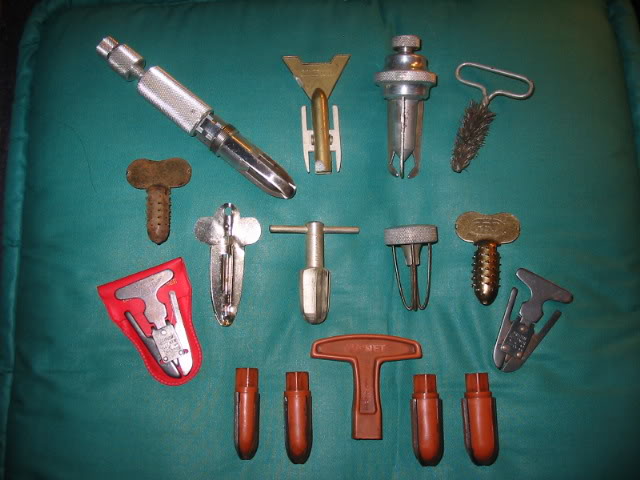
One of the side hobbies that came with collecting pipes was the collection of pipe reamers. I love the creativity and inventiveness that went into each one in my collection. I use many different reamers in the process of refurbishing pipes. It seems like I always need one that is shaped a bit differently than the one I am using so I reach into my box of reamers and almost certainly I will have one that fits the bowl size and shape.

Image

In the top row from left to right – a KleenReem reamer, an Atlas Rocket, A Rogers Rocket, and bristle brush on a handle. The KleenReem is one of the reamers that I use almost all of the time. It is adjustable and has a built in drill bit that work well in cleaning out the shank. The Atlas Rocket is spring loaded and work in both conical bowls and U shaped bowls. I use it on lightly caked pipes that I am cleaning. The Rogers Rocket is a bit of overkill but works well on U shaped bowls as the blades are adjustable. The steel bristle brush is very good for just knocking off lightly coated bowls and as a finish to bowls that I have reamed.

The second row from left to right – A Hedgehog Reamer, a no name folding reamer, a Dunhill T handle reamer, a spring steel blade adjustable reamer, a GBD reamer. The Hedgehog and the GBD reamer are similar – they are a steel bullet shaped end with a key top that has sharp metal spikes all around it. These two I rarely use as they just seem too brutal. The no name reamer is really nice for narrow conical bowls and reaches to the bottom of the bowl. The spring steel bald reamer is great as an initial field ream of the pipe. The Dunhill T handle reamer I have used to finish a reaming of many pipes. It seems to be sharp and is capable of smoothing out the cake and bowl walls to a nice finish. The spring steel blades adjust to fit any bowl size or shape.
The bottom row from left to right – In the red package is a British Buttner reamer and on the far right bottom is a second one. These two I generally have with me when I am travelling and on the prowl for estate pipes. They work great on pretty much any pipe bowl to give me a good cleaning before I bring them home to the shop. Care must be exercised as they can easily make a bowl lose its round shape if you do not hold it vertically when you turn it. In the centre at the bottom is my favourite reamer – a PipNet reaming set. It includes a T handle and four heads of different sizes that each has four blades embedded in the plastic. These can quickly be changed from size to size and any bowl is easily reamed. They do work best on U shaped bowls.

I think since I took this picture I have picked up several more reamers for the collection but these give the basic idea of what I use in the process of a refurbishment. Keep an eye open for reamers while you are out and about in the shops looking for estate pipes or on EBay looking for pipe lots. You never know what kind of great tool you are going to find. If you have some that are not in the picture above and want to part with them drop me a line or comment on this post. We can work something out!

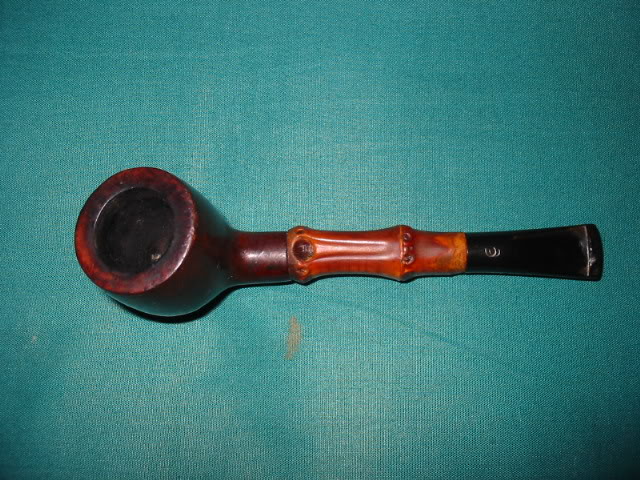
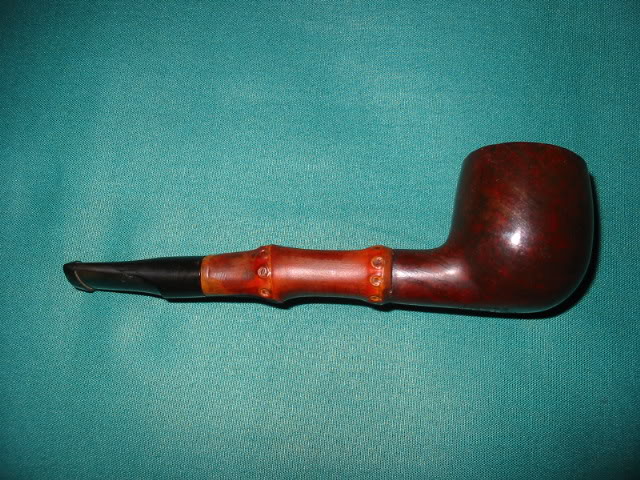
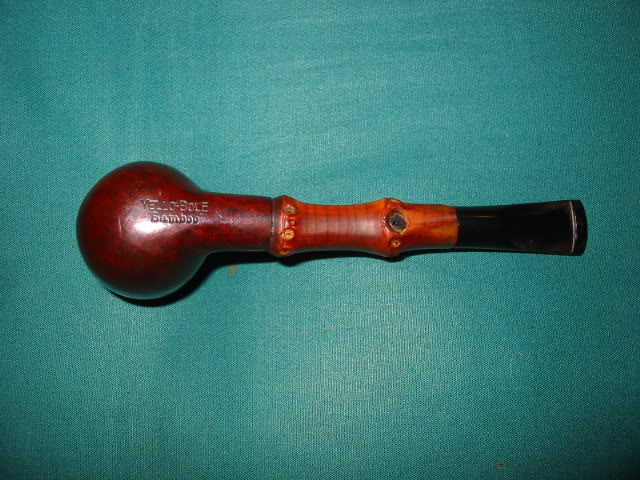
Restoring a Pair of Old Yello Bole Bamboo Pipes


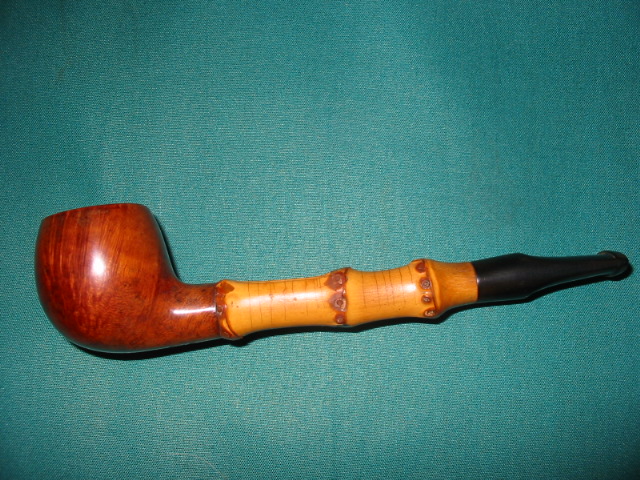
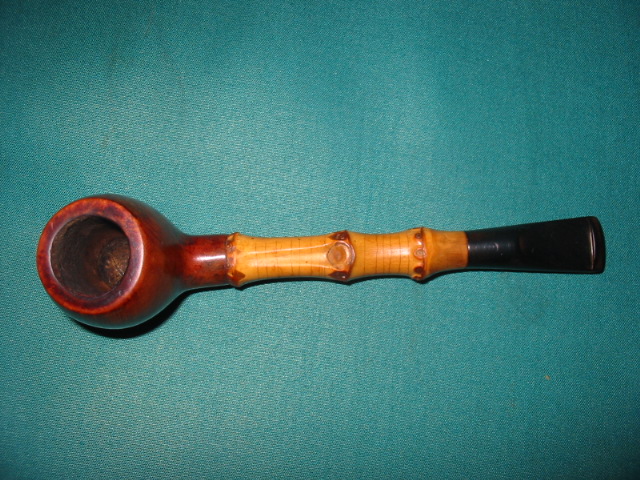
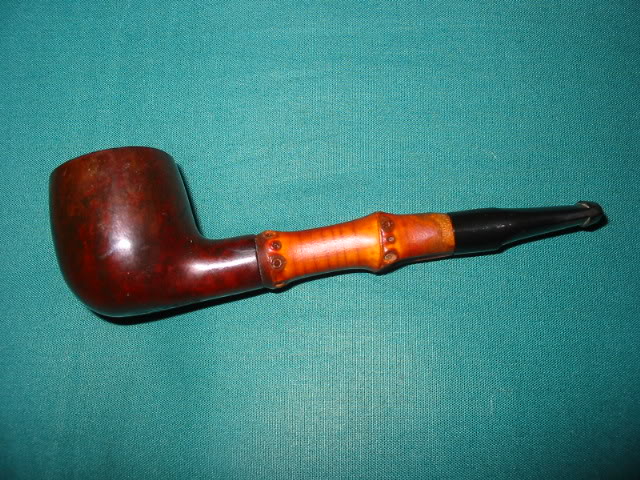
This refurbishment involved two old Yello Bole Bamboos and it was a pleasure. There was a time I did not like bamboo shanks on pipes. They seemed to always be clunky and cumbersome to me. However I have picked up several old ones lately – these two older Yello Boles and Kaywoodie Mandarin. They have changed my opinion of the older bamboo pipes. These old timers have a patina and a spider webbing in the bamboo that lends them age and an aura of being ancient.

The first one came to me in dire need of a thorough cleaning. The bowl was heavily caked and dirty. The finish was bubbled and spotty. The bowl literally had cob webs in it. I wiped out the cobwebs and reamed the bowl. I cleaned out the airway in the bowl and shank with many pipe cleaners and a shank brush dipped in isopropyl alcohol. I scrubbed the outside of the bowl and the bamboo with Murphy’s Oil soap. I wiped off the grime. I then carefully wiped down the bowl with acetone and a cotton cloth to remove the ruined finish and clean the surface of all varnishes and stains. Once done I restained the bowl with a medium brown aniline stain and buffed the bowl and shank. I coated the bowl and the shank with several coats of carnauba wax and buffed with a flannel buff to bring out the shine.
The stem was pretty oxidized and brown. I soaked it in Oxyclean while I worked on the bowl. When I had finished the bowl I took it out of the soak and used micromesh pads to remove the oxidation. I used my normal regimen of pads from 1500-6000 grit and then put it back on the pipe and took it to the buffer to be buffed with Tripoli and White Diamond. The black of the stem came back very well. I coated the stem with Obsidian Pipe Oil and then wiped it off and buffed it with several coats of carnauba wax.

ImageImageImage

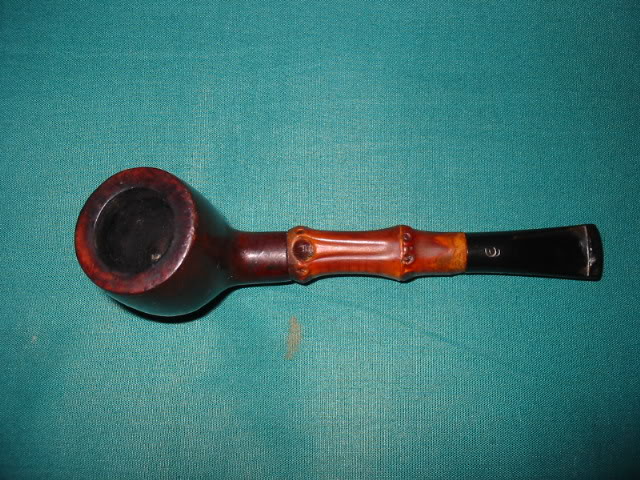
The second one is a darker bowl and a bit different shaped pipe. The one above was more of a pot shape while this one is a billiard in shape. The first had a three knuckle piece of bamboo and this one had a two knuckle piece. The bowl on this one was also in rough shape. It needed a thorough cleaning as well. I removed the grime from the outside of the bowl and scrubbed it and the shank down with Murphy’s Oil Soap as I did the previous one. The bowl was reamed and cleaned along with the shank and airway with pipe cleaners, shank brushes and isopropyl alcohol.

The finish on this one was not in as bad shape so I merely washed it down with isopropyl and then polished it with the buffer using White Diamond and then I gave it several coats of carnauba wax. The bamboo also had a darkening patina on it that I did not want to damage or change so I carefully wiped it down with the undiluted oil soap (not leaving it on the bamboo but merely wiping it down with a soft cloth). I then waxed the bamboo with several coats of wax.

The stem was also pretty oxidized and brown. I soaked it in Oxyclean while I worked on the bowl. After I had finished the bowl I took it out of the soak and used micromesh pads to remove the oxidation. I used my normal regimen of pads from 1500-6000 grit and then put it back on the pipe and took it to the buffer to be buffed with Tripoli and White Diamond. The black of the stem came back very well. I coated the stem with Obsidian Pipe Oil and then wiped it off and buffed it with several coats of carnauba wax.
ImageImageImageImageImage

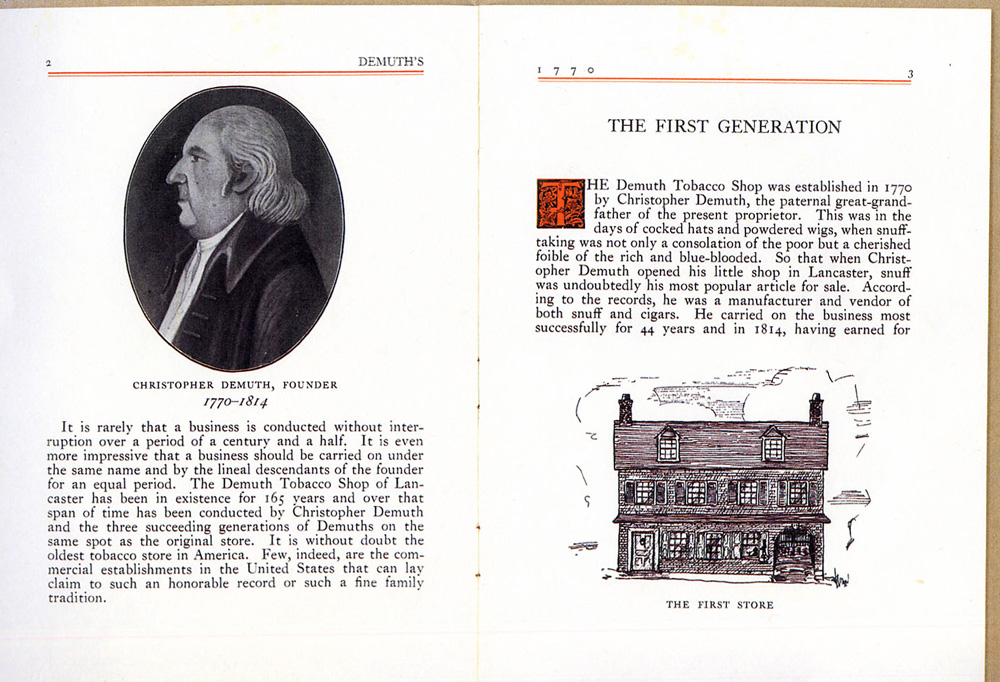
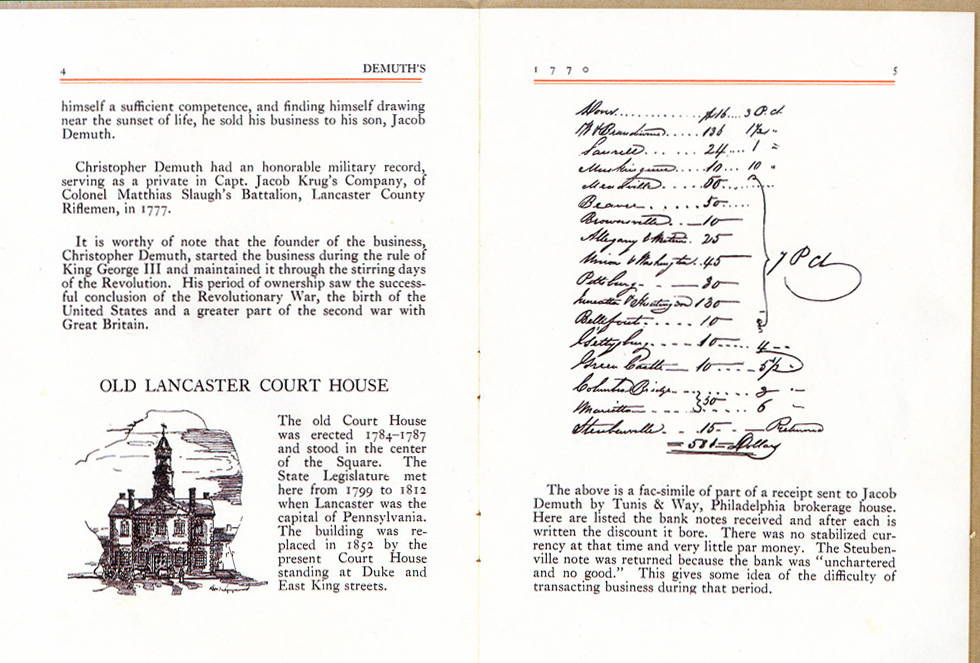
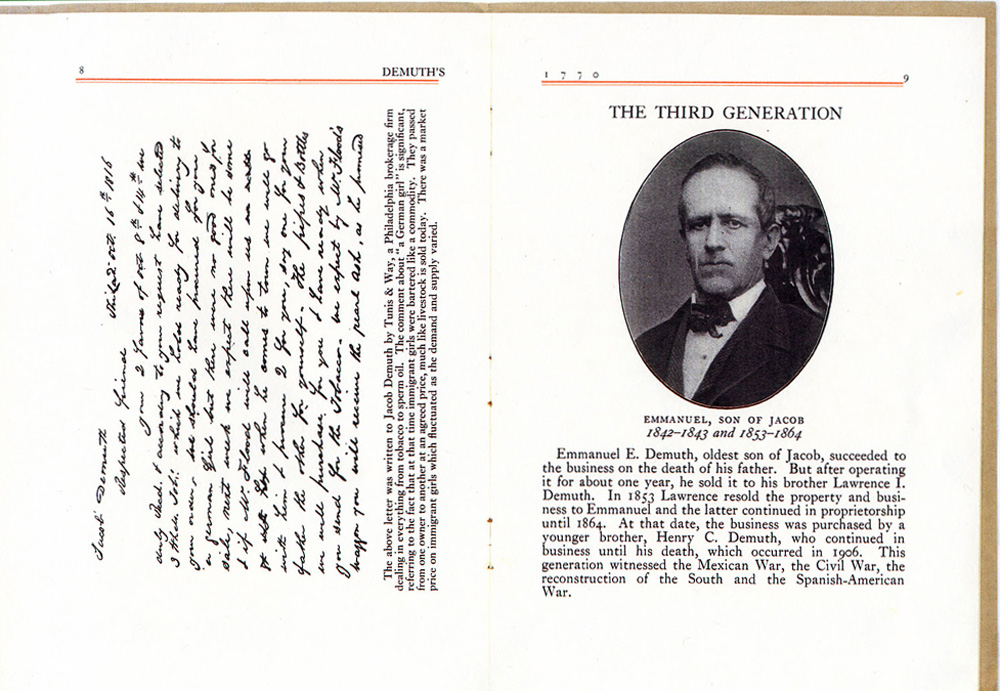
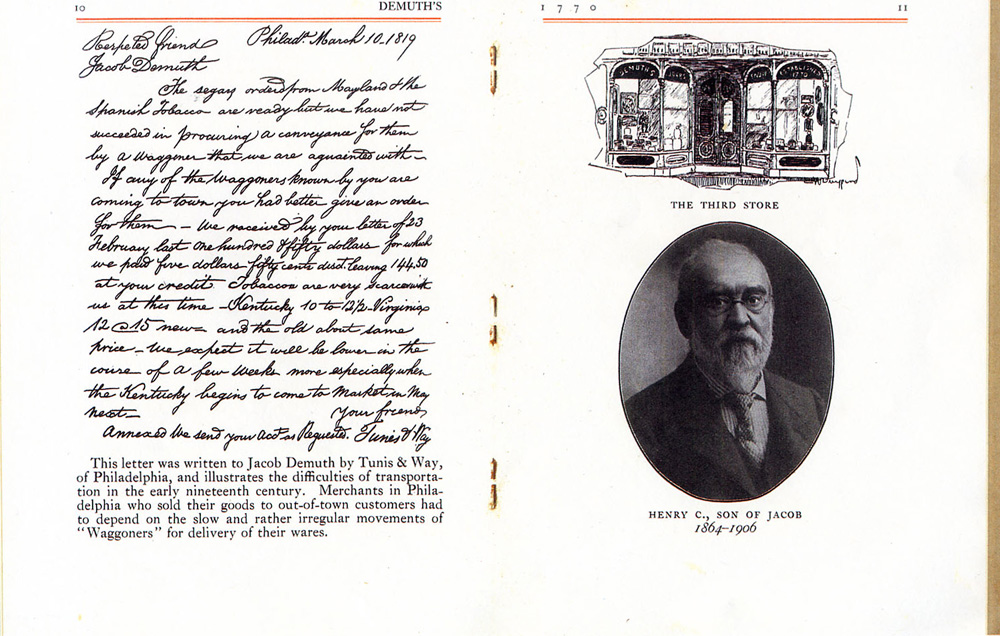
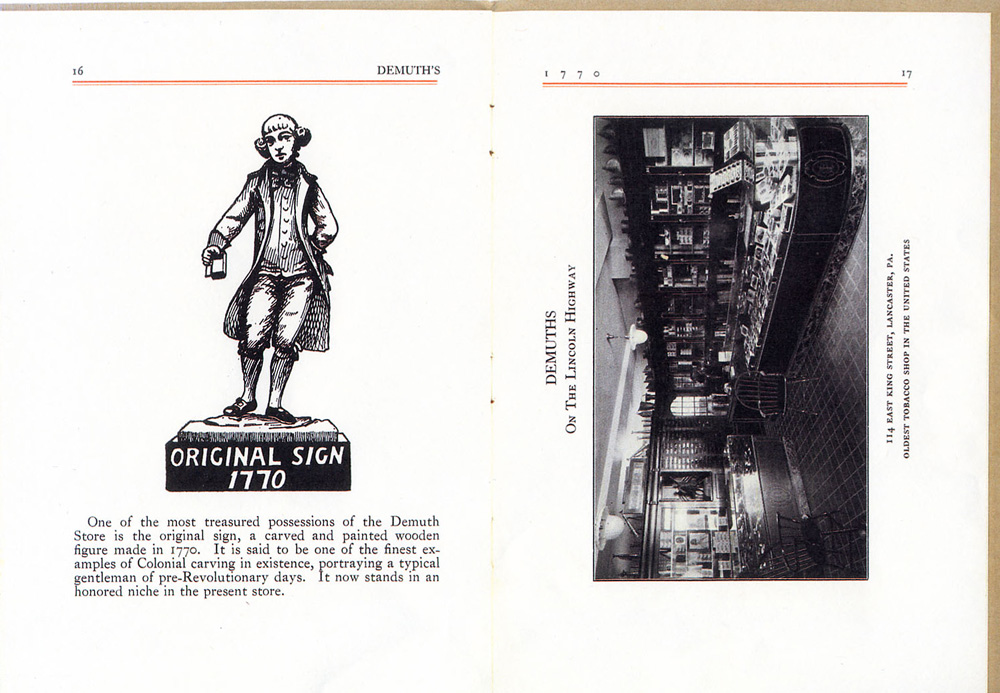
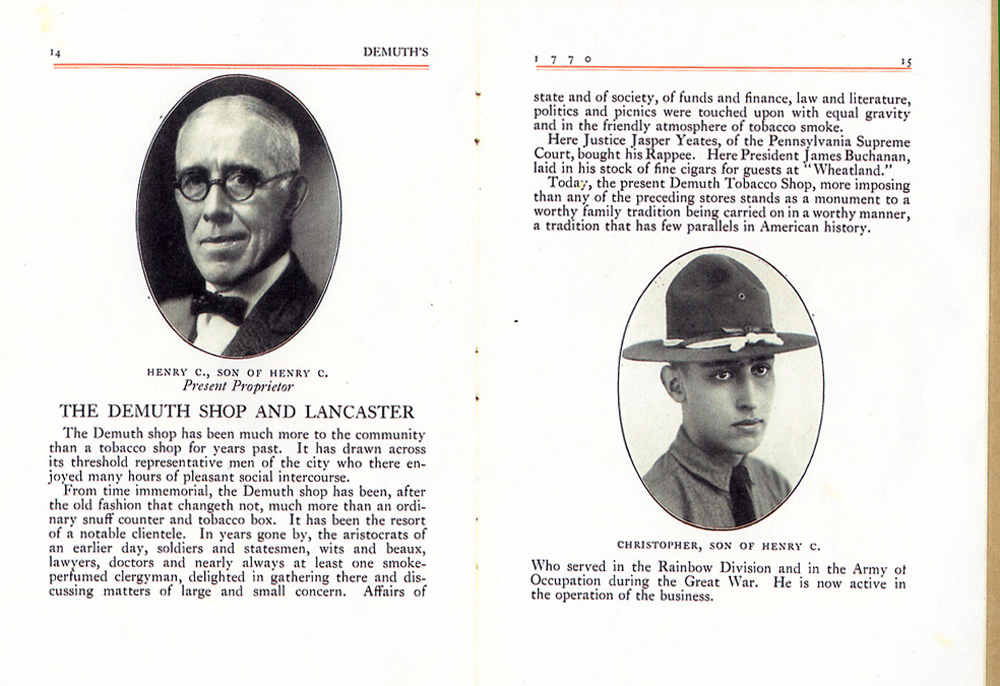
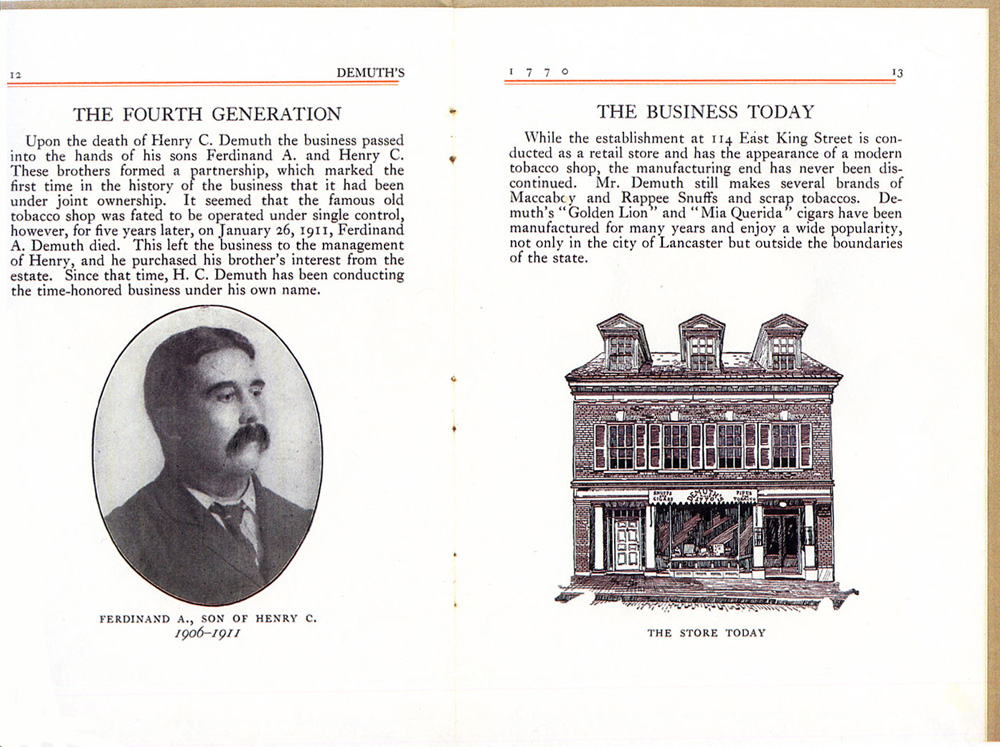
Demuth’s of Lancaster, PA History


This is another older pipe booklet that I have a copy of here. I wanted to post it as well to give more data and pipe history to those of us who enjoy reading that kind of thing. Demuth’s must have been an amazing store in its day! Anybody know if it is still with us?

ImageImageImageImageImageImageImageImageImageImage

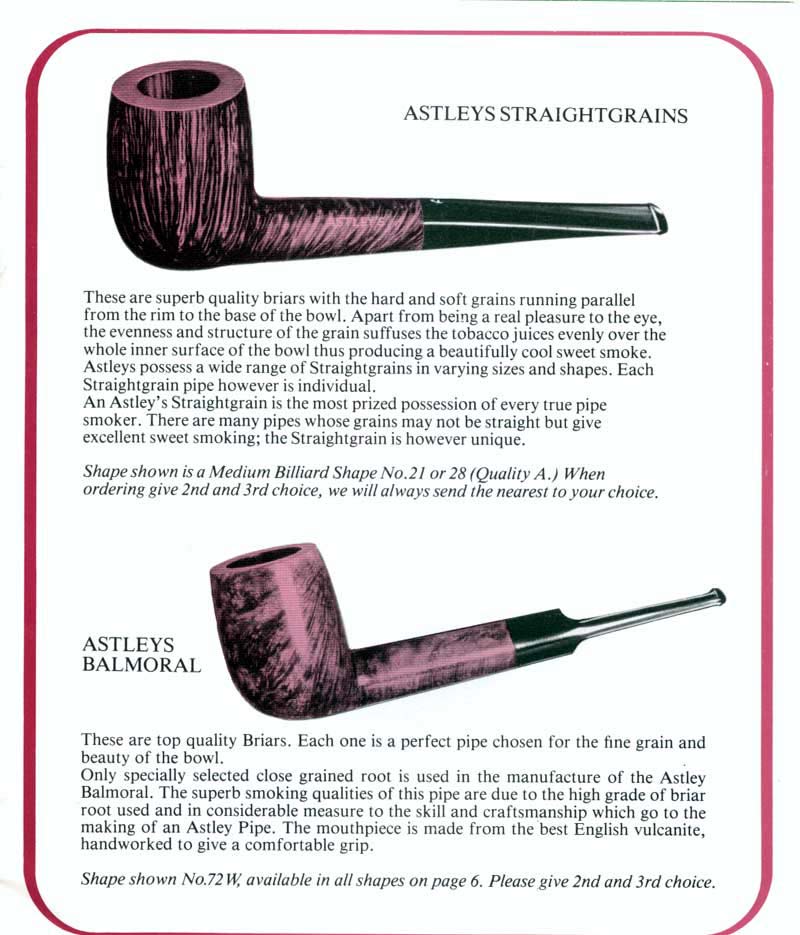
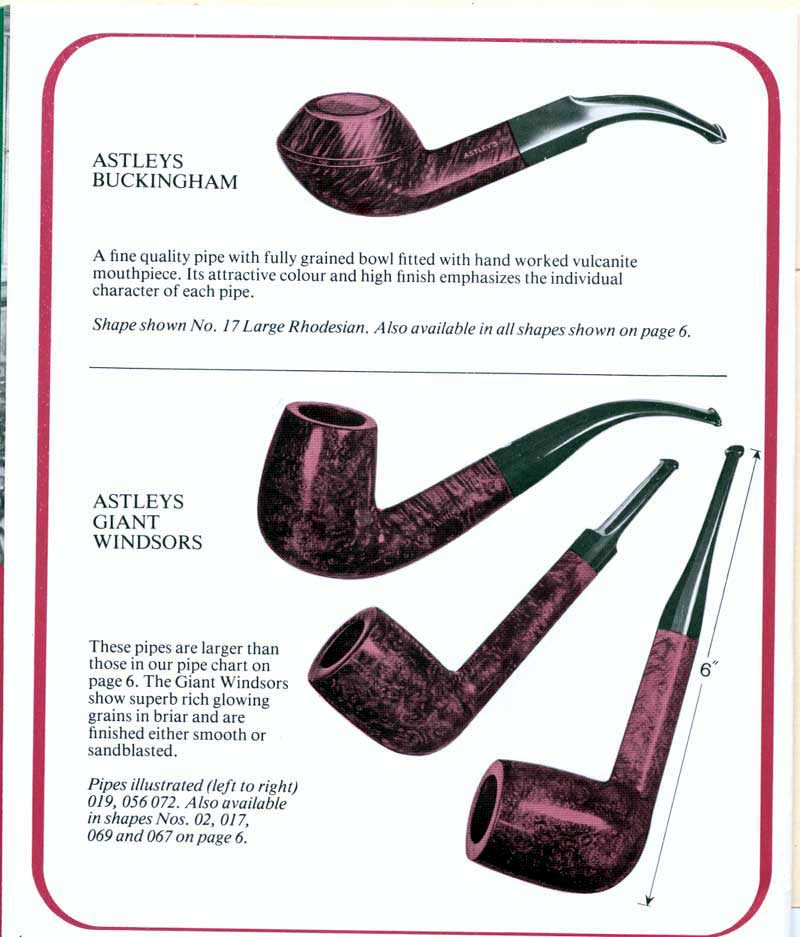
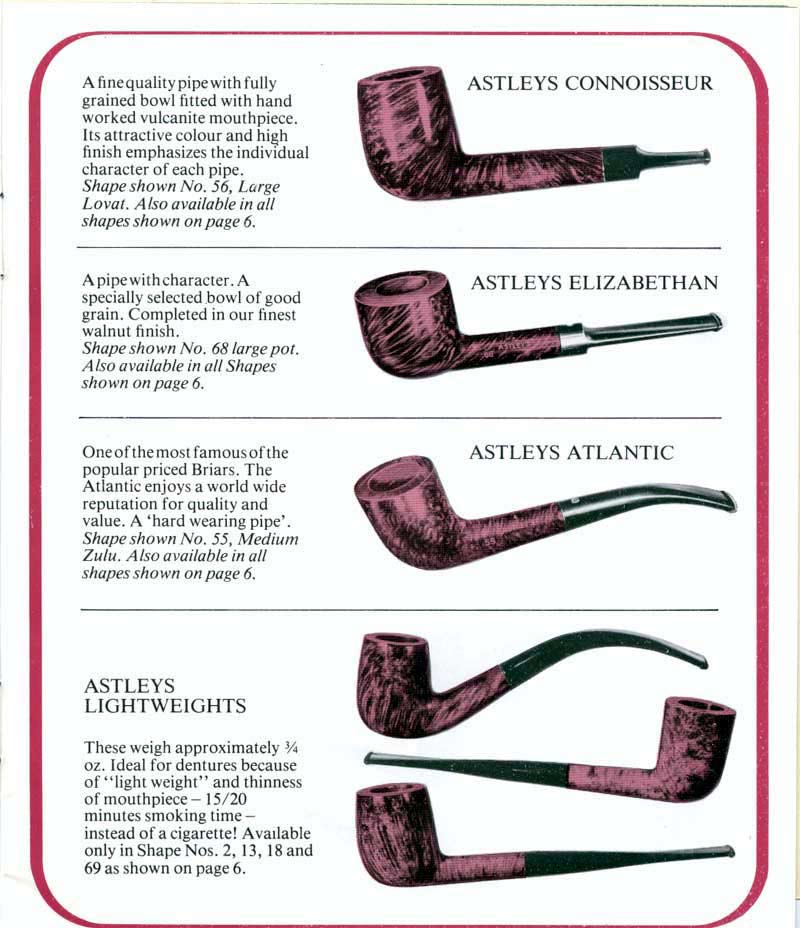
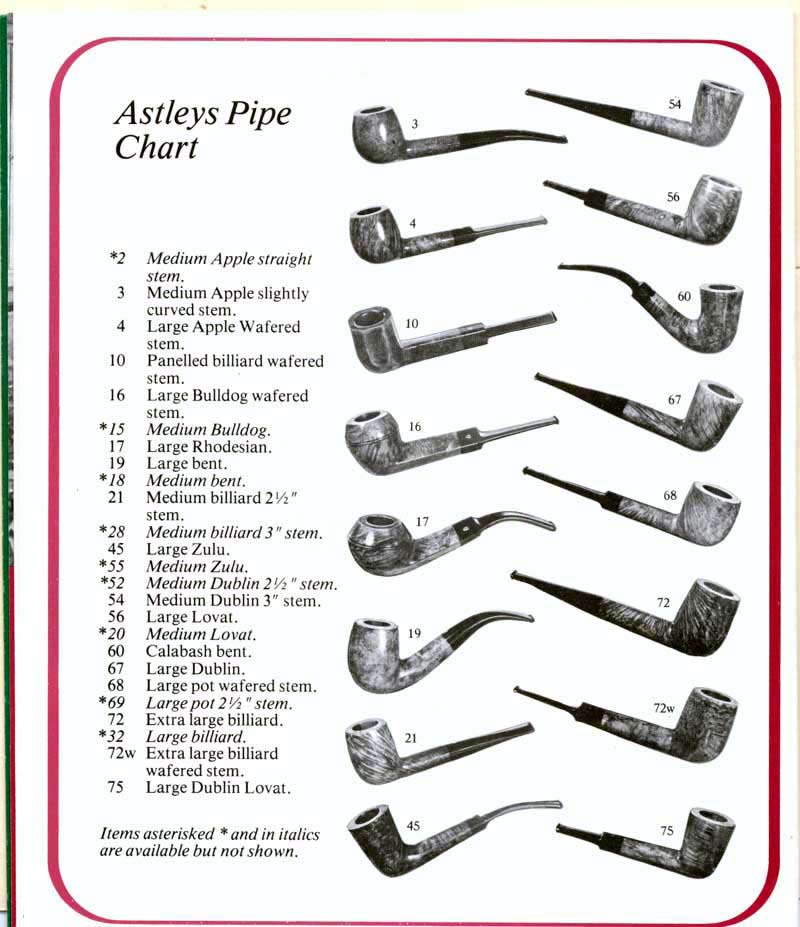
Astley’s Pipe Catalogue


Blog by Steve Laug

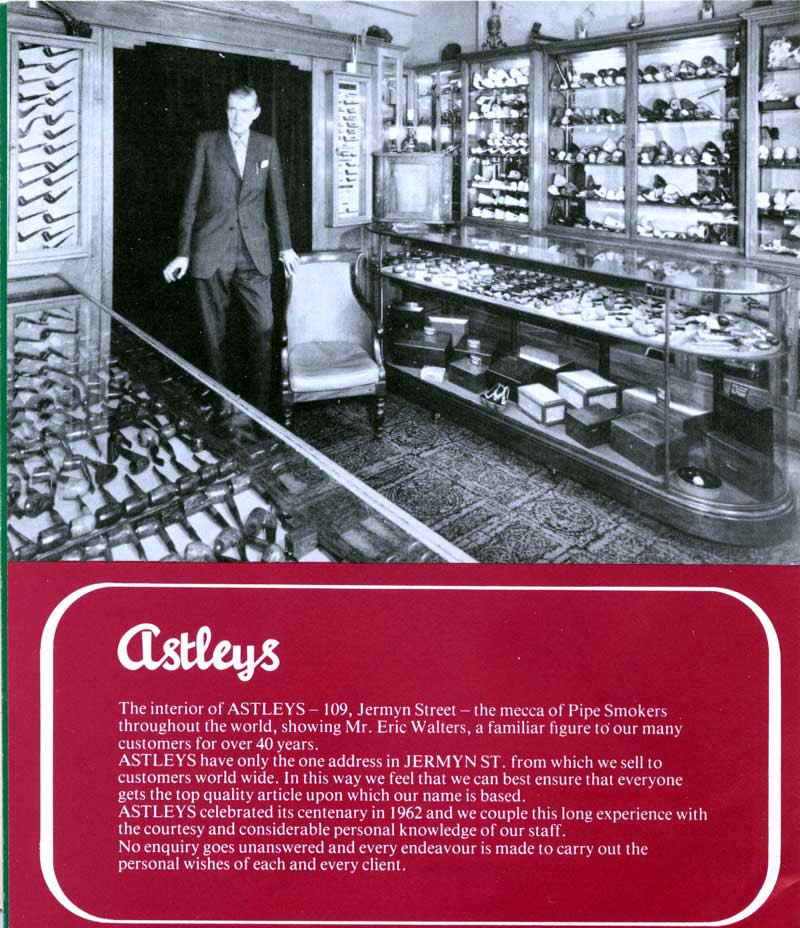
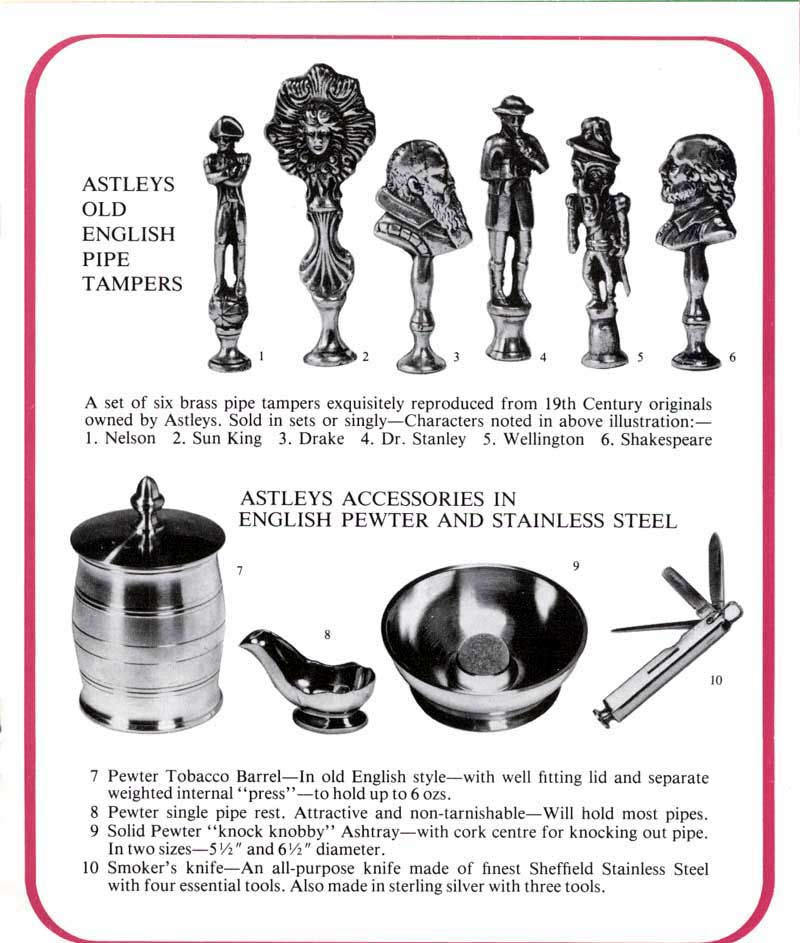
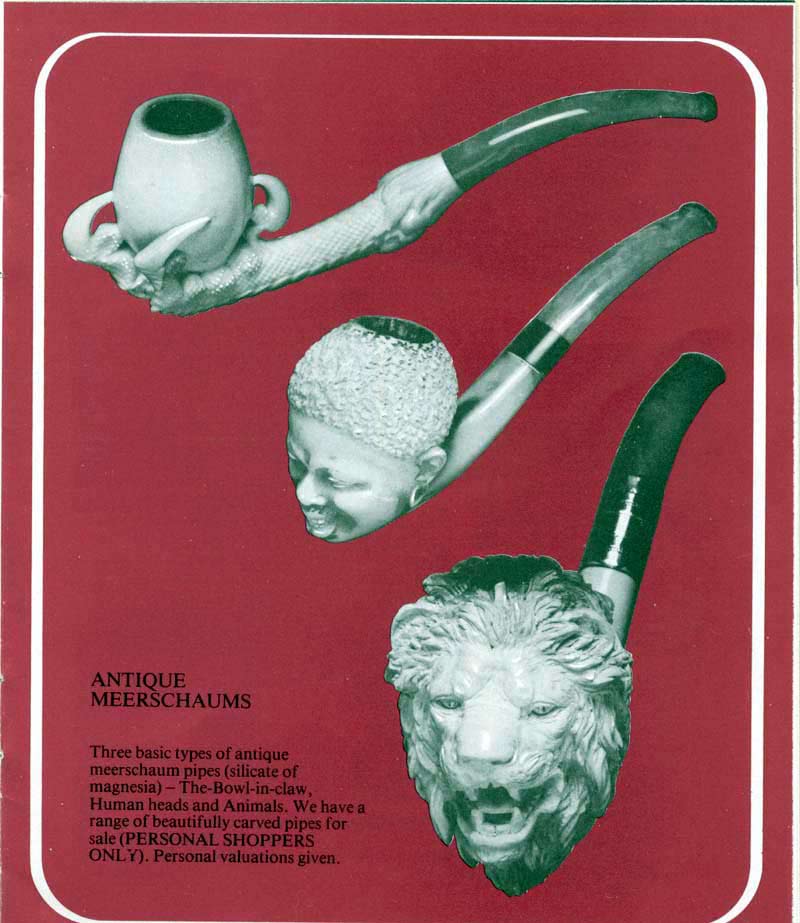
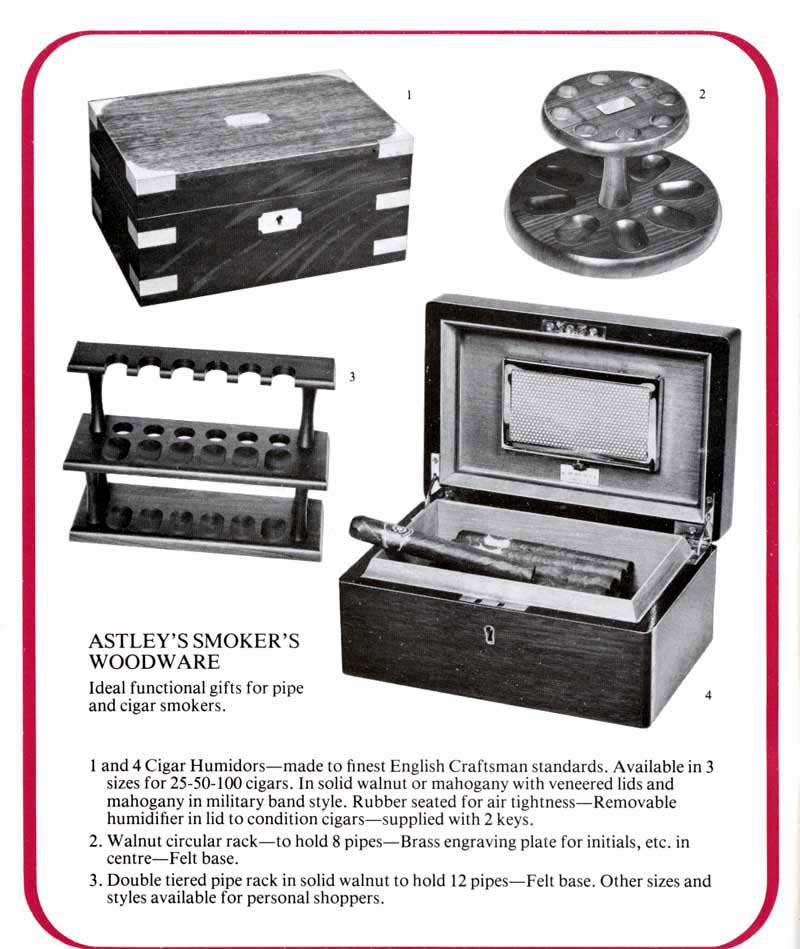
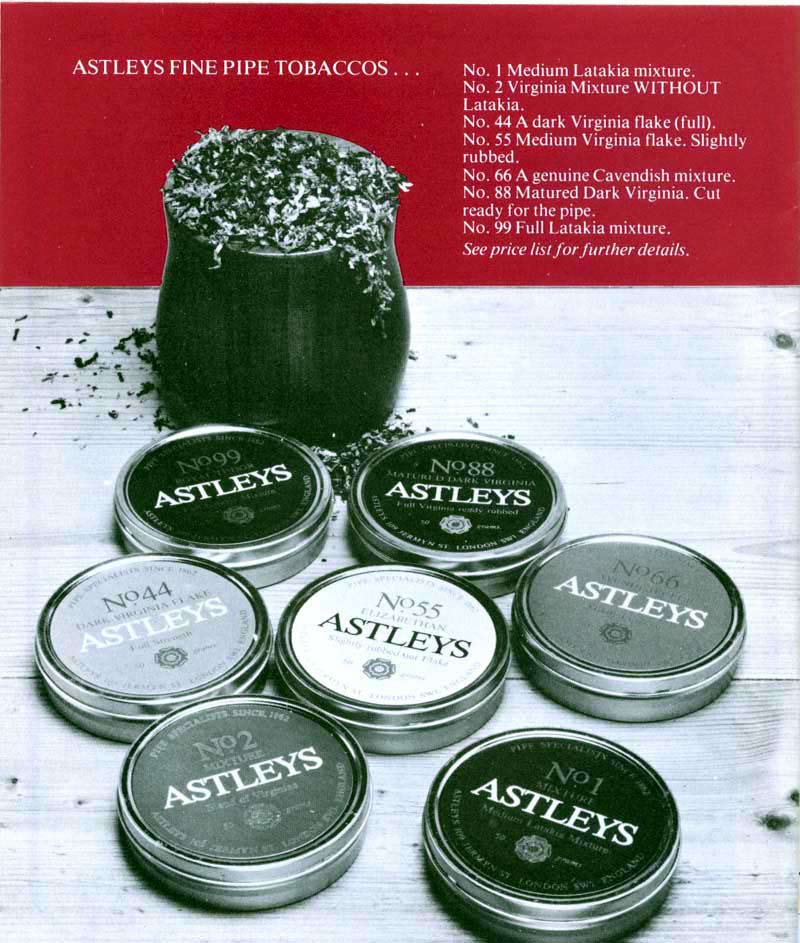
This is an older Astleys of Jermyn St. London pipe catalogue that I had around. I thought I would post it here so you all could enjoy a bit of the history of our hobby. Note the many shapes and shape names that are in the catalogue.

ImageImageImageImageImageImageImageImageImageImageImageImageImageImageImage

Reflections of an amateur refurbisher


This week after seeing George Dibos’(of Precision Pipe Repair) three part post on cutting a stem from rod stock that he shared on Smokers Forums I have to say that I am left to confess that I am truly an amateur refurbisher. I am not downplaying the work I do or the pleasure I get out of my craft but only wish to acknowledge that there are true masters of the craft. George is truly a master at what he does. His careful attention to minute details of repairing pipes makes his refurbishments some of the best in the business. He is able to replicate stems that are incredibly matched to the originals. I am in no way negating the value of doing the work ourselves but it is acknowledging those who are leading the craft and creating beautiful work. I stand in awe of him and others like him who make this work look so easy. I must say that in comparison to them I feel a lot like a bush mechanic in the company of truly gifted mechanics.

I have no trouble acknowledging the fundamental difference between the work I do and what these gifted individuals in the pipe restoration/repair community do. It is truly no different than recognizing the difference between artisans who carve pipes as a livelihood and those who do it as a spare time hobby. Both are artists in their own right. To a varying degree there is a difference in the skill level, if not by natural gifting, certainly by sheer volume of practice. The same is true with pipe refurbishment. Those who have well developed shops, days focused on the process of pipe refurbishment, and skill and gifts in using the tools that they have will certainly have more carefully honed skills than the armchair or weekend hobbyist. This in no way makes light of either one. Both are integral parts of the hobby we enjoy.

I don’t have the tools, the space nor the skill set to do the kind of work that George and others like him do. I will probably never be the kind of individual who does what they do because, bottom line, to me it is a hobby and something I do for relaxation and not a vocation. I use what I have to do what I can and invent what I need as I go along. Part of the joy of the hobby for me is not just doing the work in the best way I can, but always learning new and better ways of doing things. I am a committed lifelong learner who has a hungry mind that is never satisfied with what I know and is always looking for new ways and new information. I love the creative process of refurbishment in that I can continually be challenged to work “magic” on new pieces that come across my desk. But another important part of the joy for me is the task that I have taken on willingly and freely to pass on what I learn to others in our hobby. It is a joy to see others take what I have learned and surpass me in their skill and expertise. To learn tricks from those who have learned from me is part of why I started the reborn pipes blog. I don’t just want to share what I have learned, I also want others to pass on what they have learned and their own refinements on the processes they experiment with. That is why I invite others like Al, Chuck, Fred, Rob, Ed, Bryan and more who share the love of reclaiming old briar and giving it new life.

For me the blog is a way we all can continue to learn from one another, share common ideas and issues and seek to understand how to address them as we work on the pipes on our desks. We can write about what we do and have others try it, refine it and pass on their knowledge. Thus, we create a living “school” in which to continue to develop our craft. It is a place for those of us who are amateur refurbishers, who love to tinker, love the process and the pipe, to continue to learn from each other. Lately I have been using Skype, an online web communication tool, to meet with individuals and work on pipes together. It is quite amazing to talk and work real time with another person on a pipe that they have on their work bench. It works with video and audio so that you can literally look at the pipes you are talking about. Worst case scenario Skype has an instant messaging component that you can type communications between several who are working on pipes. In my work I have used it with groups to have virtual meetings and can see that working really well to have a shop time gathering. I have written an article on one such experience and Part 1 of it was printed in the August issue of Pipe Smoker Unleashed Magazine – http://www.pipesmokerunleashed.com/magazine/august2012.html and is on the blog as a post. The second half of the article will be in the September issue and will soon follow on the blog. Skype provides a real time tool that we can also use to consult with each other on pipe repairs before and as we do them. This is a venue for us to use that is rich with possibilities. I am aware that others use “You Tube” and make videos of their work, but I am reticent to venture into that arena. I don’t know why, as I am sure it is helpful, but it just is not something I am interested in doing. Others may want to do videos and I can easily add them to the blog or they can start their own blogs.

As I close these reflections I have to say that when I look ahead at the future of pipe restoration and refurbishment I am excited to think of all the possibilities and all that there is yet to learn from one another. I also remain in awe of the calibre of work and craftsmanship of those like George. I delight to see the product of their skills and observe so that I can learn as much as I can in the process from them. I will always have to personalize their methods to work on my smaller scale of refurbishing but that too is part of the process I enjoy. I tip my hat to the masters and know that I will probably not live long enough to even come close to that kind of workmanship. However, I take my place proudly in the company of those who tinker at refurbishing and share their love of all things pipes with one another. My plan for the near future is quite simple, I will continue in my tinkering until I am no longer able. Why? Because it gives me pleasure!

Image