Author Archives: rebornpipes

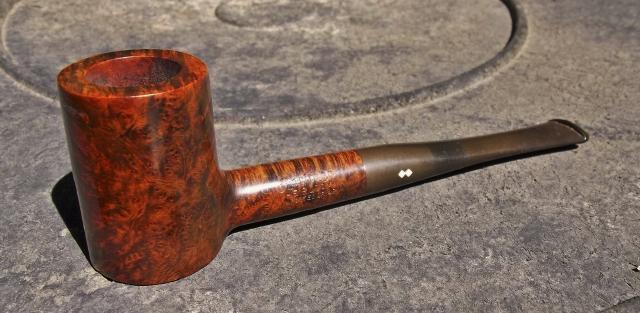
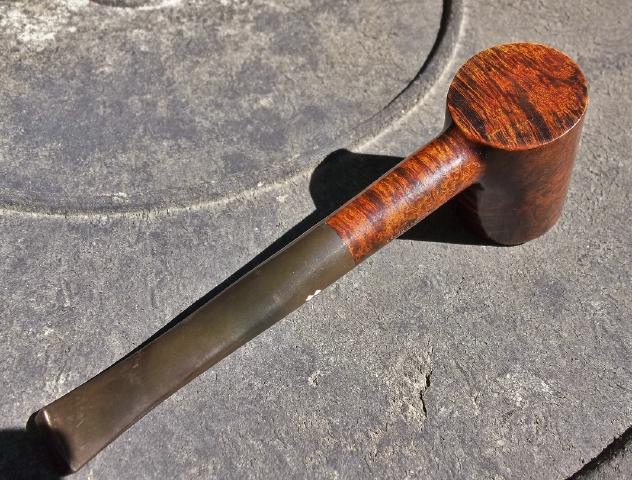
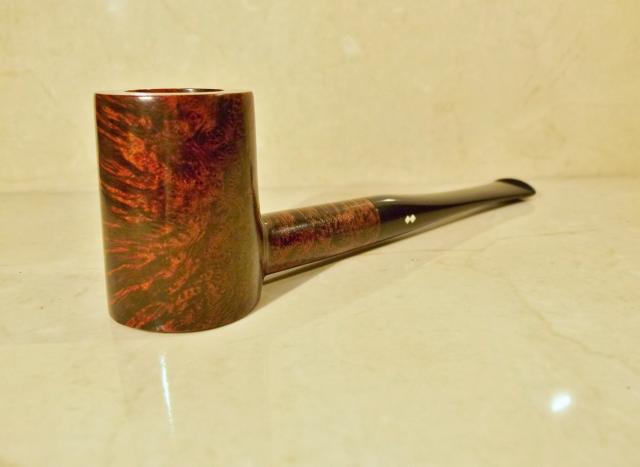
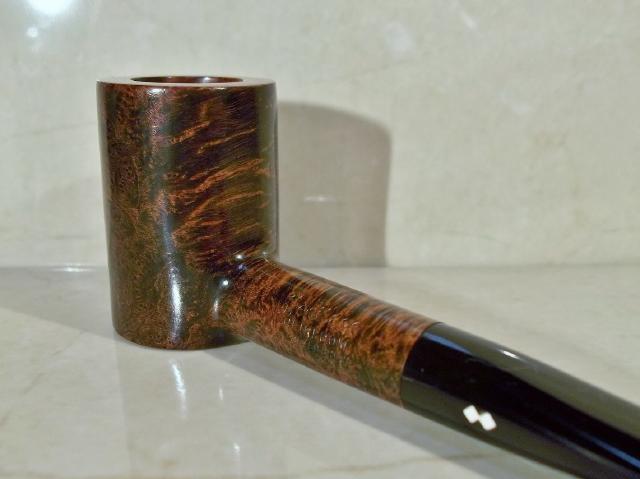
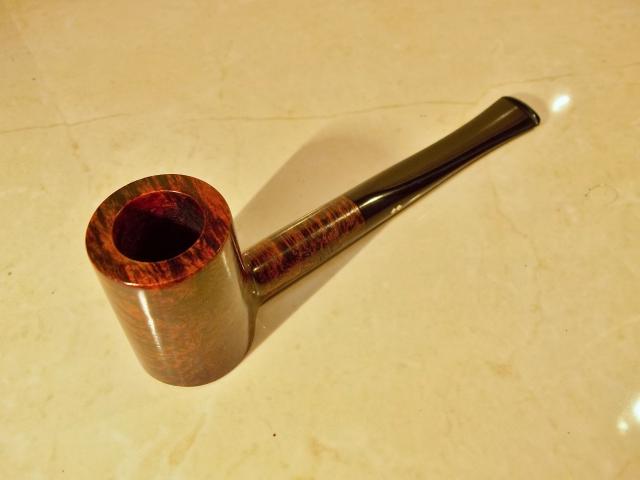
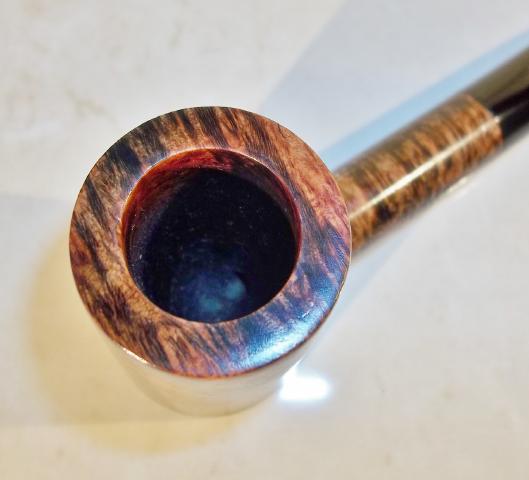
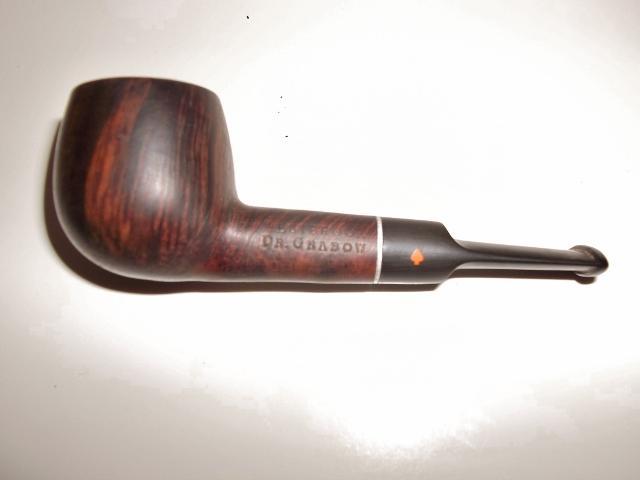
A Very Simple Cleanup on a Dr. Grabow Regal Dublin


Blog by Steve Laug

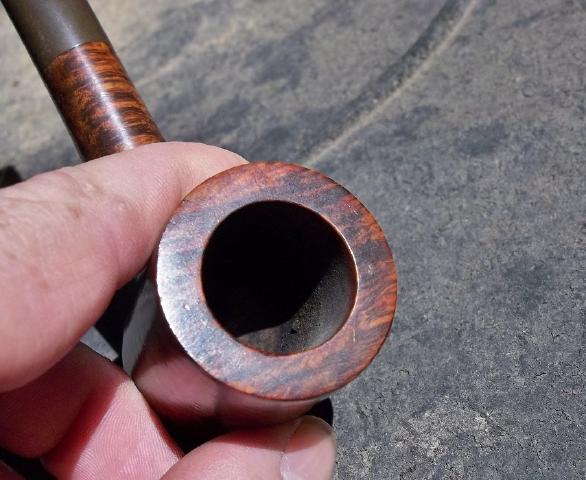
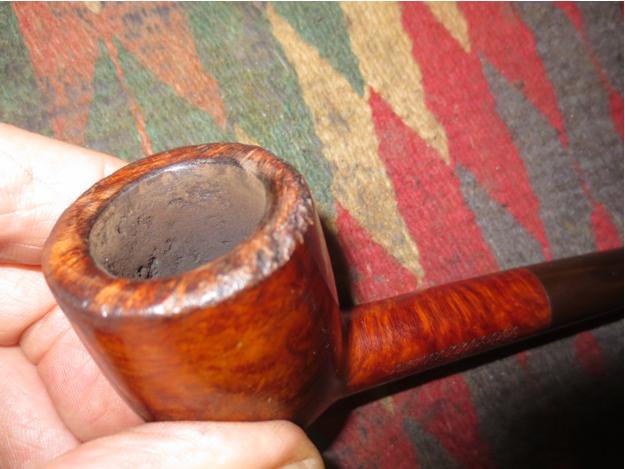
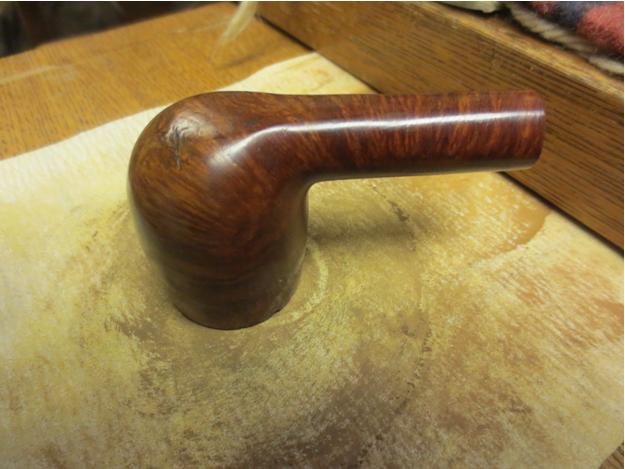
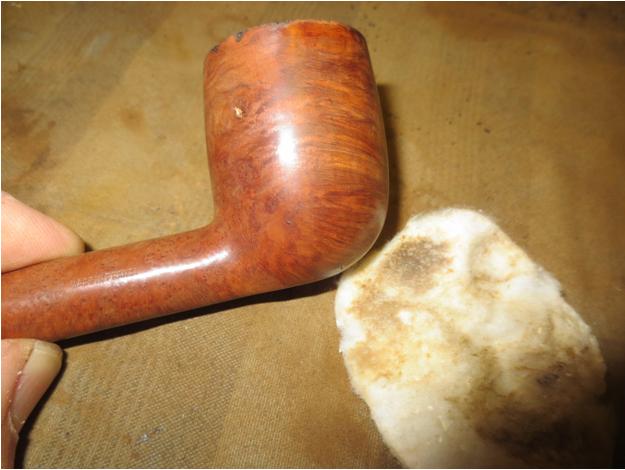
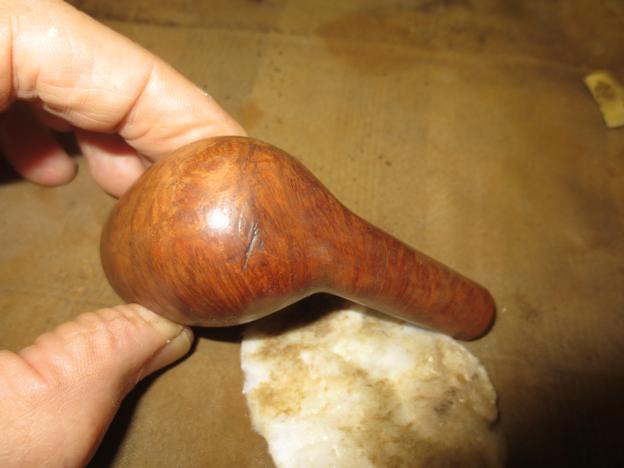
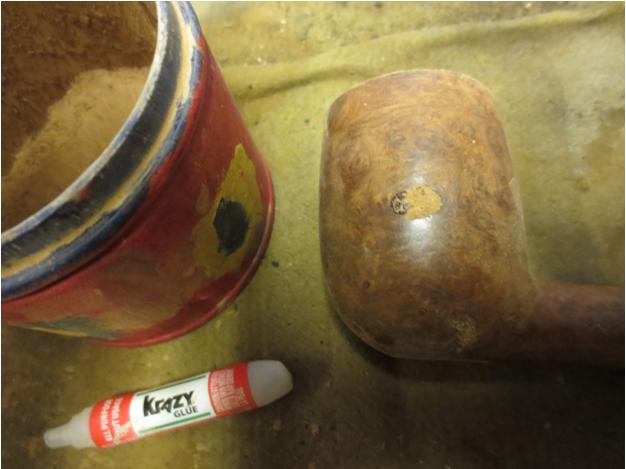
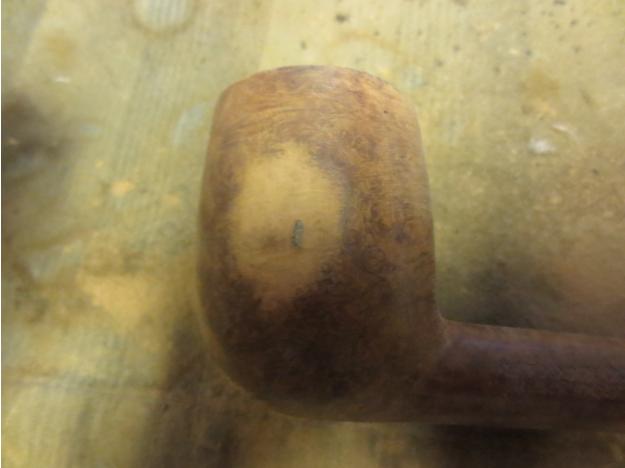
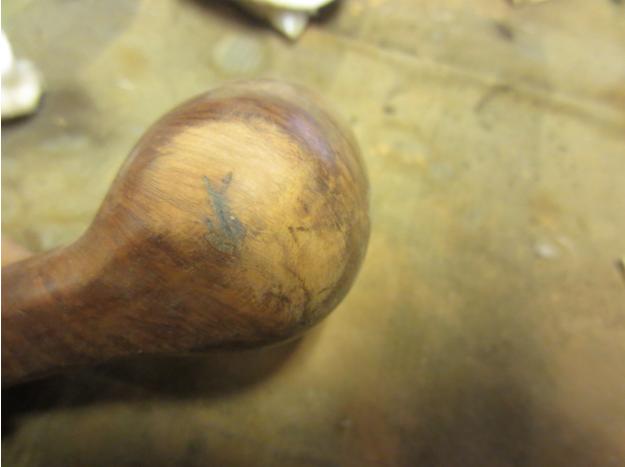
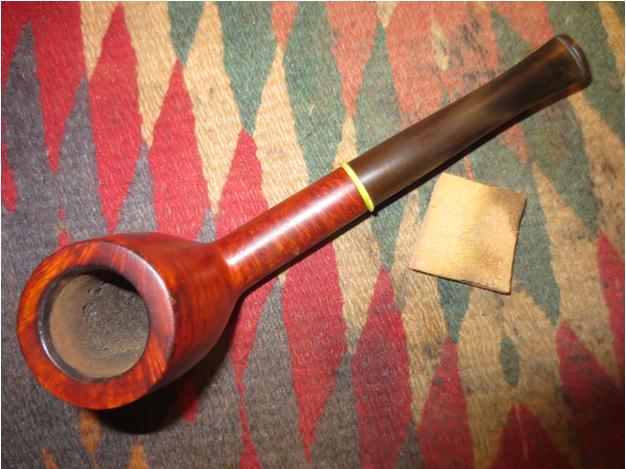
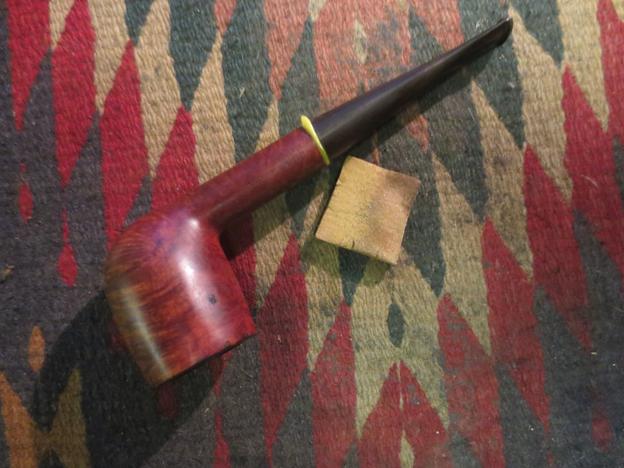
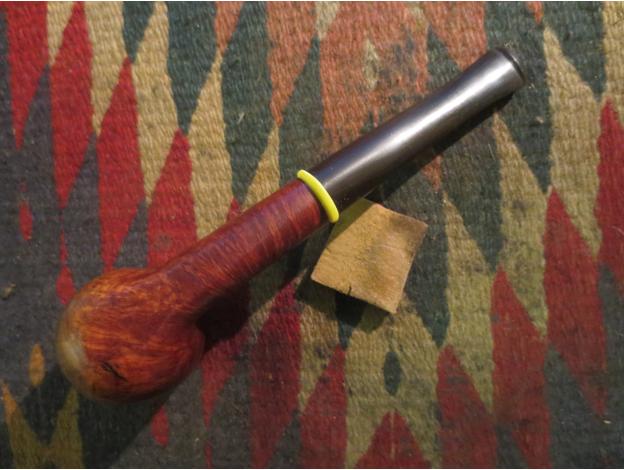
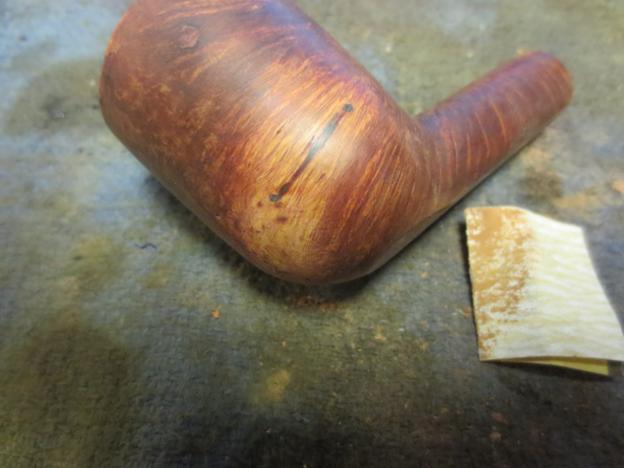
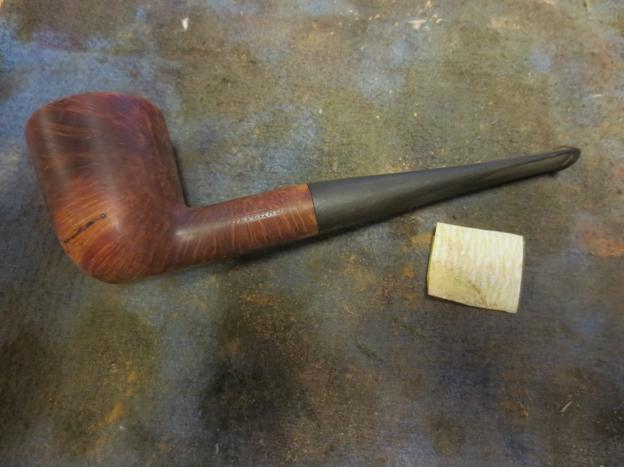
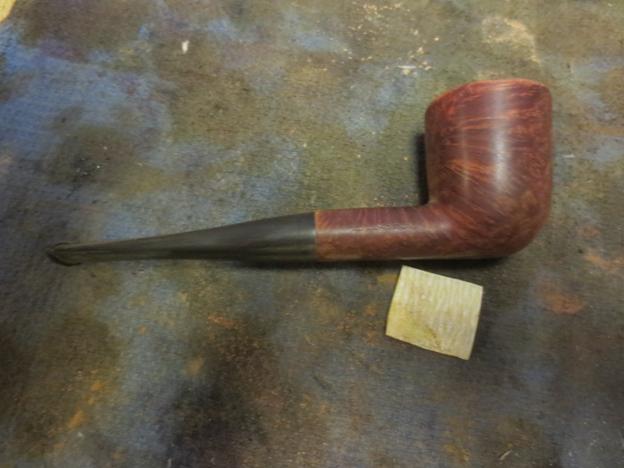
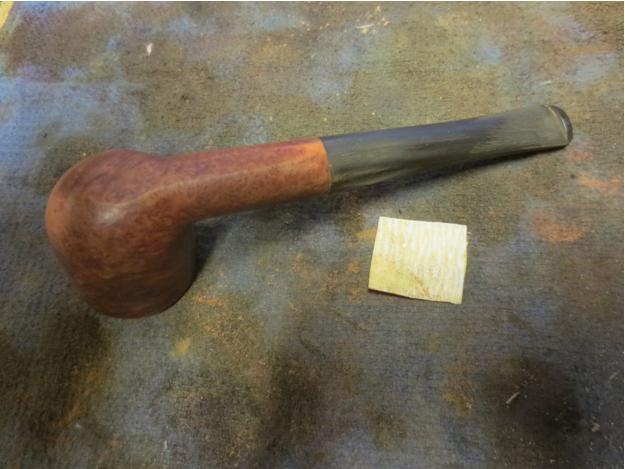
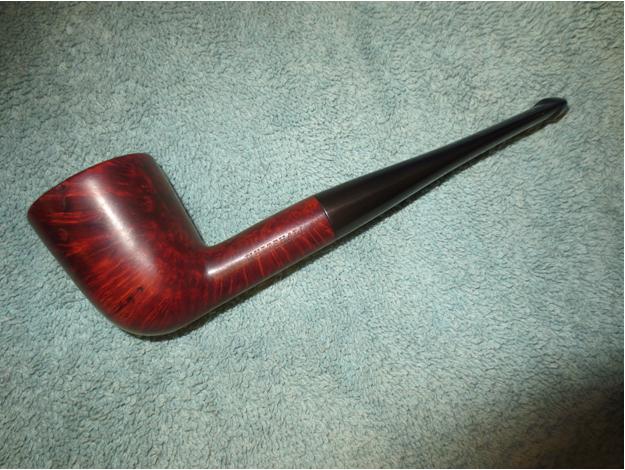
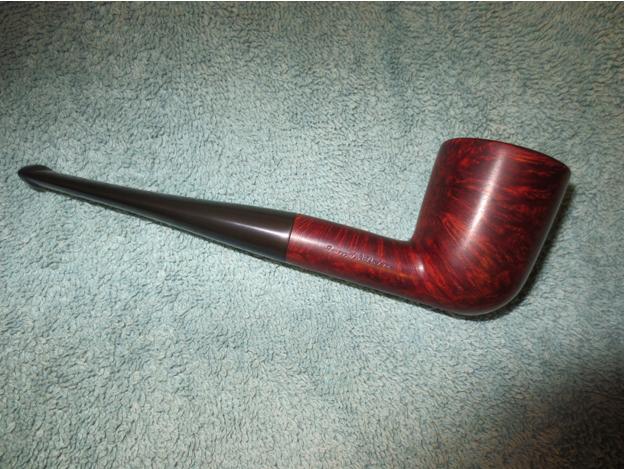
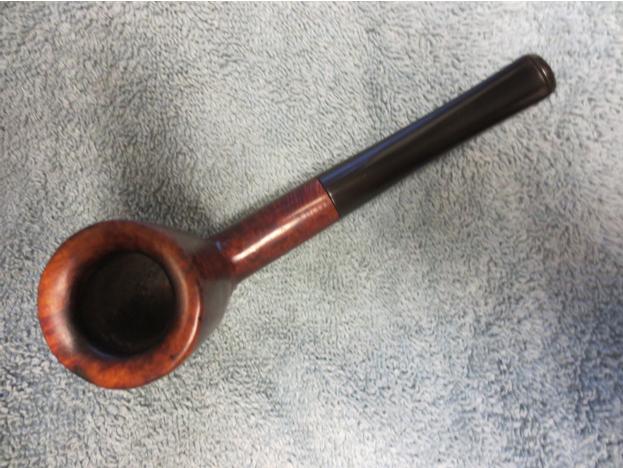
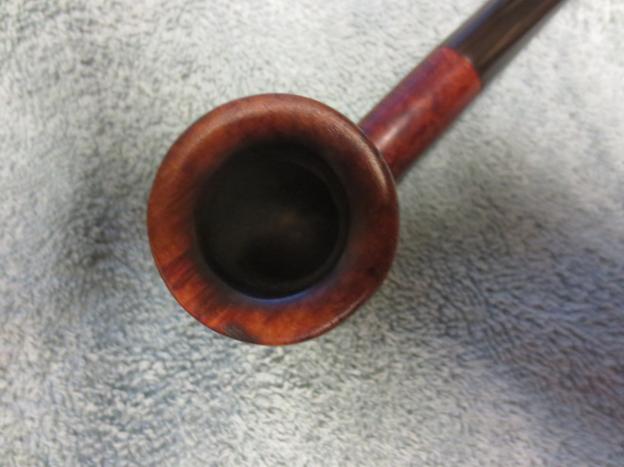
This pipe came to me in a box of pipes that a friend brought by for me. He was getting rid of a bunch of the pipes that he no longer smoked and thought I might enjoy cleaning them up. This one is stamped on the left side Regal over Dr. Grabow and on the right side, Imported Briar over Adjustomatic over Pat. 2461206. When I took it out of the box it had a half stem. The rest of it had been broken off and it was about 1 ½ inches long. I took it off and put the bowl back in the box. I have no idea what I did with the old stem; I have looked for it for a while now as I wanted to pirate the Adjustomatic tenon from the stem. It will show up when I least expect it and I will deal with it then. Yesterday I took the bowl out of the box and was looking it over. It was in very decent shape. The finish was clean. There were some lighter marks on the back right outside edge of the rim but other than it was clean. There was no cake in the bowl. It was worth a little time to see what I could do with it.

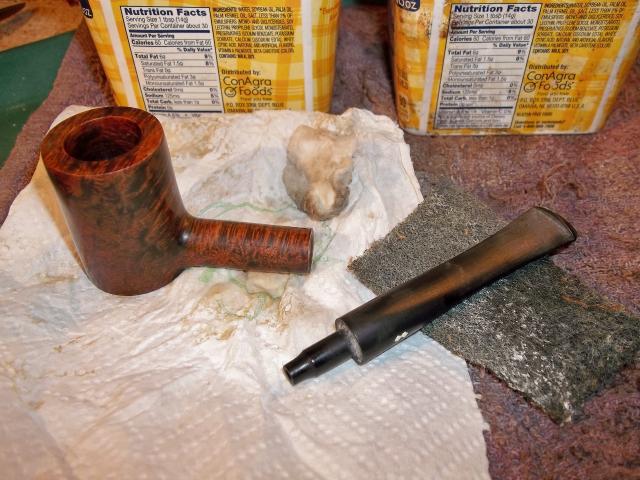
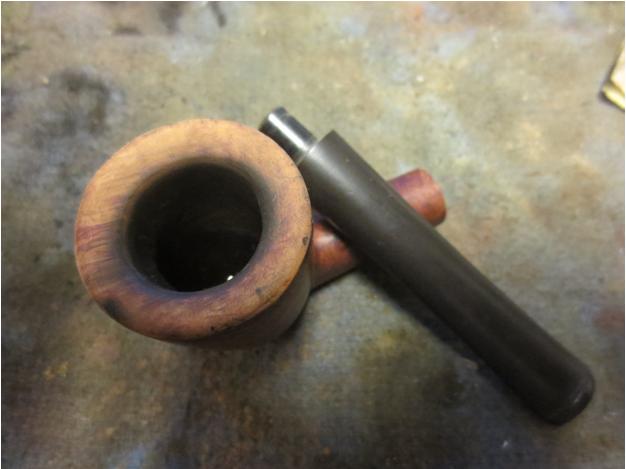
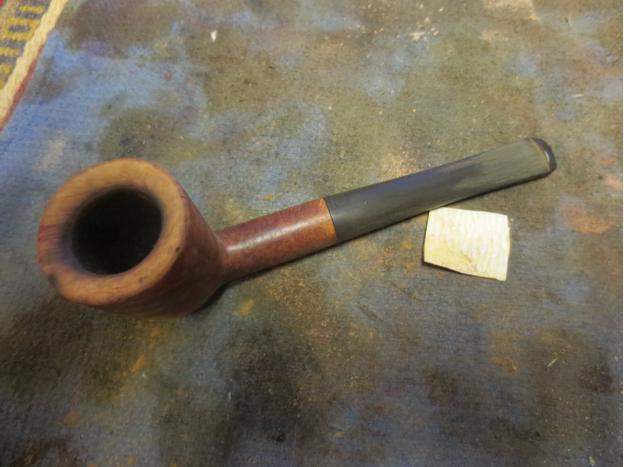
I went through my can of stems and found a Dr. Grabow stem that was the proper diameter. It was in decent shape. There were tooth marks on the top and underside of the stem next to the button. The button itself had some tooth dents. There was some calcification on the surfaces as well. The tenon and stinger were black with tars and oils but would clean up easily enough. The only thing with this stem and tenon is that it was not an Adjustomatic stem but it would do.Dr1

Dr2

Dr3

Dr4

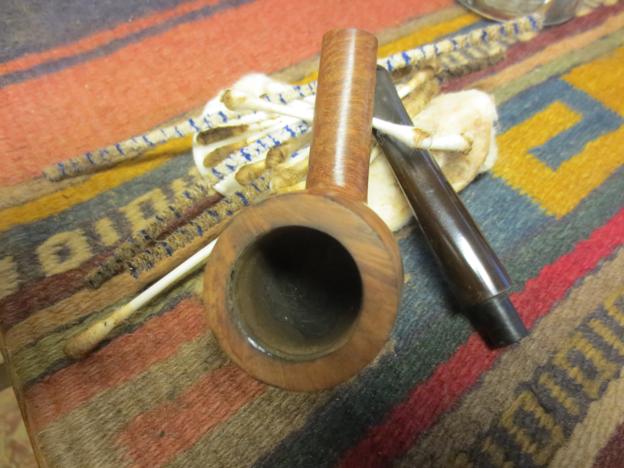
Dr5 I cleaned out the shank and mortise with cotton swabs, pipe cleaners and alcohol. The shank was pretty clean and it did not take much to remove the little that was there. I removed the stinger and cleaned out the stem with alcohol. It too was not in to bad of shape on the inside. I cleaned the stinger and tenon with alcohol and 0000 steel wool.Dr6

Dr7 I heated the stem and raised the tooth dents as much as possible and then sanded them smooth with 220 grit sandpaper. One of the divots was a little too deep to raise so I filled it with a small batch of black super glue and sanded it smooth.Dr8

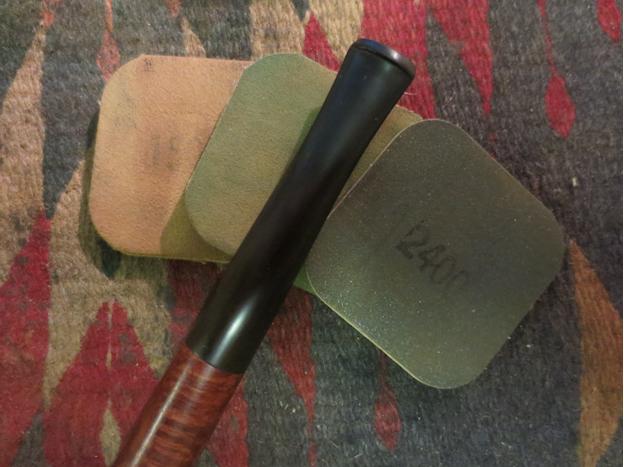
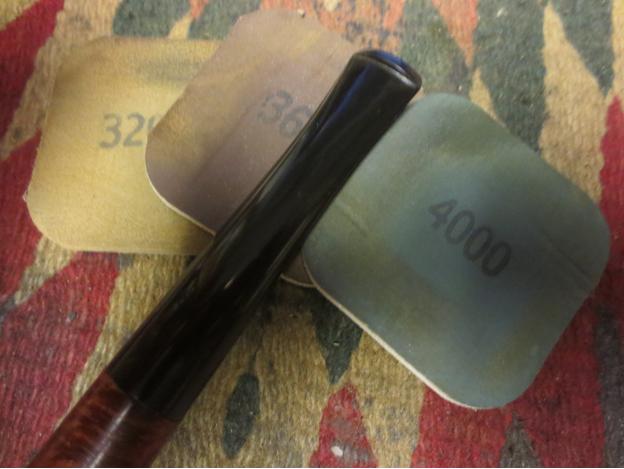
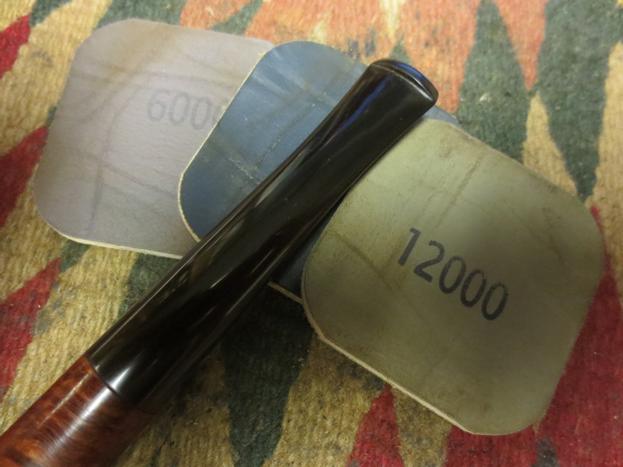
Dr9 I used a needle file to redefine the sharp edge of the button and make a clean line on both sides of the stem.Dr10 I sanded it with a medium and a fine grit sanding sponge to remove the scratches from the vulcanite and then wiped the stem down with Obsidian Oil.Dr11 I sanded the stem with micromesh sanding pads – wet sanding with 1500-2400 grit pads and then wiping down the stem with Obsidian Oil. I dry sanded with 3200-4000 grit pads, gave it another coat of oil and then continued with 6000-12000 grit pads. Each successive grit of pad made the patch disappear and blend into the surface of the stem. I gave the stem a final rub down with Obsidian Oil and let it dry.Dr12

Dr13

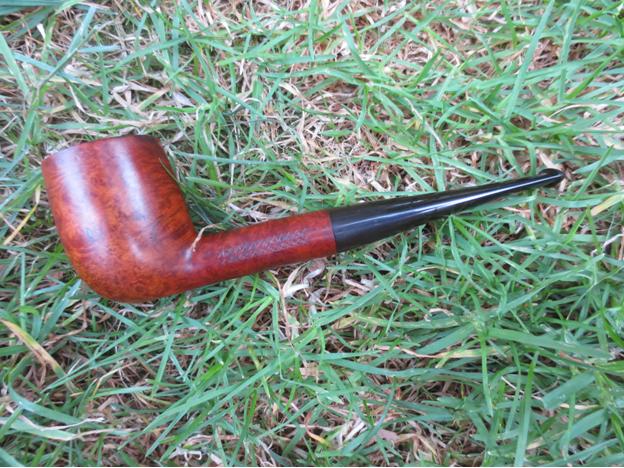
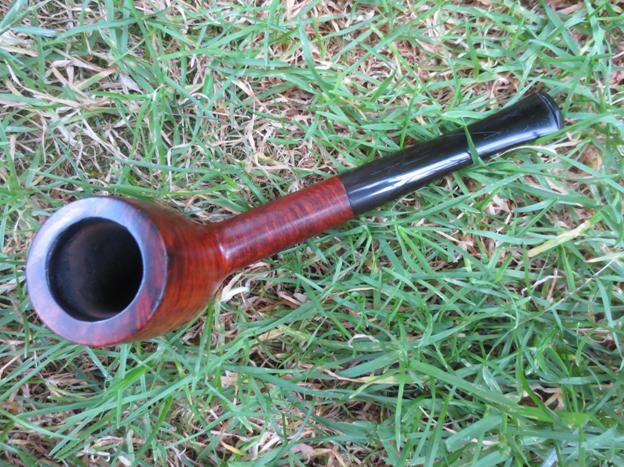
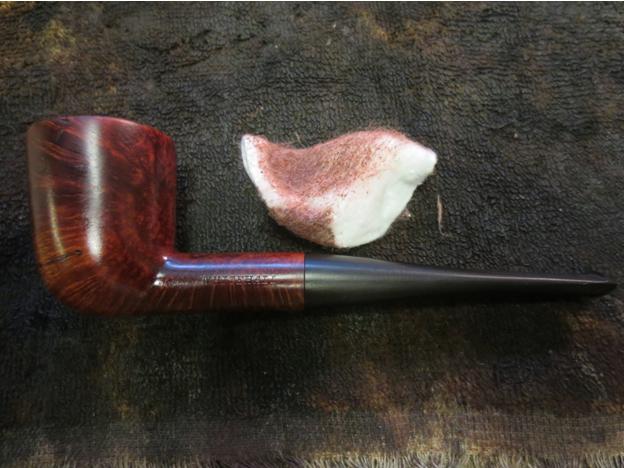
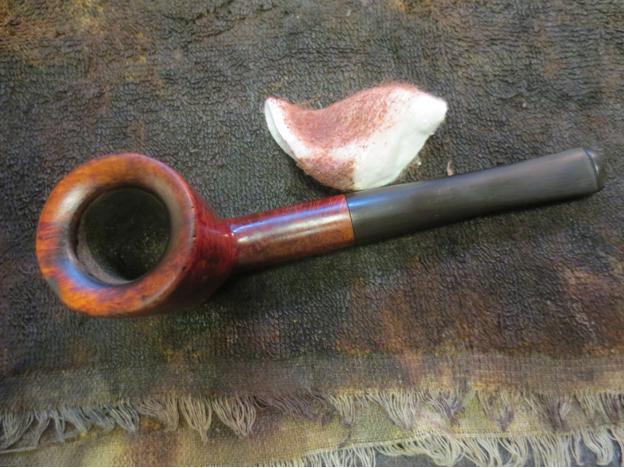
Dr14 I buffed the pipe with Blue Diamond polish on the wheel and then gave it multiple coats of carnauba wax. I buffed it with a clean flannel buff on the wheel and then hand buffed it with a microfibre cloth for a final deep shine. The following photos show the finish pipe. It should work well for many years to come. This one is for sale should anyone wish to add it to their rack. Email me and let me know.Dr15

Dr16

Dr17

Dr18

Dr19

Breathing New Life into a La Fond’s Vintage, Algerian Briar Reject Billiard


Blog by Steve Laug

This old pipe came to me in a lot that was a gift from a friend and it was in very rough shape. The bowl covered in varnish and the rim had been used to hammer nails. There was not one smooth surface on the rim of the pipe. The outer edge of the bowl was very rough particular on the backside with chunks of briar missing. There were several fills on the bowl – on both sides that were missing and there were large deep scratches on the bottom of the bowl.LaFond1

LaFond2

LaFond3

LaFond4 I have included a close-up photo of the rim to show the extent of the damage.LaFond5 I also took some close-up photos of the stamping to give an idea of what that looks like. The shank is stamped on the right side with the words MADE IN FRANCE. On the left side it is stamped with a double line of XXXX’s. I interpret that as the stamping that a pipe company uses to declare a pipe a REJECT. Some of the English companies actually stamp the pipe reject while others X out the stamping. In this case I was able to read through the X’s and see that underneath it was stamped La Fond’s Vintage on the first line and below that it read Algerian Briar. There is not a shape number on the shank.LaFond6

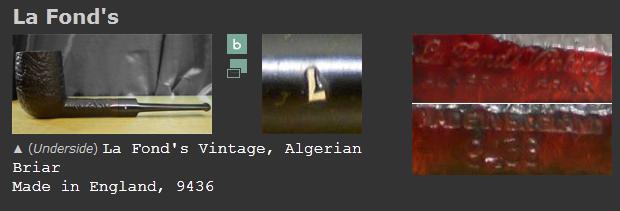
LaFond7 I looked in Who Made That Pipe to see if I could find any information on the brand. The book listed that the brand was unknown but was English made. I looked on pipephil’s site, Pipes: Logos and Markings and found the listing below http://www.pipephil.eu/logos/en/logo-l1.html. The left side of the shank on the pipe I am working on is stamped identically to the one in the photo. The right side of mine says Made in France instead of Made in England. There is also no shape number on the one I have.LaFond8 I think that an educated guess can be made regarding the company behind this brand of pipe. Looking at the shape of the pipe and the shape number on the pipe in the photo it looks to me that the brand may well have been a sub brand of GBD. Certainly the 9436 shape number matches the same shape number that GBD stamped on that shape pipe.

As I have been doing lately, I reamed the bowl with a PipNet pipe reamer to take the cake back to bare briar. I wanted to see if there was any significant damage to the inside walls of the bowl considering the damage everywhere else. After reaming I would need to sand the inside of the bowl as the cake was both crumbly in some places and hard and pitted in others.LaFOnd9

LaFond10

LaFond11 The rim damage made it necessary to top the bowl to remove as much of it as possible. I used the topping board and 220 grit sandpaper to do the work.LaFond12 I removed as much of the top of the rim as possible without changing the overall appearance of the pipe. I was able to remove the majority of the damage. There were still some missing chunks of briar on the back side of the bowl near the top edge that I would need to address in a different manner.LaFond13 I wiped the bowl down with acetone on cotton pads to remove the varnish coat that covered the bowl and shank. Fortunately it came off quite easily. At least they did not coat the bowl with urethane or some other modern plastic coat. I worked on the damaged areas and the missing fills to make sure that I was able to get the grit and grime out of the holes.LaFond14

LaFond15

LaFond16

LaFond17 I picked out any pieces of debris in the divots and wiped it down one final time. I filled the holes with briar dust and then dripped clear super glue on top of the briar dust. I added more briar dust and more glue until I had the surfaces built up and repaired.LaFond18

LaFond19

LaFond20 I sanded the repairs with 220 grit sandpaper to blend the patches into the surrounding briar. It took a bit of sanding to smooth things out and leave the patches only in the holes that needed to be repaired and not on the surface of the bowl. Once the surface was smooth I sanded the areas with a medium and fine grit sanding sponge to remove the scratches.LaFond21

LaFond22

LaFond23 I sanded the inside of the bowl and then scrubbed out the bowl, shank and stem with pipe cleaners, cotton swabs and isopropyl alcohol. I scrubbed until the shank was clean.LaFond24 I used the stain pens to blend in the sanded areas with the colour of the rest of the bowl. I used it on the rim and the repairs around the bowl. I blended light brown and dark brown stain pens to get the colour to match. I sanded the bowl and rim with a fine grit sanding block to feather in the stained areas.LaFond25

LaFond26

LaFond27

LaFond28

LaFond29 After sanding I rubbed the bowl down with a light coat of olive oil and buffed it into the briar.LaFond30

LaFond31

LaFond32

LaFond33 I would need to wax and polish the bowl once I had finished with the stem but it was done for the time being. I turned to the stem and sanded it with 220 grit sandpaper to remove the ripples in the vulcanite on the top and bottom of the stem from the button toward the bowl for about 1 ½ inches. It was obvious and ugly in my opinion. I finished smoothing out the stem surface and then sanded it with a medium and a fine grit sanding sponge to smooth out the scratches.LaFond34

LaFond35

LaFond36

LaFond37 There was some oxidation on the stem that needed some more work so I repeated the process until the oxidation was removed. I wet sanded the stem with 1500-2400 grit micromesh sanding pads. I rubbed the stem down with Obsidian Oil and then dry sanded it with 3200-4000 grit pads and gave it another coat of oil I finished sanding with the micromesh pads dry sanding with 6000-12000 grit. I gave the stem a final coat of Obsidian Oil and let it dry.LaFond38

LaFond39

LaFond40 I buffed the pipe with Blue Diamond on the buffing wheel and then gave it multiple coats of carnauba wax. I buffed it with a clean flannel buffing pad and then took it back to the work table and hand buffed it with a microfibre cloth. Dave Gossett wrote about doing that several blogs ago and I have been doing it ever since. It seems to add depth to the shine that a buffer alone does not give. The finished pipe is shown in the photos below. I took the photos outside in the waning light of the day. I really like the look of the pipe in the grass. The green sets off the colours of the briar and the black of the stem. This old timer is ready for a long life ahead of service to whoever takes it home to their rotation. Thanks for looking.LaFond41

LaFond42

LaFond43

LaFond44

Rejuvenating and Repairing a Whitehall Dublin


Blog by Steve Laug

This old Whitehall pipe came to me from the antique shop in Victor, Idaho, a small town on the way to Jackson Hole, Wyoming. On a recent trip to Idaho my brother and his family and my daughters and I visited Jackson Hole. On the way home, we stopped in Victor to stretch our legs and wander a bit. I went into the antique shop and struck up a conversation with the owner. Eventually a tin of five pipes and some parts came out from under the counter. I bought all of them. They traveled back to Vancouver with me and will one day all be refurbished.

This Dublin shaped pipe is stamped Whitehall on the left side of the shank – though the stamping is faint. On the right side it is stamped Imported Briar (also faint). It has a flat bottom and sits well on that. The finish was very worn but was a rich oxblood colour under the grime. The bowl sides have some great cross grain. There were some small fills near the top of the bowl on the left side. The rim was damaged on the outer edge and very caked from the bowl over the rim top. The inner edge of the rim was still round and did not show signs of damage under the thick cake. The stem appeared to be a poor fit but as I looked at it I realized that it was upside down. The flattened bottom of the bowl had not been continued on the stem so it sat wrong.Dublin1

Dublin2

Dublin3

Dublin4 I took some close-up photos of the rim and sides of the bowl. The rim photo shows the tarry buildup and the side photos show the stamping.Dublin5

Dublin6

Dublin7 I generally ream the bowl when I start a clean up to remove the cake so I can examine the pipe thoroughly to check for inside wall damage and potential issues. I reamed it with a PipNet reamer and took the cake back to bare briar.Dublin8 While I was at it I scrubbed the rim with alcohol and cotton pads to remove some of the tars. I had to use a sharp blade to gently scrape away the thick coat of tars while I was scrubbing. The photo below shows the initial cleanup of the rim and newly reamed bowl.Dublin9 I sanded the rim with 220 grit sandpaper to further remove the tars and to minimize the outer edge damage. There was a burn mark on the front left of the rim that I was able to reduce but not remove altogether.Dublin10 I scrubbed out the shank and the bowl with alcohol, cotton swabs and pipe cleaners.Dublin11 I wiped down the exterior with alcohol and cotton pads to remove the finish and to clean it up. In doing so I found that there was a small shallow crack/flaw toward the bottom of the bowl on the left side. In the photo below the dental pick is at the close end of the crack and the dark spot is the far end.Dublin12 I picked out the crack with the dental pick, drilled two small holes – one on each end of the crack to stop it from going further. Interestingly this crack followed the pattern of the grain on the side of the bowl. Once I had it cleaned out I wiped it down with alcohol a final time. I pressed briar dust into the crack, dripped super glue into it and then pressed more briar dust on top of the glue. The photo below shows the repaired crack. Fortunately the crack was not deep and did not affect the interior of the bowl. It did not go all the way through and appeared to be more of a flaw in the briar than damage.Dublin13 I sanded the repair with 220 grit sandpaper to remove the excess patch and blend it into the surface of the briar. I sanded it with a medium and a fine grit sanding sponge to remove the scratches in the briar and feather out the surface. I sanded the entire bowl and rim with the same sanding sponges and sandpapers.Dublin14 I aligned the stem and sanded it with 220 grit sandpaper to smooth out the rough surface and then flatten the bottom to match the bottom of the shank.Dublin15

Dublin16

Dublin17

Dublin18 I wiped down the bowl with alcohol and then stained it with an oxblood alcohol based stain. I put the stain on heavy around the sanded areas on the shank and the bowl repair. I also darkened those areas with a dark brown stain pen following the pattern of the grain. I lightly buffed the pipe by hand and took the pictures below to show how the newly stained pipe looked at this point.Dublin19

Dublin20

Dublin21

Dublin22 I darkened the rim with the stain pen and gave it another top coat of the oxblood stain. I flamed it and buffed it lightly.Dublin23 With the bowl finished I worked on the stem. I wet sanded it 1500-2400 grit micromesh sanding pads. I rubbed it down with Obsidian Oil. I continued by dry sanding it with 3200-4000 grit pads, rubbed it down again with oil and then finished by dry sanding with 6000-12000 grit pads. I gave it a final coat of Obsidian Oil and let it dry.Dublin24

Dublin25

Dublin26 I buffed the bowl and stem with Blue Diamond on the buffing wheel, gave it multiple coats of carnauba wax and then buffed it with a clean flannel buff. I brought it back to the work table and then hand buffed it with a microfibre cloth. The finished pipe is shown below. It looks better than it did when I started, in my opinion. The rich oxblood colour helps to hide the repair and the burn mark on the rim. It should be a great smoking pipe if the amount of cake buildup that was there when I started is any indication. It should continue to provide great service to whoever ends up with it in their pipe rotation. Thanks for looking.Dublin27

Dublin28

Dublin29

Dublin30

Dublin31

Dublin32

A Dr. Grabow Sportsman #72


Blog by Troy Wilburn

This is a pipe I got from Joe’s lot. From looking at Grabow charts I believe this is a shape # 72 Sportsman. Joe mudded and coated inside bowl for me before he mailed it off ……Thanks Joe :).

Here is what it looked like when I received it.G1

G2

G3

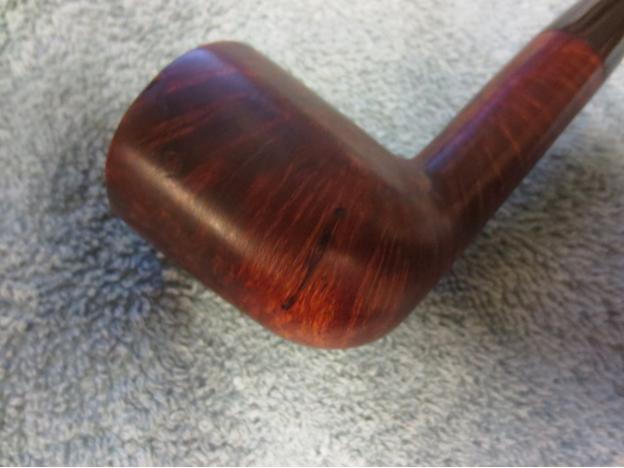
G4 I had to top the bowl and I found a nick or inclusion that was pretty deep I took it down as far as I thought I should go. You can still see it in rim but I got it pretty small and will let it be. Unfortunately the rim lacked much if any grain at all. I canted bowl slightly to give it a “Devil Anse” type of look. Then just basically sanitized, sanded, oiled, waxed and buffed.

Rough sanding done on topping of bowl.G5 Sanded, cleaned ready for oil wax and buff.G6 Very cloudy here today so pics not the greatest, but a lovely little pipe I think and will be in my collection a very long time.

Here are some photos of the finished pipe.G7

G8

G9

G10

G11

G12

G13

G14

Restoring and restemming an old Meerschaum Pipe


Blog by Steve Laug

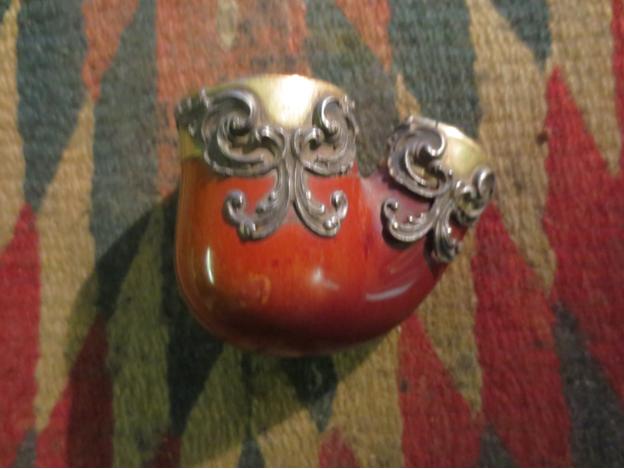
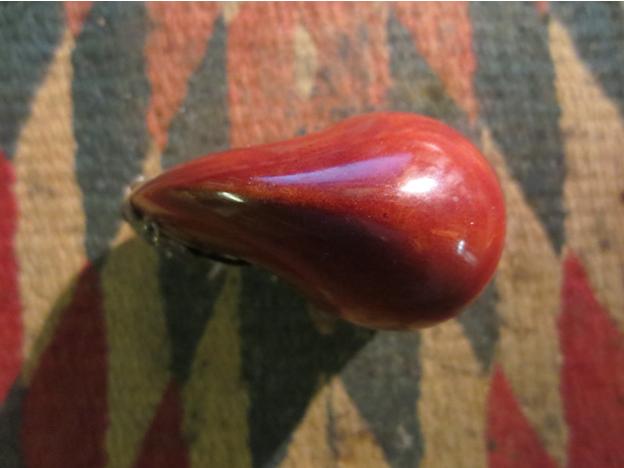
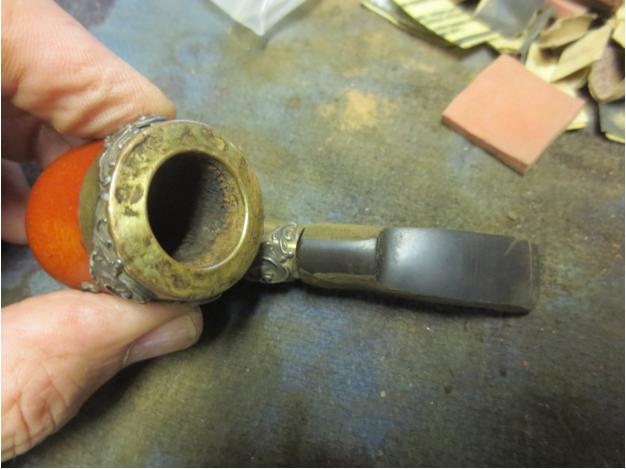
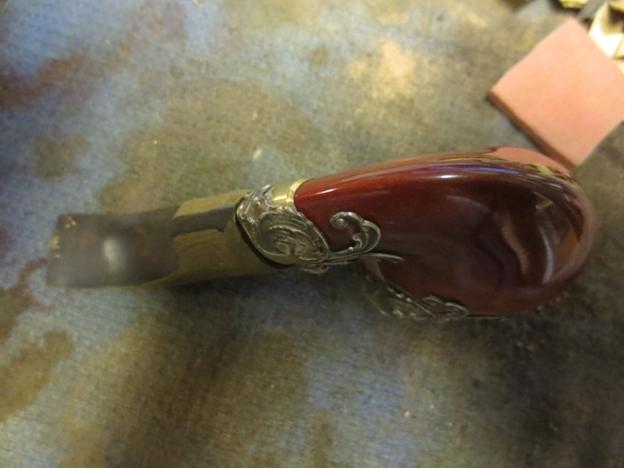
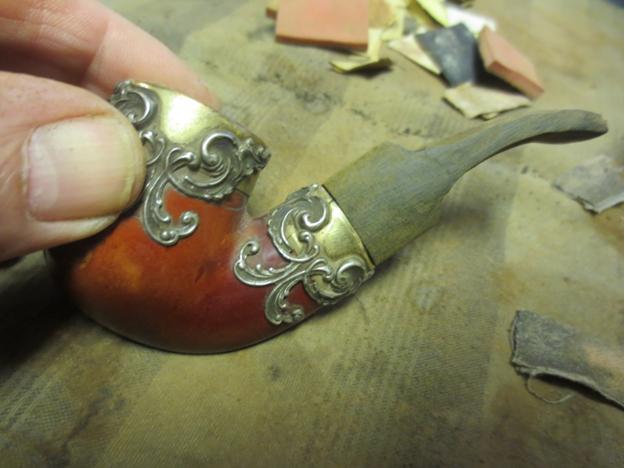
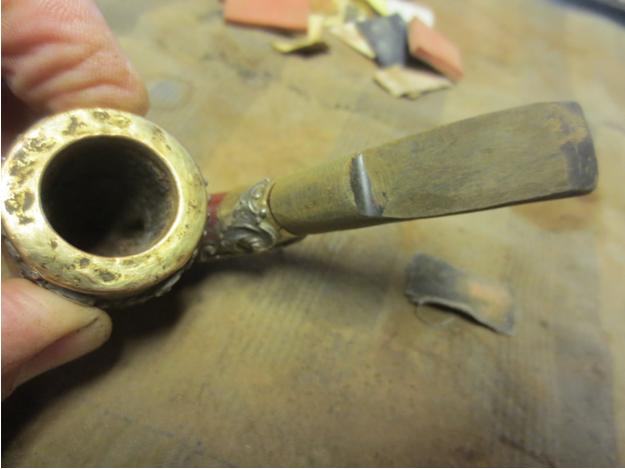
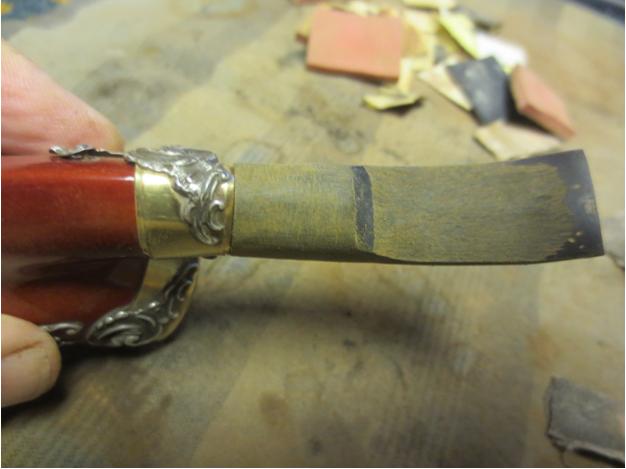
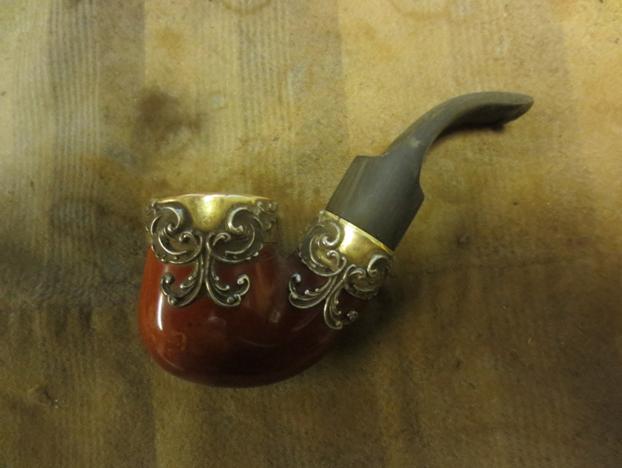
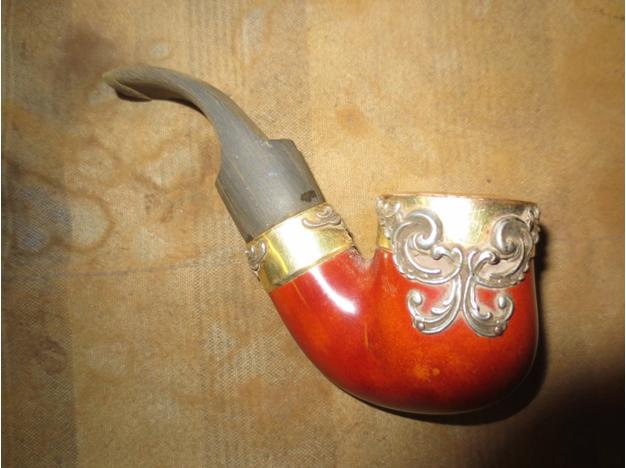
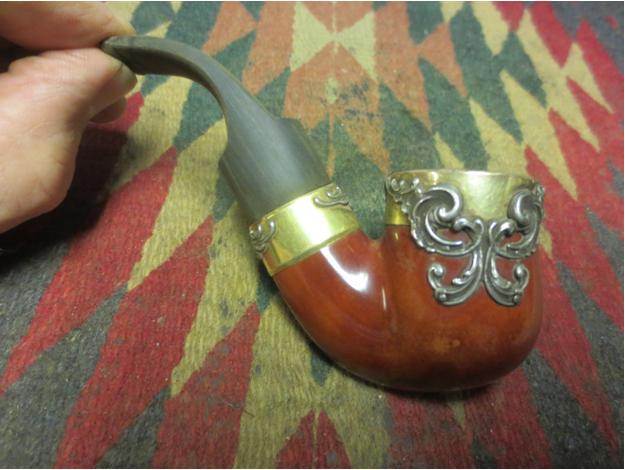
When I purchased the German Folk art meerschaum at the antique mall in Idaho Falls I also got a little meerschaum bowl with lots of brass bling around the rim and the end of the shank. It had a broken bone tenon in the shank that was hopelessly corroded and not removable by normal methods. It appeared to have been glued in place with epoxy. The pipe had an oval shank and I figured that if I could get it cleaned up it would be a neat looking keepsake. It would definitely be a pocket pipe but I had a vision for it. The first photo is a bit blurry but it gives you an idea about the look of the old pipe. There was a lot of dust and debris in the filigree work and the decorative band at the end of the shank was loose because of a broken nail on the left side.Meer1

Meer2

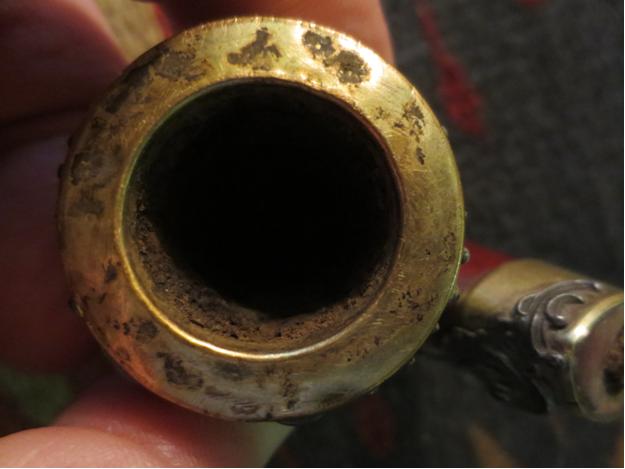
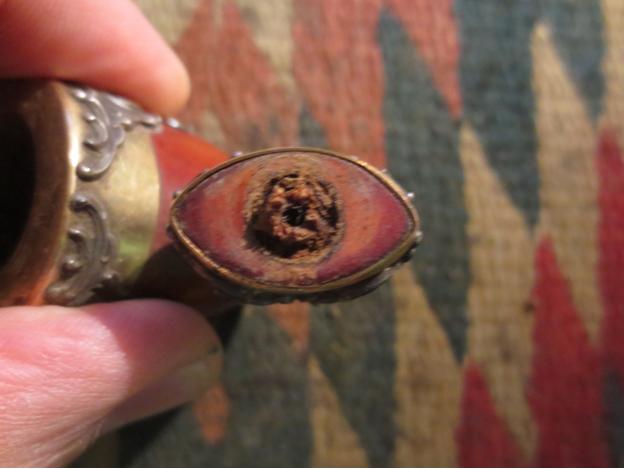
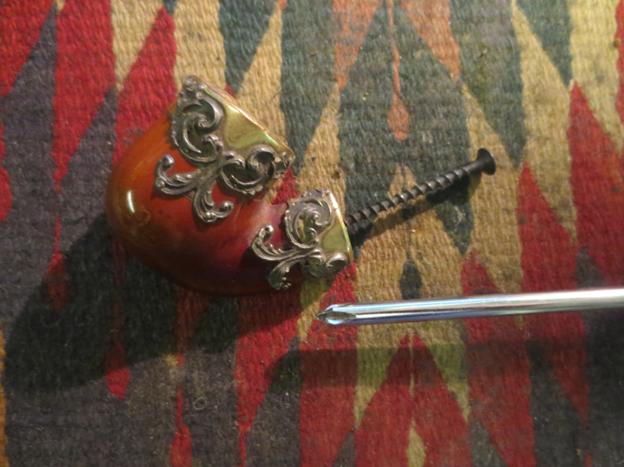
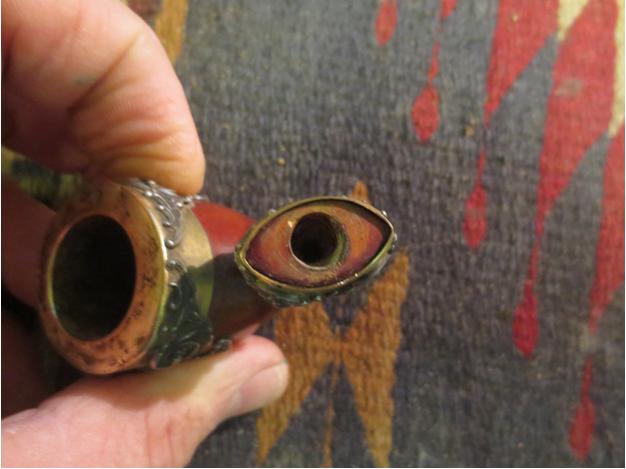
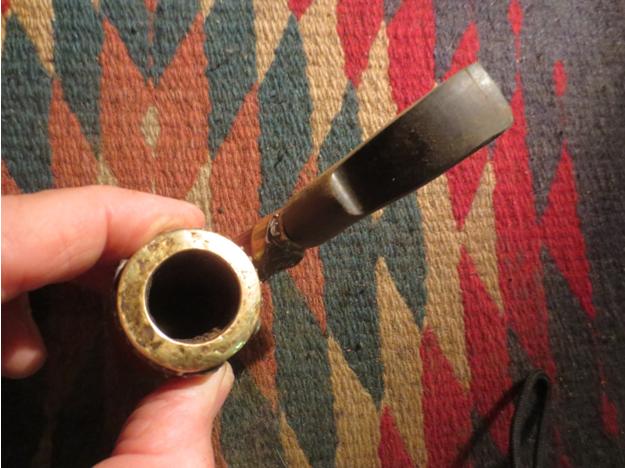
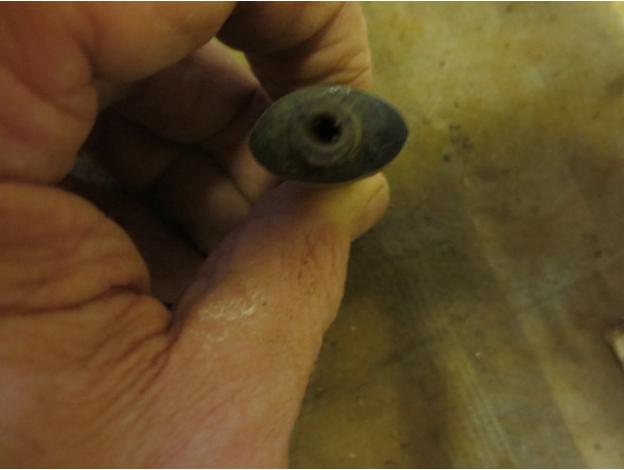
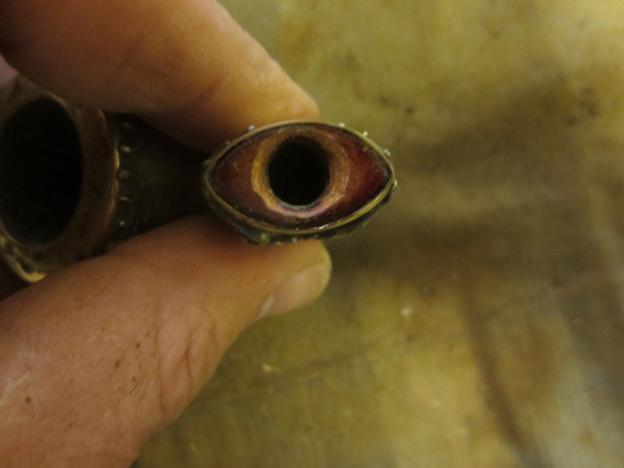
Meer3 The next two photos show the damage to the rim and the broken tenon in the shank. The rim damage was significant enough to look bad but I would not be able to remove the cap without breaking the meerschaum bowl so I would need to remedy that in a different way. In the second photo you can see the broken tenon and how it appears to be glued into the shank.Meer4

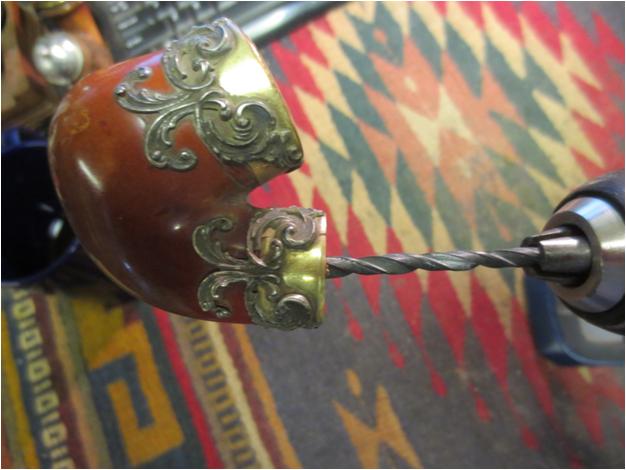
Meer5 I tried my normal method for pulling stuck tenons but this one would not even budge. It was stuck in the shank.Meer6 So I had to drill it out of the shank. This is trickier than it looks. I never power the drill on. I set it up and use it as a stationary base. I hand twist the shank onto the bit. I start with a bit about the size of the airway and work my way up until I have the entire old bone tenon out of the shank.Meer7

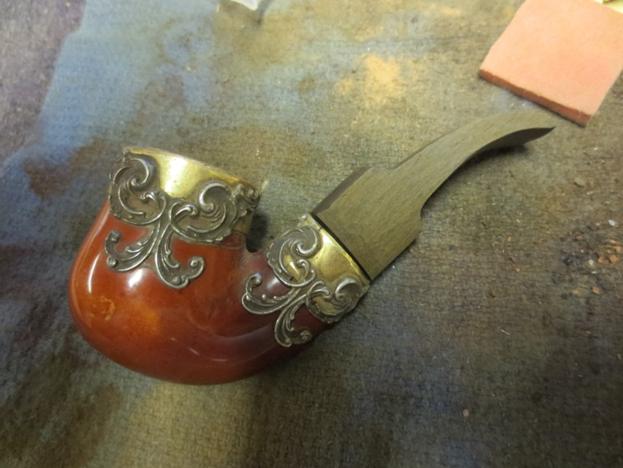
Meer8 I had a damaged round stubby stem from a GBD 9438 that I picked up somewhere. The button was gone and the stem had been cut off. Since the oval shank was vertical I needed a stem with a similar dimension from top to bottom. The GBD stem was perfect. I took off the excess vulcanite with the Dremel and sanding drum and roughly shaped it to fit. There would be more – a lot more – sanding that would have to happen but the shape was there. I would also need to build a new button and thin down the thickness of the stem but overall you can see the shape.Meer9

Meer10

Meer11

Meer12 More shaping with the Dremel. I wanted the stem to have a thin oval shape at the shank and then flare out toward the end. I would cut the new button so I wanted a smooth taper back toward it.Meer13 With the Dremel work done it was time to hand shape the stem with sandpaper. I sanded it with coarse emery cloth and then refined it with 180 grit sandpaper. The lion’s share of the work was done with 220 grit sandpaper.Meer14

Meer15

Meer16 The oval of the stem finally matches the oval of the shank. The tenon fits snugly. More sanding will need to be done so that the new stem sits in the band tightly against the shank end.Meer17

Meer18 On a whim I blew air into the airway on the shank and it was plugged. When I drilled out the mortise the debris obviously clogged the airway from the shank to the bowl. I used the drill bit that comes with the KleenReem reamer I have to open the airway and push the debris into the bowl. It did not take much and the airway was clear and open.Meer19 I used needle files and flat files to recut a new button on the stem and to smooth out the taper from the saddle backward. The next photos show the newly cut button. The stem is quite thin at this point so a deep button cannot be cut deep enough.Meer20

Meer21 The bend in the stem was insufficient for the pipe to sit correctly in the mouth so it would need to be carefully bent to more of an angle.Meer22 I heated the stem with a heat gun until the vulcanite was soft and then bent it to the correct angle.Meer23 The newly bent stem is shown in the next series of photos. It matches the angle of the bottom of the bowl.Meer24

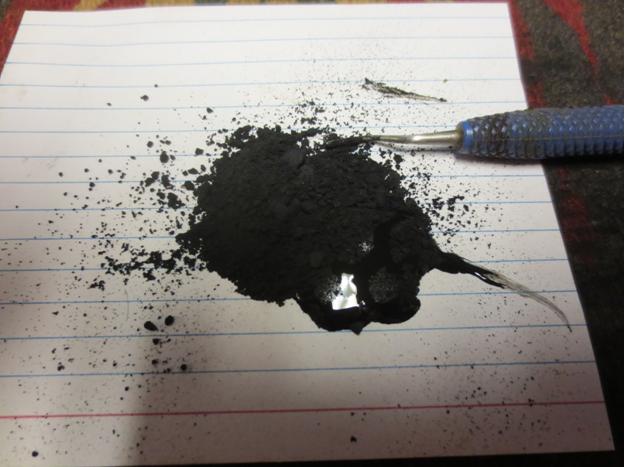
Meer25 There are some spots on the stem in the photo below that look like a hole – it is not it is a damp spot from cooling the stem to set the bend. I sanded the rim with a medium grit sanding sponge and also with a fine grit sponge to clean up some of the high spots on the rim cap. In the photo below you can see the improvement.Meer26 I cleaned the grooves in all the filigree adornments on the rim and the shank using cotton swabs and alcohol. The photo below shows the cleaned bling and the meer spots between the bling. The pipe is coming along.Meer27 To make the end of the stem thicker and give me more material to work with to shape the button I built it up with a mixture of black super glue and charcoal powder. I mixed it to a paste and used a dental pick to shape and build up the edges of the button.Meer28

Meer29 The next three photos show the stem after I have built up the material for the new button. I set the stem aside to cure for the day while I headed off to work.Meer30

Meer31

Meer32 I used a file and sandpaper to begin shaping the new button. It was going to take a lot of sanding but the new button was beginning to take shape.Meer33

Meer34 I sanded the stem with a medium and a fine grit sanding sponge to shape the button and smooth out the stem.Meer35

Meer36

Meer37

Meer38 At this point in the process I was still debating the final shape of the airway in the button. My original intent was to make an orific button styled after the era of the pipe. However, the more I worked on it the more I was thinking of making the stem more modern era and leave the bowl old era. The combination would be a wedding of old and new!Meer39 For the time being I put that decision on hold and worked on polishing the stem. I wet sanded it with 1500-2400 grit micromesh sanding pads and then rubbed it down with Obsidian Oil. While the oil was still wet I dry sanded the stem with 3200-4000 grit micromesh pads. I again rubbed it down with oil after the 4000 grit pad was used. I dry sanded with 6000-12000 grit pads and then gave it a final coat of Obsidian Oil. I let it dry before buffing.Meer40

Meer41

Meer42 I finally made the decision to flare the slot in the stem. I figured it makes it clear that this is a replacement stem if nothing else does. I like the wedding of old and new in this pipe and it one I plan on keeping so I made it the way I like it. The photo below shows the slot before I did the final sanding with sandpapers and micromesh to clean up the file marks and fine tune the slot. The finished slot can be seen in the final pictures.Meer43 I buffed the stem with Blue Diamond and gave it multiple coats of carnauba wax. I buffed it with a clean flannel buff and then finished with a hand buff with a microfibre cloth to give depth to the shine. The finished pipe is shown in the photos below. I am looking forward to giving this one an inaugural smoke soon. The draw is very open and the airflow uninterrupted. The pipe should last long after I have passed it on to the next pipeman to care for.Meer44

Meer45

Meer46

Meer47

Meer48

Meer49 Thanks for looking.

A New Old Stock (NOS) WDC Durobit Poker


Blog by Troy Wilburn

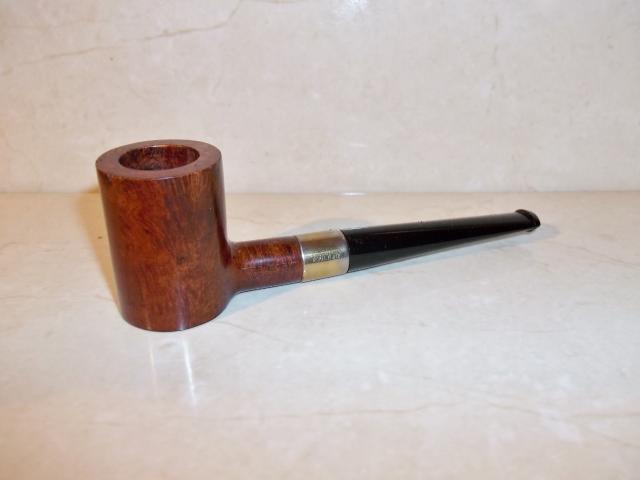
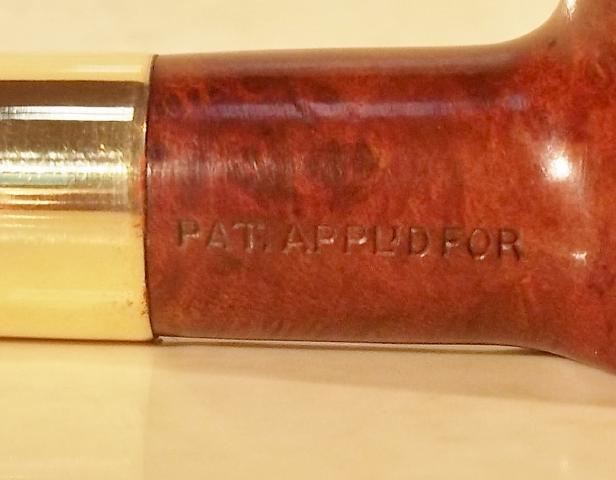
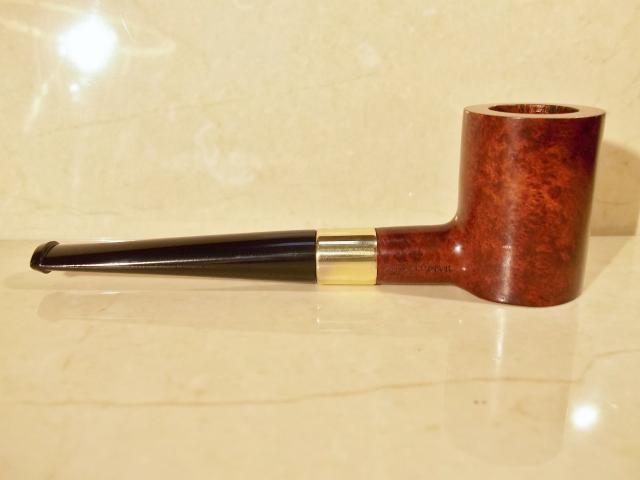
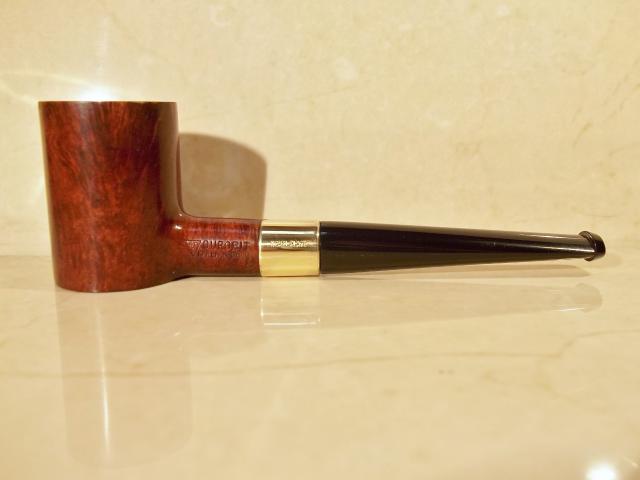
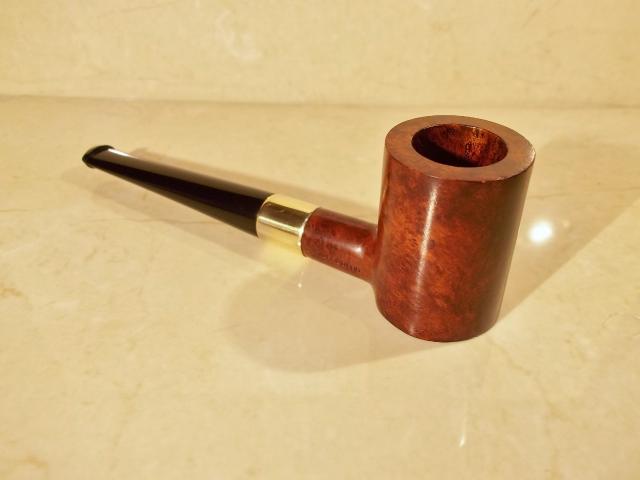
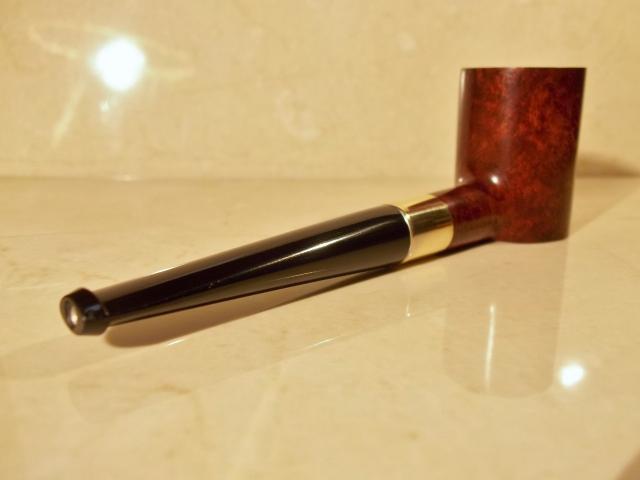
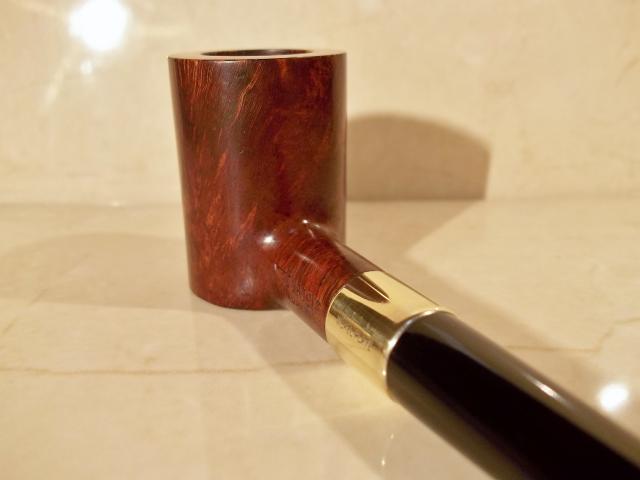
I recently picked up this NOS WDC Durobit poker online to add to my American poker collection as I did not have a WDC example. I think it’s an interesting pipe so I thought I would share it on rebornpipes.Durobit1 The pipe as noted is unsmoked and all original. It had some slight tarnish on the nickel band and a few slight dings from its long life in storage. All I did was buff the nickel band and pipe slightly and carefully to preserve its originality. In fact the stem has a slight molding mark on one side and I left that as is as well.

I did some digging and could not find much on the Durobit model. In fact nothing as far as when the models were introduced and production stopped. It has an interesting stem design (hence the name Durobit) as I will touch on later.

Here is some brief history on WDC (William Demuth Company).
http://pipedia.org/wiki/William_Demuth_Company

The gist of the company history is as follows, they begin making production pipes around 1897. In about 1937 SM Frank purchased the company and made pipes under the WDC name up until the 1970’s. They made a wide range of high end handmade pipes to inexpensive drug store models.

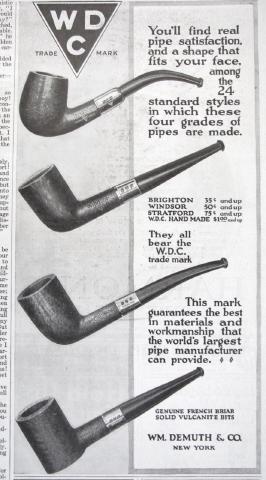
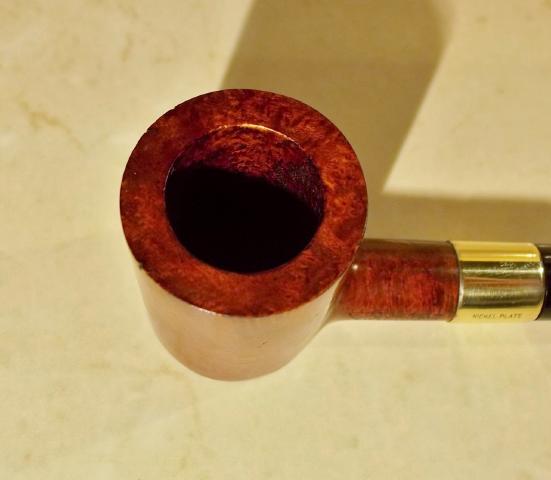
I found this 1916 WDC ad and it shows a poker model .Although this is not a Durobit its same style and shape as mine.Durobit2 Here is the how the Durobit is stamped on the pipe.Durobit3

Durobit4 Here are the more pictures of the pipe after a rub down with mineral oil and a thin coat of wax.Durobit5

Durobit6

Durobit7

Durobit8

Durobit9

Durobit10

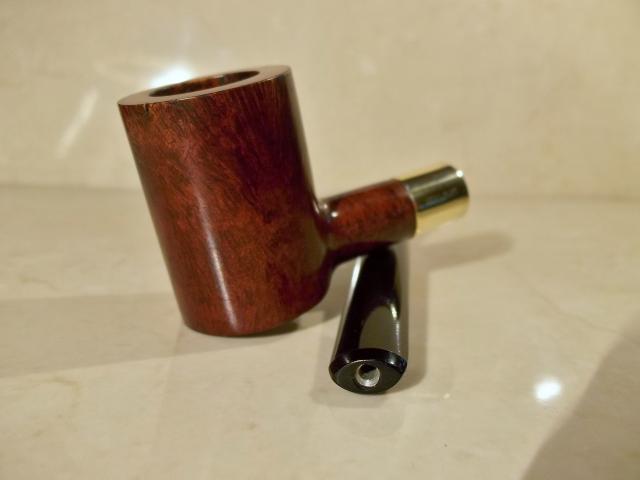
Durobit11 Ok now on to the stem and why this pipe is called the Durobit. The pipe has a metal sleeve that runs through the stem from button to tenon as seen in both ends of the stem in these photos.Durobit12

Durobit13 It does not seem this type of stem caught on and I’m hoping someone else might have some additional information on this model of pipe. I’ve been wondering if this type of stem may have had a design flaw. Maybe when the stem gets hot the metal expands making the stem badly stuck in the pipe. Or maybe worst case scenario it cracks a shank? Some reason this design did not become popular and it actually seems like a good idea to me if the above mentioned speculations did not happen with this pipe model. Maybe it was simply too costly to produce. It’s my usual policy to smoke a pipe NOS or not but this one I’m up in the air about. Not being a 100 year old NOS pipe but if there is a design flaw I don’t want to ruin the pipe by smoking it. I’ll wait until I can find some more information on this pipe model before I decide to smoke it or not.

I have found reference’s to the Kaywoodie Durobit pipes but they are a twin bore type stem with no metal sleeves.

Again if anyone has any information on this model pipe I would certainly like your input in the comments.

My Dr. Grabow Continental Shape # 25 Collection


Blog by Troy Wilburn

I just picked up this Dr. Grabow Viscount Continental shape #25 a short while ago from a friend over at Dr. Grabow Collectors Forum. It was in excellent lightly smoked condition and only required some very slight cleaning and buffing.Grabow1

Grabow2

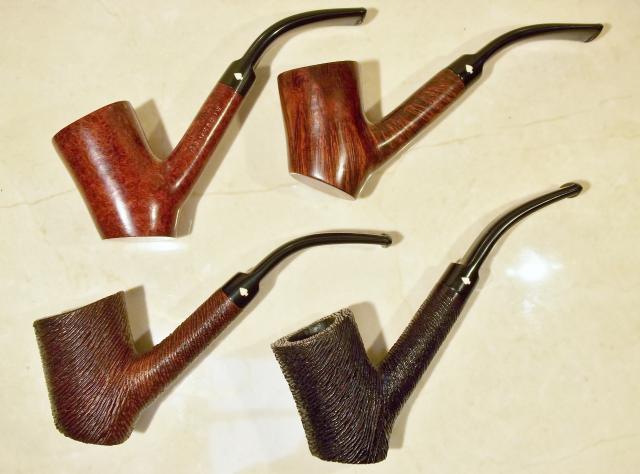
Grabow3 This pipe completed my Continental 25 Collection. The Continental shapes were offered by Dr. Grabow from the early 60s to no later than 67-68.Grabow4 The Shape #25 seems to be the rarest of the Continental shapes as they were not offered in the RJ coupon pipes such as Westbrook, Sculptura, Emperor, Commodore etc. (There is an Emperor 25 owned by a former employee of Dr. Grabow. It was most likely made at factory by a worker and a one-off.) Although the other Continental shapes were offered in RJ Coupon pipes. Some models lines did not use the Continental shapes at all (example Belvedere)

So it boils down to the fact that the Continental 25 was only offered in two lines – the Viscount and Starfire. Take that with a grain of salt though as with pipes there are always some odd balls out there that might have been made and is an exception to the rule.

The Viscounts line was not stained and only came as natural wood color. The Viscount Continental 25 was offered in both smooth and wire carved versions. Grabow5 The Starfires were lightly stained in the smooth pipes but the wire carved pipes were always stained black in the Starfire line.Grabow6 Here is my Continental 25 collection all together.Grabow7

Grabow8 These are fine little flake pipes and it was a lot of fun collecting and searching for them. I hope you enjoy looking at them as well.

Repairing a Cracked Shank on A Weber Shelbrooke


Blog by Mark Irwin
mark@afinemess.org
29 July 2015

It is a pleasure to have Mark Irwin write a blog for us here on rebornpipes. Many of you may know Mark from his own blog on WordPress called “Peterson Pipe Notes”. Click on the following link if you are unfamiliar wit it: https://petersonpipenotes.wordpress.com. Mark has written several books on pipe enjoyment – The Five Laws of Pipe-Companioning, Pipe Smoking in Middle Earth and contributes a blog to the Neatpipes site. He is also co-authoring a book on the history of Peterson Pipes that will come out through Briar Books Press. He has become a good friend and I correspond with him often. I only wished that lived in closer proximity. Somehow the distance between Vancouver, BC Canada and Texas where Mark is make visiting prohibitive for me. Thank you Mark for your contribution. Welcome — Steve Laug
Mark1 Like a lot of pipemen, part of my introduction to pipe-smoking was through my Dad, who in the late 1960s and early 1970s would occasionally indulge in a bowl of Half & Half. In fact, my first pipe was one of his—a wonderful Kaywoodie bulldog replete with stinger. He had two other pipes that I recall, a white Kaywoodie and this Weber Shelbrooke 300.Mark2 When I was over at his house a few weeks back, he said the Shelbrooke, though a good smoker, had not only become wet and sour over the past few months, but developed a split on the shank as well as a tiny hairline crack at the mortise, and he wondered if anything could be done about it.
The first problem—the wet, sour smoke—seemed to have two causes: first, over the past few years, my Dad’s reduced the number of pipes in his collection to about half a dozen, but he’s smoking them several times a day in fairly heavy rotation. The Shelbrooke might just not be handling its workload.

A look into the mortise with a flashlight revealed a substantial gap between its end and the tenon. And it was, sure enough, wet. In addition to giving the pipe a little more rest, it might be that Dad needs to consider adding another pipe to his rotation.Mark3 The second problem, the crack in the shank and the resulting loosening of the stem, was a more serious problem. I wrote Steve Laug, who said to drill a small hole at the end of the crack to prevent it from spreading further. After that, he said, glue the crack with epoxy, clamp it, then put band the pipe to keep the reglued crack from opening and keep the tenon/mortise tight.
As my D-I-Y restorations are usually confined to Peterson estates, a band had to be ordered online. I did find a supplier on the internet, and, measuring the widest part across the stummel (the radius?), ordered one. I thought I’d be extra cautious and order a size up and a size down as well.

As anyone with any math knows, that was not the way to order a band. All three were far too large. So I went to a math teacher I know, who happens to live here in the same house, for her advice. First she told me measurement is never exact. Hmm. Well, I needed something a little better than what I’d done, obviously. Here’s the formula she showed me:

C = 2 π R

To get C (the circumference), I added up the perimeter of the diamond shank—13.85 x 2 and 18.8 x 2 for a perimeter (circumference) of 55.3. I’ve got all the math on a legal pad, and if you want an explanation, ask a math teacher. In the end, the radius came out to be 8.80 for a circumference of 17.6. I bought 16.5, 17 and 17.5 mm rings, and as it turned out, the 16.5 was the best fit.

While waiting for the bands, I decided to clean up the bowl and stem.Mark4
Mark5 The bowl soaked overnight in an alcohol bath. When it was removed the following morning, I was pleasantly surprised to discover the carbon on the top rim could easily be wiped off with a cotton cloth, leaving it clean. The alcohol soak lightened the stain and removed much of the blackening in the rustication, left the bowl with a sweet, clean scent. I’ve done this with Peterson Systems for quite a while, with spectacular results—and they’ve got the added complication of a reservoir. I’ve been told that an alcohol soak can sometimes cause old wood to split. The crack did seem a tiny bit longer afterwards, but not much.Mark6 The stem was in remarkably good condition, but I thought it might as well be cleaned up since I had it. It was plopped into a small tub of warm Oxy-Clean solution to soak, then forgotten about! Oops. When I remembered to retrieve it eight hours later, it had almost completely whitened. Hmm. Just great, I thought.
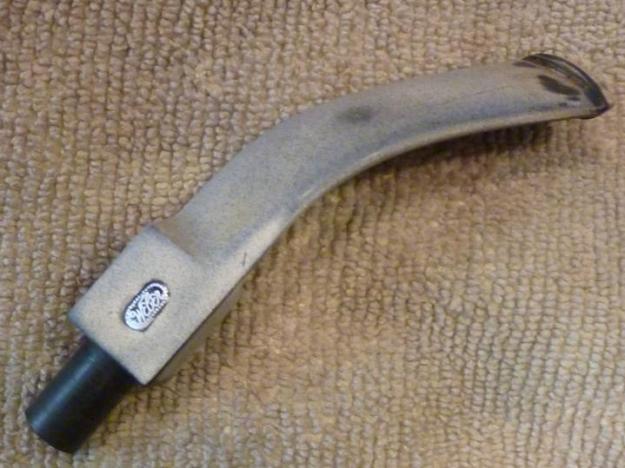
It still felt relatively smooth (unlike the roughening-up a bleach-soak does), so I thought I’d try a spin on the Foredom lathe with some Tripoli on the wheel, just to see where things stood and whether it would need the 12-pad Micro Mesh route. It took a few minutes on the wheel, but to my surprise, the Tripoli cut all the haze off, and in a fraction of the time I usually spend with the pads by hand.Mark7 I didn’t remove the dental marks, just as I wouldn’t on a beloved pipe from my own rotation, because those indentations are what give the pipe its comfort-factor to its owner, making it easy to clinch—remove them, and he has to start breaking it in all over again.
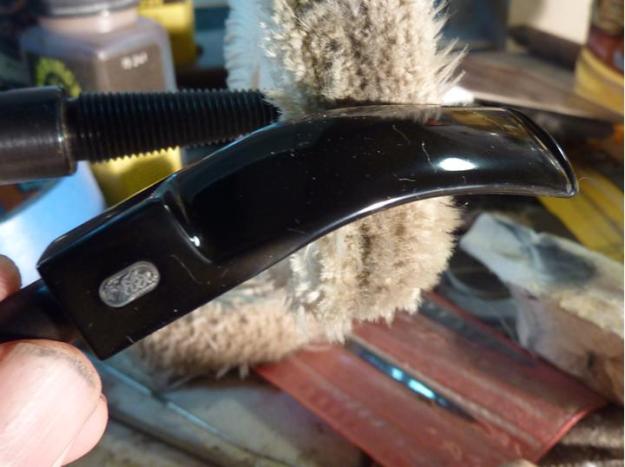
I like to use an Ott-Lite to see just how “back-to-black” the stem really is, because I’ve bought far too many estate pipes, and restored too many stems myself, that when viewed under the Ott show an underlying brown, gray or green haze. The stem on such a pipe may look good in a photo, but get it under decent light and you can see it wasn’t properly restored at all.

An additional pass with the buffing wheel and Tripoli was made on a few hazy areas that I caught on the camera but couldn’t see with the naked eye. After that, the stem received a coat of Obsidian Oil to give it some UV protection.Mark8 Coming back to the crack in the shank, I used my countersink drill bit (which I also use to chamfer or “graduate” draft holes in tenons) to create a saucer-shaped hole. I was surprised when it slid right through into the draft hole!
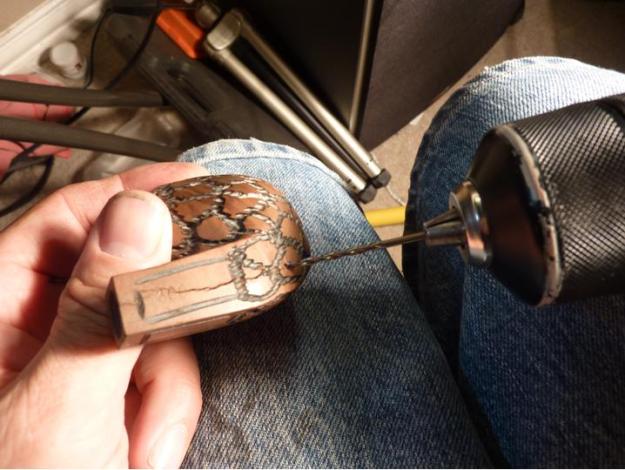
While I couldn’t juxtapose my camera’s flash to give you a photo, it turns out there is a reservoir in the Shelbrooke. It goes considerably deeper than the draft hole, and was obviously an intentional part of the pipe’s design. But the size of the reservoir made for a thin mortise wall, as I found out. Was it for a stinger device? It certainly explains the wet smoke my Dad was experiencing—the smoker would need to swab out the well after the pipe has cooled before smoking it again or suffer the consequences, as uninformed Peterson System users have found to their dismay. As many Weber pipes and catalogs as there seem to be on the estate market, I couldn’t find much just trolling the internet.Mark9 I let the epoxy drizzle off a tooth-pick into the cracks, hoping it would slide down into it. If the epoxy got inside the cracks, I believed it should hold in combination with the nickel band. Then I clamped the crack as well as I could, but as you can see from the pictures, the crack didn’t close up entirely.
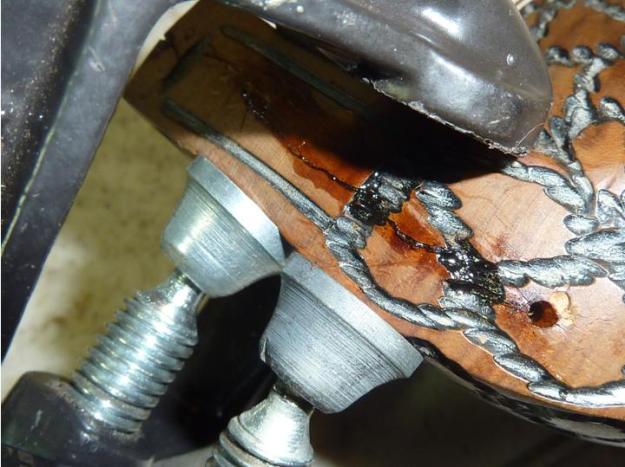
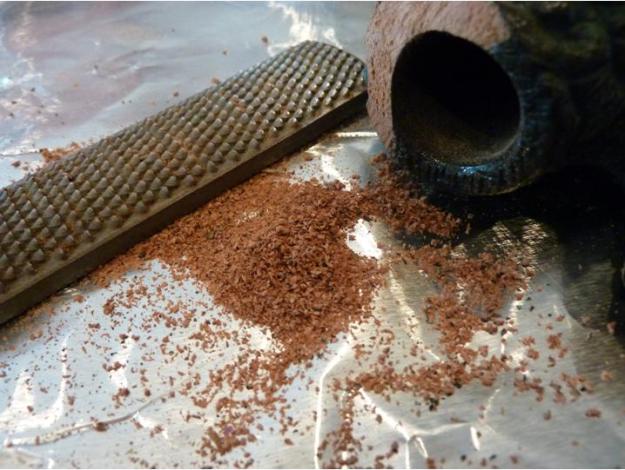
Here I made my first mistake—and one I shouldn’t have, because I’ve seen my Dad avoid this kind of thing in carpentry projects we’ve done together. Instead of letting the clamp actually meet the walls of the shank like I did here (which impressed the wood), I should have use some small wooden squares over the clamp to prevent it from biting into the shank. Live and learn.Mark10 I had already used a rattail file to make some briar shavings from an old bowl (thanks Mark Domingues for this tip!), so I mixed those with the epoxy and plugged the hole I’d previously made to stop the crack from lengthening.
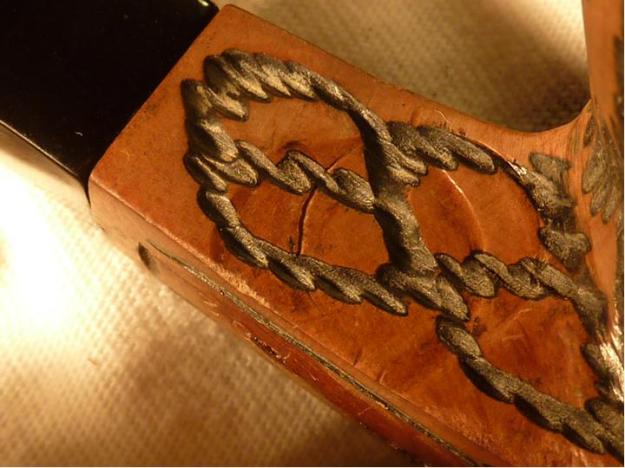
Taking off the clamps the following day, I was dismayed to see the briar had been impressed on one side by their pressure. Some of the indentations lifted with the application of passing a flame from my lighter over them, and more would doubtless have been lifted had I used the old hot-knife-covered-by-a-wet-rag technique. I was fully intending to do this, and then—just forgot!Mark11 After letting the epoxy harden for 24 hours, the flat of an X-Acto knife was used to scrape off the excess. But the hole needed to be topped, so mixing up another briar shavings-epoxy mixture; I not only topped the hole, but went over the crack as well.Mark12
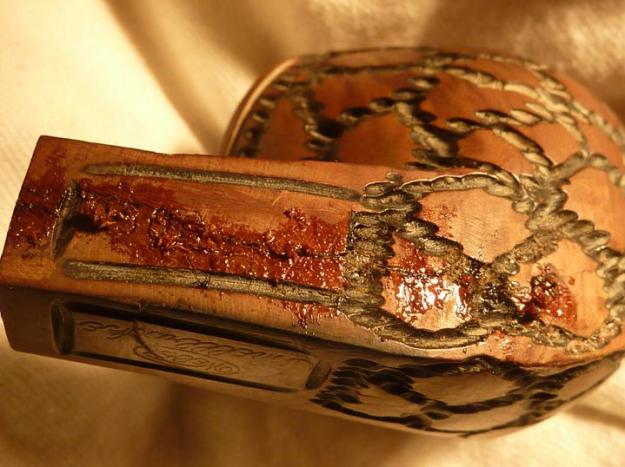
Mark13 After another 24 hours had passed to allow the epoxy to harden, I used 500 grit to go over the bump caused by filling the hole. I was concerned not to obliterate the “300” shape stamp, which I now think was probably a mistake. (Looking at the finished pipe, I now think I should have sanded down the abrasions caused by scraping with the X-Acto knife and not worried about the shape number stamp.)

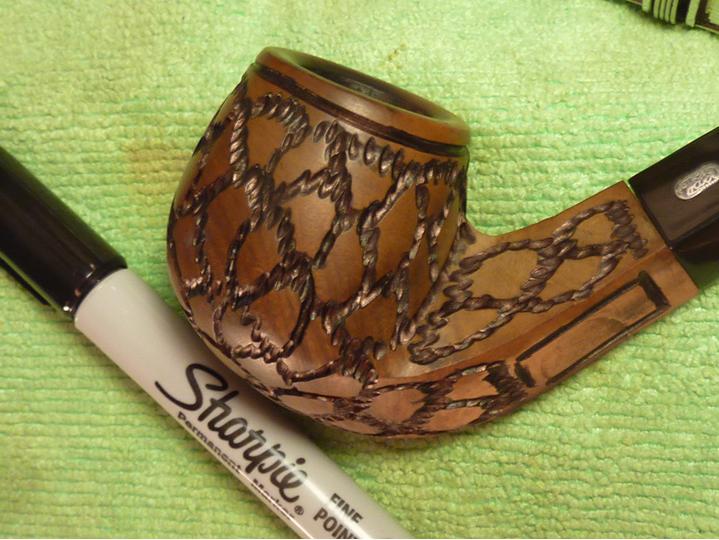
Next I needed to re-blacken the rustication lines, which had washed out in the alcohol bath. These were large enough that a Sharpie Fine Point could be used to good effect. I got this tip from Steve Laug when I was restoring a Peterson B35. The ink in some Sharpies seems to color out a dark bronze, while it’s actually black in others. Micron makes some good archival ink pens (I used them in creating the illustrations for Pipe Smoking in Middle Earth), but these were simply too fine to do the job on the Shelbrooke.Mark14 Having restained the rustication marks with the Sharpie, I restained the pipe. And this resulted in a second disappointment. The Shelbrookes I’ve seen are a light brown, to allow the black rustication lines to stand out in relief. I thought I’d mixed a very light glaze of medium brown Fiebing’s—maybe 1 part dye to 5 parts alcohol? I wiped it on and then flamed it. It came out a great deal darker than I’d hoped. I tried rubbing it off with a wet alcohol cotton pad, which helped, but didn’t bring out the lighter color I’d originally wanted. I think that the Sharpie ink may have “bled” into the alcohol solution, darkening the bowl. A better solution—now that I know the Sharpie ink will bleed—would have been simply to buff the bowl with carnuba.Mark17 Now it was time to put the band on. I used the smallest of the three, a 16.5mm, creasing one corner of it like Steve Laug has shown in two of his blogs here on this site. Then it was simply a matter of working it onto the pipe and bending each side with my fingers. I did heat the band with the heat gun set on low. I also used a small hammer to help knock the band into alignment, as each of the sides of the shank is slightly different.Mark15
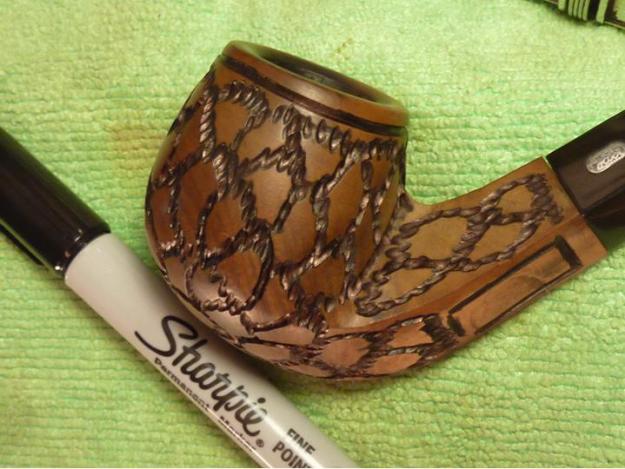
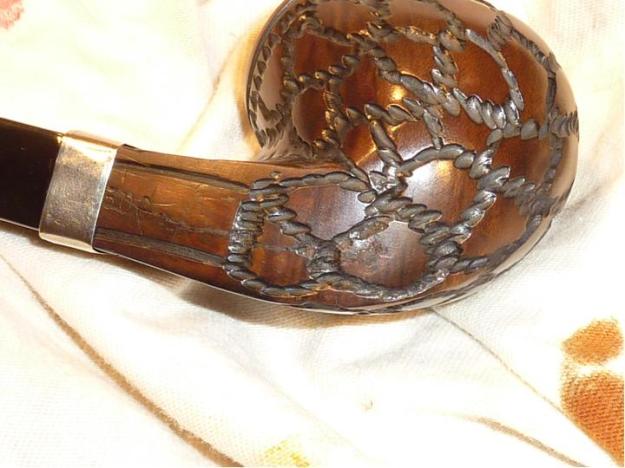
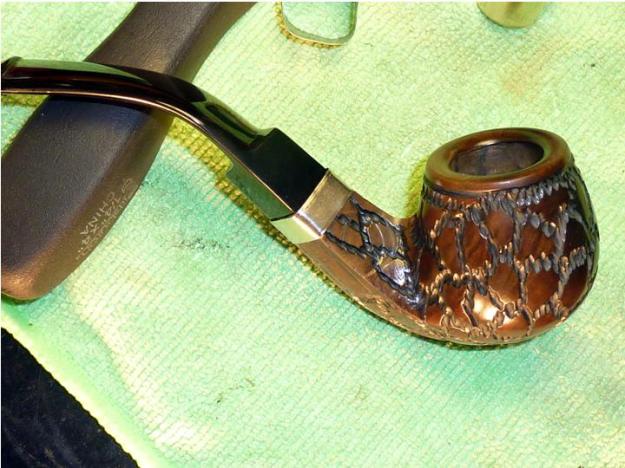
Mark16 All in all, I’m fairly satisfied with the job. The proof, of course, will be in the smoking.

Bailey I miss you – thank you for your gentle kindness and the great memories you left us


Blog by Steve Laug

Bailey1Today is the first anniversary of the death of our Cocker Spaniel Bailey. He was more than a family pet to me as he was my pipe smoking companion, friend and caregiver during my stroke and bout with cancer. He was with us for fourteen amazing years. He left this life one year ago on Sunday, July 27, 2014 and when he left there was and continues to be a huge empty spot in our lives and our home.

The photo to the left is one of my favourites. It shows Bailey occupying his second most frequently chosen place in our house – lying on my pillow, on my bed. The first place he always chose was on my daughter, Sarah’s bed. I think he thought it was his bed and he let her use it. He slept there with her every night since he joined our family as a puppy. He hopped on my bed while I was making coffee, every morning. When I brought a cup of coffee to my wife, Irene, he would look at me and then jump off the bed to follow me down the stairs to our chair. He waited there on the chair for me to bring my cup of coffee and sit with him.

Most mornings I am up early before the rest of the family. Often I walk to Bailey’s grave in back part of our yard and stand and reflect on my friend. I have had many dogs through the 60+ years of my life but never have I had one that made such a mark on my heart as him. There is not a day that goes by that I do not think of him. As I stand there I talk with him and vocalize the sense of loss I feel regarding him. His partner in crime, our Black and Tan Spaniel, Spencer wanders around the yard checking on things and then comes to stand with me at the grave side and I think he senses my sadness. Many an evening I sit in a chair at the graveside and enjoy a bowl of tobacco and quietly think about him. I was looking at my computer this morning and found this piece I wrote the evening he died.

It is a sad night at our house tonight as my 14 year old Cocker Spaniel Bailey died this evening. We have had him since he was a new pup so it leaves a big hole. He had been growing weaker over the month and my youngest daughter had been caring for him. She had carried him out to the yard to go to the bathroom and slept beside him on her bed. He was an amazing dog. When I had my stroke he checked on me several times a night to make sure I was breathing and when I came home from my cancer surgery and slept in my recliner he slept beside me and I could feel his wet nose as he checked on me through the night. He was a real friend and companion. We used to sit on the porch together while I had a pipe and lately we had a morning ritual – he would sit on my lap while I sipped my coffee each morning and when I went to take my shower he kept the chair warm. He will be truly missed. My girls and I dug a deep grave for him in our back lot and this evening we gathered round and laid his remains to rest. He went the way he lived – in the arms of his family – he loved us much and we gave it back to him as well. I sat by the grave as dusk came and fired up a pipe in his memory… I know the pain of loss will subside but he will forever be a part of our family’s life and memory… Bailey old friend rest well. I love you and miss you. You were the best… Farewell.

Someone sent me this beautiful article on one of the Forums I frequent. It really sums up what I am feeling as I write and read this piece about my old friend Bailey. There are still tears in my eyes and a lump in my throat even a year later. It is written by Ben Hur Lampman (August 12, 1886–March 2, 1954) who was a U.S. newspaper editor, essayist, short story writer, and poet. He was a long time editor at The Oregonian in Portland, Oregon, and he served as Poet Laureate of Oregon from 1951 until his death.

Where To Bury A Dog – by Ben Hur Lampman

There are various places within which a dog may be buried. We are thinking now of a setter, whose coat was flame in the sunshine, and who, so far as we are aware, never entertained a mean or an unworthy thought. This setter is buried beneath a cherry tree, under four feet of garden loam, and at its proper season the cherry strews petals on the green lawn of his grave. Beneath a cherry tree, or an apple, or any flowering shrub of the garden, is an excellent place to bury a good dog. Beneath such trees, such shrubs, he slept in the drowsy summer, or gnawed at a flavorous bone, or lifted head to challenge some strange intruder. These are good places, in life or in death. Yet it is a small matter, and it touches sentiment more than anything else.

For if the dog be well remembered, if sometimes he leaps through your dreams actual as in life, eyes kindling, questing, asking, laughing, begging, it matters not at all where that dog sleeps at long and at last. On a hill where the wind is unrebuked and the trees are roaring, or beside a stream he knew in puppyhood, or somewhere in the flatness of a pasture land, where most exhilarating cattle graze. It is all one to the dog, and all one to you, and nothing is gained, and nothing lost — if memory lives. But there is one best place to bury a dog. One place that is best of all.

If you bury him in this spot, the secret of which you must already have, he will come to you when you call — come to you over the grim, dim frontiers of death, and down the well-remembered path, and to your side again. And though you call a dozen living dogs to heel they should not growl at him, nor resent his coming, for he is yours and he belongs there.

People may scoff at you, who see no lightest blade of grass bent by his footfall, who hear no whimper pitched too fine for mere audition, people who may never really have had a dog. Smile at them then, for you shall know something that is hidden from them, and which is well worth the knowing.

The one best place to bury a good dog is in the heart of his master.

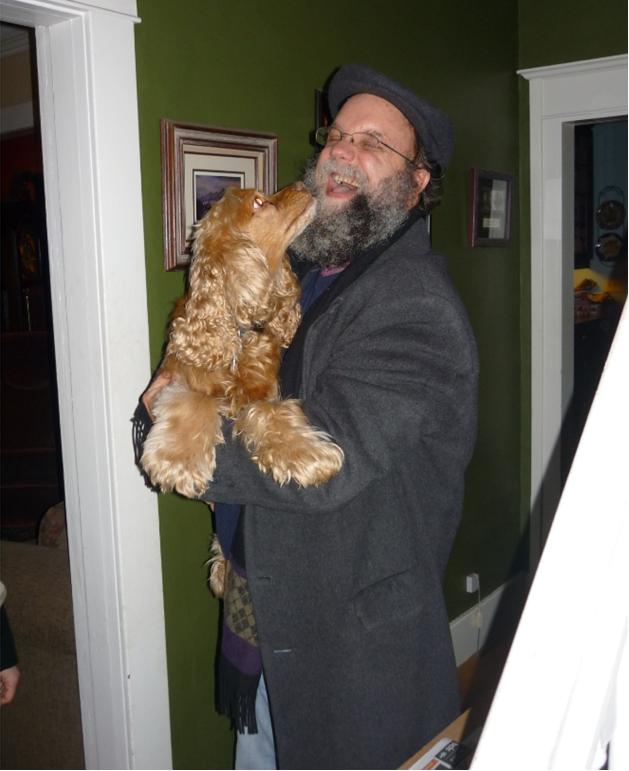
The photo below pictures well our relationship with each other. He had an uncanny ability to make me laugh and to make me cry. I remember the night of this photo. We had company visiting from Budapest and had just come home from dinner at the Thai Restaurant across the street from our house. I came into the house and was met as usual by Bailey. He always sat at the door waiting. He had an uncanny ability of knowing when we would come home and be there when we opened the door. He begged to be picked up and then gave me a big kiss on the lips. He caught me off guard and I just laughed out loud. He kept kissing me and finally I let him down to go and hang up my coat. When I came back he was busy visiting our guests and welcoming them to our home. He loved people and always wanted to be the centre of their attention when they came. He would sit next to them or climb on their lap and make them pay attention to him. He was a one dog welcome committee to all who came through our door. When I sat down in my chair he jumped down and came over to my lap and snuggled in close for the rest of the evening. He always hated missing anything so he would only go to bed once everyone had left.Bailey2 I still find myself coming home from work or a trip and expecting him to be waiting at the door for me. I expect him to give me his “Bailey greeting” – a vociferous mixture of grumbling and whining that sounded like talking. His mouth would move like he was telling me what had happened throughout his day. Then he would move around my legs and wiggle allover waiting to be picked up. If I walked by he would follow me complaining with his back end walking almost sideways and his tail wagging non-stop.

Bailey loved riding in the car. I only needed to ask if he want to go bye-bye and he was at the door waiting, grumbling that I was not moving fast enough to his liking. When I opened the door he would race down the steps and out the gate to the car and sit by the passenger’s door until I could open it so he could get in. Then when I went around the car to my side he would race across the car to welcome me when I got in. He would climb on my lap and sit while I started the car. When I took Sarah to work Bailey would ride along and sit on her lap. He enjoyed looking out the window and when people caught his eye in a car next to us he would wiggle with pride. He was great to ride with. When we dropped Sarah at work he would sit in the seat and watch as she unlocked the door to her store and when she went inside he would cry because he missed her. I miss those morning rides together.

Bailey was the ultimate showoff. He loved to go for walks in the neighbourhood and nearby park. He was in his element when others would comment on how beautiful he was with his red flowing hair and green eyes. He would stand up taller and puff out his chest and swell with pride. He loved to look at his reflection in the mirror of the wardrobe by my bed and tilt his head from side to side and move around to get a perfect look at himself in the mirror. When we would come in and see him strutting for the mirror he would make noises and wiggle until we sat with him and told him how handsome he was. The next photo shows him in all of his showoff glory. He loved sweaters, bandanas and even sunglasses. He loved jingling his jewelry (his name tags, rabies tag and license) when he walked. He was a total drama queen.Bailey3 This morning as I write this blog my mind is filled with memories and my eyes are wet with tears. The things I have written and many other moments that are fresh in mind fill me with a sense of thankfulness that you lived with us and shared our lives Bailey. I have one lingering regret – that when I come home today you will not be at the door waiting and give me a report of your day and a huge kiss. I miss you as much today as I did the evening you died. The sadness is manageable and the grief has moved deeper though it does not take much to bring the tears to my eyes and remind me of the hole that you left in my heart. Thank you my friend you will live on in my heart for as long as I live.

Whitehall Thermofilter Rebuild


Blog by Dave Gossett

This pipe was part of an estate lot I received a few weeks ago. Borderline firewood. I was just going to throw it in the pipe parts box but decided to make it my nightshift project at work. It passes the time and keeps me awake.
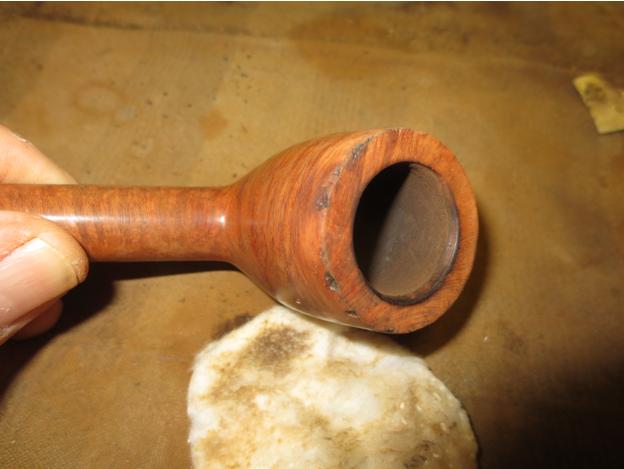
I have American and English made Whitehall’s but this one is stamped Italy, so It would make a nice addition to the Whitehall collection if it came out looking presentable.

I initially planned to use this pipe for practice and try my hand at beveling a rim, so I didn’t take very many pictures of the rebuild.

It had several fills and deep gashes in the briar, and the button on the stem was completely MIA.Dave1

Dave2

Dave3 I started off with some aggressive sanding of the briar with 200 grit. This pipe lost some serious weight. It couldn’t get any worse so I went for broke and sanded down past the fills and gashes working around the stampings until I had a smooth stummel.

Next I gave my first rim beveling a shot. Using a rolled piece of 200 grit angled at 45 degrees, I turned the bowl slowly with one hand while sanding with the other. After trying this, I now have a new found respect for carvers that shape pipes by hand. I stopped frequently and eyeballed the rim closely to make sure it was symmetrical.

After I was content with the shape I worked my way up the grit ladder until it was smooth as babies butt.

The briar was starting to look pretty good. If I couldn’t save the original stem I would have found a substitute. The Thermofilter was similar in size and shape as my old 1919 old Loewe & Co. pipe with an antique rounded button that was popular at the turn of the century, so I modeled the stem rebuild after the Loewe.Dave4
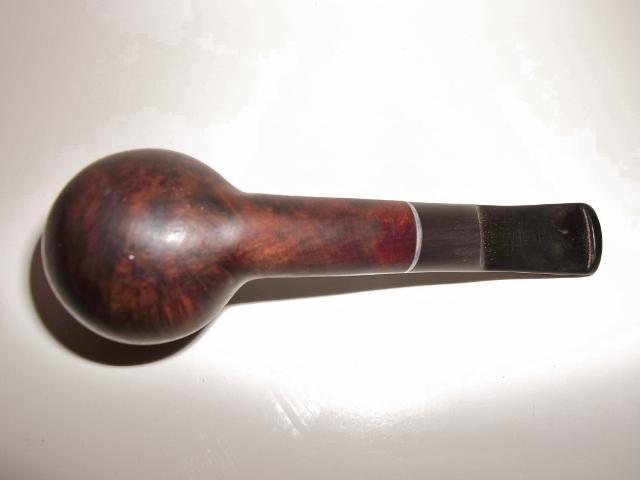
Dave5 This is the biggest stem rebuild I’ve tried so far. This recipe is great for fixing tooth holes or small missing portions. Only time will tell if an addition this large will hold up. Here is the link of how I rebuild stems if anyone wants the details.

http://pipesmagazine.com/forums/topic/how-to-fix-tooth-holes-in-stems
I piled on the mix and filed it about five times before I found the shape I was going for.Dave6

Dave7

Dave8

Dave9

Dave10 American WhitehallDave11 English WhitehallDave12 Italian WhitehallDave13 It would be interesting to know how many other countries accompanied the Whitehall name.