Author Archives: rebornpipes

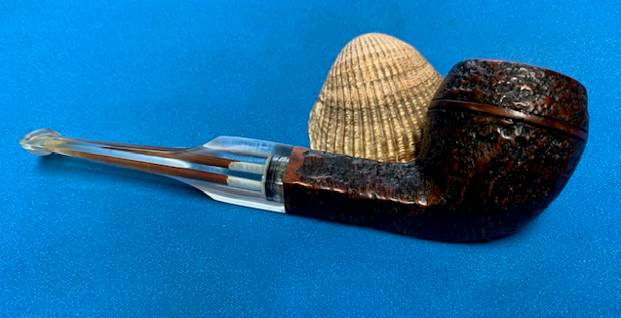
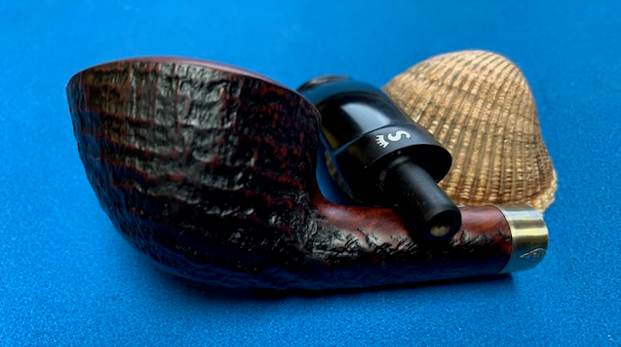
Sprucing Up a Classy Savinelli Silver 111 KS Italy Billiard


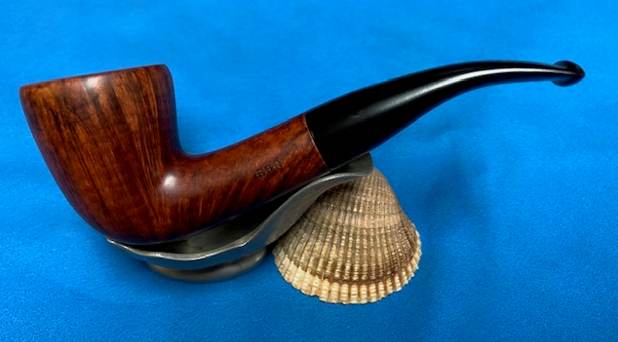
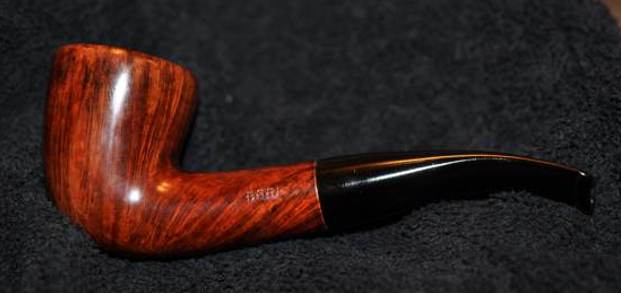
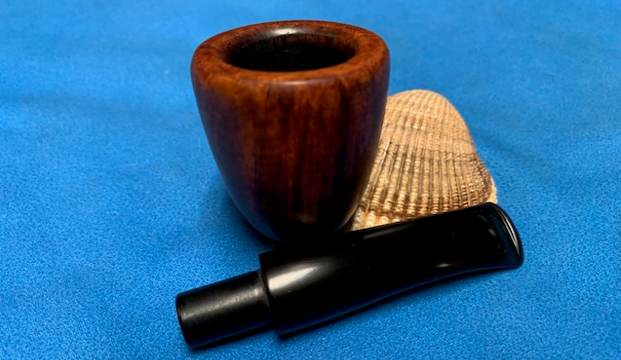
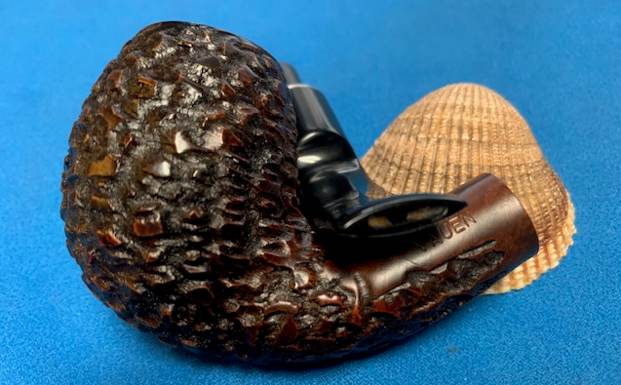
Dal did a great job on this Savinelli Silver. Give the blog a read.

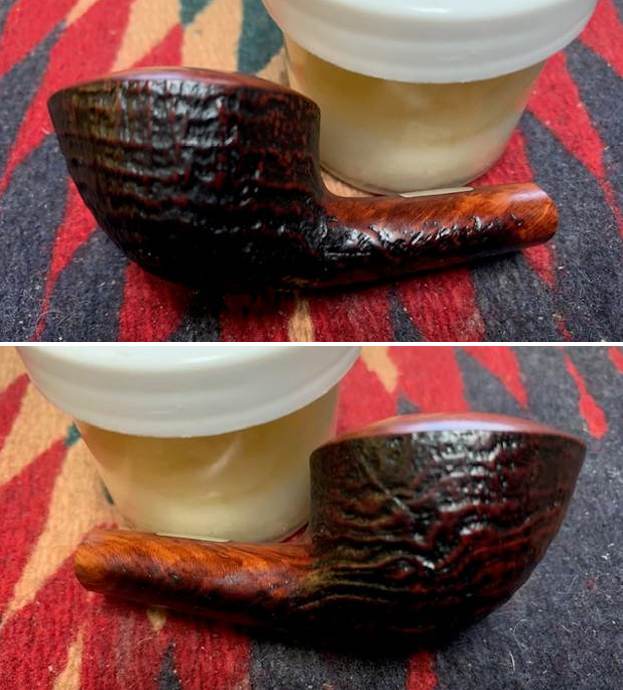
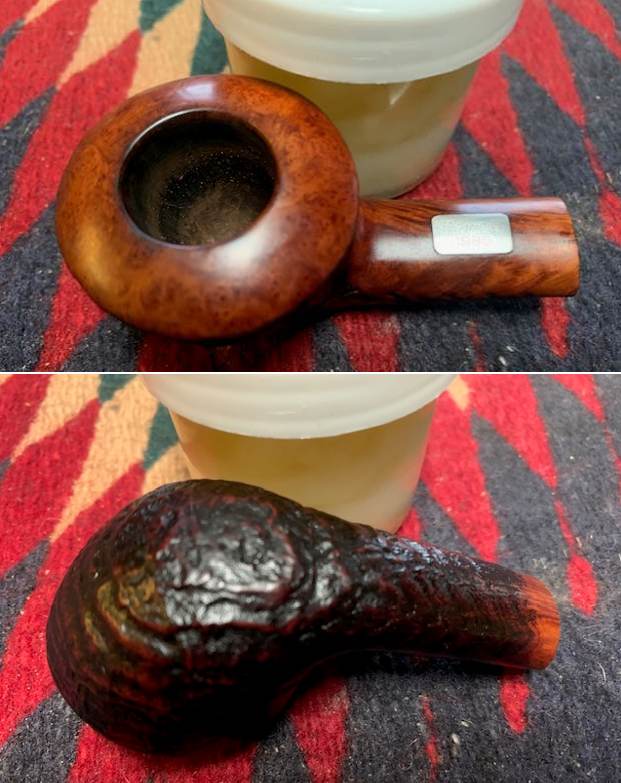
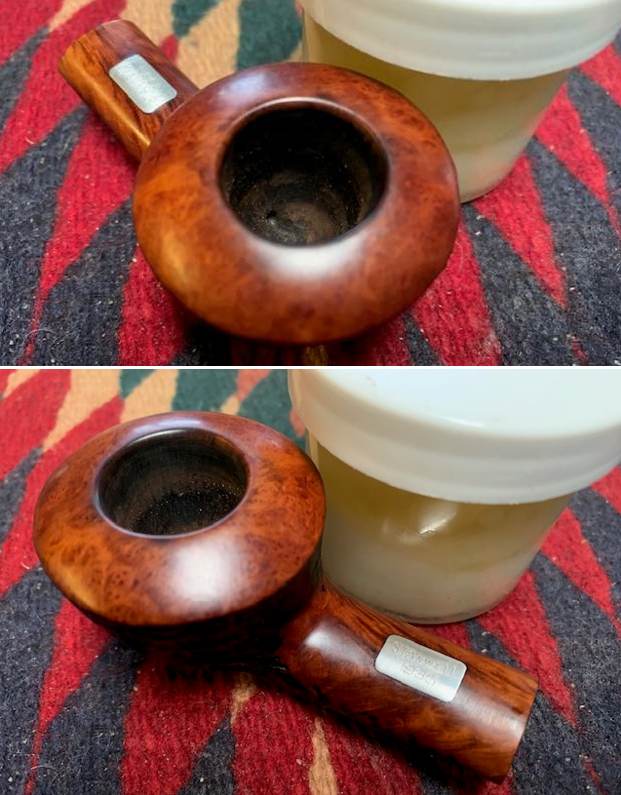
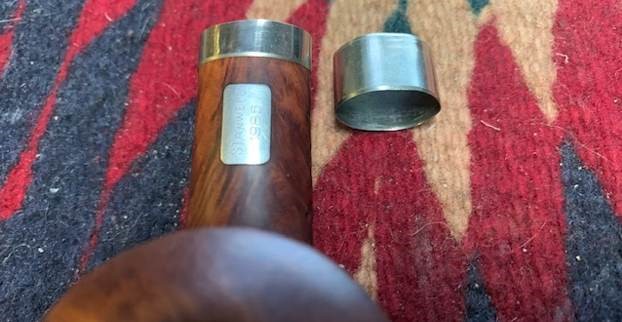
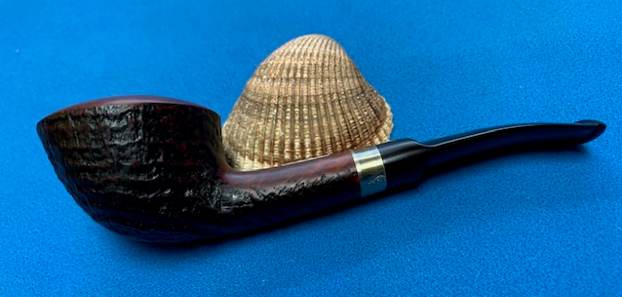
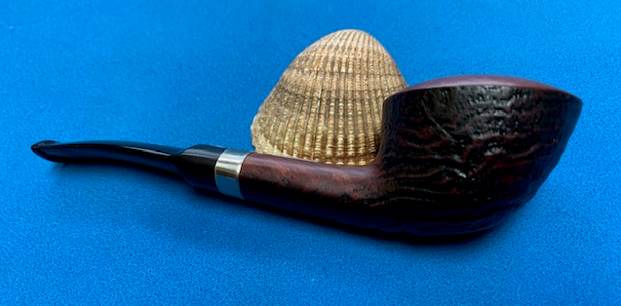
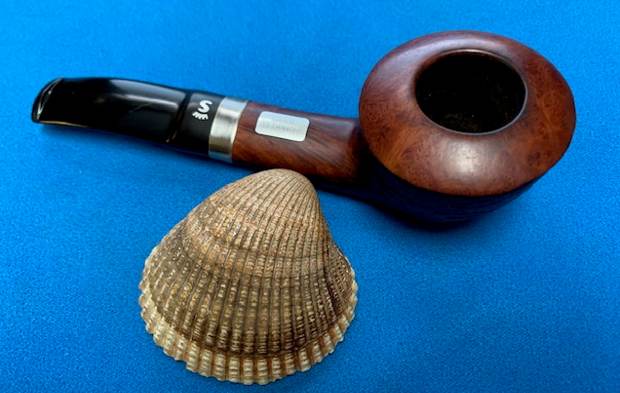
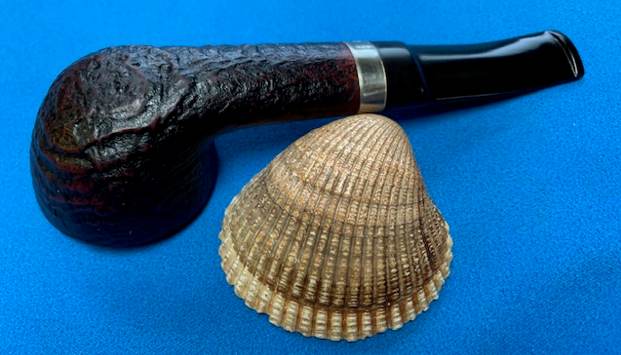
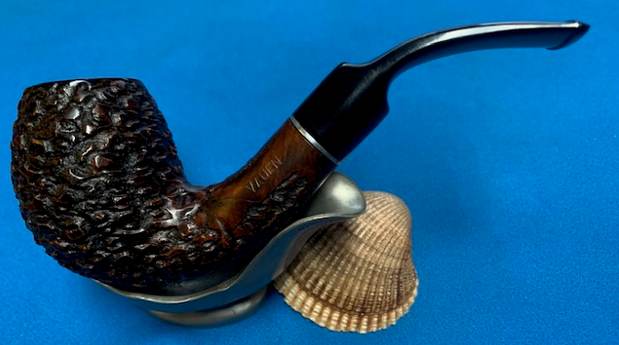
It’s fitting that the next pipe on the worktable is another well-known Italian pipe name, Savinelli.  Pipe man Gary from North Carolina added this …

Sprucing Up a Classy Savinelli Silver 111 KS Italy Billiard

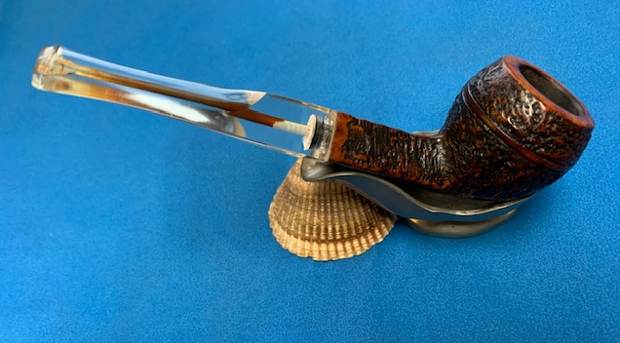
Cleaning Up and Restoring A “Caminetto Business” 185 Cavalier KS1


Blog by Steve Laug

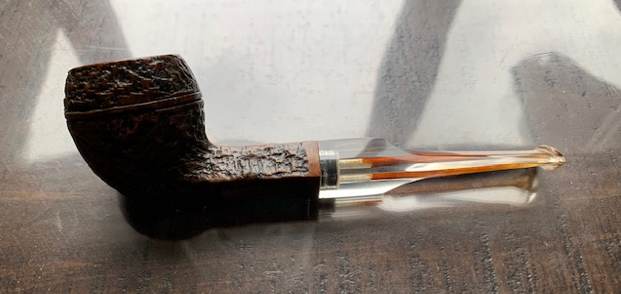
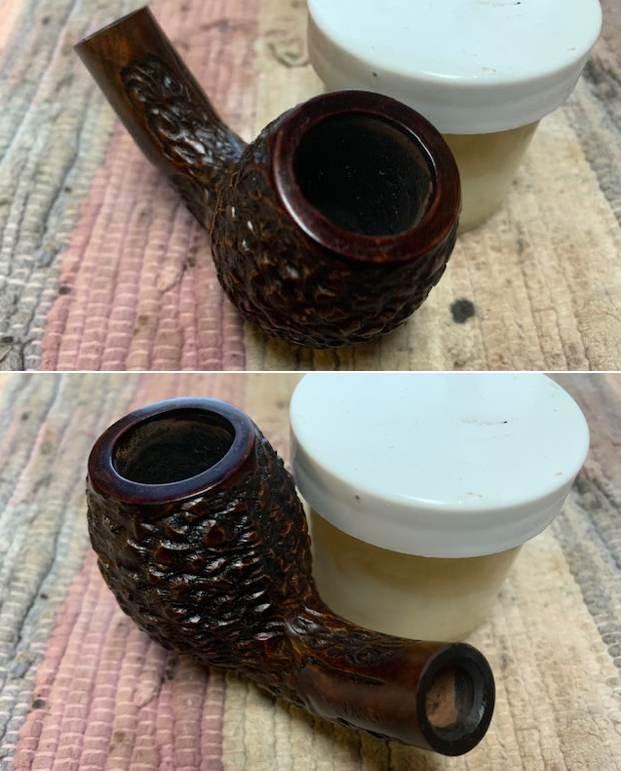
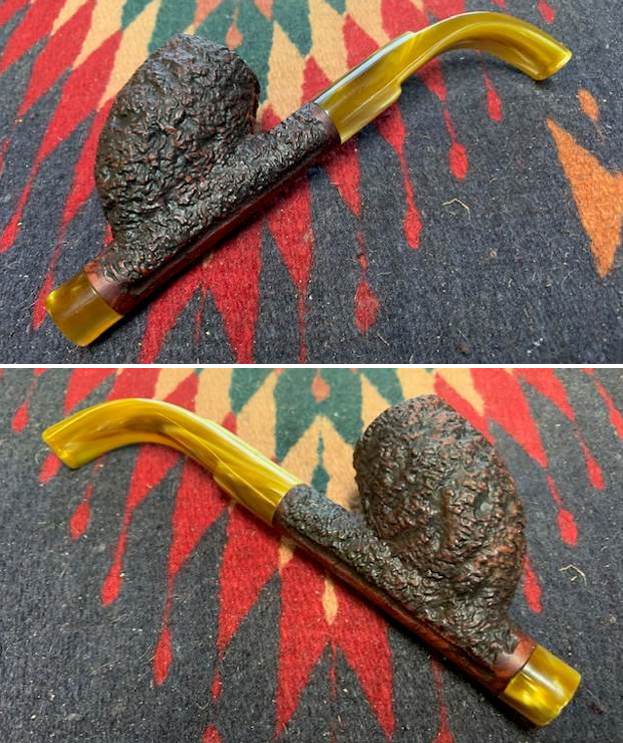
The next pipe on my worktable is a Caminetto Business Pipe was purchased on 03/30/22 from Plano, Texas, USA. It is a beautiful rusticated Cavalier with an acrylic end cap on the shank and an acrylic saddle stem. It was a good looking pipe but it was filthy with grime and oils ground into the rusticated finish on the bowl. The pipe had some rustic beauty shining through the dust and debris in the valleys of the rough finish. The rustication covered the rim top, bowl and shank with a smooth panel on the underside of the shank. The finish was dull and lifeless and dirty from sitting around. There was a very thick cake in the bowl with lava flowing out of the bowl and over the rim top. The lava had filled in the deeper grooves of the rusticated finish on the rim top. The inner edge of the rim appeared to be in good condition but it was hard to tell under the thick lava. The stamping on the underside of the shank read “CAMINETTO [over] BUSINESS”. To the right of that toward the stem it was stamped HAND MADE IN ITALY [over] CUCCIAGO (CO). That was followed by the shape number 185 and KS1. The golden variegated acrylic saddle stem had light tooth chatter and a few deeper tooth marks on both sides near the button. Jeff took the following photos before he started his cleanup work on the pipe.He took close-up photos of the bowl and rim top from various angles to capture the condition of the bowl and rim top edges. You can see the lava overflow and debris in the rustication of the rim top. You can see the cake in the bowl. This was a dirty pipe but it was the finish was in great condition. The next photos show the overview of the stem and the fit in the rusticated shank end as well as the light tooth chatter and a few deeper marks on the top and underside of the stem. He took photos of the sides and heel of the bowl to show the beautiful incredibly deep rustication around the bowl. It is the same kind of rough rusticated finish that I really like on Castello Sea Rock pipes. You can see the oil, dust and debris in the finish on both sides of the bowl. Jeff took photos of the stamping on the shank. It reads as noted above. The stamping is clear and readable. I turned to Pipephil (http://www.pipephil.eu/logos/en/logo-c1.html) to see if he included not only information on this Caminetto Business 182. He gave some interesting information about the brand. It was created in 1986 by Guiseppe Ascorti, Luigi Radice and Gianni Davoli as the distributor. It states that in 1979 the first Caminetto period ended with Luigi Radic leaving the company. Guiseppe Ascorti continued making the pipe with his son Roberto. In 1986 the New Caminetto period began by Roberto Ascorti.I turned to Pipedia for more information on the Caminetto and how to date the pipe I had in hand (https://pipedia.org/wiki/The_History_of_Caminetto_(shapes,_stamping,_articles,_etc.). I quote a pertinent paragraph:

Stampings and dating: First off, dating earlier Caminetto’s is nearly impossible. Nevertheless, there were three phases, some in which were much earlier, of development that occurred in the stamping process of Caminetto. Before that though, every pipe had the stamp of Caminetto in one of two ways: Caminetto in script or Caminetto within quotation marks in block letters (I do not know how it was decided which pipe got which stamp, as I have had EARLY Caminetto’s with both)…

The stampings are shown in the photo to the left. The stamping on this pipe is like #2.

…Now, the question is which stamps are earlier and more likely to have been made by Ascorti and/or Radice. The answer is #1. The differences in #2 and #3 seem to be minute, as Cucciago is simply a suburb of Cantu. Pipes stamped like #1 are the most valuable Caminetto’s as they are the earliest production of the brand, as well as what some would claim the most perfect of Ascorti and Radice’s work. The last tidbit is, of course, debatable…

There is also another factor in stamping, that is, which series the pipe falls in. The majority of Caminetto’s one sees are those of the “Business” series, which are stamped such with their collective shape (see photo of shapes below). Another stamp that sometimes follows the “Business” one is “KS,” which from what I know means “King-size” (this could be wrong, as there are pipes stamped with KS1, KS2, and KS3).

Now it was time to look at it up close and personal. Jeff had done an amazing job in removing all of the cake and the lava on the rim top. He had reamed the bowl with a PipNet Pipe Reamer and cleaned up the remnants with a Savinelli Fitsall Pipe Knife. He took the cake back to bare briar so we could check the walls for damage. He scrubbed the exterior of the bowl with Murphy’s Oil Soap and a tooth brush to remove the grime on the bowl and rim and was able to remove the lava and dirt. He cleaned out the interior of the bowl and shank with pipe cleaners, cotton swabs and alcohol until they came out clean. He cleaned the stem and the trap at the end of the shank with Soft Scrub to remove the grime on the exterior and cleaned out the airway with alcohol, cotton swabs and pipe cleaners. I took photos of the pipe before I started my part of the restoration. To show how clean the rim top and stem really was I took a close-up photo of the rim and stem. The bowl was clean and cake free. The rim top is very clean with no residual lava buildup in the rusticated finish. The inner edges of the bowl look good. The golden acrylic saddle stem cleaned up nicely. The surface had some light tooth marks but the button edge looked really good. I took a photo of the stamping on the underside of the shank. You can see that is clear and readable as noted above.I removed the stem from the shank and took a photo of the parts of the pipe to show the overall sized of the pipe. It is a great piece that combines the gold acrylic on the shank end cap and the stem with the rusticated finish on the bowl and shank.I started my work on the pipe by staining the areas on the rim top and rusticated finish were worn and faded. I used a Walnut stain pen to touch up the rim and around the top edge. The bowl looked very good so I did not need to do any further work on it. I rubbed the bowl and shank down with Before & After Restoration Balm to deep clean the finish on the bowl and shank. The product works to clean, enliven and protect the briar. I worked it in with my fingers and with a horse hair shoe brush to get it into the nooks and crannies of the deep rustication of the finish on the bowl and shank. I let it sit for about 20 minutes to let it do its magic. I buffed it with a soft cloth. The briar really began to have a rich shine. I took some photos of the bowl at this point to mark the progress in the restoration. I set the bowl aside and turned my attention to the stem. I filled in the deep tooth marks with clear CA glue. I sanded the repaired tooth marks and chatter smooth with 220 grit. I started polishing the whole stem with 600 grit sandpaper until the sanding marks were gone. I touched up the mustache stamp on the stem with Rub’n Buff Antique Gold. I applied it with a toothpick working it into the stamp. There were places on the sides of the stamp that were faint. I buffed it off with a soft cotton pad. It looked better. I polished the stem on both sides using micromesh sanding pads. I dry sanded the stem with the 1500-12000 grit pads, then wiped it down with a cloth impregnated with Obsidian Oil. I finished polishing it with Before & After stem polish – both Fine and Extra Fine. I gave it a final coat of Obsidian Oil and set it aside to dry. I put the Caminetto bowl and stem back together again and buffed them with Blue Diamond on the buffing wheel. I used a soft touch on the rusticated bowl so as not to fill it in with the polishing product. I gave the bowl several coats of Conservator’s Wax and the stem several coats of carnauba wax. I carefully buffed the entire pipe with a clean buffing pad to raise the shine. I finished buffing with a microfiber cloth to deepen the shine. The finished pipe looks very good. The rustication is very tactile and feels great in the hand. It is comfortable and light weight. The finished Caminetto Business 185 Cavalier is shown in the photos below. The dimensions of the pipe are Length: 7 inches, Height: 3 1/2 inches, Outside diameter of the bowl: 1 ¼ inches, Chamber diameter: 1 inch. The weight of the pipe is 63 grams/2.26 ounces. This great looking rusticated Caminetto turned out very well. It should be a great pipe. It will be going on the rebornpipes store in the Italian Pipe Makers Section shortly if you are interested in adding it to your collection. Thanks for reading this blog and my reflections on the pipe while I worked on it.
 

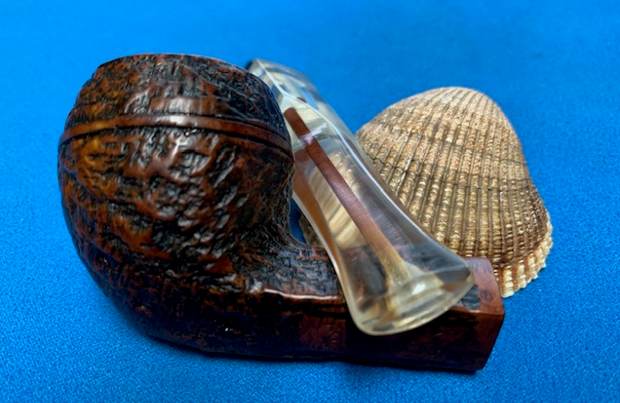
Rebirthing a Stanwell 1985 POY Sandblast Dublin with a smooth Rim Top


Blog by Steve Laug

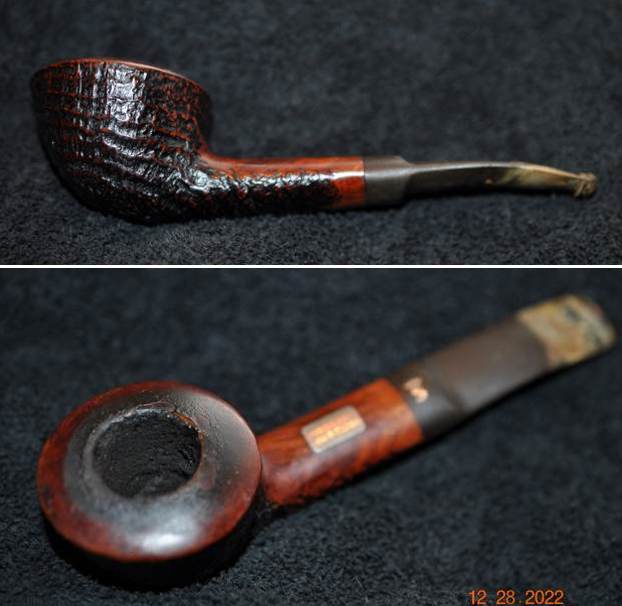
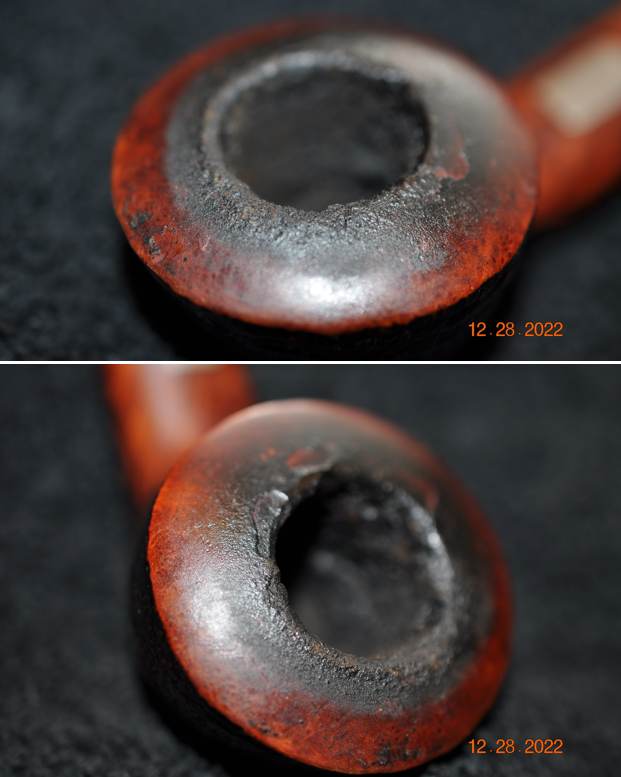
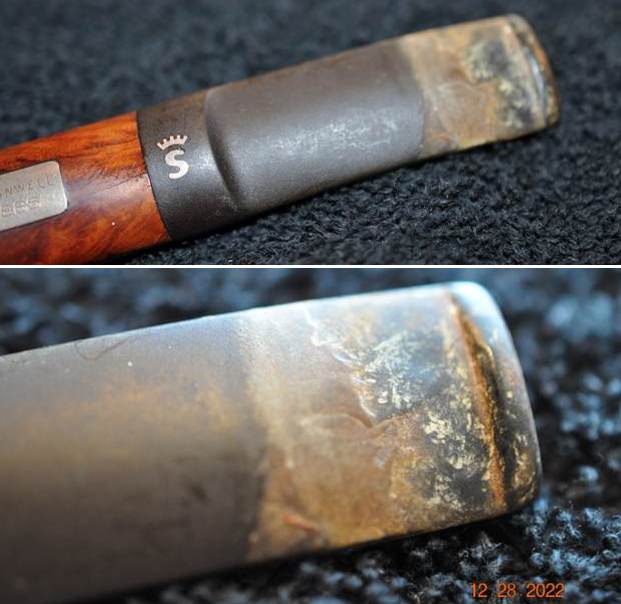
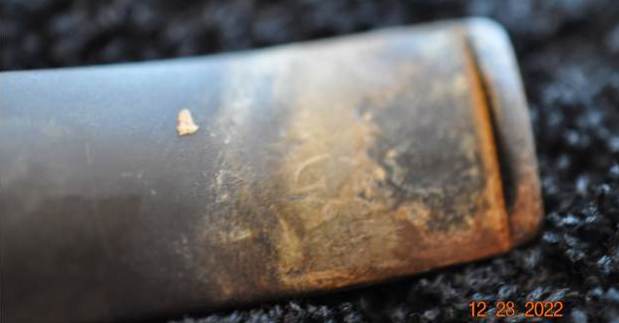
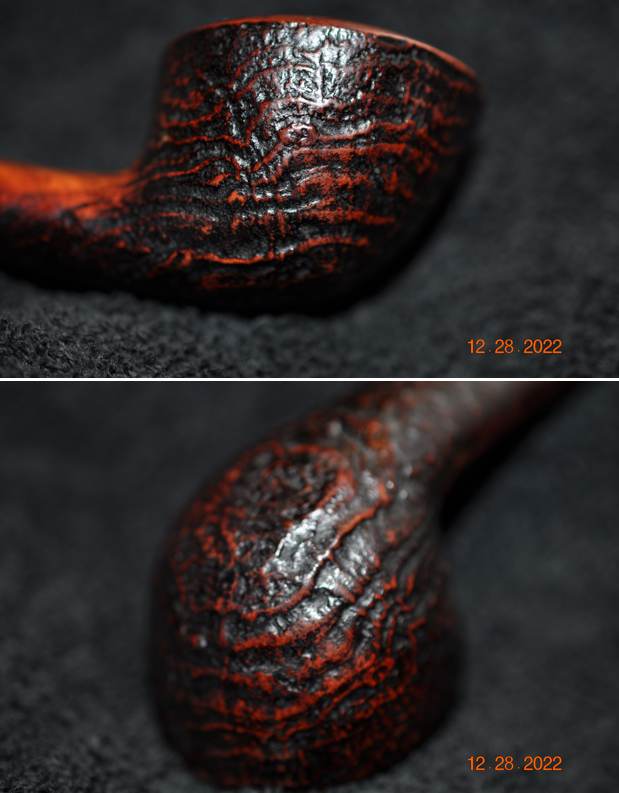
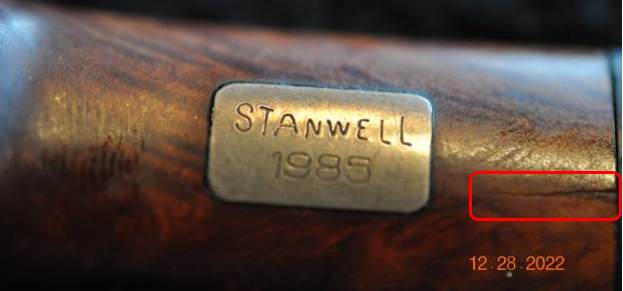
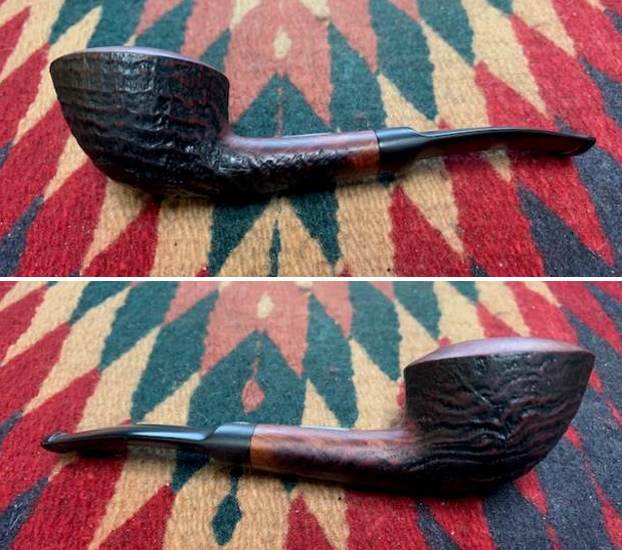
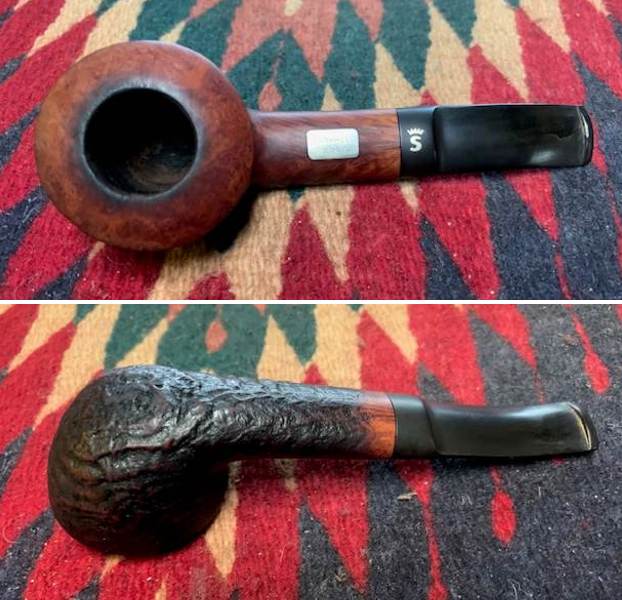
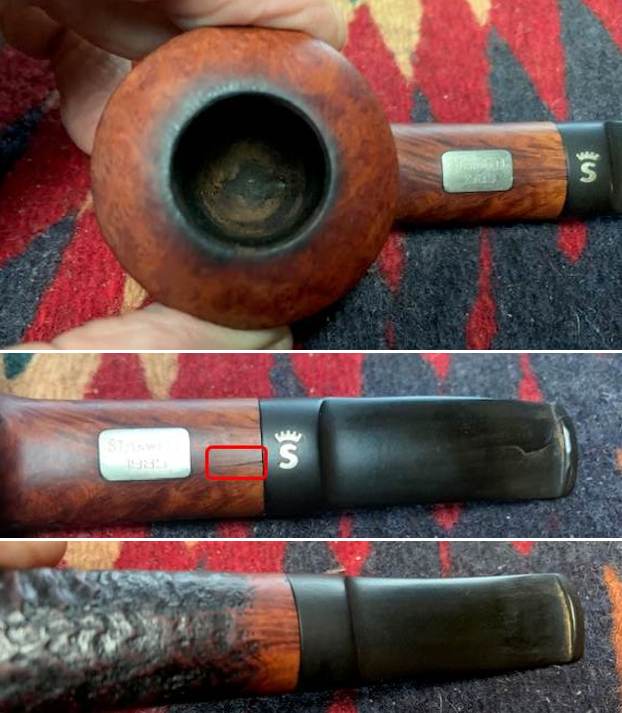
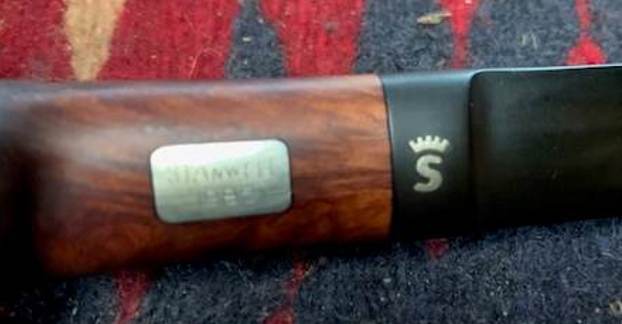
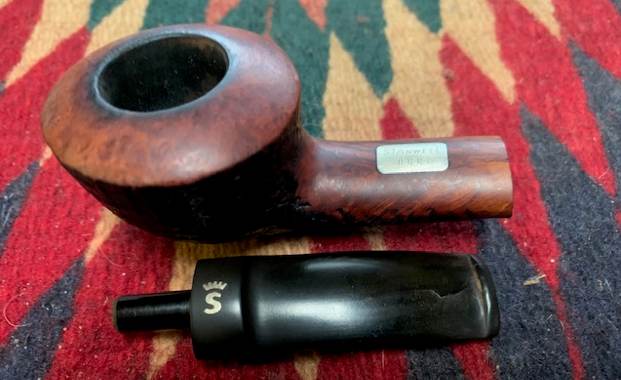
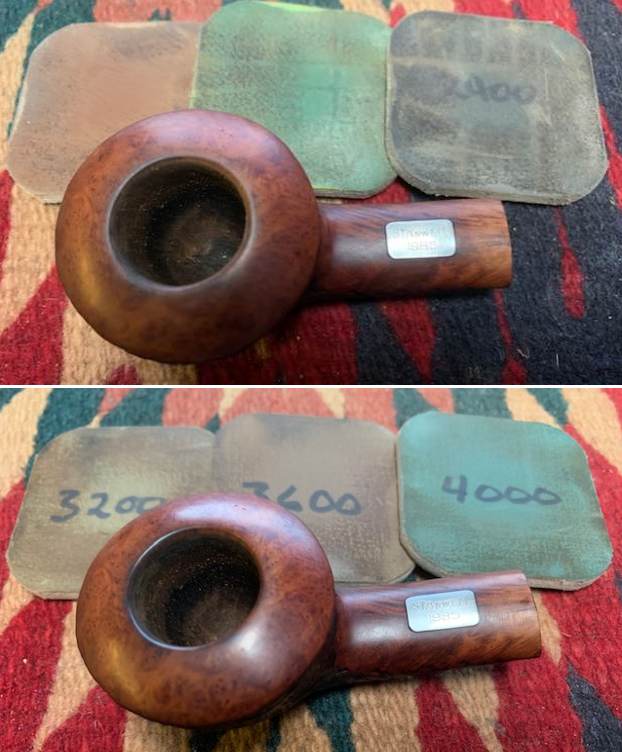
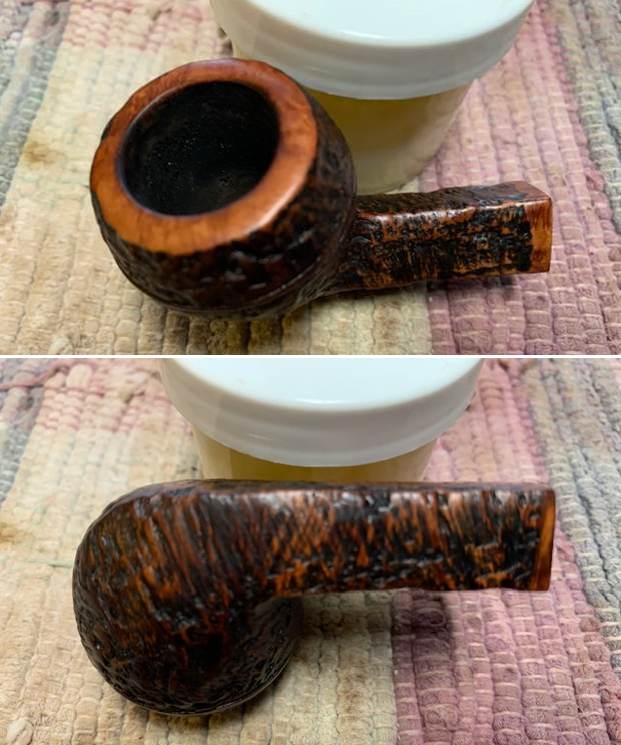
The next pipe I am working on was purchased on 12/13/2022 as part of a group of pipes from a fellow in Copenhagen, Denmark. This was another horribly tired and dirty pipe with a lot of wear and tear and obviously it had been someone’s favourite smoker. The pipe has an identifying silver plate on the topside of the shank that reads Stanwell [over] 1985. There was no other stamping on the shank and the silver plate confirmed for me that it was a Stanwell Pipe of the Year. The dirty sandblast finish on this was worn and tired looking. There were tars and oils ground into the surface of the briar. The shank had a hairline crack on the left side of the top that would need to be dealt with. The sandblast showed some nice grain around the bowl and shank and though it was a little dirty it was a nice looking pipe. The bowl had a thick cake that flowed over the top of the lightly crowned rim in a thick coat of a lava and showed potential damage on the top and the inner edge. The stem was a black vulcanite saddle stem with a silver Crown S on the topside of the saddle. It had some deep and wide tooth marks and chatter on both sides ahead of the button. There was also some oxidation and calcification on both sides of the stem. Jeff took photos of the pipe before he started his clean up work.  He took photos of the rim and bowl to show the heavy cake and thick lava coat covering the rim top. It really was filthy and a mess. He also took photos of the stem surfaces to show its overall condition when it arrived. The photos of the sides and heel of the bowls show beautiful grain around the bowl and shank sides. The sandblast is nicely done and highlights the grain. The brown stain on the briar adds depth finish on the pipe and makes the grain really stand out. It shows some promise. He also took a photo of the stamped silver plate on the left underside of the shanks. It reads as noted above. I have also boxed the hairline crack on the top of the shank in red in the photo below.Jeff cleaned up the pipe for me. He reamed the bowl with a PipNet pipe reamer and cleaned it up with a Savinelli Fitsall Pipe Knife. He scrubbed the exterior with Murphy’s Oil Soap and a tooth brush to clean off the grime off the finish and the heavy overflow of lava on the rim top. The cleaning had removed the thick coat on the rim top. He cleaned up the internals of the shank, mortise and stem with pipe cleaners, cotton swabs and alcohol to remove all of the oils and tars in the pipe. He soaked the stem in Before & After Deoxidizer and was able to remove much of the oxidation, calcification. When it arrived here in Vancouver it was a clean pipe and I knew what I had to work with. I took photos of it before I started my part of the restoration. I took a photo of the rim top and the stem to show their condition once it arrived in Canada. Jeff was able to clean up the incredibly thick cake and the lava overflow that was shown in the rim and bowl photos above. The rim top showed damage on the surface and the inner edge of the bowl. He was also able to get rid of the grime and grit in the surface of the briar around the sandblast. The second photo of the three below shows the crack in the shank (once again boxed in red). The stem looked better, though there were deep tooth marks and chatter on both sides near the button.I took a photo of the stamping on the silver plate on the topside of the shank to show that it was readable and undamaged by the cleanup work.I removed the stem from the shank and took a photo of the parts to give a sense of what the pipe looks like.I started my work on the inner edge and rim top with a folded piece of 220 grit sandpaper. I was able to remove that damage on the rim top and bring the inner edge back into round. It looked much better. I repaired the hairline crack in the shank with a dab of clear CA glue. I clamped the shank together to let the repair cure. Once it had cured I sanded it smooth with 220 grit sandpaper to blend in the repair. It looked much better. To stabilize it further I will need to put a thin band on the shank end so that with the addition and removal of the stem does not rebreak the crack.I started polishing the rim top and smooth portions of the briar (including the repaired hairline crack) with micromesh sanding pads. I wet sanded it with 1500-12000 grit pads. I wiped the bowl down after each pad with a damp cloth. The bowl began to take on a rich shine and grain was beginning to stand out. I rubbed the bowl and shank down with Before & After Restoration Balm to deep clean the finish on the bowl and shank. The product works to clean, enliven and protect the briar. I worked it in with my fingers to get it into the briar. I used a horsehair shoe brush to work it into the sand blast areas. I let it sit for 10 minutes then I wiped it off and buffed it with a soft cloth. The briar really began to have a rich shine. I took some photos of the bowl at this point to mark the progress in the restoration. It is a beautiful bowl. To stabilize the crack further and stop it from reoccurring each time the stem was removed I banded it. I had a band that would work on the shank but it needed to be reduced by half to get the depth more aesthetically pleasing to my eye. I used a coarse 180 grit sanding pad and worked the band against it until I have removed approximately half of the width. I heated it with a lighter and pressed it on the shank. The fit was perfect and to me it looked very good. I polished the band with a jeweler’s cloth to protect and give it a shine. I gave it another coat of Restoration Balm and buffed it off with a clean cloth. I set the bowl aside and worked on the stem. I filled in the deep tooth marks with clear CA glue. I flattened the repairs with a small file. And sanded the smooth with 220 grit. I started polishing the whole stem with 600 grit sandpaper until the sanding marks were gone. I polished the stem with micromesh sanding pads – dry sanding with 1500-12000 grit pads. I wiped the stem down after each pad with a damp cloth to remove the sanding dust. I gave it a further polish with Before & After Stem Polish – both Fine and Extra Fine. I finished by wiping the stem down with a final coat of Obsidian Oil and set it aside to dry. I put the stem back on the Stanwell Pipe of the Year 1985 Dublin pipe and took the pipe to the buffer. I buffed the bowl and stem with Blue Diamond to polish the briar and the vulcanite stem. Blue Diamond does a great job on the smaller scratches that remain in both. I gave the bowl and the stem several coats of carnauba wax and buffed the pipe with a clean buffing pad to raise the shine. I hand buffed it with a microfiber cloth to deepen the shine. The finished pipe is shown in the photos below. This is a beautiful Stanwell POY 1985 – the vulcanite saddle stem and crowned rim top and sandblast finish combine to give the pipe a great look. The polished black, vulcanite stem looks really good with the rich browns standing out in the sandblast. The dimensions of the pipe are Length: 5 inches, Height: 1 ½ inches, Outside diameter of the bowl: 1 ¾ inches, Chamber diameter: ¾ of an inch. The weight of the pipe is 1.38 ounces/39 grams. This pipe has already been spoken for as an Anniversary present. It will soon be going to the fellow who ordered it. Thanks for walking through the restoration with me on this beauty!

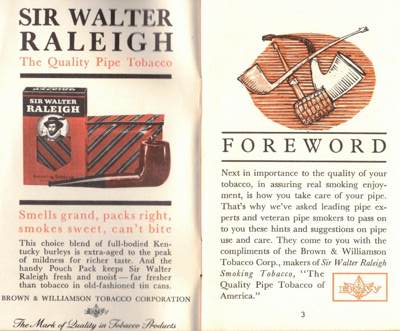
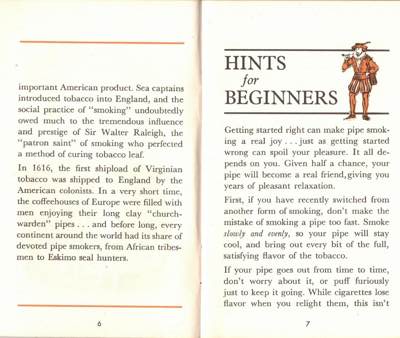
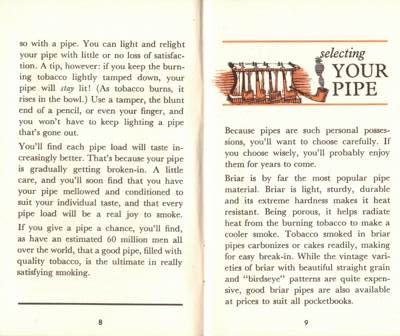
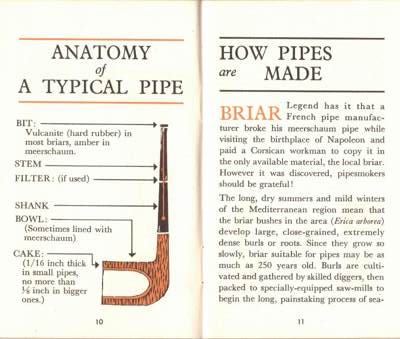
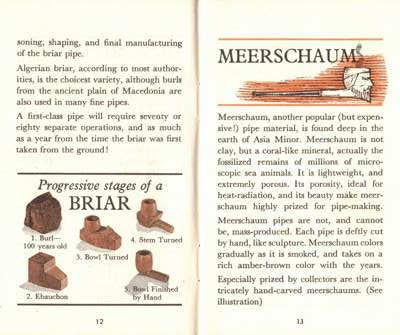
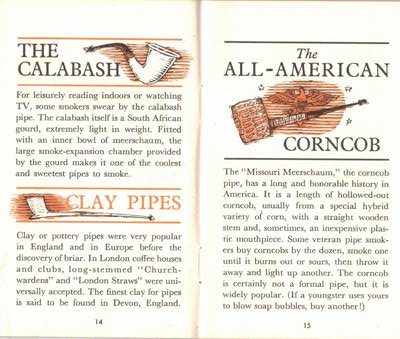
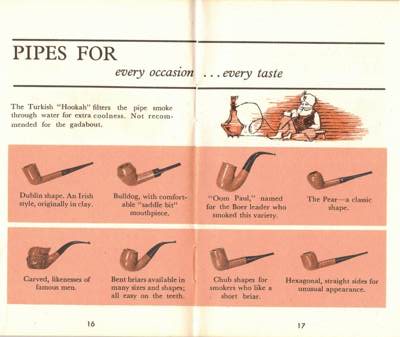
A Pipe Smokers’ Guide To Pleasure – Sir Walter Raleigh


Blog by Steve Laug

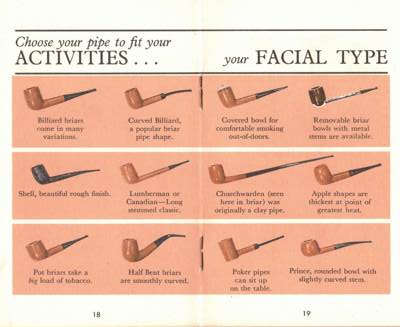
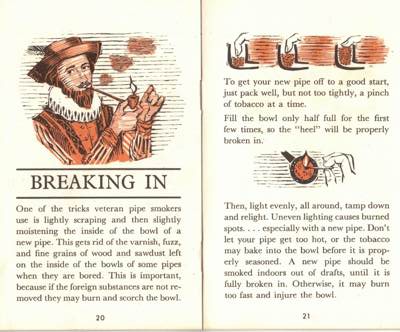
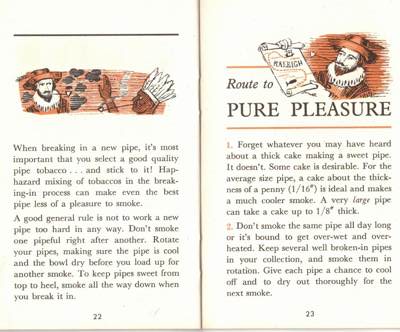
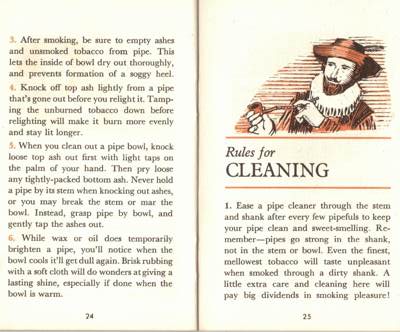
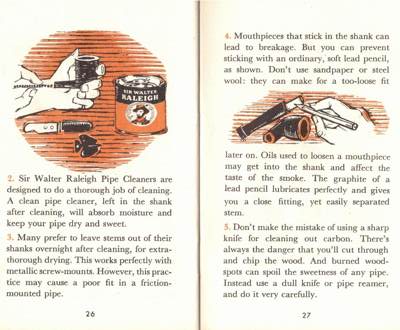
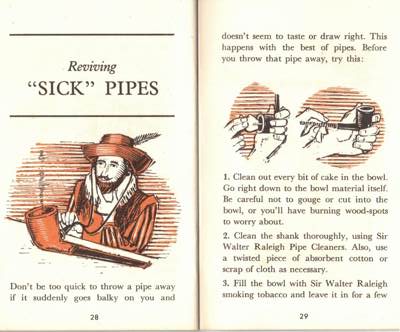
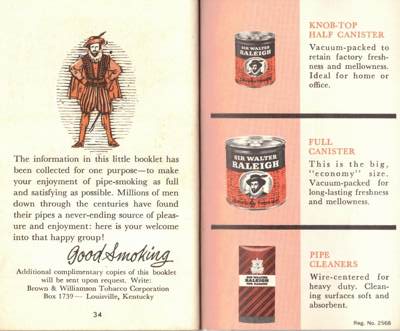
I received this booklet in a box of pipe parts and tobacciana that I brought home with me while on my visit with Jeff and Sherry in Oregon. It is a neat little piece of tobacco history in the form of a guide to pipe smoking that came with boxed Sir Walter Raleigh Pipe Tobacco. It is a great read and a great piece of pipe history. Give the text a read as is a delightfully worded piece of Pipe Advertising. Thanks.

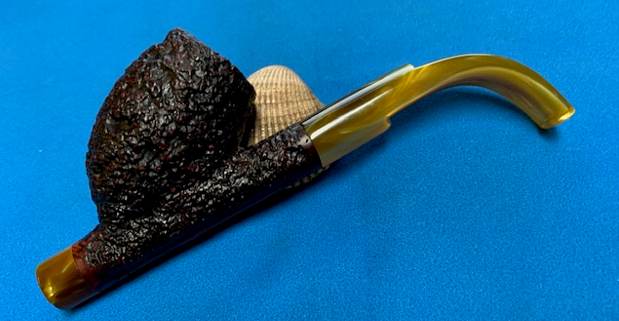
Back From the Brink: A New Lease of Life for a Vintage Frank Amberloid Cased Bulldog


Charles replaced the threaded bone tenon with a nice Delrin push tenon. Great work on the shank and the brittle Bakelite or Redmanol stem. Give it a read.

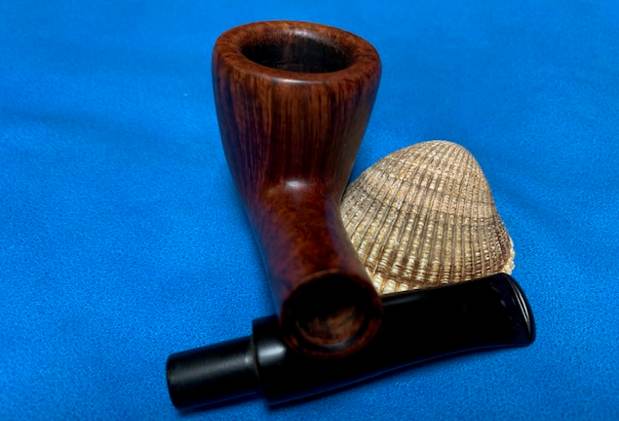
One of the fun parts about pipe restoration is not knowing exactly what will show up in the shop. Will the next pipe be a Dunhill ODA, a huge artisan…

Back From the Brink: A New Lease of Life for a Vintage Frank Amberloid Cased Bulldog

Some great finds while visiting my brother and doing a few pipe hunts!


Blog by Steve Laug

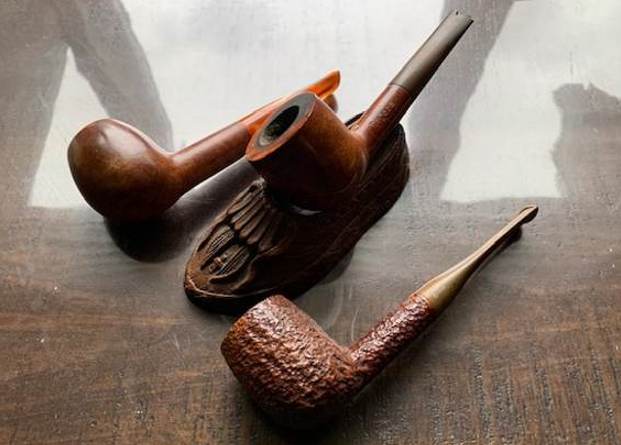
Irene and I just returned from a long needed holiday visiting my brother Jeff and his wife in Oregon. Of course when we are together we have to do a bit of pipe hunting. We visited shops up and down the Oregon Coast and along the Washington side of the Columbia River. We found a few notable pipes that intrigued us. I also was able to pick up quite few items that he had stored for me to take home. In the first photo below is the first finds of the trip. From the top of the left column down these are the pipe we found.

    1. Italian Made Calabash with a removable bowl and a rusticated finish. The stamping is not clear on it so I am not sure of the maker but it reminds me of a Ser Jacopo
    2. A rusticated Dublin with a Cumberland stem that the seller identified as an Ardor but all I can see is Italy. Turns out it has a cracked shank once I removed the sales sticker.
    3. Comoy’s Grand Slam 186 Billiard with COM circle and the Grand Slam plumbing in the tenon.
    4. Brebbia Lectura Church Warden that is bent with a rugged rustication. It is great condition.
    5. Weber Old Standard Pot with great grain and an almost full bowl of unsmoked tobacco.
    6. Peterson’s Made Irish Second Rusticated Bent Billiard in excellent shape though the stem is probably a replacement.
    7. Needham Imported Briar Pat’d System pipe – square and blocky looking but unique.

The second photo shows the next finds on the hunting trips. I have listed them below from top to bottom of the photo. I also found the moccasin pipe rest that holds one of the pipes at a local shop.

  1. Made in London England Apple with an orange acrylic stem that is in great condition.
  2. Roger’s Standard with a broken stem that is also stamped France. It was a free find that was given to us because the stem was broken. It is sitting in a moccasin pipe rest from the same shop.
  3. Savinelli Oscar 428 Rusticated Billiard

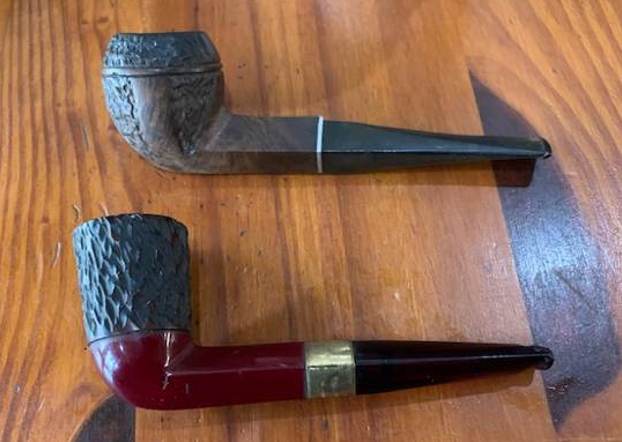
We also visited a friend in Vancouver, Washington to pick up some pipe parts – stems, tenons, bands etc. He gifted me with a House of Robertson Straight Rusticated Bulldog with a Perspex stem. We had a great visit and enjoyed swapping stories and tobaccos. The last two pipes we added are pictured below.

  1. Royalton Tru-Line Bulldog with rusticated panels and smooth panels on the bowl. It has a rusticated bowl cap and smooth shank.
  2. A Bakelite Diamond Shank pipe with a rusticated briar bowl.

Here are some of the other things we picked up or were given.

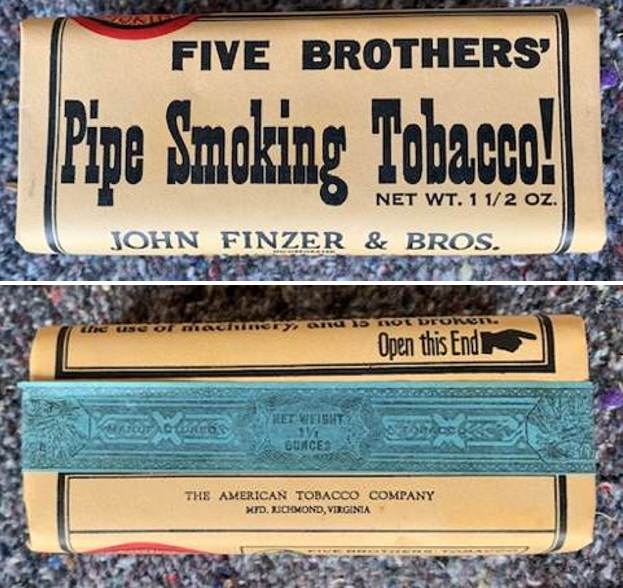
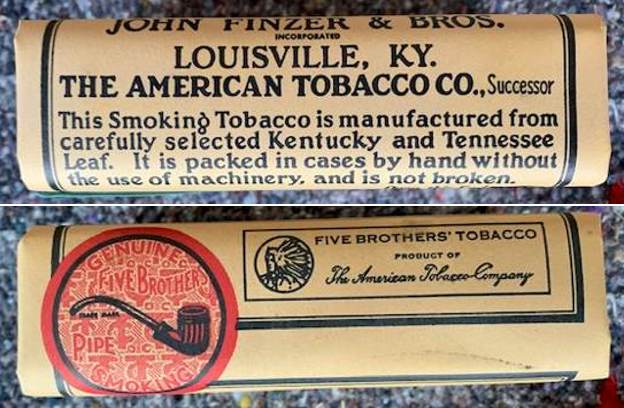
  1. The first was a pouch of Five Brother’s Pipe Tobacco from the fellow in Vancouver, Washington. It had belonged to an older family member – perhaps his father or uncle. He is in his 80s so it an old timer. He had a partial case of it that he took this from to give me. It is a beauty and dry as dust.
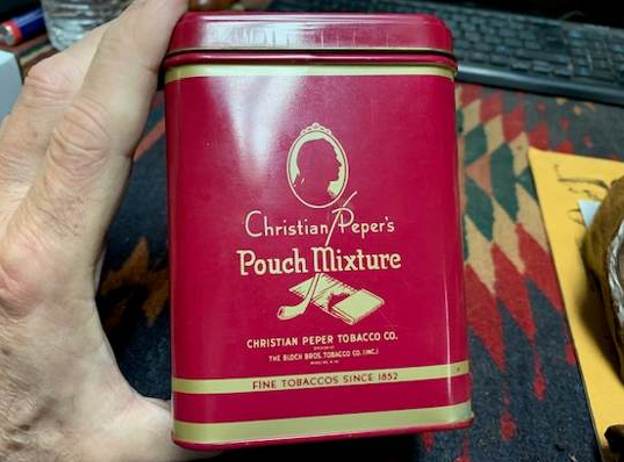
  2.  The second was a tin of Christian Peper’s Pouch Mixture that was sealed in a plastic bag in the tin. It was made by the Bloch Brother’s Tobacco Company in the 1950s. It was dry but still smelled good and would be an interesting smoke.

Jeff also passed on some finds that he had made with me in mind over the past few years. This was my first visit to the states since Covid 19 so some of this had been with him quite a while.

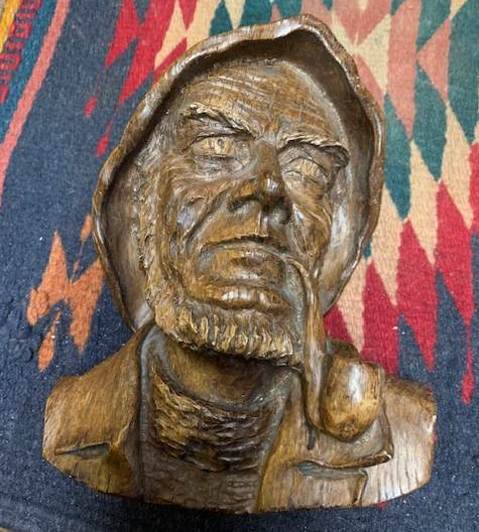
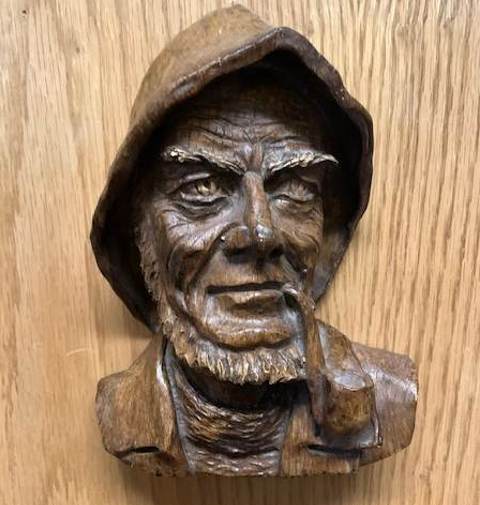
  1. A carved wooden head of a fisherman smoking a pipe. It was quite nice and was made to hang on the wall. Which it is now doing next to my desk here in Vancouver.
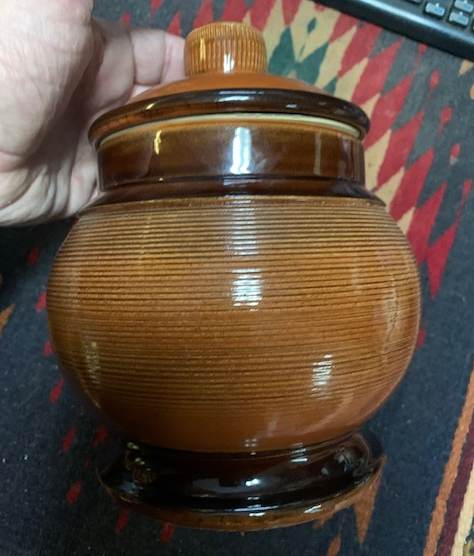
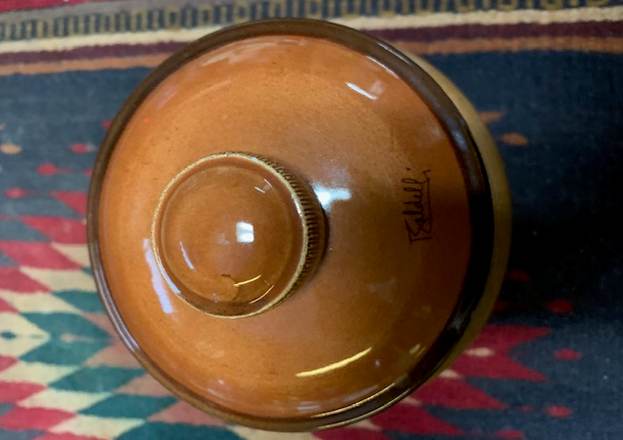
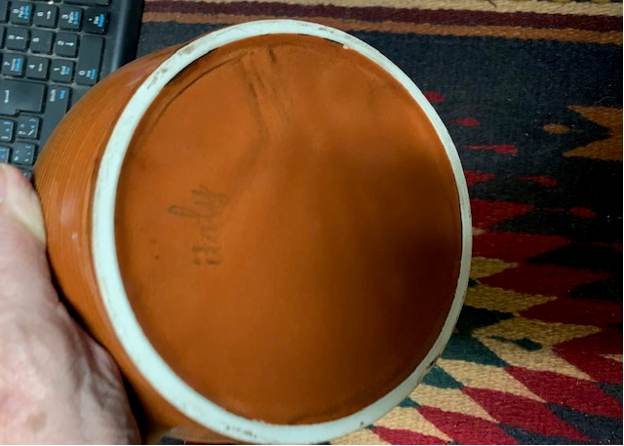
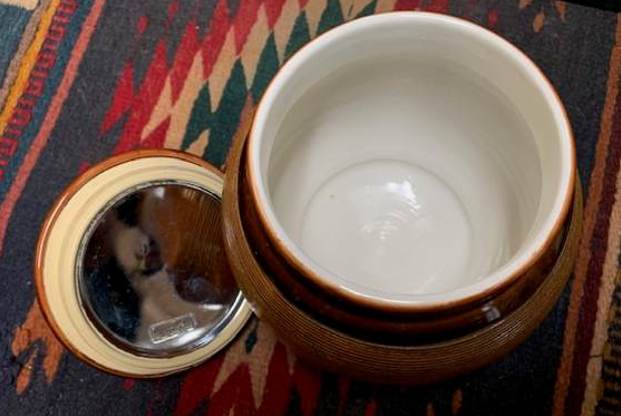
  2. We also had picked a nice sealed pottery humidor from a seller on Facebook that I had shipped to him. It is stamped with a script signature Baldelli on the lid and Italy on the base.

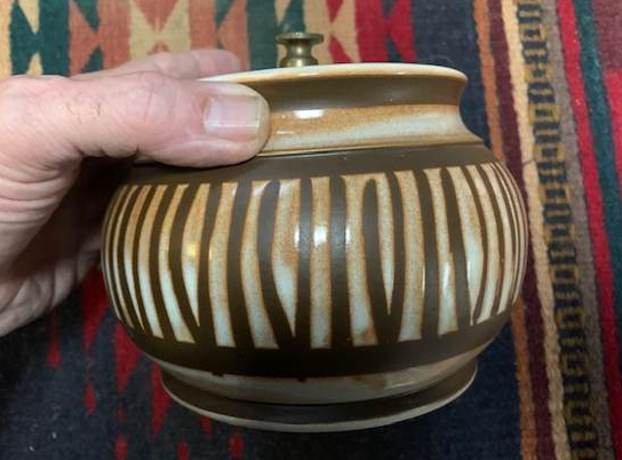
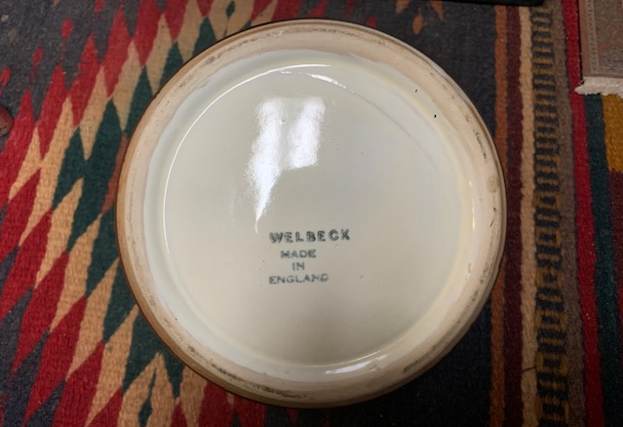
I found another humidor for tobacco with a brass handle that turned in the rim edge and kept the tobacco fresh. It is stamped Welbeck [over] Made in England. The humidor is white w/ brown vertical lines design, top lip has a brown stripe, lid has a 3 arm screw closure to seal the jar, 6 1/2″ dia. x 5″ tall, hard rubber seal and is in good condition. Finally a couple of other items I brought home with me from Jeff.

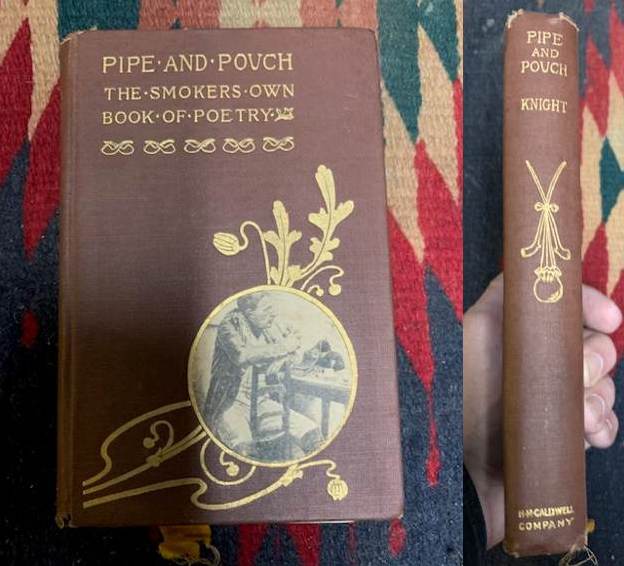
  1. An older book called Pipe and Pouch – The Smokers Own Book of Poetry. It was compiled by Joseph Knight and printed by HM Caldwell Co. Publishers in Boston. It has the printed copyright 1894. It is a neat old book with a built in book ribbon to keep my place and gilded page edges.
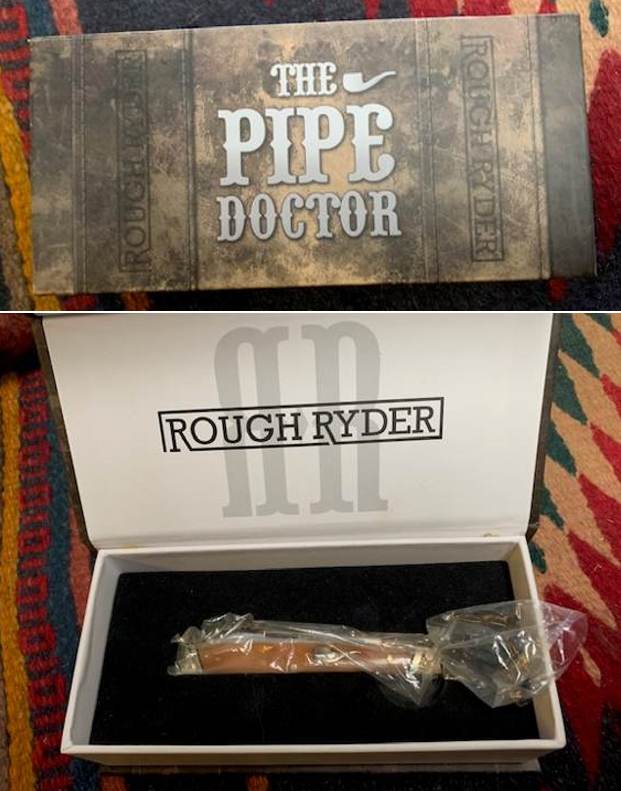
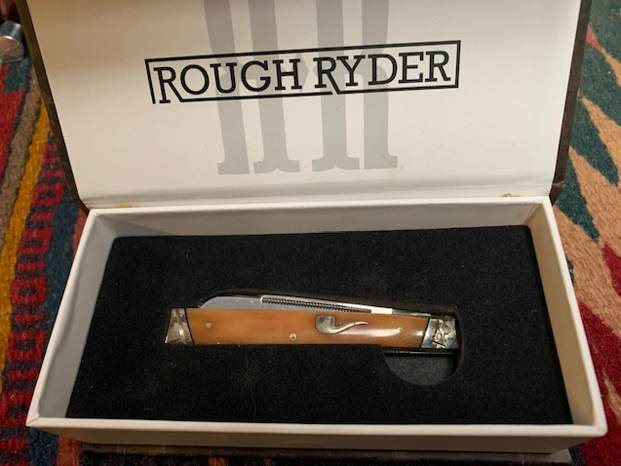
  2. A pipe knife boxed in a case that is printed Rough Ryder Pipe Doctor and when opened reads rough rider. It is unused and has an end that can be used for a tamper and a blade for scraping the bowl. It is a beauty.

Discovering a 1950s Brebbia Portofino 830 Sea Rock Pear with the help of Luciano Buzzi of Brebbia Pipes


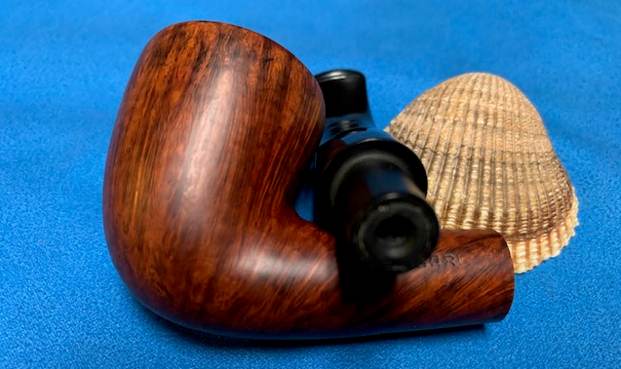
After a 1 month and 9-day road trip covering 1400 miles I’m finally back at the worktable.  My wife and I visited several churches, family and …

Discovering a 1950s Brebbia Portofino 830 Sea Rock Pear with the help of Luciano Buzzi of Brebbia Pipes

Restoring a Bari Made in Denmark Bent Dublin


Blog by Steve Laug

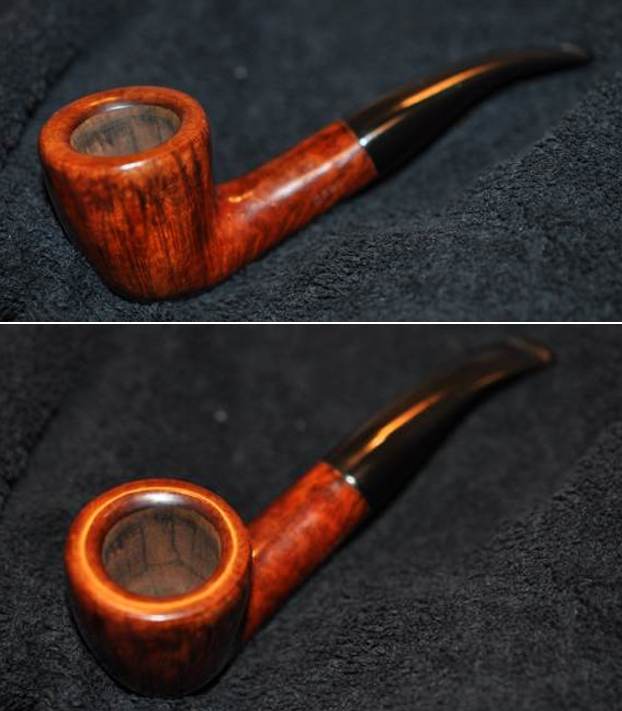
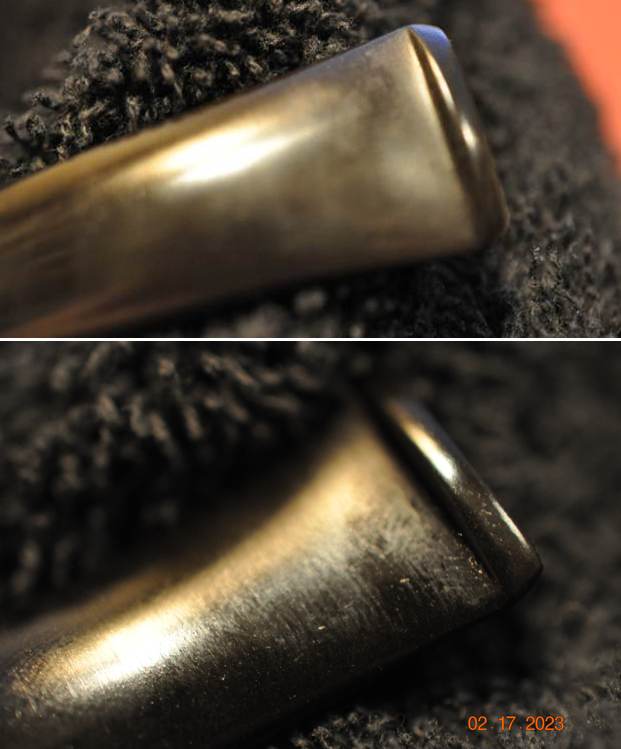
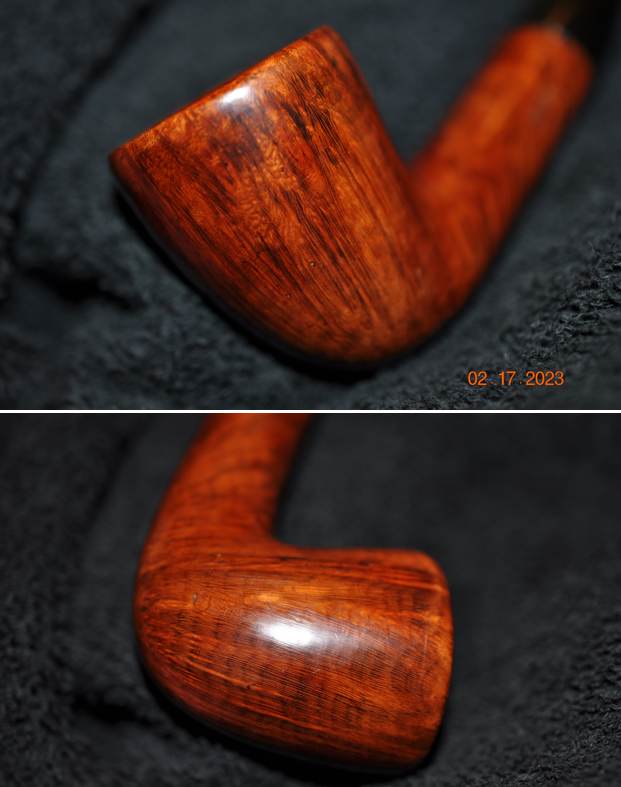
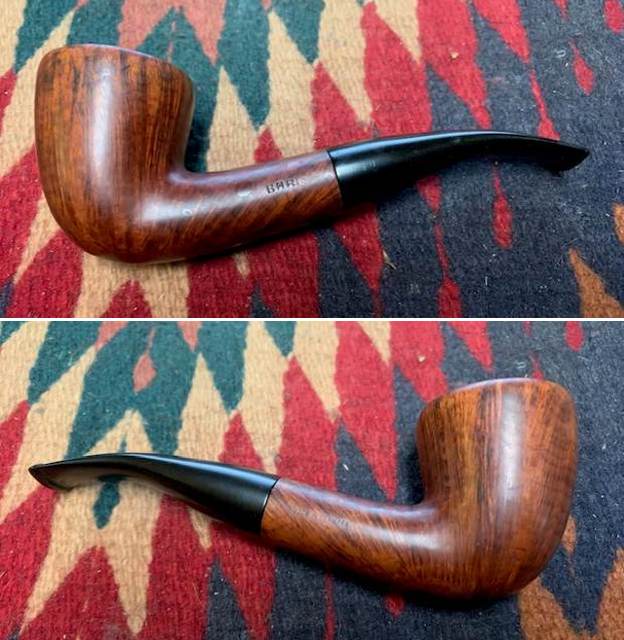
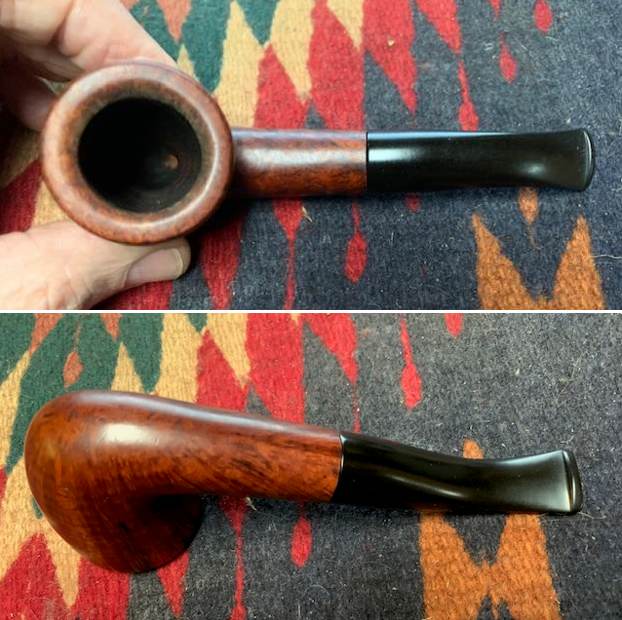
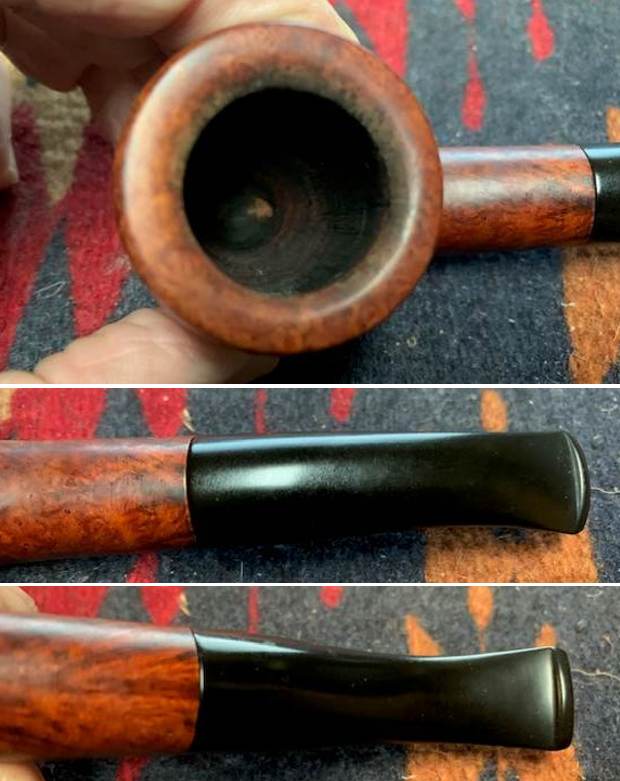
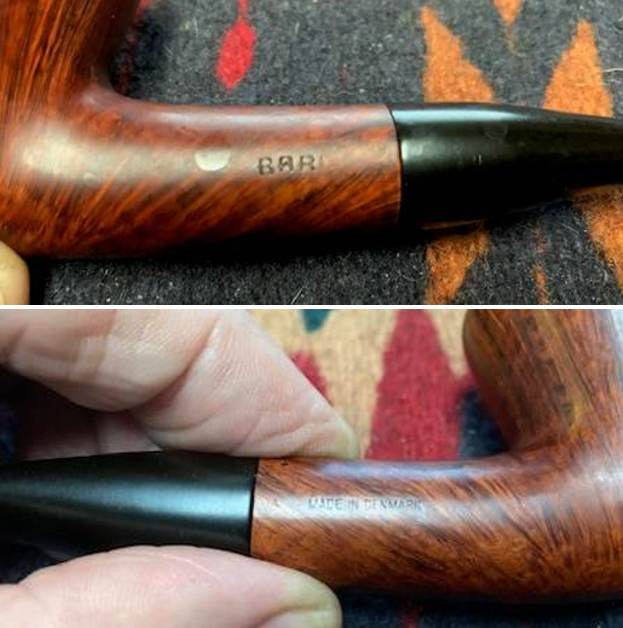
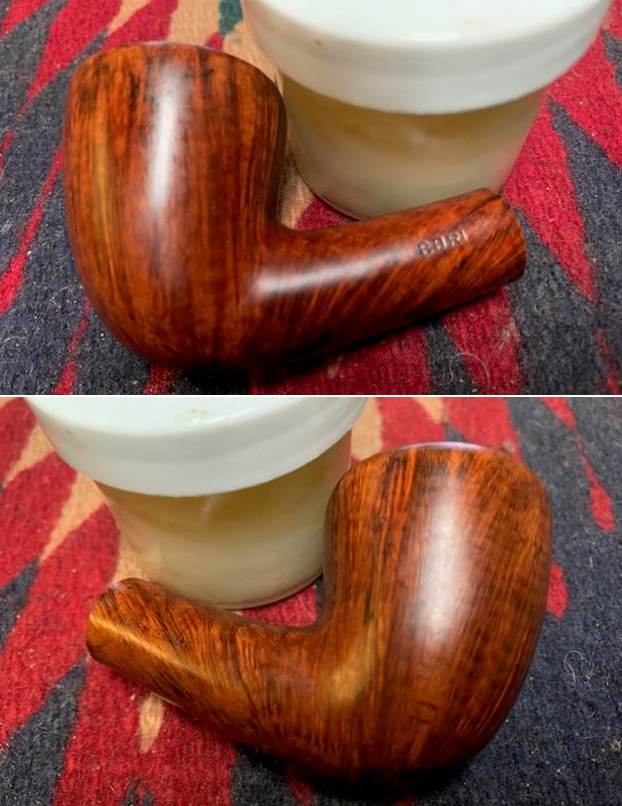
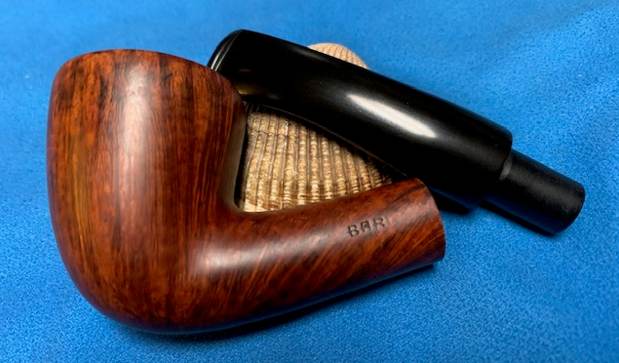
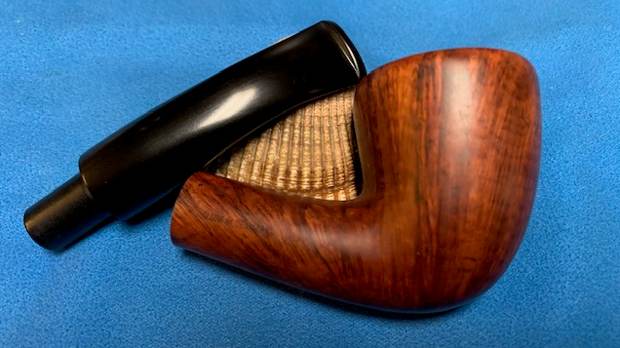
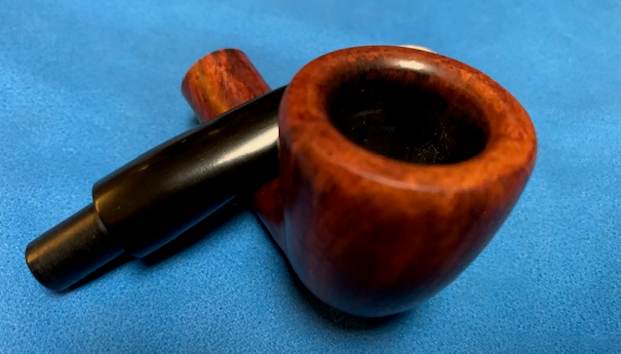
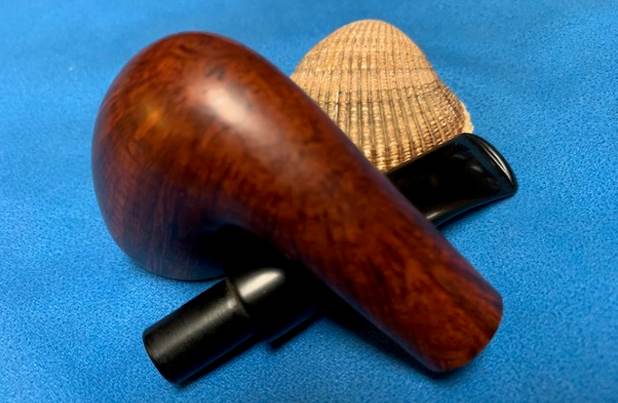
The next pipe was another interesting pipe that surprised both Jeff and me when  it came in a lot of pipes that we bought it from the fellow in Copenhagen, Denmark on January 26, 2023. This one is another beautiful Bari pipe. It has great grain around the bowl and shank. The pipe is stamped on the left side and clearly reads BARI and on the right side it reads Made in Denmark. There is no shape number on the shank. The rim top is crowned curving inward with a bevel toward the bowl. The inner and outer edges clean. The bowl had been reamed recently and the rim top was clean. The finish was dirty with dust and grim ground into the briar but great grain still shone through. The vulcanite taper stem was lightly oxidized and dirty and had some light tooth chatter and marks on both sides ahead of the button. Jeff took these photos of the pipe before he started his cleanup work. He took photos of the rim and bowl to show the condition of the bowl and rim top. You can see the reamed bowl walls and the clean rim top. He also took photos of the stem surfaces to show its overall condition when it arrived. It was lightly oxidized and dirty and had light tooth marks and chatter on both sides. The photos of the sides and heel of the bowl show the rich grain around the bowl and shank sides. The brown stain adds depth to the finish. He took a photo of the stamping on the left side of the shank. It was clear and readable. (There was no photo of the stamping on the right side.)Before I started working on it I did a bit of research on the brand to remind myself of the maker. I have worked on quite a few Bari’s in the past so rather than rework all of that I am including the information I found while working on a Bari Special Handcut Made in Denmark Dublin Freehand (https://rebornpipes.com/2020/07/22/cleaning-up-a-danish-made-bari-special-handcut-b-dublin-freehand/). I quote below from that blog.

I quoted a section from Pipedia on Bari pipes (https://pipedia.org/wiki/Bari). It is good to be reminded of the fact that Viggo Nielsen was the pipe maker.

Pipedia states that Bari Piber was founded by Viggo Nielsen in Kolding, Denmark around the turn of 1950/51. His sons Kai and Jørgen both grew into their father’s business from a very young age and worked there till 1975. Both have become successful pipe makers.

Bari successfully adapted the new Danish design that had been started mainly by Stanwell for its own models. Bari was sold in 1978 to Van Eicken Tobaccos in Hamburg, Germany though the pipes were still made in Denmark. From 1978 to 1993 Åge Bogelund and Helmer Thomsen headed Bari’s pipe production.

Helmer Thomson bought the company in 1993 re-naming it to “Bari Piber Helmer Thomsen”. The workshop moved to more convenient buildings in Vejen. Bogelund, who created very respectable freehands of his own during the time at Bari got lost somehow after 1993. Bari’s basic conception fundamentally stayed the same for decades: series pipes pre-worked by machines and carefully finished by hand – thus no spectacular highgrades but solid, reliable every day’s companions were what they turned out. The most famous series are the smooth “Classic Diamond” and the blasted “Wiking”.

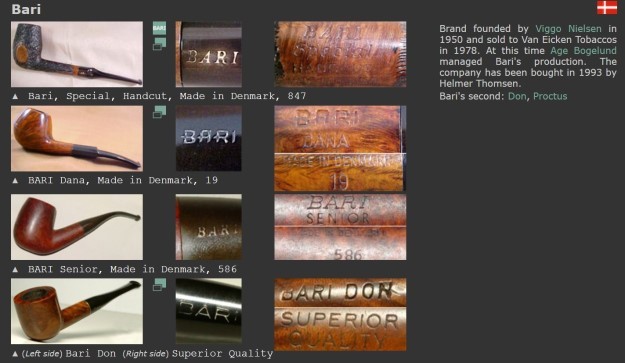
I did a quick look at Pipephil’s site (http://www.pipephil.eu/logos/en/logo-b1.html) and did a screen capture of the section on Bari pipes.Now that I was reminded about the Viggo Nielsen connection it was time to work on the pipe on my end.
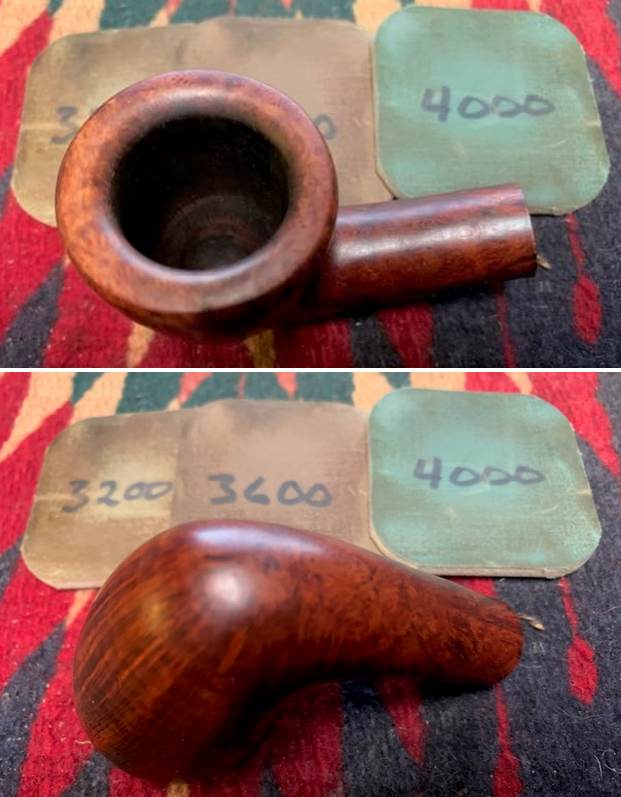
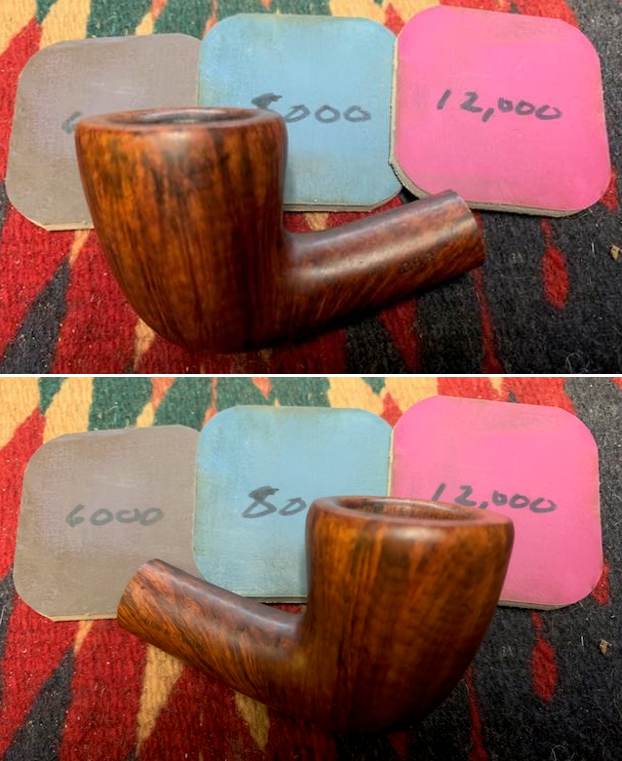
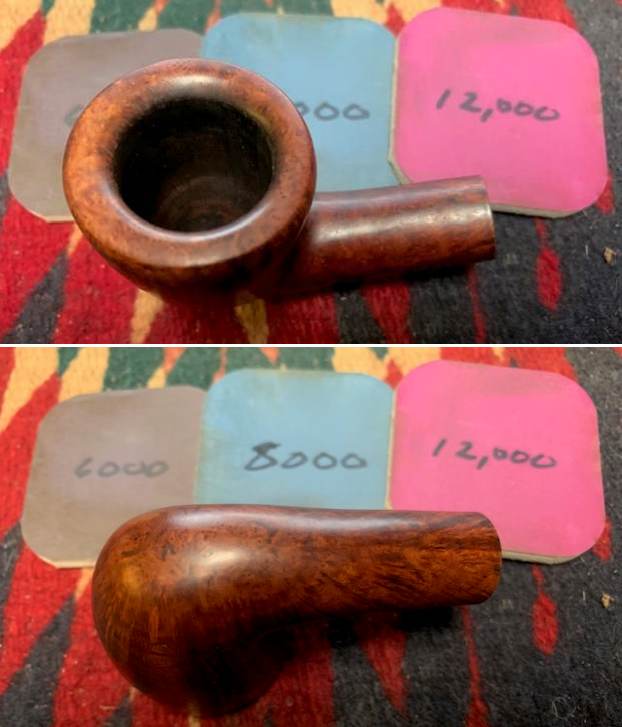
Jeff had done a great clean up of the pipe. He had reamed it with a PipNet reamer and took the cake back to bare briar. He cleaned up the remnants with a Savinelli Fitsall Pipe Knife. He scrubbed internals of the shank and stem with alcohol, cotton swabs and pipe cleaners. He cleaned the exterior of the pipe with undiluted Murphy’s Oil Soap and a tooth brush to remove the grime and the lava on the rim top. He scrubbed the stem with Soft Scrub to remove the debris that had accumulated on it. The stem was soaked in Briarville’s Pipe Stem Deoxidizer and then rinsed clean. The pipe looked clean and ready for the next step in the process. Here are some photos of it when I brought it to the table. I took photos of the rim top and the top and underside of the stem. You can see the clean bowl and rim top. The stem has light tooth chatter and marks on both sides ahead of the button. It is dirty but otherwise great. It is a nice looking pipe.The next photos show the stamping on the left and right sides of the shank. It is clear and readable as noted above. There is also a small portion of the Bari stamp on the left side of the stem in the first photo below.I removed the stem from the shank and took a photo of the parts to give a sense of the overall look of the pipe. It is really a nicely looking pipe that will look great once it is cleaned up.I polished the briar with micromesh sanding pads – dry sanding with 1500-12000 grit pads. I wiped the bowl down with a damp cloth after each sanding pad. It really began to take on a shine. I rubbed the bowl down with some Before & After Restoration Balm. I worked it into the briar with my fingertips. The product works to clean, renew and protect briar. I let it do its work for 15 minutes then buffed it off with a soft cloth. The pipe is really quite a beauty. I polished the stem on both sides using micromesh sanding pads. I dry sanded the stem with the 1500-12000 grit pads, then wiped it down with a cloth impregnated with Obsidian Oil. I finished polishing it with Before & After stem polish – both Fine and Extra Fine. I gave it a final coat of Obsidian Oil and set it aside to dry. This is another pipe I am excited to finish. It is a Bari Made in Denmark Bent Dublin. I put the pipe back together and buffed it lightly with Blue Diamond on the buffing wheel. I gave the bowl and the stem multiple coats of carnauba wax. I buffed the pipe with a clean buffing pad to raise the shine and hand buffed it with microfiber cloth to deepen the shine. It is fun to see what the polished bowl looks like with the polished stem with the golden acrylic spacer. It really was a beautiful pipe. The sandblasted grain shining through the rich browns/black stain on this Bari Made in Dublin is nice looking and the pipe feels great in my hand. It is light and well balanced. Have a look at it with the photos below. The dimensions are Length: 5 ½ inches, Height: 2 inches, Outside diameter of the bowl: 1 ½ inches, Chamber diameter: 7/8 of an inch. The weight of the pipe is 1.27 ounces/36 grams. It is a beautiful pipe and one that will be on the rebornpipes store in the Danish Pipe Makers Section soon. If you are interested in adding it to your collection let me know. Thanks for walking through the cleanup with me as I worked over this pipe. Thanks to each of you who are reading this blog. Remember we are not pipe owners; we are pipemen and women who hold our pipes in trust until they pass on into the trust of those who follow us.
Restoring a Vauen Nest Rusticated Bent Egg


Blog by Steve Laug

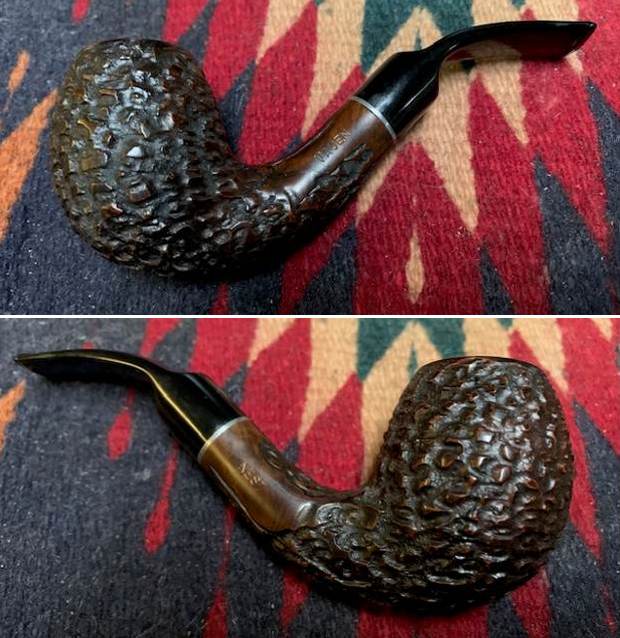
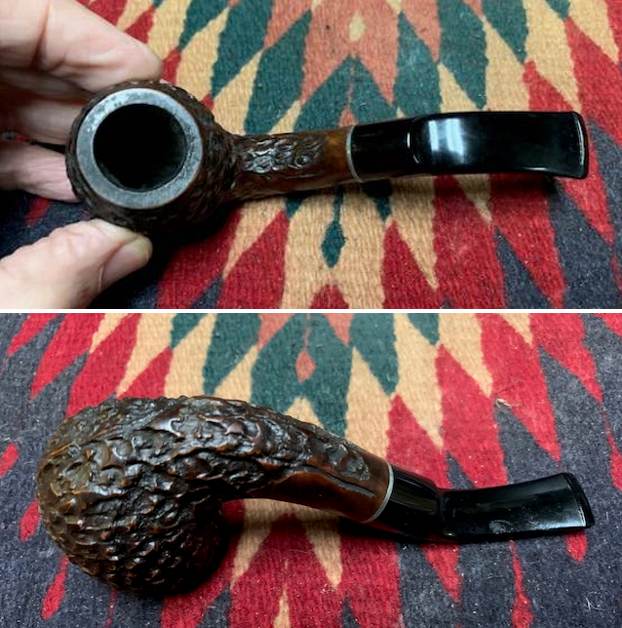
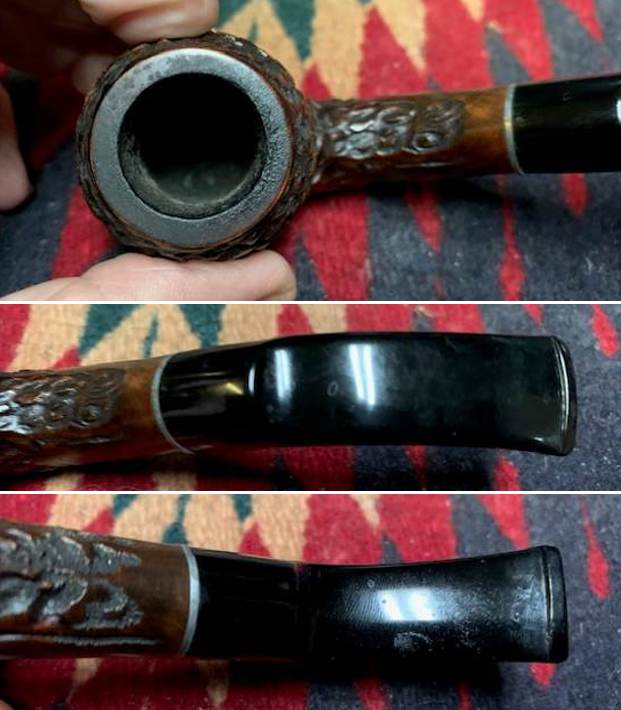
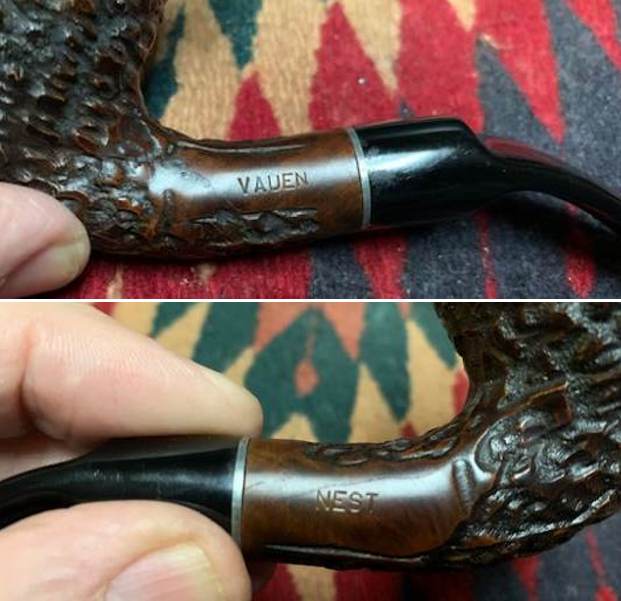
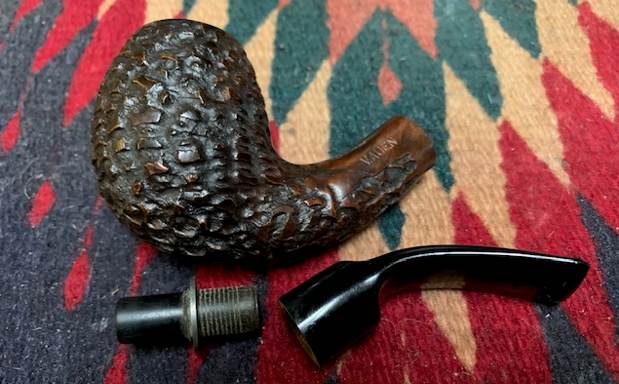
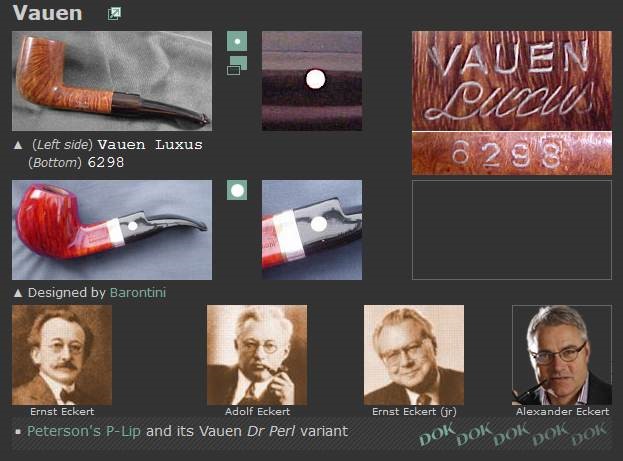
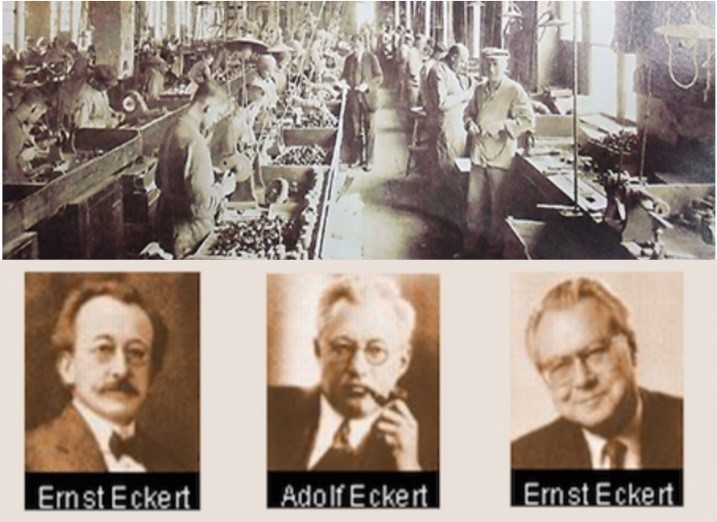
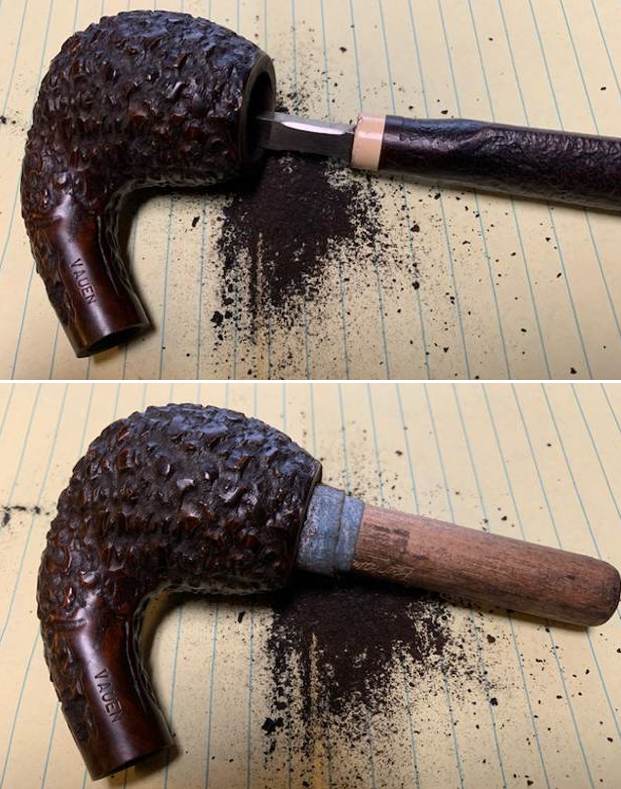
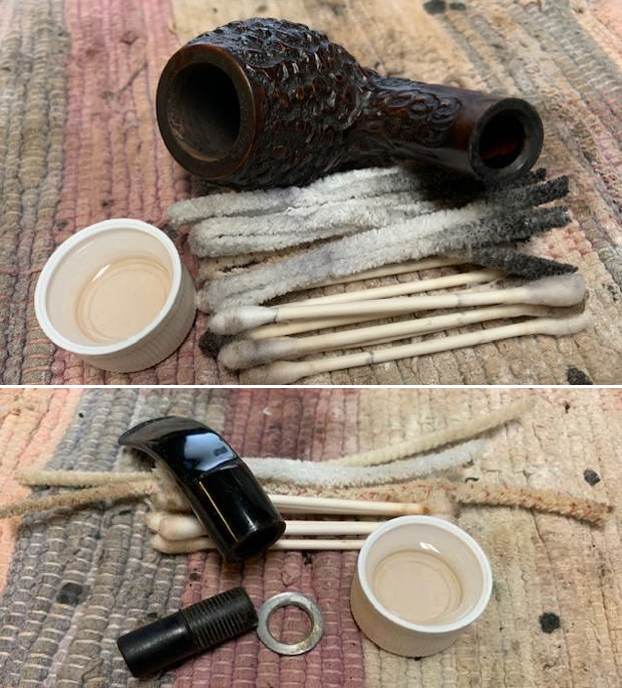
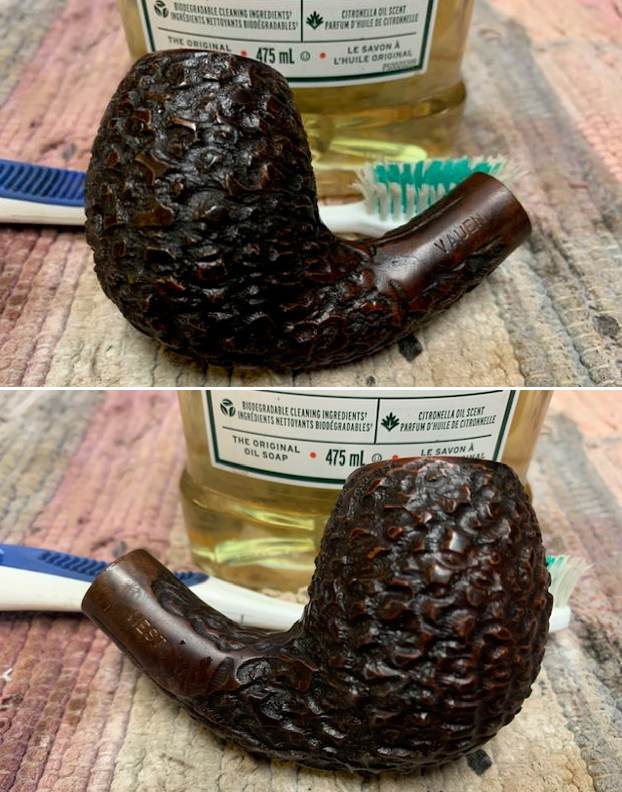
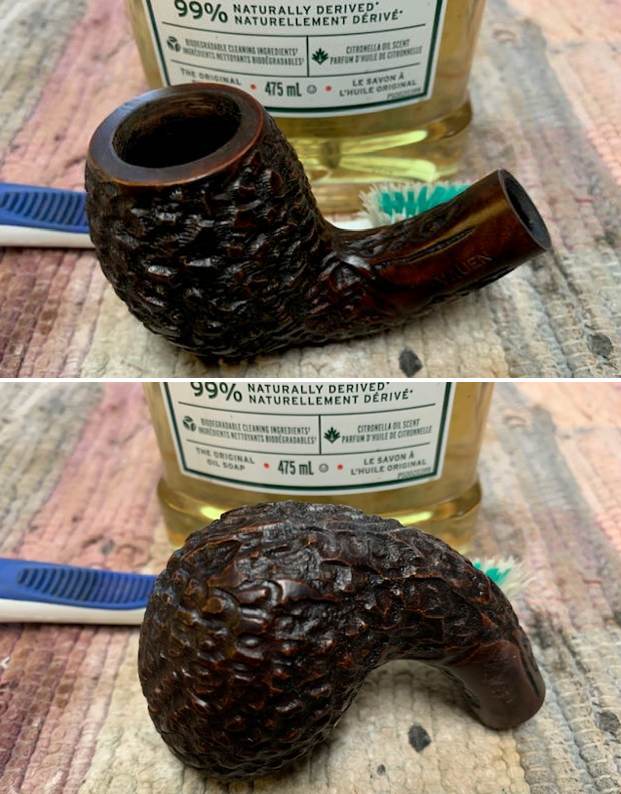
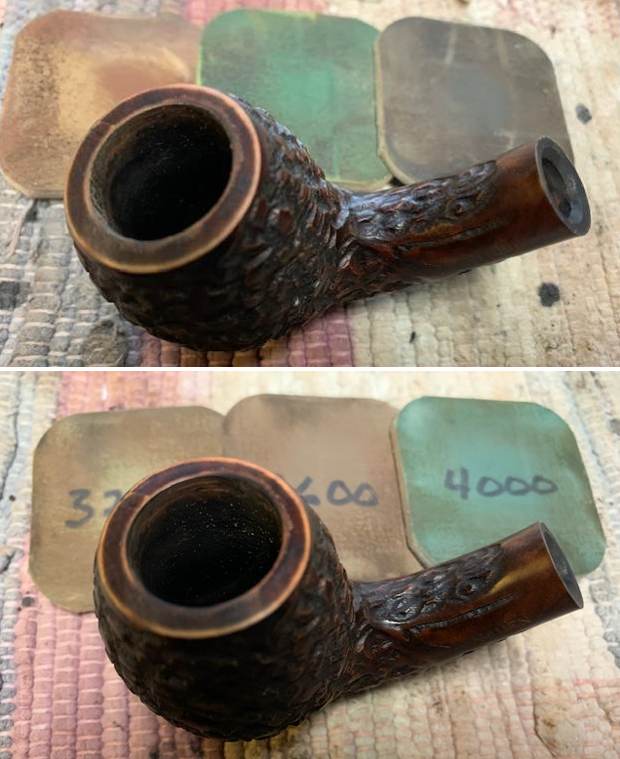
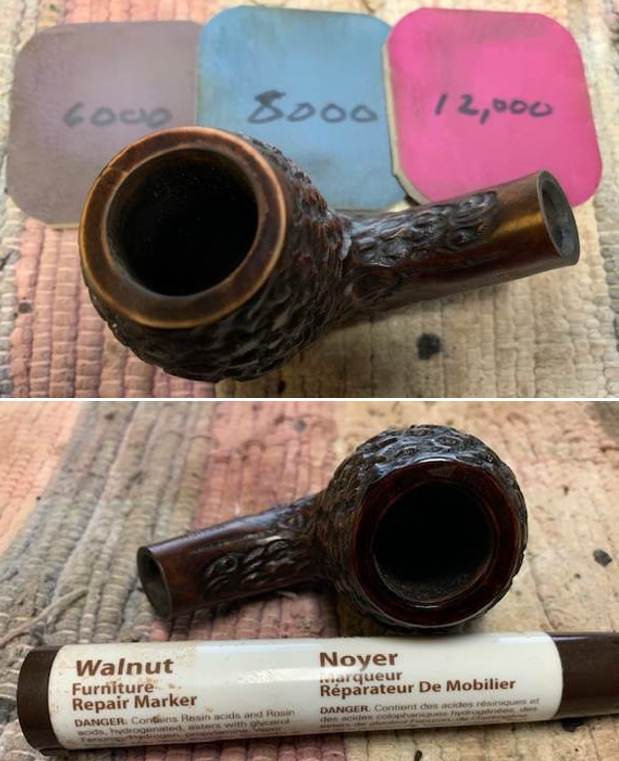
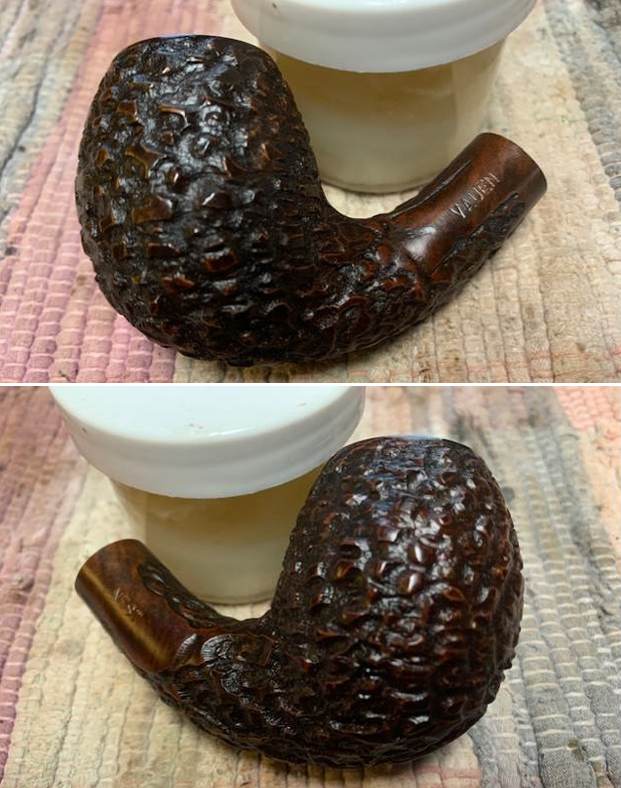
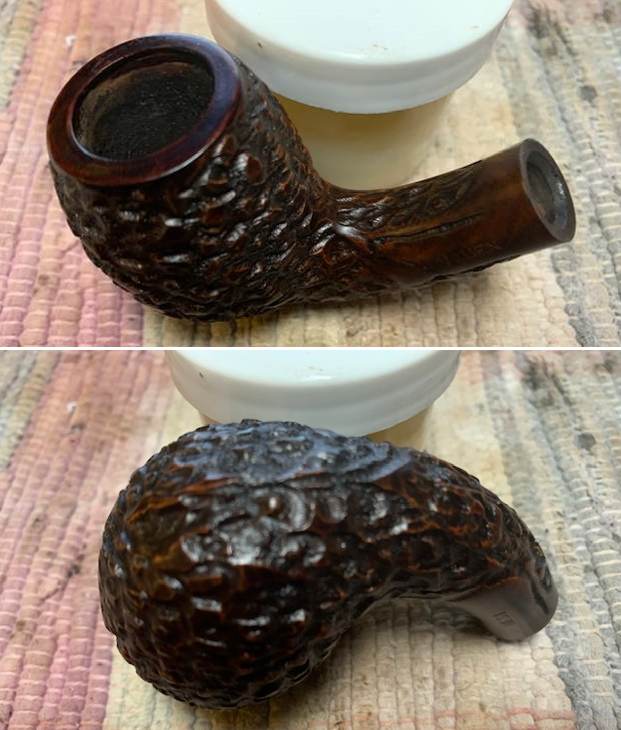
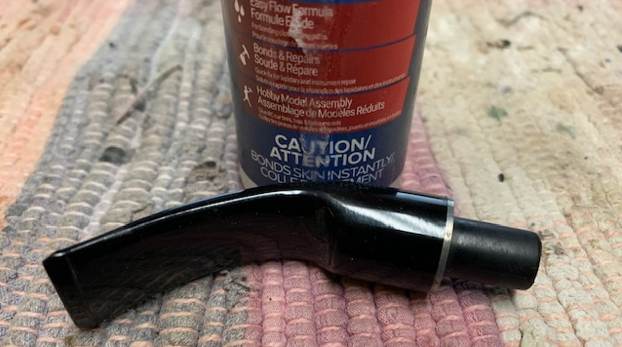
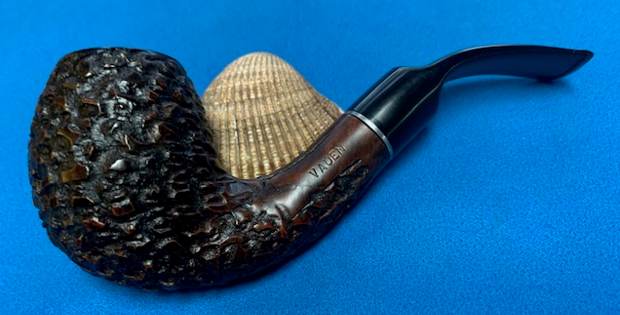
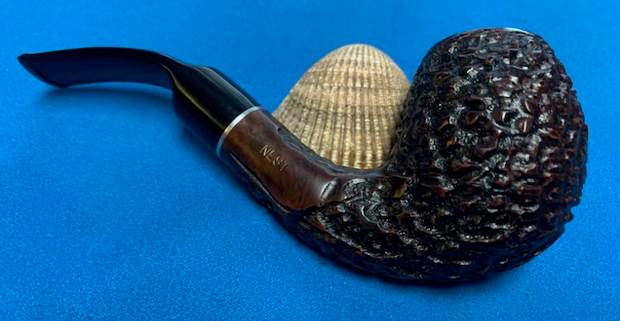
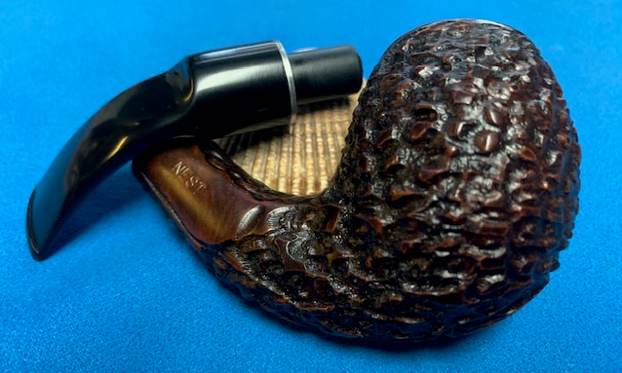
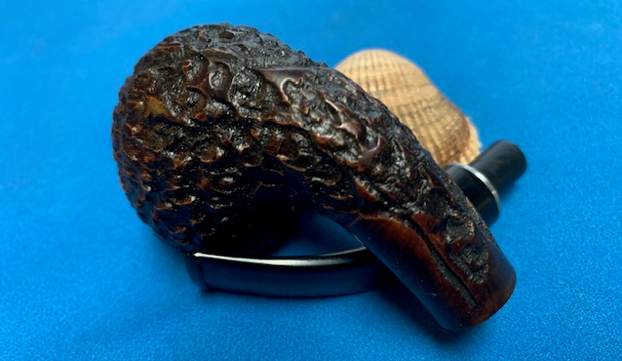
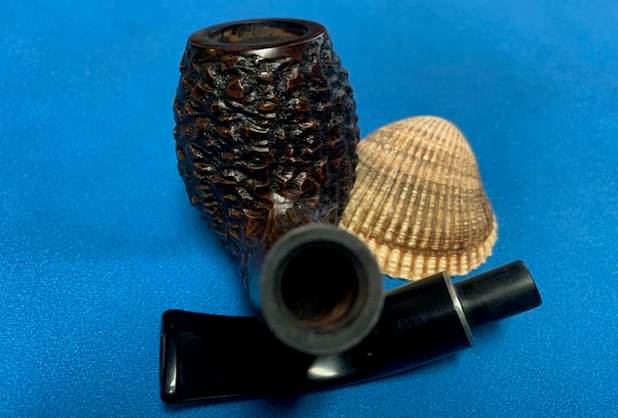
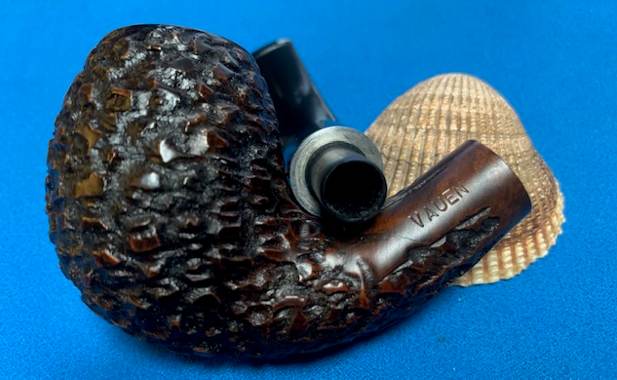
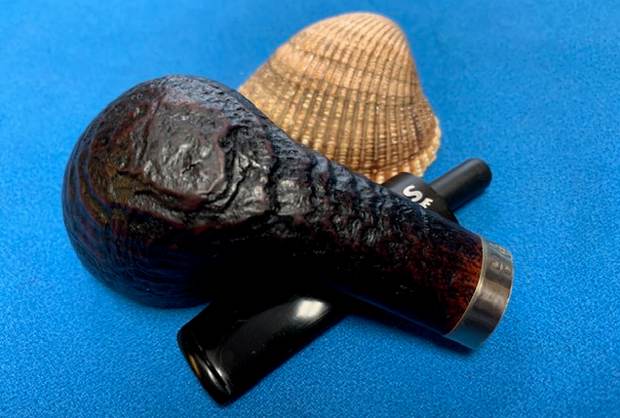
This past week, after some email correspondence I received a package with three Vauen pipes that a friend here in British Columbia wanted me to restore for him. The one was a broken shanked Vauen Meerschaum and the other two were rusticated briars. This is the second of the briars – a Vauen rusticated Bent Egg with a 9MM Filter stem. The smooth rim top had some lava build up and a moderate cake in the bowl. The inner and outer edges of the bowl looked very good. The finish was dirty but had a charm that was characteristic of older rusticated Vauen pipes. The rustication was slightly different than the previous Billiard which make me wonder if it is a newer rendition. The pipe was stamped on the left side of the shank and read Vauen. On the right side it read Nest. There was not a shape number present. It was light weight and would clean up quite nicely. The tenon had come loose from the stem and would need to be reglued but it was in good shape. The stem was quite clean and was made of black acrylic. There was light chatter and marks on the surfaces near the button on both sides but no tooth marks at all. I took photos of the pipe before I started working on it. I took photos of the rim top and the top and underside of the stem. You can see the cake in the bowl and the lava overflow on the rim top. The stem has light tooth chatter and marks on both sides ahead of the button. It is dirty but otherwise great. It is a nice looking pipe.The next photos show the stamping on the left and right sides of the shank. It is clear and readable as noted above. I removed the stem from the shank and took a photo of the parts to give a sense of the overall look of the pipe. You can see the loose tenon in the photo as well. It is really a nicely looking pipe that will look great once it is cleaned up.I am including that material on the brand from the previous blog for those who may have missed it. I turned first to Pipephil’s site (http://pipephil.eu/logos/en/logo-v1.html). I did a screen capture of the information on the site. There was a great sidebar that gave some history of the brand. I include both of them below.In 1848, Karl Ellenberger and his partner Carl August Ziener establish a pipe factory in Nuremberg. In 1901 they merge with Gebhard Ott an other factory in town and they create a firm named Vereinigten Pfeifenfabriken Nürnberg (abbreviated : VPFN*). Shortly after Ernst Eckert, a member of the Ott family became manager of the society. During the 20th century Adolf, Ernst (jr) and Alexander Eckert (CEO in 2012) followed one another at Vauen’s head.* VPFN : “V” is said VAU in German (pronounce faou) and “N” becomes EN. Hence VAUEN.

I also turned to a blog written on rebornpipes by Dal Stanton (Pipesteward.com) that I quote a section from the blog below that gives a great sense of the history of the German brand and some photos from the website (https://rebornpipes.com/2021/04/27/breathing-new-life-into-a-german-vauen-6294-p-lip-saddle-billiard-for-a-special-young-lady/).

… I turn to the question of the history of the VAUEN name? I look to the History section of the VAUEN website and again, I am impressed with the presentation. Whenever I work on a pipe, and especially when a pipe name is new to me, I enjoy looking at its history to appreciate the pipe more fully now on my worktable. From VAUEN’s website:Quality and a wealth of ideas have a long tradition at VAUEN. 160 years of VAUEN: that means 160 years of skilled workmanship and modern technology and 160 years of experience in fulfilling the individual wishes of today’s pipe lovers, and those of tomorrow.

In Nuremberg in 1848, Karl Ellenberger and his partner Carl August Ziener turned an idea into reality: Germany’s first pipe manufacturer produced tobacco pipes for connoisseurs around the world using a selection of the best wood. In an amalgamation with the Gebhard Ott pipe factory, which was founded in 1866 in Nuremberg, the Vereinigten Pfeifenfabriken Nuremberg (United Pipe Factories Nuremberg, or VPFN) was born in 1901.  Under the management of Ernst Eckert, a descendent of the founding Ott family, a company was born whose products and services would shape the tobacco and smoking culture in Europe and overseas for the next 160 years and counting.
The question about the name, VAUEN, not being a name of a person and why it is capitalized throughout is explained:

In his search for a name that would be easily remembered by all pipe lovers, Ernst Eckert’s son, Adolf Eckert, coined a new name for the company in 1909: VAUEN – a composition of the first letters V (pronounced vow) of Vereinigte Pfeifenfabriken and N (pronounced en) of Nuremberg. A brand for the future was born.
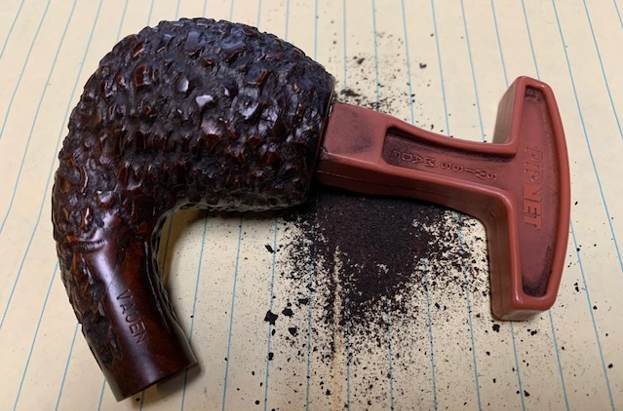
Now it was time to work on the pipe itself. I reamed out the cake on the bowl walls with a PipNet Pipe reamer and  cleaned it up with a Savinelli Fitsall Pipe Knife. I sanded the walls smooth with 220 grit sandpaper wrapped around a piece of dowel. I cleaned out the mortise and airway into the bowl and the stem with cotton swabs, pipe cleaners and isopropyl alcohol until they came out clean. I scrubbed the rugged exterior of the bowl with undiluted Murphy’s Oil Soap and a tooth brush. I rinsed it off with warm water to remove the grime and the soap. It looked much better once it was clean. I polished the rim top and removed the light scratching in the surface with micromesh sanding pads – dry sanding with 1500-12000 grit pads and wiping it down with a damp cloth after each pad to remove dust. I stained the rim top and edges with a Walnut stain pen to match the rest of the bowl and shank. I rubbed the bowl and shank down with Before & After Restoration Balm. I worked it into the finish with my fingers and used a shoe brush to press it deep into the crevices of the rustication. The product works to deep clean the finish on the bowl and shank and enliven and protect the briar. After it sat for 15 minutes I wiped it off with a soft cloth. The briar really came alive with a rich shine. I took some photos of the bowl at this point to mark the progress in the restoration. It is a beautiful bowl.  I set the bowl aside and turned my attention to the stem. I reglued the tenon in the cleaned up stem end with clear CA glue. It lined up perfectly and I set it aside for the glue to cure.I polished out the tooth chatter and marks on the stem with micromesh sanding pads – dry sanding with 1500-12000 grit pads. I wiped the stem down after each pad with Obsidian Oil to remove the sanding dust. I used the Before & After Pipe Polish to remove the small minute scratches left in the vulcanite. I finished by wiping the stem down with a final coat of Obsidian Oil and set it aside to dry.  As usual at this point in the restoration process I am excited to be on the homestretch. I look forward to the final look of the Vauen Nest Rusticated Bent Egg when it is put back together, polished and waxed. I put the bowl and stem back together. I polished the bowl and stem with Blue Diamond to polish out the scratches in the briar and the vulcanite. I gave the bowl and the stem multiple coats of carnauba wax. I buffed the pipe with a clean buffing pad to raise the shine. I hand buffed it with a microfiber cloth to deepen the shine. The pipe polished up pretty nicely. The took on depth with the wax and polish. The shiny black acrylic stem is a beautiful contrast to the browns of the bowl and thick shank. This Rusticated Vauen Next Bent Egg was another fun pipe to work on. It really is a quite stunning piece of briar whose shape follows the flow of the grain on the briar. The pipe is comfortable pipe to hold in the hand. The finished pipe is shown in the photos below. The dimensions of the pipe are Length: 5 ½ inches, Height: 2 inches, Outside diameter of the bowl: 1 inches, Chamber diameter: ¾ of an inch. The weight of the pipe is 1.80 ounces/51 grams. This is the second of three Vauen Pipes that I am working on for my friend. Once I finish the last pipe of the threesome I will be sending them back to him. Thanks for reading my reflections on the pipe while I working on it.

Restoring a Vauen College 350 Rusticated Billiard


Blog by Steve Laug

This past week, after some email correspondence I received a package with three Vauen pipes that a friend here in British Columbia wanted me to restore for him. The one was a broken shanked Vauen Meerschaum and the other two were rusticated briars. The first of the briars was a Vauen rusticated Billiard with a 9MM Filter stem. The rim top had some lava build up in the rustication and a moderate cake in the bowl. The inner and outer edges of the bowl looked very good. The finish was dirty but had a charm that was characteristic of older rusticated Vauen pipes. The pipe was stamped on the underside of the shank and read College [over] Vauen followed by the shape number 350. It was quite lightweight and would clean up quite nicely. The tenon was set in the shank and the stem fit over it. The stem was quite clean and was made of black acrylic with the characteristic Vauen White Dot. There was light chatter on the surfaces near the button on both sides but no tooth marks at all. I took photos of the pipe before I started working on it. I took photos of the rim top and the top and underside of the stem. You can see the cake in the bowl and the lava overflow on the rim top. The stem is very clean in regards to tooth marks an damage. It is dirty but otherwise great. It is a nice looking pipe.The next photo shows the stamping on the underside of the shank. It is clear and readable as noted above.I removed the stem from the shank and took a photo of the parts to give a sense of the overall look of the pipe. It is really a nicely looking Billiard that will look great once it is cleaned up.I wanted to remind myself of the background on the Vauen brand before I started my work on the pipe. I turned first to Pipephil’s site (http://pipephil.eu/logos/en/logo-v1.html). I did a screen capture of the information on the site. There was a great sidebar that gave some history of the brand. I include both of them below.In 1848, Karl Ellenberger and his partner Carl August Ziener establish a pipe factory in Nuremberg. In 1901 they merge with Gebhard Ott an other factory in town and they create a firm named Vereinigten Pfeifenfabriken Nürnberg (abbreviated : VPFN*). Shortly after Ernst Eckert, a member of the Ott family became manager of the society. During the 20th century Adolf, Ernst (jr) and Alexander Eckert (CEO in 2012) followed one another at Vauen’s head.* VPFN : “V” is said VAU in German (pronounce faou) and “N” becomes EN. Hence VAUEN.

I also turned to a blog written on rebornpipes by Dal Stanton (Pipesteward.com) that I quote a section from the blog below that gives a great sense of the history of the German brand and some photos from the website (https://rebornpipes.com/2021/04/27/breathing-new-life-into-a-german-vauen-6294-p-lip-saddle-billiard-for-a-special-young-lady/).

… I turn to the question of the history of the VAUEN name? I look to the History section of the VAUEN website and again, I am impressed with the presentation. Whenever I work on a pipe, and especially when a pipe name is new to me, I enjoy looking at its history to appreciate the pipe more fully now on my worktable. From VAUEN’s website:Quality and a wealth of ideas have a long tradition at VAUEN. 160 years of VAUEN: that means 160 years of skilled workmanship and modern technology and 160 years of experience in fulfilling the individual wishes of today’s pipe lovers, and those of tomorrow.

In Nuremberg in 1848, Karl Ellenberger and his partner Carl August Ziener turned an idea into reality: Germany’s first pipe manufacturer produced tobacco pipes for connoisseurs around the world using a selection of the best wood. In an amalgamation with the Gebhard Ott pipe factory, which was founded in 1866 in Nuremberg, the Vereinigten Pfeifenfabriken Nuremberg (United Pipe Factories Nuremberg, or VPFN) was born in 1901.  Under the management of Ernst Eckert, a descendent of the founding Ott family, a company was born whose products and services would shape the tobacco and smoking culture in Europe and overseas for the next 160 years and counting.

The question about the name, VAUEN, not being a name of a person and why it is capitalized throughout is explained:

In his search for a name that would be easily remembered by all pipe lovers, Ernst Eckert’s son, Adolf Eckert, coined a new name for the company in 1909: VAUEN – a composition of the first letters V (pronounced vow) of Vereinigte Pfeifenfabriken and N (pronounced en) of Nuremberg. A brand for the future was born.

Now it was time to work on the pipe itself. I reamed out the cake on the bowl walls with a PipNet Pipe reamer and  cleaned it up with a Savinelli Fitsall Pipe Knife. I sanded the walls smooth with 220 grit sandpaper wrapped around a piece of dowel. I cleaned out the mortise and airway into the bowl and the stem with cotton swabs, pipe cleaners and isopropyl alcohol until they came out clean. I scrubbed the rugged exterior of the bowl and the stem with undiluted Murphy’s Oil Soap and a tooth brush. I rinsed it off with warm water to remove the grime and the soap. It looked much better once it was clean. I rubbed the bowl and shank down with Before & After Restoration Balm. I worked it into the finish with my fingers and used a shoe brush to press it deep into the crevices of the rustication. The product works to deep clean the finish on the bowl and shank and enliven and protect the briar. After it sat for 15 minutes I wiped it off with a soft cloth. The briar really came alive with a rich shine. I took some photos of the bowl at this point to mark the progress in the restoration. It is a beautiful bowl.   I set the bowl aside and turned my attention to the stem. I polished the stem with micromesh sanding pads – dry sanding with 1500-12000 grit pads. I wiped the stem down after each pad with Obsidian Oil to remove the sanding dust. I used the Before & After Pipe Polish to remove the small minute scratches left in the vulcanite. I finished by wiping the stem down with a final coat of Obsidian Oil and set it aside to dry.  As usual at this point in the restoration process I am excited to be on the homestretch. I look forward to the final look of the Vauen College 350 Billiard when it is put back together, polished and waxed. I put the bowl and stem back together. I polished the bowl and stem with Blue Diamond to polish out the scratches in the stem. I gave the bowl multiple coats of Conservator’s Wax and the stem multiple coats of carnauba wax. I buffed the pipe with a clean buffing pad to raise the shine. I hand buffed it with a microfiber cloth to deepen the shine. The pipe polished up pretty nicely. The depth of the rustication really pops with the wax and polish. The shiny black acrylic stem is a beautiful contrast to the browns of the bowl and shank. This Rusticated Vauen College 350 Billiard  was another fun pipe to work on. It really is a quite stunning piece of briar whose rustication flows with the cut of the briar. The pipe is a comfortable pipe to hold in the hand. The finished pipe is shown in the photos below. The dimensions of the pipe are Length: 5 ¾ inches, Height: 1 ½ inches, Outside diameter of the bowl: 1 ¼ inches, Chamber diameter: ¾ of an inch. The weight of the pipe is 1.02 ounces/ 29 grams. This is the first of three Vauen Pipes that I am working on for my friend. Once I finish the threesome I will be sending them back to him. Thanks for reading my reflections on the pipe while I working on it.