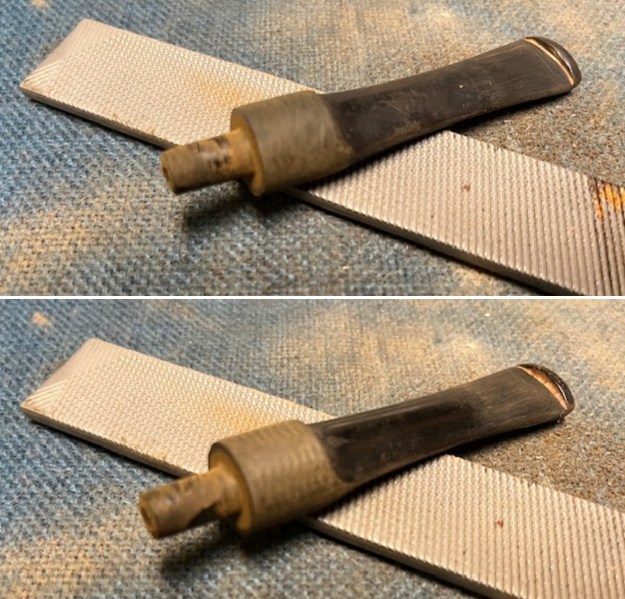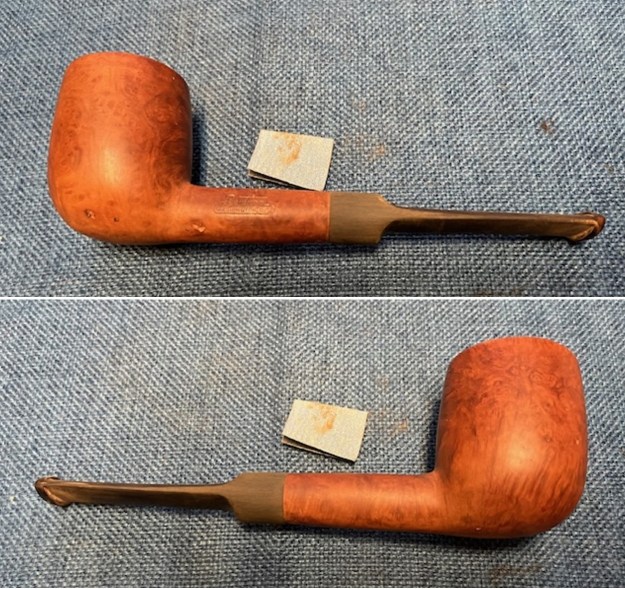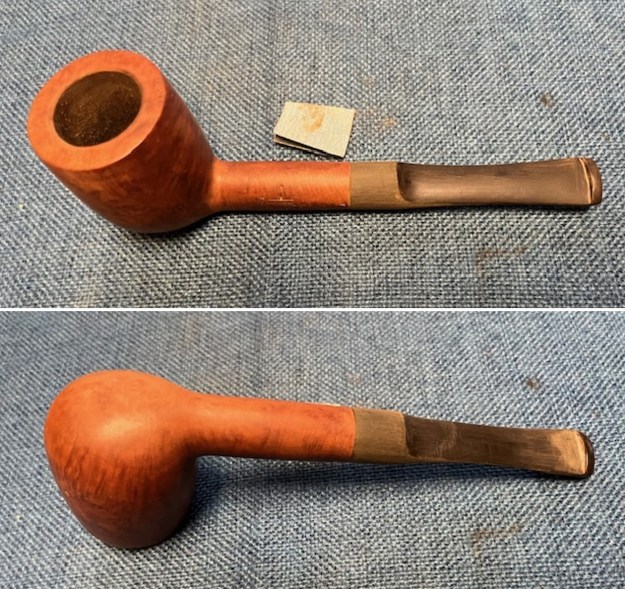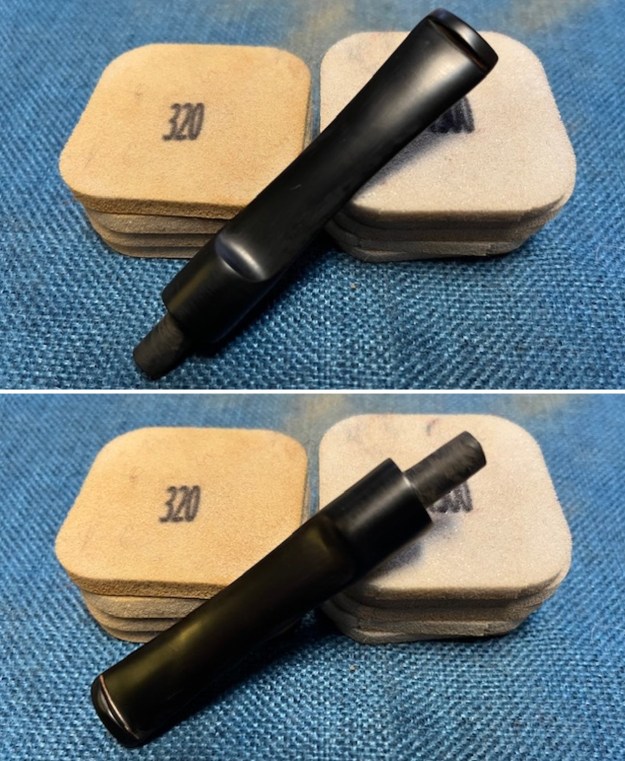
Monthly Archives: July 2025

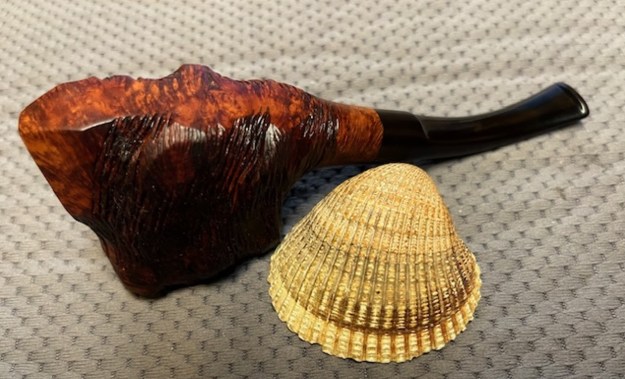
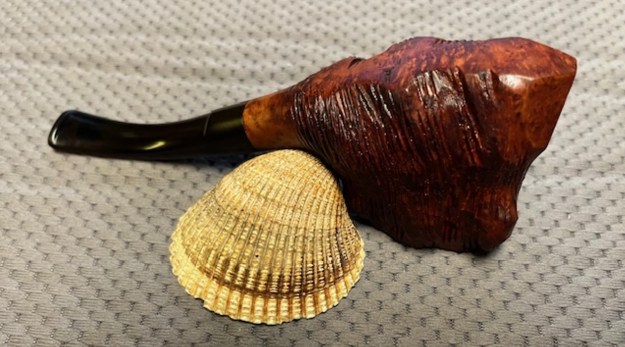
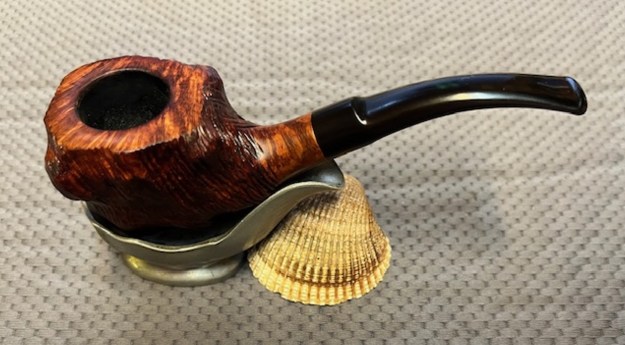
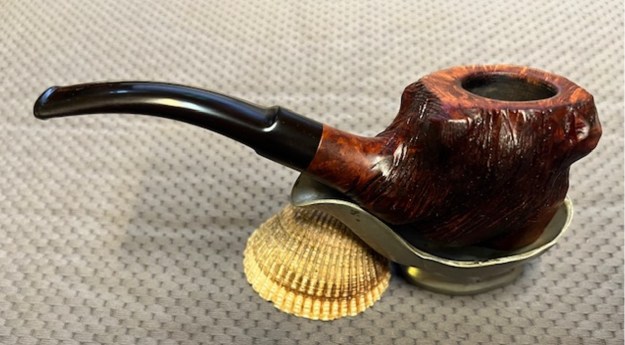
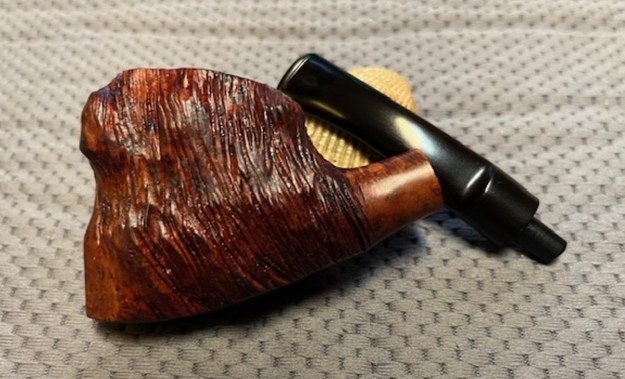
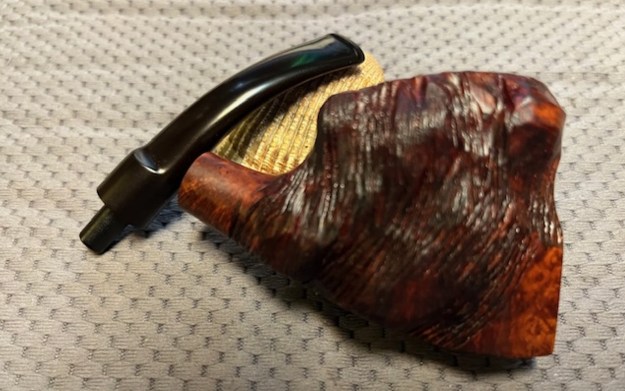
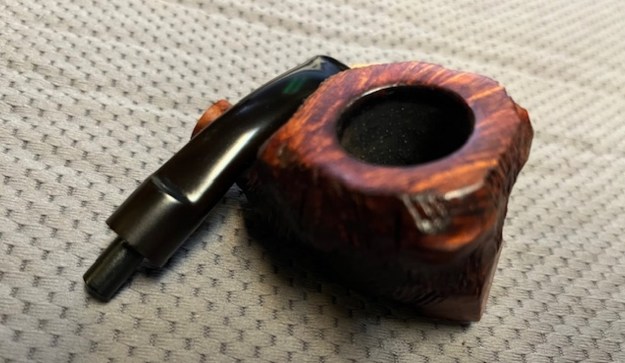
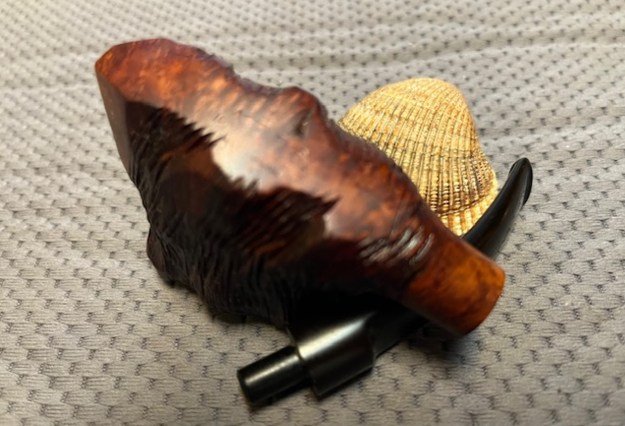
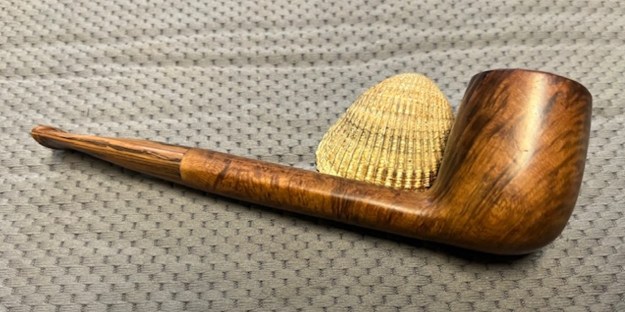
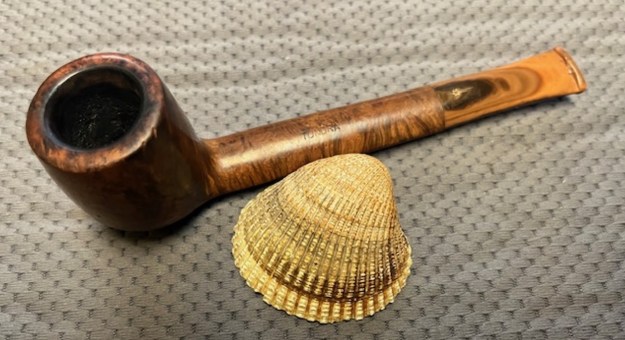
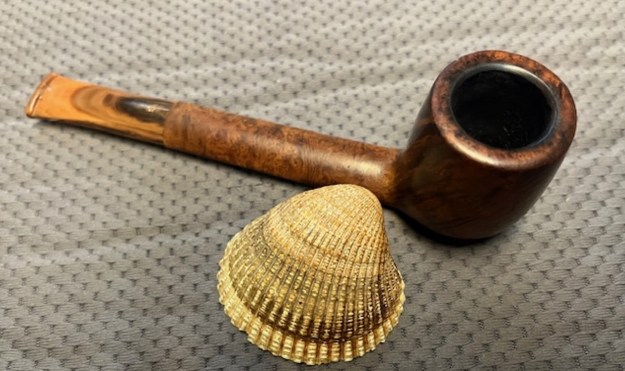
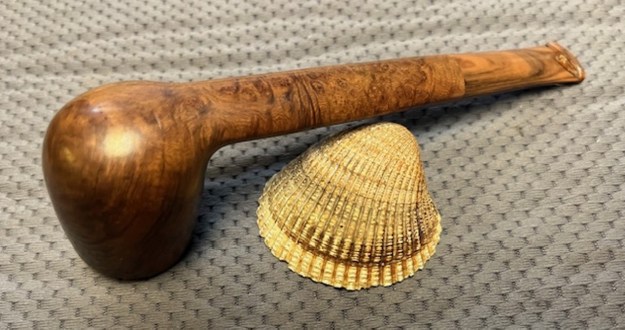
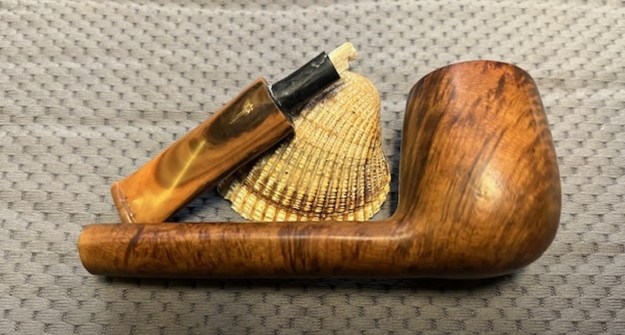
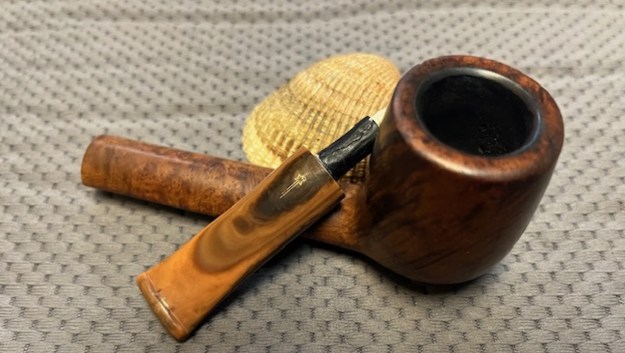
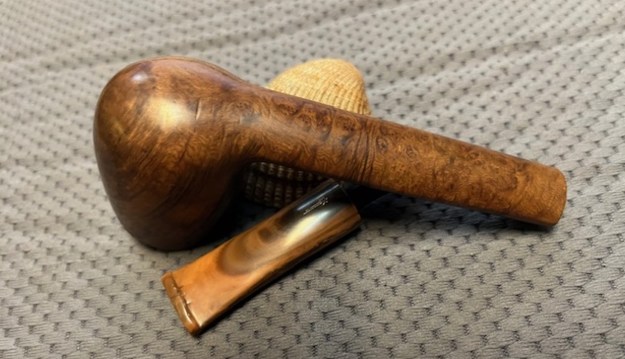
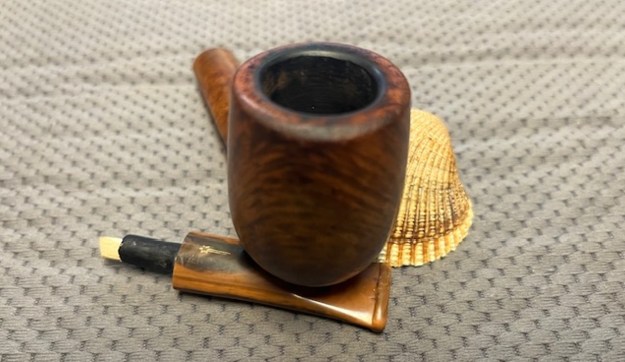
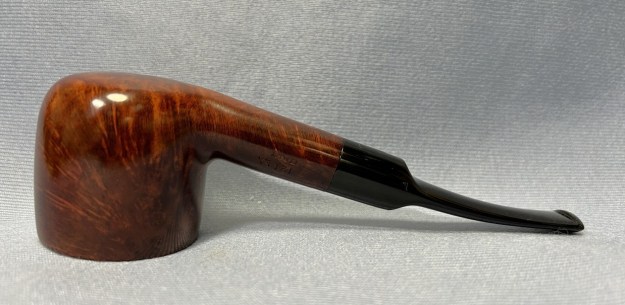
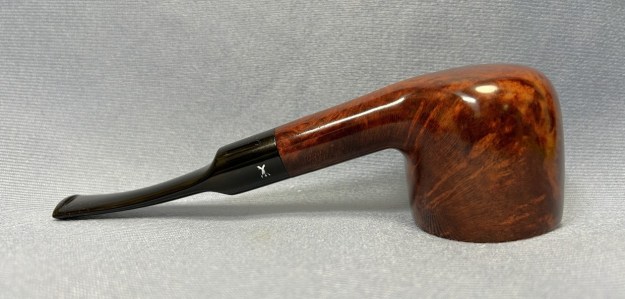
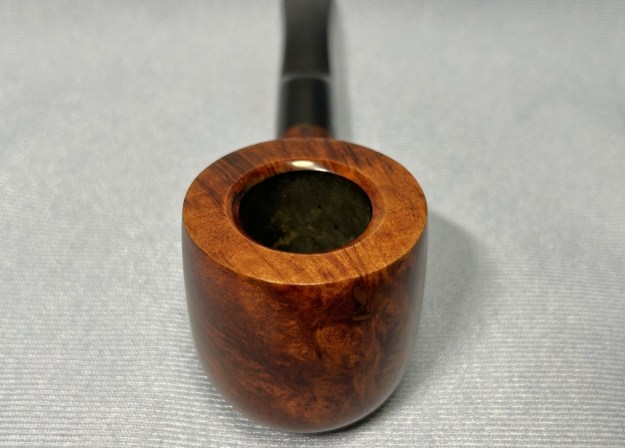
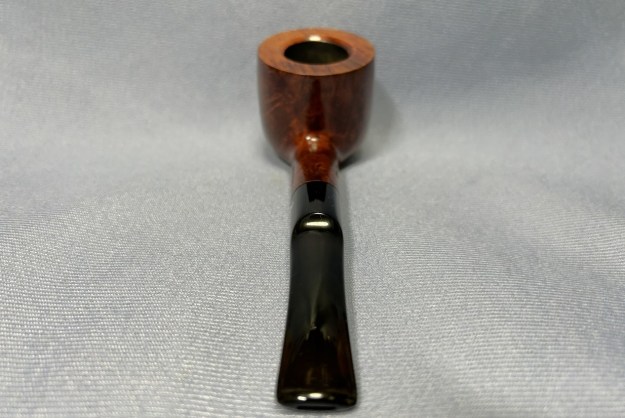
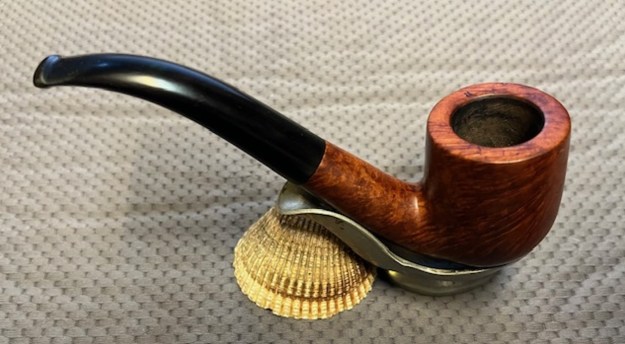
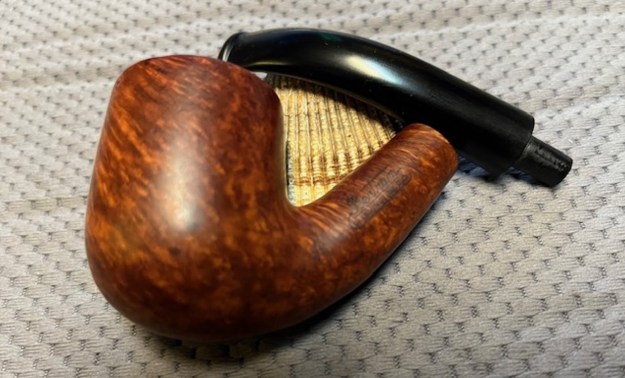
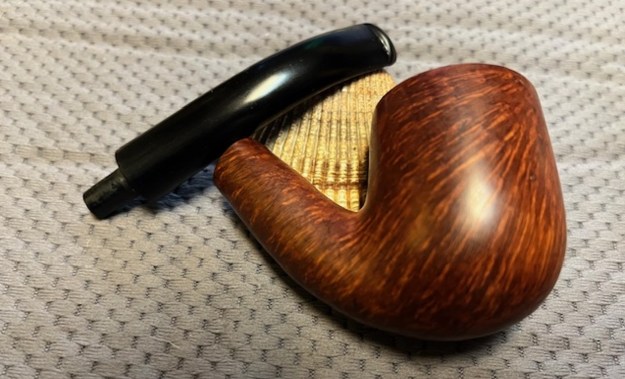
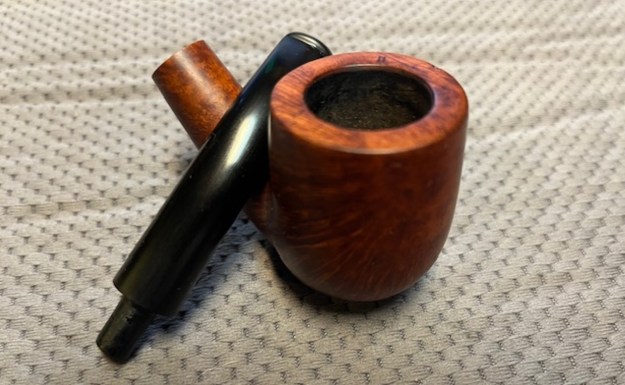
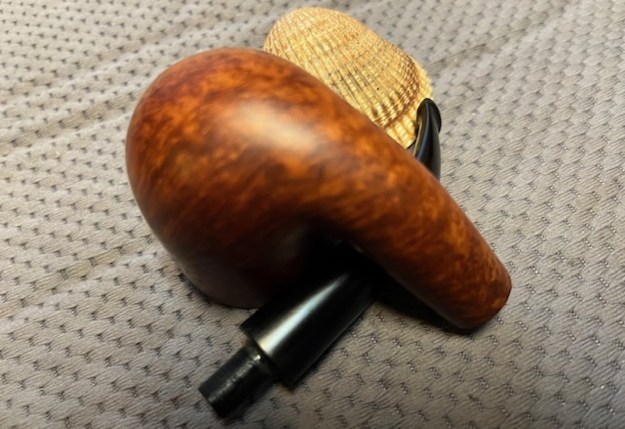
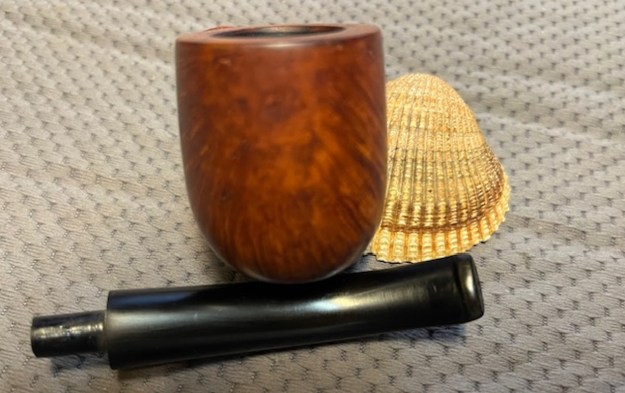
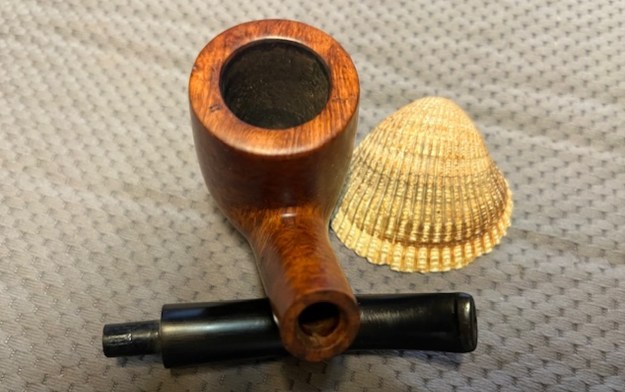
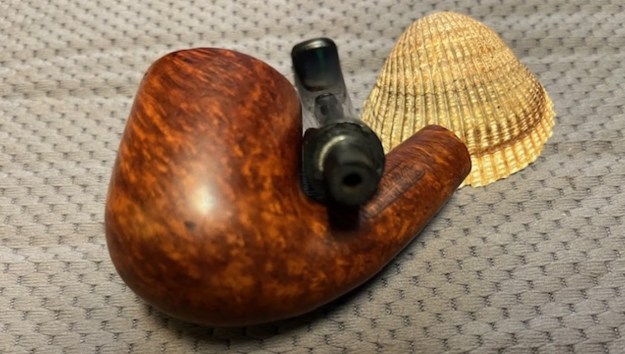
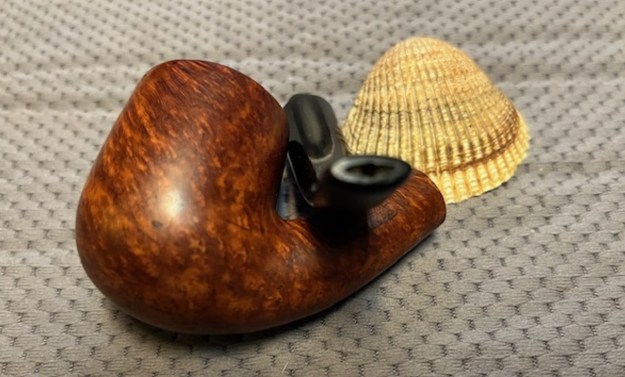
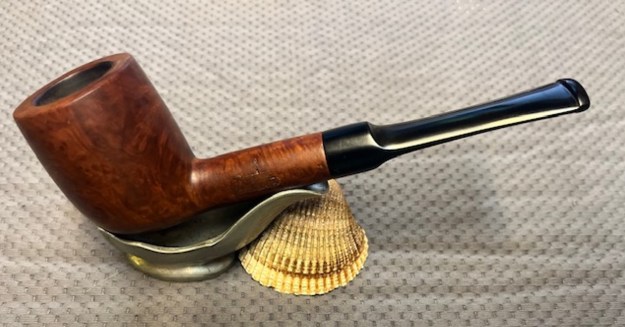
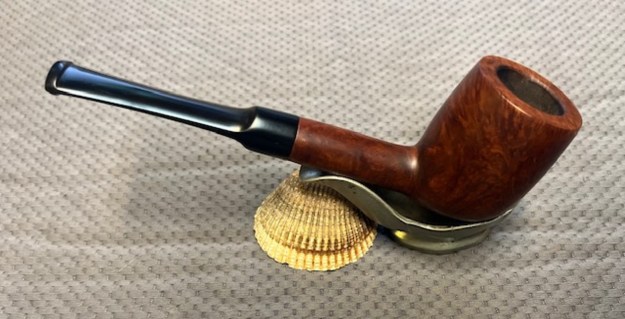
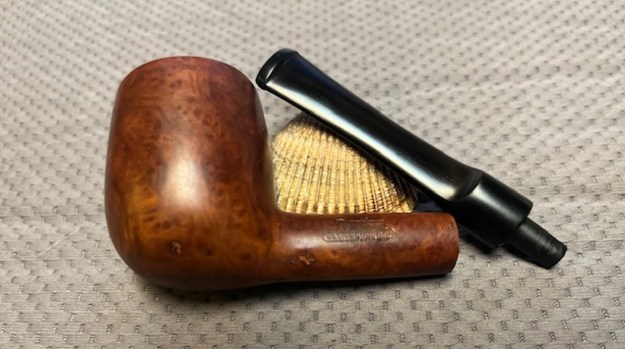
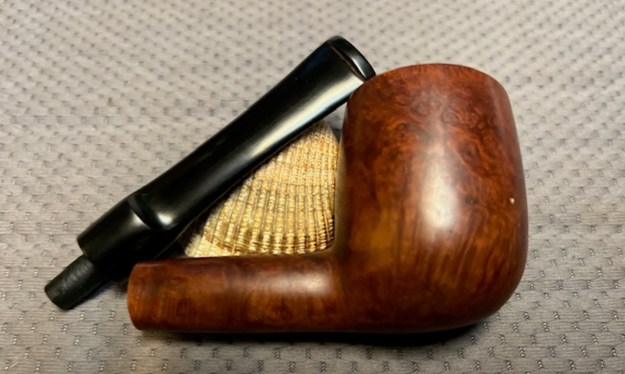
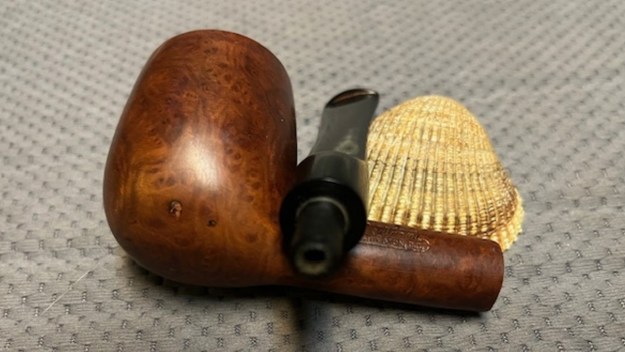
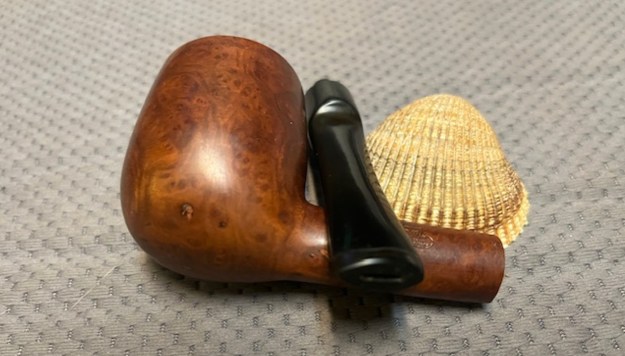
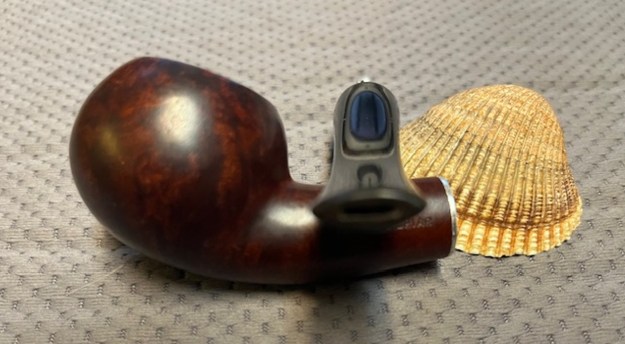
Restoring a second unique Astley’s Root Briar Specialty Sitter Freehand


by Steve Laug

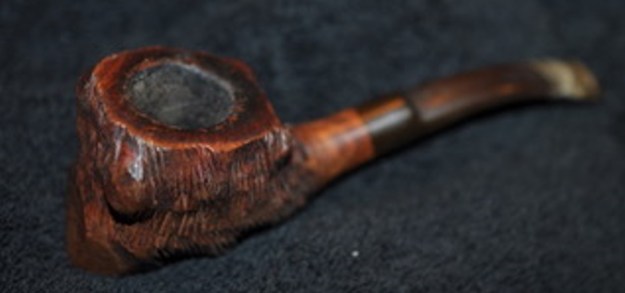
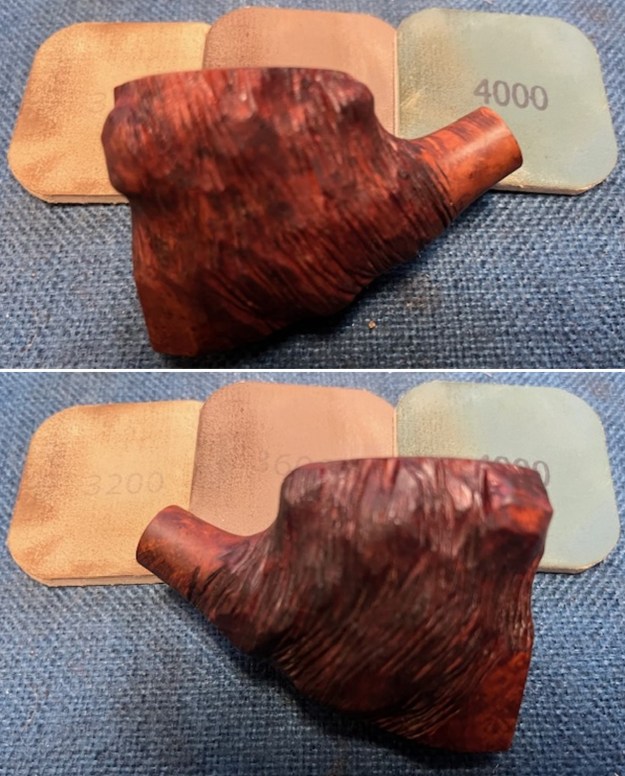
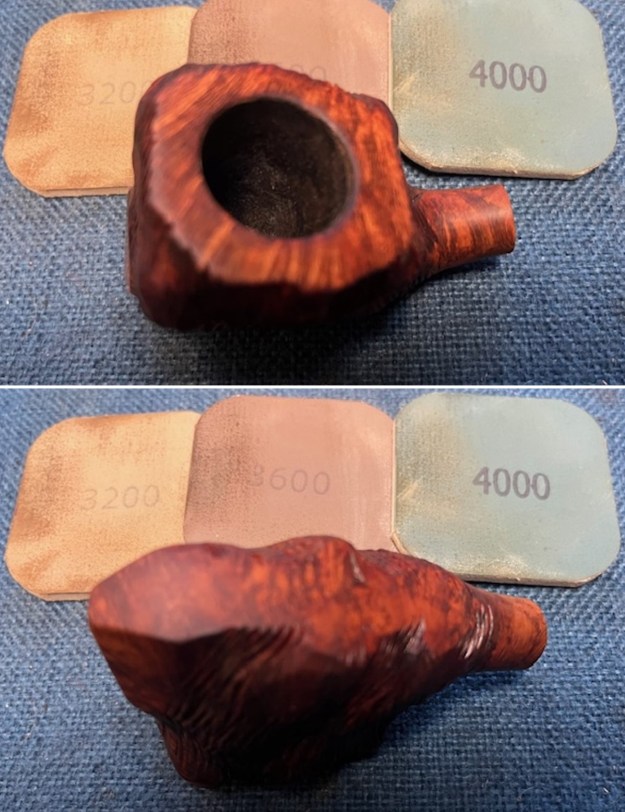
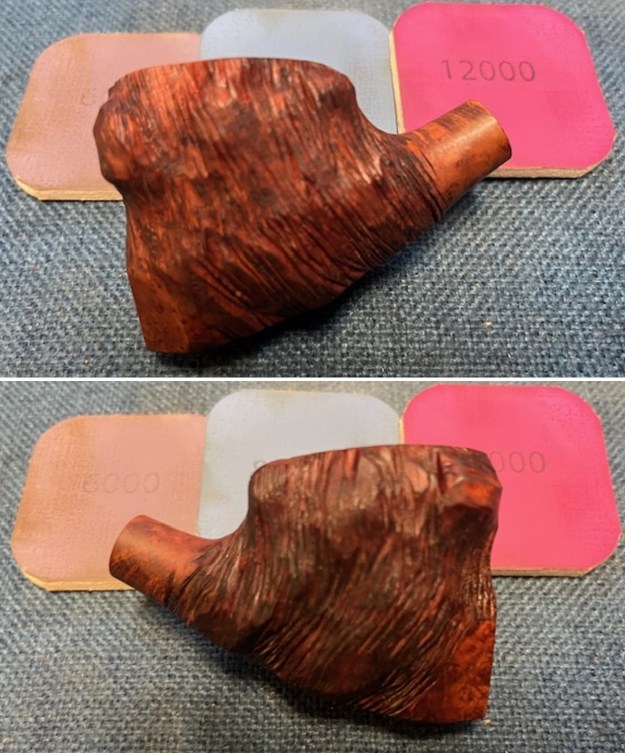
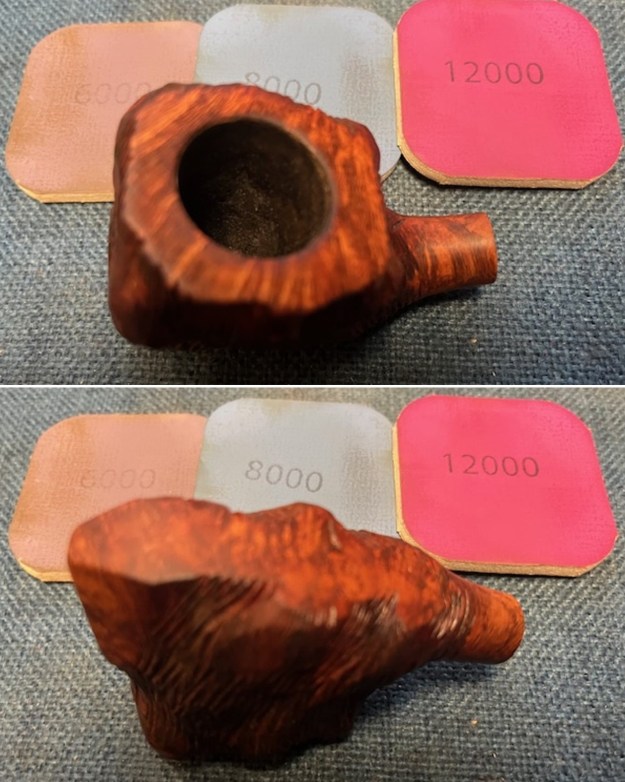
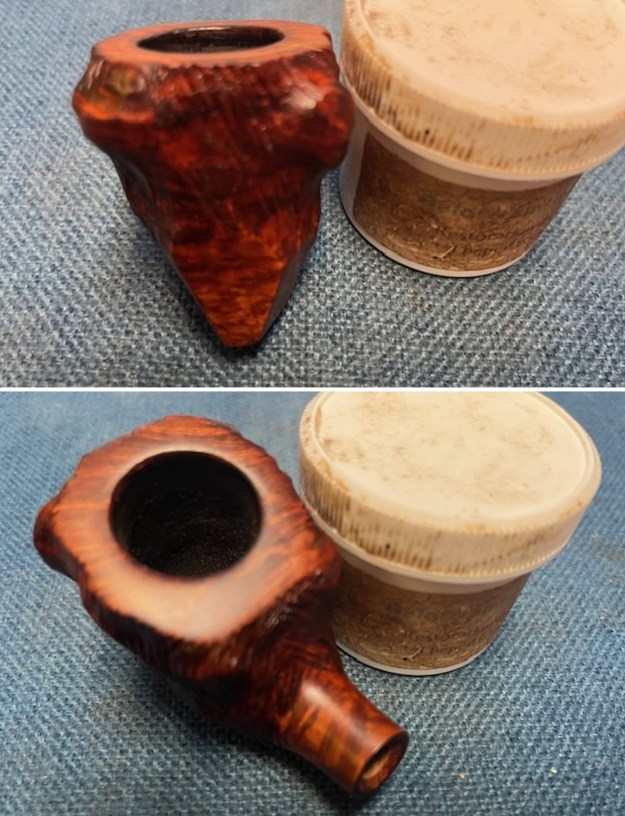
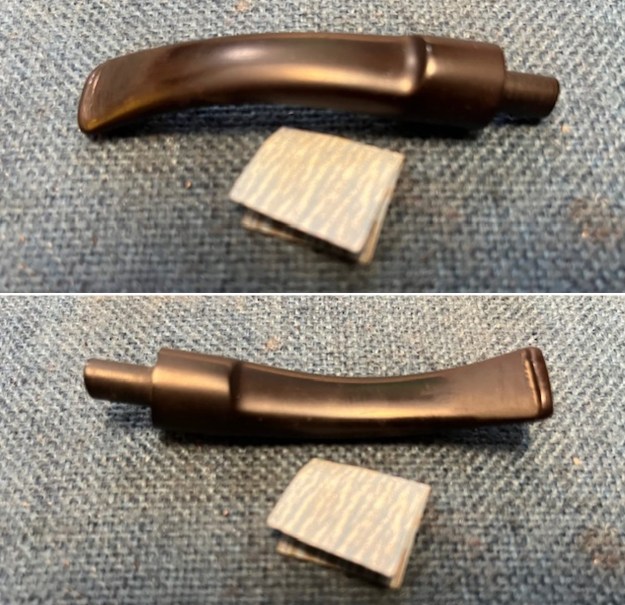
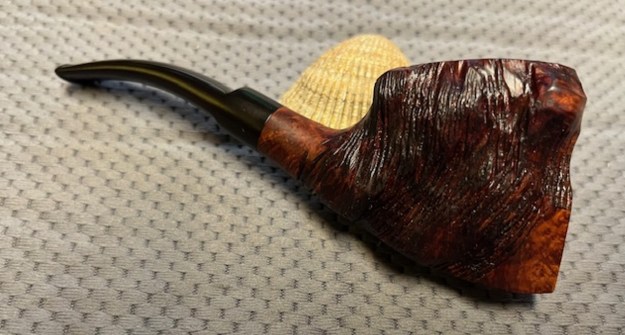
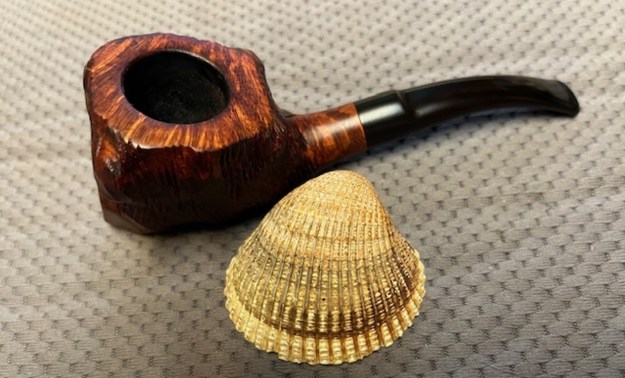
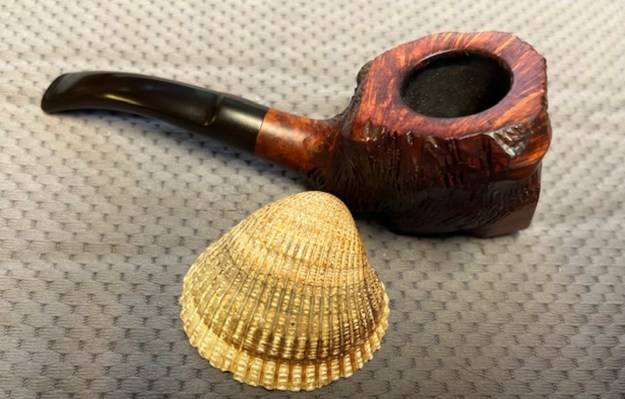
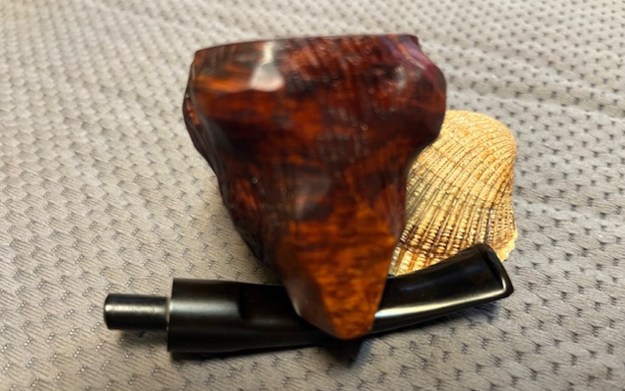
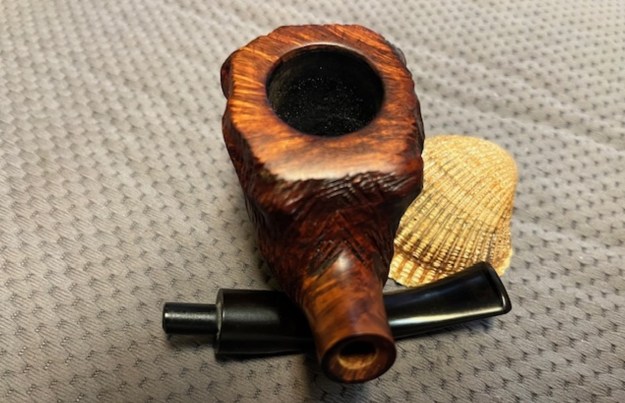
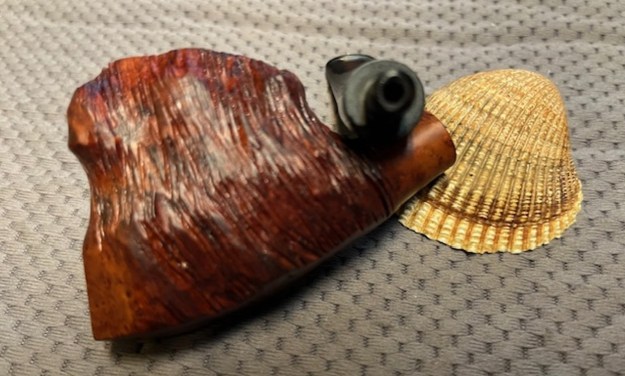
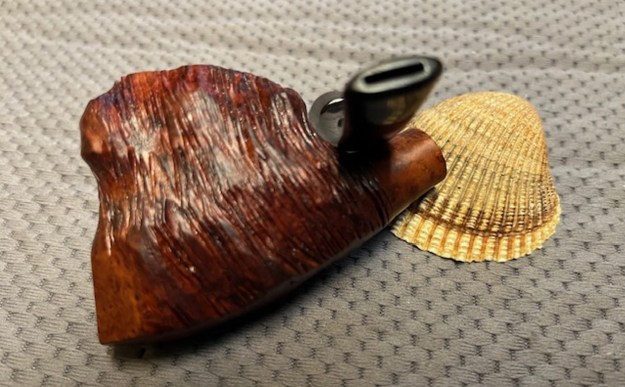
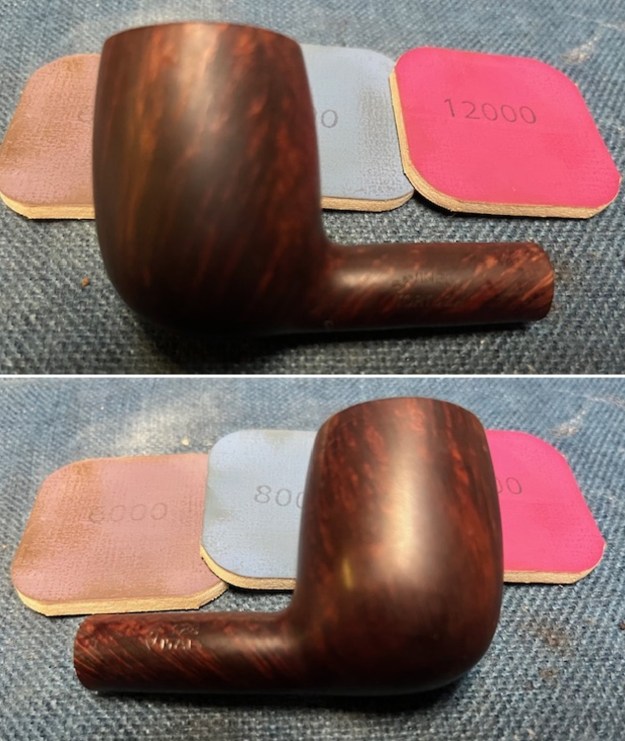
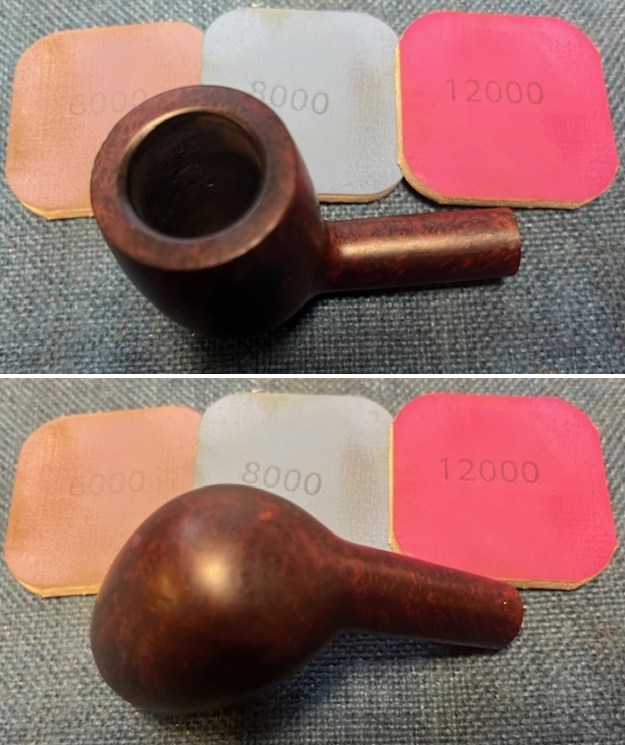
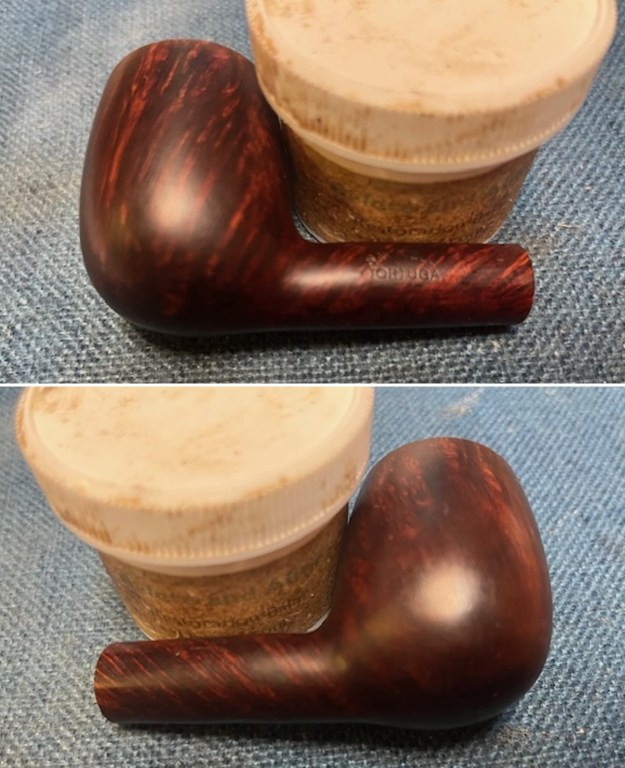
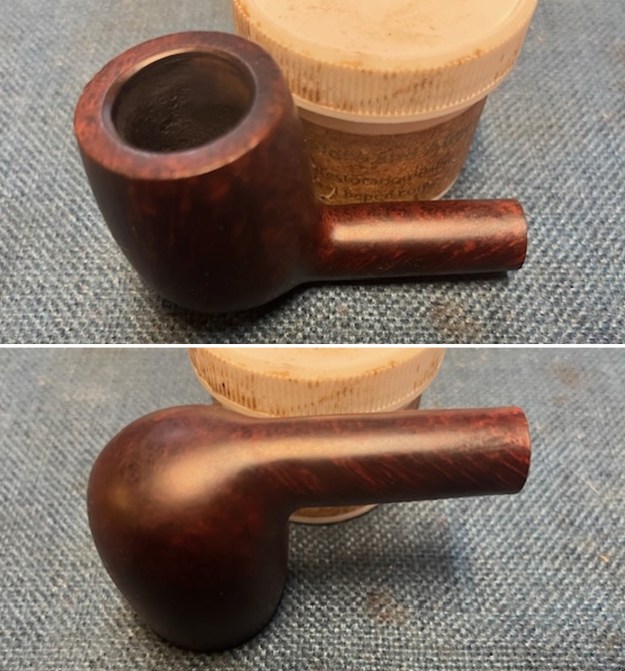
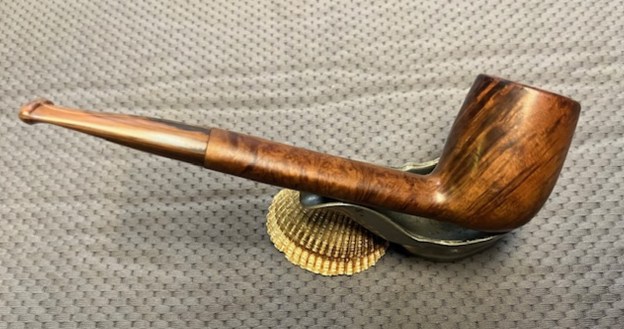
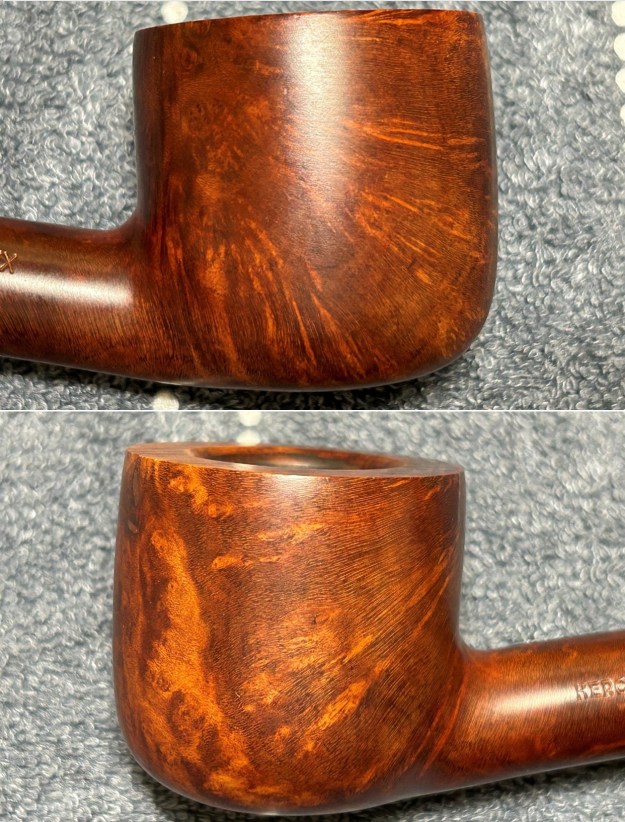
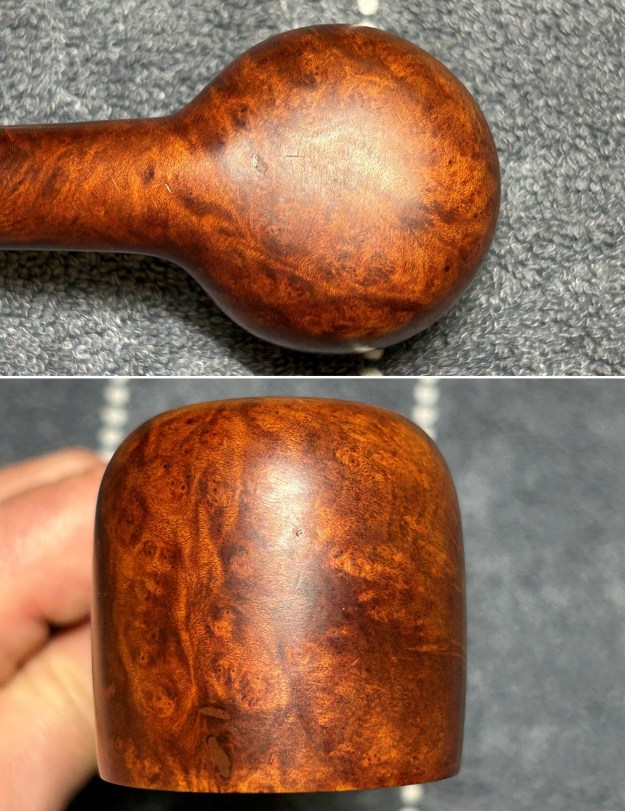
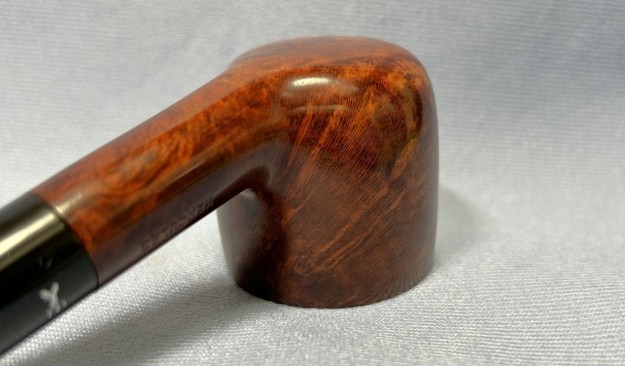
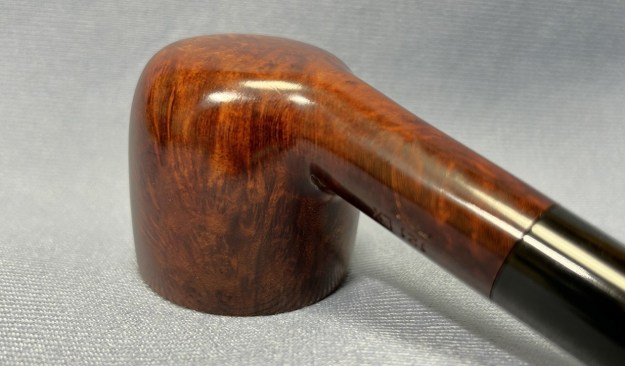
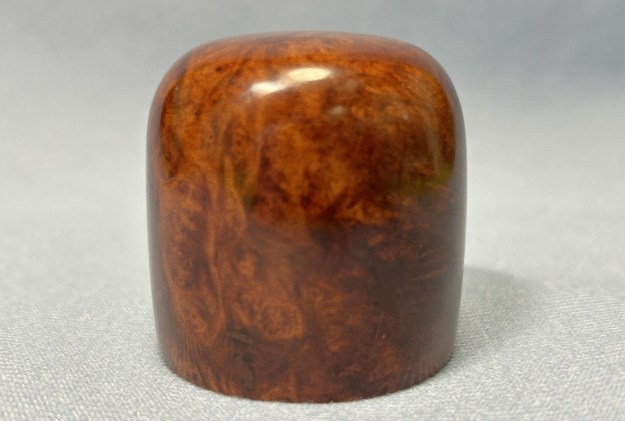
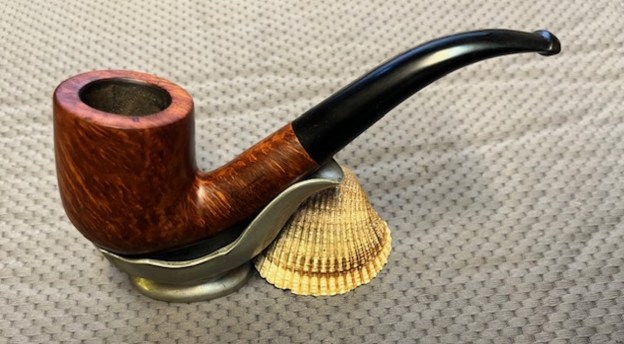
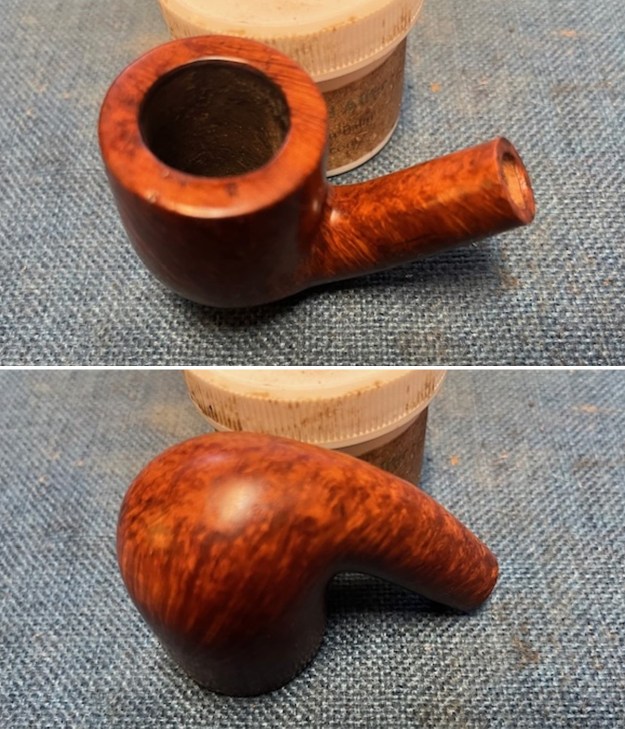
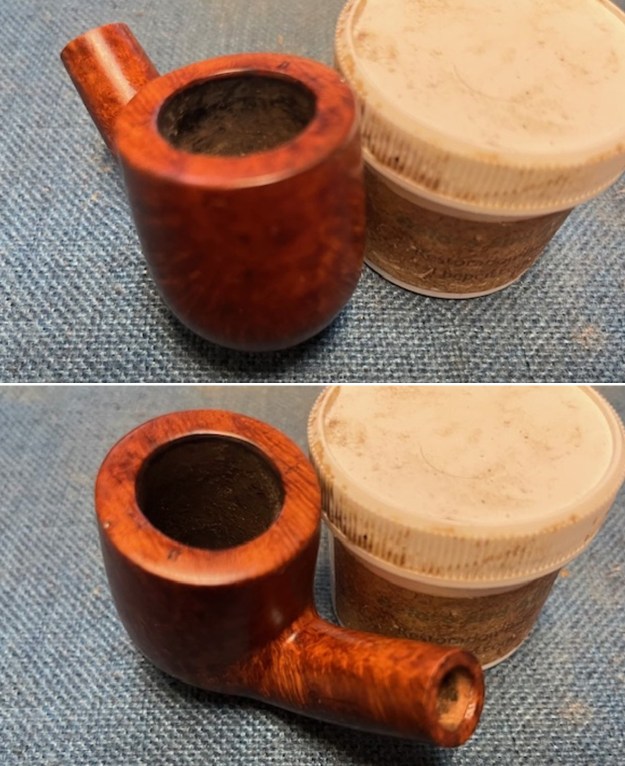
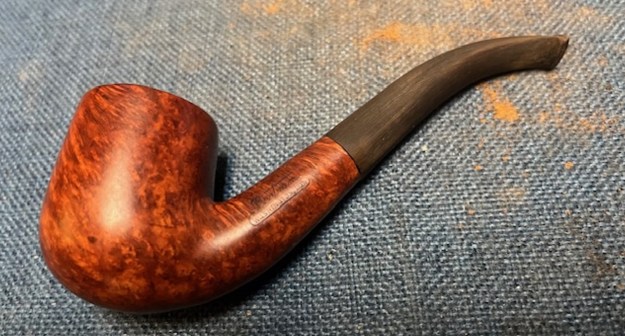
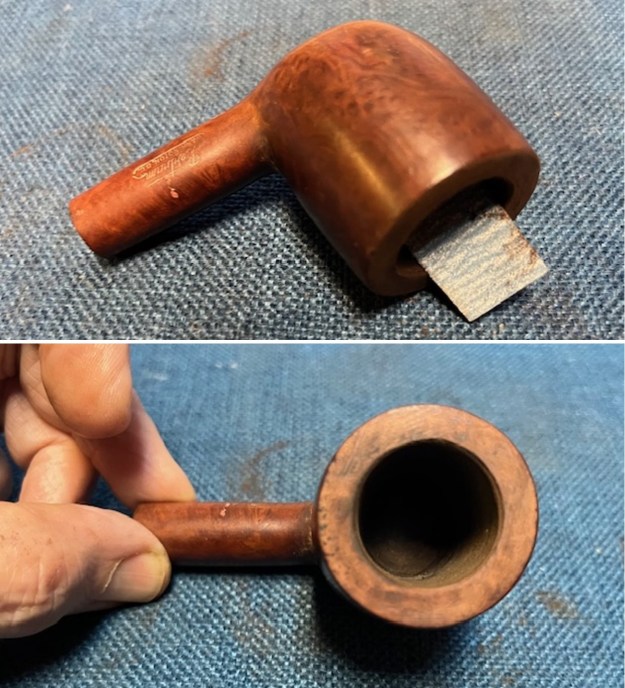
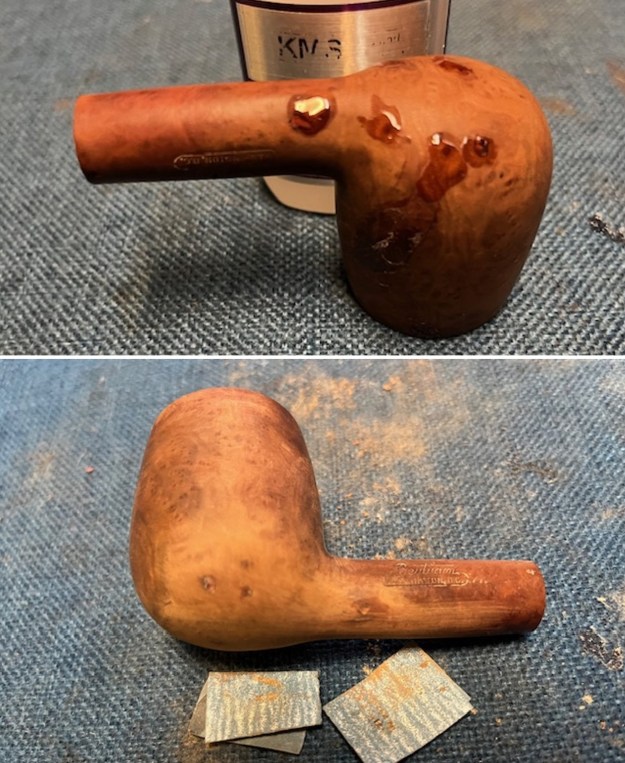
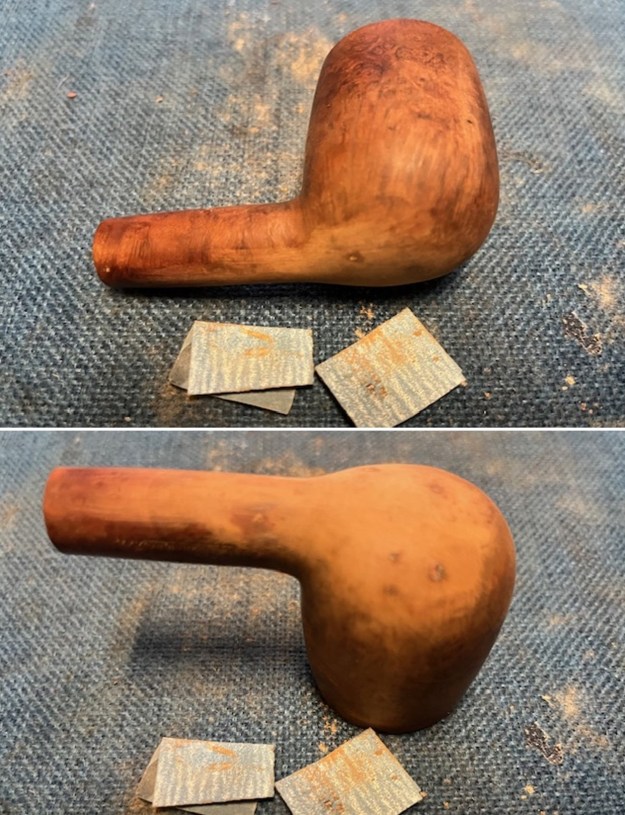
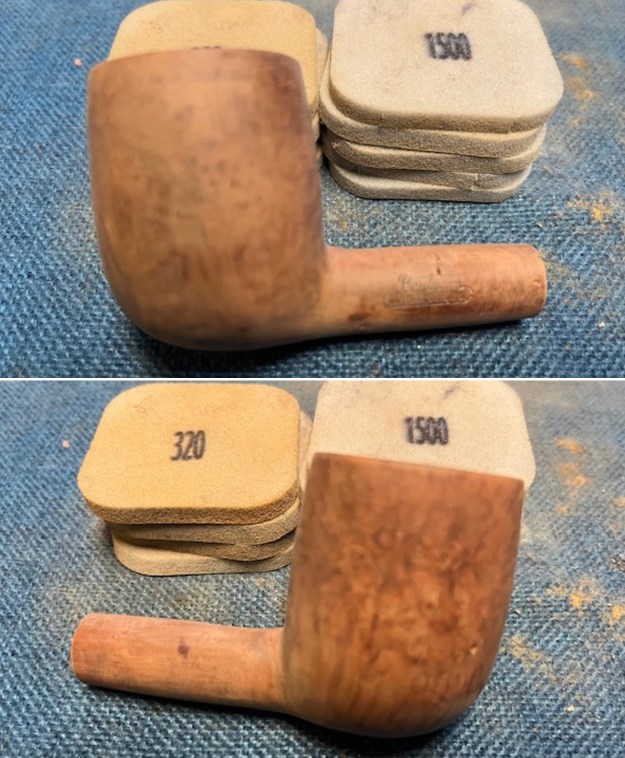
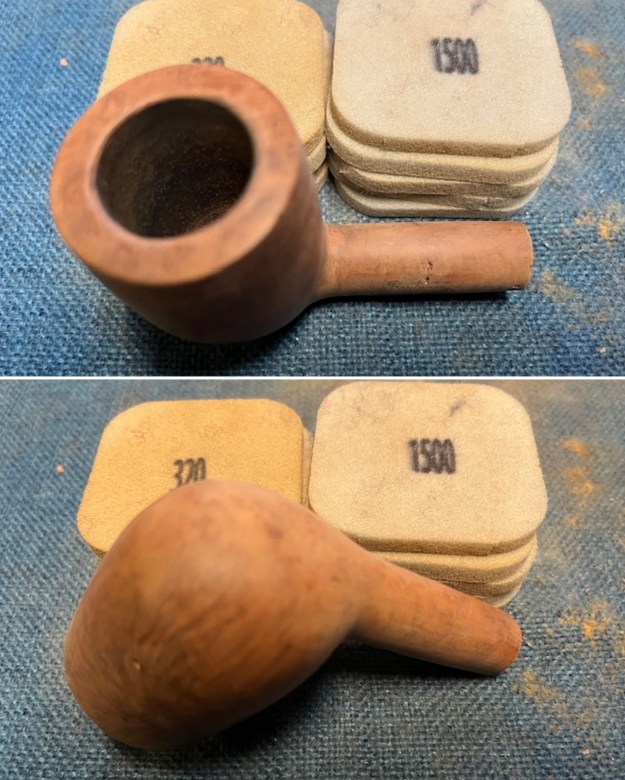
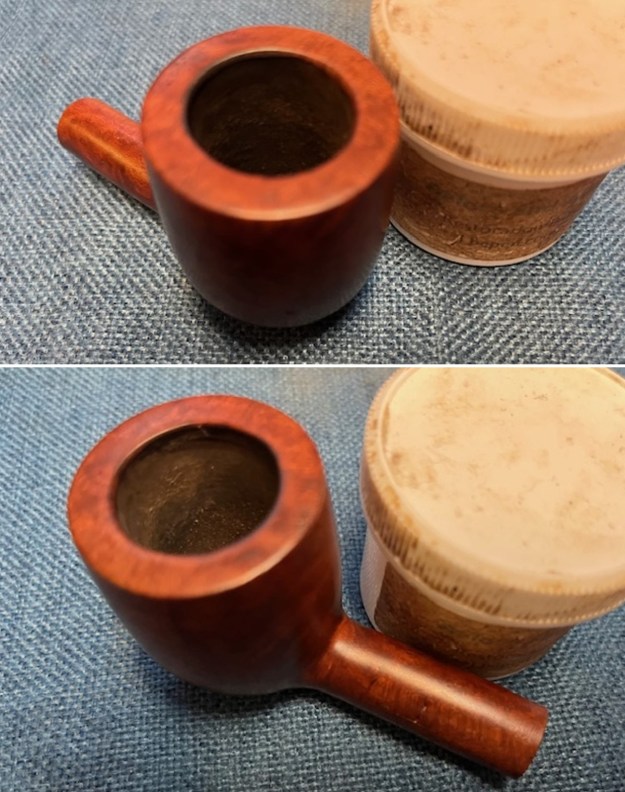
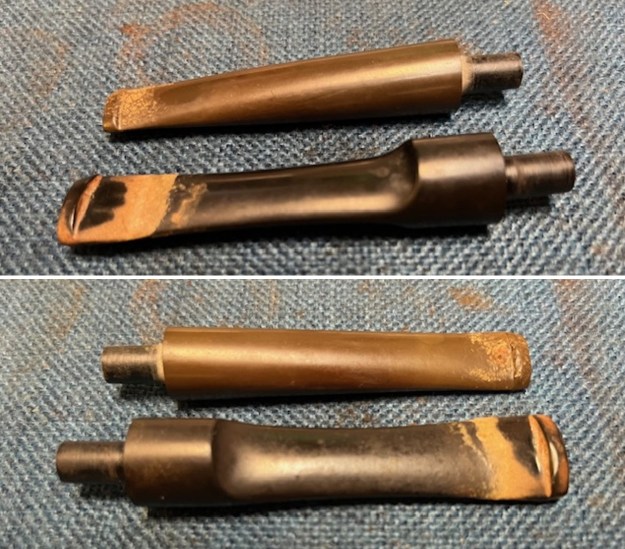
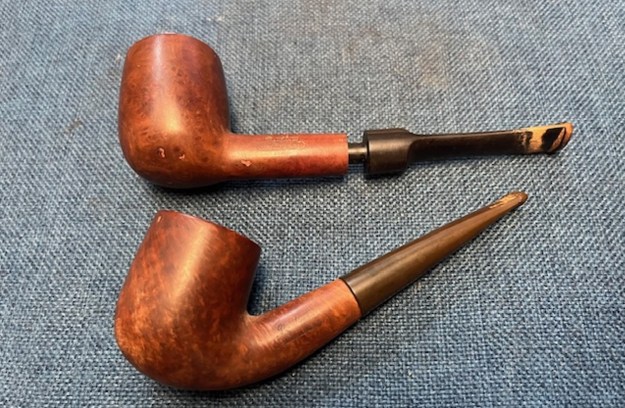
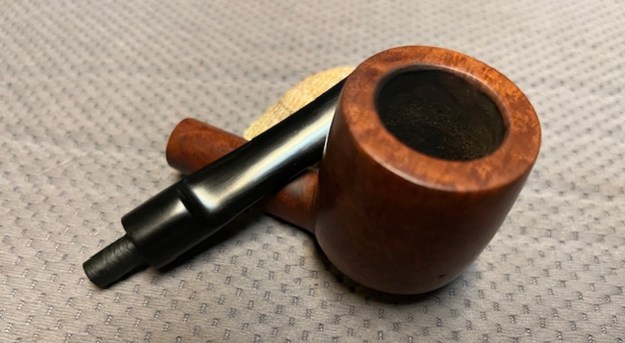
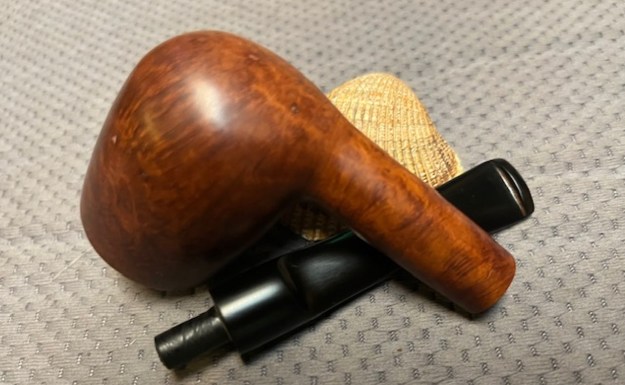
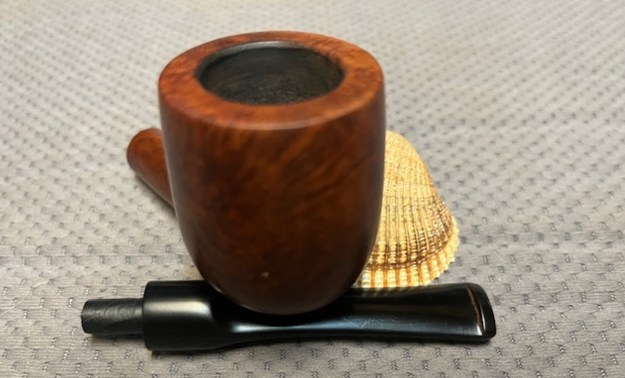
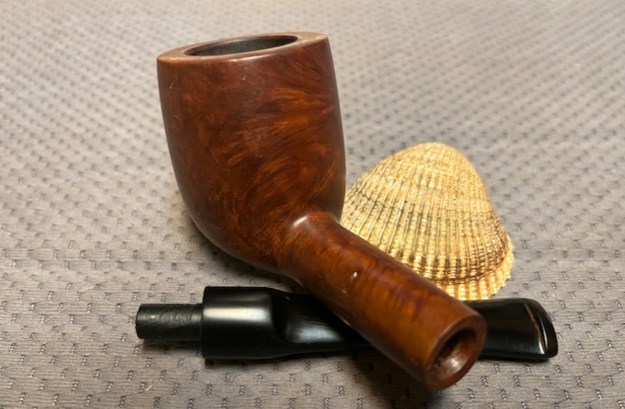
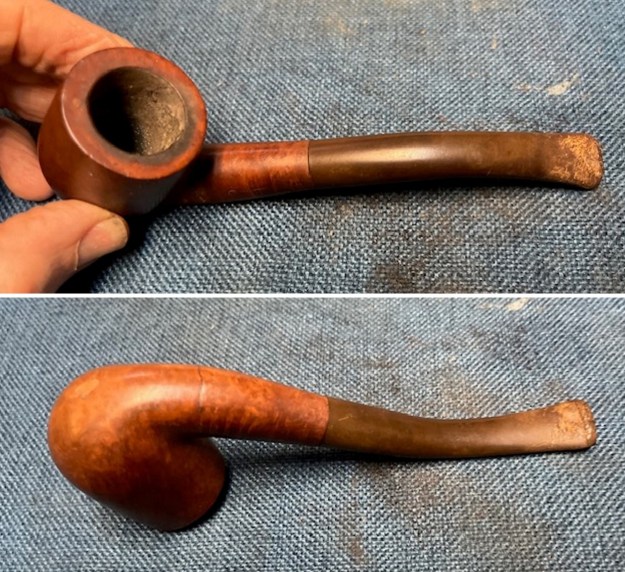
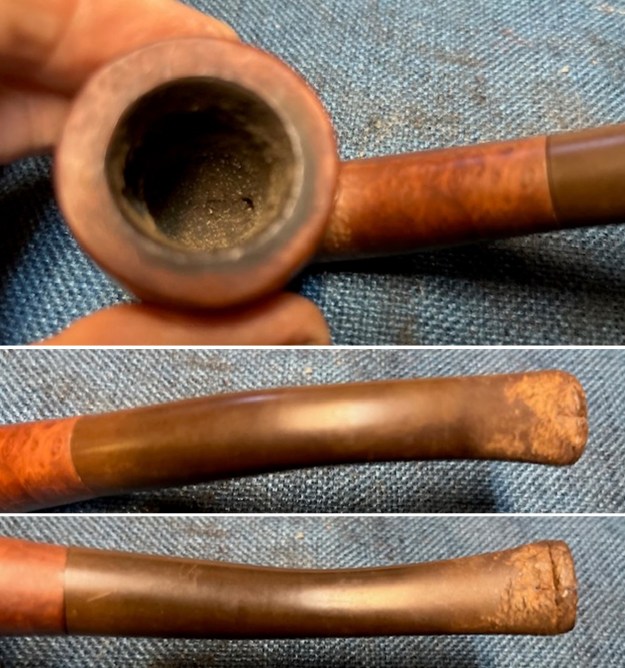
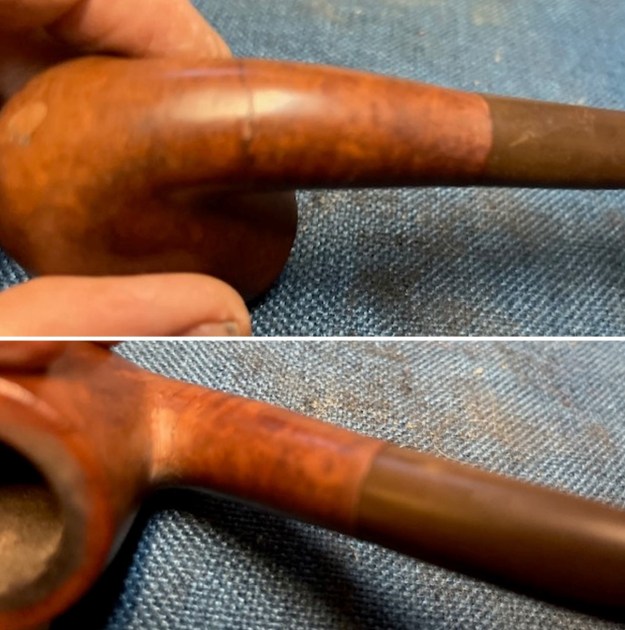
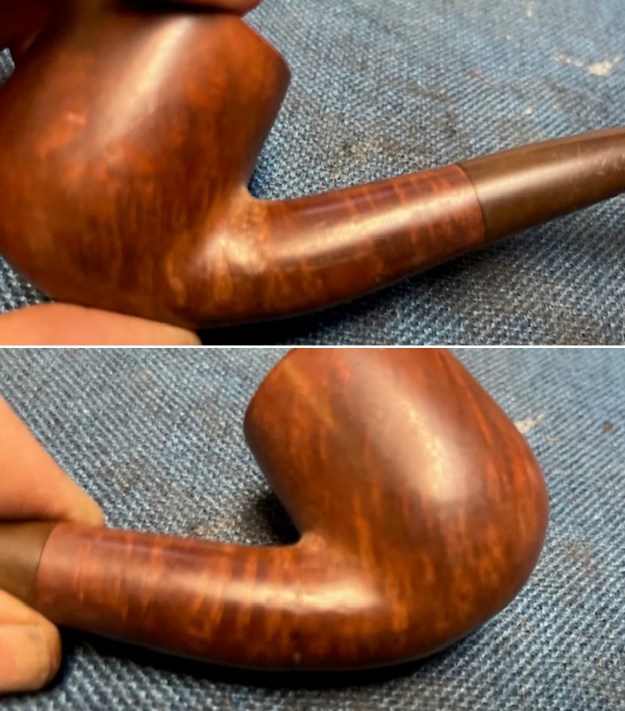
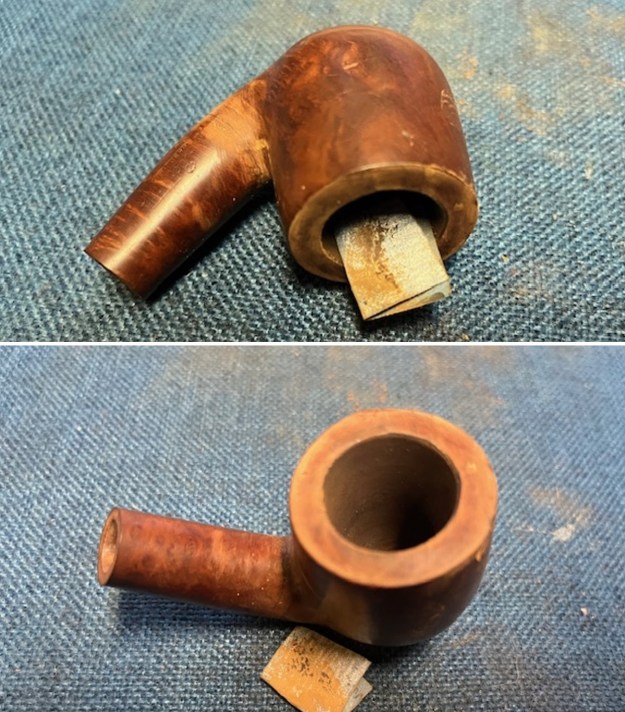
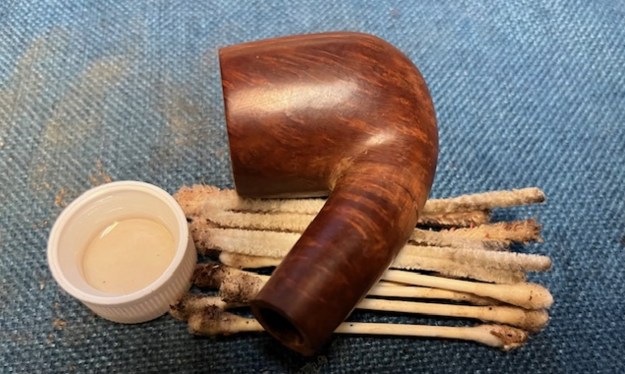
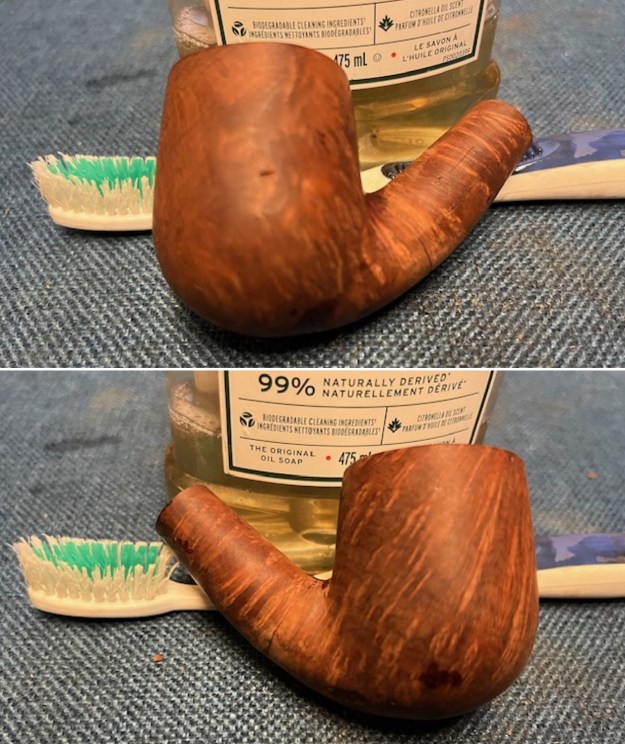
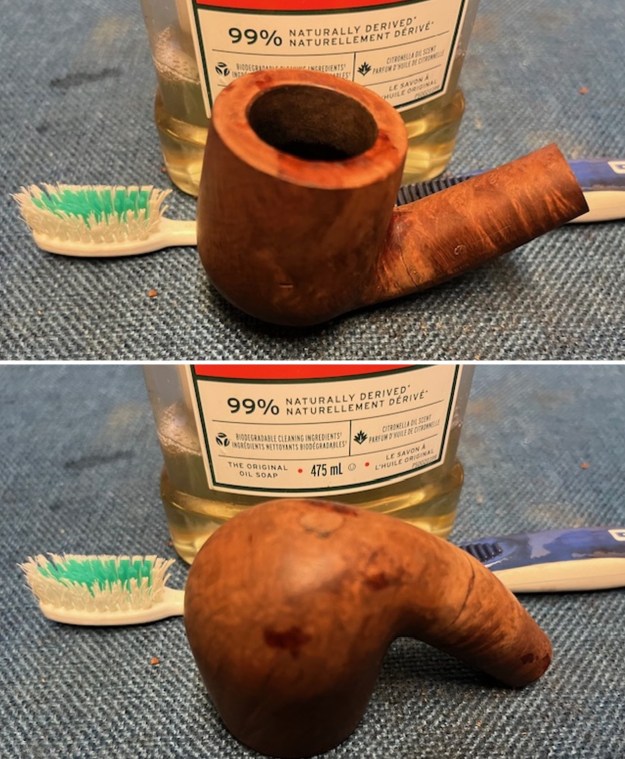
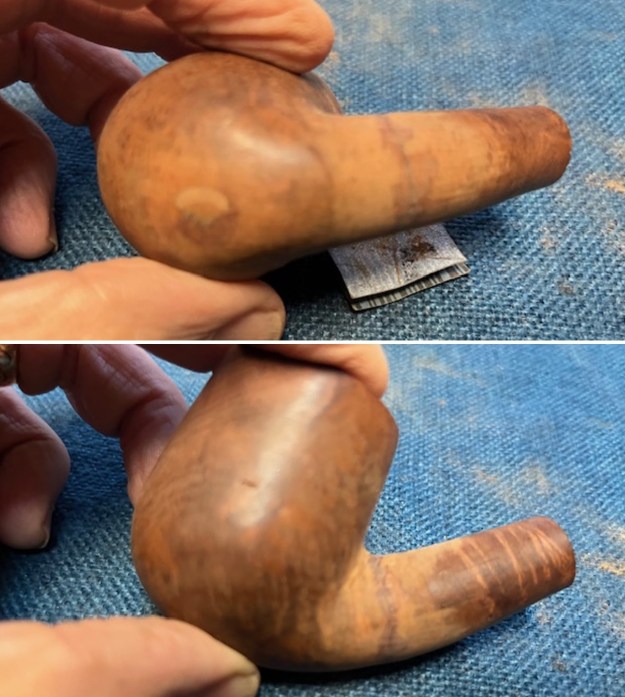
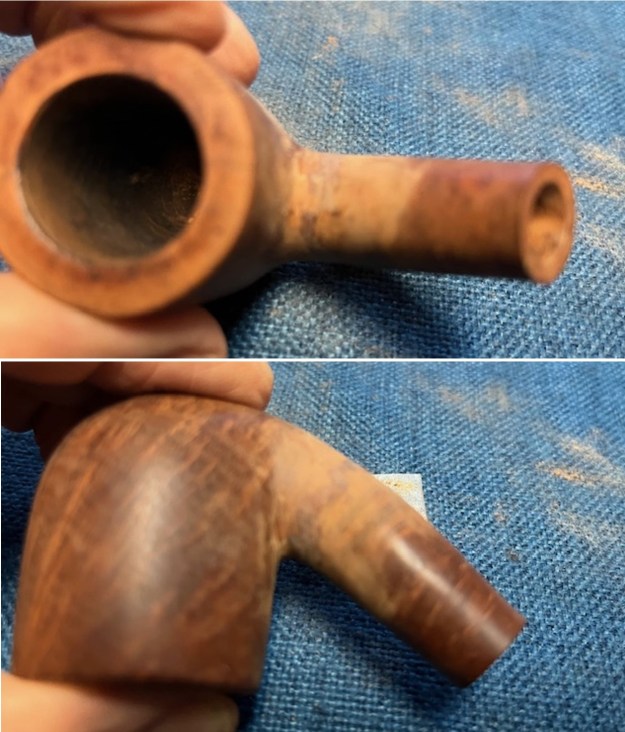
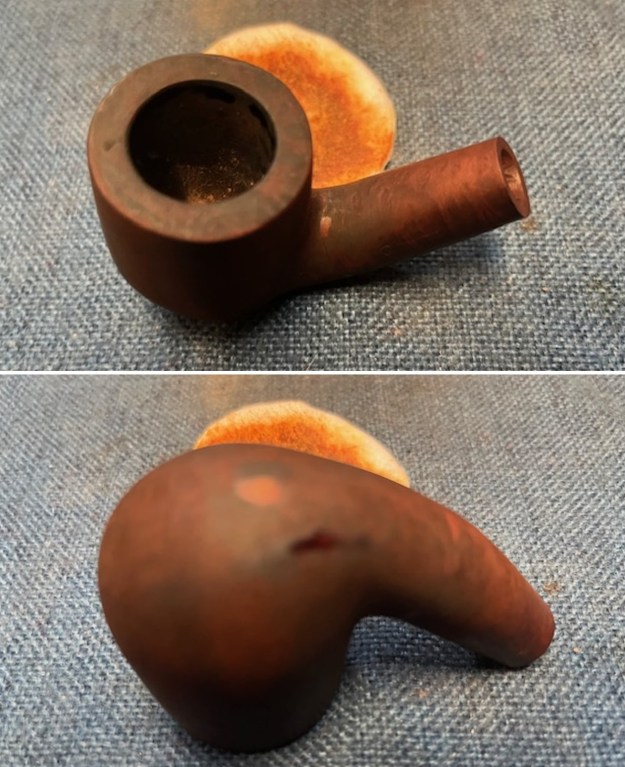
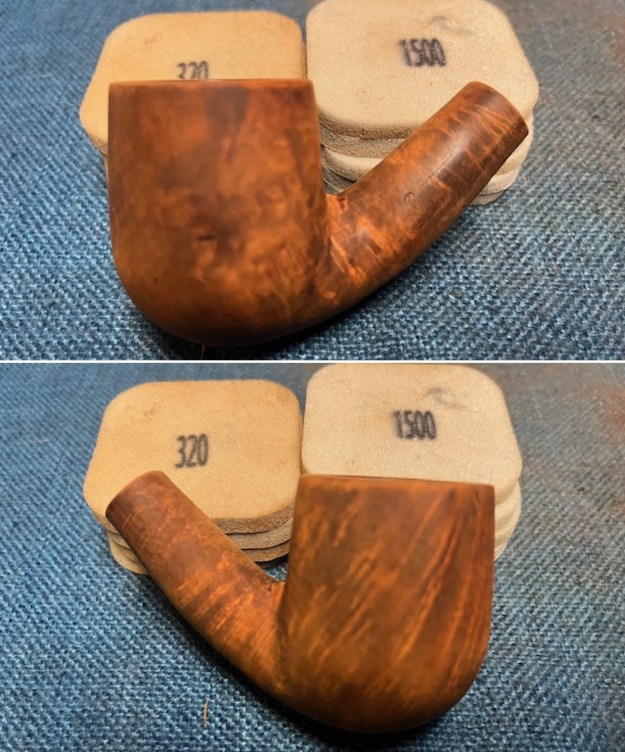
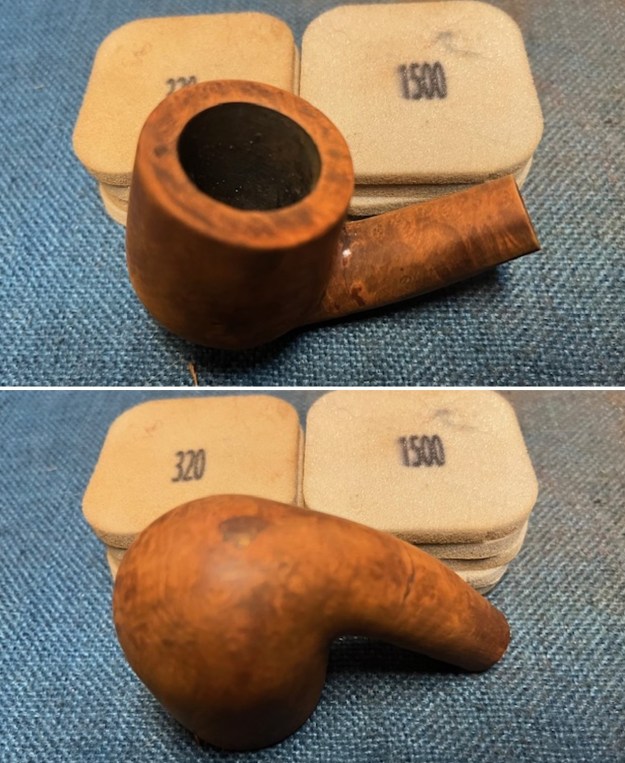
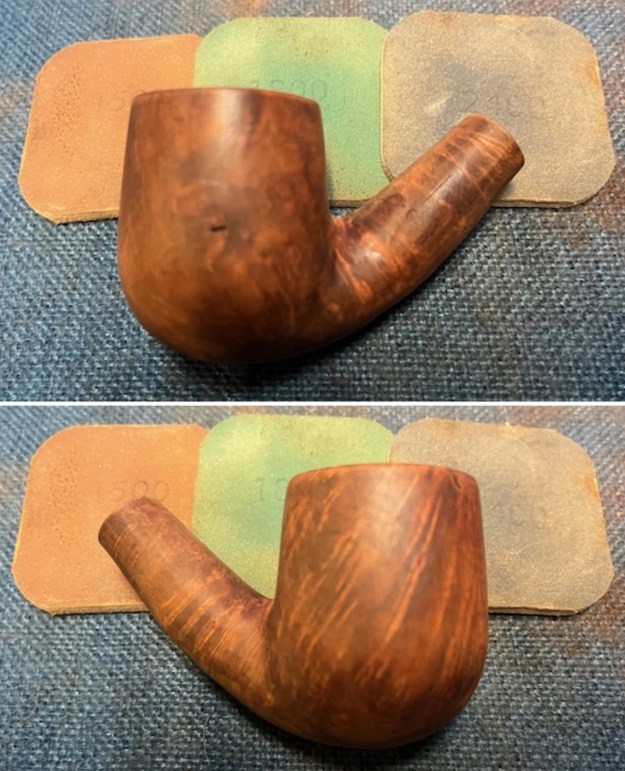
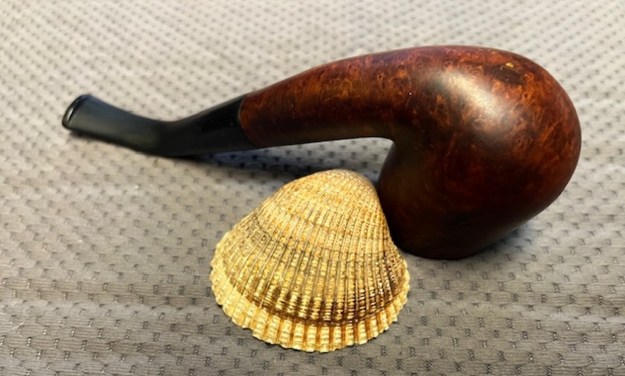
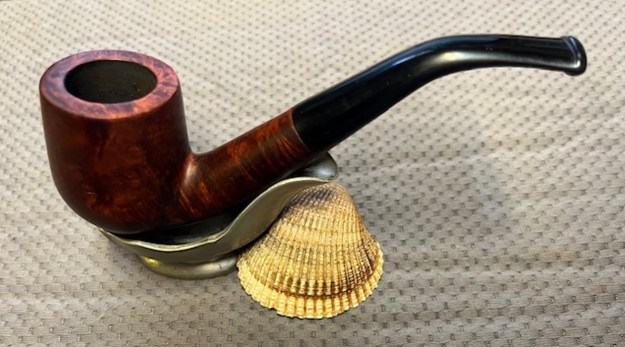
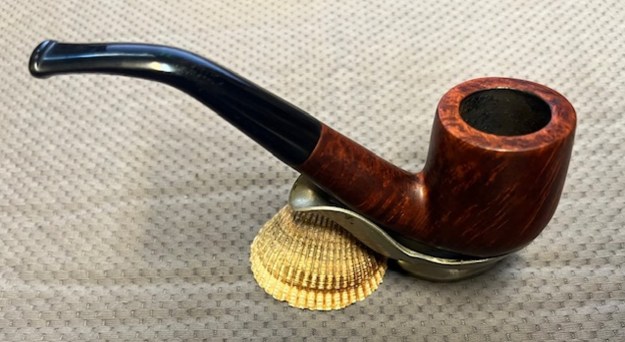
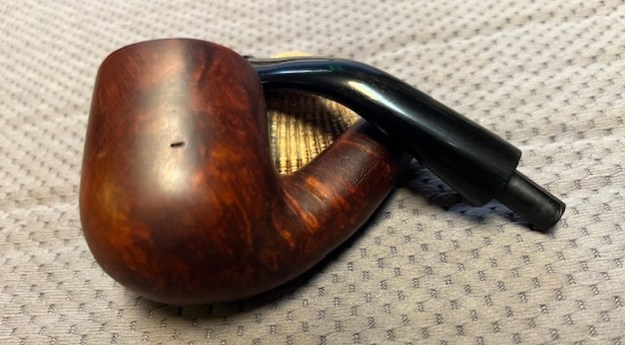
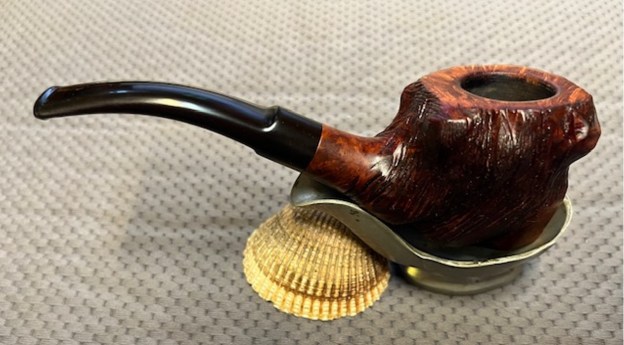
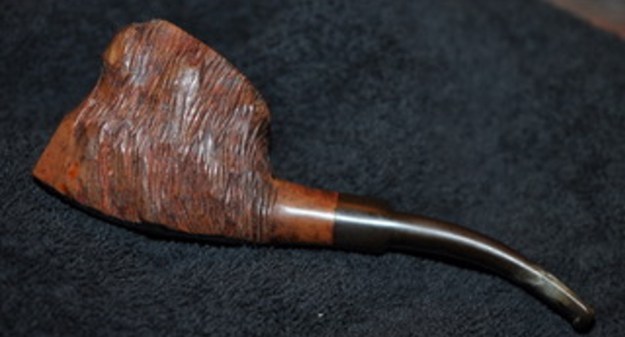
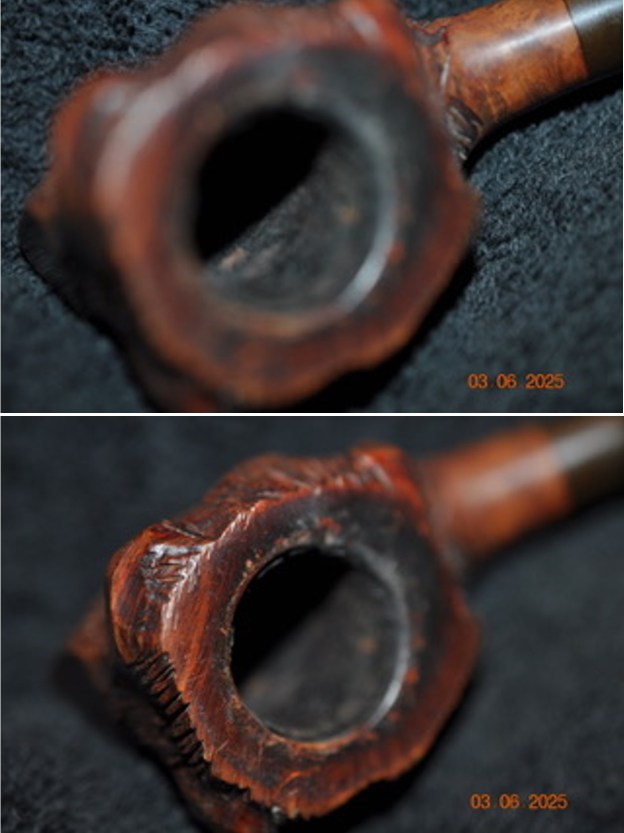
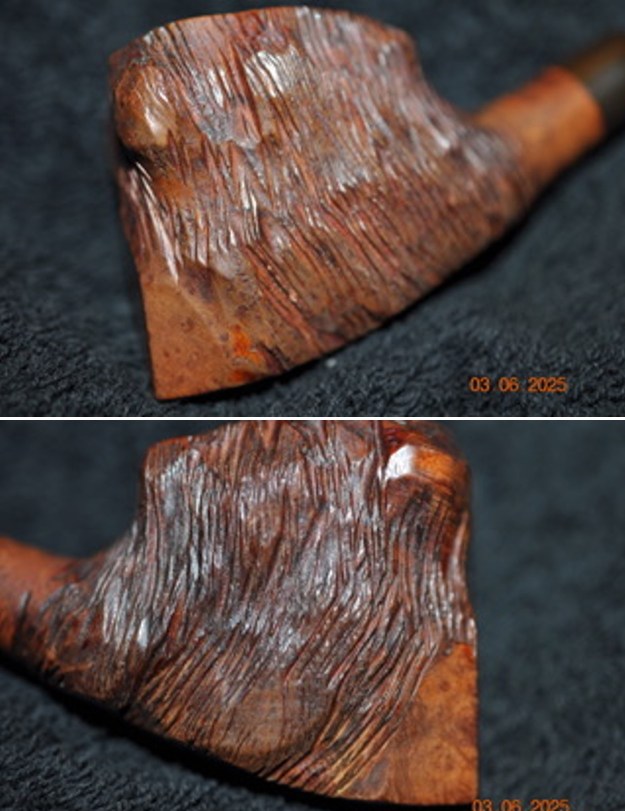
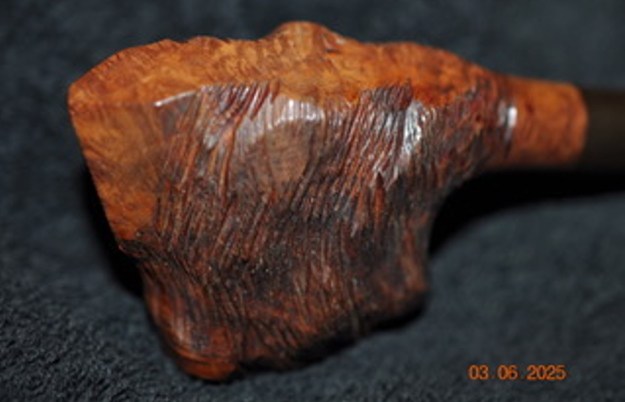
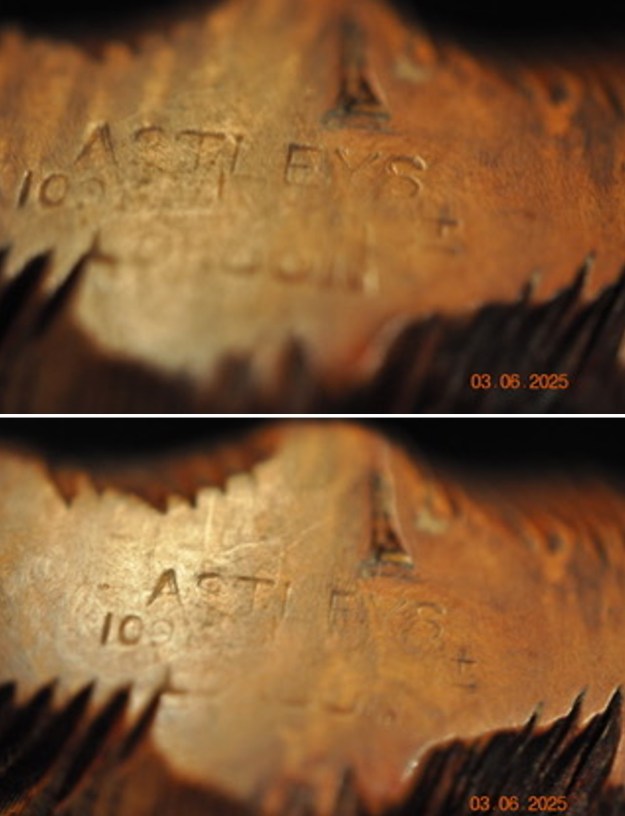
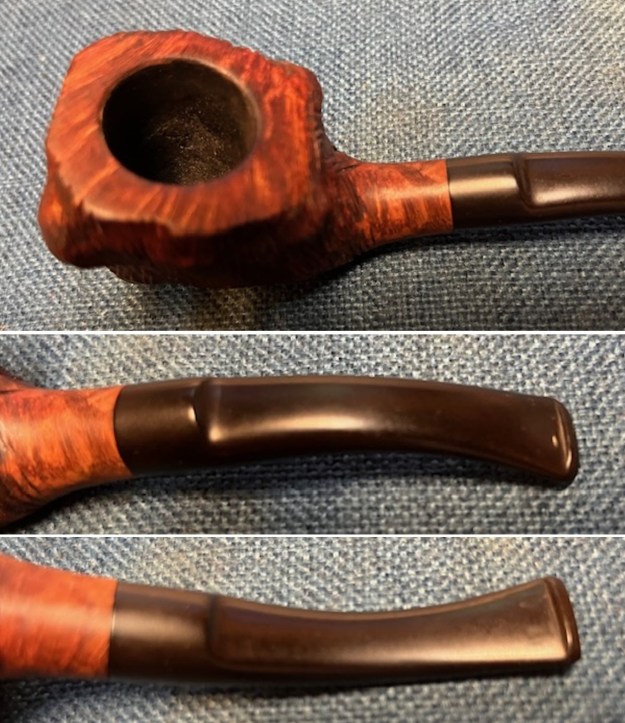
The next pipe on the table is a rugged almost primitive looking sitter with unique rustication and carving around the bowl. We purchased the pipe on 11/10/20 from a seller in Noberly, Maryland, USA. It is stamped on the flat underside of the bowl and shank and read Astleys [over] 109 Jermyn St [over] London. The rim top was smooth as was the bottom of the bowl and shank. The shank itself was also smooth and there was a smooth nose on the front of the bowl. It is a pretty pipe. The bowl had a moderate cake and there was some darkening on the inner edge but no real damage. The rusticated grooves that ran vertically on the bowl were mixed with carved lines and swirls. It was very unique and almost primitive looking. The briar was dirty from use and the bowl looked dull. The stem is a vulcanite saddle stem. It was oxidized, calcified and had tooth marks on the top and underside ahead of the button. Jeff took photos of the pipe before he started his work on it. He took photos of the rim top and the stem to show the condition. You can see the thick cake in the bowl and lava, darkening and grime on the rim edge. The photos of the stem show the tooth marks and chatter on the top and underside ahead of the button. Jeff took photos of the finish around the bowl sides to show carving and rustication around the bowl and the smooth shank. It is very unique looking. You can see the dust and debris in the finish. Jeff took some photos of the stamping on the heel of the bowl to give a sense of the condition. It is faint but still readable with a light. It reads as noted above. I had previously worked on a similar Astley’s Root Briar. I took some time to examine it carefully then spent time online seeing what I could find out about the pipe. I turned to Pipephil’s site (http://www.pipephil.eu/logos/en/logo-a8.html) and found a picture of a similar pipe. It is labelled the “Rock Briar” line. To be honest that did not help me much. I think it was not quite right in its labelling so I saved the screen capture below and kept digging.I turned next to Pipedia (https://pipedia.org/wiki/Astley’s) and found a great historic article about the shop and the brand. There was nothing specifically listed about what Pipephil call the Rock Briar line.
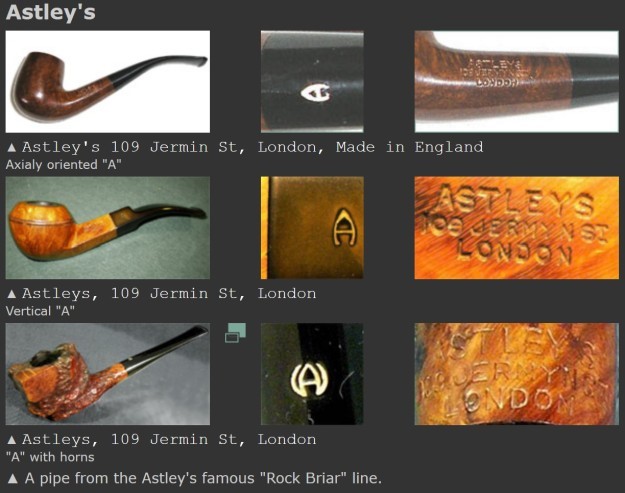
Astley’s was both a brand and name of a famous London tobacconist. The first shop was founded in 1862 and was located at 109 Jermyn Street, just down the road from the Charatan’s shop. They sold meerschaum pipes and later classic pipe shaped briar pipes. The owner of this shop was Mr. Paul Bentley whose family owned and ran the shop since the 1930’s. The shop closed some time ago, and the name of the brand was bought by Mordechai (Moty) Ezrati, who also owns the James Upshall pipe brand.

Astley’s served as an extremely exclusive and renowned shopping outlet for outstanding pipes for the British royalty and London gentry alike. Visitors to London sought out this shop as a ‘must visit’ during their stay. Although they never made their own pipes, the Astley branded pipe was made on contract by Charatan (until the 1980’s), James Upshall, Dunhill, L&JS, and Bill Taylor of Ashton pipes. Some sources (The Piperack for instance) say that Comoy’s and GBD had also made pipes for Astley’s. The shop always commanded extremely high prices for their much sought-after specimens.

After Charatan had changed hands and was sold to Herman Lane Limited in the United States, Astley’s continued with their high-grade pipe sales by presenting some of the best examples of British pipe manufacturing to pipe connoisseurs around the world.

Stamping: Astley’s, 109 Jermyn St, London (before, Wm Astley & Company, 109 Jermyn St S.W. London). Symbol: Styled white ‘A’.

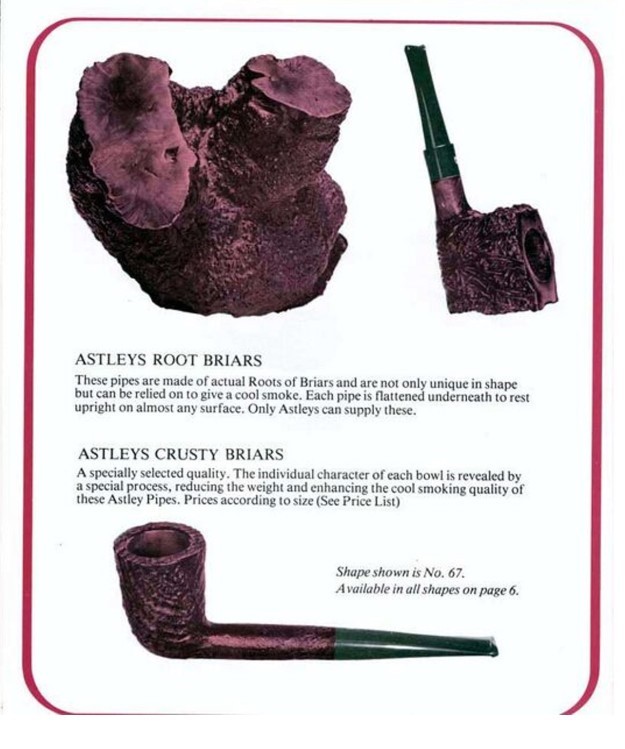
One helpful link sent me to an Astley’s Catalogue I have on rebornpipes. I also have a hard copy here but somehow forgot about it (https://rebornpipes.com/2012/08/10/astleys-pipe-catalogue/). I flipped through the catalogue a page at a time hoping to find a listing of some sort for the “Rock Briar” line that Pipephil noted. Instead I found an almost identical pipe called an Astley’s Root Briar. It was described as follows:

These pipes are made of actual Roots of Briar and are not only unique in shape but can be relied upon to give a cool smoke. Each pipe is flattened underneath to rest upright on almost any surface. Only Astley’s can supply these.

I have included a copy of the page below showing the pipe and the Root Briar Line.Now I knew what I was working on. It is the second of these I have seen. I don’t know if they are rare but it is only the second one for me. I knew it was Root Briar Sitter that was uniquely carved and very individual in both its shape and look. Now it was time to work on it.
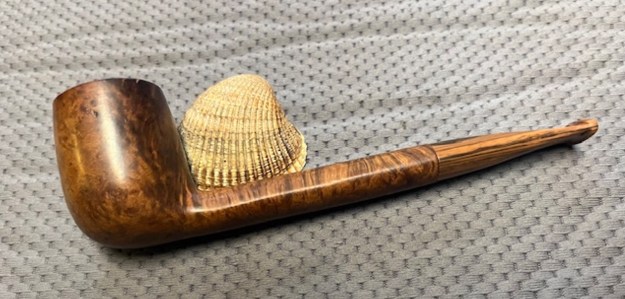
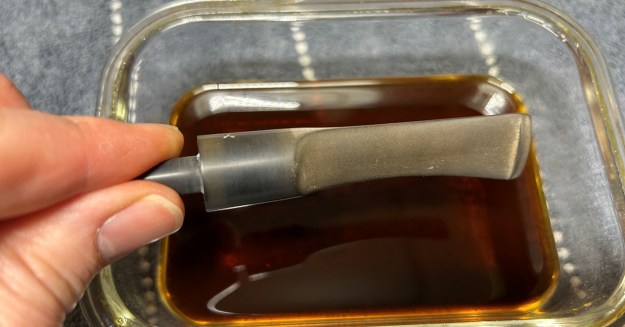
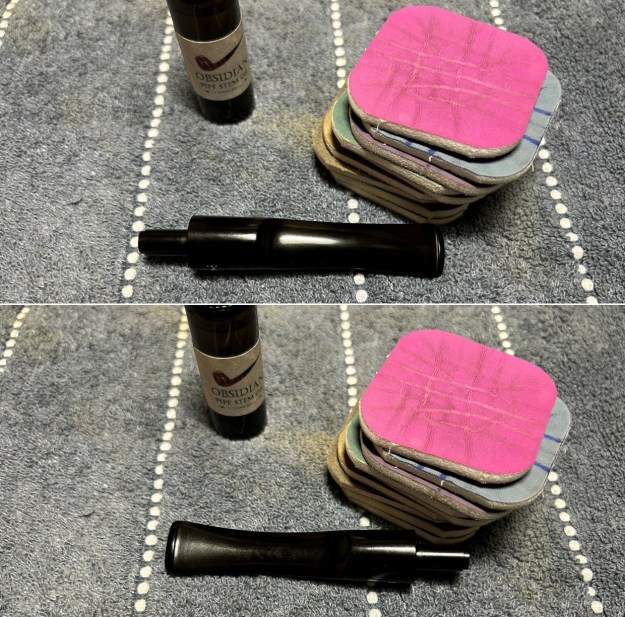
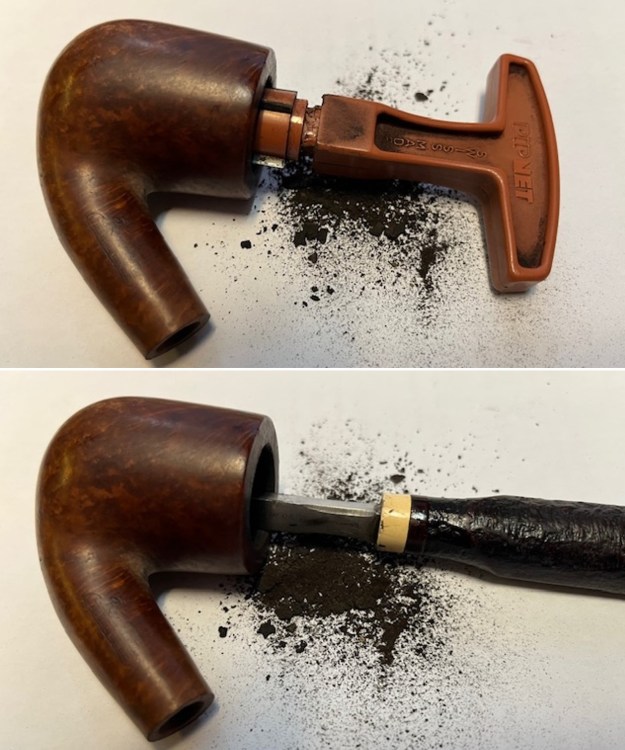
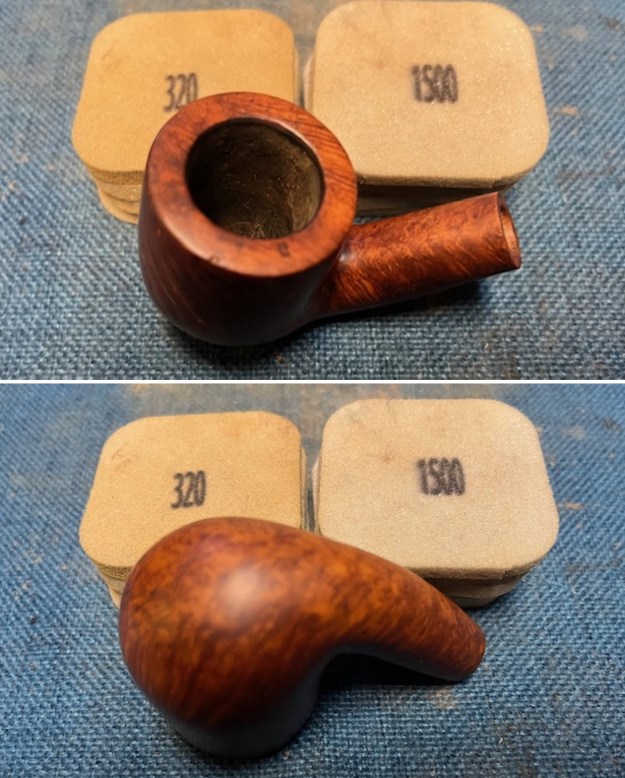
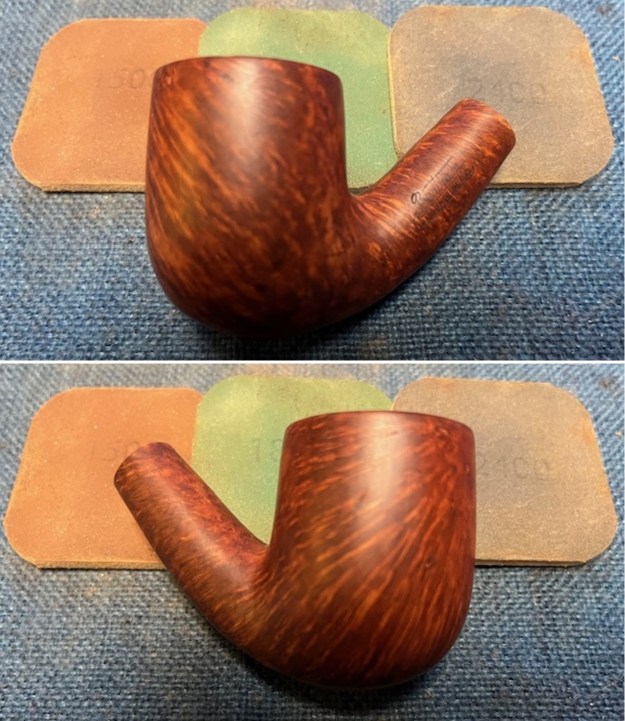
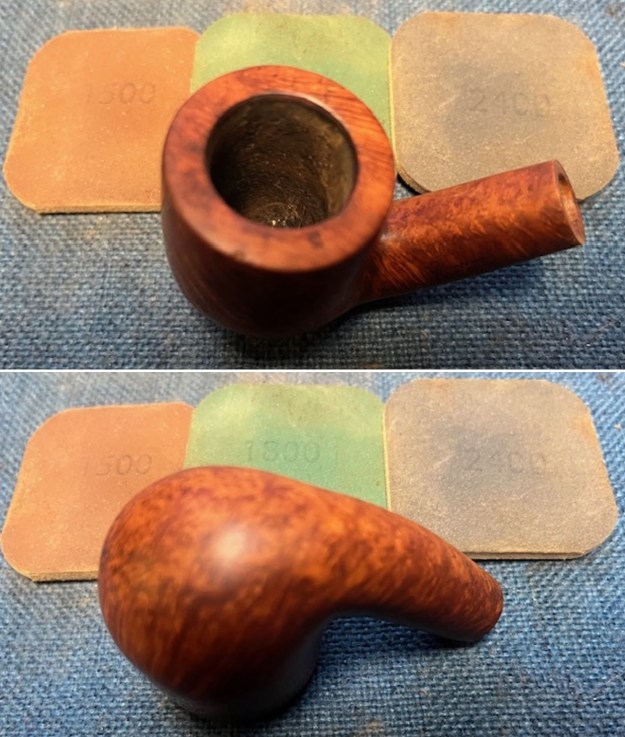
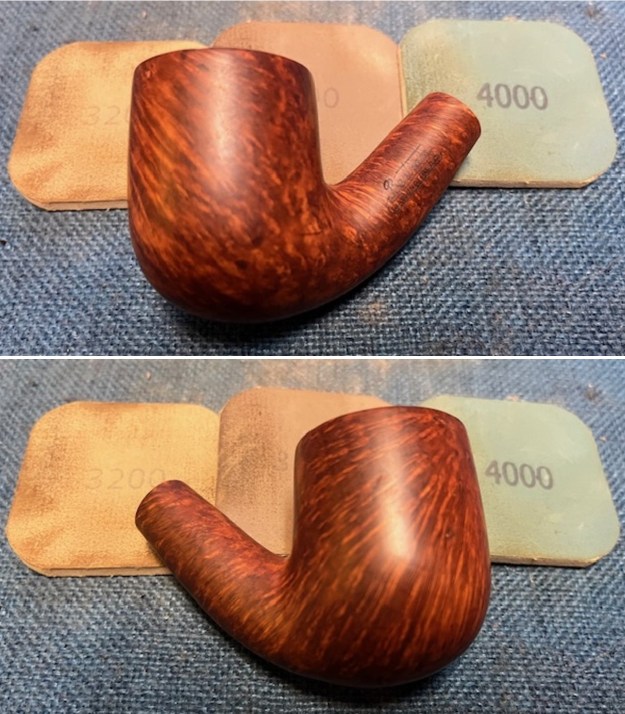
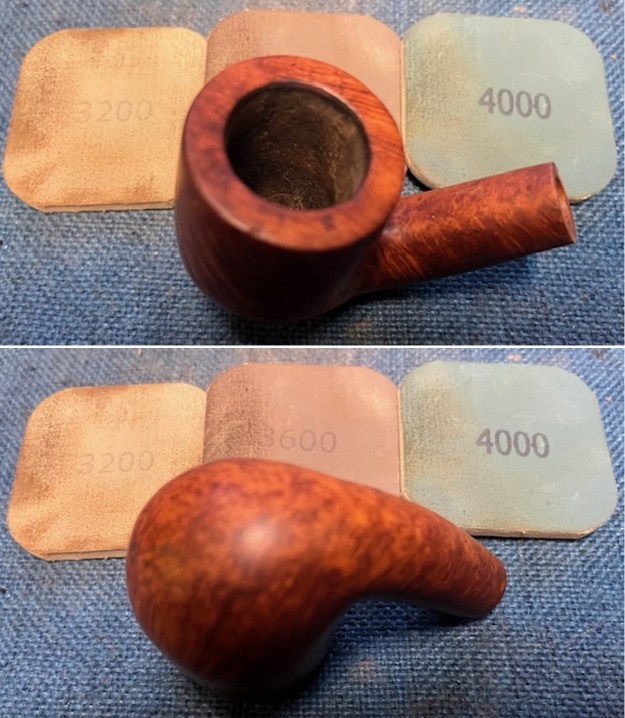
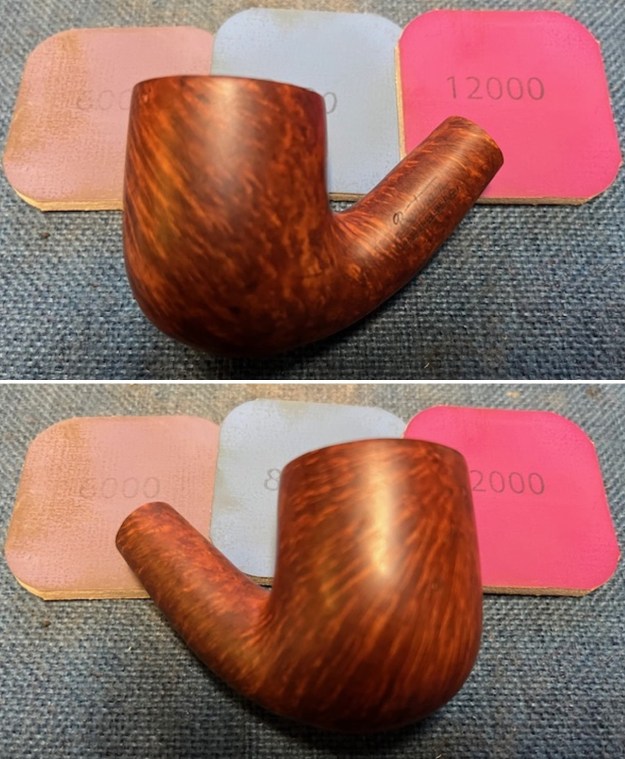
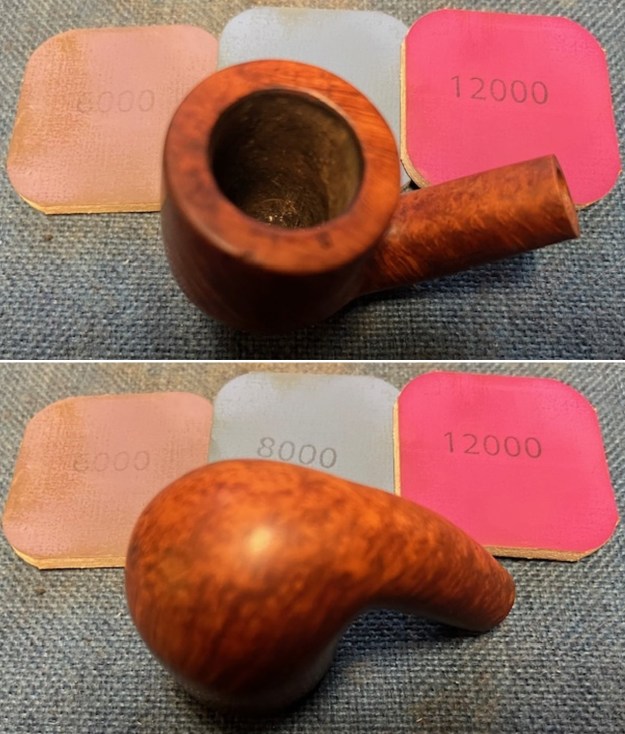
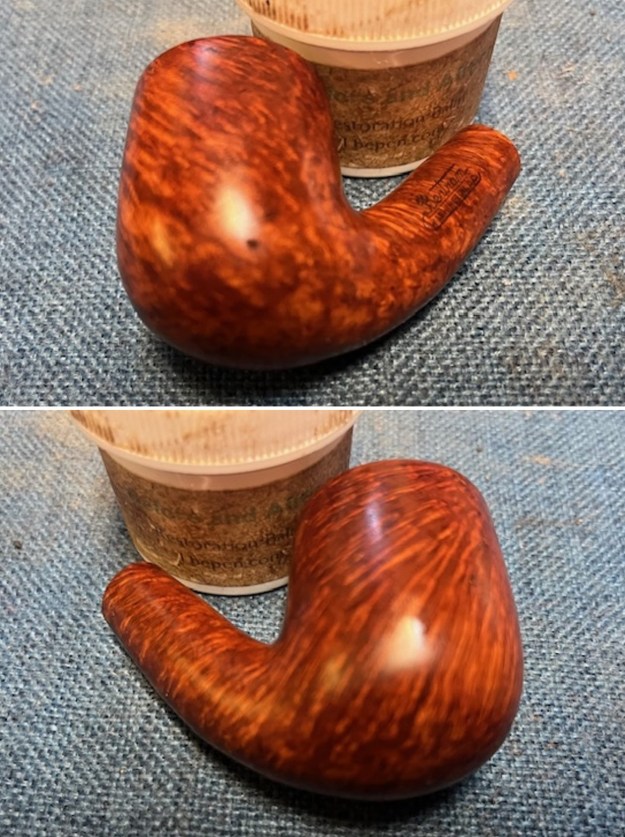
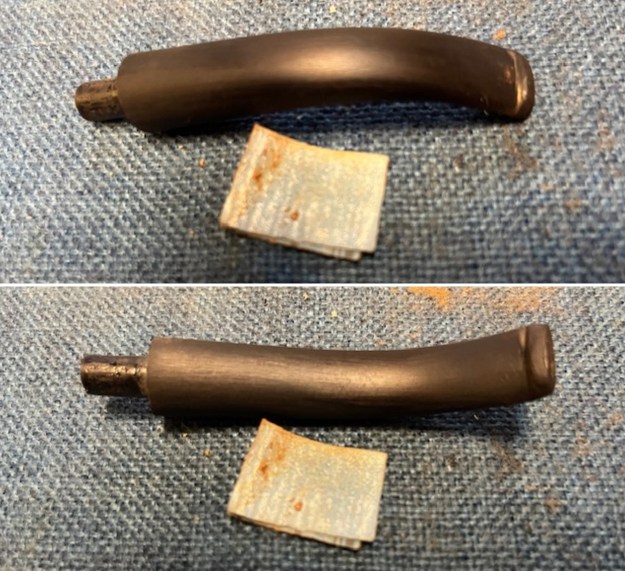
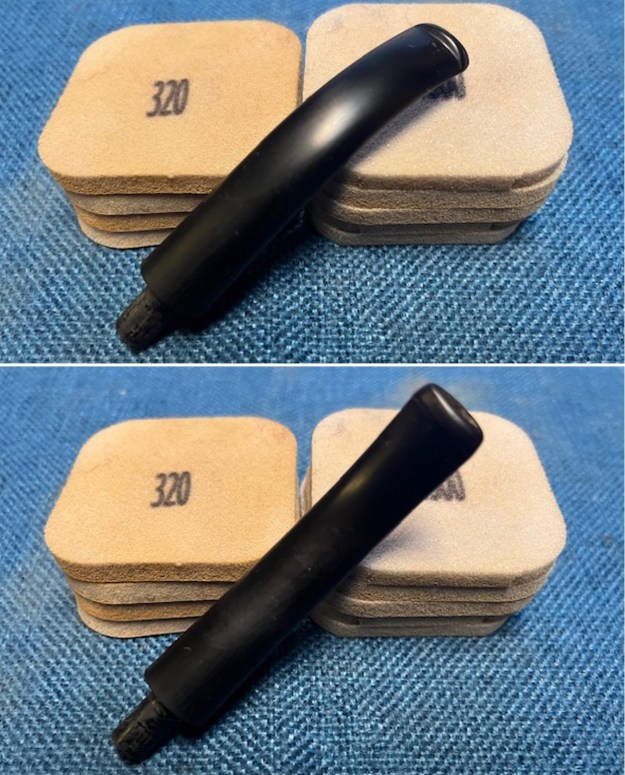
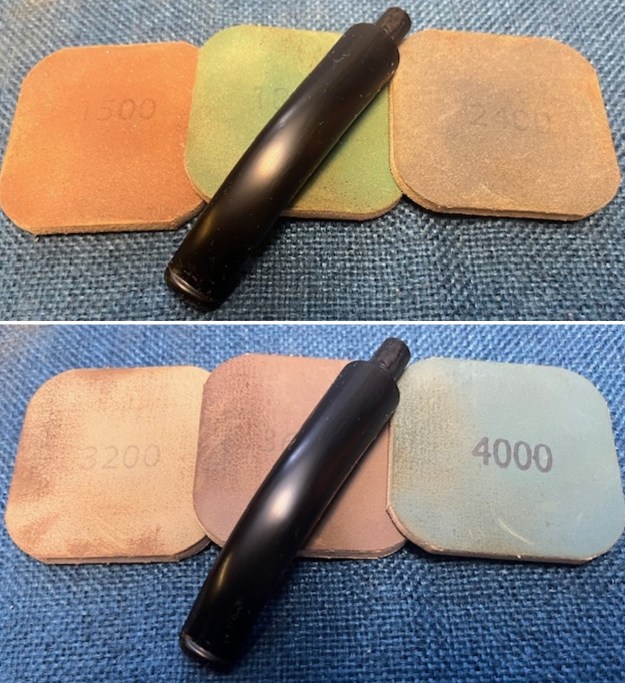
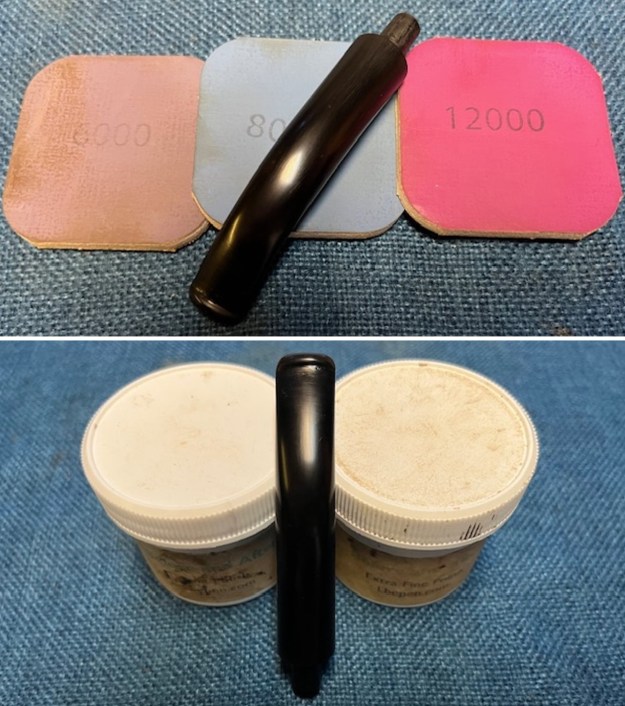
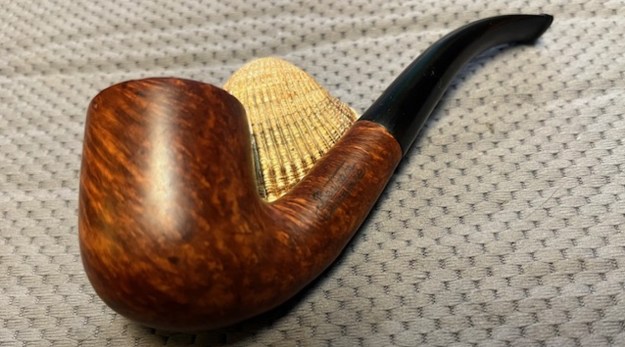
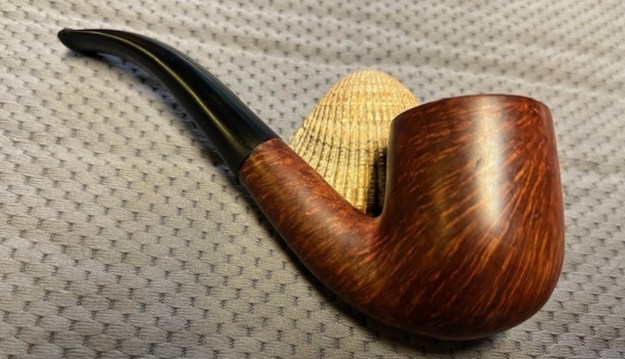
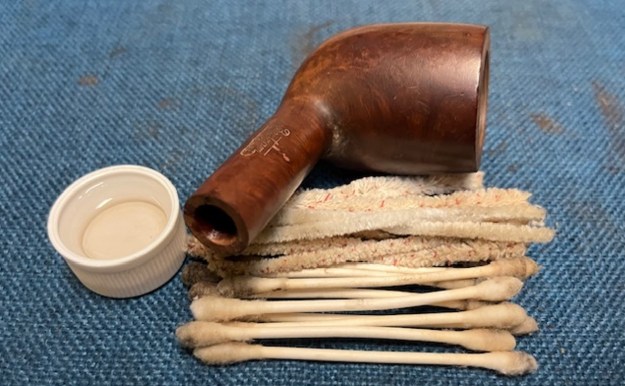
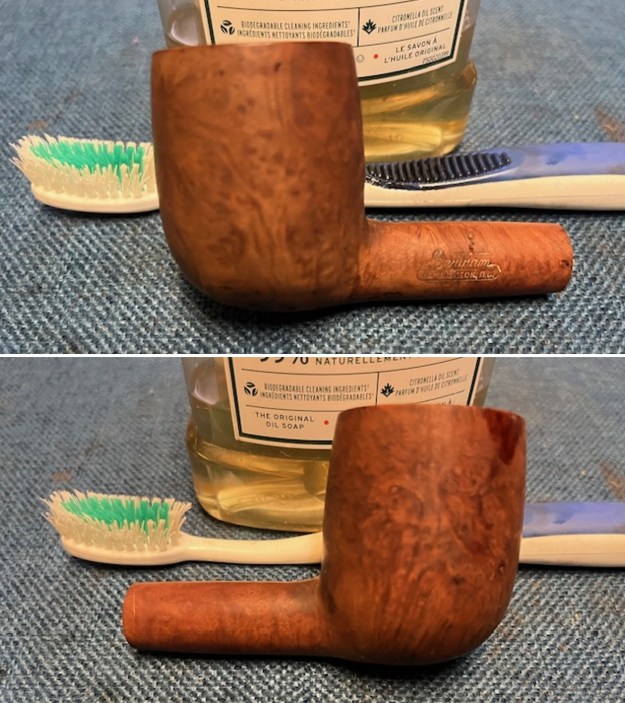
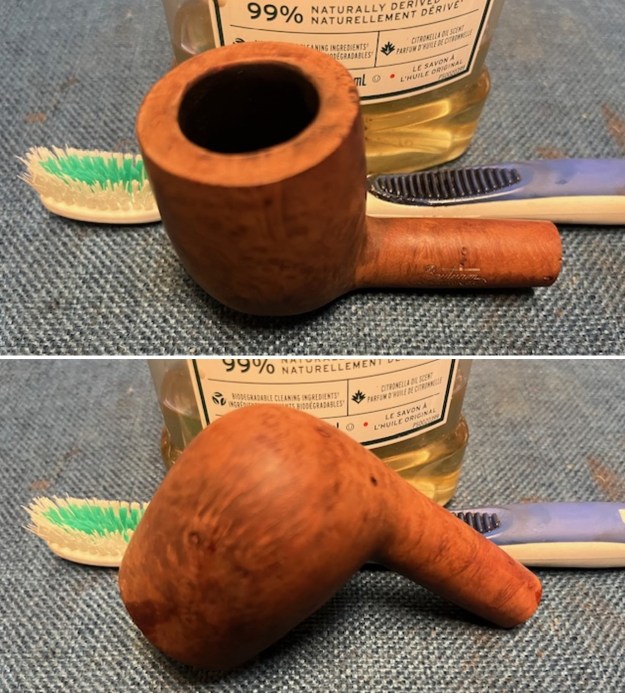
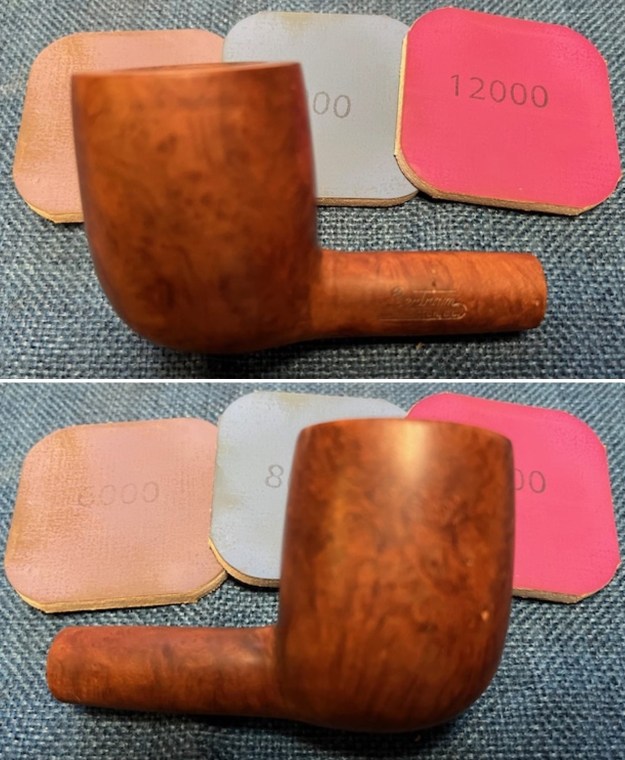
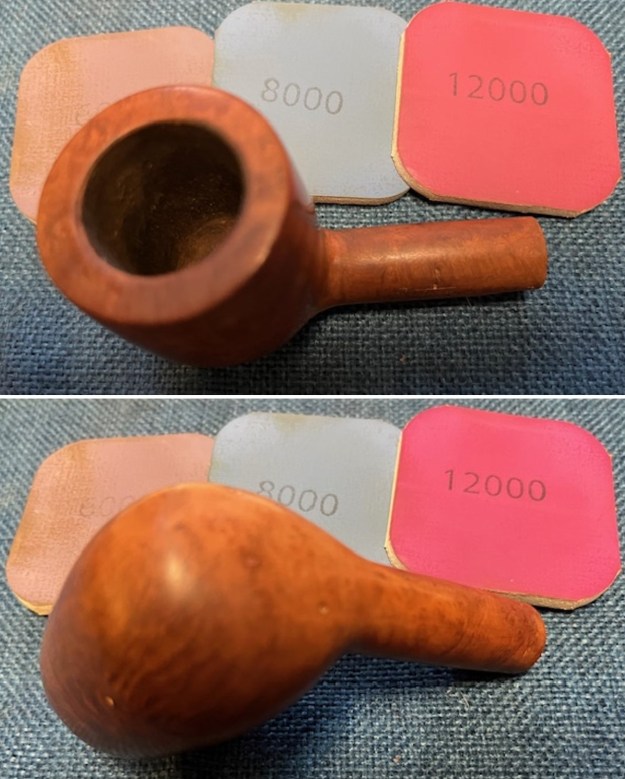
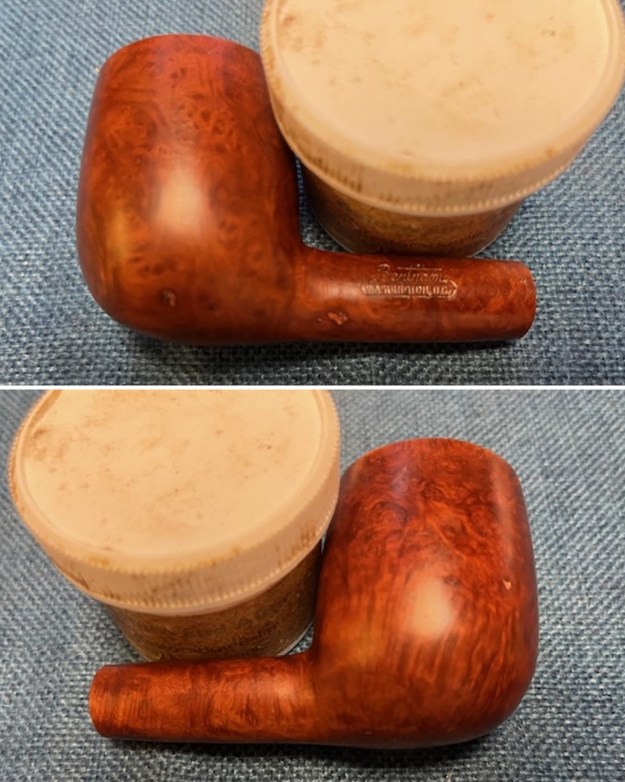
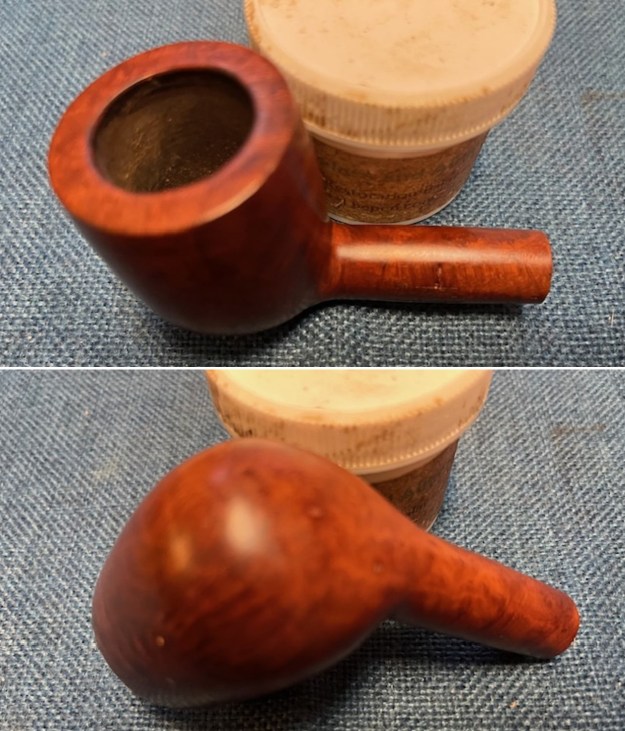
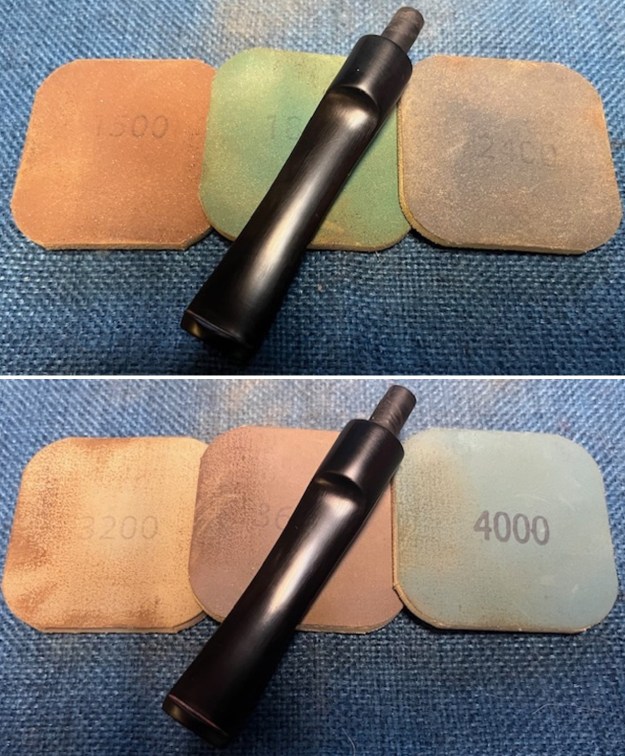
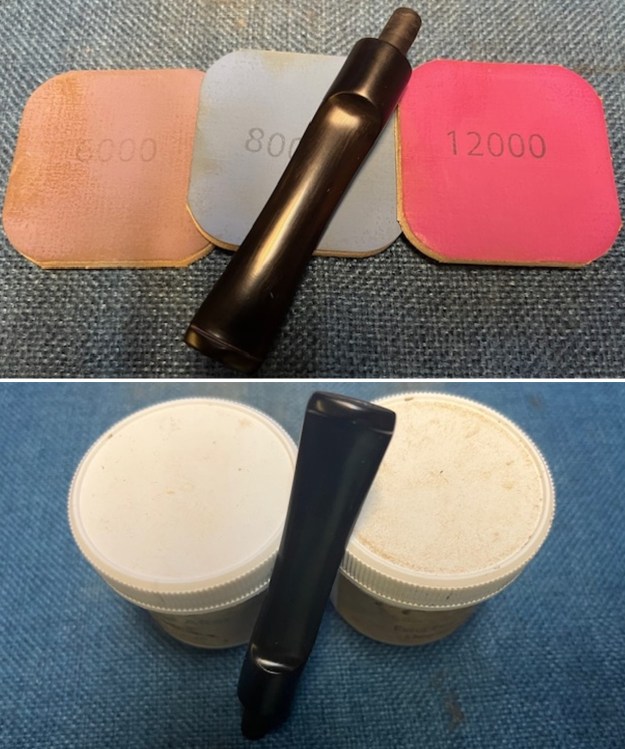
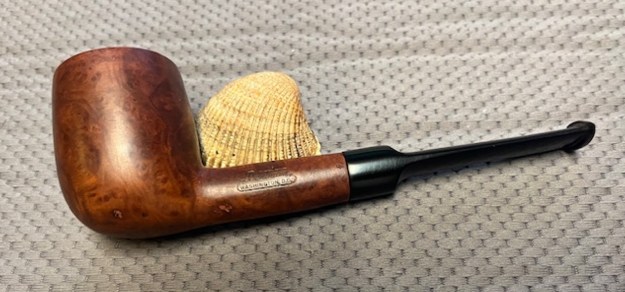
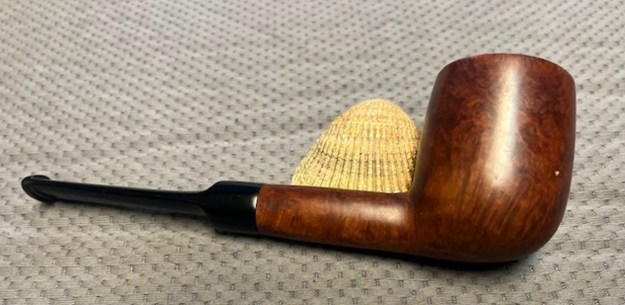
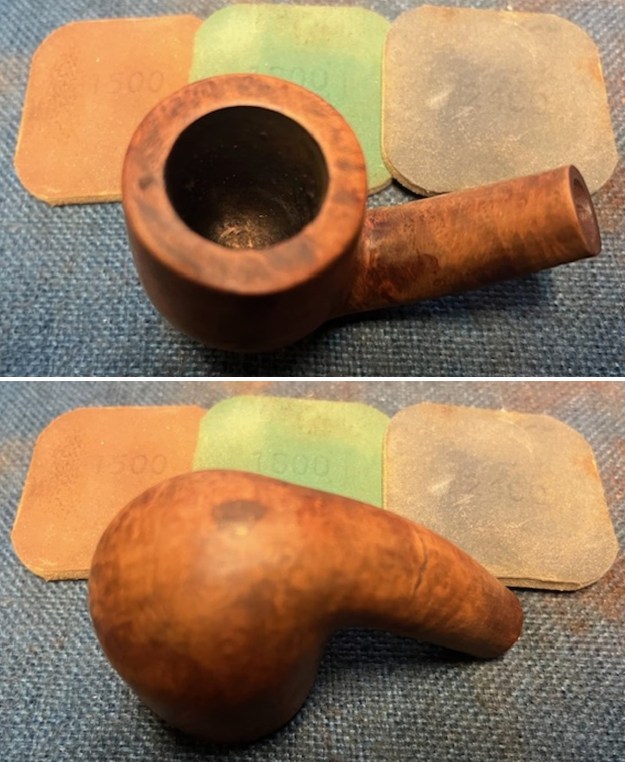
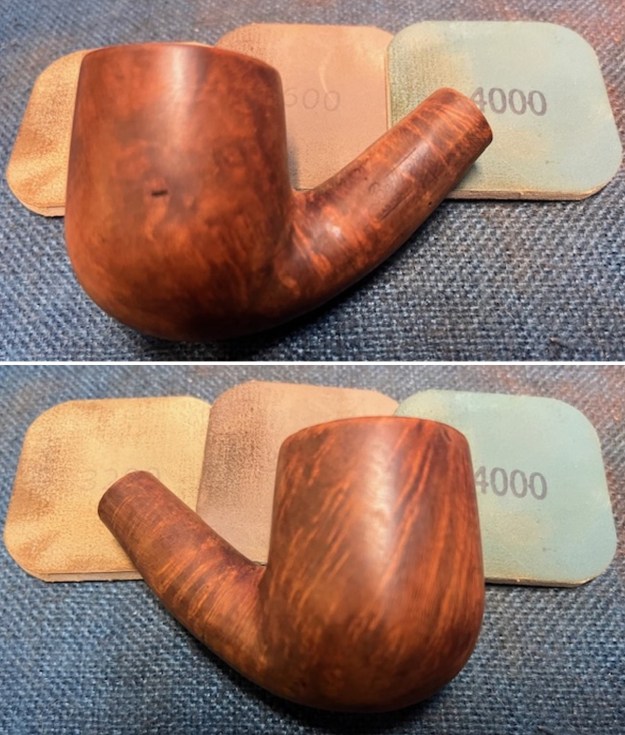
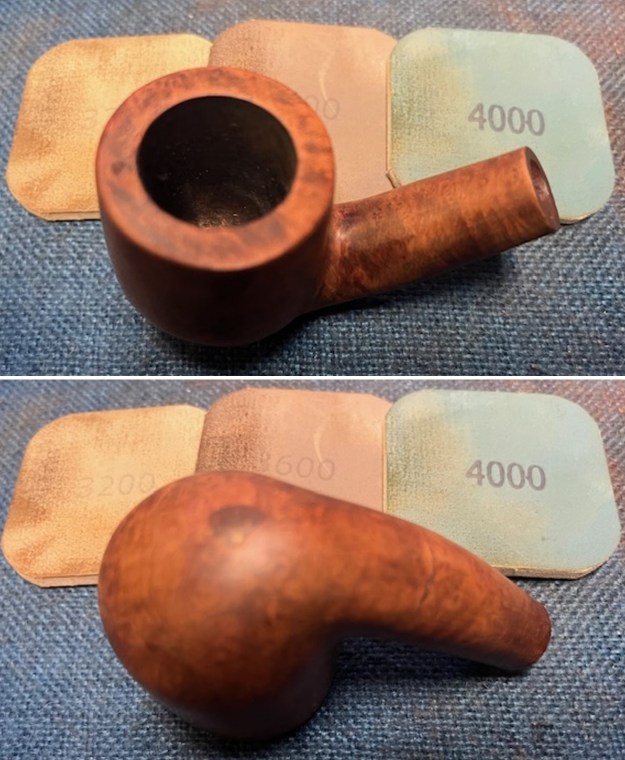
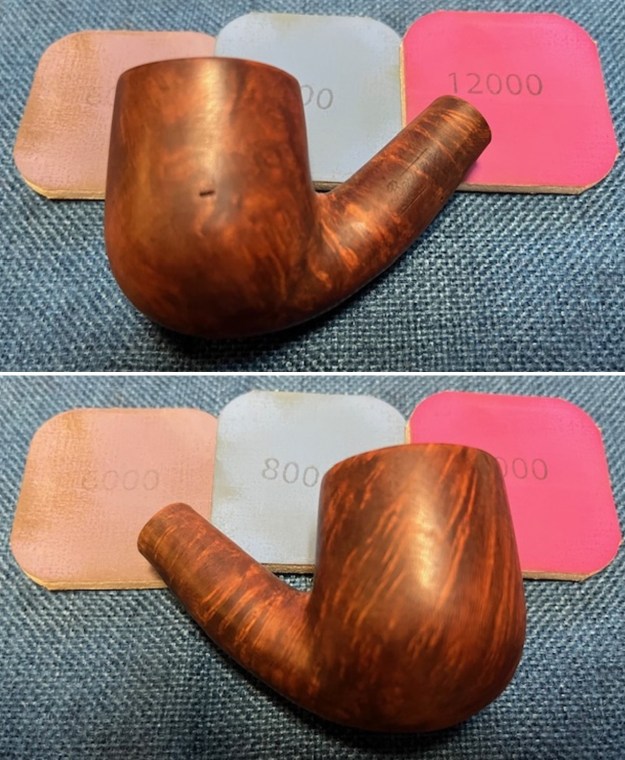
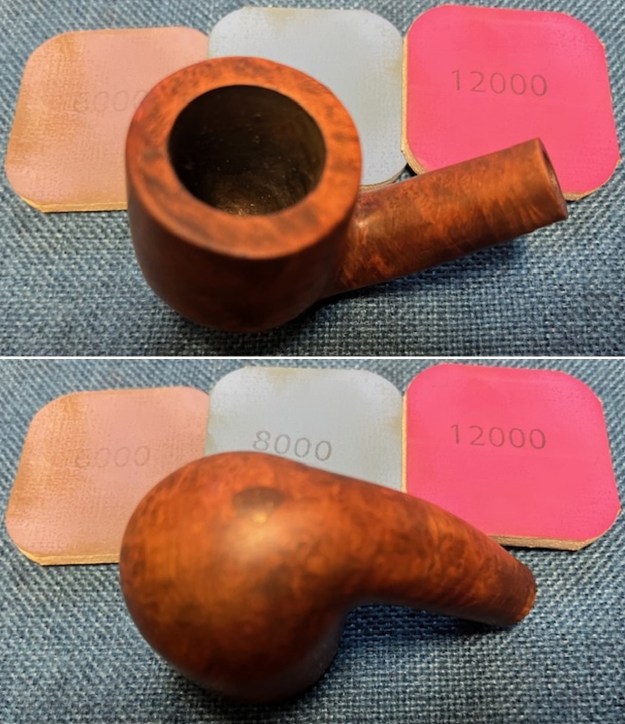
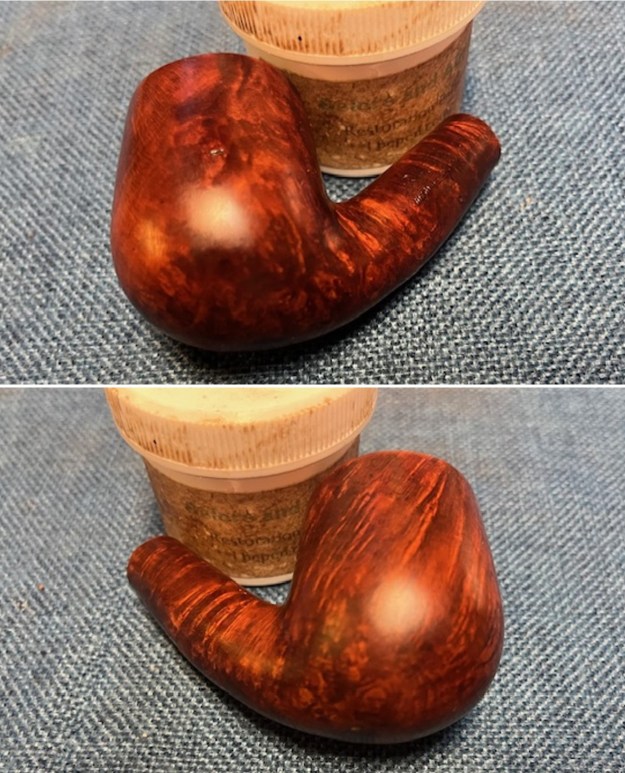
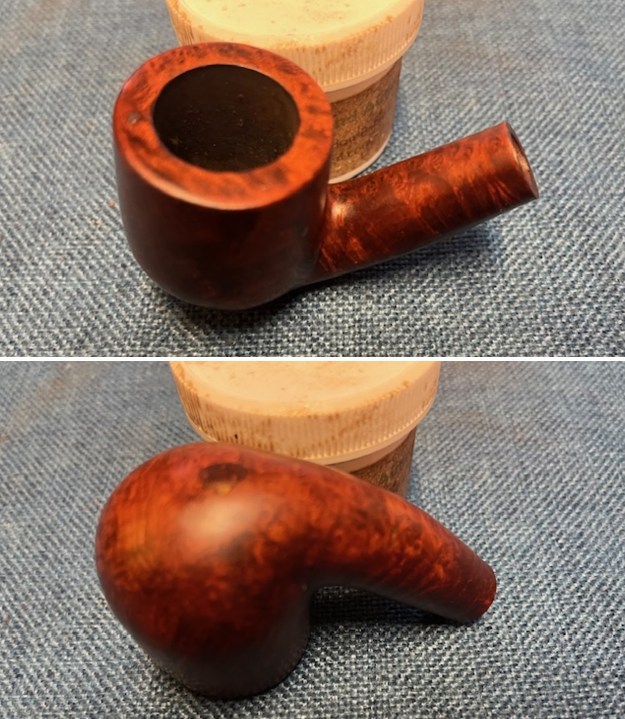
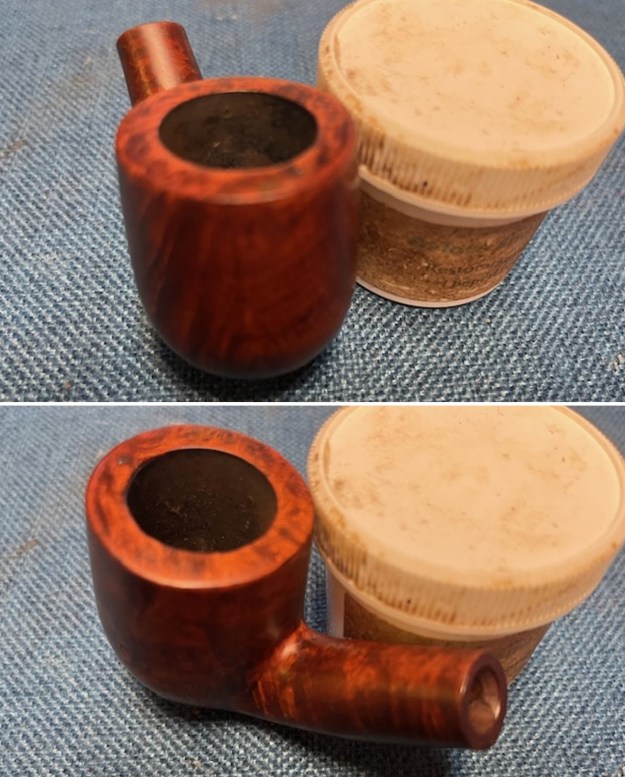
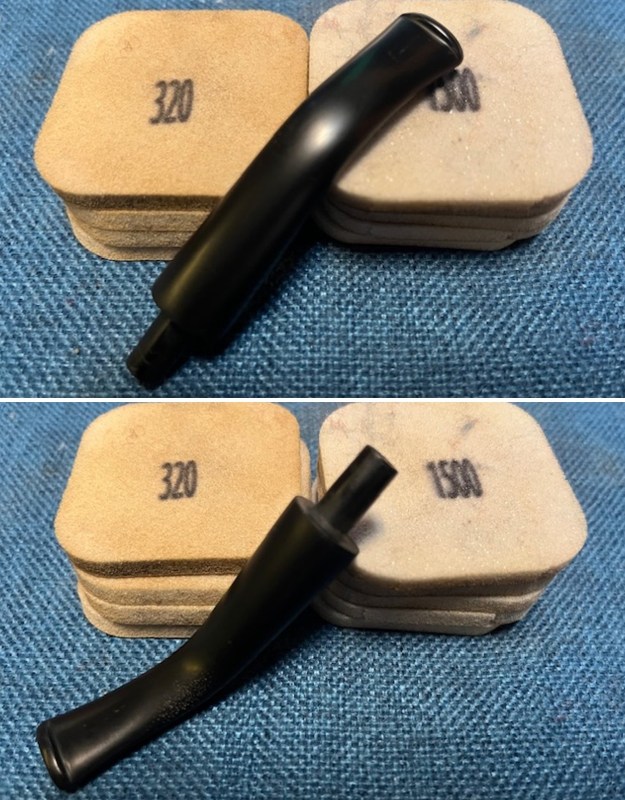
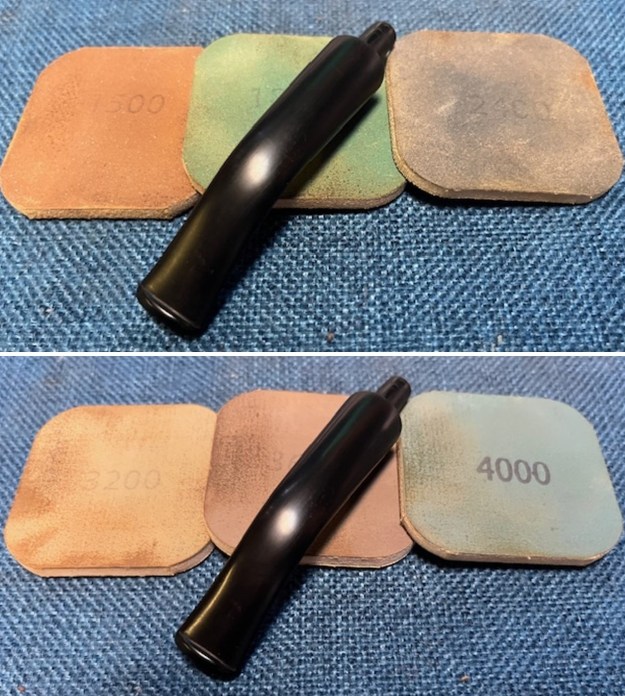
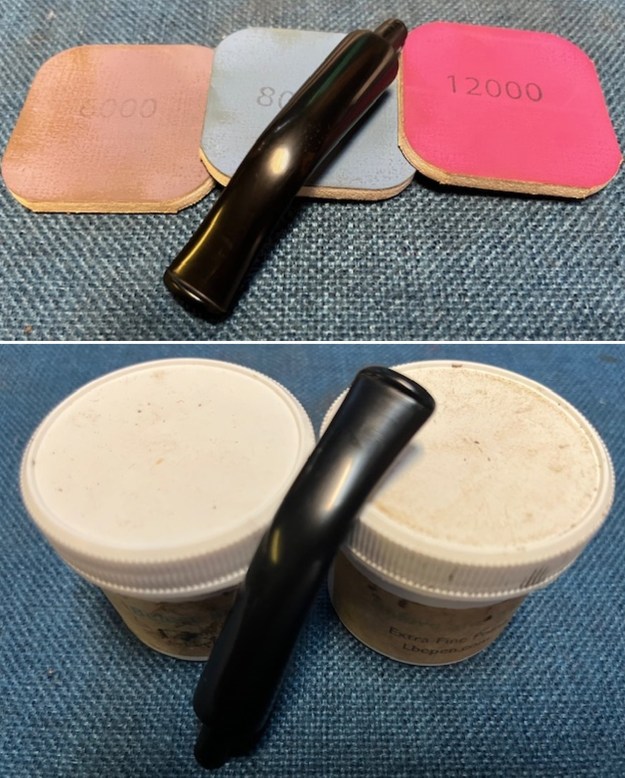
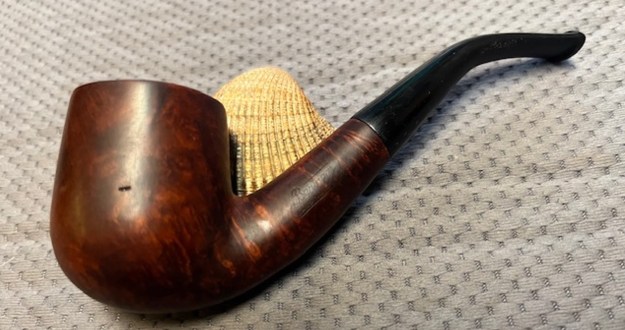
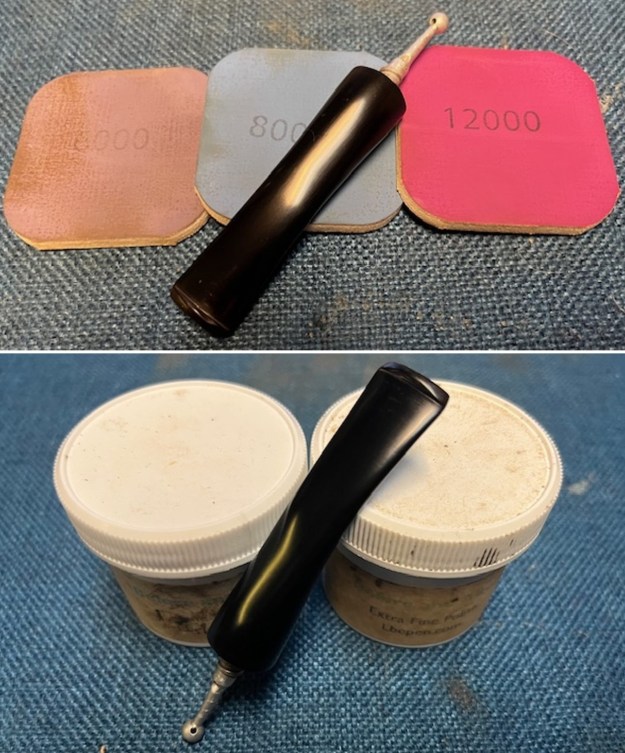
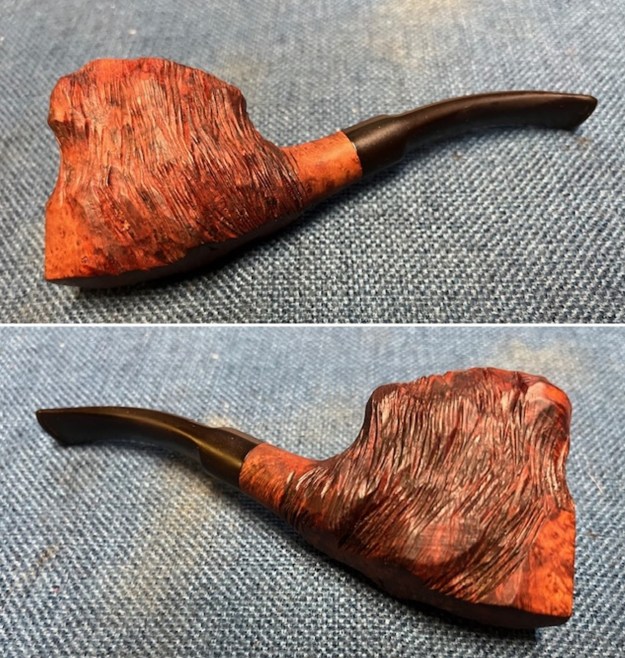
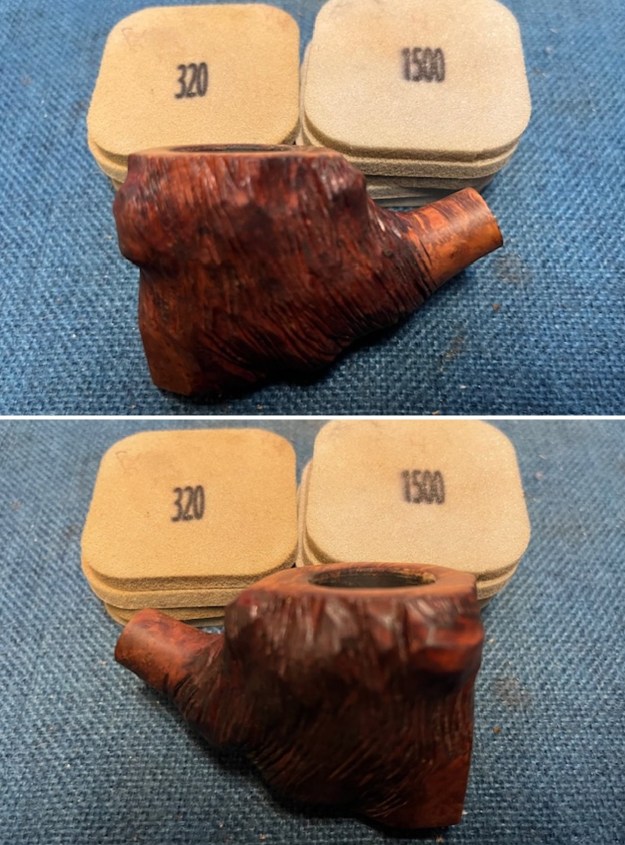
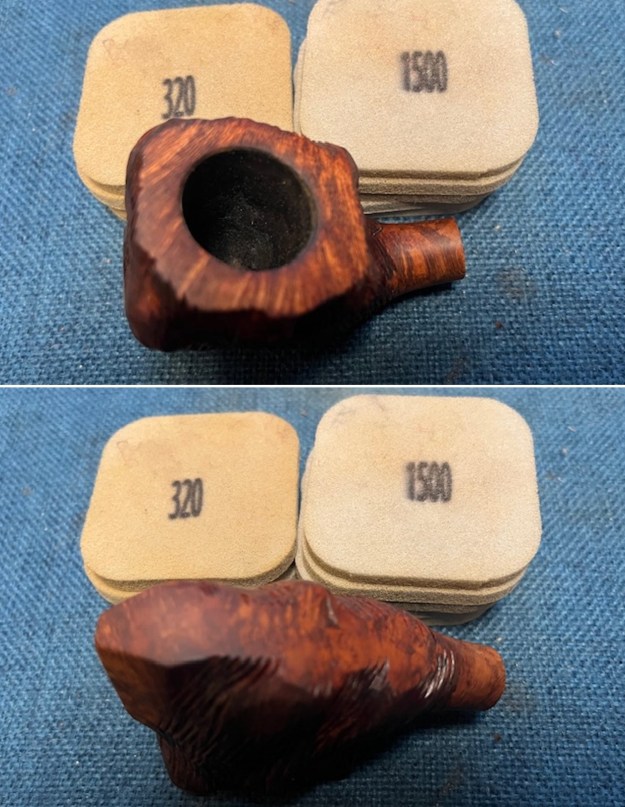
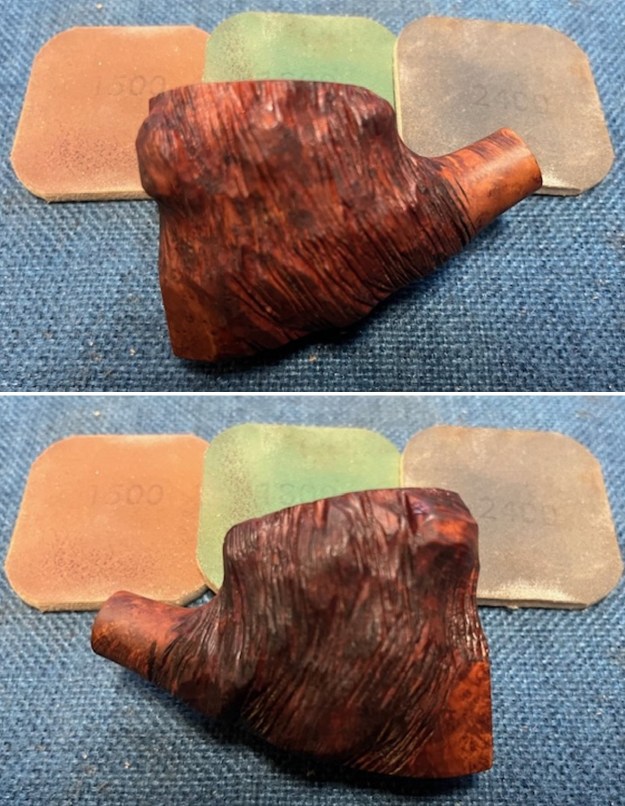
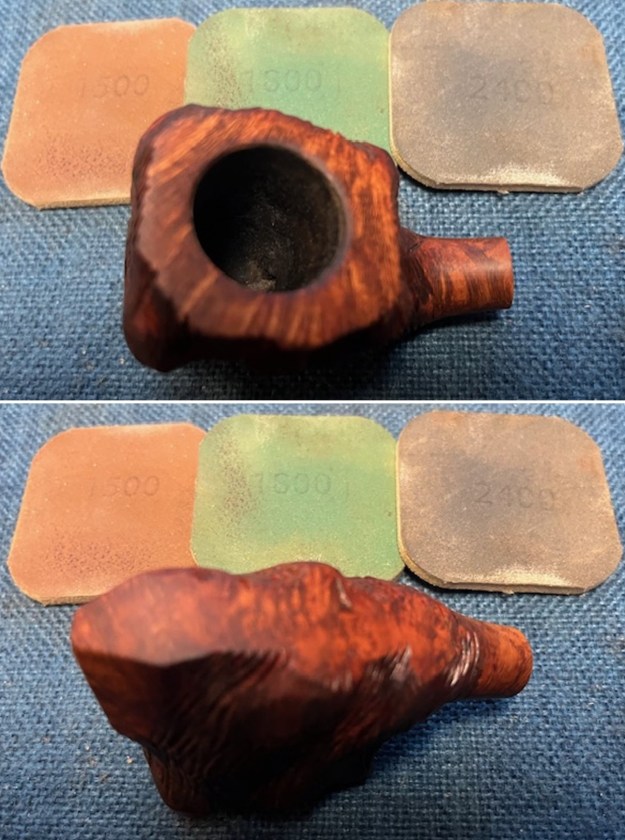
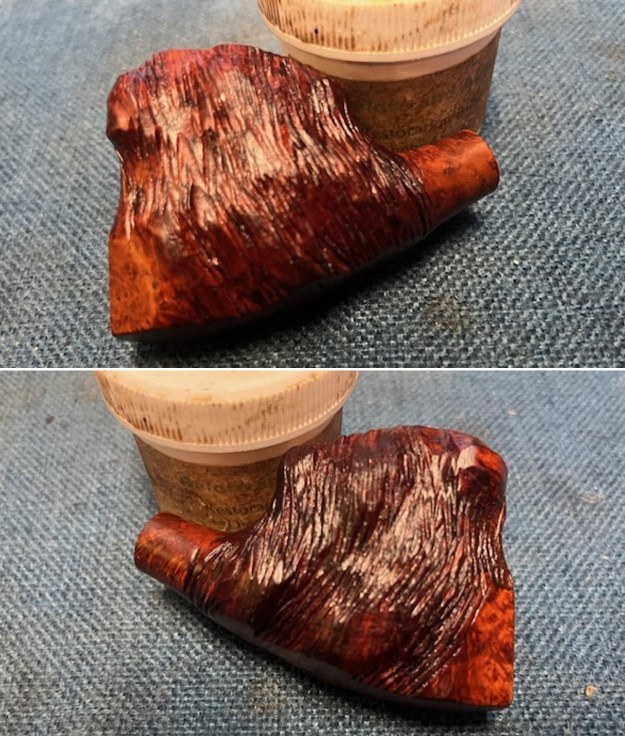
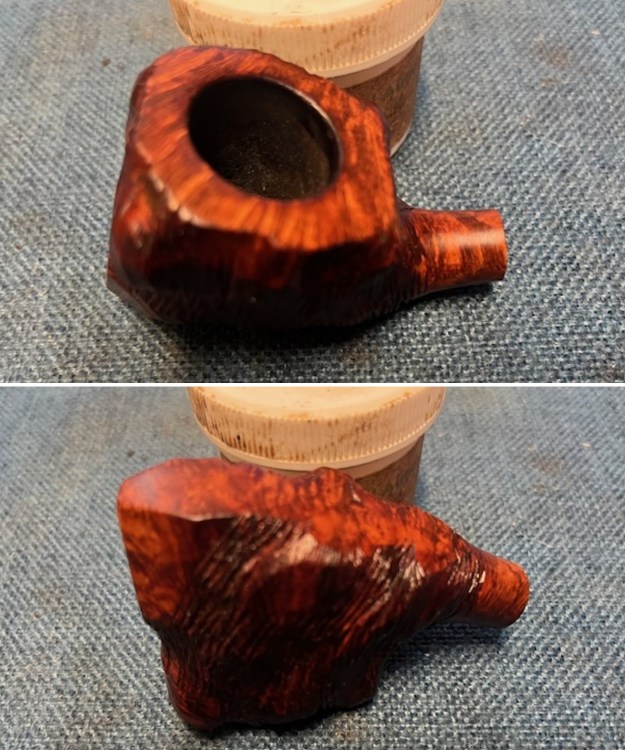
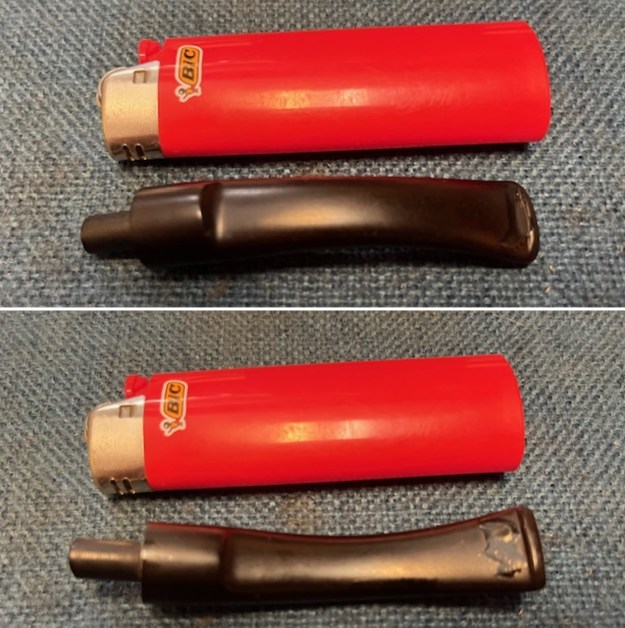
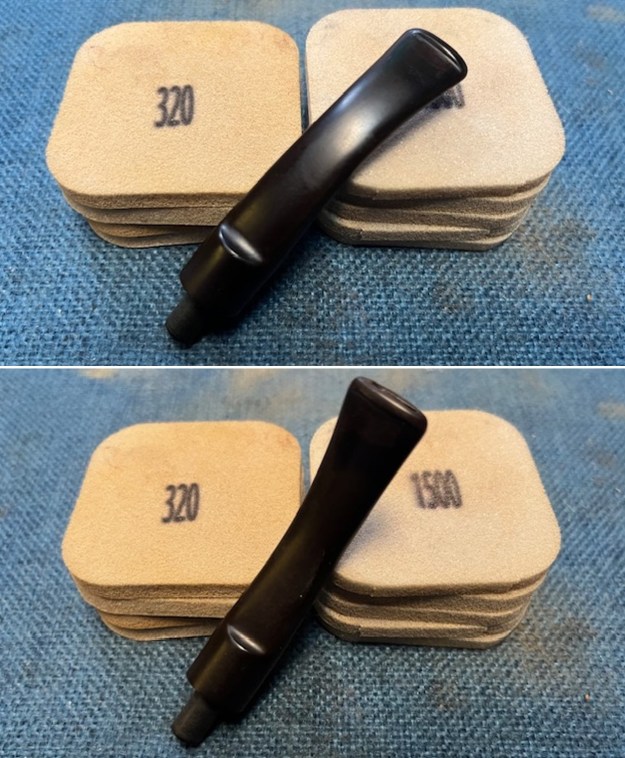
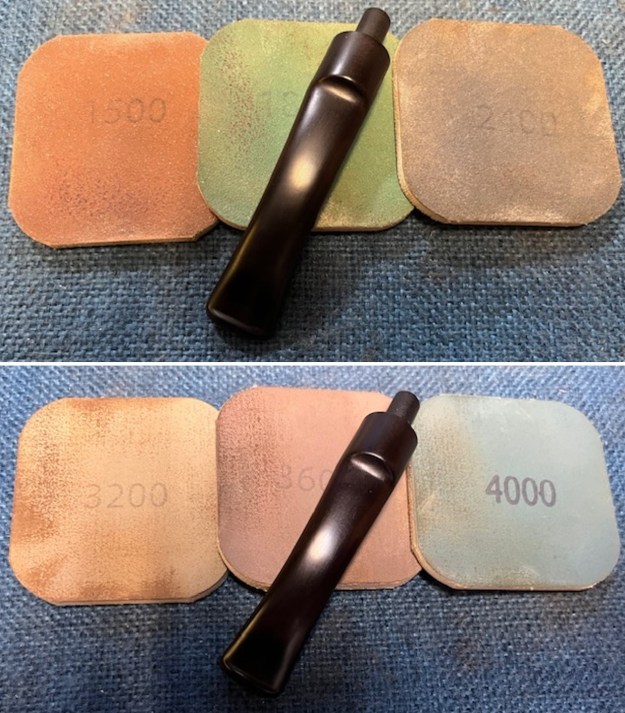
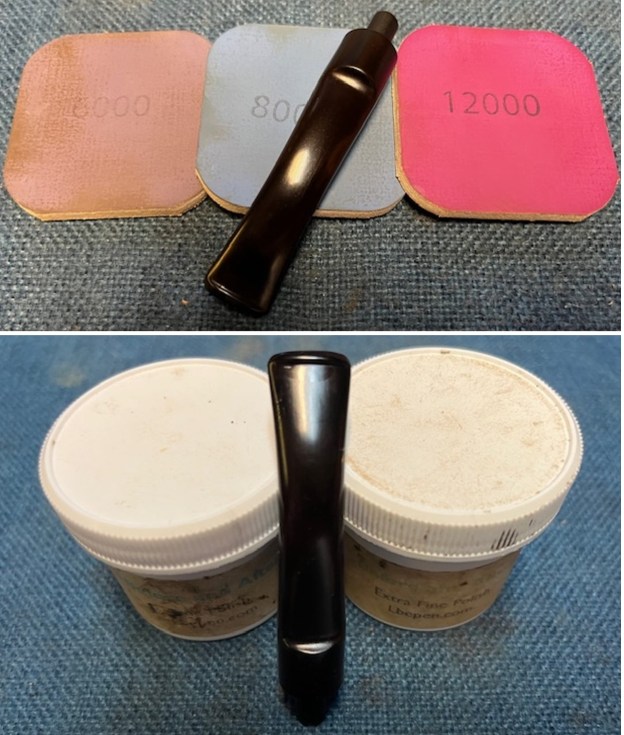
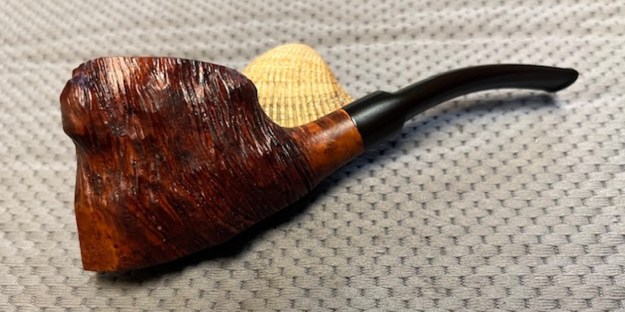
Jeff had done an amazing cleanup of the pipe. He reamed the cake with a PipNet reamer and cleaned up that with a Savinelli Fitsall Pipe Knife. He scrubbed the internals of the bowl and stem with alcohol, cotton swabs and pipe cleaners. He scrubbed the externals with undiluted Murphy’s Oil Soap and rinsed the bowl off with running water. He soaked the stem in Briarville’s Pipe stem Deoxidizer and once it had soaked, rinsed it off with warm water to remove the residual solution. He dried it off and rubbed it down to remove any oxidation that was still on the stem. The pipe looked very good when I received it. I took photos of the bowl and the rim top as well as both sides of the stem to show the condition of the pipe before I started my work. The rim top was very clean and the inner edge and top look much better. The stem showed light tooth marks on the top and underside near the button. I took the stem off the bowl and took a photo of the parts. It is an interesting pipe.I sanded the smooth portions of the bowl with 320-3500 grit sanding pads carefully avoiding the stamping on the heel. I dry sanded with each pad and wiped it down with a damp cloth afterwards. I polished the briar bowl and shank with micromesh sanding pads – dry sanding with 1500-12000 grit sanding pads. I wiped it down with a damp cloth after each pad to remove the debris. The bowl took on a rich glow. I rubbed the briar down with Before & After Restoration Balm. I worked it into the plateau rim top surface with my fingertips and a shoe brush. The product works to clean, enliven and preserve the briar. I let it sit for 10 minutes then I buffed it with a cotton cloth to deepen the shine. The briar really comes alive with the balm. I set the bowl aside and turned my attention to the stem. I “painted” the tooth marks with the flame of a Bic lighter. I was able to lift the majority of them. One remained on both sides ahead of the button. Once the repairs cured I used a small file to smooth them out and recut the button. I sanded repair further with 220 grit sandpaper and blended them into the stem surface. I smoothed out the repaired surface and the rest of the stem with 320-3500 grit sanding pads. I wiped the stem down after each pad with Obsidian Oil.I polished the vulcanite stem with micromesh sanding pads – 1500-12000 grit pads. I wiped it down with Obsidian Oil after each sanding pad. I used Before & After Pipe Polish – both Fine and Extra Fine to further polish the stem. This unusual Astley’s Root Briar Specialty Sitter with a saddle vulcanite stem is a great looking pipe now that it has been restored. The briar is clean and the carving and rustication on the sides and the grain on the rim top and heel really came alive. The rich stains gave the finish a sense of depth on the rustication with the polishing and waxing. I put the stem back on the bowl and buffed the pipe with Blue Diamond on the buffing wheel using a light touch on the briar. I gave the bowl multiple coats of Conservator’s Wax and the stem multiple coats of carnauba wax on the buffing wheel. I buffed the pipe with a clean buffing pad to raise the shine. I hand buffed the pipe with a microfiber cloth to deepen the shine. The finished Astley’s Root Briar Sitter really is a beauty and feels great in the hand and looks very good. Give the finished pipe a look in the photos below. The dimensions of the pipe are Length: 5 ½ inches, Height: 2 inches, Outside diameter of the bowl: 1 ½ inches x 2 inches, Chamber diameter: 1 inch. The weight of the pipe is 67 grams/ 2.36 ounces. This beautiful Freehand pipe will soon be on the rebornpipes store in the British Pipemakers Section. It should make a great smoker for the next trustee. Thanks for reading this blog and my reflections on the pipe while I worked on it. It was a fun one to work on.
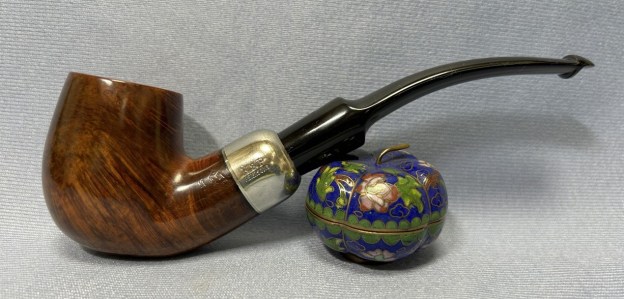
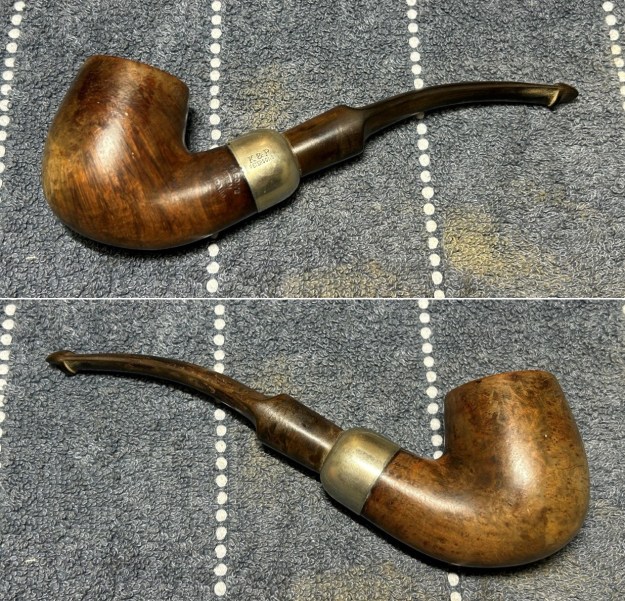
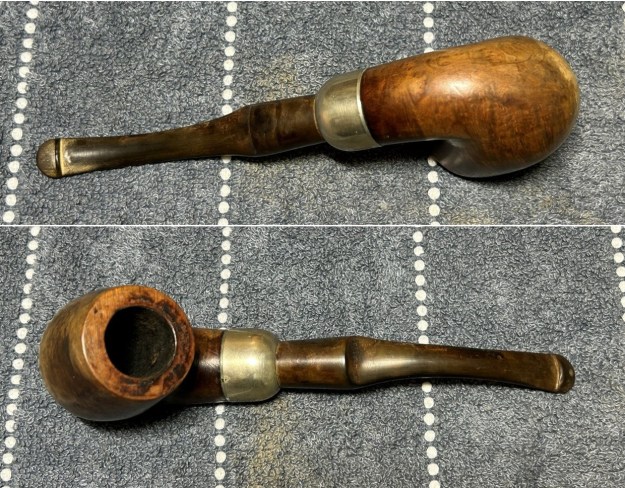
There’s a Beautiful Peterson 307 Under There!


by Kenneth Lieblich

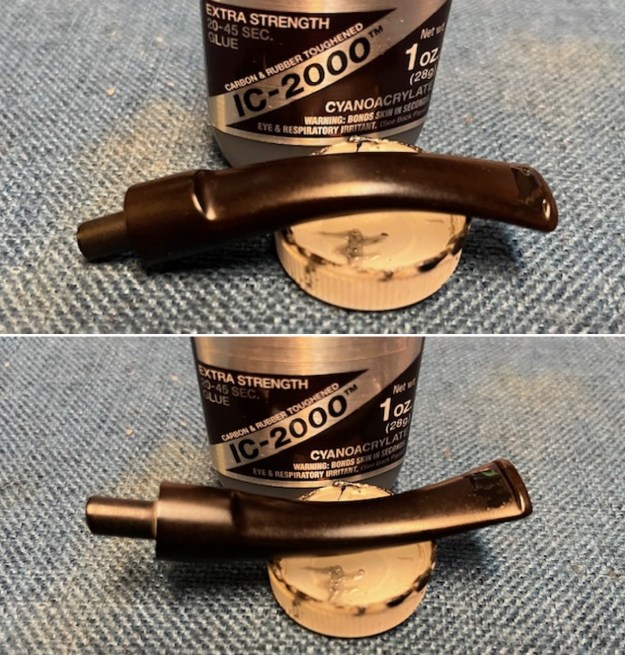
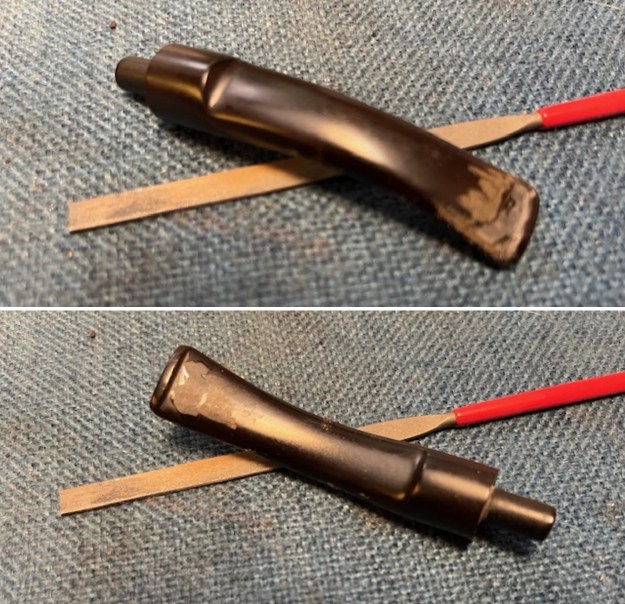
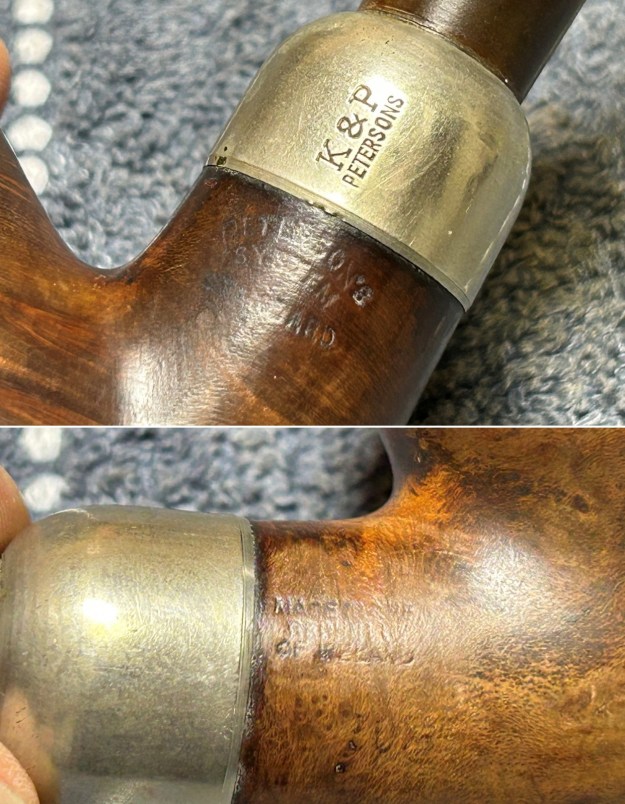
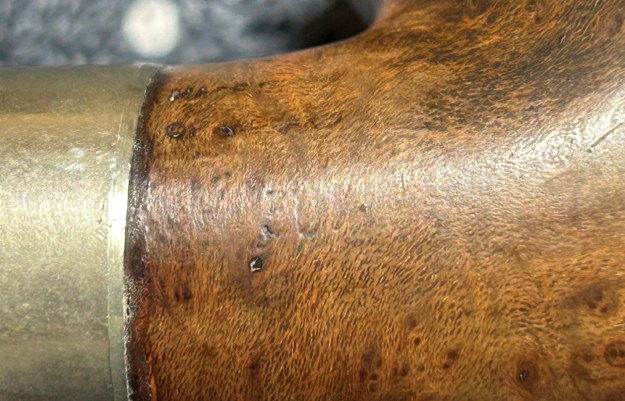
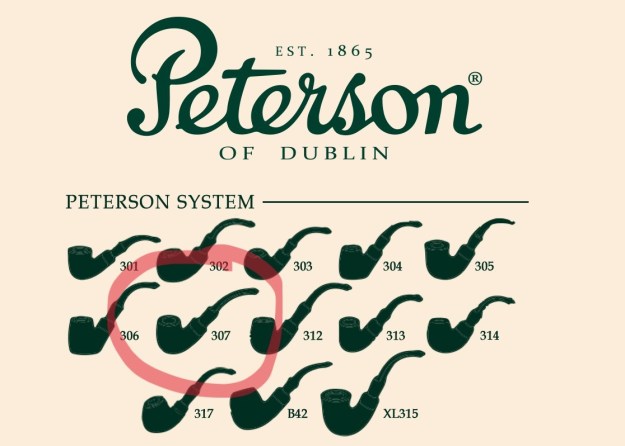
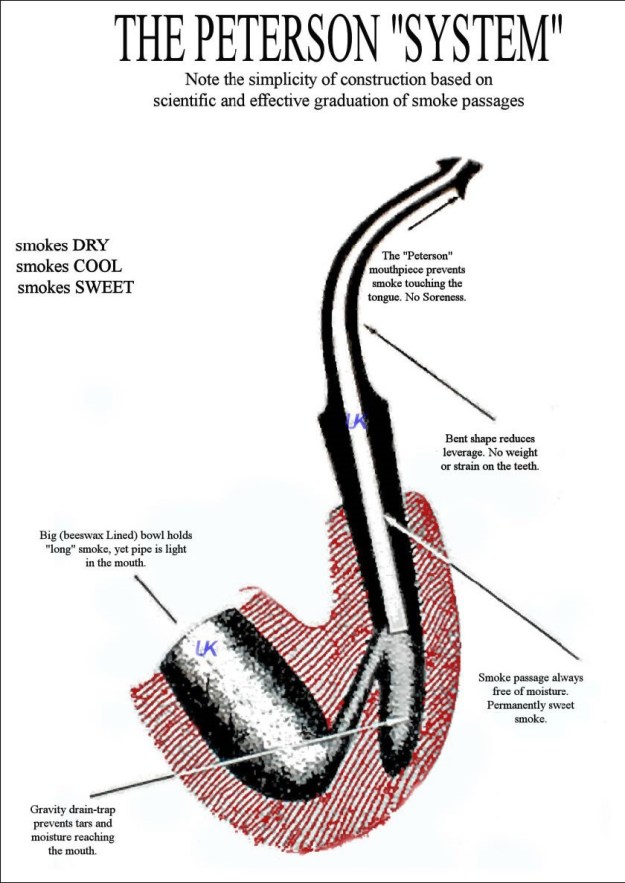
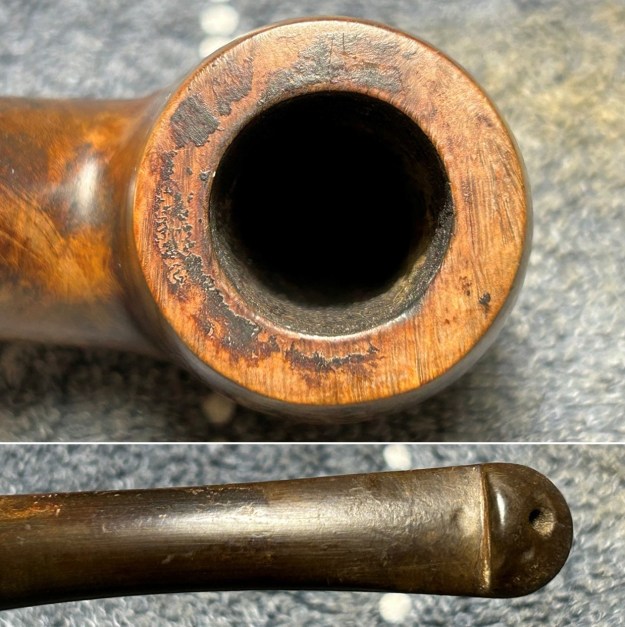
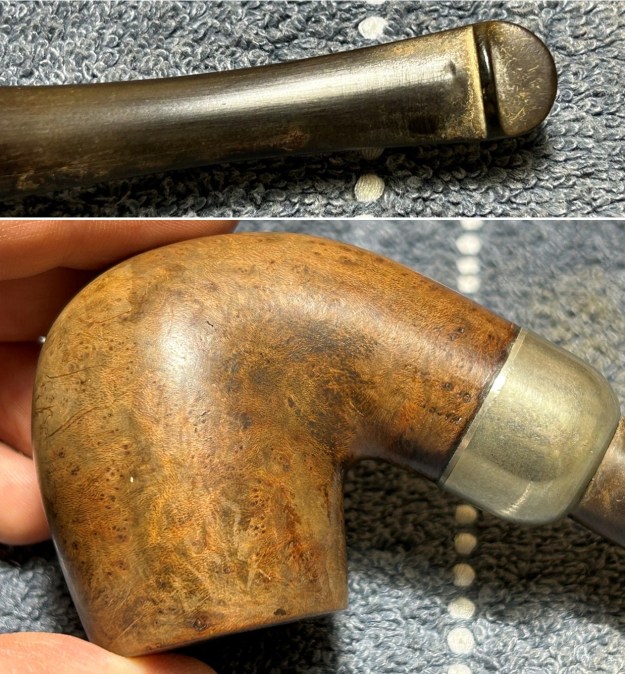
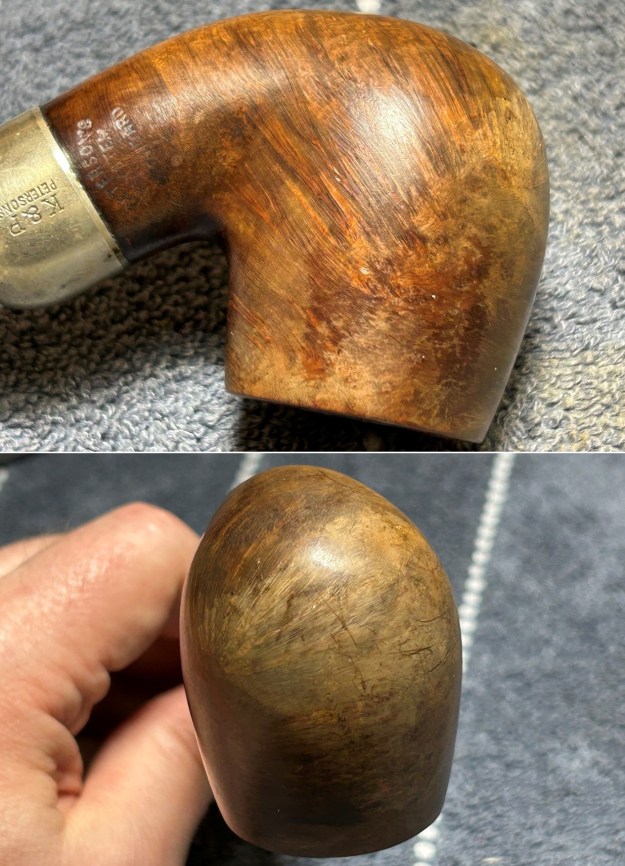
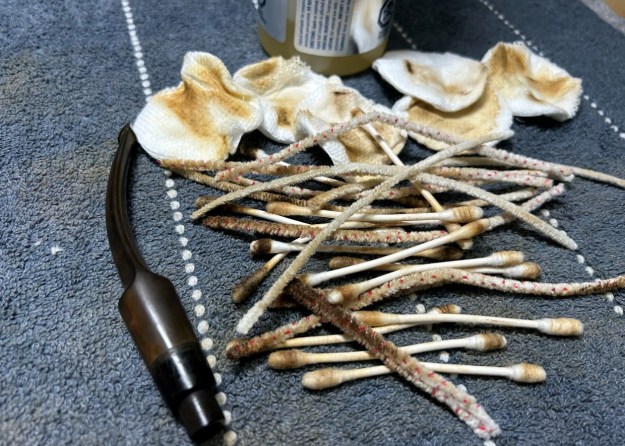
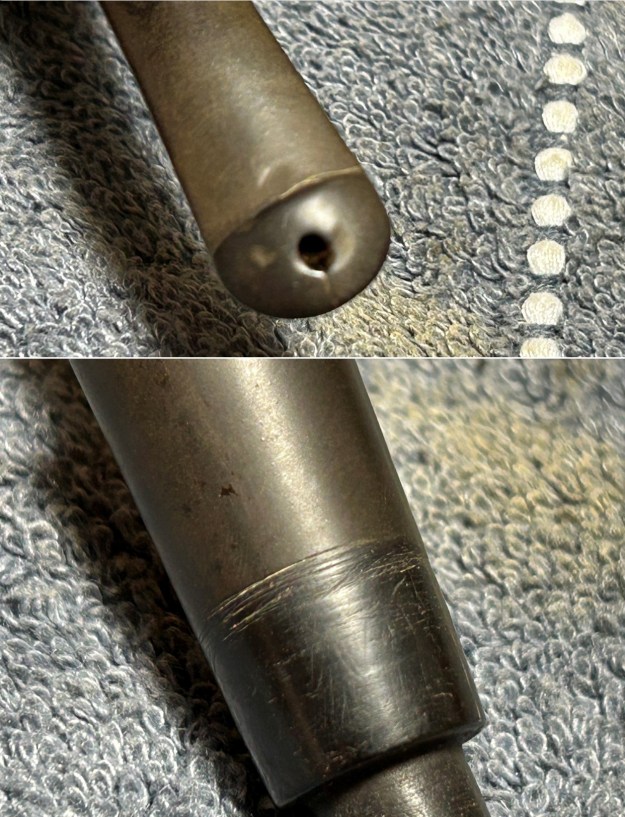
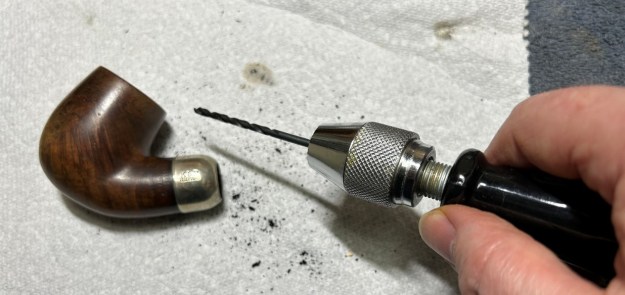
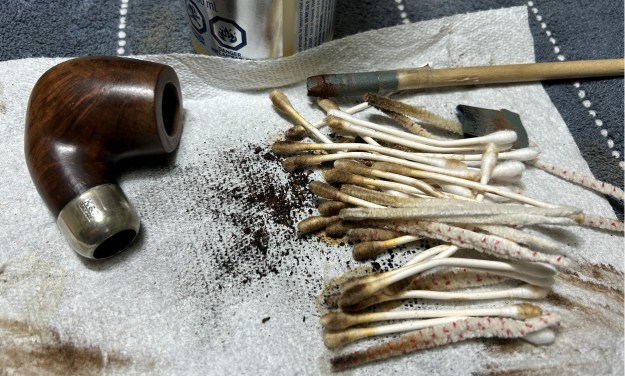
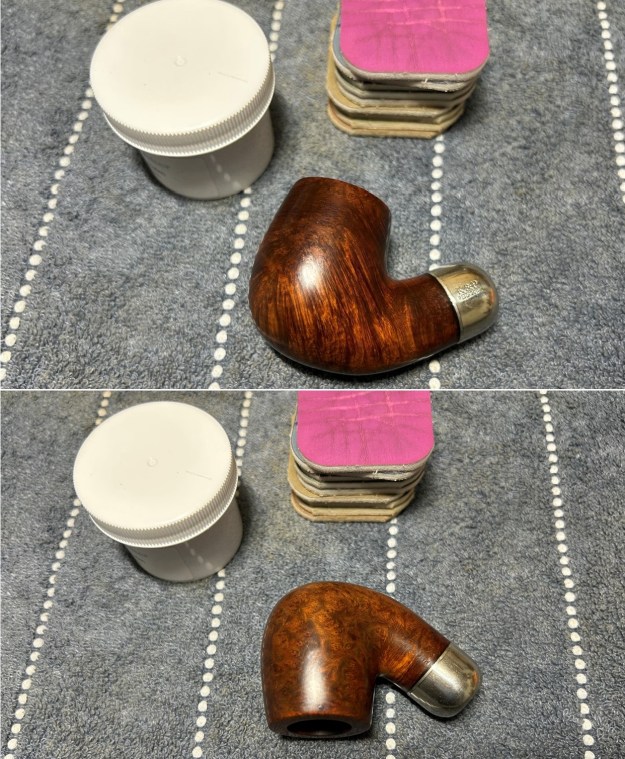
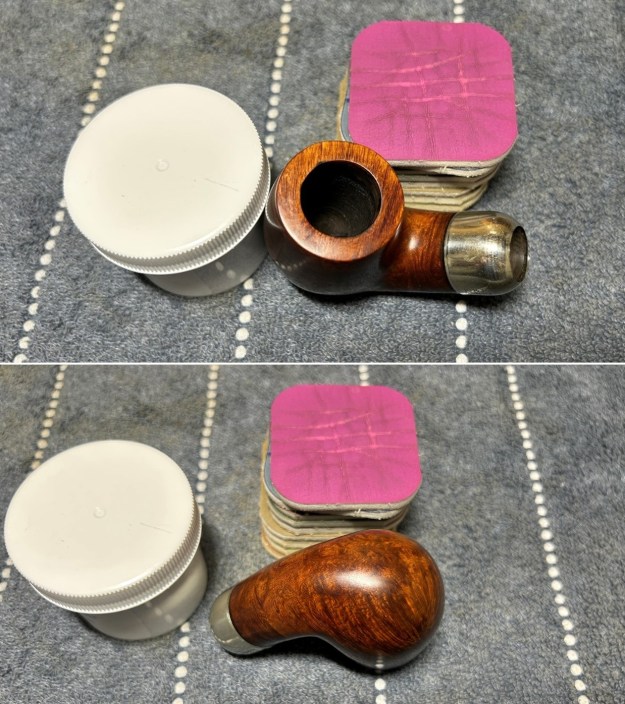
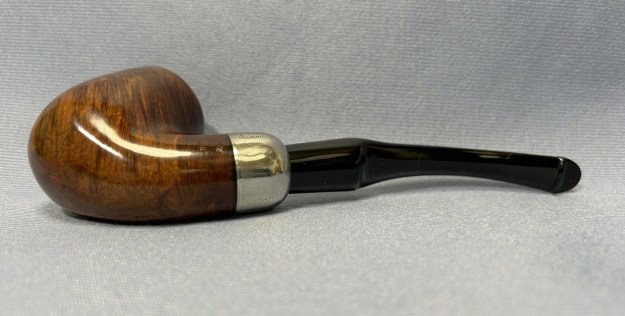
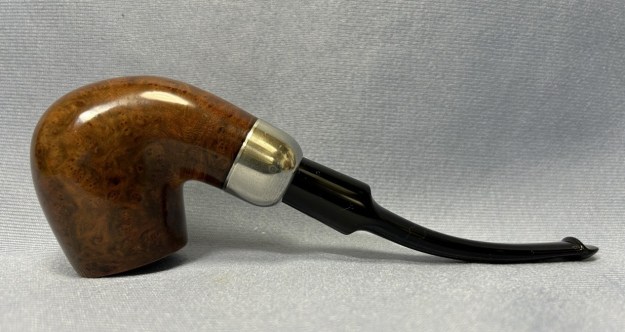
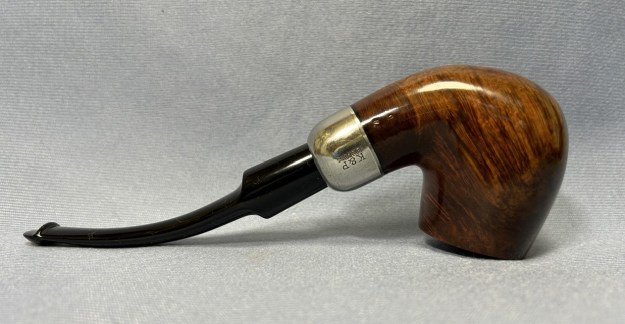
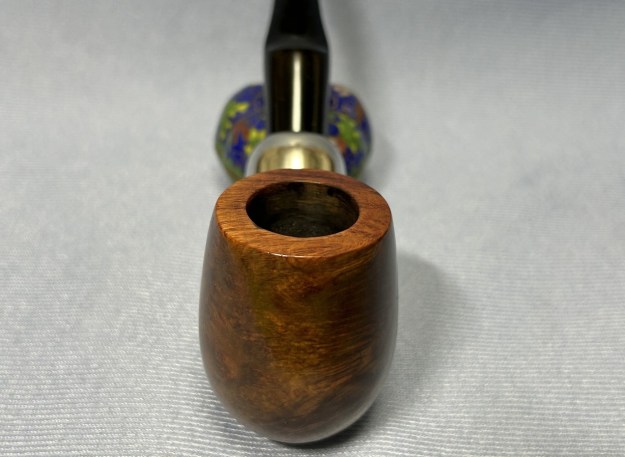
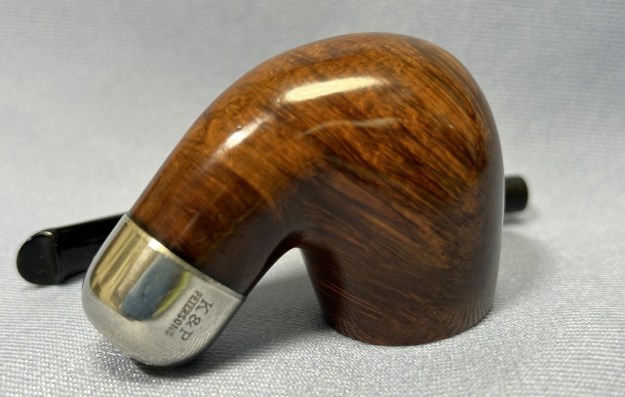
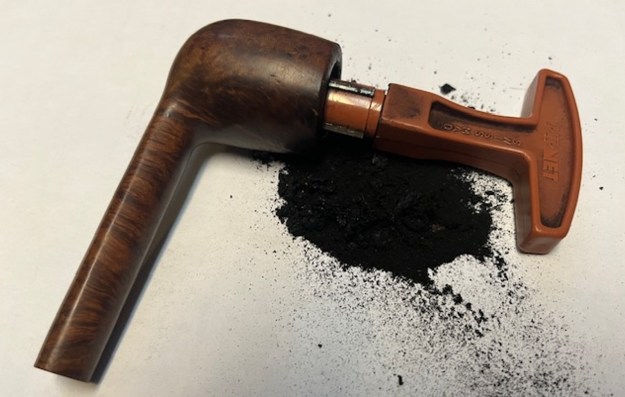
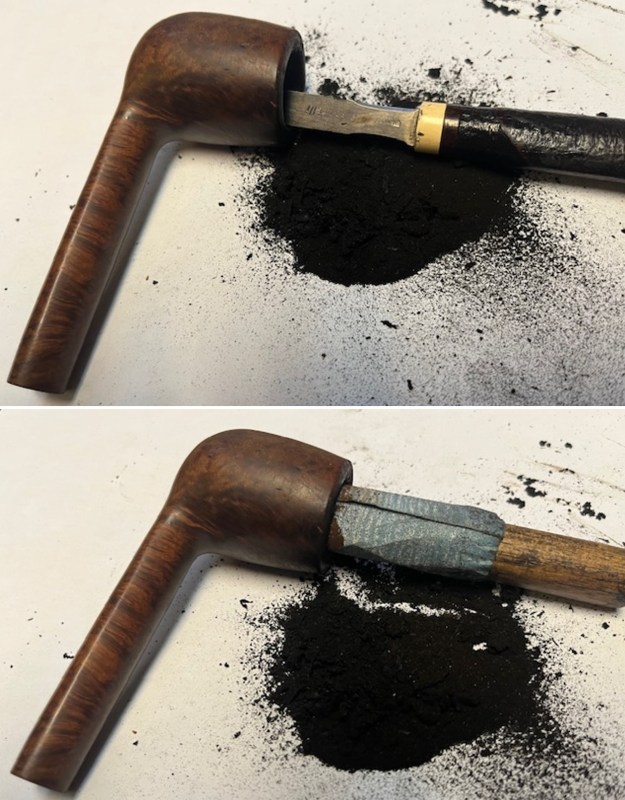
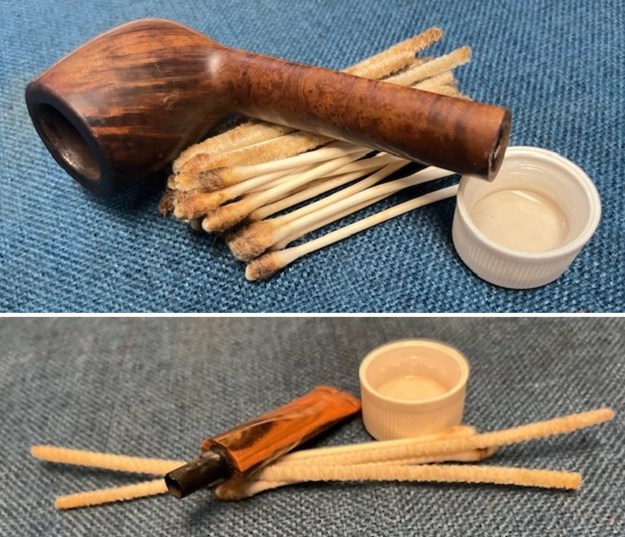
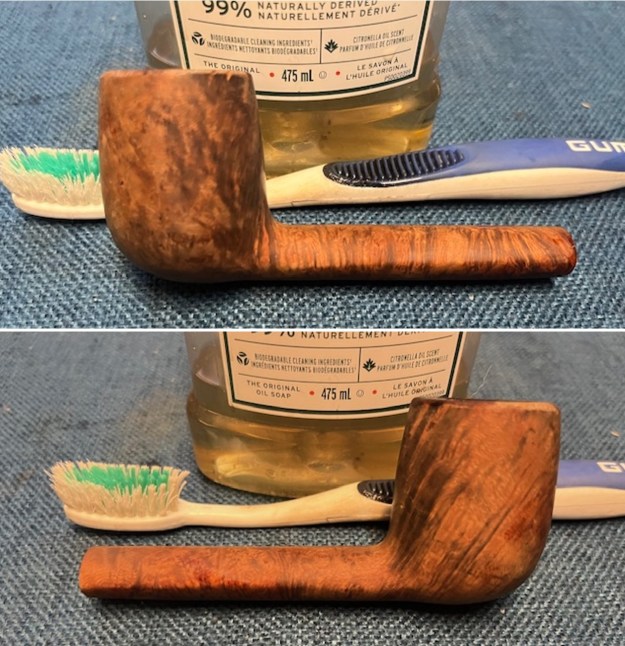
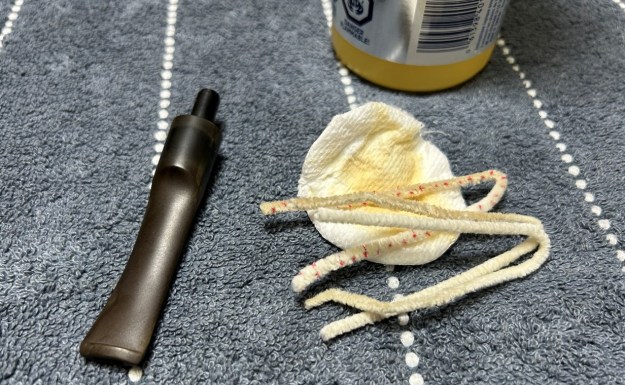
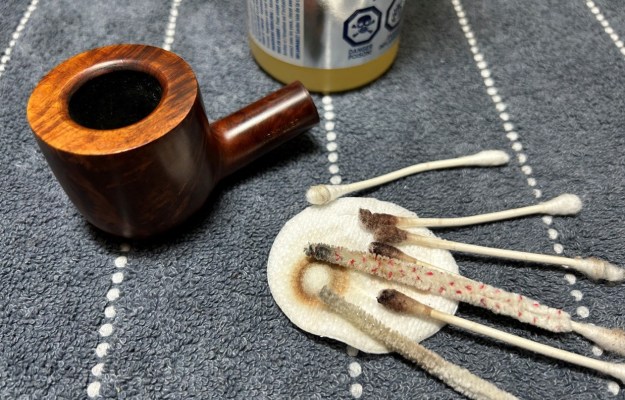
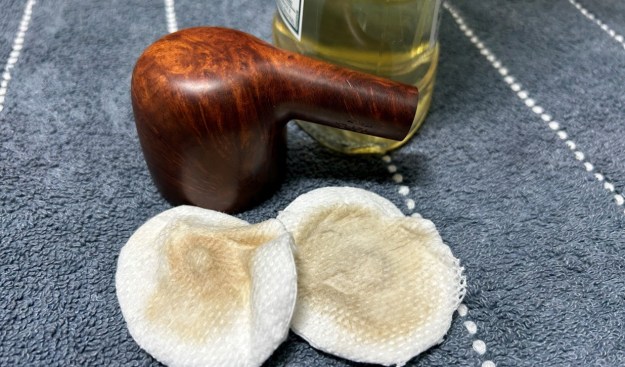
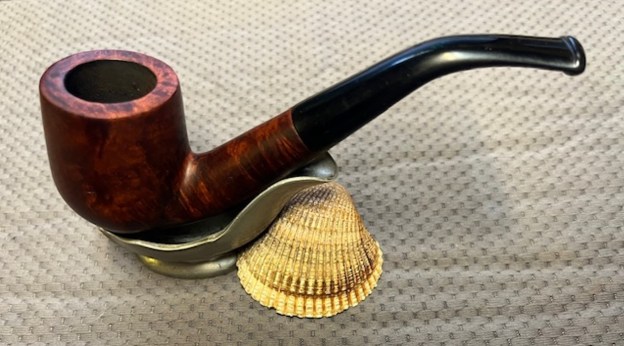
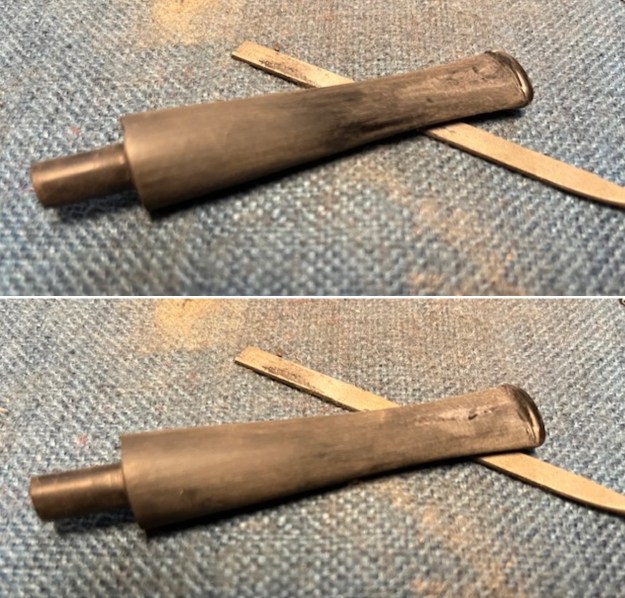
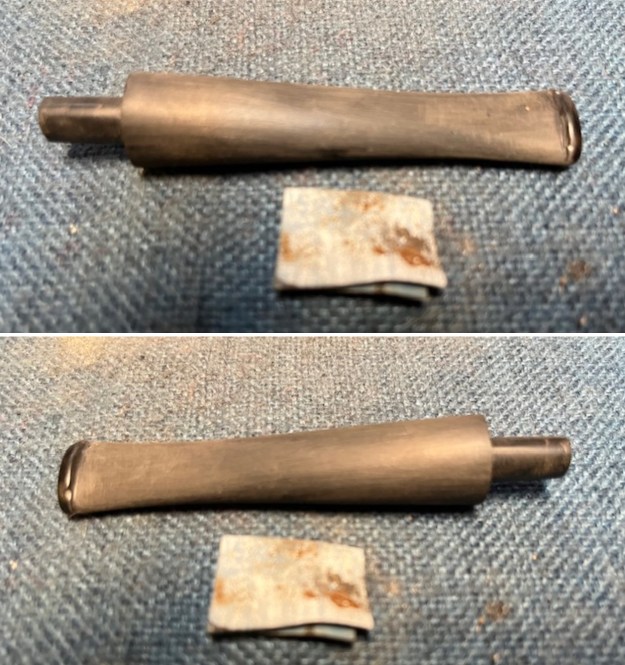
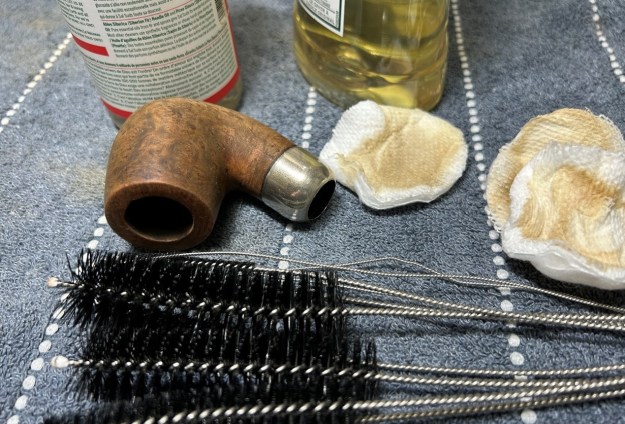
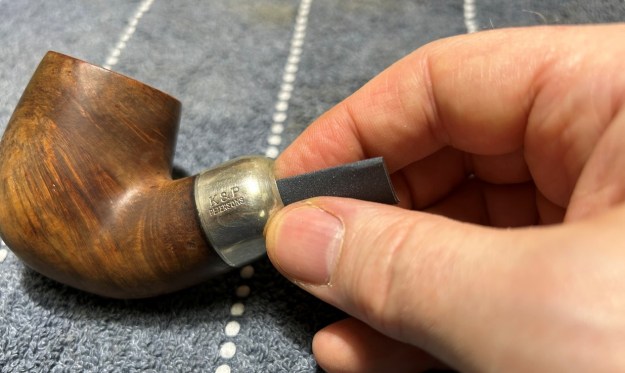
What a handsome pipe! This republic-era Peterson Standard System 307 came to me in a large lot and I was charmed by it right away. It’s a good-sized pipe and the look of it gives one a feeling of confidence. It is satisfying and comfortable in the hand. Despite its rather shabby appearance when I found it, the pipe held great promise – and I was sure that I could tease out its beauty with a little TLC. Let’s have a closer look. This Peterson 307 pipe has the classic ‘System’ look: bent shape, nickel mount, and tapered, army-style stem. Of course, it also had the traditional Peterson P-lip stem. The markings are somewhat worn, but still perfectly readable. The markings on the left side of the shank are Peterson’s [over] System [over] Standard. The right side of the shank showed Made in the [over] Republic [over] of Ireland [over] 307. The nickel mount on the shank had K&P [over] Petersons. There were no markings on the stem. The Peterson System pipes are well-storied among Peterson collectors/admirers. I took the opportunity to read the article on Pipedia, specifically about the System pipes, by Jim Lilley. There is lots of good information there and I encourage you to read it: https://pipedia.org/wiki/A_closer_look_at_the_famous_Peterson_Standard_System_PipeOn to the pipe itself: the stem was in average condition – not super dirty, but it had been well used. It had a few tooth dents, too. I also noticed that there were significant scratches at the shank-end of the stem, where I assume the stem had rubbed against the nickel mount on the shank. The bowl was quite dirty and had some lava on the rim, and there was plenty of cake. The outside of the bowl was fine. The nickel mount was in decent shape, but it was dull and needed some polishing. I also wanted to smooth the sharp edge that obviously caused the scratches on the stem. To work! The stem was first on my list. I wiped the outside down with oil soap on some cotton pads. I also took a disposable lighter and ‘painted’ the stem with its flame to lift the few bite marks and dents. Sadly, however, this did not do much. The primary cleaning came next. I disinfected the inside of the stem with both pipe cleaners and cotton swabs dipped in lemon-infused 99% isopropyl alcohol. I scrubbed thoroughly to make sure the interior was very clean. I used so many pipe cleaners and cotton swabs – it was very dirty.The goal of the next step is the removal (or minimization) of oxidation. Going to my sink, I used cream cleanser, cotton rounds, and a toothbrush, and scoured the stem to remove as much surface oxidation as possible. As the photos show, the result was a hideous, brownish mess – but better off the stem than on it.Once the stem was reasonably clean, I soaked it overnight in some Briarville Stem Oxidation Remover. This solution works to draw oxidation in the stem to the surface of the vulcanite. This is a major aid and an important step in ensuring a clean stem. The following day, I drew out the stem from its bath and scrubbed the lingering fluid with a toothbrush. Due to the intensity of the oxidation, I then repeated the scrubbing with the cream cleanser for maximum effect.As the stem was now clean and dry, I set about fixing the marks, dents, and scratches in the vulcanite. This included not only the tooth marks, but also a small nick at the draught hole and those scratches at the shank-end of the stem. Have a look at the photos. This was done by filling those divots with black cyanoacrylate adhesive, impregnated with carbon and rubber. I left this to cure and moved on. The penultimate step for the stem is sanding. First, with my set of needle files, I reduced the bulk of the cyanoacrylate (CA) repairs. I removed the excess adhesive as near to the surface as possible, without cutting into the vulcanite. Following that, I used all nine of the micromesh sanding pads (1,500 through 12,000 grit) to sand out flaws, even out the vulcanite, and provide gentle polishing of the finished surface. I also applied pipe-stem oil while using the last five micromesh pads. There was a wonderful, deep black shine to the stem when I was done.As the stem was (nearly) complete, I moved on to the stummel. The first step was to ream out the bowl – that is to say, remove all the cake inside the bowl. This accomplished a couple of things. First (and most obviously), it cleaned the bowl and provided a refurbished chamber for future smoking. Second, when the old cake was removed, I could inspect the interior walls of the bowl and determine if there was damage or not. I used a reamer, a pipe knife, and a piece of sandpaper taped to a wooden dowel. Collectively, these ensured that all the debris was removed.My next step was to remove the lava on the rim. For this, I took a piece of machine steel and gently scraped the lava away. The metal’s edge is sharp enough to remove what I need, but not so sharp that it damages the rim. This work revealed a beautiful rim and no damage.The inside of the stummel needed to be cleaned thoroughly. However, this pipe was so clogged, that I first needed to open the horribly occluded airway. So, I took a long drill bit, held in a drill chuck, and hand-cranked it to dislodge the dreadful detritus inside. Hand cranking is essential because it provides a precision and caution that a power drill cannot provide.Similar to the stem, I then cleaned the stummel with both pipe cleaners and cotton swabs dipped in lemon-infused 99% isopropyl alcohol. With a pipe this dirty, it took quite a while and much cotton to get clean.I then decided to ‘de-ghost’ the pipe – that is to say, exorcize the remaining filth from the briar. I filled the bowl and the shank with cotton balls, then saturated them with 99% isopropyl alcohol. I let the stummel sit overnight. This caused the remaining oils, tars and smells to leach out into the cotton.To tidy up the briar, I also wiped down the outside with some oil soap on cotton rounds and used a toothbrush in the crevices. This did a good job of cleaning any latent dirt on the surface of the briar. The last step of the cleaning process was to scour the inside of the stummel with some soap and tube brushes. This was the culmination of a lot of hard work in getting the pipe clean.I then took a piece of 600-grit sandpaper and very gently smoothed the sharp edge of the nickel mount – I want to make sure that it doesn’t scratch the stem in future.I used all nine micromesh pads (1,500 through 12,000 grit) to sand the outside of the stummel and finish it off. This sanding minimizes flaws in the briar and provides a beautiful smoothness to the wood. This included buffing up the nickel mount to a beautiful shine! I rubbed some LBE Before & After Restoration Balm into the briar and let it sit for 30 minutes or so. The balm moisturizes the wood and gives a beautiful depth to the briar. I then buffed the stummel with a microfibre cloth. Off to the bench polisher! A dose of White Diamond and a few coats of carnauba wax were just what this pipe needed. Boy-oh-boy, this is one good-looking pipe! I’m pleased with the results. This Peterson Standard System 307 looks fantastic again and is ready to be enjoyed by its next owner. I am pleased to announce that this pipe is for sale! If you are interested in acquiring it for your collection, please have a look in the ‘Irish’ pipe section of the store here on Steve’s website. You can also email me directly at kenneth@knightsofthepipe.com. The approximate dimensions of the pipe are as follows: length 6¼ in. (158 mm); height 2 in. (51 mm); bowl diameter 1⅝ in. (40 mm); chamber diameter ¾ in. (20 mm). The weight of the pipe is 2½ oz. (72 g). I hope you enjoyed reading the story of this pipe’s restoration as much as I did restoring it. If you are interested in more of my work, please follow me here on Steve’s website or send me an email. Thank you very much for reading and, as always, I welcome and encourage your comments.

Restoring and Cleaning a Clogged Savinelli Tortuga 128 Billiard


by Steve Laug

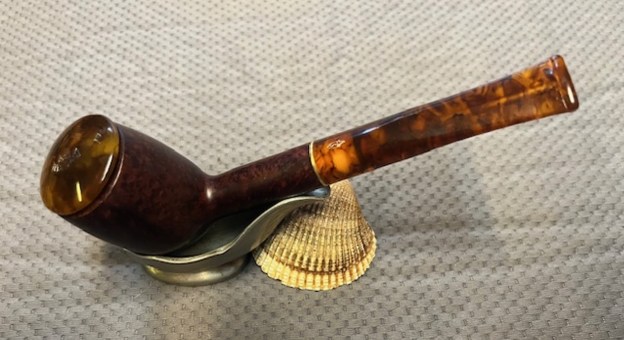
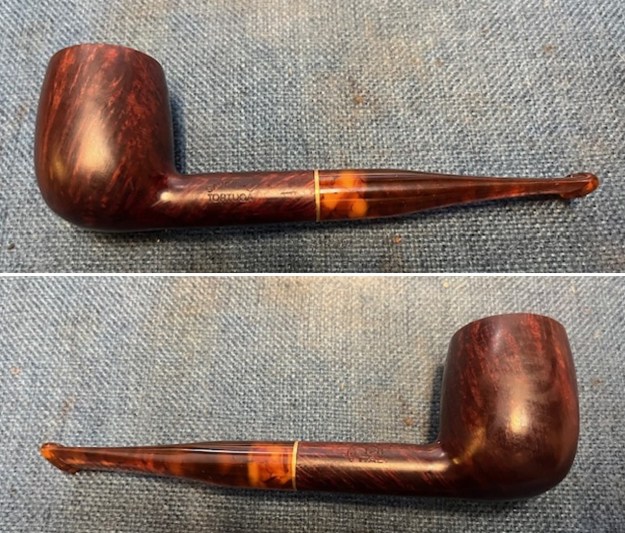
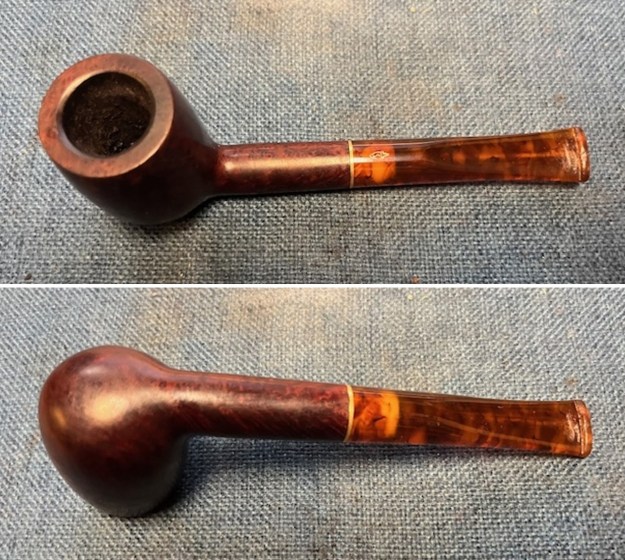
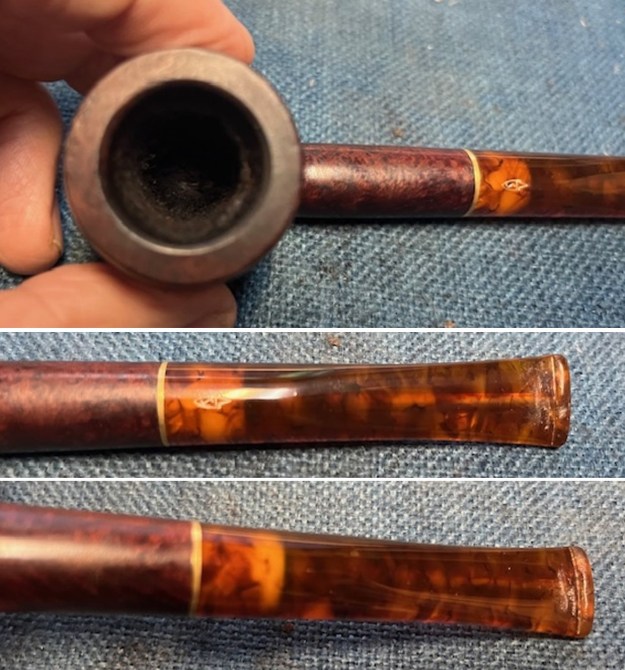
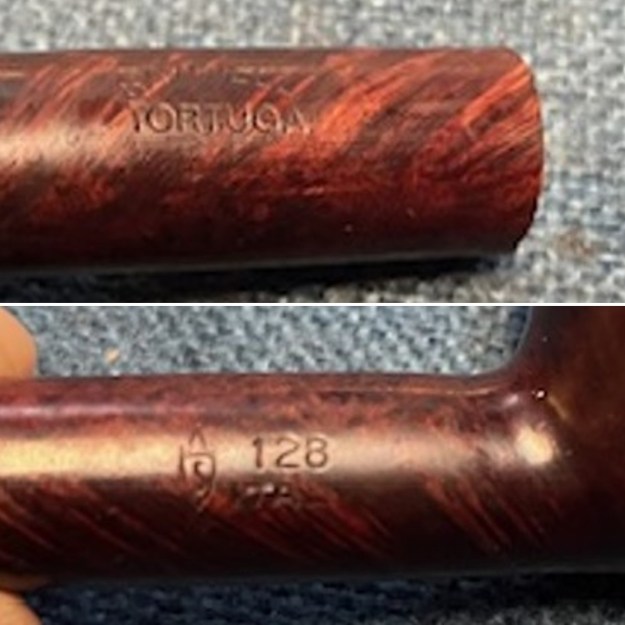
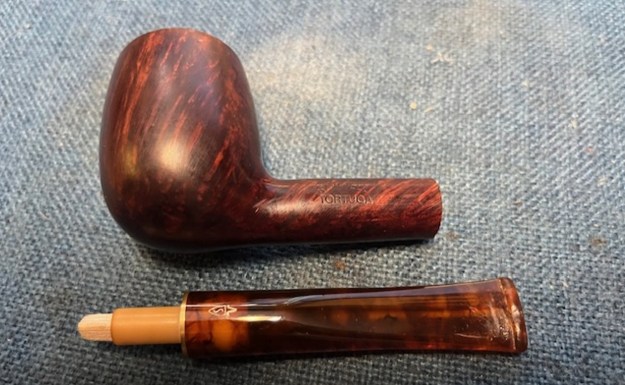
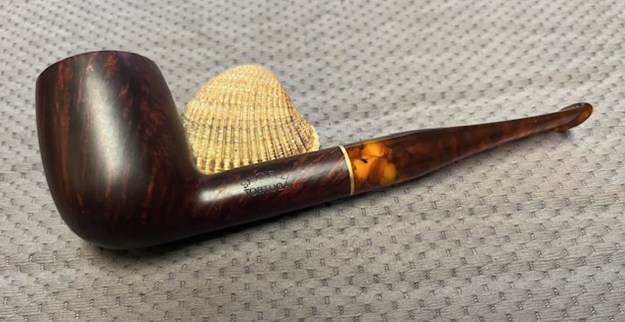
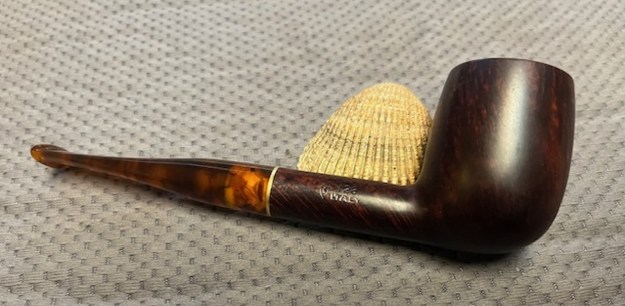
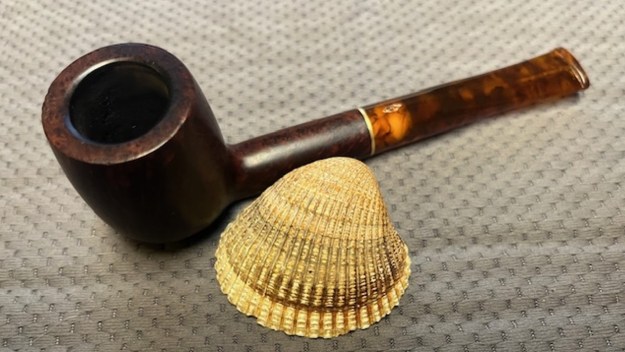
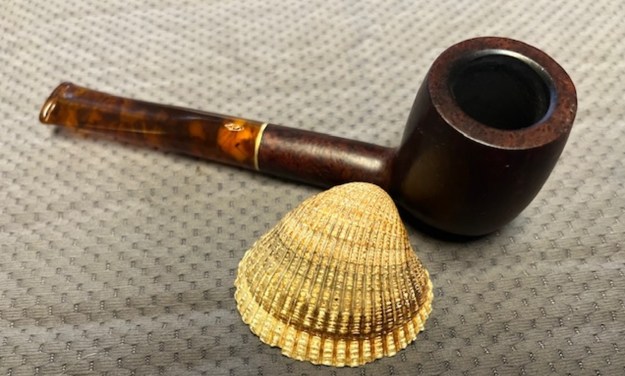
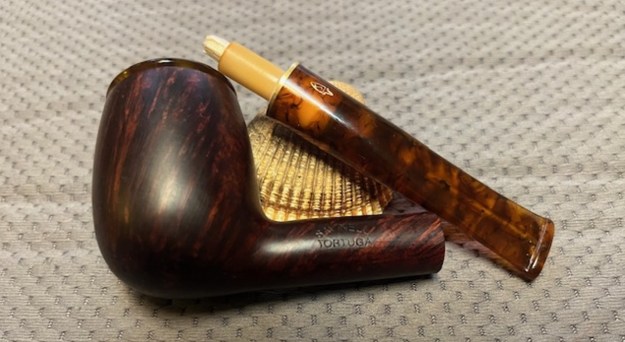
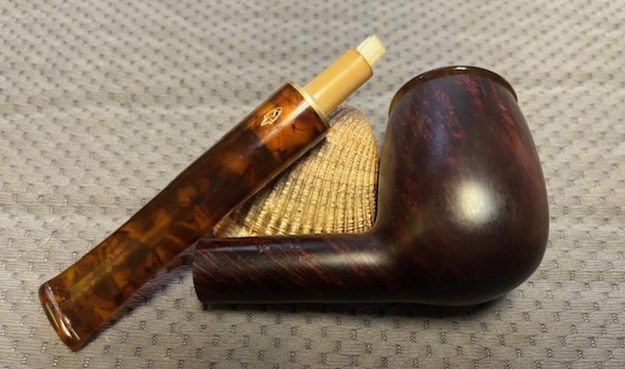
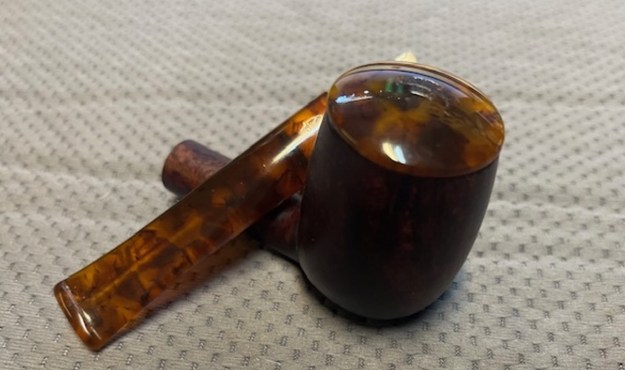
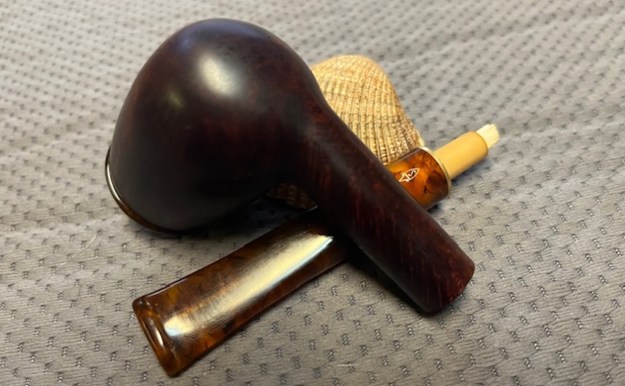
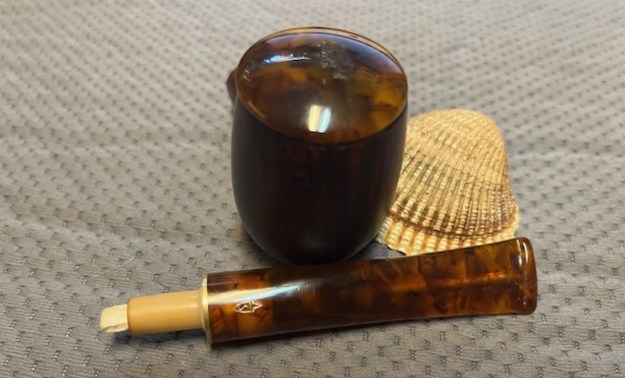
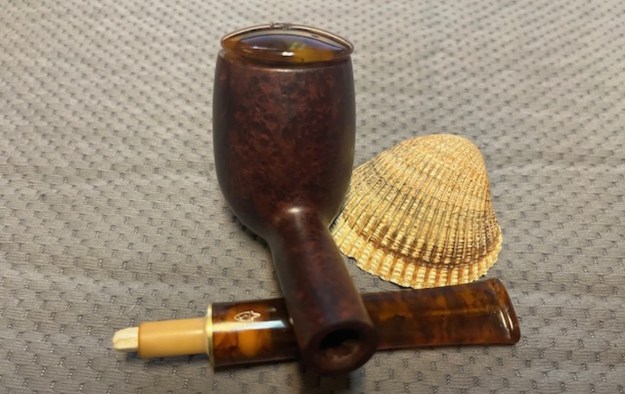
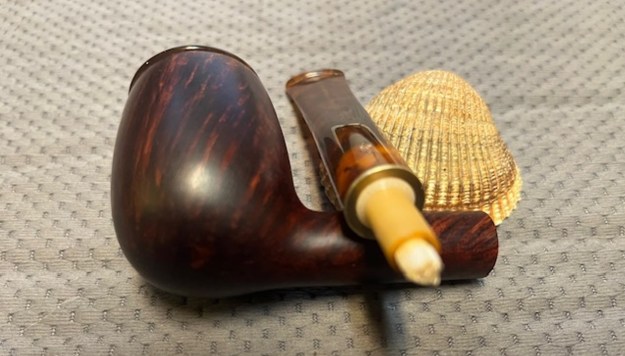
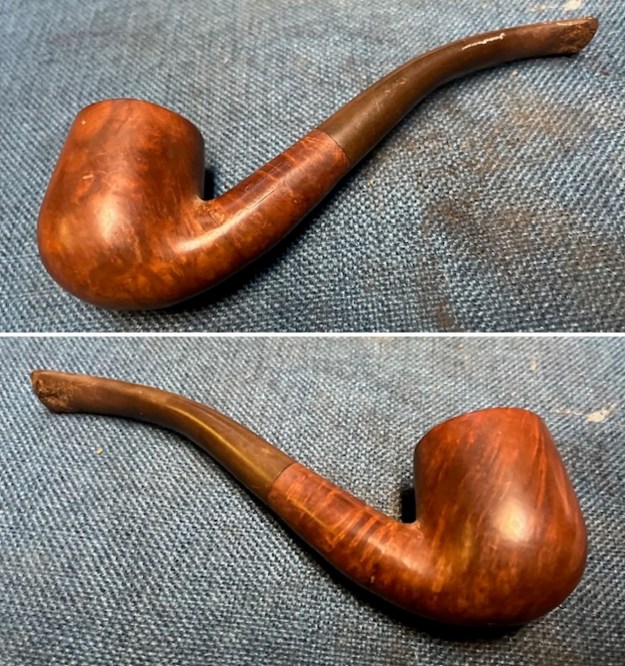
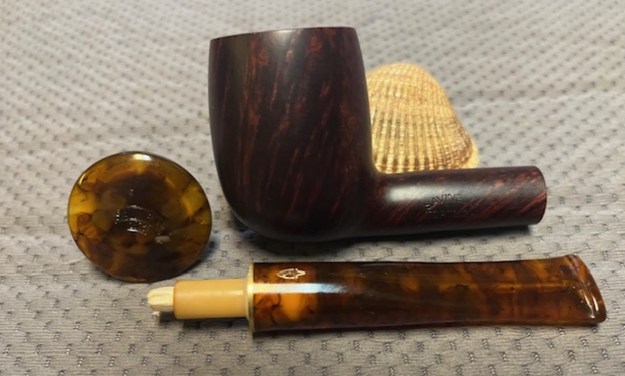
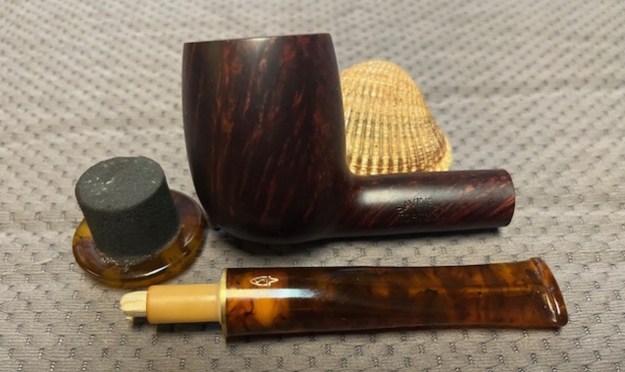
On the weekend I received a phone call from Brian, a fellow the local pipe shop referred to me. He had two Savinelli Balsa filter pipes that were clogged and had no airflow. He asked if I would clean and open them up for him. I received them in the post yesterday and opened the box that he sent them in. The second pipe was a Billiard shape. It came with a bowl cap made of the same acrylic as the stem and a Savinelli bag. It was stamped Savinelli [arched over] Tortuga on the left side of the shank and had a Savinelli S shield on the right side followed by the shape number 128 [over] Italy. The finish was dirty and sticky to touch. There was a thick cake that completely covered the airway at the bottom of the bowl. The rim top was covered by a coat of lava that was sticky. The taper stem was tortoise shell acrylic. It had tooth marks and chatter on both the top and underside ahead of the button. The white Delrin tenon was in good condition and was made to hold a Balsa filter. There was a clean specially trimmed filter in the tenon. The shank and airways in both the mortise and stem were very dirty. I blew through the stem and it was clear and open. I tried to blow through the shank and it was closed off with no airflow at all.  I took photos of the pipe before I started my work. I took photos of the rim top and the stem to show the condition. You can see the cake in the bowl and light overflow of lava on the rim top. The photos of the stem show the tooth marks and chatter on the top and the underside of the stem. I took photos of the stamping on the sides of the shank to capture it. The left side read Savinelli arched over Tortuga and the right side read as noted above. I removed the stem and took a photo of the parts to give a sense of the look of the pipe. I turned to a previous blog I had written on a restoration of a Tortuga Billiard to see what I had found out about the Tortuga line of pipes (https://rebornpipes.com/2016/09/28/i-love-the-tortoise-shell-lucite-stem-on-the-savinelli-tortuga-pipes/). Interestingly, they had a similar pipe pictured on the site with the following description.

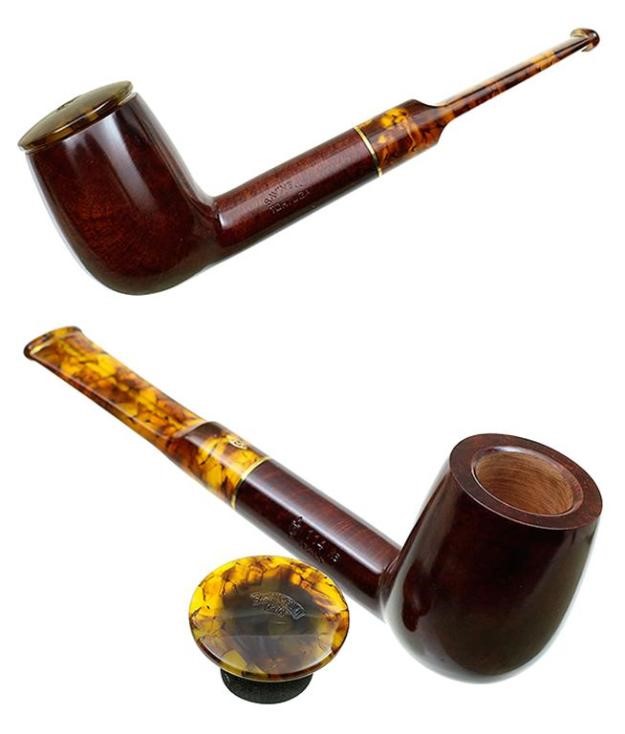
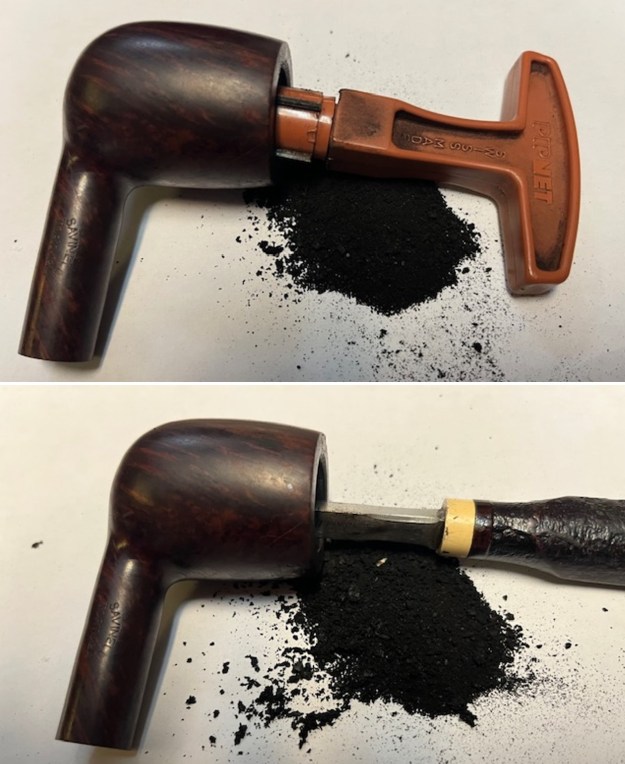
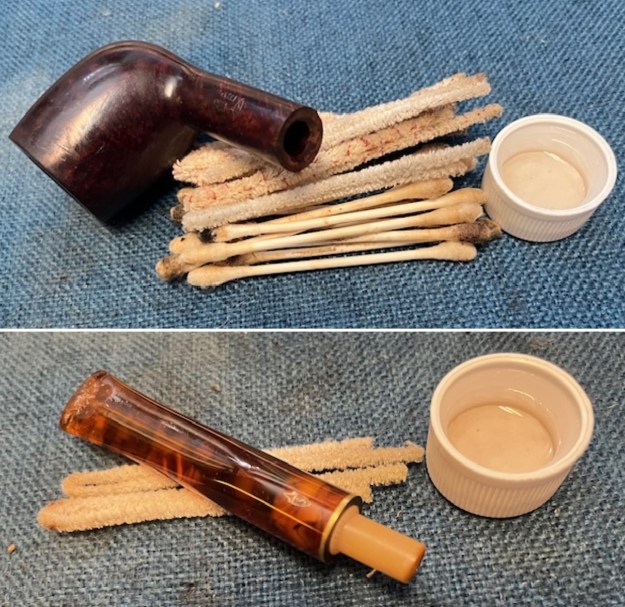
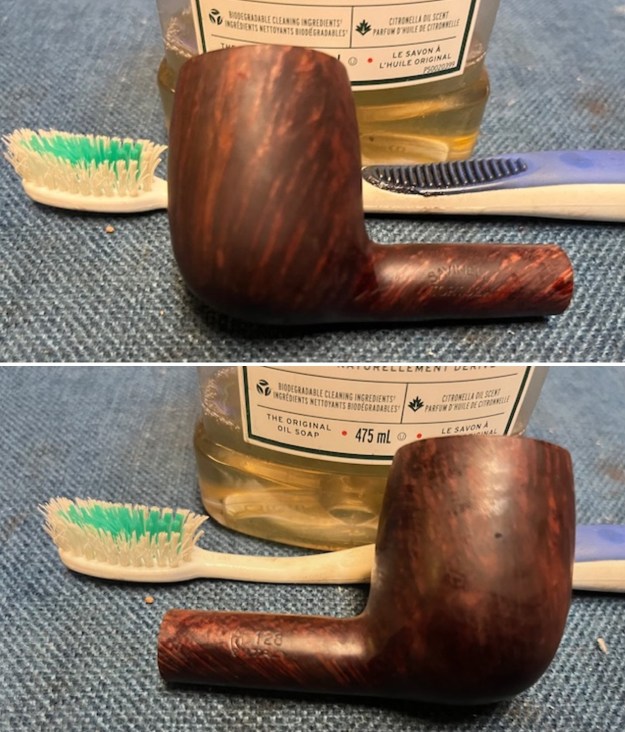
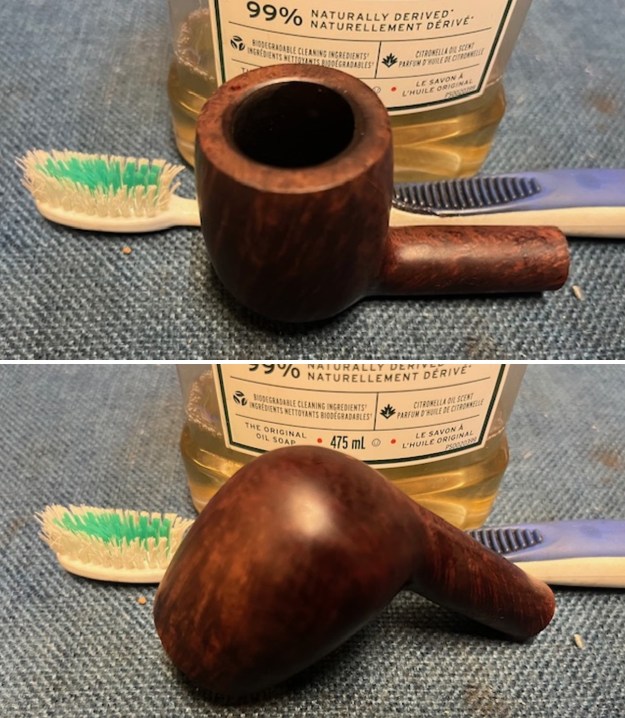
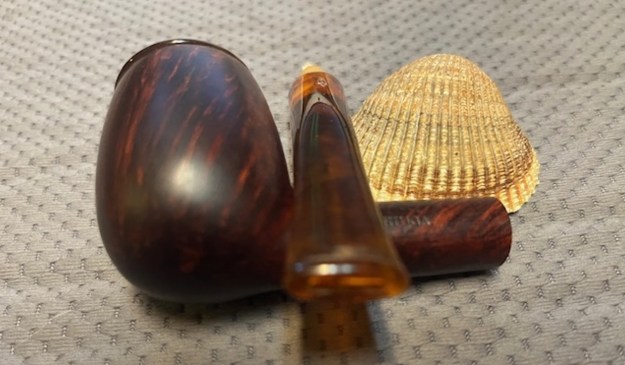
The Savinelli Tortuga line is an interesting looking line of pipes. It comes with a tortoise shell Lucite stem that has an amber look to it. The mottled browns, golds and yellows of the stem shimmer in the light when they are polished. The pipes are aptly named for the look of an animal they convey. Tortuga is the Spanish or Catalan word for Tortoise and it shows in the design of these striking pipes. Each briar of this series sported not only a tortoiseshell-patterned stem, but also a domed, shell-like cap with a foam-rubber stopper. The purpose of the stopper was to preserve an unfinished smoke which one wishes to pick up again to finish later. I found a picture on the web that showed the pipe with a lid on the bowl.I started my work on the pipe by reaming the bowl with a PipNet reamer. I used the first cutting head and took the cake back to bare briar. I cleaned up the reaming with a Savinelli Fitsall Pipe Knife and removed all the remnants of the cake. I scraped the rim top with the flat edge of the blade at the same time and removed most of the thick lava build up. I sanded the walls of the bowl with a piece of dowel wrapped in 220 grit sandpaper. The walls look very good at his point in the process. I cleaned out the shank, the airway and the mortise as well as the airway in the stem with alcohol, cotton swabs, hard bristle and soft bristle pipe cleaners. It was a very dirty pipe which just meant that it had really been enjoyed by the previous pipe man.I scrubbed the exterior of the bowl and shank with a tooth brush and undiluted Murphy’s Oil Soap. I scrubbed the lava on the rim top and overflow on the outside of the bowl with the soap. I rinsed the briar with warm water to remove the grime and debris of the scrubbing. It looked significantly better after the scrubbing. Once I cleaned the bowl with the soap it looked much better. To take the pipe to the next level, I polished the bowl and rim top with micromesh sanding pads – dry sanding it with 1200-15000 grit pads. I wiped the bowl down with a damp cloth after each sanding pad. The grain started to rise to the surface and the repairs blended even more as I polished it. I rubbed the bowl and shank down with Before & After Restoration Balm to deep clean the finish on the bowl and shank. The product works to clean, enliven and protect the briar. I worked it in with my fingers to get it into the briar. I let it sit for 10 minutes then I wiped it off and buffed it with a soft cloth. The briar really began to have a rich shine. I took some photos of the bowl at this point to mark the progress in the restoration. It is a beautiful bowl. With the the shank clear and the airway open it was time to work on the stem. It was clear, just dirty and I needed to address the tooth marks in the stem. The coloured acrylic made this challenging but not undoable. I filled in the tooth marks on both sides with clear CA glue and I set it aside to cure. Once the repairs cured I used some small files to recut the button edge, reshape the surface and flatten the repairs on the stem surface on both sides. I used 220 grit sandpaper to smooth out the edges, the button top and the surface of the stem. It was looking good. I sanded the surface of the acrylic taper stem with the 2 x 2-inch sanding pads – 320-3500 grit pads to clean up the sanding marks on the stem surface. By the final 3500 grit pad the stem started to really shine.I trimmed the edge off of one of the Balsa filters with a knife and fit it in the shank. It fit well and with the edge trimmed off it did no constrict airflow.I polished the stem with micromesh sanding pads – dry sanding with 1500-12000 grit pads. I wiped the stem down after each sanding pad with Obsidian Oil. I gave the stem a final polish with Before & After Pipe Stem Polish both Fine and Extra Fine. I rubbed the stem with them and then gave them a final coat of Obsidian Oil. I set it aside to dry. I am excited to finish this Savinelli Tortuga 128 Billiard with an acrylic taper tortoise shell stem. I put the pipe back together and buffed it with Blue Diamond on the buffing wheel. I gave the bowl multiple coats of carnauba wax. I buffed the pipe with a clean buffing pad to raise the shine and then by hand with a microfibre cloth to deepen it. It is fun to see what the polished bowl looks like with beautiful grain on the smooth bowl and shank. The polished grain on the pipe looks great with the repaired acrylic stem. I put the acrylic matching stopper in the top of the bowl to show the final beauty. This Savinelli Tortuga 128 Billiard is great looking and the pipe feels great in my hand. It is light and well balanced. Have a look at it with the photos below. The dimensions are Length: 6 inches, Height: 1 ¾ inches, Outside diameter of the bowl: 1 ¼ inches, Chamber diameter: ¾ of an inch. The weight of the pipe is 42 grams/1.45 ounces. This second Savinelli that Brian sent is another beautiful pipe. I have sent it and the other pipe back to him. I look forward to hearing what he thinks of both of these resurrected beauties. Both should be great smoking pipes.

As always, I encourage your questions and comments as you read the blog. Thanks to each of you who are reading this blog. Remember we are not pipe owners; we are pipe men and women who hold our pipes in trust until they pass on into the trust of those who follow us.

Restoring and Cleaning a Clogged Savinelli Tundra 802 Canadian


by Steve Laug

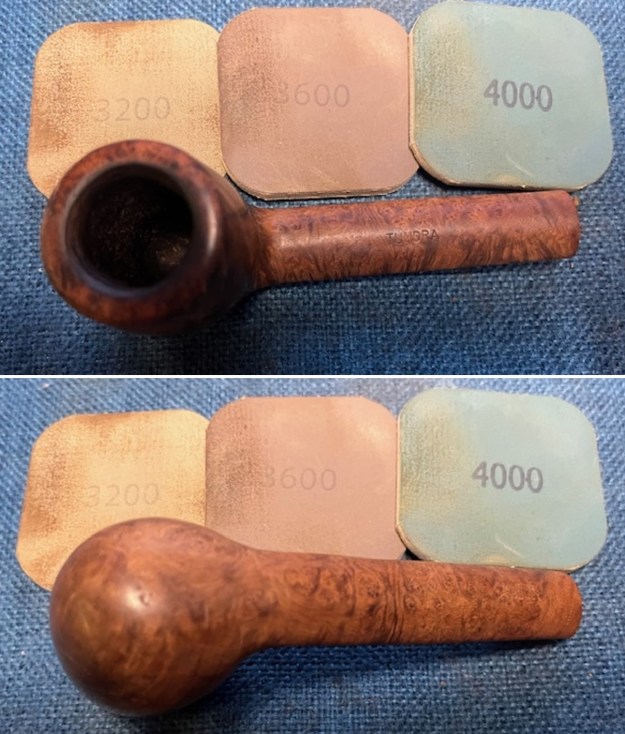
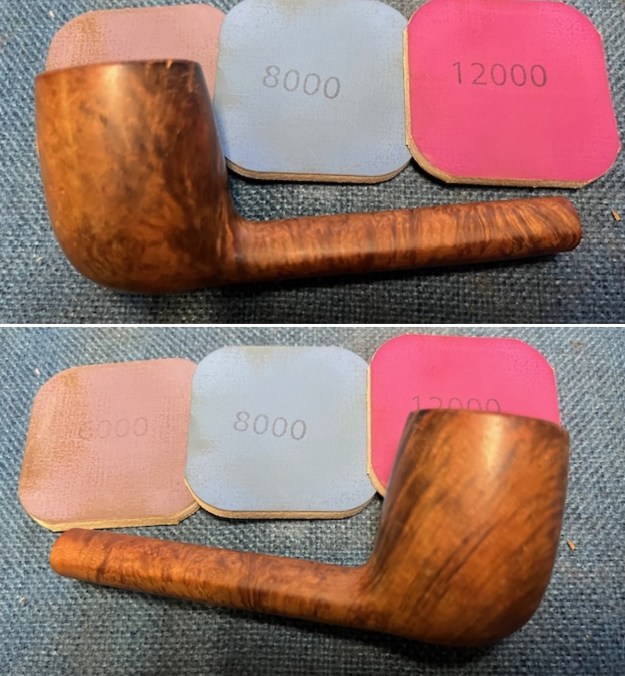
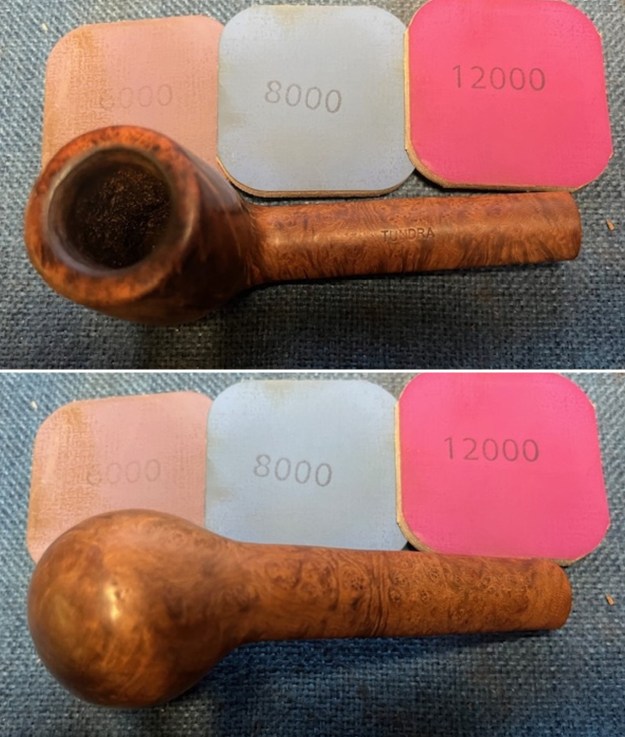
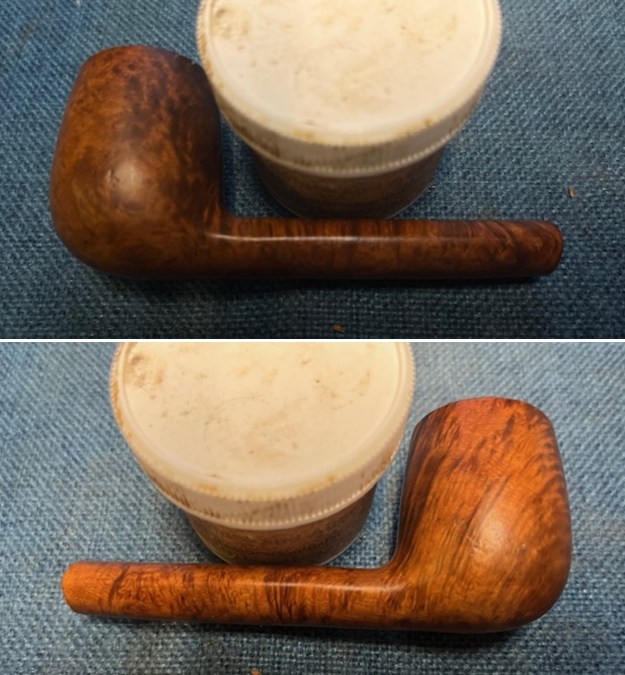
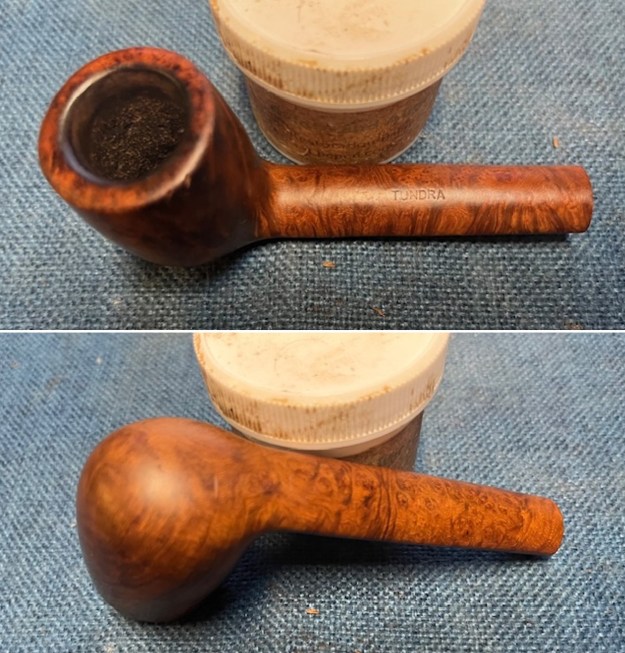
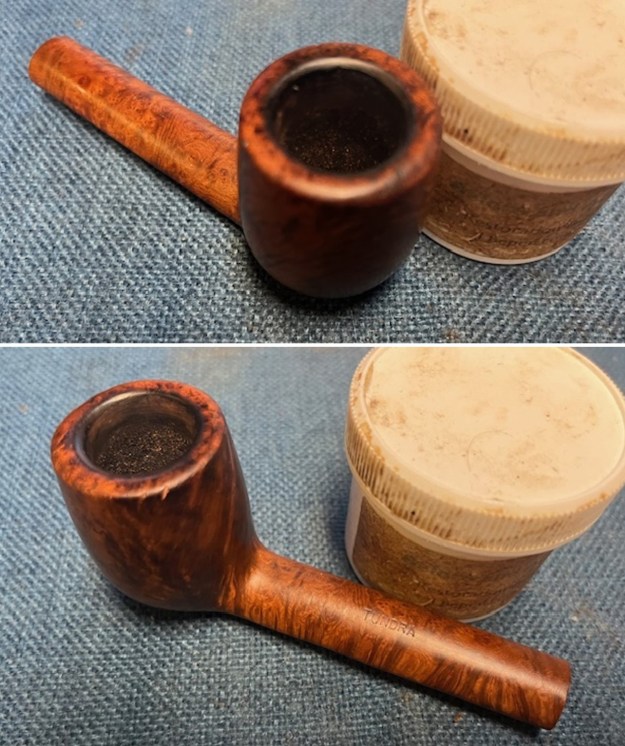
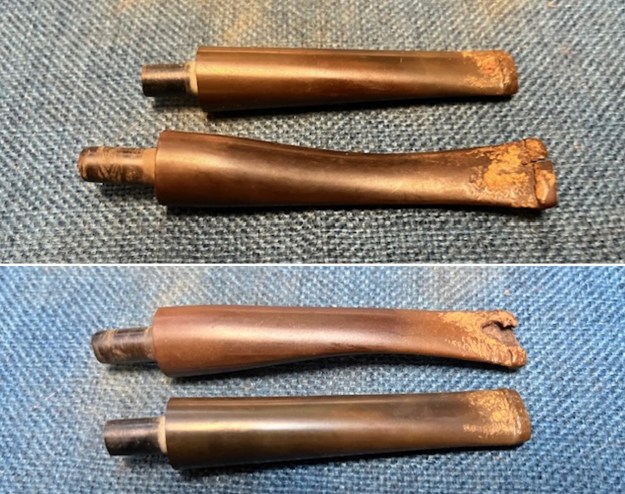
On the weekend I received a phone call from Brian, a fellow the local pipe shop referred to me. He had two Savinelli Balsa filter pipes that were clogged and had no airflow. He asked if I would clean and open them up for him. I received them in the post yesterday and opened the box that he sent them in. The first pipe I chose to work on was a Canadian shape. It was stamped Tundra on the topside of the shank and has a Savinelli S shield on the underside followed by the shape number 802. The finish was very dirty and sticky to touch. The bowl had a thick cake that completely covered the airway at the bottom of the bowl. The rim top had was covered by thick coat of lava that was sticky. The taper stem was multi-coloured acrylic. It had a bite trough in the underside ahead of the button and some deep tooth marks on the topside. The tenon was thin and was made to hold a Balsa filter. There was a clean and very damaged filter in the tenon. The shank and airways in both the mortise and stem were very dirty. I blew through the stem and it was clear and unclogged. I tried to blow through the shank and it was completely closed off with no airflow at all.  I took photos of the pipe before I started my work. I took photos of the rim top and the stem to show the condition. You can see the cake in the bowl and overflow of lava on the rim top. The photos of the stem show the tooth marks and chatter on the top and the bite through on the underside of the stem. There are also bite marks on the top and underside of the button. I took photos of the stamping on the top and underside of the shank to capture it. The Tundra stamp and the stamping on the underside was faint but readable as noted above. I removed the stem and took a photo of the parts to give a sense of the look of the pipe.I turned to the Savinelli website to see what it had to say about the Tundra line of pipes (https://www.savinelli.it/rw_en/savinelli-tundra-802.html). Interestingly, they had the same pipe pictured on the site with the following description.

This pipe series take inspiration from Tundra, typical landscape of cold countries. The warm finish and the coloured stem let appreciate a wide variety of brown shades. Here we propose you a splendid Canadian, model 802. Style which has as main feature a long and elliptical shank. The shank length allows the smoke to cool down, making it fresh and pleasant.

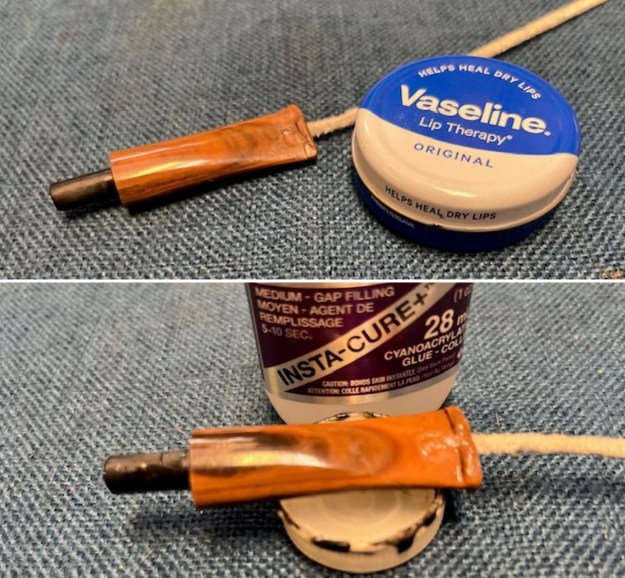
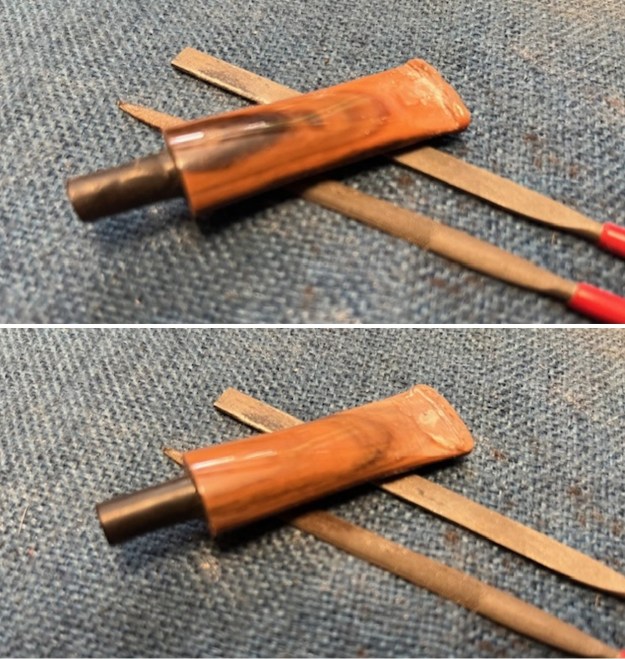
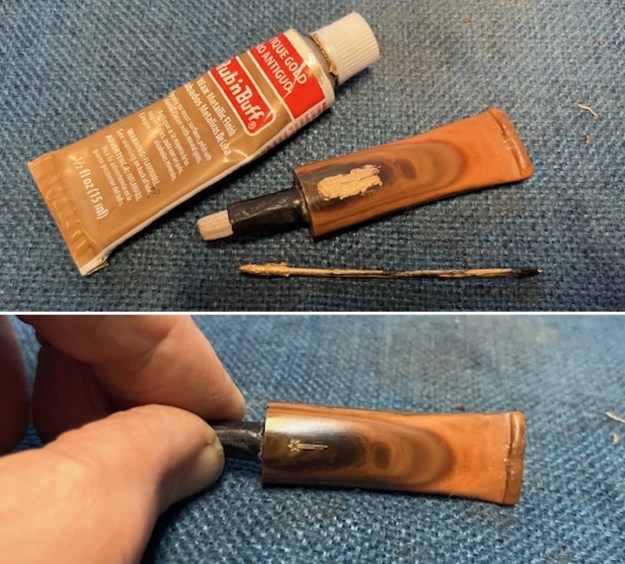
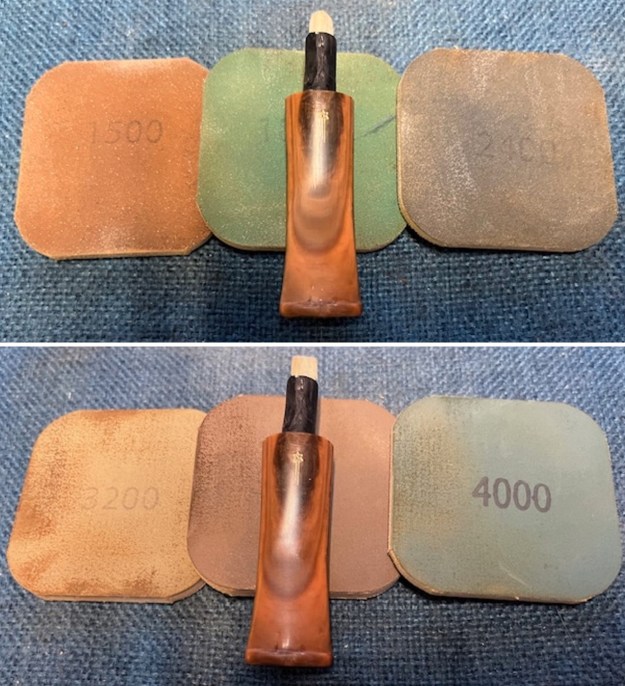
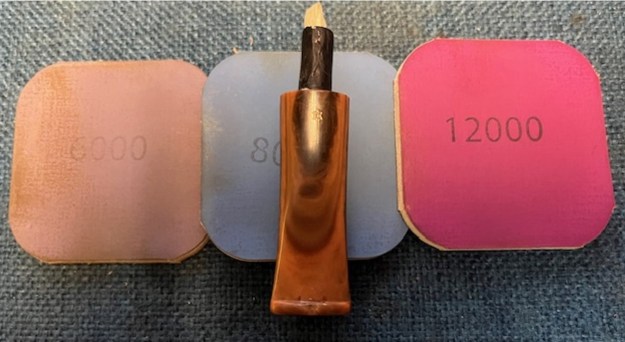
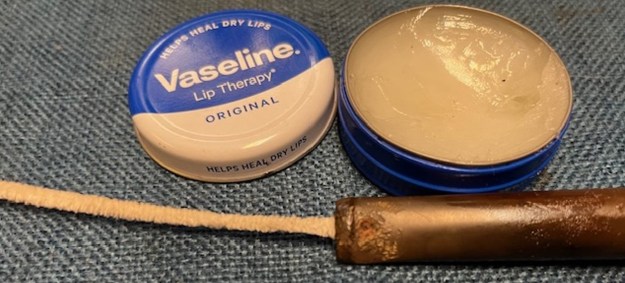
I started my work on the pipe by reaming the bowl with a PipNet reamer. I used the first cutting head and took the cake back to bare briar. I cleaned up the reaming with a Savinelli Fitsall Pipe Knife and removed all the remnants of the cake. I scraped the rim top with the flat edge of the blade at the same time and removed most of the thick lava build up. I sanded the walls of the bowl with a piece of dowel wrapped in 220 grit sandpaper. The walls look very good at his point in the process. I cleaned out the shank, the airway and the mortise as well as the airway in the stem with alcohol, cotton swabs, hard bristle and soft bristle pipe cleaners. It was a very dirty pipe which just meant that it had really been enjoyed by the previous pipe man. I scrubbed the exterior of the bowl and shank with a tooth brush and undiluted Murphy’s Oil Soap. I scrubbed the lava on the rim top and overflow on the outside of the bowl with the soap. I rinsed the briar with warm water to remove the grime and debris of the scrubbing. It looked significantly better after the scrubbing. The darkening on the rim top was better but it would need a little more work. Once I cleaned the bowl with the soap it looked much better. To take the pipe to the next level, I polished the bowl and rim top with micromesh sanding pads – dry sanding it with 1200-15000 grit pads. I wiped the bowl down with a damp cloth after each sanding pad. The grain started to rise to the surface and the repairs blended even more as I polished it. I rubbed the bowl and shank down with Before & After Restoration Balm to deep clean the finish on the bowl and shank. The product works to clean, enliven and protect the briar. I worked it in with my fingers to get it into the briar. I let it sit for 10 minutes then I wiped it off and buffed it with a soft cloth. The briar really began to have a rich shine. I took some photos of the bowl at this point to mark the progress in the restoration. It is a beautiful bowl. With the the shank clear and the airway open it was time to work on the stem. It was clear, just dirty and I needed to address the bite through in the stem. The coloured acrylic made this challenging but not undo-able. I needed to also fill in the bite marks on the topside and the marks on the button edge as well. I greased a pipe cleaner with Vaseline and inserted it below the hole. I filled in the hole with clear CA glue, rebuilt the button edge and also filled in the tooth marks at the same time. I set it aside to cure. Once the repairs cured I used some small files to recut the button edge, reshape the surface and flatten the repair on the stem surface on both sides. I put the balsa filter back in the tenon to stiffen it and used 220 grit sandpaper to smooth out the edges, the button top and the surface of the stem. It was looking good. The filled in bite through on the underside was visible but the beauty was it was underneath! I would continue to sand and work it to minimize the visibility but the repair was solid. I built up the flimsy and misshaped tenon surface with some clear CA glue. It also repaired the thin hairline cracks in the surface. Once it cured I sanded it smooth with 220 sandpaper. I sanded the surface of the acrylic taper stem with the 2 x 2-inch sanding pads – 320-3500 grit pads to clean up the sanding marks on the stem surface. By the final 3500 grit pad the stem started to really shine.I touched up the gold shooting star stamp on the top of the stem with Antique Gold Rub’n Buff. I pressed it into the stamp with a tooth pick and buffed it off with a soft towel. It looks good.I polished the stem with micromesh sanding pads – dry sanding with 1500-12000 grit pads. I wiped the stem down after each sanding pad with Obsidian Oil. I set it aside to dry. I am excited to finish this Savinelli Tundra 802 Canadian with an acrylic taper stem. I put the pipe back together and buffed it with Blue Diamond on the buffing wheel. I gave the bowl multiple coats of carnauba wax. I buffed the pipe with a clean buffing pad to raise the shine and then by hand with a microfibre cloth to deepen it. It is fun to see what the polished bowl looks like with beautiful grain on the smooth bowl and shank. The polished grain on the pipe looks great with the repaired acrylic stem. This Savinelli Tundra Canadian is great looking and the pipe feels great in my hand. It is light and well balanced. Have a look at it with the photos below. The dimensions are Length: 6 inches, Height: 1 ¾ inches, Outside diameter of the bowl: 1 ¼ inches, Chamber diameter: ¾ of an inch. The weight of the pipe is 41 grams/1.45 ounces. This first Savinelli that Brian sent is a beautiful pipe that I will send to him once I have cleaned up the other pipe he sent. I look forward to hearing what he thinks of this resurrected beauty. It should be a great smoking pipe.

As always, I encourage your questions and comments as you read the blog. Thanks to each of you who are reading this blog. Remember we are not pipe owners; we are pipe men and women who hold our pipes in trust until they pass on into the trust of those who follow us.

Tidying Up a Savinelli-made Hercules 121 EX


by Kenneth Lieblich

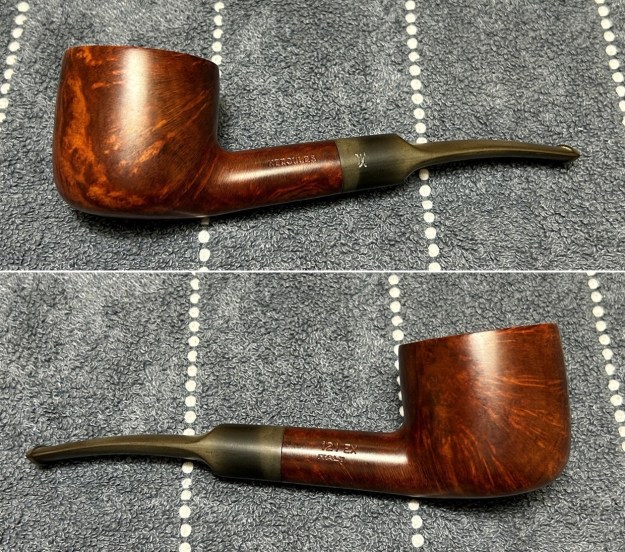
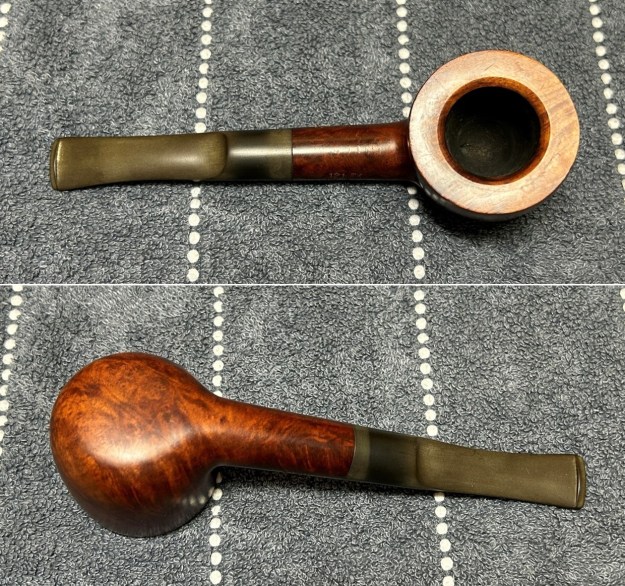
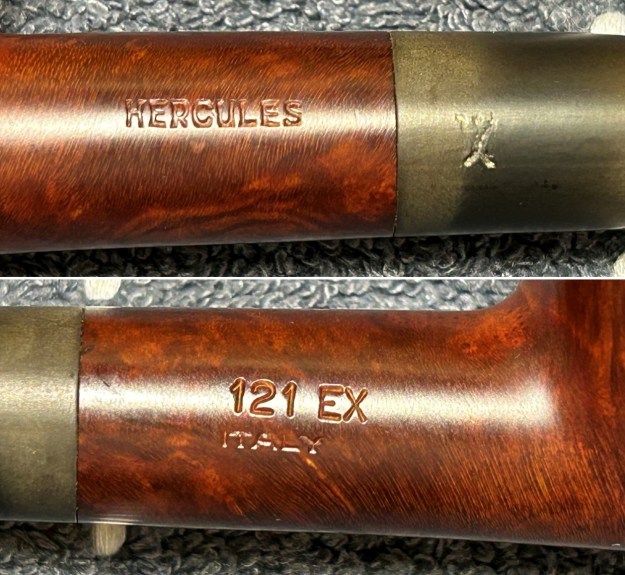
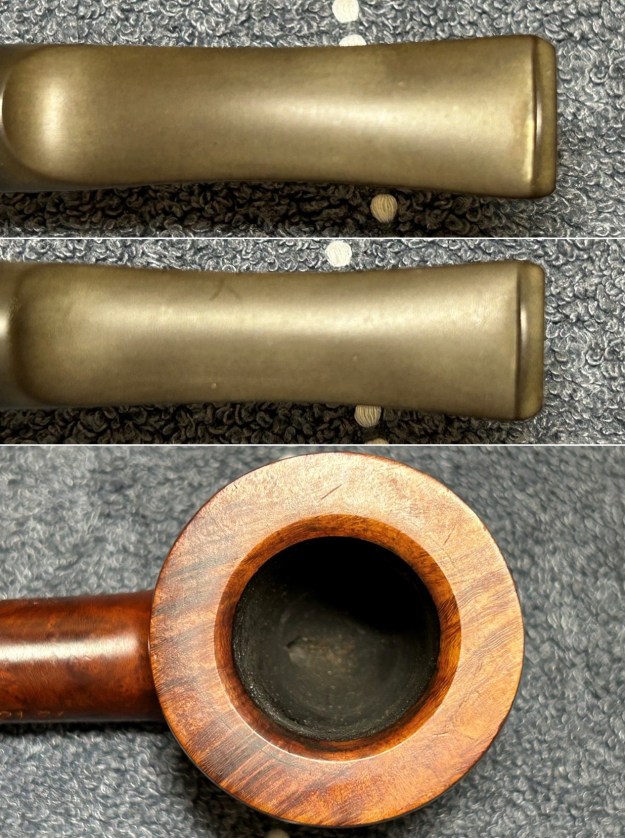
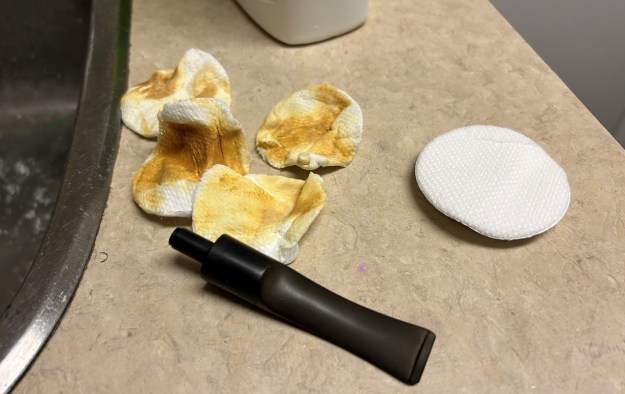
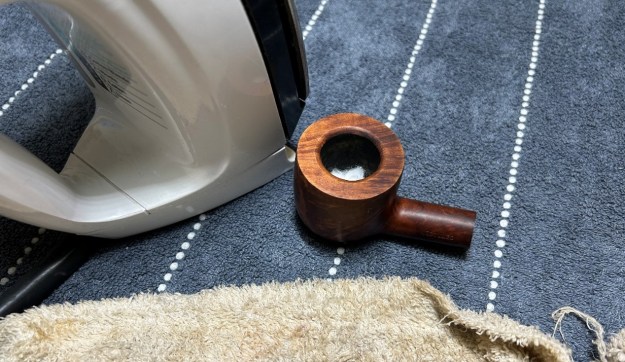
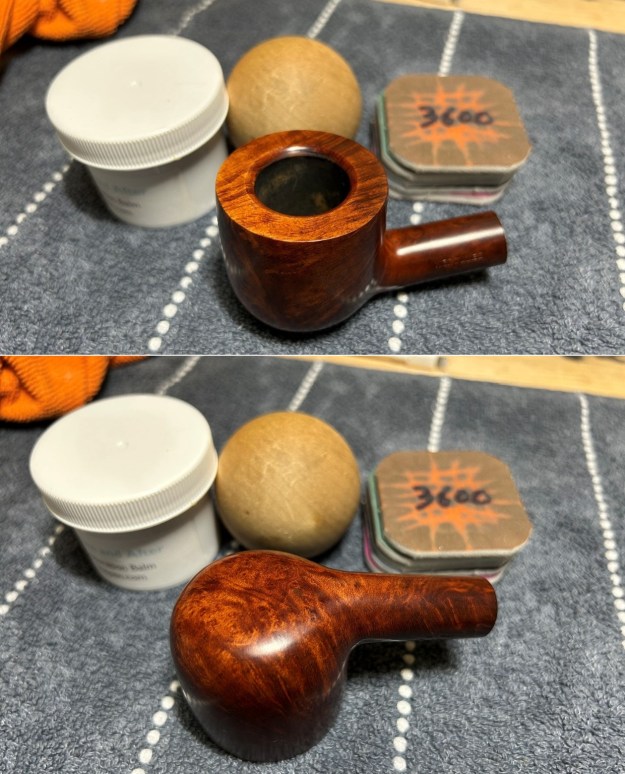
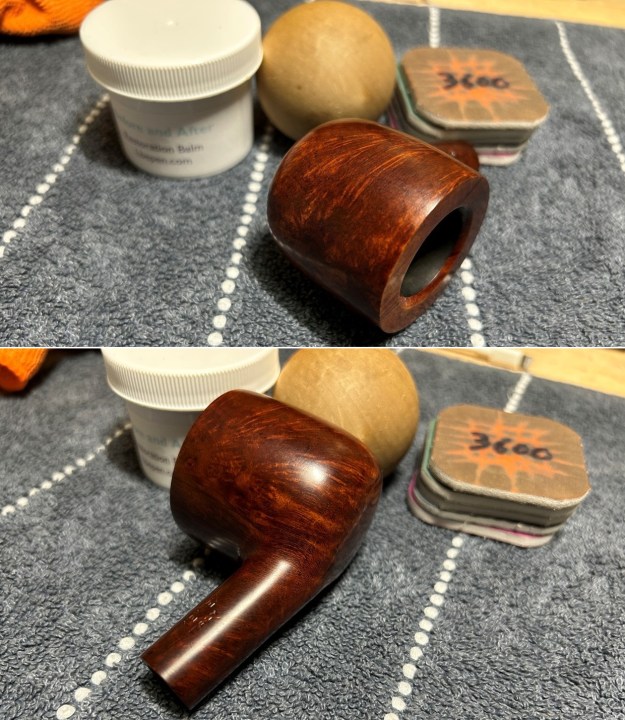
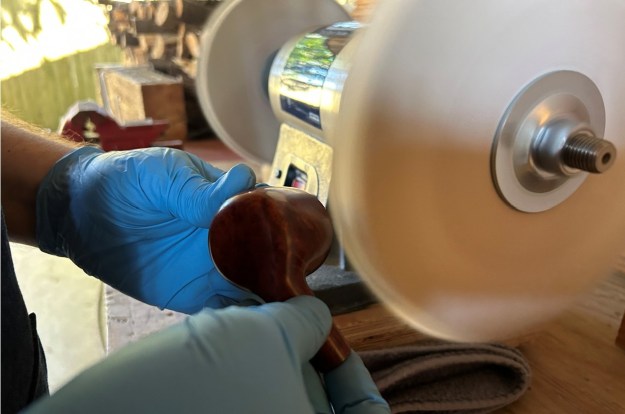
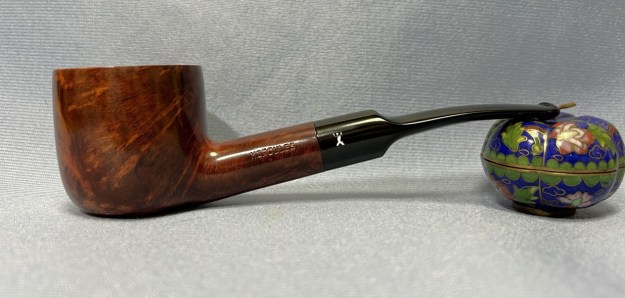
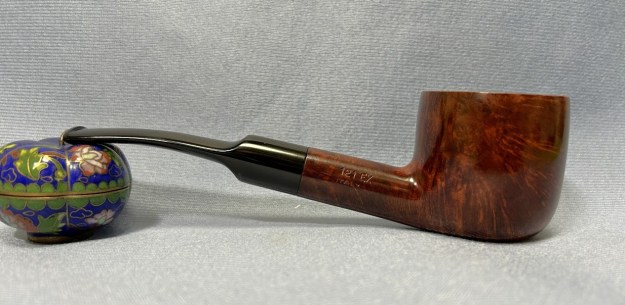
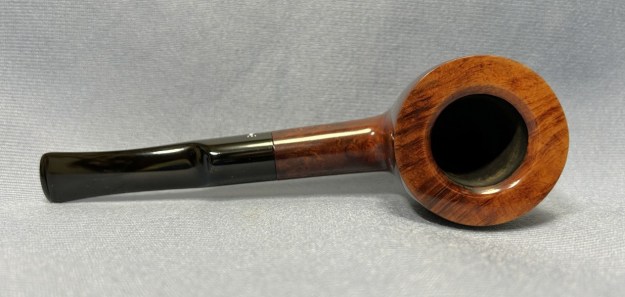
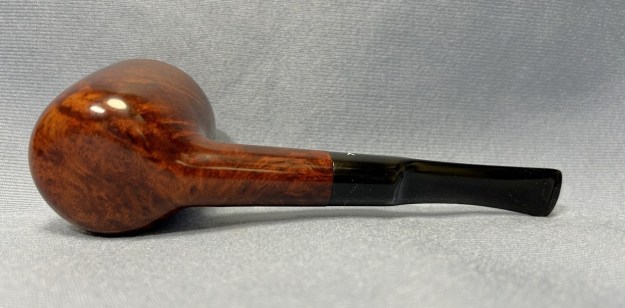
Here’s a handsome and robust Savinelli-made Hercules that was part of a large lot that I recently acquired. If it’s from the Hercules line, that must mean it’s big and strong. It is a slightly bent pot and it has a nice vulcanite saddle stem. Good looking pipe and, fortunately for everyone, it was new (or nearly new) when I got it. I can’t imagine that it was smoked more than once, if at all. The markings on the pipe are very clear. On the left side of the shank is the word Hercules. On the right side of the shank, we read 121 EX [over] Italy. The stem shows a stylized engraved image of Hercules himself. The shape number, 121, is described by Savinelli as “Half-Bent Pot” and the EX stands for “Extraordinaire”, and that corresponds to sizes 4.5–5. Savinelli is one of the most recognized names in pipe smoking and they have a long and storied history. You can read about them from their own website or from Pipedia’s article about them.Let’s look at the pipe. The stummel is in great shape. Seldom, if ever, smoked, so hardly any wear. There are a couple of fills, but they have been well addressed. The stem is also in great shape – no tooth marks or scratches, just some oxidation to deal with. The primary cleaning came first. I disinfected the inside of the stem with both pipe cleaners and cotton swabs dipped in lemon-infused 99% isopropyl alcohol. I scrubbed thoroughly to make sure the interior was very clean. I used hardly any pipe cleaners because it was already clean.The goal of the next step is the removal (or minimization) of oxidation. Going to my sink, I used cream cleanser, cotton rounds, and a toothbrush, and scoured the stem to remove as much surface oxidation as possible. As the photos show, the result was a hideous, brownish mess – but better off the stem than on it.Once the stem was reasonably clean, I soaked it overnight in some Briarville Stem Oxidation Remover. This solution works to draw oxidation in the stem to the surface of the vulcanite. This is a major aid and an important step in ensuring a clean stem. The following day, I drew out the stem from its bath and scrubbed the lingering fluid with a toothbrush. After this, I painted the logo on the stem with some enamel nail polish. I restored the logo carefully and let it fully set before proceeding.The penultimate step for the stem is sanding. I used all nine of the micromesh sanding pads (1,500 through 12,000 grit) to sand out flaws, even out the vulcanite, and provide gentle polishing of the finished surface. I also applied pipe-stem oil while using the last five micromesh pads. There was a wonderful, deep black shine to the stem when I was done.As the stem was (nearly) complete, I moved on to the stummel. The inside didn’t even need reaming, as the original bowl coating was still there! Similar to the stem, I then cleaned the stummel with both pipe cleaners and cotton swabs dipped in lemon-infused 99% isopropyl alcohol. There was next-to-nothing inside. The black you see in the photos is simply from the bowl coating.To tidy up the briar, I also wiped down the outside with some oil soap on cotton rounds and used a toothbrush in the crevices. This did a good job of cleaning any latent dirt on the surface of the briar.Having completed that, I noticed a small nick on the rim of the bowl. I dug out my iron and a damp cotton flannel cloth. By laying the cloth over the affected areas and applying the iron to it, the hot and moist steam can cause the wood to swell slightly and return to shape. This worked very well and the rim looked as good as new.I used only the last five micromesh pads (3,600 through 12,000 grit) to sand the outside of the stummel and finish it off. This sanding minimizes flaws in the briar and provides a beautiful smoothness to the wood. I rubbed some LBE Before & After Restoration Balm into the briar and let it sit for 30 minutes or so. The balm moisturizes the wood and gives a beautiful depth to the briar. I then buffed the stummel with a microfibre cloth. For the final step, I took the pipe to my bench polisher and carefully buffed it – first with a blue diamond compound, then with three coats of carnauba wax. This procedure makes the pipe look its best – the stummel sings and the stem glows.All done! This Savinelli Hercules 121 EX half-bent pot looks fantastic again and is ready to be enjoyed by its next owner. I am pleased to announce that this pipe is for sale! If you are interested in acquiring it for your collection, please have a look in the ‘Italian’ section of the store here on Steve’s website. You can also email me directly at kenneth@knightsofthepipe.com. The approximate dimensions of the pipe are as follows: length 6¼ in. (159 mm); height 1⅞ in. (47 mm); bowl diameter 1⅞ in. (47 mm); chamber diameter ⅞ in. (23 mm). The weight of the pipe is 2¼ oz. (67 g). I hope you enjoyed reading the story of this pipe’s restoration as much as I enjoyed restoring it. If you are interested in more of my work, please follow me here on Steve’s website or send me an email. Thank you very much for reading and, as always, I welcome and encourage your comments.

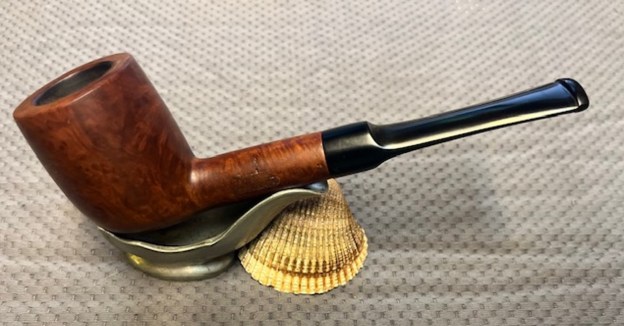
Restoring the last of 11 pipes sent for restoration – a Bertram 30 Bent Billiard


by Steve Laug

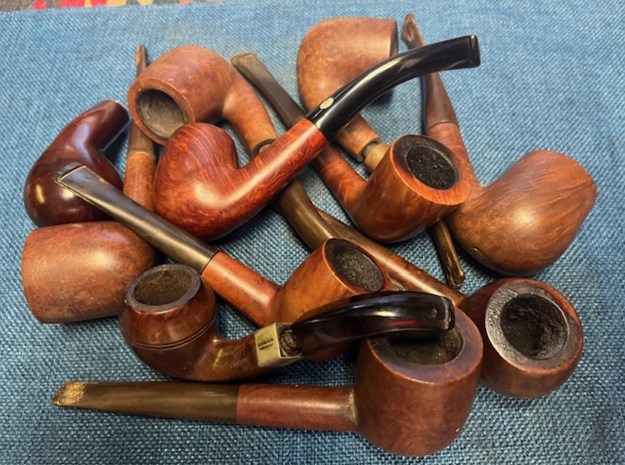
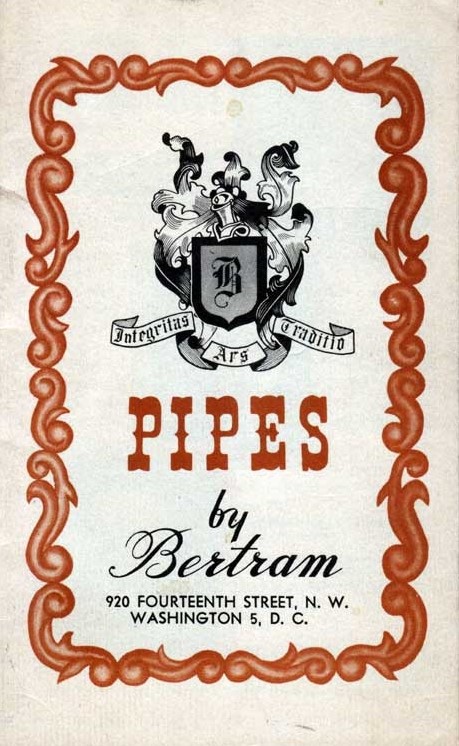
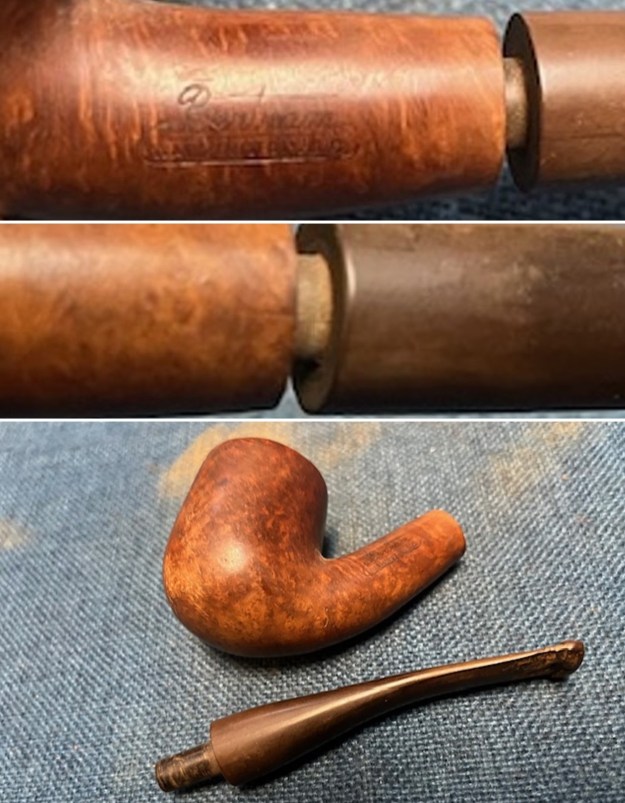
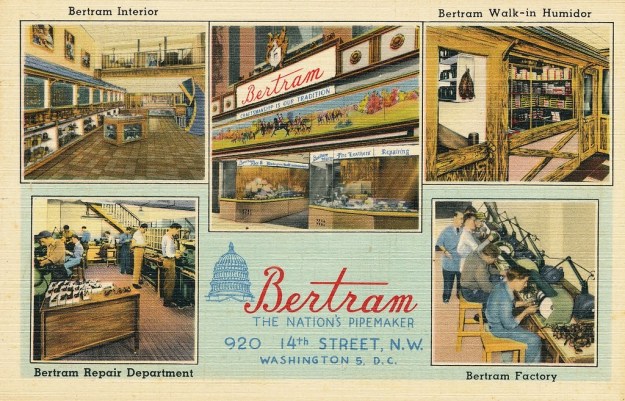
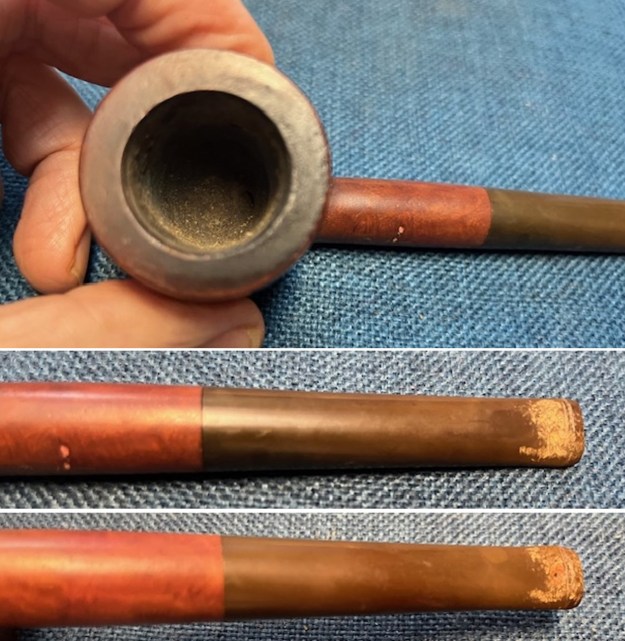
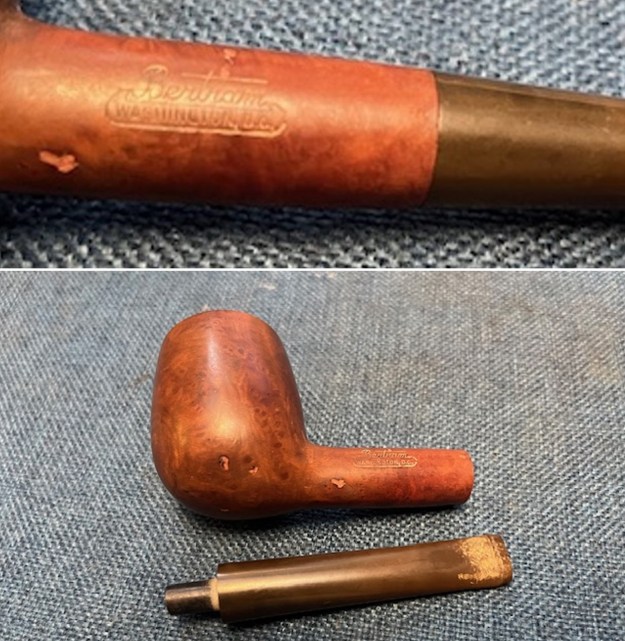
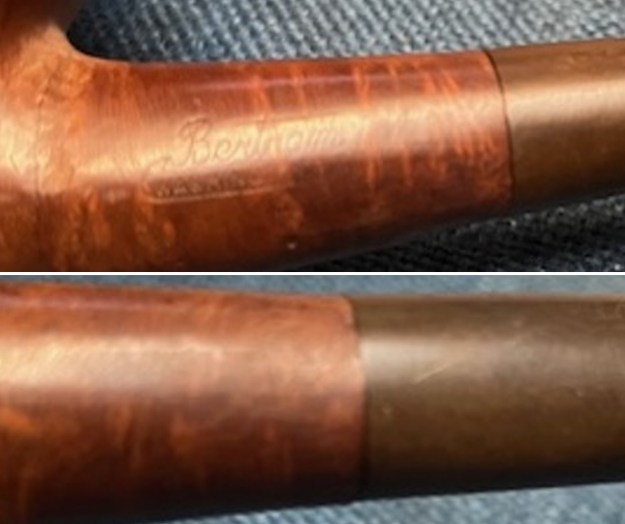
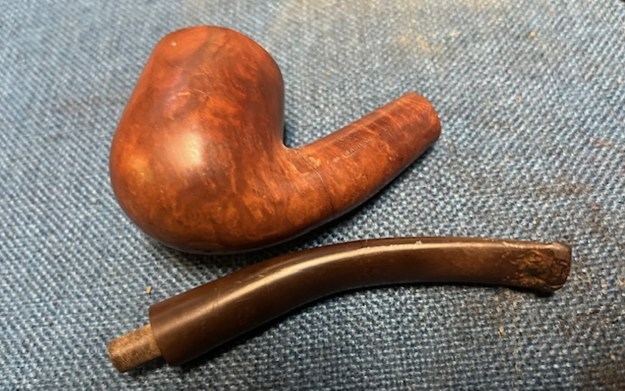
A while back I was asked by a customer and friend, Jack to take on some projects for him. I have worked on a few pipes for him over the years so we seem to have a standing agreement that I will clean up his pipes. This time he sent a batch containing 11 pipes (actually as mentioned on the last pipe I can’t count) but going over it again I found I was right the first count. There were six Bertrams, an Arlington, a GBD, an old WDC Triangle Bakelite, Citation in need of a stem and one marked Texaco. All of them were in various conditions and would need different types of work. I took a photo of the pipes before I started working on them.The last pipe I had to work on was a Bertram Bent Billiard that needed to be cleaned up and restored. This last one is from Jack’s 11 pipes – a dirty, dull Bertram with an oxidized tapered vulcanite stem that I swapped with a straight billiard. The pipe is stamped on the left side and reads Bertram [over] Washington D.C. centered on the shank. There is a shape number 30 on the underside of the shank. The finish had a lot of grime ground into the bowl and some nicks and flaws where the fills were shrunken or broken around the sides. The bowl was moderately caked with a light lava coat on the top of the rim, heavier toward the back of the bowl. The edges looked okay other than some potential damage on the back inner edge. The new stem was calcified, oxidized, dirty and had tooth chatter and marks on the top and underside ahead of the button. The photos show the condition of the stem surface. There were no markings or a logo on the taper stem. Like the rest of the Bertrams that Jack sent, this one had promise but it was very dirty. I took photos of the pipe before I started his cleanup work. I took photos of the rim top and the stem to show the condition. You can see the cake in the bowl and overflow of lava on the rim top. The photos of the stem show the calcification, tooth marks and chatter on the top and underside of the stem and the button. I took photos of the stamping on the left and underside of the shank to capture it. The Bertram stamp was clear and readable as noted above. Once restored again it will have a long life ahead of it. I removed the stem and took a photo of the parts to give a sense of the look of the pipe.As I have worked on a lot of Bertram pipes in the past, I have written on the brand and have included the following information. If you have read it in past blogs, you can skip over it. If you have not, I have included the link to Bertram history and information. I would recommend that if you don’t know much about them take some time to read the background. I include a link to the write up on Pipedia (http://pipedia.org/wiki/Bertram). Bertram pipes were based out of Washington DC. They were popular among famous politicians and celebrities of the time. They made many products for them from FDR’s cigarette holders to Joseph Stalin’s favorite pipe. They were considered some of the best America had to offer till they finally closed their doors in the 70s. Bertram graded their pipes by 10s and sometimes with a 5 added (15, 25, 55 etc.), the higher the grade the better. Above 60s are uncommon and 80-90s are quite rare. I have worked on one 120 Grade billiard. I have several blogs that I have written on rebornpipes that give some history and background to Bertram pipes. (https://rebornpipes.com/2015/06/16/an-easy-restoration-of-a-bertram-grade-60-217-poker/).

I have included the following link to give a bit of historical information on the pipe company. It is a well written article that gives a glimpse of the heart of the company. http://www.streetsofwashington.com/2012/01/bertrams-pipe-shop-on-14th-street.html#

From this information I learned that all of these Bertrams were made before the closure of the shop in the 1970s. This Bertram Bent Billiard has some mixed grain around the bowl. This pipe has a Grade 30 stamp on it. But like many of these Bertrams the Grading system is a mystery to me.

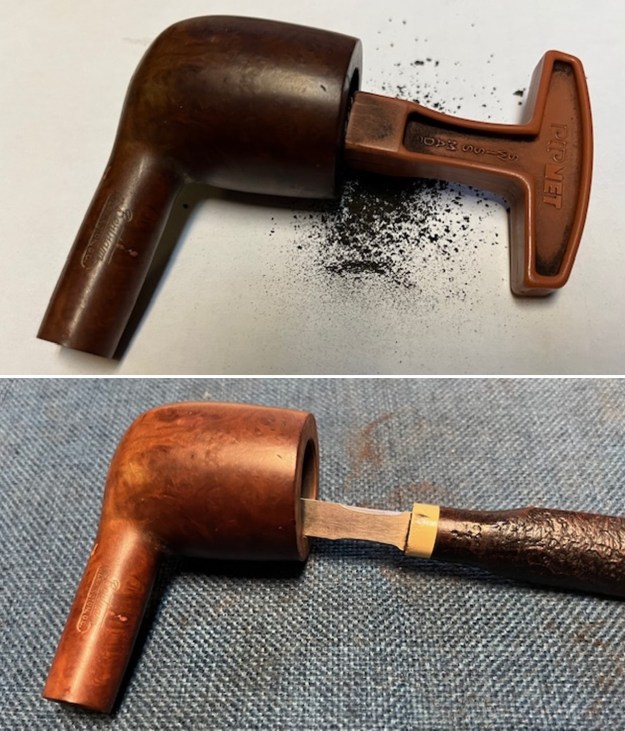
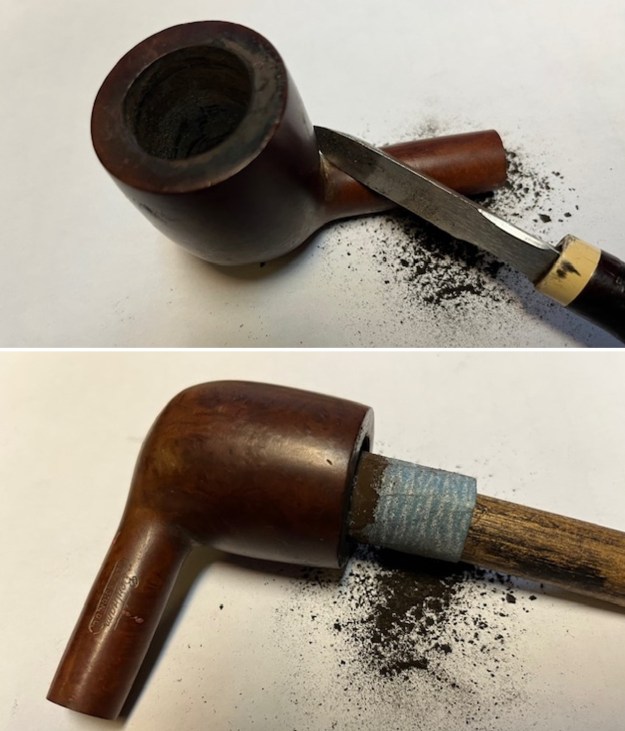
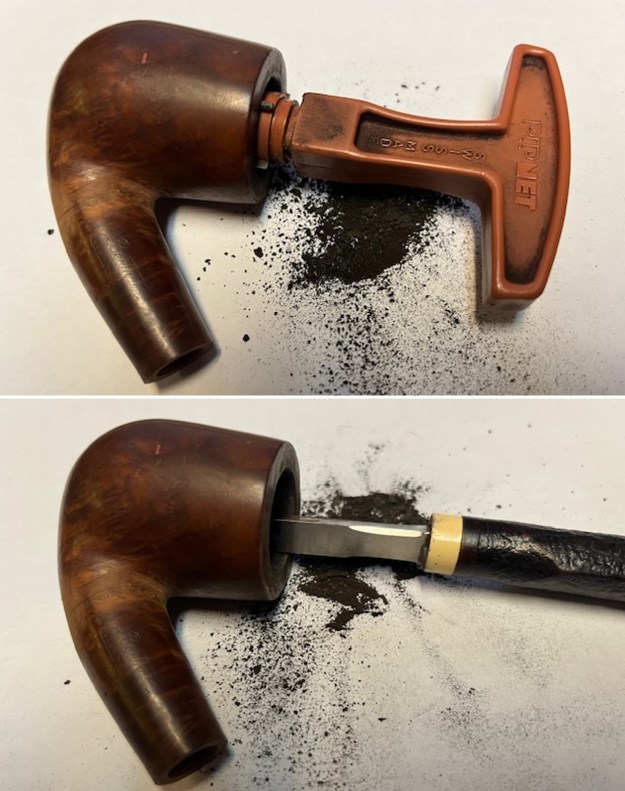
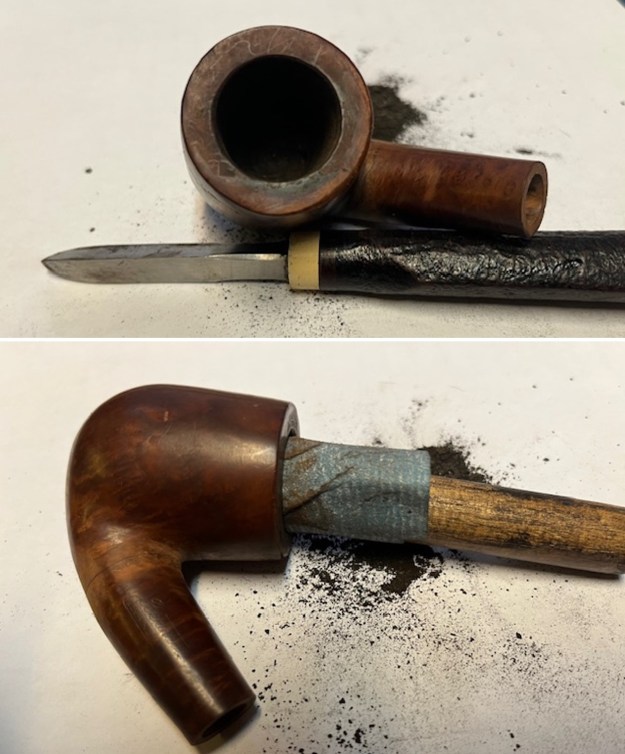
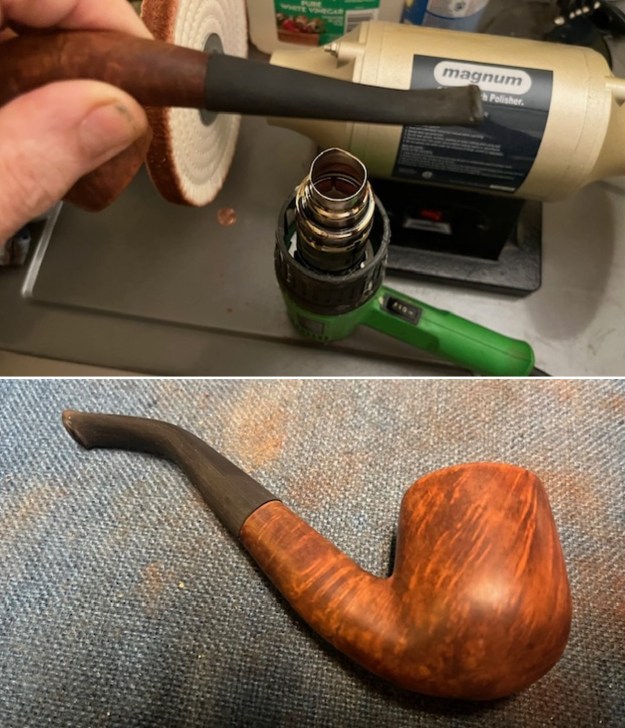
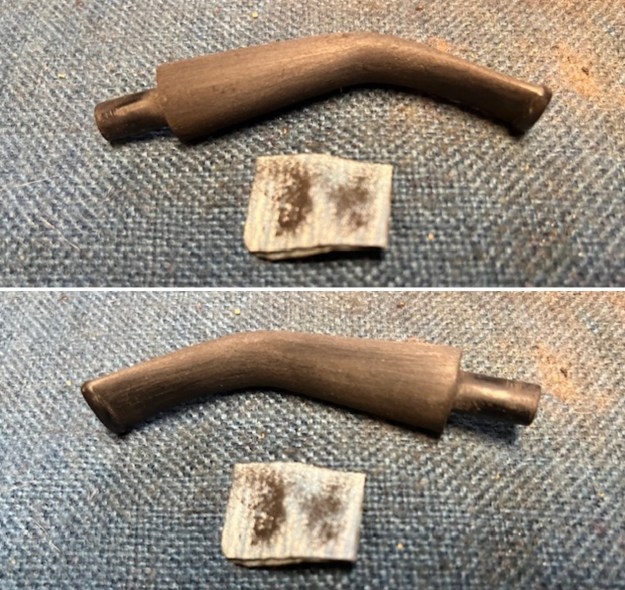
I started my work on the pipe by reaming the bowl with a PipNet reamer. I used the first cutting head and took the cake back to bare briar. I cleaned up the reaming with a Savinelli Fitsall Pipe Knife and removed all the remnants of the cake. I scraped the rim top with the flat edge of the blade at the same time and removed most of the thick lava build up. I sanded the walls of the bowl with a piece of dowel wrapped in 220 grit sandpaper. The walls look very good at his point in the process. The darkening on the rim top and inner edge of the bowl would need to be dealt with. I cleaned up the inner edge and the rim top with a folded piece of 220 grit sandpaper and was able to remove the darkening. I also started to sand the shank repair at the same time. The old warrior is visible in the photos below.I cleaned out the shank, the airway and the mortise with alcohol, cotton swabs, hard bristle and soft bristle pipe cleaners. It was a very dirty pipe which just meant that it had really been enjoyed by the previous pipe man. Since I was restemming the pipe I would do the clean out on the new stem when I got to it.I scrubbed the exterior of the bowl and shank with a tooth brush and undiluted Murphy’s Oil Soap. I scrubbed the lava on the rim top and overflow on the outside of the bowl with the soap. I rinsed the briar with warm water to remove the grime and debris of the scrubbing. It looked significantly better after the scrubbing. The darkening on the rim top came away clean. Once I cleaned the bowl with the soap I brought it back to the work top and examined it. This was a pipe full of fills around the rim top and the right front side of the bowl. All were shrunken and need of repair. I filled in all of the damaged fills with clear CA glue. I smoothed them out with a dental spatula. Once the repairs cured I sanded them smooth with 220 grit sandpaper to blend them into the surface of the briar. Once finished it looked much better. I sanded the bowl it with 320-3500 grit sanding pads to further remove the stain and make a more transparent finish on the rim top, the bowl and shank. The light spots blended in better. I wiped the briar down with a drop of Olive Oil to see if I have any areas that I still needed to work on. The briar began to take on a rich shine and the repairs to the repairs blended in better with work. The photos tell the story. I polished the bowl and rim top with micromesh sanding pads – dry sanding it with 1200-15000 grit pads. I wiped the bowl down with a damp cloth after each sanding pad. The grain started to rise to the surface and the repairs blended even more as I polished it. I rubbed the bowl and shank down with Before & After Restoration Balm to deep clean the finish on the bowl and shank. The product works to clean, enliven and protect the briar. I worked it in with my fingers to get it into the briar. I let it sit for 10 minutes then I wiped it off and buffed it with a soft cloth. The briar really began to have a rich shine. I took some photos of the bowl at this point to mark the progress in the restoration. It is a beautiful bowl. I laid the bowl aside and turned my attention to fitting a new stem. I made a decision about putting the short taper stem to the bent Billiard and putting a nice saddle stem on the straight Billiard. This new stem was the right length for this smaller Bent Billiard and was very close to the diameter of the shank – slightly larger but very workable. It would take some work to clean up but it would look good once it was finished. The taper stem had a small bite through on the underside ahead of the button. I greased a pipe cleaner and inserted it in the airway below the small hole. I filled in the tooth marks in the top of the stem as well. I removed the pipe cleaner to continue working on the stem. I cleaned out the airway in the stem with pipe cleaners and isopropyl alcohol. It was a dirty stem. I sanded the stem surface and repairs with 220 grit sandpaper. I was able to flatten the repairs and also remove some of the oxidation. It would need more sanding but I turned to the make the slot in the button. I reshaped the entrance of the airway in the stem end with needle files. I used oval and round files to reshape the entrance into an oval shape. It looked much better. I used my heat gun to soften the vulcanite. Once it was soft enough to shape I bent it at the right angle to match the flow of the curves of the bowl. I set the bend in the stem with cold running water and took a photo of the newly bent stem. I removed the stem from the shank and sanded it with 220 grit sandpaper to adjust the fit to the shank. By the time I was finished sanding it the stem very well to the shank and the transition was smooth.I sanded the surface of the new vulcanite stem with the 2 x 2-inch sanding pads – 320-3500 grit pads to clean up the sanding marks on the stem surface. By the final 3500 grit pad the stem started to really shine. I polished the stem with micromesh sanding pads – dry sanding with 1500-12000 grit pads. I wiped the stem down after each sanding pad with Obsidian Oil. I polished the stem with Before & After Pipe Stem Polish – both Fine and Extra Fine. I gave it a coat of Obsidian Pipe Stem Oil. It works to protect the stem from oxidizing. I set it aside to dry. I am excited to finish this Bertram Washington DC Smaller Bent Billiard 30 with a newly fit taper stem. I put the pipe back together and buffed it with Blue Diamond on the buffing wheel. I gave the bowl multiple coats of carnauba wax. I buffed the pipe with a clean buffing pad to raise the shine and then by hand with a microfibre cloth to deepen it. It is fun to see what the polished bowl looks like with beautiful grain on the smooth portions and the rustication depths all around it. The polished grain on the pipe looks great with the black vulcanite stem. This Bertram Bent Billiard is great looking and the pipe feels great in my hand. It is light and well balanced. Have a look at it with the photos below. The dimensions are Length: 5 inches, Height: 1 ¾ inches, Outside diameter of the bowl: 1 ¼ inches, Chamber diameter: 7/8 of an inch. The weight of the pipe is 47 grams/1.69 ounces. This final pipe of Jack’s is another beautiful pipe that I will send to him later this week. I look forward to hear what he thinks of this resurrected beauty. It should be a great smoking pipe.
As always, I encourage your questions and comments as you read the blog. Thanks to each of you who are reading this blog. Remember we are not pipe owners; we are pipe men and women who hold our pipes in trust until they pass on into the trust of those who follow us.

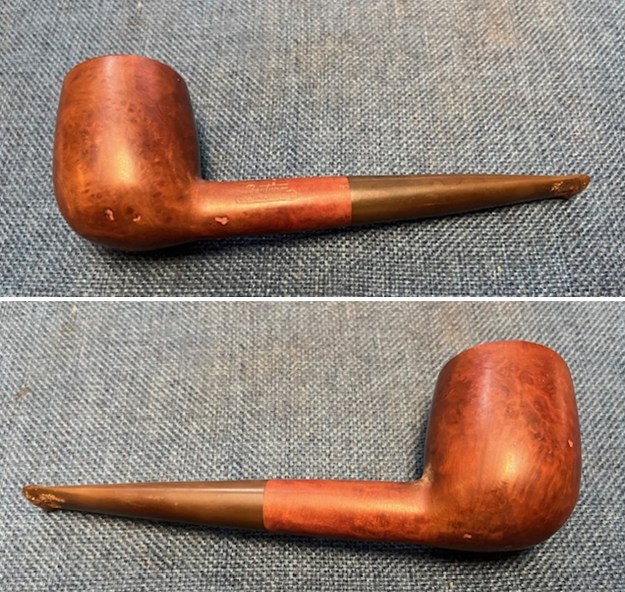
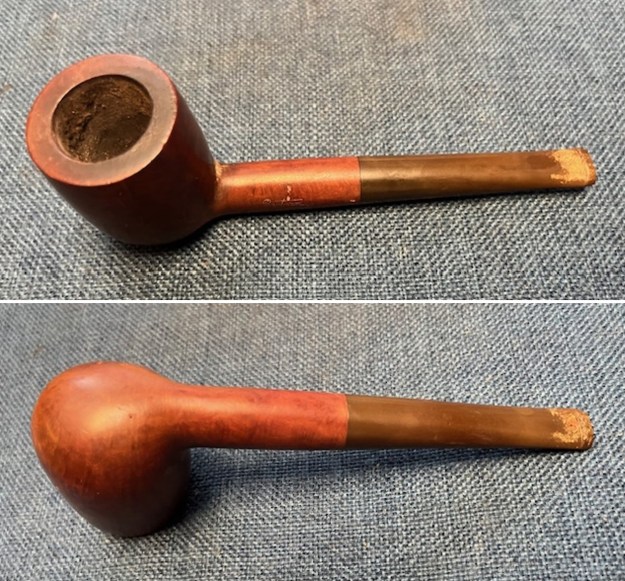
Restoring the 10th of 11 pipes sent for restoration – a Bertram Straight Billiard


by Steve Laug

A while back I was asked by a customer and friend, Jack to take on some projects for him. I have worked on a few pipes for him over the years so we seem to have a standing agreement that I will clean up his pipes. This time he sent a batch containing 11 pipes (actually as mentioned on the last pipe I can’t count) but going over it again I found I was right the first count. There were six Bertrams, an Arlington, a GBD, an old WDC Triangle Bakelite, Citation in need of a stem and one marked Texaco. All of them were in various conditions and would need different types of work. I took a photo of the pipes before I started working on them.I chose to work on the Bertram Straight Billiard that needed to be cleaned up and restored. This next one is from Jack’s 11 pipes – a dirty, dull Bertram with an oxidized tapered vulcanite stem. The pipe is stamped on the left side and reads Bertram [over] Washington D.C. centered on the shank. There is no shape number to be seen. The finish had a lot of grime ground into the bowl and some nicks and flaws where the fills were shrunken or broken around the sides. The bowl was moderately caked with a light lava coat on the top of the rim, heavier toward the back of the bowl. The edges looked okay other than some potential damage on the back inner edge. The stem was calcified, oxidized, dirty and had tooth chatter and marks on the top and underside ahead of the button. The photos show the condition of the stem surface. There were no markings or a logo on the taper stem. Like the rest of the Bertrams that Jack sent, this one had promise but it was very dirty. I took photos of the pipe before I started his cleanup work. I took photos of the rim top and the stem to show the condition. You can see the cake in the bowl and overflow of lava on the rim top. The photos of the stem show the calcification, tooth marks and chatter on the top and underside of the stem and the button. I took photos of the stamping on the left and underside of the shank to capture it. The Bertram stamp was clear and readable as noted above. Once restored again it will have a long life ahead of it. I removed the stem and took a photo of the parts to give a sense of the look of the pipe.As I have worked on a lot Bertrams in the past, I have written on the brand and have included the following information. If you have read it in past blogs, you can skip over it. If you have not, I have included the link to Bertram history and information. I would recommend that if you don’t know much about them take some time to read the background. I include a link to the write up on Pipedia (http://pipedia.org/wiki/Bertram).Bertram pipes were based out of Washington DC. They were popular among famous politicians and celebrities of the time. They made many products for them from FDR’s cigarette holders to Joseph Stalin’s favorite pipe. They were considered some of the best America had to offer till they finally closed their doors in the 70s. Bertram graded their pipes by 10s and sometimes with a 5 added (15, 25, 55 etc.), the higher the grade the better. Above 60s are uncommon and 80-90s are quite rare. I have worked on one 120 Grade billiard. I have several blogs that I have written on rebornpipes that give some history and background to Bertram pipes. (https://rebornpipes.com/2015/06/16/an-easy-restoration-of-a-bertram-grade-60-217-poker/).

I have included the following link to give a bit of historical information on the pipe company. It is a well written article that gives a glimpse of the heart of the company. http://www.streetsofwashington.com/2012/01/bertrams-pipe-shop-on-14th-street.html#

From this information I learned that all of these Bertrams were made before the closure of the shop in the 1970s. This Bertram Bent Billiard has some mixed grain around the bowl. This pipe does not appear to have a Grade stamp on it but the fills make my think a lower grade due to the quality of the briar. But like many of these Bertrams the Grading system is a mystery to me.

I started my work on the pipe by reaming the bowl with a PipNet reamer. I used the first cutting head and took the cake back to bare briar. I cleaned up the reaming with a Savinelli Fitsall Pipe Knife and removed all the remnants of the cake. I scraped the rim top with the flat edge of the blade at the same time and removed most of the thick lava build up. I sanded the walls of the bowl with a piece of dowel wrapped in 220 grit sandpaper. The walls look very good at his point in the process. The darkening on the rim top and inner edge of the bowl would need to be dealt with. I cleaned up the inner edge and the rim top with a folded piece of 220 grit sandpaper and was able to remove the darkening. I also started to sand the shank repair at the same time. The old warrior is visible in the photos below.I cleaned out the shank, the airway and the mortise with alcohol, cotton swabs, hard bristle and soft bristle pipe cleaners. It was a very dirty pipe which just meant that it had really been enjoyed by the previous pipe man. Since I was restemming the pipe I would do the clean out on the new stem when I got to it. I scrubbed the exterior of the bowl and shank with a tooth brush and undiluted Murphy’s Oil Soap. I scrubbed the lava on the rim top and overflow on the outside of the bowl with the soap. I rinsed  the briar with warm water to remove the grime and debris of the scrubbing. It looked significantly better after the scrubbing. The darkening on the rim top is very clear. Once cleaned the bowl with the soap I brought it back to the work top and examined it. This was a pipe full of fills around the heel of the bowl. All were shrunken and need of repair. I filled in all of the damaged fills with clear CA glue. I smoothed them out with a dental spatula. Once the repairs cured I sanded them smooth with 220 grit sandpaper to blend them into the surface of the briar. Once finished it looked much better. I sanded the bowl it with 320-3500 grit sanding pads to further remove the stain and make a more transparent finish on the rim top, the bowl and shank. The light spots blended in better. The briar began to take on a rich shine and the repairs to the repairs blended in better with work. The photos tell the story. I polished the bowl and rim top with micromesh sanding pads – dry sanding it with 1200-15000 grit pads. I wiped the bowl down with a damp cloth after each sanding pad. The grain started to rise to the surface and the repairs blended even more as I polished it. I rubbed the bowl and shank down with Before & After Restoration Balm to deep clean the finish on the bowl and shank. The product works to clean, enliven and protect the briar. I worked it in with my fingers to get it into the briar. I let it sit for 10 minutes then I wiped it off and buffed it with a soft cloth. The briar really began to have a rich shine. I took some photos of the bowl at this point to mark the progress in the restoration. It is a beautiful bowl. I laid the bowl aside and turned my attention to fitting a new stem. I made a decision about switching the short taper stem on this pipe to one of the other Bent Billiards that I needed to restem. I went through my stems and found one that did not have a tenon but was very close to the diameter of the shank – slightly larger but very workable. I would use the original stem on the bent. I chose this saddle fishtail stem for this one. It would take some work to clean up bu tit would look good.  I cleaned out the the airway in the stem with pipe cleaners and isopropyl alcohol. It was a dirty  stem.To fit the tenon to the shank I used several flat files and reduced the tenon size. I cleaned it up with a Dremel and sanding drum, flat files and sand paper until the fit was snug in the shank. It was going to work well.I sanded the saddle portion of the stem with 220 grit sandpaper to adjust the fit to the shank. By the time I was finished sanding it the stem very well to the shank and the transition was smooth. I sanded the surface of the new vulcanite saddle stem with the 2 x 2-inch sanding pads – 320-3500 grit pads to clean up the sanding marks on the stem surface. By the final 3500 grit pad the stem started to really shine.I polished the stem with micromesh sanding pads – dry sanding with 1500-12000 grit pads. I wiped the stem down after each sanding pad with Obsidian Oil. I polished the stem with Before & After Pipe Stem Polish – both Fine and Extra Fine. I gave it a coat of Obsidian Pipe Stem Oil. It works to protect the stem from oxidizing. I set it aside to dry. I am excited to finish this Bertram Washington DC Straight Billiard with a saddle stem. I put the pipe back together and buffed it with Blue Diamond on the buffing wheel. I gave the bowl multiple coats of carnauba wax. I buffed the pipe with a clean buffing pad to raise the shine and then by hand with a microfibre cloth to deepen it. It is fun to see what the polished bowl looks like with beautiful grain on the smooth portions and the rustication depths all around it. The polished grain on the pipe looks great with the black vulcanite stem. This Bertram Billiard is great looking and the pipe feels great in my hand. It is light and well balanced. Have a look at it with the photos below. The dimensions are Length: 6 inches, Height: 2 inches, Outside diameter of the bowl: 1 ½ inches, Chamber diameter: 7/8 of an inch. The weight of the pipe is 51 grams/1.73 ounces. It is another beautiful pipe that I will send to Jack after I finish working on the last of the pipes. I look forward to hear what he thinks of this resurrected beauty. It should be a great smoking pipe.

As always, I encourage your questions and comments as you read the blog. Thanks to each of you who are reading this blog. Remember we are not pipe owners; we are pipe men and women who hold our pipes in trust until they pass on into the trust of those who follow us.

Restoring the 9th of 12 pipes sent for restoration – a Bertram 60 Bent Billiard with a new stem


by Steve Laug

A while back I was asked by a customer and friend, Jack to take on some projects for him. I have worked on a few pipes for him over the years so we seem to have a standing agreement that I will clean up his pipes. This time he sent a batch containing 11 pipes (actually as mentioned on the last pipe I can’t count) There are 12 pipes – six Bertrams, an Arlington, a GBD, an old WDC Triangle Bakelite, Citation in need of a stem and one marked Texaco. All of them were in various conditions and would need different types of work. I took a photo of the pipes before I started working on them.I chose to work on the Bertram 60 Bent Billiard that needed to be restemmed next. This next one is from Jack’s 12 pipes – a dirty, dull Grade 60 Bertram with a ruined tapered vulcanite stem. It is of note that the pipe had a previously snapped and repair shank. The work was well done but would need to be touched up a bit. The pipe is stamped on the underside side near the stem with the Grade 60 number. On the left side it is stamped Bertram [over] Washington D.C. centered on the shank. The finish had a lot of grime ground into the smooth finish on the bowl and some nicks and flaws around the sides of the bowl. The bowl was moderately caked with an overflowing lava coat on the top of the rim, heavier toward the back of the bowl. The edges looked okay other than some potential damage on the back inner edge. The ruined stem was calcified, oxidized, dirty and had tooth chatter and cracks on the top and underside of the button and ahead of the button. I believe it is a replacement as the tenon is short and the stem too long for the proportions of the pipe. The photos show the condition of the stem surface. It will need to be replaced. There were not markings or a logo on the taper stem. Like the rest of the Bertrams that Jack sent, this one had promise but it was very dirty. I took photos of the pipe before I started his cleanup work. I took photos of the rim top and the stem to show the condition. You can see the thick cake in the bowl and overflow of lava on the rim top. The photos of the damaged (I would say ruined) stem show the thick calcification, tooth marks, bite throughs, cracks in the button and heavy damage in the vulcanite on the top and underside of the stem and the button. I took photos of the briar plug in the heel of the bowl and the crack around the shank just ahead of the bowl. It has obviously been repaired and there are places that the repair has chipped and shows wear and damage. I took photos of the stamping on the left and underside of the shank to capture it. The Bertram stamp was faint but still readable as noted above. The 60 stamp was more faint on the underside but is visible with a lens. This was obviously someone’s favourite pipe and went through multiple large repairs to keep it working. Once restored again it will have a long life ahead of it. I removed the stem and took a photo of the parts to give a sense of the look of the pipe. As I have worked on a lot Bertrams in the past, I have written on the brand and have included the following information. If you have read it in past blogs, you can skip over it. If you have not, I have included the link to Bertram history and information. I would recommend that if you don’t know much about them take some time to read the background. I include a link to the write up on Pipedia (http://pipedia.org/wiki/Bertram).Bertram pipes were based out of Washington DC. They were popular among famous politicians and celebrities of the time. They made many products for them from FDR’s cigarette holders to Joseph Stalin’s favorite pipe. They were considered some of the best America had to offer till they finally closed their doors in the 70s. Bertram graded their pipes by 10s and sometimes with a 5 added (15, 25, 55 etc.), the higher the grade the better. Above 60s are uncommon and 80-90s are quite rare. I have worked on one 120 Grade billiard. I have several blogs that I have written on rebornpipes that give some history and background to Bertram pipes. (https://rebornpipes.com/2015/06/16/an-easy-restoration-of-a-bertram-grade-60-217-poker/).

I have included the following link to give a bit of historical information on the pipe company. It is a well written article that gives a glimpse of the heart of the company. http://www.streetsofwashington.com/2012/01/bertrams-pipe-shop-on-14th-street.html#

From this information I learned that all of these Bertrams were made before the closure of the shop in the 1970s. This Bertram Bent Billiard has some stunning mixed grain around the bowl. This pipe has a 60 Grade stamp on it which I am sure explains the quality of the briar. But like many of these Bertrams the Grading system is a mystery to me.

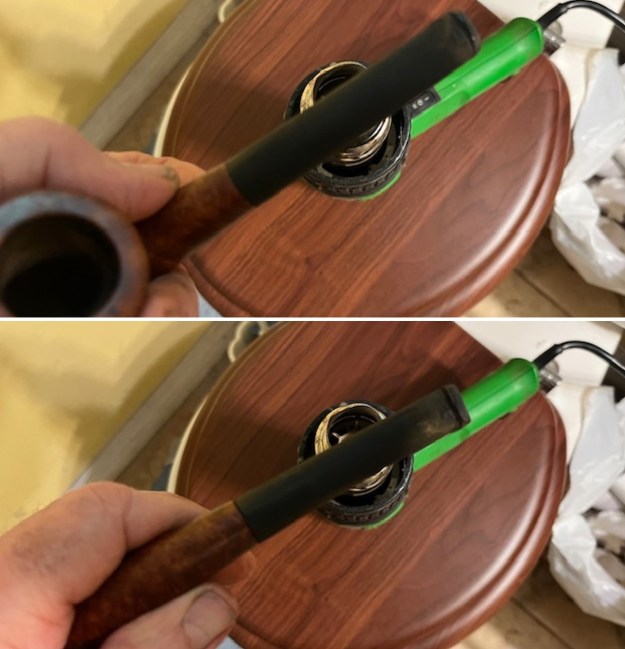
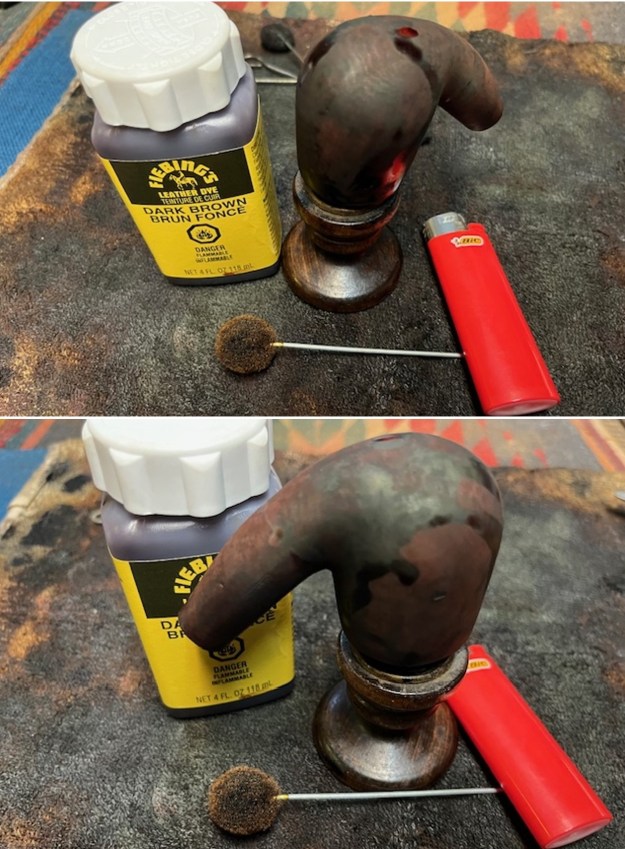
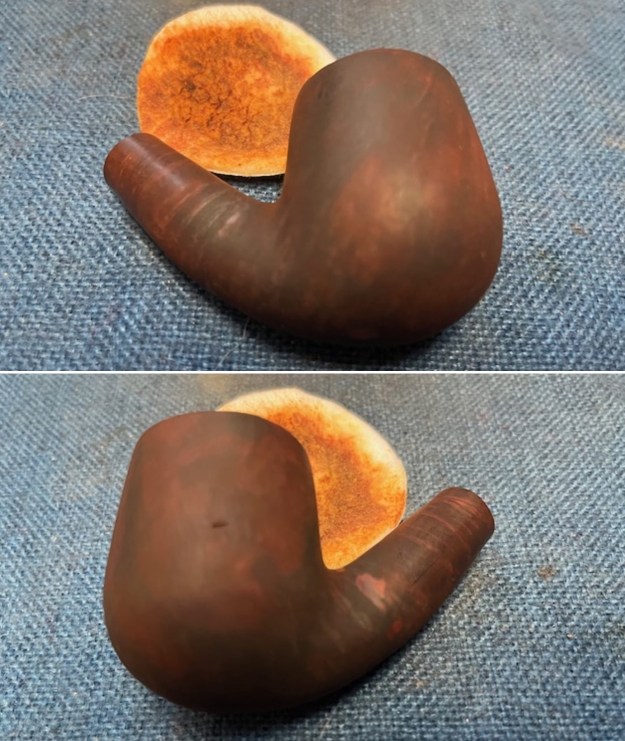
I started my work on the pipe by reaming the bowl with a PipNet reamer. I used the first cutting head and took the cake back to bare briar. I cleaned up the reaming with a Savinelli Fitsall Pipe Knife and removed all the remnants of the cake. I scraped the rim top with the flat edge of the blade at the same time and removed most of the thick lava build up. I sanded the walls of the bowl with a piece of dowel wrapped in 220 grit sandpaper. The walls look very good at his point in the process. The darkening on the rim top and inner edge of the bowl would need to be dealt with. I cleaned up the inner edge and the rim top with a folded piece of 220 grit sandpaper and was able to remove the darkening. I also started to sand the shank repair at the same time. The old warrior is visible in the photos below.I cleaned out the shank, the airway and the mortise with alcohol, cotton swabs, hard bristle and soft bristle pipe cleaners. It was a very dirty pipe which just meant that it had really been enjoyed by the previous pipe man. Since I was restemming the pipe I would do the clean out on the new stem when I got to it.I scrubbed the exterior of the bowl and shank with a tooth brush and undiluted Murphy’s Oil Soap. I scrubbed the lava on the rim top and overflow on the outside of the bowl with the soap. I rinsed the briar with warm water to remove the grime and debris of the scrubbing. It looked significantly better after the scrubbing. The darkening on the rim top is very clear. Once cleaned the bowl with the soap I brought it back to the work top and examined it. Not only had the cracked shank been repaired which I had already seen clearly, there was also a plug in the bottom of the bowl where some one had repaired a burned through area. This was a pipe full of surprises.I decided to address the two repairs – the shank and the damage around the plug first. I sanded the repairs with 220 grit sandpaper to clean them up further. Once smooth I wiped the bowl down with a damp cloth and then filled in the damaged areas with clear CA glue and briar dust. Once the repaired areas cured I sanded off the mixture with 220 grit sandpaper to smooth them out and start the process of blending them into the surrounding briar. With the repairs larger than life and very obvious with the current finish on the pipe, I decided to stain it. I used a Dark Brown Aniline stain. I applied it with a dauber and flamed it with a lighter to set it in the briar. I set it aside to let the stain cure. Once the stain cured I wiped the bowl down with isopropyl alcohol on cotton pads to remove some of it and make the stain more transparent. It took some work but sanding it further would do the job and blend in the light spots as well. I sanded the bowl it with 320-3500 grit sanding pads to further remove the stain and make a more transparent finish on the rim top, the bowl and shank. The light spots blended in better. The briar began to take on a rich shine and the repairs to the repairs blended in better with work. The photos tell the story. I polished the bowl and rim top with micromesh sanding pads – dry sanding it with 1200-15000 grit pads. I wiped the bowl down with a damp cloth after each sanding pad. The grain started to rise to the surface and the repairs blended even more as I polished it. I rubbed the bowl and shank down with Before & After Restoration Balm to deep clean the finish on the bowl and shank. The product works to clean, enliven and protect the briar. I worked it in with my fingers to get it into the briar. I let it sit for 10 minutes then I wiped it off and buffed it with a soft cloth. The briar really began to have a rich shine. I took some photos of the bowl at this point to mark the progress in the restoration. It is a beautiful bowl. I laid the bowl aside and turned my attention to fitting a new stem. I went through my stems and found one that was very close to the diameter of the shank – slightly larger but very workable. I would pitch the chewed and cracked stem in light of this fishtail one. This new one would need a lot of work to clean up but it would look good. To fit the tenon to the shank I used several flat files and reduced the tenon size. I cleaned it up with a Dremel and sanding drum, flat files and sand paper until the fit was snug in the shank. It was going to work well.It was a used stem so it had some tooth marks and chatter on the stem. I “painted” the stem surface with the flame of a lighter to lift them. I was able to lift some. I filled in what remained with black rubberized CA glue. With the work done other than fitting the stem to the shank perfectly I decided to bend the stem to fit the shank. I heated the stem with a heat gun, moving the stem over the hot air until it became soft and flexible. I bent it at the angle needed over the round of the bunch buffer in the background.I worked on the diameter of the stem at the shank first with my Dremel and sanding drum to get it close to what I wanted. I followed that by sanding it with 220 grit sandpaper. I constantly checked the fit on the shank and once I had it ready I wiped the stem down with a bit of Obsidian Oil and took the photos below. It began to really look very good.I sanded the surface of the vulcanite with the 2 x 2-inch sanding pads – 320-3500 grit pads to clean up the sanding marks and remaining casting marks on the stem surface. By the final 3500 grit pad the stem started to really shine.I polished the stem with micromesh sanding pads – dry sanding with 1500-12000 grit pads. I wiped the stem down after each sanding pad with Obsidian Oil. I polished the stem with Before & After Pipe Stem Polish – both Fine and Extra Fine. I gave it a coat of Obsidian Pipe Stem Oil. It works to protect the stem from oxidizing. I set it aside to dry. I cleaned out the drilling and sanding debris from the airway in the stem with pipe cleaners and isopropyl alcohol. It was clean other than the dust.I am excited to finish this Bertram Washington DC 60 Bent Billiard with a newly fit taper stem. I put the pipe back together and buffed it with Blue Diamond on the buffing wheel. I gave the bowl multiple coats of carnauba wax. I buffed the pipe with a clean buffing pad to raise the shine and then by hand with a microfibre cloth to deepen it. It is fun to see what the polished bowl looks like with beautiful grain on the smooth portions and the rustication depths all around it. The polished grain on the pipe looks great with the black vulcanite stem. This Bertram Bent Billiard is great looking and the pipe feels great in my hand. It is light and well balanced. Have a look at it with the photos below. The dimensions are Length: 5 ½ inches, Height: 2 inches, Outside diameter of the bowl: 1 3/8 inches, Chamber diameter: ¾ of an inch. The weight of the pipe is 50 grams/1.80 ounces. It is another beautiful pipe that I will send to Jack after I finish working on the other 2 pipes. I look forward to hear what he thinks of this resurrected beauty. It should be a great smoking pipe.

As always, I encourage your questions and comments as you read the blog. Thanks to each of you who are reading this blog. Remember we are not pipe owners; we are pipe men and women who hold our pipes in trust until they pass on into the trust of those who follow us.

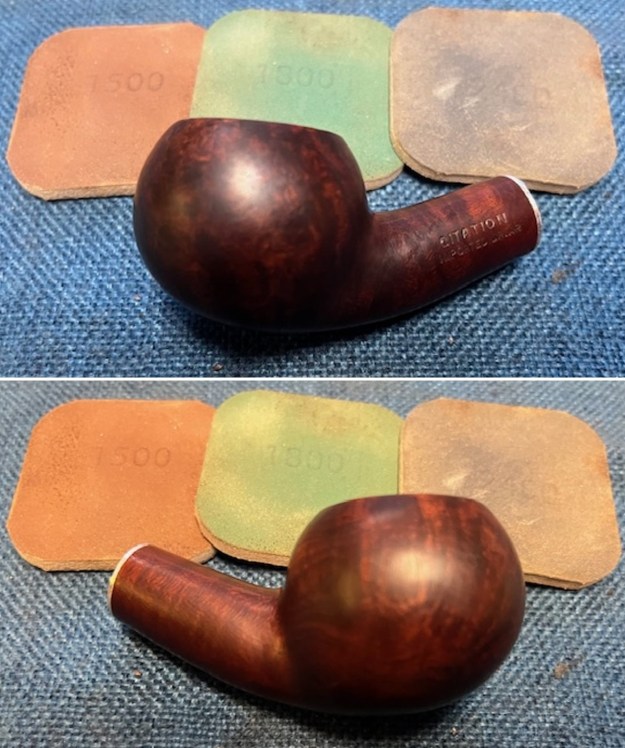
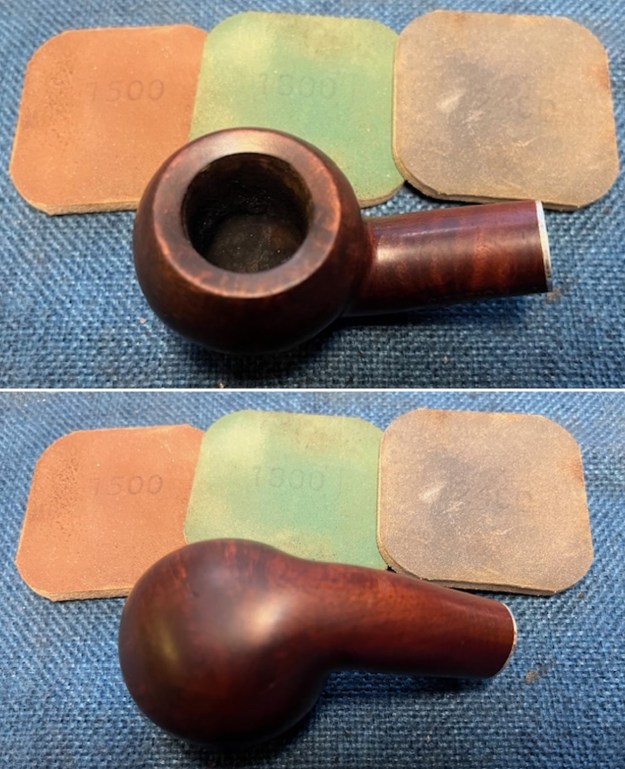
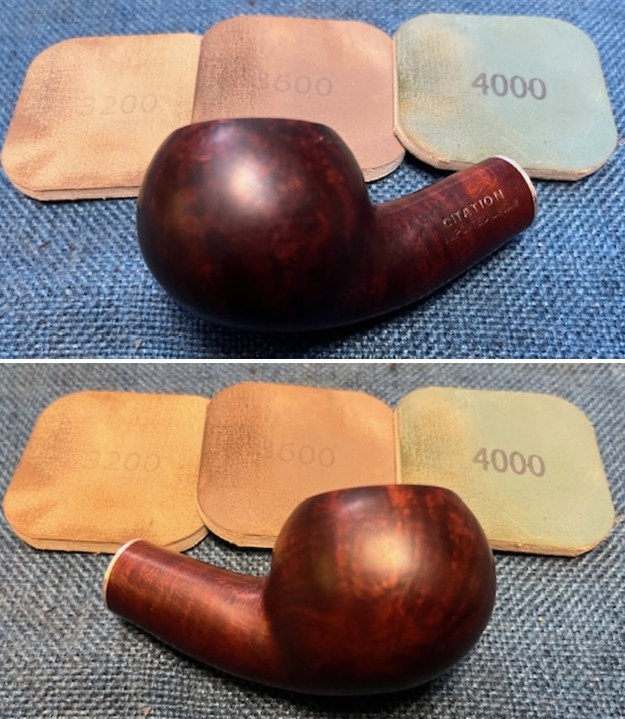
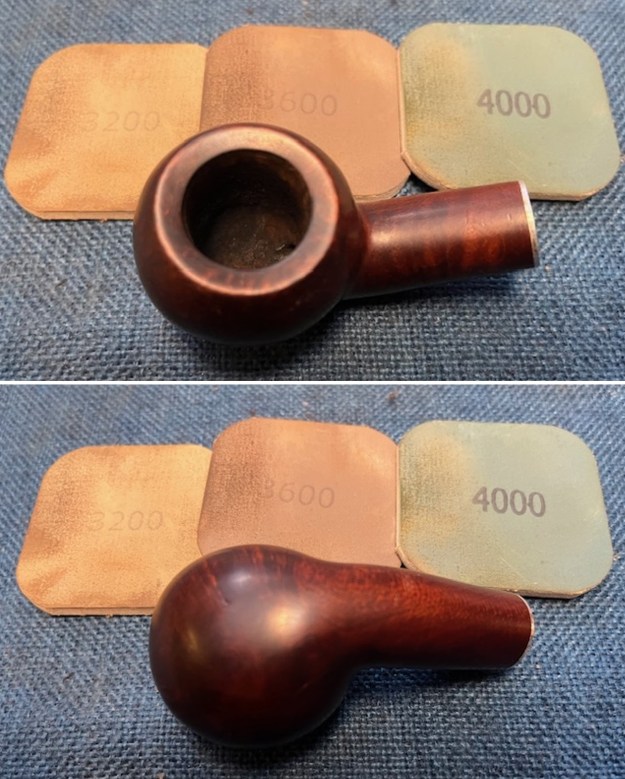
Retemming and Restoring a Citation Imported Briar ¼ Bent Apple – Jack’s 12th Pipe


by Steve Laug

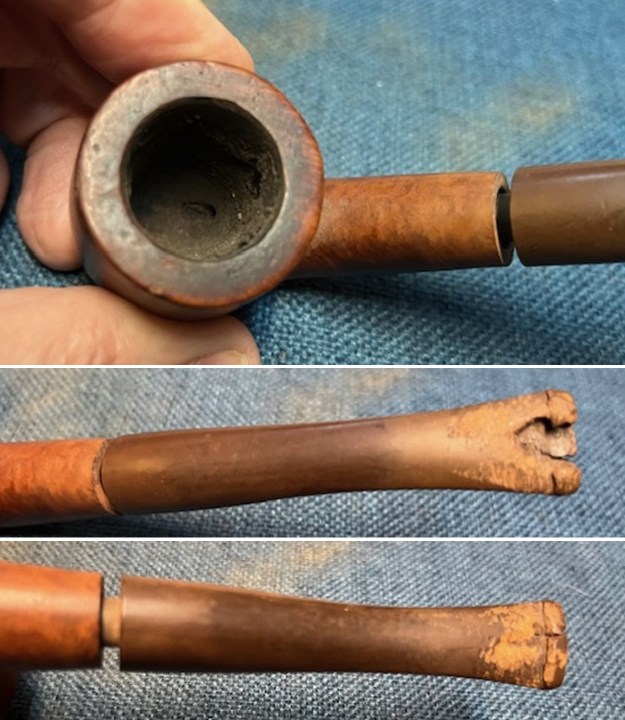
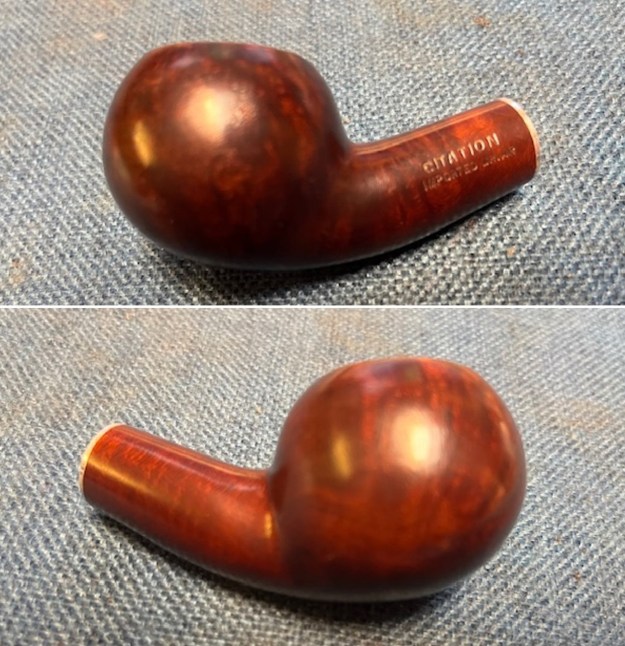
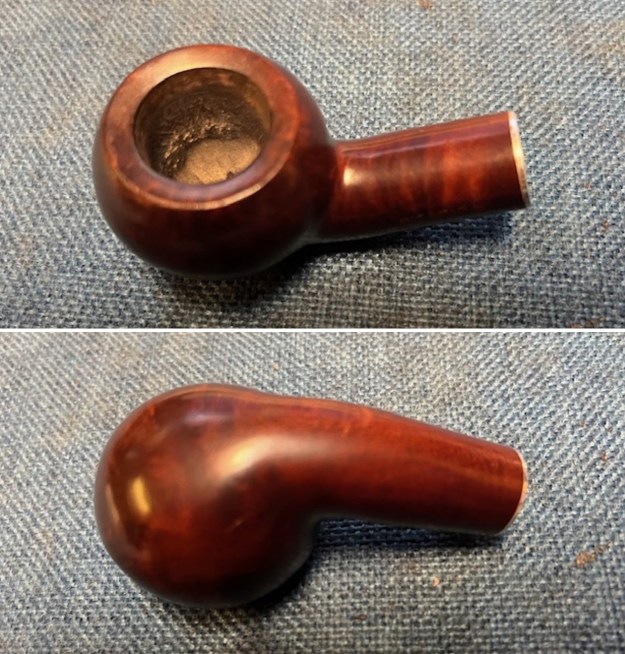
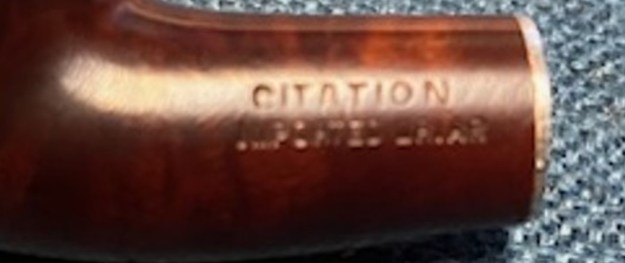
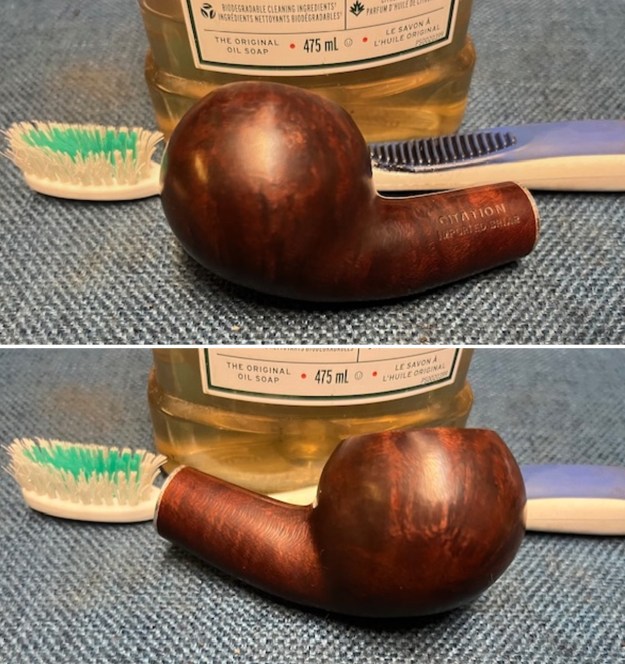
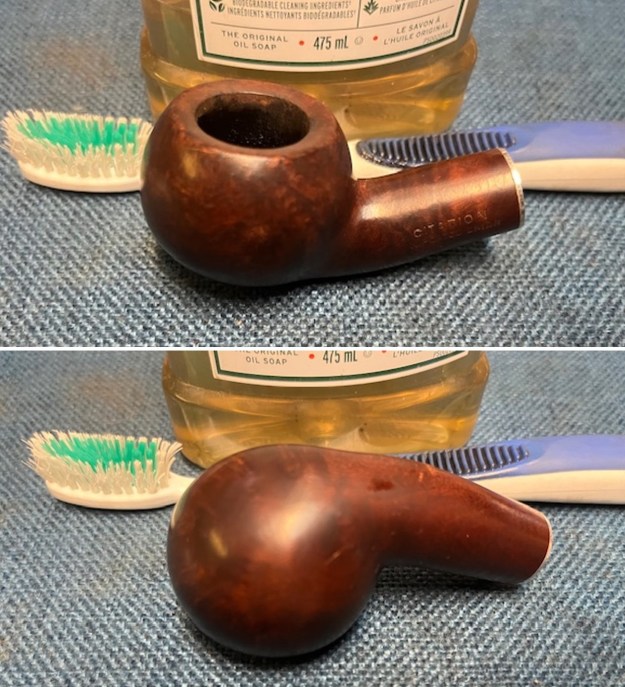
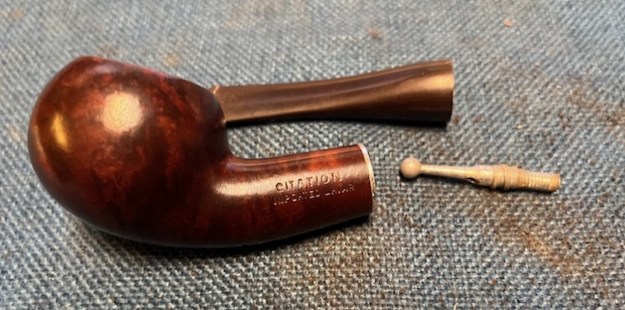
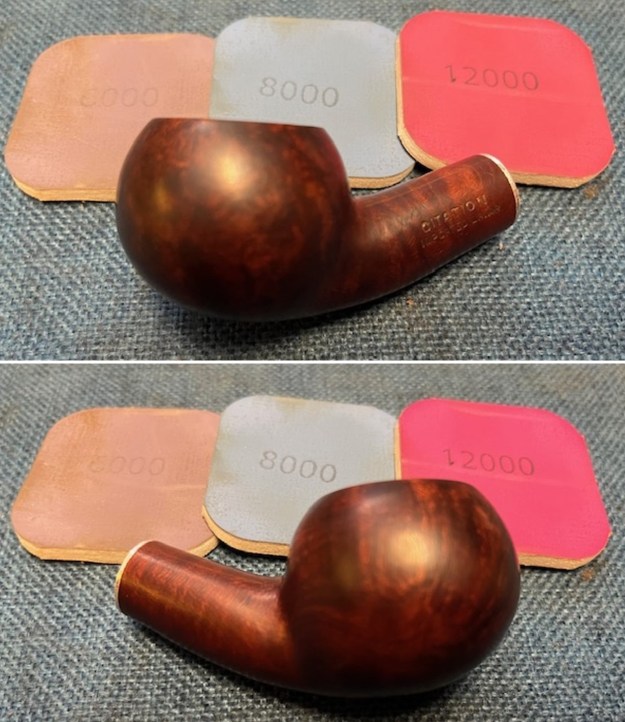
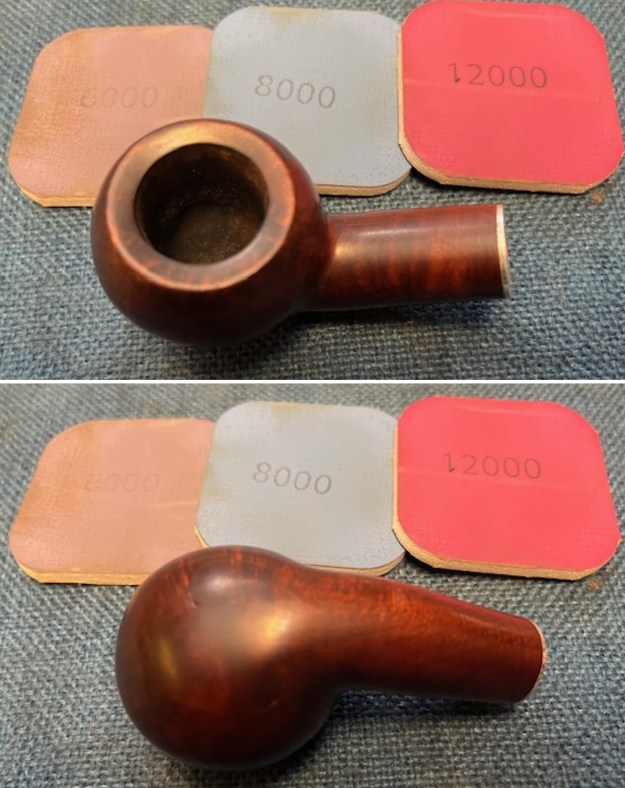
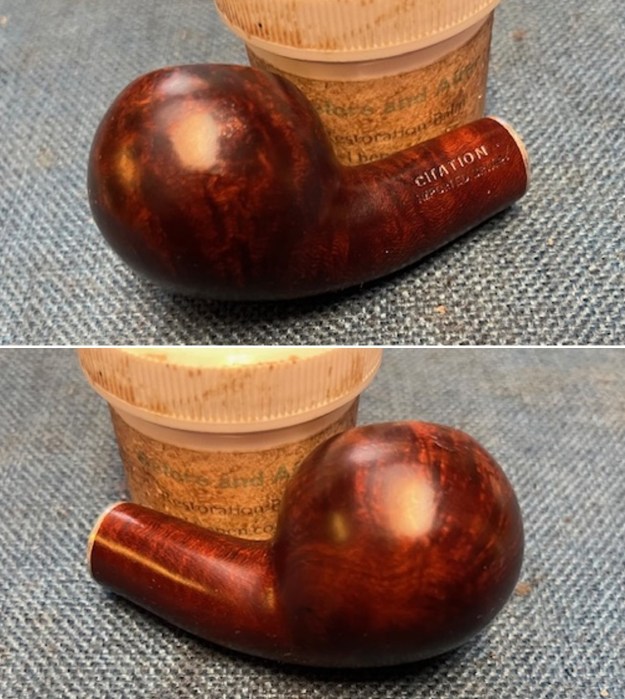
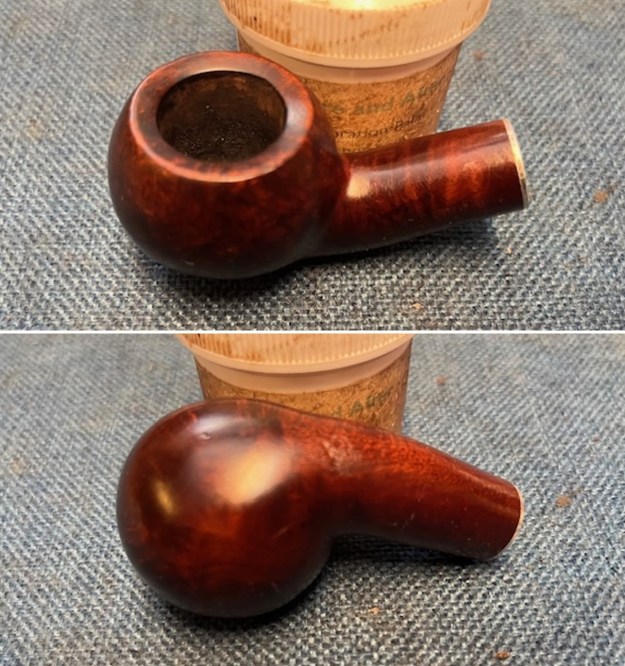
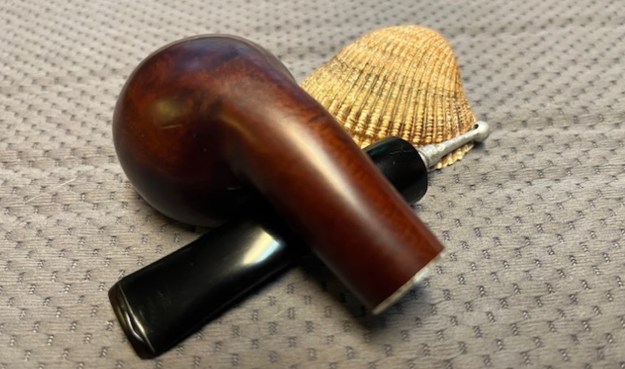
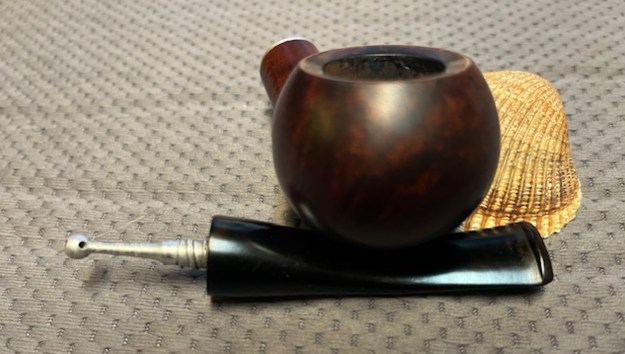
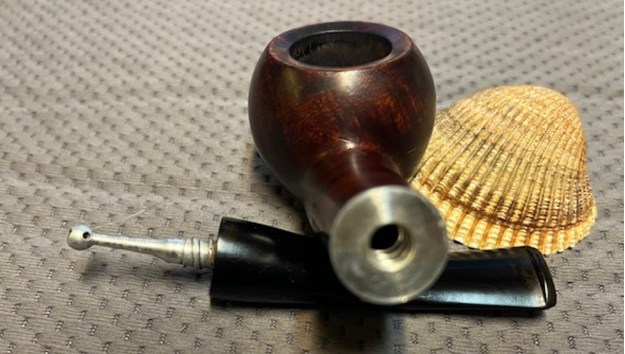
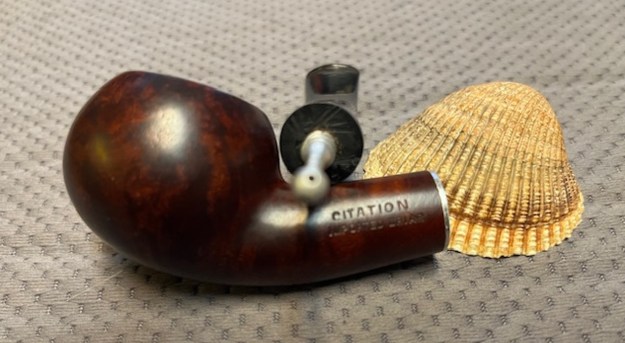
A while back I was asked by a customer and friend, Jack to take on some projects for him. I have worked on a few pipes for him over the years so we seem to have a standing agreement that I will clean up his pipes. This time he sent a batch containing 11 pipes – six Bertrams, an Arlington, a GBD, an old WDC Triangle Bakelite and one marked Texaco. All of them were in various conditions and would need different types of work. I took a photo of the pipes before I started working on them. He sent them to me and evidently, I cannot count. There was a 12th bowl sans stem in the box that was a Citation Imported Briar.After finishing the first seven pipes I was kind of excited that the light at end of the tunnel was showing. I went through the box to see what I had left to work on. There was a large Bertram Billiard and two Bertram Bent Billiards (needed restemming) and sitting at the bottom was a lonely bowl without a stem. It had a threaded mortise so it would have originally had a stinger. I decided to take a break from the Bertrams and work on this one next. It was a slightly bent apple or perhaps an author bowl that needed to be restemmed. This is more complicated that fitting a tenon as you will see in the unfolding tale below. This pipe is literally number 12 from Jack’s 11 pipes (that is correct, I cannot count evidently). It is a lightly used, dull bowl that is stamped on the left side and read CITATION [over] Imported Briar. The finish was dusty but otherwise quite clean. The bowl was clean of cake and lava build up and only dust had gathered in the bottom of the bowl. There was no stem so I would I would need to fit one with a stinger style tenon. Like the rest of the pipes that Jack sent, this one had promise that should come alive with a cleanup and new stem. I took photos of the bowl before I started his cleanup work. I took a photo of the stamping on the left side of the shank. It reads as noted above. It is clear and readable.I did some digging on the make of the Citation pipe and found two possible leads – one made by Savinelli in Italy and one made by Alpha in Israel. Both had the country of origin stamped on them and both used a script for the name of the brand. This one is block letters so I am left with a bit of a mystery. If anyone can give more clarity to this please leave a comment below. Thanks.
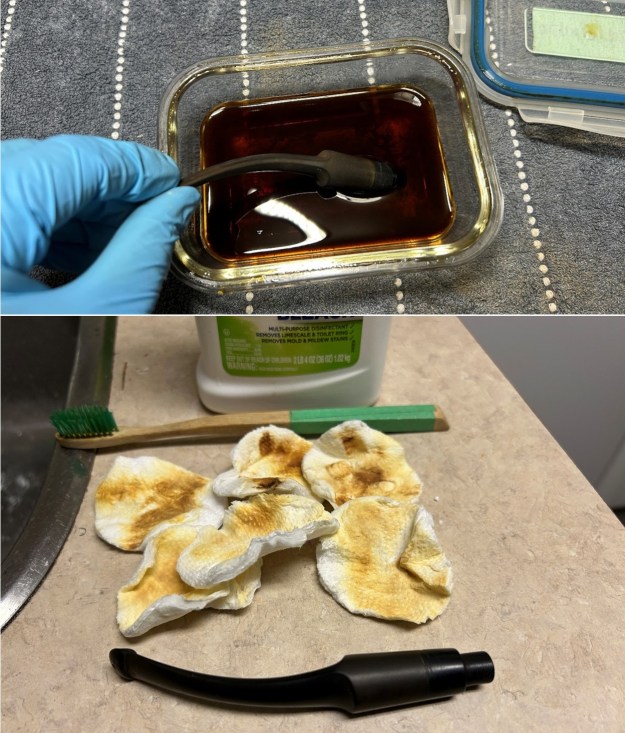
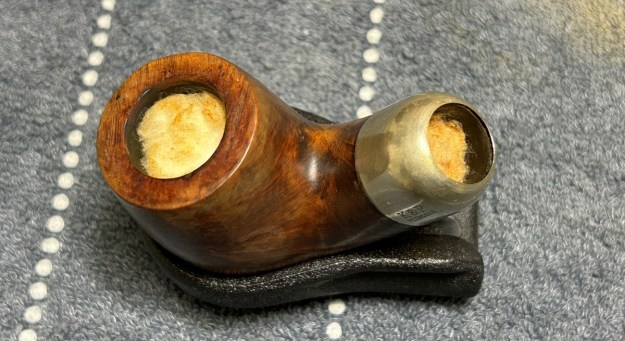
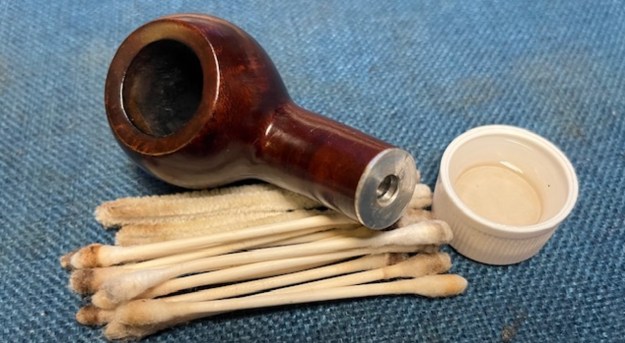
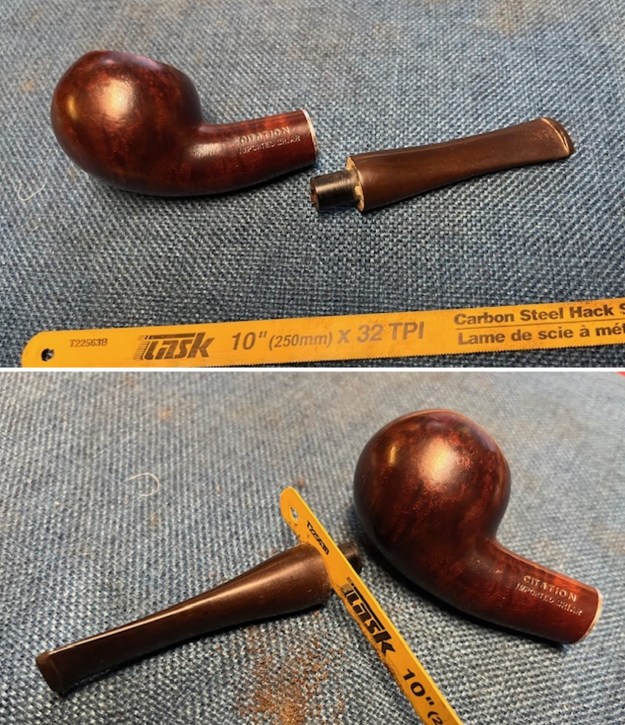
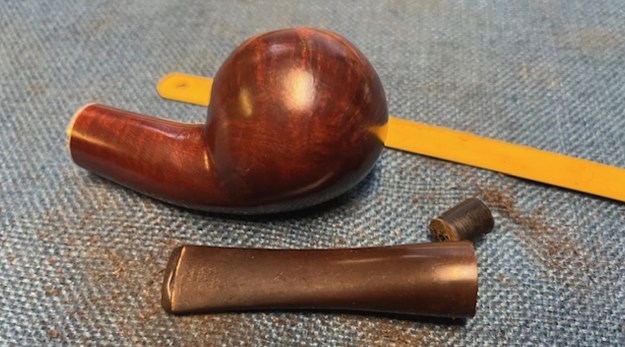
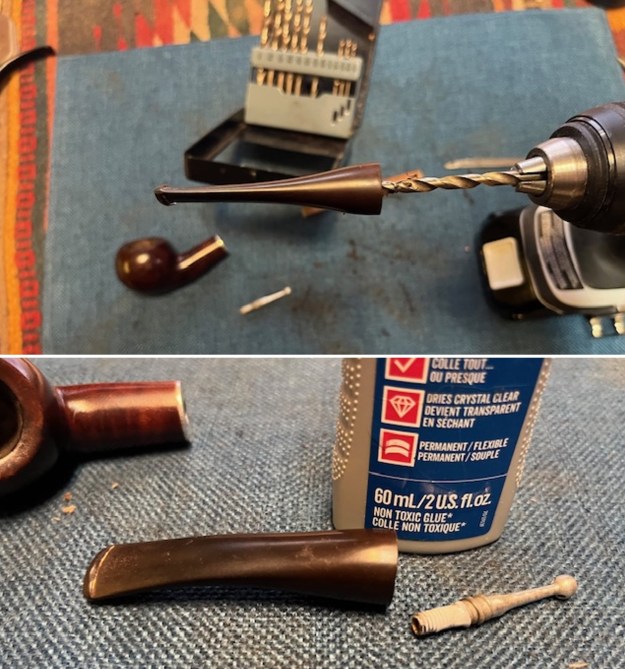
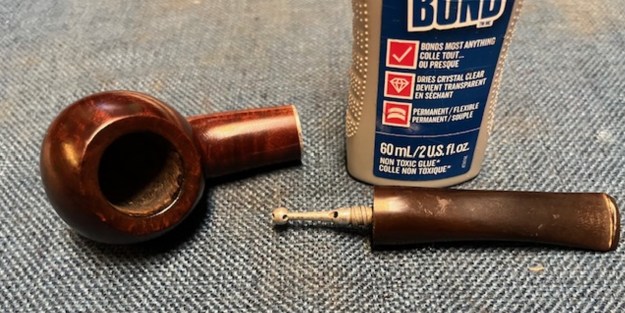
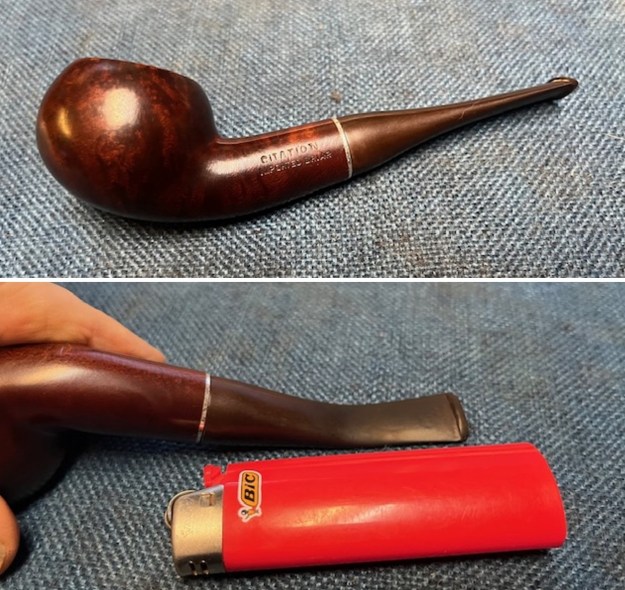
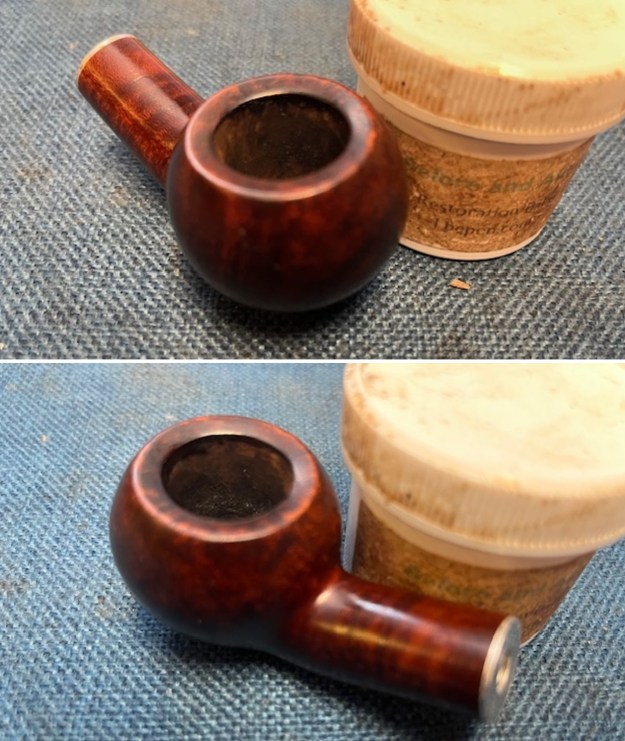
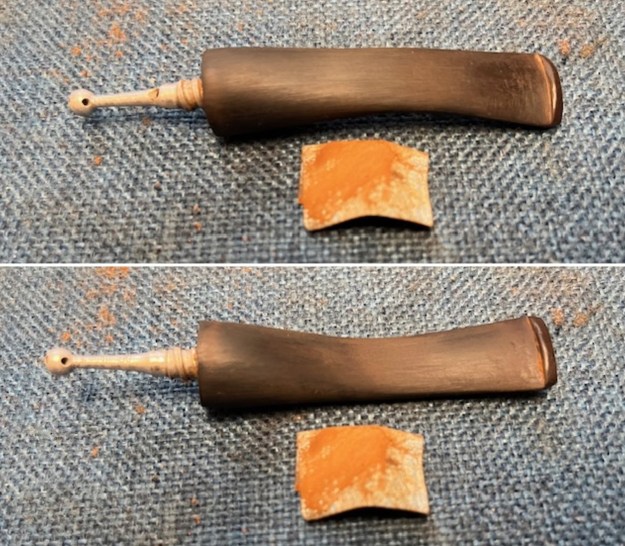
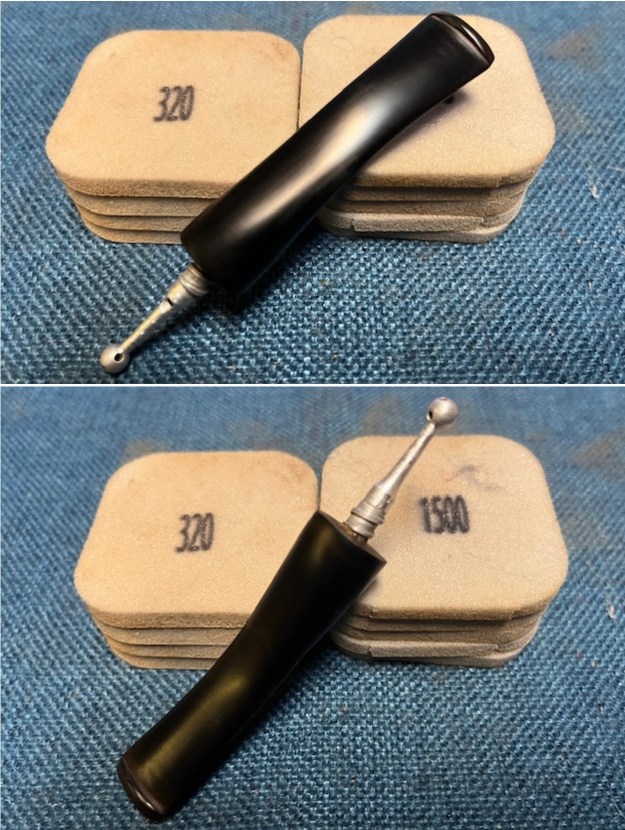
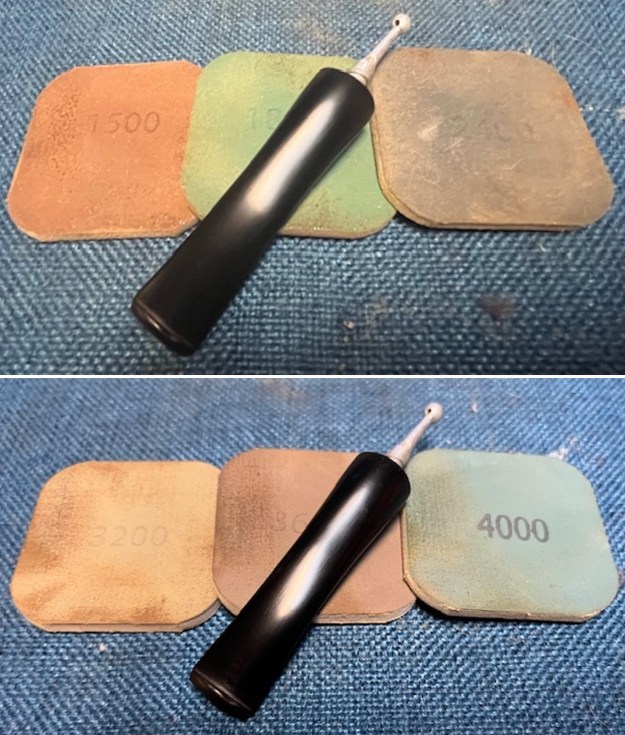
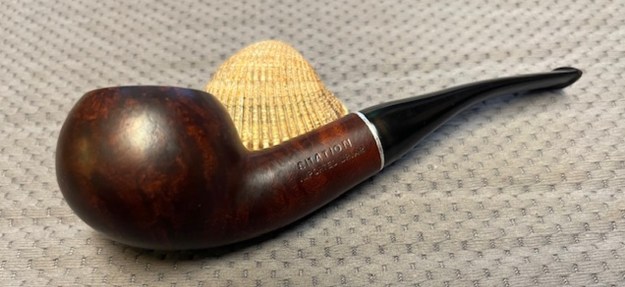
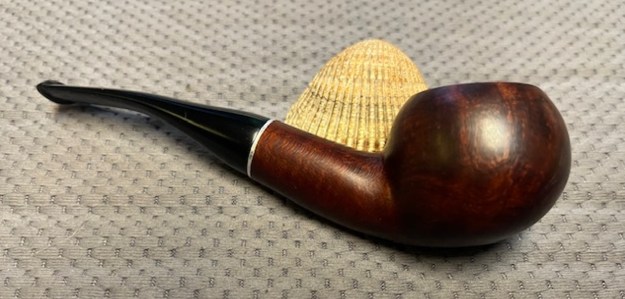
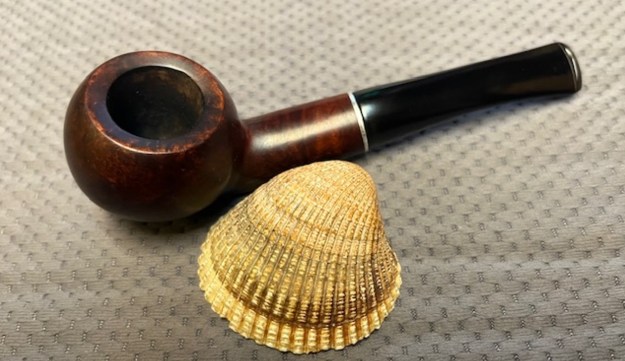
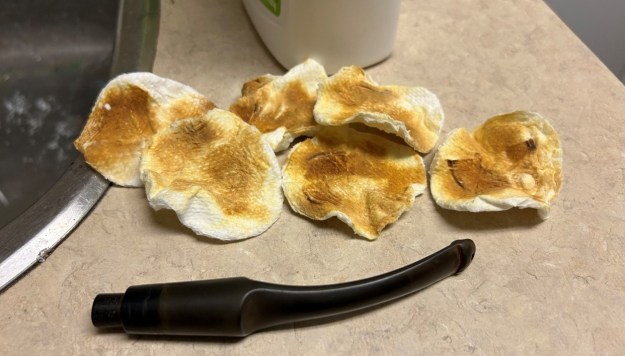
I started my work on the bowl by cleaning out the shank, the airway and the mortise with alcohol, cotton swabs, hard bristle and soft bristle pipe cleaners. It was a very dirty pipe which just meant that it had really been enjoyed by the previous pipe man. Since I was restemming the pipe I would do the clean out on the new stem when I got it.I scrubbed the exterior of the bowl and shank with a tooth brush and undiluted Murphy’s Oil  Soap. I scrubbed the dusty inside of the bowl with the soap. I rinsed the briar with warm water to remove the grime and debris of the scrubbing. It looked significantly better after the scrubbing. I paused from the bowl cleanup to see what I could find regarding a stem and a stinger that I could use. I found a stem that had the same diameter as the shank. It was a push stem so I cut off the tenon with a hacksaw blade. I have collected many stingers over the years and put them in a jar. I scavenged them from ruined stems and other places and have kept them all. I went through the jar and found the stinger I needed for this mortise. I threaded it into the shank and checked the fit. It was perfect.Now I had the proper stem and the proper stinger tenon. Now I had to put those pieces together in such a way that the stem lined up properly with the shank. I drilled out the airway in the stem with my cordless drill. I checked the fit of the threaded end of the stinger in the airway and it fit well. I cleaned the inside of the airway with alcohol and pipe cleaners so that it would be clean(no photos taken). I threaded it into the shank and marked the top. I unscrewed it and coated it with a layer of all purpose glue. I turned it into the stem end and set it aside to dry. The glue did not cure hard enough and when I turned it into the shank it popped loose. I reglued it with black CA rubberized glue and set aside once again. Once the tenon hardened in the stem I screwed it onto the shank and lined it all up to make sure it was straight! It was perfect! I “painted” the stem surface with the flame of a lighter to soften the vulcanite so I could bend it. Once it was flexible I set the bowl rim top down and pressed down on the stem where I wanted the bend to be and let it cool in that position.Since it was in decent condition after cleaning it I polished the briar with micromesh sanding pads – dry sanding with 1500-12000 grit sanding pads. I wiped it down after each pad with a damp cloth to remove the sanding debris. It looked very good once I finished. I rubbed the bowl and shank down with Before & After Restoration Balm to deep clean the finish on the bowl and shank. The product works to clean, enliven and protect the briar. I worked it in with my fingers to get it into the briar. I let it sit for 10 minutes then I wiped it off and buffed it with a soft cloth. The briar really began to have a rich shine. I took some photos of the bowl at this point to mark the progress in the restoration. It is a beautiful bowl. I set the bowl aside and turned my attention back to the vulcanite stem. I sanded it with 220 grit sandpaper to remove the oxidation and smooth out the tooth chatter on the surface. It looked better.I sanded the surface of the vulcanite with the 2 x 2-inch sanding pads – 320-3500 grit pads to clean up the sanding marks and remaining casting marks on the stem surface. By the final 3500 grit pad the stem started to really shine.I polished the stem with micromesh sanding pads – dry sanding with 1500-12000 grit pads. I wiped the stem down after each sanding pad with Obsidian Oil. I polished the stem with Before & After Pipe Stem Polish – both Fine and Extra Fine. I gave it a coat of Obsidian Pipe Stem Oil. It works to protect the stem from oxidizing. I set it aside to dry. I am excited to finish this Citation Bent Apple/Author with a newly fit taper stem and metal stinger tenon. I put the pipe back together and buffed it with Blue Diamond on the buffing wheel. I gave the bowl and the stem multiple coats of carnauba wax. I buffed the pipe with a clean buffing pad to raise the shine and then by hand with a microfibre cloth to deepen it. It is fun to see what the polished bowl looks like with beautiful grain all around it. The polished grain on the pipe looks great with the new black vulcanite stem. This Citation Bent Apple/Author is great looking and the pipe feels great in my hand. It is light and well balanced. Have a look at it with the photos below. The dimensions are Length: 5 ½ inches, Height: 1 ½ inches, Outside diameter of the bowl: 1 ¼ inches, Chamber diameter: 7/8 of an inch. The weight of the pipe is 43 grams/1.52 ounces. It is another beautiful pipe that I will send to Jack after I finish working on the other 4 pipes. I look forward to hear what he thinks of this next beauty. It should be a great smoking pipe.
As always, I encourage your questions and comments as you read the blog. Thanks to each of you who are reading this blog. Remember we are not pipe owners; we are pipe men and women who hold our pipes in trust until they pass on into the trust of those who follow us.

Way Off the Beaten Track…


by Kenneth Lieblich

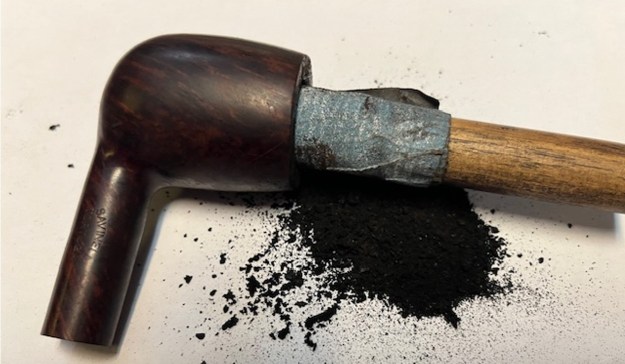
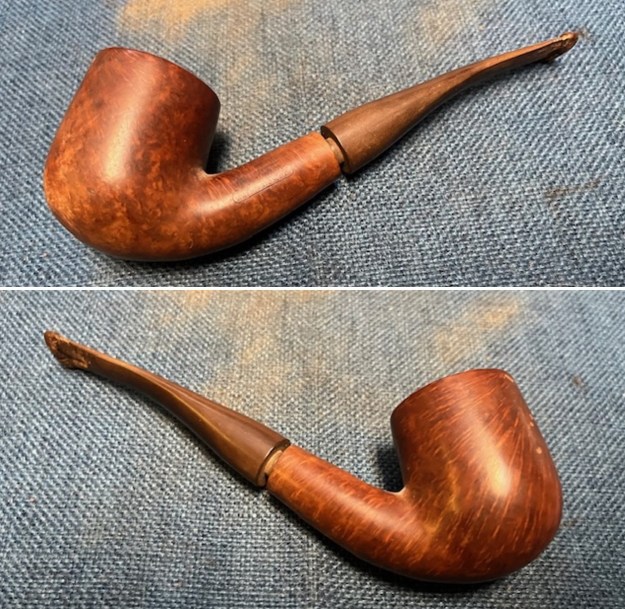
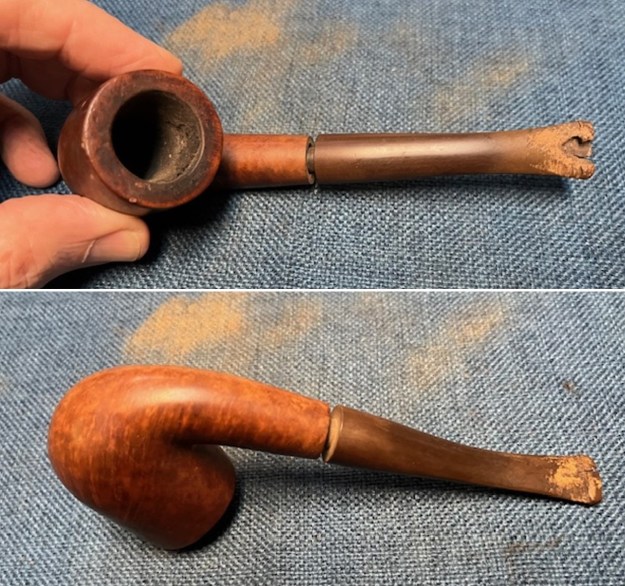
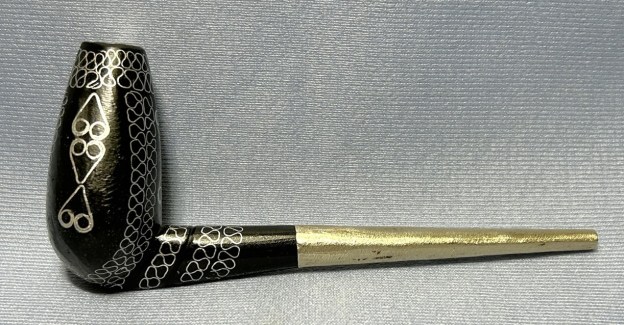
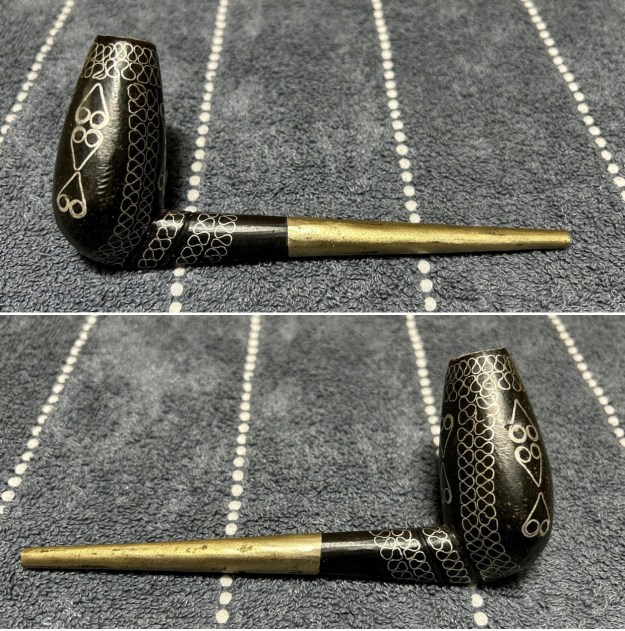
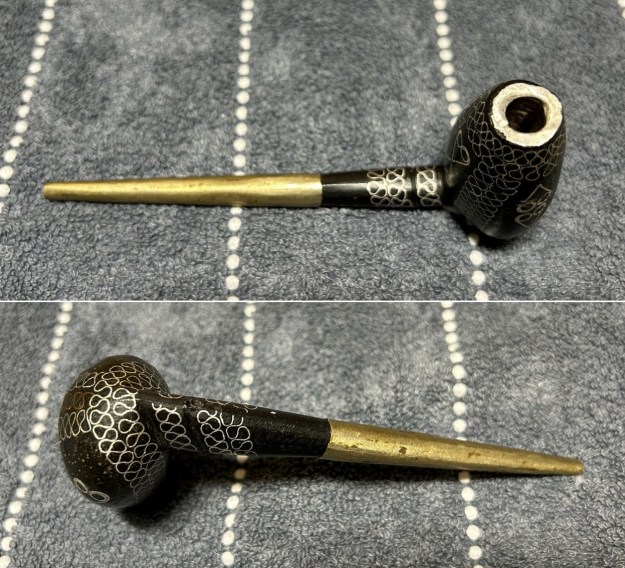
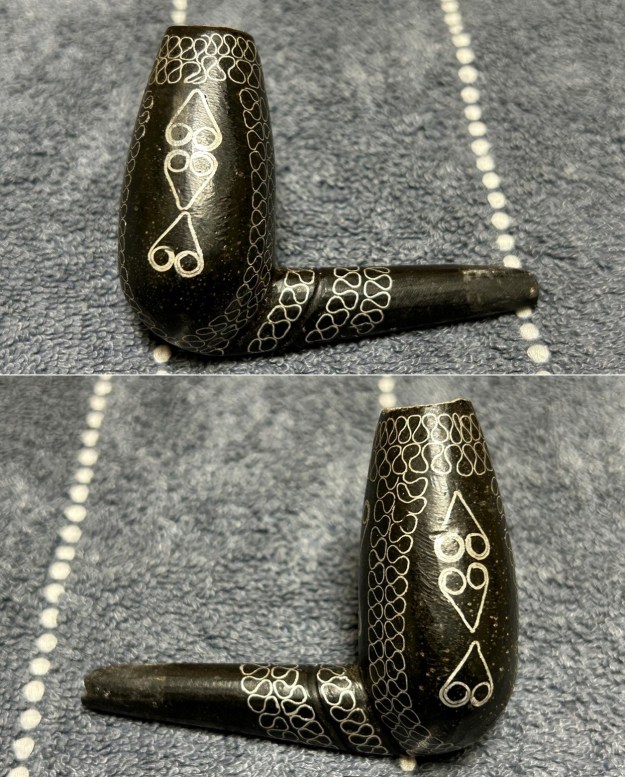
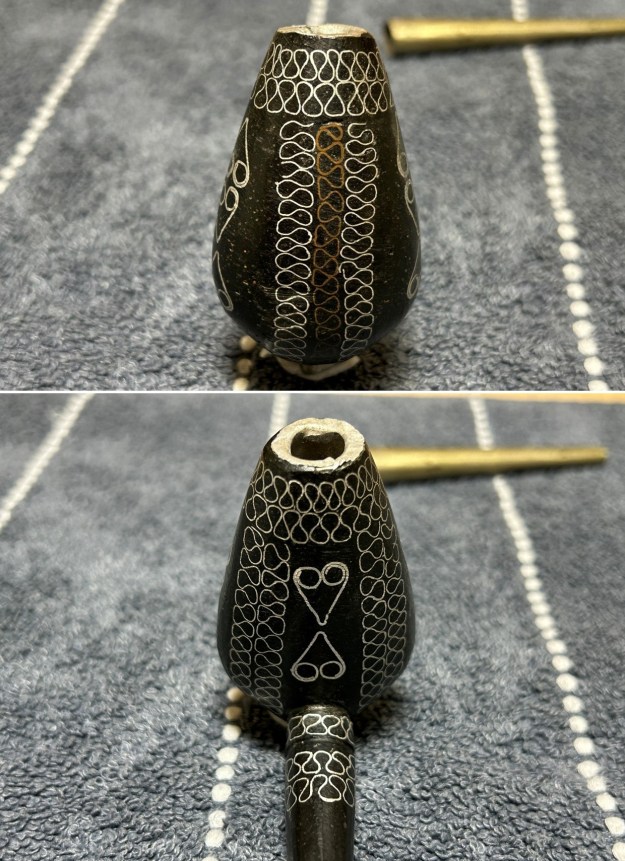
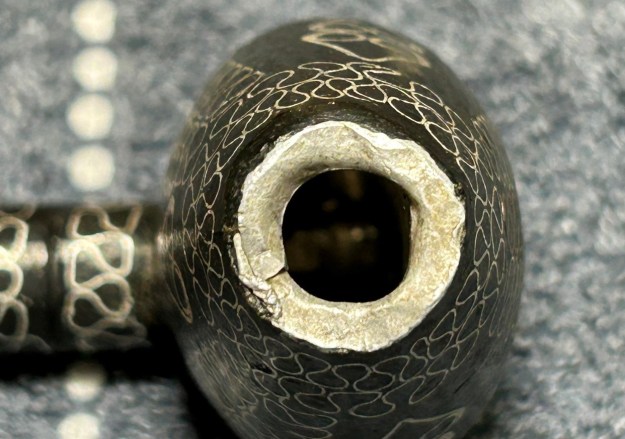
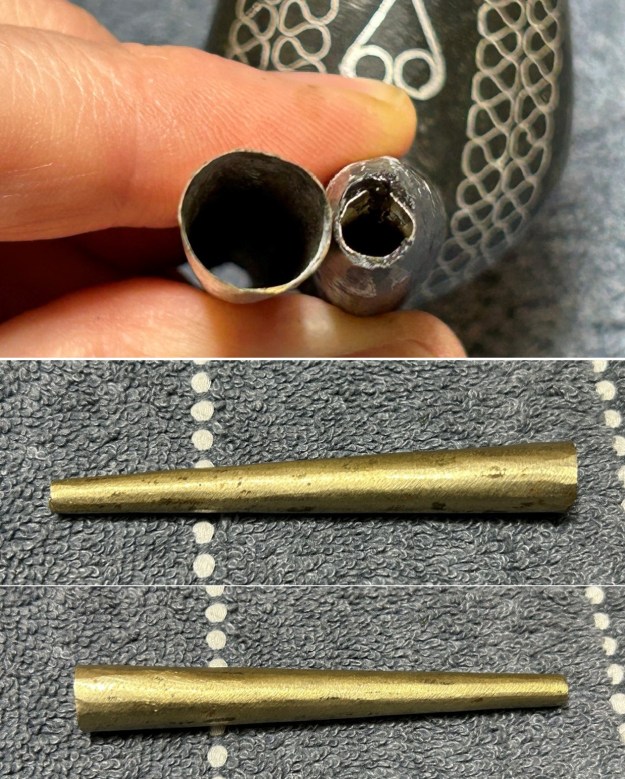
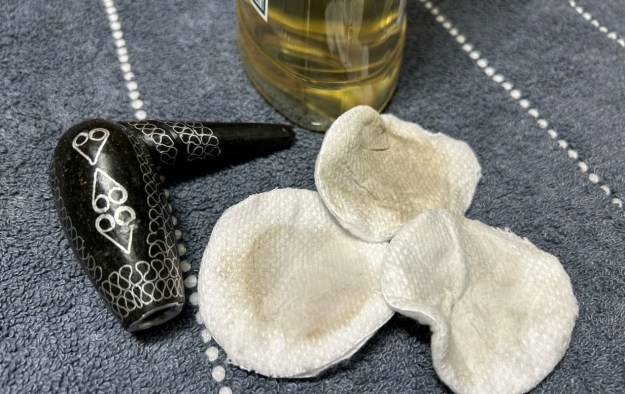
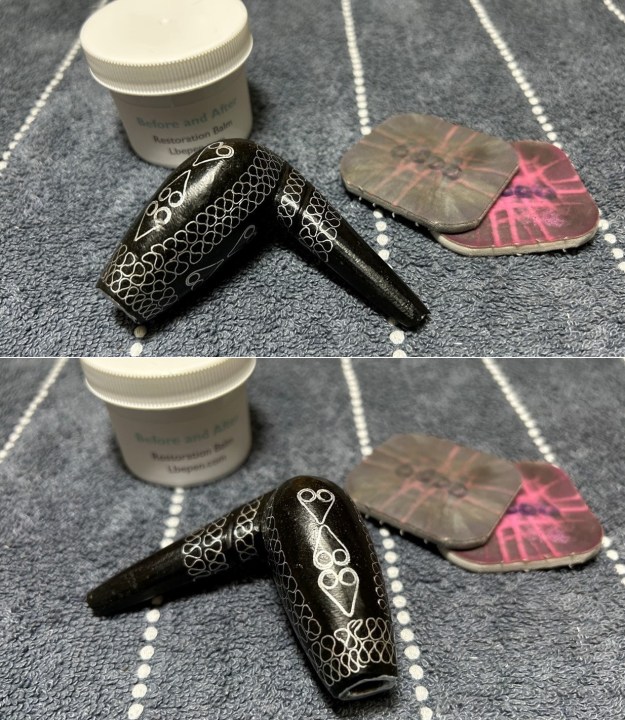
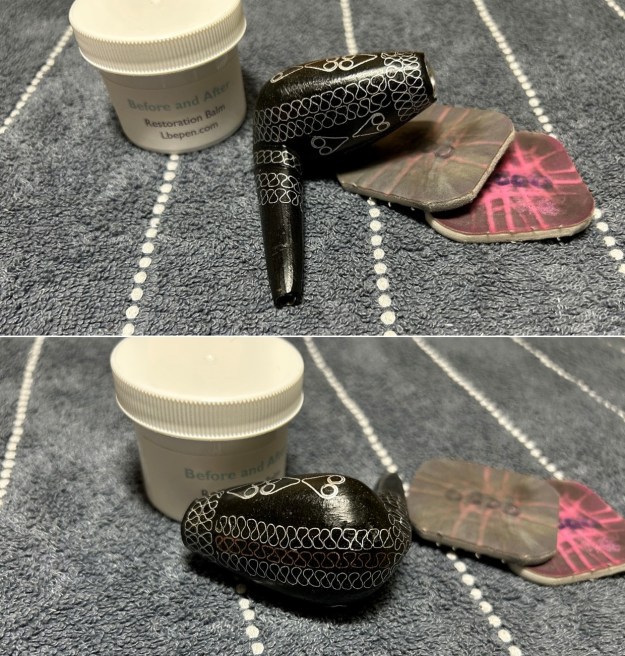
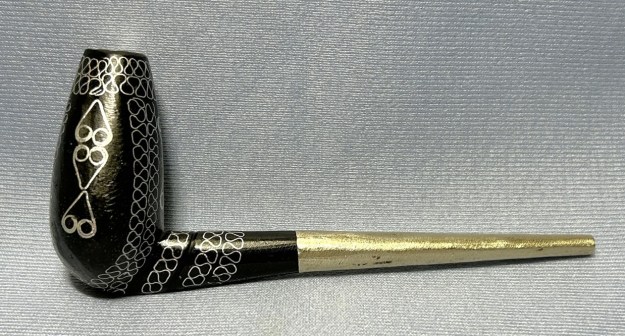
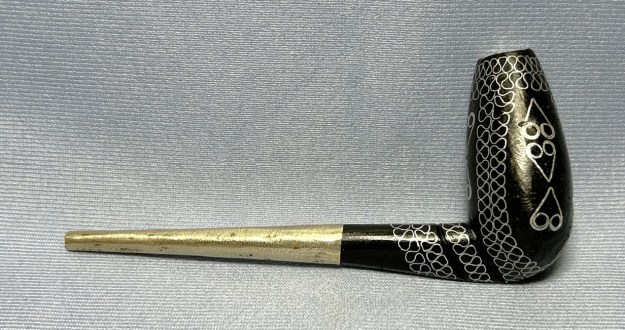
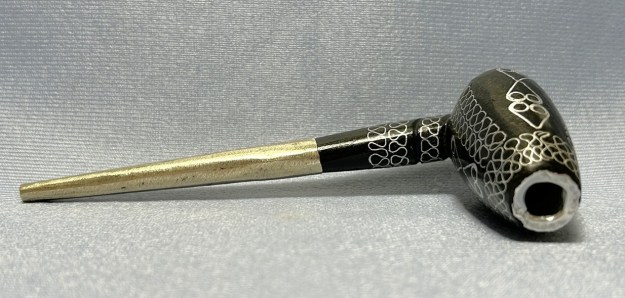
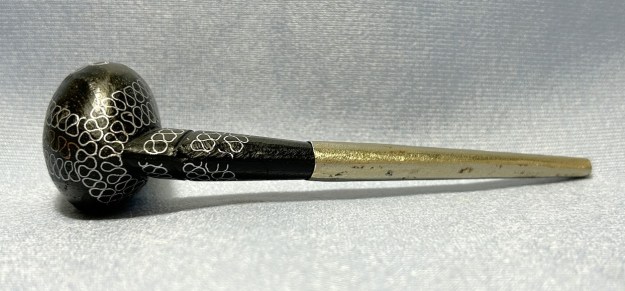
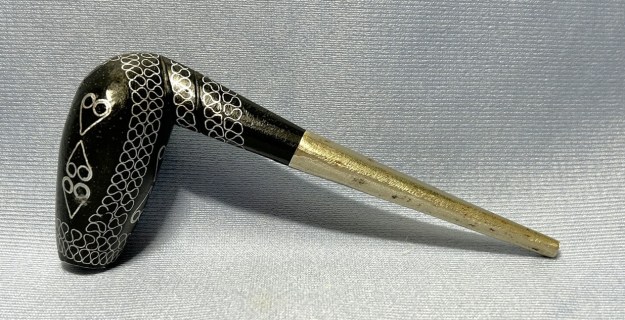
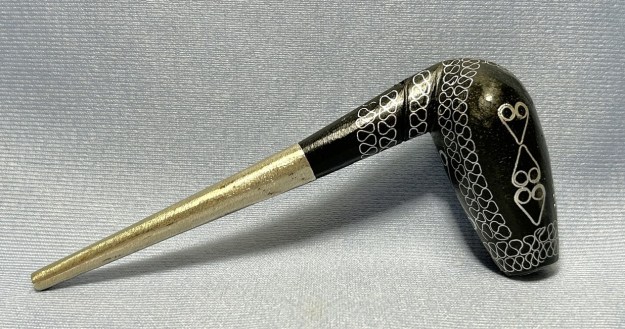
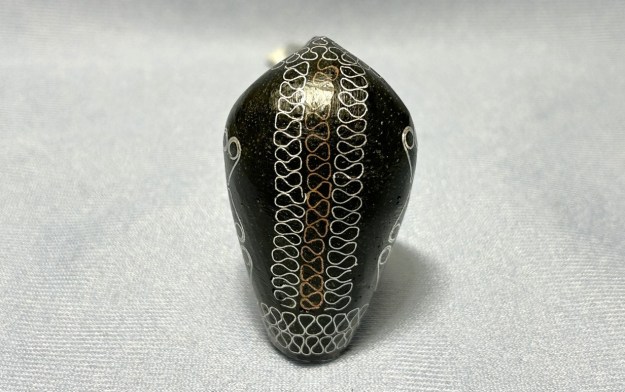
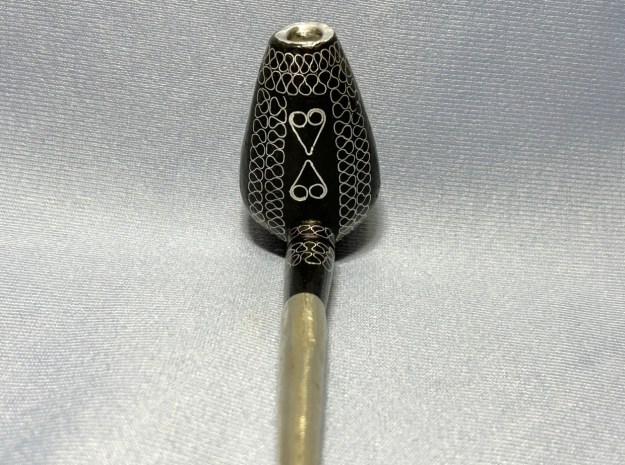
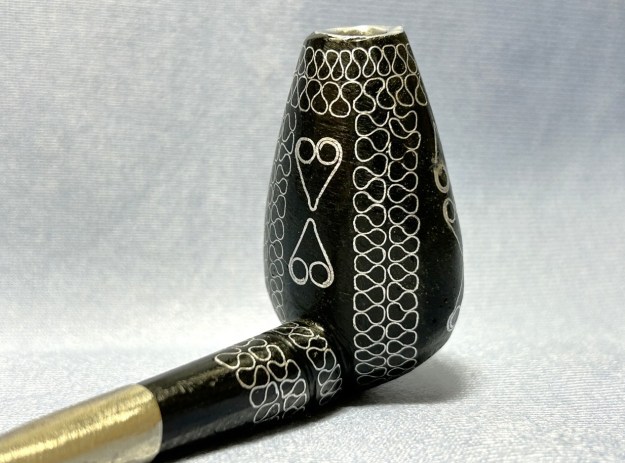
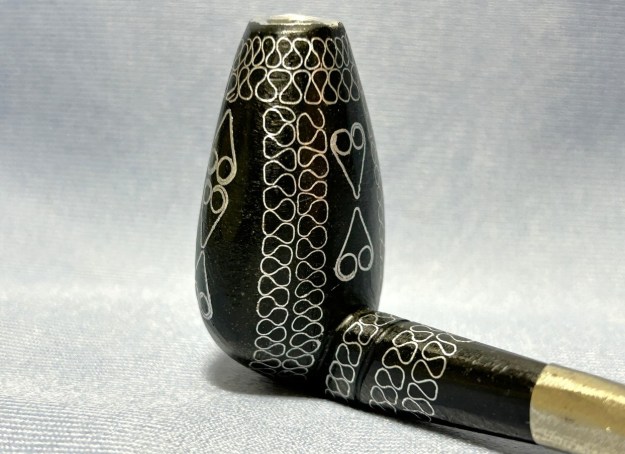
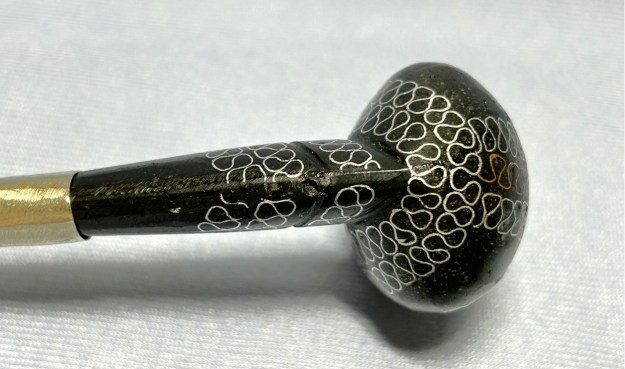
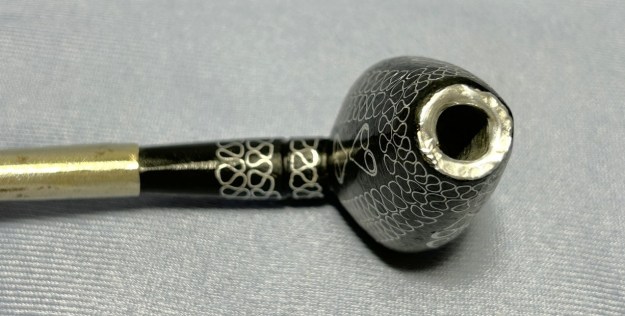
This remarkable and charming pipe came to me from an online auction, where it was described very simply as “Tuareg smoking pipe”. The seller had no more information. I was intrigued and tried to dig a little further. Most of the images I could fine online for pipes of the Tuareg people didn’t look like this. Tuareg pipes tend to be tubular in shape – but the materials used are similar to what I have here. The more I examined and studied this pipe, the more fascinated I became. It has a wonderful, rustic look and feel. Perhaps a brief word on the Tuareg people is in order. I was familiar with them, but only superficially. Here is a very brief summary of them, from the Bradshaw Foundation:

The Tuareg inhabit the Saharan regions of North Africa – Niger, Mali, Libya, Algeria and Burkina Faso. Tuareg is an Arabic term meaning abandoned by God. They call themselves Imohag, translated as free men. No one knows the true origin of the Tuareg, where they came from or when they arrived in the Sahara. Reputedly of Berber descent, the language of the Tuareg is Tamachek, with their own script known as Tifinagh, thought to have ancient Libyan roots. Their numbers are unclear, but estimates run between 300,000 and 1 million. The most striking attribute of the Tuareg is the indigo veil, worn by the men but not the women, giving rise to the popular name the Blue Men of the Sahara, or Men of the Veil. Men begin wearing a veil at the age 25.

Let’s take a closer look at this pipe. The wood is dark, dense, and hard. I am no dendrologist, but my elementary research tells me that this wood is likely either African blackwood (Dalbergia melanoxylon) or African ebony (Diospyros crassiflora). Both woods are quite similar insofar as they are both thoroughly black, extremely hard and dense, very difficult to work, and among the most expensive in the world. Based on what I read, my educated guess is that this is African blackwood – but that is only a guess. Perhaps the loveliest feature of this pipe are the decorative lines all along its side. Amazing workmanship! Both the stem and the inside of the stummel are made of metal – however, there are at least two metals involved (and possibly three). The metal inside the shank seems to be ferrous. I tested it with a magnet and it was strongly magnetic. However, neither the metal on the stem nor the metal inside the smoking chamber were magnetic. The metal Inside the smoking chamber seems soft – perhaps something like zinc. The stem, however, is clearly a different metal. It did have a bit of tarnish on it, and I think it is likely to be brass. But I don’t have a definitive answer. The overall condition of this pipe was very good. No problems to be resolved and only a little cleaning. My gut tells me that this pipe was never smoked, but I couldn’t swear to that. The stummel was quite clean and without major issues. There is a small hole on the underside, but that is deliberately there – either as a ventilation port or as a means of accessing the inside. The stem is just fine and has no issues of note.

I disinfected the inside of the stem with both pipe cleaners and cotton swabs dipped in lemon-infused 99% isopropyl alcohol. I scrubbed thoroughly to make sure the interior was very clean. I used only a few pipe cleaners and cotton swabs.Going to my sink, I used cream cleanser, cotton rounds, and some tube brushes, and scoured the stem to remove as much grime as possible. This was pretty easy, as the stem was quite clean.I deliberately did not sand either the stem or the stummel, as I wanted to maintain the hand-crafted nature of this pipe. Instead, I took the finest two or three micromesh pads and shined the surface. I also applied pipe-stem oil while using these pads. There was a wonderful, metallic shine to the stem when I was done.It was then a case of rinse-and-repeat for the stummel. I cleaned it with both pipe cleaners and cotton swabs dipped in lemon-infused 99% isopropyl alcohol. Just like the stem, not much work was needed, fortunately.To tidy up the wood, I also wiped down the outside with some oil soap on cotton rounds. This did a good job of cleaning any latent dirt on the surface of the briar. I also very lightly smoothed out the overlapping edge of metal on the rim. I did not modify the look in any way – just wanted to make the transition slightly less jarring.Then, again, just like the stem, I buffed the stummel with only the finest two or three micromesh pads. Maintaining the original look of the pipe was key for me. I rubbed some LBE Before & After Restoration Balm into the black wood and let it sit for 30 minutes or so. The balm moisturizes the wood and gives a beautiful depth to it. I then buffed the stummel with a microfibre cloth until it shone beautifully! All done! This Tuareg blackwood and metal pipe looks fantastic again and is ready to be enjoyed by its next owner. I am pleased to announce that this pipe is for sale! If you are interested in acquiring it for your collection, please have a look in the ‘Various Makers’ section of the store here on Steve’s website. You can also email me directly at kenneth@knightsofthepipe.com. The approximate dimensions of the pipe are as follows: length 5¾ in. (145 mm); height 2½ in. (64 mm); bowl diameter 1½ in. (38 mm); chamber diameter ⅓ in. (8 mm). The weight of the pipe is 1⅜ oz. (41 g). I hope you enjoyed reading the story of this pipe’s restoration as much as I enjoyed restoring it. If you are interested in more of my work, please follow me here on Steve’s website or send me an email. Thank you very much for reading and, as always, I welcome and encourage your comments.