Monthly Archives: December 2024

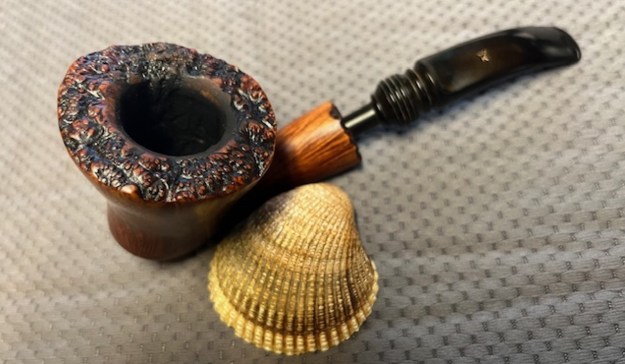
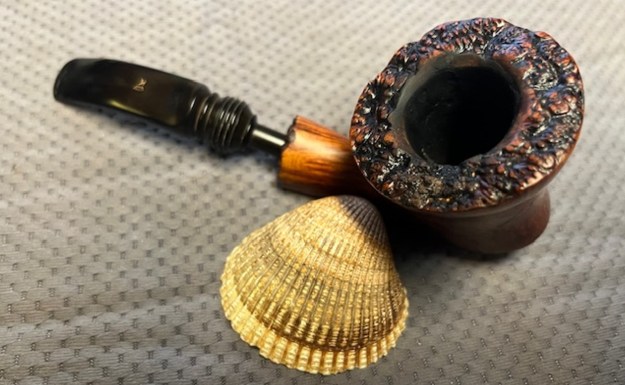
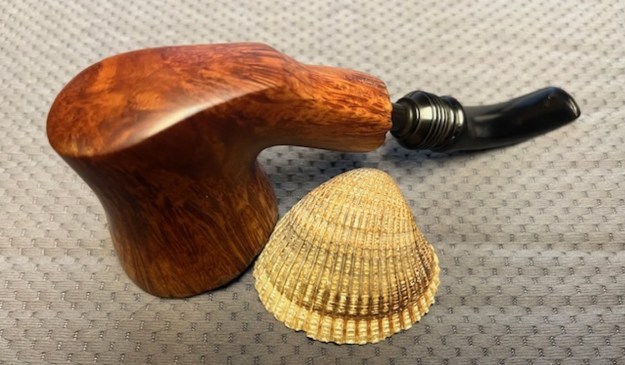
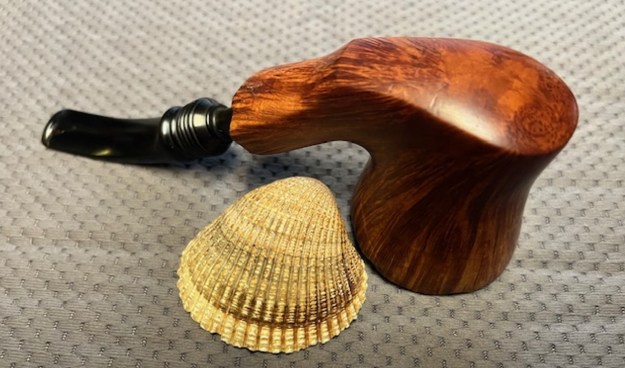
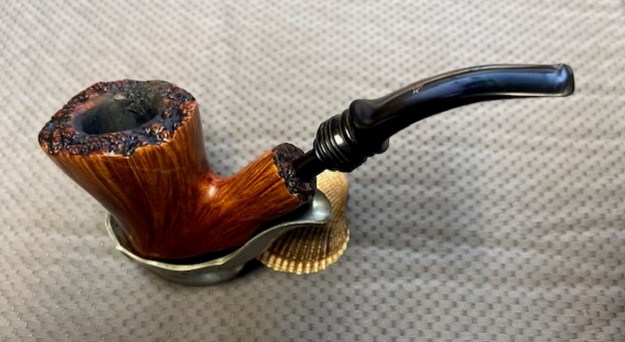
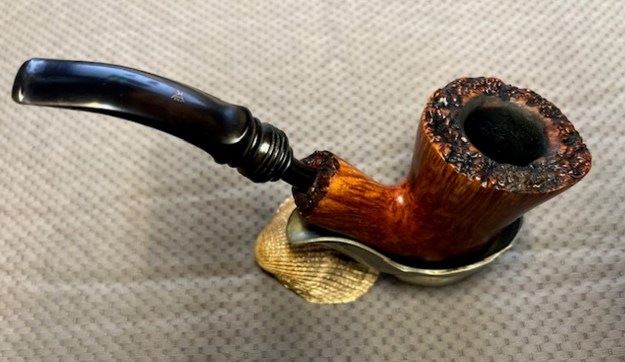
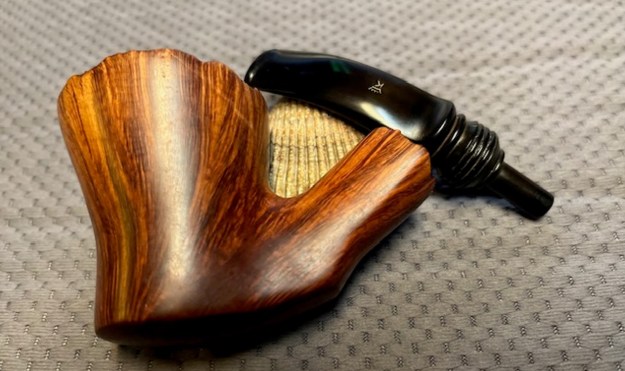
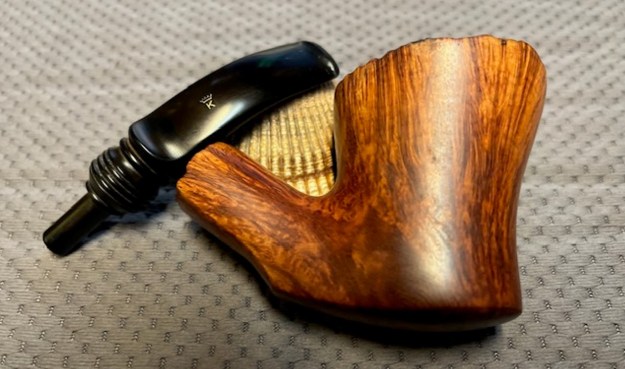
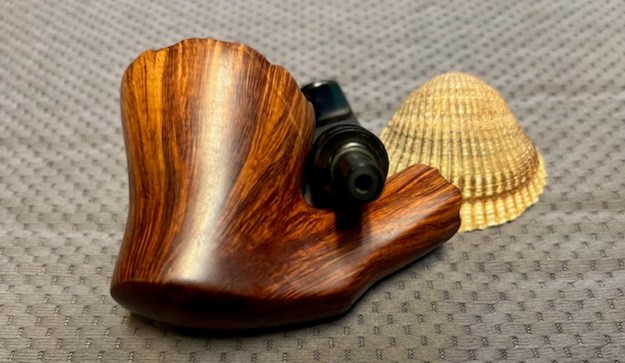
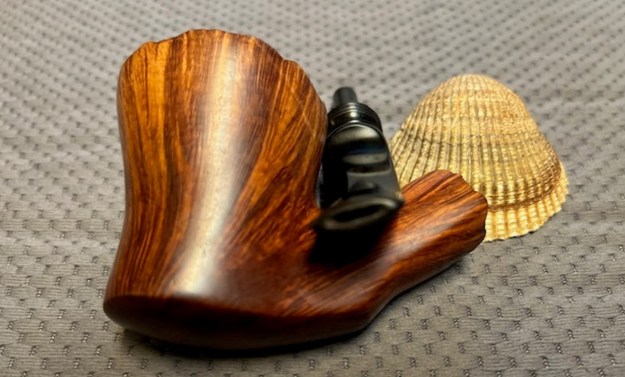
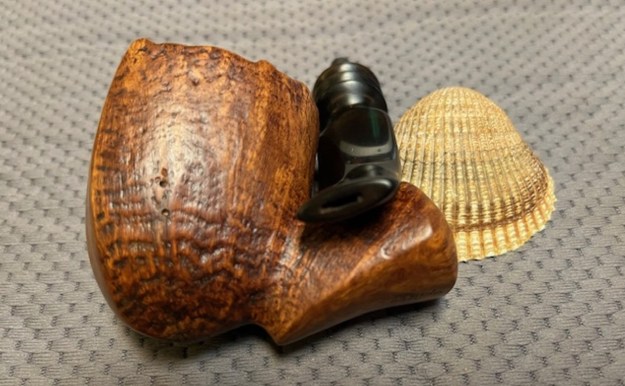
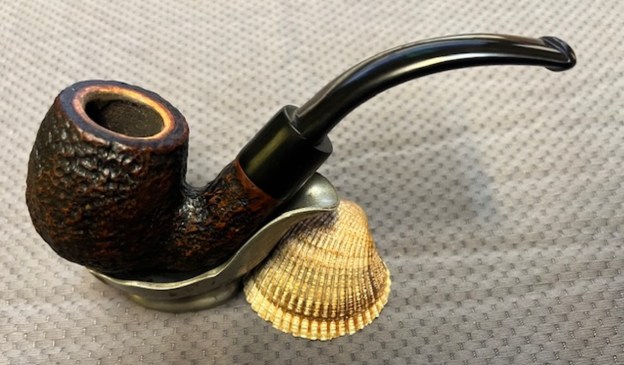
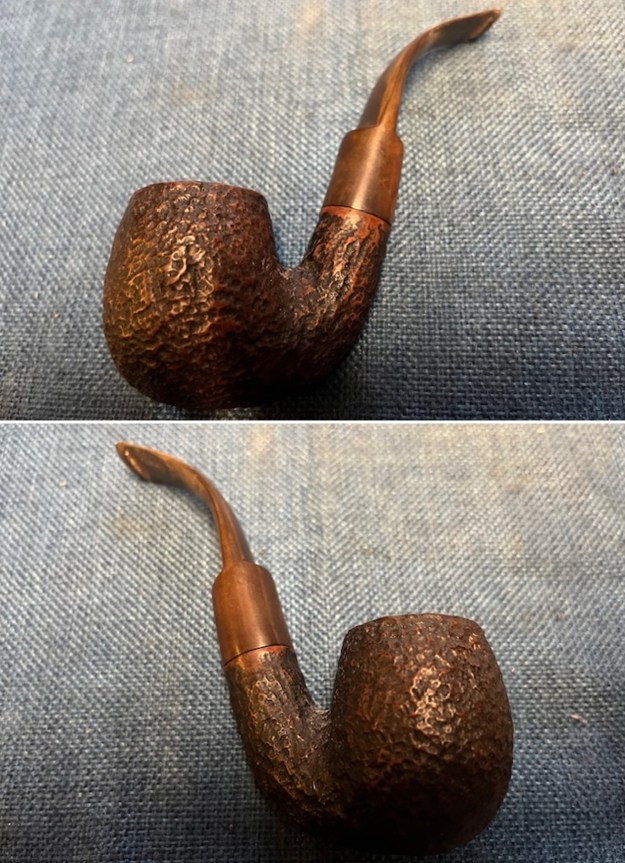
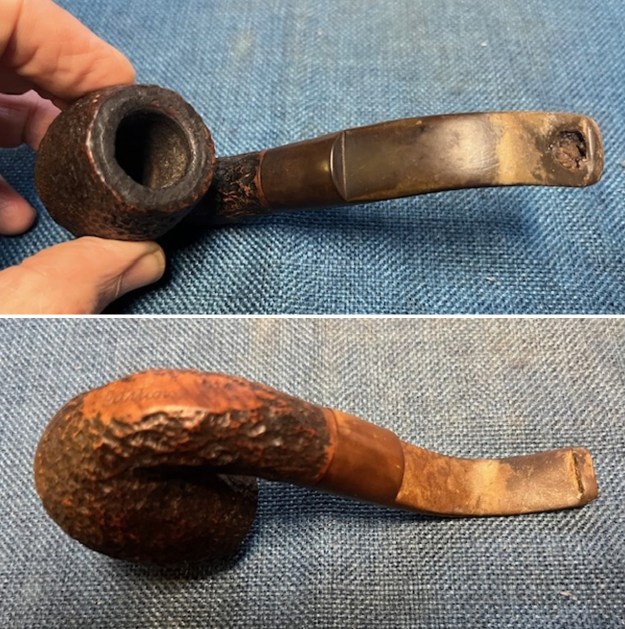
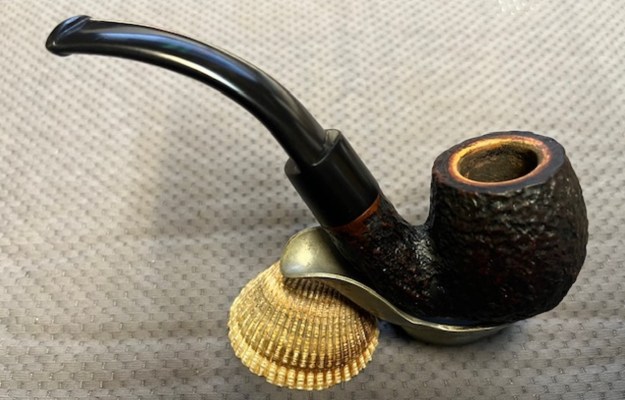
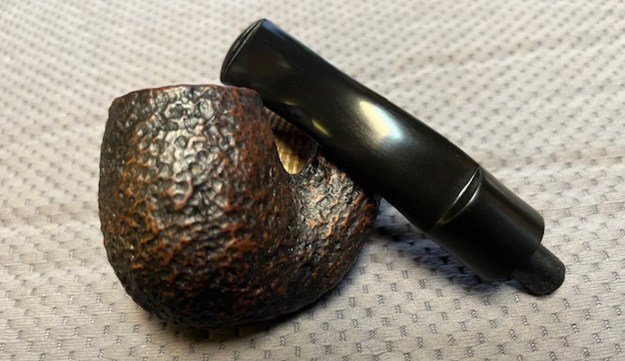
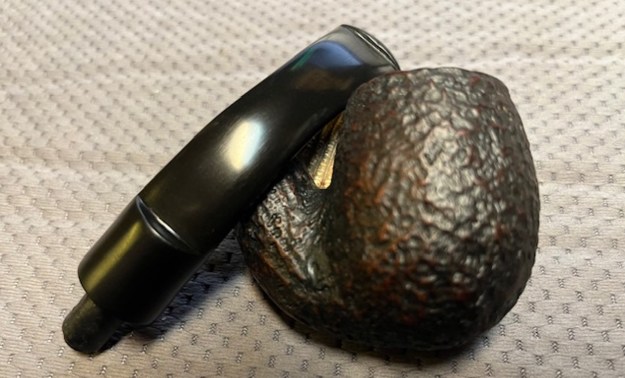
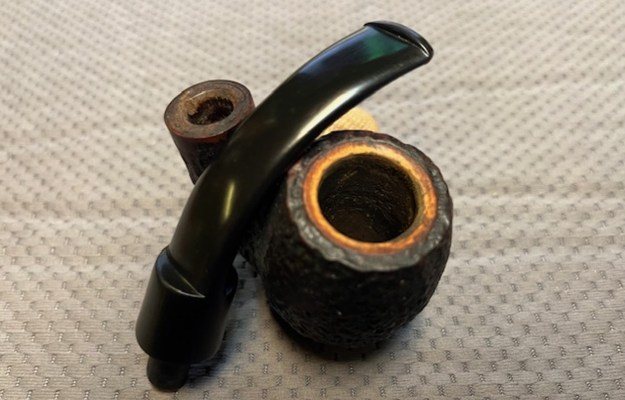
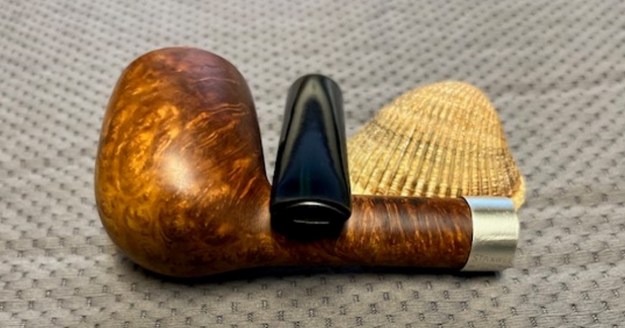
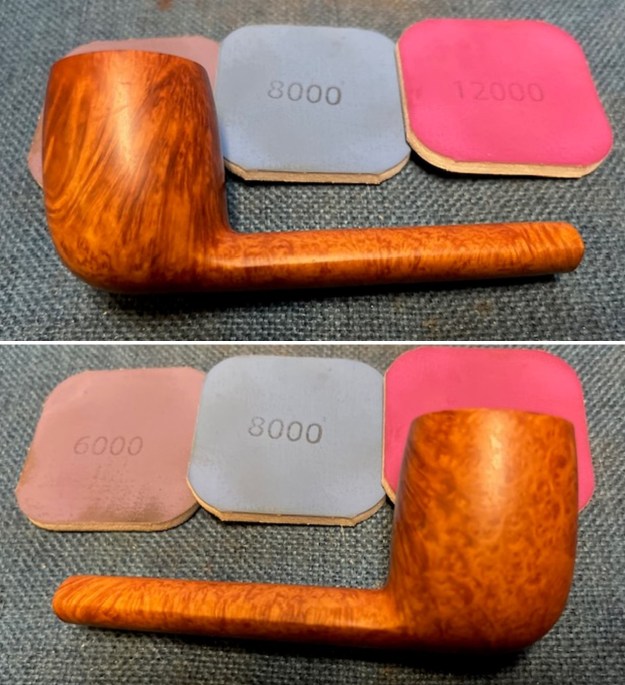
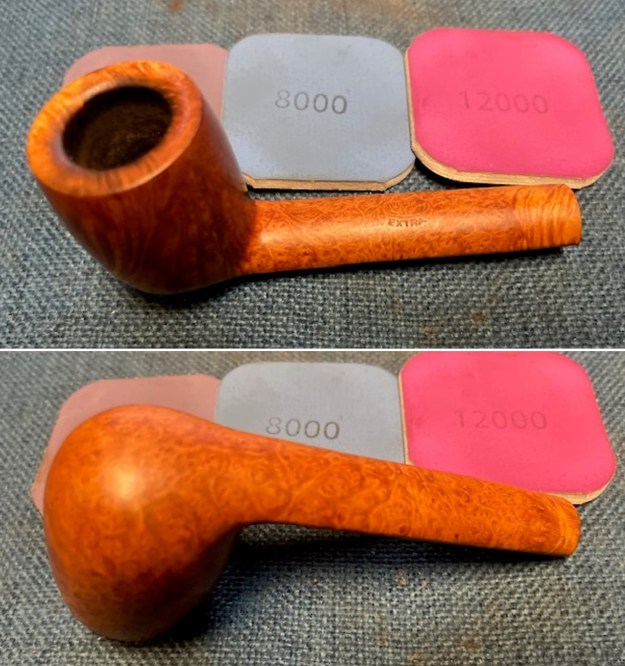
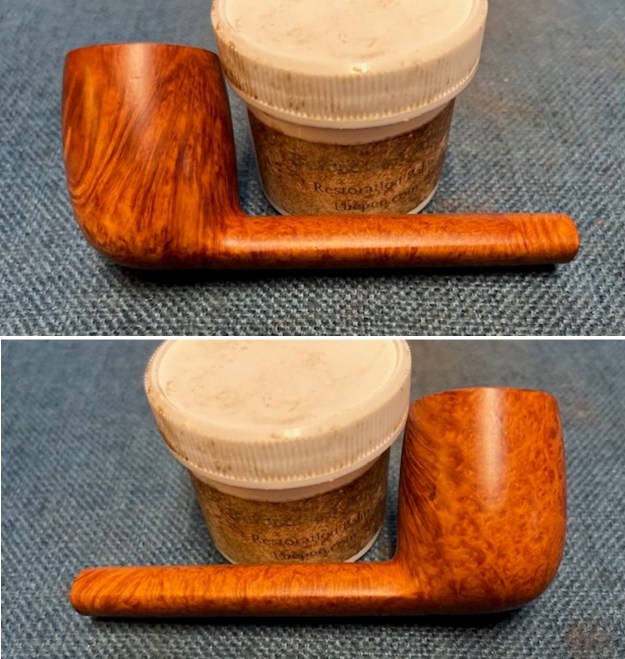
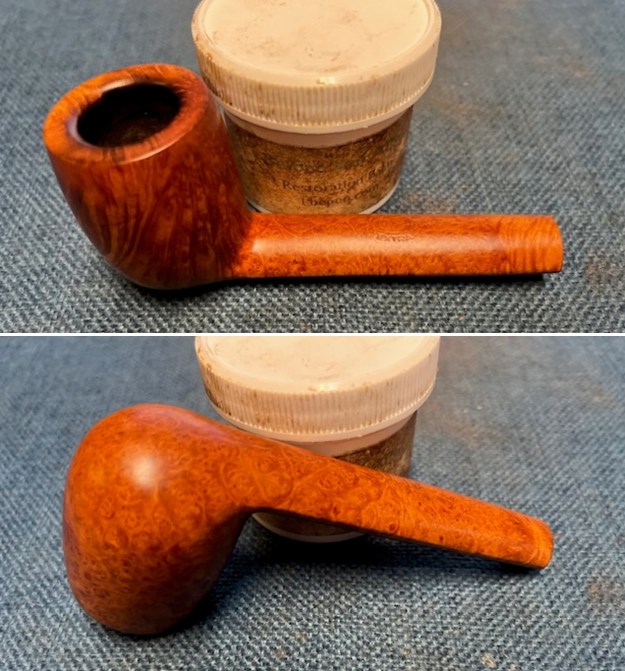
Repairing and Restoring the last of the Six pipes – a Damaged Plateau Rim Top on a Knute of Denmark Freehand


by Steve Laug

In November I received an email from Mario about working on some of his Dad’s pipes. Here is what he wrote to me.

I am desperately seeking help restoring and repairing some of my dad’s smoking pipes. I have tried reaching out to the only two known pipe repair establishments I could find in the entire country but one is not currently taking repair orders and the other said she didn’t want to try to repair these pipes without having even seen them. Would you be willing to take on the repairs or can you recommend anyone? Thank you much!!!—Mario

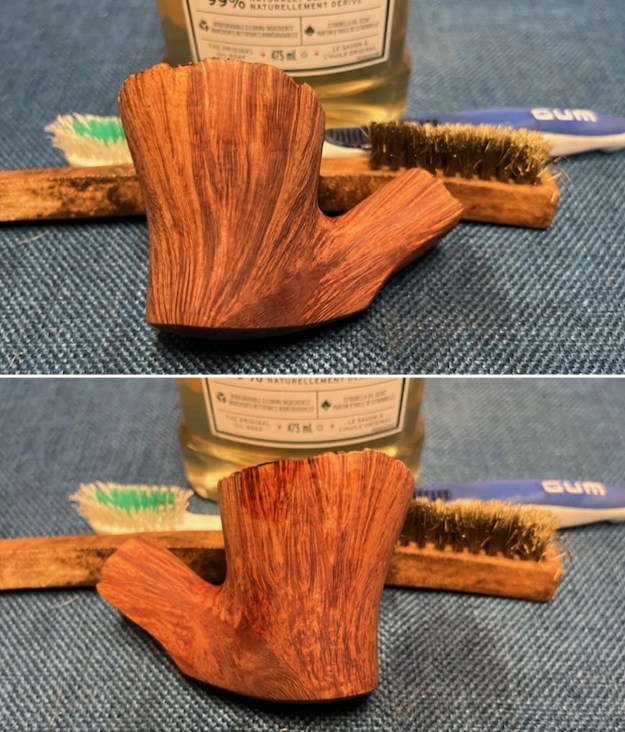
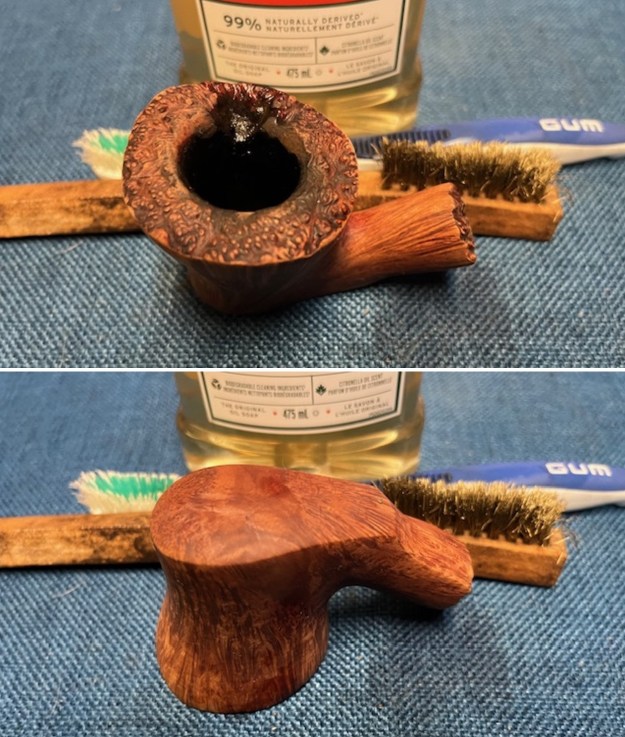
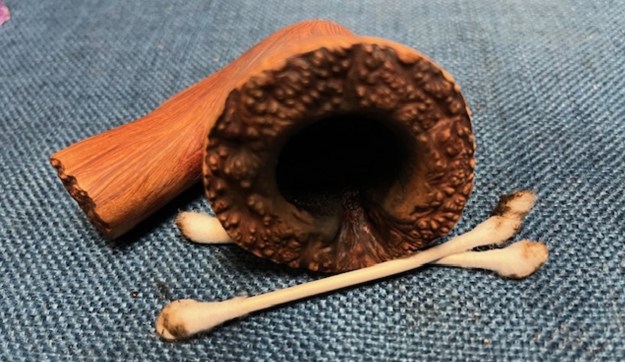
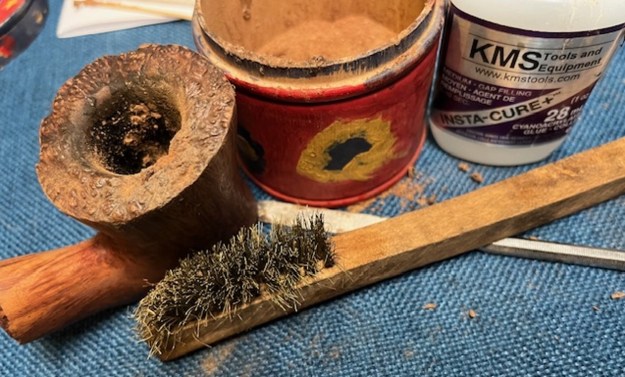
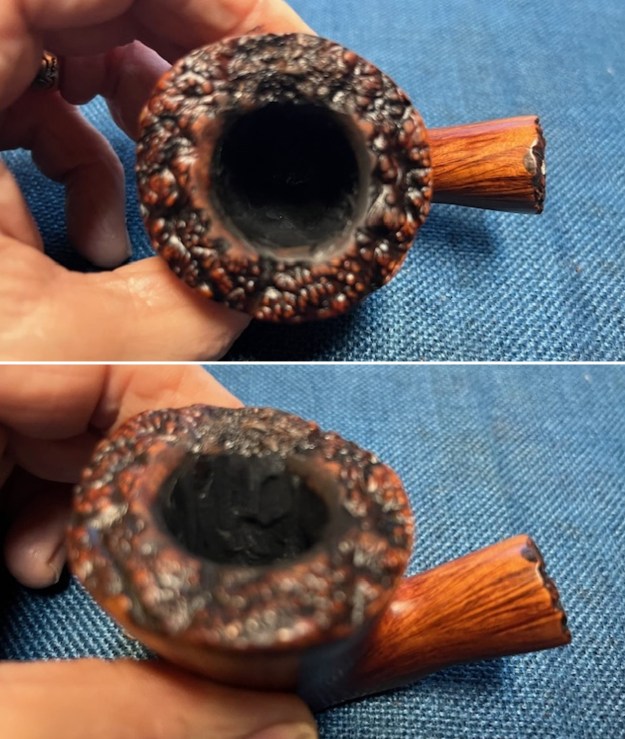
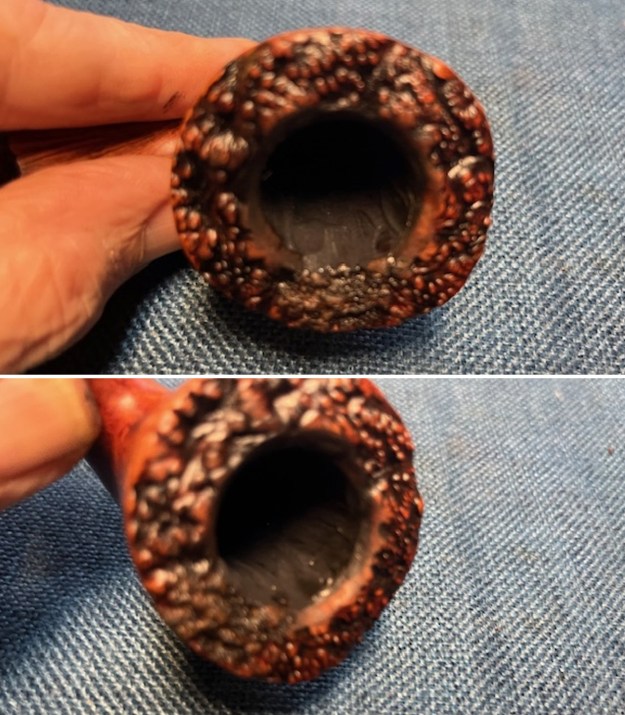
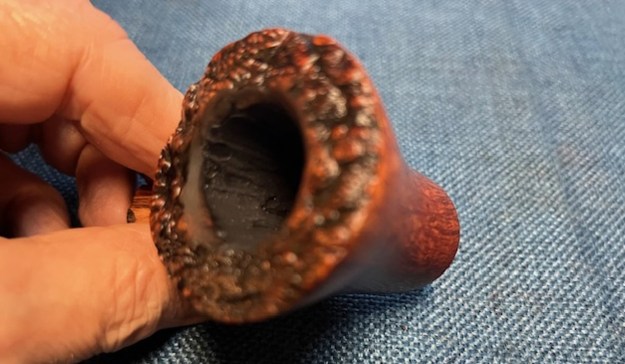
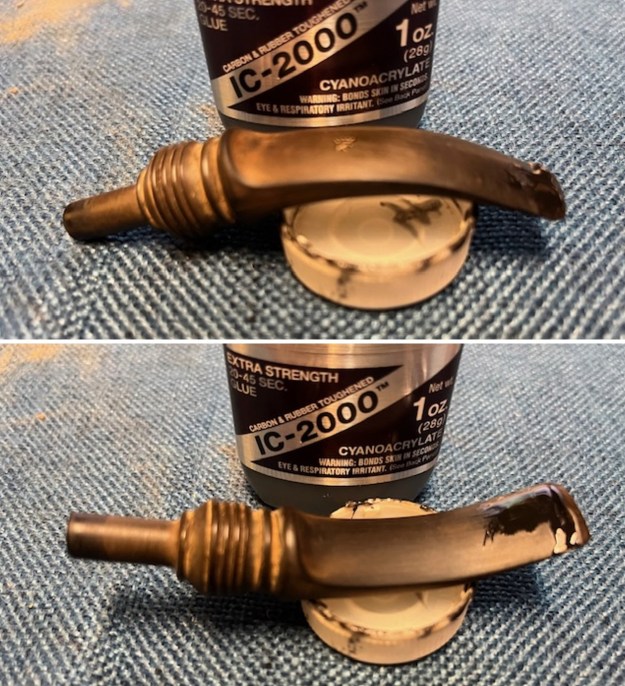
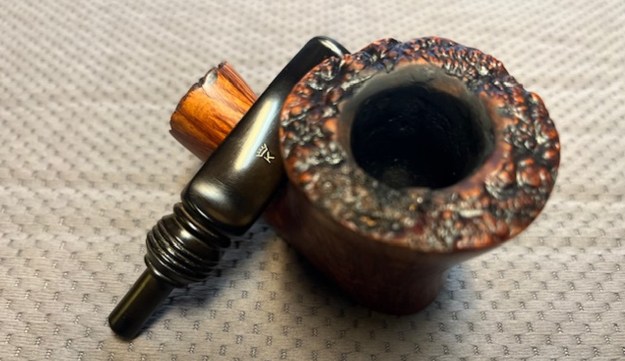
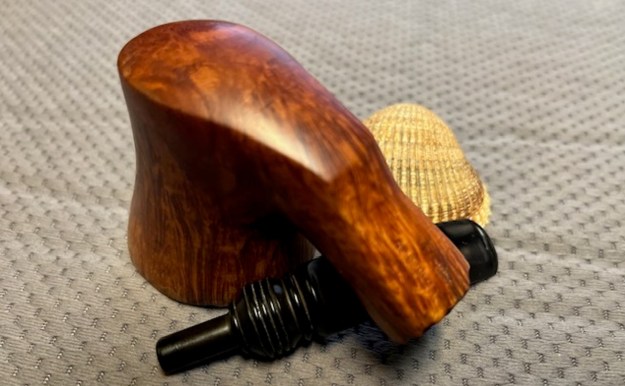
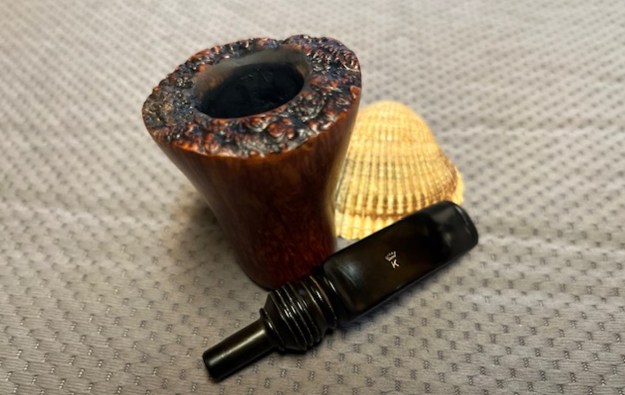
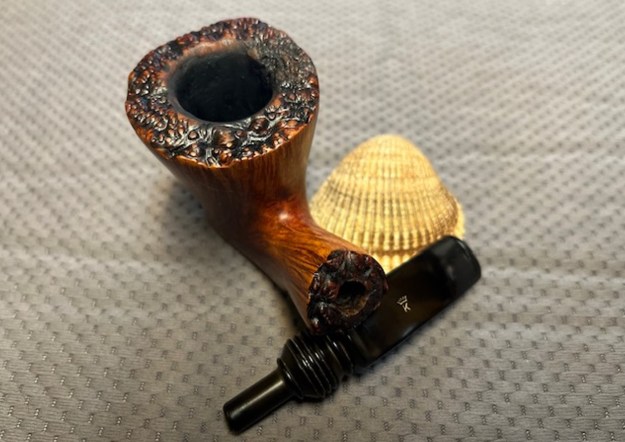
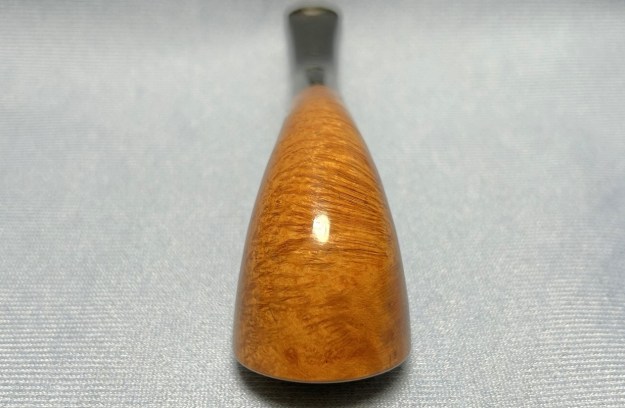
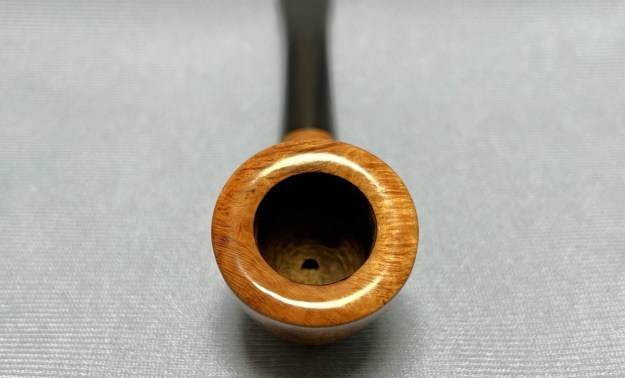
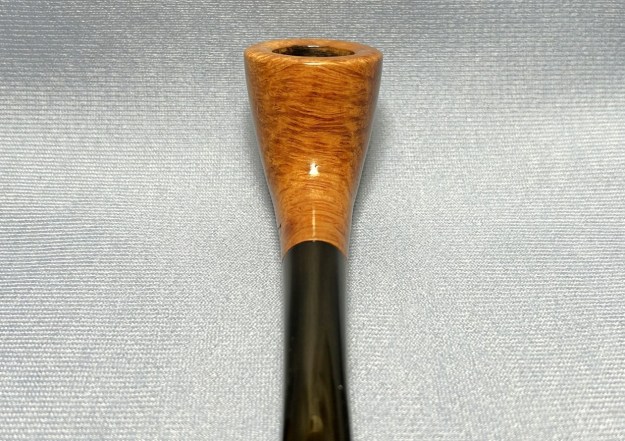
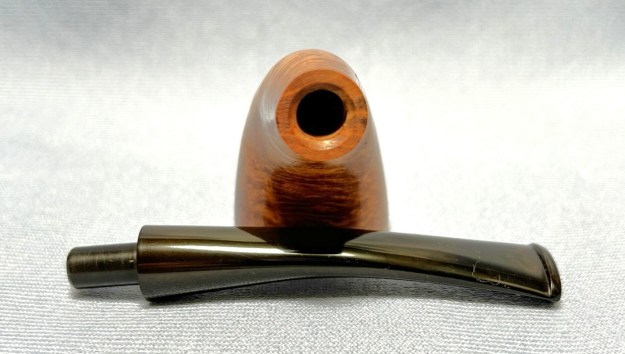
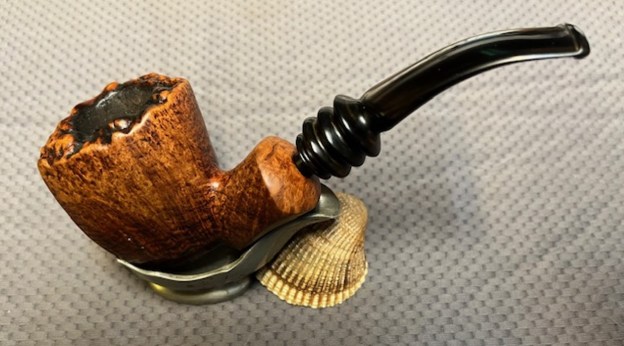
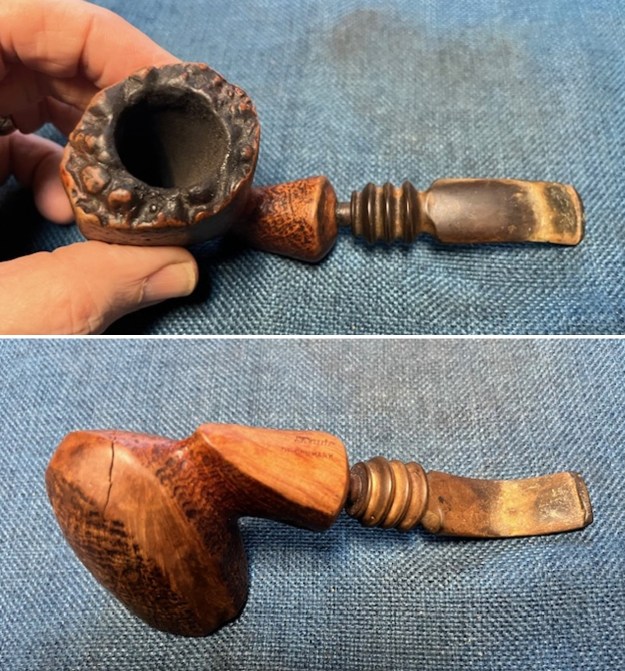
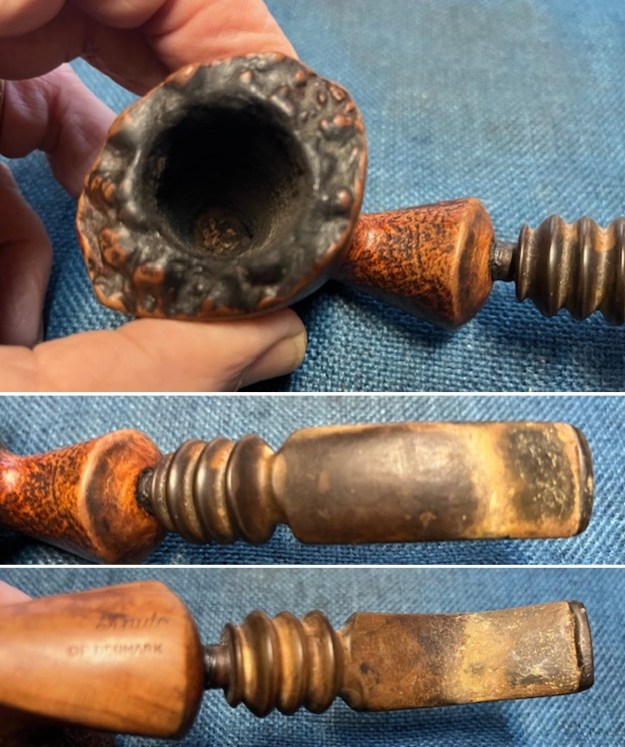
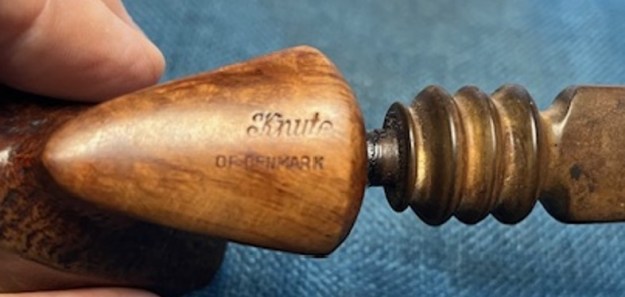
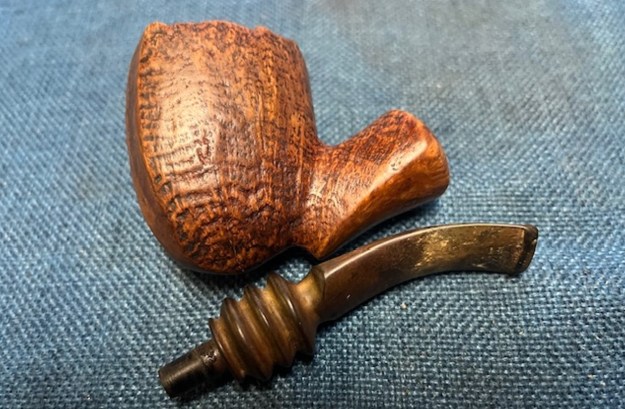
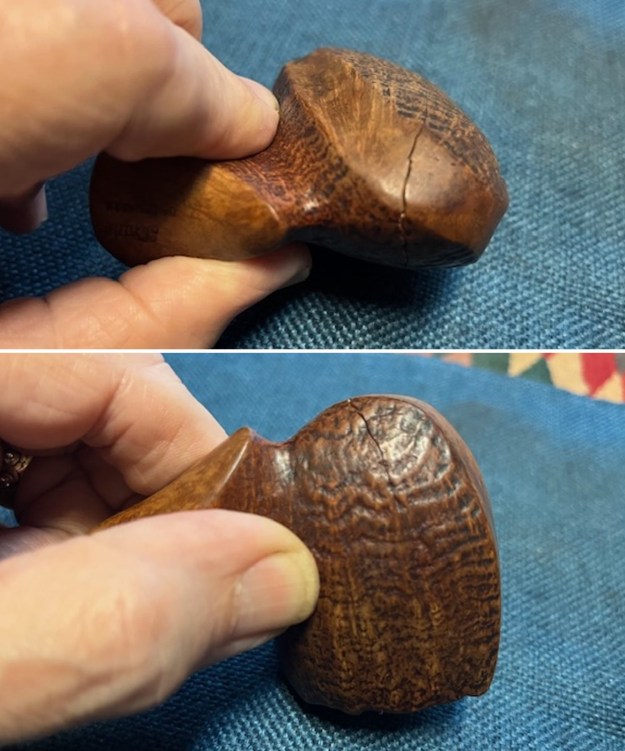
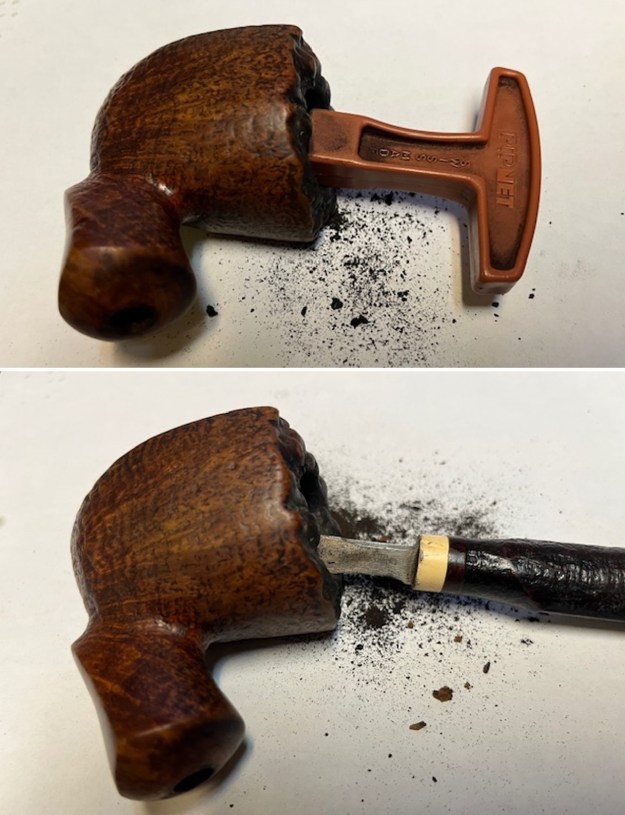
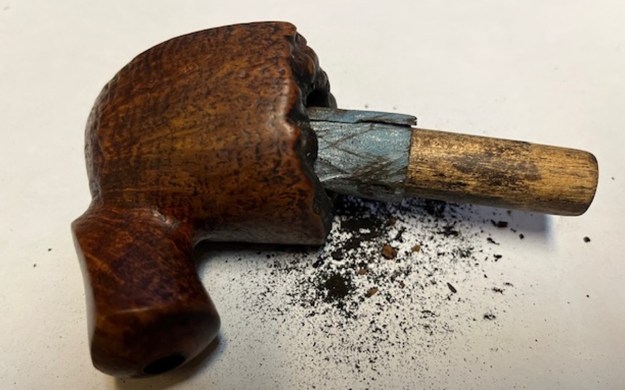
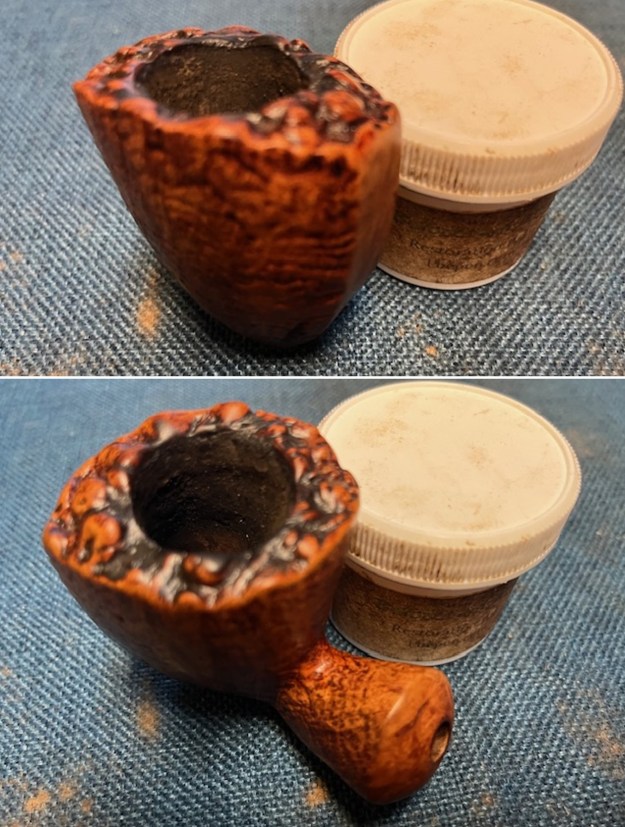
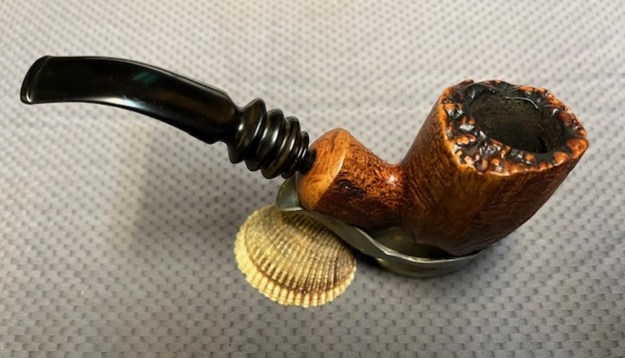
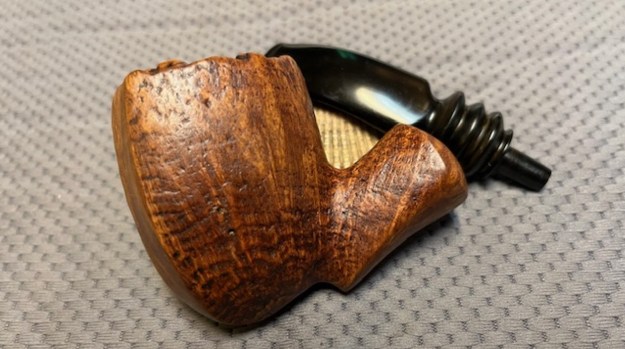
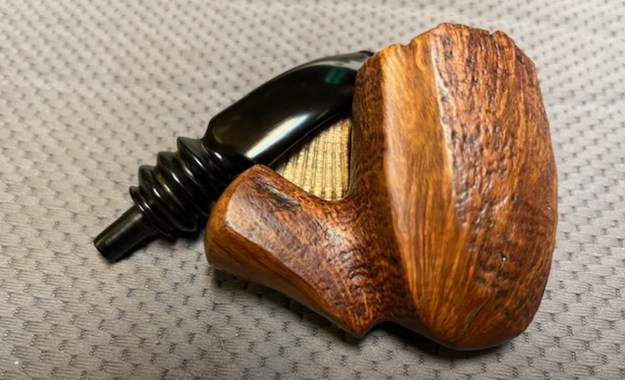
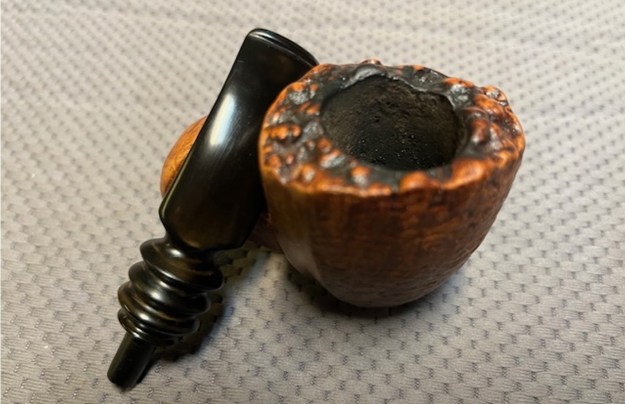
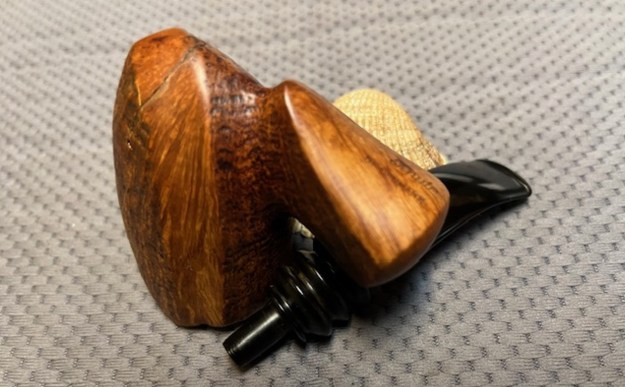
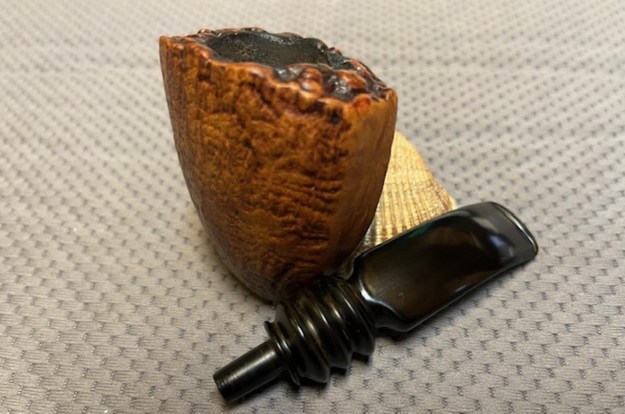
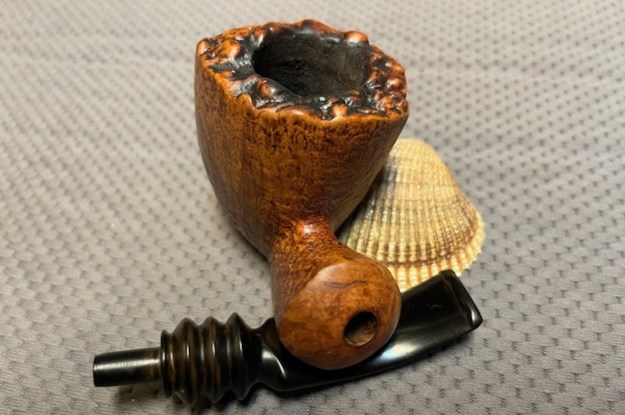
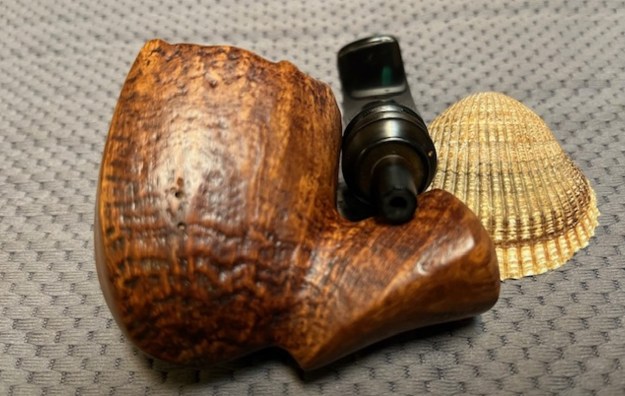
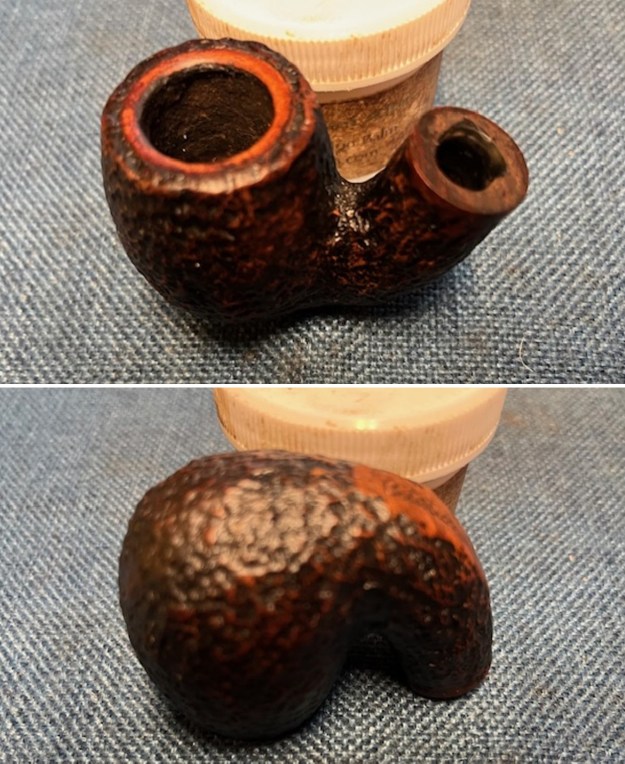
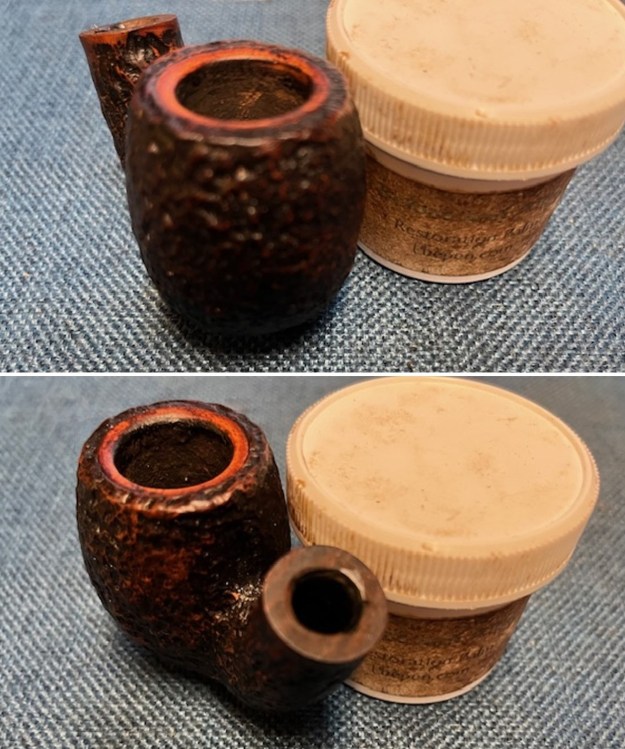
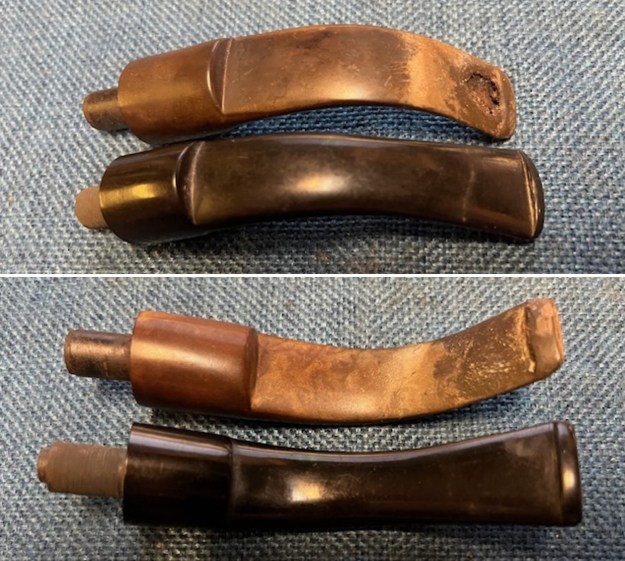
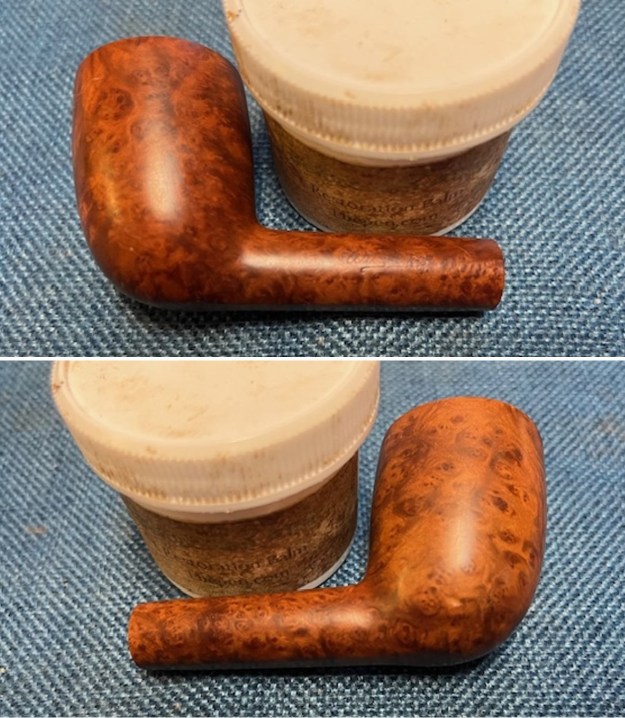
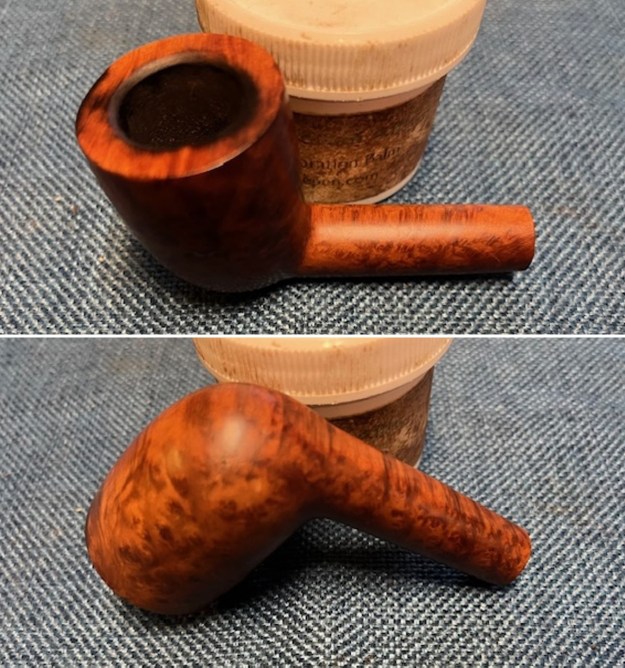
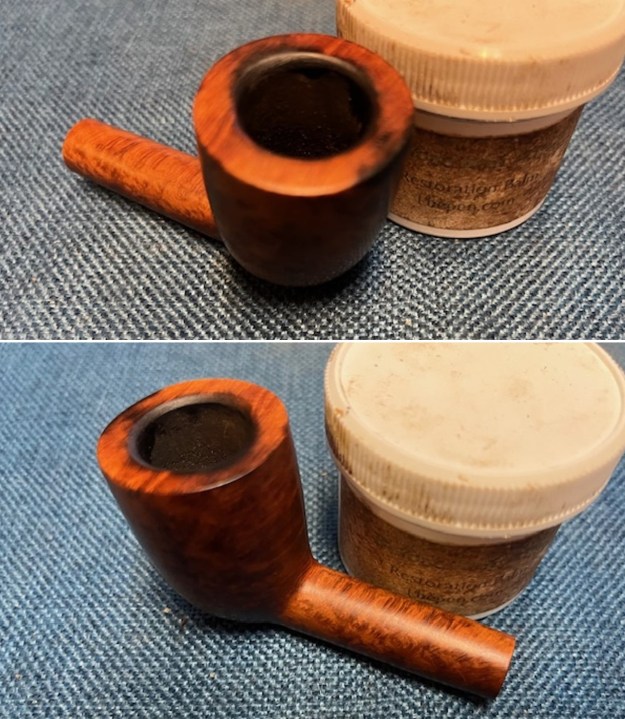
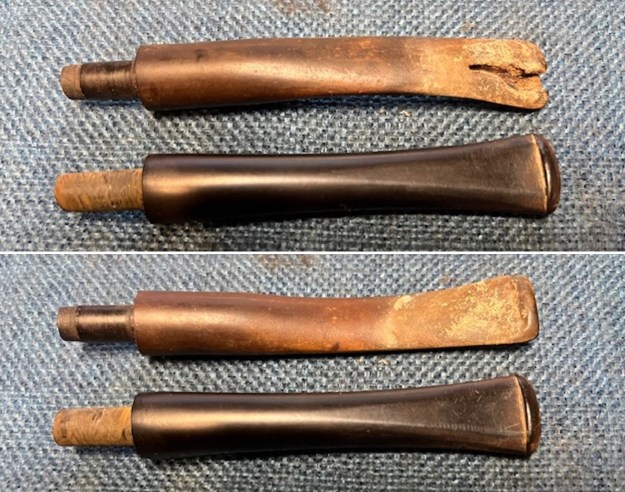
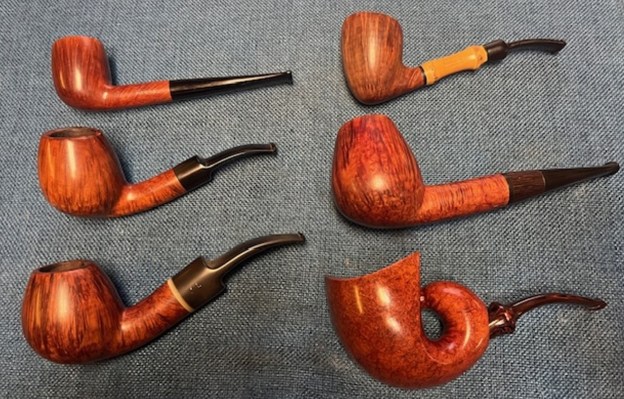
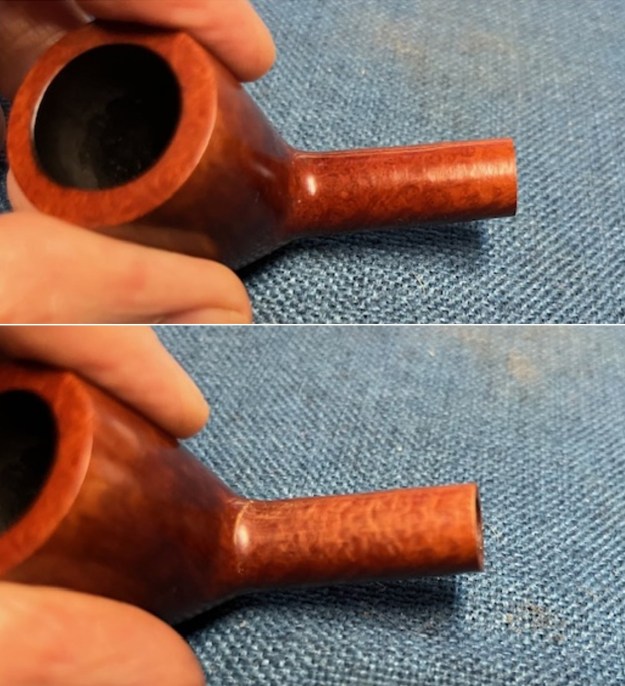
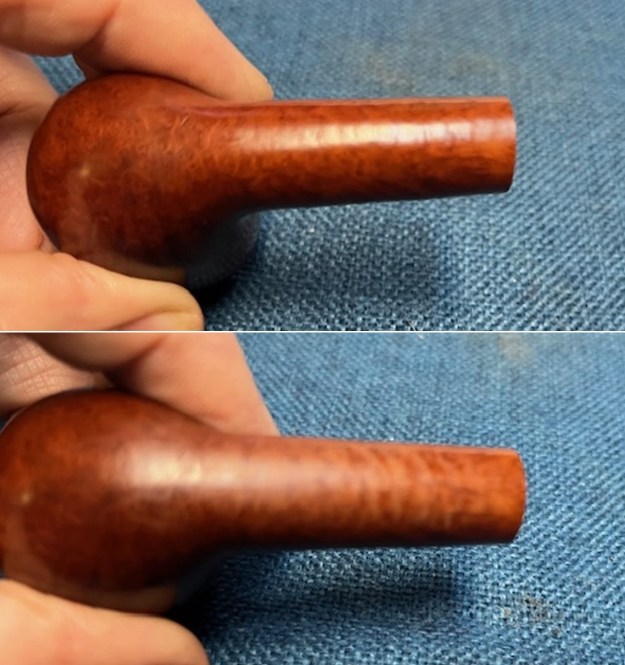
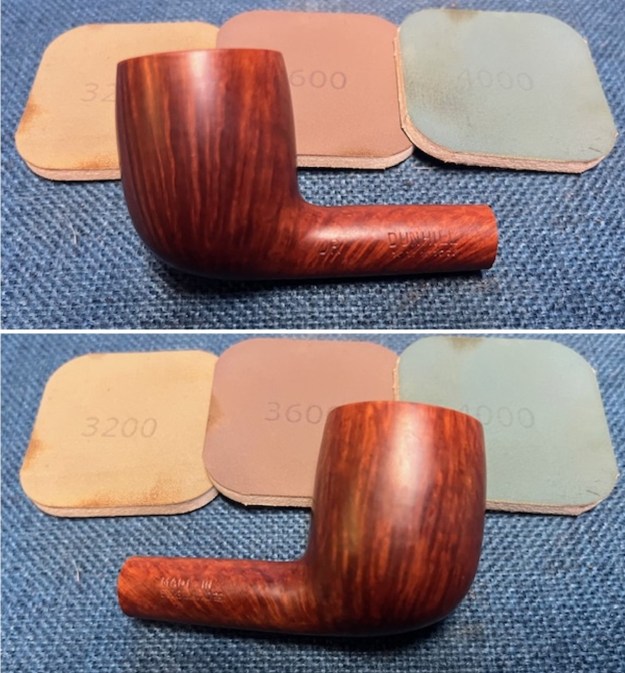
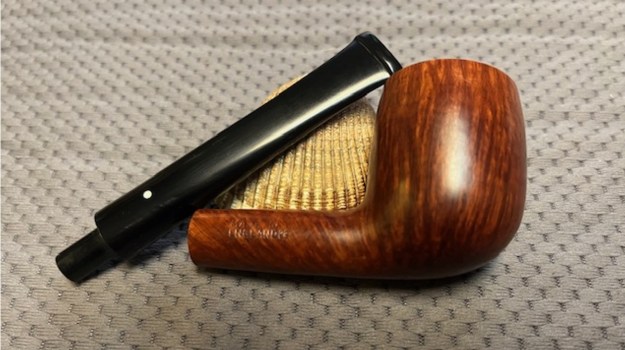
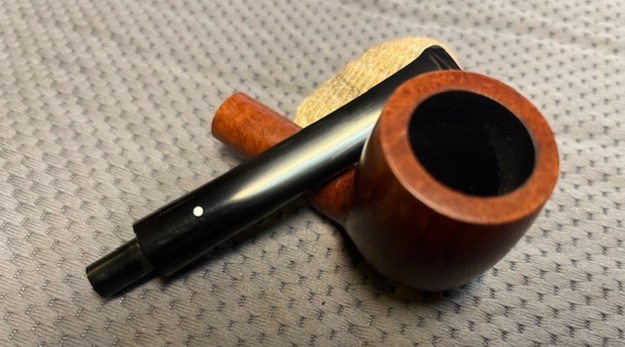
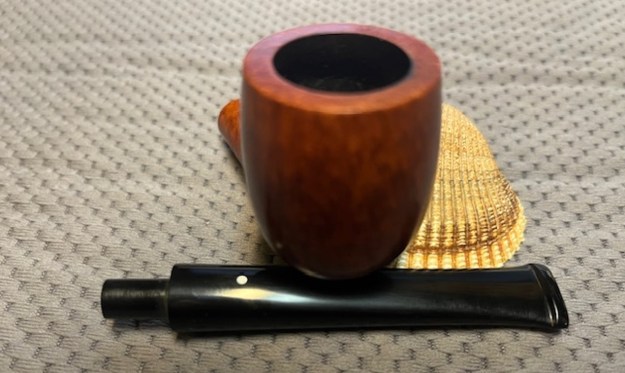
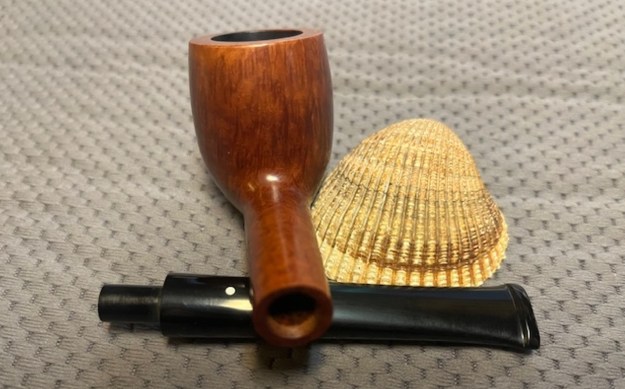
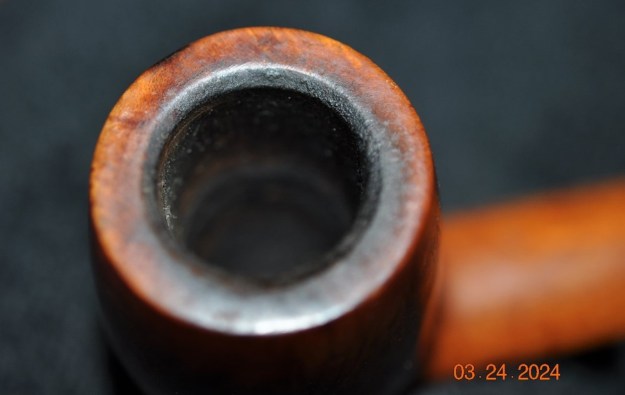
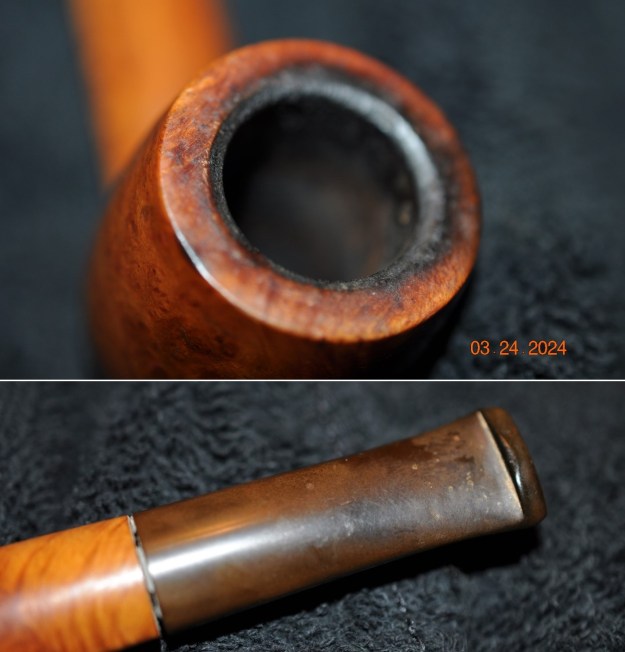
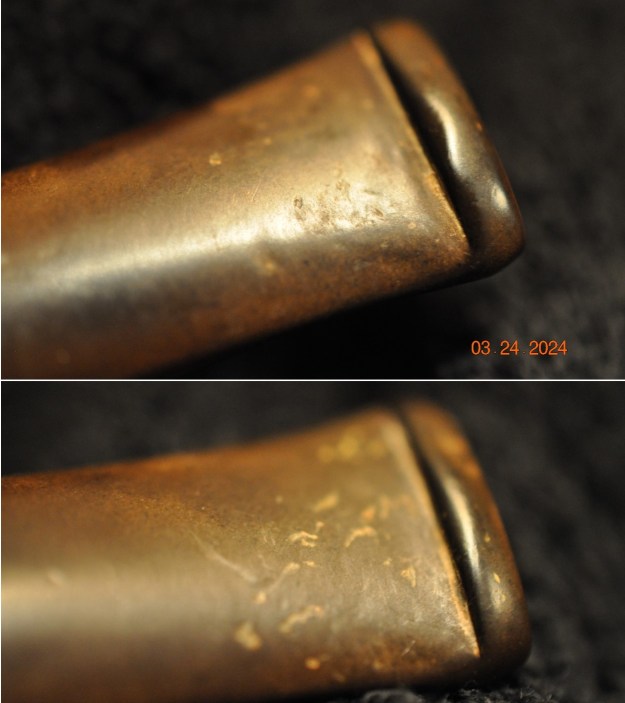
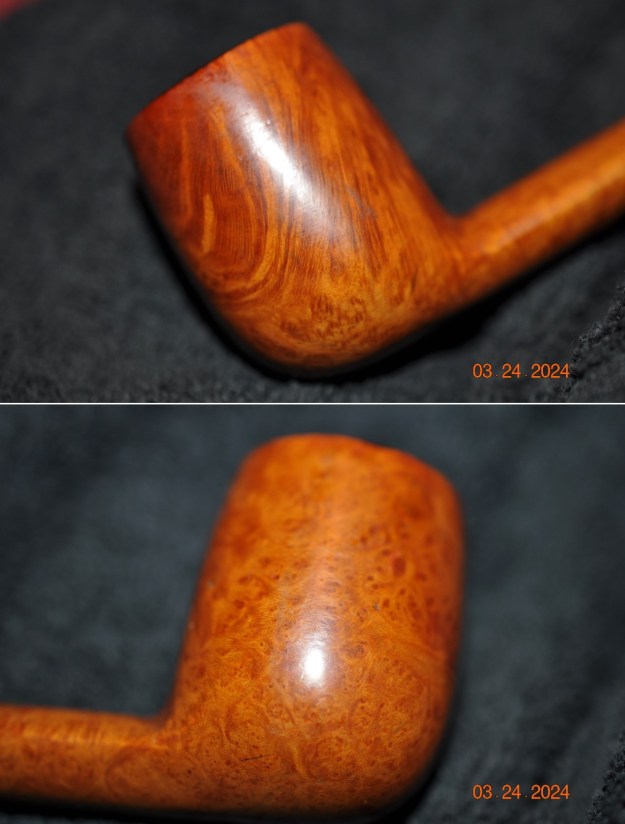
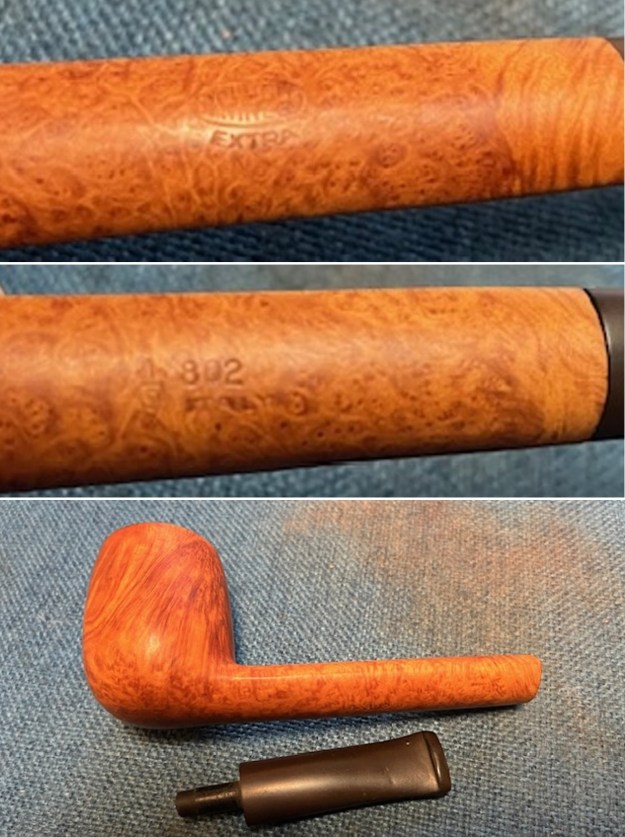
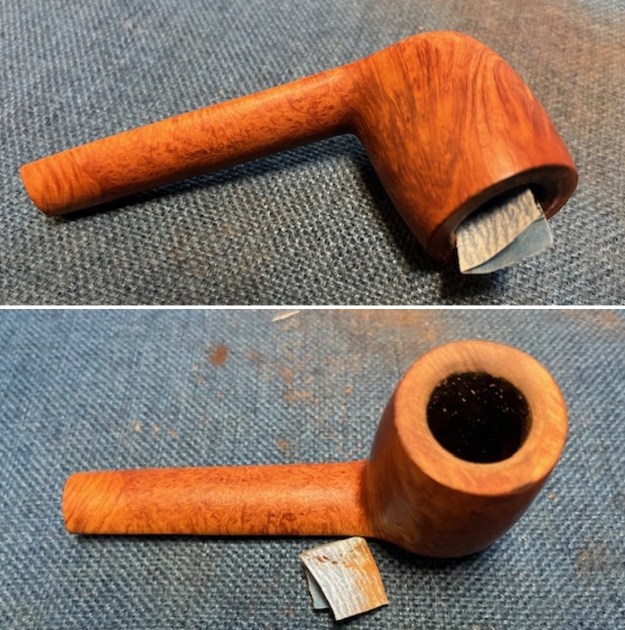
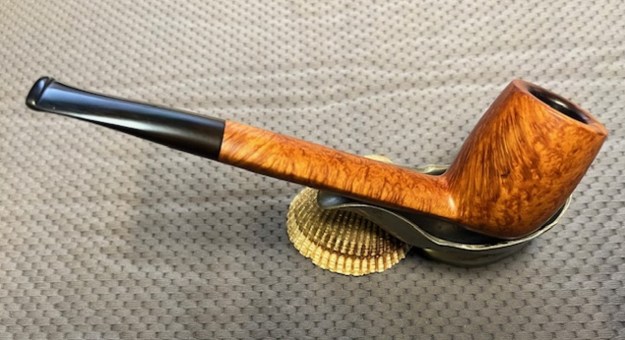
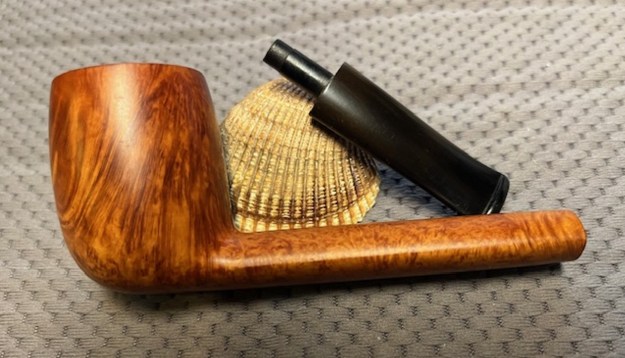
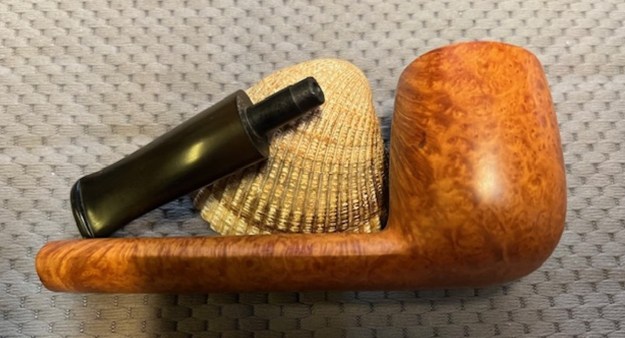
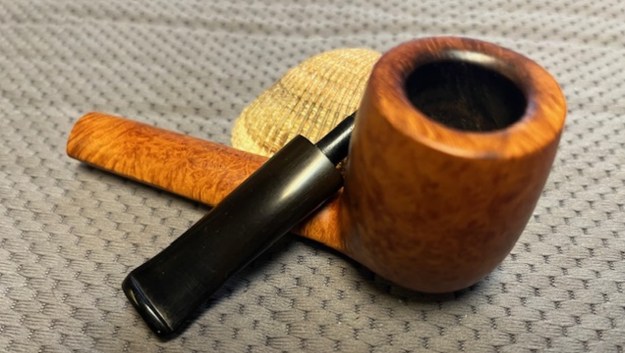
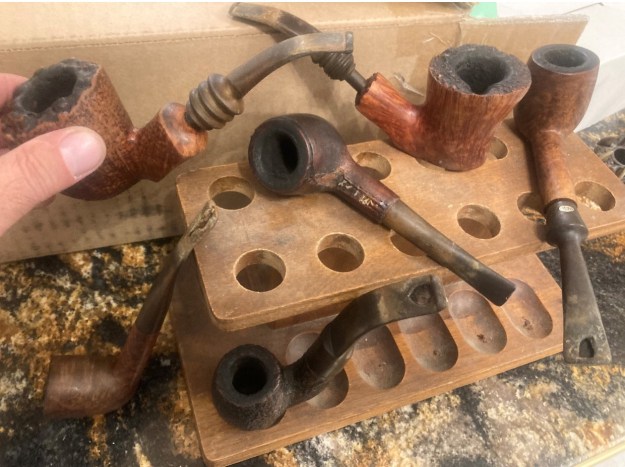
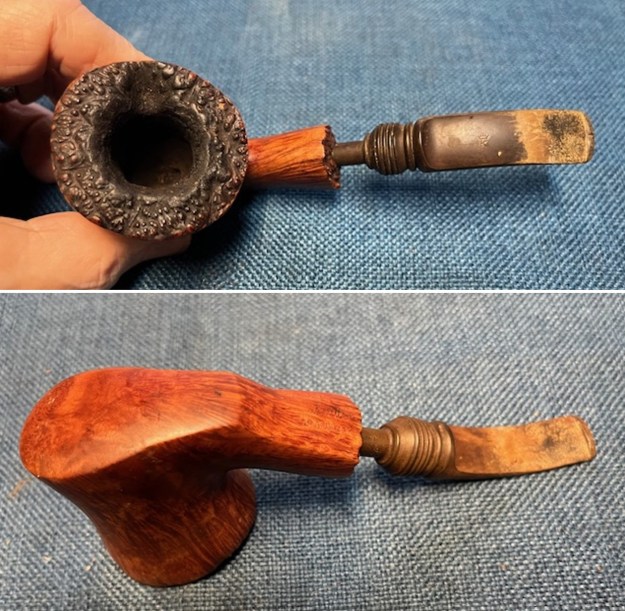
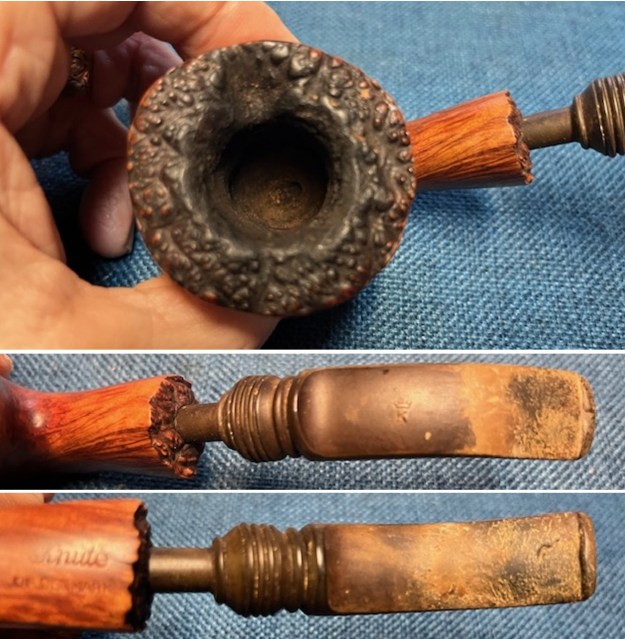
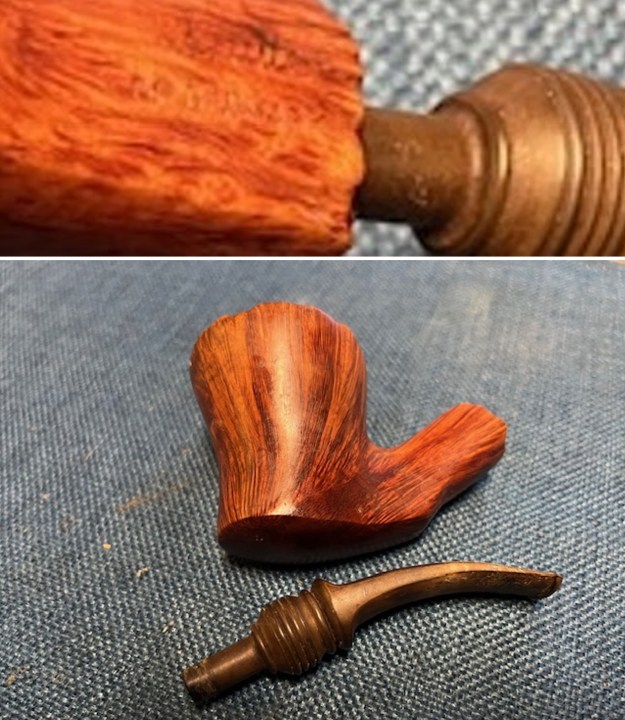
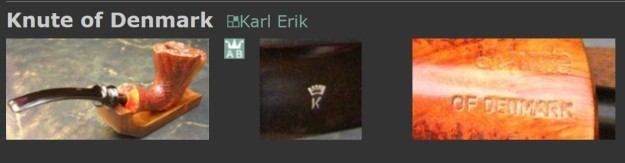
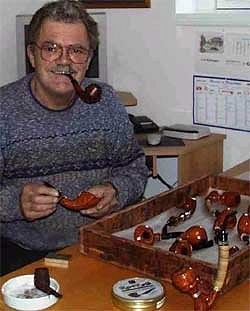
I wrote him back and asked him to send me photos of the pipes. He sent some single photos of the meerschaum bowl and stem, several of the leather clad Canadian and the photo of the rack and six pipes shown below. I looked through the photos and this is what I saw. There were two leather clad pipes a Canadian and a Pot. Both of them were cracked on the shanks and had been self-repaired with wire to hold the cracked shank together. The leather cladding was torn and the stitching was rotten and broken around the bowl. To me they were both unrepairable. There was a lovely older Meerschaum figural with a horn stem that needed a good cleaning and repairs to the horn stem. There were two Knute Freehand pipes with original stems that were dirty but fixable. The plateau on the smooth one had a large chunk of briar missing. There was a Wilshire Dublin with a chewed and misfit stem. Finally, there was a billiard that had been restemmed with a fancy GBD saddle stem on it. They were a messy lot but I told him to send them on to me. They arrived yesterday and the condition of the pipes in the photos was confirmed. They were a mess and needed much work. I have included Mario’s group photo below to show the lot. This afternoon I decided to start working on the final of the six pipes from Mario – a Knute of Denmark smooth freehand. It had a plateau rim top and shank end. The bowl had a thick cake on the walls and a heavy lava coat in the plateau rim top. There was a missing chunk of briar or perhaps a fill that had come loose in the plateau finish on the right side running from the inner edge almost to the outer edge. The finish was dirty and had grime ground into the sides of the bowl. The stamping on the underside read Knute [over] of Denmark. There was a hairline crack on the underside of the shank extending from the shank end over the K in the Knute stamp. It had a fancy turned, vulcanite saddle stem that had lots of tooth marks and chatter on both sides near the button. There was a split on the top side of the stem and on the button. I took photos of the pipe when I unpacked it to examine it. I have included those below. I took a photo of the bowl and rim top to show the condition of both. You can see the debris in the bowl and lava in the plateau surface of the rim top. The missing chunk on the right topside of the bowl is also very visible with debris and lava in the hole. I also took photos of the heavily oxidized and calcified stem showing the heavy tooth marks and chatter on both sides ahead of the button. There was also a hairline crack in the topside of the stem from the button edge forward.I took a photo of the stamping on the underside of the shank. It is clear and readable as noted above. I took a photo of the bowl with the stem removed to give a sense of the proportion and appearance of the pipe without the stem.Before I started my work on the pipe I wanted to remind myself of the provenance of the pipe. I remembered that it was linked to Karl Erik as I have worked on quite a few Knute Freehands. I wanted to know where this pipe fit into the Karl Erik lines so I turned to the first of two sites that I always check to gather information on a brand.  I turned to the first source of information site – Pipephil’s (http://www.pipephil.eu/logos/en/logo-k3.html) got a quick overview on the brand once again connecting it to Karl Erik. I turned to Pipedia (https://pipedia.org/wiki/Karl_Erik). Pipedia had this great picture of Karl Erik Ottendahl and I decided to include it here as a reminder of the artisan who first carved and released this pipe. Reminded of the tie to Karl Erik, I knew a bit about the pipe at hand. I turned to address the pipe itself. There it is clearly identified and linked to Karl Erik Ottendahl. It is designated as a second and frequently having rustication. The interesting thing is that his pipe does not look like a second at all and I wonder if the Knute is a line of Karl Erik’s rather than a second. Who knows? This one is a beautifully grained smooth Freehand pipe. Now it was time to work on the pipe and bring it back to life. The large pit in the plateau rim top and the crack in the shank needed to be repaired and the bowl brought back to life.
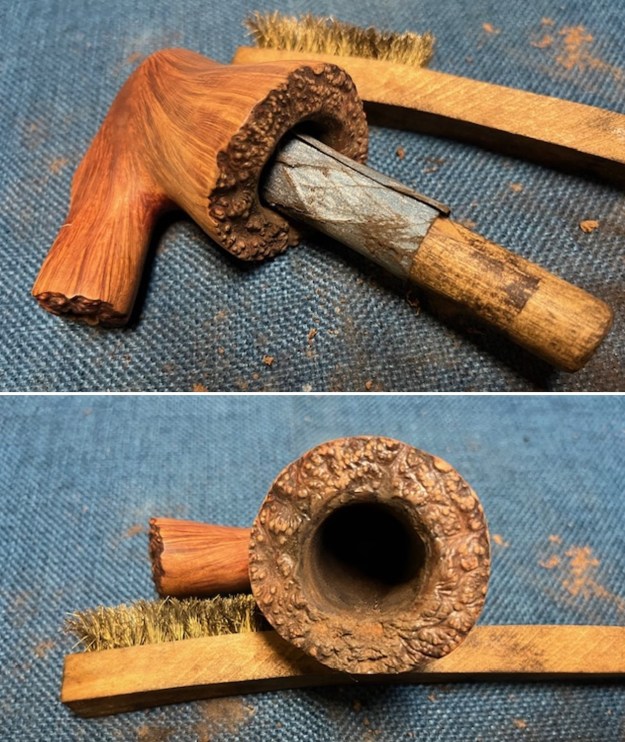
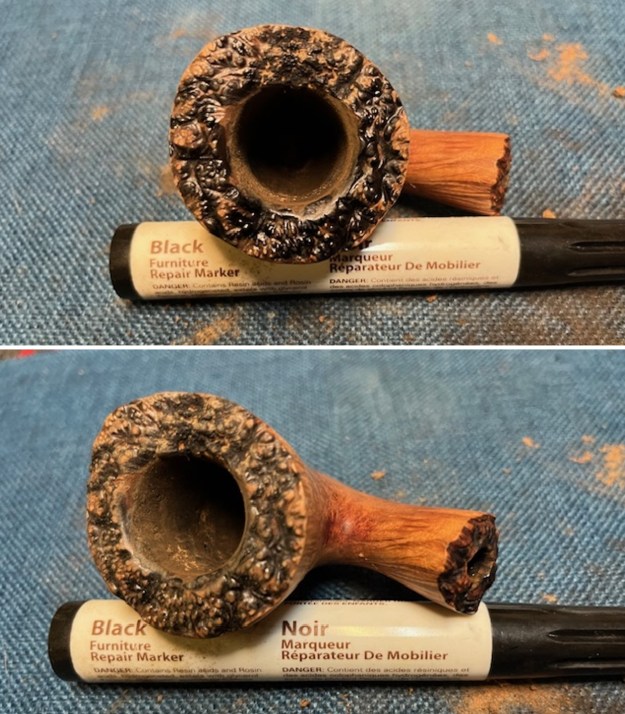
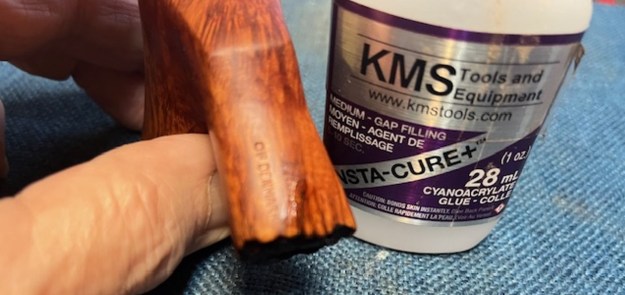
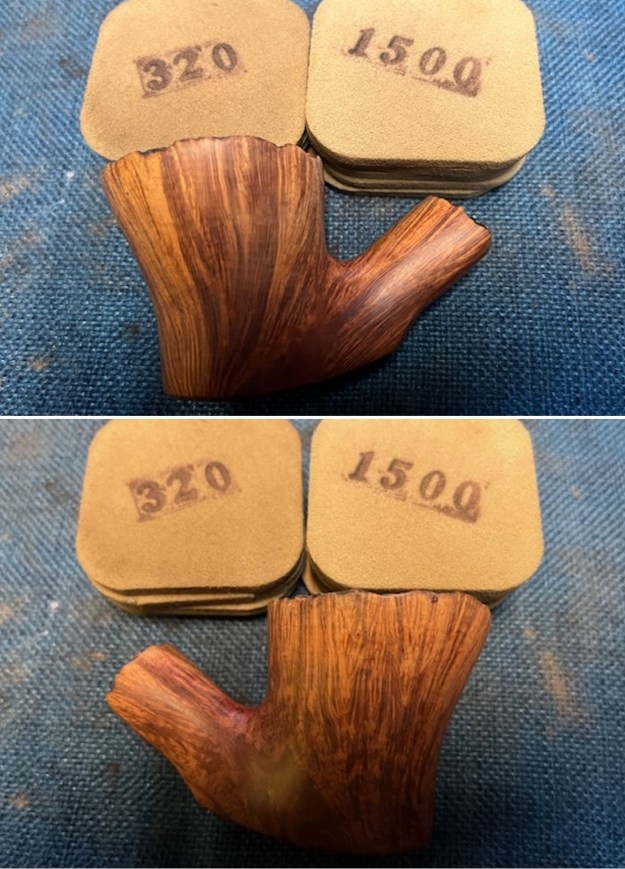
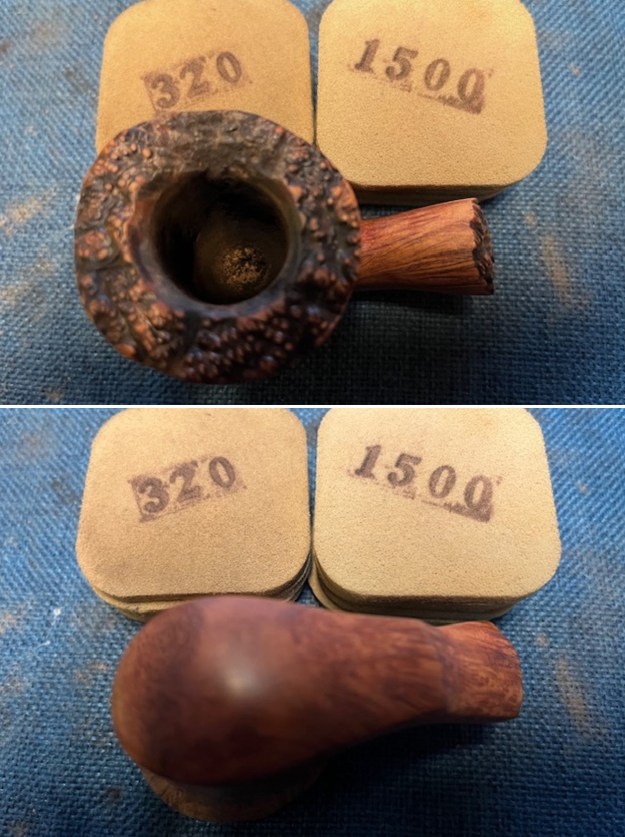
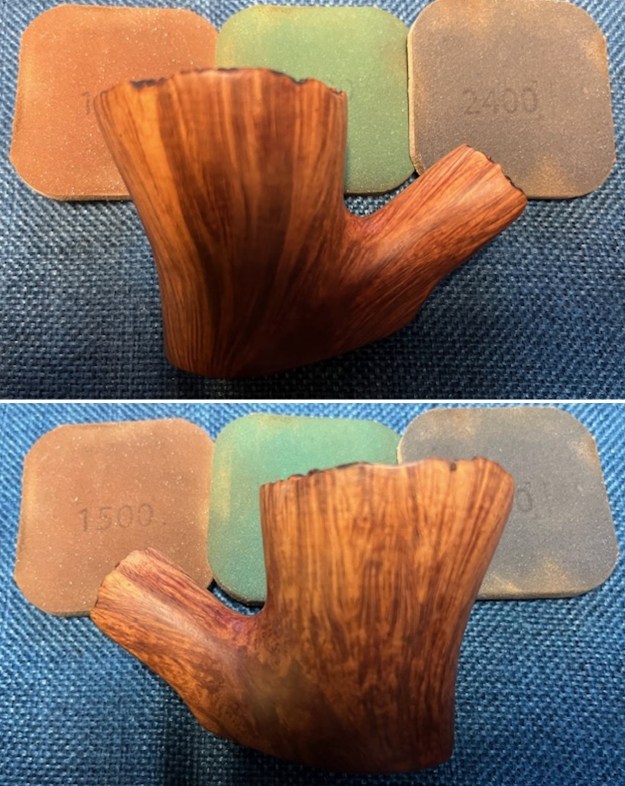
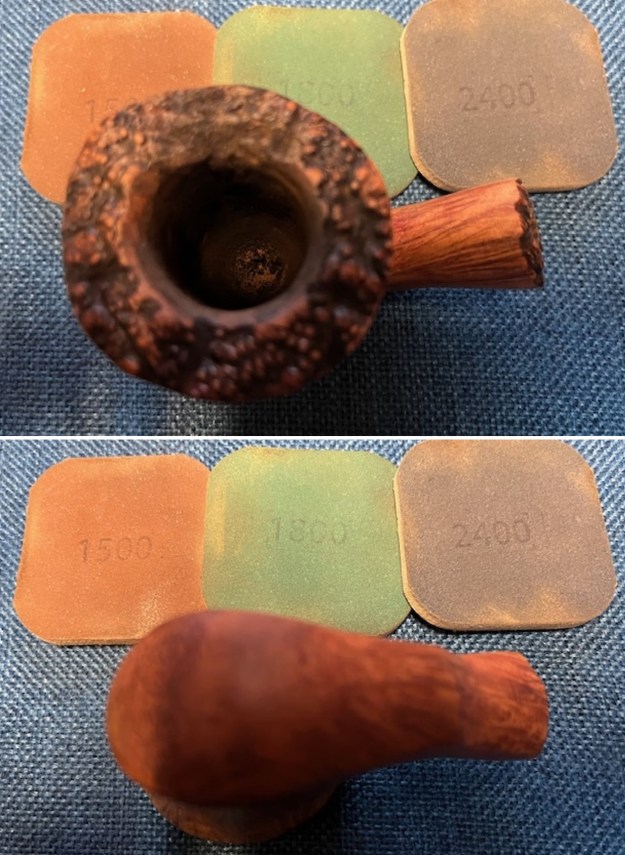
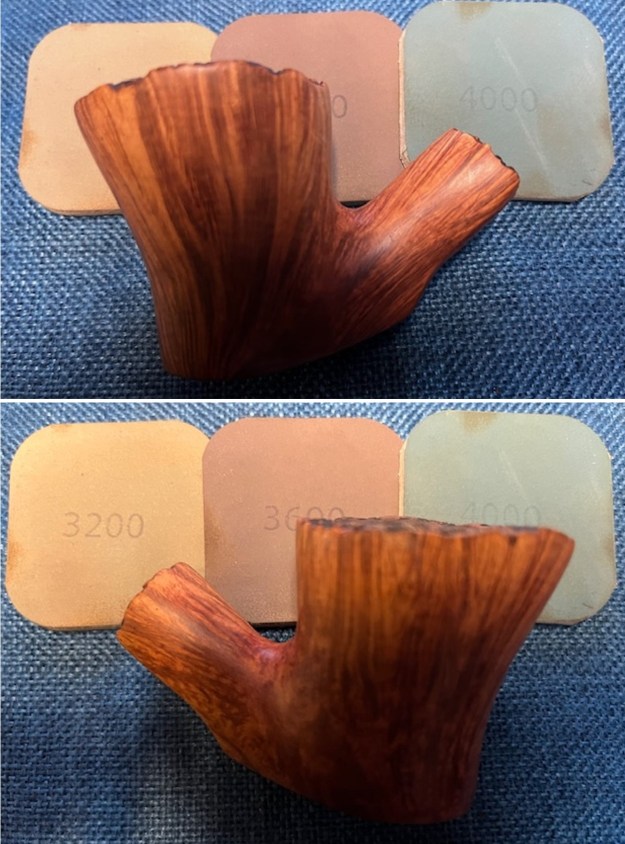
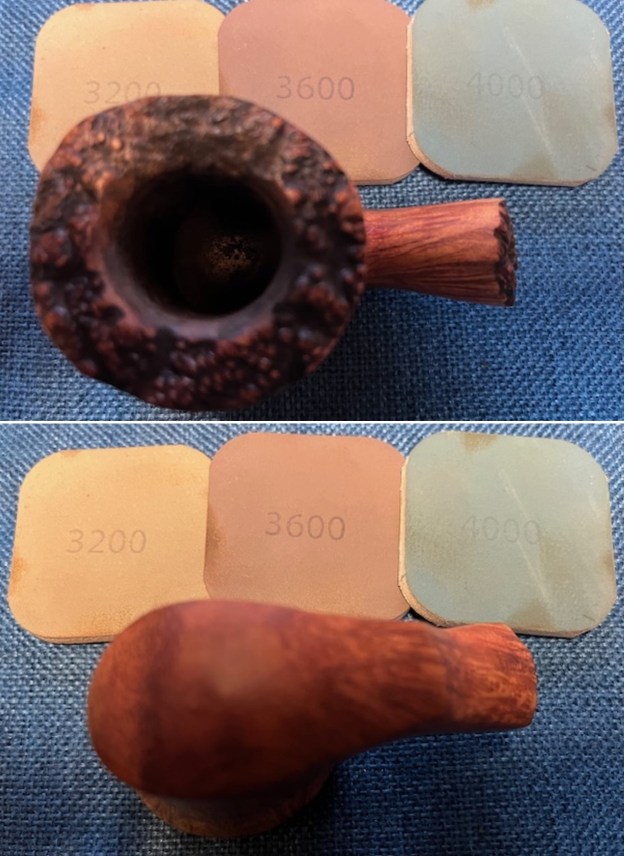
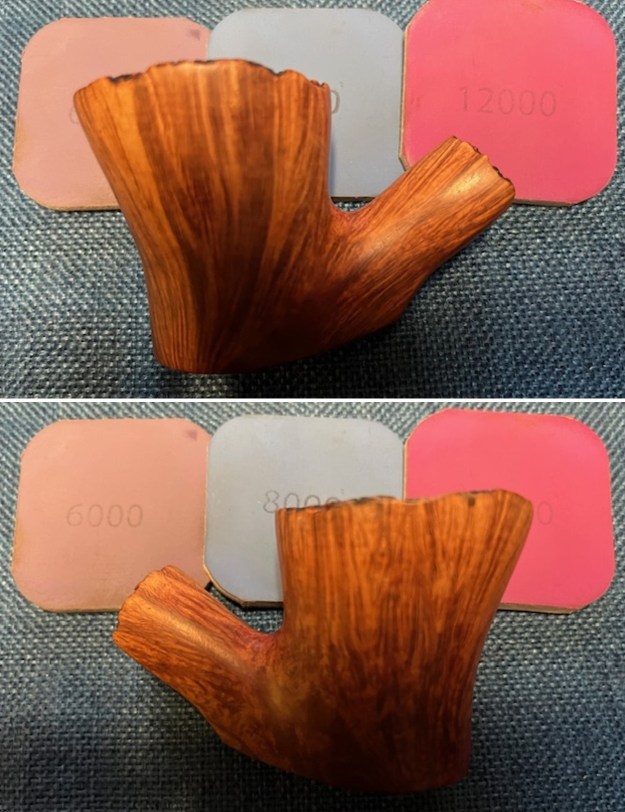
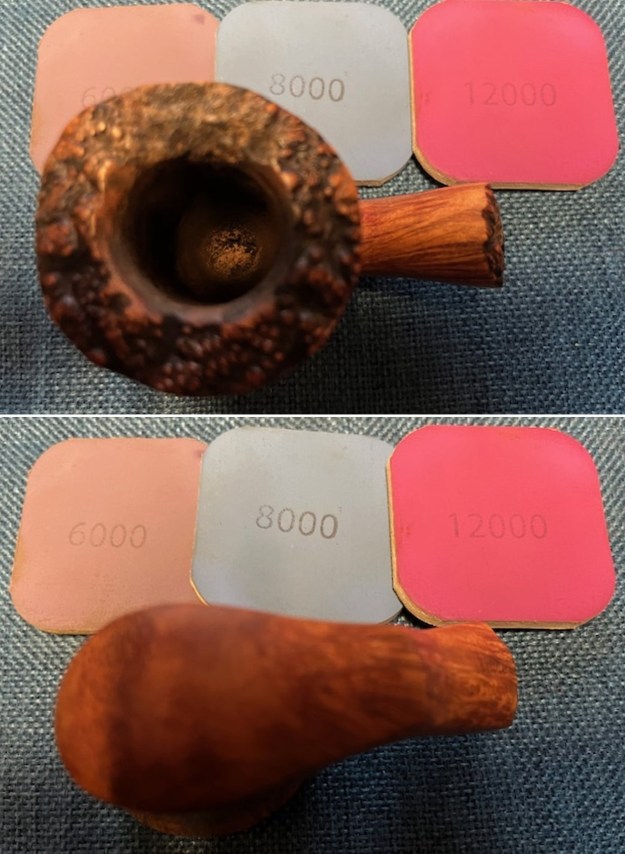
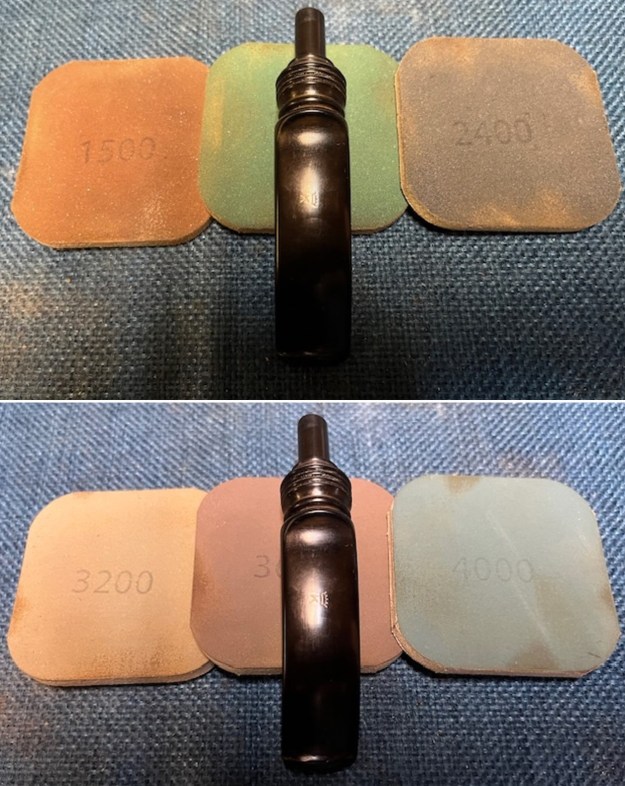
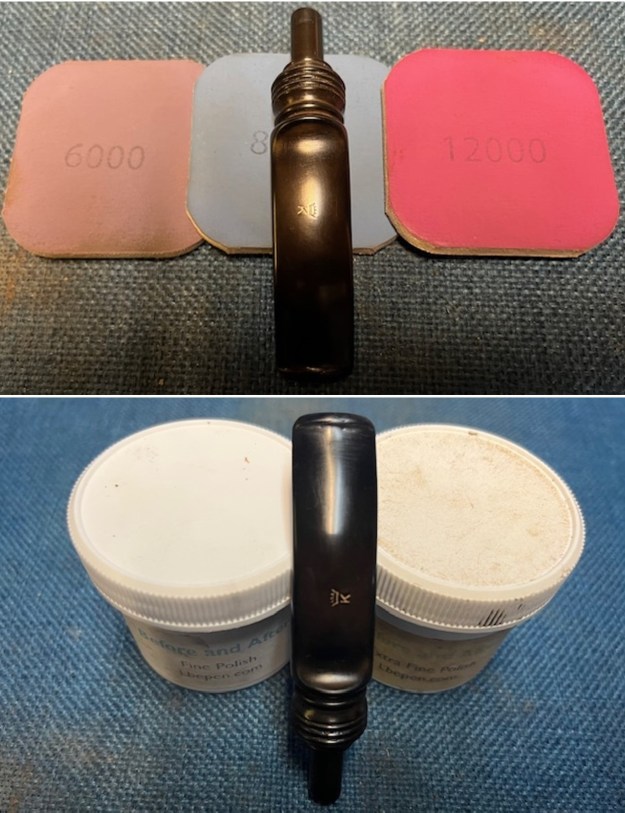
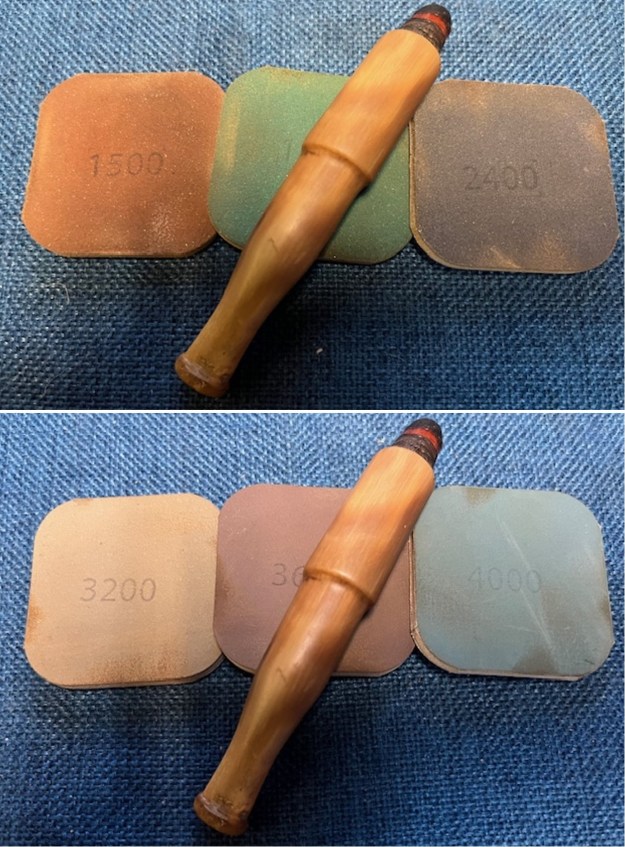
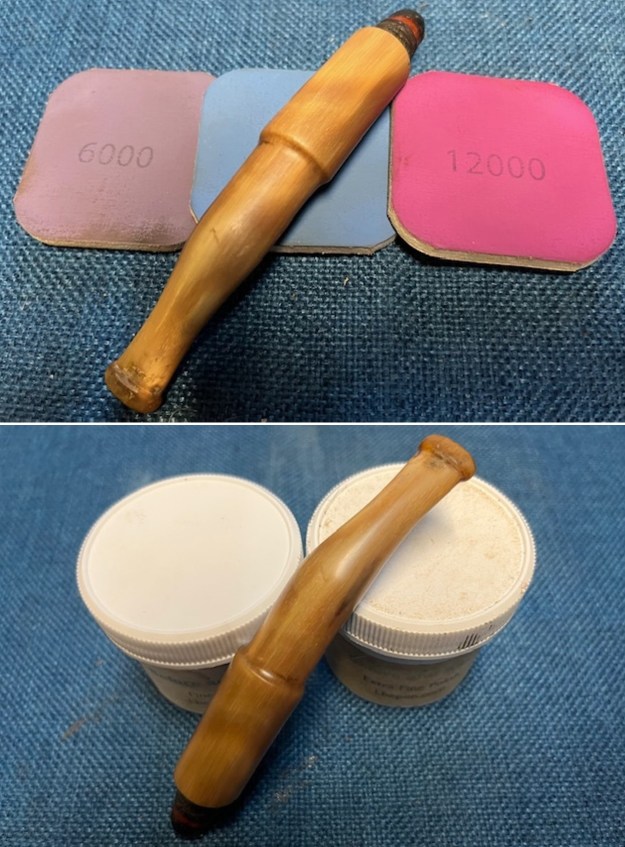
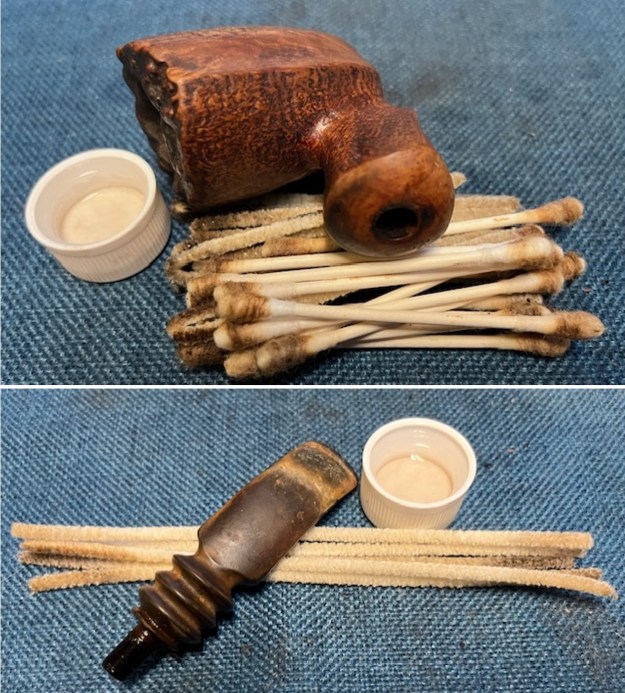
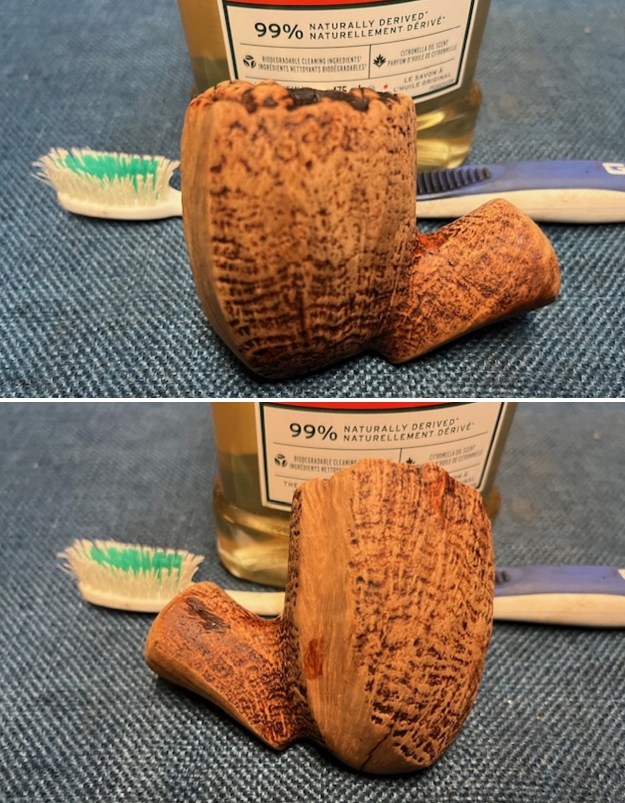
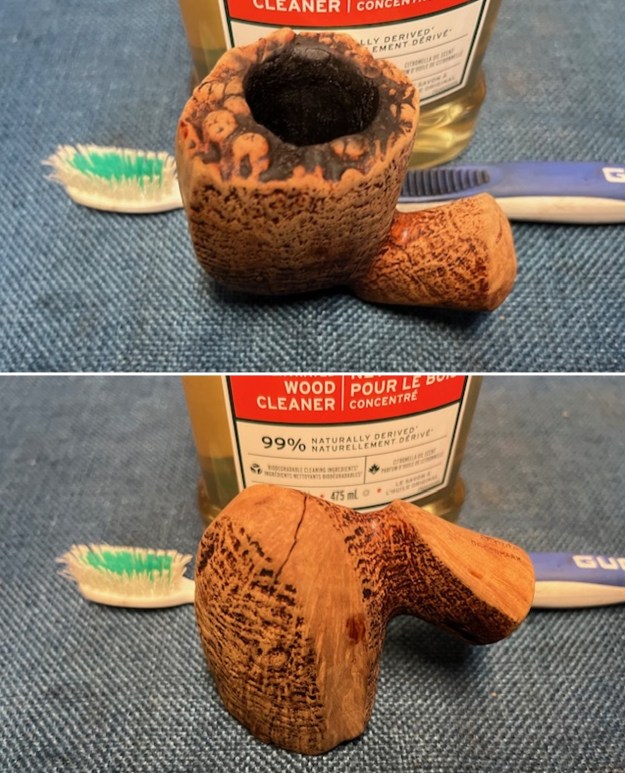
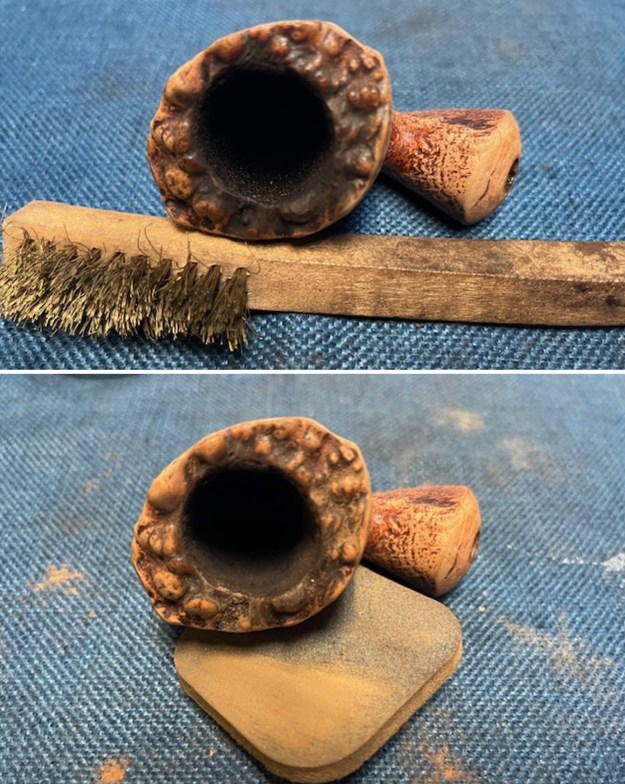
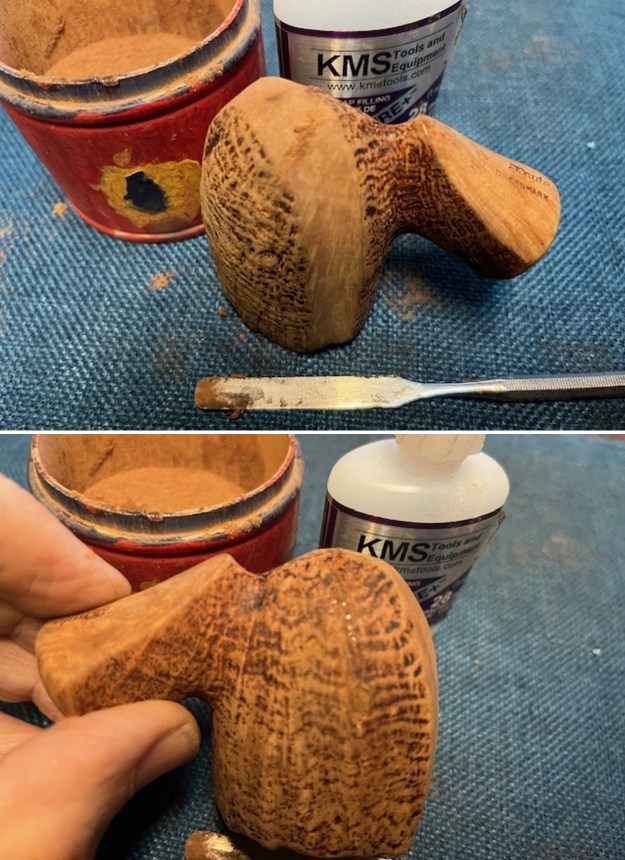
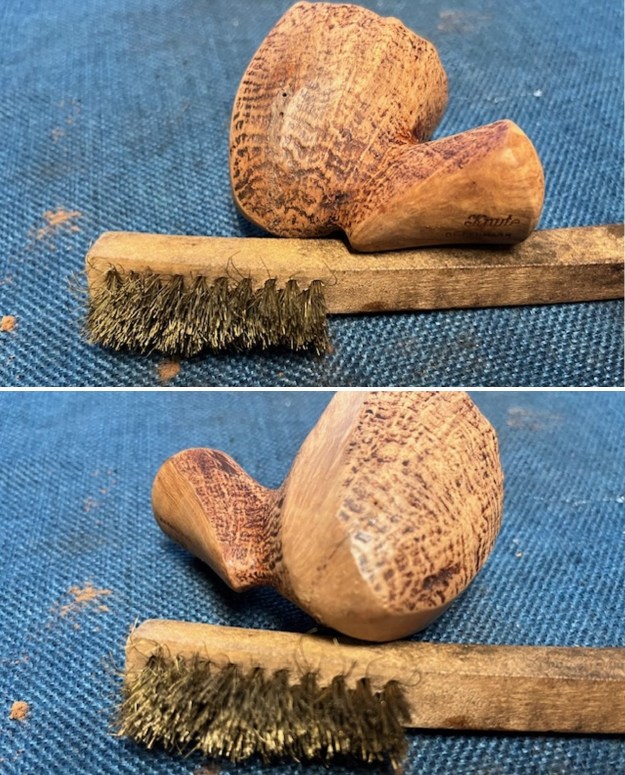
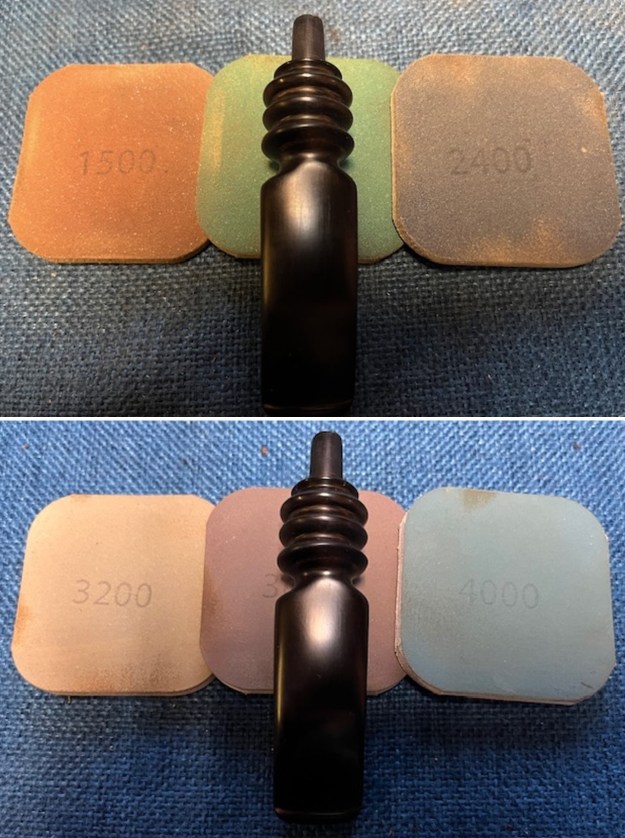
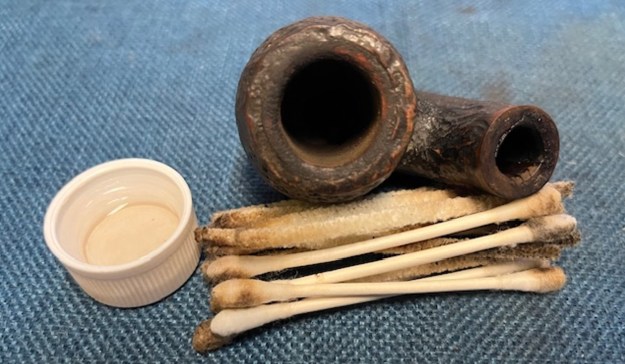
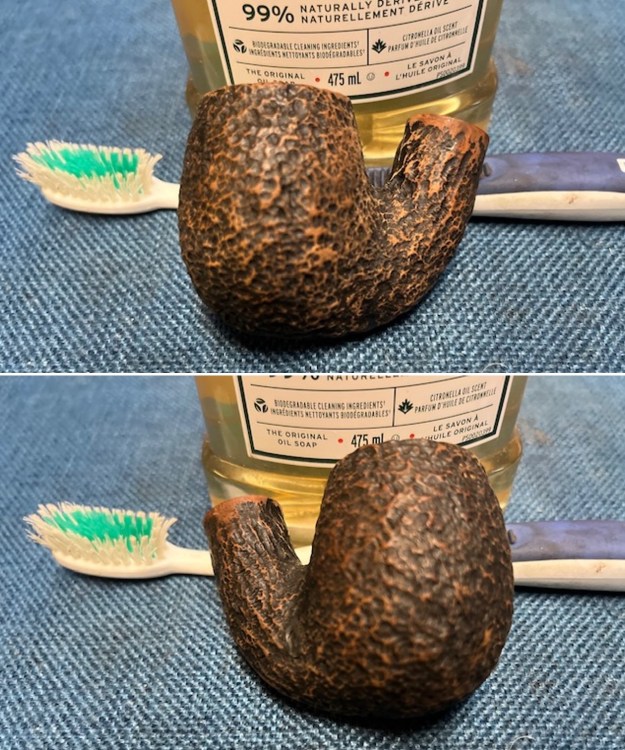
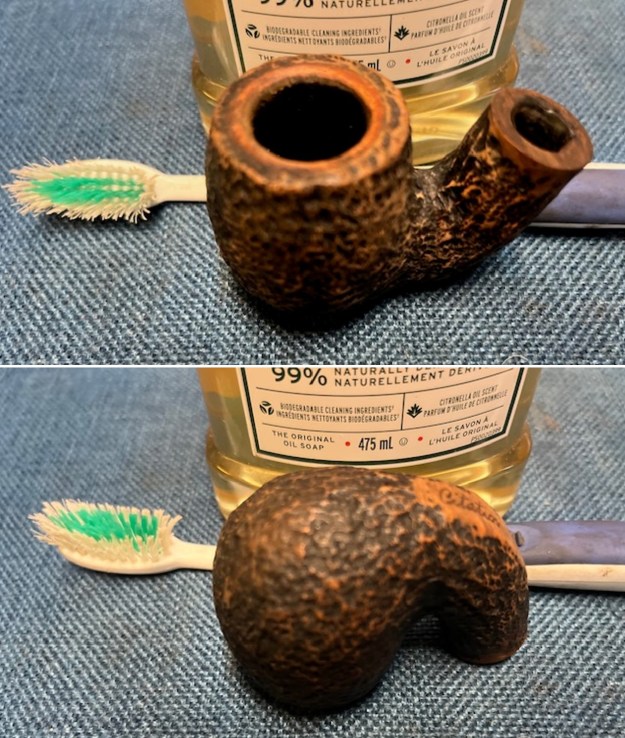
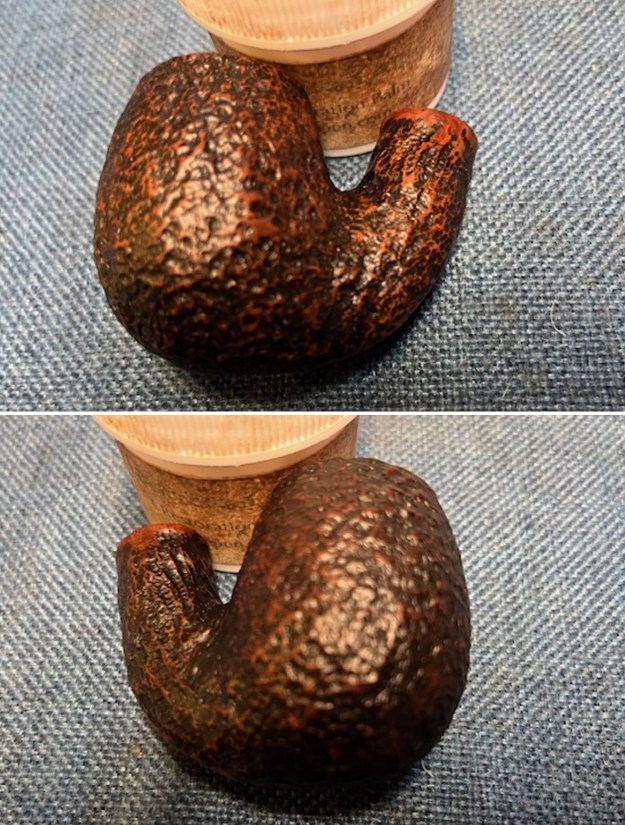
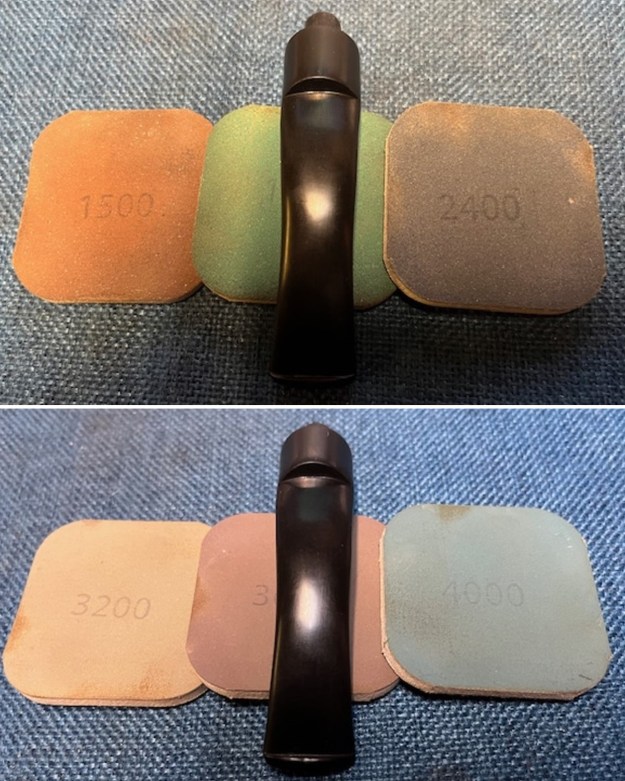
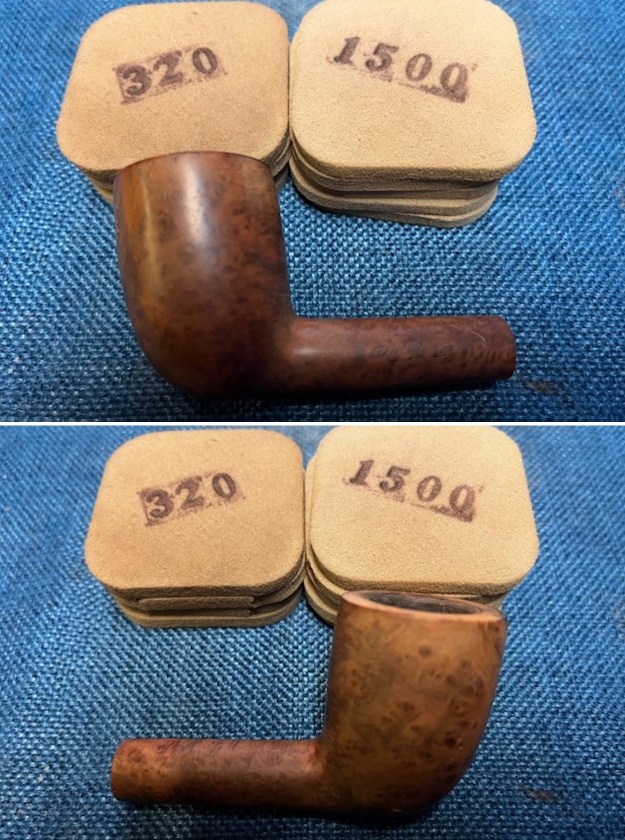
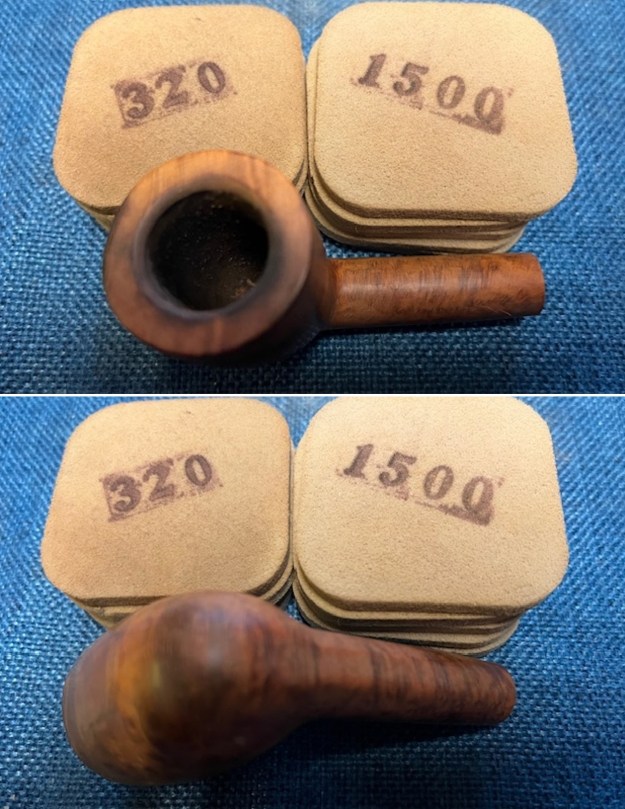
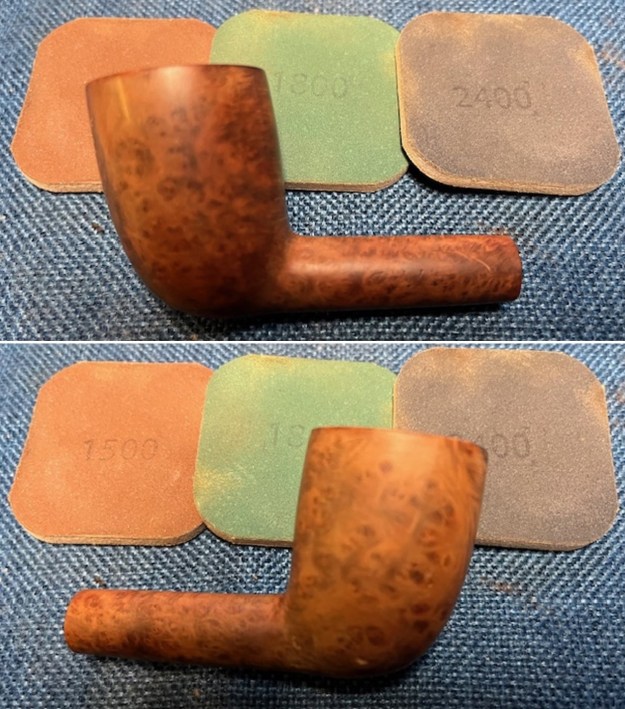
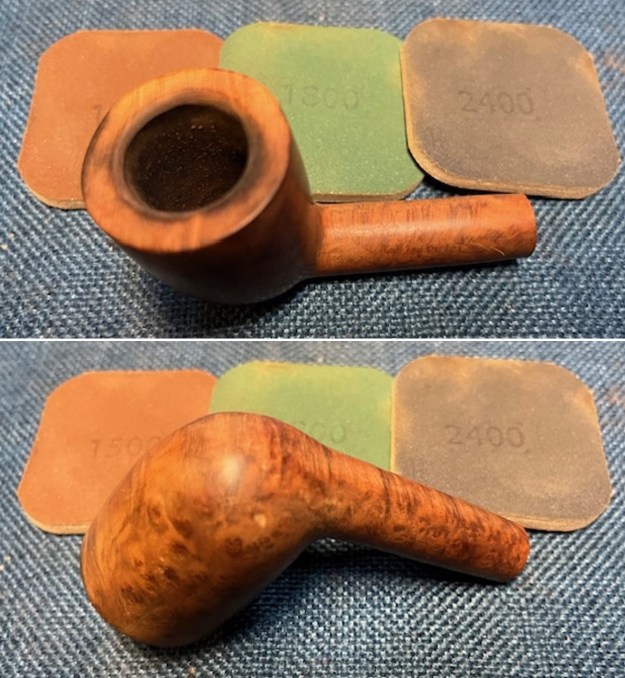
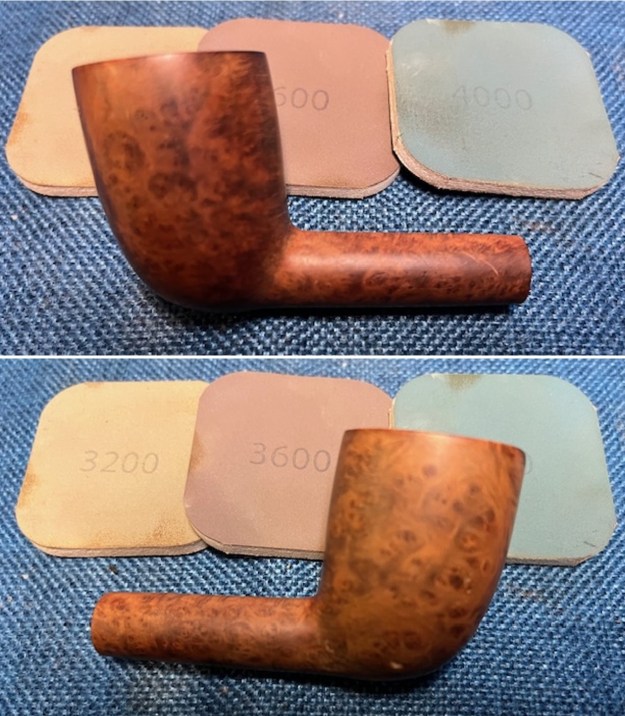
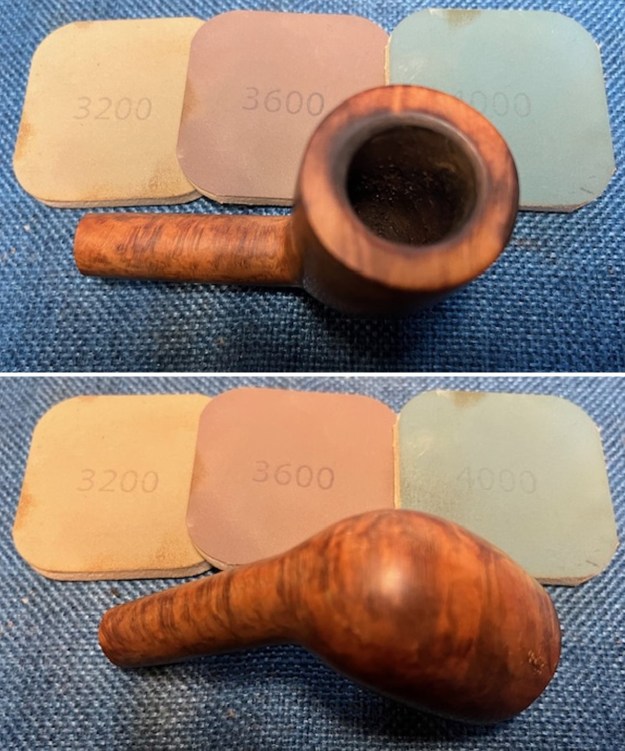
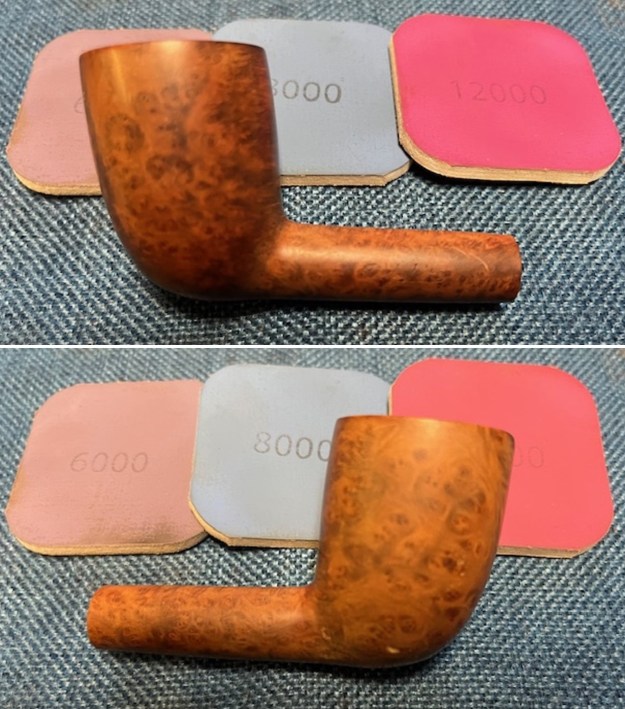
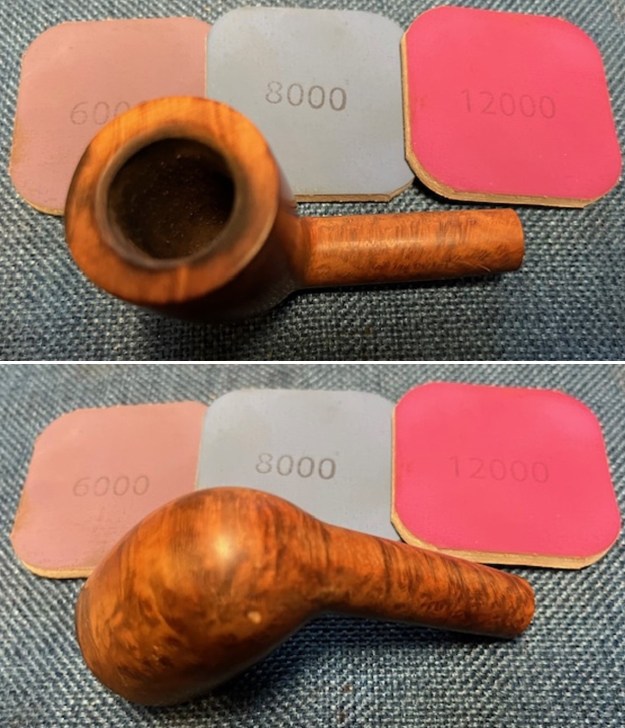
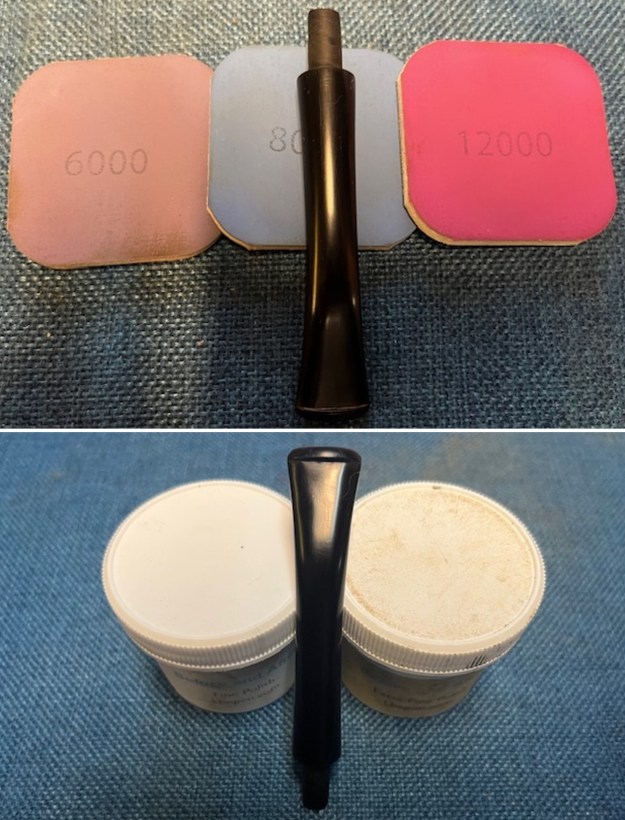
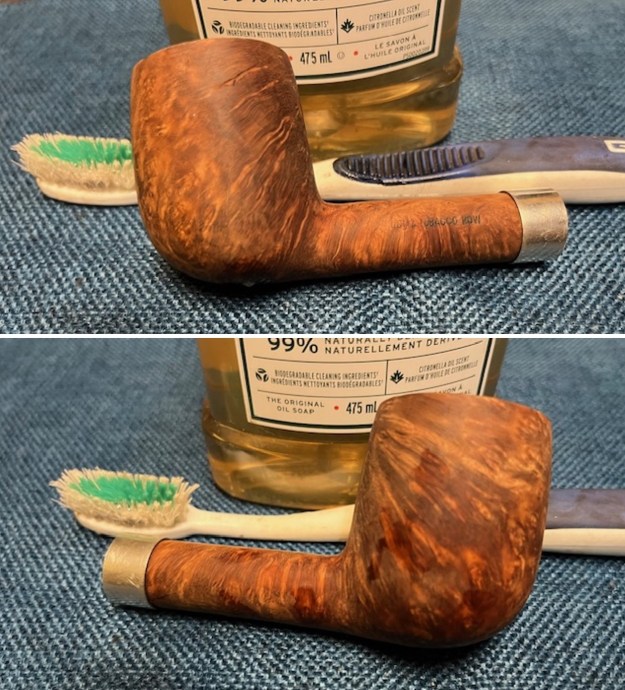
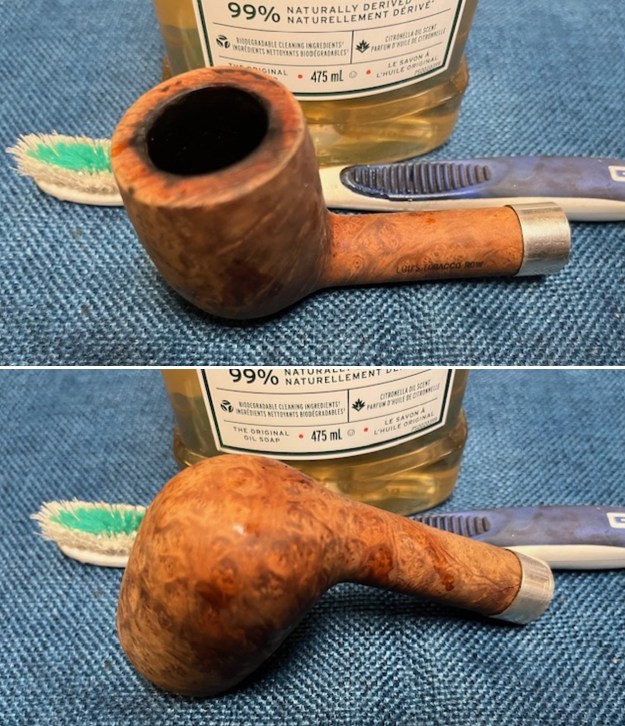
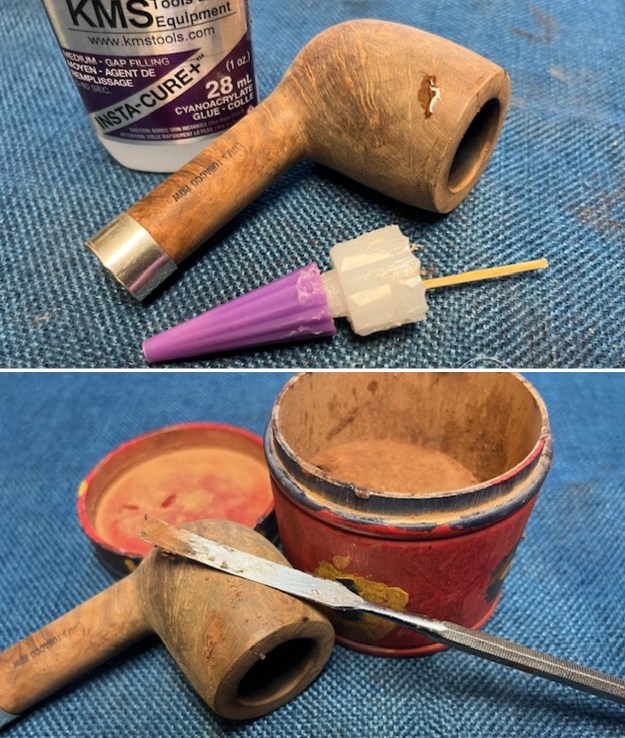
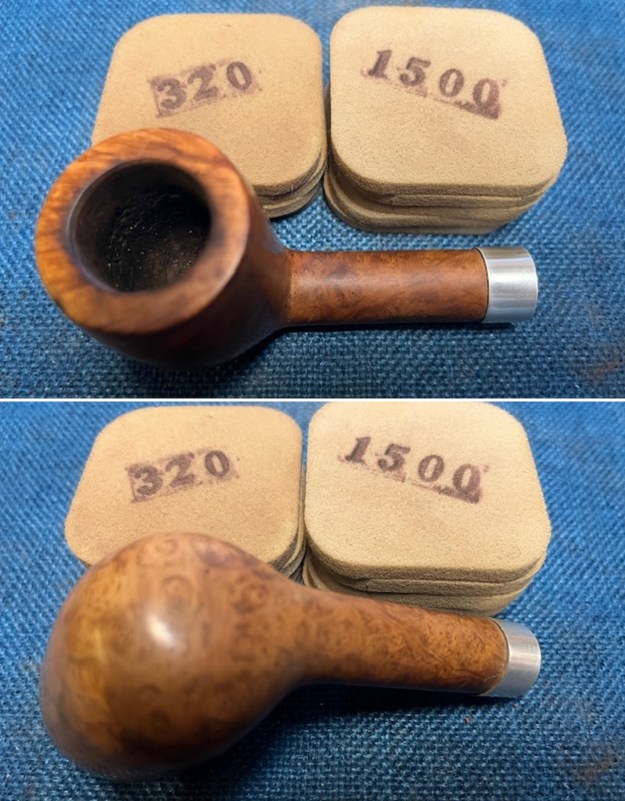
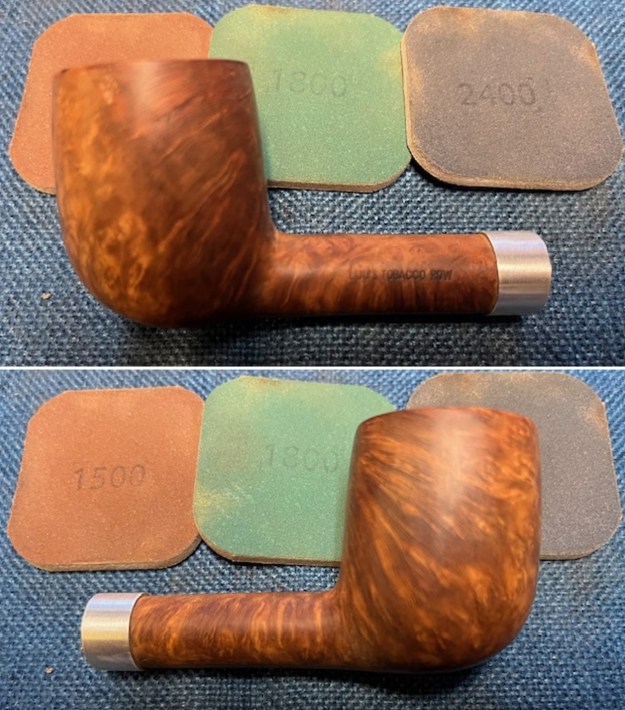
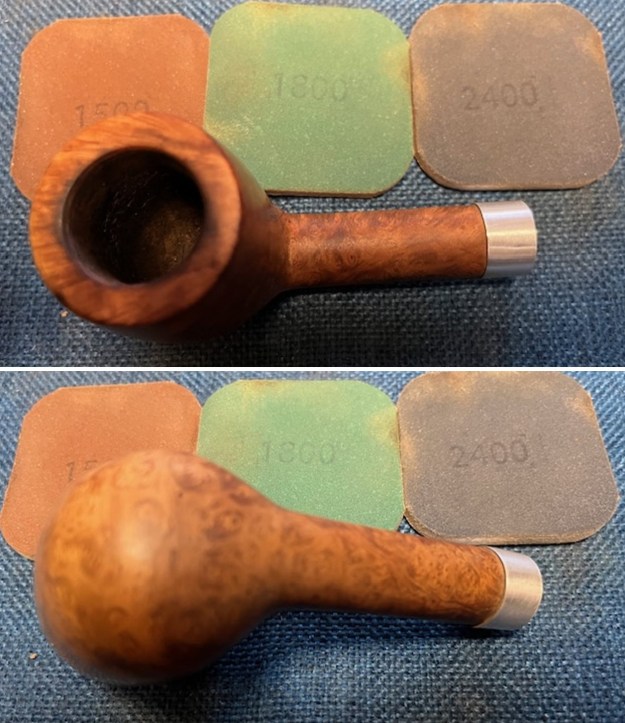
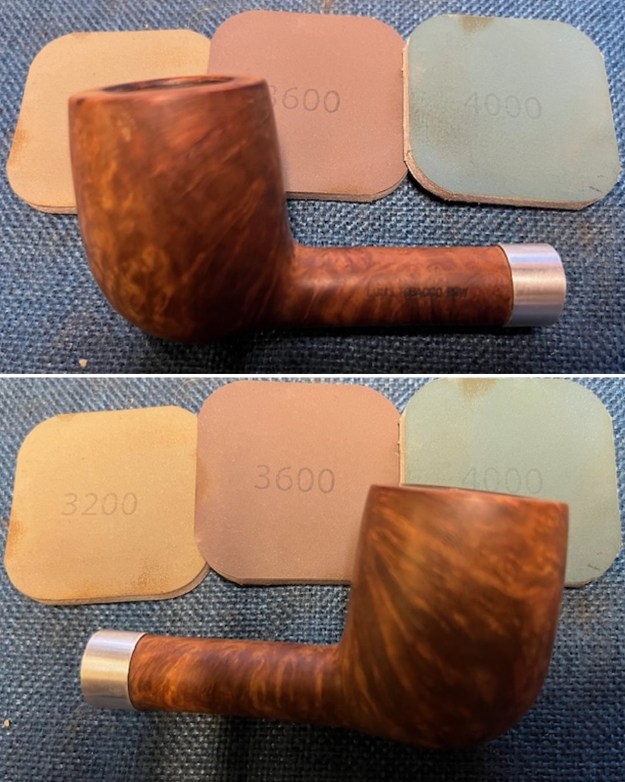
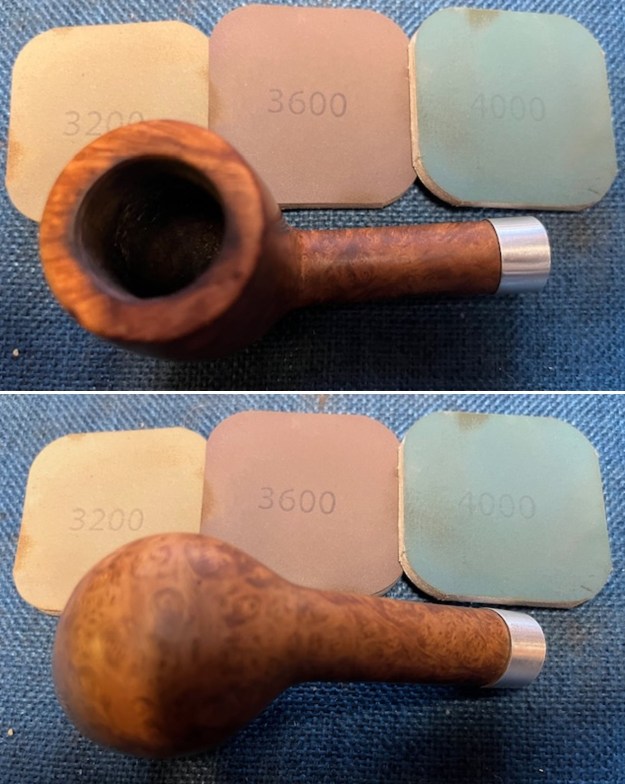
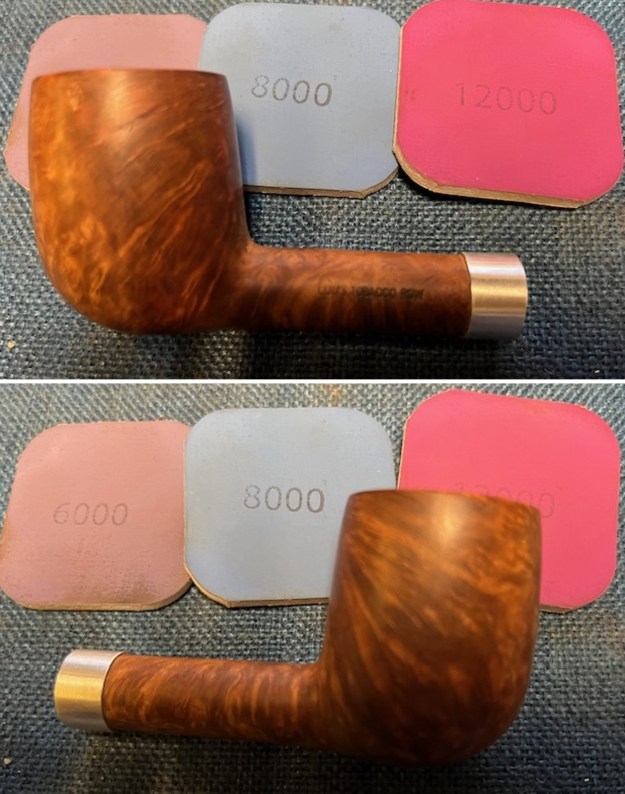
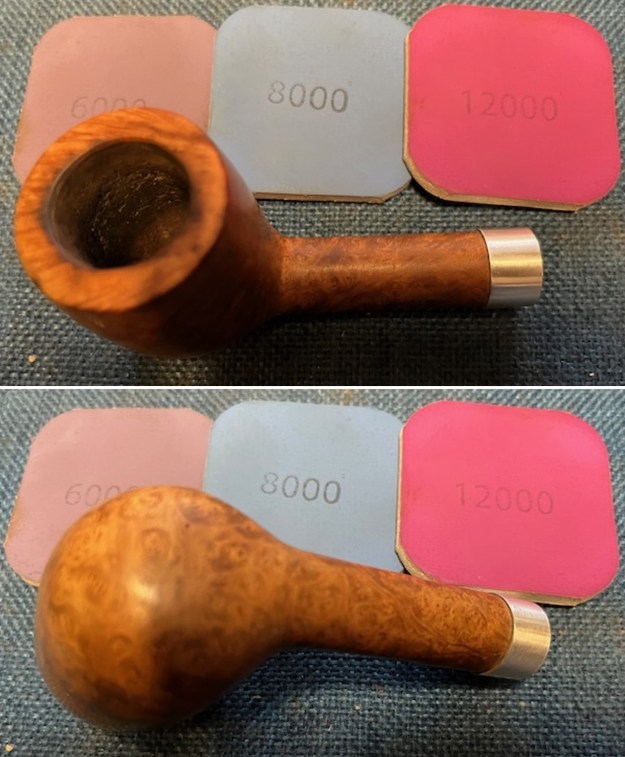
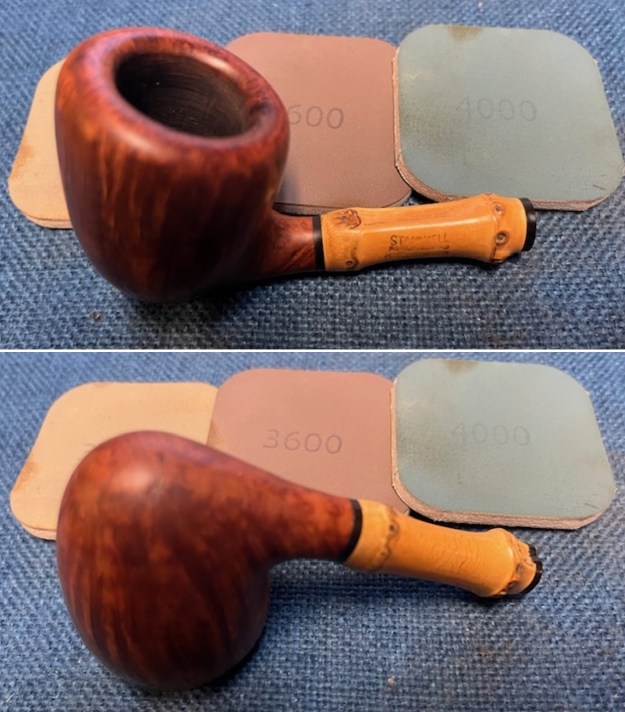
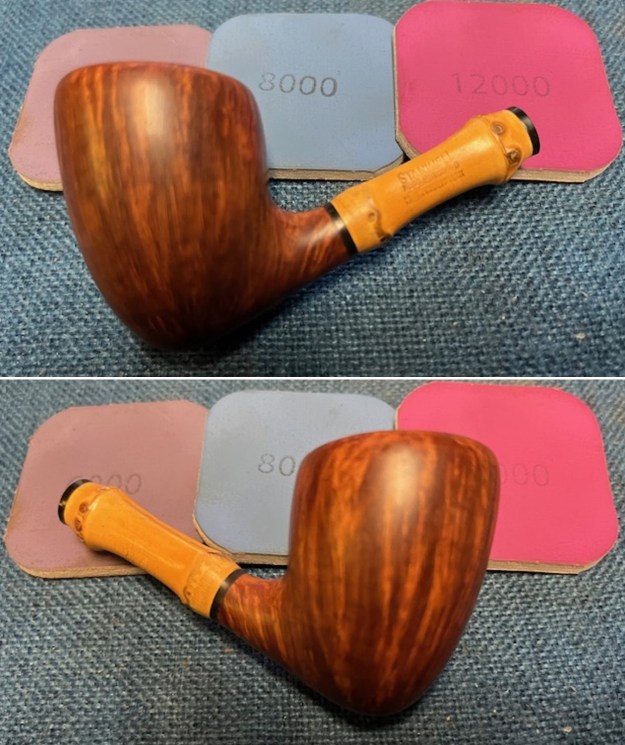
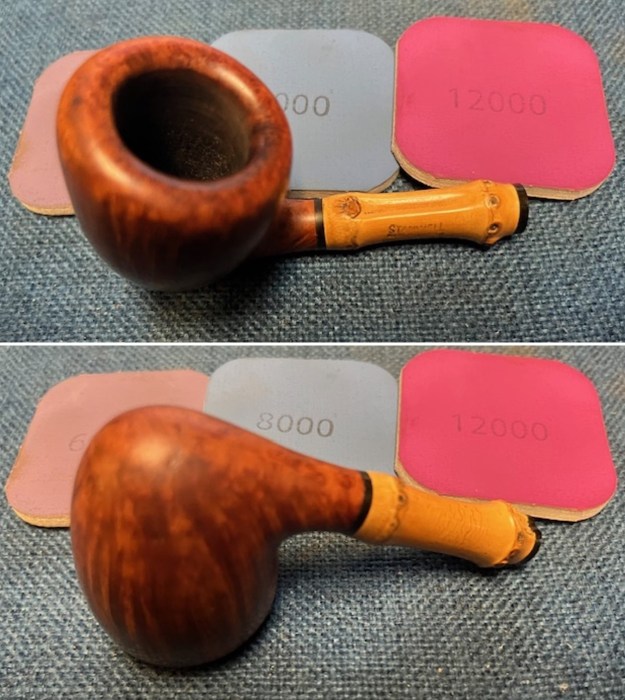
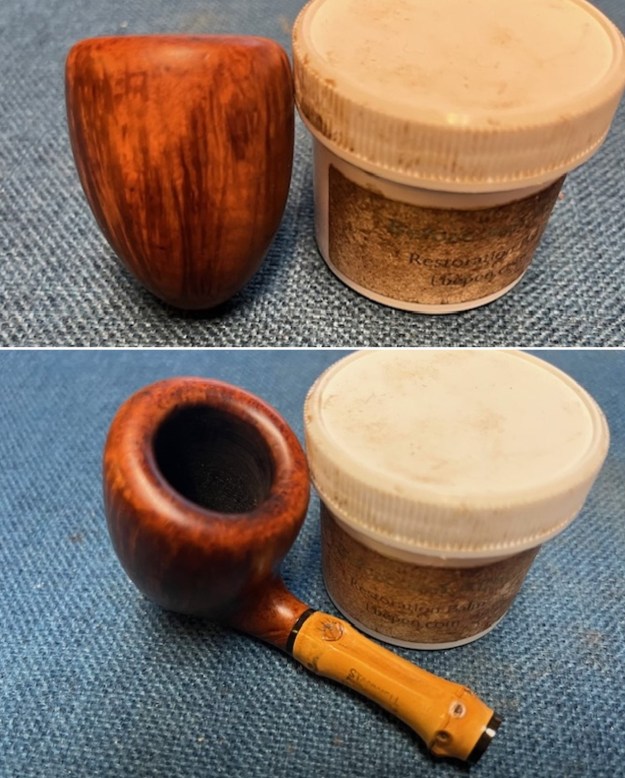
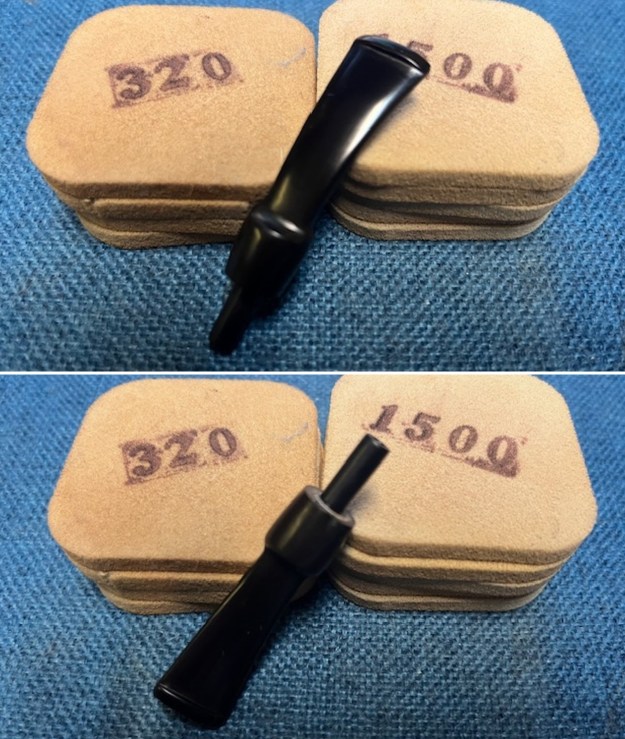
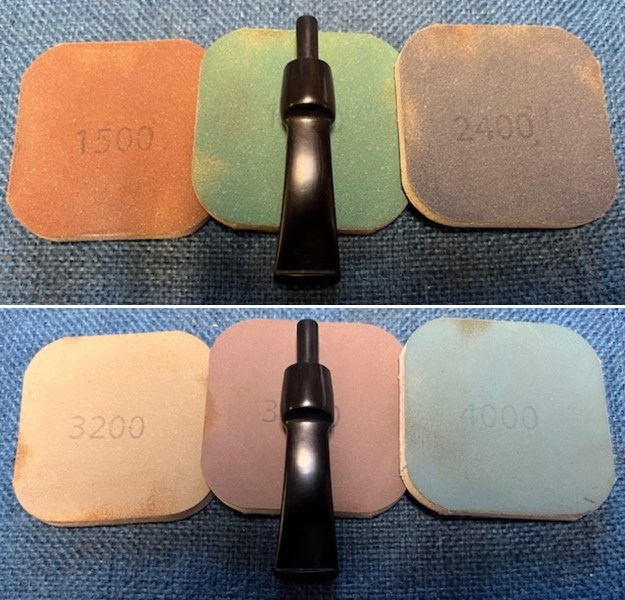
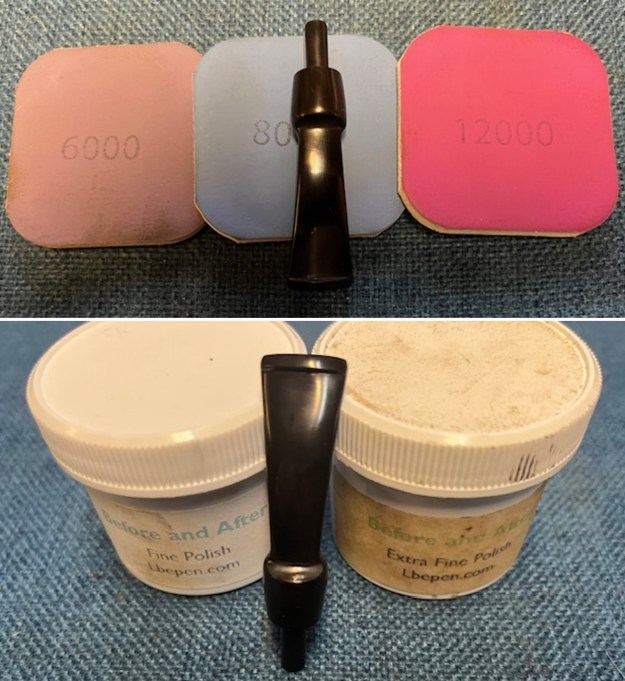
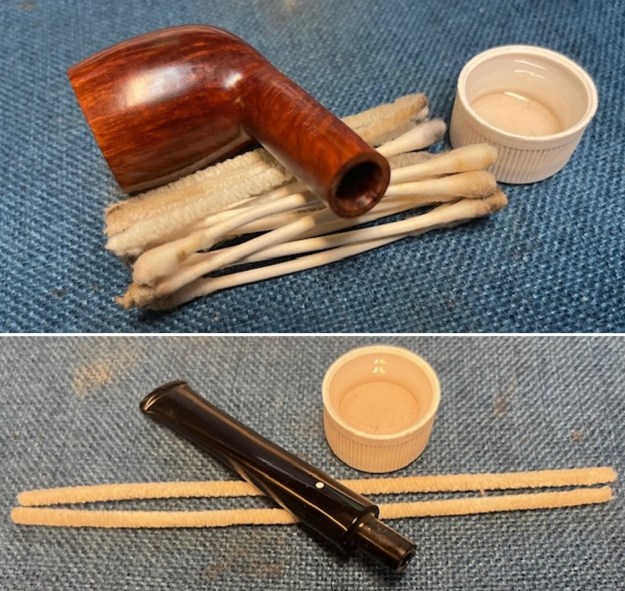
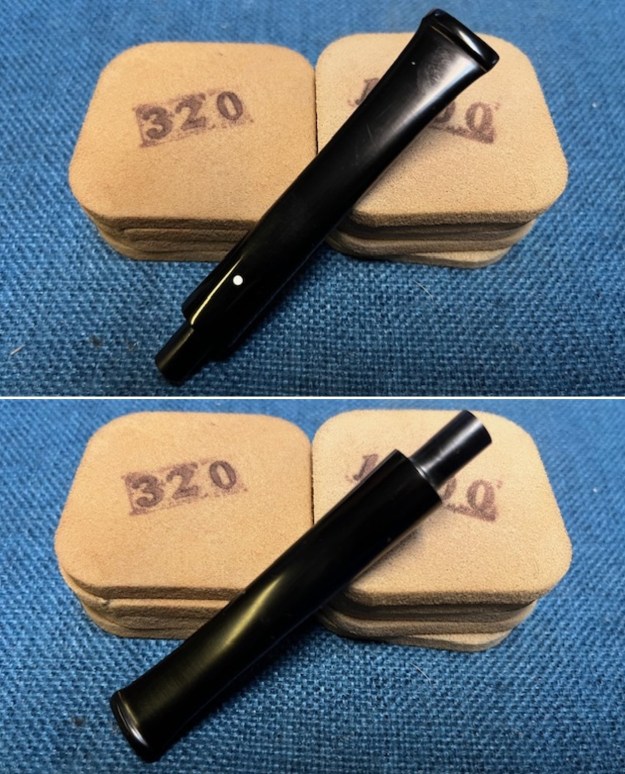
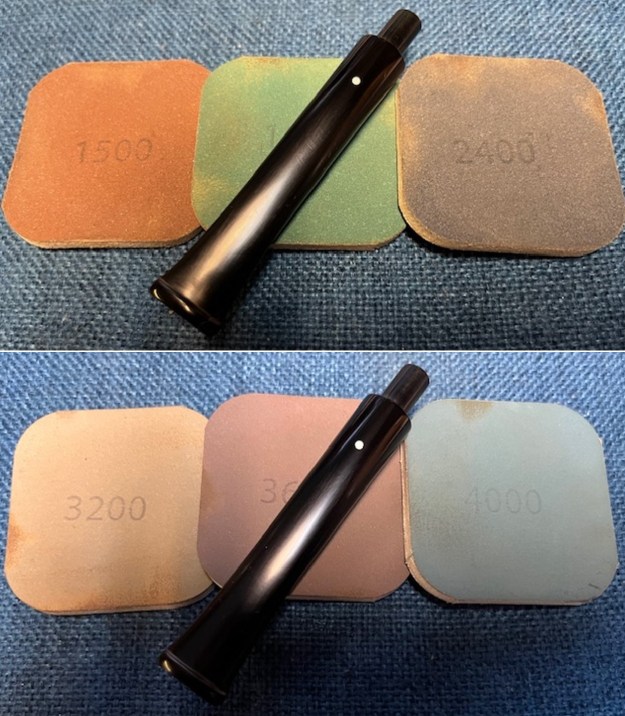
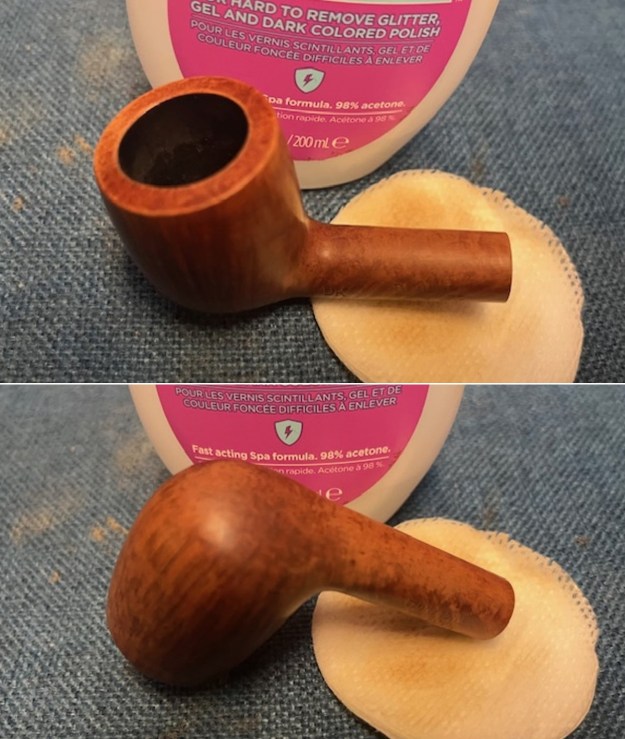
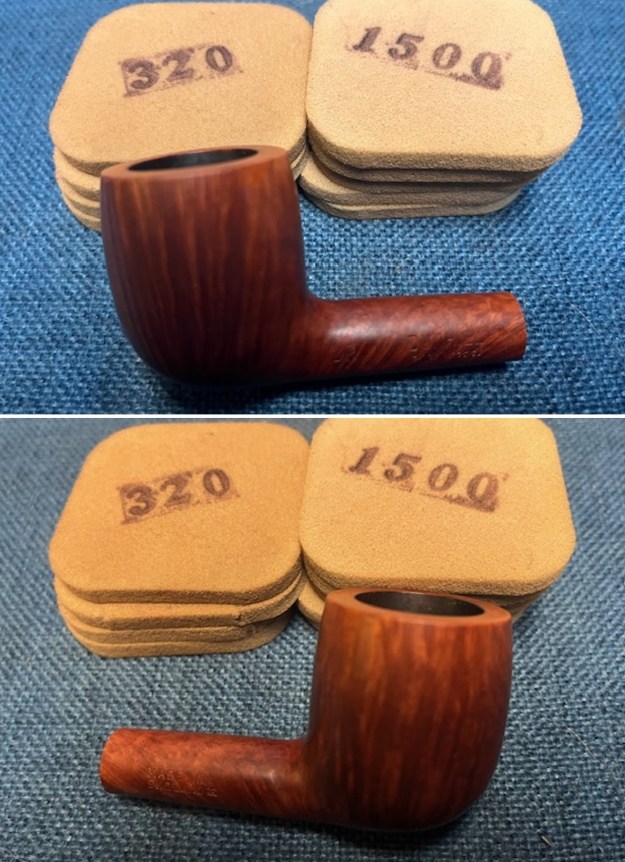
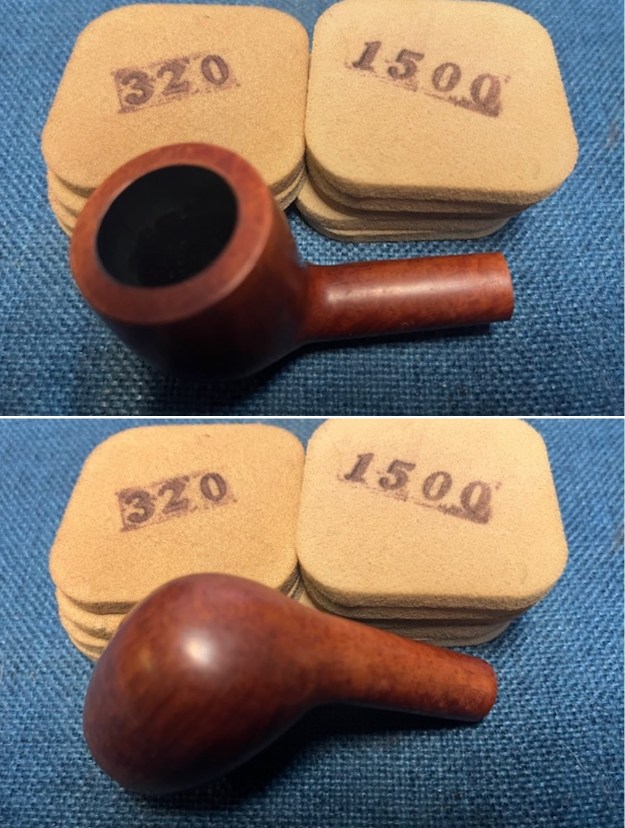
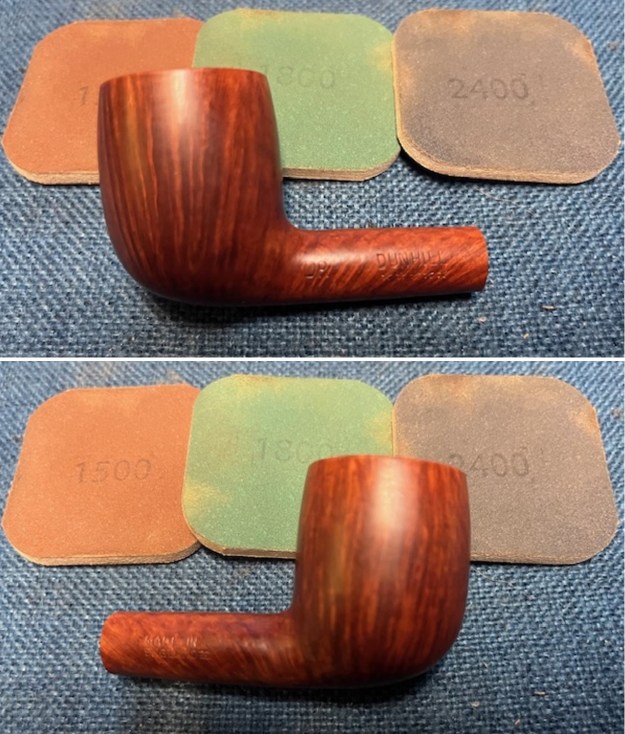
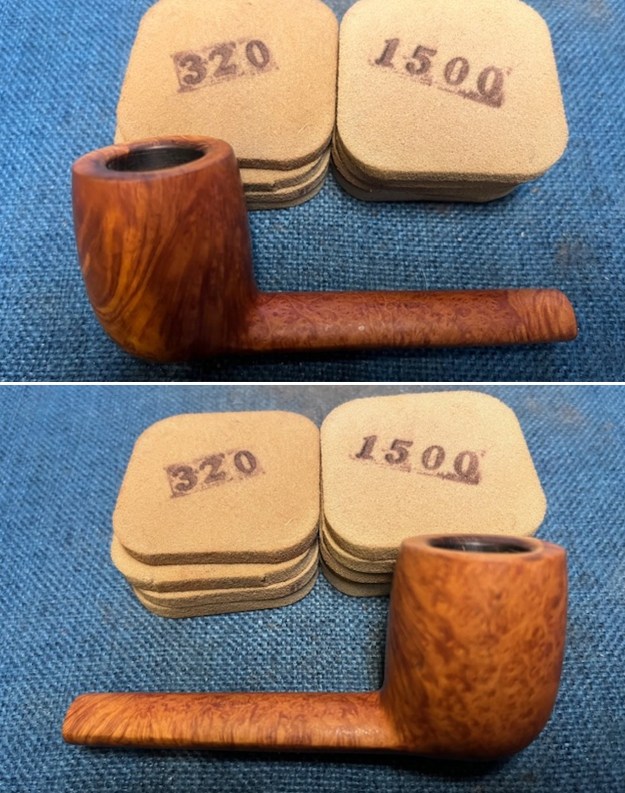
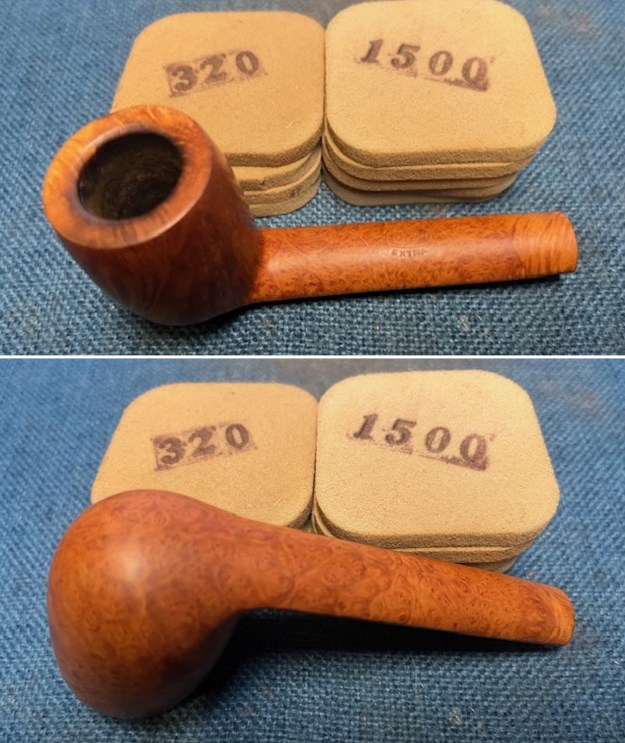
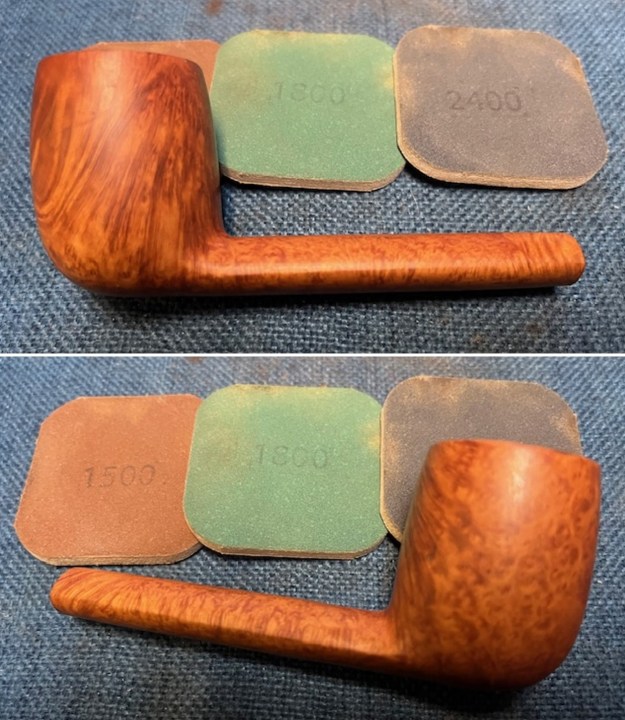
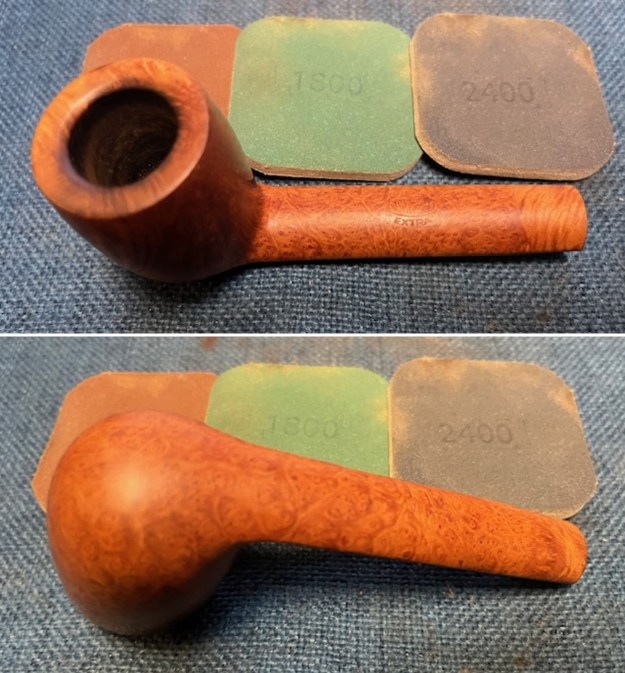
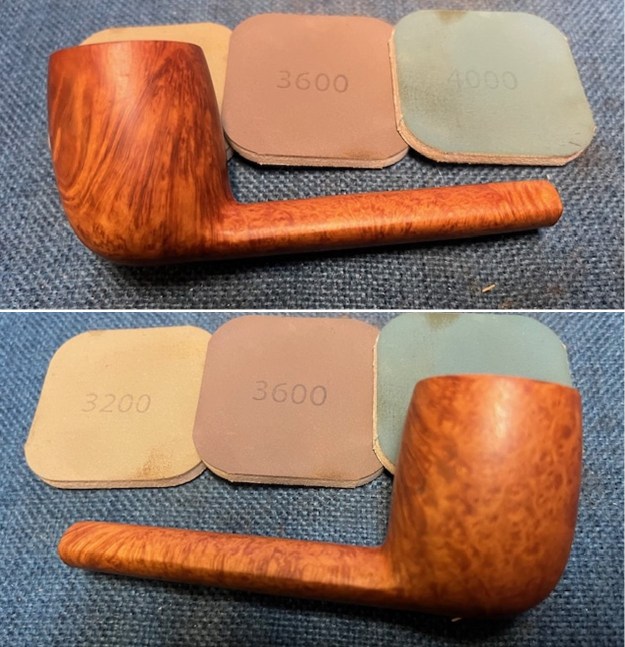
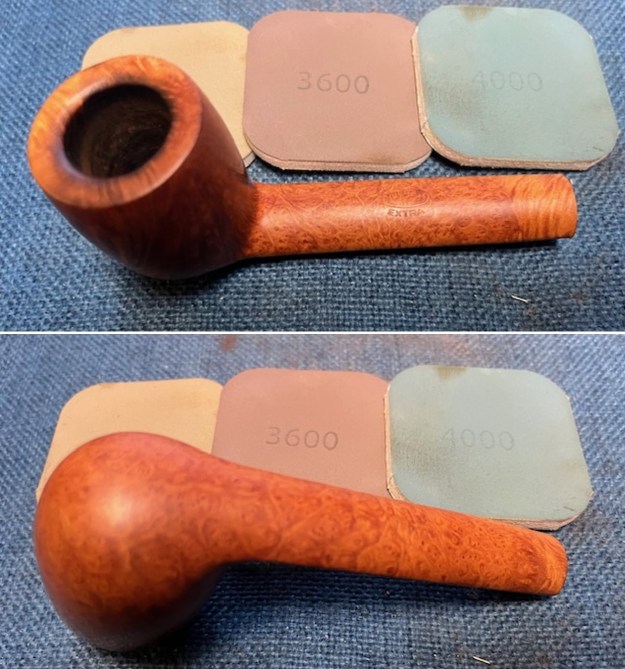
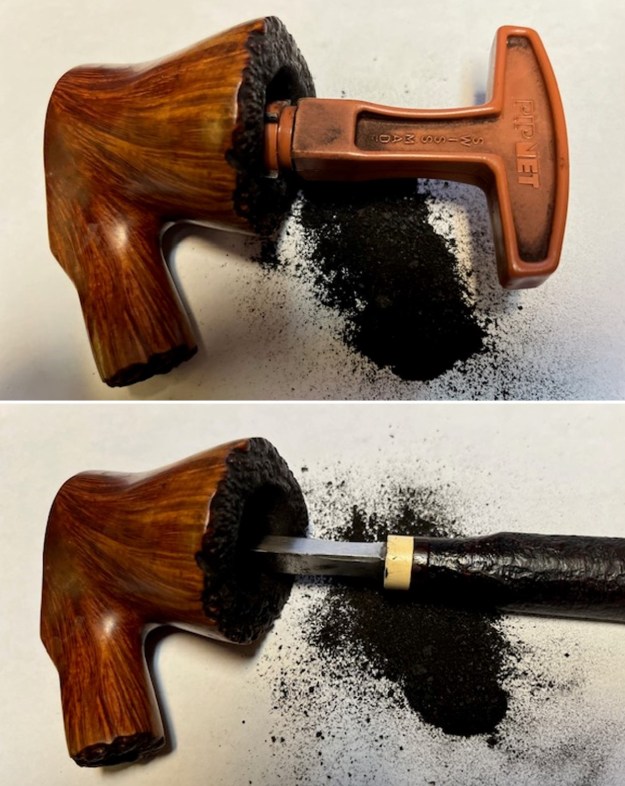
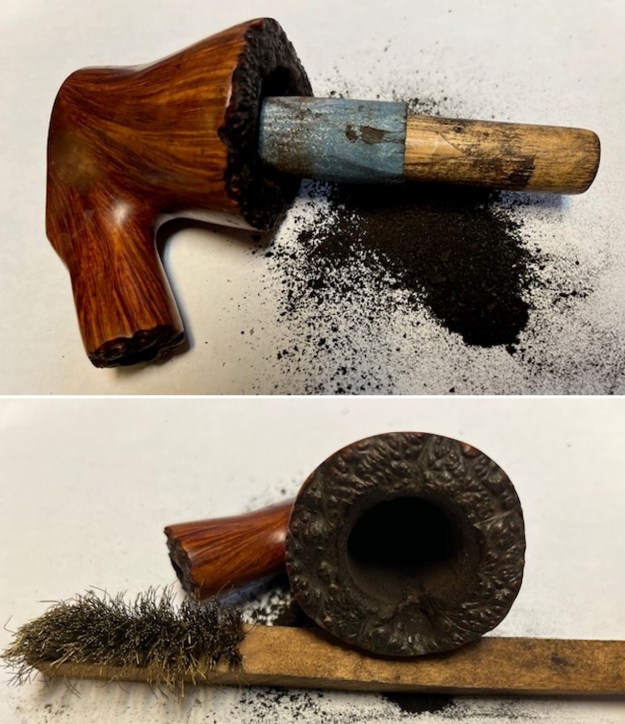
I started my work on the pipe by starting the process of cleaning the pipe. I carefully reamed the bowl with a PipNet Pipe Reamer remove from the bowl leaving bare briar. I cleaned up the remnants of cake with a Savinelli Fitsall Pipe Knife and removed the remaining debris. I sanded the bowl walls smooth with a piece of 220 grit sandpaper wrapped around a piece of dowel. I scraped the lava coat off the rim top – both the rusticated portion and the smooth ring of the meerschaum bowl top with the Savinelli Pipe Knife and removed all of it. I scrubbed the exterior of the bowl with a tooth brush and undiluted Murphy’s Oil Soap. I scrubbed the rim top with a brass bristle wire brush to clean off the lava and debris in the plateau. I rinsed it off with warm running water and dried it with a soft towel. It looked much better and the rim top looked clean. The grain stood out clearly. I cleaned out the deep pit in the rim top. It appeared that the hole was original a fill that had fallen out. I used qtips and alcohol to clean out the grime in the hole in the plateau.I rebuilt the missing fill with clear CA glue and briar dust. Once it was in place I used a brass bristle wire brush to give it patterns like the rest of the rim top.I sanded out the inner edge of the bowl with a dowel and 220 grit sandpaper to smooth out the repair on the edge and round out the edge. I went over it again with the brass bristle brush and blew off the dust. It was looking quite good.I used a black stain pen to fill in the valleys in the plateau on the rim top and on the shank end. The black will give depth to the finish once it is sanded and polished.I repaired the hairline crack in the shank underside with clear CA glue and held it closed until the repair cured. Once it hardened it was ready to be sanded. I carefully sanded it around the stamping so as not to damage it.I sanded the smooth briar and the high spots on the plateau with 320-3500 grit sanding pads. I wiped the briar down between each sanding pad. The briar took on a rich shine and the grain stood out in all its glory. I polished the briar with micromesh sanding pads – dry sanding with 1500-12000 grit pads and wiped it down the bowl after each sanding pad. Some of the photos of the sanding are a bit out of focus but overall the bowl took on a shine.
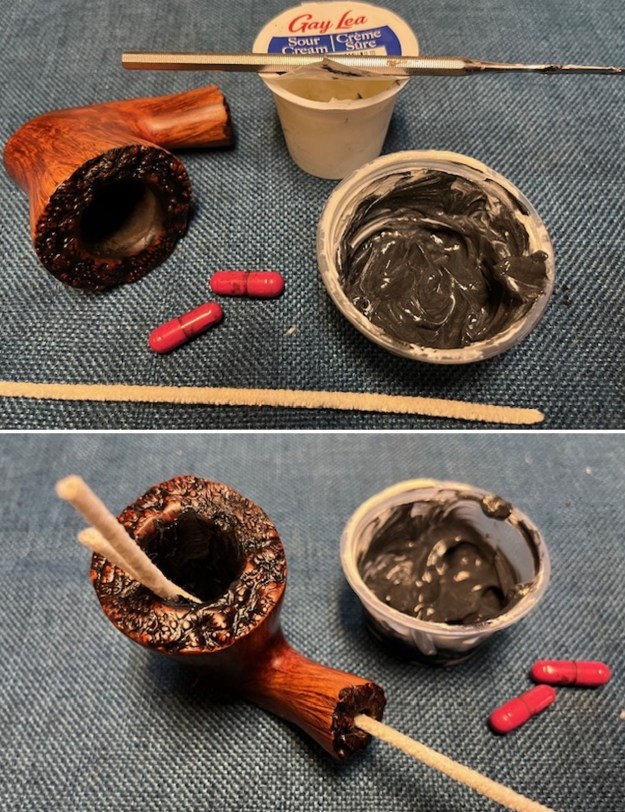
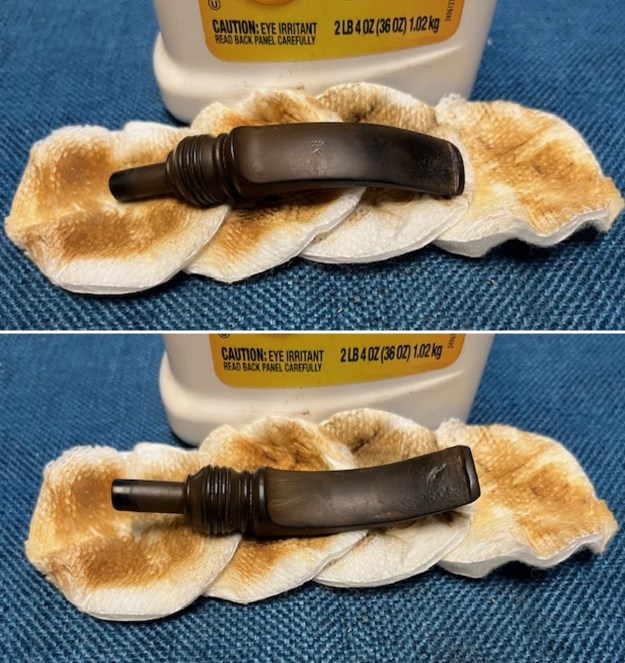
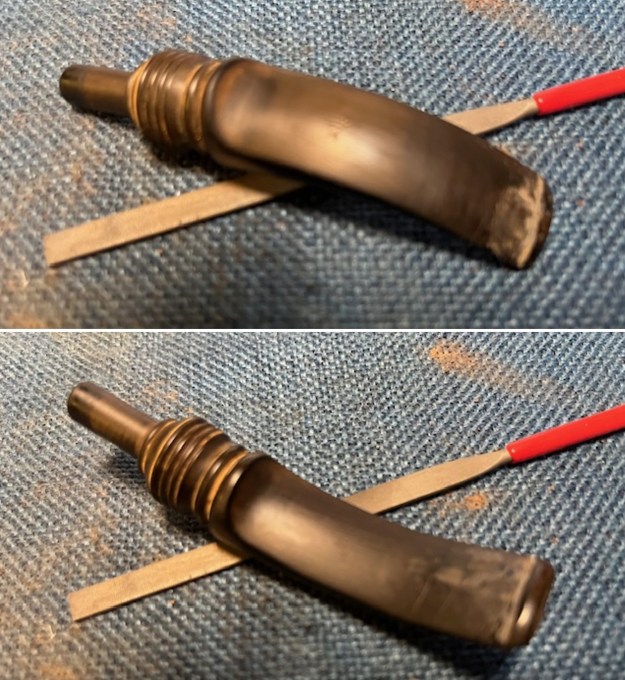
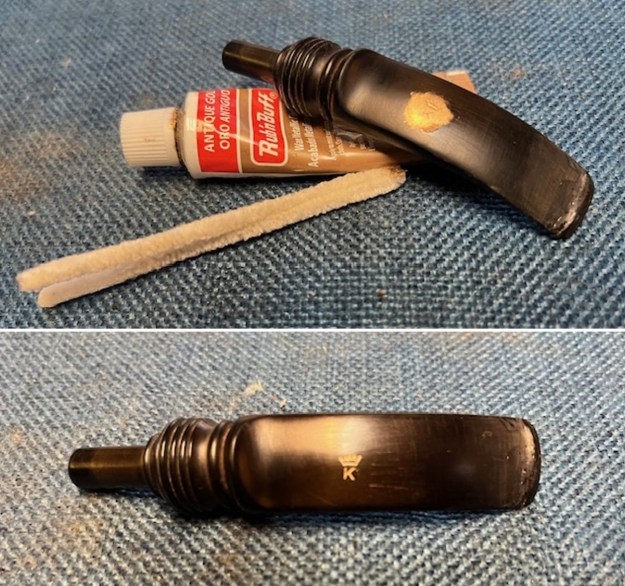
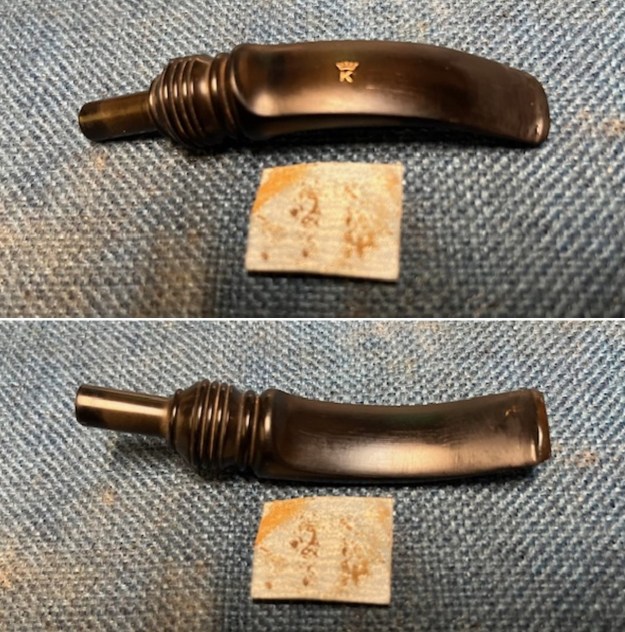
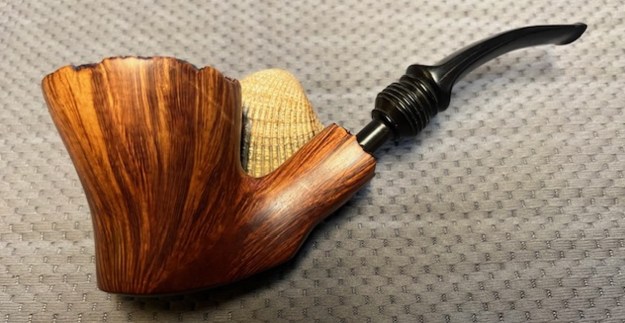
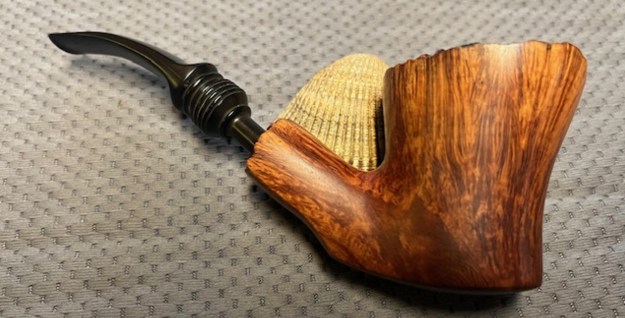
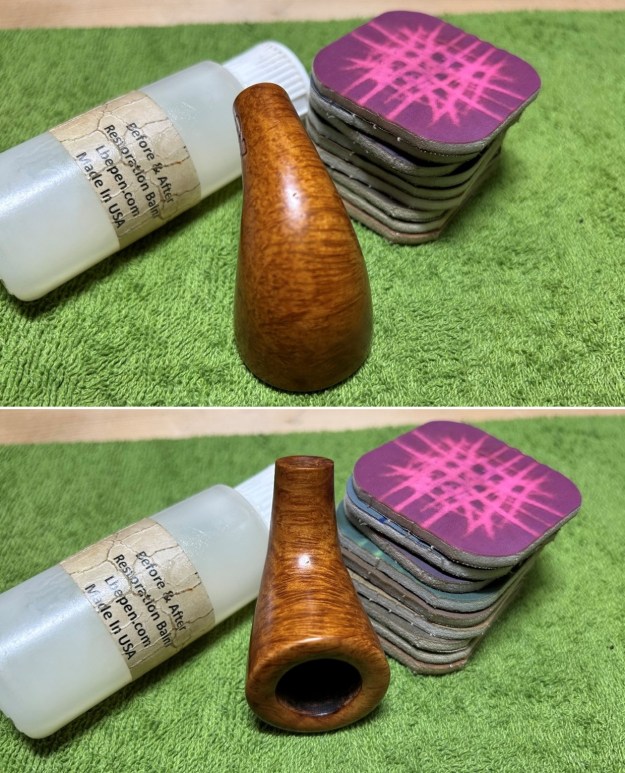
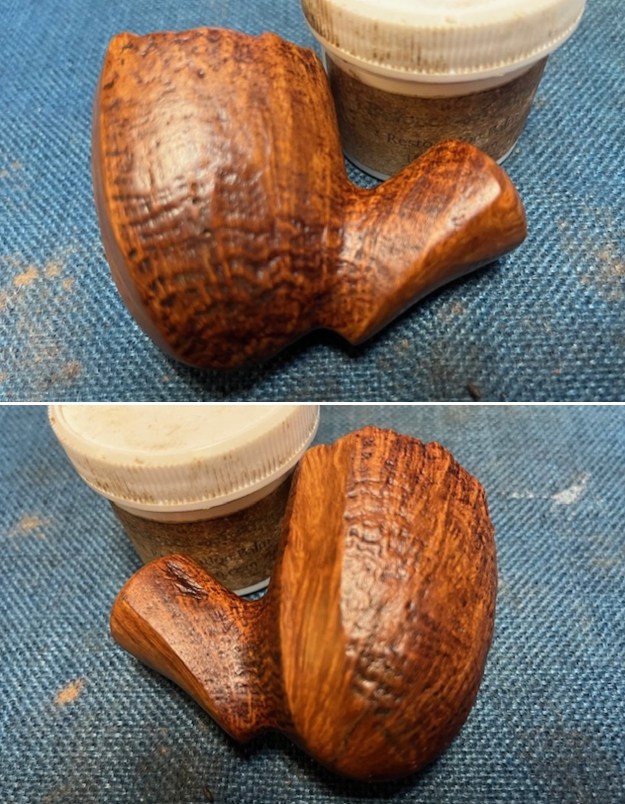
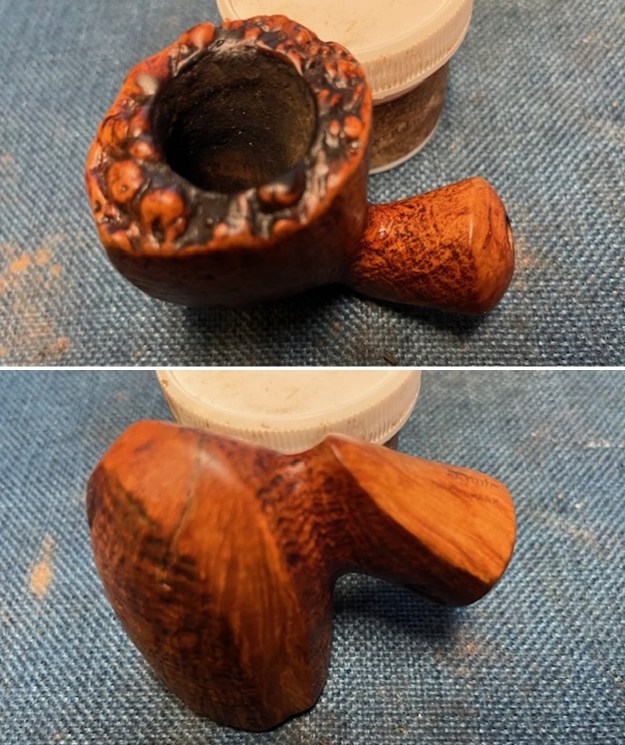
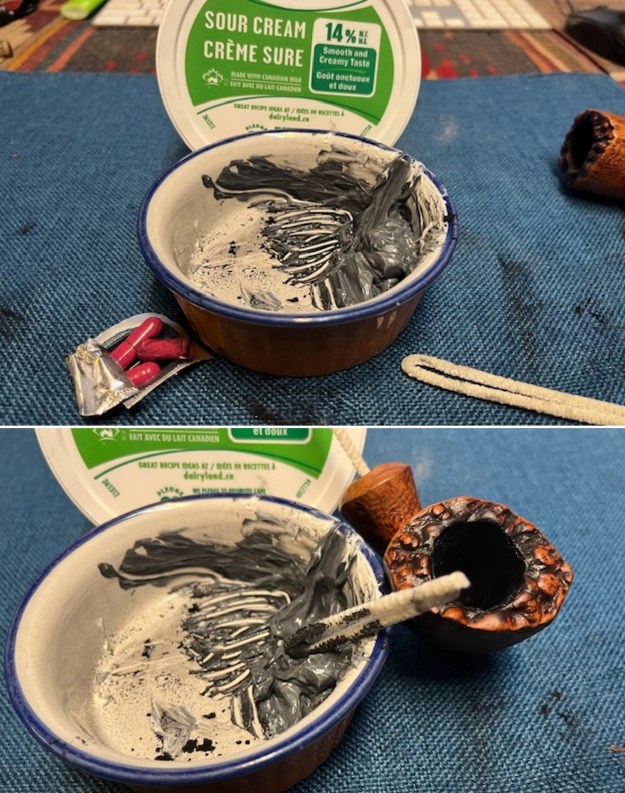
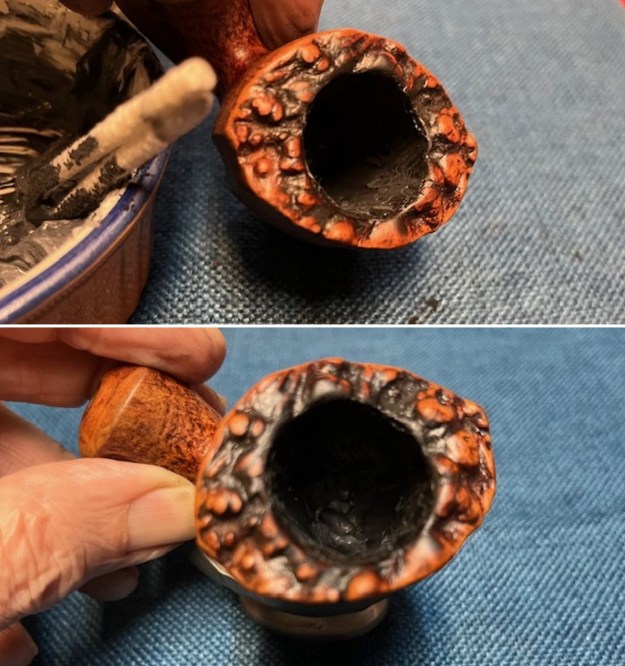
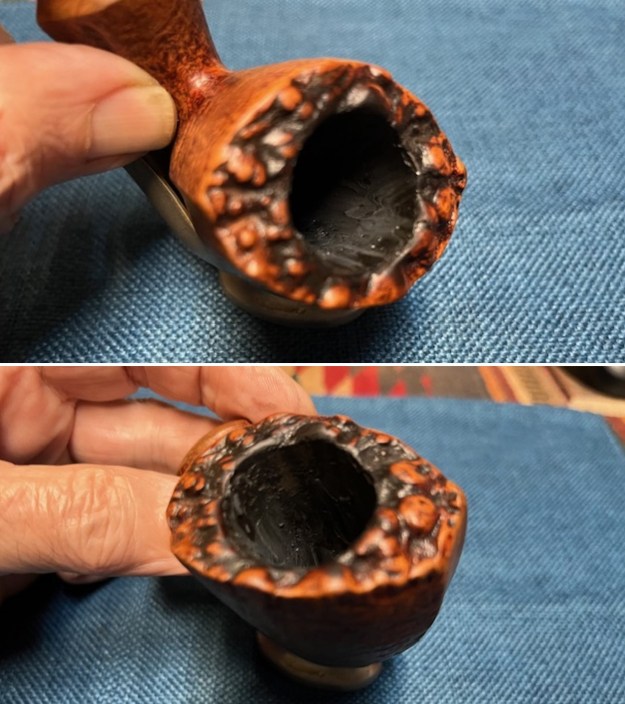
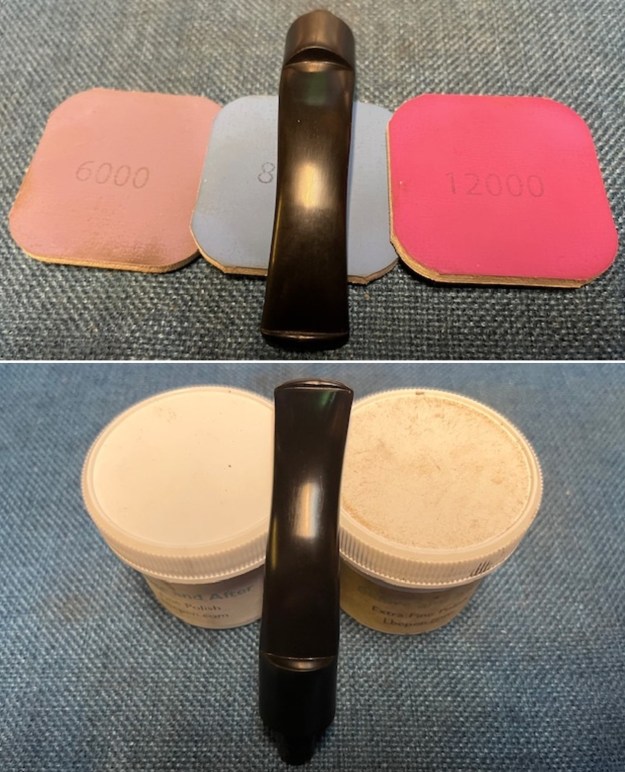
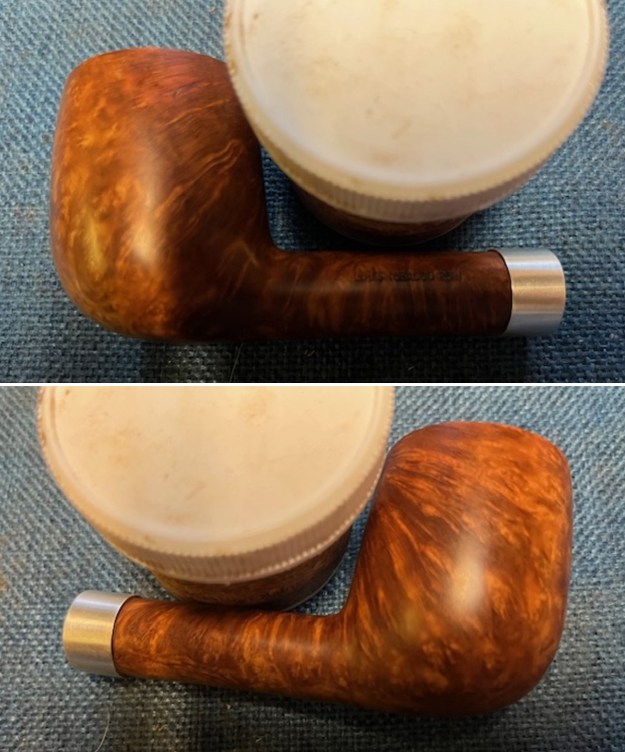
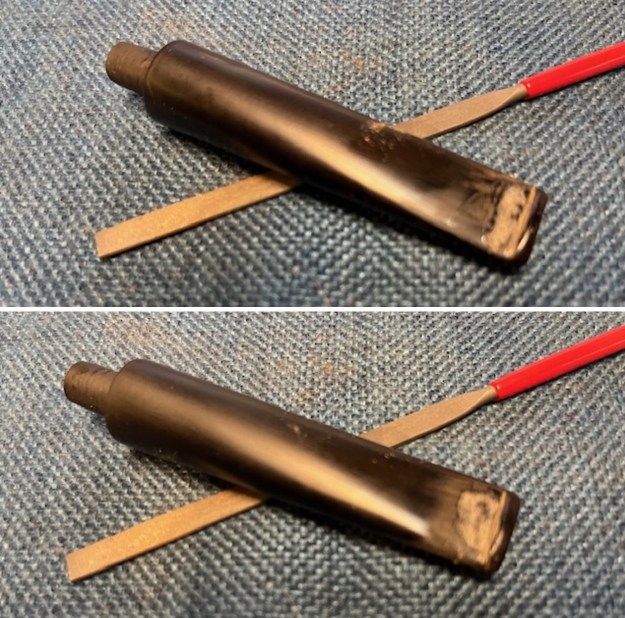
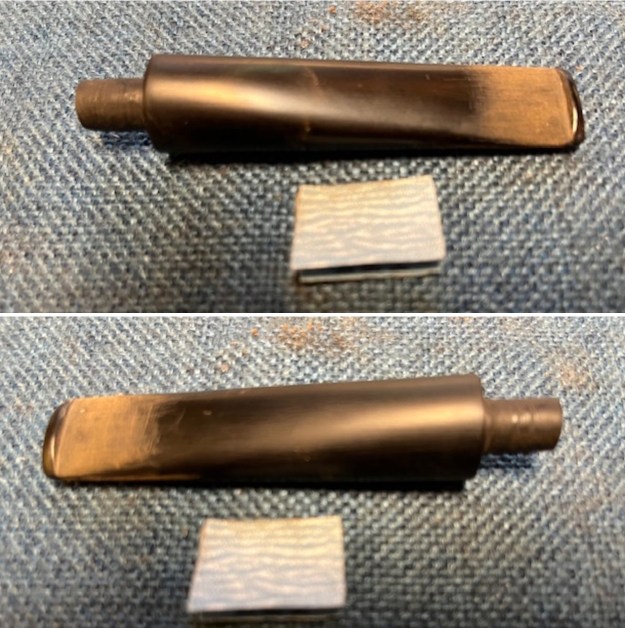
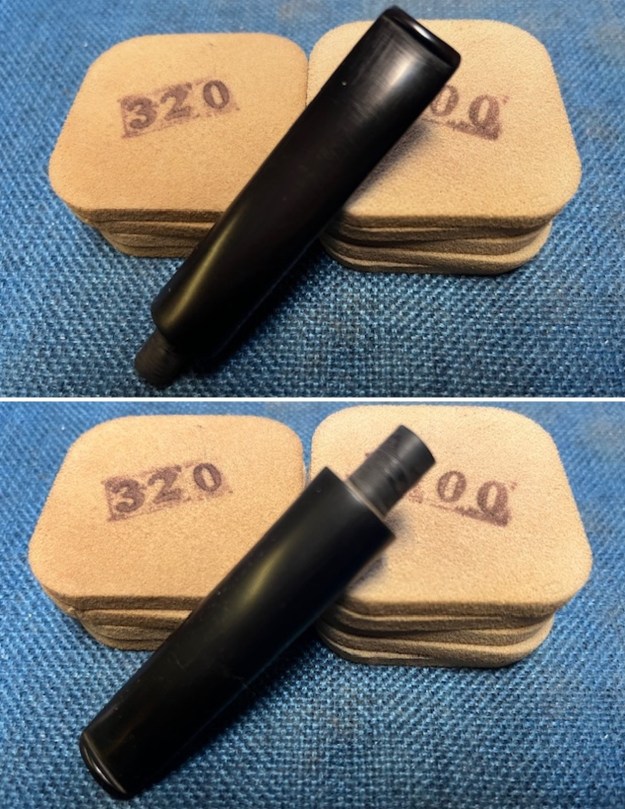
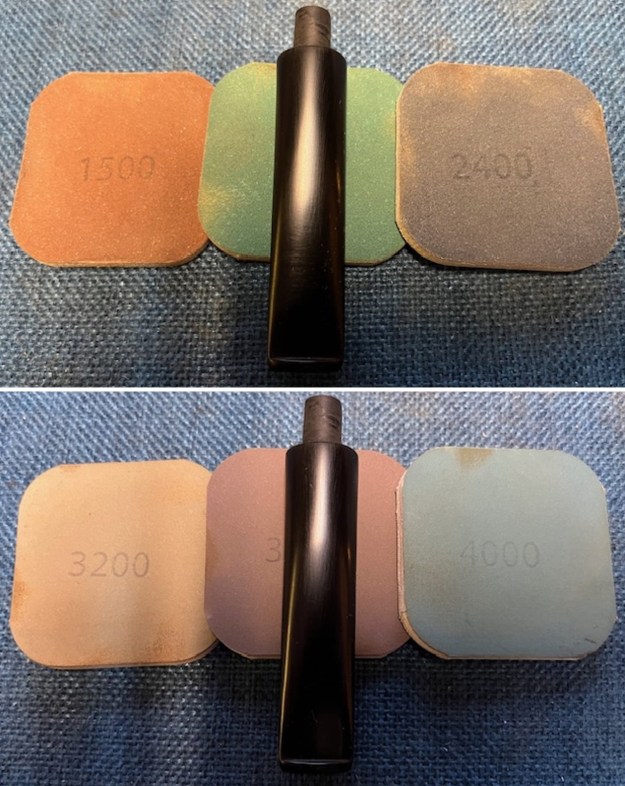
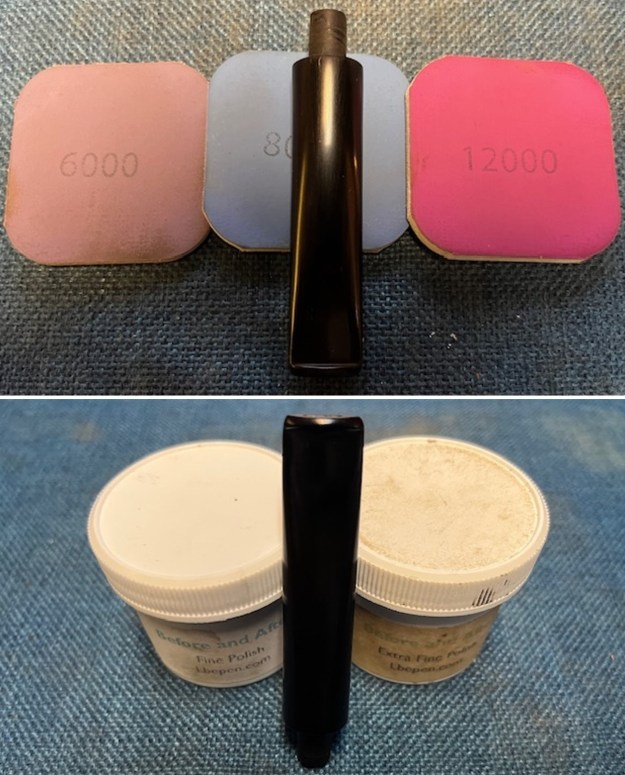
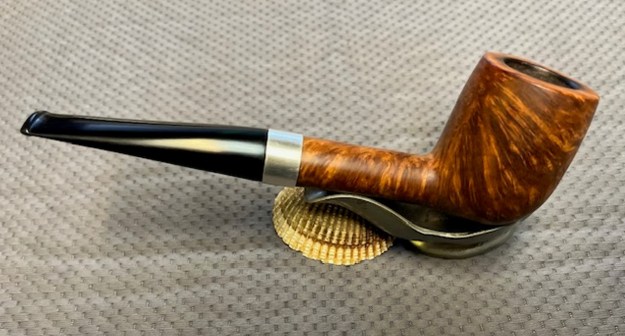
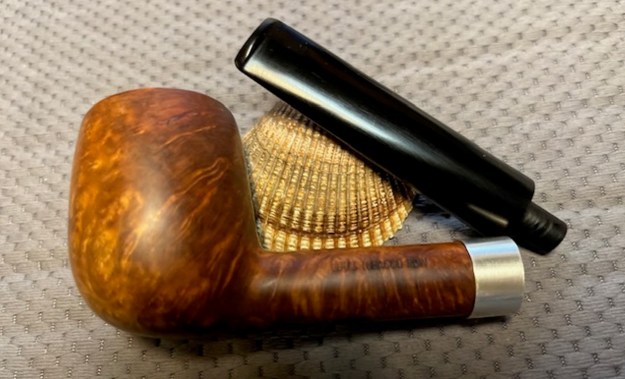
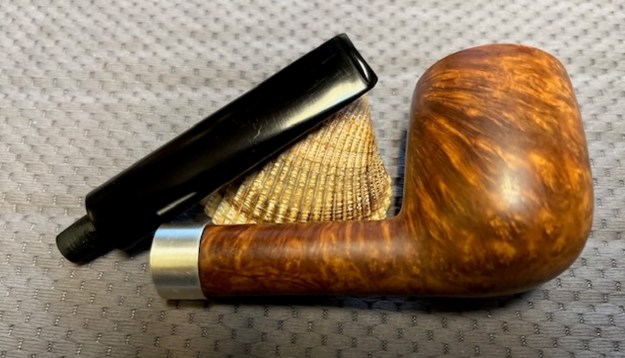
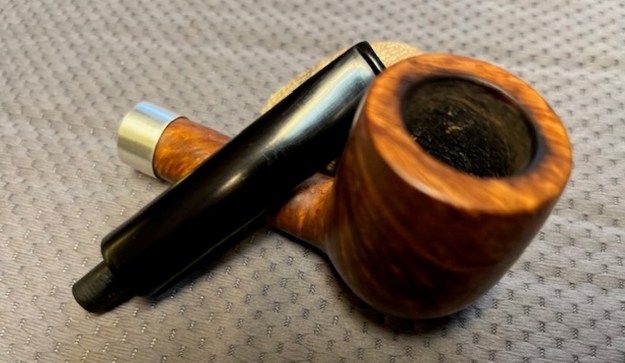
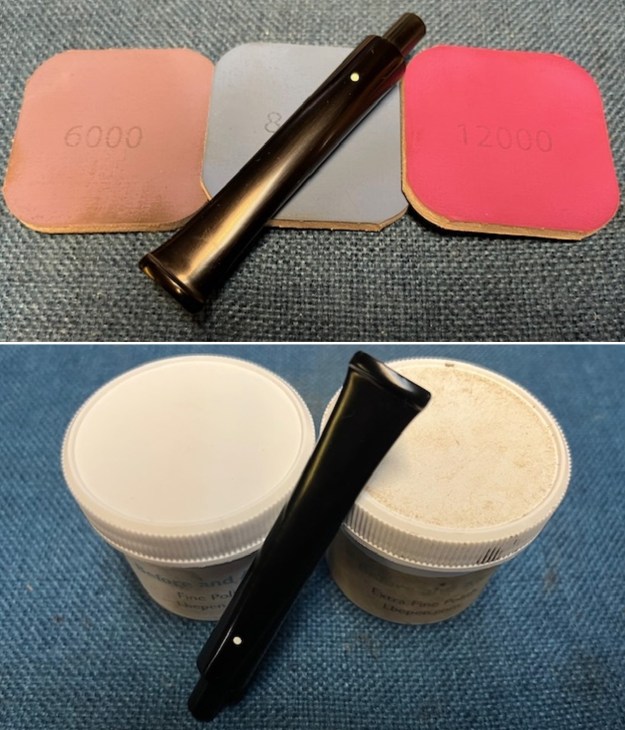
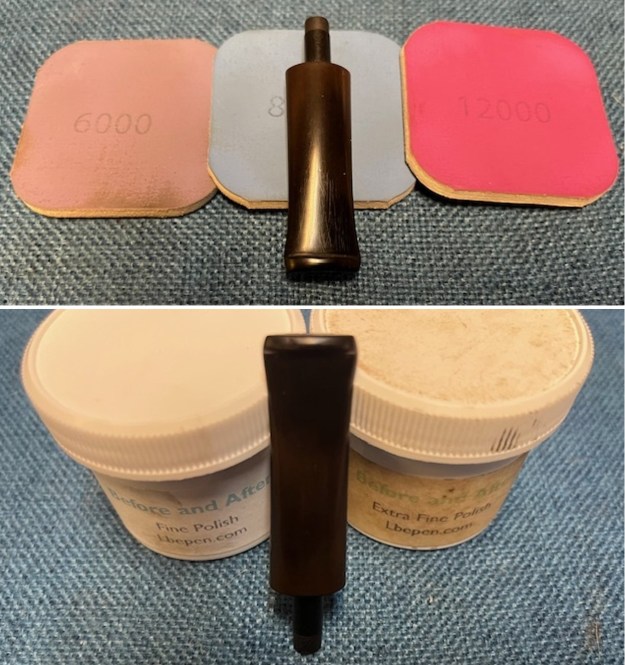
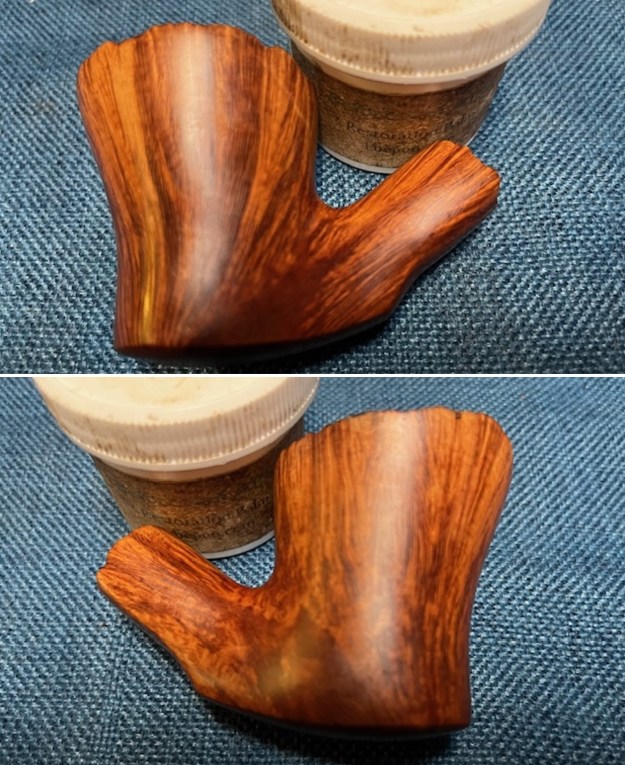
I rubbed the bowl and shank down with Before & After Restoration Balm. I worked it into the surface of the bowl sides and shank with my fingertips to clean, enliven and protect the briar. I worked it into the nooks and crannies in the plateau on the rim top and the shank end with a horsehair shoe brush. I let the balm sit for a little while and then buffed with a cotton cloth to raise the shine. The Balm did its magic and the grain stood out. I mixed a bowl coating with activated charcoal powder and sour cream. I put a pipe cleaner in the shank and applied the mixture to the walls of the bowl with a folded pipe cleaner. I wanted to protect the bowl repair while Mario enjoyed smoking it again. I set it aside to cure overnight. I set the bowl aside and turned my attention to the stem. I scrubbed it down with Soft Scrub to deal with the oxidation and calcification on the stem surface. It looked much better once scrubbed and on the centre of the stem it had a Crown K logo that was often on Knute of Denmark pipes.I filled in the deep bite marks on the top and underside of the stem with black CA glue. It is strengthened with charcoal powder and rubber. I let the glue cure and flattened the repairs with a small needle file. I reshaped the button and it began to take shape and look much better. I paused the process and touched up the Crown K on the stem top with Rub’n Buff Antique Gold. I worked it into the stamp on the stem and then rubbed it off with a soft cloth. I followed that by wiping the stem down with an Obsidian Oil cloth. The stem looked better and the stamping was clear and readable.I sanded the repairs with 220 grit sandpaper to smooth out the stem surface and also remove more of the oxidation in the stem surface.I sanded the stem to smooth it out with 320-3500 grit sanding pads. I wiped the stem down after each pad with an Obsidian Oil cloth. It was beginning to look very good.I polished the stem with micromesh sanding pads – 1500-12000 grit pads. I wiped it down with a damp cloth after each sanding pad. I used Before & After Pipe Polish – both Fine and Extra Fine to further polish the stem. I gave it another rub down with Obsidian Oil and let it dry. I put the stem back on the Knute of Denmark Smooth Freehand Sitter pipe and took the pipe to the buffer. I buffed the bowl and stem with Blue Diamond to polish the briar and the vulcanite. Blue Diamond does a great job on the smaller scratches that remain in the vulcanite. I gave the bowl and the stem several coats of carnauba wax and buffed the pipe with a clean buffing pad to raise the shine. I hand buffed it with a microfiber cloth to deepen the shine. The pipe polished up really nicely with a great contrasting stain look to the briar. The finished pipe is shown in the photos below. This is a beautiful Karl Eric Made Knute of Denmark Freehand – the fancy turned stem and plateau rim top and shank end give the pipe a great look. The dimensions of the pipe are Length: 6 inches, Height: 2 ¼ inches, Outside diameter of the bowl: 1 ¾ inches wide x 1 7/8 inches long, Chamber diameter: 7/8 of an inch. The weight of the pipe is 2.22 ounces /63 grams. This is the final pipe of 6 pipes that am restoring for Mario from his Dad’s collection. I look forward to hearing what he thinks of this newly restored pipe. Later this week I will pack them up and send them home to him. Thanks for reading this blog and my reflections on the pipe while I worked on it!

The Nameless Pipe has a Name


by Kenneth Lieblich

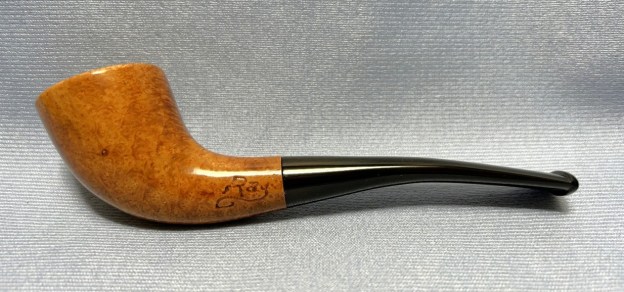
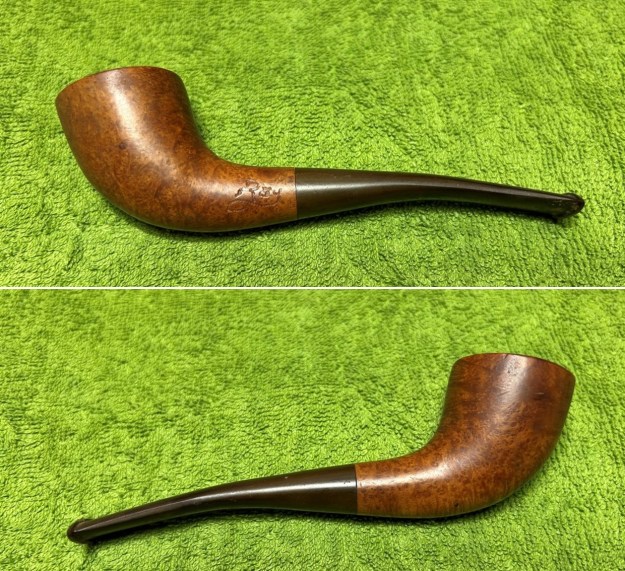
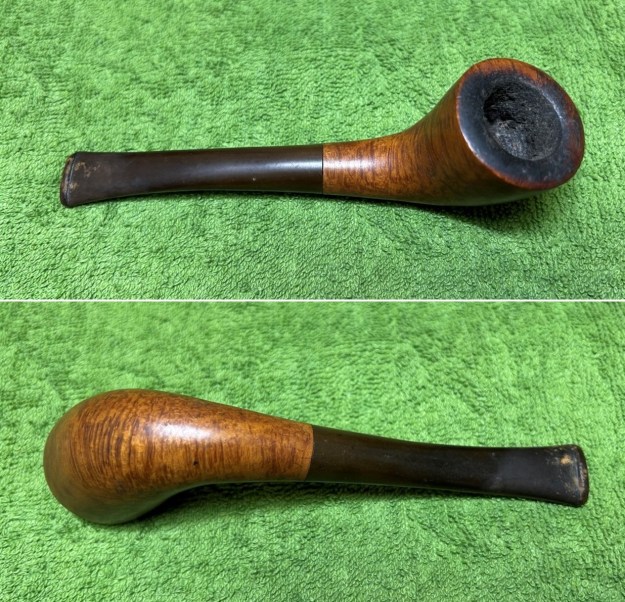
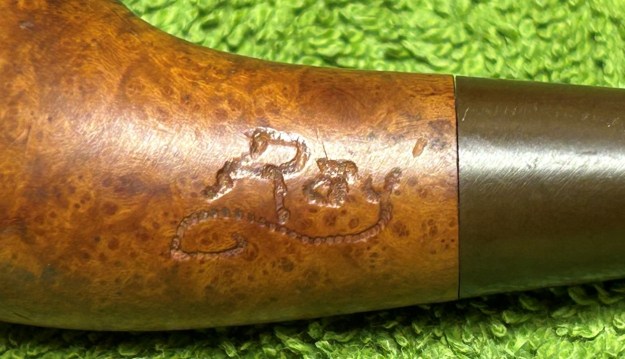
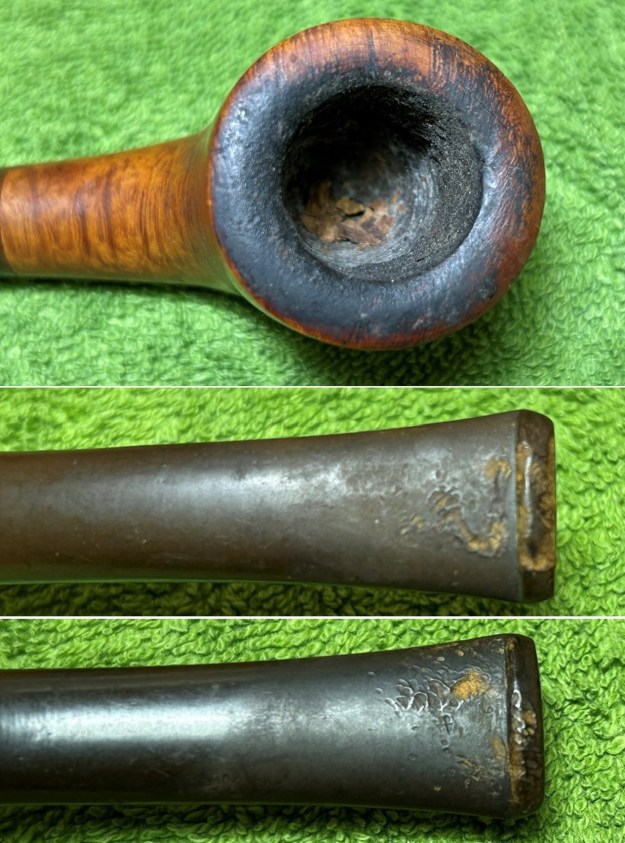
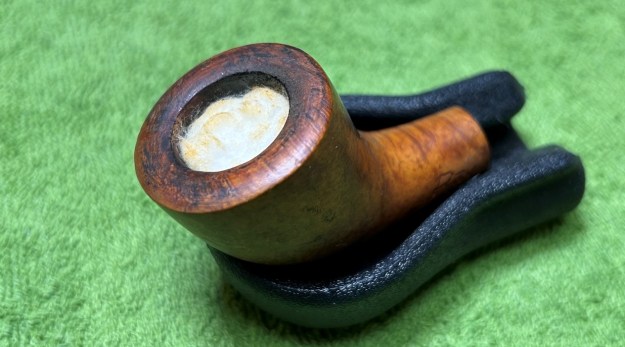
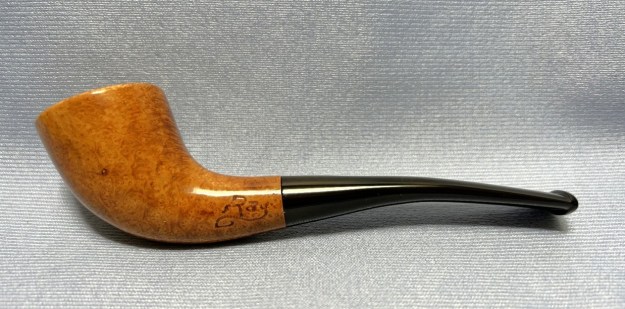
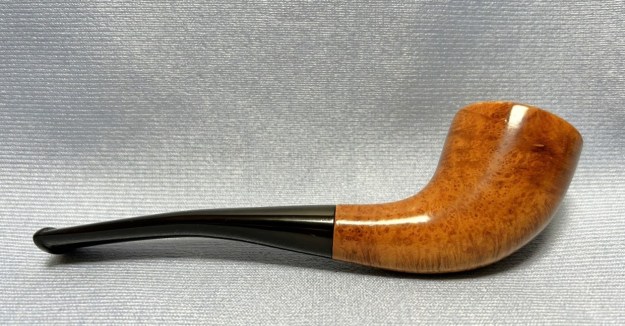
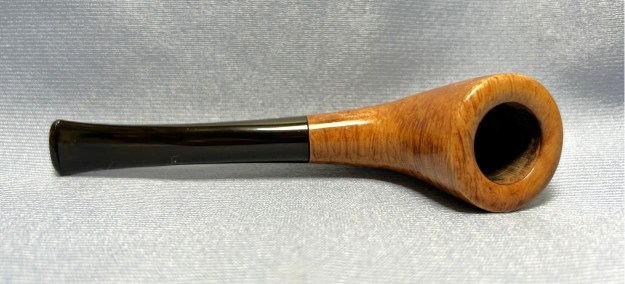
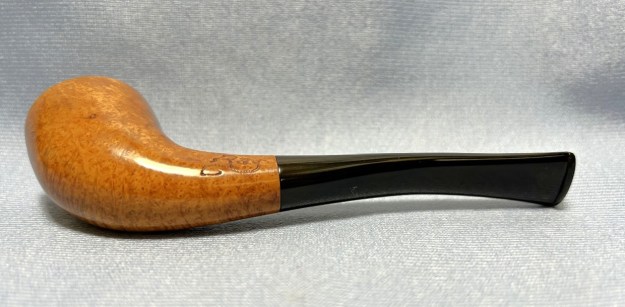
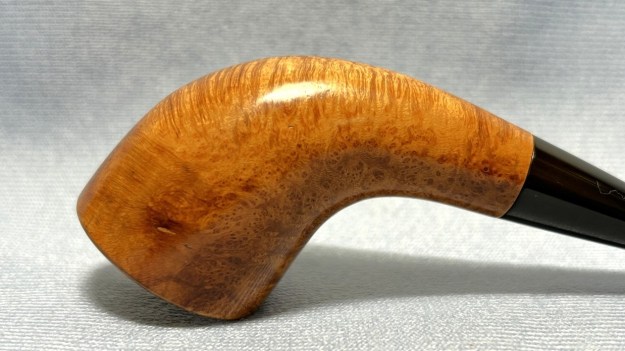
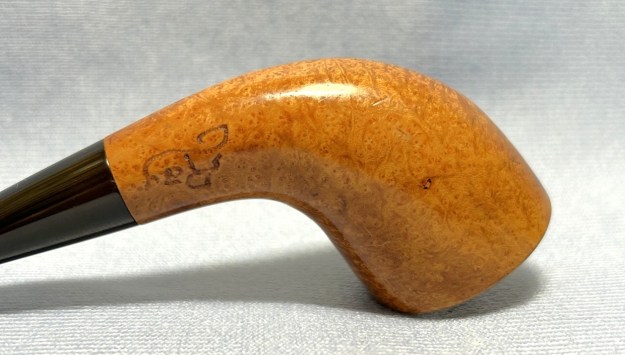
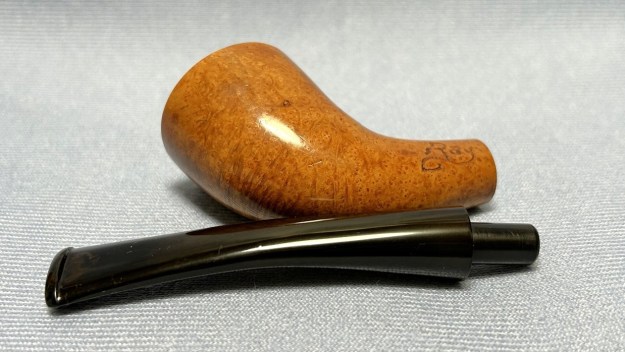
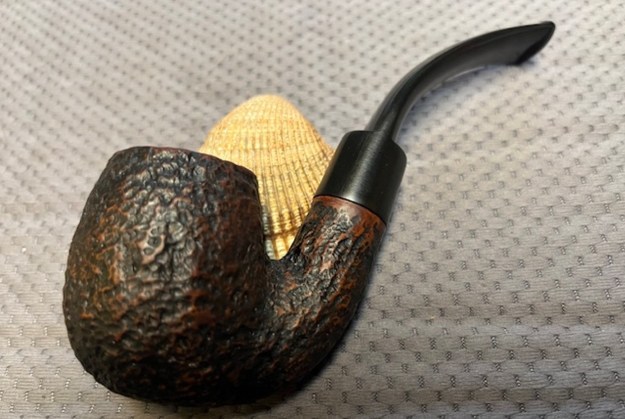
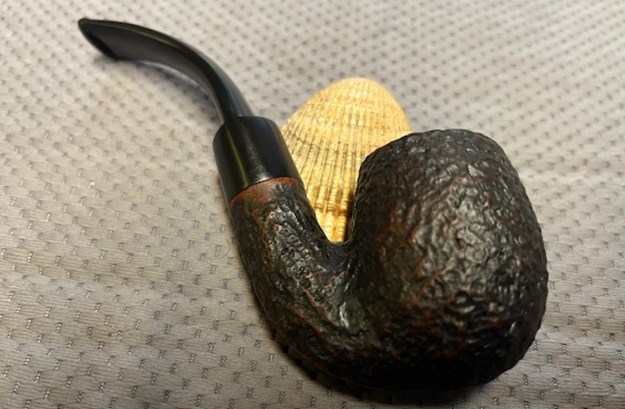
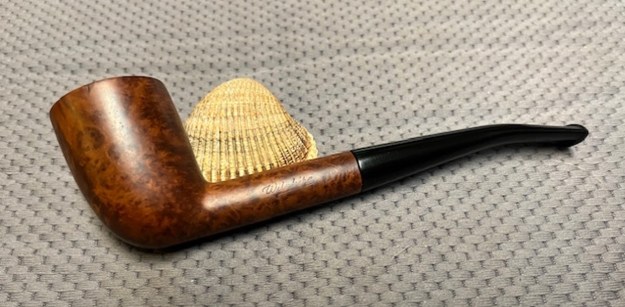
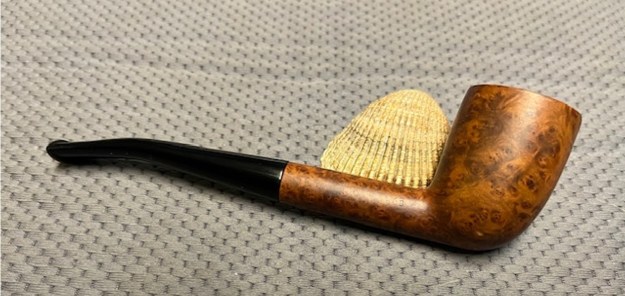
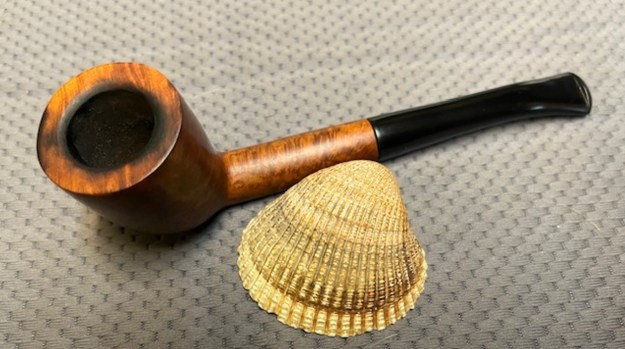
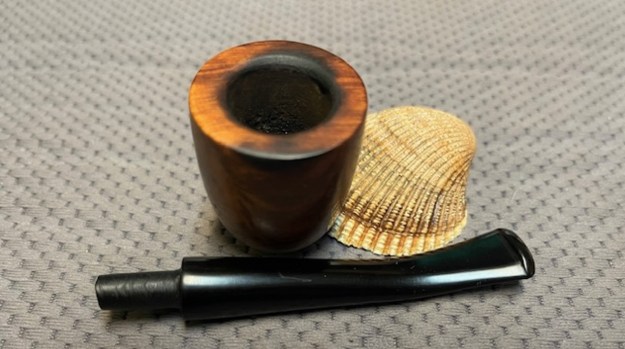
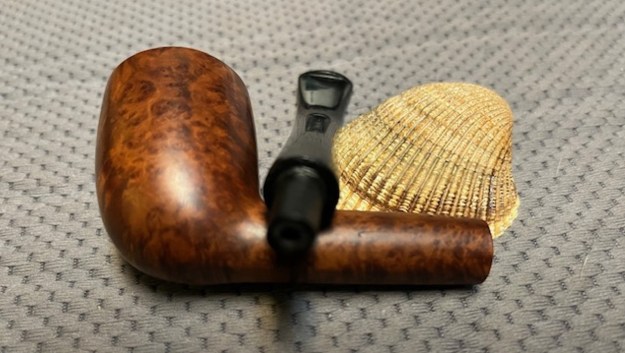
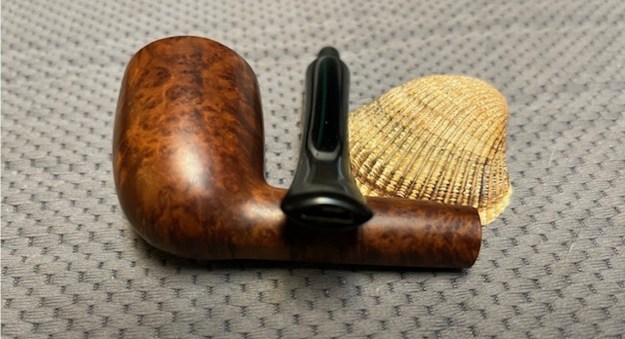
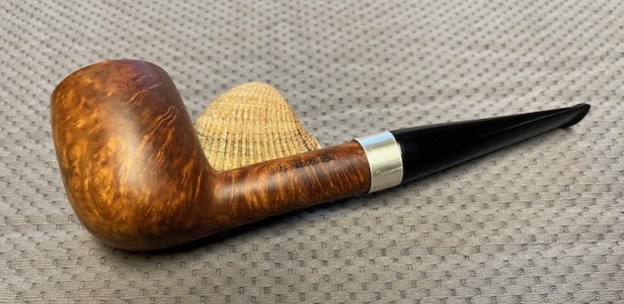
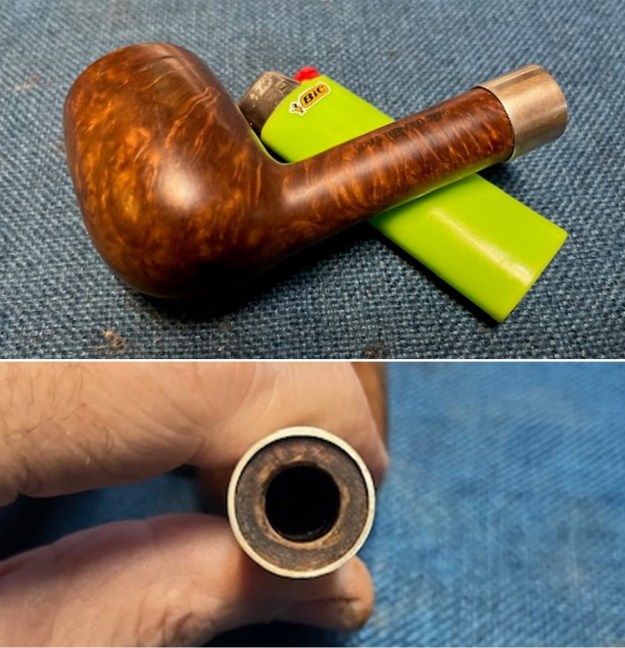
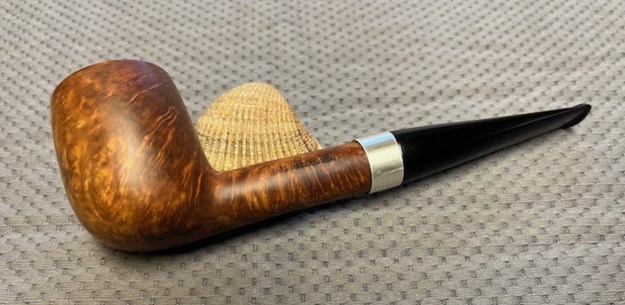
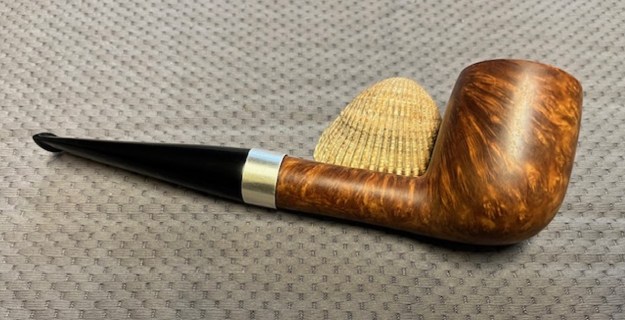
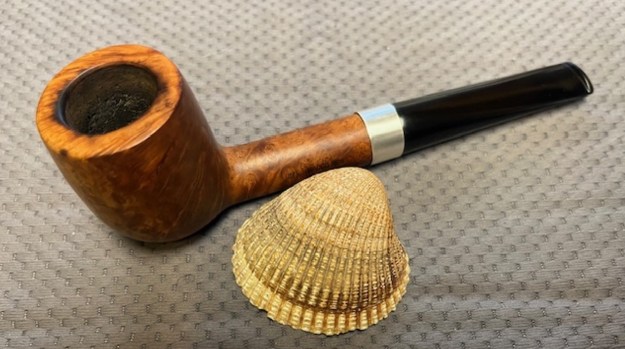
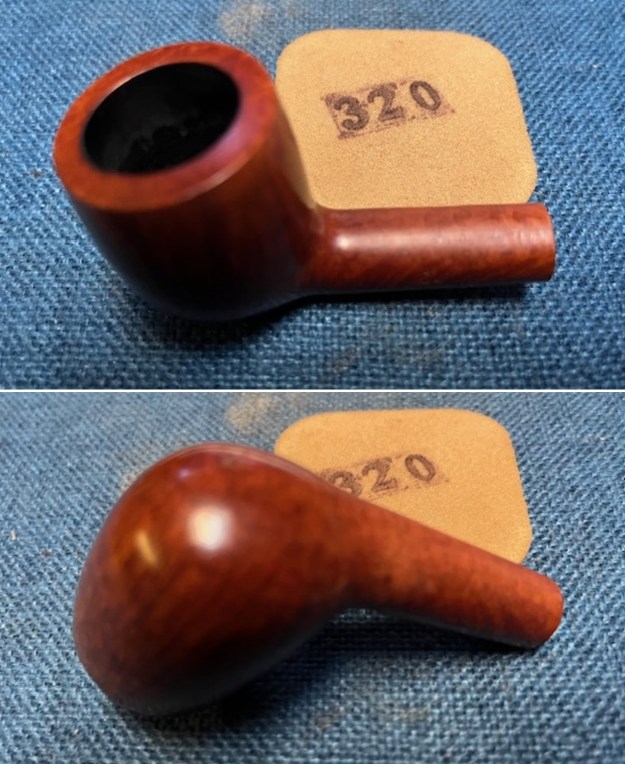
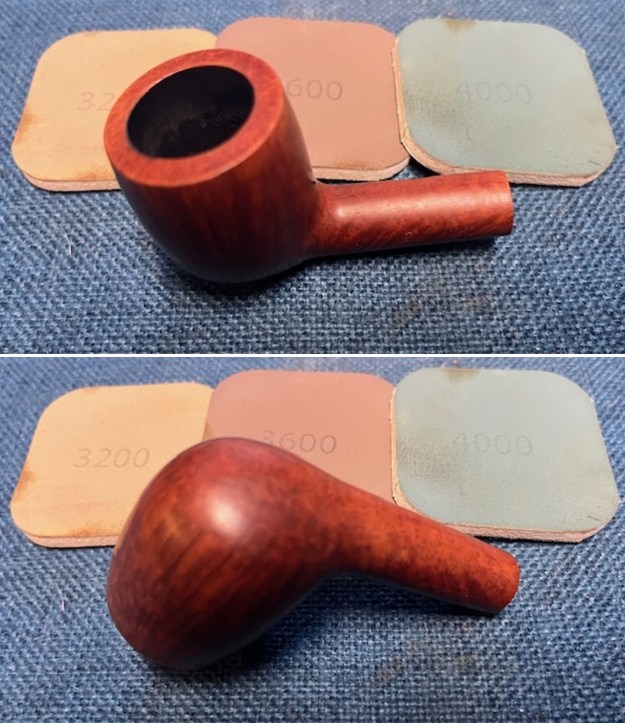
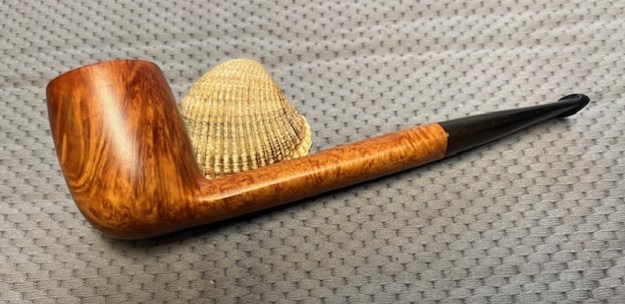
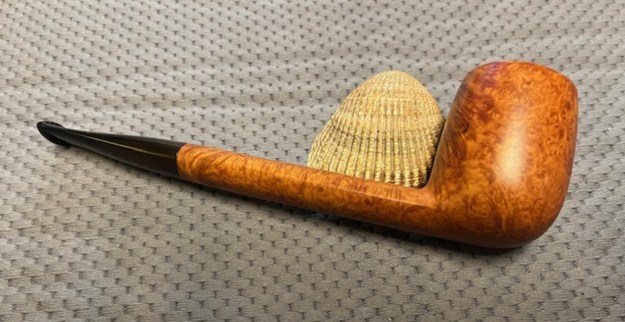
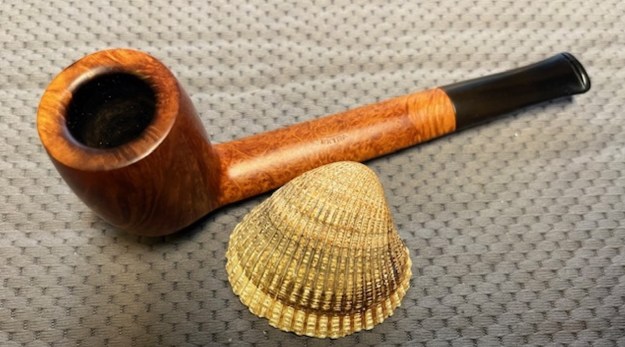
I recently had the pleasure of meeting with a family – and nine of the male family members each wanted a pipe! I was only too happy to help them out. The youngest member of this throng was 18 years old and picked out the pipe you see here. It is a charming and beautifully curved Zulu. I decided to work on it first because I liked it so much. Not only is it handsome, but it is well made too. However, there were no pipemaker’s marks on the pipe at all. No name of any sort – kind of. The only thing to be seen was that the previous owner carved his own name into the shank: Ray. I’m afraid I don’t know who Ray is, but he had a nice pipe. So, the nameless pipe has a name after all. It’s now being passed on to a fine young man with a good head on his shoulders. When I was talking to him about the pipe, I commented that I could investigate sanding off the name if he wished. He said no – it was part of the pipe’s history and he wanted to leave it. Smart kid. Alas, no markings mean no history. However, I can report that the pipe was well smoked in its past. The stummel was in good shape, but there was evidence of lots of smoking once upon a time. As you can see, there appears to be some burning on the rim, but I’ll have to take a closer look for damage. The stem was pretty worn – lots of tooth marks and scratches. Also, a bit of calcification and oxidation.

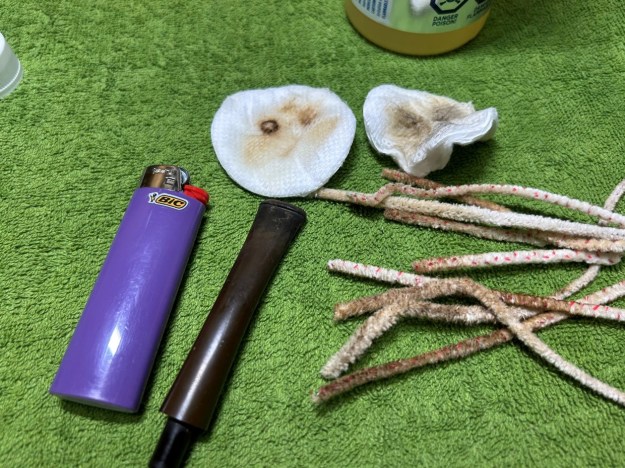
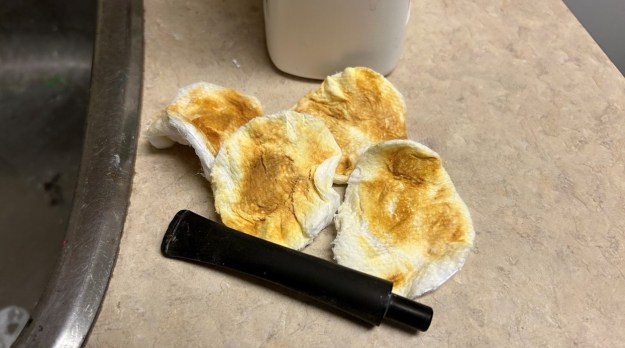
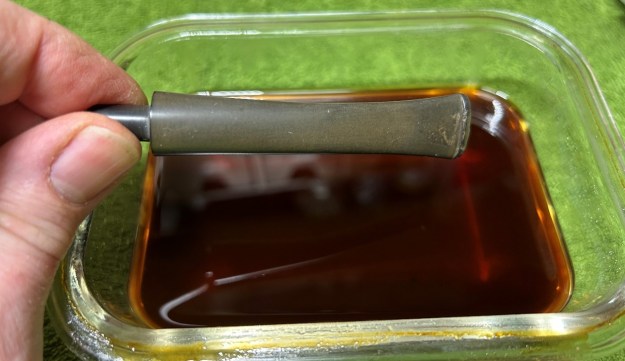
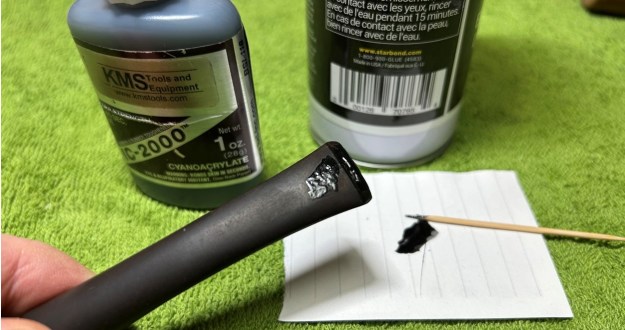
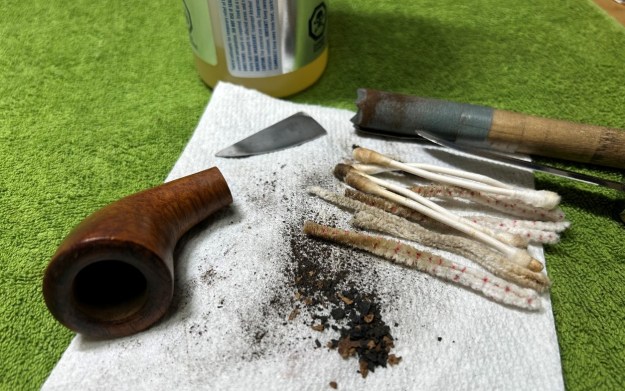
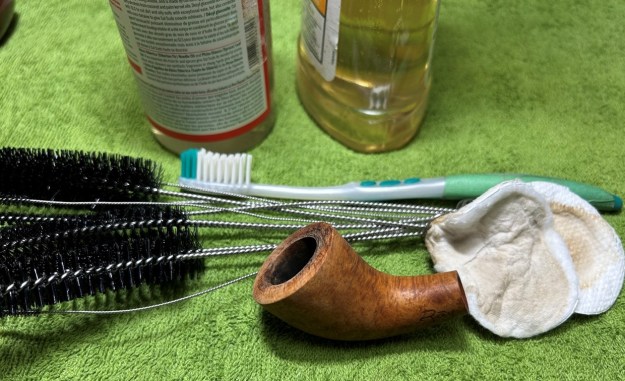
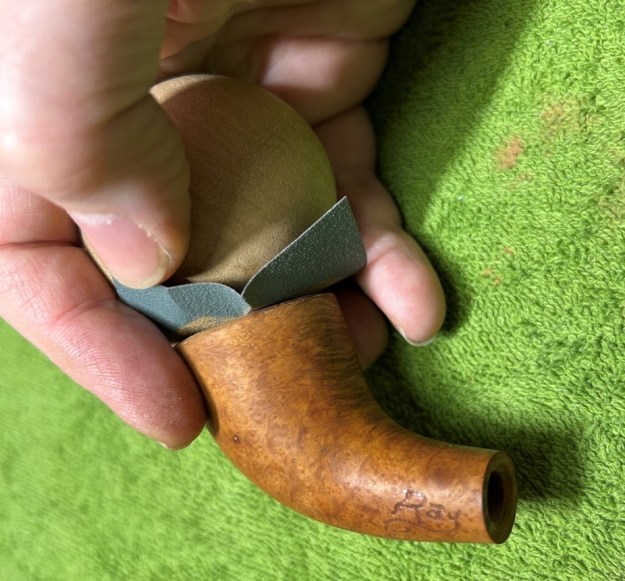
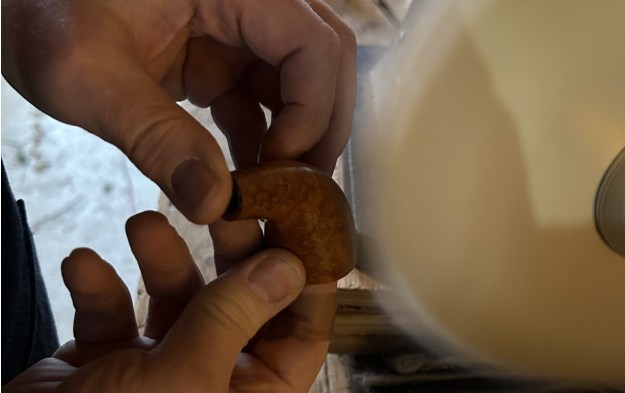
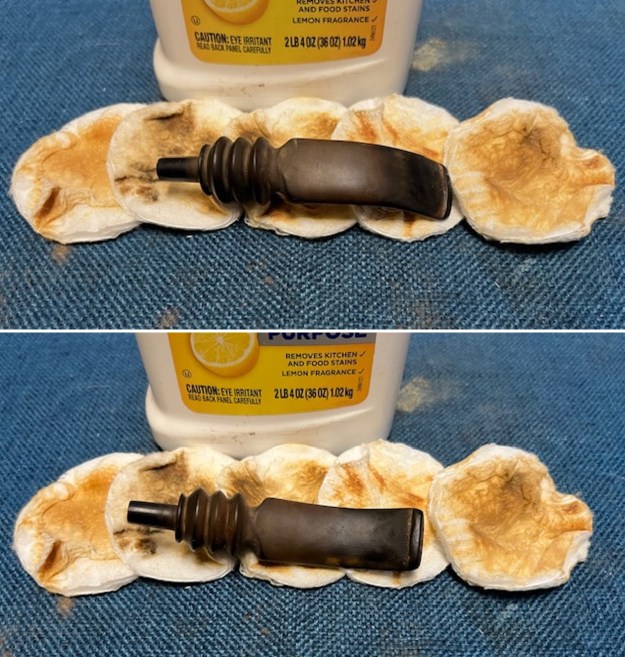
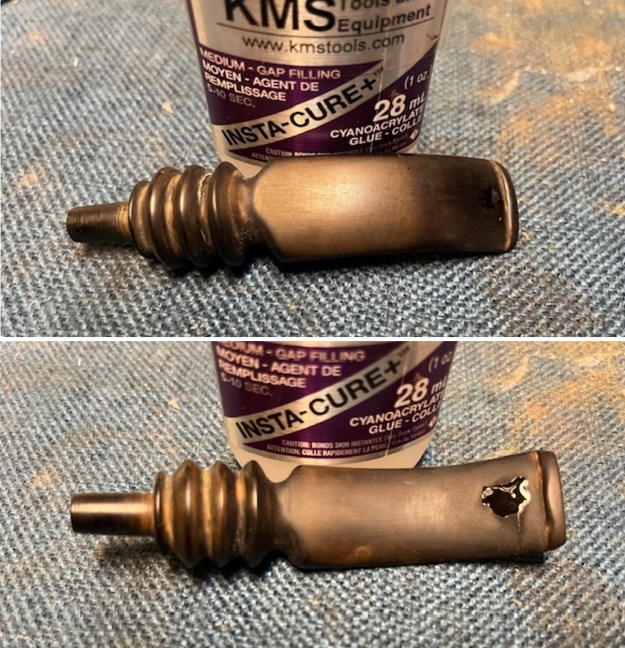
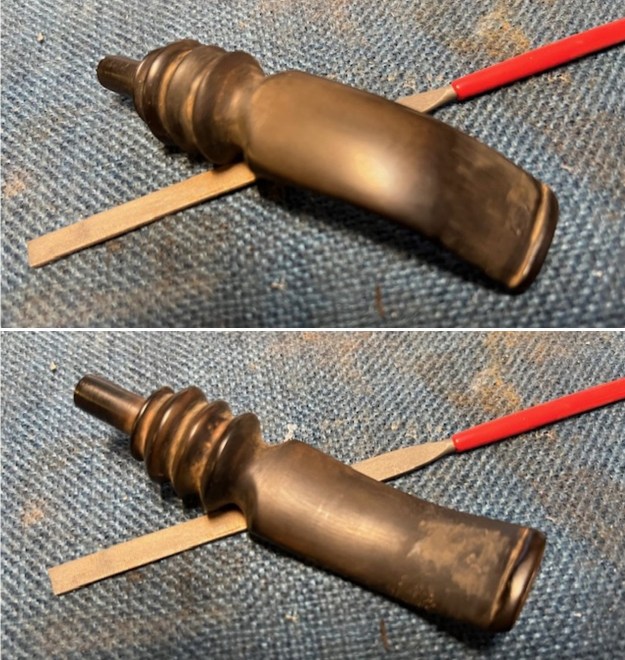
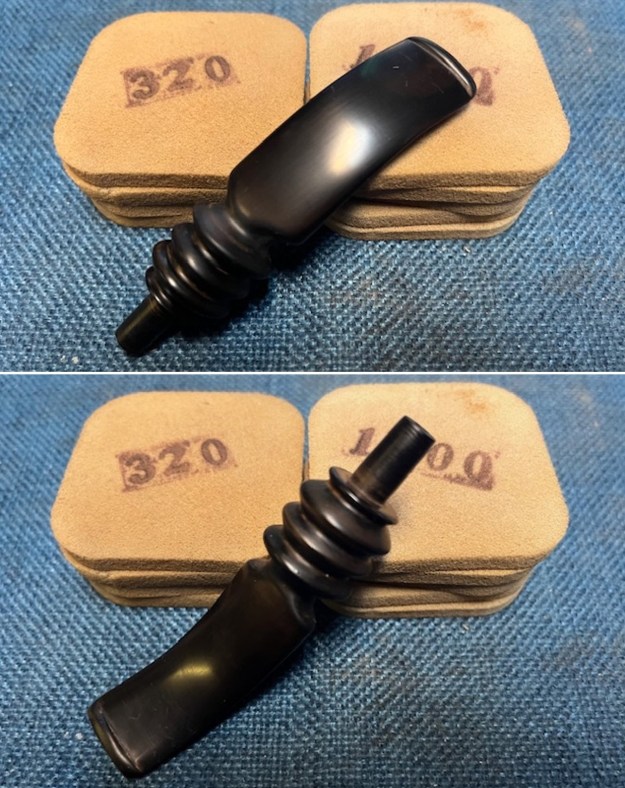
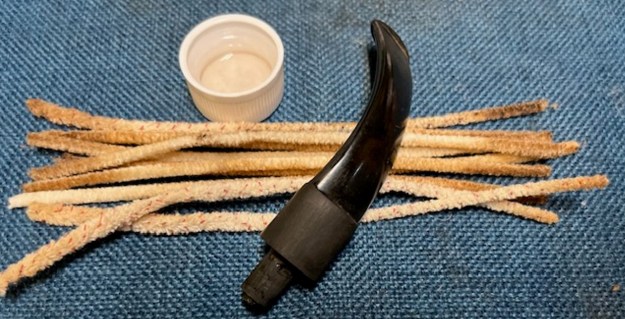
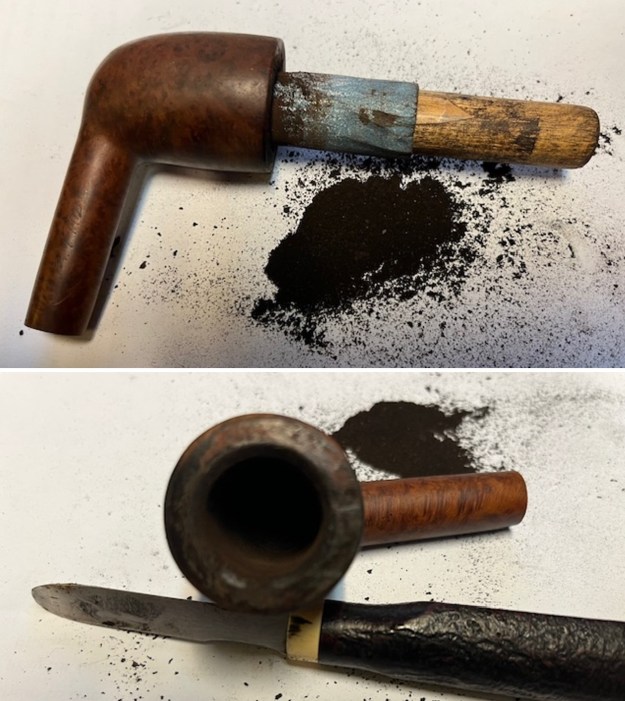
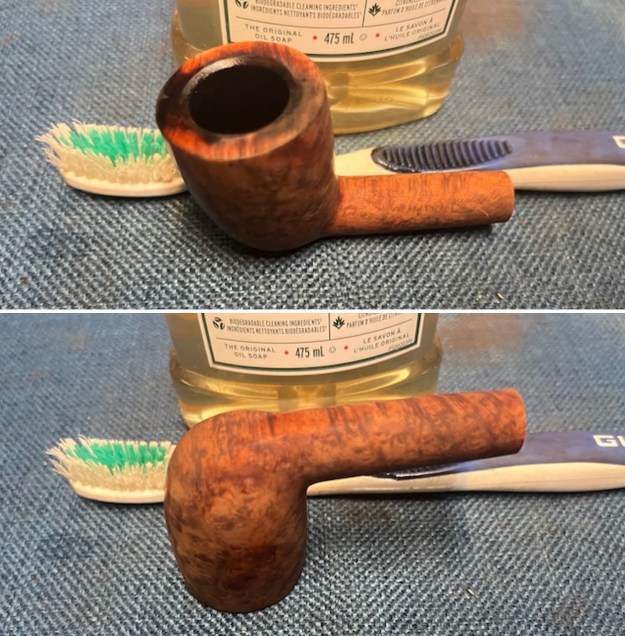
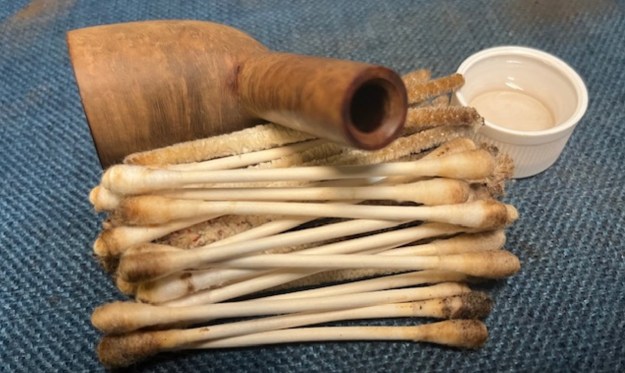
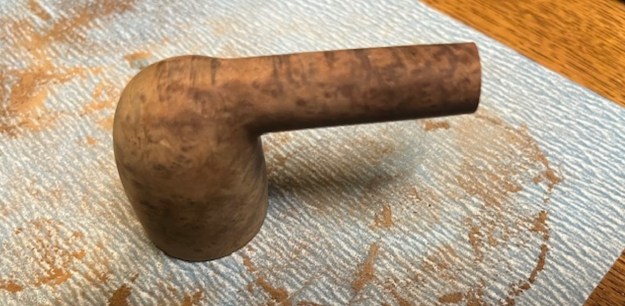
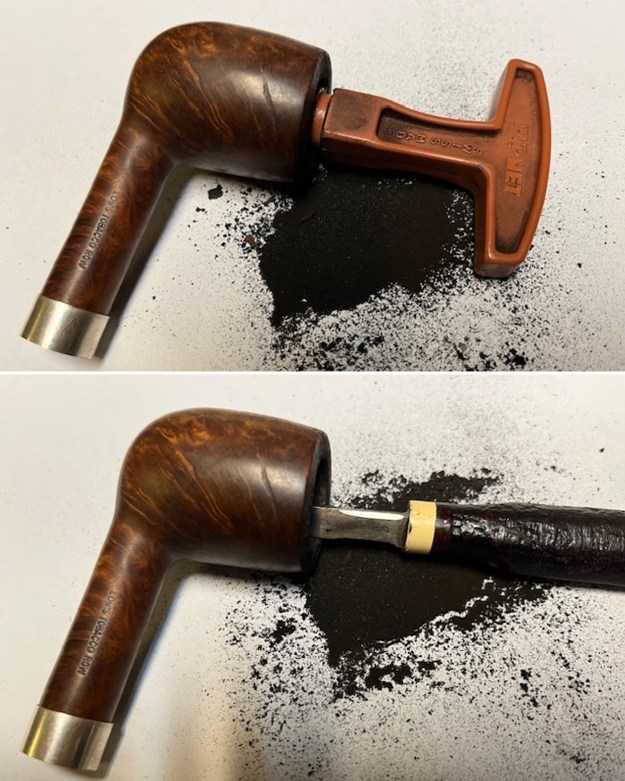
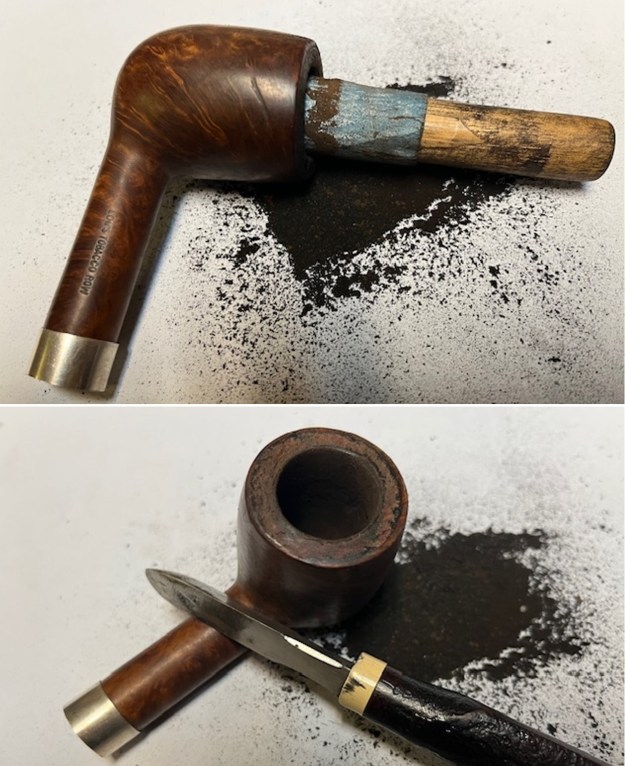
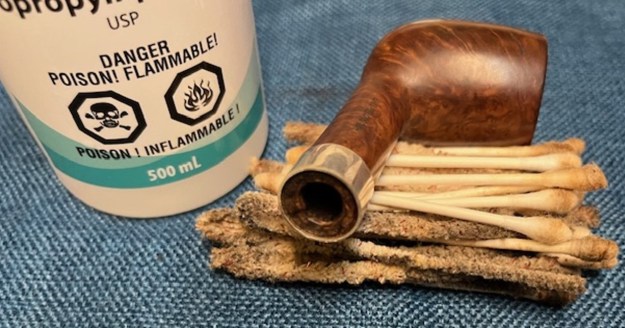
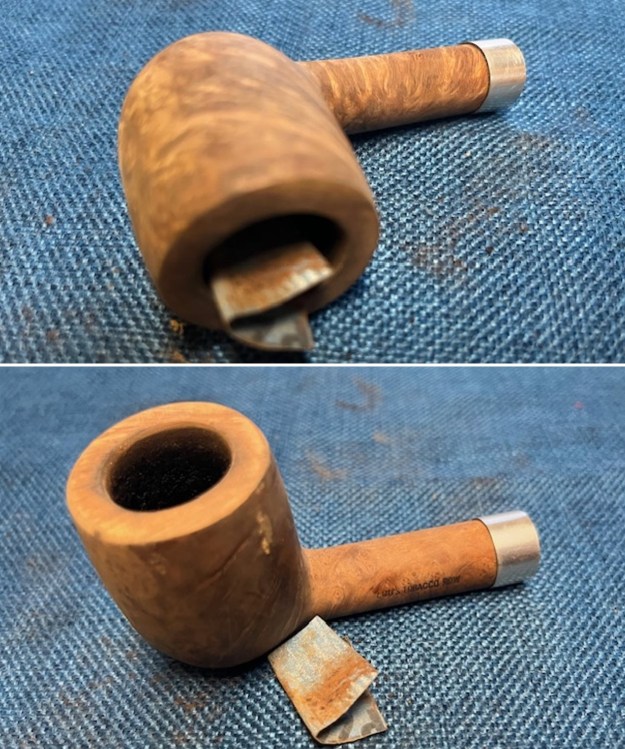
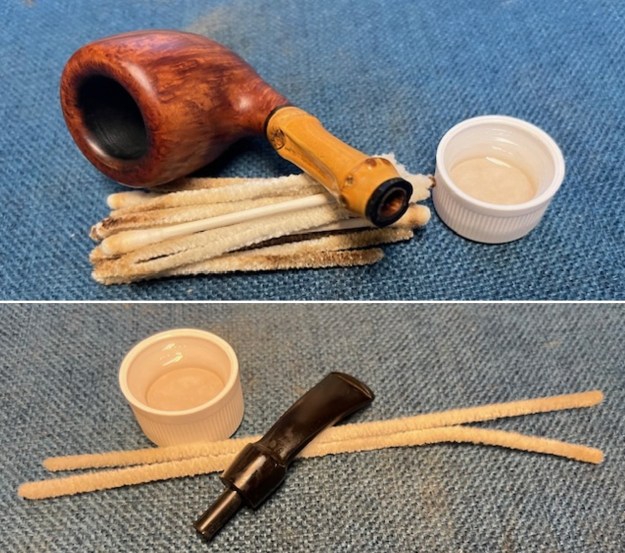
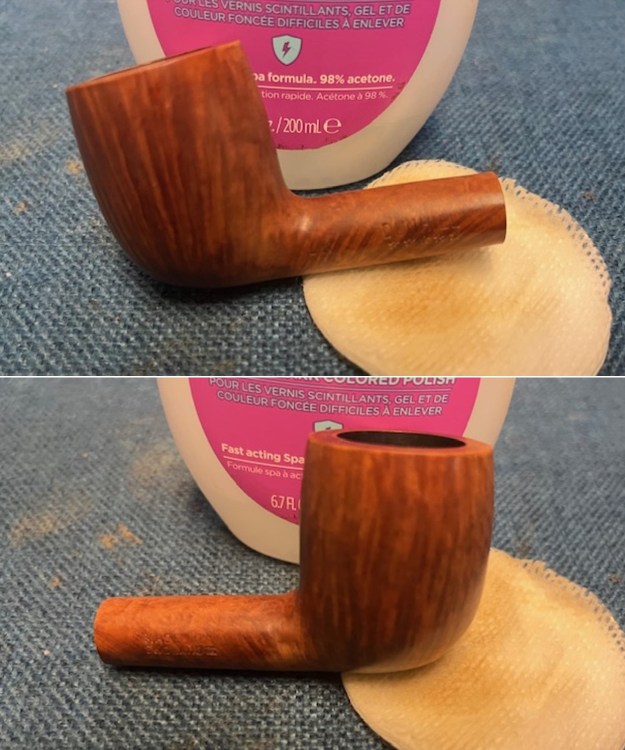
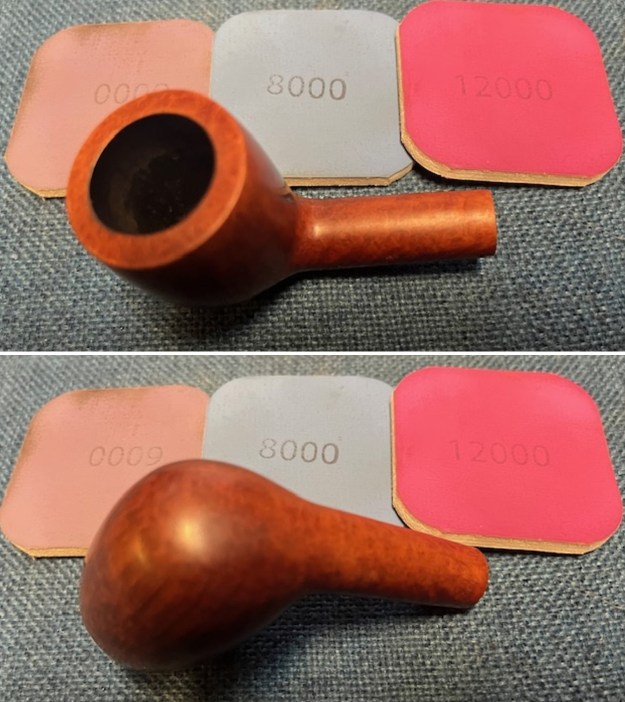
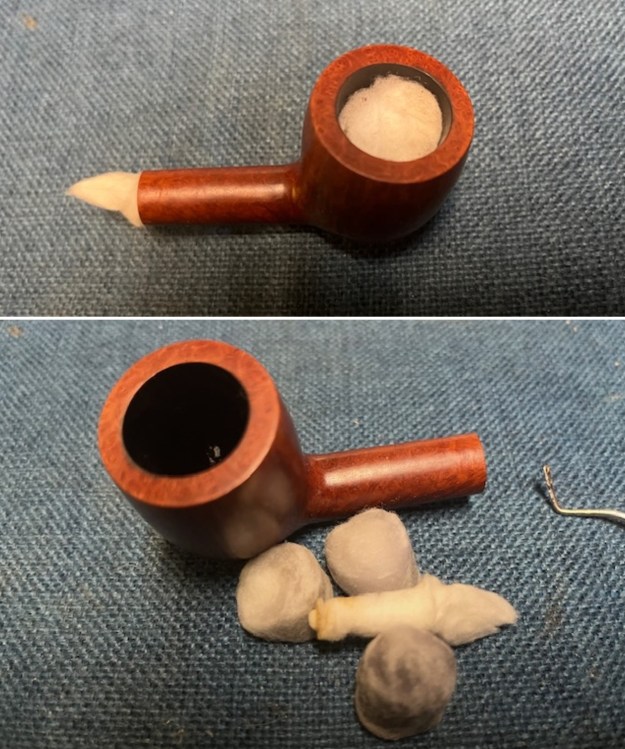
As a first step, I used oil soap on a few cotton rounds and wiped the stem down to provide an initial cleaning of filth before moving on. I used a disposable lighter and ‘painted’ the stem with its flame. The gentle heat of the flame can cause the dents in the vulcanite of the stem to expand back into shape. In this case, it actually worked fairly well and I got some improvement. The primary cleaning comes next. I cleaned the inside of the stem with both pipe cleaners and cotton swabs dipped in 99% lemon-infused isopropyl alcohol. I scrubbed thoroughly to make sure the interior was really clean.The goal of the next step is the removal (or minimization) of oxidation. Going to my sink, I used cream cleanser, cotton rounds, and a toothbrush, and scoured the stem to remove as much surface oxidation as possible. As the photos show, the result is a hideous brownish mess – but better off the stem than on it.Once the stem was reasonably clean, I soaked it overnight in some de-oxidation fluid. This solution works to draw oxidation in the stem to the surface. This is a major aid and important step in ensuring a clean stem. The following day, I drew the stem out from its bath and scrubbed the lingering fluid with a toothbrush. Once clean and dry, I set about fixing the marks and dents in the vulcanite. This is done by filling those divots with black cyanoacrylate adhesive, impregnated with carbon and rubber. I left this to cure and moved on.The penultimate step for the stem is sanding. I use all nine of the micromesh sanding pads (1,500 through 12,000 grit) to sand out flaws, even out the vulcanite, and provide gentle polishing of the finished surface. I also apply pipe-stem oil while using the last five micromesh pads. There is a wonderful, deep black shine to the stem when I am done.Now that the stem is (nearly) complete, I can move on to the stummel. The first step for me is to ream out the bowl – that is to say, remove all the cake inside the bowl. This accomplishes a couple of things. First (and most obviously), it cleans the bowl and provides a refurbished chamber for future smoking. Second, when the old cake is removed, I can inspect the interior walls of the bowl and determine if there is damage or not. I used a reamer, a pipe knife, and a piece of sandpaper taped to a wooden dowel. Collectively, these ensure that all the debris is removed. My next step was to remove the lava on the rim. For this, I took a piece of machine steel and gently scraped the lava away. The metal’s edge is sharp enough to remove what I need, but not so sharp that it damages the rim. This work revealed that – Deo gratias – the burning was superficial and the underlying wood was totally intact.The inside of the stummel needs to be cleaned thoroughly. Similar to the stem, I then cleaned the stummel with both pipe cleaners and cotton swabs dipped in 99% lemon-infused isopropyl alcohol. With this pipe, it didn’t take too long to get it clean. I then decided to ‘de-ghost’ the pipe – that is to say, exorcize the remaining filth from the briar. I filled the bowl and the shank with cotton balls, then saturated them with 99% isopropyl alcohol. I let the stummel sit overnight. This caused any remaining oils, tars and smells to leach out into the cotton.To tidy up the briar, I also wiped down the outside with some oil soap on cotton. This does a good job of cleaning any latent dirt on the surface of the briar. The last step of the cleaning process is to scour the inside of the stummel with some soap and tube brushes. This is the culmination of a lot of work to get the pipe clean.The charring on the rim is notable. I took a solid wooden sphere, wrapped a piece of 220-grit sandpaper around it, and sanded the inner edge of the rim. This achieves two things: first, it removes some of the burn marks; and second (and more importantly), the circular shape and motion of the sphere gradually returns the edge to a perfect circle.

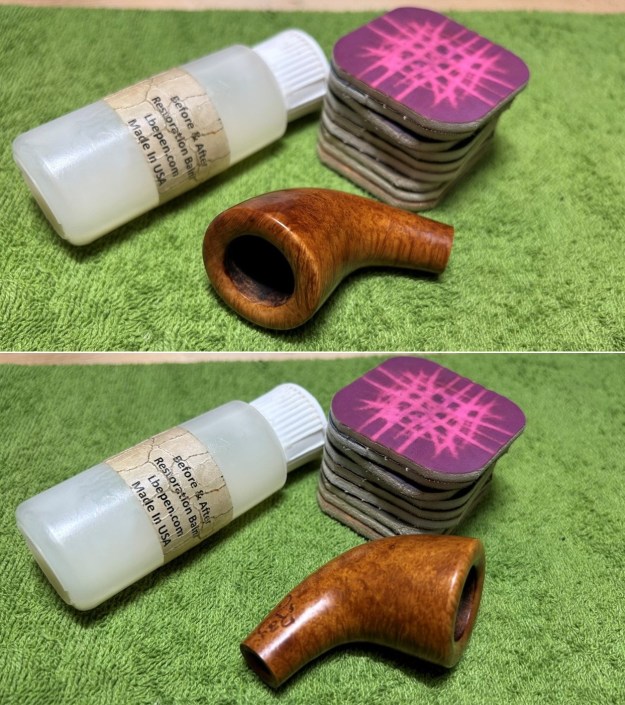
I used all nine micromesh pads (1,500 through 12,000 grit) on the outside of the stummel to finish it off. This sanding minimizes flaws in the briar and provides a beautiful smoothness to the wood.  I rubbed some Before & After Restoration Balm into the briar and let it sit for 20 minutes or so. The balm moisturizes the wood and gives a beautiful depth to the briar. I then buffed it with a microfibre cloth. For the final step, I took the pipe to my bench buffer and carefully polished it – first with a white diamond compound, then with three coats of carnauba wax. This procedure makes the pipe look its best – the stummel sings and stem glows.This is a very handsome pipe and will provide many years of smoking pleasure for my friend. I hope you enjoyed reading the story of this pipe as much I as I did restoring it. If you are interested in more of my work, please follow me here on Steve’s website or email me directly at kenneth@knightsofthepipe.com. The approximate dimensions of the pipe are as follows: length 5⅝ in. (142 mm); height 1¾ in. (44 mm); bowl diameter 1⅓ in. (33 mm); chamber diameter ¾ in. (19 mm). The weight of the pipe is 1 oz. (31 g). I hope you enjoyed reading the story of this pipe’s restoration as much as I did restoring it. If you are interested in more of my work, please follow me here on Steve’s website or send me an email. Thank you very much for reading and, as always, I welcome and encourage your comments.

Restoring a Horn Stemmed Meerschaum Figural


by Steve Laug

In November I received an email from Mario about working on some of his Dad’s pipes. Here is what he wrote to me.

I am desperately seeking help restoring and repairing some of my dad’s smoking pipes. I have tried reaching out to the only two known pipe repair establishments I could find in the entire country but one is not currently taking repair orders and the other said she didn’t want to try to repair these pipes without having even seen them. Would you be willing to take on the repairs or can you recommend anyone? Thank you much!!!—Mario

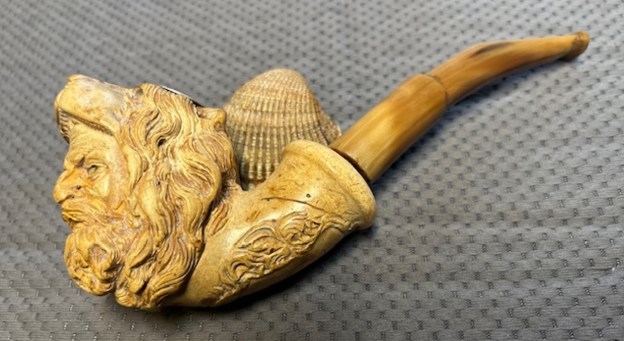
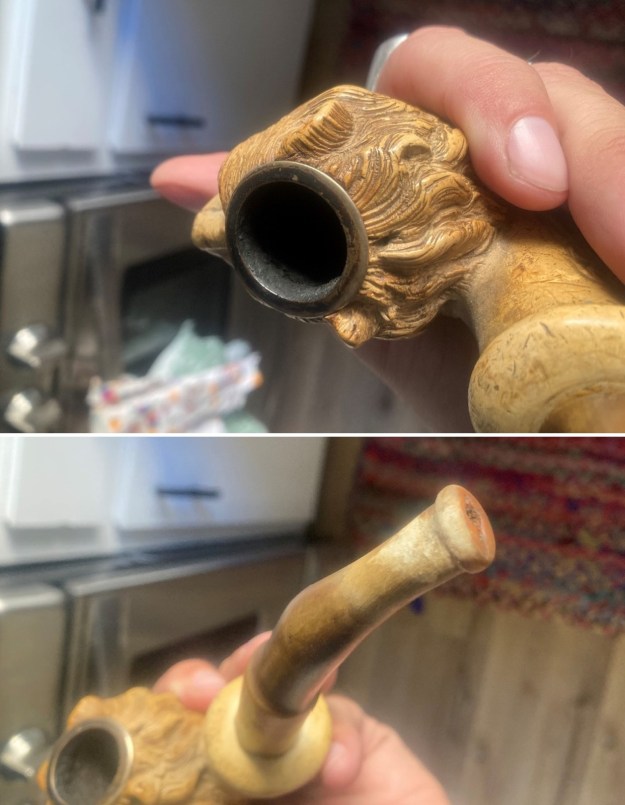
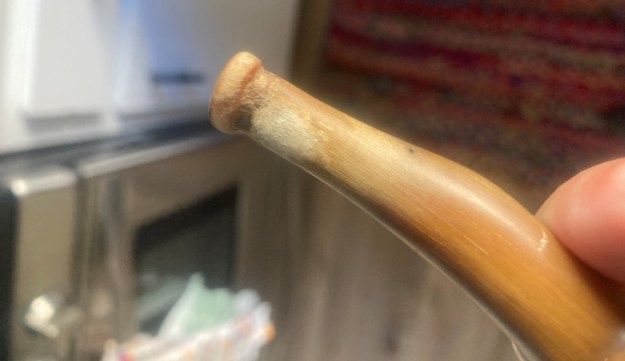
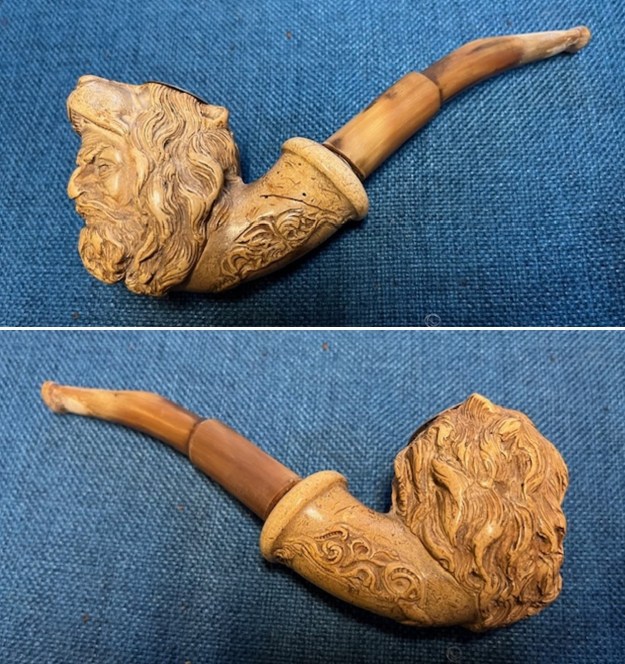
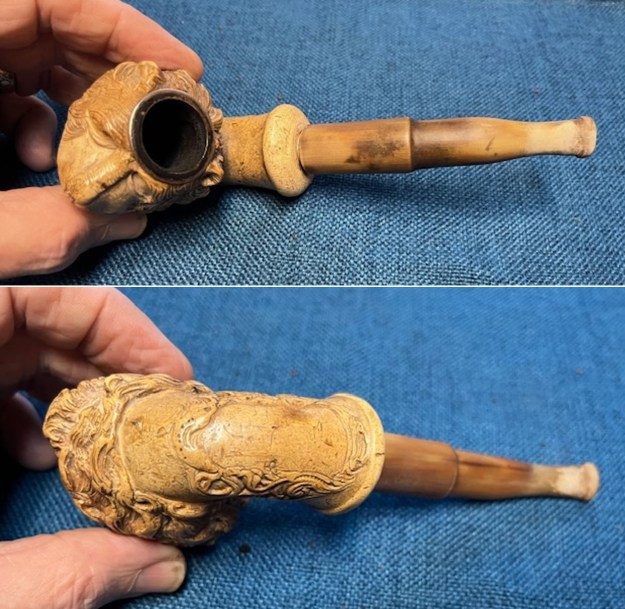
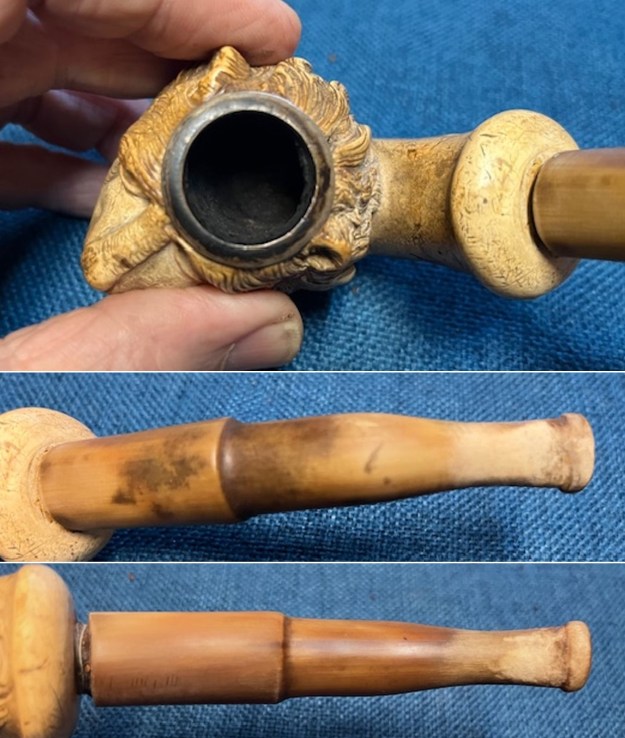
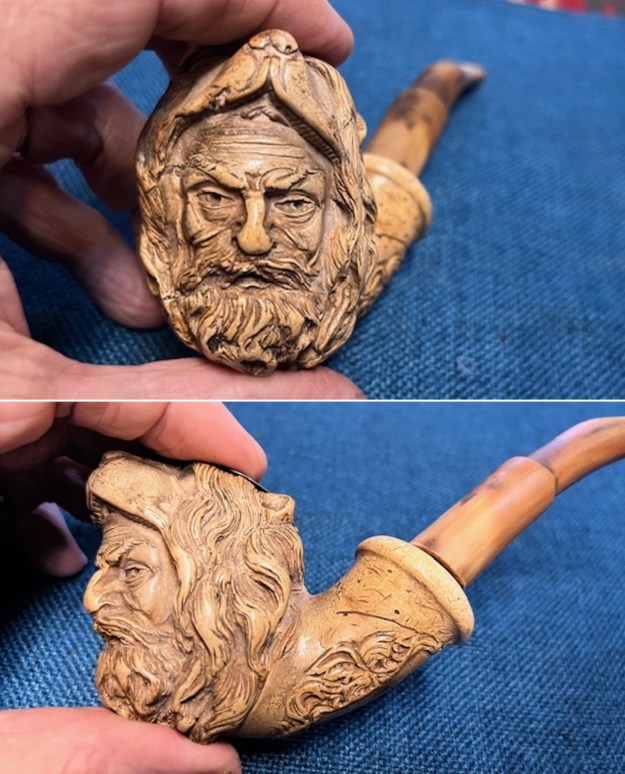
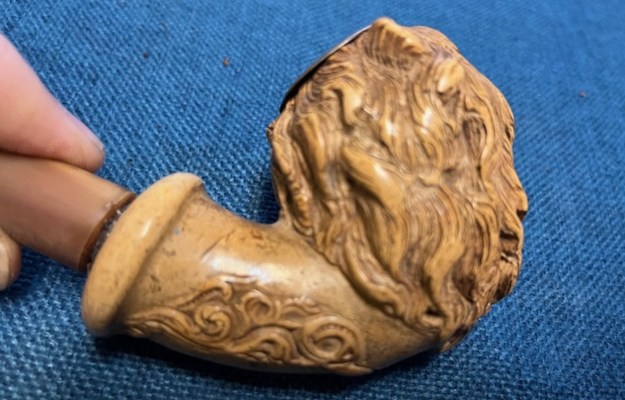
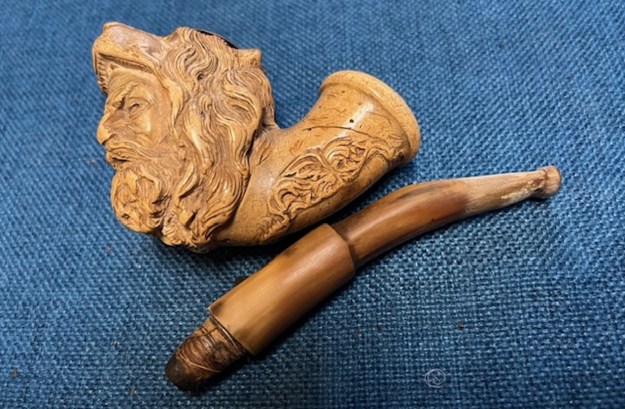
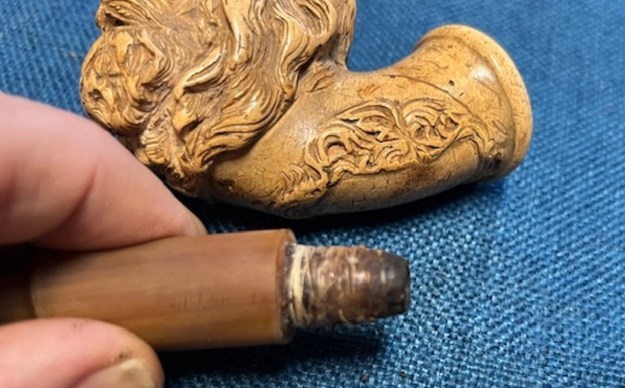
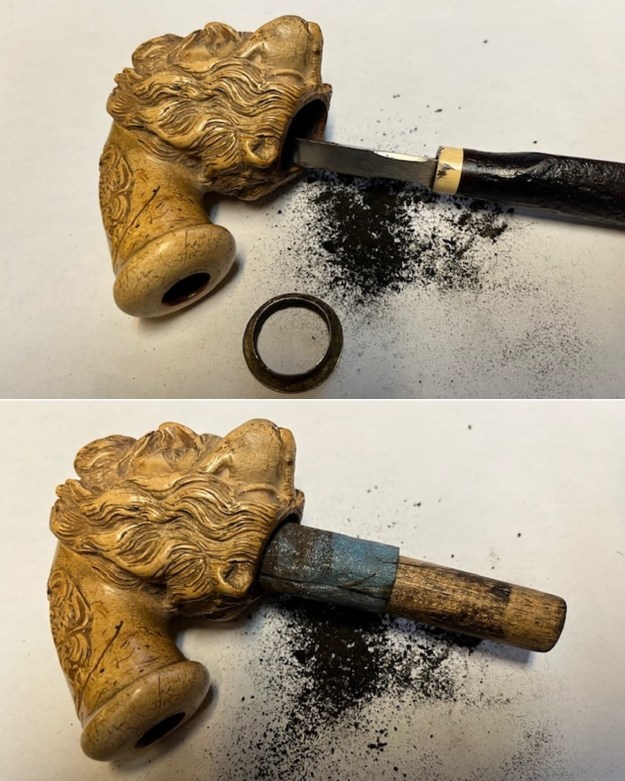
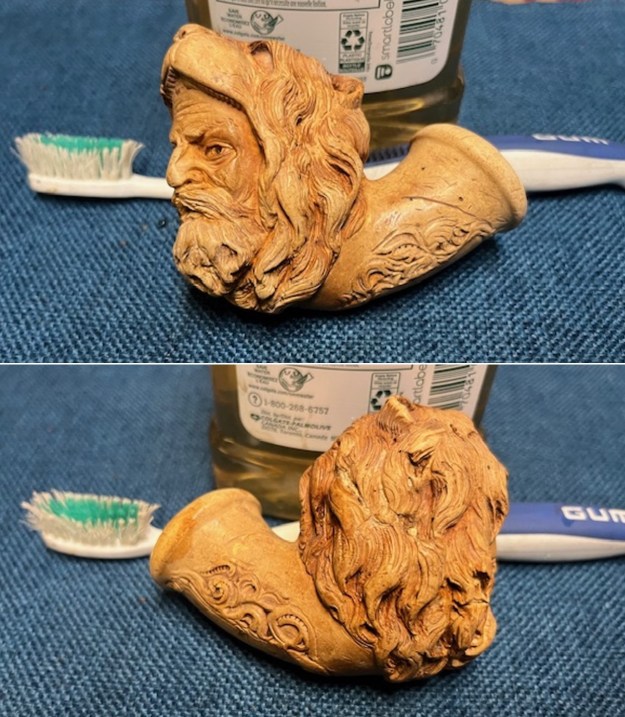
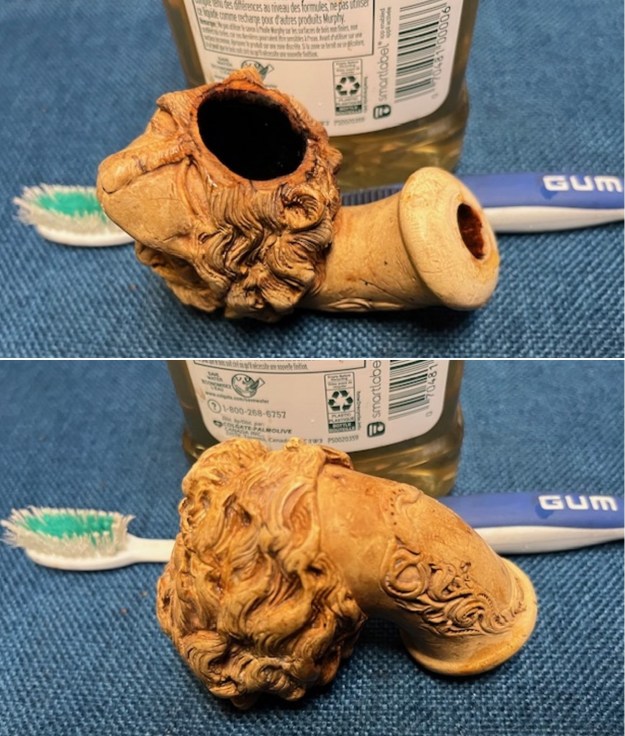
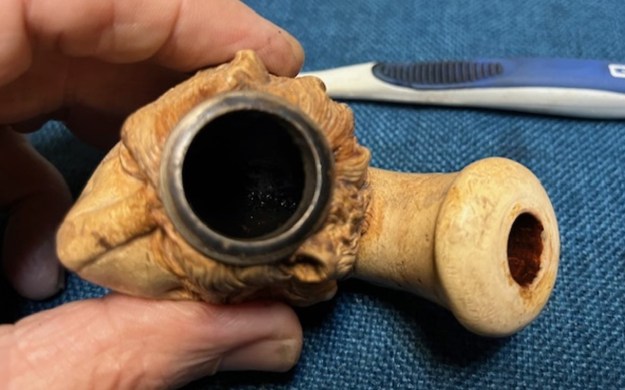
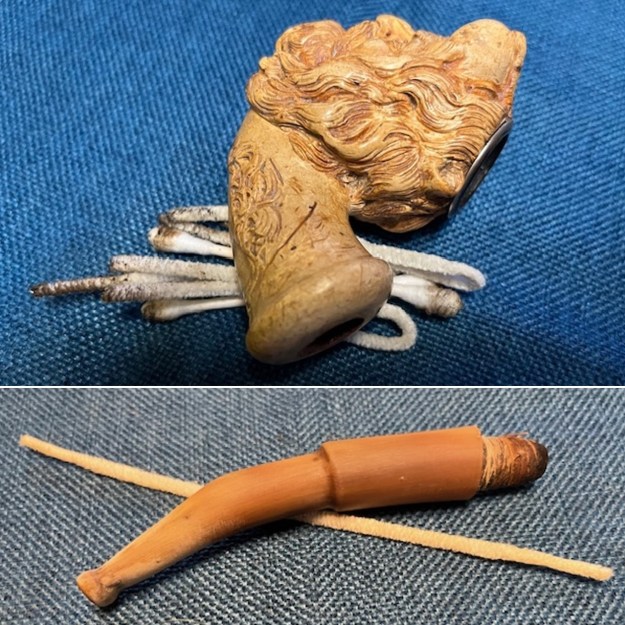
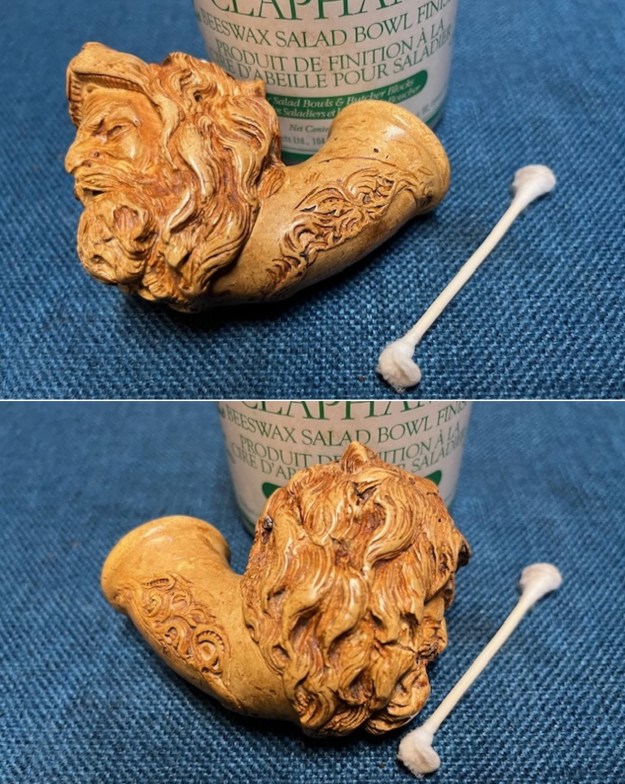
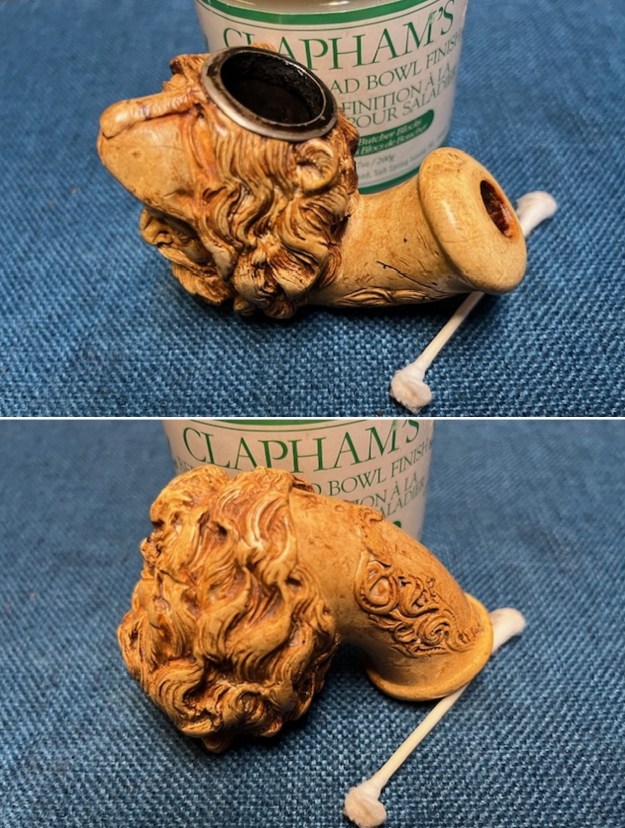
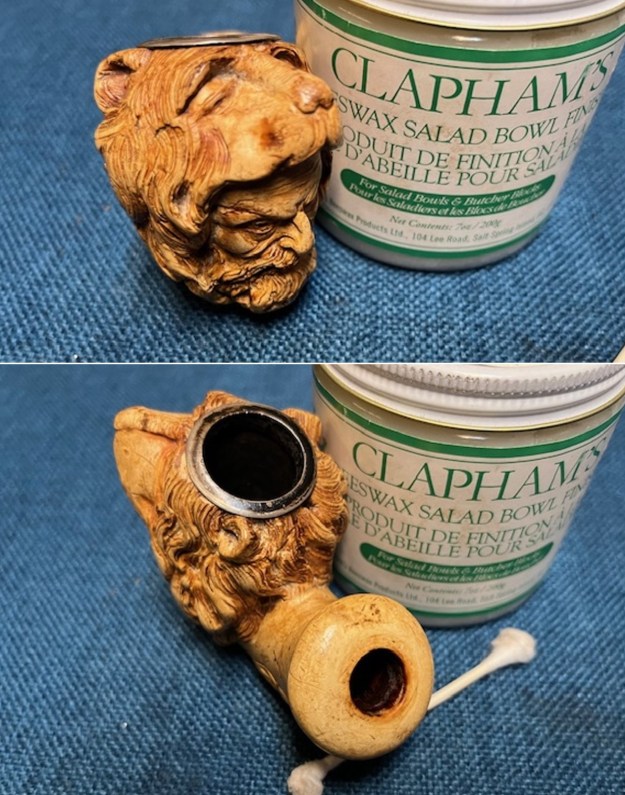
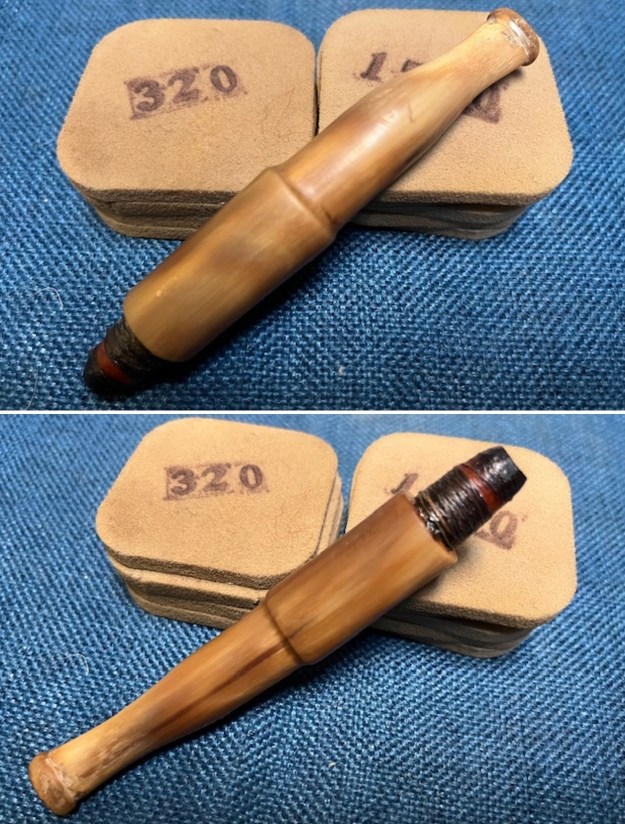
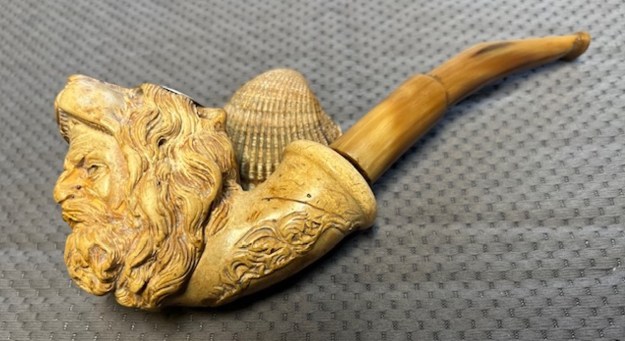
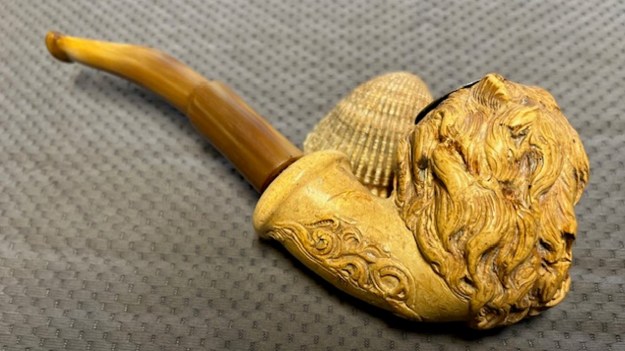
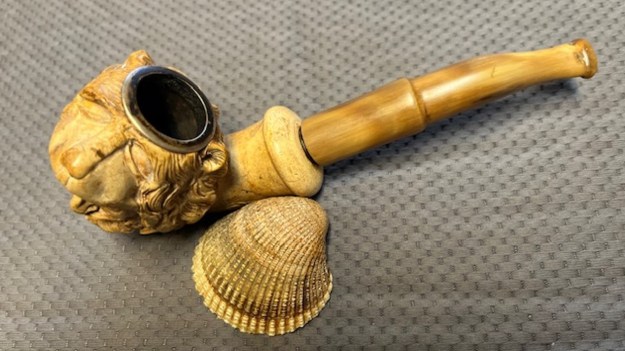
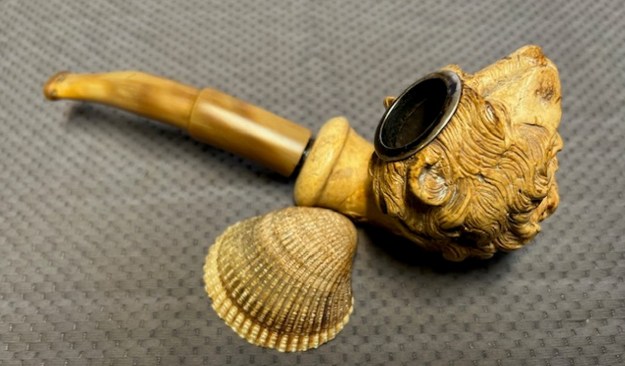
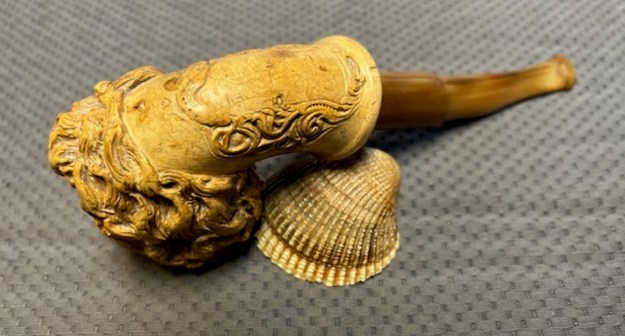
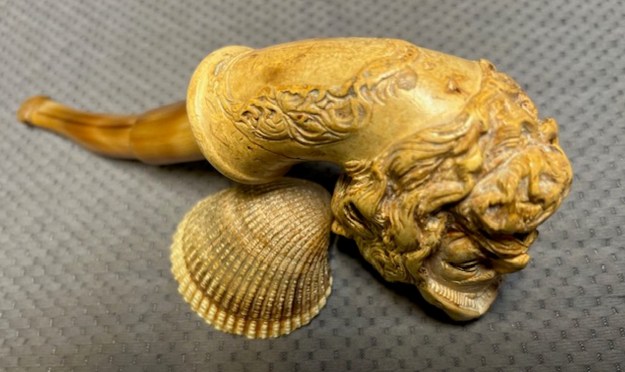
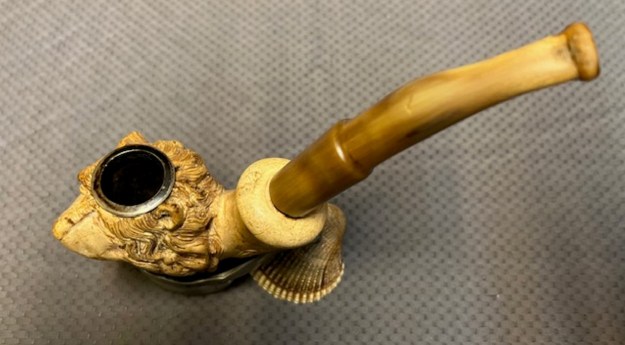
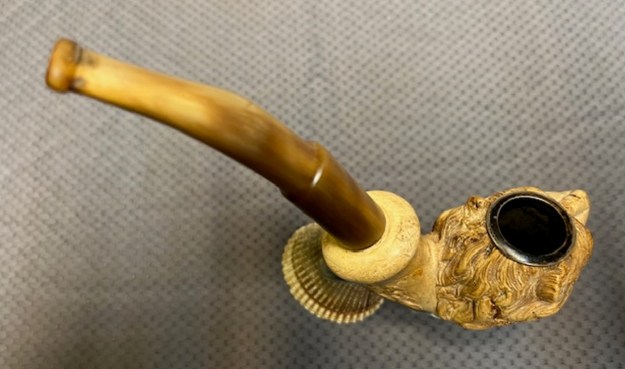
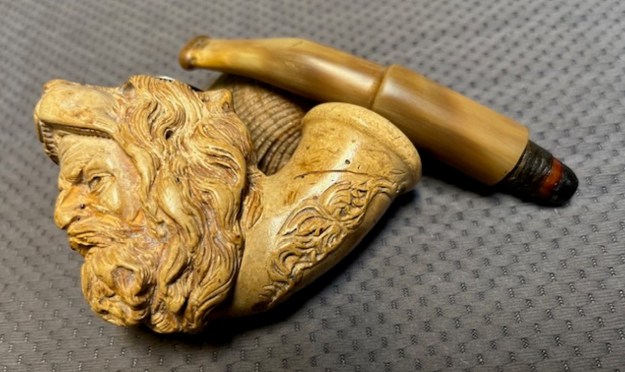
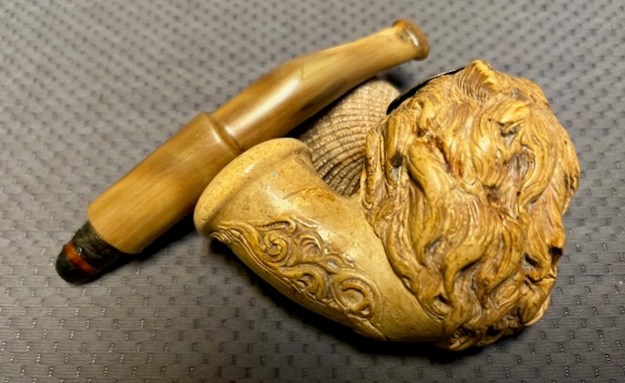
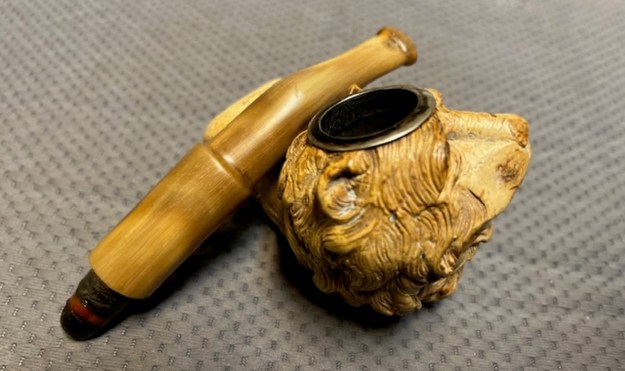
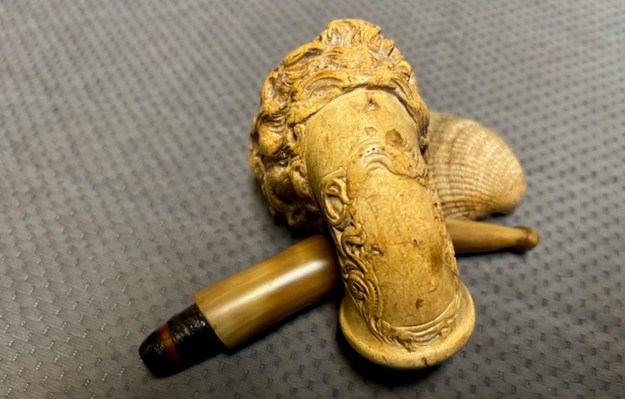
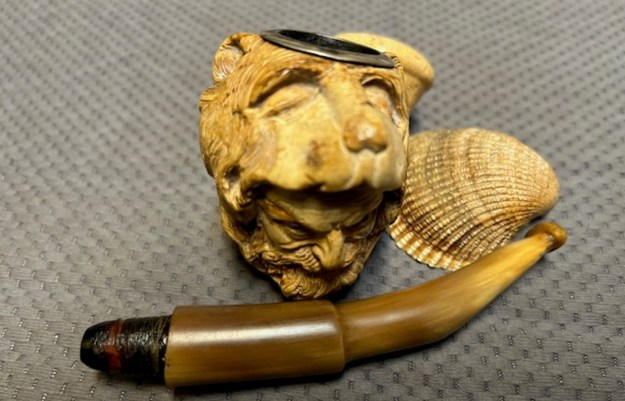
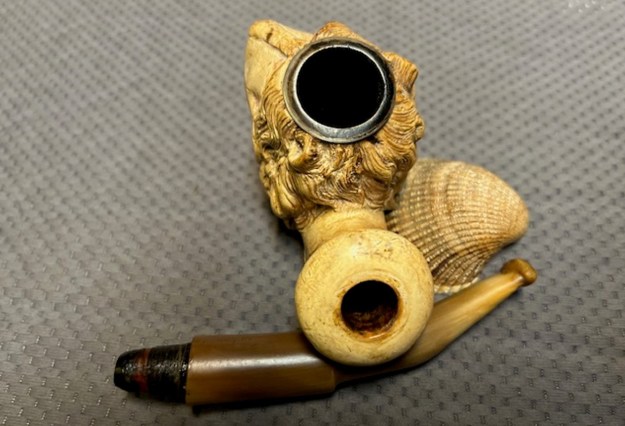
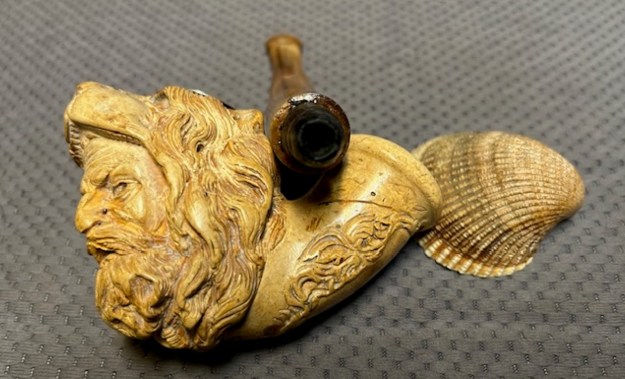
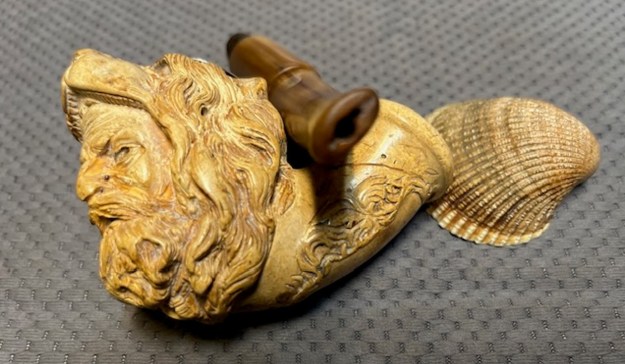
I wrote him back and asked him to send me photos of the pipes. He sent some single photos of the meerschaum bowl and stem, several of the leather clad Canadian and the photo of the rack and six pipes shown below. I looked through the photos and this is what I saw. There were two leather clad pipes a Canadian and a Pot. Both of them were cracked on the shanks and had been self-repaired with wire to hold the cracked shank together. The leather cladding was torn and the stitching was rotten and broken around the bowl. To me they were both irreparable. There was a lovely older Meerschaum figural with a horn stem that needed a good cleaning and repairs to the horn stem. There were two Knute Freehand pipes with original stems that were dirty but fixable. The plateau on the smooth one had a large chunk of briar missing. There was a Wilshire Dublin with a chewed and misfit stem. Finally, there was a billiard that had been restemmed with a fancy GBD saddle stem on it. They were a messy lot but I told him to send them on to me. They arrived yesterday and the condition of the pipes in the photos was confirmed. They were a mess and needed much work. I have included Mario’s group photo below to show the lot.I have also included three of the photos of the meerschaum that Mario sent to me as well. The first of the photos show the bowl top and what is either a metal cup lining the bowl or at least a metal rim top/cap. The meerschaum shows some great colour/patina as well as some chips and scratches and perhaps some repaired cracks in the surface. The horn stem also shows some wear and tear on the horn surface and some roughening. This afternoon I decided to start working on the fifth of the pipes from Mario – a figural carved freehand. It was a figural with a richly carved bearded man wearing a lion’s head as a cap on his head and a metal rim cap. The stem was made of horn that had lots of tooth marks and chatter on both sides near the button. The stem is dry and some of the striations are separating at the button end. The tenon has been wrapped with waxed thread to soften the fit of the stem in the mortise of the meerschaum. The bowl had a thick cake on the walls and a heavy lava coat the metal insert or the rim top. Which one is true will become clearer as I work on it. It was internally a mess. The finish was dirty and had grime ground into the sides of the bowl. That in many ways obscured the beauty of the patina on the bowl. There were nicks and deep scratches in the beard and in the smooth parts of the bowl but otherwise it seemed sound. The carving and filigree as well as scratches and nicks. There was no stamping or identifying marks on the meerschaum shank. I took photos of the pipe when I unpacked it to examine it. I have included those below. I took a photo of the bowl and rim top to show the condition of both. You can see the darkening on the metal insert rim top. There was a heavy cake in the bowl. The grooves in the carved meer are very dirty with debris. I also took photos of the stem showing the tooth marks and chatter on both sides ahead of the button.I took photos of the carving around the bowl. To me it looks like a mountain man wearing a bear’s head hat. The beard and carving are well done. The eyes even have lots of character.  The side profile shows the bear’s head hat or head dress. I removed the stem from the shank and took a photo of the parts. It is a well-proportioned pipe.I noted the tenon on the horn stem was wrapped with thread and then waxed. It would need to be cleaned up but it was interesting. It certainly was a self repair of the fit of the stem.It was now time to clean up the pipe. II checked the metal rim cap and found it was not a bowl insert but rather just a rim cap. It was dirty but easily removed.I scraped the bowl with a Savinelli Fitsall Pipe Knife to remove the thick cake on the walls. I sanded the bowl walls with 220 grit sandpaper wrapped around a dowel to smooth out the bowl walls. The walls were clear of damage and felt smooth to touch. I scrubbed the externals of the bowl and shank with undiluted Murphy’s Oil Soap and a tooth brush. I worked over the bowl, shank and rim top with the soap and then lightly rinsed it off warm water. The bowl looked extremely good. The grime was gone and the existing patina looked very rich and variegated. It is a beautifully carved pipe. I cleaned the metal rim top with 0000 Steel wool and a tooth brush and reset it in the bowl and rim top. It looked much better and smelled cleaned.I cleaned out the internals of the shank and the airway in the stem with pipe cleaners, cotton swabs and alcohol. The shank was quite dirty but the airway in the stem was surprisingly clean. For awhile now I have been using Clapham’s Beeswax Salad bowl finish for waxing meerschaums. It is a combination of Beeswax and Carnauba. I worked it into the grooves with a shoe brush and into the deep grooves with cotton swabs. I let it harden then buffed it with a soft cloth to raise the shine. The patina looked very good. I set the bowl aside and turned my attention to the horn stem. I sanded it with 320-3500 grit sanding pads. I wiped it off between pads with an Obsidian Oil impregnated cloth to remove the debris of the sanding.I polished the stem with micromesh sanding pads – 1500-12000 grit pads. I wiped it down with an Obsidian Oil cloth after each sanding pad. I used Before & After Pipe Polish – both Fine and Extra Fine to further polish the stem. I gave it a final coat of Obsidian Oil. I put the horn stem back on the Figural Carved Mountain Man Meerschaum pipe and buffed the pipe. I gently buffed waxed bowl with a clean microfibre cloth to raise the shine. I gave the stem several coats of carnauba wax and buffed it with a clean buffing pad to raise the shine. I hand buffed the stem with a microfiber cloth to deepen the shine. The pipe polished up really nicely and the patina gave depth to the carving. The finished pipe is shown in the photos below. This is a beautiful Figural Carved Mountain Man Meerschaum – the horn saddle stem and patinaed meer combine to give the pipe a great look. The dimensions of the pipe are Length: 6 ½ inches, Height: 2 ¼ inches, Outside diameter of the bowl: 1 ¾ inches wide x 2 inches long, Chamber diameter: ¾ of an inch. The weight of the pipe is 3.56 ounces/101 grams. This is the fifth of six pipes that am restoring for Mario from his Dad’s collection. I look forward to hearing what he thinks of this newly restored pipe. One more to go then the lot will go back to him. Thanks for reading this blog and my reflections on the pipe while I worked on it!

Restoring and Repairing a Cracked Bowl on a Knute of Denmark Sandblast Freehand


by Steve Laug

In November I received an email from Mario about working on some of his Dad’s pipes. Here is what he wrote to me.

I am desperately seeking help restoring and repairing some of my dad’s smoking pipes. I have tried reaching out to the only two known pipe repair establishments I could find in the entire country but one is not currently taking repair orders and the other said she didn’t want to try to repair these pipes without having even seen them. Would you be willing to take on the repairs or can you recommend anyone? Thank you much!!!—Mario

I wrote him back and asked him to send me photos of the pipes. He sent some single photos of the meerschaum bowl and stem, several of the leather clad Canadian and the photo of the rack and six pipes shown below. I looked through the photos and this is what I saw. There were two leather clad pipes a Canadian and a Pot. Both of them were cracked on the shanks and had been self-repaired with wire to hold the cracked shank together. The leather cladding was torn and the stitching was rotten and broken around the bowl. To me they were both irreparable. There was a lovely older Meerschaum with a horn stem that needed a good cleaning and repairs to the horn stem. There were two Knute Freehand pipes with original stems that were dirty but fixable. The plateau on the smooth one had a large chunk of briar missing. There was a Wilshire Dublin with a chewed and misfit stem. Finally, there was a billiard that had been restemmed with a fancy GBD saddle stem on it. They were a messy lot but I told him to send them on to me. They arrived yesterday and the condition of the pipes in the photos was confirmed. They were a mess and needed much work. I have included Mario’s group photo below to show the lot.This afternoon I decided to start working on the fourth of the pipes – a sandblast freehand. It was the one on the left top held in the hand in the photo above. It was a Freehand Shape with a plateau rim top and a smooth shank end. It had a fancy turned saddle stem that was oxidized, calcified and had lots of tooth marks and chatter on both sides near the button. The bowl had a thick cake on the walls and a heavy lava coat in the plateau on the rim top. It was internally a mess. The finish was dirty and had grime ground into the sides of the bowl. There a crack running from the heel of the bowl half way up the bowl on both sides mid bowl. The shank was in good shape with no nicks or cracks. The pipe was stamped on the underside of the shank and read Knute [over] Of Denmark. There was no other stamping on the shank sides. I took photos of the pipe when I unpacked it to examine it. I have included those below. I took a photo of the bowl and rim top to show the condition of both. You can see the debris in the bowl and lava in the plateau surface of the rim top. I also took photos of the heavily oxidized and calcified stem showing the tooth marks and chatter on both sides ahead of the button.I took a photo of the stamping on the underside of the shank. It is clear and readable as noted above. I took a photo of the bowl with the stem removed to give a sense of the proportion and appearance of the pipe without the stem. I took photos of the crack in the bowl sides before I started my clean up and repairs. It looks like the kind of crack that come from a bowl being dropped on a hard surface.Before I started my work on the pipe I wanted to remind myself of the provenance of the pipe. I remembered that it was linked to Karl Erik as I have worked on quite a few Knute Freehands. I wanted to know where this pipe fit into the Karl Erik lines so I turned to the first of two sites that I always check to gather information on a brand. I turned to the first source of information site – Pipephil’s (http://www.pipephil.eu/logos/en/logo-k3.html) got a quick overview on the brand once again connecting it to Karl Erik. I turned to Pipedia (https://pipedia.org/wiki/Karl_Erik). Pipedia had this great picture of Karl Erik Ottendahl and I decided to include it here as a reminder of the artisan who first carved and released this pipe. Reminded of the tie to Karl Erik, I knew a bit about the pipe at hand. I turned to address the pipe itself. There it is clearly identified and linked to Karl Erik Ottendahl. It is designated as a second and frequently having rustication. The interesting thing is that his pipe does not look like a second at all and I wonder if the Knute is a line of Karl Erik’s rather than a second. Who knows? This one is a very well done sandblast pipe. Now it was time to work on the pipe and bring it back to life. The crack needed to be repaired and the bowl brought back to life.
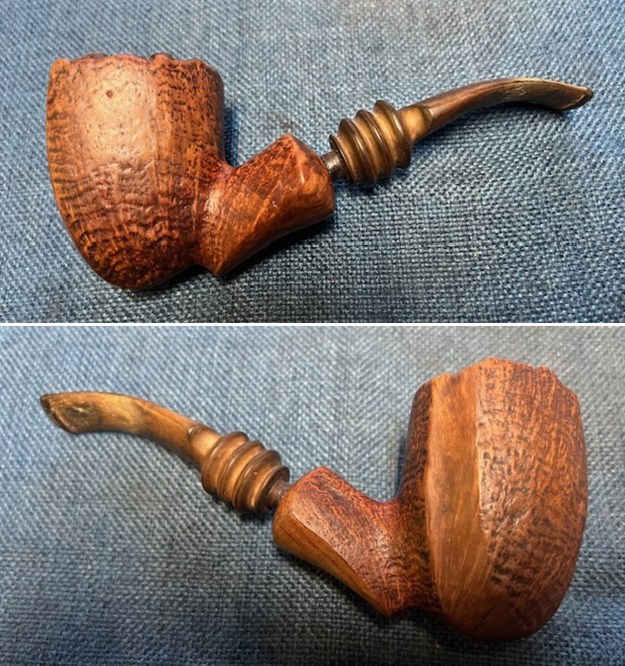
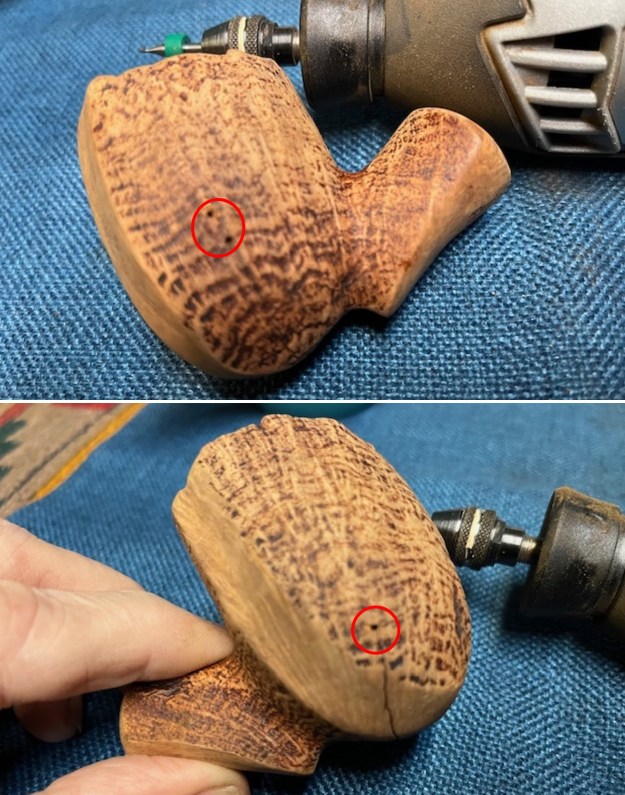
I started my work on the pipe by starting the process of cleaning the pipe. I carefully reamed the bowl with a PipNet Pipe Reamer remove from the bowl leaving bare briar. I cleaned up the remnants of cake with a Savinelli Fitsall Pipe Knife and removed the remaining debris. I sanded the bowl walls smooth with a piece of 220 grit sandpaper wrapped around a piece of dowel. I scraped the lava coat off the rim top – both the rusticated portion and the plateau rim top with the Savinelli Pipe Knife and removed all of it. I cleaned out the internals of the bowl and shank with pipe cleaners, cotton swabs, shank brushes and 99% isopropyl alcohol. It was very clean and it looked and smelled far better. I also cleaned out the internals in the stem with the same tools and alcohol.I scrubbed the externals of the bowl and shank with undiluted Murphy’s Oil Soap and a tooth brush. I worked over the bowl, shank and rim top with the soap and then rinsed it off warm water. The bowl looked extremely good. The cracks around the bowl heel and sides were clean. The plateau top had some darkening and burn marks. I worked over the rim top with a brass bristle wire brush to clean up the rim top. I sanded the rim top high spots in the plateau with a 320 grit sanding pad. The clean high spots would provide a great contrast.Now it was time to address the crack in the bowl running up both sides from the heel. The inside of the bowl is clean and no cracks run through from the outside of the bowl. I am pretty confident that the cracks came when the pipe was dropped on the ground. I used a micro drill bit and drilled small pilot holes at the end of the crack on each side of the bowl. I have circled the drill holes on both sides of the pipe in red for quick reference. I filled in the cracks with clear CA glue and briar dust and used a dental spatula to press the material into the crack.I worked over the repaired areas with a brass bristle wire brush. I followed the flow of the sandblast finish with the brush and was able to clean up the debris from the repairs in the grain of the crack. I worked some Before & After Restoration Balm into the sandblast finish and the plateau rim top. I worked it in with my finger tips on the smooth portions of the finish and with a shoebrush on the plateau and the sandblast. I let the Balm do its magic for 15 minutes then buffed it off with a cotton cloth. The rich colours of the finish on this Knute looked amazing. I painted the walls of the bowl with a mixture of sour cream and activated charcoal powder. The mixture works to provide a bowl coating. I applied it with a folded pipe cleaner. I put a pipe cleaner in the airway to close the entry into the bowl. The bowl coating would give the bowl some initial protection as it is broken in through smoking. The natural buildup of carbon will further protect the bowl. I set the bowl in a pipe rest to let the mixture harden and cure. I set the bowl aside and turned my attention to the badly oxidized stem. I scrubbed the stem surface with Soft Scrub cleanser to break through the oxidization and calcification. It took a lot of scrubbing and scraping of the grime from the surface but it finally began to show black. There were deep tooth marks on the top and underside of the stem ahead of the button. I filled them in with black CA glue strengthened with rubber and carbon. It dries hard but it still is a bit flexible. I flattened the repairs with small flat file. I sanded the repaired areas and the rest of stem with 320-3500 grit sanding pads to smooth it out and remove remaining oxidation. I wiped the stem down after each pad with an Obsidian Oil cloth. It was beginning to look very good.       I polished the stem with micromesh sanding pads – 1500-12000 grit pads. I wiped it down with a damp cloth after each sanding pad. I used Before & After Pipe Polish – both Fine and Extra Fine to further polish the stem. I put the stem back on the Knute of Denmark Sandblast Freehand pipe and took the pipe to the buffer. I carefully buffed the bowl and stem with Blue Diamond to polish the briar and the vulcanite. Blue Diamond does a great job on the smaller scratches that remain in the vulcanite. I gave the bowl multiple coats of Conservator’s Wax and the stem several coats of carnauba wax and buffed the pipe with a clean buffing pad to raise the shine. I hand buffed it with a microfiber cloth to deepen the shine. The pipe polished up really nicely with a great contrasting stain look to the briar. The finished pipe is shown in the photos below. This is a beautiful Karl Eric Made Knute of Denmark Freehand – the fancy turned stem and plateau rim top give the pipe a great look. The dimensions of the pipe are Length: 6 inches, Height: 2 ½ inches, Outside diameter of the bowl: 1 ½ inches wide x 2 inches, Chamber diameter: 7/8 of an inch. The weight of the pipe is 2.26 ounces/64 grams. This is the fourth of six pipes that am restoring for Mario from his Dad’s collection. I look forward to hearing what he thinks of this newly restored pipe. Thanks for reading this blog and my reflections on the pipe while I worked on it!

Restemming and Restoring a Citation 614 Rusticated Meerschaum Lined Oom Paul


by Steve Laug

In November I received an email from Mario about working on some of his Dad’s pipes. Here is what he wrote to me.

I am desperately seeking help restoring and repairing some of my dad’s smoking pipes. I have tried reaching out to the only two known pipe repair establishments I could find in the entire country but one is not currently taking repair orders and the other said she didn’t want to try to repair these pipes without having even seen them. Would you be willing to take on the repairs or can you recommend anyone? Thank you much!!!—Mario

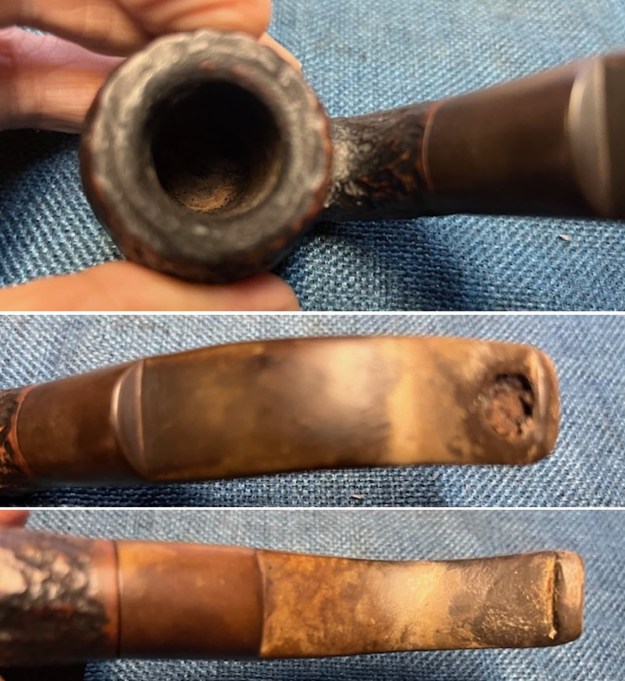
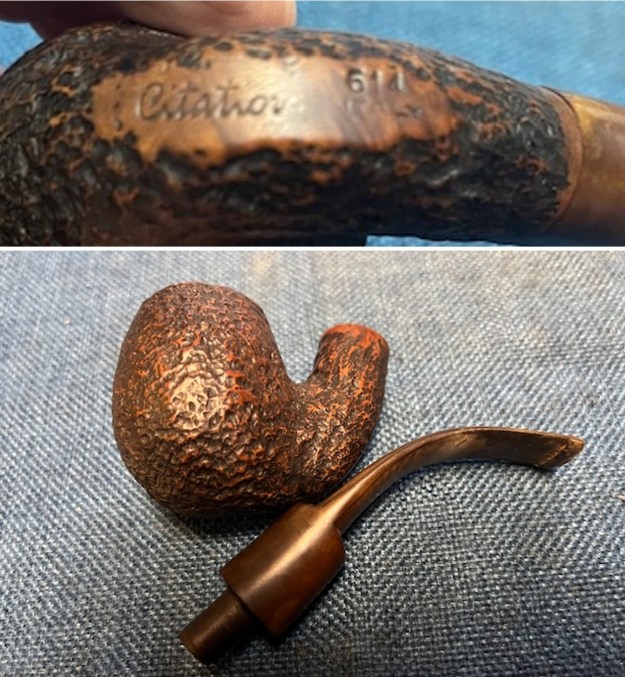
I wrote him back and asked him to send me photos of the pipes. He sent some single photos of the meerschaum bowl and stem, several of the leather clad Canadian and the photo of the rack and six pipes shown below. I looked through the photos and this is what I saw. There were two leather clad pipes a Canadian and a Pot. Both of them were cracked on the shanks and had been self-repaired with wire to hold the cracked shank together. The leather cladding was torn and the stitching was rotten and broken around the bowl. To me they were both irreparable. There was a lovely older Meerschaum with a horn stem that needed a good cleaning and repairs to the horn stem. There were two Knute Freehand pipes with original stems that were dirty but fixable. The plateau on the smooth one had a large chunk of briar missing. There was a Wilshire Dublin with a chewed and misfit stem. Finally, there was a billiard that had been restemmed with a fancy GBD saddle stem on it. They were a messy lot but I told him to send them on to me. They arrived yesterday and the condition of the pipes in the photos was confirmed. They were a mess and needed much work. I have included Mario’s group photo below to show the lot.This afternoon I decided to start working on the Oom Paul next. It was the one on the left centre on the bottom of the rack in the photo above. It was an Oom Paul shape with a bent round shank and the saddle stem had a huge bite through on the topside of it. The bowl had a thick cake on the walls and a heavy lava coat in the rustication on the rim top. It was internally a mess. The finish was dirty and had grime ground into the sides of the bowl. There seemed to be line around the bowl top that hinted at the bowl being lined with meerschaum. The shank was in good shape with no nicks or cracks. The pipe was stamped on the underside of the shank and read Citation in script (followed by) the shape number 614 [over] Italy. The shape number and Italy stamp tell me the pipe was made by Savinelli. There was no other stamping on the shank sides. The stem was correct but chewed beyond repair and would need to be replaced. I took photos of the pipe when I unpacked it to examine it. I have included those below. I took a photo of the rim top to show the condition and the interesting ring on the rim top. I also took photos of the heavily damaged stem. I took a photo of the stamping on the underside of the shank. It is clear and readable as noted above. I took a photo of the bowl with the stem removed to give a sense of the proportion and appearance of the pipe without the stem. You can see the damage on the stem top so it is no question that it needs to be removed.I remember having worked on a Citation before but could not put my finger on what I knew about it. I did a quick search on rebornpipes and found a blog I had restored and restemmed a Citation that had been meerschaum lined (https://rebornpipes.com/2015/12/24/a-surprise-when-working-on-the-citation-812-canadian/). Fortunately, I could see what looks like a smooth ring around the inside of the bowl. As I examined it I found that ring around the inside edge of the bowl was a meerschaum lining. I knew that I was working on a Meerschaum lined Oom Paul.

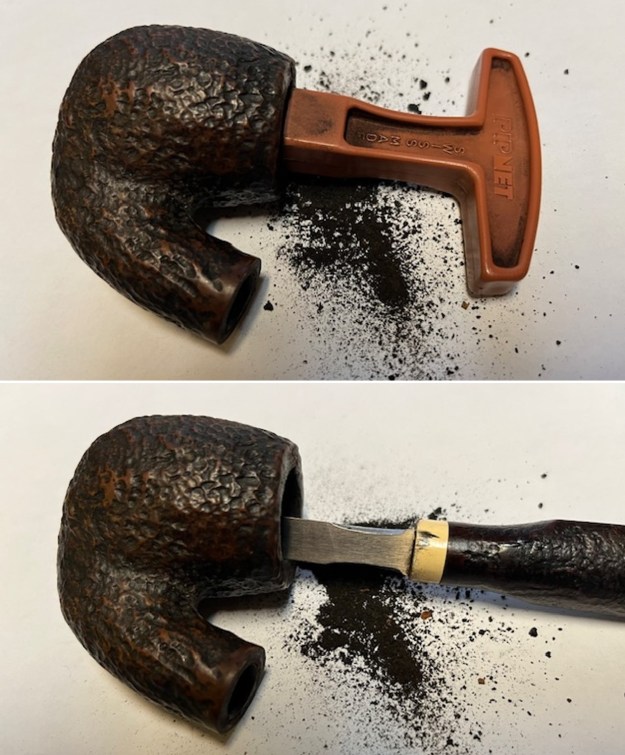
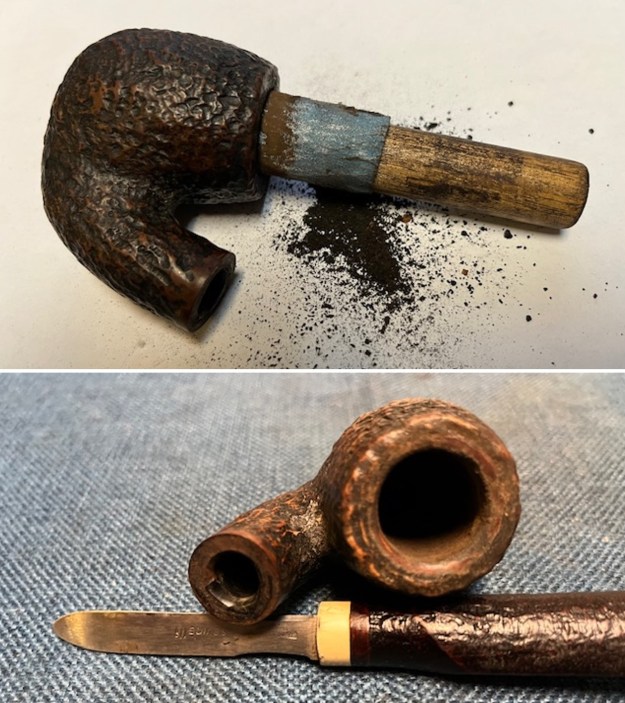
I carefully reamed the bowl with a PipNet Pipe Reamer remove from the bowl leaving bare meerschaum. I cleaned up the remnants of cake with a Savinelli Fitsall Pipe Knife and removed the remaining debris. I sanded the bowl walls smooth with a piece of 220 grit sandpaper wrapped around a piece of dowel. I scraped the lava coat off the rim top – both the rusticated portion and the smooth ring of the meerschaum bowl top with the Savinelli Pipe Knife and removed all of it. I cleaned out the internals of the bowl and shank with pipe cleaners, cotton swabs, shank brushes and 99% isopropyl alcohol. It was very clean and it looked and smelled far better.I scrubbed the externals of the bowl and shank with undiluted Murphy’s Oil Soap and a tooth brush. I worked over the bowl, shank and rim top with the soap and then rinsed it off warm water. The bowl looked extremely good. There were some significant burn marks on the rim top and inner edge but the bowl itself was very clean. Once the bowl had dried I touched up the stain on the rim top to match bowl colour. I used a Walnut Stain Pen to colour the briar and leave the meerschaum rim clear for polishing.I rubbed the bowl and shank down with Before & After Restoration Balm. I worked it into the surface of the bowl sides and shank with my fingertips and a shoe brush to clean, enliven and protect the briar. I let the balm sit for a little while and then buffed with a cotton cloth to raise the shine. The Balm did its magic and the grain stood out. I went through my can of stems and found one that was the right taper for the pipe bowl I was working on. It had the right look and would need shaping. The stem is very similar to the original that came on the pipe and should look very good.I cleaned out the internals of the stem with alcohol and pipe cleaners. There was some tars and oils in the airway and it took some work but it was clean. One of the odd things on this pipe was that the inside of the shank had a piece of black electrical tape stuck in it that had come off the tenon sometime along the way.I sanded the stem with 220 grit sandpaper to reduce the overage in diameter on the top and the left side of the saddle (forgot to take photos). I smoothed out the sanded portions and the sanded tooth marks with 320-3500 grit sanding pads. I wiped the stem down after each pad with an Obsidian Oil cloth. It was beginning to look very good.I polished the stem with micromesh sanding pads – 1500-12000 grit pads. I wiped it down with a damp cloth after each sanding pad. I used Before & After Pipe Polish – both Fine and Extra Fine to further polish the stem. This restored and restemmed Savinelli Made Citation 614 Rusticated Oom Paul with a new vulcanite saddle stem is a great looking pipe now that it has been restored. The beautiful rusticated finish stands out and gives depth to the bowl and shank sides. I put the stem back on the bowl and carefully buffed the pipe with Blue Diamond on the buffing wheel. I gave the bowl and the stem multiple coats of carnauba wax on the buffing wheel and followed that by buffing the entire pipe with a clean buffing pad. I hand buffed the pipe with a microfiber cloth to deepen the shine. The rim top shows Meerschaum Lining and other than darkening it was in great shape. The finished Savinelli Citation 614 Meerlined Oom Paul is a beautiful pipe, but it fits nicely in the hand and feels great. Give the finished pipe a look in the photos below. The dimensions of the pipe are Length: 5 ½ inches, Height: 2 inches, Outside diameter of the bowl: 1 ¼ inches, Chamber diameter: ¾ of an inch. The weight of the pipe is 58 grams /2.01 ounces. This is the third of six pipes that I am restemming and restoring for Mario from his Dad’s collection. I look forward to hearing what he thinks of this newly restemmed pipe. Thanks for reading this blog and my reflections on the pipe while I worked on it.
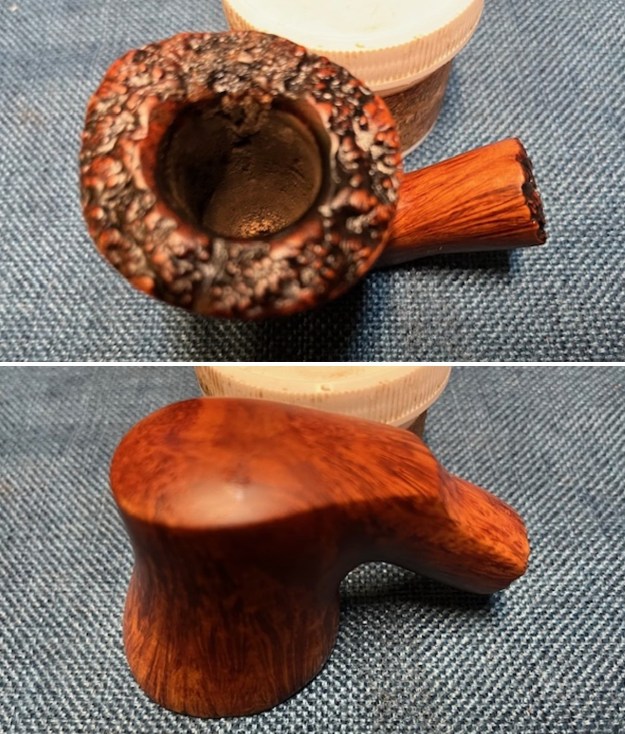
Restemming and Restoring a Wilshire Dublin


by Steve Laug

In November I received an email from Mario about working on some of his Dad’s pipes. Here is what he wrote to me.

I am desperately seeking help restoring and repairing some of my dad’s smoking pipes. I have tried reaching out to the only two known pipe repair establishments I could find in the entire country but one is not currently taking repair orders and the other said she didn’t want to try to repair these pipes without having even seen them. Would you be willing to take on the repairs or can you recommend anyone? Thank you much!!!—Mario

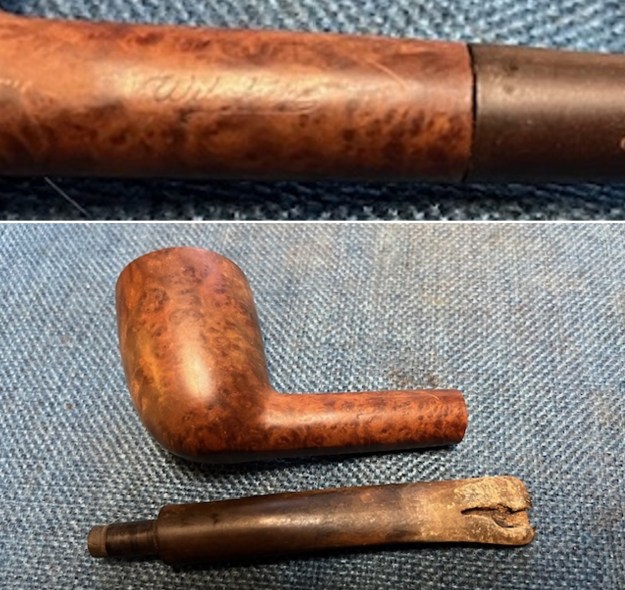
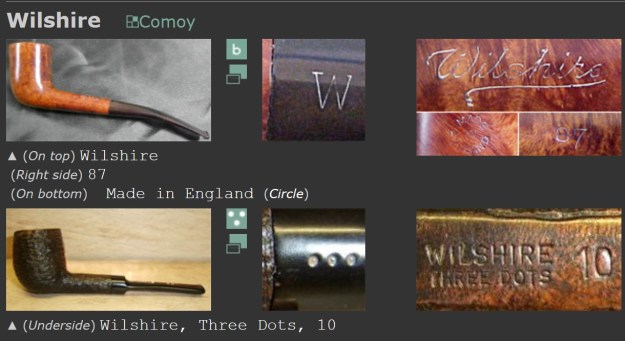
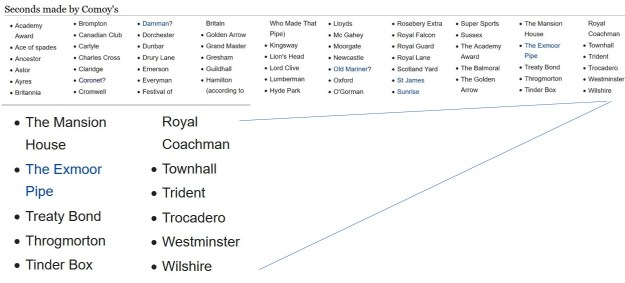
I wrote him back and asked him to send me photos of the pipes. He sent some single photos of the meerschaum bowl and stem, several of the leather clad Canadian and the photo of the rack and six pipes shown below. I looked through the photos and this is what I saw. There were two leather clad pipes a Canadian and a Pot. Both of them were cracked on the shanks and had been self-repaired with wire to hold the cracked shank together. The leather cladding was torn and the stitching was rotten and broken around the bowl. To me they were both unrepairable. There was a lovely older Meerschaum with a horn stem that needed a good cleaning and repairs to the horn stem. There were two Knute Freehand pipes with original stems that were dirty but fixable. The plateau on the smooth one had a large chunk of briar missing. There was a Wilshire Dublin with a chewed and misfit stem. Finally, there was a billiard that had been restemmed with a fancy GBD saddle stem on it. They were a messy lot but I told him to send them on to me. They arrived yesterday and the condition of the pipes in the photos was confirmed. They were a mess and needed much work. I have included Mario’s group photo below to show the lot.I decided to start working on the Dublin second. It was the one on the far left leaning against the left end of the rack in the photo above. It was a Dublin shape with a straight round shank and the stem did not fit in the shank correctly and it had a huge bite through on the topside of it. The bowl had a thick cake on the walls and a heavy lava coat on the rim top. It was internally a mess. The finish was dirty and had grime ground into the sides of the bowl. The shank was not cracked like the previous one and was in good shape. The pipe was stamped on the left side of the shank and read Wilshire in script. There was no other stamping on the shank sides. The stem was the wrong one. The diameter was less than the shank. I would need to fit it with a new stem. I took photos of the pipe when I unpacked it to examine it. I have included those below. I took a photo of the bowl and rim top to give you and idea of what I see. You can see the thick cake in the bowl and the thick lava overflow on the rim top and inwardly bevelled inner edges of the bowl. There also appears to be damage on the inner edge toward the back of the bowl. I also included photos of the stem. You can see that the stem is not correct. It does not fit the shank and is chewed a long way up the stem top. I took a photo of the stamping on the left side of the shank. It is clear and readable as noted above. I took a photo of the bowl with the incorrect stem removed to give a sense of the proportion and appearance of the pipe without the stem. You can see the damage on the stem top so it is no question that it needs to be removed.I turned to Pipephil’s site to see what I could find out about the Wilshire brand and was not disappointed (http://www.pipephil.eu/logos/en/logo-w3.html). I did a screen capture of the section below. It was good to know that the pipe was made by Comoy’s.Knowing that the pipe was made by Comoy I turned to the article on Comoy on Pipedia to see what I could learn (https://pipedia.org/wiki/Comoy%27s#Seconds_made_by_Comoy’s). Beside the great history article there was a section with photos toward the end of the article entitled Seconds Made by Comoy’s. There were no photos of the pipe but there was a list of these pipes and the last entry in the list was the Wilshire. The screen capture below shows the list as a whole and I have taken the last two columns and enlarged them below. The last item in the list is this brand of pipe.Now that I knew that I was working on a Comoy’s made second pipe and I had a bit of background on it I was ready to start on the pipe itself

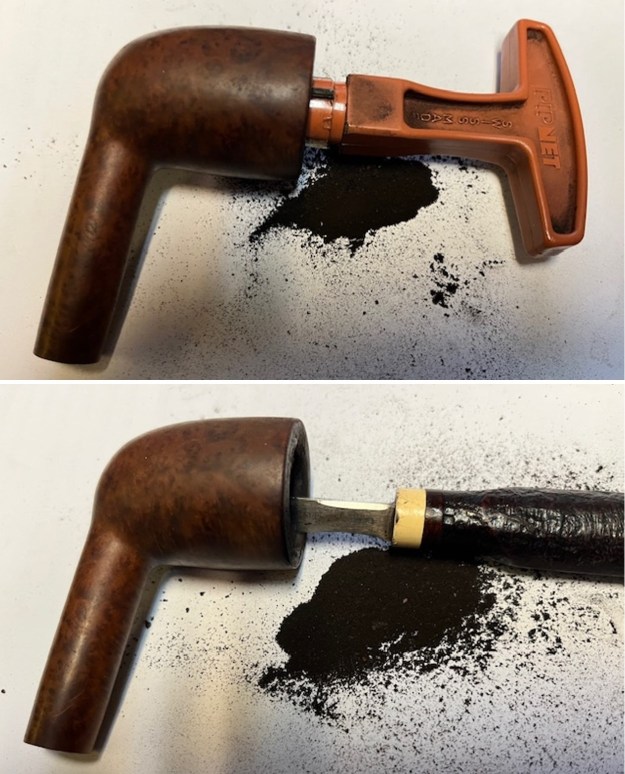
I reamed the bowl with a PipNet Pipe Reamer to take the cake back to bare briar. I cleaned up the remnants of cake with a Savinelli Fitsall Pipe Knife and removed the remaining debris. I sanded the bowl walls smooth with a piece of 220 grit sandpaper wrapped around a piece of dowel. I scraped the lava coat off the rim top with the Savinelli Pipe Knife and removed all of it. I scrubbed the externals of the bowl and shank with undiluted Murphy’s Oil Soap and a tooth brush. I worked over the bowl, shank and rim top with the soap and then rinsed it off warm water. The bowl looked extremely good. There were some significant burn marks on the rim top and inner edge but the bowl itself was very clean. I cleaned out the internals of the bowl and shank with pipe cleaners, cotton swabs, shank brushes and 99% isopropyl alcohol. It was very clean and it looked and smelled far better. I really liked the look of the shank band on the shank end.I lightly topped the bowl on a topping board with 220 grit sandpaper. I wanted to remove the dips and burned areas from the rim top and flatten it for the next step in the process. I used a half sphere and some 220 grit sandpaper to clean up the inner bevel on the rim edge and smooth out that part of the bowl. It was far from perfect but it was smooth and it was flat. I used 320-3500 grit sanding pads to smooth out the scratches and nicks in the surface of the briar. There were many small scratches and nicks in the briar. I wiped the bowl down after each sanding pad with a damp cloth to remove the sanding dust and debris. It really began to look very good. The grain is quite lovely. I polished the briar with micromesh sanding pads – dry sanding with 1500-12000 grit pads and wiped it down the bowl after each sanding pad. I rubbed the bowl and shank down with Before & After Restoration Balm. I worked it into the surface of the bowl sides and shank with my fingertips to clean, enliven and protect the briar. I let the balm sit for a little while and then buffed with a cotton cloth to raise the shine. The Balm did its magic and the grain stood out. I went through my can of stems and found one that was the right taper for the pipe bowl I was working on. It had the right look and would need shaping. I was not sure that the original stem had been bent so I was uncertain about doing that with this new stem. I may just do it because Mario’s Dad had done it to the pipe when he had it! I cleaned out the internals of the stem with alcohol and pipe cleaners. It was surprisingly clean so it was ready to work on it to make a proper fit.I sanded the stem to smooth it out with 320-3500 grit sanding pads. I wiped the stem down after each pad with an Obsidian Oil cloth. It was beginning to look very good.I used the lighter to soften the stem enough to bend it the same bend as the other stem had. It looked very good.I polished the stem with micromesh sanding pads – 1500-12000 grit pads. I wiped it down with a damp cloth after each sanding pad. I used Before & After Pipe Polish – both Fine and Extra Fine to further polish the stem. This restored and restemmed Comoy’s Made Wilshire Dublin with a new vulcanite taper stem is a great looking pipe now that it has been restored. The beautiful finish really highlights the grain. I put the stem back on the bowl and carefully buffed the pipe with Blue Diamond on the buffing wheel. I gave the bowl and the stem multiple coats of carnauba wax on the buffing wheel and followed that by buffing the entire pipe with a clean buffing pad. I hand buffed the pipe with a microfiber cloth to deepen the shine. The rim top shows some burns marks that I could not remove as they were very deep. The finished Wilshire Dublin is a beautiful pipe, but it fits nicely in the hand and feels great. Give the finished pipe a look in the photos below. The dimensions of the pipe are Length: 6 inches, Height: 1 ¾ inches, Outside diameter of the bowl: 1 ¼ inches, Chamber diameter: ¾ of an inch. The weight of the pipe is 38 grams /1.31 ounces. This is the second of six pipes that I am restemming and restoring for Mario from his Dad’s collection. I look forward to hearing what he thinks of this newly restemmed pipe. Thanks for reading this blog and my reflections on the pipe while I worked on it.
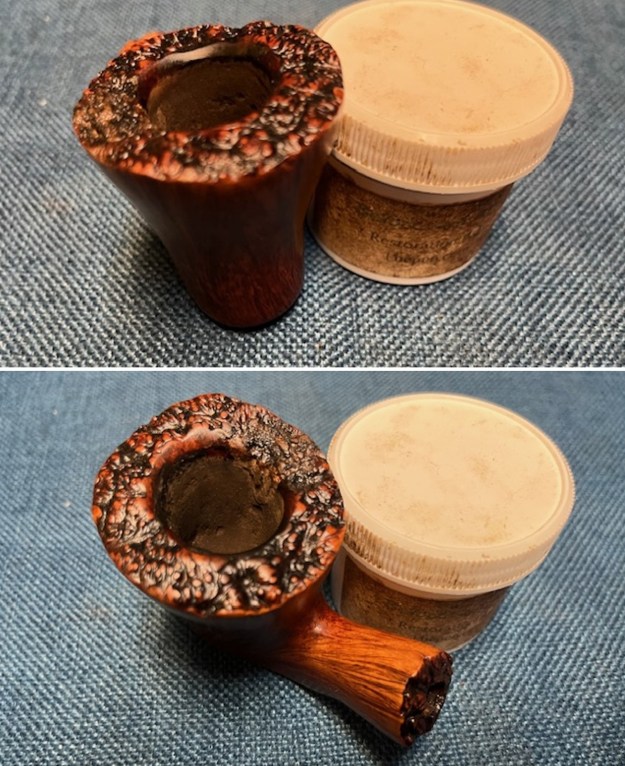
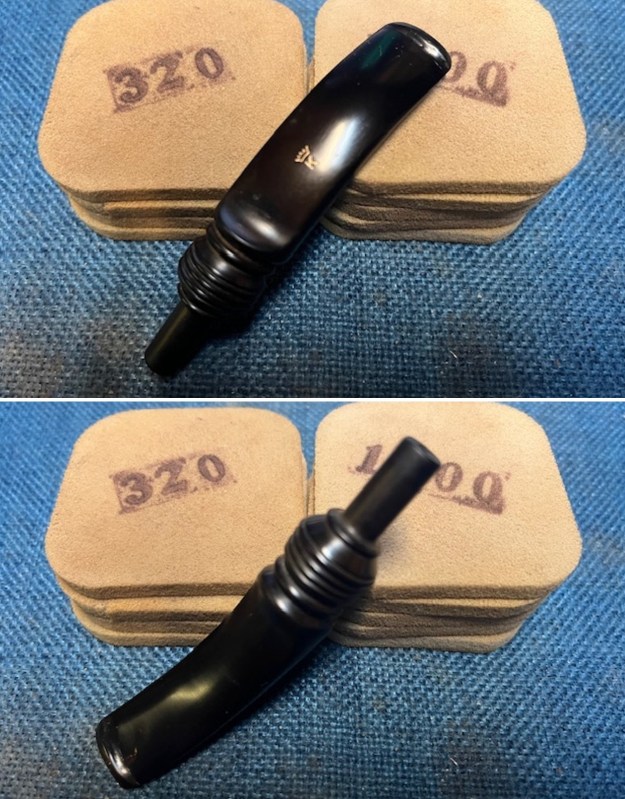
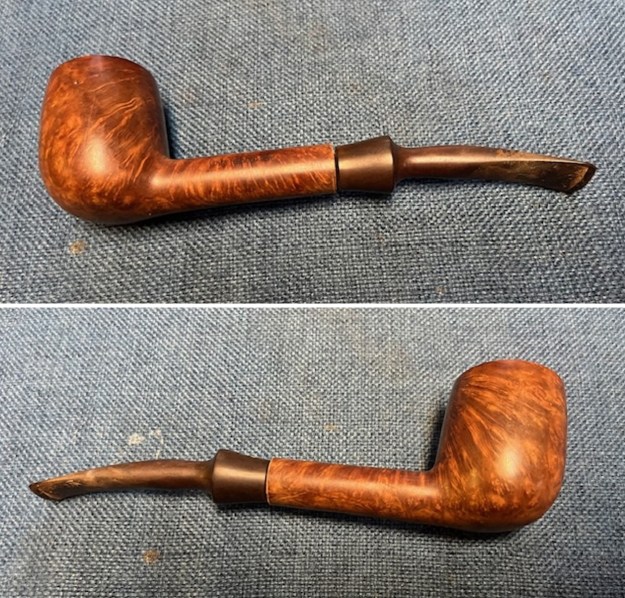
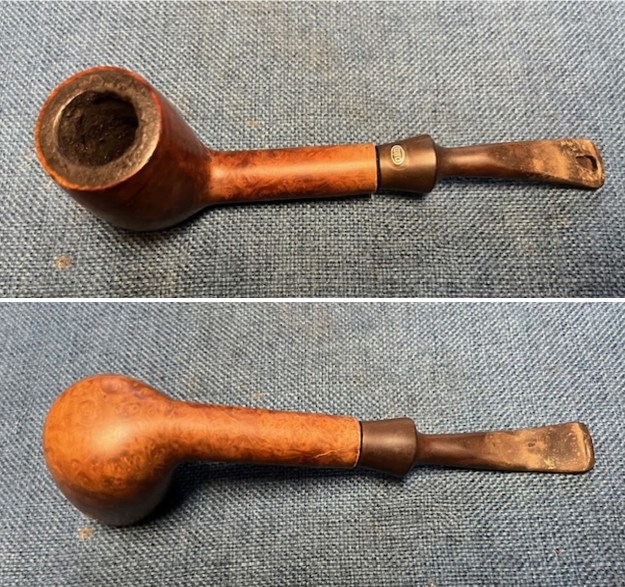
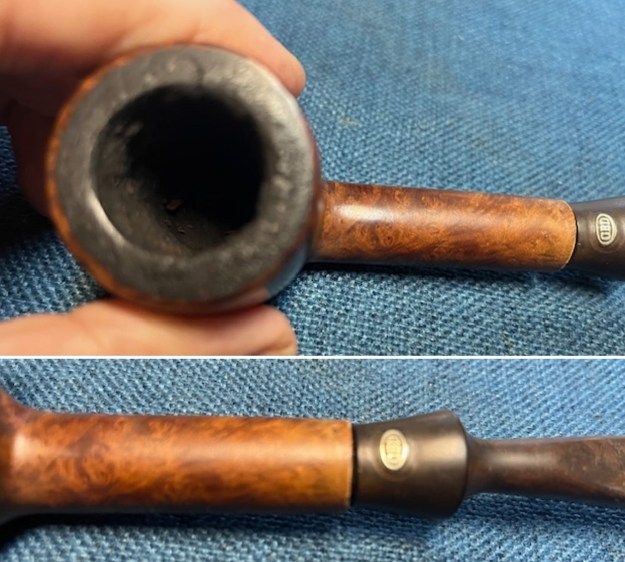
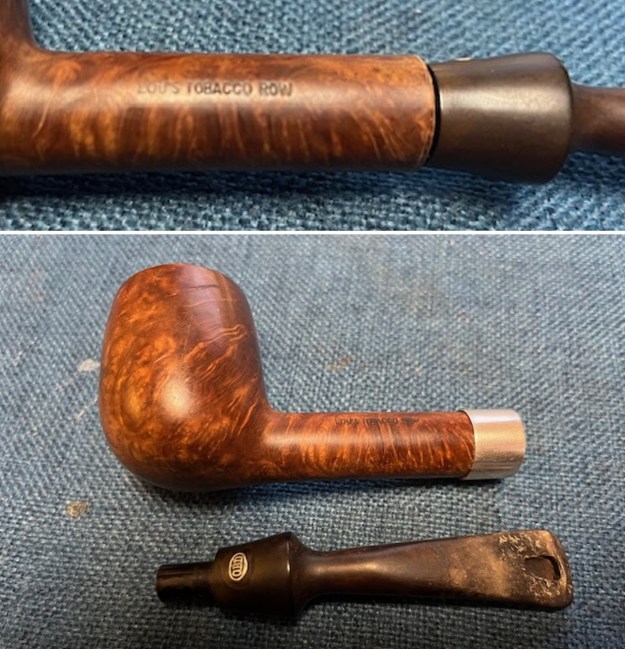
Restemming and Restoring a Lou’s Tobacco Row Billiard


by Steve Laug

In November I received an email from Mario about working on some of his Dad’s pipes. Here is what he wrote to me.

I am desperately seeking help restoring and repairing some of my dad’s smoking pipes. I have tried reaching out to the only two known pipe repair establishments I could find in the entire country but one is not currently taking repair orders and the other said she didn’t want to try to repair these pipes without having even seen them. Would you be willing to take on the repairs or can you recommend anyone? Thank you much!!!—Mario

I wrote him back and asked him to send me photos of the pipes. He sent some single photos of the meerschaum bowl and stem, several of the leather clad Canadian and the photo of the rack and six pipes shown below. I looked through the photos and this is what I saw. There were two leather clad pipes a Canadian and a Pot. Both of them were cracked on the shanks and had been self-repaired with wire to hold the cracked shank together. The leather cladding was torn and the stitching was rotten and broken around the bowl. To me they were both unrepairable. There was a lovely older Meerschaum with a horn stem that needed a good cleaning and repairs to the horn stem. There were two Knute Freehand pipes with original stems that were dirty but fixable. The plateau on the smooth one had a large chunk of briar missing. There was a Dublin with a replacement stem that had been chewed through the topside.  Finally, there was a billiard that had been restemmed with a fancy GBD saddle stem on it. They were a messy lot but I told him to send them on to me. They arrived yesterday and the condition of the pipes in the photos was confirmed. They were a mess and needed much work. I have included Mario’s group photo below to show the lot.This morning I decided to start working on the Billiard first. It was the one on the far right on top of the rack in the photo above. It was a billiard – not a GBD and the stem did not fit in the shank correctly and was a fancy saddle stem that had a huge bite through on the topside of it. The bowl had a thick cake on the walls and a heavy lava coat on the rim top. It was internally a mess. The finish was dirty and had a sticky coat on the right side of the bowl. There was a large fill on left side of the bowl near the top that had fallen out. There was a large crack in the shank on the right side that extended almost ¾ of an inch up the shank. The pipe was stamped on the left side of the shank and read Lou’s Tobacco Row. There was no other stamping on the shank sides. The stem was the wrong one. The diameter was less than the shank. The tenon was a bit large and when it had been used the shank had cracked. It would need to be banded and a new stem fit to the shank. I took photos of the pipe when I unpacked it to examine it. I have included those below. I took a photo of the bowl and rim top to give you and idea of what I see. You can see the thick cake in the bowl and the thick lava overflow on the rim top and inner edges of the bowl. I also included one photo of the stem. You can see that the stem is not correct. It does not fit the shank and it is going to need to be replaced.I took a photo of the stamping on the left side of the shank. It is clear and readable as noted above. I took a photo of the bowl with the incorrect stem removed to give a sense of the proportion and appearance of the pipe without the stem. You can see the damage on the stem top so it is no question that it needs to be removed.I could not find any information on Lou’s Tobacco Row either as a pipe or a pipe shop. I googled and a Lou’s Tobacco Bar in Milwaukee, Wisconsin, USA but nothing with the stamp on this pipe. It remains a bit of a mystery to me.

I decided to addressed the cracks on the right underside of the shank first. I took a photo of the cracks on the underside of the shank. There seems to be several cracks in the briar. The crack extended a depth of over ¾ inches on the shank. I went through my bands to find one that had the depth to pull together the cracks up the depth of the shank. I found a nice Sterling Silver Band that was the right depth to pull together the damage on the shank. It was a snug fit. I heated it with a lighter to soften the silver and pressed it on to the shank end to bind the breaks together. I reamed the bowl with a PipNet Pipe Reamer to take the cake back to bare briar. I cleaned up the cake with a Savinelli Fitsall Pipe Knife and removed the remaining debris. I sanded the bowl walls smooth with a piece of 220 grit sandpaper wrapped around a piece of dowel. I scraped the lava coat off the rim top with the Savinelli Pipe Knife and removed all of it. I cleaned out the internals of the bowl and shank with pipe cleaners, cotton swabs, shank brushes and 99% isopropyl alcohol. It was very clean and it looked and smelled far better. I really liked the look of the shank band on the shank end.I scrubbed the externals of the bowl and shank with undiluted Murphy’s Oil Soap and a tooth brush. I worked over the bowl, shank and rim top with the soap and then rinsed it off warm water. The bowl looked extremely good. There was one spot near the top left side of the bowl that would need to have a fill repaired. The briar looked very good with the sterling silver band on the shank. I cleaned up the inner edge of the bowl and the rim top with a folded piece of 220 grit sandpaper. It took a bit of work but I was able to remove the darkening on the edge, the nicks and damage and also some of the marks on the rim top.I applied some clear CA glue in the damaged fill on the left side of the bowl. I worked it into the space on the briar with a tooth pick. I pressed some briar dust into the fresh glue repair. Once it cured I sanded it smooth with a folded piece of 220 grit sandpaper. I used 320-3500 grit sanding pads to smooth out the scratches and nicks in the surface of the briar. There were many small scratches and nicks in the briar. I wiped the bowl down after each sanding pad with a damp cloth to remove the sanding dust and debris. It really began to llok very good. The grain is quite lovely. I polished the briar with micromesh sanding pads – dry sanding with 1500-12000 grit pads and wiped it down the bowl after each sanding pad. I rubbed the bowl and shank down with Before & After Restoration Balm. I worked it into the surface of the bowl sides and shank with my fingertips to clean, enliven and protect the briar. I let the balm sit for a little while and then buffed with a cotton cloth to raise the shine. The Balm did its magic and the grain stood out. I went through my can of stems and found one that was the right taper for the pipe bowl I was working on. It had the right look and would need a little adjustment to the bottom half of the stem to make the fit against band end equal all the way around the shank end.I cleaned out the internals of the stem with alcohol and pipe cleaners. It was surprisingly clean so it was ready to work on it to make a proper fit.I worked over the diameter of the stem at the band junction to reduce it to fit against the shank end. I used the Dremel and sanding drum to start the process and then finished the fit with 220 grit sandpaper to smooth out the sanding marks on the vulcanite. I also sanded over the tooth marks in the stem on both sides ahead of the button.
There were some small tooth marks on each side of the stem that remained after my sanding. I filled them in with clear super glue and used a tooth pick to flatten them out (I forgot to take a photo of the stem at this point). Once the repairs cured I flattened them with a small file. I sanded them smooth with a folded piece of 220 grit sandpaper. I sanded the stem to smooth it out with 320-3500 grit sanding pads. I wiped the stem down after each pad with an Obsidian Oil cloth. It was beginning to look very good.I polished the stem with micromesh sanding pads – 1500-12000 grit pads. I wiped it down with a damp cloth after each sanding pad. I used Before & After Pipe Polish – both Fine and Extra Fine to further polish the stem. This first of Mario’s Dad’s pipes, a banded, restored and restemmed Lou’s Tobacco Row Billiard with a new vulcanite taper stem is a great looking pipe now that it has been restored. The beautiful finish really highlights the grain and the polished finish is stunning with the Sterling Silver Band. I put the stem back on the bowl and carefully buffed the pipe with Blue Diamond on the buffing wheel. I gave the bowl and the stem multiple coats of carnauba wax on the buffing wheel and followed that by buffing the entire pipe with a clean buffing pad. I hand buffed the pipe with a microfiber cloth to deepen the shine. The finished Lou’s Tobacco Row Billiard is a large pipe, but it fits nicely in the hand and feels great. Give the finished pipe a look in the photos below. The dimensions of the pipe are Length: 6 ½ inches, Height: 1 ¾ inches, Outside diameter of the bowl: 1 ¼ inches, Chamber diameter: 7/8 of an inch. The weight of the pipe is 52 grams /1.87 ounces. This is the first of six pipes that I am restemming and restoring for Mario from his Dad’s collection. I look forward to hearing what he thinks of this newly banded and stemmed pipe. Thanks for reading this blog and my reflections on the pipe while I worked on it.

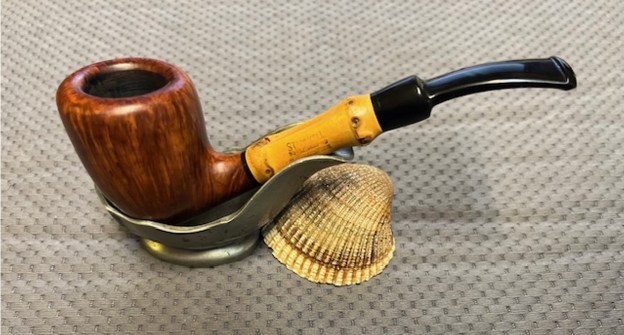
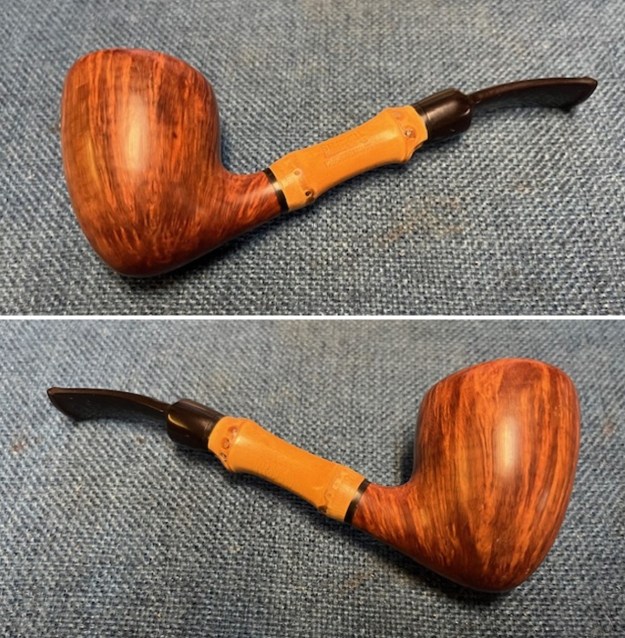
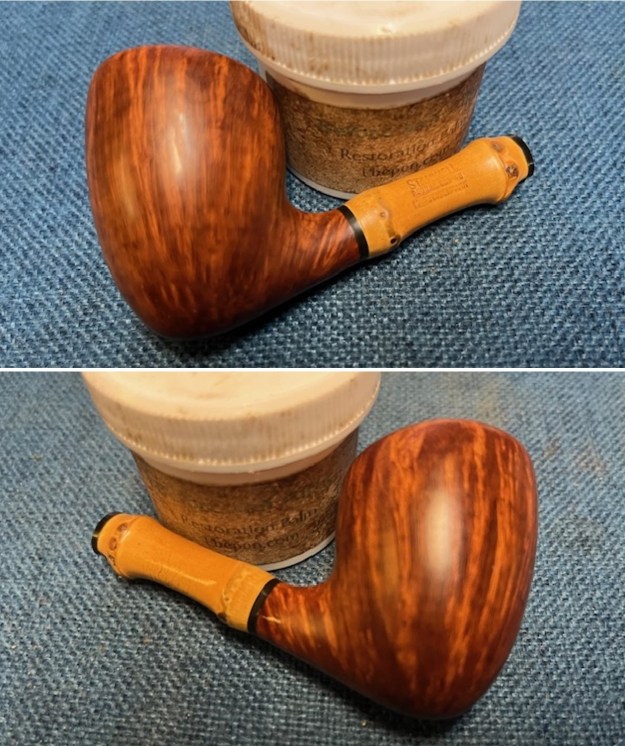
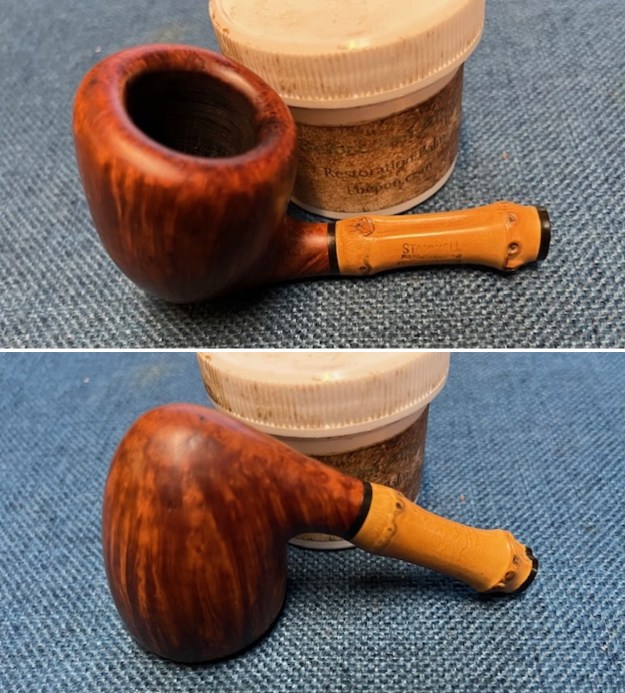
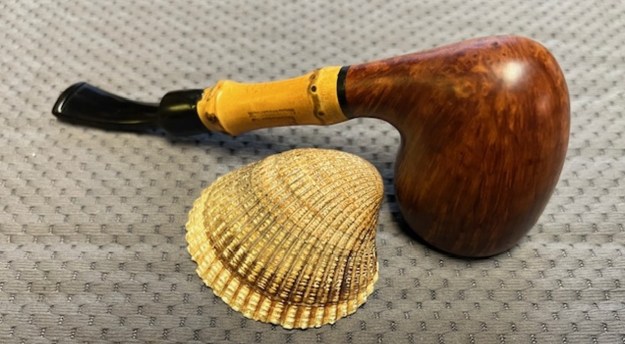
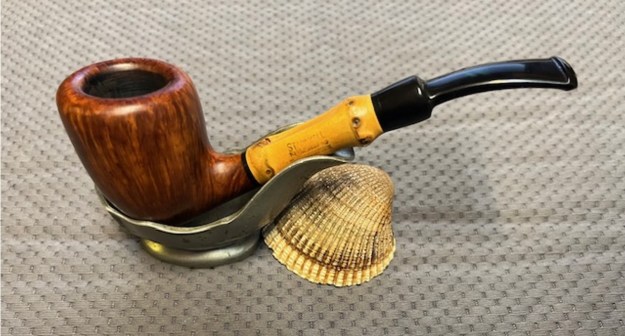
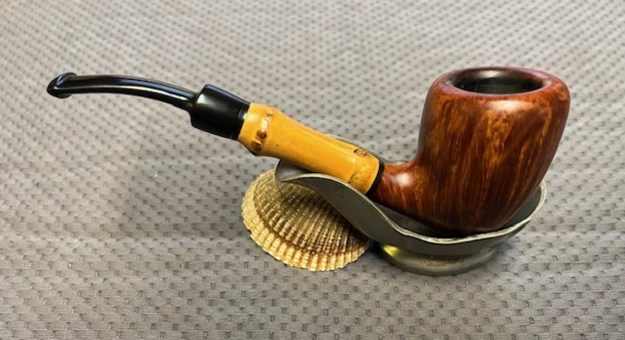
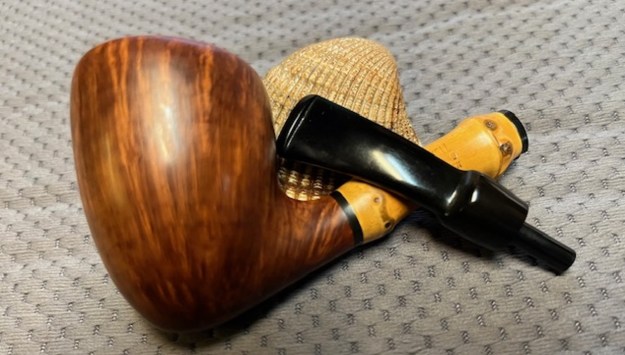
Cleaning up a Stanwell Regd. No. 969-48 Bamboo Acorn


by Steve Laug

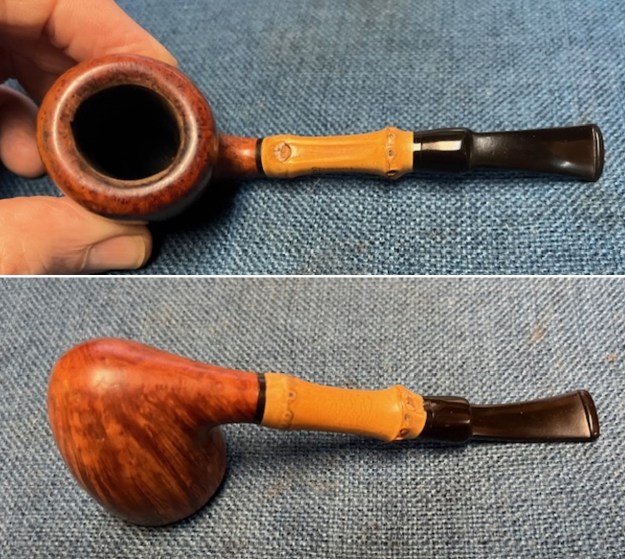
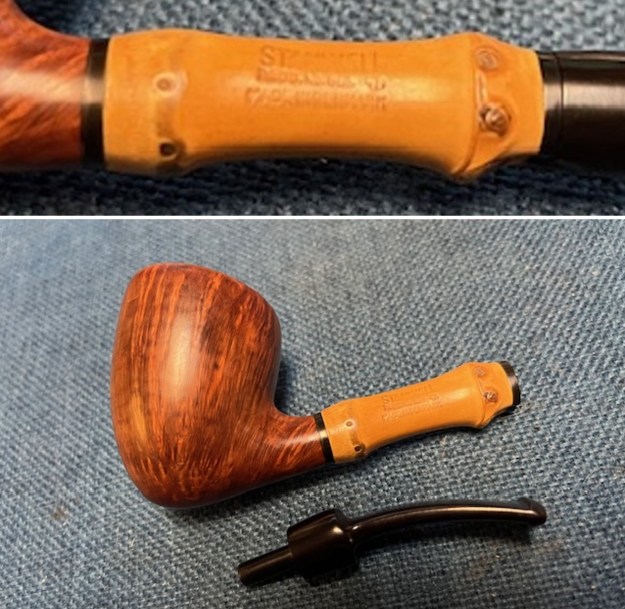
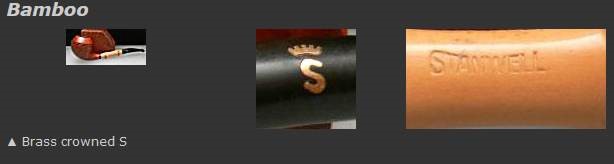
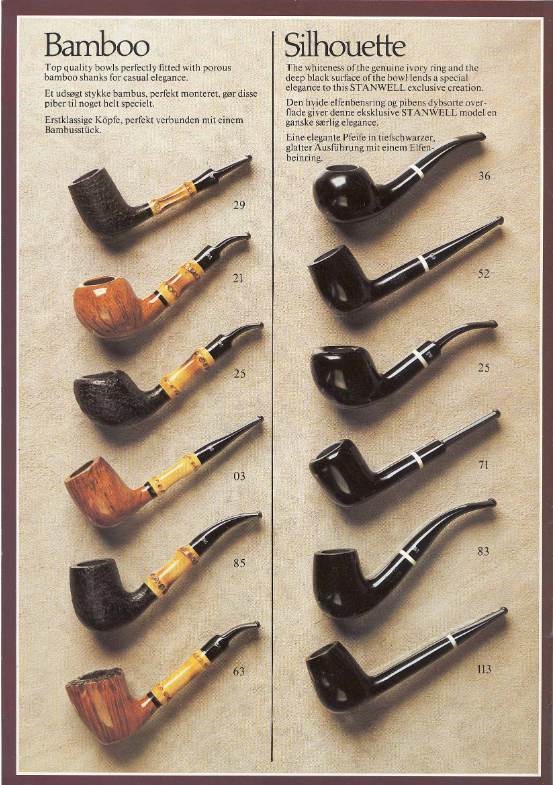
I was recently contacted by a fellow here in Vancouver about some pipes he had. He was referred to me by a local pipe shop. I was unclear if he wanted them cleaned or exactly what. When he came on the weekend he brought six pipes in two pipe boxes for me to have a look at. I spoke with him about the cost of restoring them. It finally became clear to me (I guess I am slow) that he wanted to sell the pipes. He was tasked with the job by his sister in law as the pipes were from her late husband’s collection. As I unpacked them it was clear that they were some nice pipes and some were higher grade. All but one was smoked and had the heavy smell of fruity aromatics to them. Some had cake in the bowl and lava on the rim. Of the six, four of them had significant rim damage – bowls out of round, burn marks, cut marks. The saddest part is that the damage was most significant on the higher end pipes. Most of them had tooth marks in the stems. Obviously, they had been his late brother in laws favourites and he had enjoyed them. He left them with me and I went over them, researched the brands and wrote up an offer for him to present to his sister in law. By the end of the day we had a deal. The six pipes now have a new home and the fruity smell needs to be exorcised!I set aside the long queue of pipes I am working on here to work on the second of these pipes. I bumped it ahead of the queue. It is a beautiful looking older Stanwell Regd. No. Bent Acorn Bamboo. It is stamped on the left side of the bamboo shank and reads Stanwell [over] Regd. No. 969-48 [over] Made in Denmark. There was an acrylic spacer on both ends of the bamboo. The one is between the shank and the bowl and the other is between the stem and the bamboo. The bowl had beautiful straight grain around sides. The Bamboo shank had a great patina. The finish is spotty and there were a lot of dents, scratches. The bowl and rim top were clean or cake and lava but a very prevalent smell of aromatic, fruity tobacco surround the bowl. The stem was clean but and had light tooth chatter on both sides of the stem. I took photos of the bowl and rim top to give you and idea of what I see. It is too bad that Word does now allow for the inclusion of smells because this is filling my work area. I have a candle going to mask the smell a bit. You can see the damage to the rim top and inner edge of the bowl. There is no cake in the bowl. The bamboo looks very good with some nice Patina. The stem is dirty and has light tooth chatter on both sides ahead of the button.I took a photo of the stamping on the left side of the Bamboo shank. It is clear and readable as noted above. I took photos of the bowl with the stem removed to give a sense of the proportion and appearance of the pipe.Before I started my work on the pipe I wanted to see if I could find any information that would help me get a sense of the line. I turned to Pipephil to get a quick review of the Bamboo line (http://pipephil.eu/logos/en/logo-stanwell.html). The pipe I was working on did not have Brass Crowned S inlaid on the stem. I have included a screen capture of the brand info there.I then turned to Pipedia (https://pipedia.org/wiki/Stanwell) for more information. The article is great and gives a lot of history on the brand. There were also links to catalogues at the bottom of the page. I am including a page from a catalogue on the site below that gives a bit of a glimpse into the brand. Here is the link (http://www.axeljeske.de/Pfeifen/Stanwell_Amager.pdf). The catalogue page gives a great description of the Bamboo line. It reads as follows: Top quality bowls perfectly fitted with porous bamboo shanks for casual elegance.

Now it was time to work on the pipe.

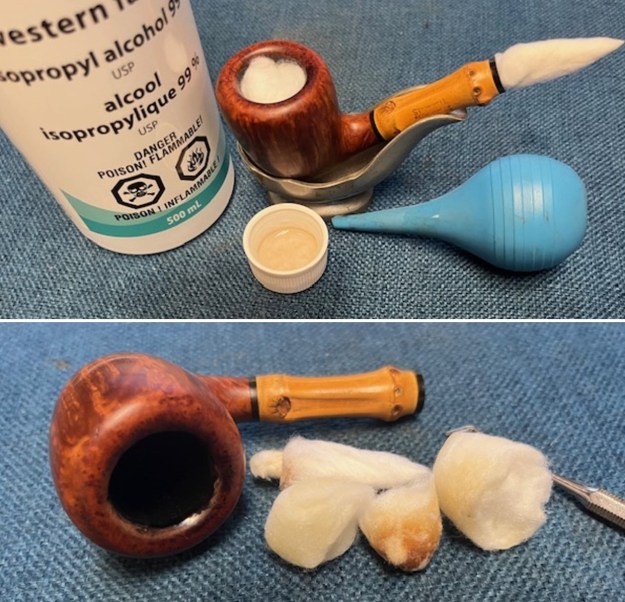
I cleaned out the stinky, fruity smelling tobacco oils and tars in the shank and the airway in the stem. I used 99% isopropyl alcohol, cotton swabs and pipe cleaners and was able to remove the debris and some of the stench. I needed to “deghost” the bowl and try to exorcise the smell. I stuffed bowl with cotton bolls and used an ear syringe to fill it with alcohol. I set it aside to let the alcohol do its work and wick the oils into the cotton. While it sat for the afternoon, I did some other work. That evening I removed the cotton bolls and quite a bit of tars and oils had leeched out. It smelled significantly better.
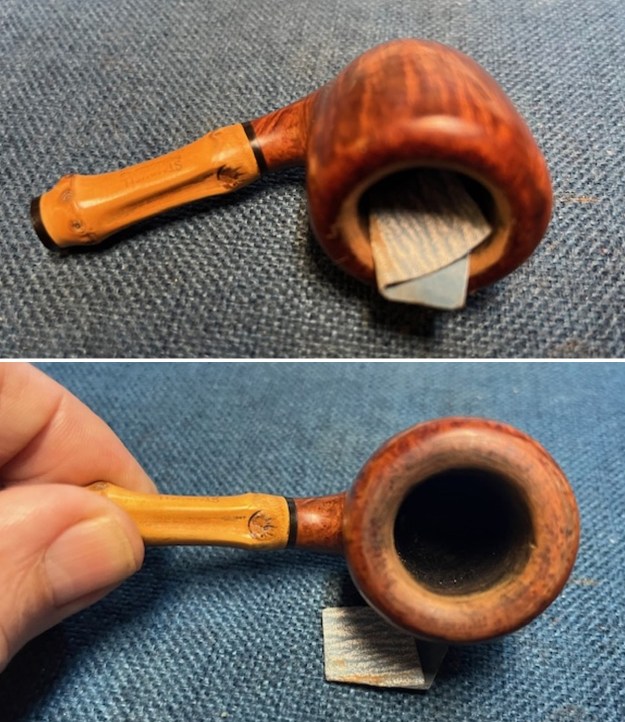
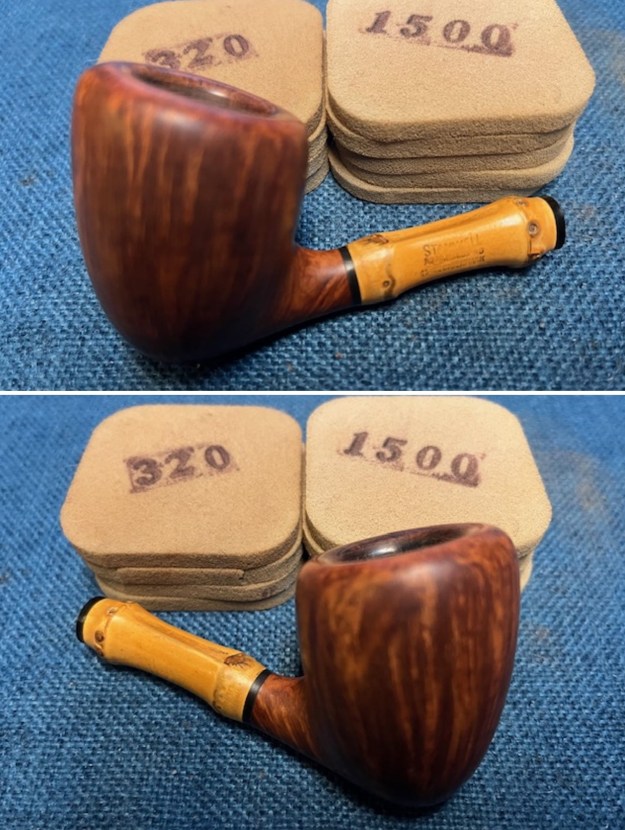
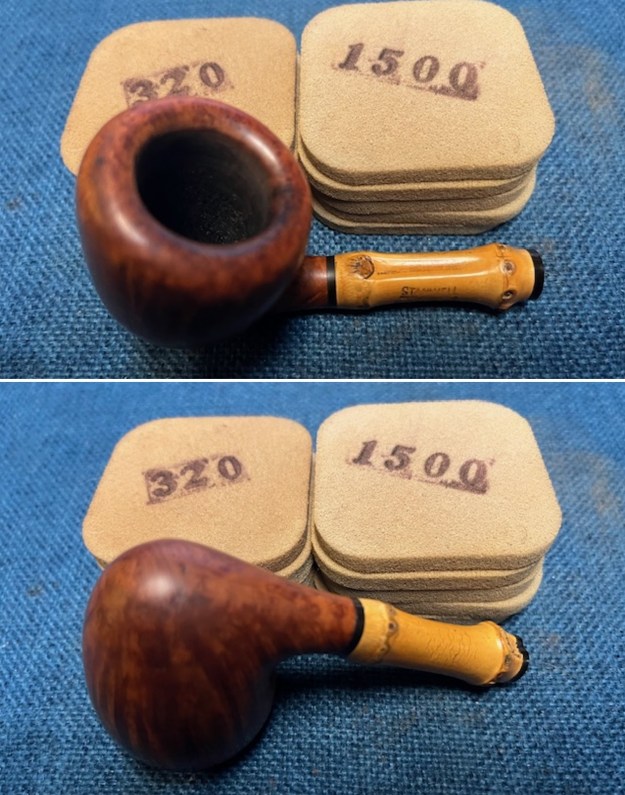
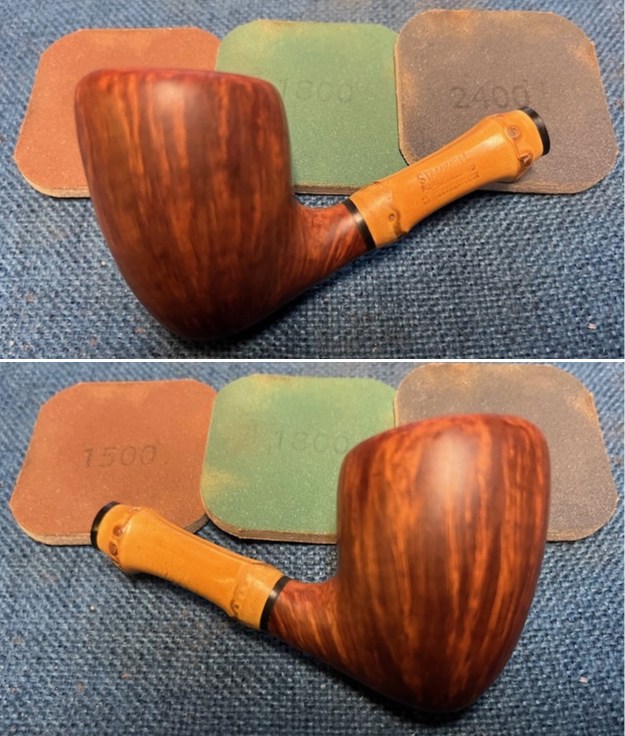
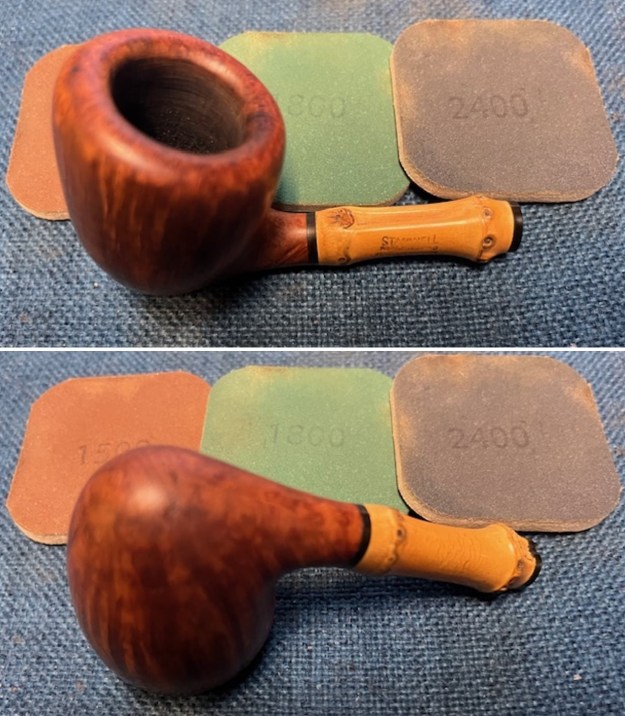
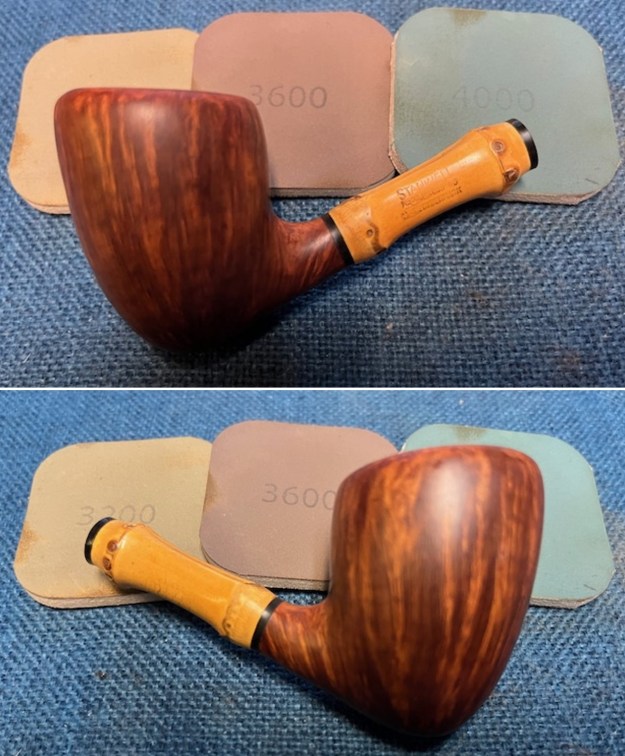
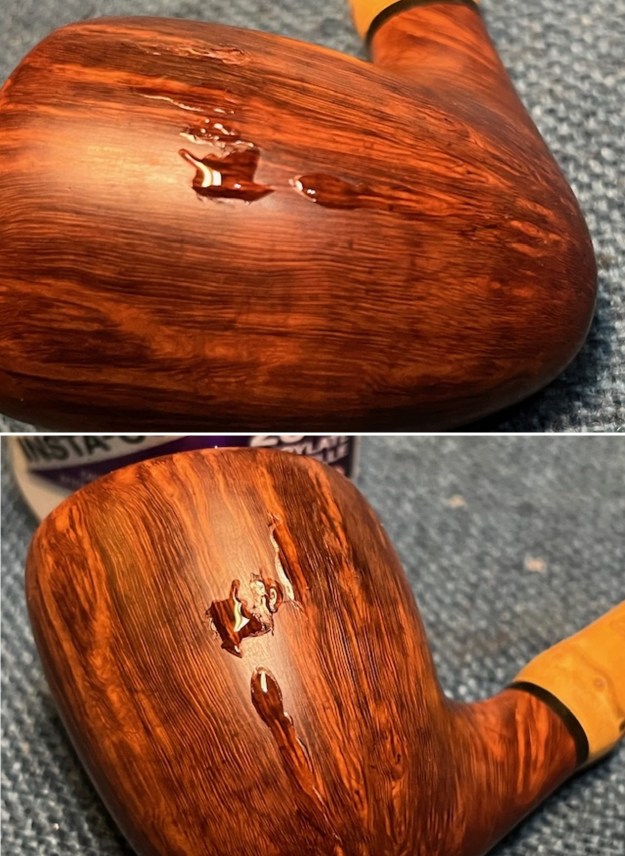
I used a folded piece of 220 grit sandpaper to minimize the damage on the inner edge of the rim and smooth it a bit. I was careful to not change the profile of the rim top and edges. There is some darkening on the rim top that remains and the bowl is slightly out of round.I used 320-3500 grit sanding pads to smooth out the scratches and nicks in the surface of the briar. There we many small scratches most of them in the varnish coat and lightly in the briar. I wiped the bowl down after each sanding pad with a damp cloth to remove the sanding dust and debris. I polished the briar with micromesh sanding pads – dry sanding with 1500-12000 grit pads and wiped it down the bowl after each sanding pad. As I examined the bowl before I gave it a coat of Before & After Balm I rubbed my fingers over the surface. I felt some flaws in the briar. I used my headlamp and build in lens to examine what I felt with my fingers. I saw some well done fills in the briar that followed vertical grains. They were shrunken in spots which made the bumps I was feeling. I used the headlamp and lens to give a clear view. I used a tooth pick and clear CA glue to fill in the spots in the briar. This was going to make a bit more work for me but it was worth doing.Once the fills cured I sanded each strip smooth with the edge of a folded piece of 220 grit sandpaper.I sanded the area with 320-3500 grit sanding pads and wiped the bowl down with a damp cloth to remove the sanding debris. I followed that by polishing the bowl with 1500-12000 grit micromesh sanding pads. Again I wiped the bowl down with damp cloth to remove the sanding debris on the briar. I restained the area on the bowl side with a Walnut Stain pen. I blended the areas into the surrounding briar. The look and feel of the bowl was very good.I rubbed the bowl and shank down with Before & After Restoration Balm. I worked it into the surface of the bowl sides and shank with my fingertips to clean, enliven and protect the briar. I let the balm sit for a little while and then buffed with a cotton cloth to raise the shine. The Balm did its magic and the grain stood out. I set the bowl aside and turned my attention to the stem. I was able to polish out the light tooth marks and chatter with 320-3500 grit sanding pads. I wiped the stem down after each pad with an Obsidian Oil cloth. It was beginning to look very good.I polished the stem with micromesh sanding pads – 1500-12000 grit pads. I wiped it down with a damp cloth after each sanding pad. I used Before & After Pipe Polish – both Fine and Extra Fine to further polish the stem. This Stanwell Bamboo Shank Acorn with a vulcanite saddle stem is a great looking pipe now that it has been restored. The beautiful finish really highlights the grain and the polished finish is stunning. I put the stem back on the bowl and carefully buffed the pipe with Blue Diamond on the buffing wheel. I gave the bowl and the stem multiple coats of carnauba wax on the buffing wheel and followed that by buffing the entire pipe with a clean buffing pad. I hand buffed the pipe with a microfiber cloth to deepen the shine. The finished Stanwell Bamboo Shank Acorn fits nicely in the hand and feels great. Give the finished pipe a look in the photos below. The dimensions of the pipe are Length: 5 ½ inches, Height: 2 inches, Outside diameter of the bowl: 1 ½ inches, Chamber diameter: ¾ of an inch. The weight of the pipe is 37 grams /1.31 ounces. I will be adding the pipe to the Danish Pipe Makers Section of the rebornpipes store. If you are interested in purchasing this pipe send me a message or an email. Thanks for reading this blog and my reflections on the pipe while I worked on it.

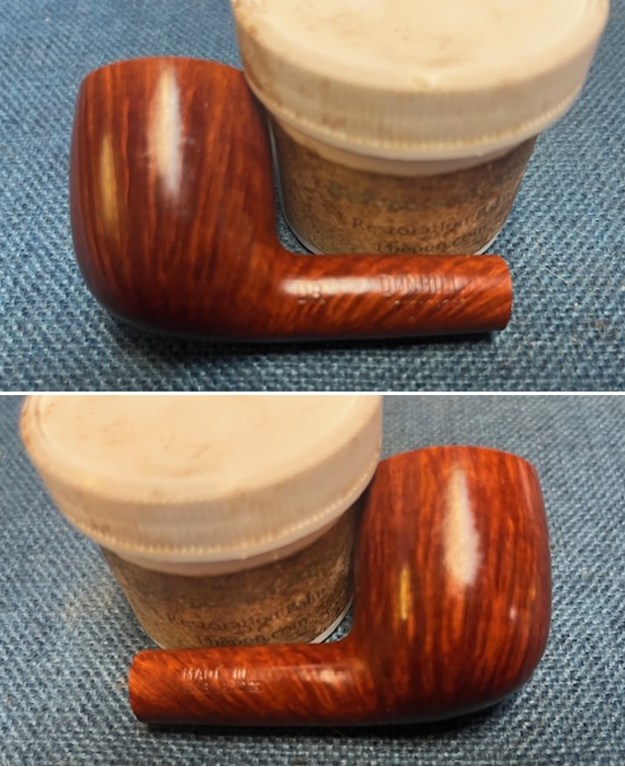
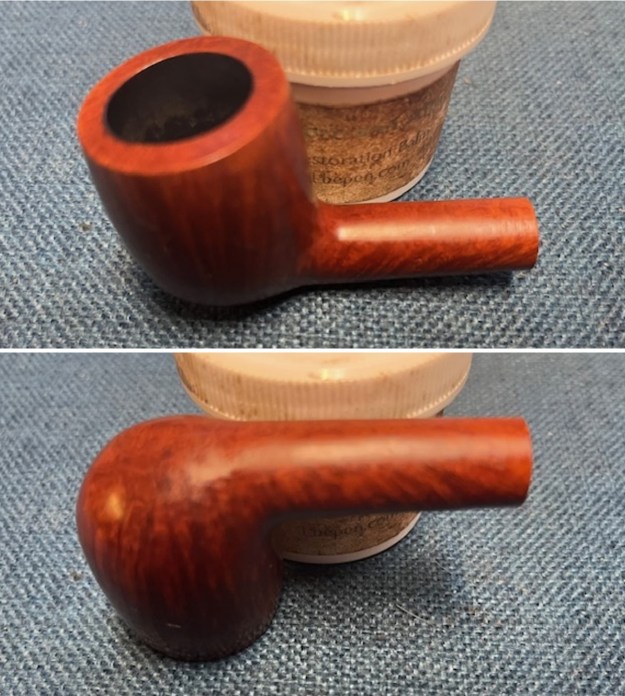
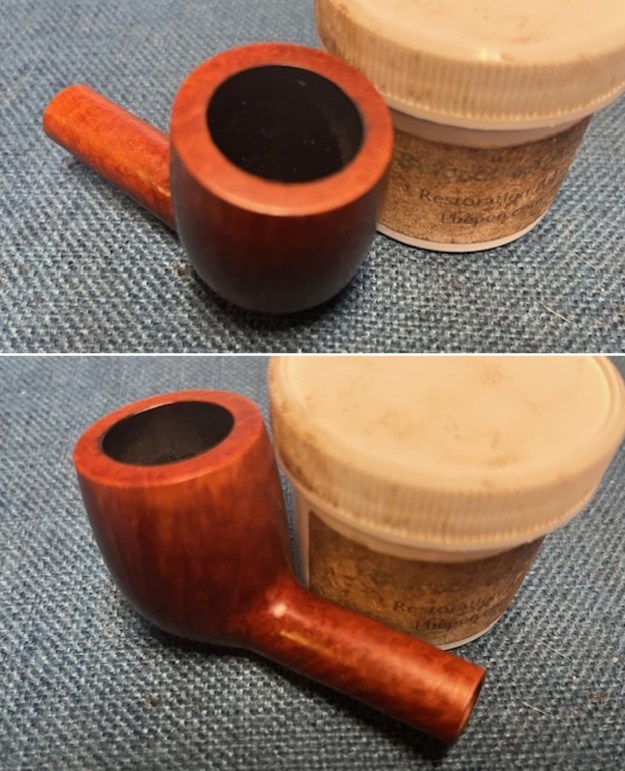
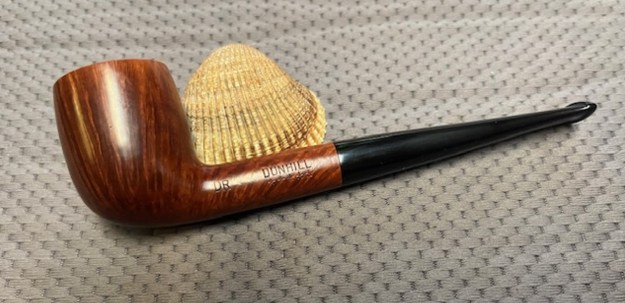
Cleaning up a Beautiful Dunhill DR ***** Straight Billiard


by Steve Laug

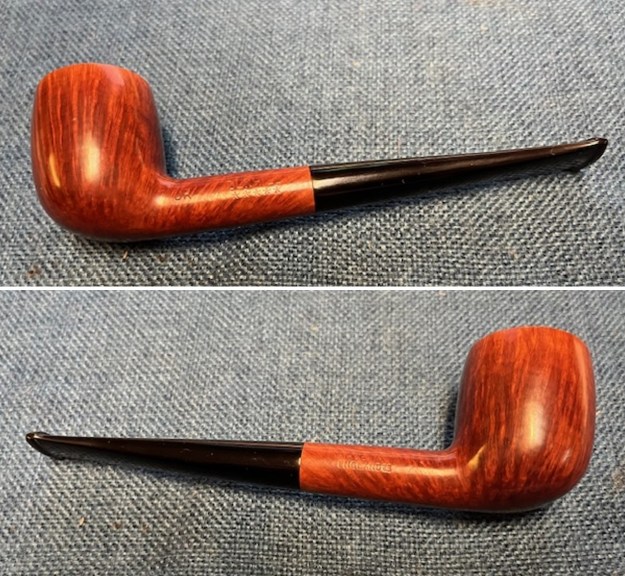
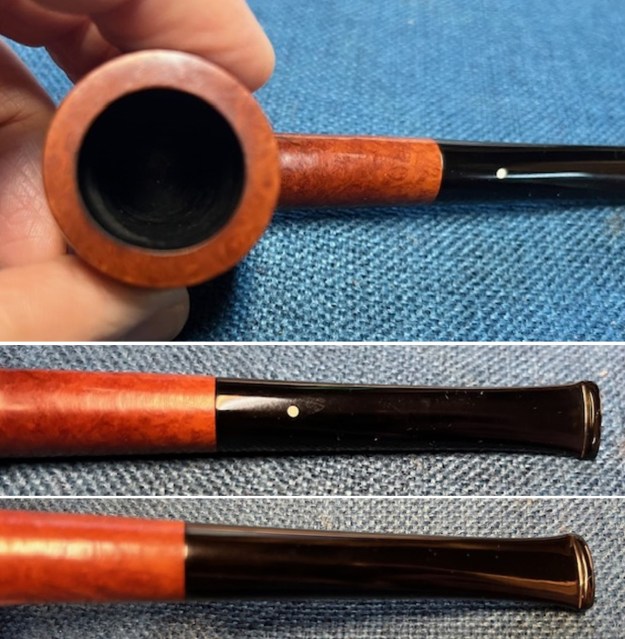
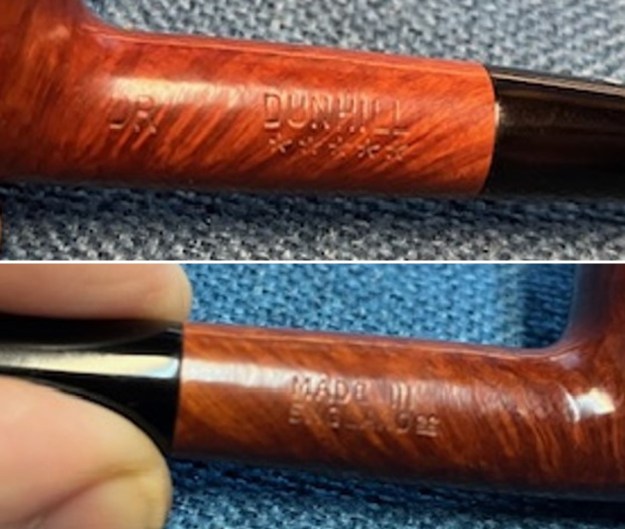
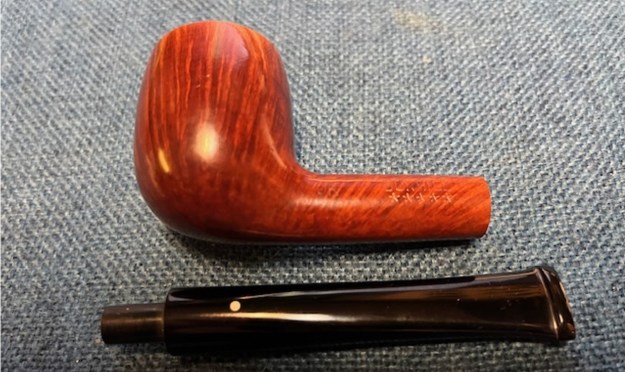
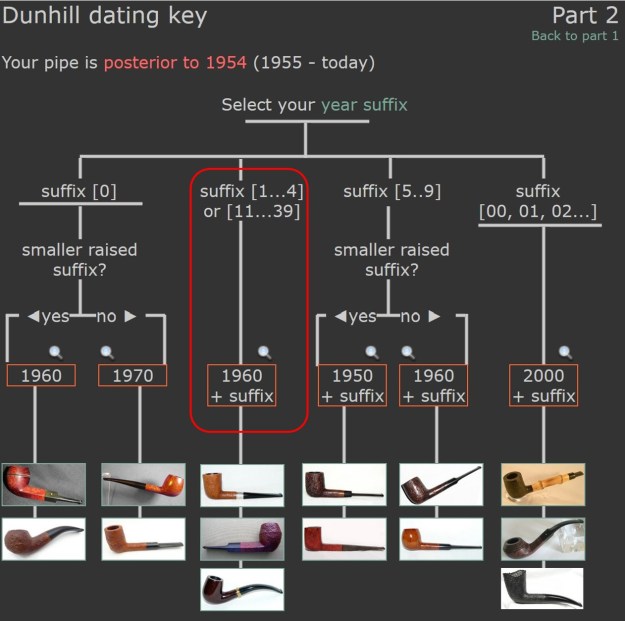
I was recently contacted by a fellow here in Vancouver about some pipes he had. He was referred to me by a local pipe shop. I was unclear if he wanted them cleaned or exactly what. When he came on the weekend he brought six pipes in two pipe boxes for me to have a look at. I spoke with him about the cost of restoring them. It finally became clear to me (I guess I am slow) that he wanted to sell the pipes. He was tasked with the job by his sister in law as the pipes were from her late husband’s collection. As I unpacked them it was clear that they were some nice pipes and some were higher grade. All but one was smoked and had the heavy smell of fruity aromatics to them. Some had cake in the bowl and lava on the rim. Of the six, four of them had significant rim damage – bowls out of round, burn marks, cut marks. The saddest part is that the damage was most significant on the higher end pipes. Most of them had tooth marks in the stems. Obviously, they had been his late brother in laws favourites and he had enjoyed them. He left them with me and I went over them, researched the brands and wrote up an offer for him to present to his sister in law. By the end of the day we had a deal. The six pipes now have a new home and the fruity smell needs to be exorcised!I set aside the long queue of pipes I am working on here to work on the first of these pipes. I bumped it ahead of the queue as it would probably be one that I held onto to smoke. It is a beautiful looking Dunhill Straight Billiard. It is stamped on the left side of the shank and reads DR next to the bowl/shank junction followed by DUNHILL [over] ***** (five stars). On the right side it is stamped Made In [over] London England with the superscript number 22 which will give me the date of the pipe. The DR stamp and the stars were new to me. I would need to do some digging on the details. The bowl and shank had beautiful straight grain around sides. The finish was shiny but there were a lot of dents, scratches and wavy portions on the shank top and underside. It was going to take some work. The bowl and rim top were clean or cake and lava but a very prevalent smell of aromatic, fruity tobacco surround he bowl.  The stem was clean but also had the same wavy spots on both sides of the stem. I wonder if the marks were caused by over zealous buffing somewhere along the way. They were just too consistent from the bowl shank junction to the button on both sides. Other than that, there were no tooth marks or chatter on the stem surface and it was very shiny. The slot in the button and internals were dirty. I took photos of the bowl and rim top to give you and idea of what I see. It is too bad that Word does now allow for the inclusion of smells because this is filling my work area. I have a candle going to mask the smell a bit. I also tried to capture the waviness in the stem surface and shank but was not all that successful in the photos. It is very present to the touch – a ripple from button to bowl…I took photos of the stamping on the sides of the shank. It is clear and readable as noted above. Unique stamping for sure that I will need to unpack later.I took photos of the bowl with the stem removed to give a sense of the proportion and appearance of the pipe.I decided to take a few moments to date the pipe with the superscript date number 22 following the D in England. I turned to the date key on Pipephil’s site to clarify the date on this particular pipe (http://www.pipephil.eu/logos/en/dunhill/cledat-en1a.html). There were no patent numbers so that took me to the Part 2 of the Dunhill Dating Key. I selected the 22 suffix that took me to the second column which I have marked with a red box. It gives the simple formula of adding the 22 to the year 1960 for the year of manufacture. That gave me the date of 1982. The pipe I was working on was made in 1982 so I had a start in identifying the stamping on the pipe.

Now it was time to work on the rest of the stamping and pin down the parts of that unusual to me stamping. I searched Google for the Dunhill DR stamp and found info on Pipephil’s site that gave information on the DR line(http://www.pipephil.eu/logos/en/infos/dunhill2.html). I quote the information in part from that section.

The “DR” (Dead Root) stamping on the left side of a Dunhill pipe corresponds to a straight grain.

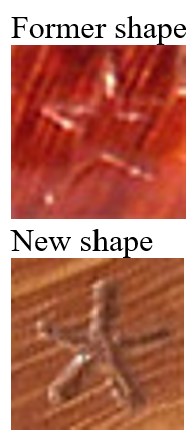
“Dead Root” is a commercial label and doesn’t mean the root was extracted when the tree was already dead…The first stars appeared mid 1970’s and were a brief attempt to grade the pipe both as to grain (the letter) and to size (the stars). 1979: the DR are graded with 1 to 6 (or 7?) stars. The shape of the stars has been modified.

Stars grading may coexist on the same pipe with letter grading.

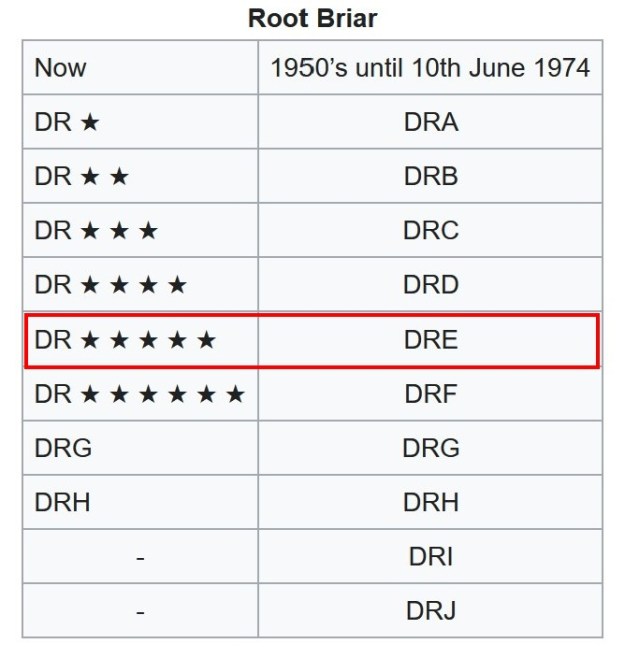
Stars and letter grading equivalency after 1979:

A B C D E F G H I J
* ** *** **** ***** ****** (7*)

This information tells me that the DR I was working on would have been stamped as a DRE. After 1979 the E was replaced with five stars *****. That dating works along with the 1982 date that I have worked out on the number stamp following the D in England.

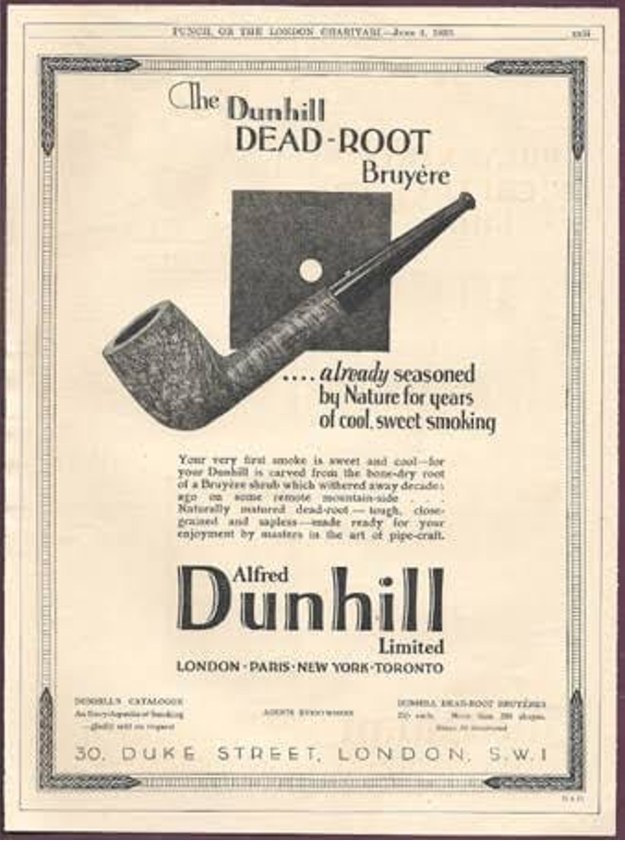
From there I turned to Pipedia where there was also an article on the DR line stamping (https://pipedia.org/wiki/About_Dunhill_Dead_Root). I have included a screen capture of an advertisement for the DR line from the article and then I quote pertinent sections below.

Dunhill’s most prestigious line, the “Dead-Root”, is filled with many controversies, but certainly has its place in the sun. Among the connoisseurs of the brand, this is a very desired series. In addition to the pieces that were made under the management of Alfred Dunhill (until mid-1928) and limited in number, the D.R. has a special place in the heart and collections of nearly all Dunhill collectors.

“Beginning by at least 1915 if not earlier (perhaps as early as 1910) Dunhill stamped straight-grained Bruyeres, and later straight-grained Roots, “DR” on brand side of the bowl at the place where one would normally find an “A” or “R”. “DR” stood for dead root a term used to refer both to that part of the briar from which most quality pipes, including Dunhills, are made and to a briar burl that was dead before it was harvested. Initially, however, there was an additional distinction conveyed in the “DR” stamping beyond graining since prior to 1920 DR’s were hand-cut in London from burls while most Bruyere’s were only finished in London from French turned bowls.

While to some extent the straight-grained DRs may be the result of spotting the grain in the course of the early production process, the common statement that ‘DR’s are rare because they supposedly occur by accident in the course of standard shape production is incorrect. In fact, most “DR”s are derived from inspecting raw briar for straight grain prior to production or specifically purchasing the same and when so found or purchased selecting or specially designing a pipe shape to best fit the grain.

As the Bruyere was Dunhill’s only smooth finish prior to 1931 all early DR’s are necessarily Bruyeres,” The Root finish was put in production in 1931 specifically because the company desired to have a better grained naturally finished pipe in the line and in 1932 DRs became associated with that finish. Prior to 1932 DRs were stamped simply “DR” but with their introduction, Root DRs were stamped “DRR”. Presumably, the second “R” signifies the Root finish. Since I have seen no examples I do not know if Bruyere DRs after 1931, if any, were stamped “DRA” but I suspect that at least for a brief time there may have been such and if so, were so stamped since otherwise the second “R” in the Root DR stamping would have been unnecessary.

As discussed in connection with the “A” stamping, prior to the war, if not after, up ticking in DR pricing was apparently signified by square subscript stops. In addition, it appears that early DRs dating from the 1910s to the early 1920s were stamped with a one or low two-digit number on the shank next to the bowl (where the shape number normally appears) which appears to be some sort of category (as opposed to shape) number, either price or shape related. (I suspect it was the latter, perhaps the forerunner of the initial Shell stampings in that regard.) The Dunhill catalogs of the 1920s through 1931 consistently show four DR price categories but the precise stamping code to indicate the different price levels is presently unknown. Presumably, there were differing price groupings of the Root DRs in the 1930s but number of such and stampings indicative of the same is presently unknown. In the 1950s Dunhill began grading DR’s “A” through “J”, “J” being the finest. I have seen a 1957 DR stamped “DRR” followed by a horizontal “H” presumably signifying the “H” grade but I do not know the significance, if any, of the horizontal manner of the stamping. In 1979 Dunhill changed it’s DR letter grading system to stars running from one to seven stars underneath the “DRR” stamping with seven being the highest grade and also introduced a DR over XL stamp, presumably to denote larger pipes.” Loring, J. C., The Dunhill Briar Pipe, The Patent Years and After (self-published, Chicago, 1998).

“Straight Grain pipes are stamped with DR (“Dead Root”) followed by additional markings, shown below and listed in rising order. They can today be distinguished between Root Briar Straight Grain pipes (now 8 categories in use DR – DRH) and Amber Flame Straight Grain pipes (3 categories).” Hener, K. S., Product Line Director – The White Spot Smoker’s Accessory Division and Walthamstow site.

I have also included a chart of the stamping currently on the DR pipes today versus the stamping on DR pipes between 1950 until June 10, 1974. I have drawn a red box around the stamping on the pipe I am working on.With that information I started working on the pipe. I cleaned out the stinky, fruity smelling tobacco oils and tars in the shank and the airway in the stem. I used 99% isopropyl alcohol, cotton swabs and pipe cleaners and was able to remove the debris and the stench. The pipe actually smelled clean. I may need to deghost it but I will let it dry first and see what remains. I set the bowl aside and worked on the ripples in the vulcanite on the top and underside from the button edge up to the white spot. I needed to smooth out the heights in the ripples and make the stem surface smooth once again. I sanded the rippled areas on the stem with 320-3500 grit sanding pads. I wiped the stem down after each sanding pad with an Obsidian Oil impregnated cloth to remove the debris and dust. The sanding did the trick and the stem was smooth once more. I still needed to polish it but the bumps and ripples were gone.I polished the stem with micromesh sanding pads – dry sanding with 1500-12000 grit sanding pads. I wiped the stem down after each pad with Obsidian Oil. I used some Before & After Pipe Stem Polish, both Fine and Extra Fine to further polish the stem surface. I gave it a final coat of Obsidian Oil and set it aside to dry. With the ripples on the stem smoothed out and now smooth to touch it was time to work on the ripples on the top and underside of the shank. The first photo of each pair of photos (the top side and the underside) shows the ripples in the surface of the briar. The second photo of each pair shows the shank after I ran a 320 grit sanding pad over the surface to make the ripples very visible. I sanded the ripples on the top and underside smooth with a 320 grit sanding pad. They smoothed out very well and to touch there were no ridges. Even to look at it there were no more ripples and I was happy with the look of it.There were also ripples in the finish on the sides and heel of the bowl. To me these were different ripples than on the shank. These were actually in the varnish/shellac coat on the bowl giving it a shine. I wiped the bowl and shank down with acetone to remove the rippling varnish coat on the bowl. It was dull now but it was smooth to touch. I used 320-3500 grit sanding pads to smooth out the scratches and nicks in the surface of the briar. There we many small scratches most of them in the varnish coat and lightly in the briar. I wiped the bowl down after each sanding pad with a damp cloth to remove the sanding dust and debris. I polished the briar with micromesh sanding pads – dry sanding with 1500-12000 grit pads and wiping down the bowl after each sanding pad. Before giving the bowl a coat of Before & After Restoration Balm I decided to “deghost” the bowl with cotton bolls and alcohol. I stuff the bowl with cotton bolls and rolled one to fit the shank end. I used an ear syringe to fill the bowl with alcohol. I let it stand overnight to wick out the horrid smell of the previous tobacco. This morning I removed the pads and the ghost was significantly less.I rubbed the bowl and shank down with Before & After Restoration Balm. I worked it into the surface of the bowl sides and shank with my fingertips to clean, enliven and protect the briar. I let the balm sit for a little while and then buffed with a cotton cloth to raise the shine. The Balm did its magic and the grain stood out. With the repairs finished and the pipe cleaned I was ready to put the 1982 Dunhill DR***** Billiard back together again. The combination of straight grain briar with a vulcanite taper stem makes for a classically beautiful pipe. The briar around the bowl is clean and really came alive. The rich brown stains of the finish brought the grain to the surface after buffing and gave it depth. I buffed the pipe with Blue Diamond on the buffing wheel using a light touch on the briar. I gave the bowl and the stem multiple coats of carnauba wax on the buffing wheel. I buffed the pipe with a clean buffing pad to raise the shine. I hand buffed the pipe with a microfiber cloth to deepen the shine. The finished 1982 Dunhill DR***** Billiard is a lightweight beauty and feels great in the hand. Give the finished pipe a look in the photos below. The dimensions of the pipe are Length: 5 ½ inches, Height: 1 ½ inches, Outside diameter of the bowl: 1 ¼ inches, Chamber diameter: ¾ of an inch. The weight of the pipe is .99 ounces/28 grams. I will be adding this one to my own collection as it is a rare one that I have not seen and probably will not see again any time soon. I am looking forward to enjoying a great smoke in it very soon. Thanks for reading this blog and my reflections on the pipe while I worked on it.

Fresh Life for a Savinelli Extra 802 Italy Canadian


by Steve Laug

The next pipe on the work table came to us from a group of pipes we purchased on 03/21/2024 from a seller in Oregon City, Oregon, USA. It is a nice looking natural Canadian shaped pipe with a taper stem. The bowl has a natural or light colour stain that highlights grain. It has an interesting mix of grain around the bowl and long shank. The pipe is stamped Savinelli in an oval [over] Extra. On the underside of the shank it is stamped with a Savinelli S Shield logo followed by the shape number 802 [over] Italy. The bowl had a thick cake with some lava overflow on the top and bevelled inner edge of the rim top. The stem is black vulcanite and was lightly oxidized with some tooth marks and chatter on both sides near the button. The pipe looks to be in good condition under the grime. This is a nice looking pipe and in a well-loved shape. Jeff took photos of the pipe before he started his cleanup. He took photos of the rim top and bowl to give a clear picture of the thickness of the cake and tobacco debris as well as the lava on the top and the bevelled inner edge of the rim. There was also some burn damage on the right outer edge toward the front. He also took photos of the top and underside of the stem to show its overall condition. Jeff took photos of the sides and heel of the bowl to give a picture of what the briar looked like. It truly has some nice grain – birdseye, swirls and cross grain around the bowl and shank. The stamping on the top and underside of the shank is clear and readable as noted above. I turned to Pipephil (http://www.pipephil.eu/logos/en/logo-savinelli2.html) to get a quick view of the Extra Line. I did a screen capture of the site’s information and have included that below. I am also including a screen capture of the Shape and code chart introduction that is link in the above capture. The 802 is in the bottom left corner.
I turned to Pipedia (https://pipedia.org/wiki/Savinelli) for a quick read. The site is worth reading the history of the Savinelli brand and it philosophy of pipemaking. There was a photo of a brochure that included the Extra (https://pipedia.org/wiki/File:Sav_Extra.jpg) that came from Doug Vliatchka.Jeff had cleaned up the pipe with his usual methods. He reamed the pipe with a PipNet pipe reamer and removed the rest of it with a Savinelli Fitsall Pipe Knife.  He scrubbed the bowl with undiluted Murphy’s Oil Soap with a tooth brush. He rinsed it under running warm water to remove the soap and grime. He cleaned out the inside of the shank and the airway in the stem with alcohol, cotton swabs, shank brushes and pipe cleaners. He soaked the stem in a Briarville’s Pipe Stem Deoxidizer bath and rinsed it off with warm water. I took photos of the pipe before I started my part of the restoration work. The rim top cleaned up really well. The rim top, inner and outer edge of the bowl is in excellent condition there is darkening on both. The stem surface looked very good with a few tooth marks and chatter on both sides near the button. The stamping on the shank top and underside is clear and readable. It is stamped as noted above. I removed the stem and took a photo of the pipe to show the proportion of the stem and shank. It is a beauty.  I removed the stem started working on the darkening on the rim top and edges. I worked them over with a folded piece of 220 grit sandpaper. Once it was finished it looked better. I sanded the rim top and bowl sides with 320-3500 grit sanding pads to remove the scratching and shiny spots on the finish. I wiped the bowl down after each sanding pad with a damp cloth to remove the debris from sanding. I polished the rim top and bowl with micromesh sanding pads – dry sanding with 1500-12000 grit pads. I wiped the bowl down after each sanding pad to remove the debris and dust. I rubbed the bowl and shank down with Before & After Restoration Balm. I worked it into the surface of the bowl sides and shank with my fingertips to clean, enliven and protect the briar. I let the balm sit for 15 minutes and buffed with a cotton cloth to raise the shine. The grain came alive and the pipe looked great.  I set the bowl aside and turned to work on the stem. I “painted” the stem surface with the flame of a lighter and was able to lift out all of the marks on both sides. I used 220 grit sandpaper to blend it into the surface of the vulcanite and the stem looked better.I sanded the stem with 320-3500 grit sanding pads to smooth out the marks and it is looking quite good at this point in the process.I polished the vulcanite stem with micromesh sanding pads – 1500-12000 grit pads. I wiped it down with Obsidian Oil after each sanding pad. I used Before & After Pipe Polish – both Fine and Extra Fine to further polish the stem. This Savinelli Extra 802 Canadian is a great looking pipe now that it has been restored. The smooth finish gives the shape an elegant look. The flow of the bowl, shank and short stem make for a great looking pipe. I put the stem back on the bowl and carefully buffed the pipe with Blue Diamond on the buffing wheel using a light touch on the briar. I gave the bowl and the stem multiple coats of carnauba wax on the buffing wheel and followed that by buffing the entire pipe with a clean buffing pad. I hand buffed the pipe with a microfiber cloth to deepen the shine. The finished Savinelli Extra 802 Canadian fits nicely in the hand and feels great. Give the finished pipe a look in the photos below. The dimensions of the pipe are Length: 6 inches, Height: 1 ¾ inches, Outside diameter of the bowl: 1 ¼ inches, Chamber diameter: ¾ of an inch. The weight of the pipe is 40 grams/1.41ounces. It is a great looking and light weight pipe. I will be putting it on the rebornpipes store in the Italian Pipe Makers Section shortly. If you are interested in adding the pipe to your collection send me a message or an email. Thanks for reading this blog and my reflections on the pipe while I worked on it.