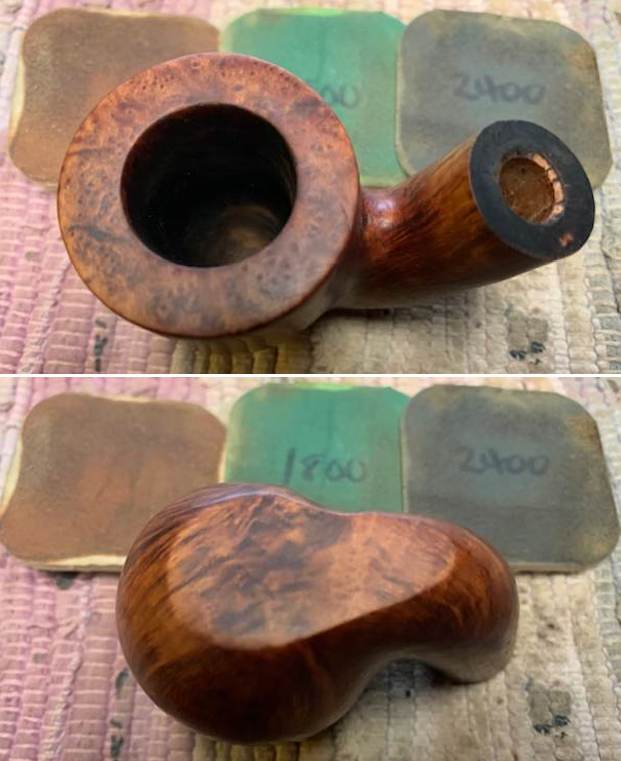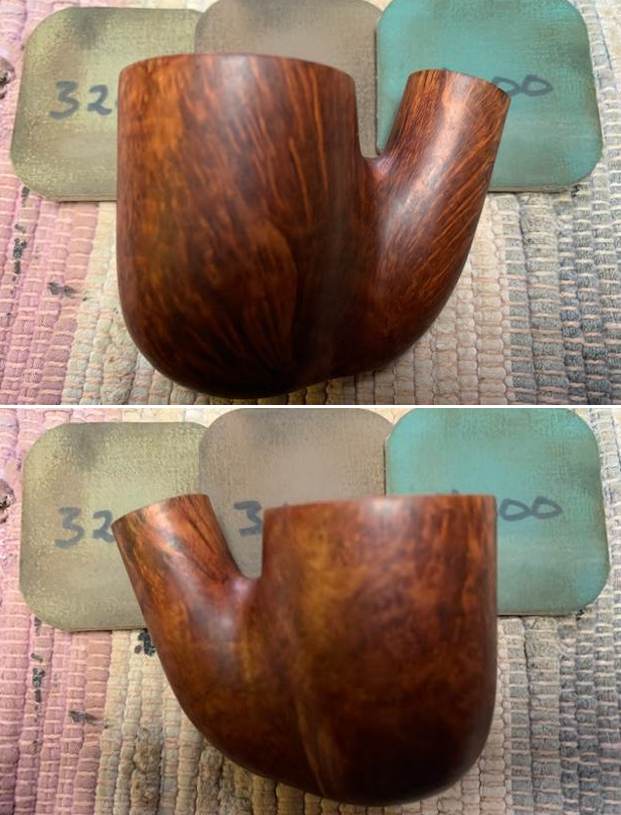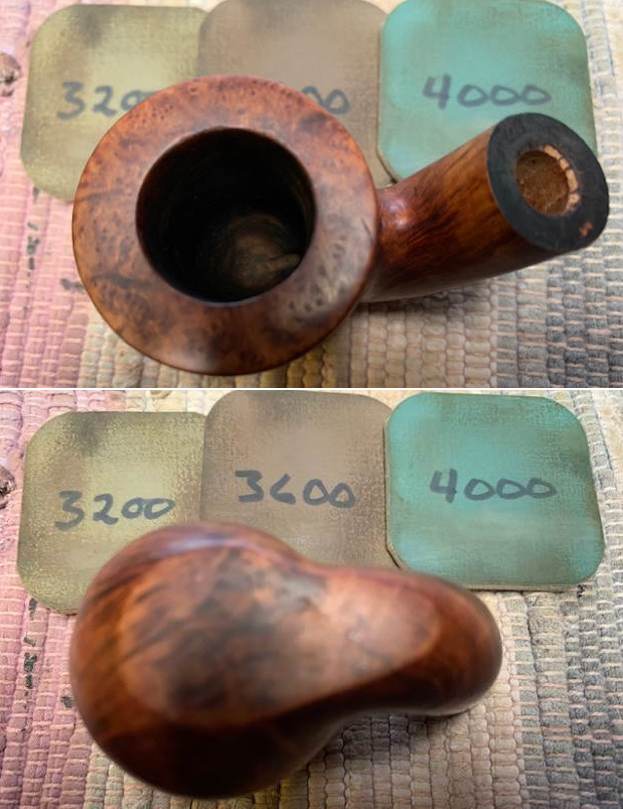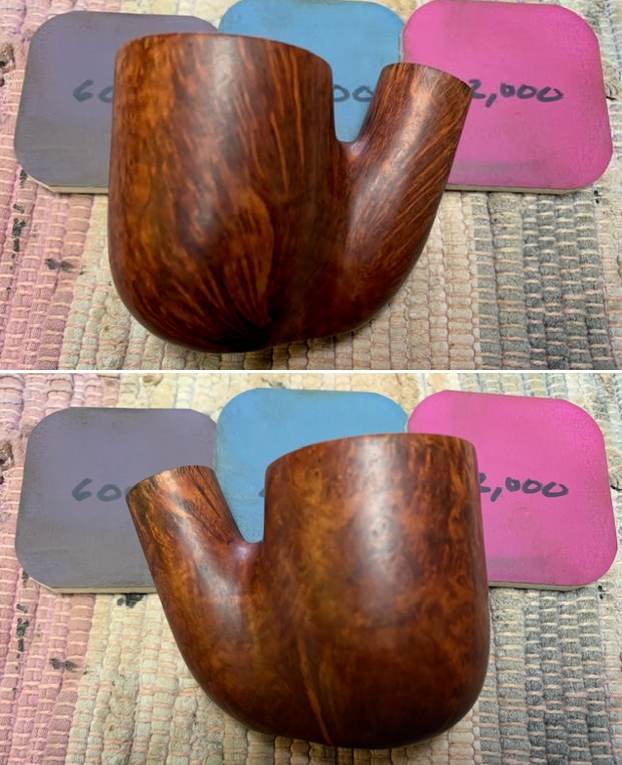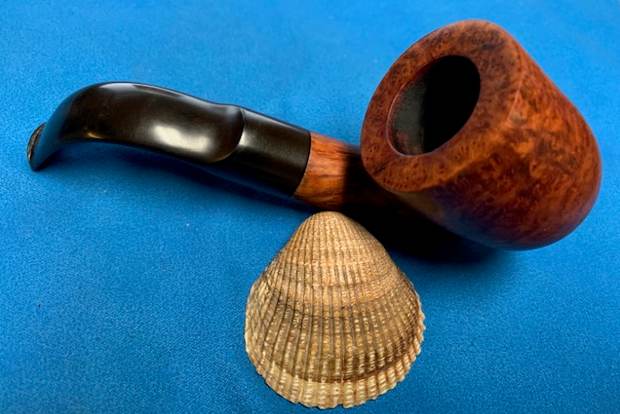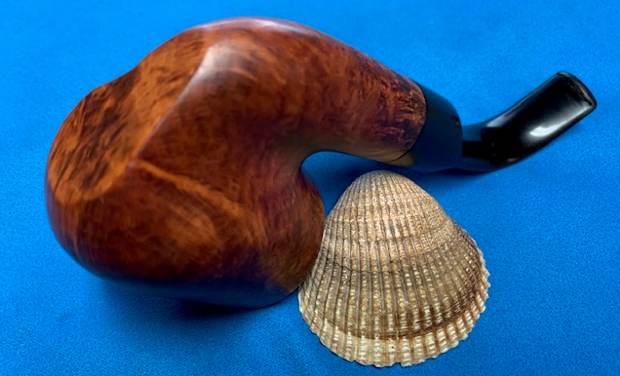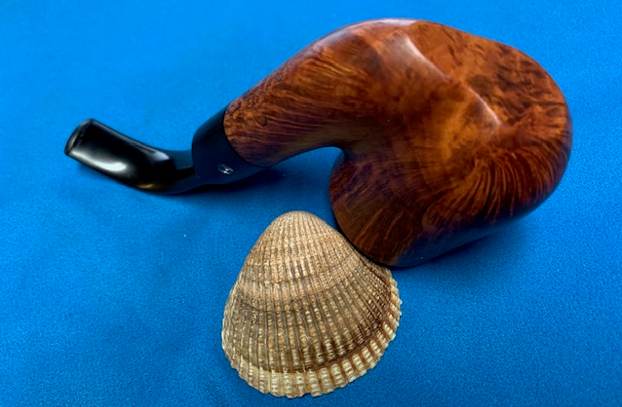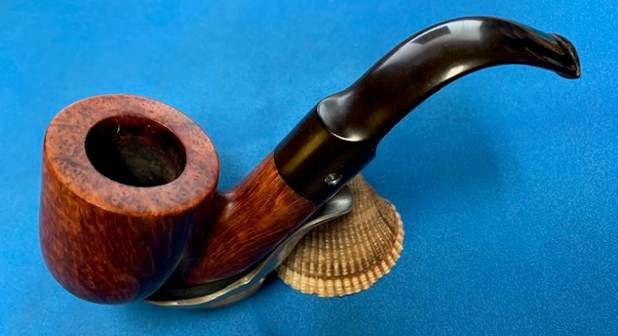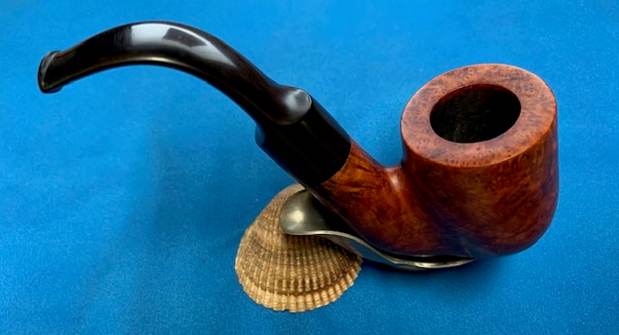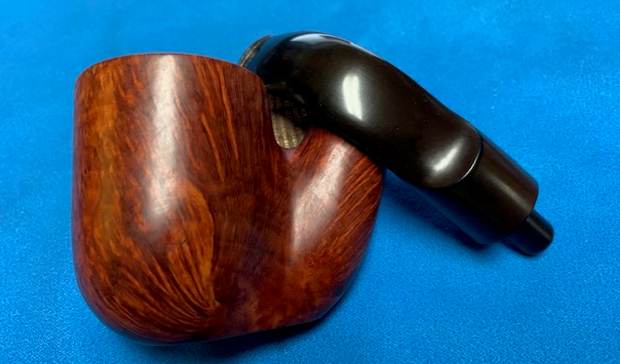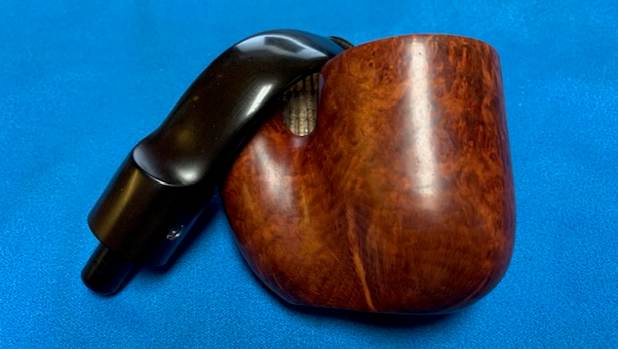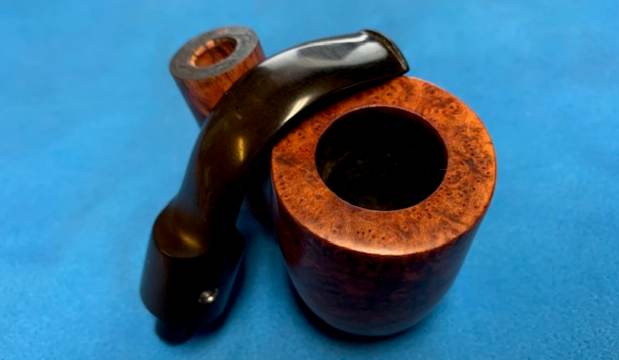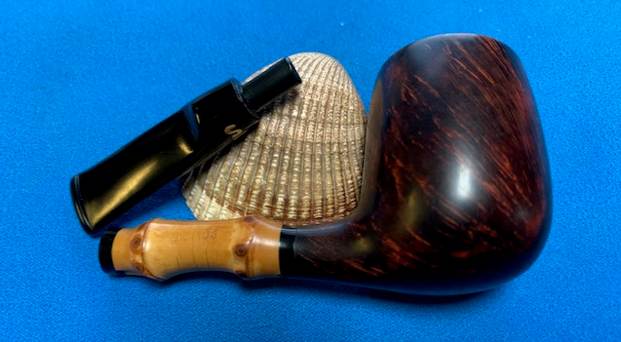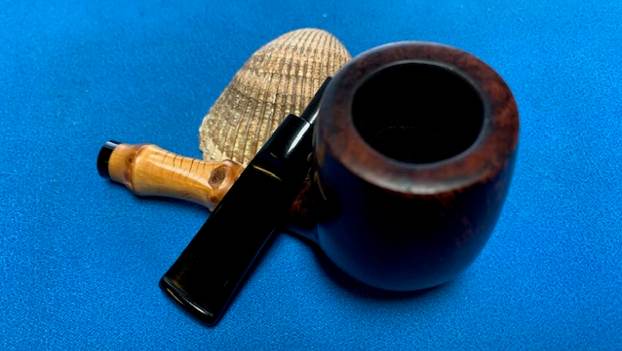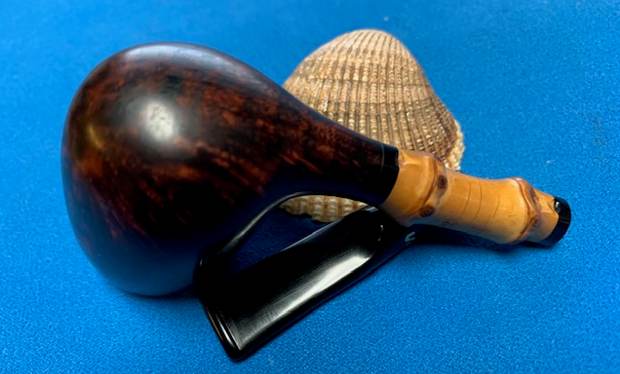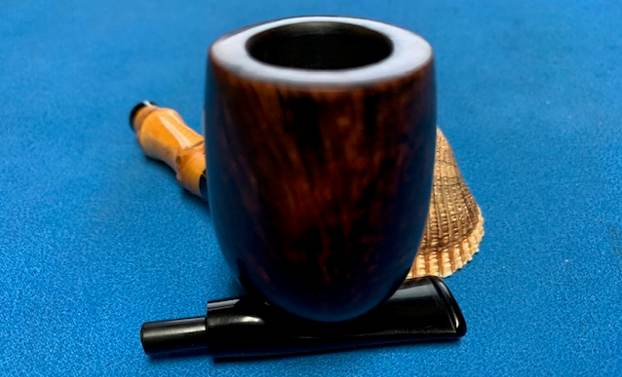
Monthly Archives: February 2023

Restoring a Filthy Knute of Denmark Freehand A


Blog by Steve Laug

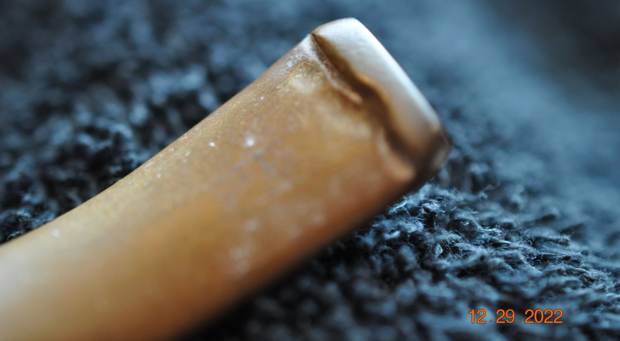
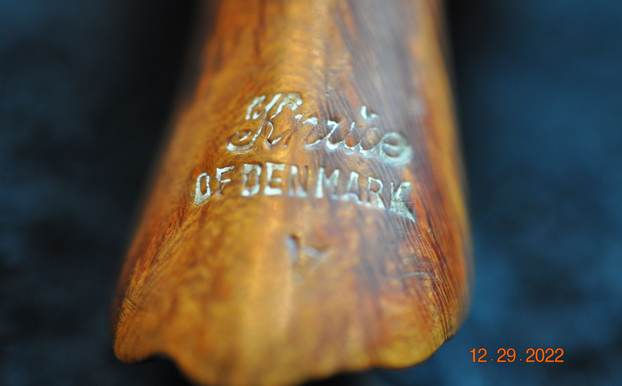
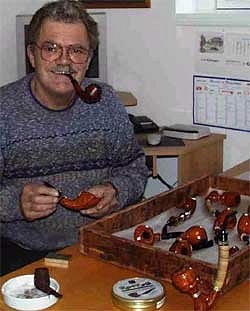
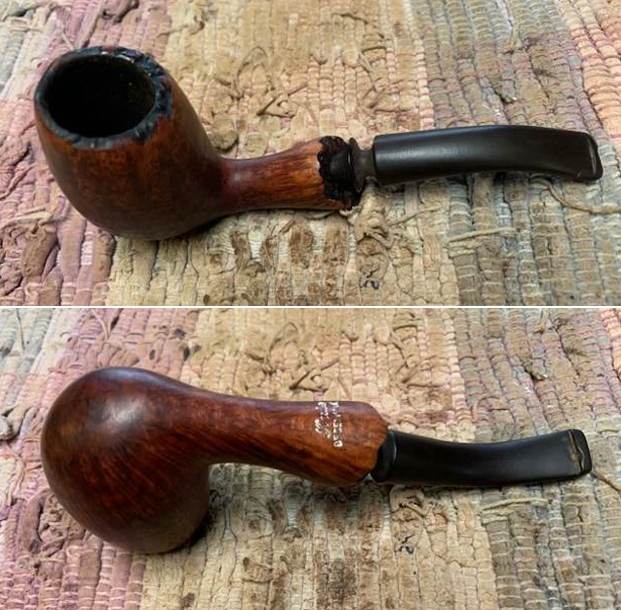
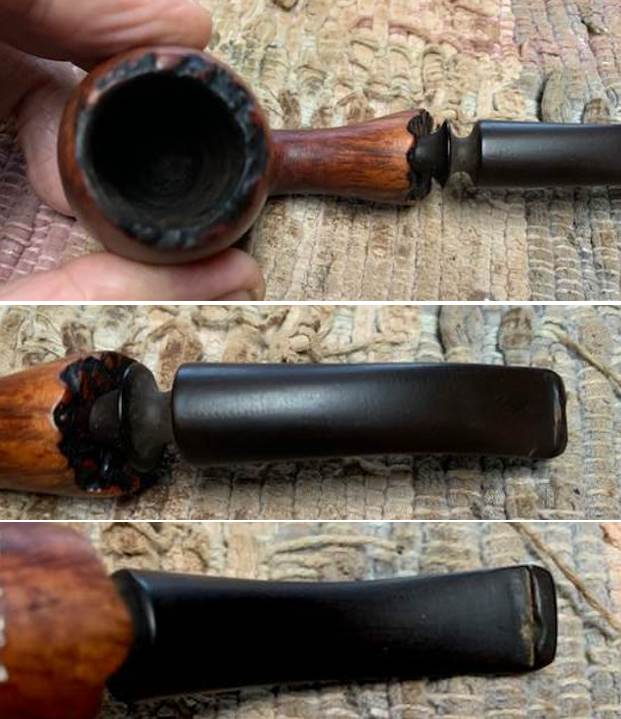
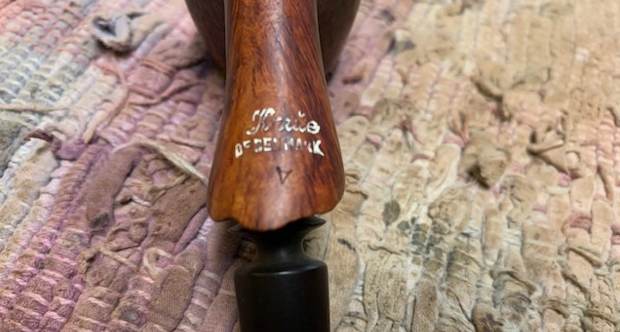
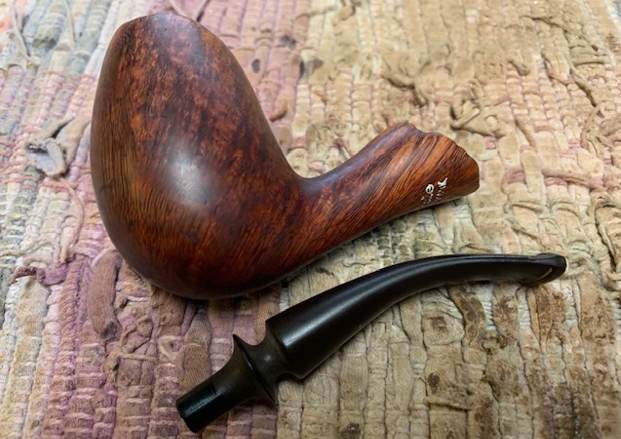
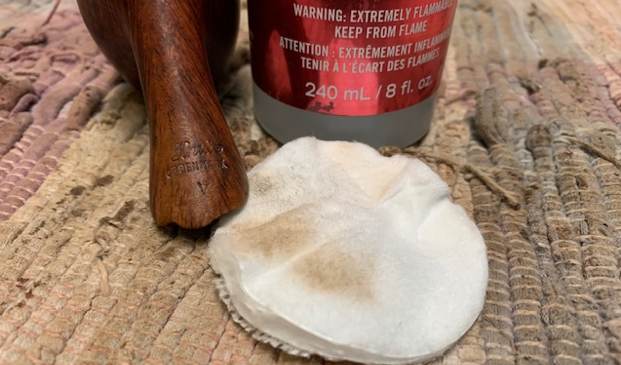
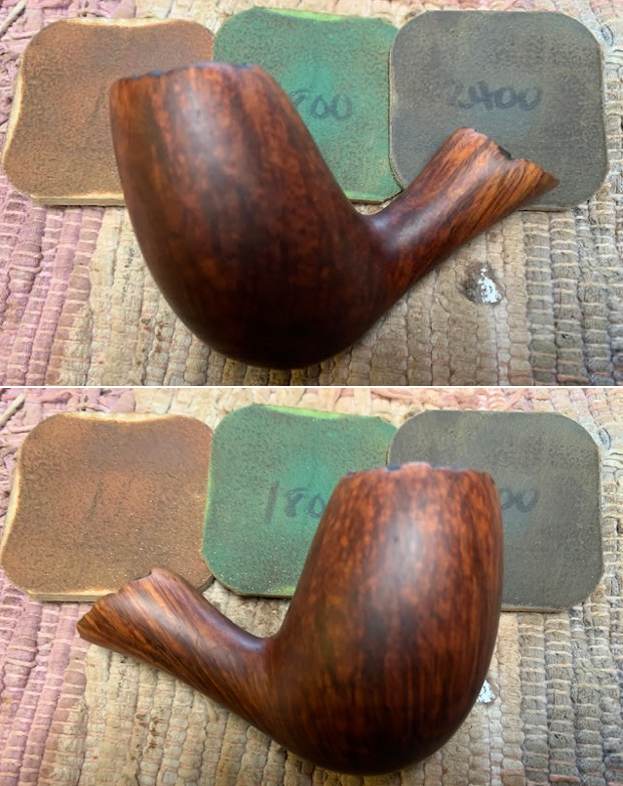
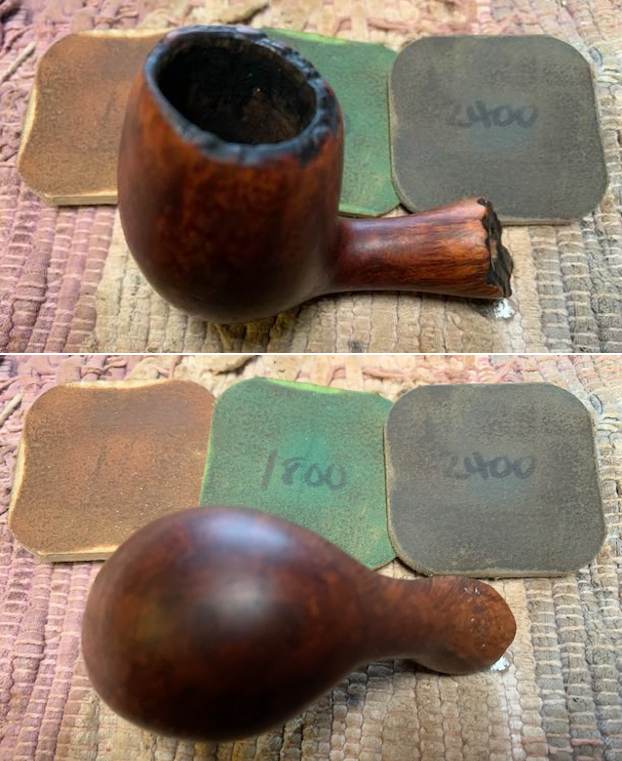
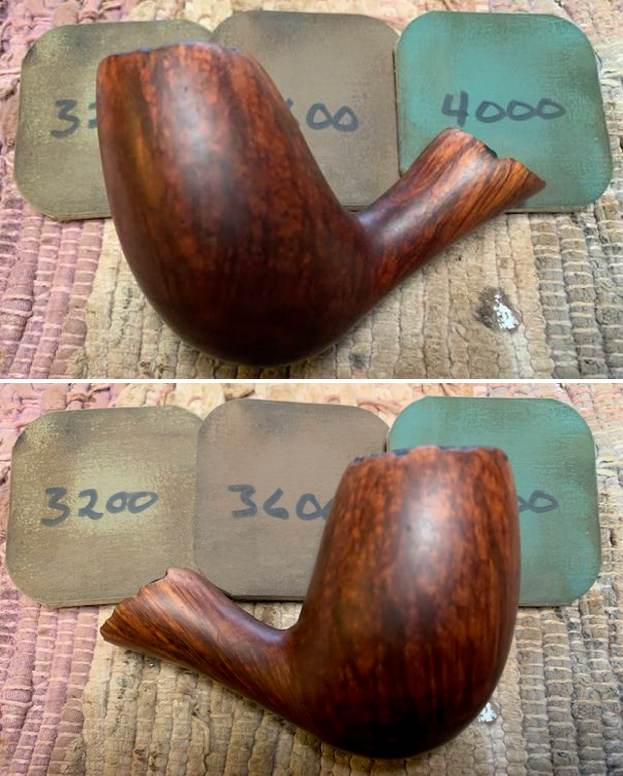
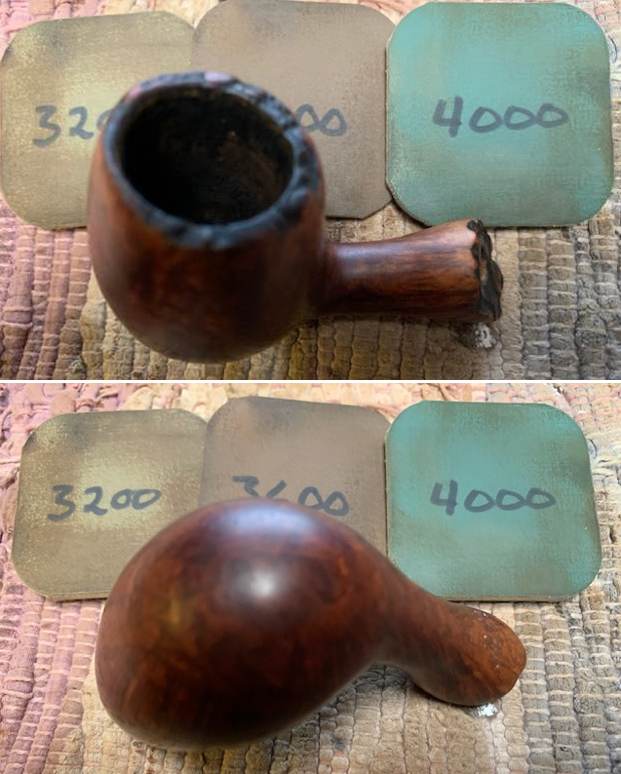
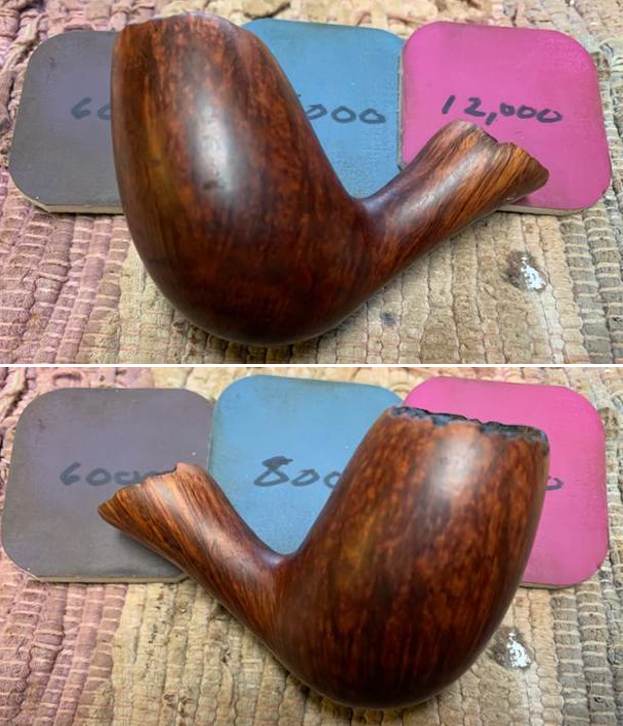
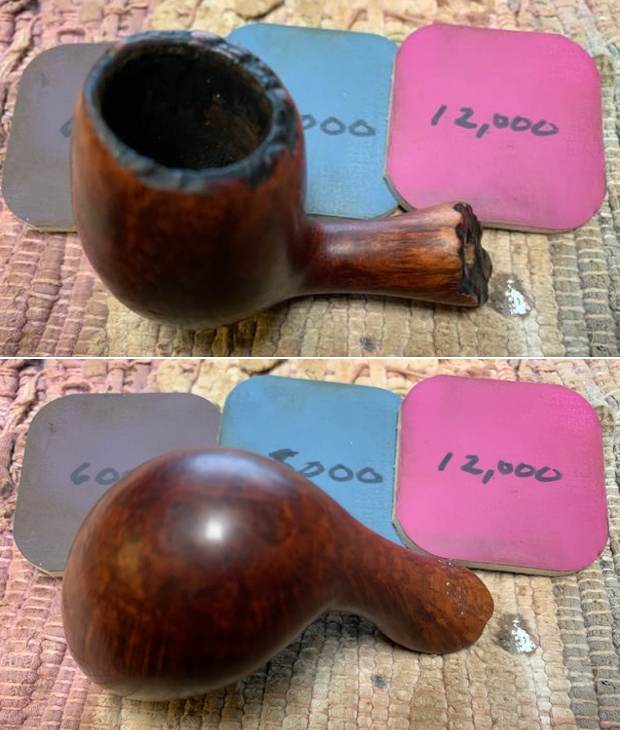
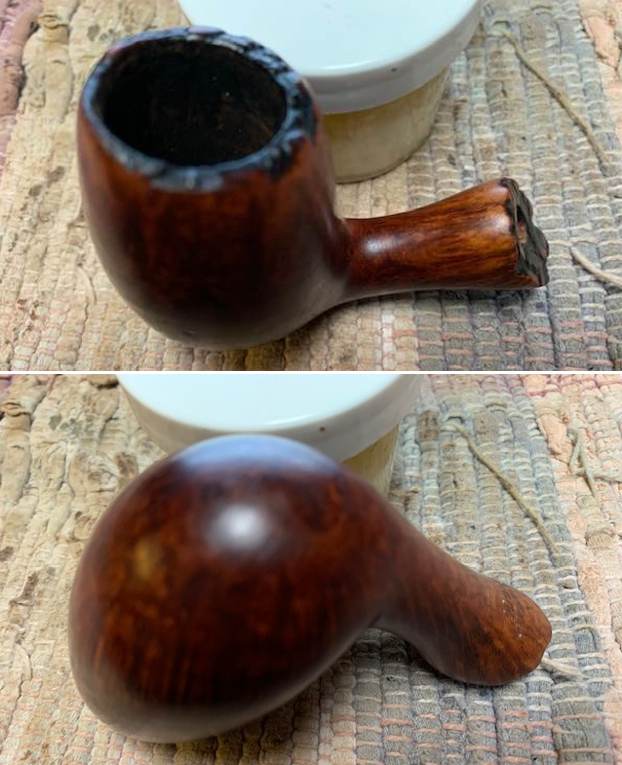
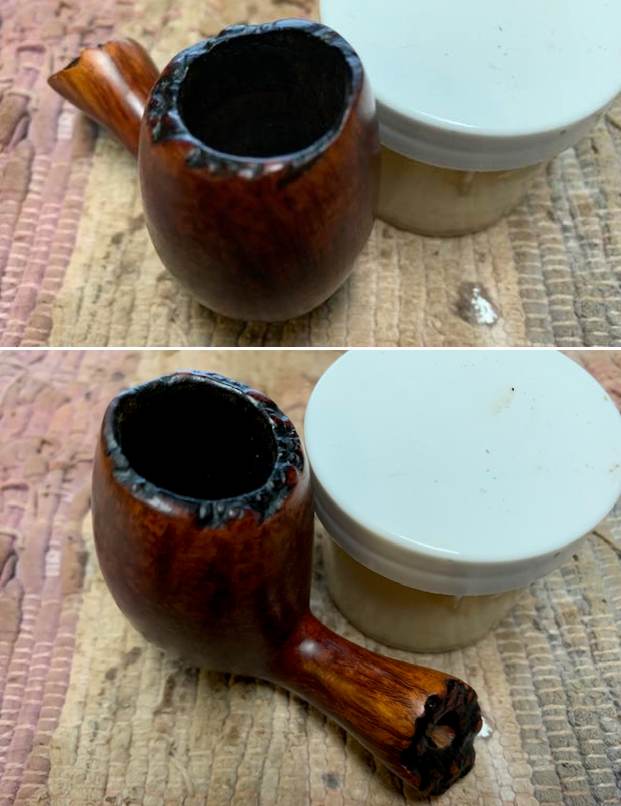
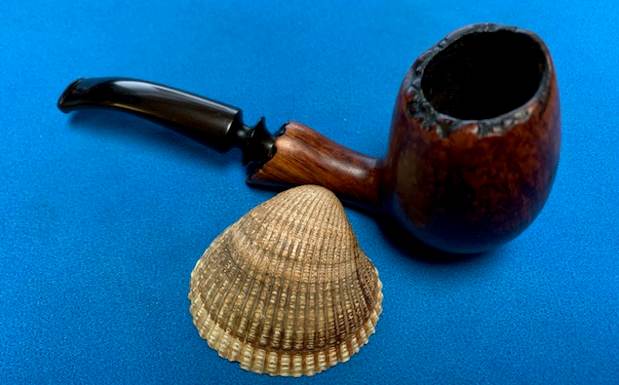
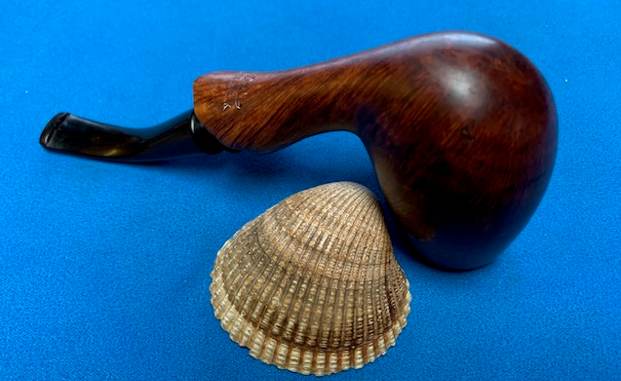
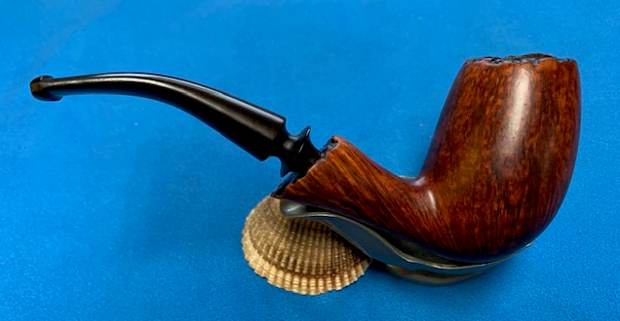
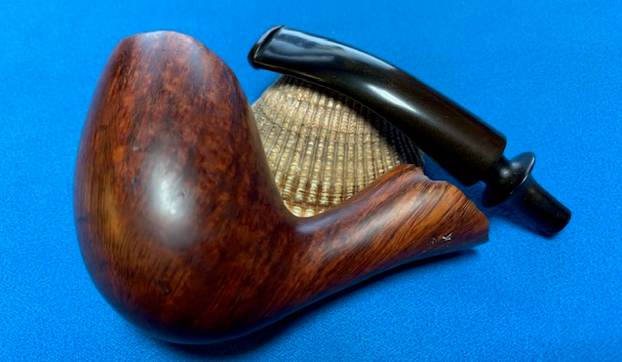
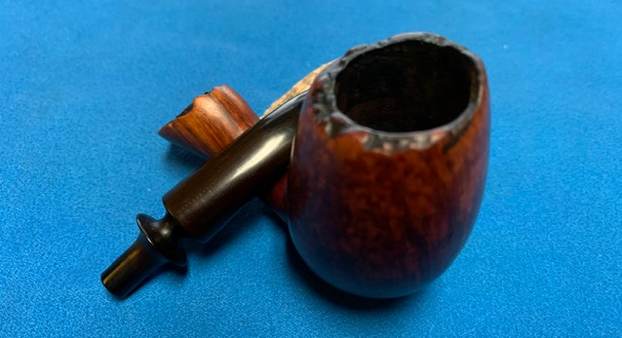
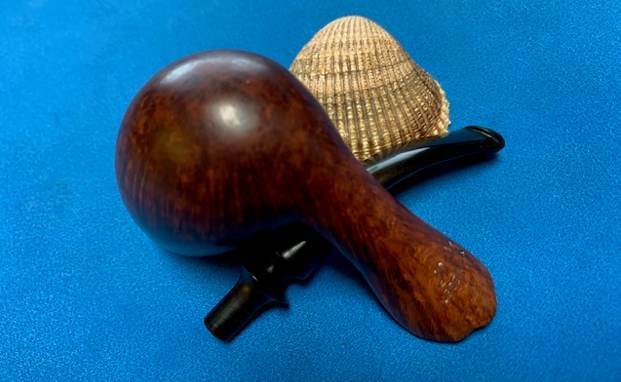
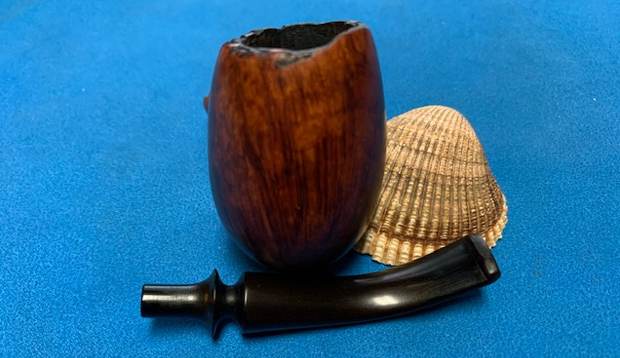
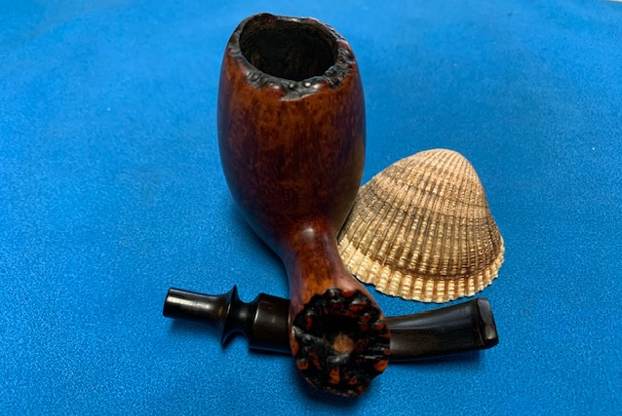
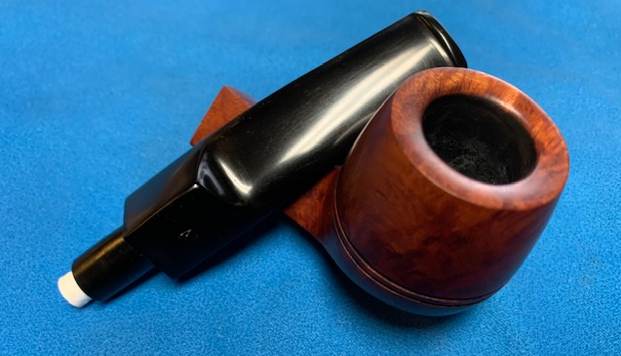
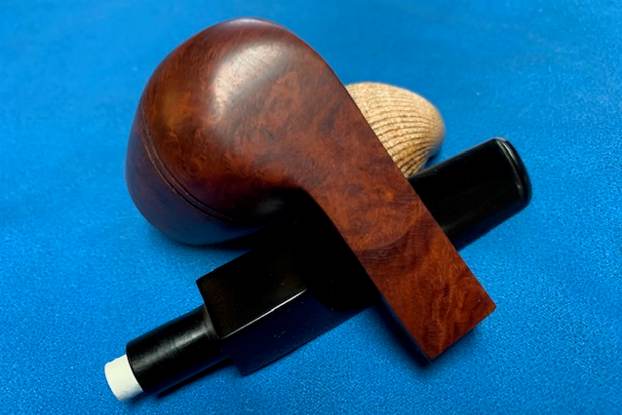
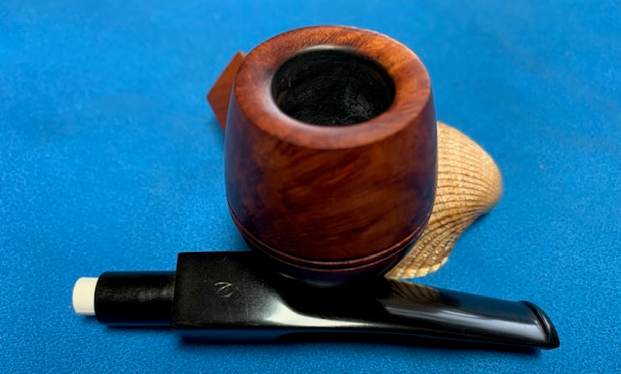
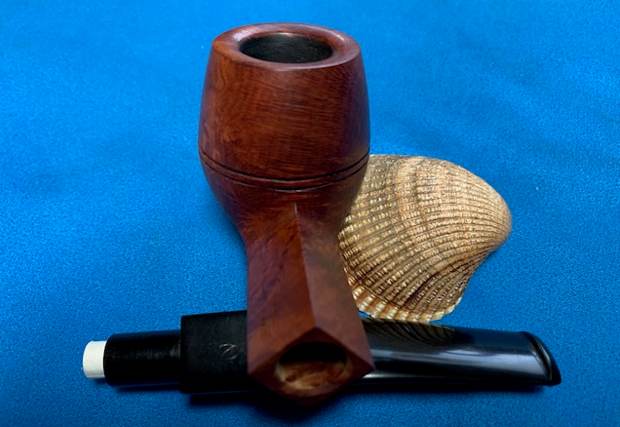
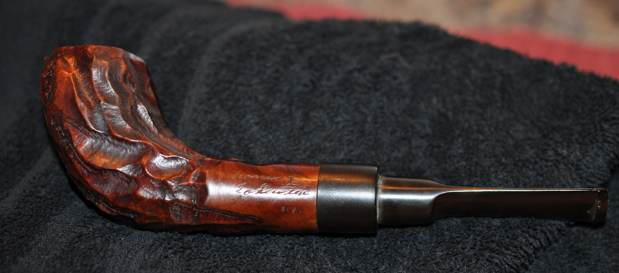
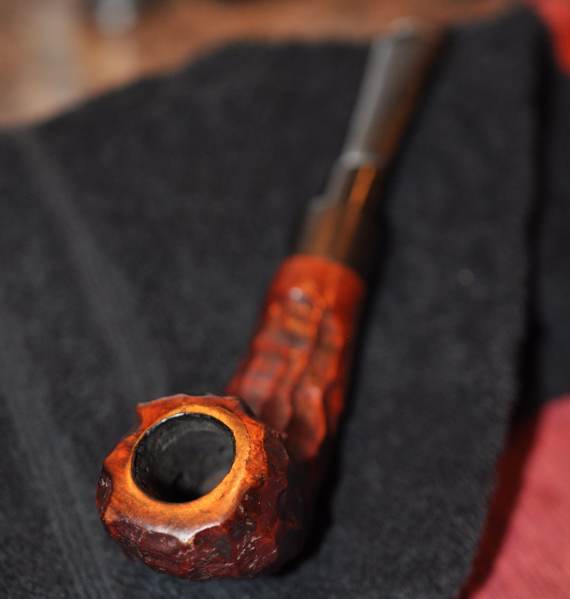
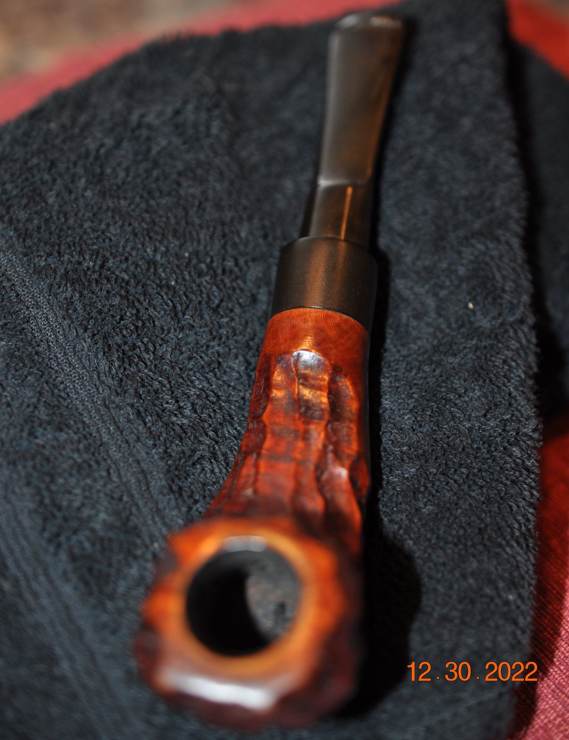
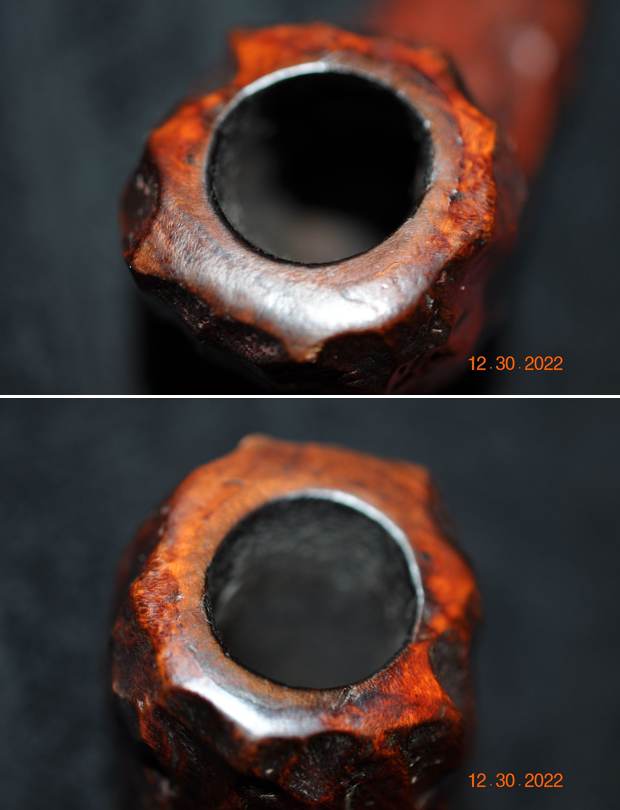
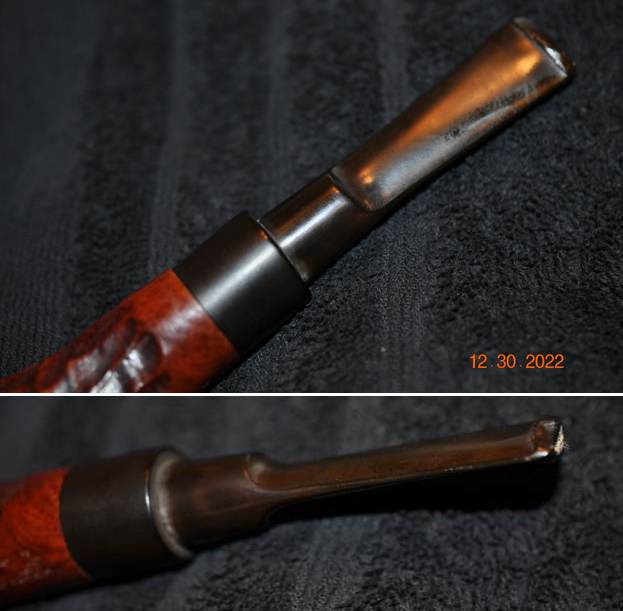
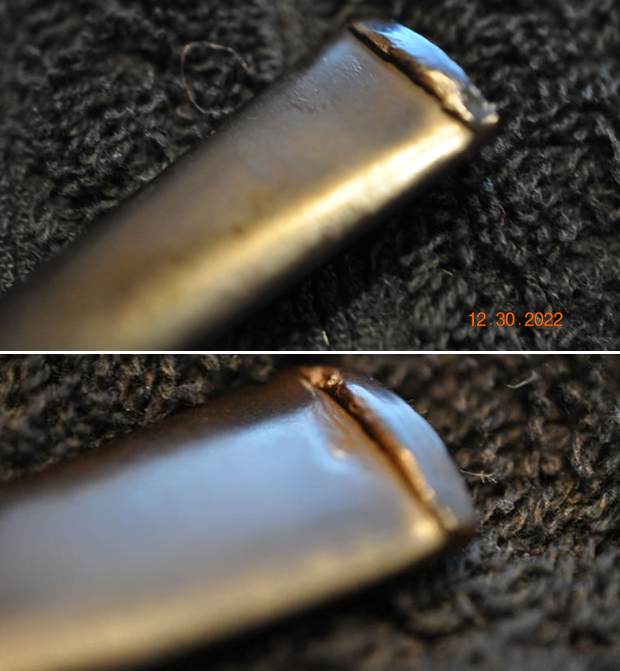
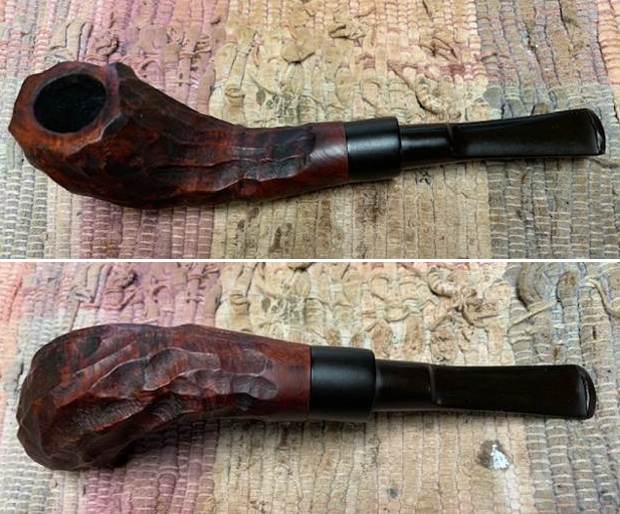
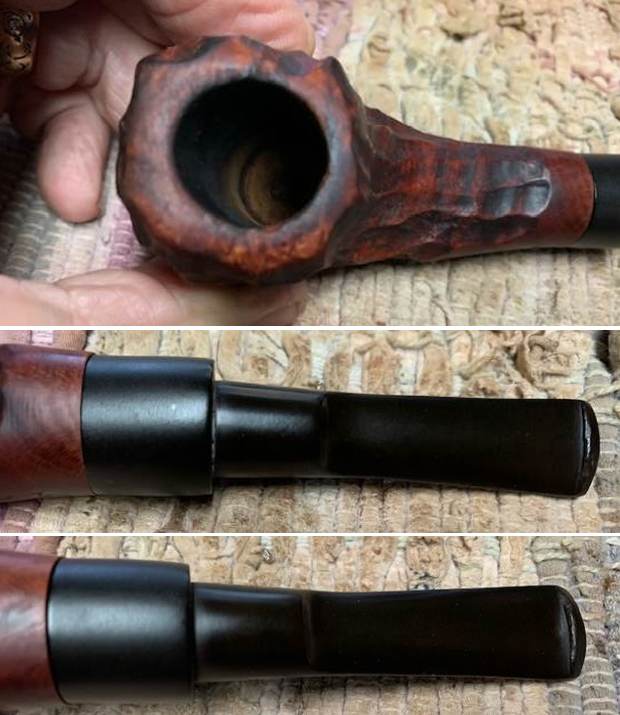
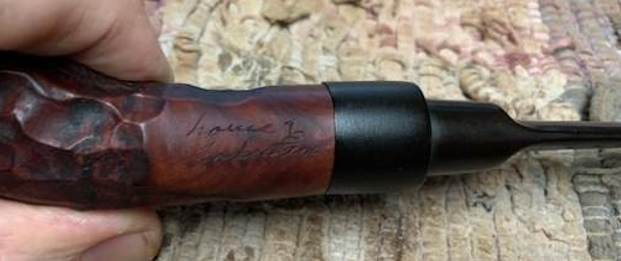
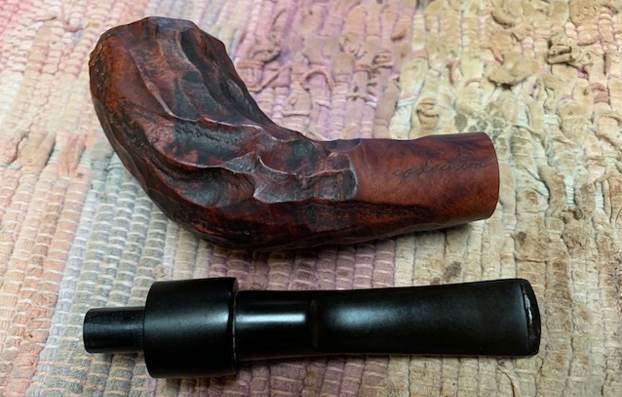
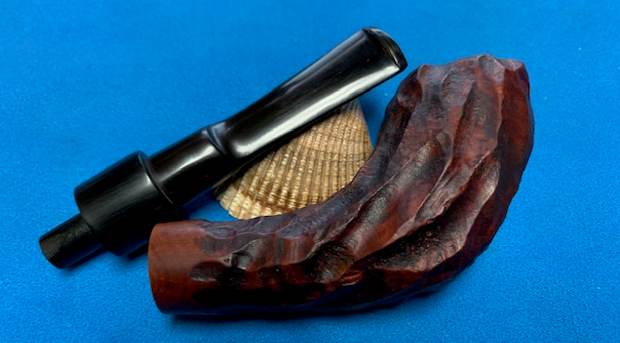
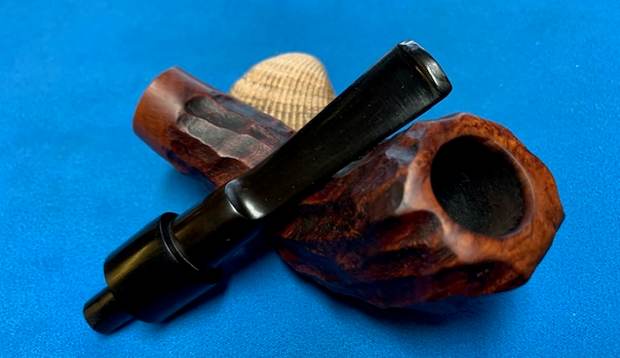
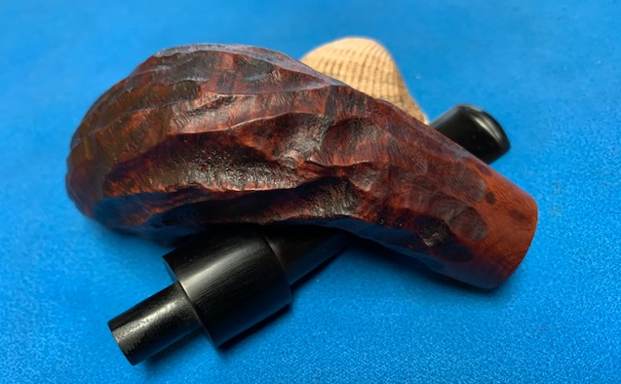
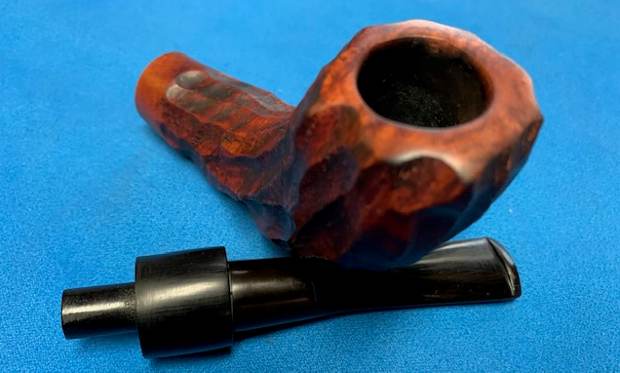
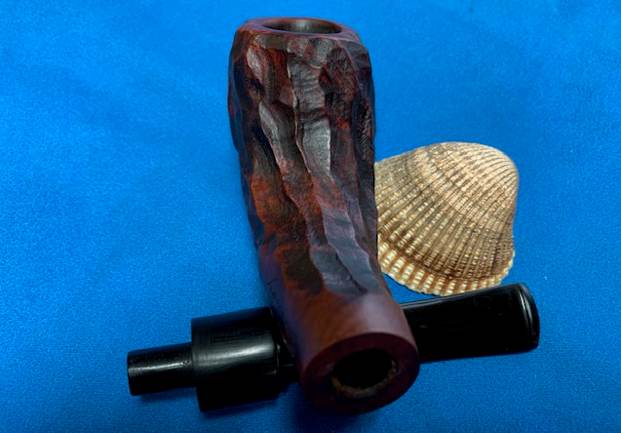
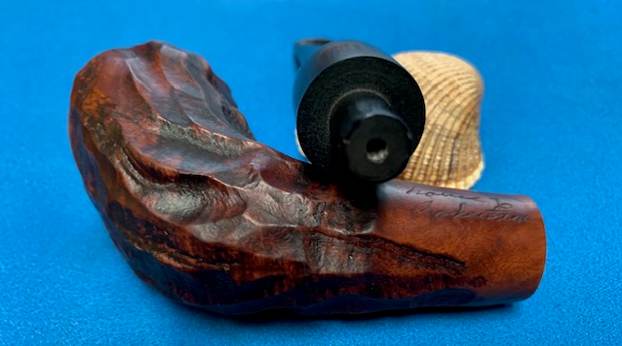
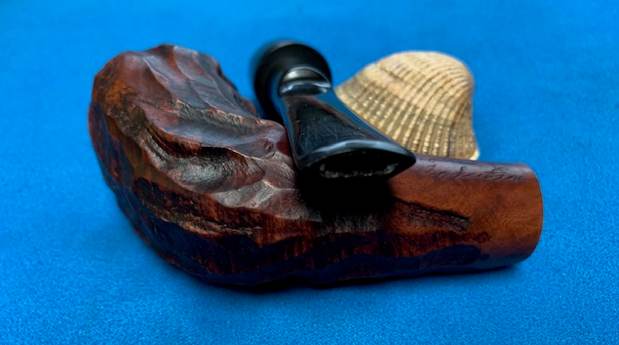
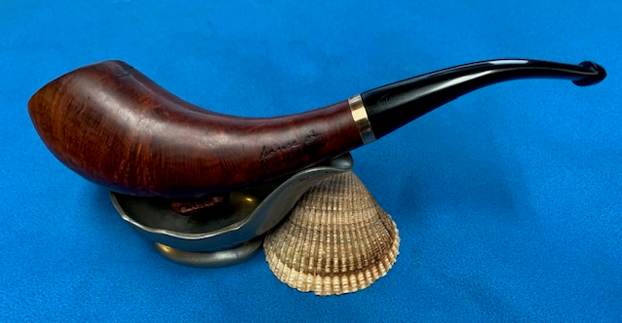
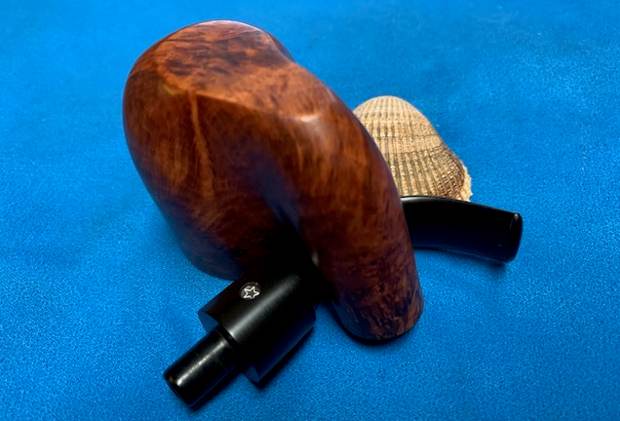
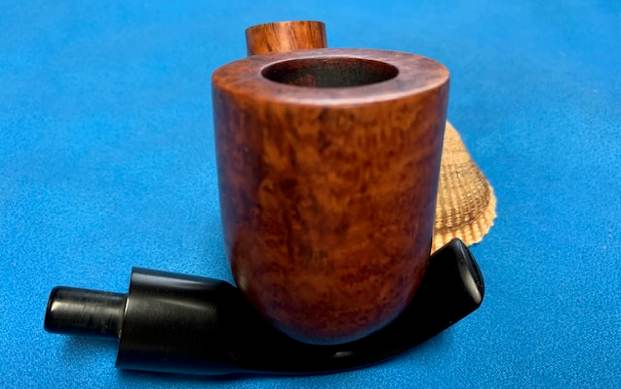
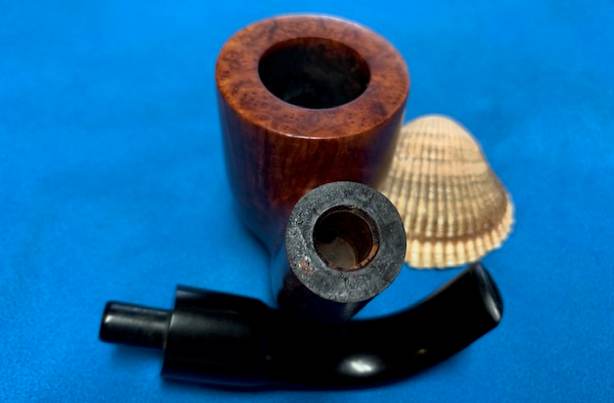
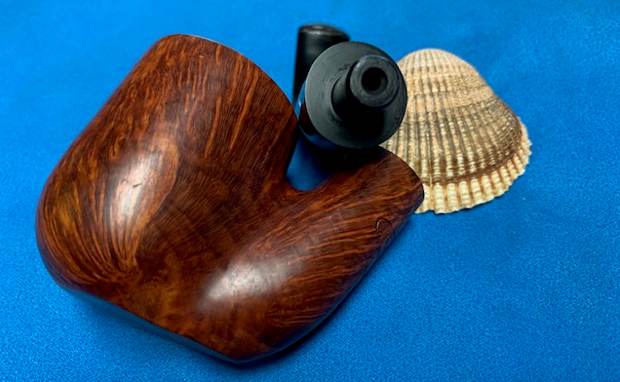
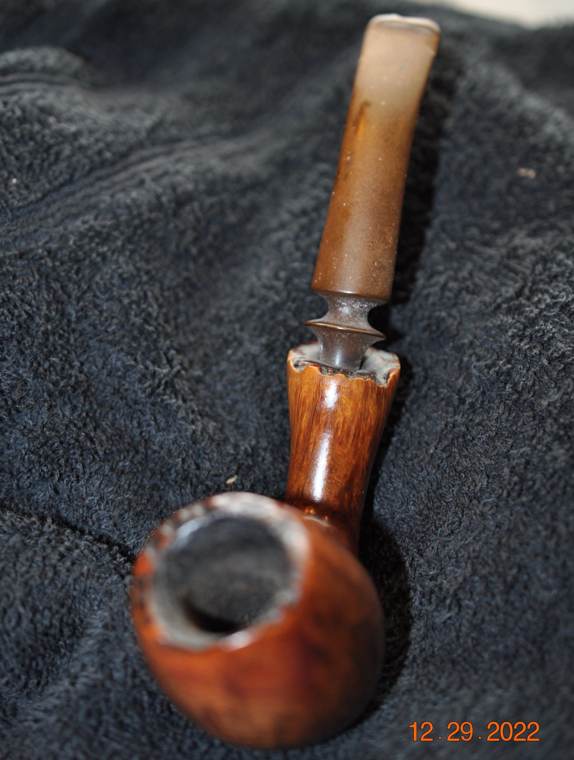
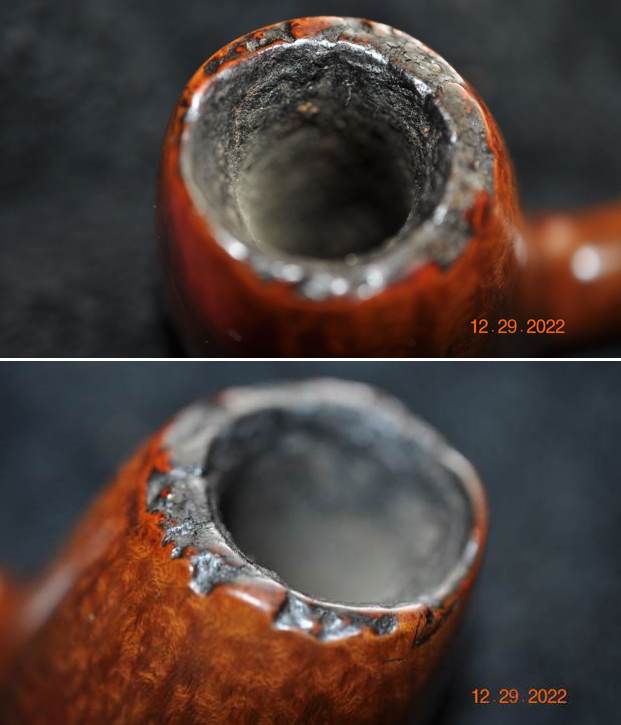
Jeff and I purchased this pipe on 8/3/2022 from a fellow in Carlsbad, California, USA. It is hard smoked freehand with a plateau rim top and shank end. The pipe is stamped on the underside of the shank and reads Knute [over] of Denmark. The stem has no stamp on it and is a fancy turned vulcanite one that fits the shank well. There was a heavy cake in the bowl and lava overflowing onto the plateau rim top. The finish showed some nice grain around the bowl and shank even through the grime that was ground into it. The stem was oxidized, calcified and there were tooth marks and chatter on both sides of the stem ahead of the button. Jeff took photos of the pipe before he started his clean up work. He took photos of the rim and bowl to give a sense of what he was dealing with. He also took photos of the stem surfaces to show the condition of the stem when it arrived. The photos of the sides and heel of the bowl show beautiful carving around the bowl and shank sides. The brown stain adds depth finish on the pipe. Even under the grime it is a unique piece. He also took photos of the stamped name on the underside of shank. It reads as noted above. Before I started my work on the pipe I wanted to remind myself of the provenance of the pipe. I remembered that it was linked to Karl Erik as the earlier pipe I worked on was. I wanted to know where this pipe fit into the Karl Erik lines so I turned to the first of two sites that I always check to gather information on a brand.  I turned to the first source of information site – Pipephil’s (http://www.pipephil.eu/logos/en/logo-k3.html) got a quick overview on the brand once again connecting it to Karl Erik.I turned then to Pipedia (https://pipedia.org/wiki/Karl_Erik). Pipedia had this great picture of Karl Erik Ottendahl and I decided to include it here as a reminder of the artisan who first carved and released this pipe. Reminded of the tie to Karl Erik I knew a bit about the pipe at hand. I turned to address the pipe itself. There it is clearly identified and linked to Karl Erik Ottendahl. It is designated as a second and frequently having rustication.
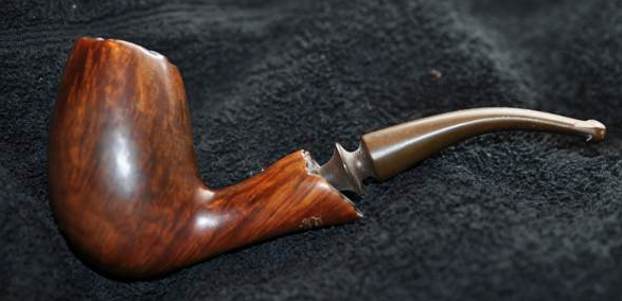
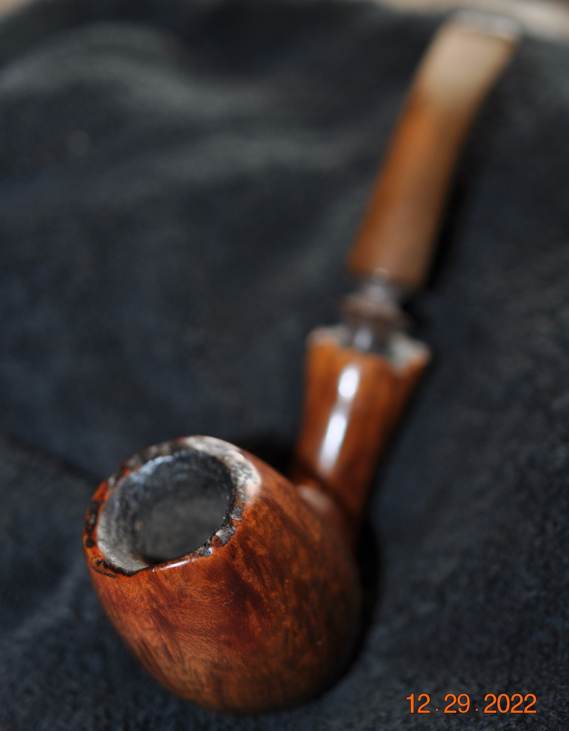
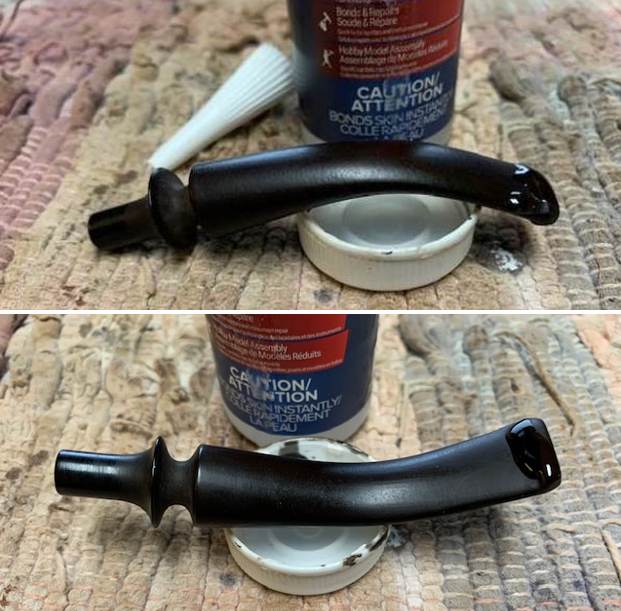
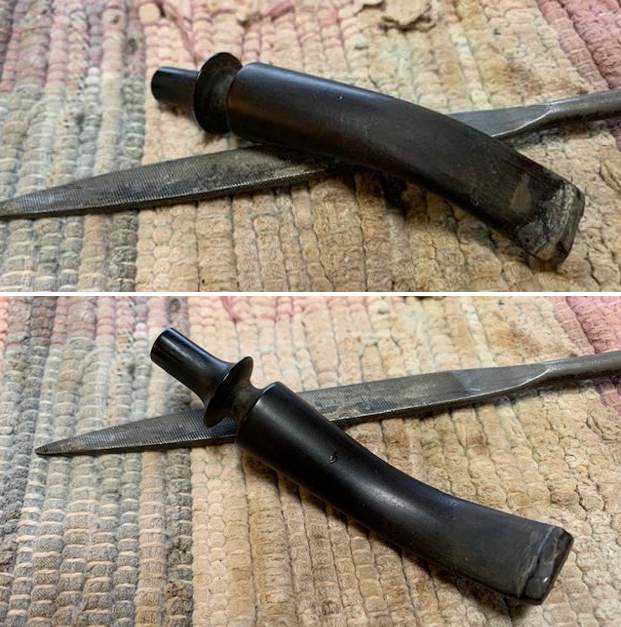
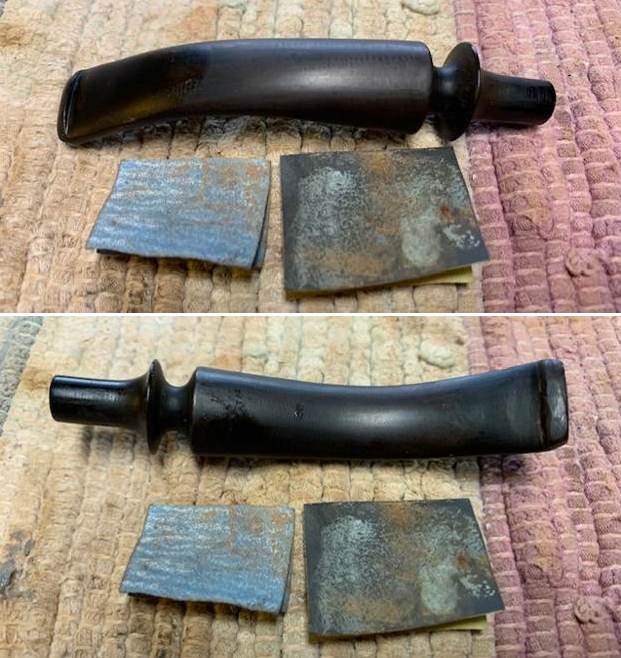
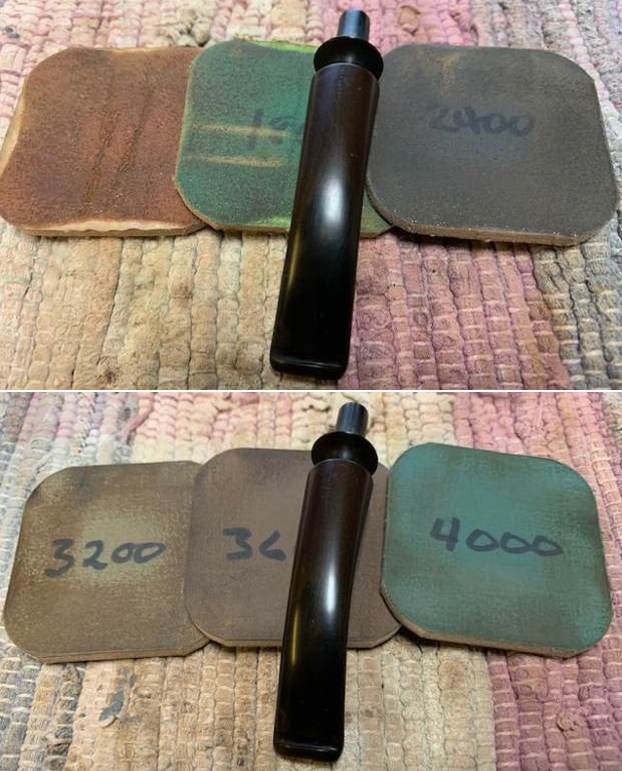
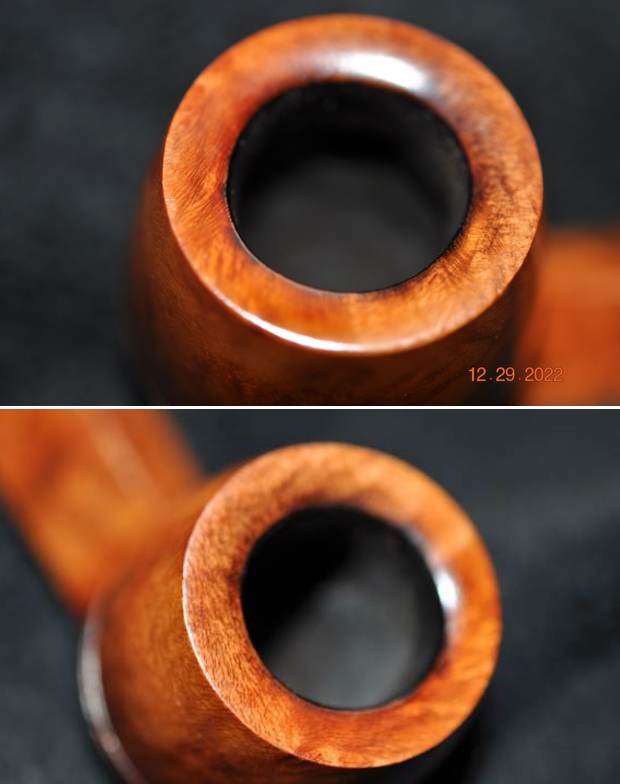
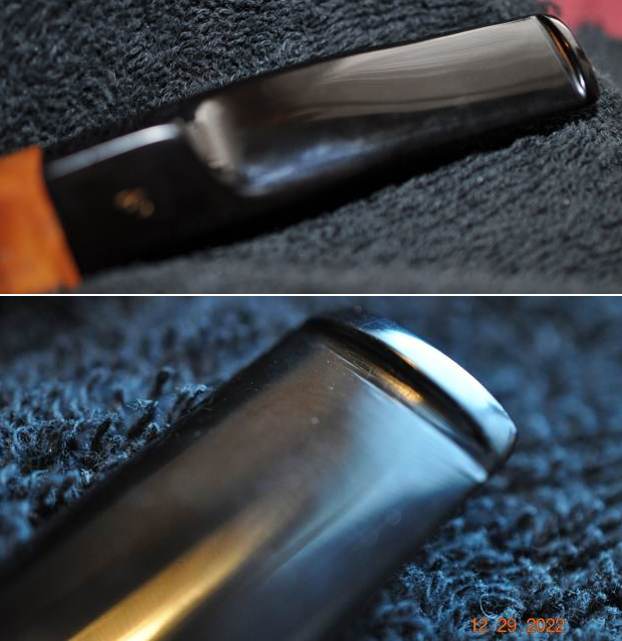
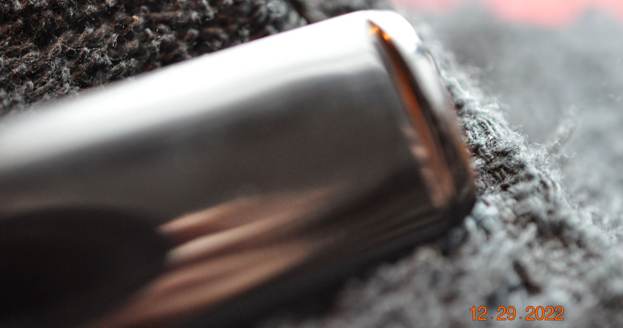
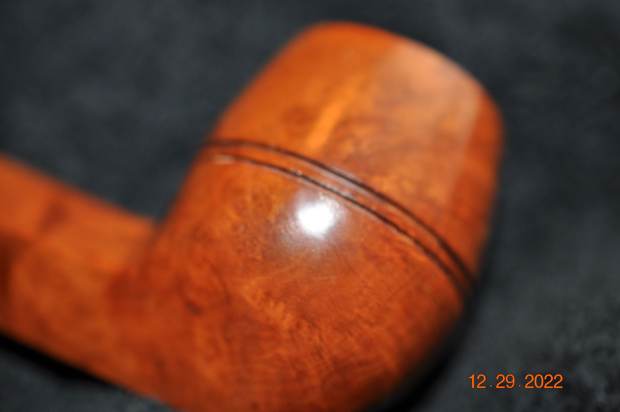
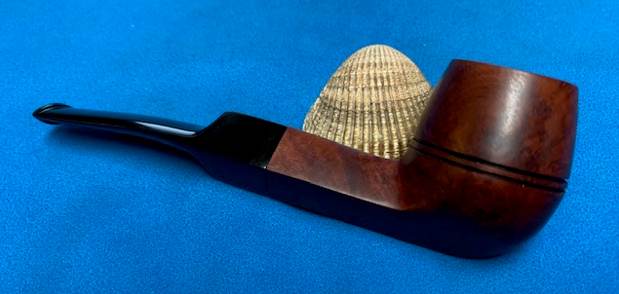
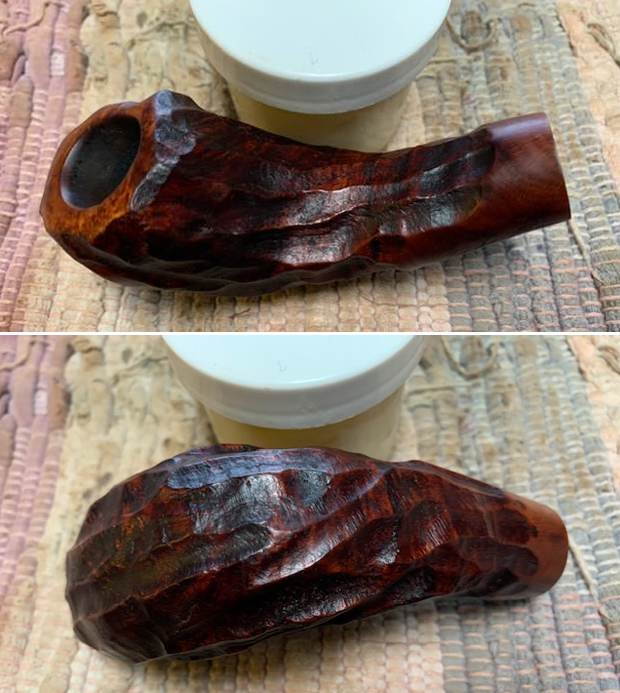
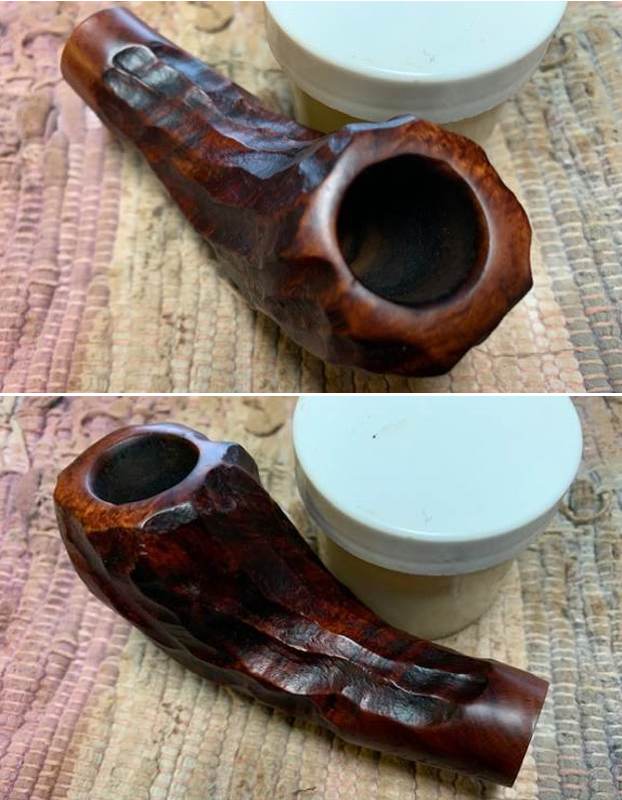
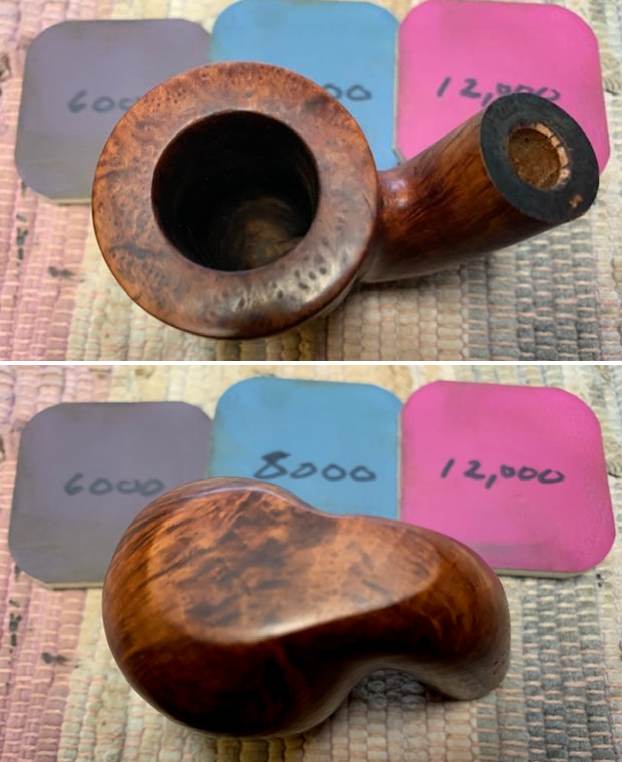
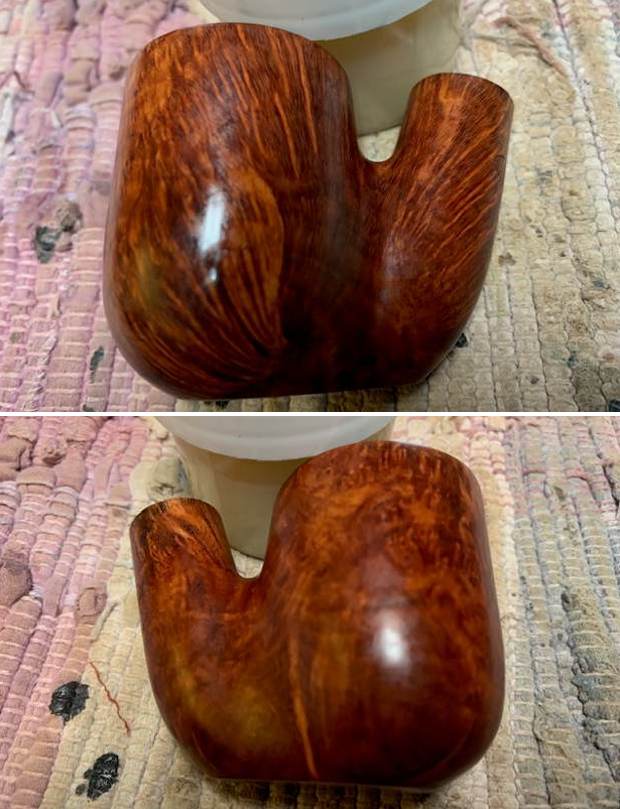
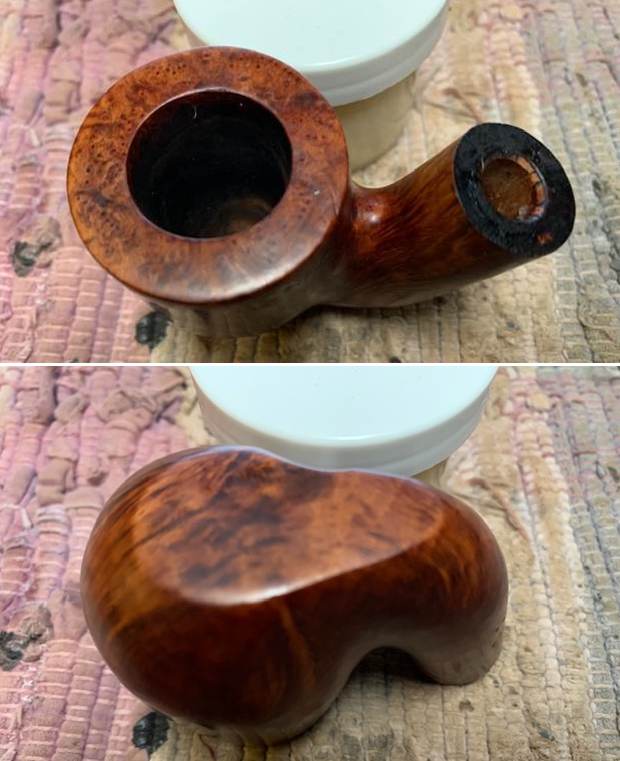
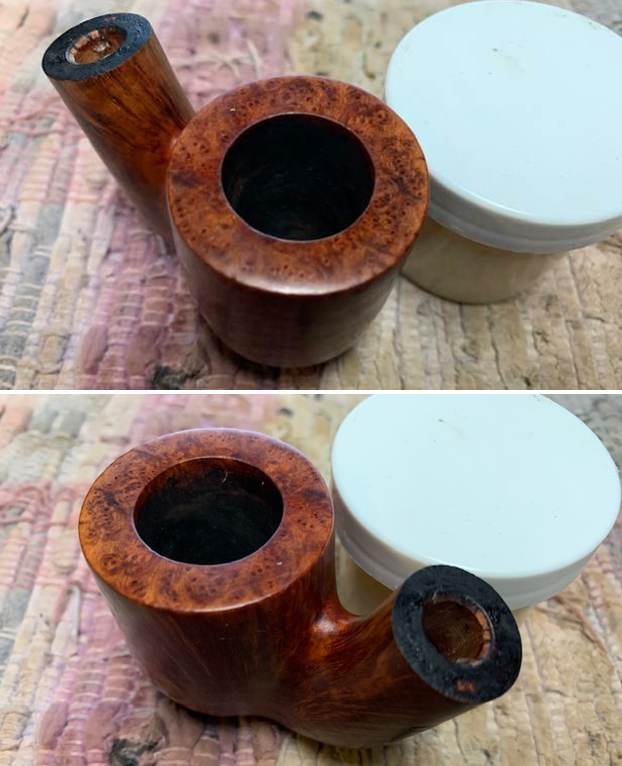
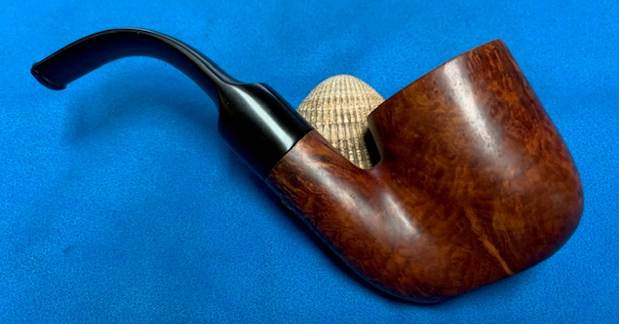
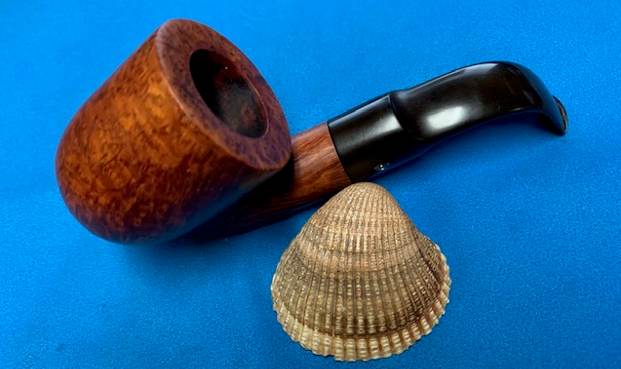
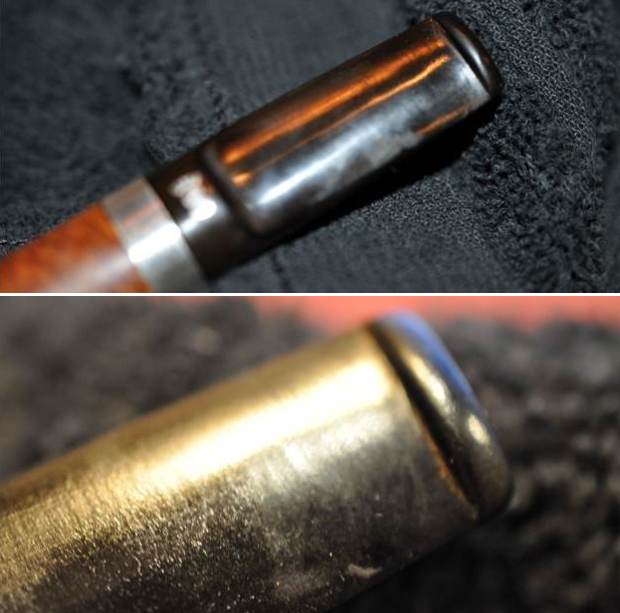
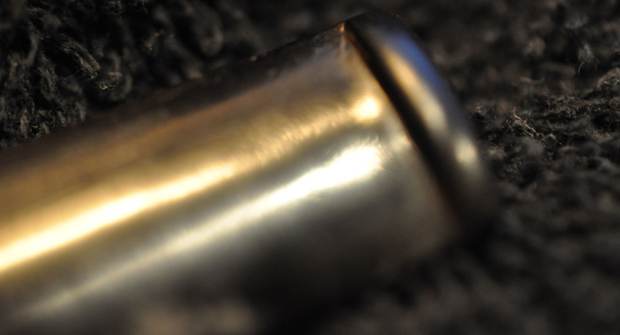
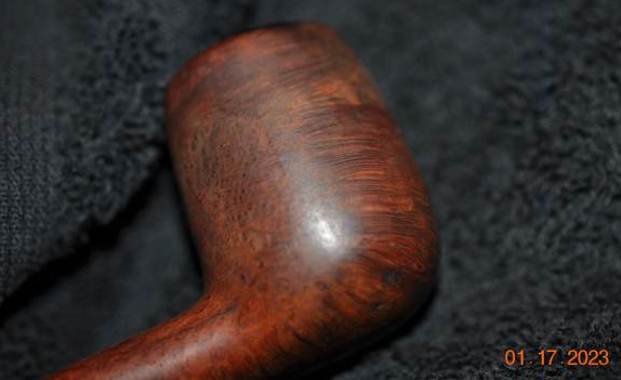
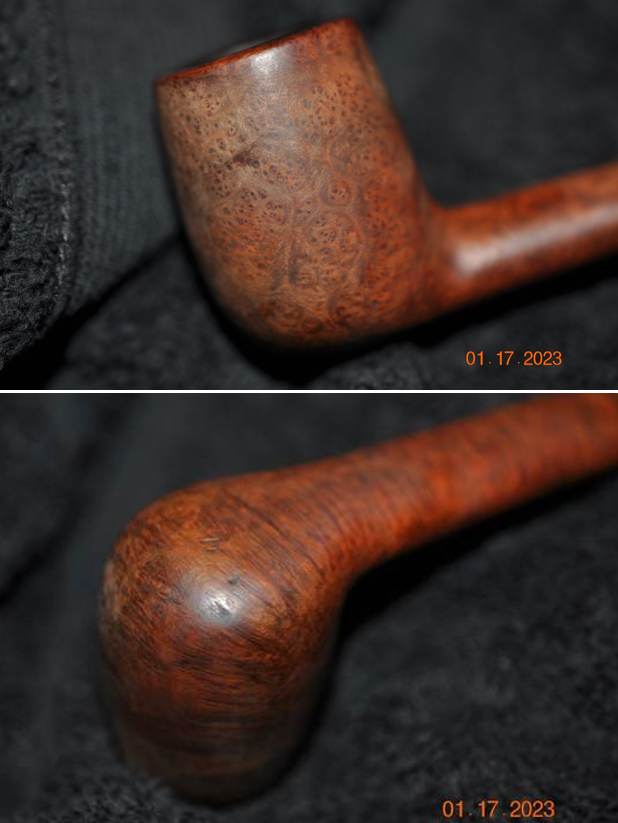
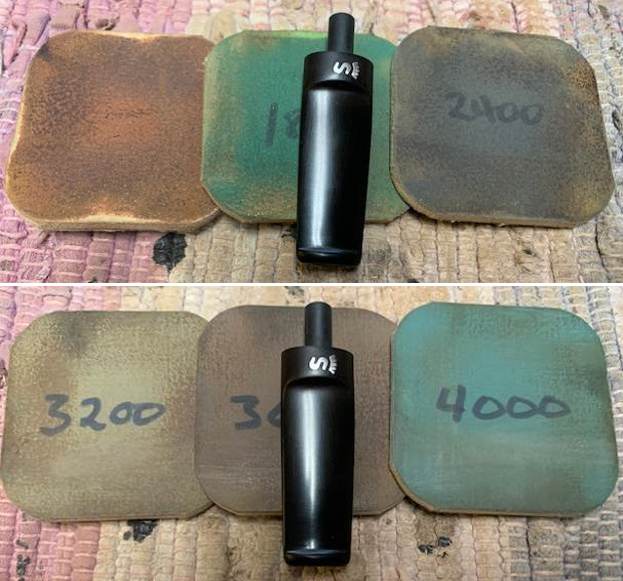
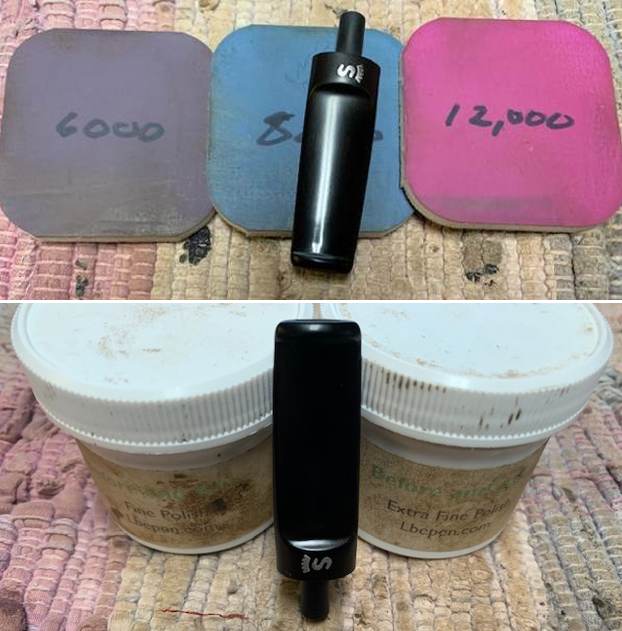
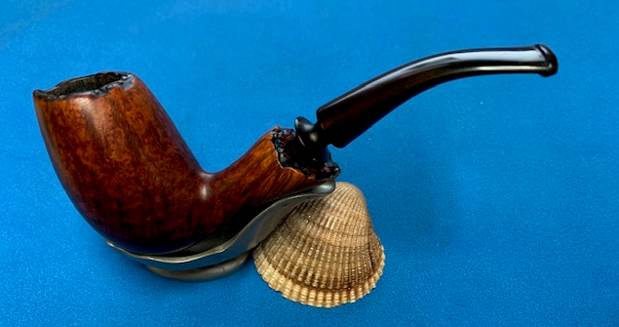
Jeff cleaned up the pipe for me. He reamed the bowl with a PipNet pipe reamer and cleaned it up with a Savinelli Fitsall Pipe Knife. He scrubbed the exterior with Murphy’s Oil Soap and a tooth brush to clean off the grime off the finish and the heavy overflow of lava on the rim top. The cleaning had removed some of the black stain on the rim top. He cleaned up the internals of the shank, mortise and stem with pipe cleaners, cotton swabs and alcohol to remove all of the oils and tars in the pipe. He soaked the stem in Before & After Deoxidizer and was able to remove much of the oxidation. When it arrived here in Vancouver it was a clean pipe and I knew what I had to work with. I took photos of it before I started my part of the restoration. I took photos of the rim top and the stem to show their condition once it arrived in Canada. Jeff was able to clean up the incredibly thick cake and lava overflow that was shown in the rim and bowl photos above. The plateau and the inner edge of the rim look quite good. He was also able to get rid of the grime and grit in the surface of the briar. The stem looked better, though there was some residual oxidation in the grooves of the turned portion. There were tooth marks and chatter on both sides near the button. I have noticed on some repairs that folks don’t pay much attention to the stamping when they are restoring a pipe. To me this is a critical part of the restoration to leave undamaged as it is the only link we have to who made the pipe. I took a photo of the stamping on the underside of the shank to show that it was readable and undamaged by the cleanup work. Someone had put white paint in the stamp but that was not original.I removed the stem from the shank and took a photo of the parts to give a sense of what the pipe looks like.I started my work on the bowl by removing the white paint that was in the stamping on the underside. I used a cotton pad and acetone to loosen the paint and a brass bristle wire brush to remove it from the stamping.I started polishing the briar with micromesh sanding pads. I wet sanded it with 1500-12000 grit pads. I wiped the bowl down after each pad with a damp cloth. The bowl began to take on a rich shine and grain was beginning to stand out. I wet sanded with all of the pads and wiped the bowl down after each pad with a soft cloth. I rubbed the bowl and shank down with Before & After Restoration Balm to deep clean the finish on the bowl and shank. The product works to clean, enliven and protect the briar. I worked it in with my fingers to get it into the briar. I used a horsehair shoe brush to work it into the plateau top and shank end.  I let it sit for 10 minutes then I wiped it off and buffed it with a soft cloth. The briar really began to have a rich shine. I took some photos of the bowl at this point to mark the progress in the restoration. It is a beautiful bowl. I set the bowl aside and worked on the stem at this point in the process. I filled in the tooth marks in the top and underside of the stem ahead of the button with clear CA glue. Once it cured I used a small file to flatten the repairs and reshape the button edge. I sanded the repairs with a folded pieces of 220 to remove the marks and the light brown colouration on the stem surface. I sanded them with 600 grit sandpaper until the marks were gone and the oxidation was gone. I wiped it down with Obsidian Oil. I polished the stem with micromesh sanding pads – dry sanding with 1500-12000 grit pads. I wiped the stem down after each pad with a damp cloth to remove the sanding dust. I finished by wiping the stem down with a final coat of Obsidian Oil and set it aside to dry. I put the stem back on the Knute of Denmark Freehand pipe and took the pipe to the buffer. I buffed the bowl and stem with Blue Diamond to polish the briar and the vulcanite. Blue Diamond does a great job on the smaller scratches that remain in both. I gave the bowl and the stem several coats of carnauba wax and buffed the pipe with a clean buffing pad to raise the shine. I hand buffed it with a microfiber cloth to deepen the shine. The pipe polished up really nicely with a great contrasting stain look to the briar. The finished pipe is shown in the photos below. This is a beautiful Karl Eric Made Knute of Denmark Freehand – the fancy turned stem and plateau shank end give the pipe a great look. The polished black vulcanite stem looks really good with the rich browns standing out in the grain. The dimensions of the pipe are Length: 5 ½ inches, Height: 2 ¼ inches, Outside diameter of the bowl: 1 ¼ inches, Chamber diameter: 3/4 of an inch. The weight of the pipe is 1.73 ounces/49 grams. This is another pipe that I will be putting on the rebornpipes online store in the Danish Pipemaking Companies Section shortly, if you are interested in adding it to your collection. Thanks for walking through the restoration with me on this beauty!

New Life for a Zettervig Pipes Virgin Bulldog with a filter saddle stem


Blog by Steve Laug

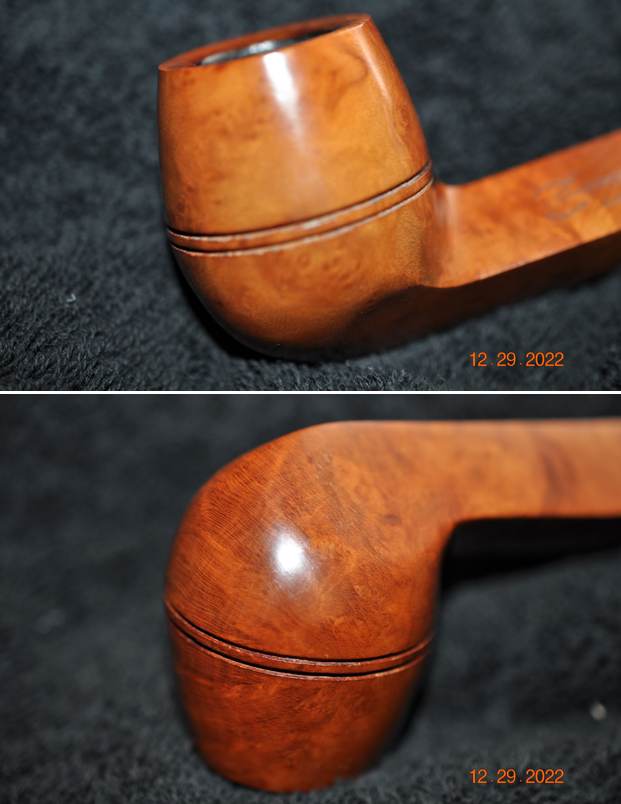
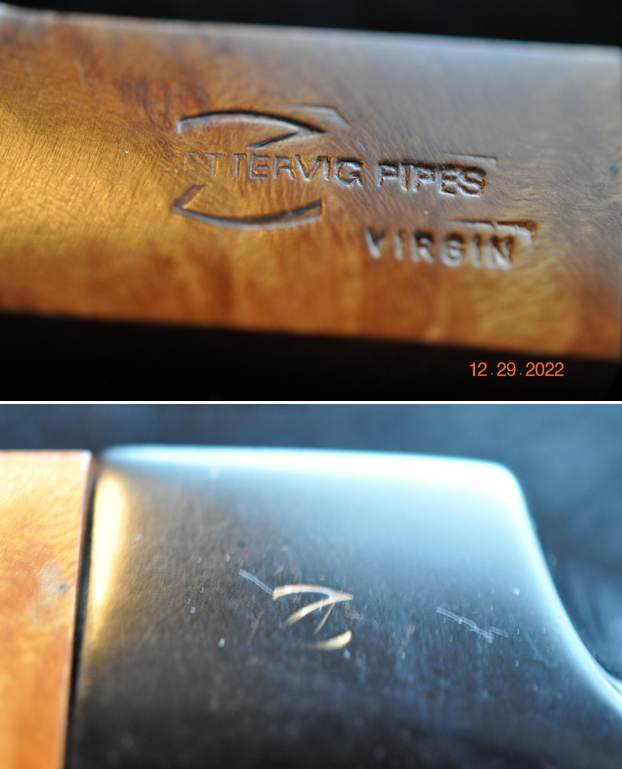
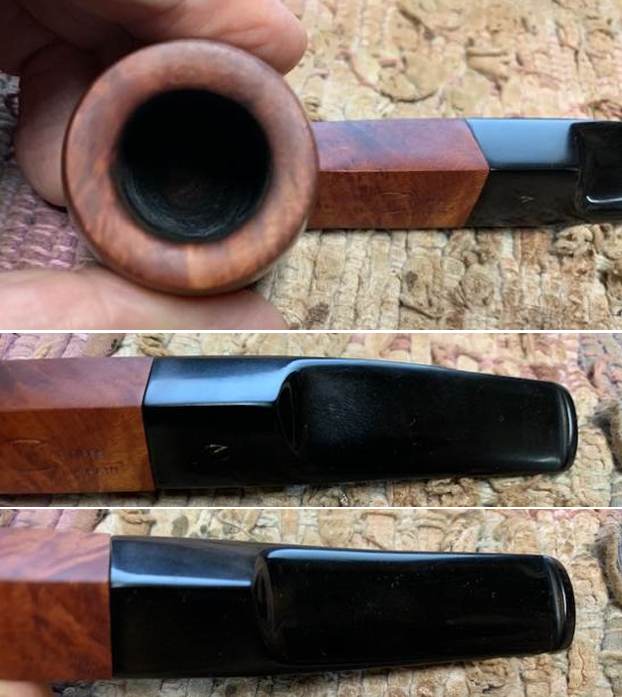
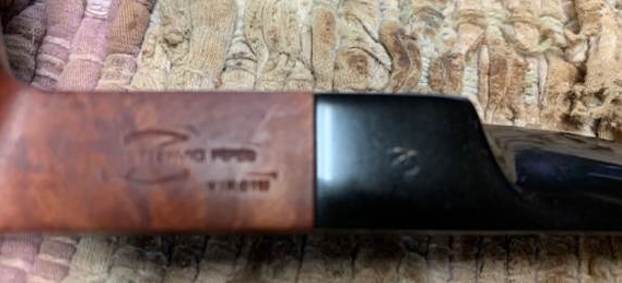
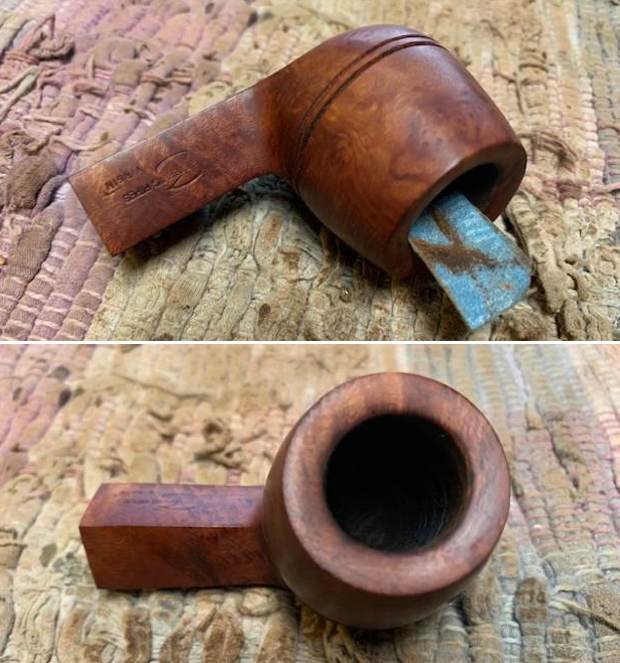
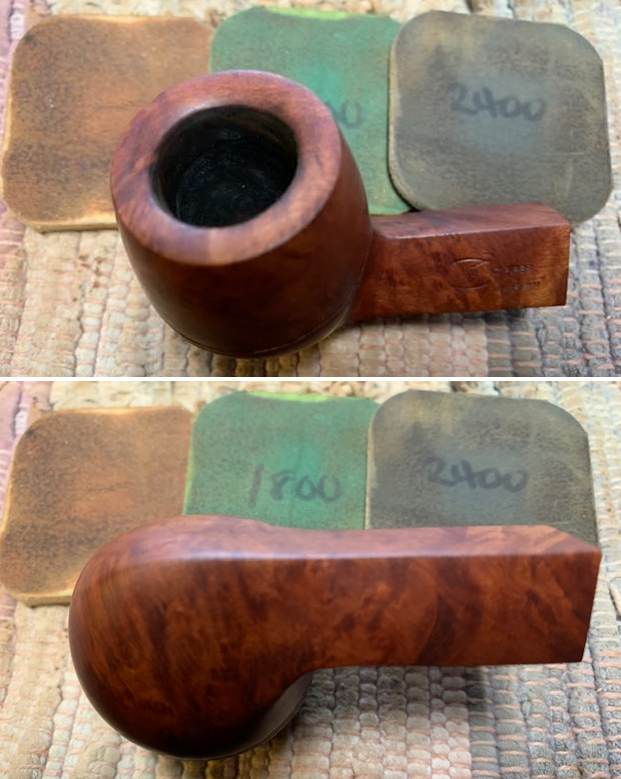
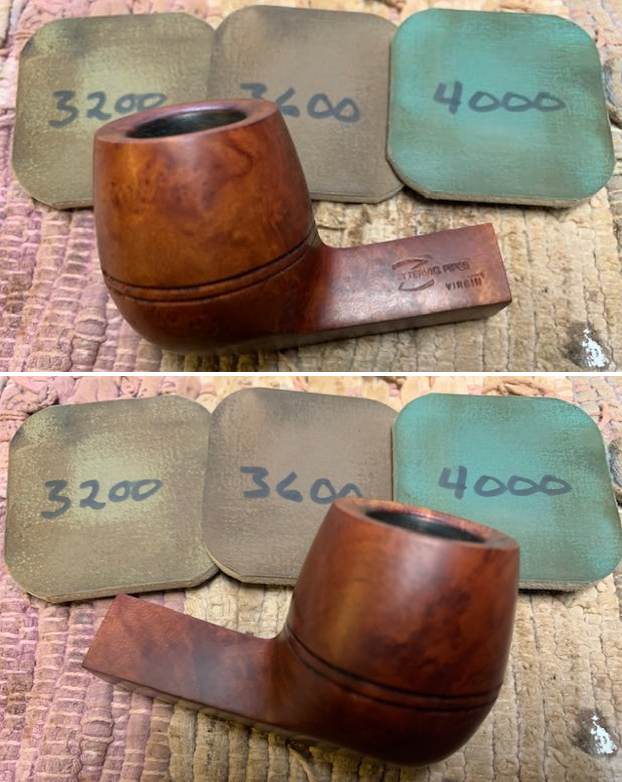
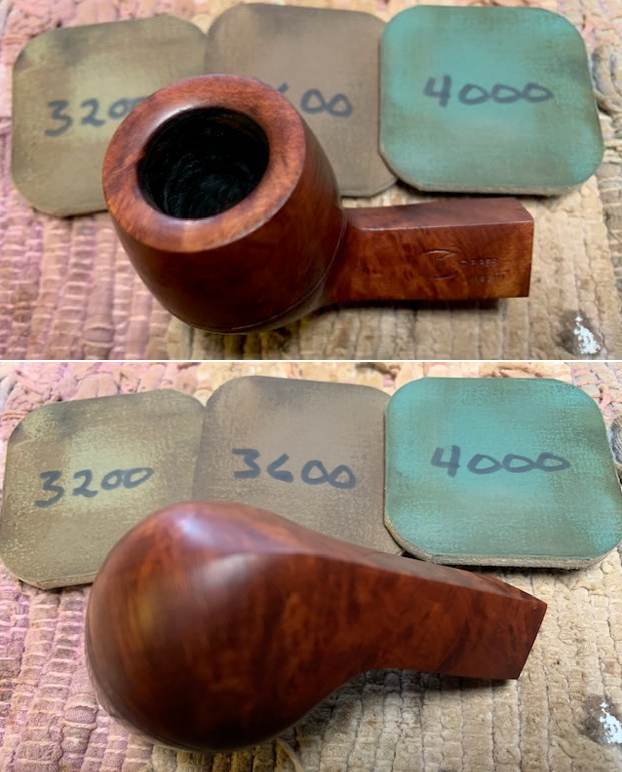
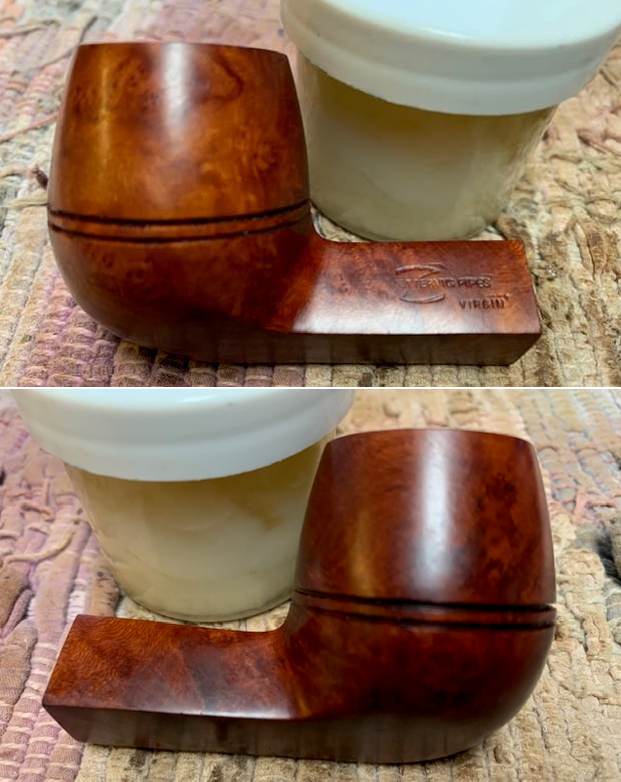
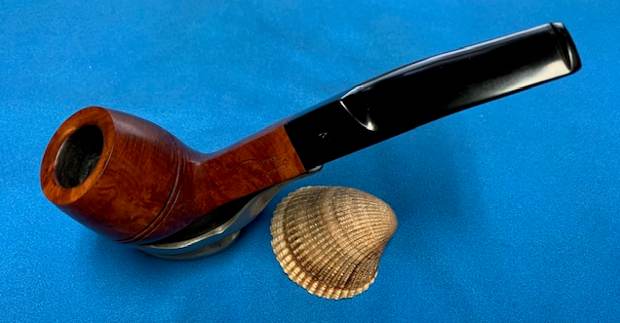
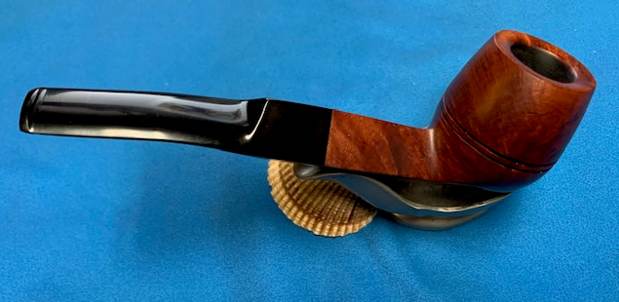
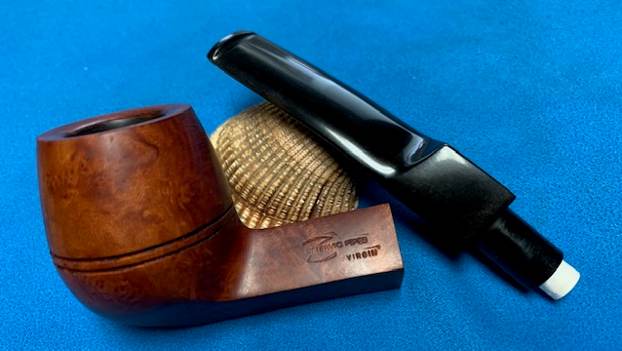
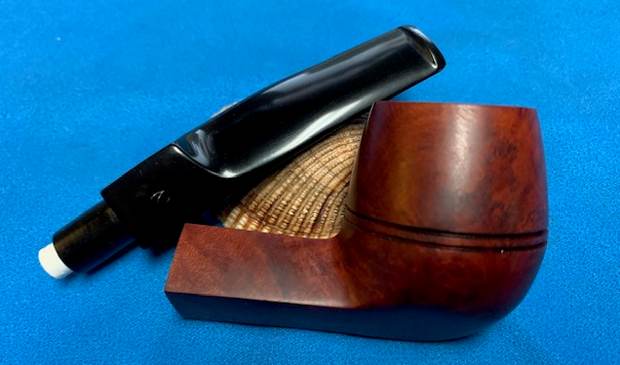
Jeff and I purchased this pipe on 11/14/2022 from a fellow in Copenhagen, Denmark. It is high topped Bulldog with a diamond shank. The pipe is stamped on the left topside of the shank and reads Zettervig Pipes (the Z is large) [over] Virgin. The stem is stamped with a stylized Z (logo for Zettrvig). There is no other stamping on the shank in terms of shape numbers or the location where it was made. There was a moderate cake in the bowl and some darkening on the inner edge. The rim top looked very good. The stem looks and feels like acrylic and has a tenon made to hold a 9mm filter.  There were light tooth marks and chatter on both sides of the stem ahead of the button. Jeff took photos of the pipe before he started his clean up work. He took photos of the rim and bowl to give a sense of what he was dealing with. He also took photos of the stem surfaces to show the condition of the stem when it arrived. The photos of the sides and heel of the bowl show beautiful carving around the bowl and shank sides. The brown stain adds depth finish on the pipe. Even under the grime it is a unique piece. He also took photos of the etched name on the left side of shank. It reads as noted above. He also captured the Z stamp  on the left topside of the saddle stem.Before I started to work on the pipe I decided that I would look up some information on the Zettervig brand before I started the clean up on the pipe. I looked up information on two of my favourite sites. The first was Pipedia. Here is the link: https://pipedia.org/wiki/Zettervig. I quote in full:
In the 1960’s and into the early 1970’s Ole Zettervig had a shop in Copenhagen, Denmark where he was carving high quality pipes equal to Stanwell, Larsen, Anne Julie, Thurmann, Bang and others. These early pipes were marked “Copenhagen” and are very collectible. He sold his shop at some point in the 70’s and moved to Kolding and continued to produce pipes as a hobby, but the quality of briar and workmanship is said to not equal the early production. The later pipes he now marked as Kobenhaven rather than Copenhagen, and these were sold by Ole at flea markets throughout Europe.

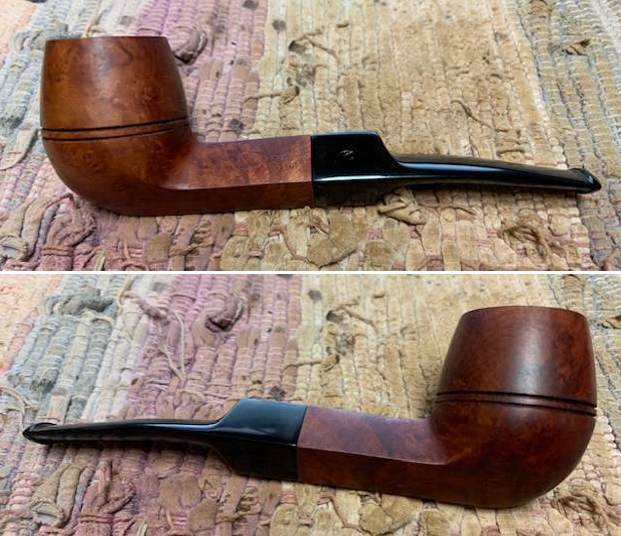
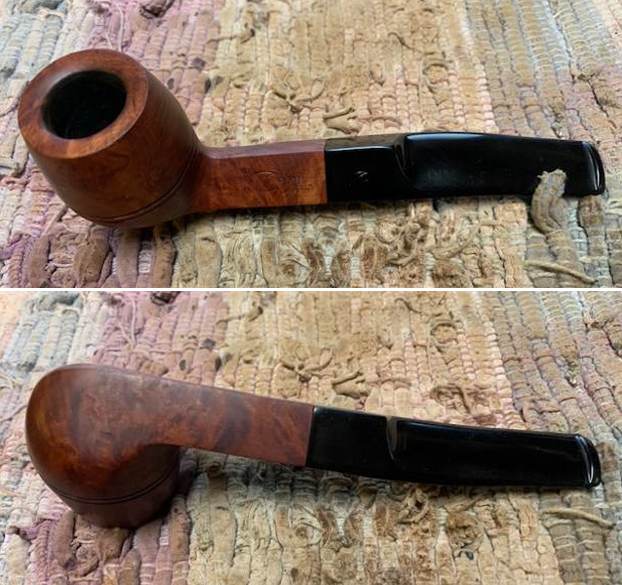
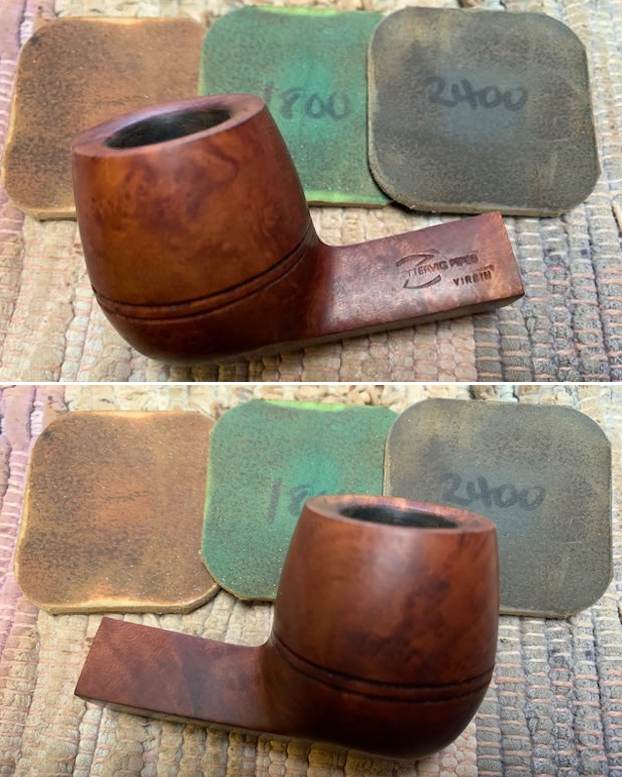
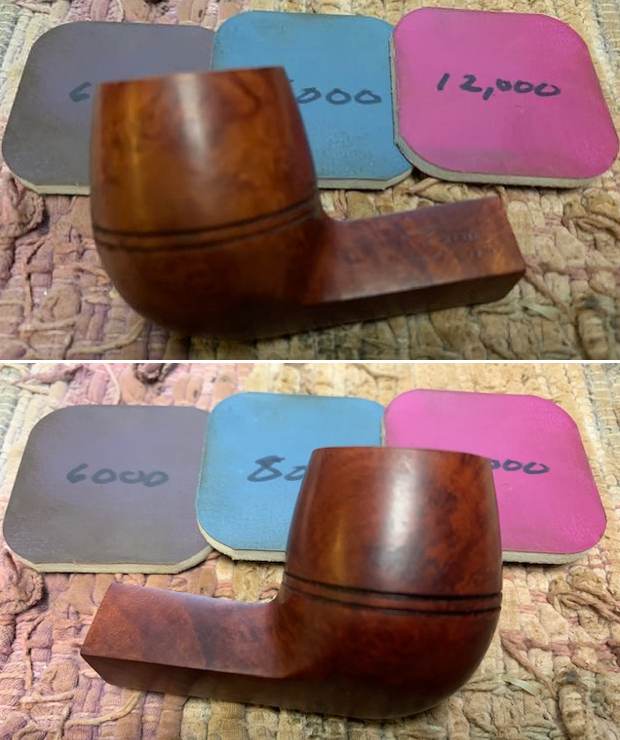
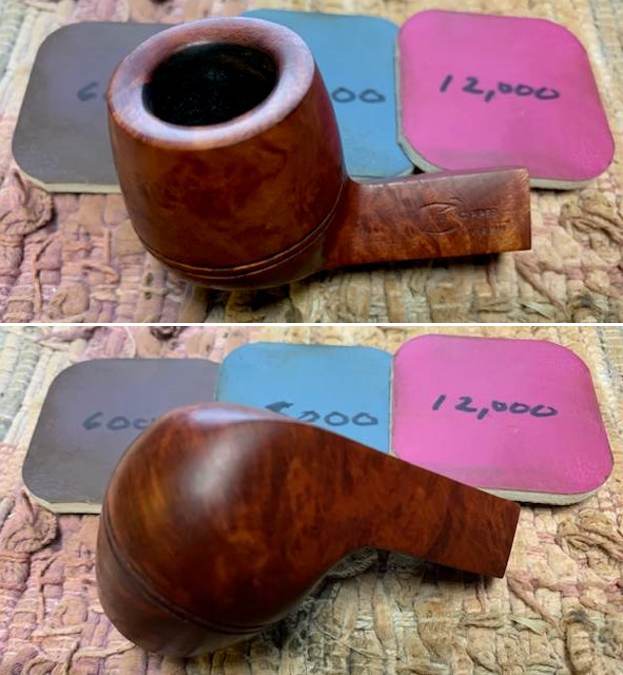
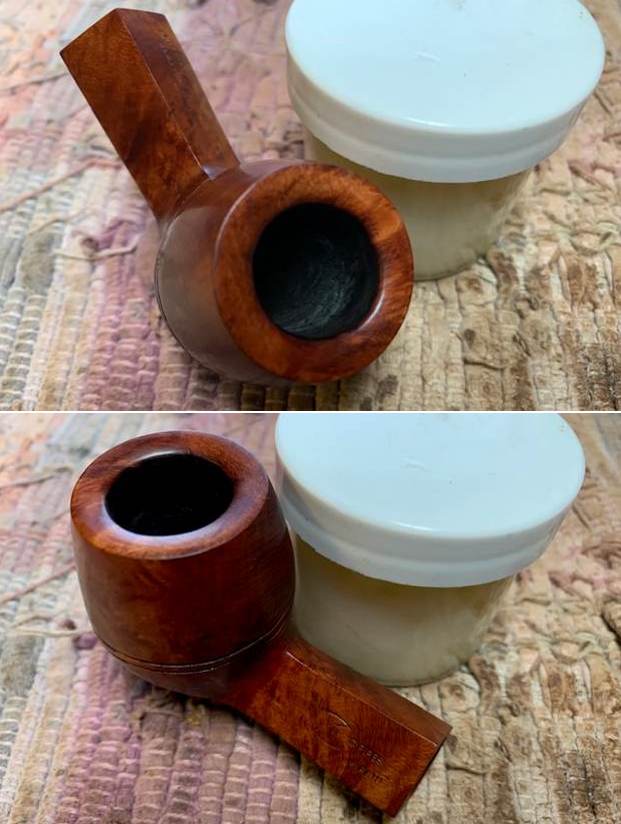
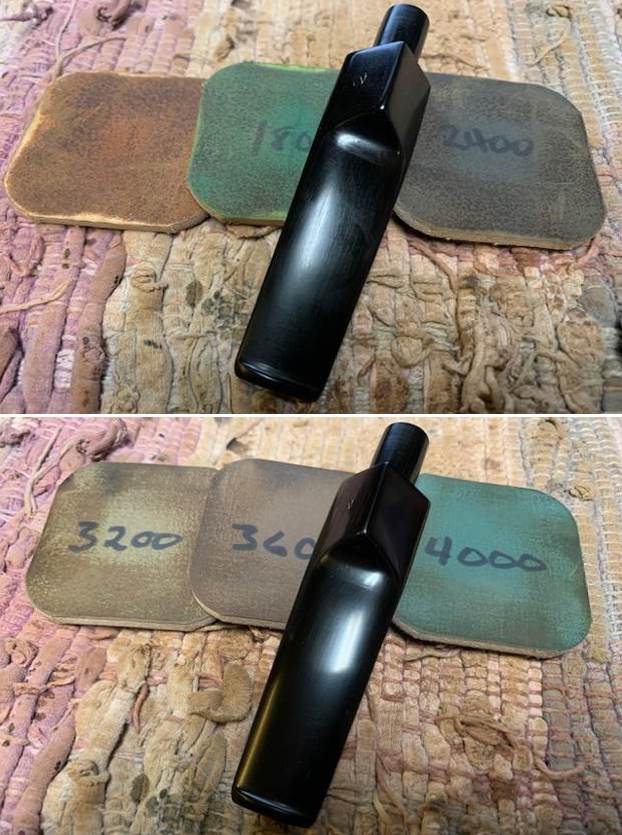
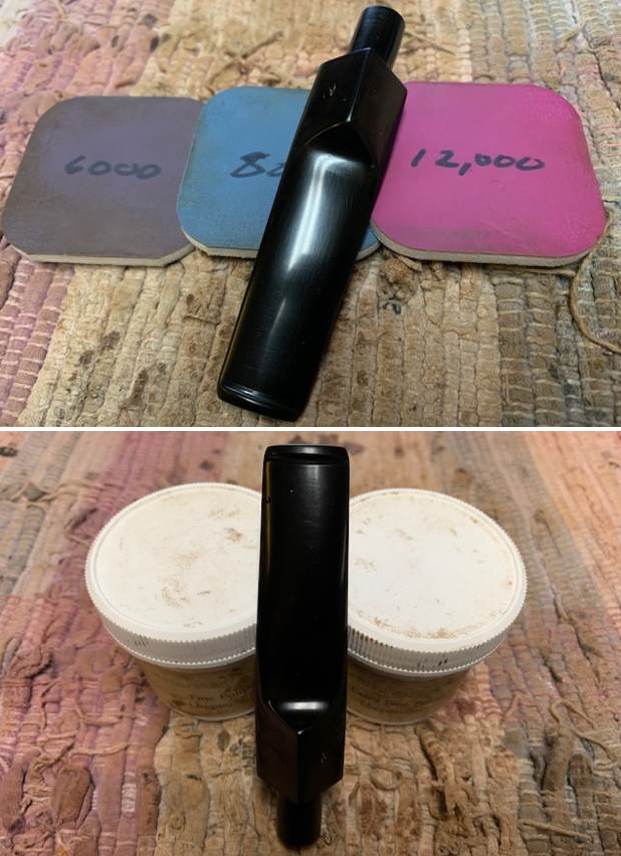
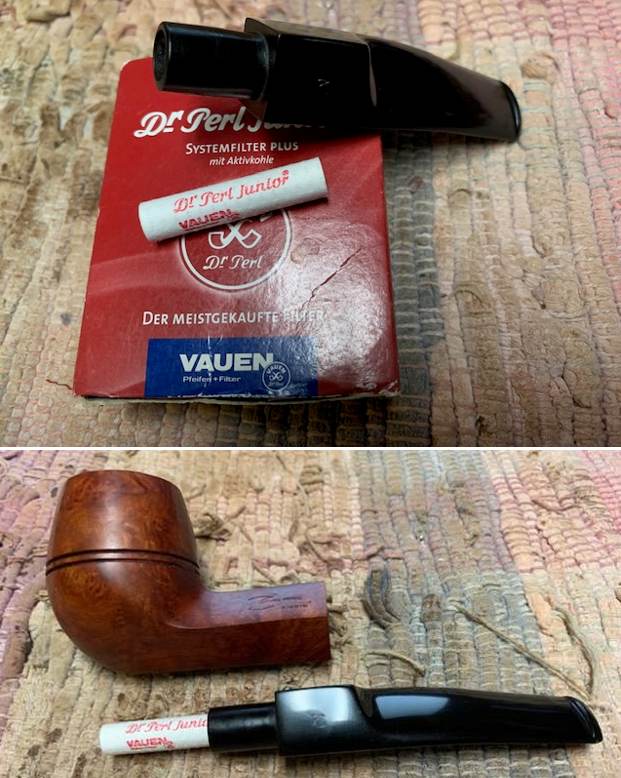
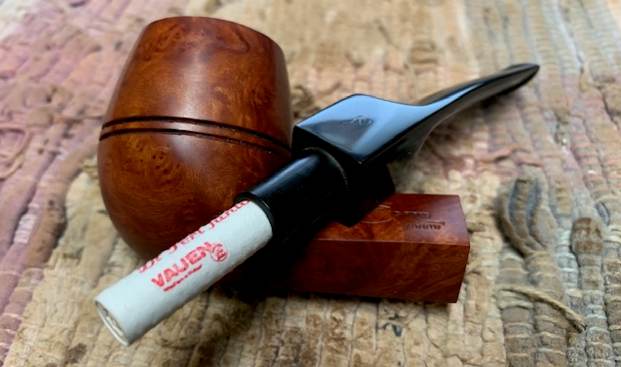
I turned to Pipephil’s site and did a screen capture of the information that was there. There was no addition info but it did show one of the pipes (http://www.pipephil.eu/logos/en/logo-z.html). You can also see the style of the stem and the Z on the top of the stem. Jeff had thoroughly cleaned up the pipe. He reamed the pipe with a PipNet Pipe Reamer and cleaned up the remnants with a Savinelli Fitsall Pipe Knife. He scrubbed the bowl with undiluted Murphy’s Oil Soap with a tooth brush. He rinsed it under running warm water to remove the soap and grime. He cleaned out the inside of the shank and the airway in the stem with alcohol, cotton swabs and pipe cleaners. He scrubbed the exterior of the stem with Soft Scrub to remove the grime and calcification. He soaked the stem in Before & After Deoxidizer and rinsed it off with warm water. The pipe looked very good when it arrived here in Vancouver. I took a photo of the bowl and rim top to show how clean the bowl and the rim top were. You can also see the damage on the rim top and inner edges of the bowl. I took photos of the stem surface to show the condition and tooth marks and chatter on both sides ahead of the button. You can also see how the stem and shank to not fit well together in terms of diameter.I took a photo of the clear and readable stamping on the left side of the shank. I removed the stem from the shank and took a photo of the pipe parts. It is another unique piece. I decided to start my work on the pipe by addressing darkening on the inner edge and give it a slight bevel inward using 220 grit sandpaper. Doing that hid the damage on the inner edge of the bowl and blended it into the surface.Now it was time to polish the bowl and shank with micromesh sanding pads – dry sanding with 1500-12000 grit pads. I wiped the bowl down after each pad to remove the grit. The bowl began to take on a rich shine. It is a beauty. I worked Before & After Restoration Balm deep into the rings around the bowl and the bowl and shank to clean, enliven and protect the briar. I hand rubbed it with my fingers and worked it into the finish. I wiped it off with a soft cloth. I buffed the bowl with a cotton cloth to polish it. It really began to have a deep shine in the briar. I took some photos of the bowl at this point to mark the progress in the restoration. I polished the stem with micromesh sanding pads – 1500-12000 grit pads. I wiped it down with a damp cloth after each sanding pad. I used Before & After Pipe Polish – both Fine and Extra Fine to further polish the stem. I fitted the stem with a 9MM Dr Perl filter. It fit the shank perfectly and did not restrict the draw. I put the Zettervig Virgin Bulldog back together and worked the pipe over on the buffing wheel using Blue Diamond to lightly polish the stem. I buffed the bowl with a light touch so as not to get any of the buffing compounds in the grooves of the rustication. I buffed the stem to raise the gloss on the acrylic. I gave the bowl and the stem multiple coats of carnauba wax. I buffed the entire pipe with a clean buffing pad to raise the shine. I hand buffed it with a microfiber cloth to deepen the shine. The finished Zettervig Virgin well with the black of the acrylic stem. The polishing and the reworking of the stem material left this a beautiful and interesting looking pipe. The dimensions of the pipe are: Length: 6 inches, Height: 1 ¾ inches, Outside Diameter: 1 ¼ inches, Diameter of the chamber: ¾ inches. The weight of the pipe is 1.76 ounces/50 grams. This on will be joining the other Danish Made pipes in the Danish Pipe Makers Section of the rebornpipes store. If you want to add it to your collection let me know. Thanks for walking through the restoration with me.

Breathing New Life into a House of Robertson Rusticated Horn


Blog by Steve Laug

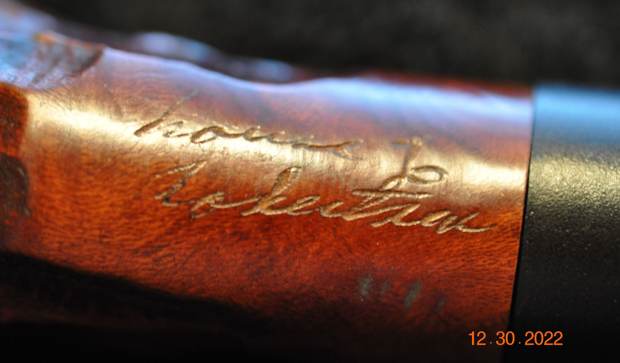
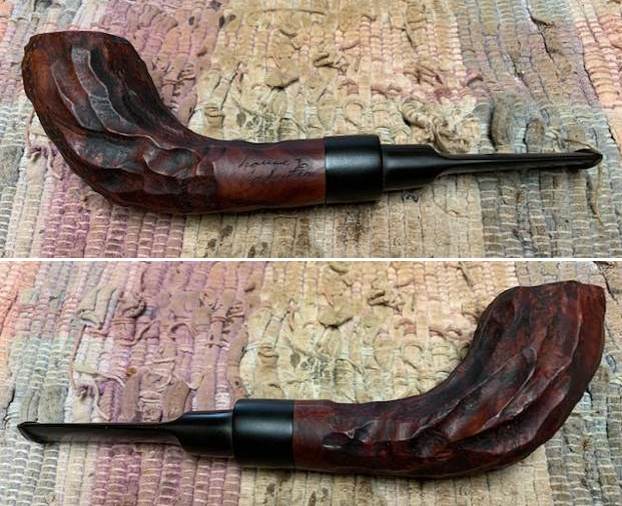
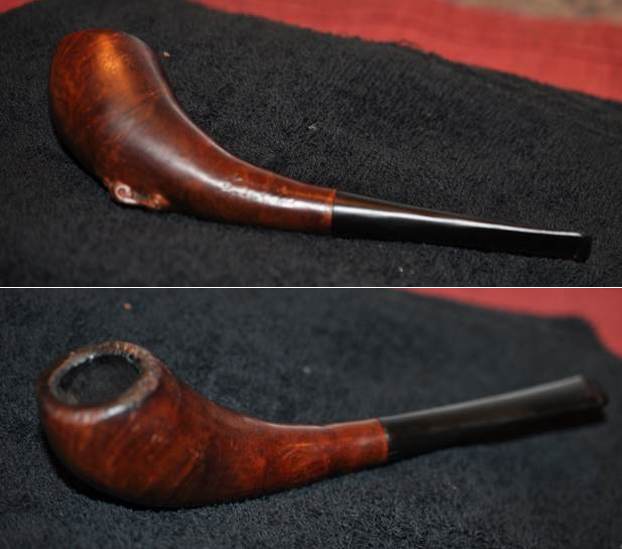
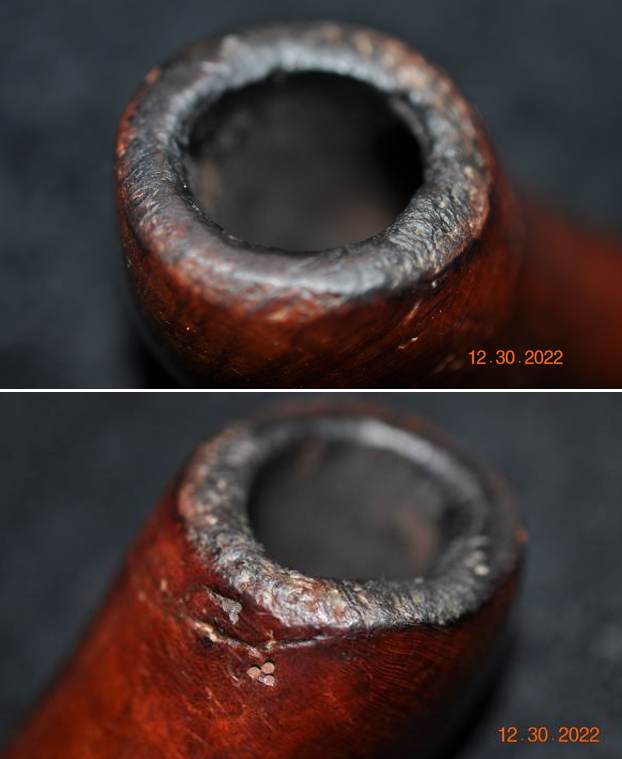
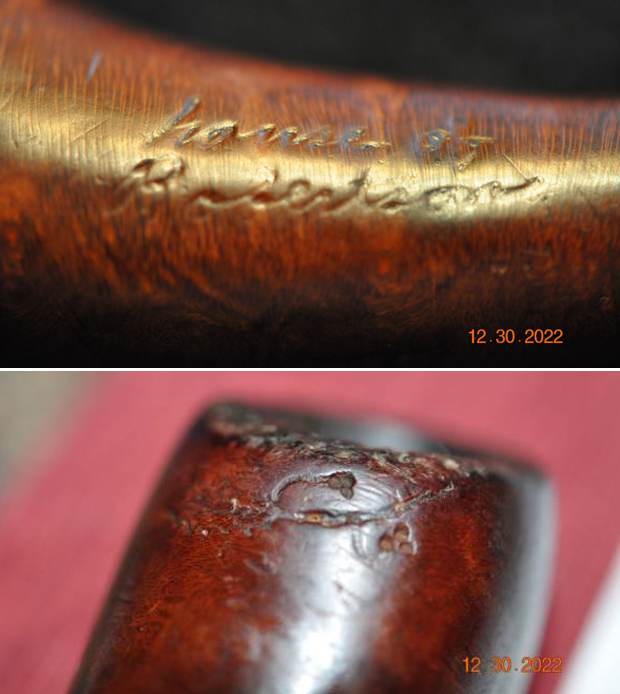
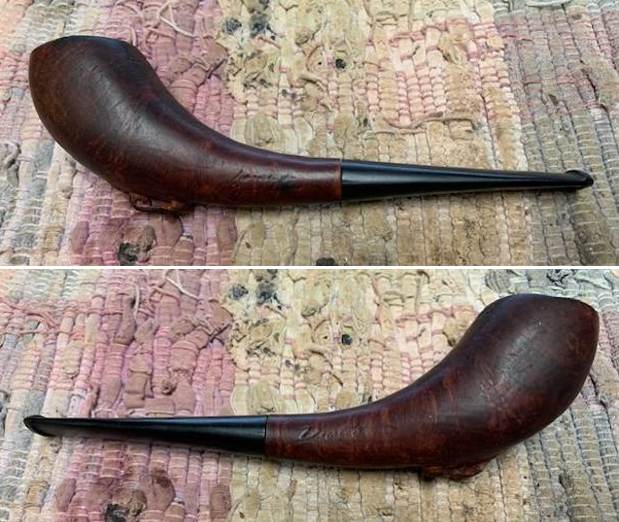
The next pipe on the table was purchased on EBay on 12/20/22 from a fellow in Abita Springs, Louisiana, USA. When Jeff received the pipe he took photos of it to capture what it looked like when he removed it from the box. The pipe was dirty but underneath all of the grime it seemed like it has a great carving around the bowl and shank. The rim top and edges of the bowl had some wear and tear but was redeemable. There was a thin cake in the bowl and a light overflow on the top and edges. The fit of the stem to the shank was off and the diameter of both was slightly different. It had an odd stem set up with what looked like a shank extension with the stem glued into it. The angle of the shank was not straight to the stem was custom fitted against the shank in terms of angles. The tenon fit well in the mortise. There were tooth marks on both sides of the stem ahead of the button and on the button surface itself. Jeff took the following photos of the pipe to show its condition when he received it. He took photos of the rim and bowl to give a sense of what he was dealing with. He also took photos of the stem surfaces to show the condition of the stem when it arrived. The photos of the sides and heel of the bowl show beautiful carving around the bowl and shank sides. The brown stain adds depth finish on the pipe. Even under the grime it is a unique piece. He also took photos of the etched name on the left side of shank. It reads House of Robertson.The pipe has the name House of Robertson roughly hand-etched on the left side of the shank with an engraving tool. I am including the information that I found when I received my first of the House of Robertson Pipes. I found a link on Pipedia (https://pipedia.org/wiki/Robertson) that gave me the only information I could find on the brand. I include that in total as it is interesting to read.
“House of Robertson” was in business for many years, but alas, closed their doors in 1999. They were located in Boise, Idaho. They are noted for making rather large and interesting pipes. Thayne Robertson was a Master Mason, AF & AM, and started the shop about 1947 and his son Jon started working there in 1970 when he finished college, along with Thayne’s daughter. Thayne and his son started making the big pipes at that time, and made them together until 1987 when Thayne passed away. Jon kept the store and his sister moved on to other things. The House of Robertson appears to have closed around 1999.

Jeff had thoroughly cleaned up the pipe. He reamed the pipe with a PipNet Pipe Reamer and cleaned up the remnants with a Savinelli Fitsall Pipe Knife. He scrubbed the bowl with undiluted Murphy’s Oil Soap with a tooth brush. He rinsed it under running warm water to remove the soap and grime. He cleaned out the inside of the shank and the airway in the stem with alcohol, cotton swabs and pipe cleaners. He scrubbed the exterior of the stem with Soft Scrub to remove the grime and calcification. He soaked the stem in Before & After Deoxidizer and rinsed it off with warm water. The pipe looked very good when it arrived here in Vancouver. I took a photo of the bowl and rim top to show how clean the bowl and the rim top were. You can also see the damage on the rim top and inner edges of the bowl. I took photos of the stem surface to show the condition and tooth marks and chatter on both sides ahead of the button. You can also see how the stem and shank to not fit well together in terms of diameter.I took a photo of the clear and readable stamping on the left side of the shank. I removed the stem from the shank and took a photo of the pipe parts. It is another unique piece. I decided to start my work on the pipe by addressing the fit of the stem to the shank. With the stem in place on the shank I sanded the shank and stem fit to have a smooth transition. It took a lot of work to get it very smooth. Fortunately, the shank end was smooth so I did not have to damage the rustication on the shank. Once I finished sanding the transition was smooth and the fit was right. I then used a folded piece of 220 grit sandpaper to clean up the inner edge and give it a slight bevel inward. Doing that hid the damage on the inner edge of the bowl and blended it into the surface.Now it was time to polish the smooth portions of the bowl and shank with micromesh sanding pads – dry sanding with 1500-12000 grit pads. I wiped the bowl down after each  pad to remove the grit. The bowl began to take on a rich shine. It is a beauty. I gave the bowl a light coat of Restoration Balm and sanded the smooth portions further. The pipe took on some charm and the grain shone through. I worked Before & After Restoration Balm deep into the nooks and crannies of the carvings to clean, enliven and protect the briar. I hand rubbed it with my fingers and worked it into the finish with a horsehair shoe brush. I wiped it off with a soft cloth. I buffed the bowl with a cotton cloth to polish it. It really began to have a deep shine in the briar. I took some photos of the bowl at this point to mark the progress in the restoration. I set the bowl aside and turned my attention to the stem. I sanded the shape of the saddle and the tooth marked areas with 220 grit sandpaper and started polishing it with 600 grit wet dry sandpaper. I polished the stem with micromesh sanding pads – 1500-12000 grit pads. I wiped it down with a damp cloth after each sanding pad. I used Before & After Pipe Polish – both Fine and Extra Fine to further polish the stem. I put the House of Robertson Rusticated Horn back together and worked the pipe over on the buffing wheel using Blue Diamond to lightly polish the stem. I buffed the bowl with a light touch so as not to get any of the buffing compounds in the grooves of the rustication. I buffed the stem to raise the gloss on the vulcanite. I gave the bowl and the stem multiple coats of carnauba wax. I buffed the entire pipe with a clean buffing pad to raise the shine. I hand buffed it with a microfiber cloth to deepen the shine. The finished HOR Rusticated Horn is shown in the photos below. The medium brown stains on the well grained briar worked well with the black of the vulcanite stem. The polishing and the reworking of the stem material left this a beautiful and interesting looking pipe. The dimensions of the pipe are: Length: 7 inches, Height: 2 ¼ inches, Outside Diameter: 1 ¼ inches, Diameter of the chamber: ¾ inches. The weight of the pipe is 2.36 ounces/68 grams. This would be a great addition to the collection of a House of Robertson aficionado. Thanks for looking.

Trying to Breathe Life into a House of Robertson Drinking Horn


Blog by Steve Laug

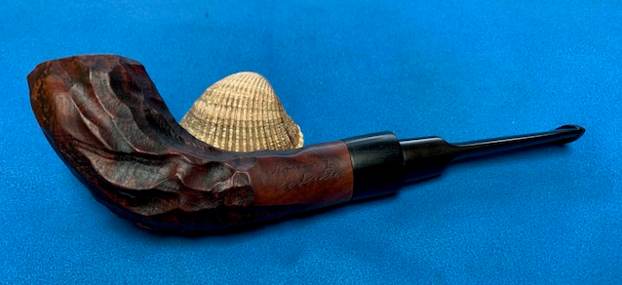
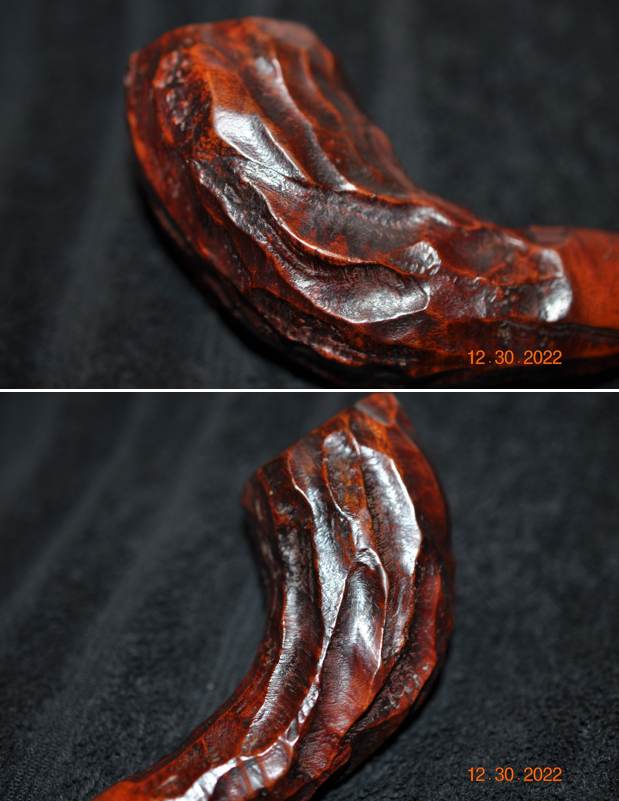
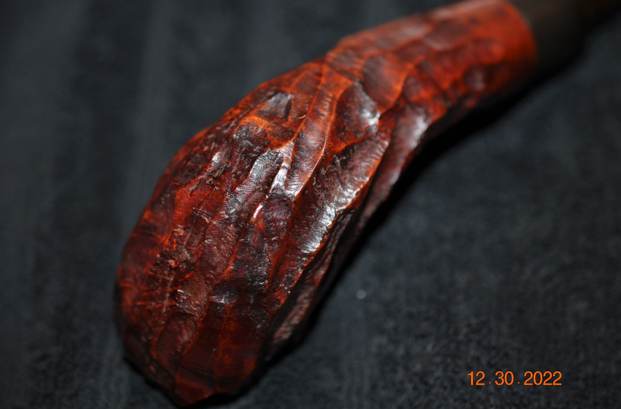
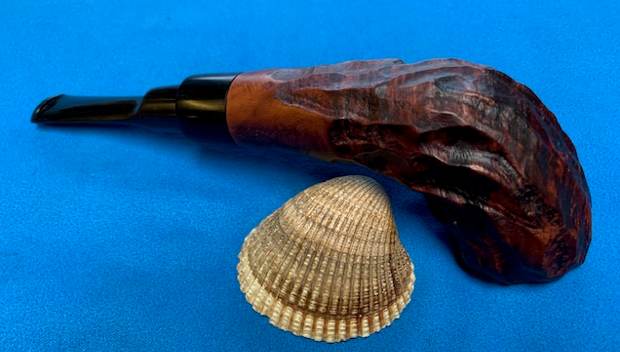
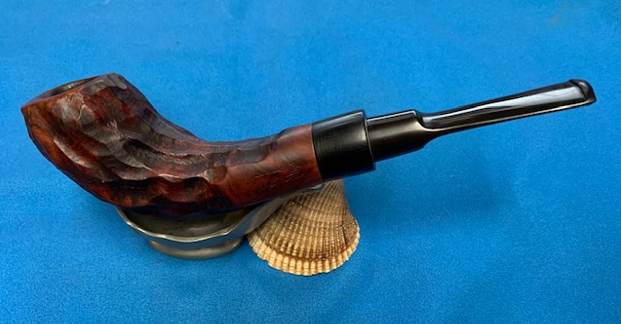
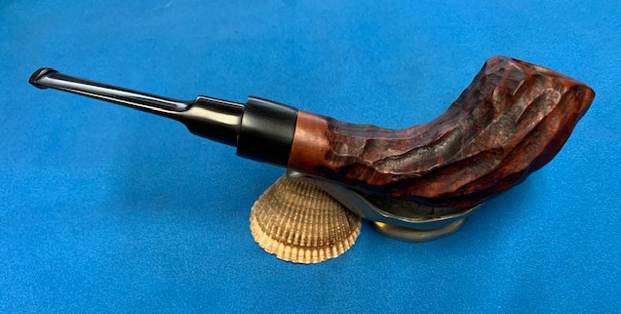
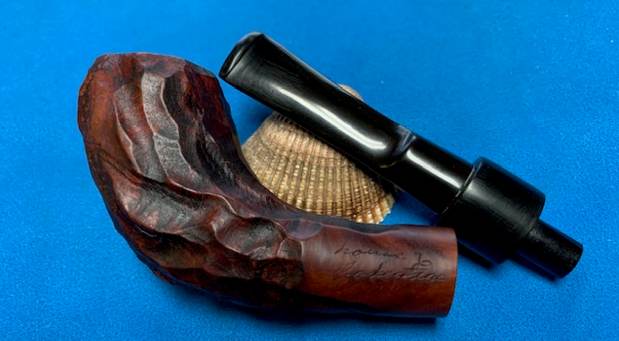
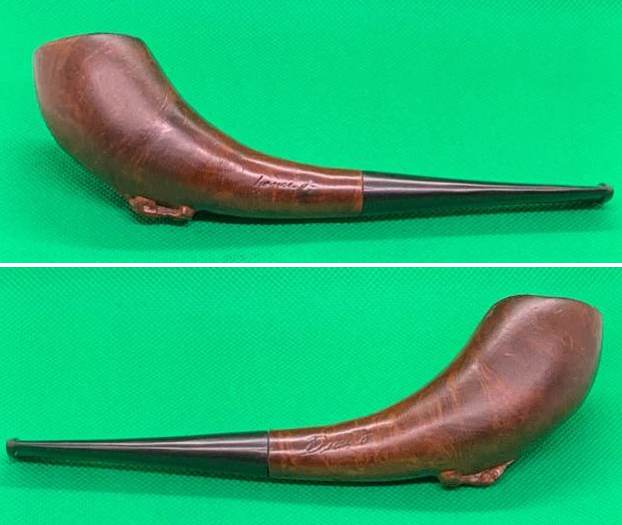
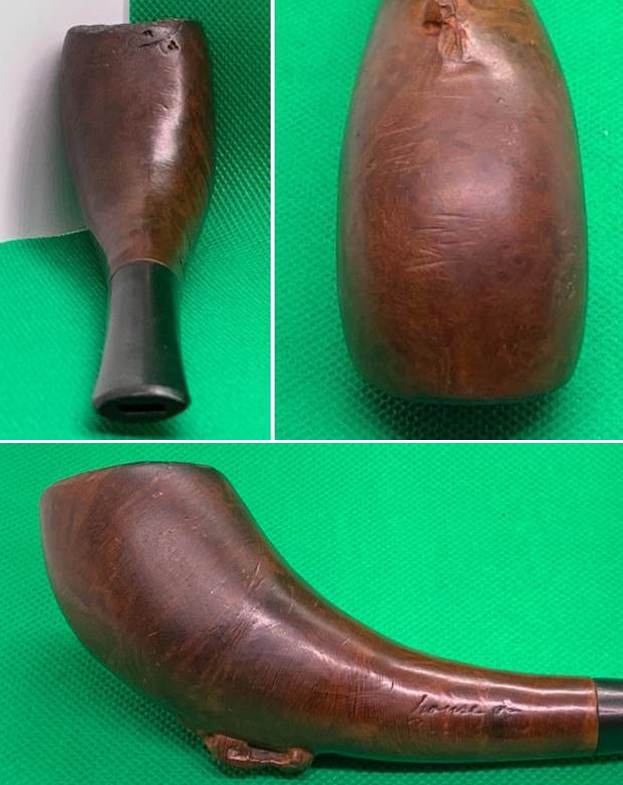
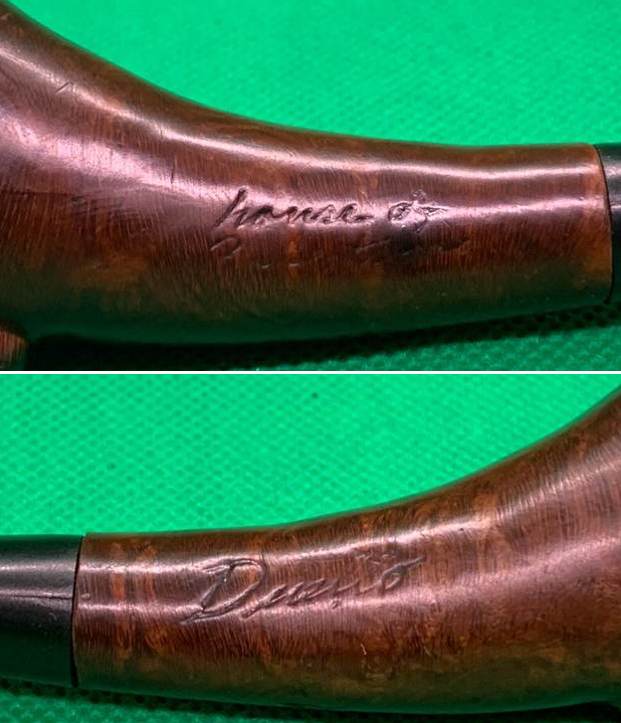
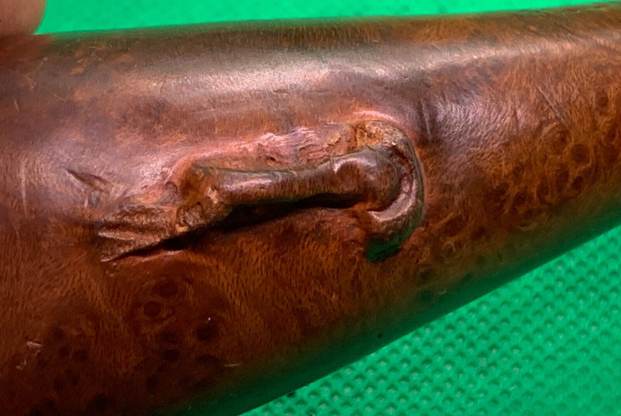
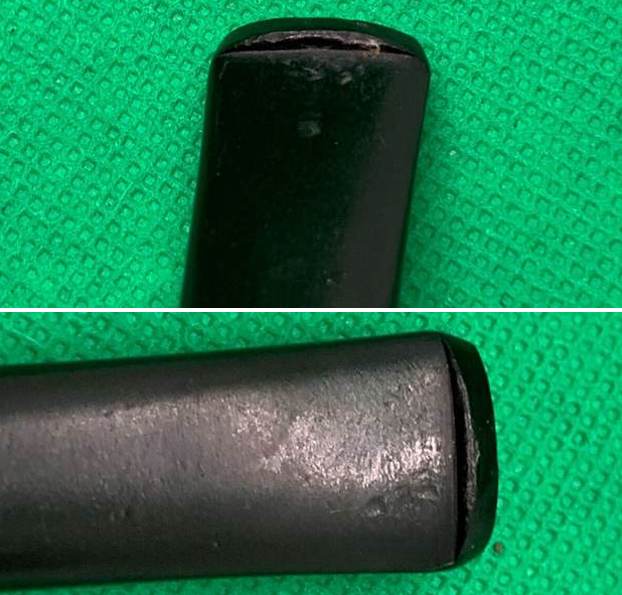
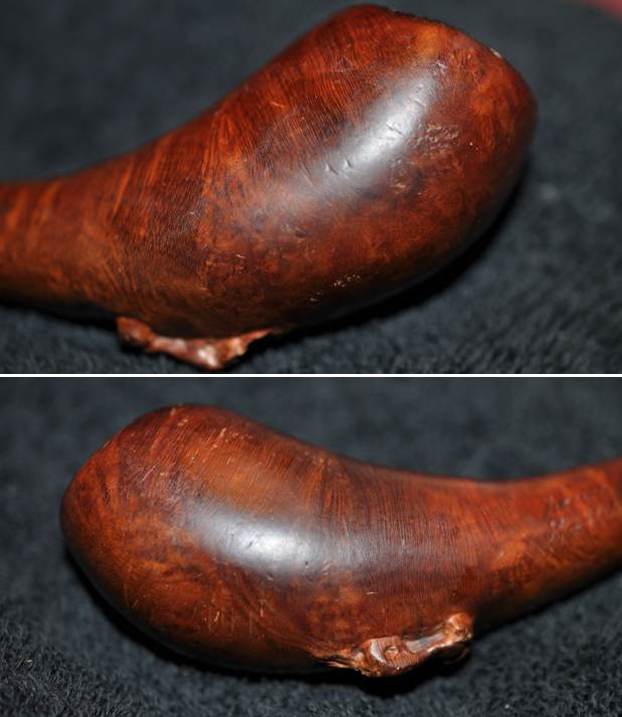
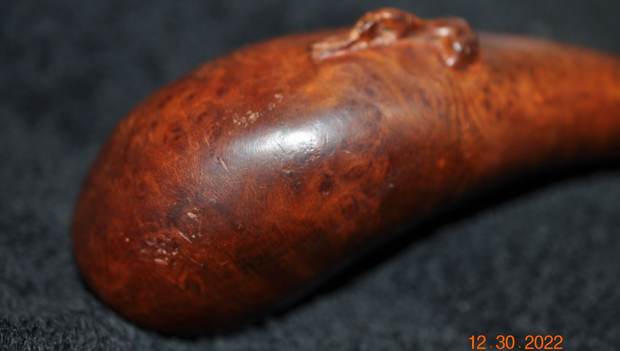
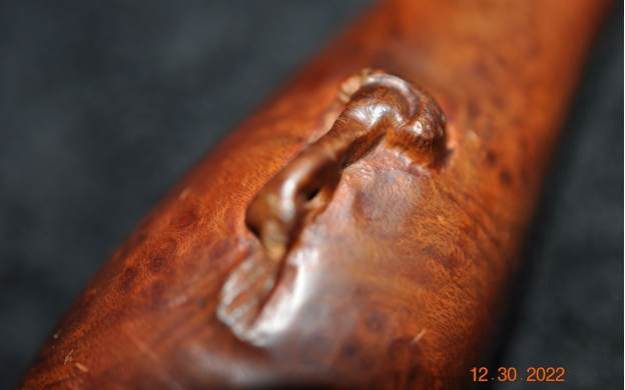
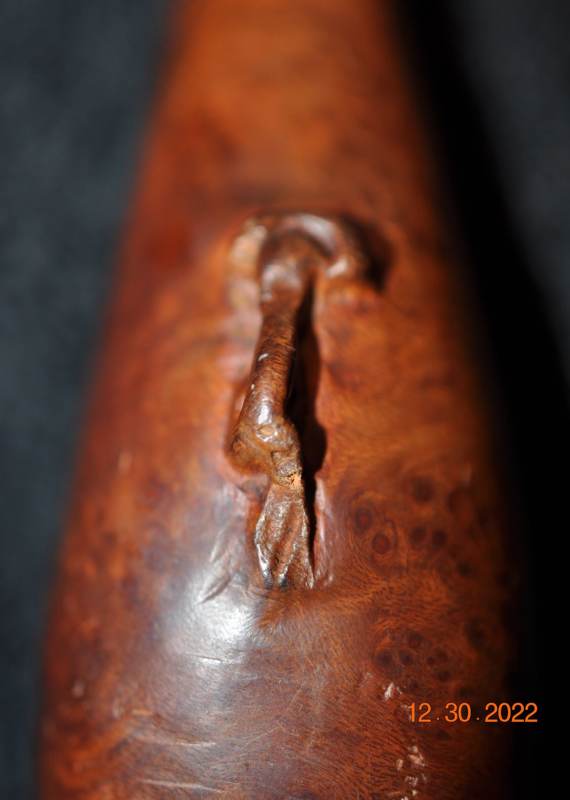
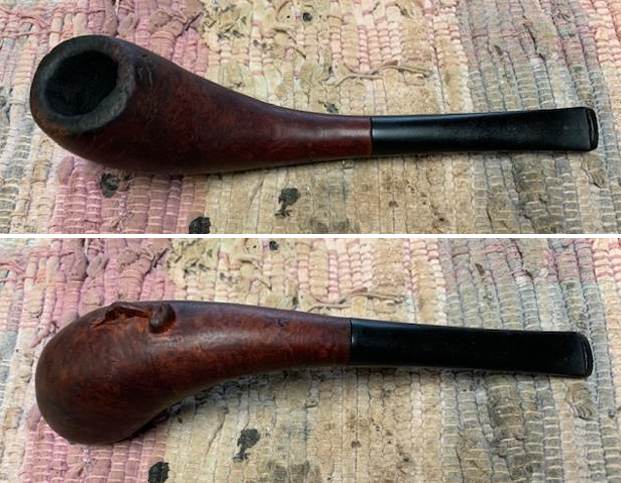
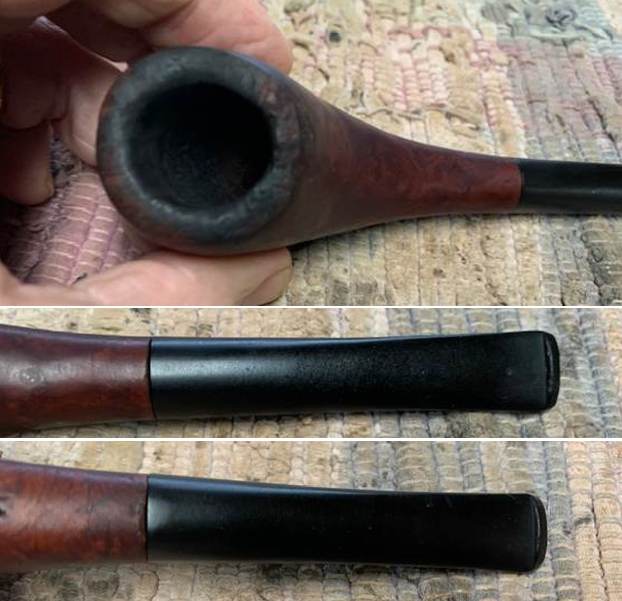
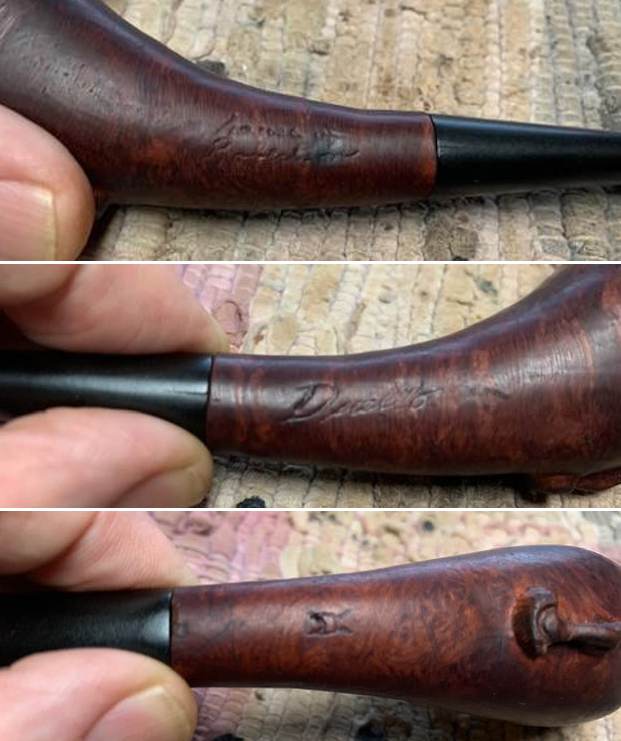
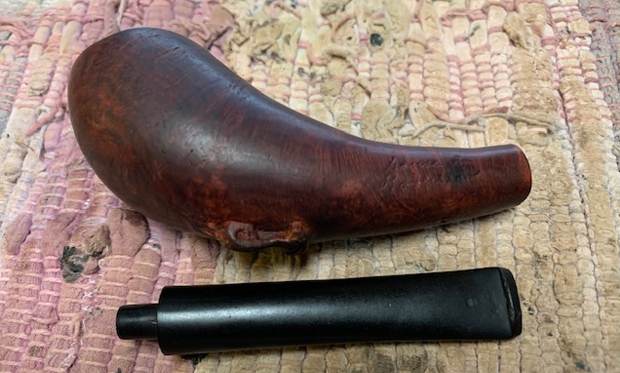
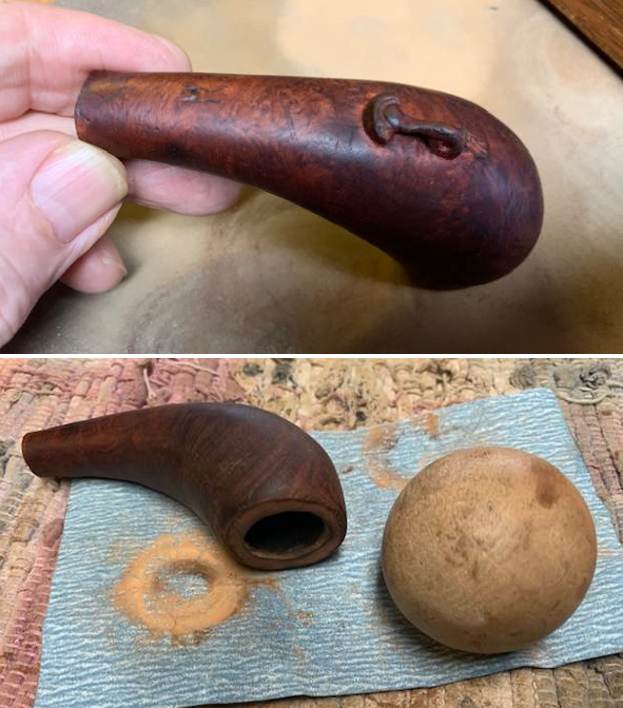
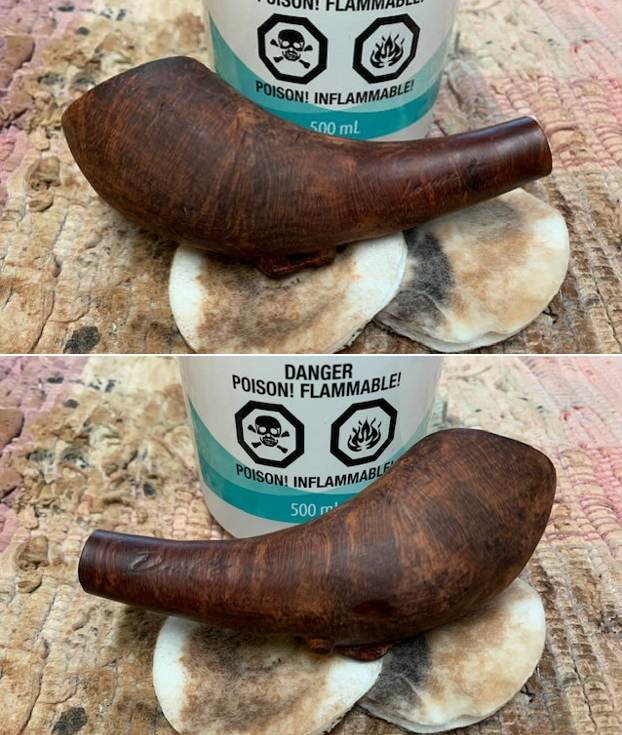
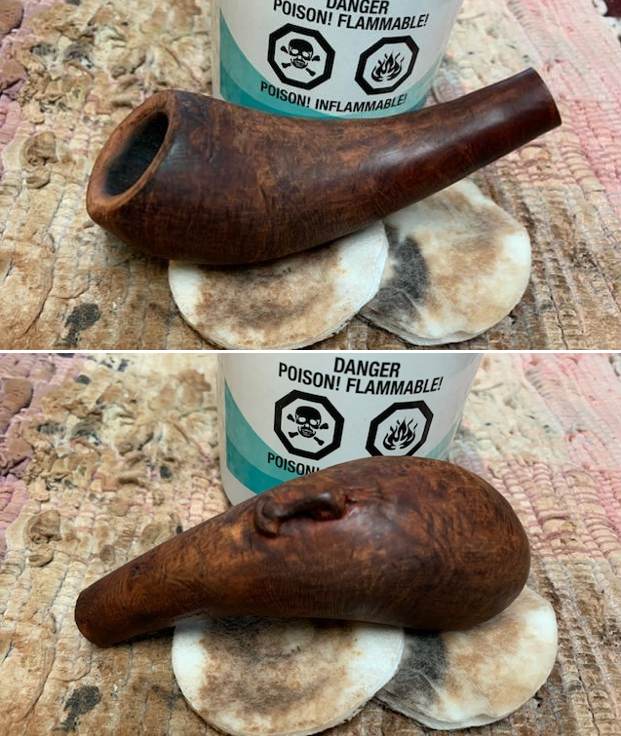
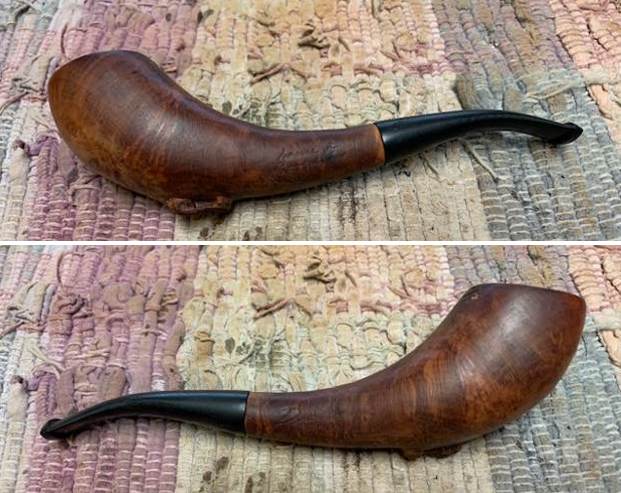
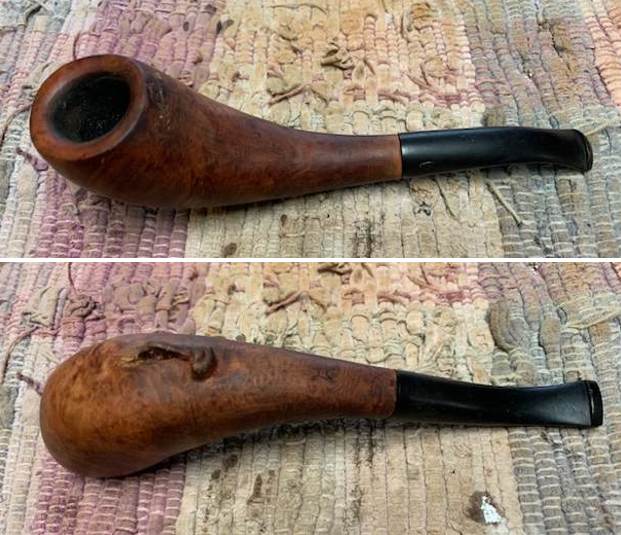
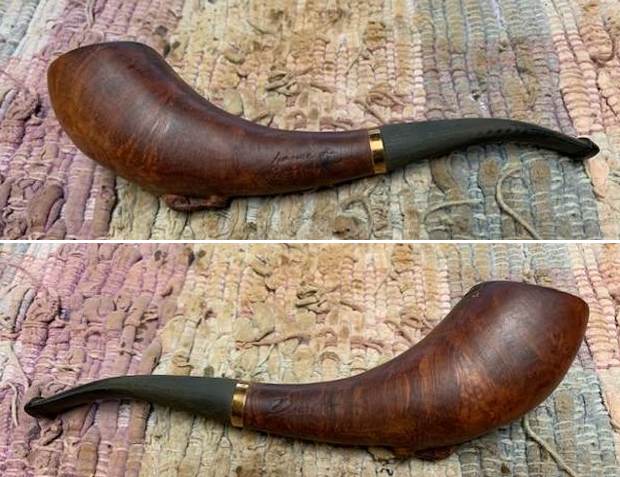
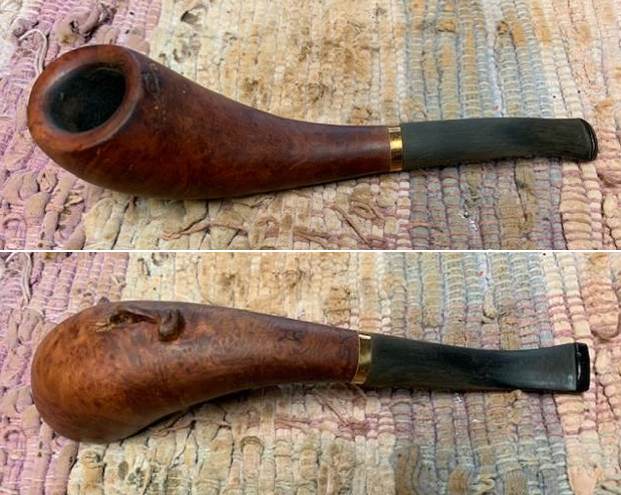
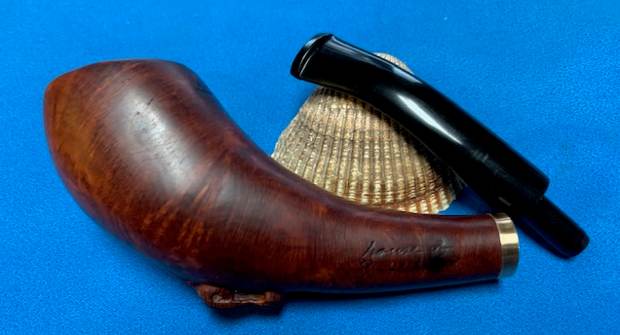
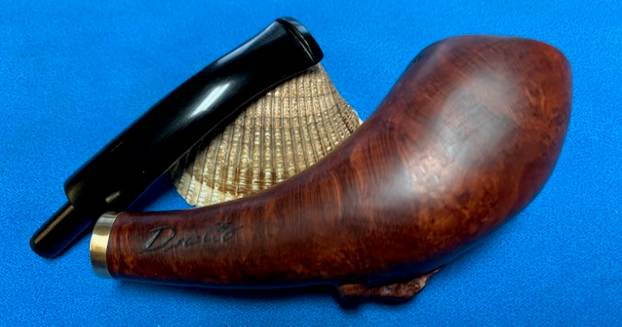
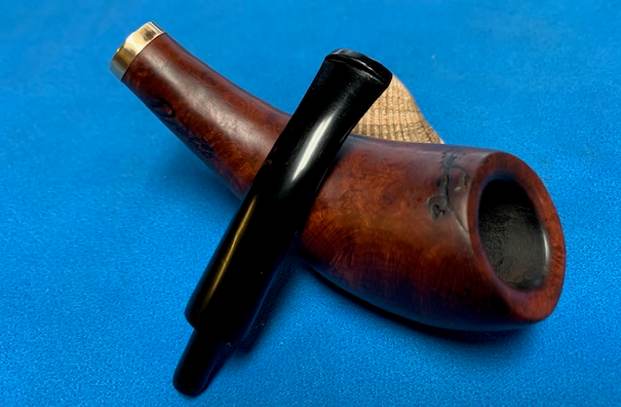
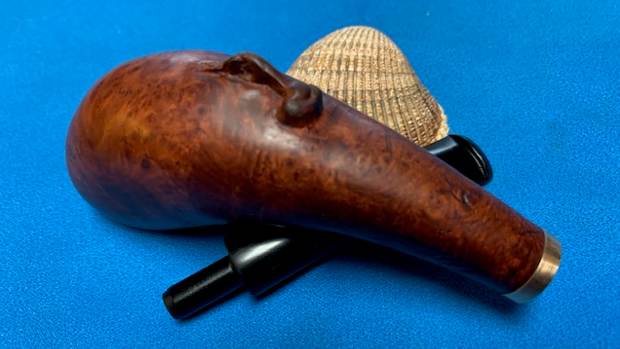
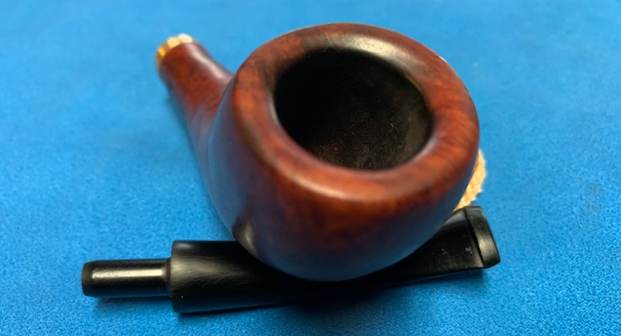
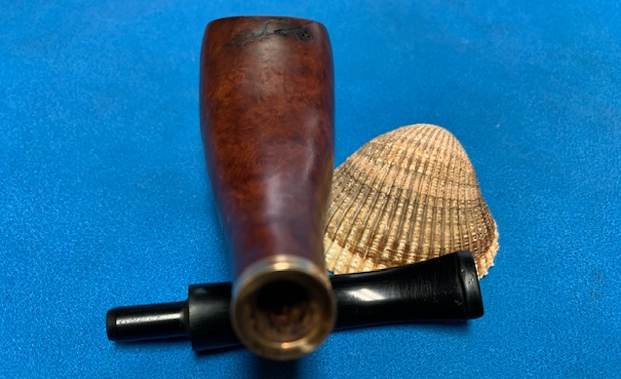
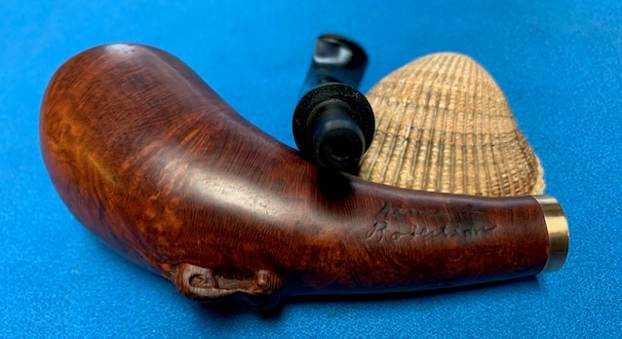
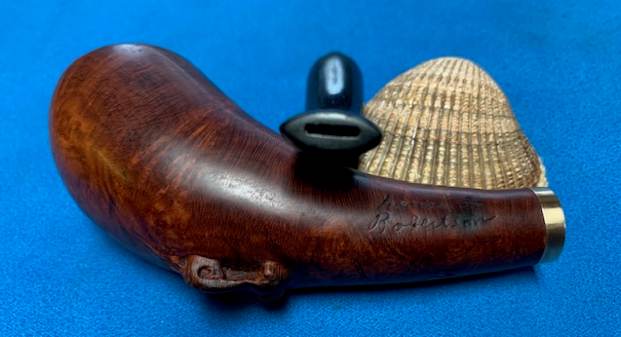
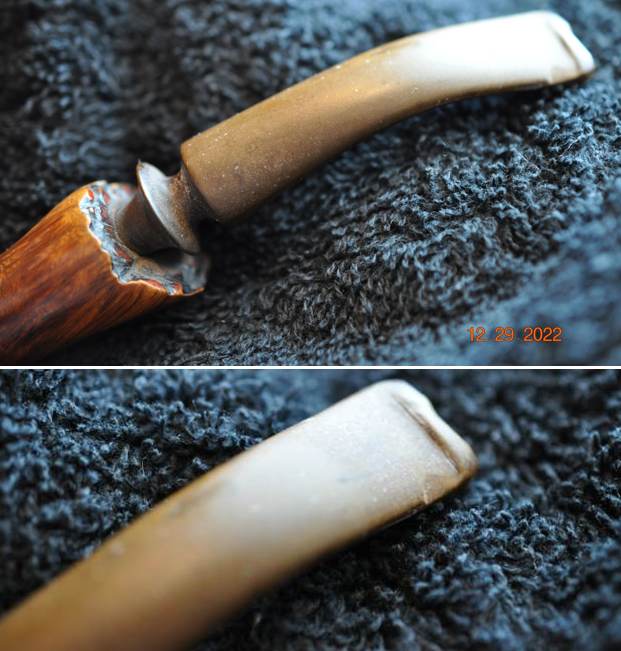
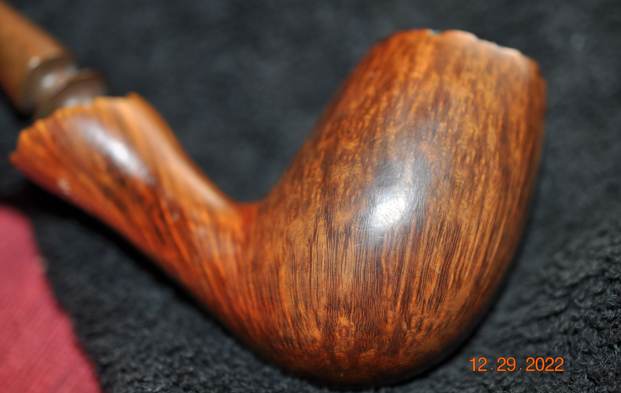
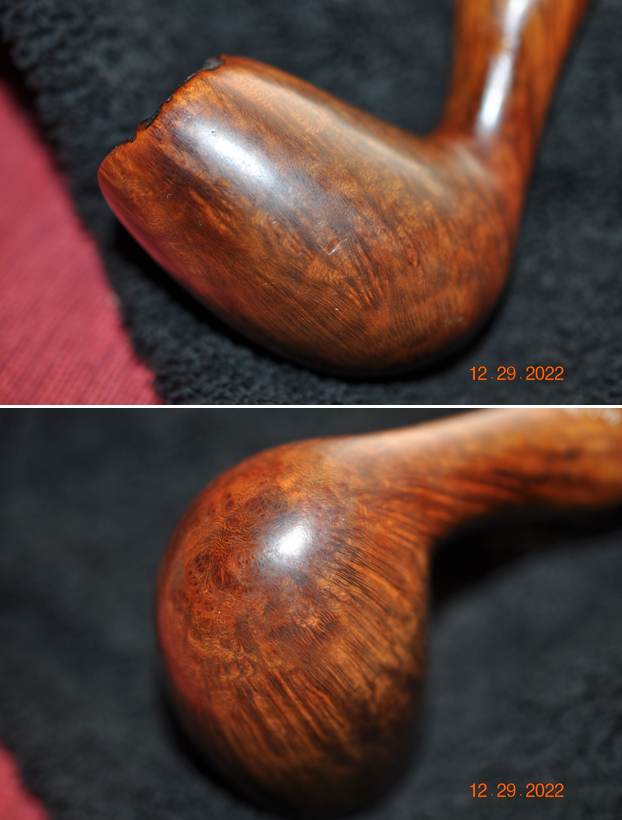
This very beat up, large, long House of Robertson Horn Shape Pipe is the next pipe I chose to work on. We purchased it on EBay on 10/31/22 from a seller in Abita Springs, Louisiana, USA. It is quite different from the other pipes from this Boise based store that I have worked on. It is a Horn that is stamped on the left side of the shank and reads House of Robertson (two lines). On the right side it is stamped Duello. On the underside of the shank it is carved with what looks like a helmet or a cup. There is carved branch with grapes on the back top of the bowl. There was a carved object on the underside of the shank that allows the pipe to be a sitter. It seems to look like a twisted vine carved into the bottom of the bowl. I am including photos below that were included by the seller in his EBay listing. The first two show the sides of the bowl.The next series of photos show the grain around the bowl and the stamping on the shank sides.He included photos of the stamping on the sides of the shank and the carving on the underside of the shank.The stem had tooth marks and wear on both sides ahead of the button and on the surface of the button itself.He included a photo of the bowl with the stem removed. It is a pipe with a lot of potential.The pipe has the name House of Robertson roughly hand-etched on the left side of the shank with an engraving tool. I am including the information that I found when I received my first of the House of Robertson Pipes. I found a link on Pipedia (https://pipedia.org/wiki/Robertson) that gave me the only information I could find on the brand. I include that in total as it is interesting to read.

 “House of Robertson” was in business for many years, but alas, closed their doors in 1999. They were located in Boise, Idaho. They are noted for making rather large and interesting pipes. Thayne Robertson was a Master Mason, AF & AM, and started the shop about 1947 and his son Jon started working there in 1970 when he finished college, along with Thayne’s daughter. Thayne and his son started making the big pipes at that time, and made them together until 1987 when Thayne passed away. Jon kept the store and his sister moved on to other things. The House of Robertson appears to have closed around 1999.

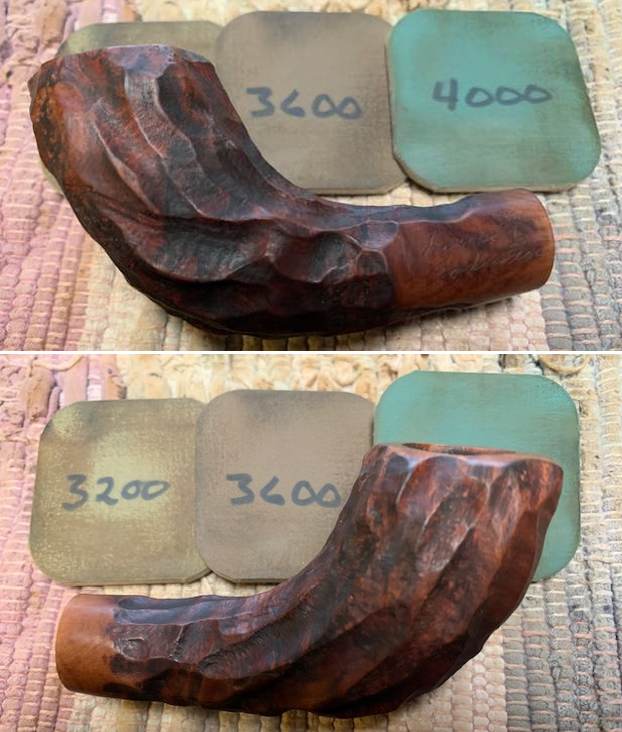
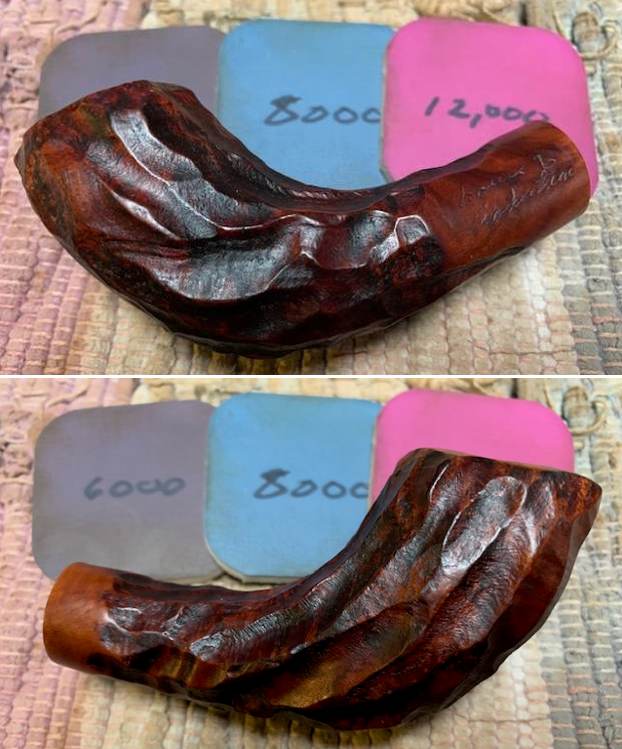
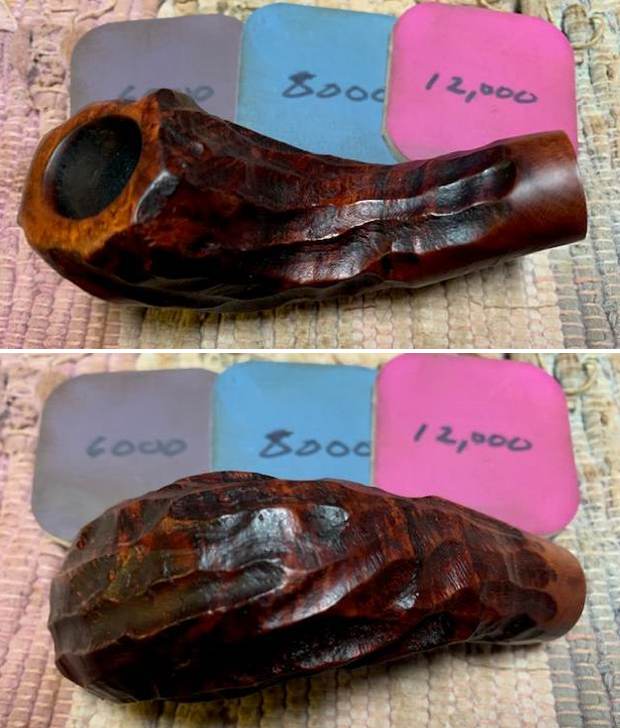
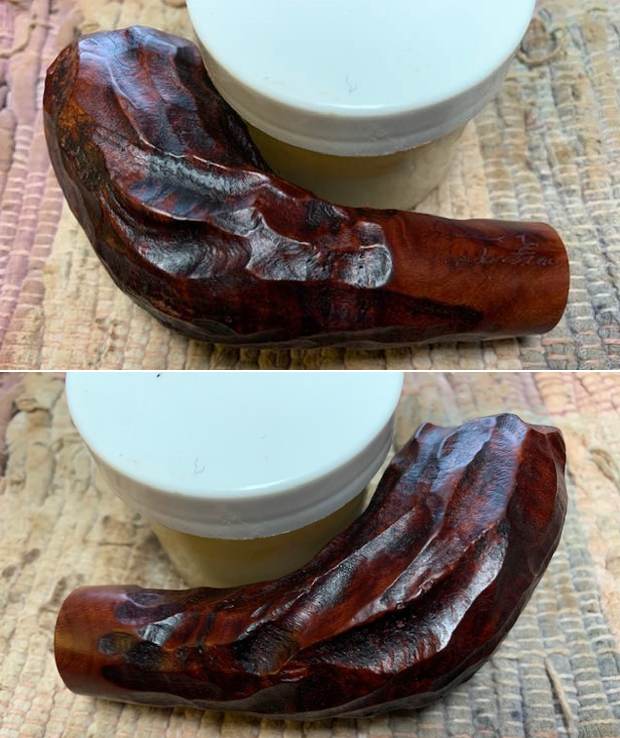
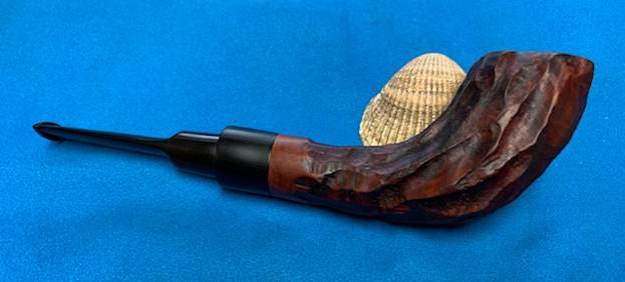
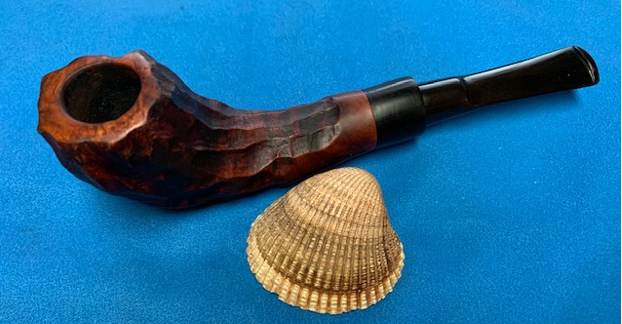
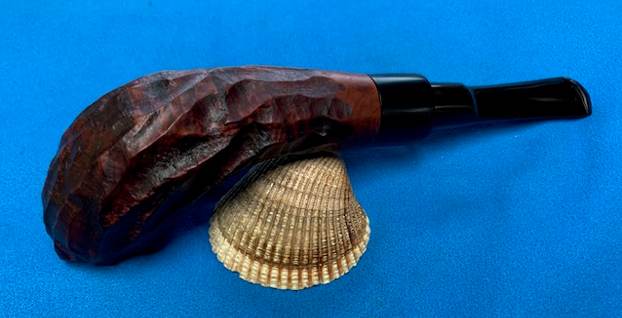
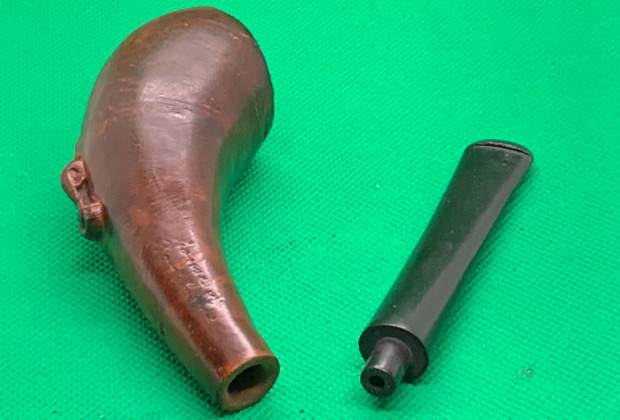
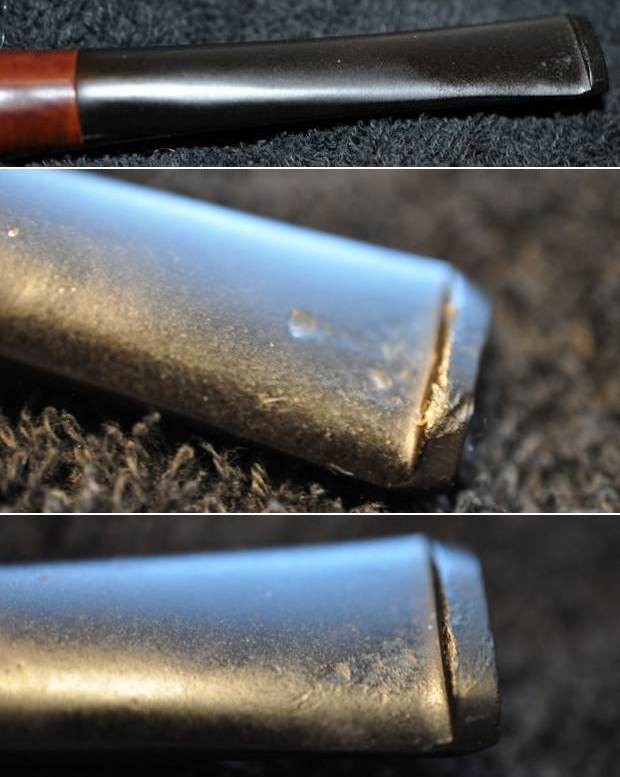
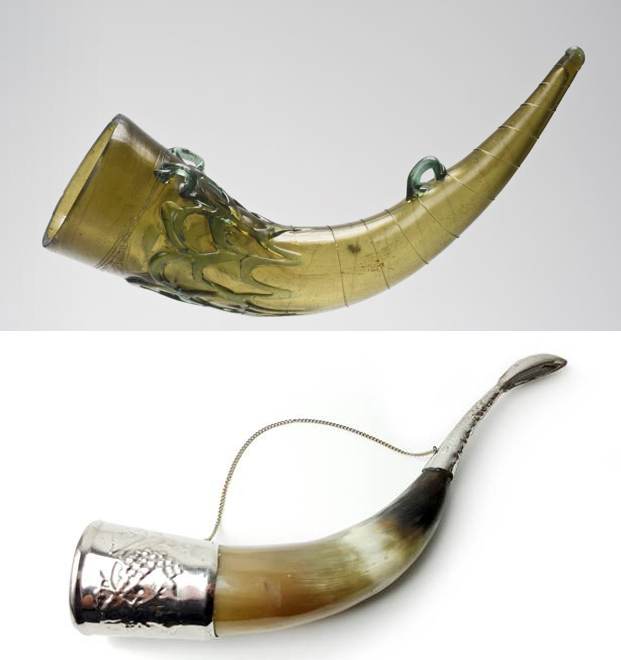
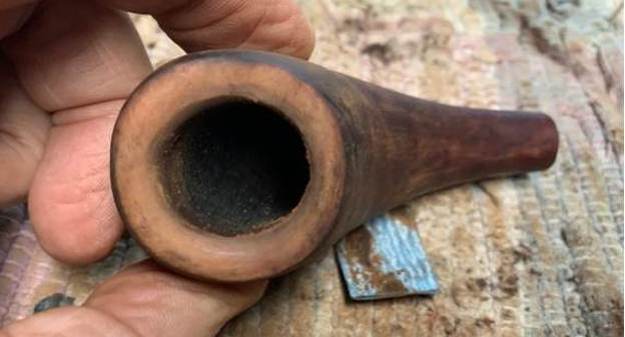
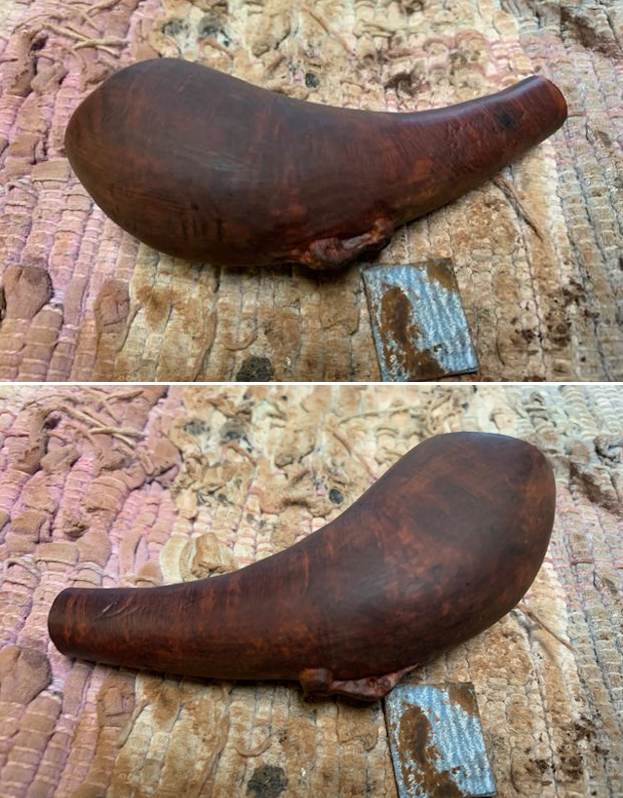
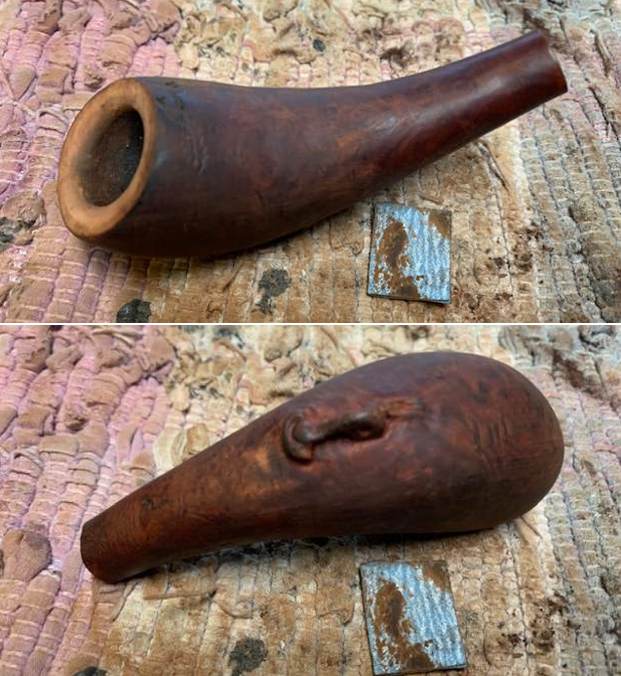
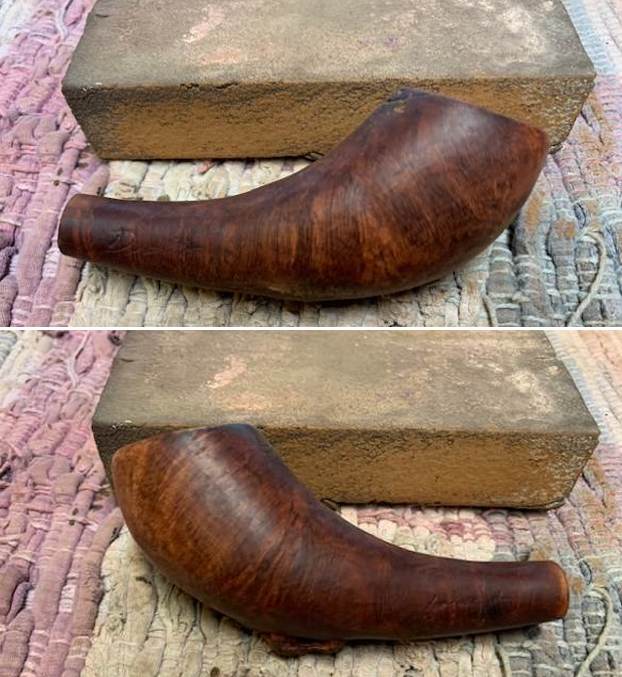
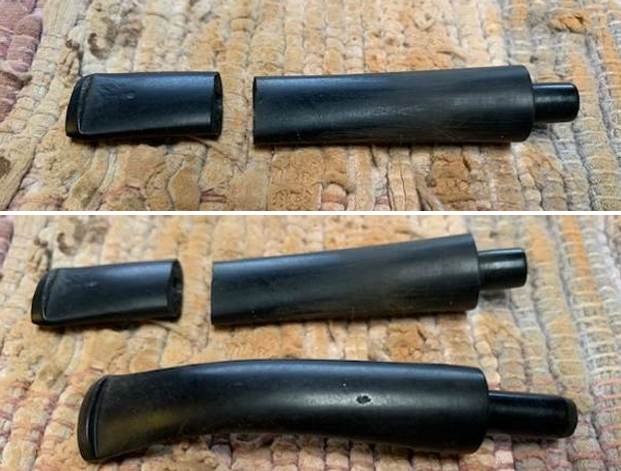
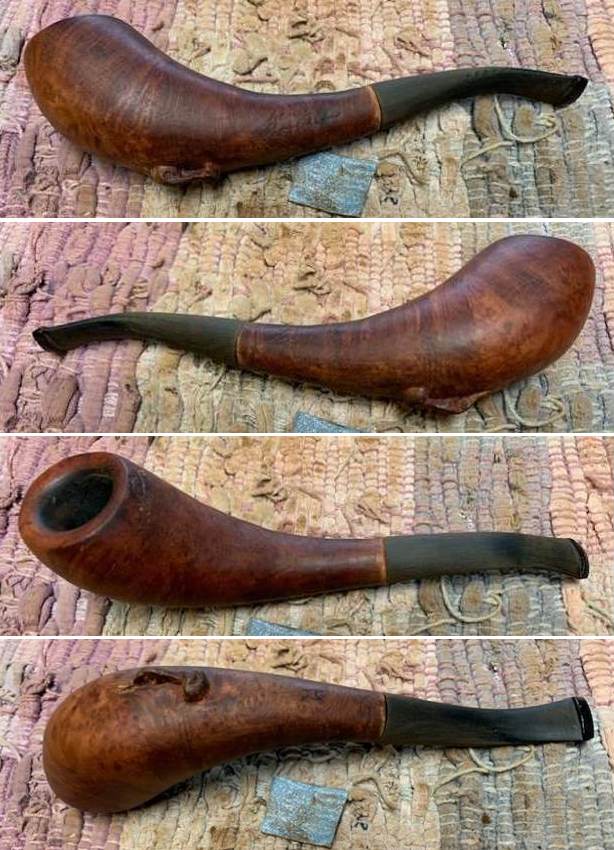
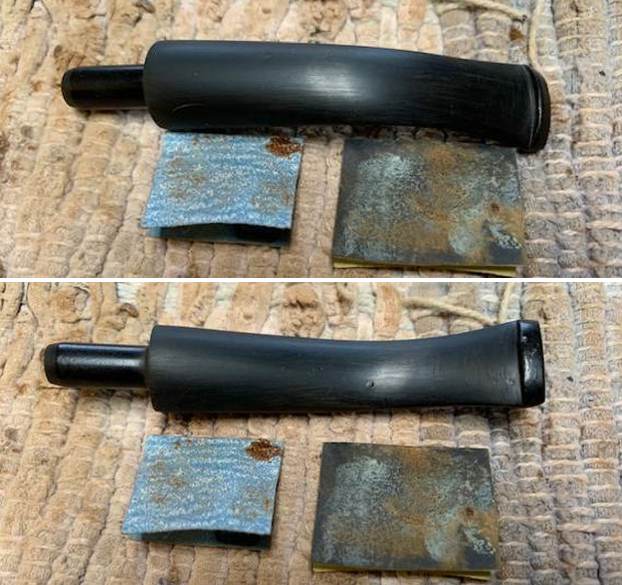
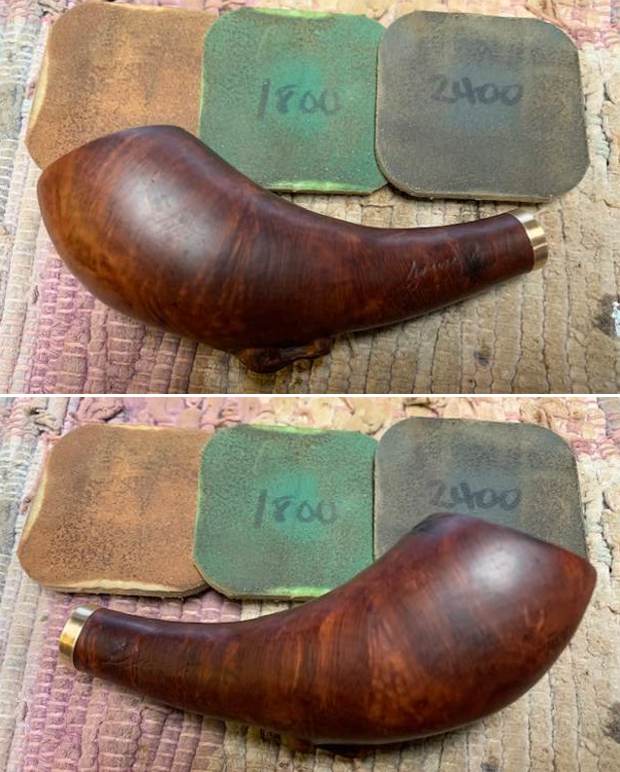
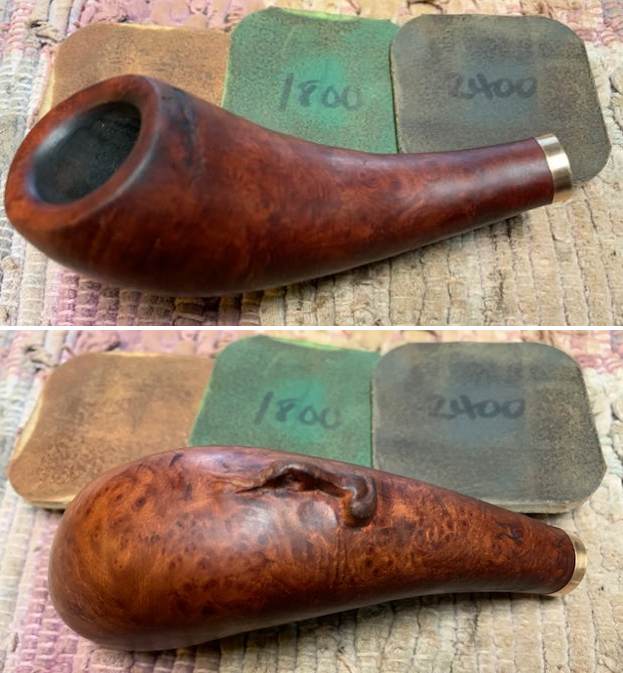
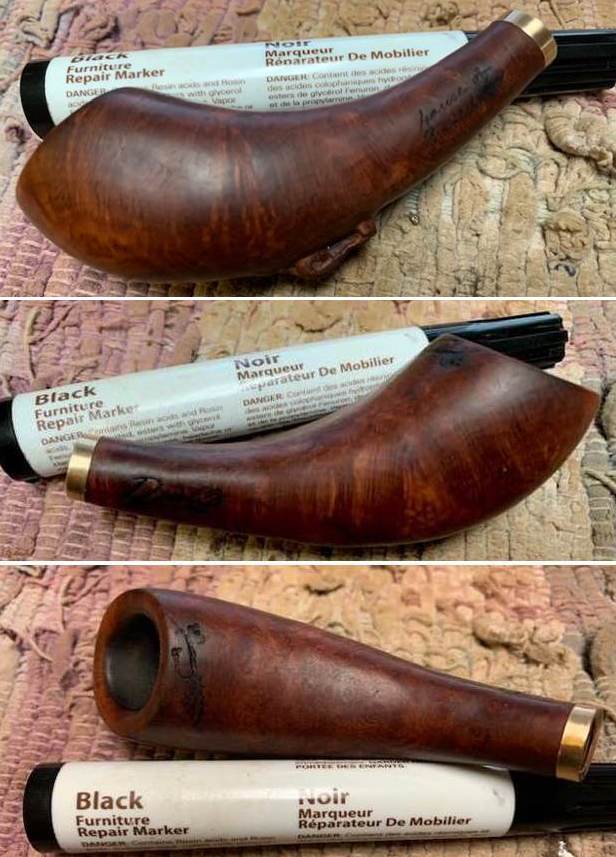
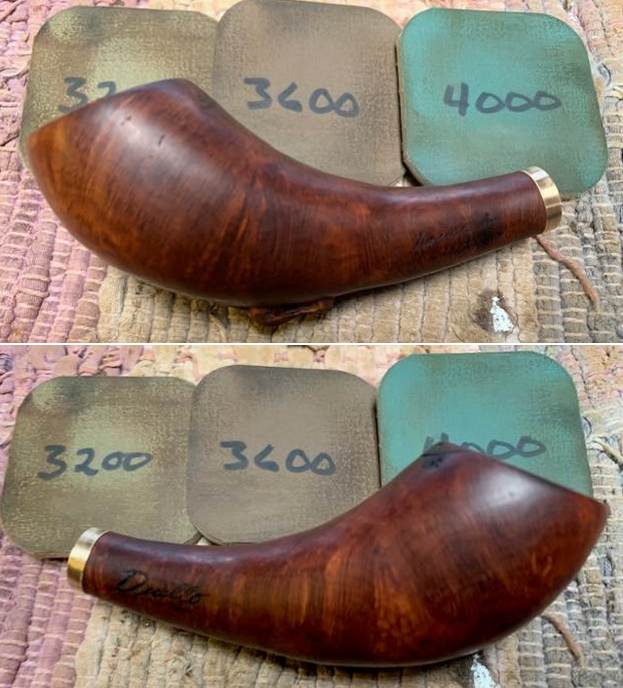
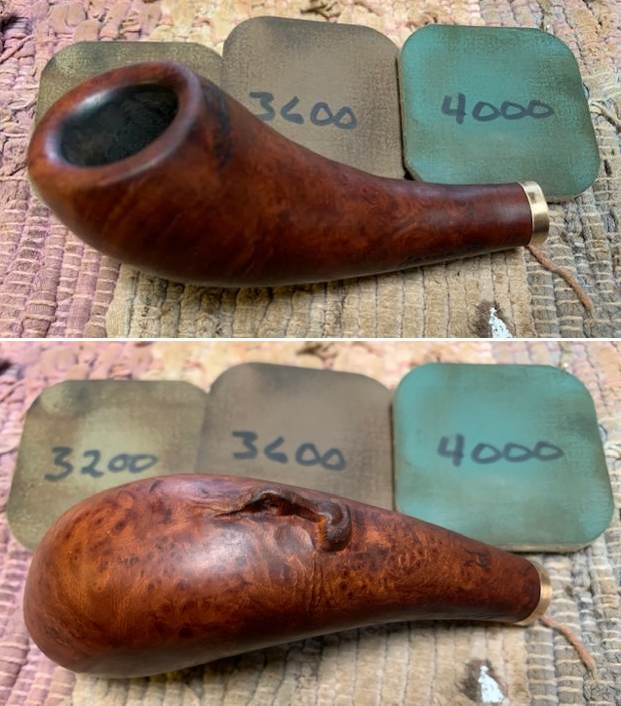
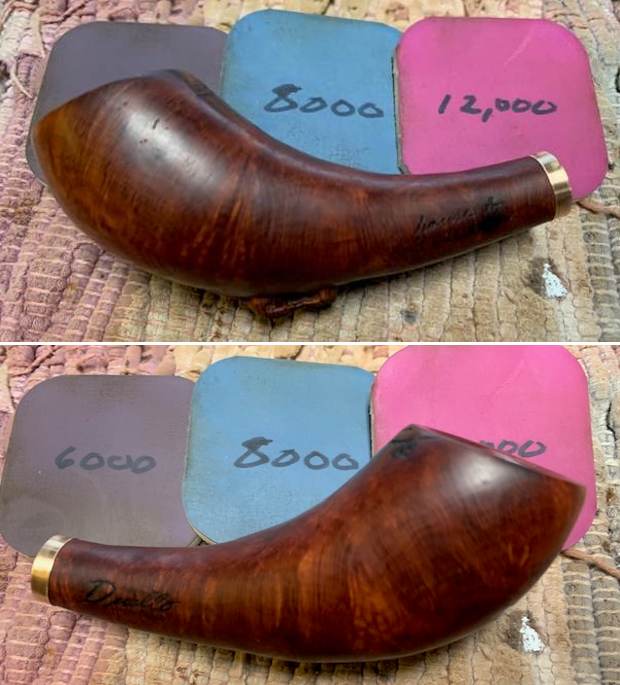
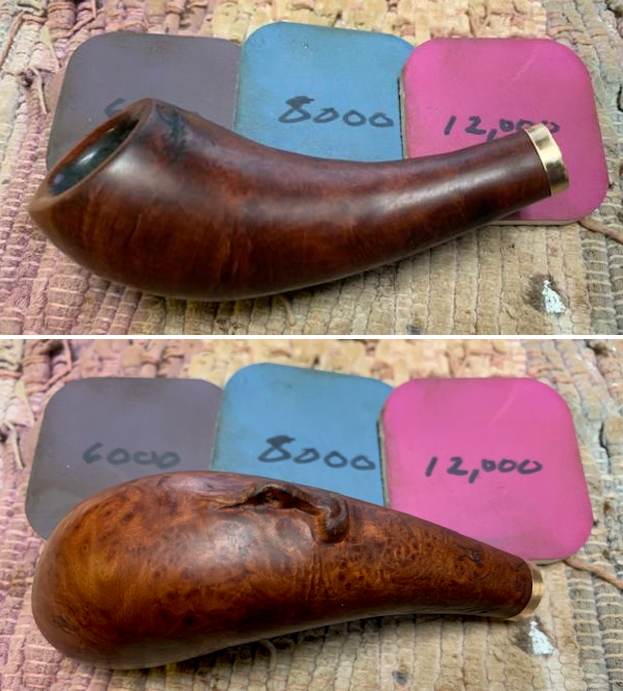
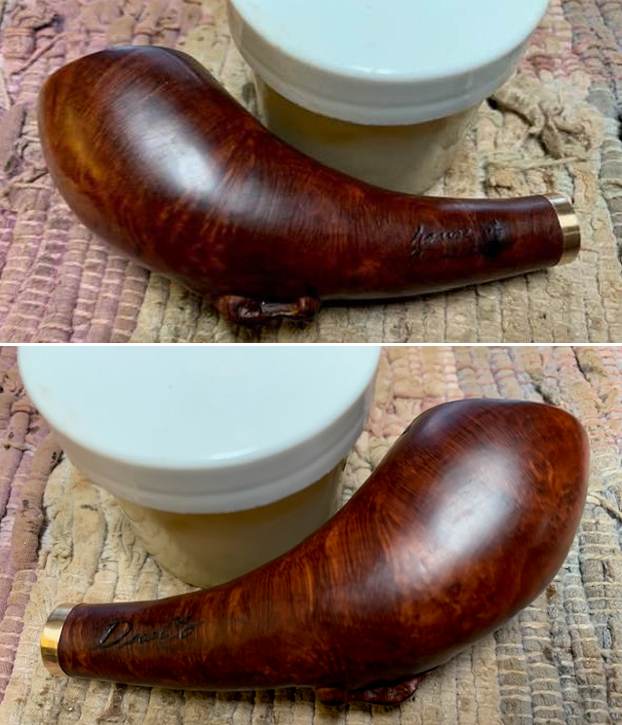
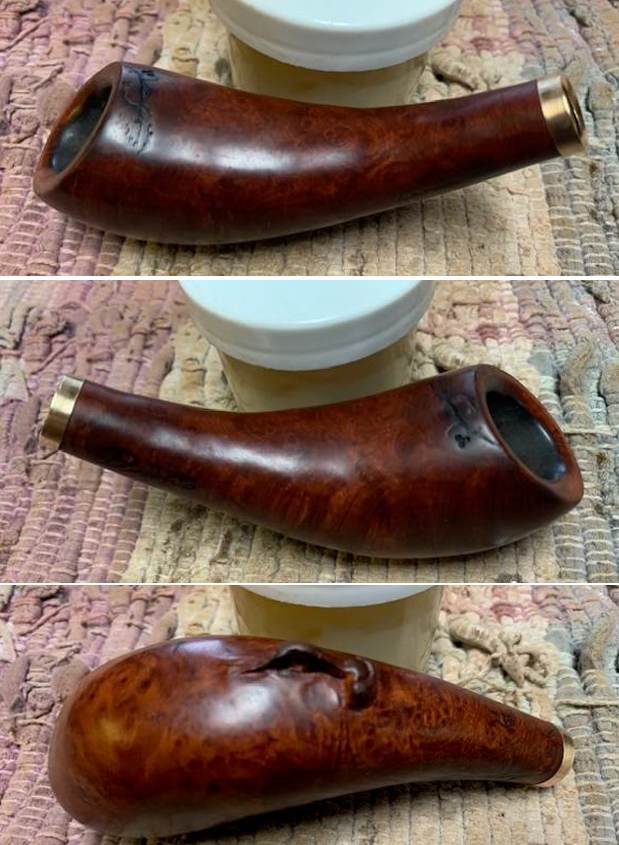
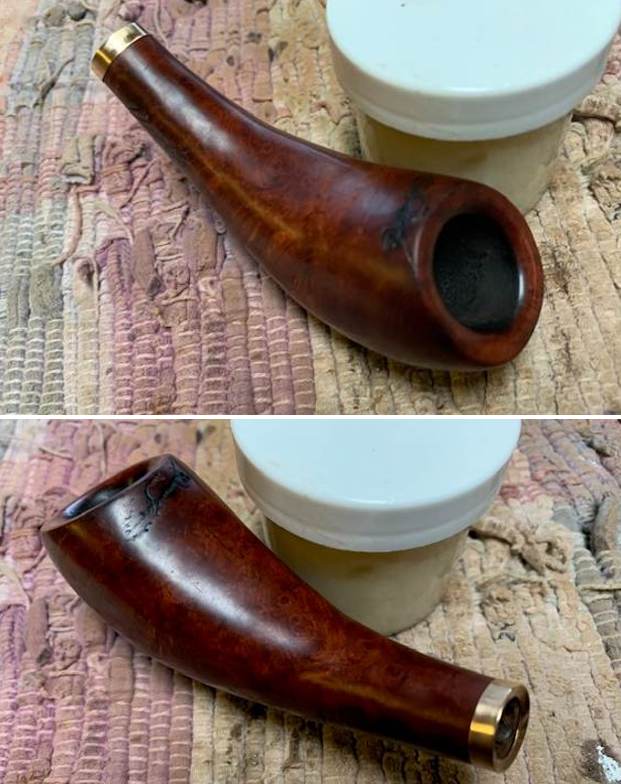
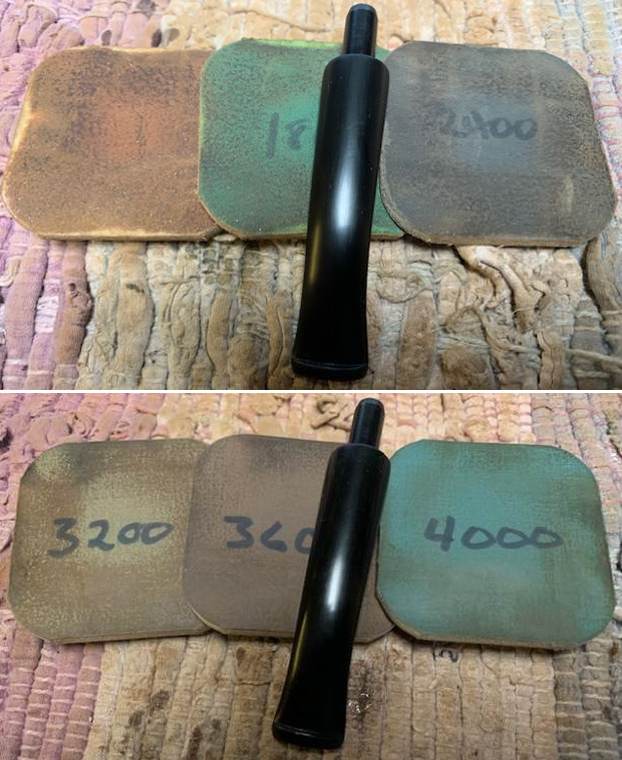
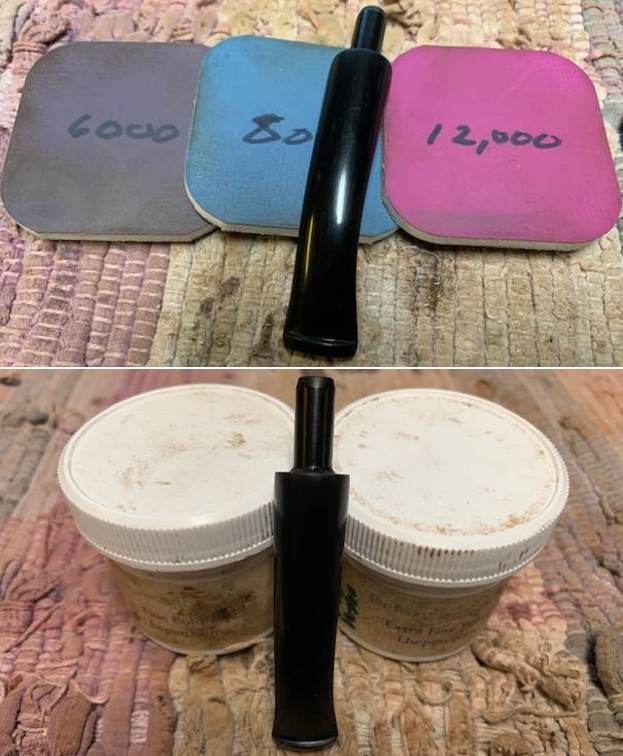
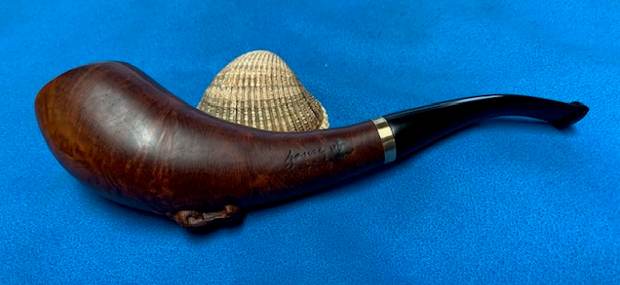
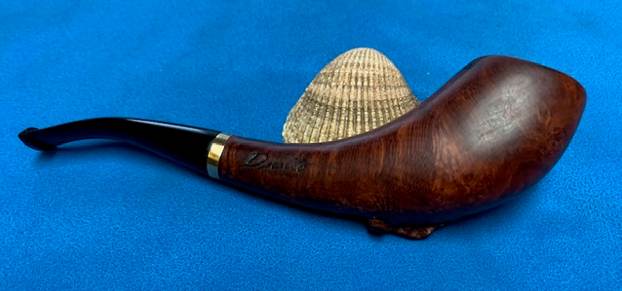
When Jeff received the pipe he took photos of it to capture what it looked like when he removed it from the box. The pipe was dirty but underneath all of the grime it seemed like it has some nice grain around the bowl and shank. The rim top and edges of the bowl had been badly abused and beat up and showed chips and wear. There was a thick cake in the bowl and an overflow on the top and edges. There were a lot of scratches and cuts in the briar around the bowl sides and shank. The carving of the vine and grapes at the back top of the bowl is quite damaged as is the “carved vine” on the bottom of the bowl. The pipe has seen a lot of rough travel since the day it left Robertson’s pipe shop in Boise, Idaho. The fit of the stem to the shank is snug and looks good. There were casting marks on the left and right sides of the stem at the shank union that make me think it is a replacement stem. There is also a chipped area on the underside of the shank where it appears the stem had been pried away at some point. The tenon on the stem was incredibly short given the depth of the mortise. There were tooth marks on both sides of the stem ahead of the button and on the button surface itself. Jeff took the following photos of the pipe to show its condition when he received it.The next close-up photos show the condition of the bowl and the rim top. They show the cake in the bowl and the lava overflowing onto the rim top. You can also see how beat up the rim top is. It is in rough condition. The edges are also chipped and damaged. The photos of the stem show the tooth mark and tooth marks on both sides of the stem. The photos of the sides and heel of the bowl show the grain and the nicks and scratches around the bowl and shank. The brown stain adds depth finish on the pipe. Even under the grime it is a unique piece.He also took photos of the carving on the underside of the shank. You can see the damage on the front side of the carving.The next photo shows the etched name on the left side of shank. It reads House of Robertson. On the back top of the bowl you can see the condition of what appears to be a grape vine. The more I looked at it the combination of grape vines, grapes and the thick branch on the underside of the shank make me think that the pipe is a drinking or wine horn. The shape is very reminiscent of the shape of the horn. It would really help if the stem had a bend in it. The carved vine on the rim edge, the carved chunk of fine on the underside seem to point in this direction.Jeff had thoroughly cleaned up the pipe. He reamed the pipe with a PipNet Pipe Reamer and cleaned up the remnants with a Savinelli Fitsall Pipe Knife. He scrubbed the bowl with undiluted Murphy’s Oil Soap with a tooth brush. He rinsed it under running warm water to remove the soap and grime. He cleaned out the inside of the shank and the airway in the stem with alcohol, cotton swabs and pipe cleaners. He scrubbed the exterior of the stem with Soft Scrub to remove the grime and calcification. He soaked the stem in Before & After Deoxidizer and rinsed it off with warm water. The pipe looked very good when it arrived here in Vancouver. I took a photo of the bowl and rim top to show how clean the bowl and the rim top and inner edges of the bowl. I took photos of the stem surface to show the condition and tooth marks and chatter on both sides ahead of the button. You can see the chip or dented area where the stem meets the shank in the third photo below.I took photos of the stamping on the shank sides (left, right and underside). It is readable as noted above and though faint is clear.I removed the stem (note the short tenon) from the shank and took a photo of the pipe parts. It is a unique piece. The bowl needed a lot of work. I would need to rework the rim top and the inner and outer edge of the bowl and the also sand out the deep gouges, scratches and file marks in the briar on the sides of the bowl. It really was a refinishing nightmare. I decided to start my work on the bowl by addressing the damaged rim top and edges. I topped the bowl to get a flat surface to start on. I used a topping board and 220 grit sandpaper. I then used a wooden ball and 220 grit sandpaper to give the inner edge a bevel inward. Doing that hid the damage on the inner edge of the bowl and blended it into the surface. I sanded the bowl sides and shank with a folded piece of 220 grit sandpaper to smooth out and minimize the scratches and marks on the briar of the bowl and shank. It was beginning to look much better. I wiped the bowl and rim top down with alcohol and cotton pads to remove the debris and the heavy stain coat that hid the grain. Once I had wiped it down the grain really stood out. I used a medium and fine grit sanding pad to sand the bowl and rim top further. Once finished the pipe really started to show promise that I was hoping for in an other other wise mess of a pipe. The grain stood out better and the carving on top back of the bowl was clearly a vine and grapes. It looked much better.I needed a break from sanding the bowl so I set it aside and turned my attention to the stem. To start my work on it I decided to heat it and give it a slight bend in keeping with the look of the horn. When it was flexible I bent it and it snapped off in my hand – utter frustration!! That set me back a bit but in the long haul it was much better as I could use a stem with a longer tenon and a better fit to the shank. I went through my can of stems and found a stem with the right bend, the right tenon sized and length for the shank and that would only need a little adjustment to the diameter to make it fit.I put the stem on the shank and took photos of the new look of the pipe. You can see that the diameter of the stem is slightly larger than the diameter of the shank. But I liked the look of the new stem and the angles of the bend it really is looking like a drinking/wine horn. I sanded the diameter of the stem with 220 grit sandpaper to reduce it to the same diameter as the shank. Once the stem was adjusted in diameter it looked very good. I sanded the entire stem including the light tooth chatter at the button with 220 grit sandpaper to smooth out the stem.I removed the stem from the shank and continued sanding out the tooth marks and chatter at the button and smoothing out and shaping the shank end of the stem. Once I was happy with the fit and look of the stem I started polishing it with 600 grit wet dry sandpaper. I took photos of the underside of the shank stem junction to show the damage that I noted above – the chip out of the underside of the shank. It made the fit against the underside of the shank a challenge that gave me two options to address. I could either use the topping board to flatten it or I could put a thin band on the shank.I tried to top the shank end a bit on the topping board with 220 grit sandpaper but it did not solve the problem as the chip went quite deep into the underside. I decided to go with a thin brass band on the shank end to repair the damage on the end of the shank. I heated the band and pressed in place on the shank. It gave the shank a flat face for the stem to sit against. I liked the look of the bling and the fit of the stem against it. (A passing comment. Can you see the wine cup in the stamp on the shank in the first photo. I put the fitted stem in place on the shank and took photos of the look of the pipe at this point in the process. It looks far better than when I started. Now it was time to polish the bowl and shank with micromesh sanding pads – dry sanding with 1500-12000 grit pads. I wiped the bowl down after each  pad to remove the grit. The bowl began to take on a rich shine. It is a beauty. I used a Black stain pen to darken the vine and the grapes on the back side of the bowl and the stamping on the shank sides to highlight the House of Robertson and the Duello stamp. Once they were stained I used the remainder of the micromesh pads to clean up the excess black. I worked Before & After Restoration Balm deep into the nooks and crannies of the carvings to clean, enliven and protect the briar. I hand rubbed it with my fingers and worked it into the finish with a horsehair shoe brush. I wiped it off with a soft cloth. I buffed the bowl with a cotton cloth to polish it. It really began to have a deep shine in the briar. I took some photos of the bowl at this point to mark the progress in the restoration. I polished the stem with micromesh sanding pads – 1500-12000 grit pads. I wiped it down with a damp cloth after each sanding pad. I used Before & After Pipe Polish – both Fine and Extra Fine to further polish the stem. I put the House of Robertson Drinking Horn back together and worked the pipe over on the buffing wheel using Blue Diamond to lightly polish the stem. I buffed the bowl with a light touch so as not to get any of the buffing compounds in the grooves of the rustication. I buffed the stem to raise the gloss on the vulcanite. I gave the bowl and the stem multiple coats of carnauba wax. I buffed the entire pipe with a clean buffing pad to raise the shine. I hand buffed it with a microfiber cloth to deepen the shine. The finished HOR Drinking Horn is shown in the photos below. The medium brown stains on the well grained briar worked well with the brass band and the bent black of the vulcanite stem. The polishing and the reworking of the stem material left this a beautiful and interesting looking pipe. The dimensions of the pipe are: Length: 7 inches, Height: 2 inches, Outside Diameter: 1 ¼ inches, Diameter of the chamber: 7/8 inches. The weight of the pipe is 1.69 ounces/ 48 grams. This would be a great addition to the collection of a House of Robertson collector.  If you are interested in adding it to your collection it will be on the rebornpipes store in the American (US) Pipemakers Section shortly. Thanks for looking.
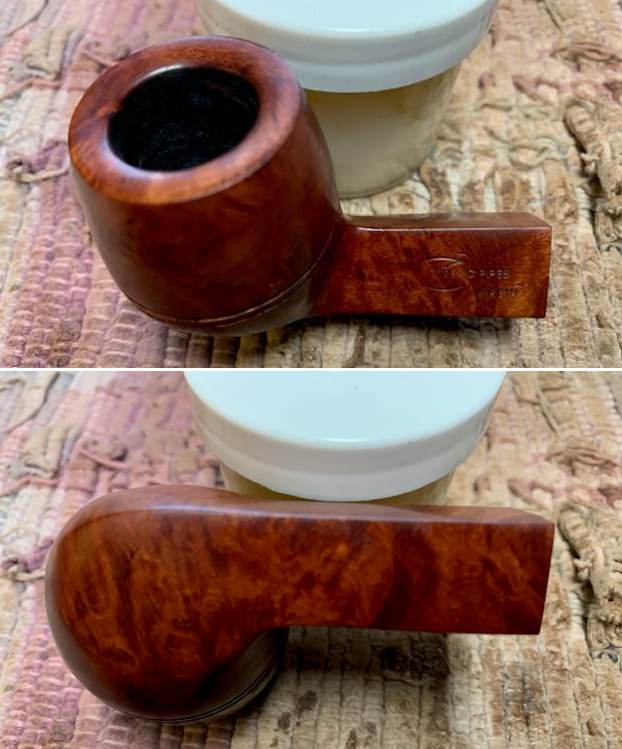
Restoring a Curt Rollar American Reg No. 1284/CR6 Oom Paul


Blog by Steve Laug

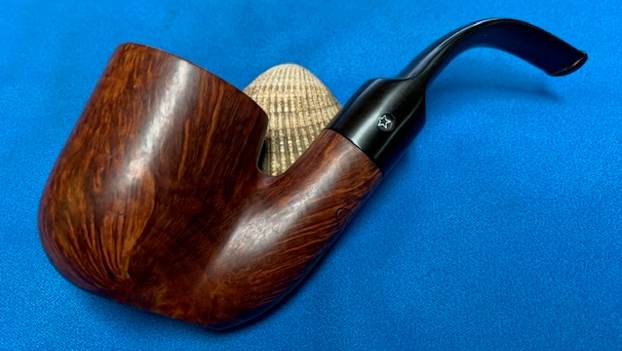
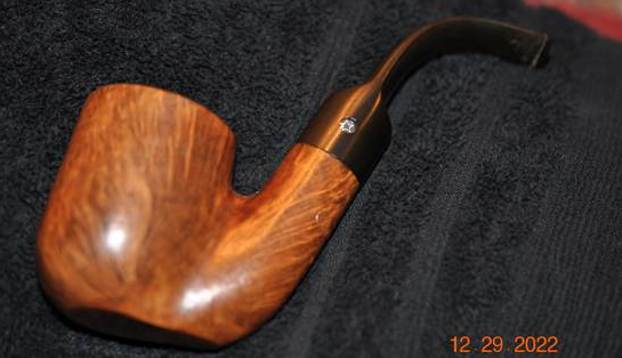
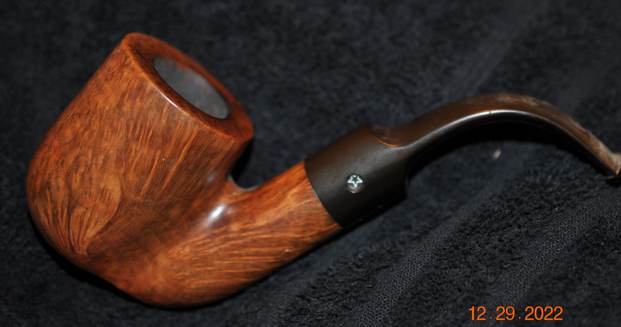
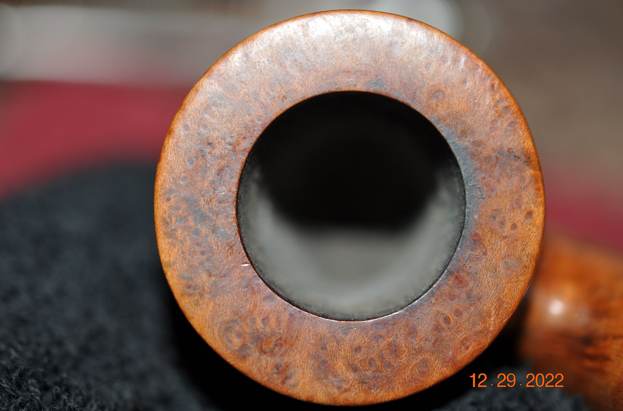
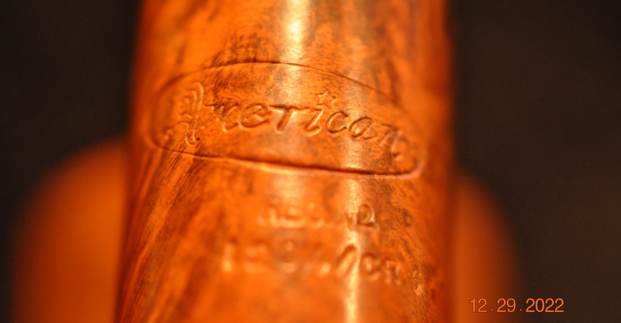
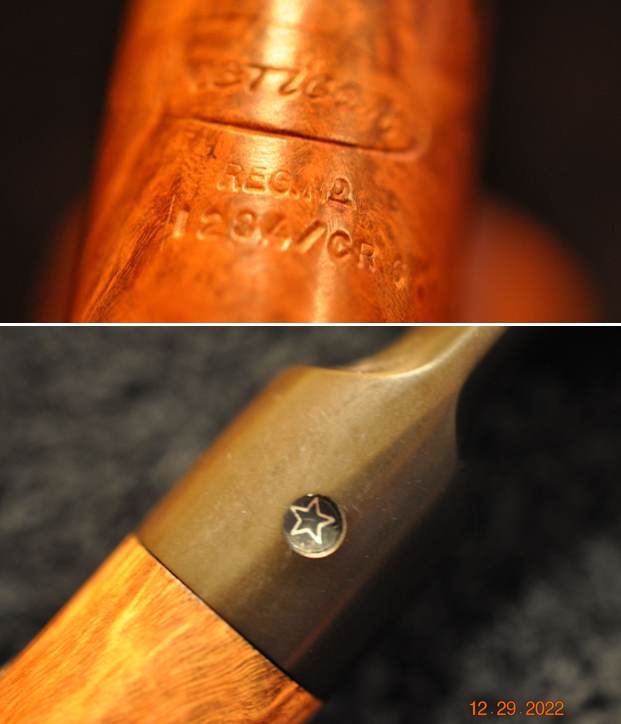
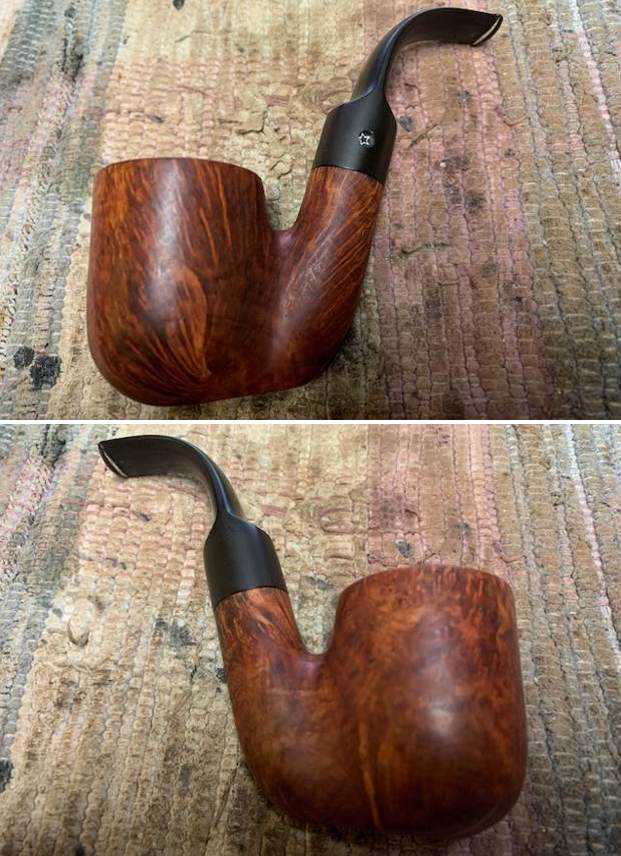
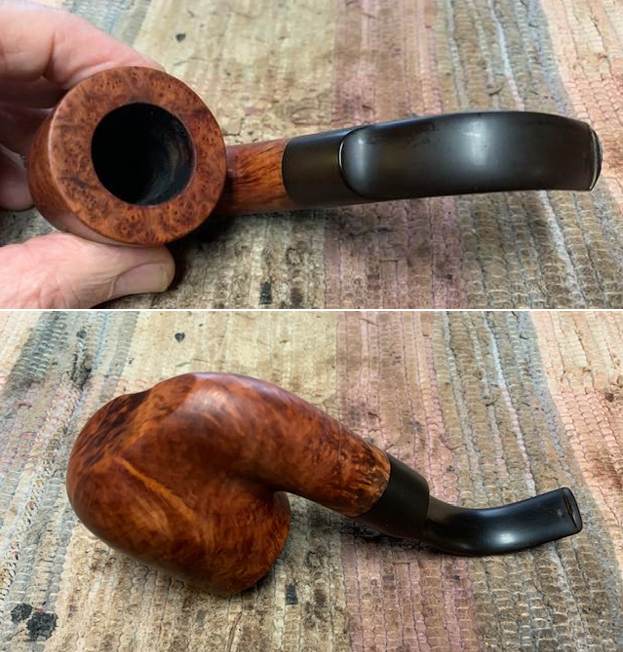
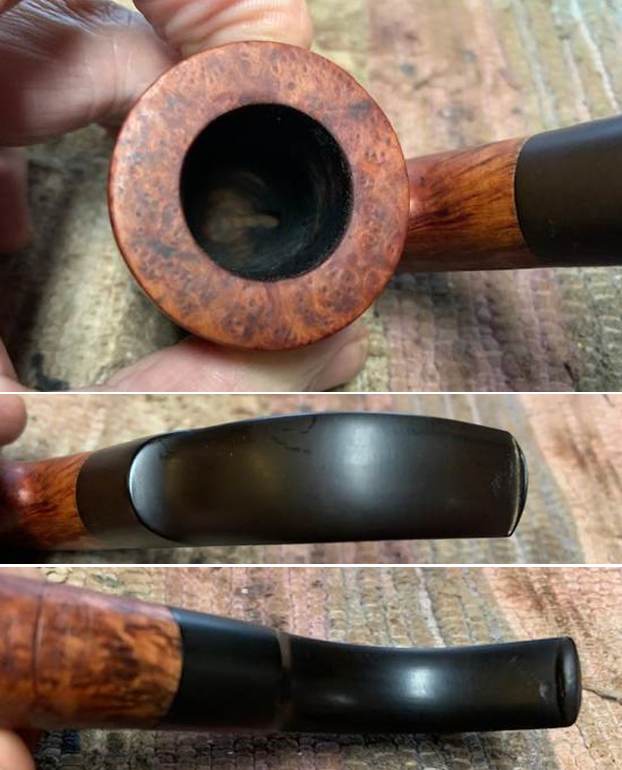
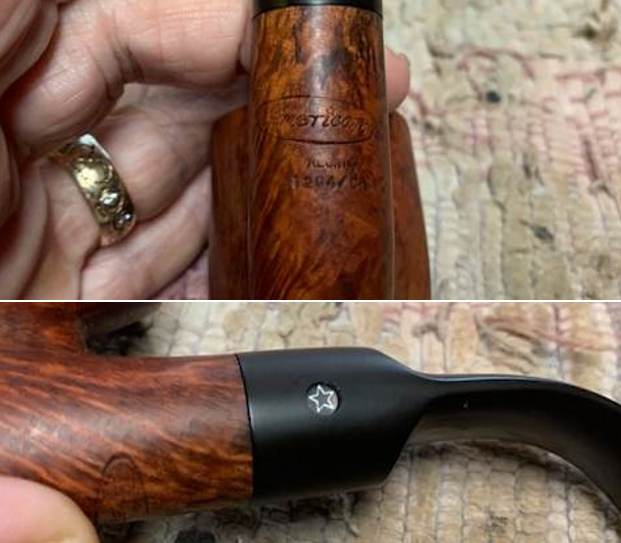
It is a rainy Sunday for me here in Vancouver so I decided to work on one of the other pipes in the restoration box. This one is an Oom Paul from American Smoking Pipes (Mark Tinsky). The smooth finish on this pipe, around the bowl and shank has a mix of grain highlighted by the brown stain. The pipe is stamped on the underside of the shank near the stem/shank junction and reads American in an oval [over] Reg. No. [over] 1284/CR6. The pipe was a well used pipe when Jeff received it. There was dust and grime ground into the finish of the bowl. The brown stains highlights some beautiful grain under the dirt. The bowl was lightly caked and there was a light overflow of lava on the smooth rim top. The inner edge looked to be in good condition. The saddle stem is vulcanite and was dirty, oxidized and had light tooth marks, chatter and scratches on both sides ahead of the button and on the button itself. There is a Silver Star in clear acrylic inlaid on the left side of the saddle stem. Jeff took photos of the pipe before he started his clean up work on it. He took photos of the bowl and rim top to show what they looked like before his clean up. You can see the scratches in the smooth rim top. The inner edge also shows some damage. He also took some of the stem to show the condition of both sides. The photos of the sides and heel of the bowl show the faded stain and the grain around the bowl and shank. The brown stain adds depth finish on the pipe. Even under the grime it is a real beauty. The stamping on this one was on the underside of the shank and is shown in the photos below. It is clear and readable as noted above. The third photo shows the inlaid American Smoking Pipe Five Point Star in a brass circle is visible in the first photo. I have collected and smoked Mark Tinsky’s pipes for over 30 years now and thoroughly enjoy them. I cannot speak highly enough about the quality and craftsmanship of his pipes. I have pipes made by Mark and by Curt Rollar in my collection and both are great smokers and pipes that reach for regularly in my choice of pipes. I turned to his website for a quick summary of the history of the brand (http://www.amsmoke.com/Index%20Folder/PipeHist.html). I quote from the site as it is a short, concise history.

The American Smoking Pipe Co. was formed in 1978 by Mark Tinsky and Curt Rollar. Both started making pipes for Jack Weinberger ( JHW Pipes ) while in high school and throughout college. Determined to blaze their own path, they formed their own company- its goal to create unique pipes, lightweight and comfortable, where attention to detail was the rule not the exception. Exulting in their new freedom, they carved out new shapes that were balanced between the radical freehand era of the 70’s and the board pipe look of other conservative companies. Hungry for recognition, they stormed the Eastern and Southern shops looking for markets to sell their pipes. Many hidebound retailers refused to try something new, preferring to sell, well, what has always sold before. However, their pipes did take root in many shops and the business thrived.

They continued expanding their pipe making capabilities, adding employees to help finish the pipes. In 1990, over a disagreement over how much to expand, Curt Rollar left the company. This put a break on expansion and coupled with a U.S. recession and rising anti-smoking fervor served to limit production to supplying existing retailers, thus ending a decade of growth. With pipes sales in decline, we turned to pipe repair as a way to supplement revenues. Finding that we liked fixing things, American concentrated on pipe repair. While working hard at repair and manufacture American is ready once again to expand its markets through its existing network of shops serviced by pipe repair.

The pipe I am working on is stamped with a Reg. No. 1284/CR6 as noted above. The stamp tells me that the pipe was most likely made in December of 1984. The CR stamp signifies that the pipe was carved by Curt Rollar. The 6 likely is the size of the pipe as it is quite large. This tells me that it is an older American pipe. Now it was time to work on the pipe.

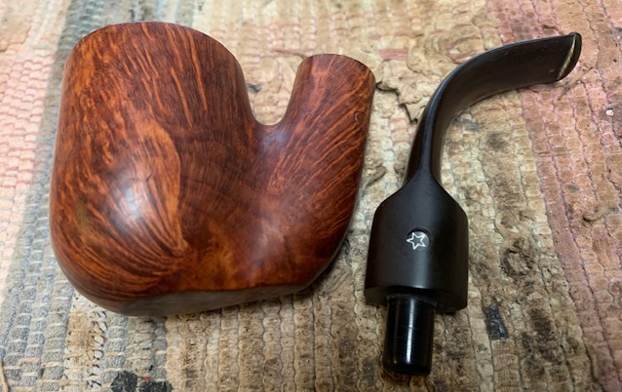
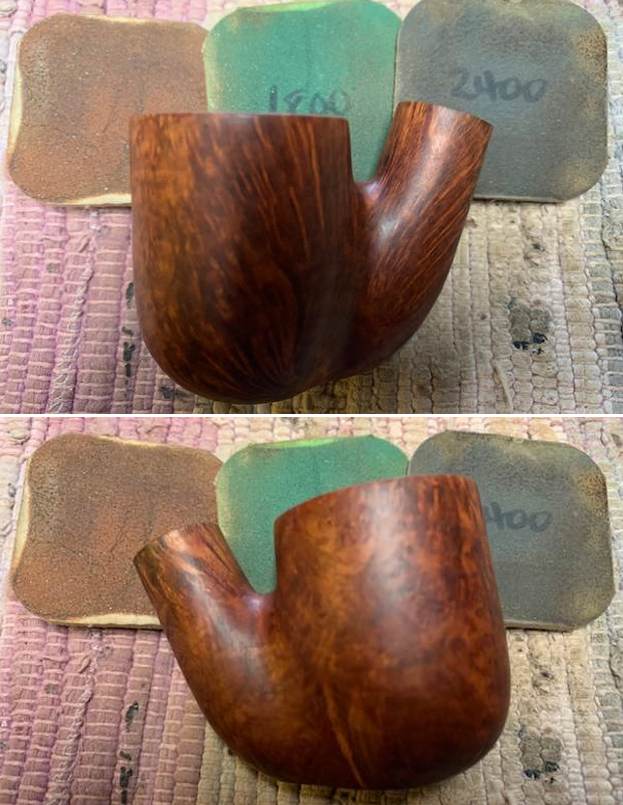
Jeff had thoroughly cleaned up the pipe. He reamed the pipe with a PipNet Pipe Reamer and cleaned up the remnants with a Savinelli Fitsall Pipe Knife. He scrubbed the bowl with undiluted Murphy’s Oil Soap with a tooth brush. He rinsed it under running warm water to remove the soap and grime. He cleaned out the inside of the shank and the airway in the stem with alcohol, cotton swabs and pipe cleaners. He scrubbed the exterior of the stem with Soft Scrub to remove the grime and calcification. He soaked the stem in Before & After Deoxidizer and rinsed it off with warm water. The pipe looked very good when it arrived here in Vancouver. I took a photo of the bowl and rim top to show how clean the bowl and the rim top and inner edges of the bowl. I took photos of the stem surface to show the condition and tooth marks and chatter on both sides ahead of the button.I took photos of the stamping on the shank sides (left and underside). It is readable as noted above and though faint is clear. I took a photo of the Silver Star with a black background logo on the stem as well. It is in excellent condition.I removed the stem from the shank and took a photo of the pipe parts. It is quite a stunning piece.I started my work by polishing the bowl and shank with micromesh sanding pads – dry sanding with 1500-12000 grit pads. I wiped the bowl down after each  pad to remove the grit. The bowl began to take on a rich shine. It is a beauty. I rubbed the bowl down with Before & After Restoration Balm. I worked it into the surface of the briar with my fingertips and a shoe brush to get it in the grooves. It works to clean, restore and preserve the briar. I let it do its magic for 15 minutes then buffed it off with a cotton cloth. The pipe looks incredibly good at this point in the process. I set the bowl aside and turned my attention to the stem. I “painted” the surface of the stem with the flame of a Bic lighter. I filled in the remaining marks with clear CA glue. Once it hardened I flattened them out with a small file. I sanded the stem with 220 grit sandpaper to blend them into the rest of the vulcanite stem. I set the bowl aside and turned my attention to the stem. I polished the stem with micromesh sanding pads – 1500-12000 grit pads. I wiped it down with a damp cloth after each sanding pad. I used Before & After Pipe Polish – both Fine and Extra Fine to further polish the stem. This American Reg. No. 1284/CR6 Oom Paul is a great looking pipe now that it has been restored. The brown stains really highlights the grain and the polished finish is stunning. I put the stem back on the bowl and carefully buffed the pipe with Blue Diamond on the buffing wheel. I gave the bowl and the stem multiple coats of carnauba wax on the buffing wheel and followed that by buffing the entire pipe with a clean buffing pad. I hand buffed the pipe with a microfiber cloth to deepen the shine. The finished American Curt Rollar Oom Paul fits nicely in the hand and feels great. Give the finished pipe a look in the photos below. The dimensions of the pipe are Length: 5 inches, Height: 2 inches, Outside diameter of the bowl: 1 ½ inches, Chamber diameter: 7/8 of an inch. The weight of the pipe is 77 grams / 2.72 ounces. I will be adding the pipe to the American (US) Pipe Makers Section of the rebornpipes store. If you are interested in purchasing this pipe send me a message or an email. Thanks for reading this blog and my reflections on the pipe while I worked on it.

Restoring a Nicely Grained Stanwell Royal De Luxe 148 Canadian with internal bowl damage


Blog by Steve Laug

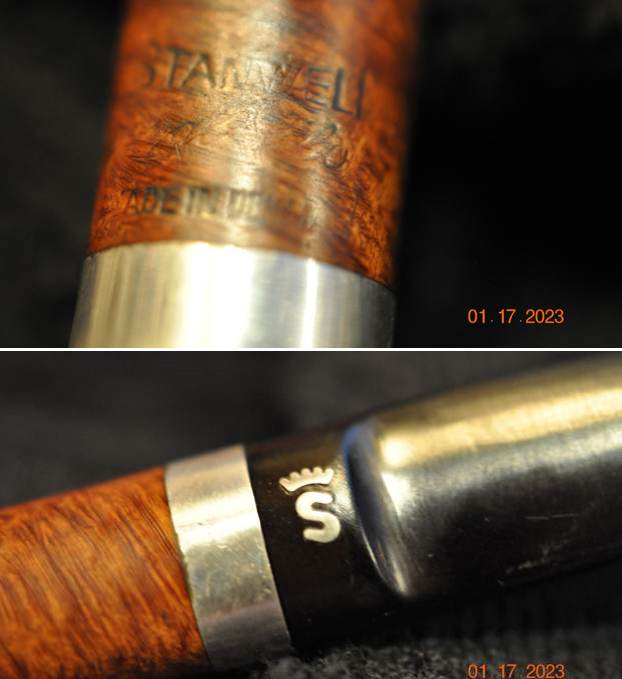
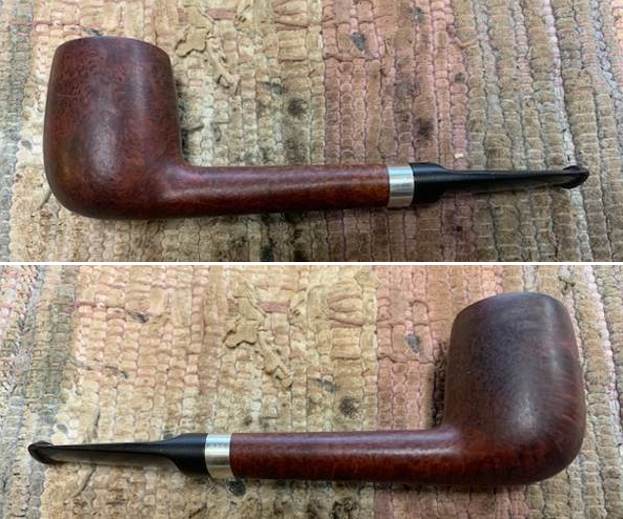
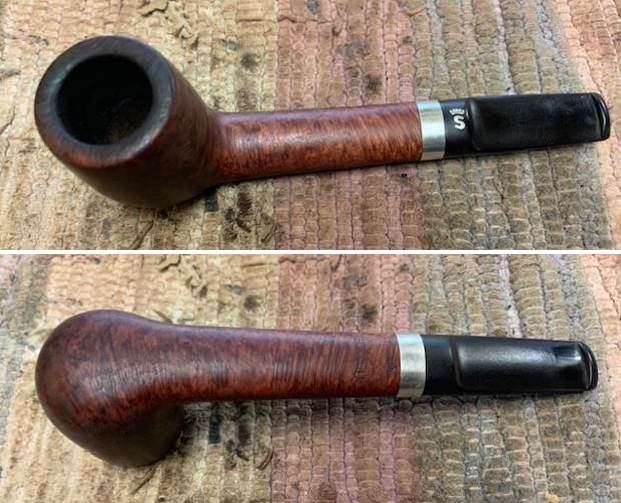
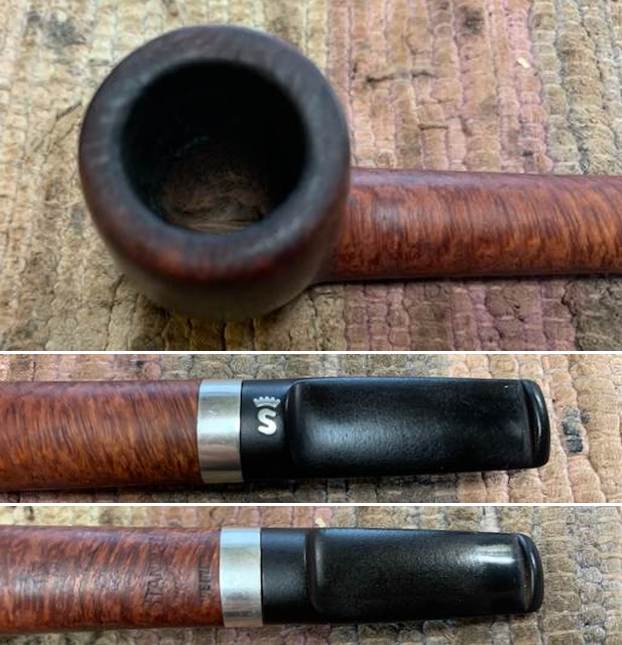
It is a rainy Saturday for me here in Vancouver so I decided to work on another one that was purchased on 01/10/2023 in a lot of pipes that came to us from Copenhagen, Denmark. This is a oval shank Canadian with a smooth finish and a silver band on the shank. It is another Made in Denmark Stanwell. The smooth finish on this pipe, around the bowl and shank has a mix of grain highlighted by the reddish brown stain. The pipe is stamped on the underside of the shank near the stem/shank junction and reads STANWELL [over] Royal De Luxe [over] Made In Denmark. On the underside of the center of the shank it has the shape number 148 stamped. On the silver band there was a 925 stamp on the right side giving the quality of silver in the band. The pipe was a well used pipe when Jeff received it. There was dust and grime ground into the finish which was worn thin on the sides of the bowl. The mixture of brown stains highlights some beautiful grain under the dirt. The bowl was moderately caked and there was a light overflow of lava on the smooth rim top. The inner edge looked worn but okay. There was a trough on the bottom of the bowl that had been worn with repeated use of pipe cleaners. It was not terribly deep but bothersome looking and if left alone could further wear through the heel of the bowl. The saddle stem is vulcanite and was dirty, oxidized and had light tooth marks, chatter and scratches on both sides ahead of the button and on the button itself. There is a Silver Crown S logo inlaid on the topside of the saddle stem. Jeff took photos of the pipe before he started his clean up work on it. He took photos of the bowl and rim top to show what they looked like before his clean up. You can see the scratches in the smooth rim top. The inner edge also shows some damage. He also took some of the stem to show the condition of both sides. The photos of the sides and heel of the bowl show the faded stain and the grain around the bowl and shank. The mixture of brown stains adds depth finish on the pipe. Even under the grime it is a real beauty. You can also see the swirls in the acrylic shank extension. The stamping on this one was around the bamboo horizontally and is shown in the photo below. It is clear and readable as noted above. The second photo shows the white stamped crown S on the stem side. Before I started my work on the pipe I wanted to see if I could find any information that would help me get a sense of the line. I turned to Pipephil to see if there was any listing on the Royal Deluxe Line (http://pipephil.eu/logos/en/logo-stanwell.html). There was nothing listed.

I then turned to Pipedia (https://pipedia.org/wiki/Stanwell) for more information. The article is great and gives a lot of history on the brand. There were also links to a shape article by Bas Stevens that I originally published on rebornpipes. I looked up the 148 shape number to see who had designed that shape (https://pipedia.org/wiki/Stanwell_Shape_Numbers_and_Designers). I quote the information on shape 148.

  1. Canadian, short saddle mouthpiece by Jess Chonowitsch.

Now it was time to work on the pipe.

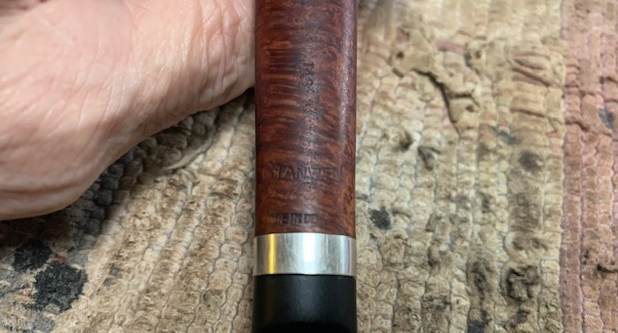
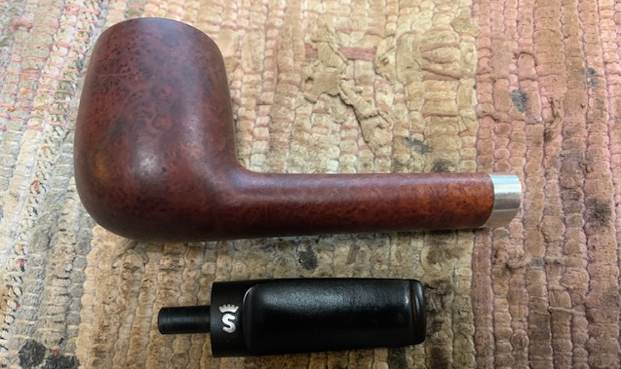
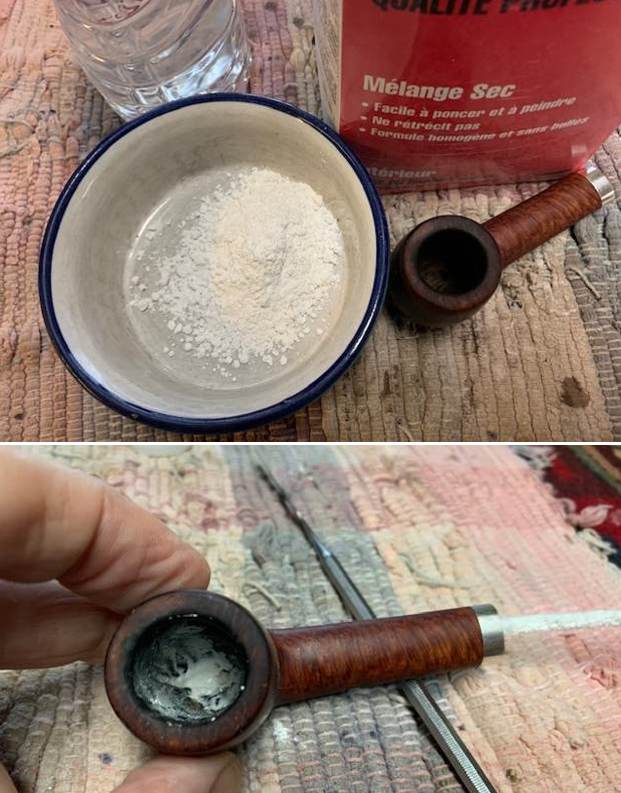
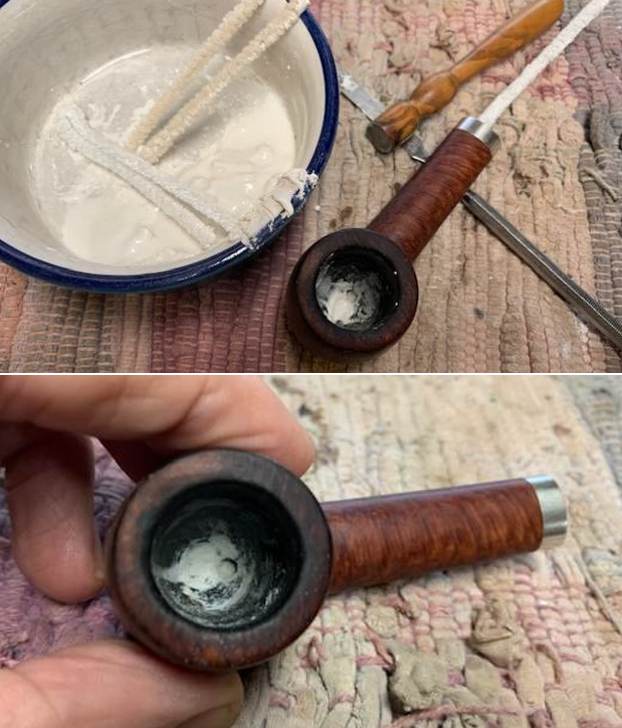
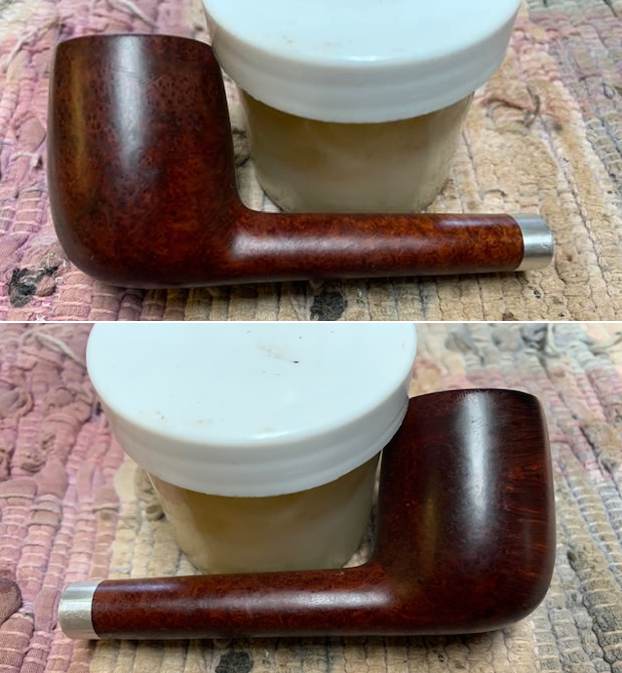
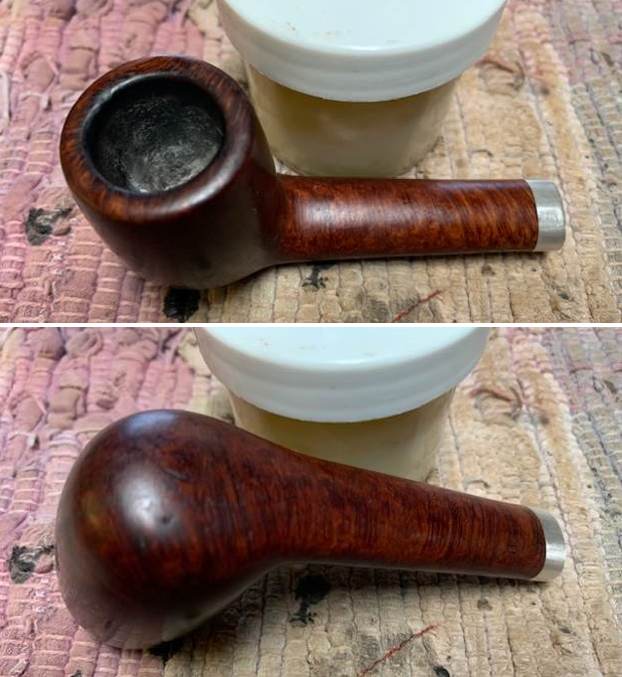
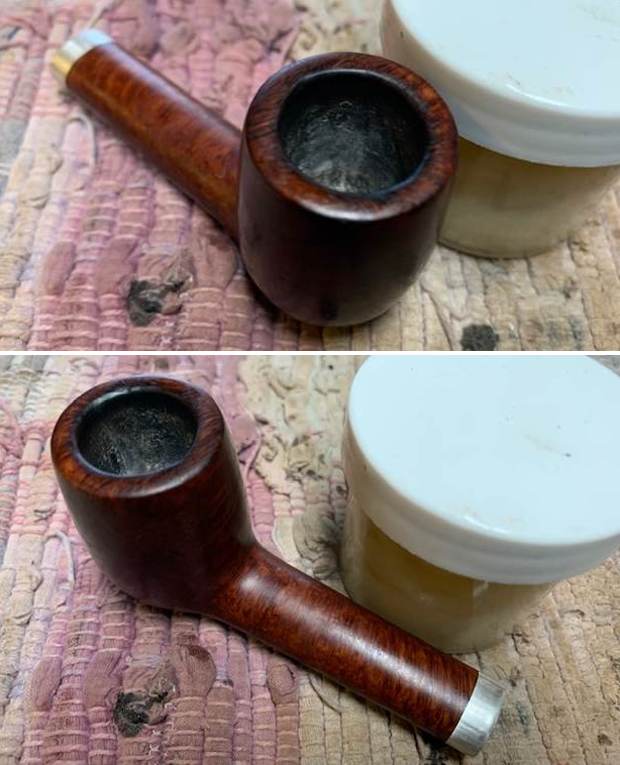
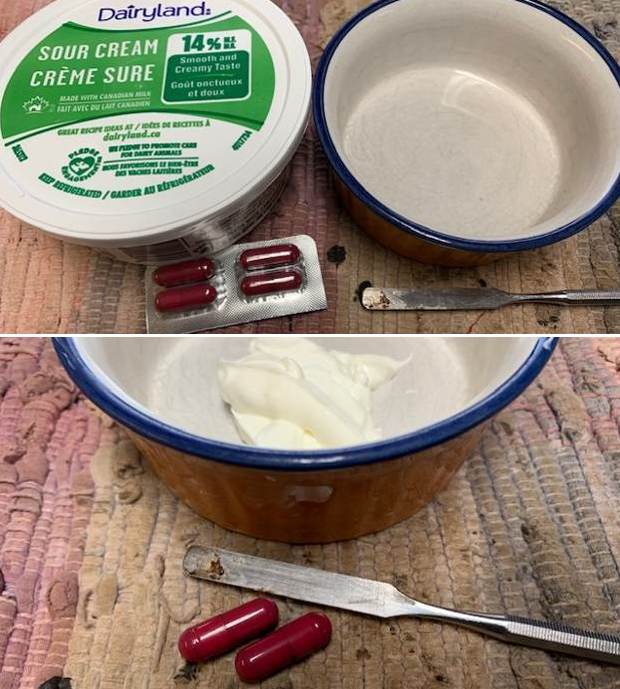
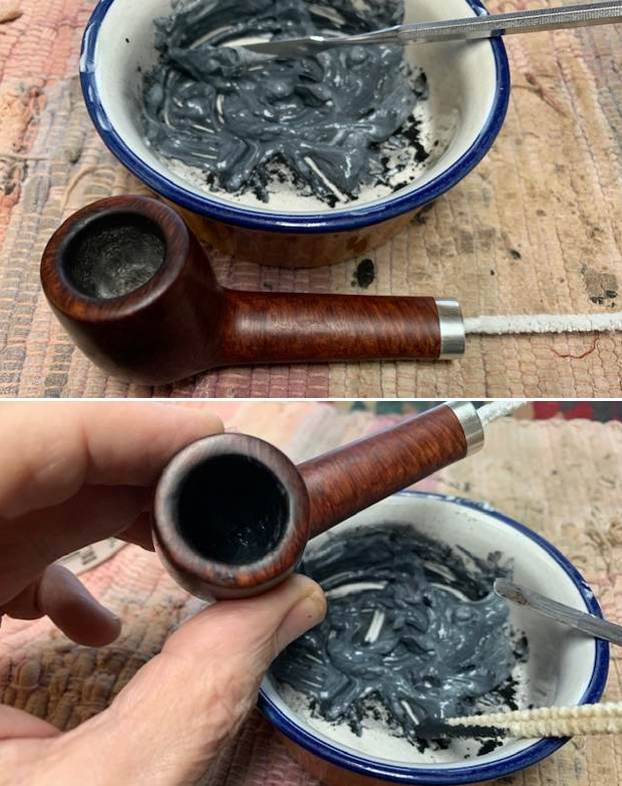
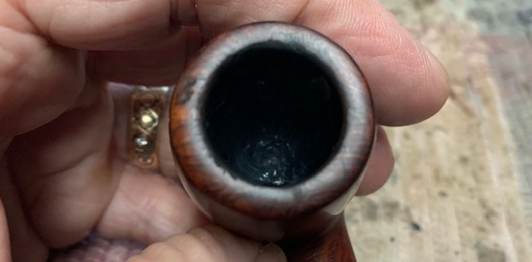
Jeff had thoroughly cleaned up the pipe. He reamed the pipe with a PipNet Pipe Reamer and cleaned up the remnants with a Savinelli Fitsall Pipe Knife. He scrubbed the bowl with undiluted Murphy’s Oil Soap with a tooth brush. He rinsed it under running warm water to remove the soap and grime. He cleaned out the inside of the shank and the airway in the stem with alcohol, cotton swabs and pipe cleaners. He scrubbed the exterior of the stem with Soft Scrub to remove the grime and calcification. He soaked the stem in Before & After Deoxidizer and rinsed it off with warm water. The pipe looked very good when it arrived here in Vancouver. I took close up photos of the bowl, rim and the stem. You can see the damage on rim top and inner edge. The bowl is quite clean inside with trough worn into the bottom of the bowl visible in the photo below. The vulcanite saddle stem is in good condition with light tooth marks and some chatter as noted above. I took photo of the stamping on the underside of the shank. It is faint but readable as noted. I removed the stem from the shank and took a photo to give a sense of the proportions of the pipe. The briar is quite beautiful and the dark and medium stains really make it stand out.I started my work on the pipe by dealing with the trough in the bottom of the bowl. I decided to use a mixture of Plaster of Paris and water to make a thick paste to fill in the trough in the bottom and up the front side of the bowl. I put a pipe cleaner in the airway to keep it from clogging. I applied the plaster in the bowl with a dental spatula, tamped it down with a tamper and cleaned up the sides and edges of the repair with folded pipe cleaners. While the Plaster repair cured, I worked on the damage to the inner edge and the rim top with a folded piece of 220 grit sandpaper to bring the edge back into round and smooth out the scratches on the top. By the end it looked much better.I wiped down the excess Plaster of Paris with qtips until all that remained was in the bottom and front of the bowl. I let the inside of the bowl repair cure. Once cured I would need to give it a slight bowl coating.I polished the bowl and shank with micromesh sanding pads – dry sanding with 1500-12000 grit pads. I wiped the bowl down after each pad to remove the grit. The bowl began to take on a rich shine. It is a beauty. I rubbed the bowl down with Before & After Restoration Balm. I worked it into the briar with my finger tips. I let it sit for 10 minutes and the Balm did its magic. It enlivens, cleans and preserves the briar. It certainly brought this bowl back to life. I buffed it off with a clean cloth and took the following photos. I coated the bowl with a mixture of sour cream and charcoal powder. The bowl coating is applied over the Plaster of Paris repair on the bottom of the bowl and the walls. I used a dental spatula to mix it up and put a pipe cleaner in the airway to keep it from clogging. I used a folded pipe cleaner to paint it on the bowl bottom and walls. Once finished I set it aside to dry. I set the bowl aside and turned my attention to the stem. I polished the stem with micromesh sanding pads – 1500-12000 grit pads. I wiped it down with a damp cloth after each sanding pad. I used Before & After Pipe Polish – both Fine and Extra Fine to further polish the stem. This Stanwell Royal De Luxe 148 Canadian with a vulcanite saddle stem is a great looking pipe now that it has been restored. The mix of stains once cleaned up really highlights the grain and the polished sandblast finish is stunning. I put the stem back on the bowl and carefully buffed the pipe with Blue Diamond on the buffing wheel. I gave the bowl and the stem multiple coats of carnauba wax on the buffing wheel and followed that by buffing the entire pipe with a clean buffing pad. I hand buffed the pipe with a microfiber cloth to deepen the shine. The finished Stanwell Royal Deluxe 149 Canadian fits nicely in the hand and feels great. Give the finished pipe a look in the photos below. The dimensions of the pipe are Length: 5 ½ inches, Height: 1 ¾ inches, Outside diameter of the bowl: 1 1/8 inch, Chamber diameter: ¾ of an inch. The weight of the pipe is 36 grams / 1.27 ounces. I will be adding the pipe to the Danish Pipe Makers Section of the rebornpipes store. If you are interested in purchasing this pipe send me a message or an email. Thanks for reading this blog and my reflections on the pipe while I worked on it.

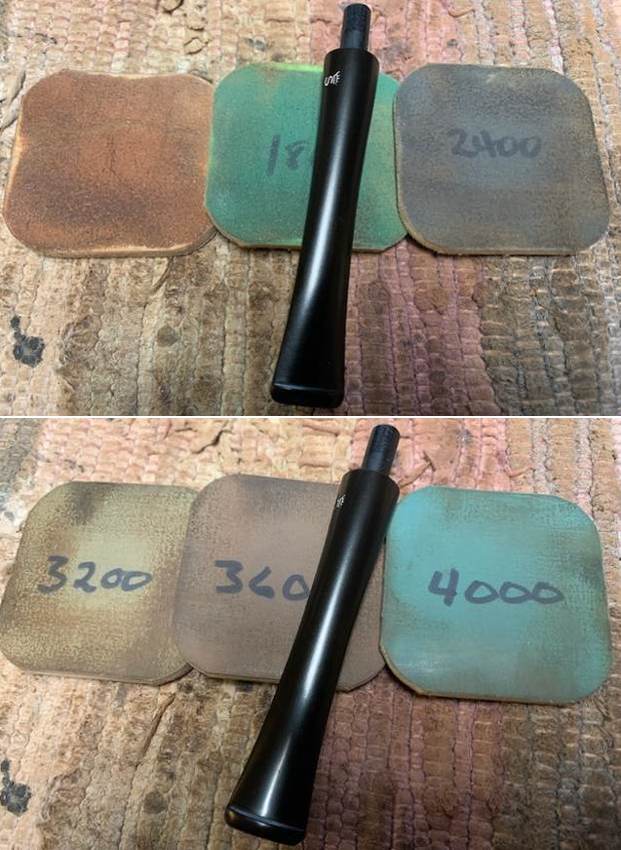
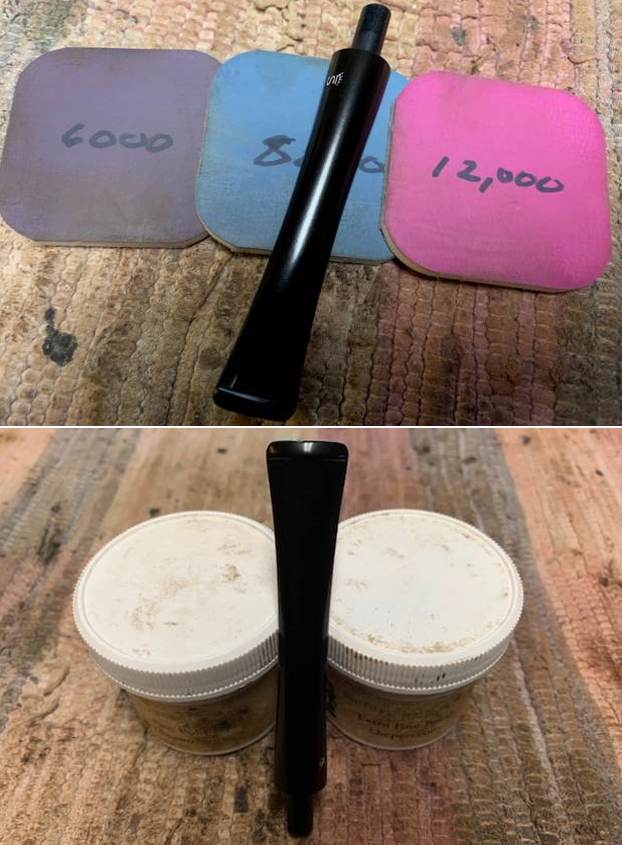
Restoring a Nicely Grained Stanwell Buffalo 141 Billiard


Blog by Steve Laug

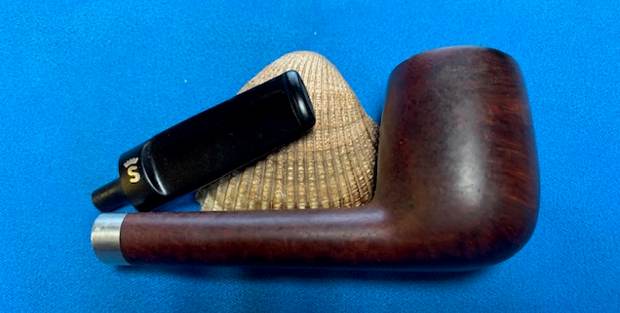
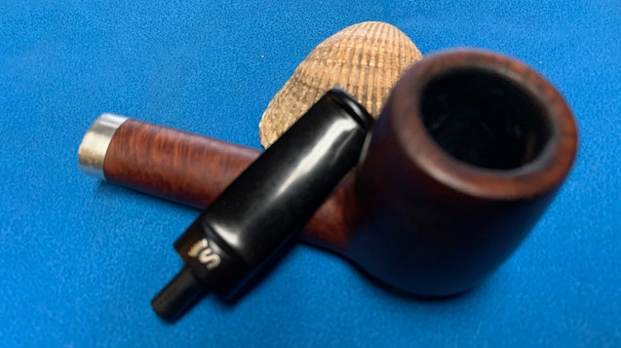
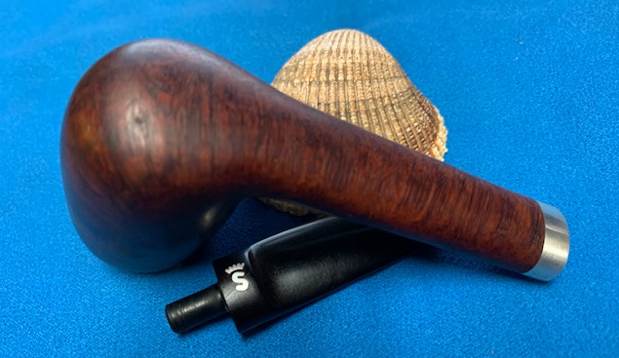
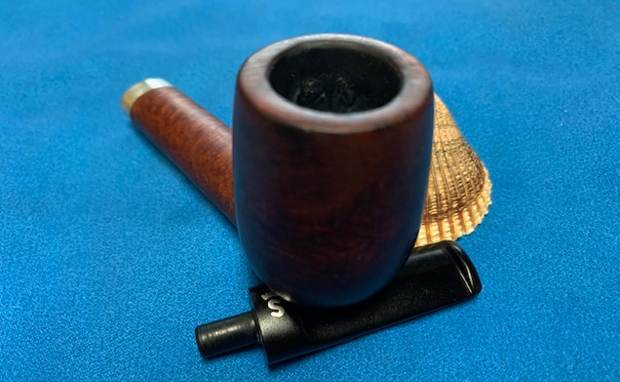
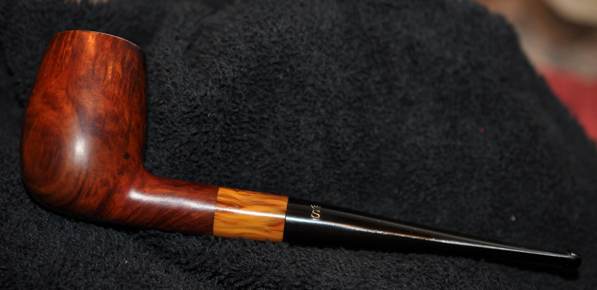
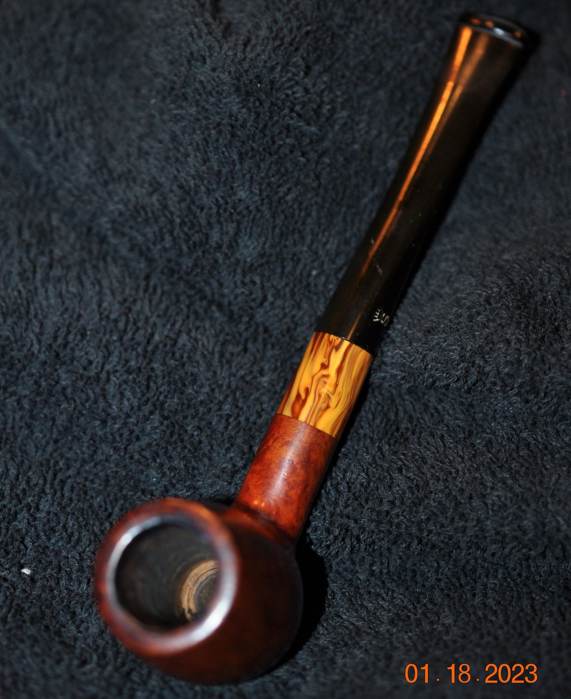
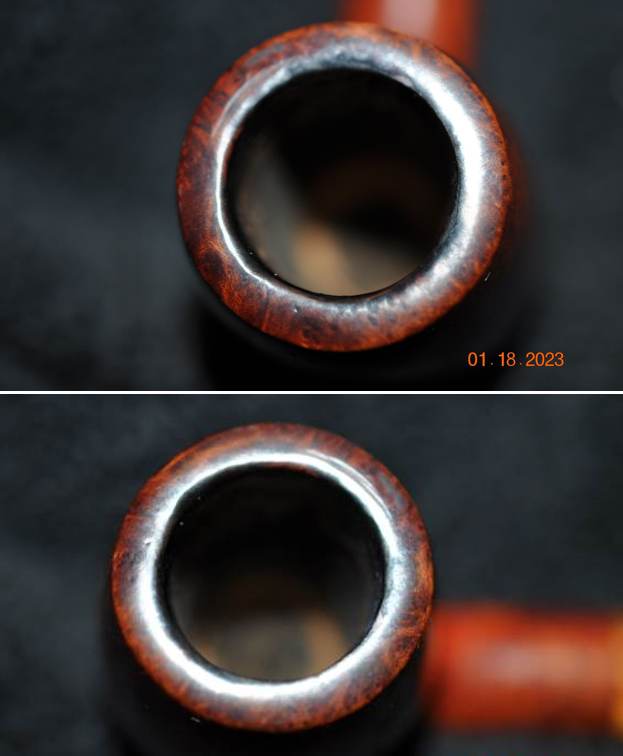
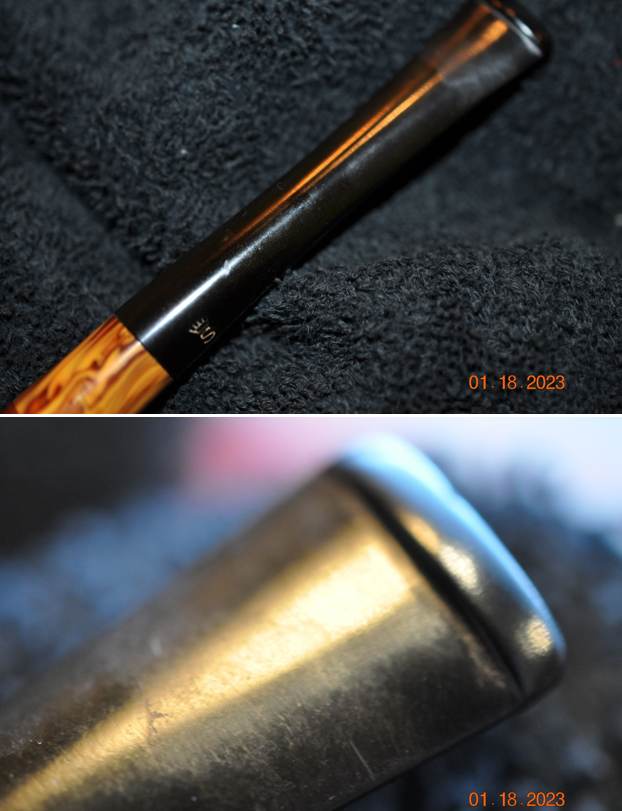
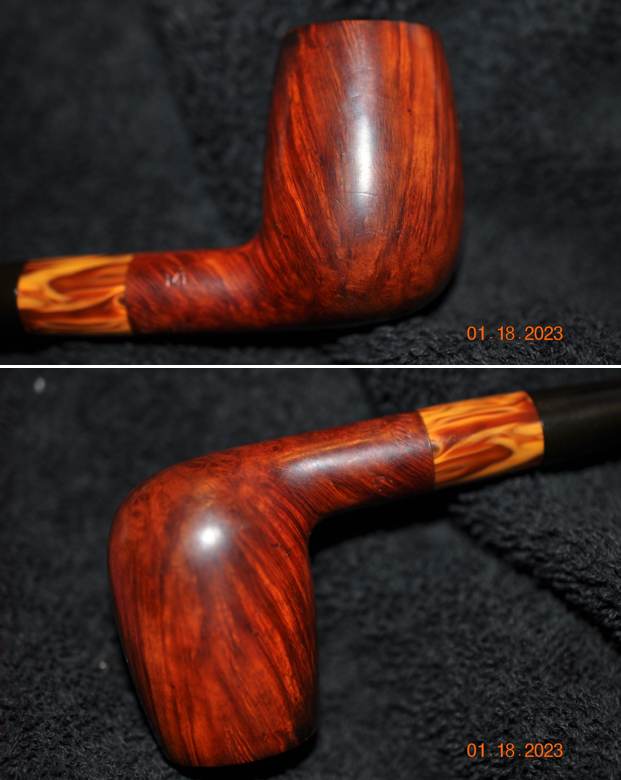
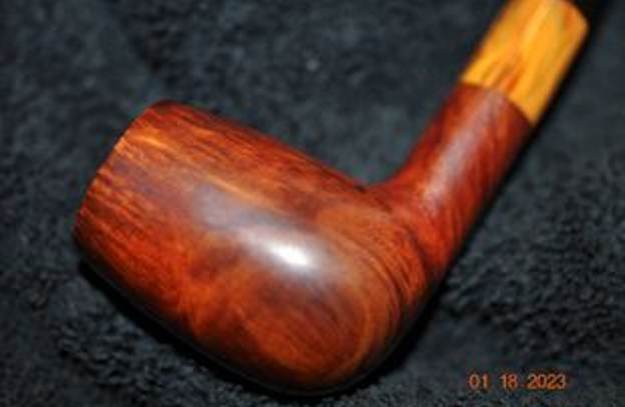
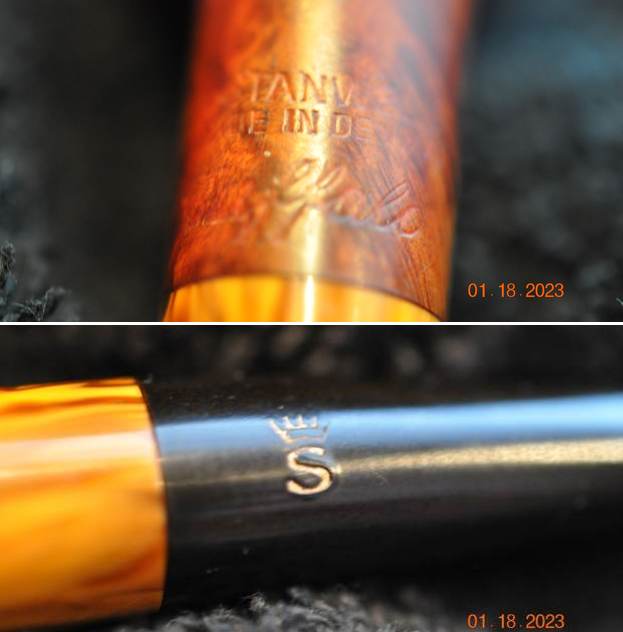
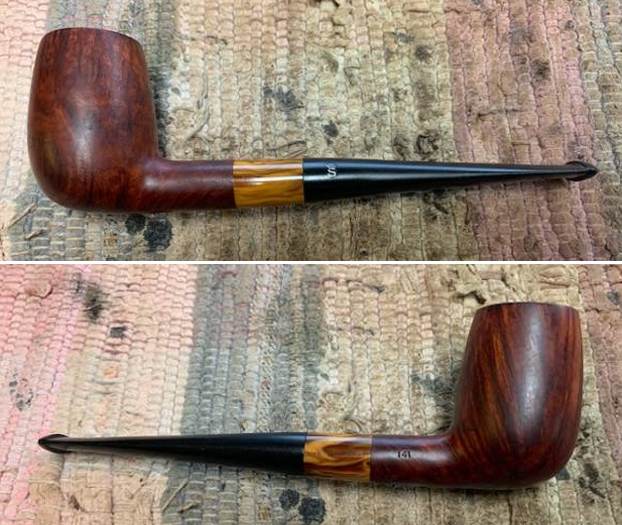
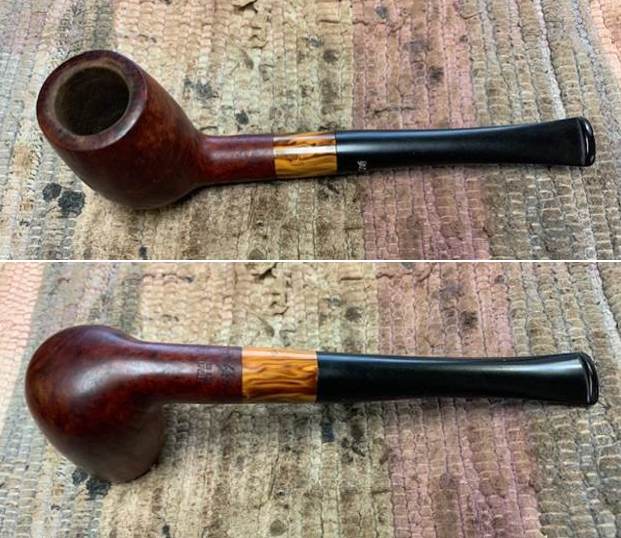
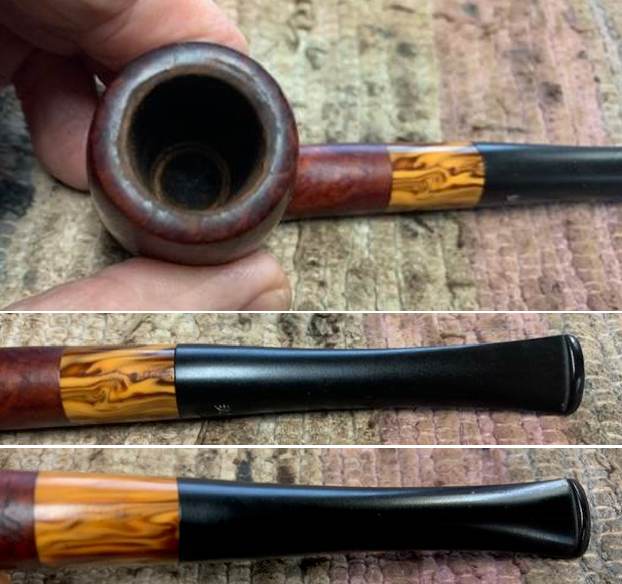
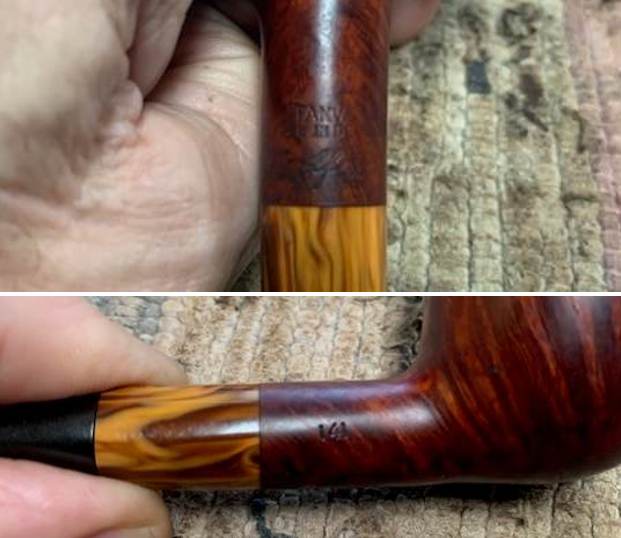
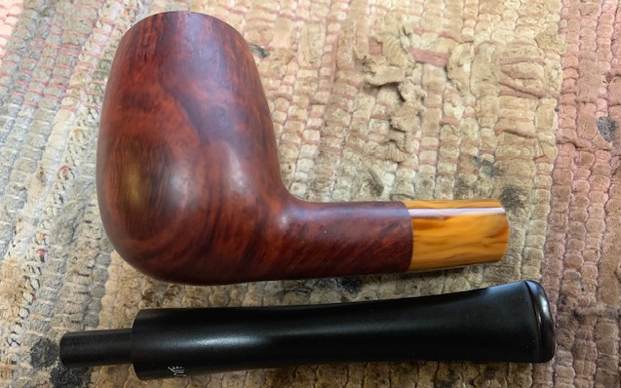
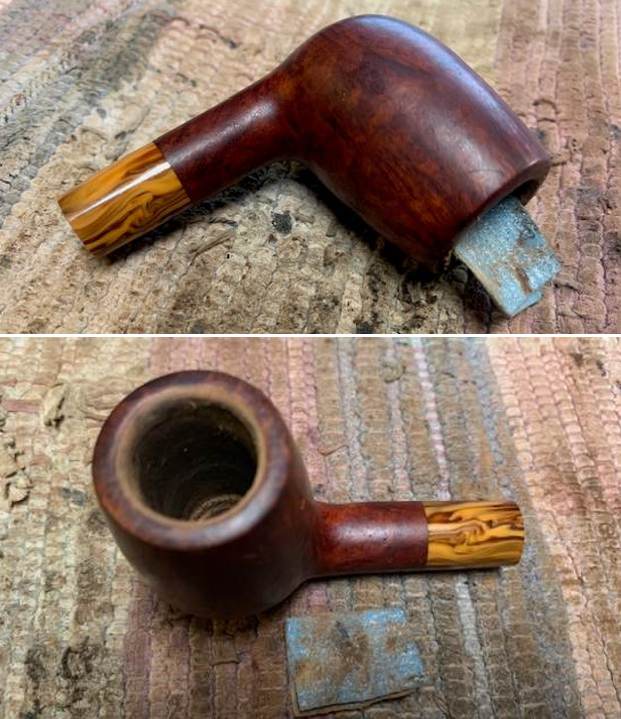
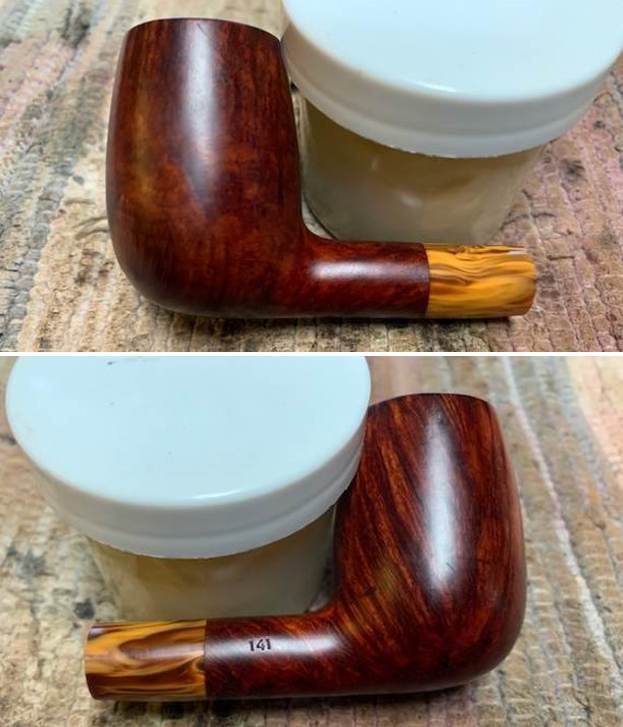
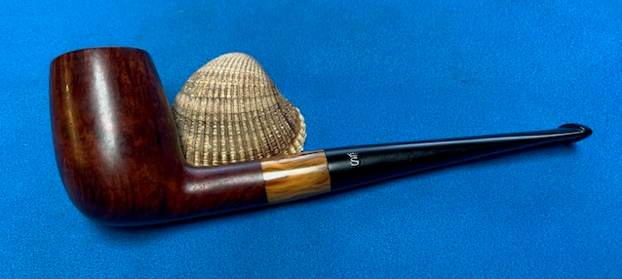
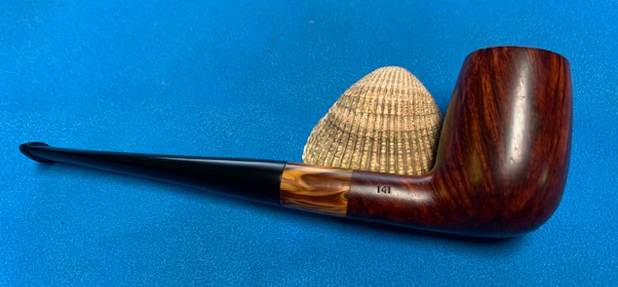
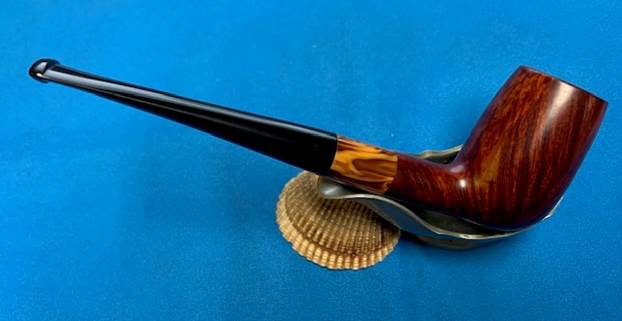
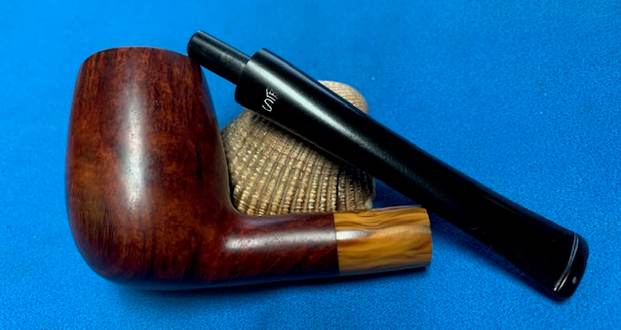
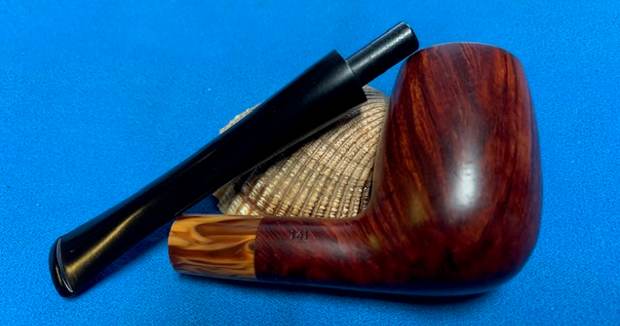
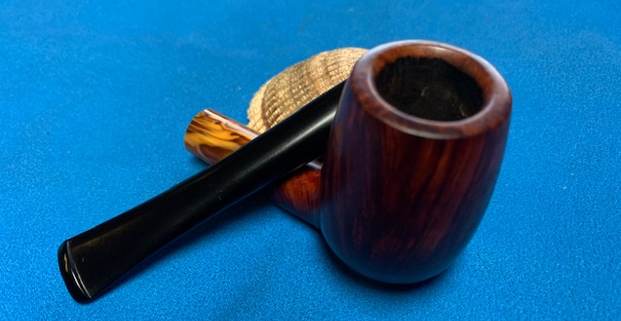
It is a rainy Saturday for me here in Vancouver so I decided to work on another one that was purchased on 01/10/2023 in a lot of pipes that came to us from Copenhagen, Denmark. This is a tall billiard almost a tall Brandy with a smooth finish and a variegated yellow/gold shank extension. It is another Made in Denmark Stanwell. The smooth finish on this pipe, around the bowl and shank has a mix of grain highlighted by the reddish brown stain. The pipe is stamped on the underside of the shank near the stem/shank junction and reads STANWELL [over] Made in Denmark [over] Buffalo. On the left side of the shank it has the shape number 141 stamped. The pipe was a well used pipe when Jeff received it. There was dust and grime ground into the finish. The mixture of brown stains highlights some beautiful grain under the dirt. The bowl was lightly caked and there was a light overflow of lava on the smooth rim top. The inner edge looked quite good. It had been reamed recently before we received it and there were scrape marks around the bottom of the bowl. They not grooves but rather smooth clean briar scraped by a reamer. The stem is vulcanite and was dirty, oxidized and had light tooth marks, chatter and scratches on both sides ahead of the button and on the button itself. There is a white crown S logo stamped on the left side of the taper stem. Jeff took photos of the pipe before he started his clean up work on it. He took photos of the bowl and rim top to show what they looked like before his clean up. You can see the scratches in the smooth rim top. The inner edge also shows some damage. He also took some of the stem to show the condition of both sides. The photos of the sides and heel of the bowl show the uniquely stained grain around the bowl and shank. The mixture of brown stains adds depth to the finish on the pipe. Even under the grime it is a real beauty. You can also see the swirls in the acrylic shank extension. The stamping on this one was around the bamboo horizontally and is shown in the photo below. It is clear and readable as noted above. The second photo shows the white stamped crown S on the stem side. Before I started my work on the pipe I wanted to see if I could find any information that would help me get a sense of the line. I turned to Pipephil to see if there was any listing on the Buffalo Line (http://pipephil.eu/logos/en/logo-stanwell.html). There was nothing listed.

I then turned to Pipedia (https://pipedia.org/wiki/Stanwell) for more information. The article is great and gives a lot of history on the brand. There were also links to a shape article by Bas Stevens that I originally published on rebornpipes. I looked up the 141 shape number to see who had designed that shape (https://pipedia.org/wiki/Stanwell_Shape_Numbers_and_Designers). I quote the information on shape 141.

  1. Billiard, medium size, conical bowl, full mouthpiece by Jess Chonowitsch.

I found a listing on Smokingpipes.com that had a description of the Buffalo line of pipes (https://www.smokingpipes.com/pipes/estate/denmark/moreinfo.cfm?product_id=229371). I am including part of the description below.

A rather easy to spot Stanwell series, the pipes of the Buffalo line were distinguished by swirled pattern acrylic ferrules in colors reminiscent of water buffalo horn.

Now it was time to work on the pipe.

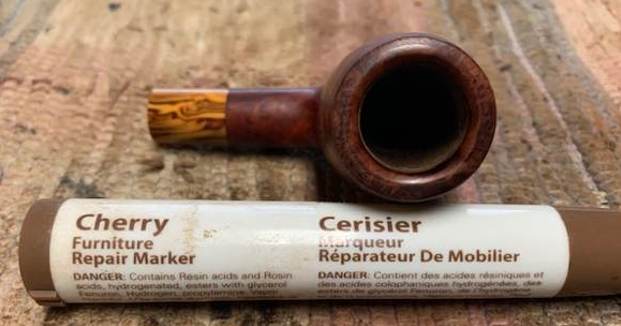
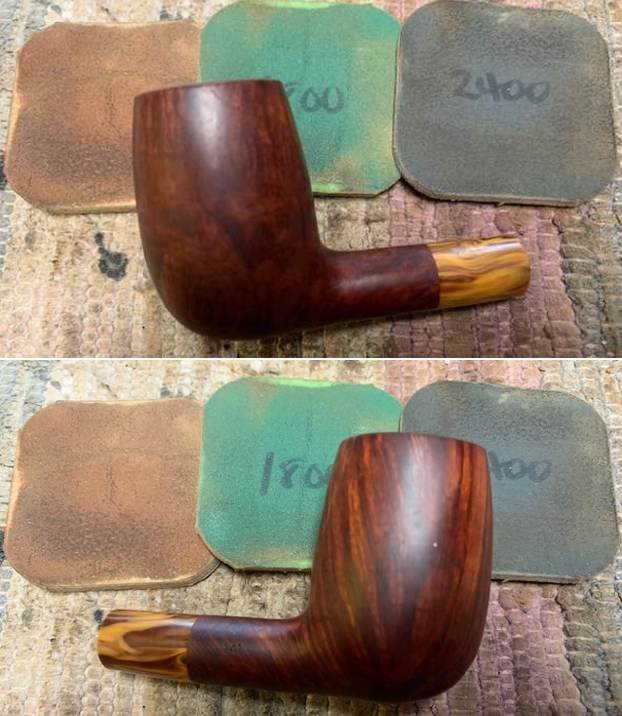
Jeff had thoroughly cleaned up the pipe. He reamed the pipe with a PipNet Pipe Reamer and cleaned up the remnants with a Savinelli Fitsall Pipe Knife. He scrubbed the bowl with undiluted Murphy’s Oil Soap with a tooth brush. He rinsed it under running warm water to remove the soap and grime. He cleaned out the inside of the shank and the airway in the stem with alcohol, cotton swabs and pipe cleaners. He scrubbed the exterior of the stem with Soft Scrub to remove the grime and calcification. He soaked the stem in Before & After Deoxidizer and rinsed it off with warm water. The pipe looked very good when it arrived here in Vancouver. I took close up photos of the bowl, rim and the stem. You can see the damage on rim top and inner edge. The bowl is quite clean inside with marks from a previous reaming on the bottom of the bowl. The acrylic stem is in good condition with light tooth marks and some chatter as noted above.I took photo of the stamping on the underside and right side of the shank. It is clear and readable as noted above. I removed the stem from the shank and took a photo to give a sense of the proportions of the pipe. The briar is quite beautiful and the dark and medium stains really make it stand out.I started my work on the pipe working on the damage to the inner edge and the rim top with a folded piece of 220 grit sandpaper to bring the edge back into round and it looked much better.I used a Cherry stain pen to touch up the sanded edges and top spots on the rim top where I sanded it smooth and removed the damaged. The colour was a perfect match to the remainder of the bowl and shank.I polished the bowl and shank with micromesh sanding pads – dry sanding with 1500-12000 grit pads. I wiped the bowl down after each pad to remove the grit. The bowl began to take on a rich shine. It is a beauty. I rubbed the bowl down with Before & After Restoration Balm. I worked it into the briar with my finger tips. I let it sit for 10 minutes and the Balm did its magic. It enlivens, cleans and preserves the briar. It certainly brought this bowl back to life. I buffed it off with a clean cloth and took the following photos. I set the bowl aside and turned my attention to the stem. I polished the stem with micromesh sanding pads – 1500-12000 grit pads. I wiped it down with a damp cloth after each sanding pad. I used Before & After Pipe Polish – both Fine and Extra Fine to further polish the stem. This Stanwell Buffalo 141 Billiard with a vulcanite taper stem is a great looking pipe now that it has been restored. The mix of stains once cleaned up really highlights the grain and the polished sandblast finish is stunning. I put the stem back on the bowl and carefully buffed the pipe with Blue Diamond on the buffing wheel. I gave the bowl and the stem multiple coats of carnauba wax on the buffing wheel and followed that by buffing the entire pipe with a clean buffing pad. I hand buffed the pipe with a microfiber cloth to deepen the shine. The finished Stanwell Buffalo 141 Billiard fits nicely in the hand and feels great. Give the finished pipe a look in the photos below. The dimensions of the pipe are Length: 6 inches, Height: 2 inches, Outside diameter of the bowl: 1 inch, Chamber diameter: ¾ of an inch. The weight of the pipe is 40 grams / 1.41 ounces. I will be adding the pipe to the Danish Pipe Makers Section of the rebornpipes store. If you are interested in purchasing this pipe send me a message or an email. Thanks for reading this blog and my reflections on the pipe while I worked on it.

Restoring a Stanwell Bamboo Brown Sandblast Billiard with a taper stem


Blog by Steve Laug

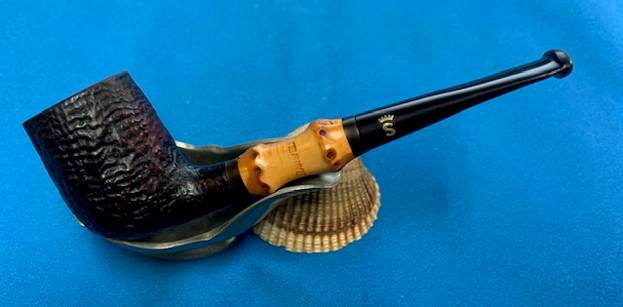
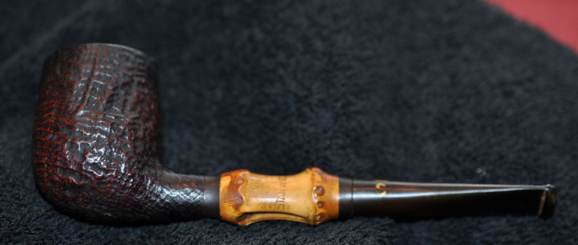
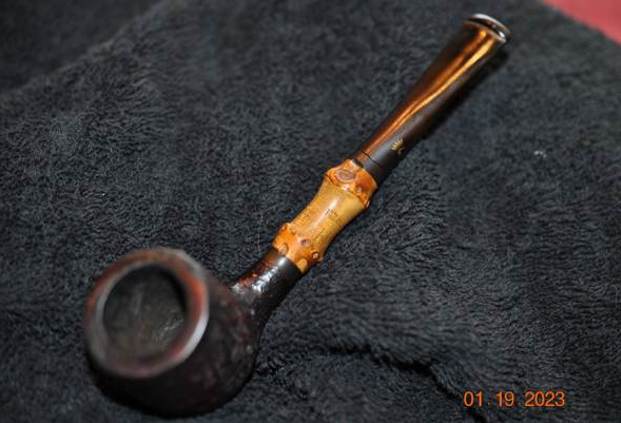
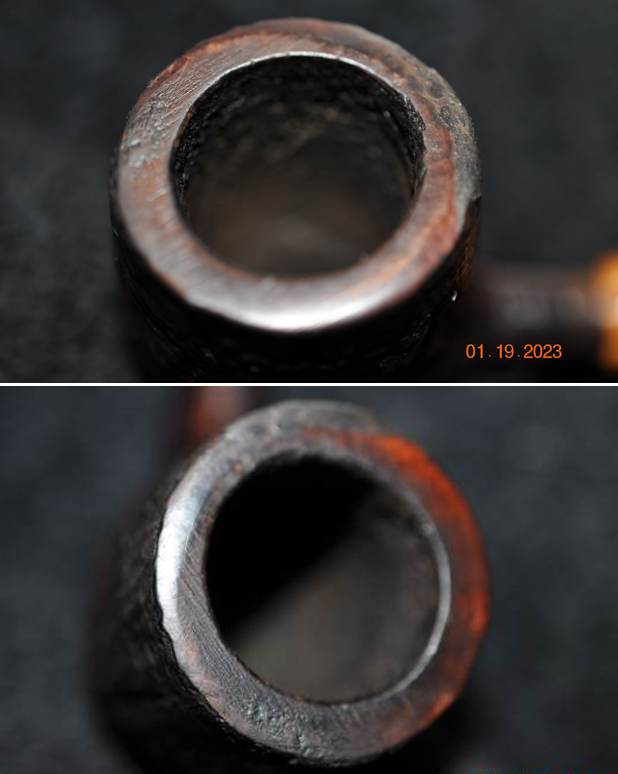
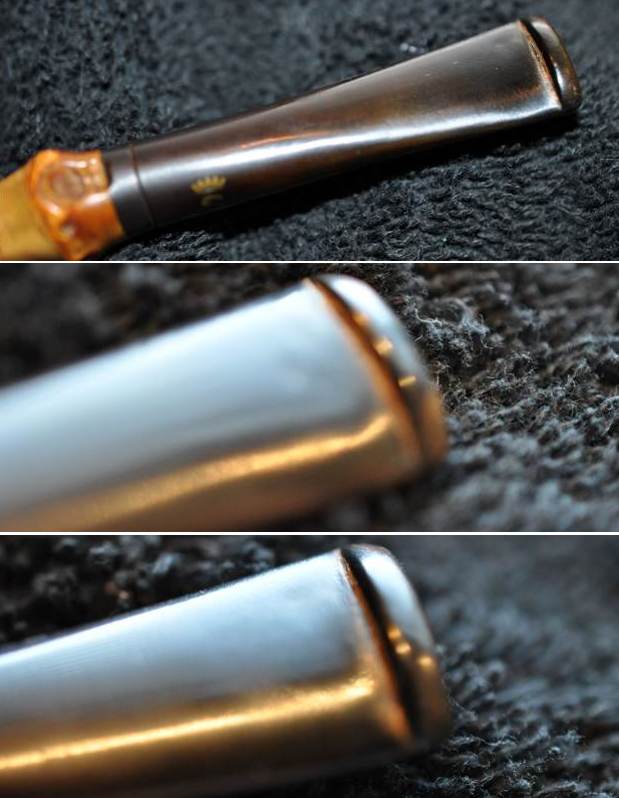
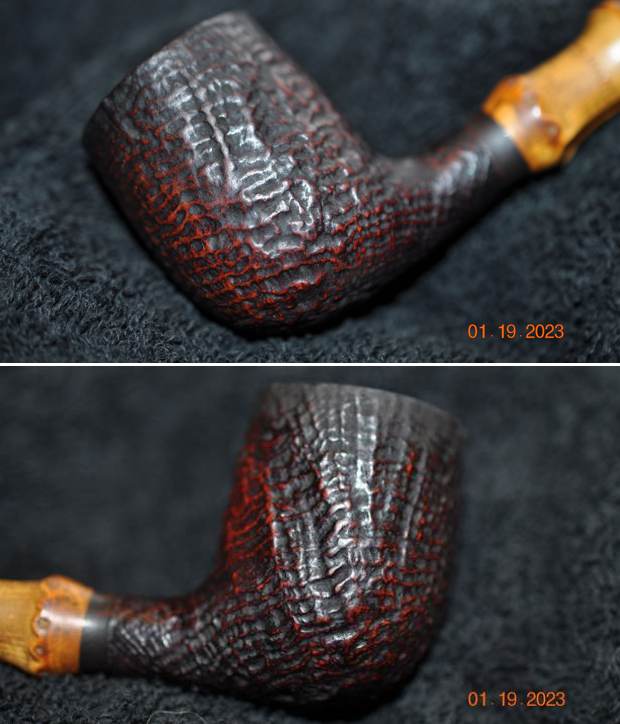
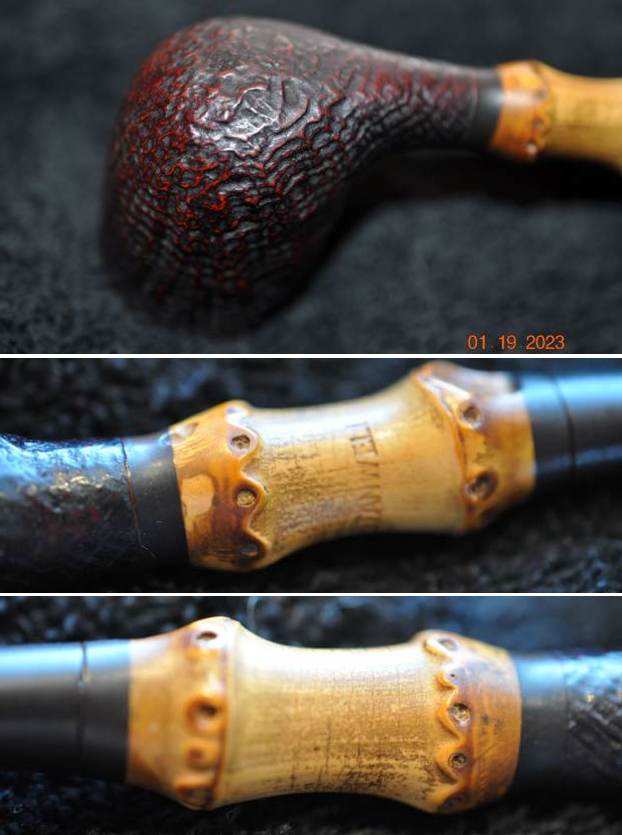
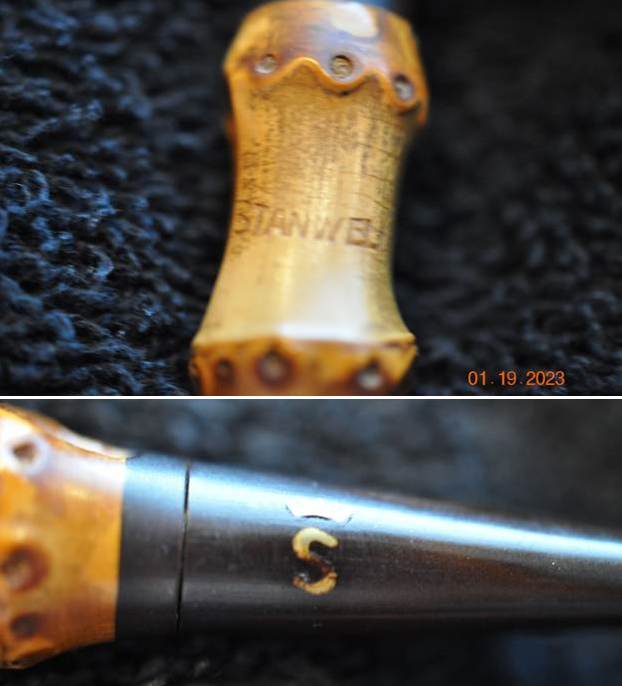
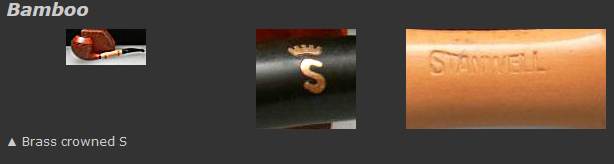
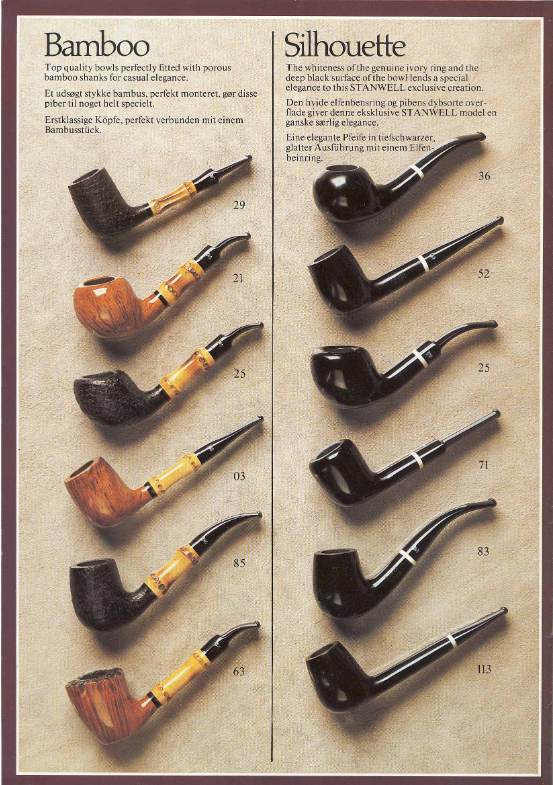
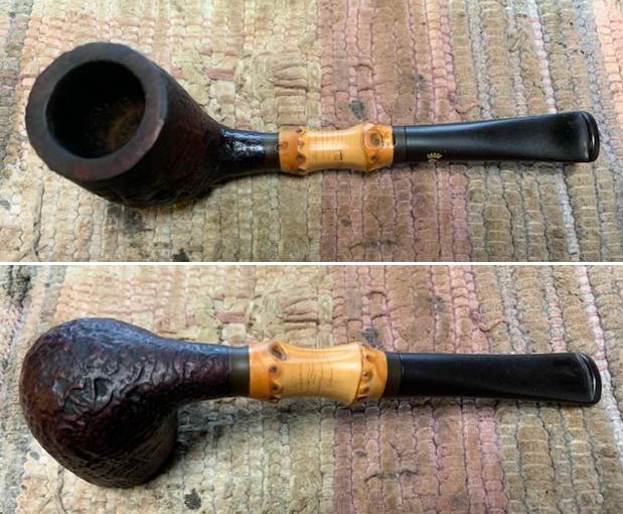
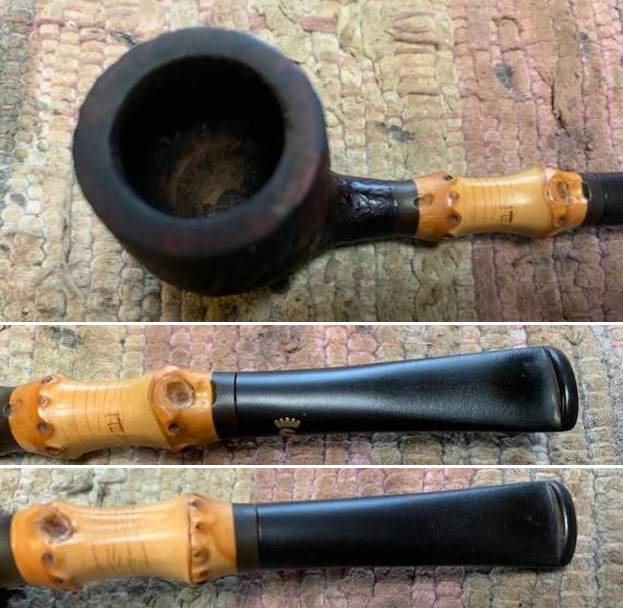
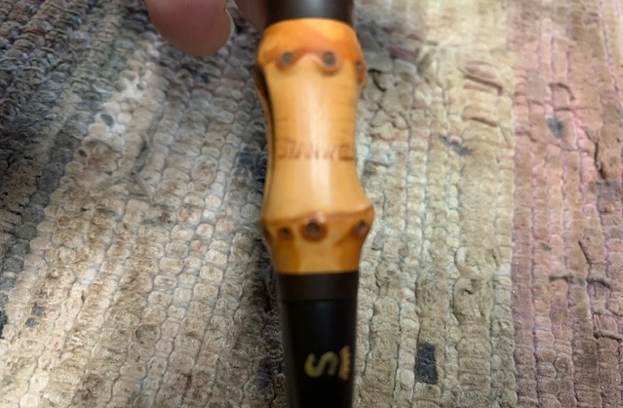
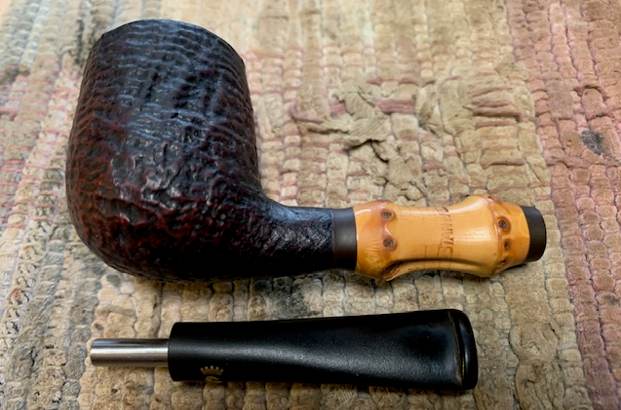
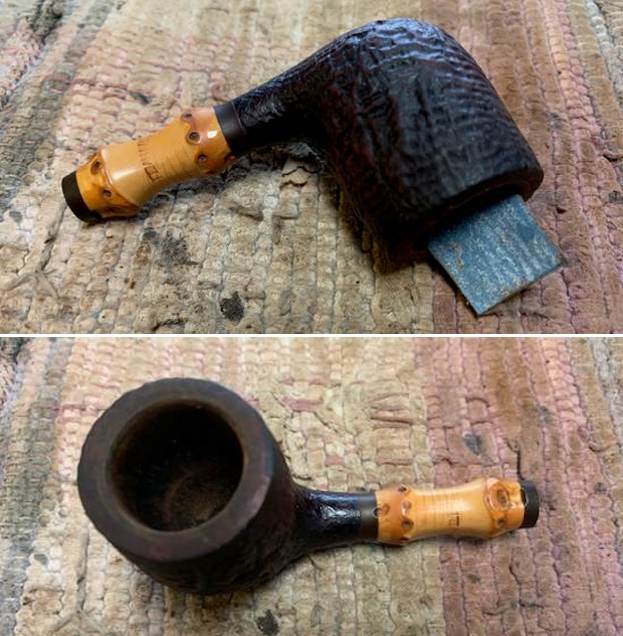
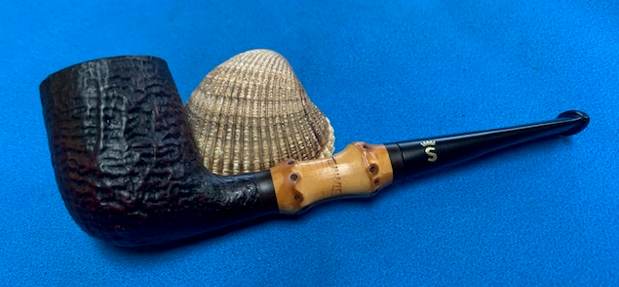
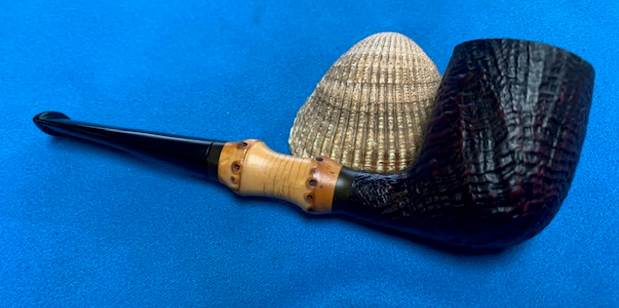
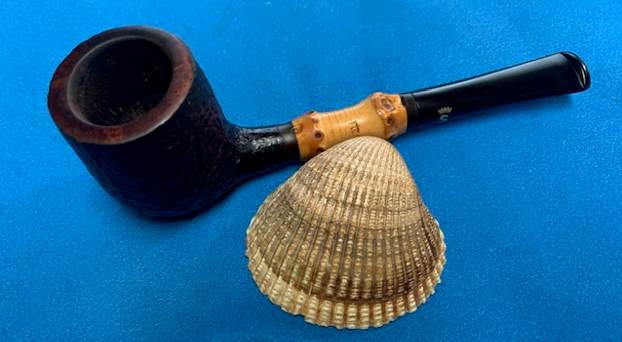
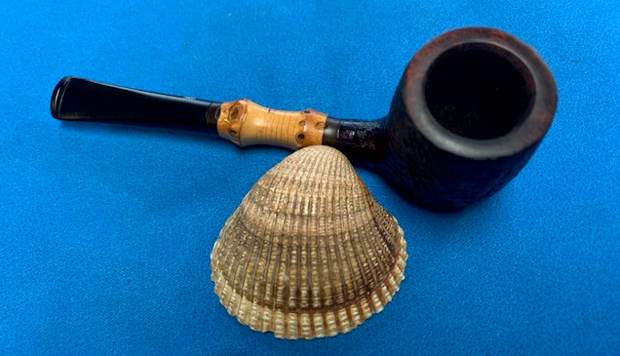
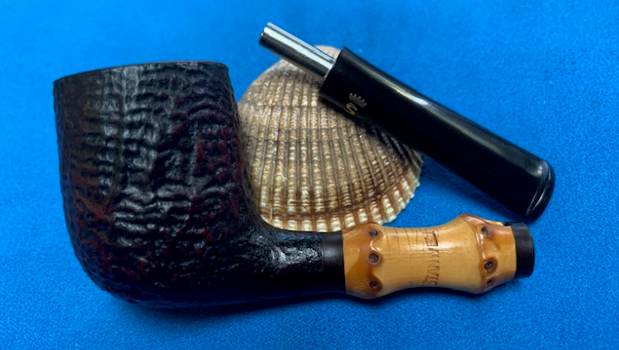
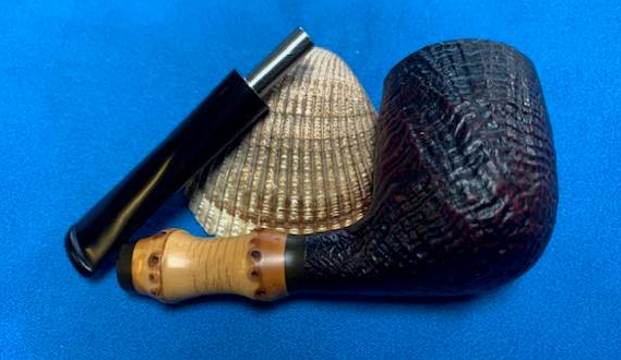
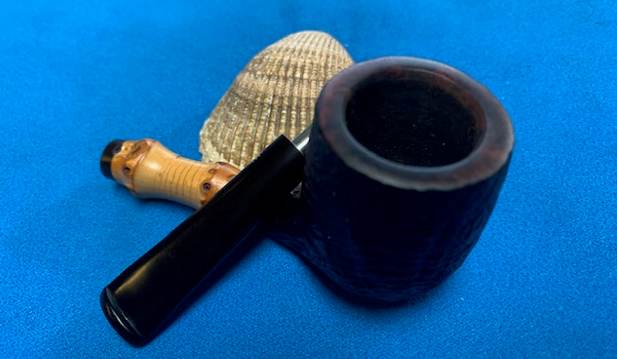
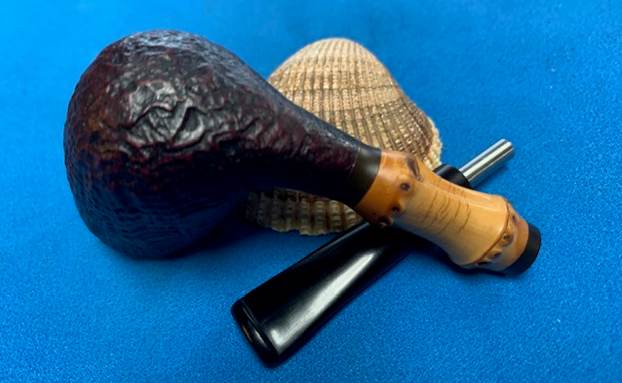
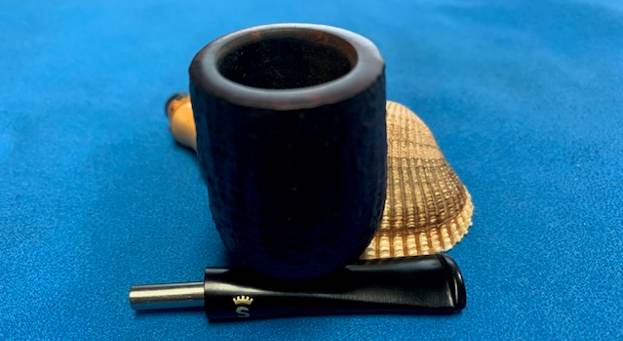
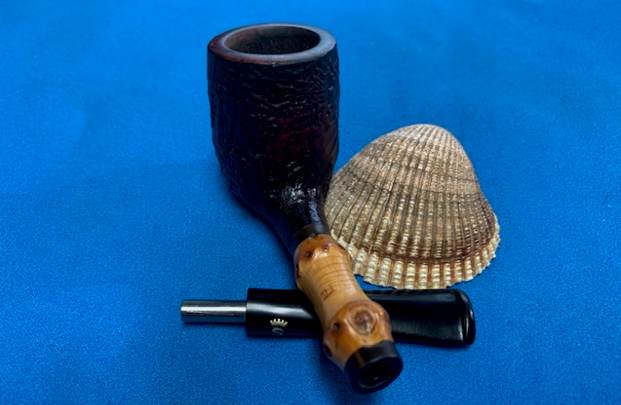
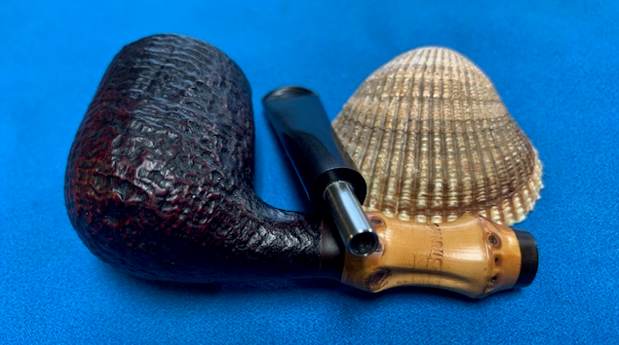
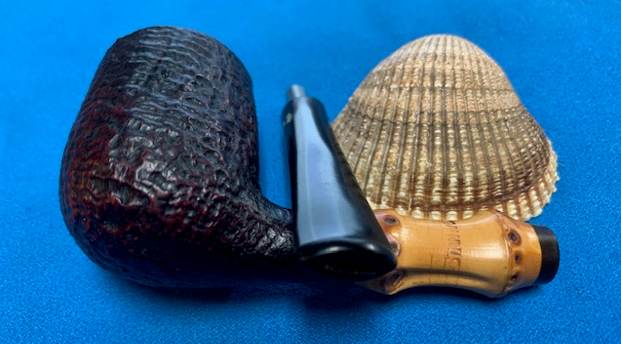
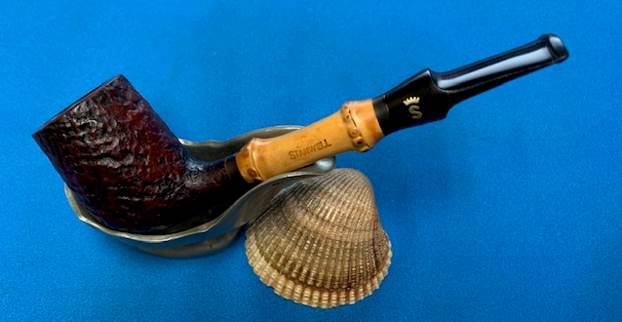
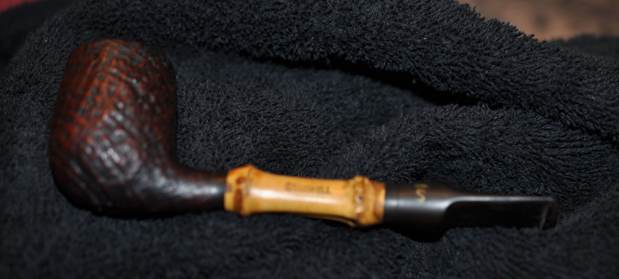
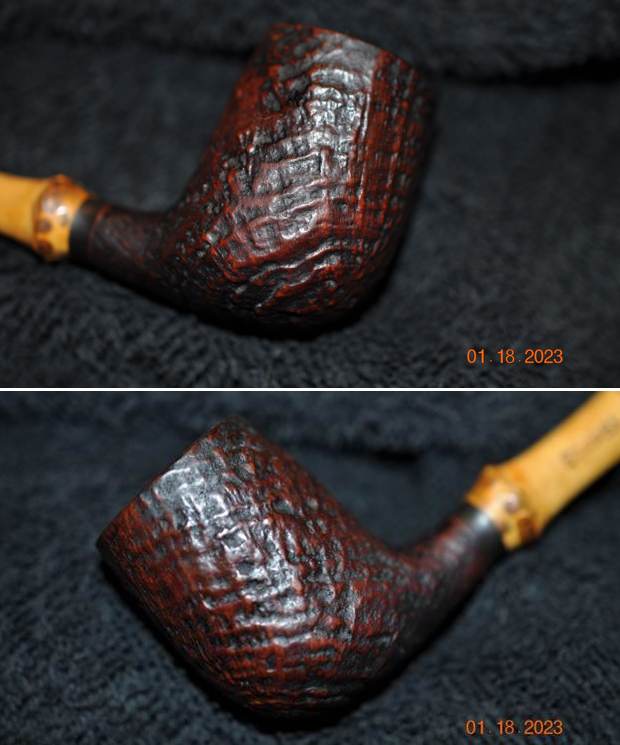
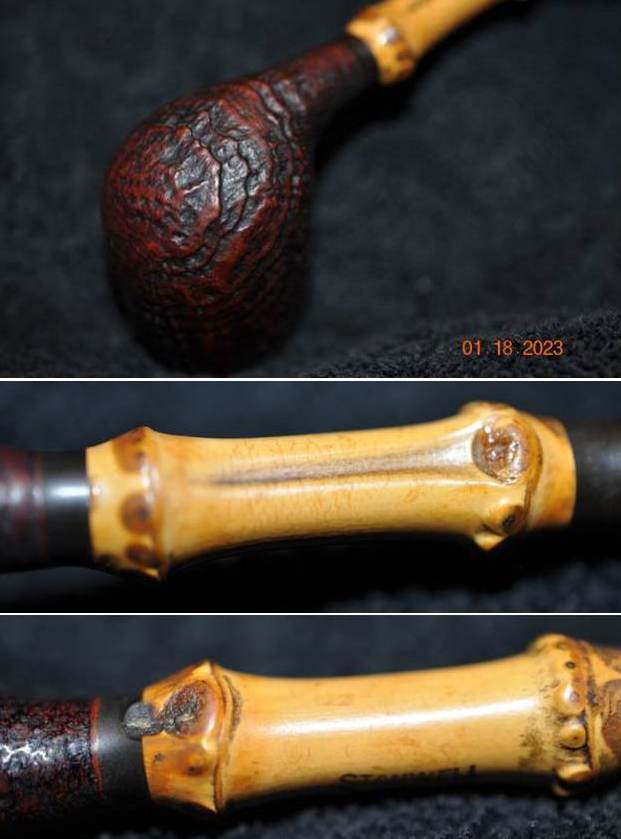
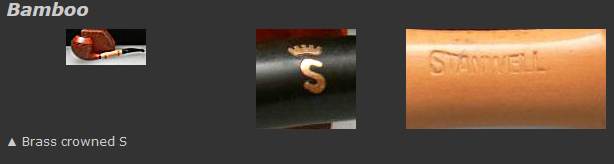
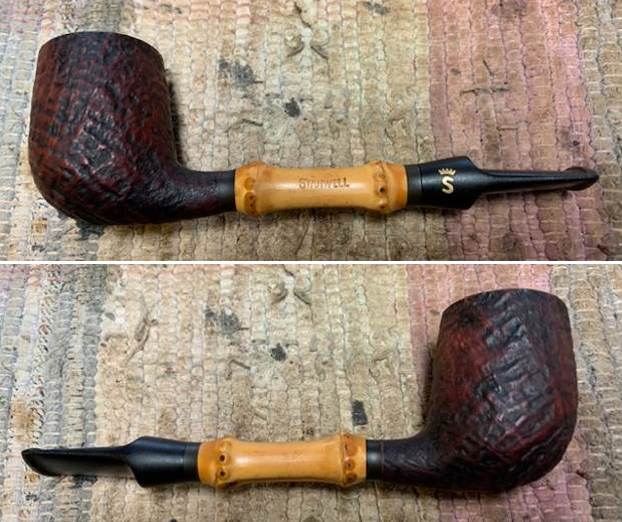
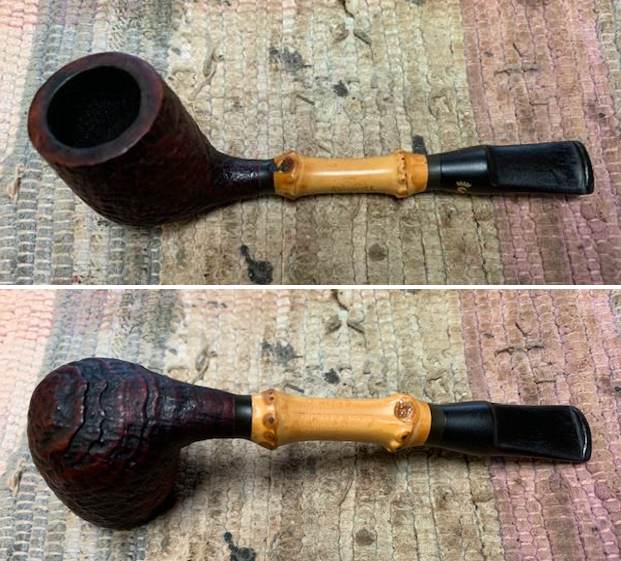
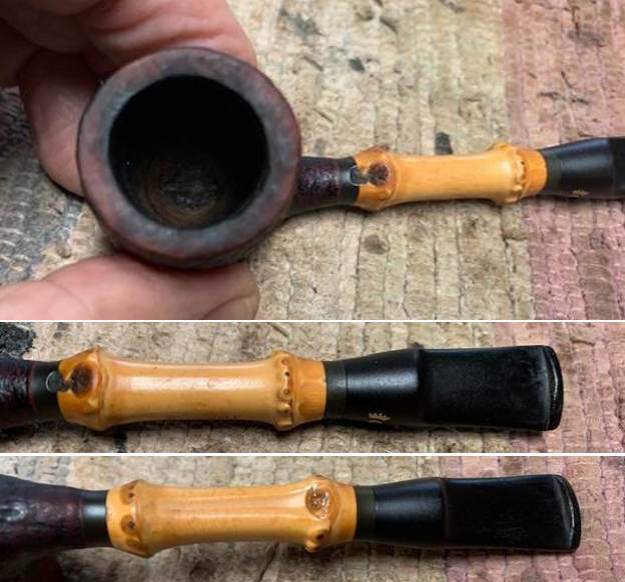
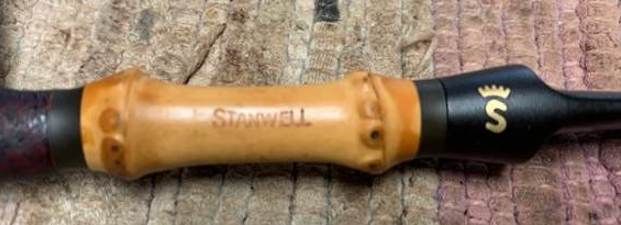
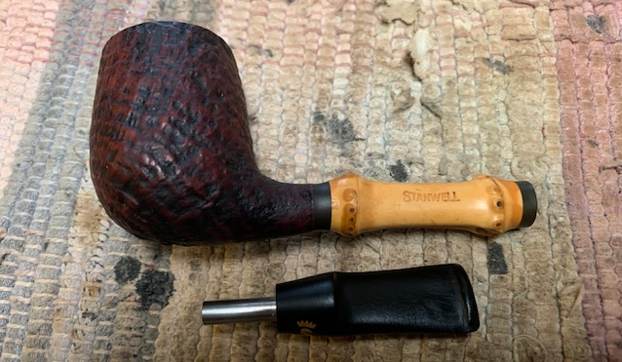
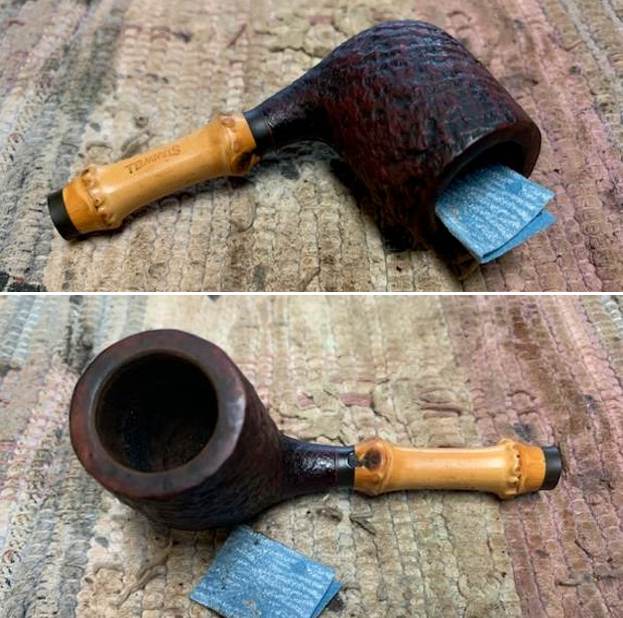
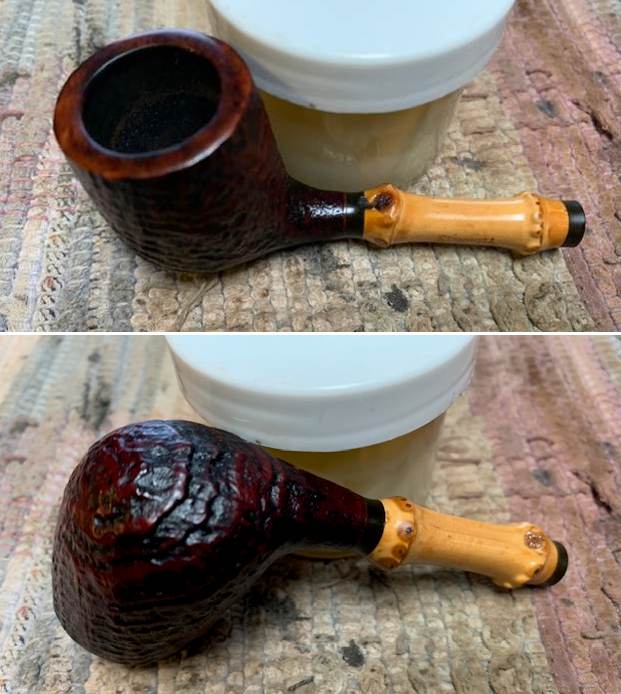
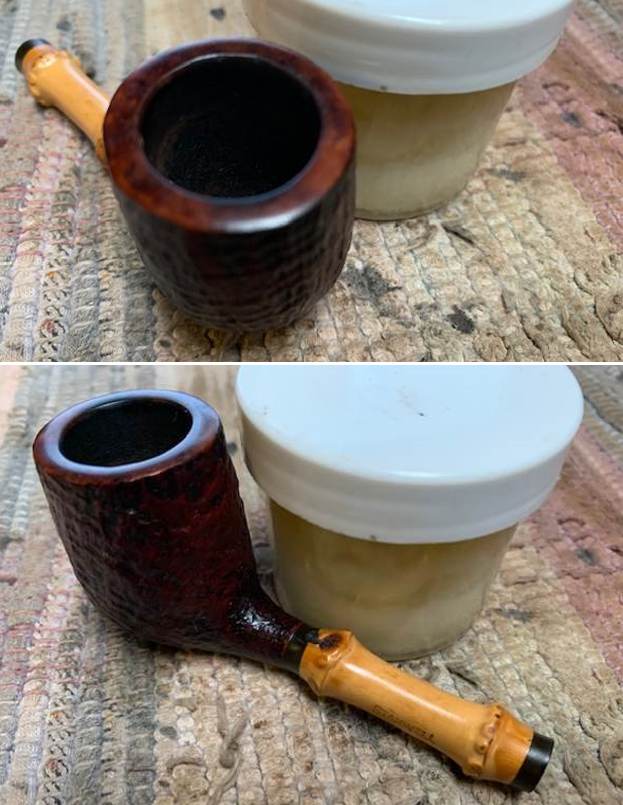
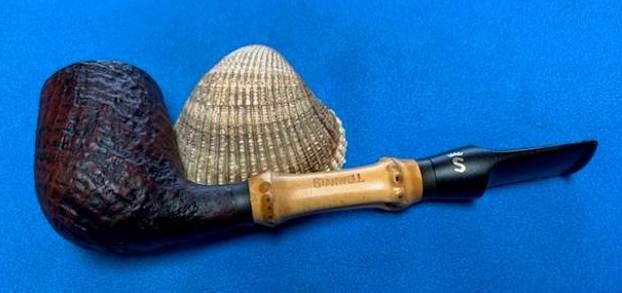
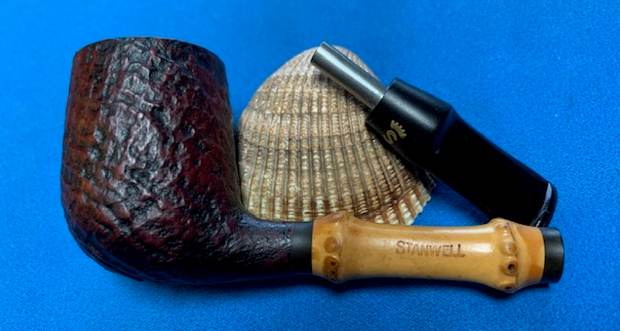
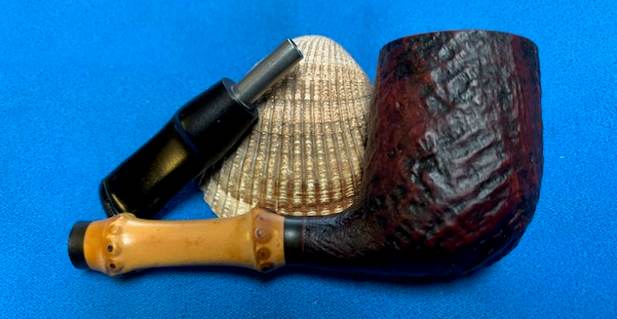
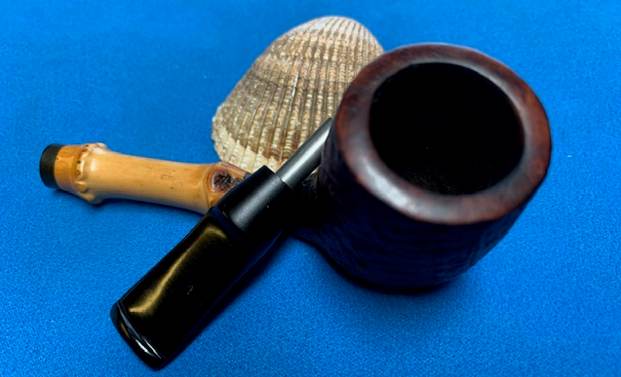
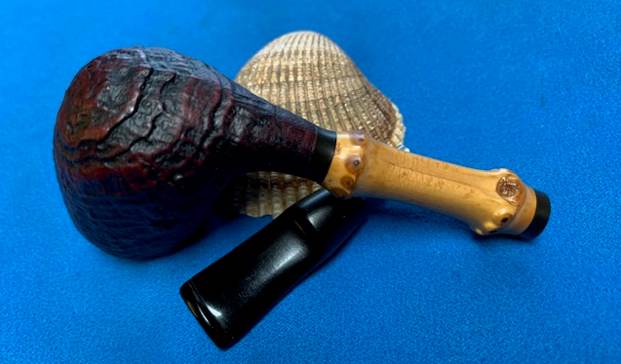
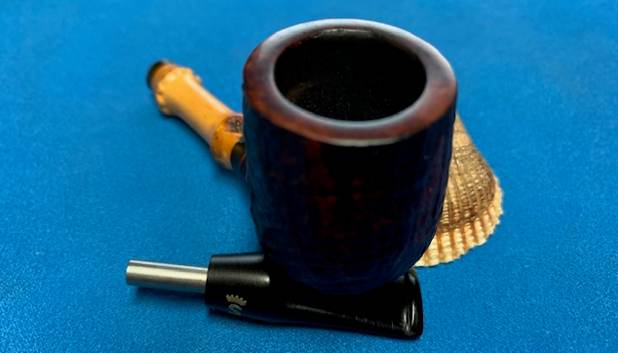
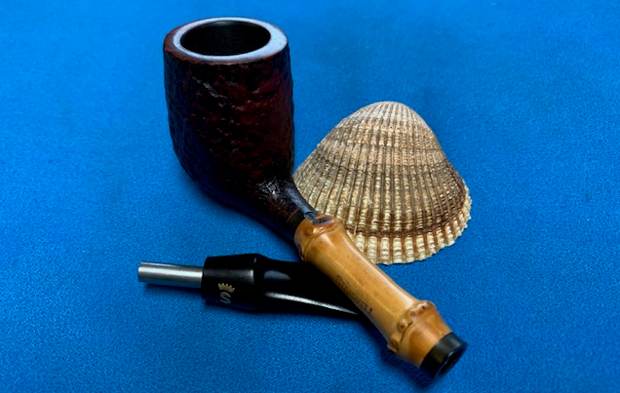
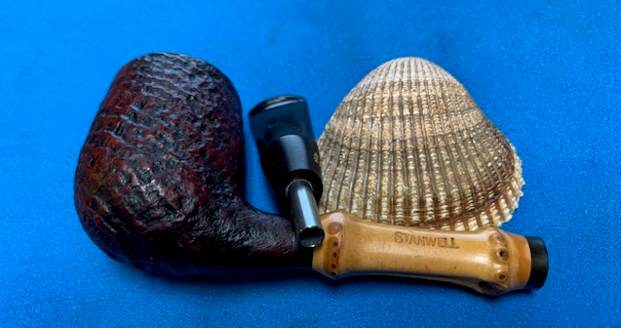
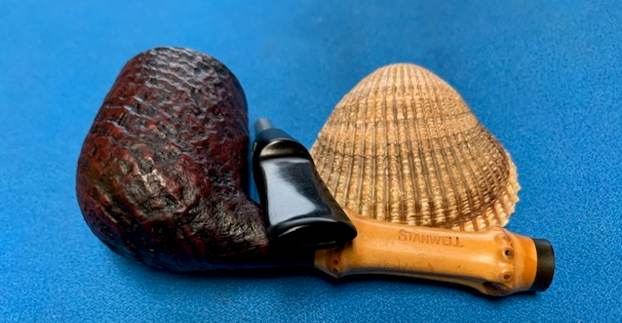
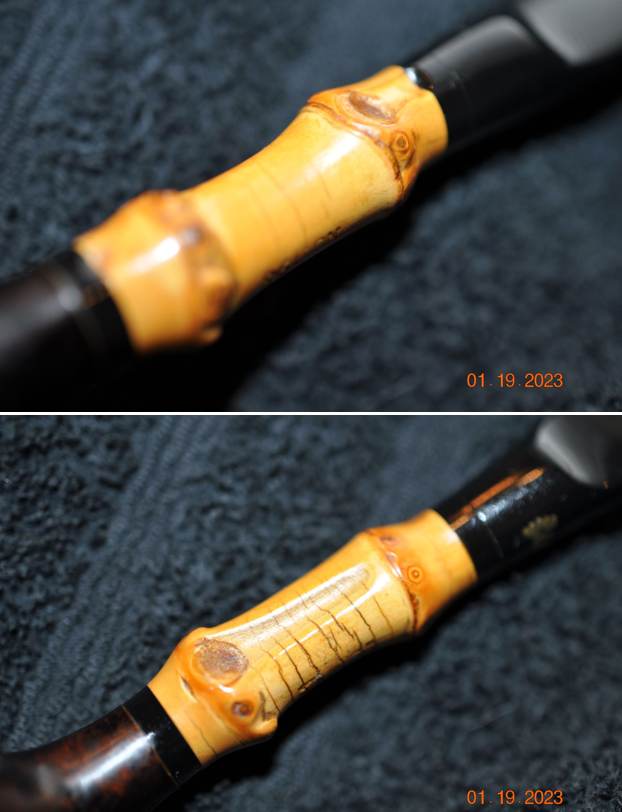
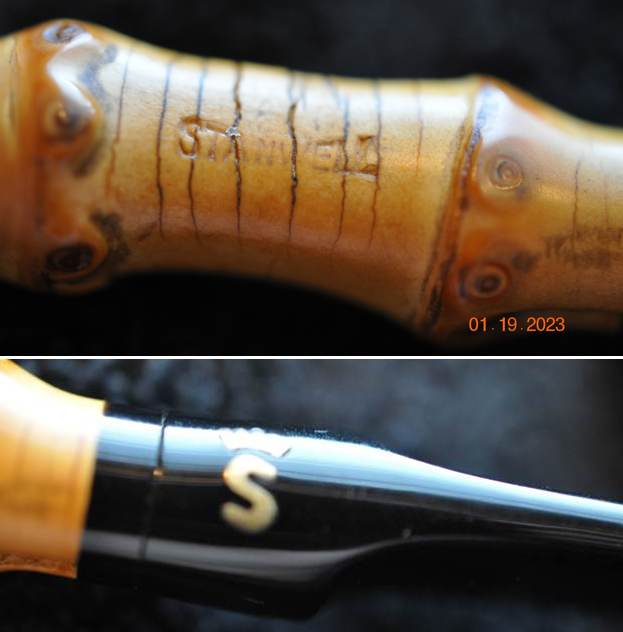
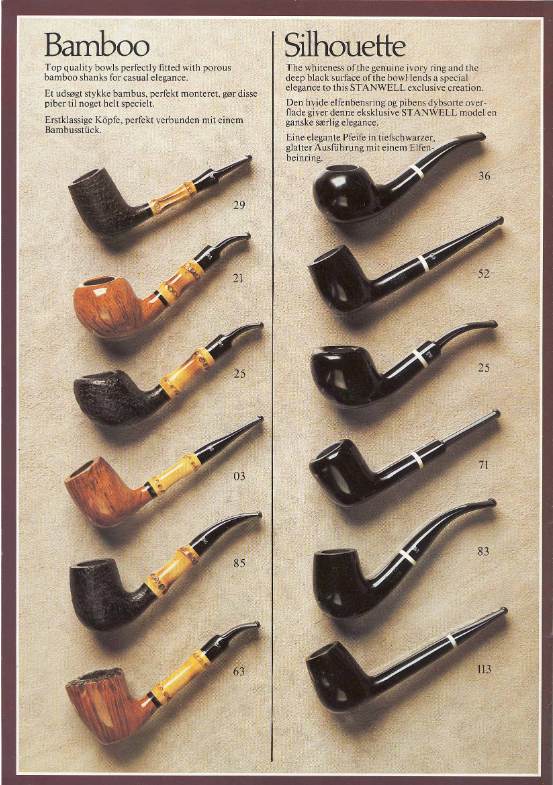
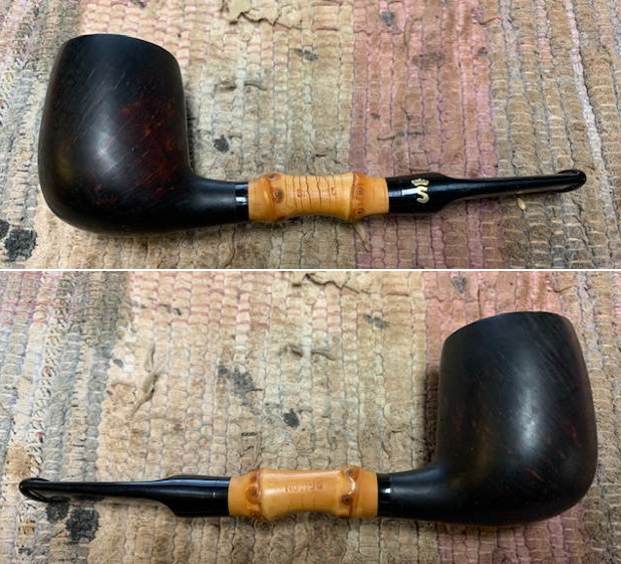
This quiet day off for me here in Vancouver I decided to work on was another one that was purchased on 11/14/2022 in a lot of pipes that came to us from Copenhagen, Denmark  It included a group of Stanwell Bamboo pipes that are quite beautiful, combining a briar bowl, a bamboo shank and an vulcanite or acrylic stem. This is the last of the bamboo pipes and the second of the sandblast pipes that we had to work on. I have enjoyed working on these Bamboos  and the light weight feel of the pipe in hand. The rugged sandblast on this pipe, around the bowl and shank has a mix of ridges and valleys highlighted by dark stain. The pipe is stamped around the middle of the bamboo and reads STANWELL. The pipe was a well used pipe when Jeff received it. There was dust and grime ground into the sandblast finish. The mixture of brown stains highlights some beautiful blast under the dirt. The bowl was heavily caked and there was an overflow of lava on the smooth rim top. The inner edge was hard to see clearly and the lava could easily be hiding damage. The stem is vulcanite and was dirty, oxidized and had light tooth marks, chatter and scratches on both sides ahead of the button and on the button itself. There is a brass/gold crown S logo inlaid on the left side of the saddle stem. Jeff took photos of the pipe before he started his clean up work on it. He took photos of the bowl and rim top to show what they looked like before his clean up. You can see the scratches in the smooth rim top. The inner edge also shows some damage. He also took some of the stem to show the condition of both sides. The photos of the sides and heel of the bowl show the uniquely stained grain around the bowl and shank. The mixture of black and brown stains adds depth finish on the pipe. Even under the grime it is a real beauty. He also took photos of the bamboo showing the patina on the wood. The stamping on this one was around the bamboo horizontally and is shown in the photo below. It is clear and readable as noted above. The second photo shows the gold crown S on the stem side.  Before I started my work on the pipe I wanted to see if I could find any information that would help me get a sense of the line. I turned to Pipephil to get a quick review of the  Bamboo line (http://pipephil.eu/logos/en/logo-stanwell.html). The Brass Crowned S inlaid logo on the stem is shown in the photo below. I have included a screen capture of the brand info there.I then turned to Pipedia (https://pipedia.org/wiki/Stanwell) for more information. The article is great and gives a lot of history on the brand. There were also links to catalogues at the bottom of the page. I am including a page from a catalogue on the site below that gives a bit of a glimpse into the brand. Here is the link (http://www.axeljeske.de/Pfeifen/Stanwell_Amager.pdf). The catalogue page gives a great description of the Bamboo line. It reads as follows: Top quality bowls perfectly fitted with porous bamboo shanks for casual elegance.

Now it was time to work on the pipe.

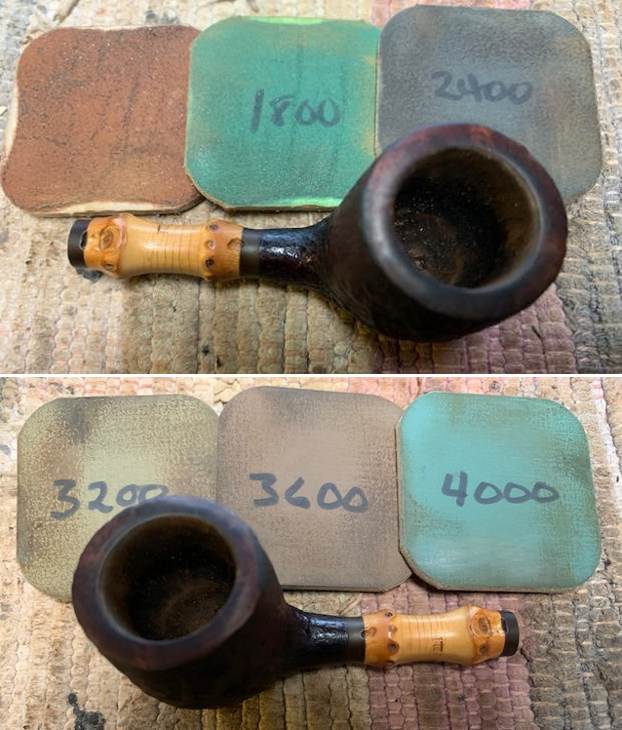
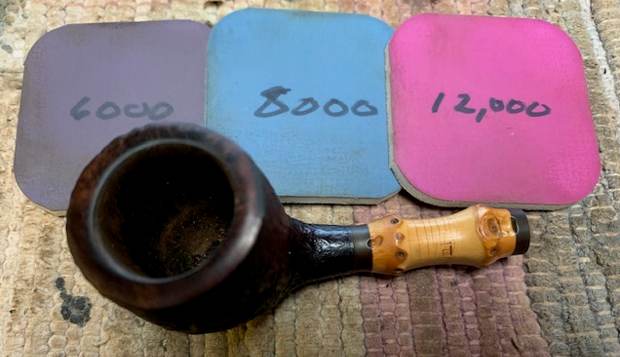
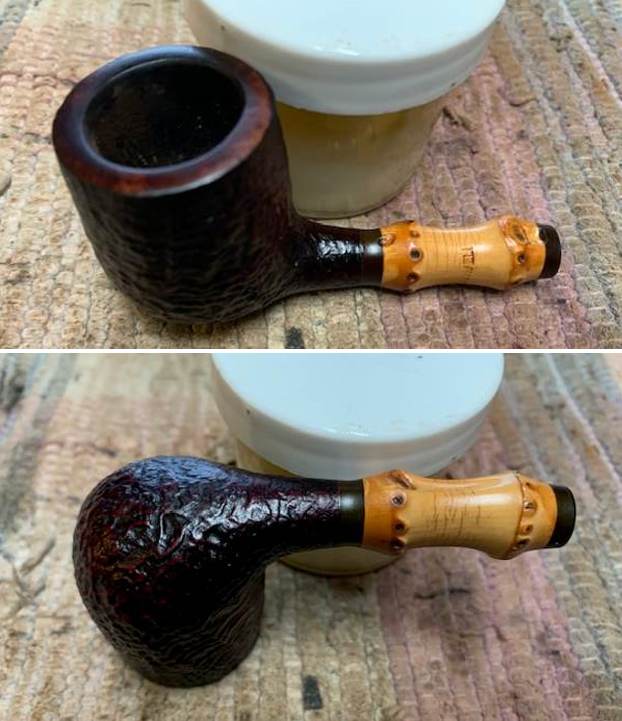
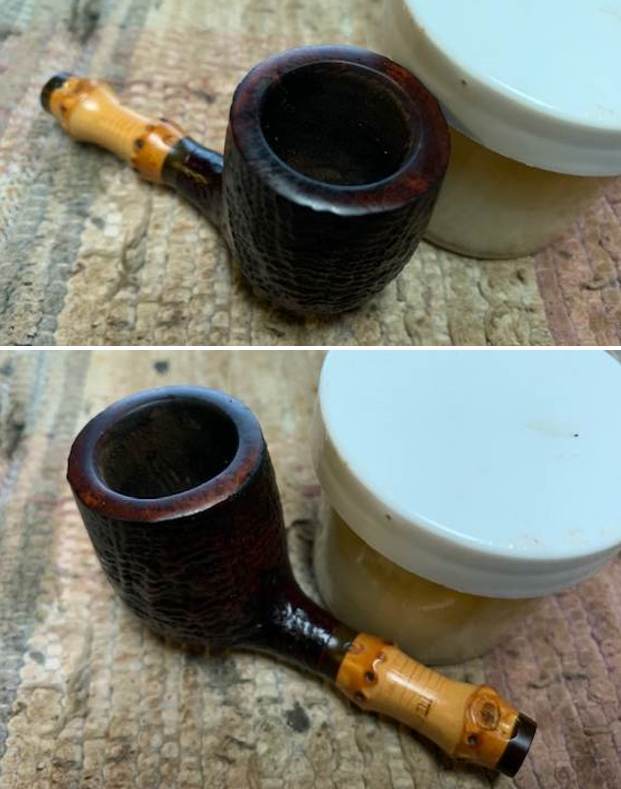
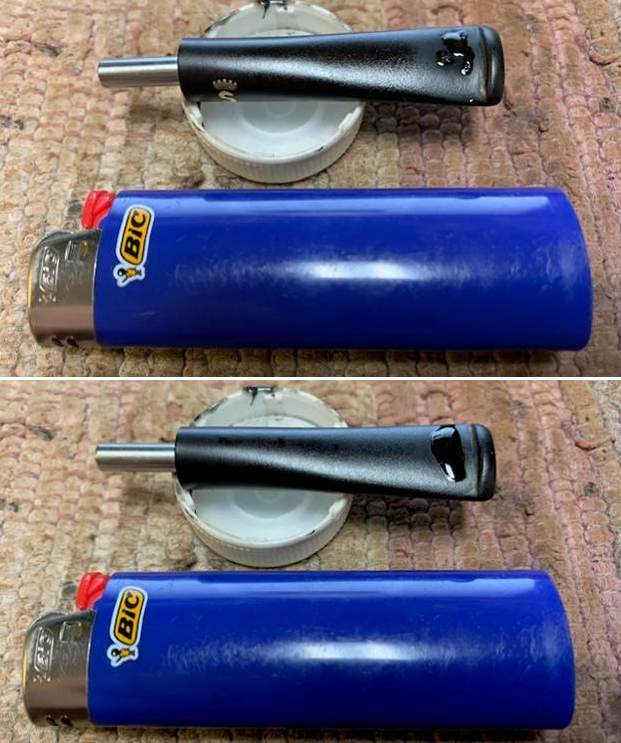
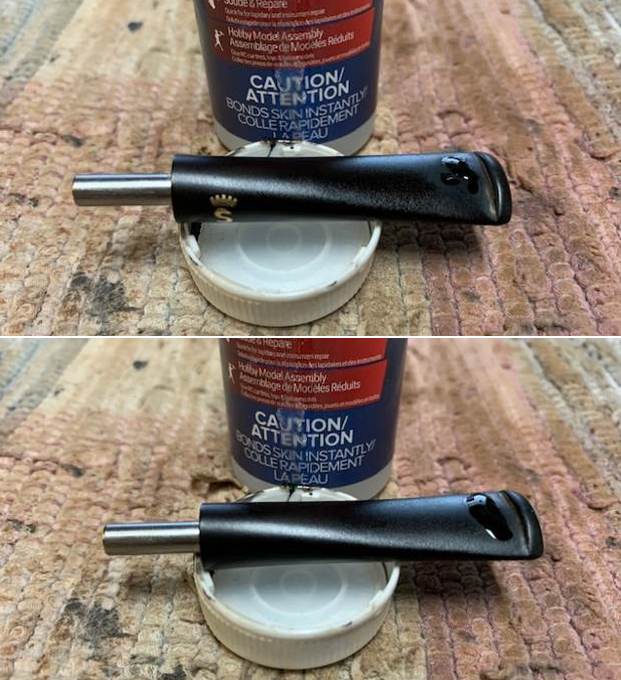
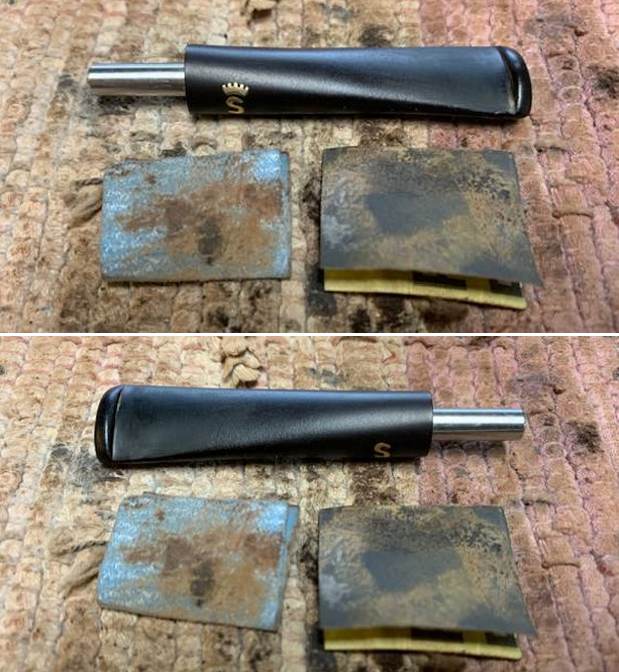
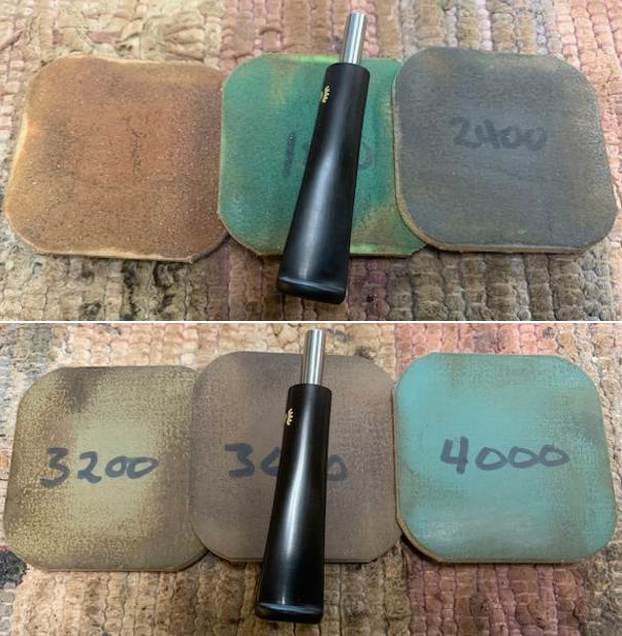
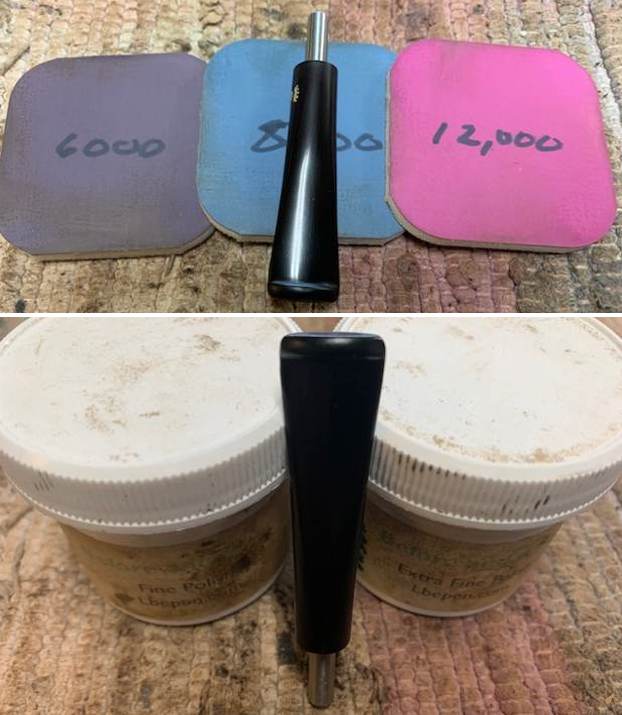
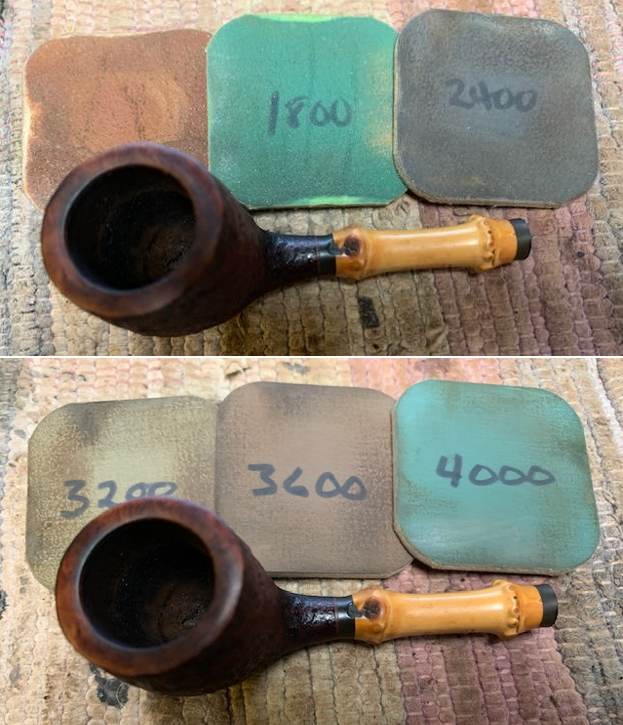
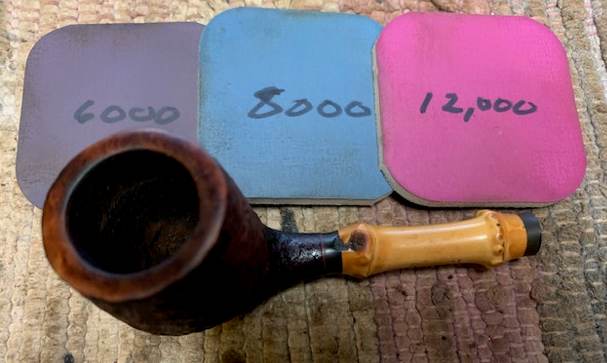
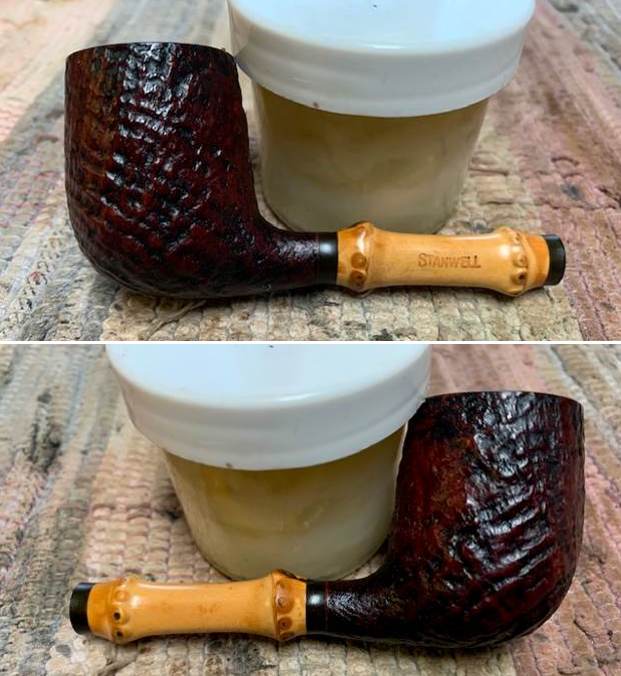
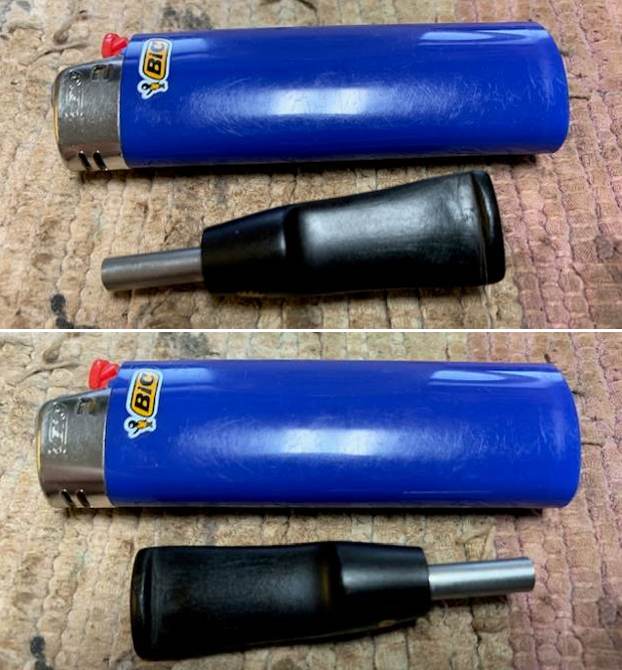
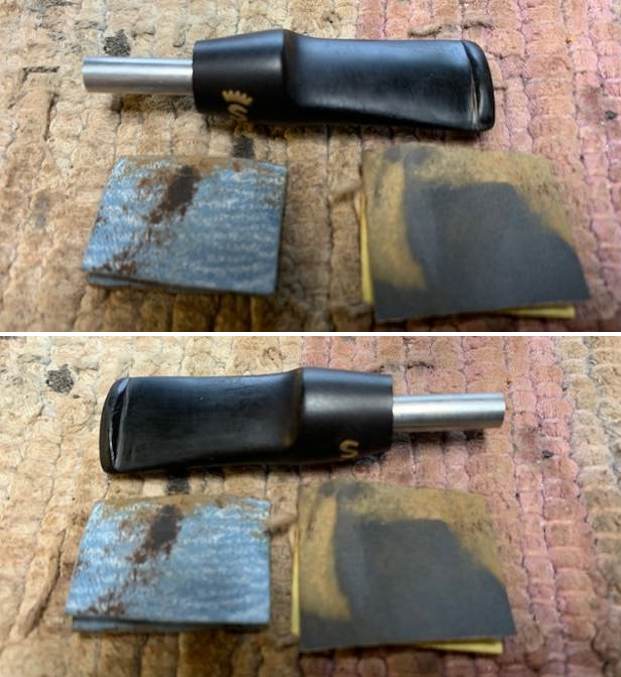
Jeff had thoroughly cleaned up the pipe. He reamed the pipe with a PipNet Pipe Reamer and cleaned up the remnants with a Savinelli Fitsall Pipe Knife. He scrubbed the bowl with undiluted Murphy’s Oil Soap with a tooth brush. He rinsed it under running warm water to remove the soap and grime. He cleaned out the inside of the shank and the airway in the stem with alcohol, cotton swabs and pipe cleaners. He scrubbed the exterior of the stem with Soft Scrub to remove the grime and calcification. He soaked the stem in Before & After Deoxidizer and rinsed it off with warm water. The pipe looked very good when it arrived here in Vancouver. I took close up photos of the bowl, rim and the stem. You can see the damage on rim top and inner edge. The bowl is quite clean inside. The acrylic stem is in good condition with light tooth marks and some chatter as noted above.I took photo of the stamping on the left side of the shank. It is readable as noted above. I removed the stem from the shank and took a photo to give a sense of the proportions of the pipe. Once again it has a stainless steel tenon. The sandblast is quite beautiful and the dark and medium stains really make it stand out.I started my work on the pipe working on the damage to the inner edge and the rim top with a folded piece of 220 grit sandpaper to bring the edge back into round and it looked much better.I polished the smooth rim top with micromesh sanding pads – dry sanding with 1500-12000 grit pads. I wiped the bowl down after each  pad to remove the grit. The bowl began to take on a rich shine. It is a beauty. I rubbed the bowl down with Before & After Restoration Balm. I worked it into the briar and the bamboo with my finger tips. I let it sit for 10 minutes and the Balm did its magic. It enlivens, cleans and preserves the briar. It certainly brought this bowl back to life. I buffed it off with a clean cloth and took the following photos. I set the bowl aside and turned my attention to the stem. I “painted” the tooth marks on the stem with the flame of a Bic lighter to lift them. I was able to lift the majority of them and filling the remnants of the marks with clear CA glue. I sanded out the repairs with 220 grit sandpaper and then started the polishing with 600 grit wet dry sandpaper. I polished the stem with micromesh sanding pads – 1500-12000 grit pads. I wiped it down with a damp cloth after each sanding pad. I used Before & After Pipe Polish – both Fine and Extra Fine to further polish the stem. This Stanwell Bamboo Sandblast Billiard with a vulcanite taper stem is a great looking pipe now that it has been restored. The mix of stains once cleaned up really highlights the grain and the polished sandblast finish is stunning. I put the stem back on the bowl and carefully buffed the pipe with Blue Diamond on the buffing wheel. I gave the bowl and the stem multiple coats of carnauba wax on the buffing wheel and followed that by buffing the entire pipe with a clean buffing pad. I hand buffed the pipe with a microfiber cloth to deepen the shine. The finished Stanwell Bamboo Sandblast Billiard fits nicely in the hand and feels great. Give the finished pipe a look in the photos below. The dimensions of the pipe are Length: 5 ½ inches, Height: 1 ½ inches, Outside diameter of the bowl: 1 1/8 inches, Chamber diameter: ¾ of an inch. The weight of the pipe is 34 grams / 1.20 ounces. I will be adding the pipe to the Danish Pipe Makers Section of the rebornpipes store. If you are interested in purchasing this pipe send me a message or an email. Thanks for reading this blog and my reflections on the pipe while I worked on it.

Restoring a Stanwell Bamboo Brown Sandblast Billiard with a saddle stem


Blog by Steve Laug

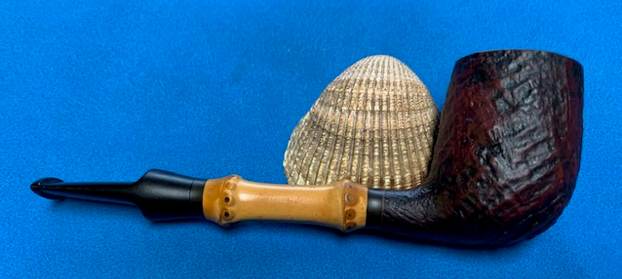
This rainy evening here in Vancouver I decided to work on was another one that was purchased on 11/14/2022 in a lot of pipes that came to us from Copenhagen, Denmark  It included a group of Stanwell Bamboo pipes that are quite beautiful, combining a briar bowl, a bamboo shank and an vulcanite or acrylic stem. The rugged sandblast on this pipe, around the bowl and shank has a mix of ridges and valleys highlighted by dark stain. The pipe is stamped on the left side of the bamboo and reads STANWELL. The pipe was a well used pipe when Jeff received it. There was dust and grime ground into the sandblast finish. The mixture of brown stains highlights some beautiful blast under the dirt. The bowl was heavily caked and there was an overflow of lava on the smooth rim top. The inner edge was hard to see clearly and the lava could easily be hiding damage. The stem is vulcanite and was dirty, oxidized and had light tooth marks, chatter and scratches on both sides ahead of the button and on the button itself. There is a brass/gold crown S logo inlaid on the left side of the saddle stem. Jeff took photos of the pipe before he started his clean up work on it. He took photos of the bowl and rim top to show what they looked like before his clean up. He also took some of the stem to show the condition of both sides. The photos of the sides and heel of the bowl show the uniquely stained grain around the bowl and shank. The mixture of black and brown stains adds depth finish on the pipe. Even under the grime it is a real beauty. He also took photos of the bamboo showing the patina on the wood. The stamping on the left side the bamboo is shown in the photo below. It is clear and readable as noted above. The second photo shows the gold crown S on the stem side.  Before I started my work on the pipe I wanted to see if I could find any information that would help me get a sense of the line. I turned to Pipephil to get a quick review of the  Bamboo line (http://pipephil.eu/logos/en/logo-stanwell.html). The Brass Crowned S inlaid logo on the stem is shown in the photo below. I have included a screen capture of the brand info there.I then turned to Pipedia (https://pipedia.org/wiki/Stanwell) for more information. The article is great and gives a lot of history on the brand. There were also links to catalogues at the bottom of the page. I am including a page from a catalogue on the site below that gives a bit of a glimpse into the brand. Here is the link (http://www.axeljeske.de/Pfeifen/Stanwell_Amager.pdf). The catalogue page gives a great description of the Bamboo line. It reads as follows: Top quality bowls perfectly fitted with porous bamboo shanks for casual elegance.

Now it was time to work on the pipe.

Jeff had thoroughly cleaned up the pipe. He reamed the pipe with a PipNet Pipe Reamer and cleaned up the remnants with a Savinelli Fitsall Pipe Knife. He scrubbed the bowl with undiluted Murphy’s Oil Soap with a tooth brush. He rinsed it under running warm water to remove the soap and grime. He cleaned out the inside of the shank and the airway in the stem with alcohol, cotton swabs and pipe cleaners. He scrubbed the exterior of the stem with Soft Scrub to remove the grime and calcification. He soaked the stem in Before & After Deoxidizer and rinsed it off with warm water. The pipe looked very good when it arrived here in Vancouver. I took close up photos of the bowl, rim and the stem. You can see the damage on rim top and inner edge. The bowl is quite clean inside. The acrylic stem is in good condition with light tooth marks and some chatter as noted above.I took photo of the stamping on the left side of the shank. It is readable as noted above. I removed the stem from the shank and took a photo to give a sense of the proportions of the pipe. Once again it has a stainless steel tenon. The sandblast is quite beautiful and the dark and medium stains really make it stand out.I started my work on the pipe working on the damage to the inner edge and the rim top with a folded piece of 220 grit sandpaper to bring the edge back into round and it looked much better.I polished the smooth rim top with micromesh sanding pads – dry sanding with 1500-12000 grit pads. I wiped the bowl down after each  pad to remove the grit. The bowl began to take on a rich shine. It is a beauty. I rubbed the bowl down with Before & After Restoration Balm. I worked it into the briar and the bamboo with my finger tips. I let it sit for 10 minutes and the Balm did its magic. It enlivens, cleans and preserves the briar. It certainly brought this bowl back to life. I buffed it off with a clean cloth and took the following photos. I set the bowl aside and turned my attention to the stem. I “painted” the tooth marks on the stem with the flame of a Bic lighter to lift them. I was able to lift the majority of them and sanded out the rest of the tooth marks and scratches with 220 grit sandpaper and then started the polishing with 600 grit wet dry sandpaper. I polished the stem with micromesh sanding pads – 1500-12000 grit pads. I wiped it down with a damp cloth after each sanding pad. I used Before & After Pipe Polish – both Fine and Extra Fine to further polish the stem. This Stanwell Bamboo Sandblast Billiard with a vulcanite saddle stem is a great looking pipe now that it has been restored. The dark stain once cleaned up really highlights the grain and the polished finish is stunning. I put the stem back on the bowl and carefully buffed the pipe with Blue Diamond on the buffing wheel. I gave the bowl and the stem multiple coats of carnauba wax on the buffing wheel and followed that by buffing the entire pipe with a clean buffing pad. I hand buffed the pipe with a microfiber cloth to deepen the shine. The finished Stanwell Bamboo Sandblast Billiard fits nicely in the hand and feels great. Give the finished pipe a look in the photos below. The dimensions of the pipe are Length: 5 ½ inches, Height: 1 ¾ inches, Outside diameter of the bowl: 1 1/8 inches, Chamber diameter: ¾ of an inch. The weight of the pipe is 31 grams / 1.09 ounces. I will be adding the pipe to the Danish Pipe Makers Section of the rebornpipes store. If you are interested in purchasing this pipe send me a message or an email. Thanks for reading this blog and my reflections on the pipe while I worked on it.

Restoring a Stanwell Bamboo Dark Stained Billiard with a saddle stem


Blog by Steve Laug

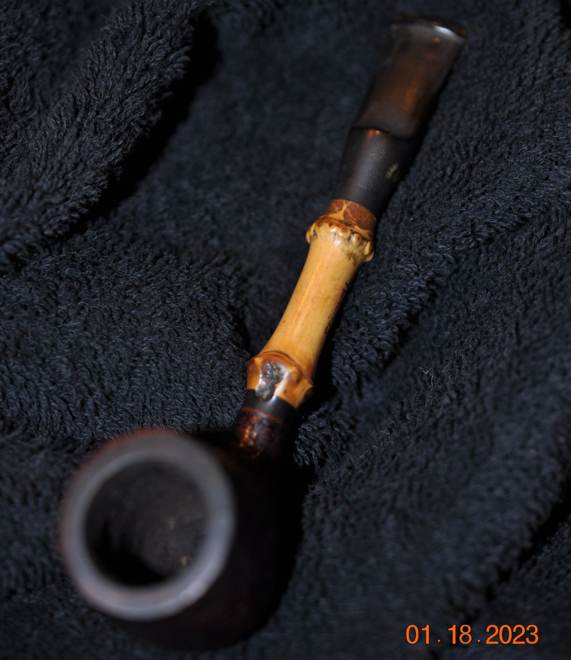
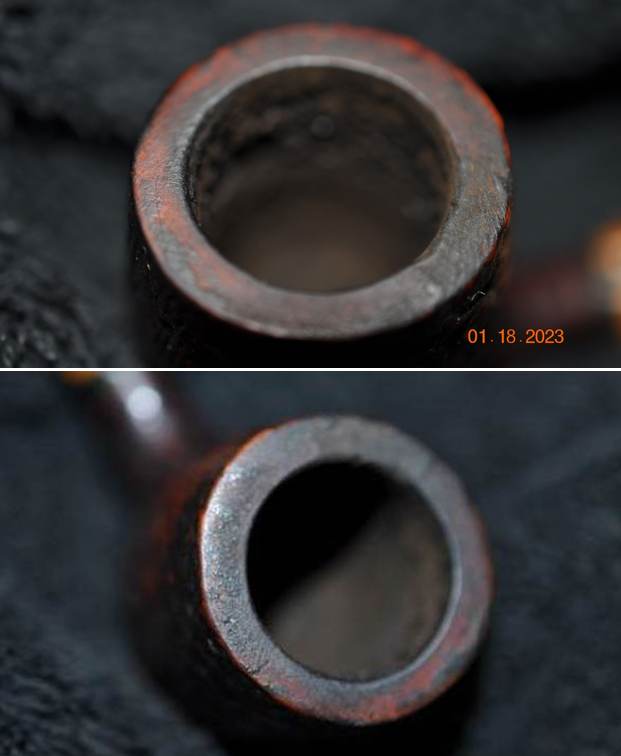
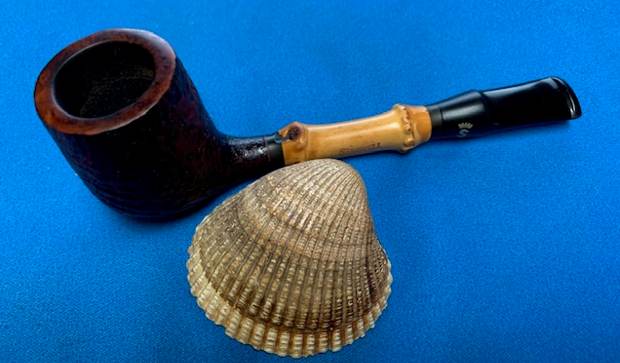
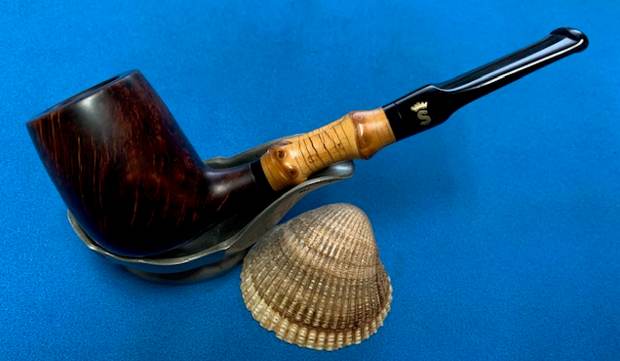
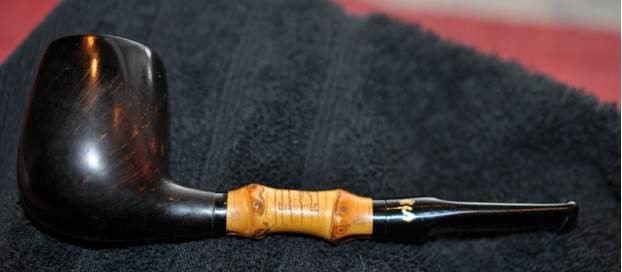
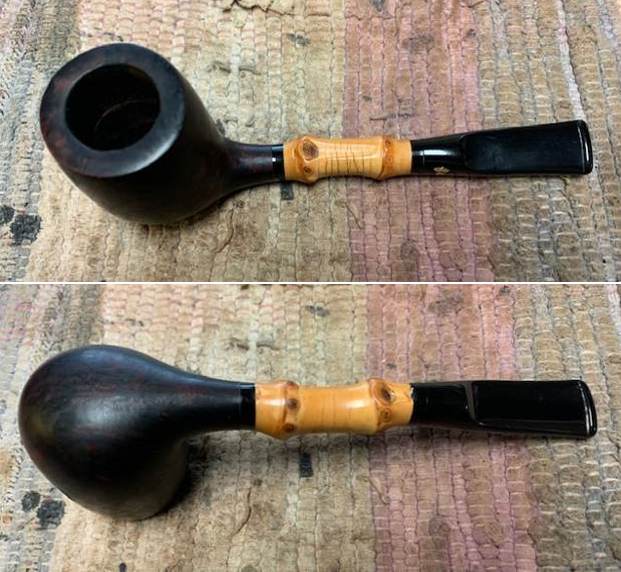
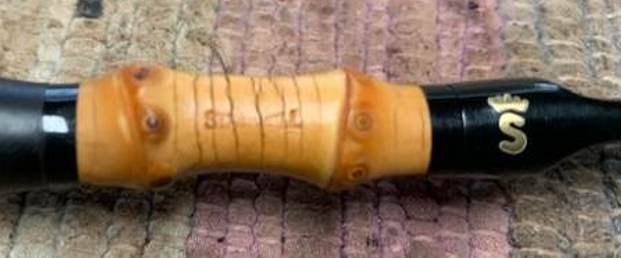
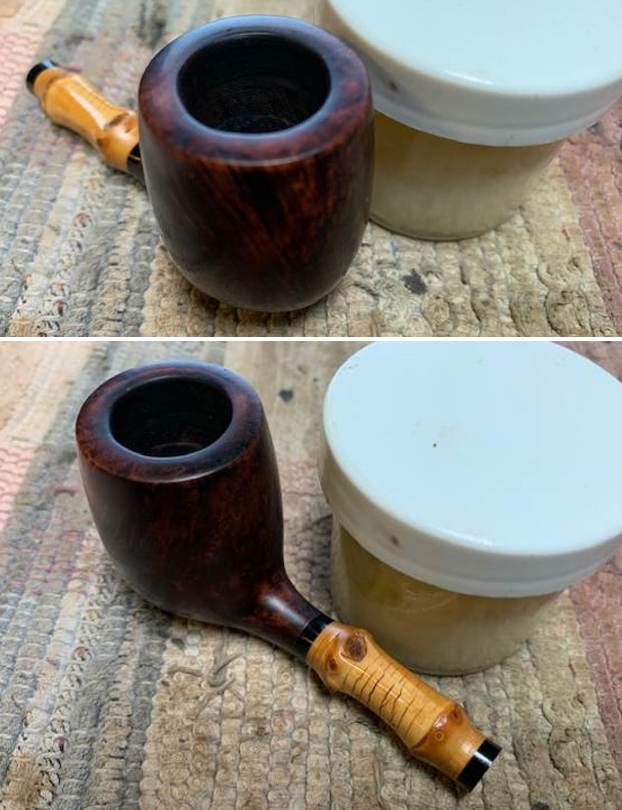
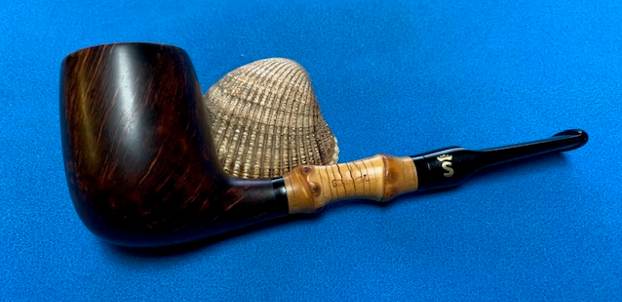
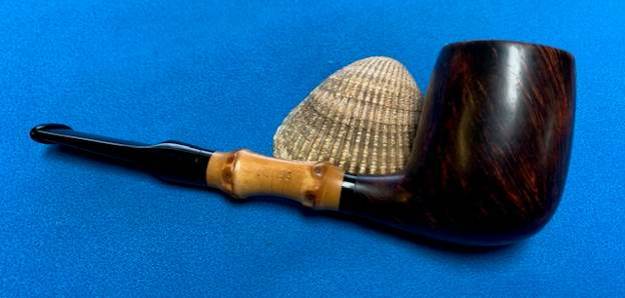
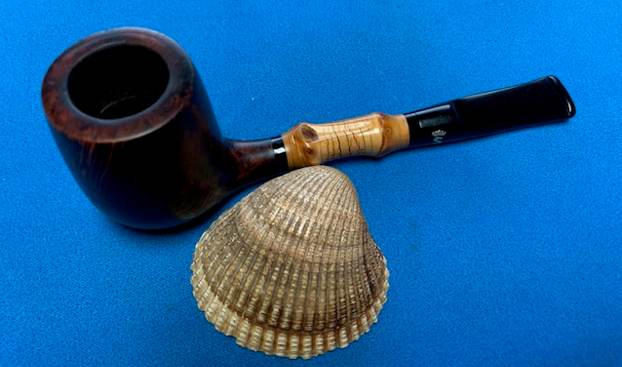
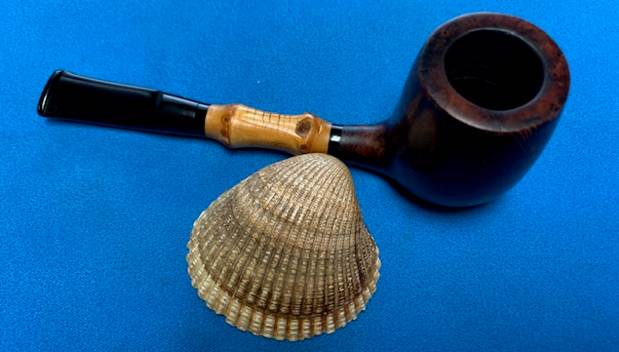
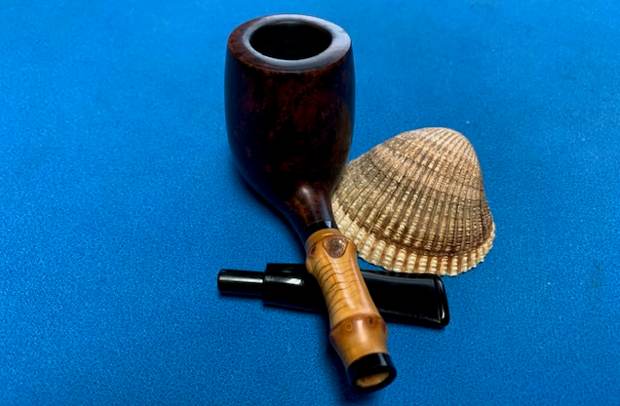
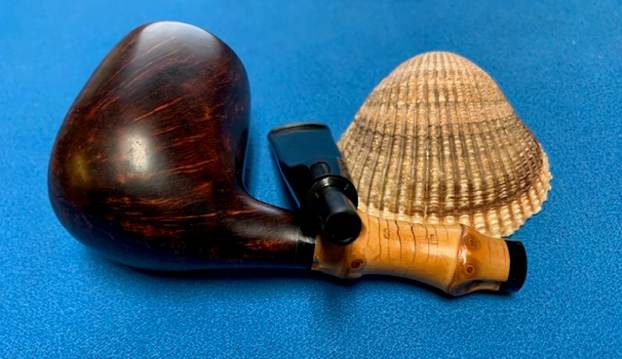
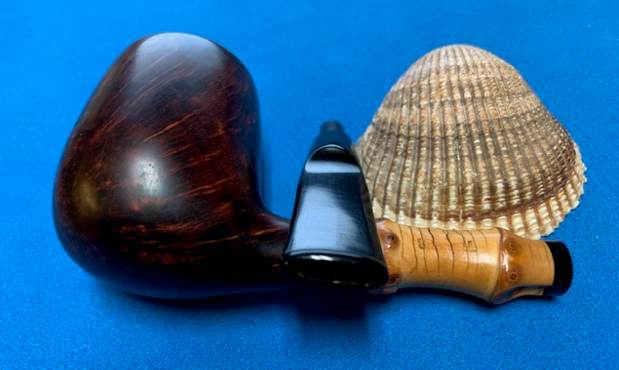
This rainy evening here in Vancouver I decided to work on was another one that was purchased on 11/14/2022 in a lot of pipes that came to us from Copenhagen, Denmark  It included a group of Stanwell Bamboo pipes that are quite beautiful, combining a briar bowl, a bamboo shank and an vulcanite or acrylic stem. The grain on this pipe, around the bowl and shank has a mix of straight and flame grain almost obscured by the grime and the dark stain. The pipe is stamped on the left side of the bamboo and reads STANWELL. The pipe was a well used pipe when Jeff received it. There was dust and grime ground into the finish. The mixture of brown stains highlights some beautiful grain under the dirt. The bowl was heavily caked and there was an overflow of lava on the rim top. The inner edge was hard to see clearly and the lava could easily be hiding damage. The stem is acrylic and was dirty and had light tooth marks and chatter on both sides ahead of the button and on the button itself. There is a brass/gold crown S logo inlaid on the left side of the saddle stem. Jeff took photos of the pipe before he started his clean up work on it. He took photos of the bowl and rim top to show what they looked like before his clean up. He also took some of the stem to show the condition of both sides. The photos of the sides and heel of the bowl show the uniquely stained grain around the bowl and shank. The mixture of black and brown stains adds depth finish on the pipe. Even under the grime it is a real beauty. He also took photos of the bamboo showing the patina on the wood. The stamping on the left side the bamboo is shown in the photo below. It is clear and readable as noted above. The second photo shows the gold crown S on the stem side.  Before I started my work on the pipe I wanted to see if I could find any information that would help me get a sense of the line. I turned to Pipephil to get a quick review of the  Bamboo line (http://pipephil.eu/logos/en/logo-stanwell.html). The Brass Crowned S inlaid logo on the stem is shown in the photo below. I have included a screen capture of the brand info there.I then turned to Pipedia (https://pipedia.org/wiki/Stanwell) for more information. The article is great and gives a lot of history on the brand. There were also links to catalogues at the bottom of the page. I am including a page from a catalogue on the site below that gives a bit of a glimpse into the brand. Here is the link (http://www.axeljeske.de/Pfeifen/Stanwell_Amager.pdf). The catalogue page gives a great description of the Bamboo line. It reads as follows: Top quality bowls perfectly fitted with porous bamboo shanks for casual elegance.

Now it was time to work on the pipe.

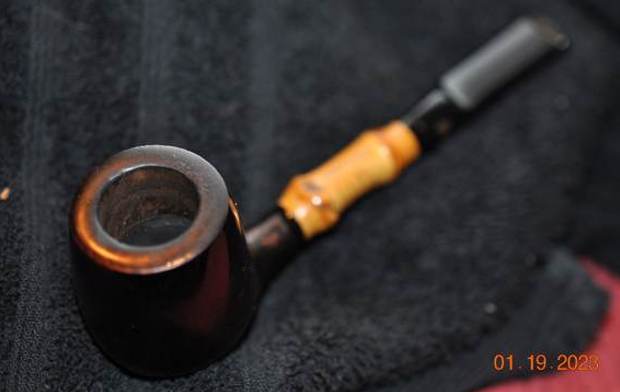
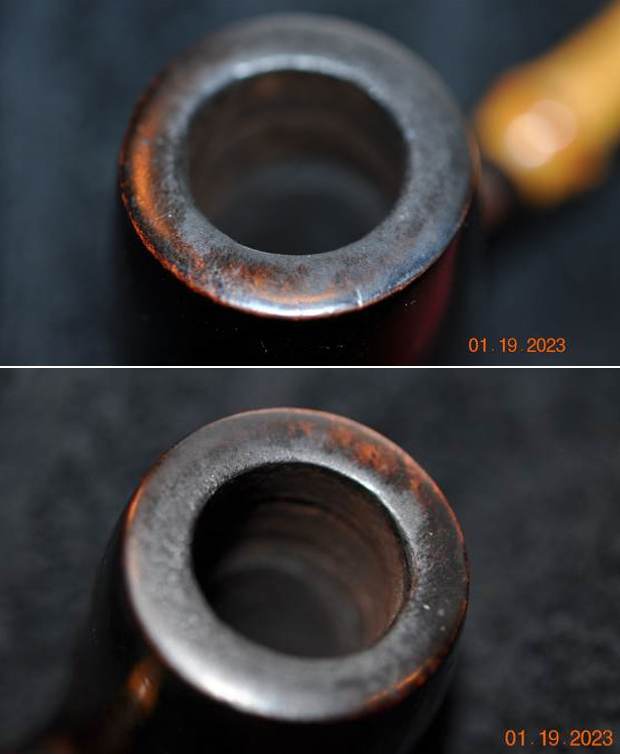
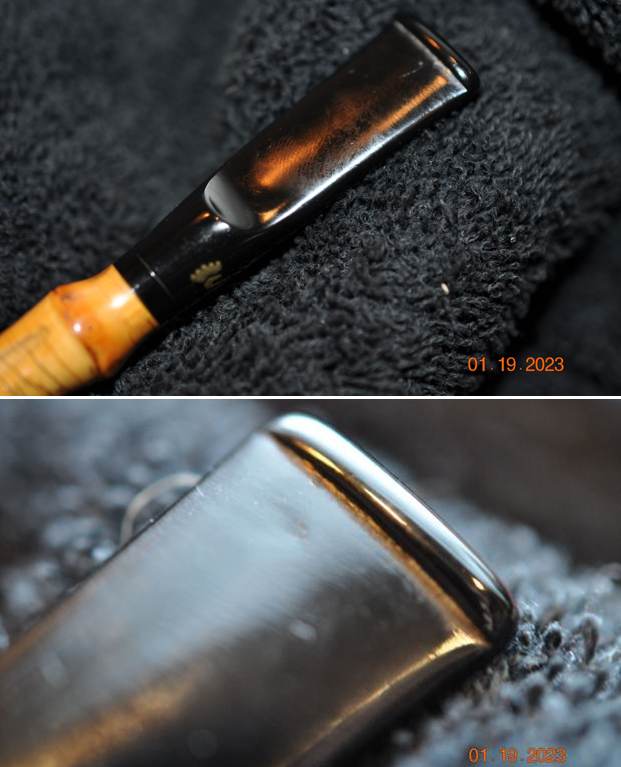
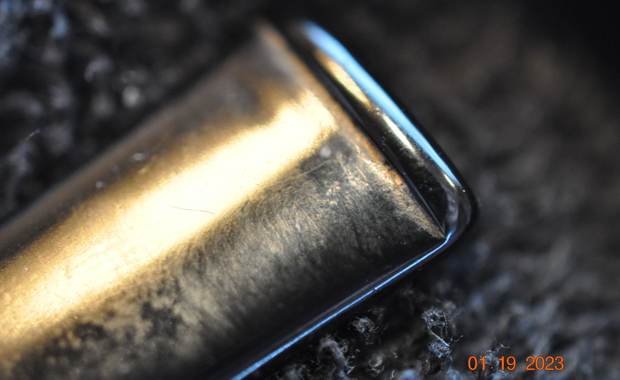
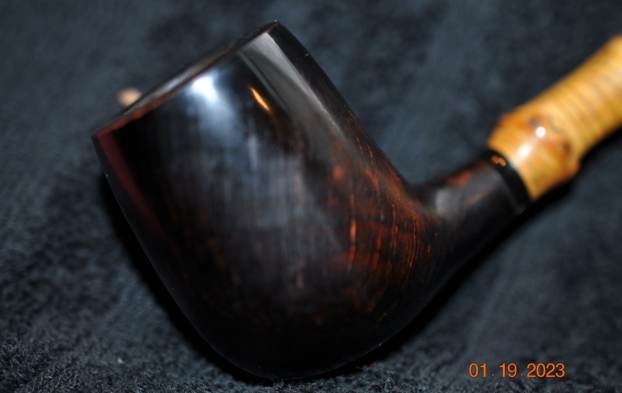
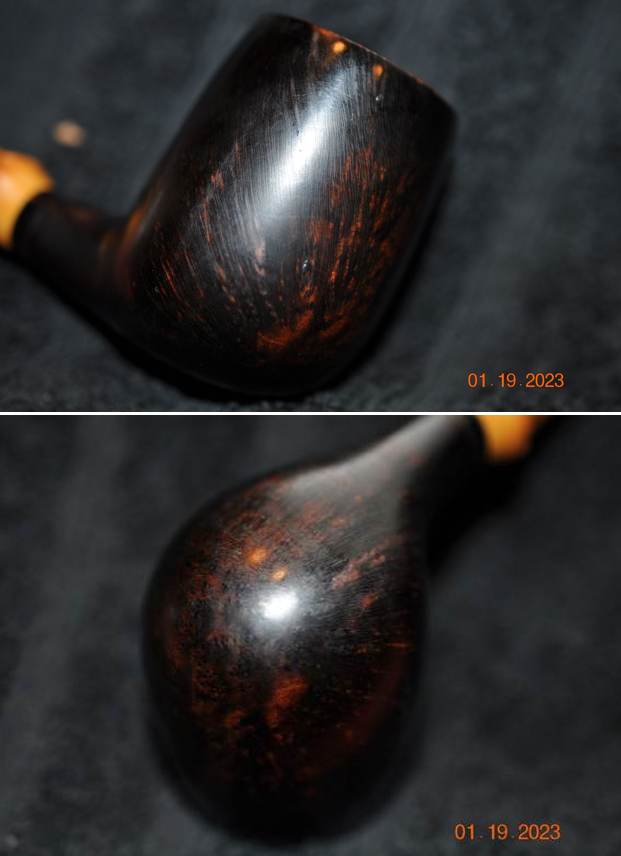
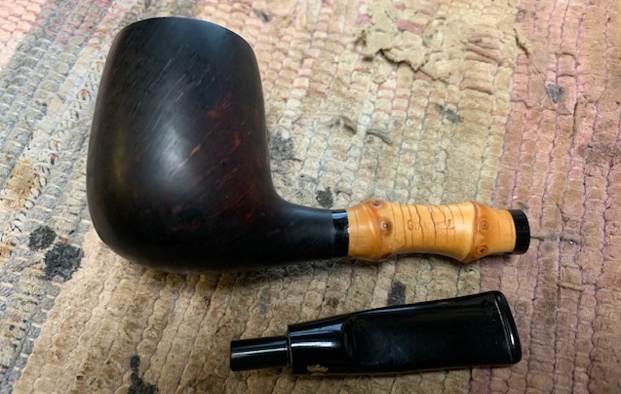
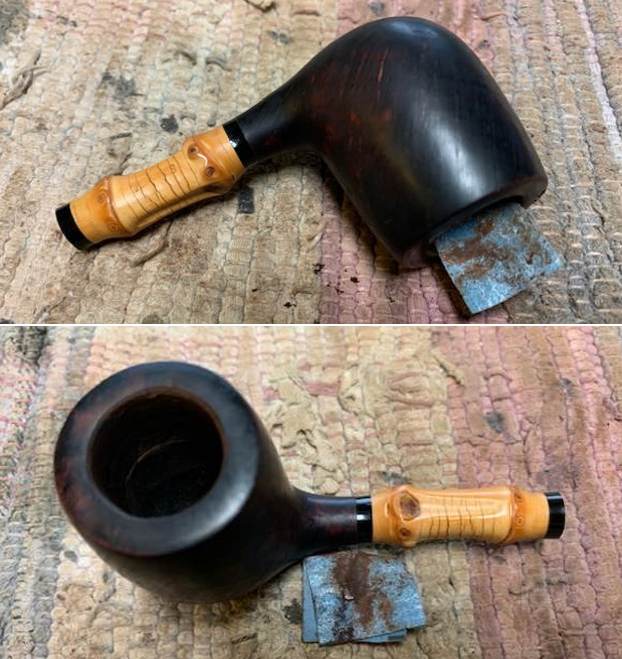
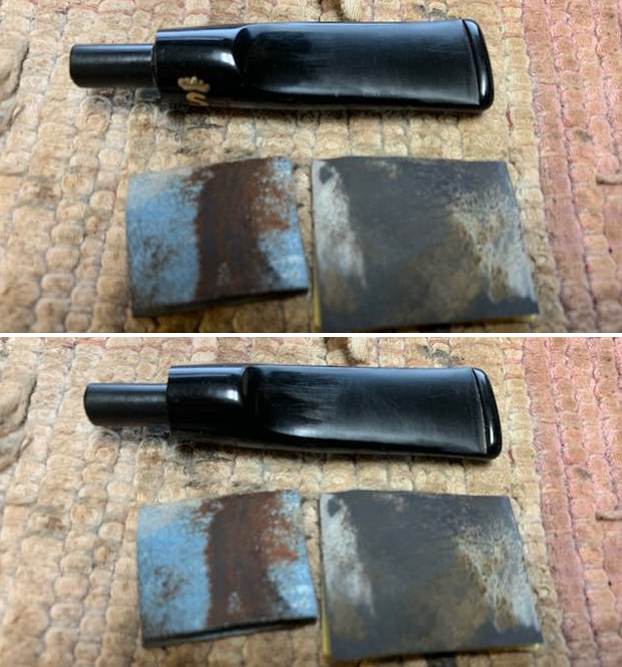
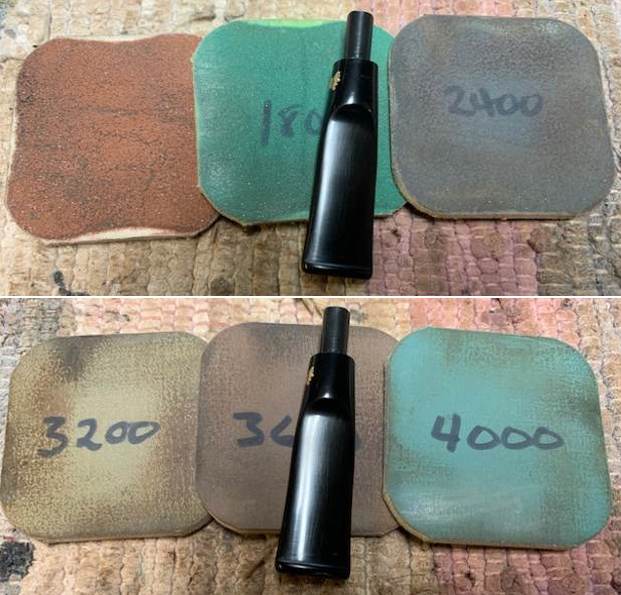
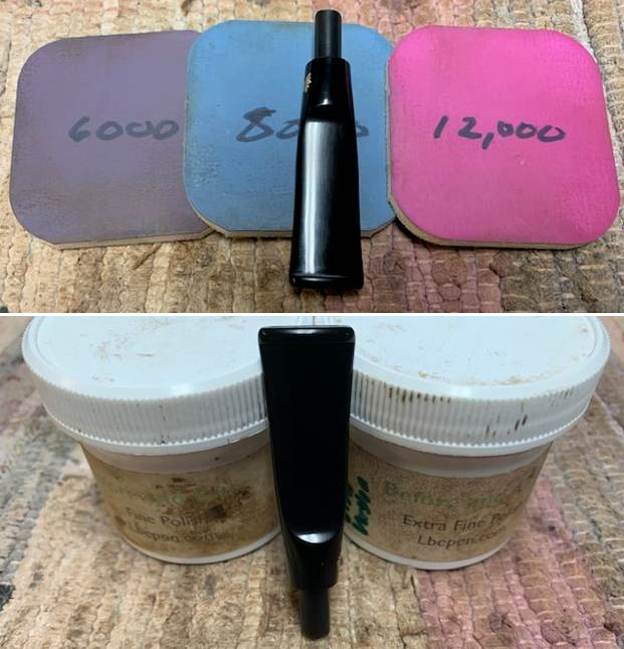
Jeff had thoroughly cleaned up the pipe. He reamed the pipe with a PipNet Pipe Reamer and cleaned up the remnants with a Savinelli Fitsall Pipe Knife. He scrubbed the bowl with undiluted Murphy’s Oil Soap with a tooth brush. He rinsed it under running warm water to remove the soap and grime. He cleaned out the inside of the shank and the airway in the stem with alcohol, cotton swabs and pipe cleaners. He scrubbed the exterior of the stem with Soft Scrub to remove the grime and calcification. He soaked the stem in Before & After Deoxidizer and rinsed it off with warm water. The pipe looked very good when it arrived here in Vancouver. I took close up photos of the bowl, rim and the stem. You can see the damage on rim top and inner edge. The bowl is quite clean inside. The acrylic stem is in good condition with light tooth marks and some chatter as noted above. I took photo of the stamping on the left side of the shank. It is readable as noted above. I removed the stem from the shank and took a photo to give a sense of the proportions of the pipe. Something different about this pipe was revealed when I removed the stem. The other two Bamboo Stanwells that I have worked on have a stainless steel tenon on the stem. The two remaining Bamboos also have a stainless steel tenon. But this one has an integrated tenon turned into the acrylic stem. I wonder why and when they changed that?I started my work on the pipe working on the damage to the inner edge and the rim top with a folded piece of 220 grit sandpaper to bring the edge back into round and it looked much better.I polished the briar with micromesh sanding pads – dry sanding with 1500-12000 grit pads. I wiped the bowl down after each  pad to remove the grit. The bowl began to take on a rich shine. It is a beauty. I rubbed the bowl down with Before & After Restoration Balm. I worked it into the briar and the bamboo with my finger tips. I let it sit for 10 minutes and the Balm did its magic. It enlivens, cleans and preserves the briar. It certainly brought this bowl back to life. I buffed it off with a clean cloth and took the following photos. I sanded out the tooth marks and scratches with 220 grit sandpaper and then started the polishing with 600 grit wet dry sandpaper.I set the bowl aside and turned my attention to the stem. I was able to polish out the light tooth marks and chatter with micromesh sanding pads – 1500-12000 grit pads. I wiped it down with a damp cloth after each sanding pad. I used Before & After Pipe Polish – both Fine and Extra Fine to further polish the stem. This Stanwell Bamboo Billiard with an acrylic saddle stem is a great looking pipe now that it has been restored. The dark stain once cleaned up really highlights the grain and the polished finish is stunning. I put the stem back on the bowl and carefully buffed the pipe with Blue Diamond on the buffing wheel. I gave the bowl and the stem multiple coats of carnauba wax on the buffing wheel and followed that by buffing the entire pipe with a clean buffing pad. I hand buffed the pipe with a microfiber cloth to deepen the shine. The finished Stanwell Bamboo Dark Billiard fits nicely in the hand and feels great. Give the finished pipe a look in the photos below. The dimensions of the pipe are Length: 5 ½ inches, Height: 1 ¾ inches, Outside diameter of the bowl: 1 1/8 inches, Chamber diameter: ¾ of an inch. The weight of the pipe is 33 grams / 1.16 ounces. I will be adding the pipe to the Danish Pipe Makers Section of the rebornpipes store. If you are interested in purchasing this pipe send me a message or an email. Thanks for reading this blog and my reflections on the pipe while I worked on it.