Monthly Archives: January 2021

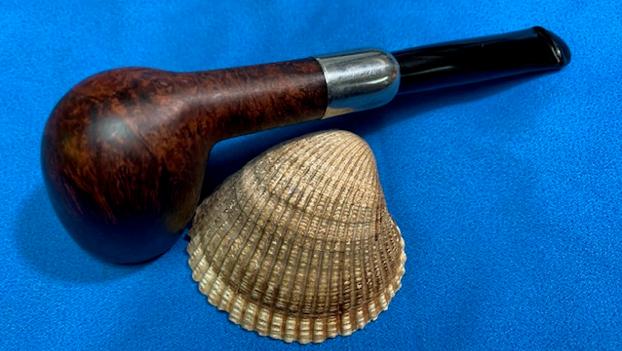
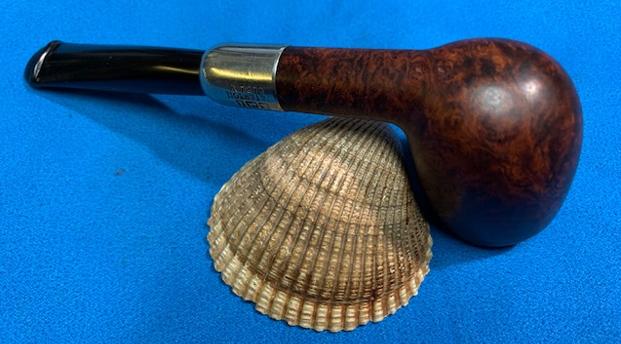
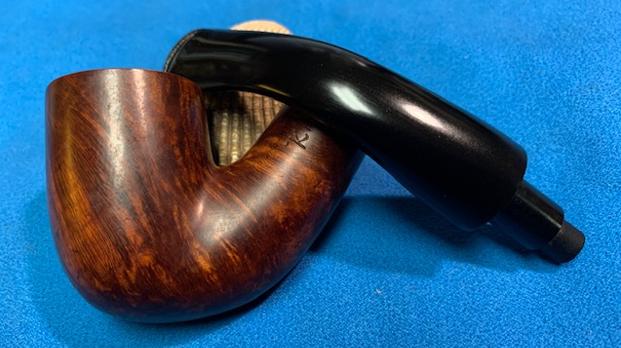
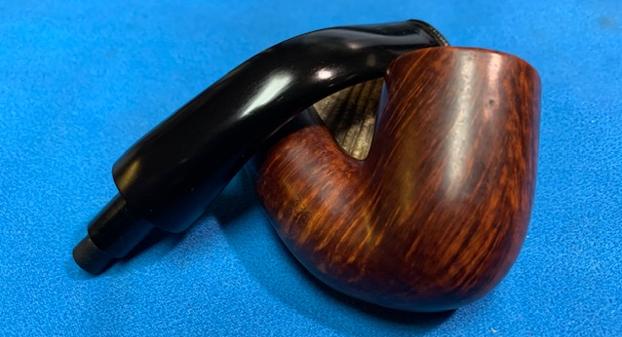
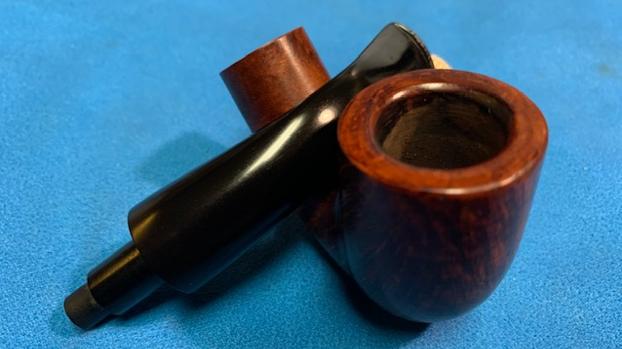
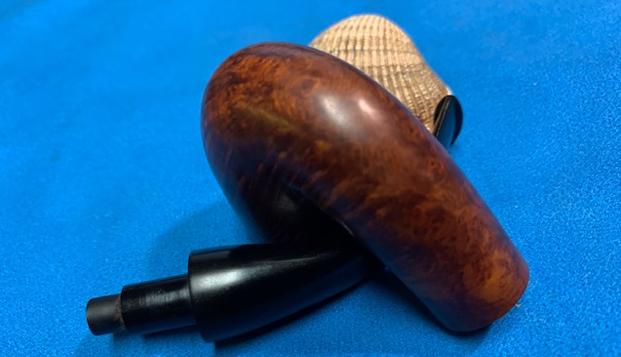
Breathing Life into a Peterson’s Dublin 3 Billiard


Blog by Steve Laug

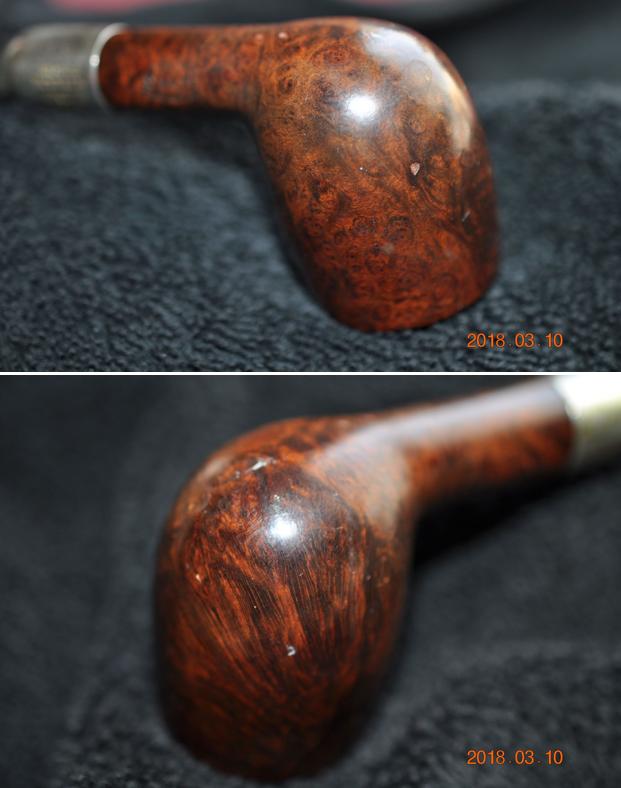
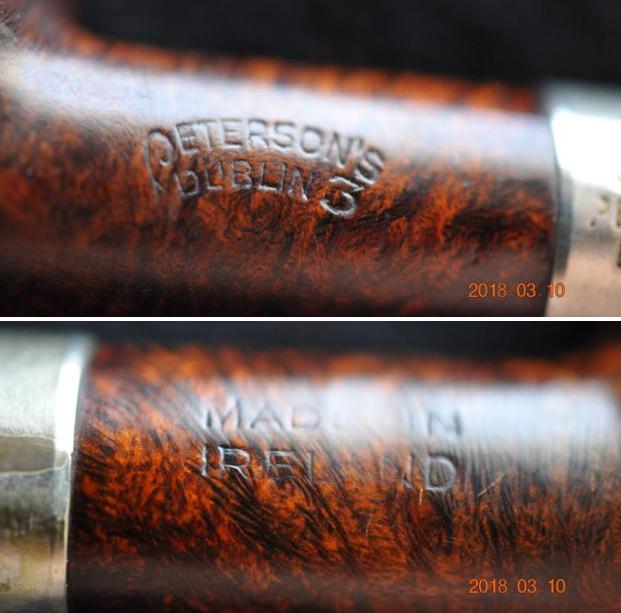
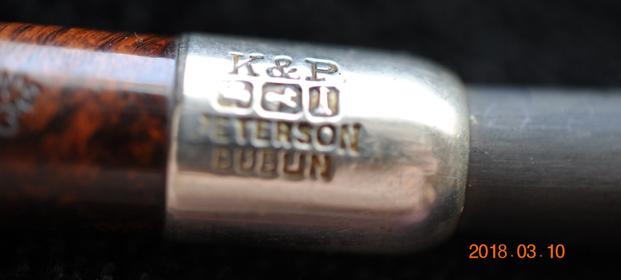
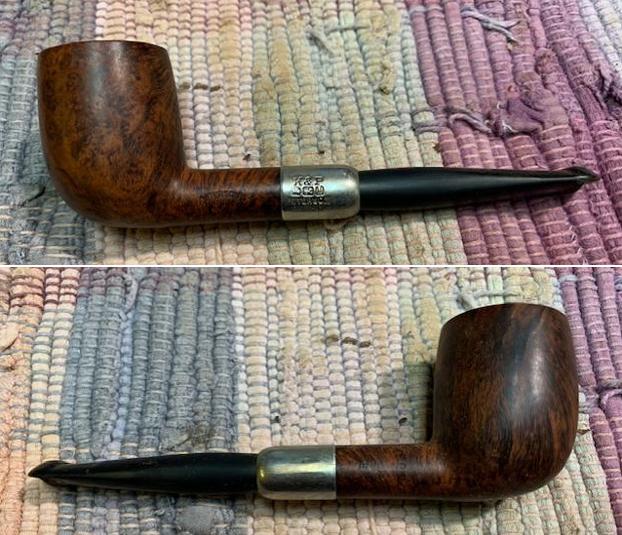
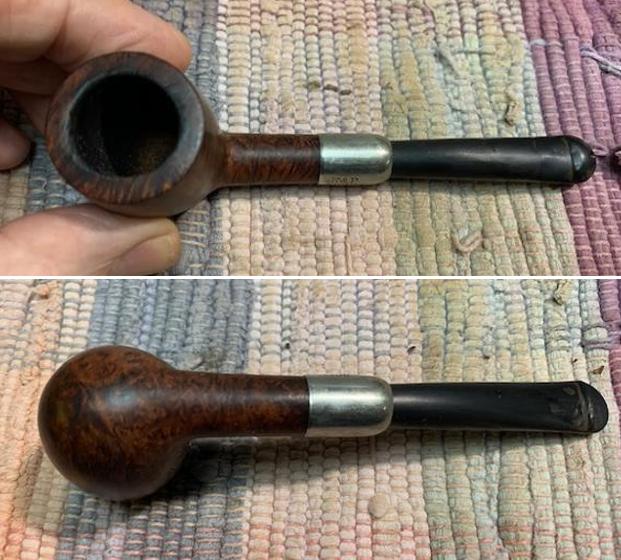
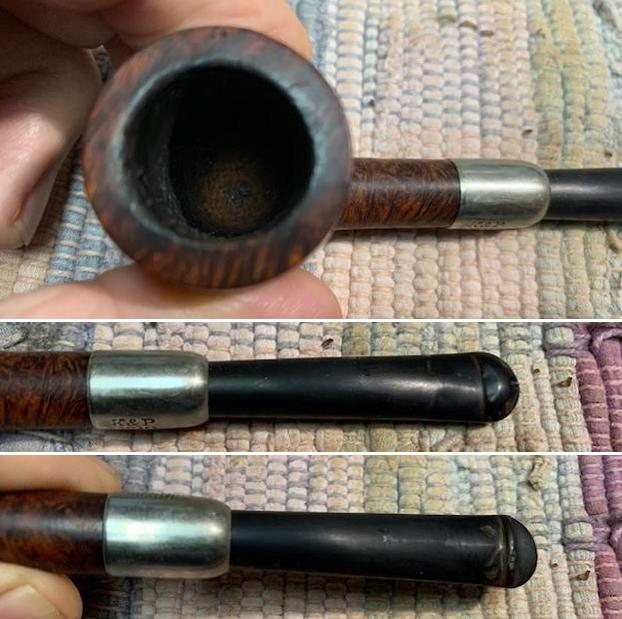
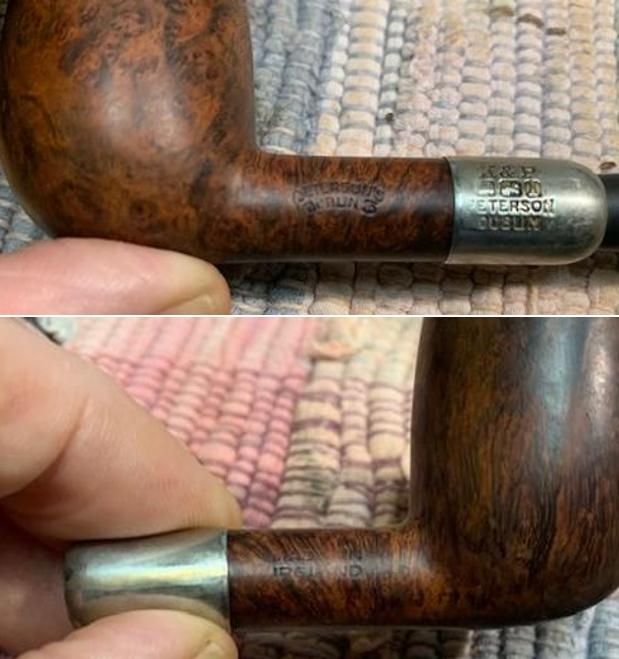
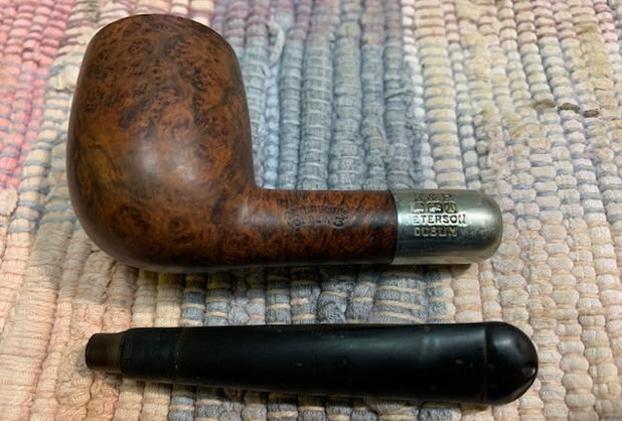
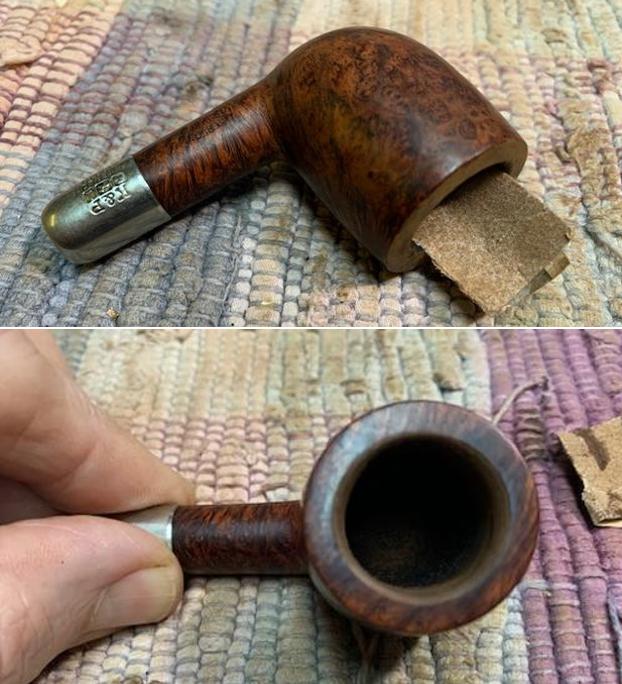
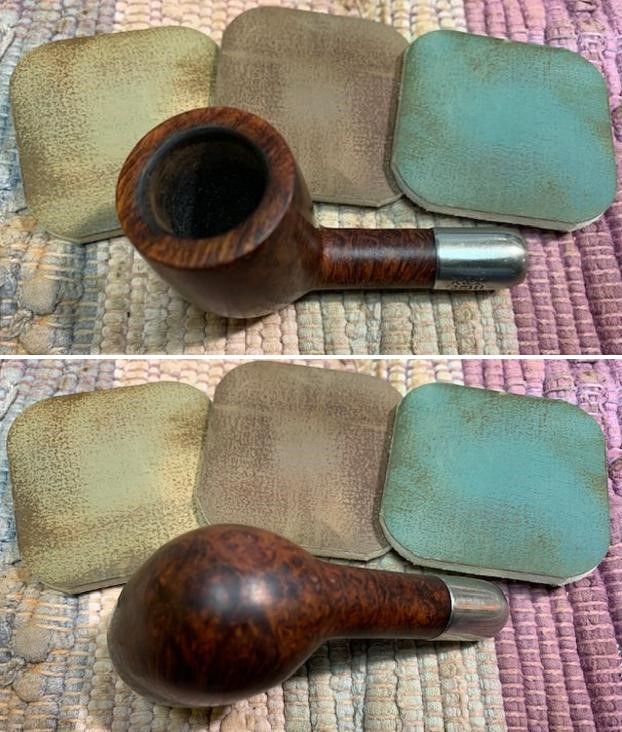
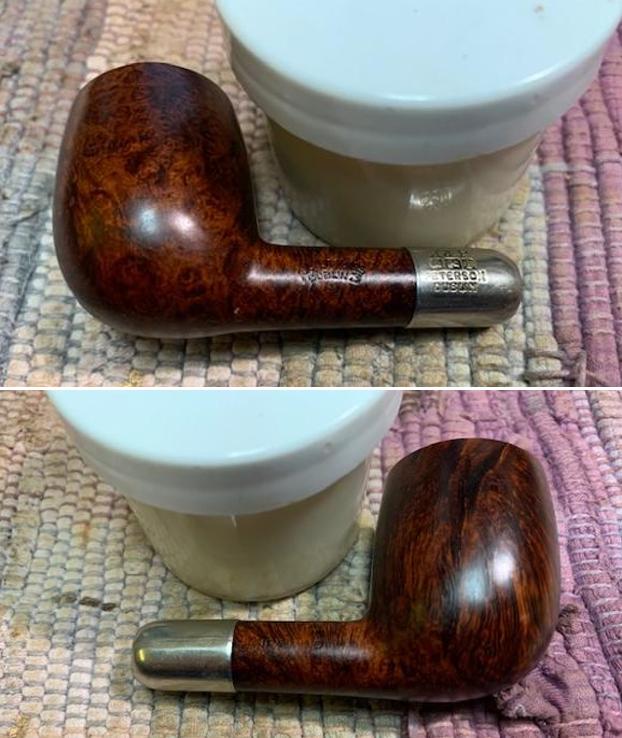
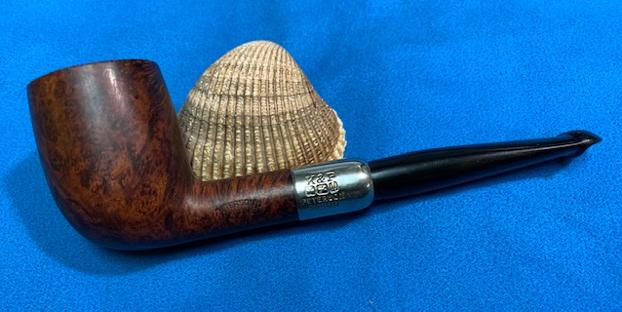
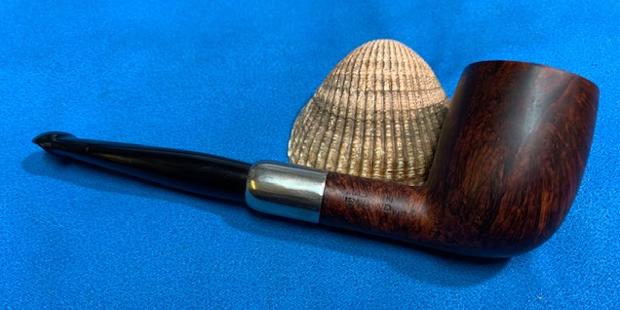
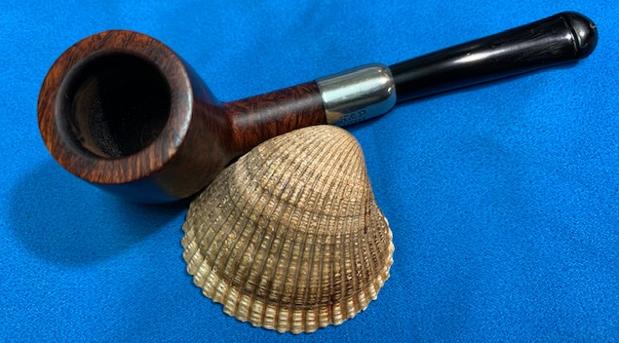
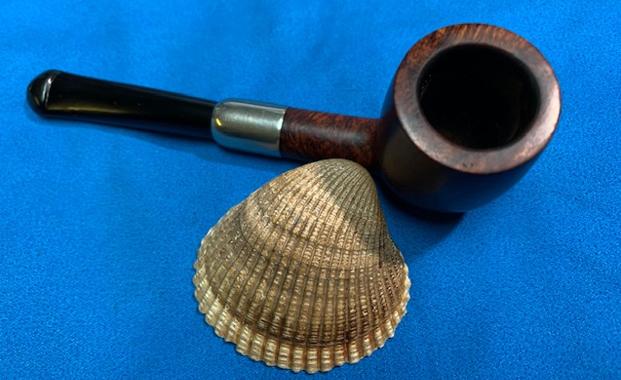
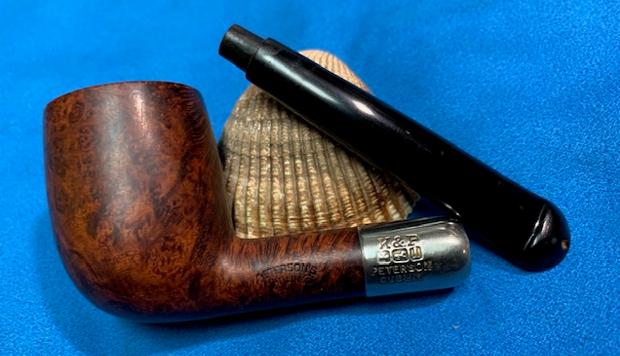
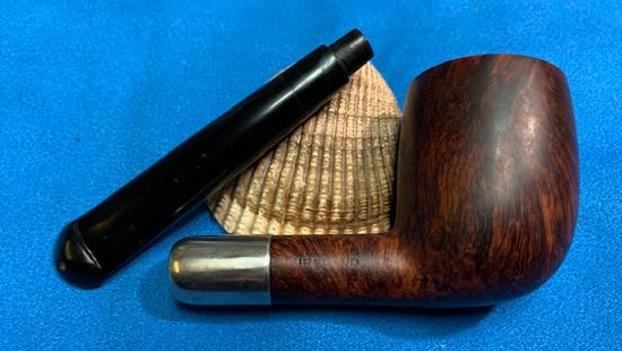
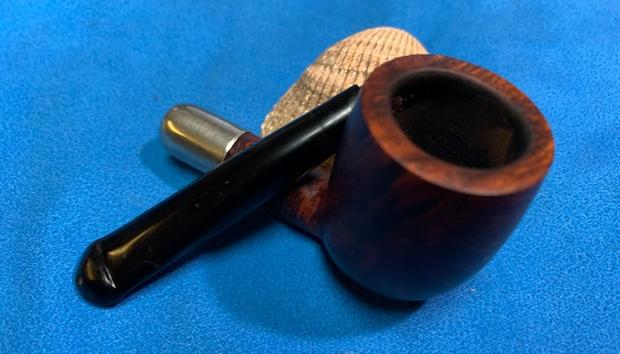
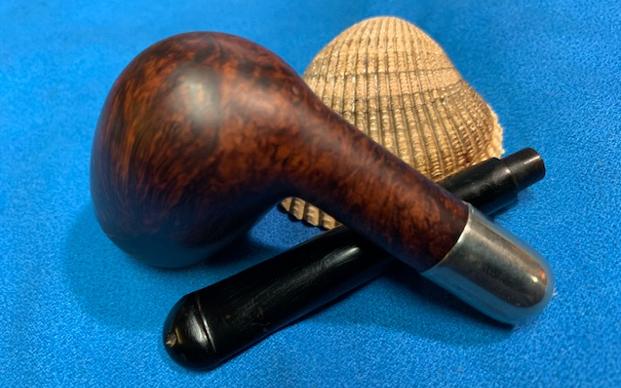
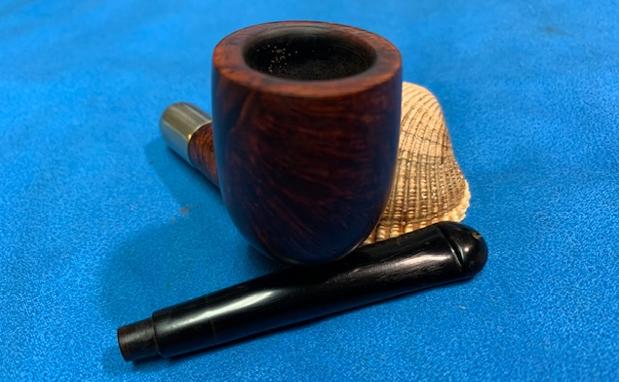
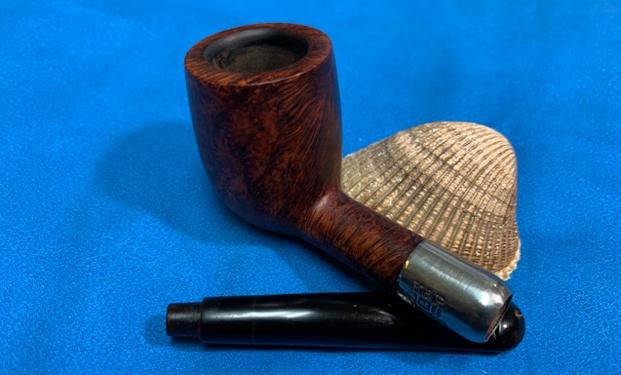
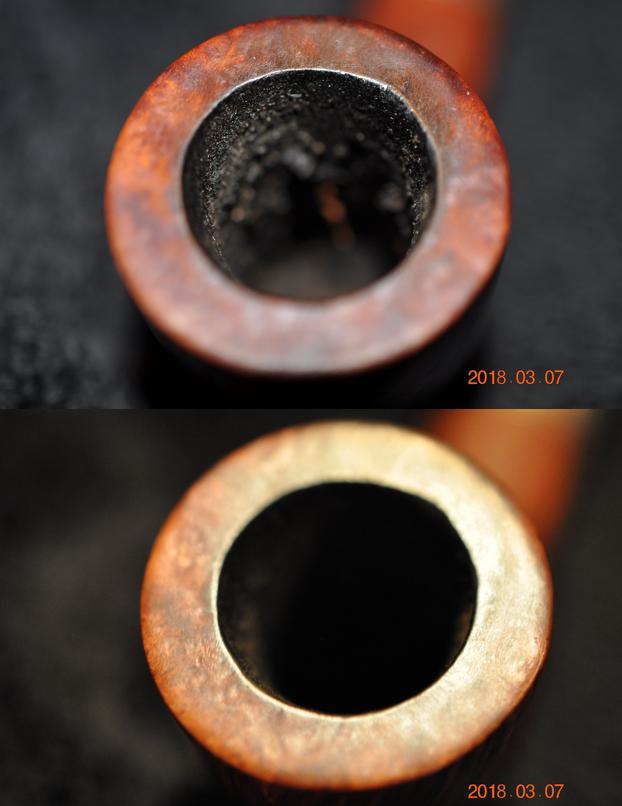
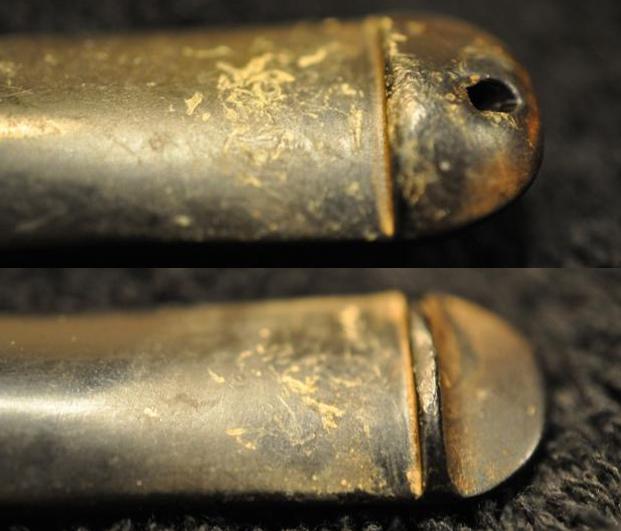
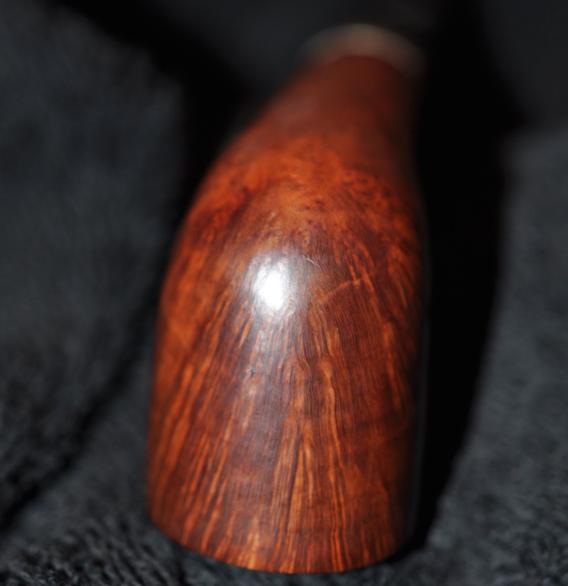
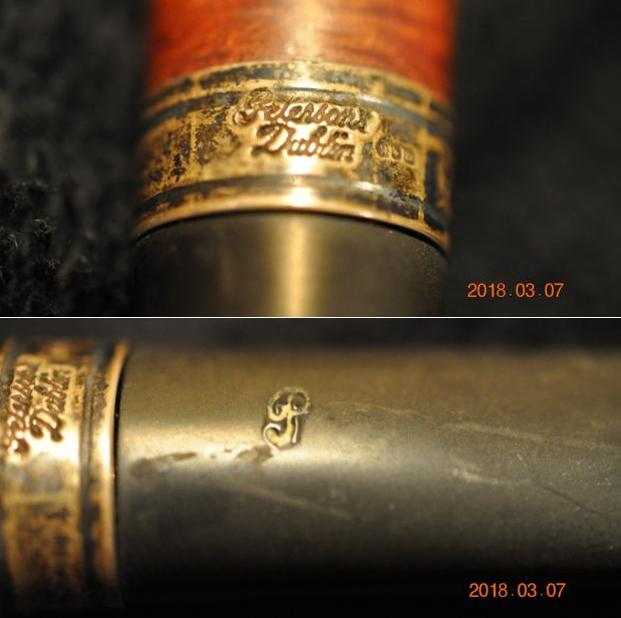
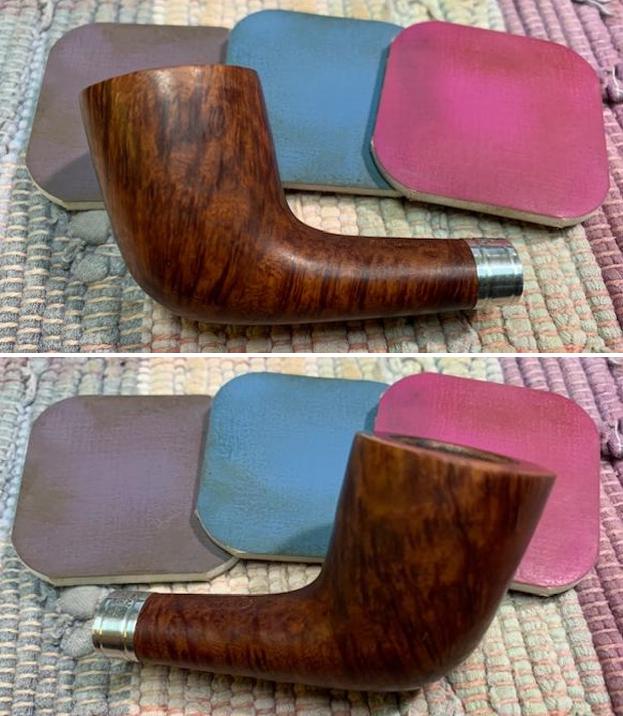
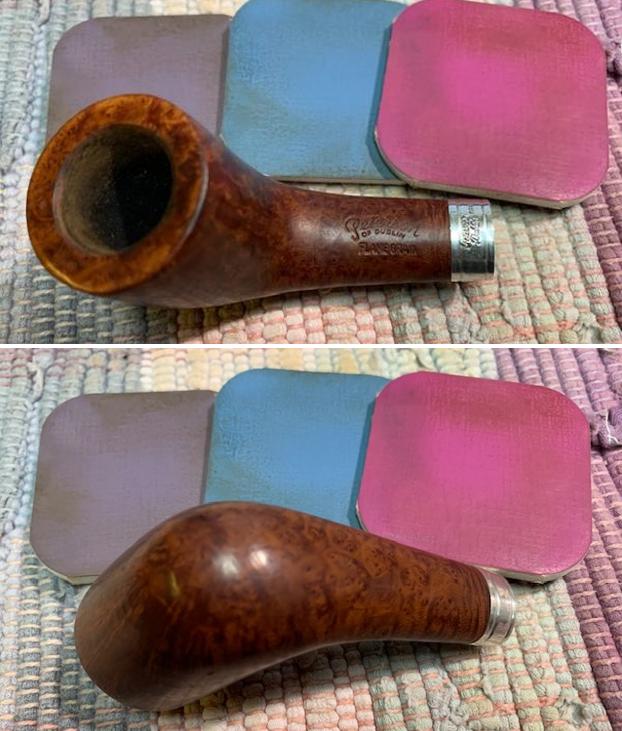
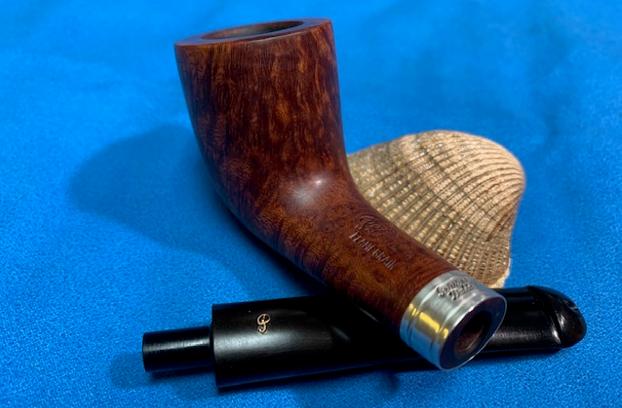
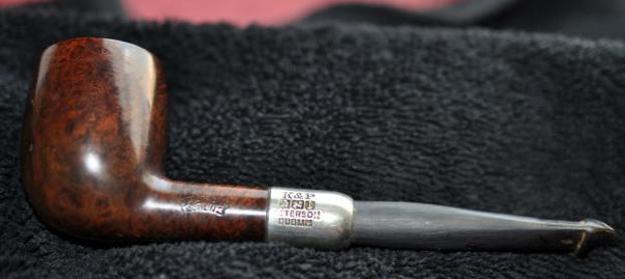
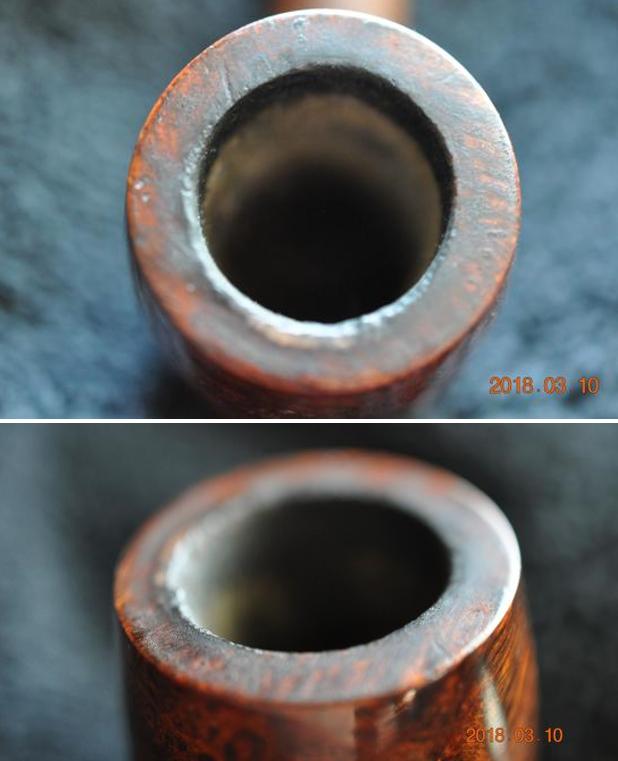
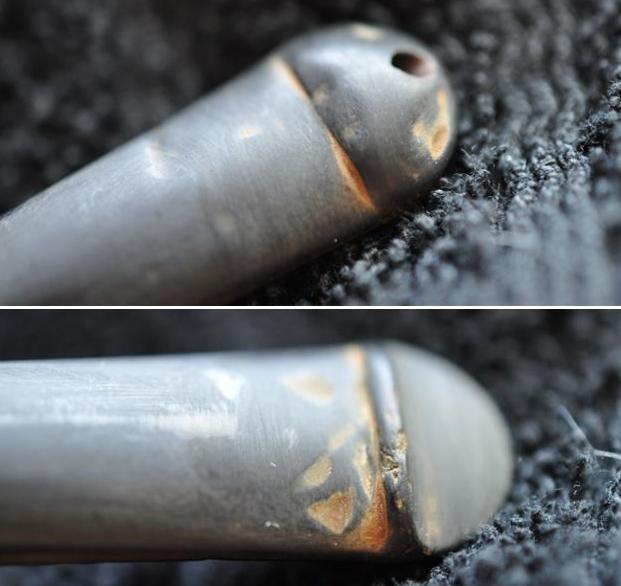
The next pipe I have chosen is smooth finished Peterson’s Billiard pipe. This one is a Dublin 3 Billiard that has a rich coloured finish with amazing grain around the bowl sides and shank. It also came to us from the estate of Anglican minister that was a great friend of mine here in Canada. This Billiard had a badly oxidized nickel ferrule on the shank end. The contrast of the brown stains makes the grain really pop. It was stamped on the left side of the shank and read Peterson’s in an arch [over] Dublin 3 in an arch. It was stamped on the right side and reads Made in Ireland (2 lines). The tarnished ferrule is stamped with K&P [over] 3 shields as follows: in the first was a shamrock, in the second was a lion and in the third was a tower. Underneath those marks it read Peterson’s [over] Dublin. It was in filthy when he brought it to the table. The finish was dirty with grime ground into the briar sides and rim. There was a cake in the bowl and light spattering of lava on the rim top and the inner edge of the bowl. There was some damage to the inner edge of the rim. The stem was oxidized, calcified and had tooth marks and chatter on the top and underside on and near the button. Jeff took photos of the pipe before his cleanup work. They tell the story and give a glimpse of the promise that we see in this pipe. Jeff took photos of the rim top and stem to show the general condition of the pipe. The bowl is heavily caked and the rim top and edges have some light lava overflow. There is some damage to the rim edge on the back of the bowl. The stem is oxidized, calcified and has tooth marks on the top and underside near the button. Jeff took some photos of the bowl sides and heel to show the amazing grain that was around this bowl. It is a nice looking pipe.    He took photos of the sides of the shank to show the stamping. The stamping is readable in the photos below and is as noted above. He also took a photo of the band.    I am including the link to the Pipedia’s article on Peterson pipes. It is a great read in terms of the history of the brand (https://pipedia.org/wiki/Peterson).
I turned to “The Peterson Pipe” by Mark Irwin and Gary Malmberg to get some background on the Peterson’s Dublin 3. On page 298 it had the following information.

Dublin (1906-2003) Although DUBLIN appears under PETERSON’S  on many pipe over the decades, it has served mostly as part of the brand name. The word first appeared on pipes hallmarked 1906-11, stamped PETERSON’S over PATENT over DUBLIN. The simpler PETERSON’S over DUBLIN first appeared on pipes hallmarked 1912 after the expiration of the patent. Illustrations of pipes in the ’37 catalog show a random dispersion of the stamp PETERSON’S over OF DUBLIN together with the ordinary PETERSON’S over DUBLIN on every model offered. Specimens of the former will bear either and Irish COM or LONDON MADE over ENGLAND COM and almost certainly date from 1945062. It ws first mentioned as part of a model name in the ’68 price list, as K&P DUBLIN, in ’92 for a Danish market line and in 2017 (see below).

“Dublin” (1992-2003) An orange-brown smooth line with a brass-nickel-brass sandwich band, vulcanite fishtail mouthpiece, consisting mostly of D shapes released for the Danish market. Stamped PETERSON’S in script over “DUBLIN”. A tenth anniversary pipe for the line was produced with a sterling band stamped 2001. Market demand fell shortly thereafter and several pipes stamped “DUBLIN” were released in ’03 for the Fourth of July commemoratives for the US market.

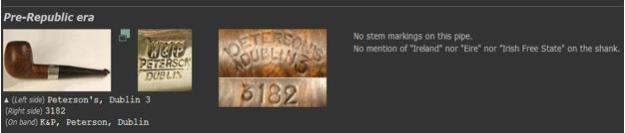
 I turned to Pipephil’s site (http://www.pipephil.eu/logos/en/logo-peterson.html) and found a Pre-Republic Era pipe that has the same stamping on the left side of the shank and the ferrule/band. The difference lies in the stamping on the right side of the shank which were stamped Made in Ireland. The Peterson’s Dublin 3 stamp is the same with the forked P at the head of Peterson’s.I wrote to Mark Irwin to confirm the information I had found and to give any more helpful information on the stamping on this  particular pipe. Mark replied and I quote that in full below:

Hi Steve,

Without the measurements of the bowl I can’t give you the shape number, but I can tell you quite a bit more. The “3” after Dublin indicates it was made between 1937 and 1959 (see p. 301, first column). The nickel-mount marks were on all nickel-mount Petes from 1896 to c. 1963. The nickel was probably hand-soldered (you can often see the solder mark before polishing). The ferrule was also turned down where it meets the mortise by hand. MADE IN IRELAND doesn’t help much, since it has been used in nearly every decade, although I am beginning to believe it indicates a pipe made for export to the US through Rogers Imports, Ltd during the days they were the distributor for K&P (1937-1966, I think was the latter date). The slight swell in the mouthpiece was there because it was a true graduated bore, unlike those made by K&P from c. 1980s forward. This means the pipe will smoke dryly and need no mid-smoke pipe cleaner—a fact I have verified time and time again in my own vintage Petes with type of mouthpiece. Should be a great smoker!

Peace,

Mark

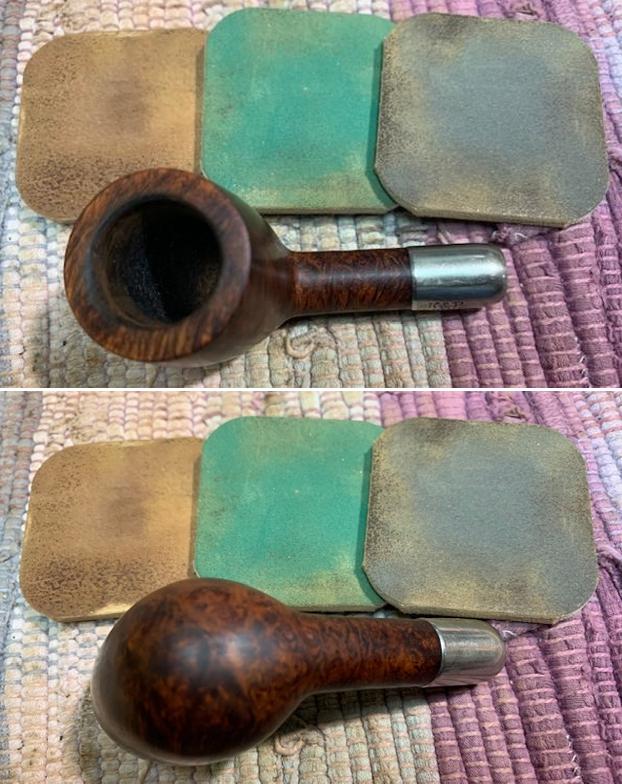
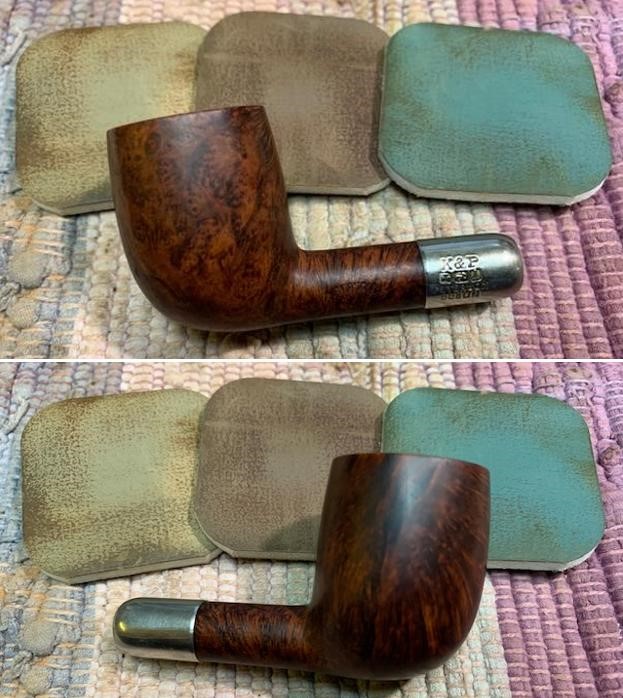
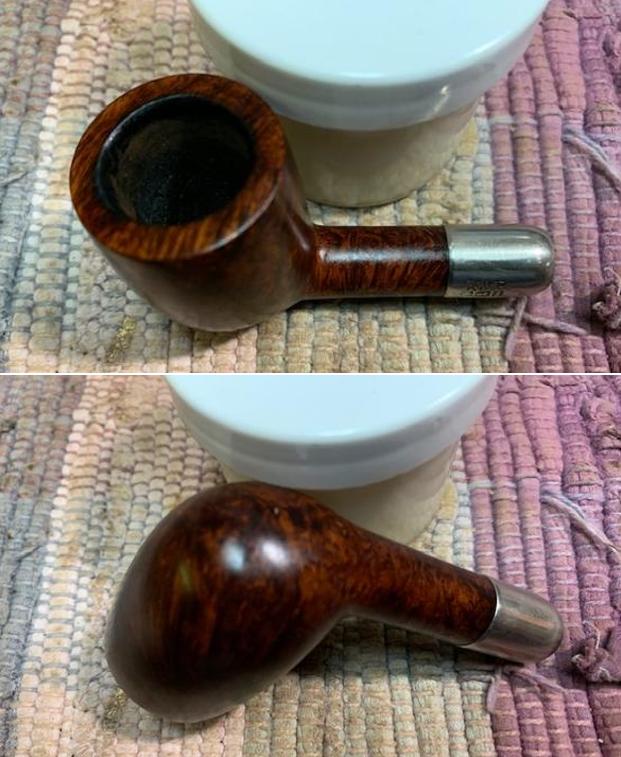
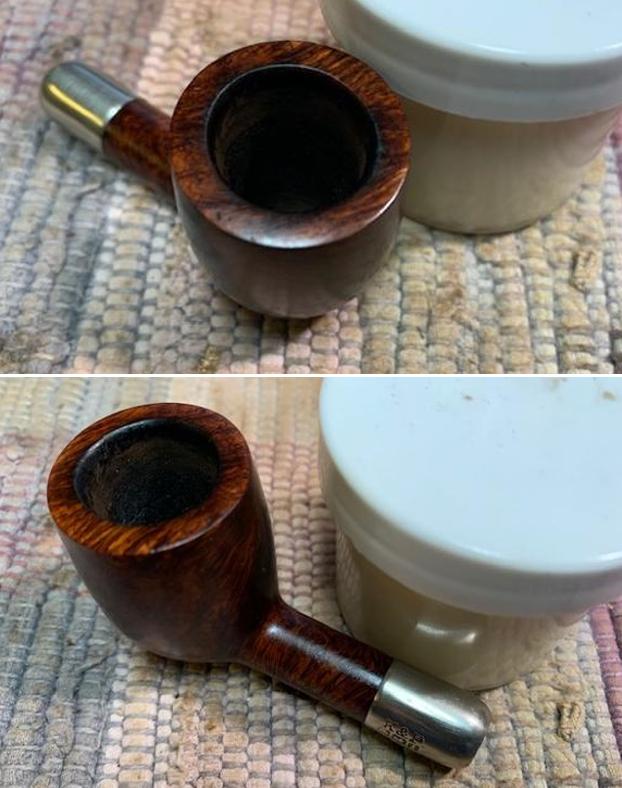
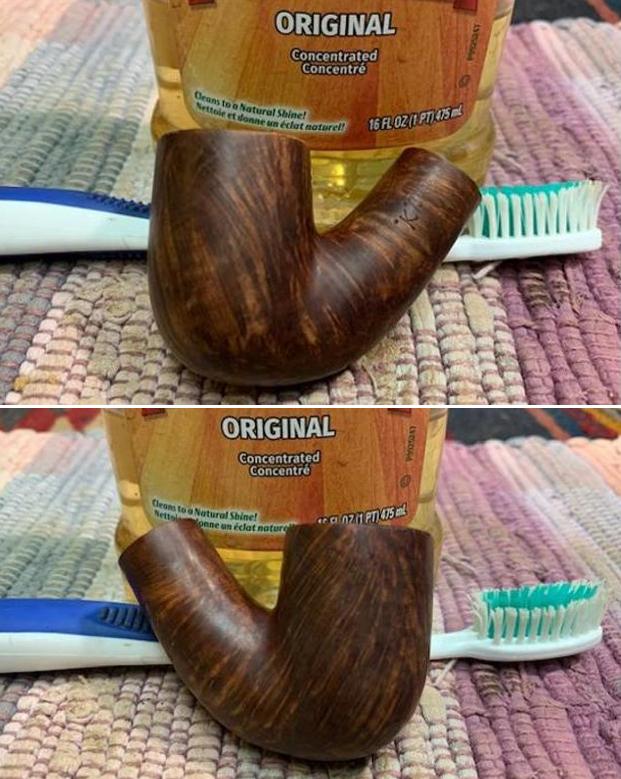
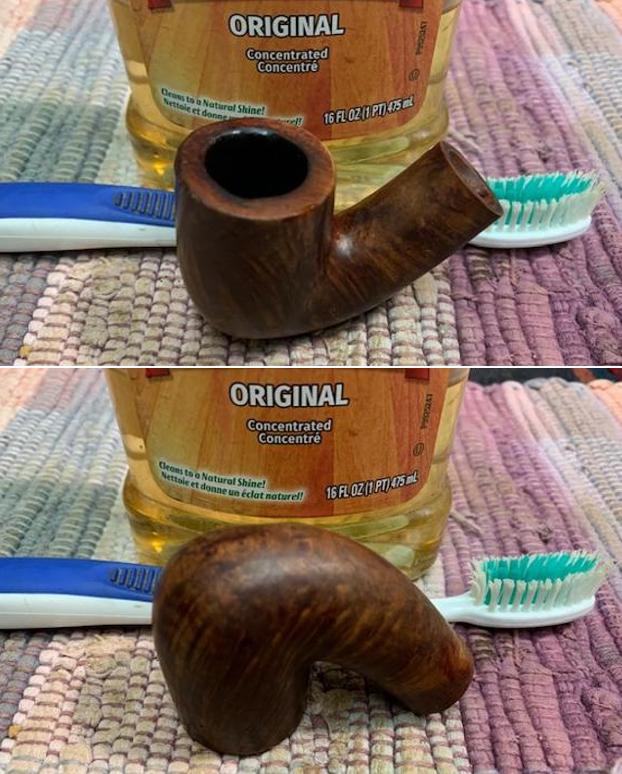
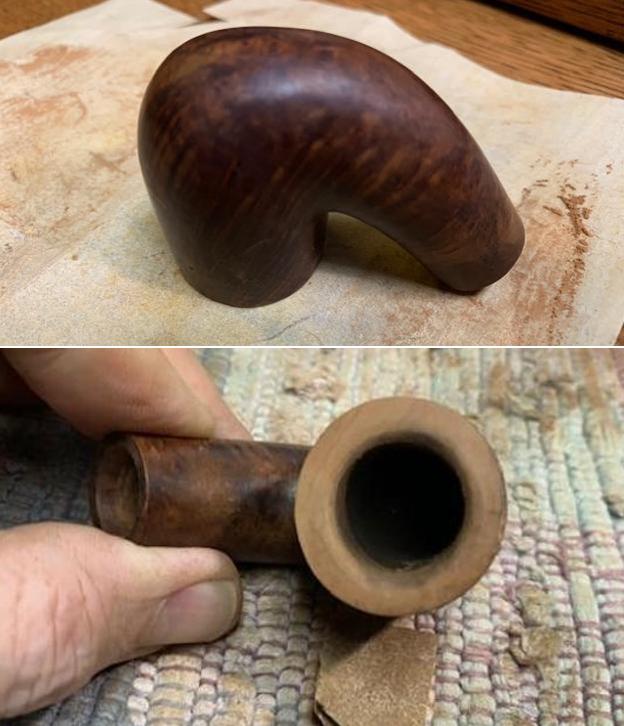
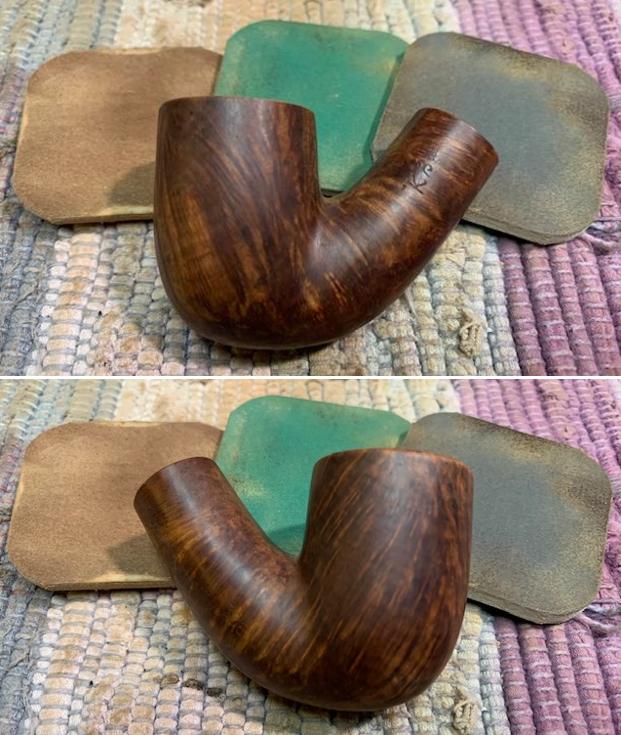
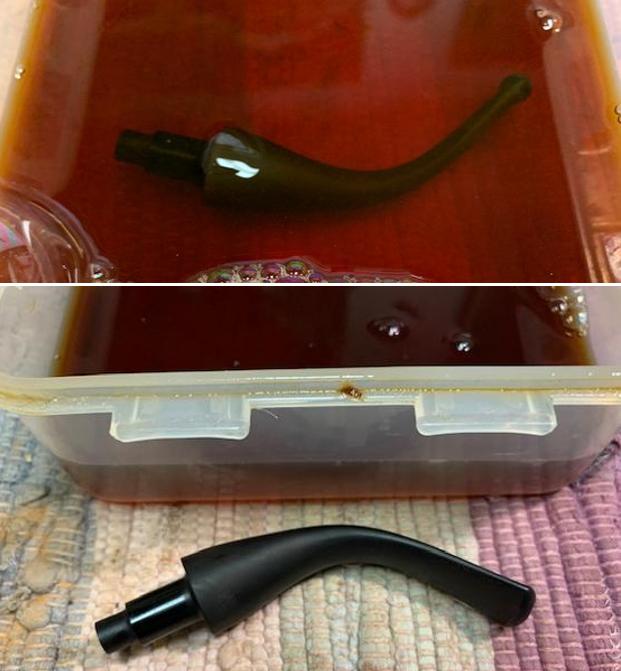
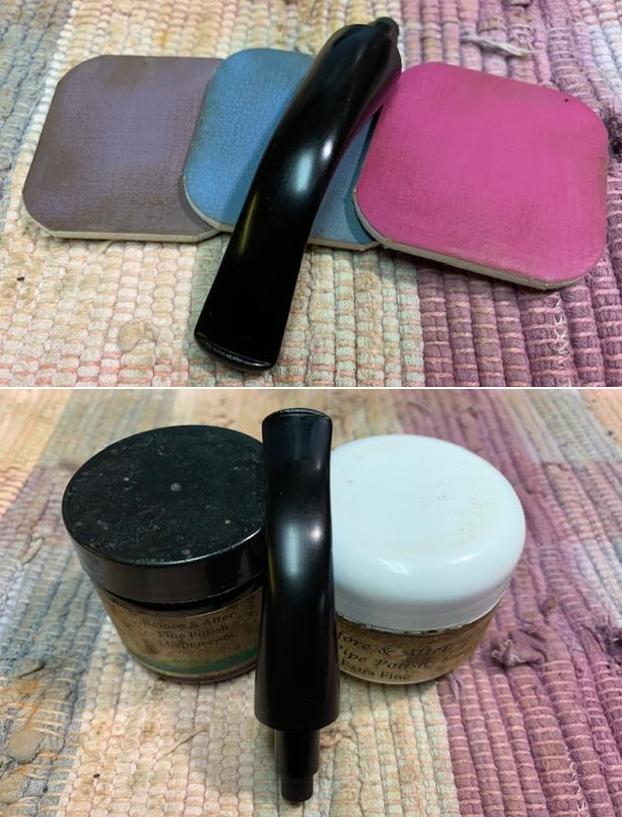
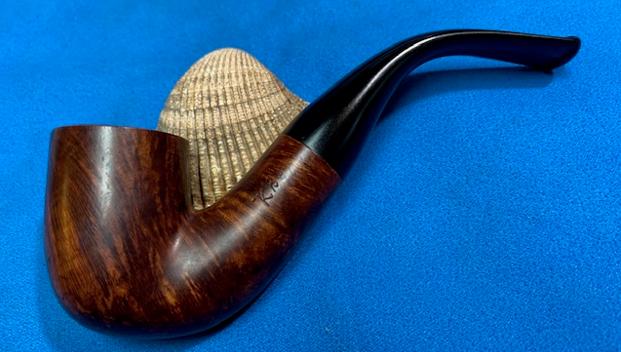
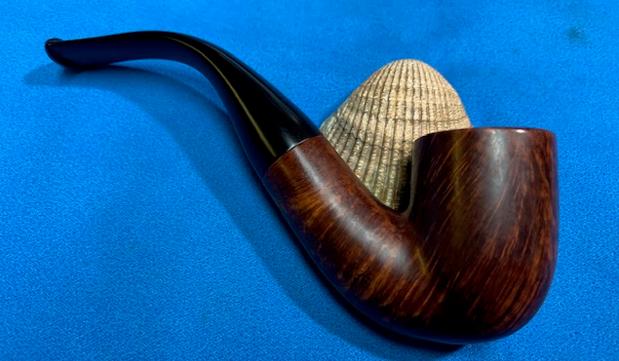
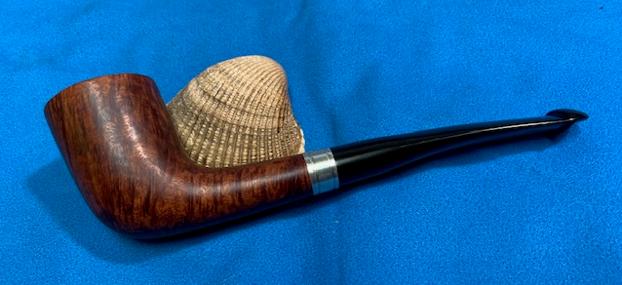
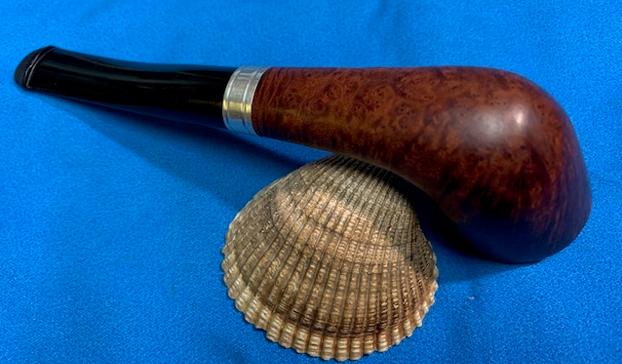
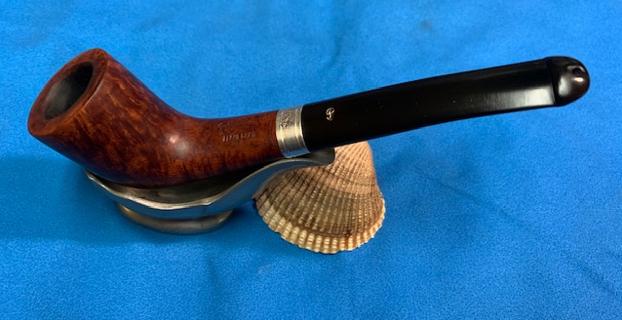
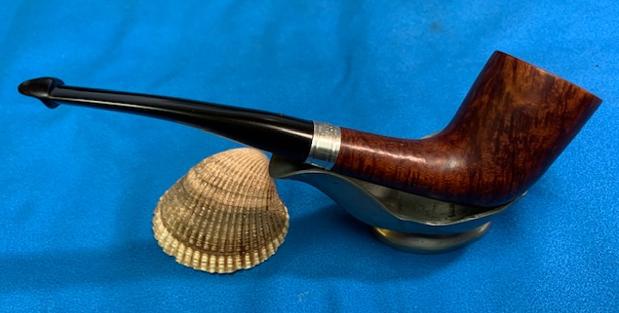
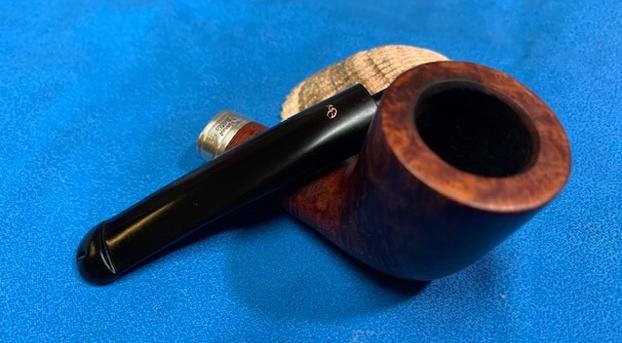
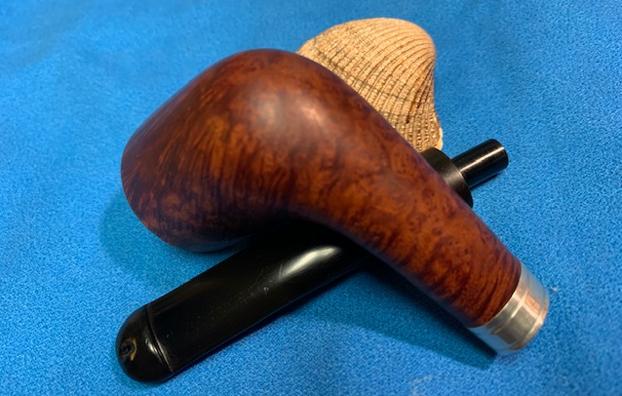
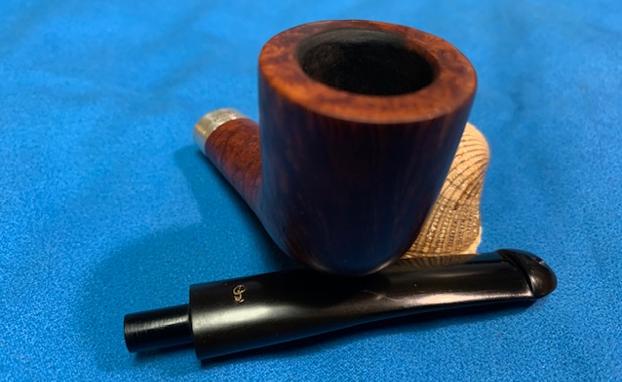
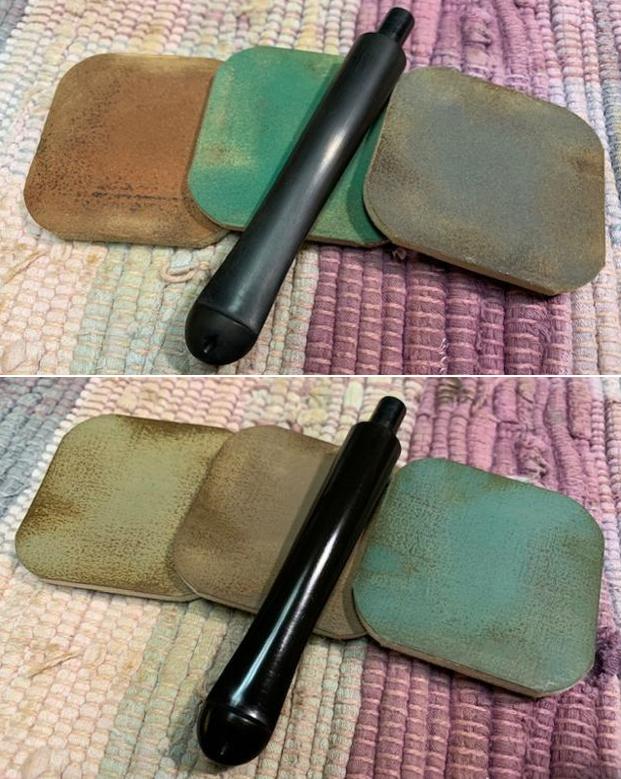
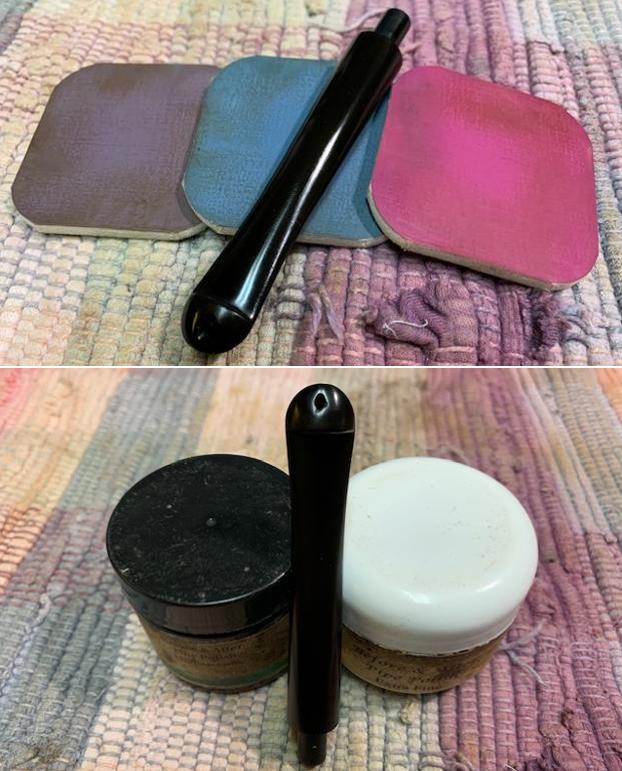
Now it was time to work on the pipe. Jeff had done a great job cleaning up the pipe as usual. He reamed the pipe with a PipNet reamer and cut back the cake back to the bare briar. He cleaned up the walls with a Savinelli Fitsall Pipe Knife. He scrubbed the interior of the bowl and shank with pipe cleaners, cotton swabs and alcohol to remove the tars and oils. He scrubbed the exterior of the pipe with Murphy’s Oil Soap and a tooth brush to remove the grime from the finish. He worked on the rim top lava and darkening with the soap and tooth brush. He scrubbed the inside of the stem with alcohol and pipe cleaners. He scrubbed the exterior with Soft Scrub and then soaked it in Before & After Deoxidizer. He washed it off with warm water to remove the Deoxidizer. The pipe looked far better when it arrived. I took some close up photos of the rim top and also of the stem surface. I wanted to show how well it had cleaned up. The rim top had some looked quite good and the inner edge had some darkening and damage. It should clean up really well. I also took close up photos of the stem to show the tooth marks on the surface near the button.    I took photos of the stamping on the sides of the shank. You can see that it is stamped as noted above. It is clear and readable.       I removed the stem and took a photo of the pipe to have a look at the parts and overall look.I decided to address the damage to the edge of the bowl and the rim top first. I used a folded piece of 220 grit sandpaper to give the inner edge of the bowl a slight bevel to accommodate the burned areas and blend them into the surrounding briar. I also worked over the darkening on the rim top with the sandpaper.   I polished the briar with micromesh sanding pads – dry sanding with 1500-12000 grit sanding pads. I wiped the bowl down with a damp cloth after each sanding pad.    I worked some Before & After Restoration Balm into the surface of the briar with my fingertips to clean, enliven and protect the briar. I let the balm sit for 15 minutes and then buffed with a cotton cloth to raise the shine. The photos show the bowl at this point in the restoration process.   I set the bowl aside and turned my attention to the stem. I “painted” the stem and button surface with the flame of a lighter to lift the tooth marks. It worked amazingly well and the majority of them lifted completely or significantly. I filled in the remaining marks with clear super glue. Once the repairs had cured I flattened them out with a small file. I sanded them with 220 grit sandpaper to blend them into the surface of the vulcanite. I started polishing the stem by wet sanding it with 400 grit wet dry sandpaper.   I polished the stem with micromesh sanding pads – wet sanding with 1500-12000 grit sanding pads. I wiped it down after each sanding pad with Obsidian Oil. I polished it with Before & After Pipe Stem Polish – both Fine and Extra Fine.        I am excited to finish this Peterson’s Dublin 3 Straight Billiard. I put the pipe back together and buffed it with Blue Diamond on the buffing wheel. I gave the bowl and the stem multiple coats of carnauba wax. I hand buffed the pipe with a clean buffing pad to raise the shine. It is fun to see what the polished bowl looks like with beautiful flame grain all around it. Added to that the polished Sterling Silver band and the black vulcanite stem was beautiful. This smooth Classic Older Peterson’s Dublin 3 is great looking and the pipe feels great in my hand. It is light and well balanced. Have a look at it with the photos below. The dimensions are Length: 5 inches, Height: 1 ¾ inches, Outside diameter of the bowl: 1 ¼ inches, Chamber diameter: ¾ of an inch. The weight of the pipe is 29grams/1.02oz. It is a beautiful pipe and one that will be stay in my collection for the time being. It is yet another of my friend’s estate that will stay in my trust. Thanks for walking through the restoration with me as I worked over this pipe. Thanks to each of you who are reading this blog.

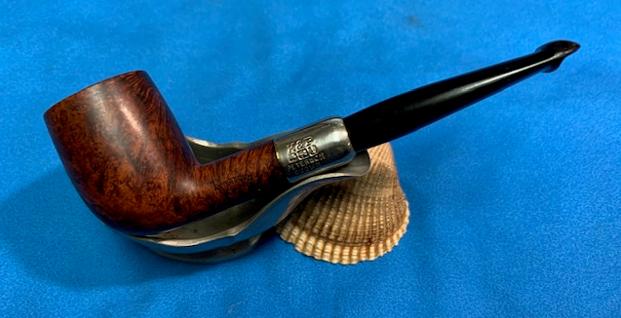
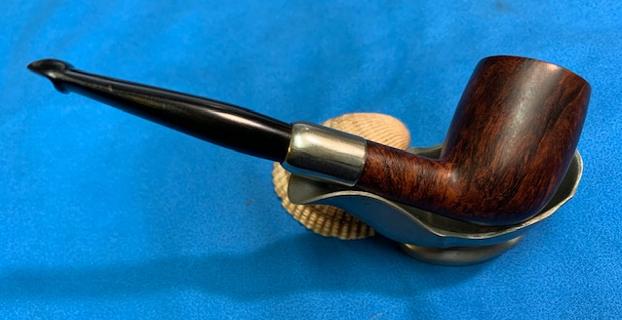
Restoring a Peterson’s Product “K” Briar Republic Era System Standard 338 Bent Billiard


Blog by Steve Laug

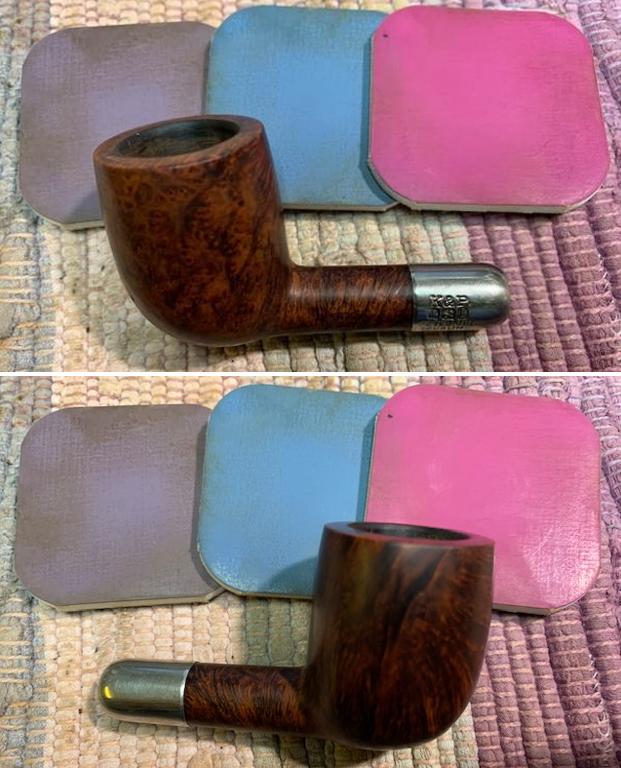
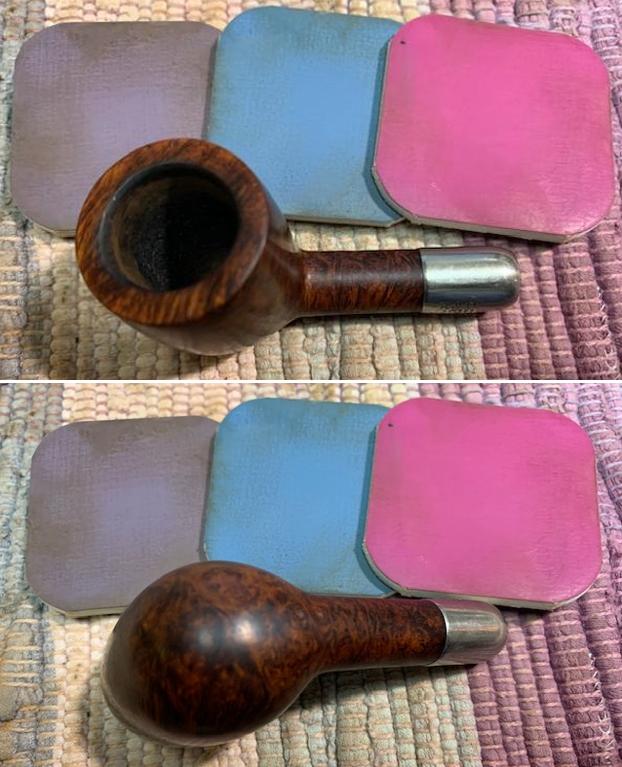
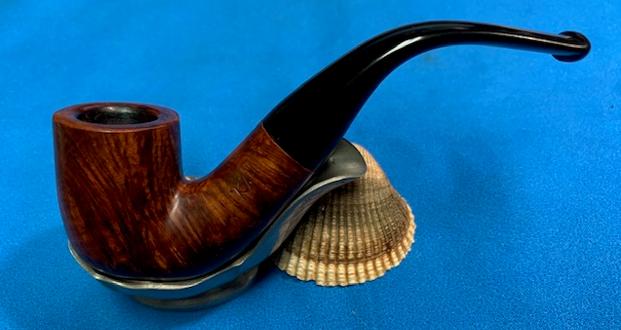
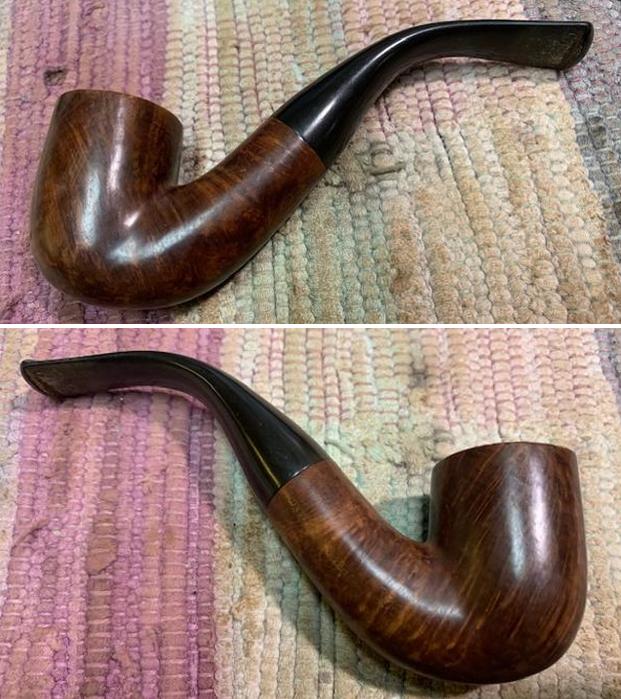
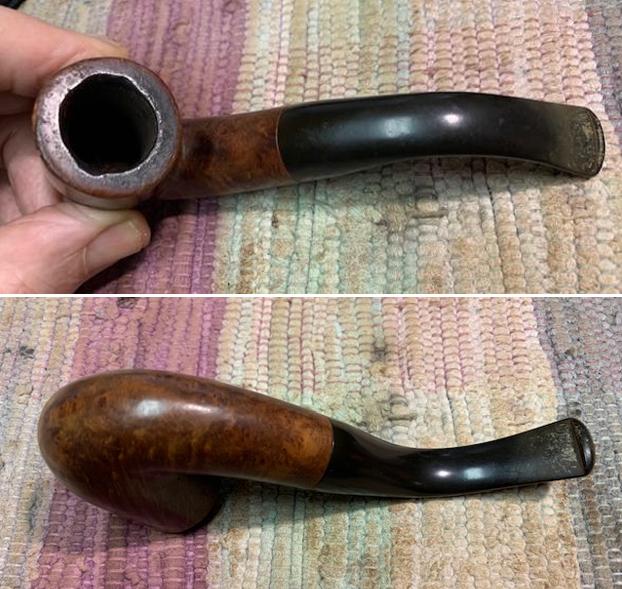
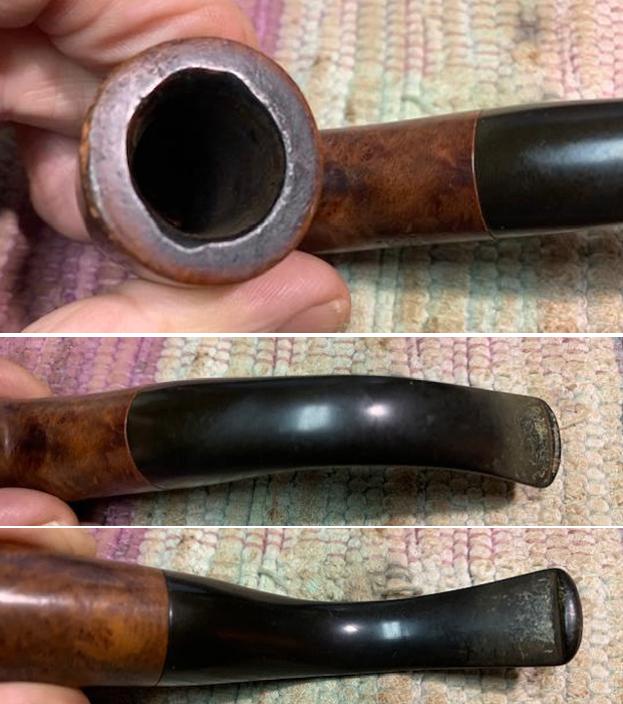
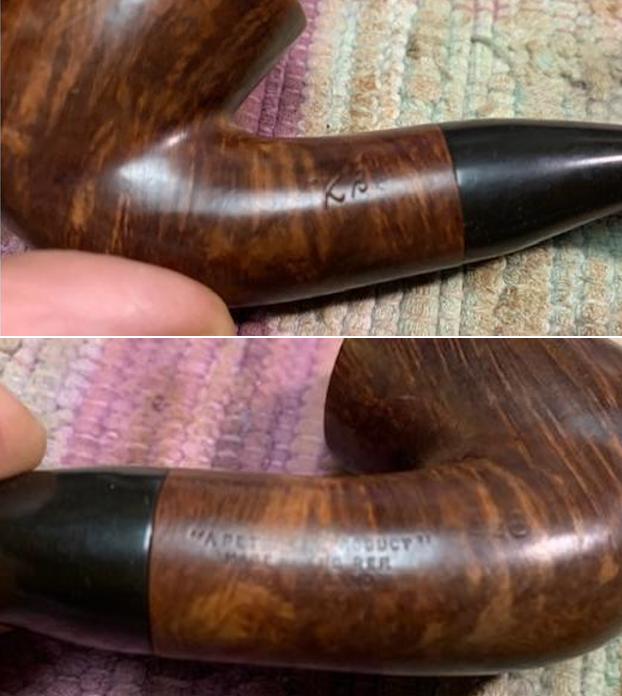
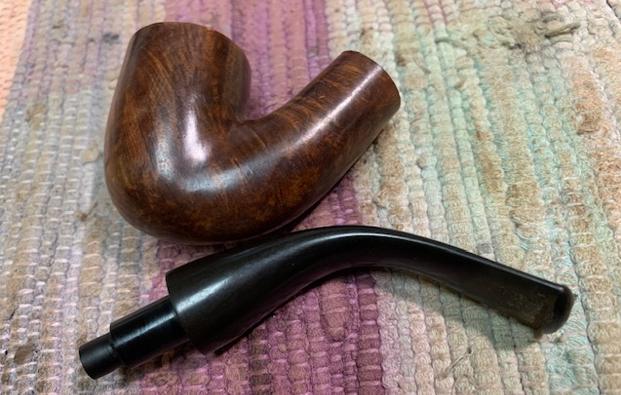
The next pipe on the work table was another mystery. It was in the bin with my friend’s estate pipes but it had not been cleaned or worked on by Jeff at all. Sorting through his pipes I came across this one. I had no idea where it had come from and where I had picked it up. It was just a present pipe to work on that is all. This one is a bent billiard with a fishtail stem. It had some interesting grain around the bowl but it also had a lot of damage on the rim top. The inner edge of the bowl was damaged and the bowl was completely out of round. Somewhere along the way it had been reamed back to bare briar. The pipe is stamped on the left side of the shank and reads “K” Briar in script at a bit of a diagonal on the shank. On the right side it is stamped “A Peterson’s Product” [over] Made in the Rep. of Ireland (two lines) to the right of that near the bowl junction the shape number 338 is stamped. The stem was oxidized, calcified and had tooth chatter and marks on the top and underside near the P-lip style button. There was no identifying stamp on the stem. The pipe showed promise but it was very dirty. I took these photos before I started my work on it.    I took a photo of the rim top and bowl to give a clear picture of the condition of bowl and the damage to the rim top and edges. I also took photos of the top and underside of the stem to show the oxidation, calcification and chatter and tooth marks.     He took photos of the stamping on the shank and the nickel ferrule. It reads as noted above and is faint but readable.   I removed the stem from the shank and took a photo of the pipe as a whole. It showed a lot of promise. I am including the information from Pipedia’s article on Peterson pipes. It is a great read in terms of the history of the brand (https://pipedia.org/wiki/Peterson). I have included a bit of the pertinent history here.

1950 – 1989 The Republic Era – From 1950 to the present time, the stamp for this era is “Made in the Republic of Ireland” in a block format generally in three lines but two lines have been used with or without Republic being abbreviated.

I knew that I was dealing with a Republic Era pipe made between 1950-1989. It was a smooth Peterson’s “K” Briar 338 Bent Billiard with nice grain. The finish was stained with a combination of brown stains.

I turned to “The Peterson Pipe” by Mark Irwin and Gary Malmberg to get some background on the “K” Briar. On page 305 it had the following information.

K Briar (1937-2005) The K Briar appeared as a “Product Line” or lowest quality prior to WWII but was not widely marketed until after 1940. Catalog illustrations show pipes stamped Peterson’s over Dublin over K but most document specimens read K over Briar over A “Peterson’s Product” of “K” Briar over A “Peterson’s Product” or simply “K” Briar in italics. The model appears in occasional catalogs until 2005. An early 1980’s catalog lists a K Etched line with small patches of the bowl rusticated.

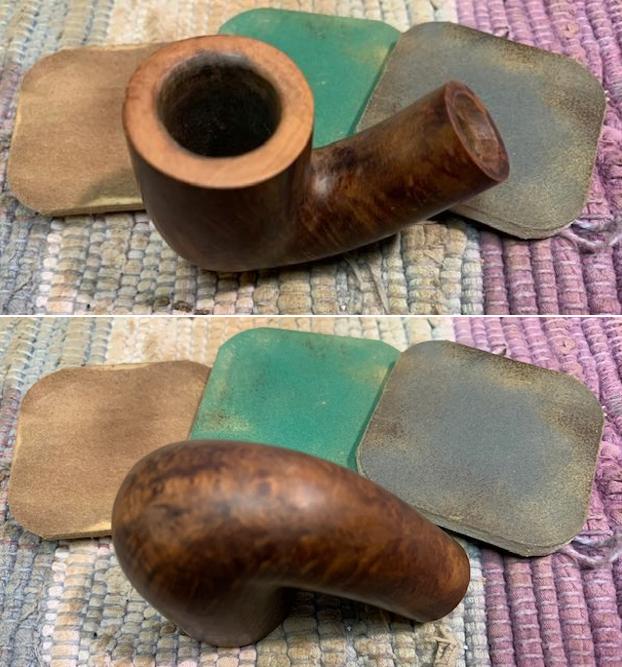
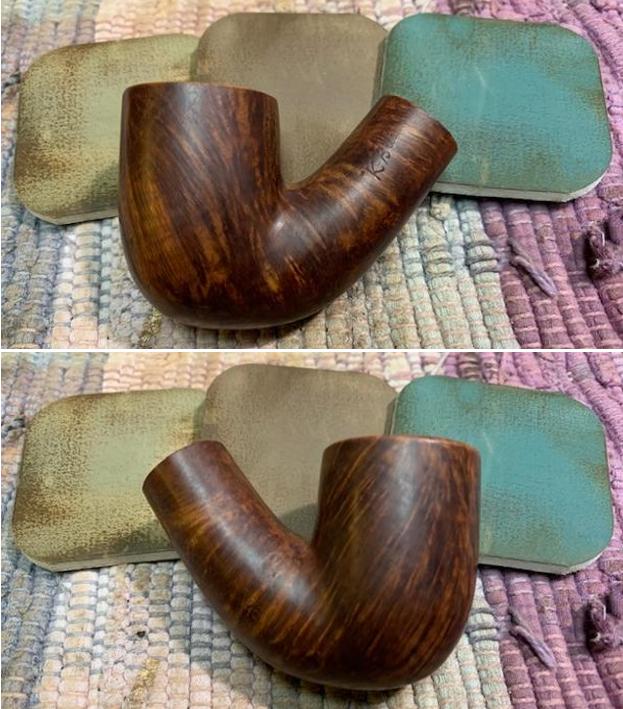
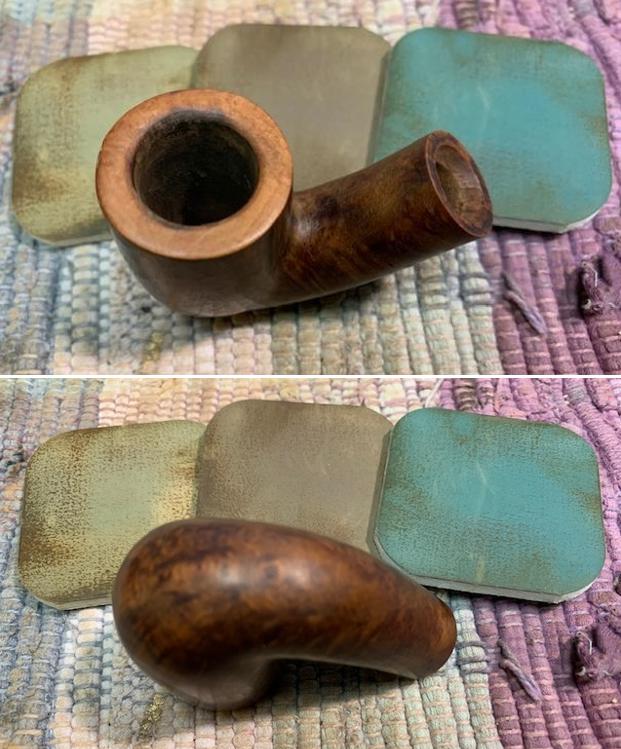
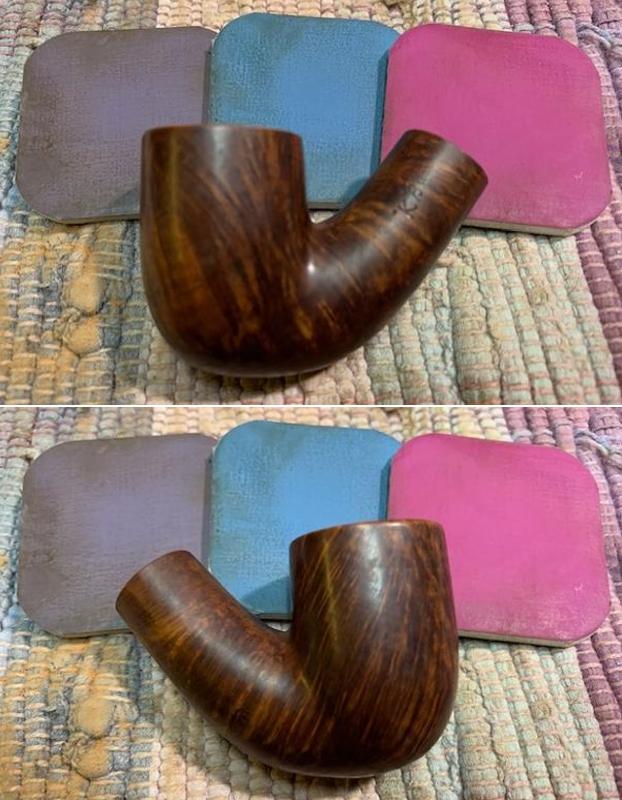
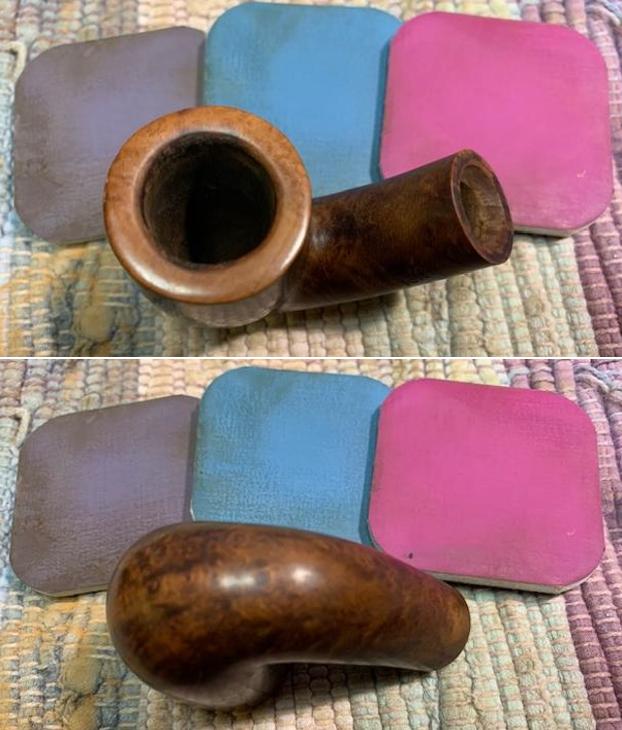
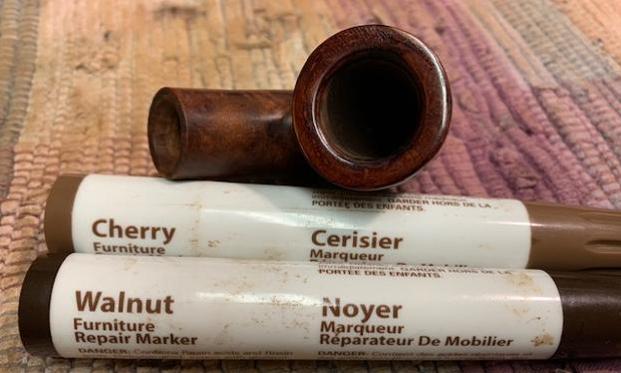
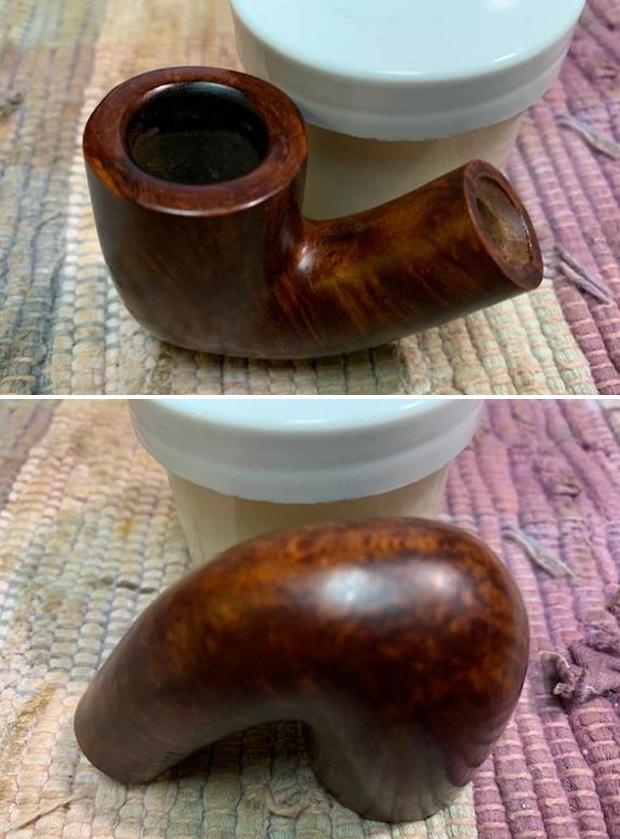
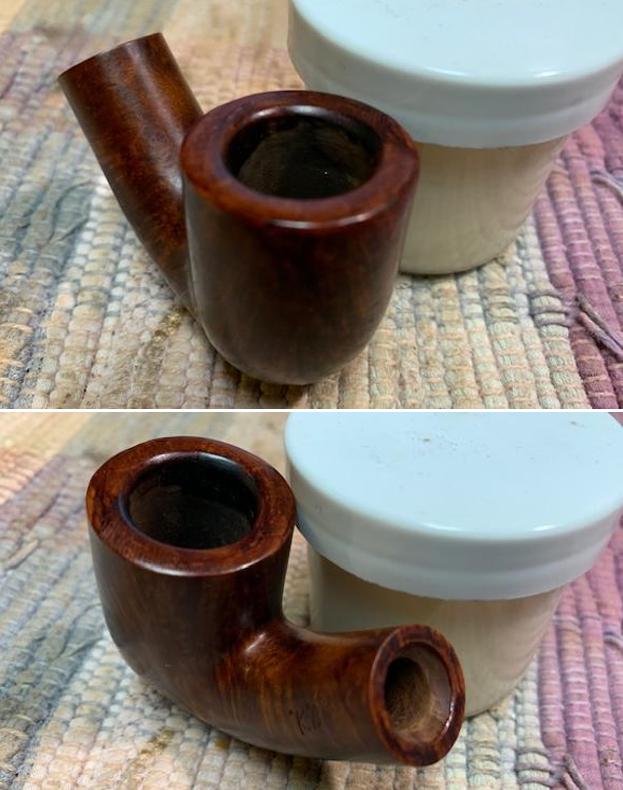
Now it was time to work on the pipe. To start my work on the pipe I reamed the bowl with a Savinelli Fitsall pipe knife. I finished the bowl by sanding the walls with 220 grit sandpaper wrapped around a piece of dowel.    I scraped the rim top lava with the edge of the Fitsall knife. I was able to remove all of the lava buildup and leave a smooth rim top.I scraped out the buildup in the shank with a dental spatula to remove the thick coat of tars and oils.  I cleaned out the shank and the mortise as well as the airway into the bowl and in the stem with alcohol, pipe cleaners and cotton swabs. It came out quite clean and smelled significantly better. I scrubbed the pipe with undiluted Murphy’s Oil Soap and a tooth brush to remove the grime on the bowl and shank. I rinsed it off with warm running water and dried it off with a soft towel. The pictures show the grain around the sides of the pipe.    I put the stem in a bath of Briarvilles’ Dexodizer to soak while I addressed the damage on the rim top and edges. I topped the bowl on a topping board with 220 grit sandpaper and started reshaping the inner edge of the bowl with a folded piece of 220 grit sandpaper.    I polished the briar with micromesh sanding pads – wet sanding with 1500-12000 grit pads. I wiped the bowl down after each pad with a damp cloth.     I restained the rim top with a combination of Walnut and Cherry stain pens to blend in the colour of those areas to the rest of the bowl.I rubbed the bowl down with Before & After Restoration Balm. I worked it into the surface of the bowl sides and shank with my fingertips. The product works to clean, enliven and protect the briar. I let the balm sit for a little while and then buffed with a cotton cloth to raise the shine. I set the bowl aside and turned my attention to the stem. Earlier in the day I had dropped the stem in a Deoxidizer Bath from Briarville and let it sit most of the day. Once I removed it from the bath it had soaked for about 5-6 hours. I removed it and wiped it down with a paper towel. I worked it over pretty roughly to remove the calcification and oxidation that sat on top of the vulcanite. It came out looking very good.  I polished the vulcanite stem with micromesh sanding pads – 1500-12000 grit pads. I wiped it down with a damp cloth after each sanding pad. I used Before & After Pipe Polish – both Fine and Extra Fine to further polish the stem.    This Peterson’s Product “K” Briar 338 Bent Billiard with a vulcanite stem is a great looking pipe now that it has been restored. The beautiful grain that shines through the polished finish is stunning. I put the stem back on the bowl and carefully buffed the pipe with Blue Diamond on the buffing wheel. I gave the bowl and the stem multiple coats of carnauba wax on the buffing wheel and followed that by buffing the entire pipe with a clean buffing pad. I hand buffed the pipe with a microfiber cloth to deepen the shine. The grain just popped with the wax and the buffing. It is a beauty! The finished Peterson’s “K” Briar Bent Billiard 338 fits nicely in the hand and feels great. Give the finished pipe a look in the photos below. The dimensions of the pipe are Length: 5 inches, Height: 1 ¾ inches, Outside diameter of the bowl: 1 ¼ inches, Chamber diameter: ¾ of an inch. The weight of the pipe is 39gr/1.34oz. If you are interested in adding this pipe to your collection send me a message or an email. Thanks for reading this blog and my reflections on the pipe while I worked on it. There are many more to come!

Breathing Life into a Peterson’s of Dublin Flame Grain 268 Zulu


Blog by Steve Laug

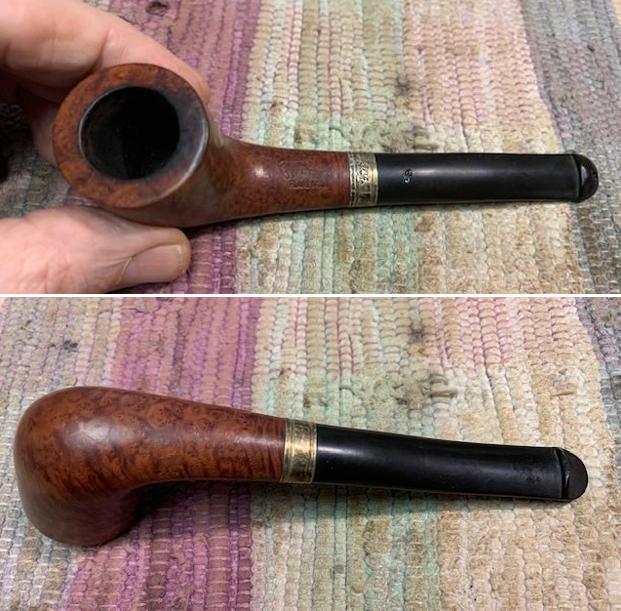
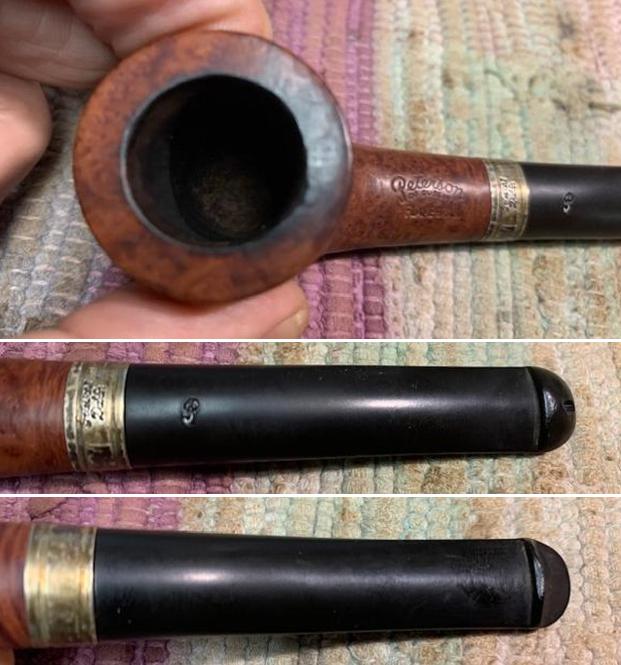
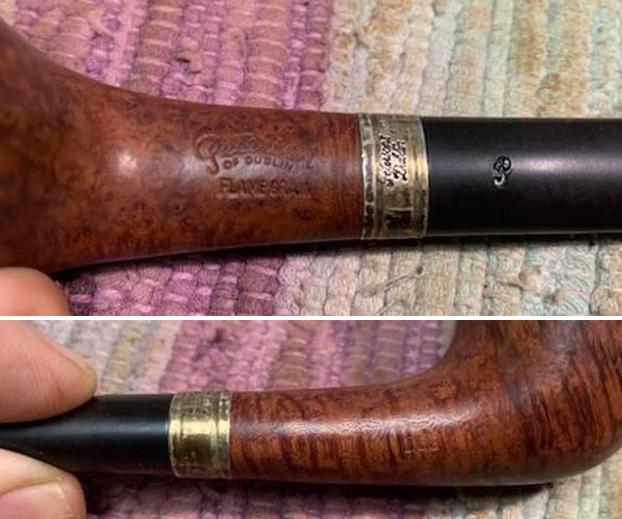
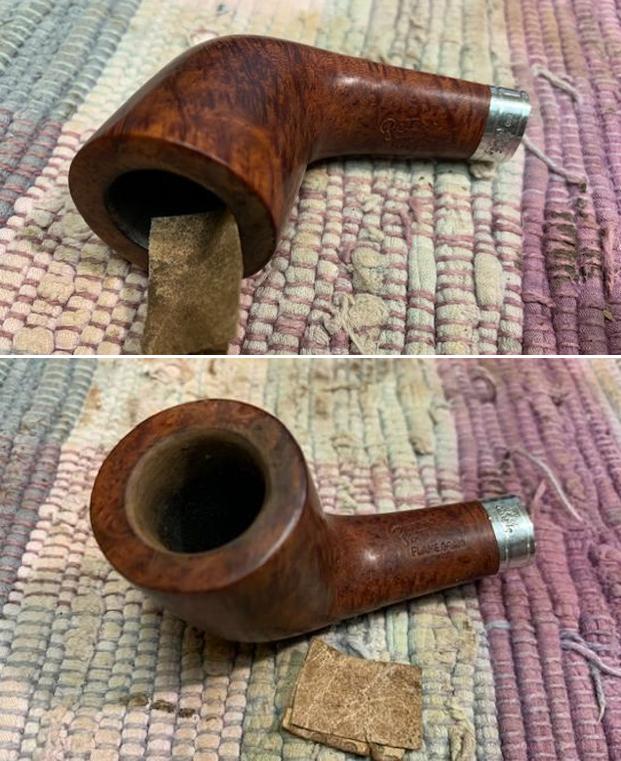
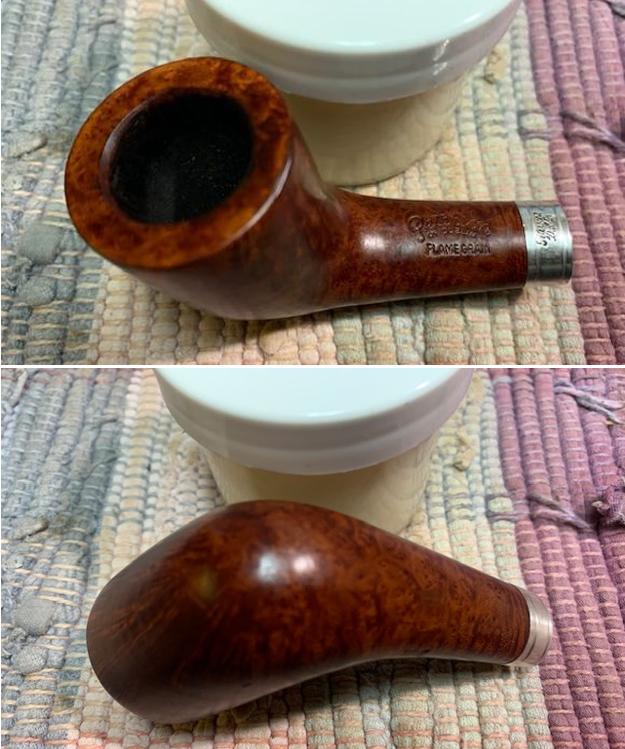
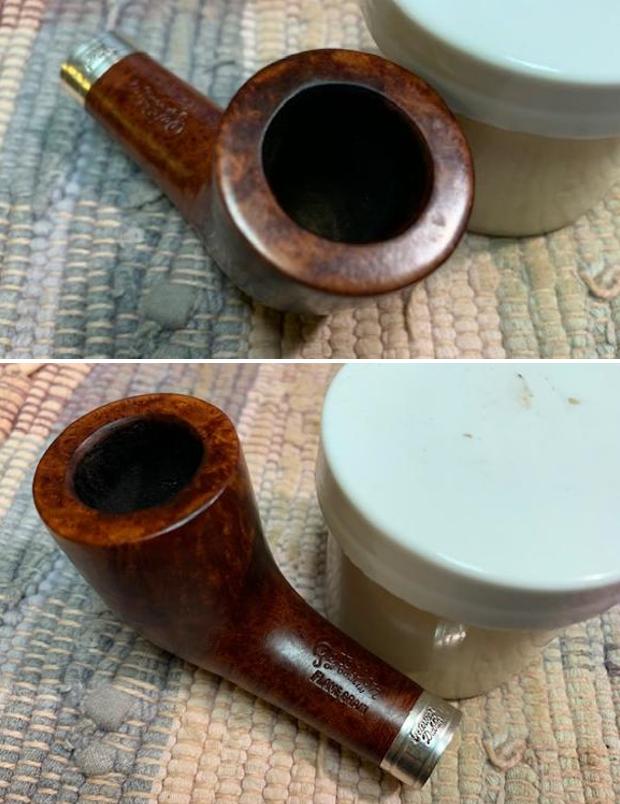
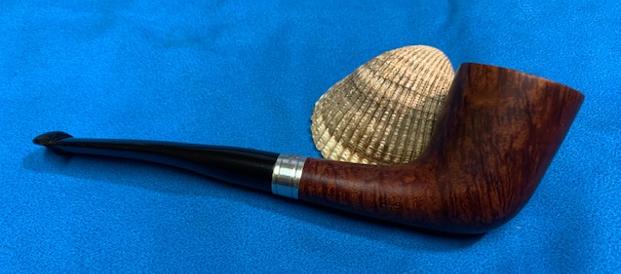
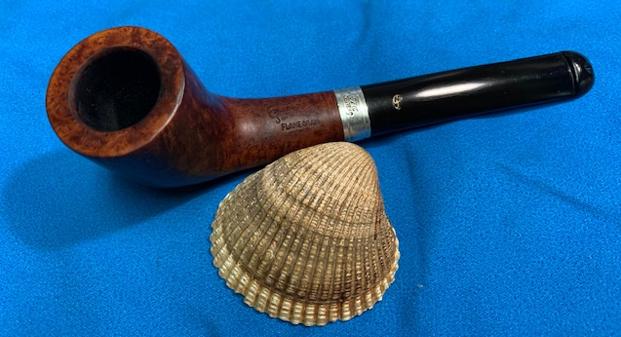
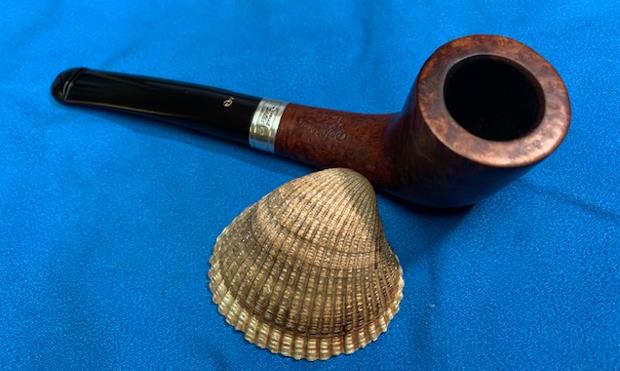
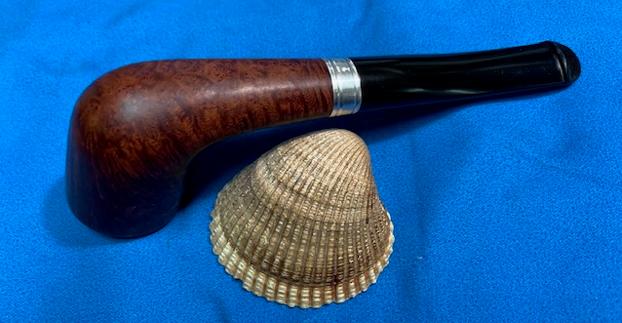
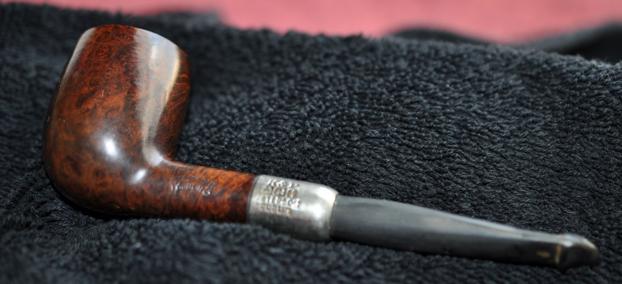
The next pipe I have chosen is smooth finished Peterson’s Flame Grain pipe. This one is a 268 Zulu that has a rich coloured finish with amazing grain around the bowl sides and shank. It is also incredibly dirty. It also came to us from the estate of Anglican minister that was a great friend of mine here in Canada. This Zulu had a badly oxidized silver band on the shank. The contrast of the brown stains makes the grain really pop. It was stamped on the topside of the shank and read Peterson’s [over] of Dublin [over] Flame Grain. It was stamped on the right side with the shape number 268. The tarnished band is stamped with Peterson’s [over] Dublin. That was followed by three hallmarks – the seated woman, the harp and the italic letter O. It was in filthy when he brought it to the table. The finish was dirty with grime ground into the briar sides and rim. There was a heavy cake in the bowl and light spattering of lava on the rim top and the inner edge of the bowl. There was some damage to the inner edge of the rim at the back of the bowl. The stem was oxidized, calcified and had tooth marks and chatter on the top and underside on and near the button. Jeff took photos of the pipe before his cleanup work. They tell the story and give a glimpse of the promise that we see in this pipe. Jeff took photos of the rim top and stem to show the general condition of the pipe. The bowl is heavily caked and the rim top and edges have some light lava overflow. There is some damage to the rim edge on the back of the bowl. The stem is oxidized, calcified and has tooth marks on the top and underside near the button.     Jeff took some photos of the bowl sides and heel to show the amazing grain that was around this bowl. It is a nice looking pipe.  He took photos of the sides of the shank to show the stamping. The stamping is readable in the photos below and is as noted above. He also took a photo of the band.   I am including the link to the Pipedia’s article on Peterson pipes. It is a great read in terms of the history of the brand (https://pipedia.org/wiki/Peterson).
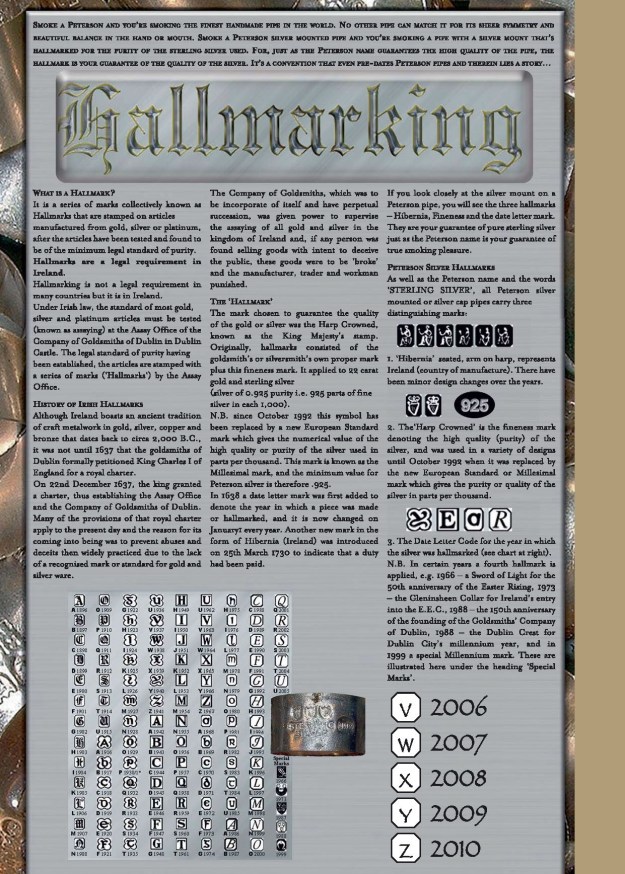
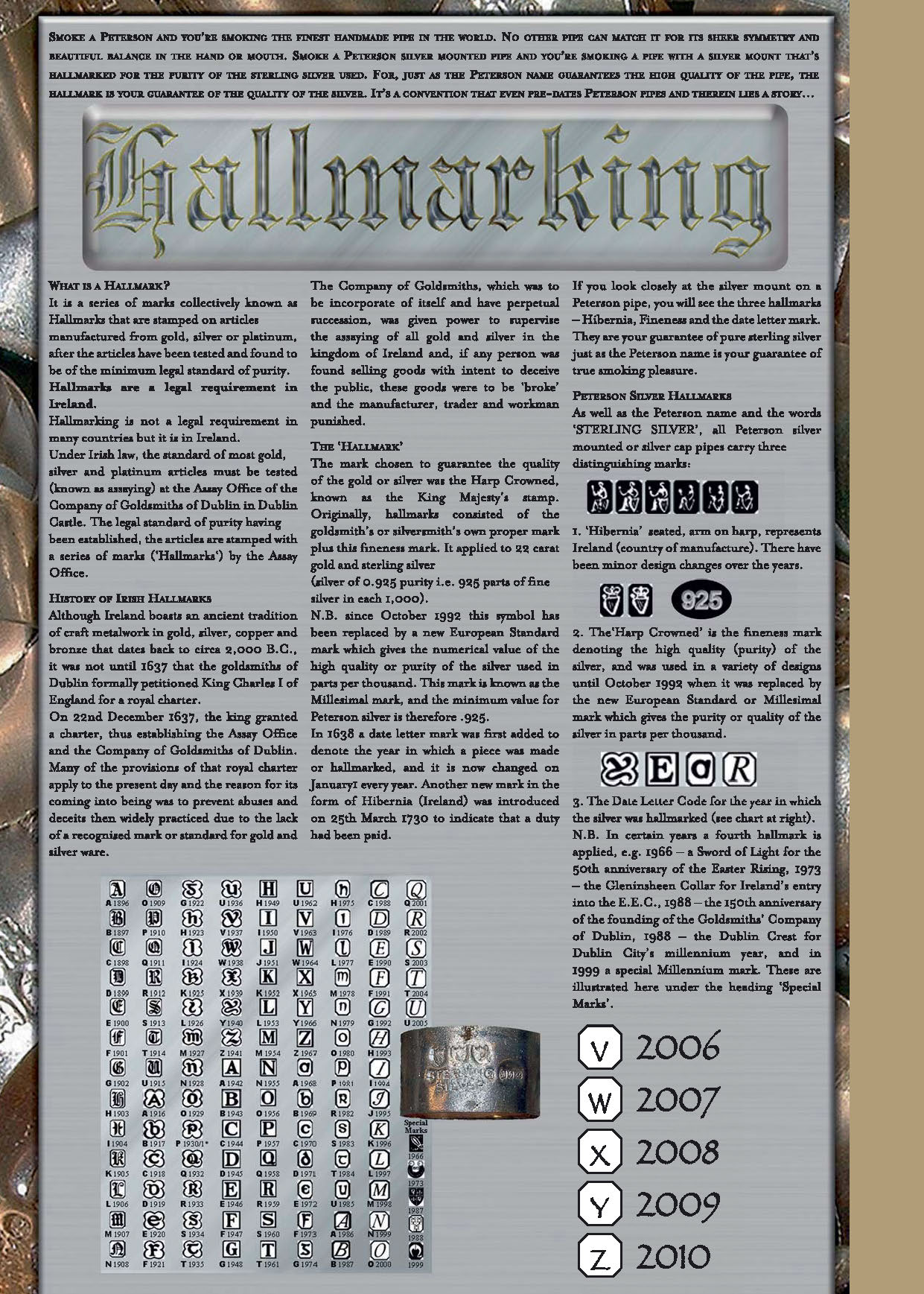
I always like to date the year a pipe was made while I am working on it. In the process of working on a pipe if I can pin down a date that it was made that it adds another dimension to the restoration process. Once I have identified the hallmarks on the pipe then I use a Hallmark chart to pin the date down. In the case of Peterson’s pipe with a silver band I use a hallmarking chart that Peterson included in their catalogs and on their website

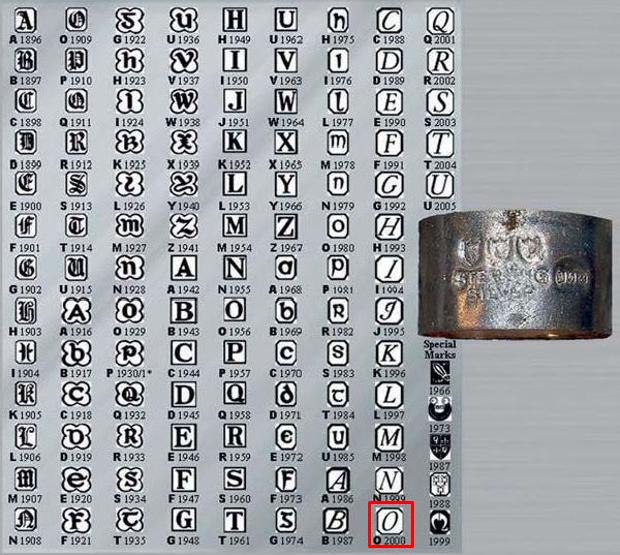
I have a copy of the hallmark charts in one of the Peterson catalogs that I have uploaded to the blog on rebornpipes. I turned to that chart to lock down the date letter for the Flame Grain Zulu that I am working on. Here is the link to the site (https://rebornpipes.com/wp-content/uploads/2015/05/peterson-cataloguecomp_page_27.jpg).

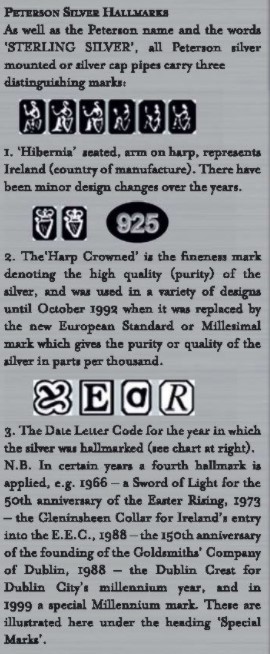
The chart defines the meaning of each hallmark on the silver band. The first one is of a seated woman with a harp is known as the Hibernia stamp and identifies the pipe as made in Ireland. The second stamp is a crowned harp which is a fineness mark denoting the high quality of silver that was used. The third stamp is the italic letter O. I have included a larger screen capture of the section on the third column of the chart in the photo below.I have drawn a red square around the date letter below. It identifies the date of this Peterson’s pipe to 2000.I knew that I was dealing with a pipe that the hallmarks date to 2000. Now it was time to learn a bit more about the Flame Grain Line.

I turned to “The Peterson Pipe” by Mark Irwin and Gary Malmberg to get some background on the Flame Grain line. On page 299 it had the following information.

Flame Grain (1997-) Smooth flame-grained with brass band 1997-c.2000, sterling silver thereafter. Stamped arched Peterson over arched OF DUBLIN over FLAME GRAIN. Black vulcanite mouthpiece, also amber coloured (2010-), P-Lip mouthpiece , hot foil stamped P.

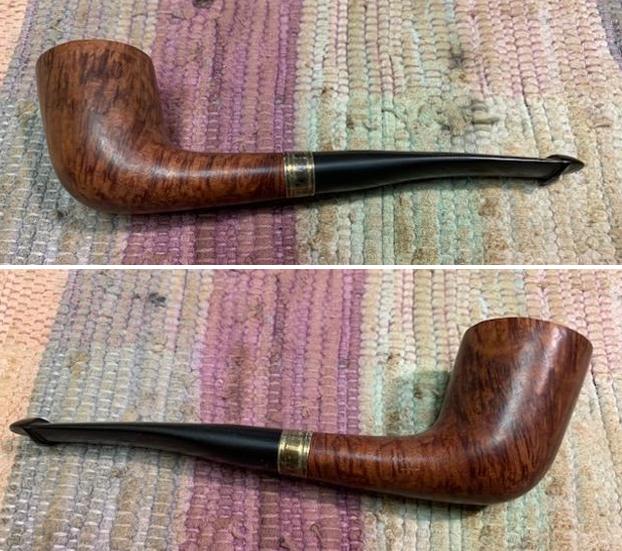
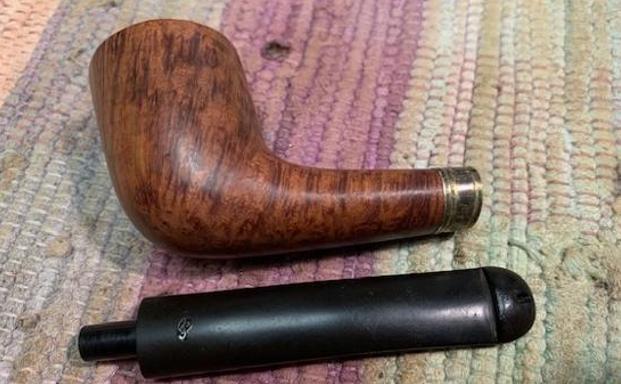
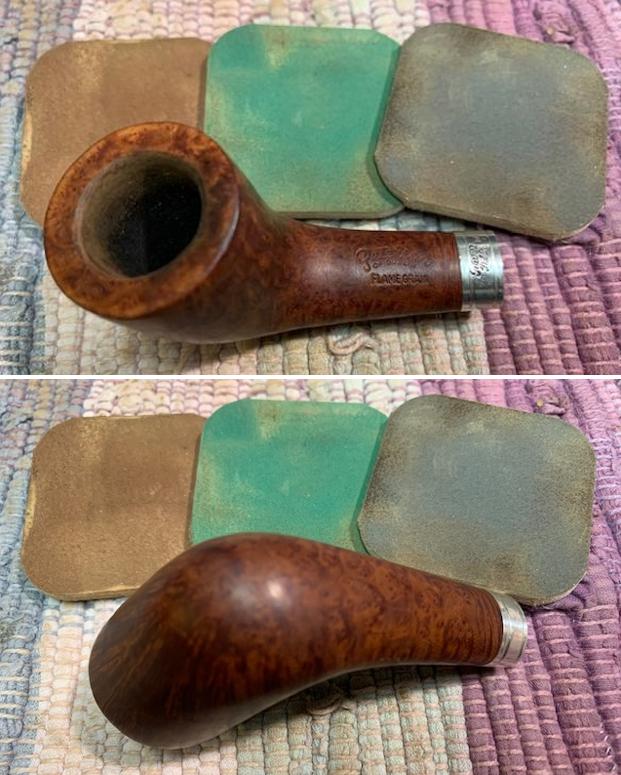
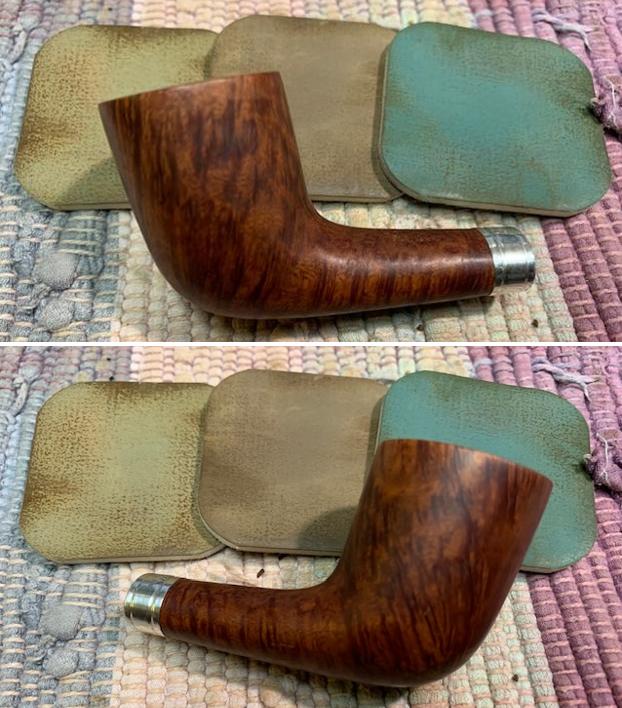
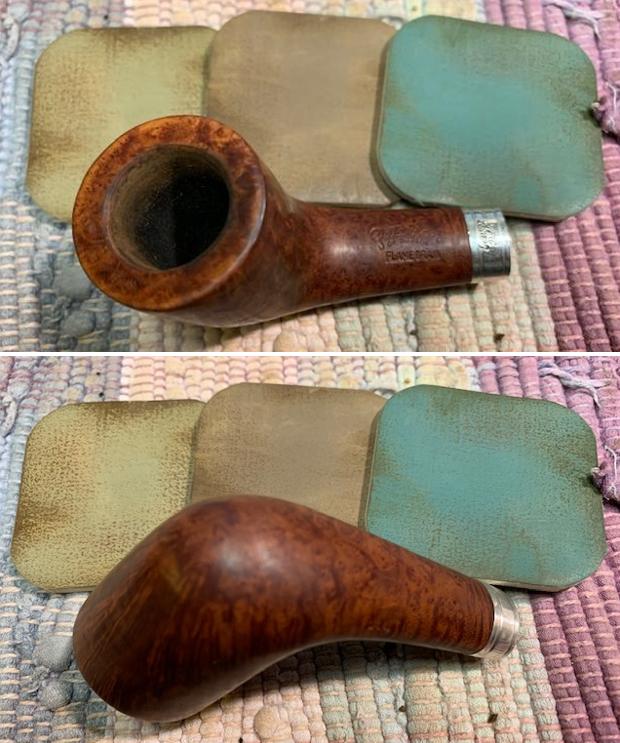
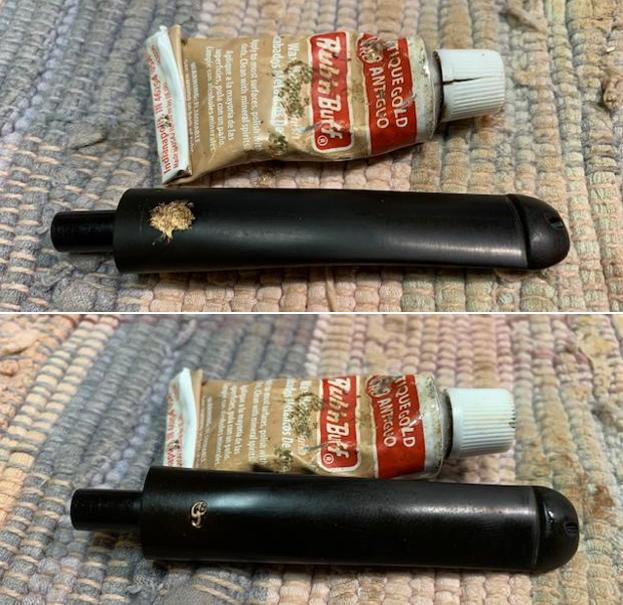
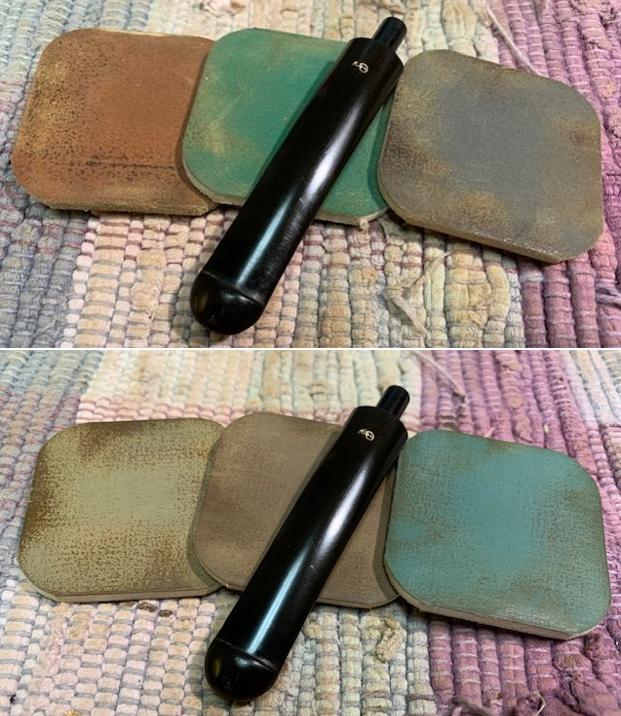
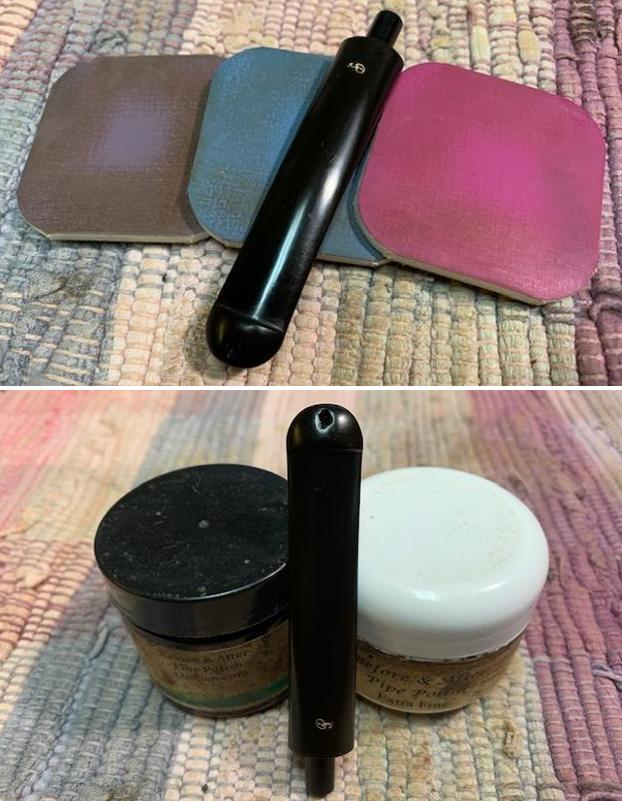
Now it was time to work on the pipe. Jeff had done a great job cleaning up the pipe as usual. He reamed the pipe with a PipNet reamer and cut back the cake back to the bare briar. He cleaned up the walls with a Savinelli Fitsall Pipe Knife. He scrubbed the interior of the bowl and shank with pipe cleaners, cotton swabs and alcohol to remove the tars and oils. He scrubbed the exterior of the pipe with Murphy’s Oil Soap and a tooth brush to remove the grime from the finish. He worked on the rim top lava and darkening with the soap and tooth brush. He scrubbed the inside of the stem with alcohol and pipe cleaners. He scrubbed the exterior with Soft Scrub and then soaked it in Before & After Deoxidizer. He washed it off with warm water to remove the Deoxidizer. The pipe looked far better when it arrived. It has been sitting here for 2 years so the silver tarnished once again and would need to be polished.  I took some close up photos of the rim top and also of the stem surface. I wanted to show how well it had cleaned up. The rim top had some looked quite good and the inner edge had some darkening and damage on the back. It should clean up really well. I also took close up photos of the stem to show the light tooth marks on the surface near the button.   I took photos of the stamping on the top and right sides of the shank. You can see that it is stamped as noted above. It is clear and readable.     I removed the stem and took a photo of the pipe to have a look at the parts and overall look.I polished the Sterling Silver band on the shank with some Silver Polish and a jeweler’s cloth to remove the tarnish and polish it.I decided to address the damage to the back edge of the bowl and the rim top first. I used a folded piece of 220 grit sandpaper to give the inner edge of the bowl a slight bevel to accommodate the burned areas and blend them into the surrounding briar. I also worked over the darkening on the rim top with the sandpaper.   I polished the briar with micromesh sanding pads – dry sanding with 1500-12000 grit sanding pads. I wiped the bowl down with a damp cloth after each sanding pad.     I worked some Before & After Restoration Balm into the surface of the briar with my fingertips and a horsehair shoe brush to clean, enliven and protect the briar. I let the balm sit for 15 minutes and then buffed with a cotton cloth to raise the shine. The photos show the bowl at this point in the restoration process.      I touched up the gold foil stamped “P” on the top of the stem with Rub’n Buff Antique Gold. I pressed it into the stamping with a tooth pick and buffed it off with a soft cloth. It looks much better that when I started.I set the bowl aside to turn my attention to the stem. The stem was in excellent condition so I polished the stem with micromesh sanding pads – wet sanding with 1500-12000 grit sanding pads. I wiped it down after each sanding pad with Obsidian Oil. I polished it with Before & After Pipe Stem Polish – both Fine and Extra Fine.  I am excited to finish this Peterson’s of Dublin Flame Grain 268 Zulu made in 2000. I put the pipe back together and buffed it with Blue Diamond on the buffing wheel. I gave the bowl and the stem multiple coats of carnauba wax. I hand buffed the pipe with a clean buffing pad to raise the shine. It is fun to see what the polished bowl looks like with beautiful flame grain all around it. Added to that the polished Sterling Silver band and the black vulcanite stem was beautiful. This smooth Classic Peterson’s Zulu is nice looking and the pipe feels great in my hand. It is light and well balanced. Have a look at it with the photos below. The dimensions are Length: 5 ¾ inches, Height: 1 ¾ inches, Outside diameter of the bowl: 1 ¼ inches, Chamber diameter: ¾ of an inch. The weight of the pipe is 34grams/1.20oz. It is a beautiful pipe and one that will be on the Irish Pipe Makers section of the rebornpipes store soon. If you are interested in adding it to your collection let me know. Thanks for walking through the restoration with me as I worked over this pipe. Thanks to each of you who are reading this blog.

Breathing New Life into a Peterson’s “Kapruf” 122 Sandblast Dublin


Blog by Steve Laug

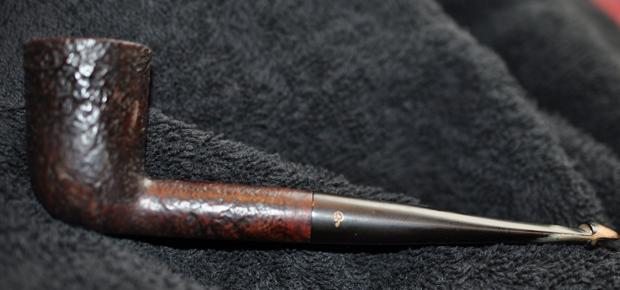
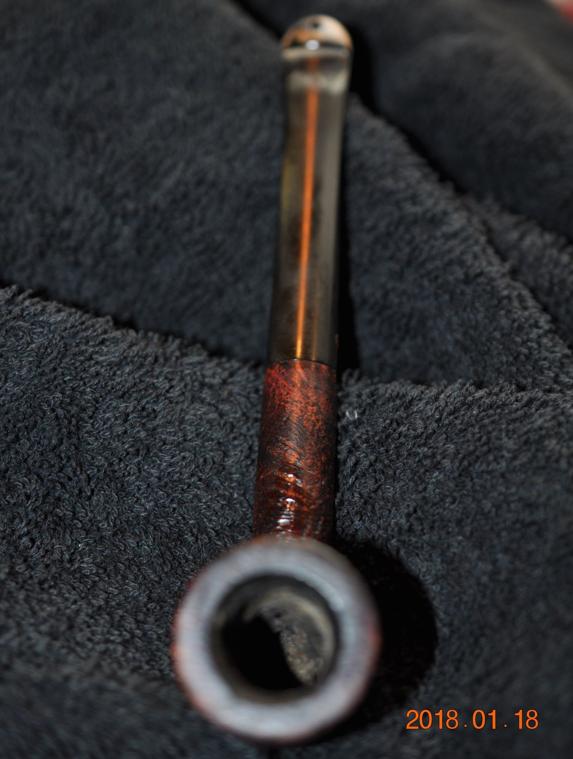
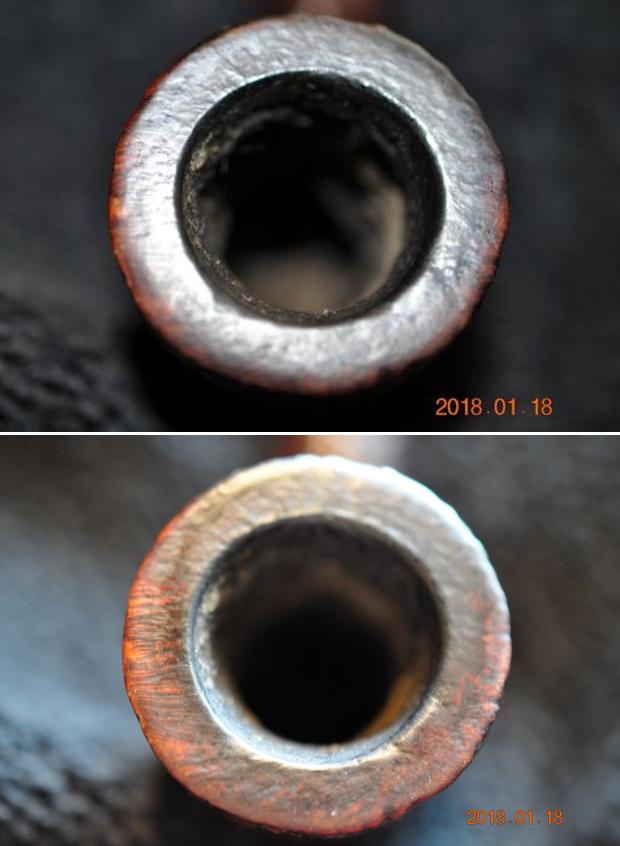
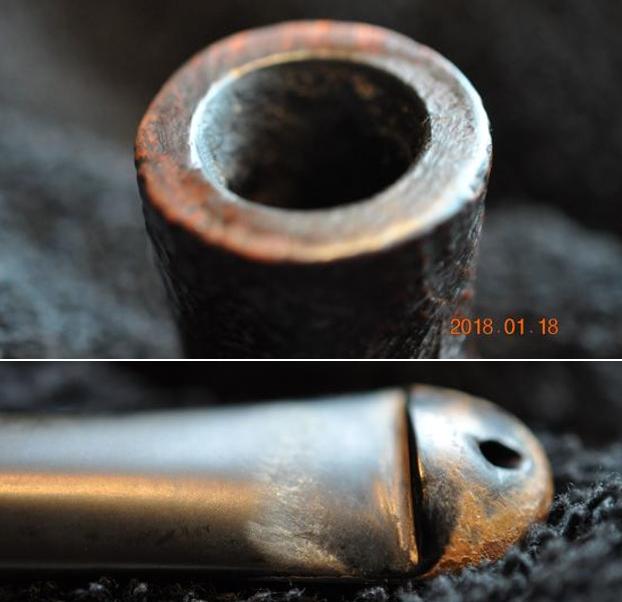
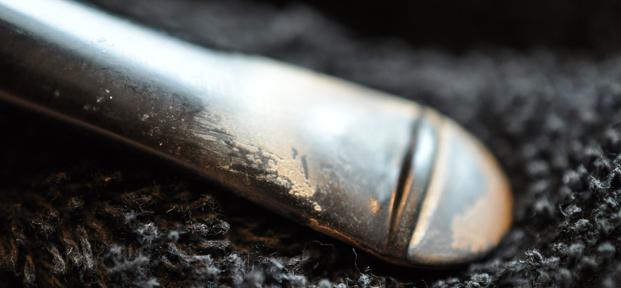
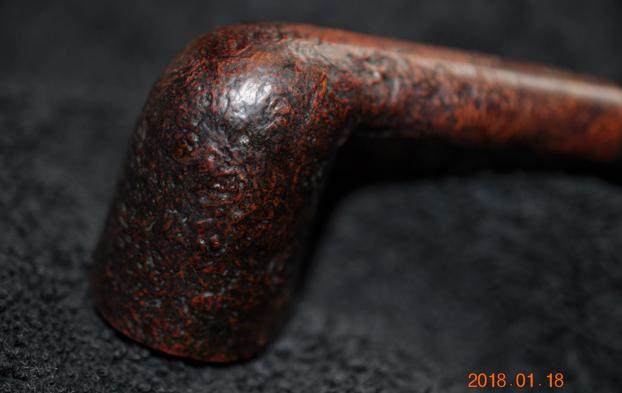
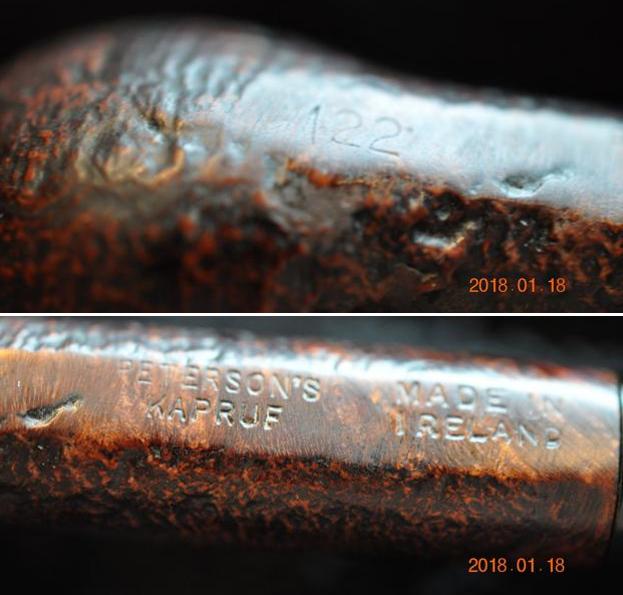
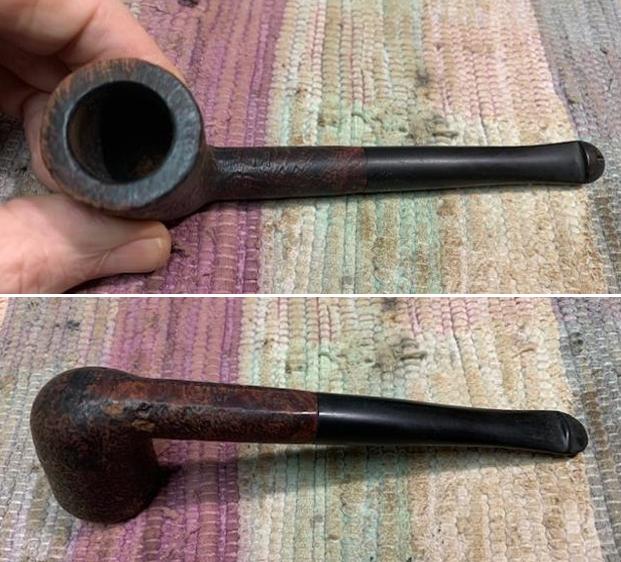
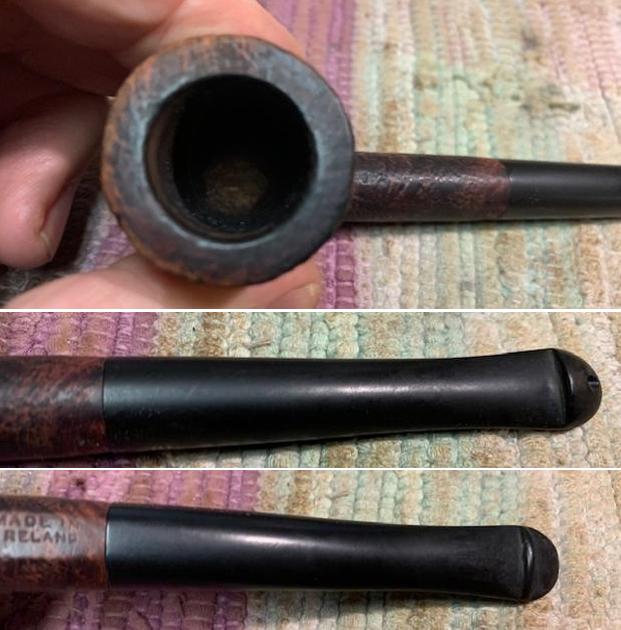
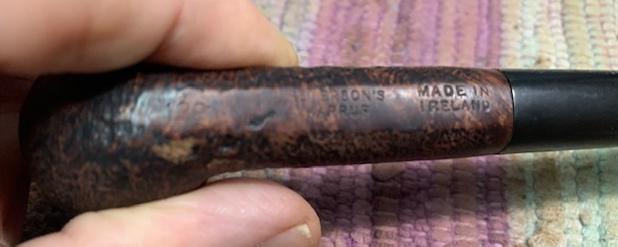
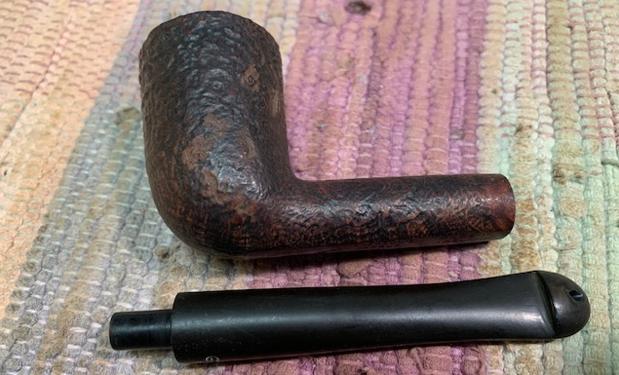
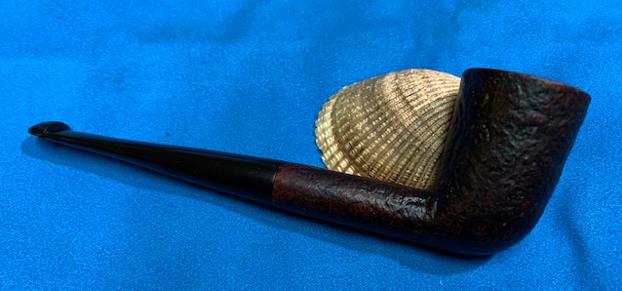
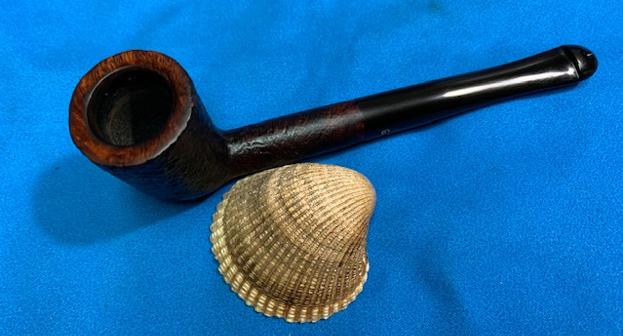
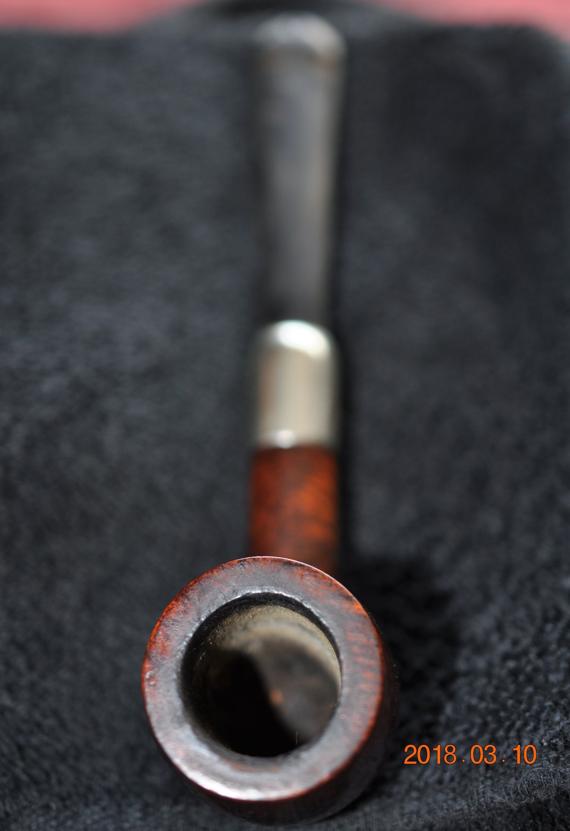
The next pipe I have chosen is another sandblasted Peterson’s Kapruf. This Dublin shaped pipe has a medium brown finish around the bowl sides and shank and a nice looking shallow sandblast finish. It also came to us from the estate of Anglican minister that was a great friend of mine here in Canada. The smooth rim top and edges were in good condition. The finish on the bowl sides was dirty. It was stamped on the underside of the shank and read 122 on the heel of the bowl followed by Peterson’s [over] Kapruf. That is followed by Made in [over] Ireland. There was a heavy cake in the bowl and thick lava on the rim top. The edges of the bowl seemed to be ok but I would know more once it was cleaned. The was oxidized, calcified and there were heavy tooth marks on the top and underside and on the button. The “P” stamp on the left side of the taper stem looks good. Jeff took photos of the pipe before his cleanup work. They tell the story and give a glimpse of the promise that we see in this pipe. Jeff took photos of the rim top and stem to show the general condition of the pipe. The bowl is heavily caked and the rim top and edges have some lava overflow. The stem is oxidized, calcified has tooth marks on the top and underside near the button.     Jeff took a photo of the bowl side and heel to show the look of the sandblast that on this bowl. It is an interesting looking pipe.    He took photos of the underside of the bowl and shank to show the stamping. The stamping is readable in the photos below and is as noted above.   I am including the information from Pipedia’s article on Peterson pipes. It is a great read in terms of the history of the brand (https://pipedia.org/wiki/Peterson).
I turned to “The Peterson Pipe” by Mark Irwin and Gary Malmberg to get some background on the Kapruf line. On page 306 it had the following information.

Kapruf and “Kapruf” (c.1922-87) Sandblast (hence the name, Kapp-rough) P-lip or fishtail mouthpiece, in catalogs from 1940-87. Early documented specimens stamped IRISH over FREE STATE, no Eire specimens documented. Mid-century specimens may be stamped LONDON MADE [over] ENGLAND or MADE IN ENGLAND forming a circle or MADE IN [over] IRELAND, all dating no later than 1970. Those of recent vintage stamped MADE IN THE[over] REPUBLIC [over]OF IRELAND.

I knew that I was dealing with a KAPRUF made before 1970 (or as they say in the book above “Mid-Century” as it is stamped MADE IN [over] IRELAND as noted above. That fit with the majority of his pipes so I was clear what I was working on. Now it was time to work on the pipe.

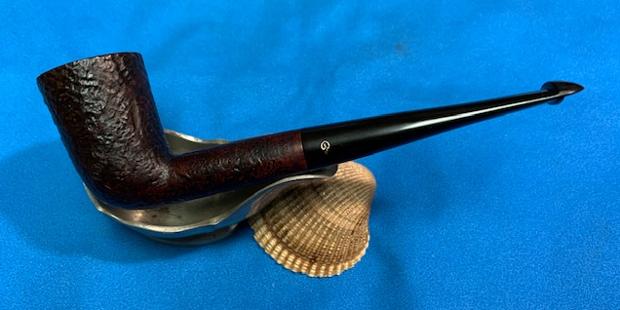
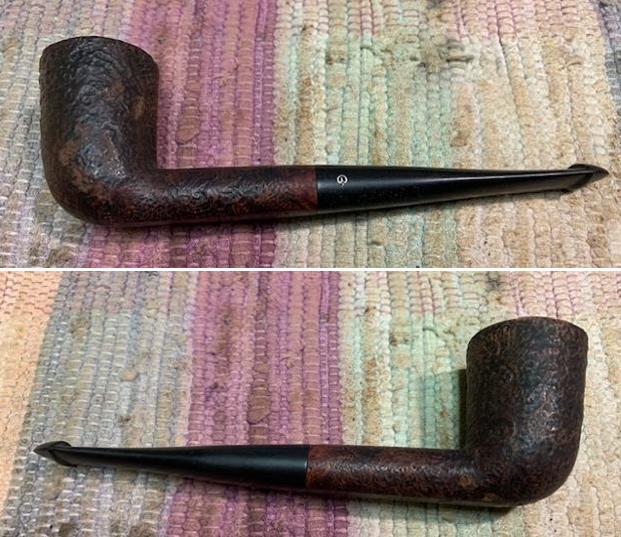
Jeff had done a great job cleaning up the pipe as usual. He reamed the pipe with a PipNet reamer and cut back the cake back to the bare briar. He cleaned up the walls with a Savinelli Fitsall Pipe Knife. He scrubbed the interior of the bowl and shank with pipe cleaners, cotton swabs and alcohol to remove the tars and oils. He scrubbed the exterior of the pipe with Murphy’s Oil Soap and a tooth brush to remove the grime from the finish. He worked on the rim top lava and darkening with the soap and tooth brush. He scrubbed the inside of the stem with alcohol and pipe cleaners. He scrubbed the exterior with Soft Scrub and then soaked it in Before & After Deoxidizer. He washed it off with warm water to remove the Deoxidizer. The pipe looked far better when it arrived. I took some close up photos of the rim top and also of the stem surface. I wanted to show how thin the back of the inner edge of the bowl is. You can see the out of round bowl is on the sides and rear of the bowl. There was some darkening on the back of the rim top but the edges looked very good. I also took close up photos of the stem to show the tooth marks on the surface of the stem and button. I took a photo of the stamping on the underside of the shank. You can see that it is stamped as noted above. It is faint but very readable. I took the pipe apart and took a photo of the pipe. It is a good looking pipe and has a great looking sandblast. I decided to start by addressing the issue of the darkened rim top and edges of the bowl. I cleaned up both with a folded piece of 220 grit sandpaper. I was happy with the results.    I blended a Maple and a Walnut stain pen to match the colour around the bowl sides and the smooth, flat bottom of the shank.I polished the rim top with micromesh sanding pads – dry sanding it with 1500-12000 grit sanding pads. I wiped the briar down with a damp cloth after each sanding pad. I worked some Before & After Restoration Balm into the surface of the briar with my fingertips and a horsehair shoe brush to clean, enliven and protect the briar. I let the balm sit for 15 minutes and then buffed with a cotton cloth to raise the shine. The photos show the bowl at this point in the restoration process. I set the bowl aside and turned my attention to the stem. I filled in the tooth mark on the underside of the stem next to the button with clear super glue. Once the repair had cured I flattened it out with 220 grit sandpaper to blend them into the surface of the vulcanite. I started polishing the stem by wet sanding it with 400 grit wet dry sandpaper.   I polished the stem with micromesh sanding pads – wet sanding with 1500-12000 grit sanding pads. I wiped it down after each sanding pad with Obsidian Oil. I polished it with Before & After Pipe Stem Polish – both Fine and Extra Fine.   I am excited to finish this Peterson’s “Kapruf” 122 Made in Ireland Sandblast Dublin. I am really happy with how the bowl turned out when I consider the damage that needed to be addressed. I put the pipe back together and buffed it with Blue Diamond on the buffing wheel. I gave the bowl multiple coats of Conservator’s Wax and the stem multiple coats of carnauba wax. I buffed the pipe with a clean buffing pad to raise the shine. I hand buffed it with a microfibre cloth to deepen the shine. It is fun to see what the polished bowl looks like with the colours popping through the sandblast. Added to that the polished  black vulcanite taper stem was beautiful. This shapely Classic Peterson’s Made in Ireland Dublin is nice looking and the pipe feels great in my hand. It is light and well balanced. Have a look at it with the photos below. The dimensions are Length: 5 ¾ inches, Height: 1 ¾ inches, Outside diameter of the bowl: 1 ¼ inch, Chamber diameter: ¾ of an inch. The weight of the pipe is 29grams/1.02oz. It is a beautiful pipe and one that I soon put on the rebornpipes store I you are interested in carrying on the pipeman’s legacy. Thanks for walking through the restoration with me as I worked over this pipe. Thanks to each of you who are reading this blog.

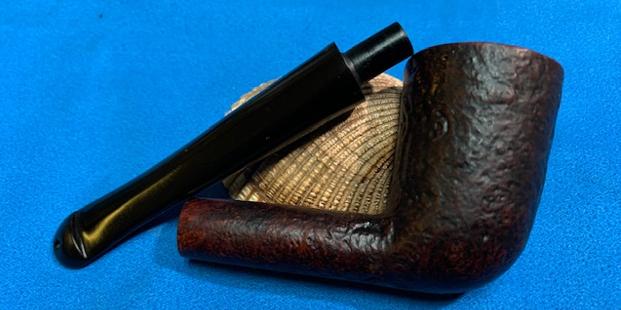
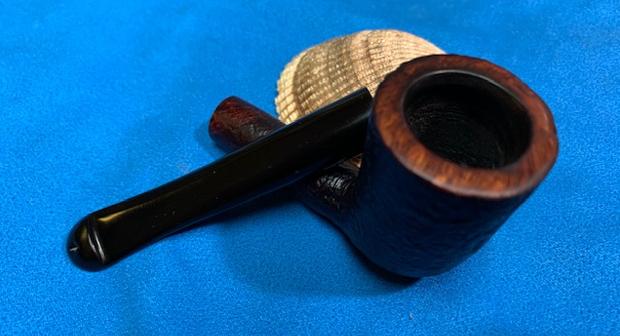
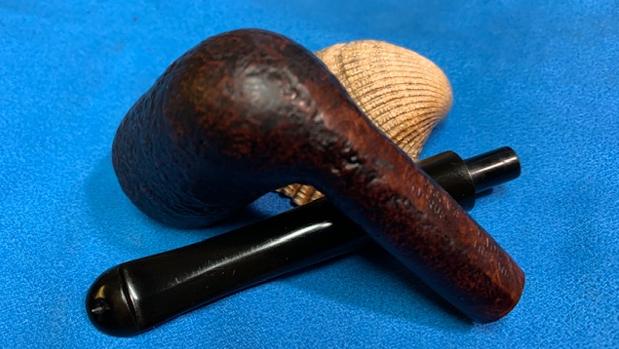
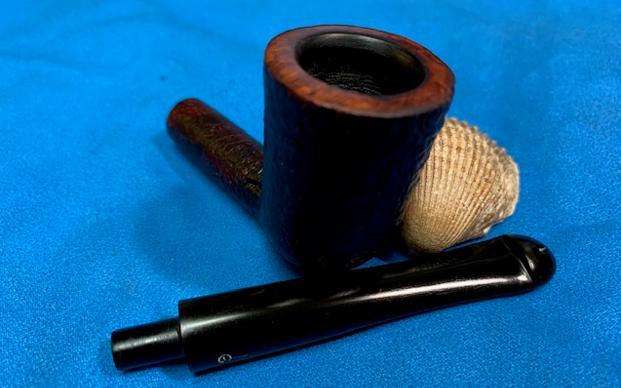
The first for 2021 – A Resurrection of a Peterson’s “Kapruf” 132 Sandblast Apple


Blog by Steve Laug

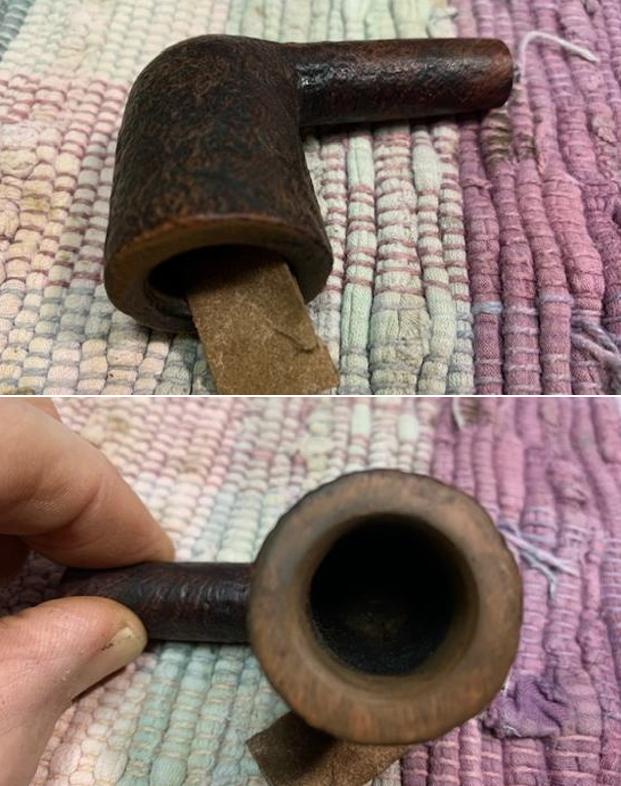
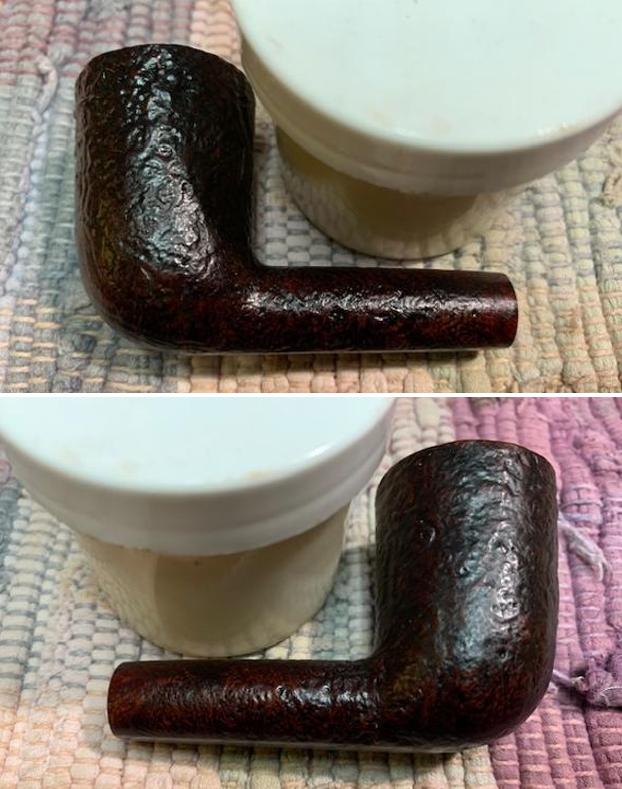
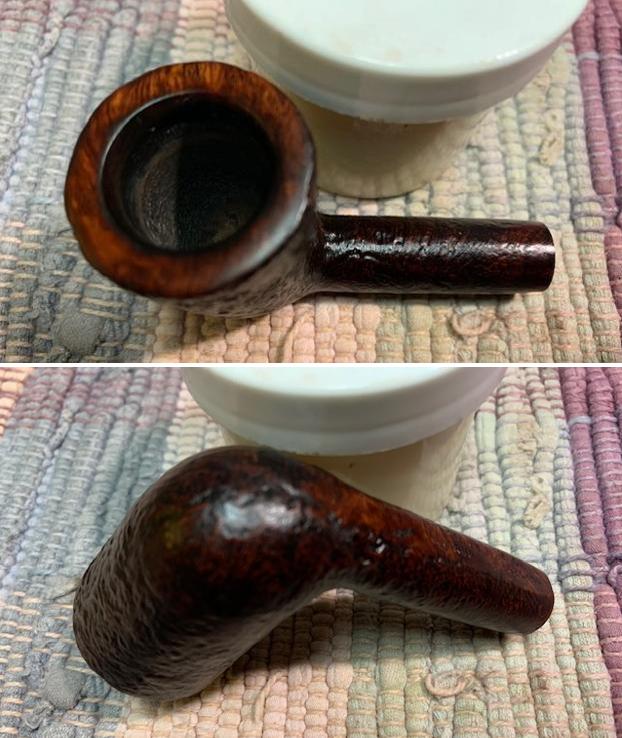
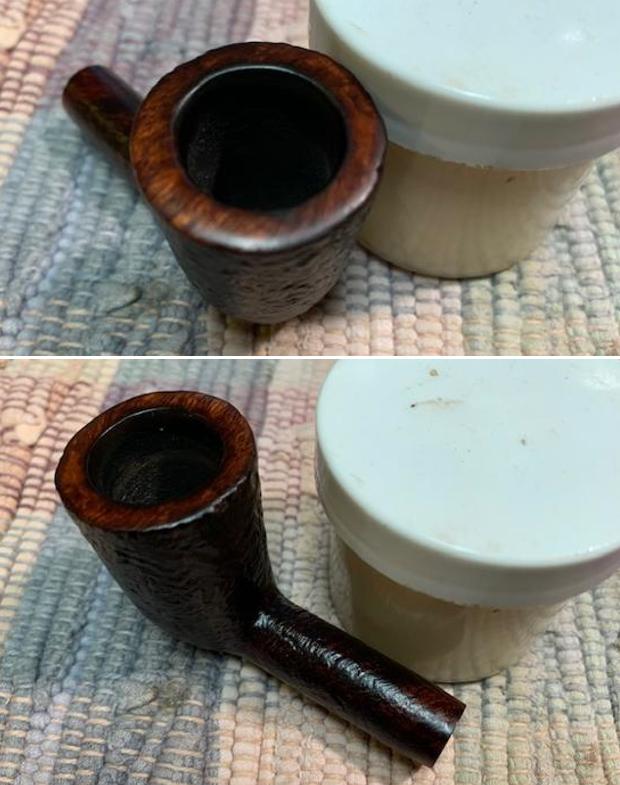
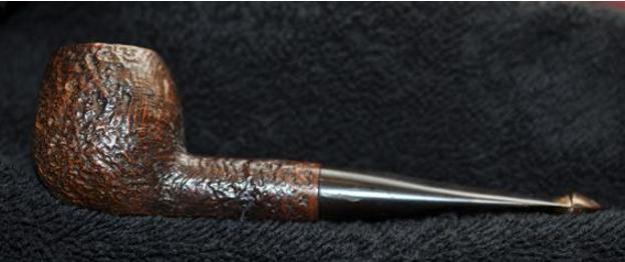
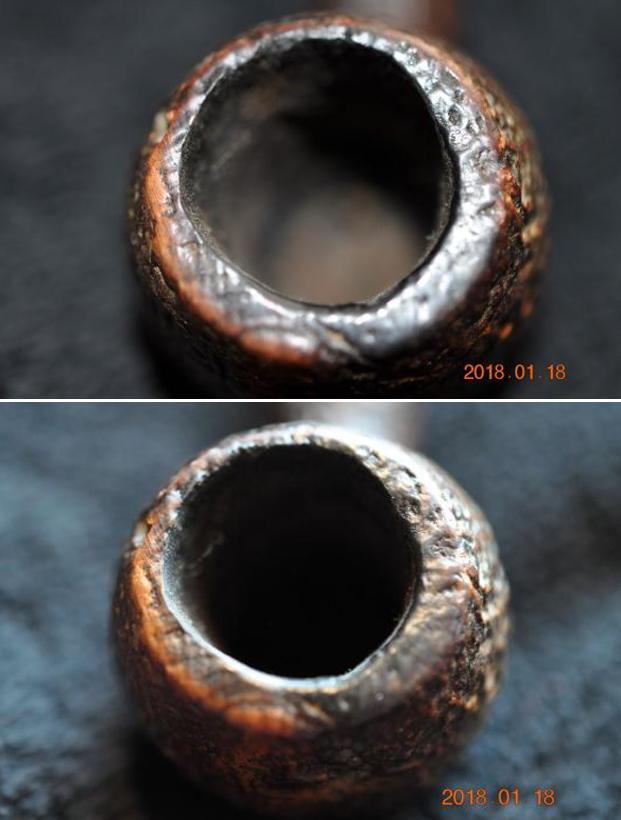
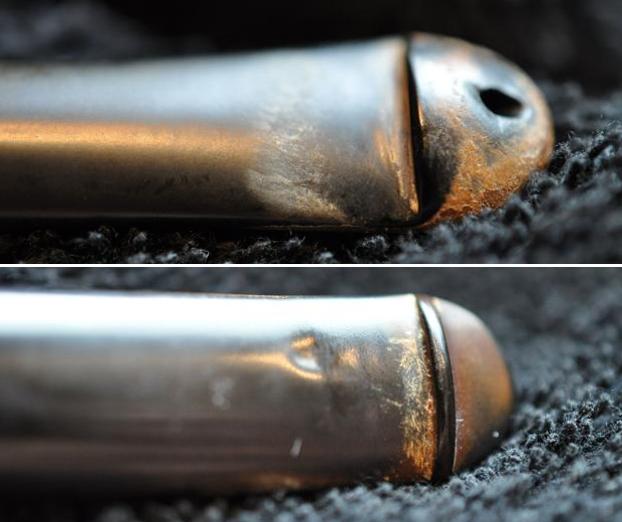
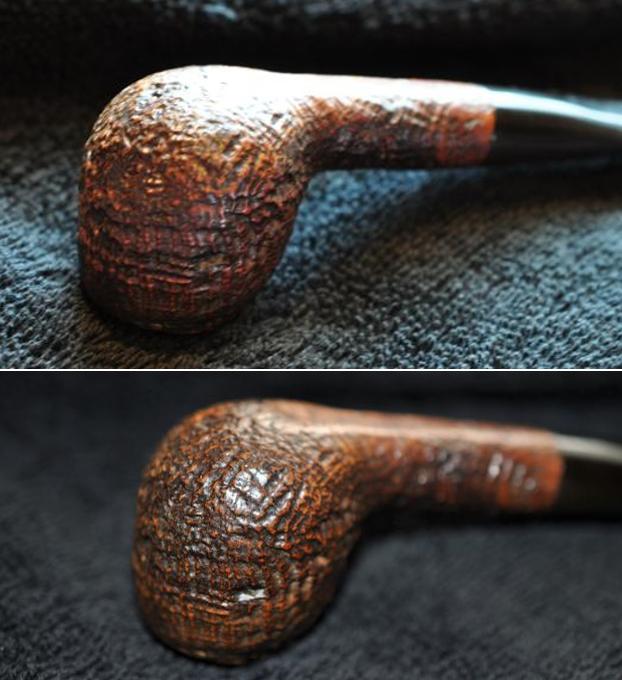
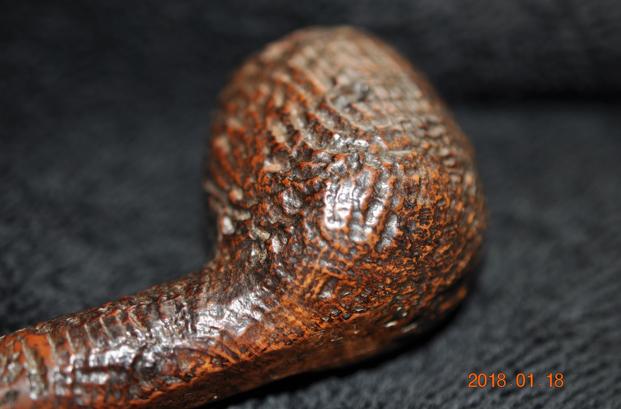
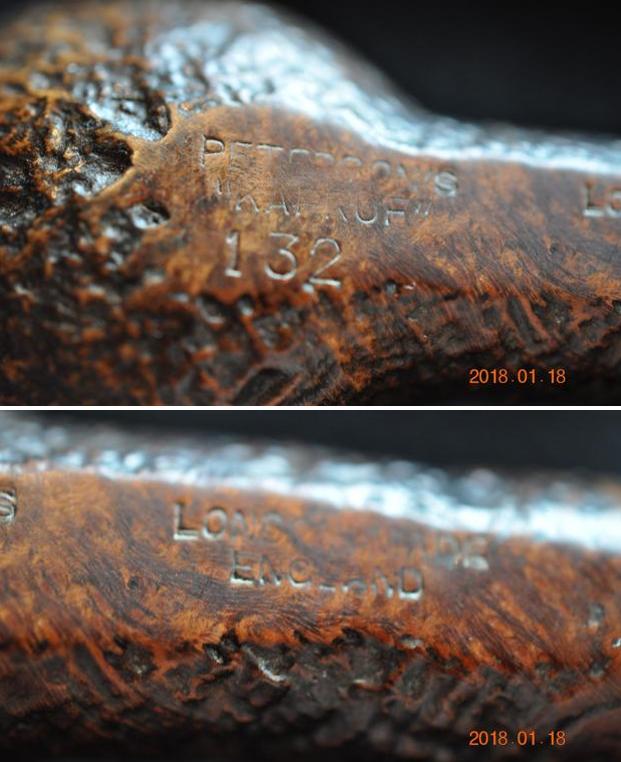
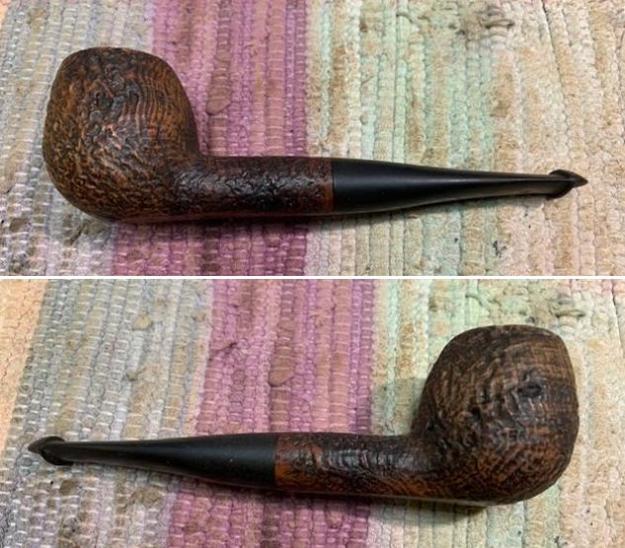
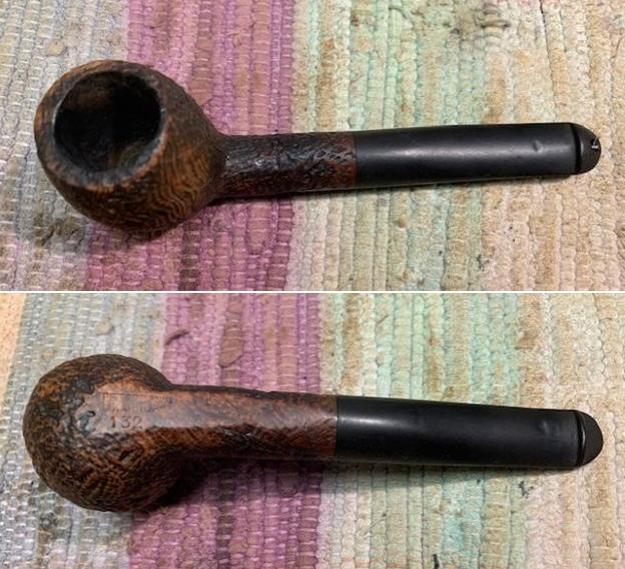
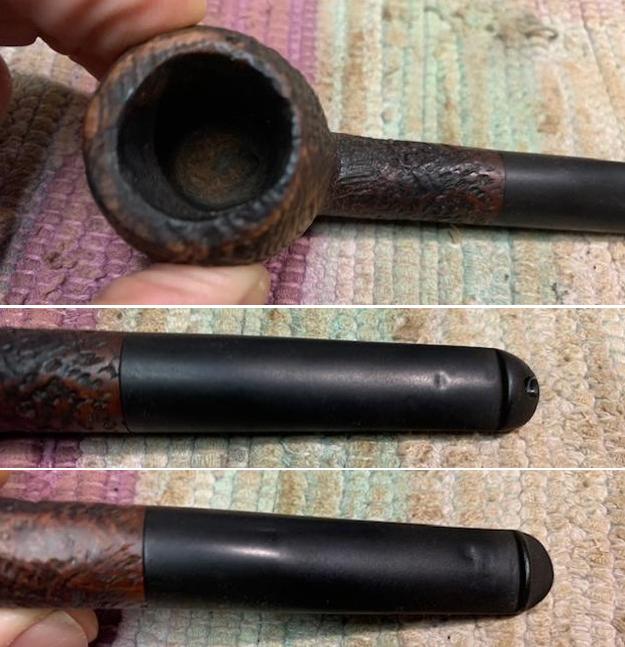
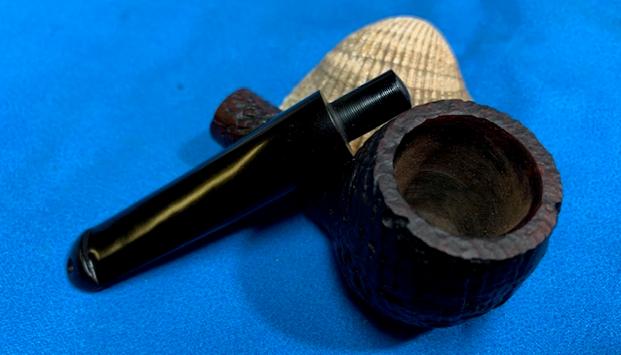
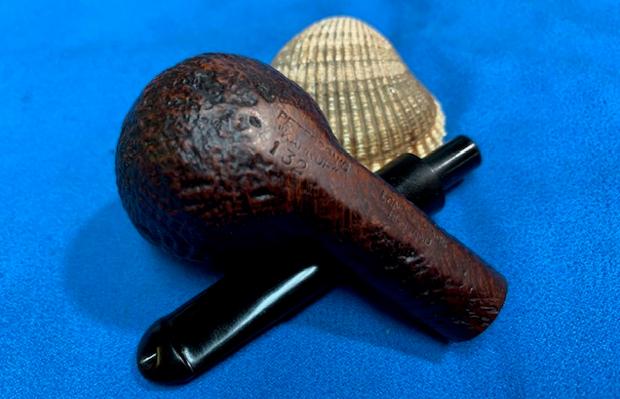
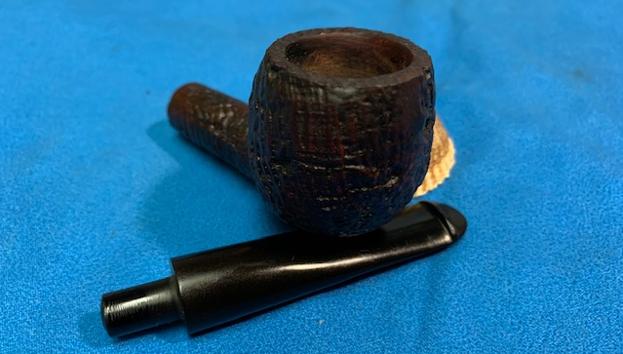
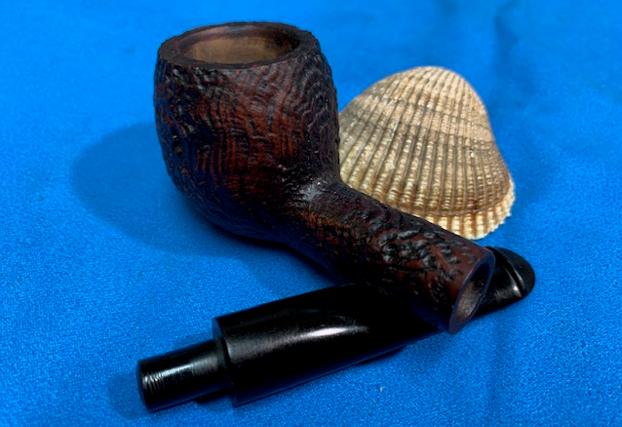
The next pipe I have chosen is sandblasted Peterson’s Kapruf. This Apple has a medium brown finish around the bowl sides and shank and a very nice looking sandblast finish. It also came to us from the estate of Anglican minister that was a great friend of mine here in Canada. The rim top and top of the apple were in very rough condition. The condition caused me to pause. I talked with Jeff about taking the part from this and scrapping the bowl but I find that hard to do! After spending time chatting about it and turning it over in my hands for a bit I decided to give it a go and see what I could do with it. The finish on the bowl sides was dirty. It was stamped on the underside of the shank and read 132 on the heel of the bowl followed by Peterson’s [over] “Kapruf”. That is followed by London Made [over] England. There was a heavy cake in the bowl and lava filling in the sandblast on the rim top. The back inner edge of the bowl was badly damaged and appeared to be quite thin. I would know more once it was cleaned. The was oxidized, calcified and there were heavy tooth marks on the top and underside and on the button. The “P” stamp on the left side of the taper stem was worn off. Jeff took photos of the pipe before his cleanup work. They tell the story and give a glimpse of the promise that we see in this pipe. Jeff took photos of the rim top and stem to show the general condition of the pipe. The bowl is heavily caked and the rim top and edges have some lava overflow. There is some major damage on the back of the inner edge of the bowl. The bowl is really out of round and thin on the back side. The stem is oxidized, calcified has tooth marks on the top and underside near the button.  Jeff took some photos of the bowl sides and heel to show the look of the sandblast that was around this bowl. It is an interesting looking pipe.  He took photos of the underside of the bowl and shank to show the stamping. The stamping is readable in the photos below and is as noted above.    I am including the information from Pipedia’s article on Peterson pipes. It is a great read in terms of the history of the brand (https://pipedia.org/wiki/Peterson).
I turned to “The Peterson Pipe” by Mark Irwin and Gary Malmberg to get some background on the Kapruf line. On page 306 it had the following information.

Kapruf and “Kapruf” (c.1922-87) Sandblast (hence the name, Kapp-rough) P-lip or fishtail mouthpiece, in catalogs from 1940-87. Early documented specimens stamped IRISH over FREE STATE, no Eire specimens documented. Mid-century specimens may be stamped LONDON MADE [over] ENGLAND or MADE IN ENGLAND forming a circle or MADE IN [over] IRELAND, all dating no later than 1970. Those of recent vintage stamped MADE IN THE[over] REPUBLIC [over]OF IRELAND.

I knew that I was dealing with a KAPRUF made before 1970 (or as they say in the book above “Mid-Century” as it is stamped LONDON MADE [over] ENGLAND as noted above. That fit with the majority of his pipes so I was clear what I was working on. Now it was time to work on the pipe.

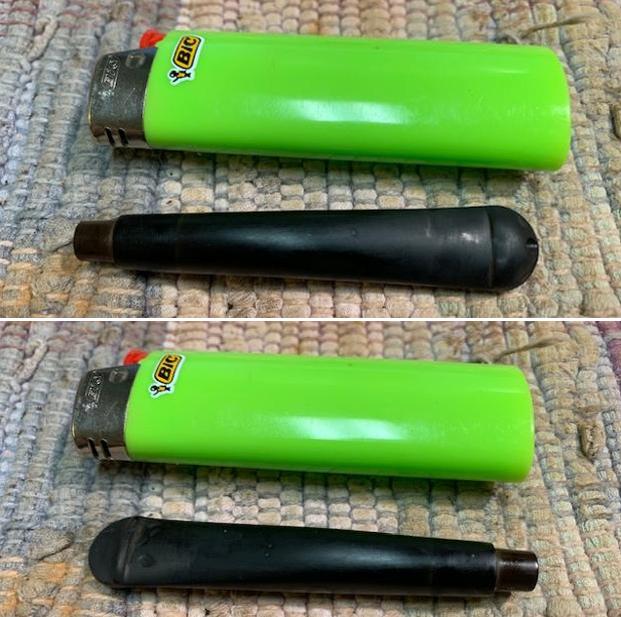
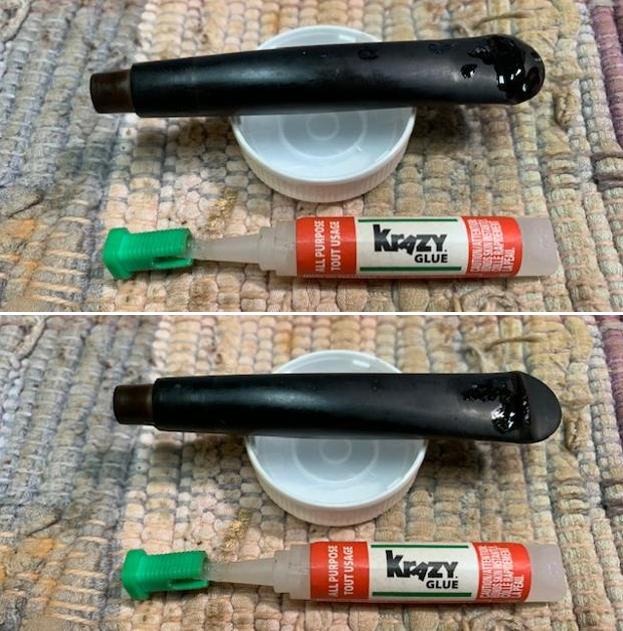
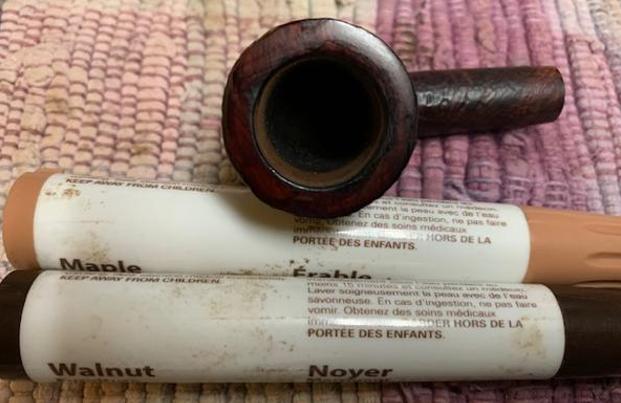
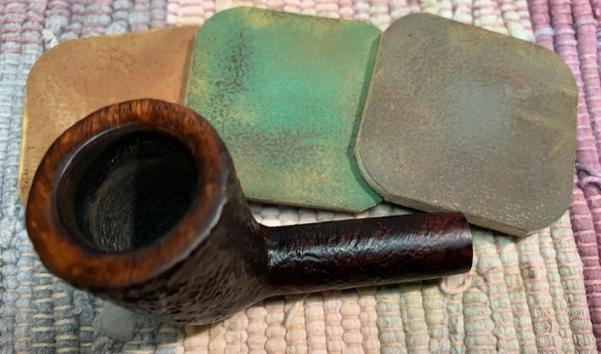
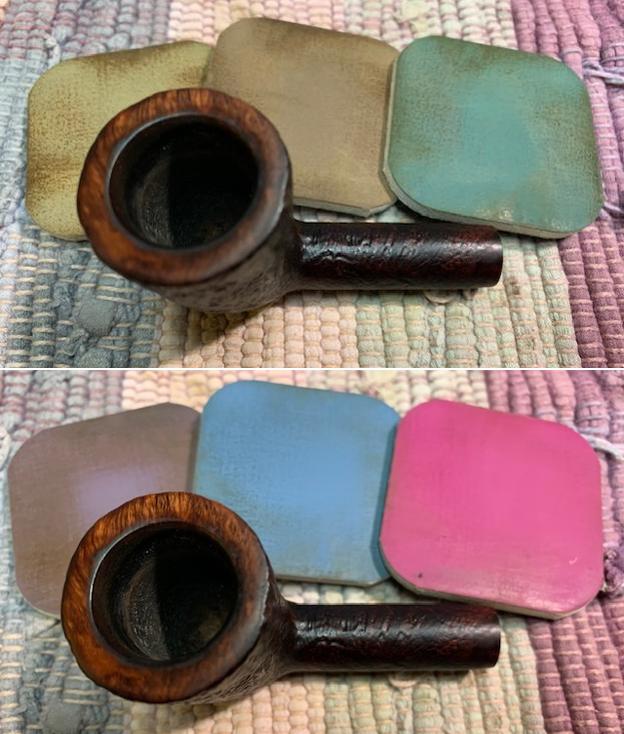
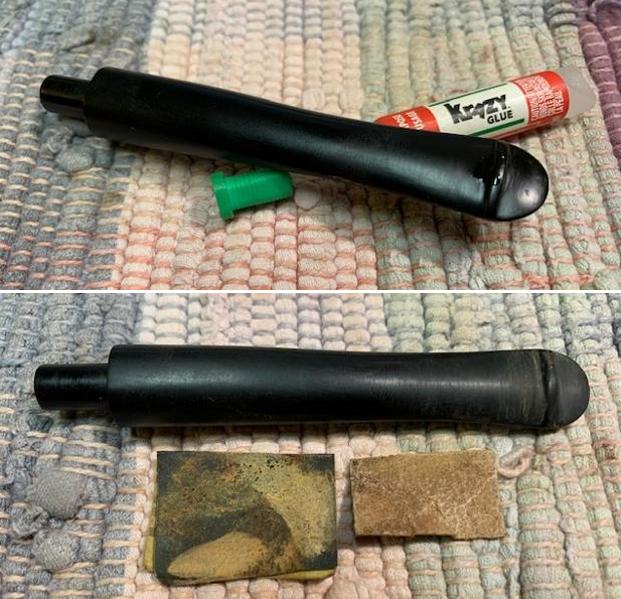
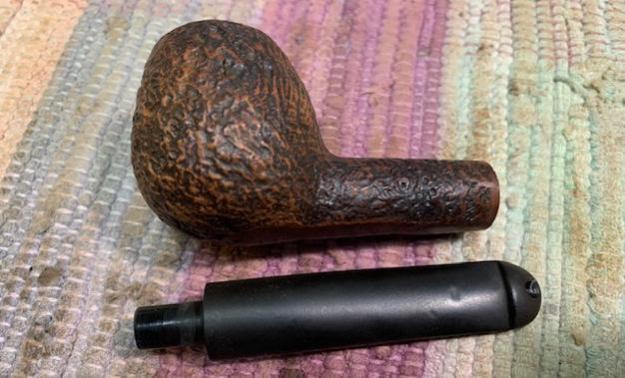
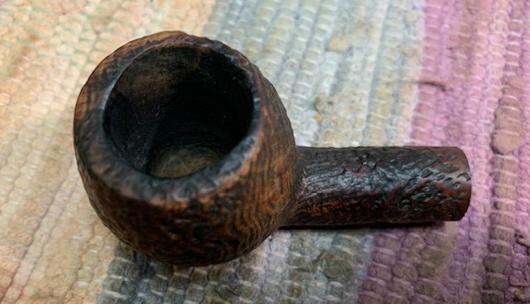
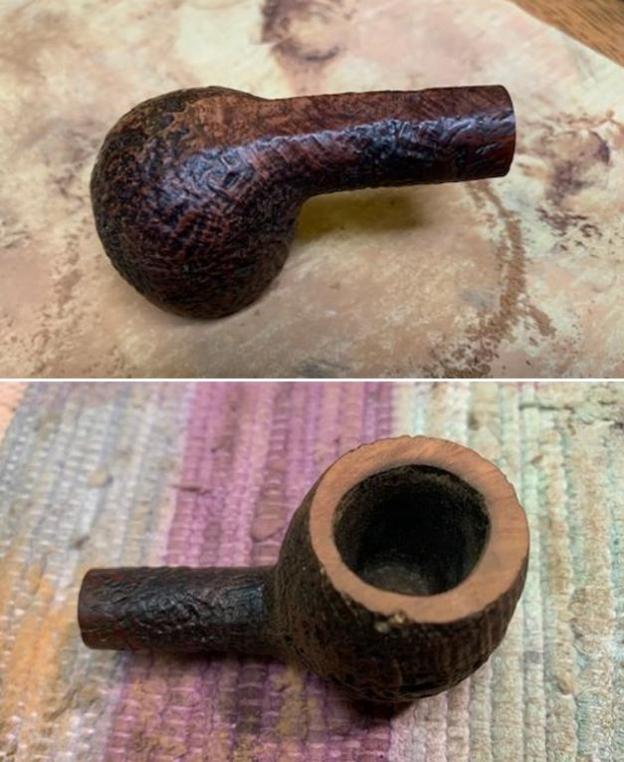
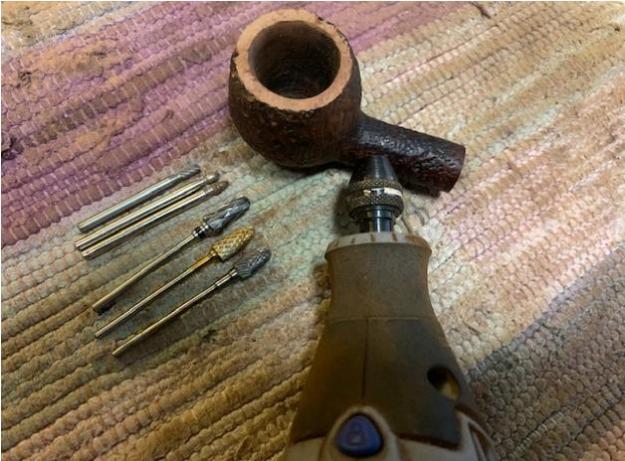
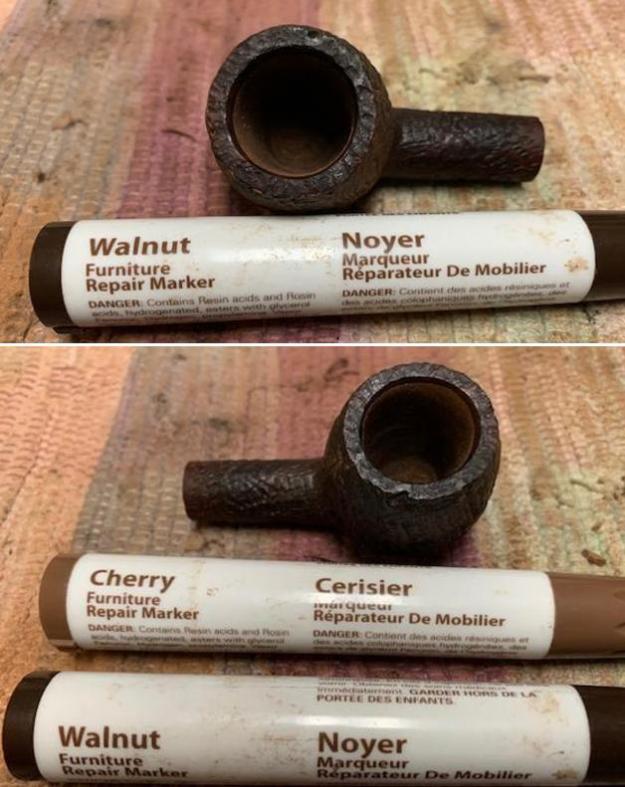
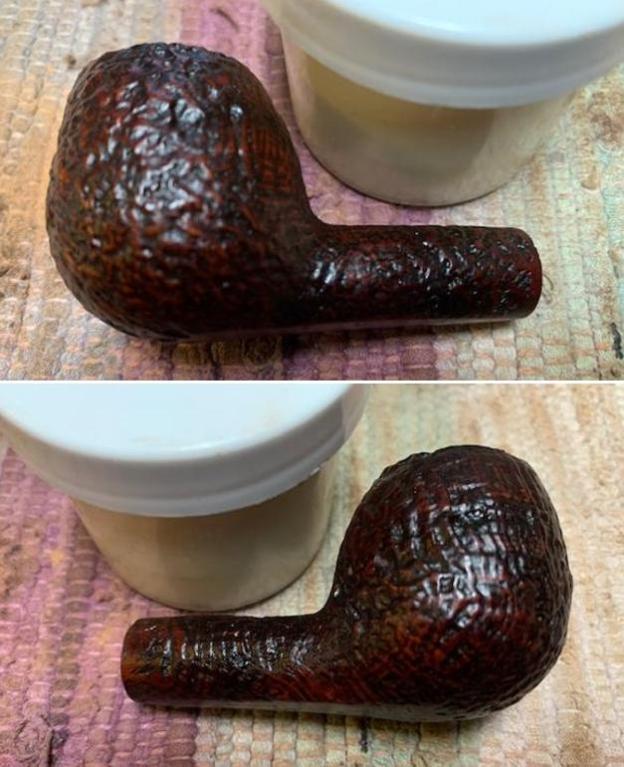
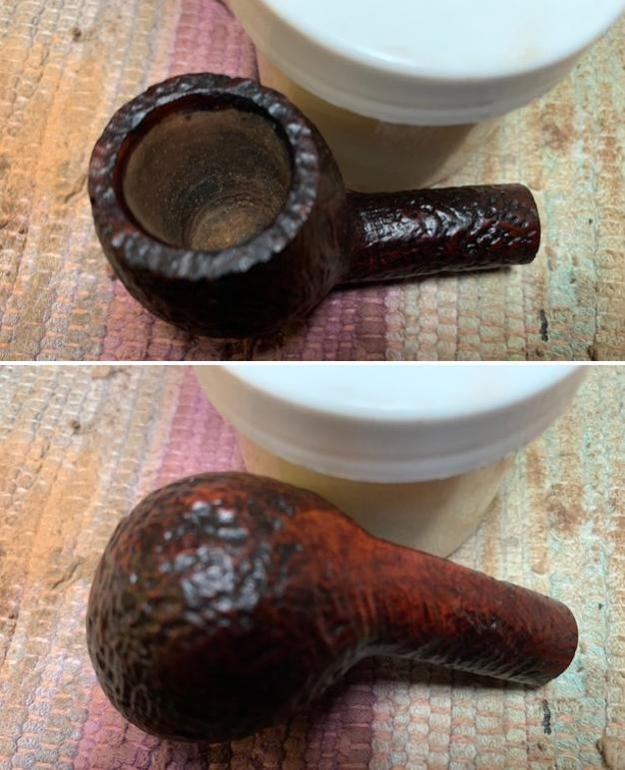
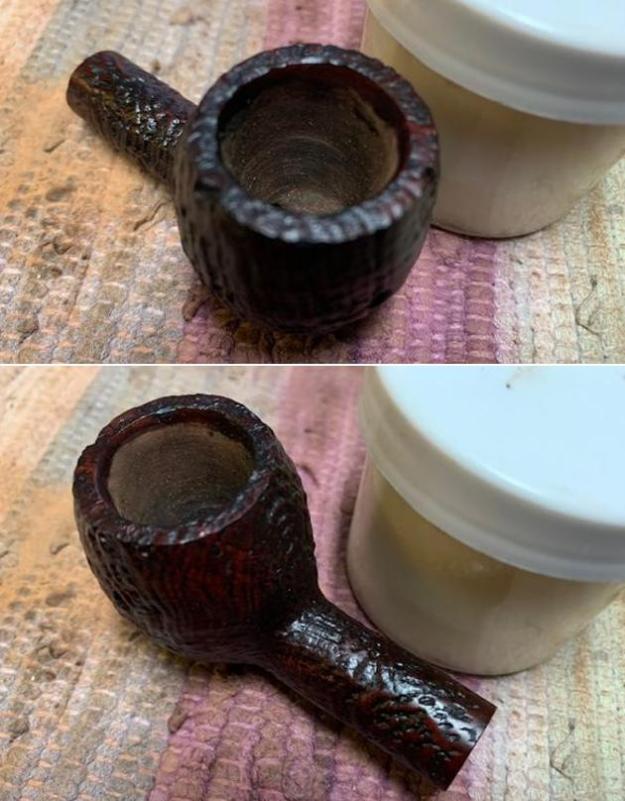
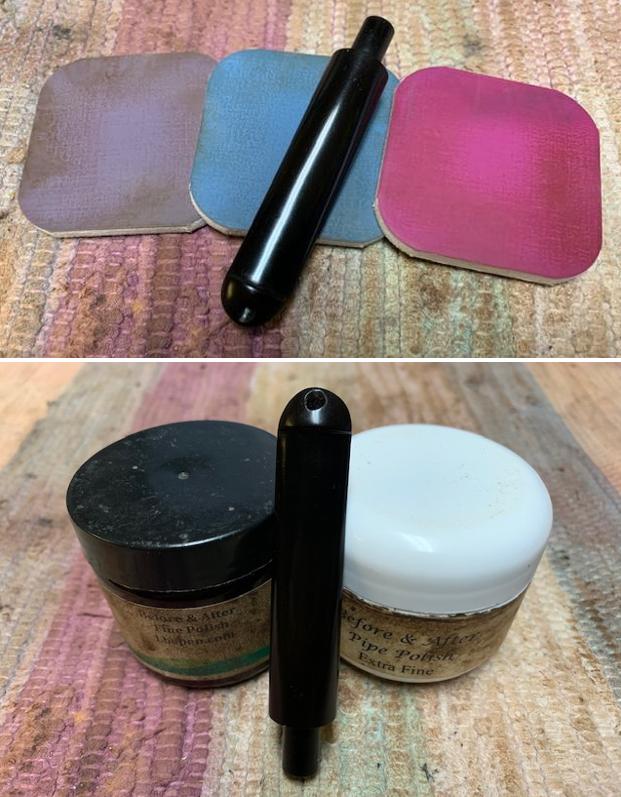
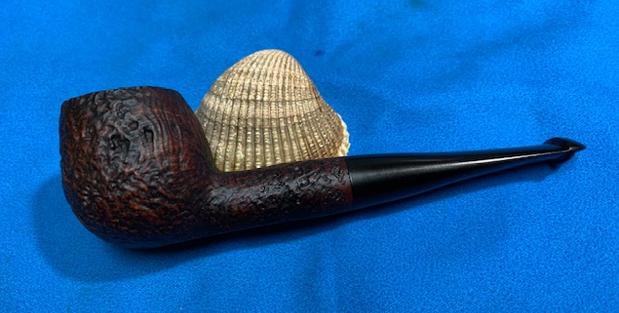
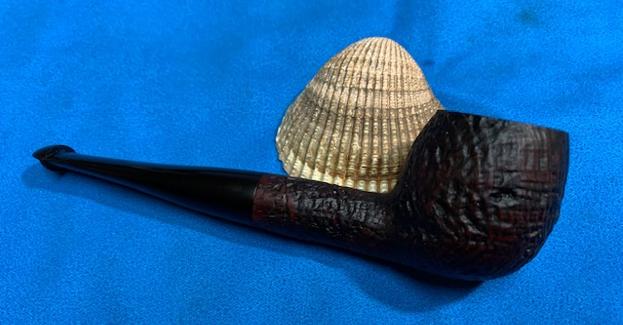
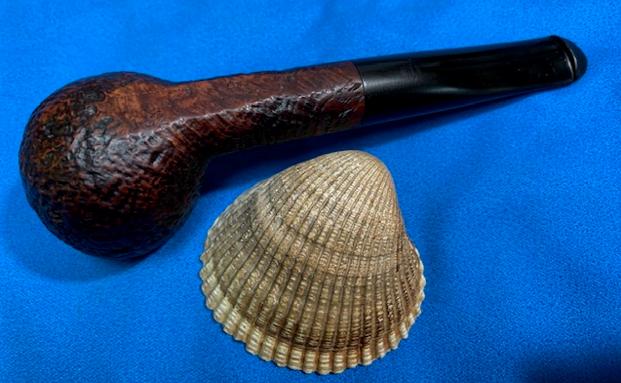
Jeff had done a great job cleaning up the pipe as usual. He reamed the pipe with a PipNet reamer and cut back the cake back to the bare briar. He cleaned up the walls with a Savinelli Fitsall Pipe Knife. He scrubbed the interior of the bowl and shank with pipe cleaners, cotton swabs and alcohol to remove the tars and oils. He scrubbed the exterior of the pipe with Murphy’s Oil Soap and a tooth brush to remove the grime from the finish. He worked on the rim top lava and darkening with the soap and tooth brush. He scrubbed the inside of the stem with alcohol and pipe cleaners. He scrubbed the exterior with Soft Scrub and then soaked it in Before & After Deoxidizer. He washed it off with warm water to remove the Deoxidizer. The pipe looked far better when it arrived.   I took some close up photos of the rim top and also of the stem surface. I wanted to show how thin the back of the inner edge of the bowl is. You can see the out of round bowl is on the sides and rear of the bowl. There was some darkening on the back of the rim top but the edges looked very good. I also took close up photos of the stem to show the tooth marks on the surface of the stem and button.      I took a photo of the stamping on the underside of the shank. You can see that it is stamped as noted above. It is faint but very readable. I took the pipe apart and took a photo of the pipe. It is a good looking pipe and has a great looking sandblast. I decided to start by addressing the issue of the thin rim top and edge at the back of the bowl. I took a photo of the bowl to show the damage that needed to be addressed. I measured the thickness of the walls at the back of the bowl and found that the damage was actually not too deep in the bowl. I figured I could top the bowl and gain some thickness back and then use a Dremel to put a sandblast like finish on the rim top.I topped the bowl with 220 grit sandpaper on a topping board to remove the damaged areas. Once that was finished I had some solid rim top and edge to work with on the back of the bowl. The second photo below shows the starting point of the bowl after the topping. I used the Dremel and sanding drum running at a low speed to bring the bowl back into round. Of course I forgot to take photos of that part of the process. You can see the results in the photo below. I used a Dremel and dental burrs to rusticate the top of the bowl to give it a rusticated finish that approximates the style of the sandblast on the rest of the bowl. I stained the rim to with a dark Walnut stain pen to lay an undercoat of colour to the rusticated rim top. I used a Cherry stain pen to give a top coat on the rim top. I am pleased with the over all look and feel of the newly rusticated rim top.    I worked some Before & After Restoration Balm into the surface of the briar with my fingertips and a horsehair shoe brush to clean, enliven and protect the briar. I let the balm sit for 15 minutes and then buffed with a cotton cloth to raise the shine. The photos show the bowl at this point in the restoration process. I set the bowl aside and turned my attention to the stem. I “painted” the stem and button surface with the flame of a lighter to lift the tooth marks. It worked amazingly well and the majority of them lifted completely or significantly. I filled in the remaining marks with clear super glue. Once the repairs had cured I flattened them out with 220 grit sandpaper to blend them into the surface of the vulcanite. I started polishing the stem by wet sanding it with 400 grit wet dry sandpaper.   I polished the stem with micromesh sanding pads – wet sanding with 1500-12000 grit sanding pads. I wiped it down after each sanding pad with Obsidian Oil. I polished it with Before & After Pipe Stem Polish – both Fine and Extra Fine.  I am excited to finish this Peterson’s “Kapruf” 132 London Made Sandblast Apple. I am really happy with how the bowl turned out when I consider the damage that needed to be addressed. I put the pipe back together and buffed it with Blue Diamond on the buffing wheel. I gave the bowl multiple coats of Conservator’s Wax and the stem multiple coats of carnauba wax. I buffed the pipe with a clean buffing pad to raise the shine. I hand buffed it with a microfibre cloth to deepen the shine. It is fun to see what the polished bowl looks like with the colours popping through the sandblast. Added to that the polished  black vulcanite taper stem was beautiful. This shapely Classic English Peterson’s Sandblast Apple is nice looking and the pipe feels great in my hand. It is light and well balanced. Have a look at it with the photos below. The dimensions are Length: 5 ½ inches, Height: 1 ½ inches, Outside diameter of the bowl: 1 ¼ inch, Chamber diameter: ¾ of an inch. The weight of the pipe is 32grams/1.13oz. It is a beautiful pipe and one that I soon put on the rebornpipes store I you are interested in carrying on the pipeman’s legacy. Thanks for walking through the restoration with me as I worked over this pipe. Thanks to each of you who are reading this blog.