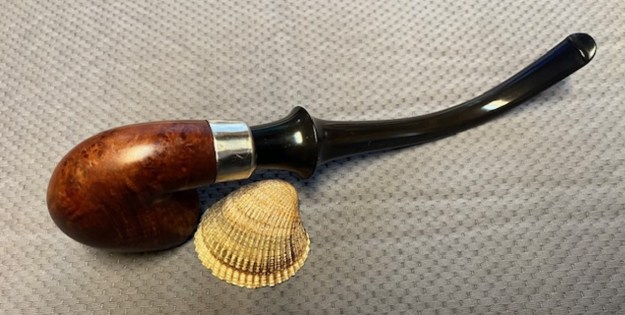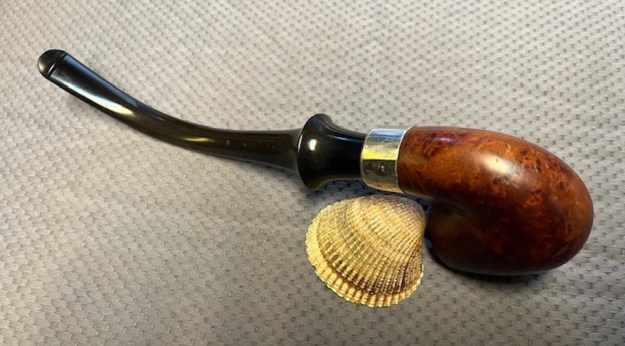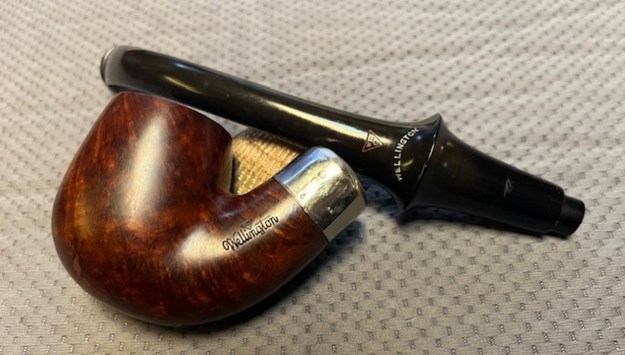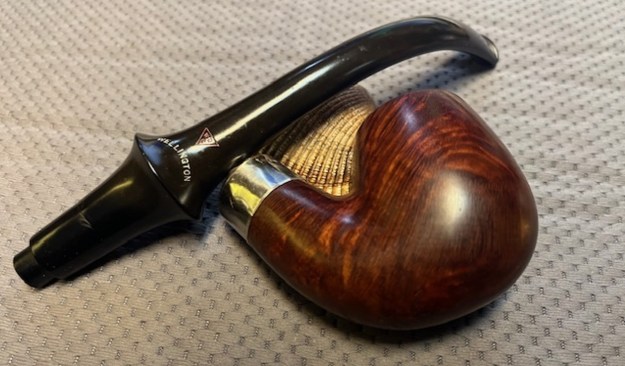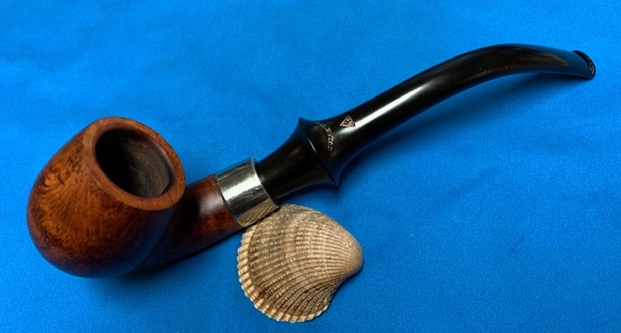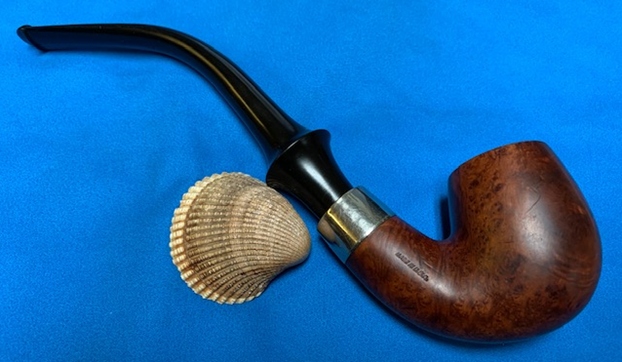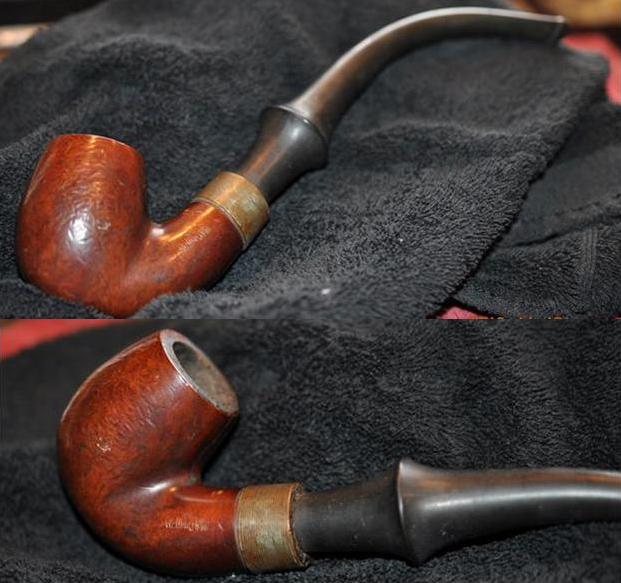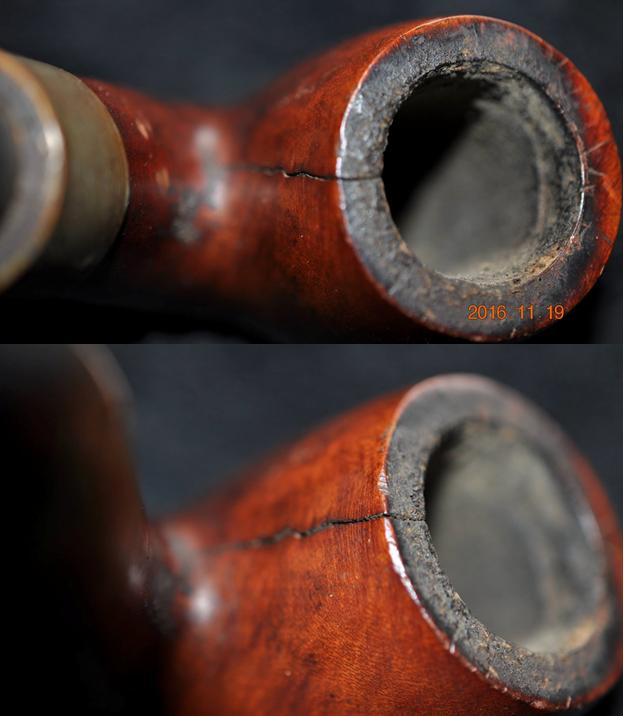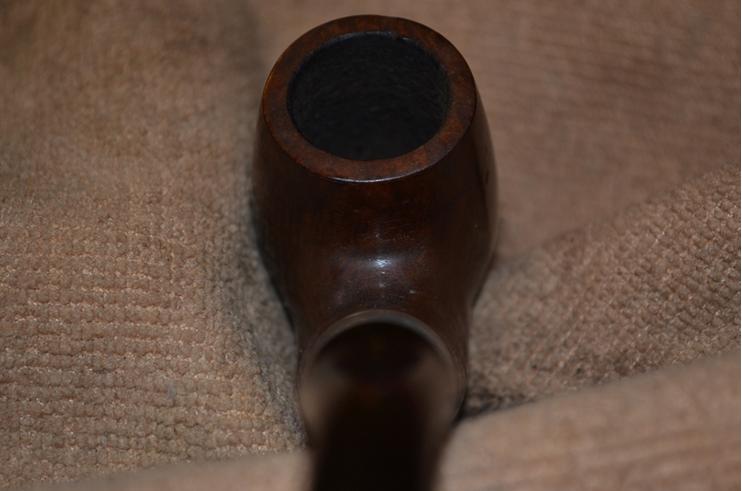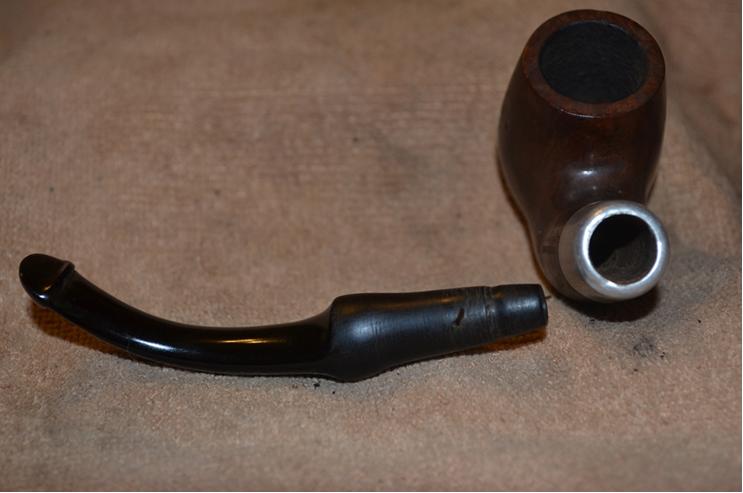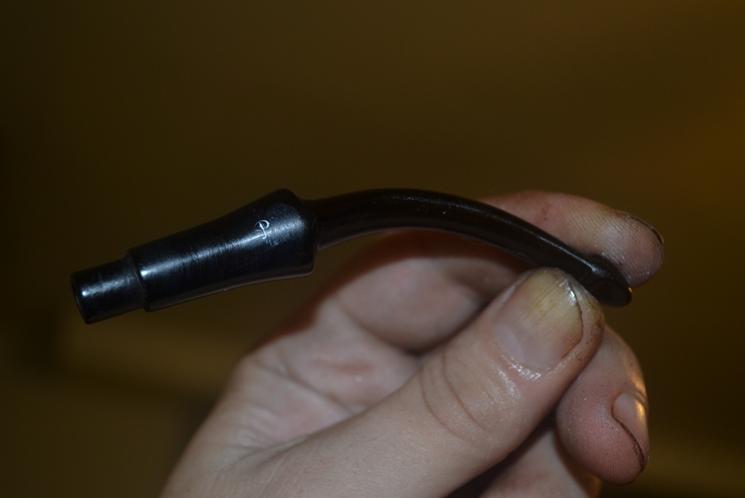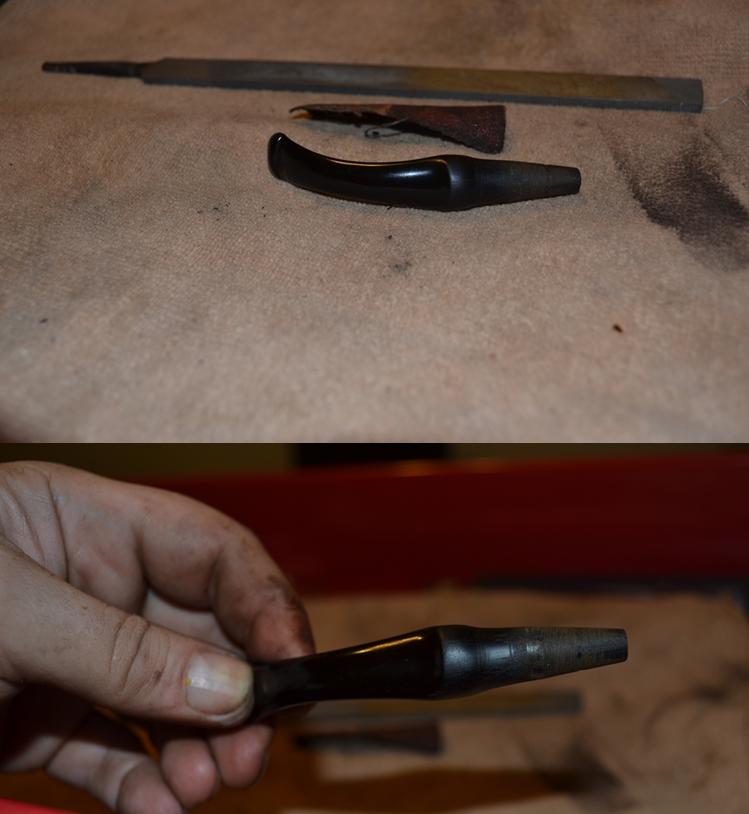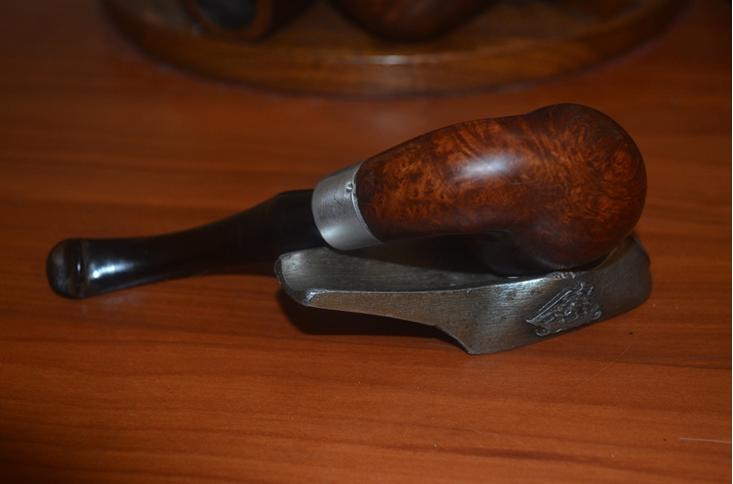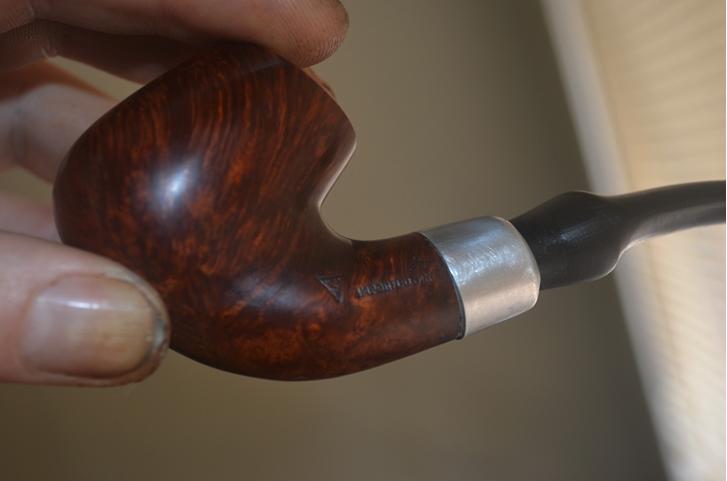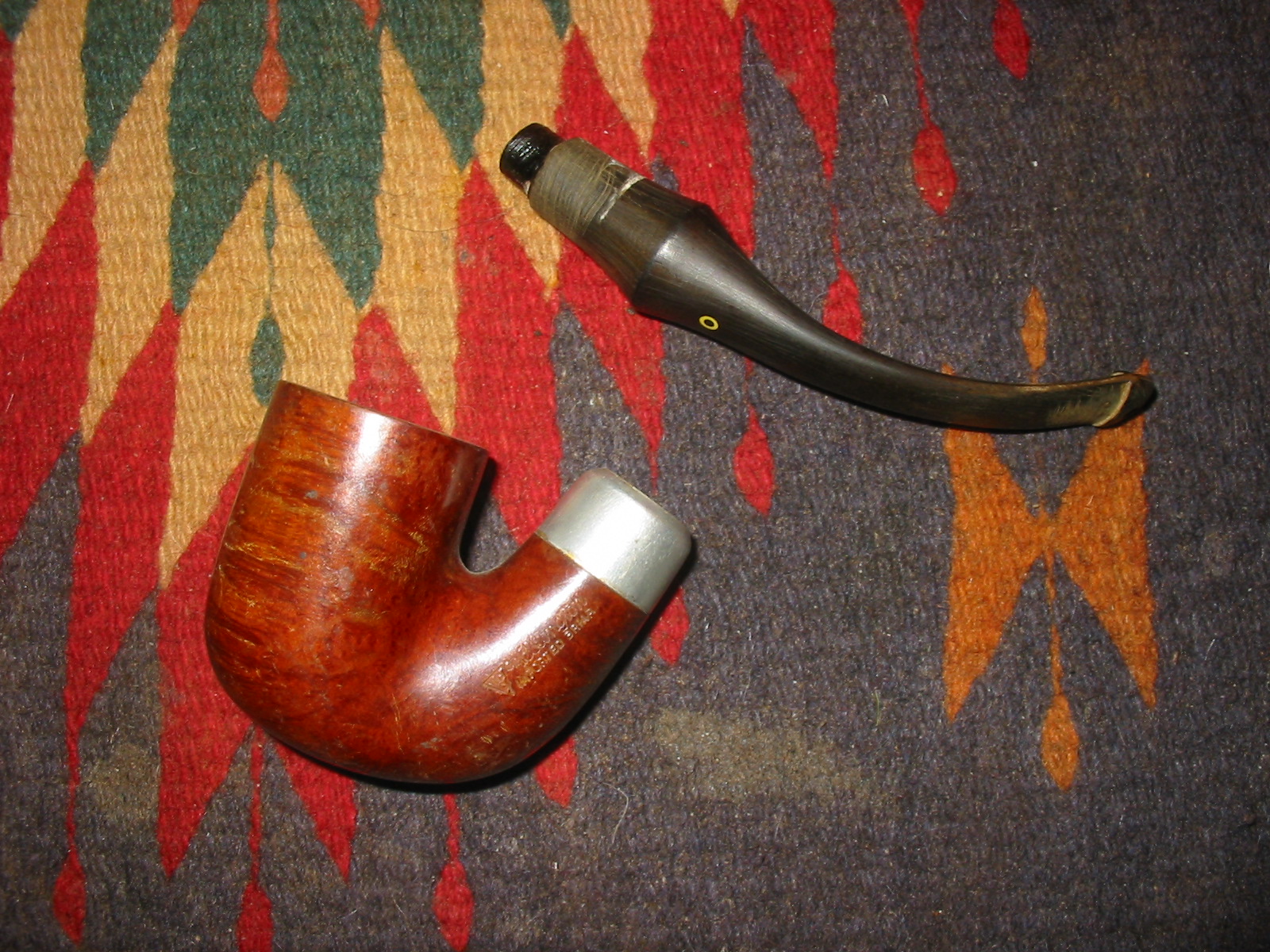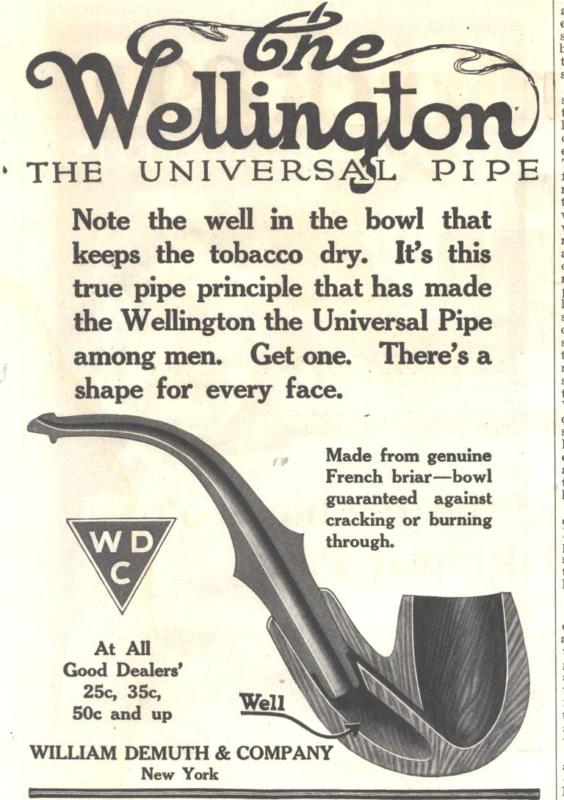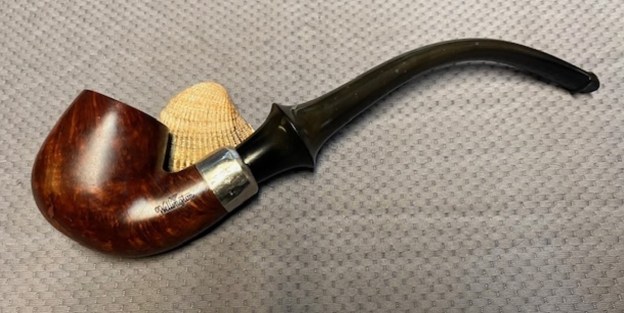
Tag Archives: WDC Wellington Pipes

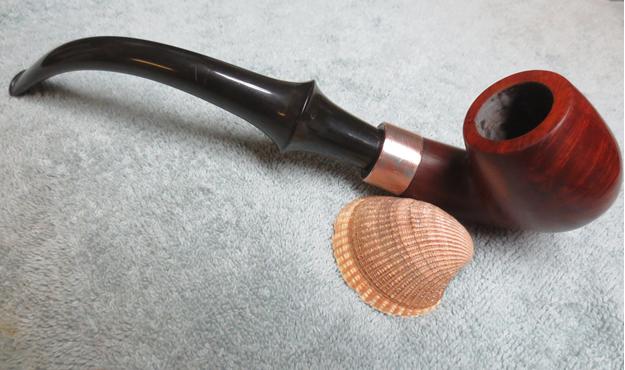
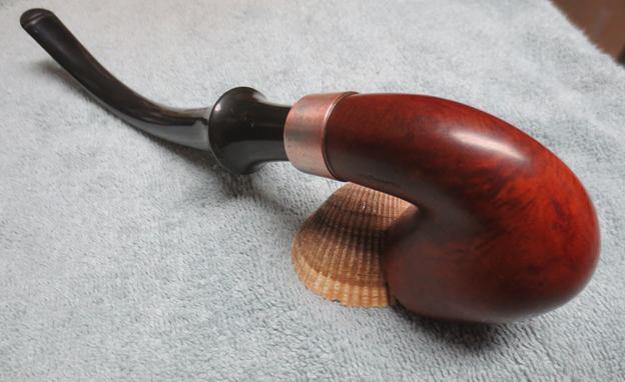
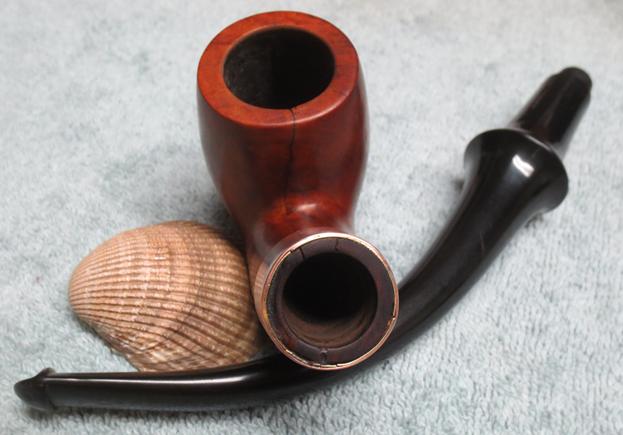
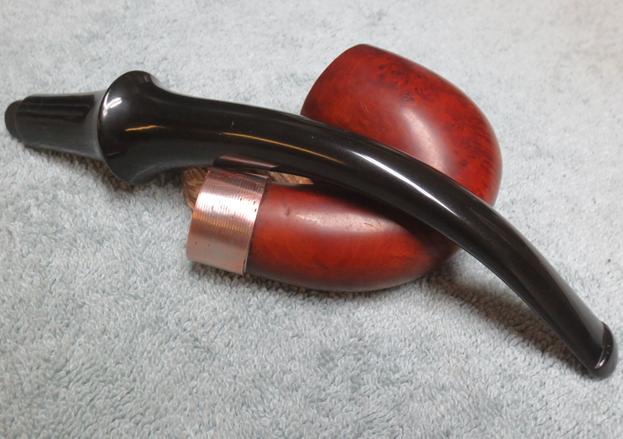
Restemming and restoring a WDC Wellington Jumbo


by Steve Laug

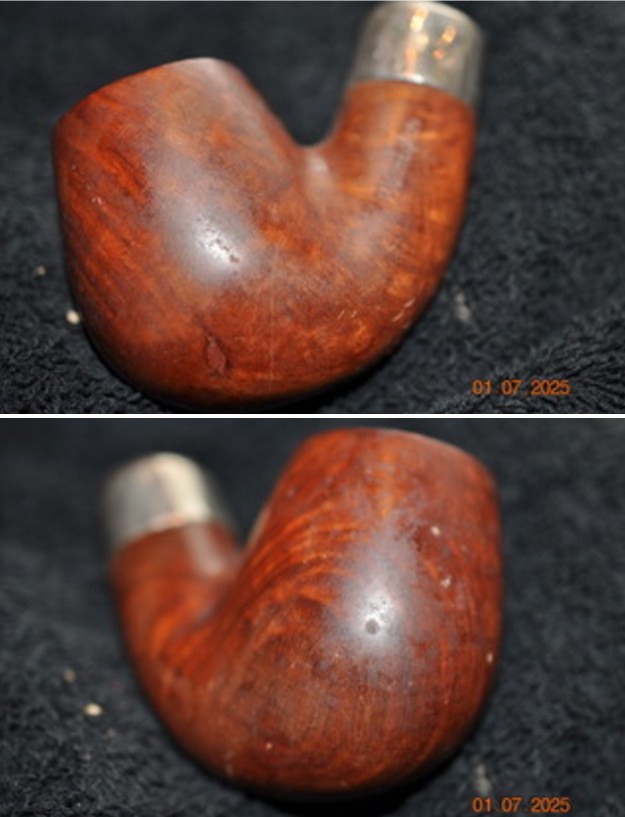
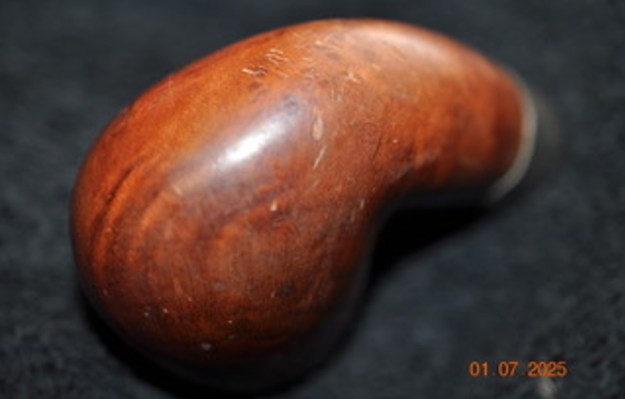
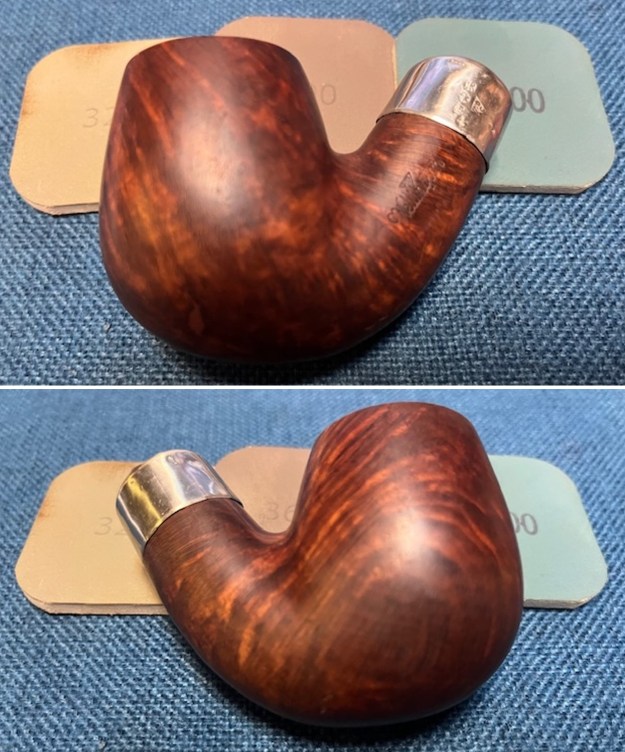
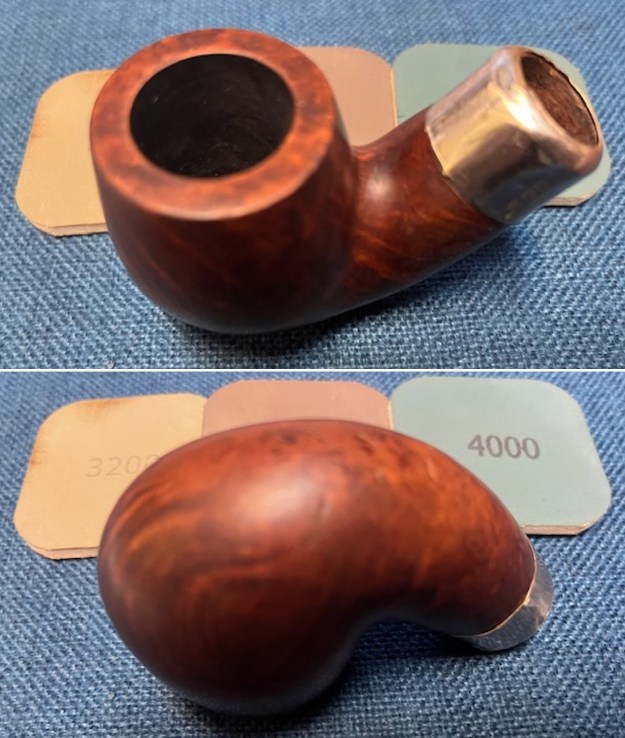
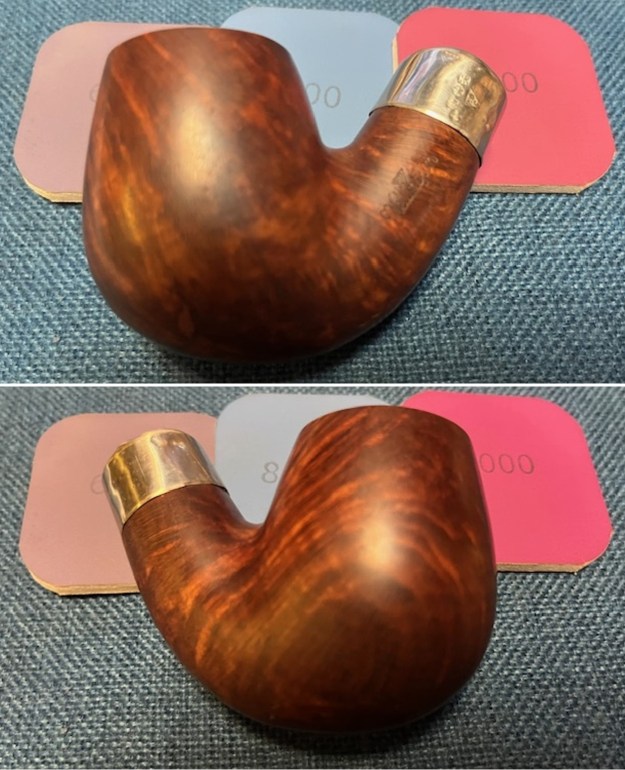
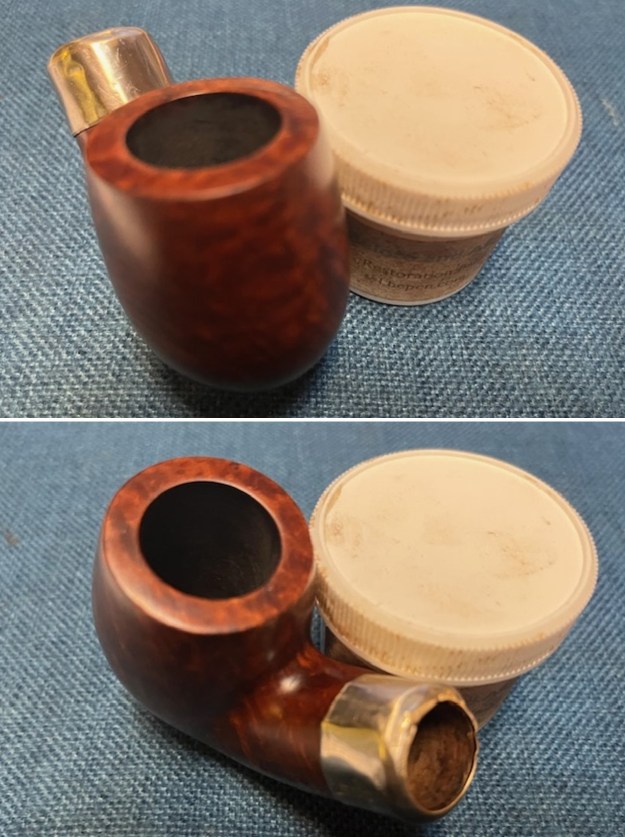
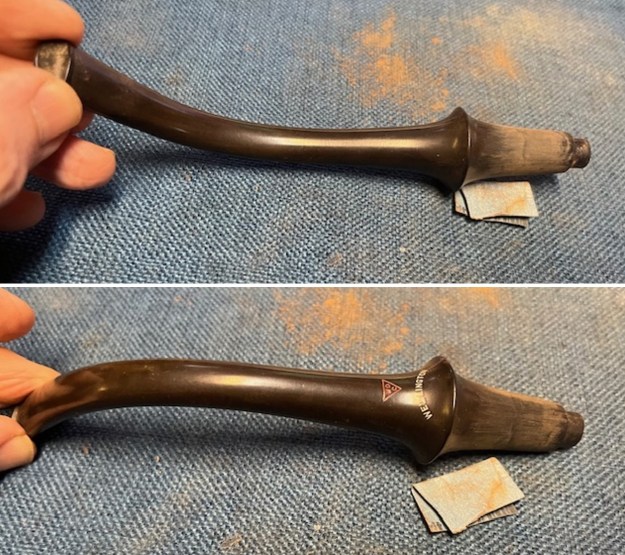
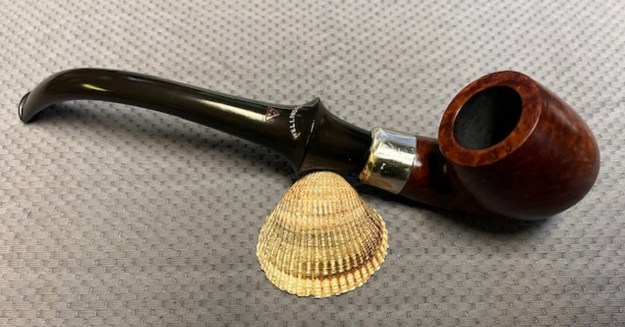
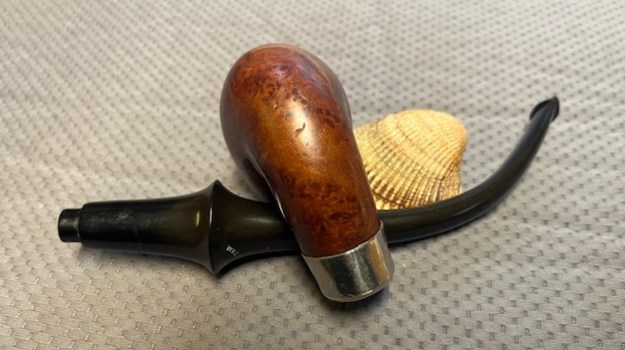
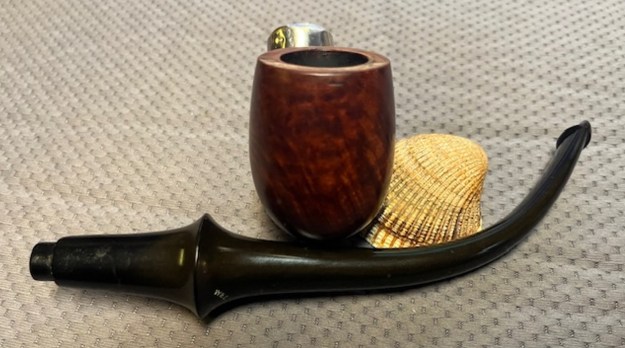
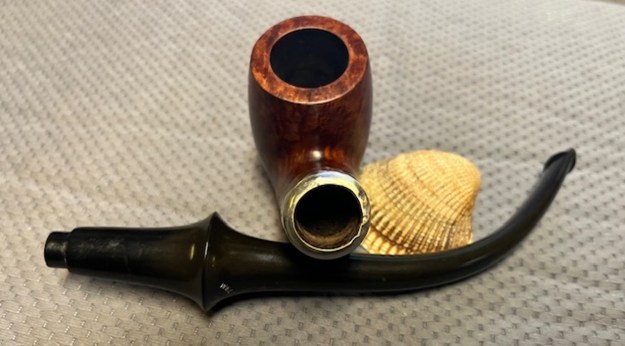
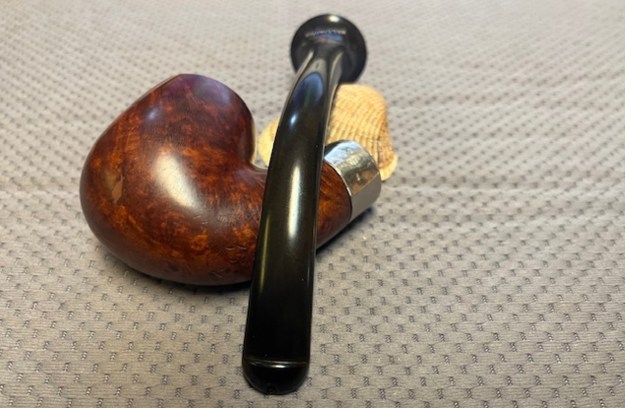
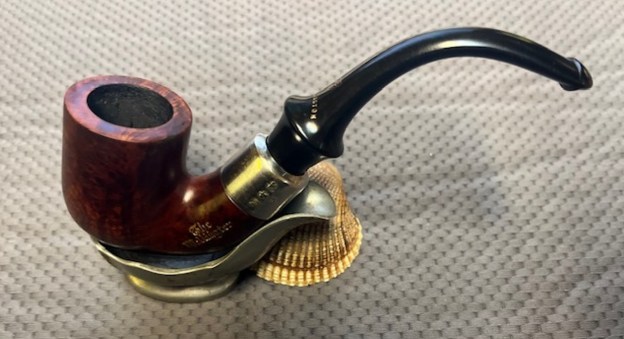
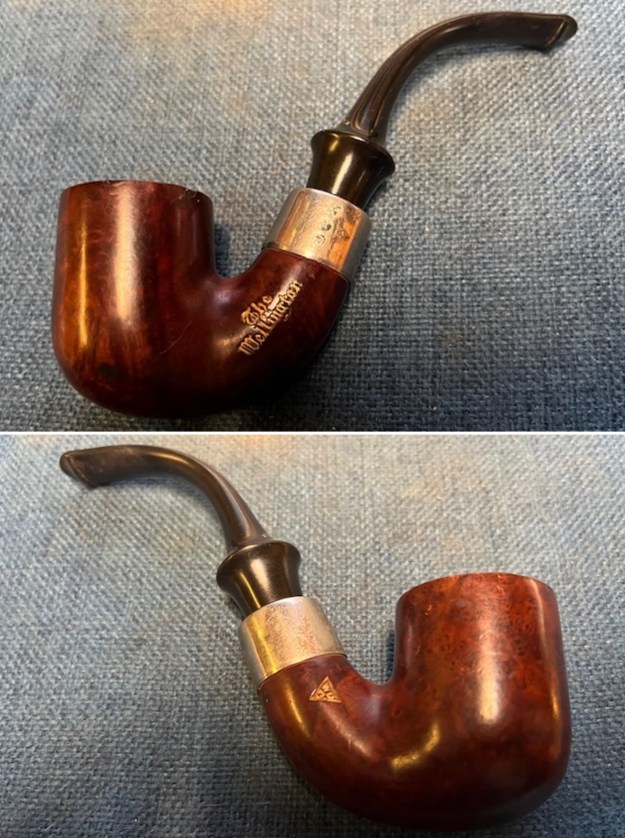
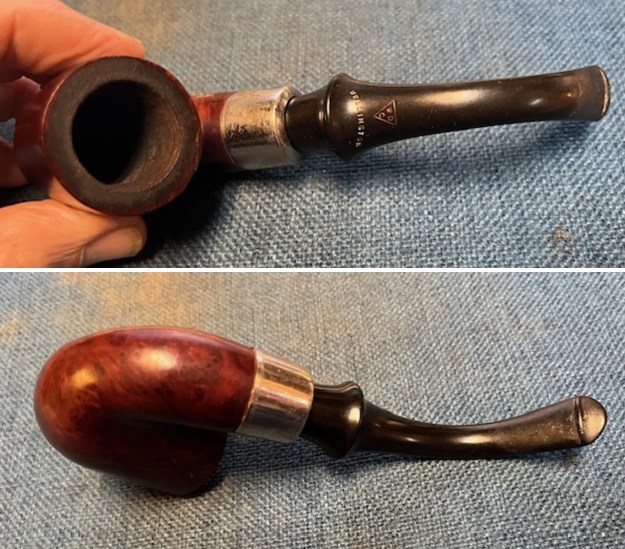
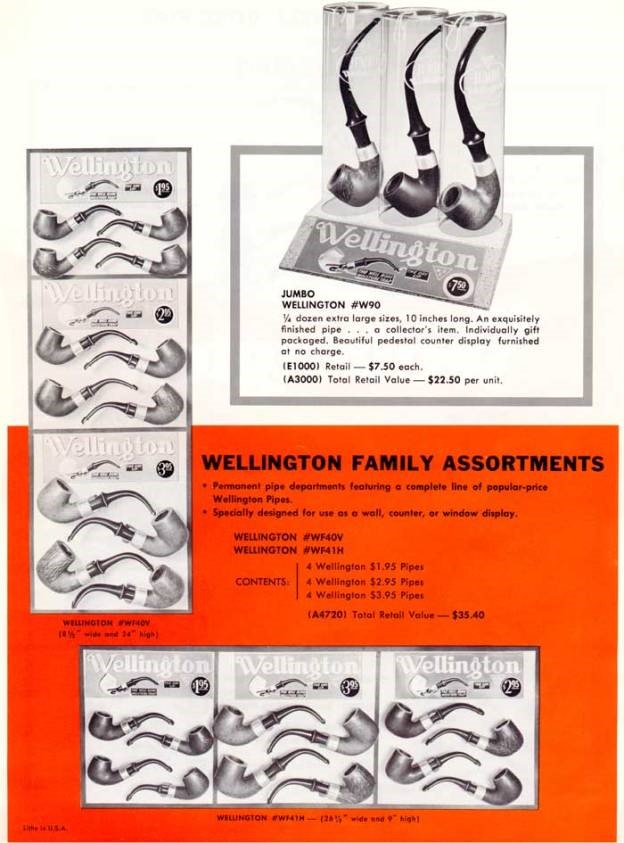
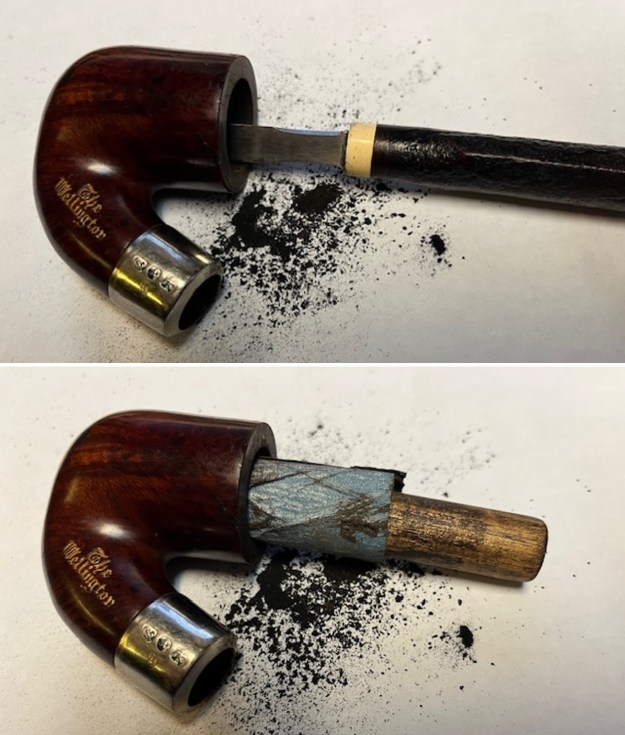
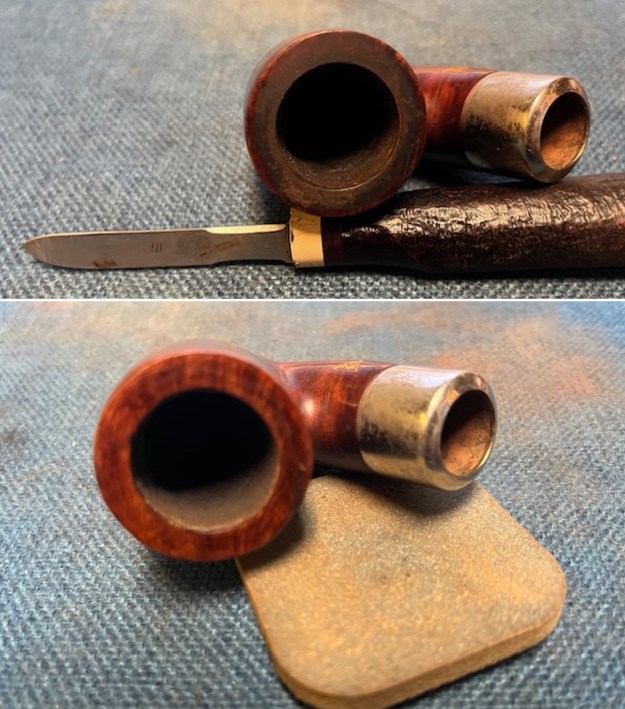
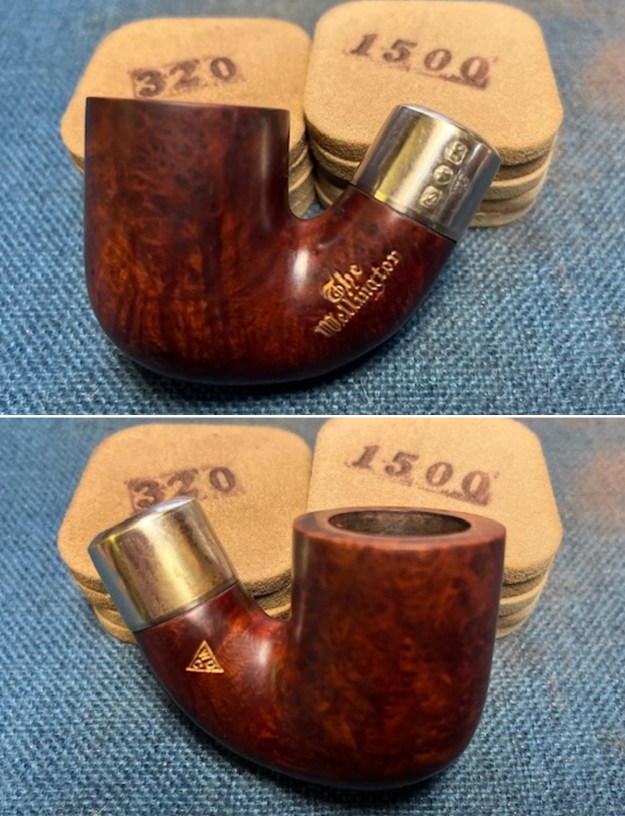
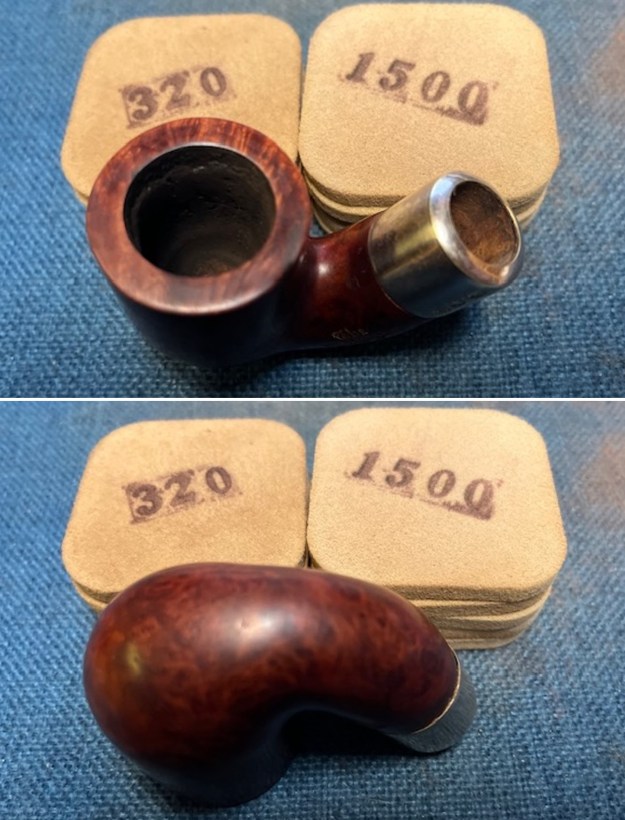
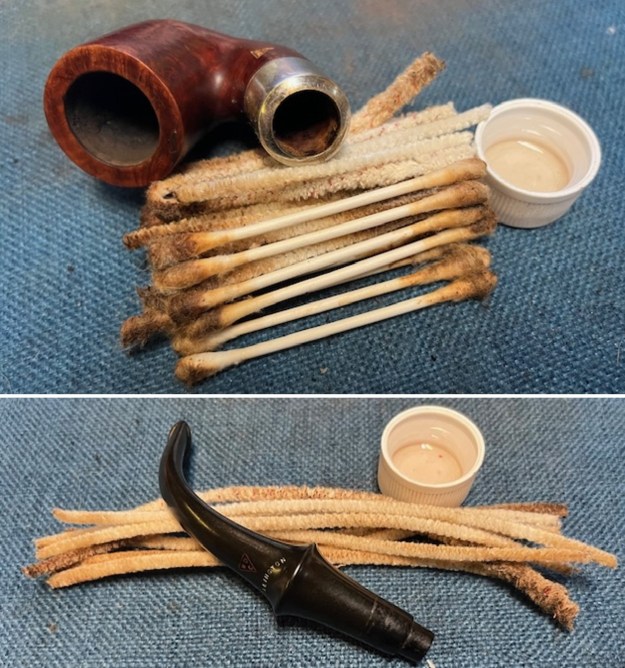
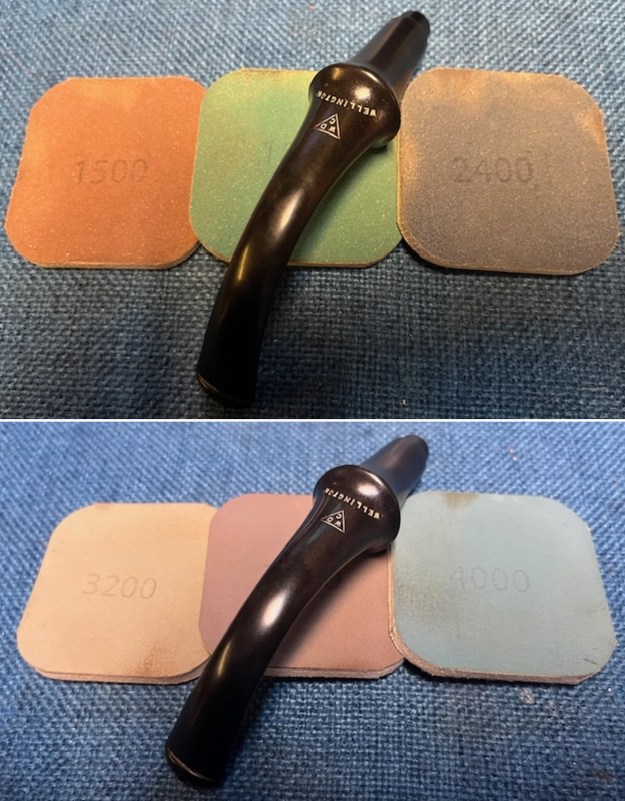
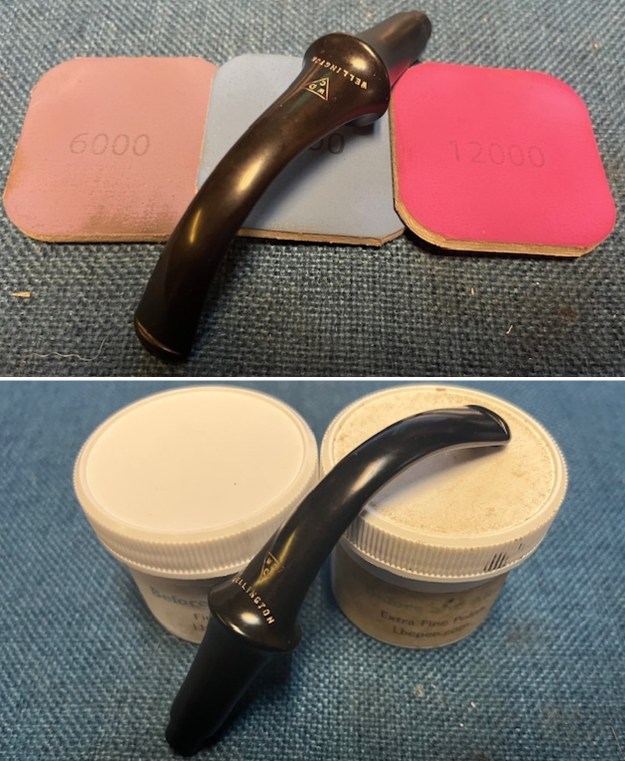
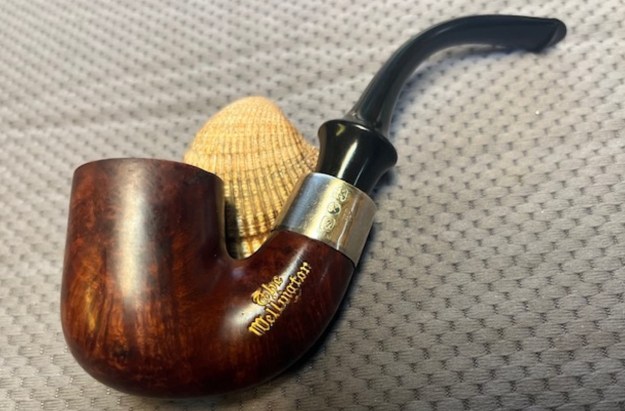
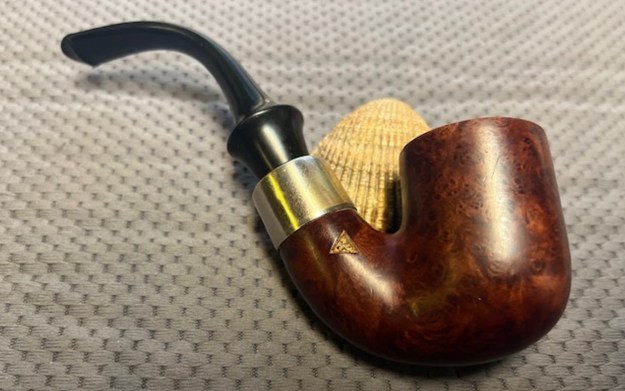
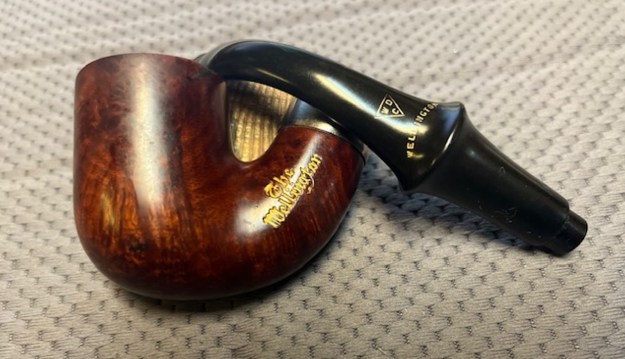
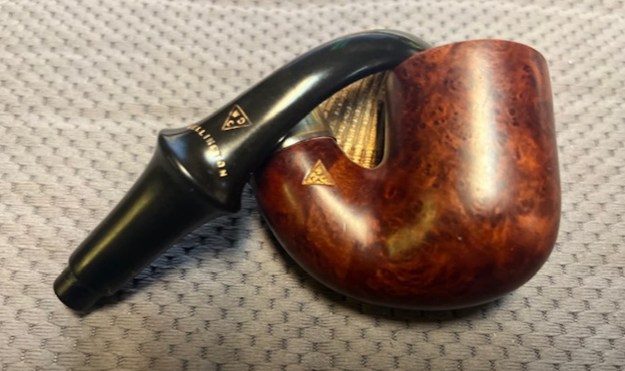
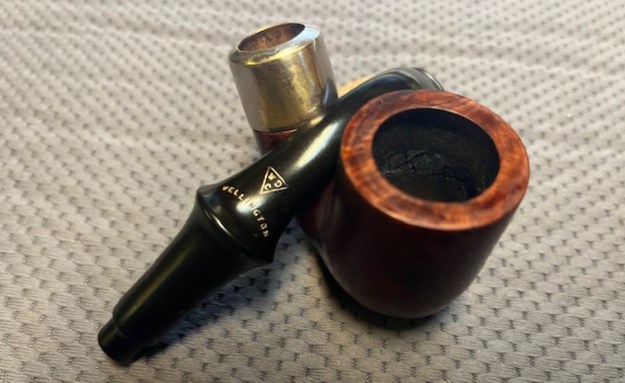
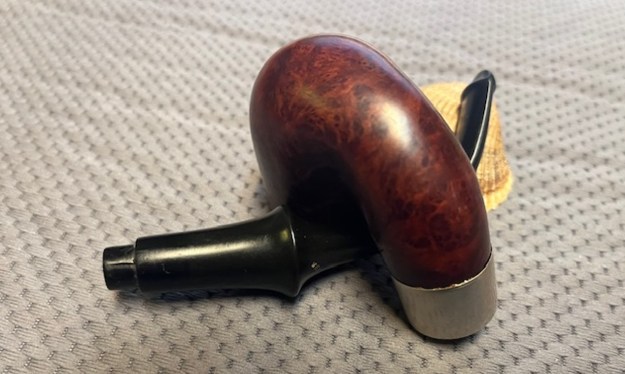
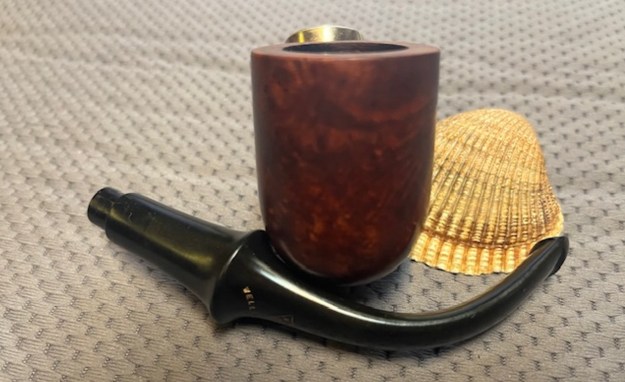
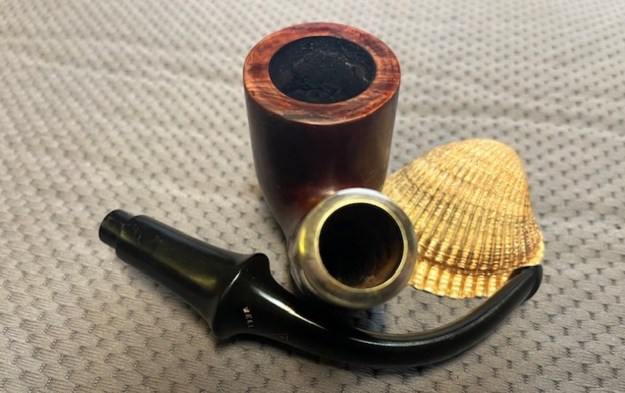
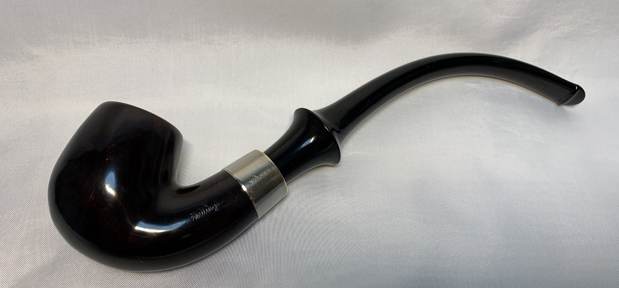
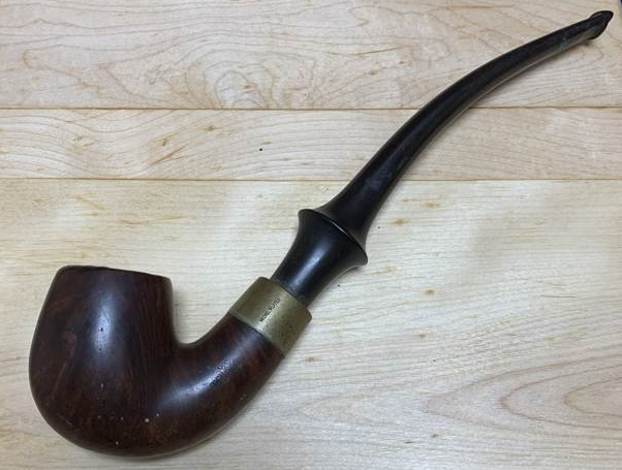
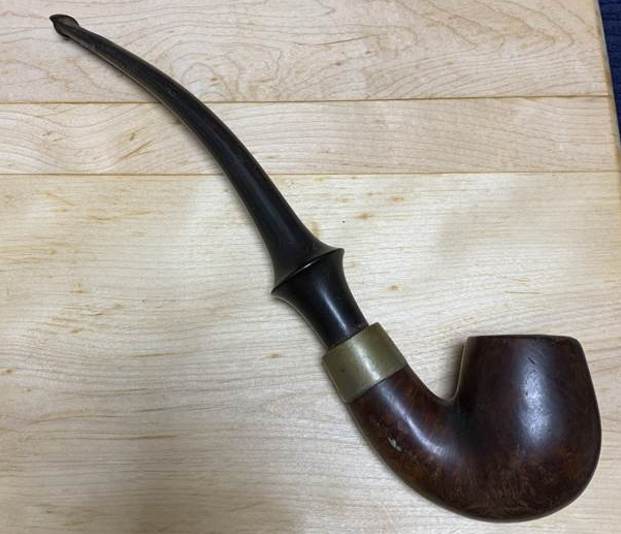
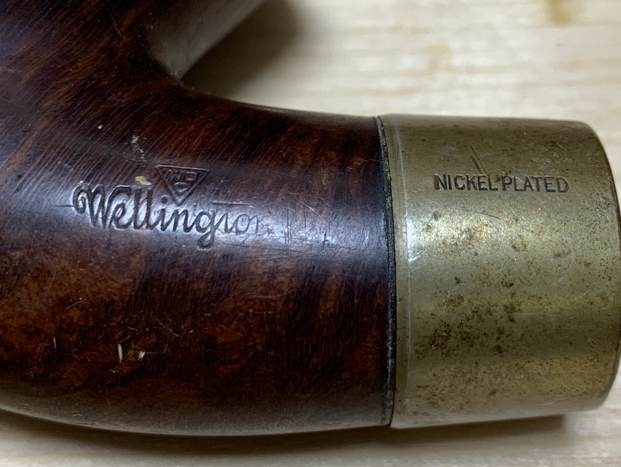
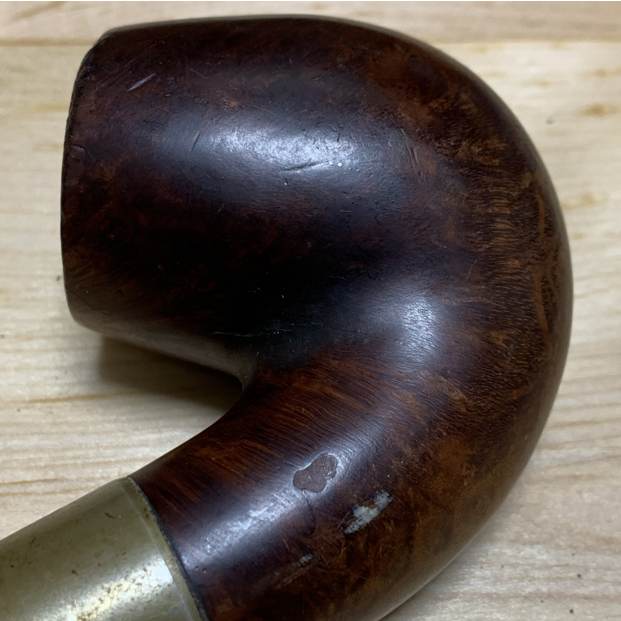
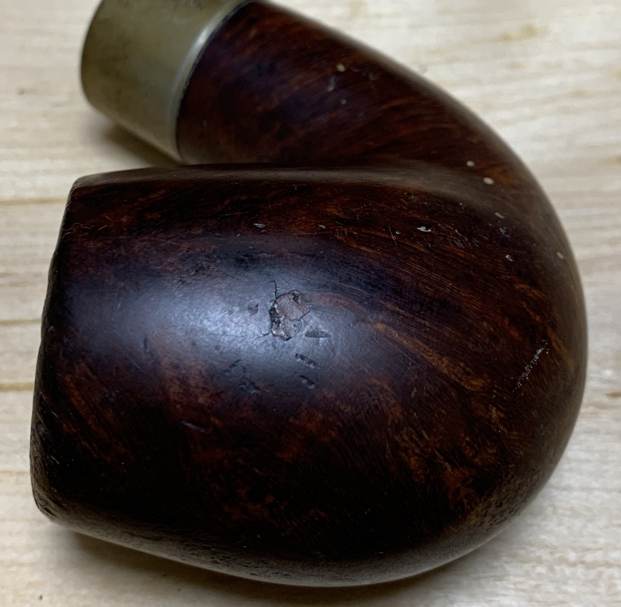
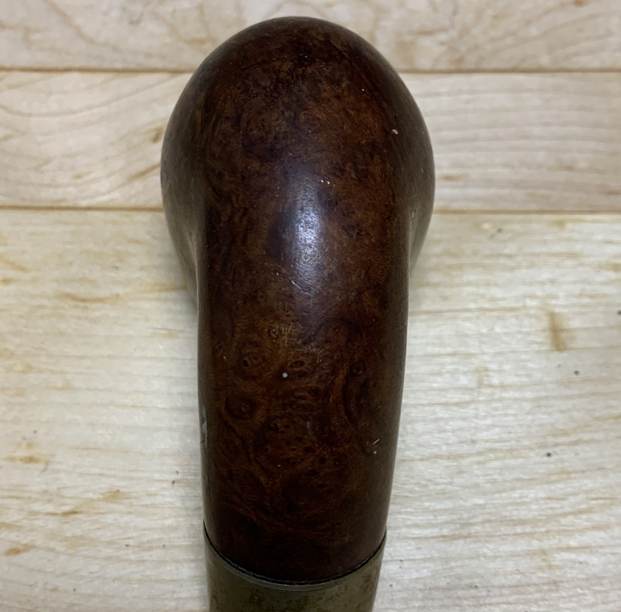
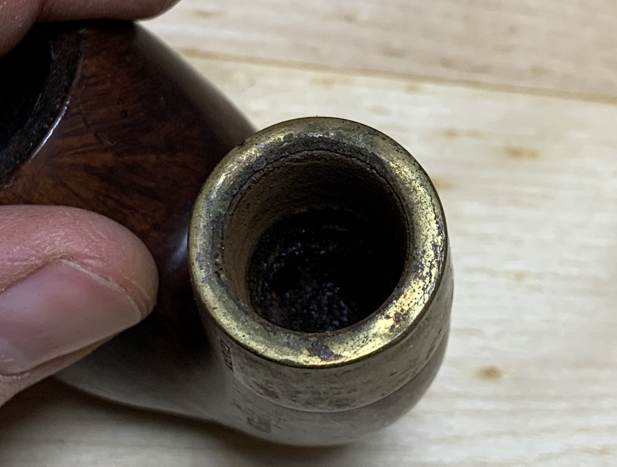
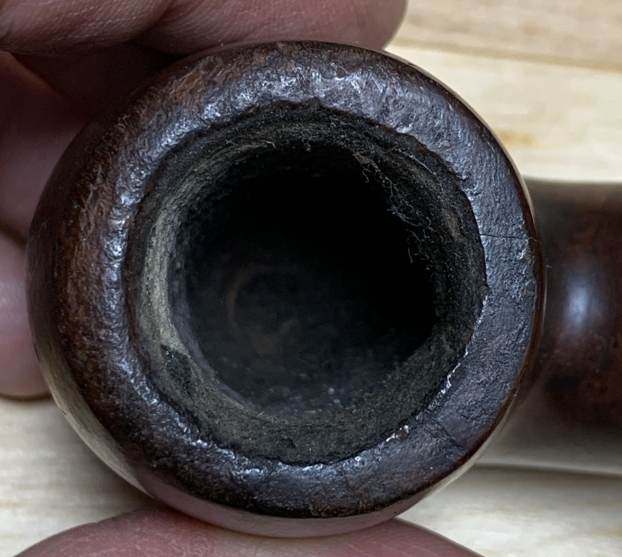
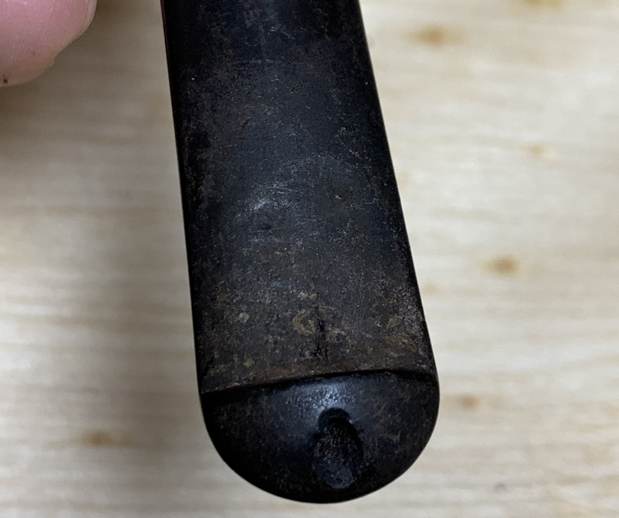
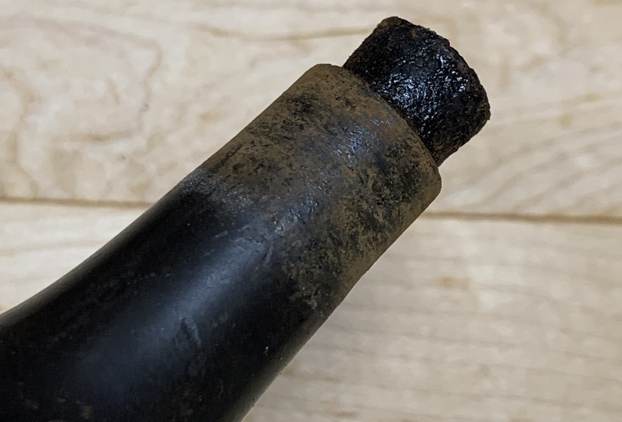
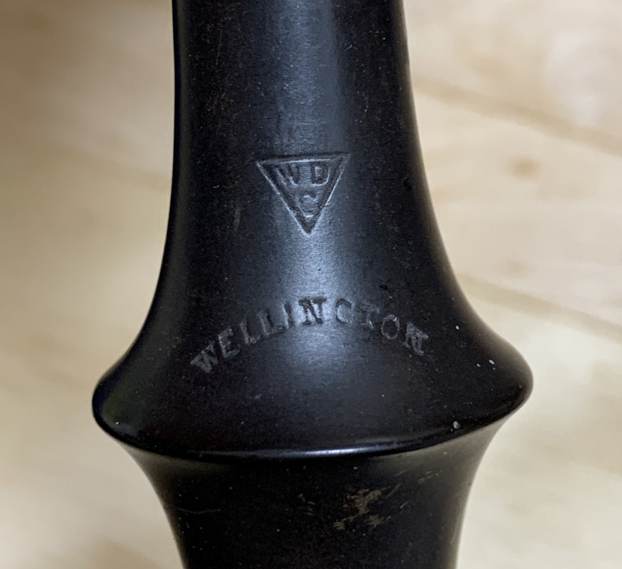
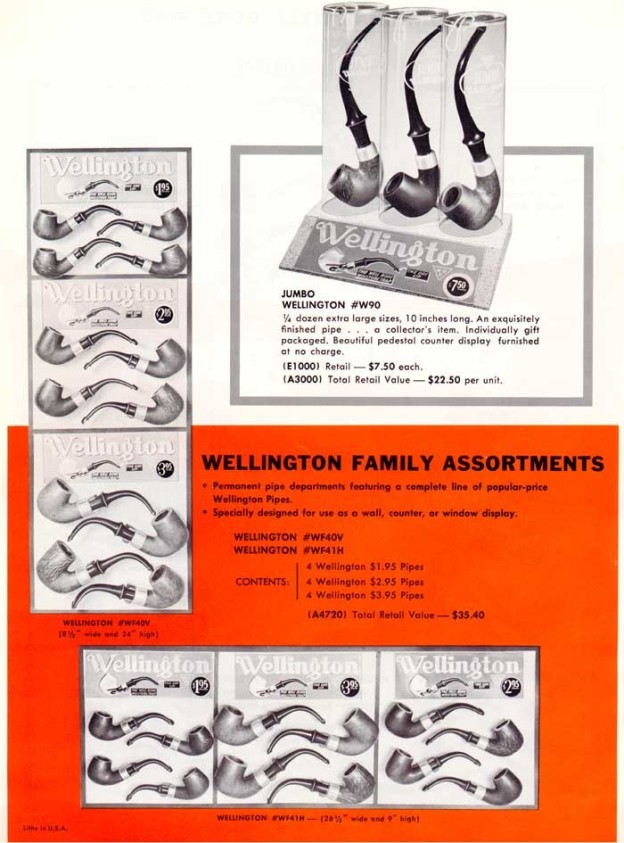
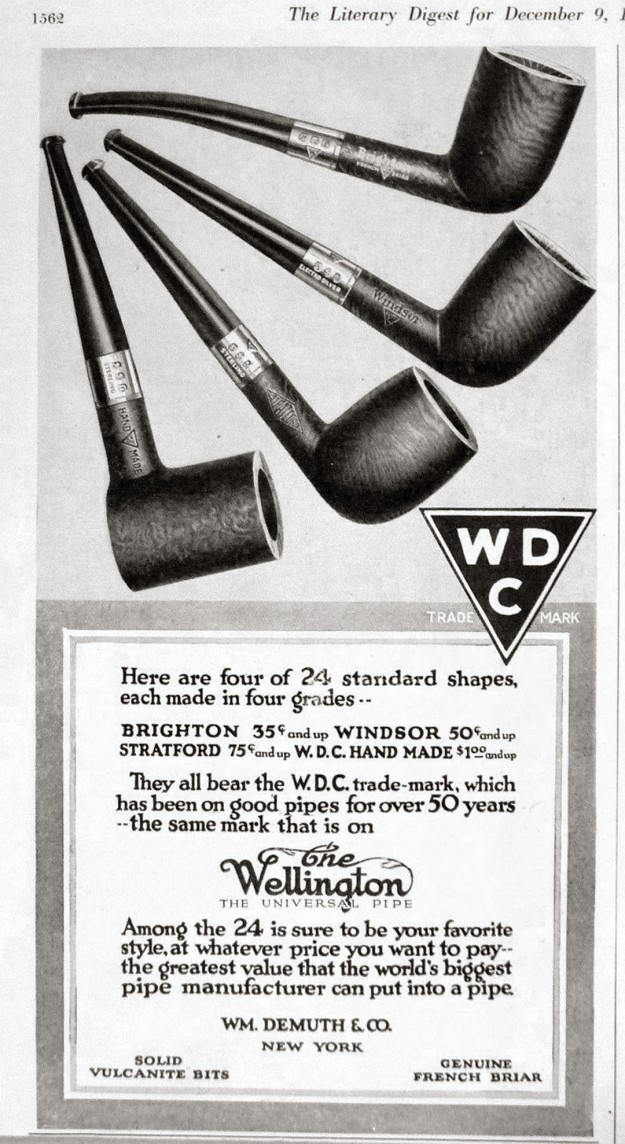
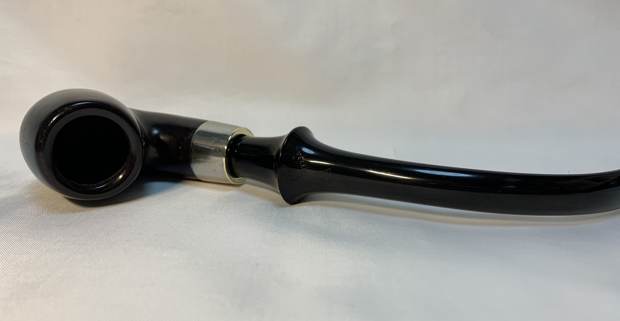
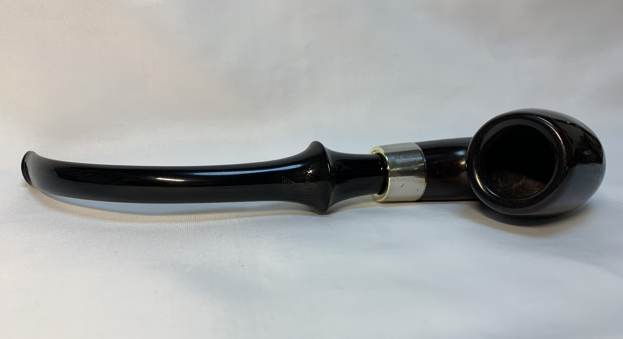
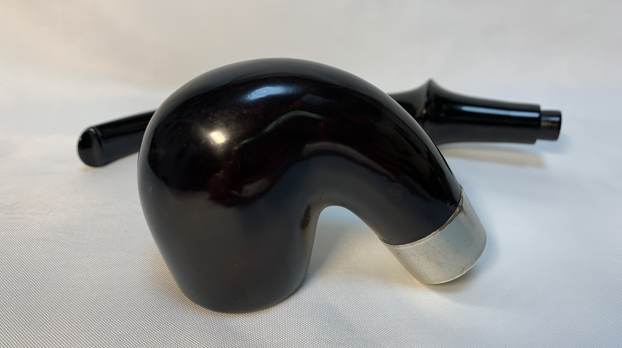
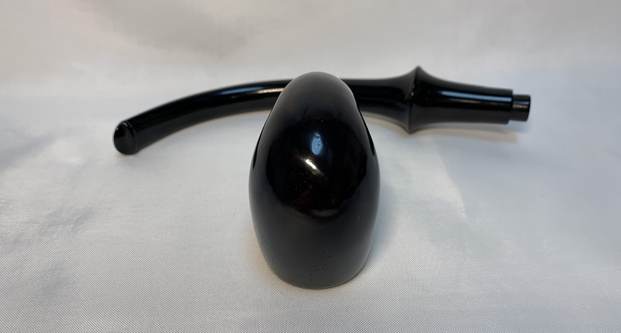
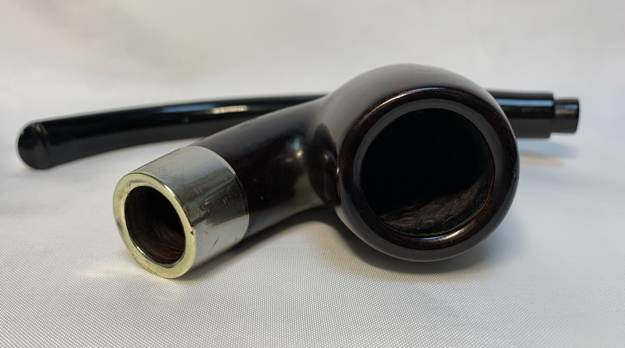
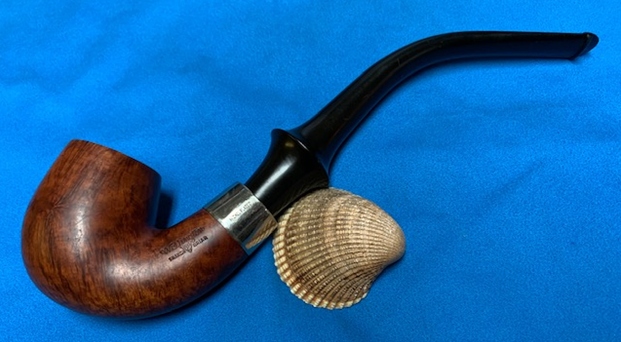
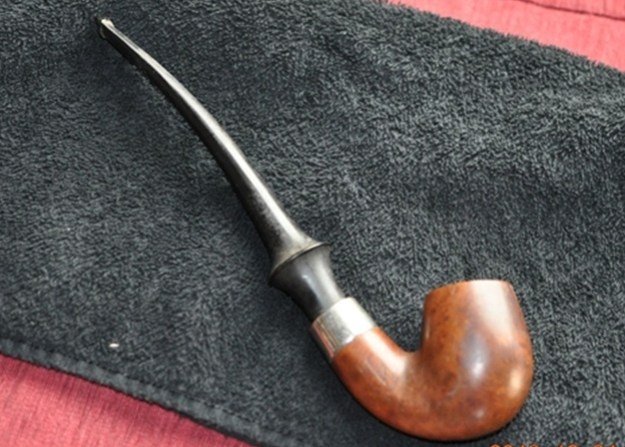
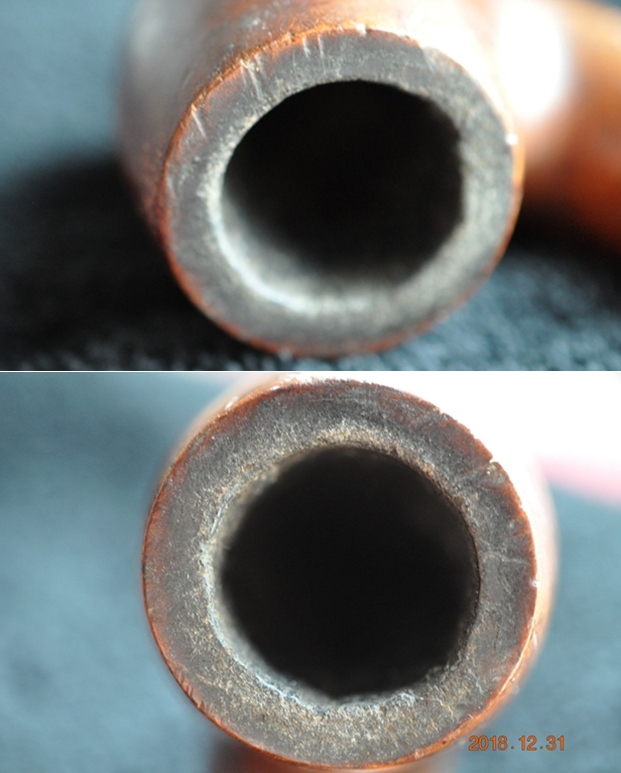
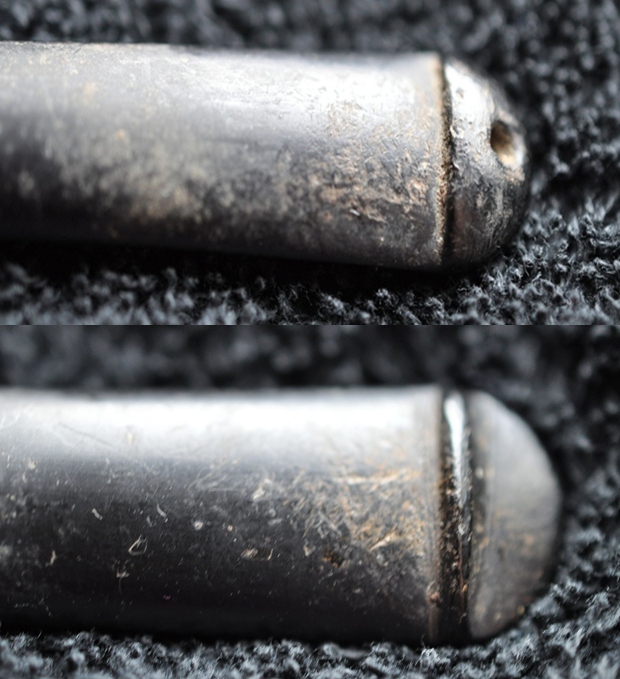
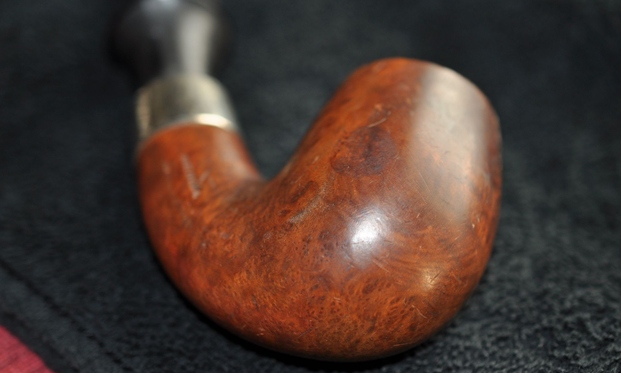
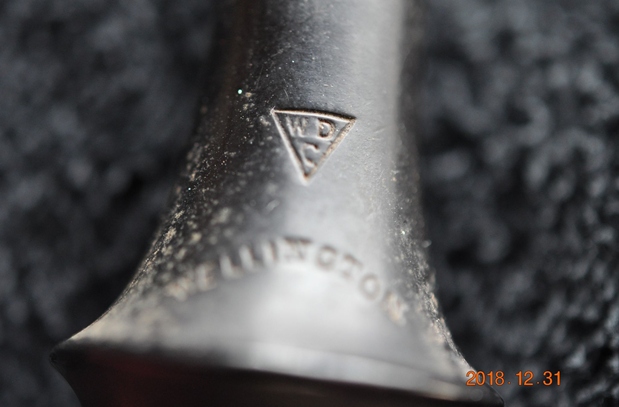
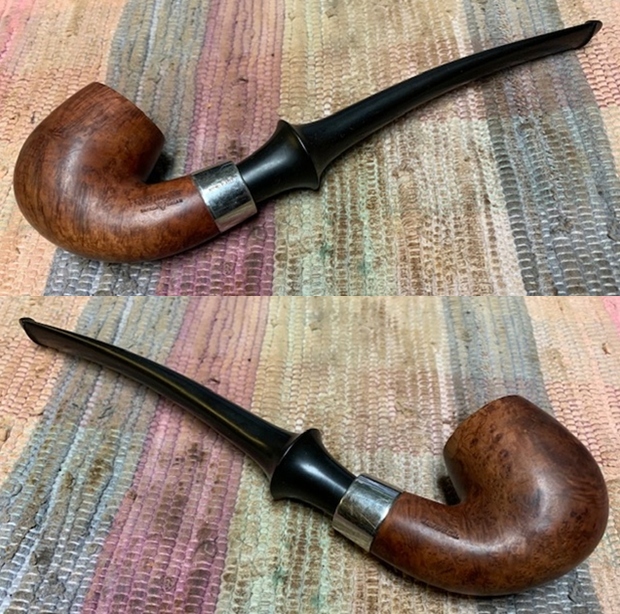
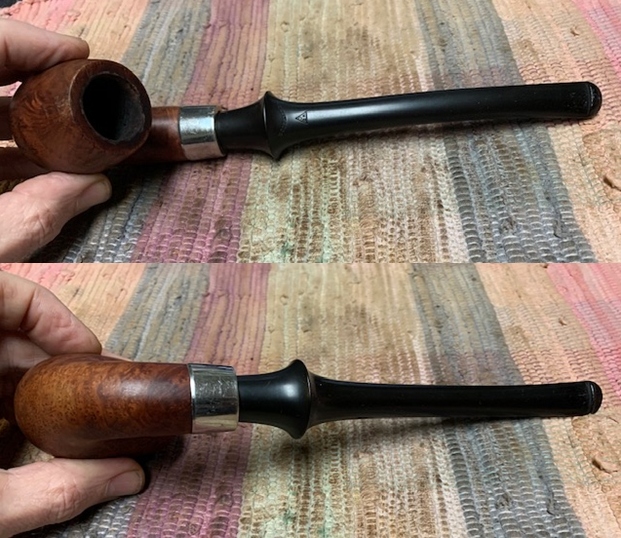
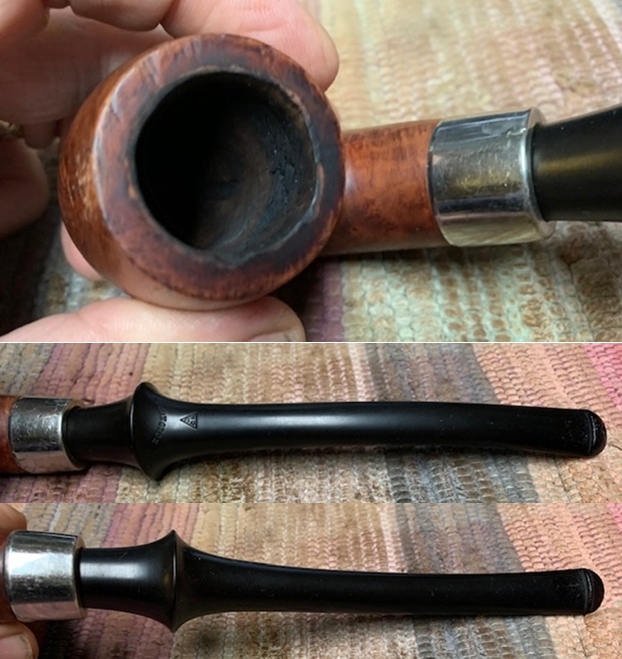
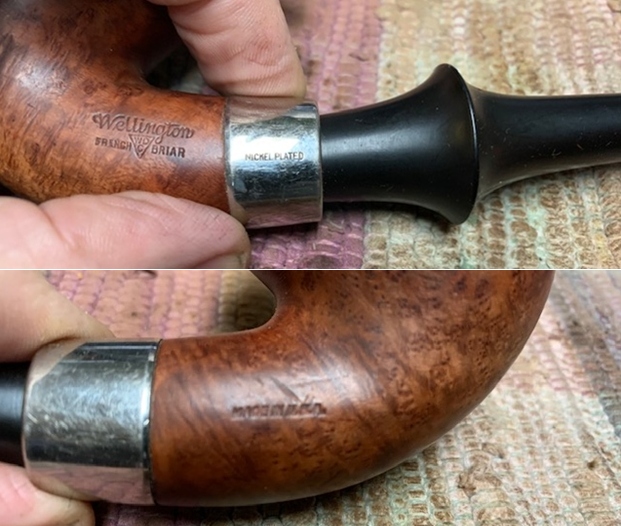
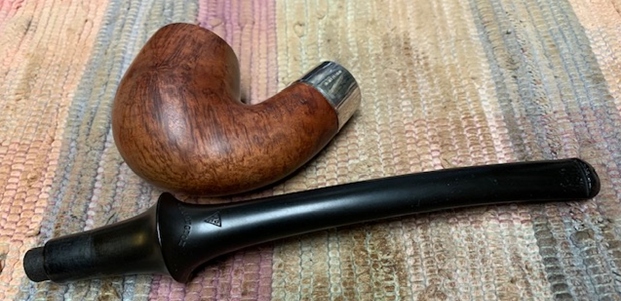
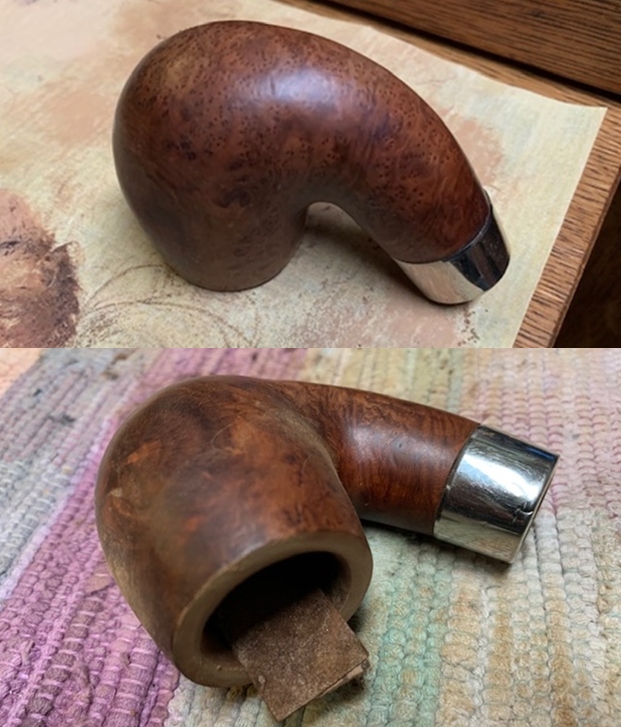
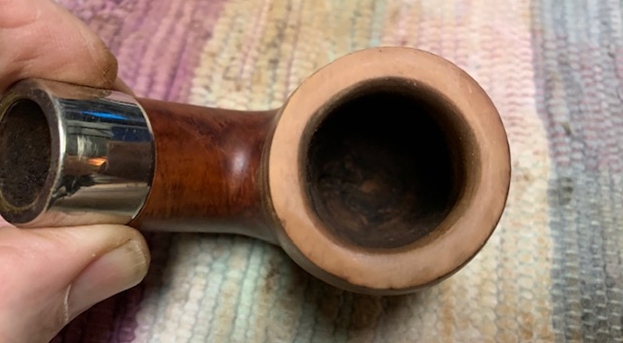
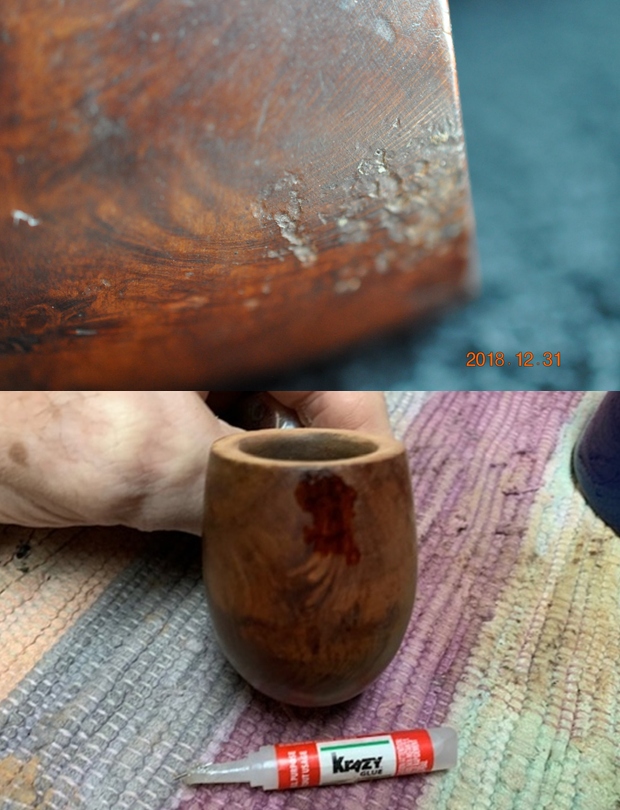
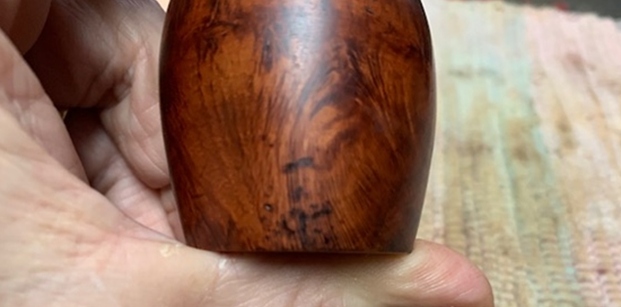
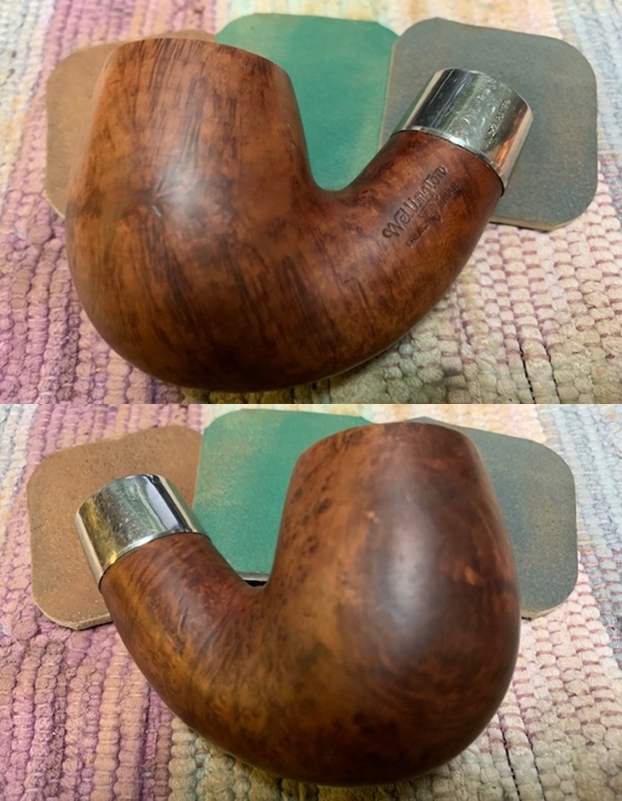
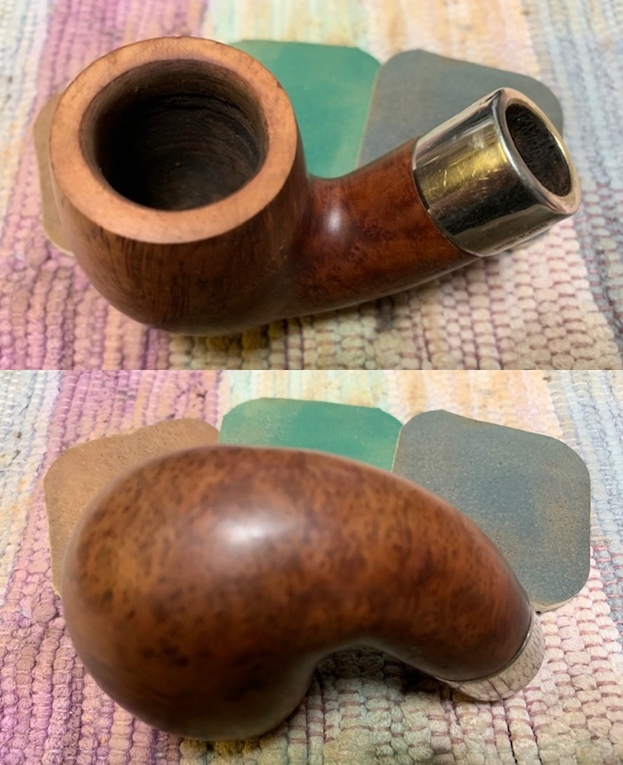
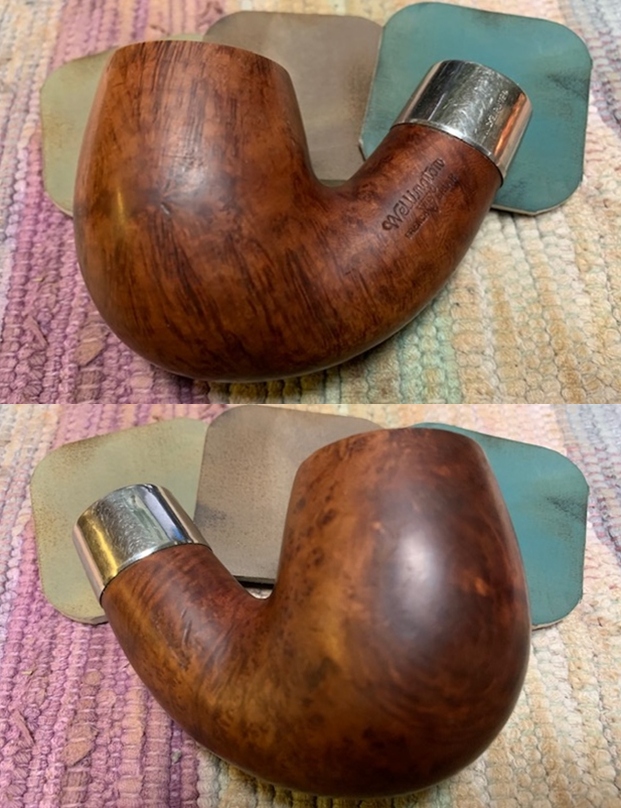
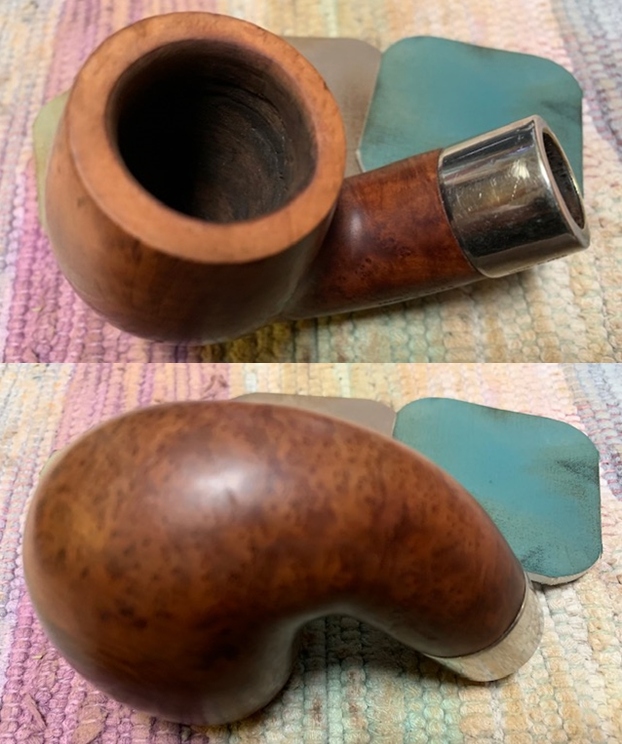
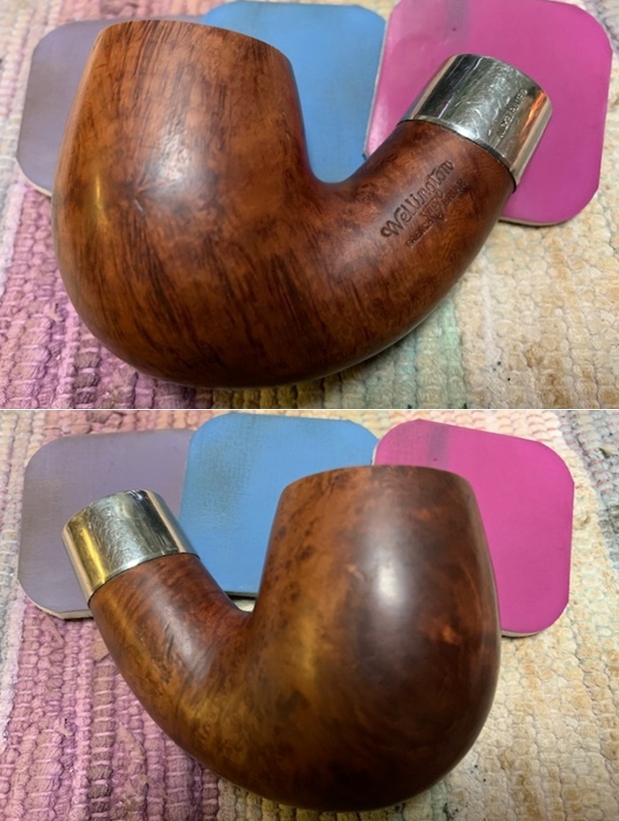
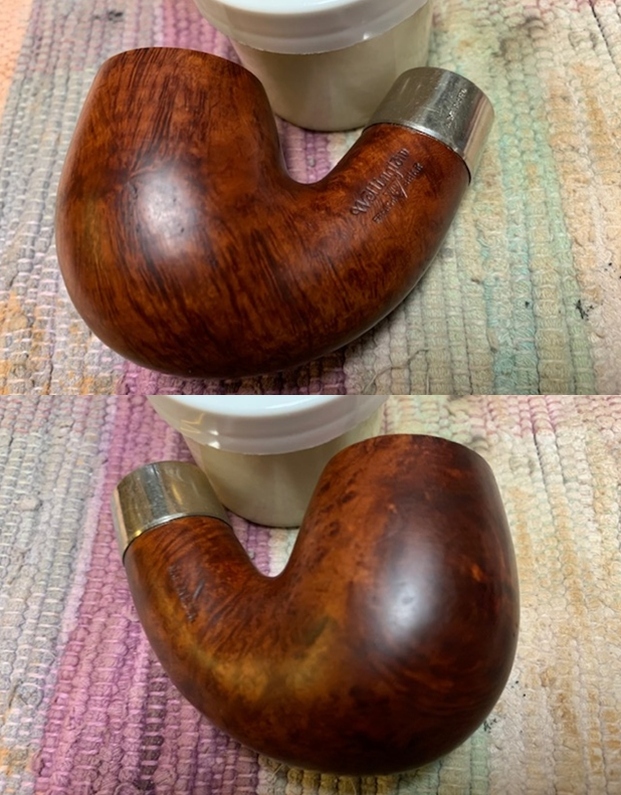
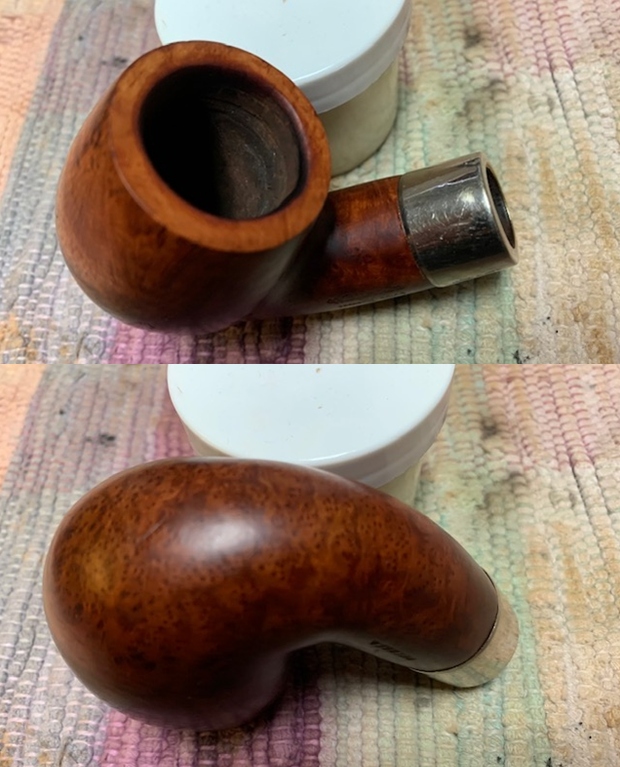
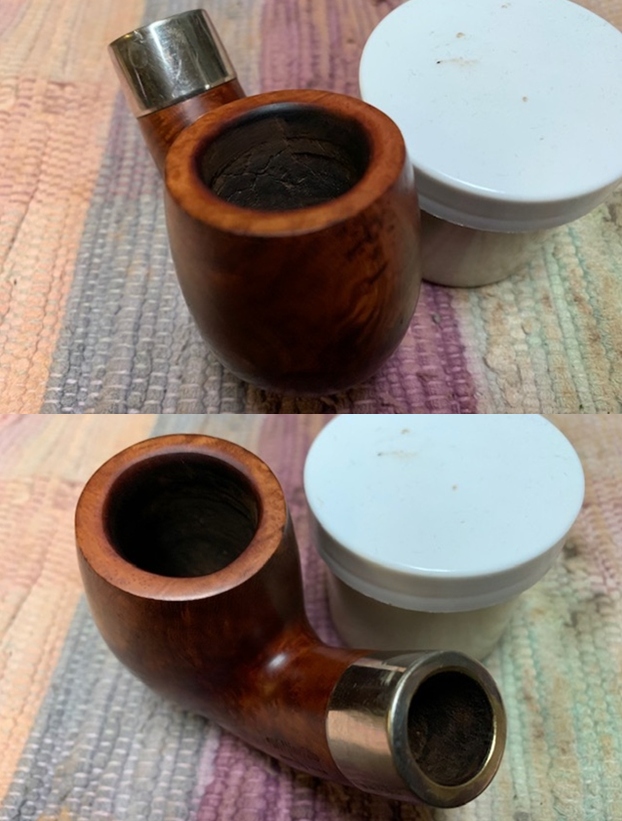
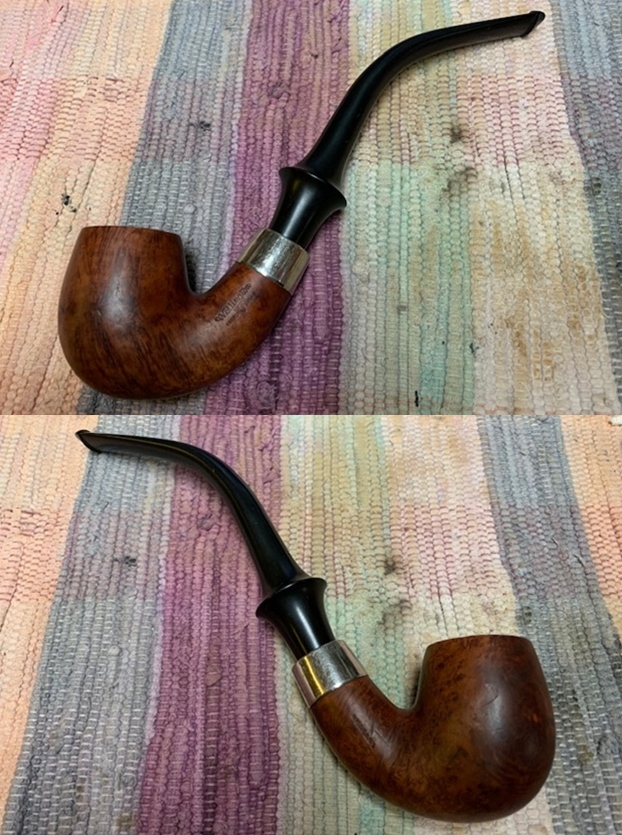
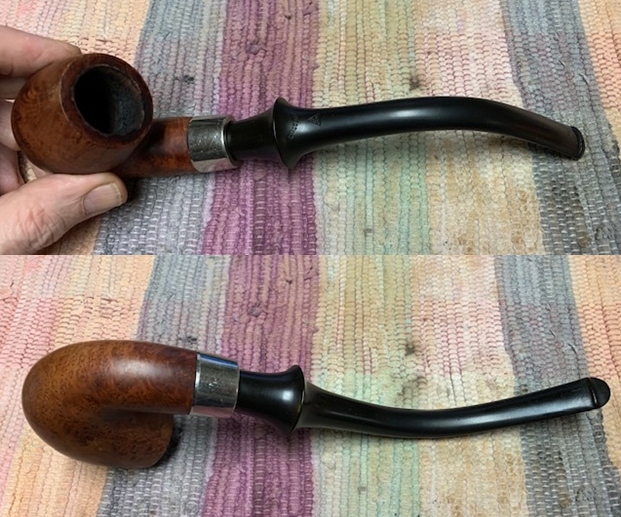
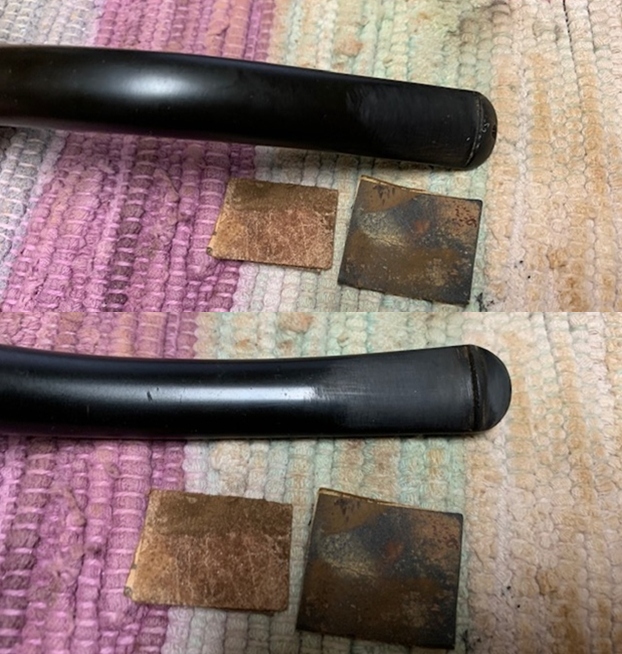
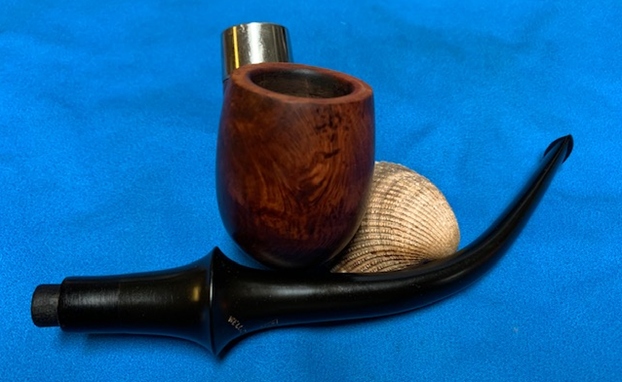
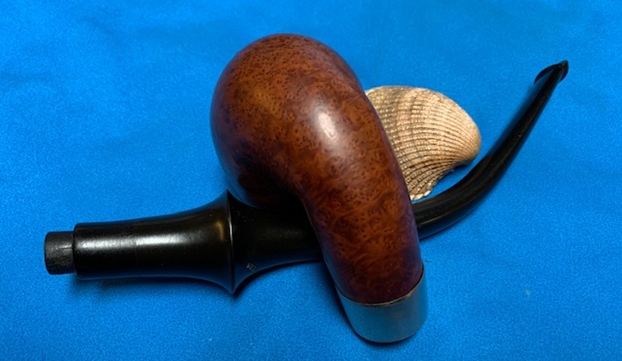
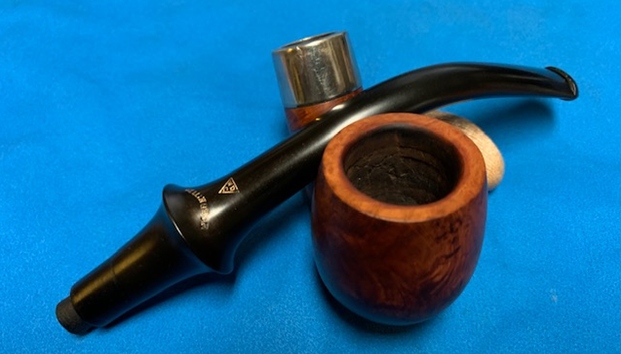
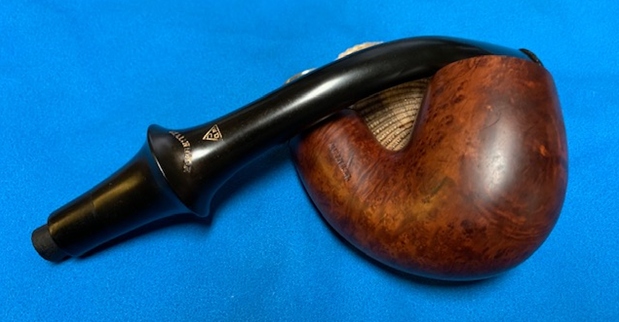
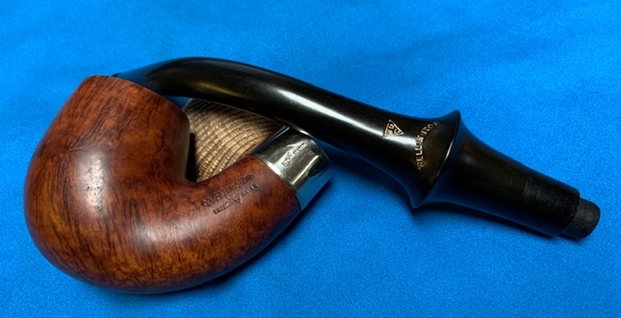
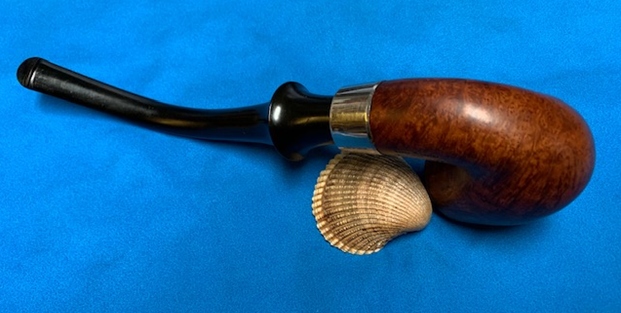
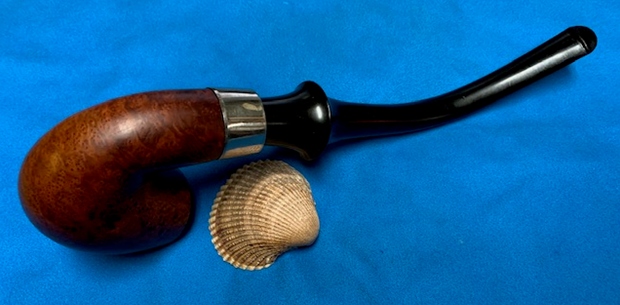
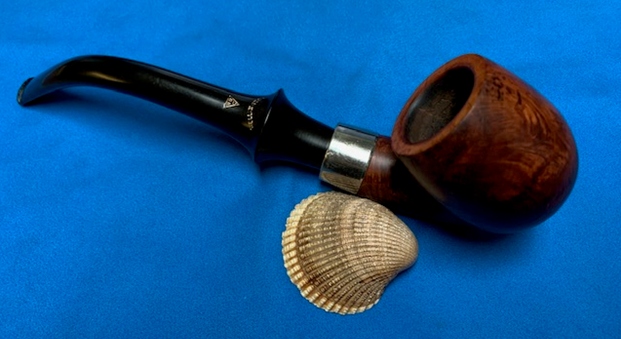
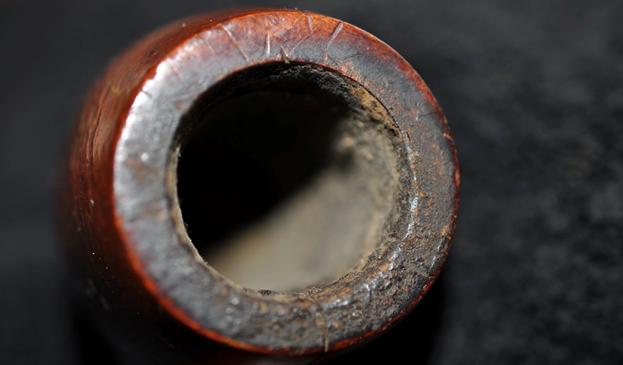
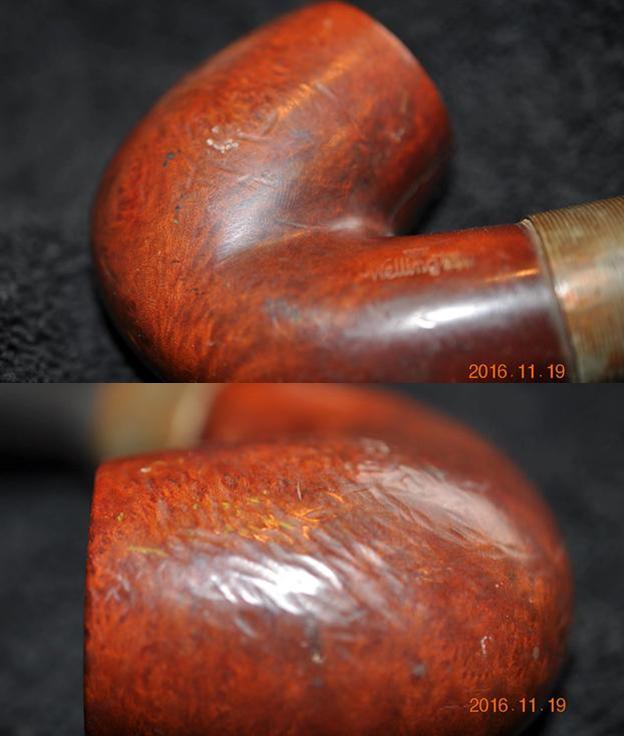
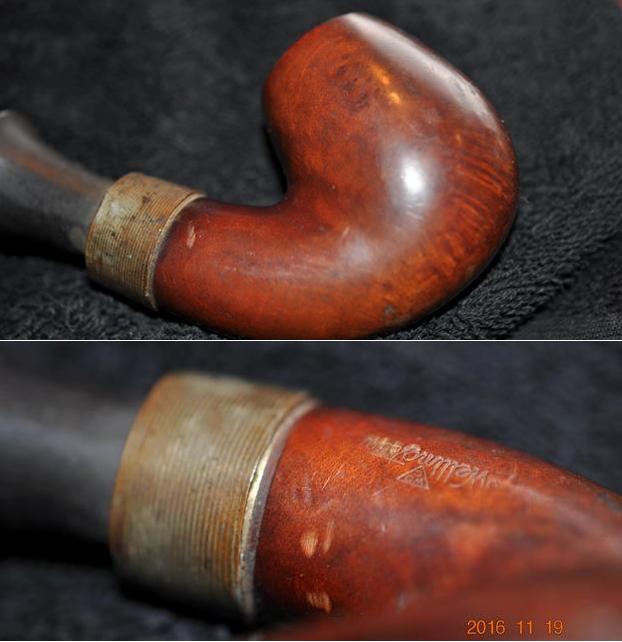
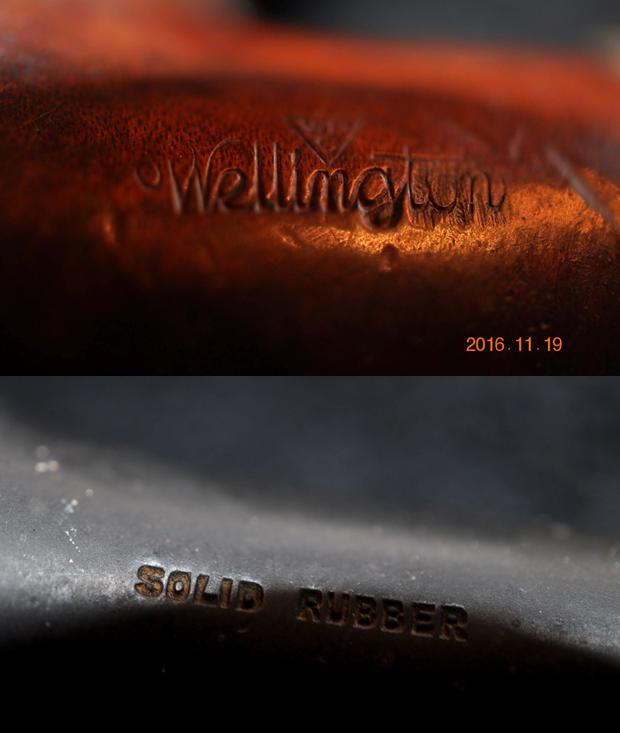
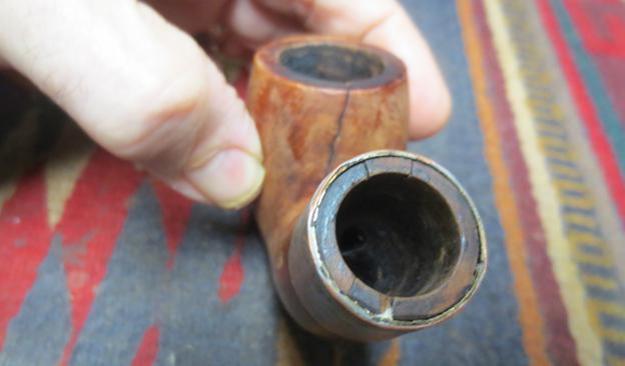
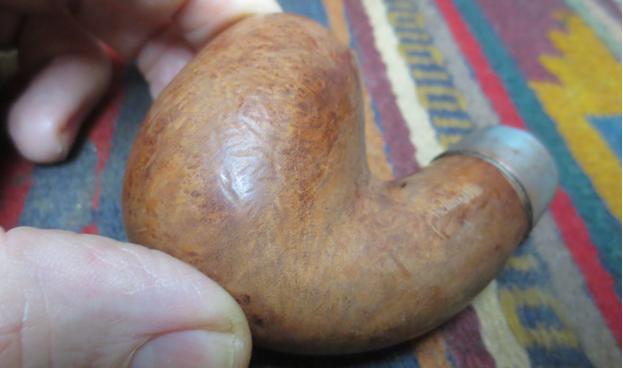
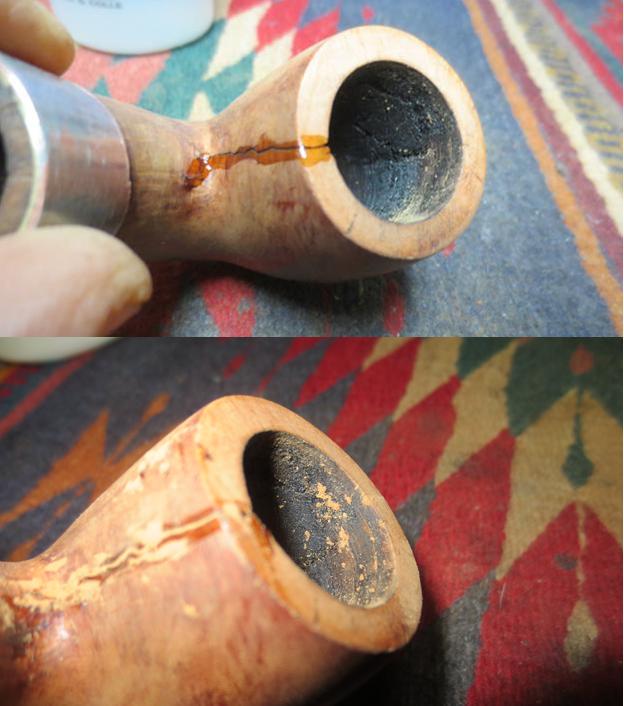
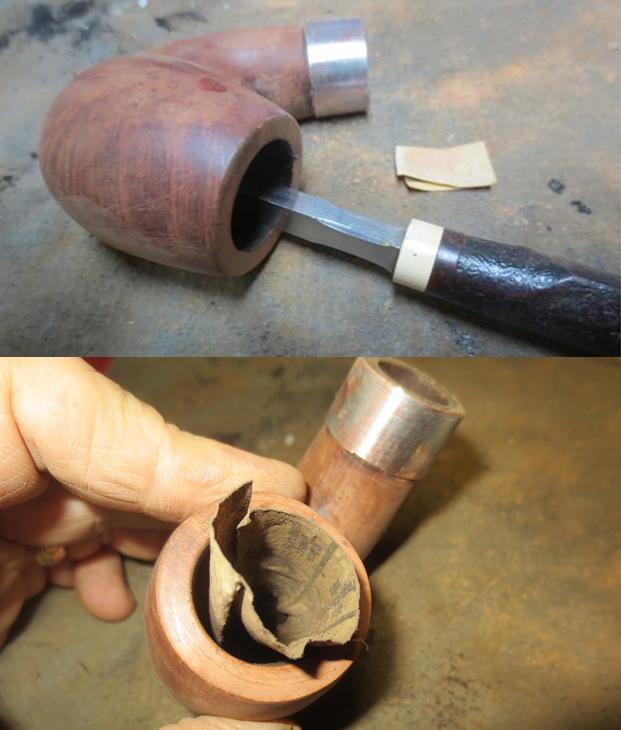
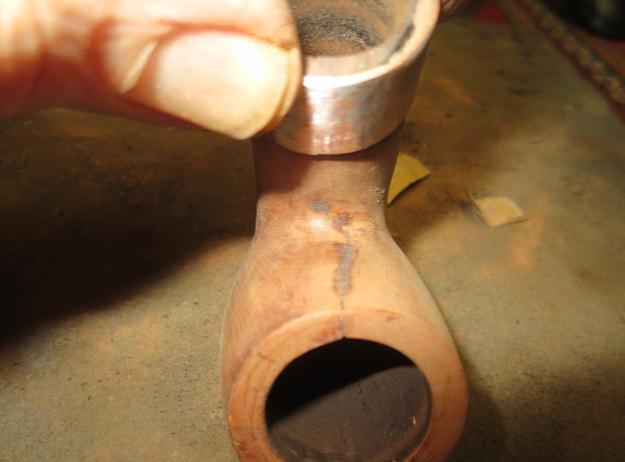
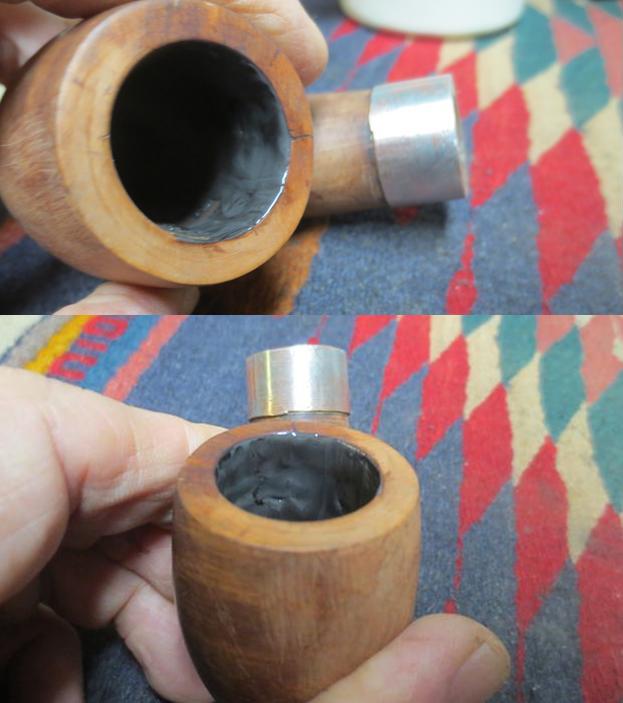
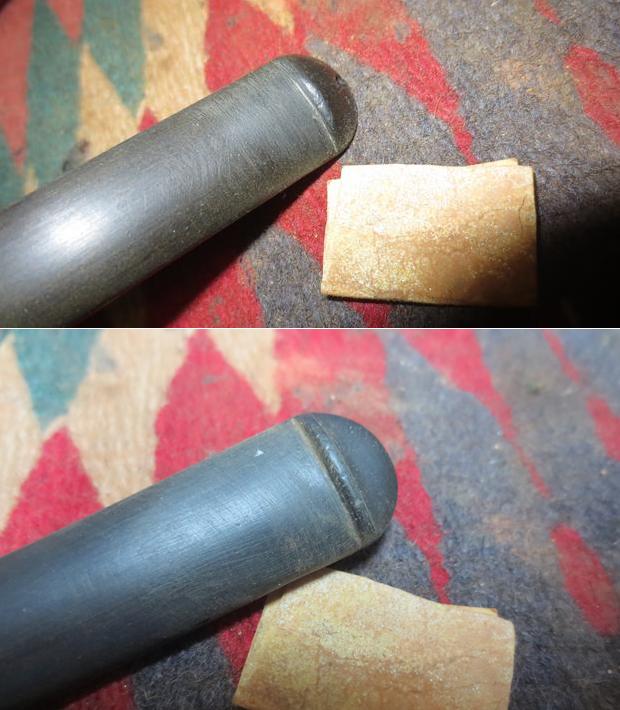
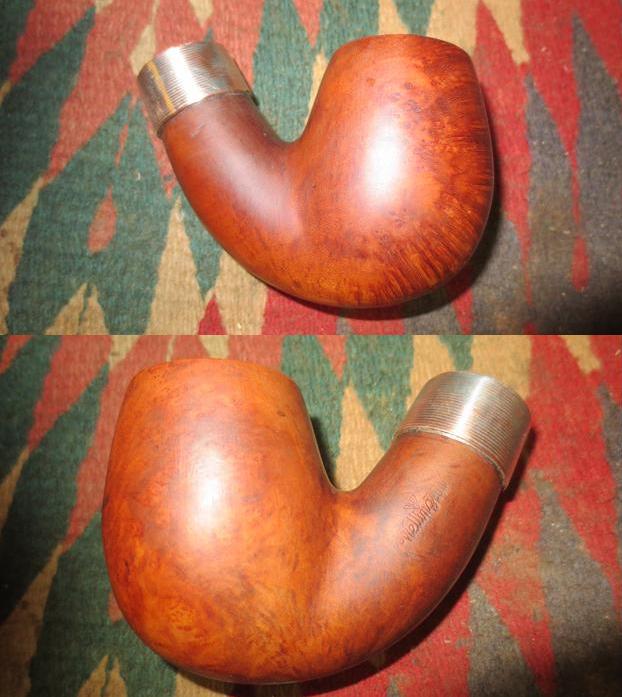
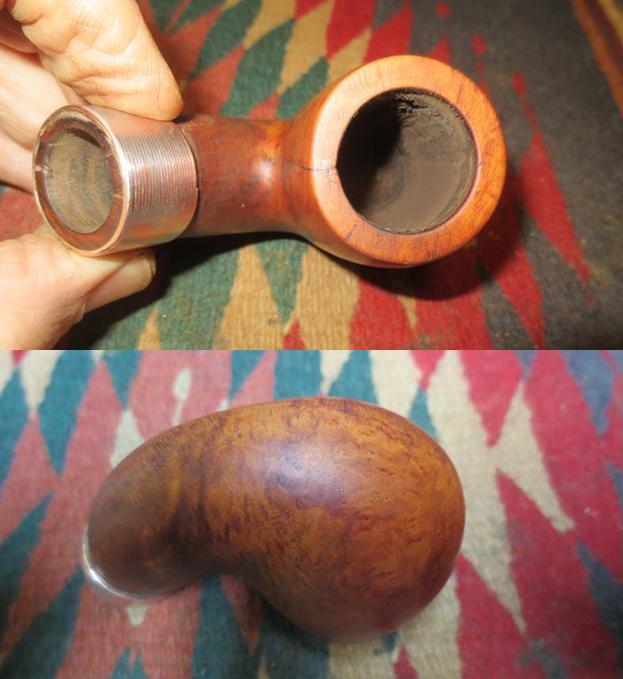
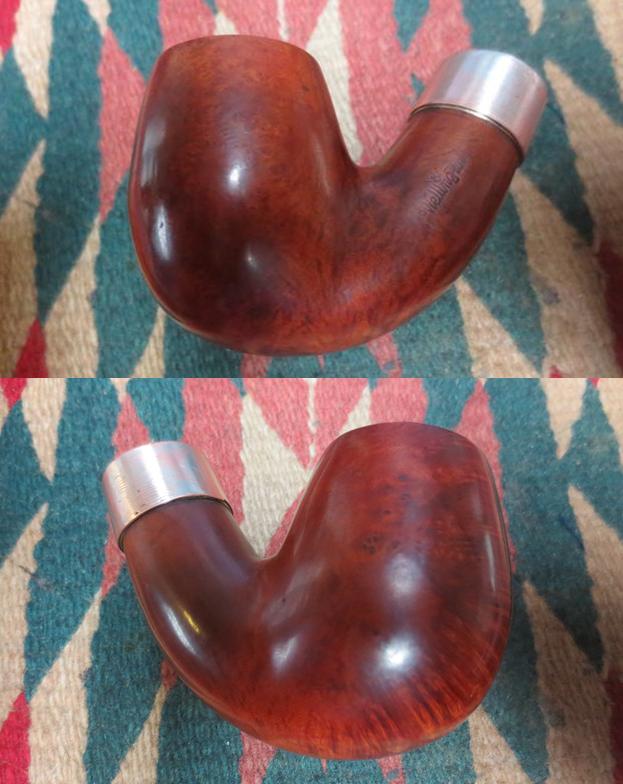
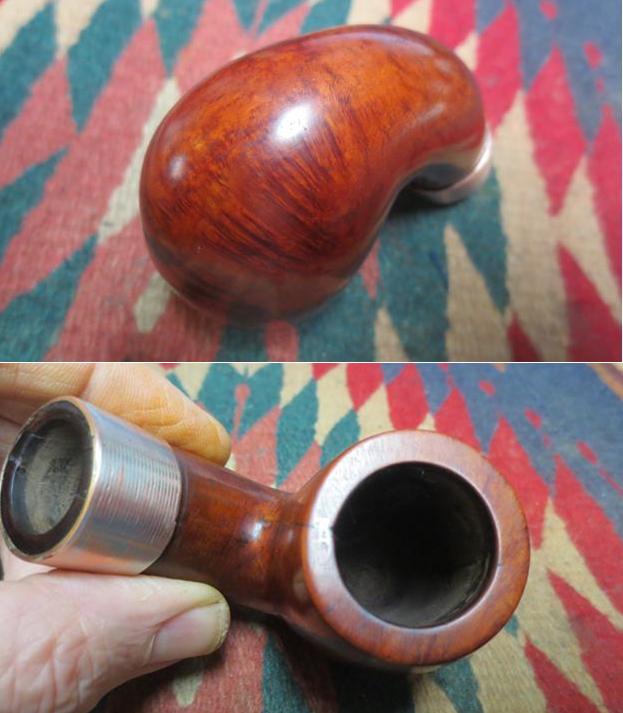
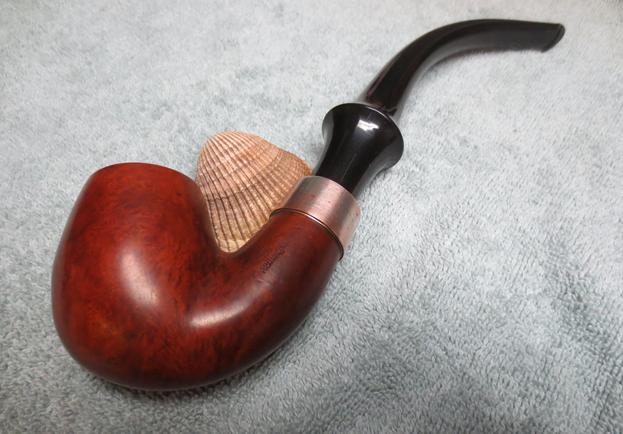
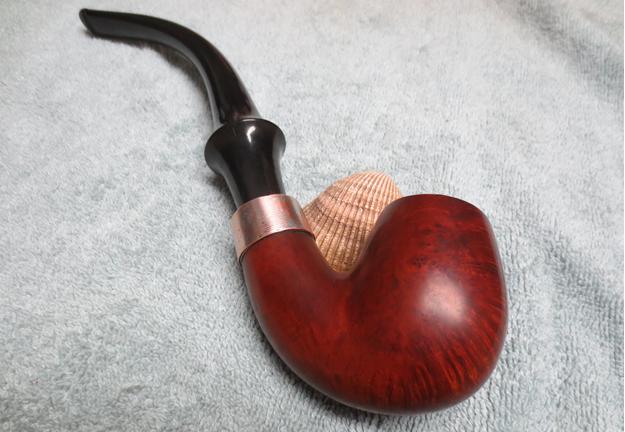
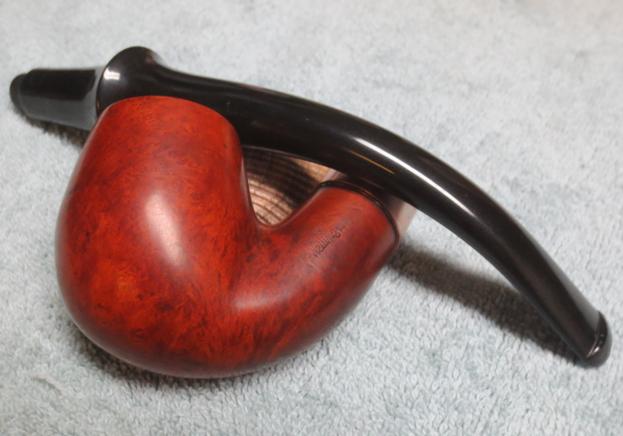
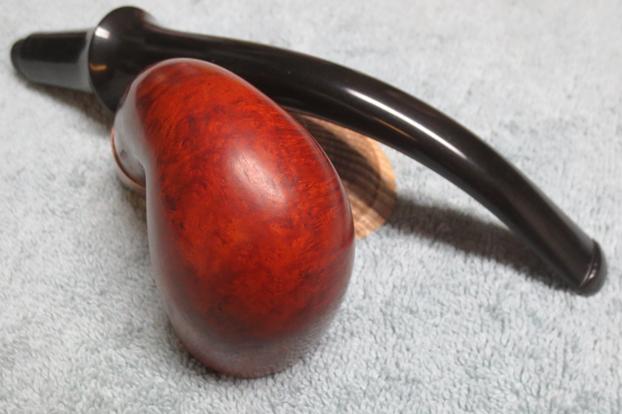
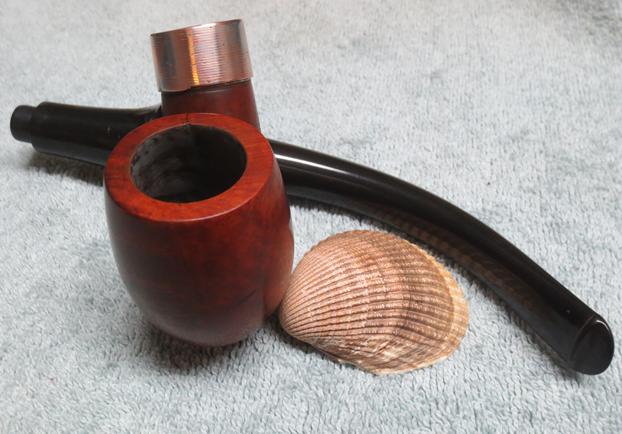
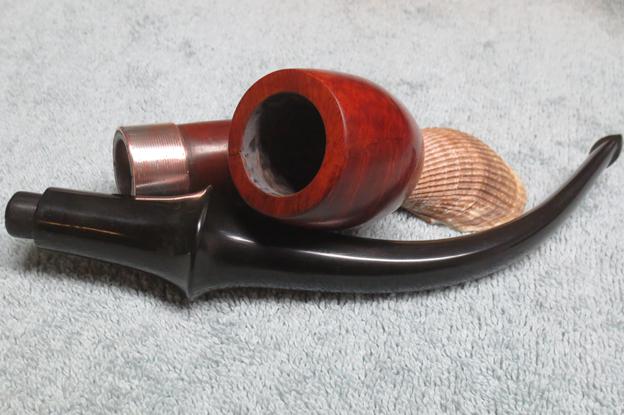
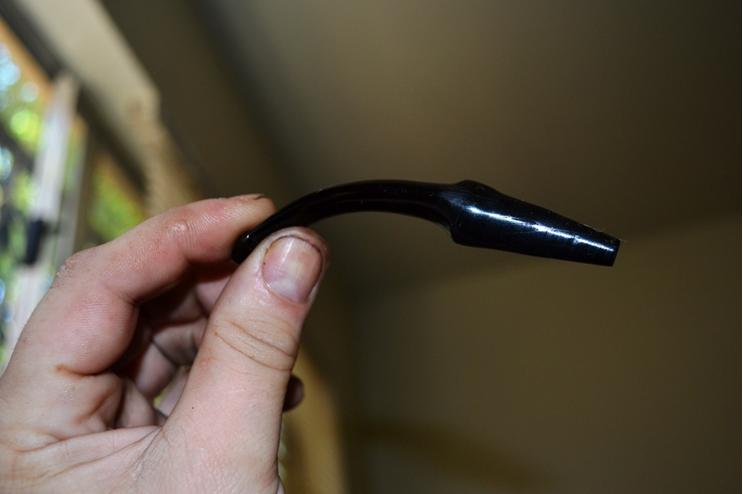
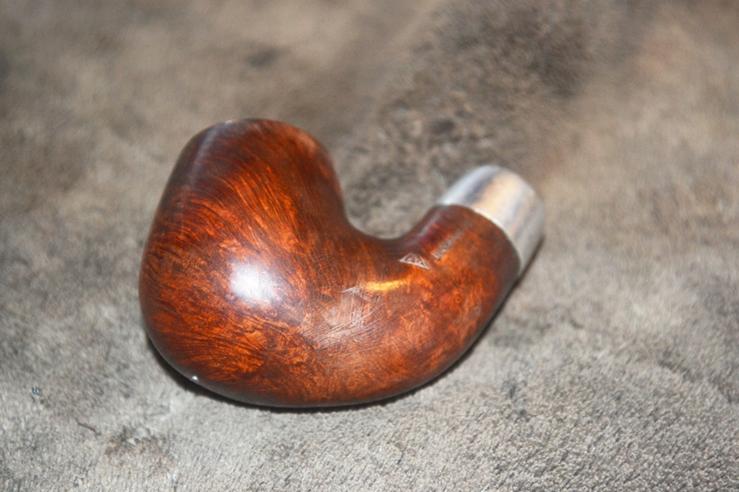
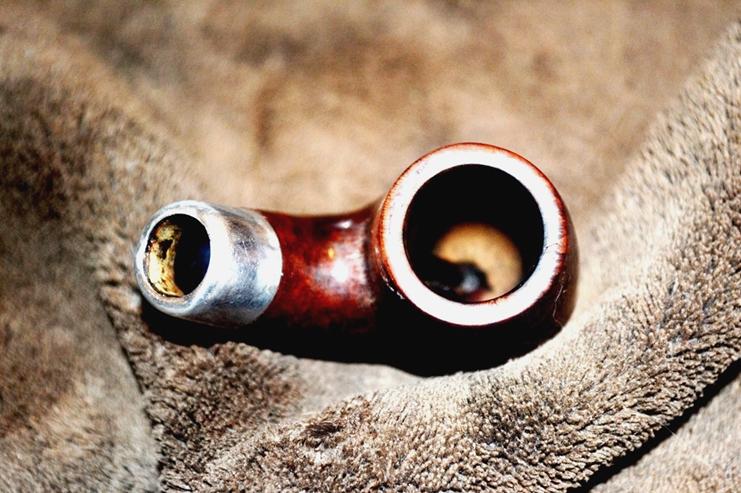
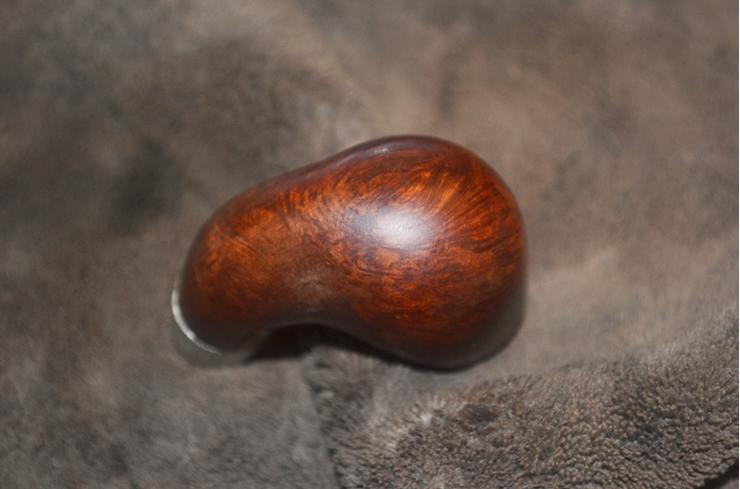
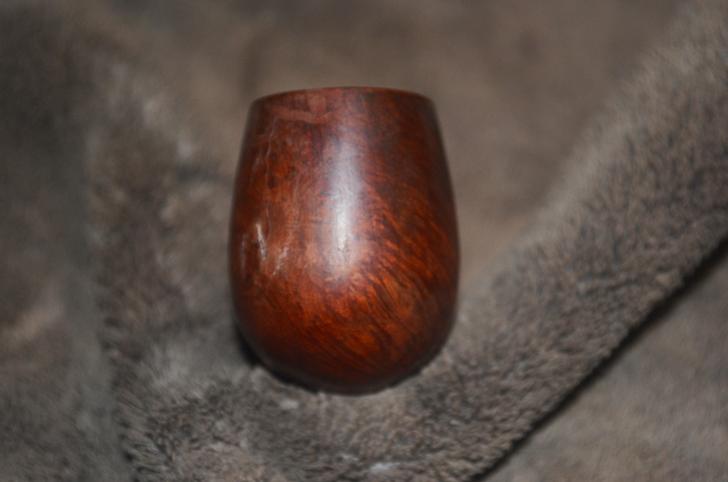
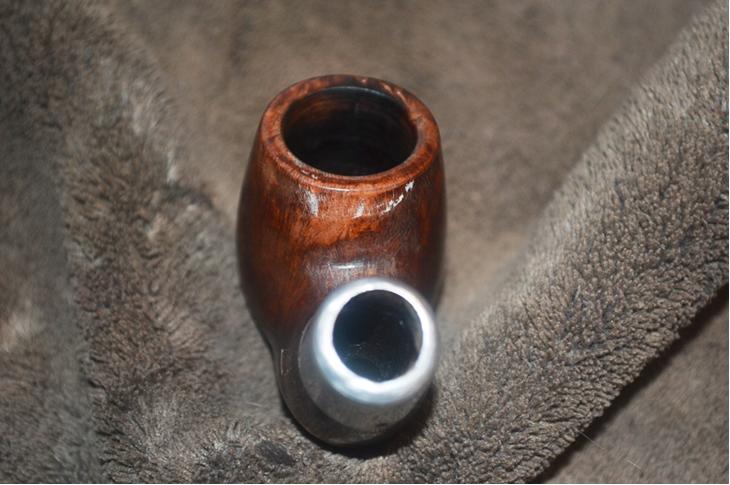
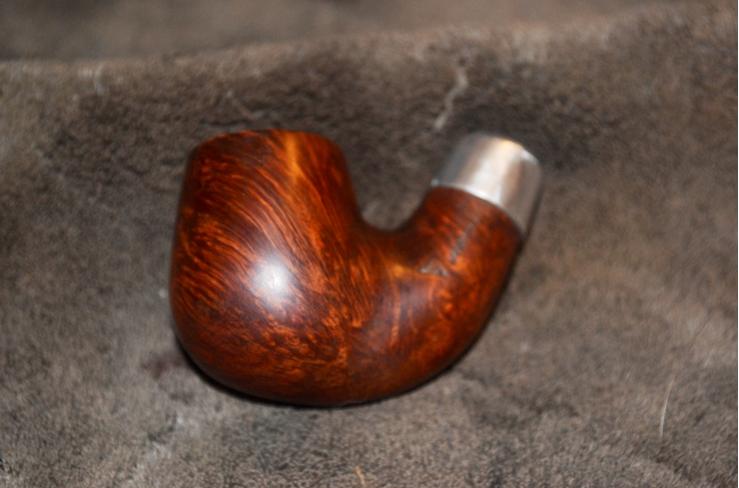
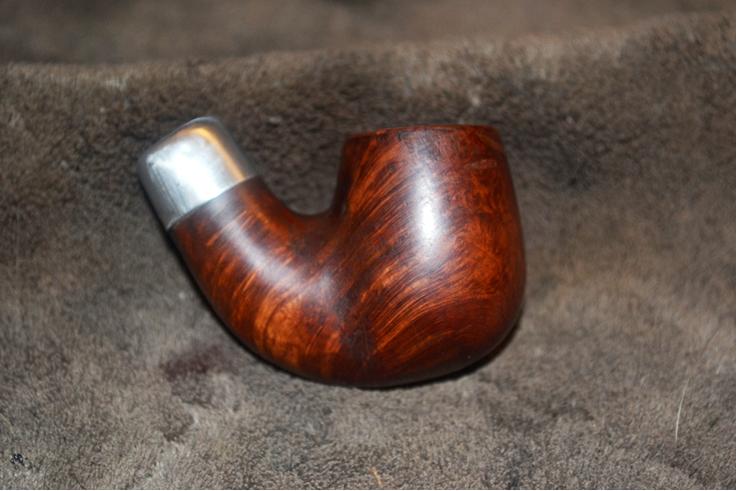
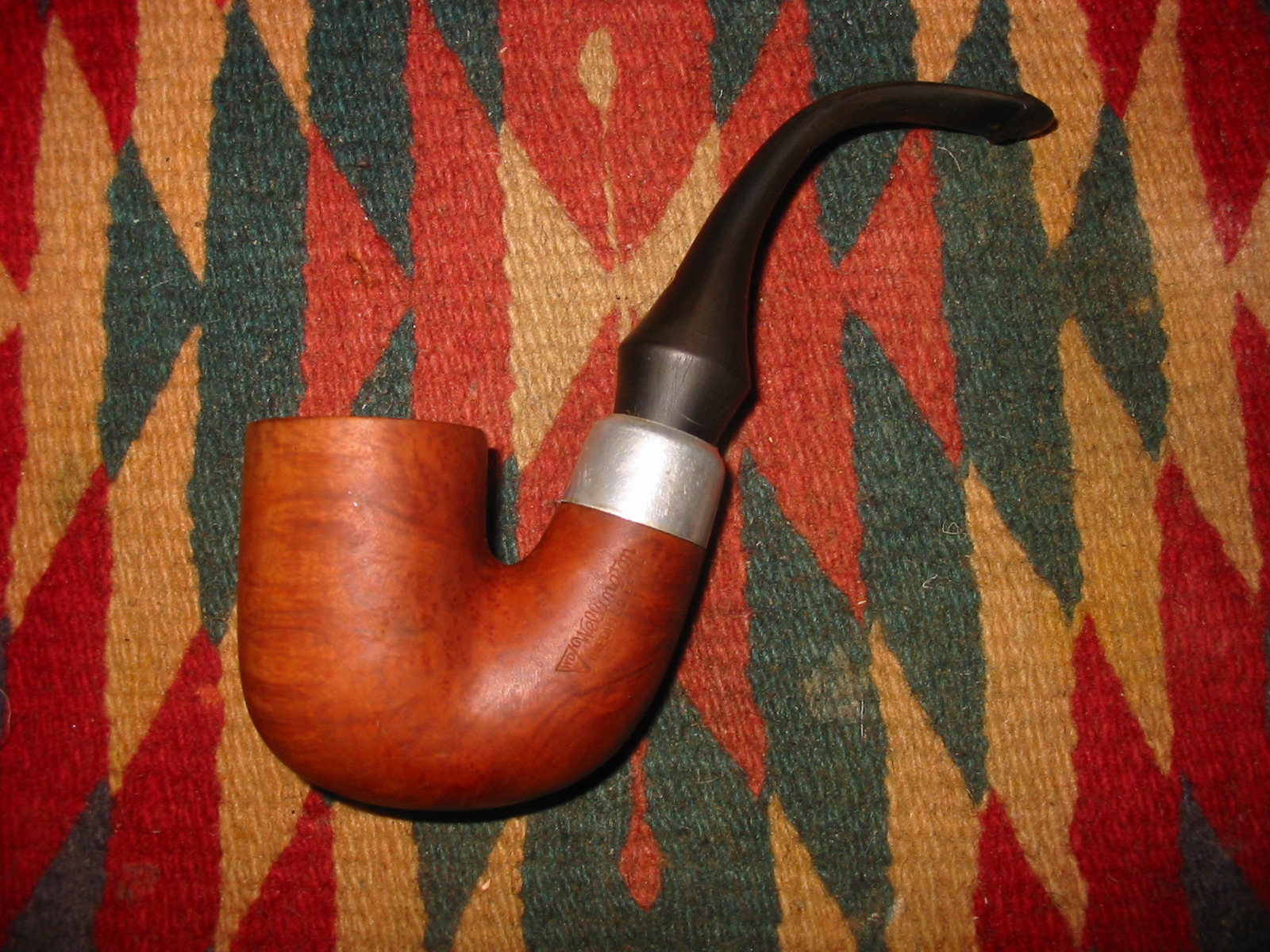
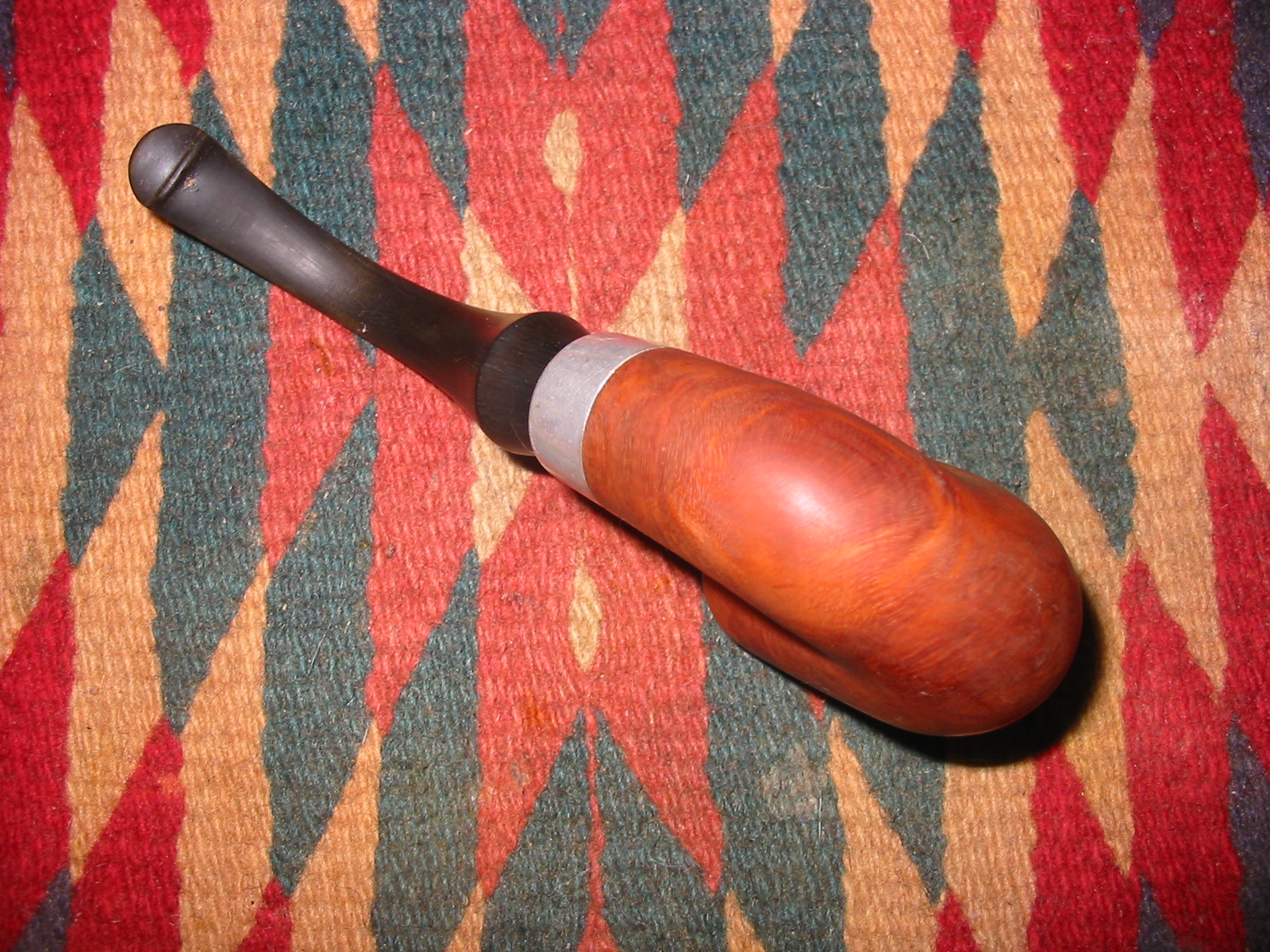
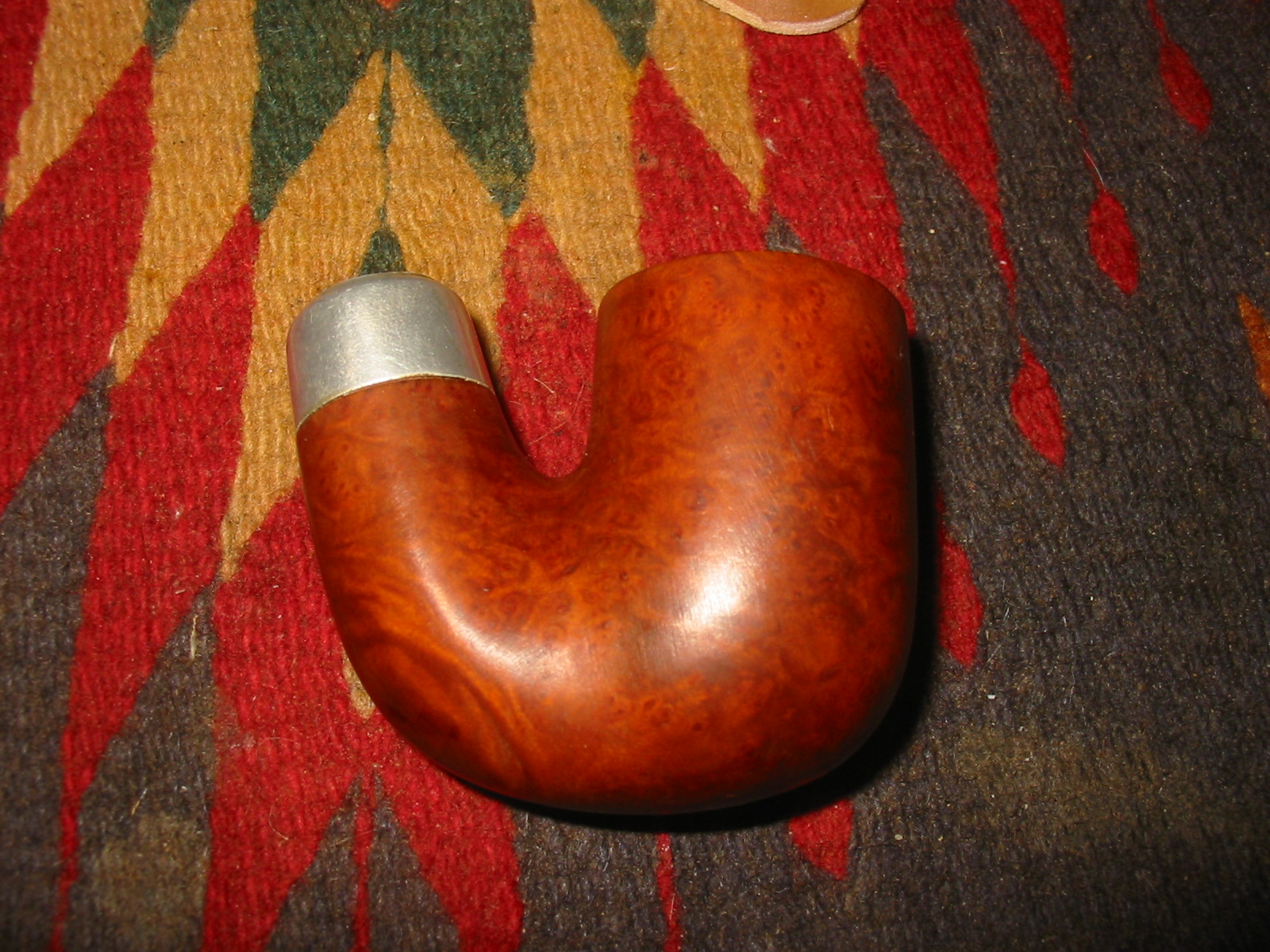
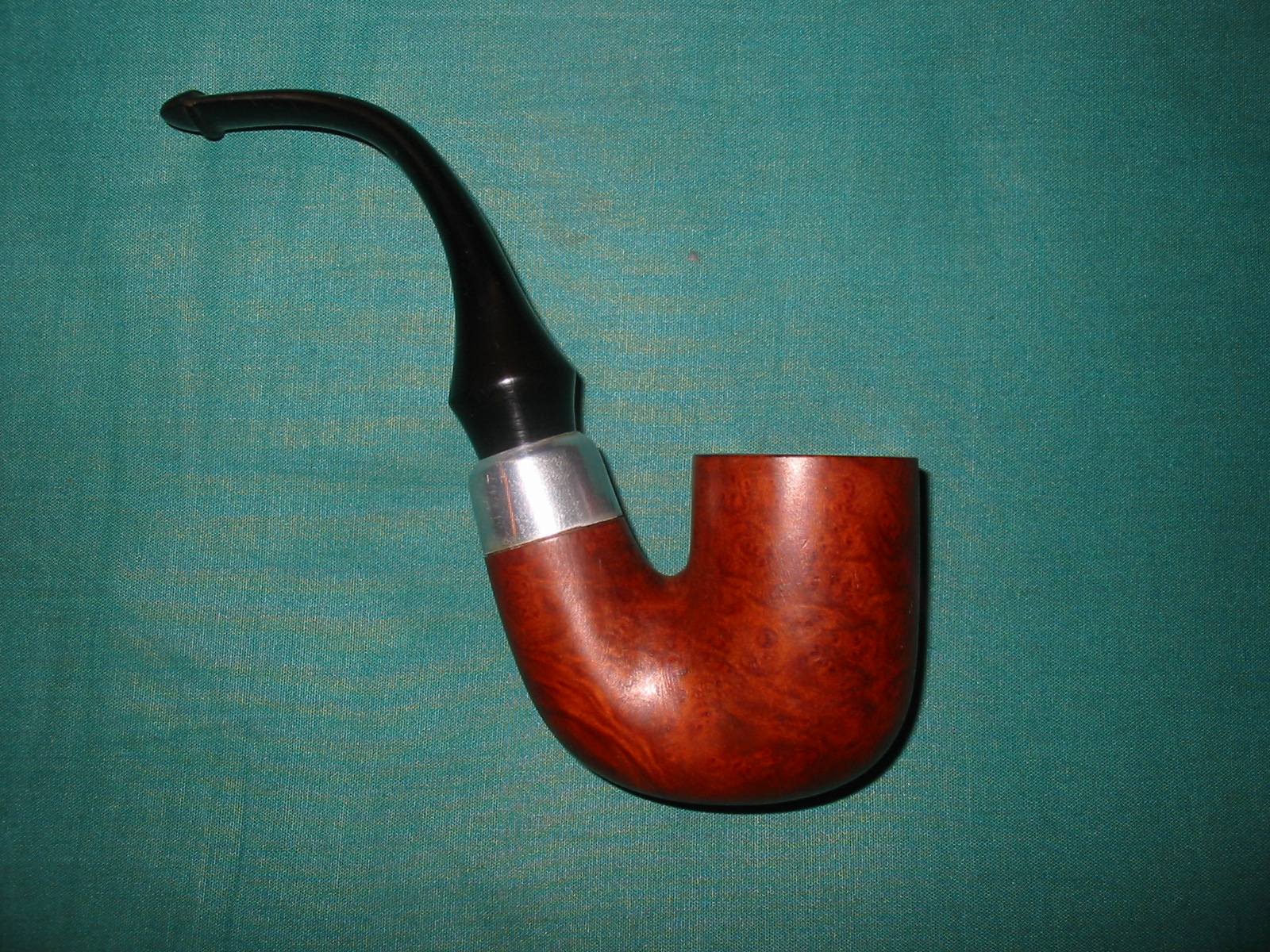
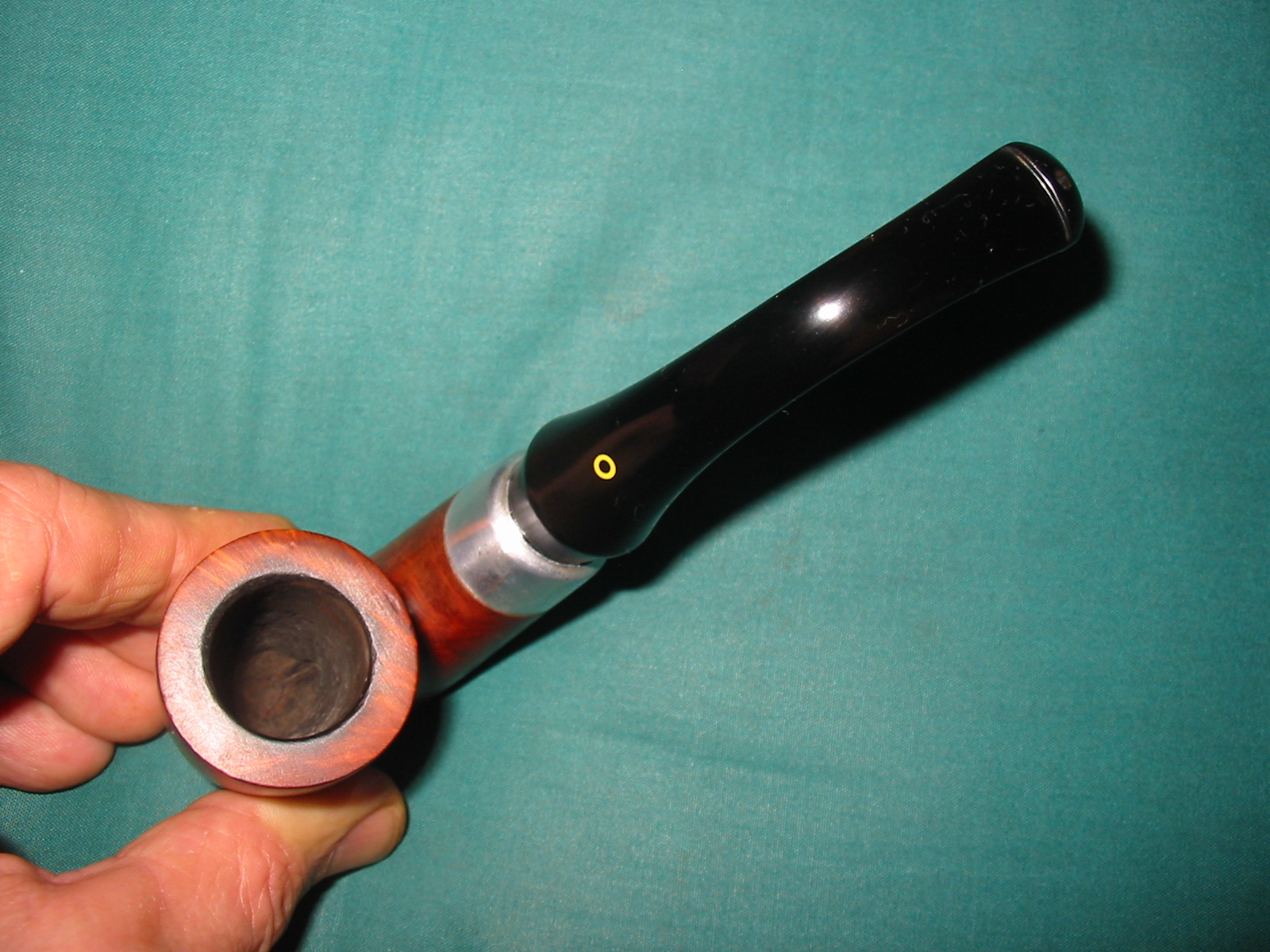
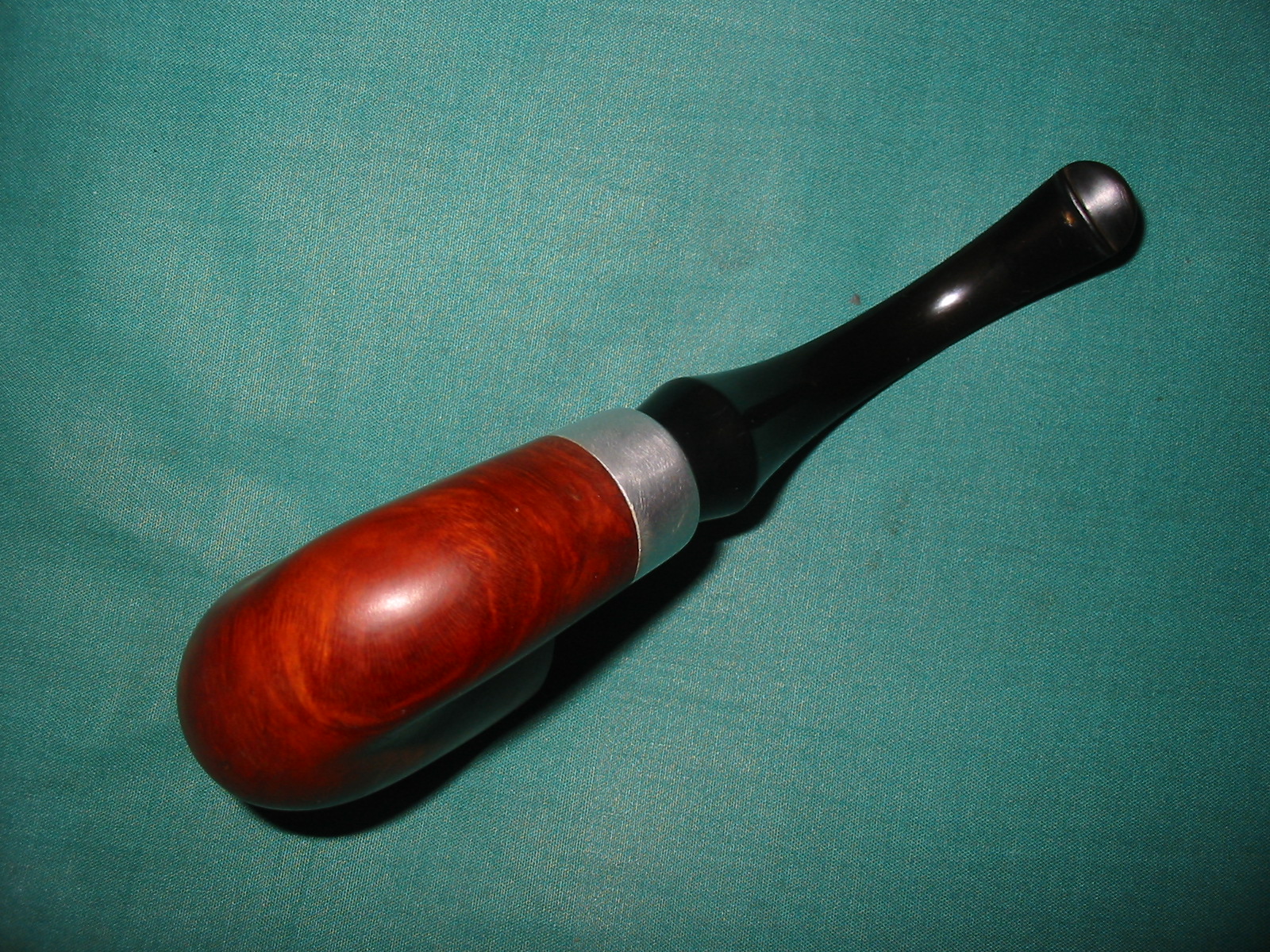
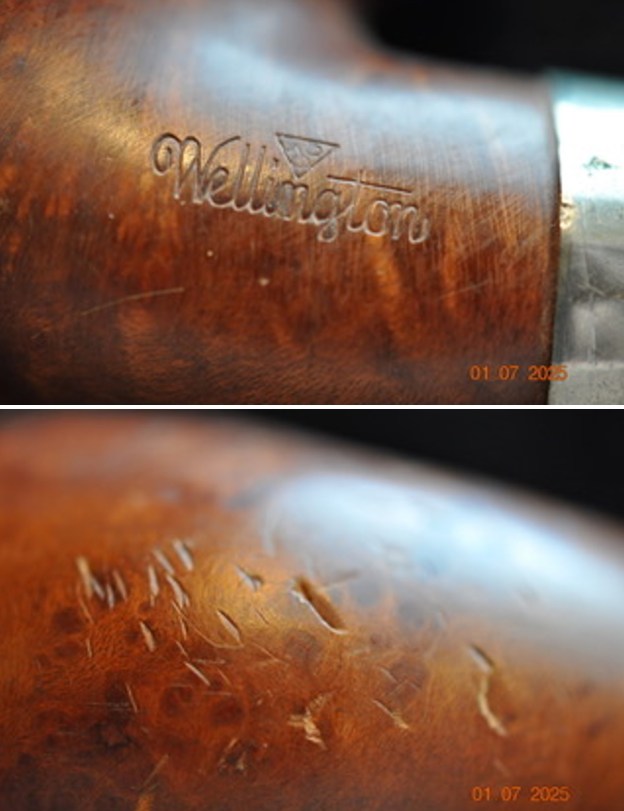
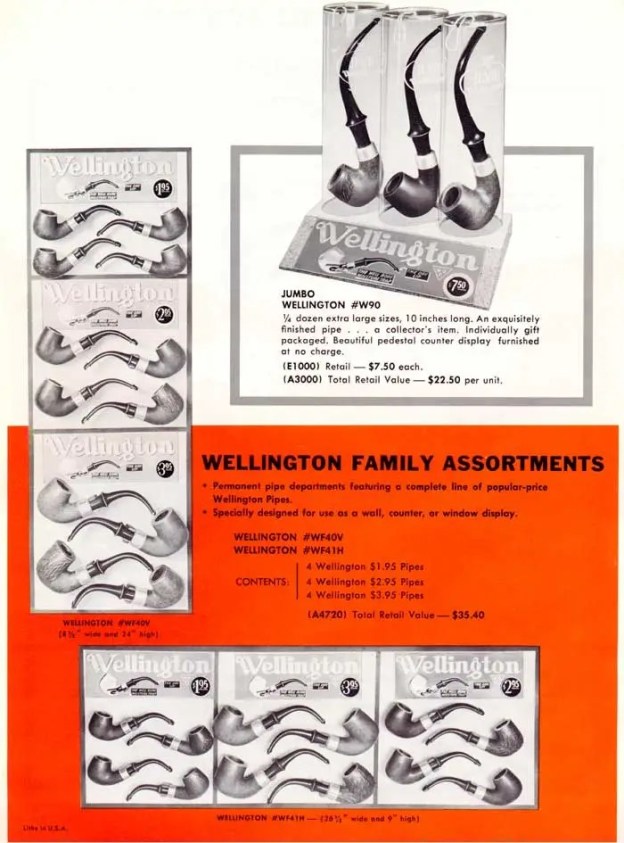
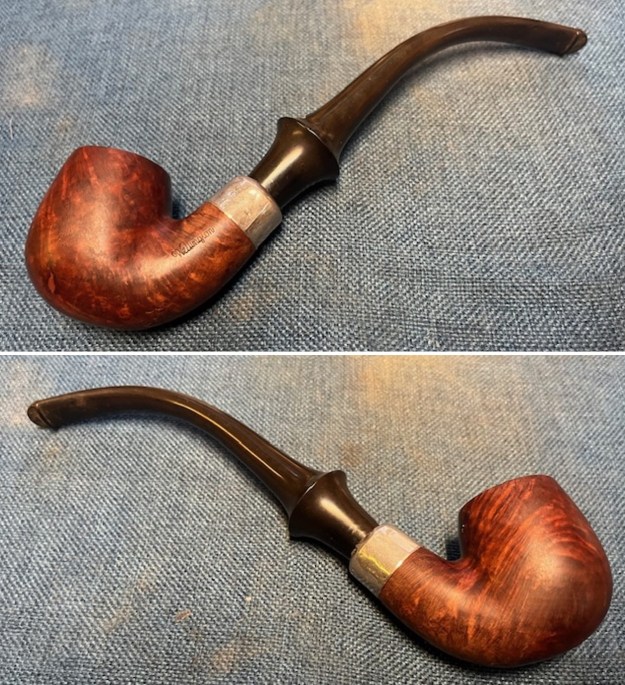
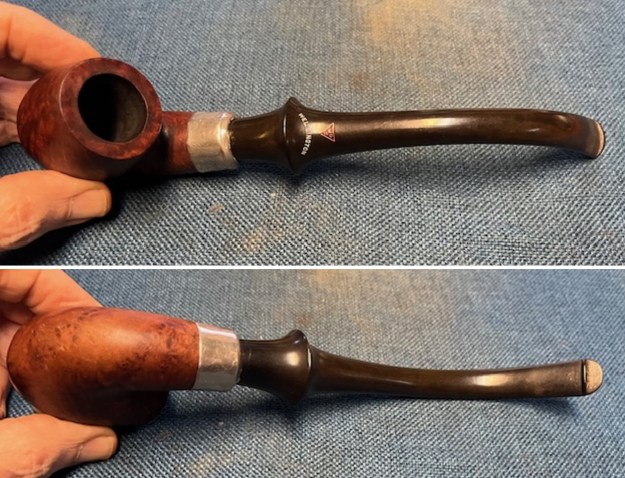
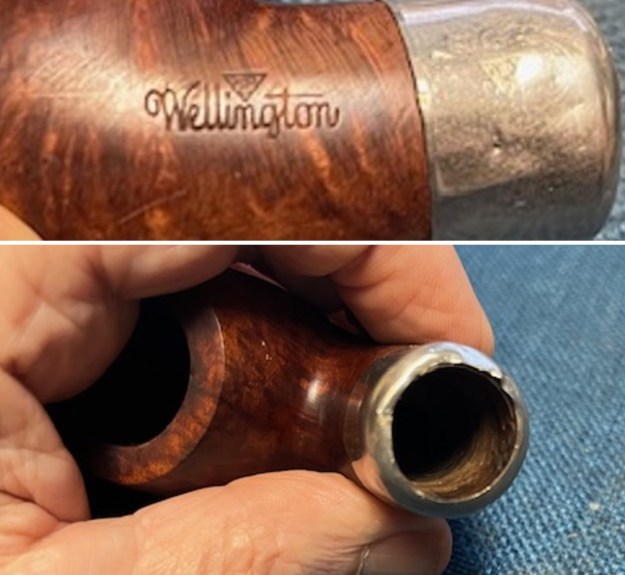
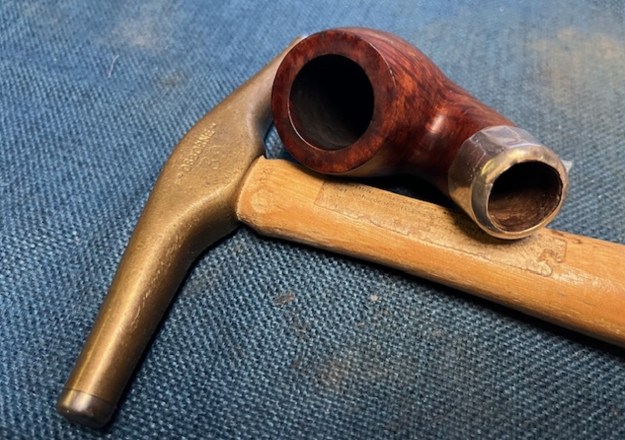
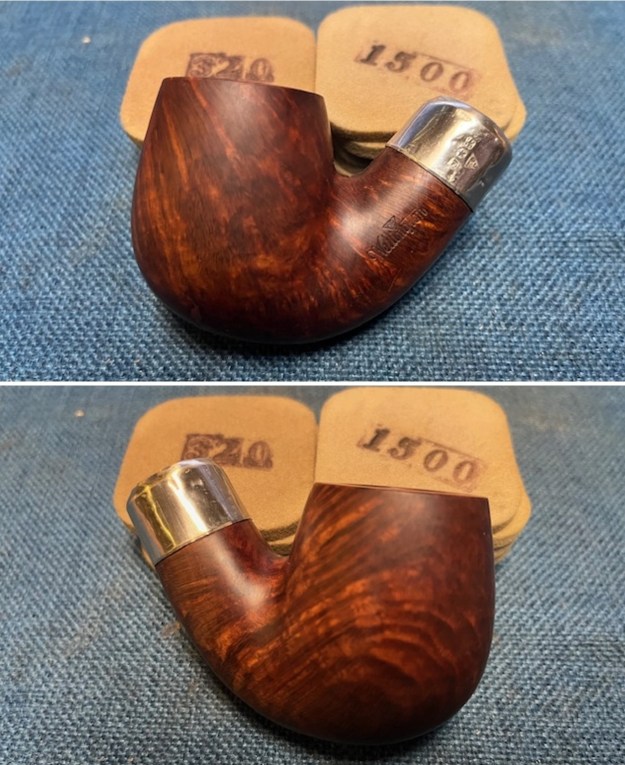
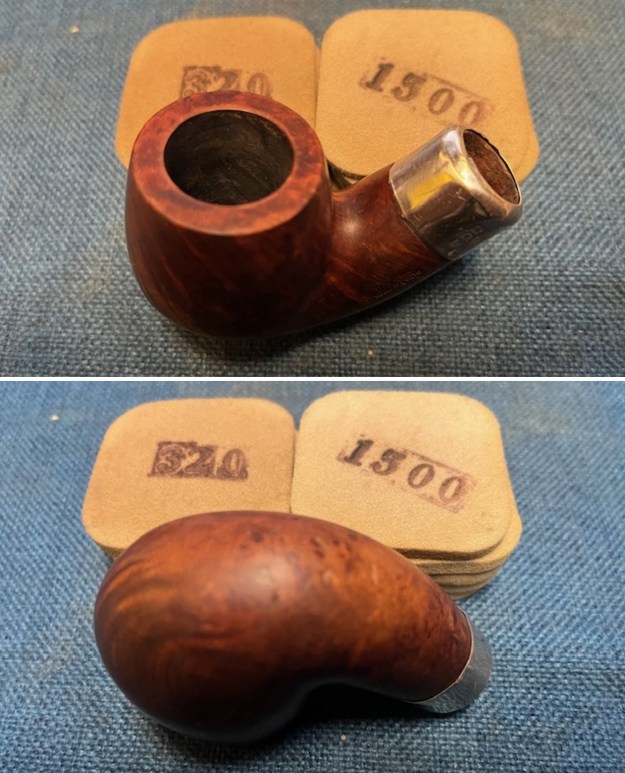
In the box that Jeff recently sent to me there was a large Wellington bowl without the stem. We purchased it from an antique shop in Vancouver, Washington, USA on 04/03/2024. We had cannibalized the stem and sent it to a fellow who needed a Wellington stem. The stamping on the left side of the shank read WDC in a triangle (logo). Under that it is stamped Wellington is script. The nickel ferrule is heavily dented and is stamped WDC in a triangle over three faux hallmarks. Though it is dented it still looks good. The bowl had a thick cake on the walls and an overflow of lava onto the rim top and edges. The smooth finish was very dirty with debris and oils. There were some fills in the bowl sides and some nicks as well from looked like the bowl had been dropped. The nickel ferrule was dented in spots and a little rough but still in solid condition. Jeff took photos of the pipe before he started cleaning it up. Have a look. Jeff took close up photos of the bowl and rim top to show the condition of the bowl and the rim top. You can also see the lava on the rim top, inner edge and the cake in the bowl. He also took photos of the nickel ferrule to show the condition of the metal. You can see the nicks and dents in the metal sides and shank end.He took a photo of the stamping on the left side of the shank. It is clear and readable as noted above. The second photo shows the nicks and scratches in the finish on the bowl heel.I turned to Pipedia’s article on WDC (William Demuth) pipes. It is a great read in terms of the history of the brand (https://pipedia.org/wiki/William_Demuth_Company). I have included one of the advertising flyers on the Wellington Jumbo below. Look at the price of this pipe when was sold.Armed with the information above, I turned my attention to the pipe itself. Jeff had cleaned the pipe with his usual penchant for thoroughness that I really appreciate. He reamed it with a PipNet pipe reamer and cleaned up the reaming with a Savinelli Fitsall Pipe Knife. He scrubbed out the internals with alcohol, pipe cleaners, shank brushes and cotton swabs until the pipe was clean. He scrubbed the exterior of the bowl with Murphy’s Oil Soap and a tooth brush to remove the grime and grit on the briar and the lava on the rim top. The finish looks very good with good looking grain around the bowl and shank. I went through my stems and found a relatively new Wellington stem that was in excellent condition. I have a few here that I have set aside for use on the bowls that come across our path. I fit it in the shank and took photos of the bowl with its new stem. Have a look below. I took close up photos of the bowl, rim top and stem to show how clean the pipe was. The bowl was clean and the rim top and the inner edge looked good. The stem was clean on the outside but I would need to clean the internals. There was light tooth chatter on both sides and some spots of oxidation.I took a photo of the stamping on the left side of the shank. It is readable and read as noted above. I also removed the stem from the shank and took a photo of the shank end to show some of the damage on the nickel ferrule. I heated the ferrule with a lighter and was able to remove it from the shank. I used a small furniture tack hammer and probe to tap out the larger dents in the metal. I fit it back on the shank end and tapped the shank end to carefully smooth out the damaged areas. I sanded the inner edge of the ferrule with a folded piece of 220 grit sandpaper to smooth out the sharp edges. While not perfect, it certainly was an improvement.I turned my attention to the briar. I sanded the bowl with 320-3500 grit sanding pads to try and minimize the scratches in the wood. I wiped the bowl down with a damp cloth after each sanding pad and by the end the briar was smoother and had begun to take on a shine. There were some fills in the briar but there was also some nice grain that stood out. I polished the briar with micromesh sanding pads – dry sanding with 1500-12000 grit sanding pads. I wiped it down after each pad with the cloth. The bowl continued to develop a deeper shine. I worked some Before & After Restoration Balm into the briar with my finger tips. I let it sit on the bowl for 10 minutes and then buffed it off with a paper towel and soft cloth. The product is a great addition to the restoration work. It enlivens, enriches and protects the briar while giving it a deep glow. It is a product I use on every pipe I restore. I set the bowl aside and turned my attention to the stem. I sanded the light chatter on the stem surface and the scratches on the shank end of the vulcanite with 220 grit sandpaper. It looked better. Polishing would finish the work. I paused the polishing for a bit to clean out the airway in the stem. I immediately felt something in the airway that was blocking and reducing the diameter of the airway. It took a bit of work with long pipe cleaners but I eventually removed a Medico/Grabow style paper filter that had migrated up the stem inside. It came out and was very dirty. I cleaned out the inside of the stem with long pipe cleaners and used them straight and then repeated the process with them folded. I cleaned from both directions and it is clean and smells better.I continued the sanding process with 320-3500 grit sanding pads. After each pad I wiped the stem down with some Obsidian Oil to clearly show me the scratches and areas that still needed work. It was really looking good.I polished the stem with micromesh sanding pads – dry sanding with 1500-12000 grit pads. Once again, I wiped it down between each pad with Obsidian Oil. I further polished it with Before and After Stem Polish – both Fine and Extra Fine. I gave it another rub down with Obsidian Oil. It looked very good. I am really happy with the way that this WDC Wellington Jumbo Bent Billiard turned out. It really is a beautiful looking pipe with a unique shape and combining a smooth bowl, a nickel ferrule and a vulcanite stem. The briar really came alive with the buffing. The rich brown stains of the finish gave the pipe a sense of depth with the polishing and waxing. I carefully buffed the pipe with Blue Diamond on the buffing wheel using a light touch on the briar. I gave the bowl and the stem multiple coats of carnauba wax on the buffing wheel. I buffed the pipe with a clean buffing pad to raise the shine. I hand buffed the pipe with a microfiber cloth to deepen the shine. The finished Wellington Jumber Bent Billiard really is a beauty and feels great in the hand and looks very good. Give the finished pipe a look in the photos below. The dimensions of the pipe are Length: 9 inches, Height: 2 inches, Outside diameter of the bowl: 1 3/8 inches, Chamber diameter: 7/8 of an inch. The weight of the pipe is 95 grams/3.32 ounces. The pipe will be going in the mail to the pipe man who will carry on the trust with this old pipe. I think he will enjoy smoking it for years to come. Thanks for reading this blog and my reflections on the pipe while I worked on it. It was a fun one to work on!
A Fine Tale of a Union for this older WDC Wellington Bent Billiard


by Steve Laug

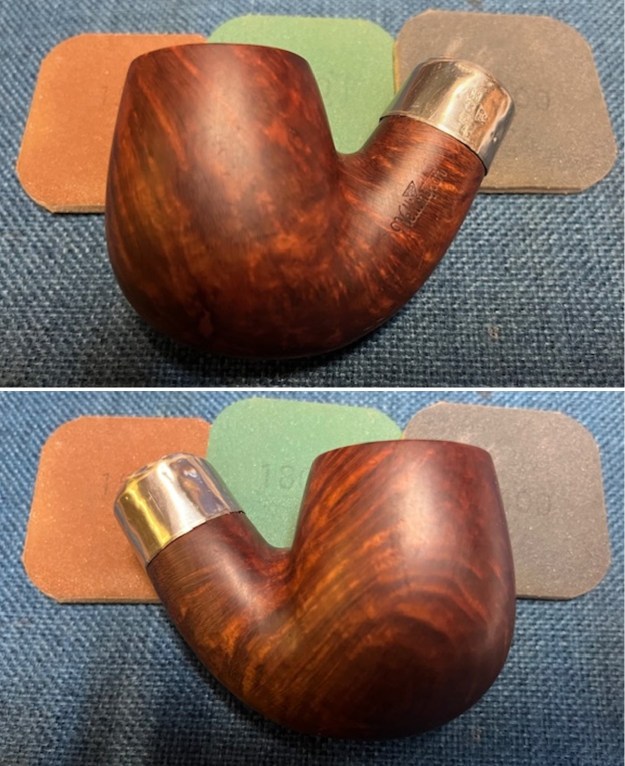
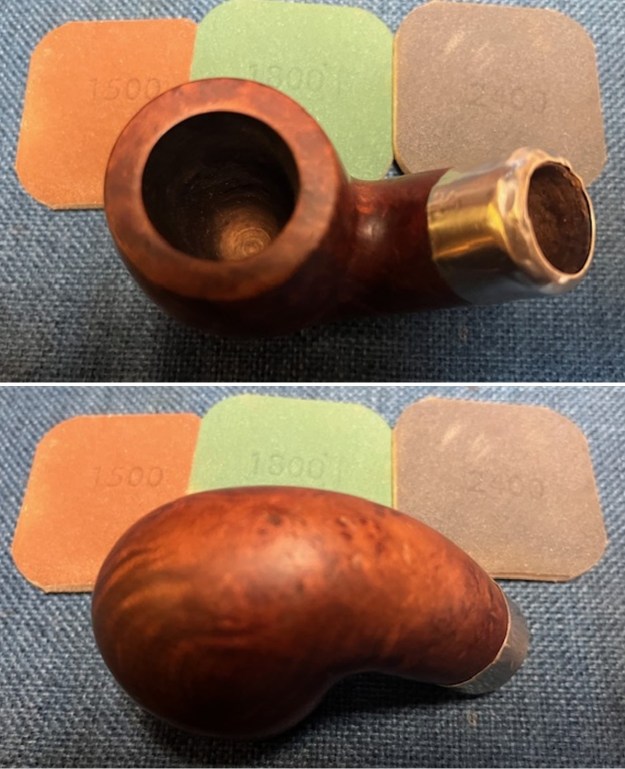
The next pipe on the table is a bit of a change of pace. I have had this old WDC Wellington bowl in the box here for a very long time and never had a stem for it. Somewhere in its long journey the stem had been displaced and when we received it the pipe was a sad bowl with no stem. I held onto it in hopes that one day I would find a stem that would be the right one. Every so often I would come across a large Wellington stem and dig out the bowl to see if it would fit only to be disappointed and drop it back in the box of bowl. Well, that lonely bowl was about to meet its correct stem! I was looking through a new batch of stems I picked up and I could not believe what I saw there. It was the exact stem I had been waiting for – a smaller Wellington stem with their version of the P-lip. In fact, my guess is that it is an older stem as the airway entrance on the stem is on top of the P exactly like Peterson’s. I know that later it was moved to the end of the stem with a lot of legal wrangling. Leaving all of that aside a union was about to happen. The lonely bowl would be meeting its mate.

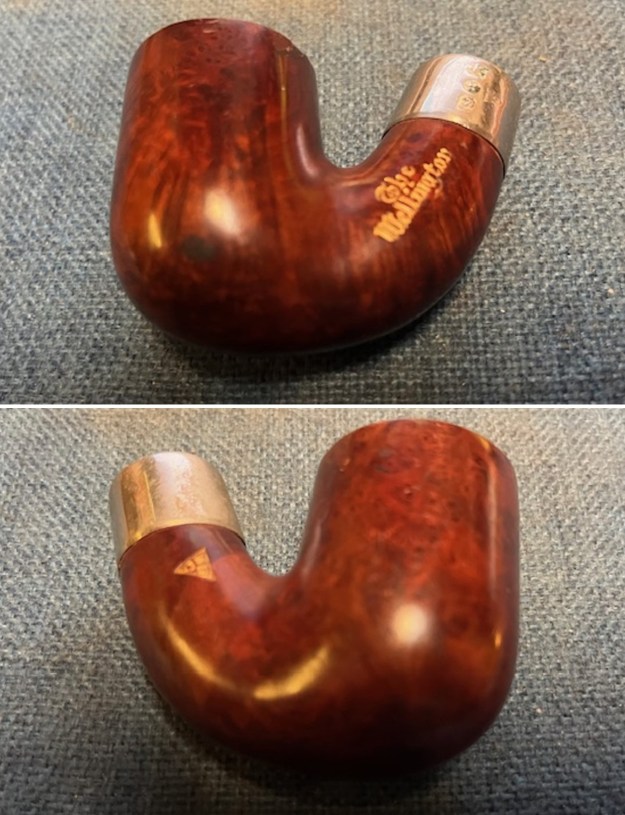
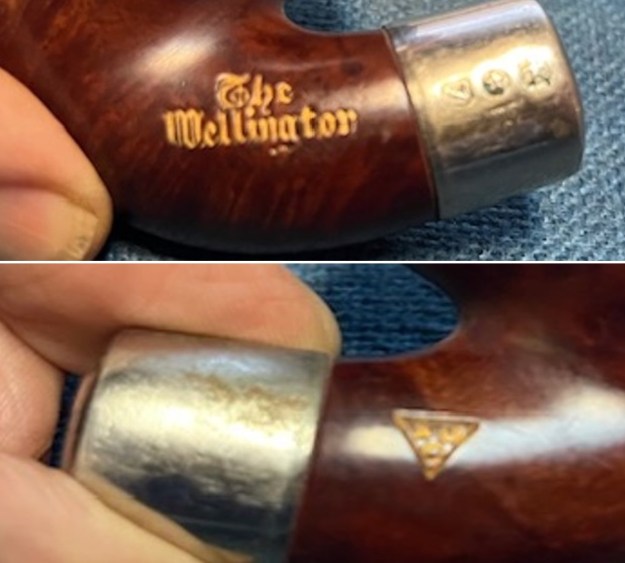
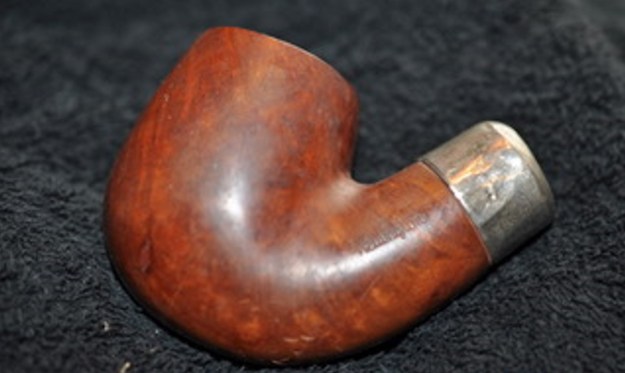
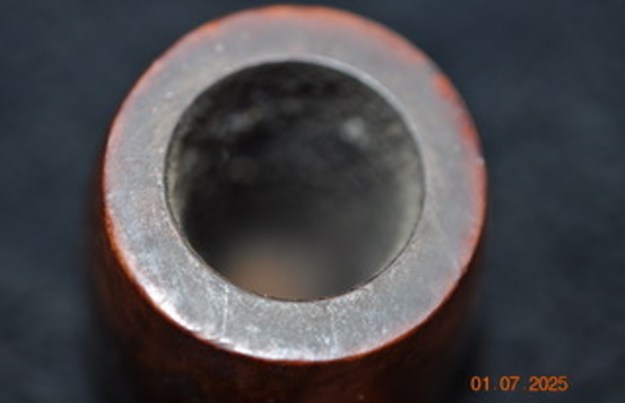
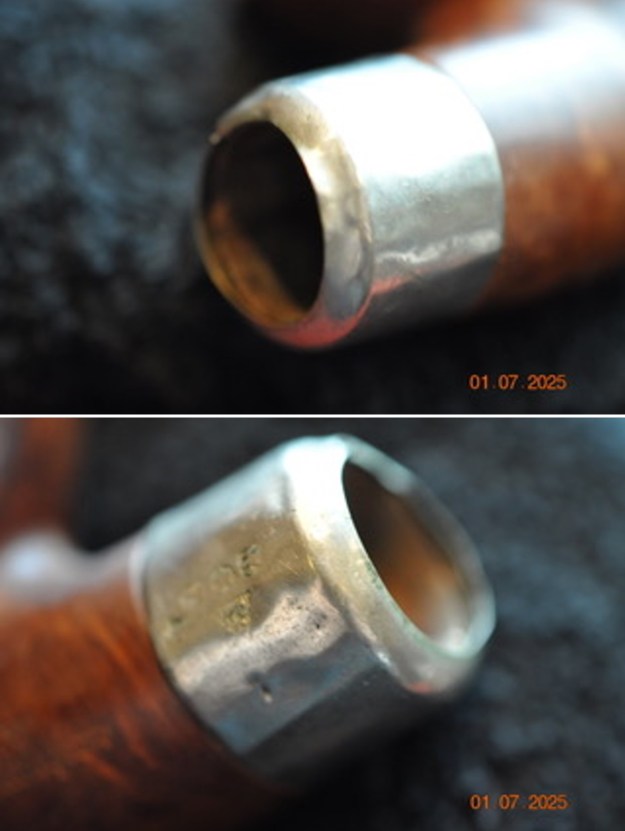
Let’s not get ahead of ourselves. First let’s meet the main characters of the union. The first player in this budding romance is the old and lonely bowl that is quite a beauty. The finish is shiny with a varnish coat. The stamping on the left and right side of the shank are stamped with gold leaf. On the left it reads The [over] Wellington and on the right side is the WDC triangle logo. On the tarnished nickel ferrule were the expected faux hallmarks identifying it as an American Pipe and underneath those is the WDC triangle logo. The bowl had been reamed somewhere along the way and other than having a very light cake and dust was in decent condition. The rim top had a light coat of lava that would need to go. The internals would need a refresh. Nevertheless, the pipe really was quite a beauty and I hope you can see why I held onto it so long. Here are some photos of the bowl before I started my work on it. I also took some photos of golden finery and identifying marks. She really is quite a beauty and for her age in excellent condition. There is no wear on her jewellery. She is ready to dance.
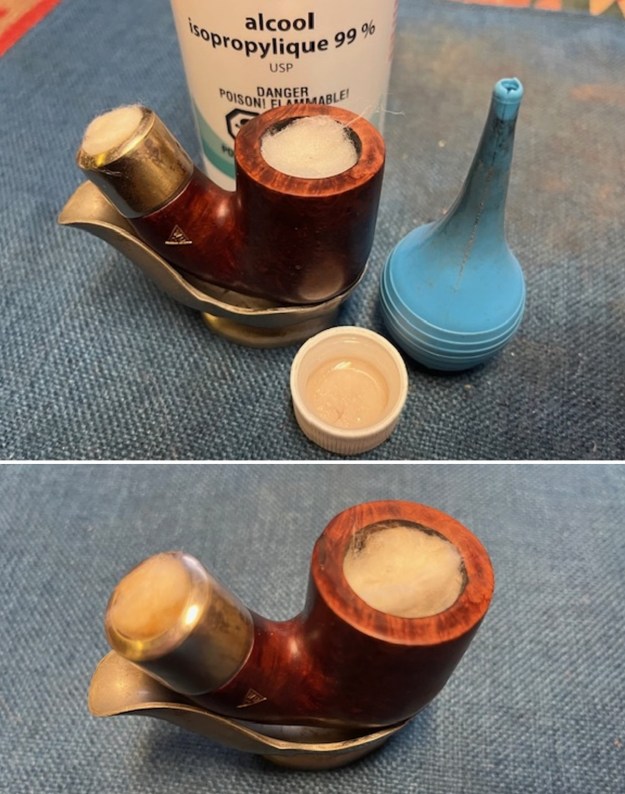
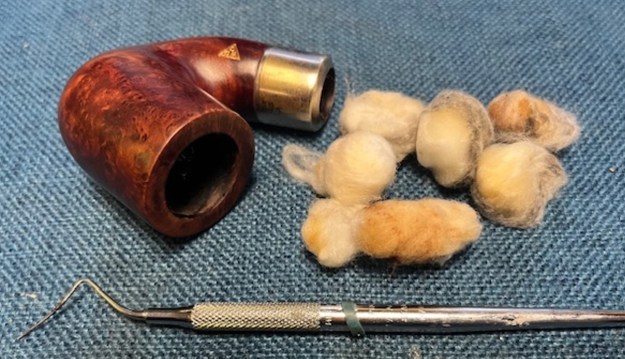
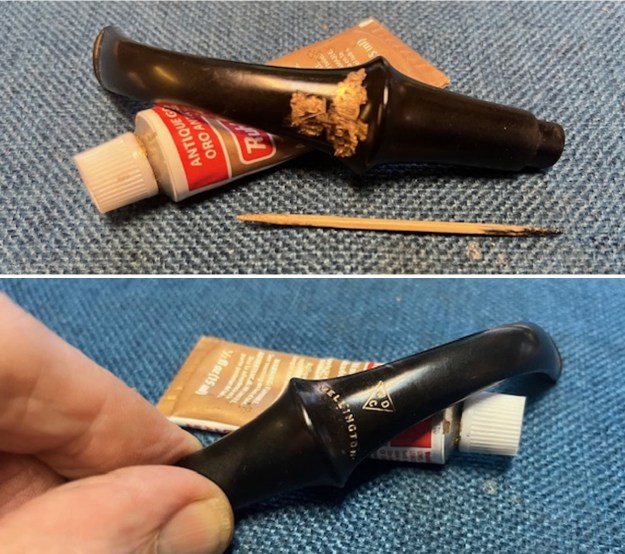
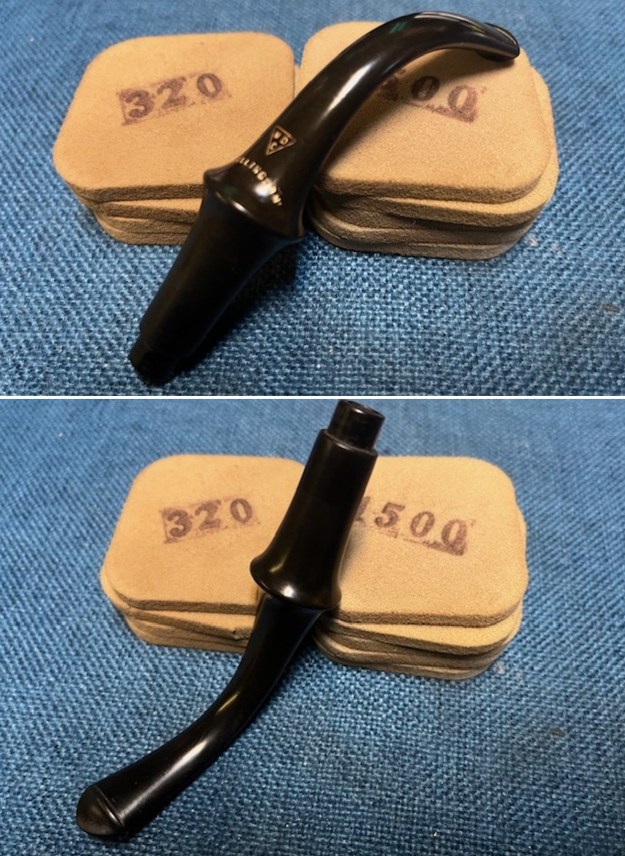
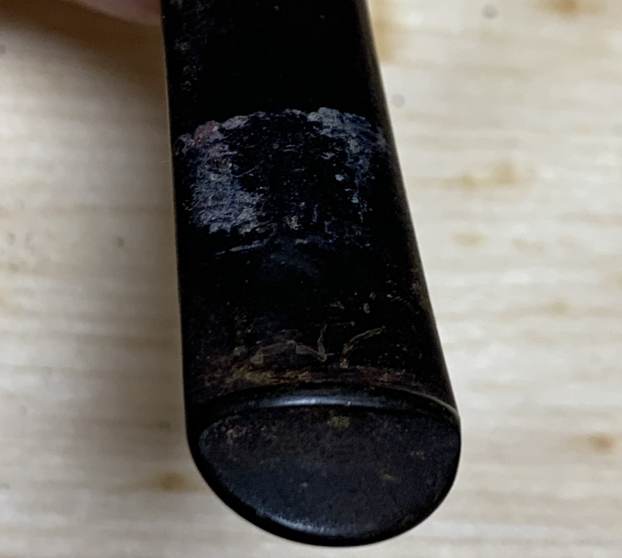
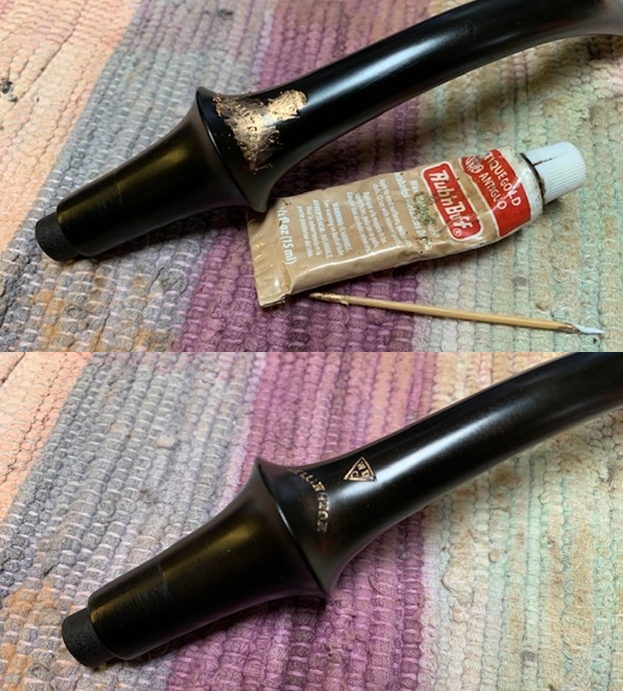
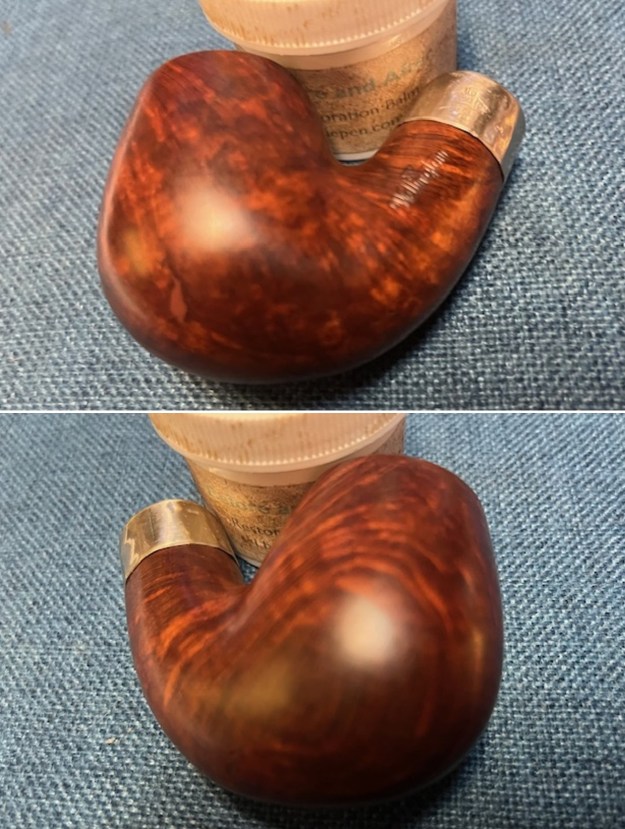
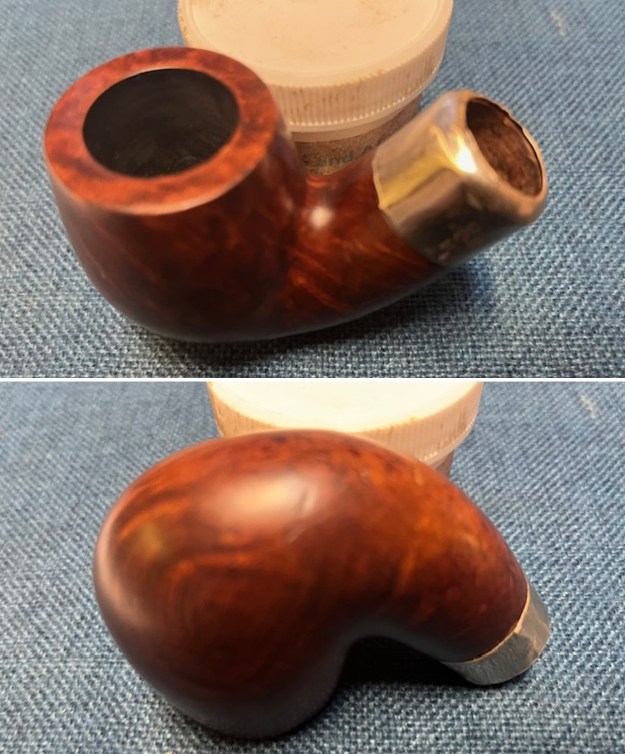
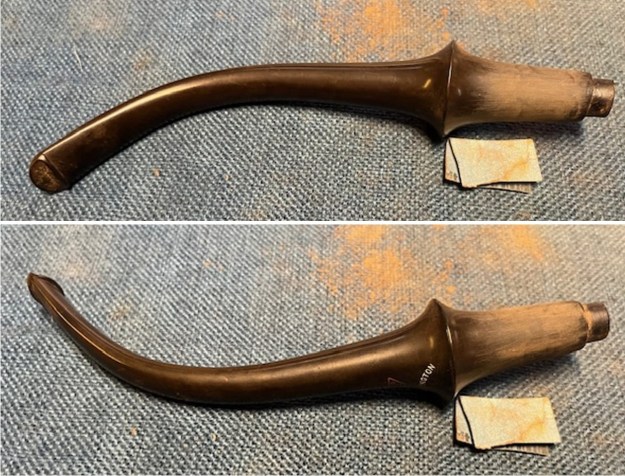
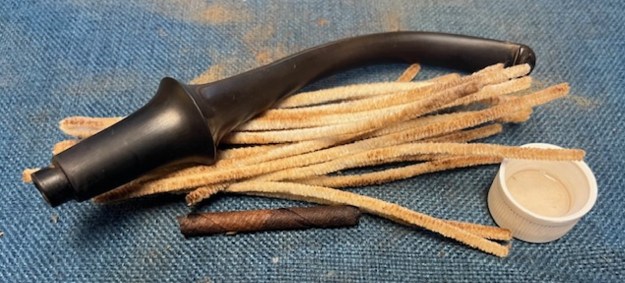
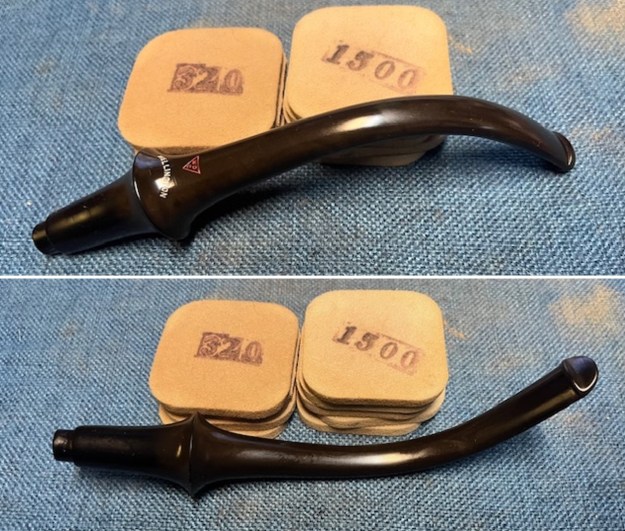
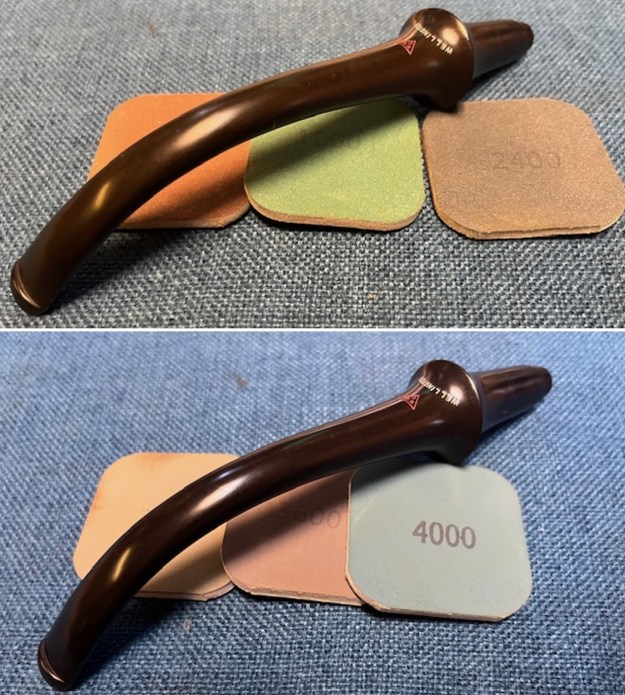
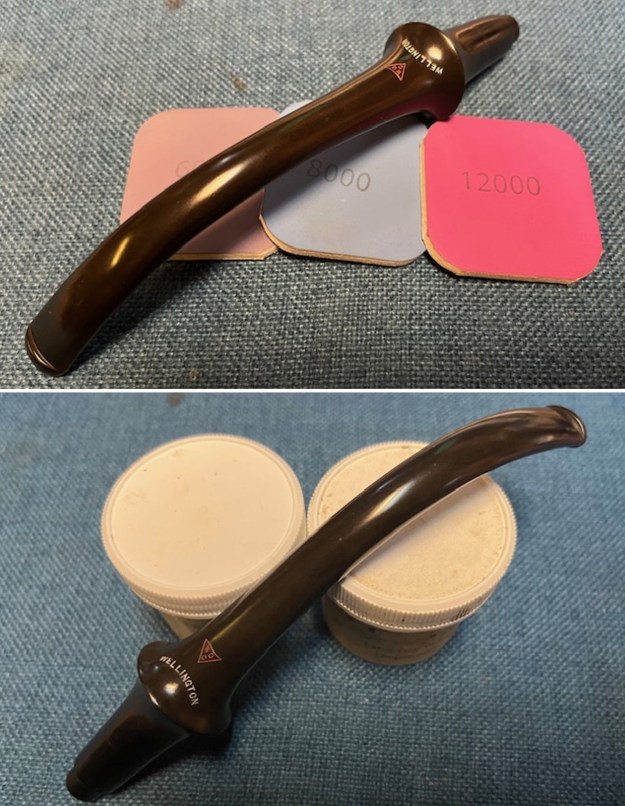
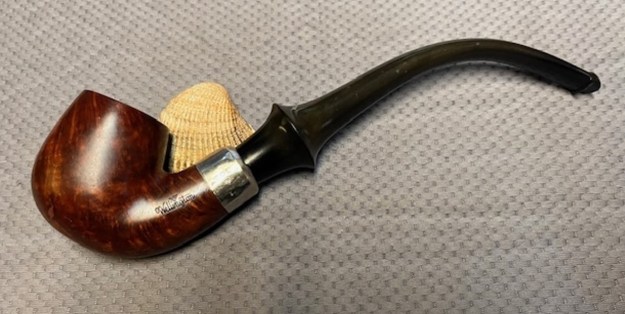
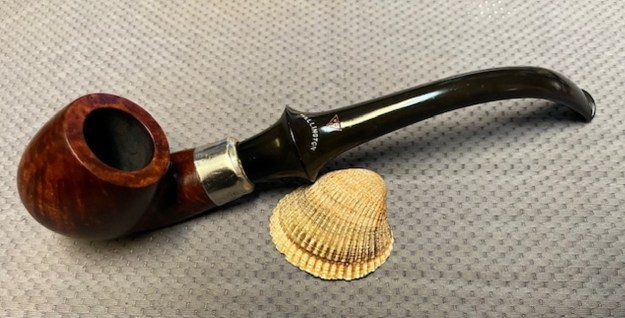
The second character in the romance is the late to the scene stem. It is clear that he had been around a long time. It is older solid rubber so there was no oxidation on the surface. There were scratches and some tooth chatter near the button. But thankfully no one had left their tooth marks for posterity on its surface. It actually looked pretty good for an old timer. The gold stamped jewellery on the stem top was faded over time but it was still visible. It was still a handsome stem. The gold jewellery read Wellington arched over the WDC triangle logo and matched the bowl. It was going to be fun to prepare them to meet each other. Come with me for the preparations.For those of us who can’t wait for the final reveal (and that does include me by the way!) I introduced the stem and the bowl for the first time and took a series of photos. I think it is going to look quite amazing once they both clean up a bit and meet each other in their a renewal of their former glory. Like any older romance you want to as much about the lovely pair as you can. You want to know their history and what they were like years ago! To get that kind of background information on the pair I turned to Pipedia’s article on WDC (William Demuth) pipes and to reintroduce myself to the Wellington Family of pipes. It is a great read in terms of the history of the brand (https://pipedia.org/wiki/William_Demuth_Company). I have included one of the advertising flyers on the Wellington Family below. Look at the price of this pipe when it was sold.Look at the lovely “youngins” in the photos of the advert. They were quite stunning. Now it was time to work on the pair individually in preparation for their union. I decided to work on the bride first – preparing the bowl. It was not too bad but it needed some attention. I cleaned up the light cake in the bowl with a Savinelli Fitsall Pipe Knife and took it back to bare briar all the way down the bowl. I ran my finger over the bowl walls and there were no issues that I could see or feel. I sanded the walls of the bowl with a piece of 220 grit sandpaper wrapped around a piece of dowel. It felt and looked much better.I cleaned up the rim top, scraping off the thick lava coat with the edge of the Savinelli Knife. I sanded it with a 320 grit sanding pad to finish the cleanup. There was some nice grain underneath the debris. I also found a small fill on the back-left side of the rim top that went down the side of the bowl for a little way. No issues as the fill was solid.I cleaned up the finish on the bowl and removed the nicks and marks on the finish by carefully sanding it with the 320-3500 grit sanding pads. I took off the shiny finish very well and revealed some nice grain below the surface. I sanded the nickel ferrule with the higher grit pads – 2000-3500 to remove the oxidation and some of the pitting on the topside of the ferrule. I cleaned out the internals of the bowl and stem with pipe cleaners, cotton swabs and alcohol. It was surprisingly dirty. The airway in the bowl was clogged with tars so it took a bit to open it back up but the airflow is restored and the pipe is clean again after many years. I decided to “deghost” the bowl with cotton bolls and 99% isopropyl alcohol. I pressed cotton bolls into the sump on the shank and into the bowl completely filling in the openings with the cotton. I then used an ear syringe to transfer the alcohol into the bowl and shank opening. I find that this gives me more control than pouring and also saves the finish on the bowl from any damage by the alcohol. I set the bowl aside for a few hours to let the cotton and alcohol do its work wicking the oils and tars out of the bowl. I let it sit for 4-5 hours them took photos of the bowl and cotton. I pulled the cotton out of the shank and the bowl with a dental pick. It had drawn out a lot oils and tars from the bowl and shank. While the bowl air dried after removing all the cotton bolls I turned my attention to the other partner in the union – the stem. I touched up the stamping on the top side of the saddle stem. I used some Rub’n Buff Antique gold to touch up the stamping. I worked it into the letters with a tooth pick. I buffed it off with a soft cotton cloth. The stamping is looking much better.I sanded the scratching on the tenon end of the stem and the tooth chatter on the bit end with 320-3500 grit sanding pads. I quickly made short order of these blemishes on the old stem. I was one step closer to being ready to meet the bowl. I polished the old hard rubber stem with micromesh sanding pads – 1500-12000 grit pads. I wiped it down with Obsidian Oil after each sanding pad. I used Before & After Pipe Polish – both Fine and Extra Fine to further polish the stem. I rubbed it down with a final coat of Obsidian Oil and let it dry. Now it was time to reintroduce the lovely pair. The music was playing… you can almost here the sound of “First Time Every I saw your Face” flowing in the background. The restored bowl and stem step out to meet one another. Once united the briar bowl and the stem back together this WDC Wellington Bent Billiard revealed its stunning beauty. The union brought the old pair together – the polished briar, the nickel ferrule and the hard rubber were a winning combination. The grain that shone through the polished finish is stunning. I put the stem back on the bowl and carefully buffed the pipe with Blue Diamond on the buffing wheel. I gave the bowl and the stem multiple coats of carnauba wax on the buffing wheel. I buffed the entire pipe with a clean buffing pad which really brings the shine out with the wax. I hand buffed the pipe with a microfiber cloth to deepen the shine. The lovely newly joined Wellington Bent Billiard fits nicely in the hand and feels great and will truly be a pipe to be smoked any time really – while sitting and reading or listening to music. Give the finished pipe a look in the photos below. The dimensions of the pipe are Length: 5 ½ inches, Height: 1 ¾ inches, Outside diameter of the bowl: 1 ¼ inches, Chamber diameter: 7/8 of an inch. The weight of the pipe is 54 grams/1.87 ounces. I will be adding it to the American Pipe Makers Section of the rebornpipes store soon. If you are interested in adding this pipe to your collection send me a message or an email. Thanks for reading this blog and my reflections on the pipe while I worked on it. I appreciate your time to spend reading this one. Thank you.

Major Repairs to a WDC Wellington Jumbo


Blog by Kenneth Lieblich

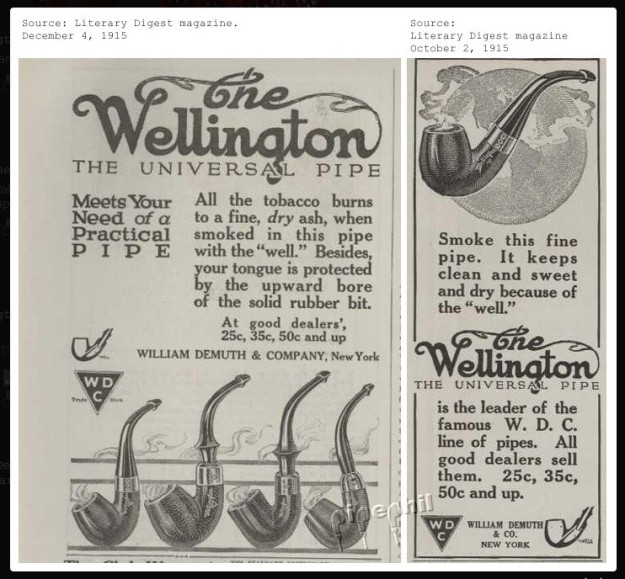
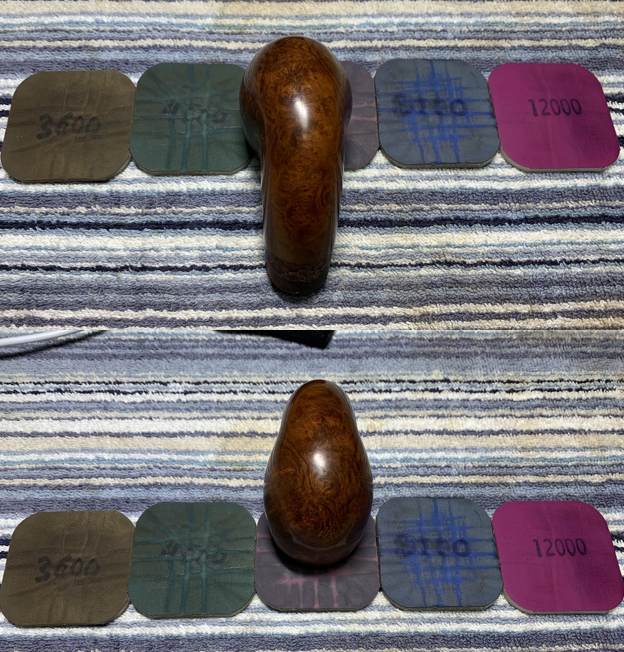
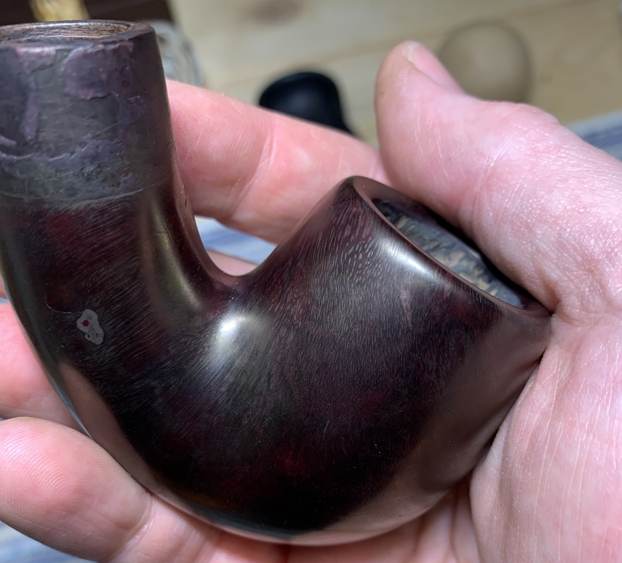
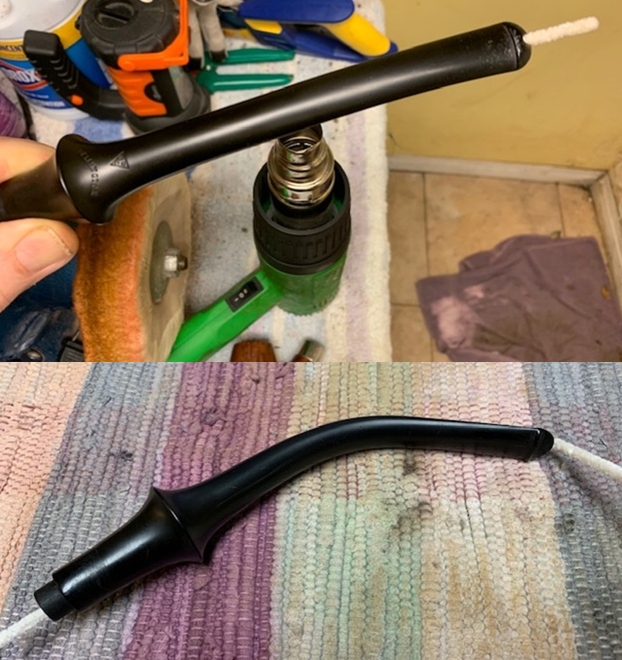
There are some pipes that are so rough that they are an entire pipe-restoration course in and of themselves. This is one of those pipes. It is a WDC Wellington Jumbo and it came to me in a lot of pipes from the USA. Recently, a customer of mine commissioned me to restore this pipe I readily agreed – because I didn’t know what I was getting myself into! The story of this pipe’s repair is a long one and it includes so many different elements that one can learn a lot just by reading. This pipe also reminded me that sometimes the wear-and-tear of the years needs to remain on a pipe as part of its story. I managed to bring great beauty back to this pipe, but it would always retain signs of its harsh past. This is one Wellington that did NOT win at Waterloo. The pipe in question was made by the William Demuth Company of New York (hence, WDC). I read a blog Steve wrote on a Wellington Jumbo back in 2020 to learn more about the pipe’s background. I was directed to the Pipedia page on WDC and it has a lot of good information, including a great flyer which had a photo of some of the Jumbos.From Pipedia is a Wellington ad and another from 1915, courtesy of Pipephil: The Wellington is a charming pipe, but it had a number of significant issues. It might be most clear for you, dear reader, if I enumerate the issues, one-by-one, and we can address them in due course. There was a tremendous amount of work to do on this pipe, so I got to it. I divided up the problems into three categories: the stem, the ferrule/band, and the stummel.

1.  I began by cleaning some of the filth on the outside of the stem with some Murphy’s Oil Soap on cotton rounds. This removed some of the surface staining.
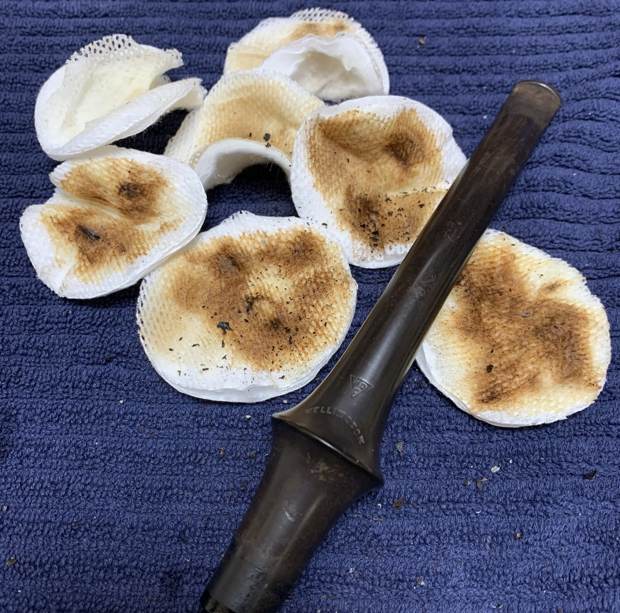
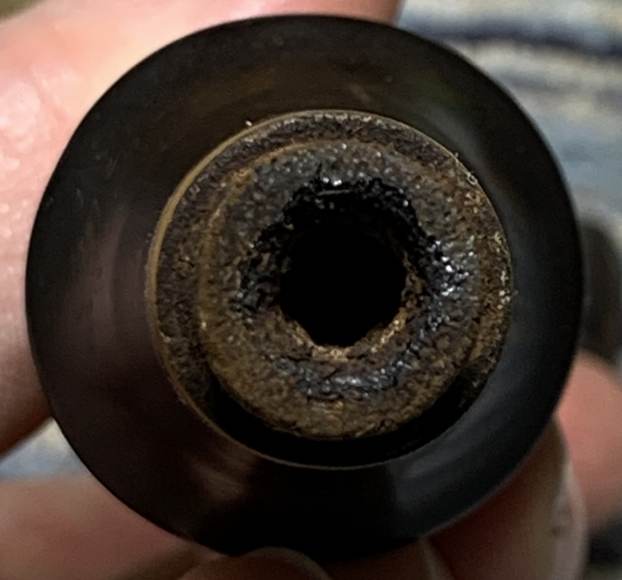
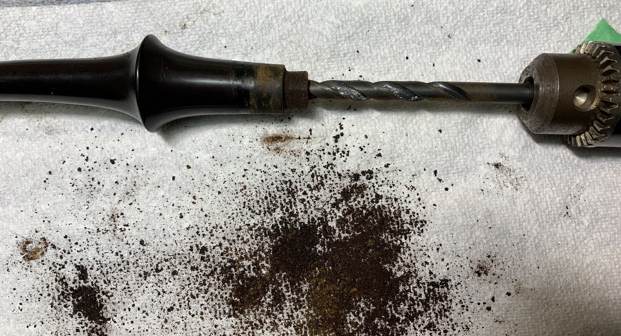
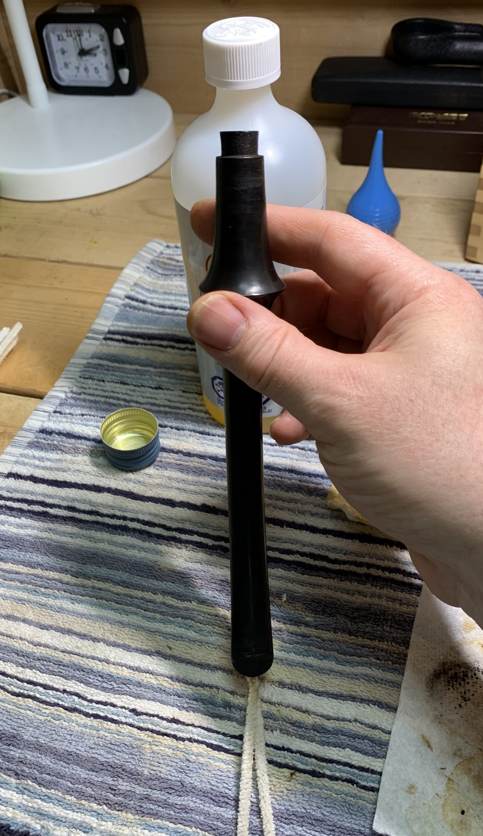
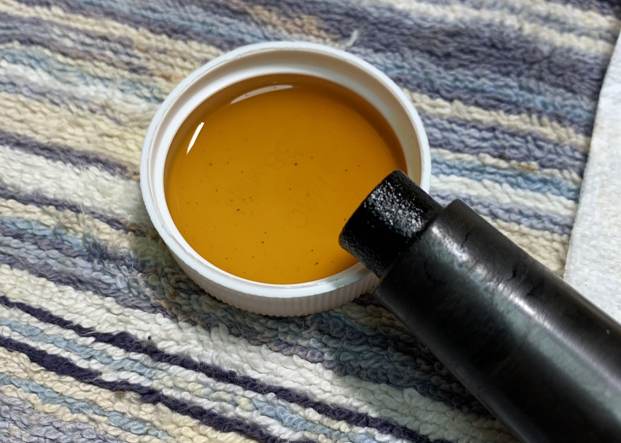
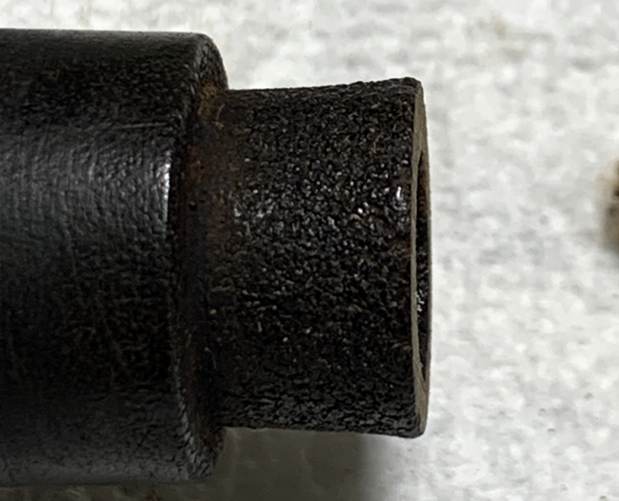
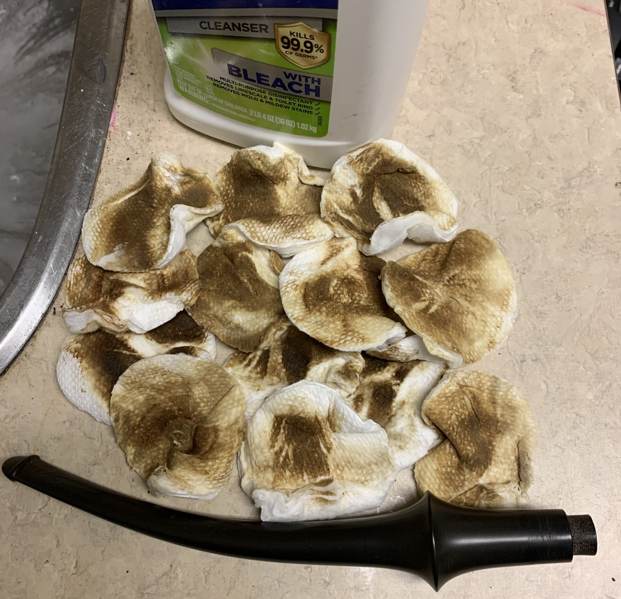
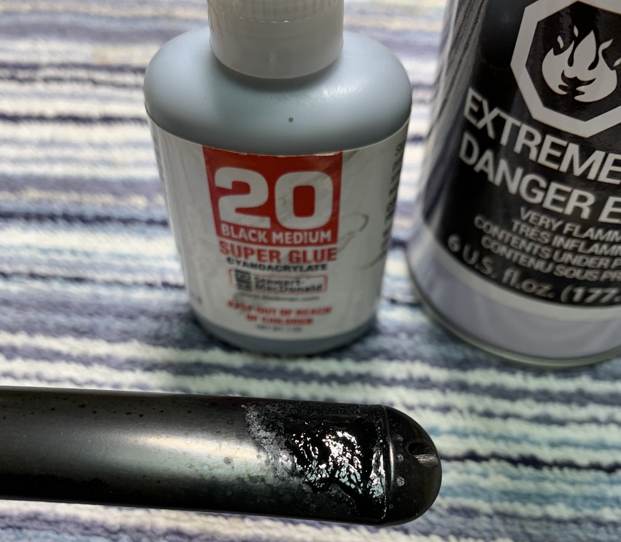
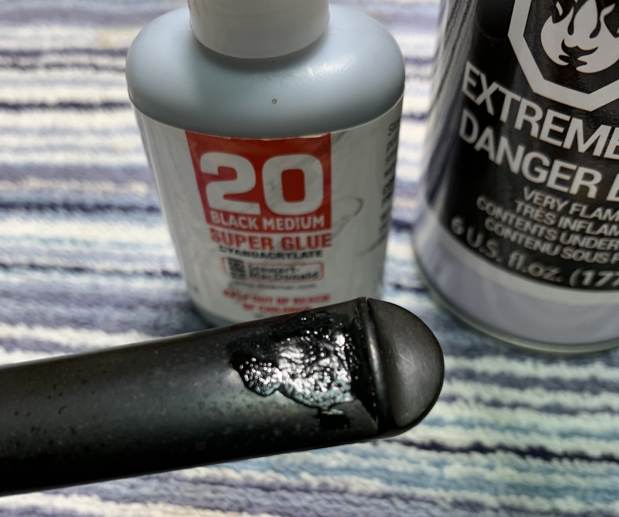
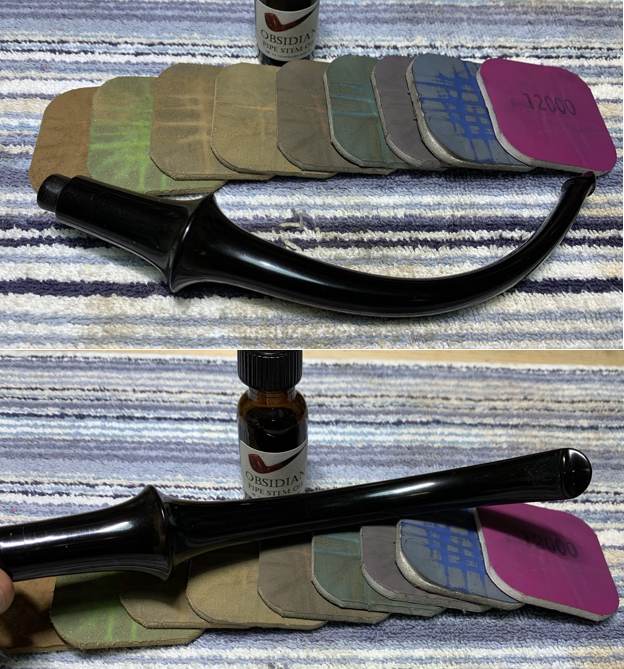
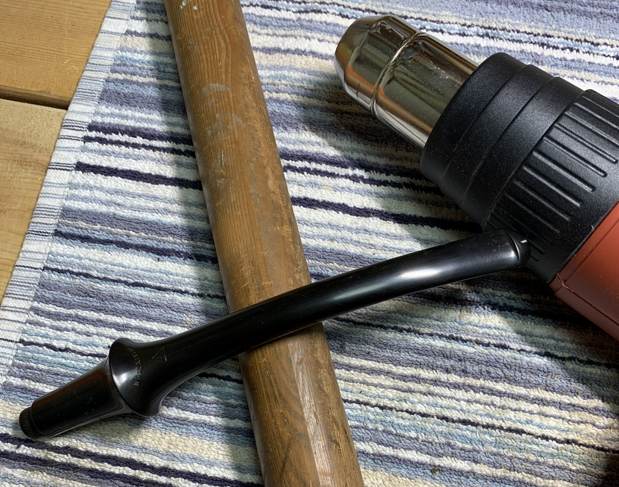
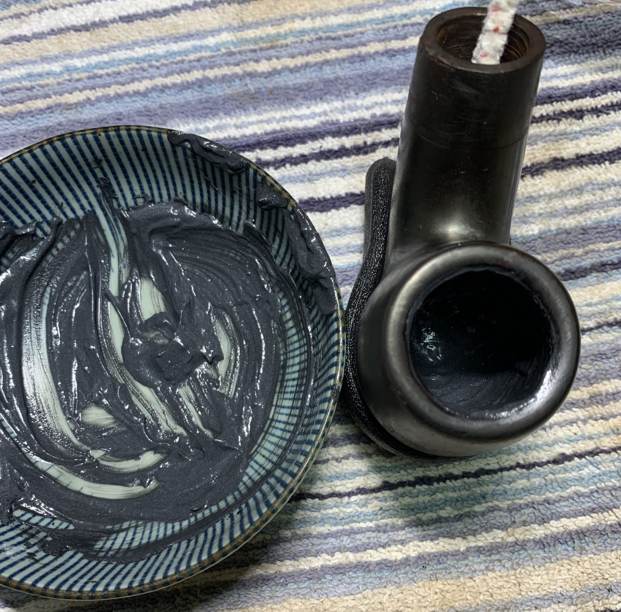
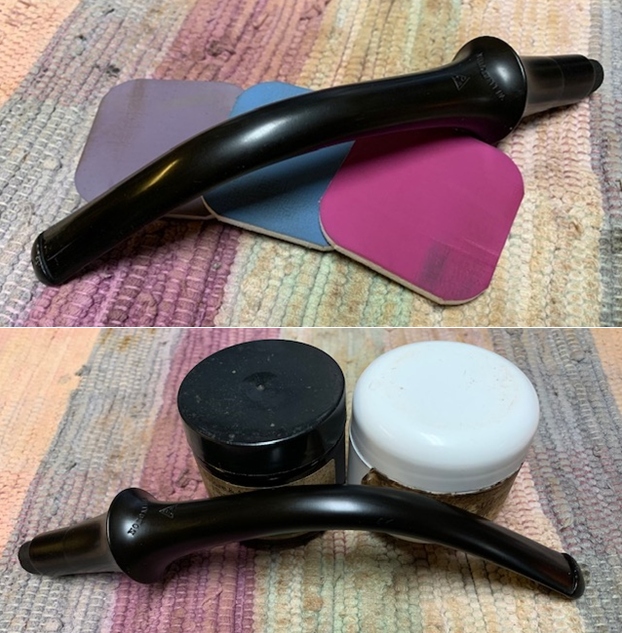
2. The stem’s insides were absolutely clogged with filth. Steve told me that the Wellingtons are notorious for this, and I learned the hard way just how true that was. I actually used a drill bit (by hand) to break into the encrusted gunk in the stem. Then, I started cleaning the inside with isopropyl alcohol, Q-tips, and pipe cleaners. This took a long while. The inside was terribly dirty and it took an awful lot of cotton. 3. Due to the size of the stem, I had to use churchwarden-size pipe cleaners, but this was just not doing enough to progress the process. I decided to plug up the bore-end, filled the stem with alcohol, and let it sit for a while – in the hope that it would loosen some of the gunk. This was mildly successful but insufficient. So, I then opted to use my tube brushes with alcohol and this worked quite well, dislodging some of the filth I couldn’t otherwise get to. It was clear that the pipe would require a retort, but that would have to wait until later. 4. The tenon end was burnt to a crisp from overuse and, more specifically, overheating. I sanded this down in order to even it out. I didn’t want to over-sand it, but I couldn’t just leave it as it was. 5. There was considerable oxidation, but the stem was too large to fit in my deoxidation fluid container. As a result, I had to do this by hand. I used SoftScrub with some cotton rounds and, as you can see, lots of revolting colour came off the stem. As expected, this took a lot of elbow grease, but I got it to a reasonable state.6. The area of the stem just above the button was chomped as badly as I’ve ever seen and the vulcanite had actually ruptured at some point. Also, the bore hole was damaged. I used a BIC lighter to try and lift some of those dents, but very little (if anything) was lifted. I brought out my cyanoacrylate adhesive and I applied it liberally to the affected areas – including the bore. I used some accelerant to get the glue going, and then moved on. 7. I began the lengthy process of sanding and shaping the cyanoacrylate repairs. I used small files and both 220- and 400-grit sandpapers to remove the excess adhesive. Once I had shaped it the way I wanted it, I then used all nine Micromesh pads (1,500 through 12,000 grit) to bring out the lovely black lustre on the stem. I also used Obsidian Pipe Stem Oil in between each pad scrubbing. Hey –we’re finally making some progress!8. Halfway through the MicroMesh process, I paused to fix yet another problem with the stem: it had straightened over time and needed to be bent back into its correct shape. Essentially, I wanted the end of the stem to be close to parallel with the rim of the bowl. I brought out my heat gun and heated the vulcanite stem in order to make it malleable. The heat gun is very powerful – it does not take long! When it was soft, I gently curved the stem over a wooden dowel. The dowel provides a firm surface and a proper curve. Once I had the bend I wanted, I left the stem to cool and set itself in place.9. On to the ferrule – which was thoroughly corroded and discoloured from years of mistreatment. Somewhat to my surprise, the ferrule came off very easily and required no special effort. I began by cleaning the metal with some SoftScrub on cotton rounds. This was quite good at removing the unsightly bits.10. I sanded the inside of the ferrule with 220-grit sandpaper in order to remove the old glue and debris that came from the shank. This would provide a better surface for re-gluing later.

11. I used some of my MicroMesh pads (only 3,600-12,000) to eliminate some of the minor scratches on the metal. It also gave a nice shine which clearly hadn’t been seen for decades.

12. I used a jewelry cloth to give the final polish to the nickel. This ferrule would always retain some small dents etc. from its hard life, but it looks much improved.

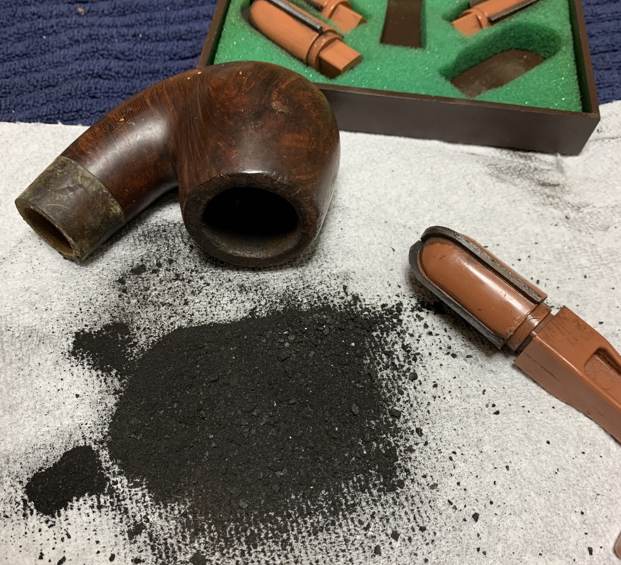
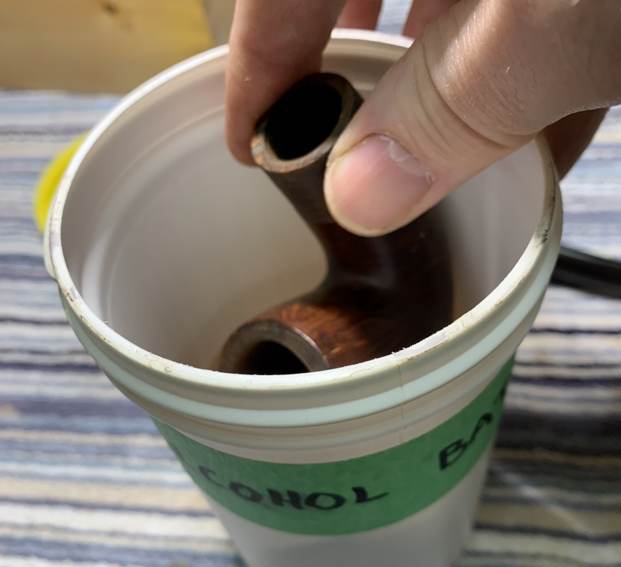
13. On to the stummel – this is where the lion’s share of the work was. The insides (both bowl and shank) were overwhelmed with cake and tar and anything else you’d care to mention. The bowl really needed to be reamed, so I used the KleenReem too to scrape off as much built-up cake. Sadly, this just wasn’t sufficient – I had to go to the next step to get things moving.14. I threw the stummel in my alcohol bath in the hope that it would loosen some of the incredibly hard residue inside the bowl. After 24 hours, this worked a bit, but not enough. It was time for the nuclear option.15. I put a sanding drum (and a couple of other bits) on my Dremel and carefully began removing the old stuff. This is not an option that I use regularly. The risk of oversanding is high and that can be an even bigger problem. However, I worked slowly and cautiously. Generally, I prefer to sand the chamber down to bare briar. When restoring, it is important to ensure that there is no damage to the briar under the cake. There are a few situations when I might leave some cake in the bowl, but not today. Sadly, there were definitely some hidden flaws to the briar on this pipe. I’ll come back to that later.16. Just like the bowl, the shank was absolutely disgusting. It had never been cleaned – or, not for many decades. I started cleaning the inside with isopropyl alcohol, Q-tips, and pipe cleaners. This took a while. The inside was very dirty and required and extraordinary number of Q-tips and pipe cleaners. Eventually some cleanliness came to it.

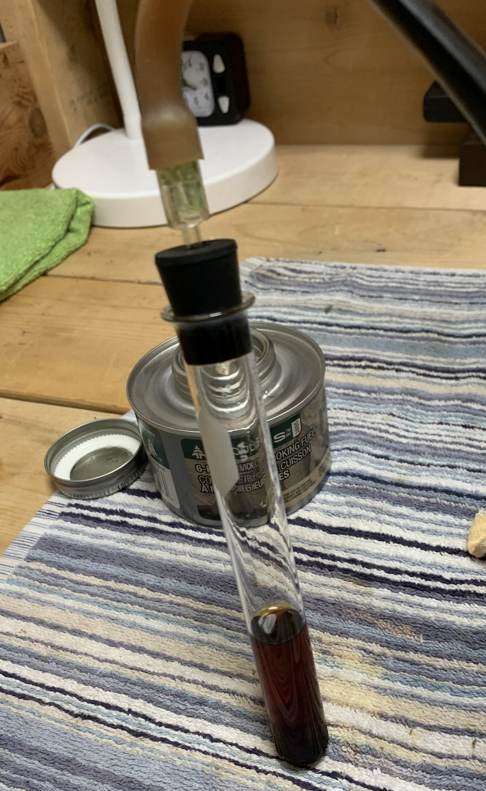
17. I decided to de-ghost the pipe in order to remove any lingering smells and dirt of the past. I thrust cotton balls into the bowl and the shank and saturated them with 99% isopropyl alcohol. I let the stummel sit overnight. This caused oils, tars and smells to leach out into the cotton. The bowl was supposed to be nice and clean after this, but this was no ordinary pipe.18.  At this point, it seemed sensible to set up a retort and further clean this whole pipe out. I put the stem and stummel back together and used my pipe retort system. This system uses boiling isopropyl alcohol and a vacuum (a void, not the household appliance) to clean the interior of a pipe. As you can see by the brownish colour of the alcohol, the retort worked well – although it took many changes of alcohol to get it clean. I managed to extract lots of otherwise inaccessible filth from inside the pipe. 19. Now that the pipe was clean, I wanted to have a closer look at the state of the briar, inside and out. For this, I scrubbed the outside of the stummel with Murphy’s Oil Soap on some cotton pads. That removed any latent dirt that blighted the wood. No surprise: there was lots.20. Several tiny cracks appeared on the outside of the stummel and I needed to address them. The first step in dealing with this was to ensure that the crack would not continue to creep after I had repaired it. To that end, I took a micro-drill bit, inserted it in my Dremel, and very carefully drilled a hole at the ends of the cracks. Since the cracks were not deep and did not go right through the wood, I did not drill all the way through. I then repaired the cracks by allowing cyanoacrylate adhesive to seep into them and then letting the glue cure. 21. Alas, there were also cracks inside the bowl. But beyond that, significant gouges were there from some prehistoric reaming tool. Removing the cake in the bowl did feel like an archaeological dig, so there were bound to be some surprises in the briar. The solution to this problem is always a tricky one: epoxy. I prepared some J.B. Weld epoxy and filled the cracks and gouges, ensuring that the epoxy was evenly spread throughout the bowl. Of course, I did plug the draught hole with a folded pipe cleaner (coated in Vaseline) to make sure none of the epoxy made its way up there. Once done, a good 24 hours was needed to ensure that the epoxy was properly set. 22. Burn marks and an uneven surface blighted the rim of the pipe and it needed to be redone. There was a lot of damage to the rim and the front edge had been bashed in, presumably from banging out dottle over the years. In order to remove the damage, I “topped” the pipe – that is to say, I gently and evenly sanded down the rim on a piece of 220-grit sandpaper. This is always a tricky business – I want to find the balance between removing old burns and maintaining as much of the pipe as possible.23. The rim needed some more help since the bowl opening was badly out of round. To fix this, I took a solid wooden sphere, wrapped some 220-grit sandpaper around it, and sanded the inner edge of the rim. In addition to this, I also sanded down the outside of the bowl, near the rim, so as to minimize the visual effect of the bashed edge. I sand all the way around to ensure that the pipe retains its look.24. As mentioned earlier, there were a few dents in the briar. I dug out my iron and a damp cloth to try to raise the nicks. The hot and moist steam can often cause the wood to swell slightly and return to shape. There was some movement in the wood, which was good. The repair was not perfect, but the remaining wounds would be improved by sanding.25. There were two significant fills on the bowl. They were large enough that I would not be able to make them disappear entirely, but I wanted to make them solid and smooth, and meld into the rest of the wood. I fixed them up with a mixture of cyanoacrylate adhesive and briar dust.

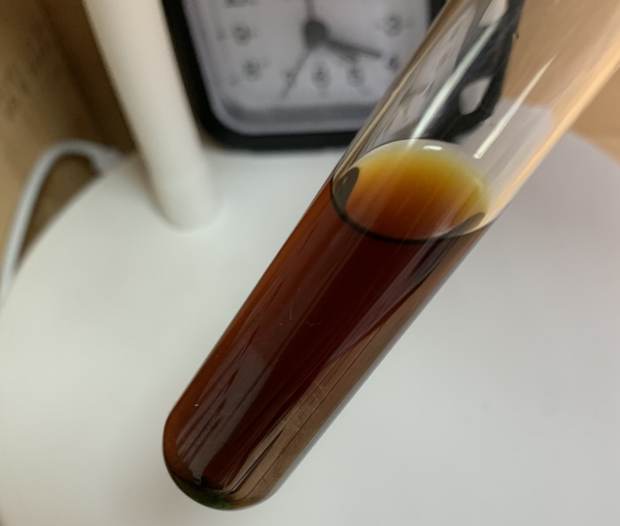
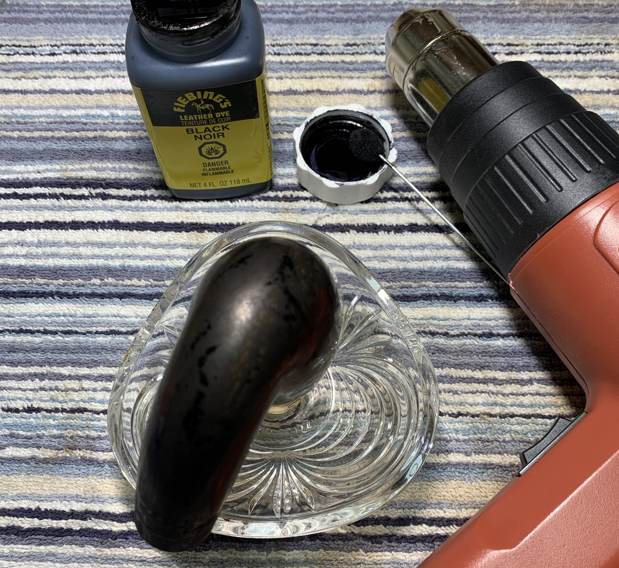
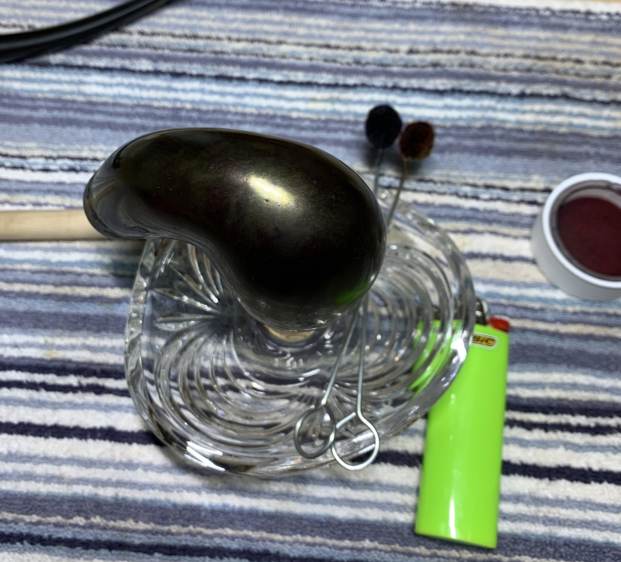
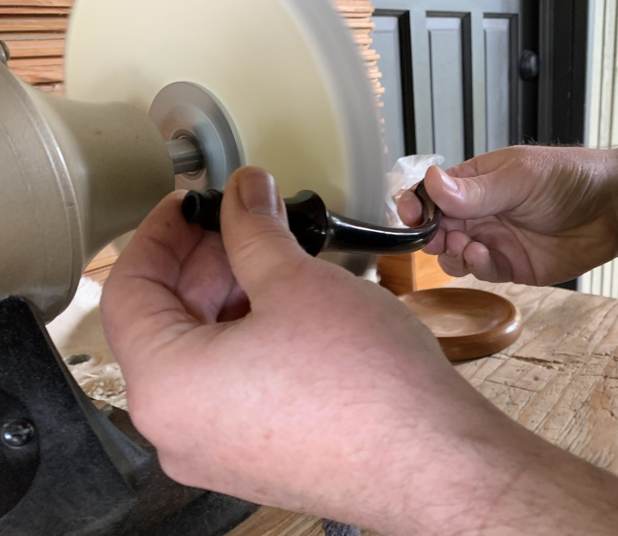
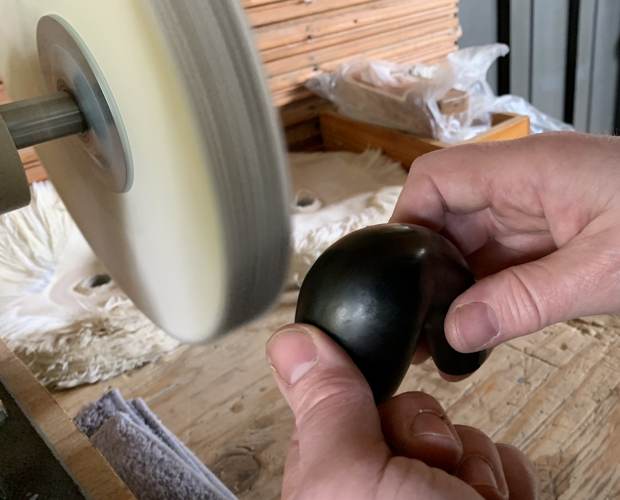
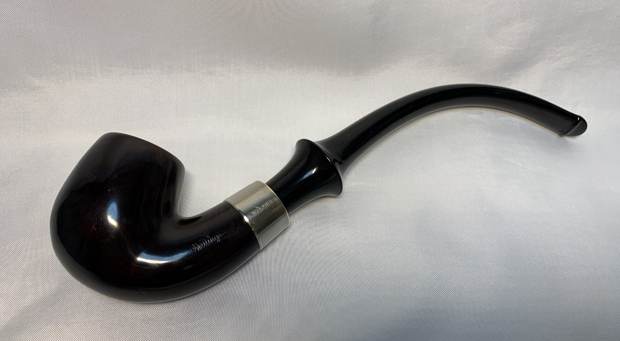
26. Next, I used all nine Micromesh pads (1,500 through 12,000 grit) all over the stummel to make it lovely and smooth. 27. Having completed that, it was time for staining. My customer wanted a deep, dark burgundy colour. First, I brought out my heat gun and spent a couple of minutes thoroughly heating the wood, so it would be as receptive as possible to the stain, to give the best results. I applied Fiebing’s Black Leather Dye with a cotton dauber. I flamed it with my BIC lighter and let it set. This dye is alcohol-based, so I used isopropyl alcohol to wipe down the pipe and remove excess stain. I coated it again with Fiebing’s Oxblood Leather Dye, flamed it again, and let that set too. I stained and flamed the pipe another two times (once with black, once with oxblood), always making sure I warmed the pipe with my heat gun first. 28. Now that the epoxy had fully cured, I gently sanded the inside of the bowl to provide a rough surface for what was to come next. I coated the entire inside of the bowl with a mixture of activated charcoal and my wife’s homemade yogurt. Once hardened, this provided a good, slightly rough surface for a new cake to build. 29. At long last, I was off to my bench buffer to put the final touches on this pipe. I first gave it a thorough going-over with White Diamond compound. Following that, several coats of carnauba wax created a beautiful, glossy seal on the pipe and some closure to this long and involved repair. The lovely shine made the wood look beautiful! I know that the new owner will enjoy smoking it for many years to come. I hope you enjoyed reading the story of this pipe as much I as I did restoring it. The approximate dimensions of the pipe are as follows: length 9½ in. (240 mm); height 6½ in. (165 mm); bowl diameter 1⅝ in. (41 mm); chamber diameter 1 in. (25 mm). The weight of the pipe is 3 oz. (86 g). If you are interested in more of my work, please follow me here on Steve’s website or email me directly at kenneth@knightsofthepipe.com. Thank you very much for reading and, as always, I welcome and encourage your comments.

Breathing New Life into a WDC Wellington Jumbo French Briar


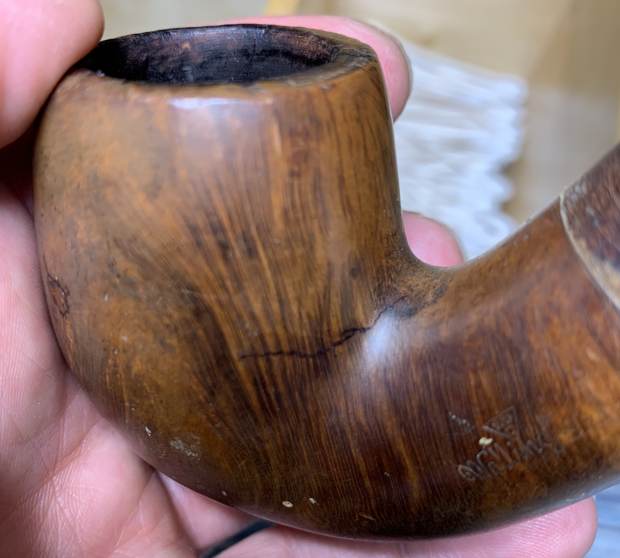
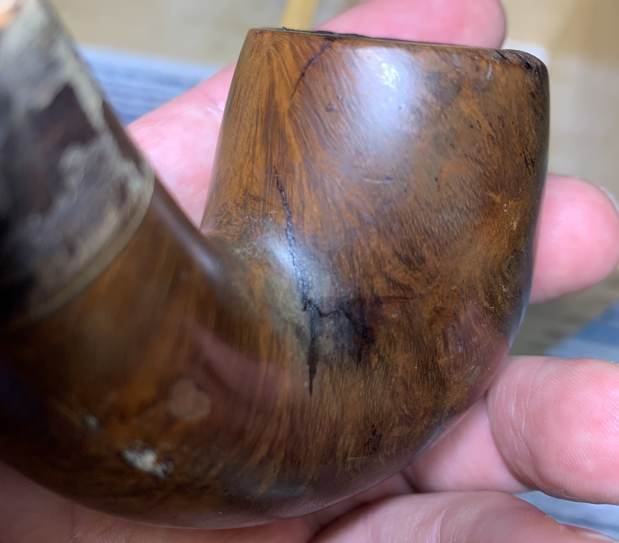
Blog by Steve Laug

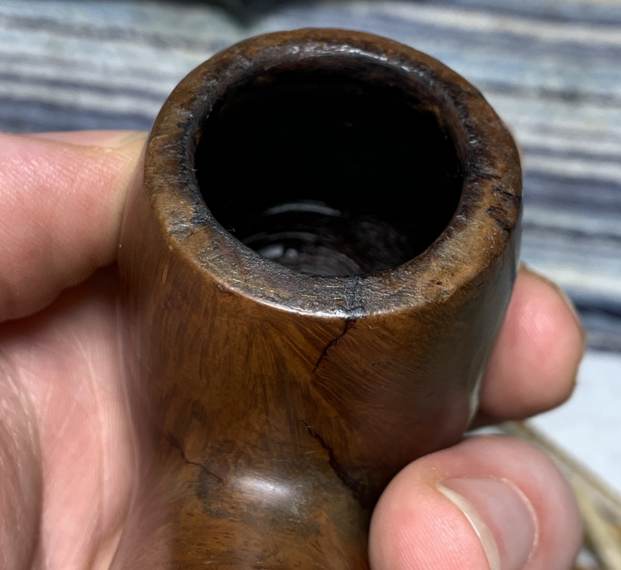
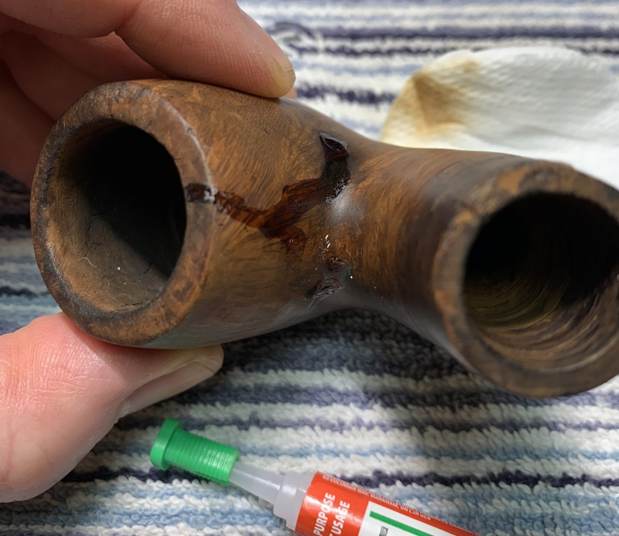
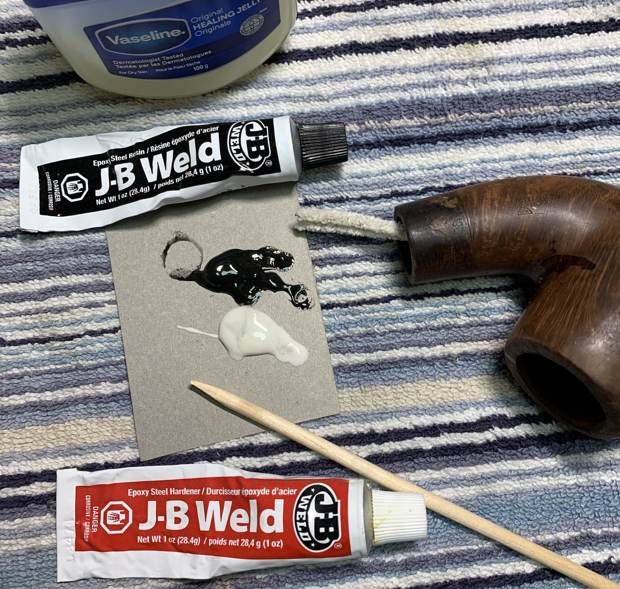
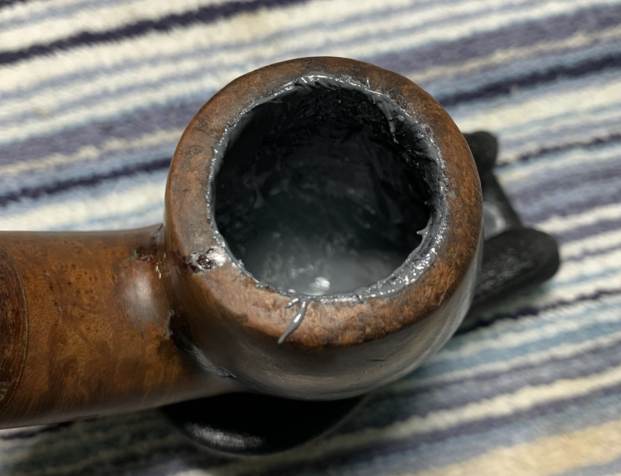
The next pipe on the work table came to us from a group of pipes that we purchased from an antique mall in 2018 in Newport, Oregon, USA. It is a large WDC Wellington Jumbo Pipe with a fancy hard rubber stem. The pipe is stamped on the left side of the shank and reads Wellington [over] French Briar separated by the WDC Triangle. The right side is stamped Made in U.S.A. There is a stamp on the metal shank cap/ferrule that reads Nickel Plated. This is a nice piece of briar with interesting grain all the way around the bowl. The finish had a lot of grime ground into it. There is also a large area of road rash on the front of the bowl where it has obviously been dropped on a hard surface. The bowl was moderately caked and there was a lava coat on the top and the inner edge of the rim. The rim top has deep scratches in the surface and the bowl appears to be out of round under the lava coat. The stem was oxidized, calcified and had tooth chatter and marks on the top and underside near the button. The bent stem had straightened over time and would need to be re-bent. The stem bore the WDC Triangle logo stamped on the top ahead of the saddle. It was also stamped Wellington in an arch under the triangle logo. The pipe showed promise but it was very dirty. Jeff took photos of the pipe before he started his cleanup work.    He took photos of the rim top and bowl to give a clear picture of the thickness of the cake and the condition of the rim top and beveled inner edges. You can see the cake in the bowl, the lava on the rim top and the damage to both the top and inner edge. He also took photos of the top and underside of the stem to show the oxidation, calcification and chatter and tooth marks.  There are also flecks of metal in the hard rubber stem that I have seen in pipes of this time period in the past.   Jeff took a photo of the right side and heel of the bowl to give a picture of what the briar looked like.He took photos of the stamping on the shank and the stem. It reads as noted above and is clear and readable. I turned to Pipedia’s article on WDC (William Demuth) pipes. It is a great read in terms of the history of the brand (https://pipedia.org/wiki/William_Demuth_Company). I have included one of the advertising flyers on the Wellington Jumbo below. Look at the price of this pipe when it was sold.Now it was time to work on the pipe. Jeff had cleaned up the pipe with his usual penchant for thoroughness. He reamed the pipe with a PipNet Pipe Reamer and cleaned up the remnants with a Savinelli Fitsall Pipe Knife.  He scrubbed the exterior of the pipe and bowl with undiluted Murphy’s Oil Soap and a tooth brush. He rinsed it under running warm water to remove the soap and grime. He cleaned out the inside of the shank and the airway in the stem with alcohol, cotton swabs and pipe cleaners. He soaked the stem in Before & After Deoxidizer and rinsed it off with warm water. I took photos of the pipe once I received it.   The rim top and edges of the rim were in rough condition. The rim top was chipped, scratched and had gouges in the surface. The inner edge of the bowl was out of round and had burn and reaming damage. The outer edge also showed nicks and damage as well. The stem surface looked very good with some tooth marks and chatter on both sides near the button.I took photos of the stamping on the shank. It is clear and readable as noted above. I removed the stem and took a photo of the pipe to give a sense of the whole. The stem is a fancy saddle version. I decided to start my work on the pipe by addressing the damage on the rim top and the edges of the bowl. I topped the bowl on a topping board with 220 grit sandpaper to remove the damage on the flat surface and clean up the edges at the same time. I worked over the out of round inner edge of the bowl with a folded piece of 220 grit sandpaper until I had brought it back to round. I gave it a slight bevel to take care of the burn damage and chipping. I decided to address the road rash on the bowl front next. There were deep gouges and nicks in the surface of the briar. Interestingly when Jeff cleaned the pipe some of them were raised. What was left behind would not be lifted any further. I filled in the remaining marks in the briar with clear super glue. Once the glue cured I sanded it smooth and blended it into the surrounding briar. I would polish it with micromesh when I worked on the rest of the bowl surface.   I polished the briar with micromesh sanding pads – dry sanding with 1500-12000 grit sanding pads. I wiped the bowl down with a damp cloth after each sanding pad.  The pipe was in such good condition that started by rubbing it down with Before & After Restoration Balm. I worked it into the surface of the bowl sides and shank with my fingertips. The product works to clean, enliven and protect the briar. I let the balm sit for 15 minutes and then buffed with a cotton cloth to raise the shine.     I set the bowl aside and turned my attention to the stem. I decided to deal with bending it to the proper angle first. I inserted a long pipe cleaner in the stem heated the stem with my heat gun until the rubber was flexible. I carefully bent it so that it matched the flow of the stem. I cooled it with running cool water to set the bend.  Once it cooled I inserted it in the stem and took photos. Now it was time to work on the tooth marks on the stem. I sanded them out with 220 grit sandpaper and started polishing the stem surface with 400 grit wet dry sandpaper. Note the white specks on the black rubber ahead of the button and on the button edge in the photo below. Those are actually bit of metal in the rubber. This was typical of pipes made during the war when recycled tires were used to make rubber stems.I polished the vulcanite stem with micromesh sanding pads – 1500-12000 grit pads. I wiped it down with a damp cloth after each sanding pad. I used Before & After Pipe Polish – both Fine and Extra Fine to further polish the stem. I touched up the gold stamping in the logo on the top of the saddle stem with Rub’n Buff Antique Gold. It is a great product and easy to apply. I rubbed it into the stem with a tooth pick and once it was well worked in I wiped the stem down with a soft cloth to remove the excess. The resulting stamp looked very good!   This WDC Wellington Jumbo French Made Bent Billiard with a the polished briar, polished nickel ferrule and fancy saddle stem is a great looking pipe now that it has been restored. The parts all come together to form a great looking piece. The beautiful grain that shines through the polished finish is stunning. I put the stem back on the bowl and carefully buffed the pipe with Blue Diamond on the buffing wheel. I gave the bowl and the stem multiple coats of carnauba wax on the buffing wheel. I buffed the entire pipe with a clean buffing pad which really brings the shine out with the wax. I hand buffed the pipe with a microfiber cloth to deepen the shine. The finished Wellington Jumbo fits nicely in the hand and feels great and will truly be a pipe to be smoked while sitting and reading or listening to music. Give the finished pipe a look in the photos below. The dimensions of the pipe are Length: 10 inches, Height: 2 ¼ inches, Outside diameter of the bowl: 1 ½ inches, Chamber diameter: 1 inch. The weight of the pipe is 93gr/3.25oz. I will be adding it to the American Pipe Maker section of the rebornpipes store soon. If you are interested in adding this pipe to your collection send me a message or an email. Thanks for reading this blog and my reflections on the pipe while I worked on it. There are many more to come!

Sprucing up a Home Doctored WDC Wellington House Pipe


Blog by Steve Laug

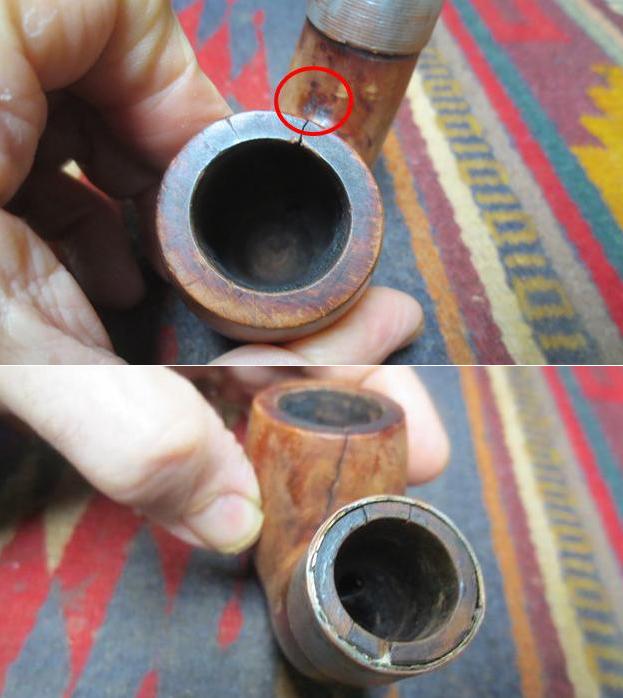
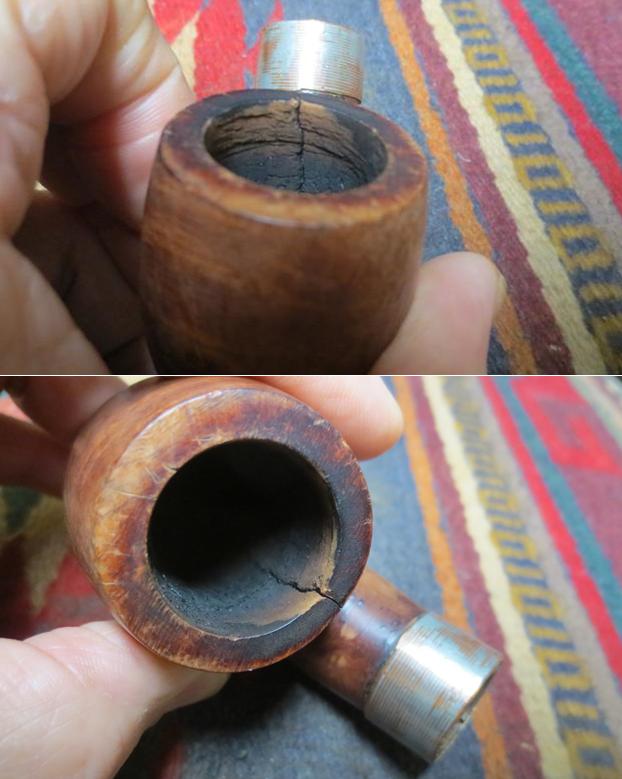
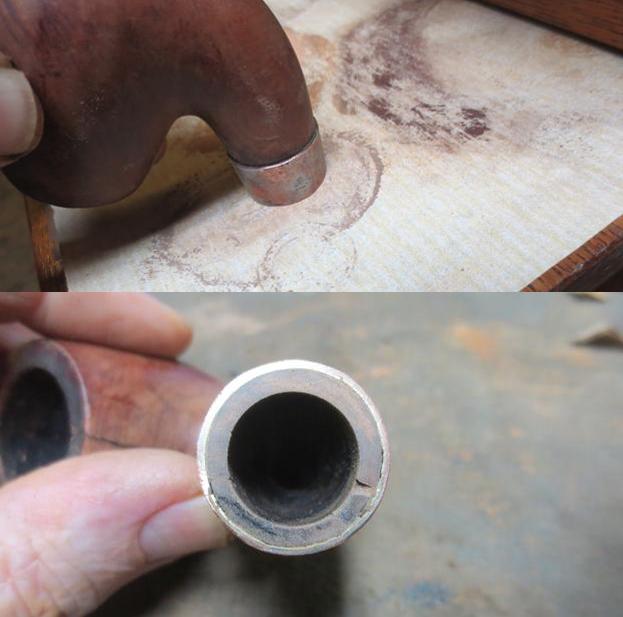
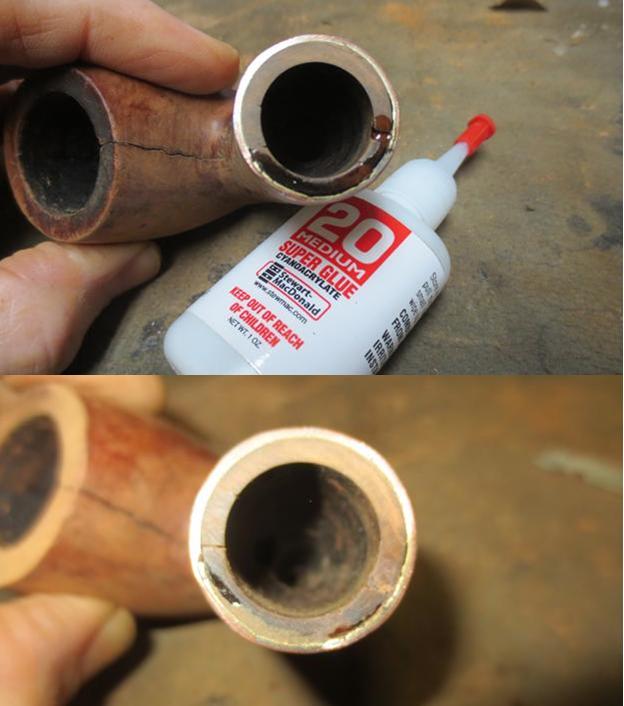
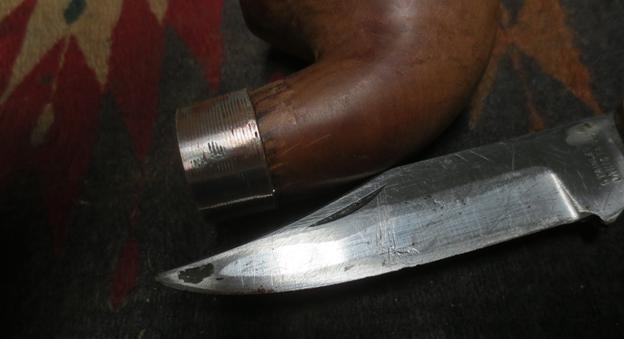
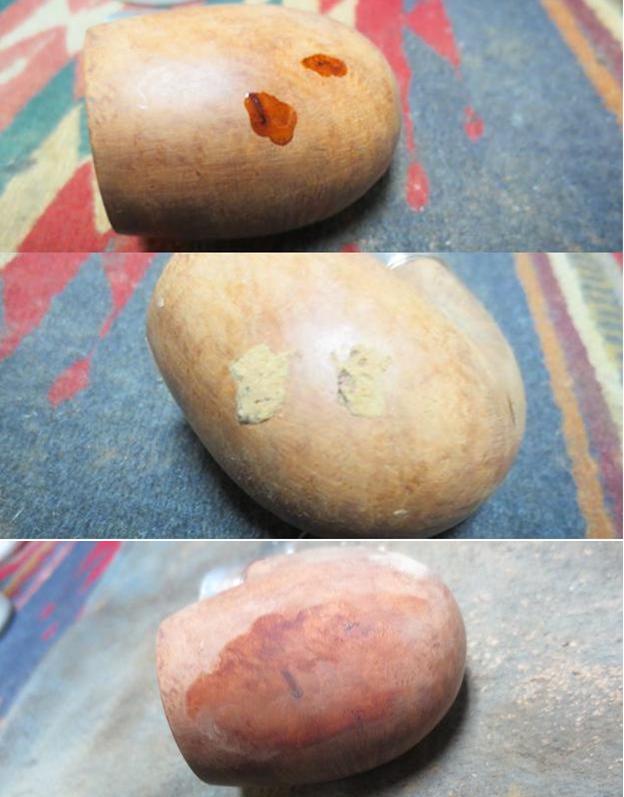
Have you ever been pipe hunting in an antique shop and in your conversation with the clerk at the checkout have them tell you that they have a pipe at home that they would love to have you see? If not I assure you that you will. It seems to happen to me and certainly to my brother. Sometimes going back to see the pipe is a good thing and sometimes it is not worth the trip. My brother recently went through this very thing in a shop on the Oregon Coast. The clerk said that he had an old pipe – thought it was a churchwarden – at home and he would love to see it go to someone who would restore it. He said it was interesting but it was in rough shape. He told my brother that he would bring it to the shop the next day. He lived a fair ways away from the shop so he could not go and get it at the moment. My brother left the shop knowing that he would need to go back and have a look at the pipe. Two days later he made the drive back to the shop. The seller had left it behind the counter for him. The person at the counter took the pipe out and handed it to him. The clerk had been right – it was in rough shape but it was not a churchwarden but old WDC Wellington House Pipe. (I have included the photos that my brother took of the pipe before he cleaned it and sent it to me in Vancouver.)mess1Even at first glance it was rough but he did not expect what he found as he went over it. As he turned it in his hands he saw that the bowl had a large crack on the back side of the bowl that went from the rim to the shank bowl junction. It went all the way through and ran down the inside back of the bowl to a spot just above the airway. This was not good.mess2The bowl was caked and dirty and the cake had flowed over the top of the rim leaving a hard rough surface. Even through the grit he could see that there were a lot of nicks, scratches and dents in the rim top. On top of that the left side of the bowl was rough and seemed like it had road rash. It appeared that someone had tried to smooth it over but it was till rough to touch.mess3 mess4The Wellington ferrule was gone and had been replaced with a piece of what appeared to be a cut off piece of pipe glued and pressed onto the shank end. Looking at the pipe from the shank end you could see why the band had been as a lot of small cracks could be seen that extended down into the mortise. The cut off piece of pipe literally bound the shank together tightly with no give. The stem was the only part of the pipe that was in excellent condition. It bore the Solid Rubber stamp on the underside but the topside was missing the WDC Wellington stamp. It was obvious to me that someone had loved this old pipe and that they had done whatever was necessary to keep it functioning. The repair work was solid but it really was a mess. After the fellow had gone to the effort to bring the pipe to the shop my brother felt obligated to buy it. The deal was struck and the pipe came home with him.mess5The next two photos show the stamping on the shank. It reads Wellington under the WDC triangle on the left side of the shank. There are a lot of nicks and scratches around the shank that look like damage done when the band was glued in place. The Solid Rubber stamping on the can be seen in the second photo below.mess6The stem was actually in the best condition of the entire pipe. There was very little tooth chatter and marks near the button. There were some marks on the ridge on the underside and there was a spot of metal shining through the rubber there as well. The entire stem was lightly oxidized and pitted.mess7My brother did his usual thorough clean before sending it to Vancouver. He reamed the bowl and removed the cake that was built up on the walls and had overflowed onto the rim of the bowl. He cleaned out the mortise, the airway in the shank and the stem with alcohol, pipe cleaners and cotton swabs. He scrubbed the exterior of the bowl with Murphy’s Oil Soap and was able to remove the grime and dirt and the chipped and damaged finish. The next four photos show what the pipe looked like when it arrived.mess8 mess9I took some close up photos of the shank band. It is obvious to me that the repair on the shank was home done and involved cutting a piece of pipe and gluing and pressing it onto the shank. The third photo shows the shank end and there are at least 4-6 cracks showing that previous owner had glued and repaired with the cut off piece of pipe as a band. The band repair had been finished off with a bevel of glue banked against the band and shank. The piece of pipe that functioned as the band was striated and copper colour peeked out from under the surface oxidation. The crack on the back of the bowl is visible in the second photo below.mess10 mess11I took a close up photo of the left side of the bowl to show the rash on the side of the bowl. It was very rough and scored. It would need to be sanded smooth to repair the amount of damage.mess12I took photos of the crack in the bowl. It is on the back side as noted above. It extends down the back of the bowl to the shank/bowl junction (photo 2). What was interesting to me was that there were two small holes drilled at the twin ends of the crack in the bend of the junction. They had been filled in with glue and sanded smooth. I have circled them in red in the photo below (photo 1). I don’t why the previous repair had not continued with filling in the crack on at least the outside of the bowl but it did not. Possibly it was because the crack went through the bowl and extended down to a spot just above the entrance of the airway in the bowl (photos 3-4). There appeared to be burn damage on the back wall of the bowl on both sides of the crack. The rest of the interior walls of the pipe were solid with no damage.mess13 mess14As I mentioned before the best part of this pipe was the stem. In fact at one point I considered throwing the bowl away and saving the stem for a future repair.mess16With so much work to do on the bowl it was hard to decide where to begin. I turned it over in my hands for a few moments and decided to start by sanding out the rough side of the bowl. I would try to remove all of the damage that had been done in that area. The next two photos show the damaged area after the first sanding with 180 grit sandpaper. You can see how extensive this rash was on the bowl side.mess17I decided to top the bowl to deal with the damaged portion of the rim. I used the topping board and 220 grit sandpaper to remove the damaged rim surface and clean it in preparation for the crack repair. You can see that I needed to do some more reaming in the bowl to clean it up.mess18With the rim finished I went back to sanding the bowl side with 220 grit sandpaper. I worked to remove the damage on the side and worked over the curve of the bowl shank junction. When I finished with the 220 grit sandpaper the bowl side was smooth. The roughness and damage had been removed. The briar needed to be sanded with higher grit sandpapers and sanding sponges to remove the scratches.mess19I topped the shank end with 220 grit sandpaper on the topping board to smooth out the sharp edge of the metal band and prepare the shank end for some repairs.mess20I filled in the chipped areas on the shank end with briar dust and super glue. When the glue dried I topped it further and added a little glue on the long chipped area on the left of the second photo below.mess21I scraped away the excess glue along the edge of the band on the shank with a sharp knife. Once I finished the transition was smoother. I would sand the area along the band to clean up the scratches but the thick glue was removed.mess22There were some deep nicks on the lower front side of the bowl that needed to be filled. I filled them with super glue and briar dust and sanded them smooth to match the surface of the surrounding briar. I sanded around the shank band at the same time to smooth out the scratches and nicks.mess23I moved to the back of the bowl and filled in the exterior part of the crack with super glue and briar dust. The twin drilling at the bottom of the crack by the previous owner had done a good job stopping the crack from going further so I did not need to deal with that issue. There was no movement in the crack when I squeezed it together. It was stable so I moved on to do the surface repair. I put super glue in the crack and then pressed briar dust into the glue to seal the surface of the crack. mess24It was time to address the internal crack at this point. I needed to join the two sides of the crack together inside and also address the burned areas around both sides of the crack. I scraped out the inside of the bowl with a Savinelli Fitsall Pipe Knife to remove the remaining excess cake. I made sure to remove all of the cake. I worked on the area around the crack to remove all of the carbon and picked the area with a dental pick to see how badly the area was burned. I sanded the inside of the bowl with a rolled piece of 220 grit sandpaper to smooth out the walls.mess25I sanded the repair on the exterior of the bowl with 220 grit sandpaper to remove the excess patch material on the exterior of the crack. I smoothed it out to match the surrounding briar. The repair is looking really good on the exterior and the sanded interior of the bowl (also visible in the photo) was in better shape than I expected.mess26I wiped down the inside of the bowl with damp cotton swabs to remove the dust and debris from the bowl sides. With all of the preparations finished the inside crack was ready for repair using JB Weld. I have used it before following the directions from Charles Lemon on Dadspipes blog and had good results. I mixed the two parts of the “goop” together and applied the mixture to the inside of the bowl with a dental spatula. I pressed the mix into the crack and then spread it over the surface of the back wall on both sides of the crack. Once I had good coverage on the wall and in the crack I set the bowl aside to let the glue set.mess27 mess28While the repair in the bowl interior cured I turned to deal with the minimal damage to the stem. I sanded the light tooth chatter and small bite marks on the top and underside of the stem near the button using 220 grit sandpaper. I reshaped the button edge and the straight edge on the underside of the stem at the same time.mess29When the internal repair had dried to touch I could turn my attentions to the sanded exterior once again. I wiped the bowl down with a light coat of olive oil to make the scratched areas stand out and show me where I needed to do more sanding.mess30 mess31I polished the briar and the metal band with micromesh sanding pads – wet sanding it with 1500-2400 grit pads to smooth out all of the scratches and areas that showed up with the olive oil rubdown. The more I sanded it the more the grain began to stand out. There was some great birds-eye and cross grain in the briar. The third photo shows the JB Weld repair on the inside of the bowl very clearly. Once it turns black it will have cured enough to sand.mess32 mess33I continued to polish the briar and band with micromesh sanding pads – dry sanding it with 3200-12000 grit pads until the bowl shone.mess34I stained the pipe with a dark brown aniline stain thinned 50/50 with isopropyl alcohol. I applied the stain, flamed the stain to set it and repeated the process until the coverage was even around the bowl and rim.mess35I gave the bowl several coats of carnauba wax and buffed it with a clean buffing pad. I took the following photos to show what the bowl looked like now that it was stained and waxed. It is a pretty piece of briar and a far cry from the mess I started with.mess36 mess37I set the bowl aside and polished the stem. I buffed it with red Tripoli to remove as much of the light oxidation as possible. I wet sanded the stem with 1500-2400 grit micromesh sanding pads and dry sanded it with 3200-12000 grit pads. (For some reason the last photo of the stem has a yellow tint and makes it look oxidized. It actually shone at this point in the process with no oxidation left. I rubbed it down with Obsidian Oil after each set of three pads. After the final rubdown I set the stem aside to dry.mess38 mess39 mess40By this point in the process the JB Weld had hardened. It had been about 4-5 hours. It was time to smooth out the inside of the bowl and remove the excess JB Weld. I used the Dremel with a sanding drum to smooth out the back side of the bowl. You can see the spots on the bowl wall where I left the material to fill in the damaged areas on the wall. I went on to sand the interior wall with 180 and 220 grit sandpaper to further smooth out the repair and minimize the JB Weld. The repairs had stabilized the cracked bowl and it was usable once again.mess41I have one final step to take to before I can close the book on this repair. I need to mix a bowl coating to paint the inside of the bowl with. It is a mixture of sour cream and activated charcoal powder. I had to order some more as I ran out of the charcoal capsules and my local pharmacy was also out of stock. It may take a while to get some so for now the bowl is finished. Once the bowl coating is applied and has cured the pipe will be ready to smoke and carry on a long life.

At this point in the process when all is basically finished I can honestly say that I am glad I did not scrap bowl to the junk box. It has some beautiful grain and I think it looks good with the scar on the back side of the bowl where the crack used to be. The metal pipe band polished up nicely with hints of copper and silver mingled together giving it a bit of a sparkle. The finished pipe is shown in the photos below. It has been buffed with Blue Diamond a final time and given multiple coats of carnauba wax. I buffed it with a clean buffing pad and then by hand with a microfibre cloth to deepen the shine. The write up is longer and the photos are many this time around. It was a lot of work to give this old timer another chance but I think it was worth the effort. Thanks for bearing with me. mess42 mess43 mess44 mess45 mess46 mess47 mess48 mess49 mess50 mess51

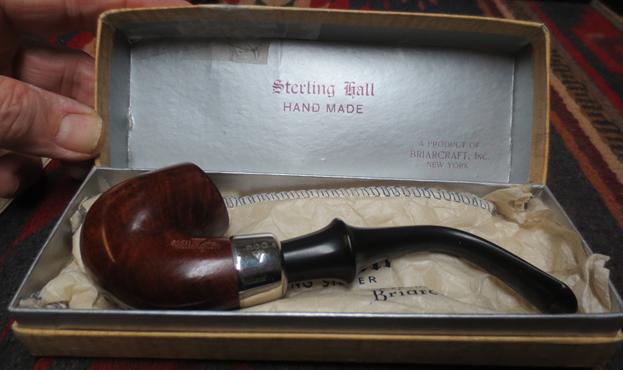
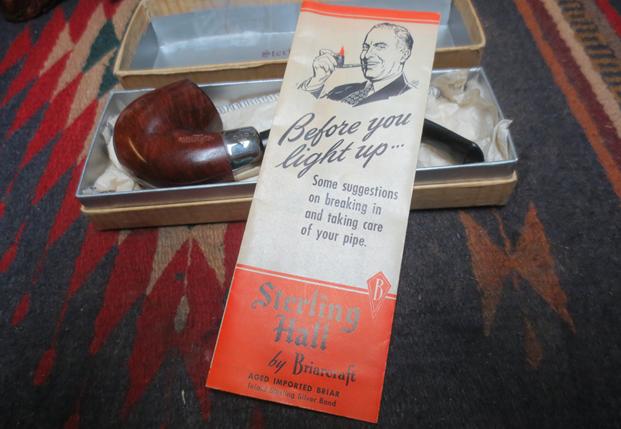
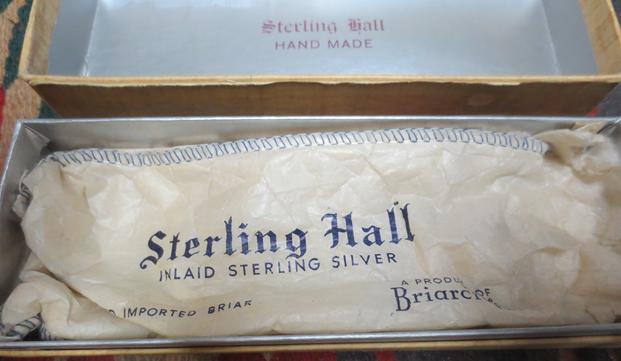
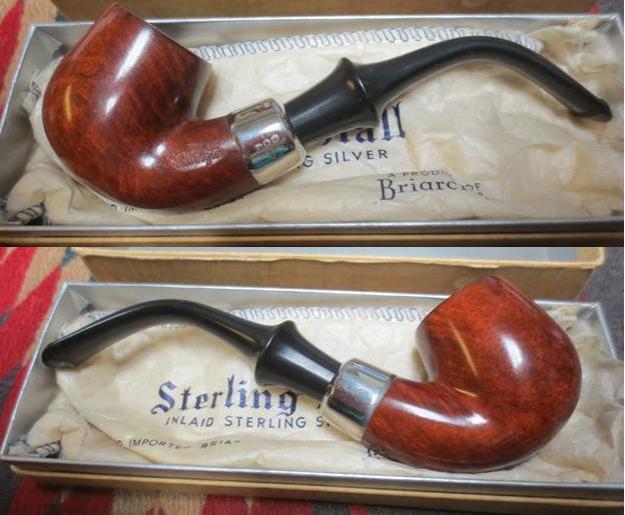
When he opened the Sterling Hall Hand Made Pipe box I did not see what I expected


Blog by Steve Laug

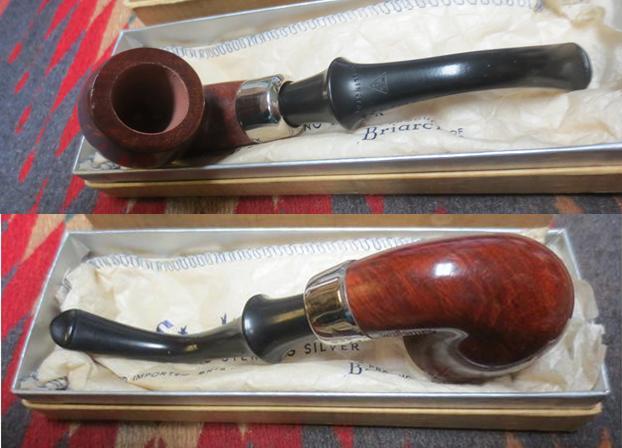
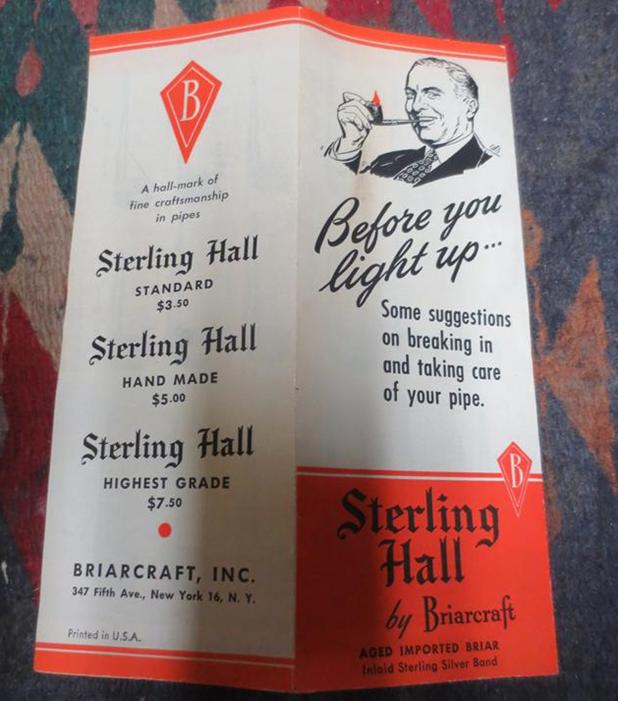
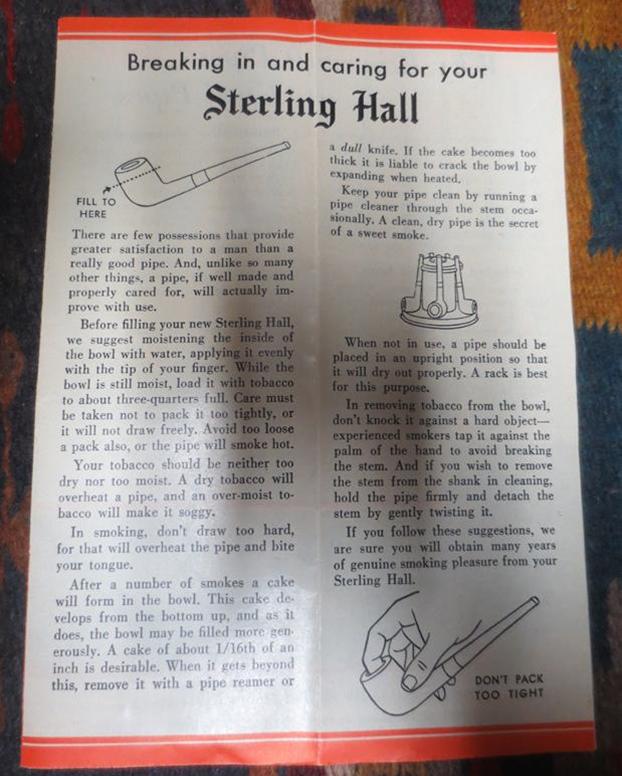
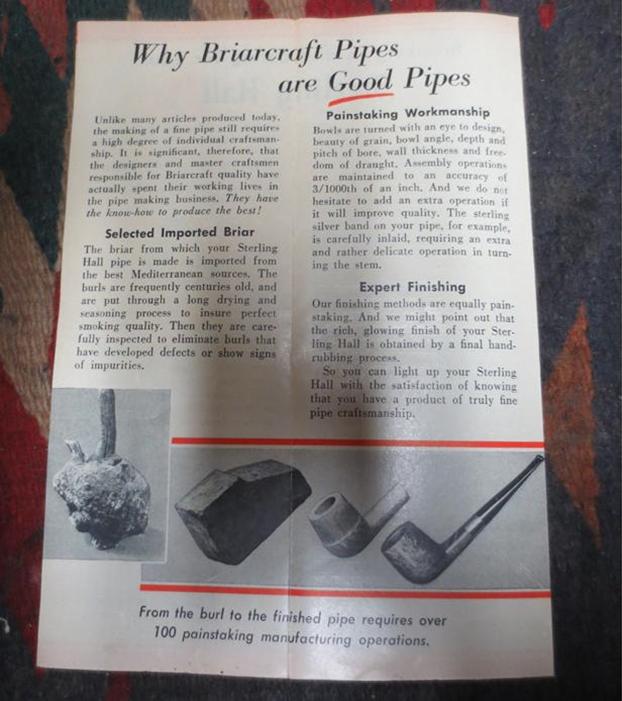
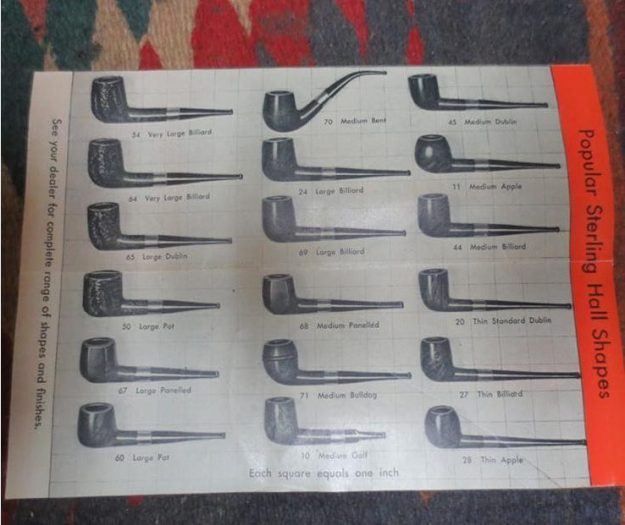
Sometimes you are hunting for pipes in antique shops, antique malls or even thrift shops when you come on a box like the one below. I don’t know about you but my first reaction when I see a box like this one is to walk away. I have found that they are often empty or at best holding worn out pipe that is cracked, chewed or both and certainly one I don’t want. Well I have tried to instill that habit in my brother but he is a better hunter than me! He opens the boxes to see what is in them. Now, understand, I used to do that but I have gotten jaded over the years of finding next to nothing or worse in these old pipe boxes. He opened this one and found something he was not expecting. When he showed me the box on Facetime I fully expected it to be useless even though he assured me I would be surprised.sh1He opened the box and showed me what was inside – well it was not a Sterling Hall Hand Made nor was it a useless worn out pipe. Instead it was a WDC Wellington that through the camera looked remarkably good. The finish looked good, the stem looked good, the nickel ferrule looked good. I was hooked. Okay so it is a Wellington I said – we have cleaned up quite a few of these system style pipes so I was still not that impressed. It so far appeared to be a nice looking old pipe in the wrong box. Heck, there was even a Sterling Hall pipe sock in the box along with the pamphlet included with every Sterling Hall pipe.sh2 sh3 sh4He just laughed and held the pipe up to the camera and rotated it from side to side so I could see the grain and the stem. It looked really good. The grain on both sides was nice and from the front and the back it also looked good. The stem was shiny black and bore the WDC in a triangle under the Wellington logo on the topside. In fact it appeared to be almost flawless but I still felt that there was something that he was not telling me. What was it with this Wellington pipe he had found in the Sterling Hall box?sh5Finally he turned the pipe bowl toward me. The bowl was unsmoked! It was unsmoked and clean! It was not worn or damaged or…. You know that feeling when you are looking at a New Old Stock (NOS) pipe? Yes he had found a new unsmoked old stock WDC Wellington in flawless condition. The fact that it had been kept in the wrong box had probably preserved it. There was no oxidation on the stem and it was like the day it had left the WDC factory.sh6I honestly could not believe my eyes. I don’t think I have ever seen a unsmoked new Wellington in my life. It was a first for me and I have to guess that it will probably be the only one that I ever see. He shipped it to me in the last shipment of pipes and I took the pictures above to let you see what I saw when it arrived. I have also included photos of the brochure that was in the Sterling Hall box for your reading enjoyment. Look at the prices of the pipes and quaint descriptions of how to break in and care for a pipe. Look also at the variety of shapes that were available in the Sterling Hall line. These pipes were made by Briarcraft in New York and were one of their higher grade lines. Enjoy the read and thanks for walking with me in the unveiling of this pipe hunt find!sh7 sh8 sh9 sh10
Restoring a William Demuth Co. Wellington


Blog by Alan DP

I was going through files on my computer the other evening and came across an article I picked up somewhere on the web back in October 2008. Alan DP wrote this and posted it February 25, 2008 for one of the Pipe Forums or online pipe communities. I have always liked WDC pipes and have had many over the years that I kept for my own collection or repaired and restored for others. The vast array of styles, shapes and designs may contribute to my like of the brand. I have older ones from the late 1800’s and later ones as well. When I came across this post of Alan’s I read with interest his work on the Wellington and his helpful information and thought I would share it here. Alan if you happen to read this thank you for your post. It is a great read. Here are Alan’s own words.
–Steve

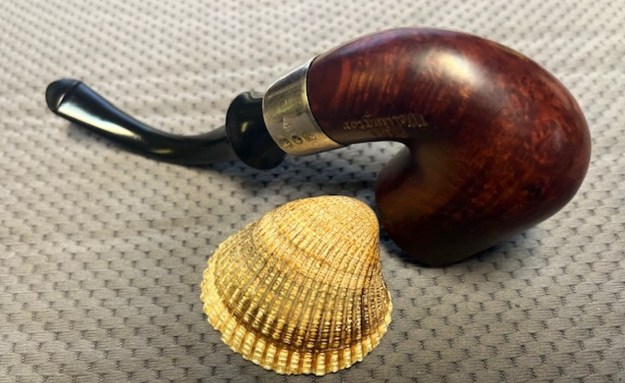
Here’s a scannergraph of the old Wellington not long after I brought it back from the brink of oblivion. It was part of an eBay lot and I immediately decided it was a keeper, because I had no other pipe like it.WDC1

The Wellington is the WDC copy of the Peterson System pipe. Here’s a cutaway diagram that I snagged from Pipe & Pouch to help explain this pipe’s design.WDC2

The bit, rather than connecting directly to the bowl via the shank, fits into a sort of pocket or reservoir where the air sort of swirls around as it goes into the bowl. The upper air passage goes on into the bowl, and the bottom reservoir collects moisture. This looks like another odd gimmick, but in my opinion, this one works very well. Of course, it requires additional attention when cleaning. I use a cotton swab to clean out the reservoir, and pipe cleaners as usual to clean the air passage.

WDC3

Another thing about the Wellington (and other Peterson copies) is the military bit. Rather than the traditional tenon/mortise arrangement, the bit simply tapers down slightly and wedges into the shank, remaining in place from the pressure of insertion. This design makes it safe to remove the bit while the pipe is still warm–something that is not a good thing with a tenon/mortise design.

A third thing that sets the Wellington/Peterson pipes apart is the button on the bit. Go back and look at the first photo as well as the cutaway graphic and pay attention to the end of the bit. This is a bit design created by Peterson and is called the P-lip. The hole is on top of the button rather than in the very end, and is angled upward to direct smoke toward the roof of the mouth rather than straight into the tongue. Also, the curved underside of the bottom helps to prevent the tongue from touching the opening of the air passage. The upward-pointing opening is supposed to help prevent tongue-bite, and the curved “tongue shield” helps keep saliva from getting into the stem by being touched with the tongue (something that is a troublesome unconscious reflex for some pipe smokers).

Some people hate the P-lip because it feels different. I have no special preference nor objection to it, at all. To me it’s just another bit. The P-lip bit does have a more rounded shape than most bits, and it does feel somewhat different, but it’s nothing that anyone shouldn’t be able to get used to.

This old Wellington has become one of my favorite pipes. Its size and deep bend gives it an impressive appearance and a comfortably low center of gravity. As you can see in the second photo, I have managed to wear off some of the finish since it came into my hands, and I will eventually be refinishing this one. Meanwhile, this is one of my regular truck pipes and I often smoke it on the long commute home in the afternoon. If I manage to come across any more of these pipes in my eBay adventures, I will probably keep them all–at least until I build up a good week’s worth of pipes for rotation.

FYI, Kaywoodie also had a copy of the Peterson System pipe, called the Chesterfield. Unfortunately, I haven’t been able to acquire one of those yet.

WDC Wellington Bent System – Restoring a Mainstay Pipe of the Celebrated Maker


Guest Blog by Robert M. Boughton
Member, North American Society of Pipe Collectors
http://www.naspc.org
http://www.roadrunnerpipes.com
http://about.me/boughtonrobert
Photos © the Author

Bruno Antony: Each fellow does the other fellow’s murder. Then there is nothing to connect them. The one who had the motive isn’t there. Each fellow murders a total stranger. Like you do my murder and I do yours…For example, your wife, my father. Criss-cross.
― from “Strangers on a Train” (1951), directed by Alfred Hitchcock, screenplay by Raymond Chandler and Czenzi Ormonde, starring Farley Granger and Robert Walker [Bruno]

INTRODUCTION
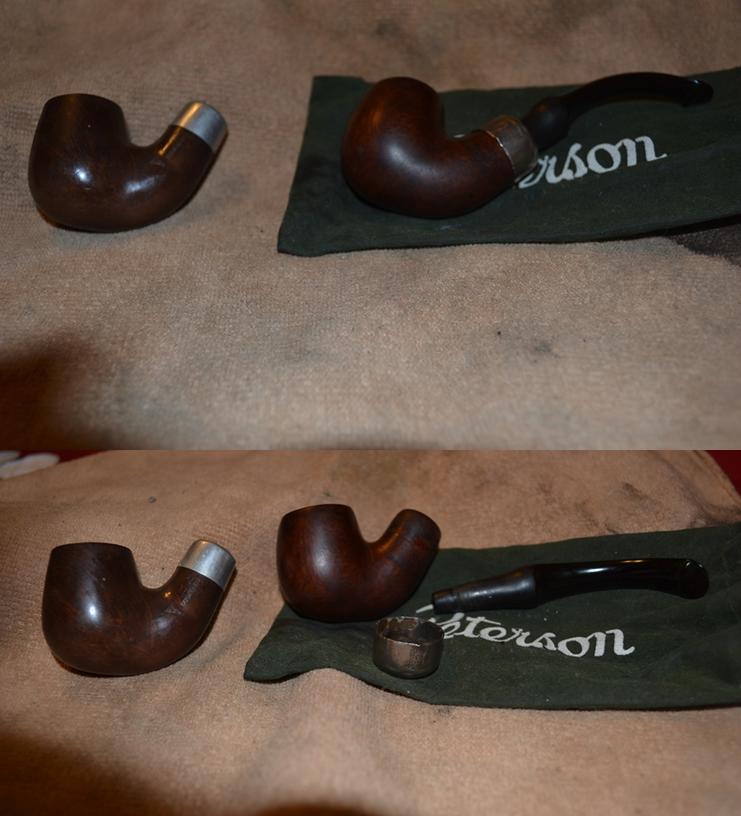
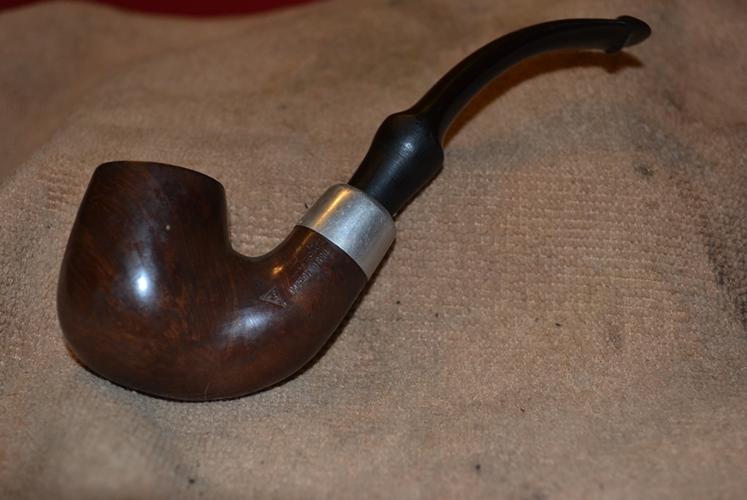
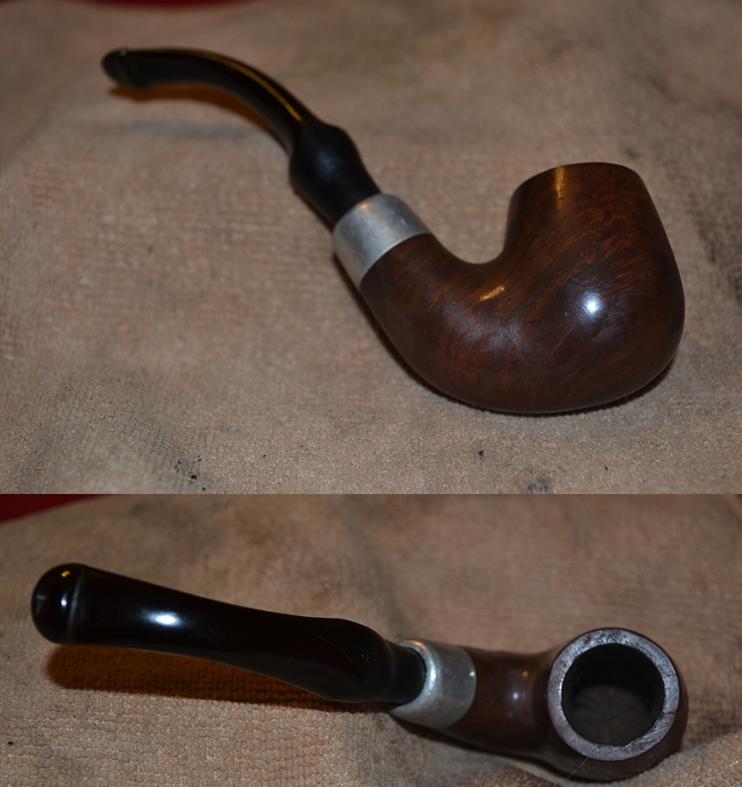
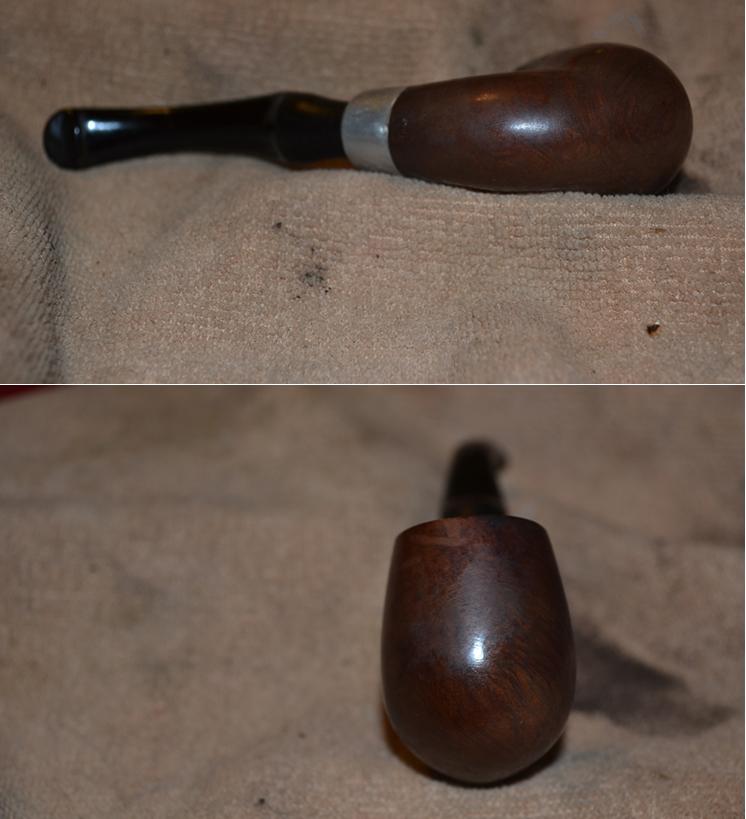
The movie was one of Hitchcock’s greatest and a favorite of mine. How could it not be, with the legendary detective novelist Raymond Chandler as the top word-man? But this is not a blog about swapping murders. It does concern the swapping of a bit, however, or to be more accurate, the removal of one from a basic Peterson’s System Standard in my collection of pipes awaiting more extreme repair, and which won’t be missed before it can be mended, to use for the William Demuth Co. Wellington System Billiard.

But first, let’s play Find the Pipe in the Lot.Robert1 No doubt you have spotted it without trouble, or will soon deduce the answer from following photos.

Now for the criss-cross: watch as the bit, at first loose but in place in the shank of the Peterson’s Standard System to the right in photo one, without warning falling to the trademark green sleeve along with the battered band in photo two. Look long enough, and I guarantee you’ll see the moment of selfless sacrifice for the blighted, bit-less predicament of the once proud, near-twin WDC close by. And then, in photo three – the miraculous transplant to the WDC after the donated organ has embraced its new host body, at least tentatively.Robert2

Robert3 A few words concerning the William Demuth Co. are in order, for those not familiar with its illustrious history. Demuth (1835-1911) entered the U.S. as an emigrant from Germany with no money when he was 16 and worked a number of odd jobs. His break came when he attained the position of clerk for a tobacco products trade company. Demuth founded his own company in Brooklyn, New York in 1862, two years into the Civil War, when he was only 27.

Success was rapid, leading to friendships with such prominent figures as James A. Garfield. [Garfield was inaugurated as the twentieth U.S. president in 1881 after winning by the narrowest popular vote margin in history, a mere 9,464 ballots, but with an extra 59 Electoral College votes. He served only four months before he was gunned down by a single shot aimed by Charles Julius Guiteau, an American lawyer denied an ambassadorship to France(evidently for good cause, as shooting the president on July 2, four months into his term, was not very diplomatic). Although Garfield lingered for about two and a half months, the assassin’s bullet caused the blood poisoning to which he succumbed. Guiteau was hanged several days short of a year after the ultimate assassination.]

At the Presidential Inauguration, Demuth presented Garfield with two meerschaum pipes, one in Garfield’s image and the other in the new First Lady’s. The friendship of the two men led to Demuth’s commissioning of a partial presidential line of pipes. But the linchpin WDC pipe was the Wellington, which lasted beyond the company’s own lifetime. Having become a subsidiary of S.M. Frank & Co. in 1937, WDC continued until the final day of 1972. The Wellington, however, was still offered in Frank’s catalog until 1976 and even had a brief reprise in the mid-1980s by way of consumer-direct sales.

Here are two other Wellington’s, the first courtesy of pipephil.eu and the second from pipedia.org.Robert4 RESTORATION Robert5

Robert6

Robert7

Robert8 In a sentence, this restoration was more about the stem than anything else. I had decided to go with a perfect replacement from a Peterson’s Standard System pipe in my personal collection. Then, when I donned my Dollar Store 3.75X glasses for a “final” close inspection, I cringed at the sight of the faint black outline of the Peterson’s P, shown below, now filled in with a white china marker.Robert9 Note the correct shape of this bit from lip to tenon. My next brainstorm was to sand off the P, and in fact set out to do so when I came to my senses. What can I say? Sometimes I have the stupidest ideas. And so I opted to let the buck stop here and repair the bit I took off of the Peterson’s System Standard shown in the criss-cross photos of the Introduction. That System Standard needs serious work, also; not only a new, genuine bit but a replacement matching band. I will tackle that one when I have the new bit and band and am up to speed on the process of banding.

With a happy glow of contentment in the pit of my belly, I replaced the above bit, with the P filled in at last, on its rightful pipe in the stand-up, two sided bookshelf with doors where I store most of my collection, and opted to proceed with this restoration by doing the long, tedious work of applying layers of black Super Glue to build up the thinner, bottom section of the bit that lacks a tenon. As a result, while the rest of the Wellington has been finished for about ten days, the old bit, mangled by some wannabe pipe fixer, took days of patient layering, sanding and micro-meshing each phase, then polishing on the buffers, and was only completed moments ago.

I started the bit on its way, which I knew would take some days, by filing it to a uniform tapering roundness and sanding with 150- and 320-grit paper before micro-meshing from 1500-4000.Robert10

Robert11 After that I gave the entire surface of the bit below the bulge the first of four thick coats of black Super Glue. Aware of the risk, I then stripped the old finish with as short as possible of an Everclear soak.Robert12

Robert13

Robert14

Robert15

Robert16

Robert17 Leaving the bowl and shank for about 10 minutes in the alcohol and time enough to dry, I reamed and sanded the chamber to the smoothness of a chamois cloth and retorted the pipe using the bit from my own Peterson’s System Standard. Starting with super fine 0000 steel wool, then micromesh every step from 1500-4000, the wood and steel band had a nice natural sheen.Robert18

Robert19

Robert20

Robert21

Robert22

Robert23 Without stain, using the natural rich color of the briar, I prepared the bowl and shank for the coming test to see if the bit worked out, the likelihood of which I had doubts, by buffing it with white Tripoli, White Diamond and two coats of carnauba, using the plain cloth buffer between each, of course.

The following days seemed to drag with each successive layer of black Super Glue and the long drying time followed by sanding with 200-grit paper and micro-meshing up the scale each time. But in the end, the result was worth the time and effort, considerable and somewhat unnerving as they were.Robert24

Robert25

Robert26

Robert27

Robert28

Robert29

Robert30

Robert31 CONCLUSION
Again, this battle was far more about trying to recover an available bit, so that it would fit and lock in the shank, rather than any problems I faced with the bowl and shank. As the bit was when I received the Pete System Standard with which it came, well, the bit was the tip of the iceberg with that future project. In fact, my friend and mentor, Chuck, recommended that I send it to someone he knows in Denver – not so much because the task was beyond my skills but that it was what he would do if he needed a new Peterson’s bent system pipe stem with the right measurements as well as a replacement band of the appropriate type. I was fortunate with the WDC in that it called for a bit designed after the Pete System variety.

Of course I would have preferred to place a perfect, like-new bit in this great WDC Wellington, but the personal reward came in finding out that I could take what I had and make it work.

I think I’ll do the same with the estate Peterson’s Standard System that gave its bit for this pipe, after I’ve received the new parts in the mail.

Reworking a WDC Wellington – Removing a Finish and Restemming the Bowl


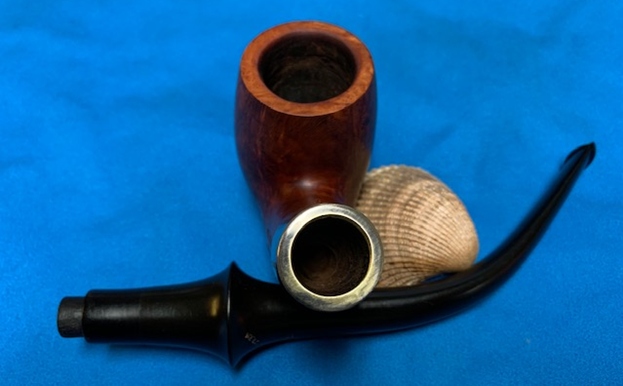
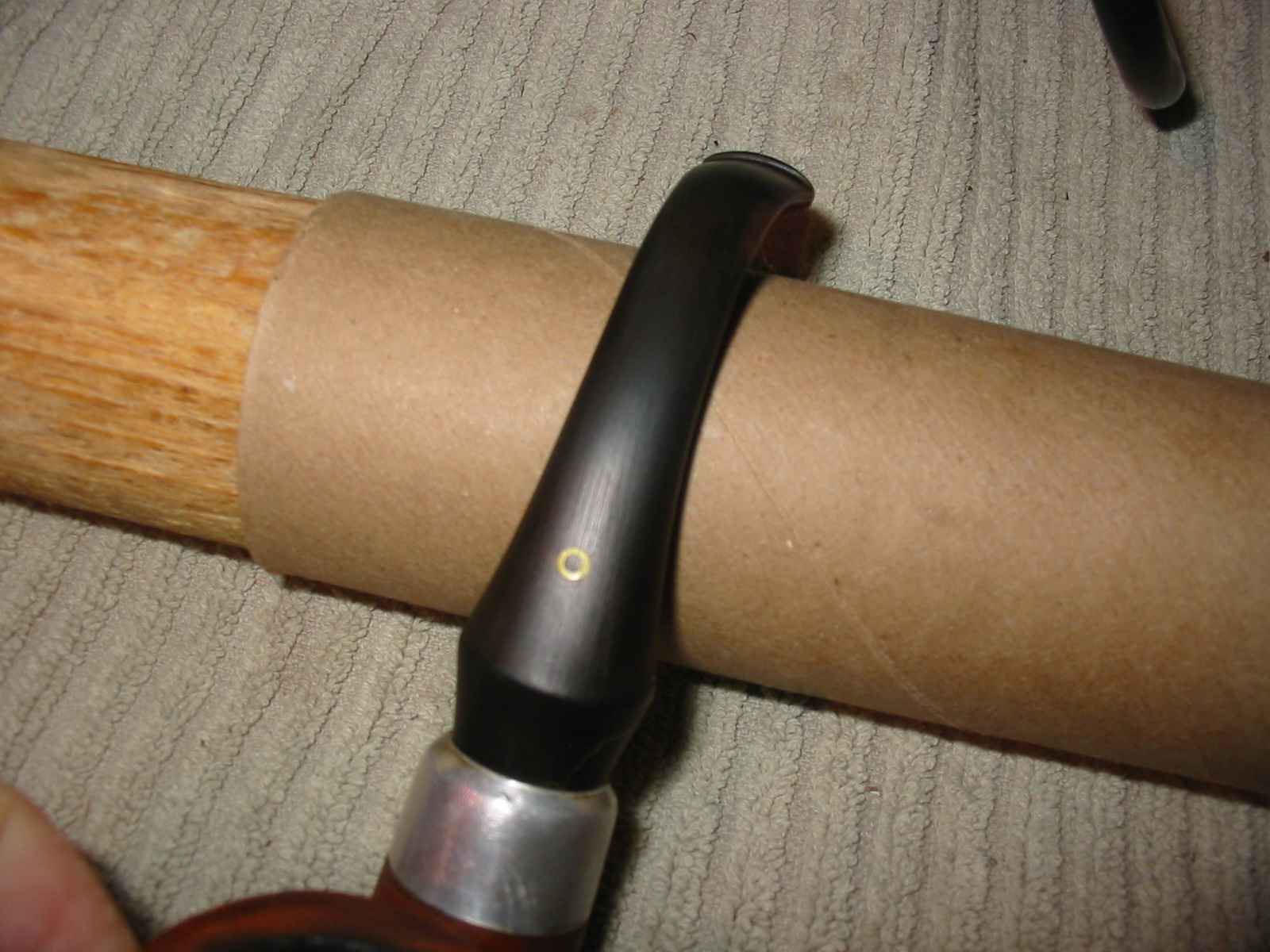
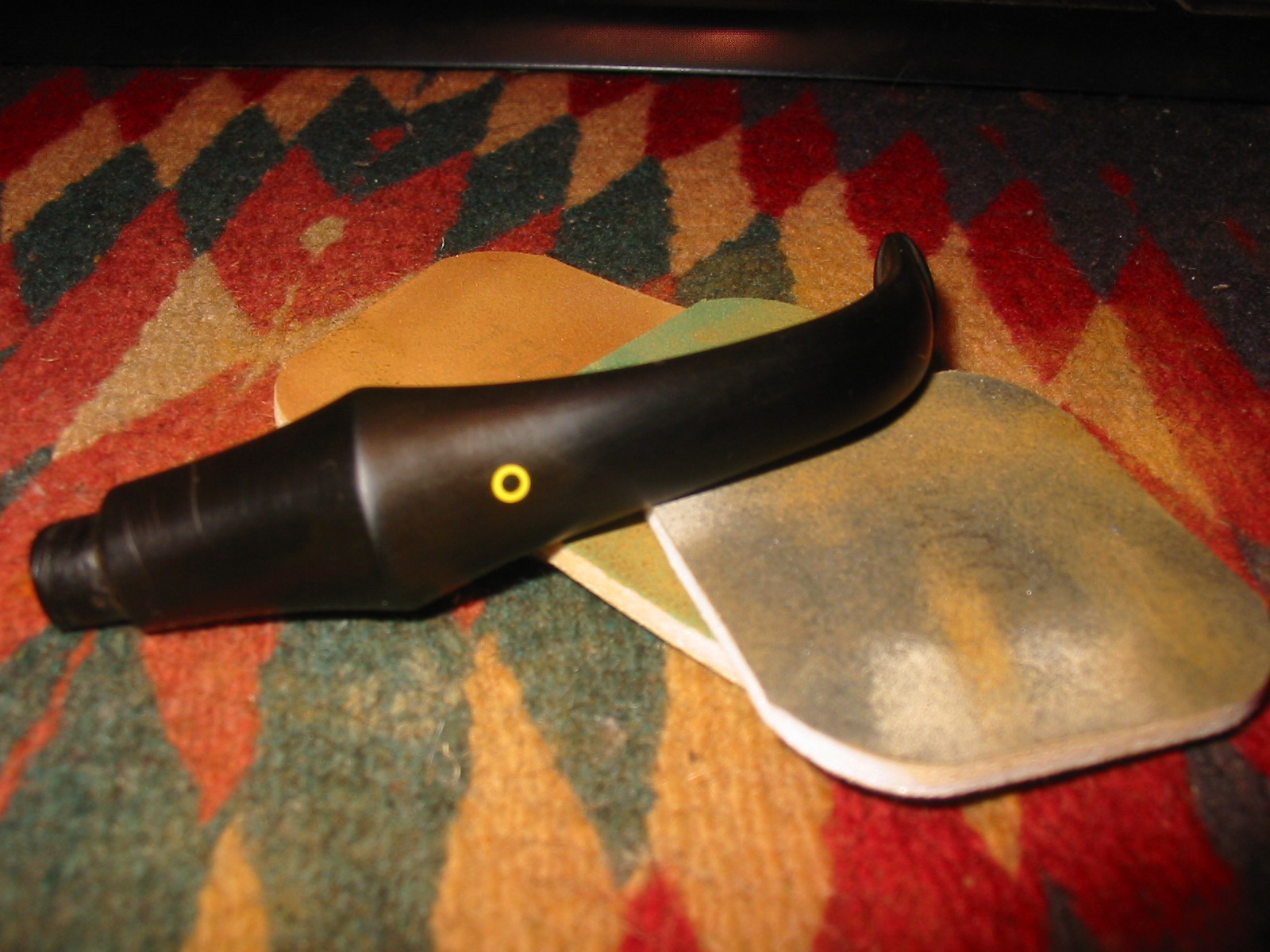
The second bowl I decided to work on from the box of bowls I was gifted was an old Wellington bowl that was actually in decent shape. The bowl is 2 inches tall and 1 3/8 inches in diameter. The bowl has an internal diameter of 7/8 inches. It is quite a large bowl. The nickel ferrule was in good shape but slightly oxidized with a few small nicks and dents. There was an uneven cake in the bowl and the sump area was filled with tars and oils. The finish was varnished but peeling as can be seen in the photo below. The rim had a tar build up and the varnish was peeling under it. The inner edge and outer edge of the rim was in excellent shape. The stamping on the bowl was on the left side of the shank and included the WDC inverted triangle and letters and next to that Wellington in script over the words IMPORTED BRIAR. There was no other stamping on the bowl. The stem did not come with the bowl. I had an old Yello Bole stem from the same era as the Wellington and with the same structure at the tenon and the P-lip. It was scratched and oxidized and had some tooth marks on the top and bottom sides just ahead of the button. The stem has a bright yellow “O” on the top. The bend in the stem had straightened so it would need to be re-bent to work well with the bowl.
IMG_7308
I have several WDC pipes and have done quite a bit of research on the brand that I have written about on the blog. I have even repaired and given away quite a few Wellington’s over the years. This one appeared to be a great piece of briar so I wanted to repair it. I also wanted a quick refresher about this line of WDC pipes and how it fit within the hierarchy of WDC lines. The following is a brief excerpt from the pipedia.org article on WDC pipes.

“William Demuth, a native of Germany, entered the United States at the age of 16 as a penniless immigrant. After a series of odd jobs he found work as a clerk in the import business of a tobacco tradesman in New York City. In 1862 William established his own company. The William Demuth Company specialized in pipes, smoker’s requisites, cigar-store figures, canes and other carved objects.
The Demuth Company is probably well known for the famous trademark, WDC in an inverted equilateral triangle. William commissioned the figurative meerschaum Presidential series, 29 precision-carved likenesses of John Adams, the second president of the United States (1797-1801) to Herbert Hoover, the 30th president (1929-1933), and “Columbus Landing in America,” a 32-inch-long centennial meerschaum masterpiece that took two years to complete and was exhibited at the World’s Columbian Exposition in Chicago in 1893.

The Presidential series was the result of Demuth’s friendship with President James A. Garfield, a connoisseur of meerschaum pipes. Demuth presented two pipes to Garfield at his inauguration in 1881, one in his likeness, the other in the likeness of the President’s wife. Later, Demuth arranged for another figurative matching the others to be added to the collection as each new president acceded to the White House, terminating with President Hoover.

In 1897 Ferdinand Feuerbach joined the Demuth Company and by 1903 had become the production manager. Feuerbach is credited with developing Demuth’s popular Royal Demuth and Hesson Guard Milano pipelines. He left in 1919, when Sam Frank Sr. needed an experienced pipe man to run his pipe factory, located at 168 Southern Blvd., in the Bronx. Feuerbach and Frank had been close friends since Frank started his own business in 1900 and was closely associated with the sales staff of WDC, selling their line of pipes.

In early 1937, the City of New York notified S.M. Frank & Co. of their intent to take by eminent domain, part of the land on which the companies pipe factory was located. This was being done to widen two of the adjacent streets. As a result of this, Frank entered into negotiations to purchase the Wm. Demuth Co.’s pipe factory in the Richmond Hill section of Queens. It was agreed upon that Demuth would become a subsidiary of S.M. Frank and all pipe production of the two companies would be moved to DeMuth factory. New Corporate offices were located at 133 Fifth Avenue, NYC.

Demuth pipes continued to be made at the Richmond Hill plant till December 31, 1972. Then the Wm. Demuth Company met its official end as a subsidiary company by liquidation. Demuth’s mainstay pipe, the Wellington continued to be offered in the S.M. Frank catalog until 1976. In the mid-80’s, the Wellington even made a brief return as a direct to the consumer offer.”

The two leaflets below give some of the details on the Wellington pipe. The first one is a sales leaflet that speaks of the assets of the pipe and what it has to offer the pipe smoker. The second one is a cutaway picture of the Wellington pipe that clearly shows the details of the drilling both of the airway and the sump or well in the heel and shank of the pipe.
wellington1

wellingtonsystem
With the above diagram and information I was better equipped to work on the internals of the pipe and give it a thorough cleaning. I really like digging out the information and some of the diagrams of the pipes that I work on so that I can get a feel for the design and an appreciation for the work.

I fit the stem on the bowl and the overall look and feel was the same as the Wellington. The shoulder or ridge that formed the saddle was not as sharply defined as in the original stem but the look was close. The P-lip was the same and the tenon insert end was a match to the diagram above. Once the stem was re-bent the look would be even closer to the original.
IMG_7312

IMG_7313

IMG_7314

IMG_7315
I cleaned the top of the rim with a cotton pad and alcohol to remove the tars and oils. I then reamed the bowl with a PipNet Reamer – a tool that I use on virtually every pipe I work on. The interchangeable heads allow me to use various heads to careful trim back the cake. In this case I took it back to bare wood to clean it up and remove the uneven buildup.
IMG_7351

IMG_7352
I scrubbed down the finish with acetone on cotton pads. The varnish came off with scrubbing. Underneath the peeling varnish the stain was in good shape. The briar was very clean with no fills. The grain was quite nice with a mix of cross grain and birdseye.
IMG_7358

IMG_7359

IMG_7360
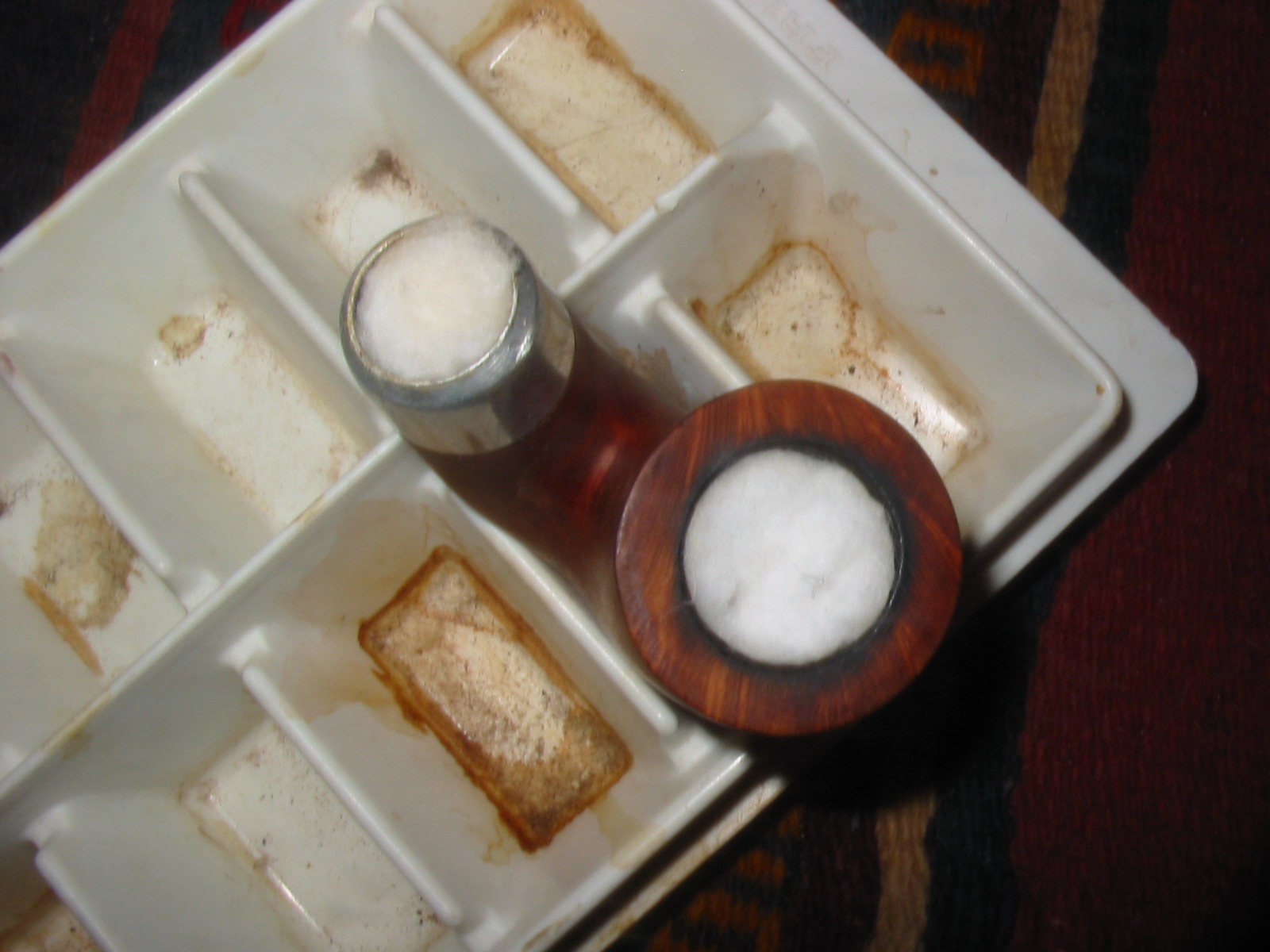
I scrubbed out the sump and the internals of the pipe with cotton swabs, pipe cleaners and isopropyl alcohol. Once the cleaners came out unstained I stuffed cotton balls in the shank and the bowl and then used an ear syringe to fill both with isopropyl alcohol (99%).
IMG_7362

IMG_7361
I put the bowl upright in an ice cube tray that I use for a stand when sweetening the pipes I clean. It works very well in wicking out tars and oils. I let it sit overnight. The first photo below shows the bowl after filling. The second photo below shows the bowl after 12 hours of soaking. Once I remove the cotton and re-clean the bowl and shank the smell of the pipe is fresh and clean.
IMG_7363

IMG_7367
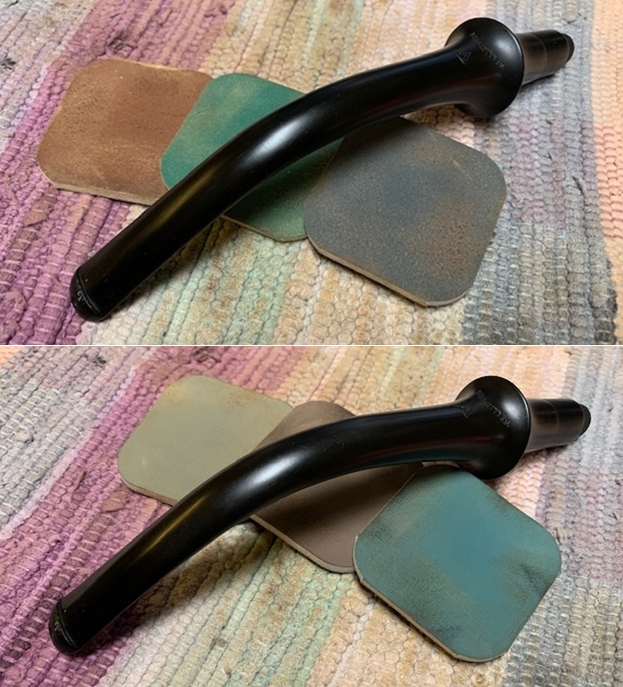
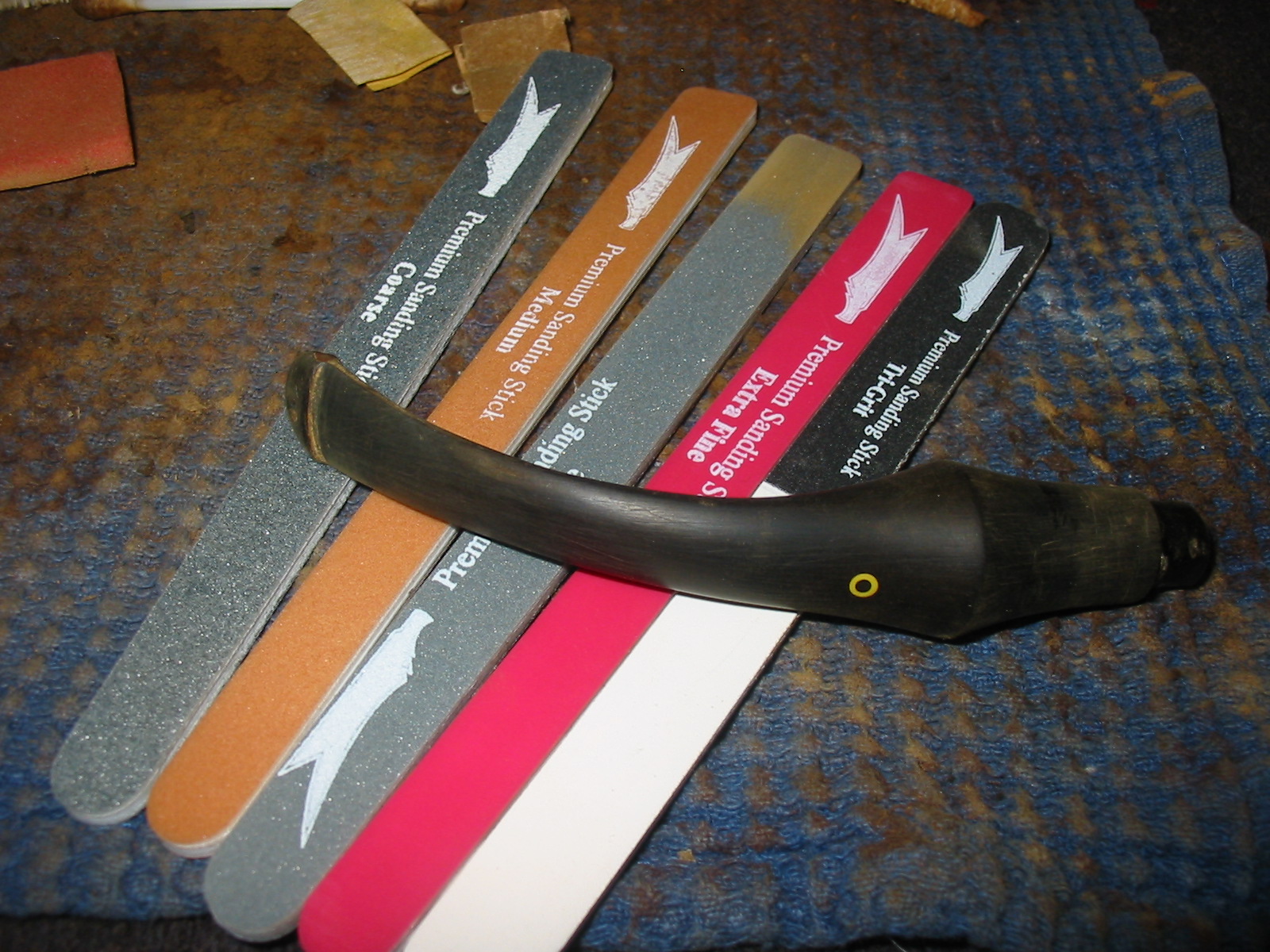
Over the weekend I picked up a few new tools to make the clean up simpler. One set of tools was the sanding sticks shown in the photo below. The various grits are clearly on the sticks. These work exceptionally well in the crease next to the button and on the shelf on the underside of the P-lip stem. I sanded the stem with 220 grit sandpaper and with medium and fine grit sanding sponges.
IMG_7366
After the initial sanding was finished I used a heat gun to heat the stem and bent it over a rolling pin covered with a thick cardboard tube to give the stem a clean bend and avoid kinking the airway. I have been using this for quite a few years now and have not experienced trouble with damaging the airways in the bending process.
IMG_7371

IMG_7372

IMG_7373
I sanded the stem once again with a fine grit sanding sponge. I generally do this before moving on to the micromesh sanding pads.
IMG_7374

IMG_7375

IMG_7376

IMG_7377
I wiped down the bowl with a damp cloth to remove any dust and to get an idea of whether I would give it a coat of stain. Once it was clean it looked good to me. No stain would be necessary on this old timer. The colouring once it was buffed would be perfect.
IMG_7378

IMG_7379
The rim needed a bit more sanding with the micromesh to clean up the top and then a folded piece of sandpaper on the inner edge to smooth things out.
IMG_7380
I worked on the stem with the micromesh sanding pads. I wet sanded with 1500-2400 grit pads. Afterwards I noticed the oxidation that still remain at the saddle so I sanded it again with the medium and fine grit sanding sponges and repeated the micromesh wet sanding.
IMG_7382
I sanded it with the 3200-4000 grit pads and still saw some oxidation in that area. I repeated the process above with the sanding sponges and the six grits of micromesh to clean it more deeply. I then buffed it with Tripoli and then finished the final three grits of micromesh from 6000-12,000 grit. I buffed it with White Diamond.
IMG_7383

IMG_7384
I polished the nickel ferrule with silver polish and a polishing cloth and then buffed the bowl and stem a final time with Whtie Diamond. I gave the entire pipe multiple coats of carnauba wax, buffing in between coats with a soft flannel buff. The finished pipe is shown below. I am quite pleased with the new look. The old Yello Bole stem works well with the pipe.
IMG_7389

IMG_7392

IMG_7390

IMG_7391