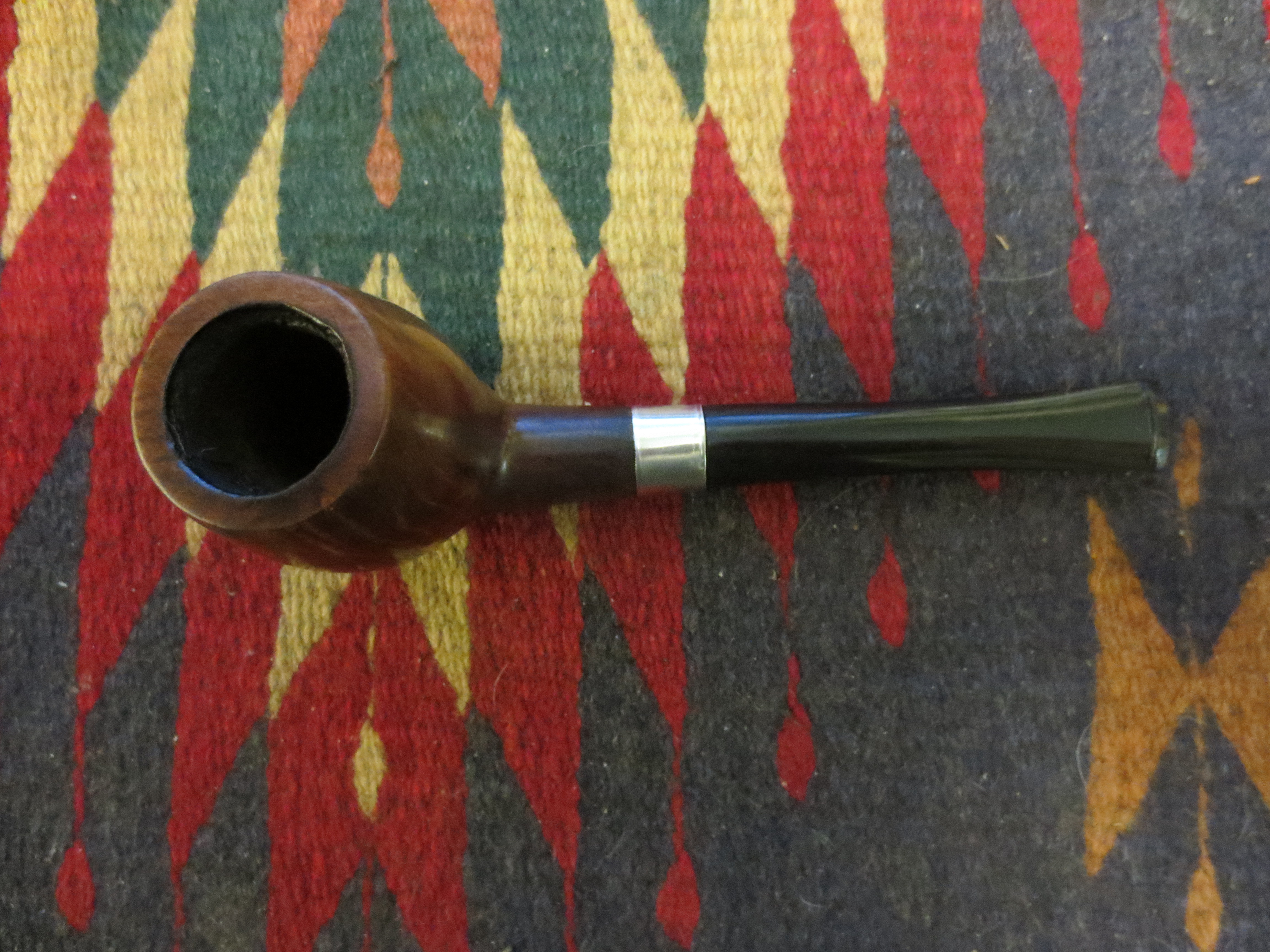
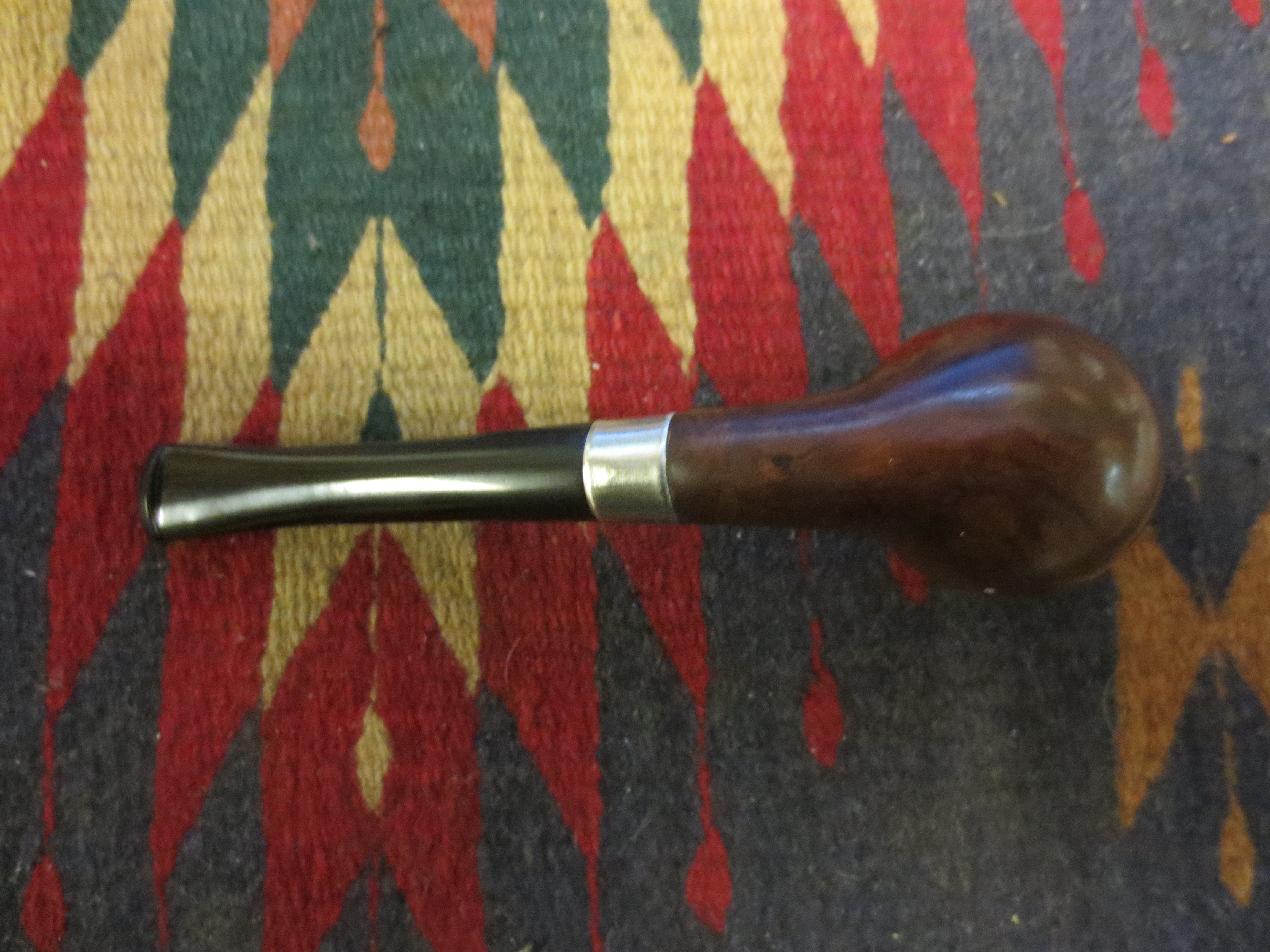
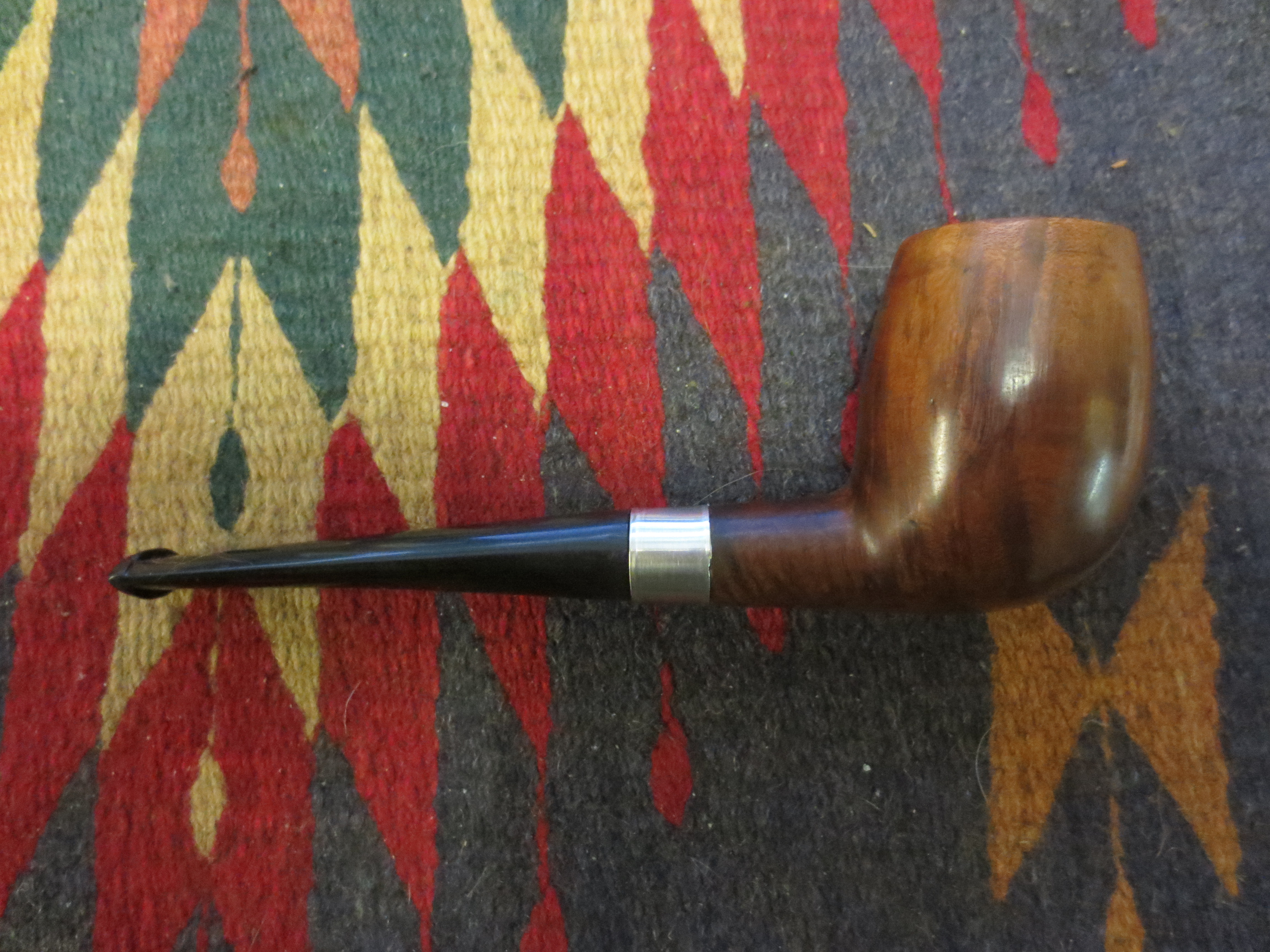
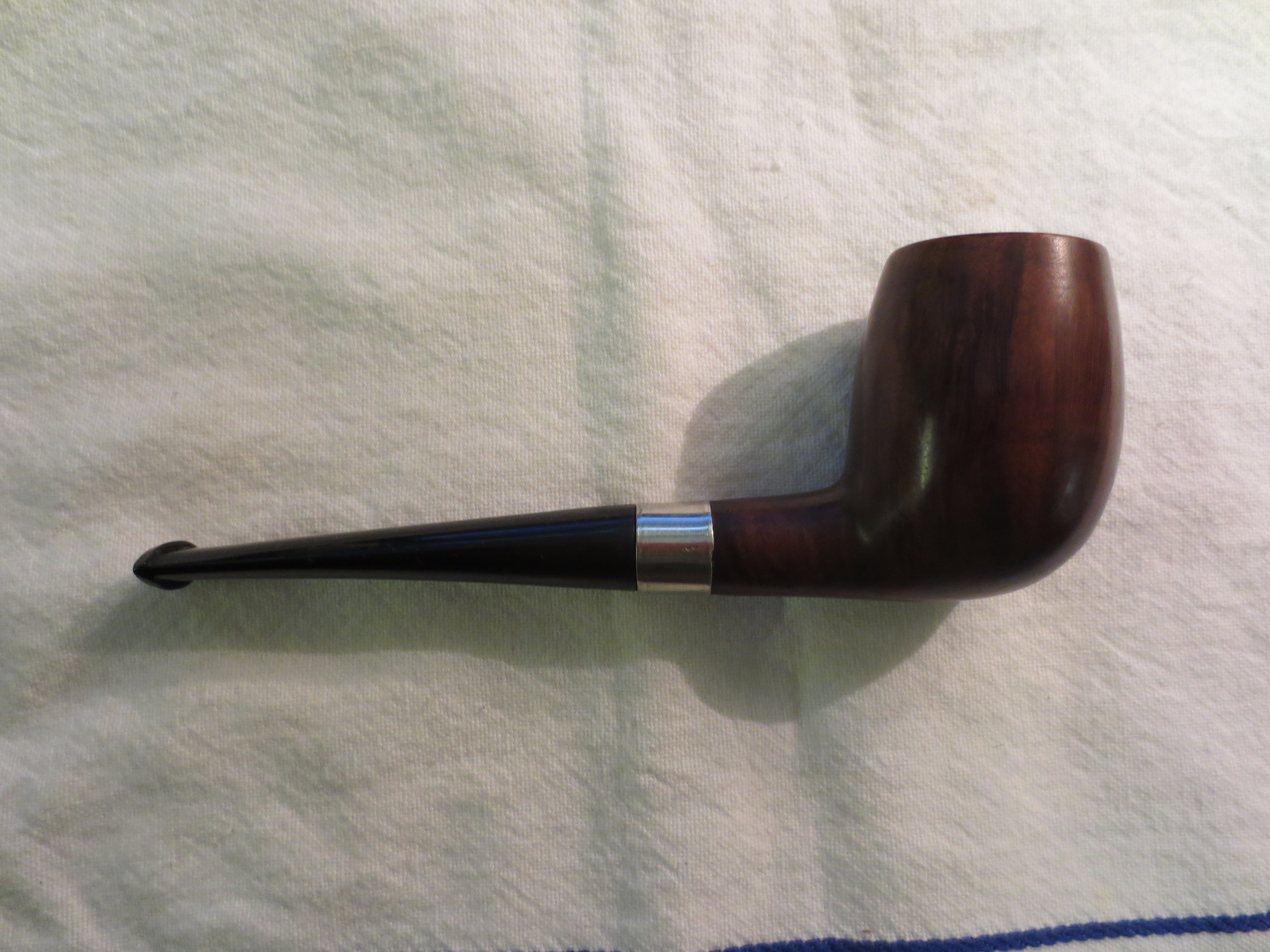
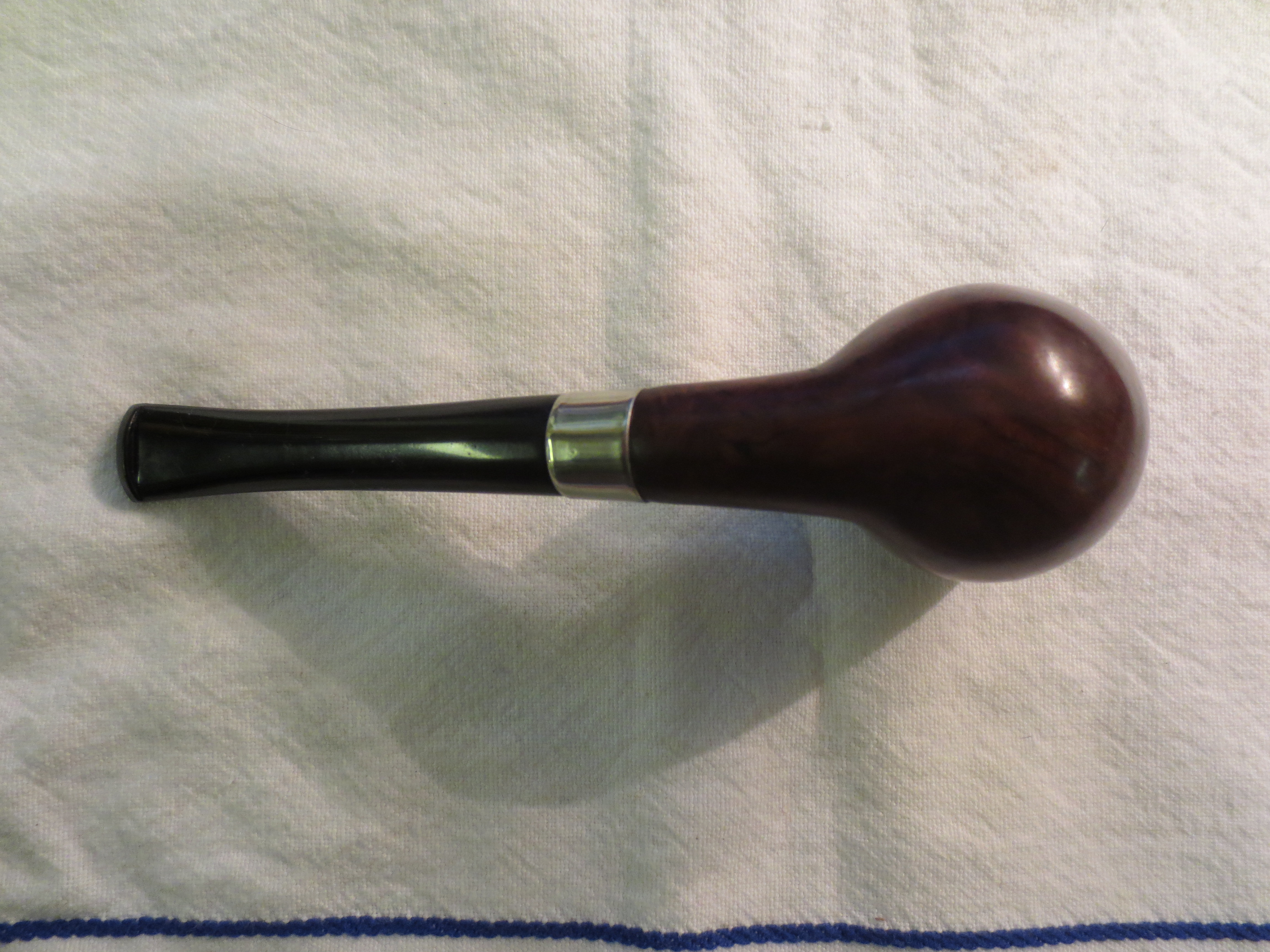
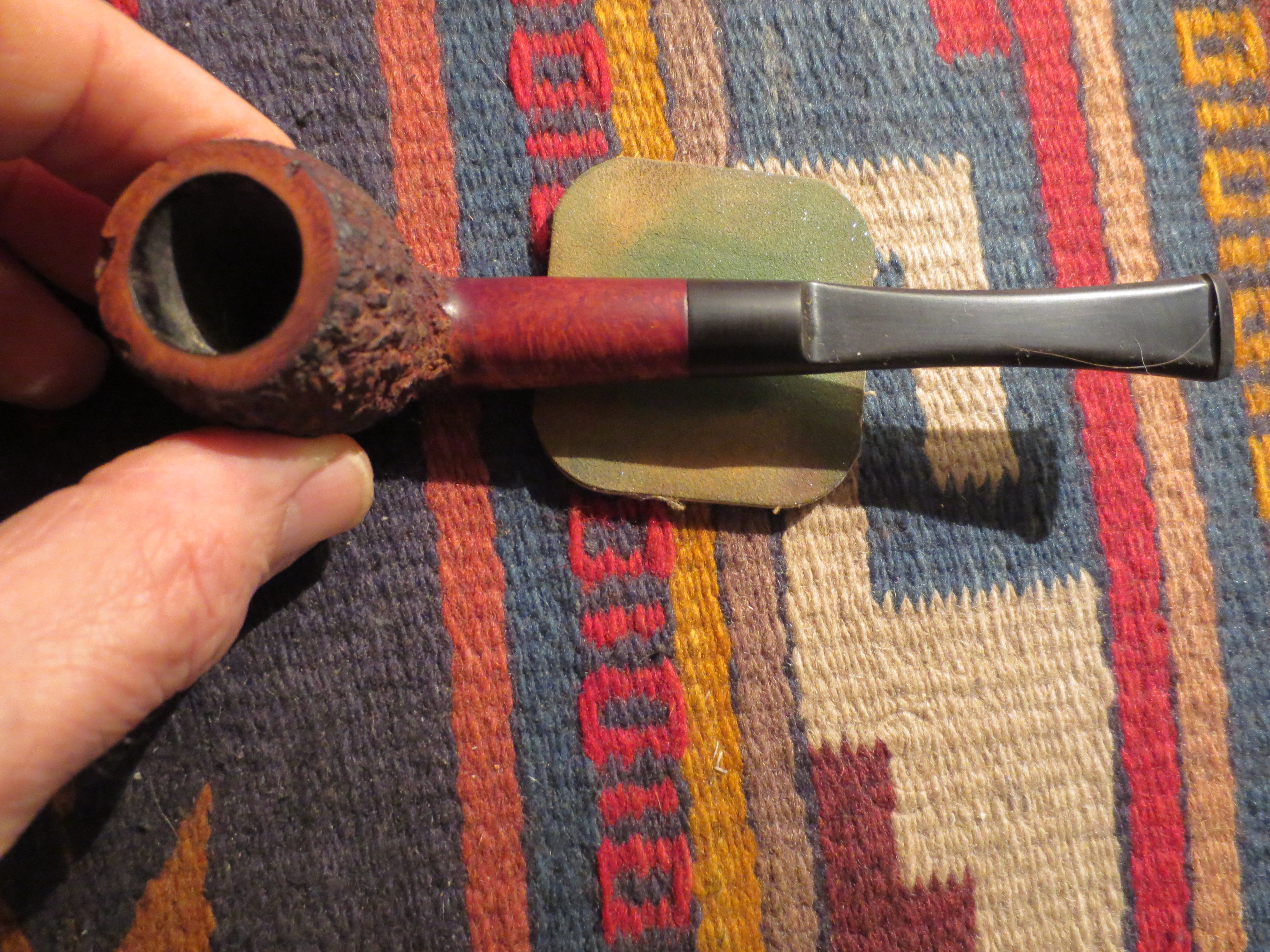
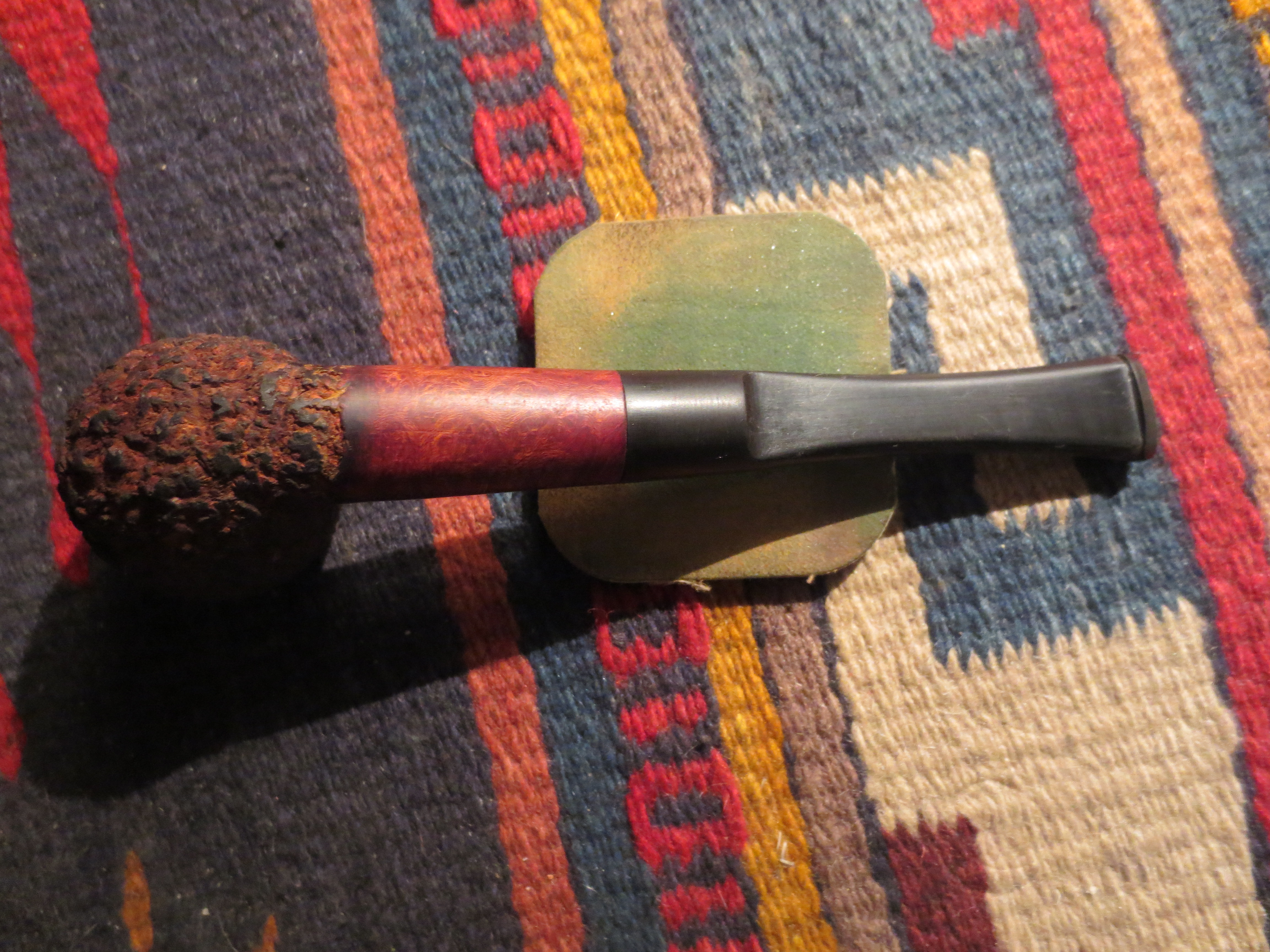
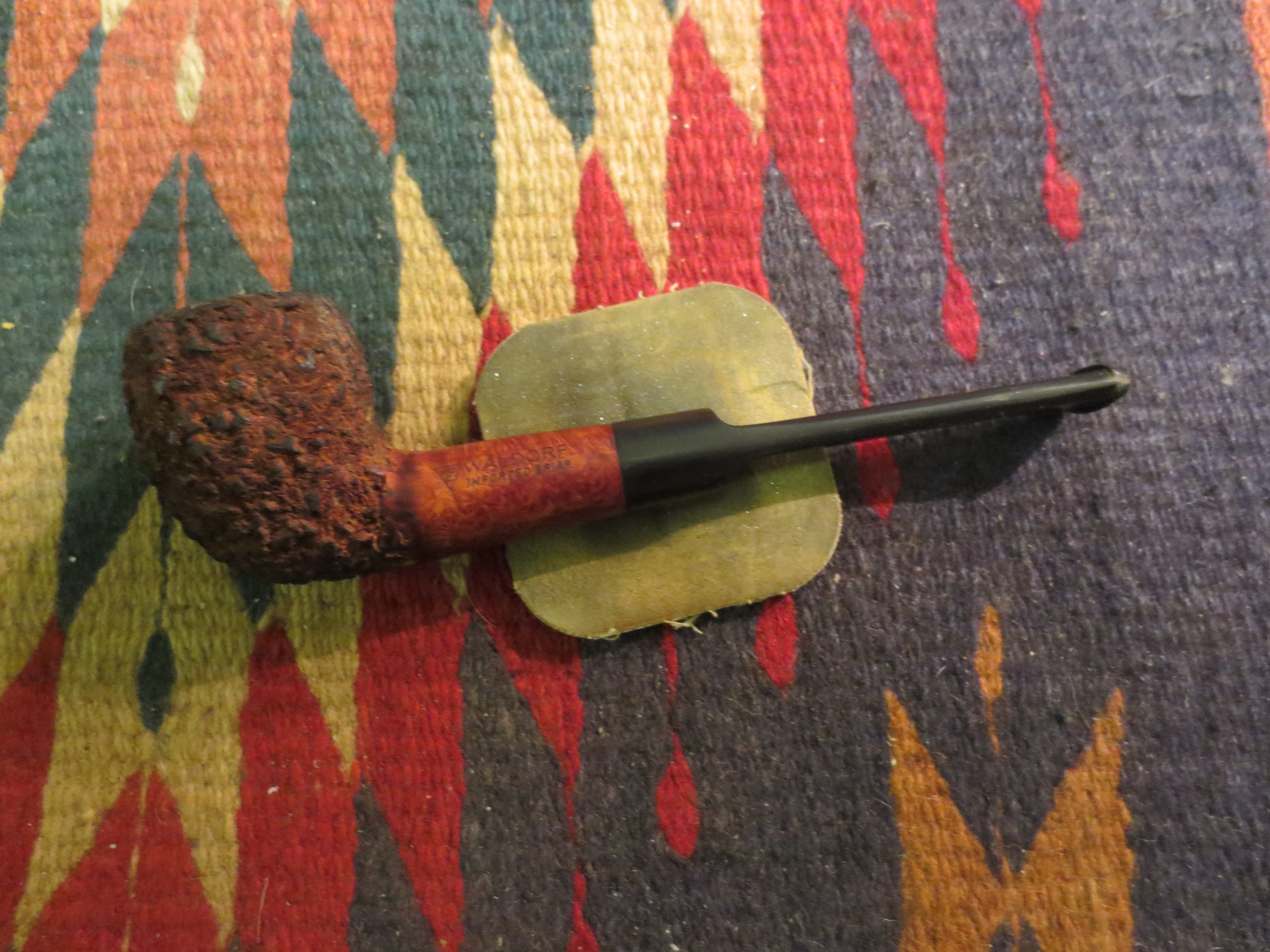
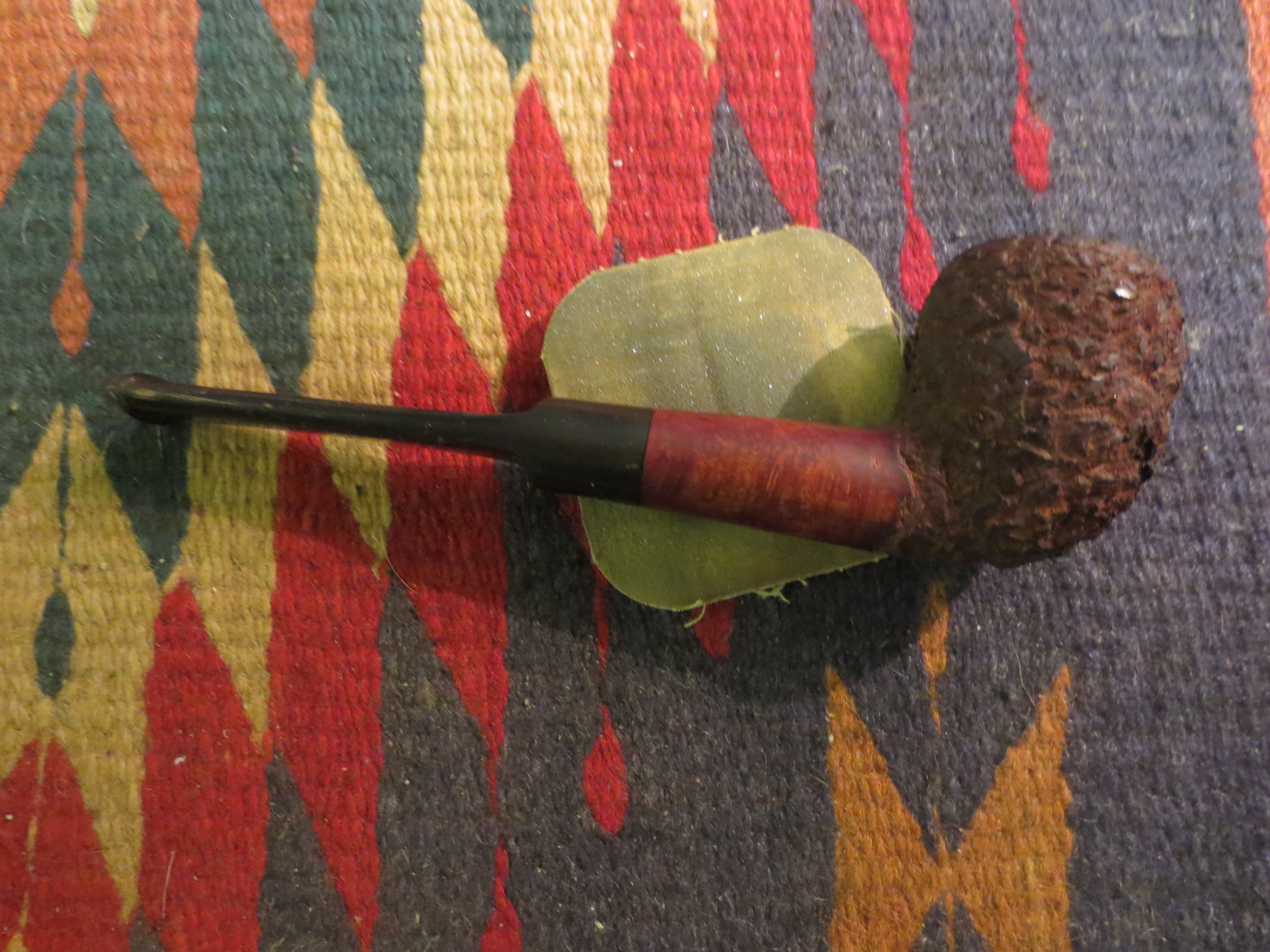
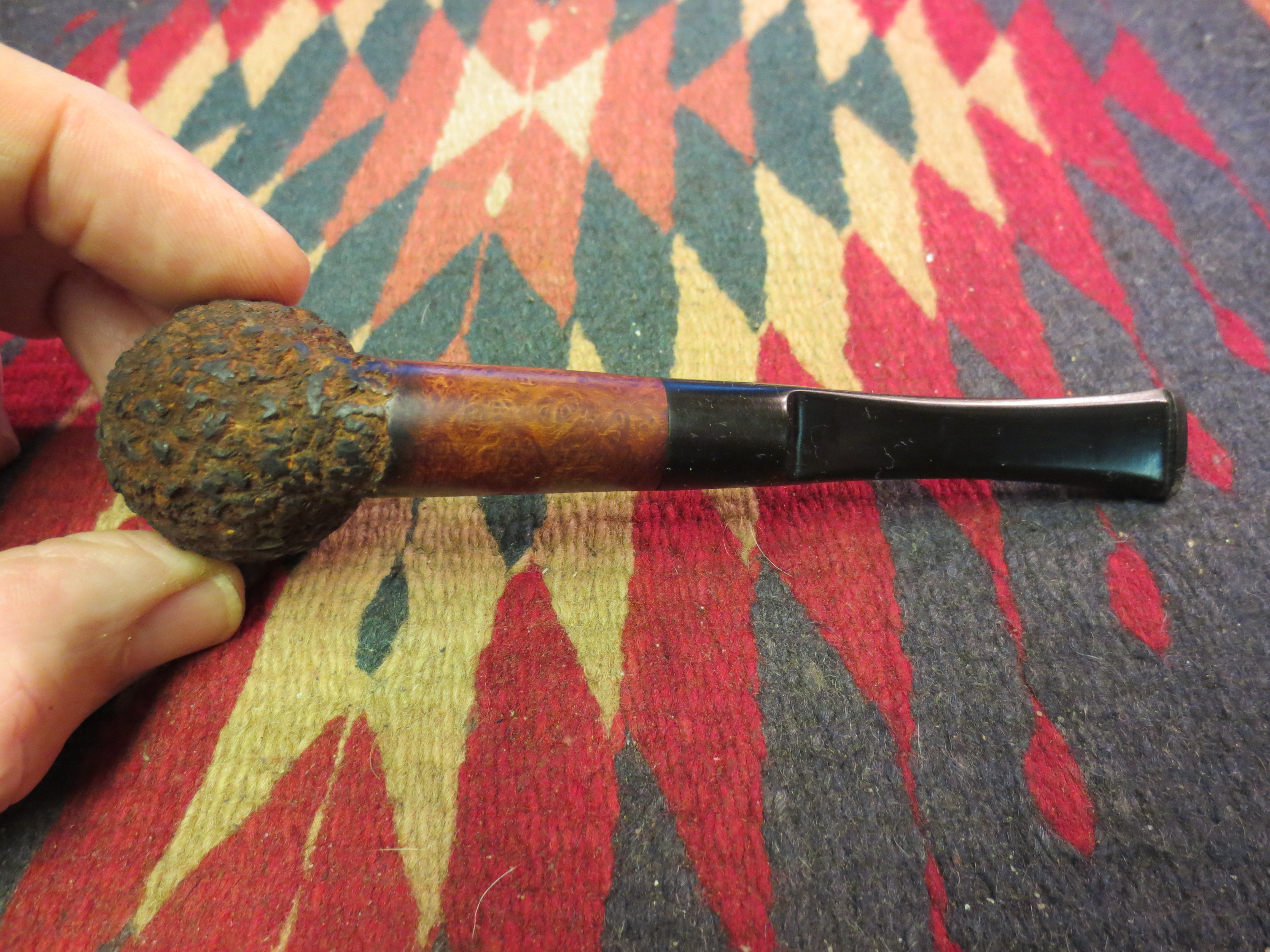
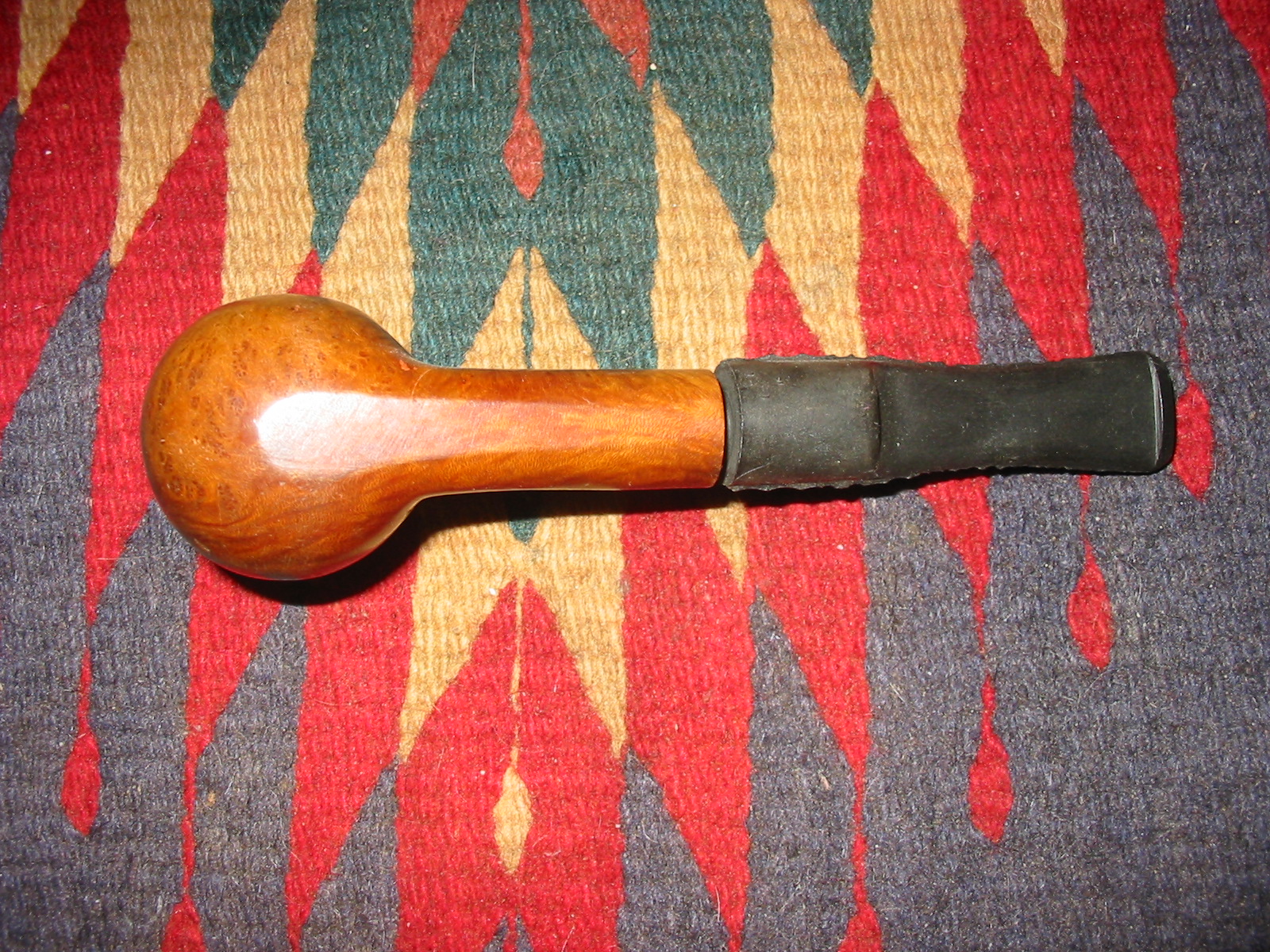
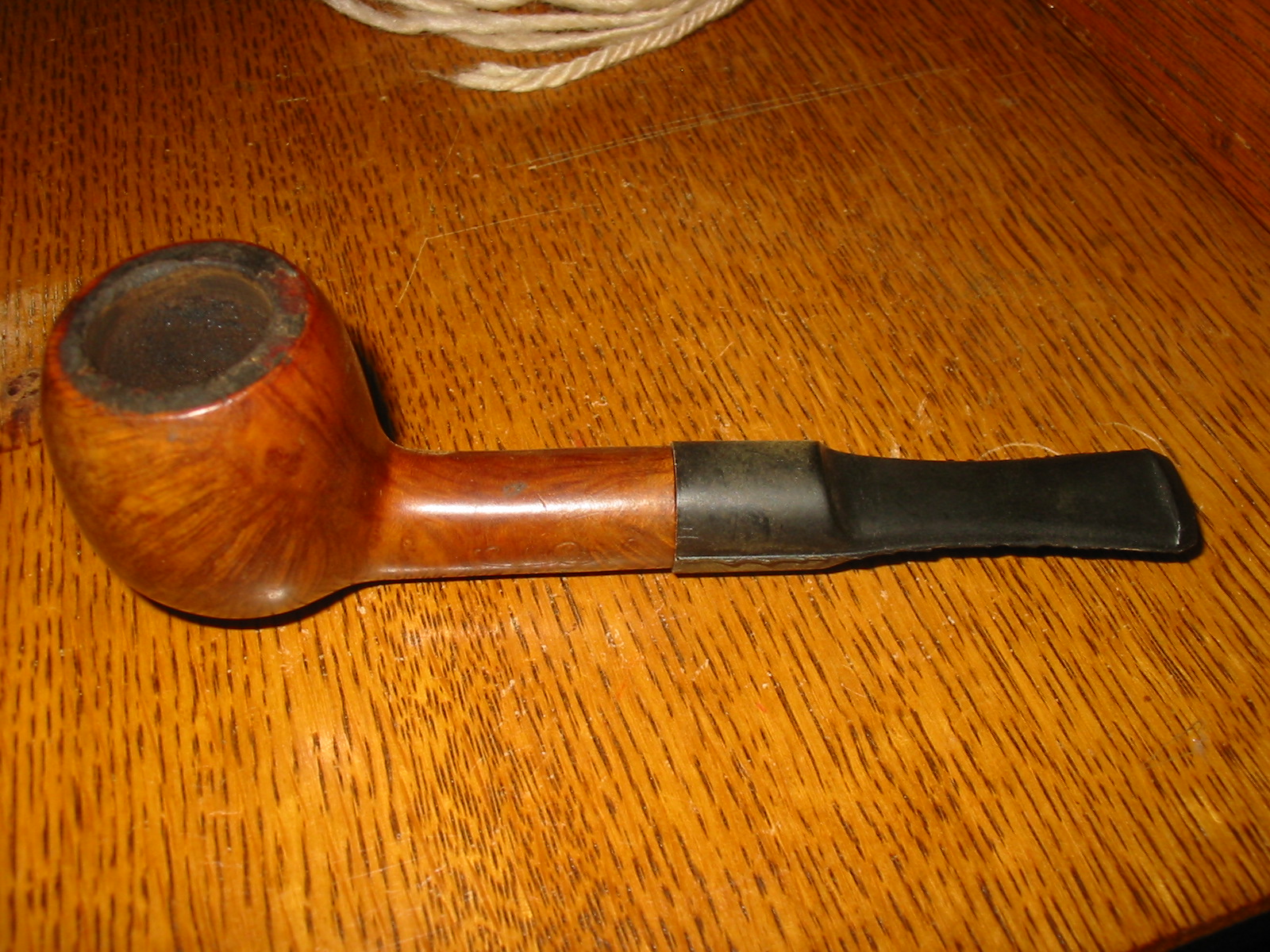
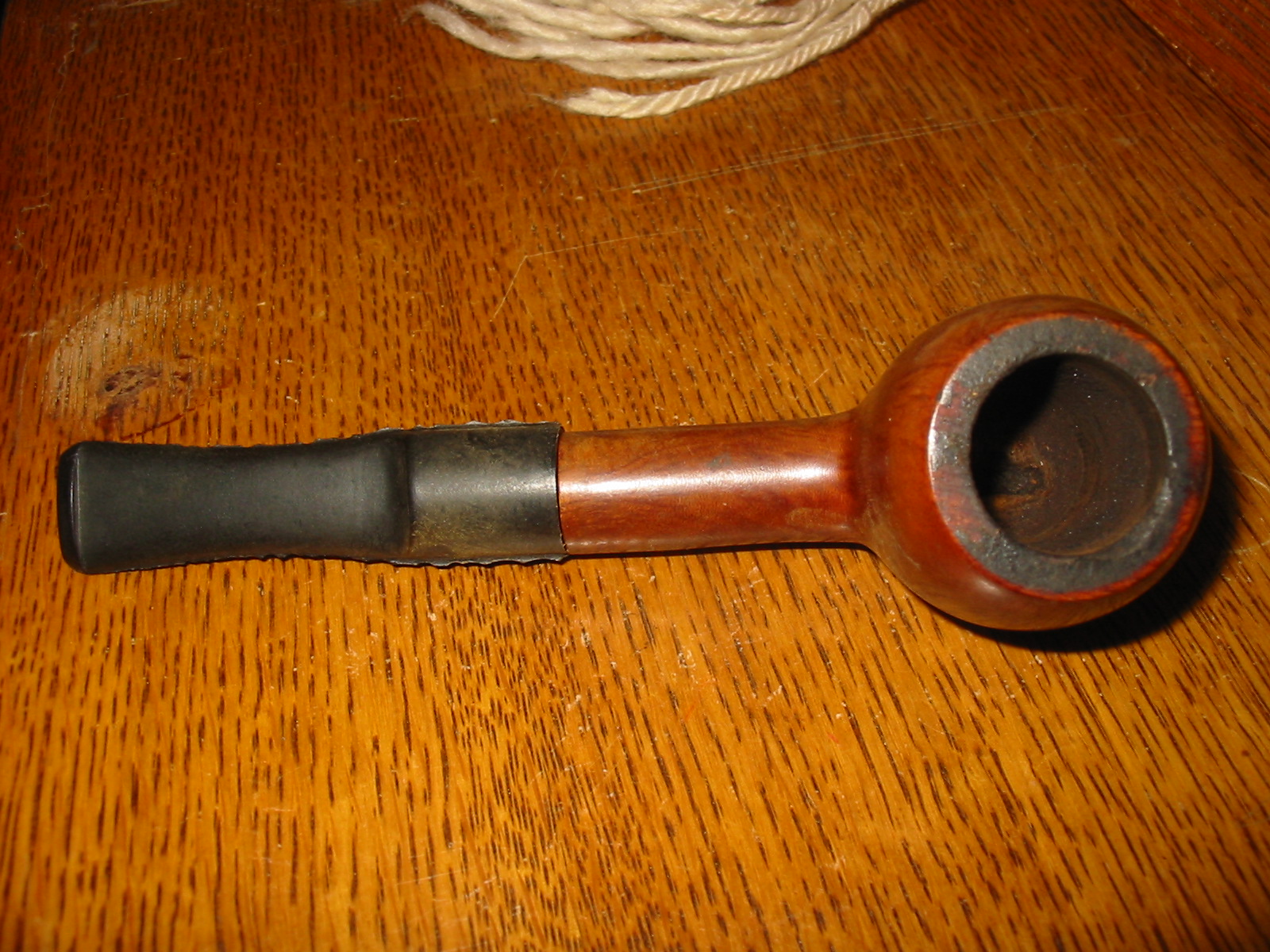
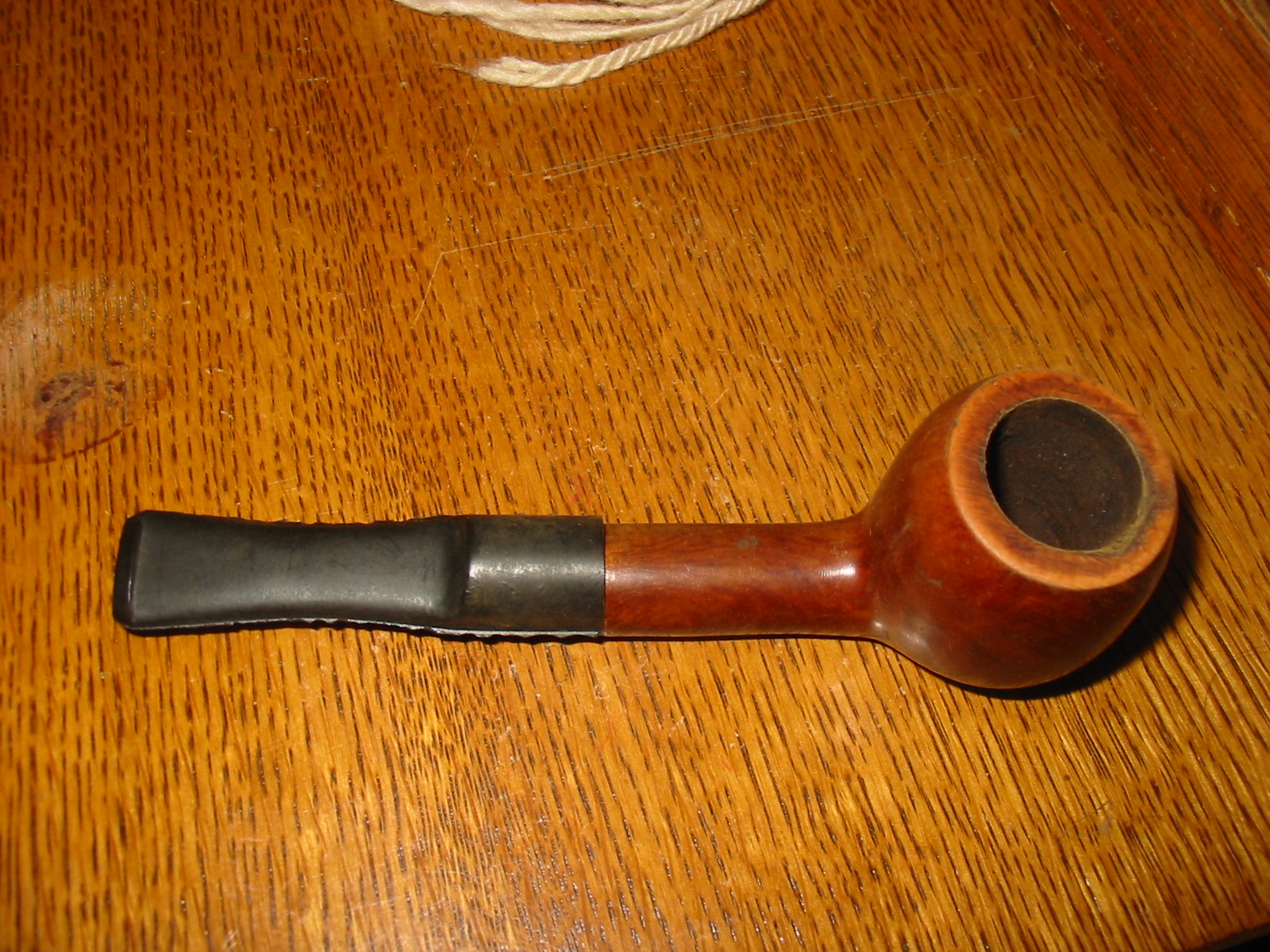
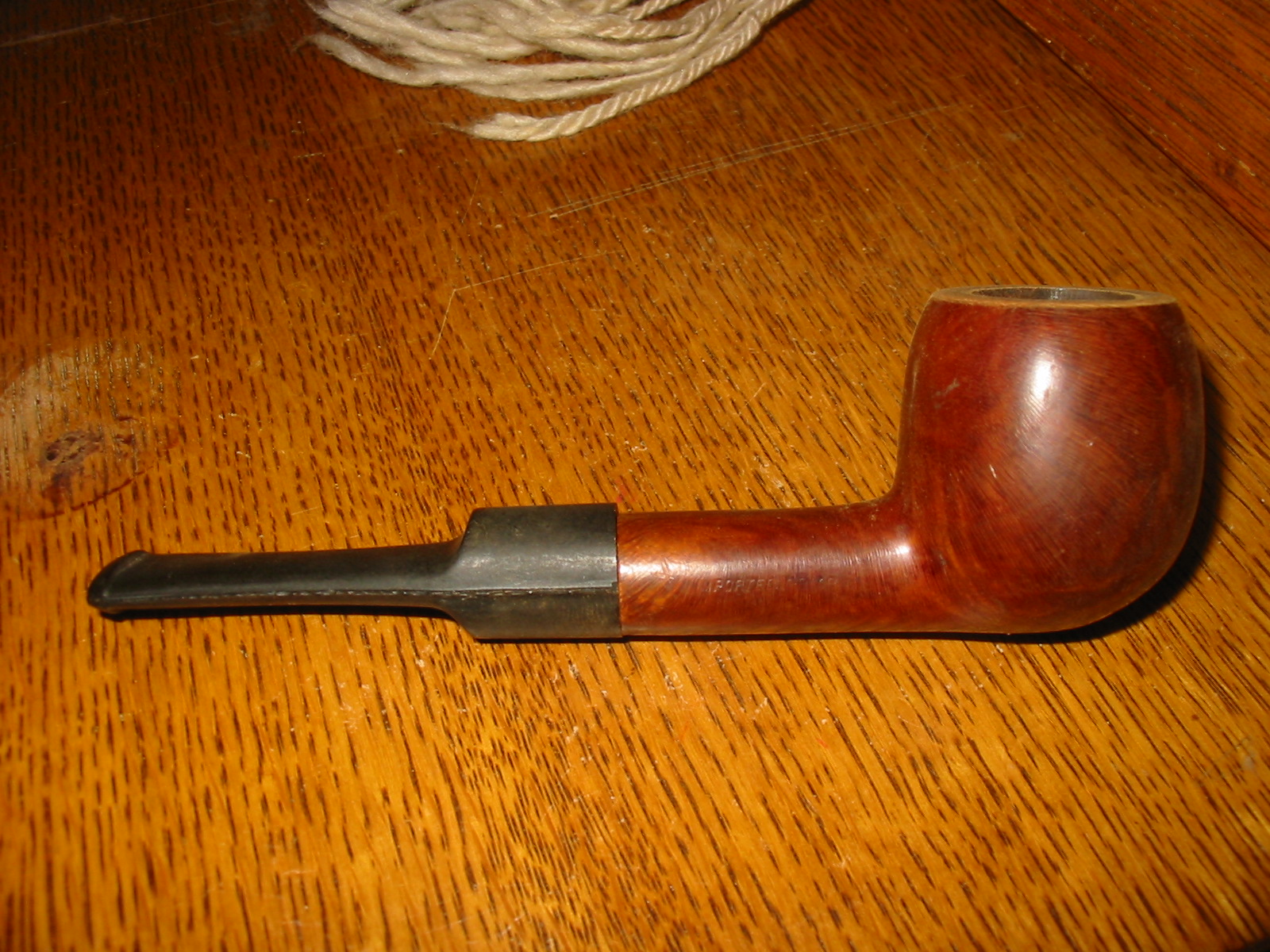
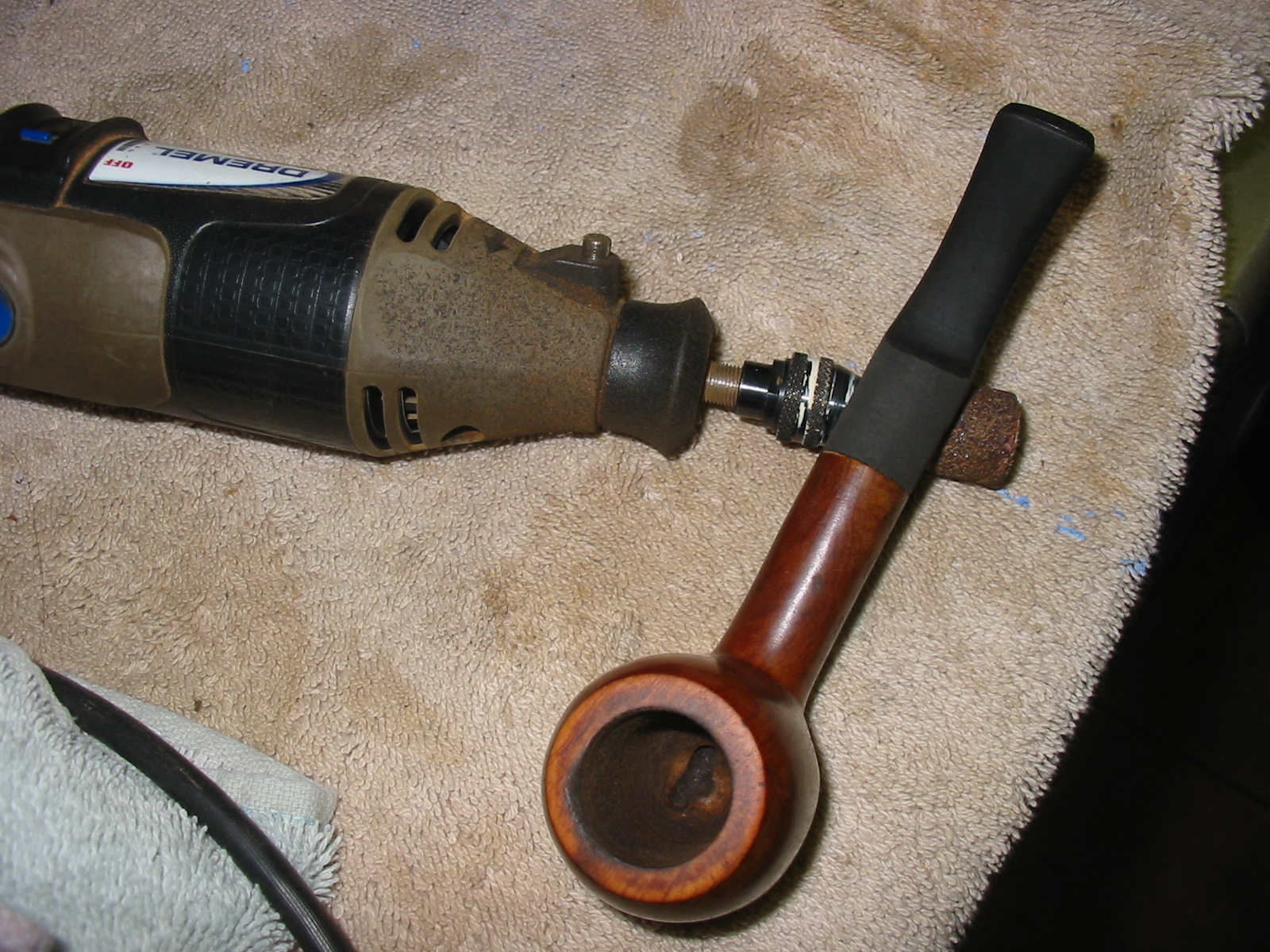
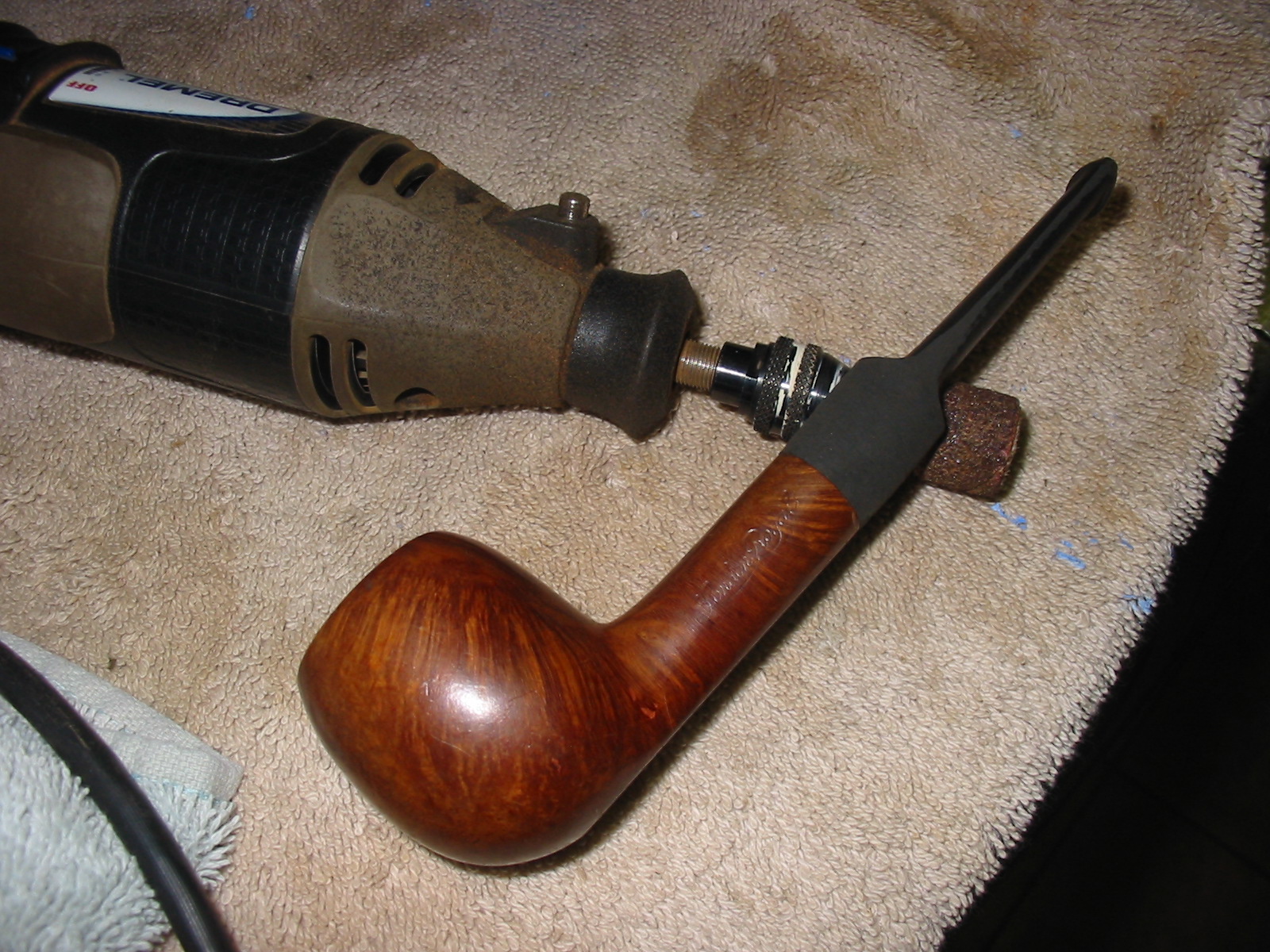
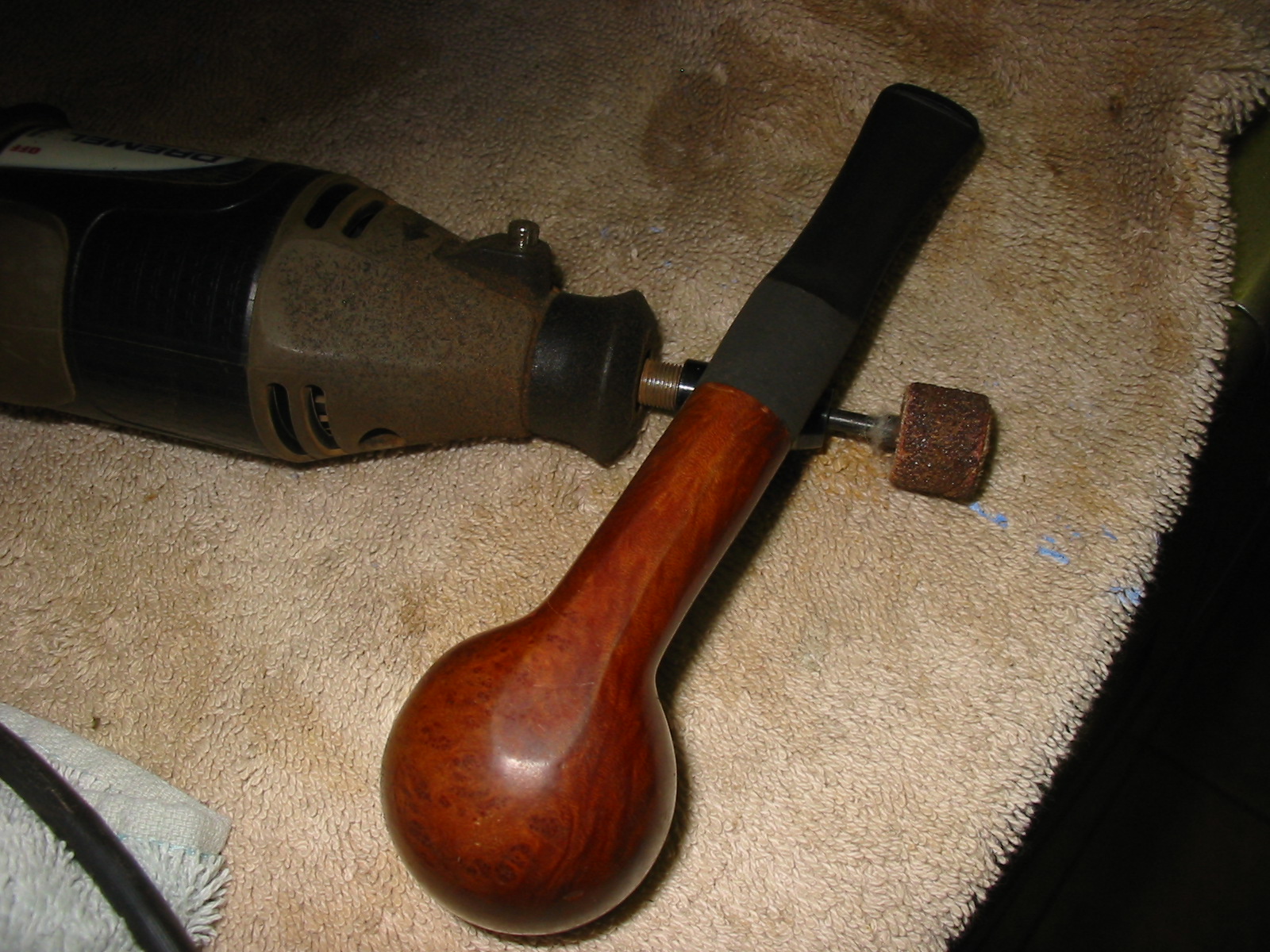
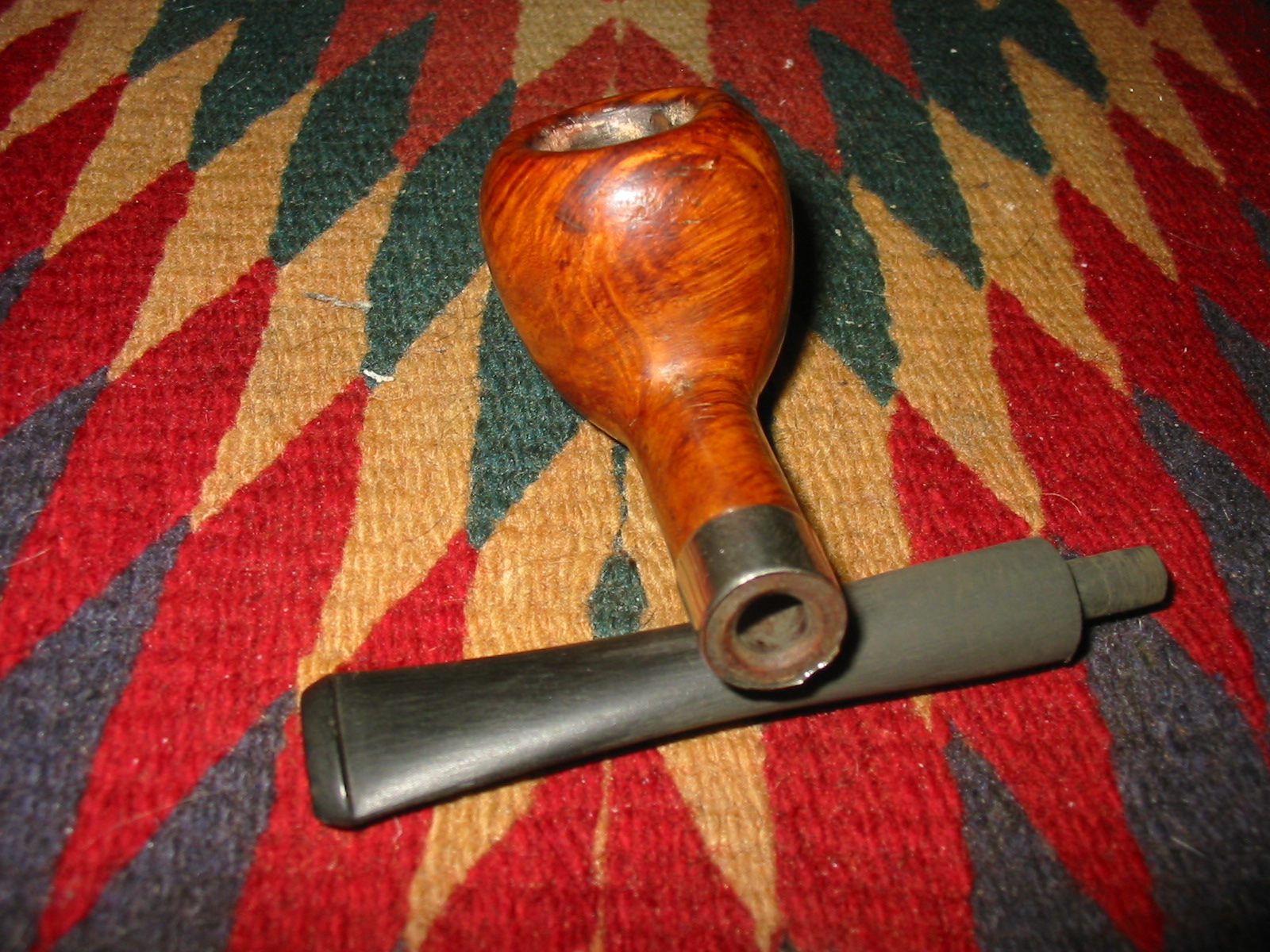
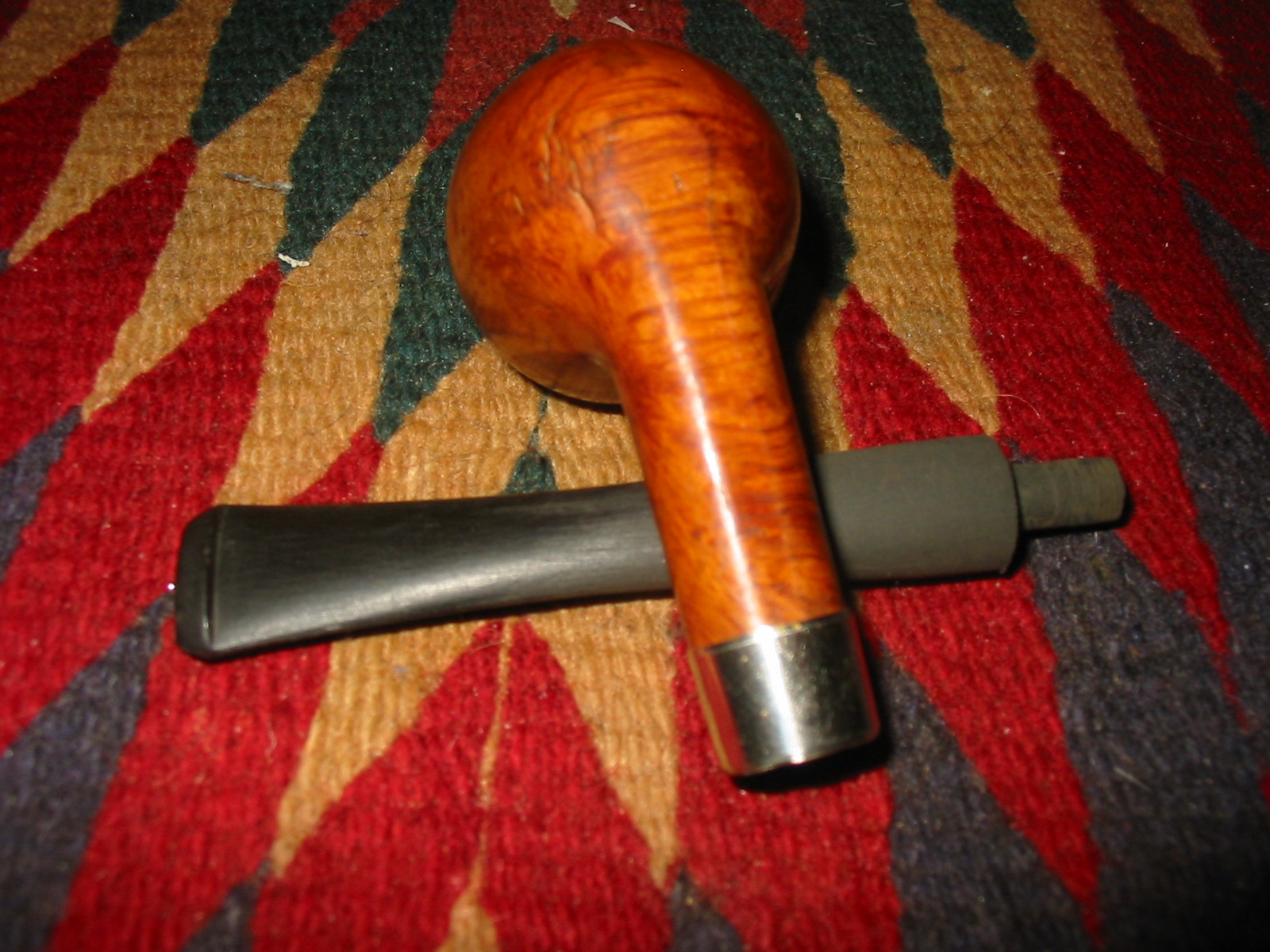
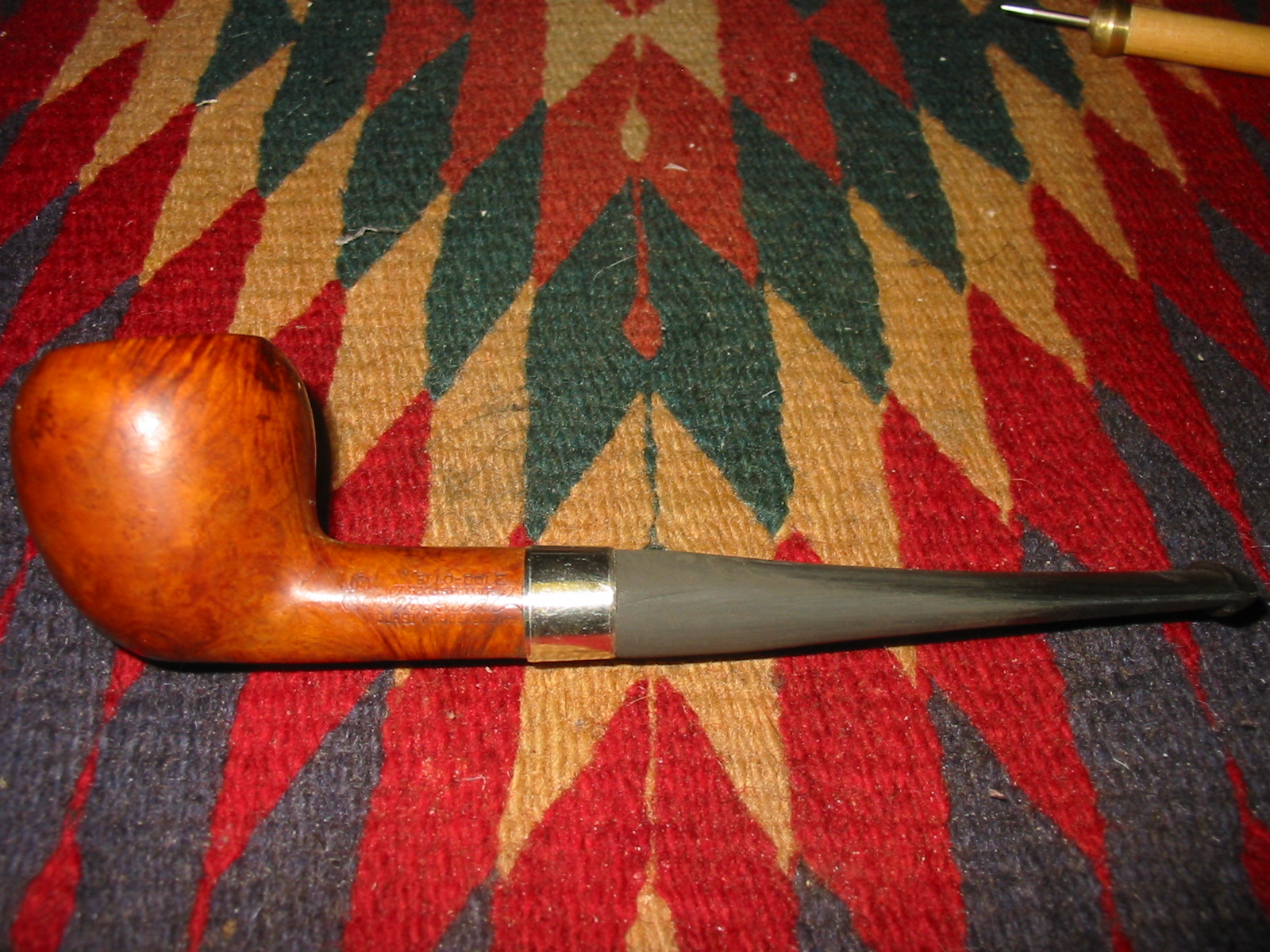
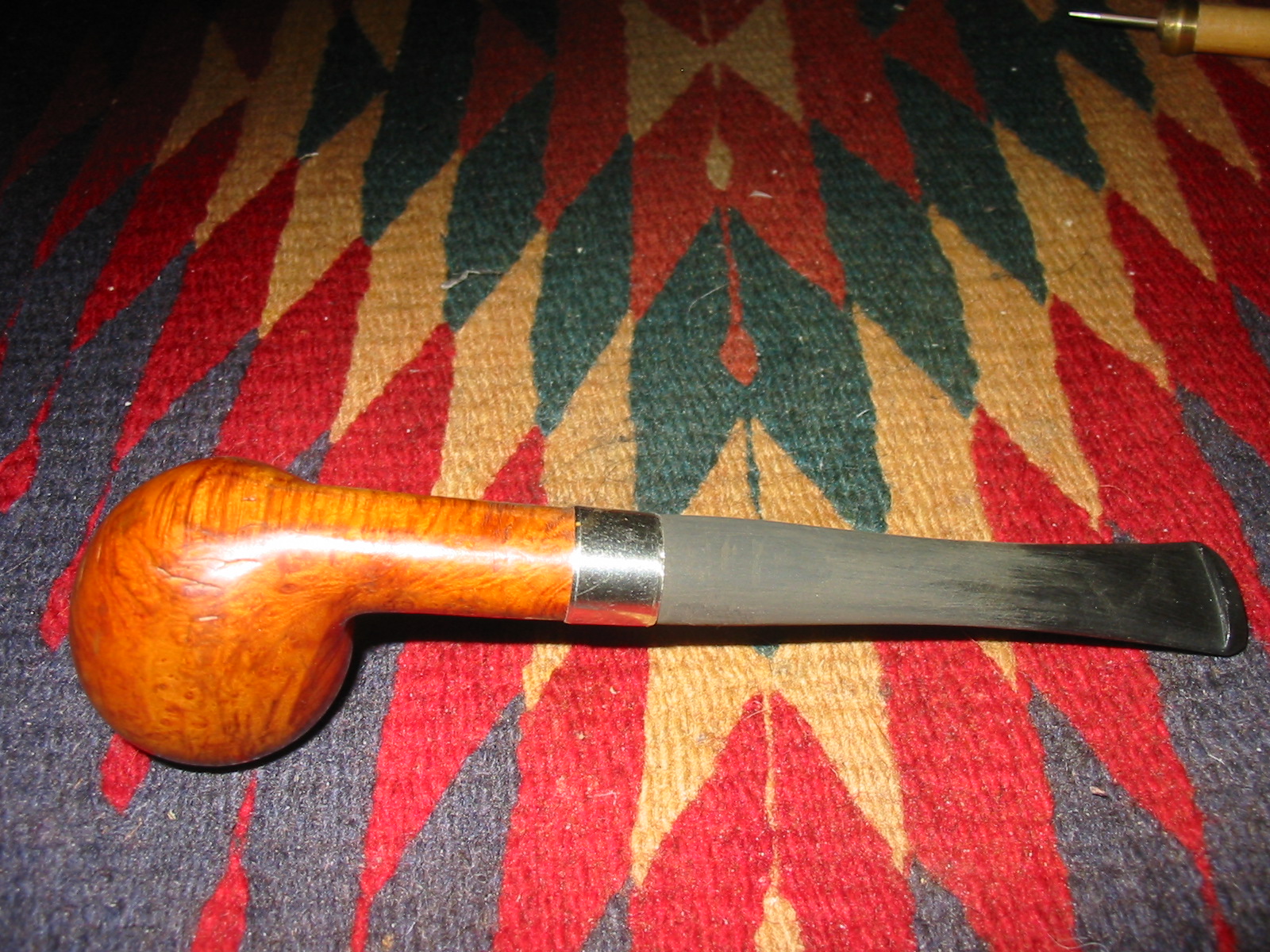
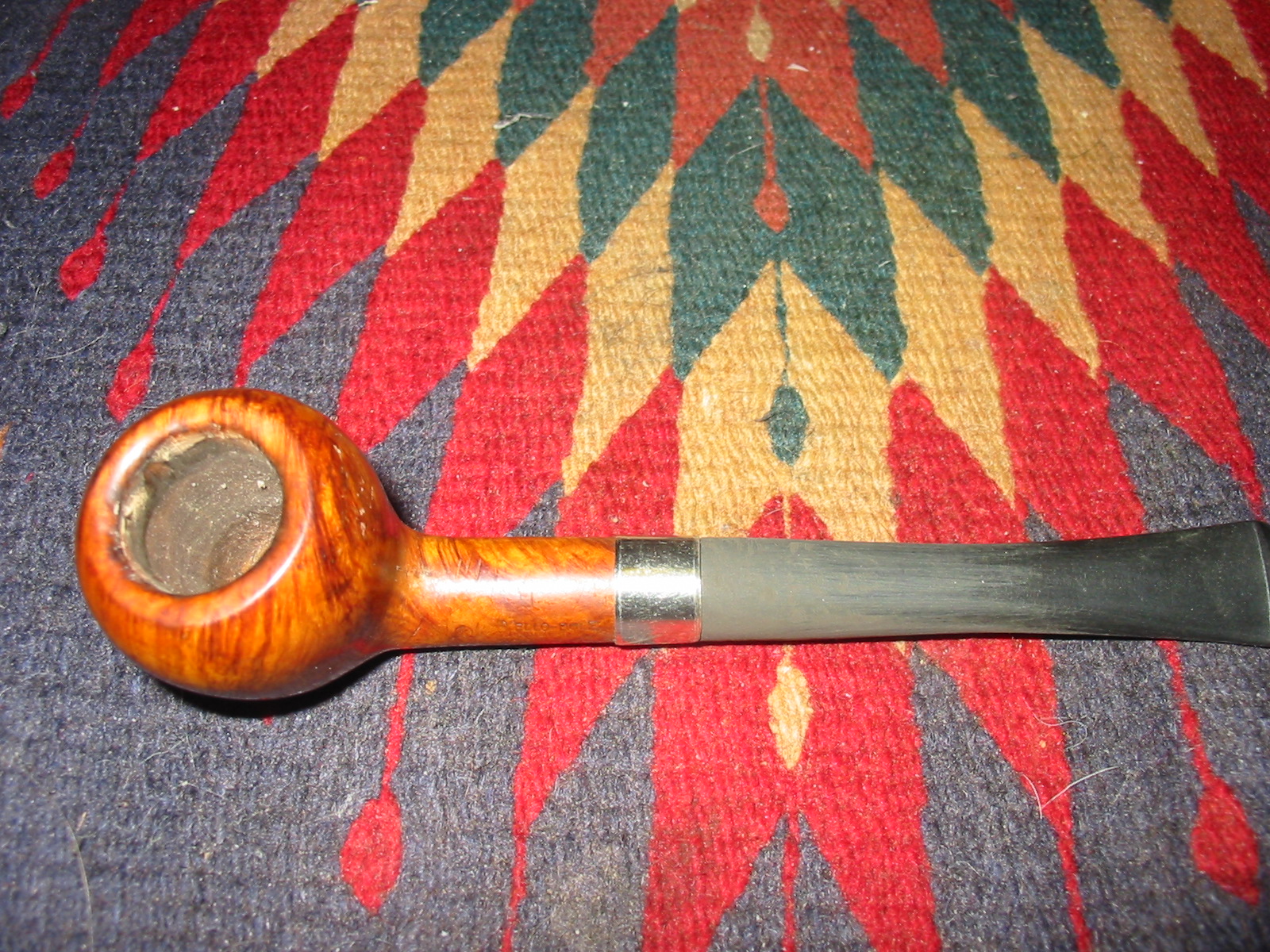
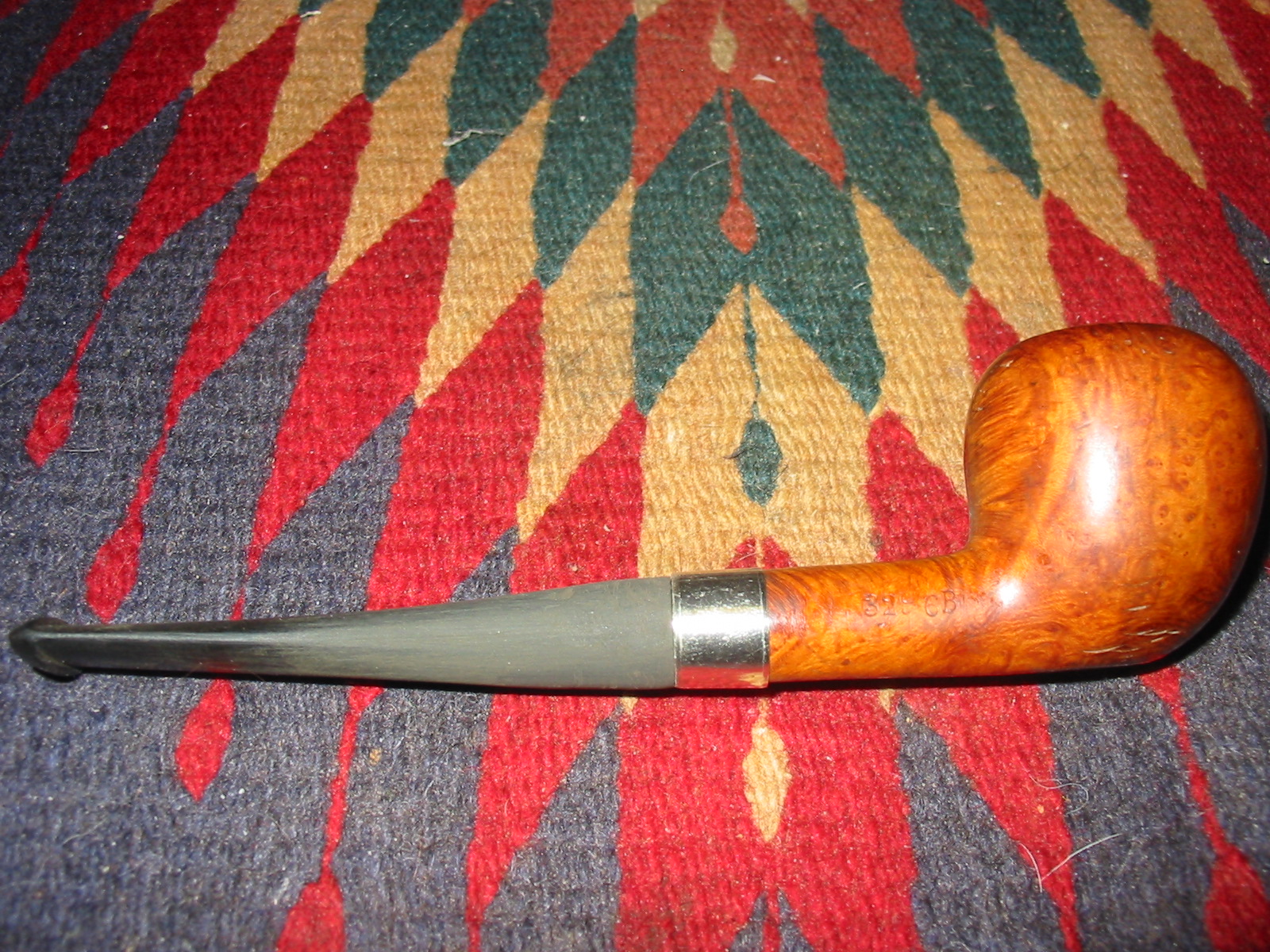
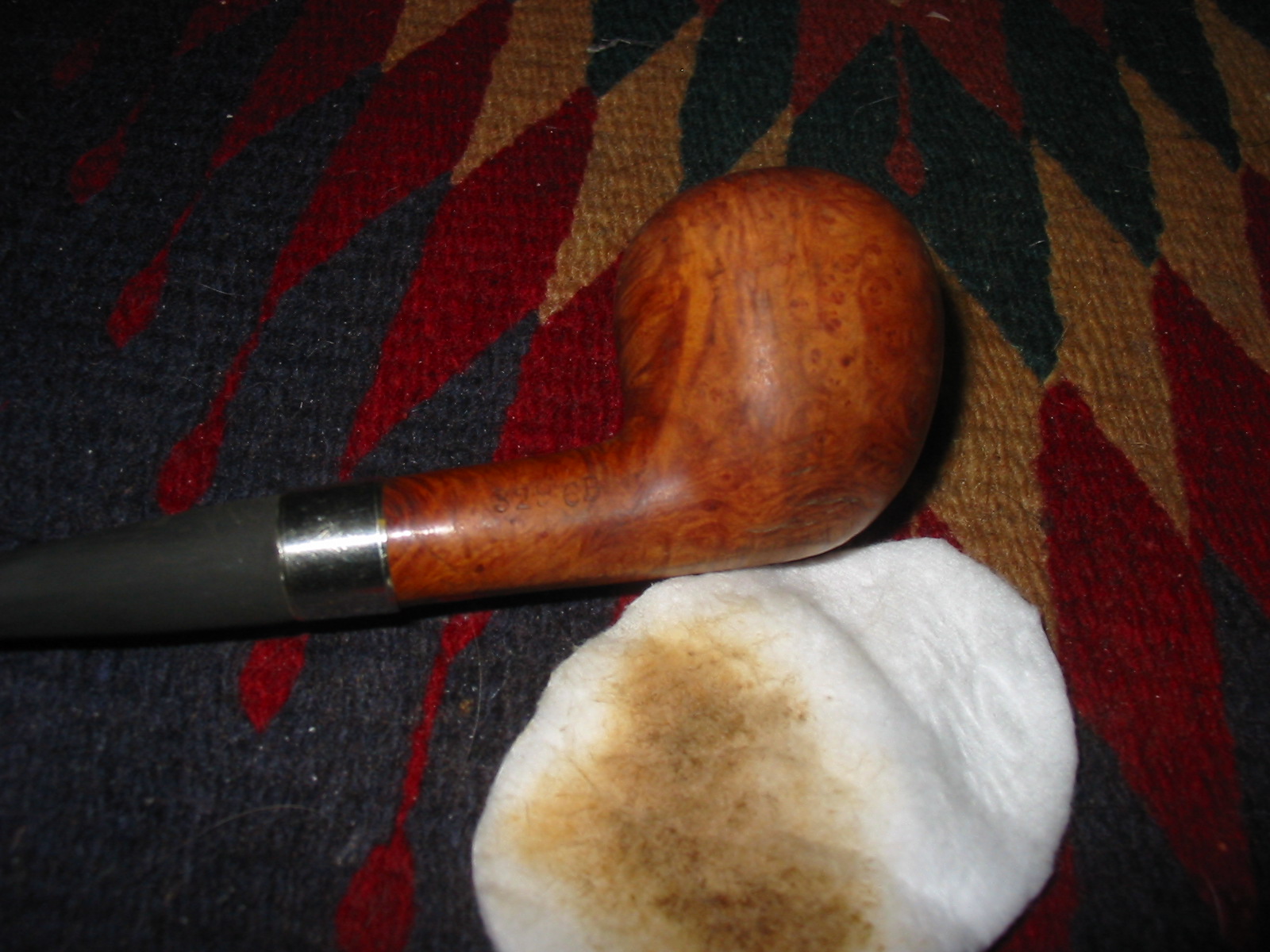
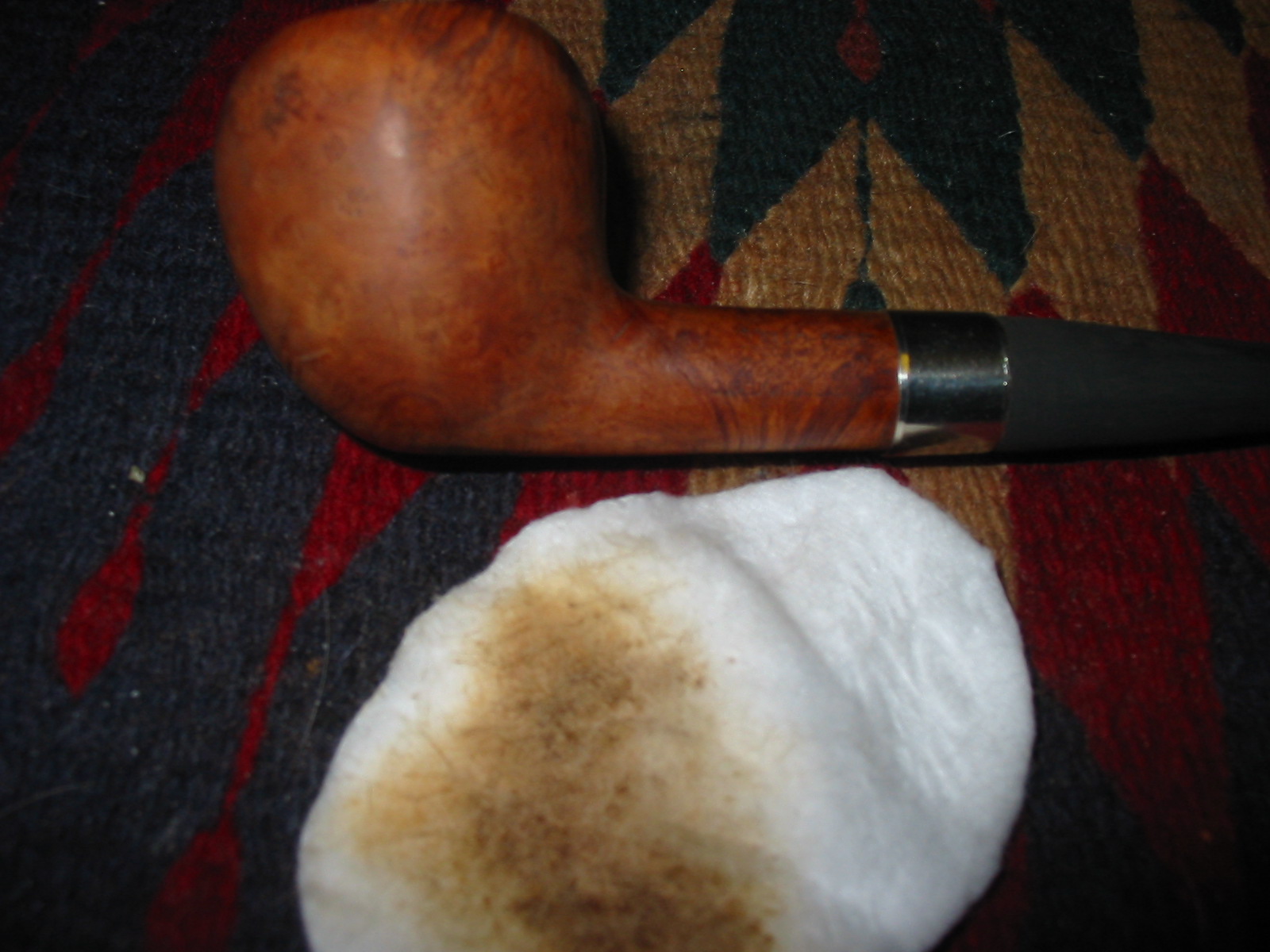
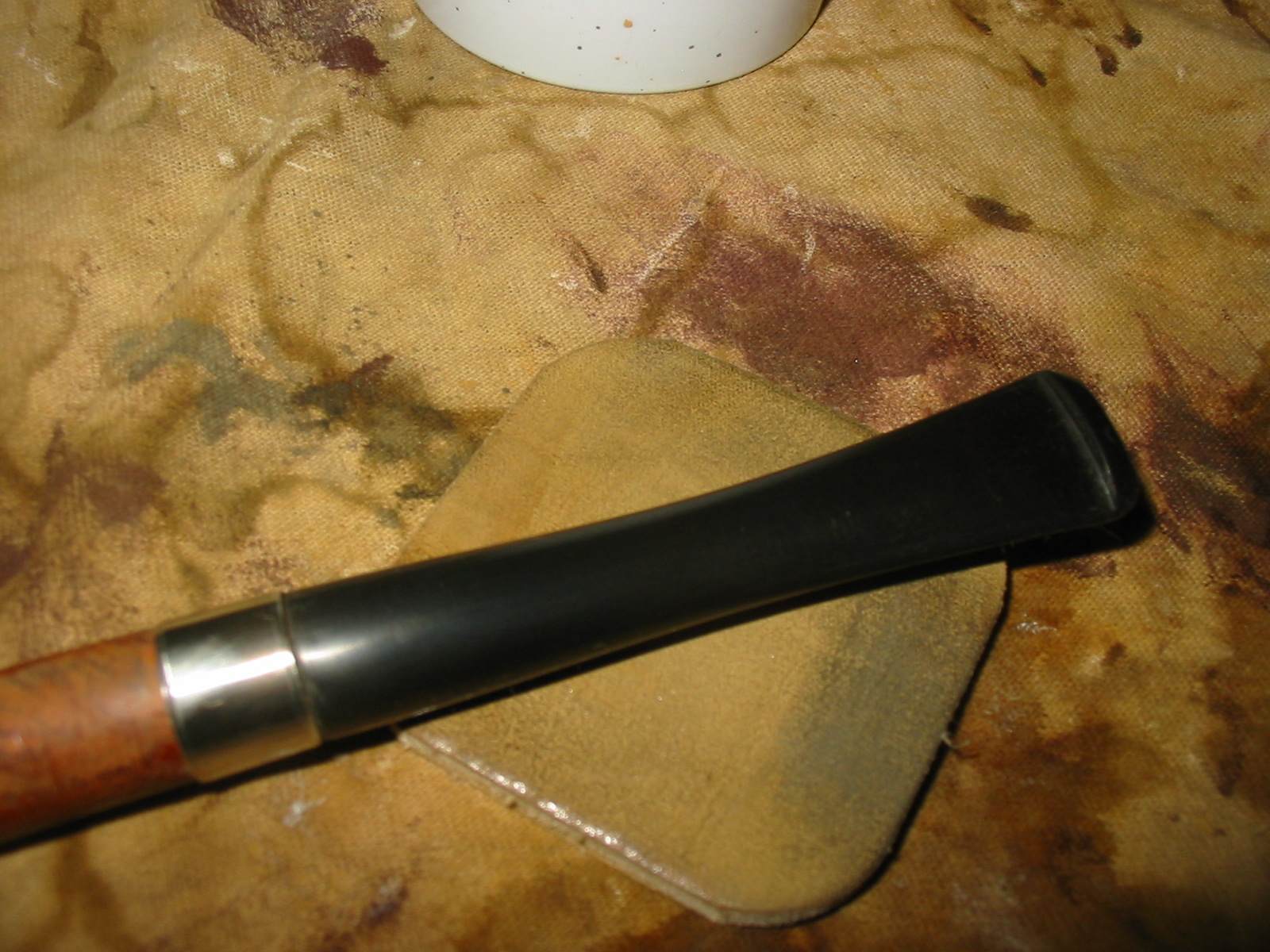
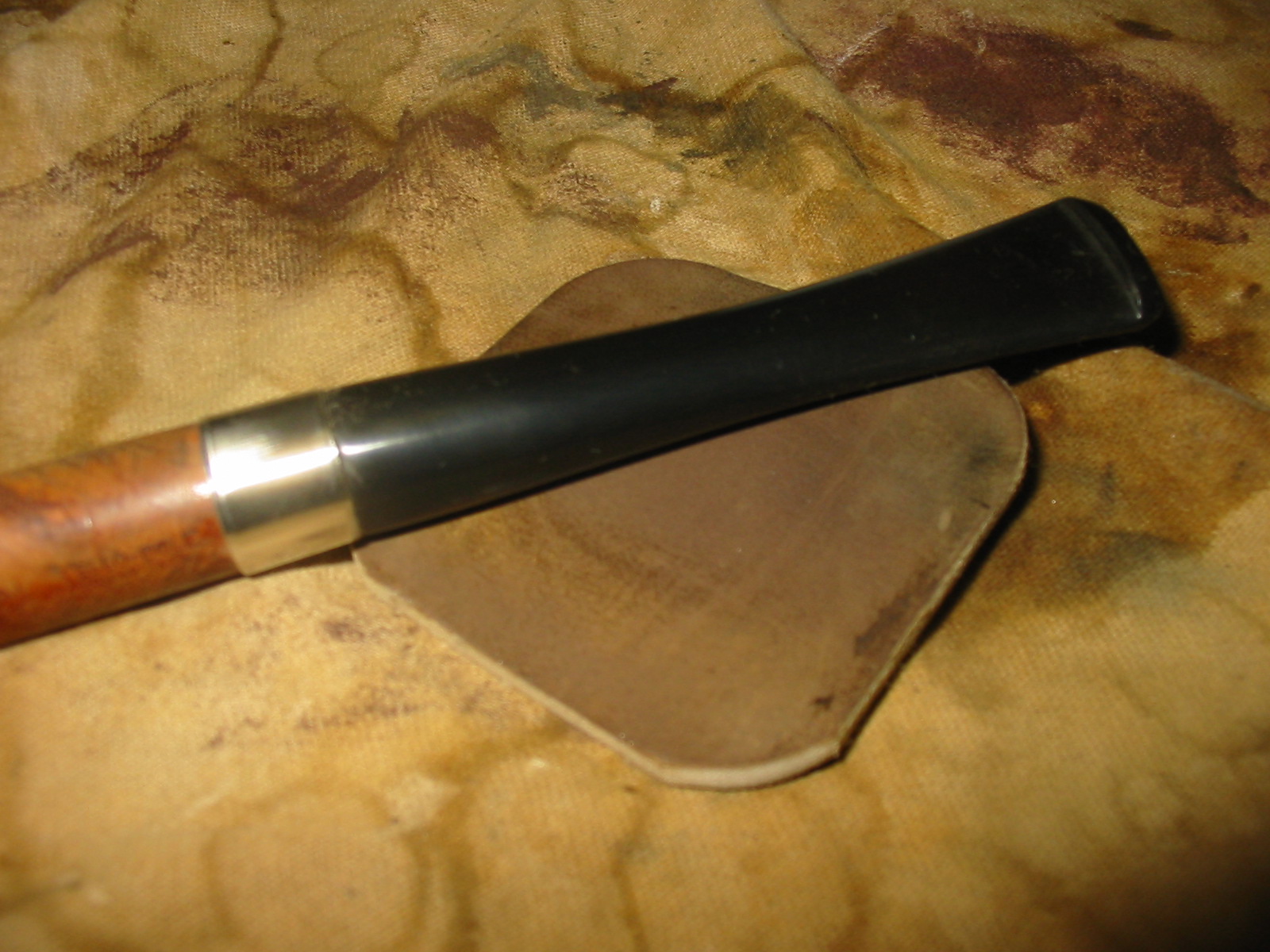
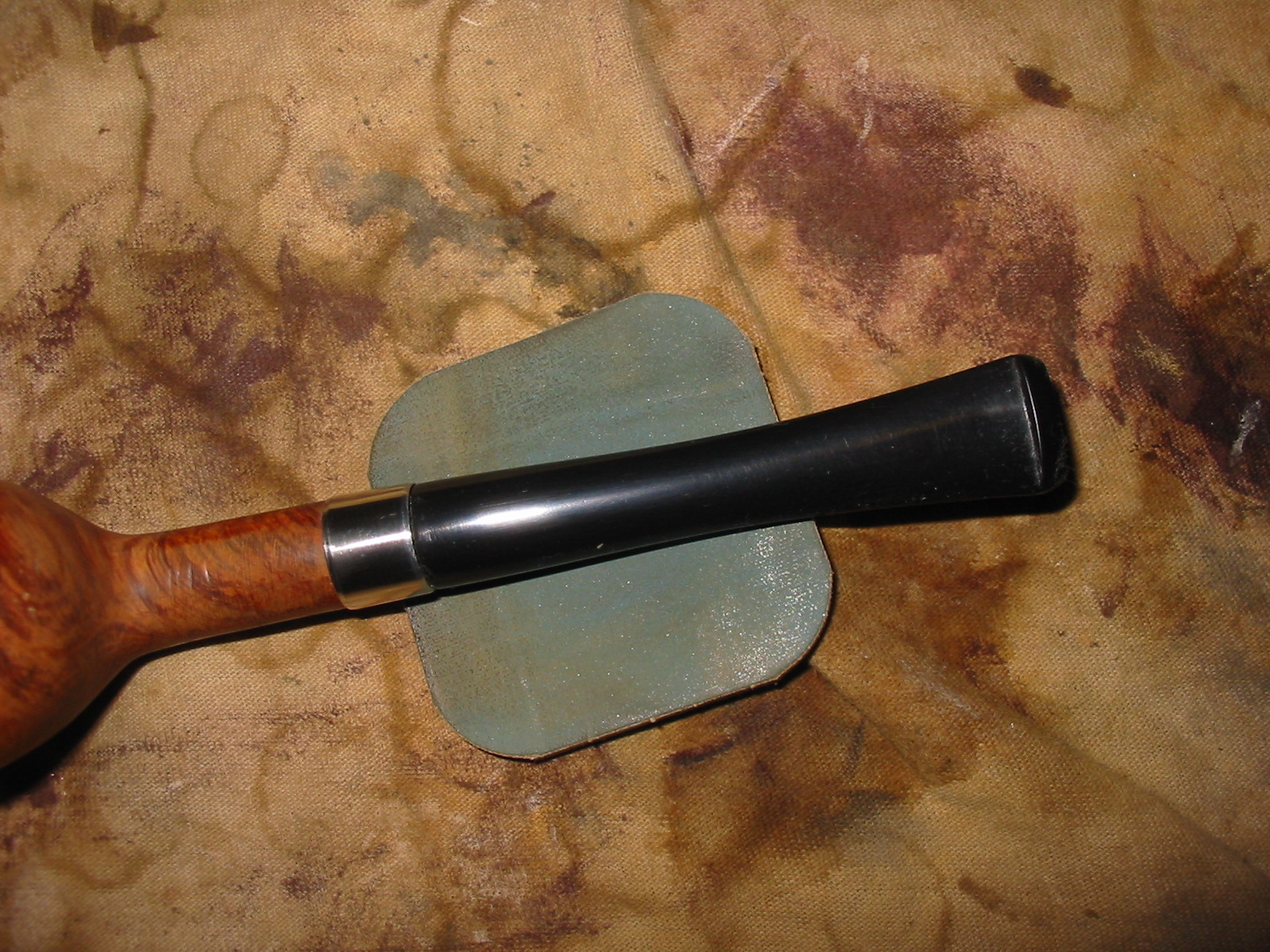
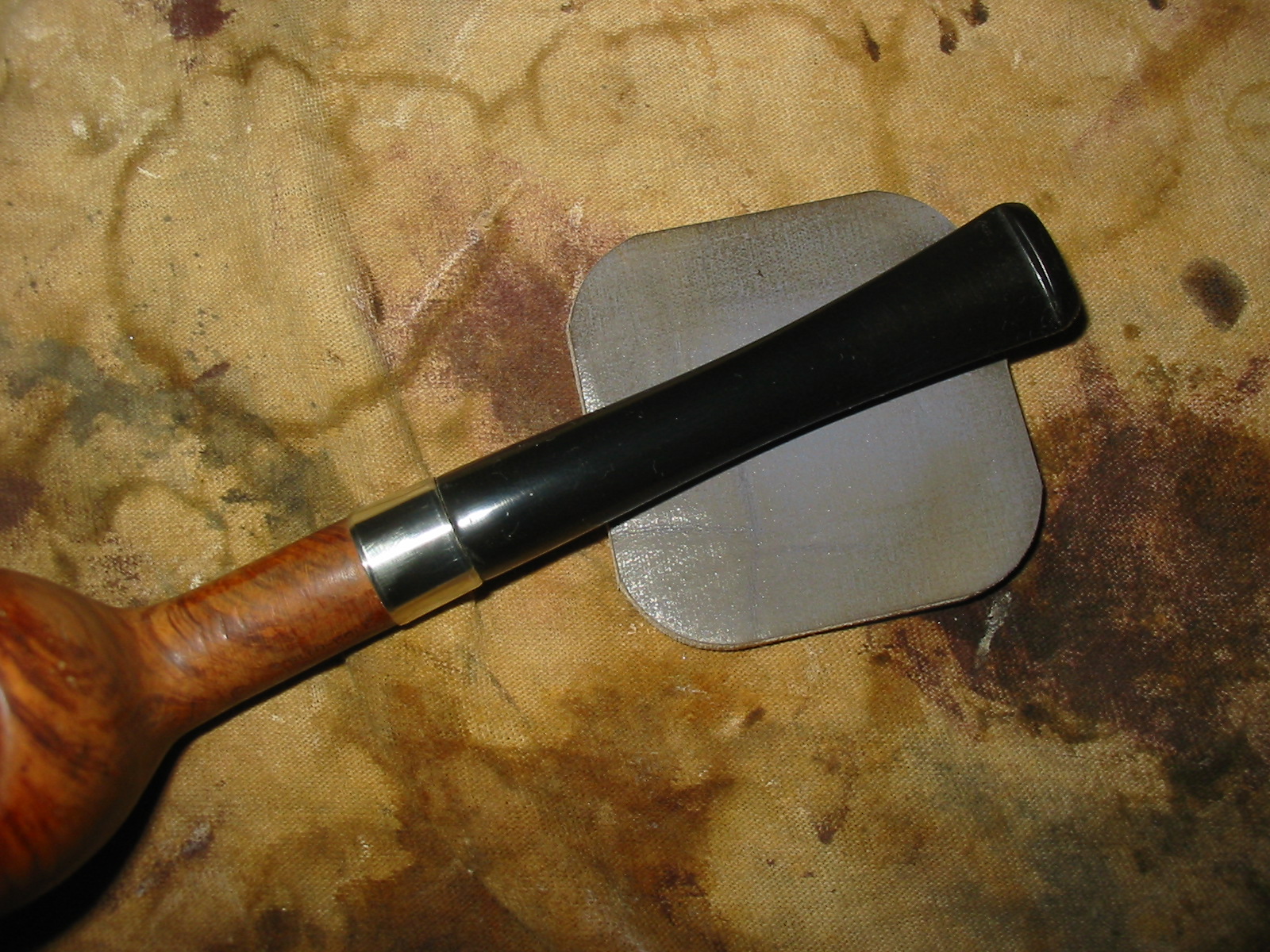
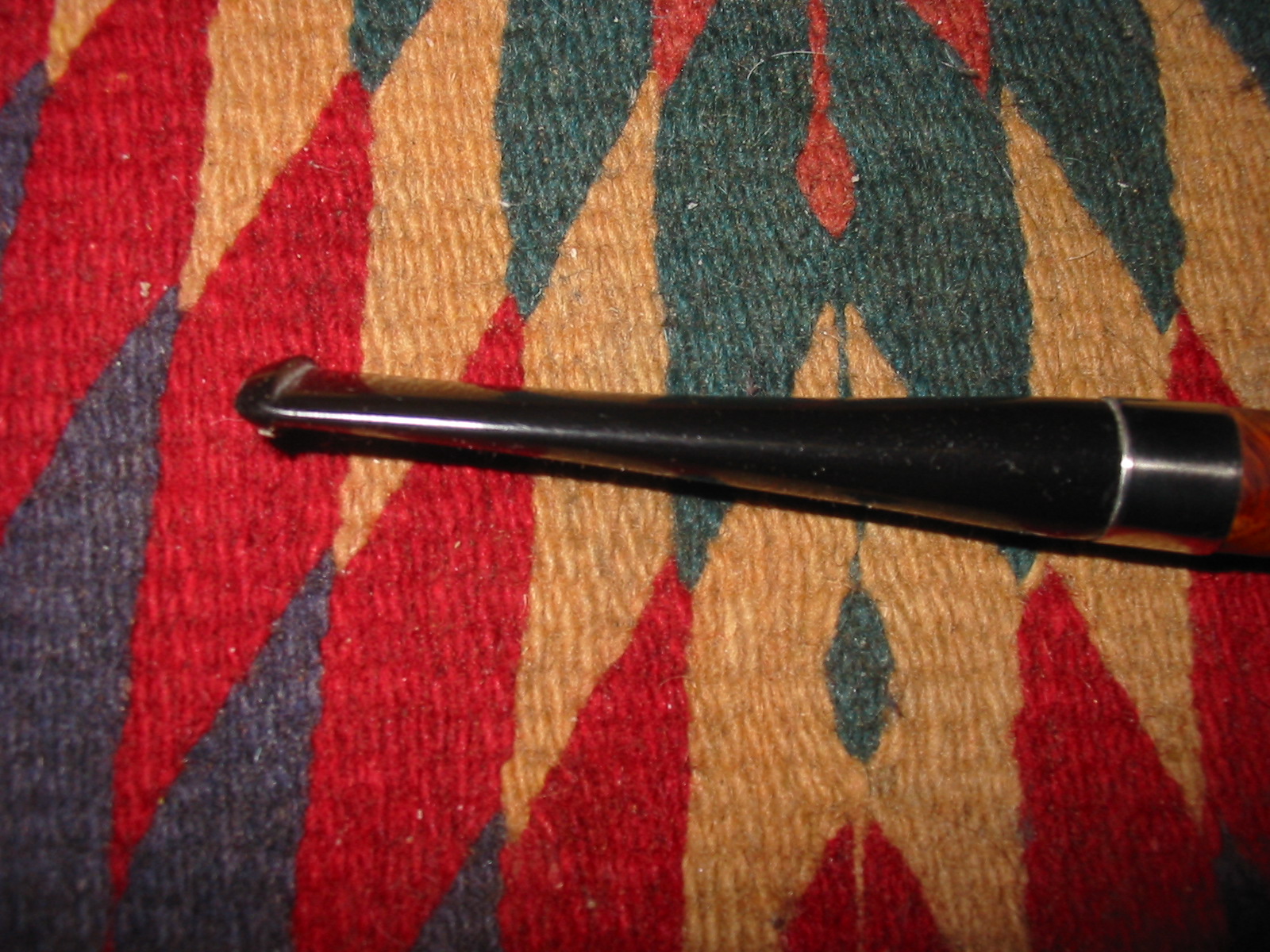
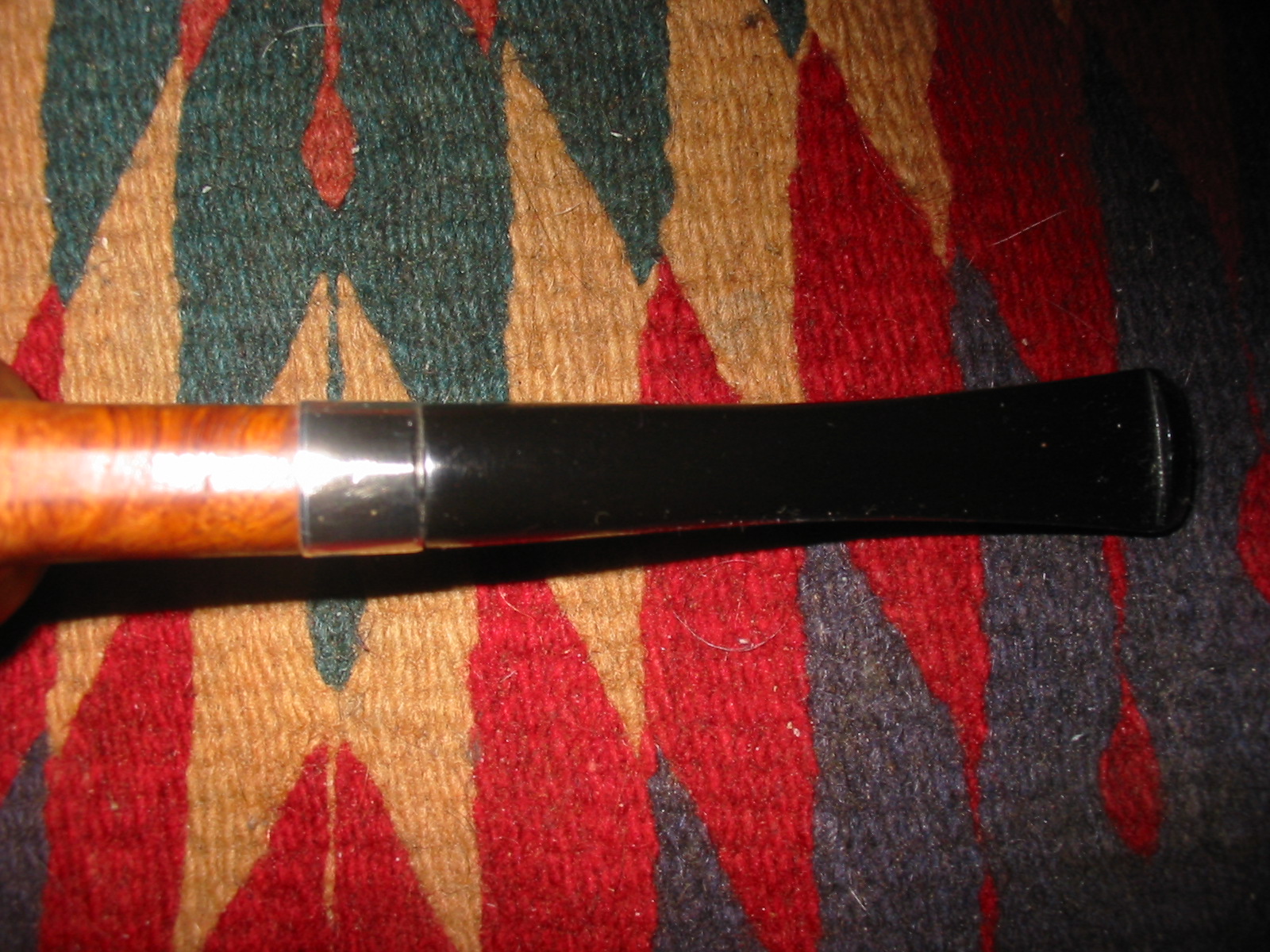
Tag Archives: turning a tenon

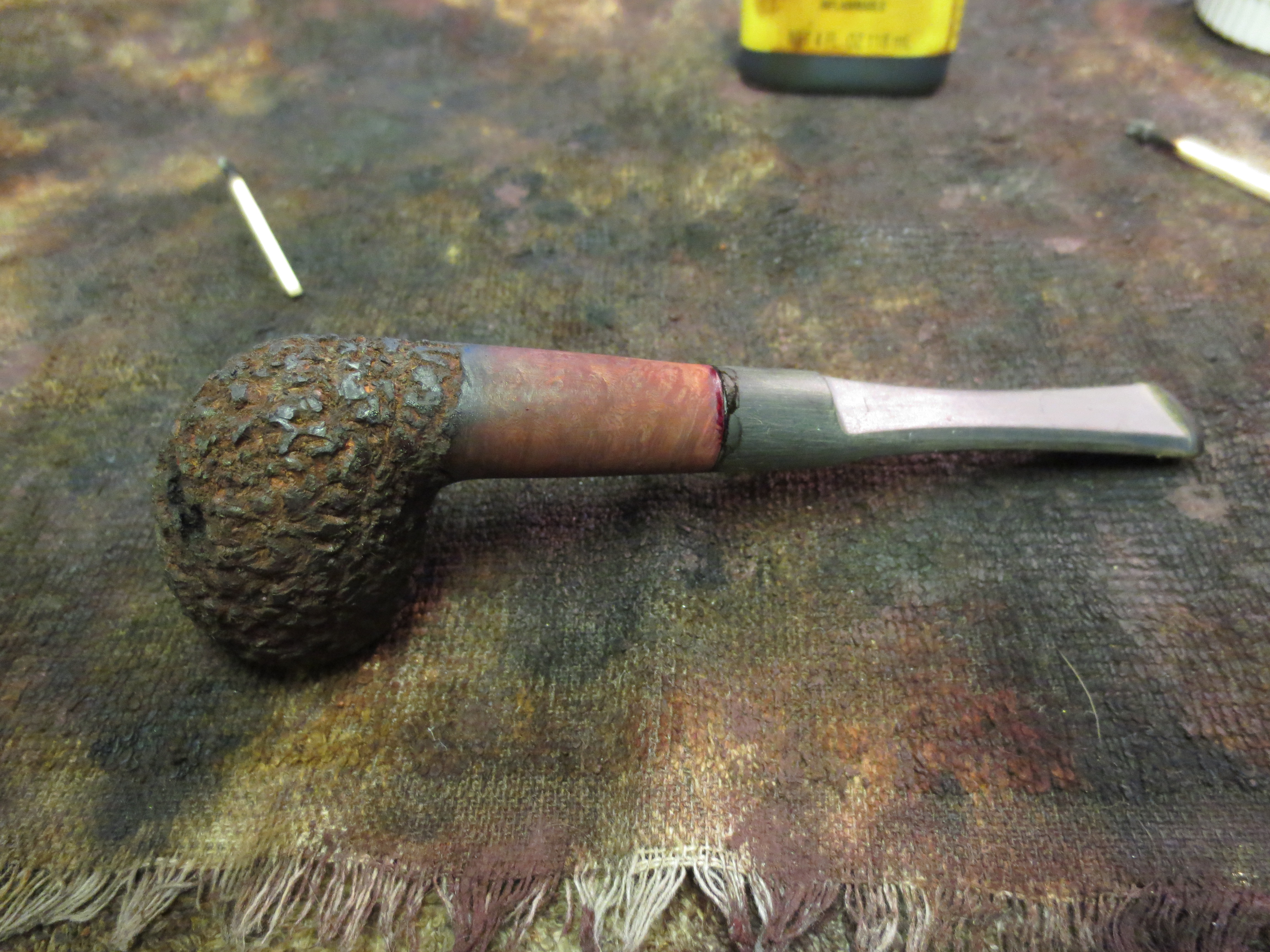
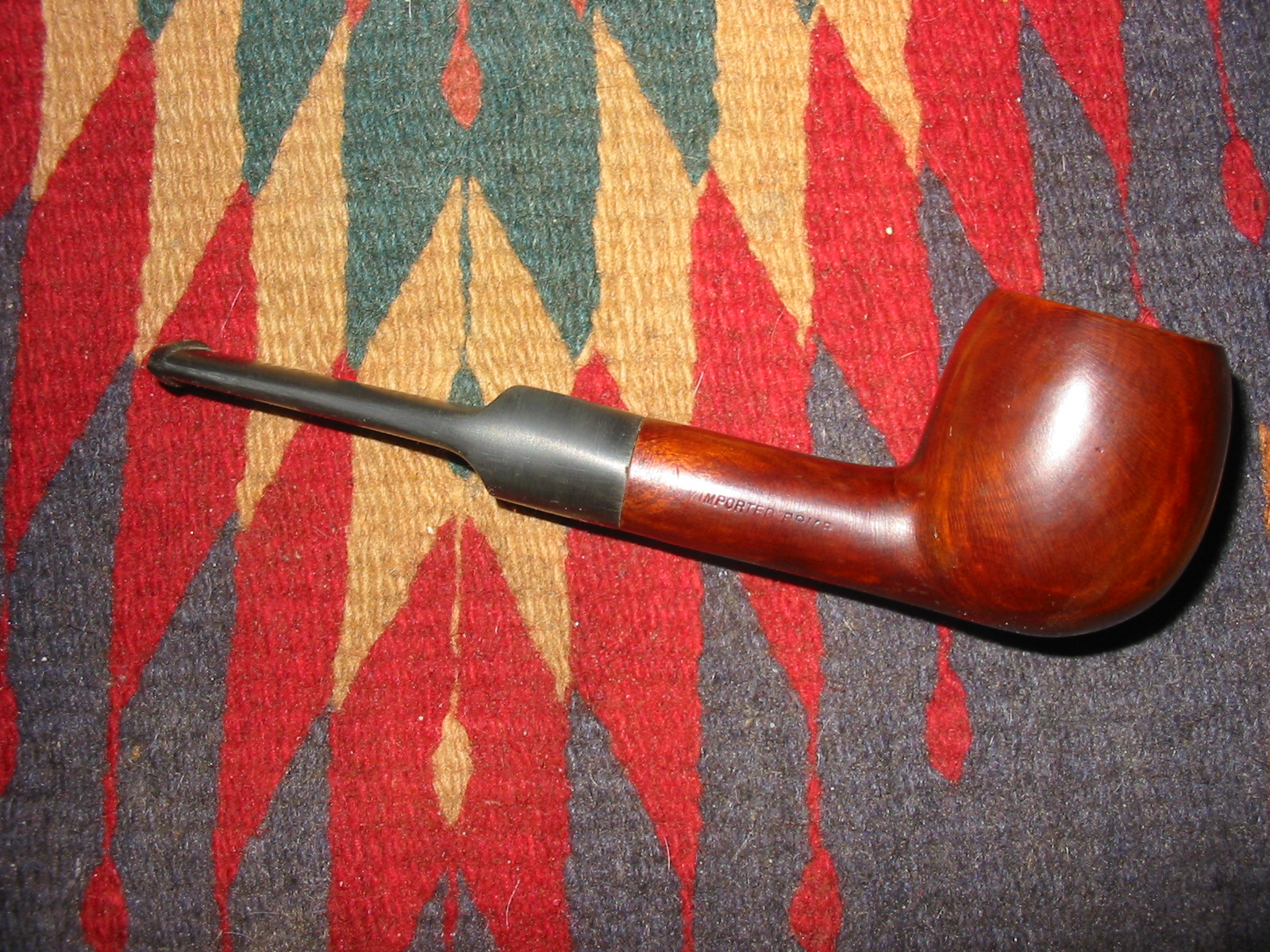
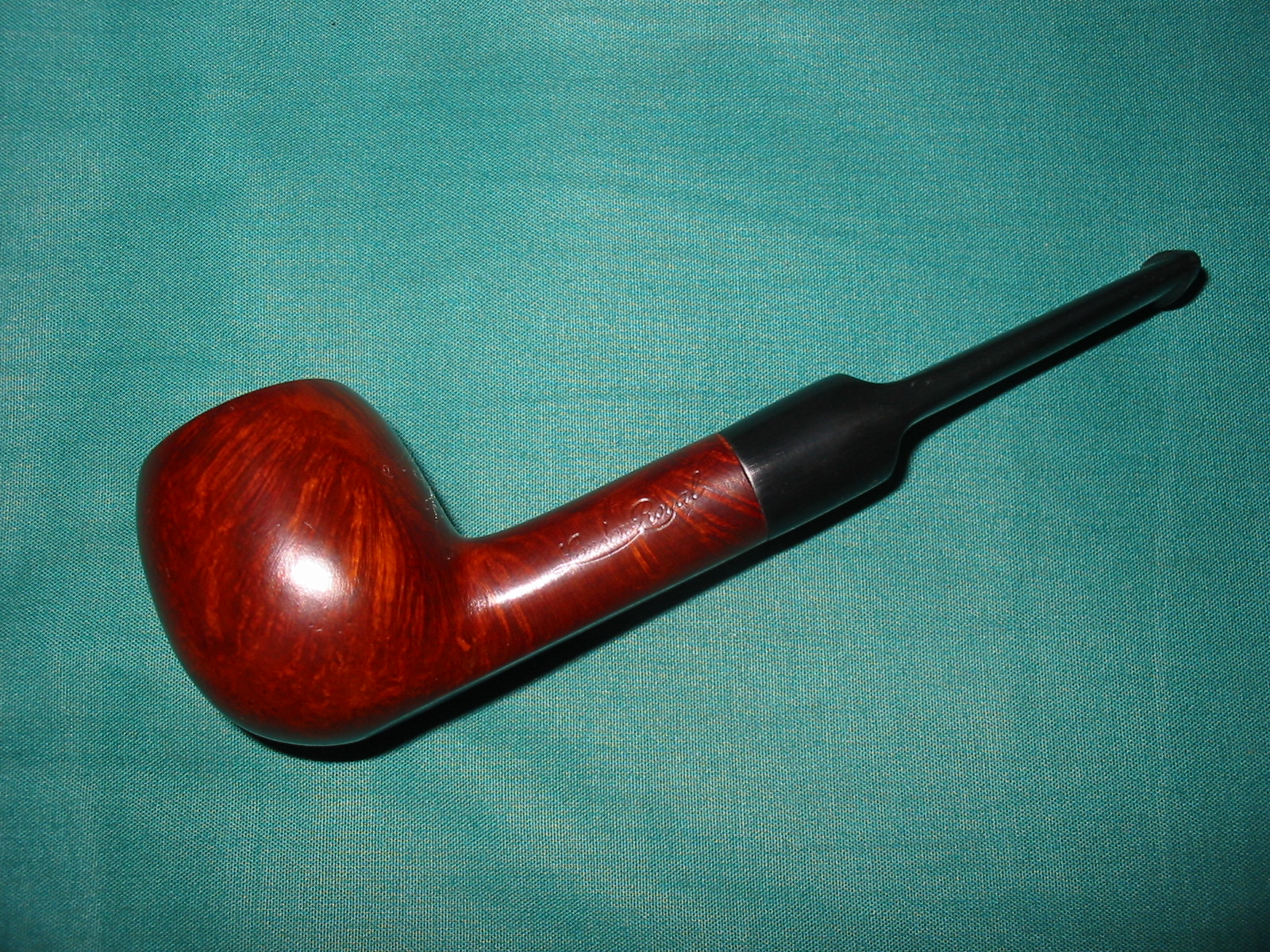
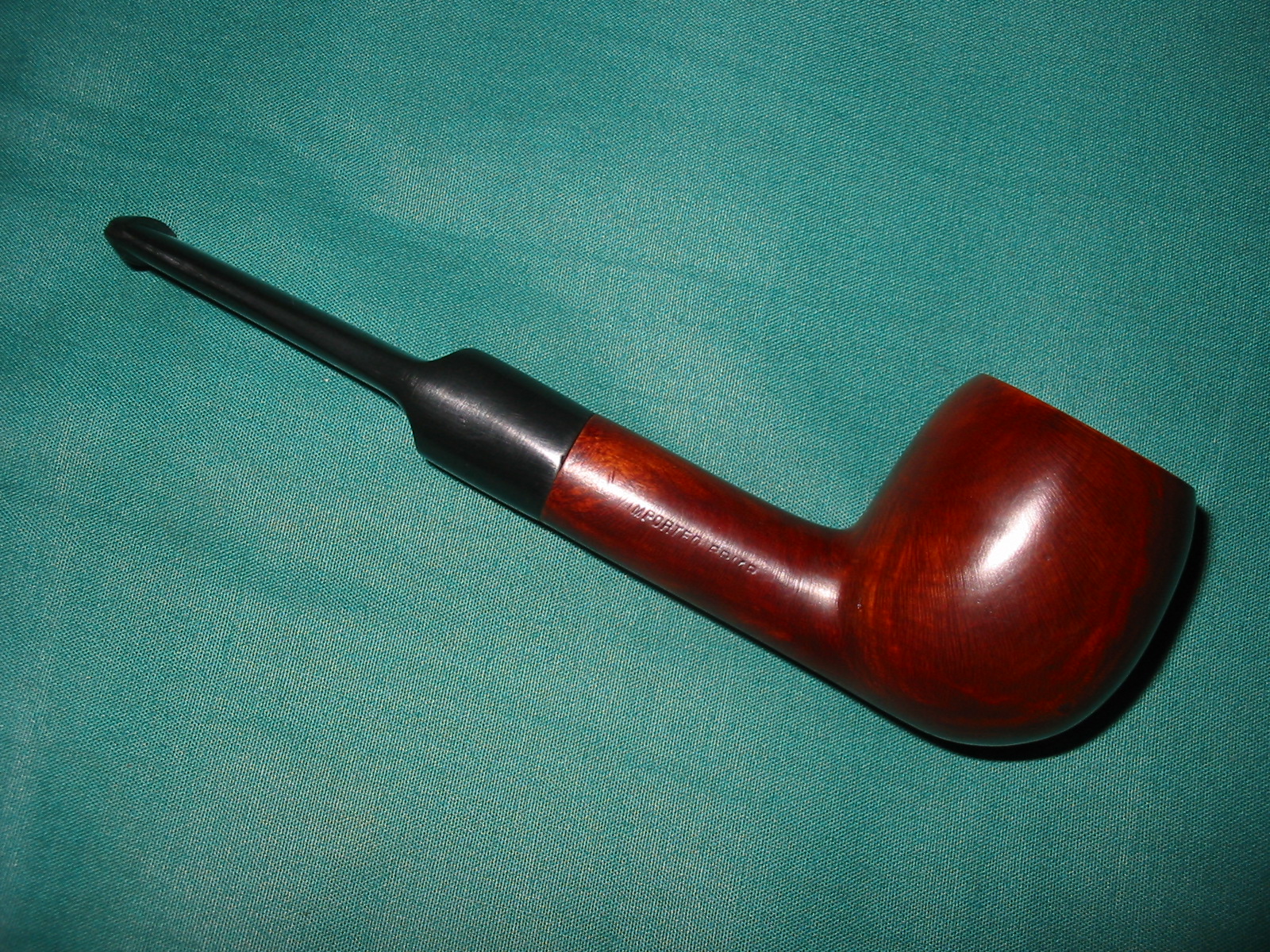
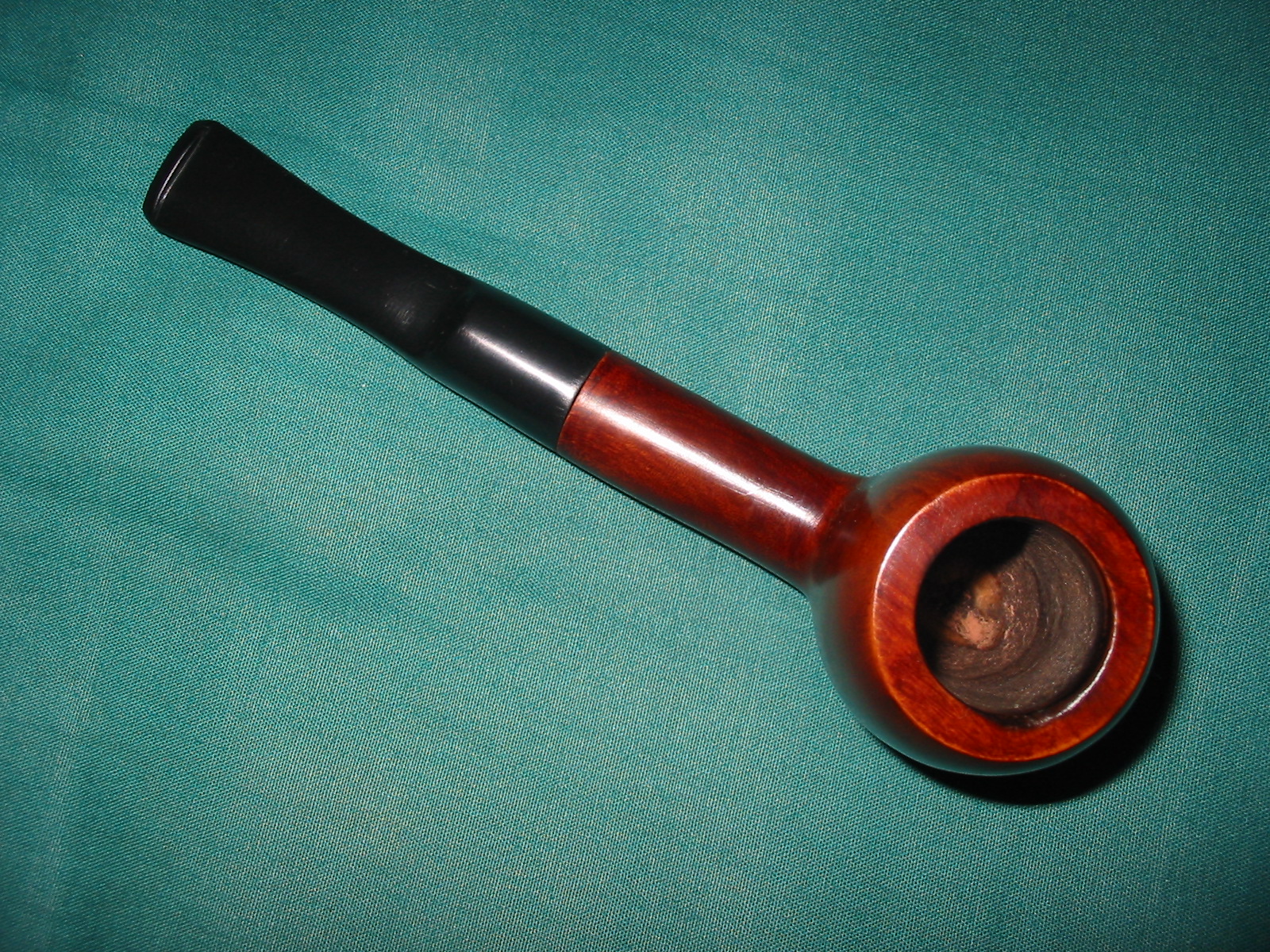
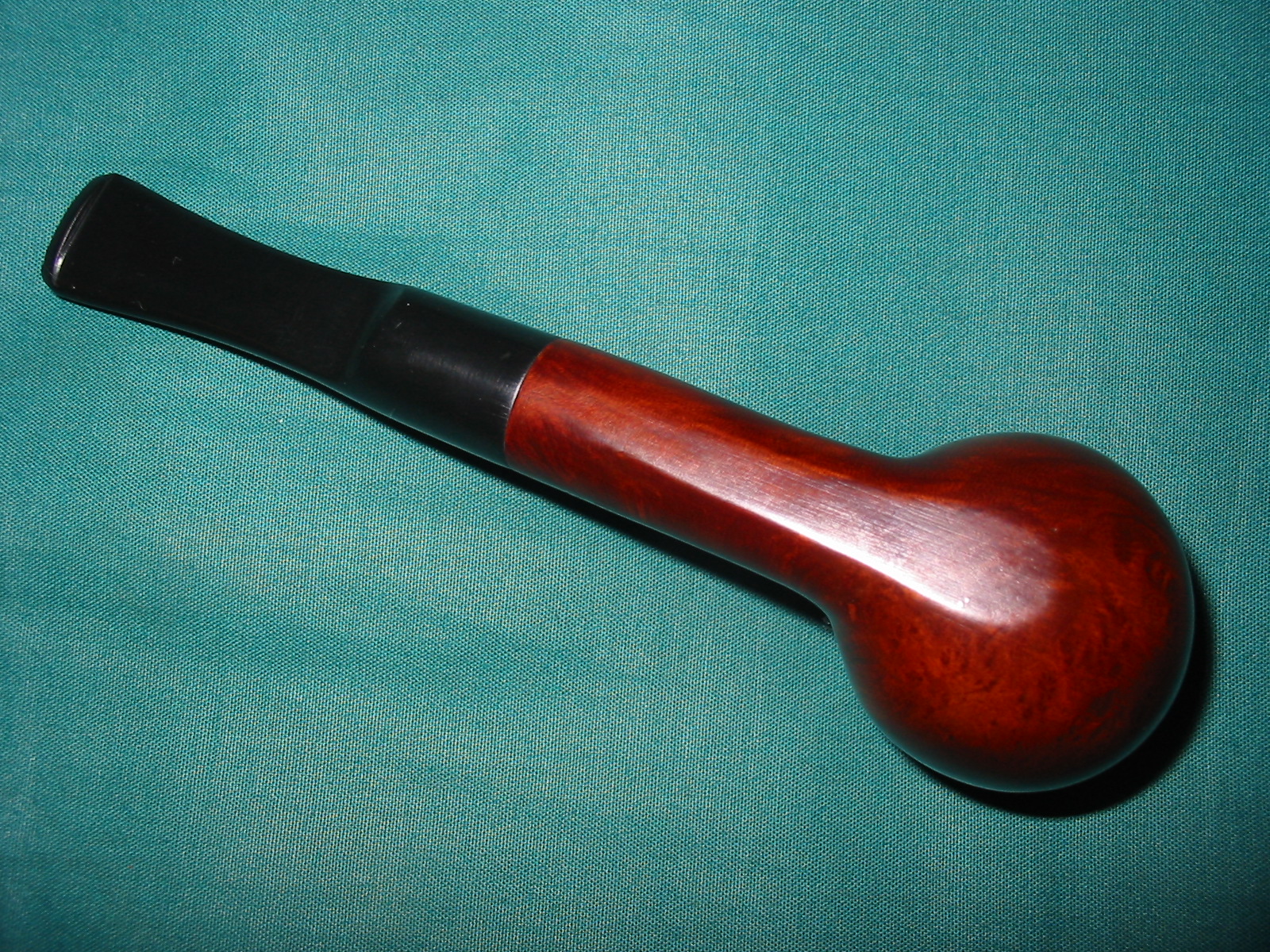
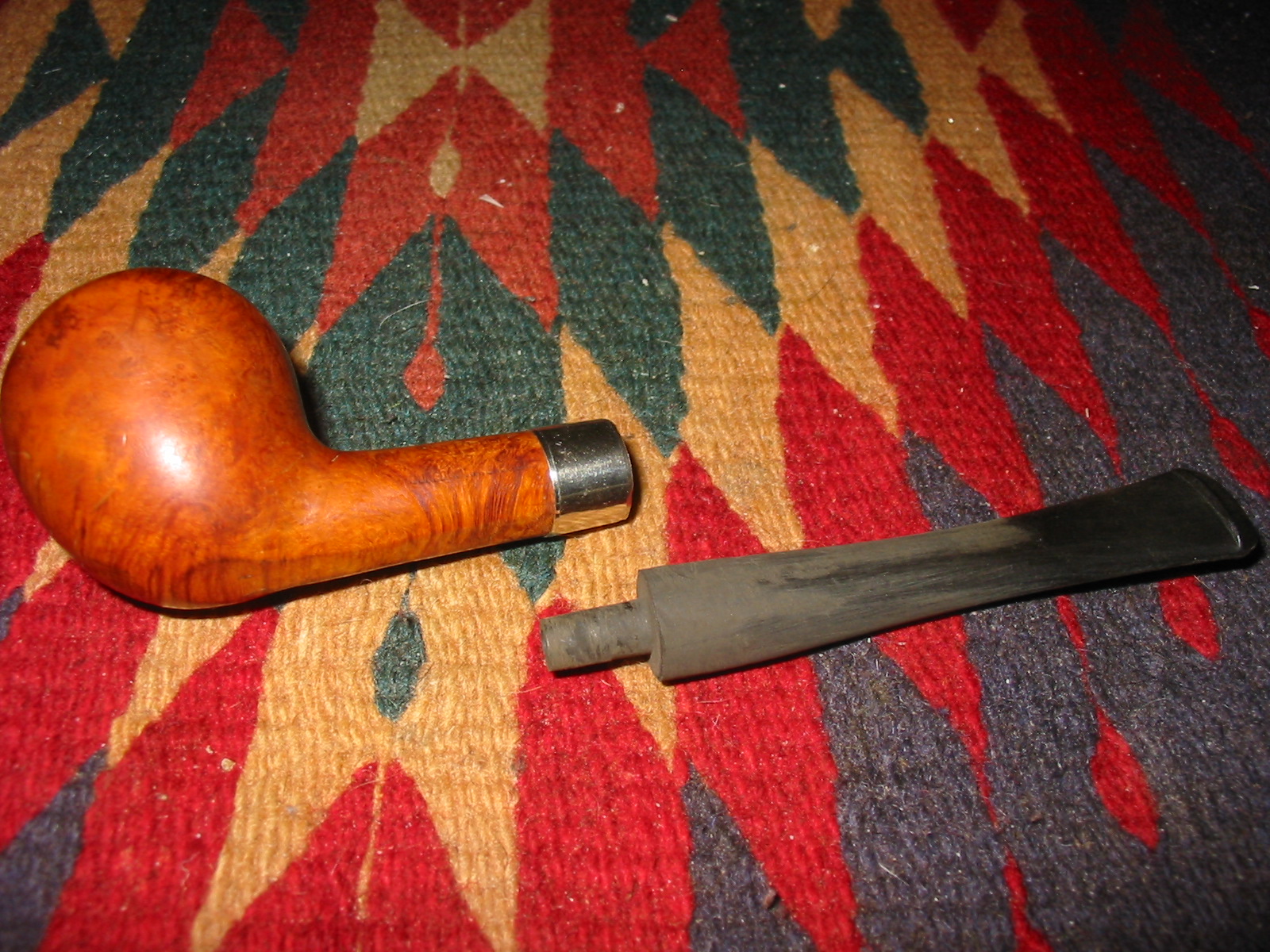
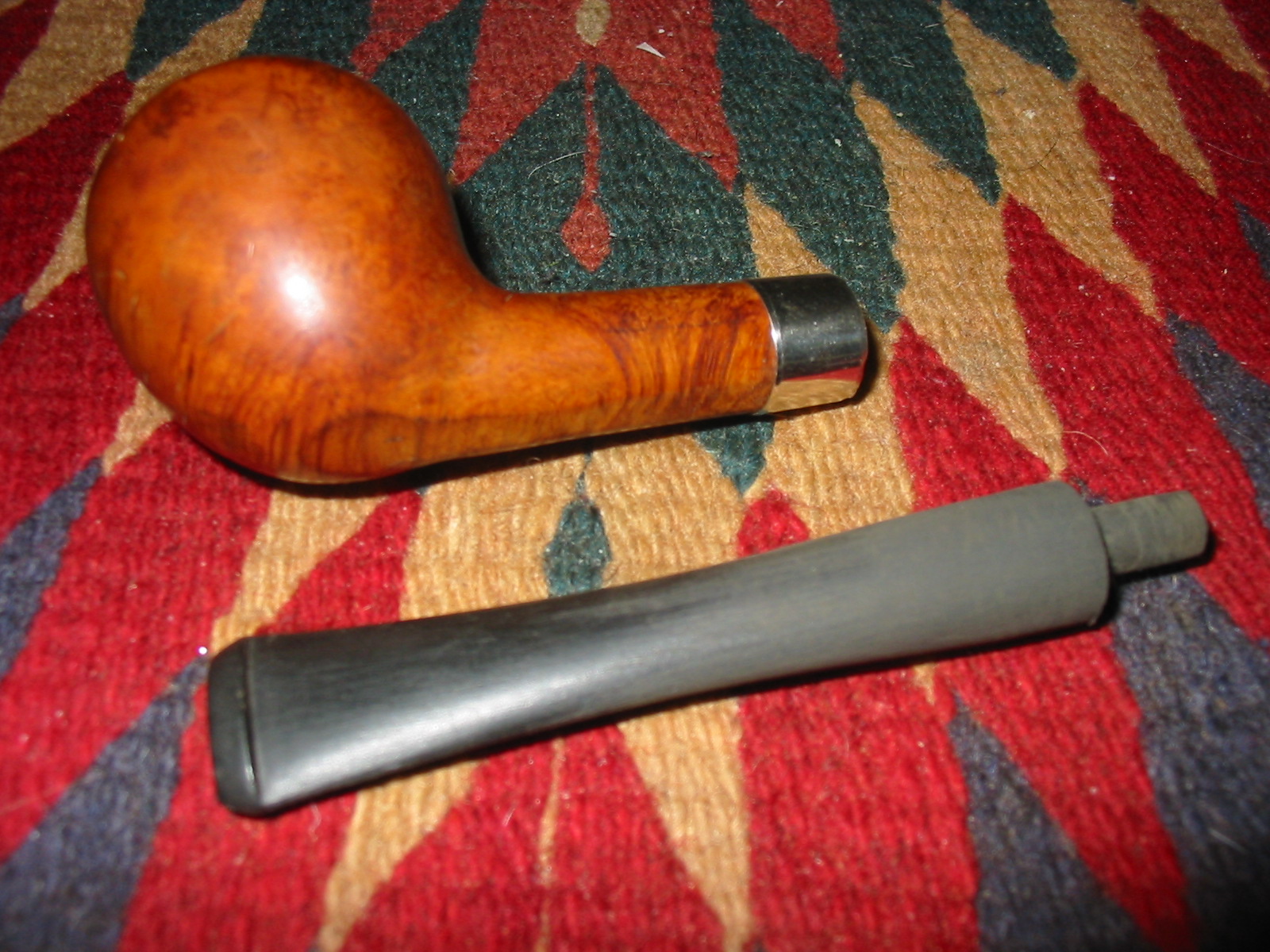
Reworking and Reshaping an Old French Briar (CPF?) Billiard


Blog by Steve Laug

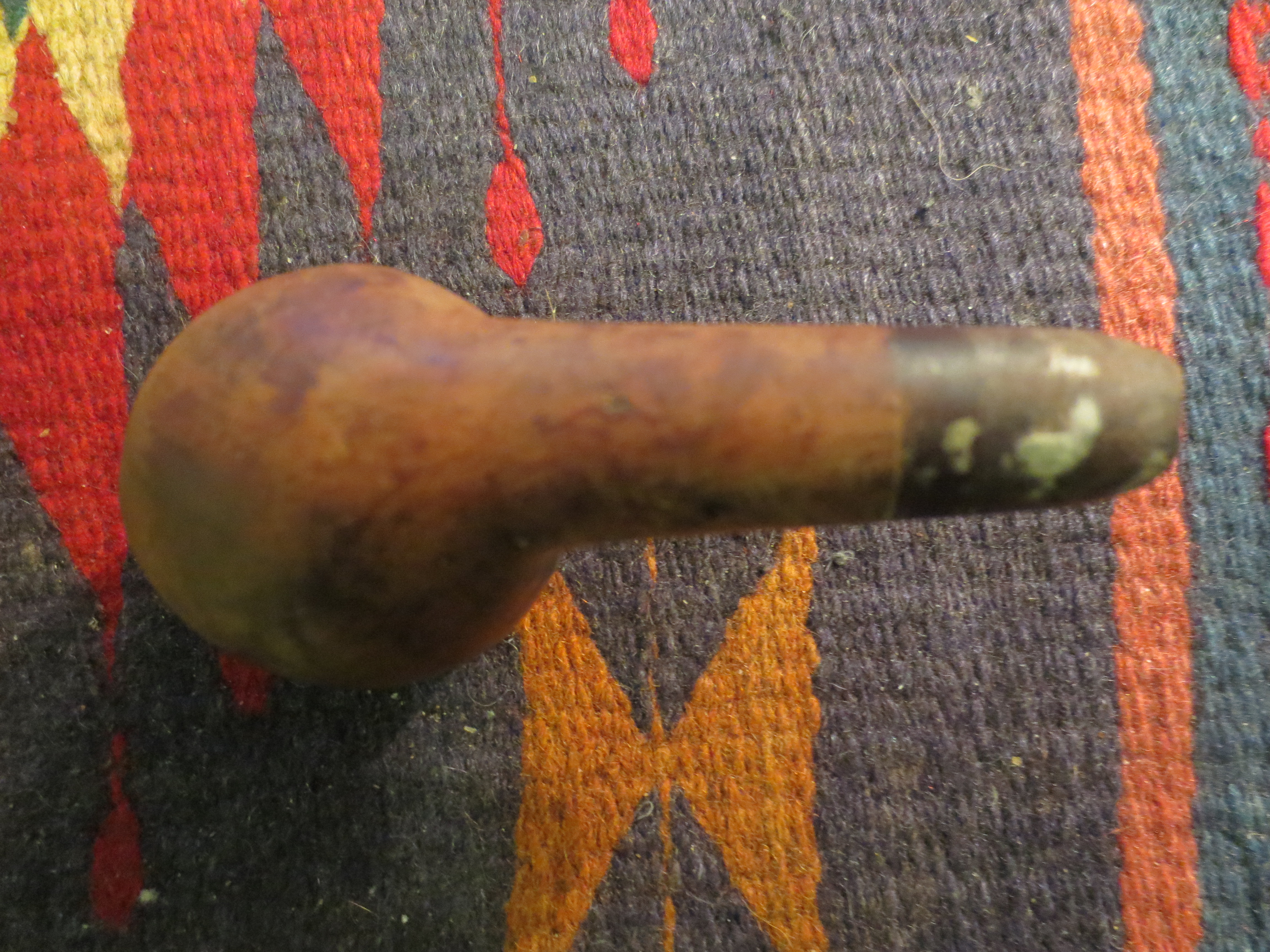
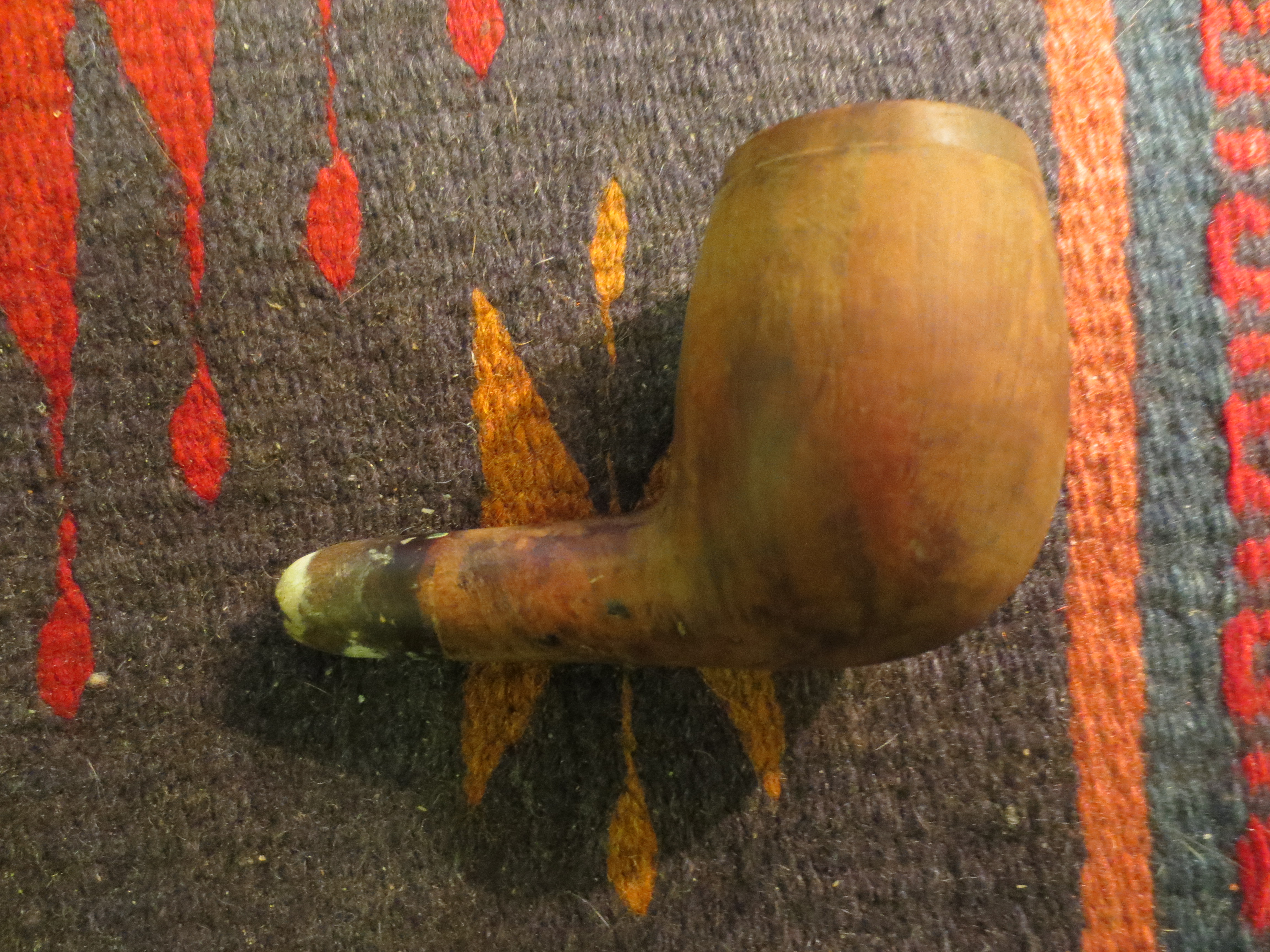
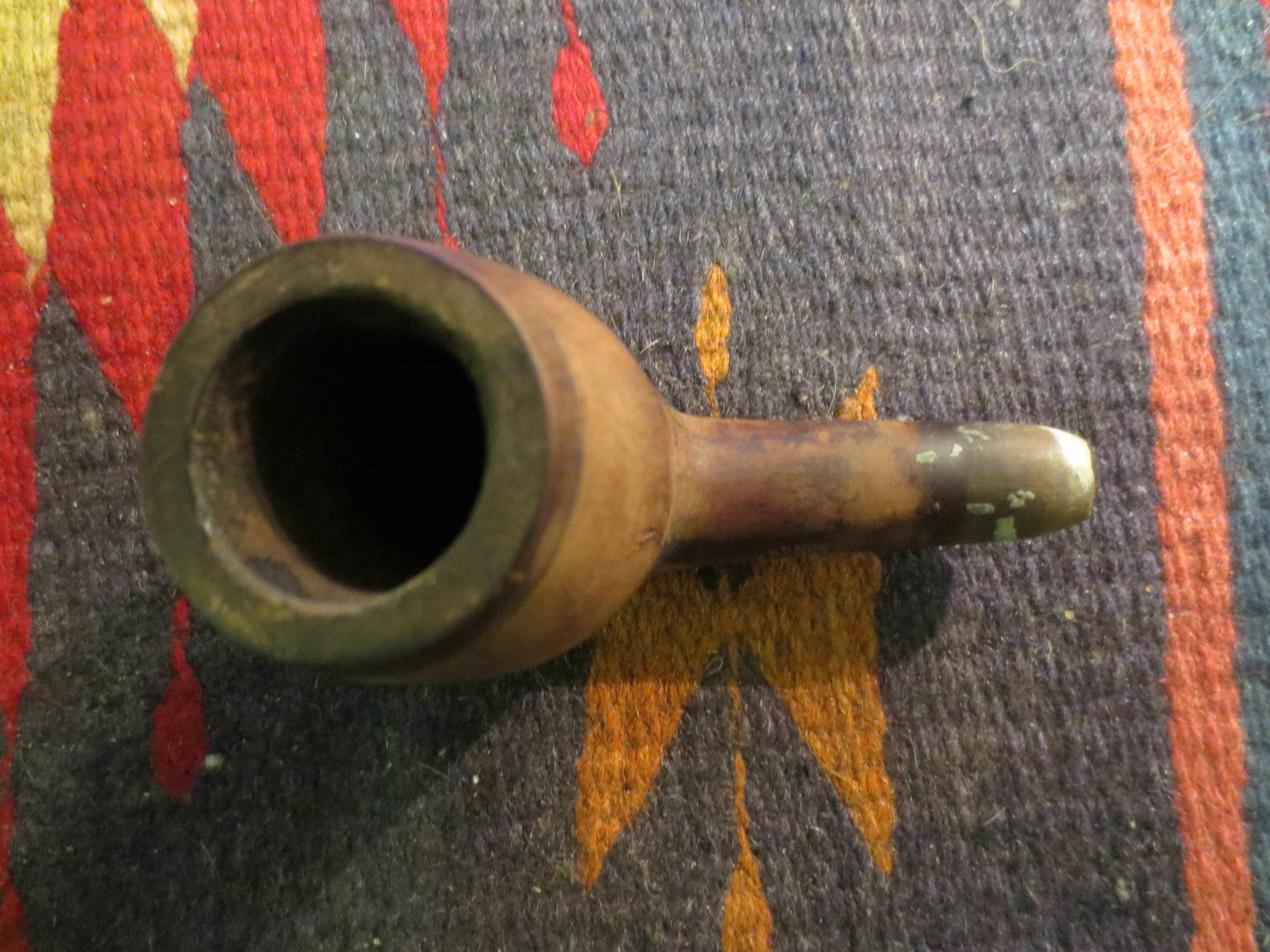
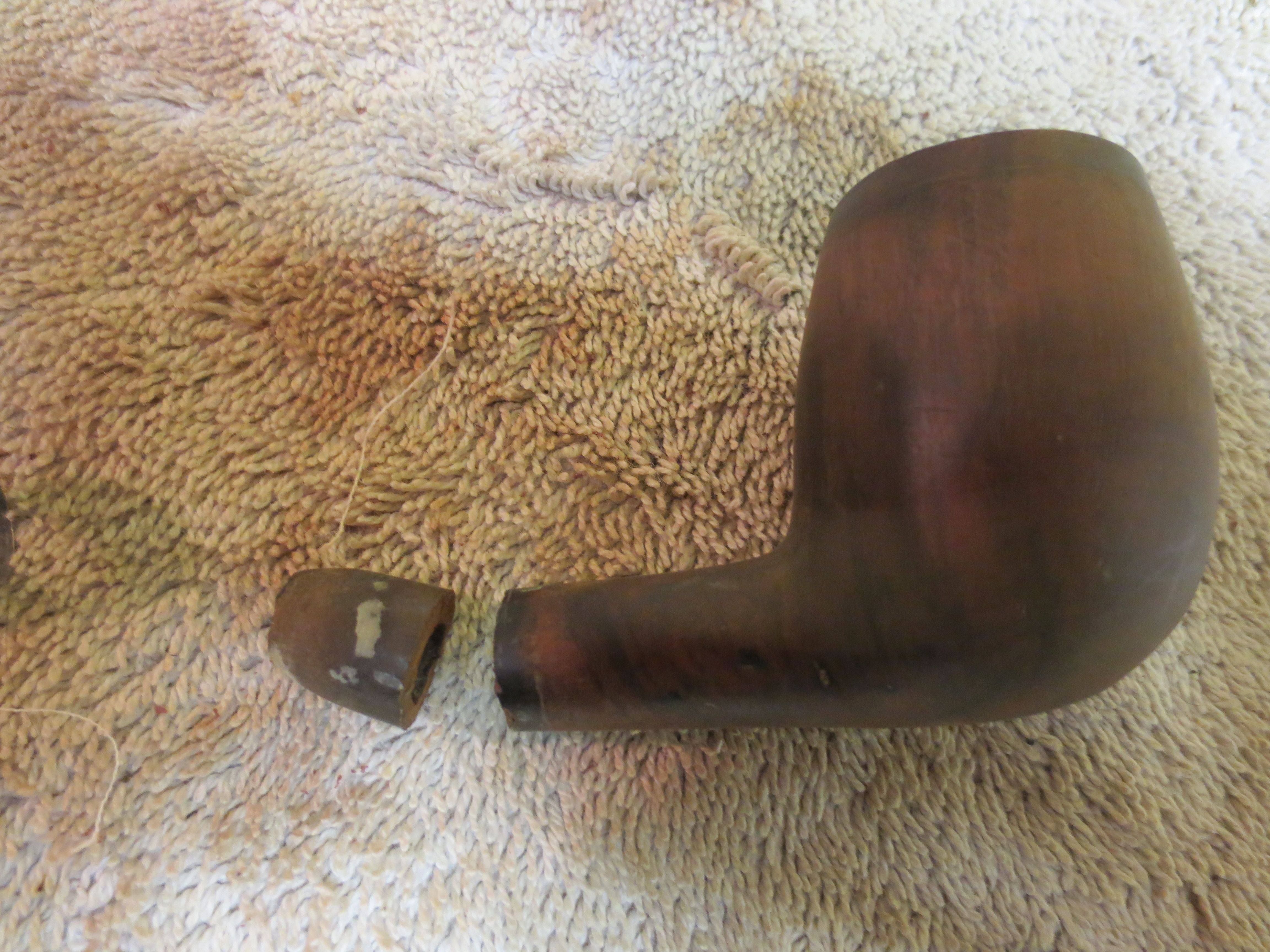
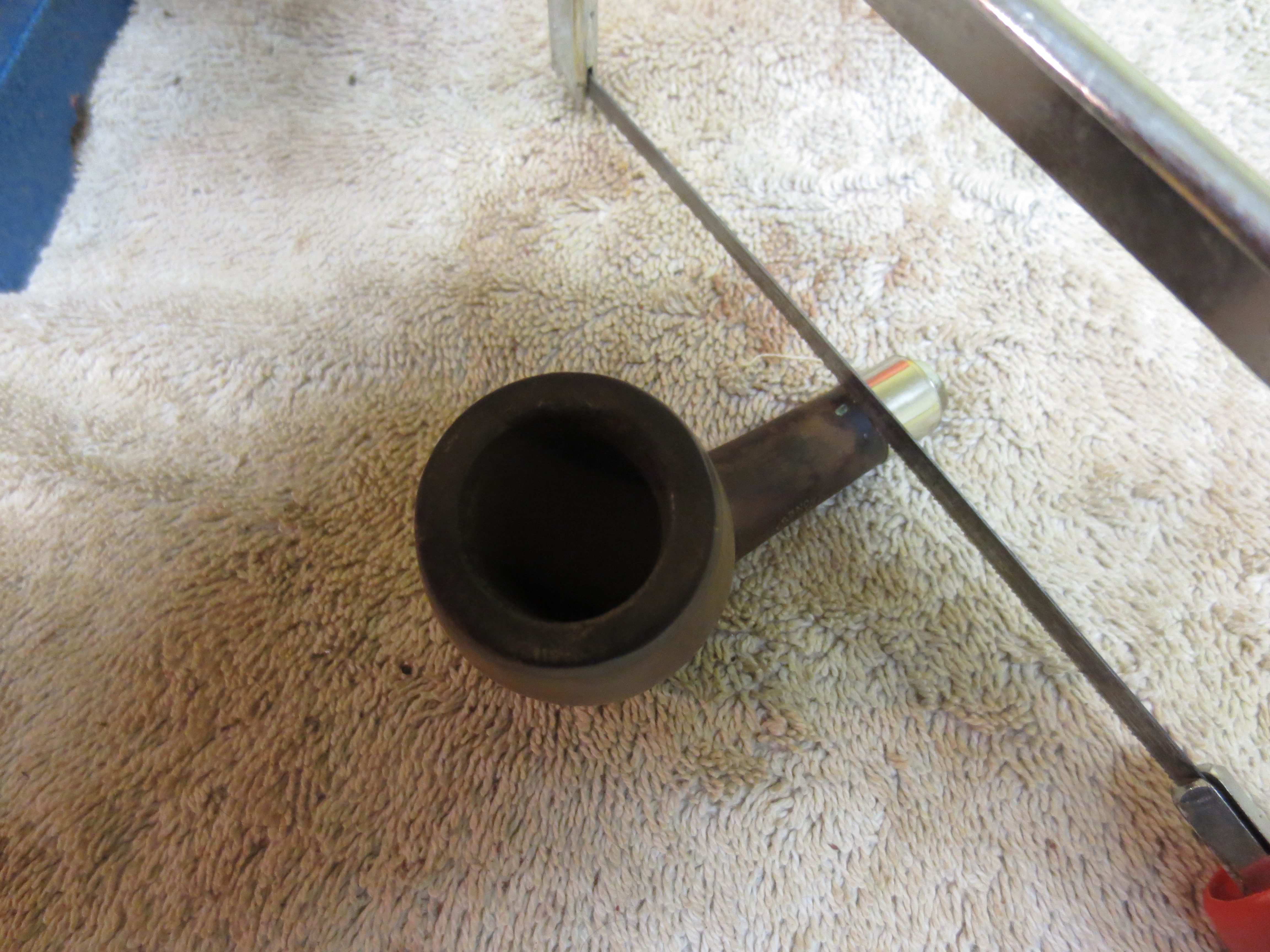
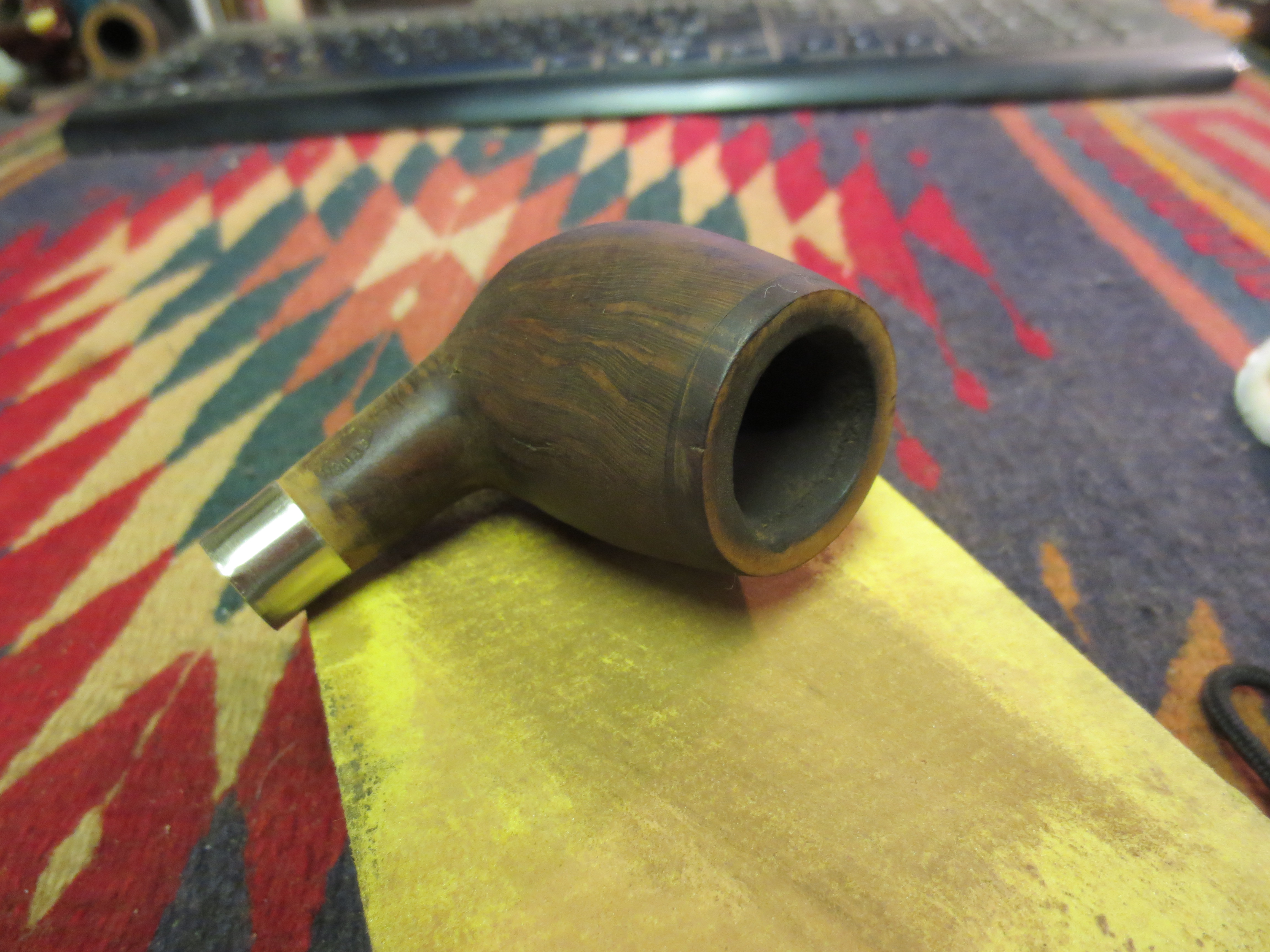
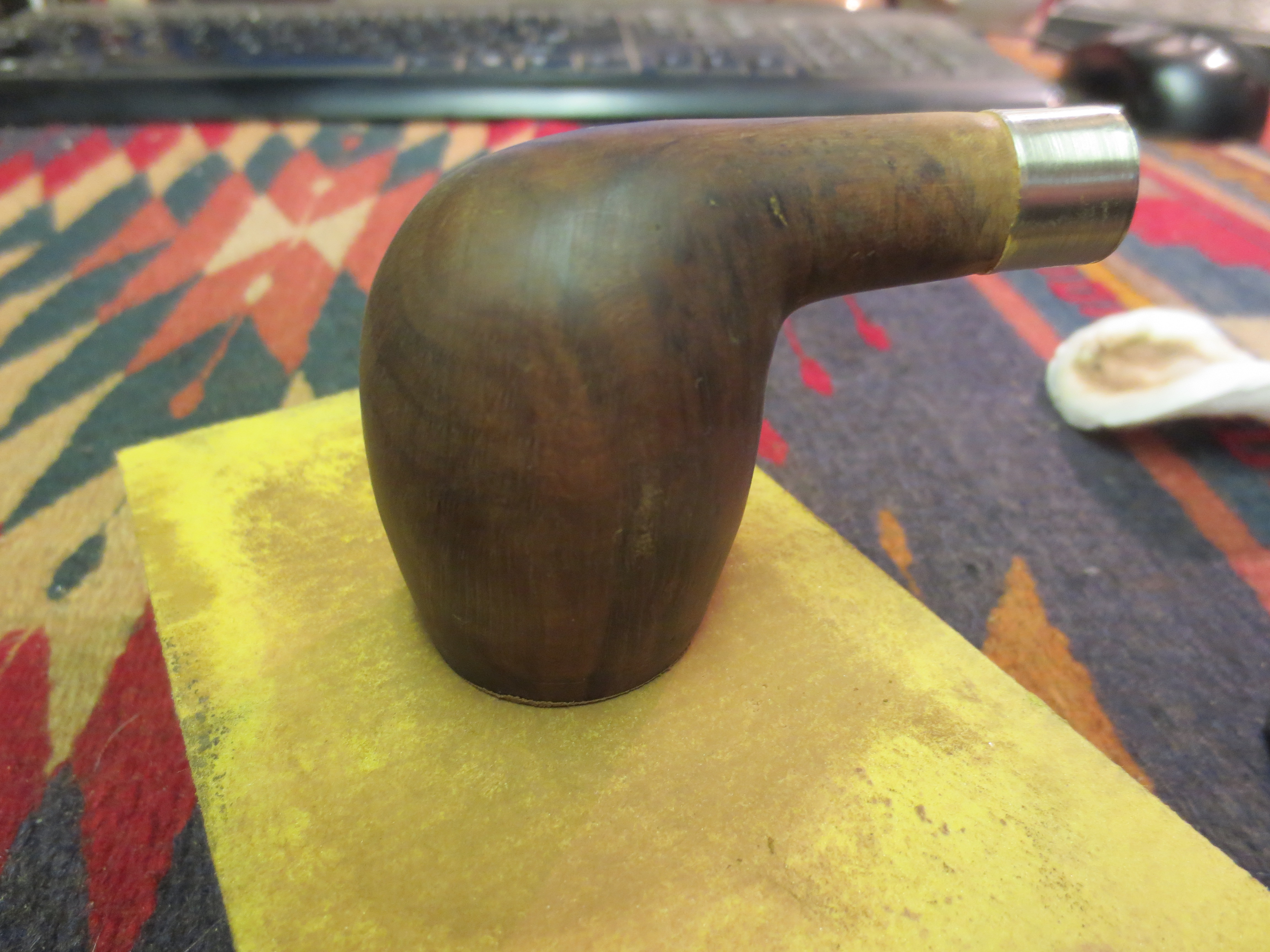
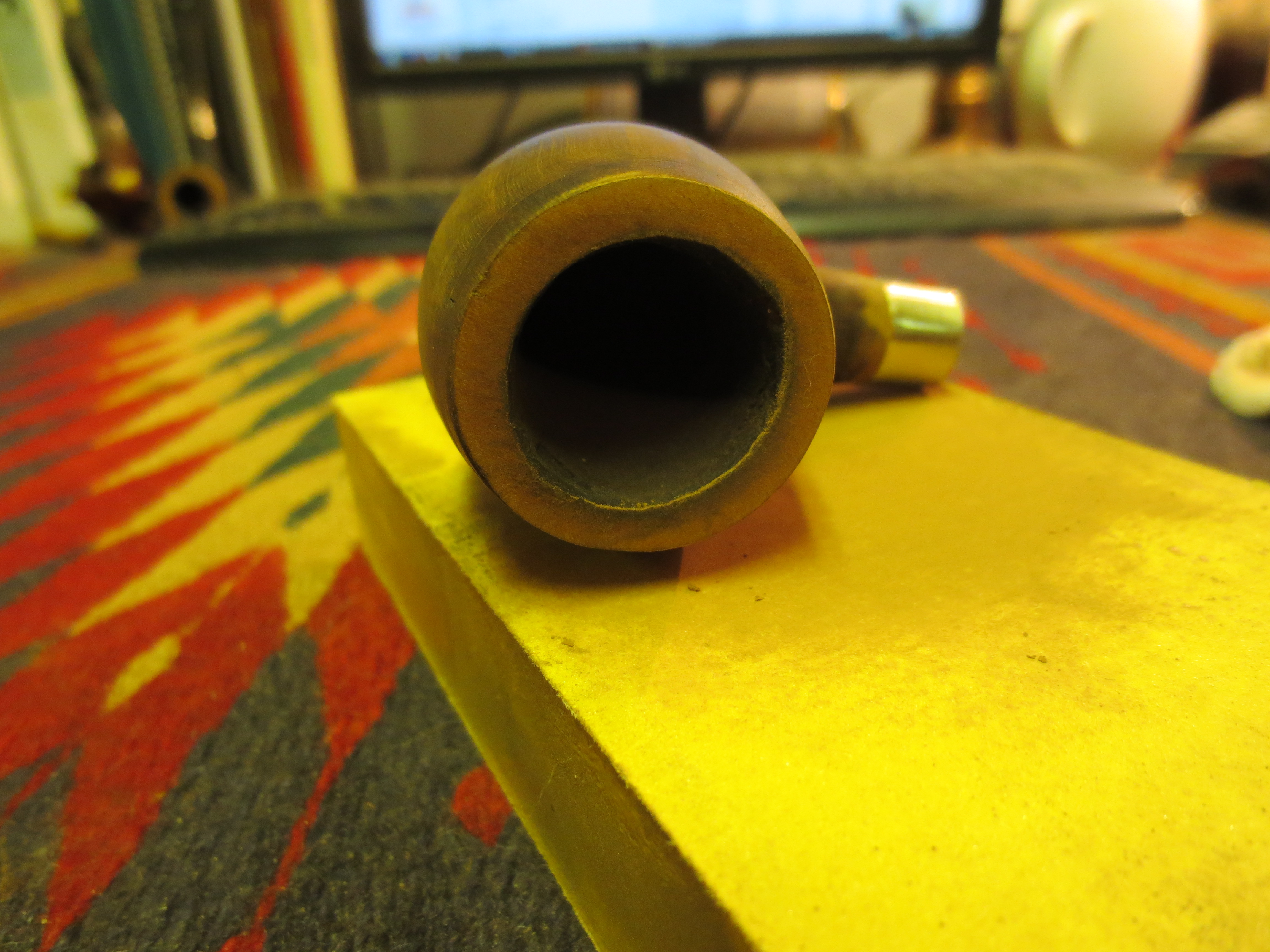
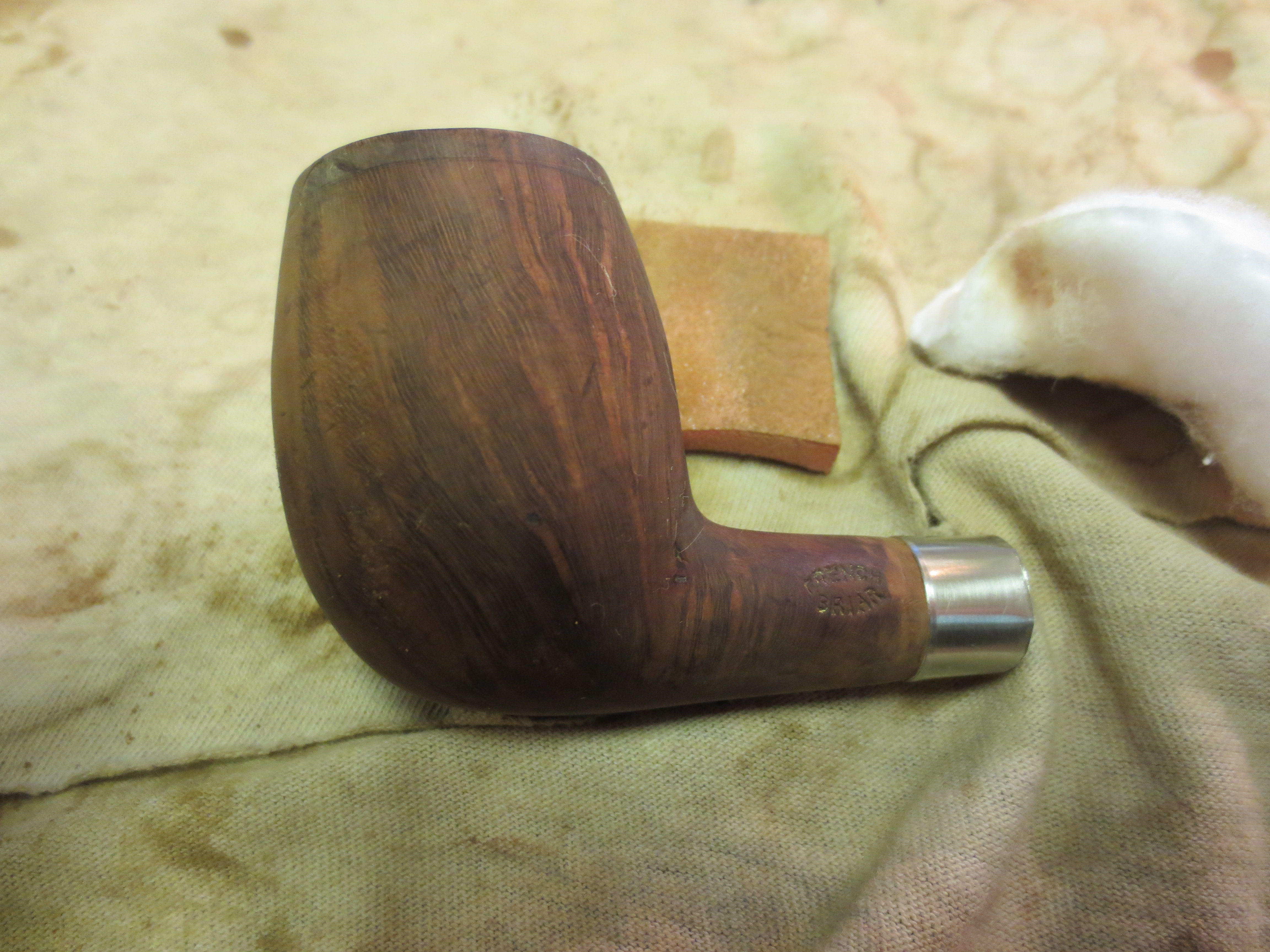
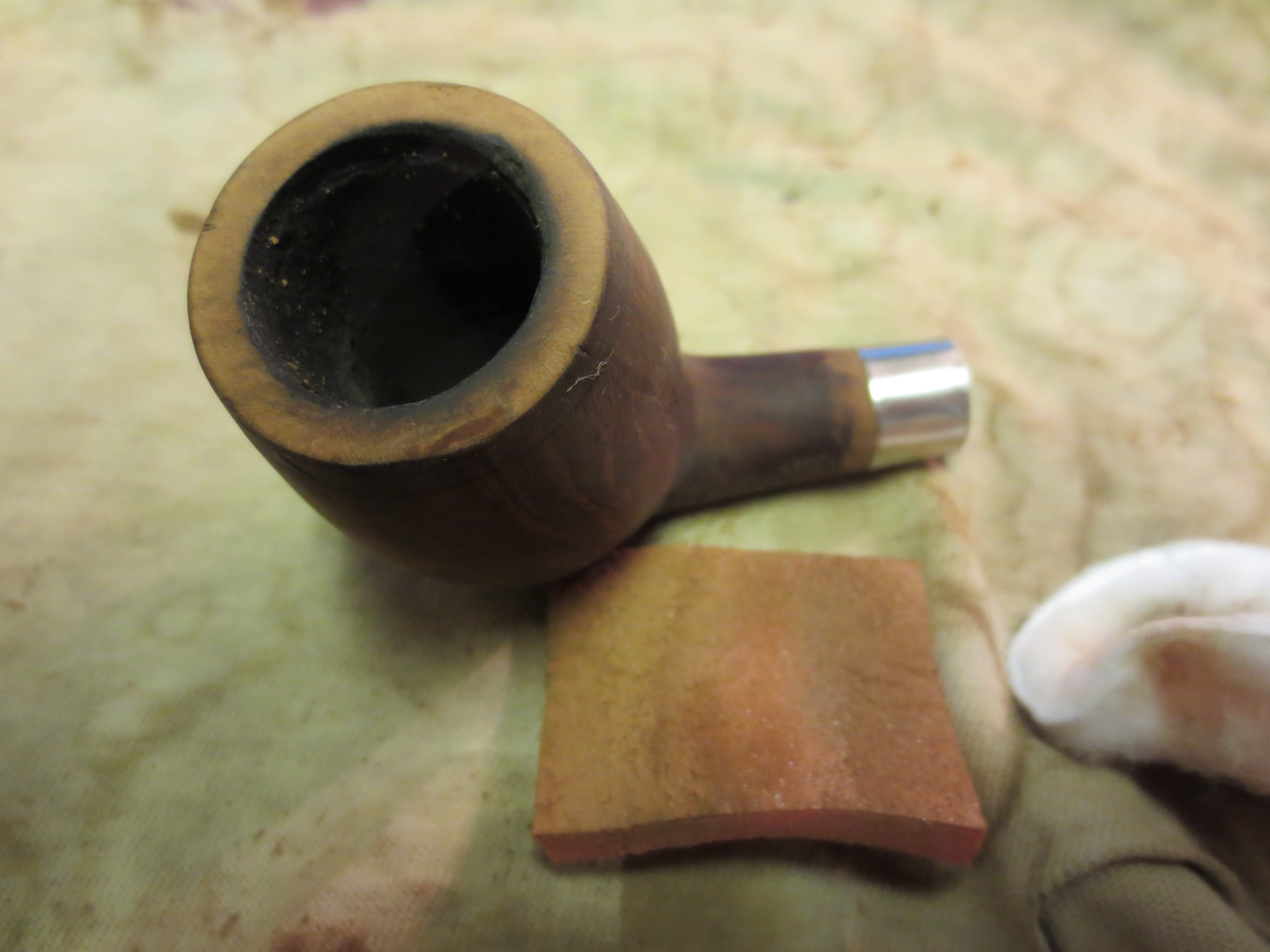
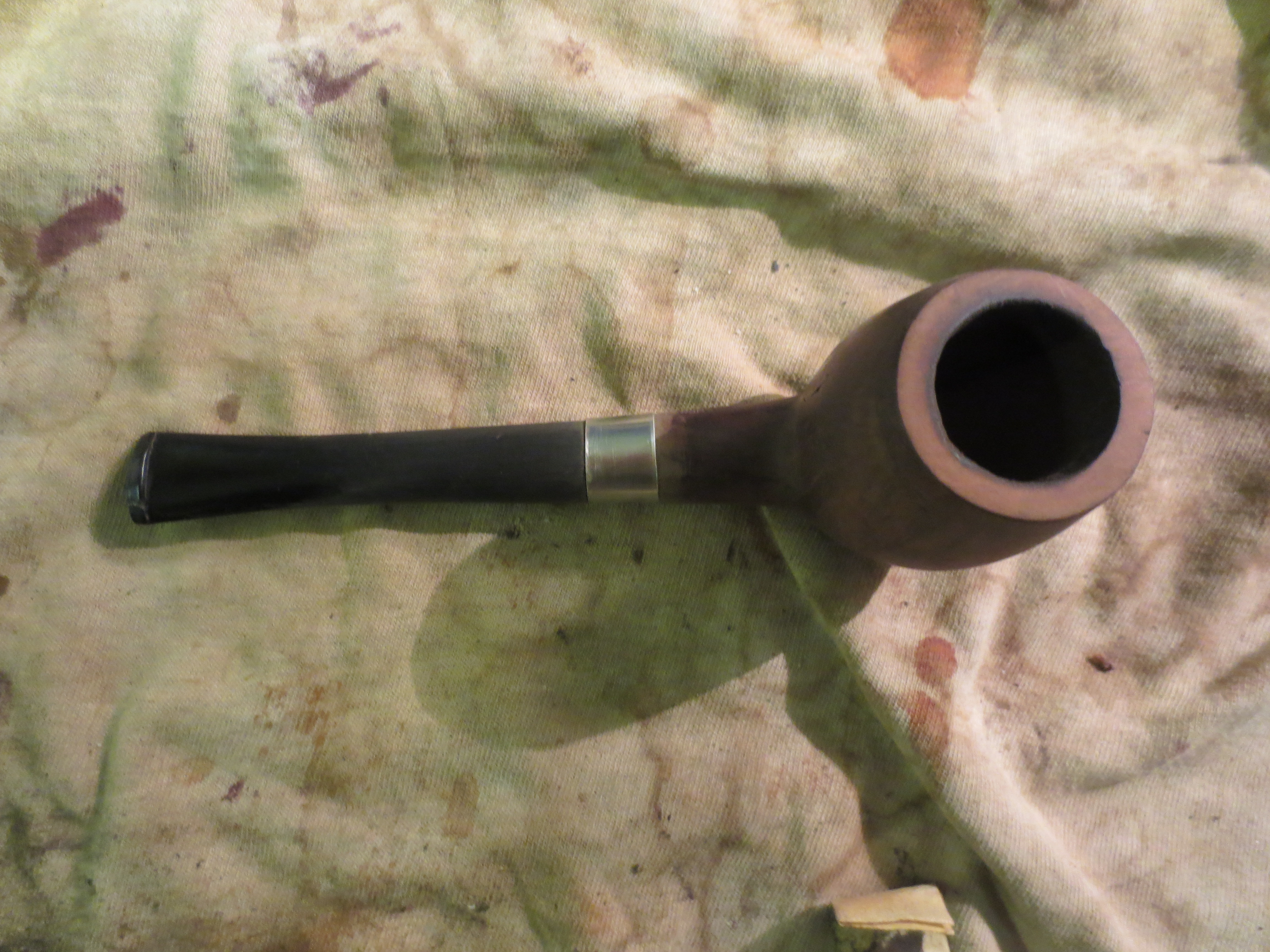
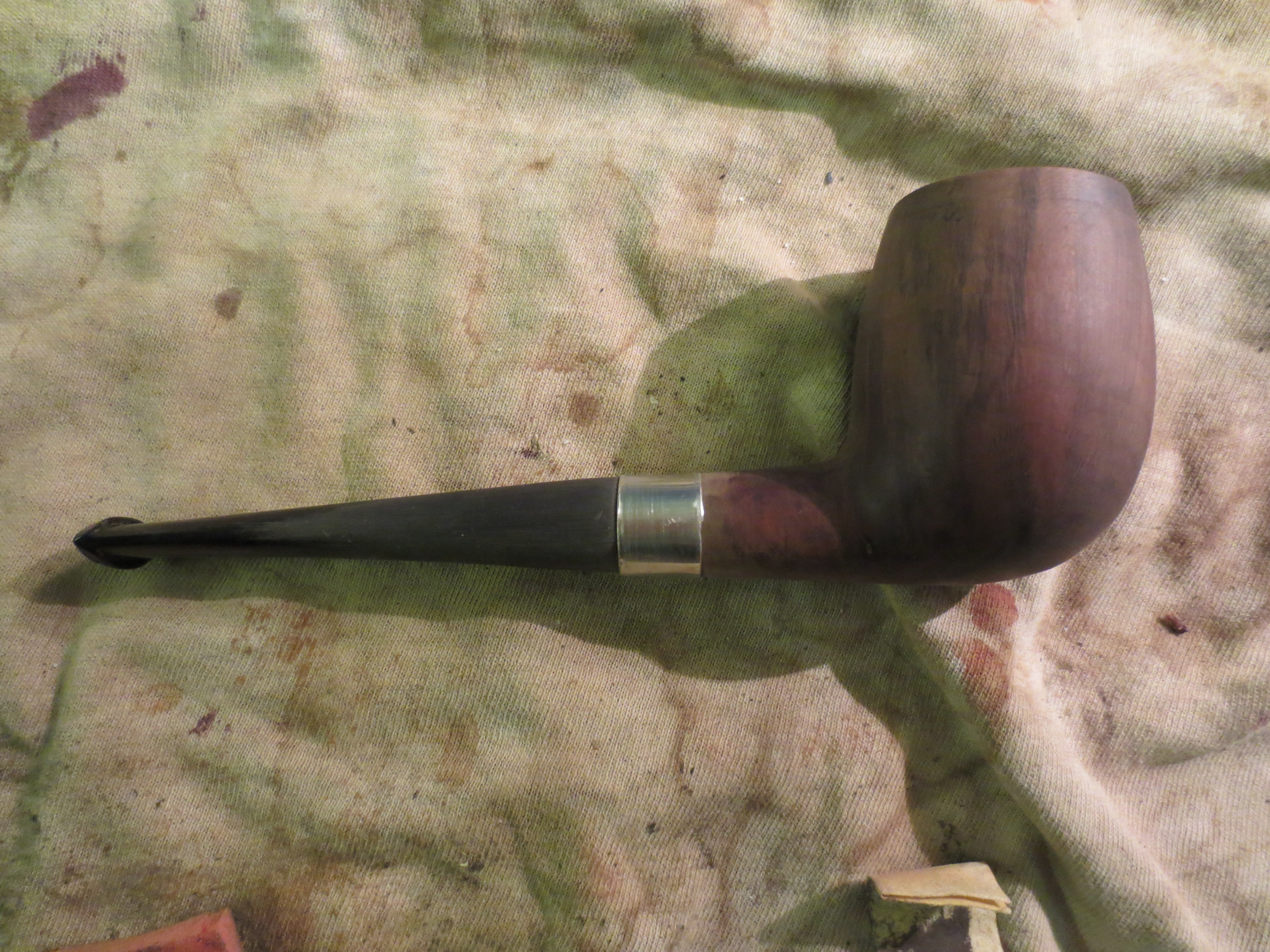
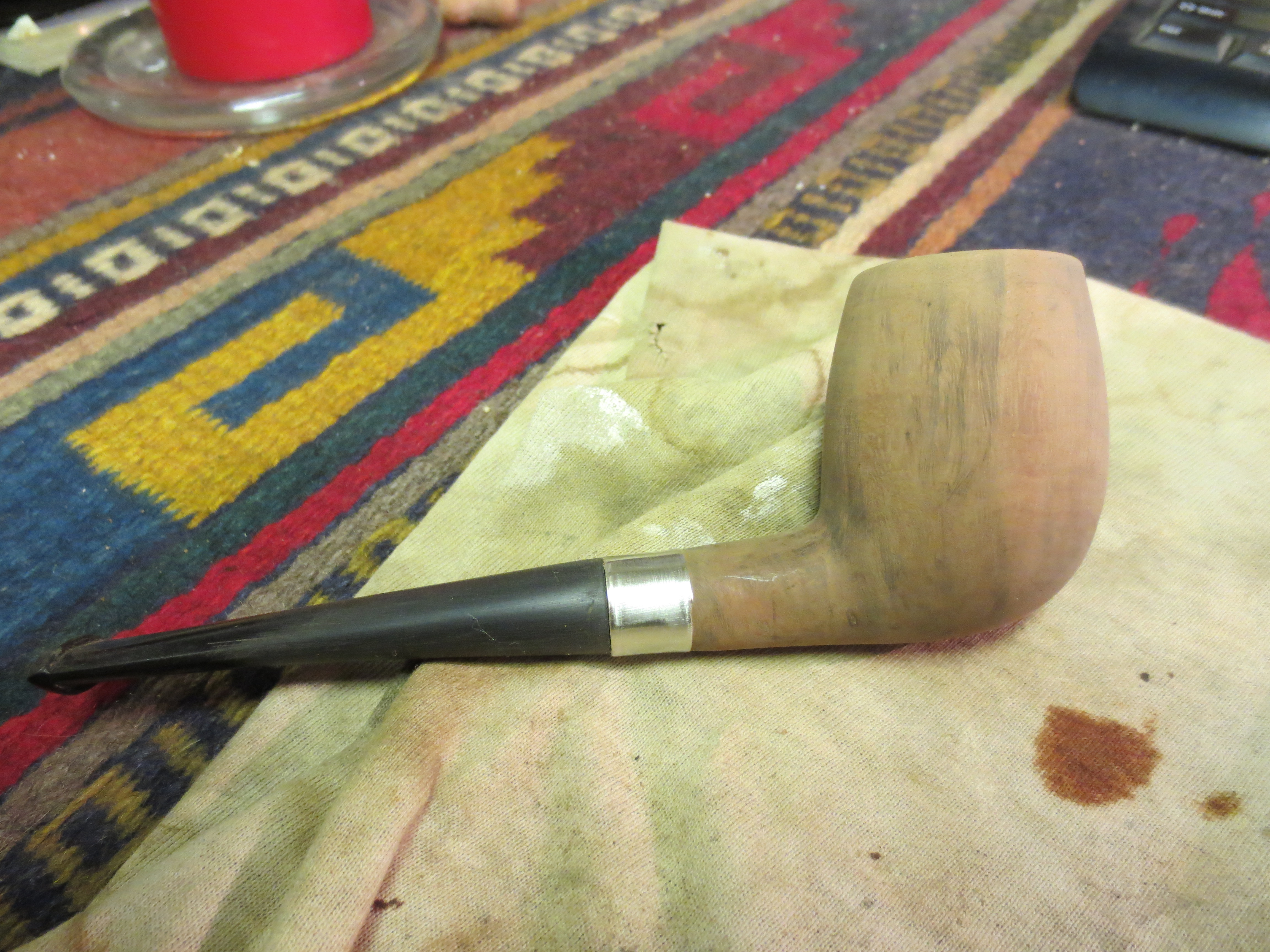
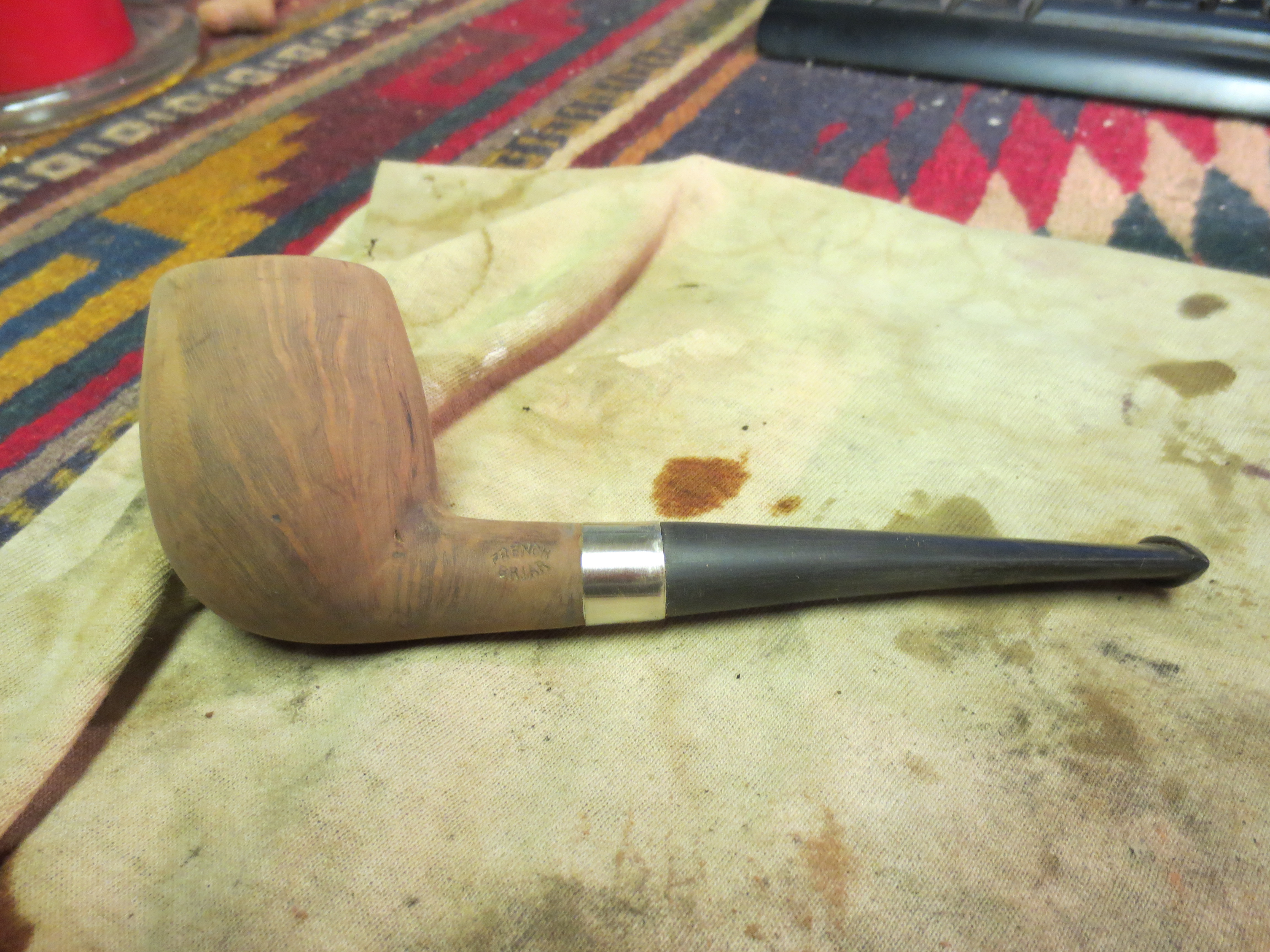
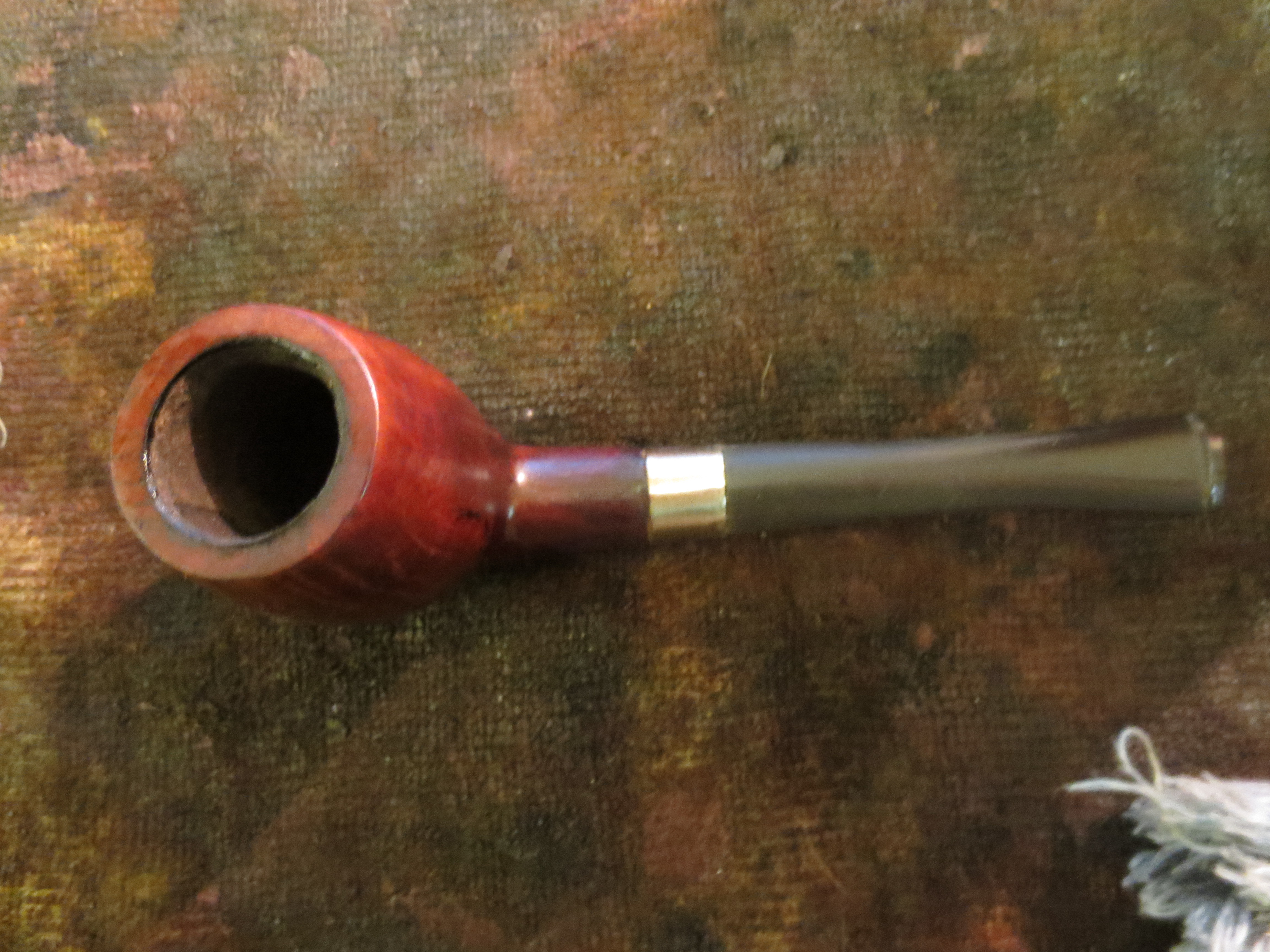
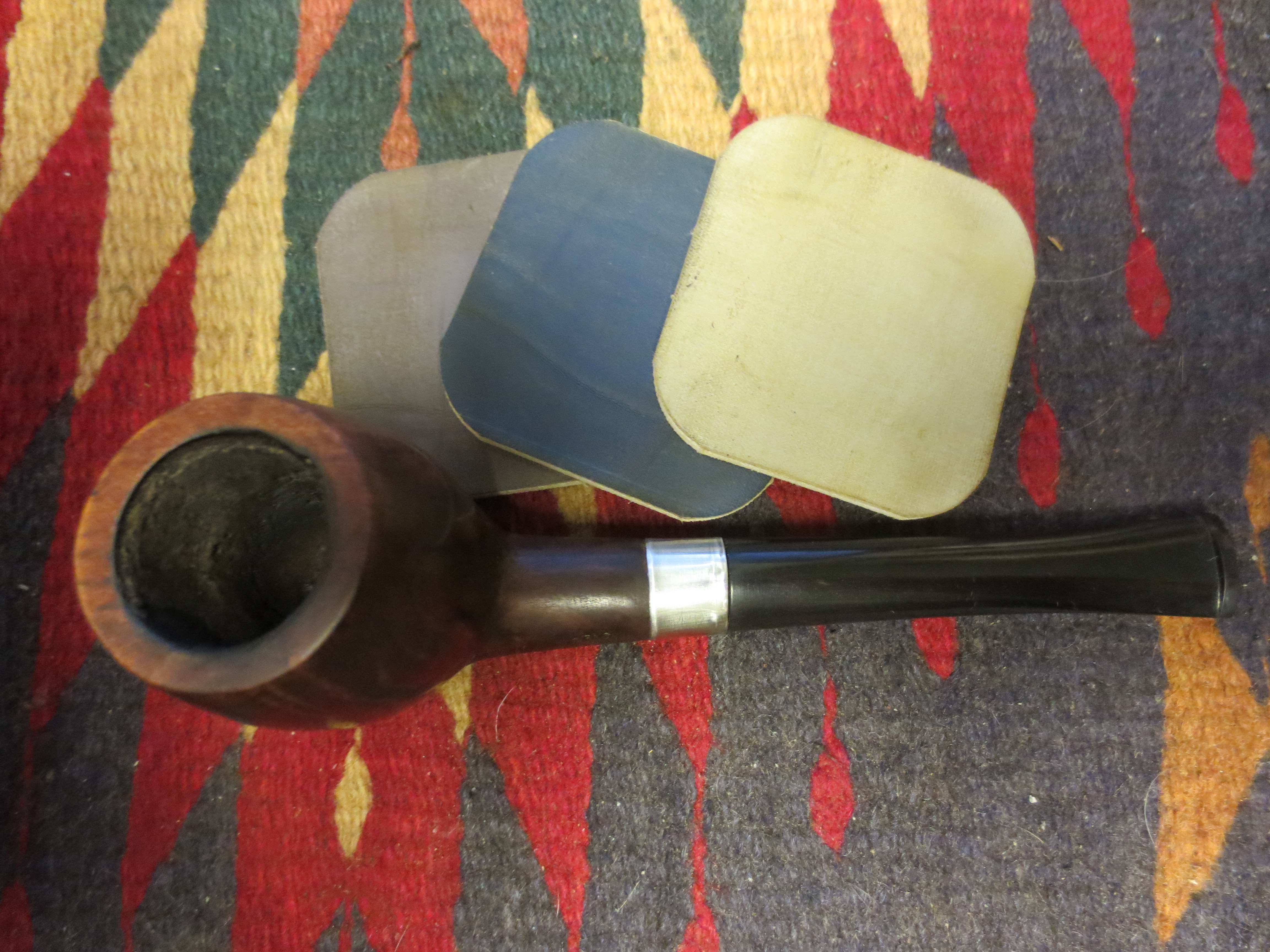
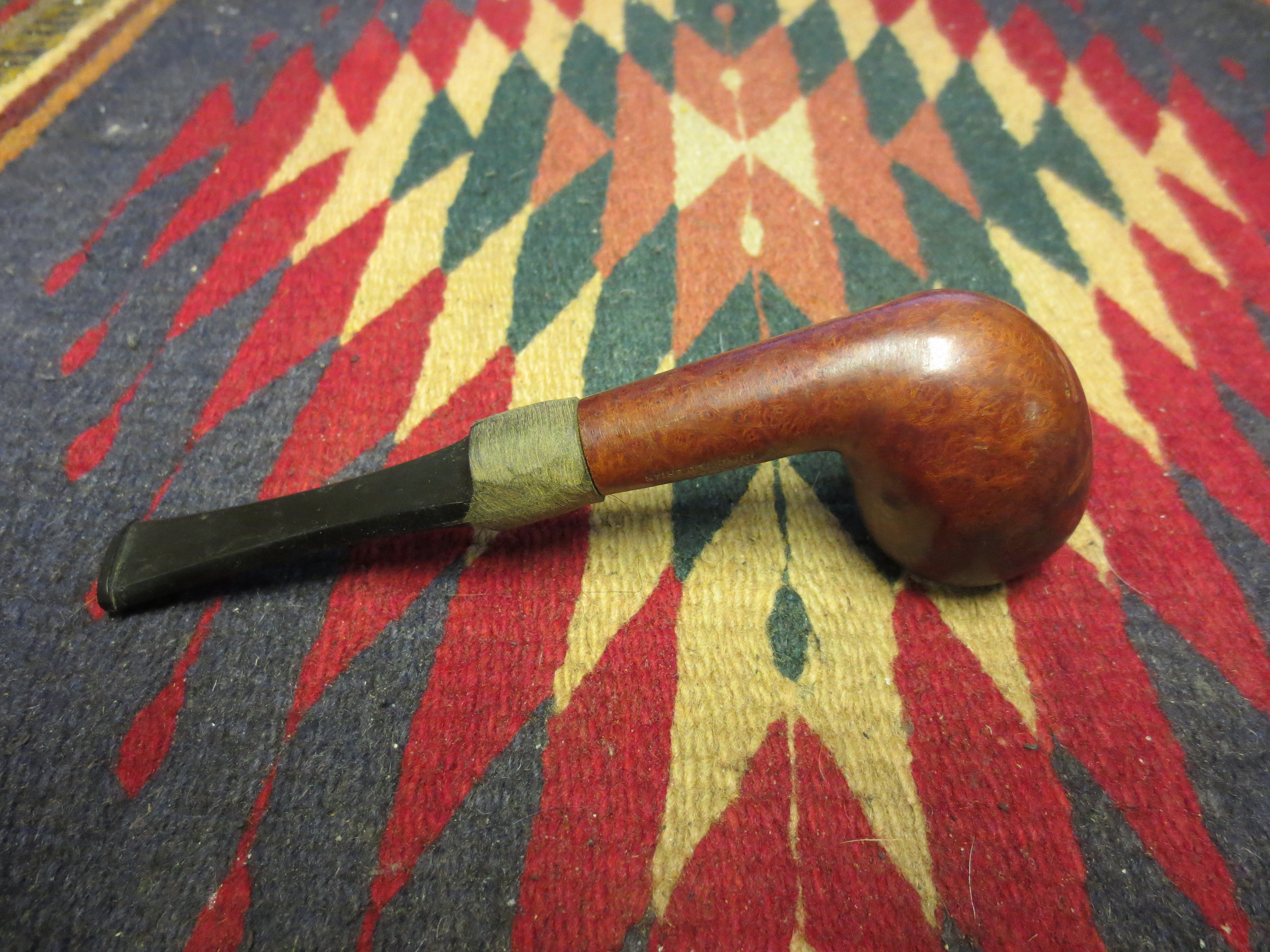
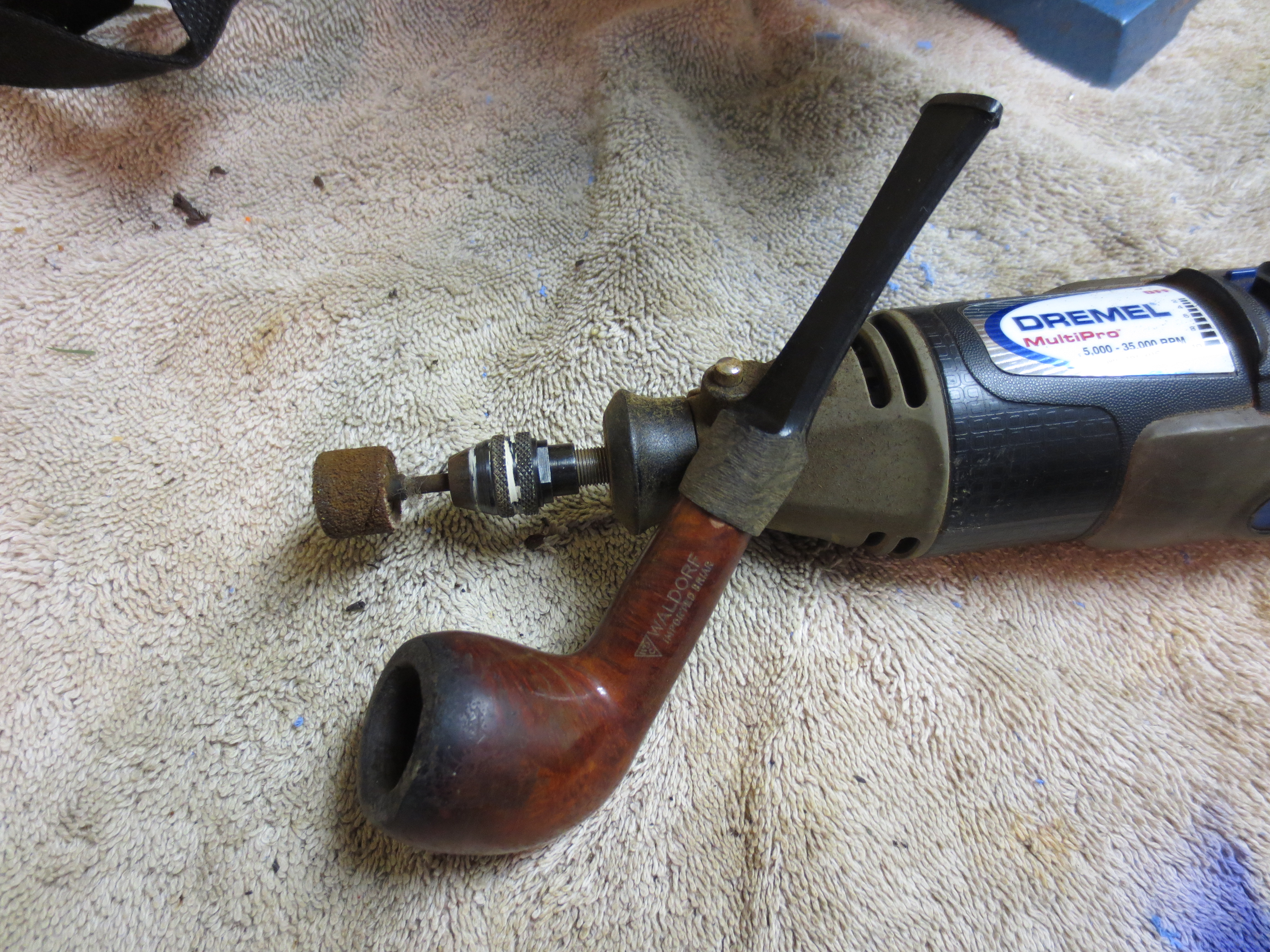
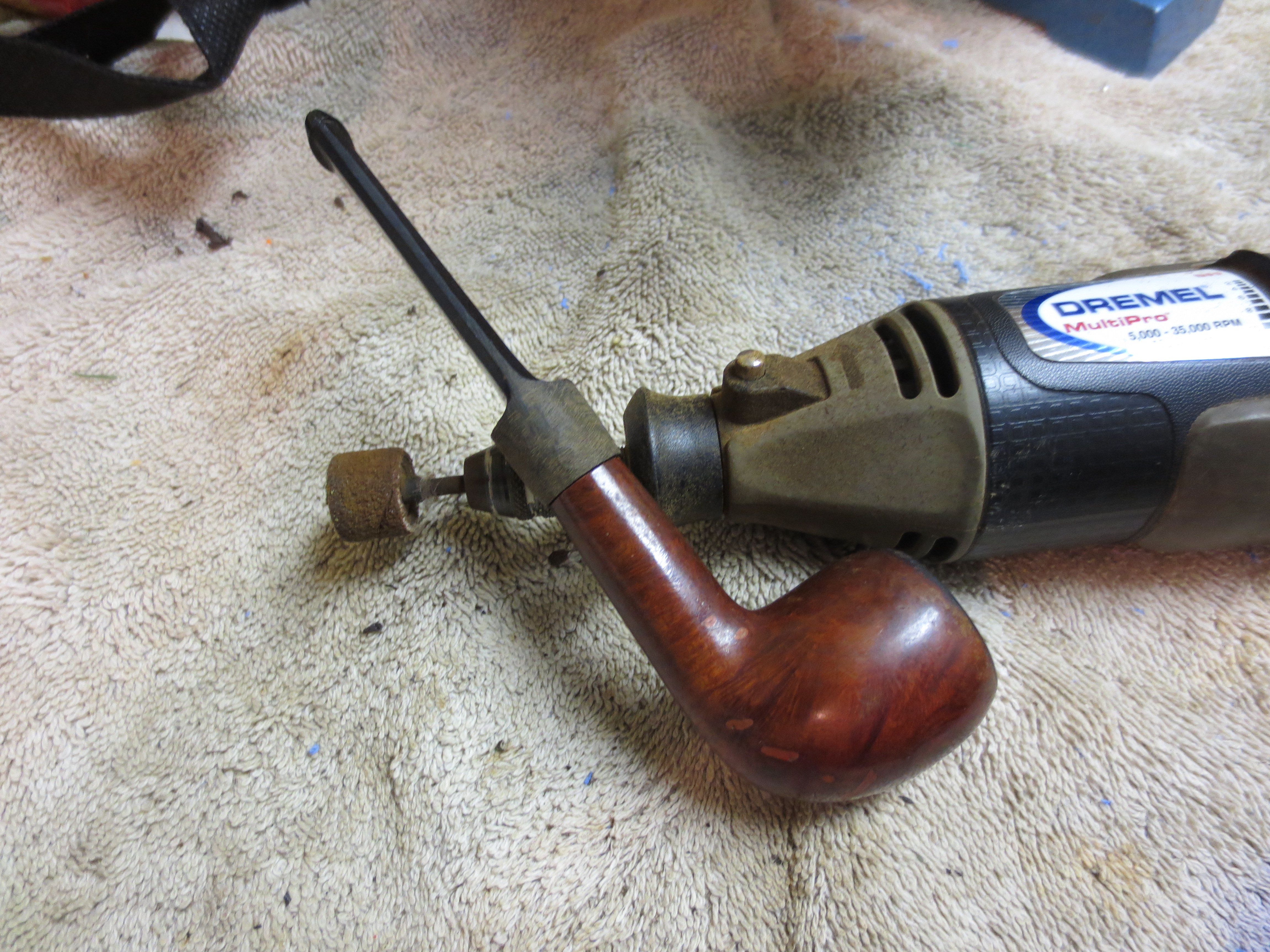
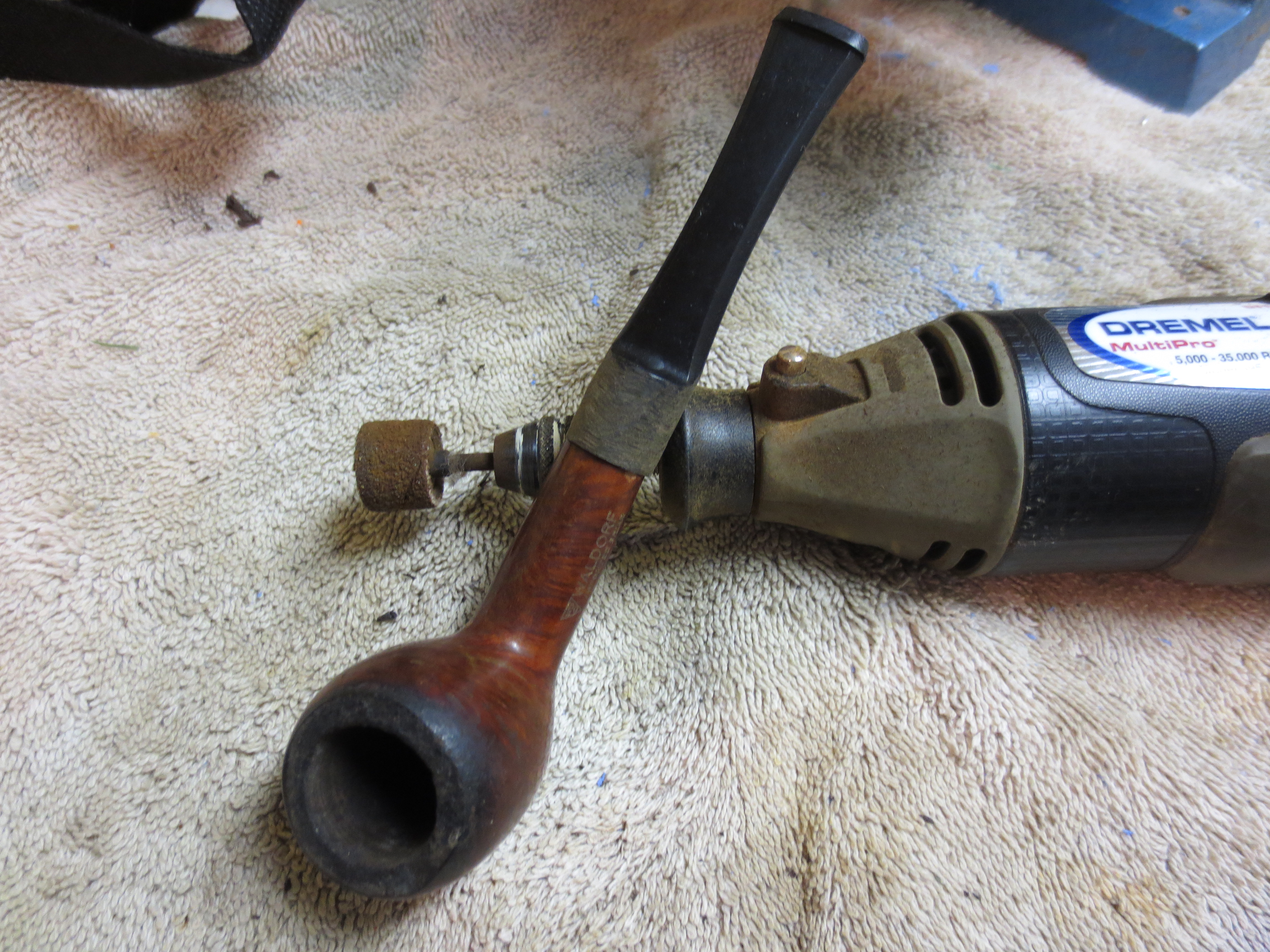
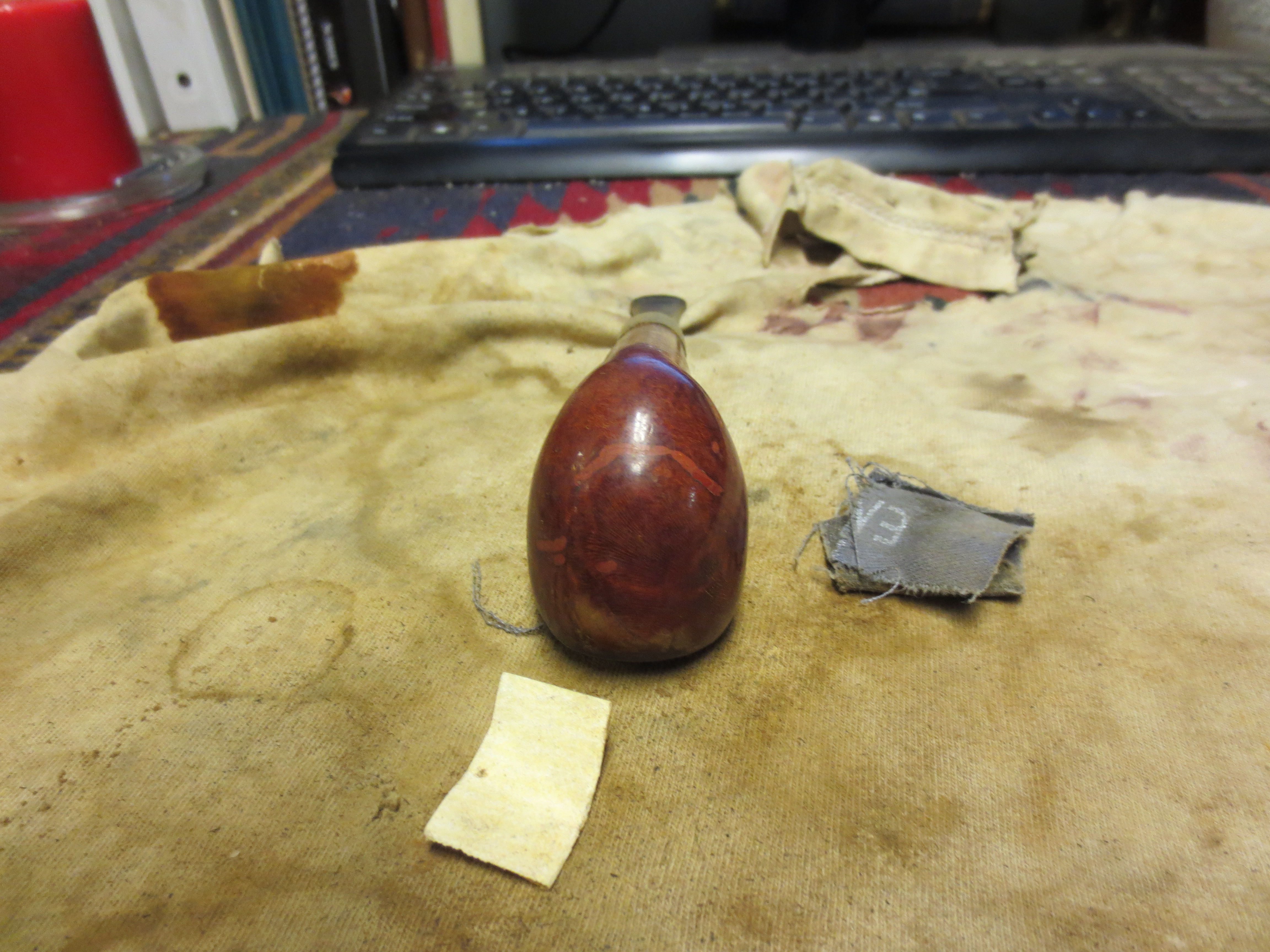
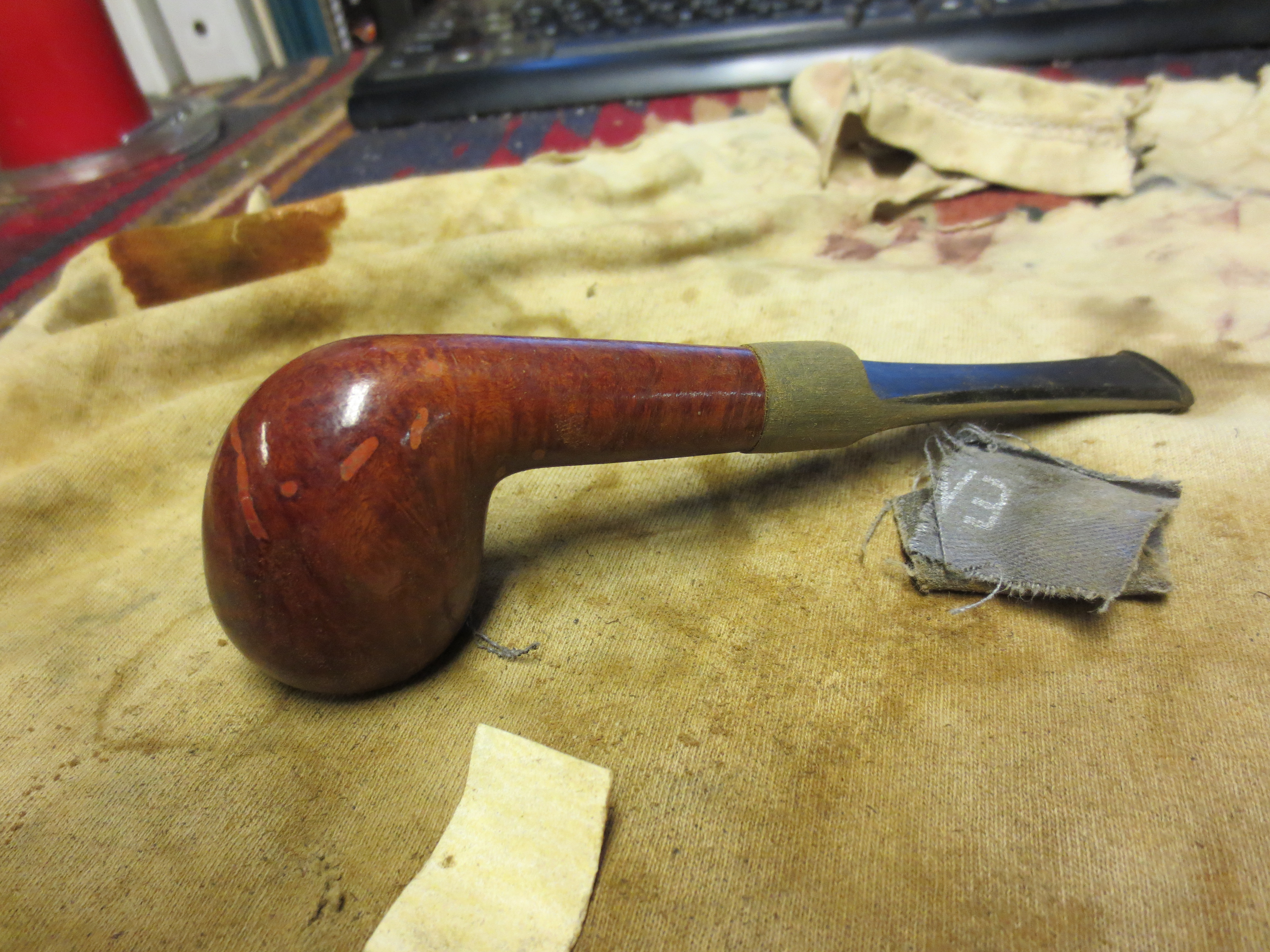
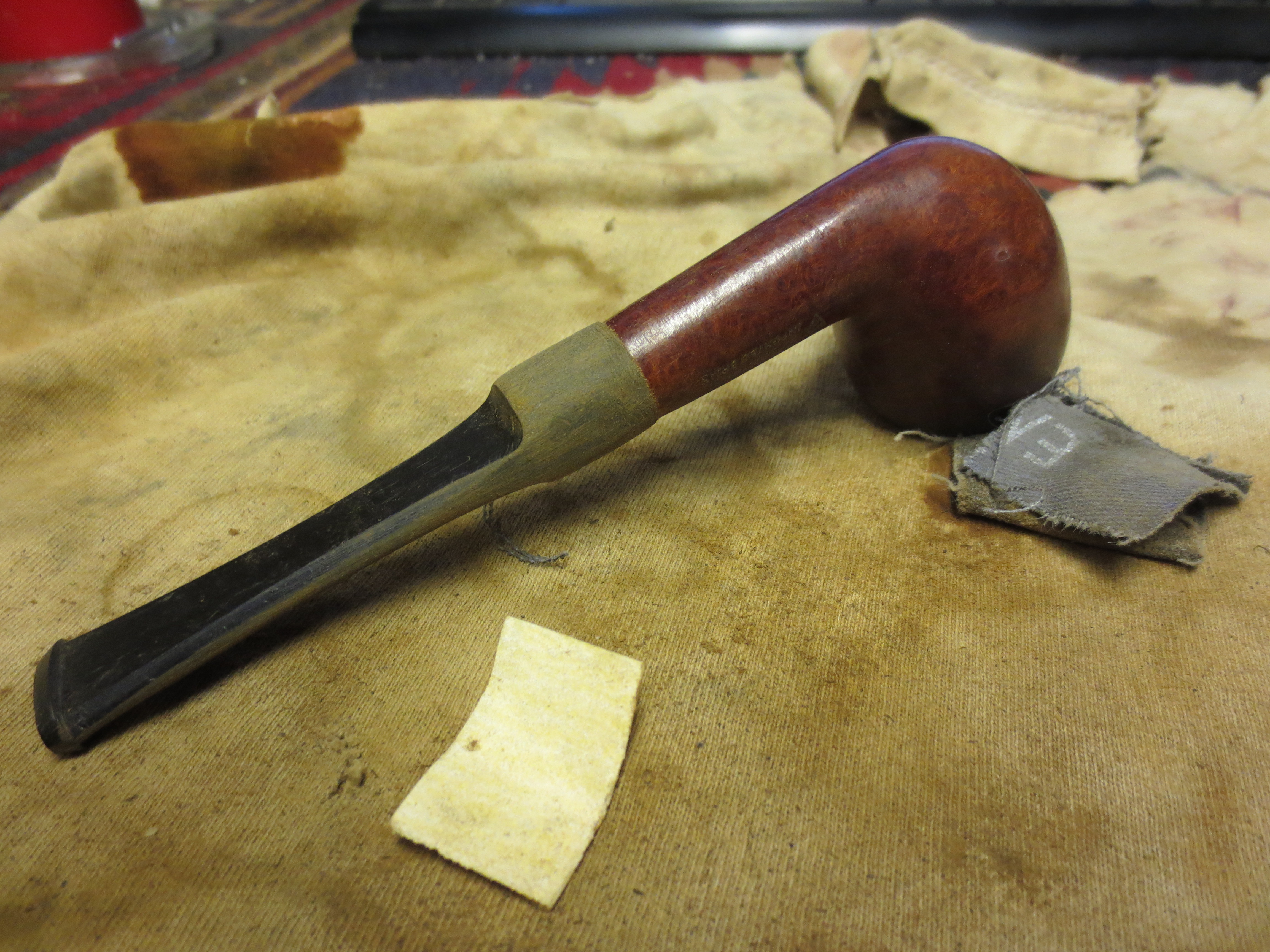
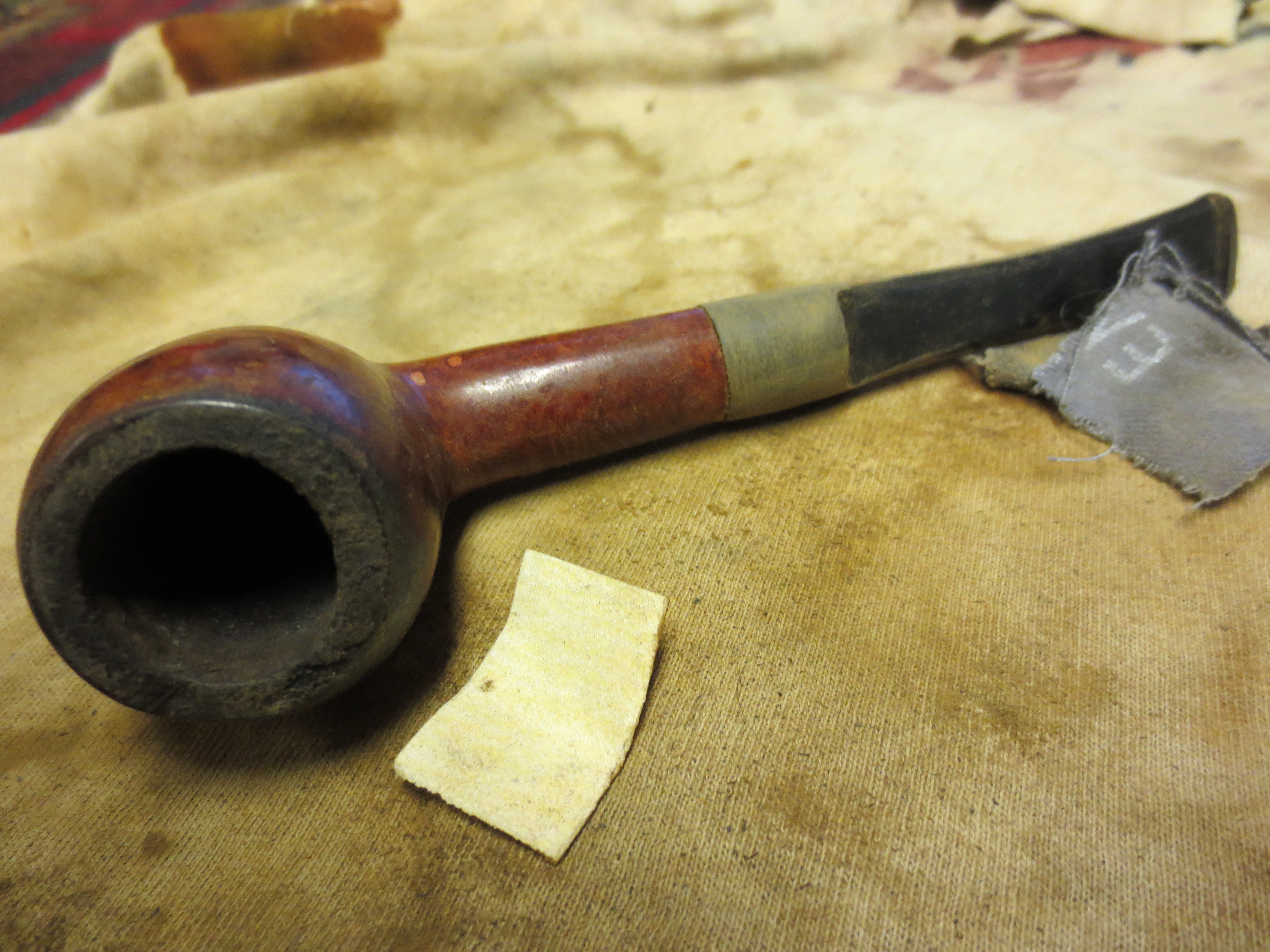
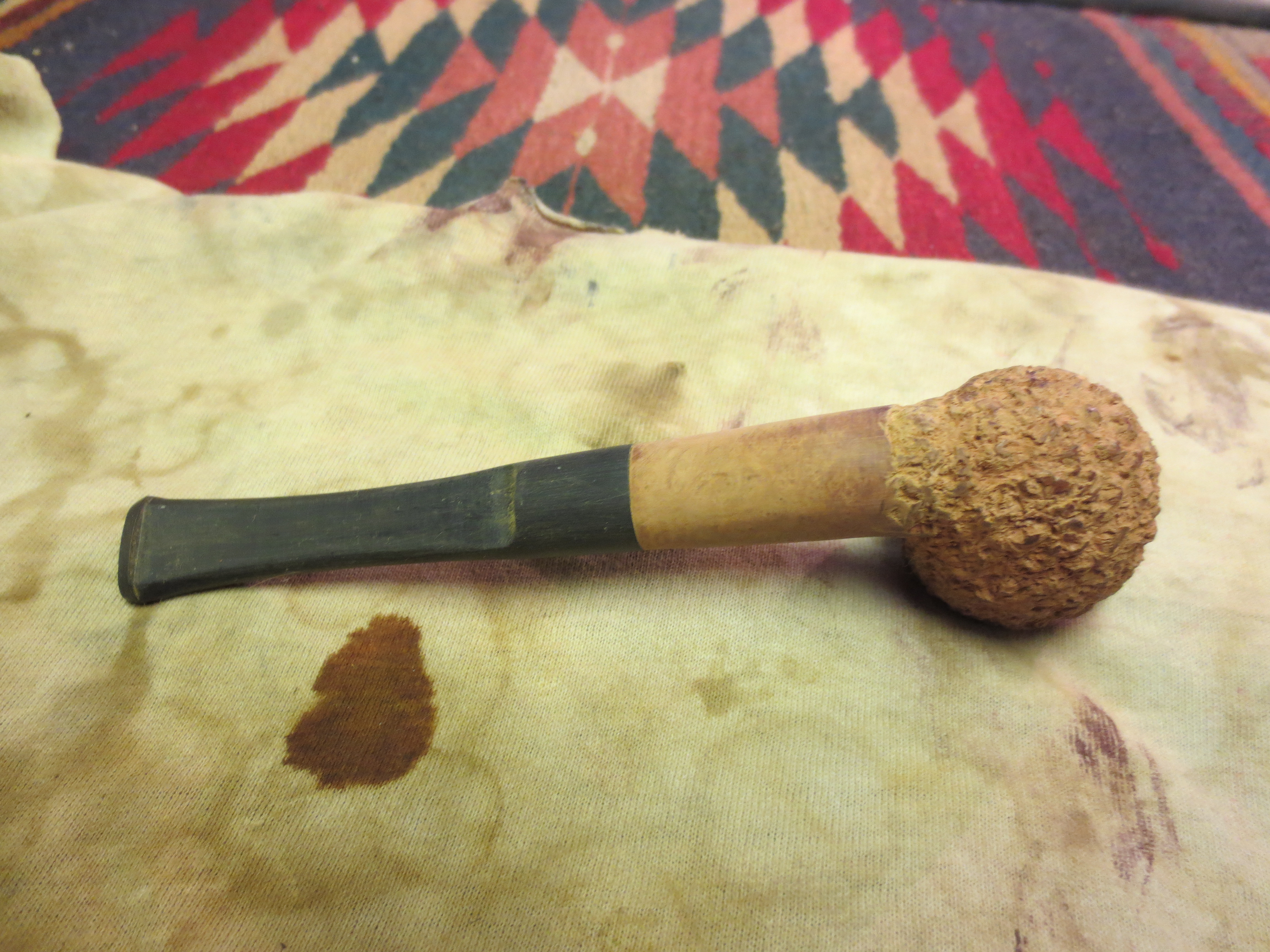
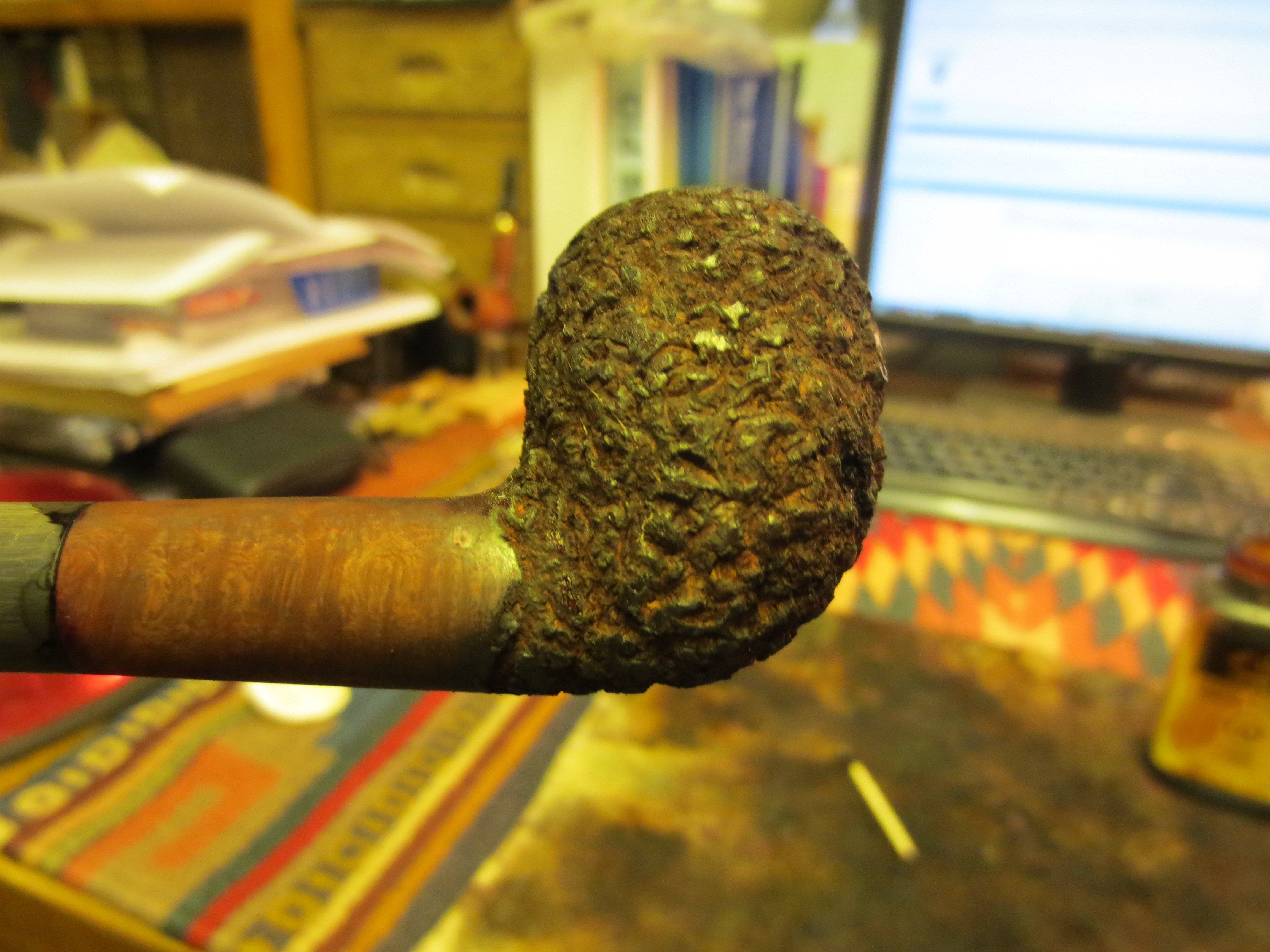
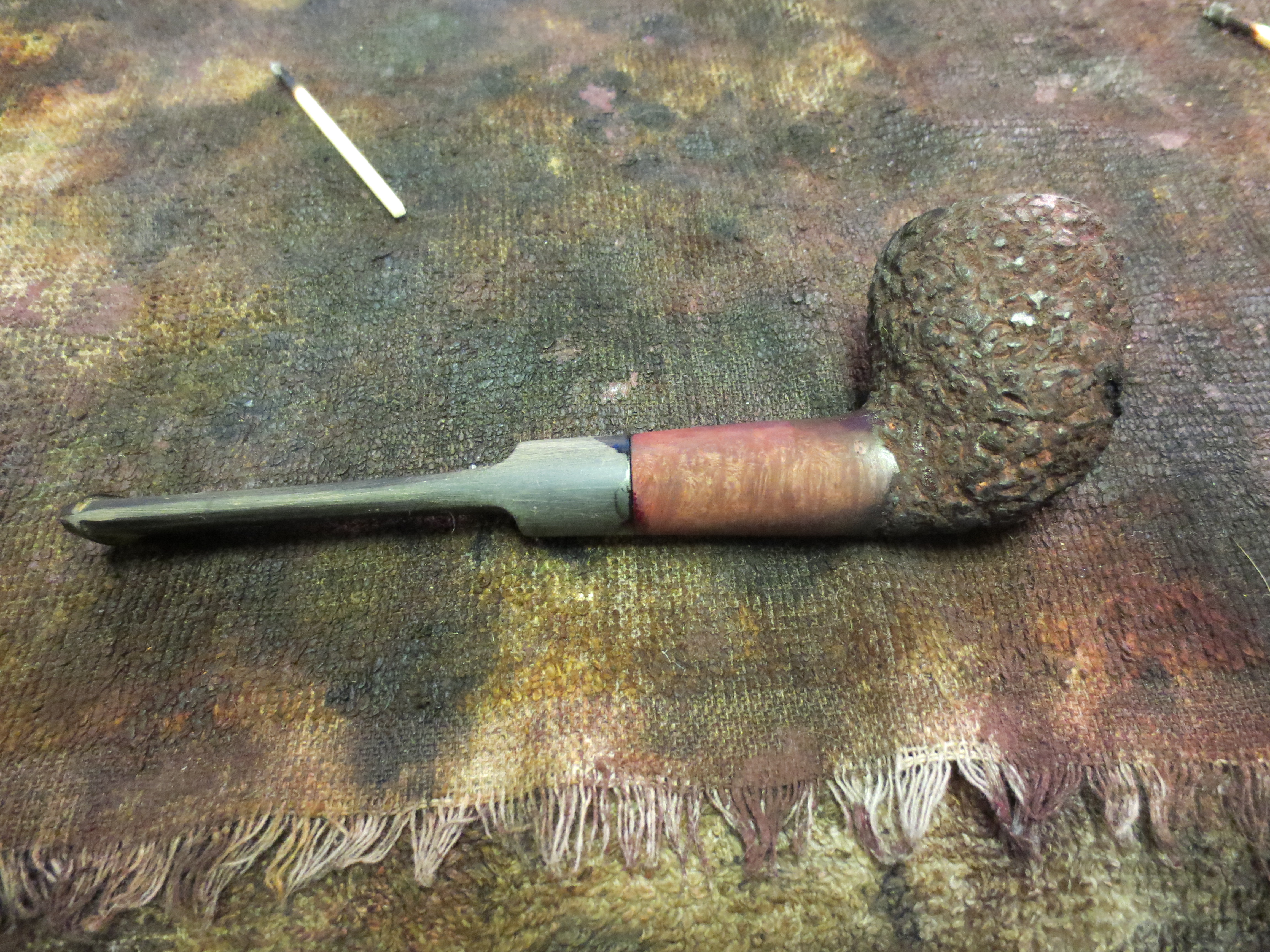
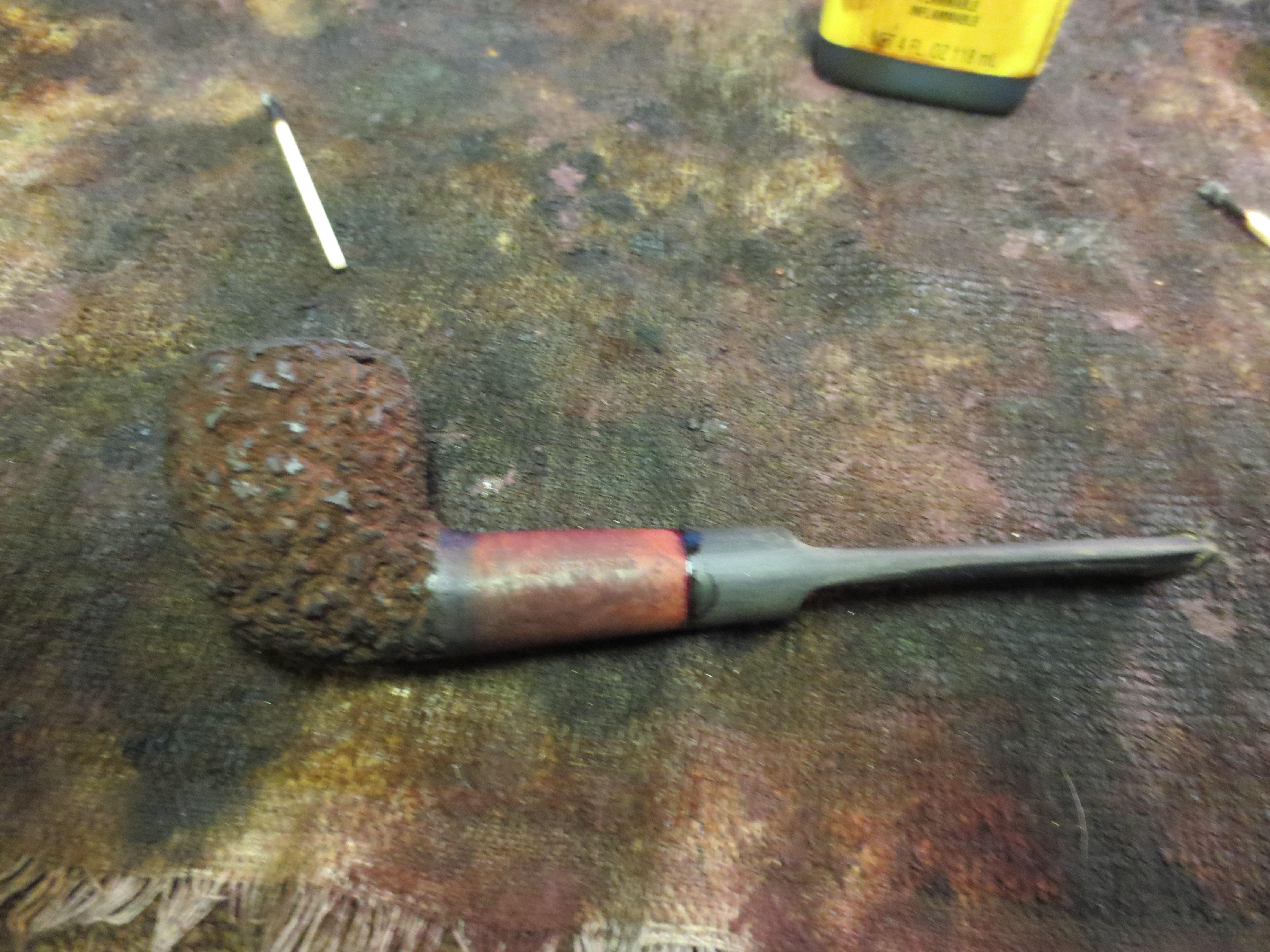
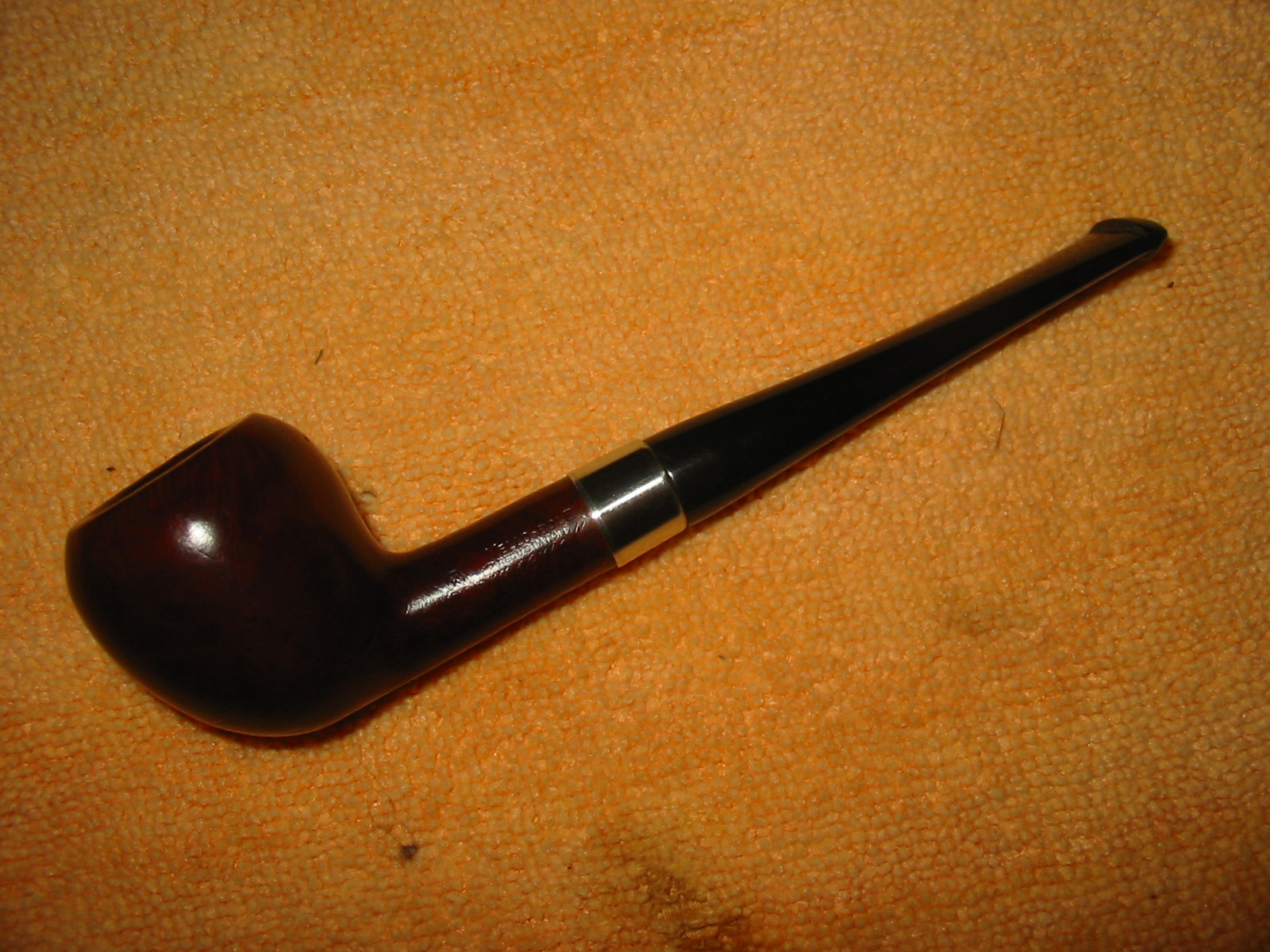
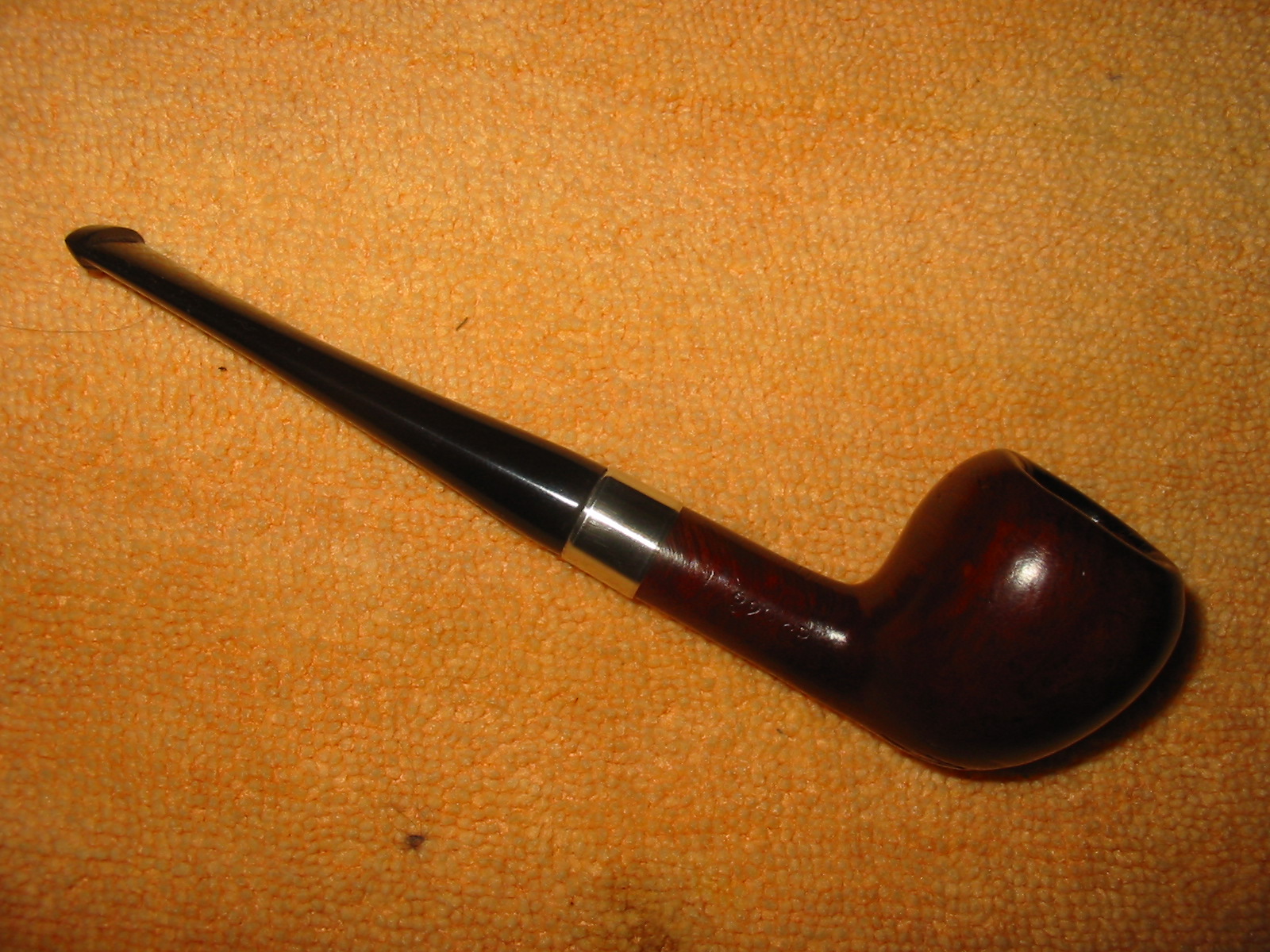
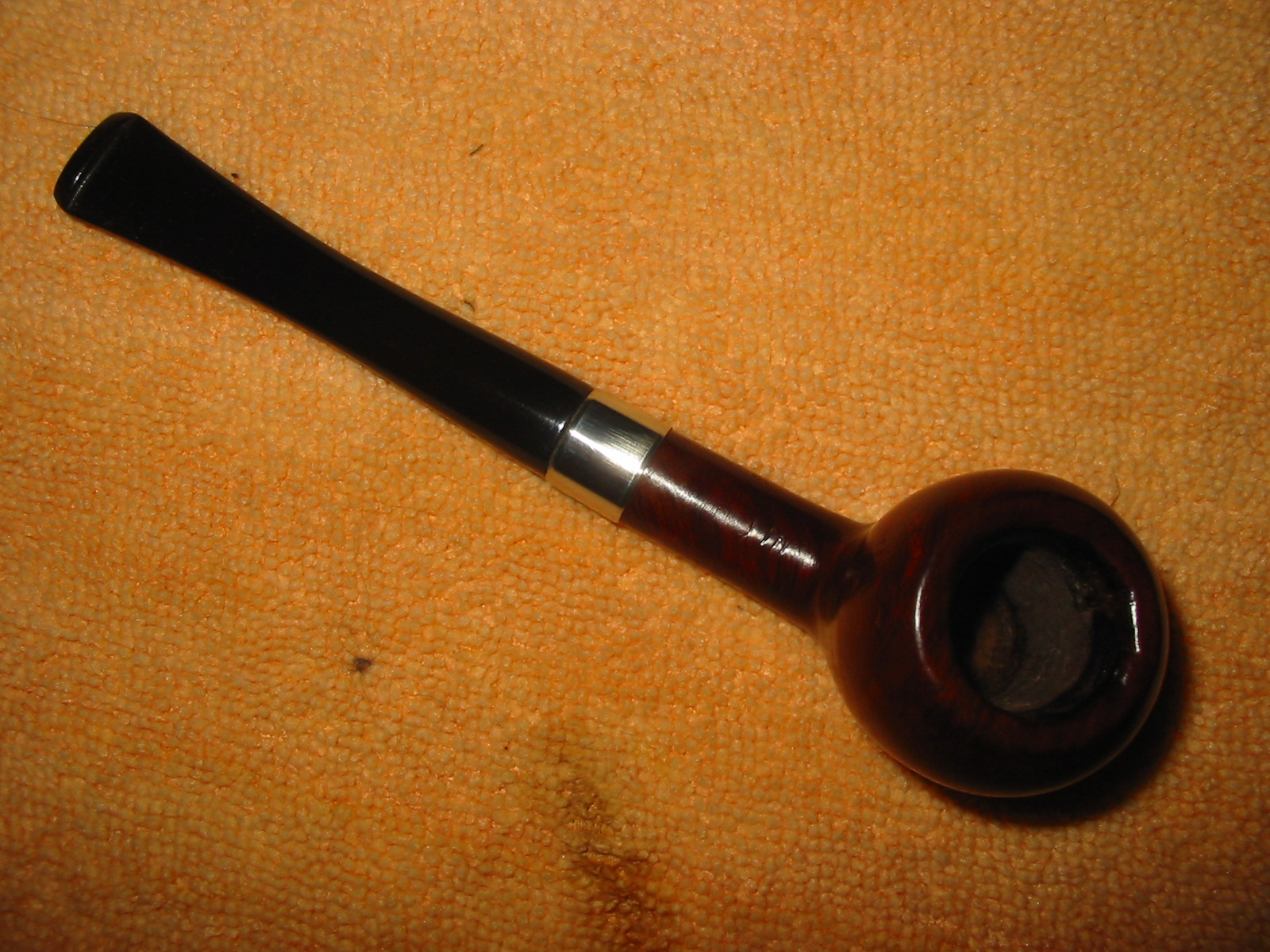
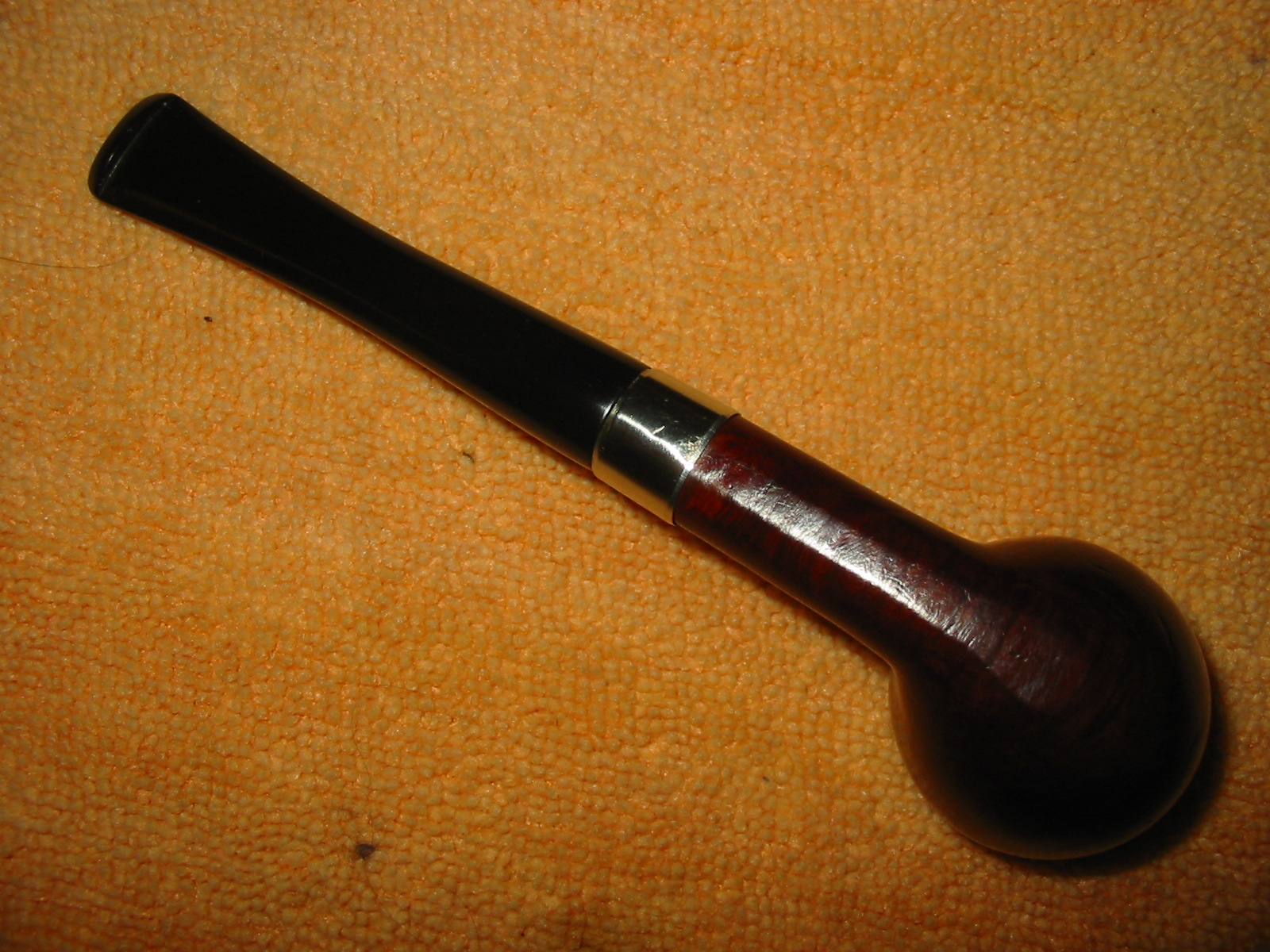
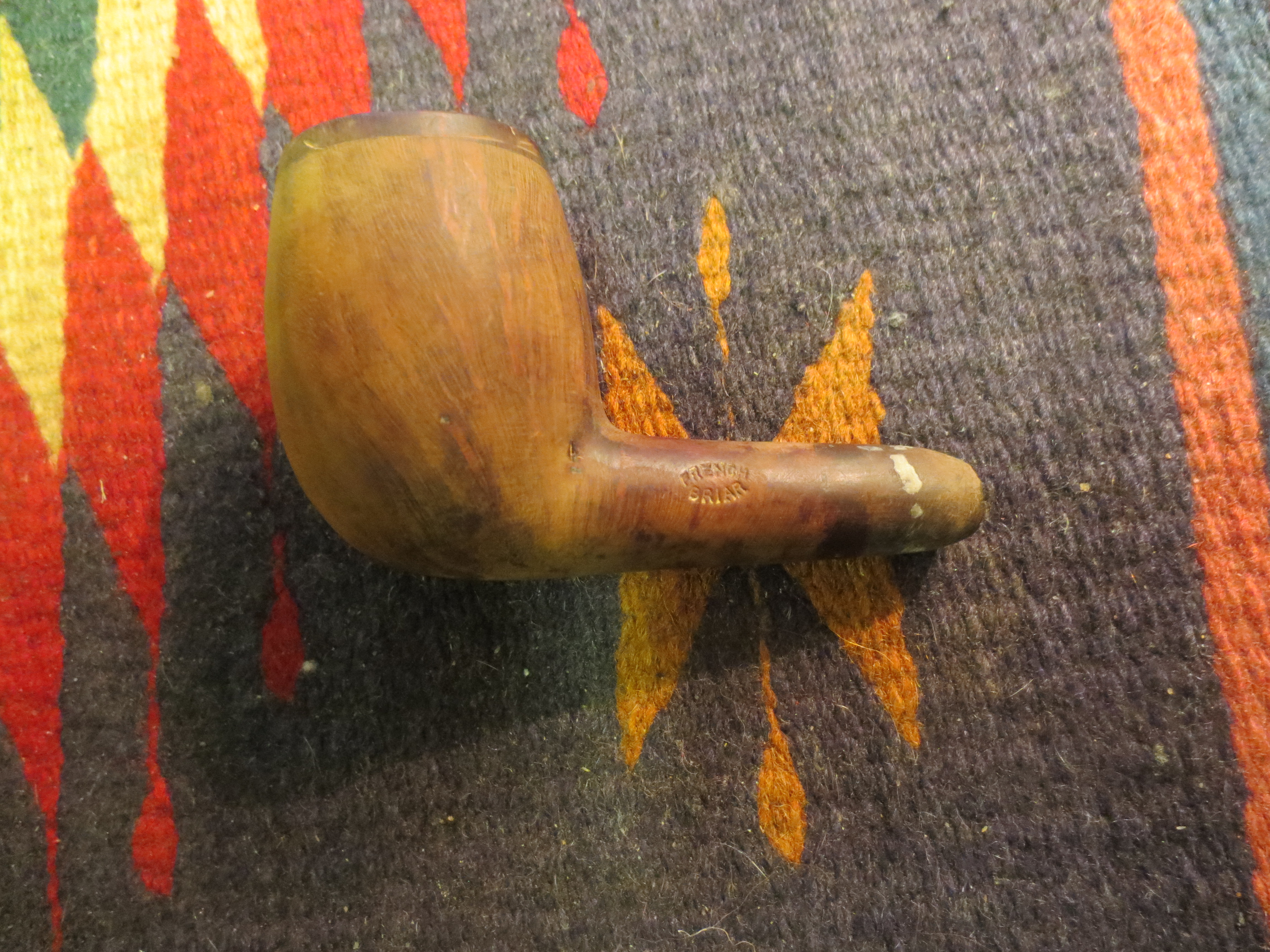
This old timer was one of the pipe bowls that I picked up in that EBay lot that had others with the French Briar stamping. The others had the same stamping but also had been stamped CPF on the shank or on the end cap. This one was missing the end cap so it remains a bit of a mystery as to its maker. It was also stemless. From the photos below you can see that at one point in its life it also had a rim cap that was also missing. What was left was the line around the top of the bowl and a darkened rim where the silver cap had covered it. The end of the shank was in pretty good shape but the likelihood of finding another end cap that fit or in making one was pretty low for me. The four photos below show the general state of the pipe when it came to my desk top. The finish was gone. There were several visible fills that stood out. It was one that I had to give a little thought about how I was going to tackle it. I knew that I would have to modify the shank and rework the bowl. I would also have to redrill the mortise way and fit a stem for the newly formed pipe. Ah well… let’s begin the work.
IMG_0789

IMG_0792

IMG_0791

IMG_0790
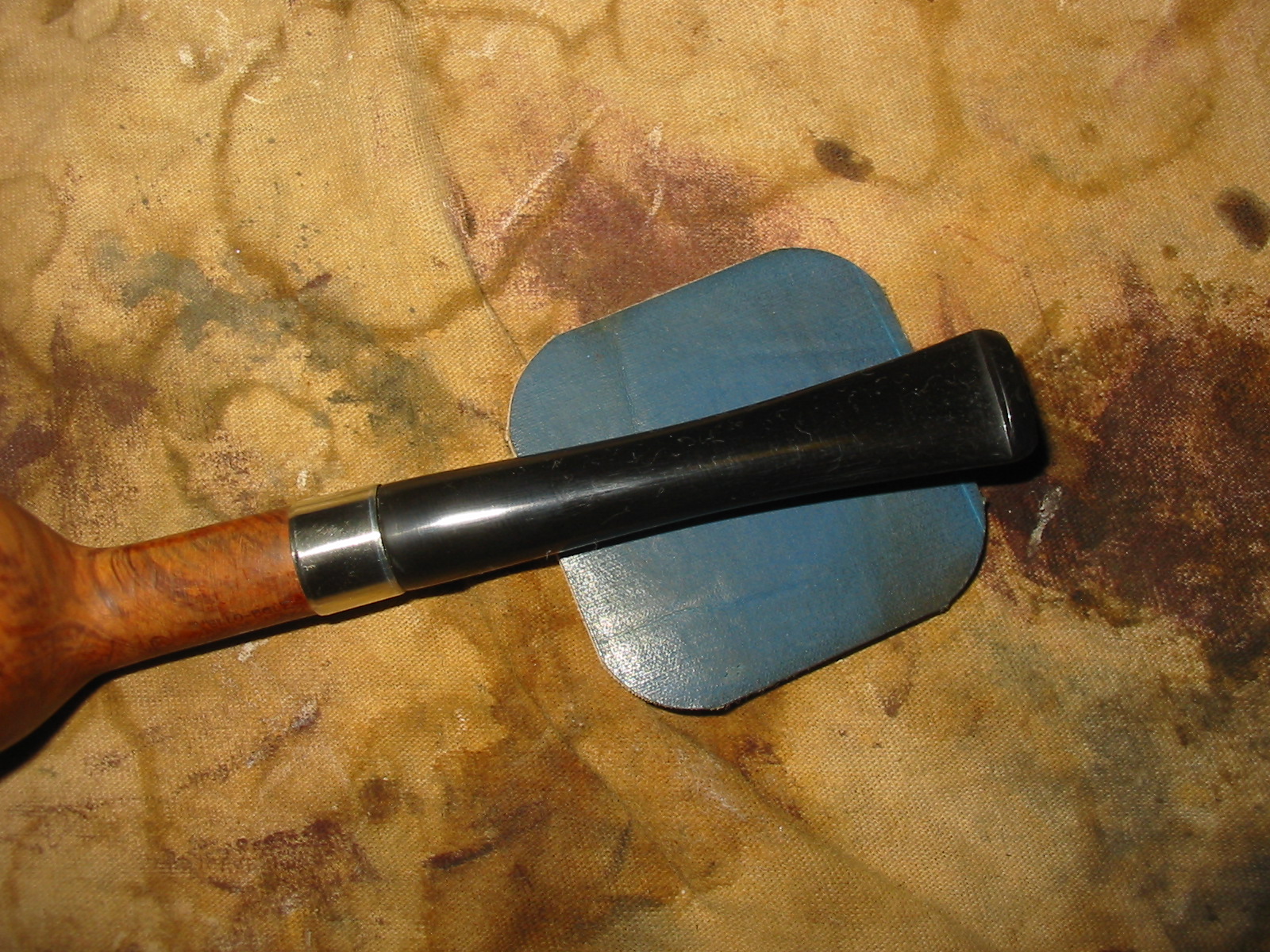
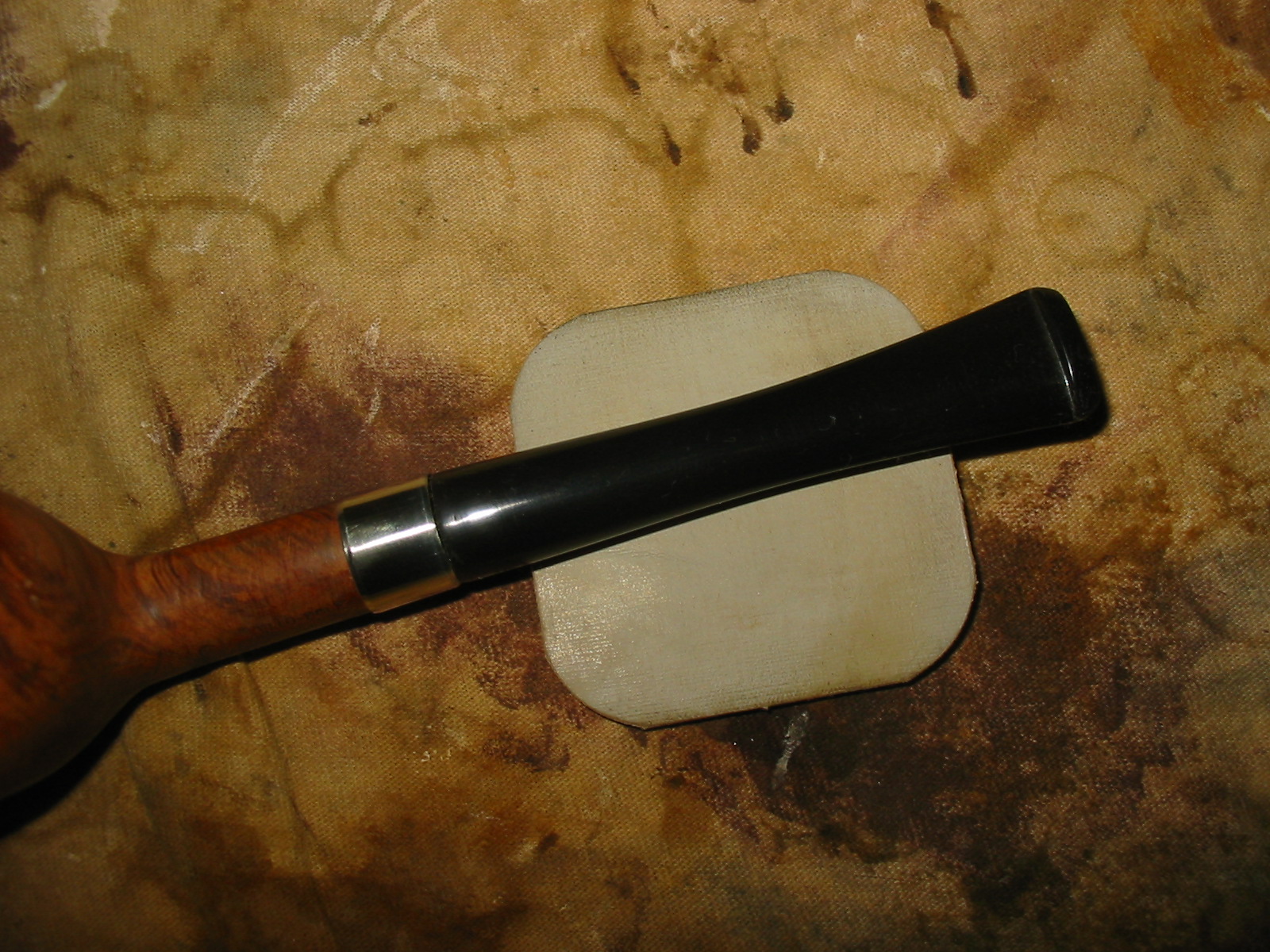
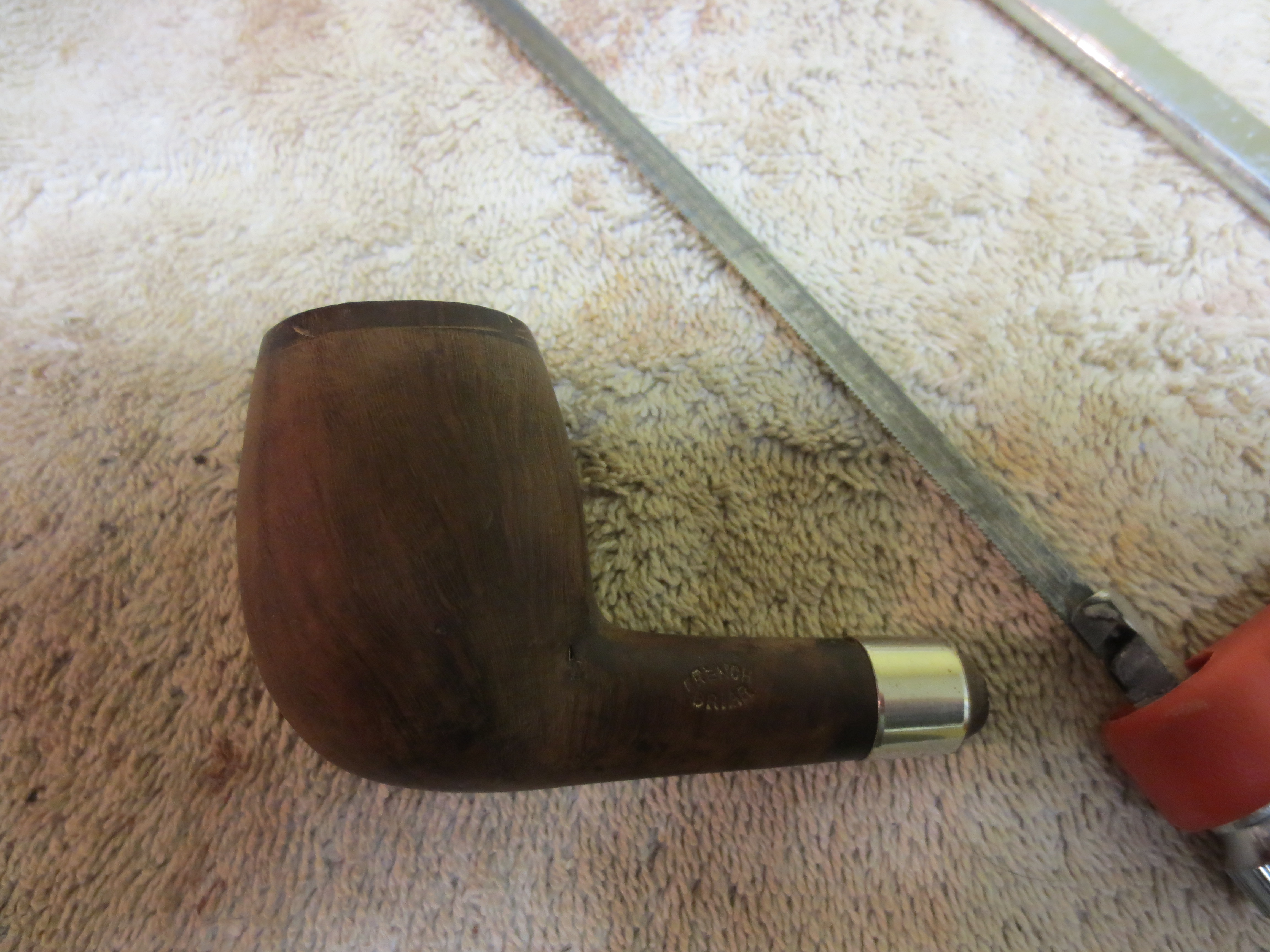
After many failed attempts over the years to get a good straight cut on the shank and end up with a smooth and even mortise I finally figured out a way with my limited tools to accomplish that. I slip a nickel band on the shank to the place that I want to cut it off. I use the band as a guide for my hacksaw to follow. So far this method has worked for me and left me with some nice evenly cut shanks. The next three photos show the process from start to finish.
IMG_0793

IMG_0795

IMG_0794
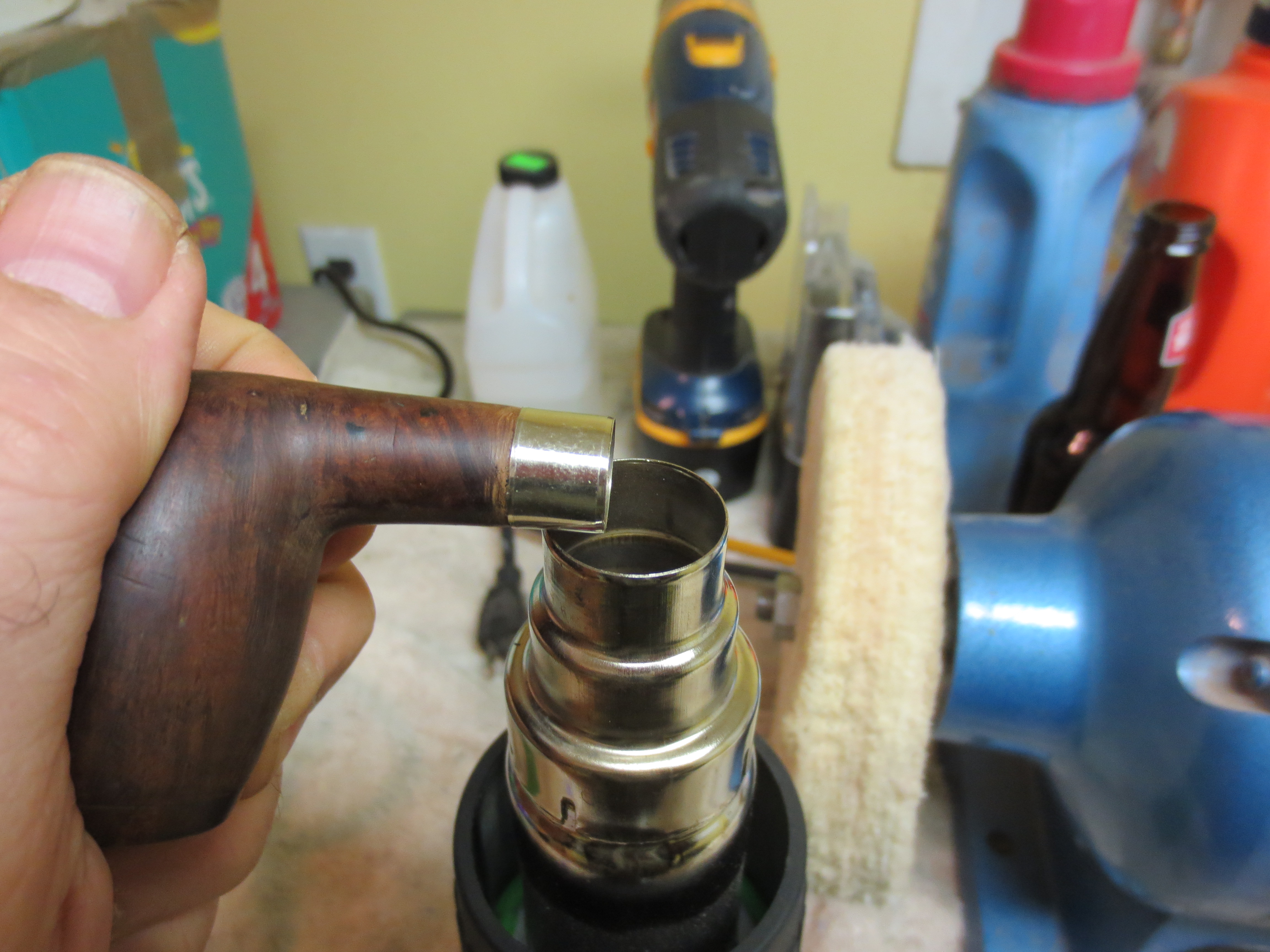
After cutting off the shank I sanded the area where the new band would be fitted. I used my Dremel with a sanding drum to begin the process of cutting back the shank to receive the band and finished by hand sanding it with medium grit emery cloth. I set up my heat gun on it end stand, slipped the band in place and set the heat on low to warm the band so that I could press it into place. The next two photos show that process.
IMG_0796

IMG_0797
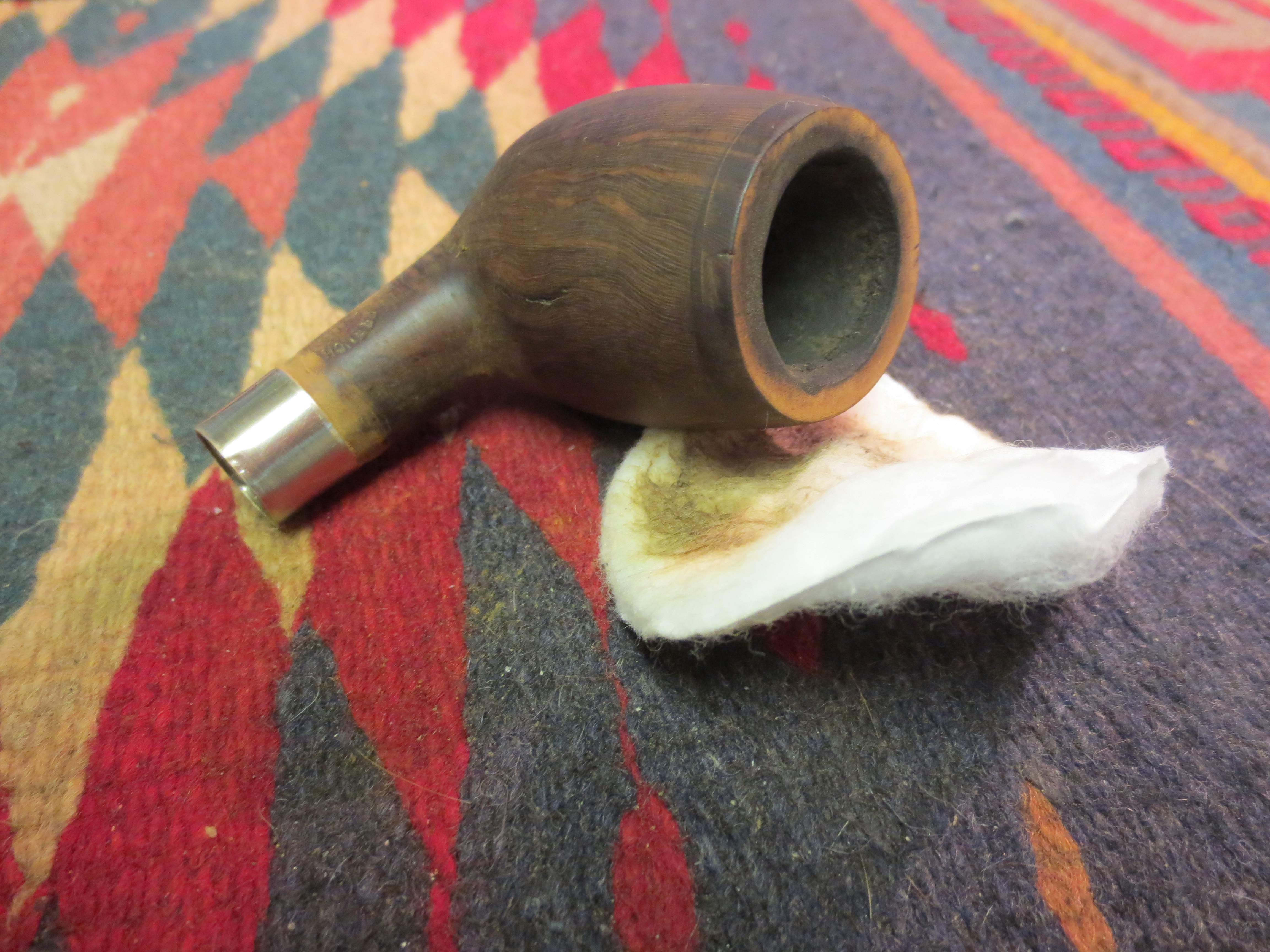
With the band in place I wiped down the bowl with acetone on a cotton pad to clean off the grit and the remnants of the finish on the pipe. After I had cleaned the bowl I topped the rim with a medium and fine grit sanding pad to remove the damage to the rim edges. The next four photos show that process. During that time I also used superglue and briar dust to fill the obvious sand pits on the bowl (at the back of the bowl near the shank and on the underside). I sanded them once they were dry and was able to blend them into the bowl quite well. In the first photo below you can see the first large sand pit clearly. It was quite long and fortunately flowed with the grain so that it was easy to blend in with the briar dust and superglue. The one on the bowl bottom was a bit more difficult to blend in. In either case both are now smooth surfaces that the finish sanding would blend in as much as possible.
IMG_0798

IMG_0799

IMG_0800

IMG_0801
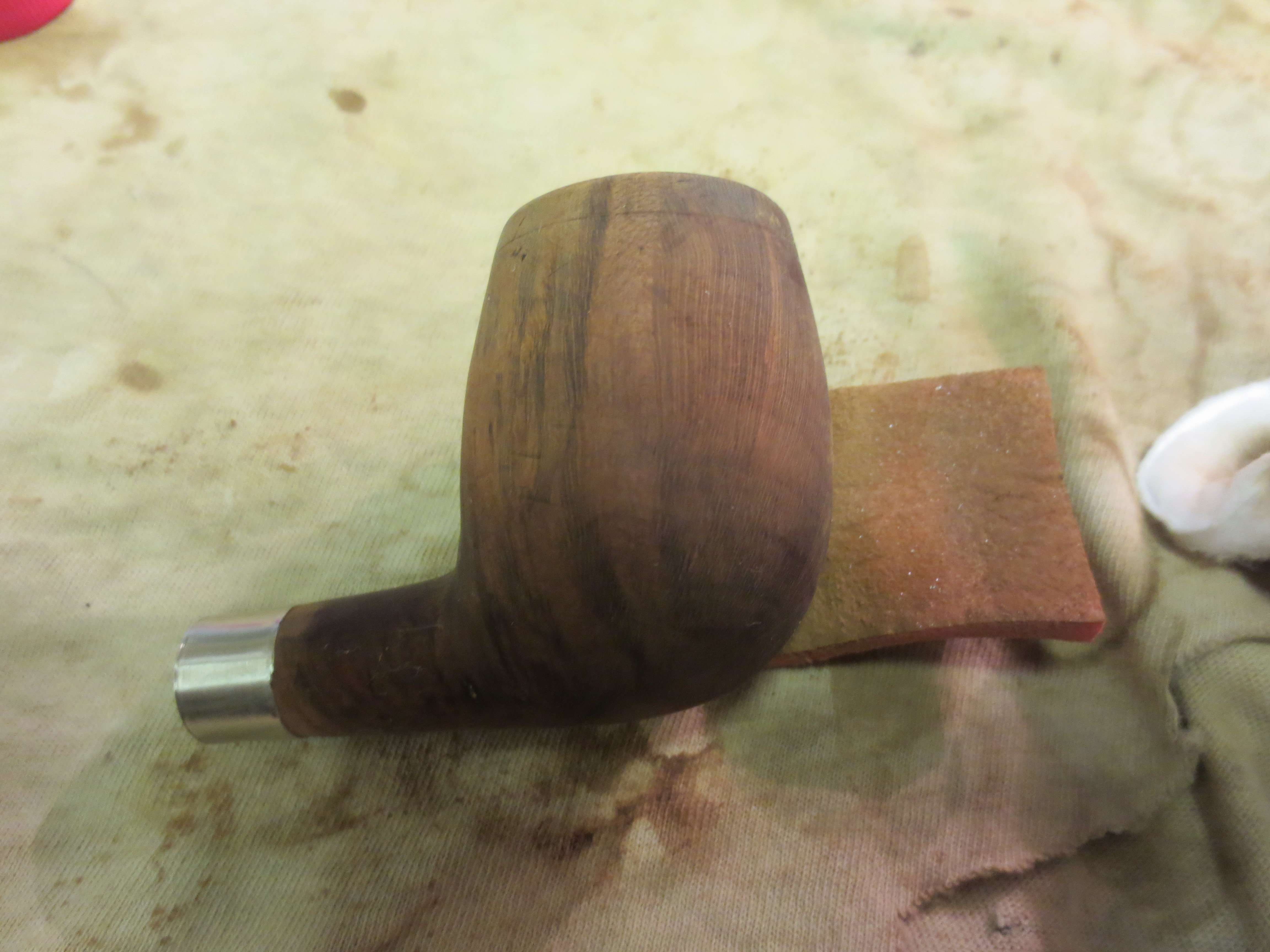
I sanded the bowl with a medium grit sanding sponge to remove the damage caused by the rim cap and to remove the darkened line around the top of the bowl. The next series of three photos show how the bowl is shaping up after initial sanding. The wood is stamped French Briar but as I work it I am wondering. It is very hard, dense wood with interesting grain. It is very light weight and the feel of the sanding dust and the wood itself calls this into question for me. Maybe it is only a question of age on the pipe as it is probably from the late 1800’s or early 1900’s.
IMG_0802

IMG_0803

IMG_0804
I inserted the stem and took it to the buffer to see what it looked like at this point after buffing. I buffed it with Tripoli. The next four photos show the pipe after buffing. There was a natural reddish colour to the wood that came out more and more as I sanded it.
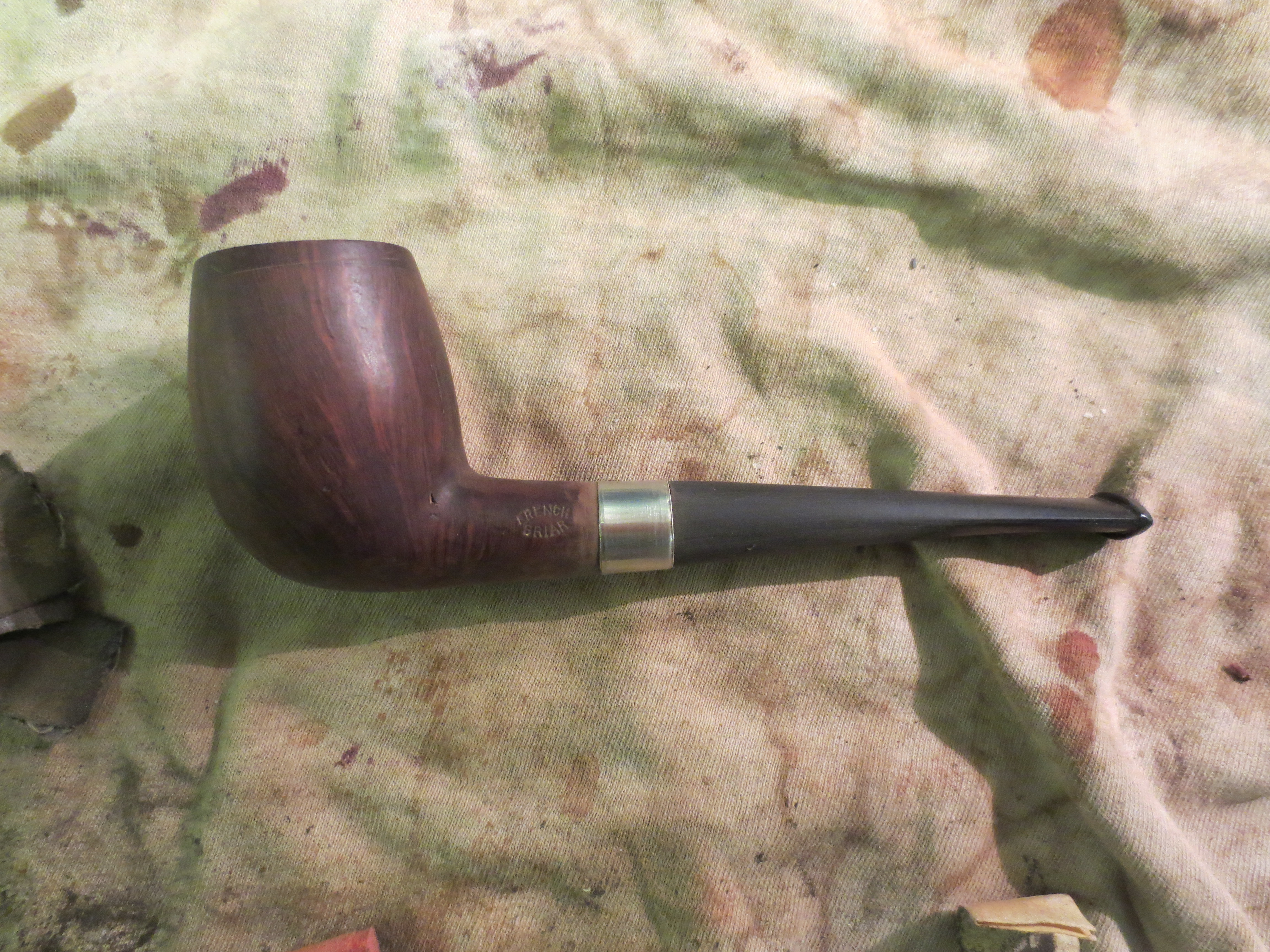
IMG_0805

IMG_0808

IMG_0807

IMG_0806
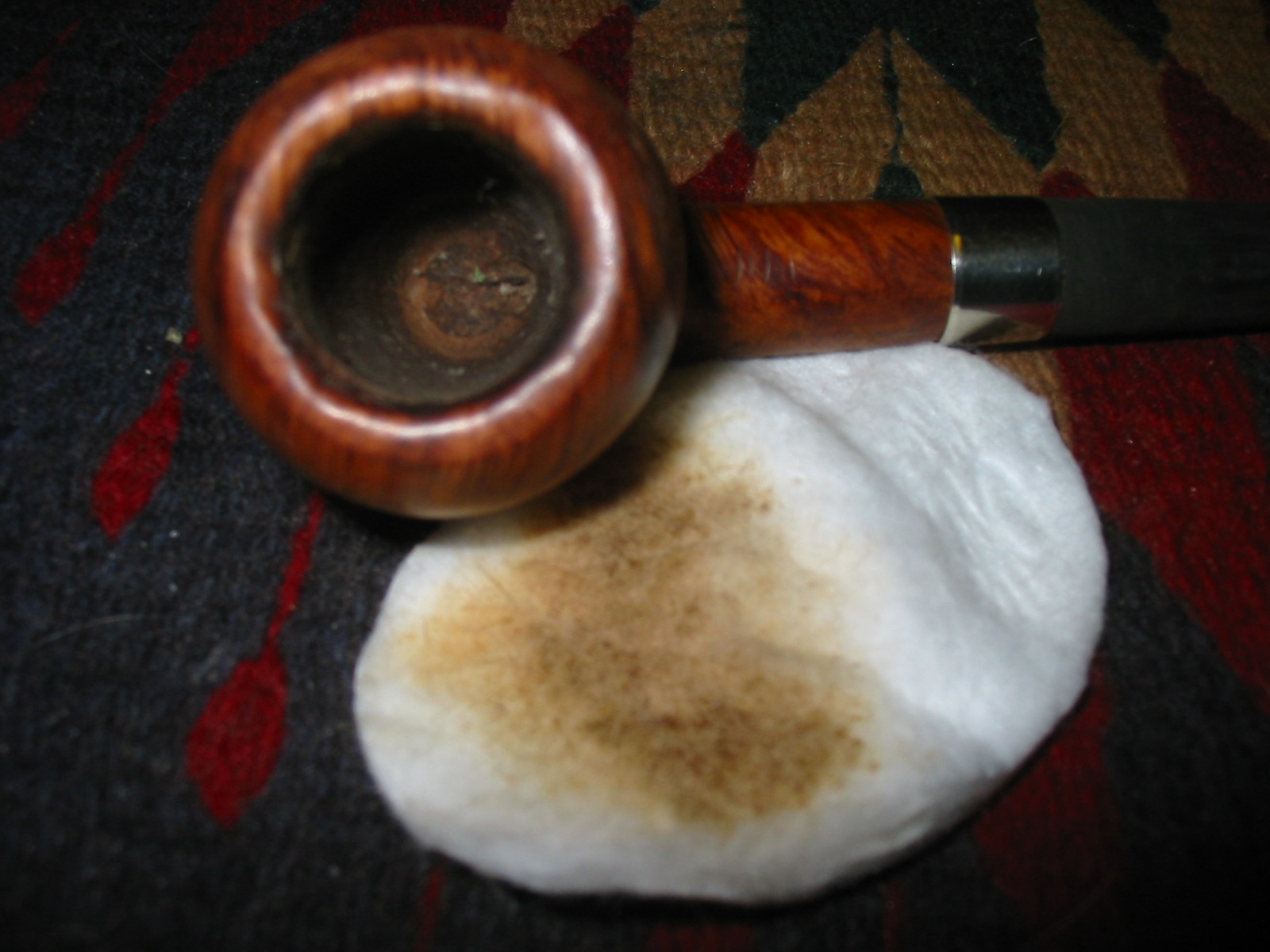
After buffing the pipe I reamed it with my PipNet reamer to clean out the crumbling and broken cake that was on the surface of the bowl (Photo 1). I sanded it some more and then wiped it down with an alcohol dampened cotton pad and prepared tit for restaining (Photos 2 & 3).
IMG_0809

IMG_0811

IMG_0810
I receive regular tweets from Grant Batson, pipemaker. In one of the latest he wrote of experimenting with Danish Oil in finish the bowl of a pipe. I have several cans of that around from my refinishing furniture days so I decided to use some medium walnut coloured Danish Oil on this bowl. The next four photos show the stained pipe. I had yet to buff it or polish it at this point in the process. I just rubbed on the Danish Oil and then rubbed it off.
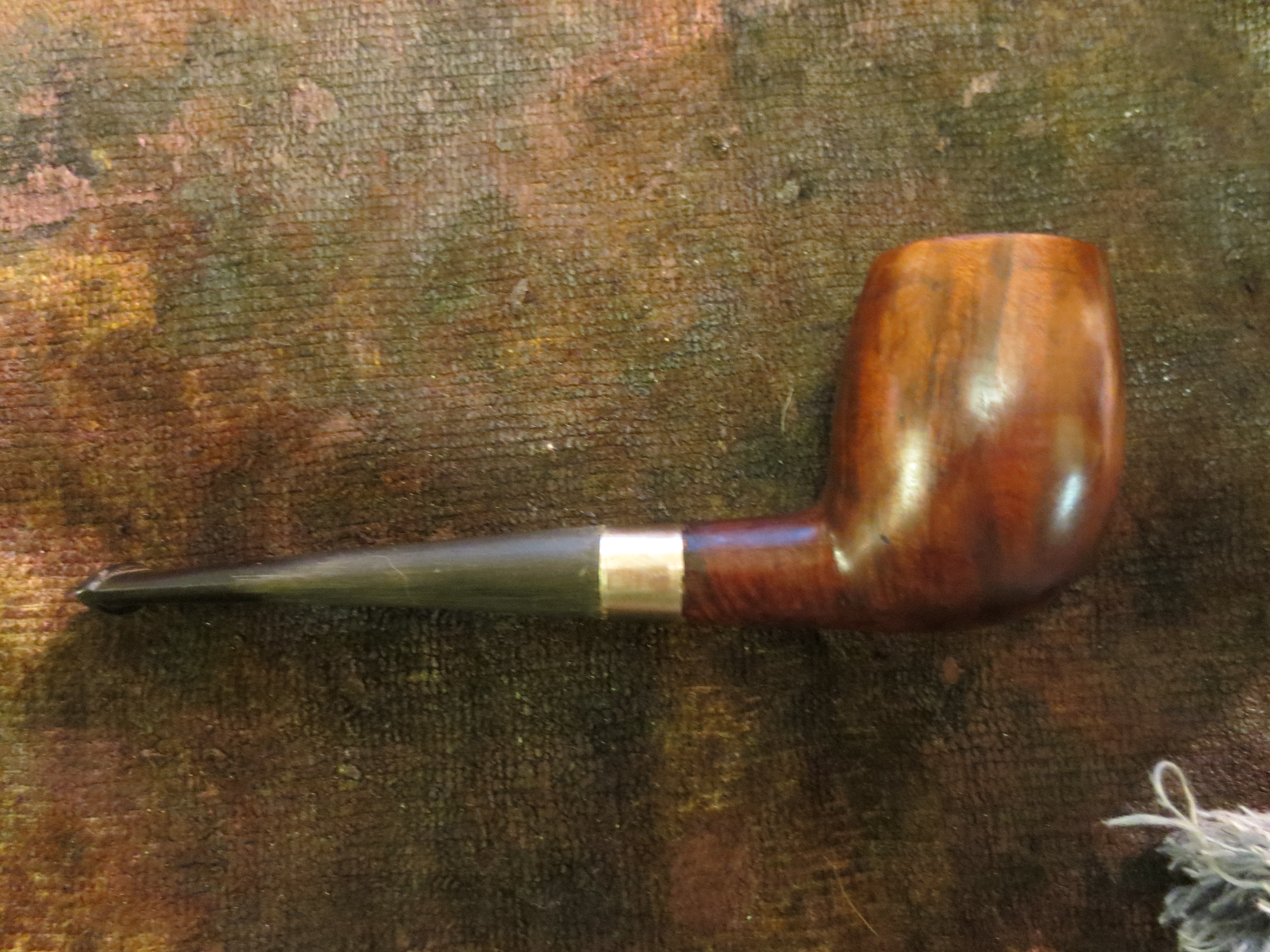
IMG_0812

IMG_0815

IMG_0814

IMG_0813
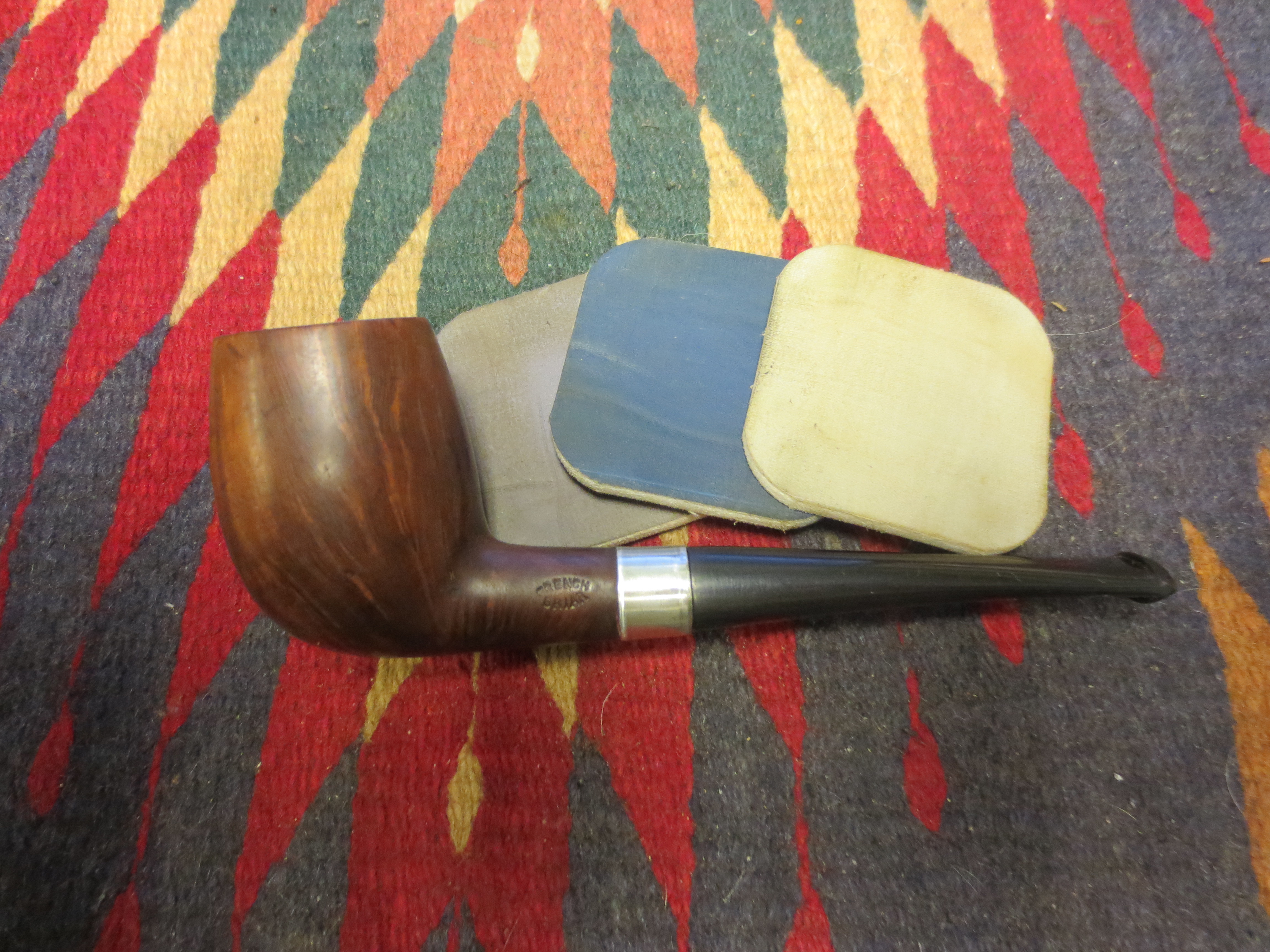
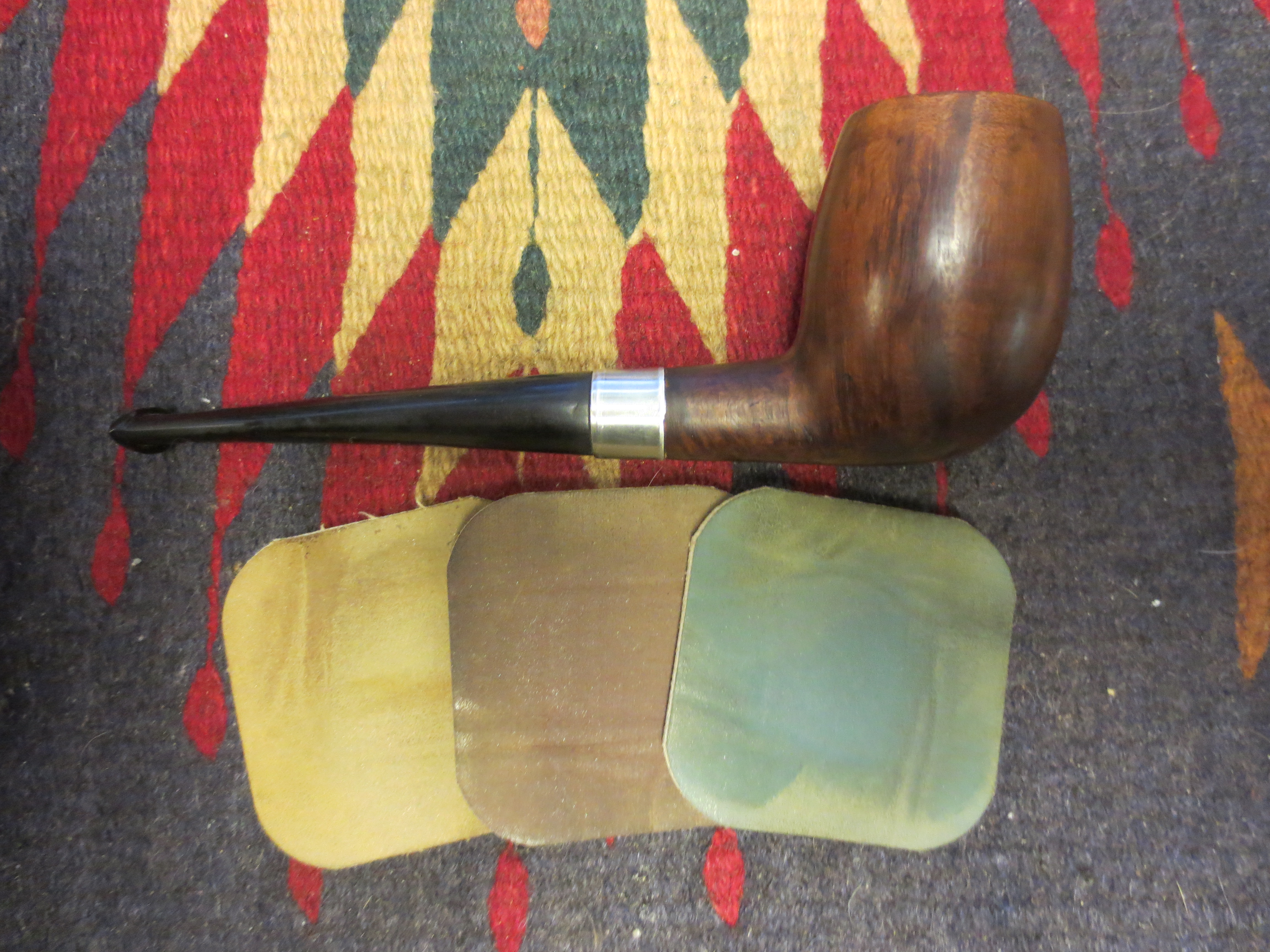
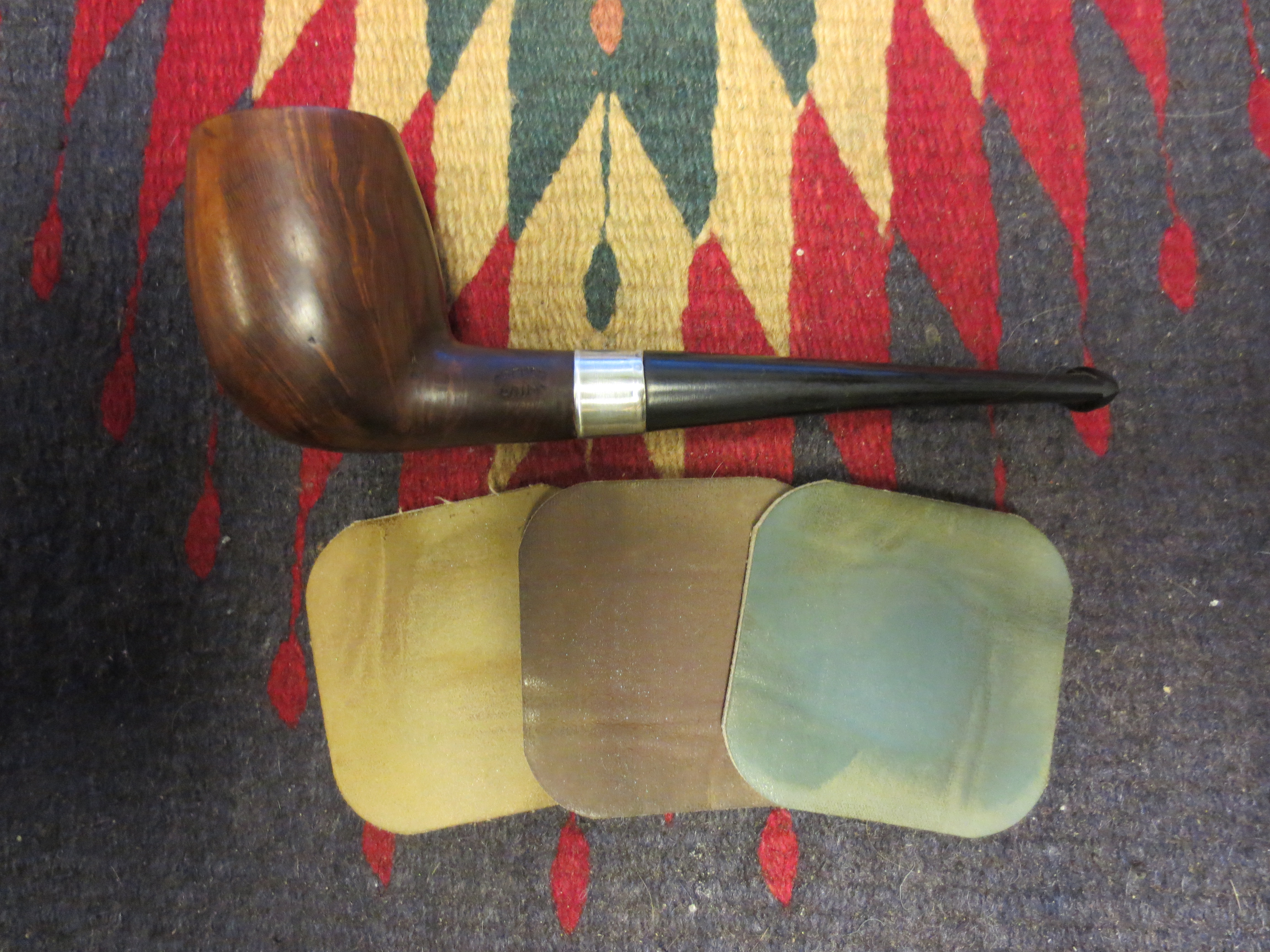
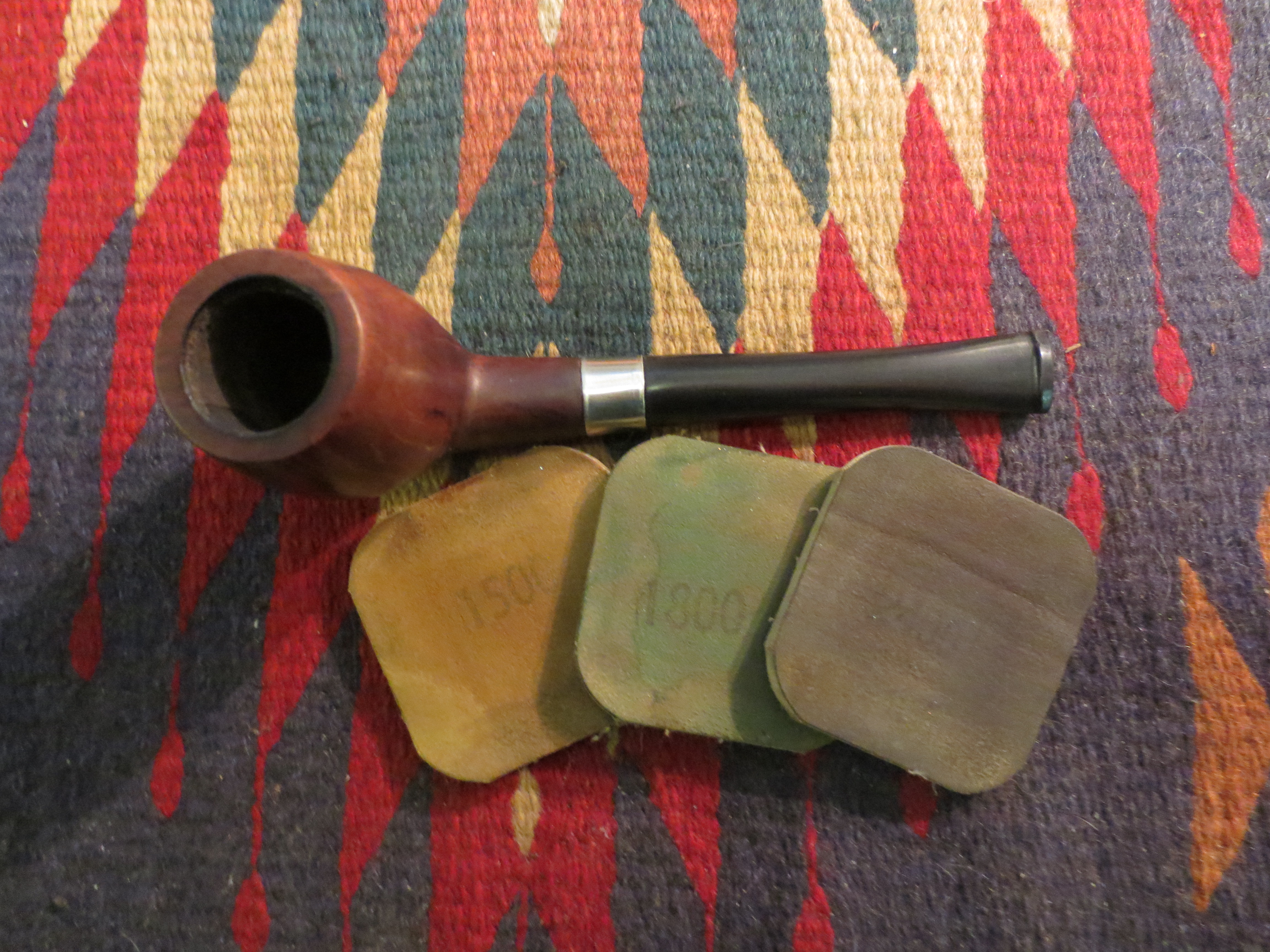
I set the pipe aside for the evening so that the finish had a chance to dry well. This morning I worked on the stem and the bowl with the micromesh sanding pads. I used all grits that I have available from 1500 – 12,000 grit to sand both the bowl and the stem. The next series of six photos shows the progressively developing shine on both the stem and the bowl.
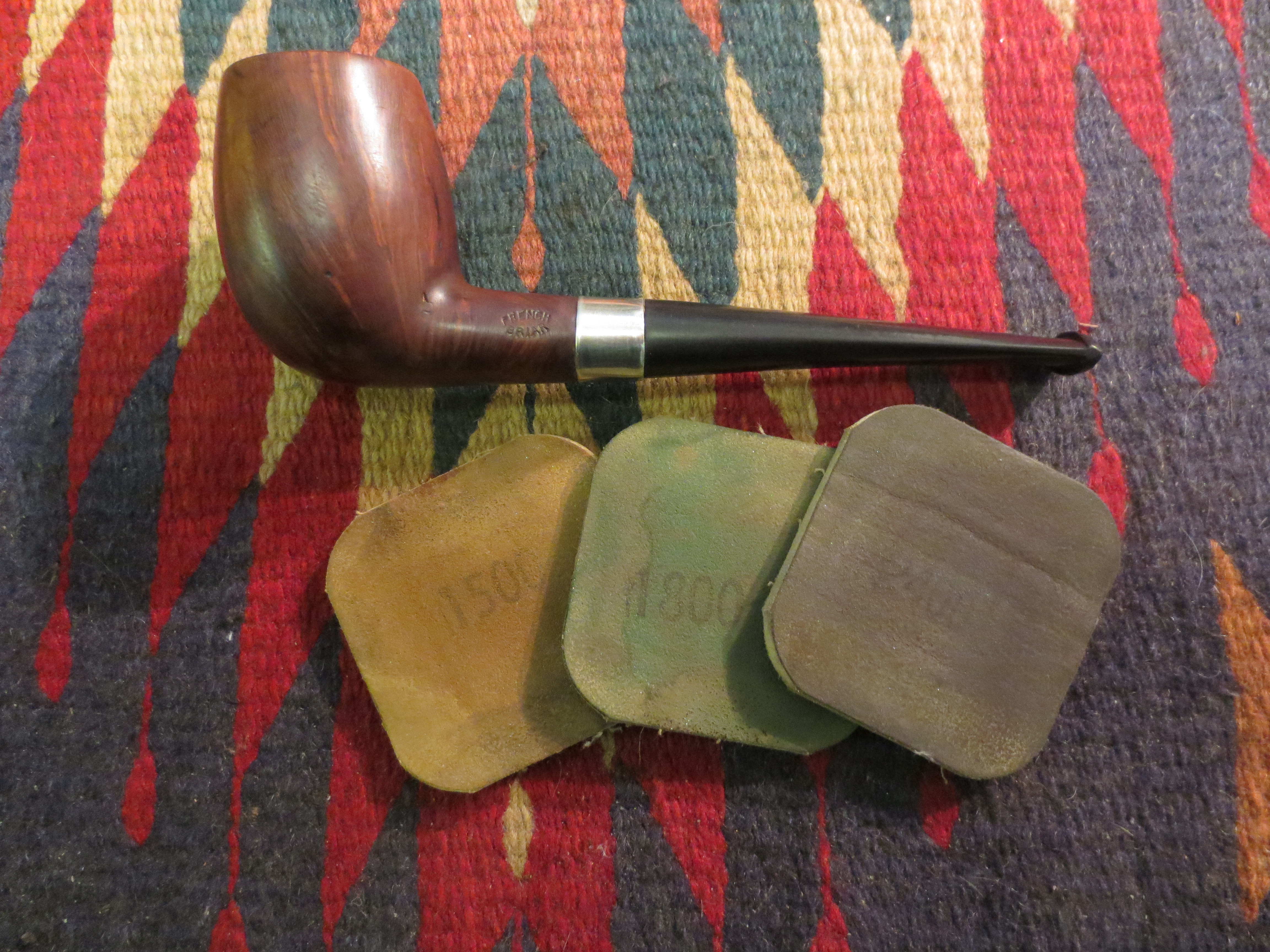
IMG_0816

IMG_0821

IMG_0820

IMG_0819

IMG_0818

IMG_0817
After finishing with the micromesh sanding pads I took it to my buffer and buffed it with White Diamond. I find that this buffing with a light touch really sets the shine to a glossy finish. The next four photos show the pipe after buffing. I still had to put on the wax but the shine is very evident.
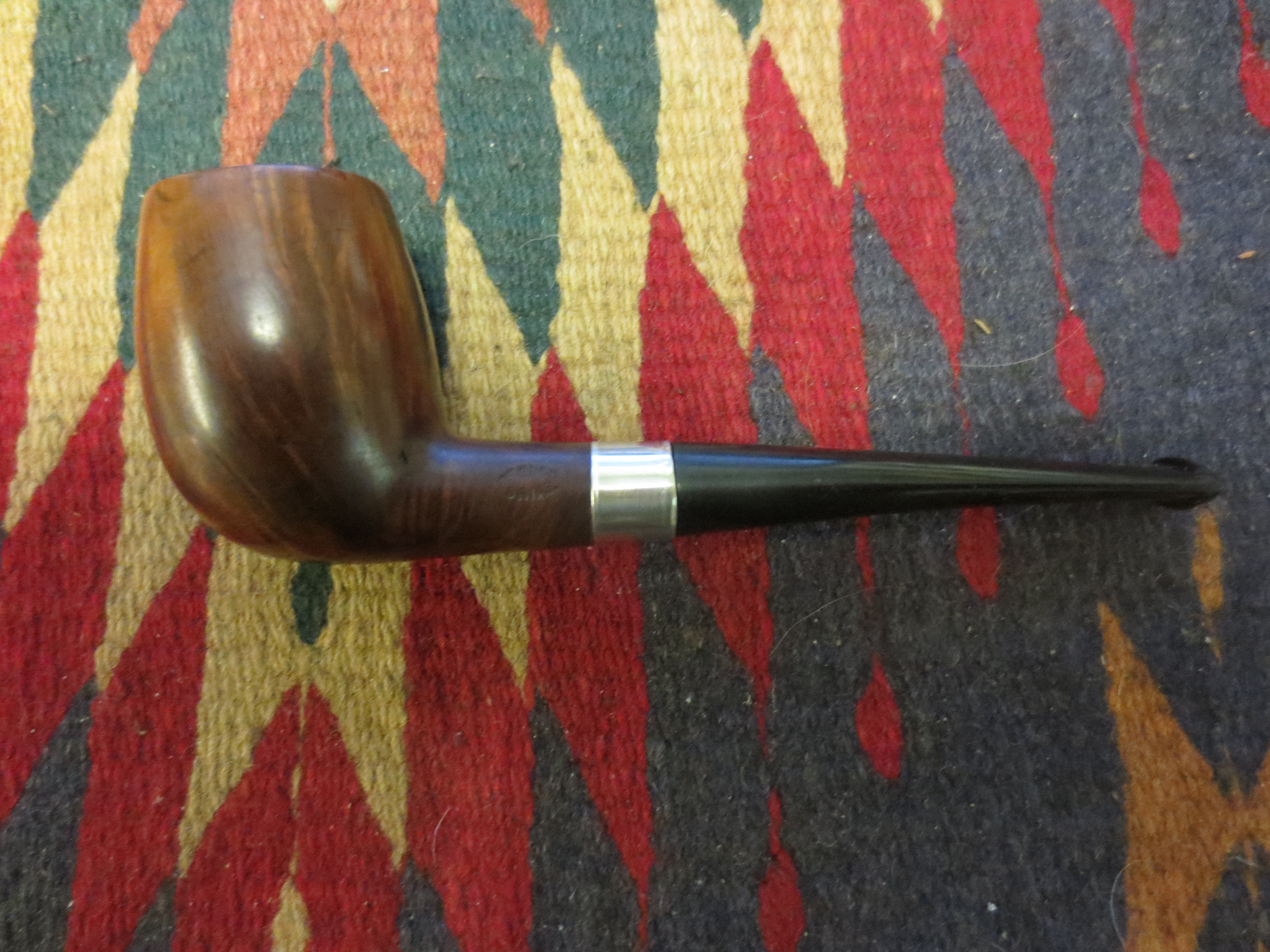
IMG_0822

IMG_0825

IMG_0824

IMG_0823
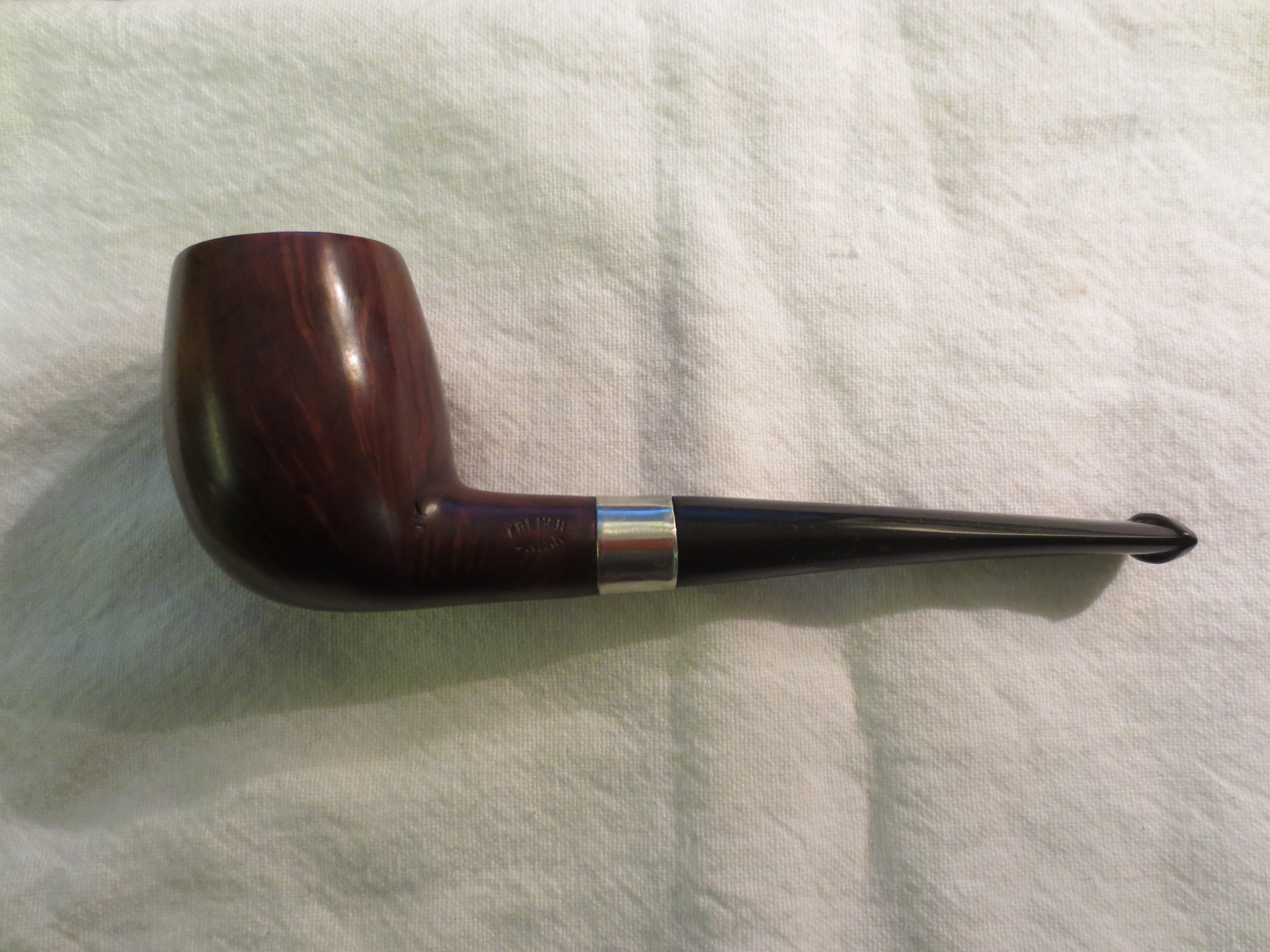
The final series of four photos show the finished pipe. I gave it multiple coats of carnauba wax and buffed it with a soft flannel buffing pad. I am pleased with the way it turned out. The pipe is ready for smoking and should provide service for many years to come.
IMG_0826

IMG_0827

IMG_0828

IMG_0829

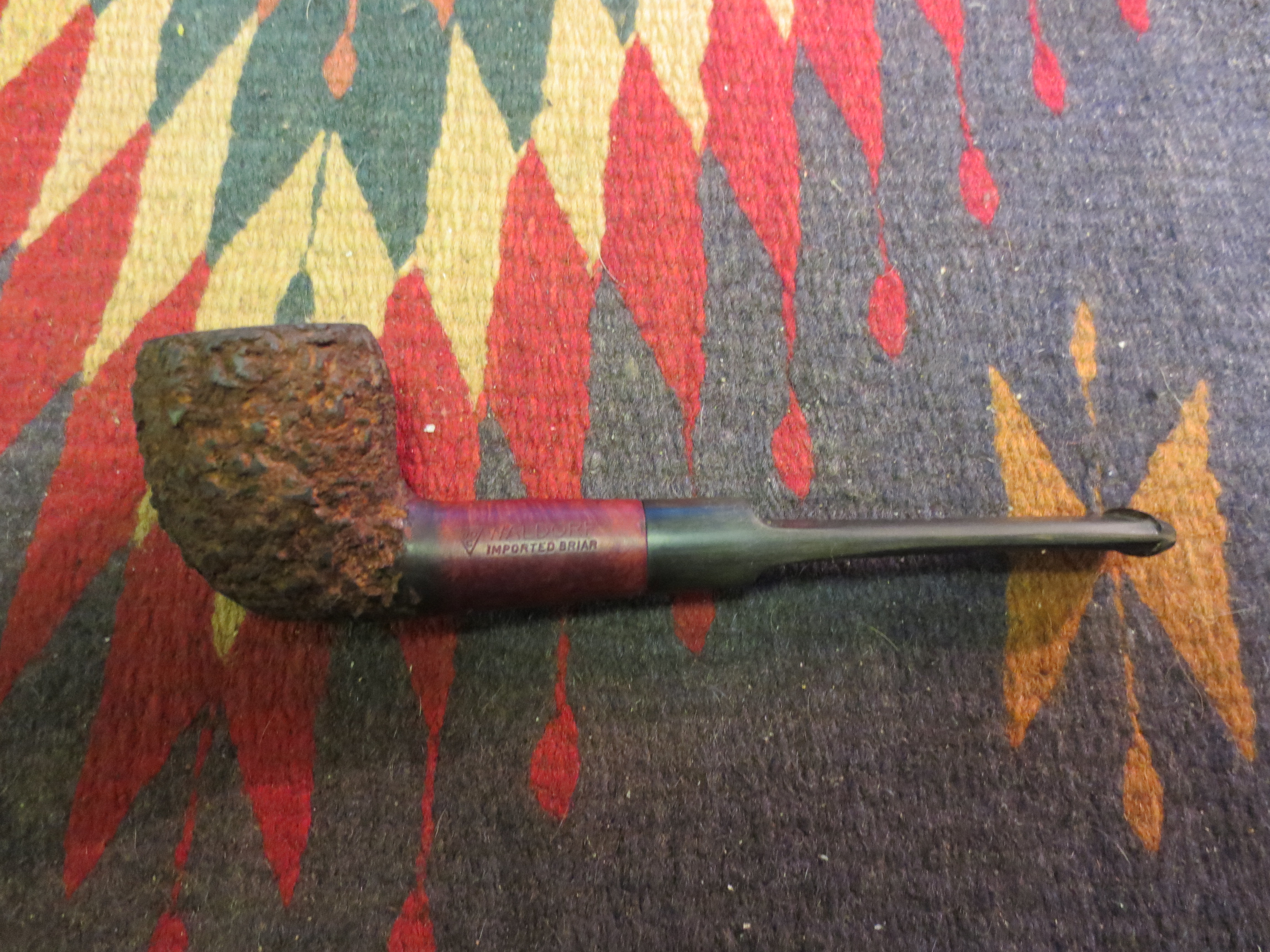
WDC Waldorf Given a New Look and a New Stem


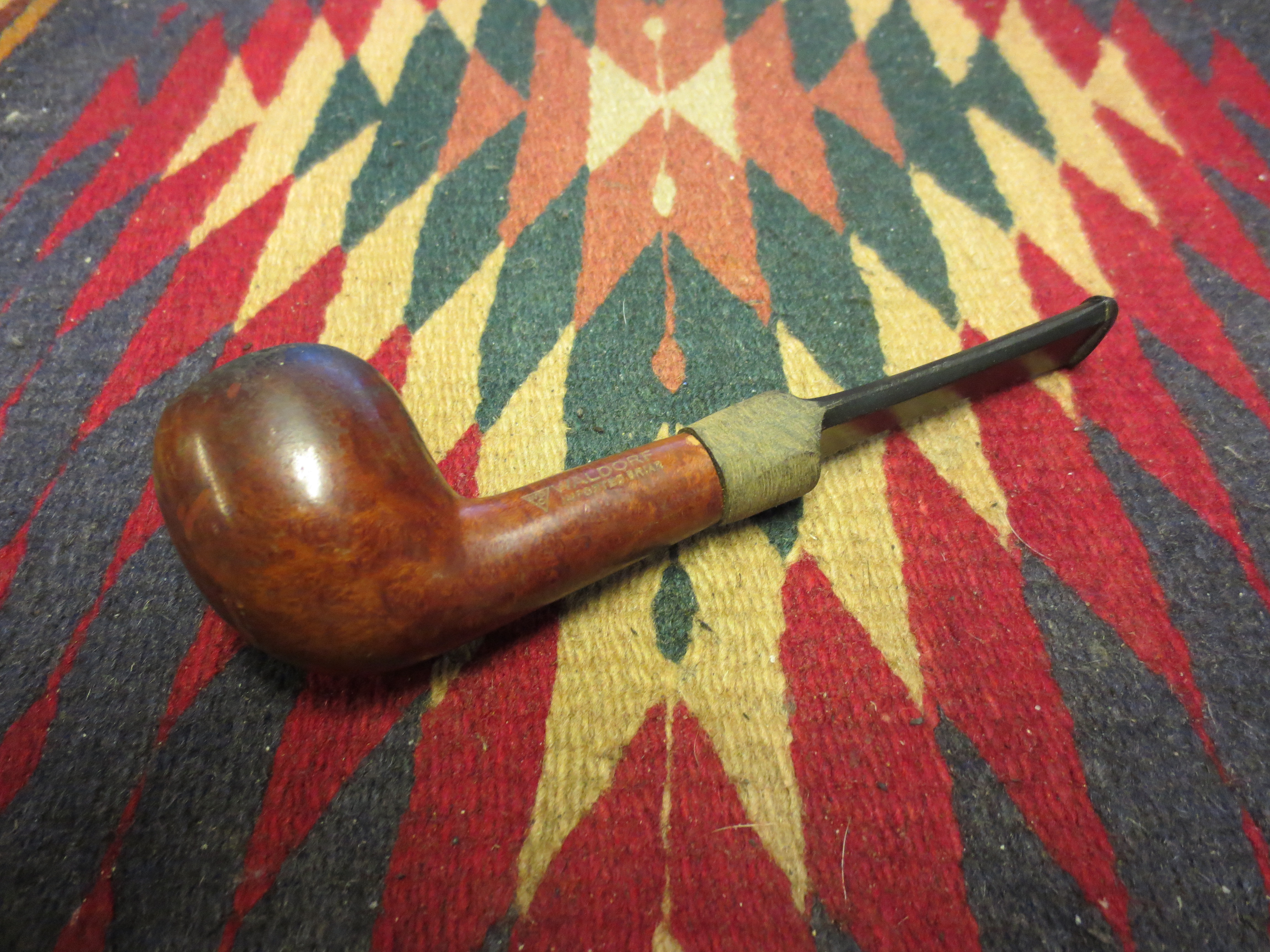
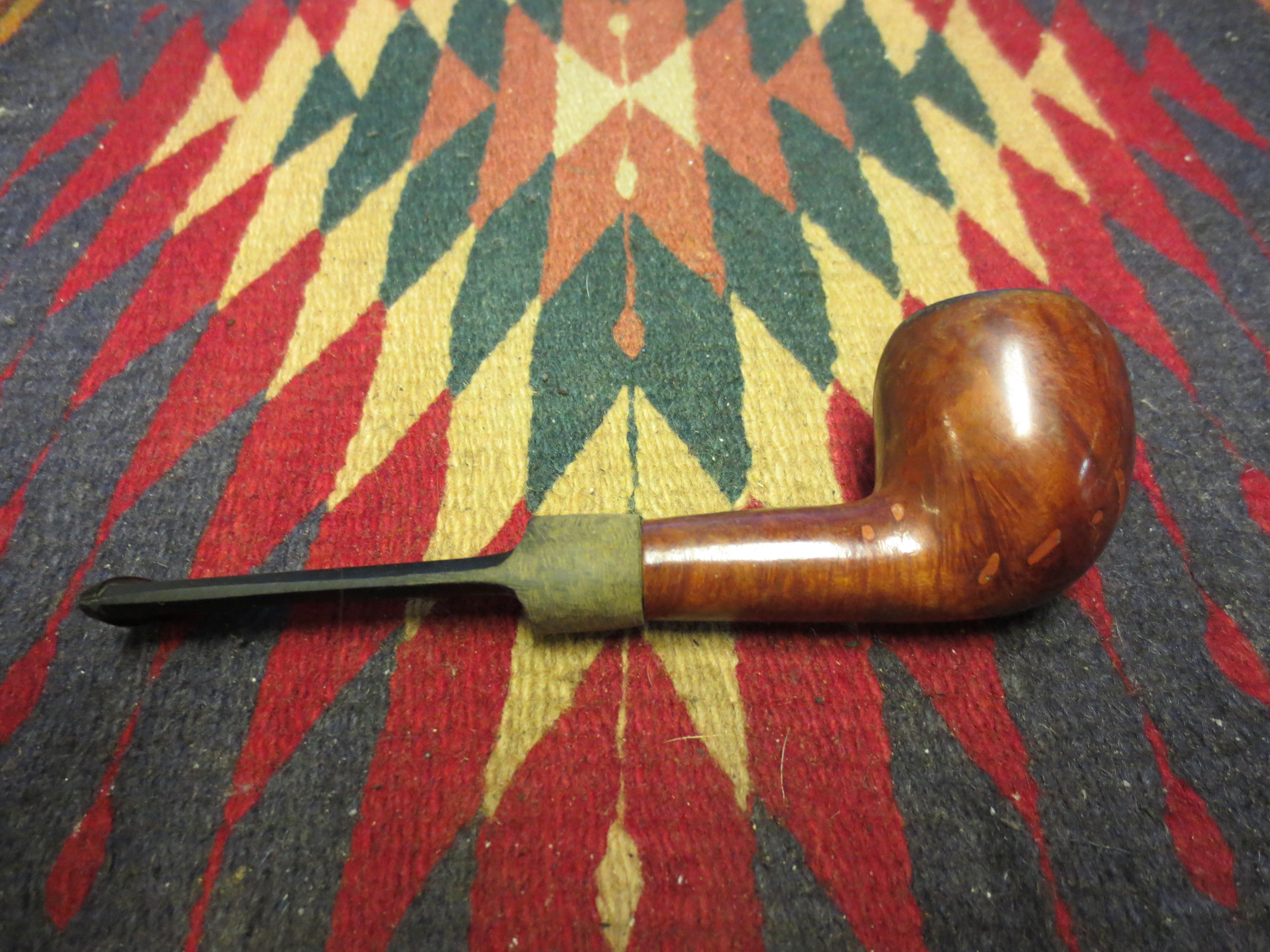
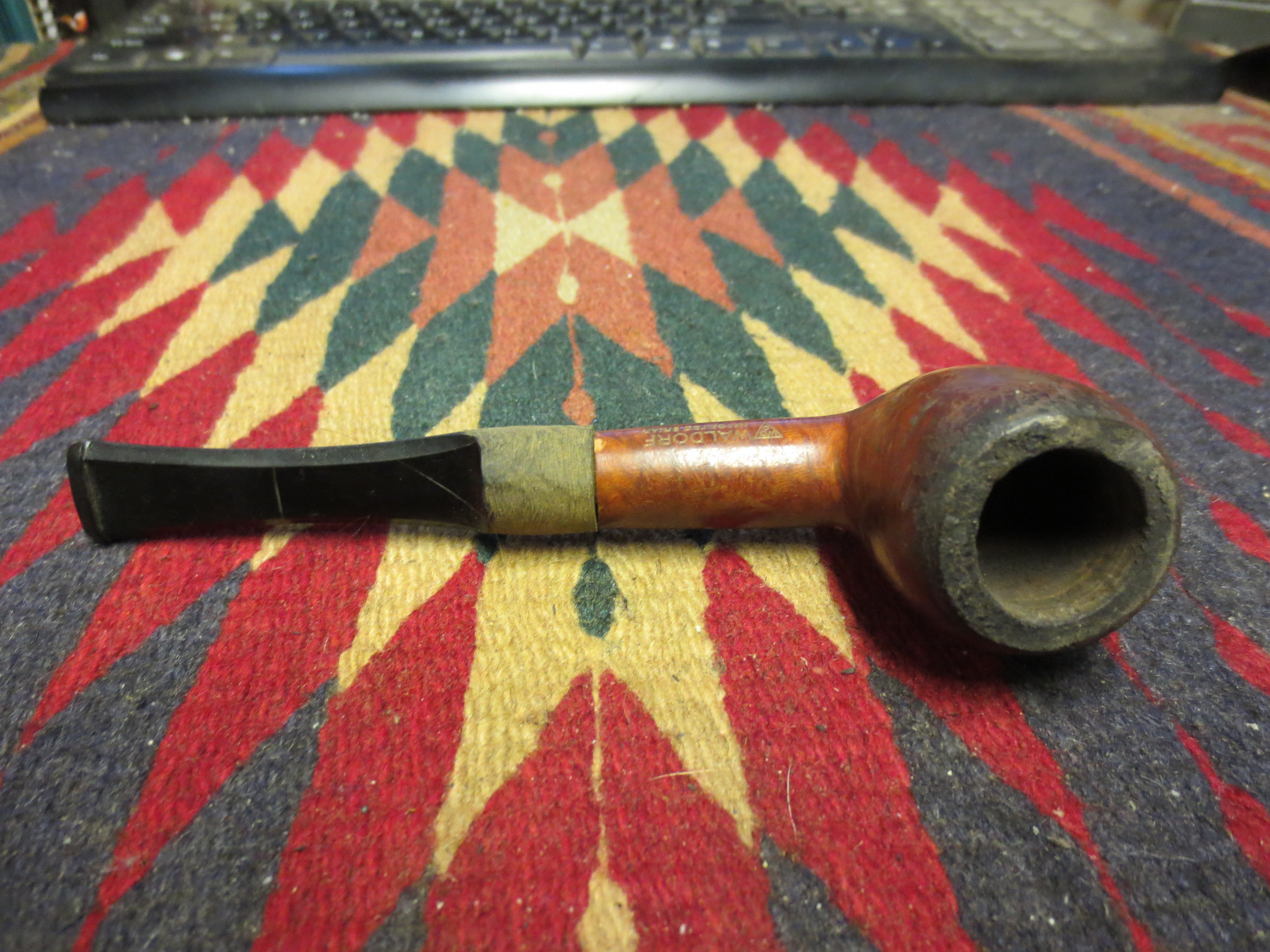
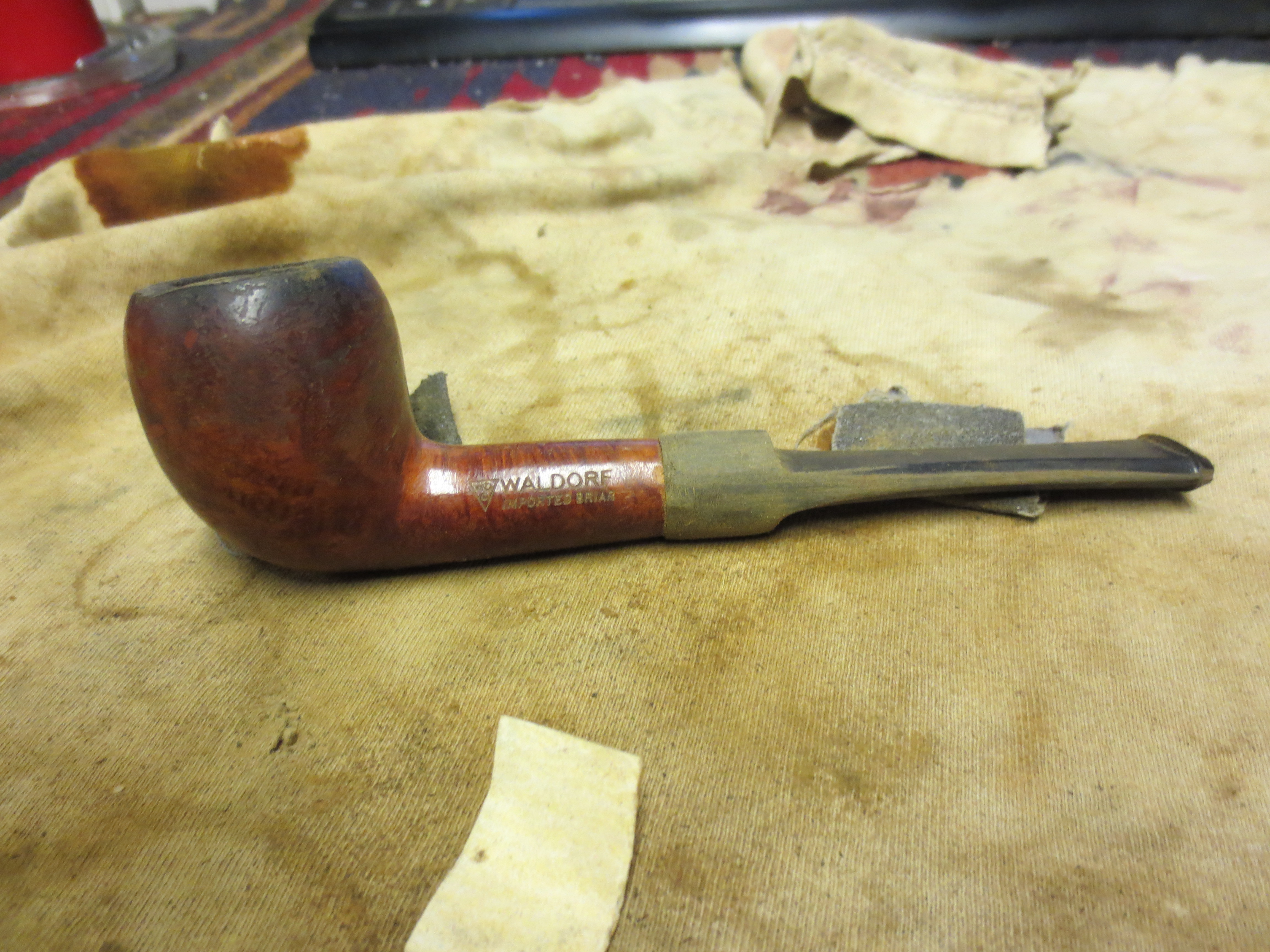
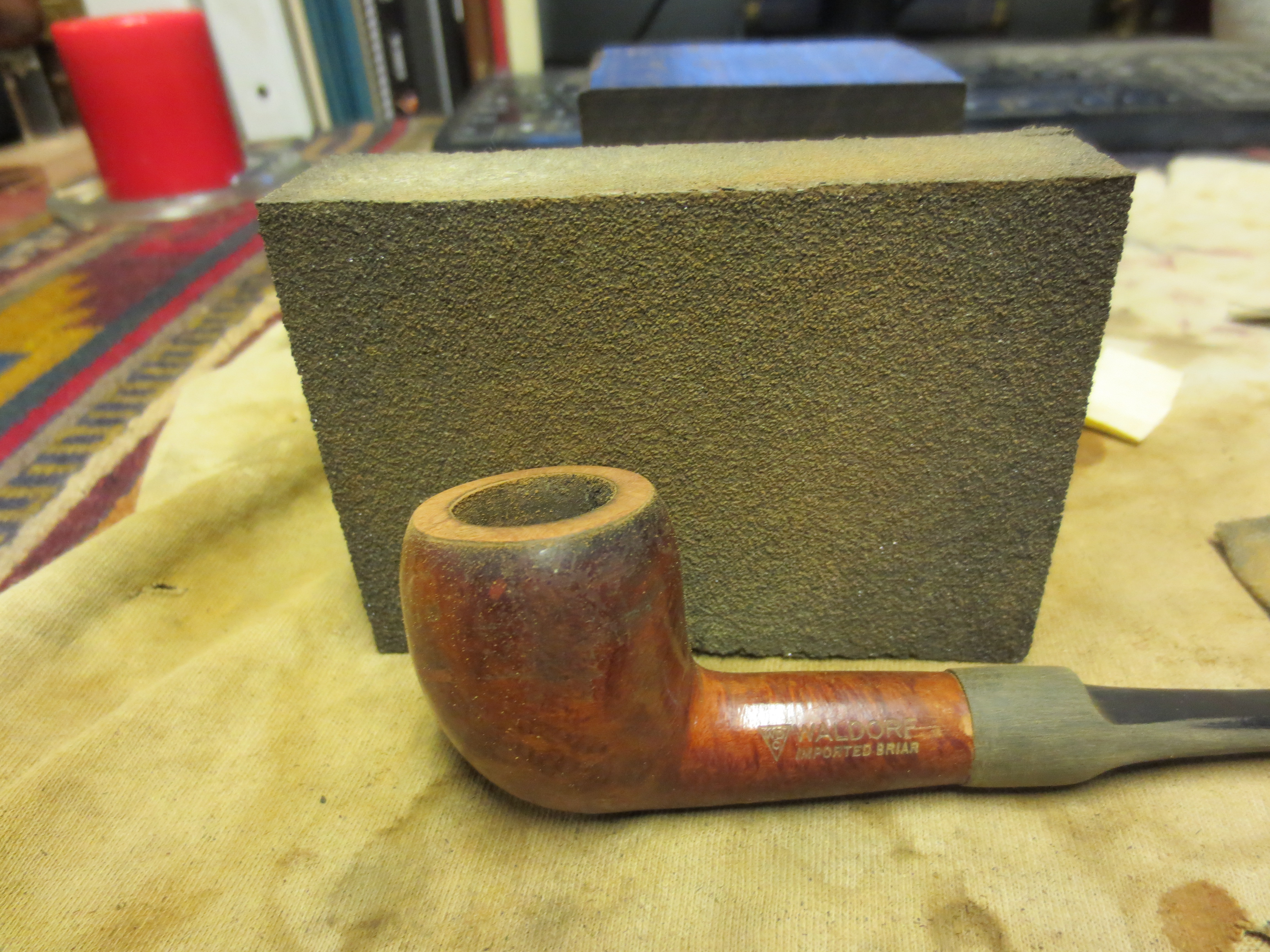
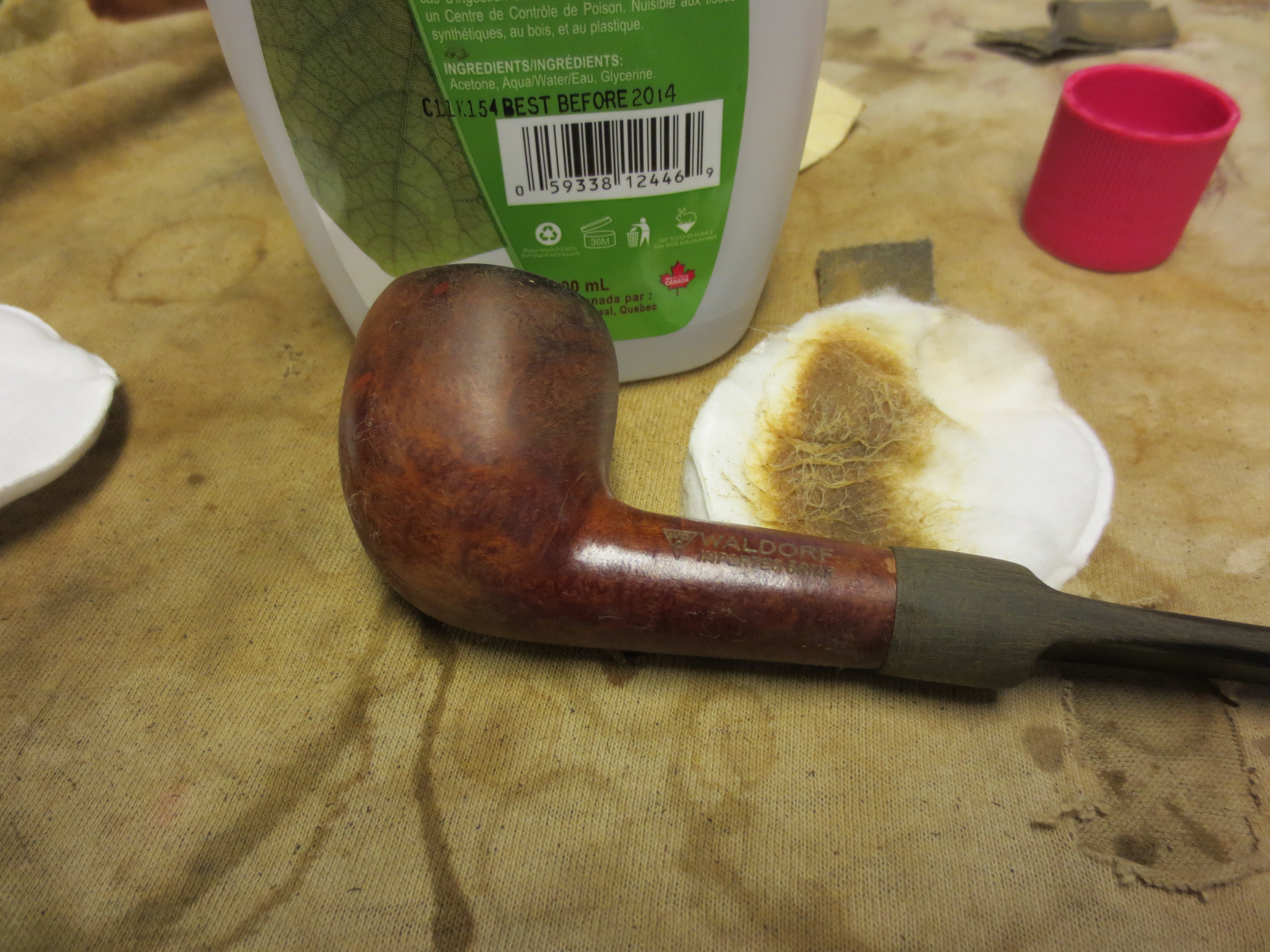
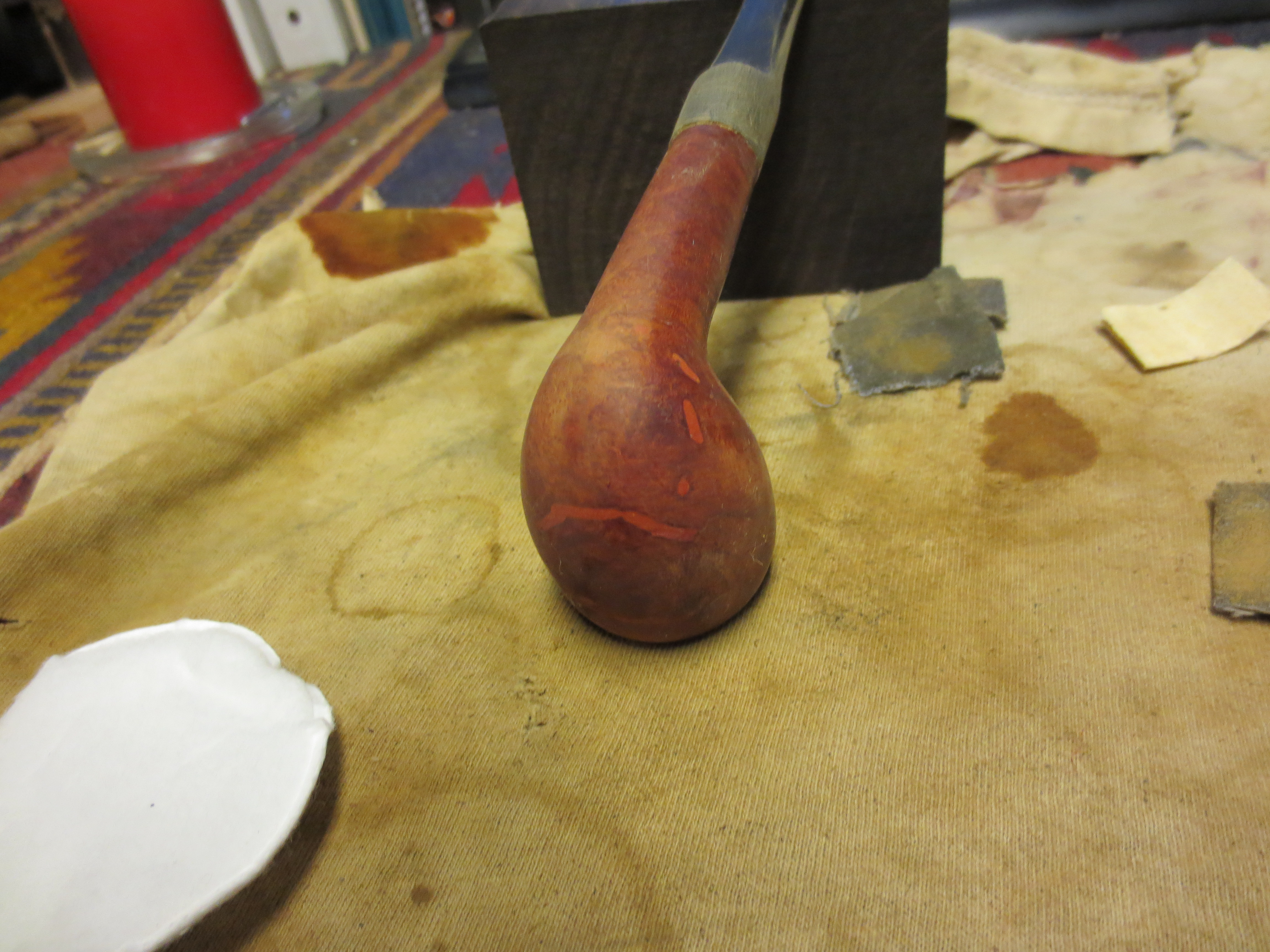
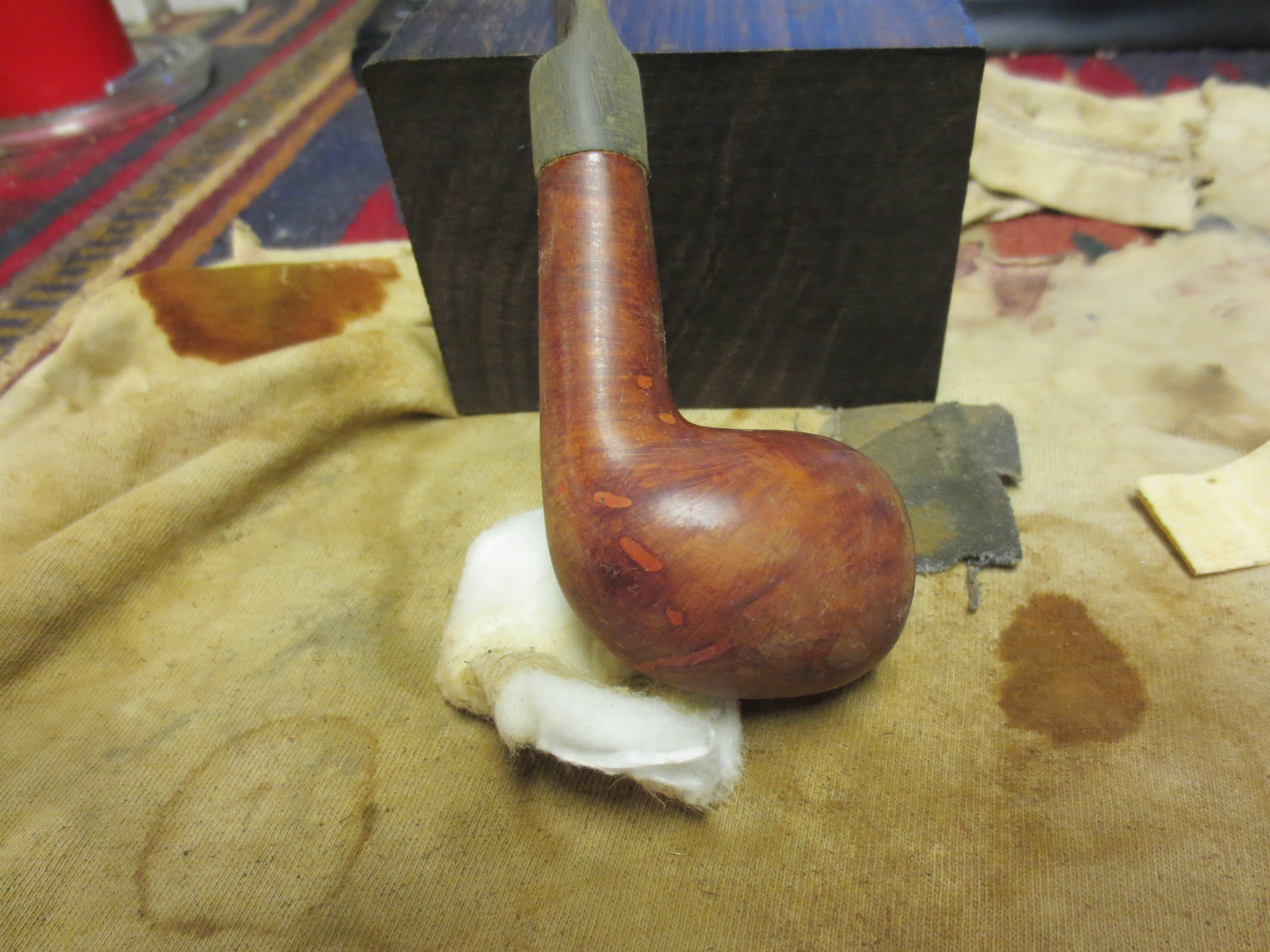
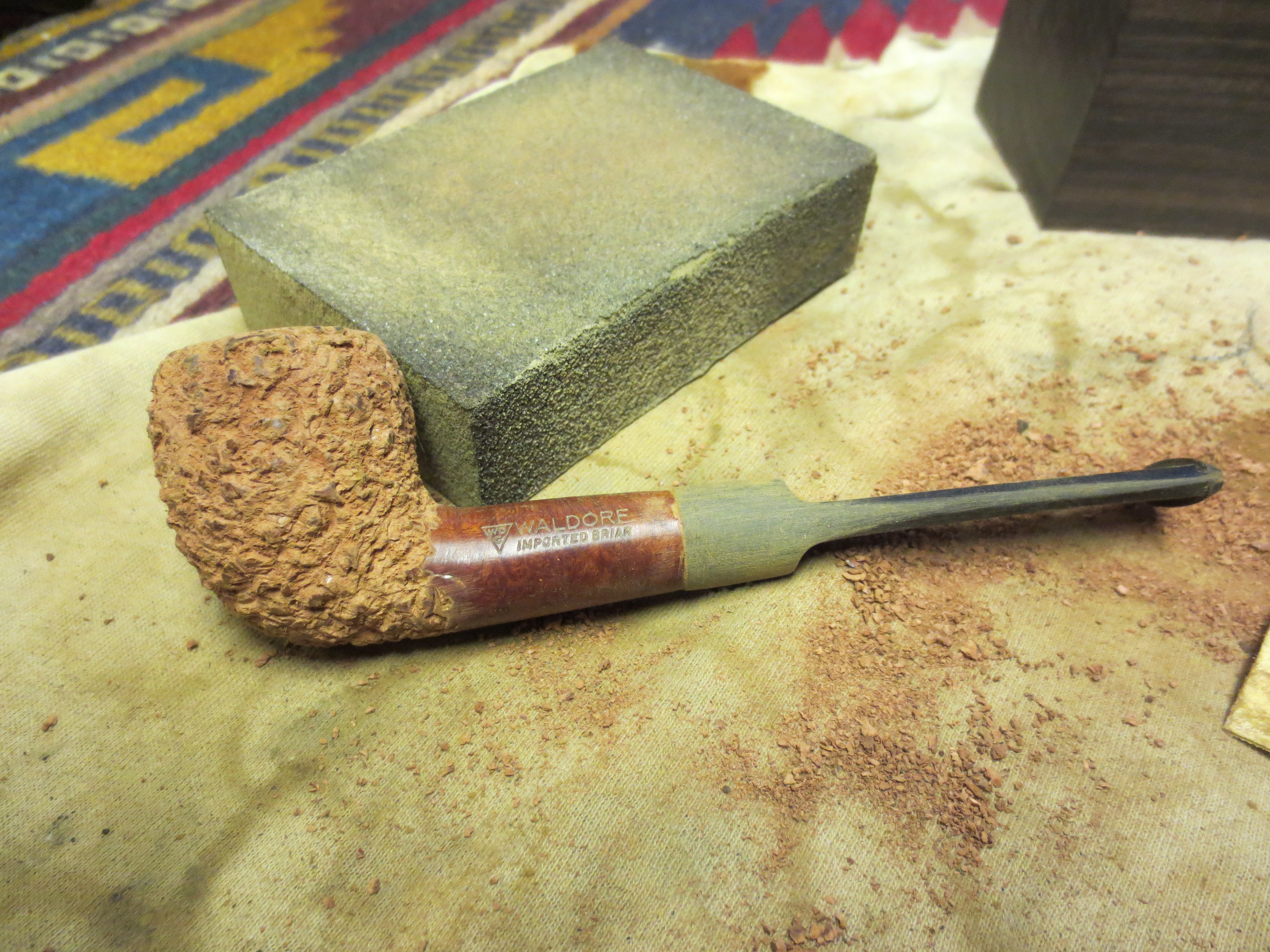
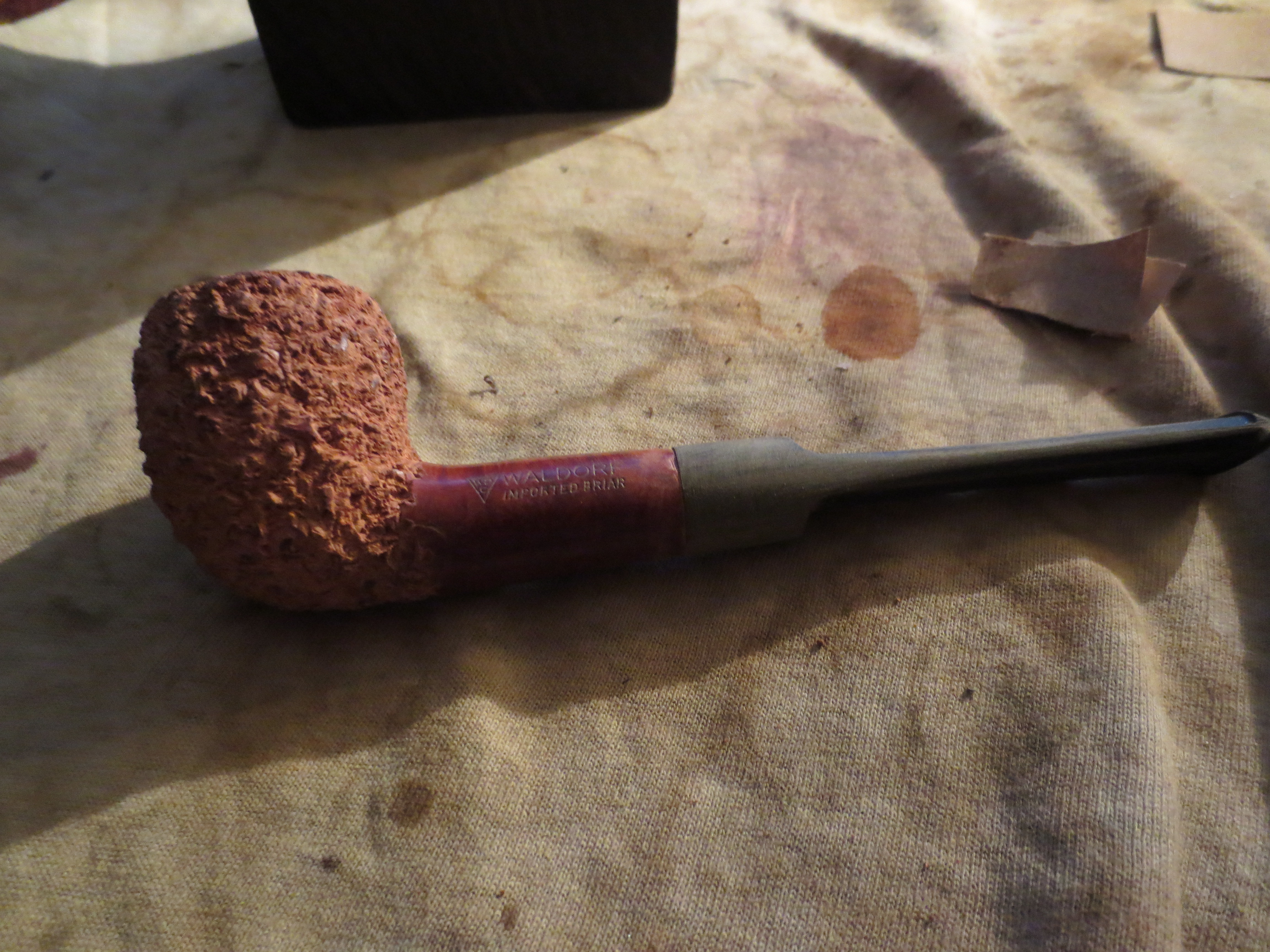
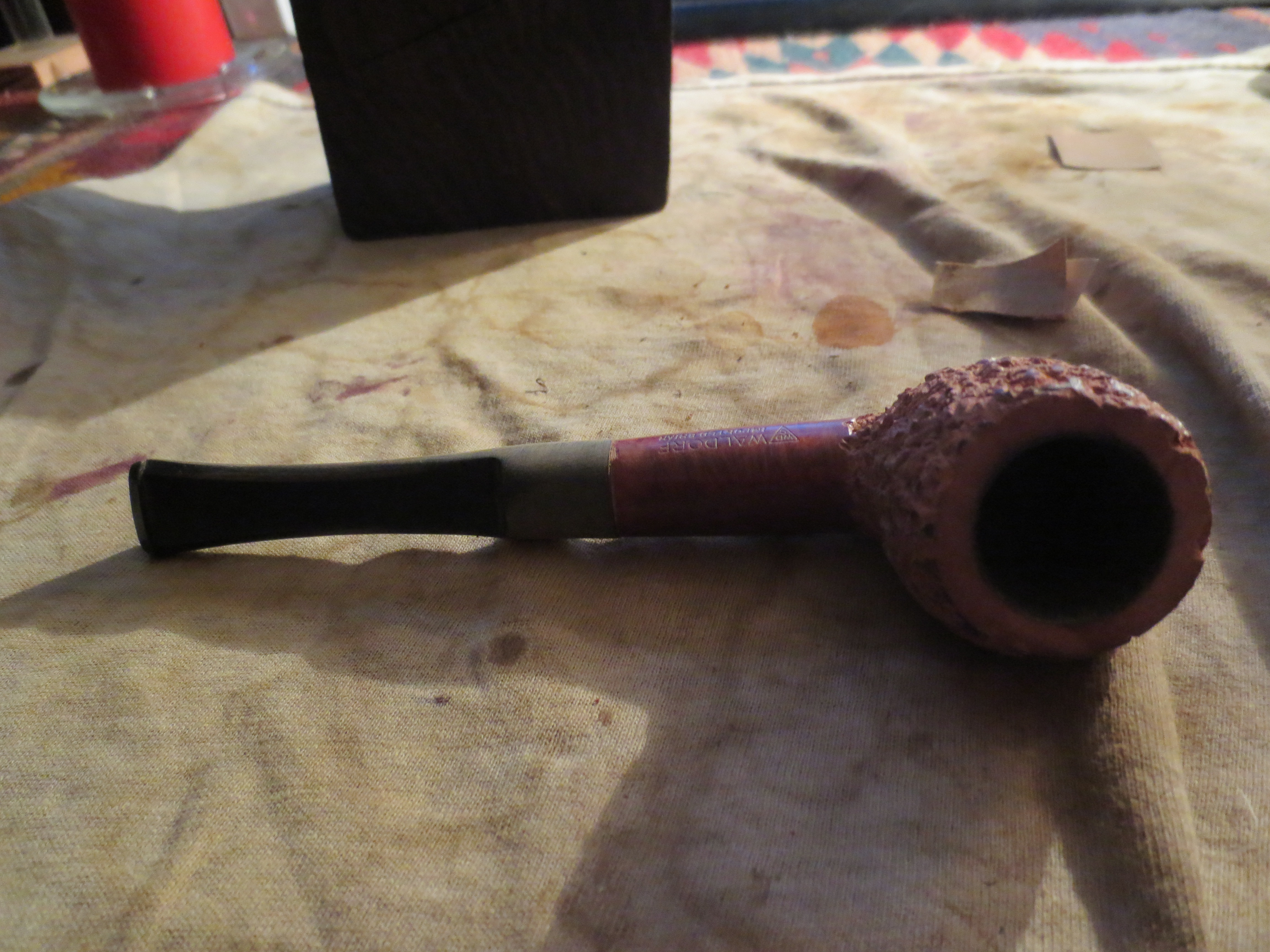
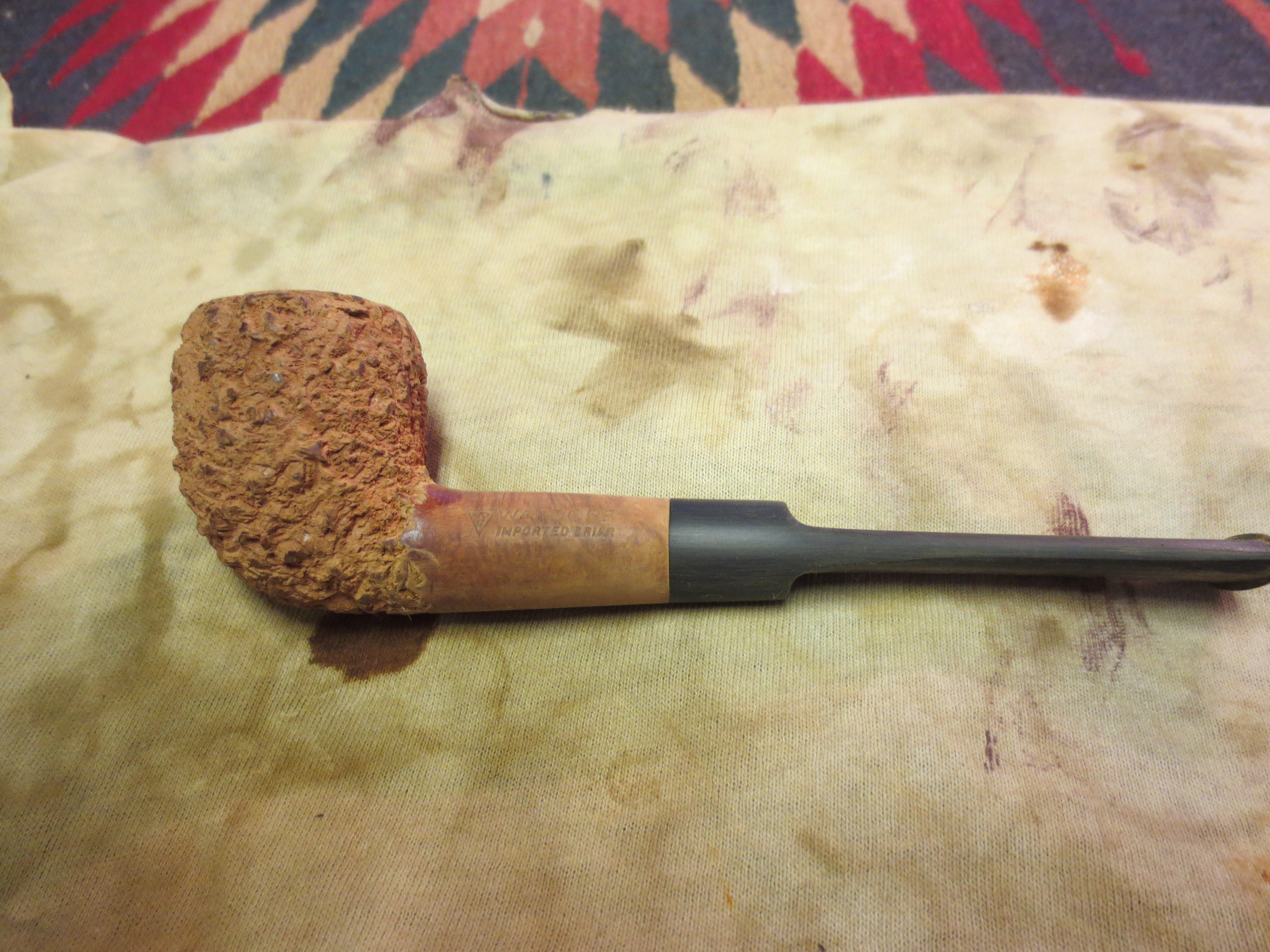
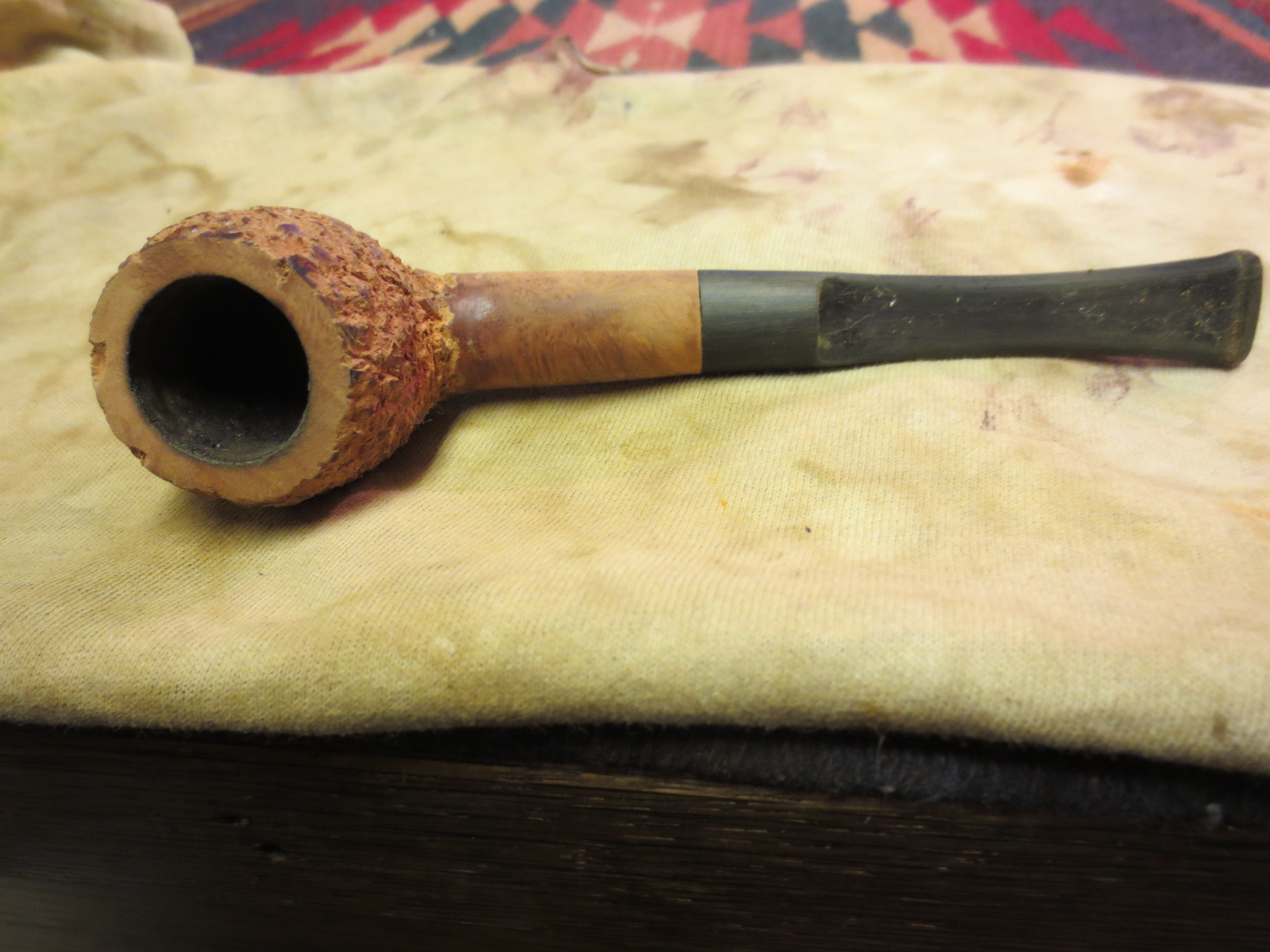
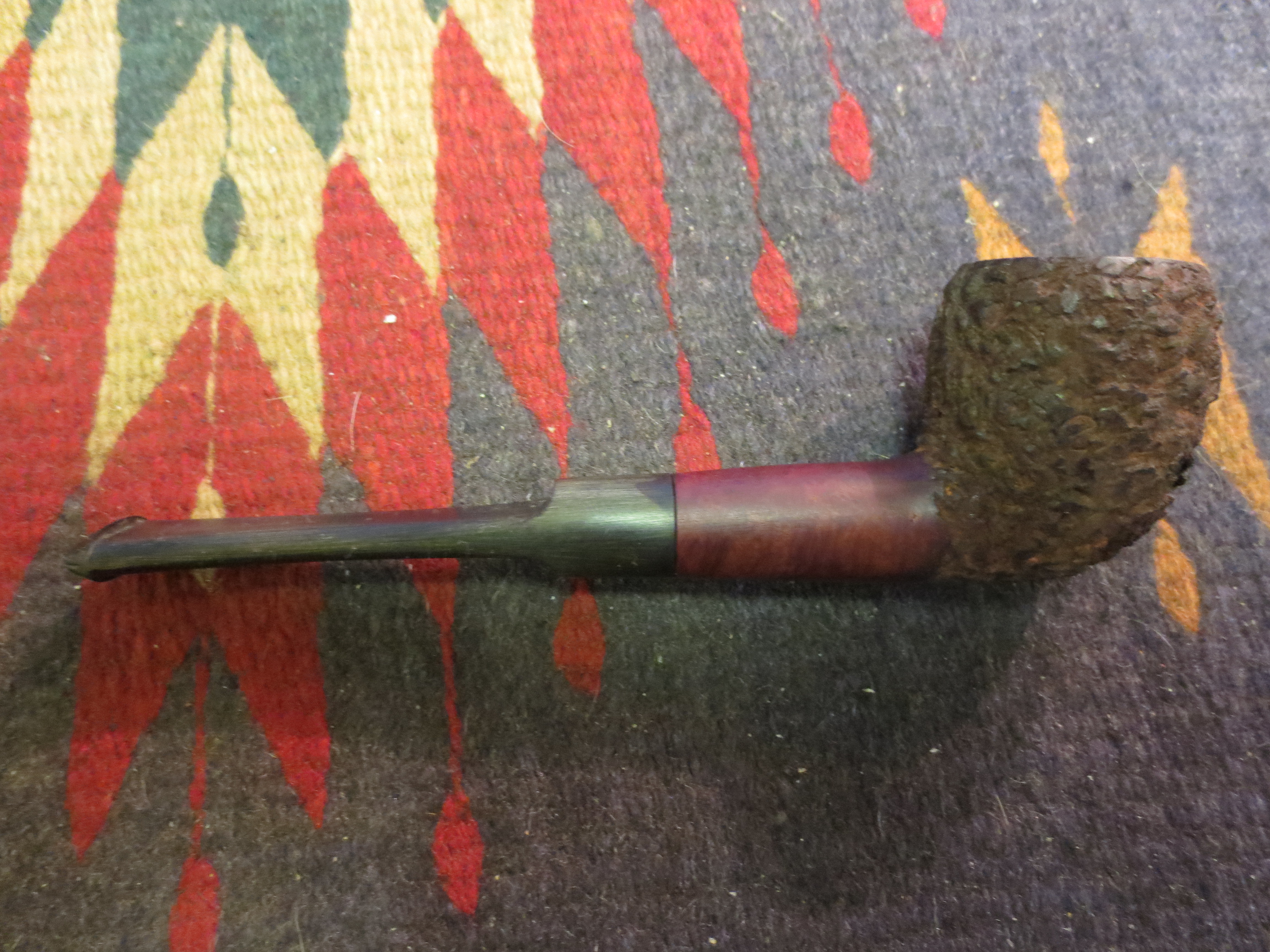
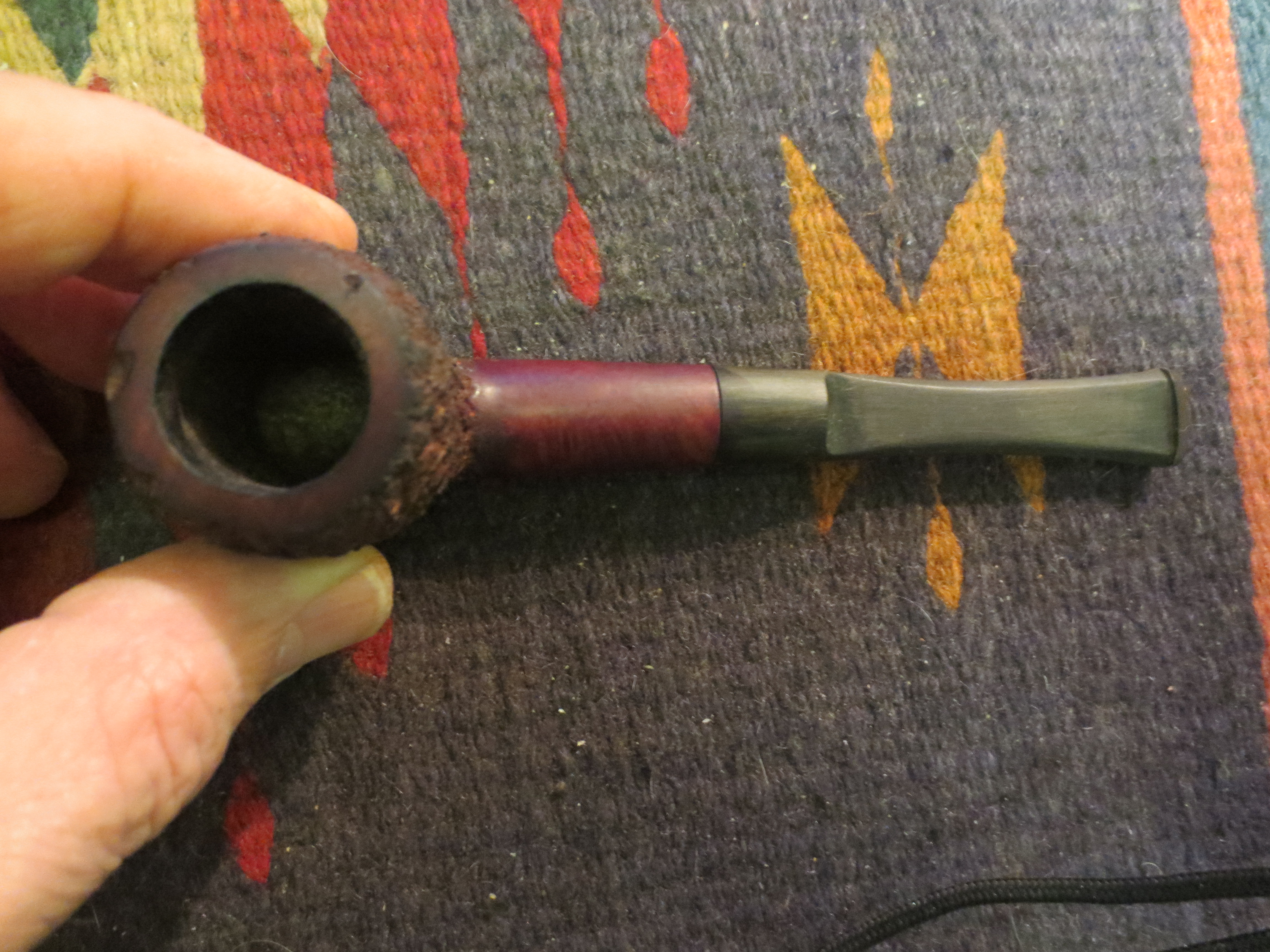
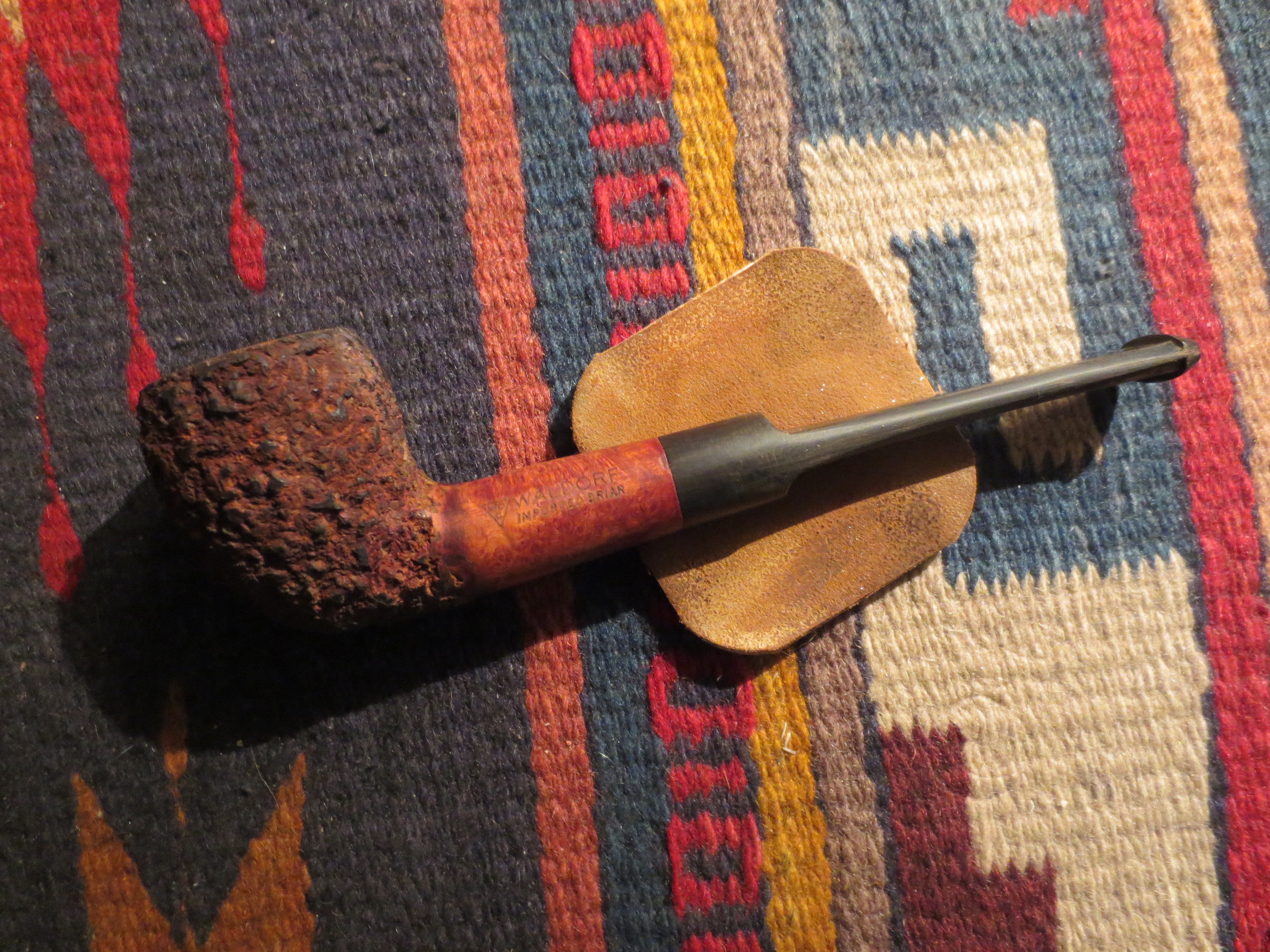
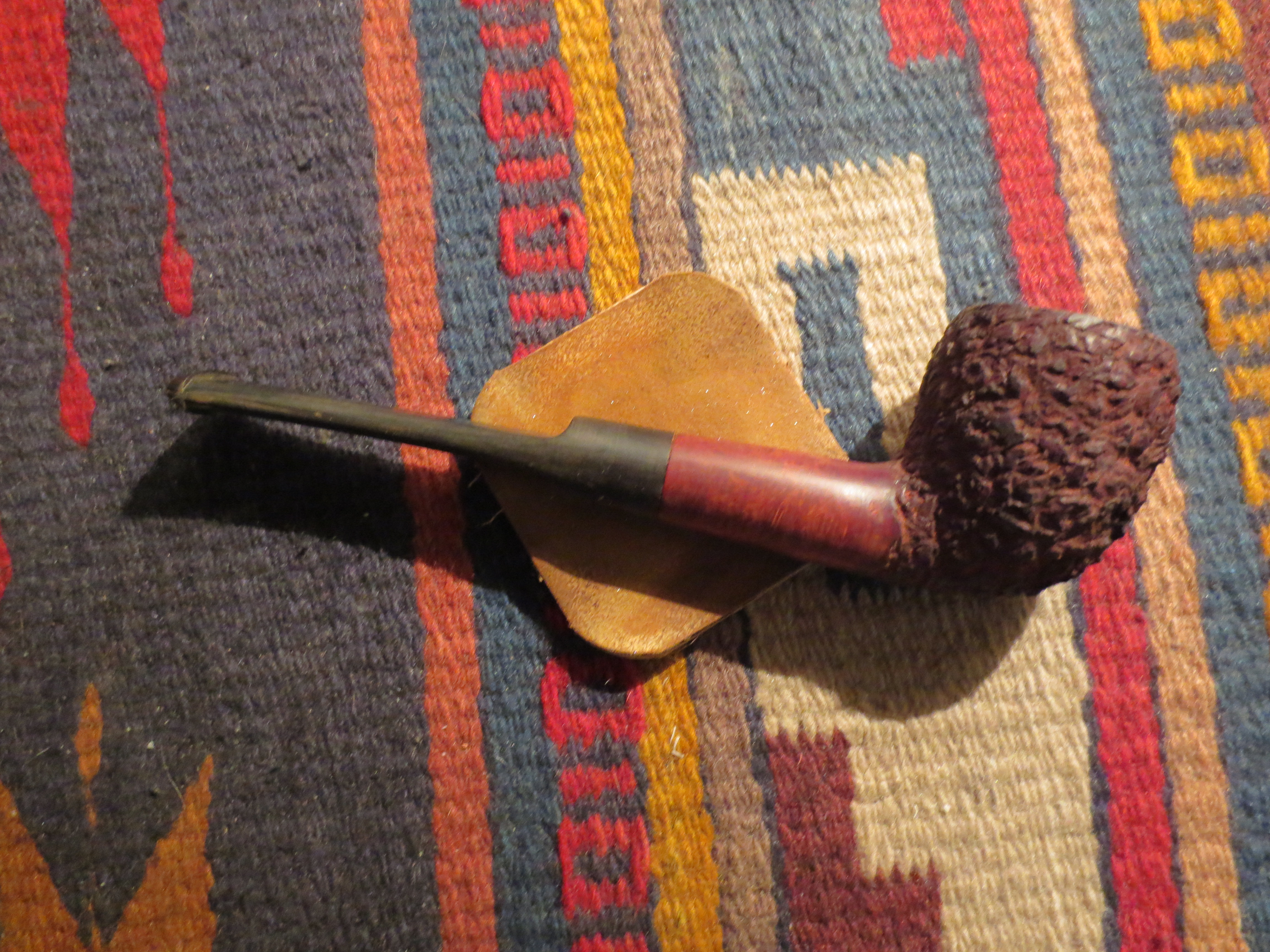
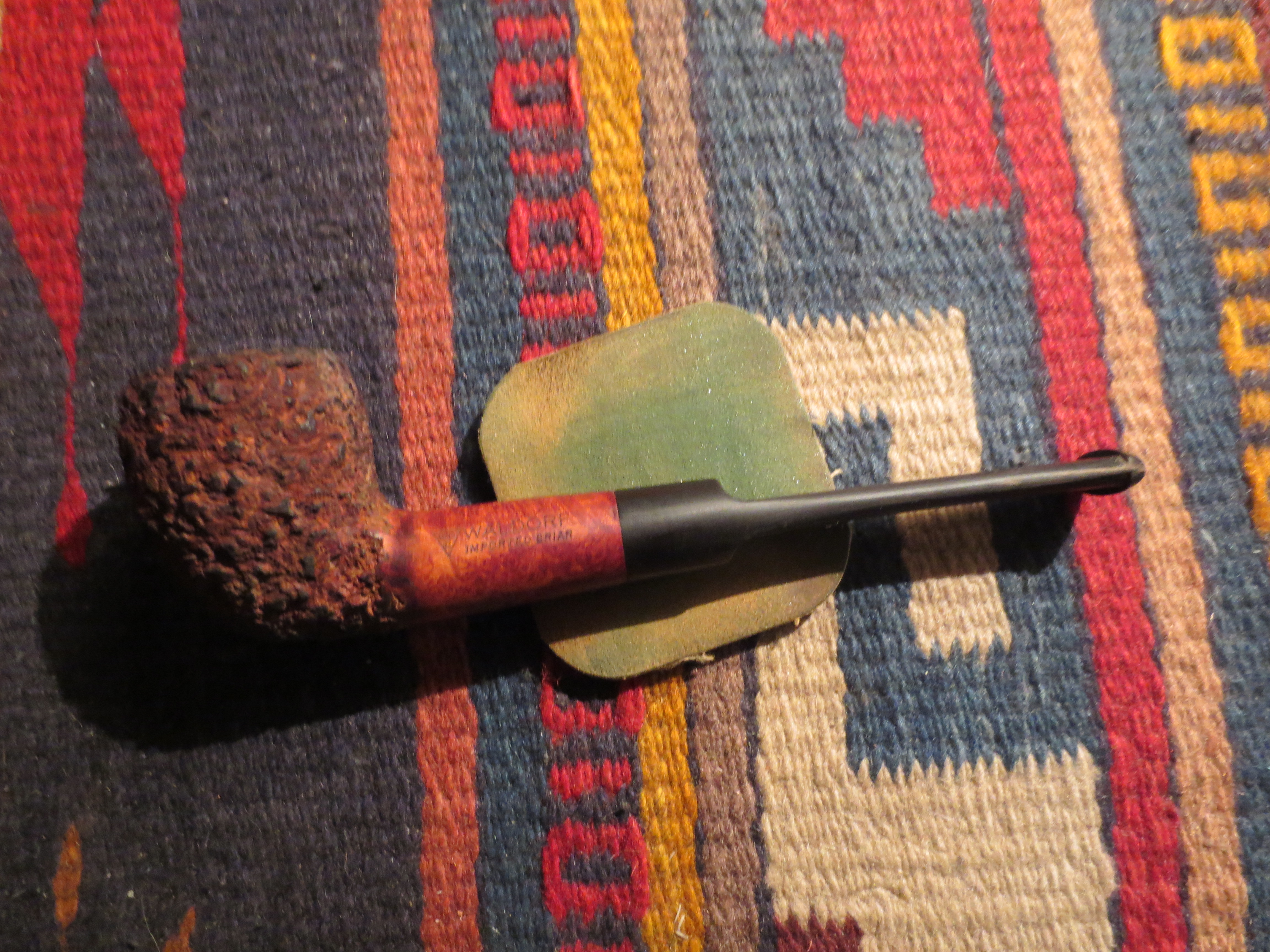
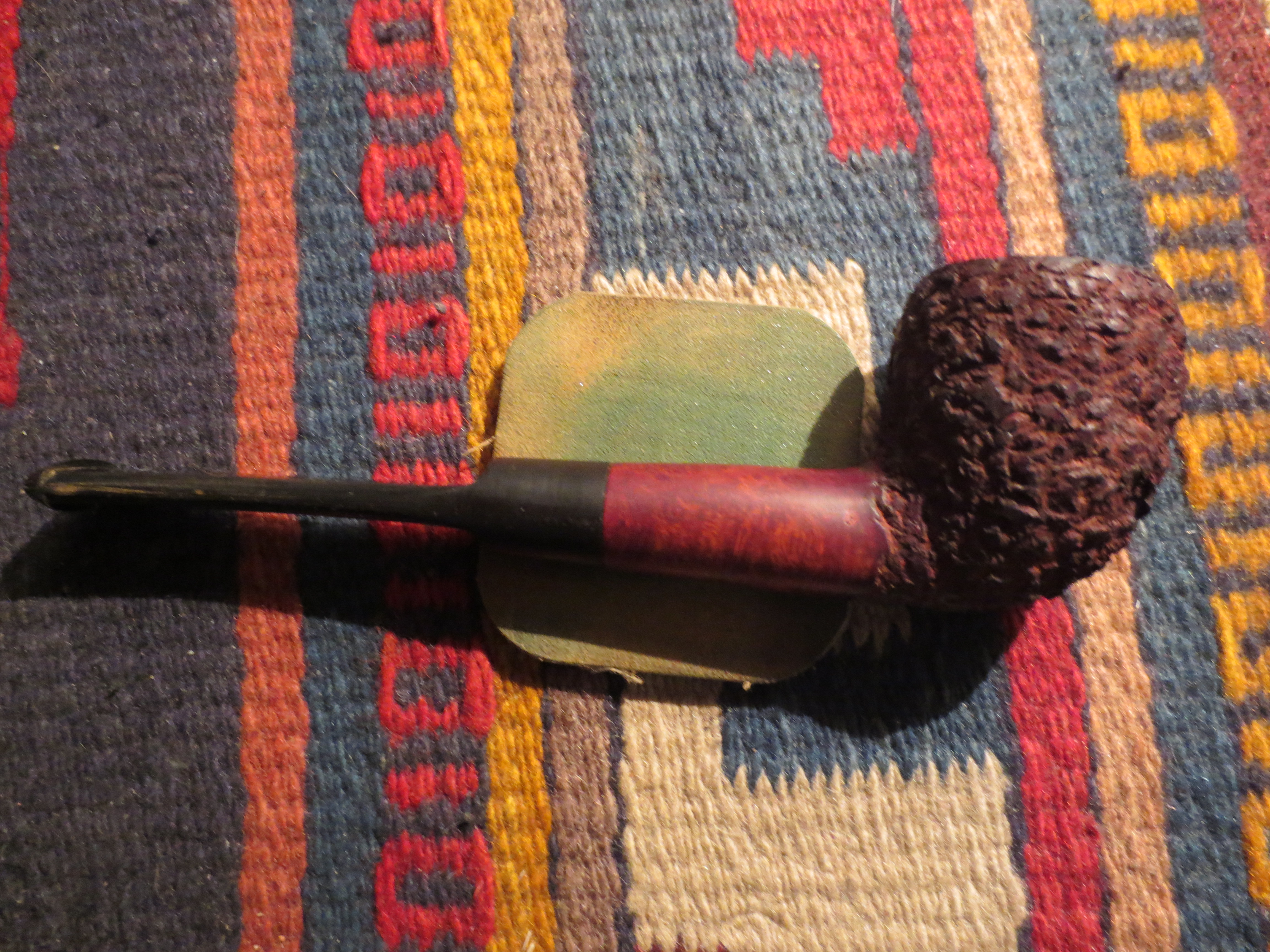
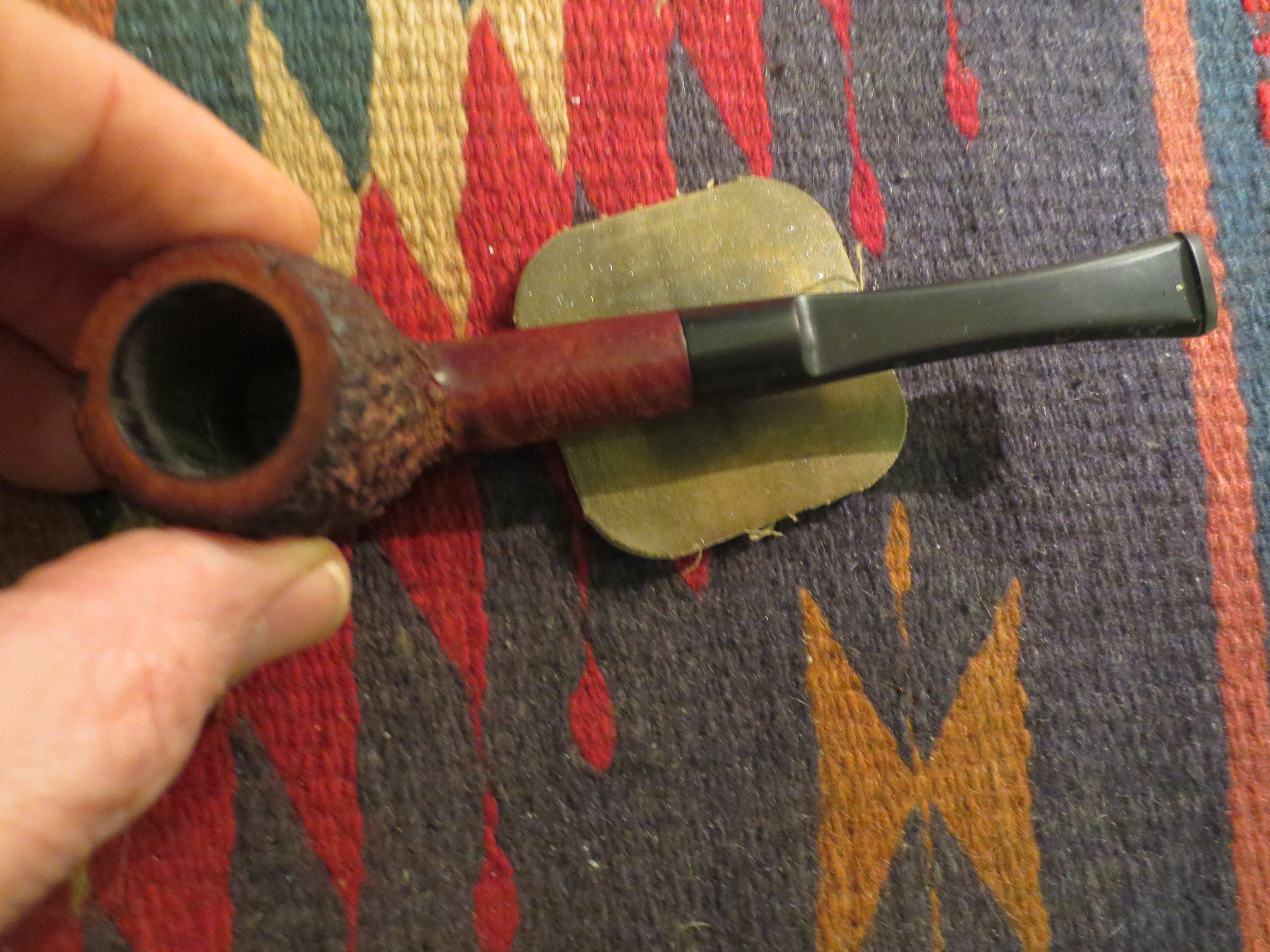
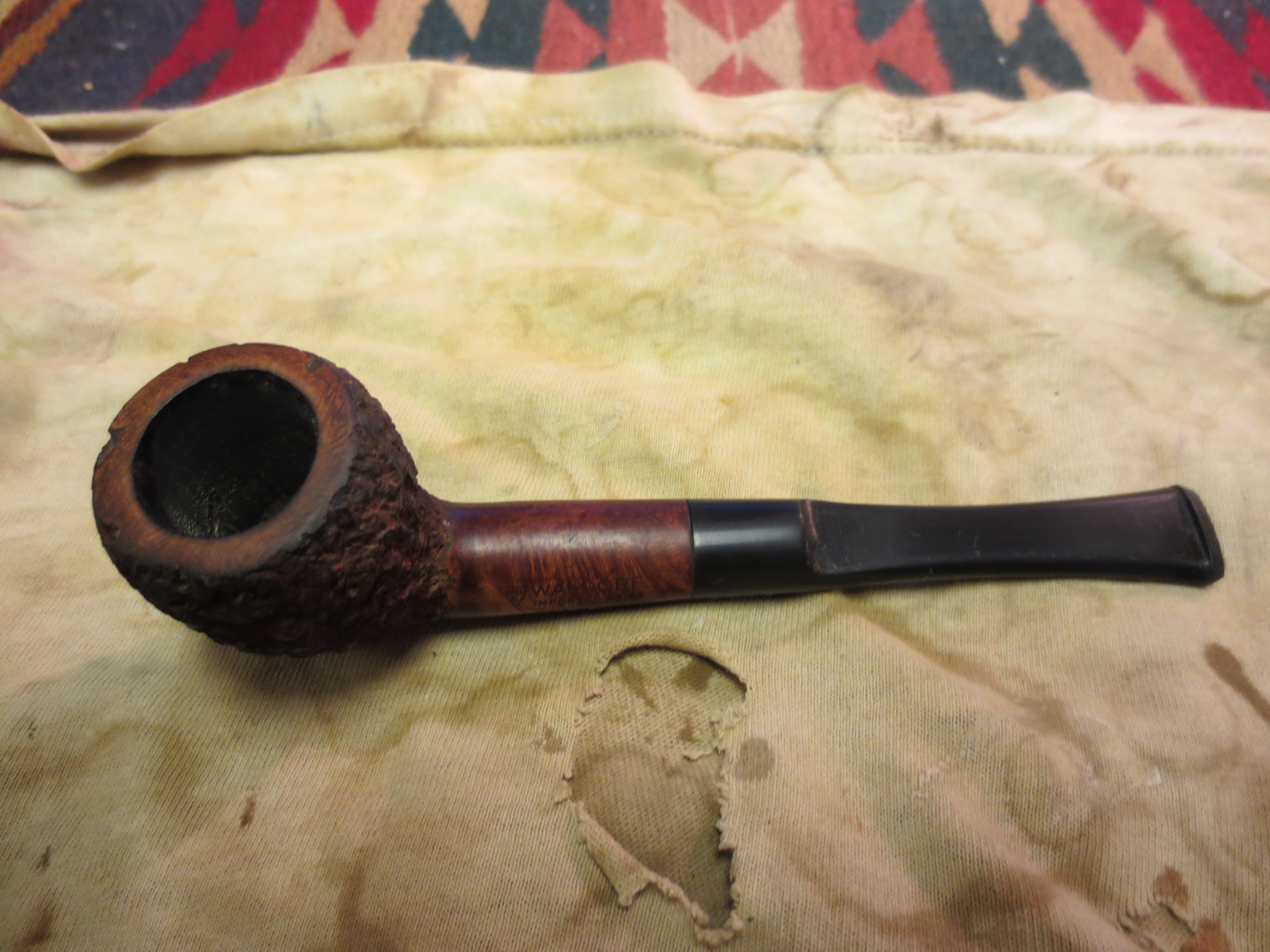
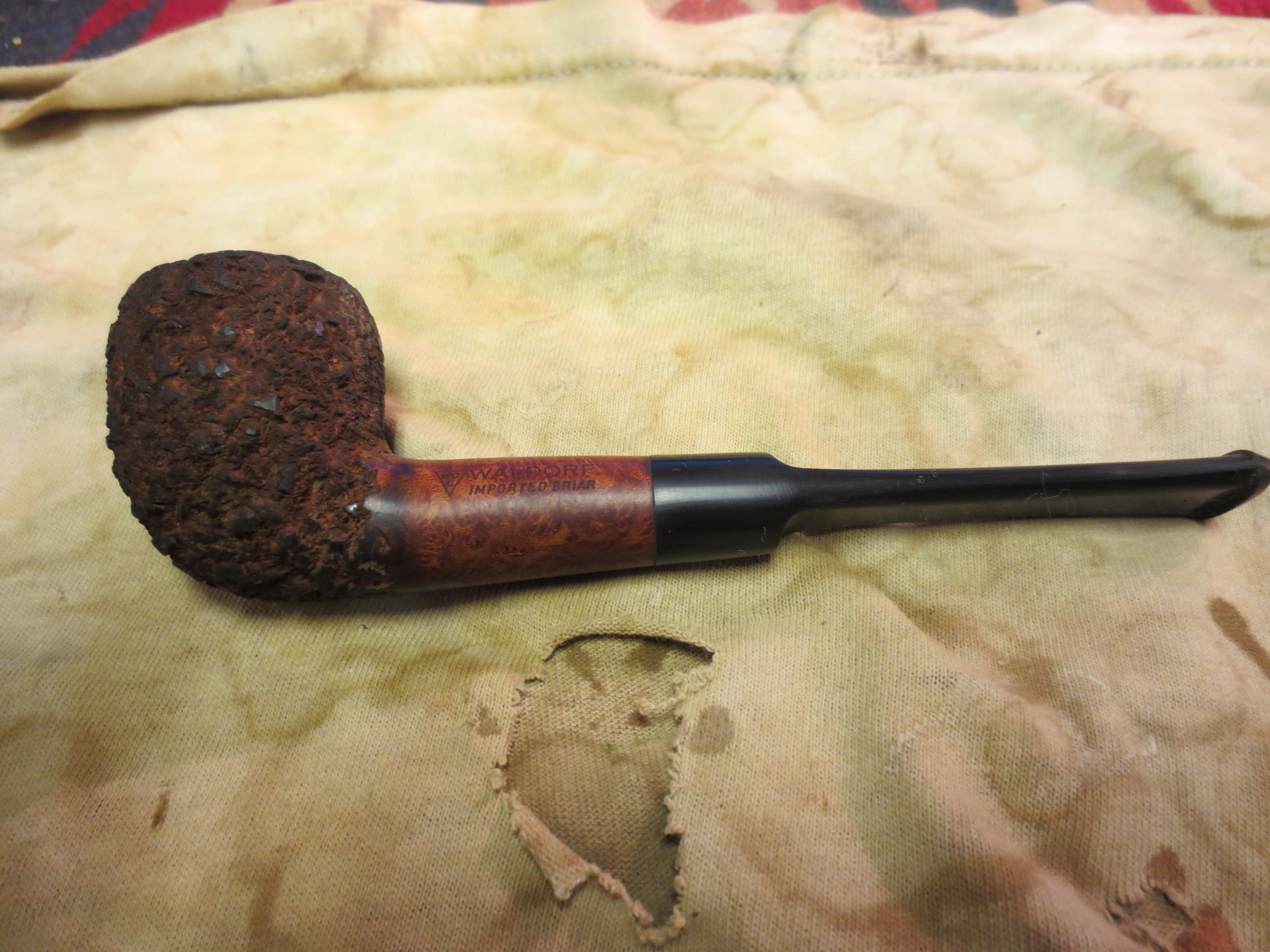
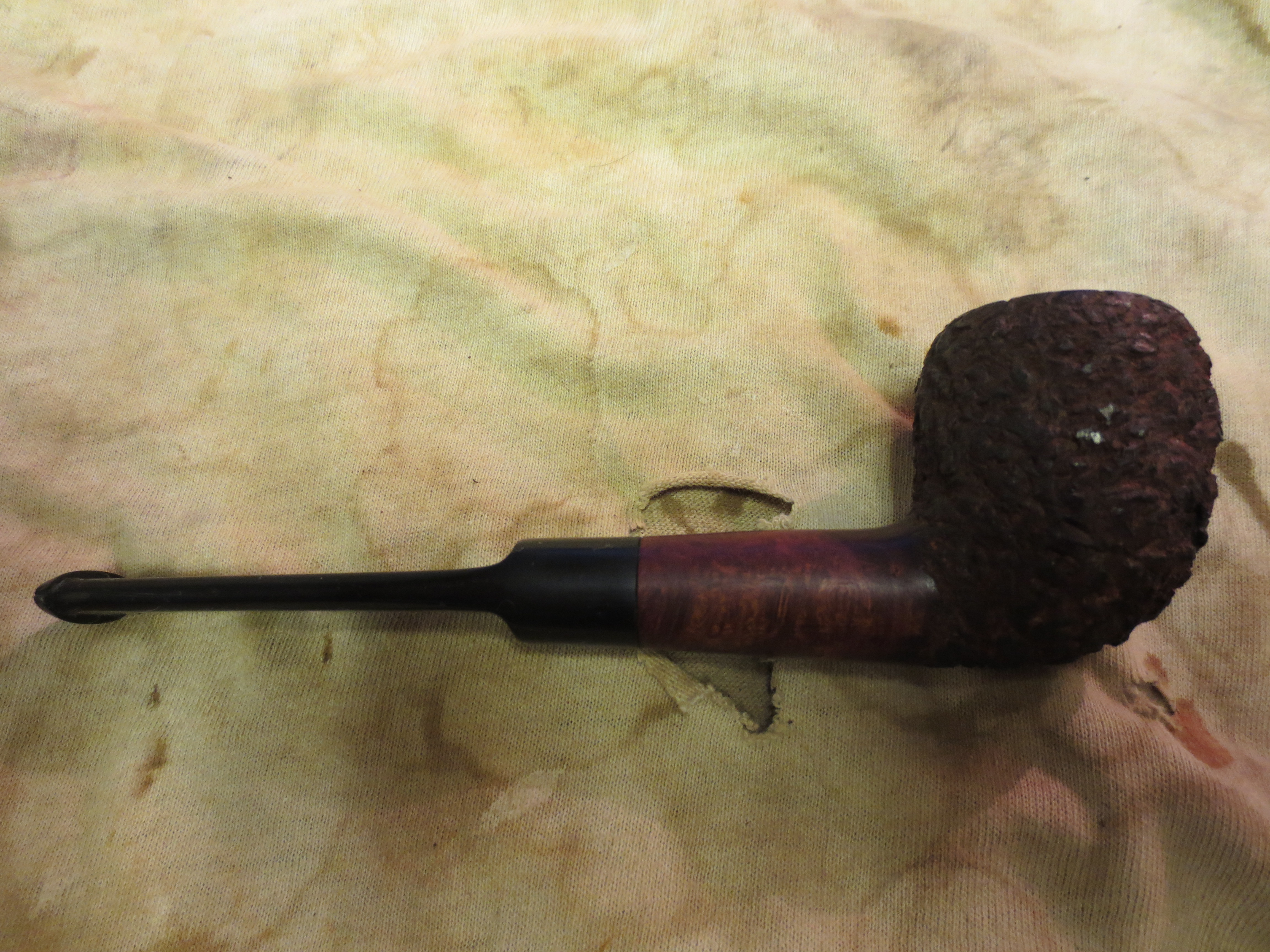
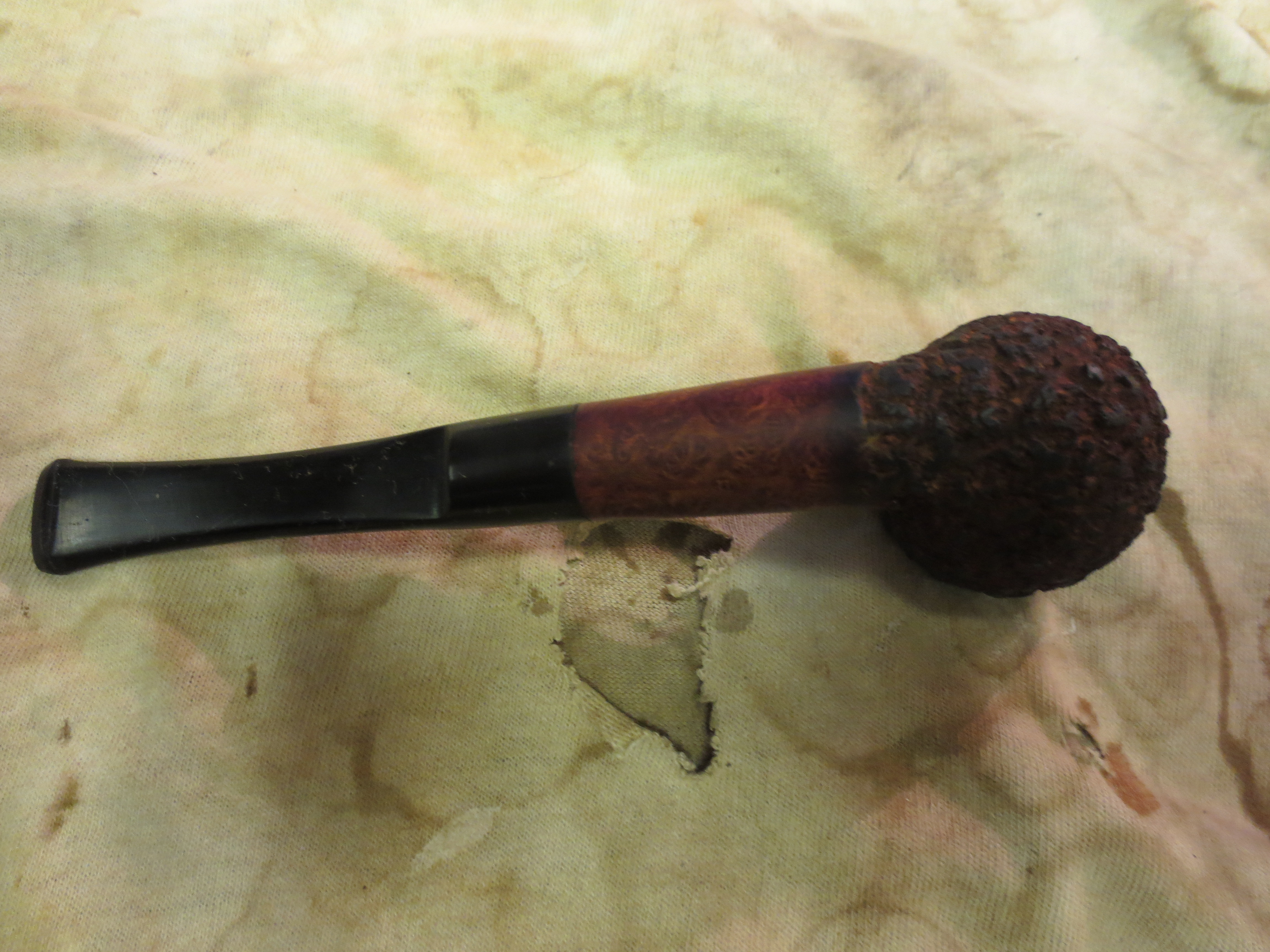
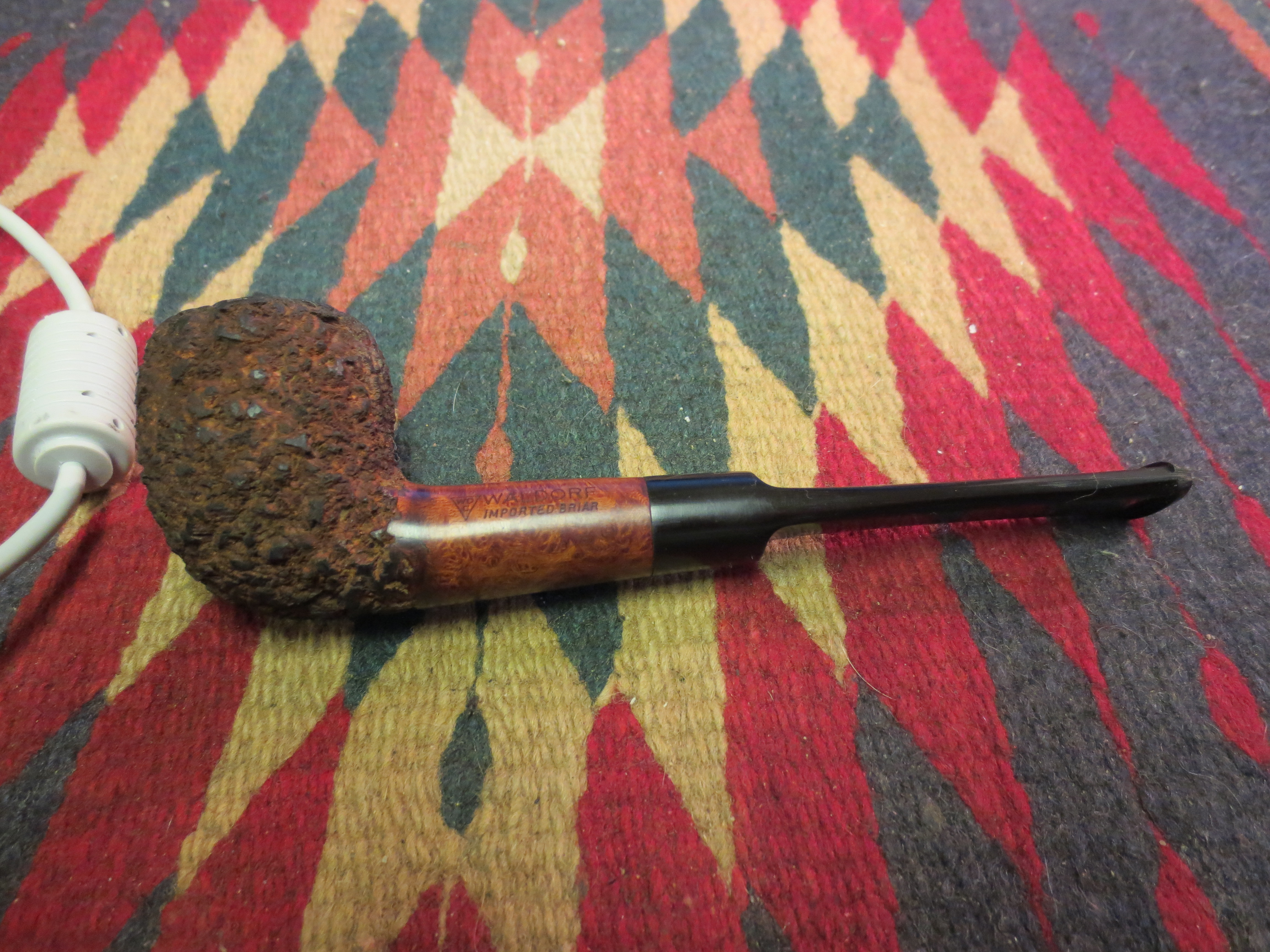
Today I decided to pick one of the stummels in my box of pipes that needed to be restemmed. I had cut the tenon a while back when I was restemming a bunch of old pipes I had. This one was in rough shape but I like the general shape of it. It is stamped WDC in a Triangle (William Demuth Pipe Company) and next to that is stamped WALDORF over Imported Briar. There is no other stamping on the pipe. According to Phil’s Pipe Logos and Markings website, http://www.pipephil.eu/logos/en/logo-w1.html the Waldorf is a second’s line of the WDC brand. Not sure but that is interesting to note. This one was in rough shape. The bowl was badly caked and the rim was tarry and charred with a notch out of the briar near the front of the bowl. The finish was rough, blackened and the varnish coat was peeling. The bowl also had a large number of fills on the front and both sides. These were the ugly pink putty fills. I cut a tenon and roughed a stem to fit the bowl. The four photos below show the state of the pipe when I began to work on it today.

ImageImageImageImage

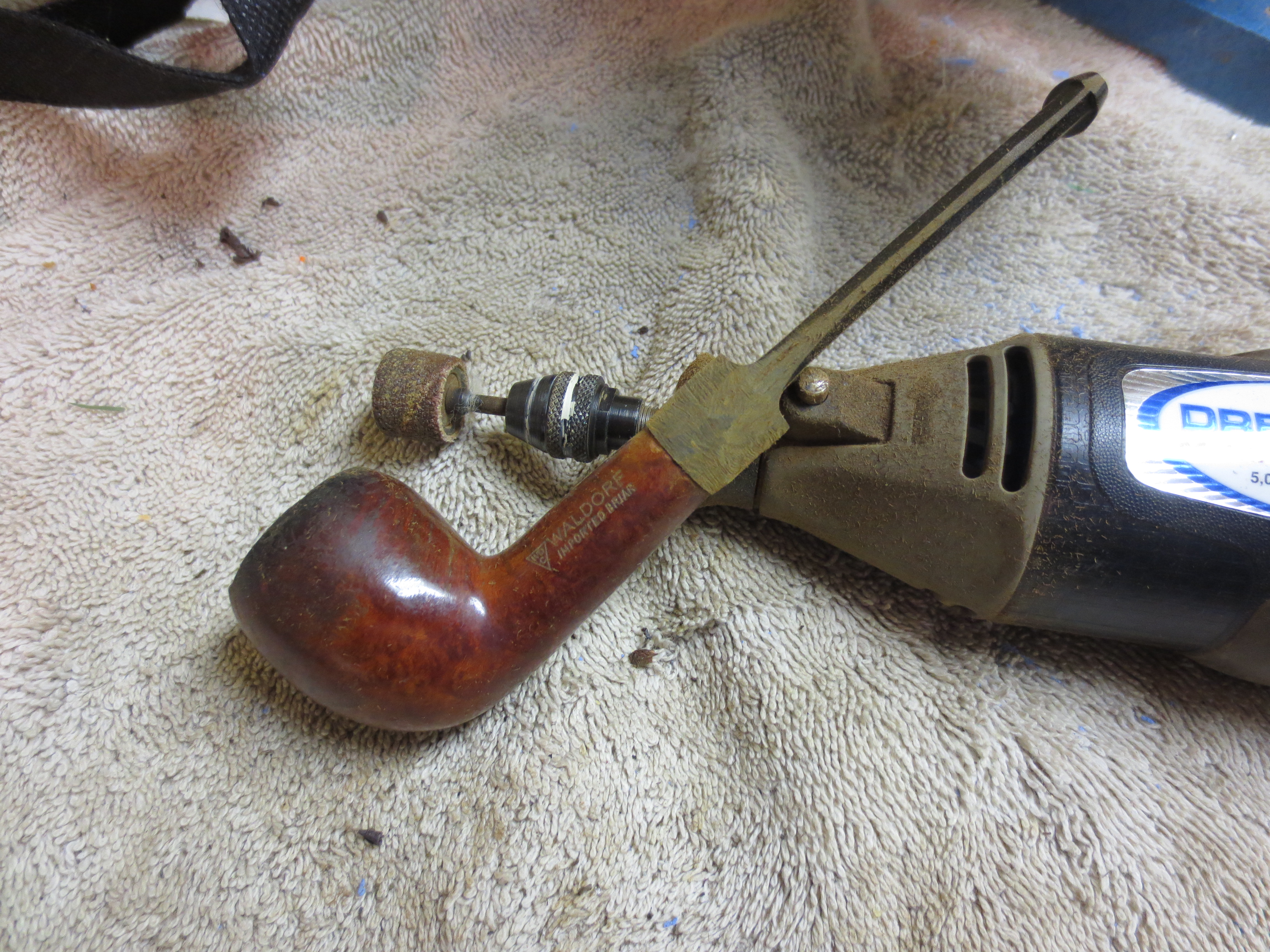
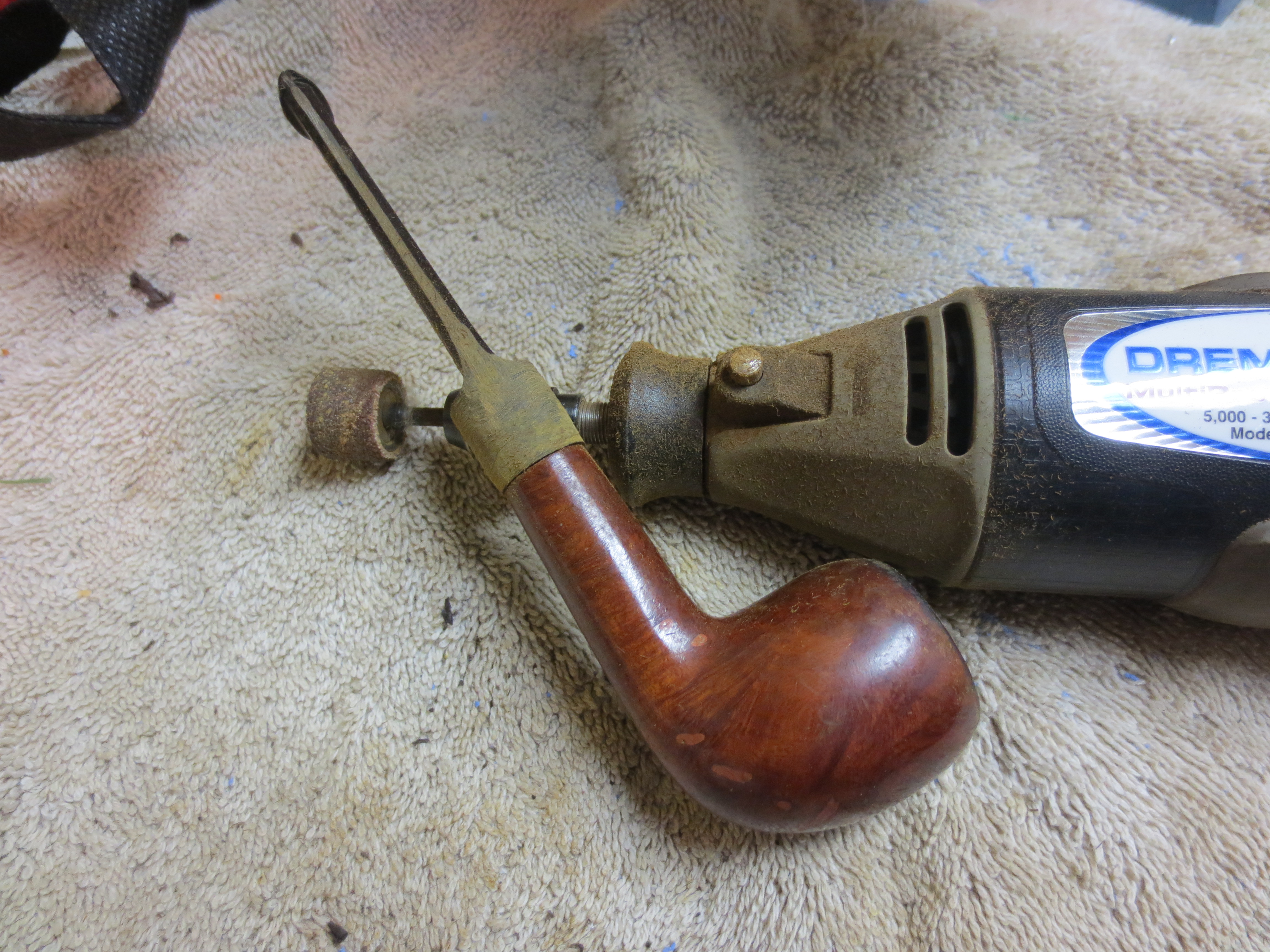
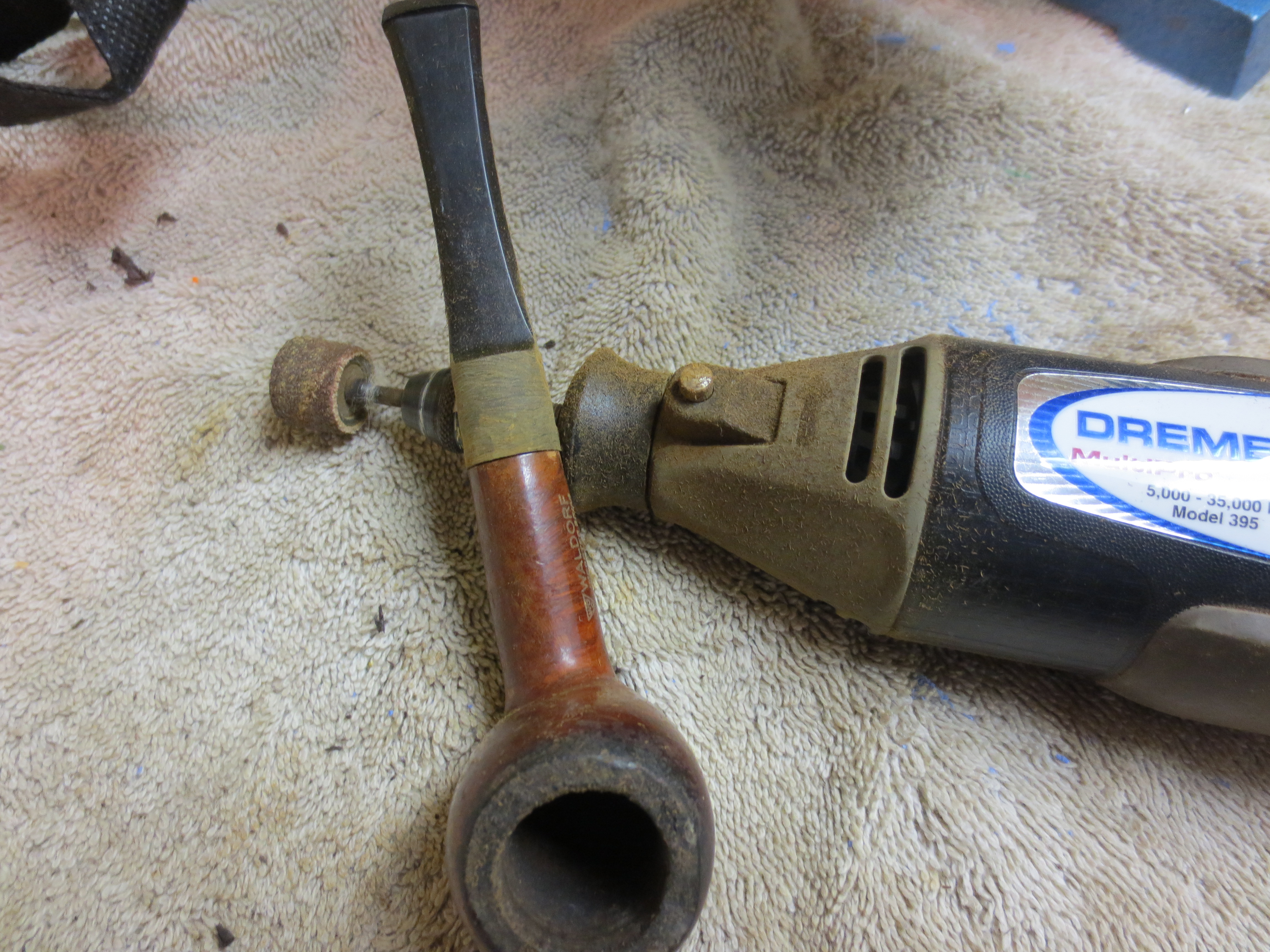
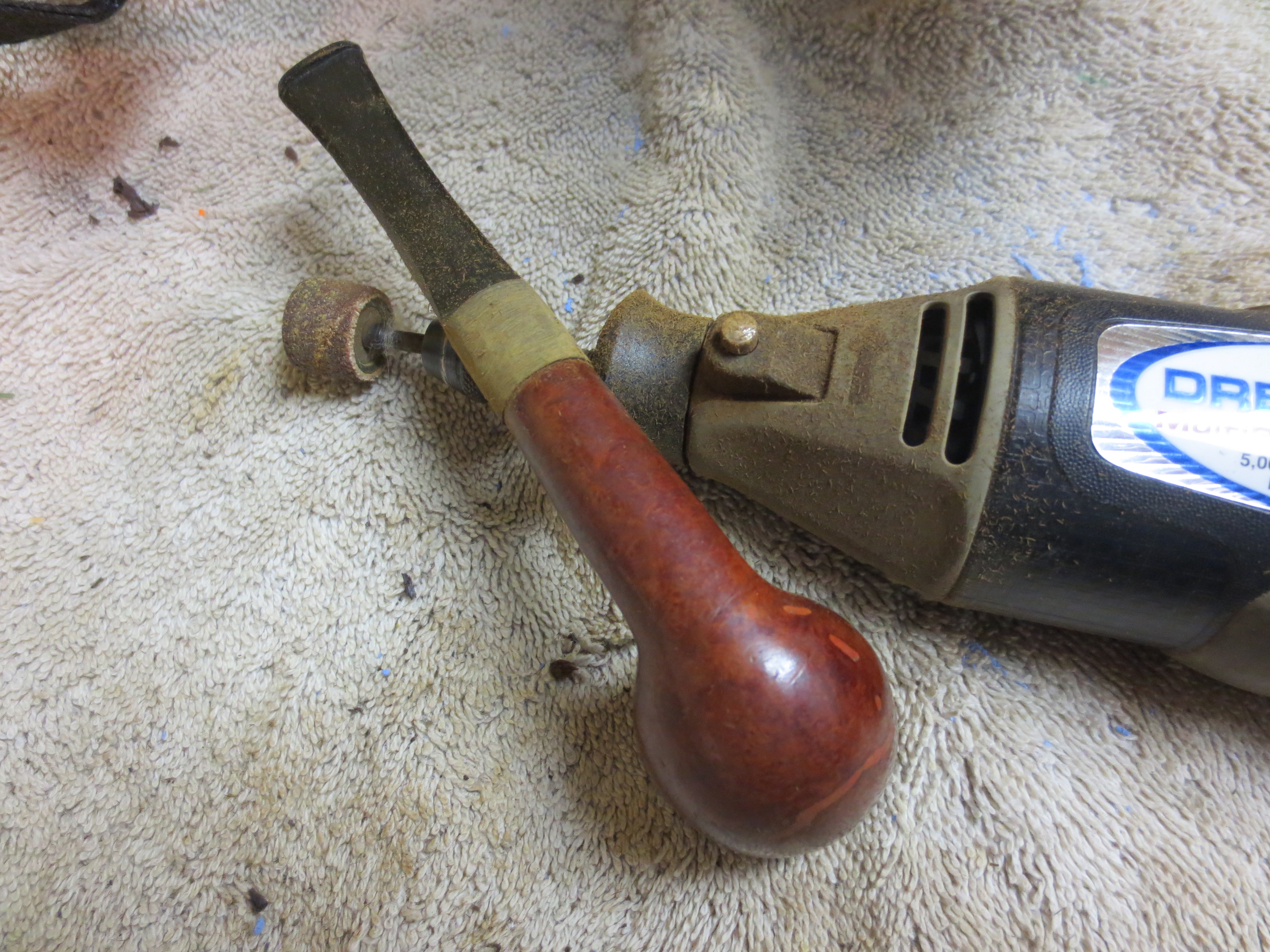
I decided to work on the fit of the stem first and trim it down to size. I took it to my work table where I keep my Dremel. I have the larger sanding drum on the Dremel and I have found that run at a medium speed it works well to trim down the stems to fit the shanks. I work carefully so that I do not damage the shank or cut too deeply into the stem. The next seven photos show the work on the stem and the progress from the pictures above to the last photo in the seven. I always work to get the stem as close to the diameter of the shank as I can so that I have less work to do with the sandpaper. Note also the visible fills in the bowl. They would make it a natural candidate for rustication when I got to that point.

ImageImageImageImageImageImageImage

The next five photos show the sanding progress on the stem. I kept in on the shank to reduce the risk of rounding the edges/shoulders on the stem. I worked with a medium grit emery paper and 240 and 340 grit sandpaper. When I get to this point in the shaping of the stem I work to remove the excess vulcanite more slowly and work at removing the scratches left by the Dremel. The fills are very visible in these photos as is the shiny varnish finish on the pipe.

ImageImageImageImageImage

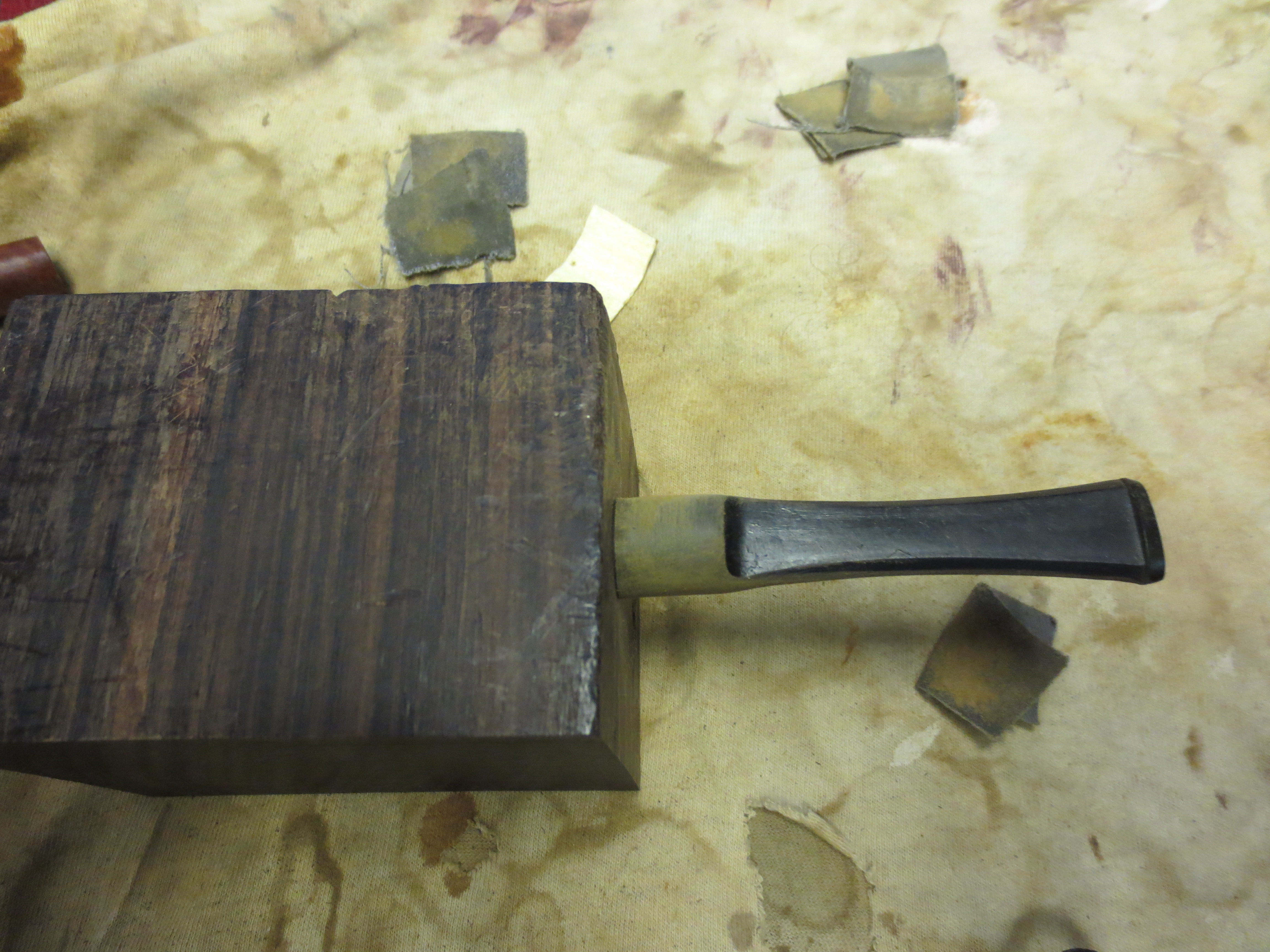
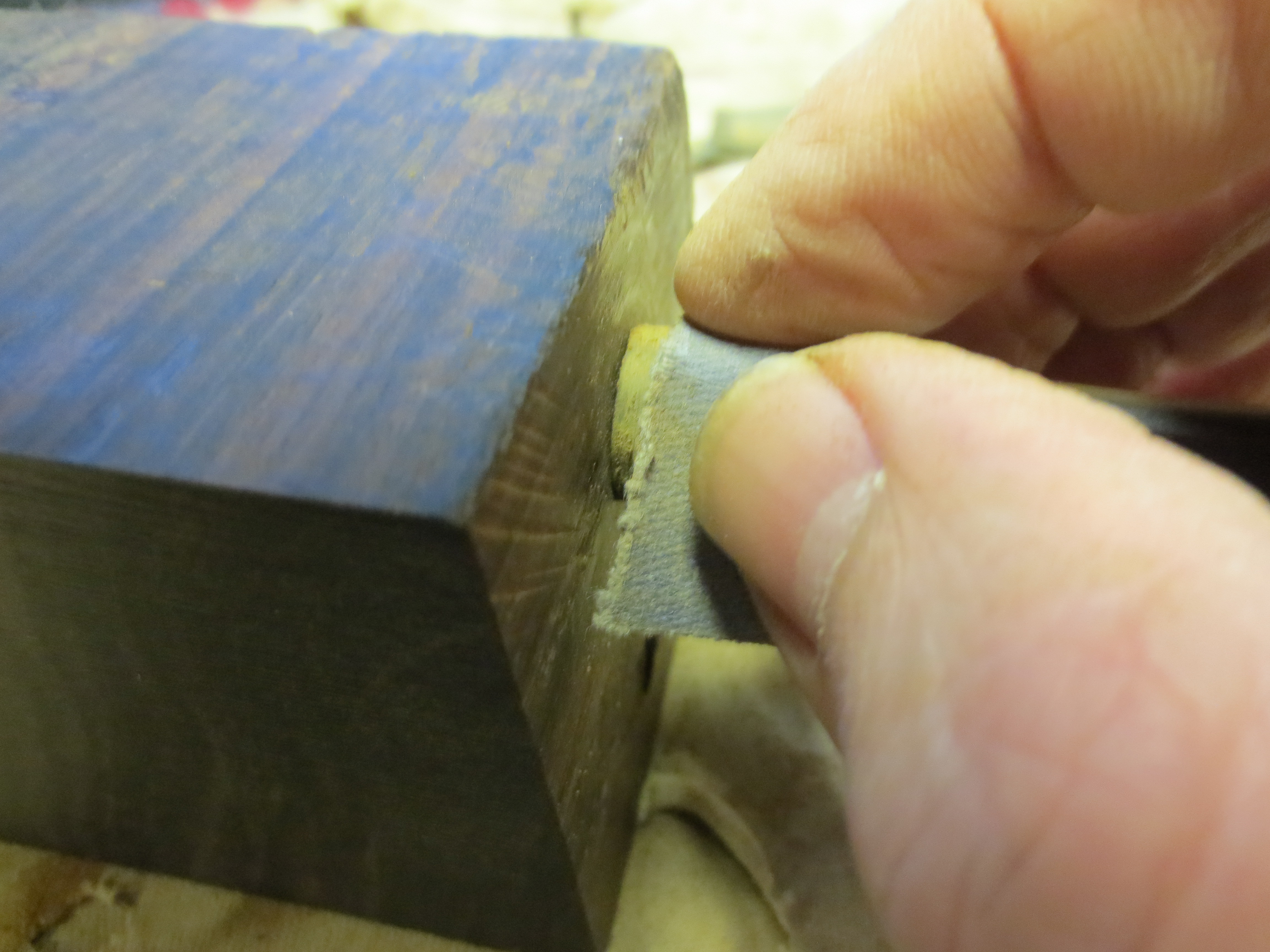
I am working on a block to hold the stem while I do the shaping sanding on them. I drilled out a small block of ebony that I have here to the size of the tenon and inserted the stem in the block. Then I can work the edge of the stem and not risk rounding the shoulders. This is still in the experimental stages and I have already decided on some significant improvements. I hold the stem tight against the block and work the folded sandpaper against the block to smooth out that part of the stem. The next three photos give the idea that is in its infancy stage. There will be more to come on this process in the days ahead.

ImageImageImage

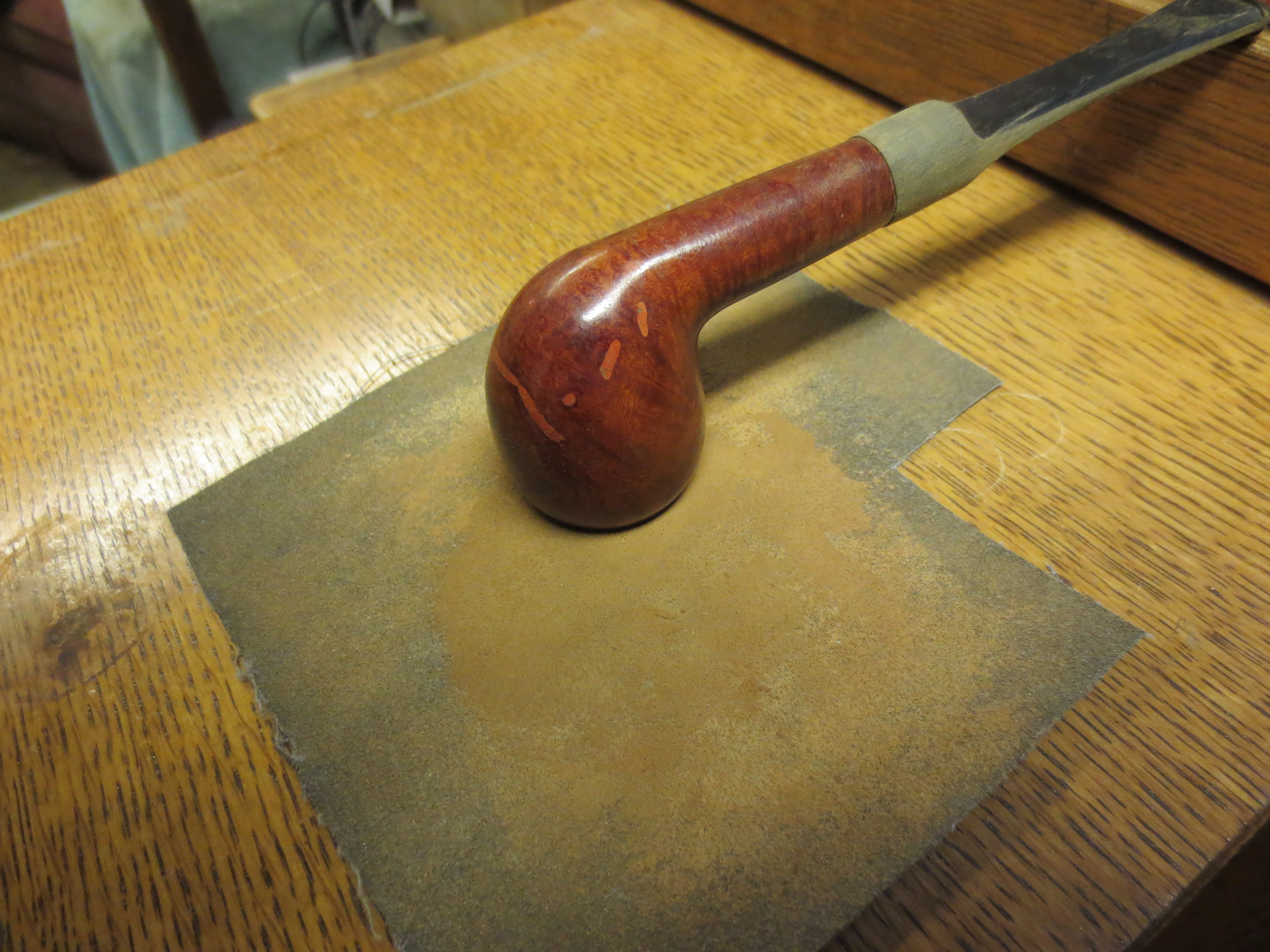
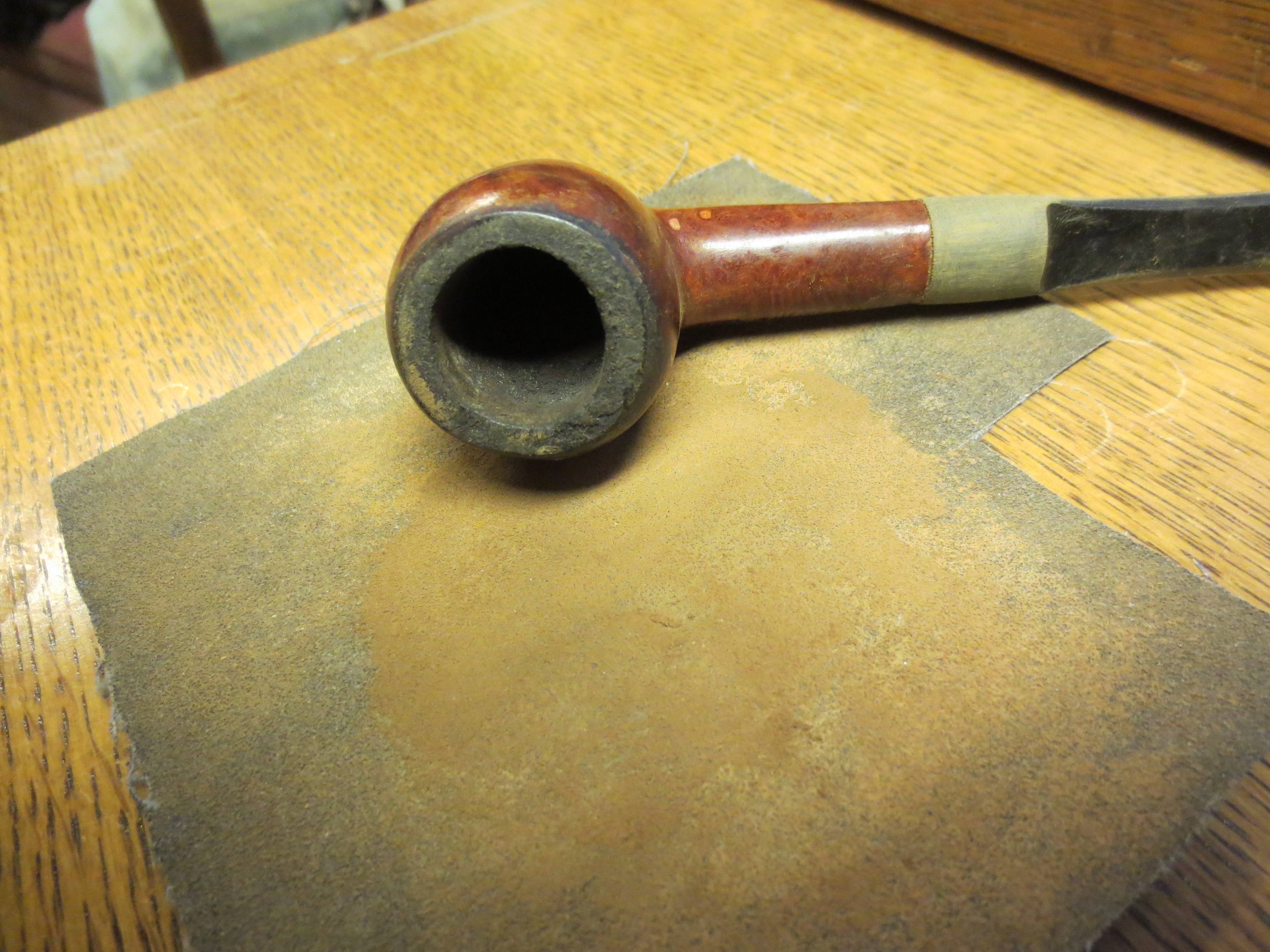
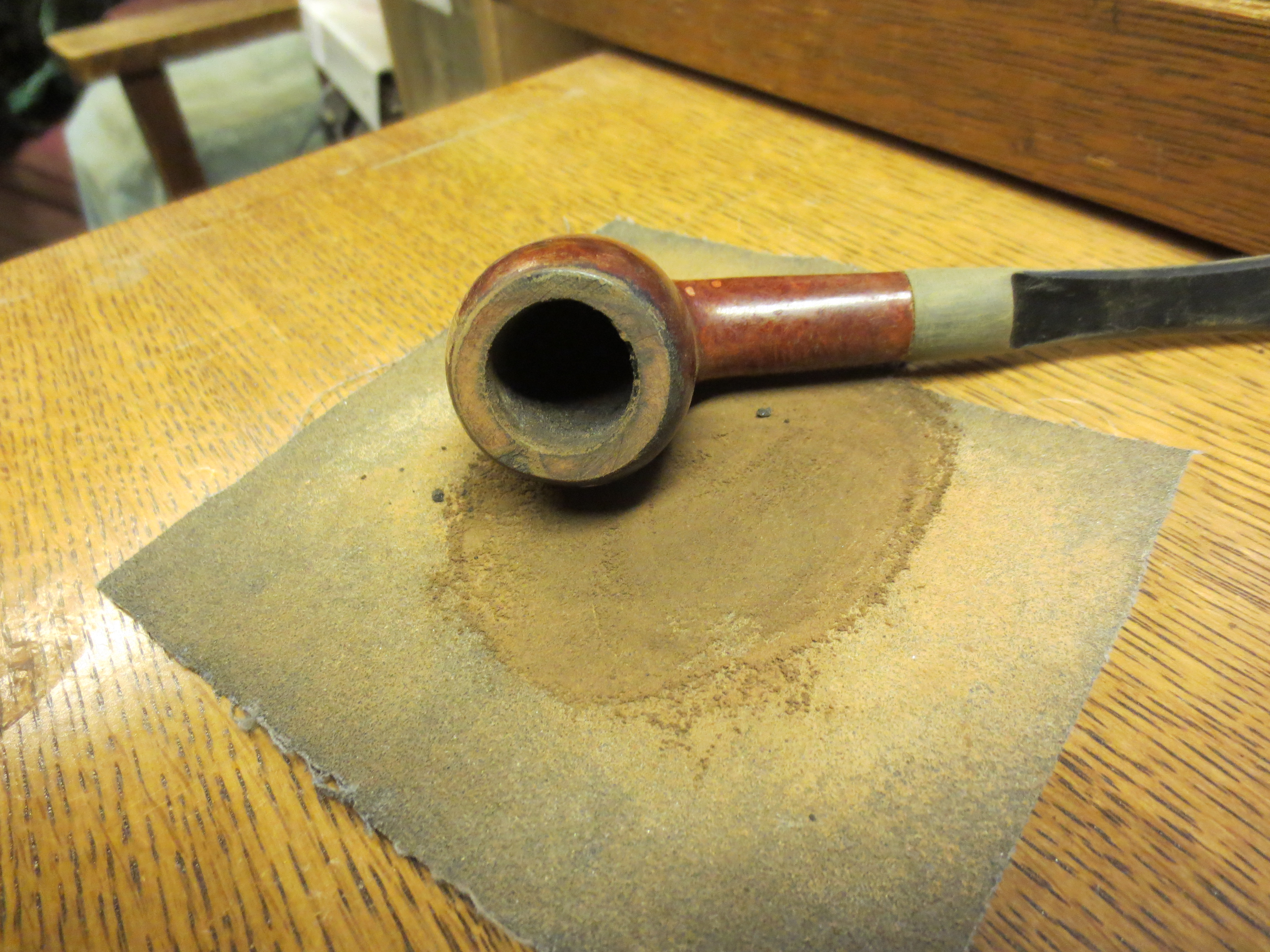
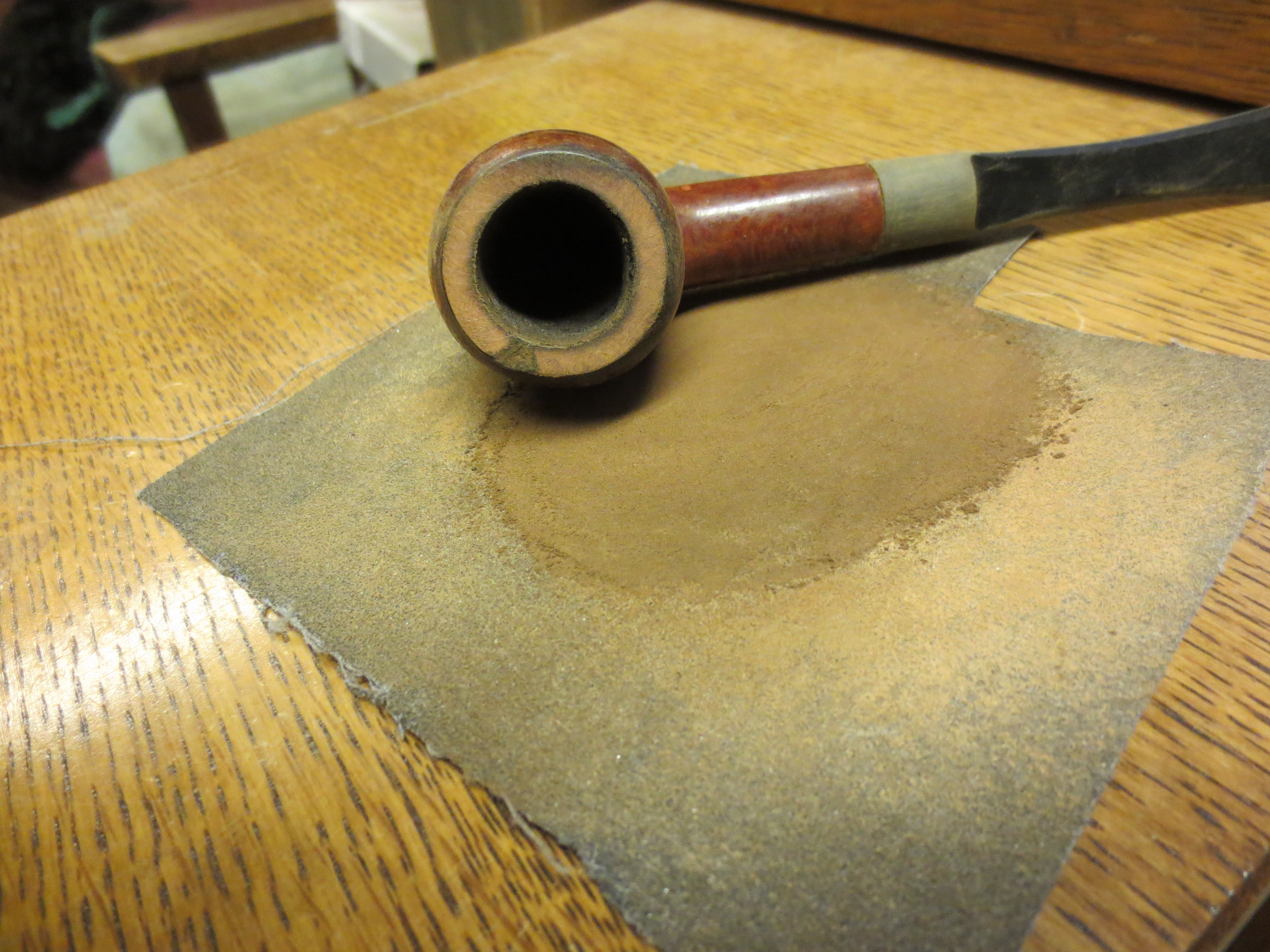
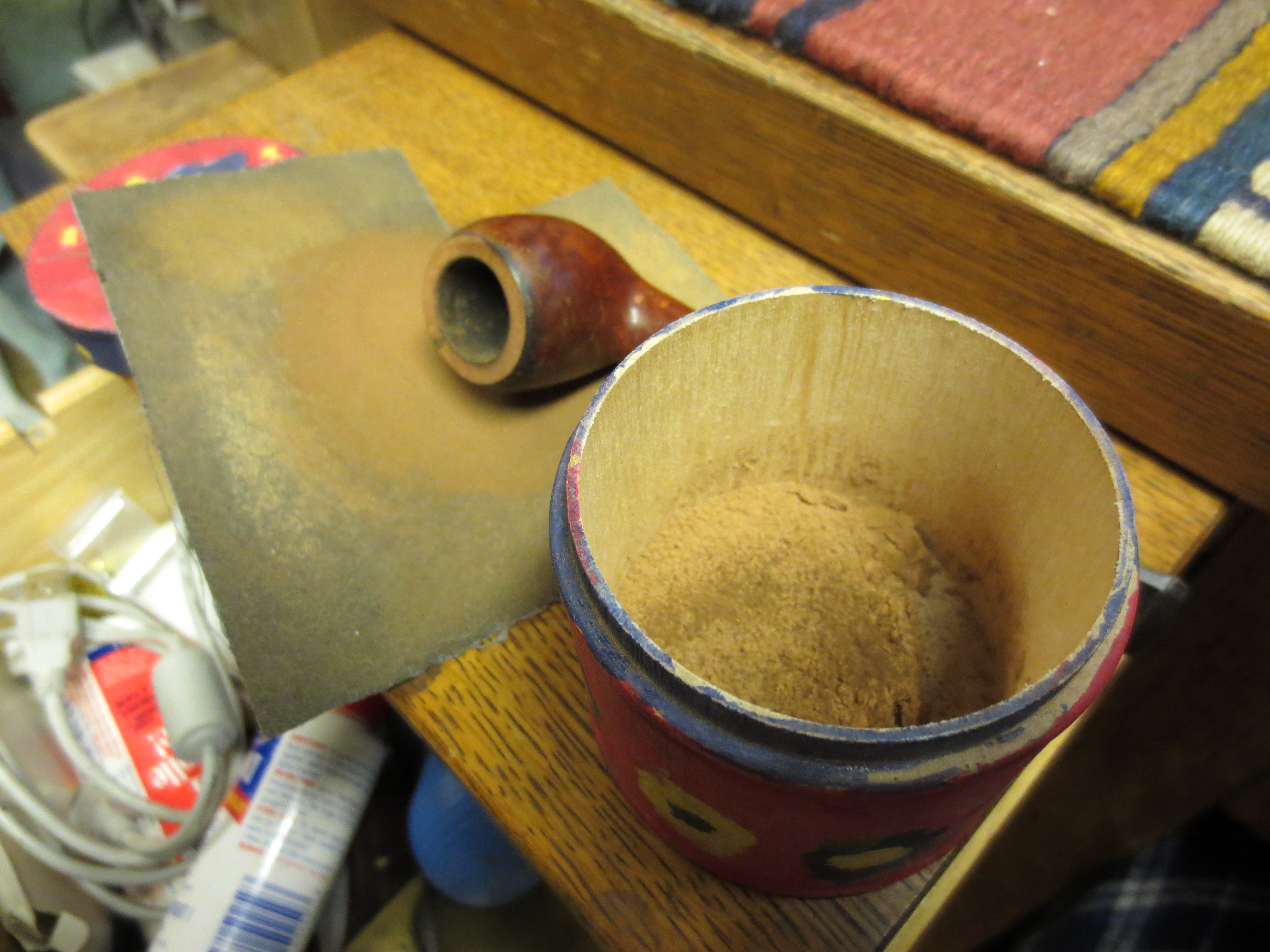
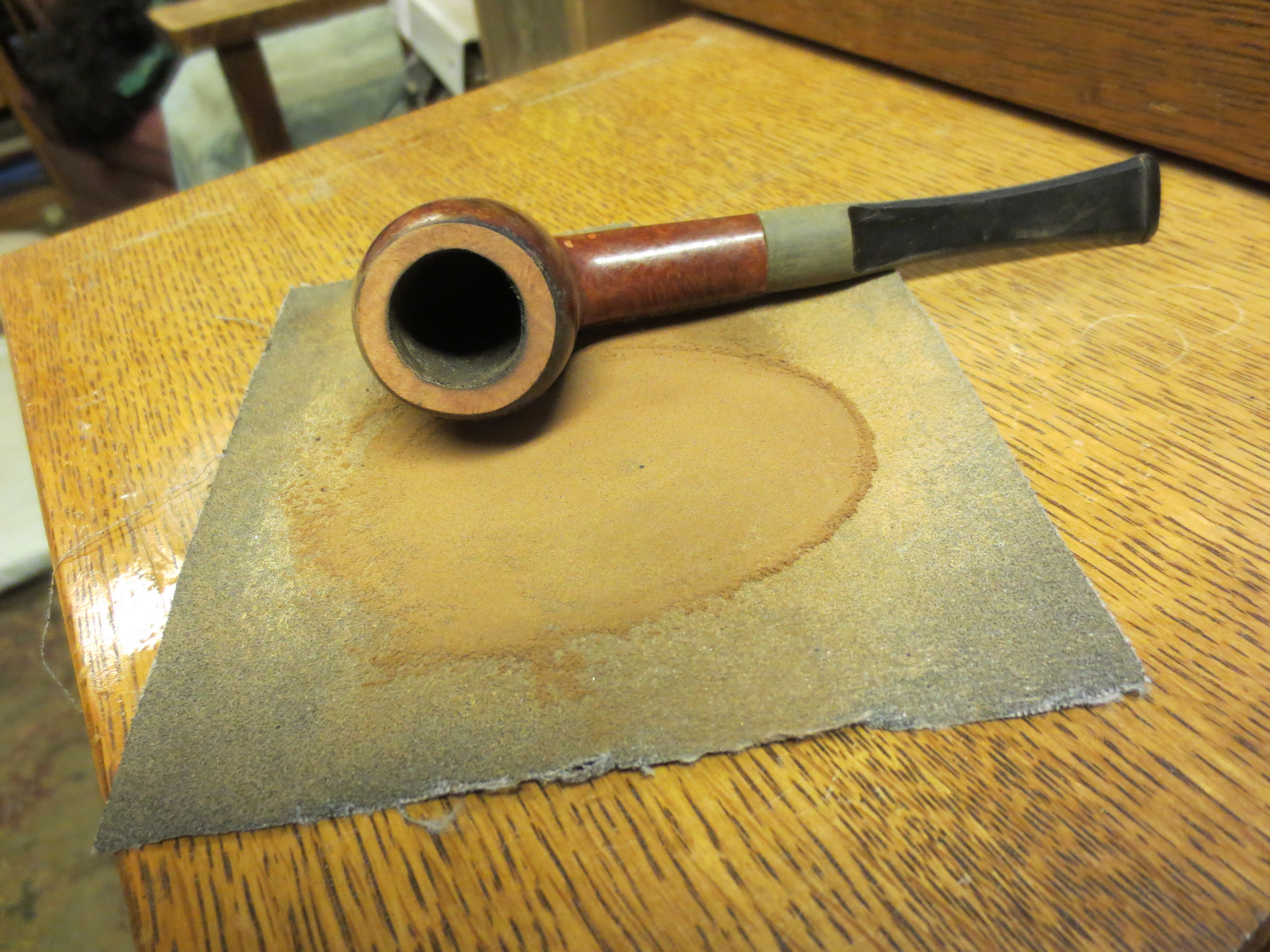
Once the stem was round and even – there were no bulges or dips in the line of the stem – I moved to the bowl. I decided to top it to get rid of the gouged out spot and to clean up the tars and burn to the rim. I set up my sandpaper (medium grit emery paper in this case to start with) on my flat board and began to twist the bowl against the paper in a clockwise direction. The next seven photos show the progress of the topping. I clean off the sandpaper regularly throughout the sanding and collect it in the wooden box that is pictured in these photos. It is this briar dust that I use for replacing the putty fills in the pipes that I work on. The final photo in the set shows a sanding sponge (medium grit) that I use to finish topping the bowl and to remove the scratches left by the emery cloth.

ImageImageImageImageImageImageImage

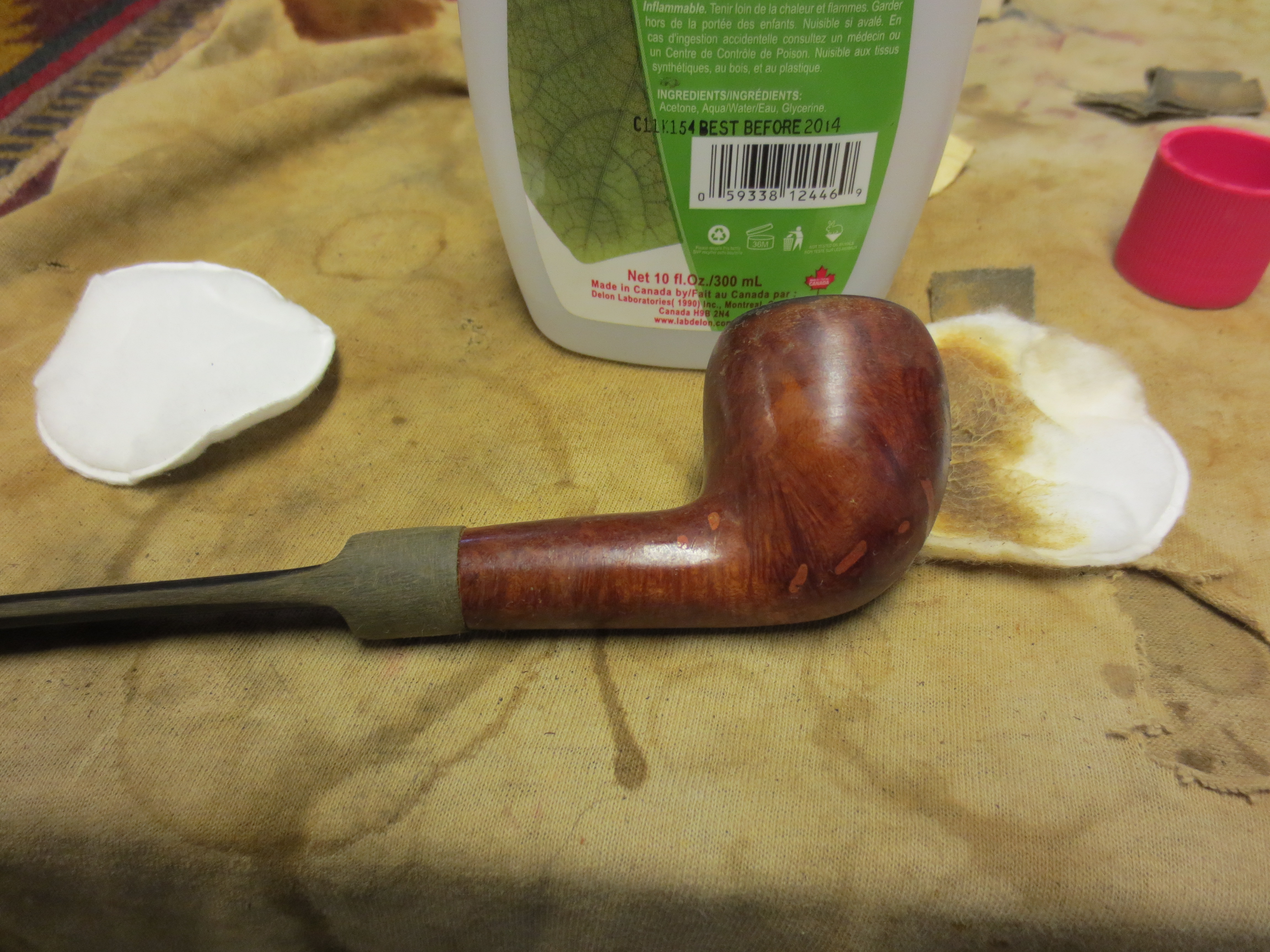
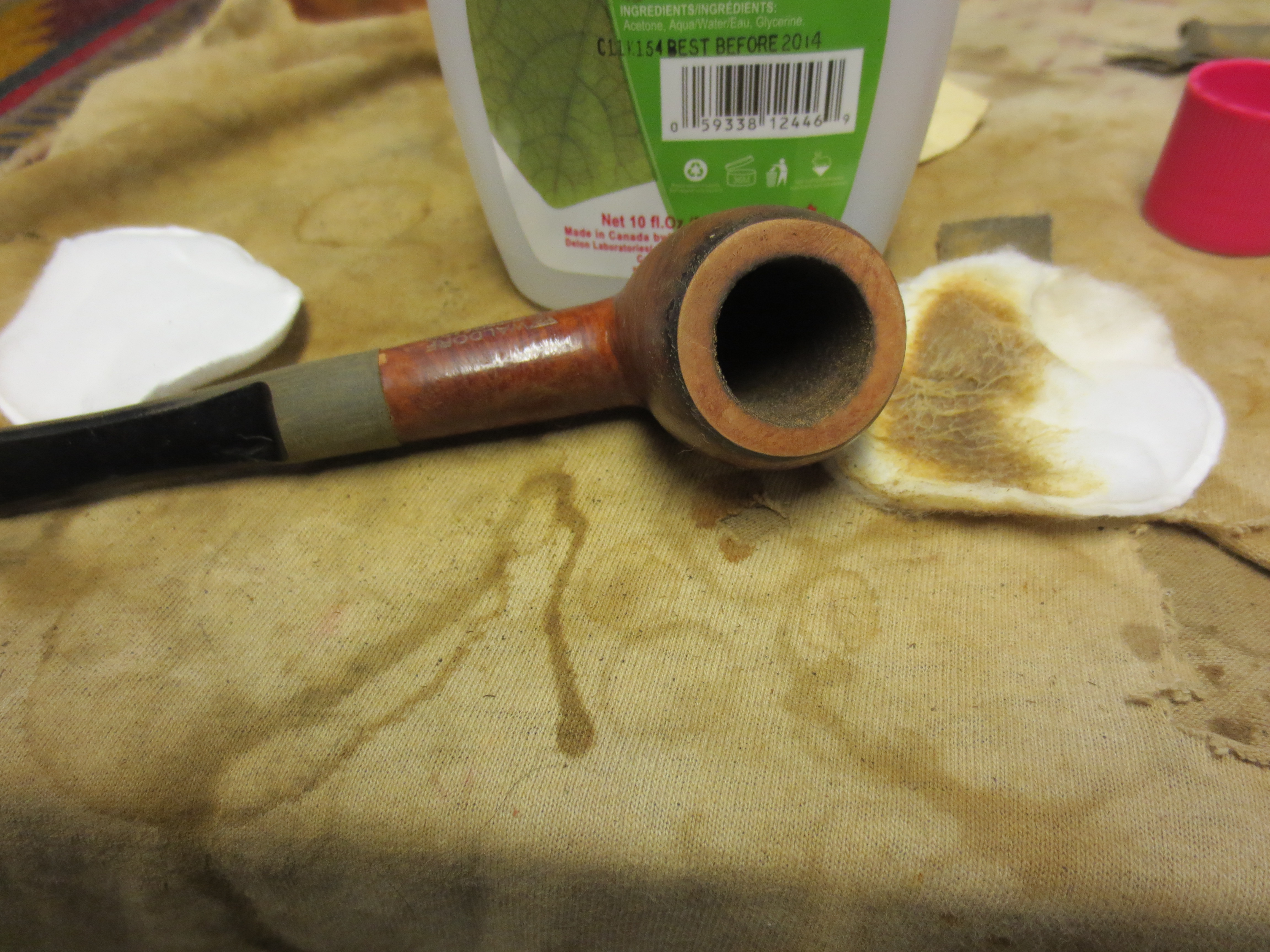
After topping the bowl I wiped the outside of the bowl down with acetone on a cotton pad. I wanted to break up the crackled finish that is visible above and also remove the darkening and grime on the top edges of the bowl. The next five photos show the progress in removing the finish on the pipe. Once it is gone you can clearly see the fills and also understand why I have chosen to rusticate this pipe.

ImageImageImageIMG_0259IMG_0260

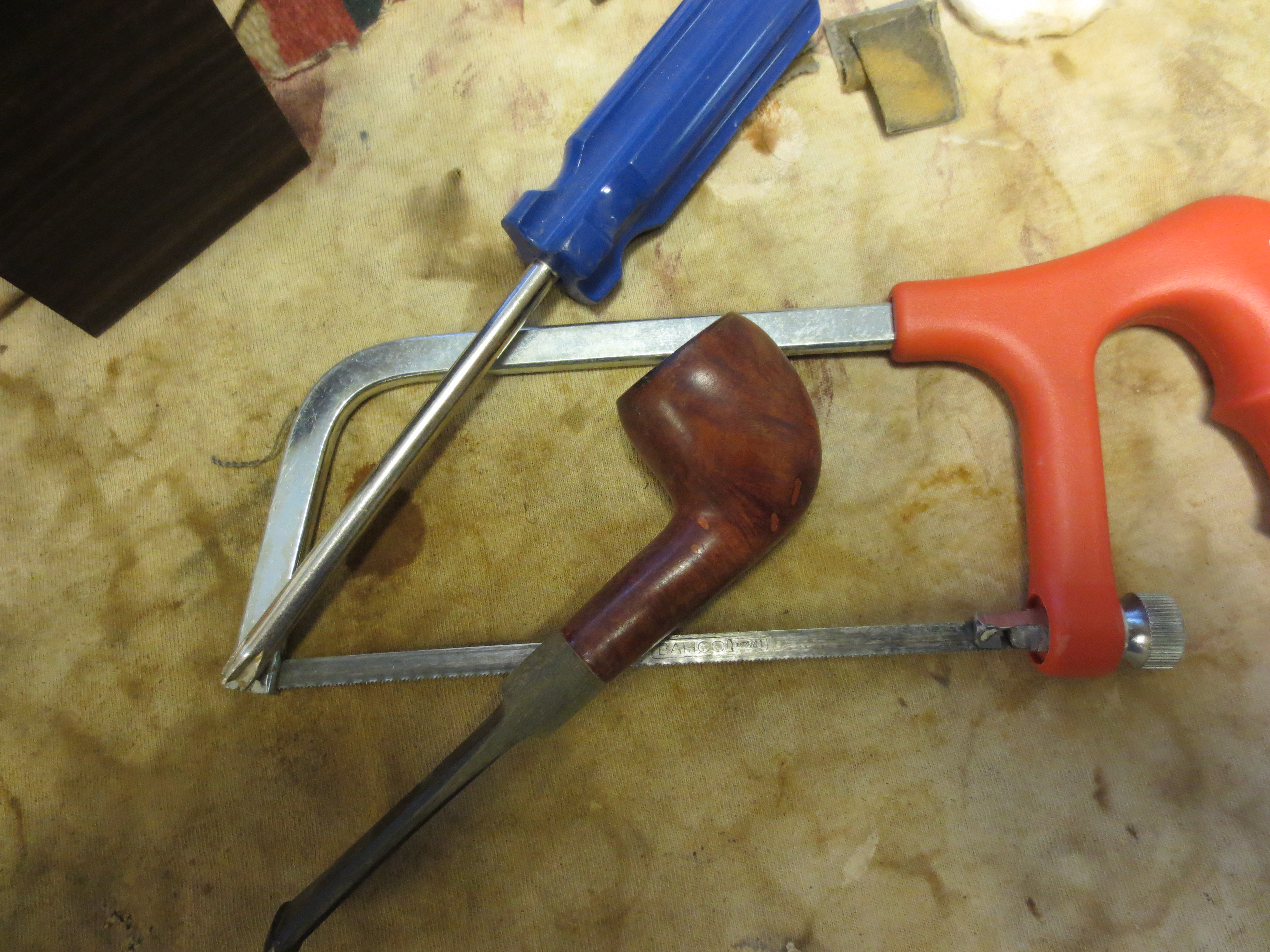
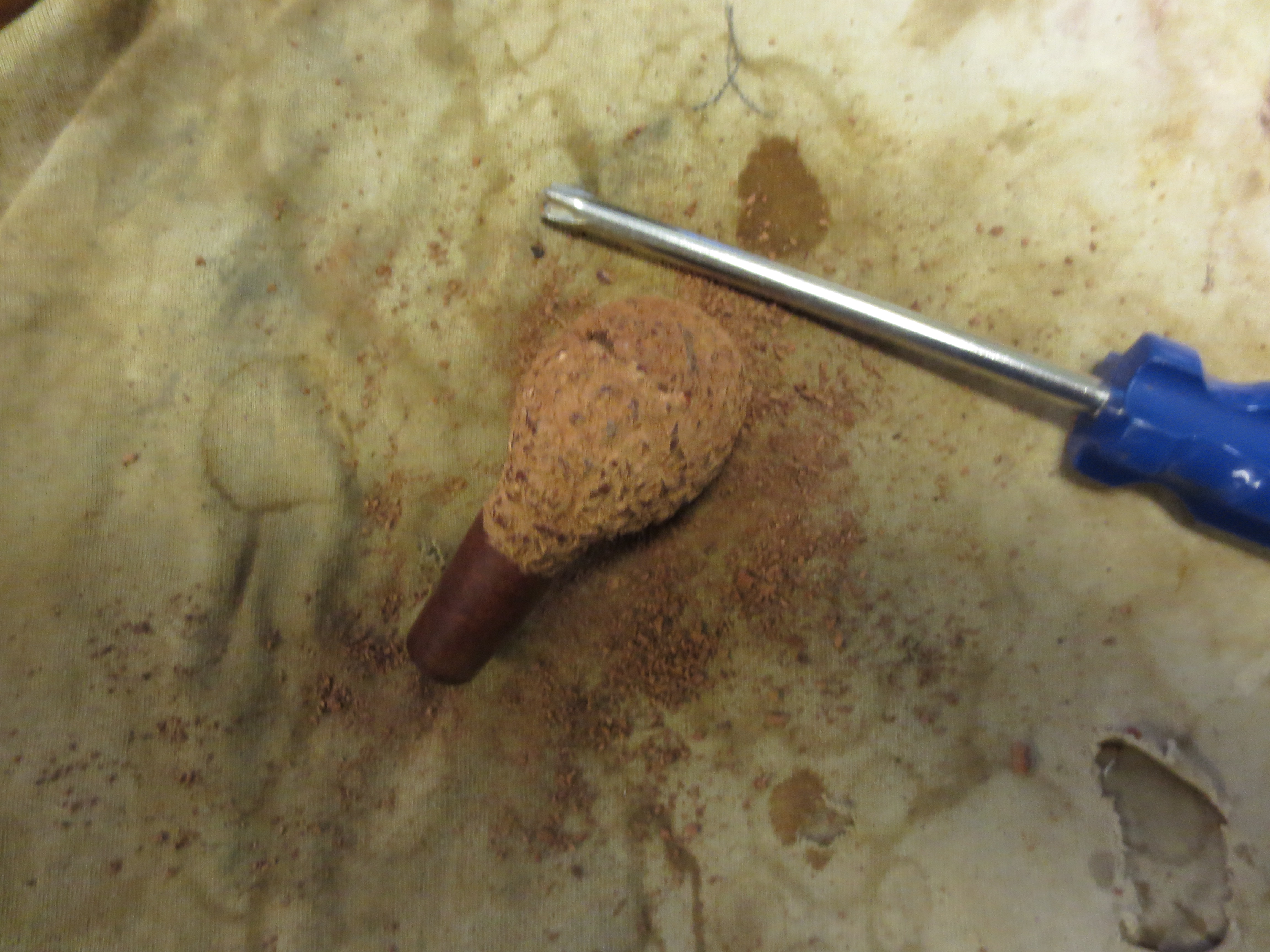
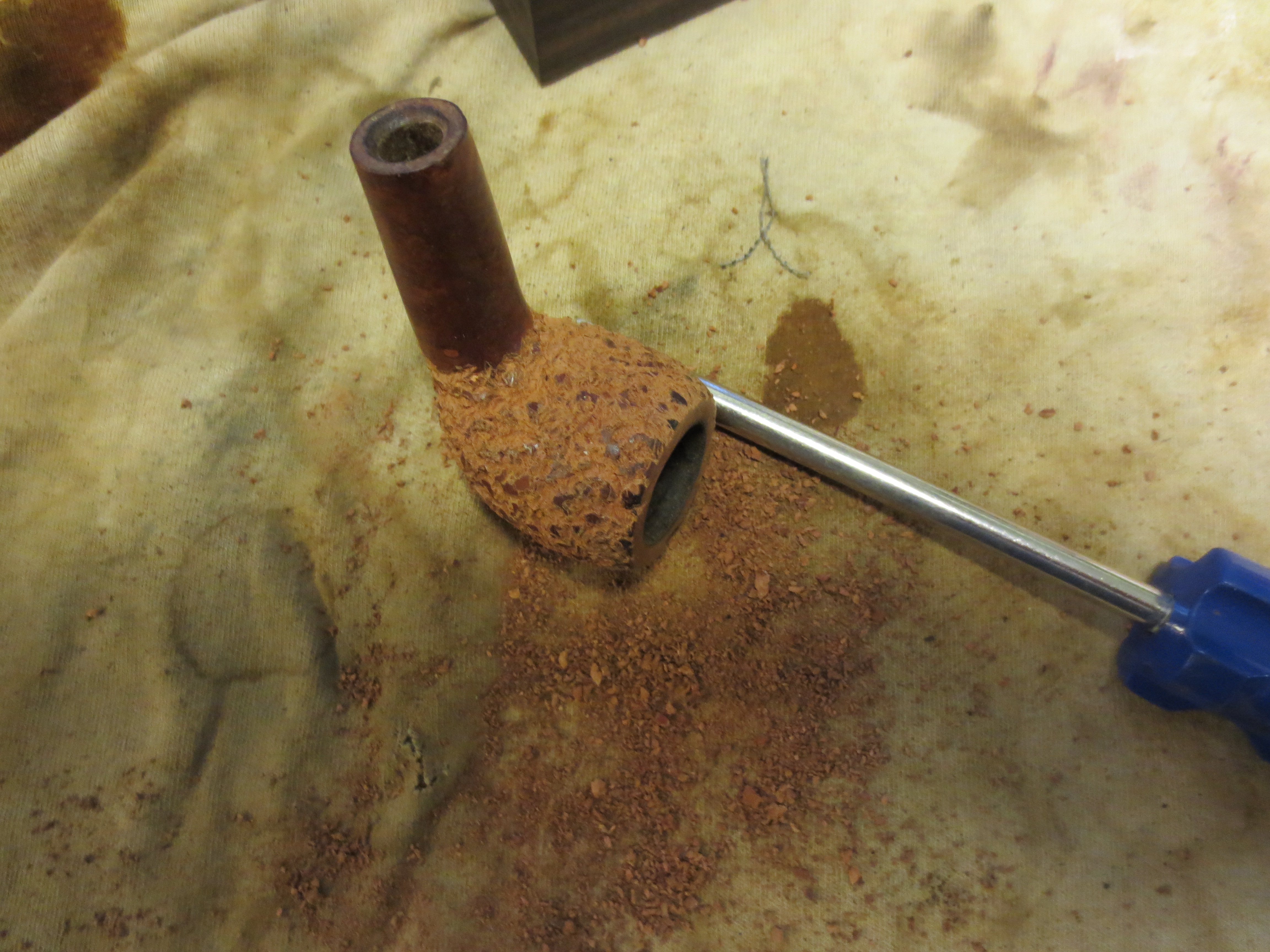
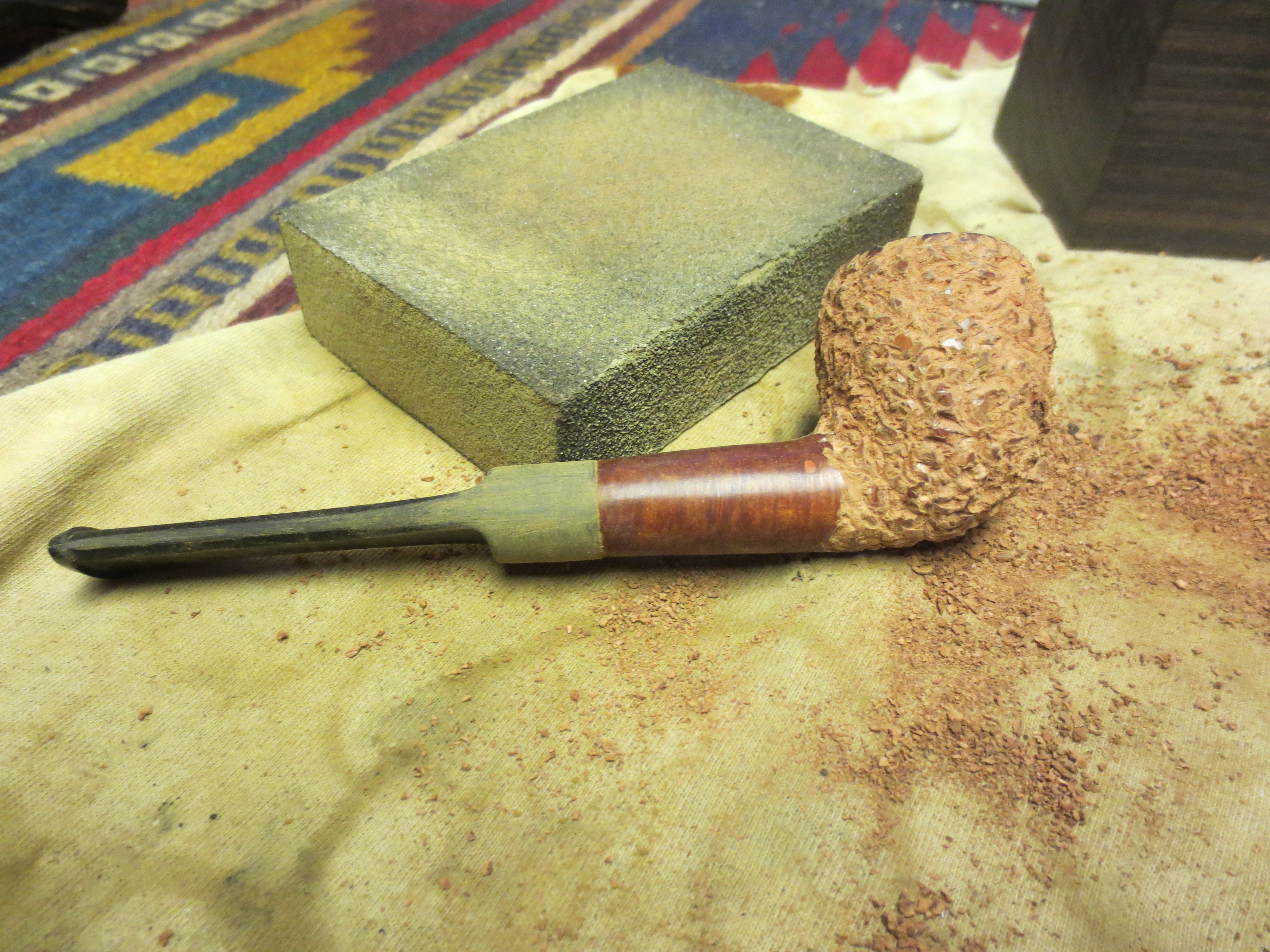
With the finish removed (maybe unnecessary for some, but I wanted a clean surface to rusticate) I brought out the tools that I use for rusticating a pipe. I will often use a small hack saw or coping saw to scar the surface of the bowl before using the modified Philips screwdriver that is my main rusticator. The first picture below shows the pipe and the tools ready to use. I used the saw for a few strokes and decided to skip that step and go with the screwdriver alone. The eleven photos following show the process and progress of the rustication. I generally work on one side at a time. I push the rim against the table top and rusticate the side from the rim edge to the bottom of the bowl. I work my way around the pipe, from the side to the back, to the opposite side to the front of the bowl. On this pipe I decided to leave the shank and the rim smooth as they had no fills and I liked the look of the partial rustication.
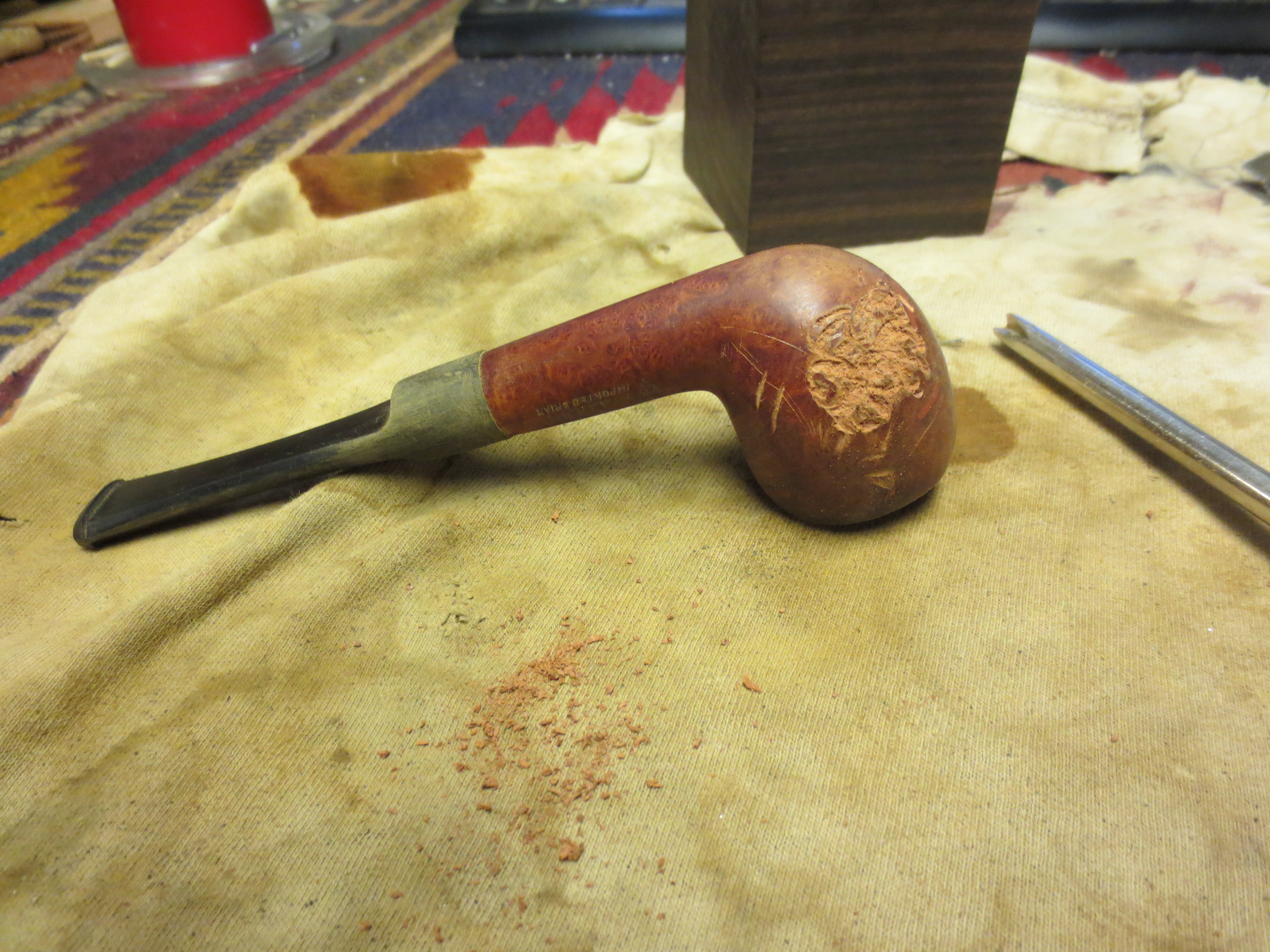
IMG_0261 IMG_0262 IMG_0263 IMG_0264 IMG_0265 IMG_0266 IMG_0267 IMG_0268 IMG_0269 IMG_0270 IMG_0271Once the rustication was done the first time I went over it a second time with the rusticator and removed more briar and made the cuts deeper. The next series of five photos show the finished rustication. At this point I was ready to work on the shank stem junction and smooth it out.

IMG_0272 IMG_0273 IMG_0274 IMG_0275 IMG_0276

I sanded the rim, the shank and the stem with 240 grit sandpaper to remove the remaining finish on the bowl and to begin to even out the transition between the shank and the stem. I find it is easier when I am reworking a whole pipe to treat it as if it is a new pipe that I am working on fitting a stem. That way I can sand the entirety as a unit instead of in parts. You have to be careful during this process as the hardness of the briar and the hardness of the vulcanite are different and you can easily remove too much from the shank. The next four photos show the clean and unfinished pipe. The briar is clean and sanded. I used the 240 and 320 grit sandpaper and a fine grit sanding sponge to remove the finish and the scratches. I wiped the bowl and shank down with acetone dampened cotton pad to clean off the dust and ready the pipe for a new stain coat.
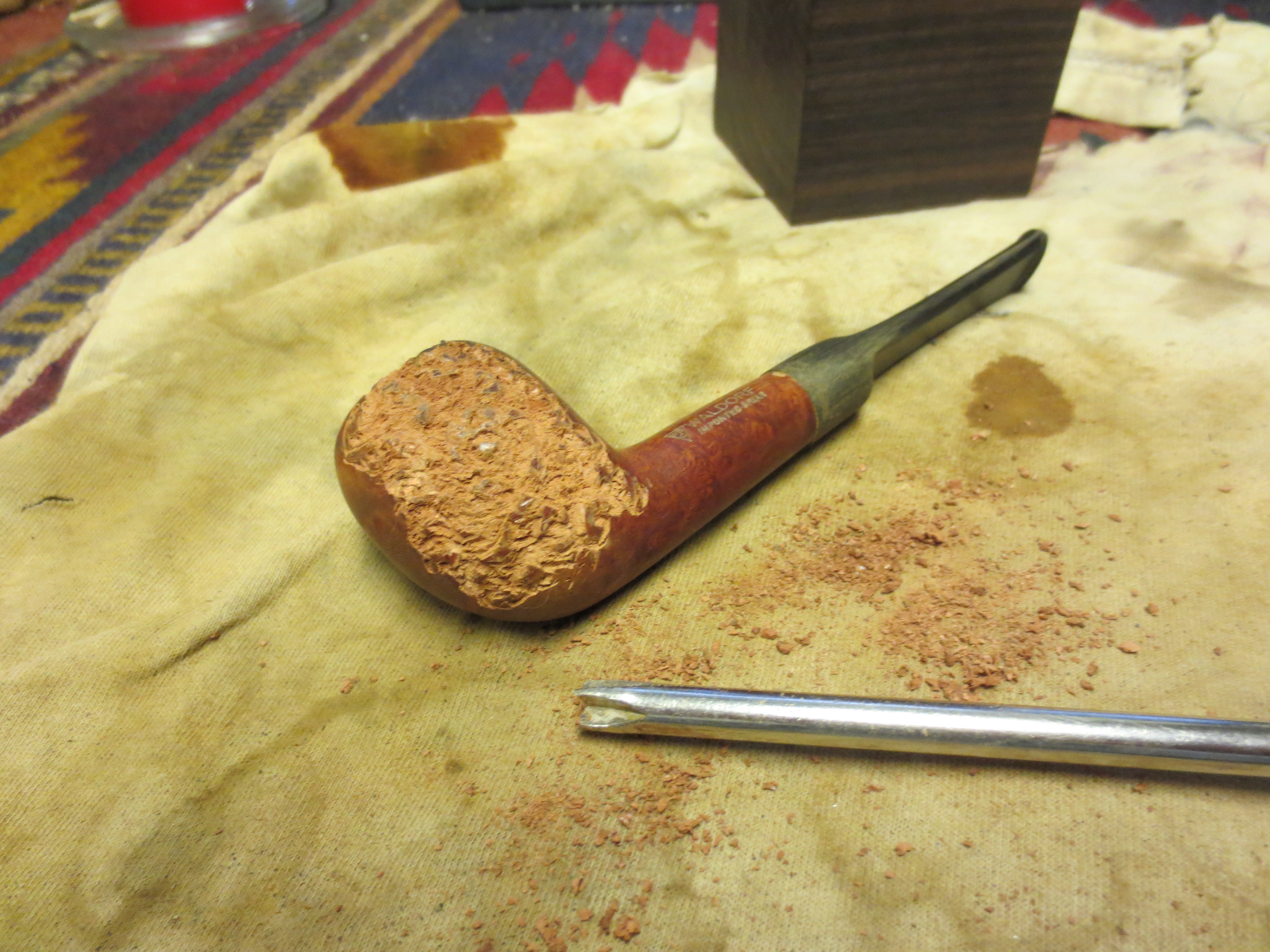
IMG_0277 IMG_0278 IMG_0279 IMG_0280

I decided to use a dark brown aniline stain for the finish on this pipe. I had learned from experience that I liked the way the dark brown settled into the crevices of the rustication and how it would be able to be washed to a lighter colour for contrast on the shank and the rim. I applied the stain with a dauber, as usual I start on the bottom of the bowl and let the stain run upward to the rim and finish with the rim. I flamed it, restained it, and flamed it again. I restain the rim several times to get good coverage and flow down the rusticated outer edges of the rim. The next five photos show the pipe after it has been stained and before I took it to the buffer.

IMG_0281 IMG_0282 IMG_0283 IMG_0284 IMG_0285

The next series of three photos show the pipe after I buffed it with Tripoli and White Diamond. I also buffed the stem to get an idea of the depth of the scratches and the work that needed to be done. The stain on the rustication came out nicely with a flat finish at this point. I like the depth that it gives the finish. The shank and the rim are a shade lighter after buffing and there is a dark edge at the bowl shank angle. The shank and the rim would need some work to even out the stain and give it a uniform contrasting colour.

IMG_0286 IMG_0287 IMG_0288

I then went to work on the stem with the micromesh sanding pads. The next nine photos show the progress in polishing the stem and the shank and rim using 1500, 1800 and 2400 grit sanding pads. I wet sanded with these grits, wetting the pad and then sanding and wiping the stem and shank down before going on to the next grit. I was able to even out the stain on the shank and the bowl rim and blend them well with the edges and also remove many of the scratches in the stem.

IMG_0289 IMG_0290 IMG_0291 IMG_0292 IMG_0293 IMG_0294 IMG_0295 IMG_0296 IMG_0297

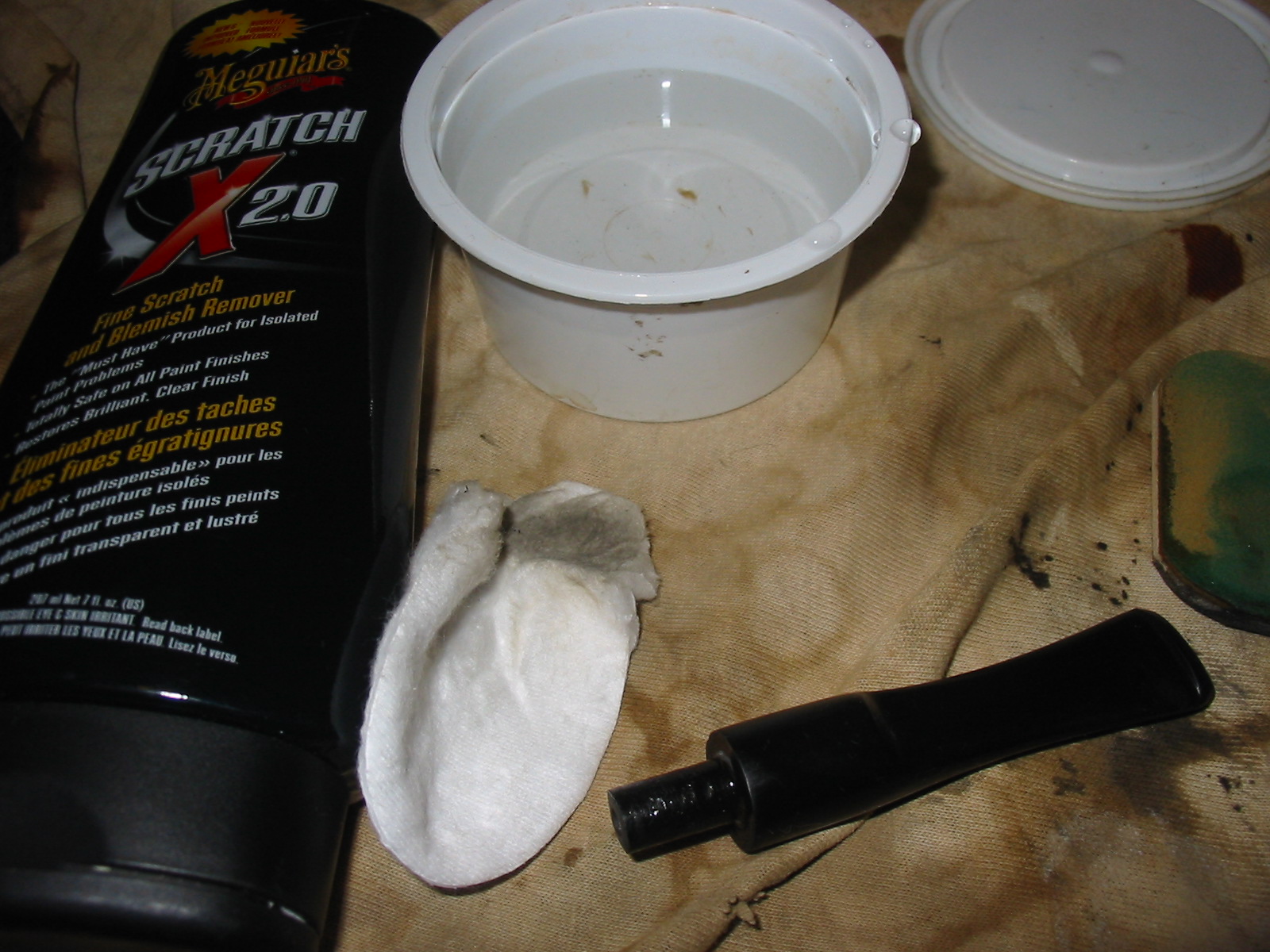
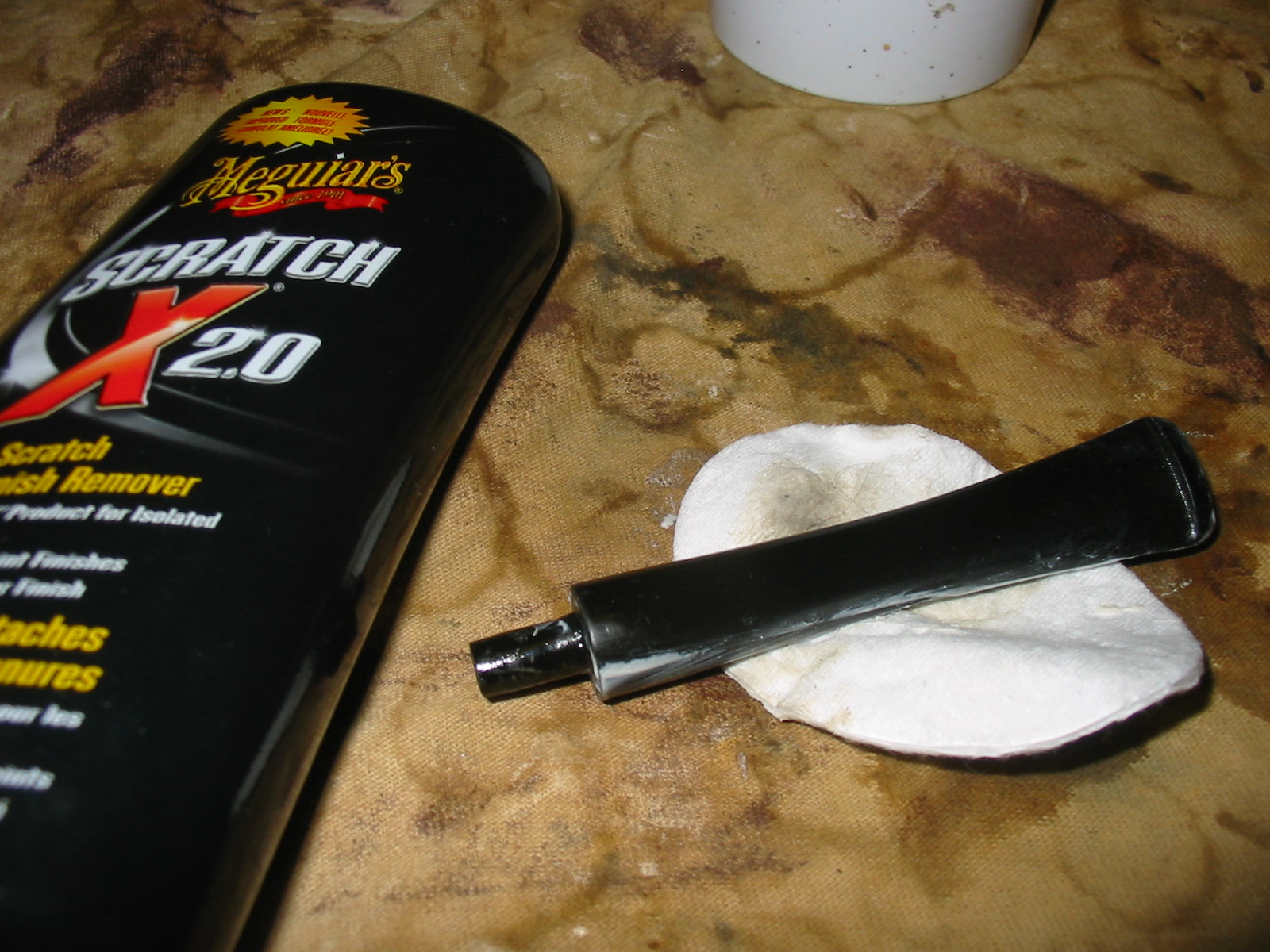
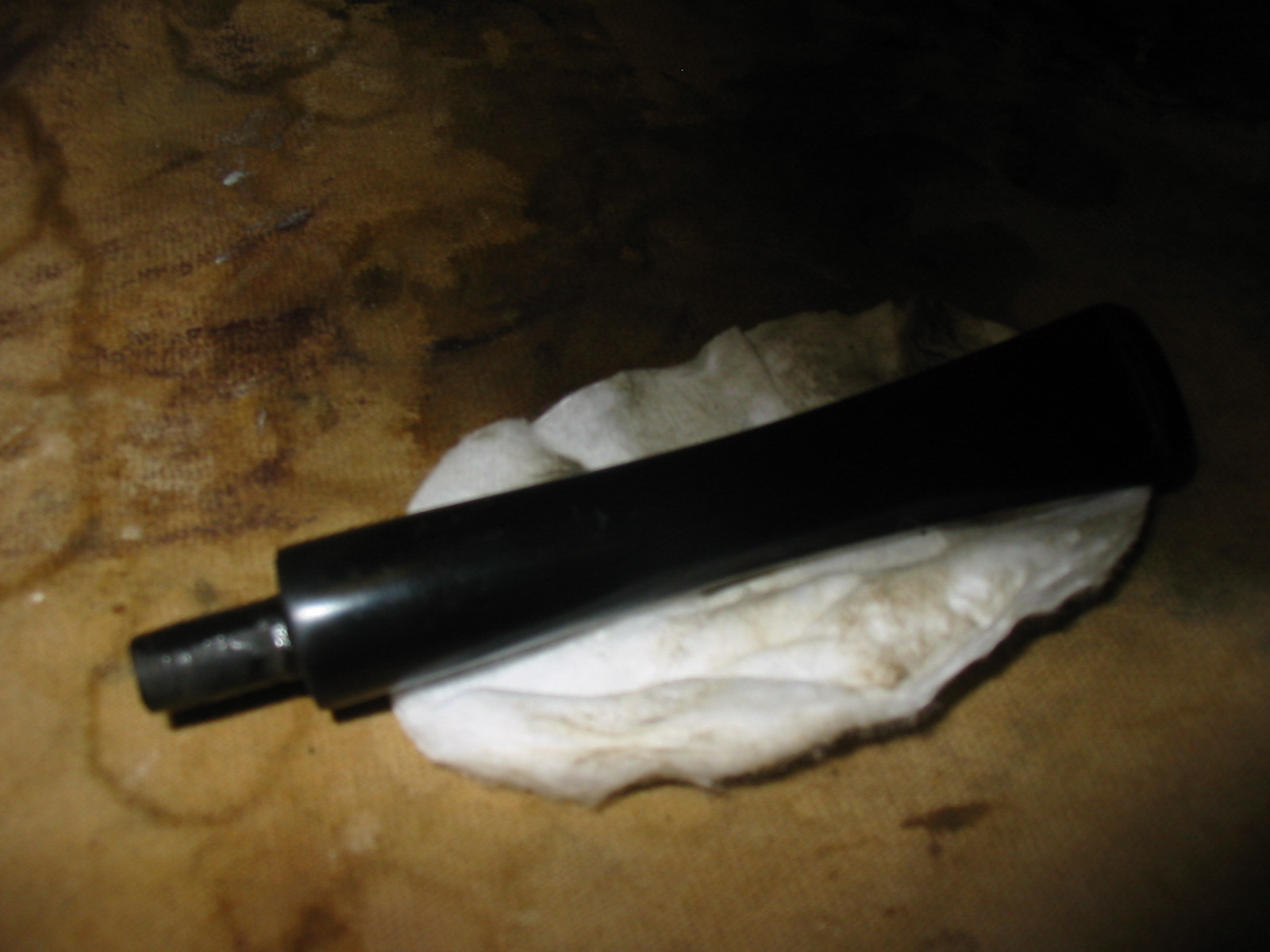
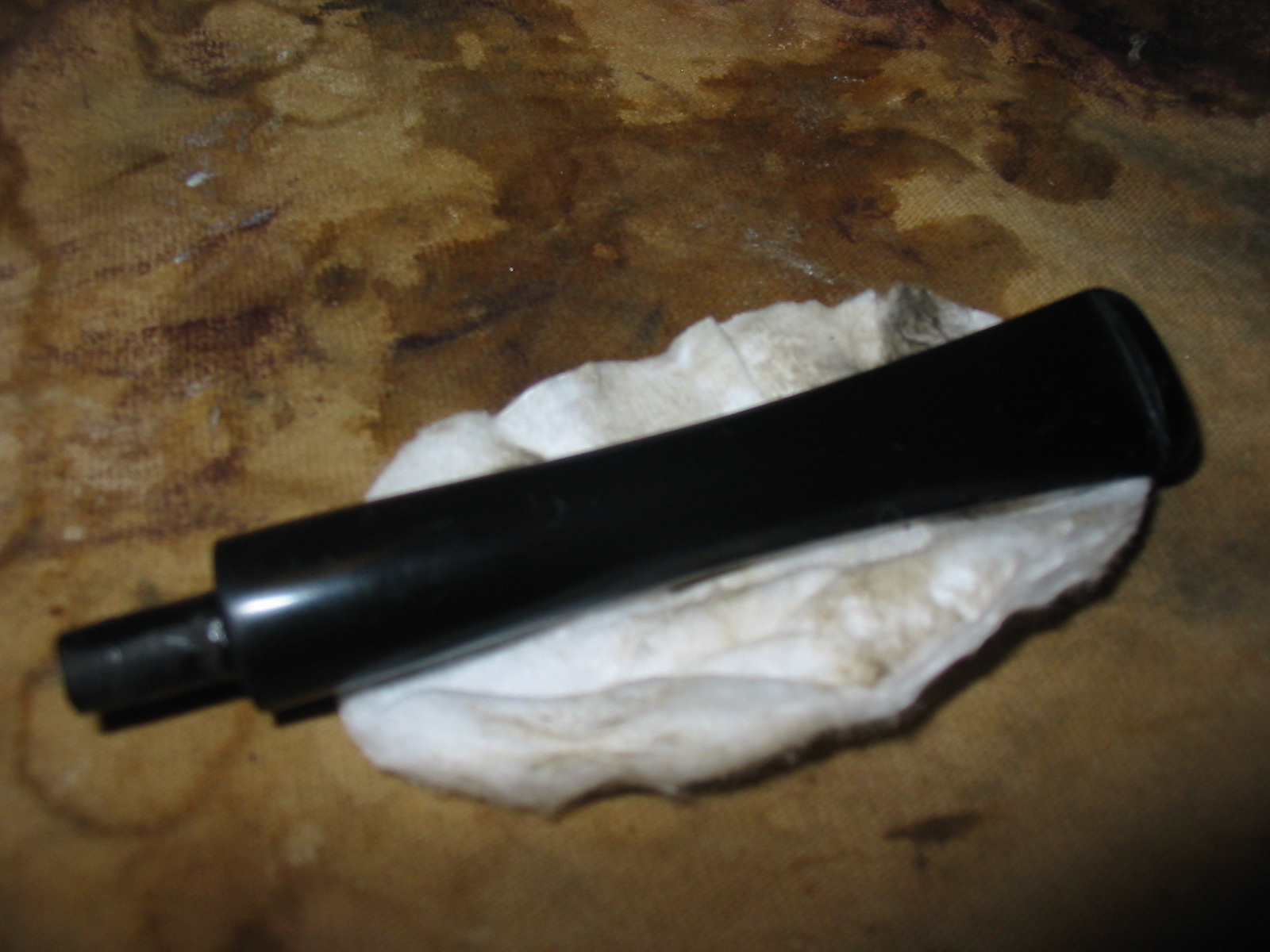
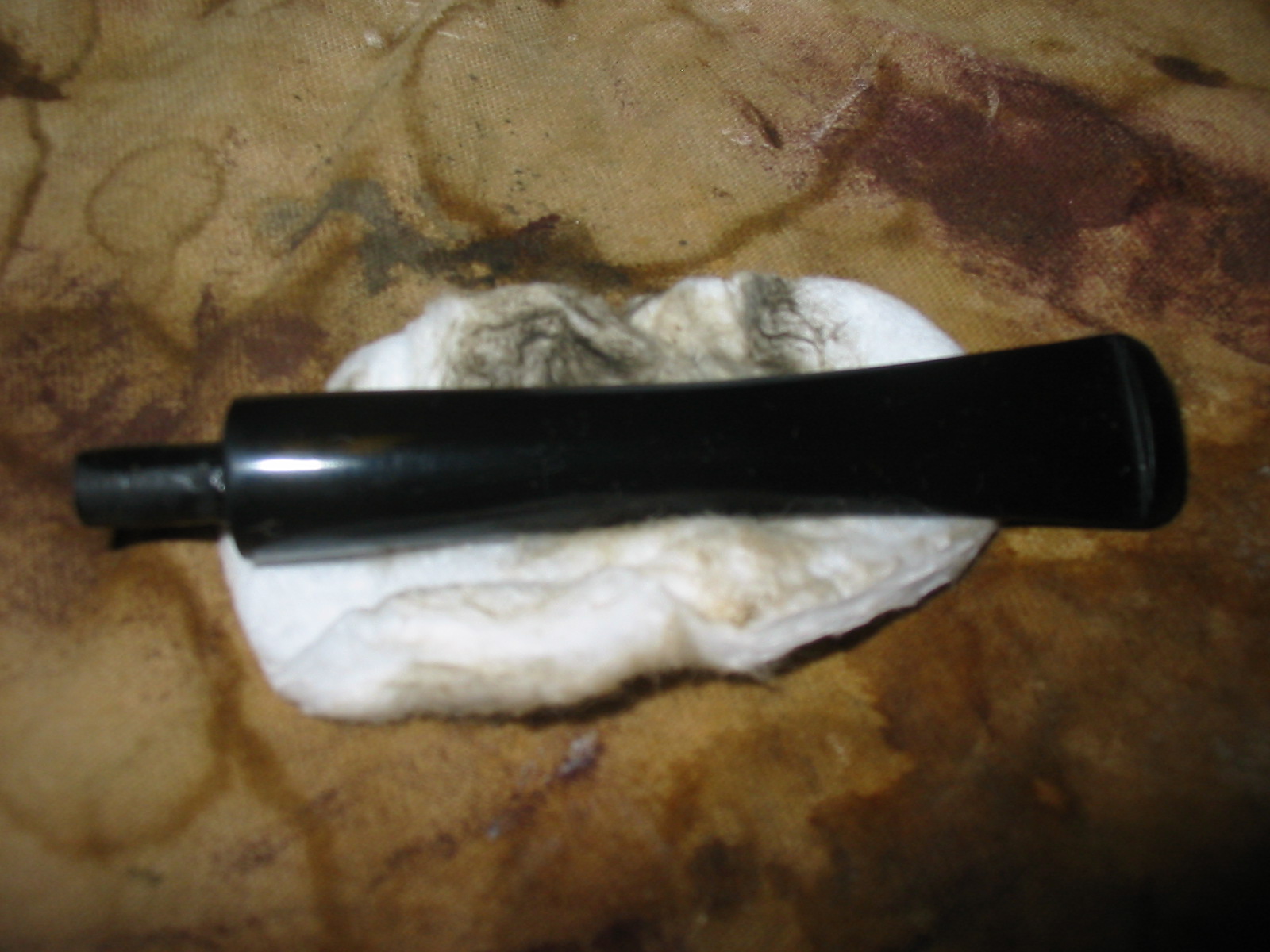
I went on to dry sand the stem with the rest of the micromesh sanding pads from 3200-12,000 grit. Each successive pad gave the stem more of a polish. When I had finished that I applied a coat of Maguiar’s Scratch X2.0 with my finger and scrubbed it off with a cotton pad and polished it to the shine that is shown below. Before finishing I sanded it a final time with the 12,000 grit micromesh pad and then gave it a coat of Obsidian Oil. The next four photos show the pipe just before I took it to the buffer for a final buff.

IMG_0298 IMG_0299 IMG_0300 IMG_0301

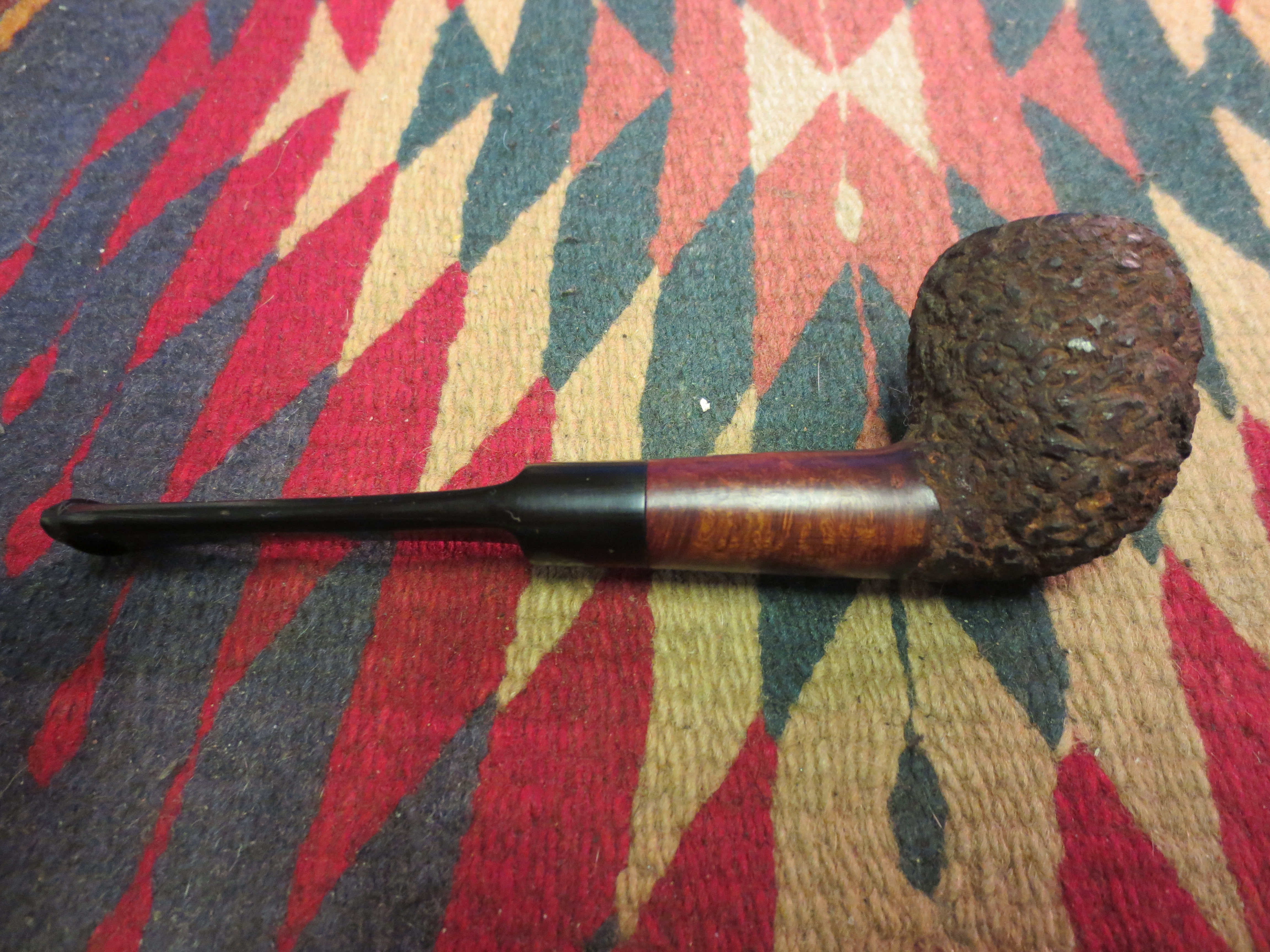
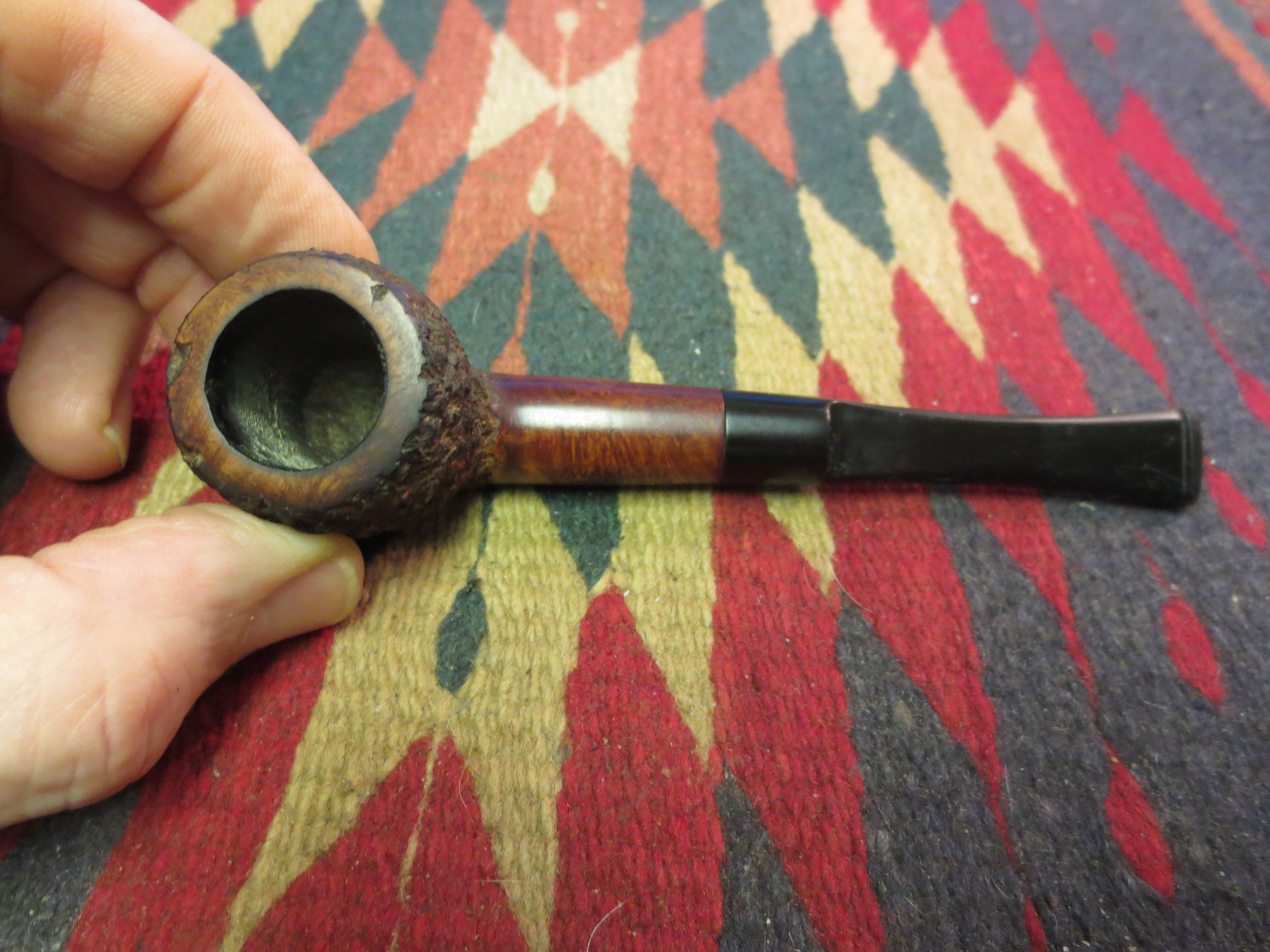
After buffing the pipe I was pleased that the original red stain came through the dark brown and gave the pipe a real contrast look. The finished pipe is pictured in the four photos below. It has a great feel in the hand and the rustication is tactile with the high spots showing dark and the valleys showing a lighter brown. The rim and the shank came out exactly how I wanted them and provide a contrast to the rustic bowl of the pipe. The stem is smooth and shiny and the pipe is ready for its new life.

IMG_0306 IMG_0307 IMG_0308 IMG_0309

Reborn London Royal Apple Restemmed with a Saddle Stem


Blog by Steve Laug

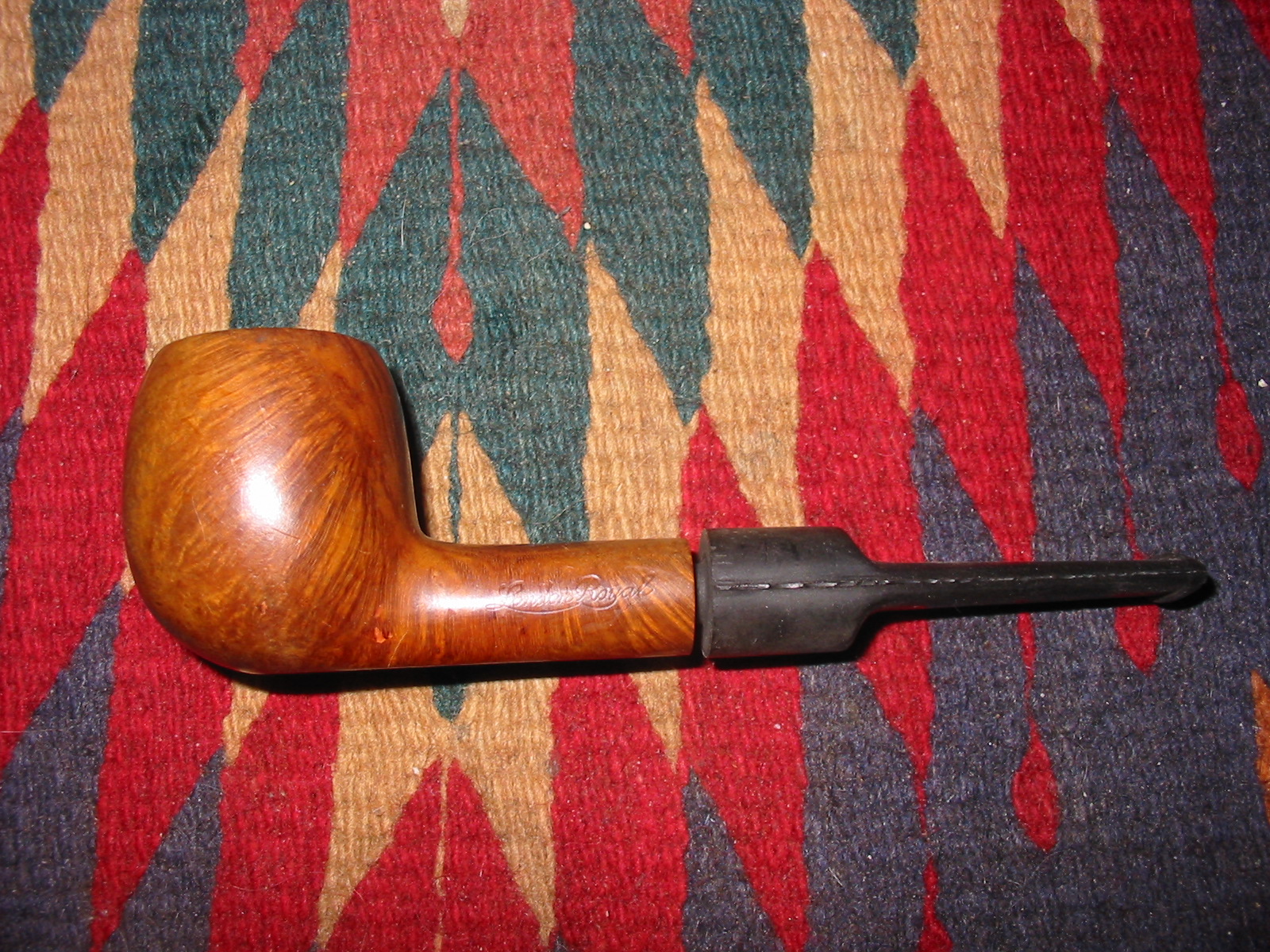
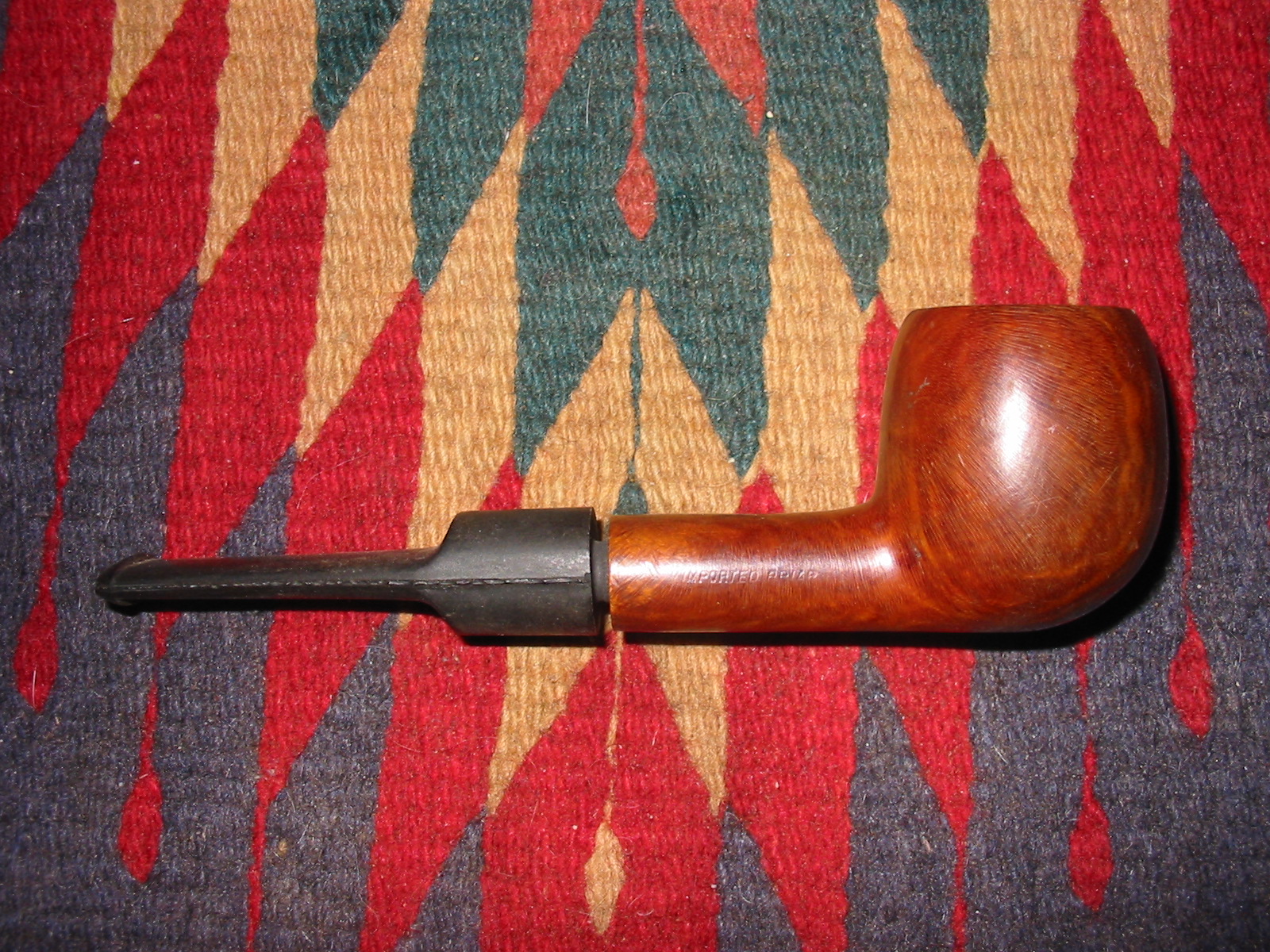
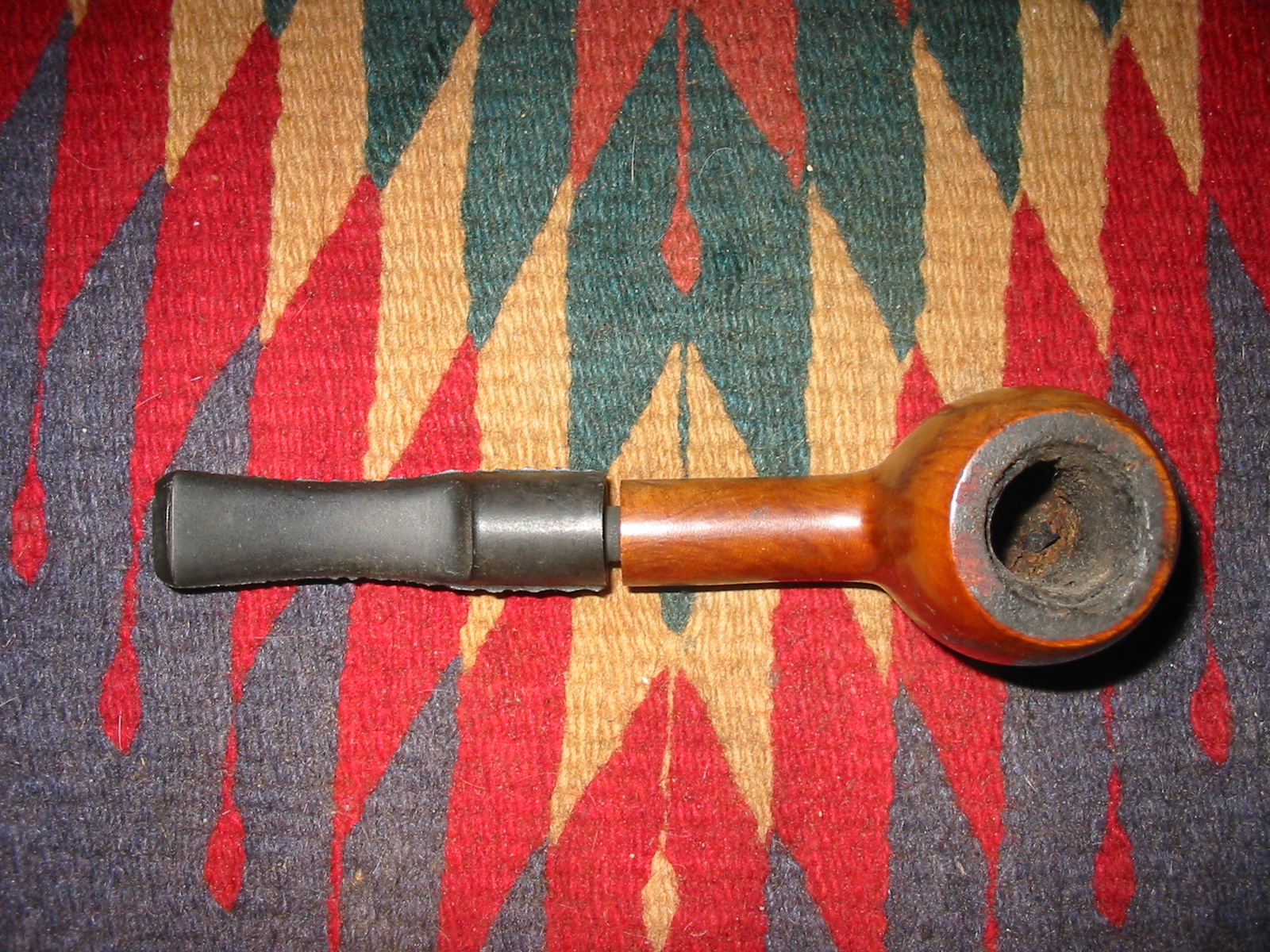
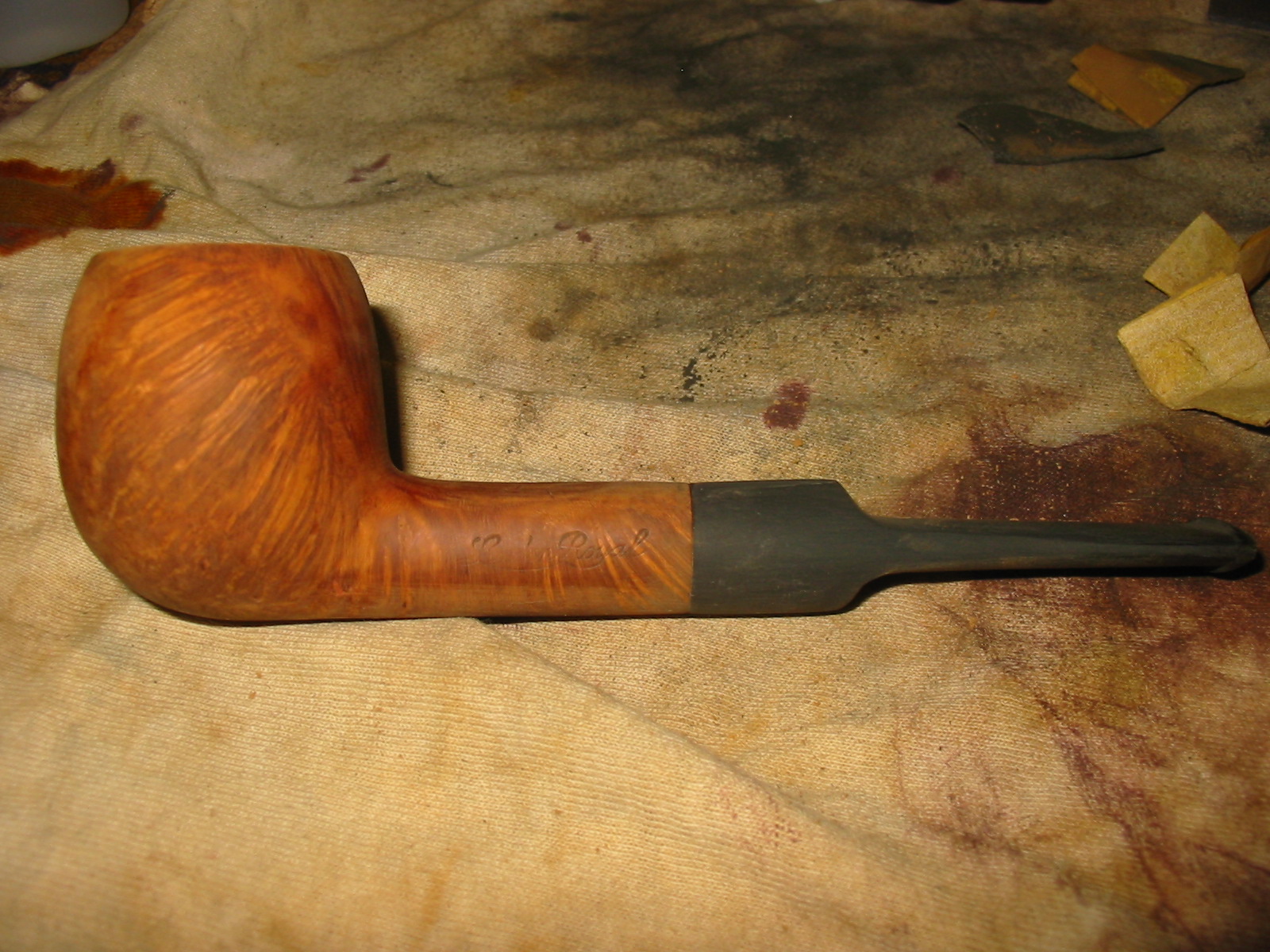
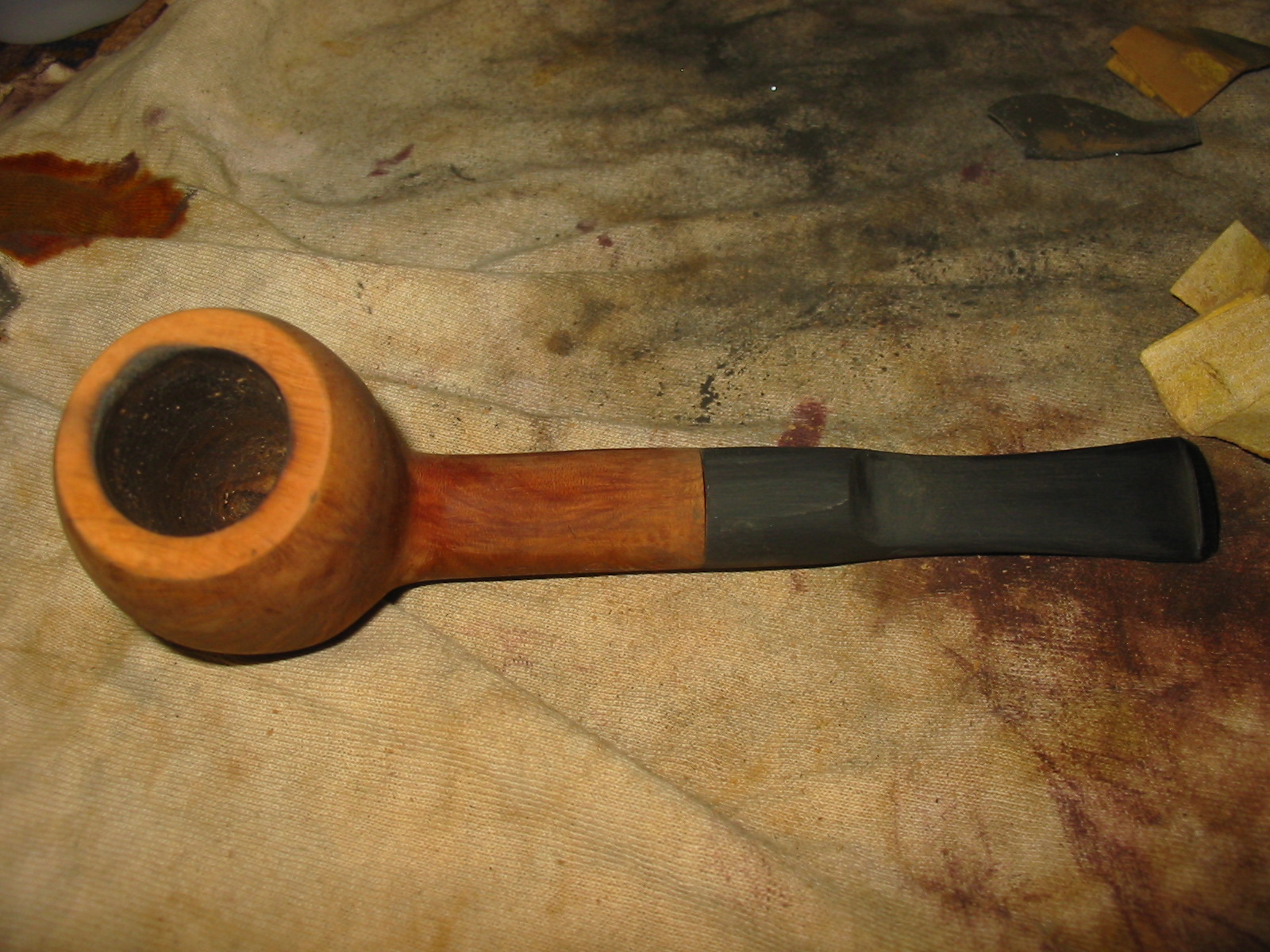
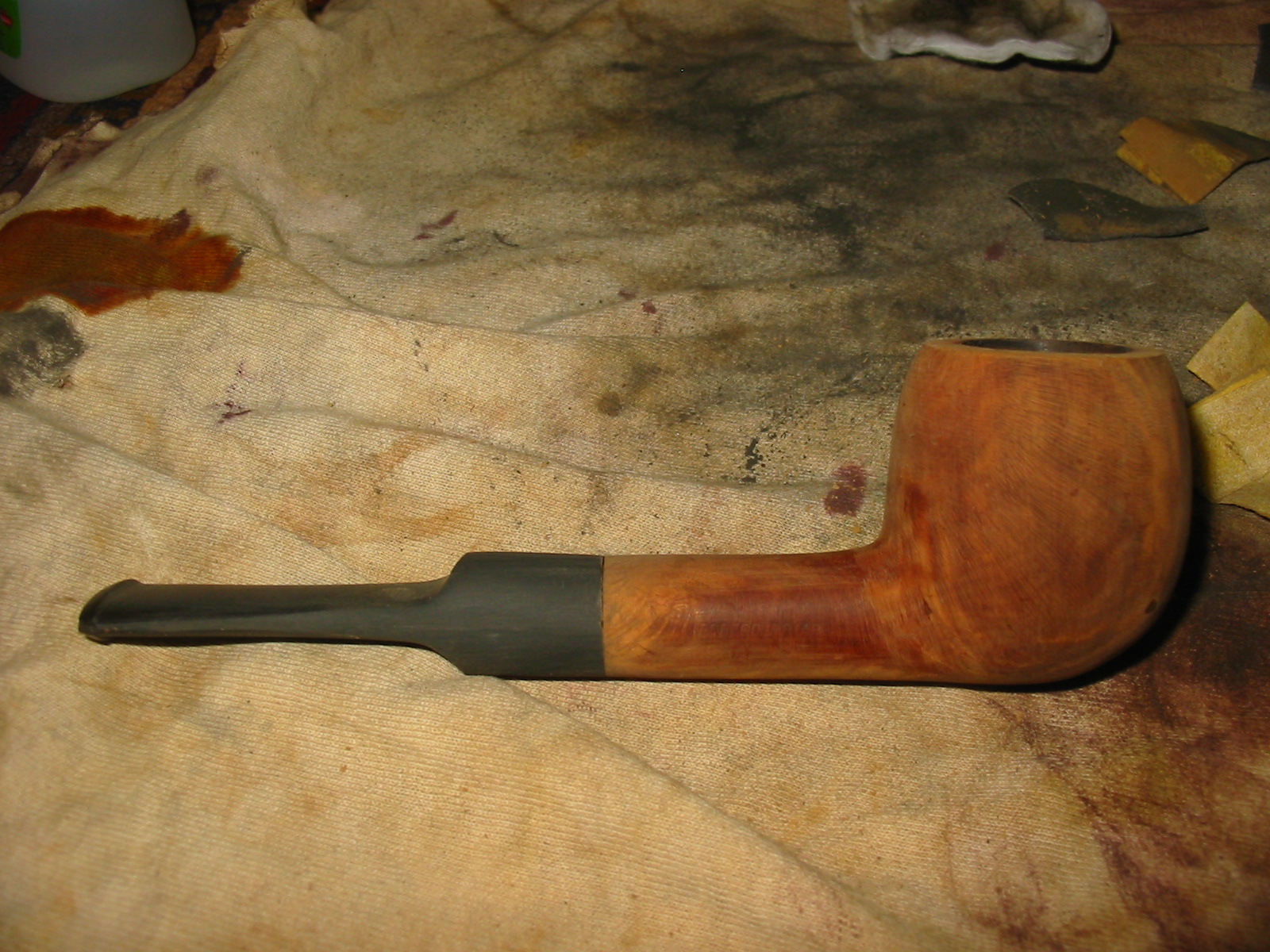
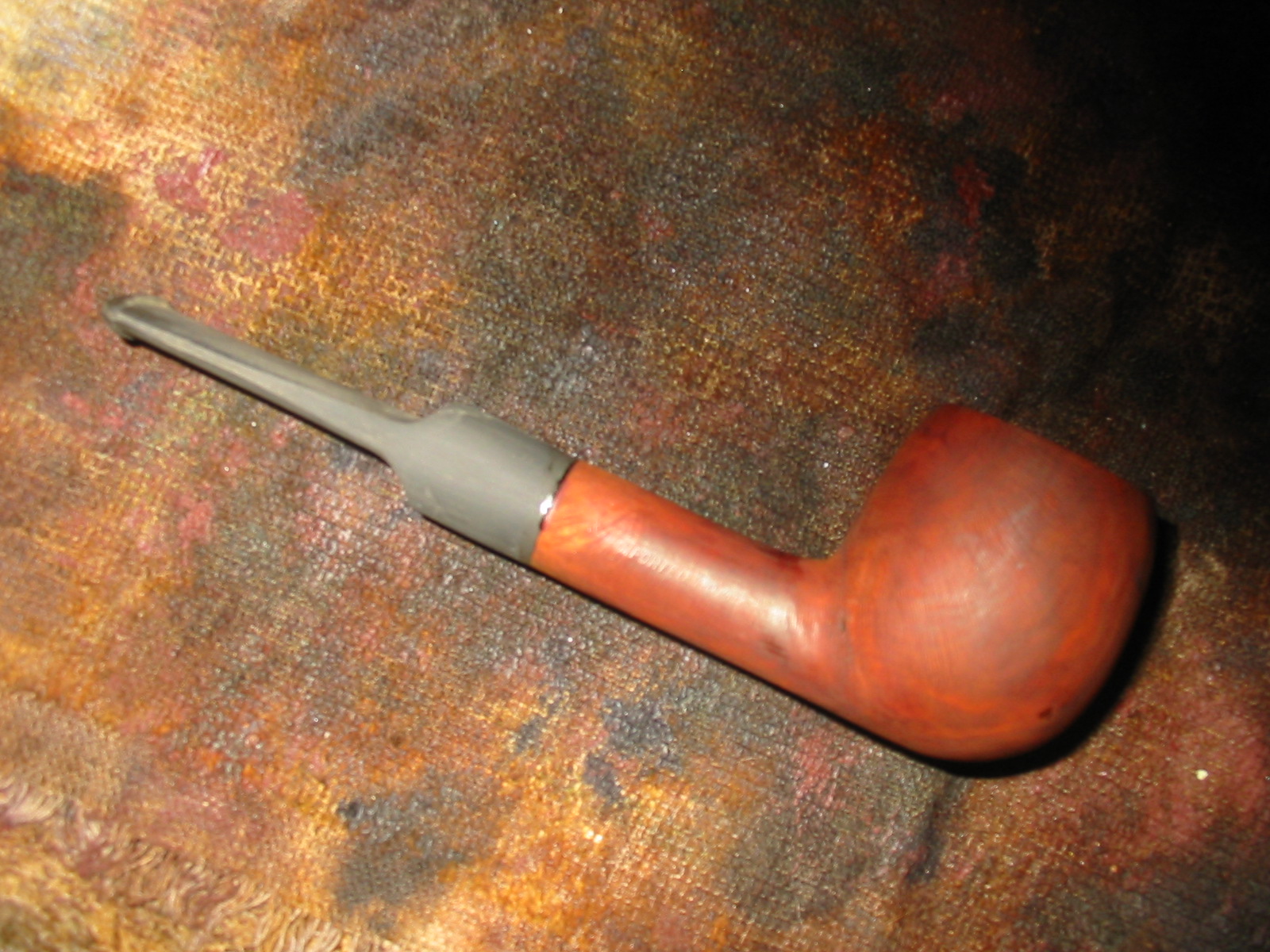
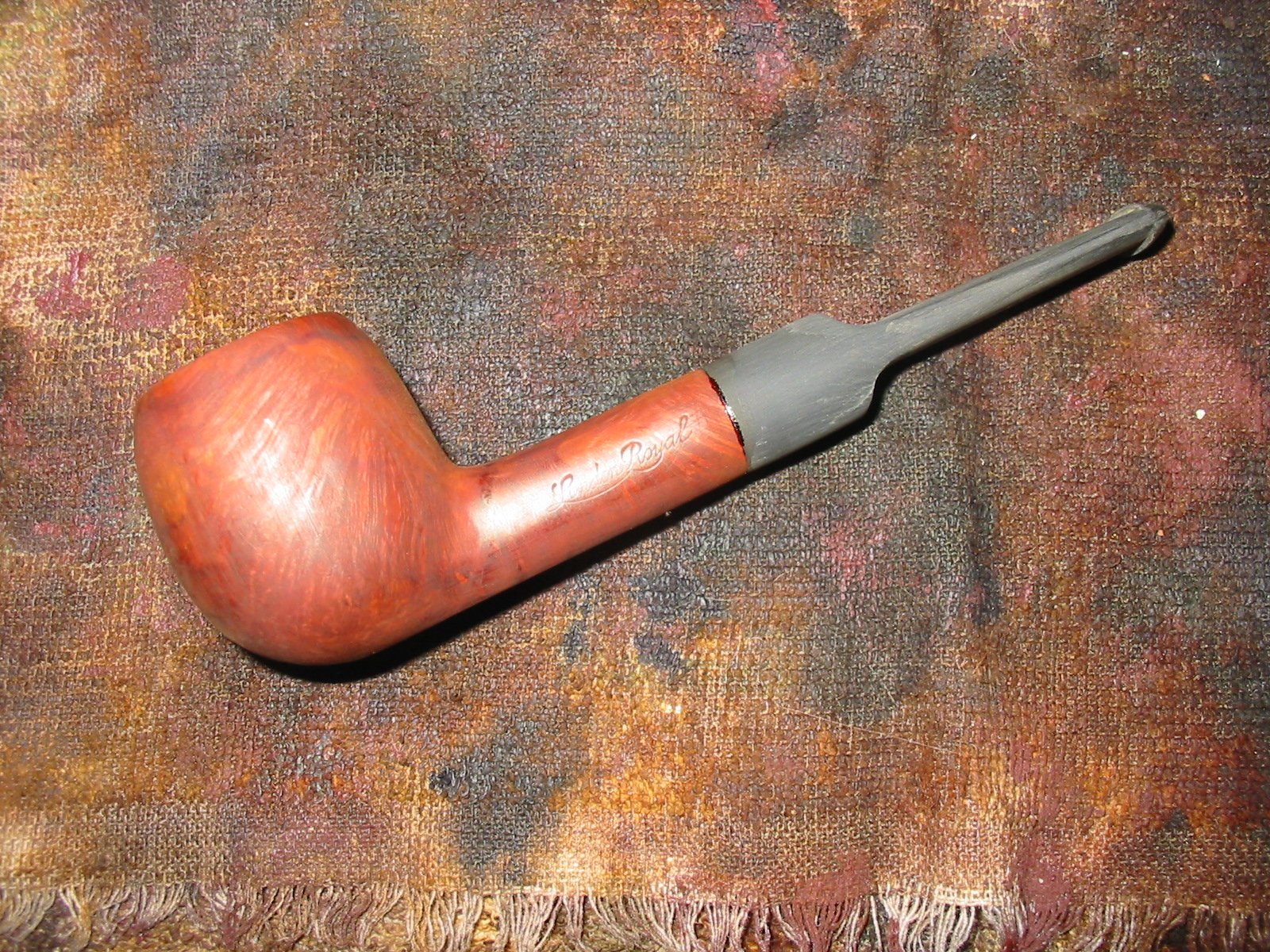
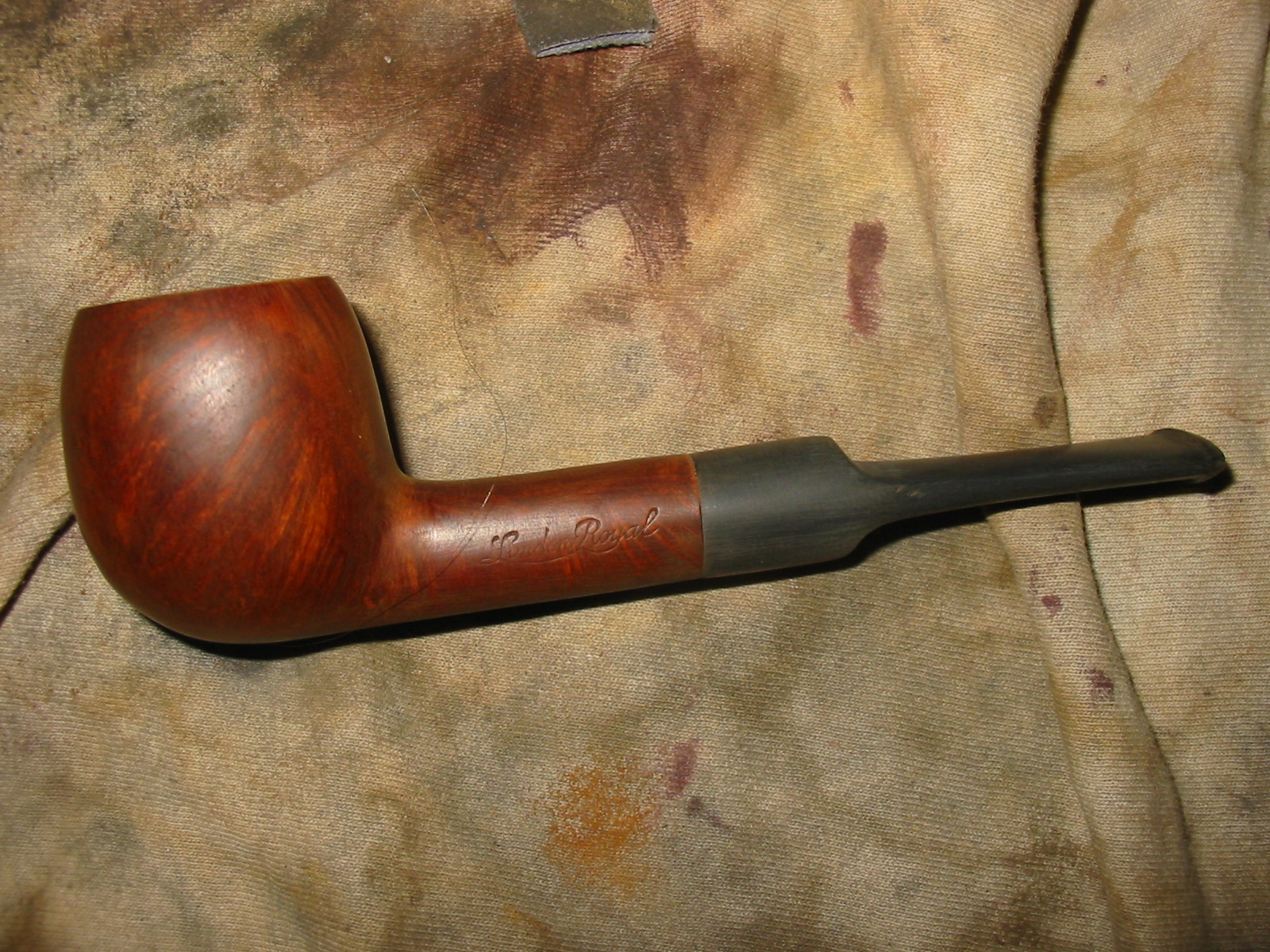
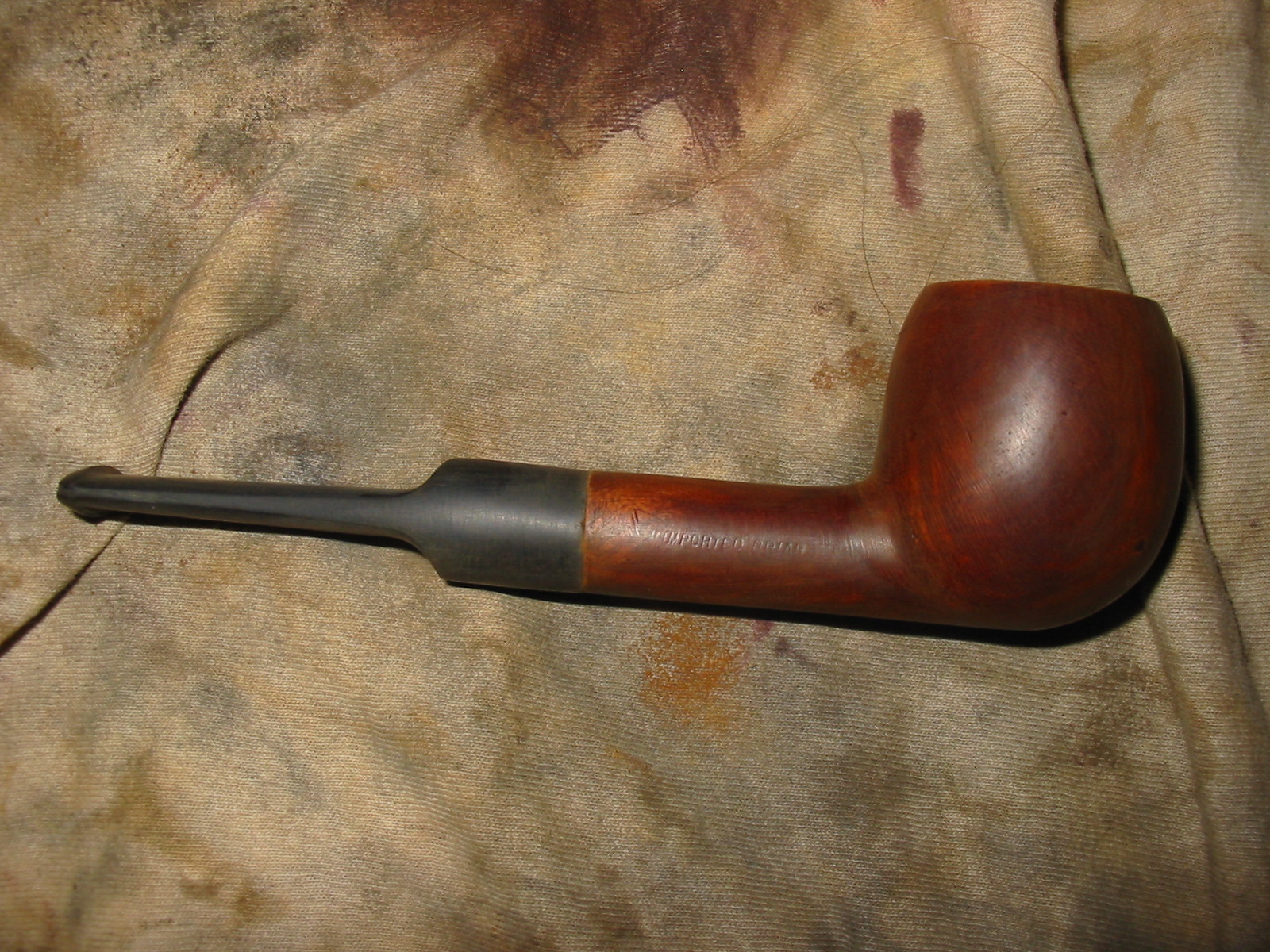
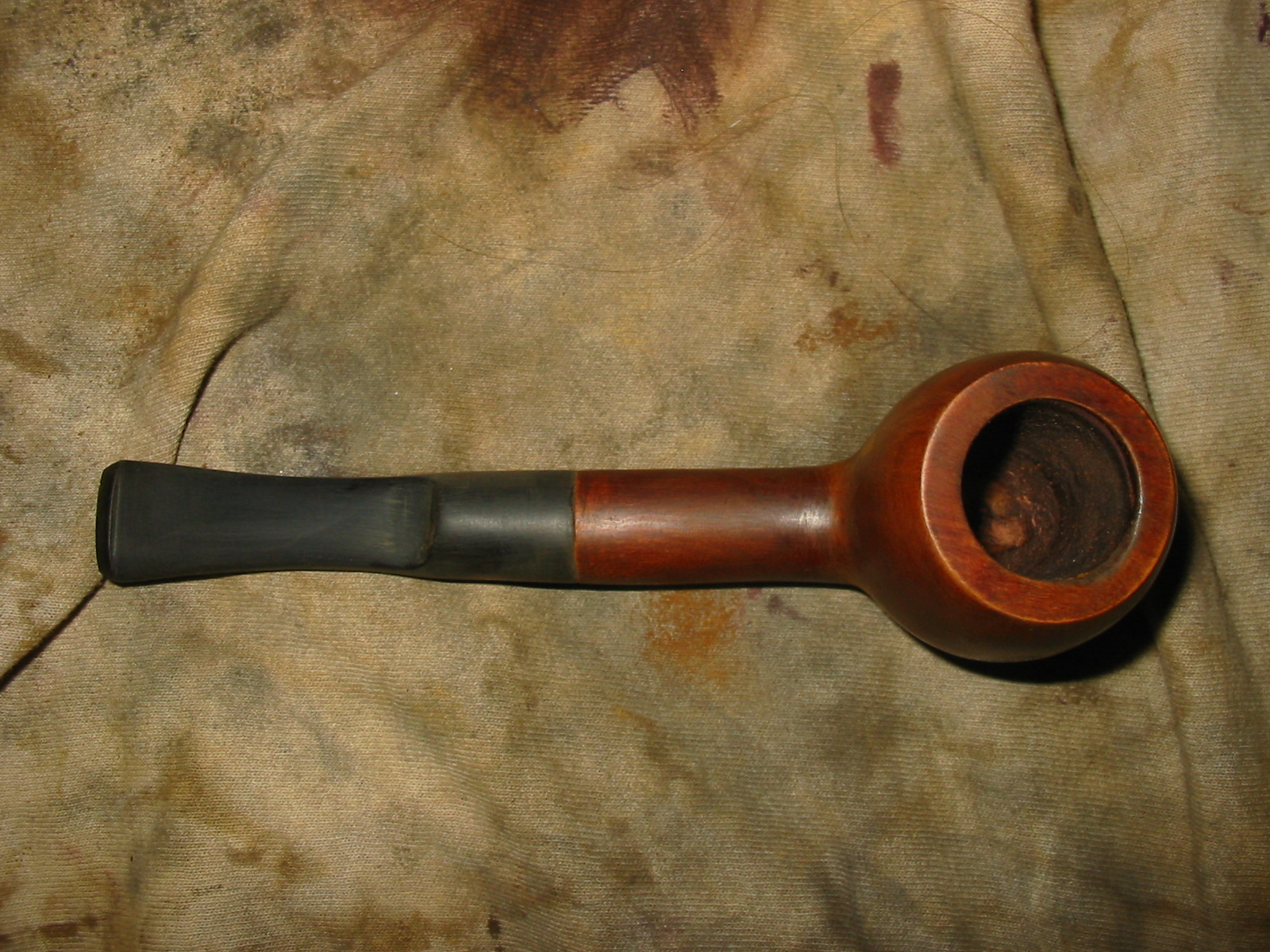
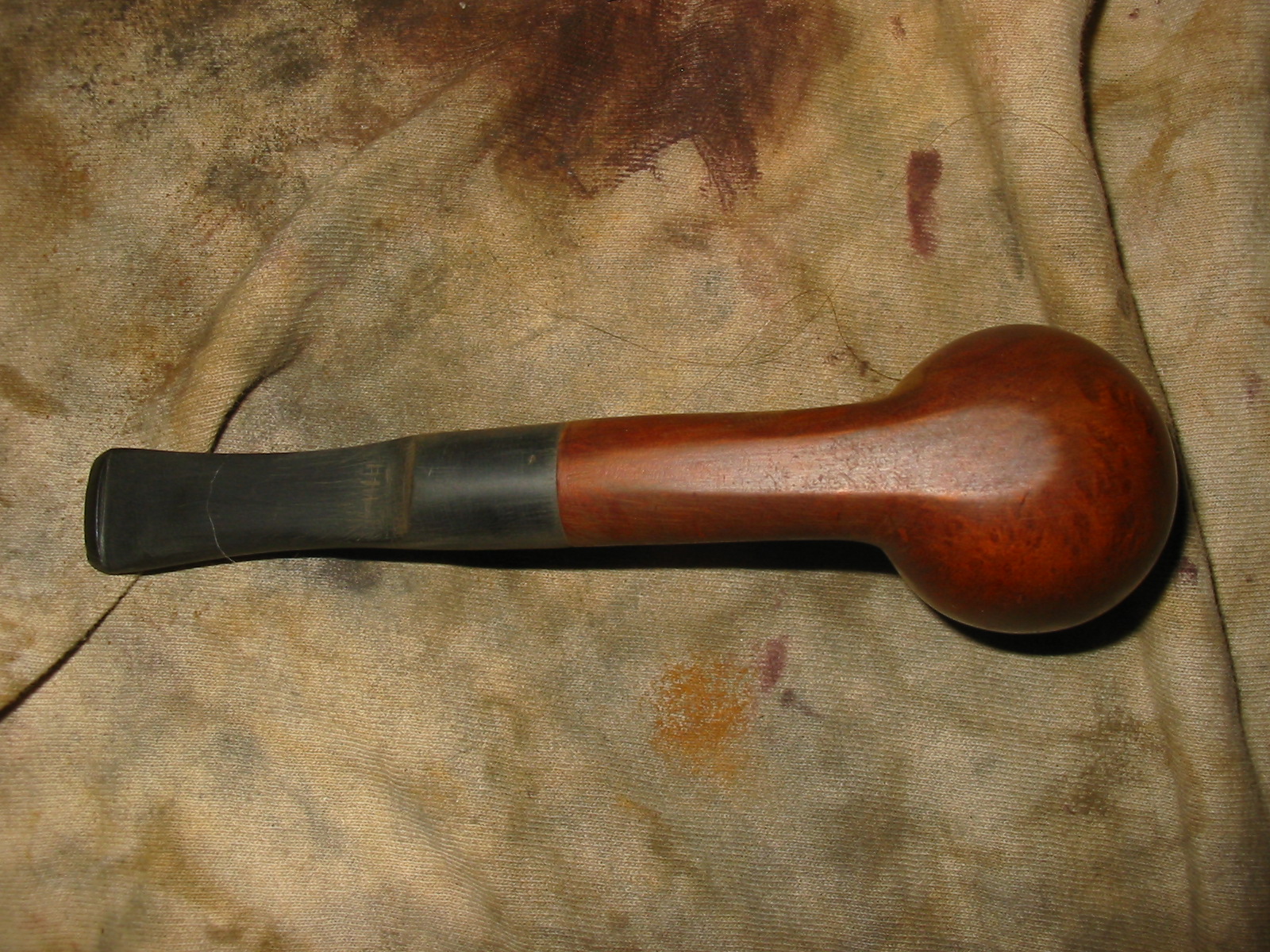
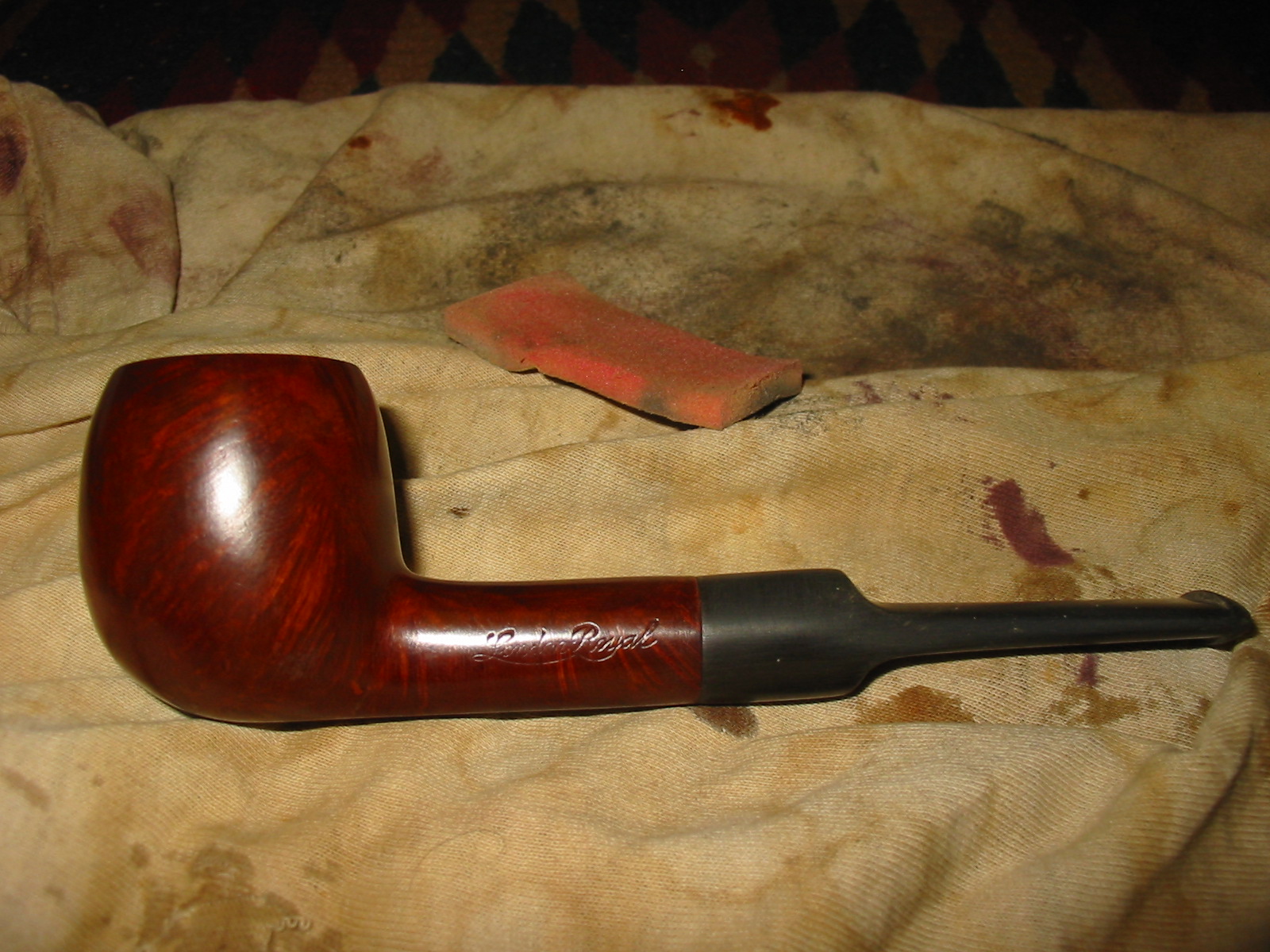
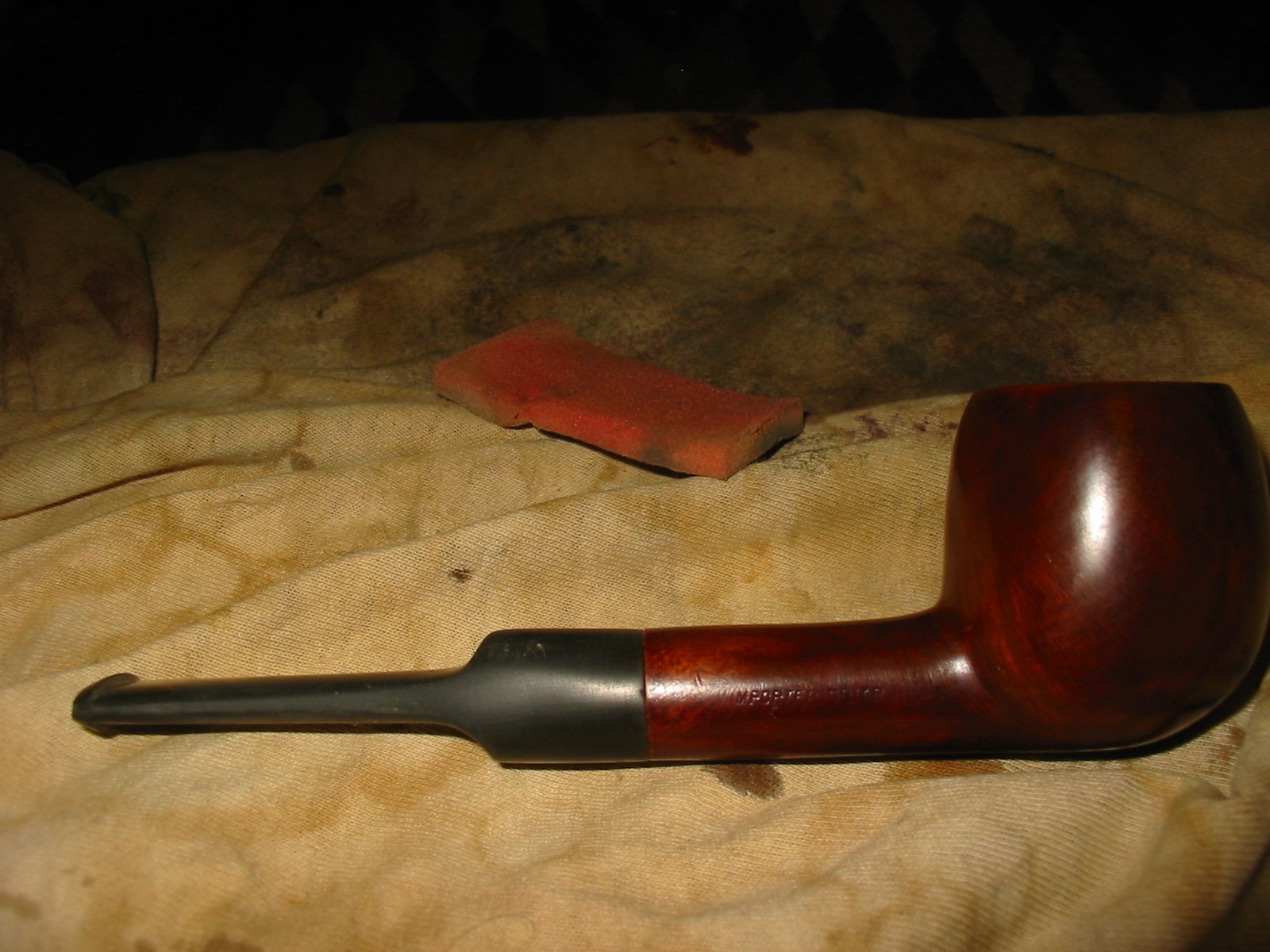
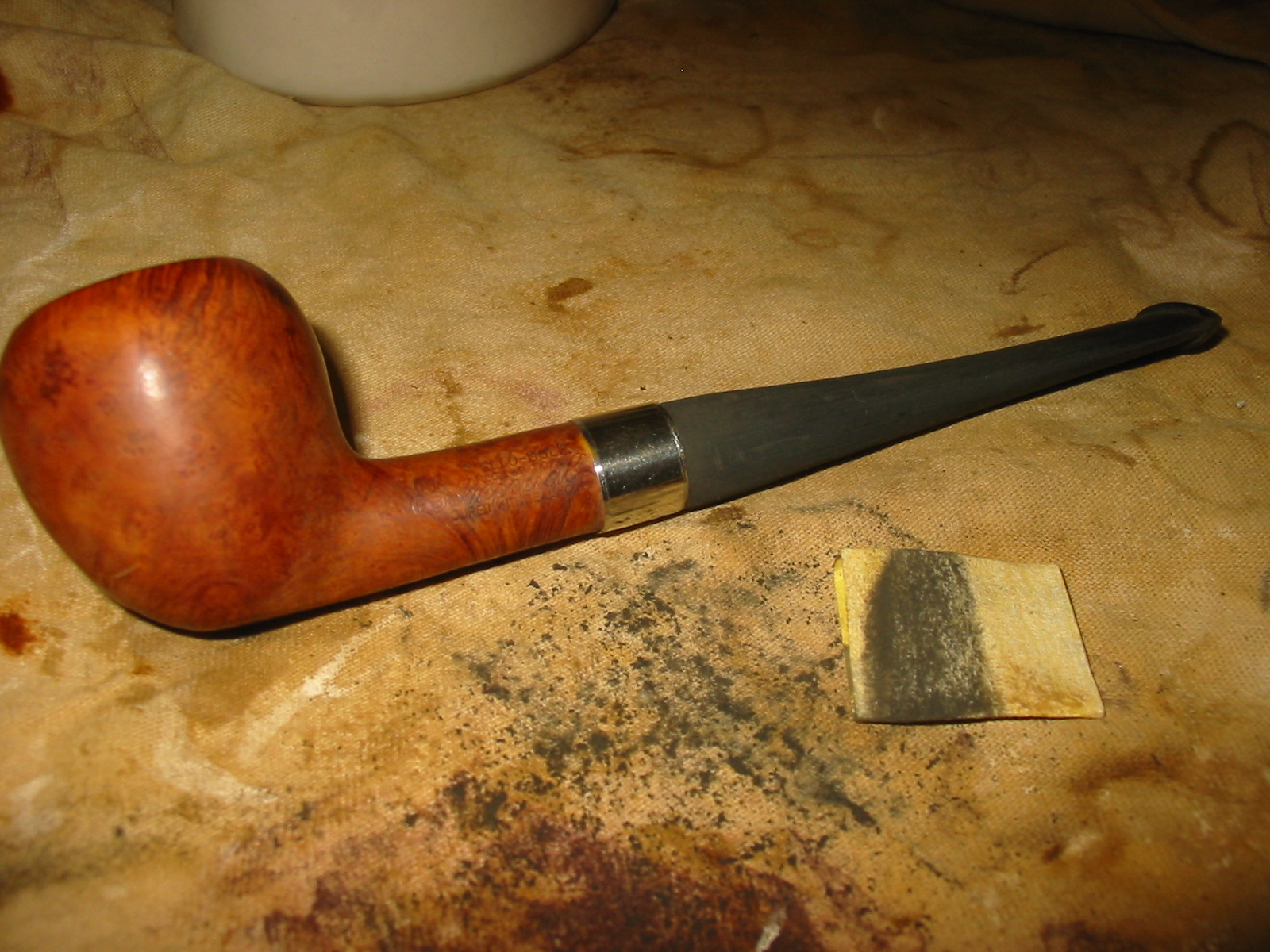
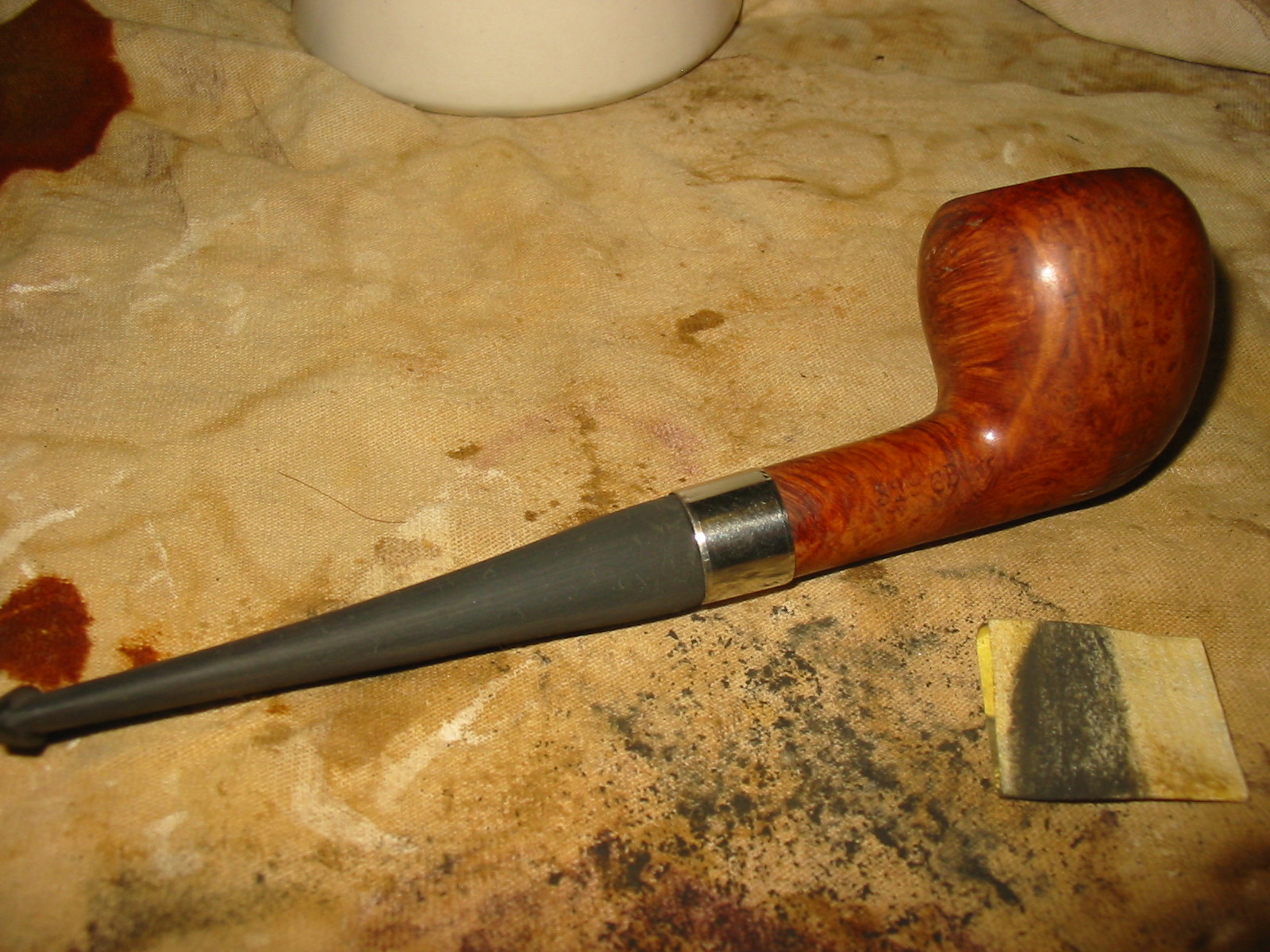
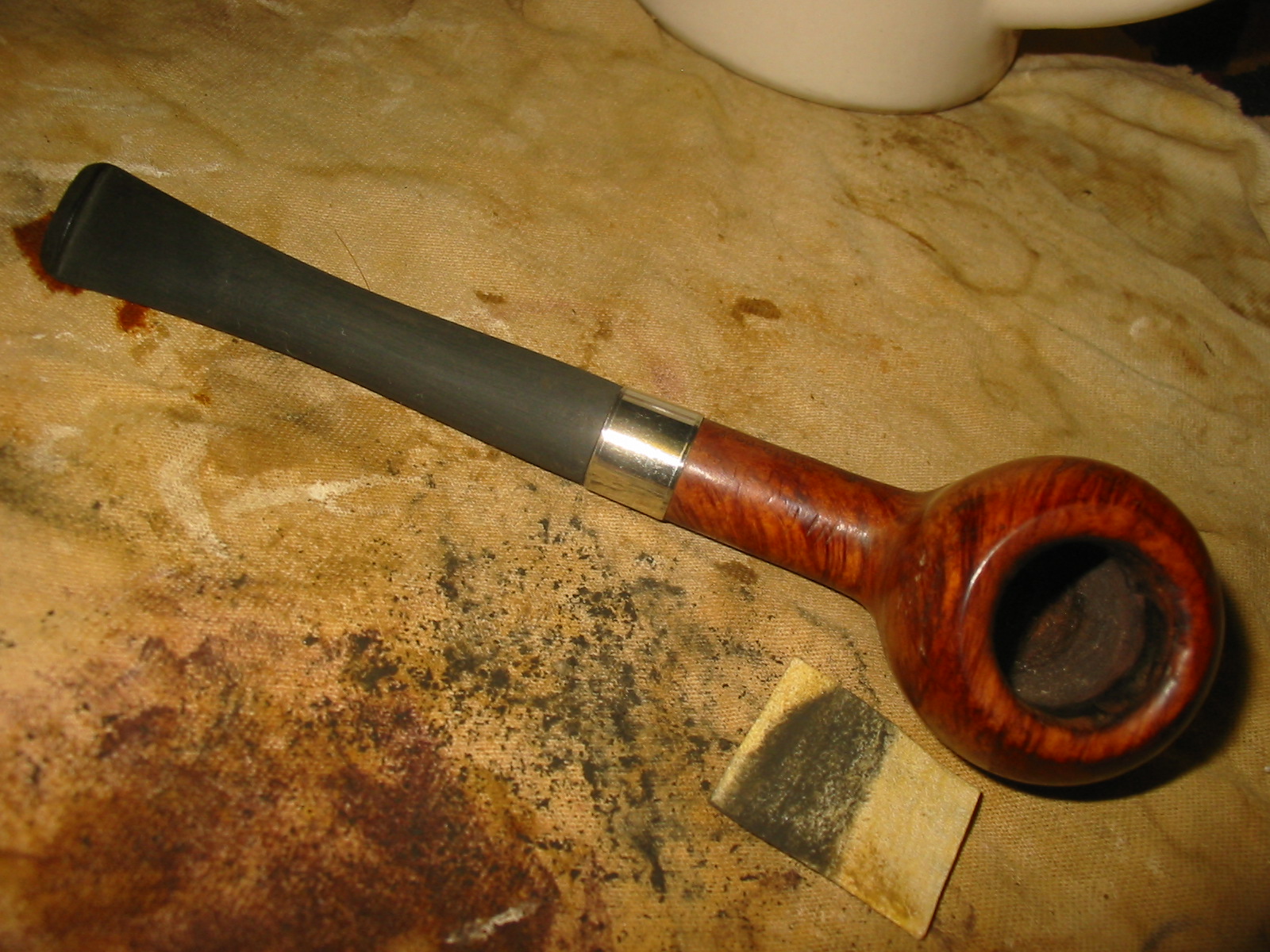
I am down to about 16 pipes in my box to be refurbished and all of them need to be restemmed. Some of them are full of fills or are just pipes that for one reason or another I have avoided dealing with. But I am at the bottom of the box and need something to work on so I am left to choosing from that lot. Last evening I chose this little apple shaped pipe, fit a new stem on it and reworked the finish and the fit of the stem. It is stamped London Royal on the left side of the shank and on the right side Imported Briar. It seems to me that it is thus an American made pipe. I have done no research on it so I have no idea of the manufacturer. The first series of four photos show the pipe after I turned a tenon to fit the shank. I used a new stem blank that is a nice hard vulcanite that seems less prone to oxidize. The dust from sanding is black. You can see the shape of the bowl and the condition it was in when I started in these photos.

Image

The tenon was long for the shank so it would need to be taken down until it fits snugly against the bottom of the mortise. You can see from the photos the small fill on the bottom of the left side of the bowl. The stem blank would also need to be cleaned up to remove the remnants of the casting.

ImageImage

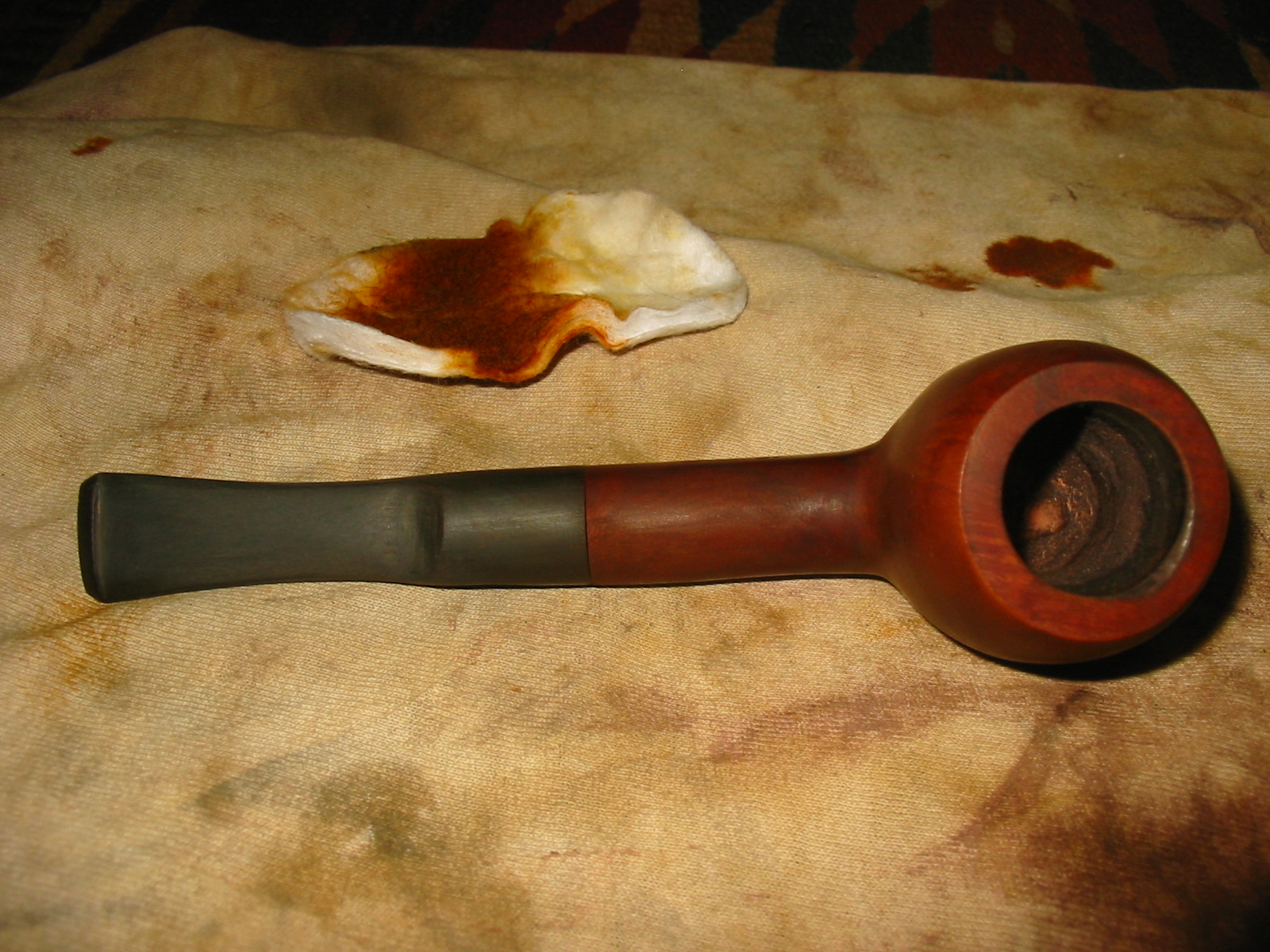
In the photo above you can see that the bowl still has tobacco in it and the cake uneven and rough. The rim is dirty and caked. There is one slight burned area on the rim as well on the front right side of the inner edge of the rim.

Image

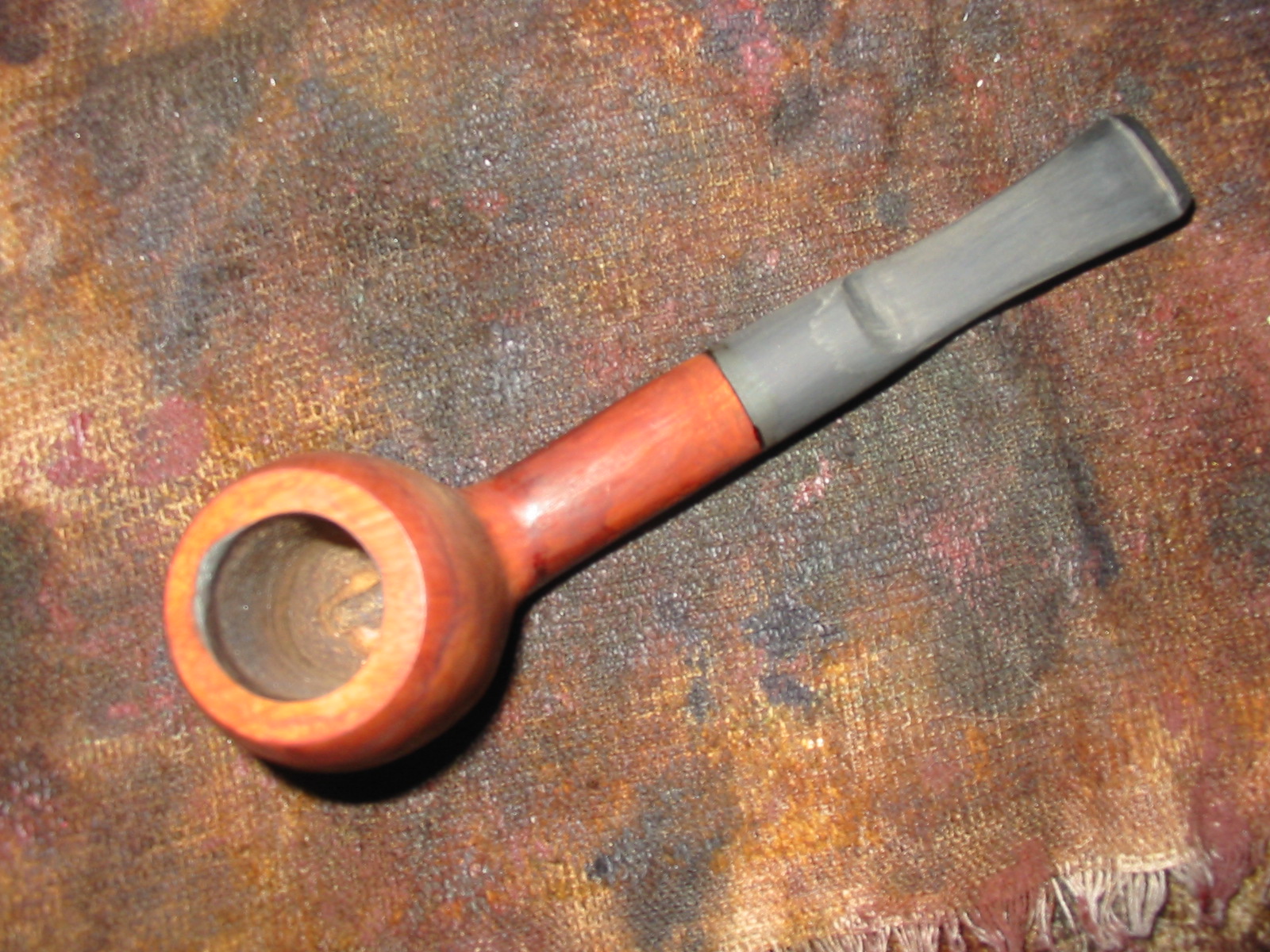
I shortened the tenon in order to get the snug fit in the mortise. I was then able to get the stem to fit snugly against the shank. I reamed the bowl to clean up the uneven cake. The next two photos show the stem fit and the reamed bowl. The bottom of the bowl has a groove in it that looks like it was made to fit a stinger apparatus that extended into the bottom of the bowl. I do not have that apparatus as the bowl came to me without a stem. The bottom of the bowl is still fairly thick so it should not be a problem, but it could be remedied with pipe mud should I choose to do so at a later time.
ImageImage

I topped the bowl lightly to remove the tars on the rim and also to try to minimize the burned area that is visible in the photo above on the front right inner edge of the bowl. The next two photos show the topped bowl and the minimized rim char. I planned on removing the finish from the bowl of the pipe so staining the entire pipe should blend in the rim and bowl as well as hide the rim damage a bit.

ImageImage

The next three photos show the stem after I have worked on the diameter of the saddle where it meets the shank and removed the rough edges of the casting of the stem. I run my Dremel at a speed that allows me to control the sanding drum as I use it to remove the excess material on the stem. In this case you can see that the excess is mainly on the top and the left side of the stem. I have found that using the Dremel with the sanding drum carefully can make the fitting of a stem short work. This particular stem blank is very high quality vulcanite as can be seen in the photos below. As I sanded the stem the sanding dust was black and the finished stem retained a very black look and colour as well. The shaping of the stem also had to take into account the changes made in the saddle as material was removed from the top of the stem and the left side. I used the sanding drum to rework the saddle area where is curves into the blade of the stem on both sides. I also had to reshape the blade to make both sides match in terms of the curves of the edges toward the button. The photos show the newly shaped and cleaned up stem. All that remains at this point is a lot of sanding and polishing before the stem is ready.
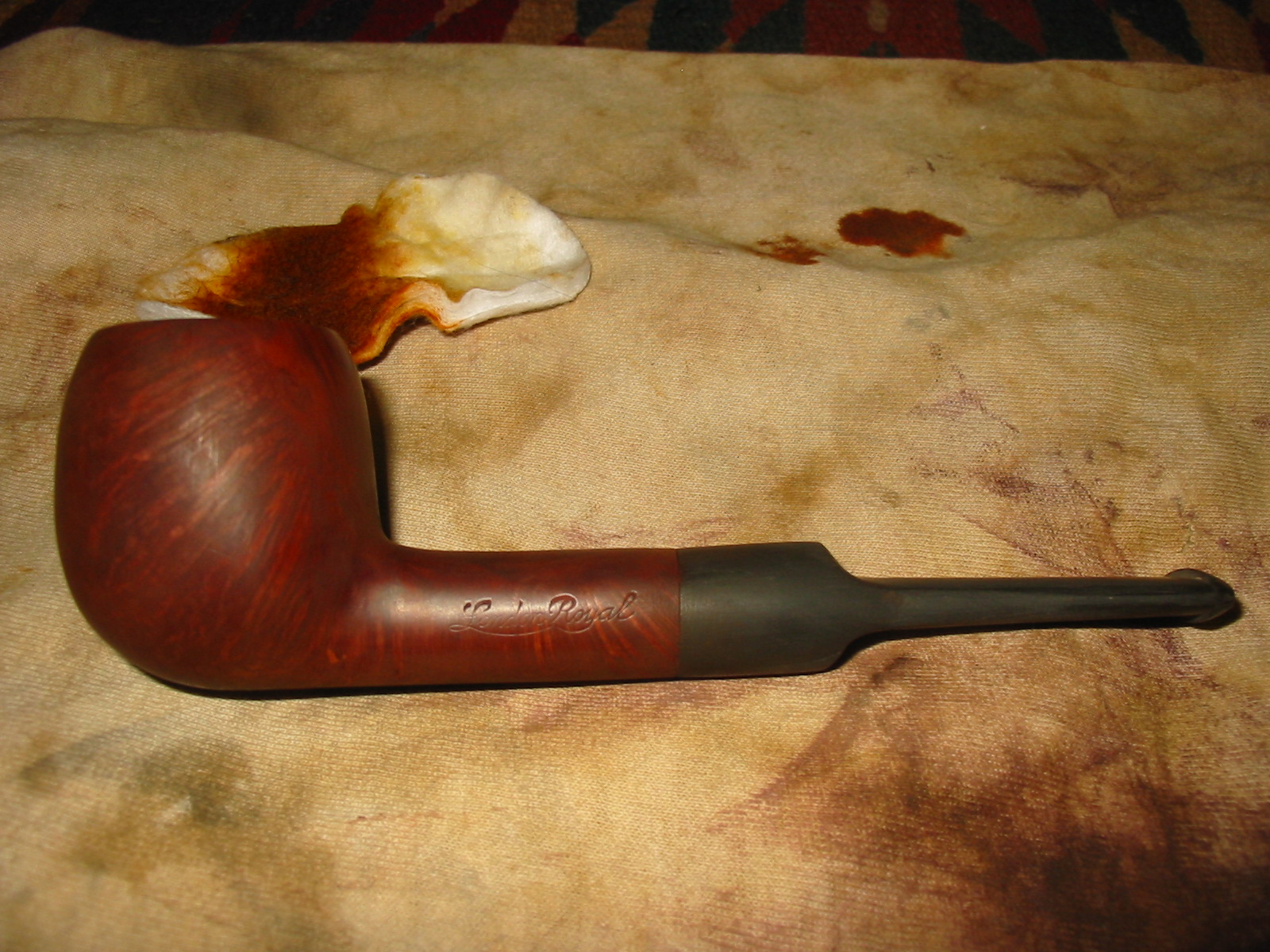
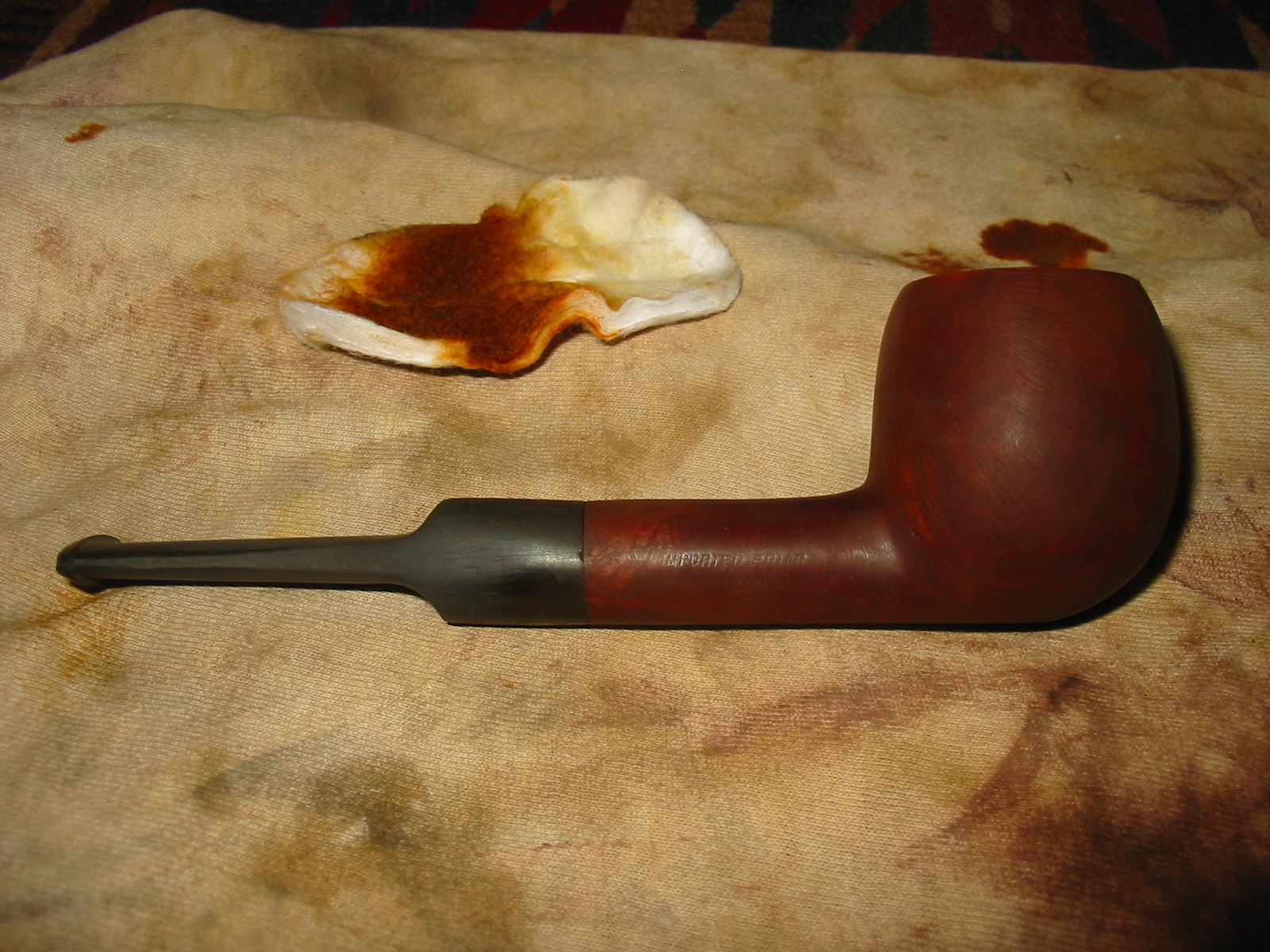
ImageImageImage

The next series of three photos below shows the pipe after I have washed the bowl with acetone to remove the finish and then sanded it with 320 grit sandpaper. I was careful around the stamping in order to leave it in tact. I wanted to bring the bowl and the rim to the same state so that the new stain would take well and match. I also sanded the stem with a medium grit sanding sponge to smooth it out as well. I wanted the shank stem transition to be smooth and even with no high or low points in the fit. The pipe revealed some really nice looking grain on the left side of the bowl but had bald spots on other side of the bowl.

ImageImageImage

I wiped the bowl and shank a final time with acetone and a cotton pad to remove the sanding dust and prepare it for staining. The next series of three photos below show the pipe after I stained it. I used a dark brown aniline stain mixed 2:1 with isopropyl alcohol. I stained the pipe, flamed it with a lighter, restained it, reflamed it. I gave the rim several extra coats to make sure the pipe was evenly stained.

ImageImageImage

After the stain was dried I took the pipe to the buffer and buffed it with Tripoli and White Diamond to remove excess stain. The stain coat was very even but it was still too dark to my liking so I used some isopropyl alcohol on a cotton pad to remove some of the heaviness of the stain from the pipe. The next three photos show the pipe after I had removed much stain. The cotton pad is darkened with the brown stain. The grain is becoming more visible as I worked on the finish with the isopropyl alcohol.

ImageImageImage

I then sanded the stem some more with some fine grit emery cloth to even up the stem shank junction. The next series of four photos show the pipe after the sanding. The bowl and shank are close to the colour I was aiming for. I would need to remove a bit more colouring from them to get it so the grain shows through the finish.

ImageImageImageImage

I took the pipe back to the buffer and gave it a buff with Tripoli and White Diamond. I use a light touch around the stamping on the shank and then hand buff that with a shoe shine brush to get it to shine. The next series of two photos show the finished bowl. There is still some work that needs to be done on the fit of the stem to the shank.

ImageImage

The next three photos show the stem after I used the sanding sponge on it to bring the stem even with the shank. The colour of the pipe is also exactly what I wanted in this pipe. The small fill on the left side of the bowl is no longer visible without a close examination. Once the stem was at this point it was ready for sanding with the micromesh pads and polishing with Maguiar’s.

ImageImageImage

I wet sanded the stem with 1500, 1800 and 2400 grit micromesh sanding pads wiping the stem down between changes in grit. I repeated this sequence of pads until the fine scratches were out of the stem. Where I had recut the saddle had some very fine scratches that were very hard to remove. After this sanding I used Maguiar’s hand applied and rubbed into the stem then wiped off and scrubbed with a cotton pad. I dry sanded the stem with 3200-12,000 grit micromesh following the polish. I also repeated the polish with Maguiar’s. When finished I took the pipe to the buffer and gave the entirety a buff with White Diamond and then gave it several coats of carnauba wax to give it a shine. The final series of four photos show the finished pipe.

ImageImageImageImageImage

Restemmed and Reworked an Old Yello Bole Acorn


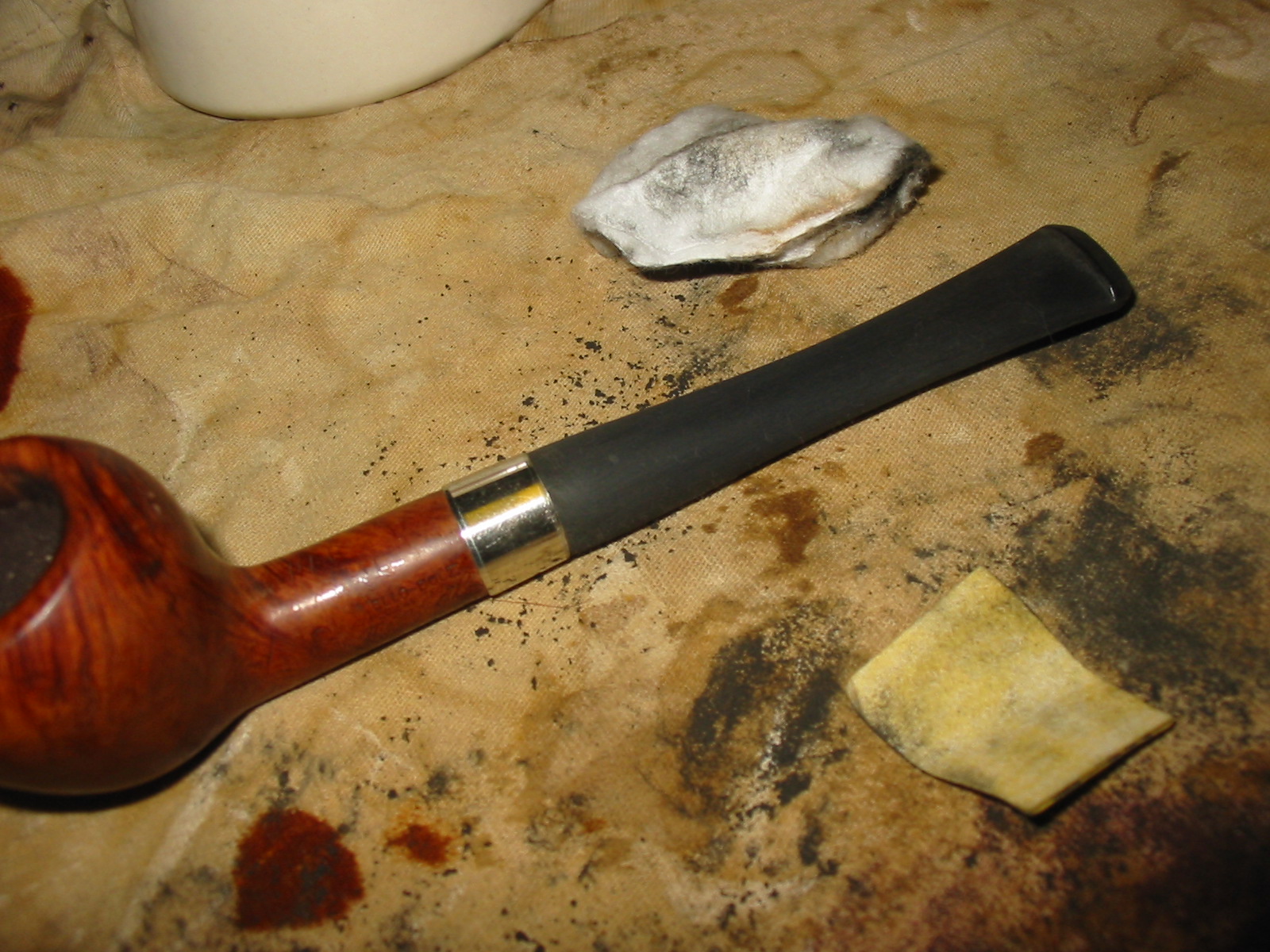
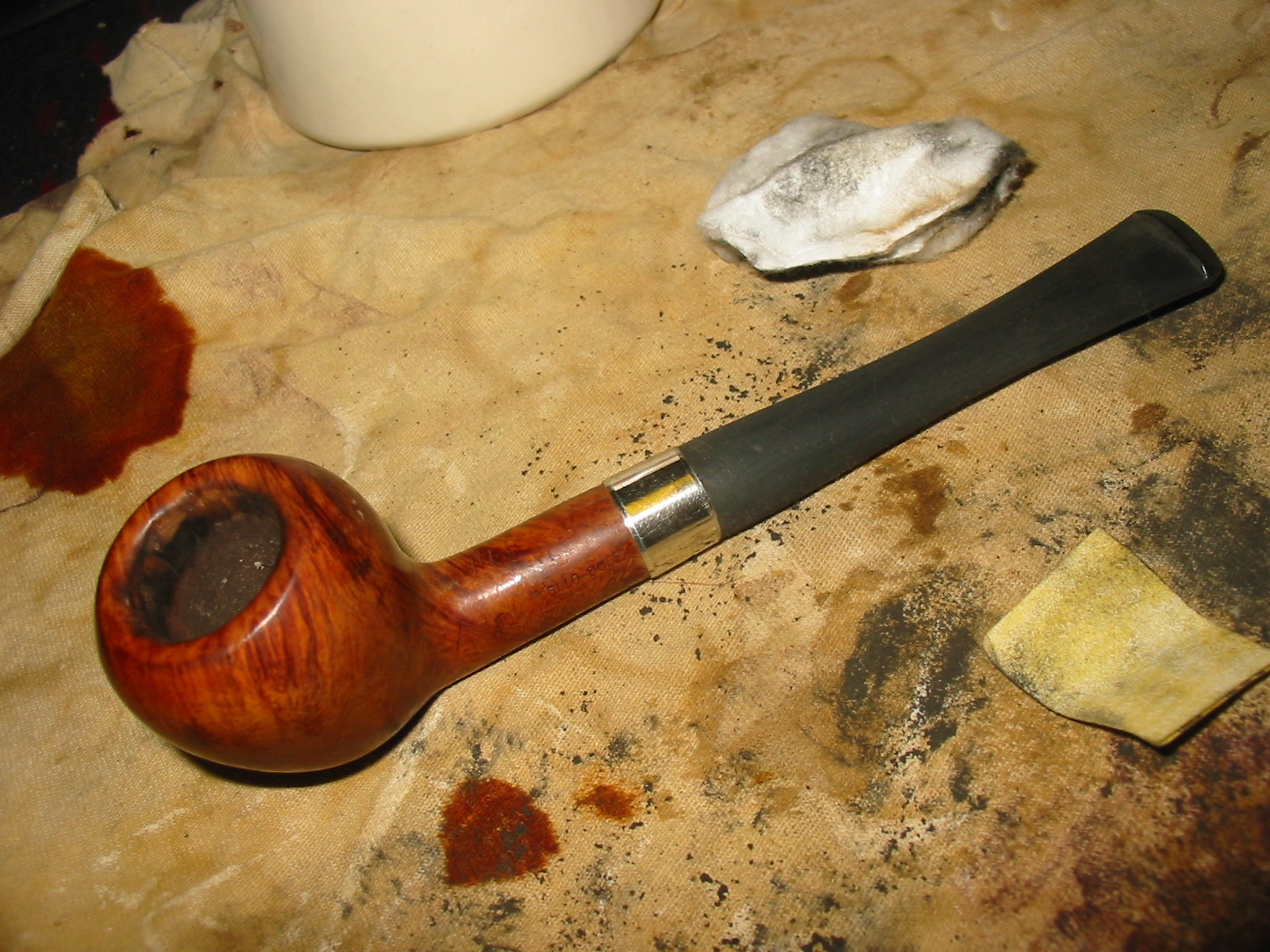
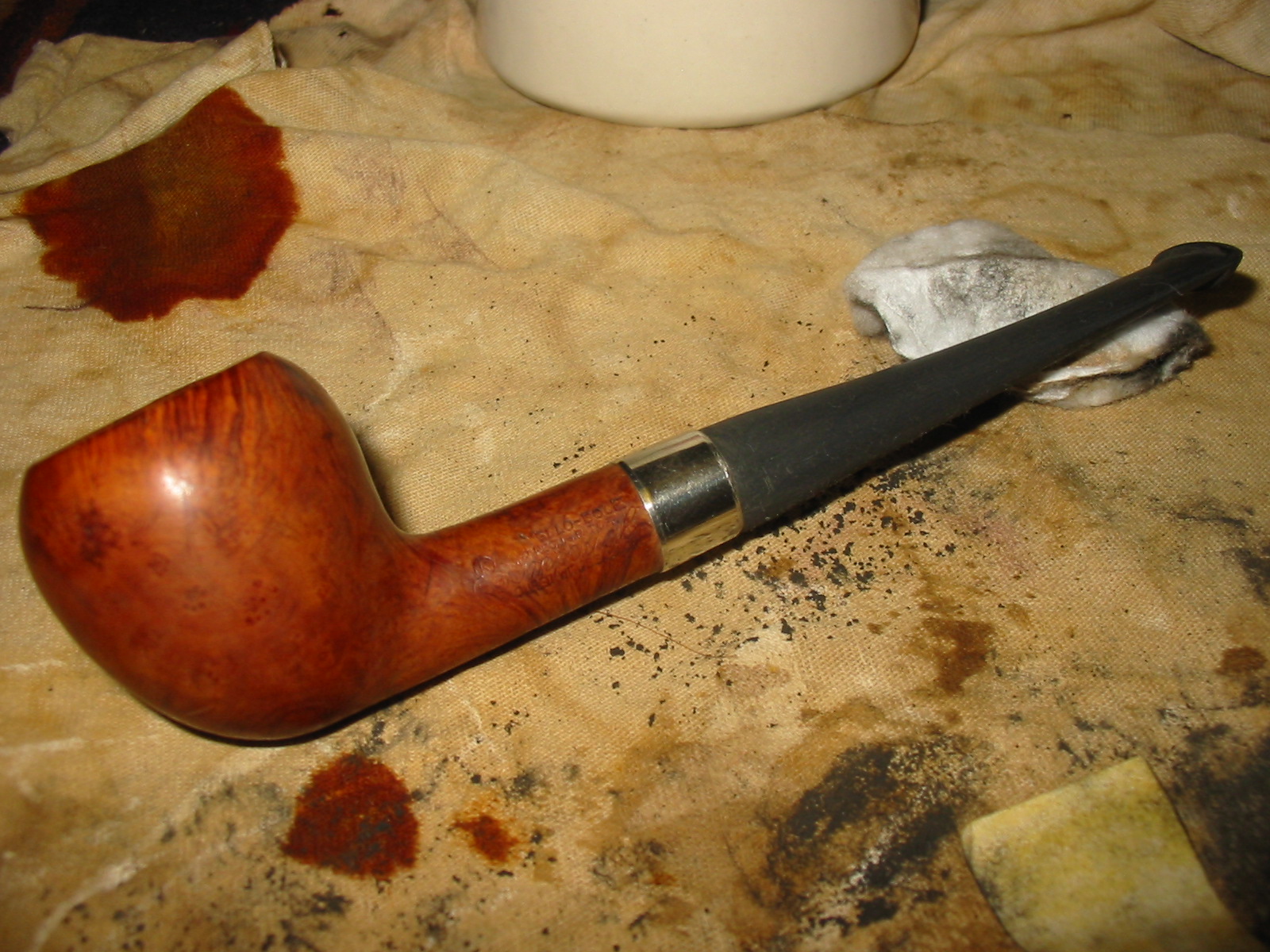
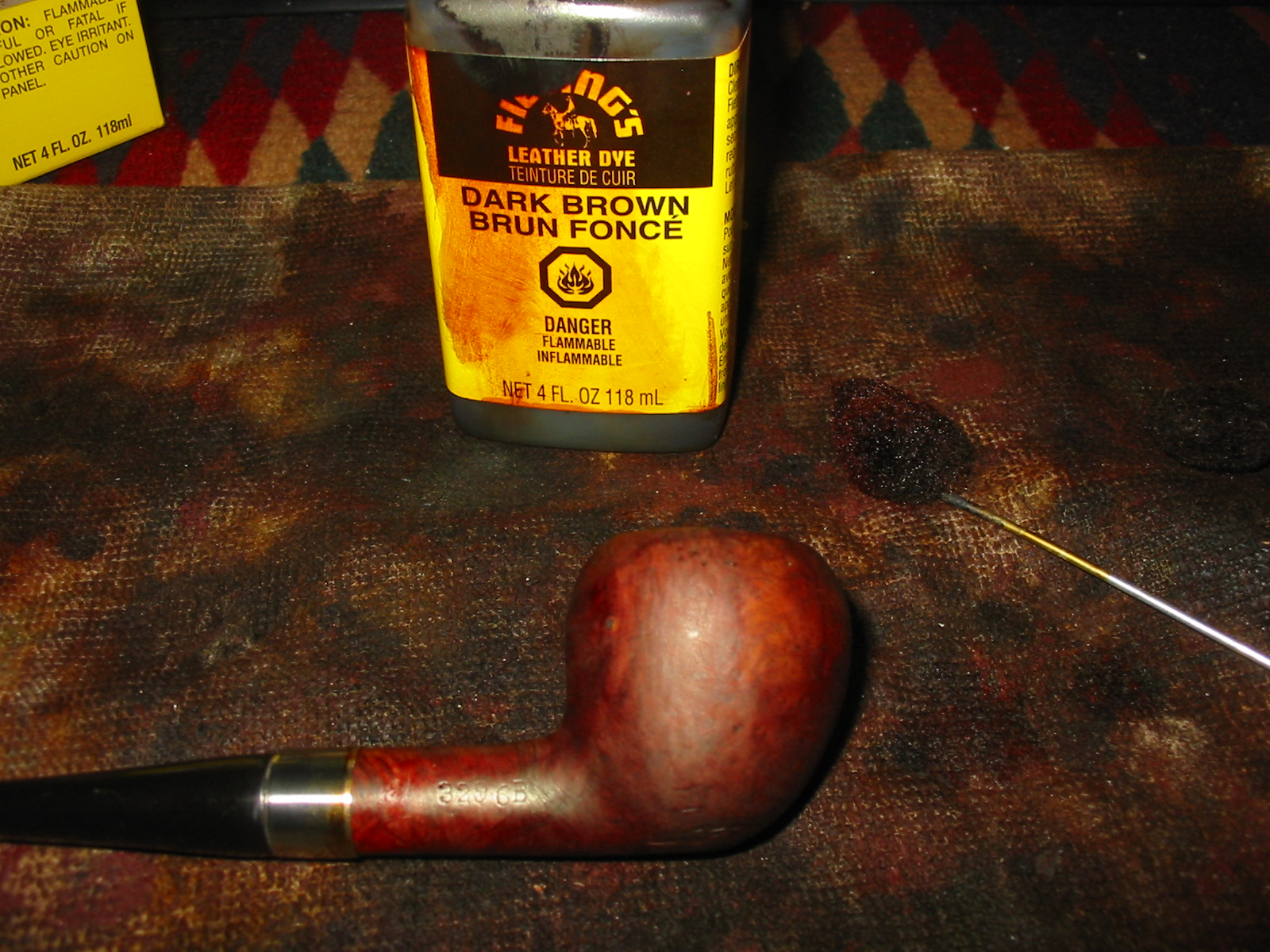
I have cleaned out my box of pipes for refurbishing and all I have left are bowls that need to have stems made and fit. This little Yello Bole Acorn pipe attracted my attention and I decided it would be the first one I worked on. The pipe is stamped on the left side of the shank: KBB in a cloverleaf and next to that it is stamped Yello Bole over REGDUSPATOFF over Imperial in script. Underneath that it is stamped “Cured with Real Honey”. On the right side is stamped 3296B. I reamed the bowl and cleaned the airway and mortise area so that I could get a good clean fit with the new stem. I picked a stem blank from my can of stems and used my Pimo Tenon turning tool to turn the tenon to fit the shank. The stem was too large so I removed the excess material with a sanding drum on my Dremel. In the photo below you can see the stem after I had sanded the excess away with the Dremel. The shank on the pipe also had a small crack in it so I glued it with superglue and pressure fit a nickel band on the shank.

Image

I sanded the stem with medium grit emery cloth to remove the scratches and marks left by the sanding drum. I find that the emery cloth does a great job removing the deep scratches and marks around the diameter of the stem as well as fine tune the fit to the shank. The band had some small dents that needed to be taken out so I used a small round headed pick to bring the shape back into round. The next three photos show the stem after sanding with the emery cloth.

ImageImageImage

At this point in the process I used the tool to round out the band a bit more and then fit the stem on the pipe. The next series of four photos shows the stem on the pipe. I also noted at this point that the band needed to be flattened on the bottom to accommodate the flattened bottom of the shank on the pipe. I would also have to flatten the edge of the stem to also accommodate that flattening.

ImageImageImageImage

I took a break from the stem and worked a bit on the bowl of the pipe. I wiped it down with acetone on a cotton pad to remove the finish. I then sanded the bowl to remove some of the dents and marks in the finish. The deep gouges needed to be steamed and I was able to raise them slightly. They are still visible on the finished pipe but lend it some character. The next series of three photos show the bowl cleaned and ready for staining.

ImageImageImage

I then changed to sanding the stem with 240 and 320 grit sandpaper. The next series of six photos shows show the progression of the stem as I sanded it.  The shape was pretty close to finished by the time I was done. The fit was excellent and the look of the new stem gave the pipe a great look in my opinion. All that remained was to do a lot more sanding! The fourth through the sixth photos below show the stem after I had wiped it down with some Maguiar’s Scratch X2.0 applied by hand and rubbed down with cotton pads. The finish of the stem is getting smoother.

ImageImageImageImageImageImage

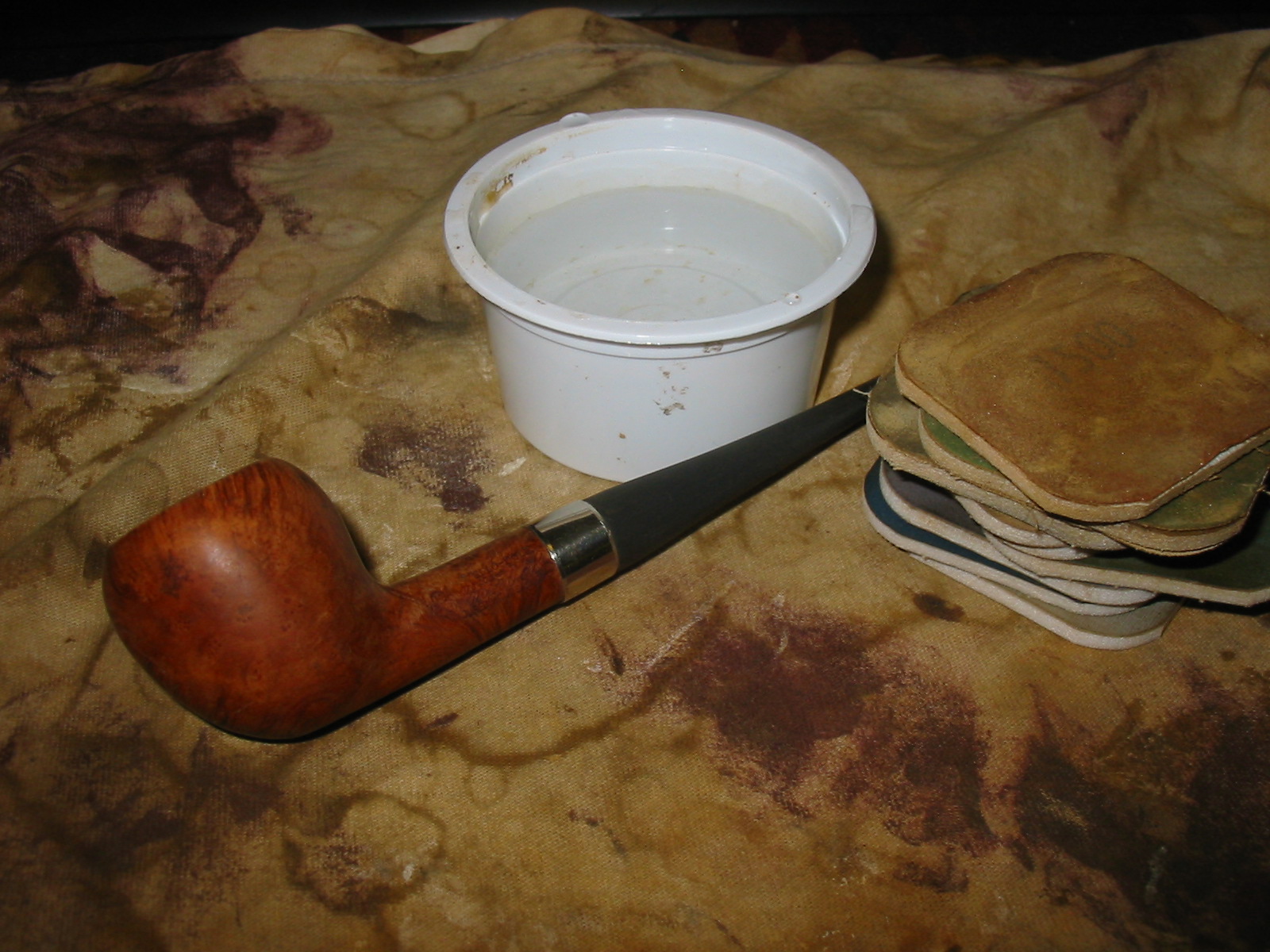
I then filled a small cup with water and moved on to wet sand the stem with the micromesh sanding pads. I used 1500, 1800 and 2400 to wet sand the stem. I wet the pad and sanded the stem. Then rinsed the pad and kept sanding until that particular grit had down its work and the stem was ready for the next one. Between pads I wiped the stem down with a wet cotton pad to clean off the grit. The first photo below shows the setup of my sanding area. I use an old rag for the work space so that it can pick up the dust and water from the sanded stem. The next series of three photos shows each of the three micromesh sanding pads from 1500-2400 and the stem after sanding with that particular pad.

ImageImageImageImage

Once I finished wet sanding the stems up through the 2400 grit micromesh pads I then used the Maguiar’s again to polish the stem to see what remained of the deep scratches. I rubbed it into the stem with my finger and then polished it off with the cotton pads. The next series of five photos shows the application and the progressive polishing of the stem. The final pictures in the series show the stem polish to this point. I decided after this was done to move on to dry sanding with the remaining micromesh sanding pads.

ImageImageImageImageImage

The next series of six photos show the sanding progress through the remaining grits of micromesh sanding pads – 3200, 3600, 4000, 6000, 8000 and 12,000 grits. Each picture shows the stem on top of the sanding pad that I used to sand it. I dry sand with these higher grit micromesh pads.ImageImageImageImageImageImage

The next series of four photos show the stem after finishing the sanding and polishing it with Maguiar’s polish. There is a nice deep black shine to the stem at this point.

ImageImageImageImage

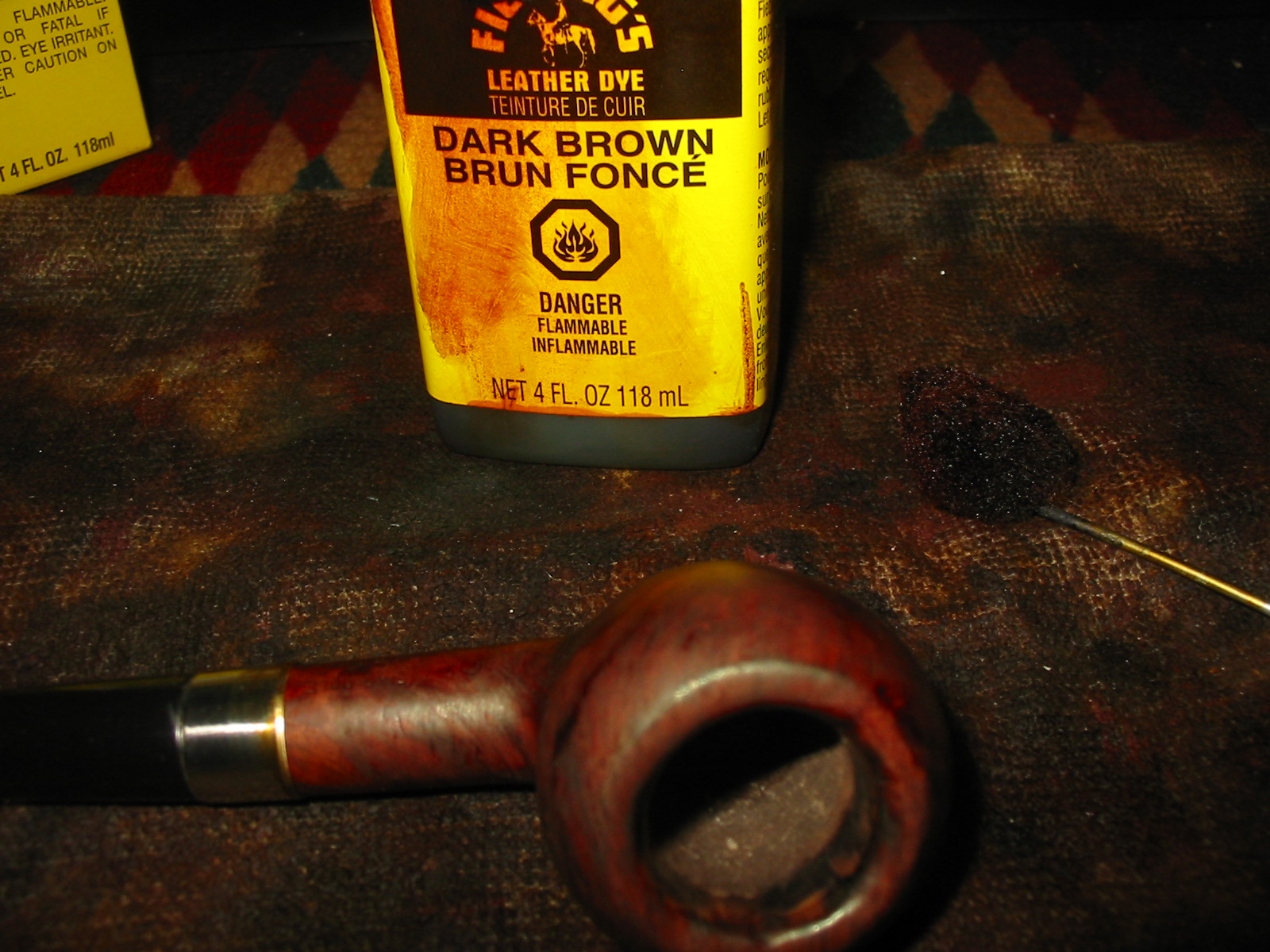
Now it was time to stain the bowl of the pipe. I used a Dark Brown aniline stain that I had thinned with isopropyl 2:1 to stain the bowl. I wanted a consistency in the colour and also have the grain on the bowl show through the stain. I applied the stain with the wool dauber that came with the stain and then flamed it with a match to set the stain. I restained it and reflamed it a second and third time. The next two photos show the stained bowl.

ImageImage

Once the stain was dry I used some silver polish on the nickel band to shine it up and remove the stain that had spilled on it. I also used some sandpaper in the bowl to remove stain that ran into the bowl edges from the beveled rim. I then took it to the buffer and buffed it with Tripoli and White Diamond before giving the whole pipe multiple coats of carnauba wax and a final buff with a clean flannel buffing wheel. The final four photos show the finished pipe.

ImageImageImageImage


Restemmed Red Point Capped Bent


I picked up this Red Point Old Briar Capped Pipe bowl on Ebay awhile ago. It did not have a stem but seemed to have promising grain. When it came in the mail I cleaned it up a bit and then worked on a stem for it. I decided to use a faux p-lip stem that has the airhole on the end of the stem rather than on the top. I fit the tenon to the shank – that was a bit of a trick as the shank is like a Pete shank in that it narrows/tapers as it descends toward the bowl. I finished fitting and polishing the stem.

Here are some pictures of the bowl when it came. From the second photo you can see that it was barely smoked. It was very clean and needed a few pipe cleaners run through it. The exterior needed to be wiped down with a little oil soap to clean away the grime – I always rub it on undiluted (no water) and quickly wipe it off. I do not leave it to sit. I also polished the silver work on the shank and the cap.

ImageImage

I heated the stem with my heat gun and bent it slightly and took the next three pictures. I have learned that pictures give the true story in terms of bend and overall look of the pipe in a way that is clearer than the naked eye. From the photos I decided that the bend need to be a bit more dramatic and match the curve of the bottom of the bowl and shank. I reheated it and used the rounded edge of my work table to get a proper bend in it.

ImageImageImage

Here is the final product – a proper bend with a curve that matches the bottom of the bowl and shank. The look is like an elongated S. Once it was finished I cooled the stem for a bit and then loaded it with Blue Mountain and smoked the inaugural bowl. Since then I have smoked it several times. It delivers a great smoke.

Image

Barling Garnet Grain Small Bent Billiard 2034 Given New Life


Blog by Steve Laug

I picked up this little Barling (transition era pipe so the Barling stamping is missing the “s” and is a script) in a lot I bought on EBay. It had a broken stem that was also chewed through on the end and not repairable. The tenon was still in the shank and was exceptionally tight. I put the bowl in the freezer for about 30 minutes and then used a screw to remove the broken piece from the shank. The key here is to not screw in the screw too much or you can crack the shank. I was able to easily pull it out as can be seen in picture 3. The finish on the bowl was rough on the top with tars and some denting. The sides of the bowl also had some denting. I cleaned the top of the bowl and removed the tars. I steamed the dents out of the top and bowl sides.

ImageImageImage

I wiped down the bowl with acetone to remove the grime and the waxes that were on the finish. When I had finished I inspected the shank area because the drilling was off a bit in the shank and the walls were thin near the top left. There were small hairline cracks that went through several places and spidered up to about a 1/8 inch into the length of the shank. I glued those and pressure fit a nickel band on the shank.

I turned the tenon on a recycled stem I had here and fit it on the pipe. I used my Dremel to remove the excess material where the diameter of the stem was greater than that of the pipe. I kept the broken stem near at hand to match the diameter, the flow of the stem and the shape. I used it as a bit of a template to shape the new stem. The three pictures below show the process of shaping the stem from Dremel to hand sanding with 240 grit sandpaper.

ImageImageImage

In the picture below I have finished the initial shaping with the sandpaper and have a good fit. You will notice the lightening of the shank below the band – that is part of the process of sanding to fit the band to the shank. I place the original stem below the pipe in the picture for comparison sake. It is a bit thinner in profile than the new one in this photo. I continued to sand the stem with 400 and 600 grit wet dry sandpaper and water to remove the remaining scratches and grooves that the 240 grit sandpaper left. Once I had them removed I proceeded to use the micromesh pads – 1500, 1800 and 2400 grit to sand the stem smooth. When I finished with those I buffed the stem with Tripoli and White Diamond and finished by returning to the micromesh pads -3200, 4000 and 6000 to polish it. One more trip to the buffer with White Diamond finished the polishing. I gave the stem a coat of Obsidian Oil and removed it and set it aside. It was time to work on the finish of the bowl.

Image

I used an oxblood aniline stain to match the stain to the original Garnet Grain colour. I have done this in the past and compared it to a very nice original Garnet Grain and the colour is a perfect match. Before staining I polished the bowl with the 3200 and 4000 micromesh pads avoiding the stamping on the pipe. I applied the stain with a cotton swab and then wiped it off, applied and wiped it off until I got the colour I wanted. I then flamed it and set it aside to dry. Once it was dry I put the stem on it and took it to the buffer and gave it a buff with White Diamond and carnauba wax.

In the first picture below I put the original stem in to show the damage to the underside near the button. I also put a 1 cent piece, a penny in to give perspective on the size of this diminutive billiard. I am very pleased with the overall look of the pipe. The finish came out as a perfect match to the original Garnet Grain colour.

ImageImageImageImage

The 1912 BBB Poker


Blog by Steve Laug

I picked up this old 1912 BBB Poker on EBay not long ago. It is stamped BBB in a diamond on the shank and on the underside England. The silver is hallmarked Birmingham 1912. It is a smaller group 1 or 2 sized pipe. In the pictures the military stick bit looked like it belonged. It looked like it was shipped that way from the factory. The grime on the silver and on the shank as well as the oxidation on the stem made it appear to be that style of pipe. When it arrived with the other 5 pipes that I bought with it I examined it a bit more closely. In the picture below you can see the roughness of the stem. It is definitely poorly cut. The closer I looked the more I realized that it was a poor replication of an older stem. A BBB pipe of this age came with a different style of military stem and it had an orifice button rather than a slot like this one. The stick bit was not original as it was a slotted bit and was not finished smoothly. There were lots of file marks on both sides of the stem. When I removed the stem I was even more certain that it was a poor copy. The one thing I was still thinking was that it was definitely spigot or military bit pipe.

ImageImage

Then I began to work on the shank and the band. Someone had darkened the end of the shank to make it look almost black like the tarnished silver band. Once I cleaned the silver and cleaned the shank I could see that it was not a silver end cap at all but a very typical BBB silver band. In the picture below you can clearly see the end of the shank showing as it sits inside the silver band. I used a 1500 micromesh pad to clean off the end of the shank and return it to wood. When I re-stained the pipe I would also re-stain the shank end to match. It was clear that I would need to do a bit of research on what kind of stem was originally on this poker style pipe if I was to restore it to its original glory.

Image

I have a copy of the BBB Catalogue reprint from Gary Shrier so I got it out and went to work researching the look of the missing original stem. It became clear rather quickly that the pipe shape I had originally came with a taper stem with an orific button. In the catalogue is the exact shape in the exact size. I could not believe it. I laid the bowl on the page and then traced out the shape and size of the stem. A part of my hobby refurbishing is collecting old stems. I buy them wherever and whenever I find them and stockpile them in an old coffee can in my office. I went and got the can and emptied it on my desk to sort through what I had. I have yet to organize them by size so it is a matter of dumping the can out and digging through them. Well, I found one in my can of stems that had the right orifice button and the correct taper so I turned the tenon and fit the stem to the pipe. I used my Dremel to remove excess diameter from the stem so that it was the same diameter as the shank and band.

I also had to clean up the bowl of the pipe as the top was pretty beat up and the inside rim had been chipped and cut as if it had been carelessly reamed with a knife. I steamed the dents from the rim and carefully did a minor topping on the bowl to bring the top back to smooth and the inner and outer rim to smooth. I also chamfered or beveled the inner rim to bring it back into round. There were also dents on both sides of the bowl so I steamed those out as well. I use a wet cloth and a hot butter knife (heated over a flame) to raise the dents. I finished the work on the pipe by re-staining the top to match the bowl then buffed it and gave it a final polishing with White Diamond and then several coats of carnauba wax.

Here are pictures of the finished pipe. Other than being in colour it is a perfect match to the one in the catalogue.

ImageImageImageImage

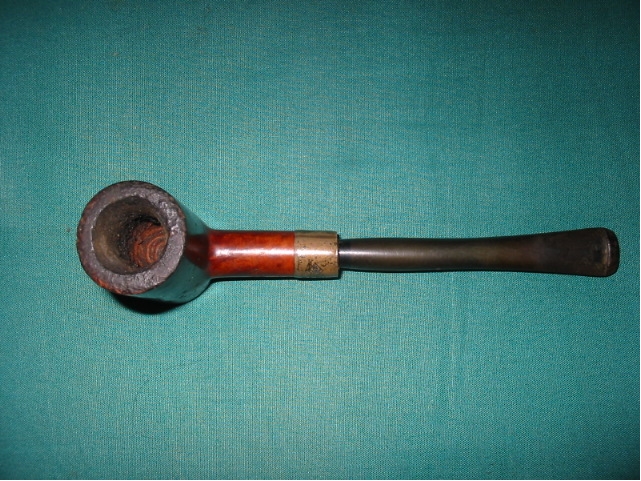
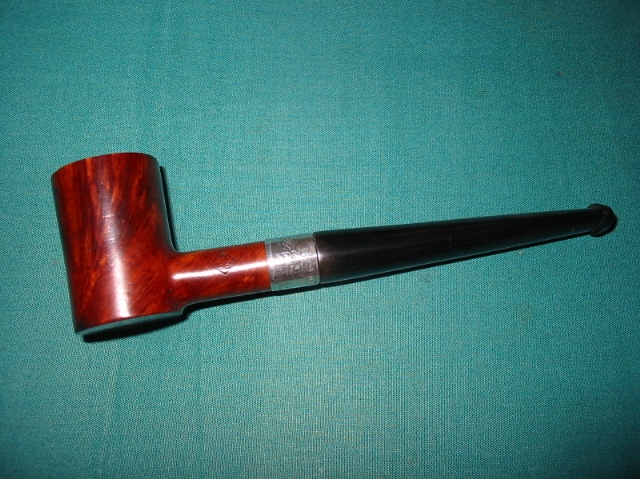
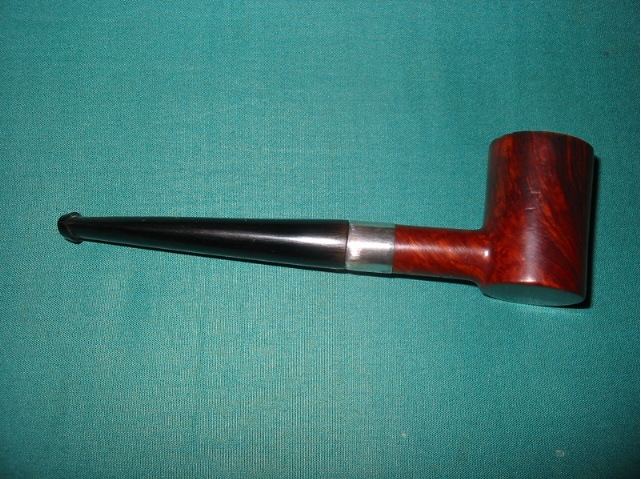
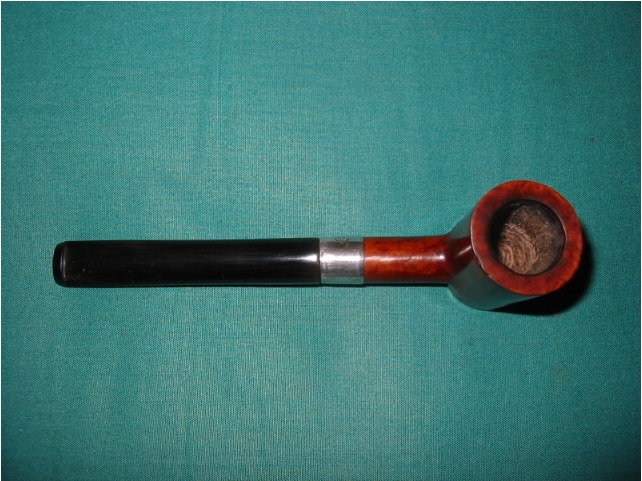
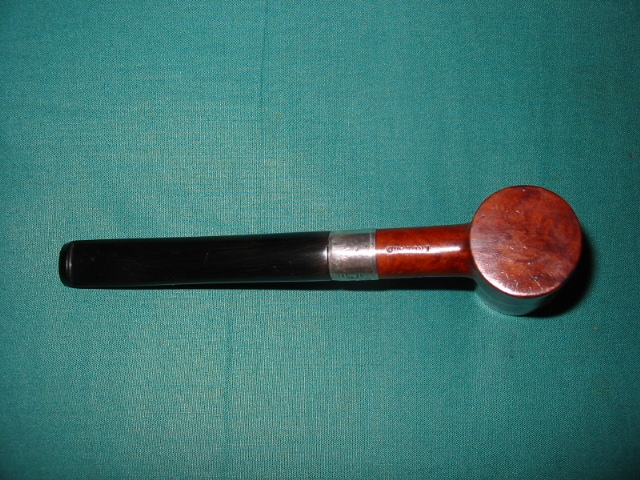
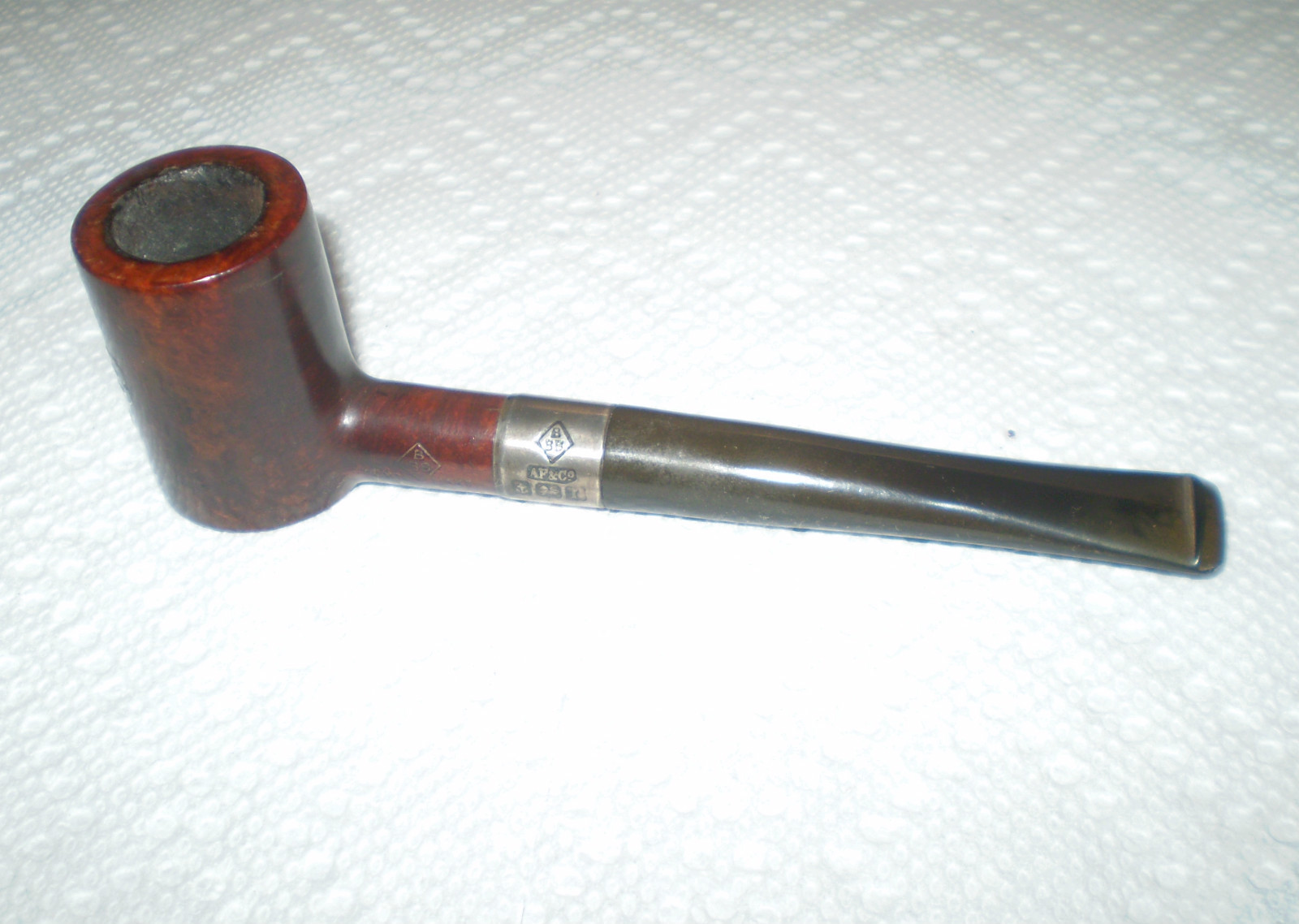
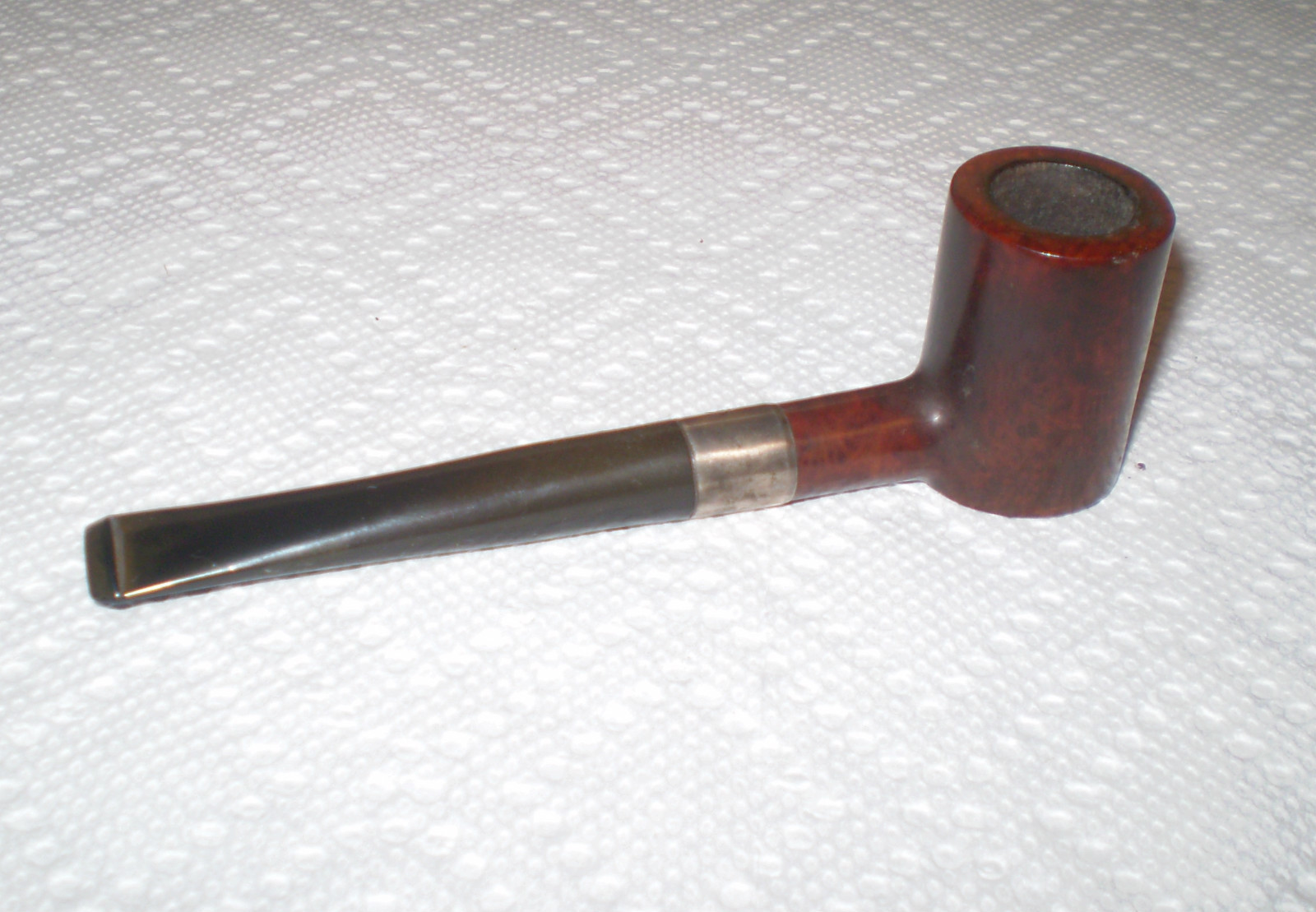
Edit – 24 Feb. 2013 – I just came across an old BBB poker on eBay that is similar to the one above. I did some research on the stem on the one above and restemmed it. The one in the eBay photos is a newer version of the same pipe number. I have attached two photos below for sake of comparison.

BBB Poker BBB Poker 2