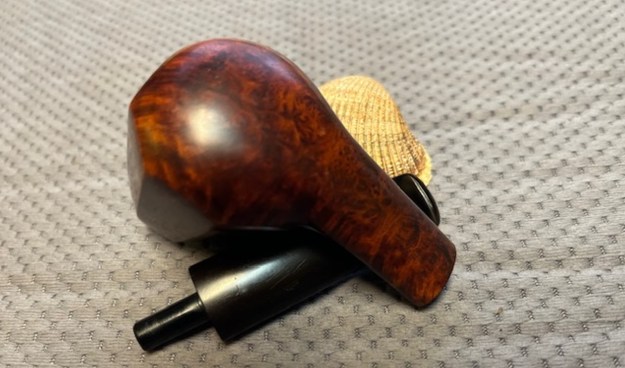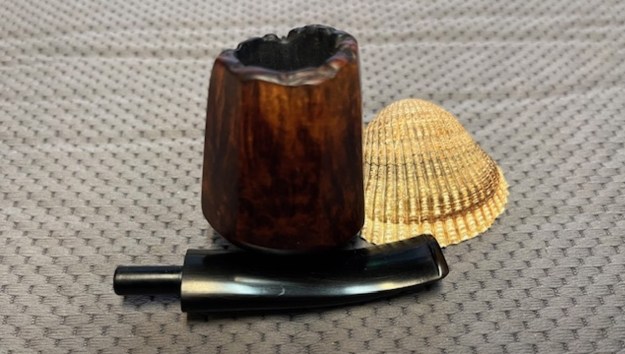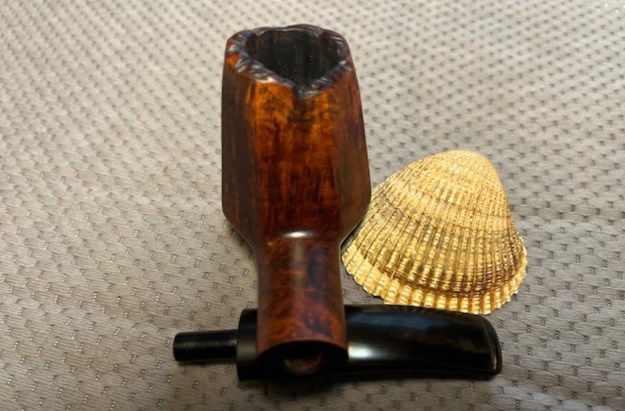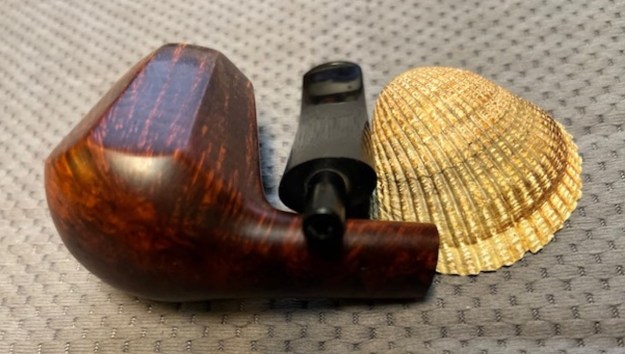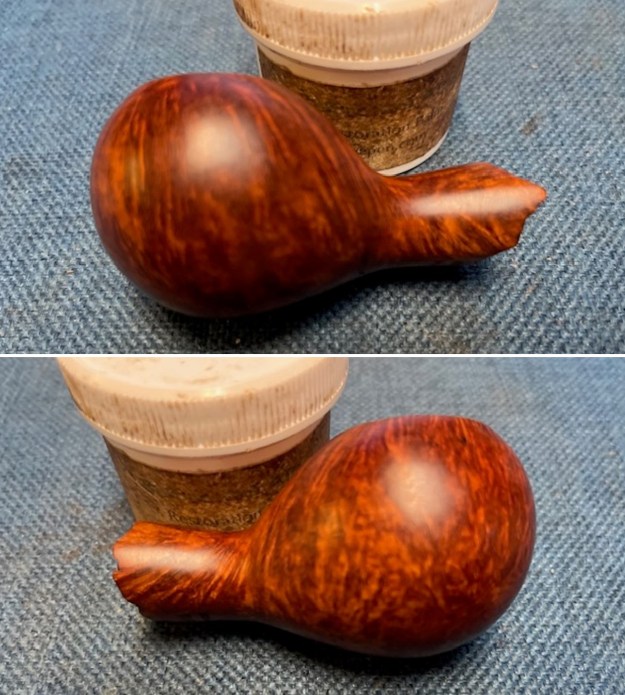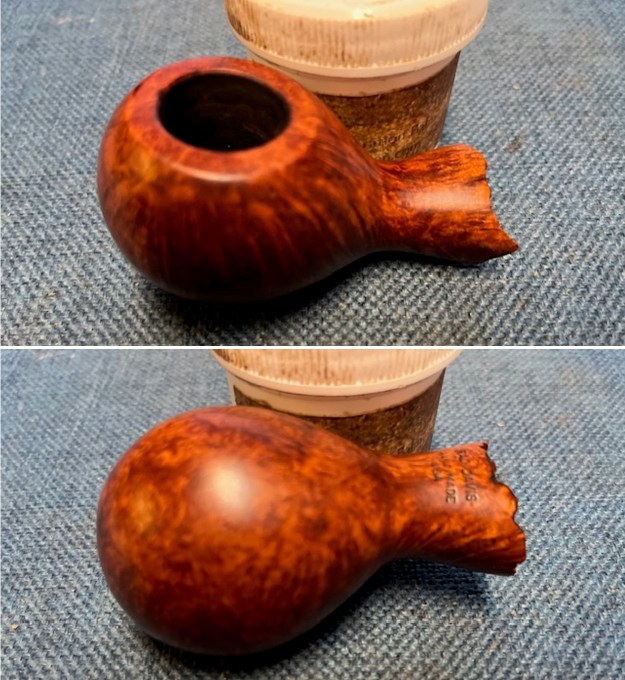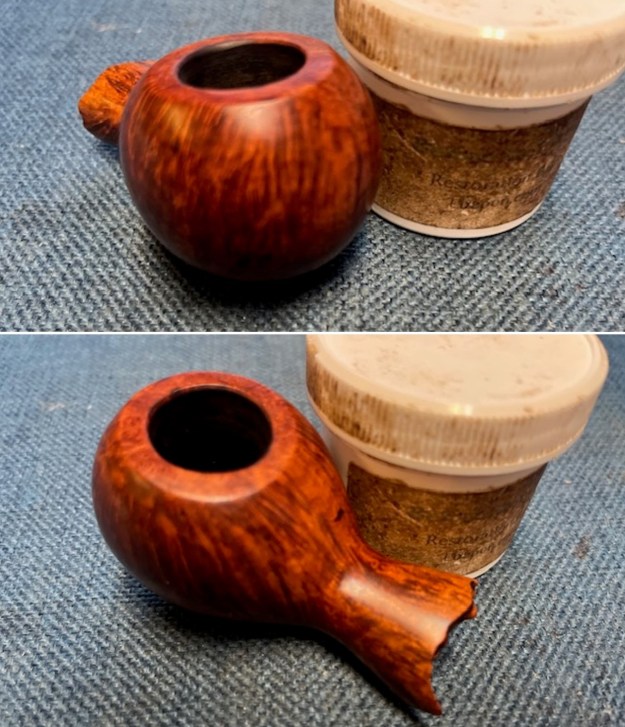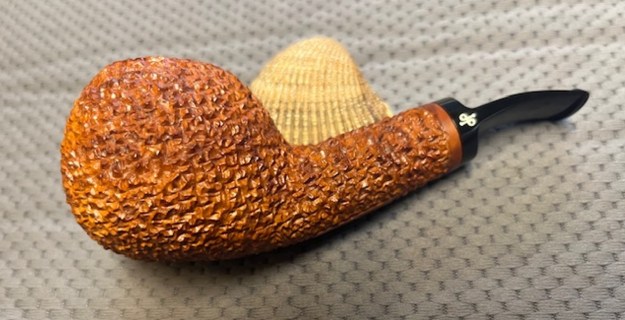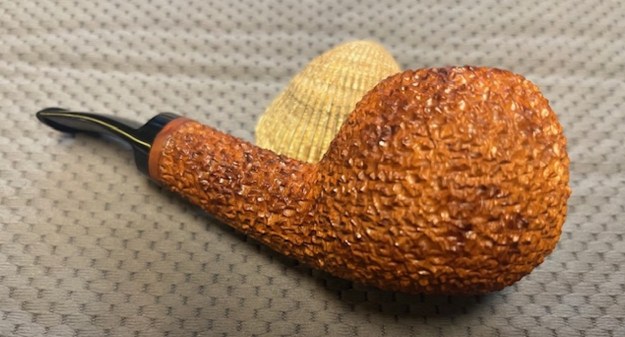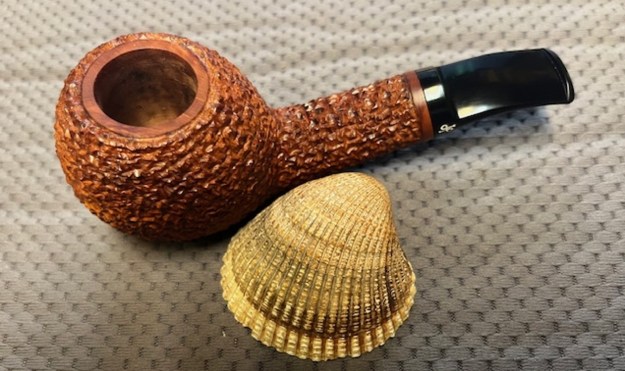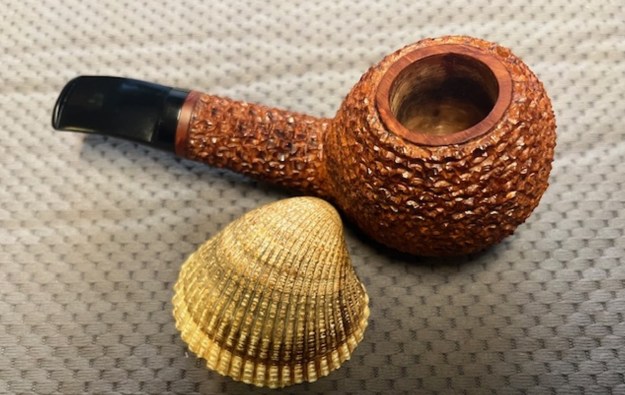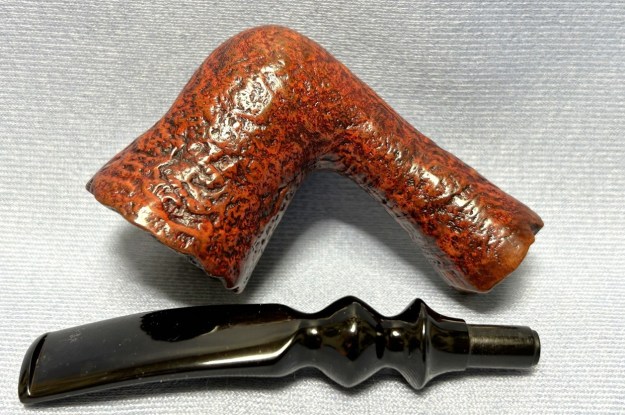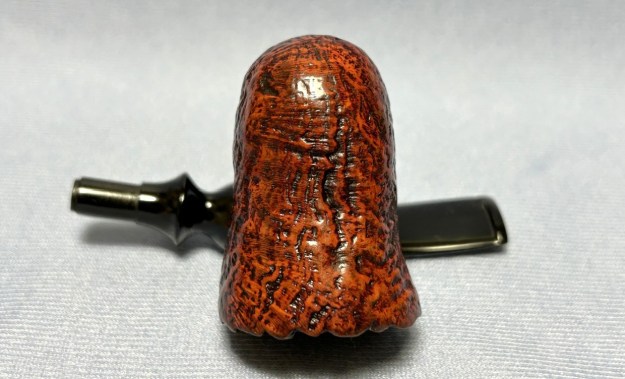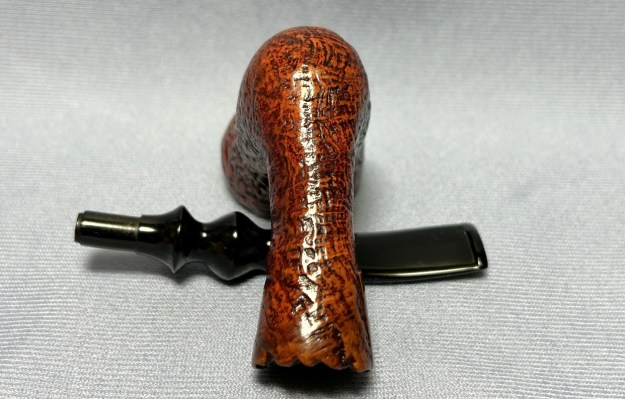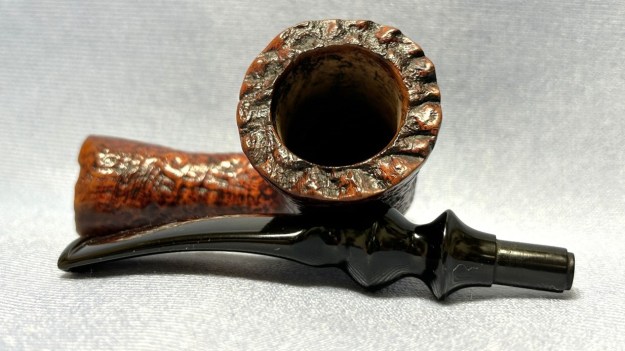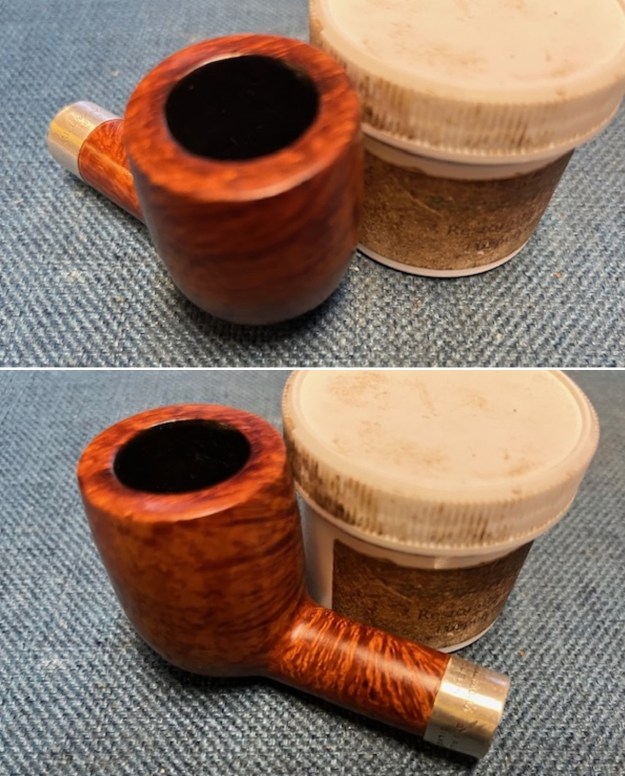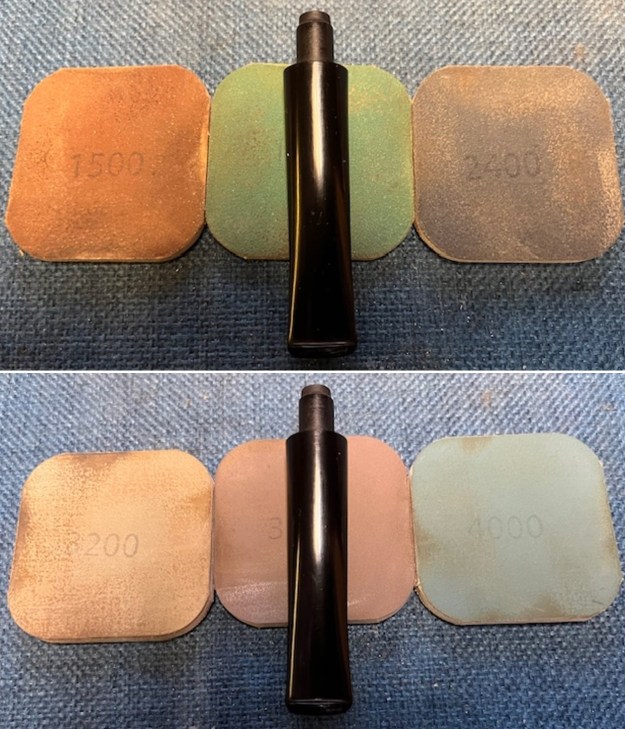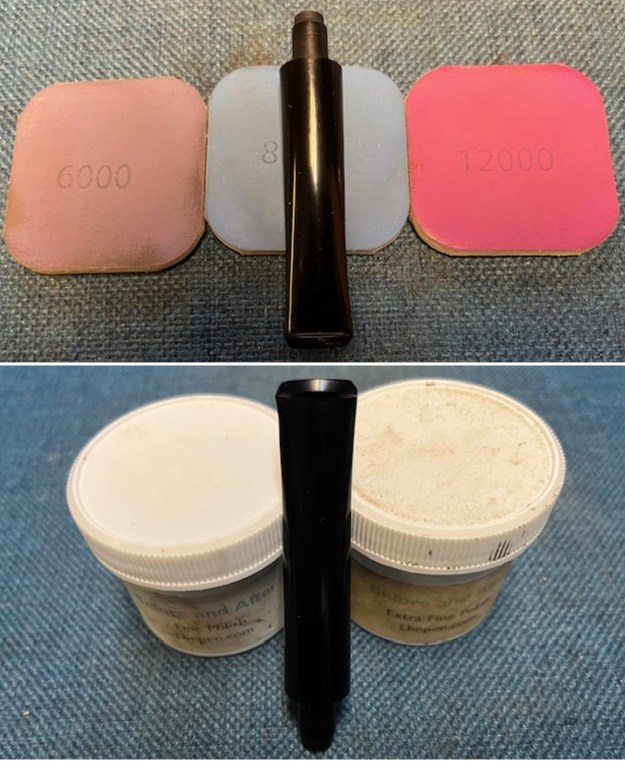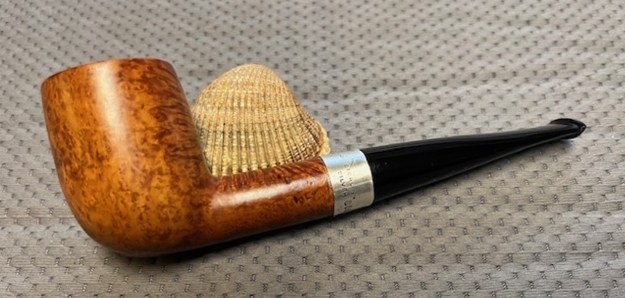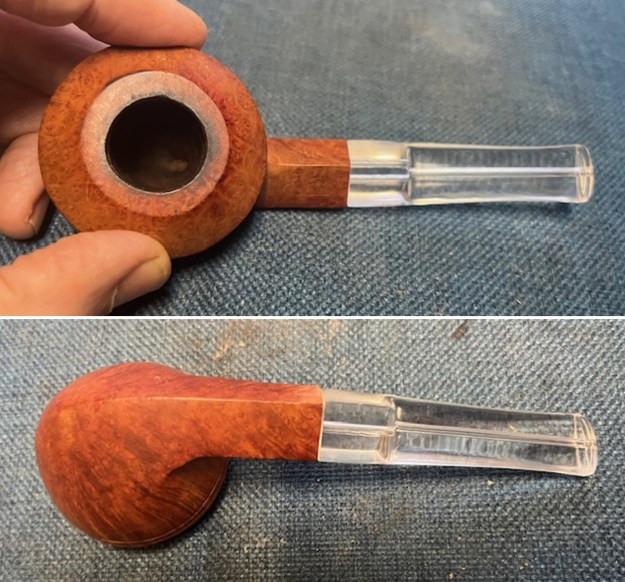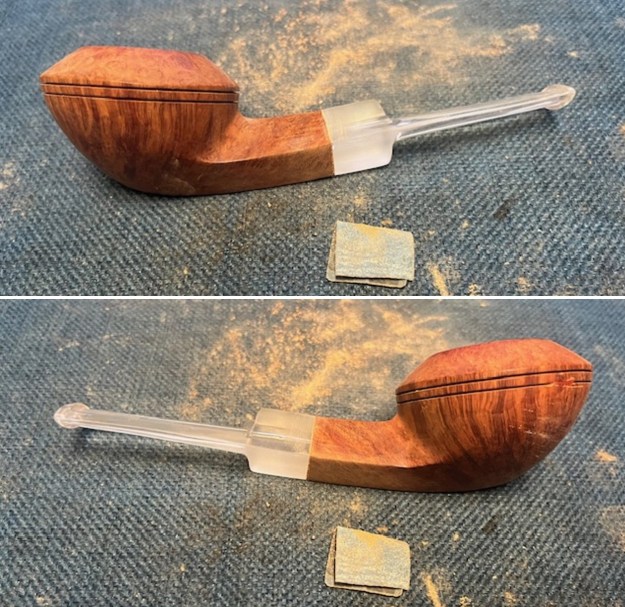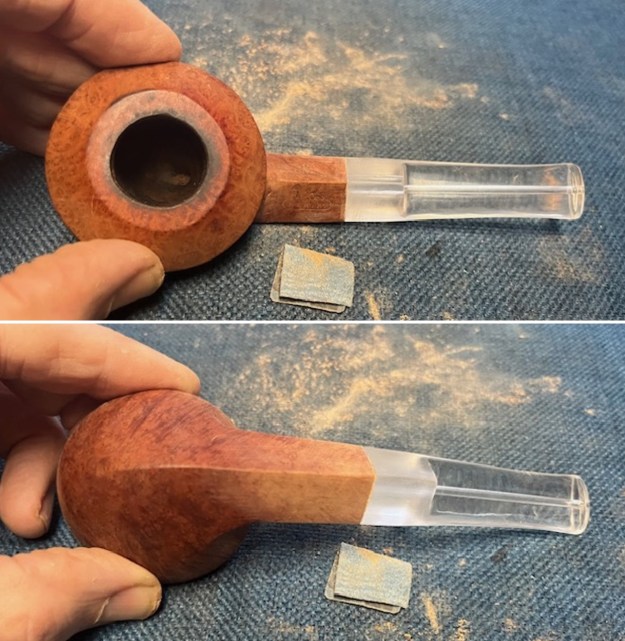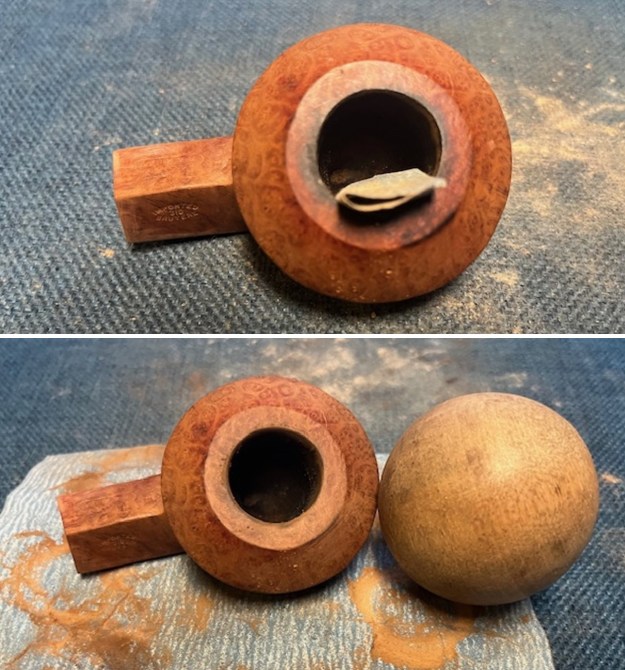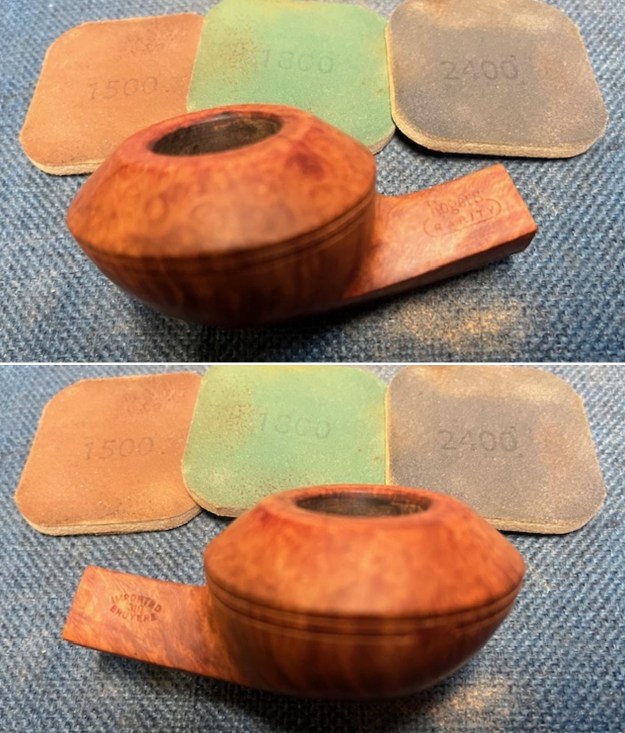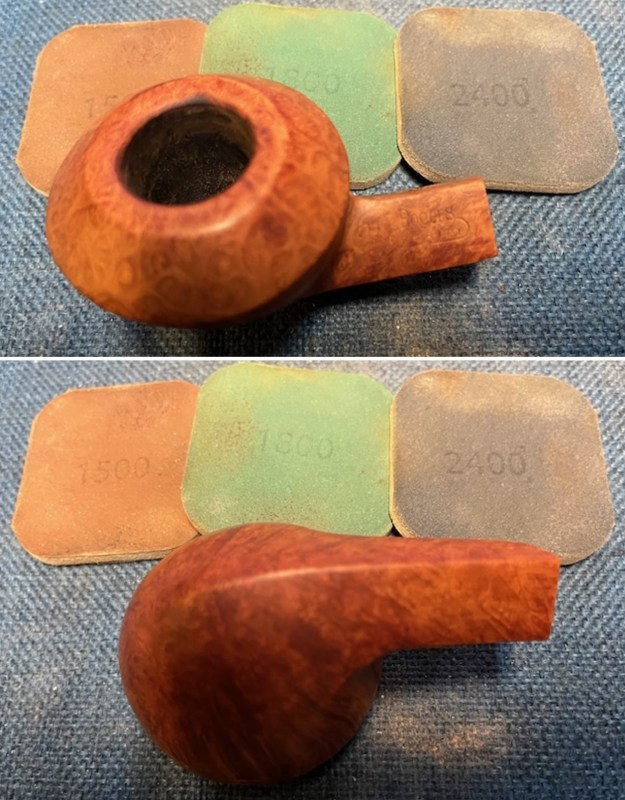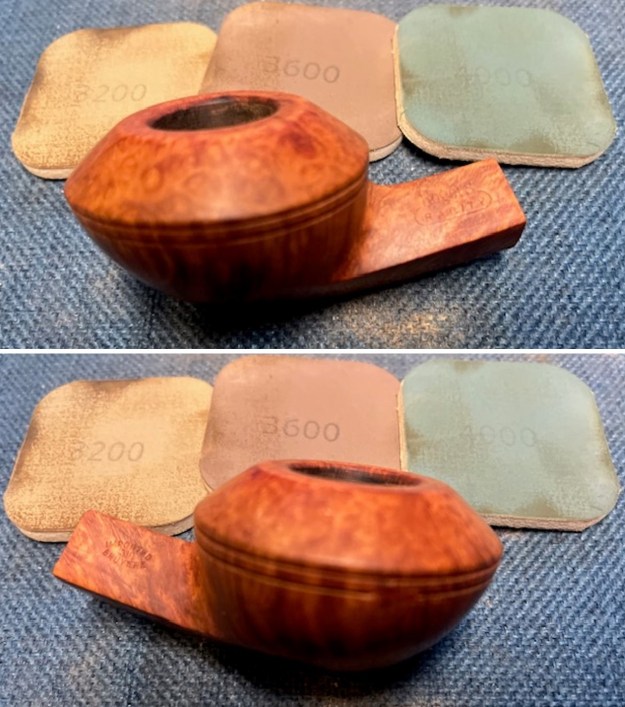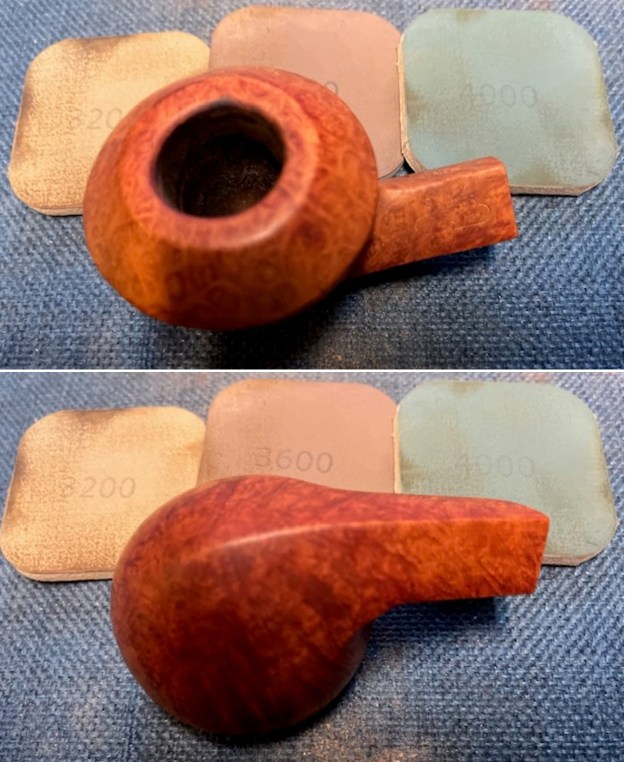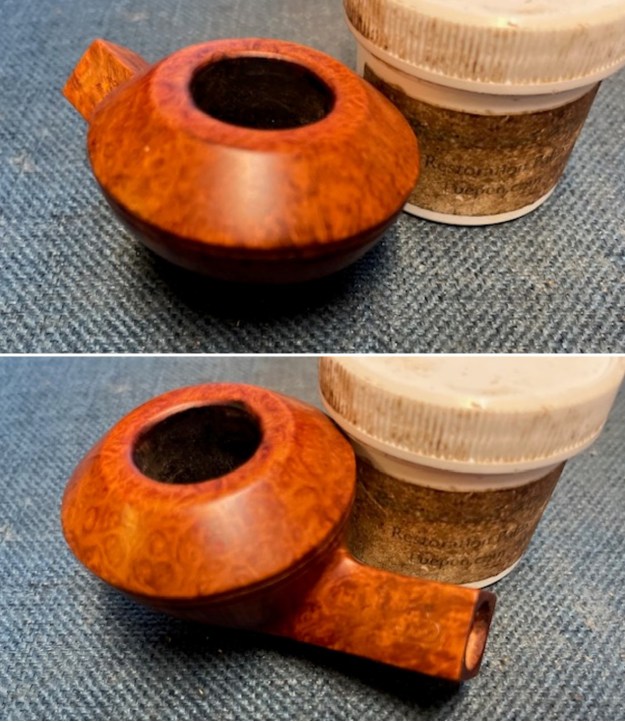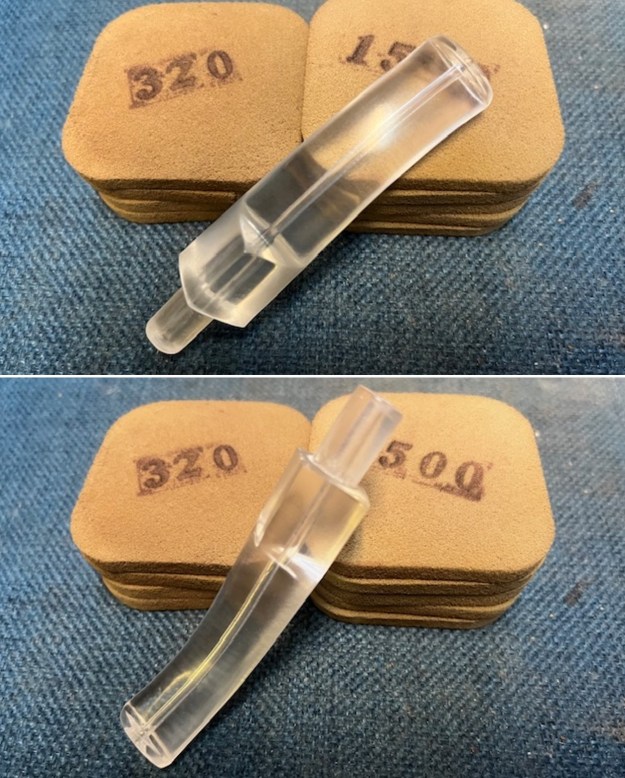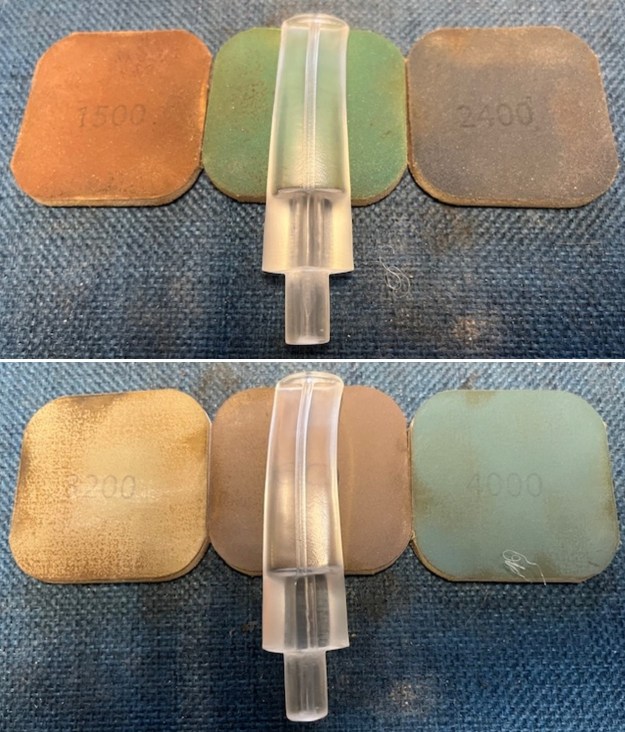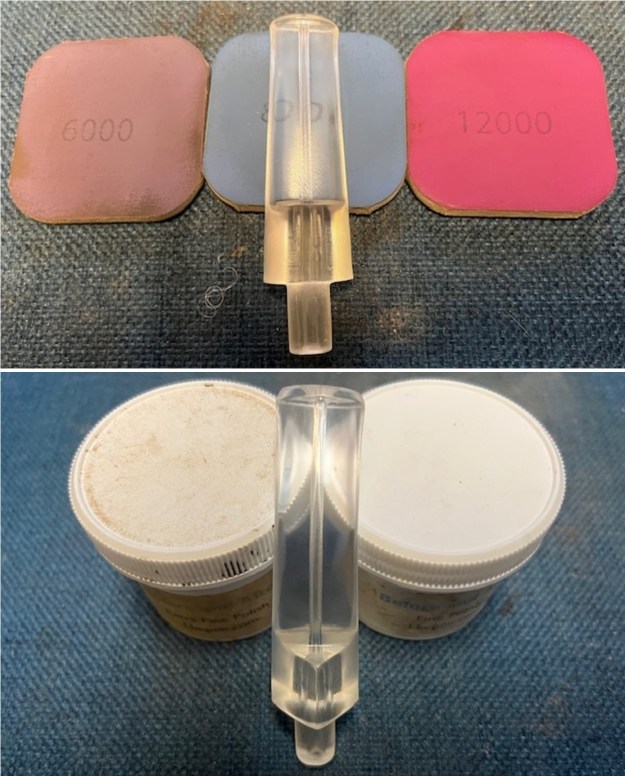
Tag Archives: stem work

Restoring a Beautiful Panel Bjarne


by Steve Laug

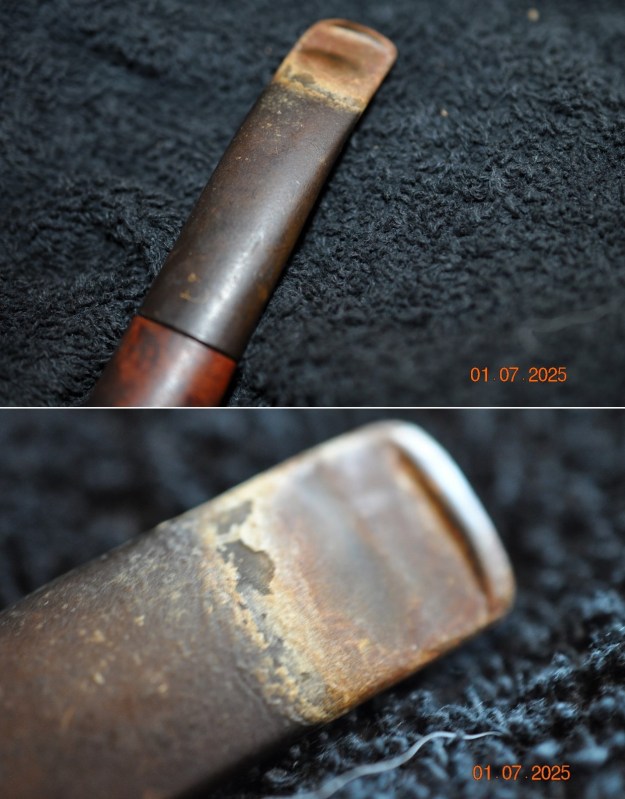
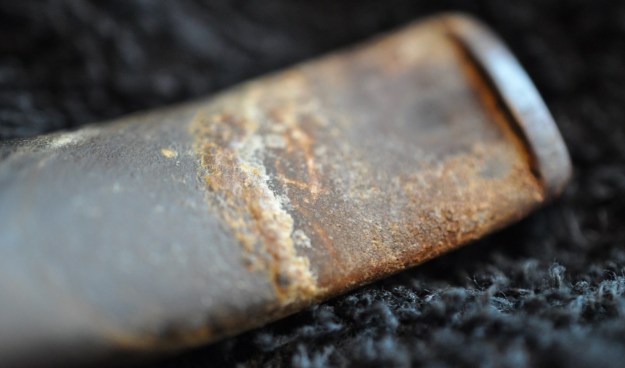
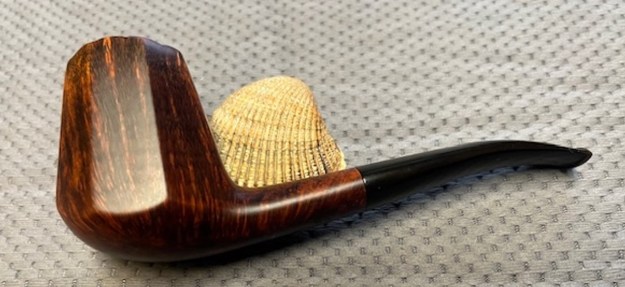
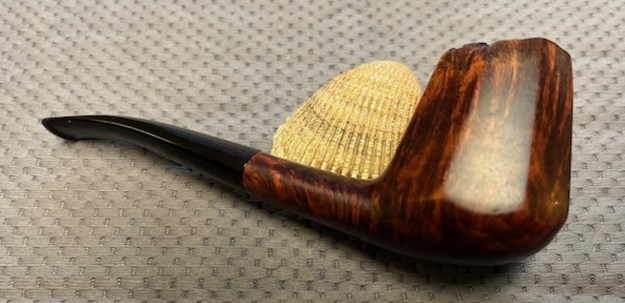
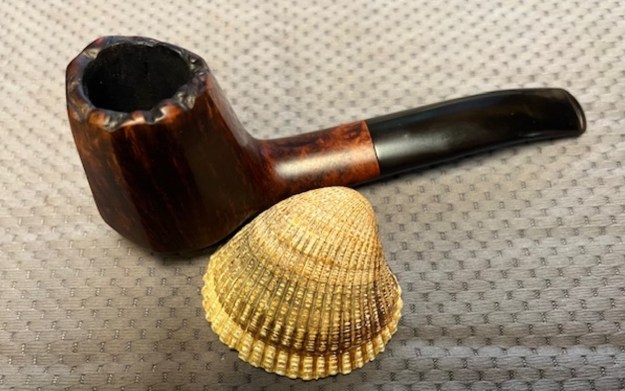
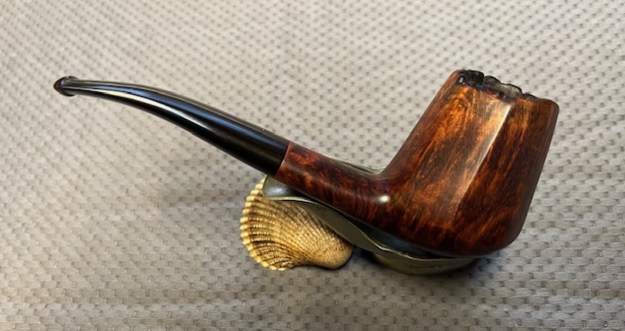
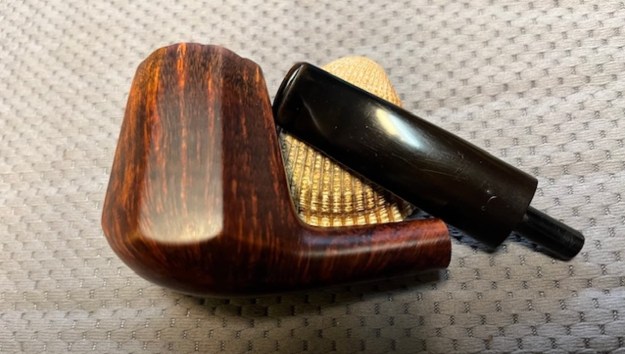
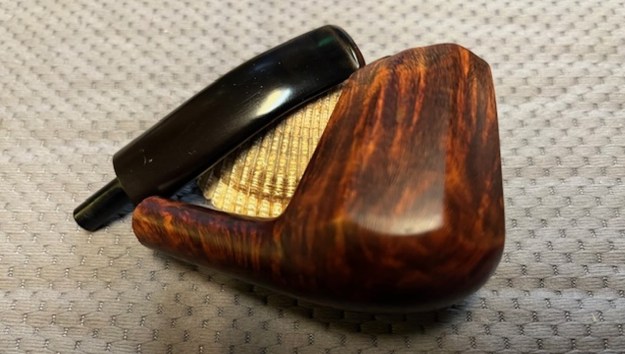
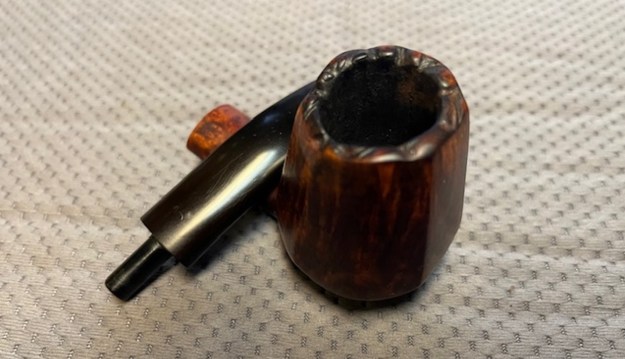
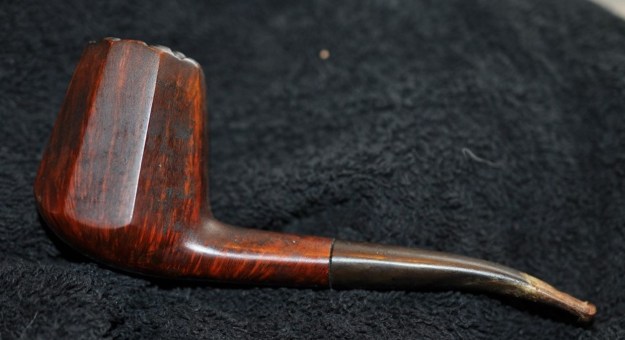
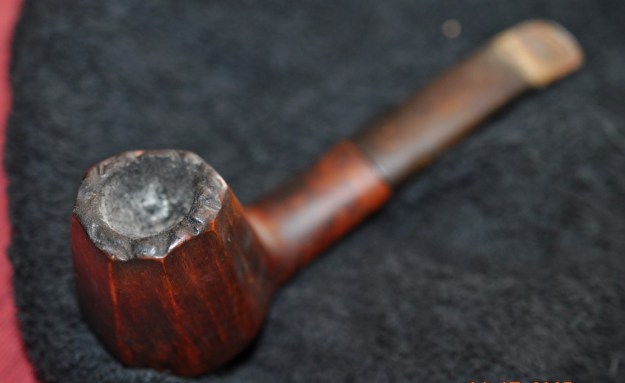
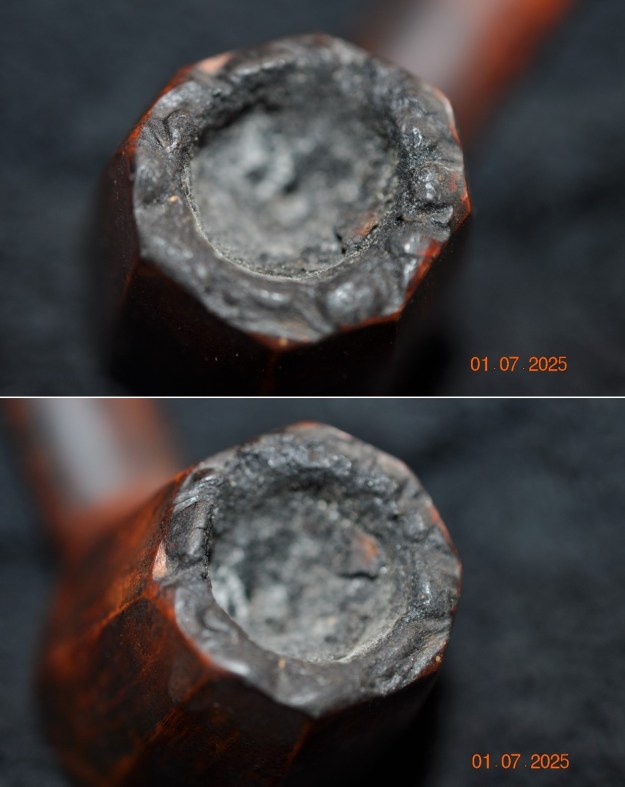
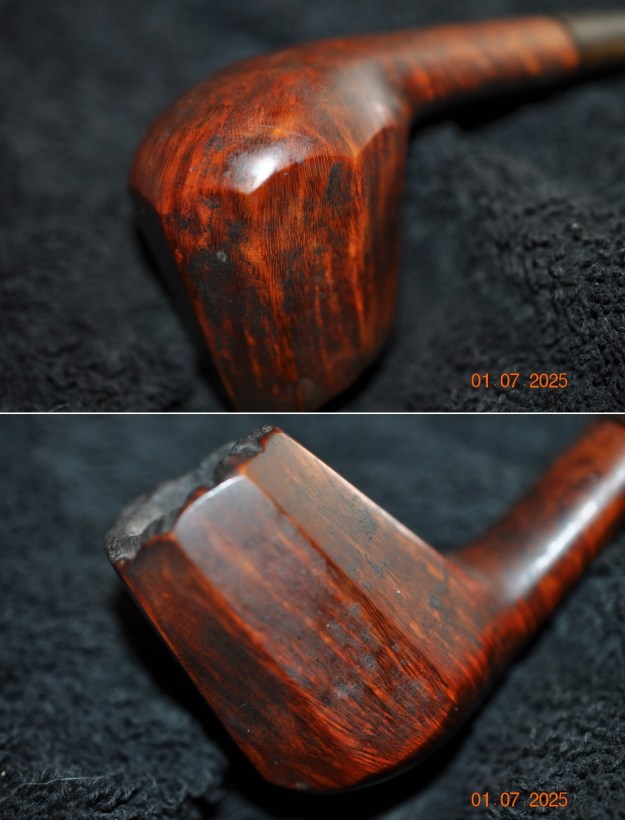
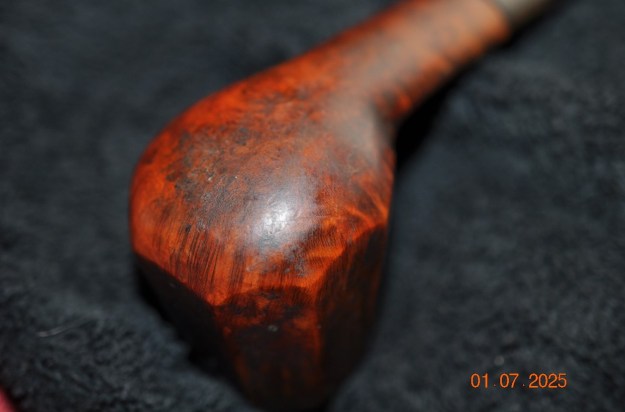
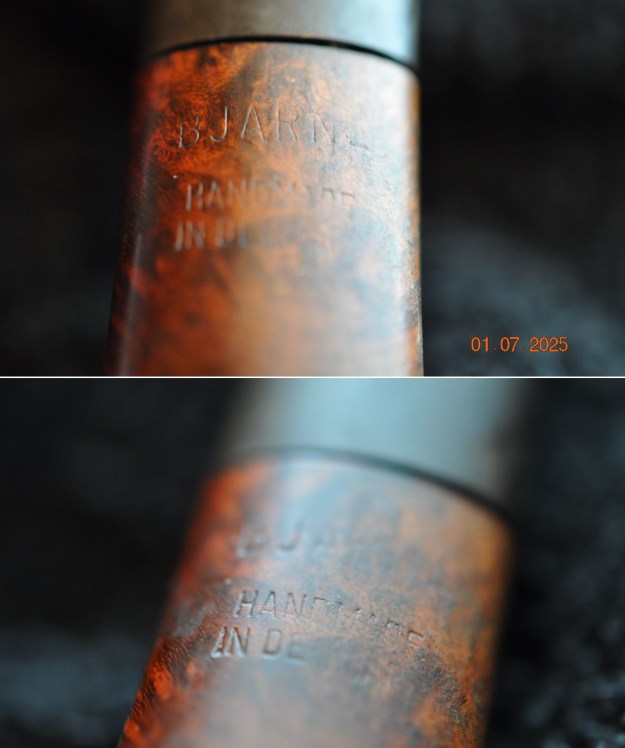
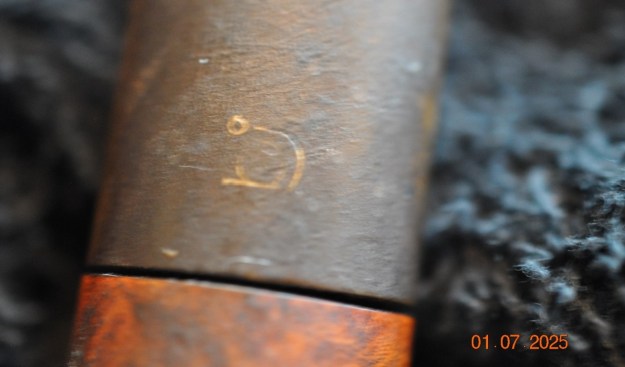
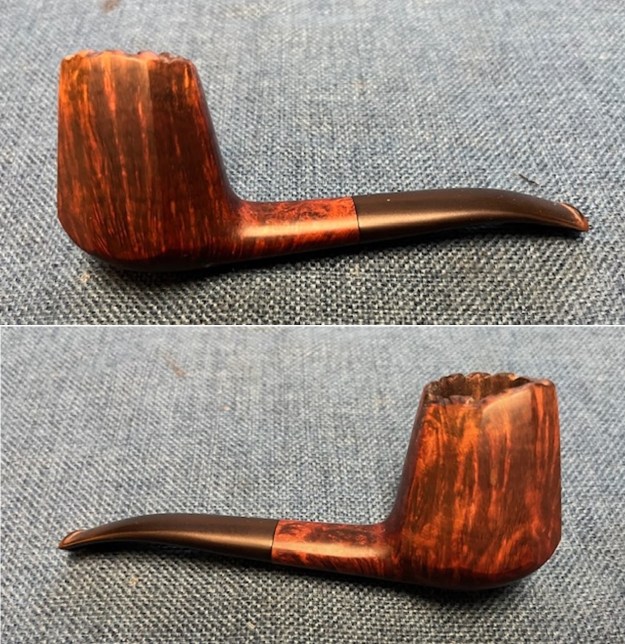
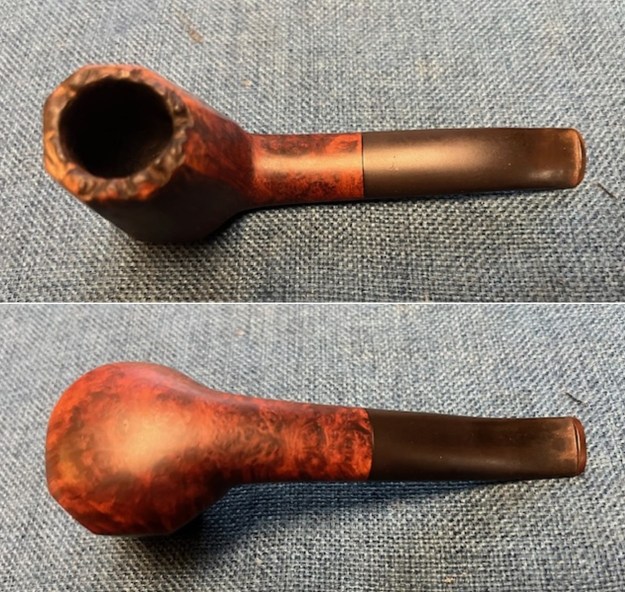
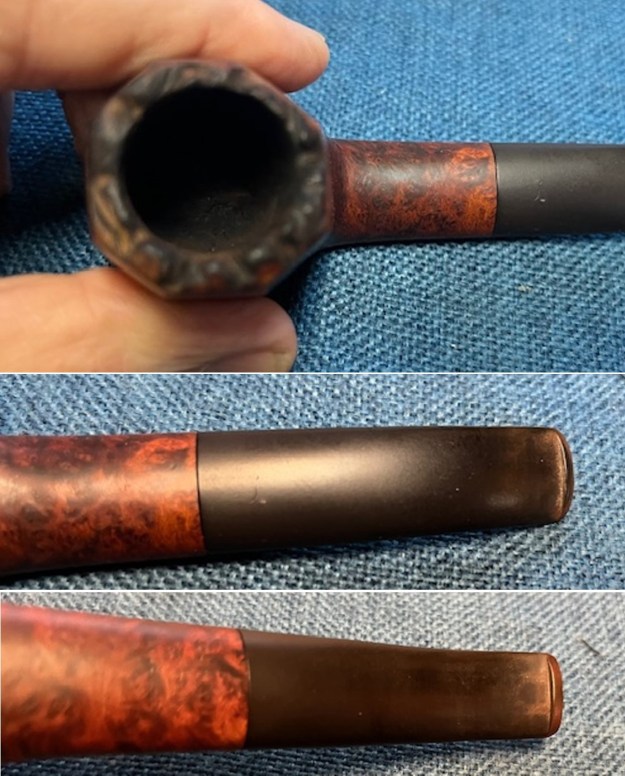
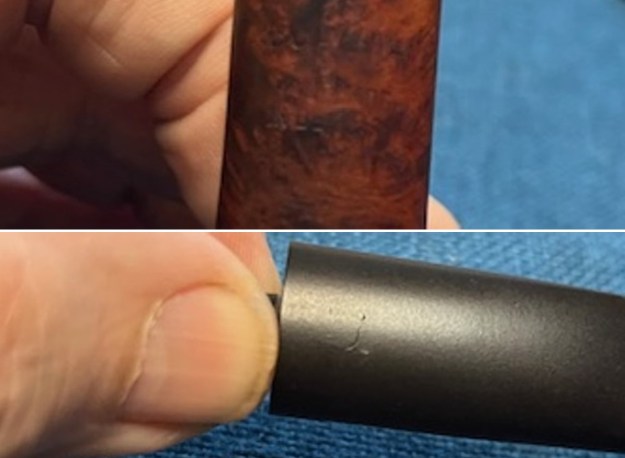
The next pipe I chose to work on was one that we purchased on 10/20/2022 from and Antique Store in Vancouver, Washington, USA. This one is stamped Bjarne [over] Handmade [over] In Denmark. I have worked on quite a few Bjarne pipes over the years and found them to be well made pipes following the grain on the smooth and unique sandblast on the others. So, when I saw this one I was excited to work on it. The pipe is kind of a shape I would call a combination of a Freehand and a Panel Brandy. The briar bowl and shank were smooth and well grained. The rim top had a plateau finish. The exterior of the pipe is dirty from use with oils and grime on the bowl sides. It has a thick cake in the bowl and an overflow of lava on the plateau rim top and inner edge of the bowl. The stem is a oval taper stem that is comfortable. It is oxidized but free of tooth marks and chatter on the surface. Jeff took photos of the rim top and stem to show the general condition of the pipe. The bowl is thickly caked and seems to have a thick dottle in the bottom of the bowl. There was some thick lava on the rim top and inner edge. I am hoping that once the lava is removed the edge will be okay. The stem looked surprisingly good under the dirt and grime. There was oxidation, calcification on the surface of the vulcanite. It looked like it had a rubber Softee Bit on the stem. There did not appear to be any tooth marks or chatter. It should cleanup very well.Jeff took photos of the bowl sides and heel to show the beautiful grain that was around this bowl event though it was lost in the grime the finish. The pipe had obviously been well loved and enjoyed by the previous pipeman. He took a photo of the underside of the shank to show the stamping. The stamping is clear and readable in the photos below as noted above. The stem had a faint Bjarne logo on the topside. In a previous blog I had researched the brand quite a bit. I have included it in full below for information on this pipe (https://rebornpipes.com/2020/03/07/another-pipe-from-the-eastern-canada-lot-a-hand-carved-bjarne-freehand/). I quote:
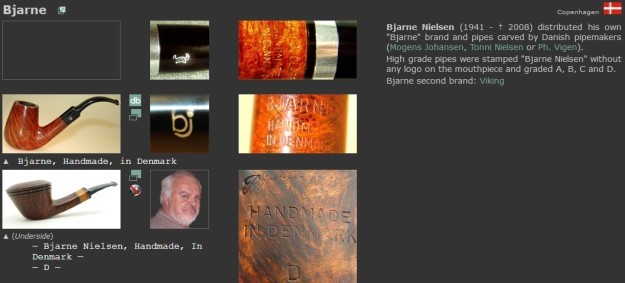
I turned my favourite go to sites on background of brands. The first is Pipephil’s site (http://www.pipephil.eu/logos/en/logo-b5.html). There I looked up the Bjarne brand. I have copied the pertinent information below.

Bjarne Nielsen (1941 – † 2008) distributed his own “Bjarne” brand and pipes carved by Danish pipemakers (Mogens Johansen, Tonni Nielsen or Ph. Vigen). High grade pipes were stamped “Bjarne Nielsen” without any logo on the mouthpiece and graded A, B, C and D. Bjarne second brand: Viking.

I have included a screen capture of the section on the brand below.I turned to Pipedia and looked up the brand for a bit more information on the pipes that were stamped like the one that I am working on (https://pipedia.org/wiki/Bjarne). Toward the end of the article I found what I was looking for. I quote:
Among the pipemakers that worked for Bjarne were Johs (for the lower priced high volume pieces), and makers like Ph. Vigen, Ole Bandholm and Tonni Nielsen for high grade pieces. The cheaper line was stamped “Bjarne” while the highest grades were stamped “Bjarne Nielsen” (never with the pipemakers’ name) and graded, from highest to lowest, by the letters: AX, A, B, C, D, E, F, G, H, I, and J.

Now I knew that I was dealing with the cheaper line of pipe made by the company. It was stamped Bjarne while the higher grade pipes were stamped Bjarne Nielsen with a grade stamp.

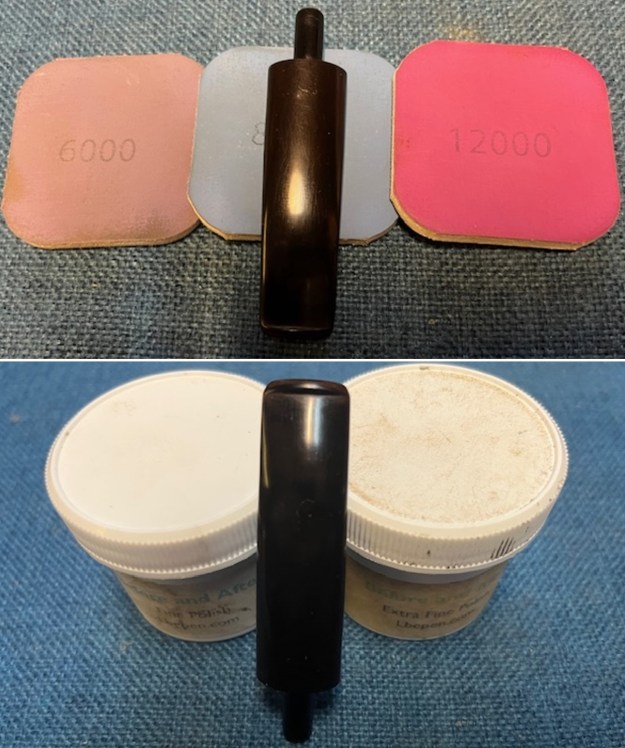
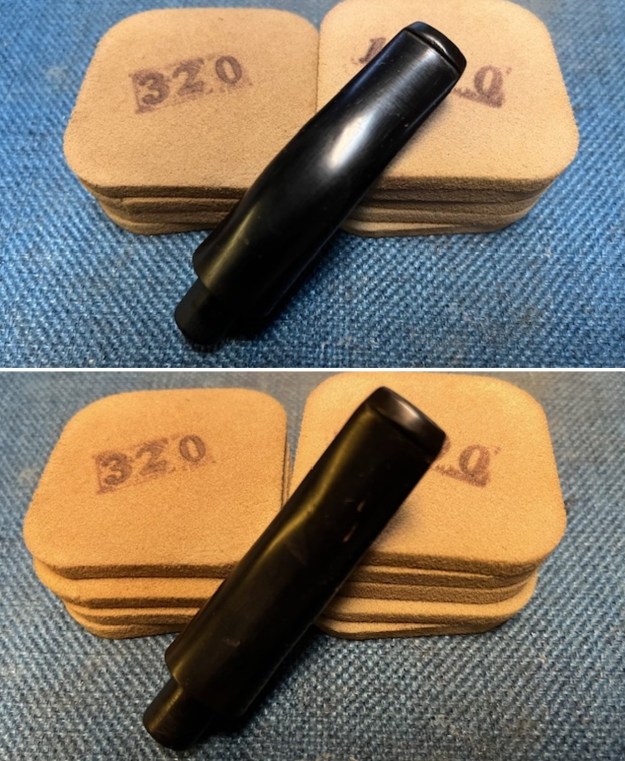
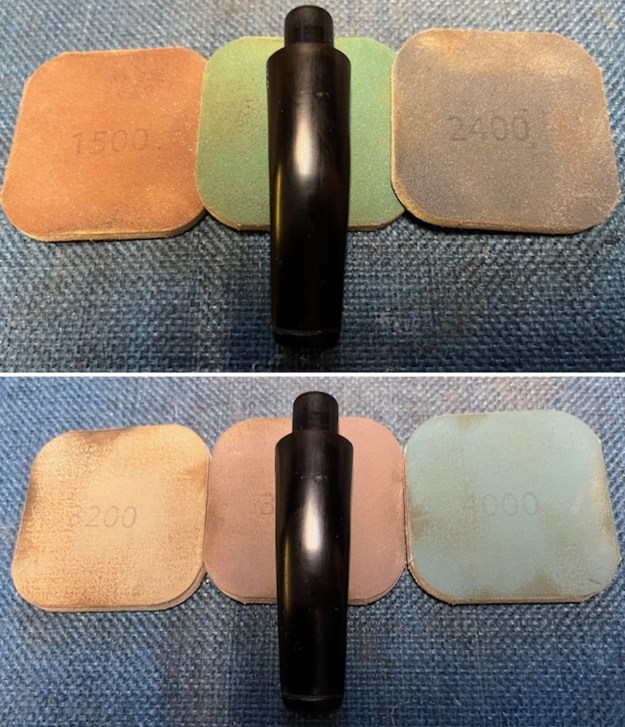
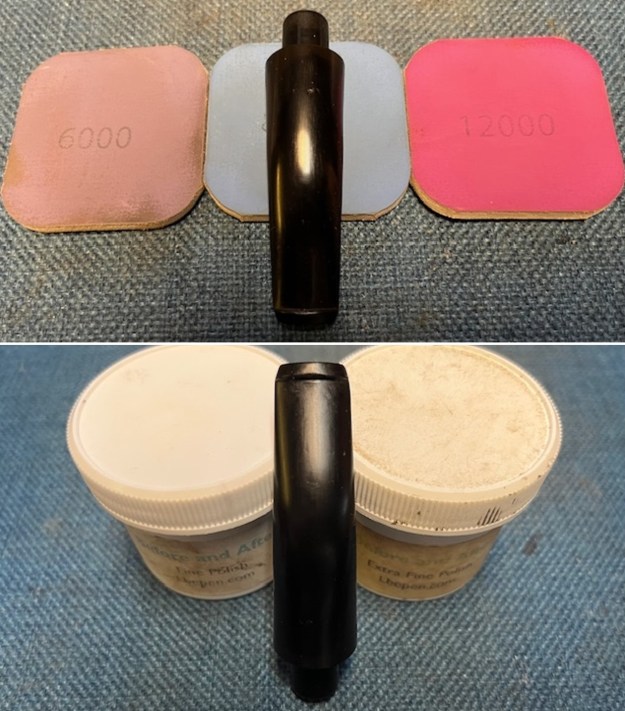
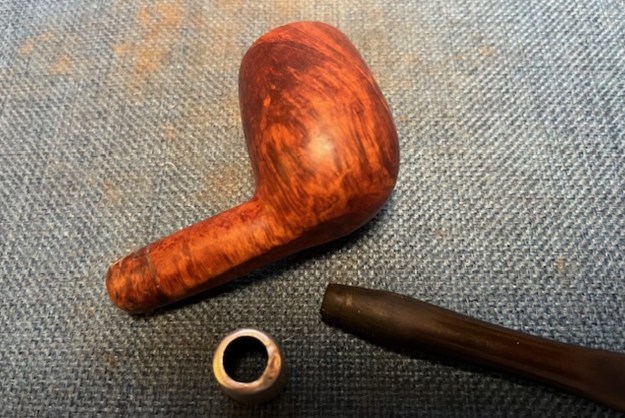
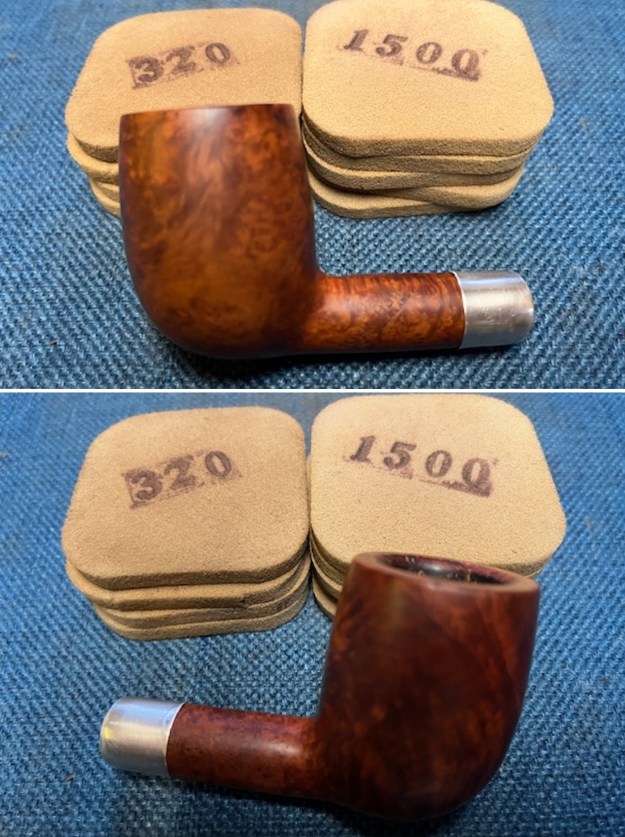
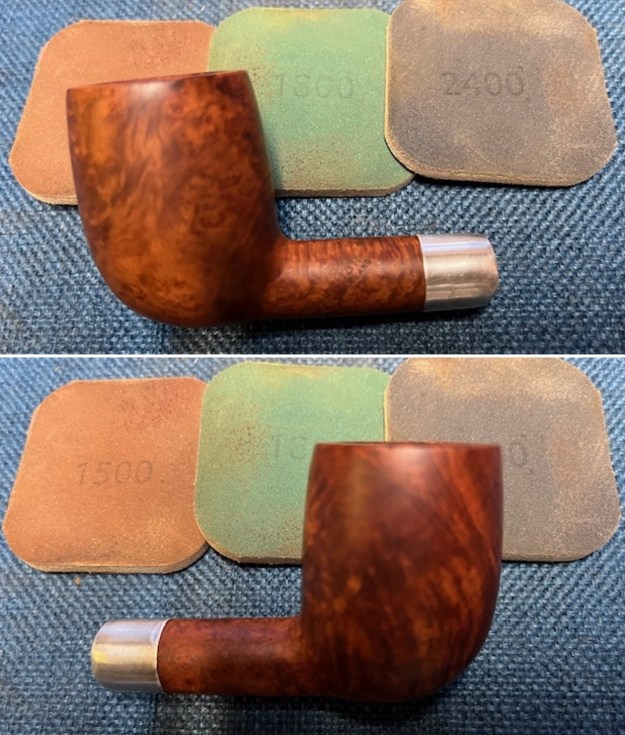
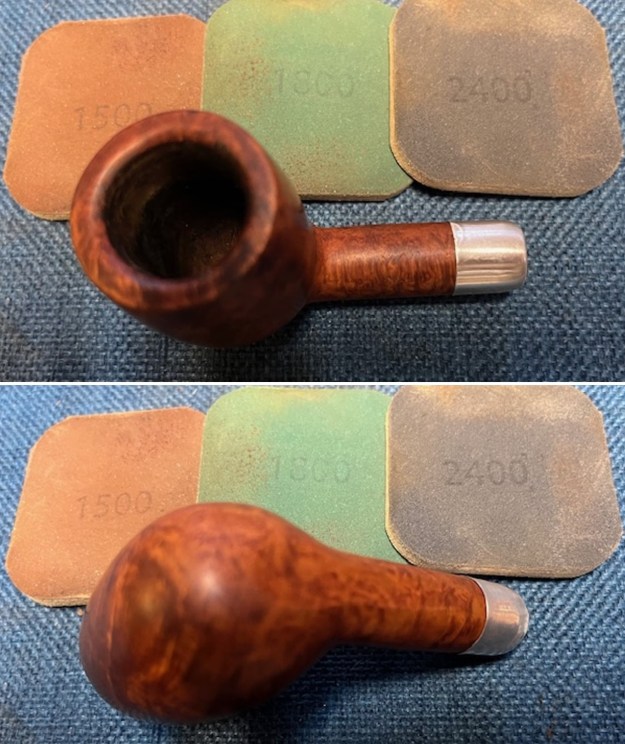
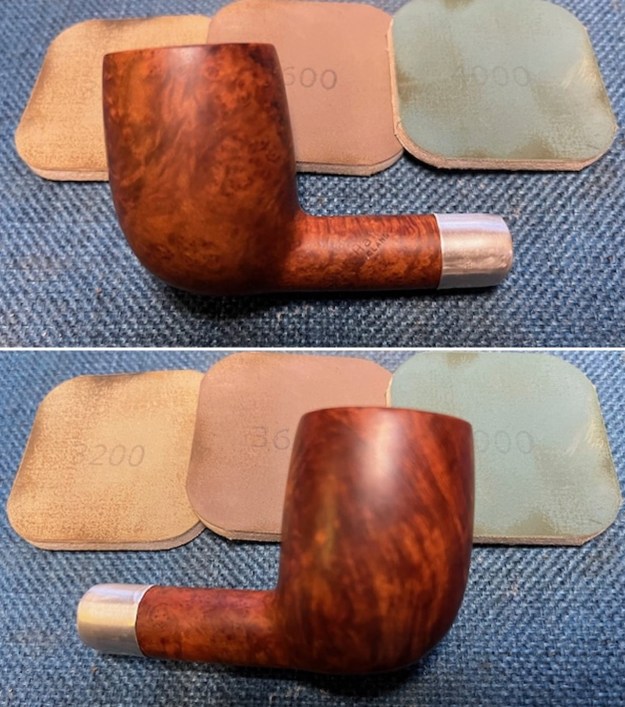
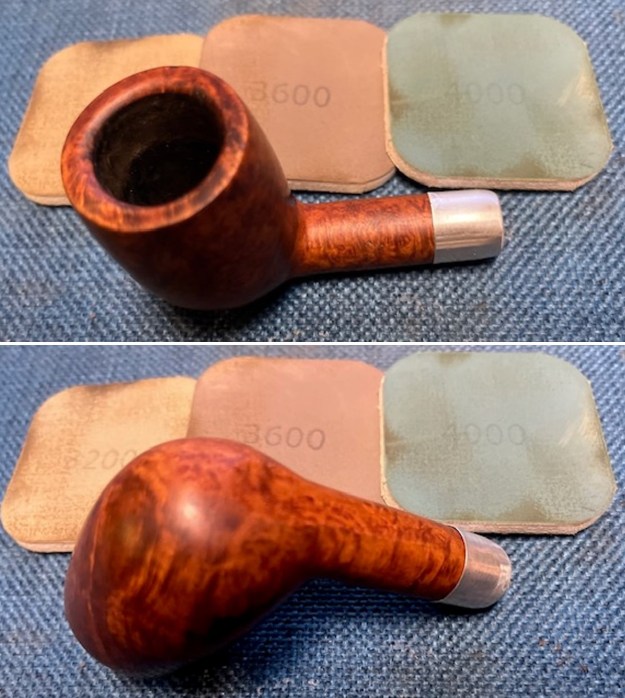
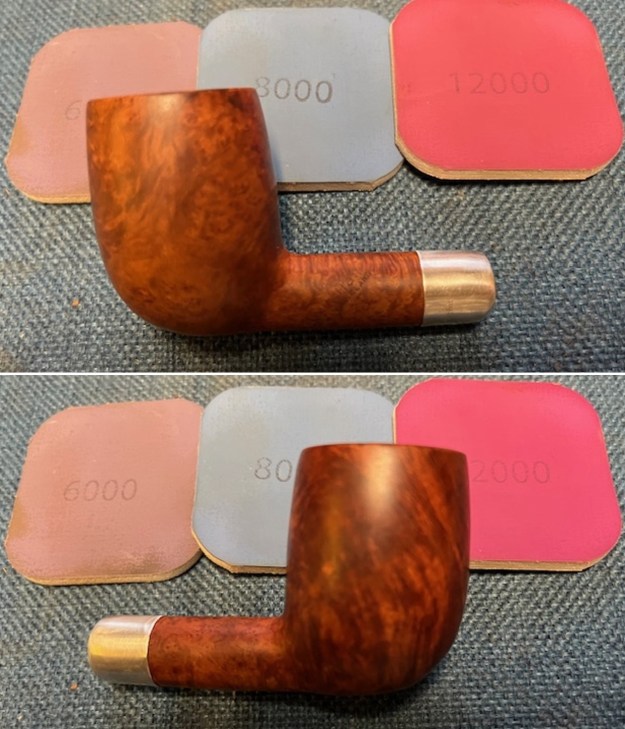
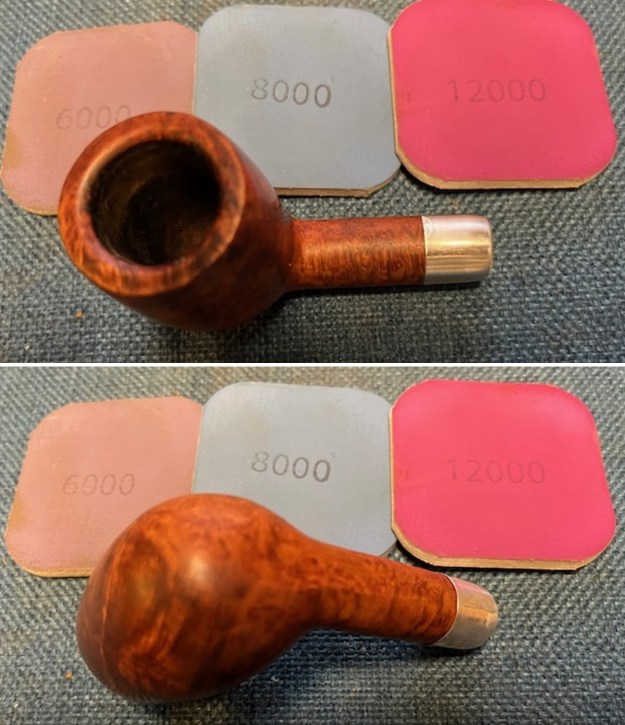
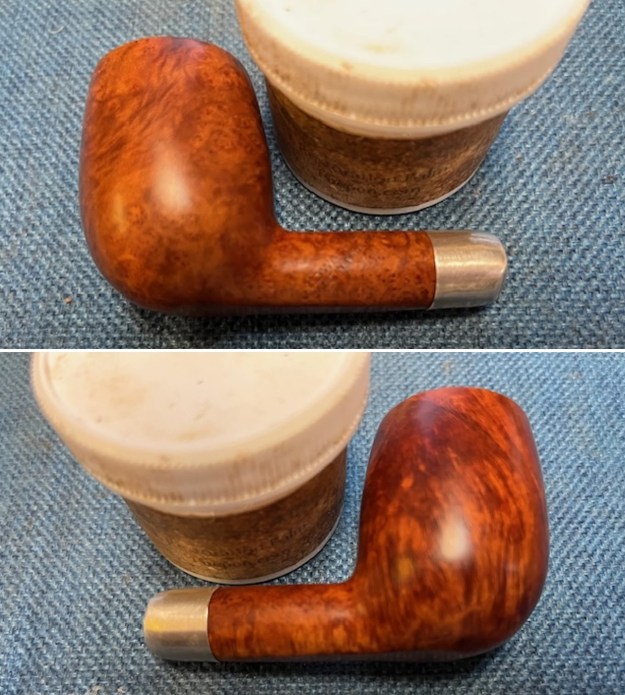
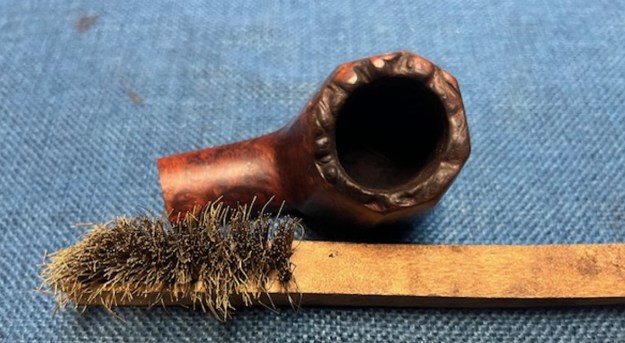
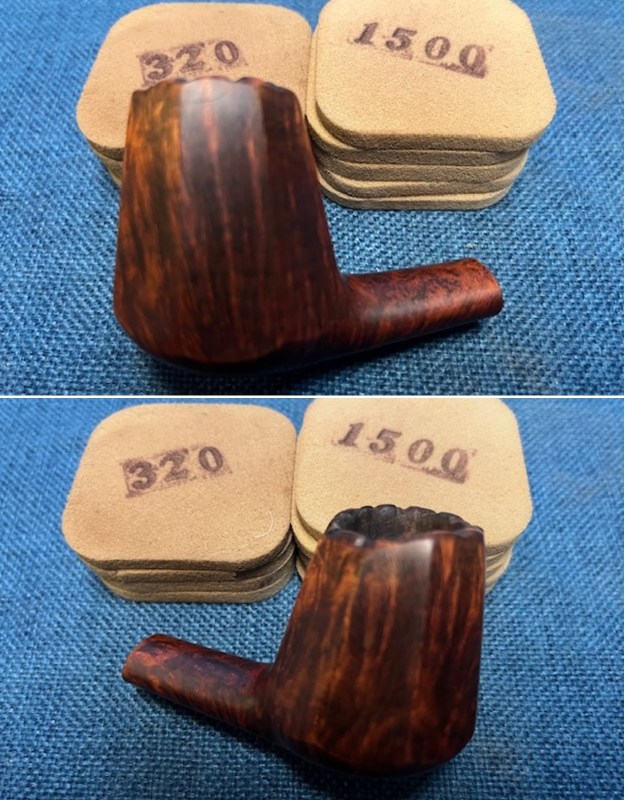
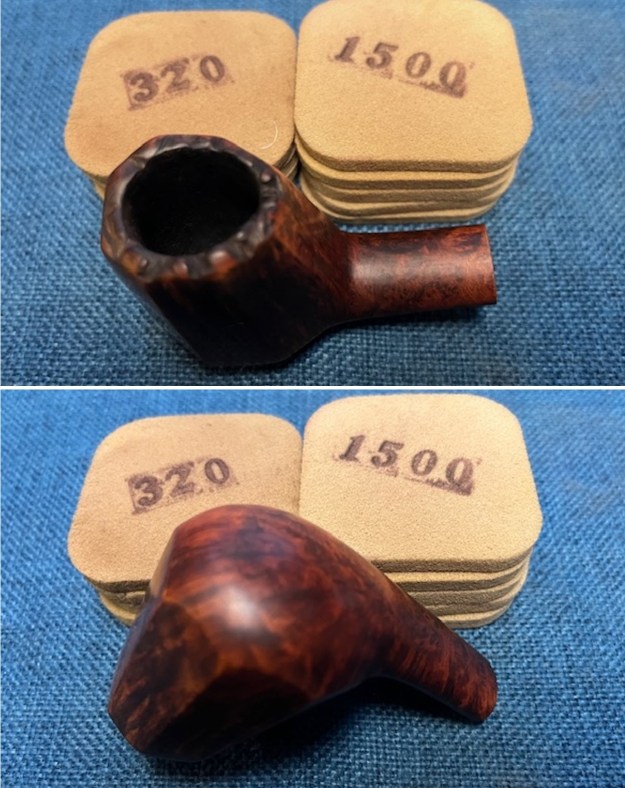
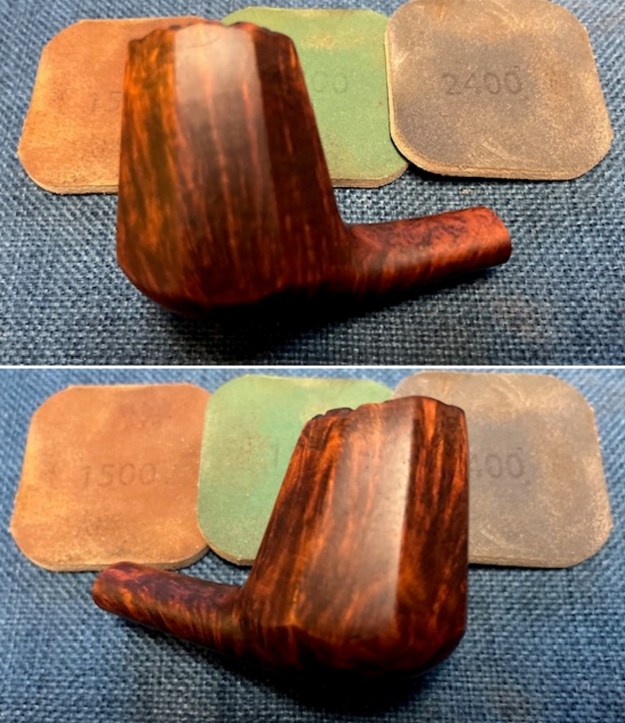
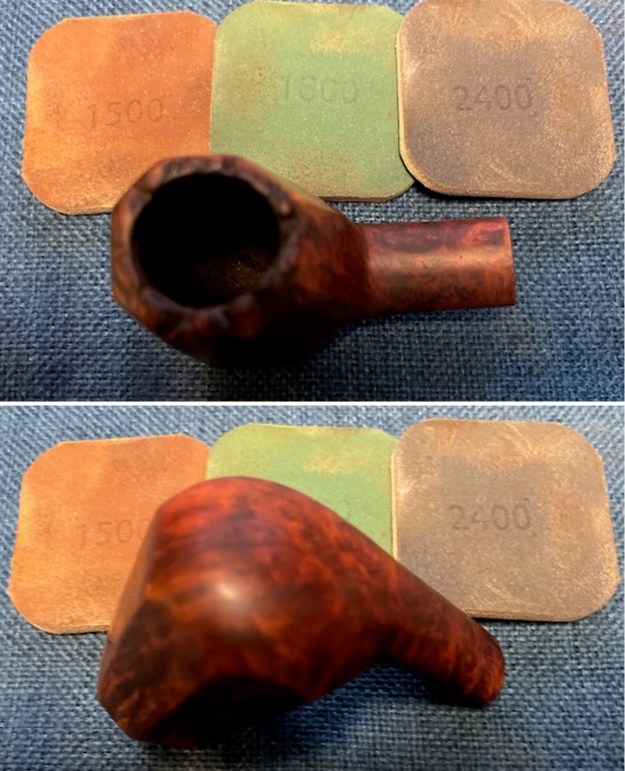
Jeff did a great job cleaning off the debris and grime on this old. He reamed it with a PipNet reamer and smoothed the walls of the bowl with a Savinelli Fitsall pipe knife. He scrubbed out the mortise and the airway in the shank and the stem with alcohol, cotton swabs and pipe cleaners. He scrubbed the exterior of the bowl, rim and shank with a tooth brush and Murphy’s Oil Soap to the oils and tars on the bowl, rim and shank. He rinsed it under running water. He dried it off with a soft cloth. Once the grime was removed the finish underneath was in stellar condition. The rich patina of the older briar was a variegated finish of smooth and sandblast looked great. He scrubbed the exterior of the stem with Soft Scrub then soaked it in a bath of Briarville’s Pipe Stem Deoxidizer. He rinsed off the deoxidizer with warm water and wiped the bowl and stem down with a light coat of olive oil to rehydrate both. The pipe really was quite stunning. I took photos of the pipe to show its condition before I started my work on it. I took a close up photo of the rim top and edges to show how well it had cleaned up and the edges around the bowl. I also took close up photos of the stem to show the light tooth chatter on the surface ahead of the button on both sides.I took a photo of the stamping on the underside of the shank. It is faint but readable as noted above. I removed the stem and took a photo of the faint stamping on the top of the stem – BJ. There is not enough depth in the stamp to recolour it.I started my work on the pipe by going over the rim top with a wire brush to remove the remnants of debris and lava on the plateau of the rim top. I sanded the bowl with 320-3500 grit sanding pads to remove the scratches and marks on the sides of the bowl and heel. I wiped the bowl down with a damp cloth after each sanding pad to remove the sanding debris. It began to really take on a shine.I polished the briar with micromesh sanding pads – dry sanding with 1500-12000 grit sanding pads. I wiped the bowl down with a damp cloth after each sanding pad. The grain really began to sing. I worked some Before & After Restoration Balm into the surface of the briar with my fingertips to clean, enliven and protect the briar. I used a shoe brush to work the balm into the plateau on the rim top. I let the balm sit for 15 minutes and then buffed with a cotton cloth to raise the shine. The photos show the bowl at this point in the restoration process. I set the bowl aside and turned my attention to the stem. I sanded out the tooth marks and dents in the vulcanite with 220 grit sandpaper until it was smooth.  I sanded the stem with 320-3500 grit sanding pads to remove the remnants of oxidation and the sanding marks in the vulcanite. I wiped the stem down after each sanding pad with a damp cloth to remove the sanding debris.I polished the stem with micromesh sanding pads – dry sanding with 1500-12000 grit sanding pads. I wiped it down after each sanding pad with Obsidian Oil. I polished it with Before & After Pipe Stem Polish – both Fine and Extra Fine. I gave it another coat of Obsidian Oil. I am really happy with the way that this Bjarne Hand Made Freehand Brandy Panel turned out. It really is a beautiful looking pipe with a unique shape and smooth and plateau finishes. The vulcanite oval taper stem is really nice. The briar really came alive with the buffing. The rich brown and black stains of the finish gave the pipe a sense of depth with the polishing and waxing. I put the stem back on the bowl and carefully buffed the pipe with Blue Diamond on the buffing wheel using a light touch on the briar. I gave the bowl and the stem multiple coats of carnauba wax on the buffing wheel. I buffed the pipe with a clean buffing pad to raise the shine. I hand buffed the pipe with a microfiber cloth to deepen the shine. The finished Bjarne Brandy Panel Freehand really is a beauty and feels great in the hand and looks very good. Give the finished pipe a look in the photos below. The dimensions of the pipe are Length: 5 ½ inches, Height: 2 inches, Outside diameter of the bowl: 1 ¼ inches, Chamber diameter: ¾ of an inch. The weight of the pipe is 50 grams/1.66 ounces. The pipe will be going on the rebornpipes store in the Danish Pipe Makers Section if you would like to add it to your collection. Thanks for reading this blog and my reflections on the pipe while I worked on it. It was a fun one to work on!
We picked up an estate and it included an Early Rad Davis Hand Made USA Freehand Apple


by Steve Laug

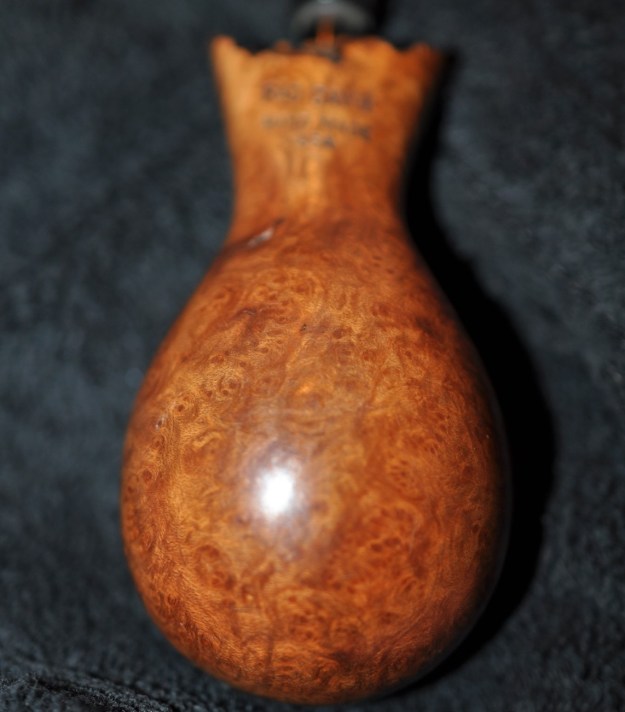
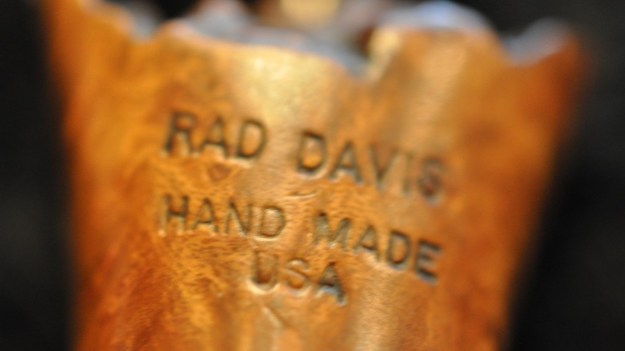
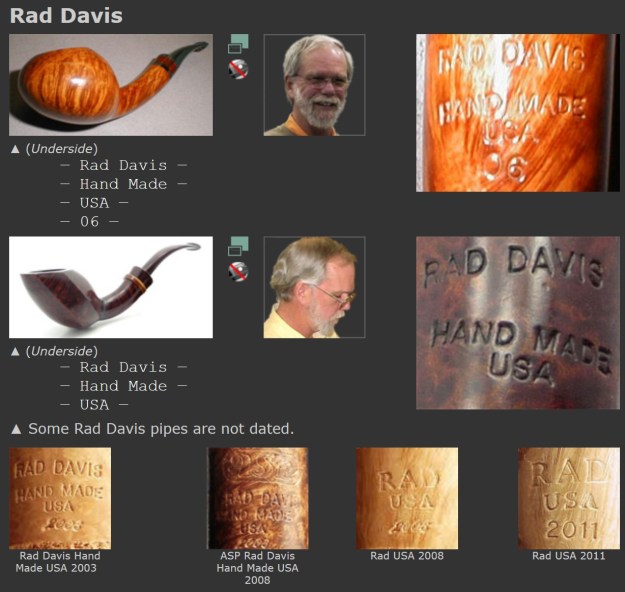
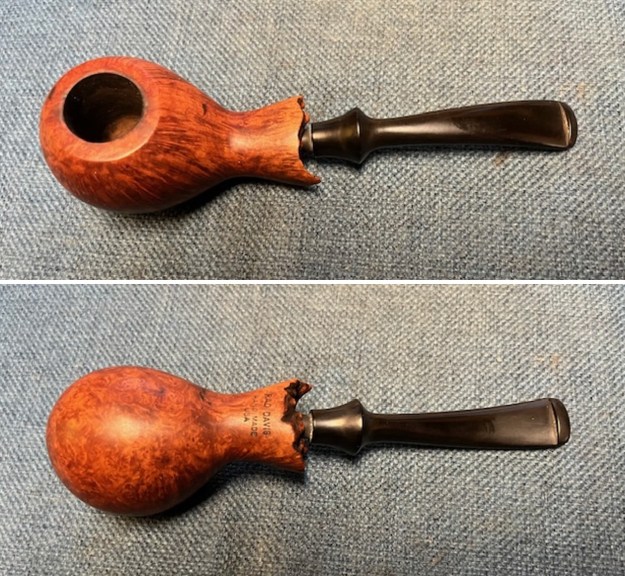
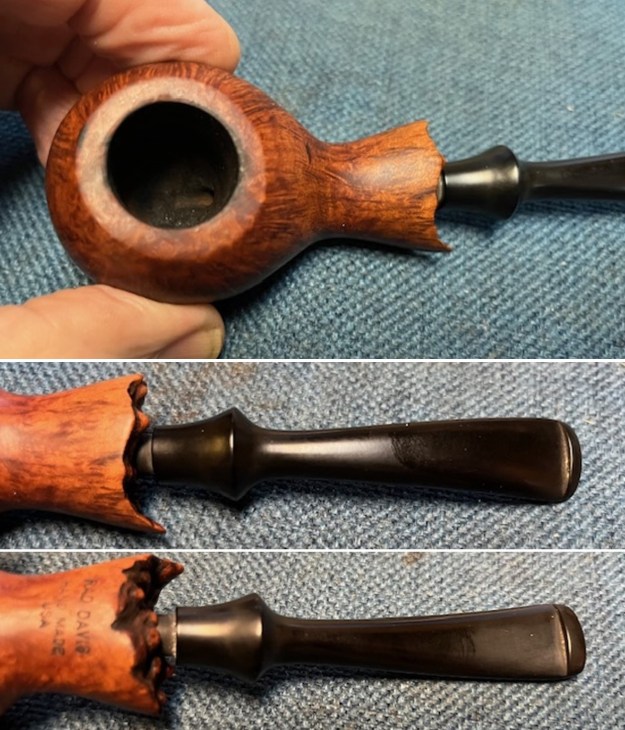
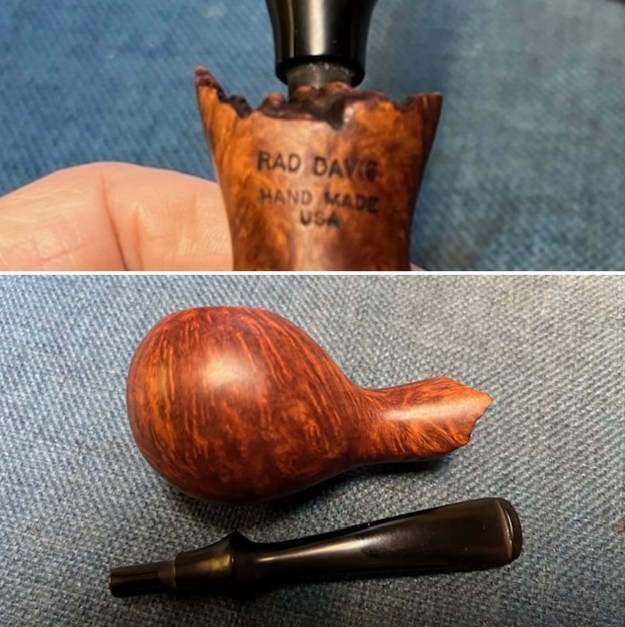
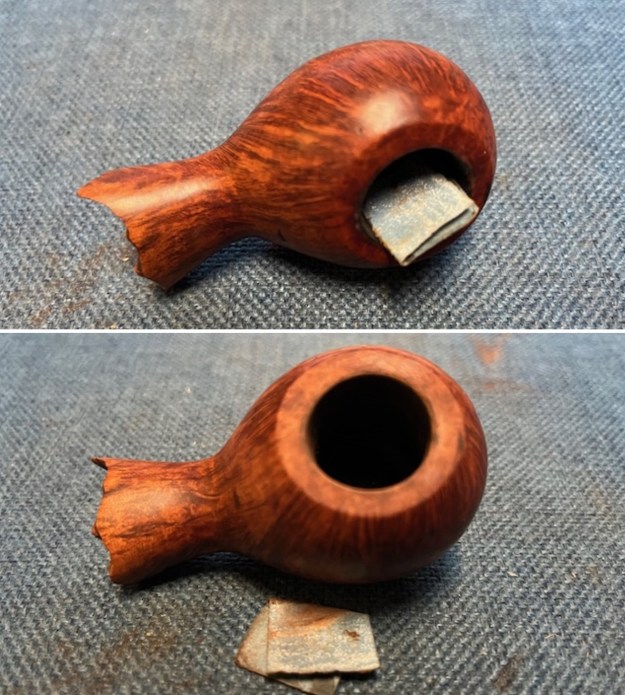
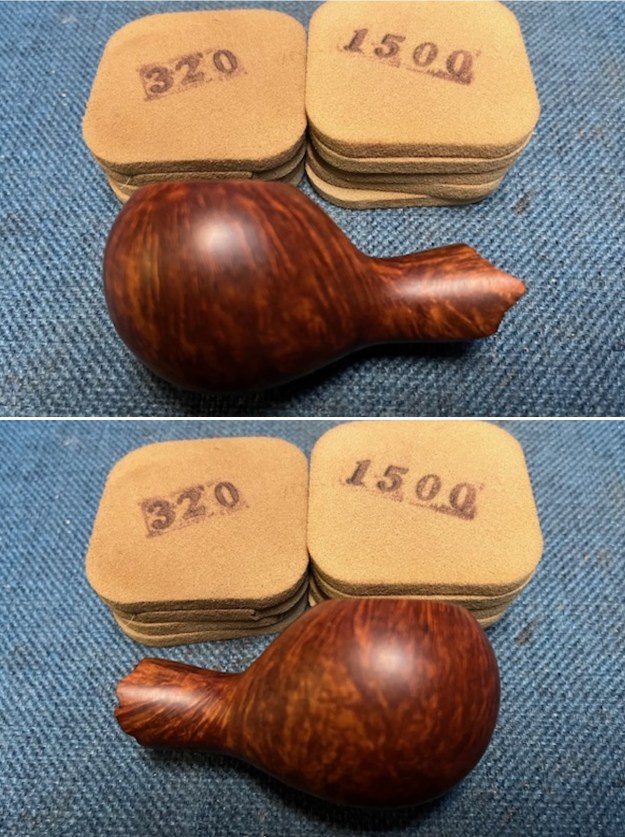
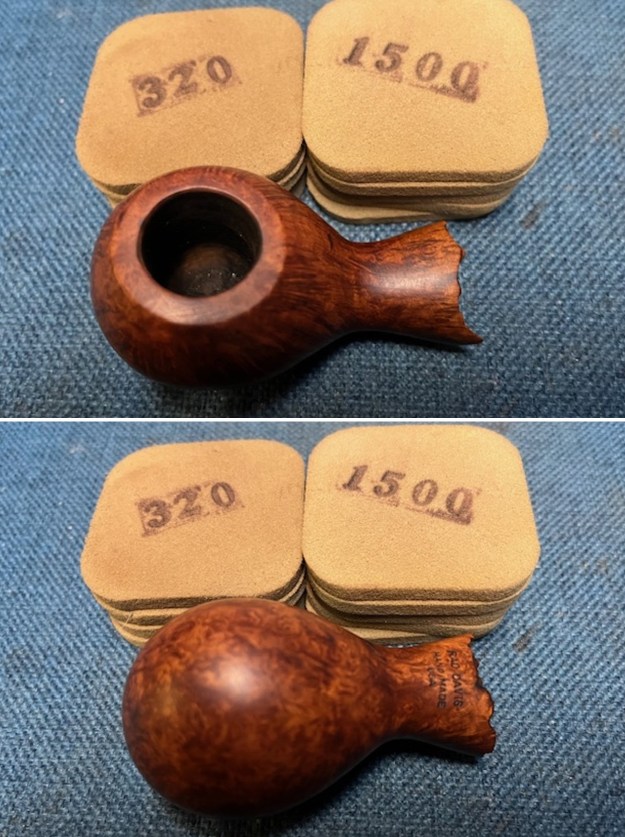
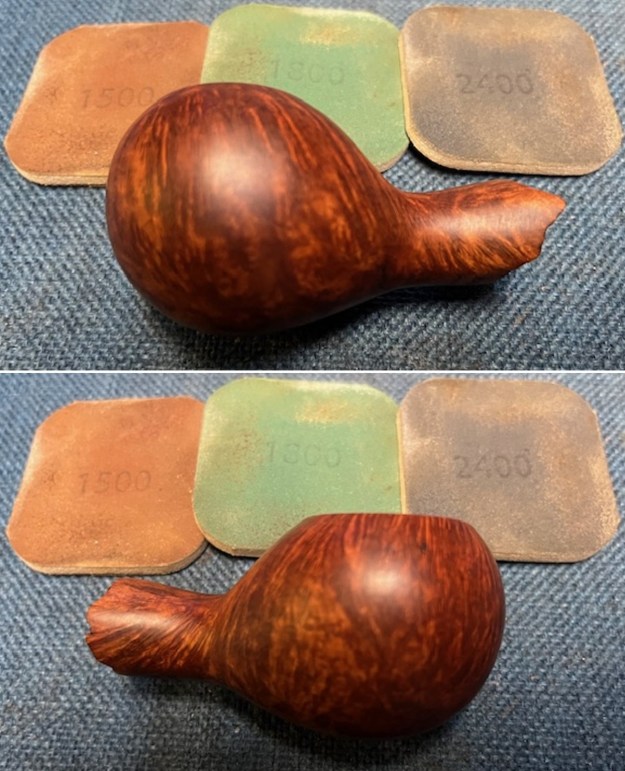
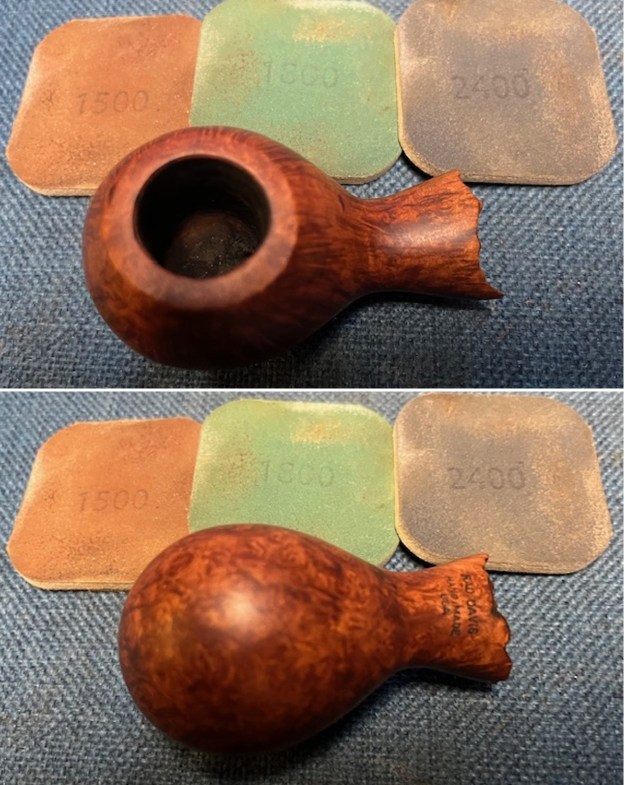
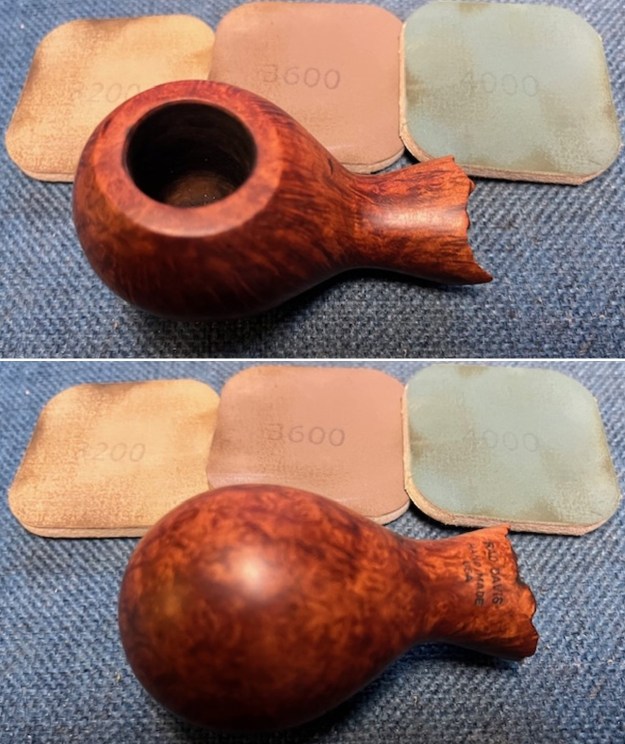
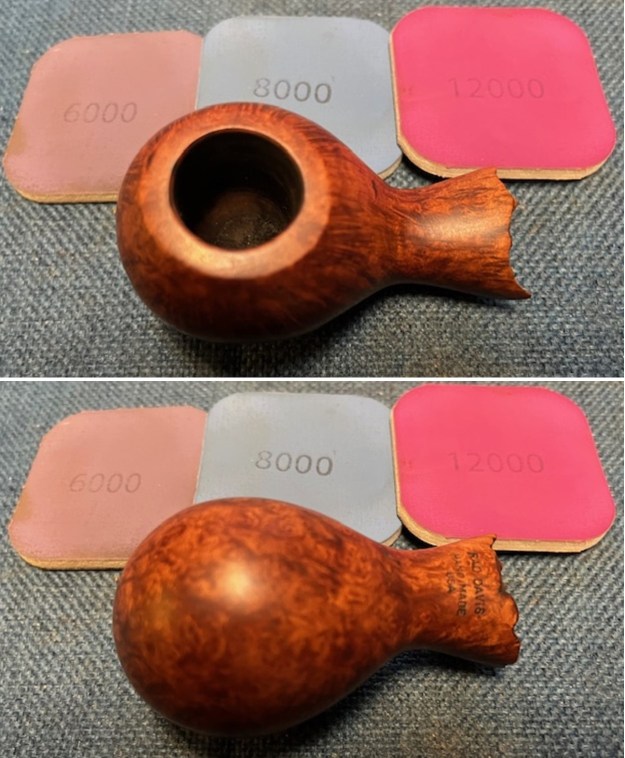
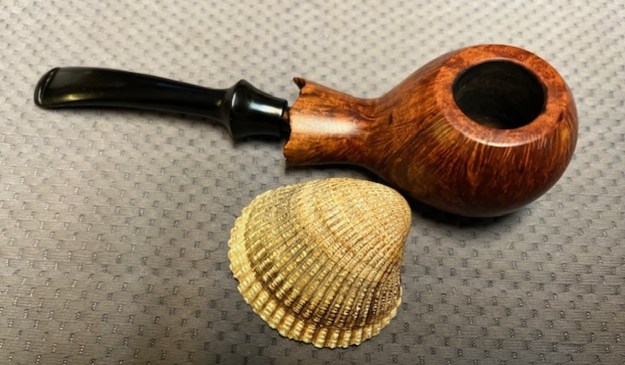
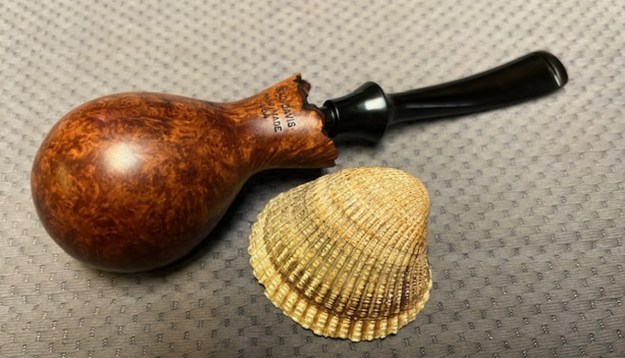
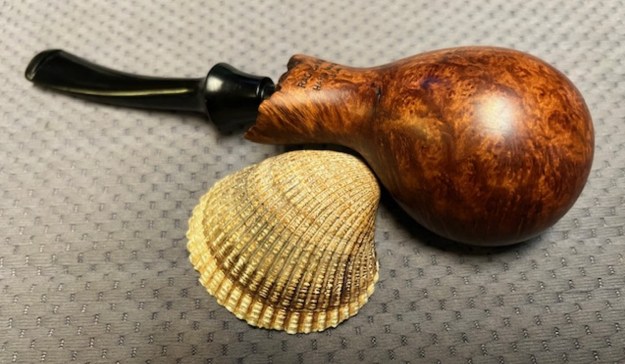
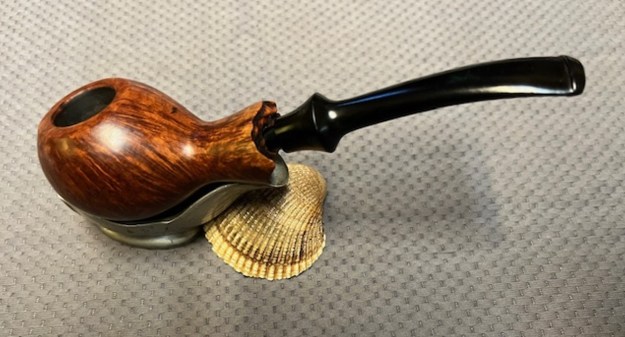
The next pipe I chose to work on was one that we purchased on 12/28/2024 from as part of an estate that belonged to a pipeman and carver, Byron Harwood from Missoula, Montana, USA. This one is stamped Rad Davis [over] Hand Made [over] USA. I have a few of Rad’s pipes in my own collection and all are amazing smokers and well laid out pipes following the grain on the smooth and unique sandblast on the others. So, when I saw this one in the lot I was excited to work on it. The pipe is kind of a shape I would call a combination of a Freehand Apple or maybe even a Prince. The briar bowl and shank were smooth and well grained. There are a couple of flaws – one on the underside of the shank at the spot it joins the bowl and the second one on the backside of the bowl. The rim top was smooth and there was a plateau finish on the shank end. The exterior of the pipe is dirty from use with oils and grime on the bowl sides. It has a thick cake in the bowl and an overflow of lava on the rim top and inner edge of the bowl. The stem is a fancy saddle stem that is often used on Freehand pipes. It is oxidized but free of tooth marks and chatter on the surface. Jeff took photos of the rim top and stem to show the general condition of the pipe. The bowl is thickly caked with some lava on the rim top and inner edge. I am hoping that once the lava is removed the edge will be okay. The stem looked surprisingly good under the dirt and grime and light oxidation on the surface of the vulcanite. It should cleanup very well. Jeff took photos of the bowl sides and heel to show the beautiful grain that was around this bowl. There was some light grime in the finish but otherwise it was quite clean. He took a photo of the underside of the shank to show the stamping. The stamping is clear and readable in the photos below as noted above. The stem did not have any stamping or logo on it.I turned to Pipephil to get a quick overview of the brand. I have done a screen capture of the section on the site that was pertinent (http://www.pipephil.eu/logos/en/logo-r1.html#raddavis). I also included the sidebar notes on the page. Artisan: Robert (Rad) Davis began making and selling freehand pipes in 2003.

I turned to Pipedia where Rad had written the entry about himself and his pipemaking work (https://pipedia.org/wiki/Davis,_Rad). It a great read and I have included it in its entirety.

I have been smoking (off and on) and collecting (continuously) pipes since the early 1970’s. They have always fascinated me. My very first pipe was a Pioneer Calabash that I bought in a department store in the early 70’s while I was in college in Sacramento, California. My second pipe during that same period was a Nording free hand that I got for $20.00 plus a coupon from the back of an Amphora Pipe Tobacco package. The coupon was introducing this new young Danish pipe maker to the U.S. market. I still have both pipes.

I met Mark Tinsky several years ago in the internet when I was in need of a pipe repair, and from his site I found that he was a fly fisherman. I am a fly fishing guide in Montana and a commercial fly tier, and we ended up trading some flies for pipe repair. Last spring, I was in need of a pipe repair again, and when I found Mark’s site, I saw that he had a new address in Helena, Montana, where I live and guide during the summer! We got together after I arrived for the season and did some fishing together, and he showed me his shop, and even made me a nice bent Rhodesian pipe while I watched. It’s become one of my favorite pipes, dedicated to Mac Baren Navy Flake.

When I expressed an interest in trying to make a pipe, Mark was much more than helpful. He gave me a couple of pipe kits that he couldn’t sell for one reason or another, cut the basic shape out on the band saw, and let me go to work making free hand pipes. My first few pipes left a lot to be desired, but I was starting to see what I was doing wrong and concentrated more on getting the proportions and flow of the shape right until I was turning out some decent work. I also learned to cut and drill pipes and turn tenons on stems during this time. I discussed with Mark the possibility of my actually selling my pipes, and he said that he thought there was a definite need for quality hand made pipes at reasonable prices.

And here is the result. All my pipes are free hands, made from the same high quality Grecian Briar used by Mark. There are no fills in my pipes. Some may have small flaws, but they are not hidden, and they are priced accordingly.[1]

I sent Rad Davis a message on Facebook regarding the pipe to see if I could learn about when he made it. Rad kindly answered me. Here is his answer:

Hi Steve, I can’t remember that one in particular, but I can tell you that it was early on in my pipe making career, back when I was making freehands with premade stems.

This confirmed my thinking that it was an early pipe. It was also good to know that the stem was original and not a replacement. Now it was time to work on the pipe itself.

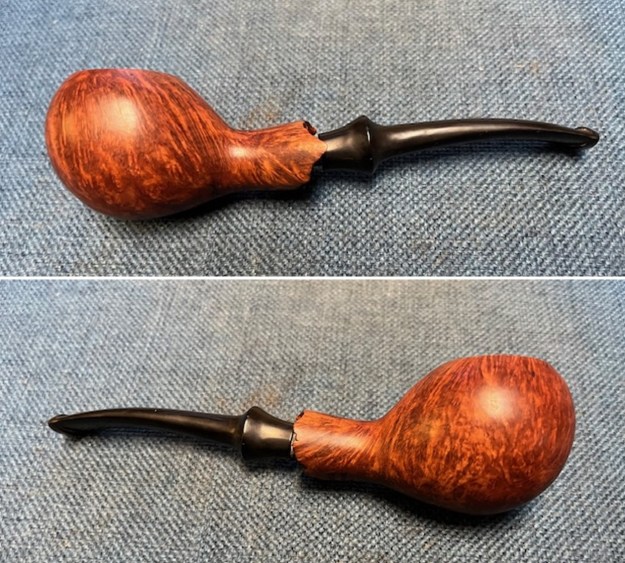
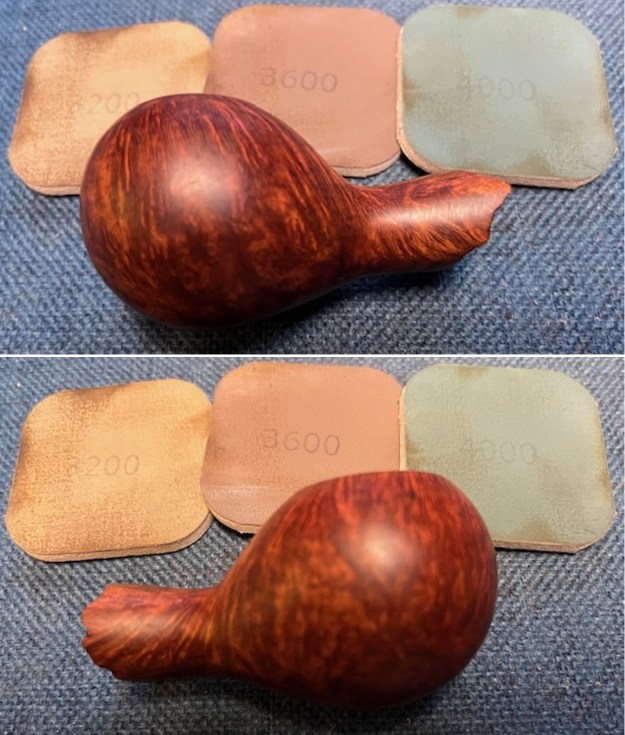
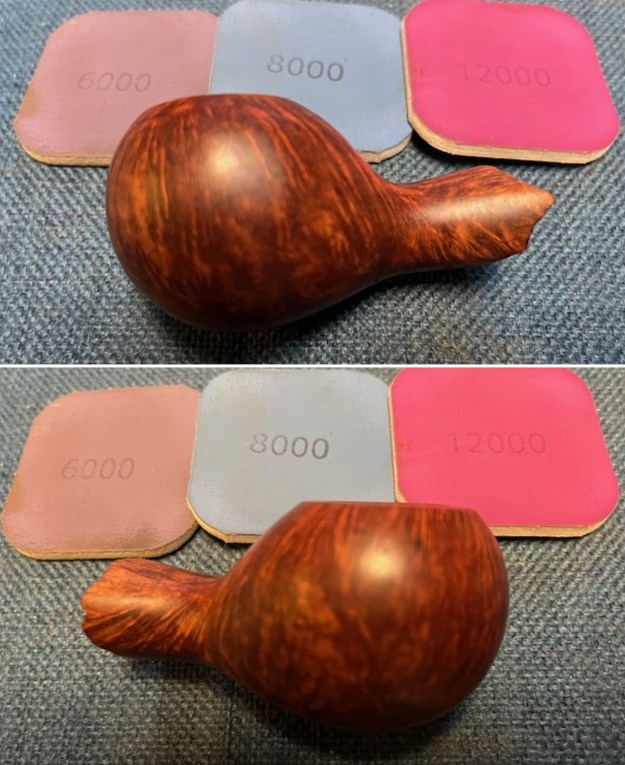
Jeff had done a great job cleaning up the pipe as usual. He reamed the pipe with a PipNet reamer and cut back the cake back to the bare briar. He cleaned up the walls with a Savinelli Fitsall Pipe Knife. Surprisingly the walls looked unscathed from the heavy cake. He scrubbed the interior of the bowl and shank with pipe cleaners, cotton swabs and alcohol to remove the tars and oils. He scrubbed the exterior of the pipe with Murphy’s Oil Soap and a tooth brush to remove the grime from the finish. He scrubbed the inside of the stem with alcohol, cotton swabs and pipe cleaners. He scrubbed the exterior of the stem with Soft Scrub and then soaked it in Briarville’s Deoxidizer. He washed it off with warm water to remove the Deoxidizer. When I examined the stem, it looked very good. The pipe looked far better when it arrived. I took some close up photos of the rim top and edges to show how well it had cleaned up and the edges around the bowl. I also took close up photos of the stem to show the light tooth chatter on the surface ahead of the button on both sides.I took a photo of the stamping on the underside of the shank. It is clear and readable as noted above. I removed the stem and took a photo of the pipe to have a look at the parts and overall look.I started my work on the pipe by cleaning up the darkening on the inner edge of the bowl and the spots on the rim top. I used a folded piece of 220 grit sandpaper to smooth and shape them. It looked much better.I sanded the bowl with 320-3500 grit sanding pads. I wiped the bowl down with a damp cloth after each sanding pad to remove the sanding debris. It began to really take on a shine. I polished the briar with micromesh sanding pads – dry sanding with 1500-12000 grit sanding pads. I wiped the bowl down with a damp cloth after each sanding pad. The grain really began to sing. I worked some Before & After Restoration Balm into the surface of the briar with my fingertips to clean, enliven and protect the briar. II worked it in to the plateau shank end with a shoe brush. I let the balm sit for 15 minutes and then buffed with a cotton cloth to raise the shine. The photos show the bowl at this point in the restoration process. I set the bowl aside and turned my attention to the stem. I polished the stem with micromesh sanding pads – dry sanding with 1500-12000 grit sanding pads. I wiped it down after each sanding pad with Obsidian Oil. I polished it with Before & After Pipe Stem Polish – both Fine and Extra Fine. I gave it another coat of Obsidian Oil. I am excited to finish this early Rad Davis Hand Made Freehand Apple. I put the pipe back together and buffed it with Blue Diamond on the buffing wheel. I gave the bowl and the stem multiple coats of carnauba wax. I hand buffed the pipe with a clean buffing pad to raise the shine. It is fun to see what the polished bowl looks like with beautiful mixed grain all around it, looks great with the polished black vulcanite stem. This smooth Rad Davis Freehand Apple is great looking and the pipe feels great in my hand. It is light and well balanced. Have a look at it with the photos below. The dimensions are Length: 6 inches, Height: 1 ½ inches, Outside diameter of the bowl: 1 ¼ inches, Chamber diameter: ¾ of an inch. The weight of the pipe is 54 grams/1.90 ounces. It turned out to be a beautiful pipe. I will be putting on the rebornpipes store in the American (US) Pipe Makers Section. Let me know if you are interested in adding it to your collection. Thanks for your time as I walked through the restoration.
Breathing Life into a Lightly Smoked Posella RN Fatta A Mano Rusticated 1/4 Bent Apple


by Steve Laug

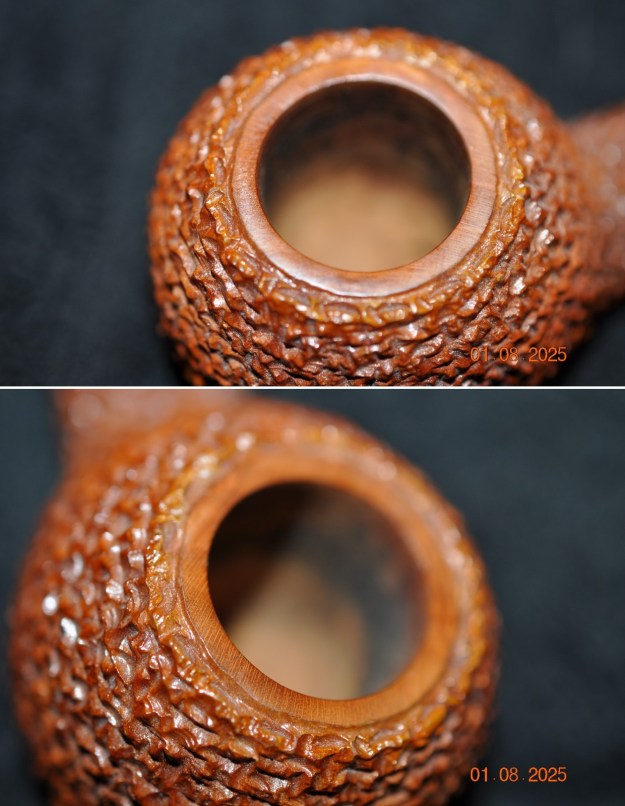
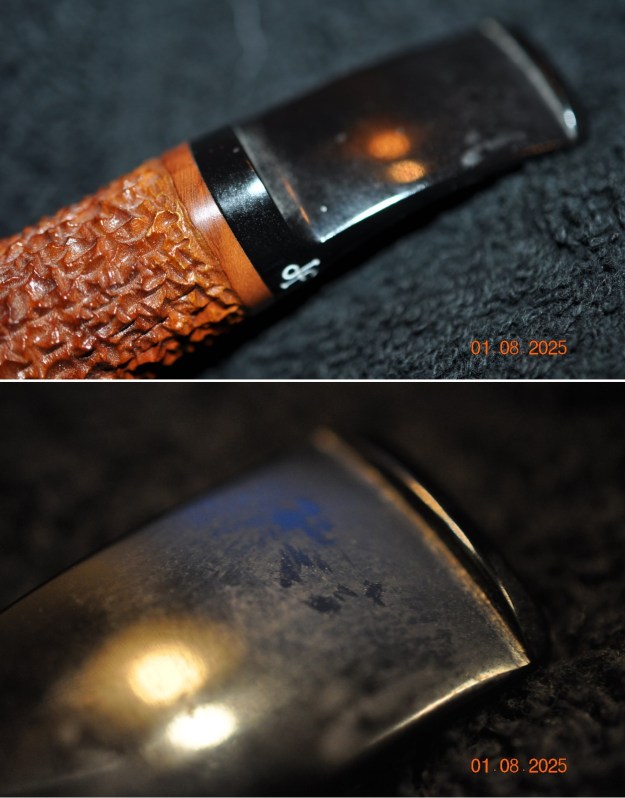
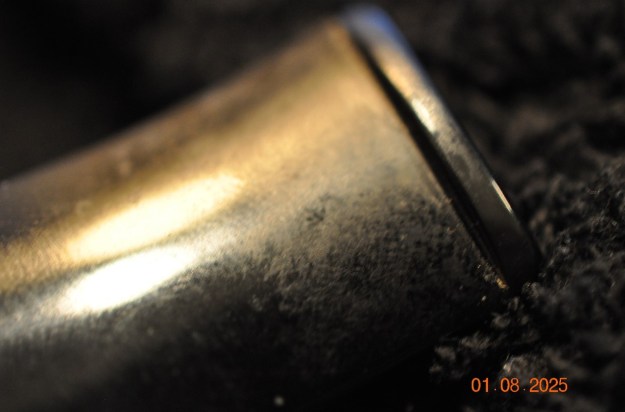
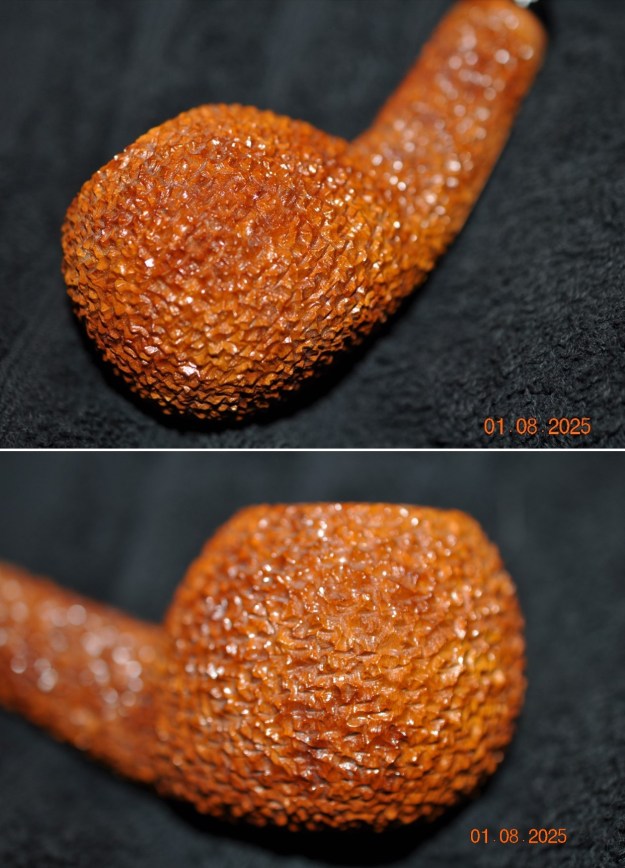
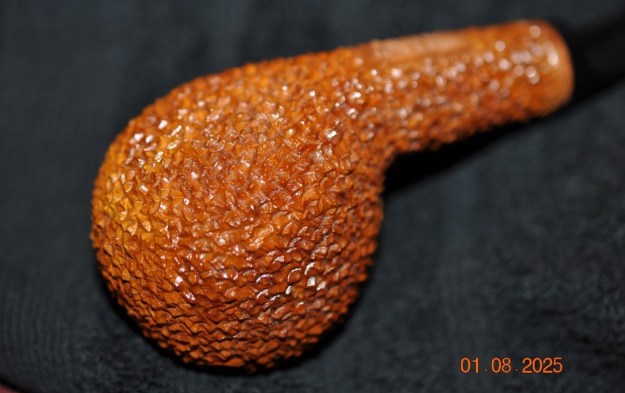
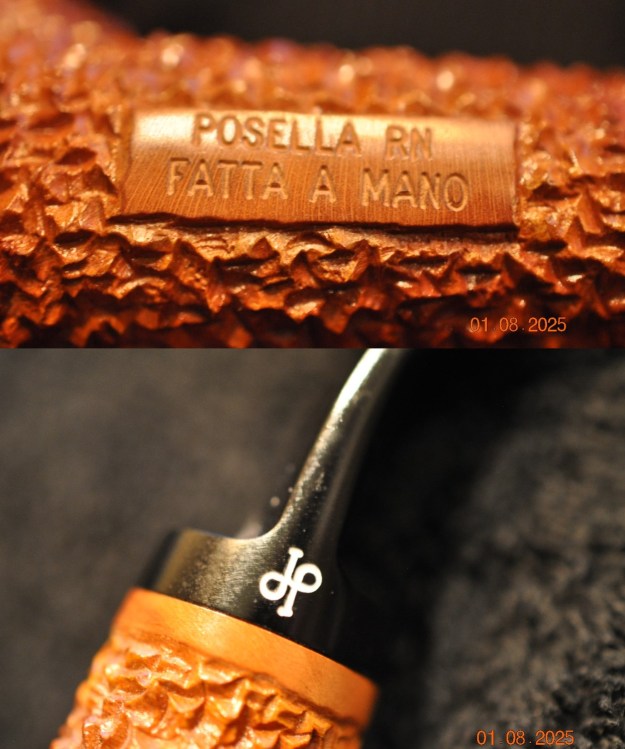
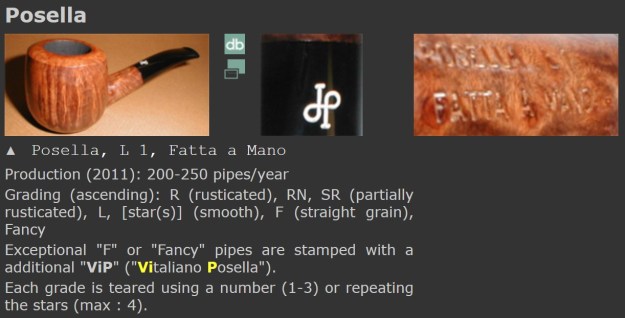
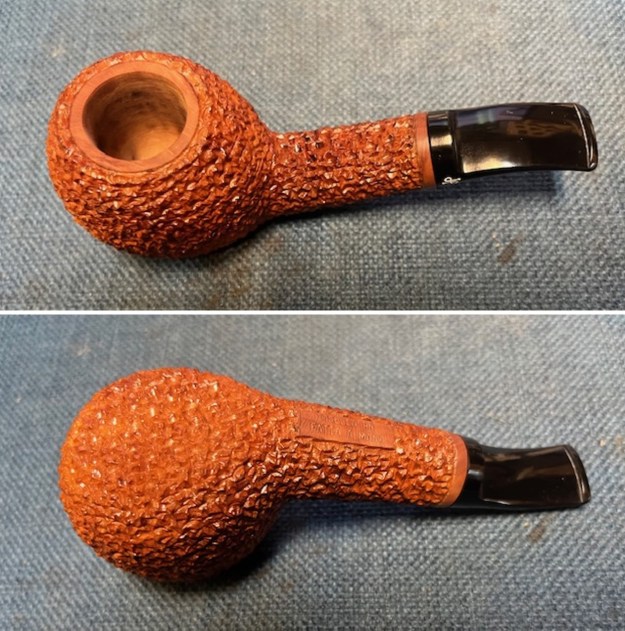
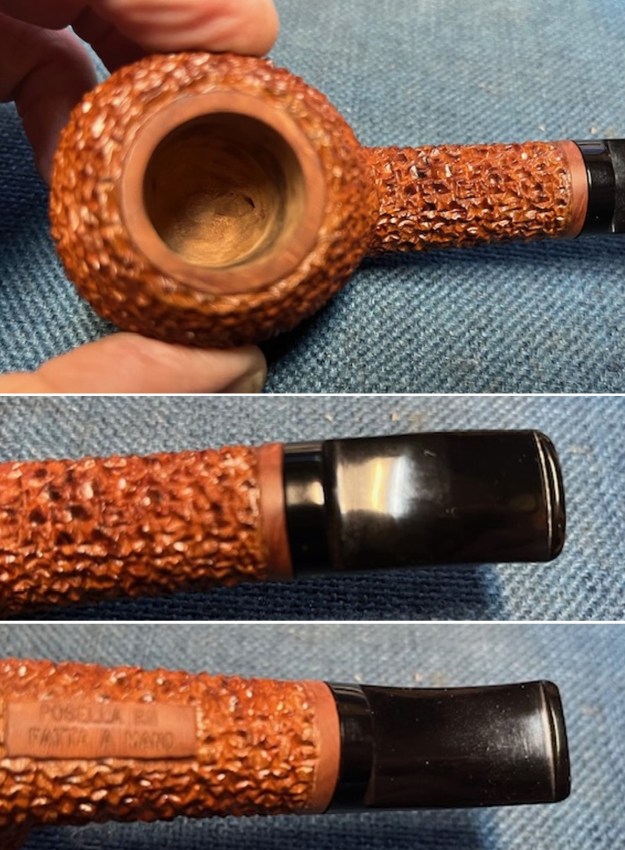
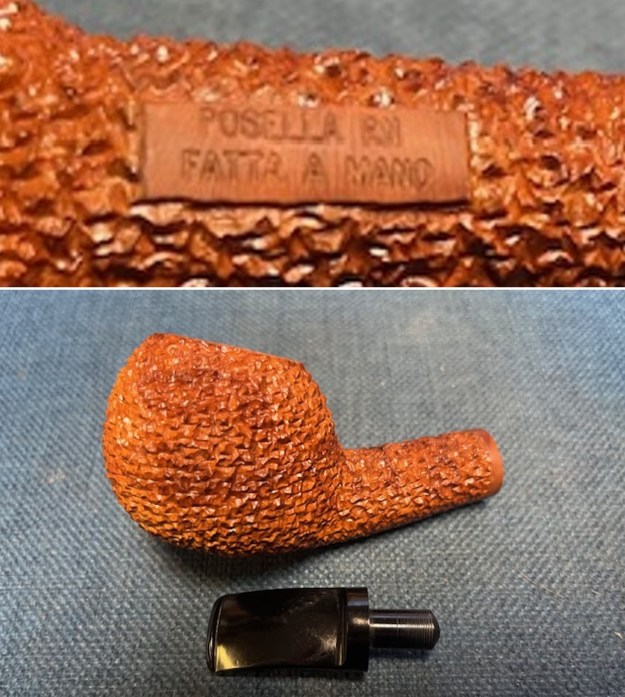
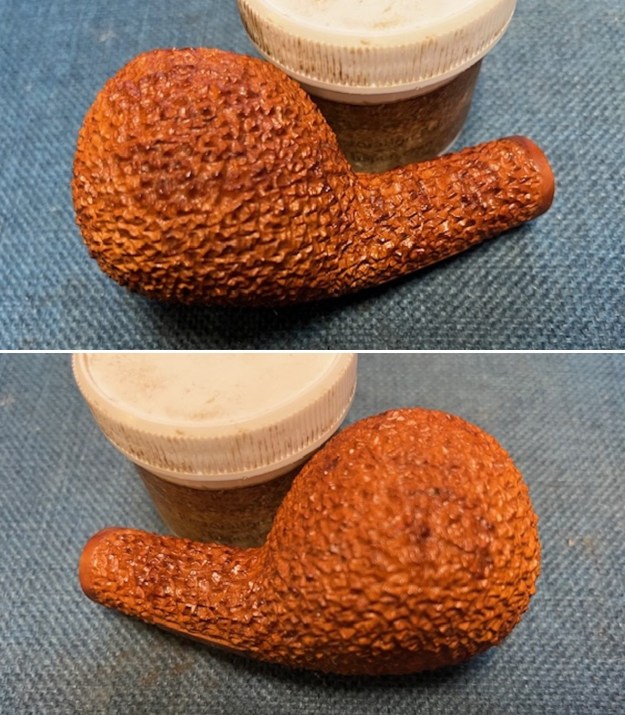
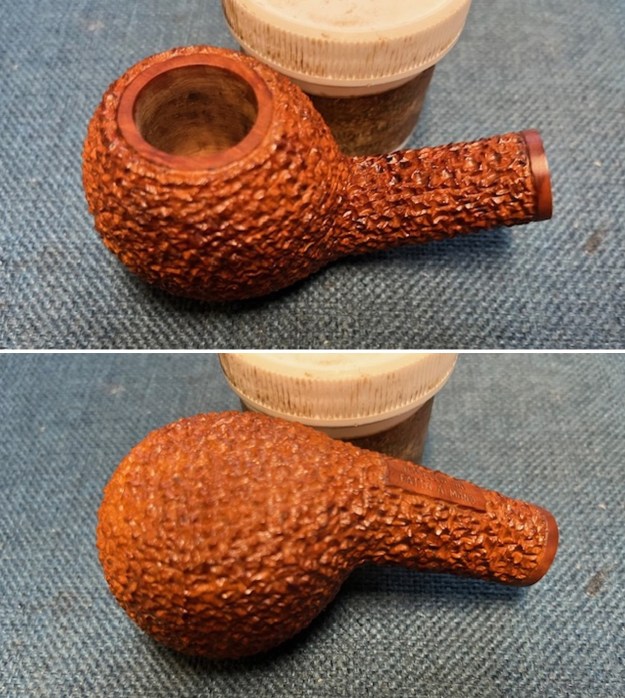
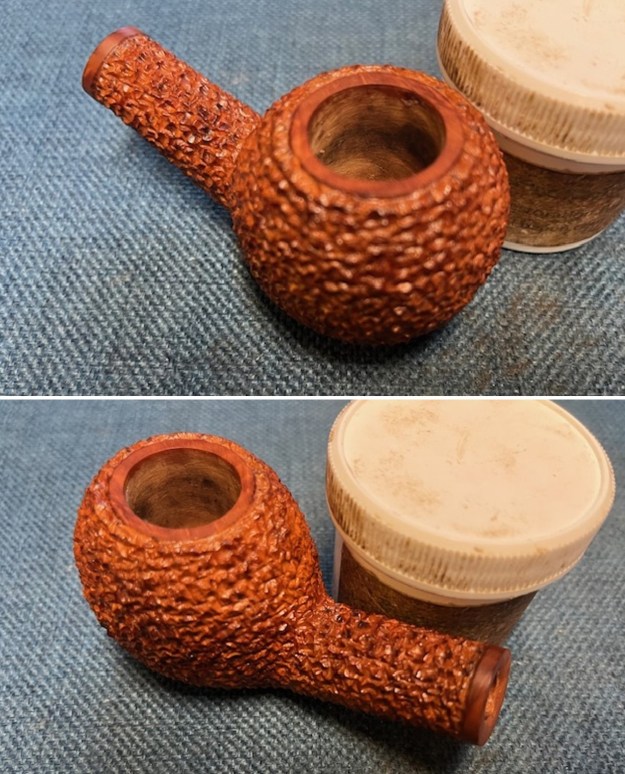
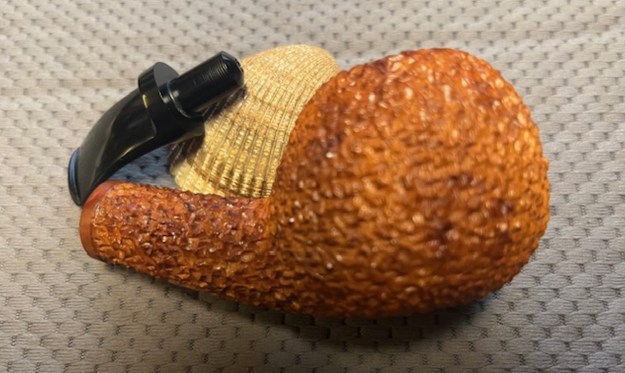
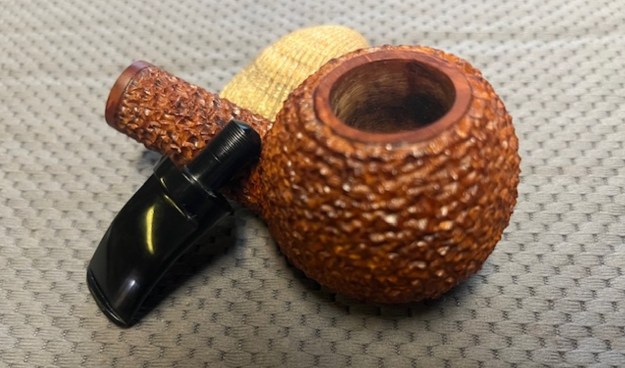
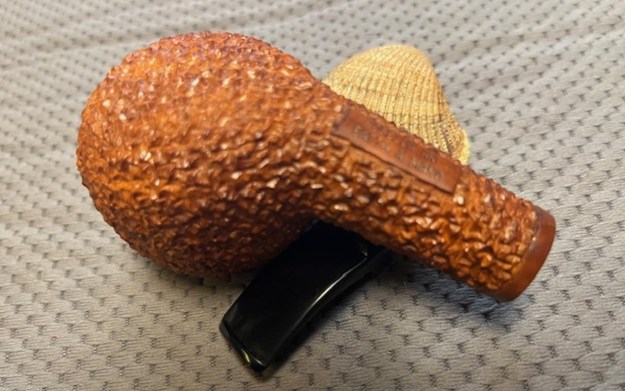
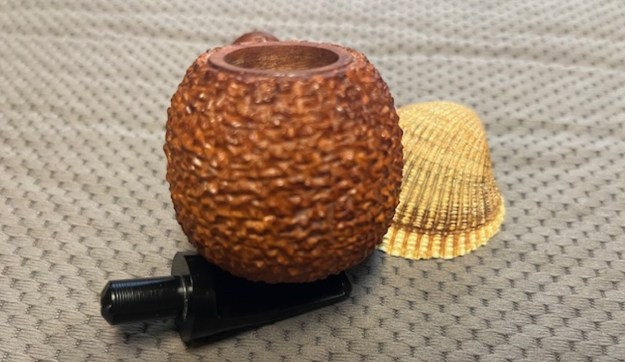
I have always been intrigued by heavily rusticated pipes – the look, the weight and the tactile feel of each one is a story in itself. In a conversation with a seller in Ogden, Utah, USA via zoom Jeff and I were able to see this beauty and make a deal. The date we picked it up was 12/12/2024. It is a short compact apple with a full-sized bowl. It is stamped on the underside of the shank and reads Posella RN [over] Fatta A Mano. There is also a stamped crossed horizontal “P” logo on the left side of the fancy saddle stem. The finish was a nicely heavily rusticated with an acrylic thin saddled stem. The pipe had been lightly smoked and there no cake in the bowl and no lava on the rusticated or the smooth portions of the rim top. The stem was dirty with what looked like grime from a softee bit on the stem. You can see the line where the bit had ended. The beauty was that there were not any tooth marks or chatter on the stem surface. Jeff took photos of the pipe before he started his cleanup work on it. I have included them below. Jeff took photos of the rim top and stem to show the general condition of the pipe. The bowl is very clean with some slight darkening in the bowl showing that it may have been smoked only once or twice. The stem looked surprisingly good under the dirt and grime on the surface of the acrylic. It should cleanup very well. Jeff took photos of the bowl sides and heel to show the unique and beautiful rustication that was around this bowl. There was some light grime in the finish but it was quite clean. He took a photo of the underside of the shank to show the stamping. The stamping is clear and readable in the photos below as noted above. He also captured the “crossed horizontal Ps” logo on the left side of the saddle. It in excellent condition. I turned to Pipephil’s site to get a sense of the brand as it is a new brand to me. I had no sense of the details other than it is an Italian pipe (http://www.pipephil.eu/logos/en/logo-p4.html). The photo of the pipe that is included is very different than the one I am working on. The logo on the stem and the shamping on the shank is similar. It was also helpful to see the explanation of the grading on the pipe. In this case the pipe in hand is an “R” meaning rusticated. The “N” is for Natural finish. There were no tier numbers or stars. I have also included the side bar information below the photo below.Artisan: Vitaliano Posella is the son of Salvatore Posella who was a briar cutter. He started making pipes with his brother-in-law, Tonino Jacono and established on his own when Jacono moved to Jesi. Address: Via Umberto I, 183. 88067 San Vito sullo Ionio (Calabria)

I turned to Pipedia to gather some more information on the Posella brand and some history (https://pipedia.org/wiki/Posella). I have included a short piece of information from the site below.

Vitaliano Posella is a pipemaker in San Vito sullo Ionio (Provincia di Catanzaro, Regione Calabria). He found to the handicraft art of pipemaking after having acquired a lot of experience in the briar industry. His pipes are exclusively produced with Calabrian briar.

There was also a link to an article on the Posella Grading system. However, the link is not functioning and locks down. I will include below it as I hope that it will become available soon http://www.theitalianpipe.com/infowell/guides/posella.htm.

I googled for further information and found a link to a site that sells Posella pipes. It also gave a great bit of background to the brand and the pipemaker. Here is the link to the site and the information (https://tabaccherialentofumo.com/en/brand/posella-pipes-en/). I quote that information below.

The Posella family has a long history of sawing on their backs, dedicating themselves to the production of briar for pipes in Calabria, one of the most famous lands for the raw material of our precious products.

Vitaliano Posella has been making pipes for several decades, obviously using briar from the family. For this reason, their pipes are seasoned for at least 10 years, for a high quality in the mechanics and a greater fragance when smoking.

The Posella pipes have a great reception also abroad, in places like China or America. These pipes are manufactured entirely by hand, perforated with great precision, with 100% attention to details to offer a product who lives up the expectations of the demanding and expert smokers.

In hand-made mouthpieces, Posella uses methacrylate for its luster in time and resistance to scratches. In addition, from this material is made the tenon, with a custom work for each pipe.

The way to rustic a pipe is unique and captivating, with a long and meticulous process, making it very particular and valuable, being its baseline. Its forms are classic but with its own interpretation, being a recognizable and suitable style for any type of interested person in the subject.

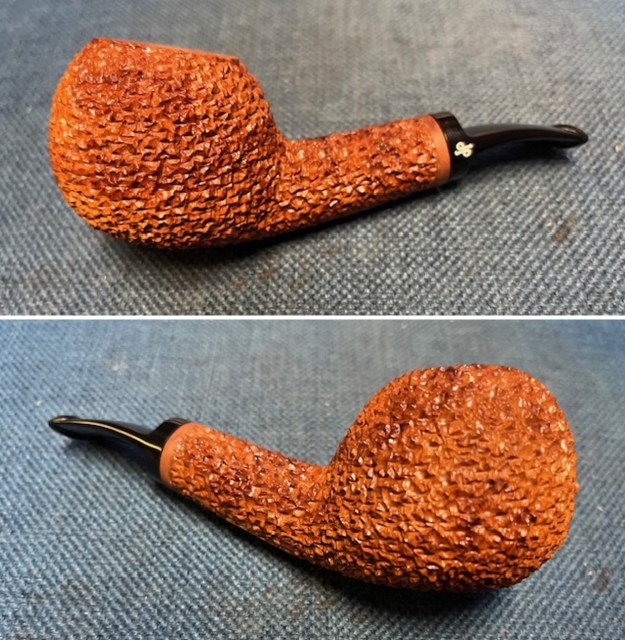
Now it was time to work on the pipe itself. Jeff had done a great job cleaning up the pipe as usual. He reamed the pipe with a PipNet reamer and cut back the cake back to the bare briar. He cleaned up the walls with a Savinelli Fitsall Pipe Knife. Surprisingly the walls looked unscathed from the heavy cake. He scrubbed the interior of the bowl and shank with pipe cleaners, cotton swabs and alcohol to remove the tars and oils. He scrubbed the exterior of the pipe with Murphy’s Oil Soap and a tooth brush to remove the grime from the finish. He scrubbed the inside of the stem with alcohol and pipe cleaners. He scrubbed the exterior of the stem with Soft Scrub and then soaked it in Briarville’s Deoxidizer. He washed it off with warm water to remove the Deoxidizer. When I examined the stem, it looked very good. The pipe looked far better when it arrived. I took some close up photos of the rim top and edges to show how well it had cleaned up and the edges around the bowl. I also took close up photos of the stem to show the light tooth chatter on the surface ahead of the button on both sides. I took a photo of the stamping on the heel of the bowl. It is clear and readable as noted above. I removed the stem and took a photo of the pipe to have a look at the parts and overall look.I worked some Before & After Restoration Balm into the surface of the briar with my fingertips and a shoe brush to clean, enliven and protect the briar. I let the balm sit for 15 minutes and then buffed with a cotton cloth to raise the shine. The photos show the bowl at this point in the restoration process. I polished the stem with micromesh sanding pads – dry sanding with 1500-12000 grit sanding pads. I wiped it down after each sanding pad with a cloth containing some Obsidian Oil. I finished polishing it with Before & After Pipe Stem Polish – both Fine and Extra Fine and buffed it off with a cotton cloth. This Posella RN Fatta A Mano Rusticated Apple was a pipe I was looking forward to seeing what it looked like when I put it back together. With the grime and debris gone from the finish and the bowl it was a beauty and the depths of the rustication just pop at this point. I put the acrylic stem back on the bowl and lightly buffed the pipe with Blue Diamond on the buffing wheel. I carefully avoided the stamping on the shank and stem during the process. I gave the bowl multiple coats of Conservator’s Wax and the stem multiple coats of carnauba wax on the buffing wheel and followed that by buffing it with a clean buffing pad on the buffer. I hand buffed the pipe with a microfiber cloth to deepen the shine. The finished pipe is quite beautiful and is a lovely large bowl apple shaped pipe. The natural colour of the rusticated briar is very well chosen and shows depth in the finish. Give the finished Posella RN Rusticated Apple a look in the photos below. I can only tell you that it is much prettier in person than the photos capture. The dimensions of the pipe are Length: 5 inches, Height: 1 ¾ inches, Outside diameter of the bowl: 1 ¼ inches, Chamber diameter: ¾ of an inch. The weight of the pipe is 63 grams/2.22 ounces. I really like the unique rustication around the bowl and shank. This is a great looking pipe in great condition. Thanks for walking through the restoration with me as I worked over another beautiful pipe. I may hold onto this one – at least for awhile! Thanks for your time.

Restoring an Unusual Freehand Dublin


by Kenneth Lieblich

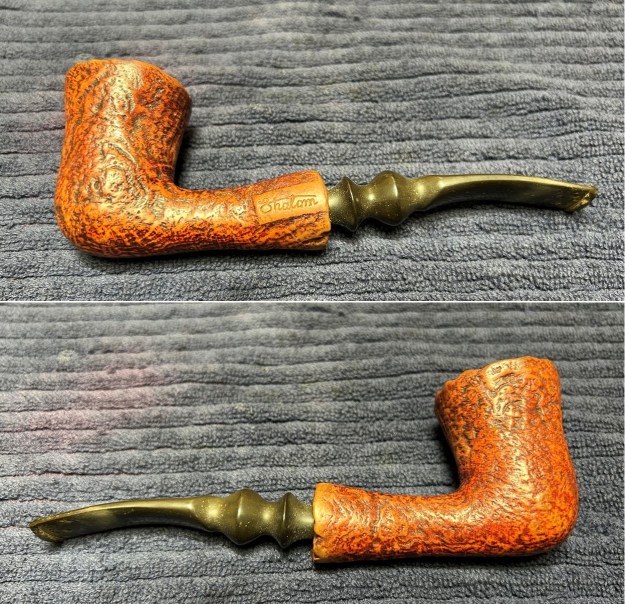
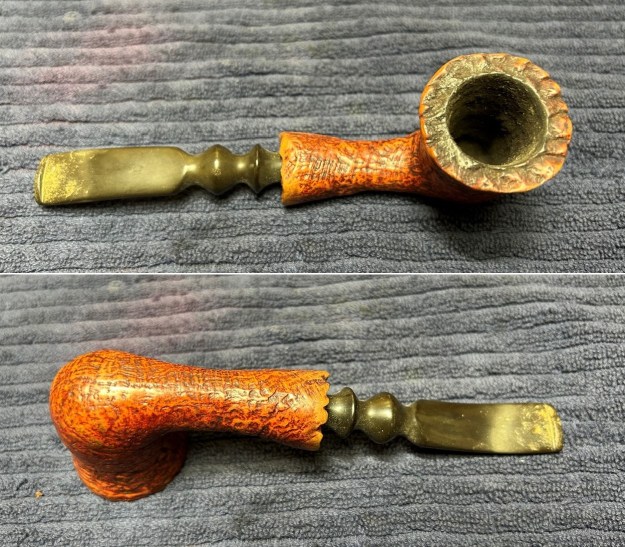
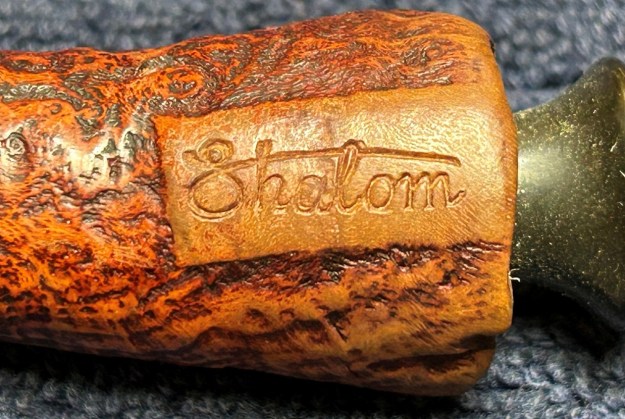
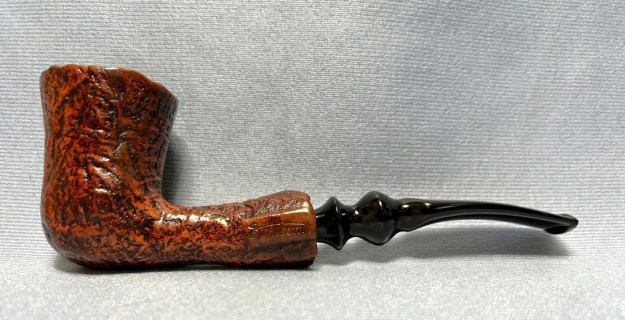
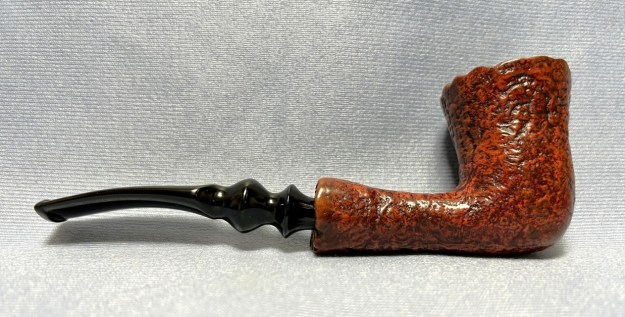
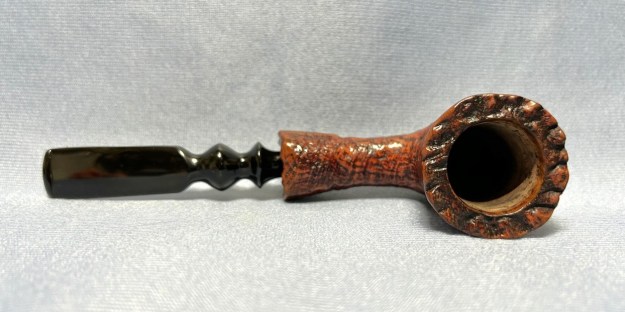
Today, for your viewing pleasure, I have a charming – almost whimsical – pipe from the Shalom Pipe Company of Israel. This pipe came to me in an auction lot of various and sundry things. I thought the shape was quite peculiar, with it’s large, deep bowl and sandblasted exterior. It’s light and handsome – and it looked to be in good condition, so I chose it for my next restoration. There’s only one mark on the pipe – and that is the word Shalom on the left of the shank. I was familiar with the company, but went to Pipedia to see what they had to say.

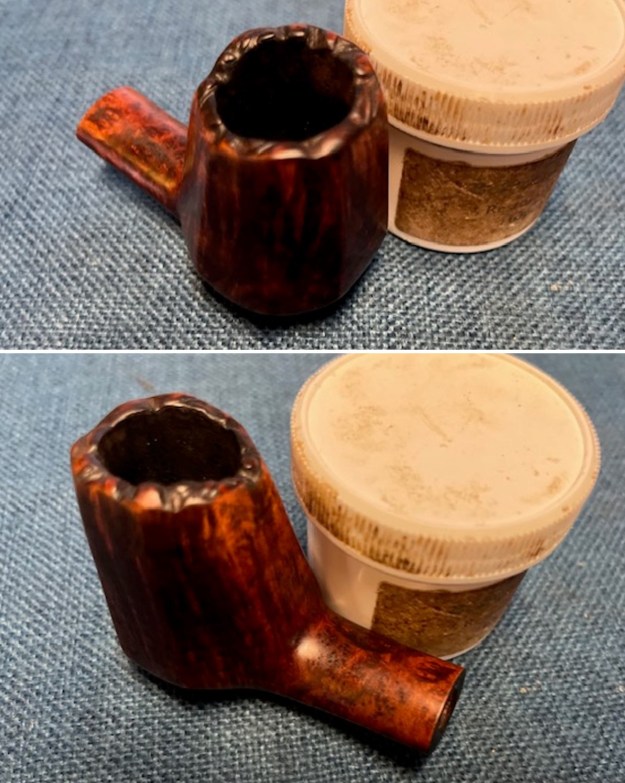
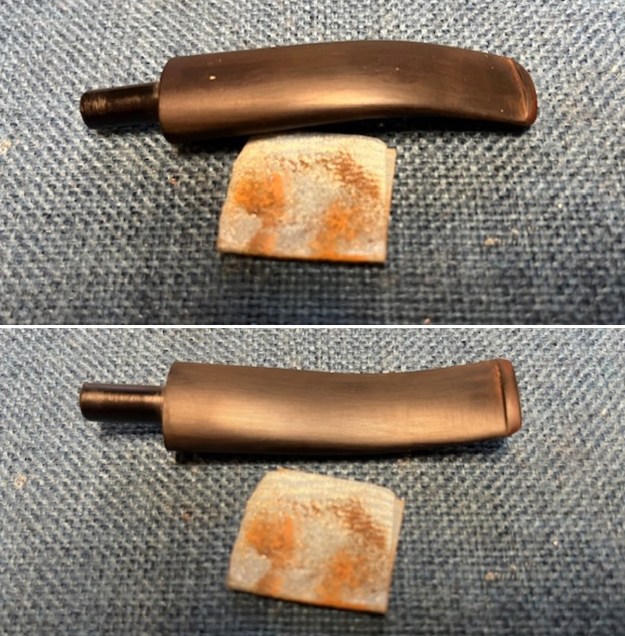
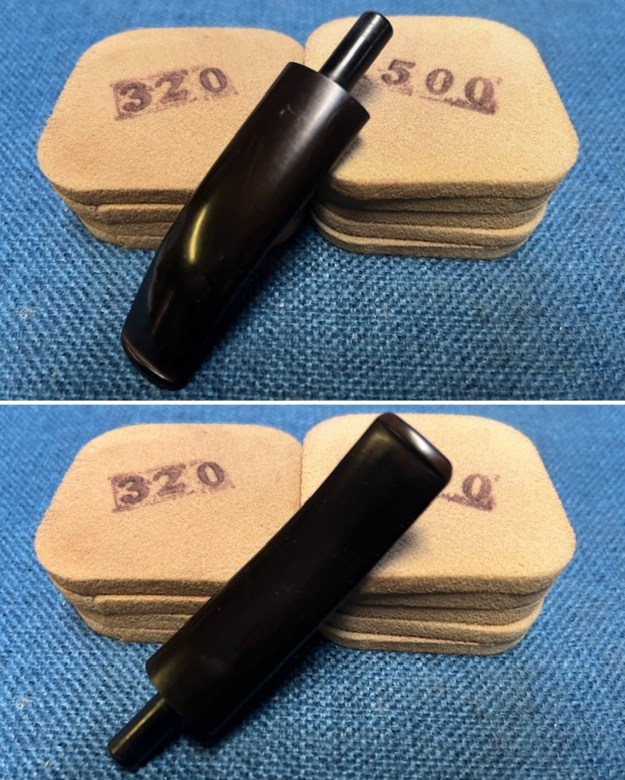
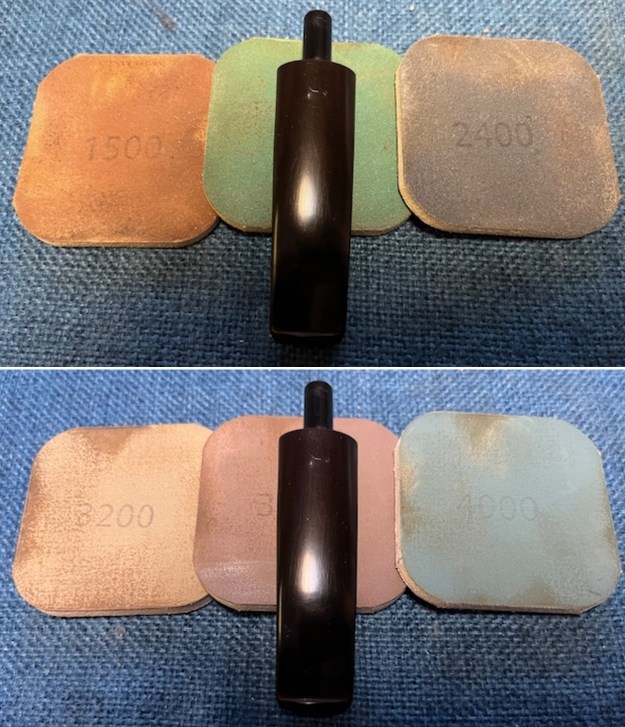
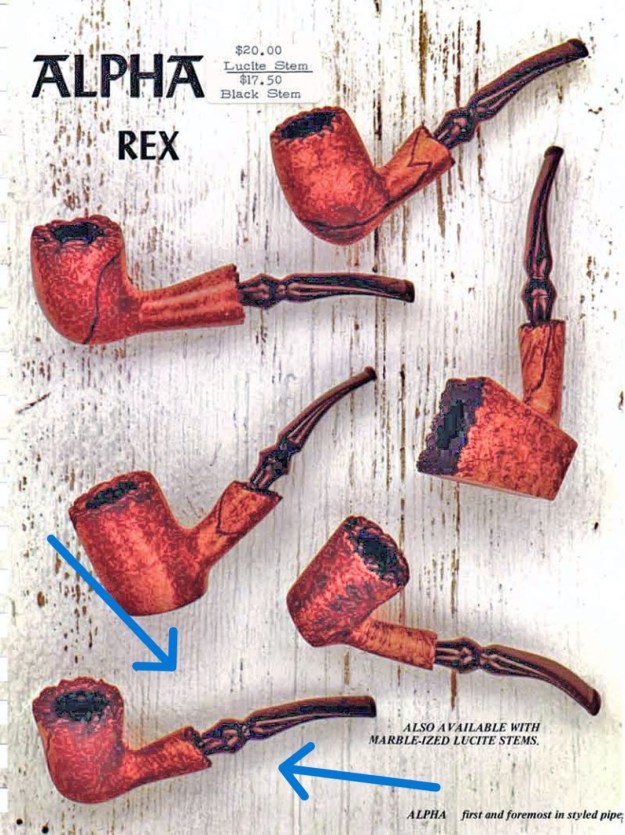
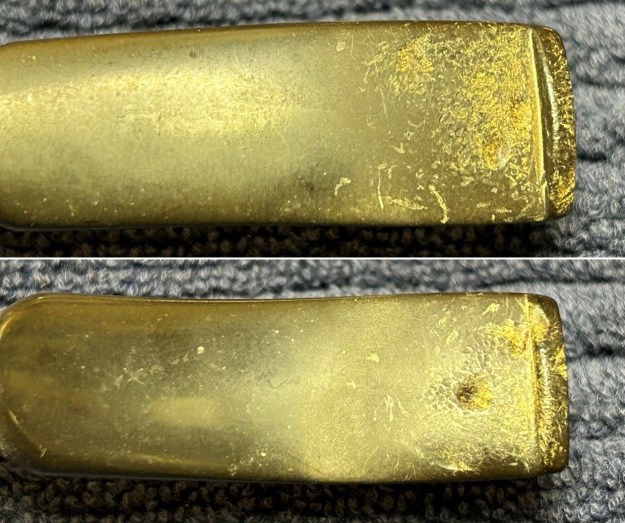
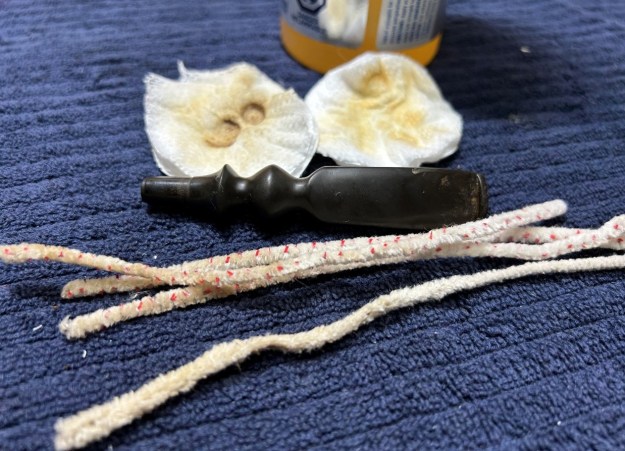
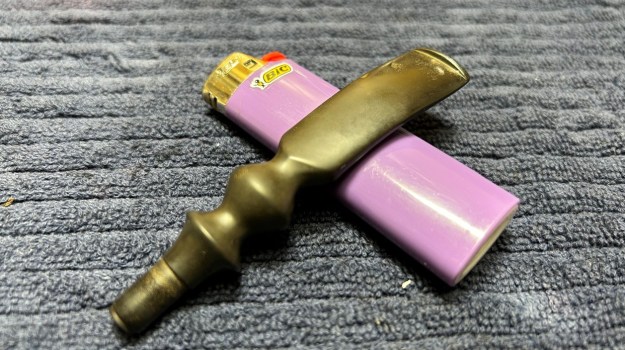
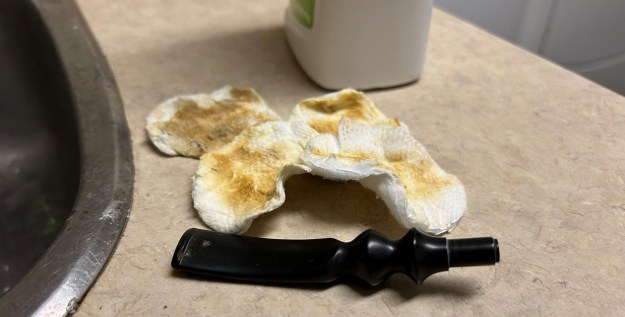
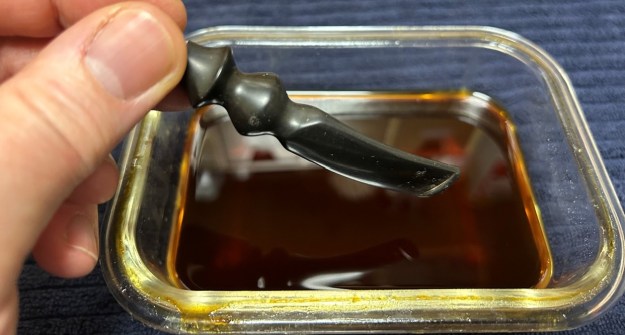
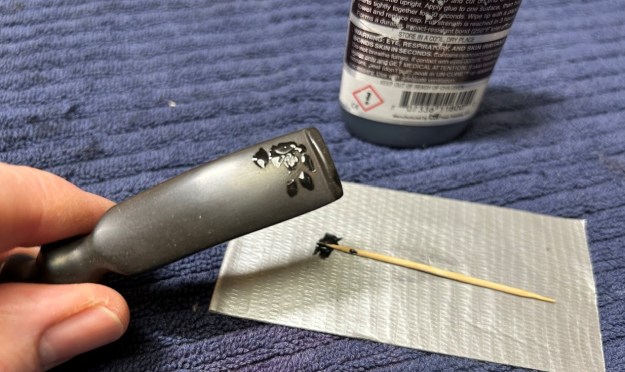
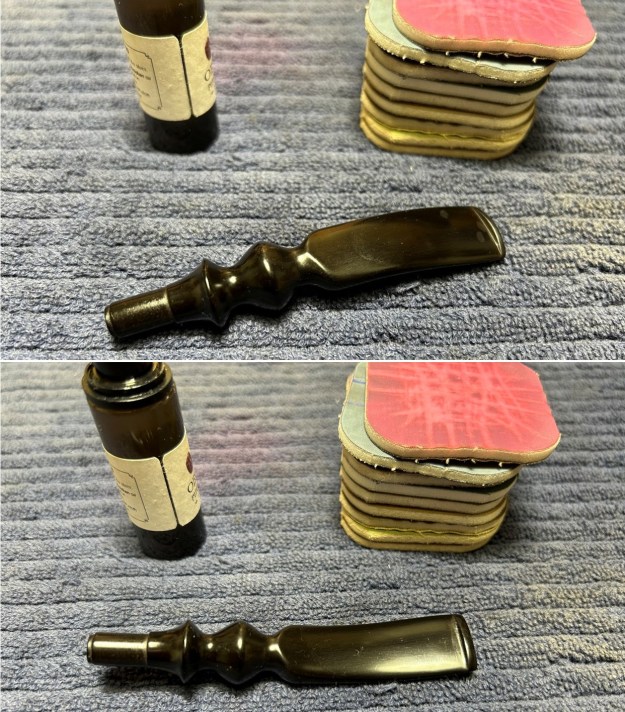
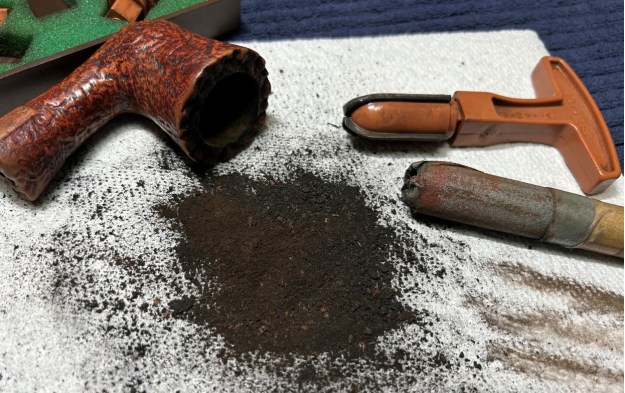
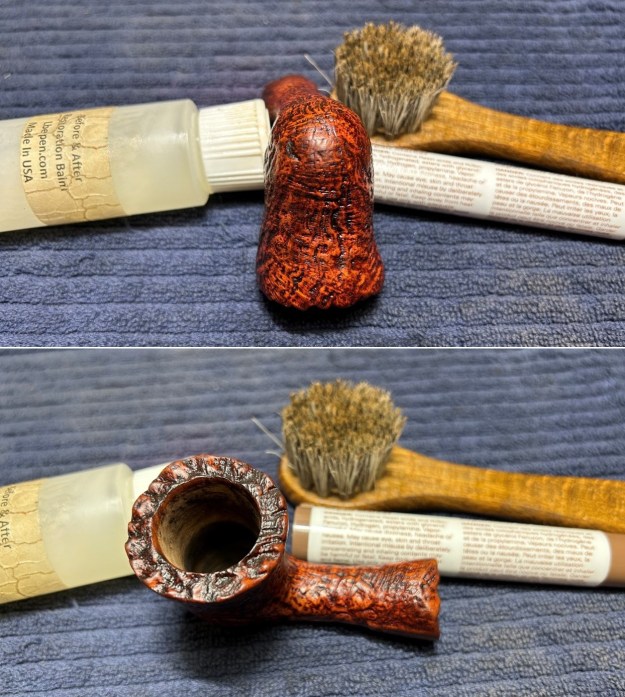
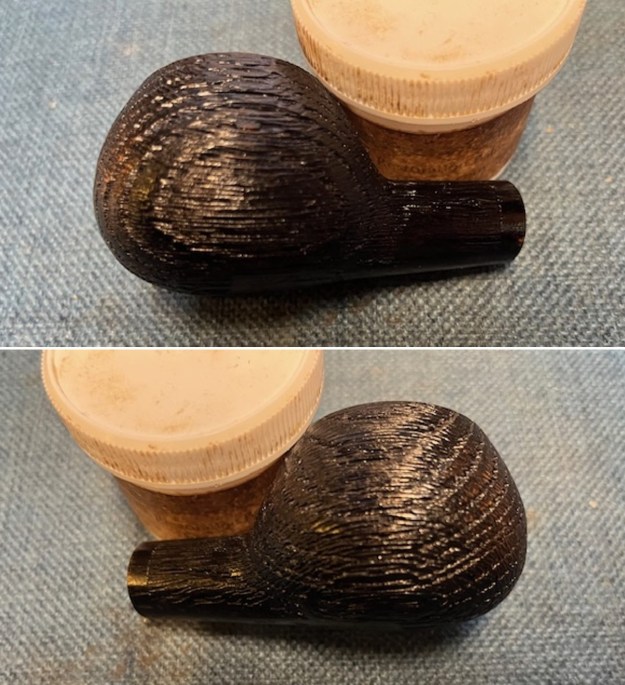
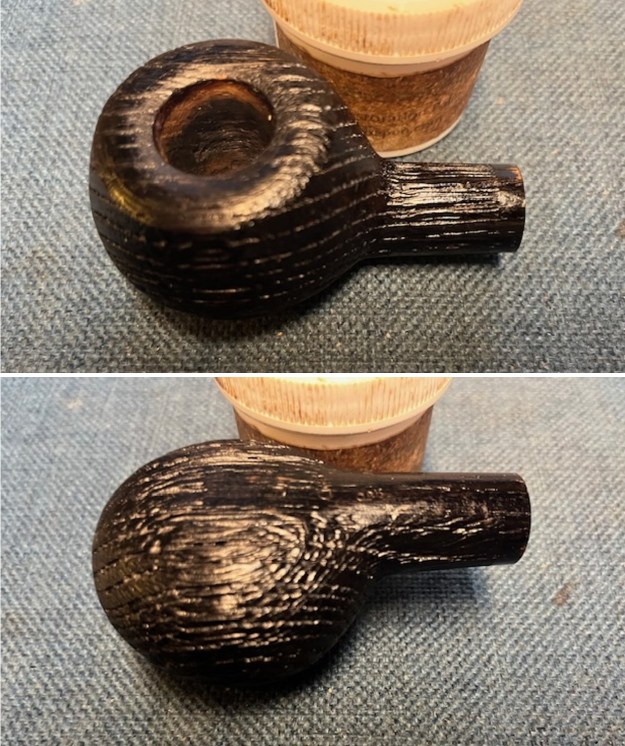
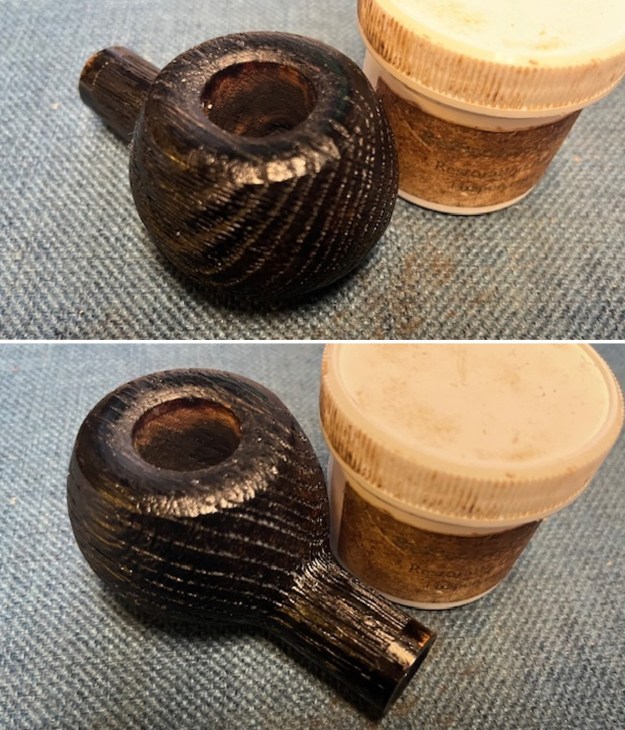
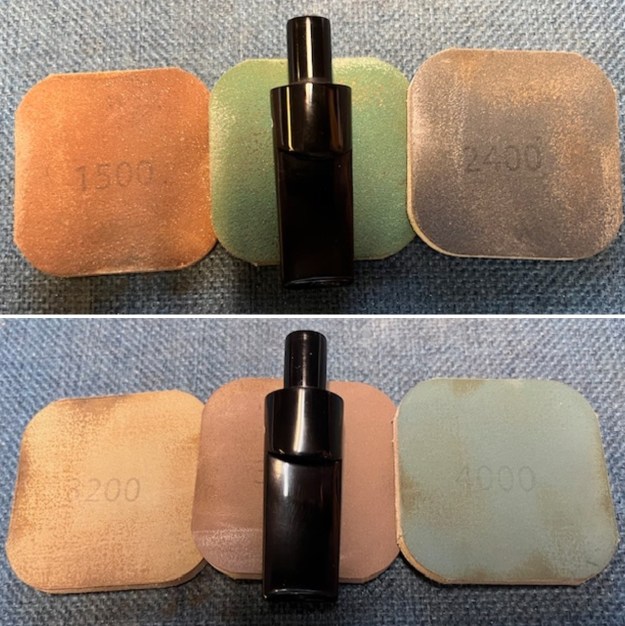
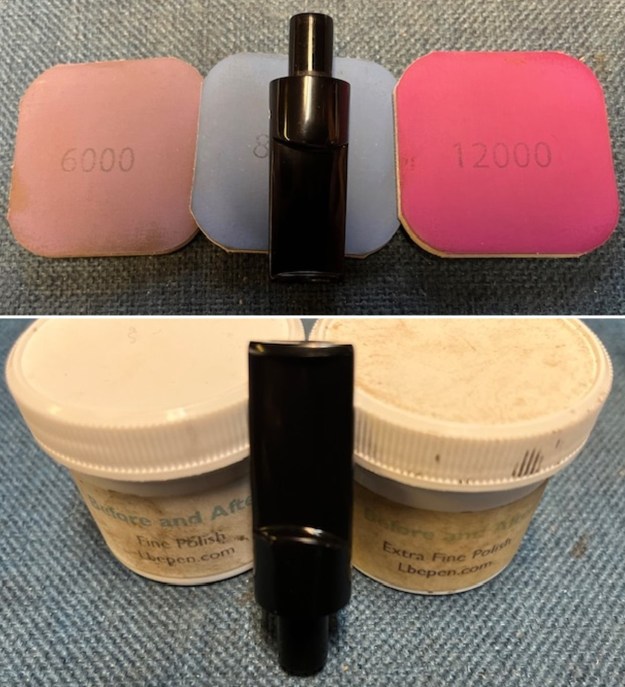
Not much is known about Israel’s sole pipe factory though it’s reported to have operated quite successfully on international markets. Beside the brand “Shalom” the mainstay brand was Alpha – especially well known in the USA. Alpha was popular for a range of fresh and unusual shapes. Series (afaik): Caprice (s), Citation (s), Classic (b), Pedestal (s), Regent, Region (b), Rex (s). (1) (1) (b) = blasted, (s) = smooth. Alpha also produced at least one of its Citation forms for Carey’s “Magic Inch” series. Mentioned in context with Shalom Pipe Factory was a Danish pipemaker named ‘Muki Liebermann’, who later lived and worked in the USA. Muki is known for his unique briar bending technique and his original shapes that gave inspiration to many of the most praised Danish pipemakers. Shalom was taken over by Robert L. Marx of New York City, later Sparta, NC, then of Mastercraft. Mastercraft continued the Alpha pipes introducing new lines.This made me wonder if this pipe was, in fact, made by Muki Liebermann – I have no evidence of that, but it certainly fits. Anyway, nothing here gave me any information about this specific pipe, but I clicked on the Alpha link to see if I could find further information. Indeed, I found that the same shape of my pipe was also released by Alpha (slightly different stem, but the stummel is the same). See below…Let’s take a closer look at the pipe itself. The stummel was in good shape. Dirty, of course, but nothing looked damaged or overly worn. The stem was also generally ok – it had the usual wear and tear. The only thing that gave me pause was a couple of tooth dents. But I felt confident that I could resolve that. I used oil soap on a few cotton rounds and wiped the stem down to provide an initial cleaning of filth. The primary cleaning comes next. I cleaned the inside of the stem with both pipe cleaners and cotton swabs dipped in 99% lemon-infused isopropyl alcohol. I scrubbed thoroughly to make sure the interior was clean.I used a disposable lighter and ‘painted’ the stem with its flame. The gentle heat of the flame can cause the dents in the vulcanite of the stem to expand back into shape. In this case, it didn’t work too well – but no big deal.The goal of the next step is the removal (or minimization) of oxidation. Going to my sink, I used cream cleanser, cotton rounds, and a toothbrush, and scoured the stem to remove as much surface oxidation as possible. As the photos show, the result is a hideous brownish mess – but better off the stem than on it.Once the stem was reasonably clean, I soaked it overnight in some de-oxidation fluid. This solution works to draw oxidation in the stem to the surface. This is a major aid and an important step in ensuring a clean stem. The following day, I drew the stem out from its bath and scrubbed the lingering fluid with a toothbrush.Now that the stem is clean and dry, I set about fixing the marks and dents in the vulcanite. This is done by filling those divots with black cyanoacrylate adhesive, impregnated with carbon and rubber. I left this to cure and moved on.The penultimate step for the stem is sanding. First, with my set of needle files, I reduce the bulk of the cyanoacrylate repairs. I want to remove the excess adhesive as near to the surface as possible, without cutting into the vulcanite. Following that, I use all nine of the micromesh sanding pads (1,500 through 12,000 grit) to sand out flaws, even out the vulcanite, and provide gentle polishing of the finished surface. I also apply pipe-stem oil while using the last five micromesh pads. There was a wonderful, deep black shine to the stem when I was done.Now that the stem is (nearly) complete, I can move on to the stummel. The first step for me is to ream out the bowl – that is to say, remove all the cake inside the bowl. This accomplishes a couple of things. First (and most obviously), it cleans the bowl and provides a refurbished chamber for future smoking. Second, when the old cake is removed, I can inspect the interior walls of the bowl and determine if there is damage or not. I used a reamer and a piece of sandpaper taped to a wooden dowel. Collectively, these ensure that all the debris is removed. Pleasingly, the walls of the bowl looked to be in good condition.Similar to the stem, I then cleaned the stummel with both pipe cleaners and cotton swabs dipped in 99% lemon-infused isopropyl alcohol. With a pipe this dirty, it took quite a while and much cotton to get clean.I then decided to ‘de-ghost’ the pipe – that is to say, exorcize the remaining filth from the briar. I filled the bowl and the shank with cotton balls, then saturated them with 99% isopropyl alcohol. I let the stummel sit overnight. This caused any remaining oils, tars and smells to leach out into the cotton.To tidy up the briar, I also wiped down the outside with some oil soap on cotton rounds (and a nylon-bristle brush for the rim). This does a good job of cleaning any latent dirt on the surface of the briar. The last step of the cleaning process is to scour the inside of the stummel with some soap and tube brushes. This is the culmination of a lot of hard work in getting the pipe clean.I used a few of the smoother micromesh pads – but just on the flat section where the logo is. After that, there were a few spots that needed to be tinted in the same colour as the rest of the stummel. I used some of my furniture pens (which is simply dye in pen form) to match the colour. I rubbed some Before & After Restoration Balm into the briar and let it sit for 20 minutes or so. The balm moisturizes the wood and gives a beautiful depth to the briar. I then buffed it with a microfibre cloth. For the final step, I took the pipe to my bench buffer and carefully polished it – first with a white diamond compound, then with three coats of carnauba wax. This procedure makes the pipe look its best – the stummel sings and the stem glows.

All done! This Shalom freehand Dublin looks fantastic again and is ready to be enjoyed by its next owner. I am pleased to announce that this pipe is for sale! If you are interested in acquiring it for your collection, please have a look in the ‘Various Makers’ section of the store here on Steve’s website. You can also email me directly at kenneth@knightsofthepipe.com. The approximate dimensions of the pipe are as follows: length 6⅛ in. (155 mm); height 2⅛ in. (54 mm); bowl diameter 1½ in. (37 mm); chamber diameter 1 in. (24 mm). The weight of the pipe is 1¼ oz. (38 g). I hope you enjoyed reading the story of this pipe’s restoration as much as I enjoyed restoring it. If you are interested in more of my work, please follow me here on Steve’s website or send me an email. Thank you very much for reading and, as always, I welcome and encourage your comments.

Cleaning up an Ascorti Oak Sandblast Apple


by Steve Laug

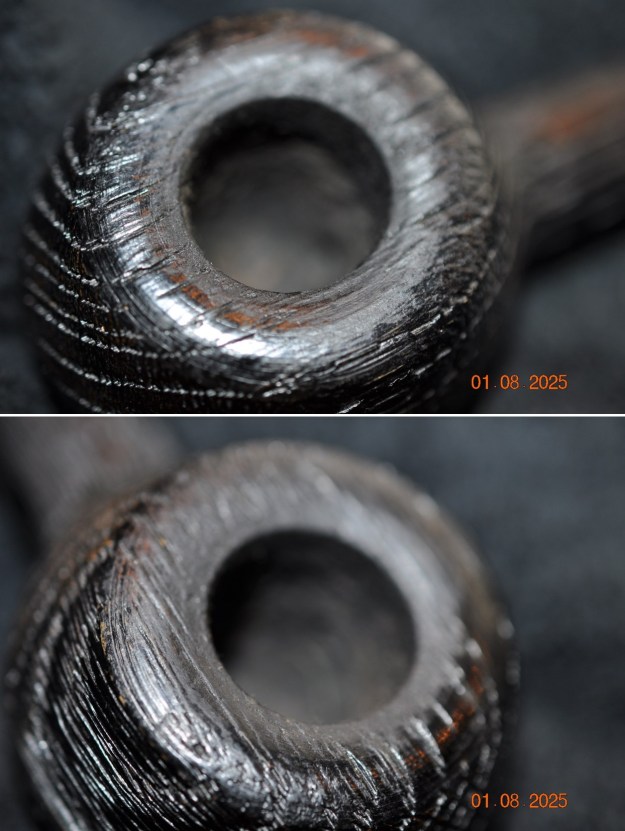
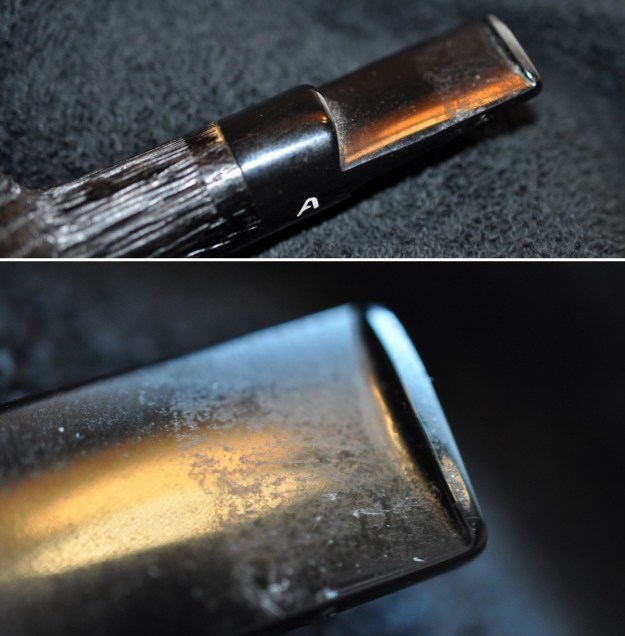
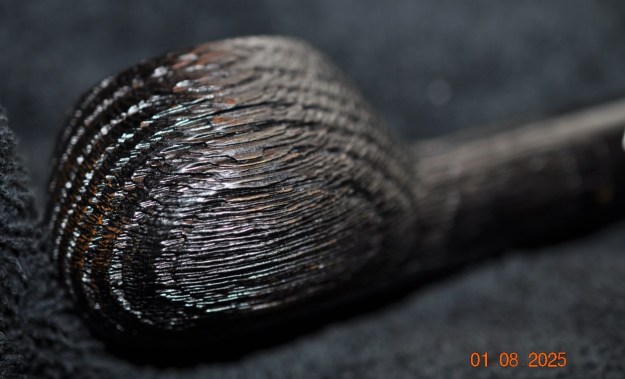
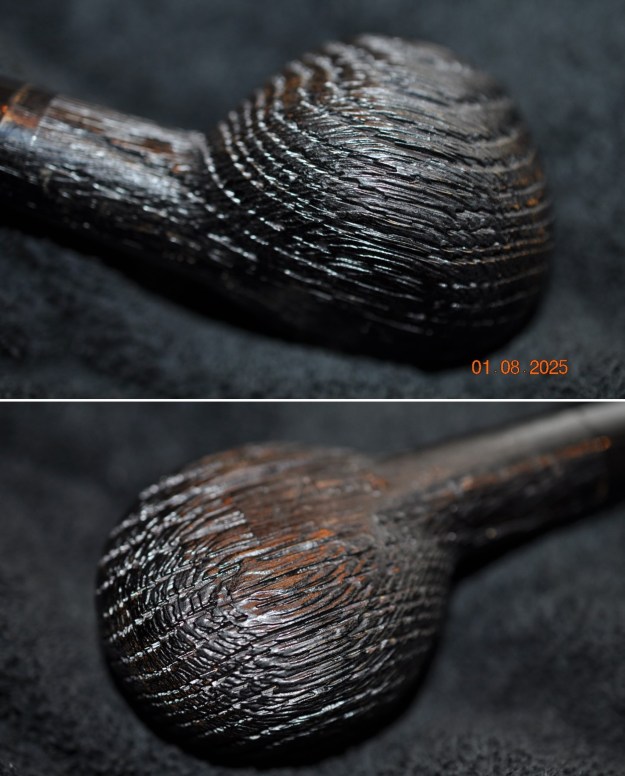
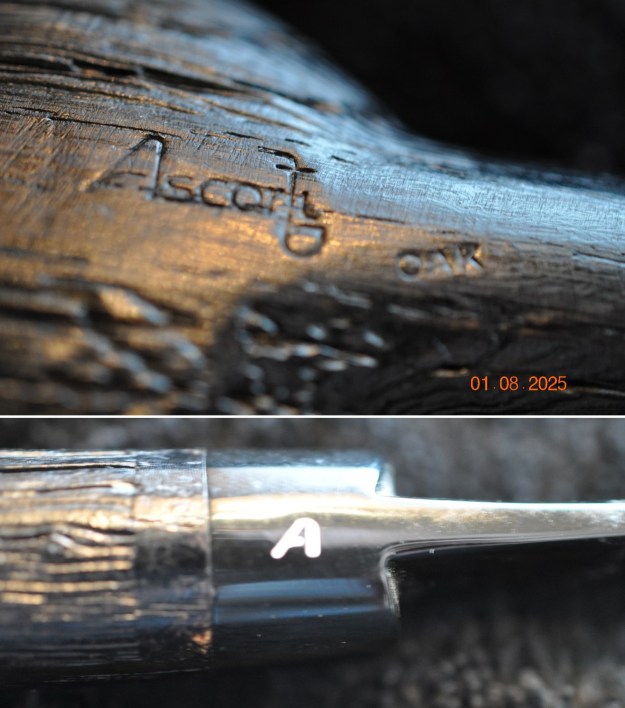
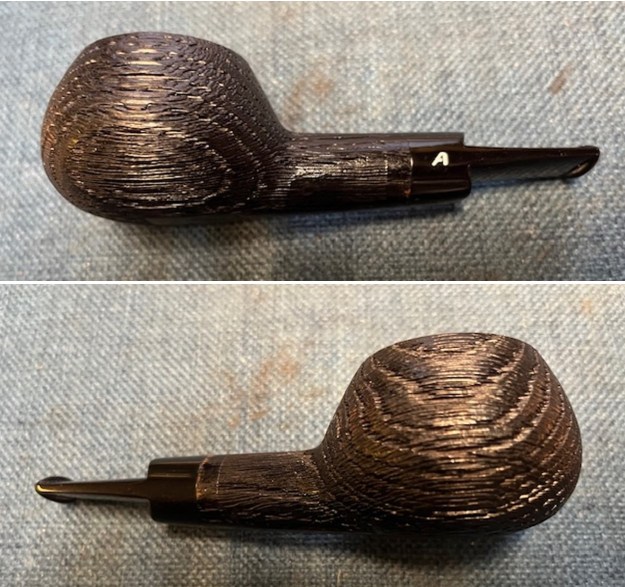
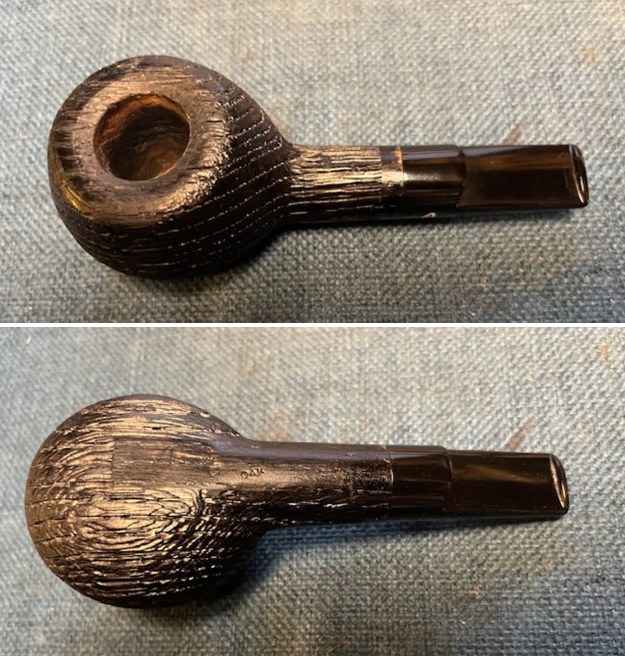
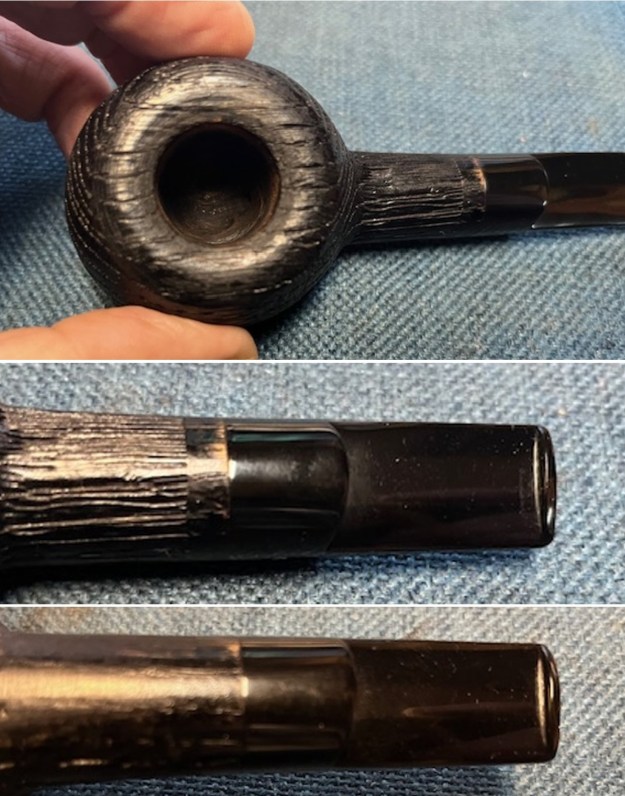
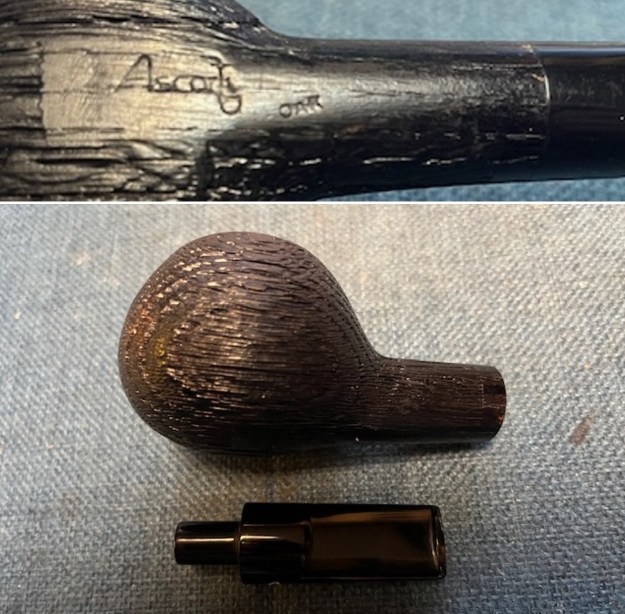
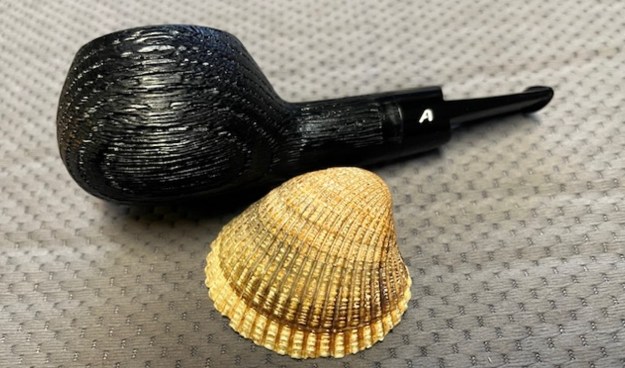
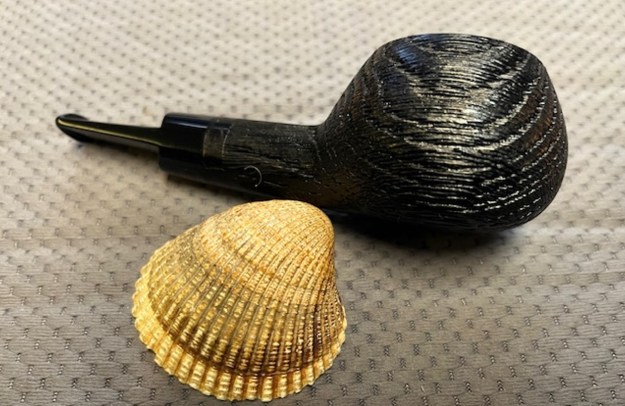
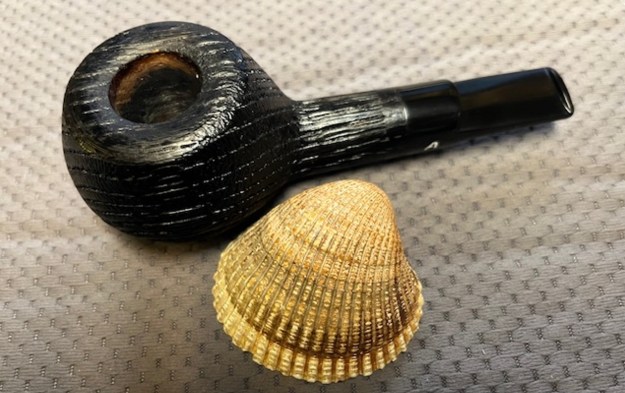
I have always been intrigued by Morta pipes – the look, the weight and the sense of age that each one carries as a block of bog oak. In a conversation with a seller in Ogden, Utah, USA via zoom Jeff and I were able to see this beauty and make a deal. The date we picked it up was 12/12/2024. It is a short compact apple with a full-sized bowl. It is stamped Ascorti followed by Oak on the heel of the bowl and the shank. There is also an inlaid Ascorti “A” logo on the left side of the saddle stem. The finish was a nicely grained sandblast apple with an acrylic saddle stem. The pipe had been smoked and there was a moderate cake in the bowl and some lava on the inward bevel of the rim top. The stem was dirty with what looked like grime from a softee bit on the stem. You can see the line where the bit had ended. The beauty was that there were not any tooth marks or chatter on the stem surface. Jeff took photos of the pipe before he started his cleanup work on it. I have included them below. Jeff took photos of the rim top and stem to show the general condition of the pipe. The bowl is moderately caked and there is a light lava overflow on the rim top. The stem looked surprisingly good under the dirt and grime on the surface of the acrylic. It should cleanup very well. Jeff took photos of the bowl sides and heel to show the sandblast grain that was around this bowl. You can see the grime but the grain showing through the sandblast bowl is beautiful. He took a photo of the heel of the bowl to show the stamping. The stamping is clear and readable in the photos below as noted above. He also captured the “A” logo on the left side of the saddle. It in excellent condition.I did a Google search on the Ascorti Oak line and came up with very little. They seemed to sell between $285 – $375 new though I found only one currently for sale at Mars Cigars and Pipes (https://www.marscigars.com/ascorti-oak.aspx). Further searching came up with a single line in the search on the Ascorti Oak came up with a simple sentence that gave information concerning the “Oak”. I quote: The former is a variety of oak, felled and fossilized over thousands of years in peat bogs (hence its other common name, bog oak).

All of that is helpful information. There were not many Ascorti Oak pipes readily available. The pipes were made of a variety of “felled and fossilized oak over 1000s of years in a peat bog” which accounts for the name bog oak.

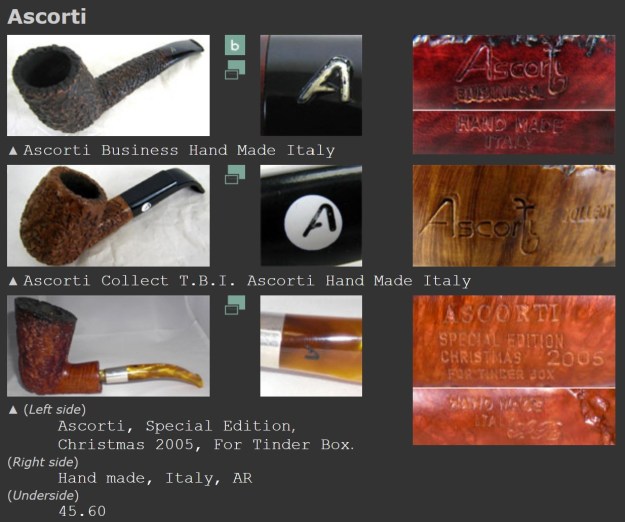
From there I turned to the Ascorti section on Pipephil’s site to see if there was any information on the Oak line (http://www.pipephil.eu/logos/en/logo-a8.html). There was nothing shown on that in section on Ascorti but the information on the brand and short summary of history was helpful. I have included a screen capture of the section and the side bar information below.Brand established in 1980 by Roberto Ascorti (born 1958), son of Giuseppe aka Peppino. See Caminetto. Production (2007): ~ 1500-2000 pipes/year

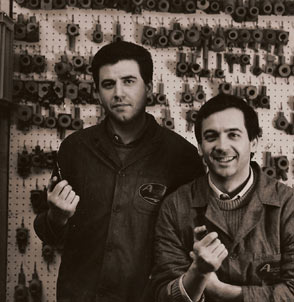
I turned from there to Pipedia for more information (https://pipedia.org/wiki/Ascorti). I have included pertinent sections of the article as well as a photo of the Ascorti brothers. It is interesting and helpful.

Roberto Ascorti, now 49, son of Giuseppe Ascorti, best known as “Peppino”, “met” the pipe when he was 10 years old, back in 1968, when his father started the new adventure as pipemaker.

He attended the Art Institute, but he continued with his passion for the pipe and decided to assist his father more and more. In 1980, when he was 22, Roberto decided to devote himself completely to creating pipes, but there was no room in his father’s factory; so he started by himself with his own name, ASCORTI, supported and helped by his father, his brother Pierangelo and by his girlfriend, Silvana. Then, when the historic Caminetto factory closed, its artisans entered the newborn Ascorti which had all the tradition, the experience, the power and quality that Peppino Ascorti had built in several years, but with innovations in the model making and in the technical solutions, brought by the young Roberto.

During those years Roberto suffered the early passing of his father and his brother. But with the help of his wife, Silvana, always by his side, he continued with love and experience to compete with a market which is extremely variable and ruled by accelerations(?) of the changes. Roberto is able to change the style of his design by revising old shapes, personally checking the progress and working side by side with his precious artisans.

Briar is personally selected by Roberto who controls the quality, dimensions, weight and the first seasoning, which is very important and done in the area where it is collected and cut. After the first scrupulous control, the briar is then aged for two years, to reach the seasoning that he thinks is perfect to create a pipe. Each pipe is designed by Roberto and it is initially crafted with small machines, made by hand by his father Peppino, with the help of his son, back in the 70’s. They are perfect to allow different processes as the artisanal tradition requires.

After the drilling of the bowl and shank, the pipe passes through an interminable series of handmade steps done only by Roberto and the irreplaceable Cesare (already aside of Peppino in 1968).

The mouthpiece, made in methacrylate (acrylic) is also completely handmade, obtained in sheets which are cut into bars, then drilled and shaped with files and sandpaper. There are 90 steps to the procedure, small or large, but everyone important, that Roberto requires before he considers his creations finished and ready to be shown to the customer.

I think that the love that Roberto flows into his pipes, absorbed by the workers and relatives, is perfectly understood by smokers all around the world, who never fail to give us satisfaction with praise and public or private lauds.

Jeff had done a great job cleaning up the pipe as usual. He reamed the pipe with a PipNet reamer and cut back the cake back to the bare briar. He cleaned up the walls with a Savinelli Fitsall Pipe Knife. Surprisingly the walls looked unscathed from the heavy cake. He scrubbed the interior of the bowl and shank with pipe cleaners, cotton swabs and alcohol to remove the tars and oils. He scrubbed the exterior of the pipe with Murphy’s Oil Soap and a tooth brush to remove the grime from the finish. He scrubbed the inside of the stem with alcohol and pipe cleaners. He scrubbed the exterior of the stem with Soft Scrub and then soaked it in Briarville’s Deoxidizer. He washed it off with warm water to remove the Deoxidizer. When I examined the stem, it looked very good. The pipe looked far better when it arrived. I took some close up photos of the rim top and edges to show how well it had cleaned up and the edges around the bowl. I also took close up photos of the stem to show the light tooth chatter on the surface ahead of the button on both sides.I took a photo of the stamping on the heel of the bowl. It is clear and readable as noted above. I removed the stem and took a photo of the pipe to have a look at the parts and overall look.I worked some Before & After Restoration Balm into the surface of the briar with my fingertips to clean, enliven and protect the bog oak. I let the balm sit for 15 minutes and then buffed with a cotton cloth to raise the shine. The photos show the bowl at this point in the restoration process. I polished the stem with micromesh sanding pads – dry sanding with 1500-12000 grit sanding pads. I wiped it down after each sanding pad with a cloth containing some Obsidian Oil. I finished polishing it with Before & After Pipe Stem Polish – both Fine and Extra Fine and buffed it off with a cotton cloth. This Ascorti Oak Sandblast Straight Apple was a pipe I was looking forward to seeing what it looked like when I put it back together. The pipe was a beauty and the grain of the bog oak and the sandblast depths just pop at this point. I put the stem back on the bowl and buffed the pipe with Blue Diamond on the buffing wheel. I carefully avoided the stamping on the shank and stem during the process. I gave the bowl and the stem multiple coats of carnauba wax on the buffing wheel and followed that by buffing it with a clean buffing pad on the buffer. I hand buffed the pipe with a microfiber cloth to deepen the shine. The finished pipe is quite beautiful and is a lovely large bowl straight apple shaped pipe. The dark colour of the Morta/Bog Oak and the sandblast give it depth. It is very well done. Give the finished pipe a look in the photos below. I can only tell you that it is much prettier in person than the photos capture. The dimensions of the pipe are Length: 5 inches, Height: 1 ½ inches, Outside diameter of the bowl: 1 ½ inches, Chamber diameter: ¾ of an inch. The weight of the pipe is 63 grams/2.22 ounces. I really like the way that Ascorti follows the grain in the bog oak with the sandblast. This is a great looking pipe in great condition. Thanks for walking through the restoration with me as I worked over another beautiful pipe. I will be adding it to the rebornpipes store in the Italian Pipe Makers Section soon. If you want to add it to your collection send me an email or a message! Thanks for your time.

Restoring a Worn Peterson’s “Kildare” X105 Silver Banded Billiard


by Steve Laug

The next pipe I have chosen is smooth finished Peterson’s Billiard pipe. This one is a smooth Billiard that has a rich coloured finish around the bowl sides and shank. Neither Jeff or I have any idea where we picked up this pipe. It could have been a trade or a purchase in a shop but we do not remember. The contrast of the brown stains makes the grain really pop. It was faintly stamped on the left side of the shank and read Peterson’s [over] “Kildare”. It was very faintly stamped to the right side of the shank and reads Made in the Republic of Ireland (3 lines) with the shape number X105 next to the bowl. It came to us quite clean, just some dust and debris and little bit of oxidation on the stem and on the silver band. On the oxidized, fancy silver band on the shank end it is stamped on the top and reads Peterson [over] Dublin. On the right side it is stamped Sterling [over] Silver. Next to that are three hallmarks – a seated woman (Hibernia), a Crowned Harp (quality of the silver used) and the letter m (the date letter) which dates it to 1978. The bowl had been cleaned recently with just a little debris in the bottom. The rim top and the inner edge of the bowl looked good. The mortise had some tars and oils darkening it. The stem was lightly oxidized but there were not any tooth marks or chatter on the top and underside on and near the button. I took photos of the pipe before I started my cleanup work. They tell the story and give a glimpse of the promise that we see in this pipe. I took photos of the rim top and stem to show the general condition of the pipe. The bowl is very clean other than dust and debris in the bottom. The rim top and edges look good. The silver band is heavily oxidized but otherwise appears to be in good condition. The stem is lightly oxidized but there are no tooth marks on the surface or the button.I tried to capture photos of the sides of the shank to show the stamping. The stamping is very faint and is hard to see in the photos. However, with a bright light and lens you can discern what is stamped and it reads as noted above.I am including the link to the Pipedia’s article on Peterson pipes. It is a great read in terms of the history of the brand (https://pipedia.org/wiki/Peterson).

I turned to “The Peterson Pipe” by Mark Irwin and Gary Malmberg to get some background on the Peterson’s System Line. On page 314 it had the following information.

Kildare (1965-) First issue of line with matte-finish in Classic Range shapes, P-Lip and fishtail mouthpiece. Second issue C.1979 as Kildare Patch, with rusticated patches on pipe surface. Third issue 2010, matte-brown, P-Lip or fishtail mouthpiece, no band. Fourth issue 2011-, burgundy sandblast finish, nickel army mount, fishtail mouthpiece, exclusive to Smokingpipes.com.

Judging from the description above I believe that I am working on a First Issue of the line in the time period of 1965-1979. It is a late Republic Era Classic Shaped pipe with a matte-finish and a fish tail stem. Now it was time to work on the pipe.

I started my work on the pipe by scraping out the debris in the bowl with a Savinelli Fitsall Pipe Knife. There was no cake on the walls but there was dust and tobacco debris on the bottom and lower sides of the bowl. It came out very easily.I cleaned up the oxidized Sterling Silver Band with a jeweller’s cloth. I used a lot of elbow grease but was able to remove all of the oxidation. The stamping is quite readable as noted above. I scrubbed internals with pipe cleaners, cotton swabs and isopropyl alcohol to remove the debris and dust in the internals in both the shank and the stem. It was surprisingly clean and cleaned up quickly.I decided to address the darkening on the front inner edge of the bowl first. I used a folded piece of 220 grit sandpaper to give the inner edge of the bowl a slight bevel to minimize the darkening and blend it into the surrounding briar. It looked much better at this point. I polished the briar with micromesh sanding pads to remove the scratches in the briar – dry sanding with 1500-12000 grit sanding pads. I wiped the bowl down with a damp cloth after each sanding pad. I worked some Before & After Restoration Balm into the surface of the briar with my fingertips to clean, enliven and protect the briar. I let the balm sit for 15 minutes and then buffed with a cotton cloth to raise the shine. The photos show the bowl at this point in the restoration process. I set the bowl aside and turned my attention to the stem. I polished the stem with micromesh sanding pads – wet sanding with 1500-12000 grit sanding pads. I wiped it down after each sanding pad with Obsidian Oil. I polished it with Before & After Pipe Stem Polish – both Fine and Extra Fine. I wiped it down with another coat of Obsidian Oil and set it aside to cure. I am excited to finish this 1978 Peterson’s “Kildare” X105 Silver Banded Straight Billiard with taper vulcanite stem. I put the pipe back together and buffed it with Blue Diamond on the buffing wheel. I gave the bowl and the stem multiple coats of carnauba wax. I hand buffed the pipe with a clean buffing pad to raise the shine. It is fun to see what the polished bowl looks like with beautiful flame grain all around it. Added to that the polished Sterling Silver band and the black vulcanite stem was beautiful. This smooth Classic Peterson’s “Kildare” X105 Silver Banded Billiard is great looking and the pipe feels great in my hand. It is light and well balanced. Have a look at it with the photos below. The dimensions are Length: 5 ½ inches, Height: 1 ¾ inches, Outside diameter of the bowl: 1 ¼ inches, Chamber diameter: ¾ of an inch. The weight of the pipe is 43 grams/1.52 ounces. It is a beautiful pipe and one that I will be putting on the rebornpipes store in the Irish Pipe Makers Section. If you want to add it to your collection you can send me a message or an email to slaug@uniserve.com. Thanks for walking through the restoration with me as I worked over this pipe. Thanks to each of you who are reading this blog.

Restemming and Restoring a Rogers Rarity Imported Bruyere 310 Bulldog


by Steve Laug

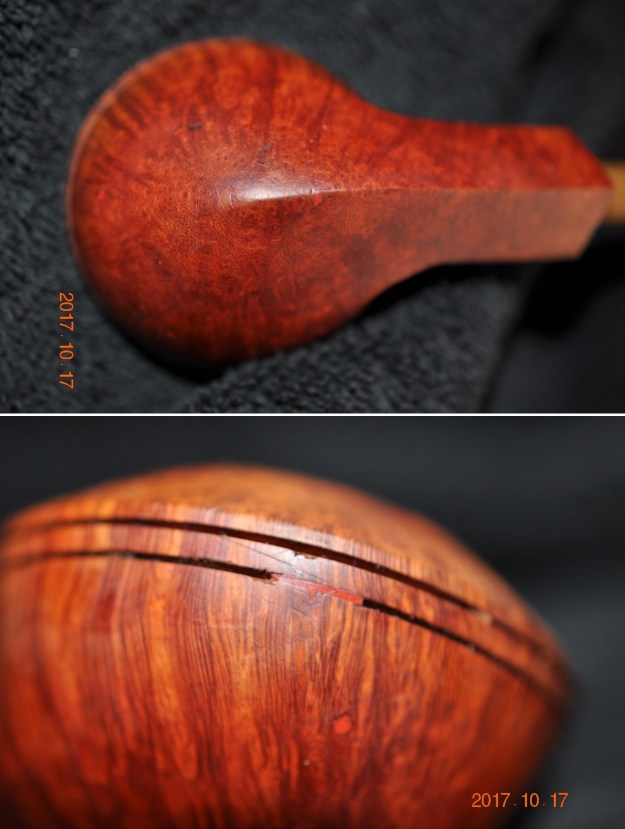
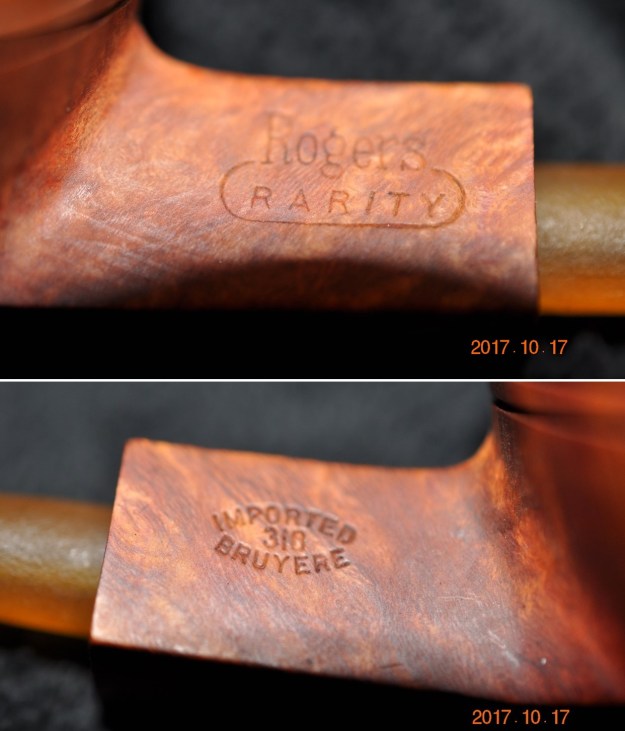
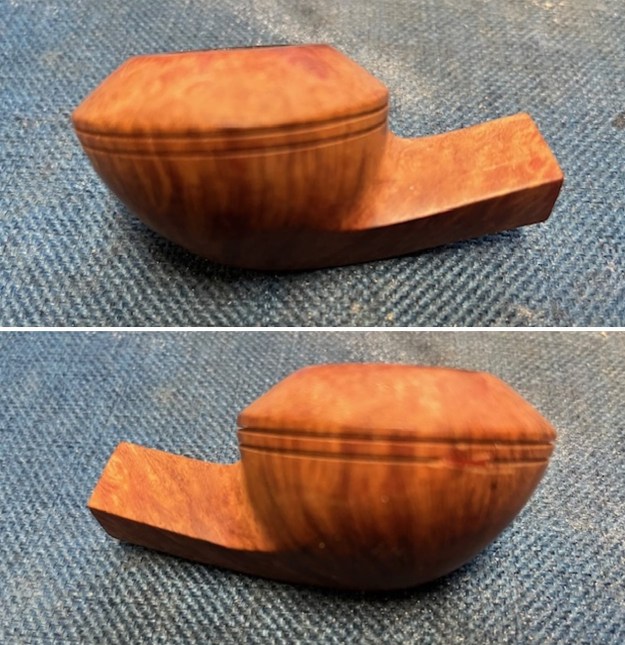
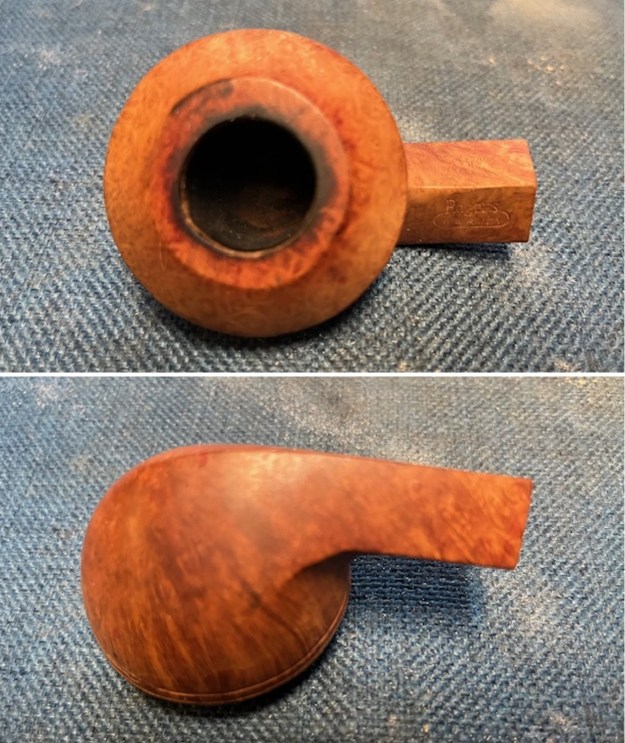
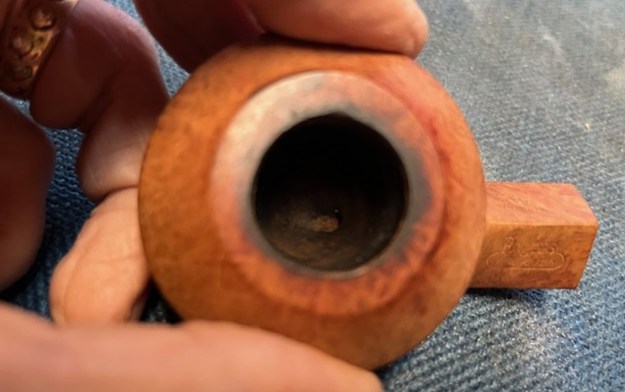
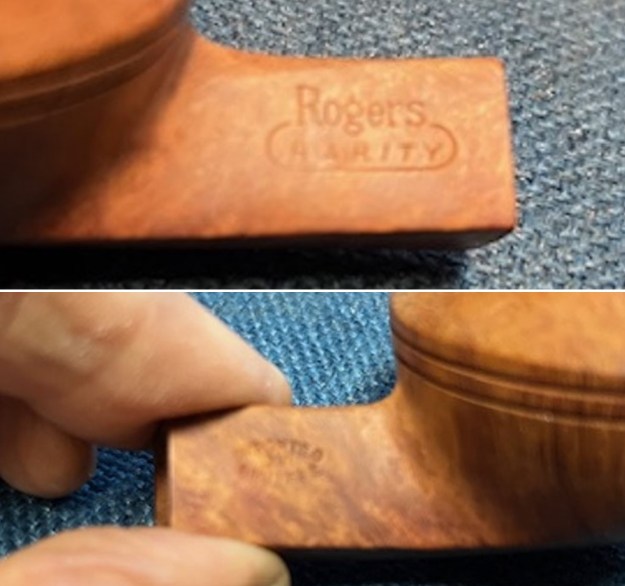
I decided to restem another bowl that I had here in the box. Jeff and I purchased on 10/17/2017 from am antique shop in Pocatello, Idaho, USA. It is a nicely grained bowl that came with some odd stem stuck in the shank. It was obviously the wrong one so it would have to go. The left side of the shank is stamped and reads Rogers [over] Rarity in an oval. The right side is stamped Imported [arched over] the shape number 310 and underneath was arched Bruyere. The bowl had a thick cake and lava overflow on the rim top and inner edge. The briar is oily and dirty with some lava coming down the outer edge of the rim top onto the bullcap. There was some great grain hidden by the grime. Jeff took some photos of the pipe before he started his work on cleaning it up. He included photos of the stem that came on it when we purchased it.He captured the cake in the bowl and the thick eruption of lava on the rim top and edges exceptionally well in the next photo. It was very clear that the pipe had not been seriously cleaned in a very long time. But it is also very clear that it was an exceptional smoker! The incorrect stem is oxidized and dull with tooth marks and chatter on both sides ahead of the button. It was going to be replaced but I always find it interesting to see what pipesmokers do to make a pipe remain usable. Jeff somehow captured some of the beauty of the shape and the grain in the next photos. You can certainly see what lies beneath the grime on the briar. You can also see a few small fills in the bowl and along the twin rings of the bullcap. He took photos of the stamping on the top left and right of the shank. It is clear and readable as noted above.From reading Bill Unger’s book on Custom-Bilt Pipes I remember “Rogers Rarity” was made by the same company as one of its non-sculptured or rusticated pipes. I did a Google search to see if I could confirm that online. I found a pipe labeled Rogers Rarity for sale on Worthpoint, an online sales site (https://www.worthpoint.com/worthopedia/rogers-rarity-custombilt-large-briar-1821532853). In the description they made the link to Custombilt. I quote:

Rogers Rarity briar pipes were made by Custombilt, and show all the beauty and originality of the brand.

I searched further and found a conversation asking about the brand on Pipesmagazine online forum. There was a great conversation about the brand.

(https://pipesmagazine.com/forums/threads/help-with-dating-a-pipe.62314/). I found a particular response by Jon Guss of the Seattle Pipe Club particularly helpful. I quote from Jon in full.

First, “Rodgers” is a misspelling; it was always spelled “Rogers”. Three generations of the Rogers family ran one of the leading importers of pipes (including Petersons for a number of years) and resellers of pipes and smokers articles; they also did a bit of manufacturing. The name of the company was Rogers Imports, Inc.

Second, for several reasons I also believe that Rogers Rarity pipes were made for Rogers Imports by CustomBilt.

The Rogers Rarity line was introduced by the company in late 1945. The advertising copy from the spring of 1946 described Rogers Rarity pipes as “The height of pipe luxury and enjoyment”, and claimed that they were “Carved by hand of Algerian bruyere over 150 years old”. Was it true? I would guess not, but age fabrication regarding the briar from which pipes were made was a kind of industry trope for generations. While most of the Rarity pipes apparently sold for $5, the listed price range stated various models cost from $5-25. The $5 pipes were available in natural and grain finishes; there was also a $10 version called the Rogers Rarity Deluxe that was sterling banded and meerschaum lined.

I can’t be sure when the line ceased production, but believe it was by the end of 1949. Certainly Rogers Rarity pipes are no longer listed in the RTDA Almanac from 1950 on, and mentions of the pipe in advertisements to consumers become thin on the ground. More tellingly newspaper ads from 1951 show the pipe heavily discounted, suggesting that excess inventory of an obsolete line was being flushed through the channel…

Now I knew that my memory was correct. The pipe was made by CustomBilt for Rogers Imports. I also knew that it was made between 1945-1949 when the line was no longer made. It was a bit of an old timer… Now it was time to work on the pipe.

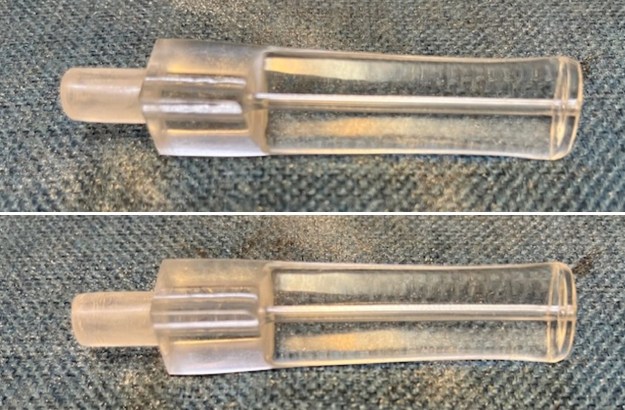
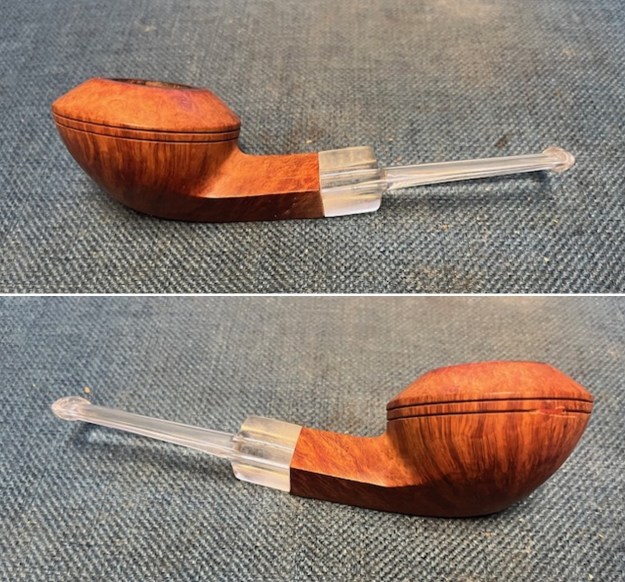
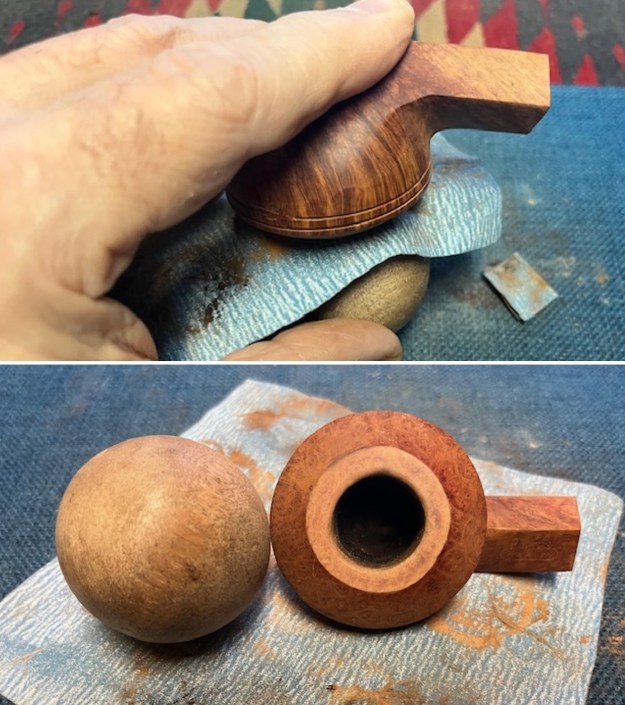
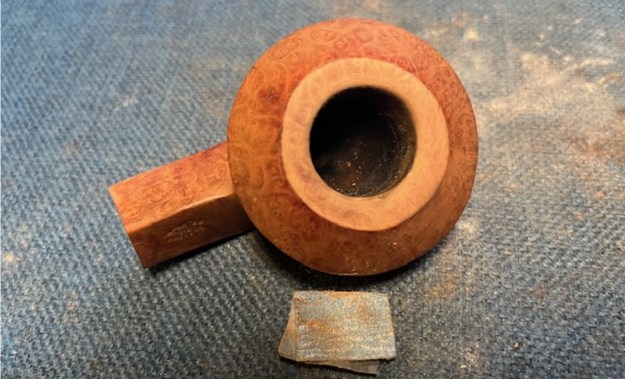
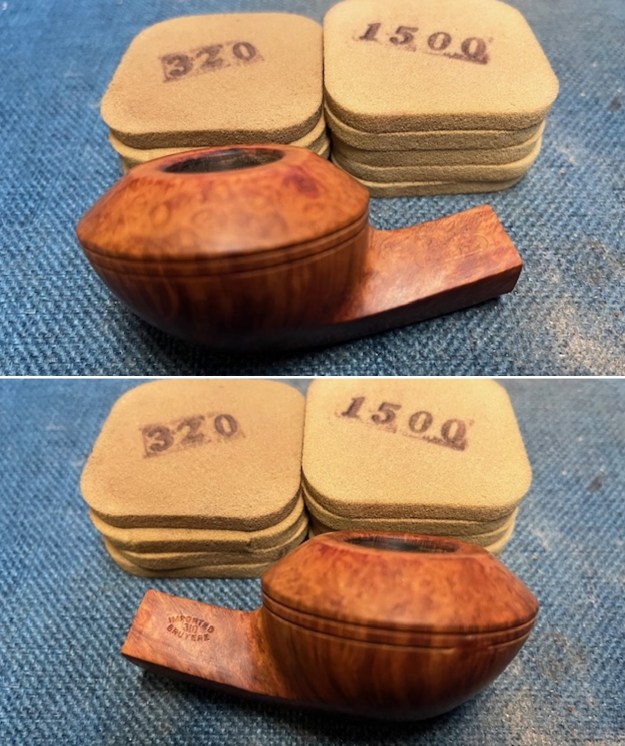
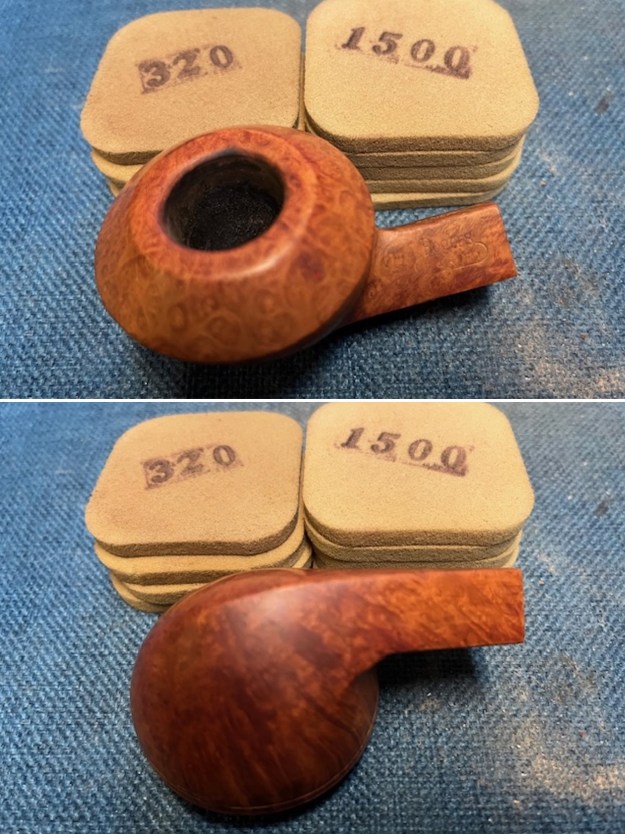
I was amazed at how clean and new the pipe looked when I took it out of the box. It is really a beautiful piece. Jeff had done a great cleanup on the pipe. He reamed the bowl with a PipNet pipe reamer and followed up with a Savinelli Fitsall pipe knife to remove the cake. He scrubbed out the mortise and the airway in the shank and the stem with alcohol, cotton swabs and pipe cleaners. He scrubbed the bowl exterior with a tooth brush and Murphy’s Oil Soap to remove the grime on the finish of the bowl and the lava from the rim top. He rinsed it under running water. One of the benefits of this scrub is that it also tends to lift some of the scratches and nicks in the surface of the briar. He dried it off with a soft cloth. We put the stem in our stem can. I took photos of the pipe bowl as I saw it when I put it on the table. I took photos of the rim top to show the condition. The rim top had some darkening on the top and outer edge but did not look deeply damaged. The inner edge of the bowl showed some damage and was slightly out of round.The stamping on the top left and right sides of the diamond shaped shank are clear and readable as noted above.I started my work on this pipe by fitting a new stem to the shank. Once I had that done I would move on to cleaning up the bowl. I had a stem picked out that was a clear/Perspex style acrylic that would look great on this pipe. I first adjusted the fit of the tenon to the shank with my Dremel, files and sandpaper. Once I had a fit I took some photos. I think the stem would work very well with this pipe. As is usual with pipes the shank was not a true diamond and I needed to adjust the facets of the diamond shank to properly match those of the shank. I did this by hand using a folded piece of 220 grit sandpaper. I was fortunate that the top facets lined up well so I could avoid the stamping on them. I set the stem aside and dealt with the damage to the inner edge of the bowl. I used a folded piece of 220 grit sandpaper to smooth out the inner edge and give it form once again. It worked quite well. Then I used a wooden sphere and a piece of 220 grit sandpaper to lightly bevel the inner edge of the rim to remove the burn damage. The result was actually quite good. I sanded the bowl with 320-3500 grit sanding pads. I worked over the rim top, bowl sides, shank (carefully avoiding the stamping). I wiped it down with a damp cloth after each sanding pad. The briar began to look very good and the grain richly shone. I polished the briar with 1200-1500 micromesh sanding pads and wiping it down with damp cloth after each sanding pad. As I worked through the cycle of pads the shine developed with each change of pad. The pipe looks very good. Now it was time to bend the stem. I have had better luck bending acrylic/Perspex stems with boiling water than a heat gun. I boiled some water in the microwave and put the stem in the hot water. I repeated it several times to soften the acrylic. I bent it over a pill bottle to give it a correct bend. I set the bend with cool water. I put it partially in the shank to check the bend. I and happy with the way it turned out. It had a nice smooth bend.The button had a small round opening. I used a slot saw and three different files to shape an oval slot in the shank. It was a well-shaped slot that I smoothed out. With the bend in the stem and new slot it was very workable. I fit the stem in shank and took photos of the new look to the slightly bent bulldog. The Perspex stem fit well and looked very good. I removed the stem and rubbed the bowl and shank down with Before & After Restoration Balm. I worked it into the surface of the bowl sides and shank with my fingertips to clean, enliven and protect the briar. I let the balm sit for 10 minutes, then buffed with a cotton cloth to raise the shine. The Balm did its magic and the grain stood out on the briar. I set the bowl aside and turned my attention to polishing the stem. I sanded it with 320-3500 grit sanding pads. I wiped it down between pads with a Obsidian Oil impregnated cloth. It was looking much better.I polished the stem with micromesh sanding pads – dry sanding with 1500-12000 grit sanding pads. I wiped it down after each sanding pad with Obsidian Oil. I polished it with Before & After Pipe Stem Polish – both Fine and Extra Fine. I wiped down again with Obsidian Oil and set it aside while I worked on the stem. This Chubby 1945-49 Rogers Rarity 310 Bent Bulldog with an Acrylic/Perspex saddle stem is a well grained pipe with a flowing shape that looks great. The rich browns of the darkened natural finish make the grain come alive with the polishing and waxing. I put the stem back on the bowl and carefully buffed the pipe with Blue Diamond on the buffing wheel using a light touch on the briar. I gave the bowl and the stem multiple coats of carnauba wax on the buffing wheel and followed that by buffing the entire pipe with a clean buffing pad. I hand buffed the pipe with a microfiber cloth to deepen the shine. The finished Rogers Rarity Bent Bulldog really is a beauty and fits nicely in the hand and looks very good. Give the finished pipe a look in the photos below. The dimensions of the pipe are Length: 6 inches, Height: 1 ¾ inches, Outside diameter of the bowl: 2 ¼ inches, Chamber diameter: ¾ of an inch. The weight of the pipe is 1.90 ounces/54 grams. This old timer will soon be on the American Pipe Makers Section of the rebornpipes store if you would like to add it to your collection. Thanks for reading this blog and my reflections on the pipe while I worked on it.

Restoring an Odd, Old Genuine French Briar Slug Style Pocket Pipe


by Steve Laug

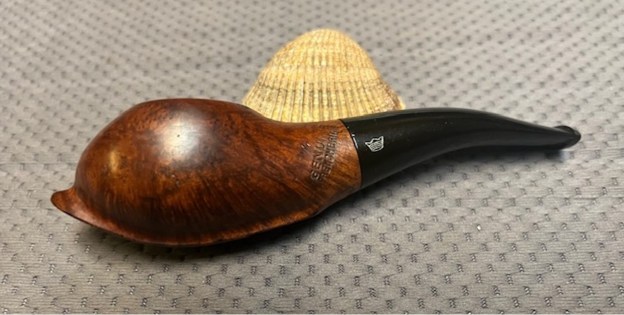
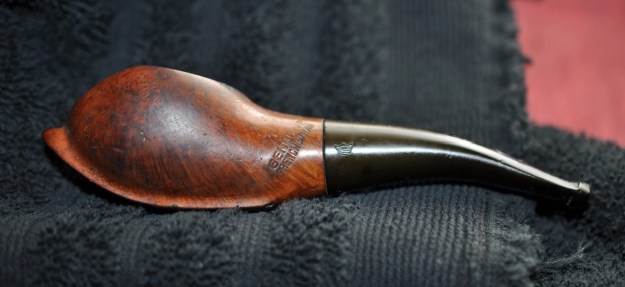
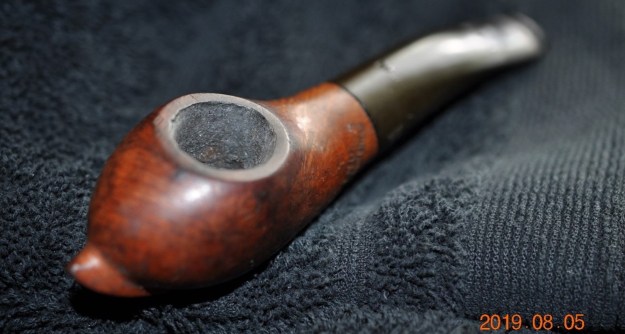
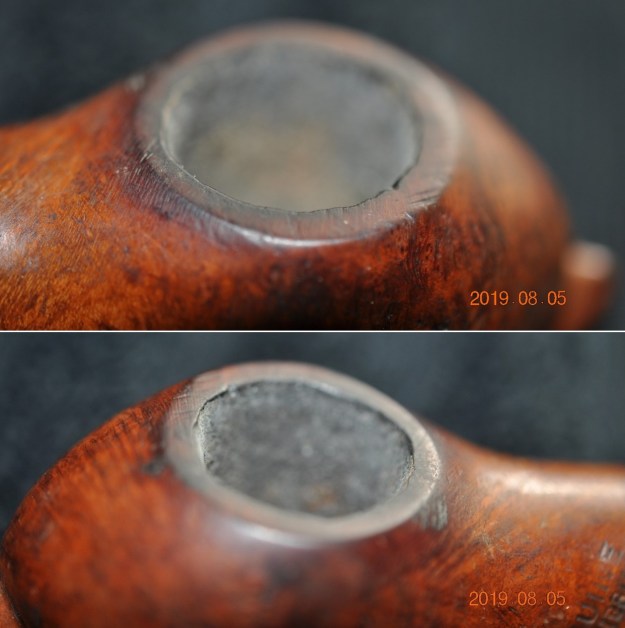
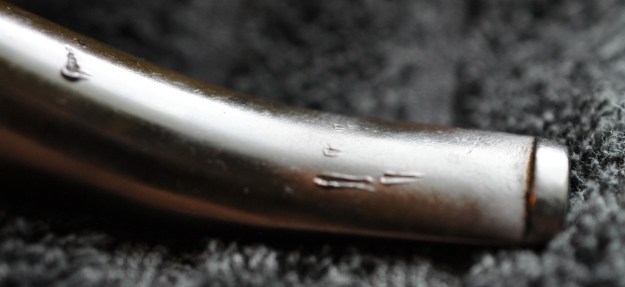
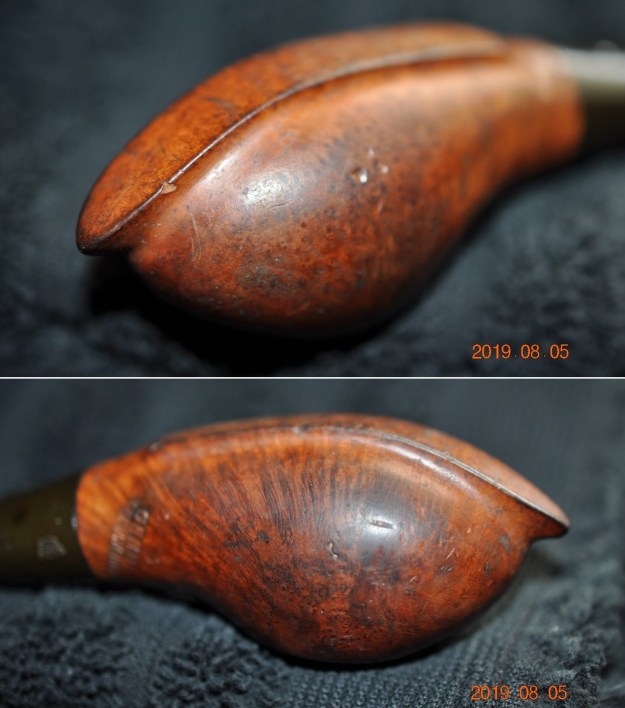
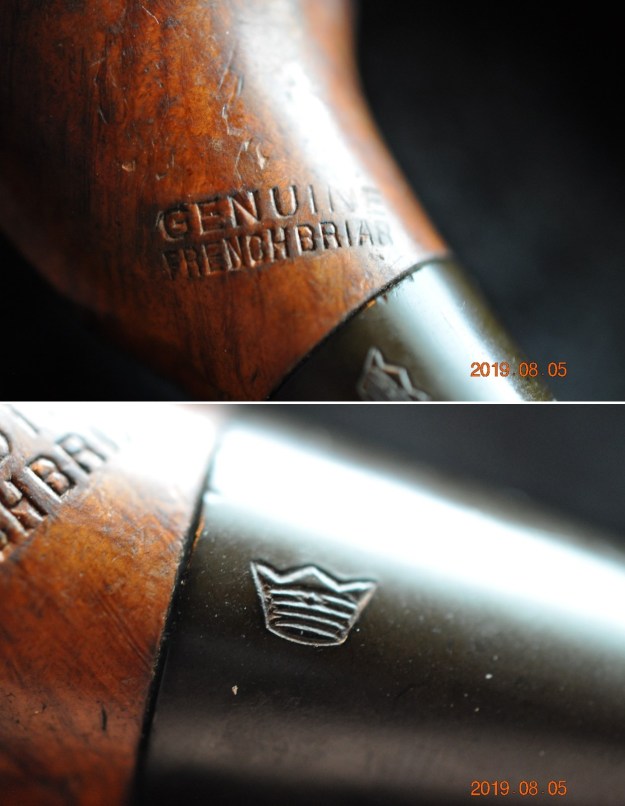
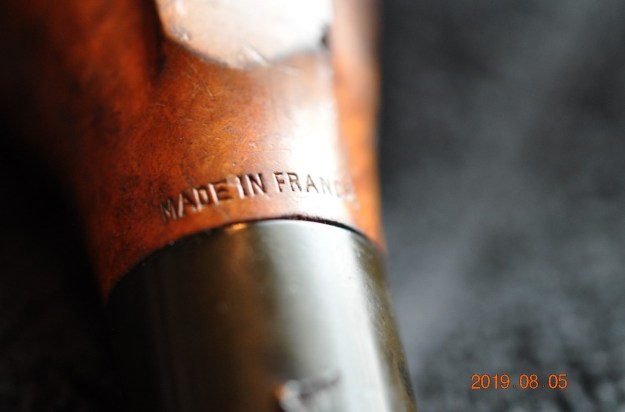
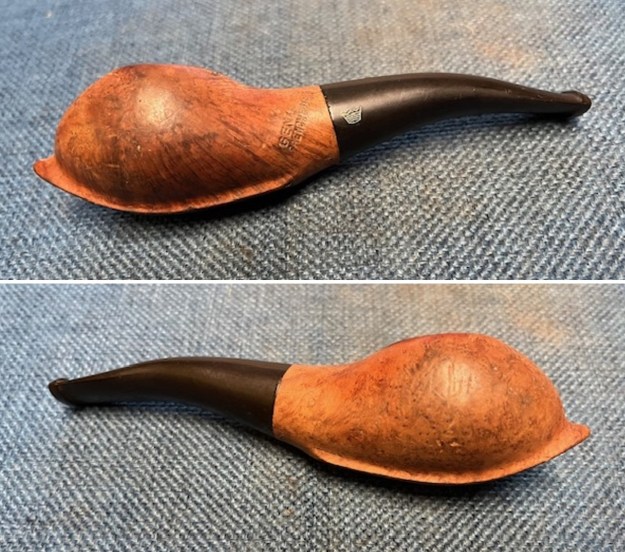
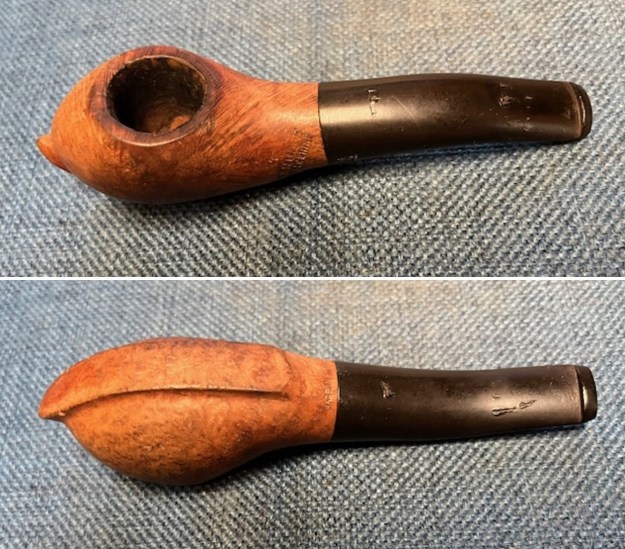
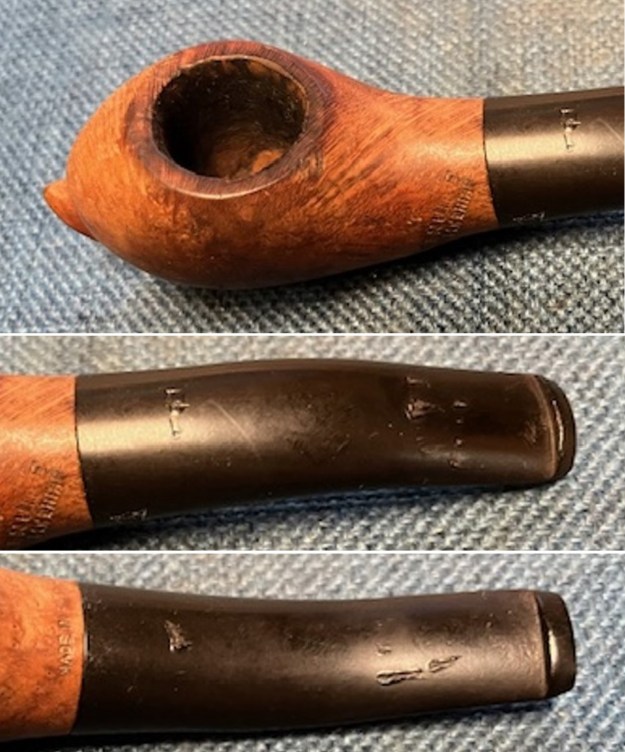
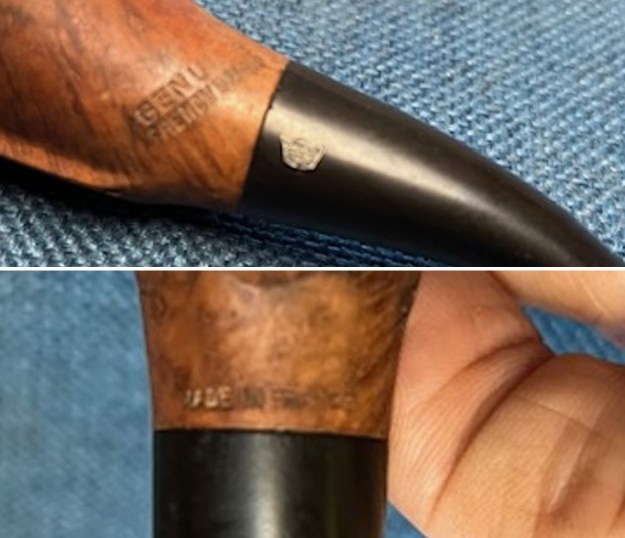
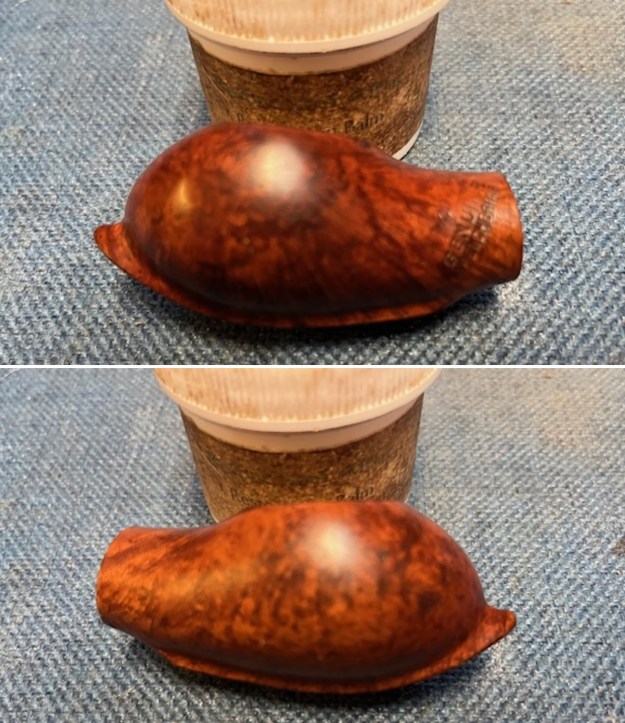
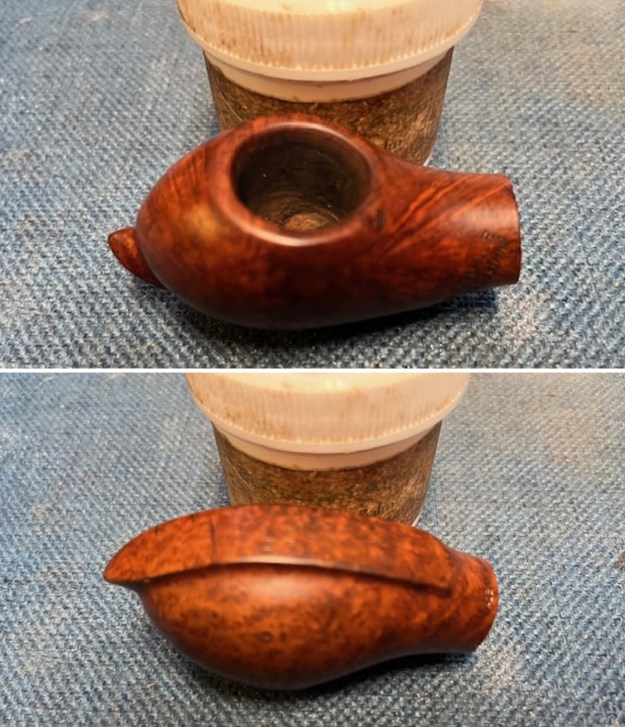
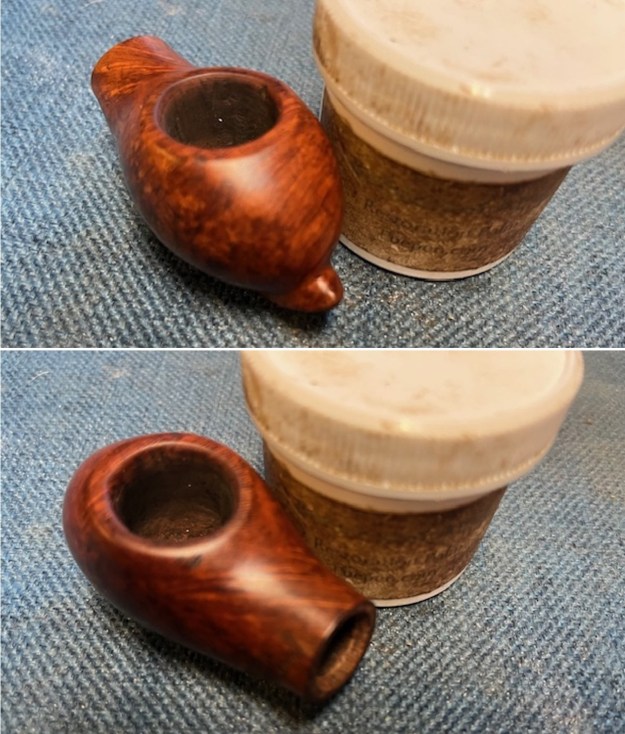
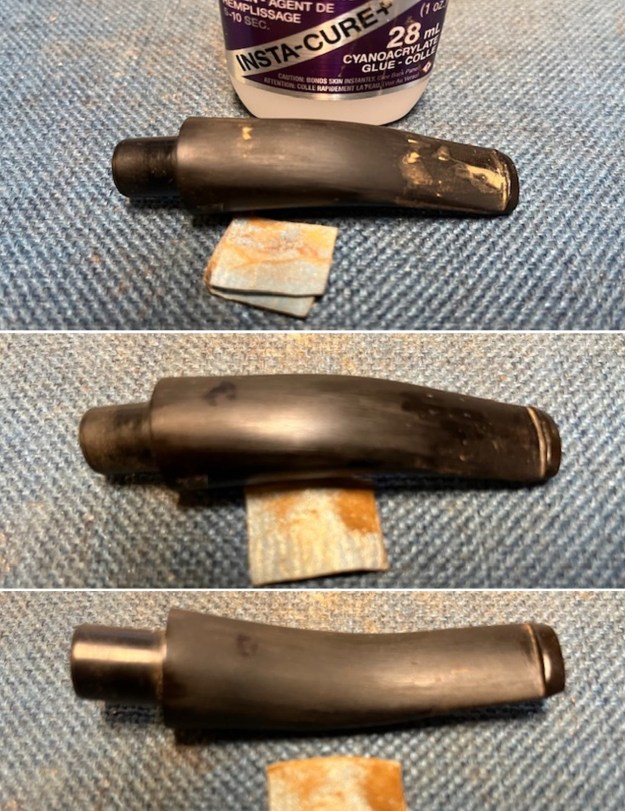
The next pipe on the table is one that has always interested me. Jeff called it a Slug and we purchased it on 07/27/2019 from a seller in Wilkes Barre, Pennsylvania, USA. The stamping on the left side of the pipe reads Genuine French Briar at an angle on the short shank. On the underside at the stem shank union it is stamped Made in France. It is clear and readable. The hard rubber stem has a crown stamped on the left side of the taper. The finish on the pipe did not have a shiny varnish coat but it was very dirty and had oils ground into the bowl sides. There were a lot of nicks and scratches in the briar. The rim was darkened and hard to tell whether it was burned or just tarry. The bowl was nicked and out of round but it also had a cake that would need to be reamed out before addressing the out of round inner wall of the rim. The hard rubber stem had nicks and gouges on both side that looked liked someone had used pliers to try to remove it. There was light tooth chatter on the top and underside ahead of the button, however, it was clean and sharp as was the slot in the in the end of the button. Jeff took some photos of the pipe before he started his clean up work on it. You can see what I have pointed out above in the photos. Jeff took some close-up photos of the damage to the rim and the stem. Looking closely at the photos of the rim top of the photo you can see the damage to the rim itself and the scratches in the top. The bowl also has a thick cake with some lava on the top and edges. The photo of the underside of the stem shows the nicks and gouges in the rubber. The top side also mirrors that though there is no photo of it. Jeff took photos of the grain around the bowl sides and the heel. It is interesting to note the also foot like bottom of the bowl which looks like the tread of a slug. The bowl is very dirty and oily on the outside and there are many nicks and scratches in the finish. The next photos show the stamping on the sides of the shank and the logo on the stem. It is clear and readable as noted above. Jeff removed the stem to show the damaged and corroded stinger that was in the shank. It appeared to me to have corroded a portion off the end as the bottom of the bowl showed a trough where it extended into the bowl.I knew that there were several blogs on rebornpipes about this style of pipe and in the middle of the night it hit me that they had horn stems so I did a quick search on the blog for horn stems and found two articles. The Mokin is an article on a restoration by Anthony Cook and is very helpful. The second is one I did on a Bruyere Garantie Pocket pipe and it is also a help in solidifying what I knew about the shape and the pipe. Here are the links:

https://rebornpipes.com/2015/10/20/ship-shape-refurbishing-a-mokin-corsaire-7087/

https://rebornpipes.com/2015/11/09/cleaning-up-a-bruyere-garantie-pocket-pipe-with-a-horn-stem/

Since this pipe is stamped Genuine French Briar I did a quick search on the blog for both Genuine French Briar and GFB pipes. I have restored a few of those over the years so I have included those links as well to try to pin down the history of the brand.

I went back and reread the posts on the GFB pipes I had refurbished to remind myself of their history. There I described the process of hunting down information on the brand. I summarize that here for those may not have read the posts. I quote below from the articles the pertinent information on the brand.

(https://rebornpipes.wordpress.com/2013/06/07/restemming-and-reclaiming-an-older-unsmoked-gfb-briar-calabash/ , https://rebornpipes.wordpress.com/2013/04/01/restoring-a-gfb-bent-billiard-another-reclamation-project/, https://rebornpipes.com/2013/11/21/restoring-an-older-gfb-three-star-horn-stem-bent-bulldog/#)

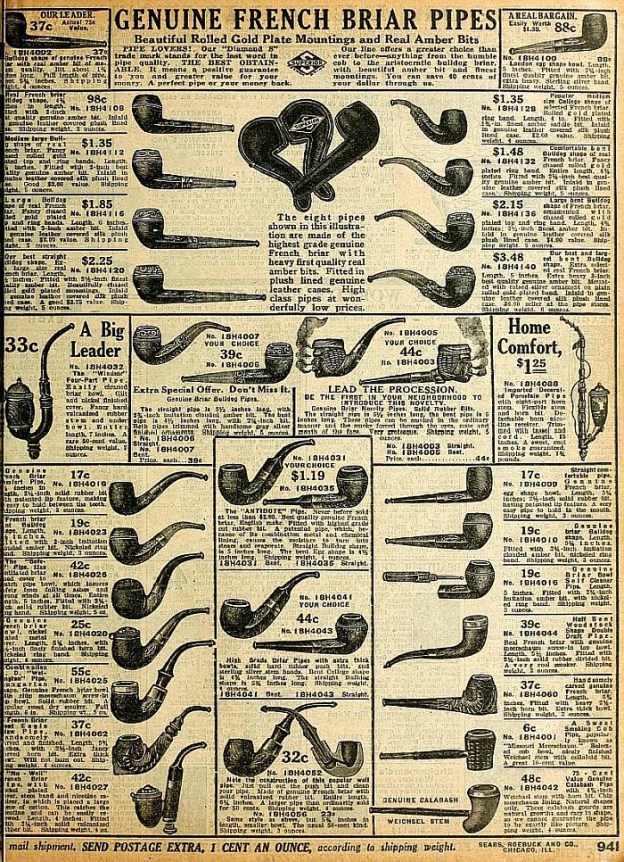
The first thing I found was information that the GFB brand was an older French Trademark and that it came from Saint Claude, France. A more focused search for GFB French Briar Pipes led to information that the stamping GFB stood for Great French Briar – something about that did not seem right to me so I continued to look and finally came across the following advertisement from a Sears Catalogue that I have included below. It shows a full page of GFB pipes and the header says GENUINE FRENCH BRIAR. That made much more sense to me, and all three of the GFB pipes I had worked on match the pipes in the catalogue. It was good to be reminded of the old brand. I am pretty sure that all three of my GFB pipes come from either the late 1890’s or the early 1900’s.Judging from the description above, the pipe I am working on is an older French Made pipe by the GFB company – Genuine French Briar. The best I can tell the pipe was made in the early 1900s. I have worked on horn stem examples of this but this is one of the first with  a hard rubber stem. Now it was time to work on the pipe itself.

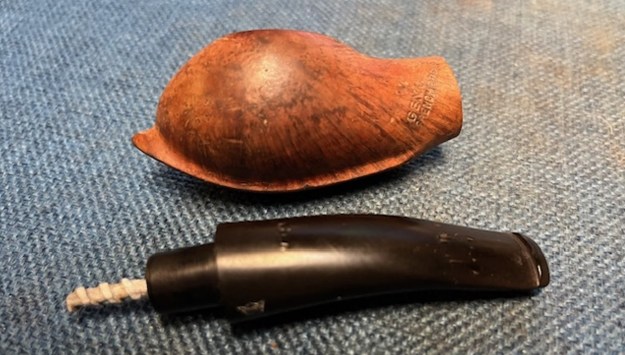
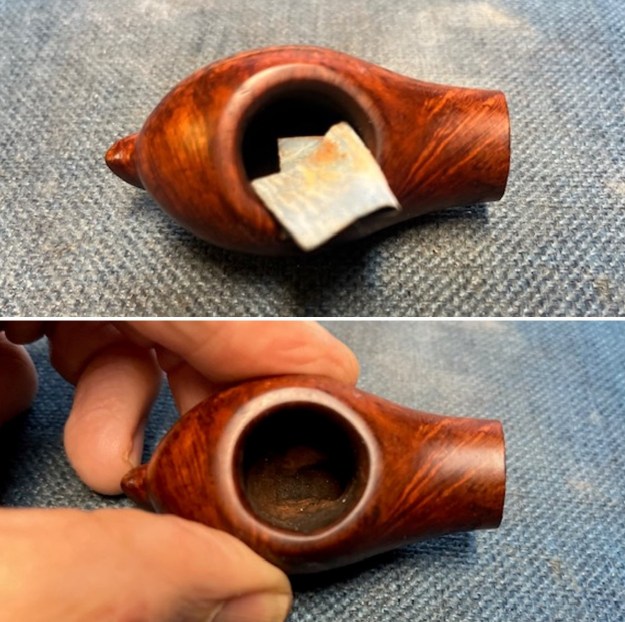
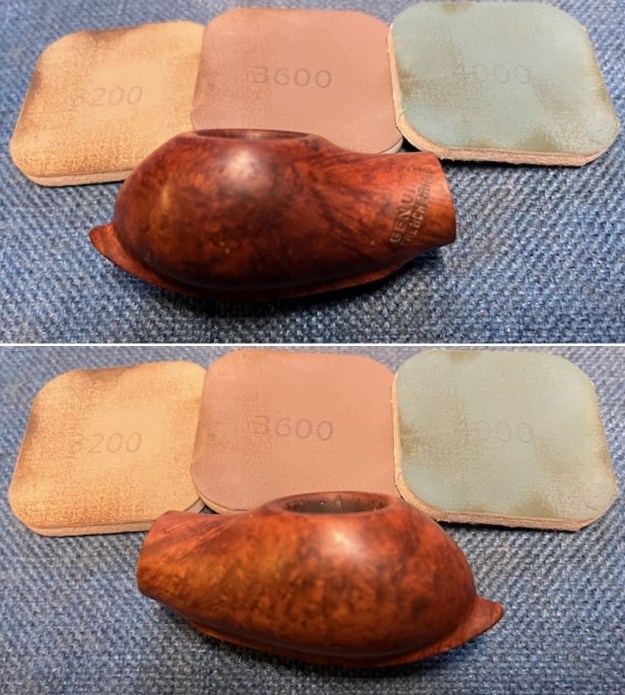
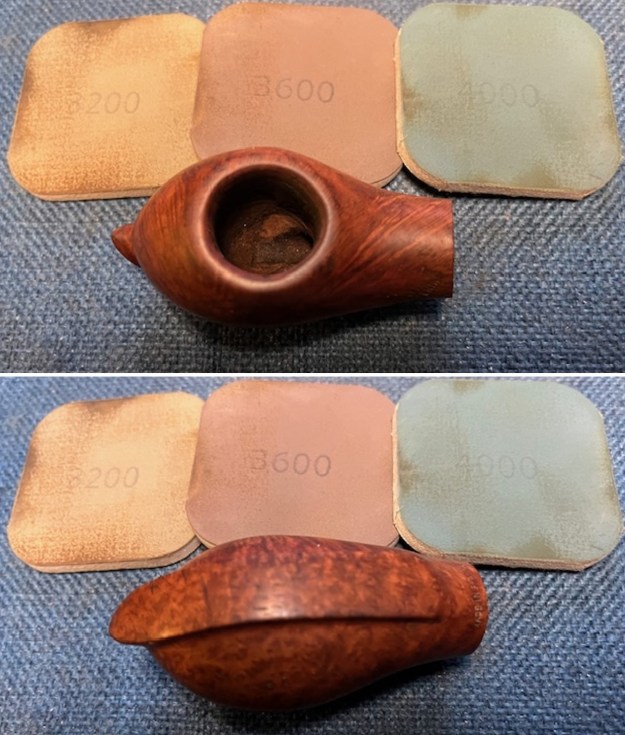
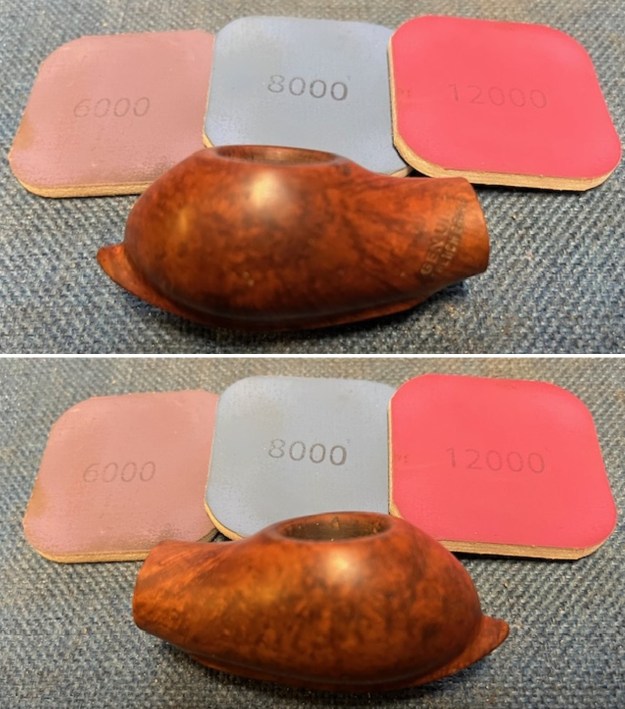
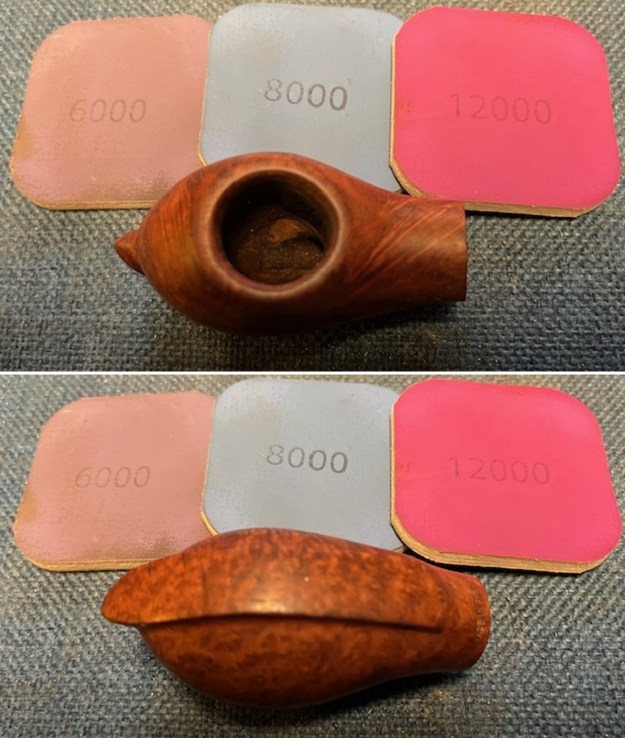
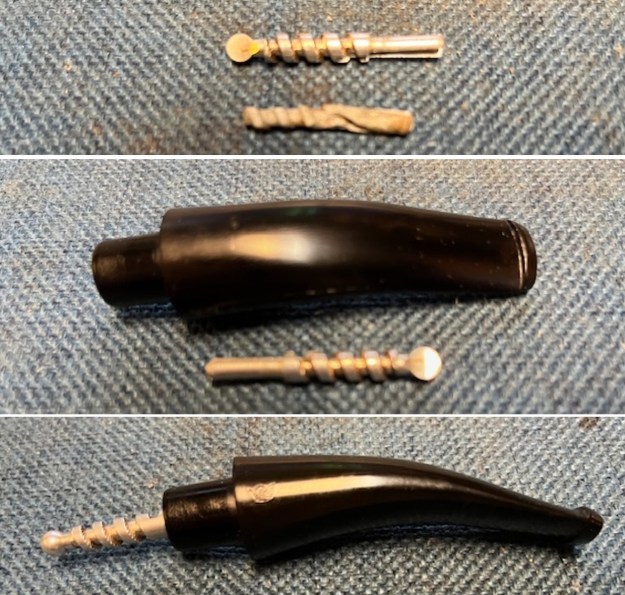
Jeff had done a great job cleaning up the pipe as usual. He reamed the pipe with a PipNet reamer and cut back the cake back to the bare briar. He cleaned up the walls with a Savinelli Fitsall Pipe Knife. Surprisingly the walls looked unscathed from the heavy cake. He scrubbed the interior of the bowl and shank with pipe cleaners, cotton swabs and alcohol to remove the tars and oils. He scrubbed the exterior of the pipe with Murphy’s Oil Soap and a tooth brush to remove the grime from the finish. He scrubbed the inside of the stem with alcohol and pipe cleaners. He scrubbed the exterior of the stem with Soft Scrub and then soaked it in Briarville’s Pipe Stem Deoxidizer. He washed it off with warm water to remove the Deoxidizer. When I examined the stem, it looked very good. The pipe looked far better when it arrived. I took some close up photos of the rim top and edges to show how well it had cleaned up and the edges around the bowl. I also took close up photos of the stem to show the gouges, scratches and light tooth chatter on the surface ahead of the button on both sides.I took photos of the stamping on the sides of the shank. It is clear and readable as noted above. I removed the stem and took a photo of the pipe to have a look at the parts and overall look. I worked on the out of round bowl with a folded piece of sandpaper to smooth out the damaged areas and bring it back to as close to round as I could get it. I smoothed out the rim top at the same time to remove damage on the surface.I sanded the scratching and marks around the bowl sides with 320-3500 grit sanding pads. I wiped the briar down after each sanding pad. I was able to smooth out most of the marks and the bowl looked much better. I polished the briar with micromesh sanding pads – dry sanding with 1500-12000 grit sanding pads. I wiped the bowl down with a damp cloth after each sanding pad. The grain really began to sing. I worked some Before & After Restoration Balm into the surface of the briar with my fingertips to clean, enliven and protect the briar. I let the balm sit for 15 minutes and then buffed with a cotton cloth to raise the shine. The photos show the bowl at this point in the restoration process. I set the bowl aside and filled in the deep nicks and gouges with black CA glue. Once it cured I sanded out the chatter on both sides of the stem ahead of the button with 220 grit sandpaper.I sanded the stem surface with 320-3500 grit sanding pads. The repairs were blended in and the chatter was gone on both sides ahead of the button looked very good. The stem began to shine.I polished the stem with micromesh sanding pads – dry sanding with 1500-12000 grit sanding pads. I wiped it down after each sanding pad with Obsidian Oil. I polished it with Before & After Pipe Stem Polish – both Fine and Extra Fine. I went through my collection of stingers and found one that was probably much like the broken one that was in this tenon. It extended into the bowl the correct distance judging by the bowl bottom. It would work well. I fit it in the stem after polishing it.I am excited to finish this GFB Genuine French Briar Pocket Pipe. Jeff called it a slug and that certainly fits the shape. I put the pipe back together and buffed it with Blue Diamond on the buffing wheel. I gave the bowl and the stem multiple coats of carnauba wax. I hand buffed the pipe with a clean buffing pad to raise the shine. It is fun to see what the polished bowl looks like with beautiful mixed grain all around it, looks great with the polished black hard rubber stem. This smooth Old GFB Pocket Pipe is both ugly and great looking at the same time. The pipe feels great in my hand. It is light and well balanced. Have a look at it with the photos below. The dimensions are Length: 5 inches, Height: 1 ¼ inches, Outside diameter of the bowl: 1 inch, Chamber diameter: ¾ of an inch. The weight of the pipe is 35 grams/1.23 ounces. It turned out to be a beautiful pipe. I am not sure what I am going to do with it at the moment. I have it on my desk and keep picking it up and looking at it. Thanks for your time as I walked through the restoration.
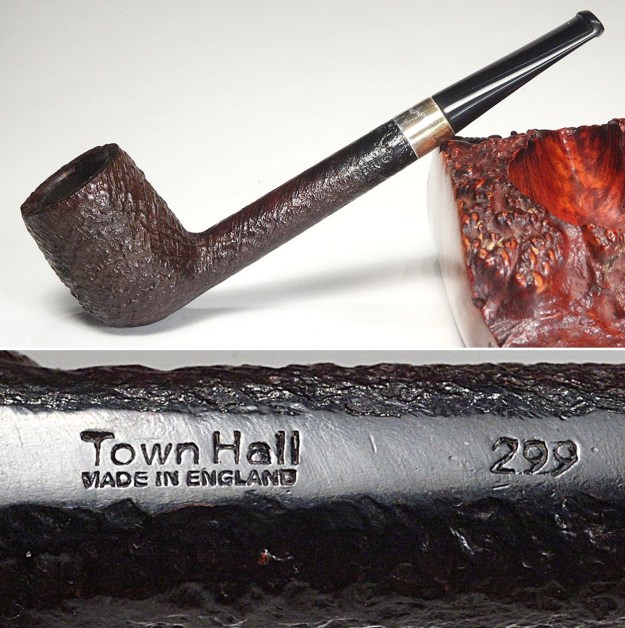
Restemming and restoring a Comoy’s Made Town Hall Made in England 19 Military Bit Billiard


by Steve Laug

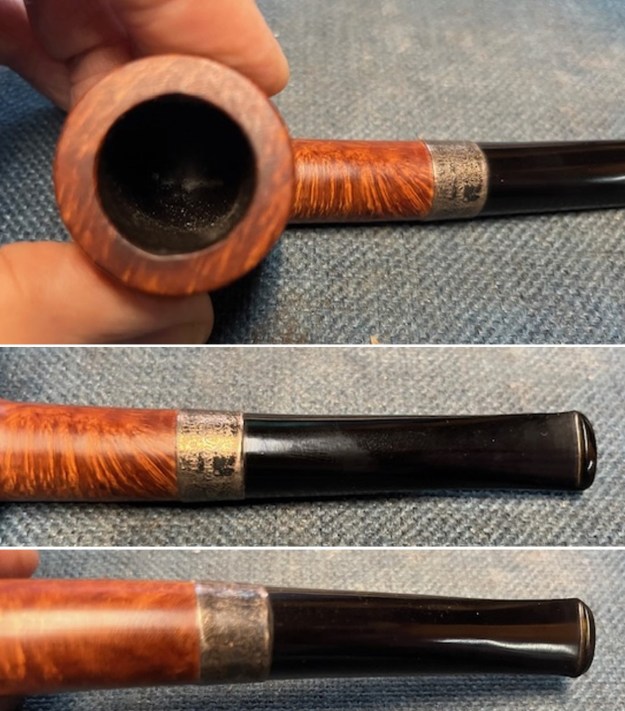
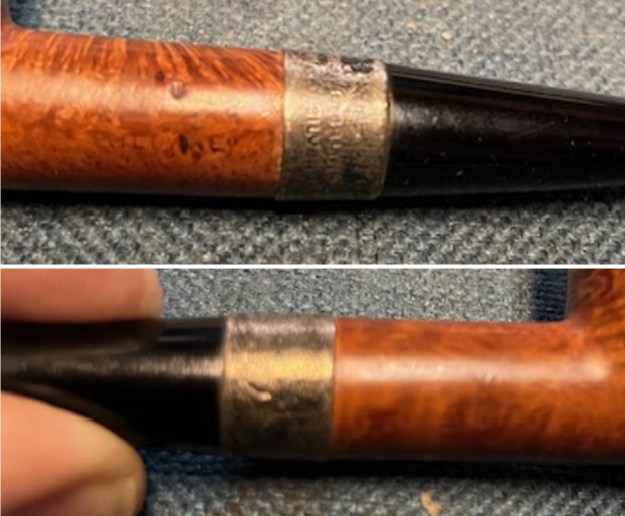
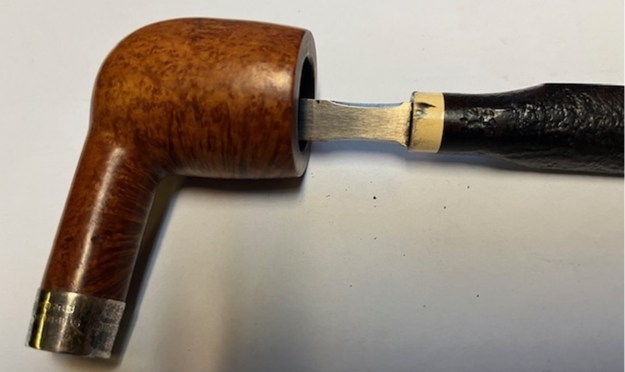
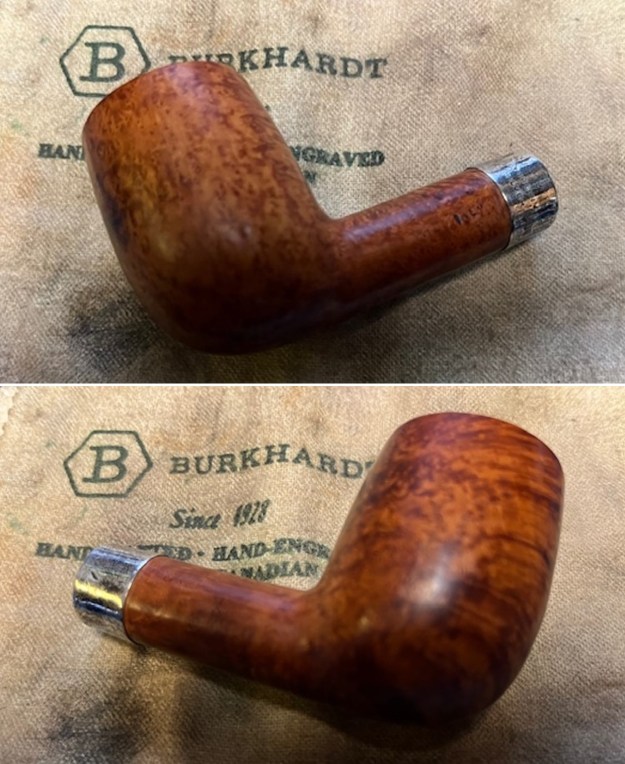
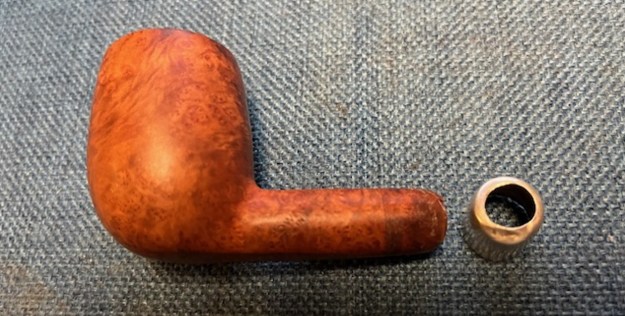
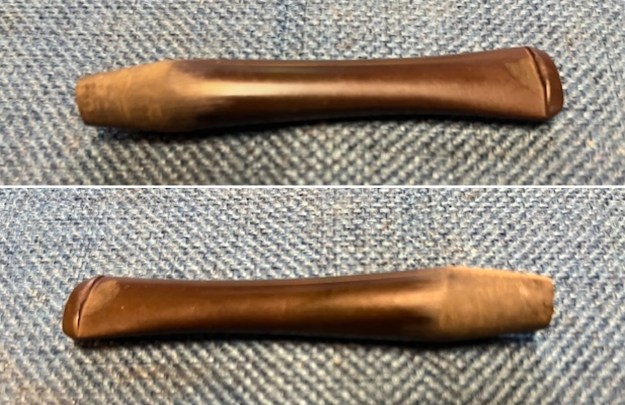
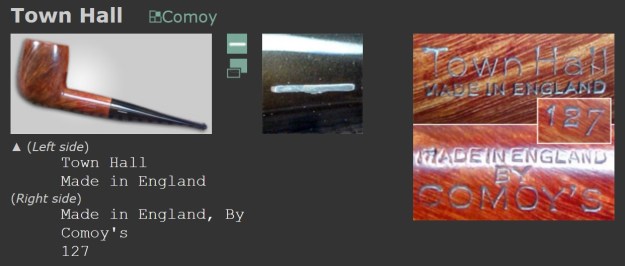
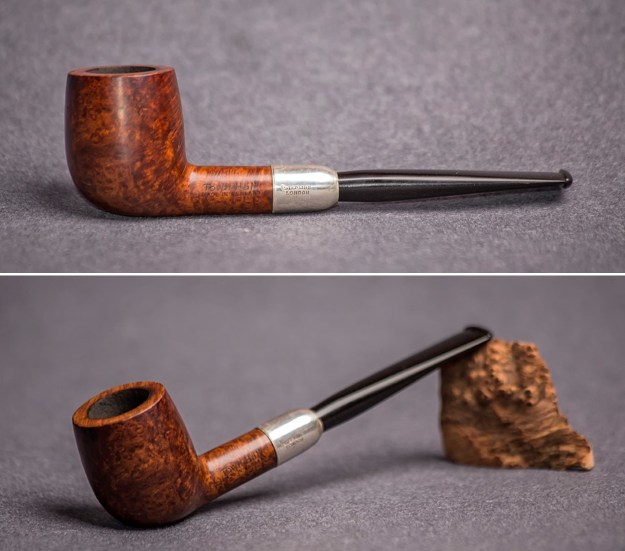
I decided to restem another bowl that I had here in the box. Jeff and I purchased on 11/23/2020 from a seller in Brazil, Indiana, USA. It is a nice bowl with a silver ferrule on the shank end. The left side of the shank is stamped at and angle and reads Town Hall [over] Made in England. The right side has the shape number 19 next to the bowl/shank junction. The ferrule is stamped with an arched Sterling Silver. The bowl is quite clean with no cake and no lava overflow on the rim top or the bevelled inner edge. The briar is dry but clean – just a bit lifeless looking but there is some great grain hidden by the dullness. The silver ferrule is not oxidized but there are some dents on the shank end on the underside. The ferrule is a bit ragged looking around the entrance to the mortise. I took some photos of the pipe before I started my work on restemming and restoring it back to its former glory. I tried to capture the stamping on the shank sides. It is readable but faint in spots. It reads as noted above.The ferrule was loose so I removed it and took a photo to show the dents and the condition of the opening on the ferrule end.I went through my stems and found this partially shaped stem that would work quite well. It would need to be reduced in diameter and cleaned up. There were some gouges on both sides ahead of the button that looked like someone had started shaping a dental bit. Before I started working on the pipe I wanted to get an idea of the maker of the Town Hall brand. Something about the shape and the number reminded me of the Guildhall by Comoy’s but I was not sure. I turned first to Pipephil’s site and found a link that gave a good summary of the information and confirmed the Comoy’s connection (http://www.pipephil.eu/logos/en/logo-t7.html) that I suspected. I have included a screen capture of the pertinent section and the side bar information below the photo.Other Comoy’s seconds with a one bar mouthpiece logo: Carlyle, Charles Cross, St James, The Golden Arrow, Trident,

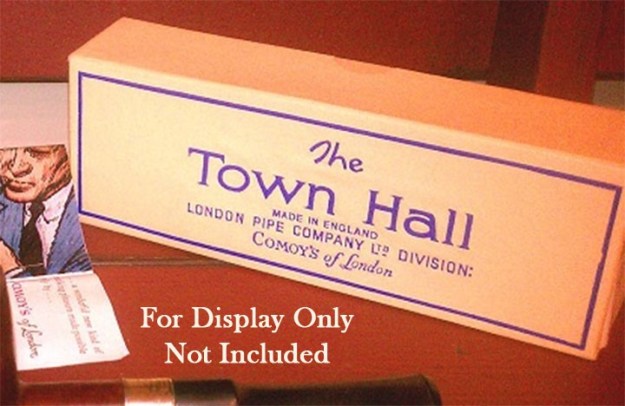
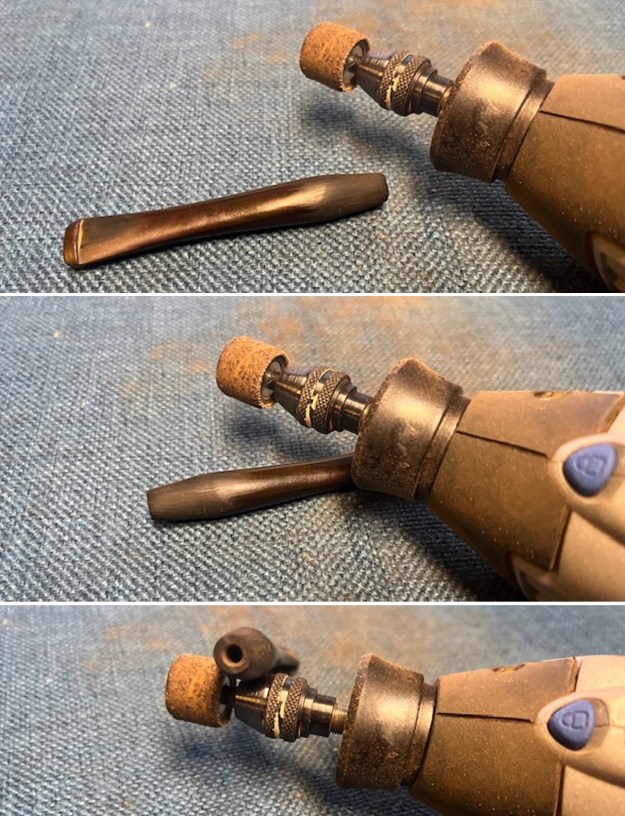
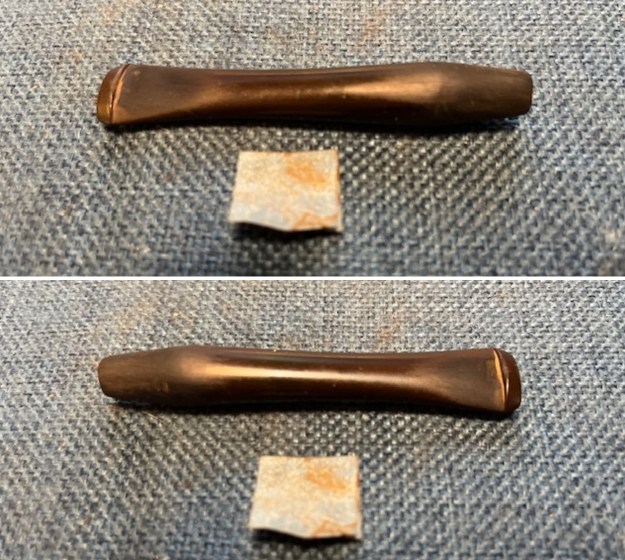
I turned to Pipedia for more information (https://pipedia.org/wiki/Comoy%27s). Other than the great history of the brand there was a note in the section entitled “Seconds made by Comoy’s” that had a listing for Town Hall. I scrolled down the page and found some interesting photos that I have included below including an original box for the pipe. The second and third photos show similar stamping though horizontal on this pipe. At the very bottom of the article I found perhaps to me, the most exciting connection – a Town Hall – same shape, same silver ferrule as the one I was working on. The stamping on it was clearly a Comoy’s Town Hall Pipe, Made in England. The thing I am glad for is that the photos show the type of stem I would need to fit on the pipe. The one I had chosen would work quite well with some shaping.I started my work on this one by fitting the newly chosen stem first. If you have followed me you will note the departure from my normal pattern of working on the bowl first. But in this case, I really wanted to see if I could duplicate the stem shown above for this pipe. I shaped the conical end with my Dremel and a sanding drum to get it close to the look I was shooting for. The rough shape was done but I would need to fine tune it by hand.I carefully sanded the conical portion with a folded piece of 220 grit sandpaper and blended it into the rest of the stem. I reshaped it in the process and sanding out the gouges in the button end on both sides. I was able to remove the roughening left by the Dremel and the shape was beginning to look right. I worked on the silver ferrule to try to smooth out the dents and damage to the opening on the stem end. I was able to remove some of the dents and minimize the others. It looked better. I pressed it onto the shank and fit the stem. I took photos of the stem in place to give a sense of how it was beginning to look. The fit of the stem still needed adjusting and the scratches needed to be sanded out from the surface. It was beginning to look much better. I sanded the stem with 320-3500 grit sanding pads to polish out the scratches in the surface. I wiped the stem down after each sanding pad with a damp cloth to remove the dust and debris on the surface of the stem. It began to take shape and look better.I polished the stem with micromesh sanding pads – dry sanding with 1500-12000 grit sanding pads. I wiped it down after each sanding pad with Obsidian Oil. I polished it with Before & After Pipe Stem Polish – both Fine and Extra Fine. I wiped down again with Obsidian Oil and set it aside while I worked on the stem. I sanded the briar with 320-3500 grit sanding pads to remove the scratching and nicks in the rim edge and the side of the bowl. I wiped the bowl down with a damp cloth after each sanding pad to remove the sanding debris. It is starting to look very good at the end of the process. I polished the briar with micromesh sanding pads – dry sanding with 1500-12000 grit sanding pads. I wiped the bowl down with a damp cloth after each sanding pad. The grain really began to sing. I worked some Before & After Restoration Balm into the surface of the briar with my fingertips to clean, enliven and protect the briar. I let the balm sit for 15 minutes and then buffed with a cotton cloth to raise the shine. The photos show the bowl at this point in the restoration process. This Comoy’s Made Town Hall 19 Military Bit Billiard was one I was looking forward to seeing come together. The brown stains highlight the grain around the bowl – sides, top and heel. The polished silver ferrule and the black vulcanite military bit that I fit to the shank works very well with the look of the pipe. I put the stem back on the bowl and carefully buffed the pipe with Blue Diamond on the buffing wheel. I gave the bowl and stem multiple coats of carnauba wax on the buffing wheel and followed that by buffing the entire pipe with a clean buffing pad. I hand buffed the pipe with a microfiber cloth to deepen the shine. I polished the silver band with a jeweller’s cloth. The finished Town Hall 19 Billiard is quite nice and feels great in the hand. Give the finished pipe a look in the photos below. The dimensions of the pipe are Length: 5 ¾ inches, Height: 1 ¾ inches, Outside diameter of the bowl: 1 ¼ inches, Chamber diameter: ¾ of an inch. The weight of the pipe is 1.20 ounces/34 grams. Thanks for walking through the restoration with me as I worked over another beautiful pipe. This pipe will be added to the British Pipe Makers Section of the rebornpipes store soon. If you want to add it to your collection send me an email or a message! Thanks for your time.
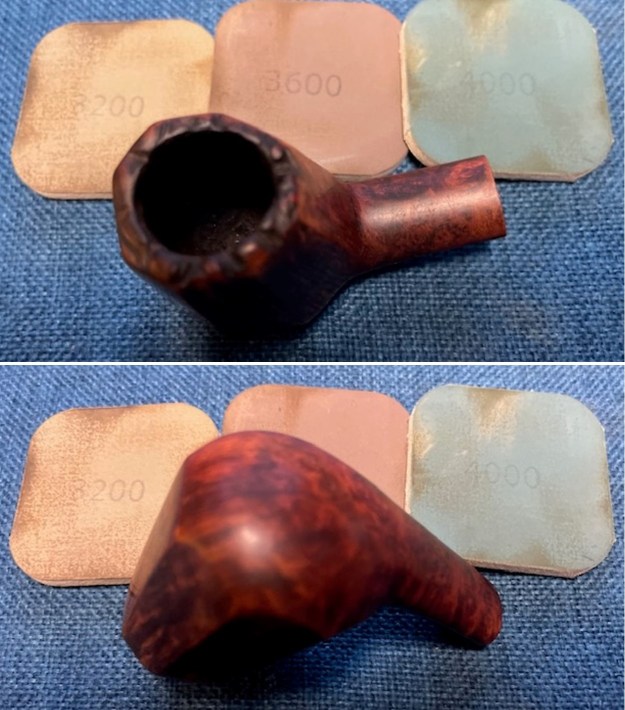
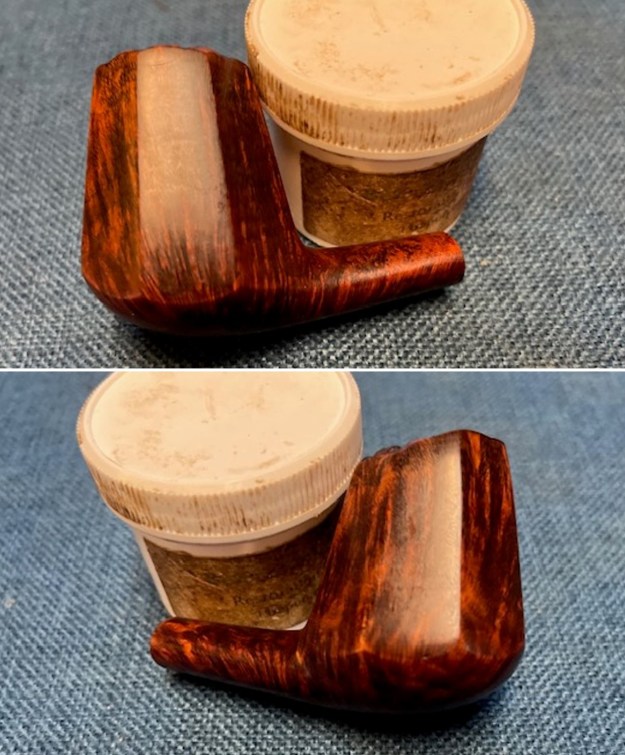
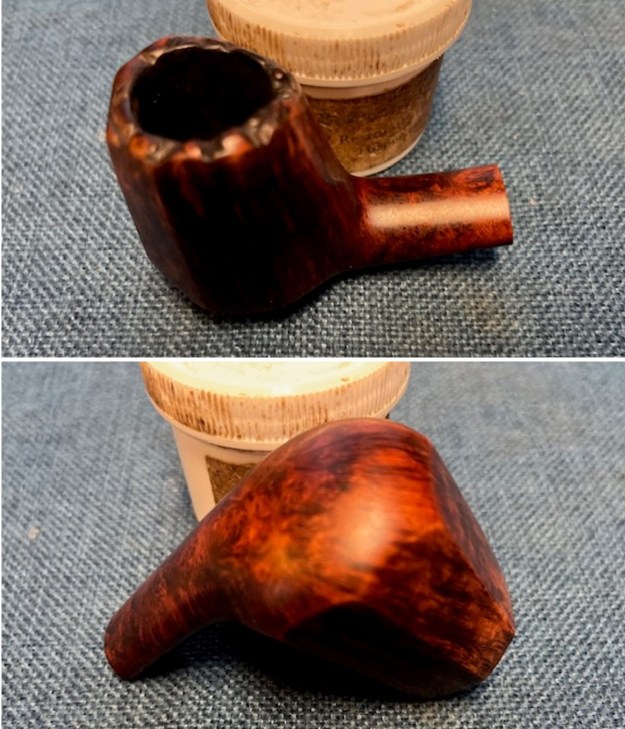
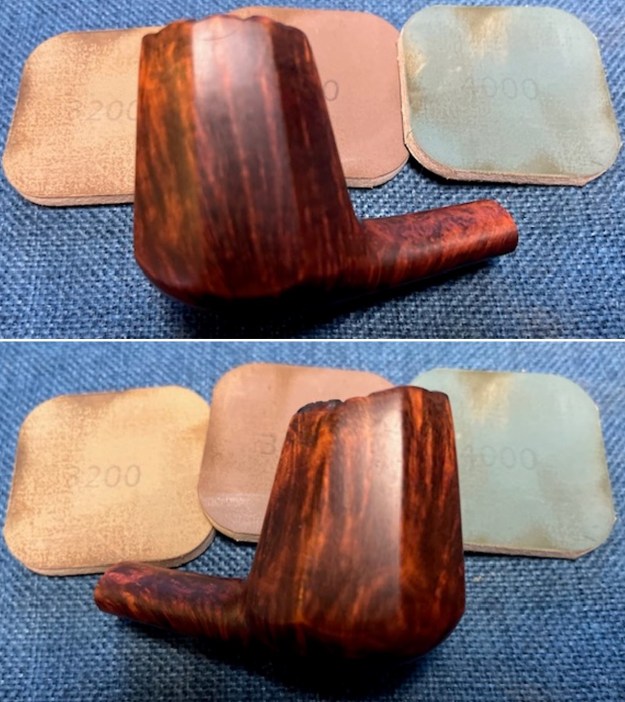
Amazing Grain on a Charatan Perfection 2122DC


by Kenneth Lieblich

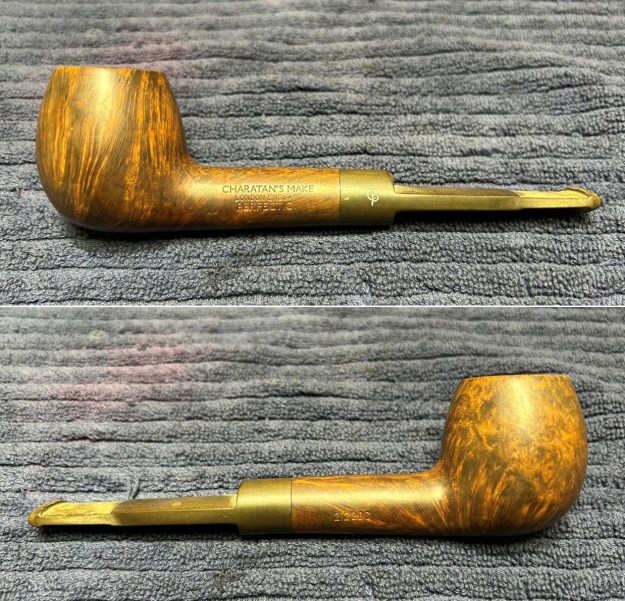
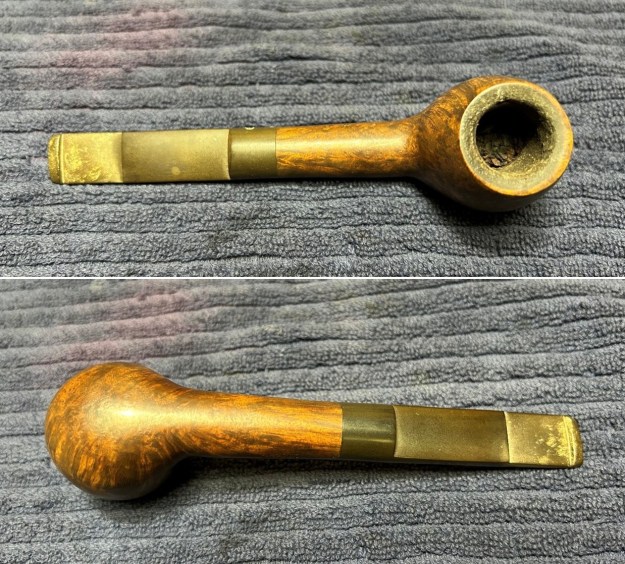
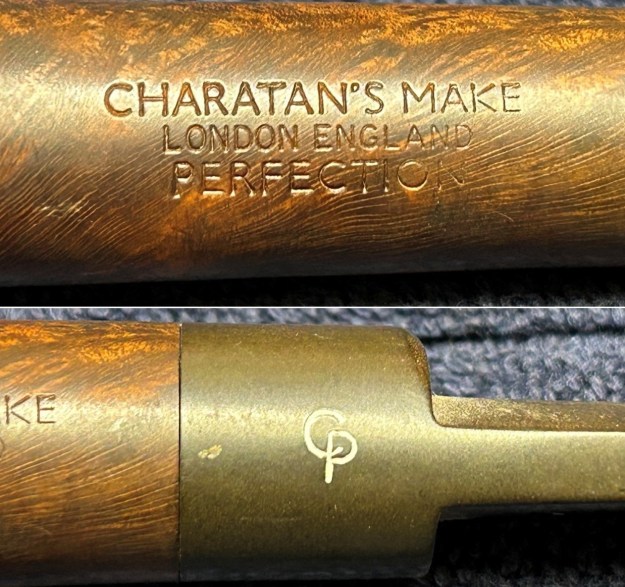
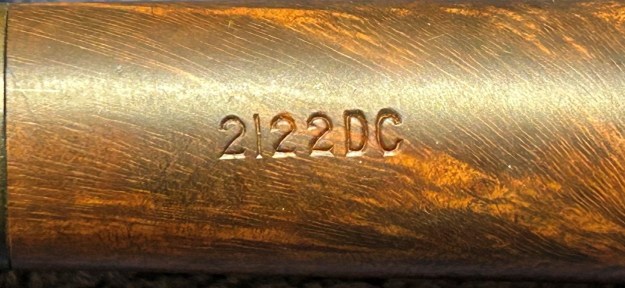
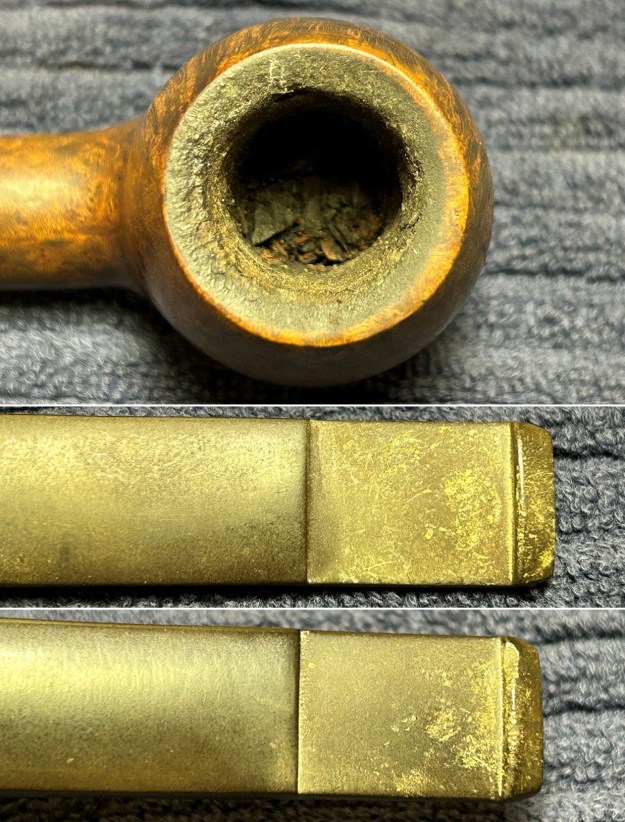
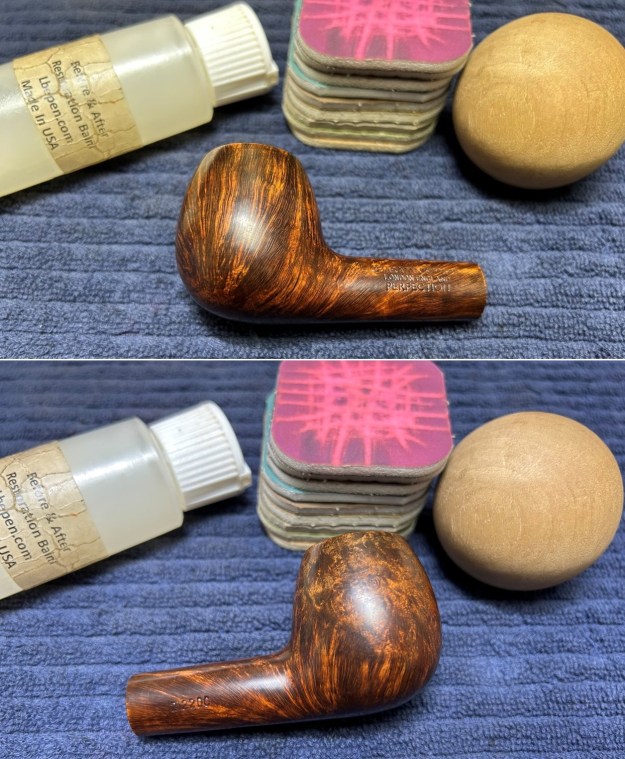
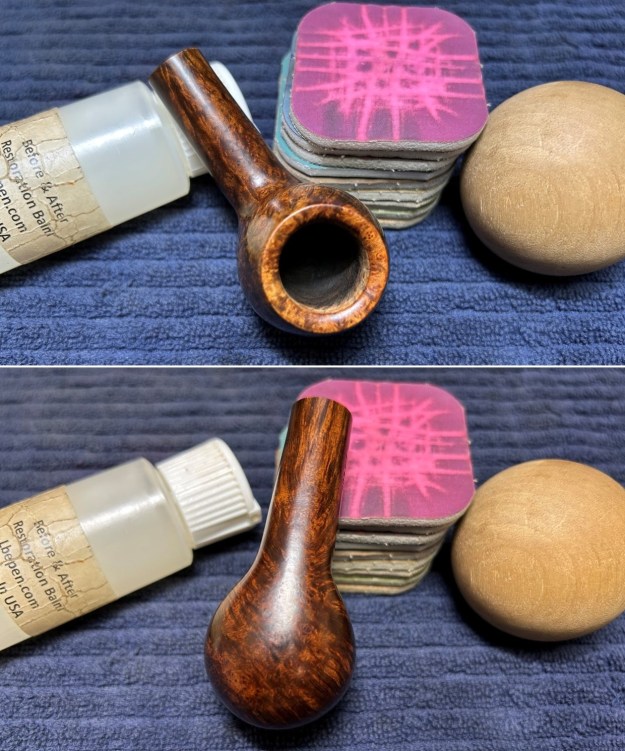
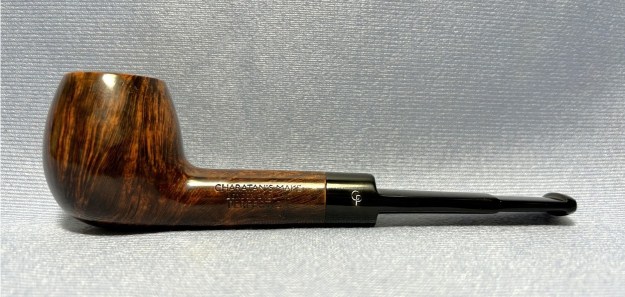
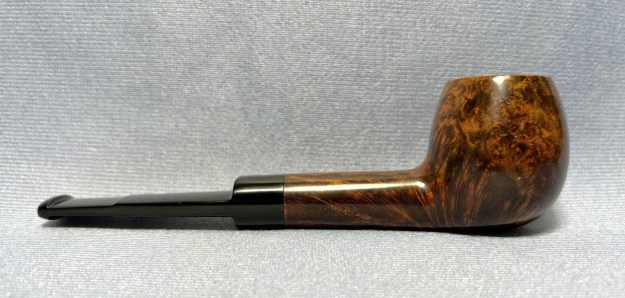
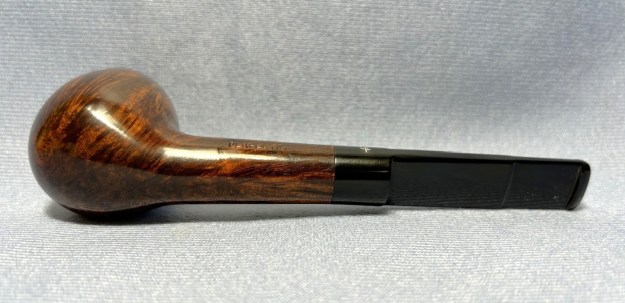
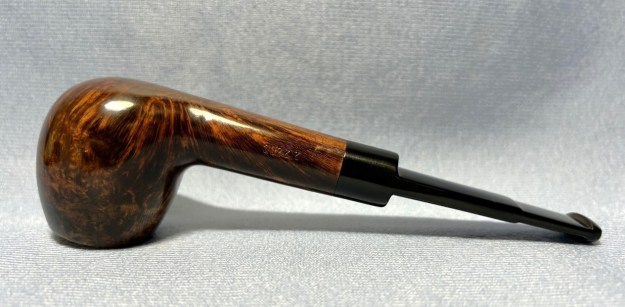
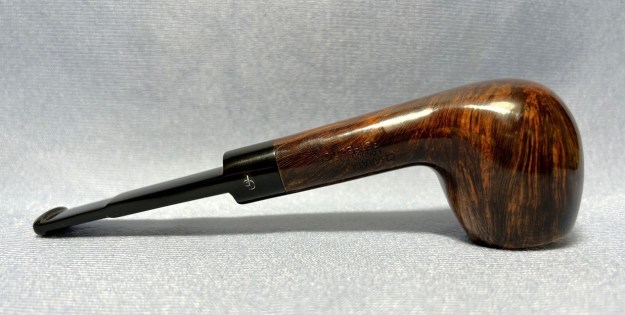
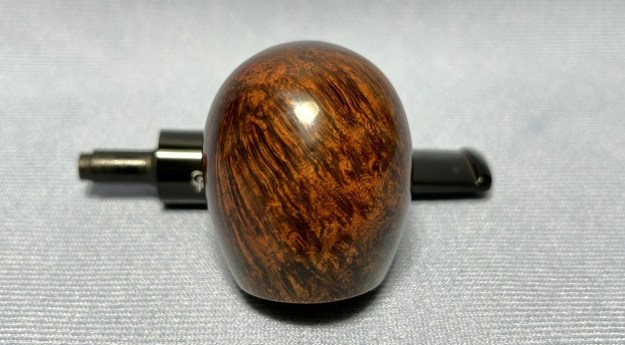
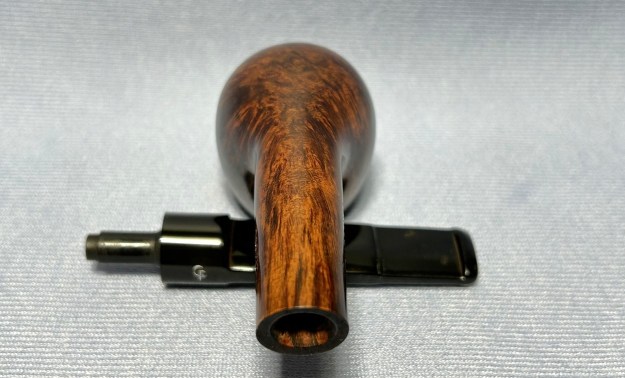
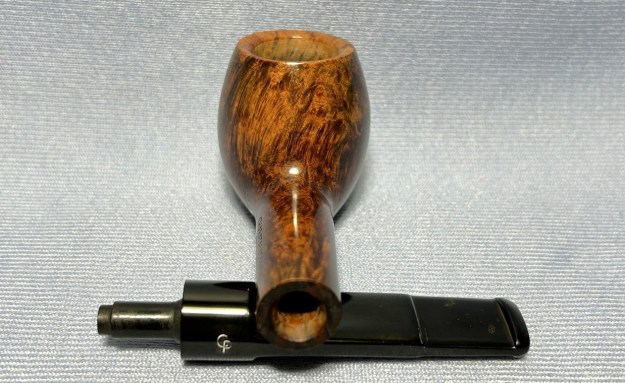
This beauty is a pipe I acquired recently and it turned out so well – especially compared with how it looked when I found it. I took a liking to it immediately and figured you would too, so I cleaned it up poste haste. The pipe is light, attractive, and comfortable – and the grain is just so warm and inviting. This is an apple shape with a ‘Double Comfort’ saddle stem. Let’s look at the markings. On the left side of the shank are the words, Charatan’s Make [over] London England [over] Perfection. The right side of the shank shows the model, 2122DC. The ‘DC’ suffix here indicates what we already know: the pipe has a ‘Double Comfort’ saddle stem. Finally, the stem has the letters C and P – with the C penetrating into the P. This is notable for dating purposes. I believe this pipe comes from the Dunhill era. Using Pipedia’s Charatan dating page (which you can see here), I saw that this pipe has

  • Double comfort mouthpiece
  • In the CP logo, the C enters the P
  • Absence of £ on the shank
  • Presence of the letters DC just after the shape number

Having said that, dating these pipes precisely is always a tricky business. A good estimate would be late 70s-early 80s. Meanwhile, I was also curious about the model name ‘Perfection’. Once again, Pipedia indicated that ‘Perfection’ was one of Charatan’s Make’s ‘Apprenticeship’ standard shape grades.On with the restoration! I used oil soap on a few cotton rounds and wiped the stem down to provide an initial cleaning of filth before moving on to the next steps. The primary cleaning comes next. I cleaned the inside of the stem with both pipe cleaners and cotton swabs dipped in 99% lemon-infused isopropyl alcohol. I scrubbed thoroughly to make sure the interior was clean.I used a disposable lighter and ‘painted’ the stem with its flame. The gentle heat of the flame can cause the dents in the vulcanite of the stem to expand back into shape. In this case, it did help a bit – but only a bit.The goal of the next step is the removal (or minimization) of oxidation. Going to my sink, I used cream cleanser, cotton rounds, and a toothbrush, and scoured the stem to remove as much surface oxidation as possible. As the photos show, the result is a hideous brownish mess – but better off the stem than on it.Once the stem was reasonably clean, I soaked it overnight in some de-oxidation fluid. This solution works to draw oxidation in the stem to the surface. This is a major aid and an important step in ensuring a clean stem. The following day, I drew the stem out from its bath and scrubbed the lingering fluid with a toothbrush.Now that the stem is clean and dry, I set about fixing the marks and dents in the vulcanite. This is done by filling those divots with black cyanoacrylate adhesive, impregnated with carbon and rubber. I left this to cure and moved on.After this, I painted the logo on the stem with some nail polish. I restored the logo carefully and let it fully set before proceeding.The penultimate step for the stem is sanding. First, with my set of needle files, I reduce the bulk of the cyanoacrylate repairs. I want to remove the excess adhesive as near to the surface as possible, without cutting into the vulcanite. Following that, I use all nine of the micromesh sanding pads (1,500 through 12,000 grit) to sand out flaws, even out the vulcanite, and provide gentle polishing of the finished surface. I also apply pipe-stem oil while using the last five micromesh pads. This was a surprisingly difficult stem to restore, but, in the end, we got there. There was a wonderful, deep black shine to the stem when I was done.Now that the stem is (nearly) complete, I can move on to the stummel. The first step for me is to ream out the bowl – that is to say, remove all the cake inside the bowl. This accomplishes a couple of things. First (and most obviously), it cleans the bowl and provides a refurbished chamber for future smoking. Second, when the old cake is removed, I can inspect the interior walls of the bowl and determine if there is damage or not. I used a reamer and a piece of sandpaper taped to a wooden dowel. Collectively, these ensure that all the debris is removed.My next step was to remove the lava on the rim. For this, I took a piece of machine steel and gently scraped the lava away. The metal’s edge is sharp enough to remove what I need, but not so sharp that it damages the rim. This work revealed that, fortunately, everything was in good shape. No issues.The inside of the stummel needs to be cleaned thoroughly. Similar to the stem, I then cleaned the stummel with both pipe cleaners and cotton swabs dipped in 99% lemon-infused isopropyl alcohol.I then decided to ‘de-ghost’ the pipe – that is to say, exorcize the remaining filth from the briar. I filled the bowl and the shank with cotton balls, then saturated them with 99% isopropyl alcohol. I let the stummel sit overnight. This caused any remaining oils, tars and smells to leach out into the cotton.To tidy up the briar, I also wiped down the outside with some oil soap on cotton rounds. This does a good job of cleaning any latent dirt on the surface of the briar. The last step of the cleaning process is to scour the inside of the stummel with some soap and tube brushes. This is the culmination of a lot of hard work in getting the pipe clean.I used all nine micromesh pads (1,500 through 12,000 grit) on the outside of the stummel to finish it off. This sanding minimizes flaws in the briar and provides a beautiful smoothness to the wood. I rubbed some Before & After Restoration Balm into the briar and let it sit for 20 minutes or so. The balm moisturizes the wood and gives a beautiful depth to the briar. I then buffed it with a microfibre cloth. For the final step, I took the pipe to my bench buffer and carefully polished it – first with a white diamond compound, then with three coats of carnauba wax. This procedure makes the pipe look its best – the stummel sings and the stem glows.All done! This Charatan’s Make Perfection 2122DC apple looks fantastic again and is ready to be enjoyed by its next owner. I am pleased to announce that this pipe is for sale! If you are interested in acquiring it for your collection, please have a look in the ‘British’ section of the store here on Steve’s website. You can also email me directly at kenneth@knightsofthepipe.com. The approximate dimensions of the pipe are as follows: length 5⅞ in. (149 mm); height 1⅔ in. (43 mm); bowl diameter 1½ in. (37 mm); chamber diameter ¾ in. (19 mm). The weight of the pipe is 1¼ oz. (39 g). I hope you enjoyed reading the story of this pipe’s restoration as much as I enjoyed restoring it. If you are interested in more of my work, please follow me here on Steve’s website or send me an email. Thank you very much for reading and, as always, I welcome and encourage your comments.