

Blog by Steve Laug
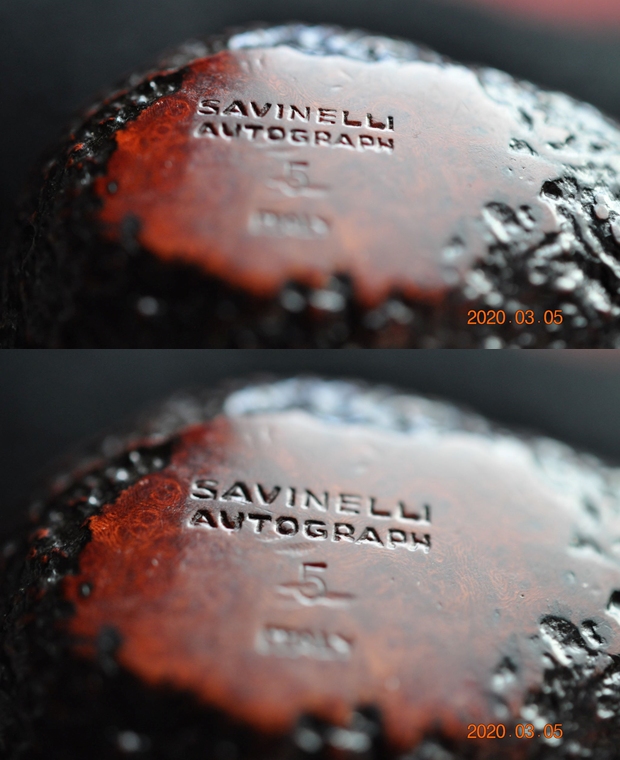
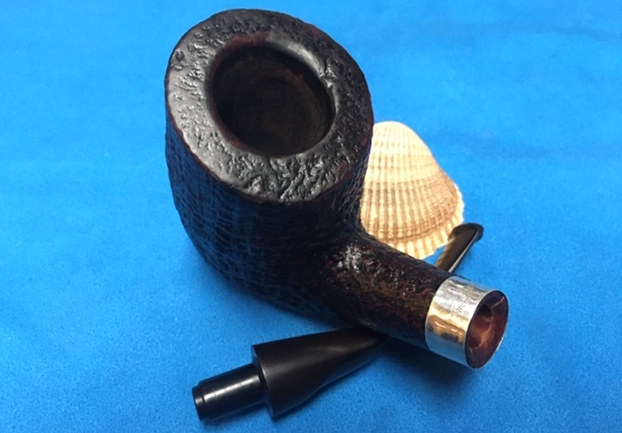
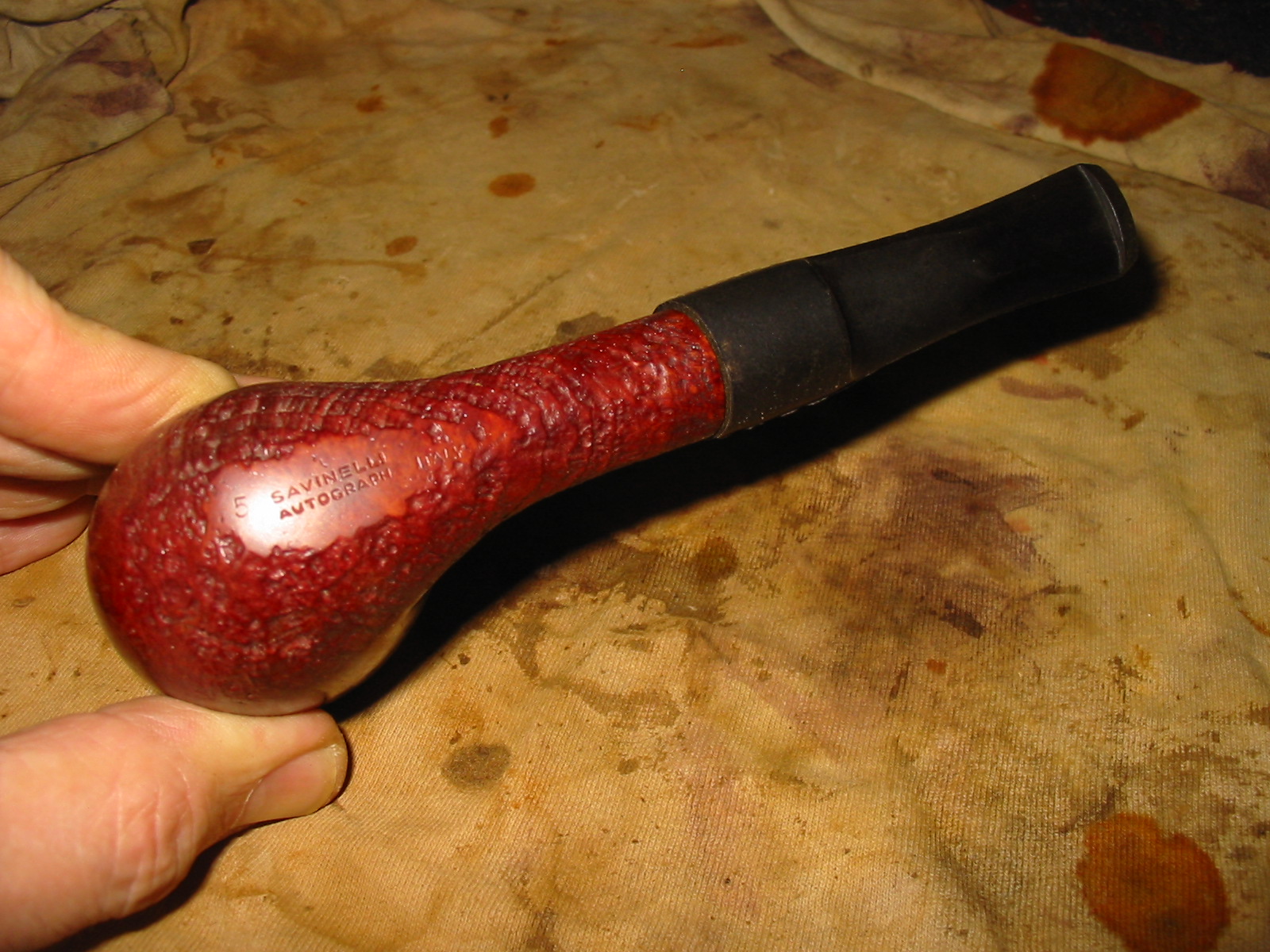
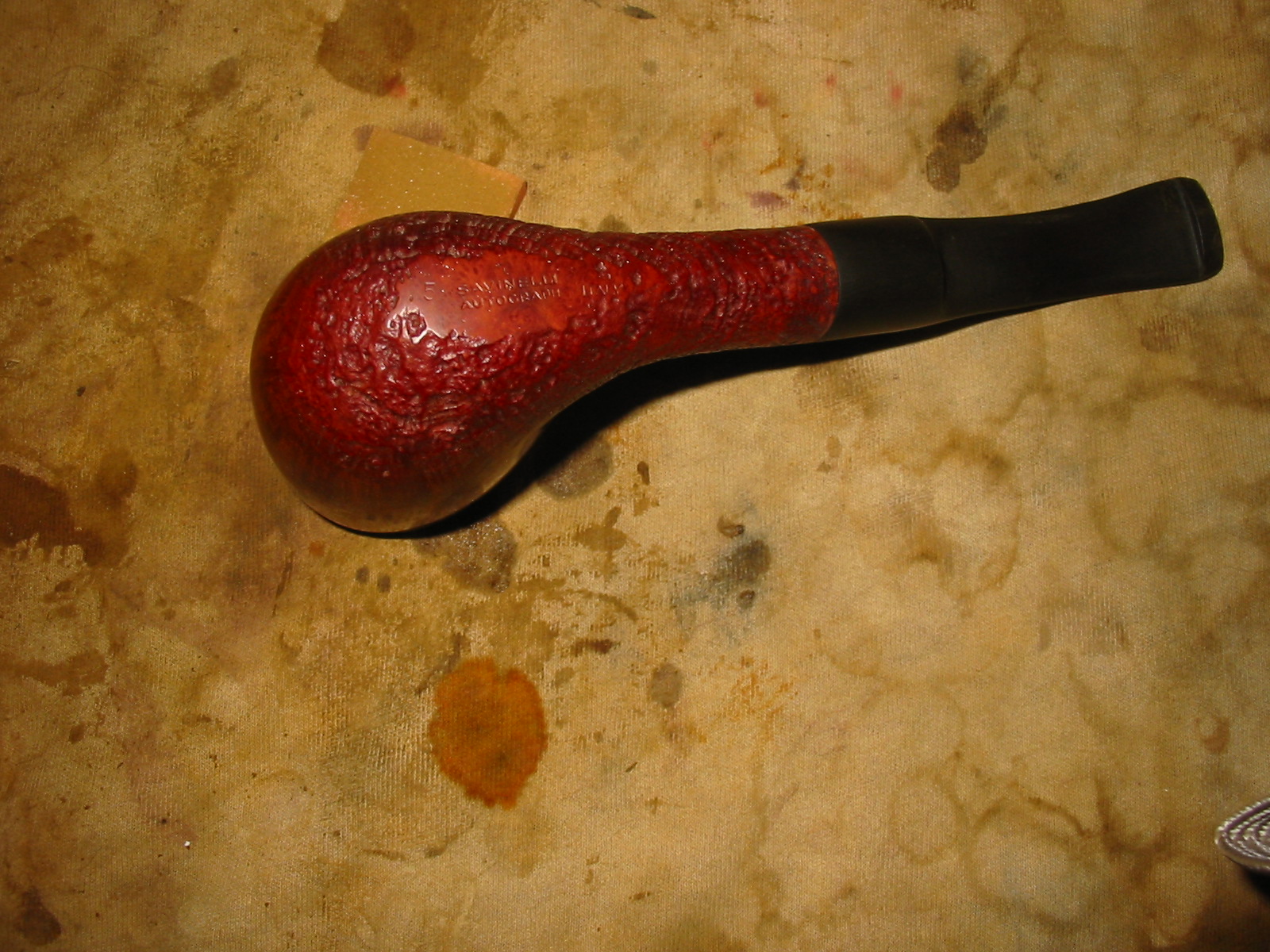
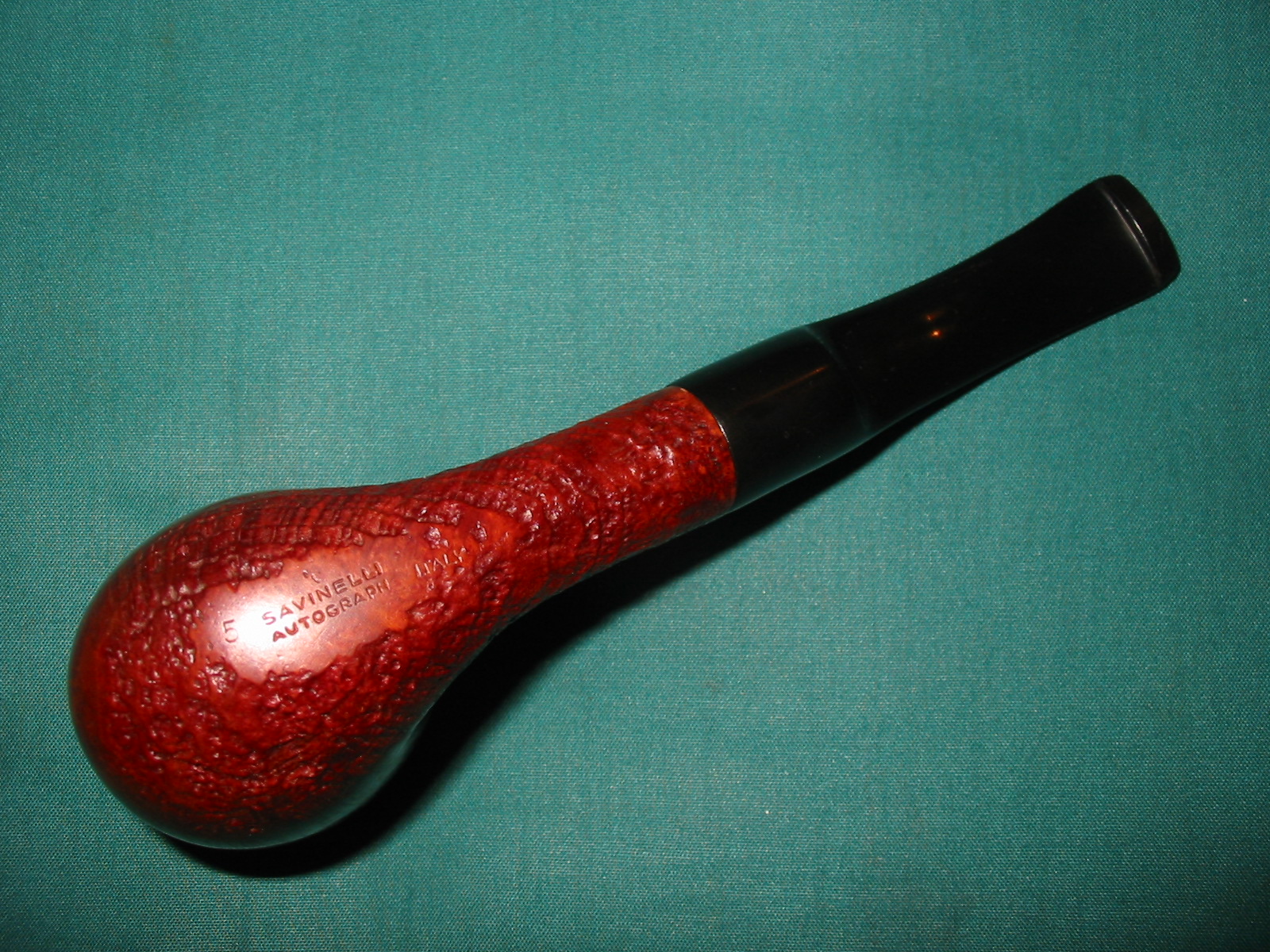
As you might have figured out from the title I am working on another pipe from Italy. This one is a Savinelli Autograph 5. It reads Savinelli over Autograph on the underside of the bowl on a smooth panel. It is also stamped with the Grade number 5 and Italy. The pipe has a beautiful sandblast on the bowl, rim top and shank. The bowl is canted from front to rear. The rim top was filled in with lava and there was thick cake in the bowl. The outer edge of the bowl had some nicks and scratches particularly at the front. There was Sterling Silver band on the shank that was a previous repair to a crack. The crack had been repaired but there was still cosmetic damage on the underside of the shank. The autograph stamp on the vulcanite stem was worn away and non-existent anymore. The twist to the stem confirms that the stem is original. The pipe was dirty but it showed a lot of promise. Jeff took photos of the pipe before I started my work on it. 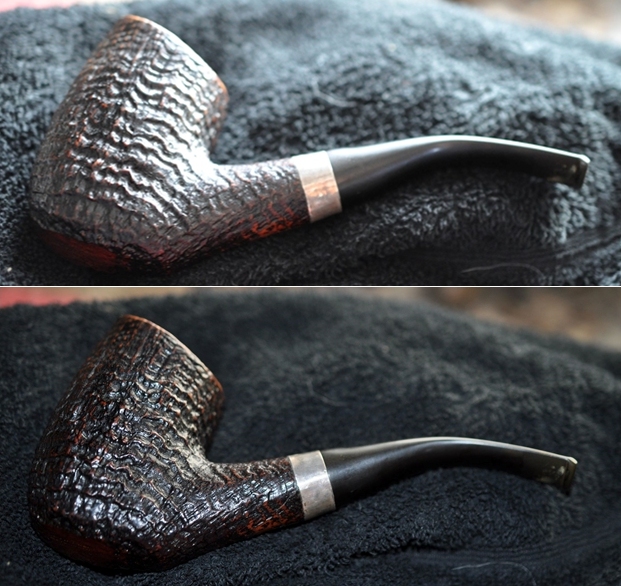
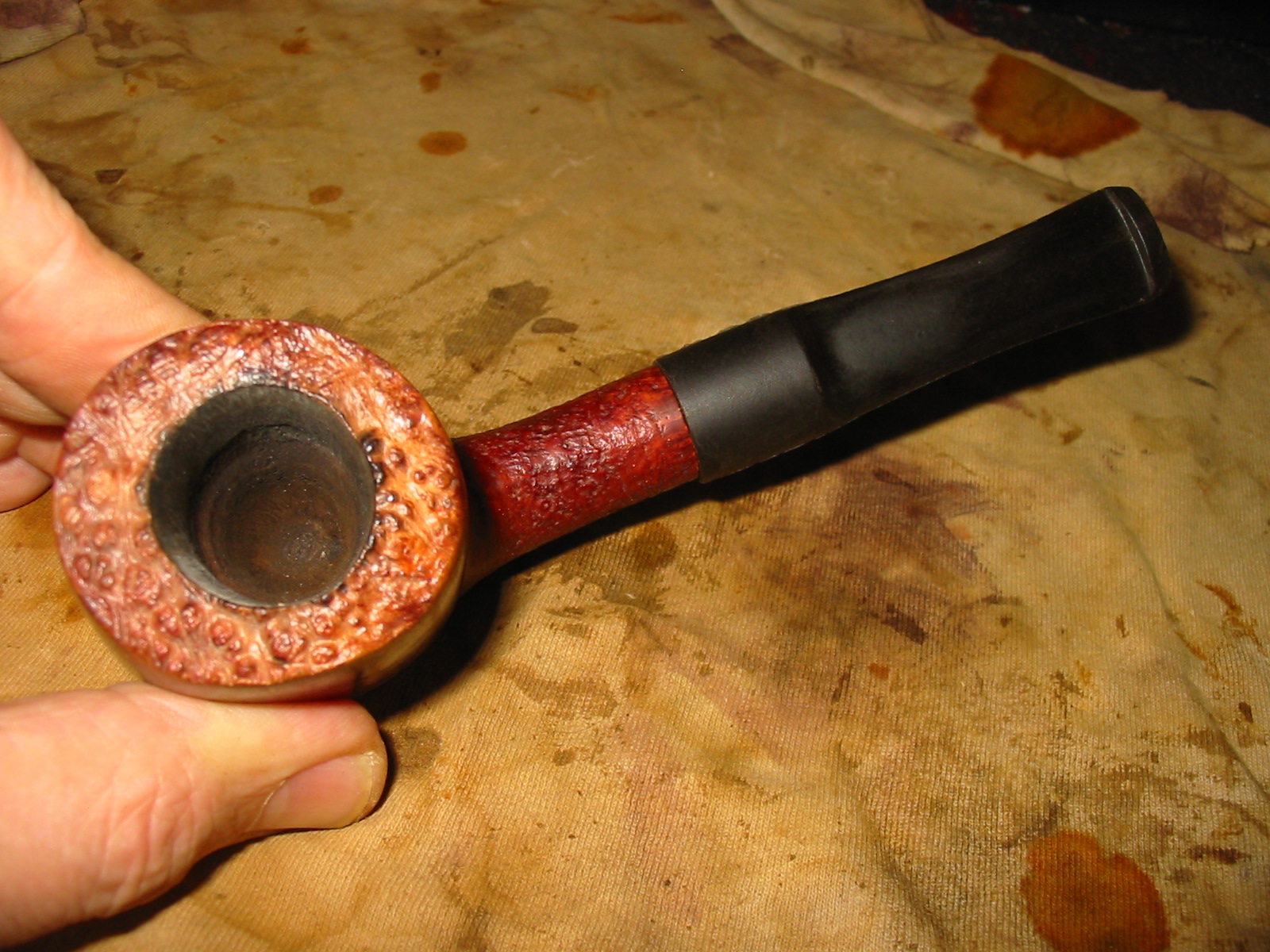
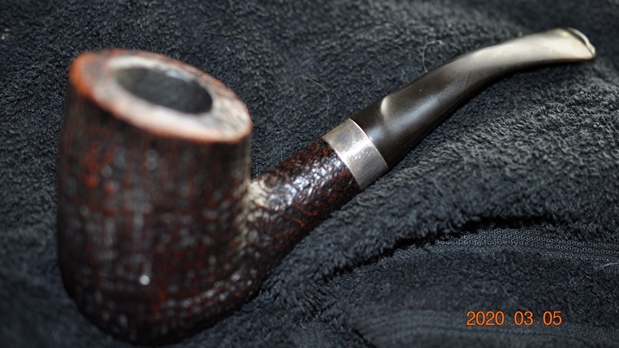 Jeff took close up photos of the bowl and rim top to show the condition of the pipe at this point. The bowl has a light cake and some debris in the bottom of the bowl. The rim top is dirty but undamaged. The stem looks pretty good with the autograph stamp readable. There is tooth chatter and marks on the top and underside just ahead of the button on both sides.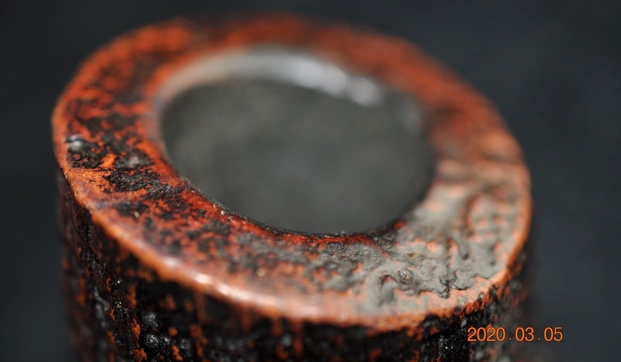
 He took photos of the sides of the bowl and the heel of the bowl showing the great grain showing through the sandblast finish.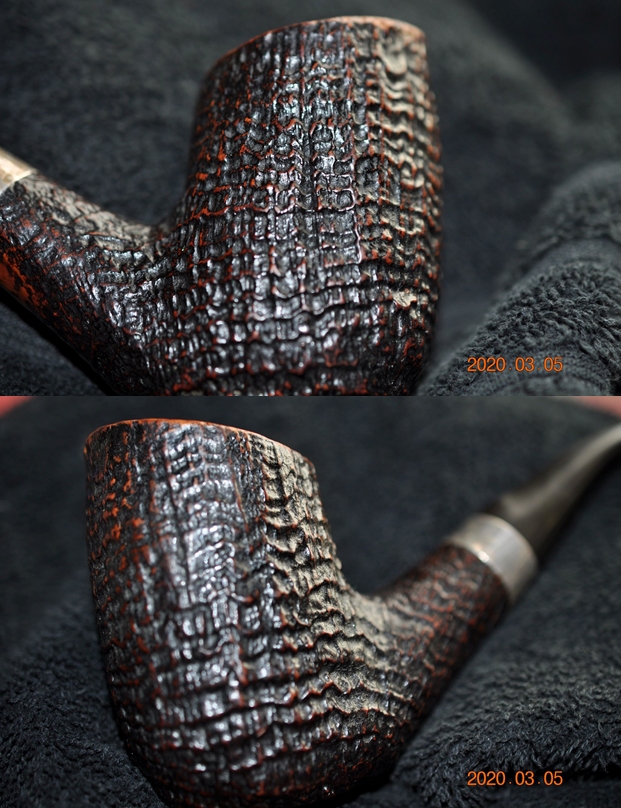
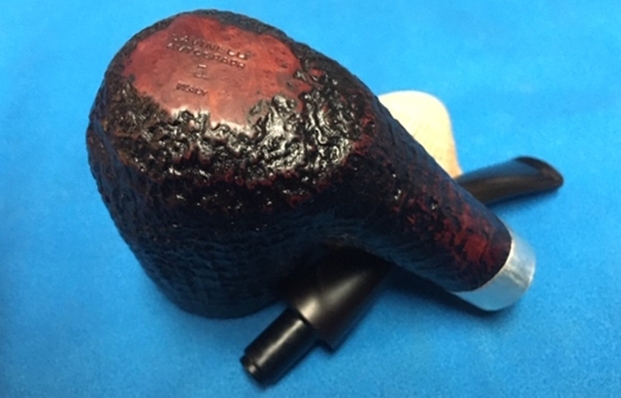
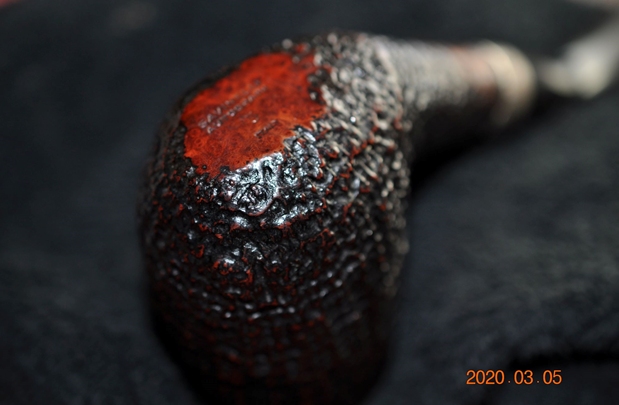 He took a photo of the smooth underside of the bowl/heel. You can see the stamping – Savinelli Autograph 5 over Italy. It is stamped on a smooth portion of the heel while leaving the other portion sandblasted.
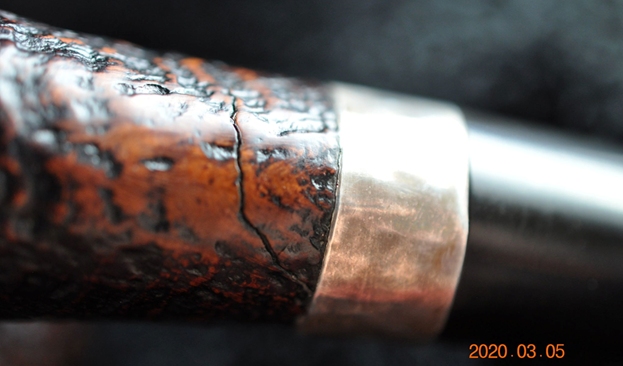
  He also took photos of the Sterling Silver band on the shank as well as the crack in the underside of the shank.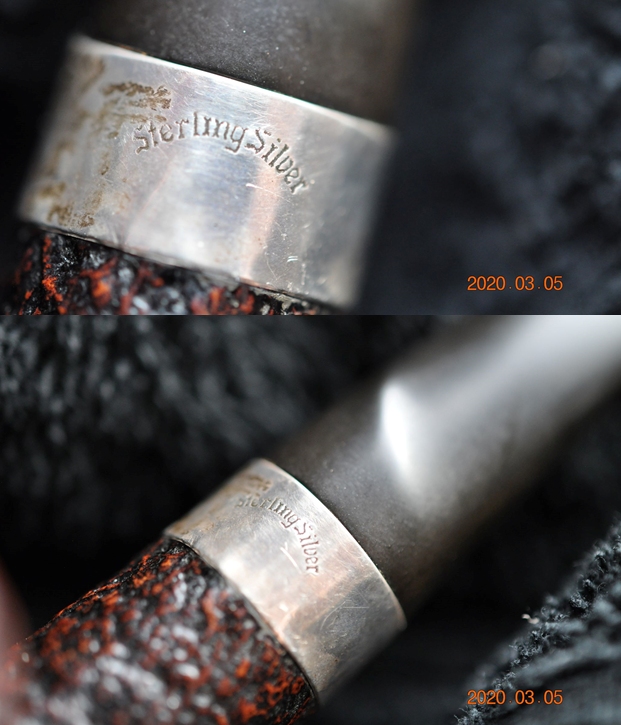
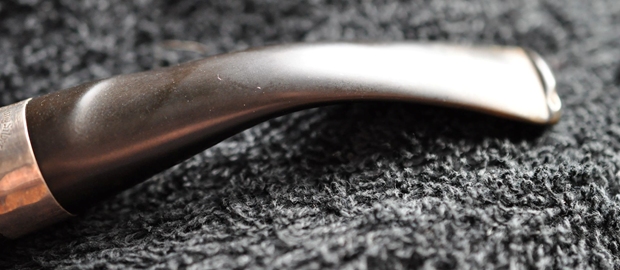
 The next photos show the top and underside of the stem. There is a chip out of the top left edge of the button. The overall stem is deeply oxidized and has calcification on both sides at the button. There is also some tooth chatter and some light tooth marks. The final photo shows the curve of the full stem.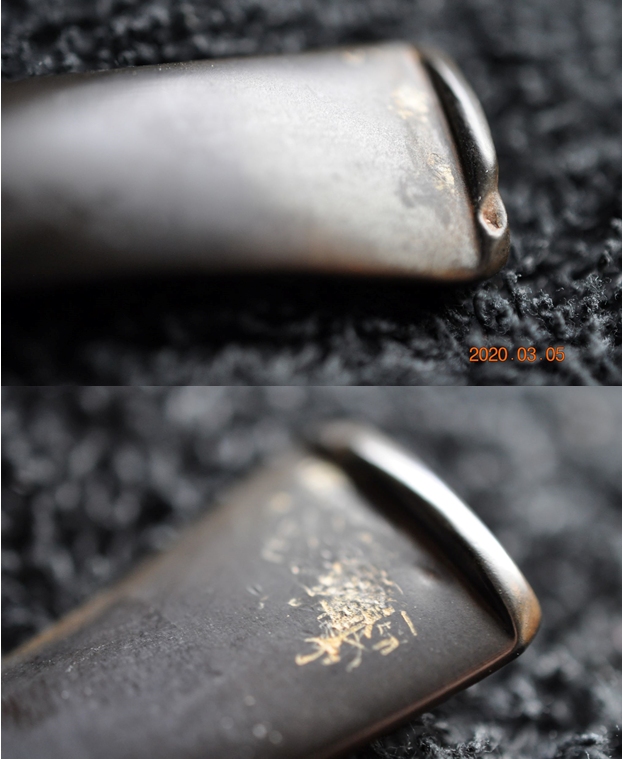
 I wanted to remind myself a bit about the Autograph line from Savinelli so I reread a blog I had written on a previous Autograph restoration (https://rebornpipes.com/2019/01/05/restoring-a-savinelli-autograph-3-rhodesian-dublin-long-shank/). I quote that portion of the blog now:
I turned first to the Pipephil website (http://www.pipephil.eu/logos/en/logo-savinelli1.html) to get a brief overview of the Autograph line. There I found out that the Autographs were hand made and unique. The Autograph Grading system is ascending: 3, 4, … 8, 0, 00, 000.
I turned then to Pipedia to get a more background on the Autograph line. I had the outline I needed from pipephil for the pipe but wanted more (https://pipedia.org/wiki/Savinelli). I quote in part from the article on that site.
While Savinelli’s serially produced pipes account for around 98% of annual production, the marque also creates a number of artisanal, handmade pieces as well. The Autographs, the Creativity line, and the Mr. A. line are all the result of Savinelli’s unique handmade process, with the Autographs reflecting the larger Freehand aesthetic, the Creativity line delving into more complex hand carving, and the Mr. A. line sidestepping the standard shape chart for remarkable and unusual pipes.
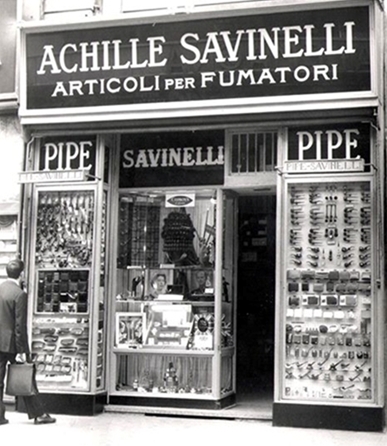 All of the briar for Savinelli’s Autographs and other freehand pipes is sourced specifically for those pieces. While the majority of the marque’s serial production is made from extra grade ebauchon blocks, Savinelli keeps a separate supply of Extra Extra plateau blocks for Freehands. This variety of briar is much larger, and of a higher quality, which explains why so many Autographs and Savinelli handmades are naturally larger designs.
These handmade pieces are shaped much like traditional Danish Freehands: they are shaped first and drilled second. Using this method, Savinelli’s team of artisans is able to showcase their own creativity, as it maximizes flexibility and facilitates a more grain-centric approach to shaping. The resulting Freehand designs are at once both a departure from the marque’s classical standard shapes, yet very much still “Savinelli” in their nature—i.e. proportioned so that the bowl is the visual focus when viewed from the profile, juxtaposed by the comparatively trim lines of the shank and stem. To provide a little more insight into the differences between Savinelli’s standard production and freehand lines, Luisa Bozzetti comments:
“When we choose to make Freehand pipes we must stop production on the standard shapes. The process for Freehands is much more involved and takes much more time. Finding the best people from the production line and pulling them to make Freehands is challenging since it’s not an assembly line, but rather a one or two man operation.
After the rough shaping of the stummel, we must get together and brainstorm which style of stem will be paired before the pipe can be finished since we do not use pre-shaped stems. All accents and stems for the Freehands are cut from rod here in the factory. A lot of care goes into the few pieces lucky enough to make the cut; to end up with a certain number of Autographs, for instance, means that many, many more will be made, and only the few will be selected.”
The quality control process for Savinelli handmades is even more rigorous than that employed in the standard lineup. Many blocks are started and later discarded because of pits or defects. While Savinelli’s briar sourcing is a constant process, working with some of Italy’s top cutters to ensure only the finest and most suitable blocks make their way to the factory, it’s impossible to source plateau briar that’s completely free from flaws. That’s just nature. Savinelli creates the standard for quality by working through the rough (a very high-quality rough, mind you) to find that shining diamond with the potential to become a Savinelli handmade.
It looks like the Autograph 5 I am working is pretty high in the hierarchy of the line. Like other autographs I have worked on in the past this one has a unique twist to the vulcanite stem. Jeff once again did an amazing job cleaning the pipe. He reamed it with a PipNet pipe reamer and got rid of the cake so that we could see the walls of the bowl and assess for damage. He cleaned the internals of the shank and stem with alcohol, pipe cleaners and alcohol. He scrubbed the exterior with undiluted Murphy’s Oil Soap and a tooth brush to get into the grooves and valleys of the rustication. He rinsed the pipe under warm water. He dried it off with a cloth and then let it air dry. The stem was scrubbed with Soft Scrub and then soaked in Before & After Deoxidizer. It came out looking pretty good with a light coat of oxidation still present. The finish on the bowl and the rim top cleaned up pretty good. I took pictures of the pipe to show how it looked when I unpacked it. 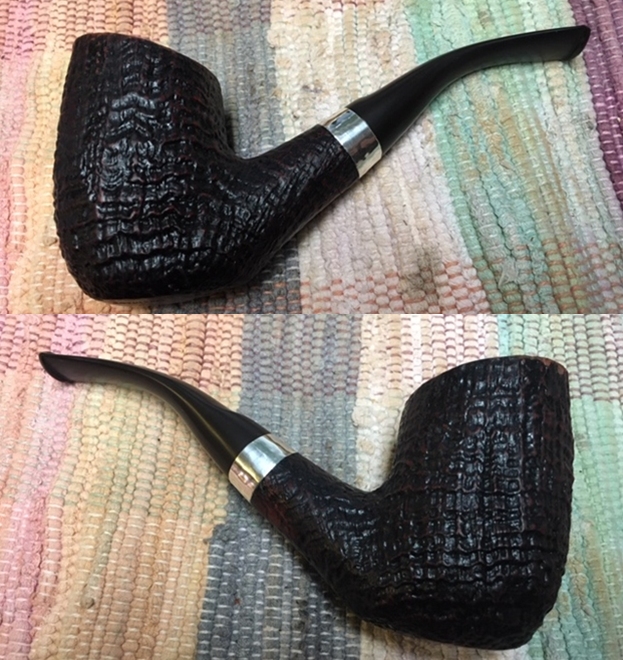
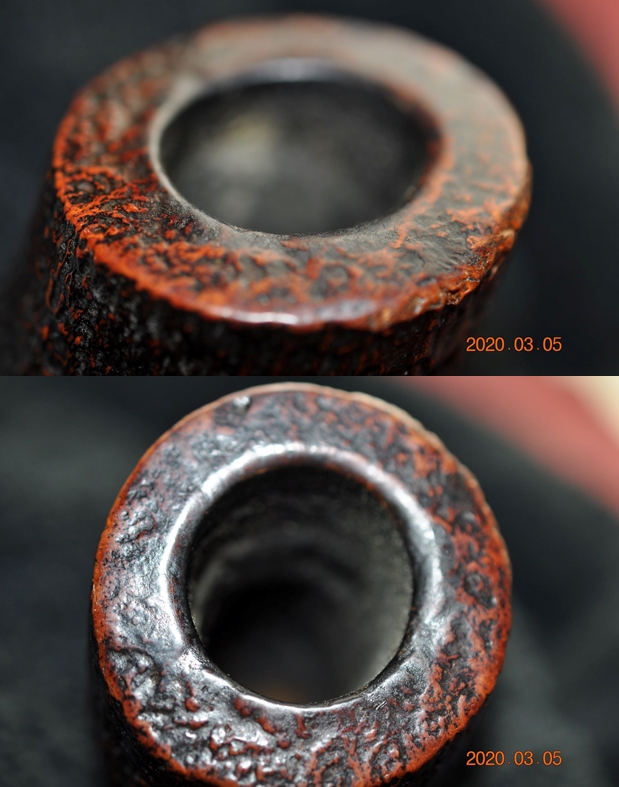
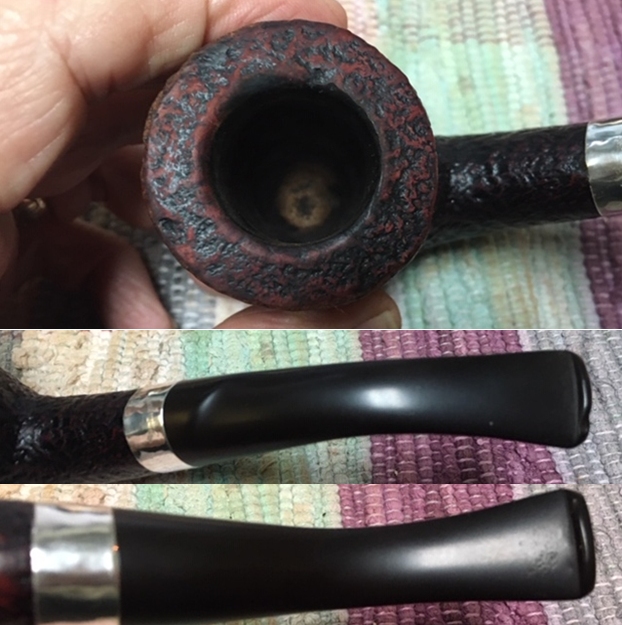
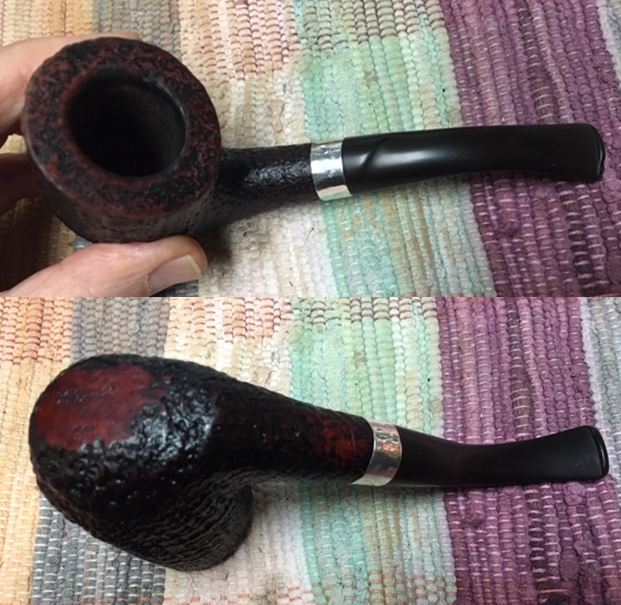 I took a close up photo of the rim top to show how clean it was. There was some damage to the finish on the rim top and some damage to the inner edge of the rim. The stem looked good just the chip on the top edge of the button and some light tooth marks. Overall the pipe looked impressive at this point in comparison to where it had started.
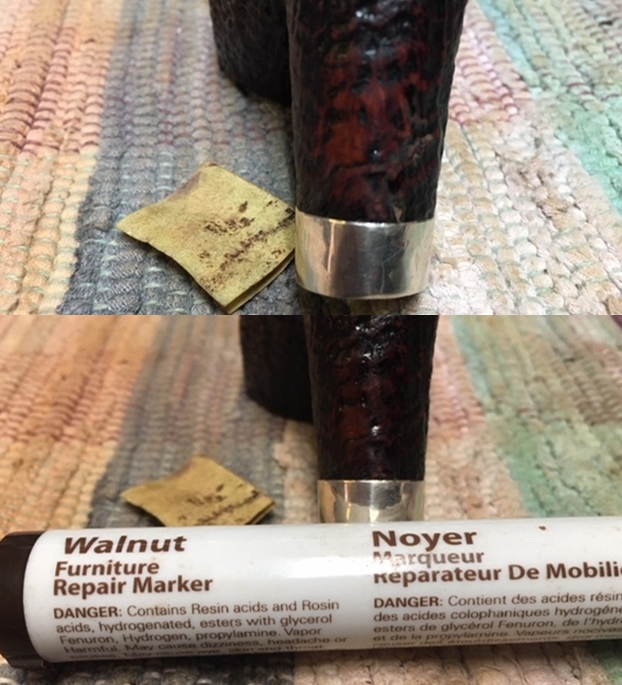
  The band was firmly glued and pressed in place. The crack was seal and solid when I picked at it with a dental pick. I cleaned it out with alcohol and a cotton swab to remove any debris in the surface area. I filled in the crack with clear super glue to seal it further and minimize the damage to the shank area.
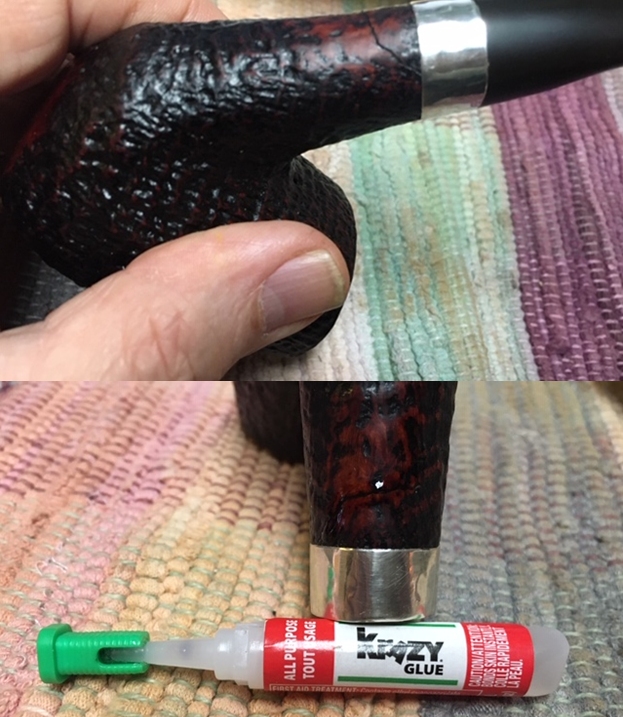 Once the repair cured I sanded the filled area with a folded piece of 220 grit sandpaper. I work to smooth out the repair and blend it into the surface of the surrounding briar. I was very happy with the way in which the repair blended into the surrounding sandblast.
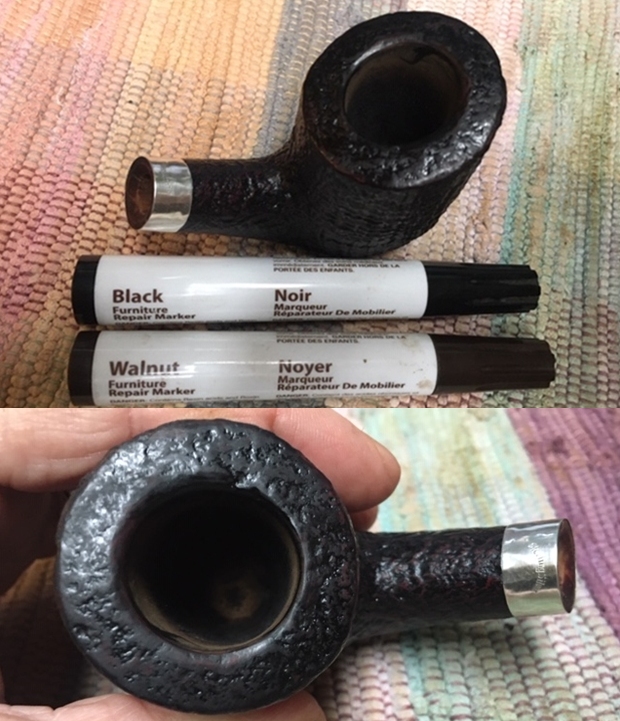
  I decided to address the damage to the inner edge of the rim. I used a folded piece of 220 grit sandpaper to smooth out the rim edge and cleanup the slight bevel that was there. I was able to minimize the damaged area. I stained the inner edge with a black stain pen and mixed the stain with a Walnut stain to blend it into the rest of the rim top. I also stained the damage to the outer edge at the same time.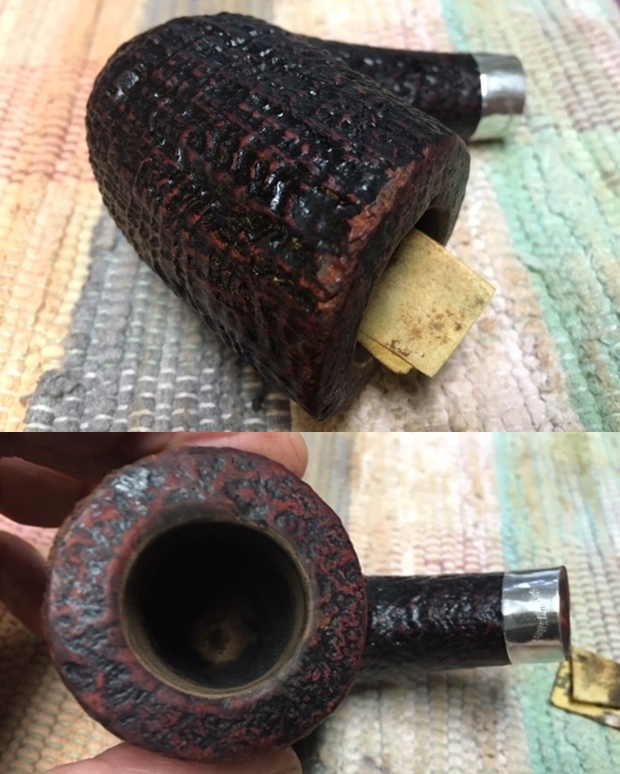
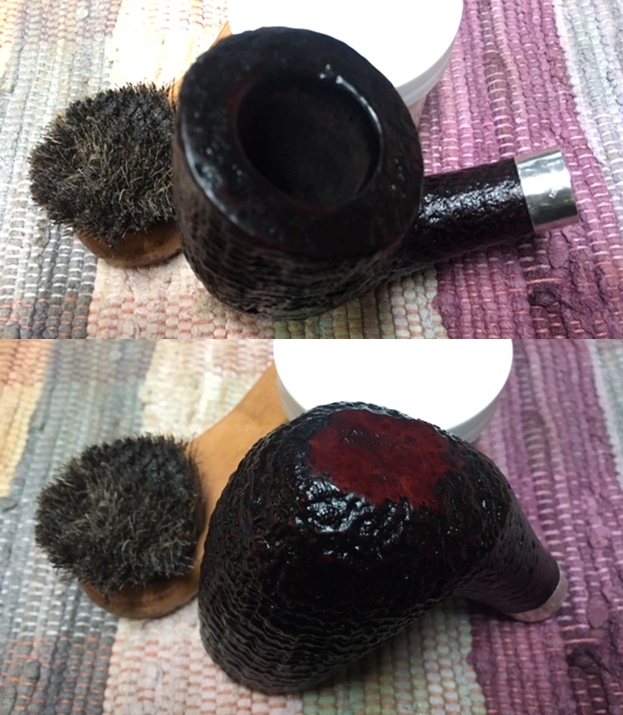
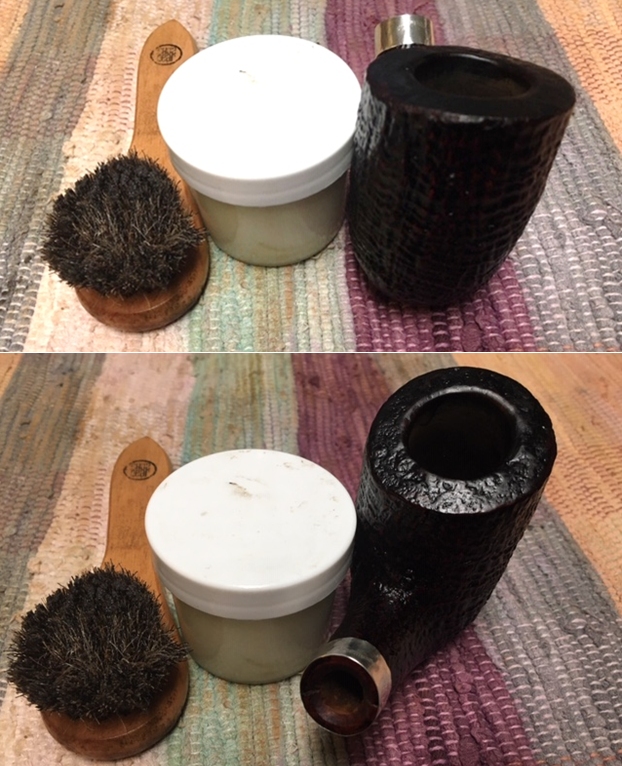
 I worked some Before & After Restoration Balm into the briar with my finger tips and a horsehair shoe brush. The product is a great addition to the restoration work. It enlivens, enriches and protects the briar while giving it a deep glow. It is a product I use on every pipe I work on.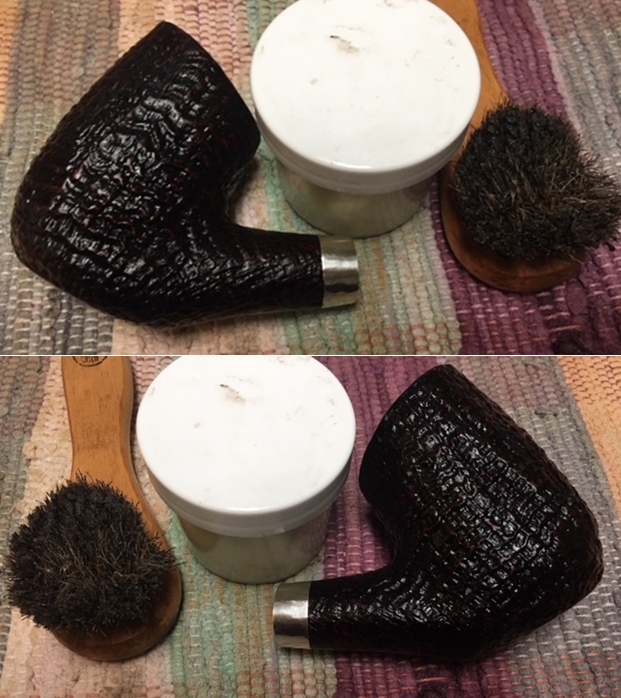
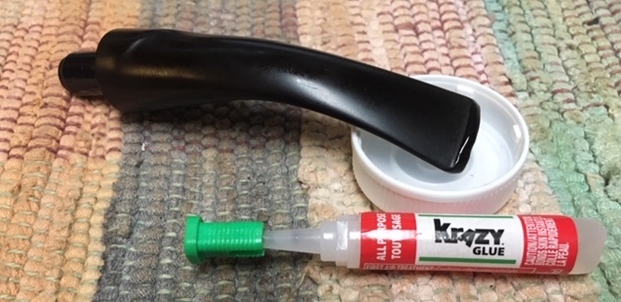
 I set the bowl aside and worked on the stem. I rebuilt the chip out of the top left side of the button with clear super glue. I built it up and reshaped the button edge with 220 grit sandpaper and polished it when I did the rest of the stem.
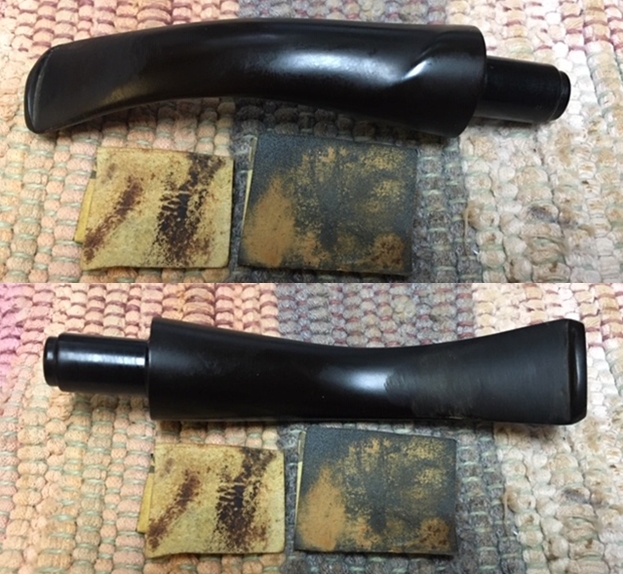
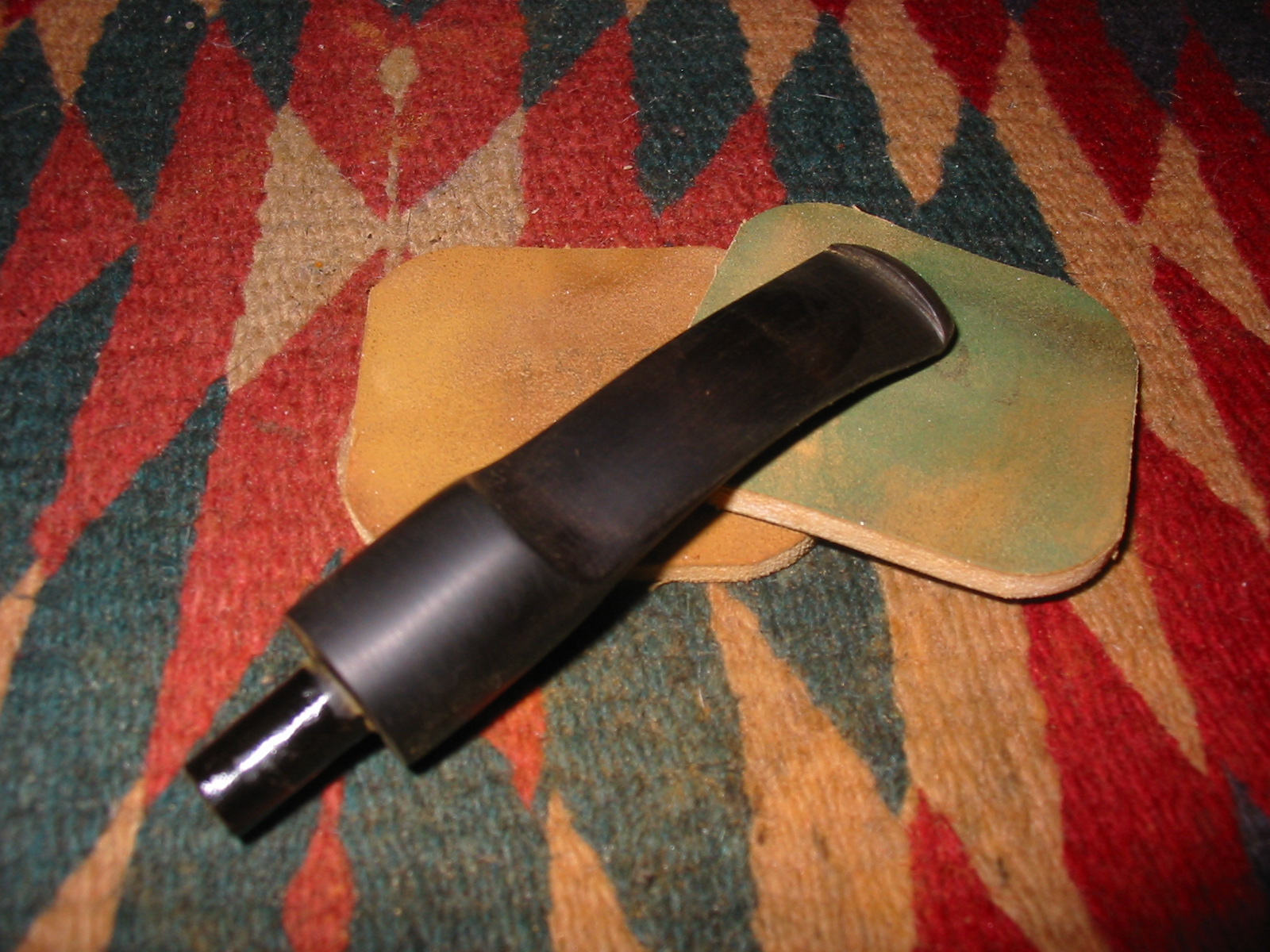
 I sanded out the tooth marks and chatter on both sides of the stem with 220 grit sandpaper. I polished the sanding marks with 400 grit wet dry sandpaper. The photos show the stem at this point.
  I polished the stem with Denicare Mouthpiece Polish from a tin of it I have in the drawer here. It is a gritty red paste that I rub on with my finger tips and work it into the surface of the stem and button and buff it off with a cotton pad. It gives me a bit of a head start on the polishing work.
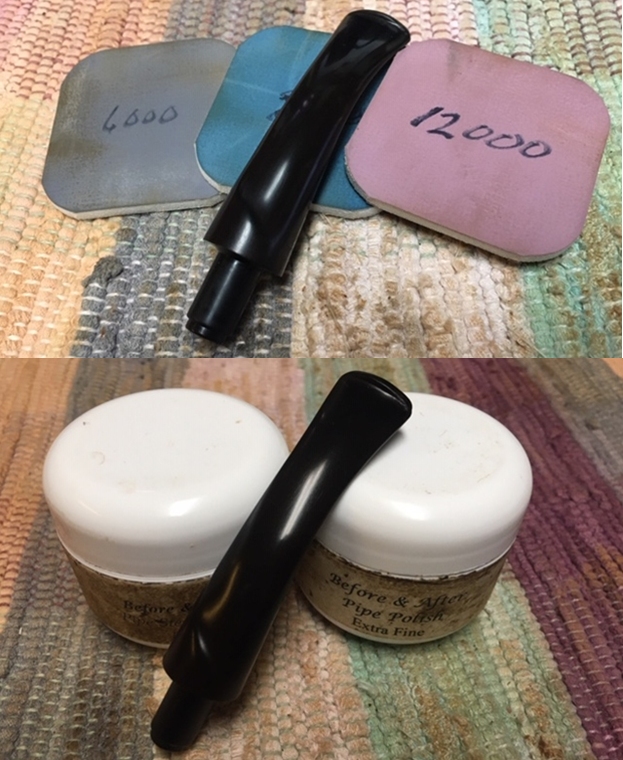
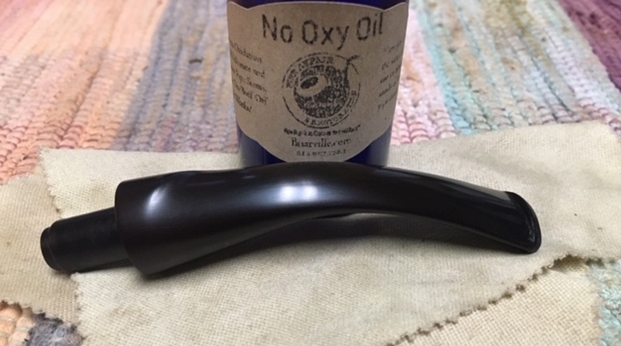
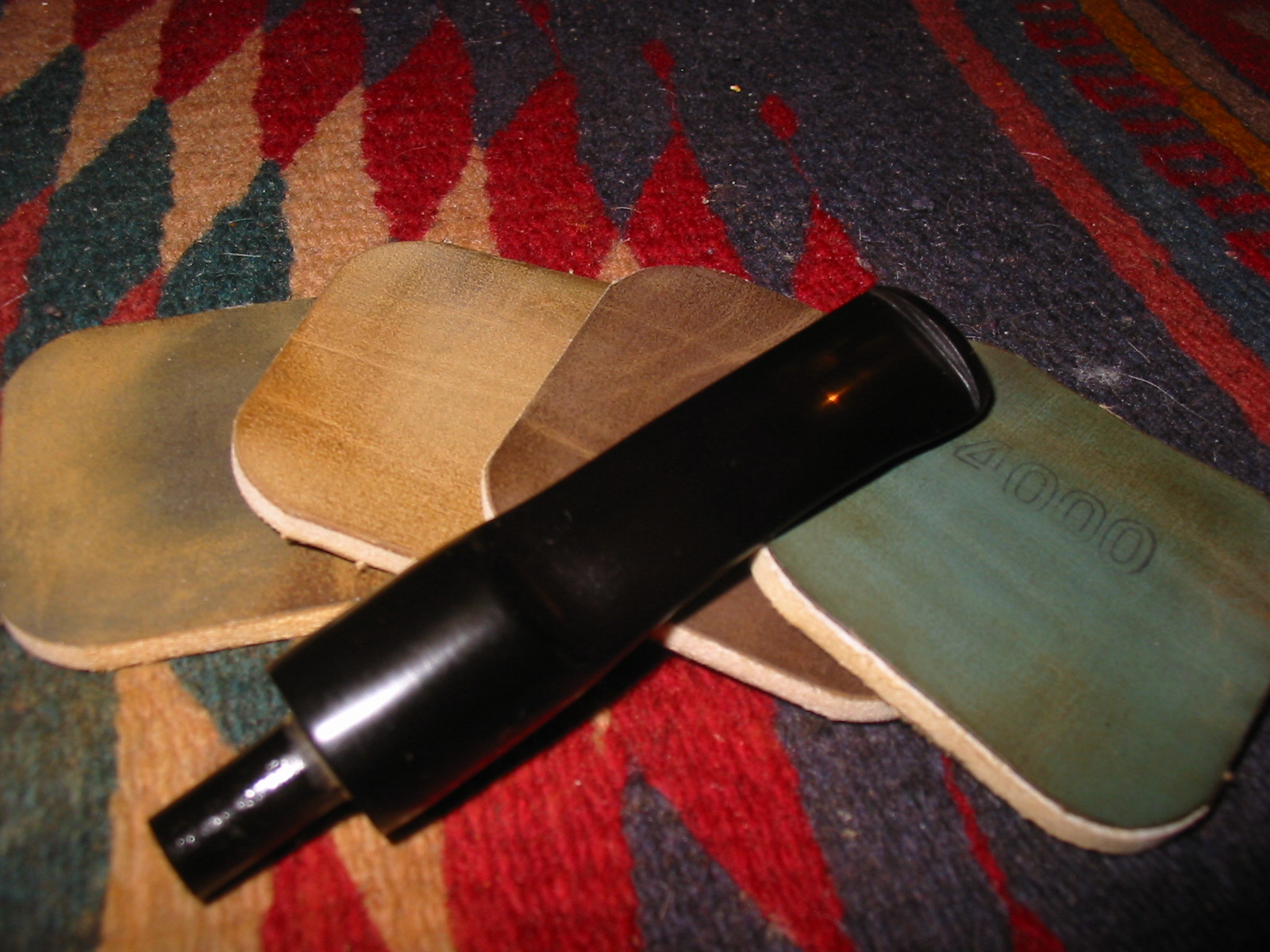
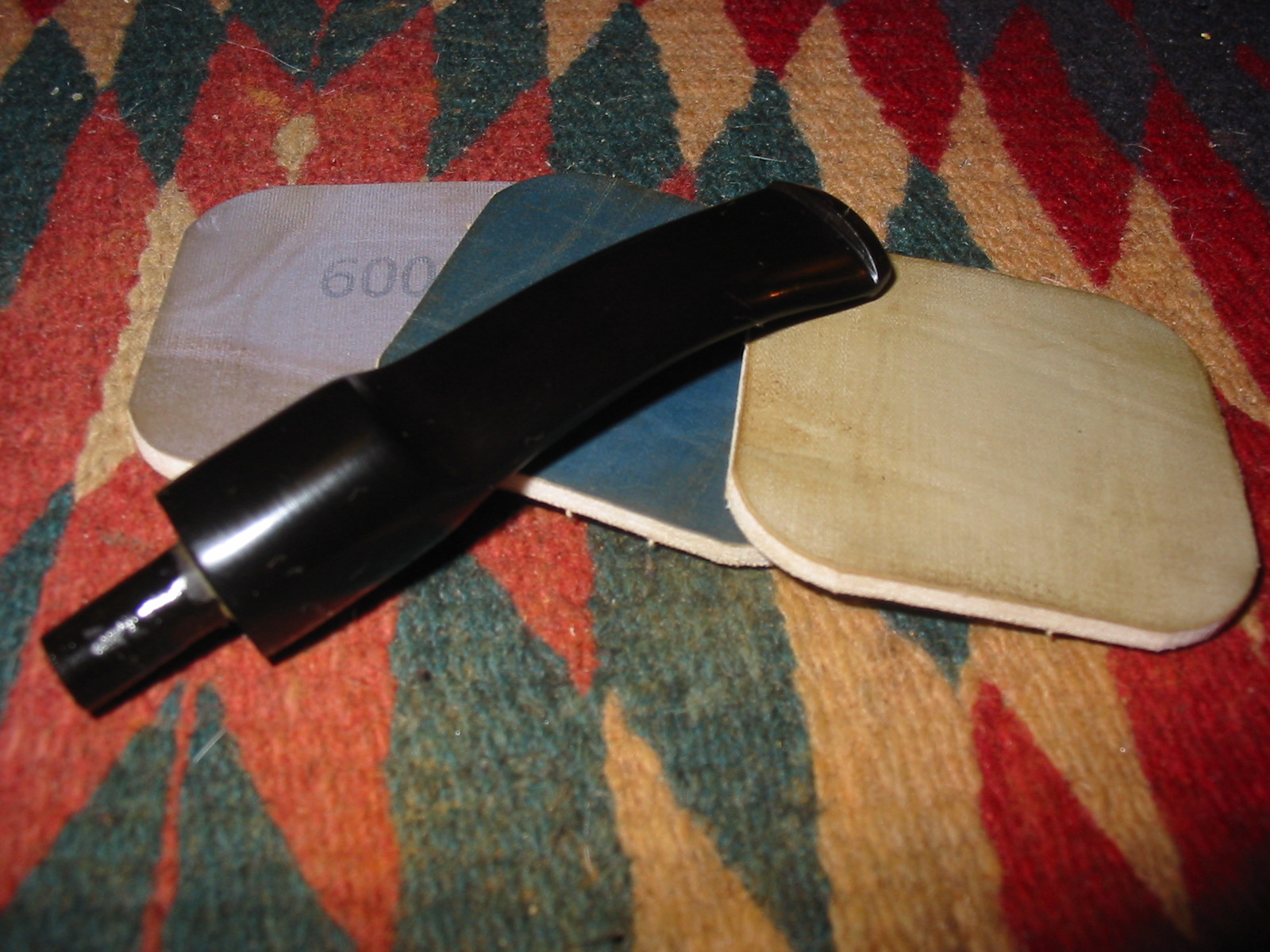
  I wet sanded the tooth chatter on both sides of the stem with 1500 -12000 grit micromesh pads to polish it. I wiped it down with Obsidian Oil on a cloth after each sanding pad. I finished polishing the stem with Before & After Pipe Polish – both Fine and Extra Fine polishes. I rubbed it down with Briarville’s No Oxy Oil as a final preservative measure to protect the stem.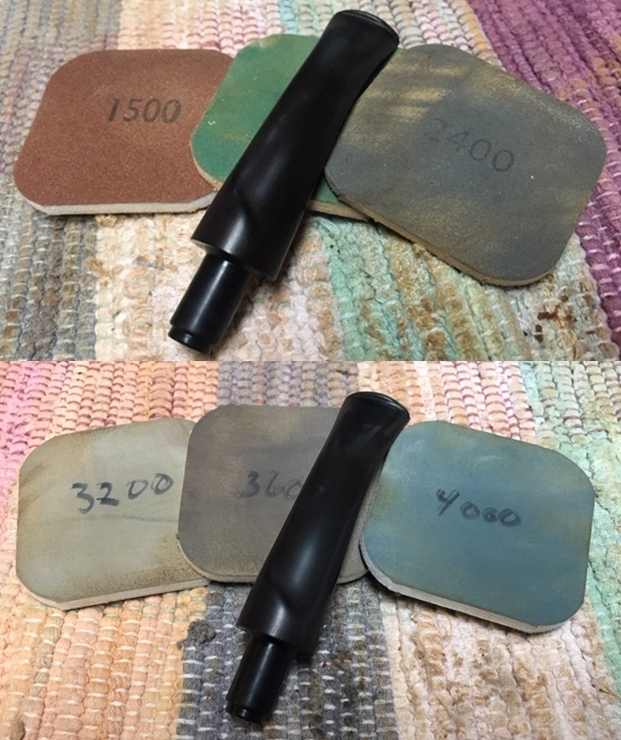
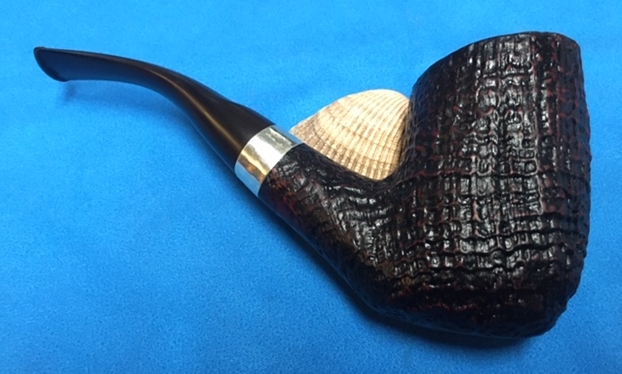
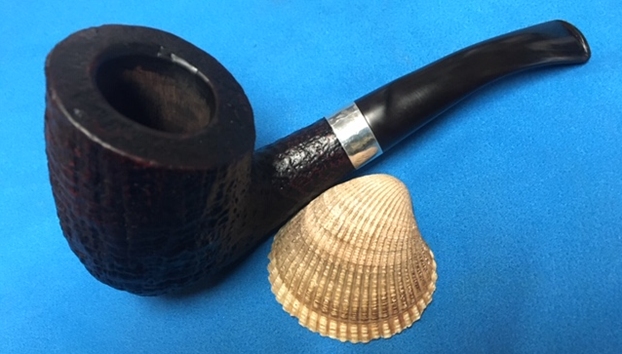
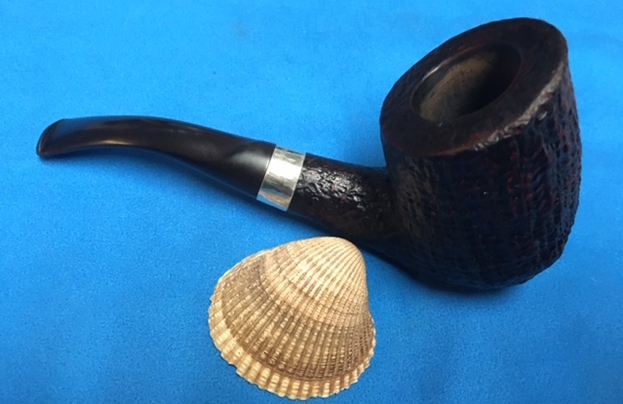
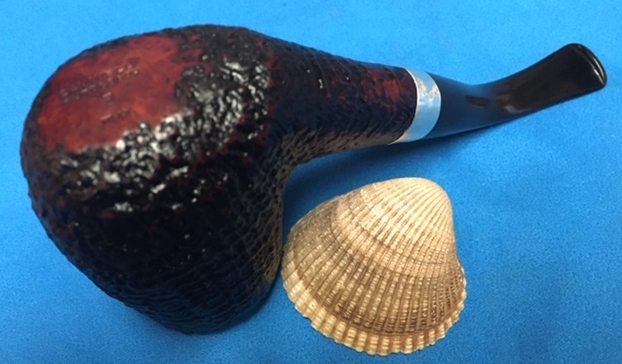
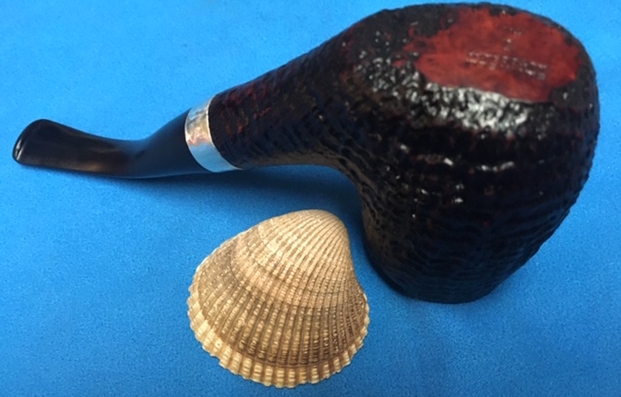
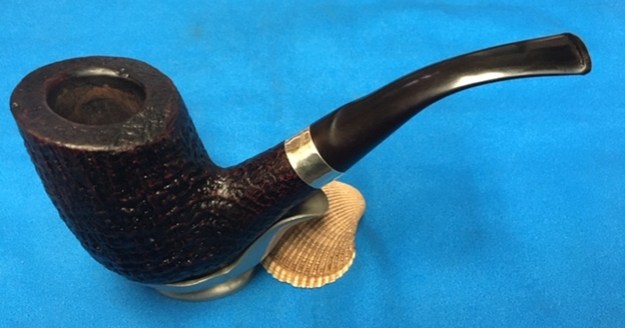
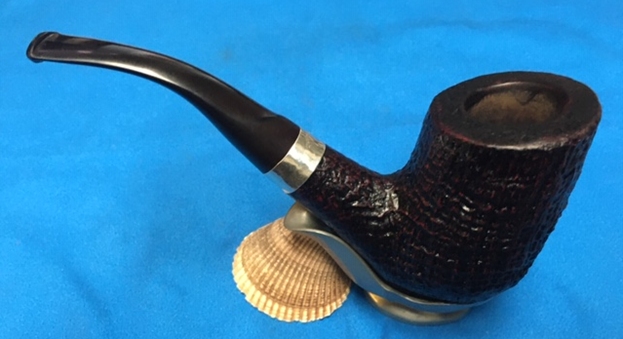
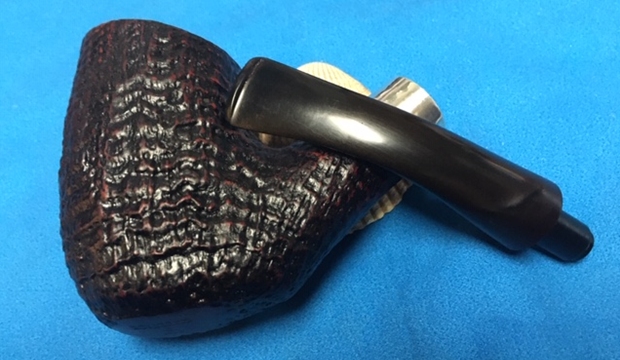
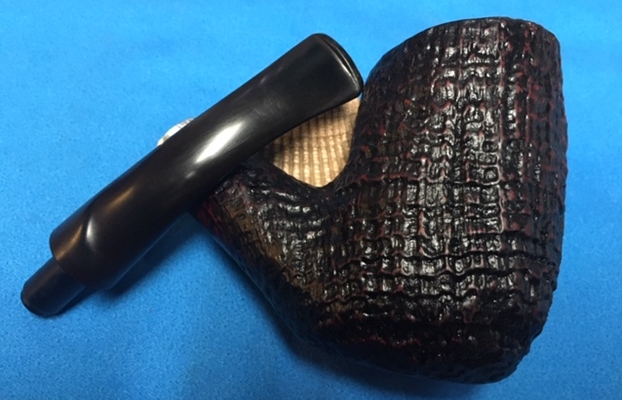
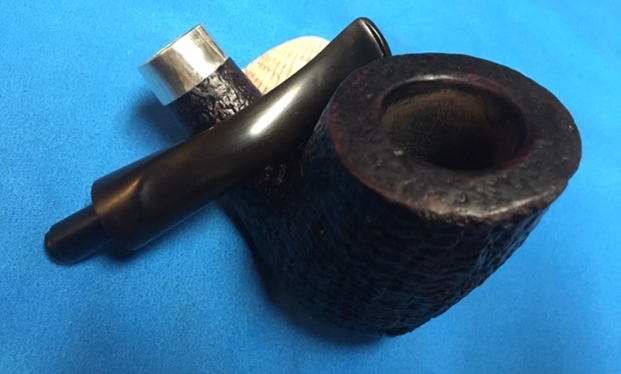
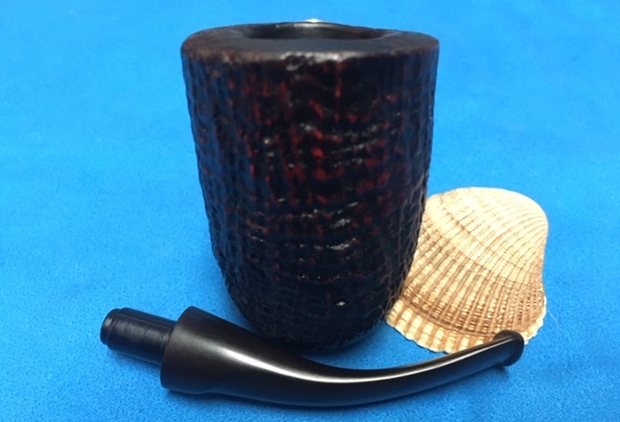
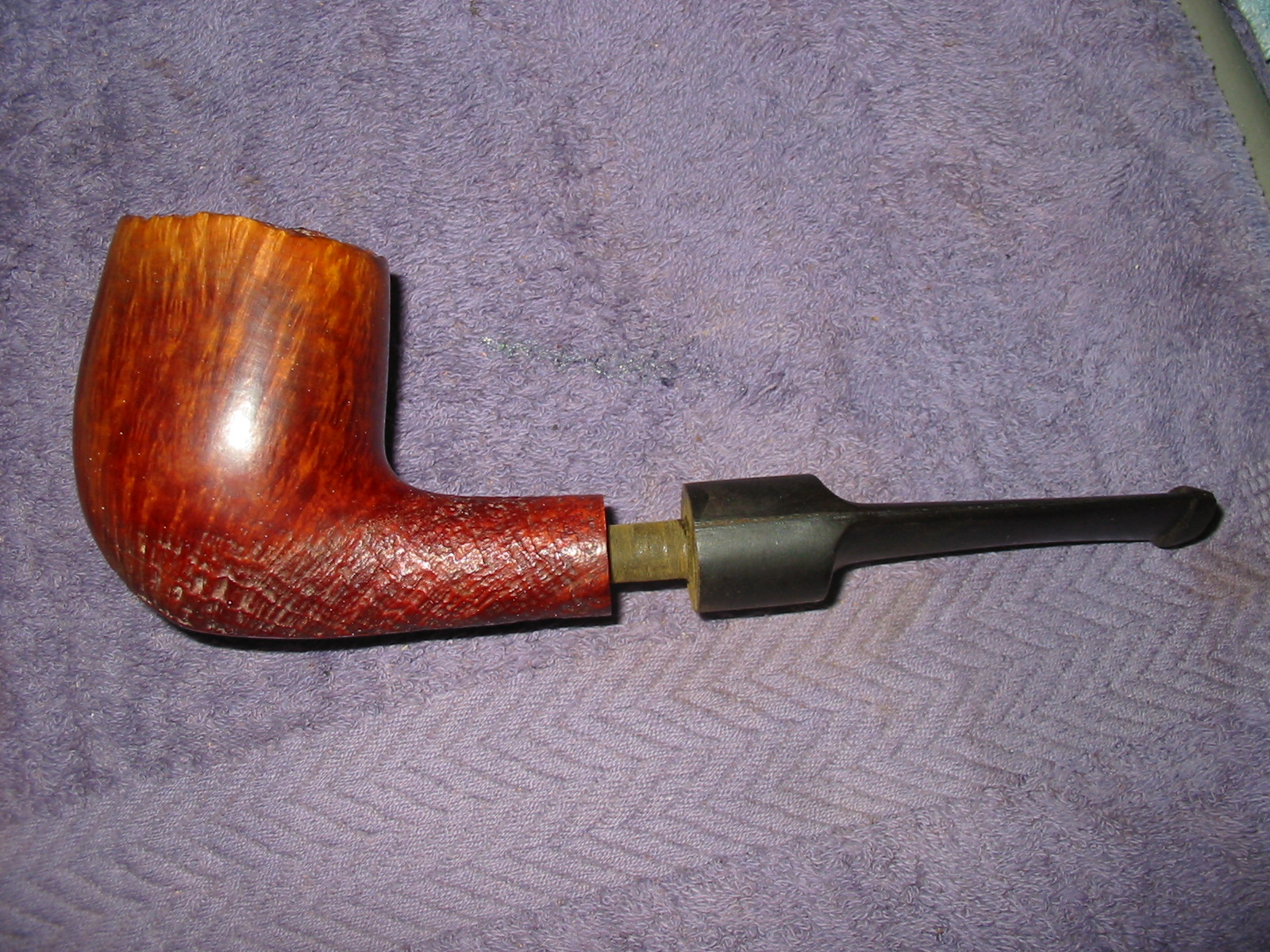
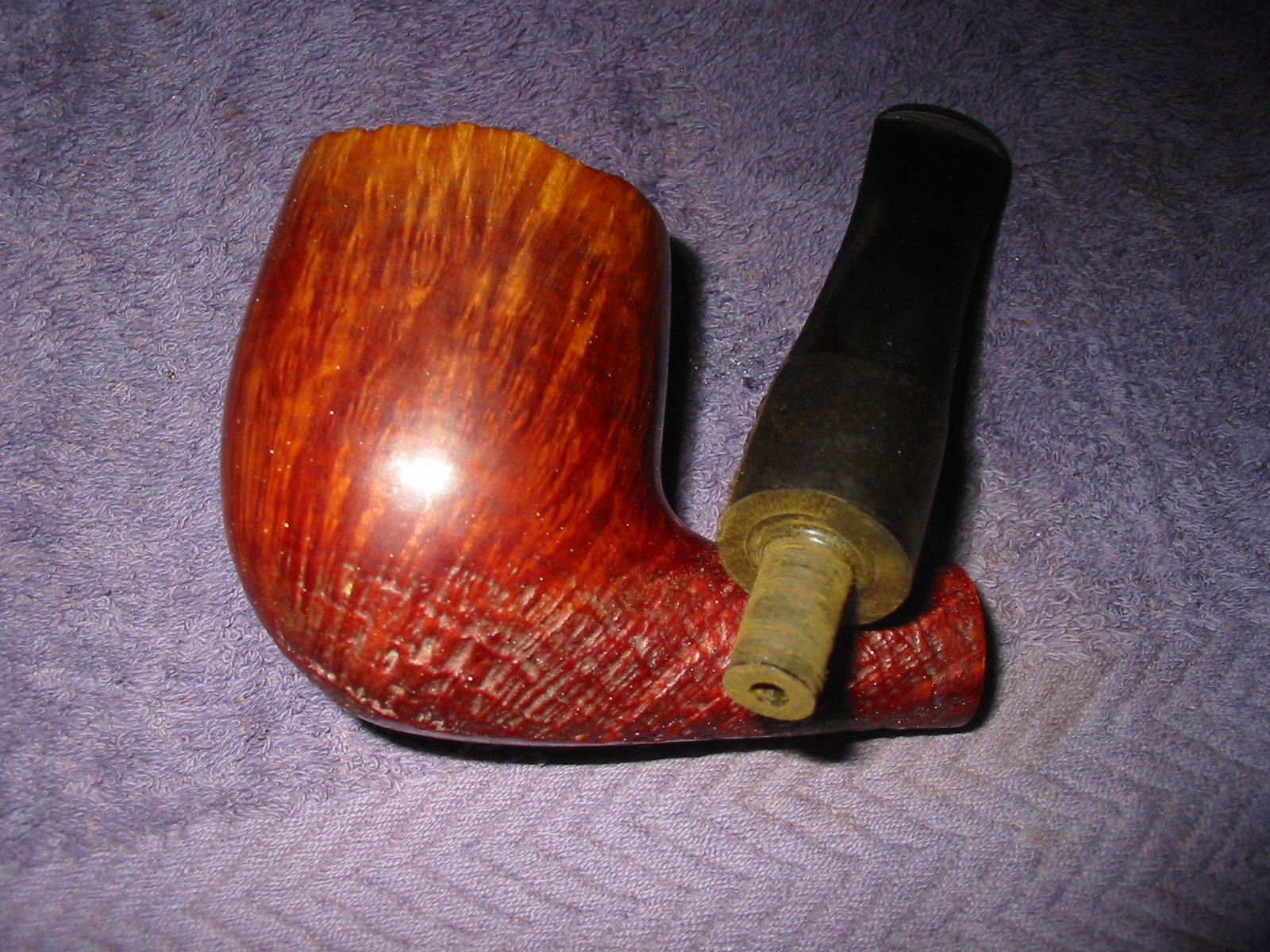
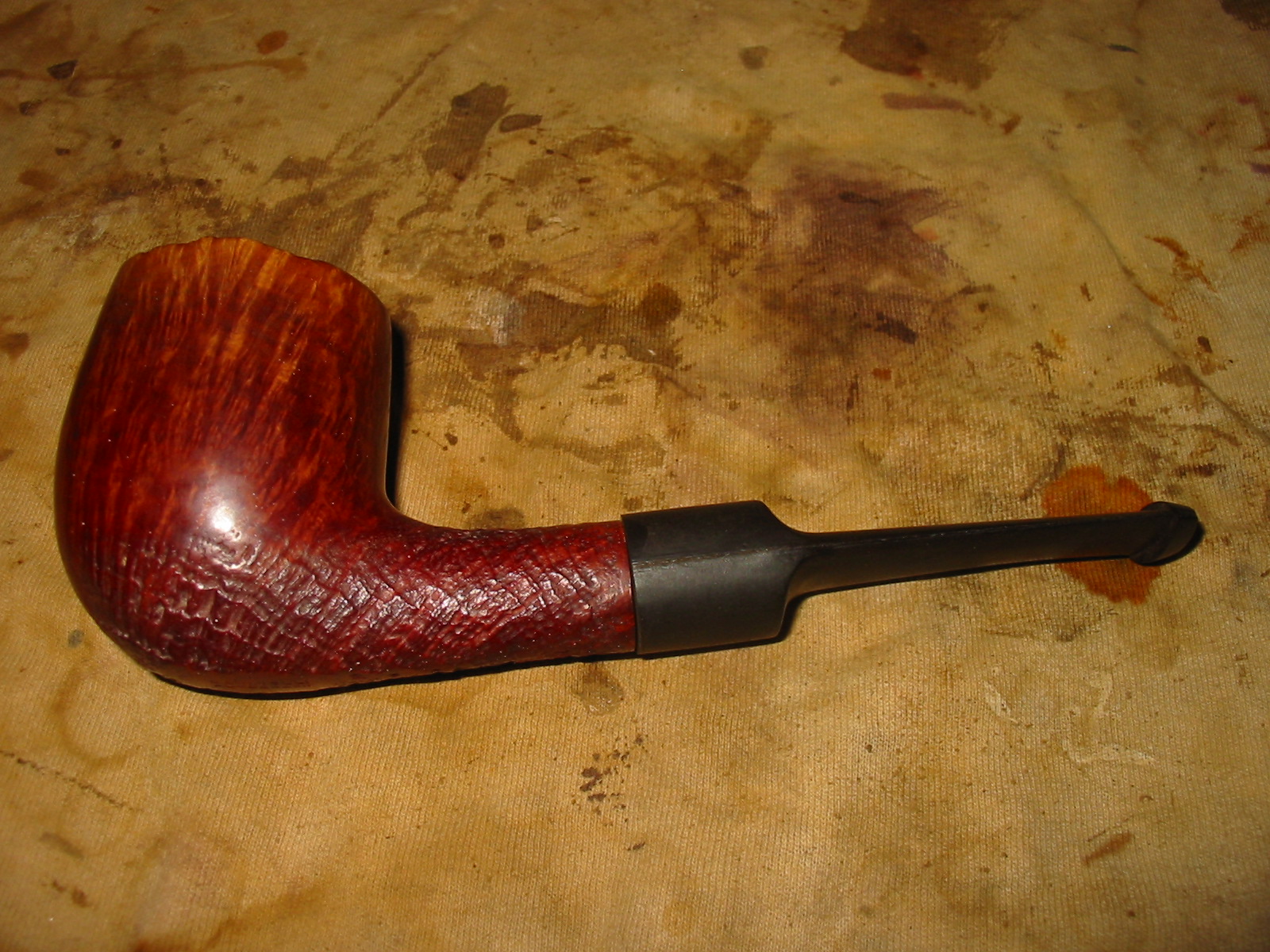
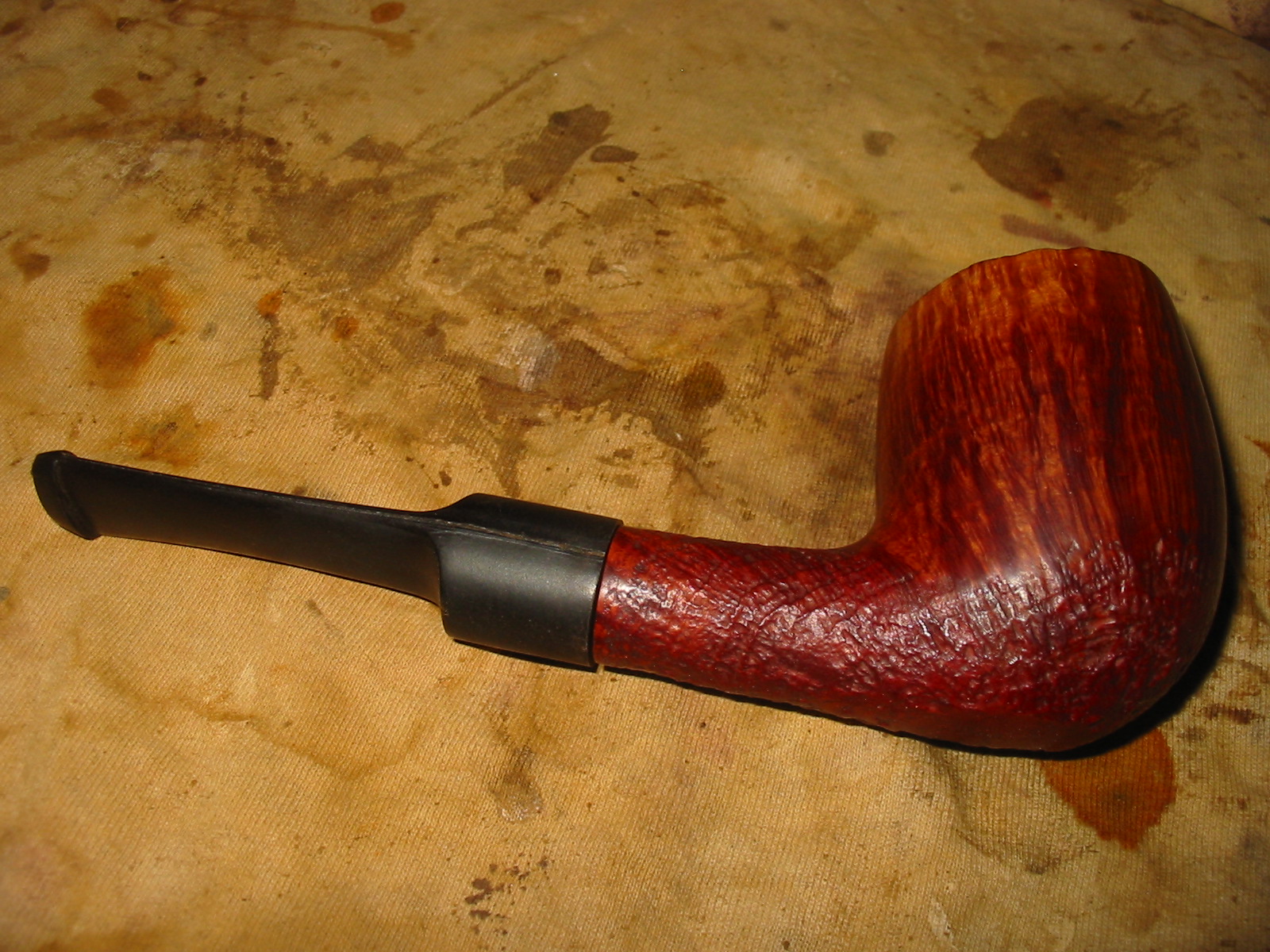
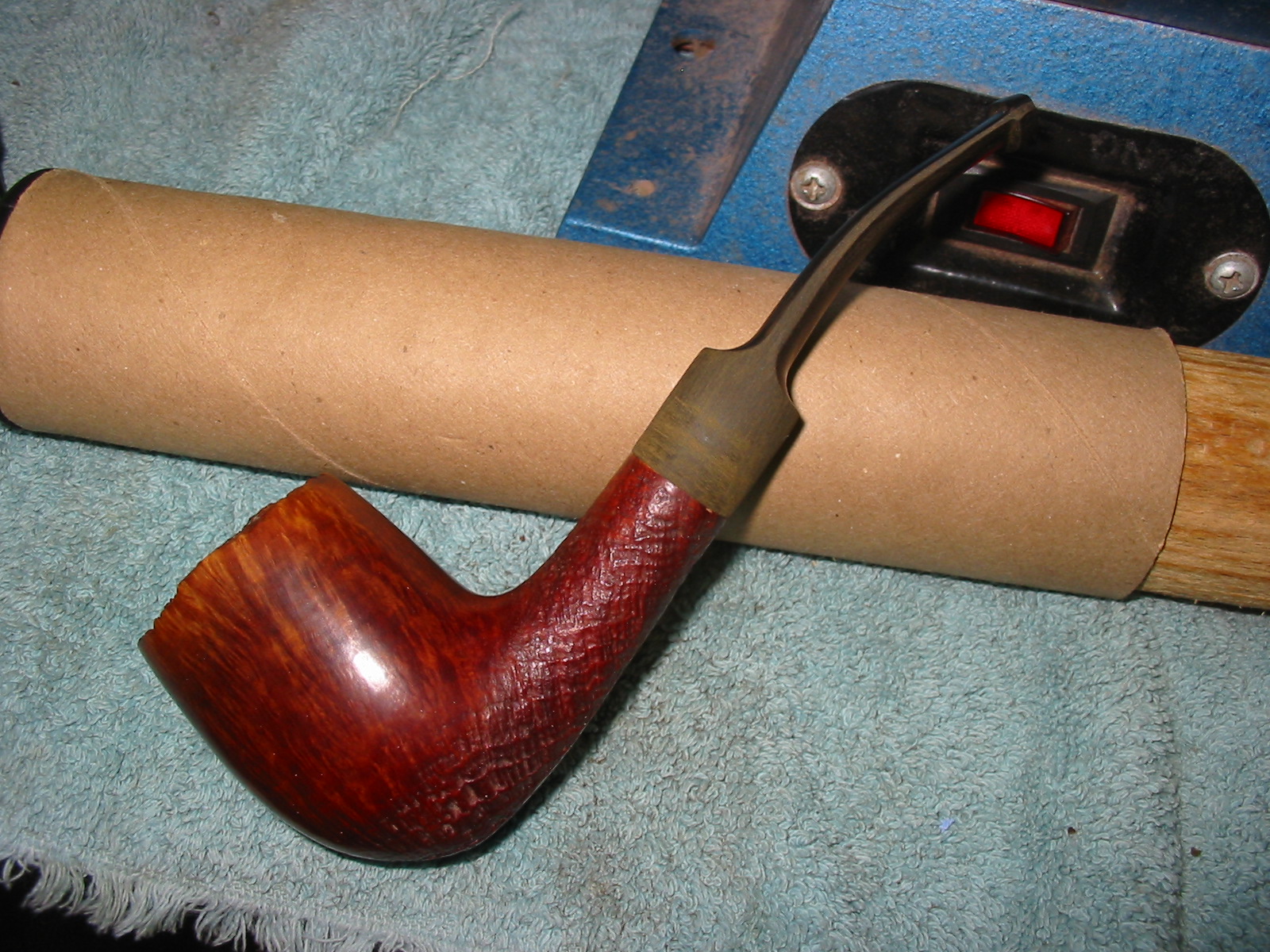
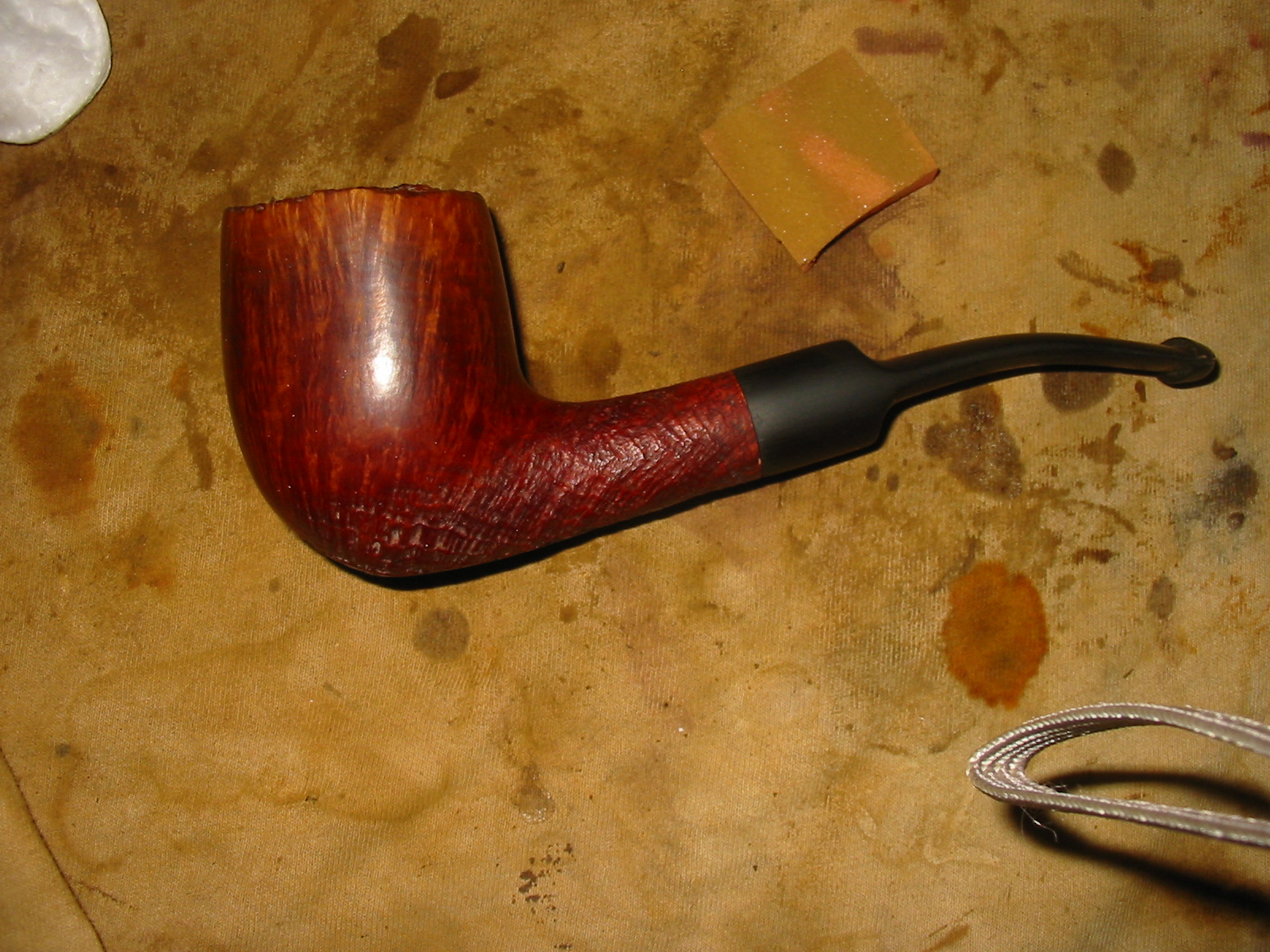
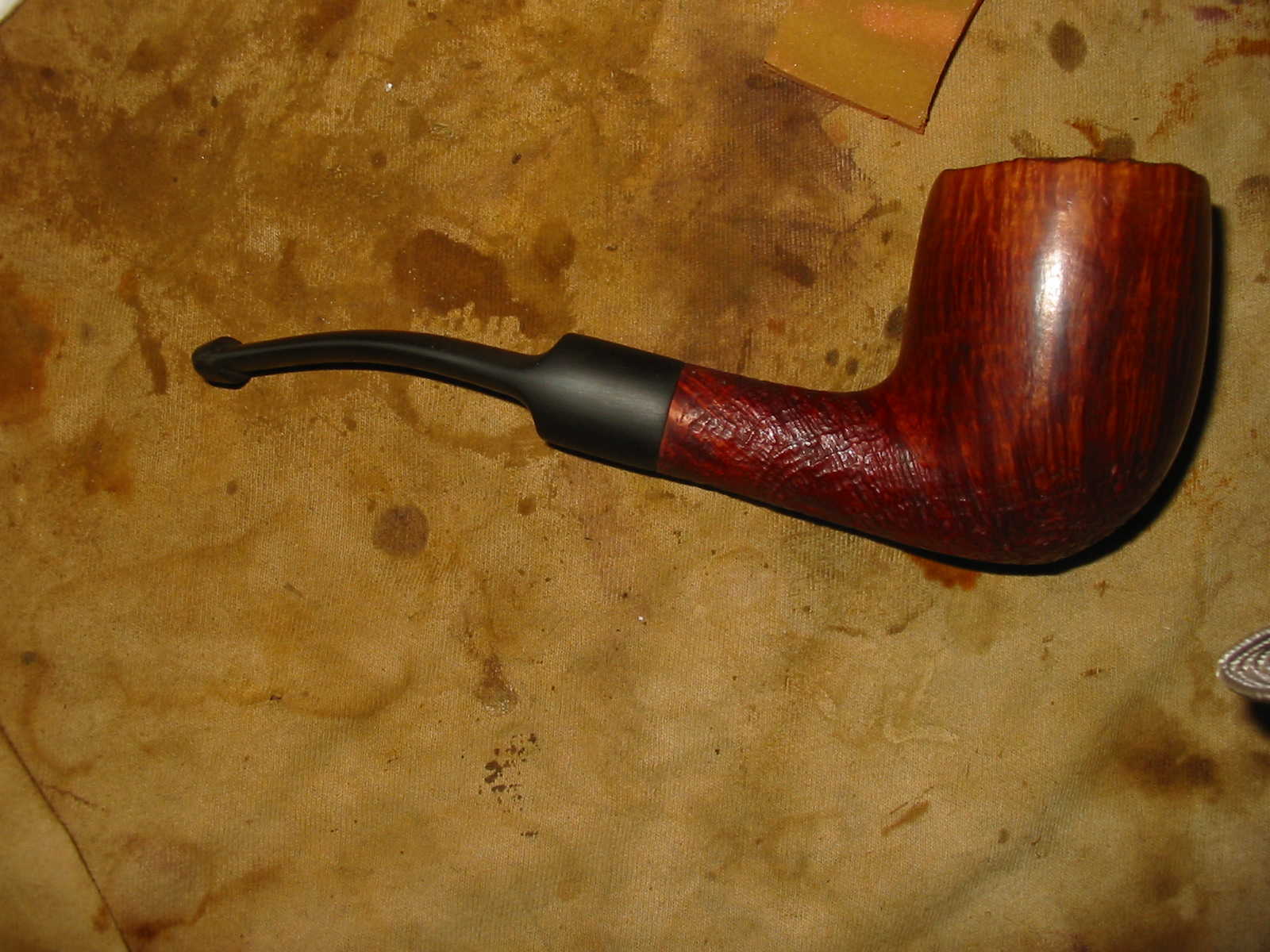
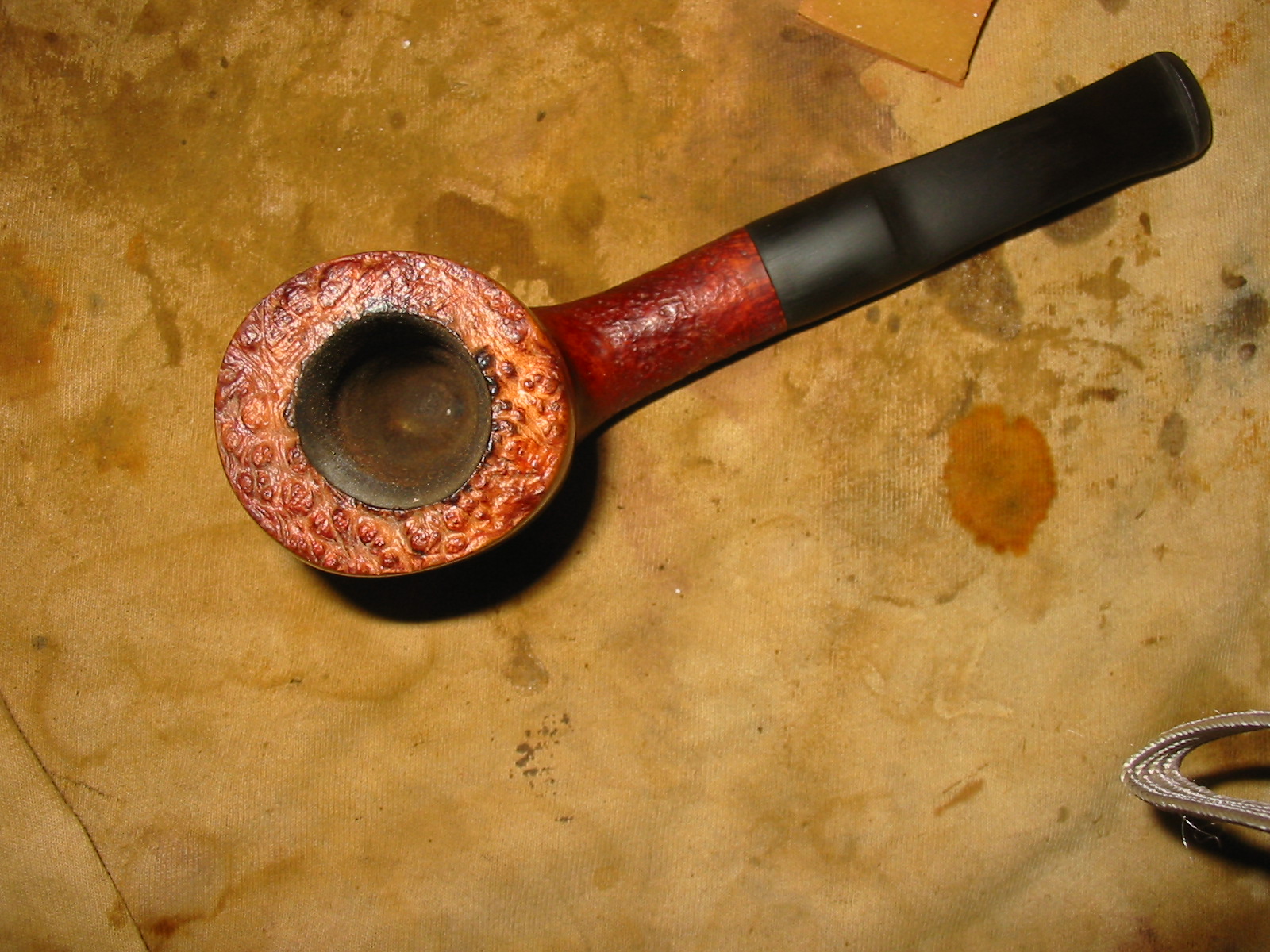
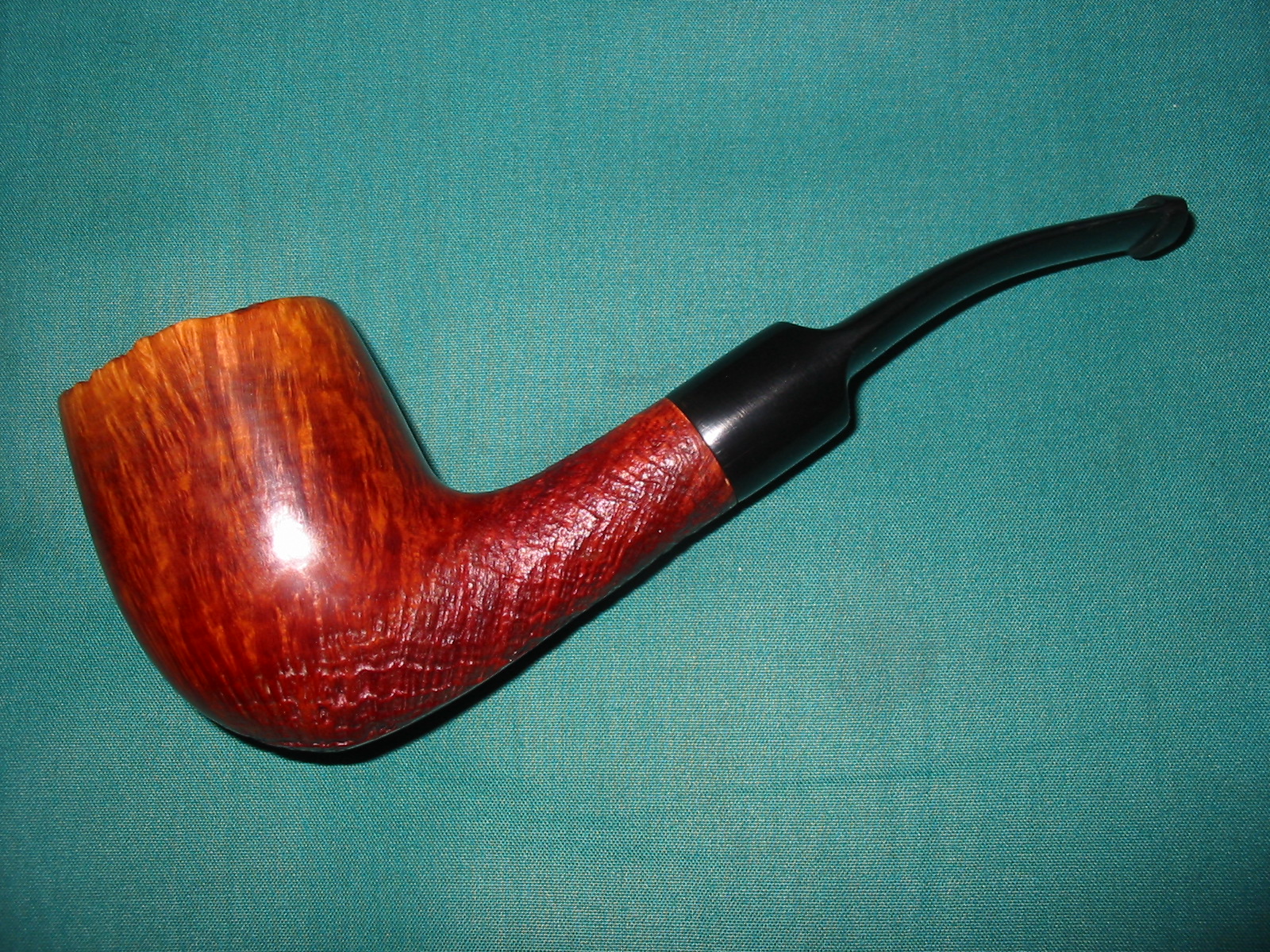
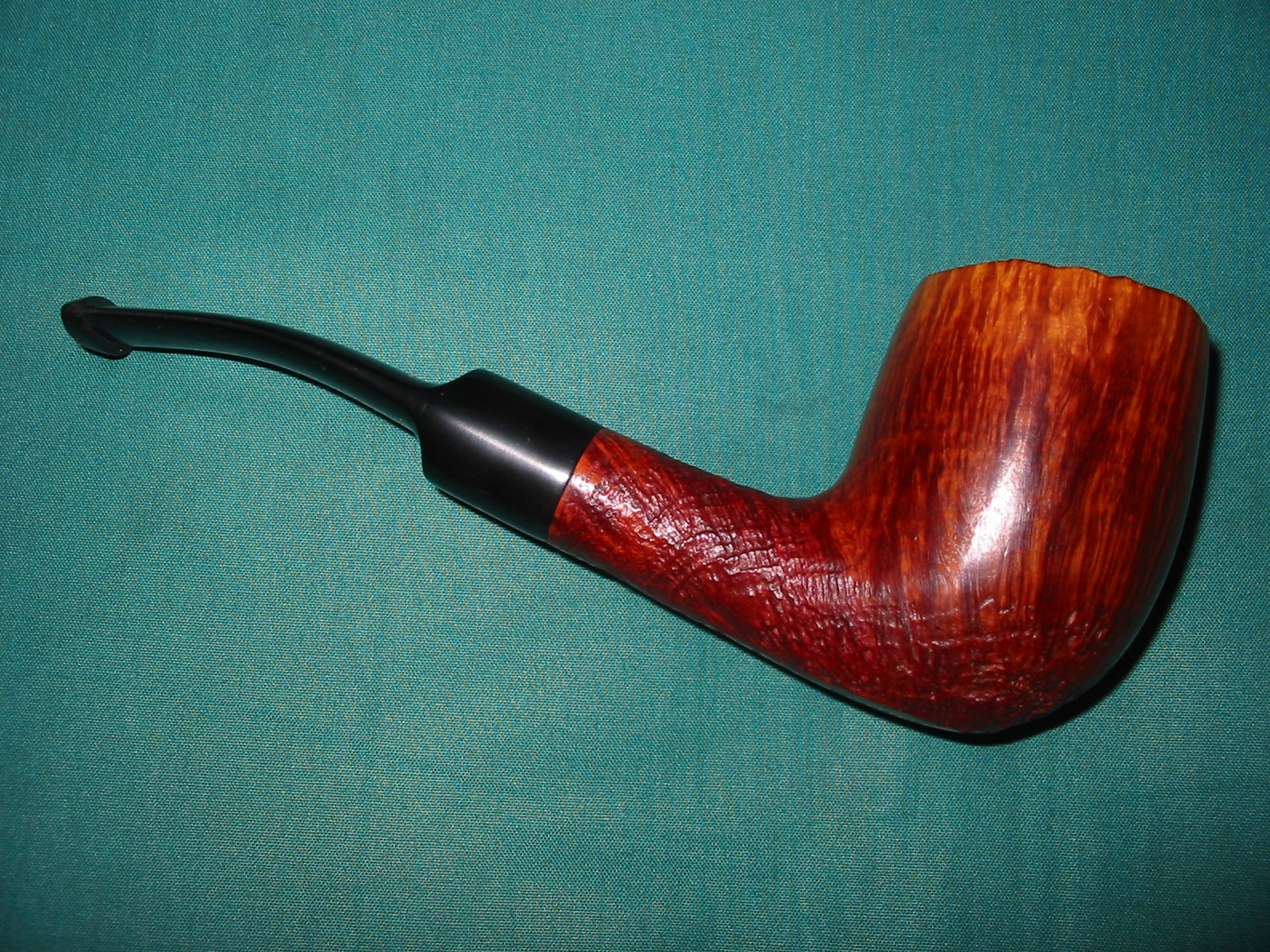
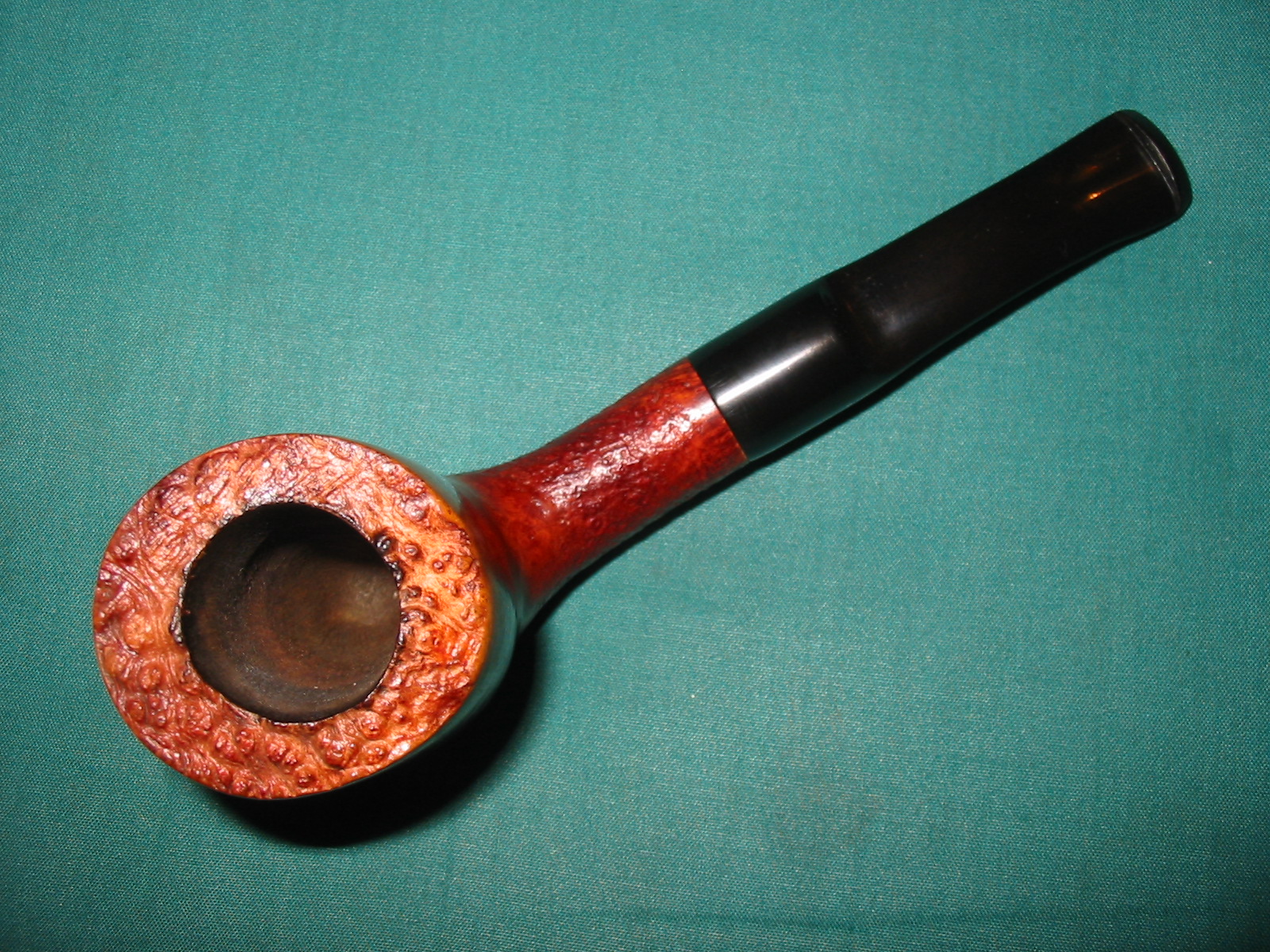
 I put the bowl and stem back together. I polished the smooth part of the bowl and stem with Blue Diamond to polish out the scratches in the briar and the vulcanite. I gave the sandblasted bowl and shank several coats of Conservator’s Wax and the stem multiple coats of carnauba wax. I buffed the pipe with a clean buffing pad to raise the shine. I hand buffed it with a microfiber cloth to deepen the shine. The pipe polished up pretty nicely. The contrast of the beautiful dark and medium brown stains and the smooth and sandblast finish worked amazingly well with the polished black vulcanite stem. The sandblast was deep and craggy on the bowl and shank and looks quite remarkable. This is truly a beautiful Freehand pipe. The finished pipe is shown in the photos below. The dimensions of the pipe are Length: 6 1/2 inches, Height: 3 inches, Outside diameter of the bowl: 1 ¾ inches, Chamber diameter: 7/8 of an inch. I have restored quite a few Autographs over the years and this estate is another rare beauty. I will be putting it on the rebornpipes store shortly. Thanks for walking through the restoration with me. Cheers.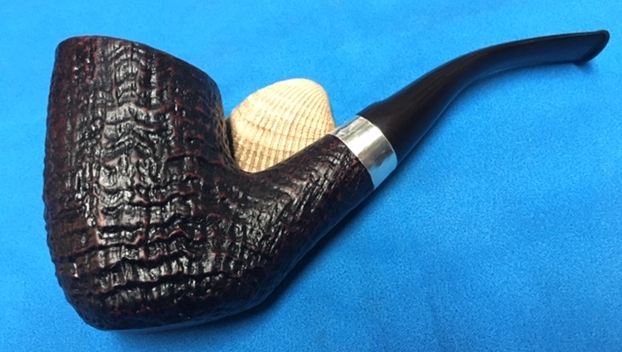


 rebornpipes