Tag Archives: Sasieni 4 Dot pipes

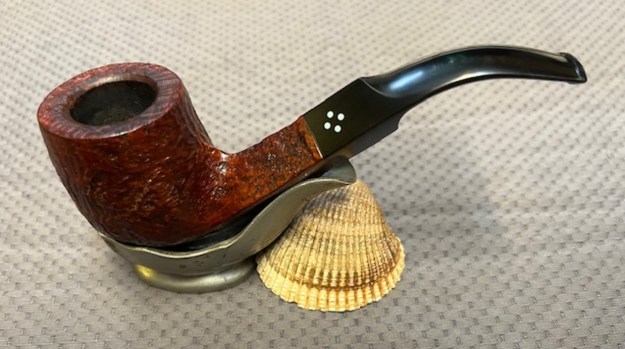
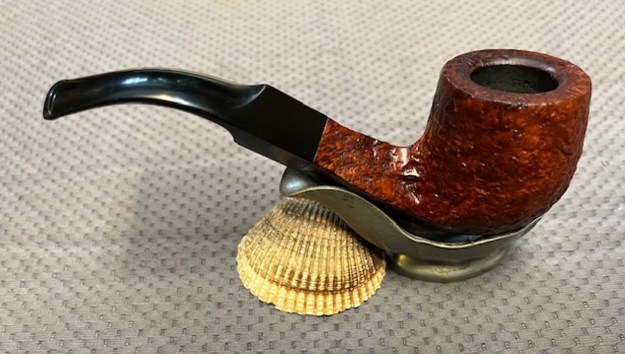
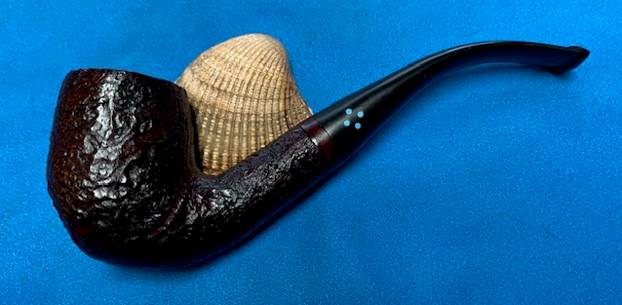
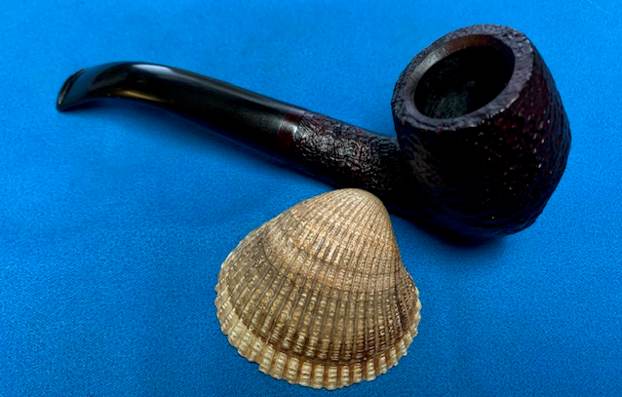
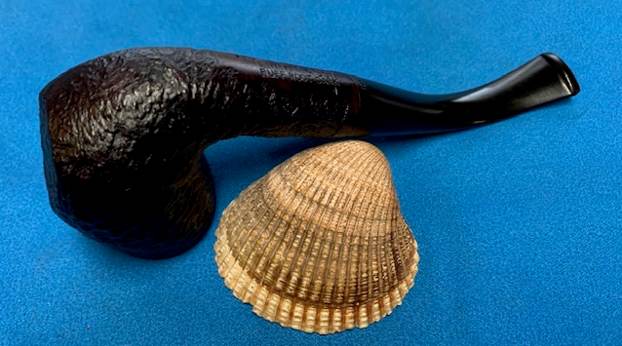
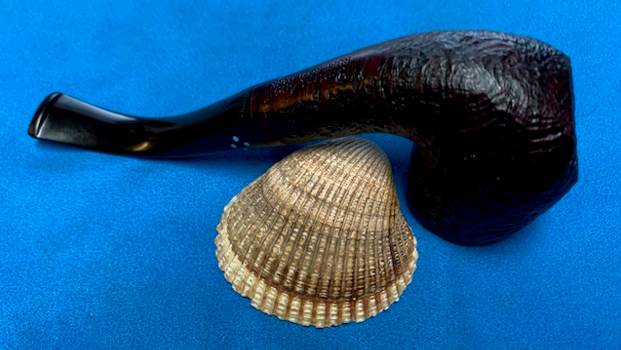
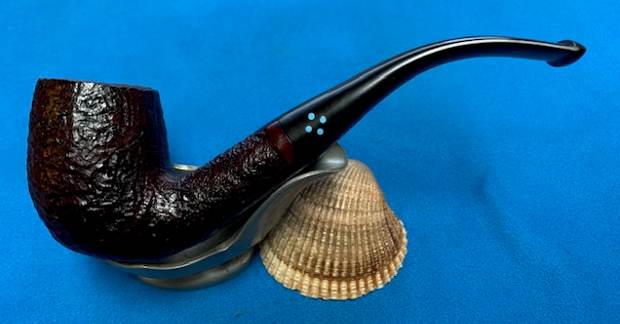
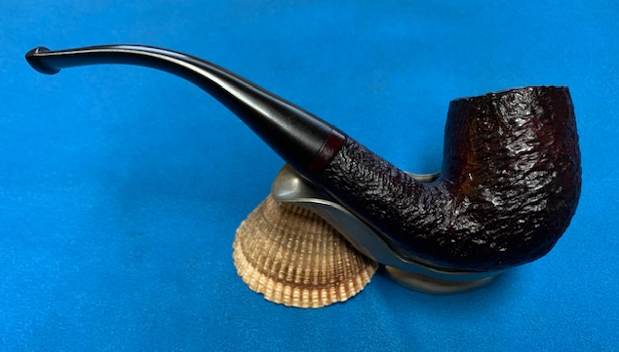
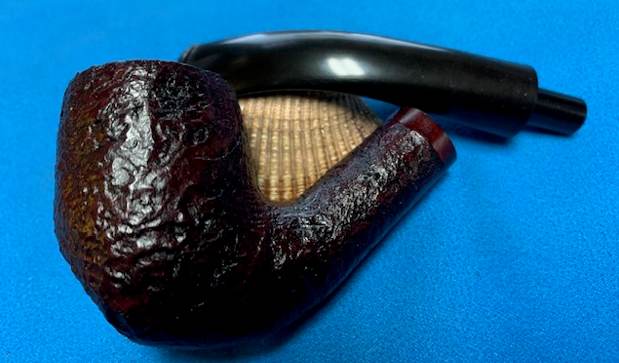
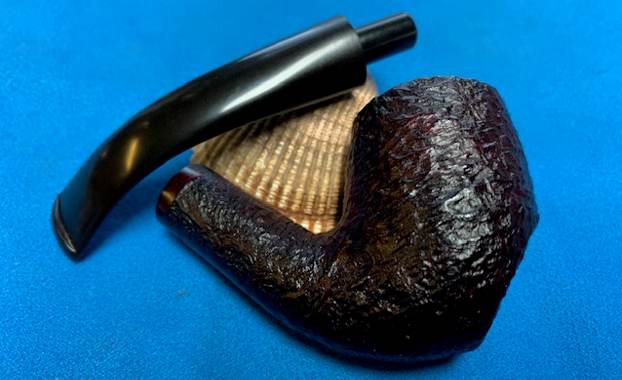
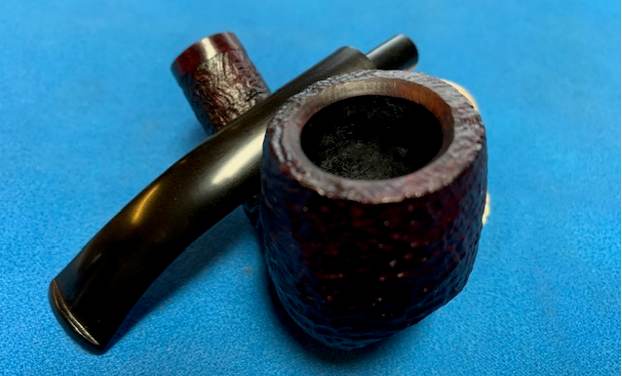
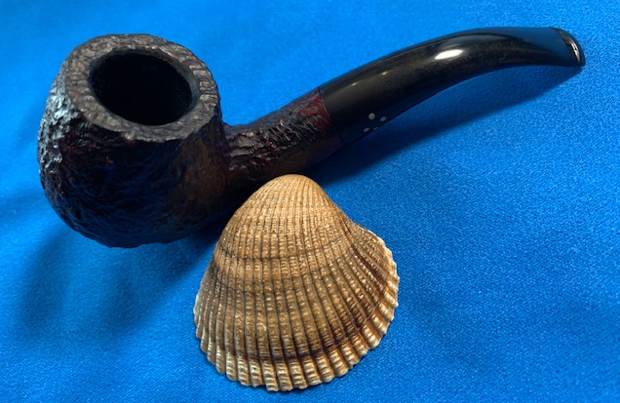
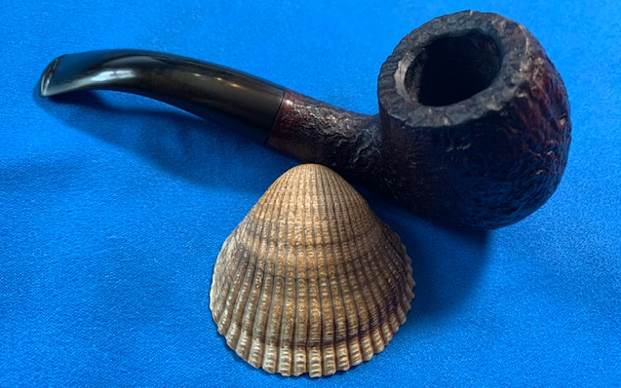
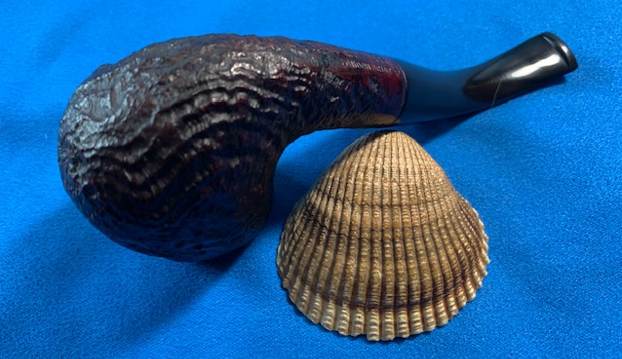
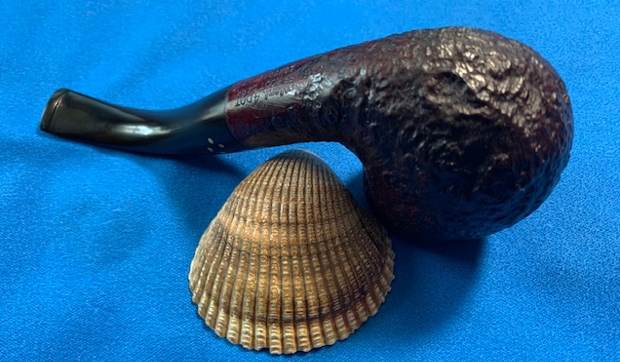
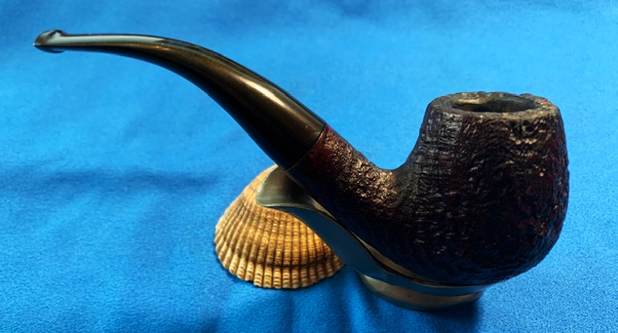
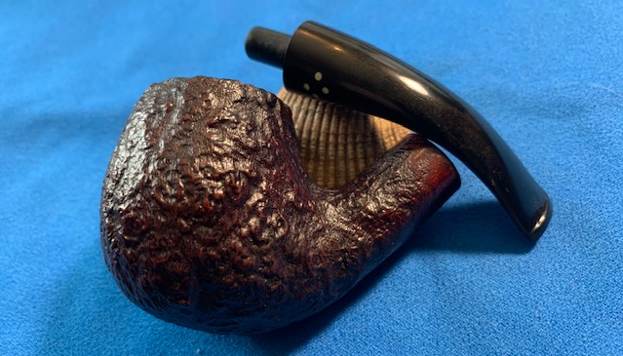
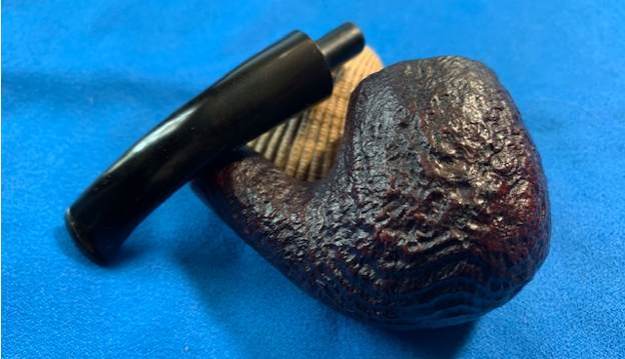
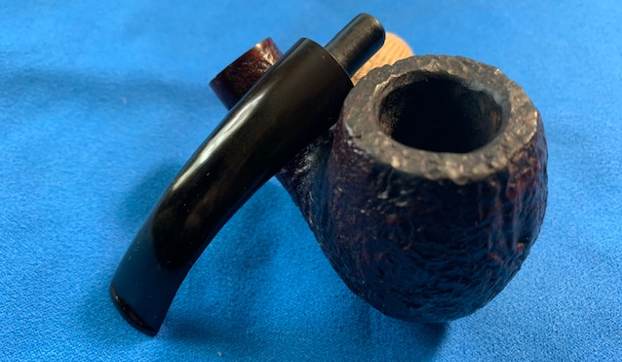
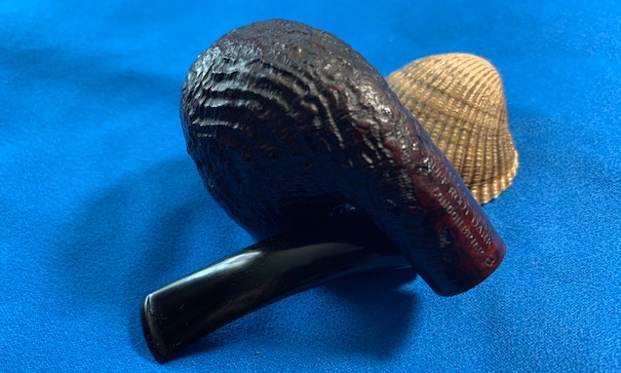
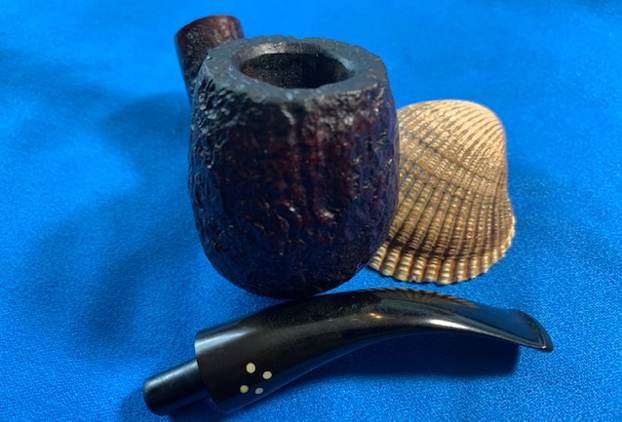
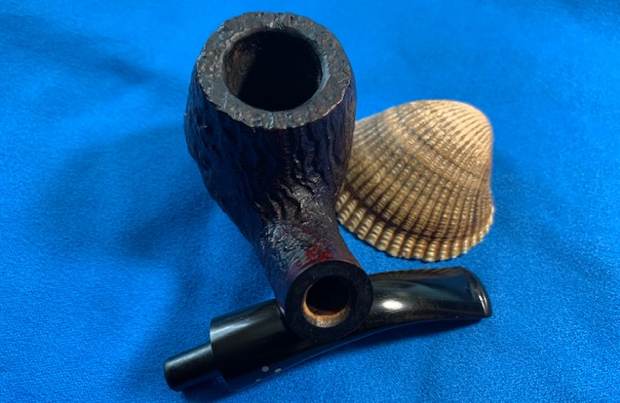
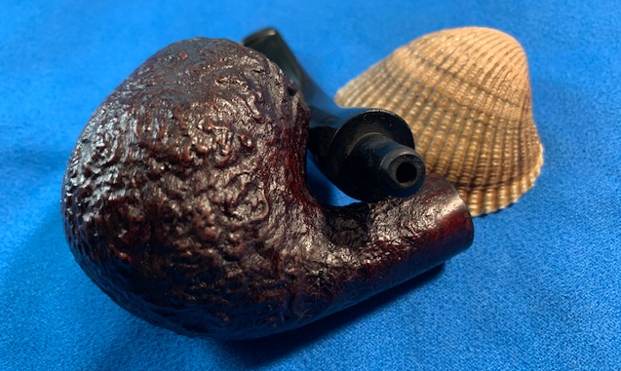
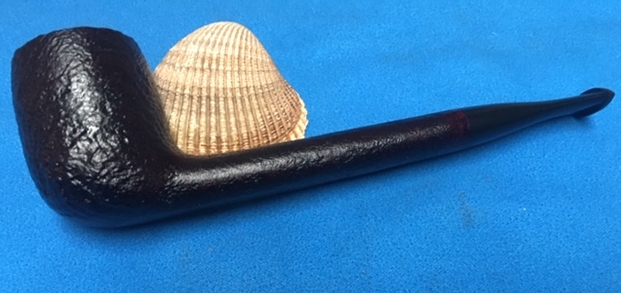
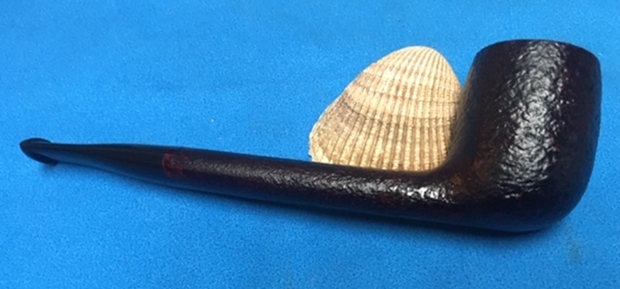
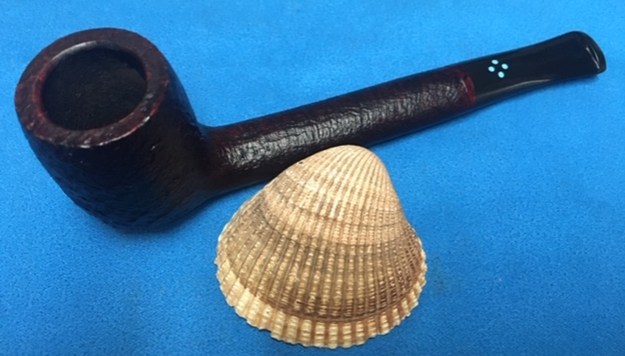
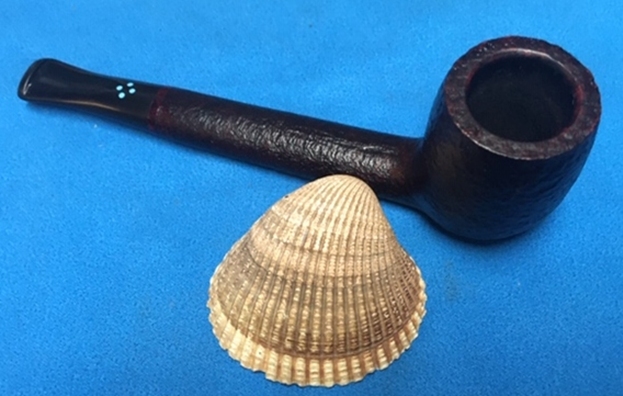
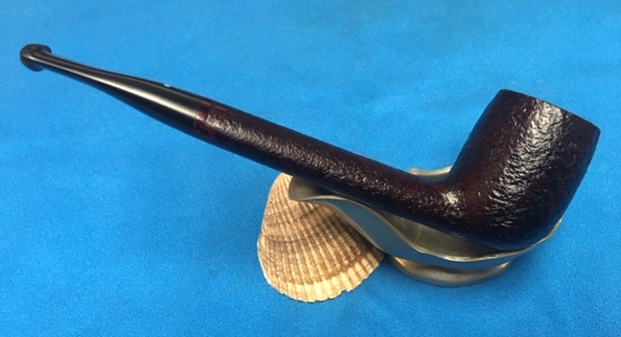
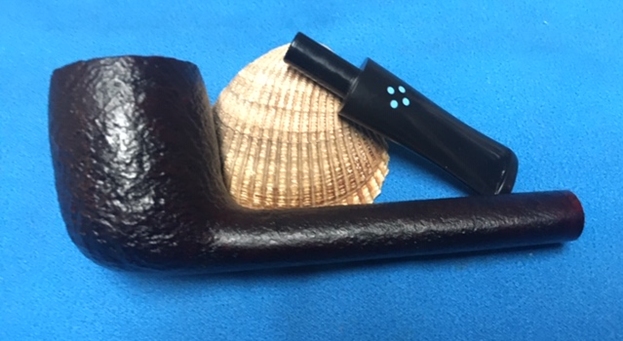
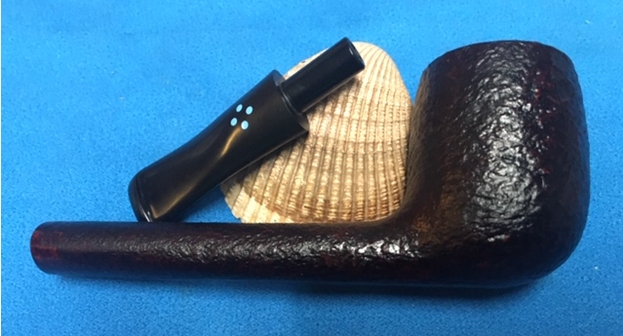
Restoring a beautiful Sasieni 4 Dot Ruff Root Light 5 Diamond Shank Bent Billiard


by Steve Laug

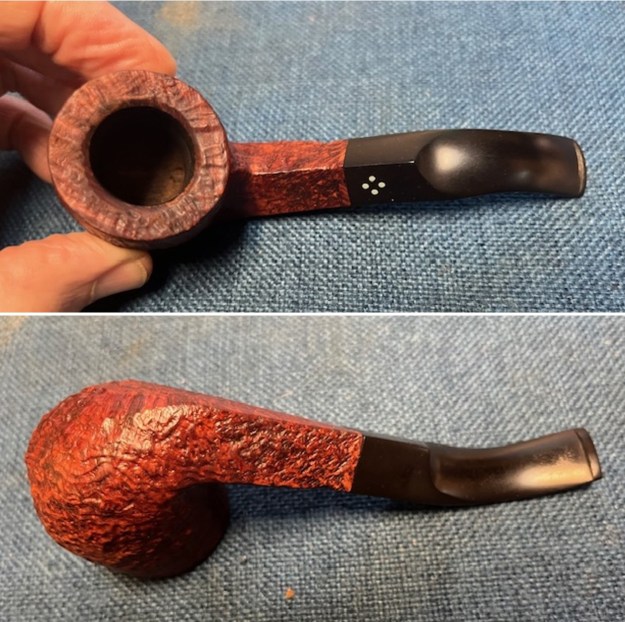
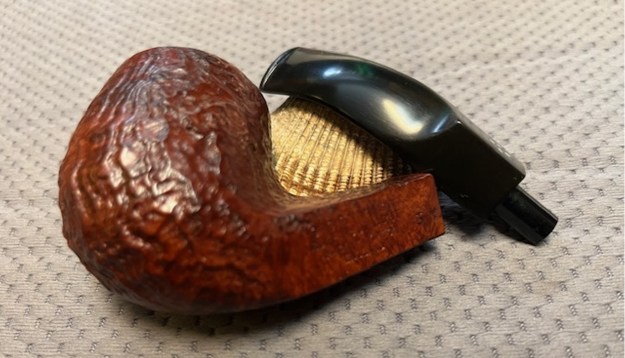
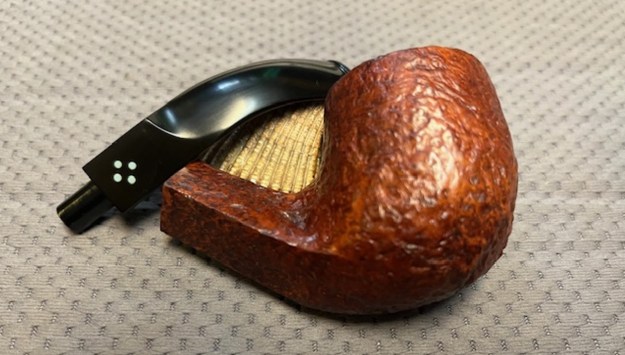
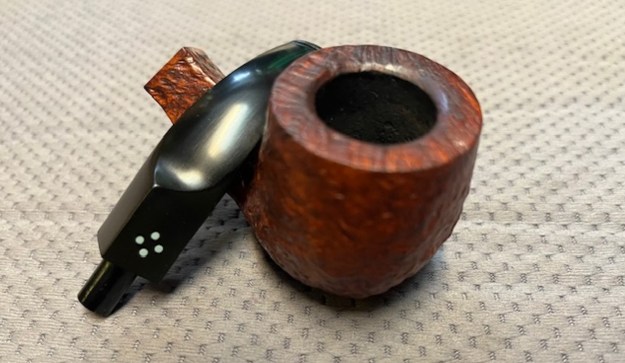
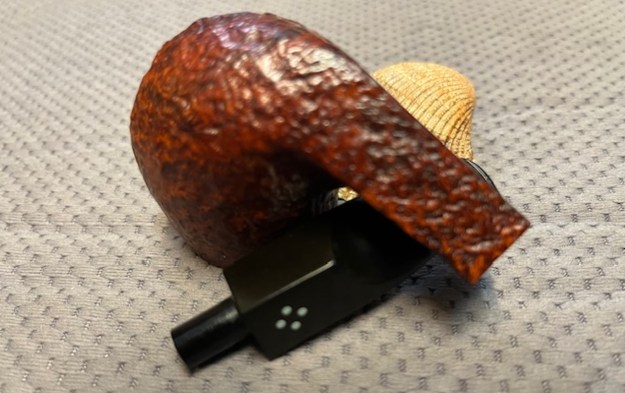
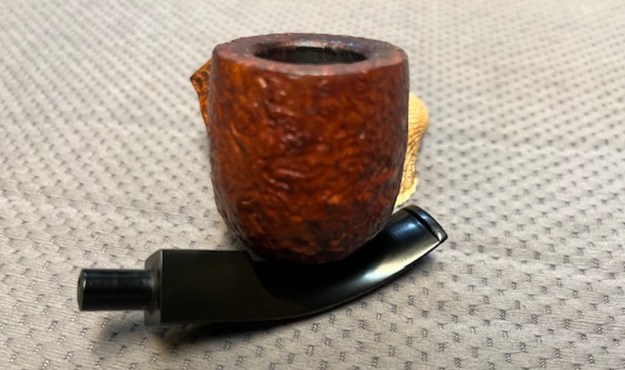
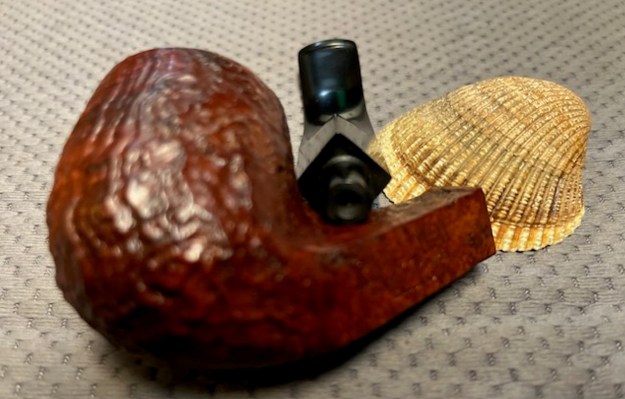
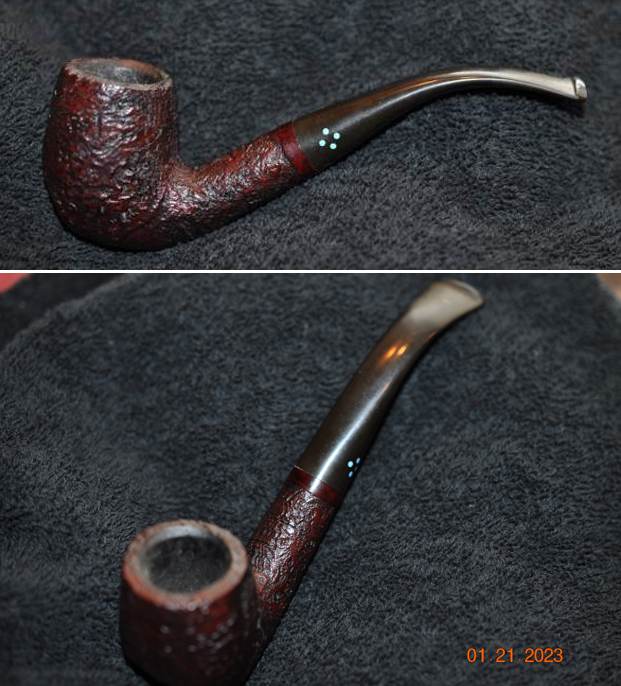
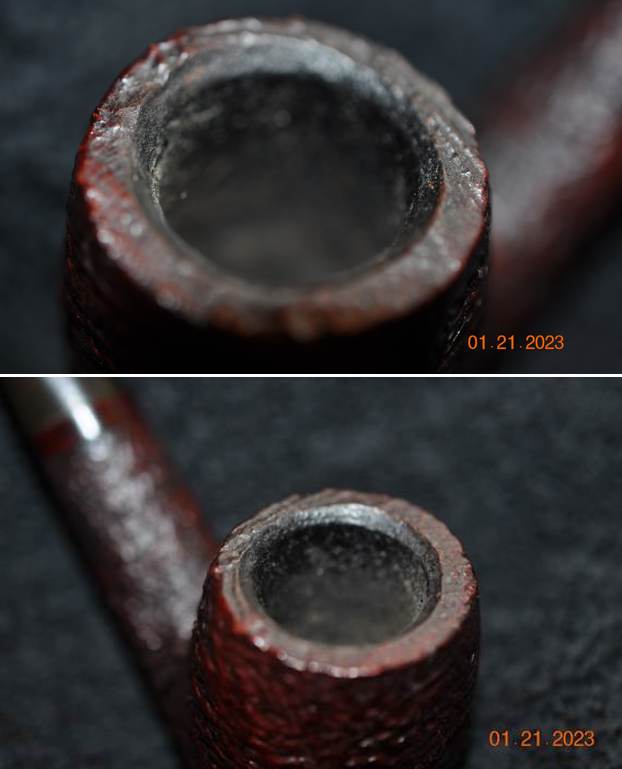
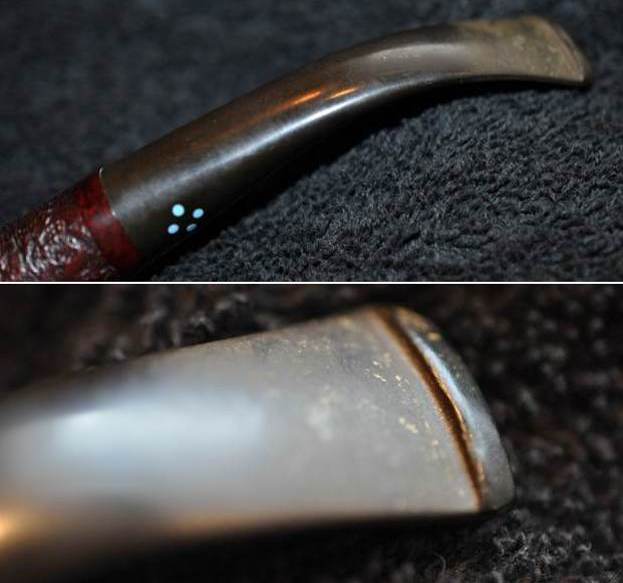
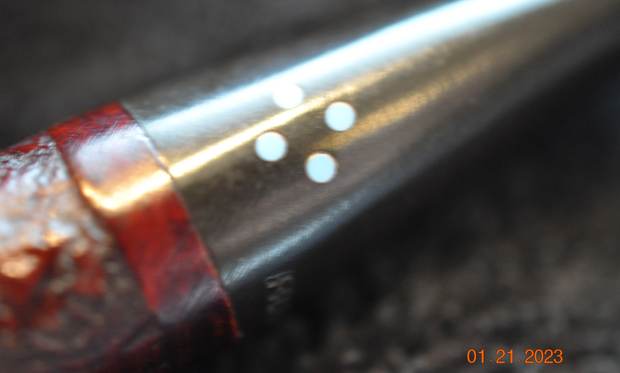
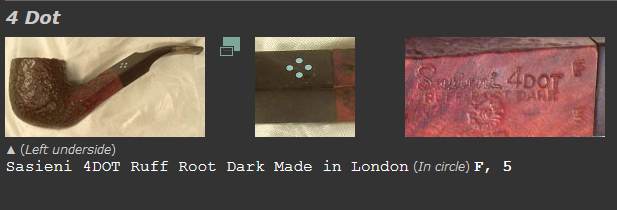
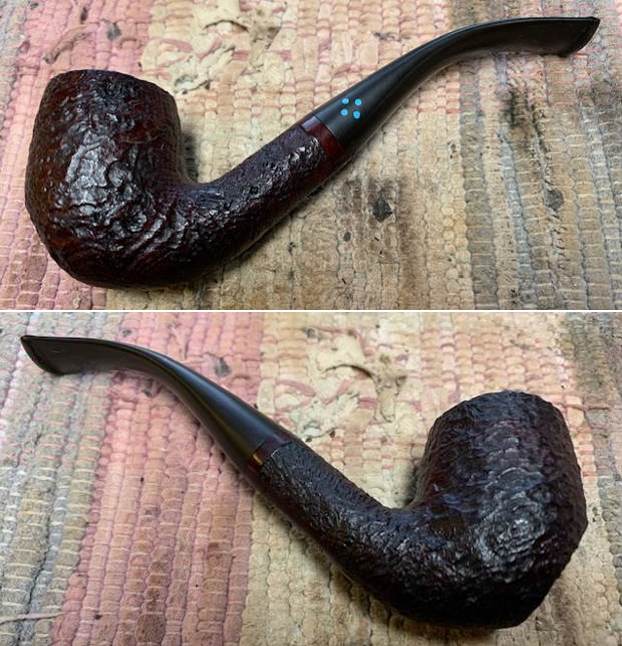
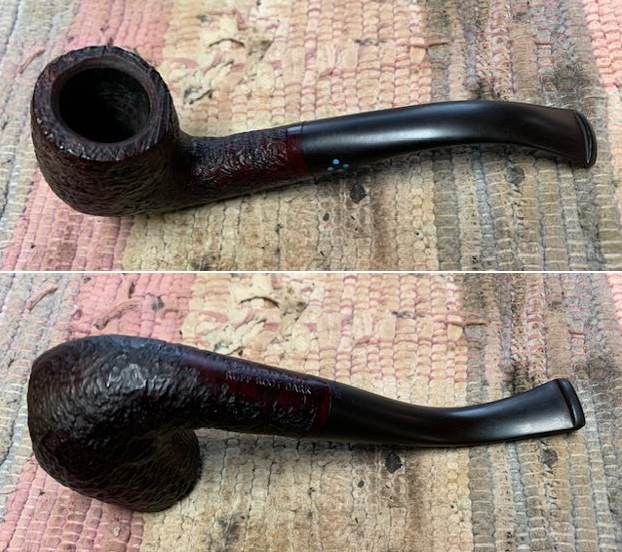
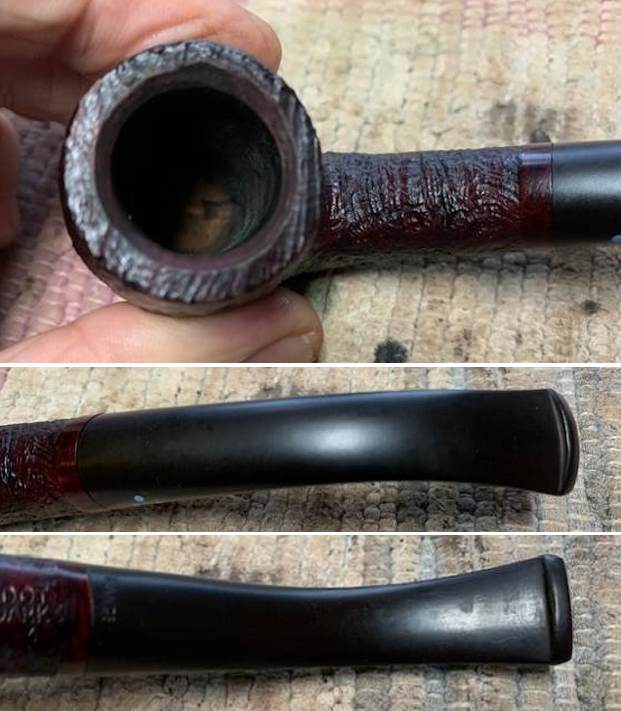
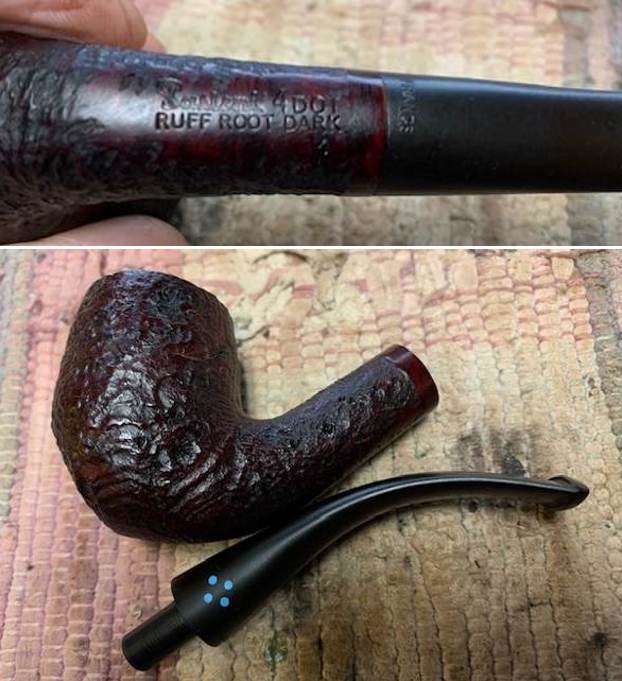
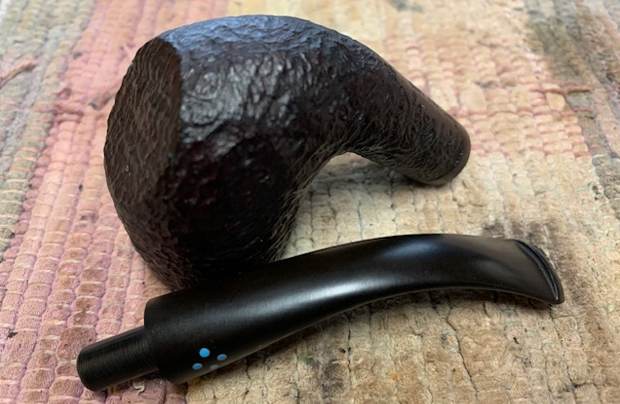
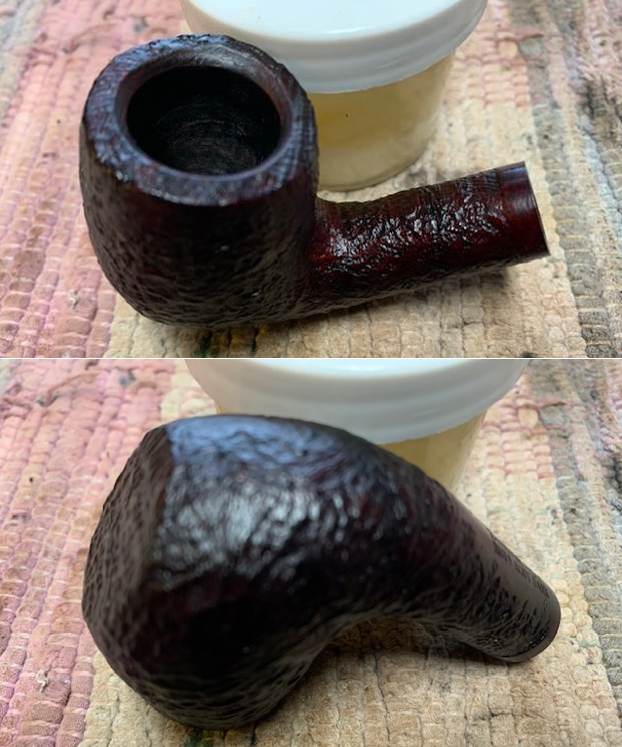
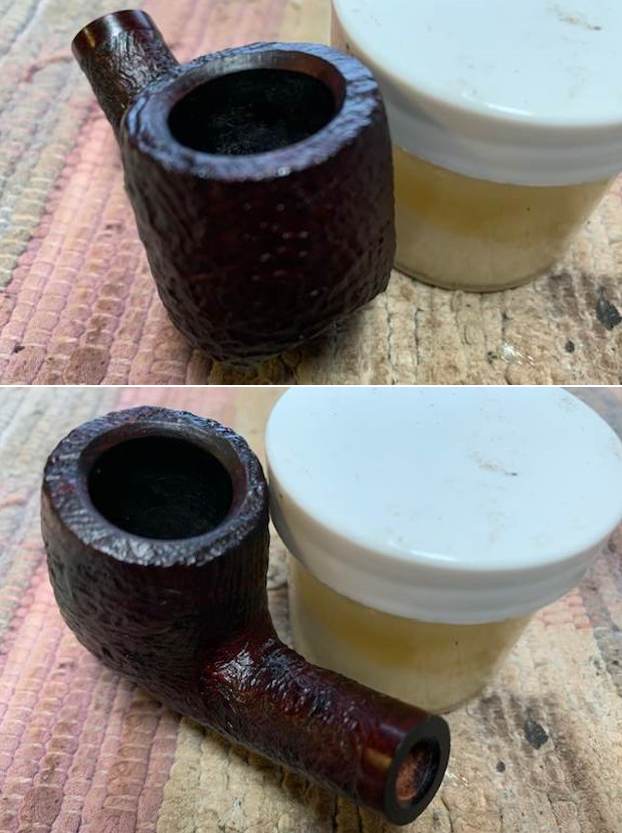
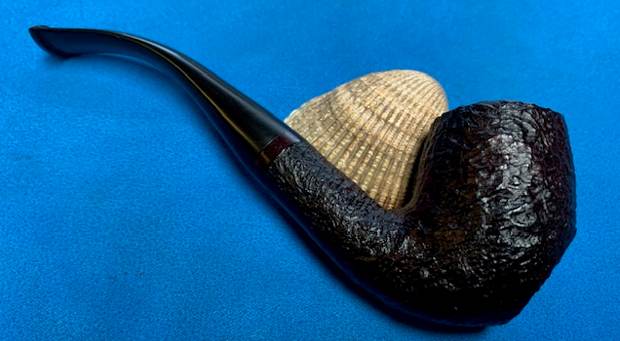
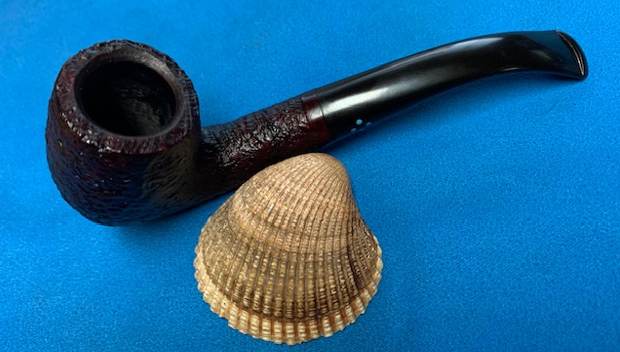
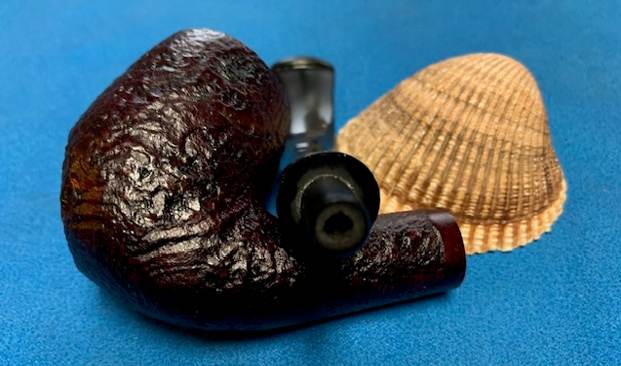
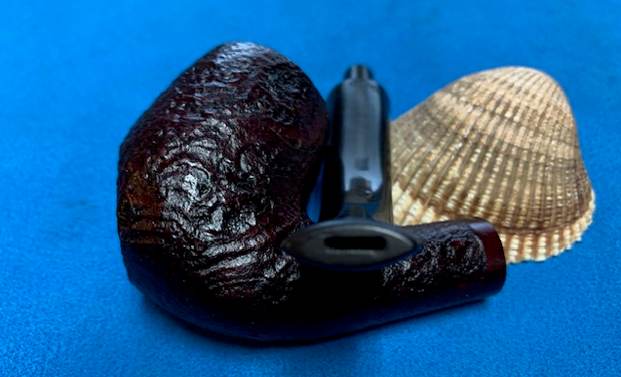
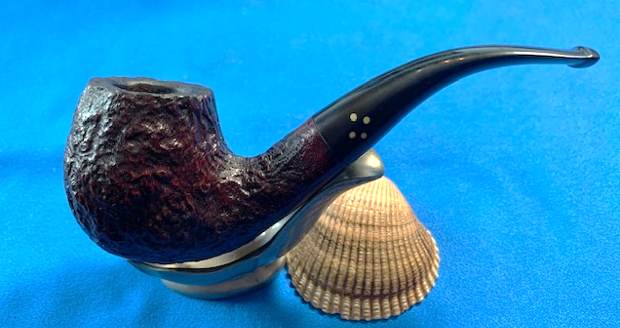
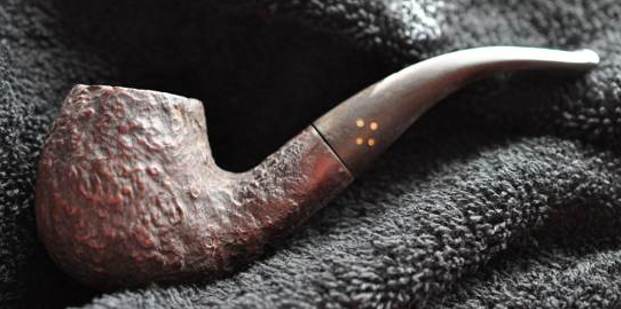
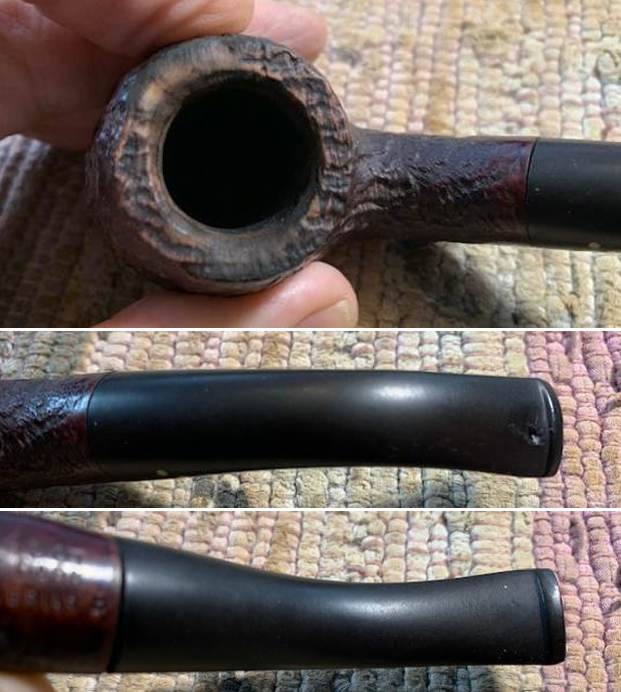
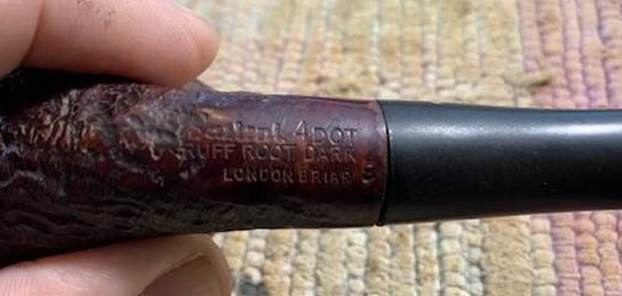
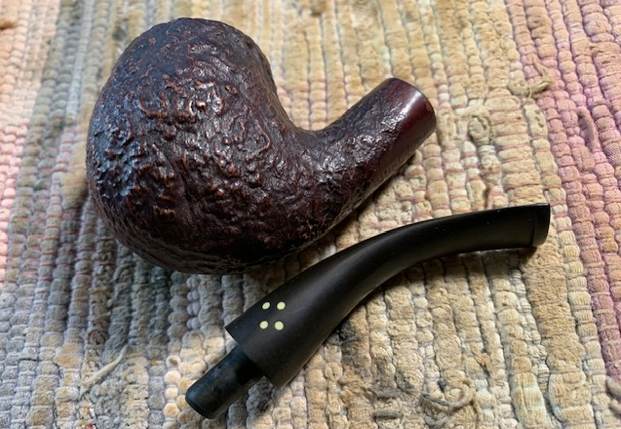
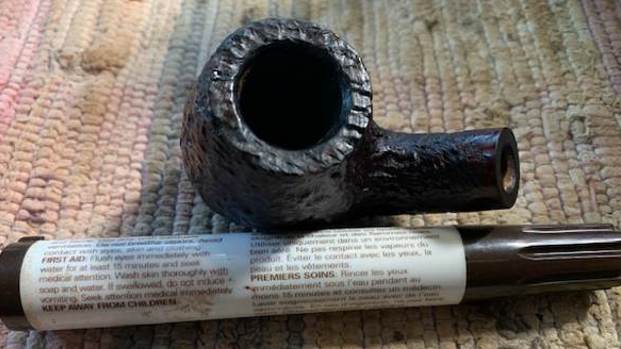
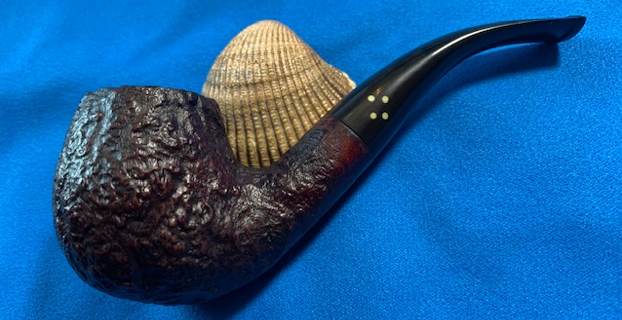
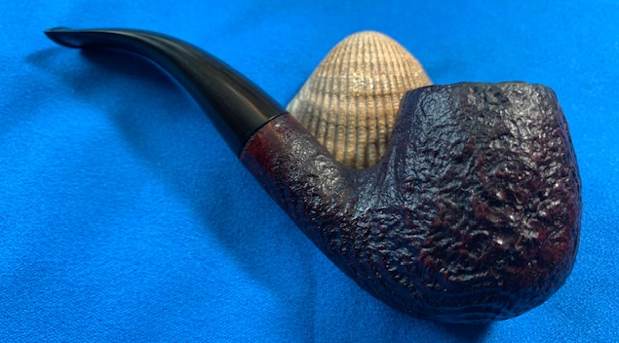
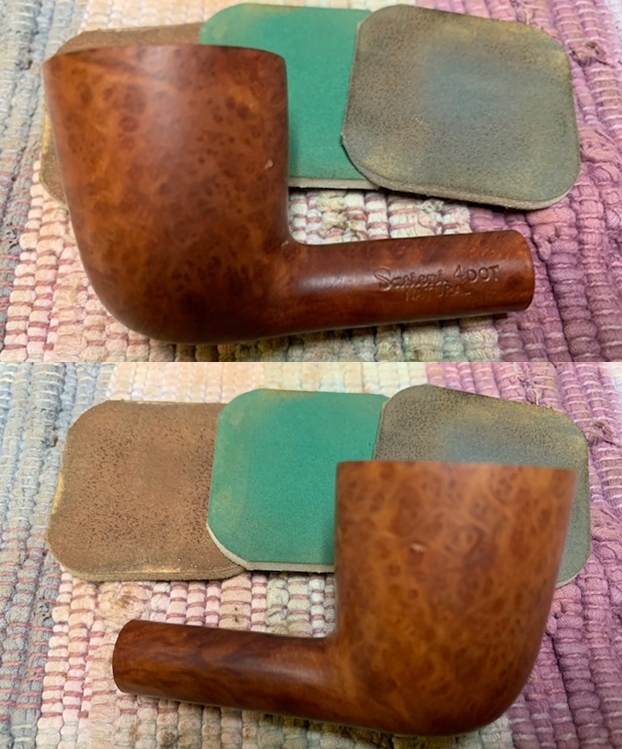
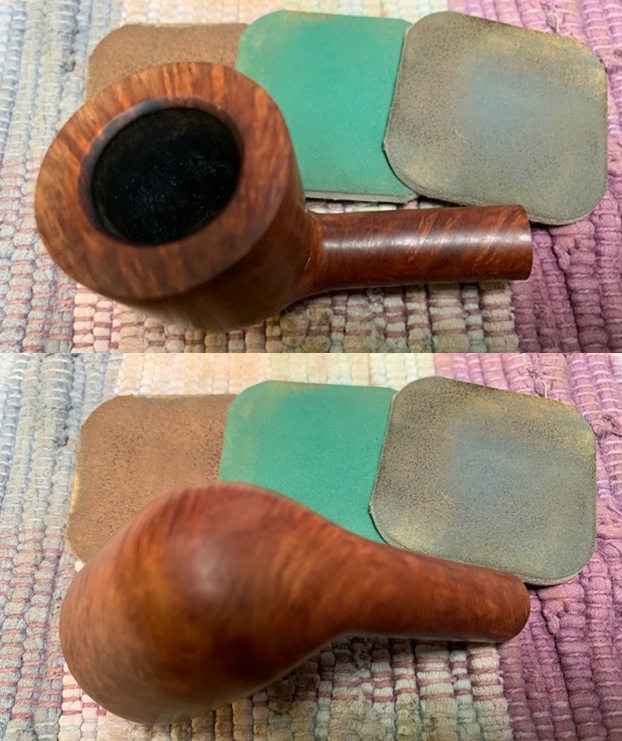
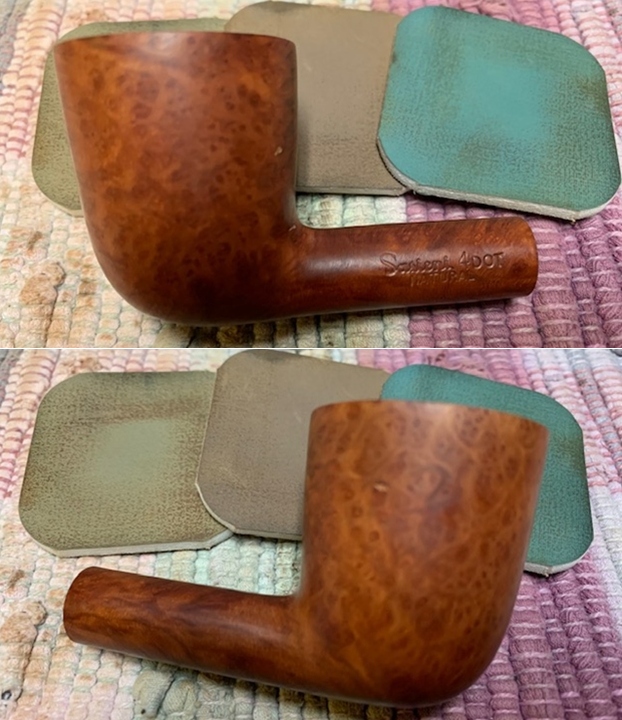
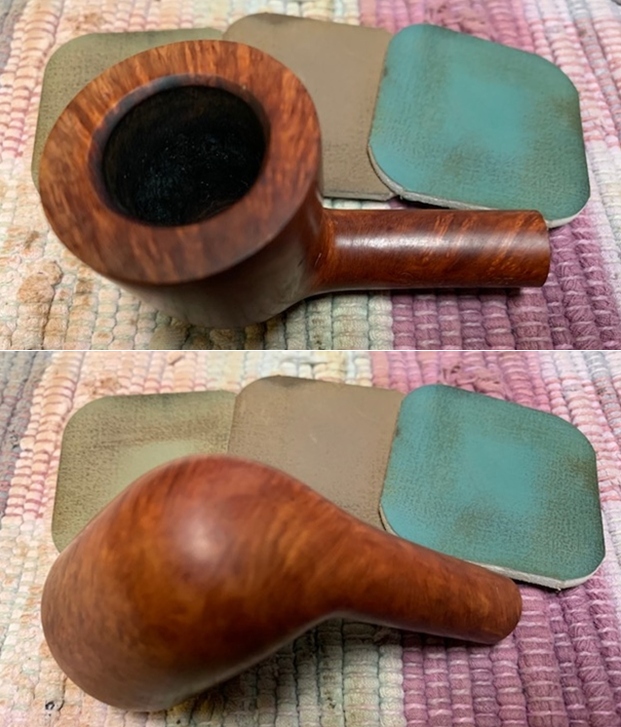
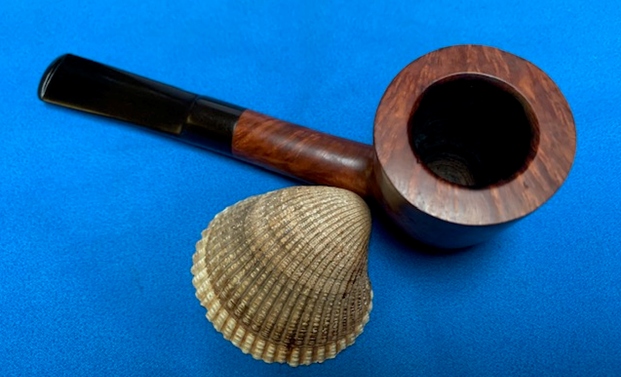
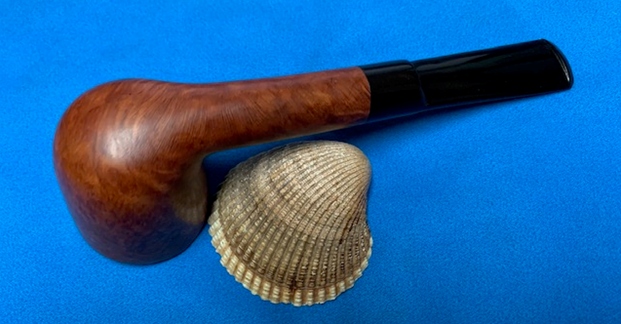
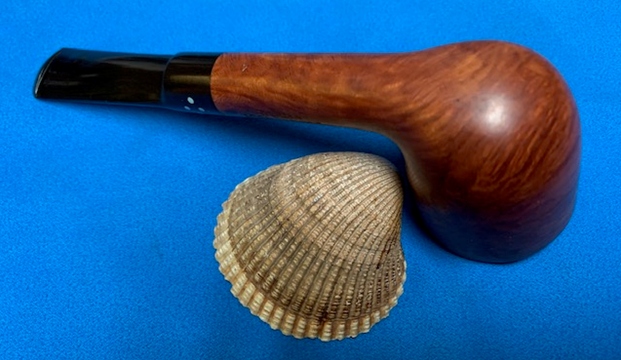
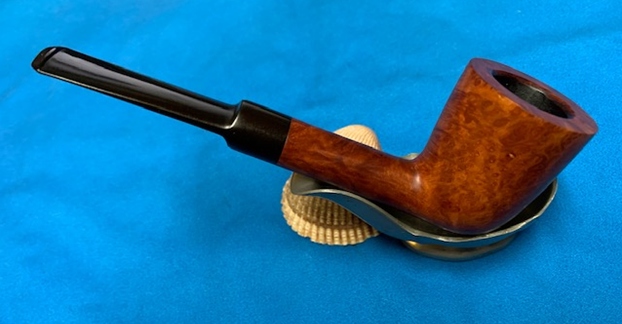
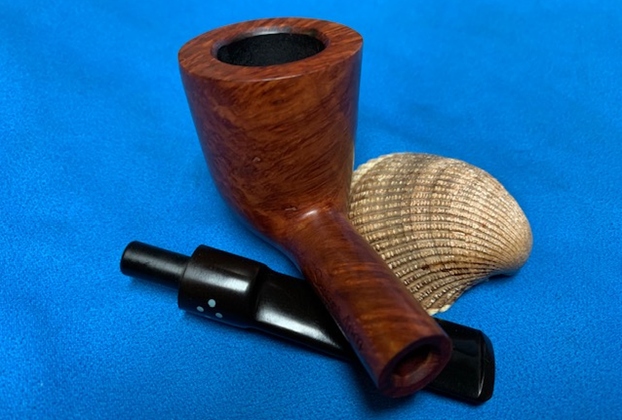
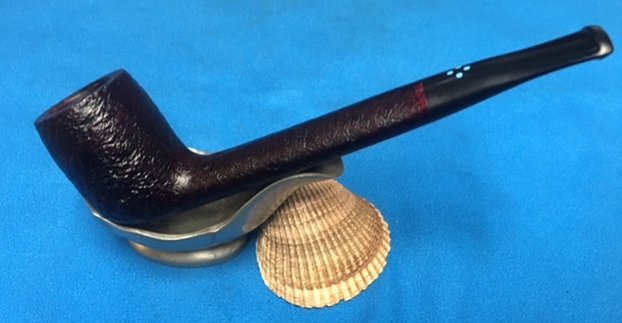
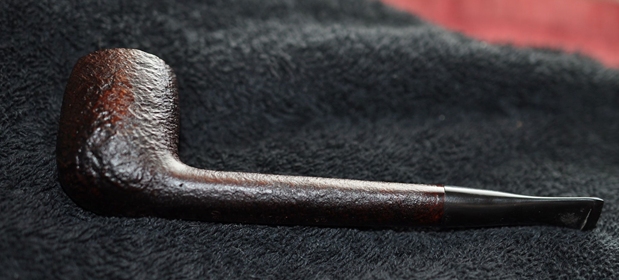
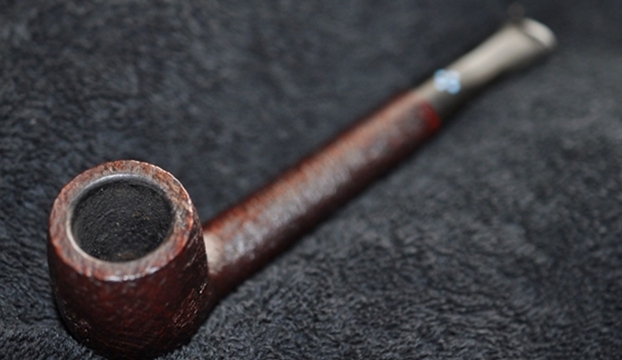
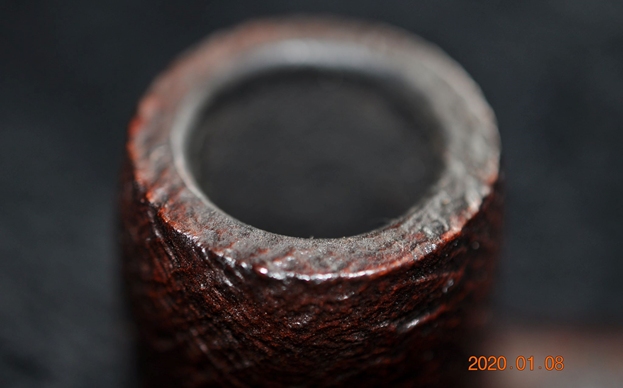
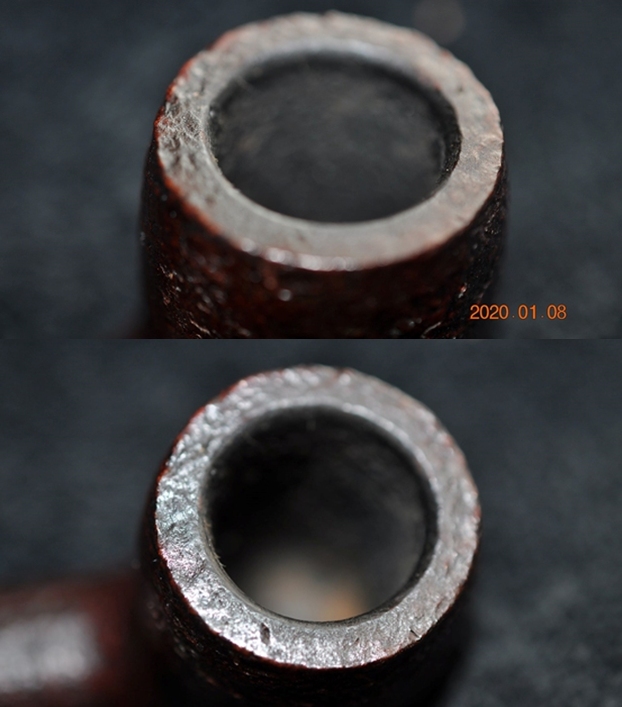
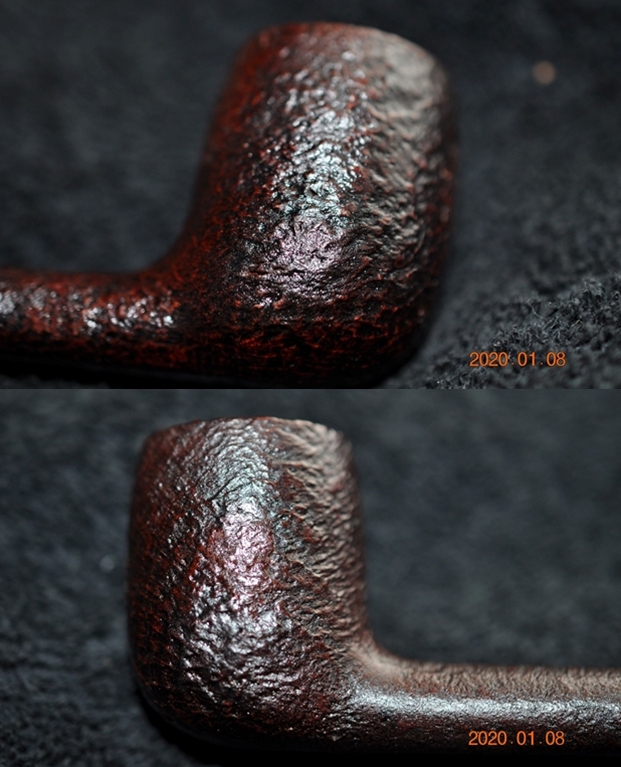
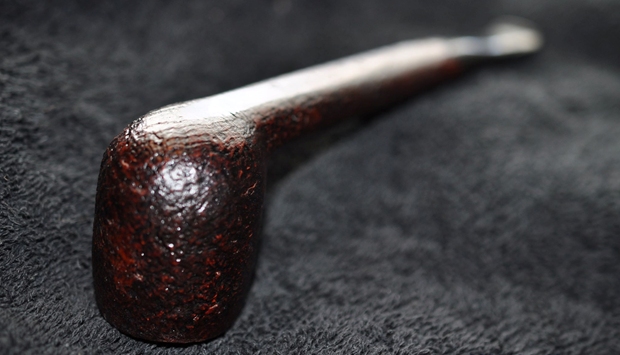
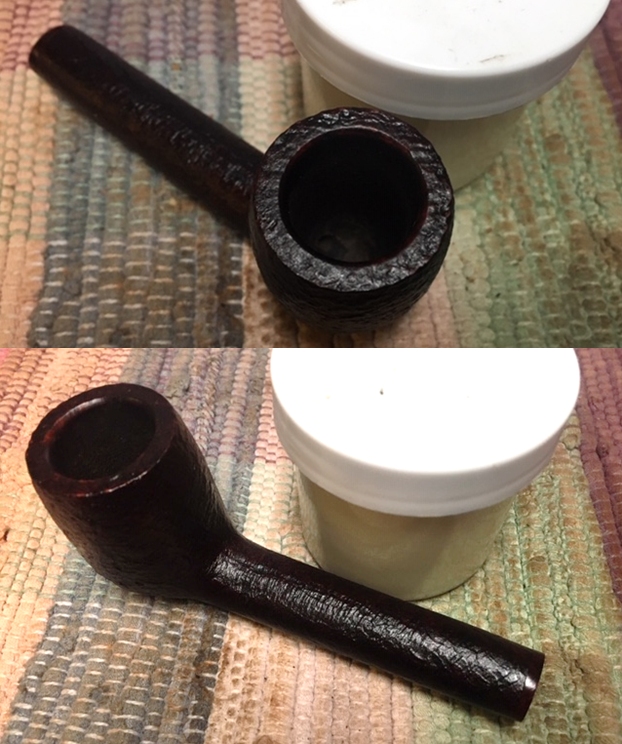
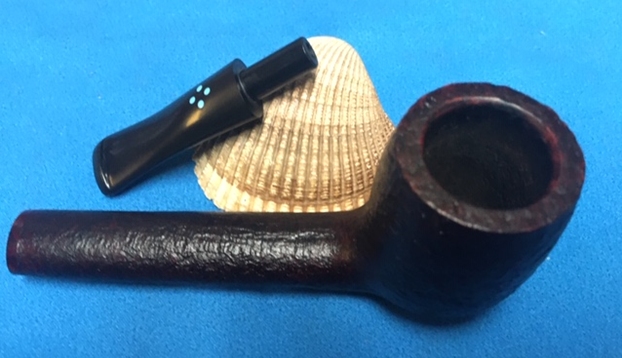
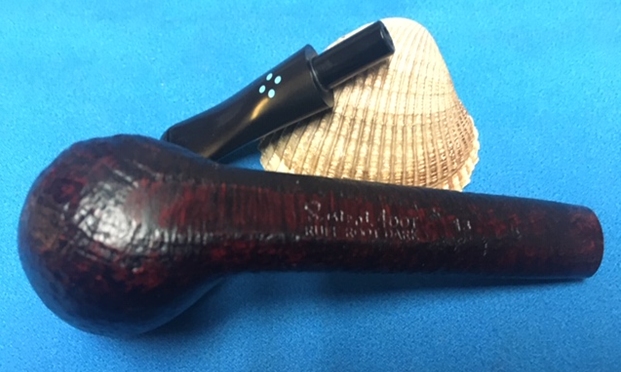
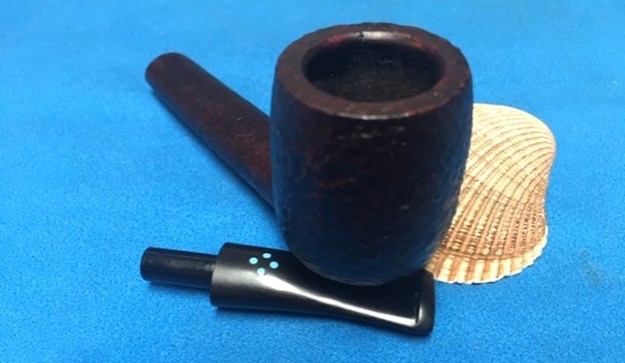
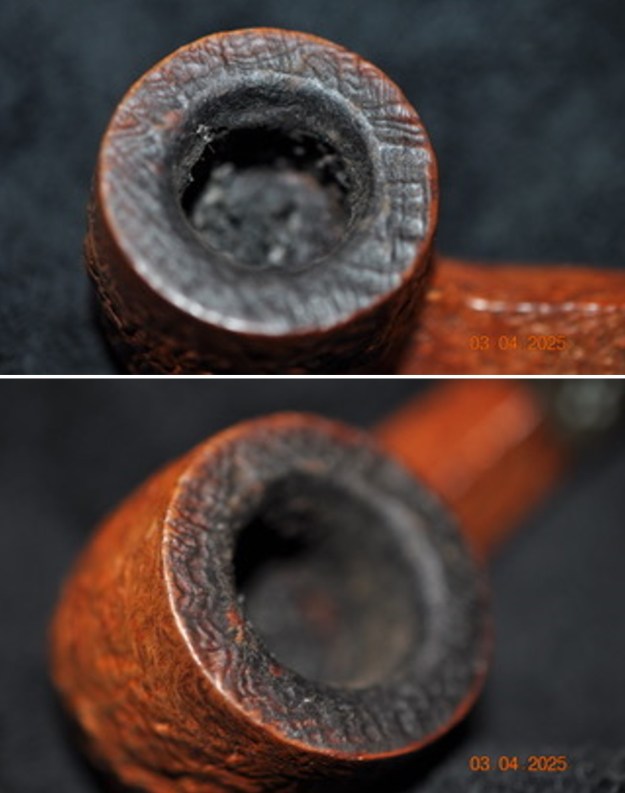
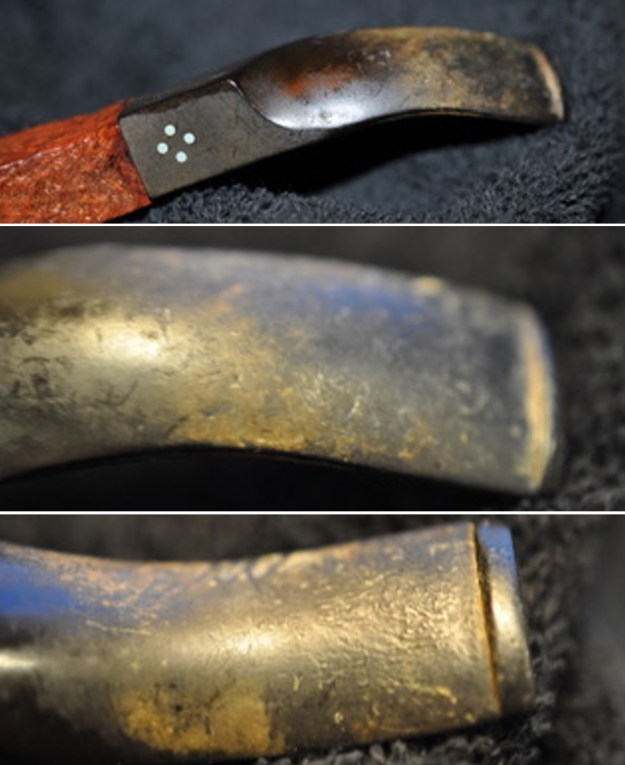
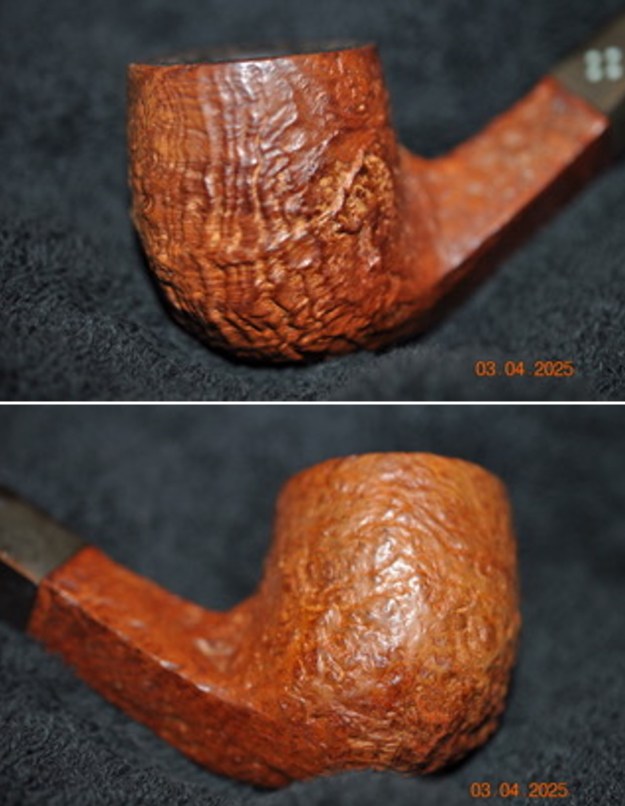
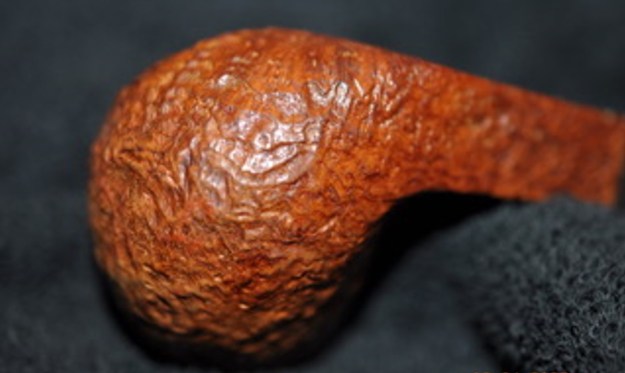
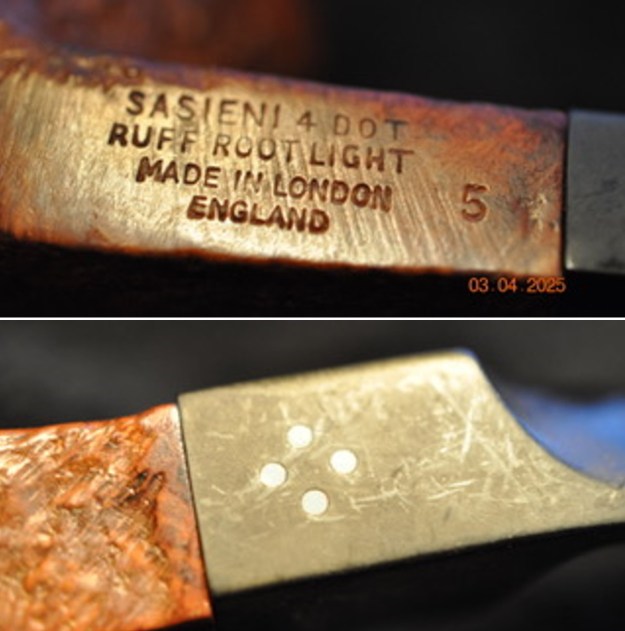
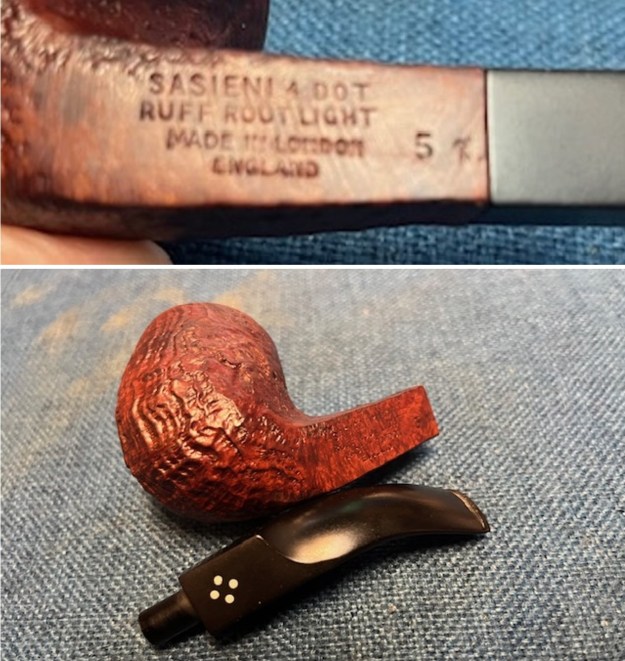
The next pipe on the table is one that we picked up in the lot from an eBay seller in Harrison Township, Michigan, USA on 08/22/2024. The sandblast finish on this English made pipe and the four blue dots on the side of the saddle stem are what caught our eye. It is stamped on the left underside of the diamond shank and reads Sasieni 4 Dot [over] Ruff Root Light [over] Made in London [over] England. That is followed by the shape number 5 or possibly the size number near the stem/shank joint. It has a classic Reddish Brown stain on the sandblast finish that is a stark contrast to the black vulcanite saddle stem. It has a deep sandblast finish on a bent Billiard. The bowl was heavily caked and the inner edge and the top were covered with a thick lava coat in the blast. The stem was oxidized, calcified and had tooth marks and chatter on both sides ahead of the button. The Sasieni 4 Dot four blue dots logo on the left side of the saddle stem looks to be in good condition. Jeff took some photos of the pipe to show the general condition of the pipe before he started his clean up. He took some photos of the rim top and bowl from various angles to give me a clear picture of the condition of the rim top and bowl. The inside of the bowl is heavily caked with lava on the inner edge and in the sandblast on the rim top. He included photos that show the top and underside of the stem. It is as described above. Jeff took some photos of the sides and heel of the bowl to show the condition of the sandblast finish on the pipe. The photos showed some great grain around the bowl and shank even with the grime in the finish. It is a great looking piece of briar. He took a photo of the stamping on the left underside of the diamond shank. It was clear and readable as noted above. He also photographed the 4 dot pattern on the side of the stem.I decided to do some work on the stamping of this pipe to get an idea of the time period it was carved. I turned first to Pipephil’s site to see what I could learn (http://pipephil.eu/logos/en/logo-sasieni.html). I found a pipe that was shaped and stamped similarly to the one I am working on. It is stamped on the underside of the shank and reads like the first two lines on the one in the screen capture photo below. Mine is stamped the same way Sasieni in upper case letters without the flourish. It is followed by 4 DOT [over] Ruff Root Light [over] 5. I included the side bar notes below the picture. From that I knew that the pipe was made during Post-transition Period 1986-today.Post transition, 1986 – today, “4 dot”. Ruff Root Dark: Name for a sandblasted finish. Notice the 4DOT stamping replacing the FOUR DOT from 1986.
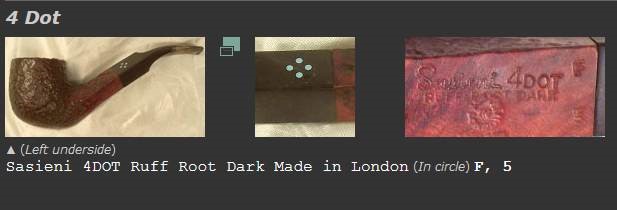
I then turned to Pipedia for more detailed information (https://pipedia.org/wiki/Sasieni). I quote a section of that article below. It refers to the Patent Number that is on the pipe I have on the table. The underlined portion below is particular pertinent to this pipe.

To begin with, there are three main elements to dating the Sasieni pipe, the patent number, the style of the name “Sasieni” as it appears on the shank, and the Dots themselves. Naturally, there are exceptions to these rules (this hobby would be boring without them), but for the most part these guidelines apply better than 95% of the time. All Sasieni One, Four, and Eight Dot pipes made before W.W.II and destined for the U. S. market carried a patent number on the shank which usually started with the numbers “15″, with 150221/20 and 1513428 being representative of the group. Also, the name “Sasieni” was stamped on the shank in a very florid manner, with the tail of the last “i” sweeping underneath the name forming a shape which has been compared to a fish by more than one collector. This script was discontinued by Alfred almost immediately after he took over the company, so this alone tells you your pipe is pre W.W.II. Underneath in block lettering are the words “London Made”, with the patent number making the third line…

…The nomenclature changed again in 1986, with the sale of the company to the Post-Transition firm. The three line nomenclature was changed to two lines, with the first reading “Sasieni 4 Dot” and the second identifying the finish, e.g. Natural, Walnut, or Ruff Root. Note how 4 Dot is spelled, using an Arabic numeral 4, as opposed to spelling out the word “four”. This is the easiest way to spot a Post-Transition Sasieni, as the new company has used both script and block lettering to spell the word “Sasieni” on the shank.

The pipe I have is one that does not have a flourished “i” as that was discontinued by Alfred so that confirms that the pipe was made Post-transition, 1986 forward. The stamping shows the Sasieni name and the 4 Dot stamp on one line. Underneath it bears the finish Ruff Root Light stamp. With all that information I knew that my pipe was from the period after the transition (Post Transition) so it was a newer one.

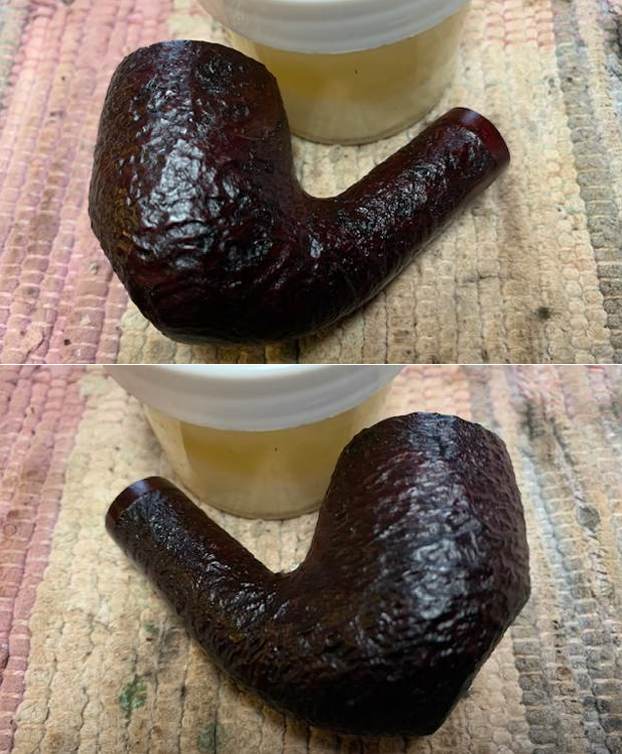
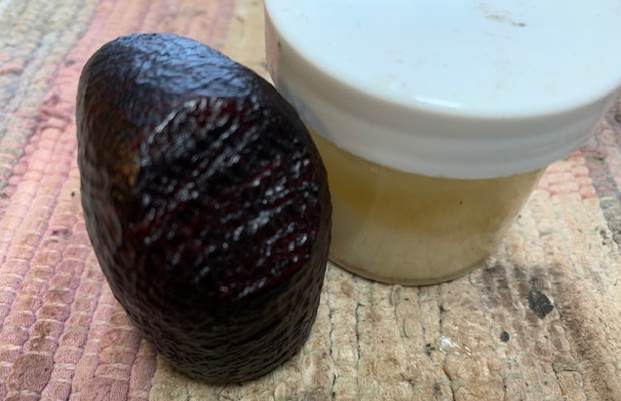
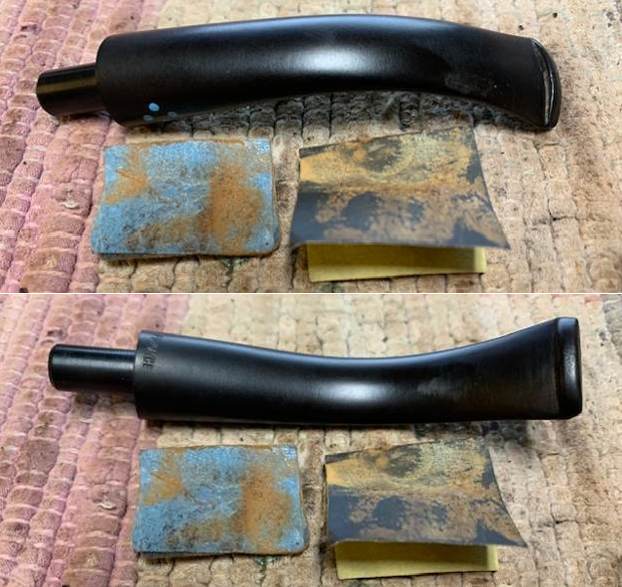
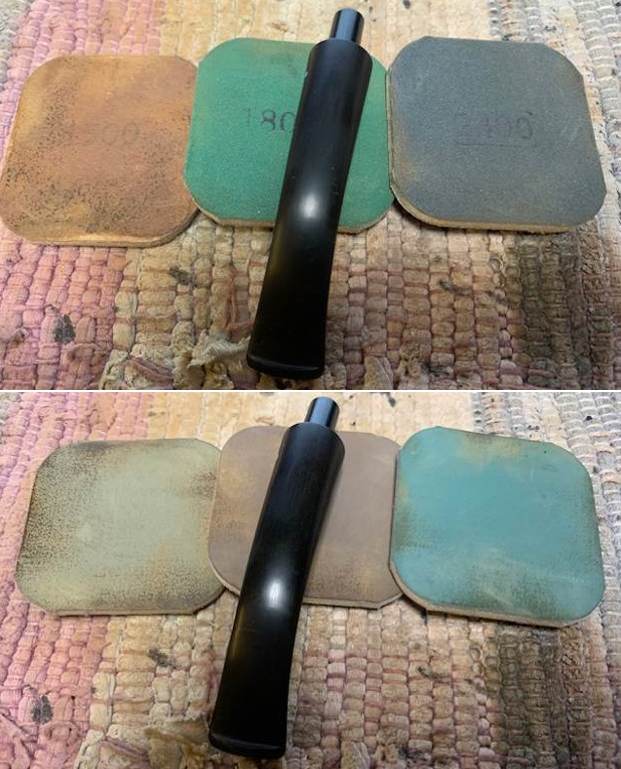
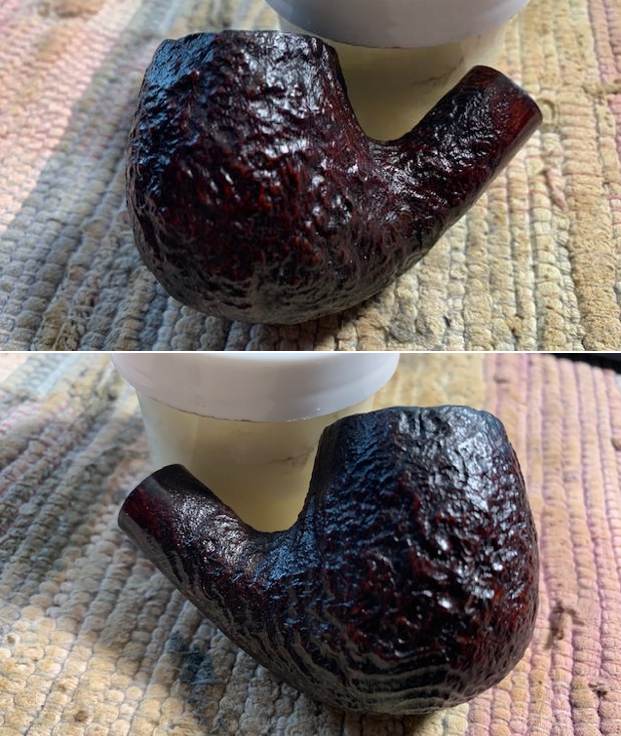
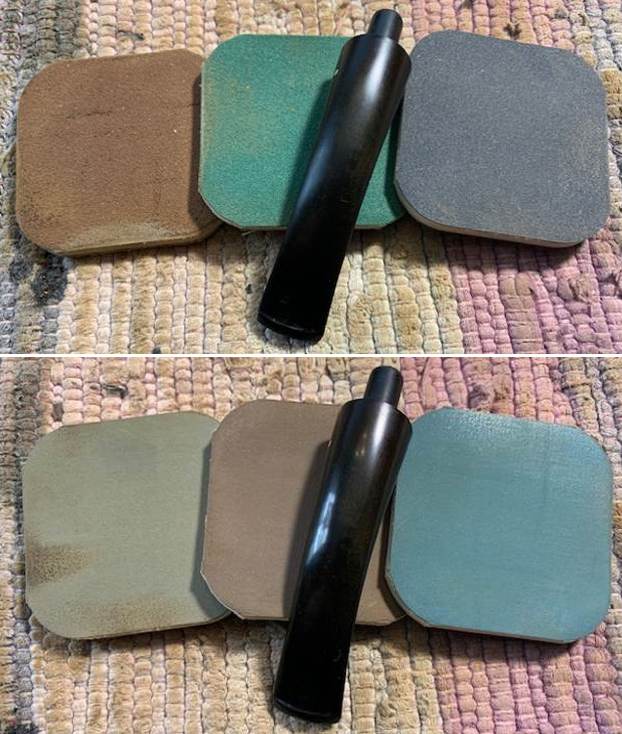
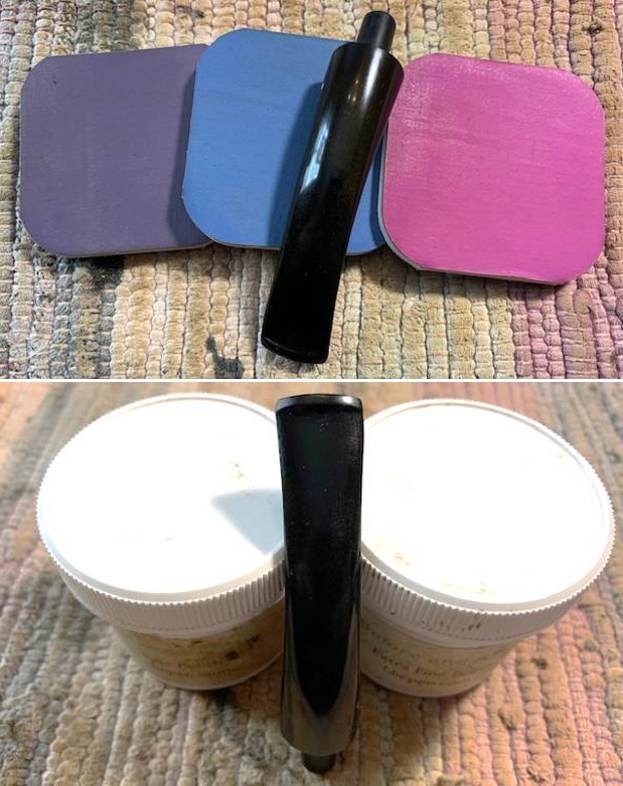
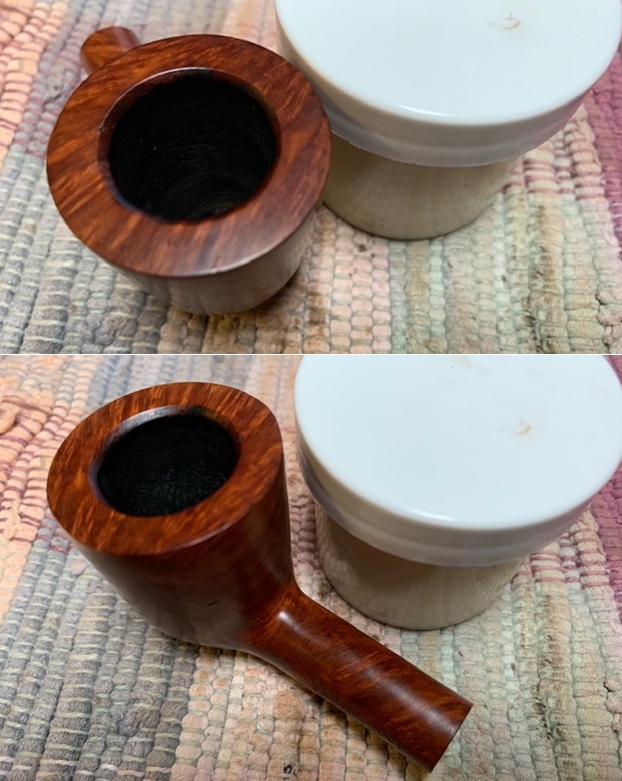
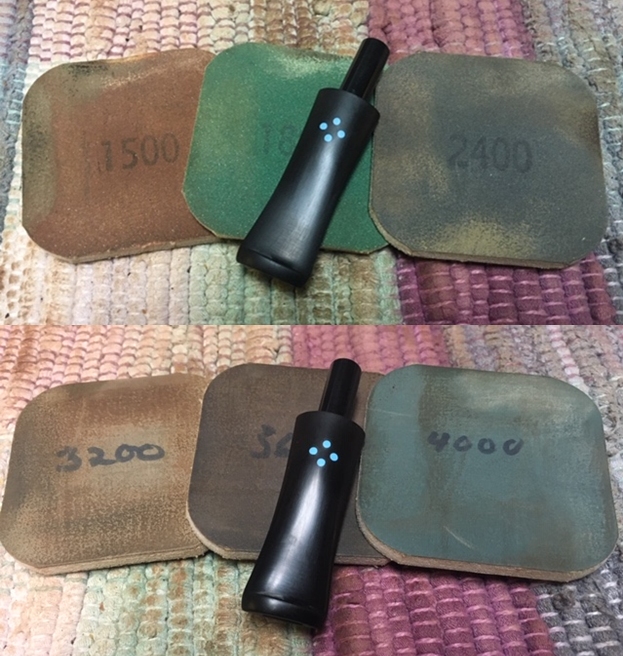
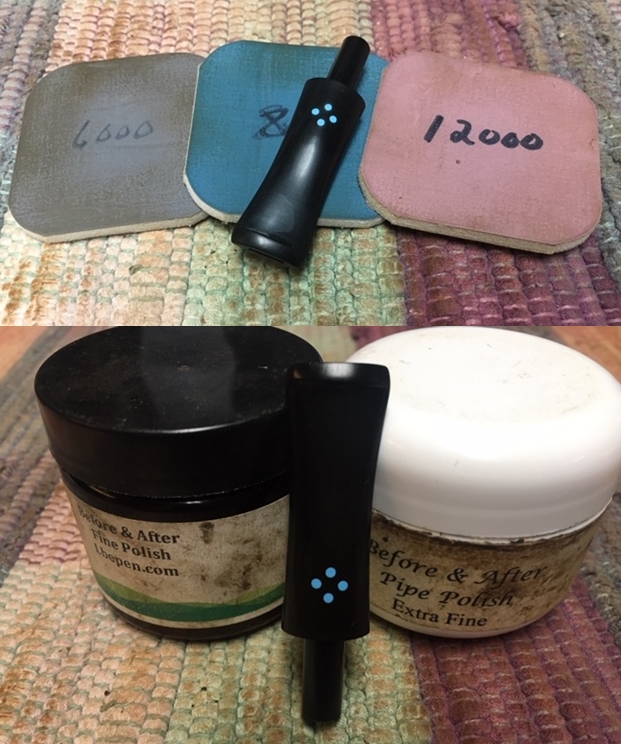
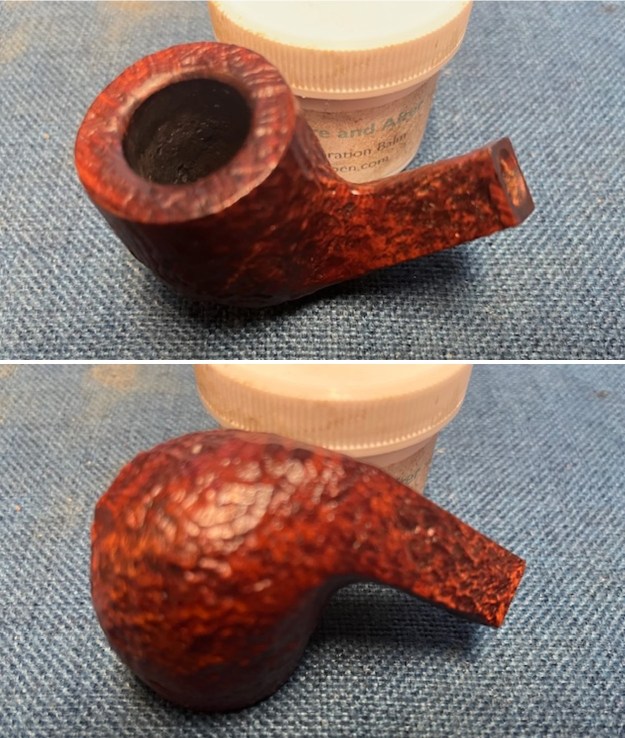
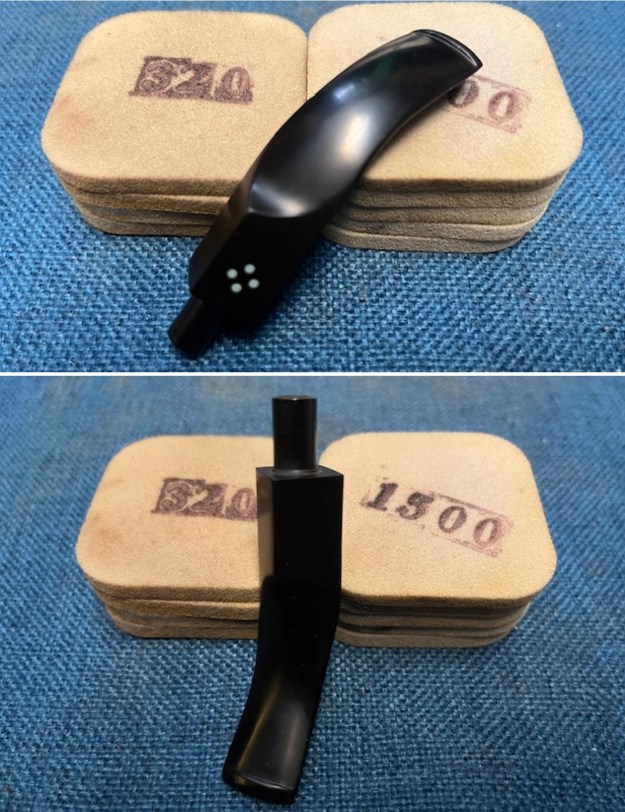
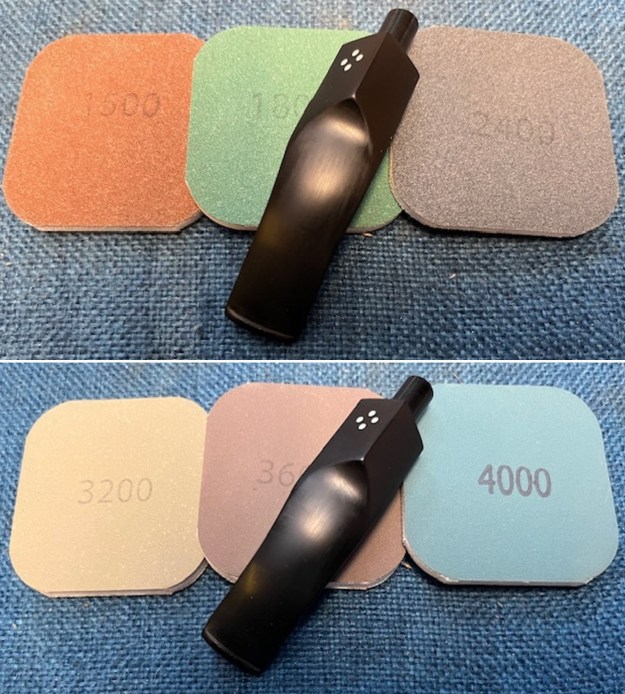
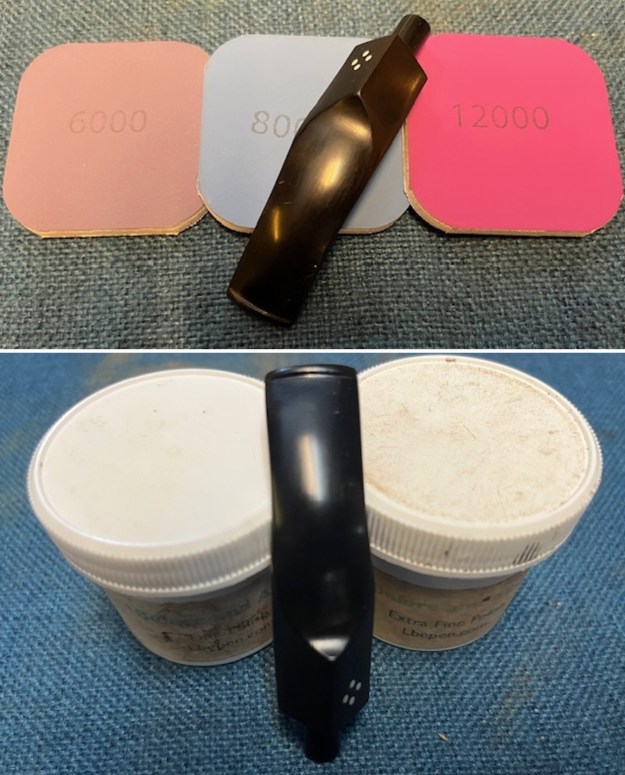
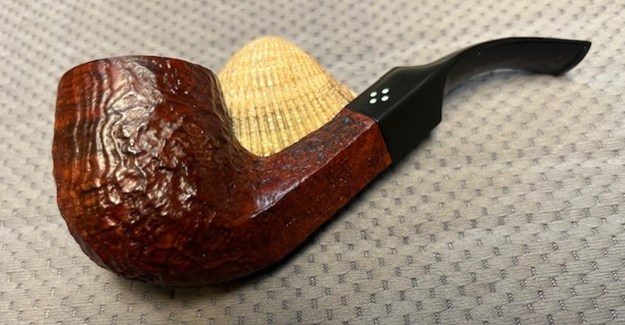
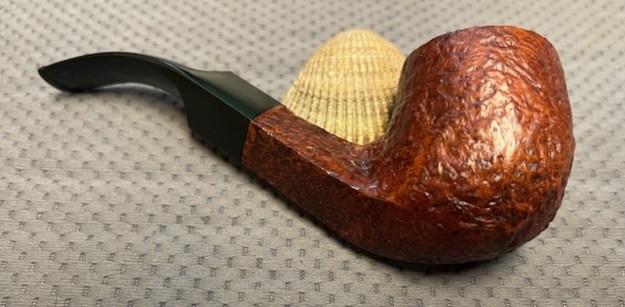
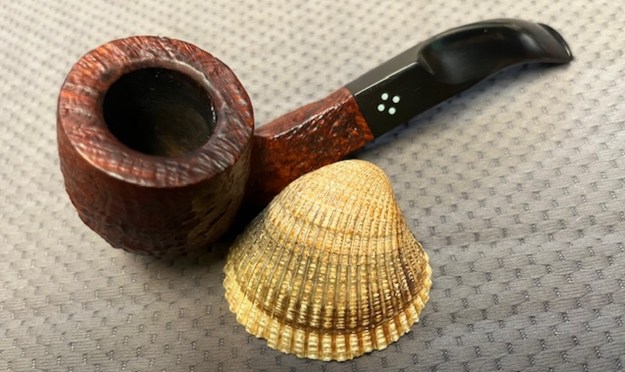
Since Jeff always follows the same pattern of work in his cleanup we do not include photos but rather just a simple summary. Jeff reamed the bowl with a PipNet pipe reamer and followed up with a Savinelli Fitsall pipe knife to remove the cake. He scrubbed out the mortise and the airway in the shank and the stem with alcohol, cotton swabs and pipe cleaners. He scrubbed the exterior of the bowl, rim, shank and stem with a tooth brush and Murphy’s Oil Soap to remove the oils and tars on the rim and the grime on the finish of the bowl. He rinsed it under running water. He dried it off with a soft cloth. He was able to remove the lava build up on the rim top and you could see the damages to the top and edges of the rim. I think this pipe may well been before we worked with Mark Hoover’s Before & After Deoxidizer so he cleaned the internals and externals. The stem was clean but lightly oxidized. I took photos of what the pipe looked like when I brought to my worktable. I took close up photos of the bowl, rim top and stem to show how clean the pipe was. The bowl was clean and the rim top and the inner edge look beautiful. The stem was clean and the tooth marks on the topside are visible. The chatter is light and hardly visible.I took a photo of the stamping on the underside of the left diamond shank. It is very clear and readable and read as noted above. I also removed the stem from the shank and took photos of the pipe to show the look of the parts.The exterior of the bowl looked amazing. I worked some Before & After Restoration Balm into the briar with my finger tips and a shoe brush. I let it sit on the bowl for 10 minutes and then buffed it off with a paper towel and soft cloth. The product is a great addition to the restoration work. It enlivens, enriches and protects the briar while giving it a deep glow. It is a product I use on every pipe I restore. I set the bowl aside and turned to the stem. I sanded the it with 320-3500 grit sanding pads and wiped the stem down after each pad with some Obsidian Oil on a cloth. The shine is coming back beautifully.I polished it with micromesh sanding pads – dry sanding with 1500-12000 grit pads and wiping the surface down with Obsidian Oil after each sanding pad. It is really shining. I polished it further with Before & After Stem Polish – both Fine and Extra Fine. I gave it another coat of Obsidian Oil to finish this step. This Sasieni 4 Dot Ruff Root Light 5 Diamond Shank Bent Billiard with a vulcanite saddle stem is a great looking pipe now that it has been restored. The beautifully grained sandblast finish really works well with the shape and the polished finish is stunning. I put the stem back on the bowl and carefully buffed the bowl and the stem with Blue Diamond on the buffing wheel. I gave the bowl and the stem multiple coats of carnauba wax on the buffing wheel and followed that by buffing the entire pipe with a clean buffing pad. I hand buffed the pipe with a microfiber cloth to deepen the shine. I wiped down the Sterling Silver band with a jeweller’s cloth to protect and polish it. The finished Sasieni 4 Dot Ruff Root Bent Billiard 5 fits nicely in the hand and feels great. Give the finished pipe a look in the photos below. The dimensions of the pipe are Length: 5 ½ inches, Height: 2 inches, Outside diameter of the bowl: 1 ½ inches, Chamber diameter: 7/8 of an inch. The weight of the pipe is 50 grams /1.76 ounces. I will be putting it on the rebornpipes store in the British Pipe Makers Section shortly. Let me know via email or a message if you are interested in adding this pipe to your collection.
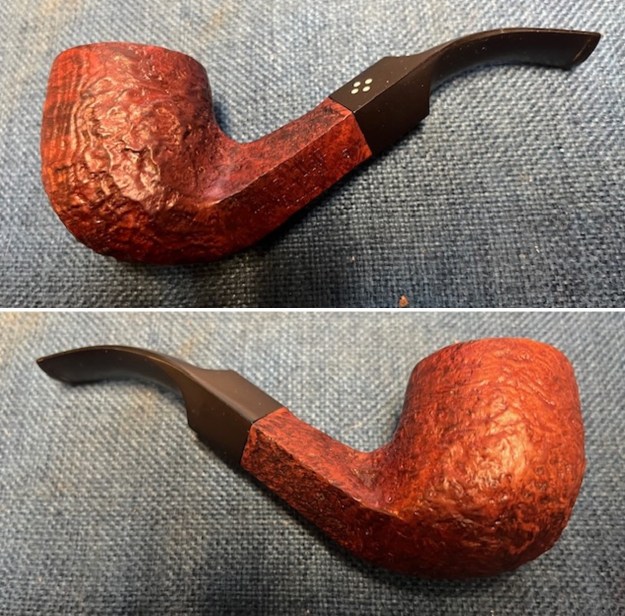
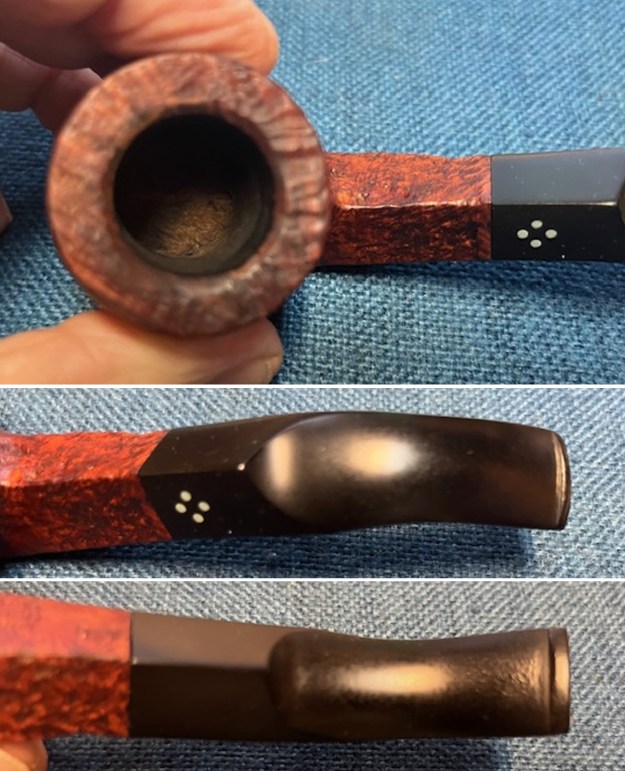
As always, I encourage your questions and comments as you read the blog. Thanks to each of you who are reading this blog. Remember we are not pipe owners; we are pipe men and women who hold our pipes in trust until they pass on into the trust of those who follow us.
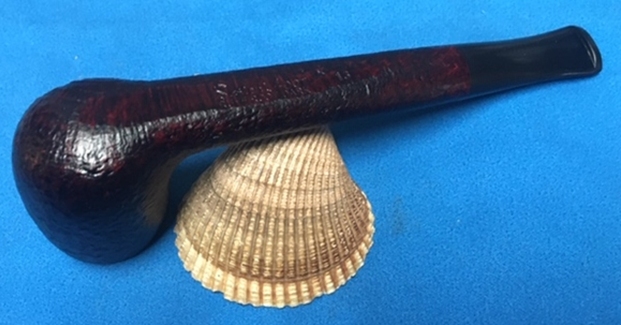
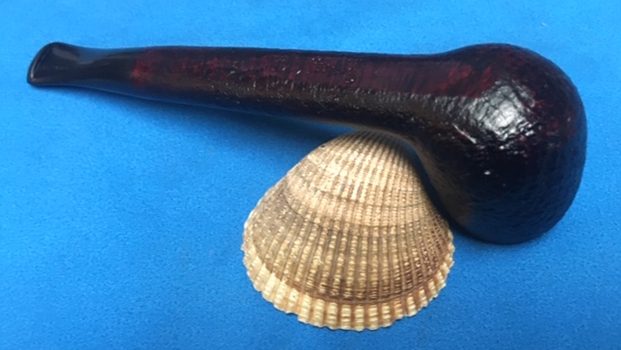
Life for a Sandblast Sasieni 4 Dot Ruff Root Dark 1 Bent Billiard Sitter


Blog by Steve Laug

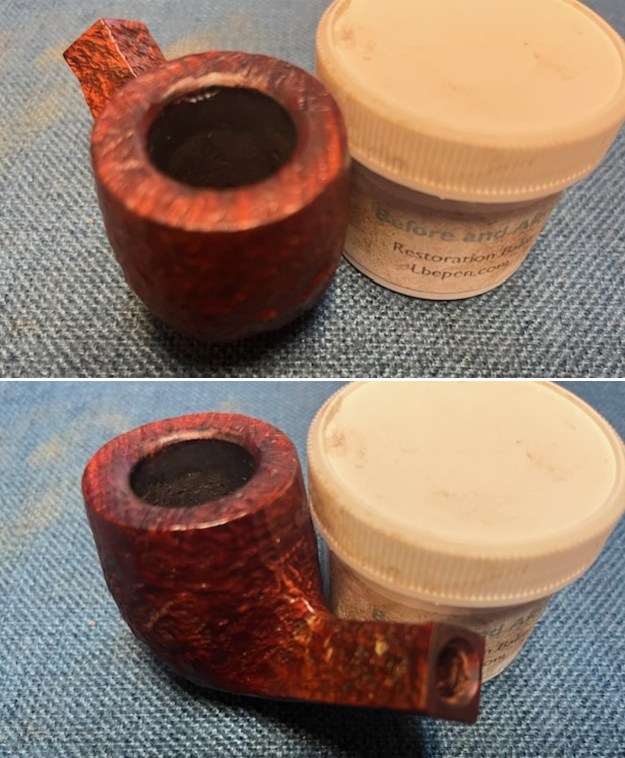
I thought it might be helpful to take you through my process of working on each pipe that we purchase. Jeff has set up a spread sheet to track where the pipe came from, the date of purchase and what we paid for it so that we know what we have invested in the pipe before we even work on it. This takes a lot of the guess work out of the process. This particular pipe was purchased on 08/06/2022 from a seller in Manorville, New York, USA. I also want you to understand why we take the photos we do. If you have followed for a while then you will see the familiar pattern of the photos we include both in the before and midstream process of working on a pipe. It is not accidental or chance as the photos have been taken to help me make an assessment of the pipe Jeff sees before he starts his clean up work. We do this to record the condition that the pipe was in when received it and to assess what kind of work will need to be done on. When I look at these photos this is what I see.

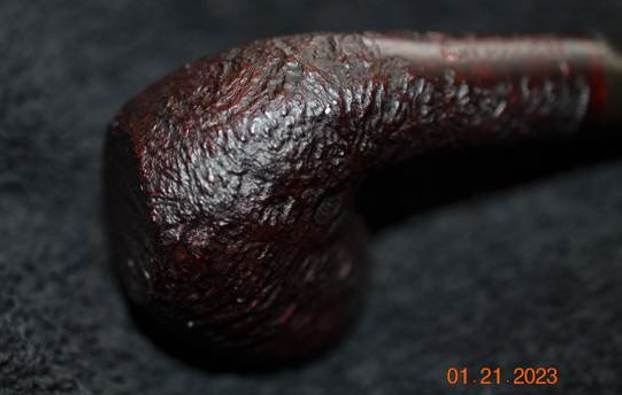
  1. The first thing I see is the flattened bottom front of the bowl that made it function as a standing sitter. It is well proportioned and well made with a classic English shaped Billiard.
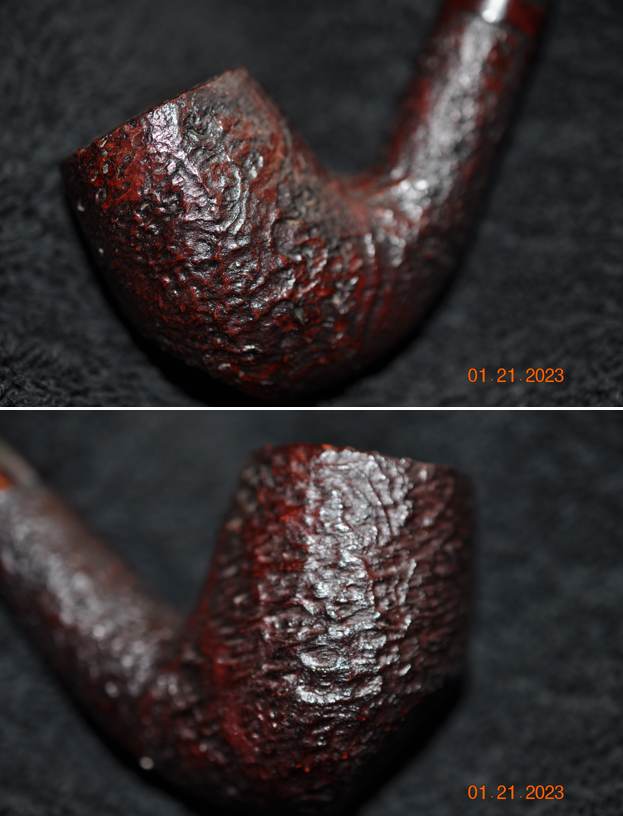
  2. The finish is dirty and there is grime and grit ground into the sides of the bowl. There is grime ground into the finish that fills in much of the sandblast grooves in the finish.
  3. The rim top had a thick lava overflow from the cake in the bowl. The beveled edge and top have a lot of lava in the finish. Sometimes the lava protects the rim top and edges and sometime it hides issues. Its is very dirty looking but cleaning will reveal that.
  4. The bowl has a thick cake in it that hides the walls and the inner edge of the bowl but once it is clean we will know what the edges look like. The outer edges look good and there does not appear to be any obvious burn damage to the top or bowl edges.
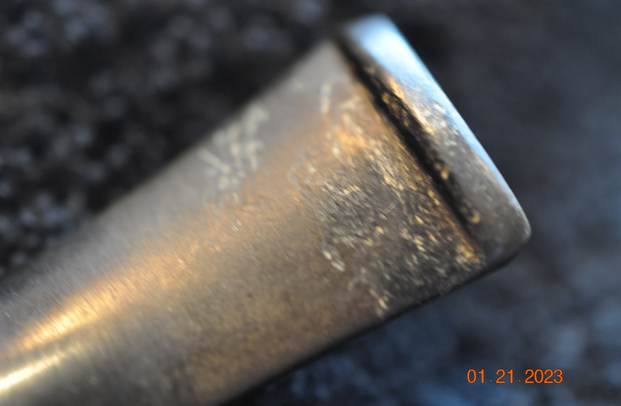
  5. The vulcanite taper stem is in good condition – dirty, oxidized, calcified and has light tooth chatter and marks on both sides. There is a blue Four Dot logo on the left side of the stem.

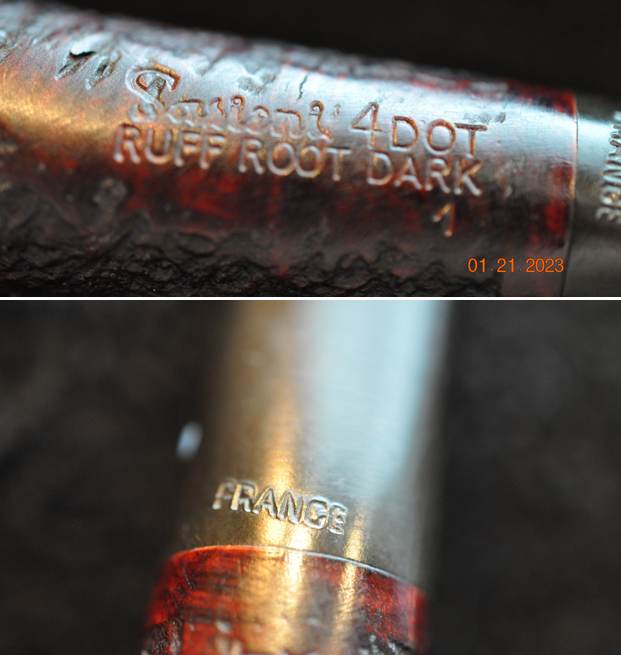
Overall my impressions of this pipe is that it is a beauty that once cleaned up will look pretty amazing. The flattened sitter bottom front of the bowl is something I have not seen before but it is quite interesting. The exterior of the bowl does not show any hot spots or darkening. The pipe is very English looking and is a classic short Bent Billiard shape that I have seen on other Sasieni pipes (without the flattened bowl front). The photos below confirm the assessment above. Jeff took close up photos so that I could have a clearer picture of the condition of the bowl, rim edges and top. The rim top photos confirm my assessment above. The cake in the bowl is quite thick and the rim top has lava and debris on it. You can also see the condition of the outer edge but the inner edge is a bit of a mystery at this point. This is what I look for when assessing a pipe. While there is lava and darkening there is no visible burn damage at this point. The bowl is still fairly round. The photos of the stem surface from various angles confirmed my assessment of its condition. You can see the oxidation and calcification on the stem surface toward the button. The surface though dirty does not appear to have deep tooth marks – chatter yes, but no deep marks. The stem is quite dirty but otherwise undamaged. The next photos show the amazing grain around the heel and the sides of the bowl. Tell me what you see? Are there any visible problems that stand out to you? Are the cracks or scratches? Are there visible flaws or fissures in the briar? What kind of grain stands out around the bowl and heel? Any visible issues on the heel of the bowl? Even the questions should help you to see what I am looking for when I see these photos. You have read it a few times now in the previous blogs. What am I looking for when I look at the shank stamp? In this case it is stamped on a smooth panel on the underside and reads Sasieni 4 Dot [over] Ruff Root Dark [over] 1 in three lines. The underside of the stem is stamped and reads FRANCE. How does the stamping look to you? Is it clear and readable? Is it faint in spots or is it uniform? I know you are looking at photos but so do I at this point in the process. I decided to do some work on the stamping of this pipe to get an idea of the time period it was carved. I turned first to Pipephil’s site to see what I could learn (http://pipephil.eu/logos/en/logo-sasieni.html). I found a pipe that was stamped similarly to the one I am working on. It is stamped on the underside of the shank and reads like the first two lines on the one in the screen capture photo below. Mine is stamped the same way Sasieni in script without the fish tail. It is followed by 4 DOT [over] Ruff Root Dark [over] 1. I included the side bar notes below the picture. From that I knew that the pipe was made during Post-transition Period 1986-today.Post transition, 1986 – today, “4 dot”. Ruff Root Dark: Name for a sandblasted finish. Notice the 4DOT stamping replacing the FOUR DOT from 1986.

I then turned to Pipedia for more detailed information (https://pipedia.org/wiki/Sasieni). I quote a section of that article below. It refers to the Patent Number that is on the pipe I have on the table. The underlined  portion below is particular pertinent to this pipe.

To begin with, there are three main elements to dating the Sasieni pipe, the patent number, the style of the name “Sasieni” as it appears on the shank, and the Dots themselves. Naturally, there are exceptions to these rules (this hobby would be boring without them), but for the most part these guidelines apply better than 95% of the time. All Sasieni One, Four, and Eight Dot pipes made before W.W.II and destined for the U. S. market carried a patent number on the shank which usually started with the numbers “15″, with 150221/20 and 1513428 being representative of the group. Also, the name “Sasieni” was stamped on the shank in a very florid manner, with the tail of the last “i” sweeping underneath the name forming a shape which has been compared to a fish by more than one collector. This script was discontinued by Alfred almost immediately after he took over the company, so this alone tells you your pipe is pre W.W.II. Underneath in block lettering are the words “London Made”, with the patent number making the third line…

…The nomenclature changed again in 1986, with the sale of the company to the Post-Transition firm. The three line nomenclature was changed to two lines, with the first reading “Sasieni 4 Dot” and the second identifying the finish, e.g. Natural, Walnut, or Ruff Root. Note how 4 Dot is spelled, using an Arabic numeral 4, as opposed to spelling out the word “four”. This is the easiest way to spot a Post-Transition Sasieni, as the new company has used both script and block lettering to spell the word “Sasieni” on the shank.

The pipe I have is one that does not have a flourished “i” as that was discontinued by Alfred so that confirms that the pipe was made Post-transition, 1986 forward. The stamping shows the Sasieni name and the 4 Dot stamp on one line. Underneath is bears the finish Ruff Root Dark stamp. With all that information I knew that my pipe was from the period after the transition (Post Transition) so it was a newer one.

I am sure many of you will shake your head and ask maybe even out loud, “Why is he including this again?” However, please remember that the point of these blogs is not to wow your with the work or make you shake your heads but I want you to know the details of the work we do so you can do your own. Back in 2020 Jeff wrote a blog about his cleaning process. I am including a link to that now so you can see what I mean about his process. Do not skip it! Give it a read (https://rebornpipes.com/2020/01/20/got-a-filthy-estate-pipe-that-you-need-to-clean/). Here is the introduction to that blog and it is very true even to this day.

Several have asked about Jeff’s cleaning regimen as I generally summarize it in the blogs that I post rather than give a detailed procedure. I have had the question asked enough that I asked Jeff to put together this blog so that you can get a clear picture of the process he uses. Like everything else in our hobby, people have different methods they swear by. Some may question the method and that is fine. But it works very well for us and has for many years. Some of his steps may surprise you but I know that when I get the pipes from him for my part of the restoration they are impeccably clean and sanitized. I have come to appreciate the thoroughness of the process he has developed because I really like working on clean pipe!

For the benefit of some of you who may be unfamiliar with some of the products he uses I have included photos of three of the items that Jeff mentions in his list. This will make it easier for recognition. These three are definitely North American Products so you will need to find suitable replacements or order these directly on Amazon. The makeup pads are fairly universal as we were able to pick some up in India when we were with Paresh and his family.

In the blog itself he breaks his process down into two parts – cleaning the stem and cleaning the bowl. Each one has a large number of steps that he methodically does every time. I know because I have watched him do the work and I have seen the pipes after his work on them. He followed this process step by step and when the pipe got to me it was spotlessly clean and ready for my work. The inside of the stem, shank and bowl were clean and to me that is an amazing gift as it means that my work on this end is with a clean pipe! I cannot tell you how much difference that makes for my work.

When the pipe arrives here in Vancouver I have a clean pipe and I go over it keeping in mind my assessment shared in the opening paragraph above. Now that I have it in hand I am looking for confirmation of what I saw in the photos as well as any significant structural changes in the bowl and finish as I go over it.

  1. The flattened front of the bowl toward the bottom of the bowl. It does stand like a sitter as I expected. It looks very good and is well proportioned and have a classic English Bent Billiard shape.
  2. The finish is clean and the grime and grit have been removed from the finish on the bowl. There is some great grain showing through in the sandblast.
  3. The lava coat on the rim top has been removed and it looks to be in good condition on the top and edges of the bowl.
  4. The walls of the bowl are clean and I do not see any checking or burn damage. The beveled inner edge of the bowl looks good. The outer edges look good and there does not appear to be any obvious burn damage there.
  5. The vulcanite taper stem is clean and has light tooth chatter and marks on both sides. There is a 4 Blue Dots logo on the left side of the stem are in great condition.

Hopefully the steps above show you both what I look for when I go over the pipe when I bring it to the work table and also what I see when I look at the pipe in my hands. They also clearly spell out a restoration plan in short form. My work is clear and addressing it will be the next steps. I took photos of the whole pipe to give you a picture of what I see when I have it on the table. This is important to me in that it also shows that there was no damage done during the clean up work or the transit of the pipe from Idaho to here in Vancouver.     I carefully went over the bowl and rim top to get a sense of what is happening there. In this case once the lava was removed the rim top and edges looked very good. There was no damage on the edges or the sandblast top of the rim. It is clean should come back to its original beauty quite easily. I also go over the stem carefully. There were no tooth marks or dents in the stem. I took photos of the rim top and stem sides to show as best as I can what I see when I look at them.I always check to make sure that the clean up work did not damage the stamping on the shank in any way. It is in excellent condition and is very clear and readable. I always appreciate the handiwork of the carvers at Sasieni who turn a piece raw briar into a beautiful pipe. I love just looking at the beauty of the lay of the pipe with the grain and the proportion of the hand made pipes. I like to remove the stem from the shank to get a sense of what was in the mind of the pipe maker when he crafted the pipe. I took a photo of the flattened bowl front to show how it is in relation to the rest of the bowl. It is a beauty in flow and shape. By this time you should know that I almost always start with the bowl in my restoration because I truly do not like the tedious work of stem repairs and polishing. I always leave that until last even though I know that it needs to be done. For me the encouragement of seeing a rejuvenated bowl is the impetus I need to attack the stem work.

Today I started working on this pipe by turning to the bowl. It was in good shape and the edges were in excellent condition. The finish was in excellent condition so I started by using Before & After Restoration Balm. It is a paste/balm that is rubbed into the surface of the briar and the plateau. The product works to deep clean the nooks and crannies of finish, enliven and protect the briar. I worked it into the briar with my finger tips and a horsehair shoe brush. I let it sit for 10 minutes to do its work. I wiped it off with a soft cloth then buffed it with a cotton cloth. The briar really began to have a deep shine in the briar and the grain through the blast. The photos I took of the bowl at this point mark the progress in the restoration. It is a gorgeous pipe.  Now it was time to address the part of the restoration I leave until last. I set the bowl aside and turned my attention to the stem. I sanded the stem with 220 grit sandpaper to remove the tooth marks and chatter. I started the polishing of the stem with 600 grit wet dry sandpaper. It looks good!I use micromesh sanding pads and water to wet sand the stem with 1500-12000 grit sanding pads. I wiped it down after each sanding pad with Obsidian Oil on a cotton rag after each sanding pad as I find it does two things – first it protects the vulcanite and second it give the sanding pads bite in the polishing process. After finishing with the micromesh pads I rub the stem down with Before & After Fine and Extra Fine stem polish as it seems to really remove the fine scratches in the vulcanite. I rub the Fine Polish on the stem and wipe it off with a paper towel and then repeat the process with the extra fine polish. I finish the polishing of the stem down with a final coat of Obsidian Oil and set the stem aside to let the oil absorb. This process gives the stem a shine and also a bit of protection from oxidizing quickly. The final steps in my process involve using the buffer. I first buff the stem and the briar with Blue Diamond on the buffing wheel. Blue Diamond is a plastic polish but I find that it works very well to polish out the light scratches in the vulcanite and the briar. I work the pipe over on the wheel with my finger or thumb in the bowl to keep it from becoming airborne. I keep a light touch on the briar so as not to to build up the polish in the blast. It works well and I am able to carefully move forward with the buffing. The briar and stem just shone!

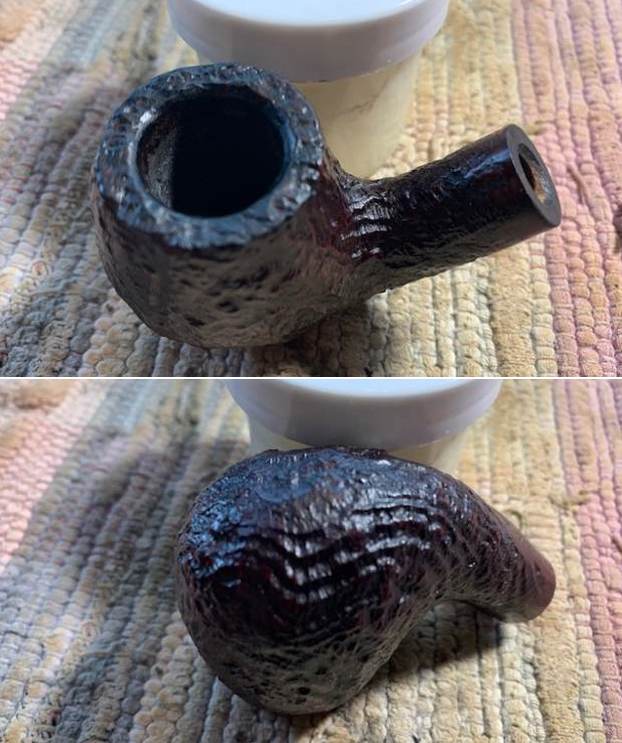
I finished with the Blue Diamond and moved on to buffing with carnauba wax. Once I have a good shine in the briar and vulcanite I always give the bowl multiple coats of Conservator’s Wax and the stem multiple coats of carnauba wax. I have found that I can get a deeper shine if I following up the wax buff with a clean buffing pad. It works to raise the shine and then I follow that up with a hand buff with a microfiber cloth to deepen the shine. It is always fun for me to see what the polished bowl looks like with the polished vulcanite stem. It really is a beautiful pipe. The smooth finish around the bowl sides and shank show the grain shining through the rich brown stains of this Sasieni Post Transition 4 Dot Ruff Root Dark Bent Billiard Sitter. The finished pipe feels great in my hand. It is light and well balanced. Have a look at it with the photos below. The dimensions are Length: 6 inches, Height: 2 inches, Outside diameter of the bowl: 1 ¼ inches, Chamber diameter: ¾ of an inch. The weight of the pipe is 1.41 ounces/40 grams. It is a beautiful pipe and one that I will be putting on the rebornpipes store in the British Pipe Maker section.

Hopefully the shape writing this blog is helpful to you in some way. In it I wanted to show both what I am looking for and how I move forward in addressing what I see when work on a pipe. Let me know if it is helpful to you. It is probably the most straightforward detailed description of my work process that I have done. As always I encourage your questions and comments as you read the blog. Thanks to each of you who are reading this blog. Remember we are not pipe owners; we are pipemen and women who hold our pipes in trust until they pass on into the trust of those who follow us.
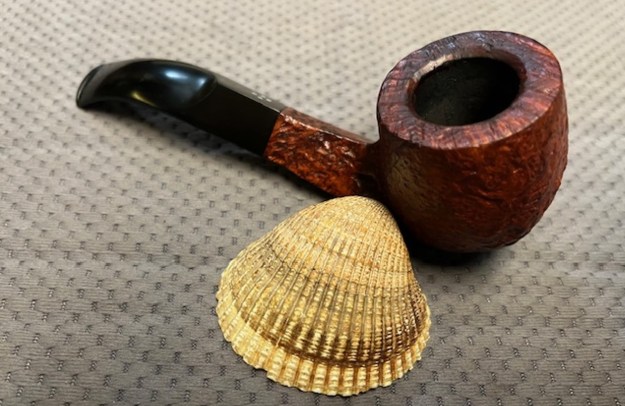
New Life for a Hard Ridden Sasieni 4 Dot Ruff Root Dark 8 Bent Apple


Blog by Steve Laug

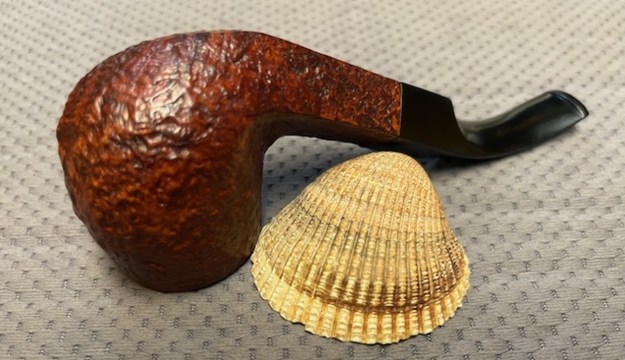
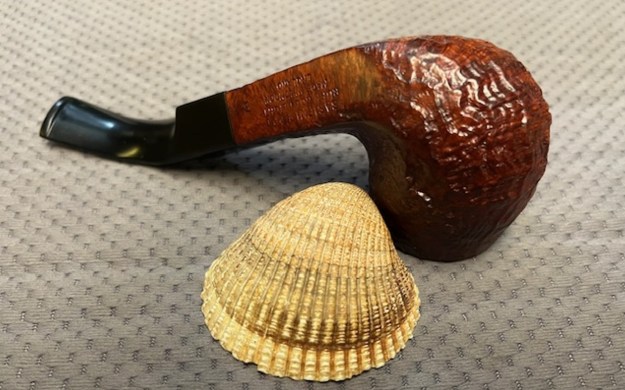
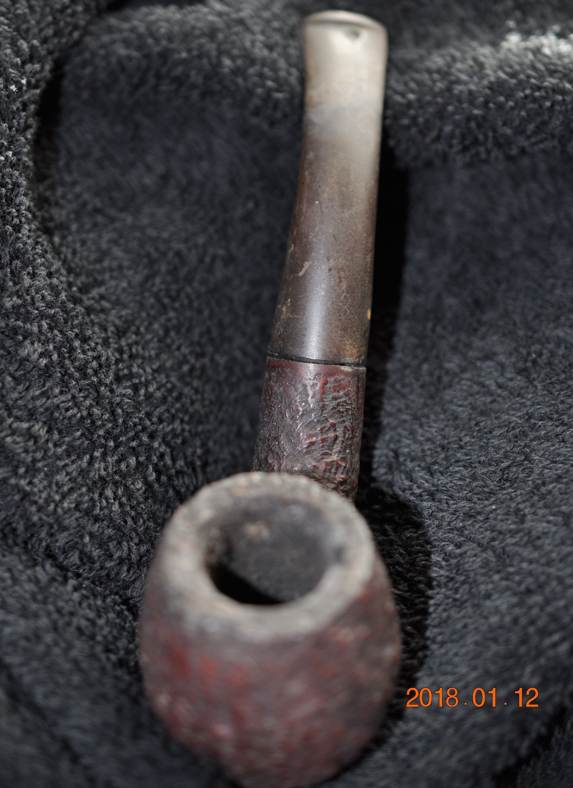
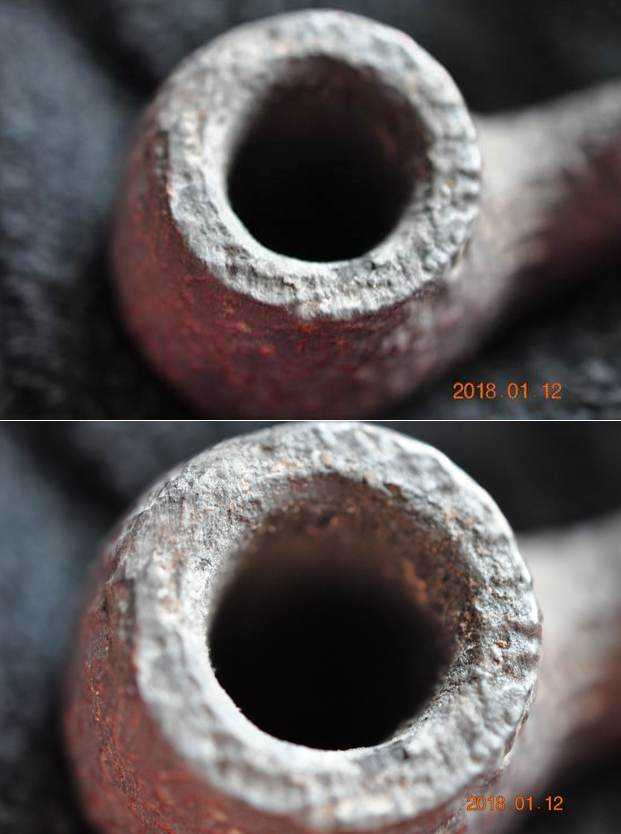
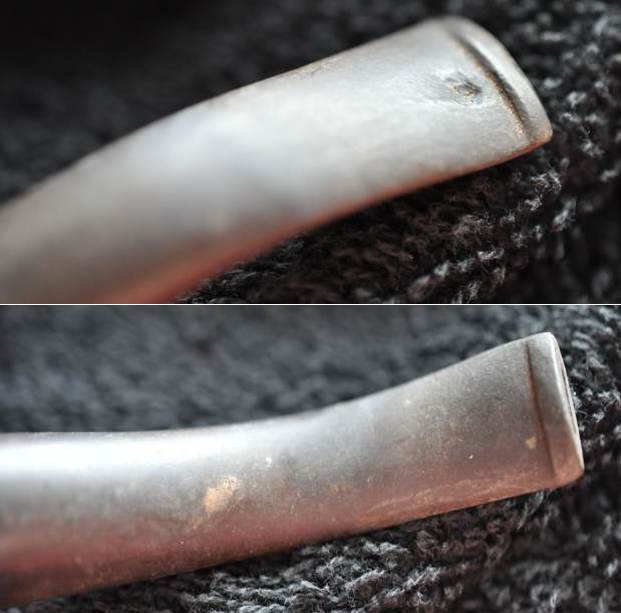
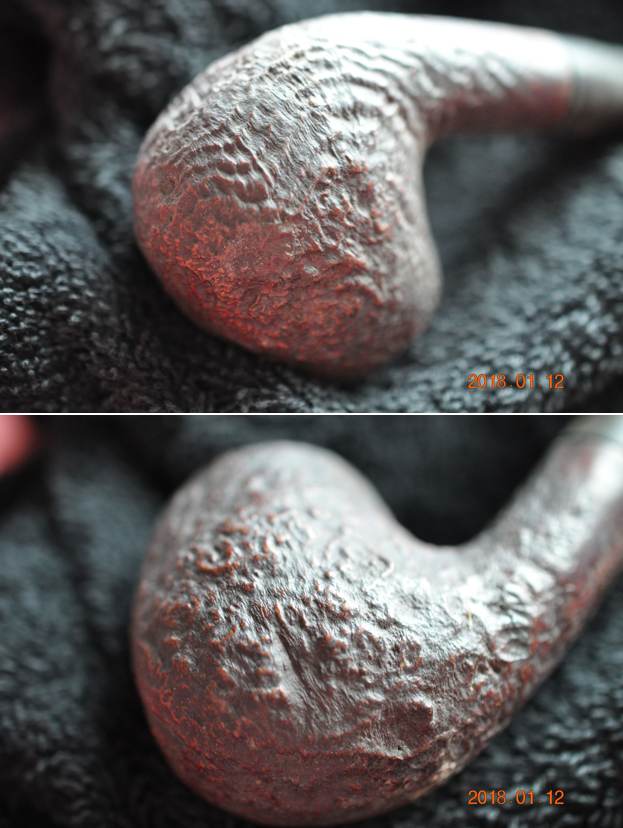
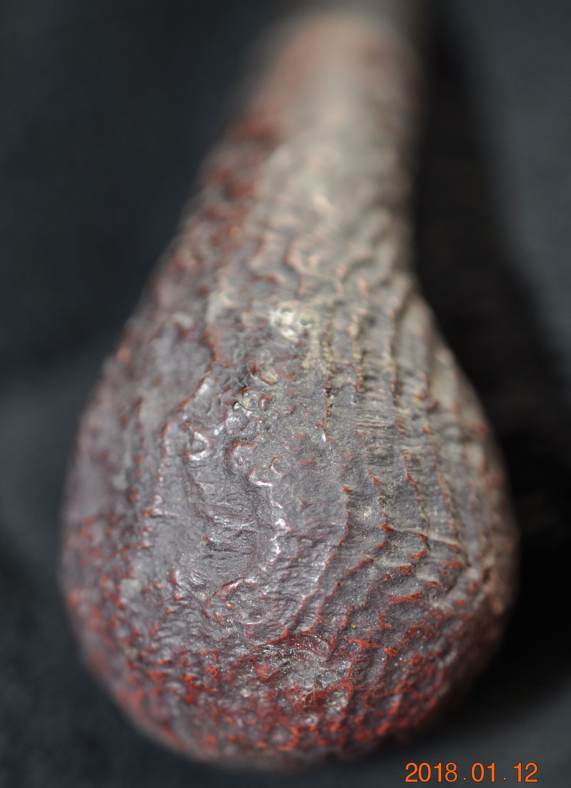
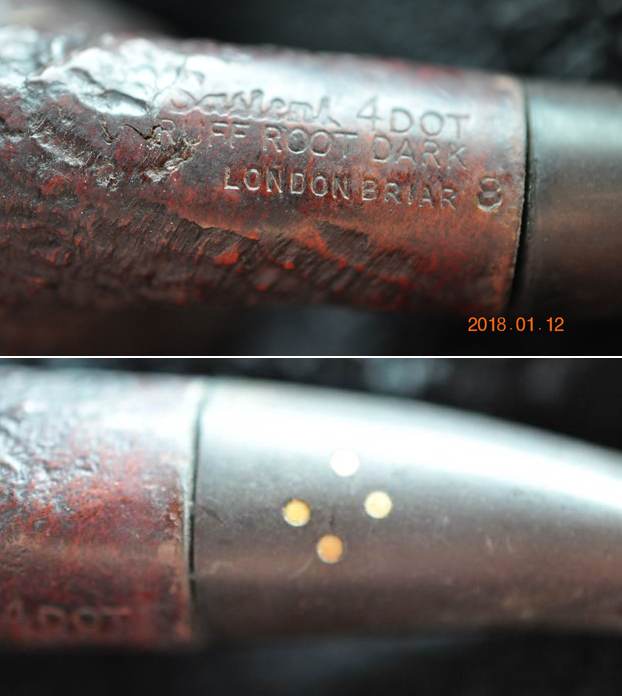
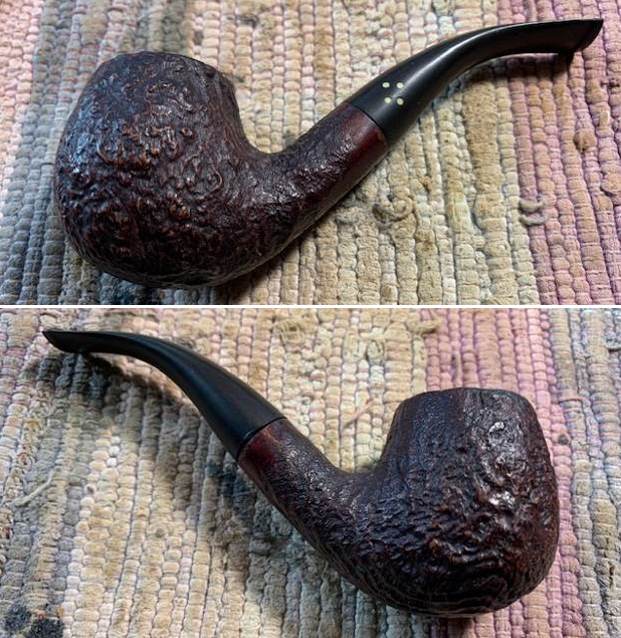
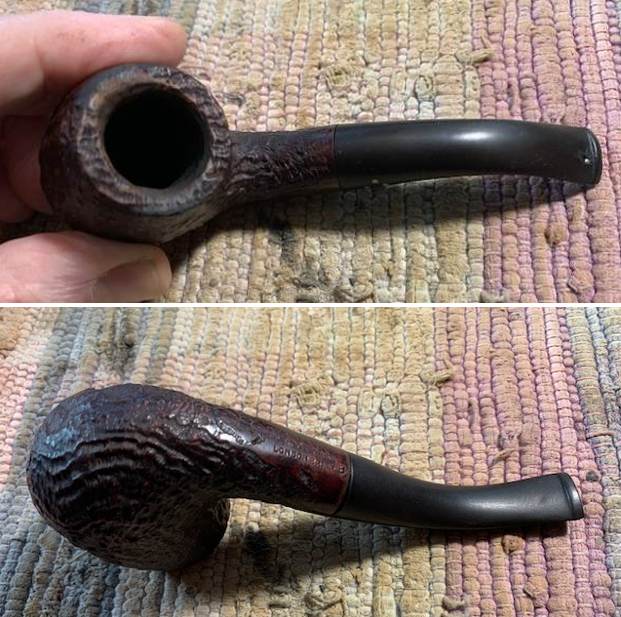
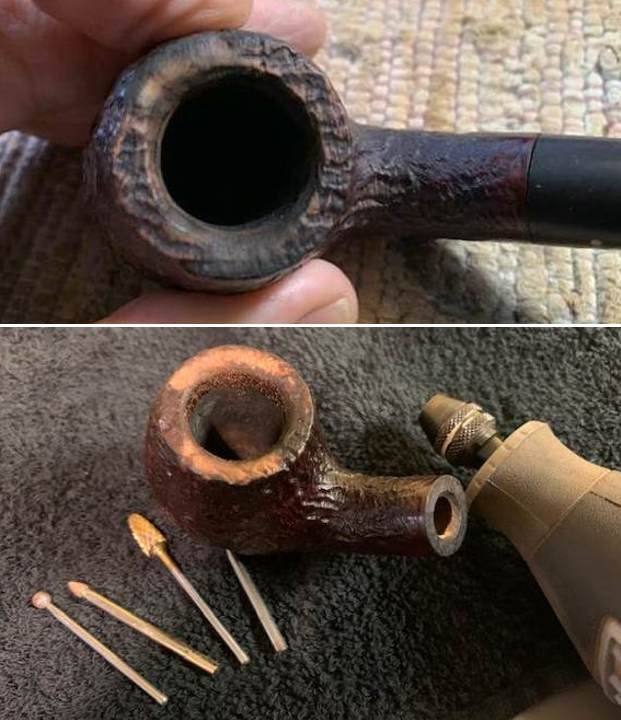
The next pipe on the work table has been here for over four years. Sad that there are some that have sat this long or longer before I got to them. But on the other hand I get to look through my boxes and pick out what turns my crank at the moment. This one was a nice sandblast bent apple. We picked it up back in January of 2018 from a seller on EBay from Los Fresnos, Texas, USA. It is stamped on the underside of the shank and reads Sasieni 4 Dot [over] Ruff Root Dark [over] London Briar followed by the number 8 which appears to be the shape number. The poor pipe had obviously been someone’s favourite and must have been a grand smoker. The finish appears to be light brown but the grime and debris in the sandblast lend to that thought. The bowl is heavily caked with a thick lava overflow on the rim top filling in the sandblast. The stem fits with a gap showing that the shank is also heavily tarred. The stem has some oxidation and deep tooth marks on the top and underside near the button. It really was a mess and a stinky one at that! Jeff took pictures of the pipe before he did his clean up work. He took photos of the bowl and rim top to give an idea of the thickness of the cake and the lava on the top. It was quite thick and hard. He took photos of the stem surface to show the oxidation and the tooth marks on them. There was a deep tooth mark on the top of the stem near the button. He took photos of the sandblasted grain around the bowl sides and heel of the bowl. It is a very nice looking blast. Jeff captured the stamping and the placement of the four dots on the stem side. The stamping is clear and readable. You can also see several issues with the pipe in these photos. First, to the left of the stamping (next to Ruff) there is a flaw in the briar. It looks like a crack but it follows the grain of the blast. Second, the fit of the stem to the shank is off which says to me that the tenon is crooked not allowing a fit to the shank end.I remembered that I had worked on a Sasieni Ruff Root Dark in the past – a Canadian if my memory served me right. I did a quick search on rebornpipes and found the Canadian I was remembering and the blog I had written (https://rebornpipes.com/2020/04/19/an-easy-restoration-of-a-sasieni-4-dot-ruff-root-dark-13-canadian/). I had done some research on the stamping and brand for that blog and I am including it below.
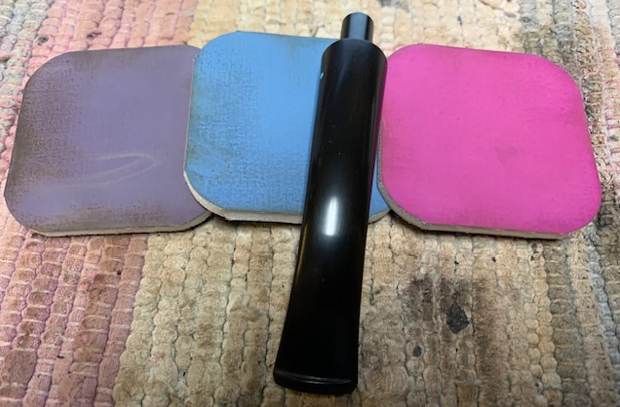
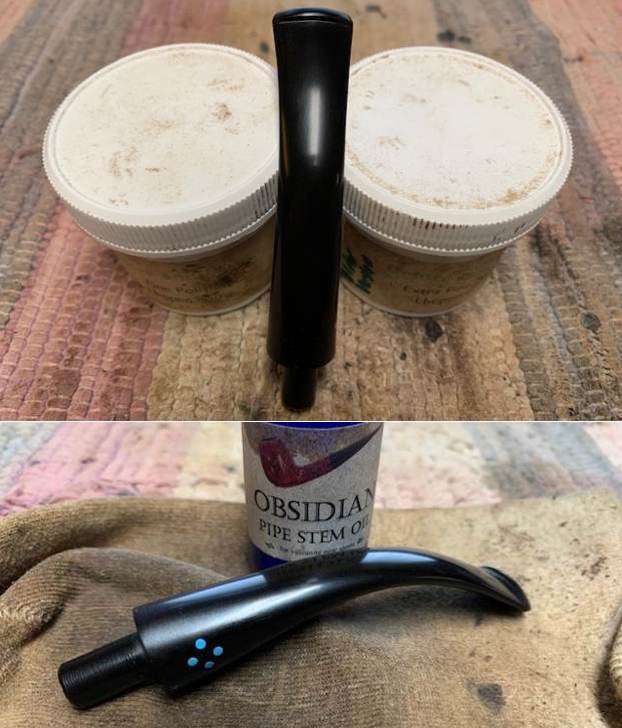
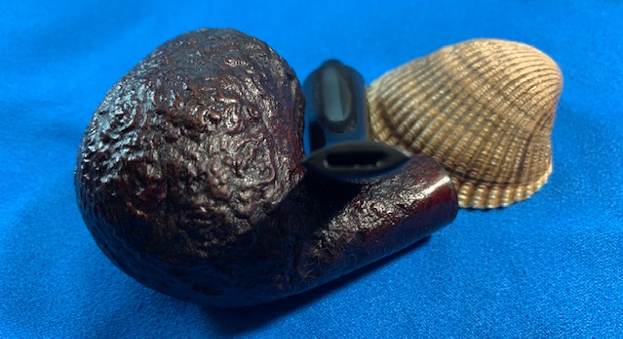
When the pipe arrived I turned to Pipephil (http://www.pipephil.eu/logos/en/logo-sasieni.html) to see if he included not only information on this Sasieni 4 Dot Ruff Root Dark Canadian. Sure enough there was some quick information that identified the time frame of this pipe. He dates it as a Post Transition piece 1986-today. The Ruff Root name is what they call a sandblasted finish. He points out that the 4 Dot has replaced the Four Dot from 1986.I turned to Pipedia for more information on 4 Dot line of Sasieni pipes and any information that was added there (https://pipedia.org/wiki/Sasieni). I quote a pertinent paragraph:

The nomenclature changed again in 1986, with the sale of the company to the Post-Transition firm. The three line nomenclature was changed to two lines, with the first reading “Sasieni 4 Dot” and the second identifying the finish, e.g. Natural, Walnut, or Ruff Root. Note how 4 Dot is spelled, using an Arabic numeral 4, as opposed to spelling out the word “four”. This is the easiest way to spot a Post-Transition Sasieni, as the new company has used both script and block lettering to spell the word “Sasieni” on the shank

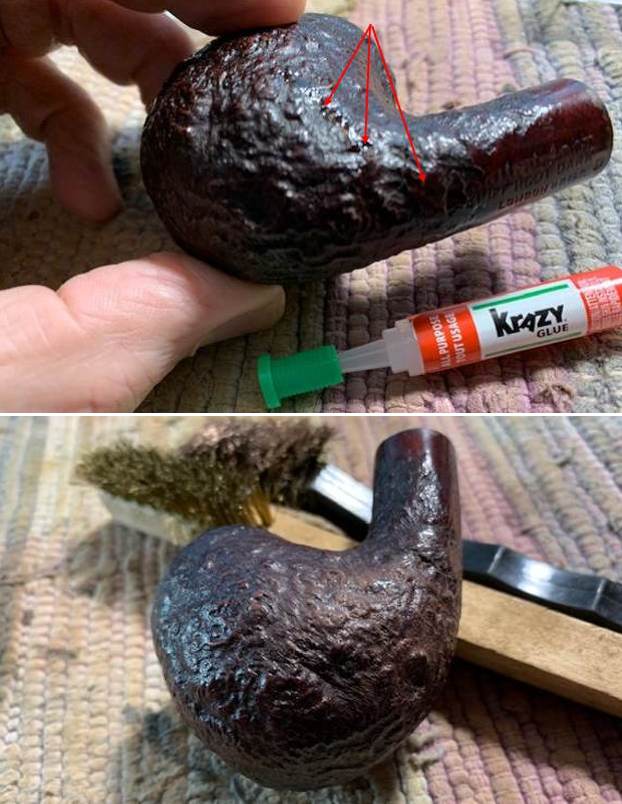
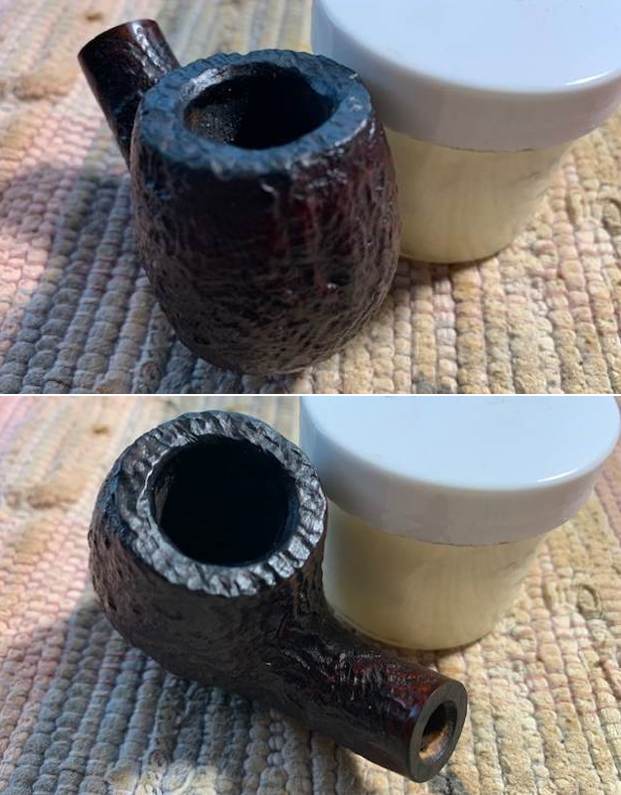
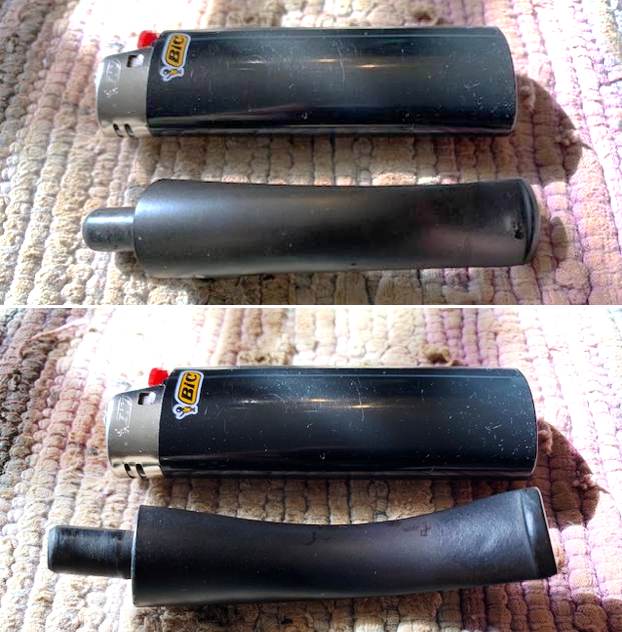
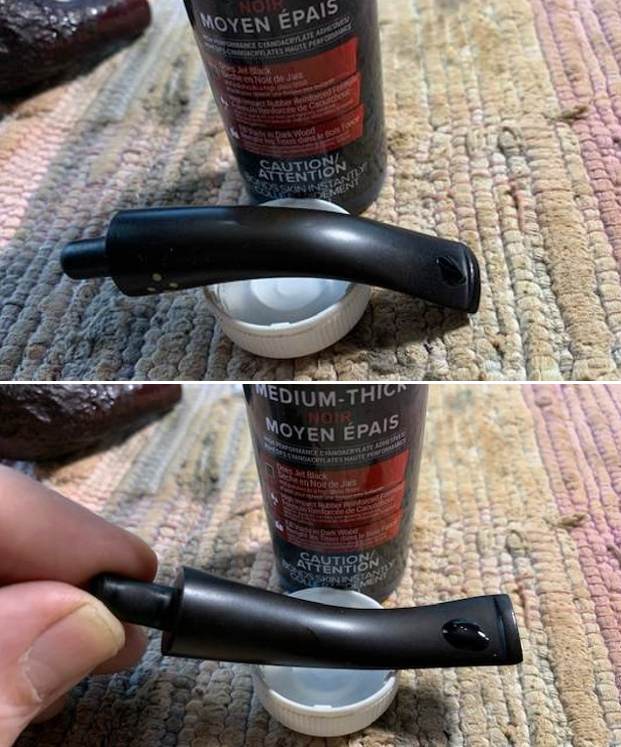
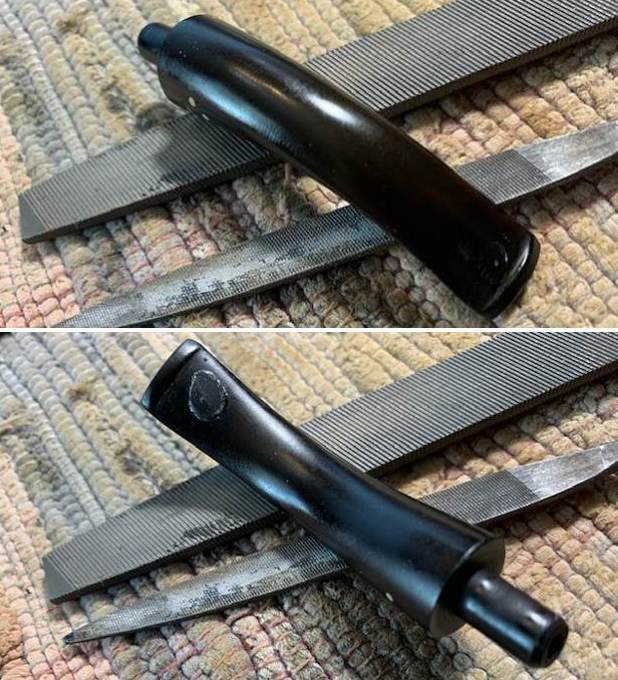
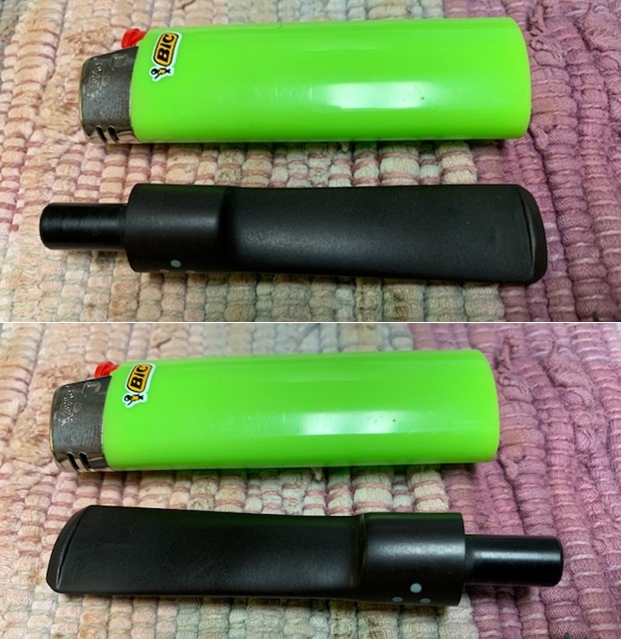
So I knew that I was dealing with a Post Transition 4 Dot Sasieni that was made after 1986. Now it was time to look at it up close and personal. Jeff had done an amazing job in removing all of the cake and the lava on the rim top. He had reamed the bowl with a PipNet Pipe Reamer and cleaned up the remnants with a Savinelli Fitsall Pipe Knife. He took the cake back to bare briar so we could check the walls for damage. He scrubbed the exterior of the bowl with Murphy’s Oil Soap and a tooth brush to remove the grime on the bowl and rim and was able to remove the lava and dirt. He cleaned out the interior of the bowl and shank with pipe cleaners, cotton swabs and alcohol until they came out clean. He cleaned the stem with Soft Scrub to remove the grime on the exterior. He soaked it in Before & After Pipe Stem Deoxidizer and rinsed it with warm water. He cleaned out the airway with alcohol, cotton swabs and pipe cleaners. I took some photos of the pipe before I started my work on it today. I took a close up photo of the cleaned up rim top. You can see the smoothing out of the top on the right front and the left rear of the bowl. The rest of the rim top has some great sandblast. The inner edge has a slight bevel that should clean up well. The stain is faded on the top. The bowl is spotless. The stem is clean and you can see the tooth marks on both sides ahead of the button. After Jeff had cleaned it the stem fit more snug against the shank end.I took a photo of the stamping on the underside of the shank. It is clear and readable as noted above.I removed the stem from the shank and took a photo to give a sense of the part of this pipe. I think it is going to be a beauty.I put on a magnifying headlamp and traced the flaw in the briar from the edge of the Ruff stamp on the underside of the shank. I filled it in with a thin line of clear CA glue. It was more of a cosmetic fix than a concern about a crack. Once it cured I used several brass bristle brushes I have to blend in the repair to the rest of the sandblast finish.With that cosmetic fix done I decided to address the smooth portions of the rim top. The first photo shows what I am referring to. I have used a series of burrs on my Dremel in the past to rusticate the smooth portions of the damaged top and match the sandblast pattern as much as possible. I have found that it works very well. Once I finished I used a brass bristle brush to knock off the debris and some of the roughness. I stained it with a Walnut stain pen to match the rest of the bowl colour. What do you think? Did it work?I rubbed the bowl down with Before & After Restoration Balm. I worked it into the surface of the briar with my finger tips and a horsehair shoe brush. The product works to clean, restore and preserve the briar. I let it do its magic for 15 minutes then buffed it off with a cotton cloth. The pipe looks incredibly good at this point in the process. With that finished I set the bowl aside and turned to work on the stem. I “painted” the surface of the stem with the flame of a Bic lighter to lift the tooth marks on both sides. I was able to lift them significantly but deep marks still remained on each side. I filled those in with black CA glue and set the stem aside to cure. Once the repair cured I flattened the repair with a small file to start the process of smoothing it out and blending it into the surrounding vulcanite. I sanded the file marks and repairs with 220 grit sandpaper and started polishing the stem with 400 grit wet dry sandpaper. It is starting to look very good. I continued to polish the stem with micromesh sanding pads – wet sanding with 1500-12000 grit sanding pads. I wiped it down after each sanding pad with Obsidian Oil. I polished it with Before & After Pipe Stem Polish – both Fine and Extra Fine. I gave it a final coat of Obsidian Oil and set it aside to cure. This Sasieni Ruff Root Dark 8 Bent Apple is a beauty. I put the pipe back together and lightly buffed it with Blue Diamond on the buffing wheel. I gave the bowl multiple coats of Conservator’s Wax and the stem multiple coats of carnauba wax. I hand buffed the pipe with a clean buffing pad to raise the shine. It is fun to see what the polished bowl looks like with beautiful mixed grain all around it. The polished dark Walnut coloured sandblast has depth and lends to a variation in colour as the bowl is turned. It looks great with the black vulcanite stem. This smooth Sasieni Ruff Root Dark Bent Apple is great looking and the pipe feels great in my hand. It is light and well balanced. Have a look at it with the photos below. The dimensions are Length: 5 inches, Height: 1 ¾ inches, Outside diameter of the bowl: 1 ¼ inches, Chamber diameter: ¾ of an inch. The weight of the pipe is 46 grams/1.59 ounces. It turned out to be a beautiful pipe. I will be putting this pipe on the rebornpipes store in the British Pipe Makers Section. Let me know if you are interested in adding it to your rack and carrying on the trust of this well traveled pipe. Thanks for your time reading this blog and as Paresh says each time – Stay Safe.  

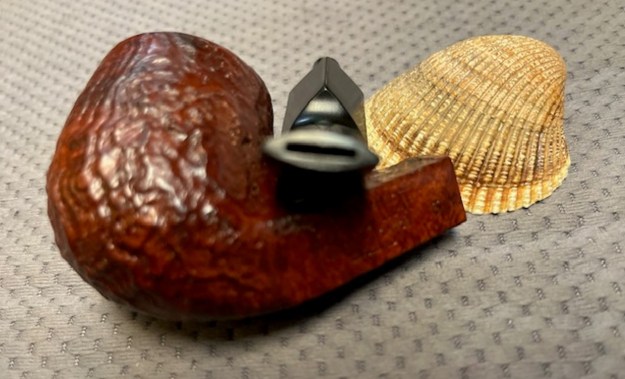
A Collection of older Pipes that we will be working on soon


Blog by Steve Laug

Jeff and I picked up this collection of older pipes that came from an older professor who taught in Eastern Europe and still does when he can get there. There are a broad assortment of meerschaums, clays and some briars.

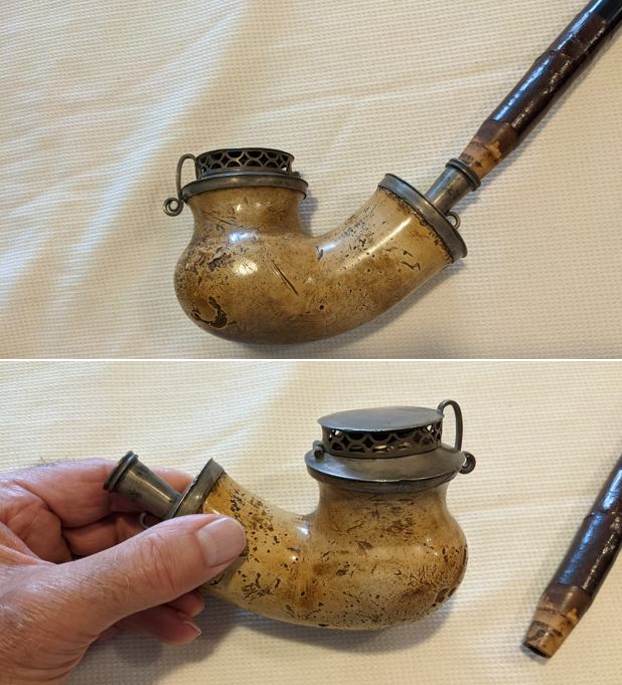
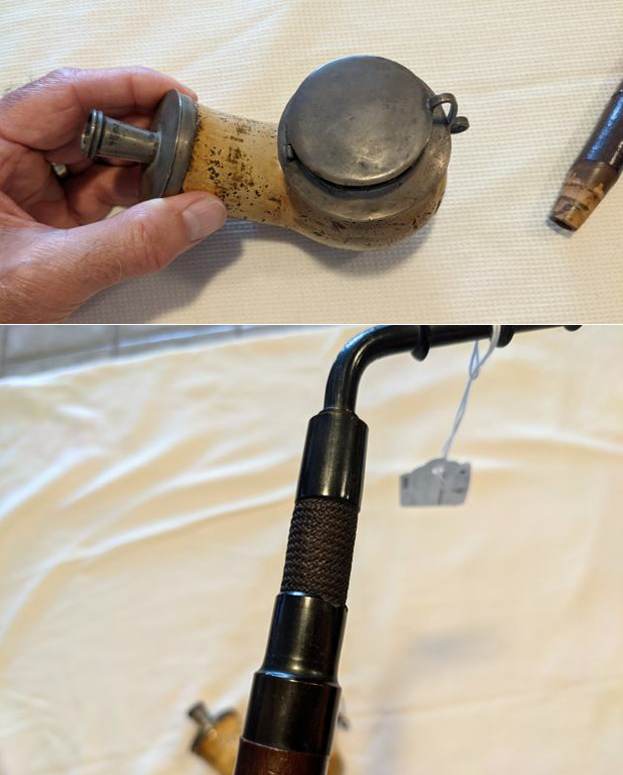
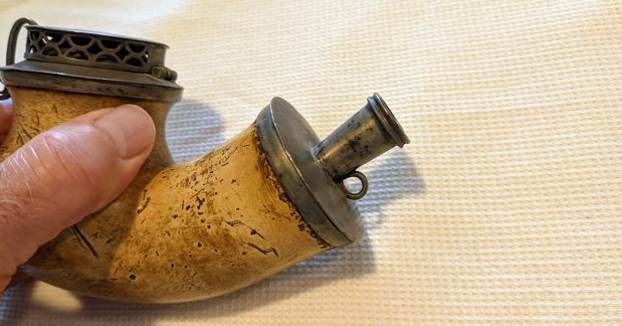
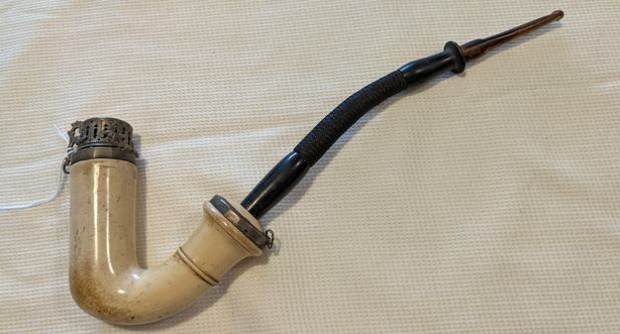
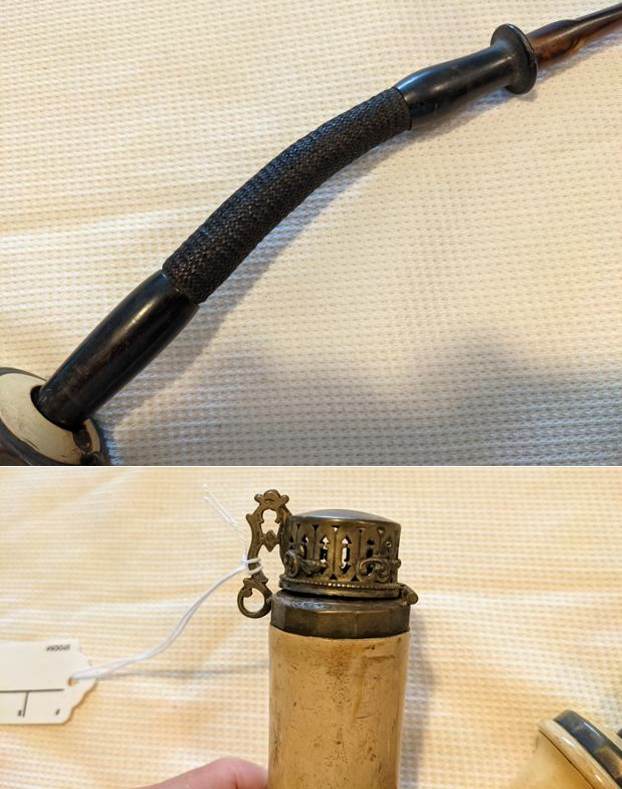
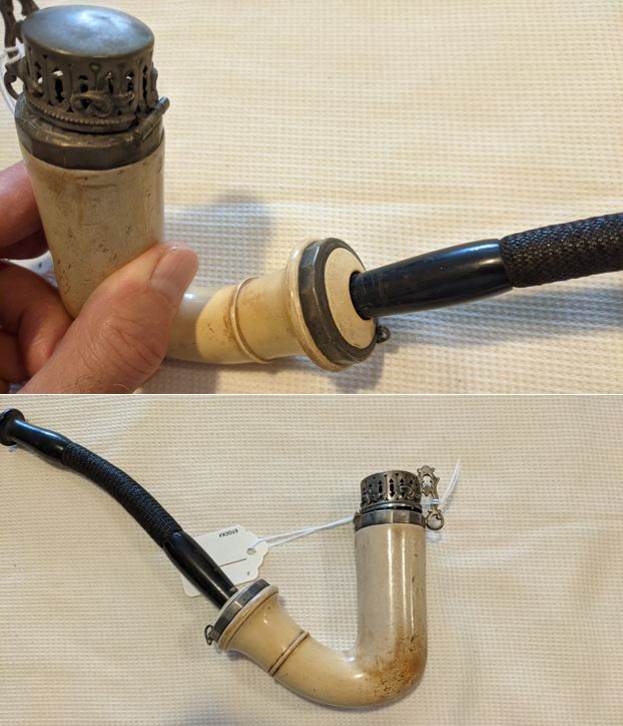
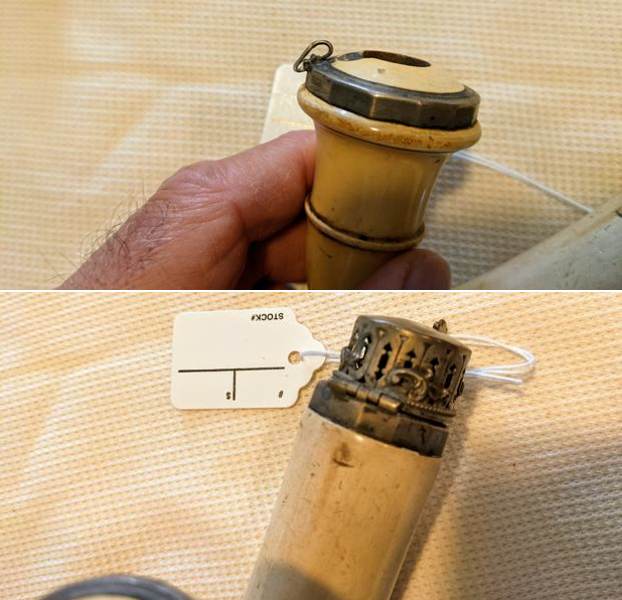
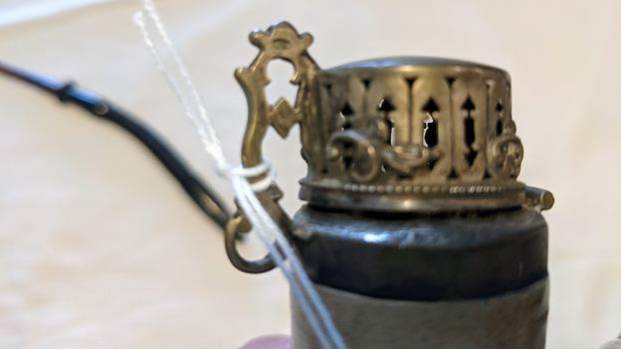
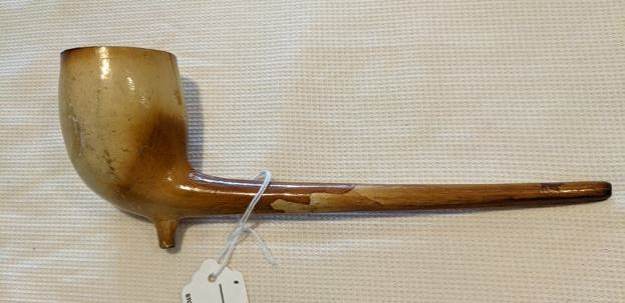
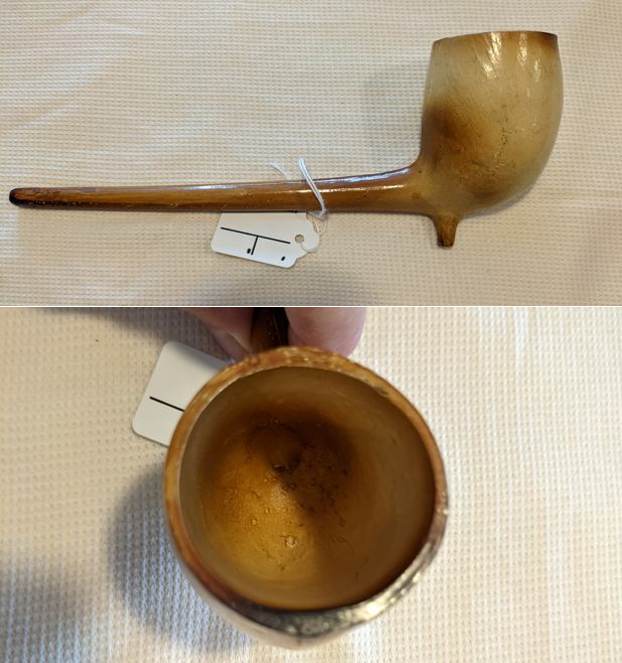
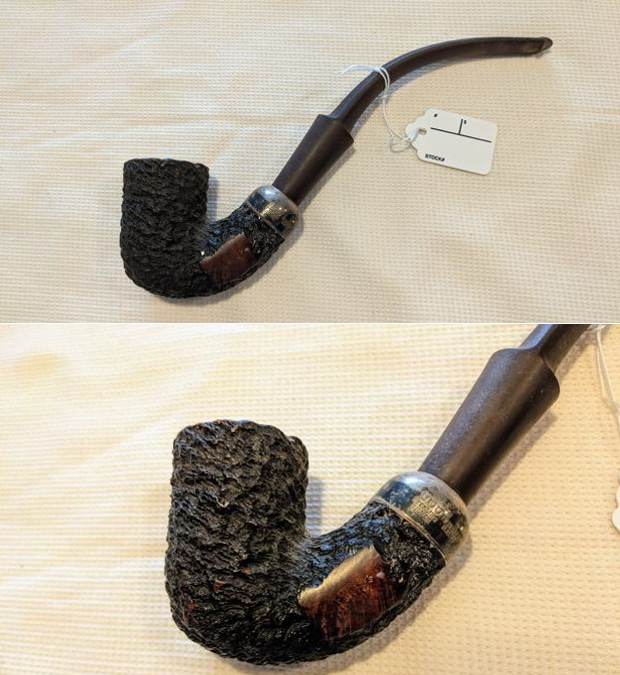
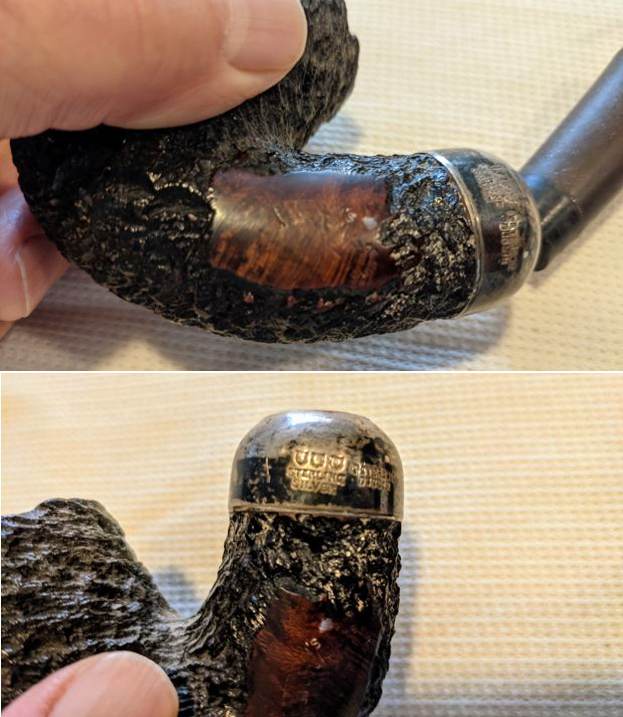
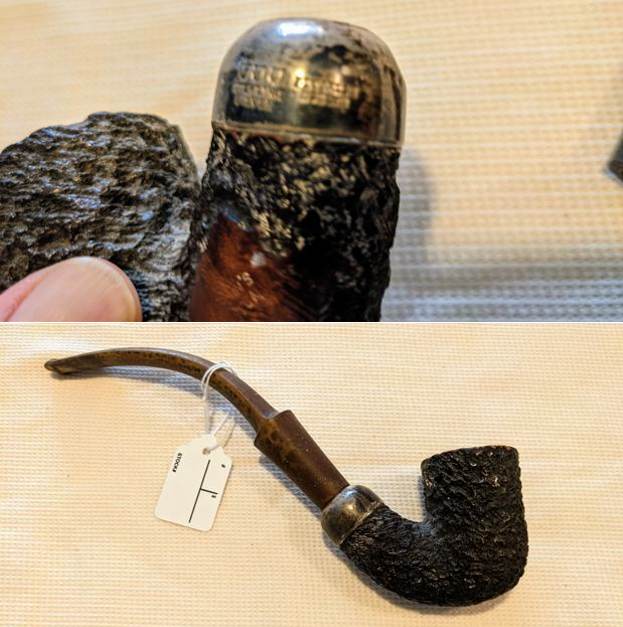
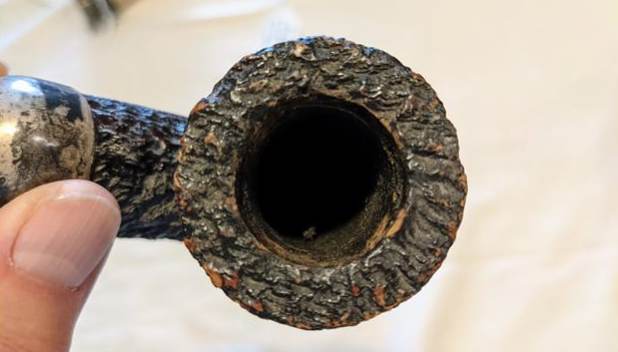
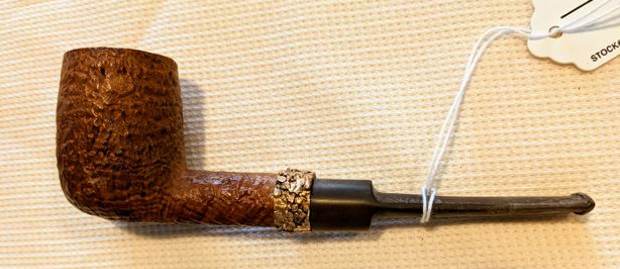
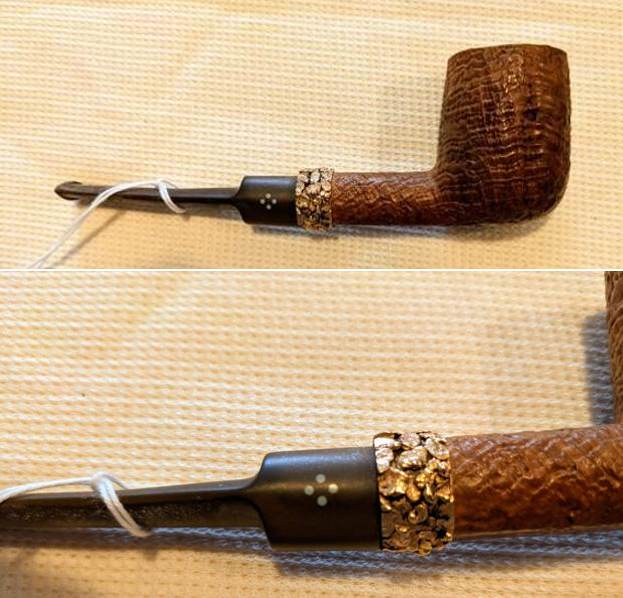
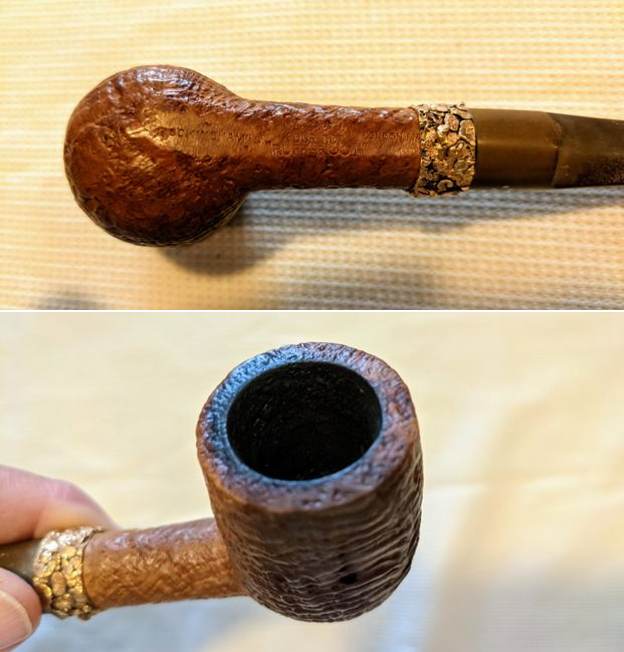
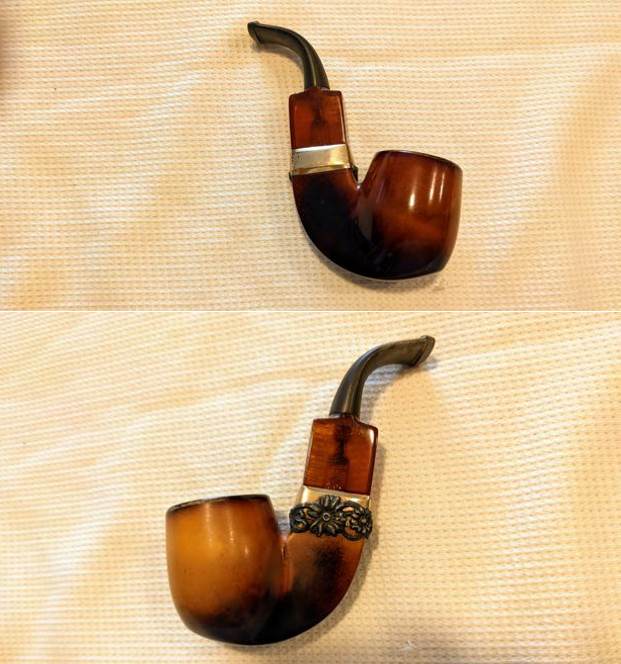
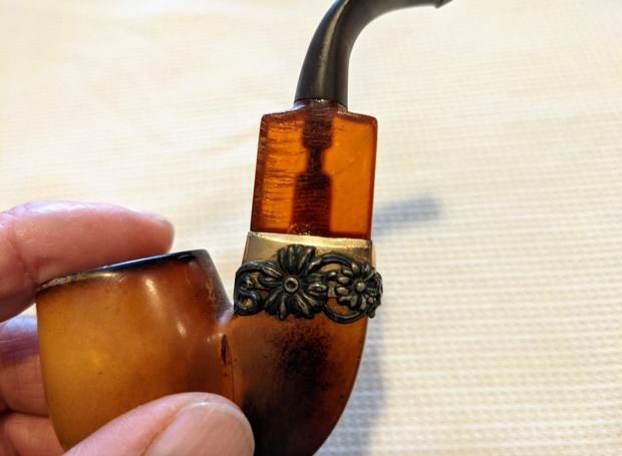
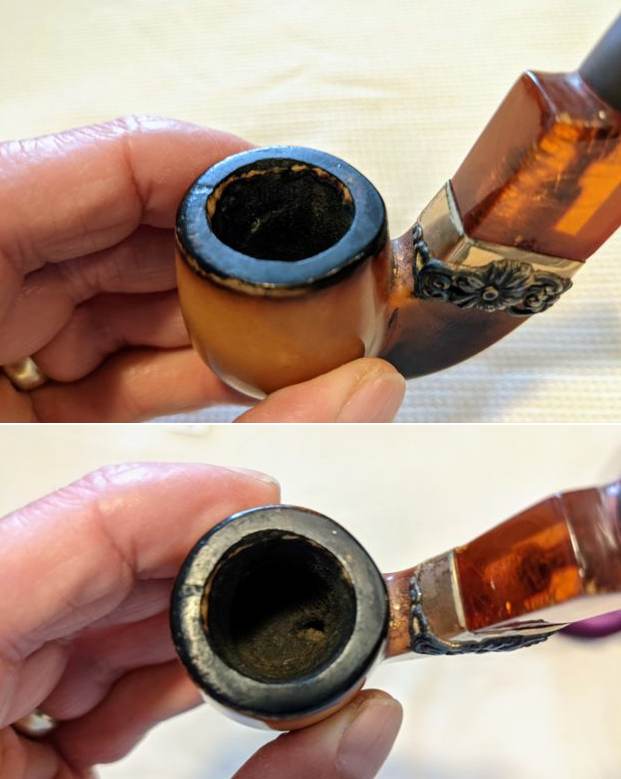
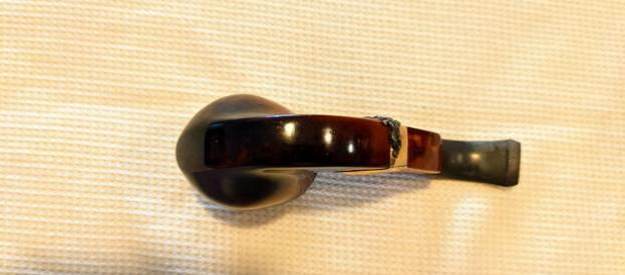
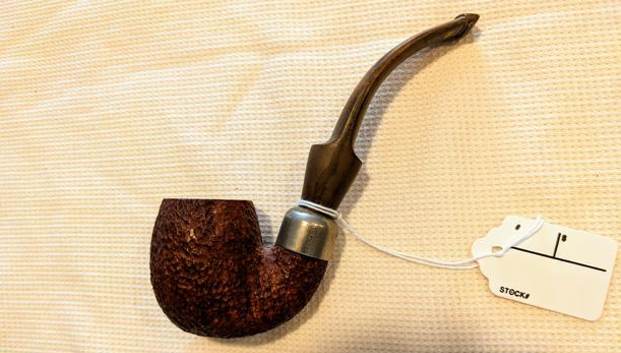
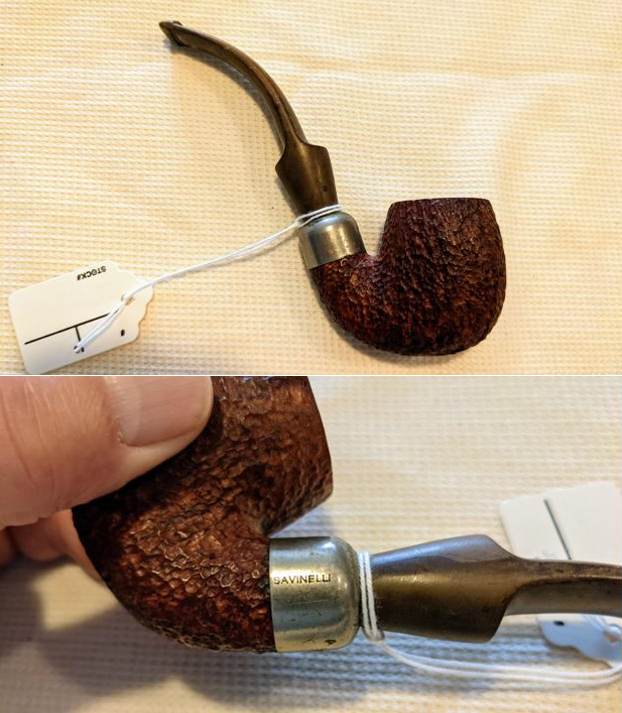
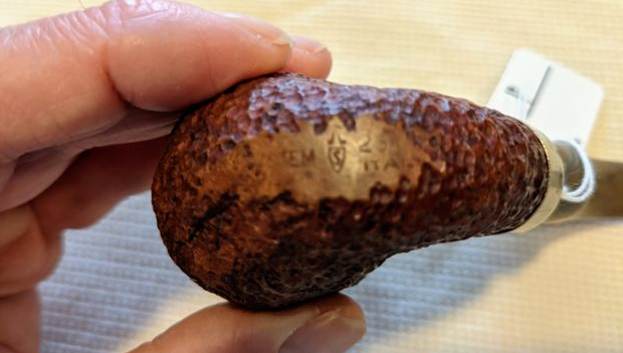
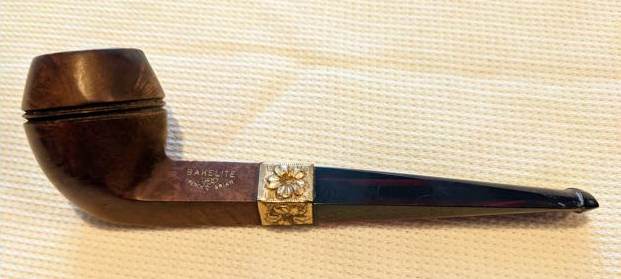
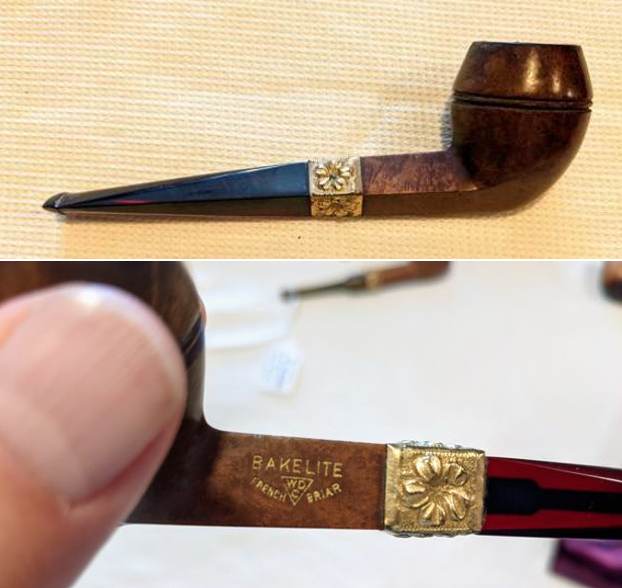
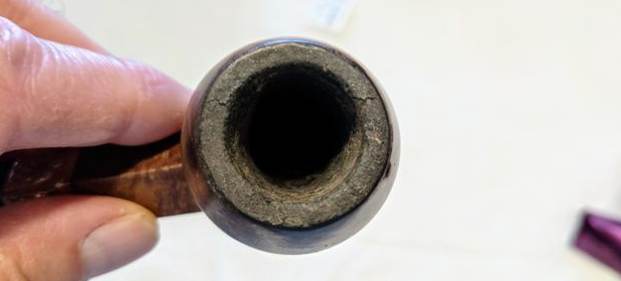
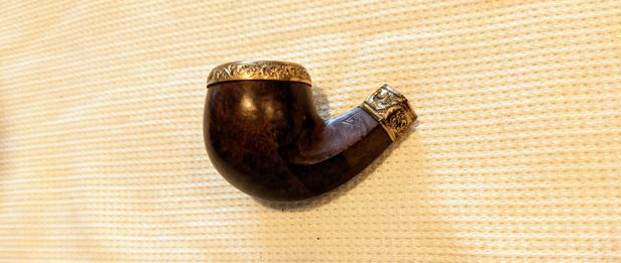
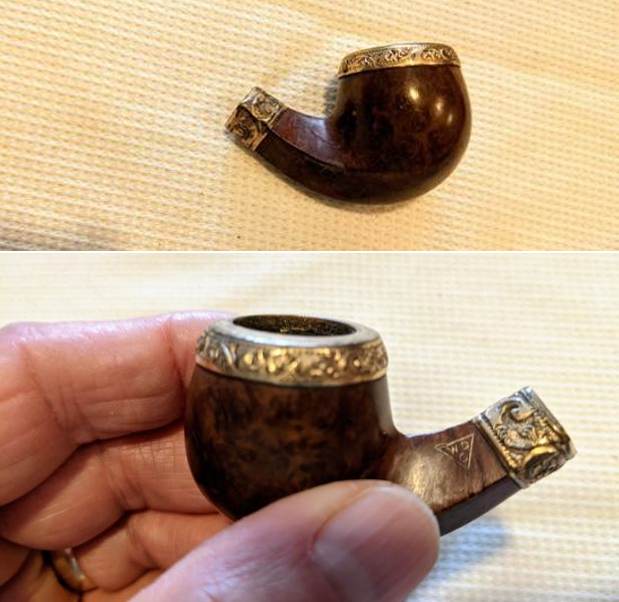
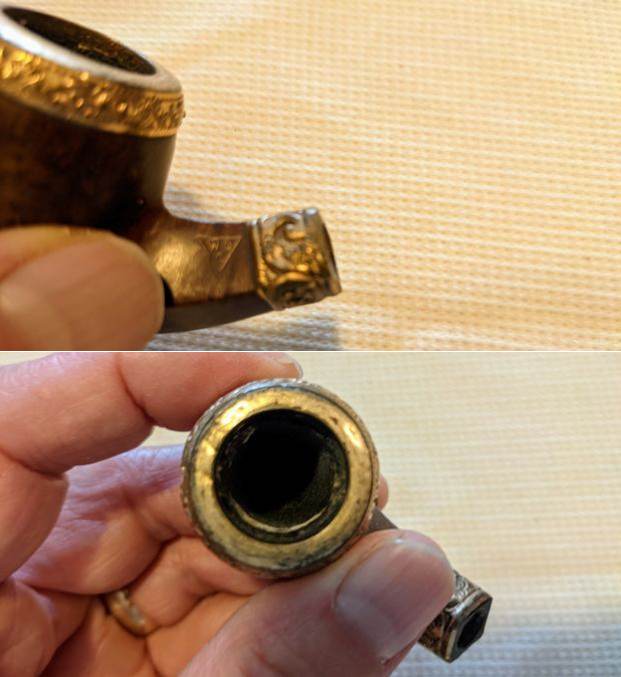
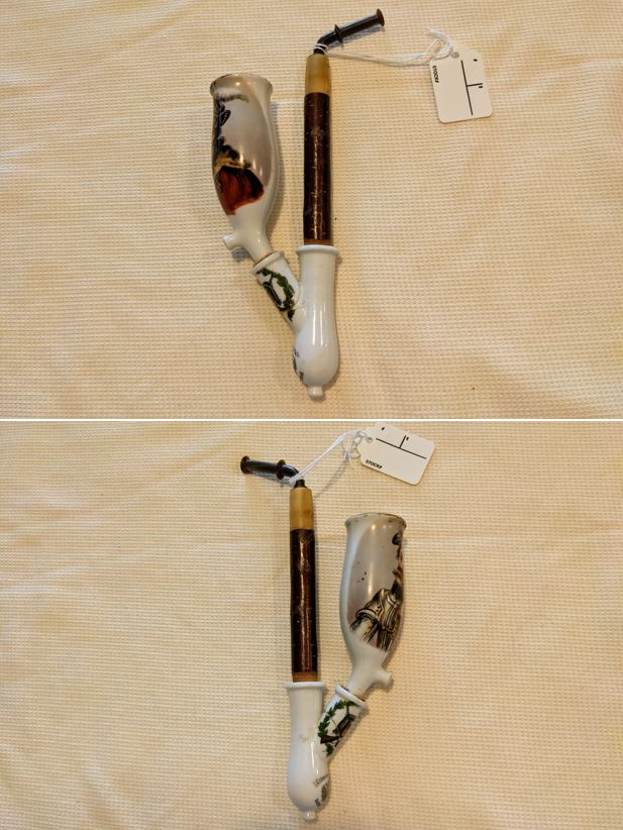
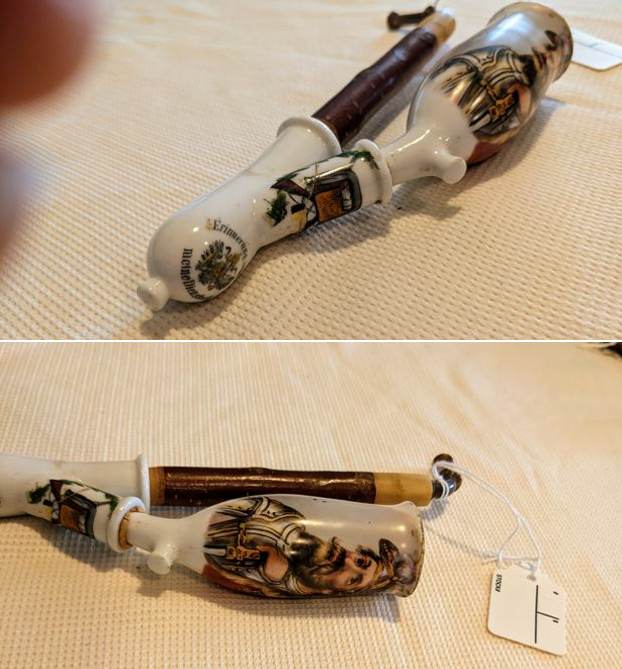
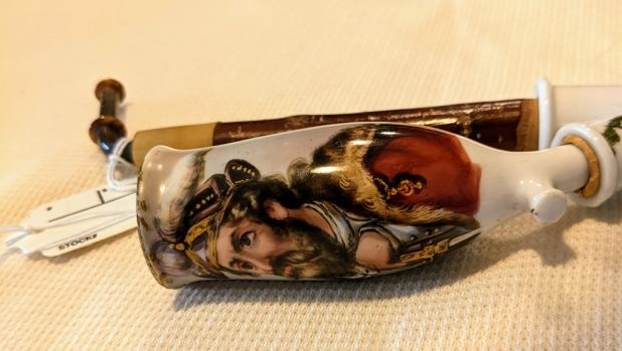
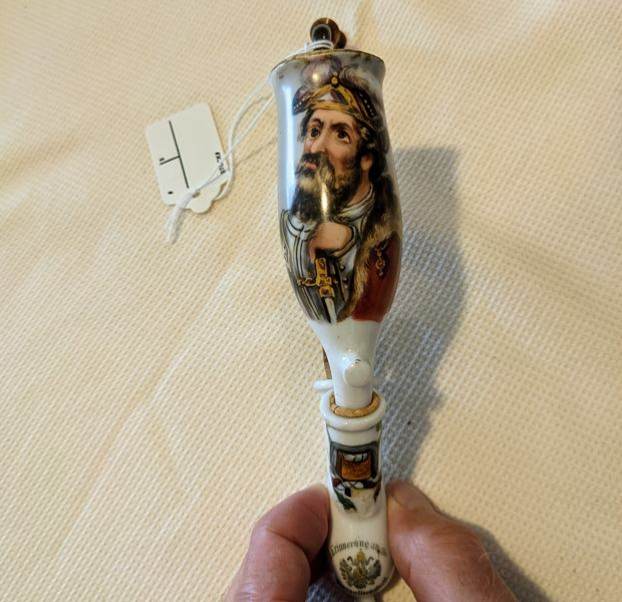
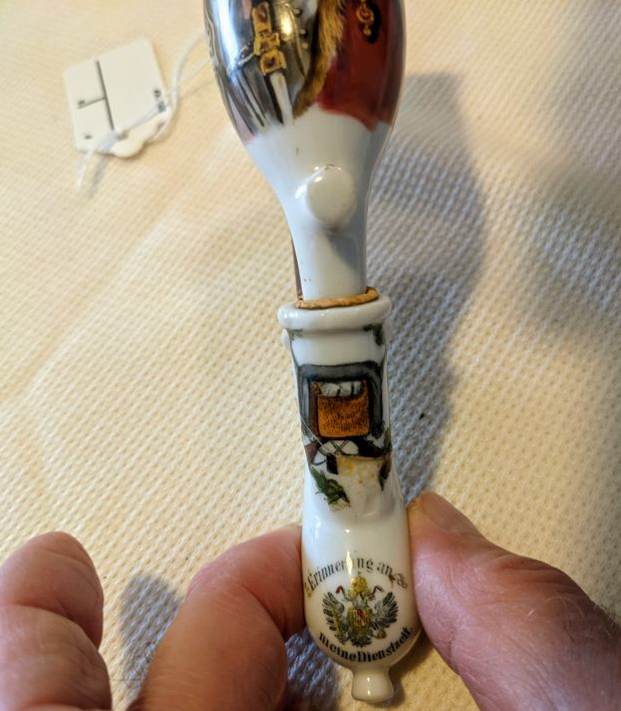
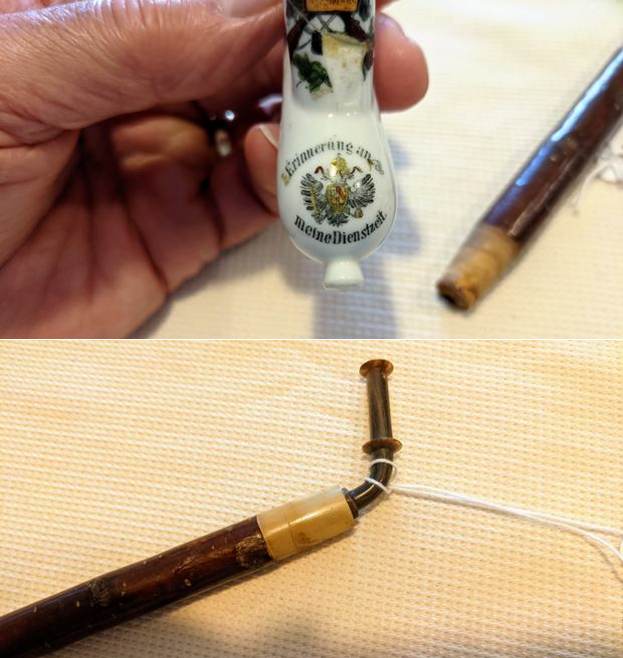
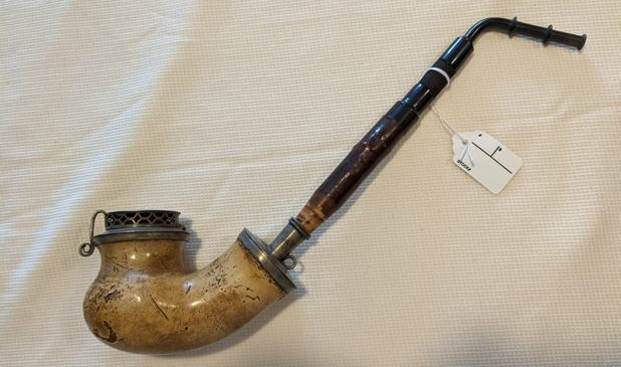
The first of these is an Ulm pipe I believe. The bowl is meerschaum and quite large and heavy. It has a metal wind cap over a rim cap as well as a shank cap and ferrule to hold the carved Cherry wood stem with a horn end, flexible hose portion and horn stem. It is an old timer that comes from that area of Europe. It is dirty and scratched but every kilometer of its journey can be seen in the bowl and shank of the pipe. I am looking forward to working on it. Here are some photos that were included by the seller. The second pipe is also a meerschaum. It has a wind and rim cap that is quite fancy. There is a shank end cape as well. The stem has a horn end and horn mouth piece with a flexible hose portion in the middle that is in quite good condition. The photos below show the pipe from a variety of angles and close up views. It will be another fun one to work on. The third one is a clay cutty or tavern pipe. It has some rich patina developing along the shank and bowl. It is quite delicate so I am quite amazed that it is still undamaged. Next is an older Peterson and one of the briar pipes in the collection. It is hard to read the silver hallmarks on the ferrule but the shape speaks of it being older. Here is the second briar pipe – a Sasieni Four Dot with a gold (coloured?) band that is like a pile of nuggets. Not my favourite pipe but look at the sandblast on the bowl and the condition of the stem. It is a pretty looking billiard with an ugly band. Back to another meerschaum. This one is a bent billiard with a rectangular shank, band and saddle stem. The stem is probably Bakelite but I am not sure. I will know more once I have it in hand to clean and restore. The third briar is a Savinelli Dry System pipe. The bowl has a great sandblast. The nickel ferrule is made for the filter style stem that holds a Savinelli Balsa Filter. Another of the older briars was made sometime between the late 1890s and early 1900s. It is a WDC (William DeMuth and Co. Bakelite French Briar straight Bulldog. The band around the shank is rolled gold with a floral pattern around the sides. The stem is ruby Bakelite and it is an attractive looking pipe. The last briar pipes was a bent apple bowl with a rolled gold rim cap and band on the shank. The pattern on both seems to be leaves or floral. I will know more for sure when it arrives here. The shank is stamped WDC in a triangle same as the pipe above. It was a well smoked with a thick cake in the bowl. The next pipe is a porcelain pipe that has come to be known as a wine pipe. The bowl and the base are porcelain and are fired with a beautiful figure on the bowl and accoutrements on the base. The shank is cherrywood and the top is horn that has a horn stem screwed into it. It is a fascinating pipe that I want to know more about once I start working on it. These are all with Jeff at the moment for him to work his magic. It will be a fun haul to work on as all have a fair bit of age on them and all have differing issues that will need to be dealt with. Keep an eye out on the blog for these pipes once I start working on them. There are really some fascinating pieces here that I can’t wait to ferret out the history about. Thanks for sharing in my excitement. Cheers.

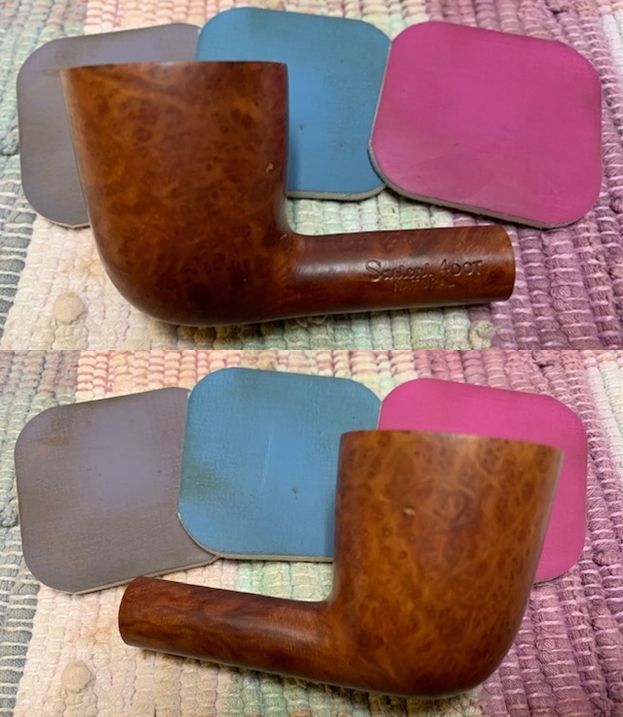
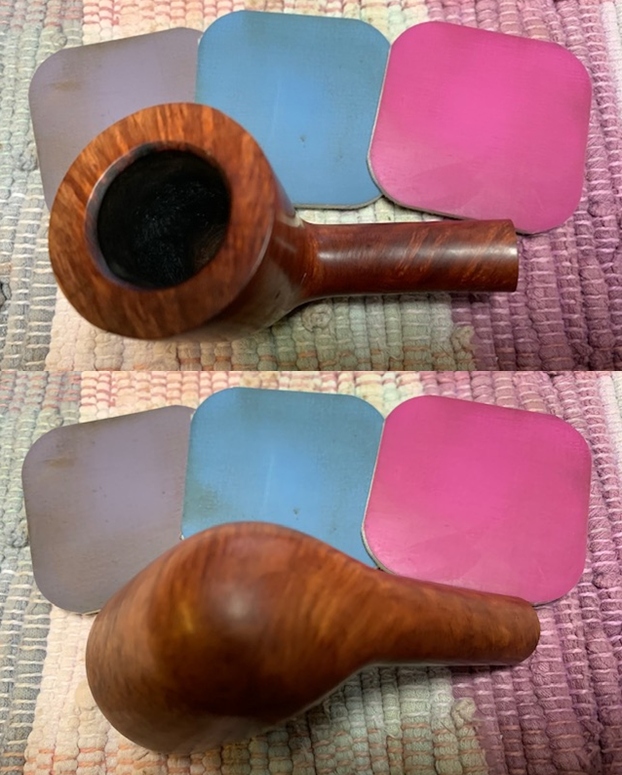
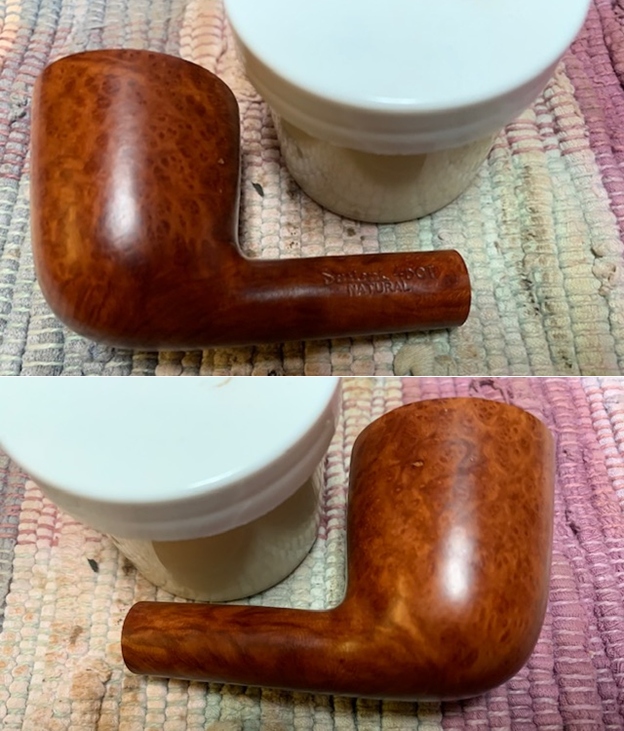
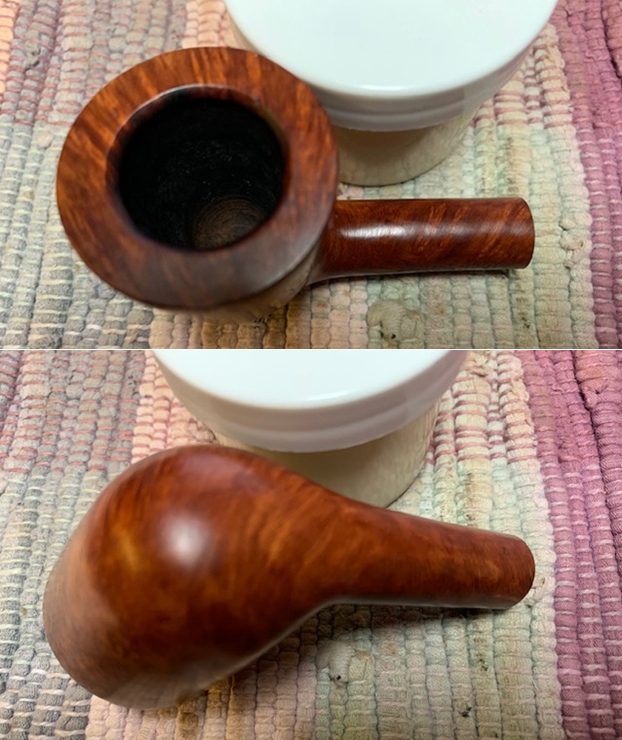
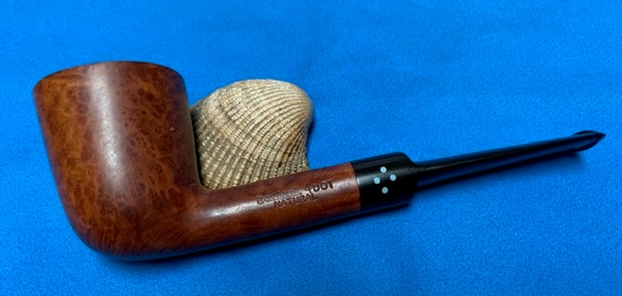
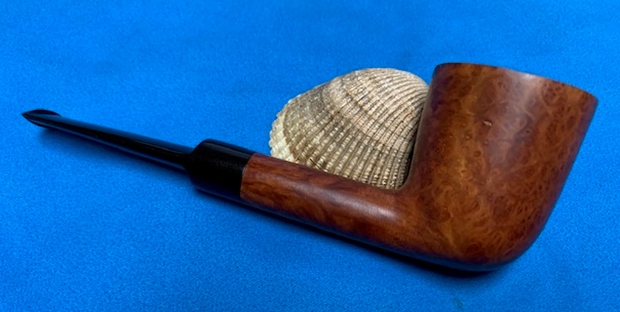
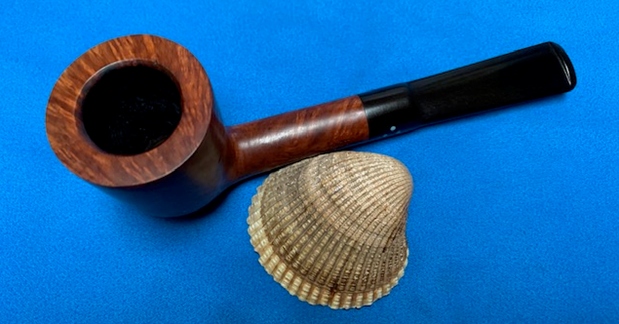
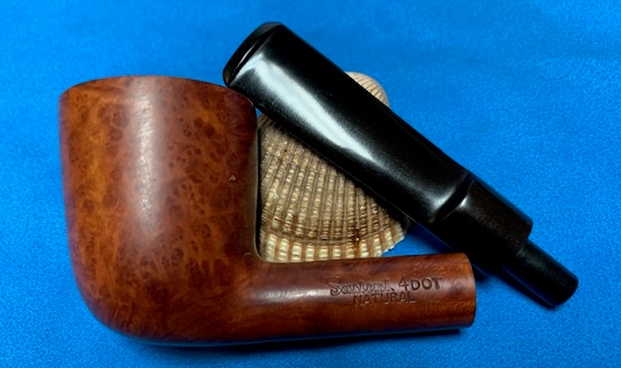
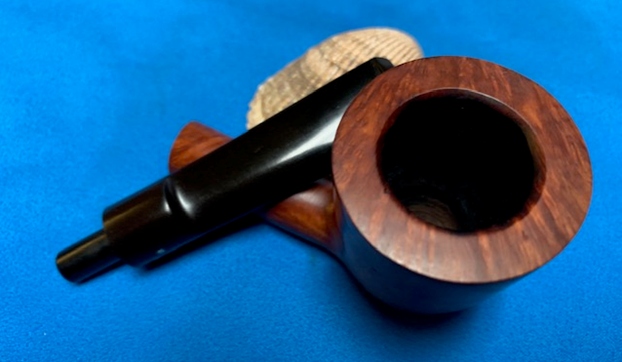
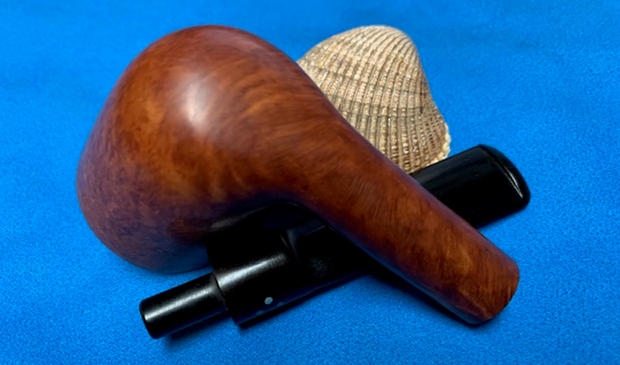
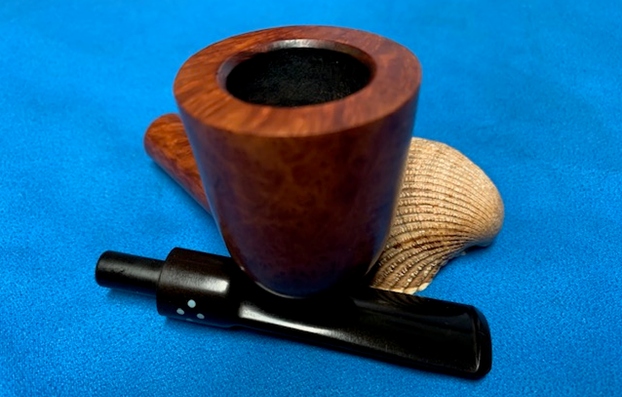
Renewing a Sasieni 4 Dot Natural #4 Dublin


Blog by Steve Laug

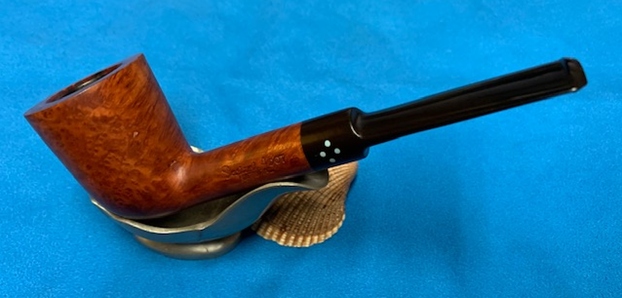
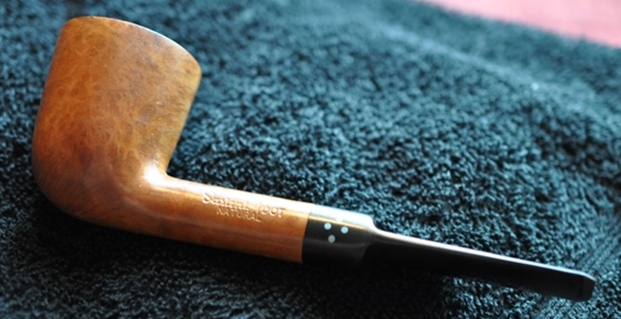
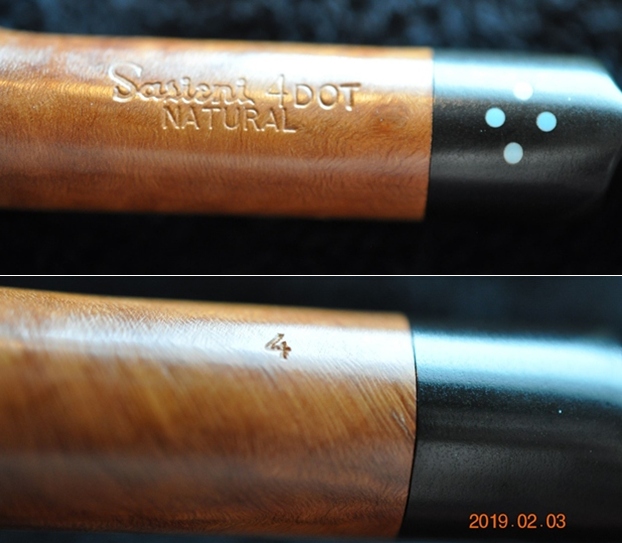
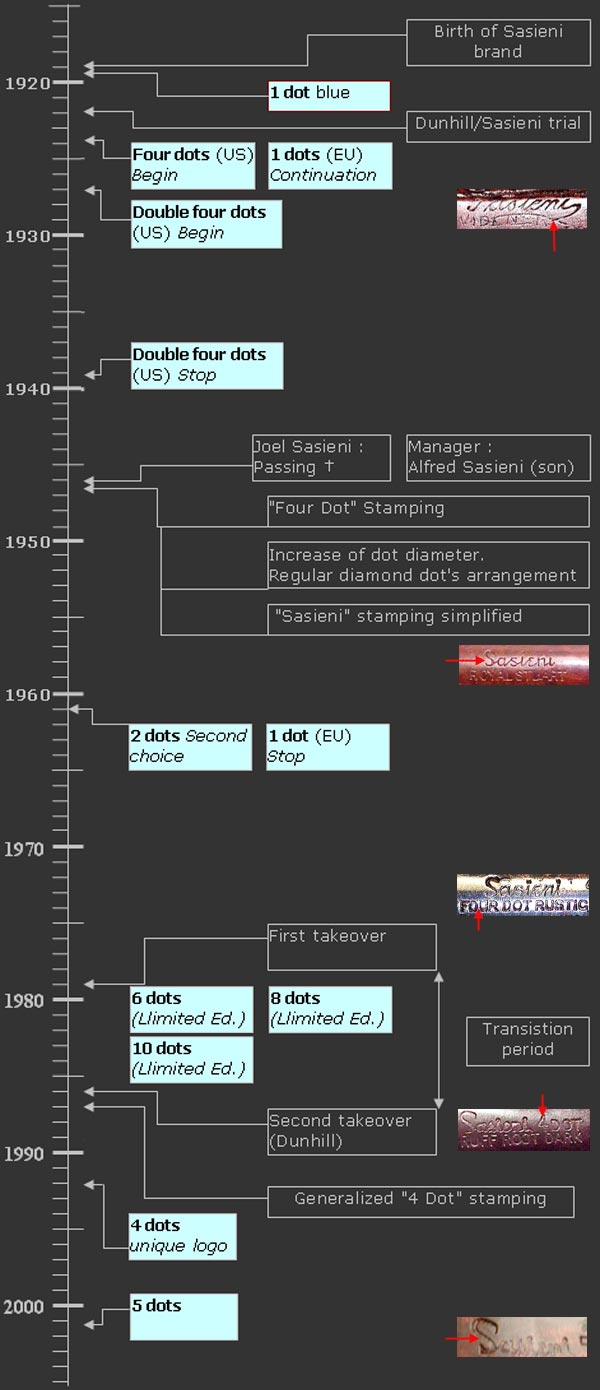
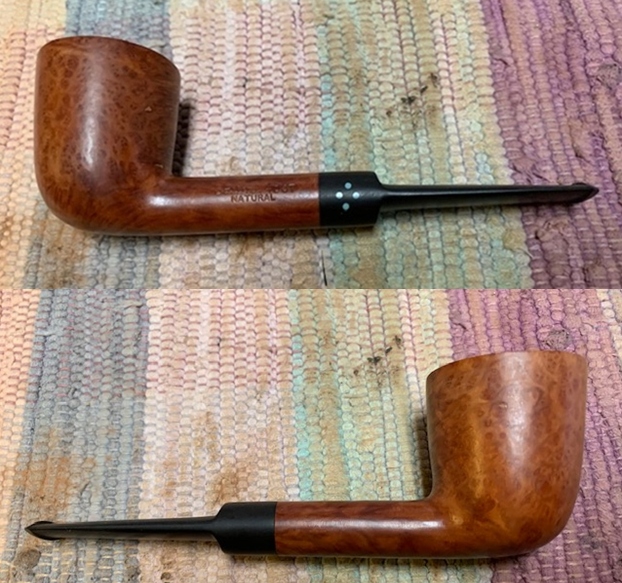
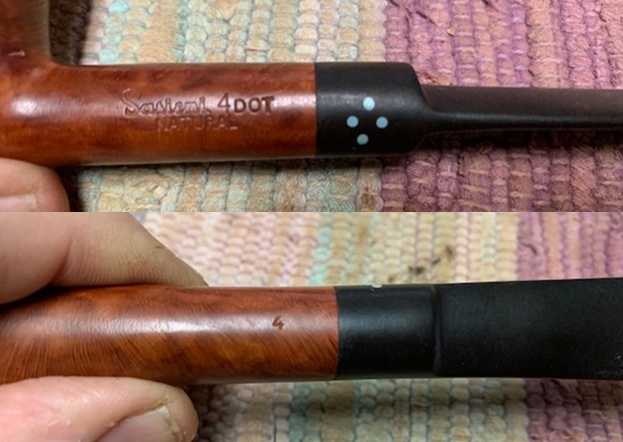
The next pipe on the work table came to us from a group of pipes that we purchased from fellow in Cornwall, Pennsylvania, USA.  The pipe is an interesting looking piece. It has a unique shape and certainly not one that I would readily identify as a Sasieni shape but it is! It is a smooth finished forward canted Volcano shaped pipe with some nice grain around the bowl. The pipe is stamped on the topside of the shank and reads Sasieni [over] Two Dot [over] London Made. On the right side of the shank it is stamped with the shape number 60 near the bowl and the rugby shaped Made in England COM stamp near the stem. There was a lot of grime ground into the smooth finish on the briar. There were also to small pinholes in the right side of the mid bowl that are strange. The bowl was heavily caked with a lava coat flowing onto the top of the rim. The inside and outside edges looked to be in good condition but we would know more once Jeff had cleaned it. The stem was oxidized, calcified and had tooth chatter and marks on the top and underside near the button. There were two light blue dots on the top of the oval saddle stem. It had promise but it was very dirty. Jeff took some photos of the pipe before he started his cleanup work.   He took a photo of the rim top and bowl to give a clear picture of the thickness of the cake and tobacco debris as well as the lava on the rim top and inner beveled edge. He also took photos of the top and underside of the stem to show the oxidation and the chatter and tooth marks.   Jeff took photos of the sides and heel of the bowl to give a picture of what the briar looked like. There looks like there may be some nice grain around the sides under the blah finish and grime. The stamping on the right and undersides of the shank are clear and readable and read as noted above.  The 4 light blue dots are visible in the photo below. I turned to Pipephil’s site and specifically the timeline for Sasieni that is included there to see when the Four Dot changed to 4 Dot (http://www.pipephil.eu/logos/en/infos/sasieni-timechart.html).I have included a screen capture of the timeline below. From the time line I was able to learn that the 4 Dot stamping was introduced in the late 1980 – perhaps 1987. Thus I knew that I was not dealing with an earlier family period pipe but a newer one relatively speaking.

I turned then to Pipedia to focus in on that period and get an idea of where this pipe fit in the timeline and the hierarchy of the brand (https://pipedia.org/wiki/Sasieni). I found the section I was looking for in the article and have included it below. For more information on the brand be sure to read the full article.

…Somewhat later still, this was modified to reflect the finish, e.g. Four Dot Walnut, or Four Dot Natural. All these changes seem to have been made in the years between 1946 and 1950. Therefore a pipe with new style dots and old style stamping almost certainly has a replacement stem.

This system changed little if at all in the ensuing thirty years. When the company was sold in 1979, one of the first things the new owners did was to eliminate the town names from the shanks. The dots were enlarged yet further, and the Sasieni name, though still done in script, was larger, as was the rest of the shank nomenclature, which in all other ways was similar to the Pre-Transition nomenclature. While these pipes are not as collectible as the family made pipes, they were made with care and are high quality.

The nomenclature changed again in 1986, with the sale of the company to the Post-Transition firm. The three line nomenclature was changed to two lines, with the first reading “Sasieni 4 Dot” and the second identifying the finish, e.g. Natural, Walnut, or Ruff Root. Note how 4 Dot is spelled, using an Arabic numeral 4, as opposed to spelling out the word “four”. This is the easiest way to spot a Post-Transition Sasieni, as the new company has used both script and block lettering to spell the word “Sasieni” on the shank.

Now I knew I was working on a Post-Transition Sasieni made after 1986. It bore the Sasieni 4 Dot stamp and the second line Finish stamp – in this case Natural. It clearly differentiated this 4 Dot for the Four Dot pipes that I have worked on in the past.

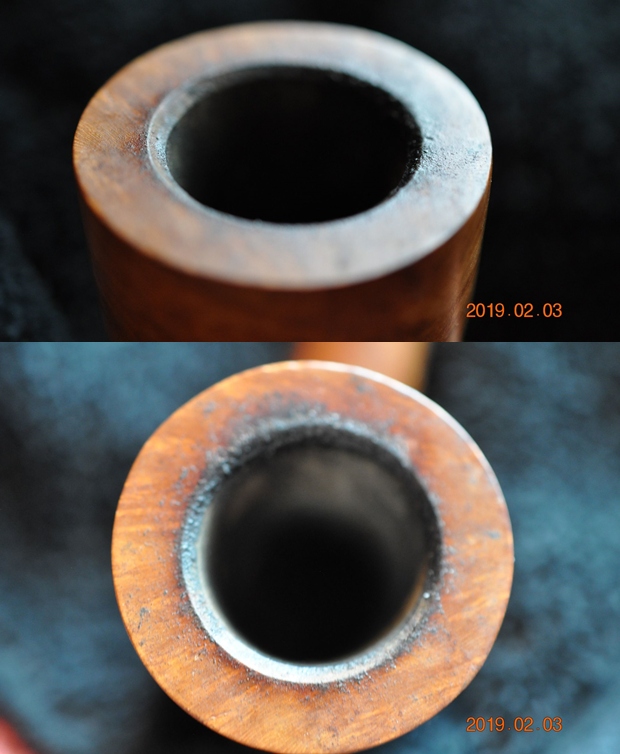
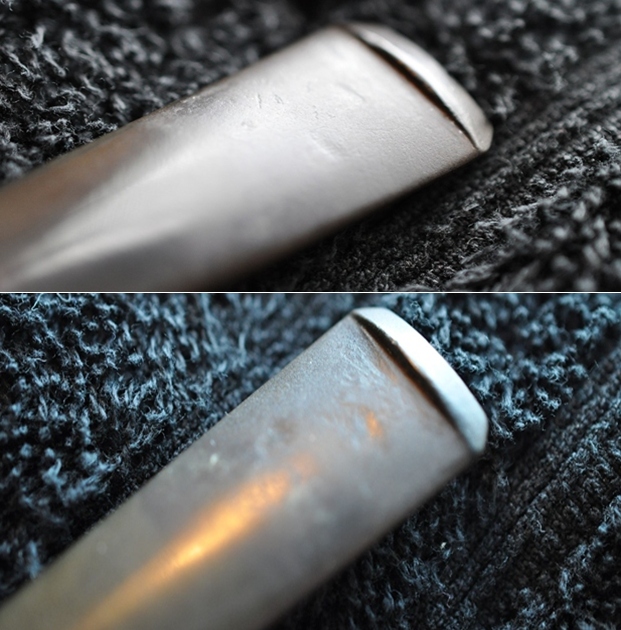
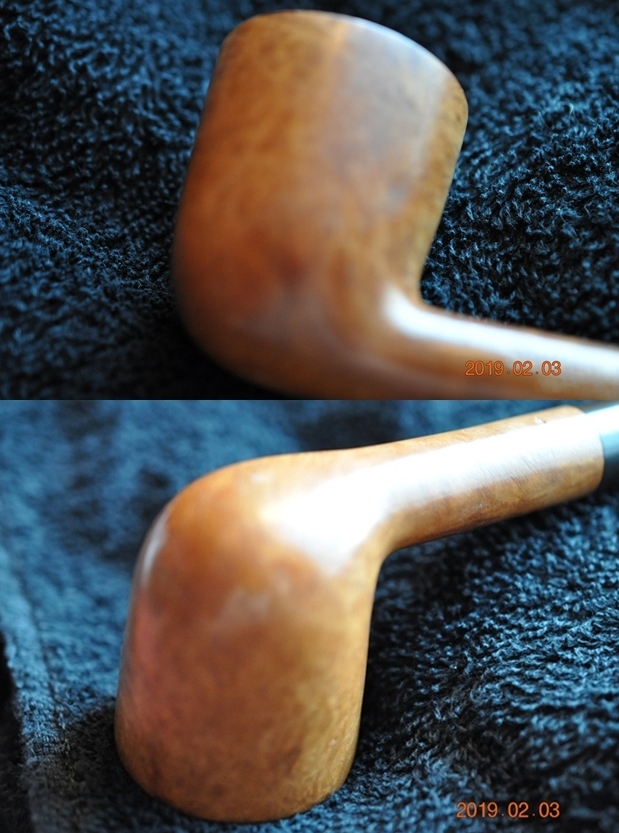
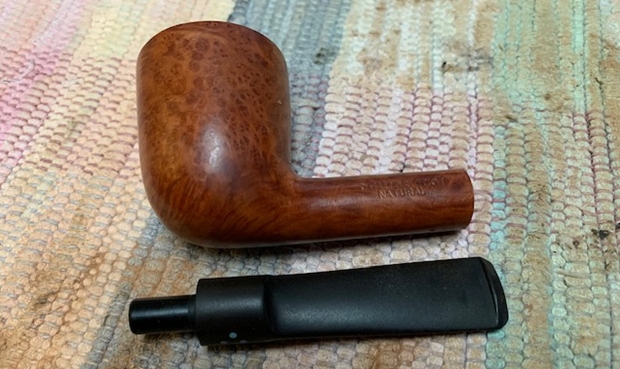
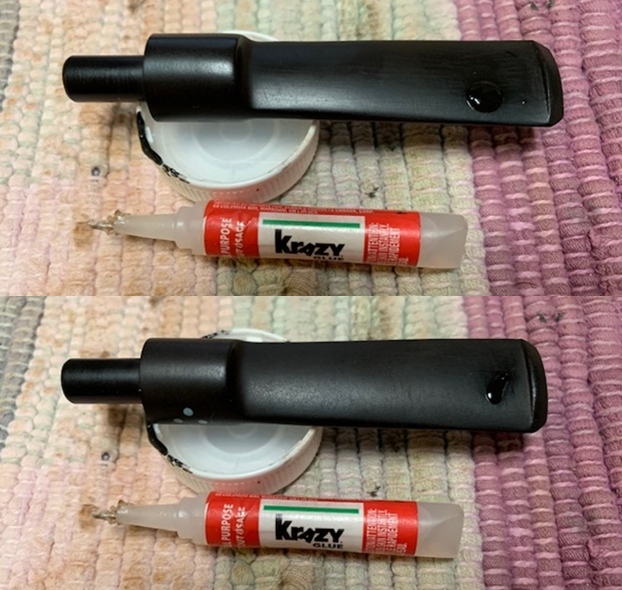
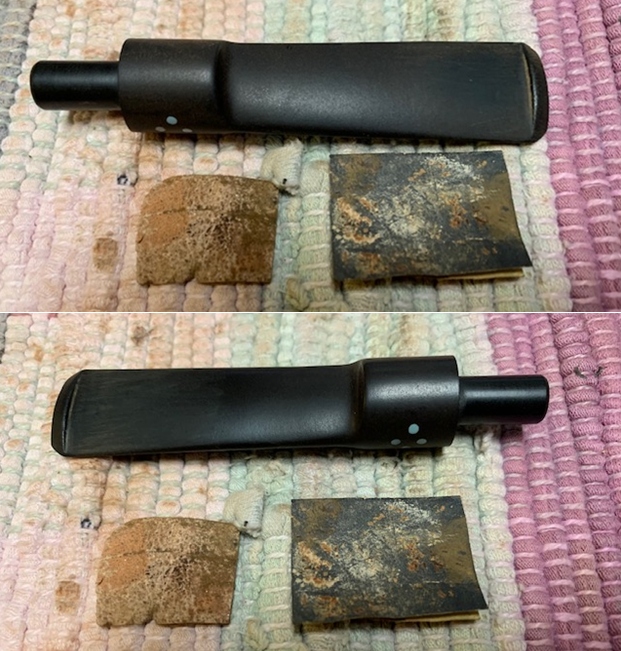
Now on to working on the pipe. Jeff had cleaned up the pipe with his usual penchant for thoroughness. He reamed the pipe with a PipNet pipe reamer and removed the rest of it with a Savinelli Fitsall Pipe Knife.  He scrubbed the bowl with undiluted Murphy’s Oil Soap with a tooth brush. He rinsed it under running warm water to remove the soap and grime. He cleaned out the inside of the shank and the airway in the stem with alcohol, cotton swabs and pipe cleaners. He soaked the stem in Before & After Deoxidizer and rinsed it off with warm water. I took photos of the pipe once I received it.   The rim top cleaned up really well. The rim top and outer edge of the bowl appear to be in good condition. The beveled inner edge also looked good. The stem surface looked good with a few small tooth marks and chatter on both sides near the button.  There was also some remaining oxidation visible on the stem. The stamping on the left and underside of the shank is clear and readable and reads as noted above.    I removed the stem and took a photo of the pipe to give a sense of the whole. The stem is a saddle with 4 Blue dots on the left side.Now it was time to do my work on the pipe. I polished the repaired areas and the rest of the briar with micromesh sanding pads – wet sanding with 1500-12000 grit pads and wiping it down after each pad with a damp cloth. I rubbed the bowl and shank down with Before & After Restoration Balm. I worked it into the surface of the bowl sides and shank with my fingertips to clean, enliven and protect the briar. I let the balm sit for a little while and then buffed with a cotton cloth to raise the shine. The grain came alive and the flaws while visible look better than when I began. I set the bowl aside and turned to work on the stem. I “painted” the stem with the flame of Bic lighter to lift the tooth marks in the surface of the vulcanite. While I was able to life most of them a few remained on each side. I filled these in with clear super glue. Once the repairs cured I sanded them out with 220 grit sandpaper to blend them in and started the polishing with 400 grit wet dry sandpaper.  It was in good condition and the tooth marks were light so I figured they would polish out fairly easily. I polished the vulcanite stem with micromesh sanding pads – 1500-12000 grit pads. I wiped it down with Obsidian Oil after each sanding pad. I used Before & After Pipe Polish – both Fine and Extra Fine to further polish the stem.       This Post-Transition Sasieni 4 Dot Natural Dublin is a great looking pipe now that it has been restored. The Natural finish around the bowl is quite beautiful and highlights the grain and works well with the polished vulcanite saddle stem. I put the stem back on the bowl and carefully buffed the pipe with Blue Diamond on the buffing wheel using a light touch on the briar. I gave the bowl and the stem multiple coats of carnauba wax on the buffing wheel and followed that by buffing the entire pipe with a clean buffing pad. I hand buffed the pipe with a microfiber cloth to deepen the shine. The finished Sasieni 4 Dot sits nicely in the hand and feels great. Give the finished pipe a look in the photos below. The dimensions of the pipe are Length: 5 ½ inches, Height: 2 inches, Outside diameter of the bowl: 1 ½ inches, Chamber diameter: 7/8 of an inch. I will be putting it on the rebornpipes store shortly. If you are interested in adding this pipe to your collection send me a message or an email. Thanks for reading this blog and my reflections on the pipe while I worked on it. There are many more to come!

An easy Restoration of a Sasieni 4 Dot Ruff Root Dark 13 Canadian


Blog by Steve Laug

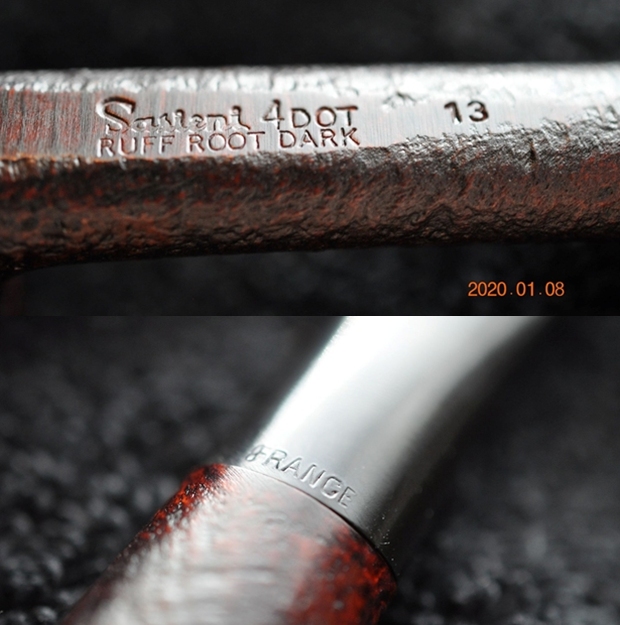
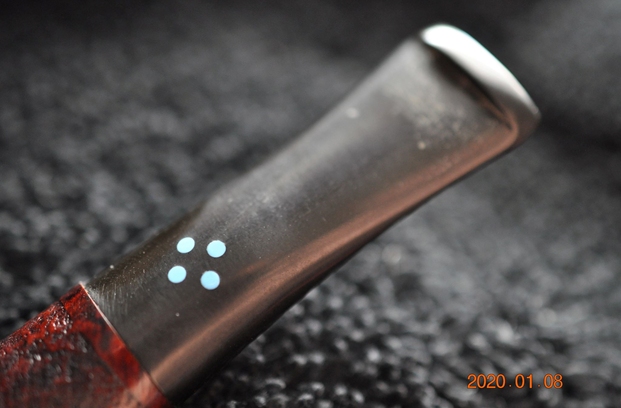
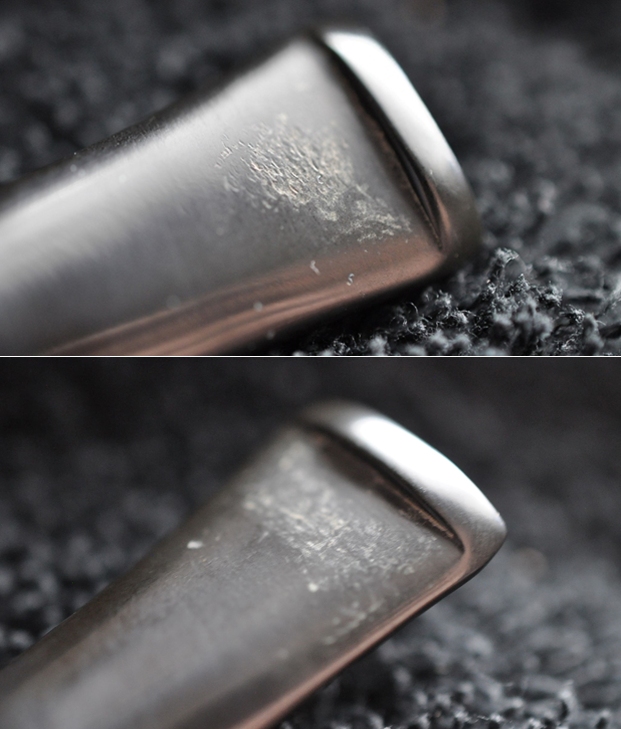
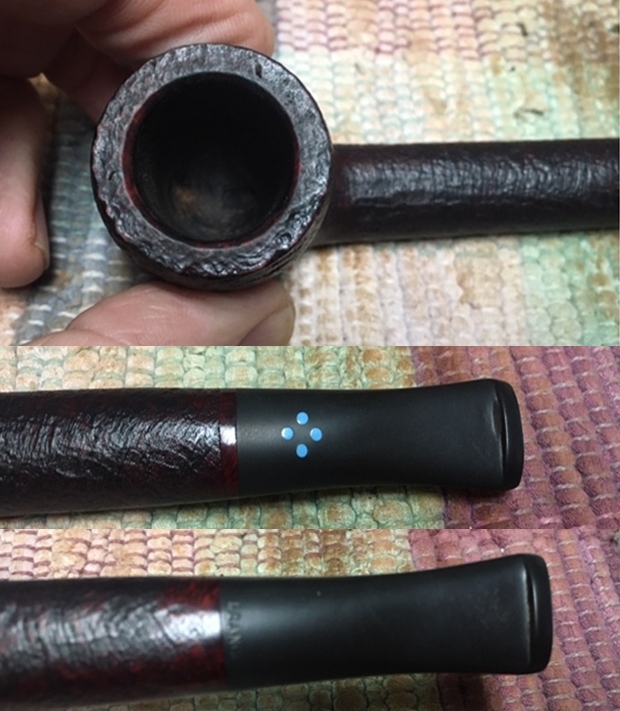
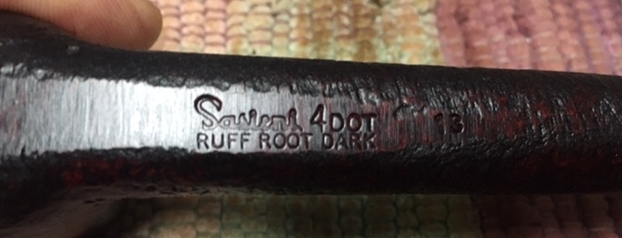
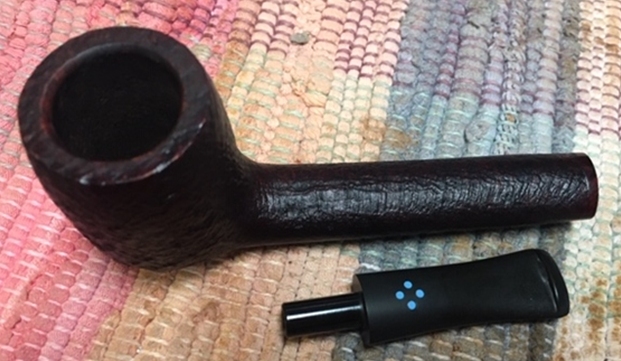
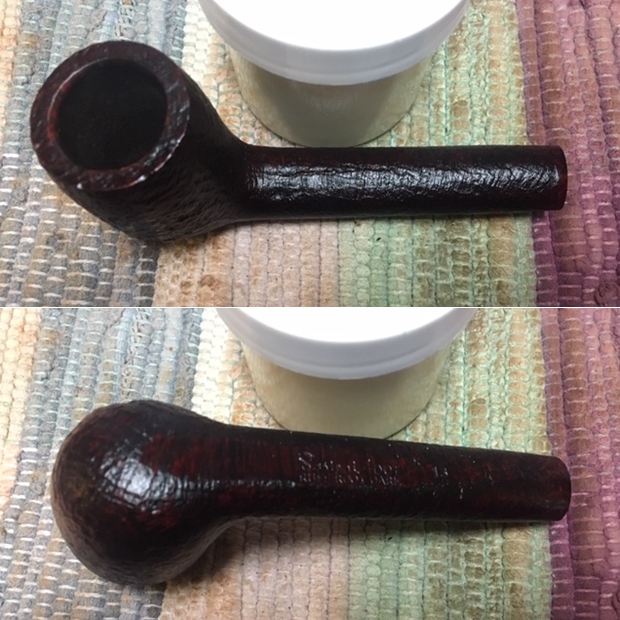
The next pipe on my worktable is a really nice looking Canadian with a sandblast finish and a taper vulcanite stem. It had come with its original box but the pipe sock was missing. The pipe had some beauty shining through the dust and debris in the valleys of the lighter sandblast finish. The blast covered the rim top, bowl and shank with a smooth panel on the underside of the shank. The finish was dull and lifeless and dirty from sitting around. There was a moderate cake in the bowl with a light coat of lava flowing out of the bowl and over the rim top. The lava had filled in the deeper grooves of the sandblasted finish on the rim top. The inner edge of the rim appeared to be in good condition. The stamping on the shank read Sasieni in script followed by 4 Dot on one line and under that it was stamped Ruff Root Dark. To the right of this stamping was the shape number 13. The taper stem had four blue dots arranged in a triangle on top of the taper. The surface was oxidized and there was light tooth chatter on both sides near the button. Jeff took the following photos before he started his cleanup work on the pipe. He took close-up photos of the bowl and rim top from various angles to capture the condition of the bowl and rim top edges. You can see the lava overflow and debris in the sandblasted rim top. You can see the cake in the bowl. This was a dirty pipe but it was the finish was in great condition. He took photos of the sides and heel of the bowl to show the beautiful light sandblast around the bowl. It is quite uniform and you can see the dust and debris in the finish as well as thumb and fingerprints on both sides of the bowl. It is a good looking sandblast. Jeff took a photo of the stamping on the shank. It reads as noted above. The stamping is clear and readable. The is also stamping on the underside of the stem that reads FRANCE.The next photos show the overview of the stem top and the tooth chatter and oxidation on the top and underside of the stem. When the pipe arrived I turned to Pipephil (http://www.pipephil.eu/logos/en/logo-sasieni.html) to see if he included not only information on this Sasieni 4 Dot Ruff Root Dark Canadian. Sure enough he quick information for me that identified the time frame of this pipe. He dates it as a Post Transition piece 1986-today. The Ruff Root name is what they call a sandblasted finish. He points out that the 4 Dot has replaced the Four Dot from 1986.I turned to Pipedia for more information on 4 Dot line of Sasieni pipes and any information that was added there (https://pipedia.org/wiki/Sasieni). I quote a pertinent paragraph:

…The nomenclature changed again in 1986, with the sale of the company to the Post-Transition firm. The three line nomenclature was changed to two lines, with the first reading “Sasieni 4 Dot” and the second identifying the finish, e.g. Natural, Walnut, or Ruff Root. Note how 4 Dot is spelled, using an Arabic numeral 4, as opposed to spelling out the word “four”. This is the easiest way to spot a Post-Transition Sasieni, as the new company has used both script and block lettering to spell the word “Sasieni” on the shank…

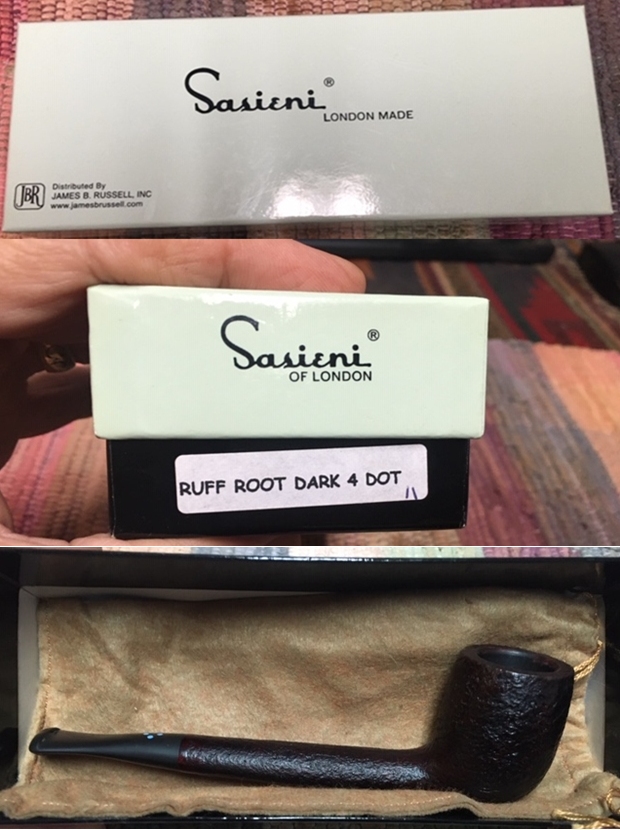
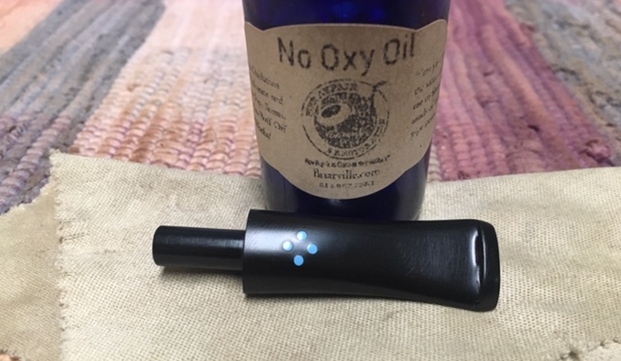
Now it was time to look at it up close and personal. Jeff had done an amazing job in removing all of the cake and the lava on the rim top. He had reamed the bowl with a PipNet Pipe Reamer and cleaned up the remnants with a Savinelli Fitsall Pipe Knife. He took the cake back to bare briar so we could check the walls for damage. He scrubbed the exterior of the bowl with Murphy’s Oil Soap and a tooth brush to remove the grime on the bowl and rim and was able to remove the lava and dirt. He cleaned out the interior of the bowl and shank with pipe cleaners, cotton swabs and alcohol until they came out clean. He cleaned the stem with Soft Scrub to remove the grime on the exterior and cleaned out the airway with alcohol, cotton swabs and pipe cleaners. I took some photos of the box that the pipe arrived in. The first shows the top and the second the end with the  identifying stamping on the pipe. I took a photo of the pipe in the box with a no name pipe sock.I took the pipe out of the box and took photos of it to show what it looked like before I did my part of the work on the pipe. To show how clean the rim top and stem really was I took a close-up photo of the rim and stem. The bowl was clean and cake free. The rim top is very clean with no residual lava in the sandblast finish. The inner edges of the bowl look good. The plateau shank end also looks good. The black vulcanite fancy stem looks cleaned up nicely. The surface had some light tooth marks but the button edge looked really good.I took a photo of the stamping on the under side of the shank. You can see the clear stamping.I removed the stem from the bowl and took photos of the parts. The 4 Blue Dots on the tapered vulcanite stem look very good. The bowl looked very good so I did not need to do any further work on it. I rubbed the bowl and shank down with Before & After Restoration Balm to deep clean the finish on the bowl and shank. The product works to clean, enliven and protect the briar. I worked it in with my fingers and with a horse hair shoe brush to get it into the nooks and crannies of the sandblast finish on the bowl and shank. I let it sit for 10 minutes to let it do its magic. I buffed it with a soft cloth. The briar really began to have a rich shine. I took some photos of the bowl at this point to mark the progress in the restoration. The bowl was finished so I set it aside and turned my attention to the stem. The stem was in very good condition other than some light tooth marks and some light oxidaiton. I polished the stem with micromesh sanding pads – dry sanding with 1500-12000 grit sanding pads. I wiped the stem down after each sanding pad with a cloth containing some Obsidian Oil. I finished polishing it with Before & After Pipe Stem Polish – both Fine and Extra Fine and buffed it off with a cotton cloth. I gave it a final rub down with Briarville’s No Oxy Oil to preserve and protect the vulcanite stem. I put the bowl and stem back together again and buffed the bowl and the stem with Blue Diamond on the buffing wheel. I used a soft touch on the sandblast bowl so as not to fill in the blast with the product. I gave the bowl several coats of Conservator’s Wax and the stem several coats of carnauba wax. I carefully buffed the entire pipe with a clean buffing pad to raise the shine. I finished buffing with a microfiber cloth to deepen the shine. The finished pipe looks very good. The sandblast is light but interesting and feels great in the hand. It is comfortable and light weight. The finished Sasieni Ruff Root Dark 13 Canadian is shown in the photos below. The dimensions of the pipe are Length: 5 ¾ inches, Height: 1 ½ inches, Outside diameter of the bowl: 1 ¼ inches, Chamber diameter: ¾ of an inch. This great looking sandblast Canadian turned out very well. It should be a great pipe. It will be going on the rebornpipes store shortly if you are interested in adding it to your collection. Thanks for reading this blog and my reflections on the pipe while I worked on it.