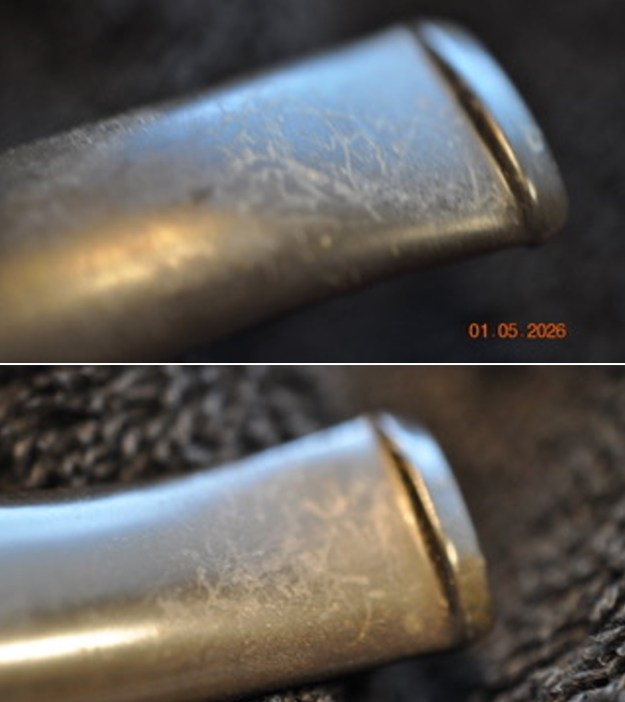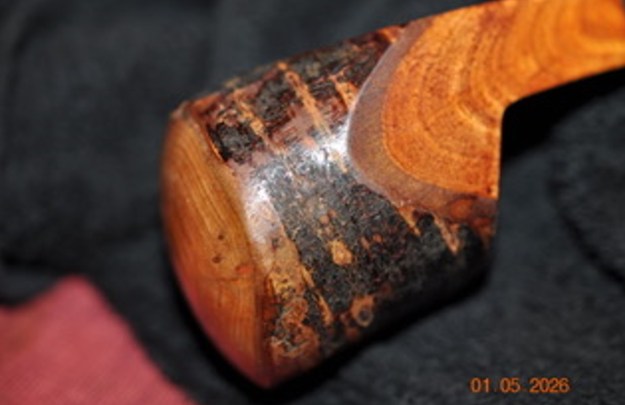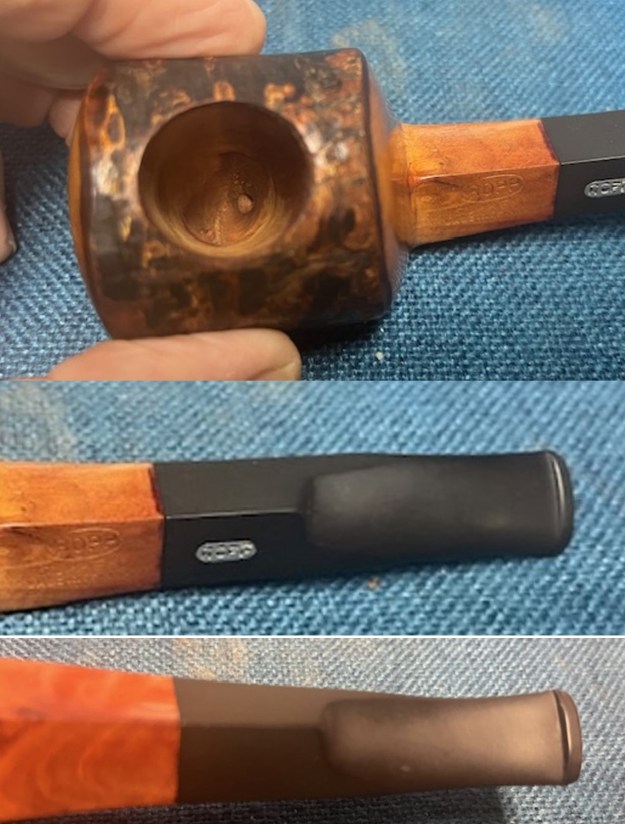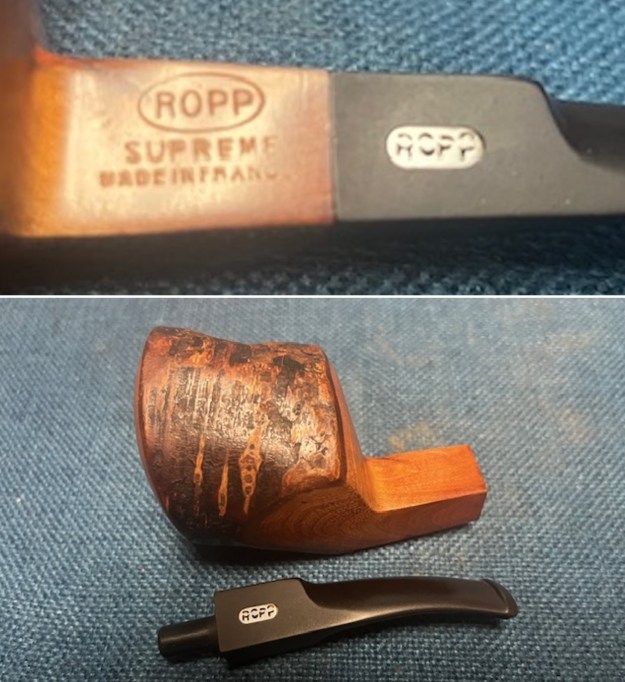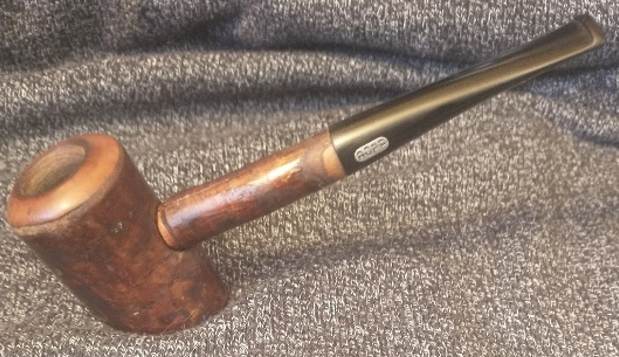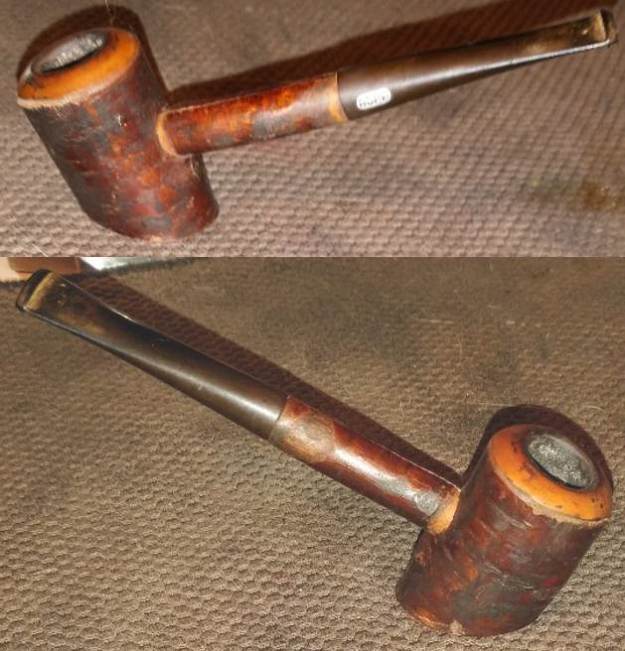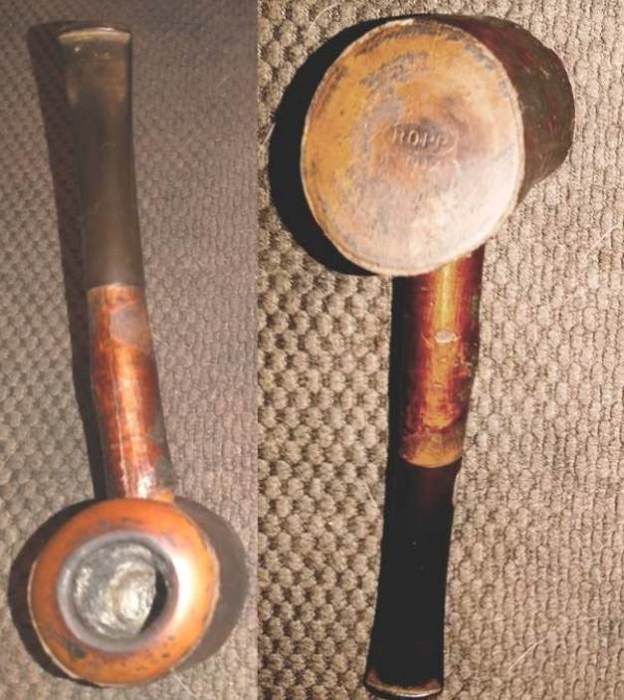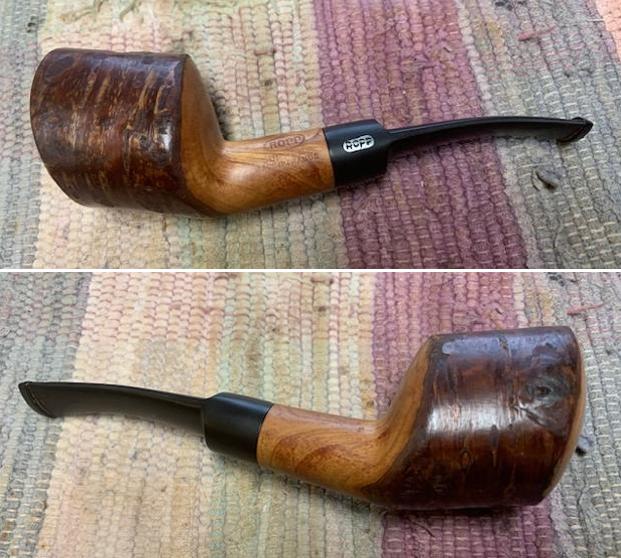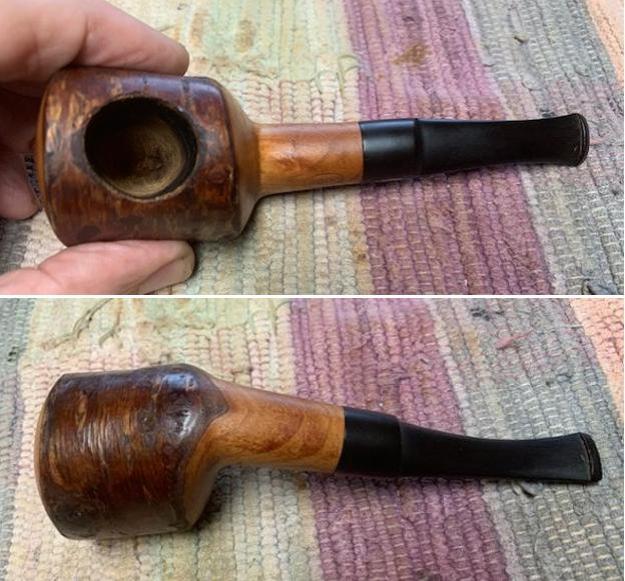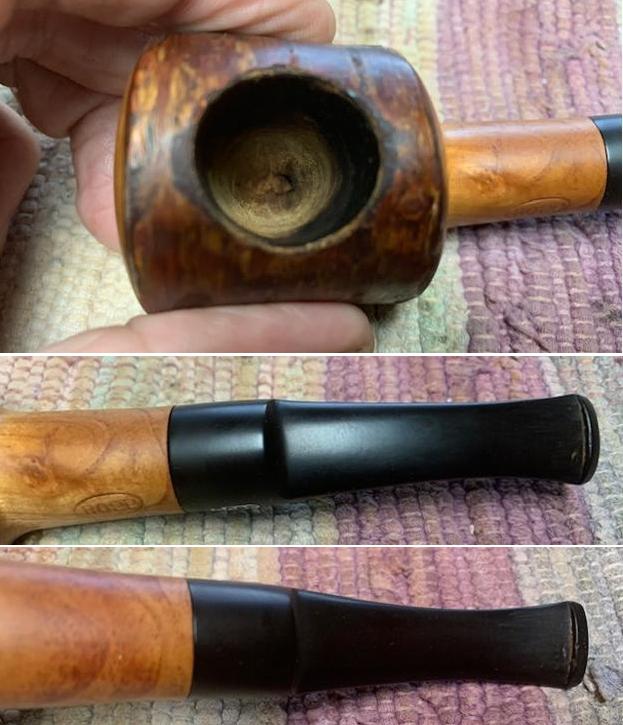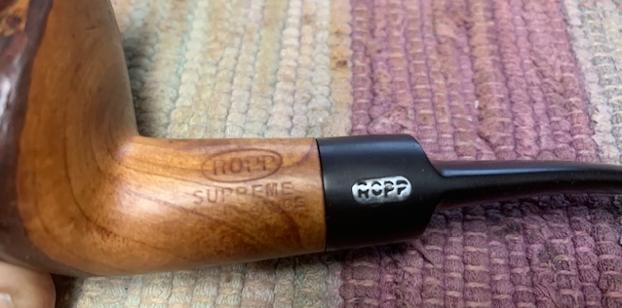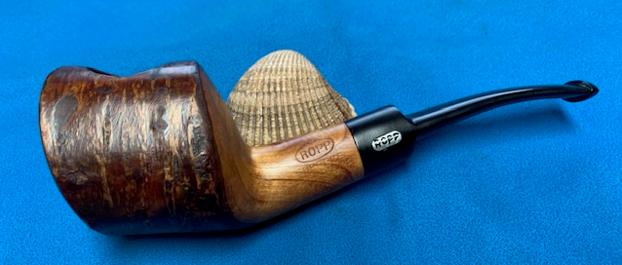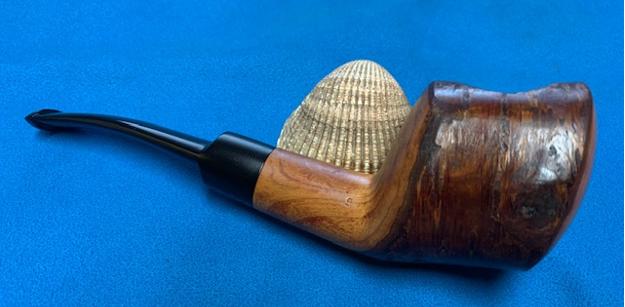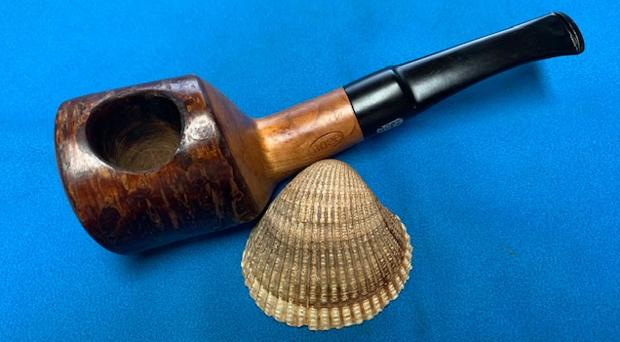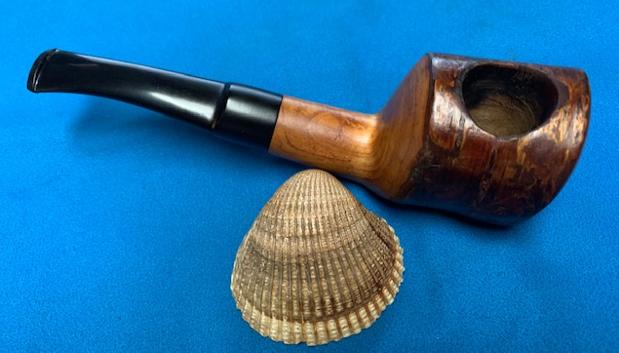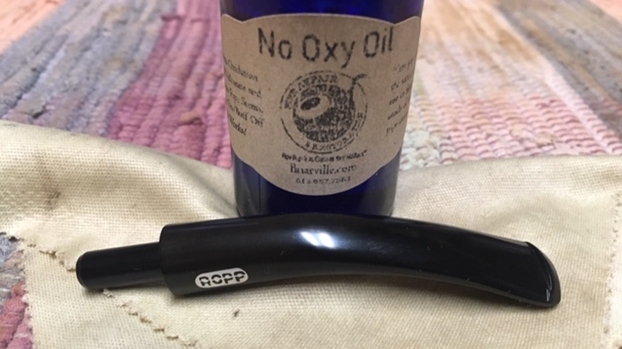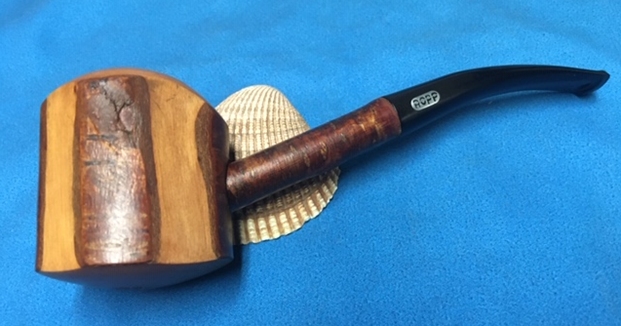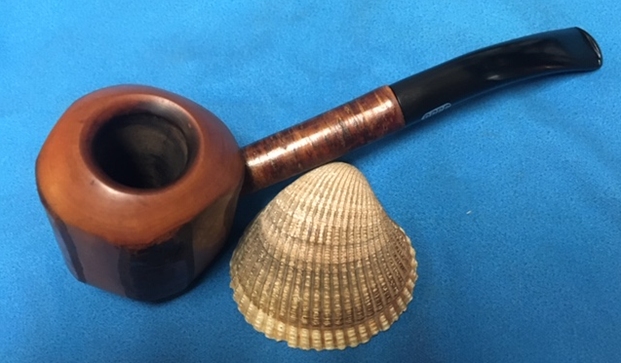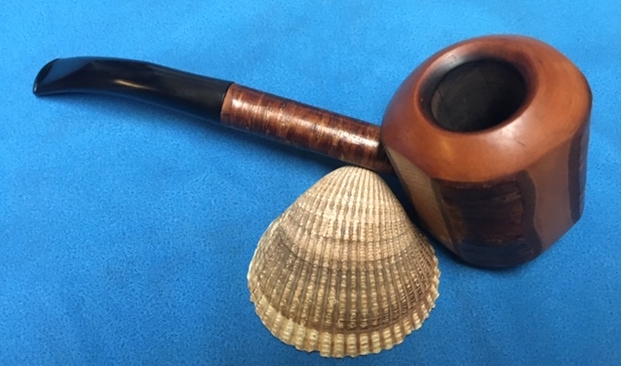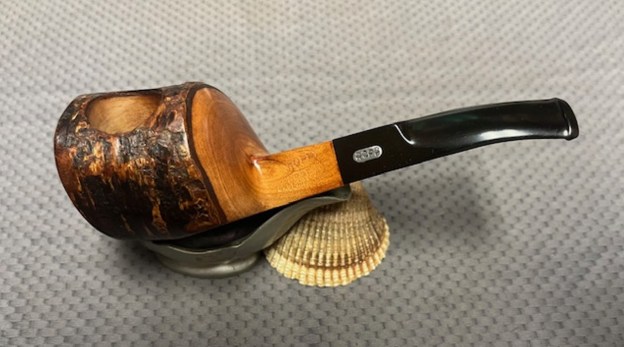
Tag Archives: Ropp Cherrywood pipes

Fixing the Cork Mortise on a Ropp Cherrywood


by Kenneth Lieblich

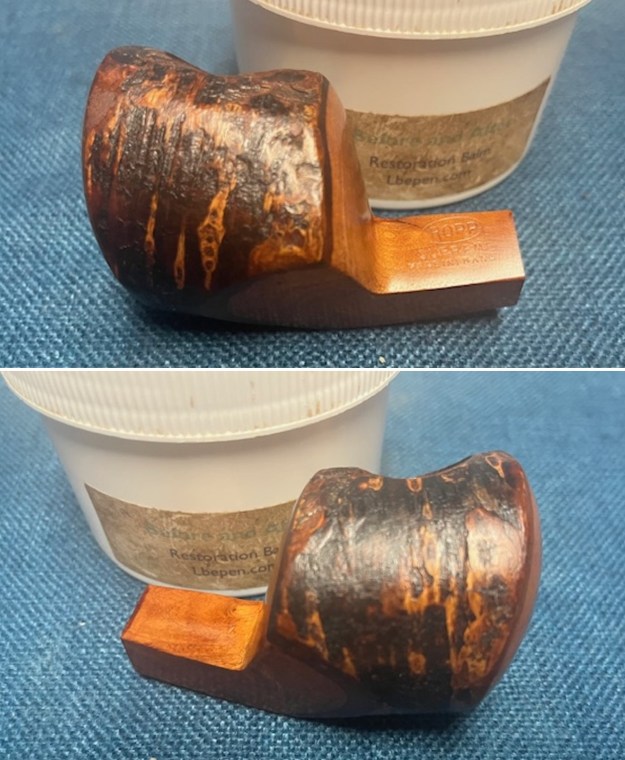
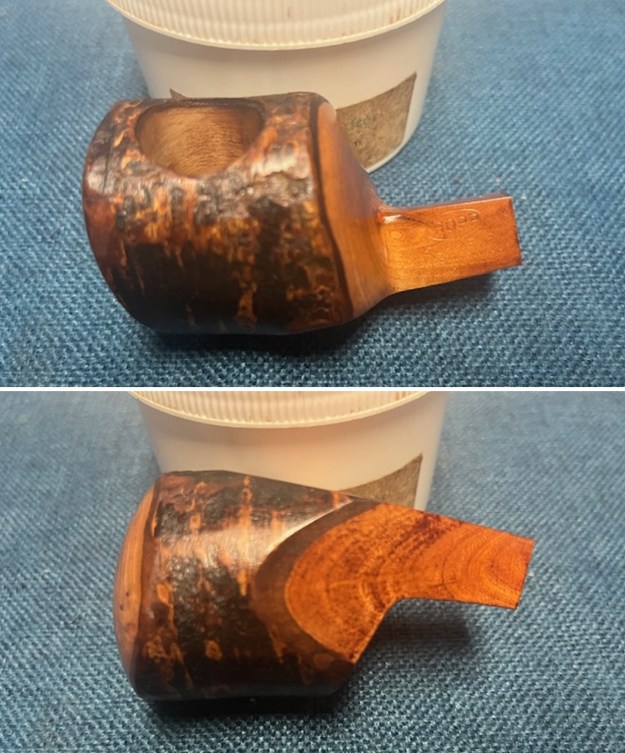
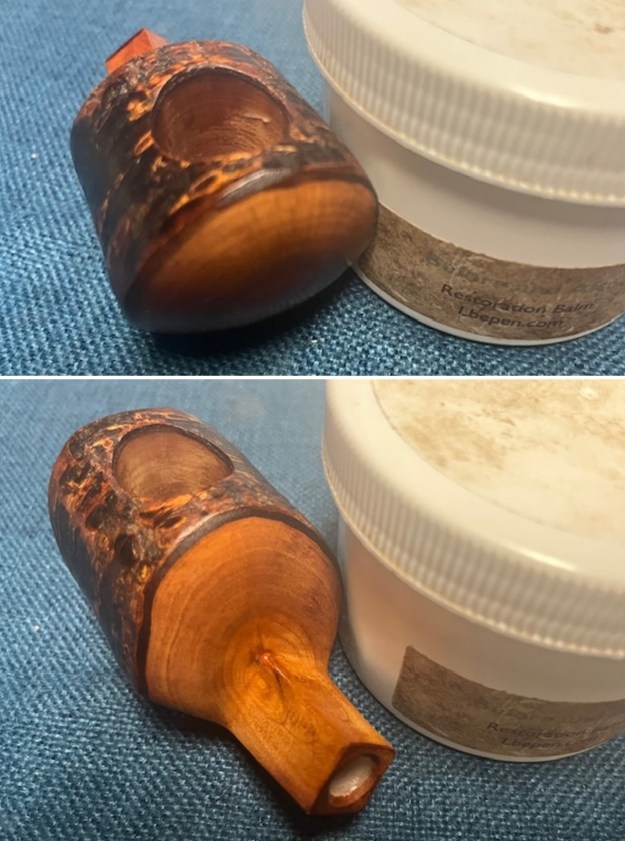
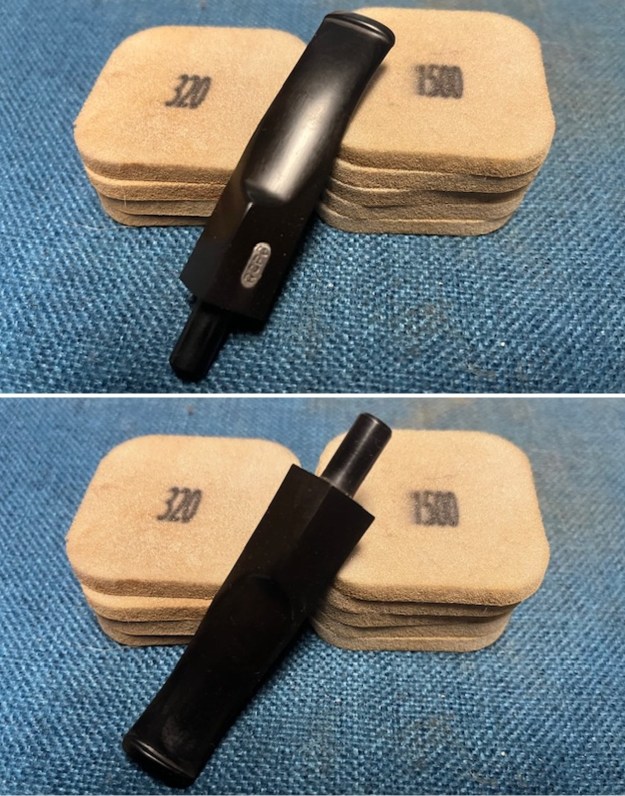
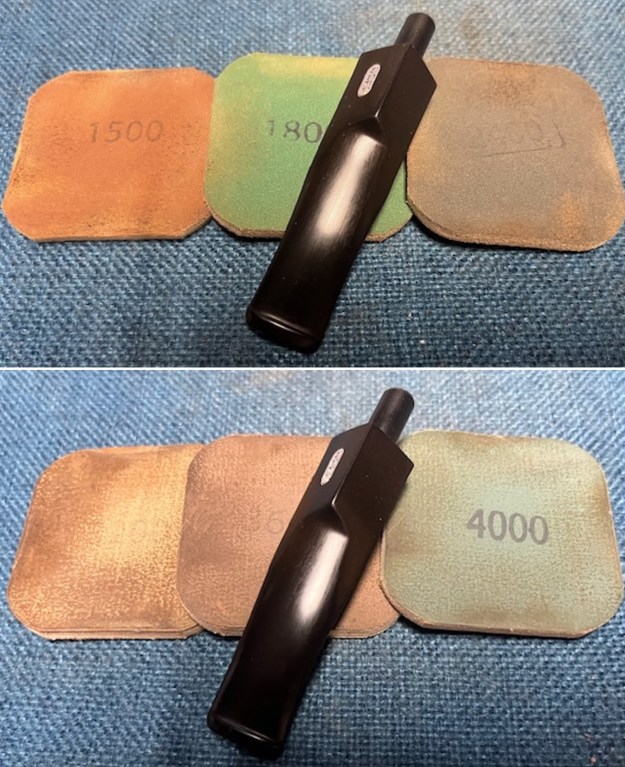
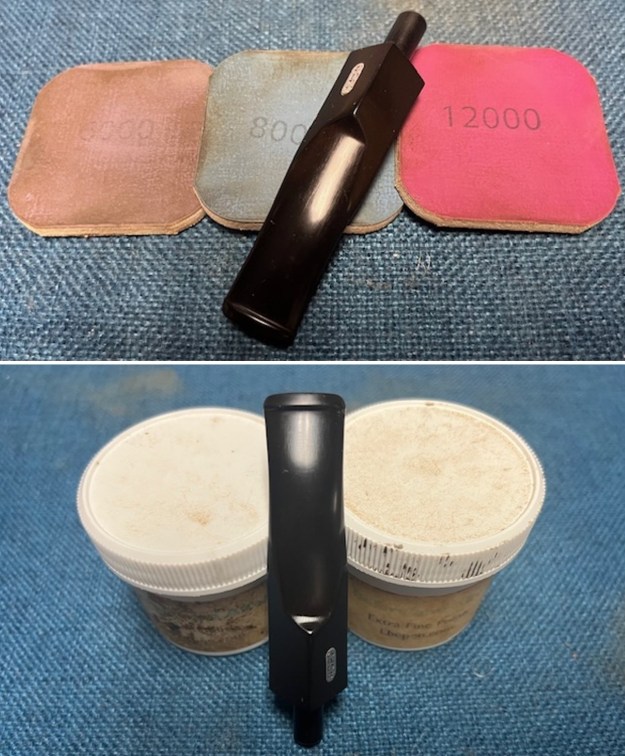
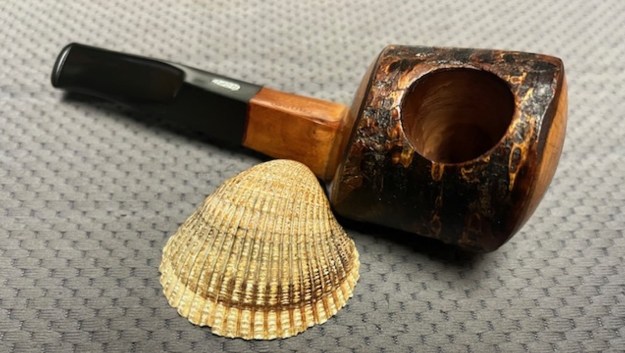
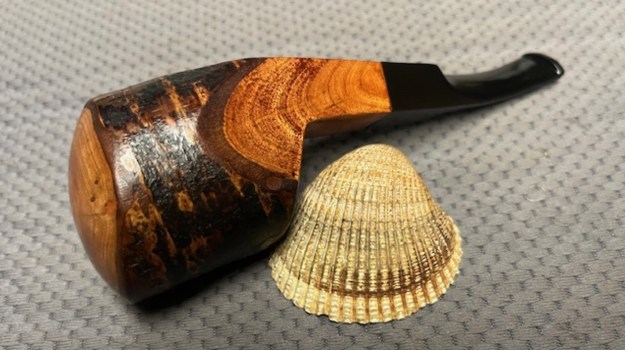
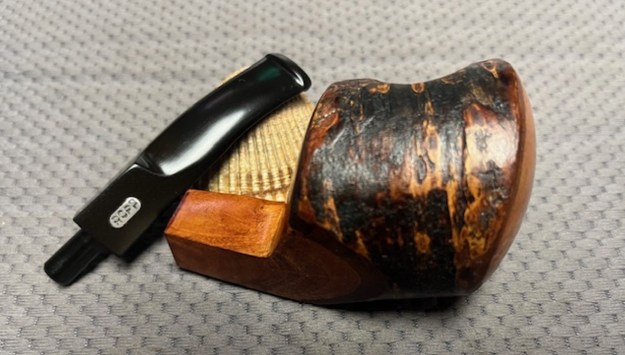
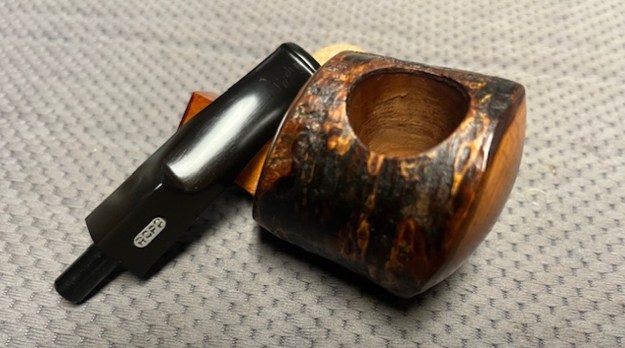
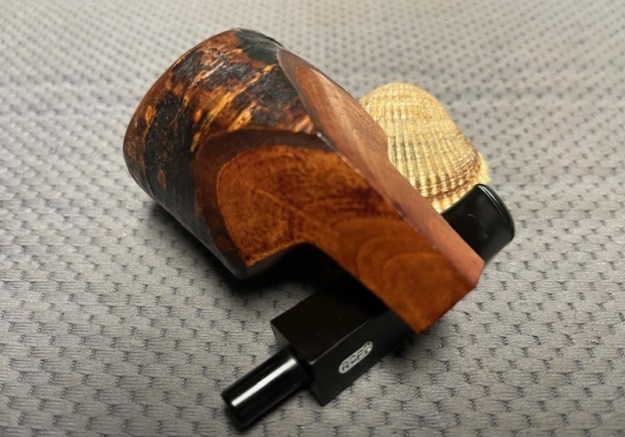
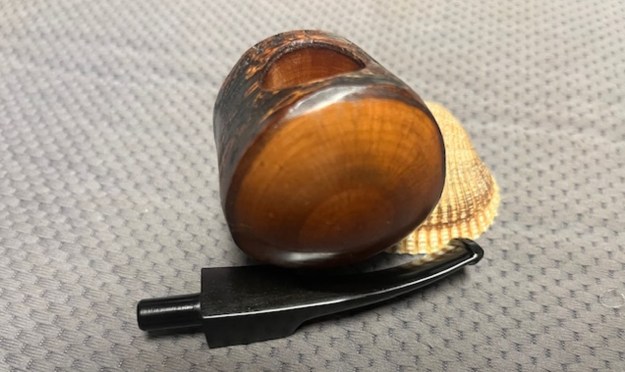
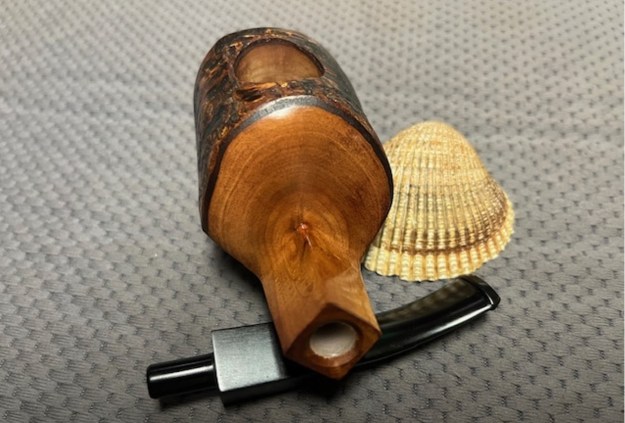
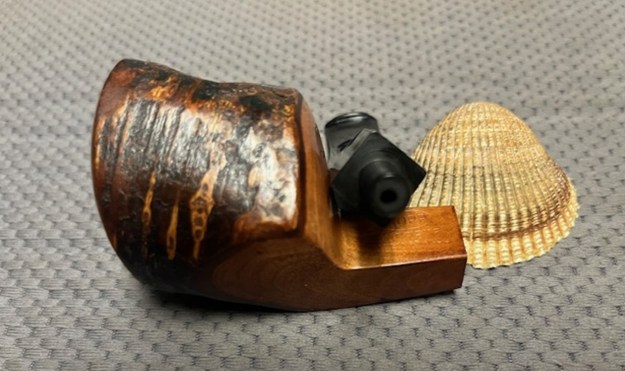
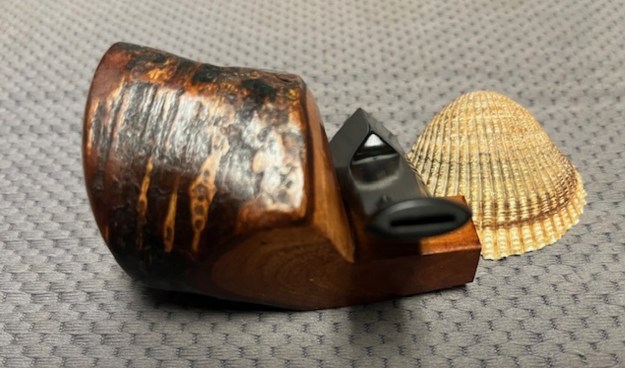
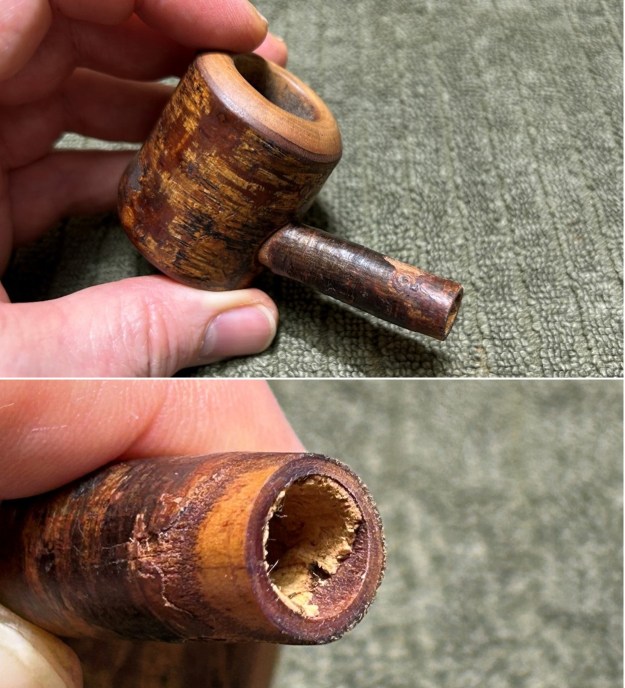
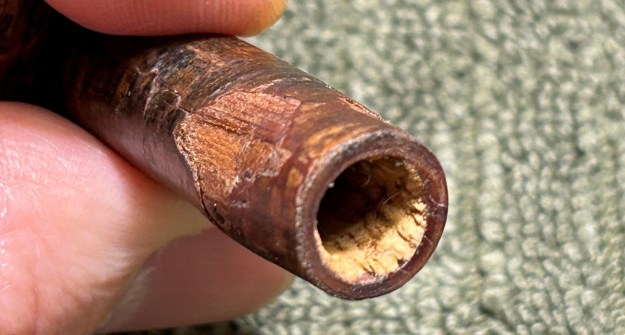
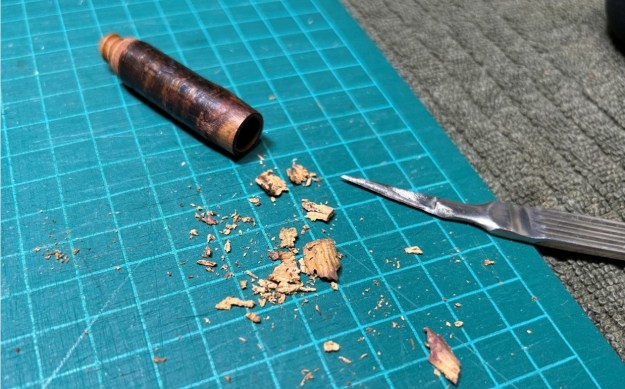
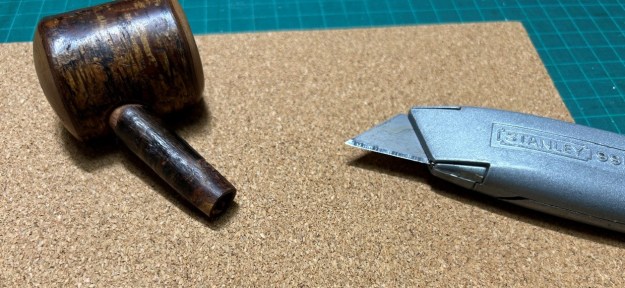
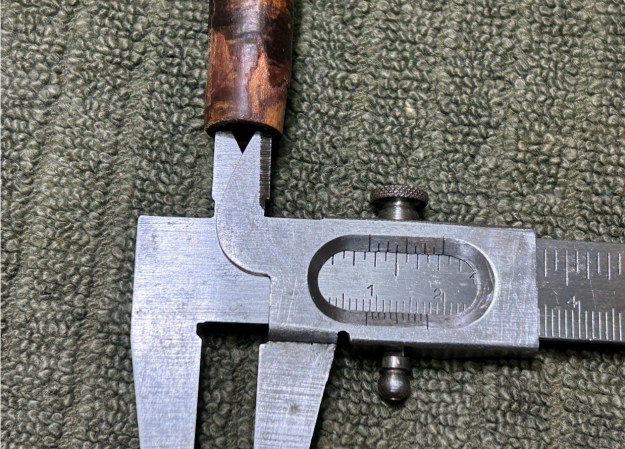
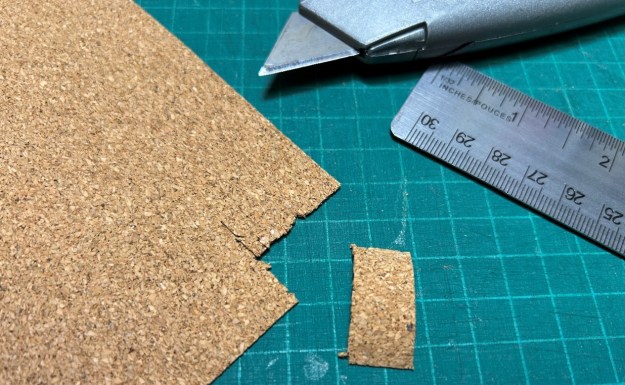
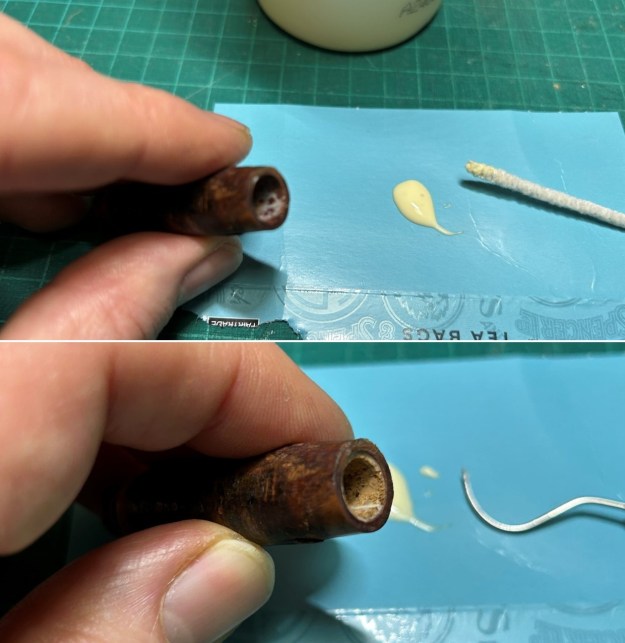
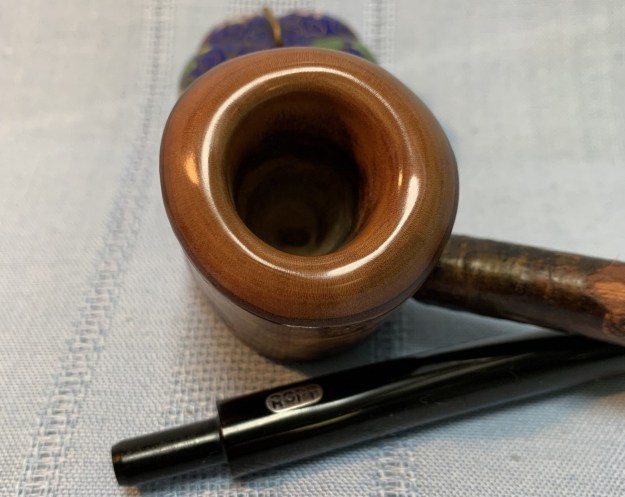
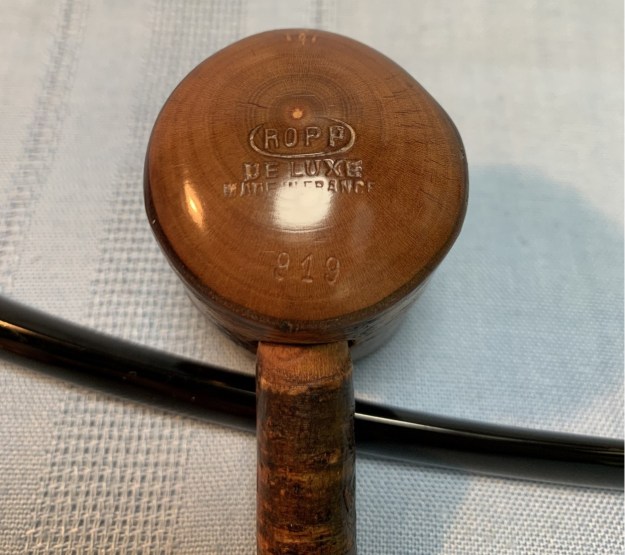
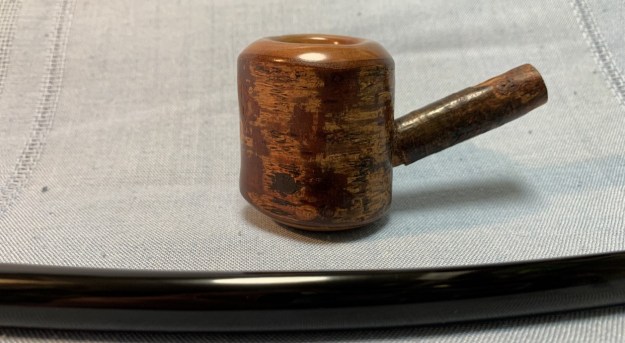
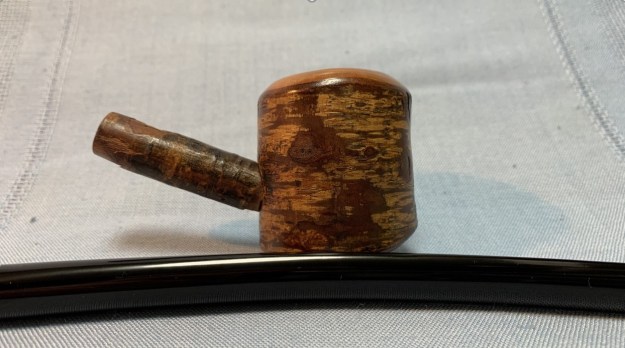
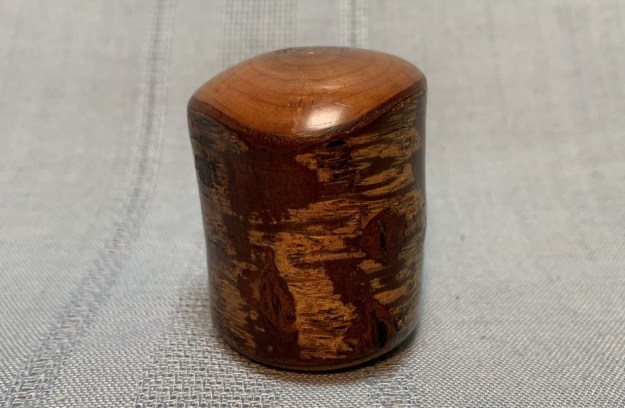
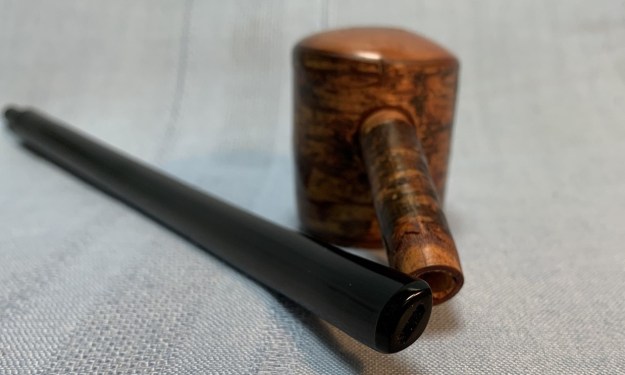
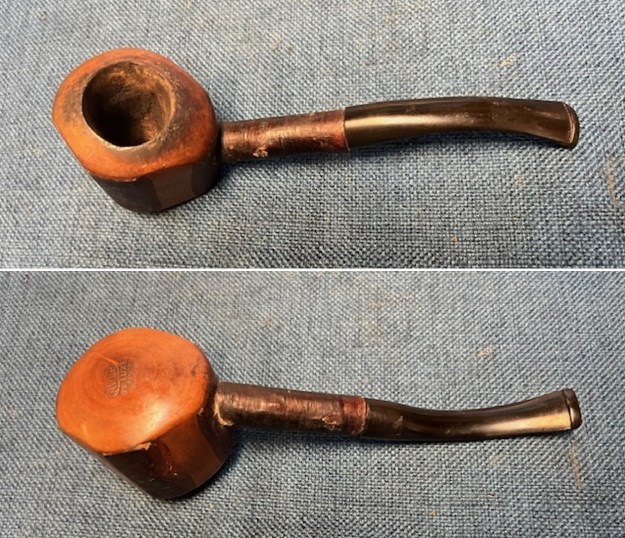
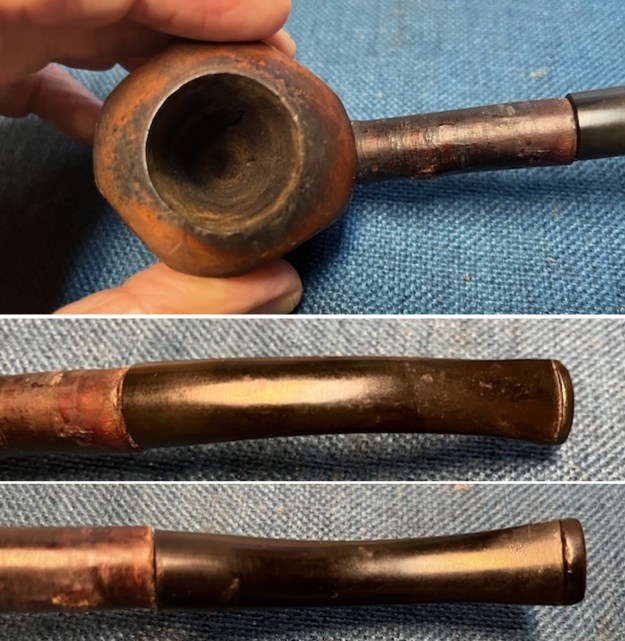
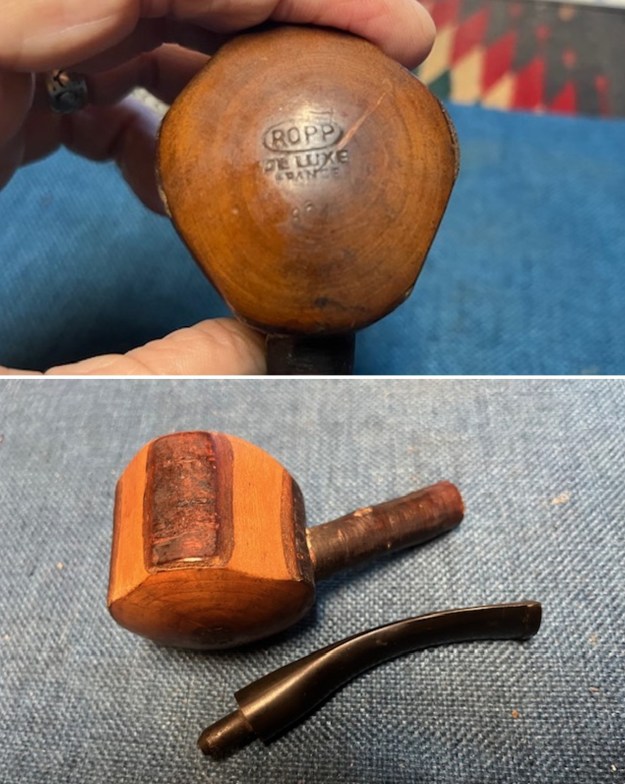
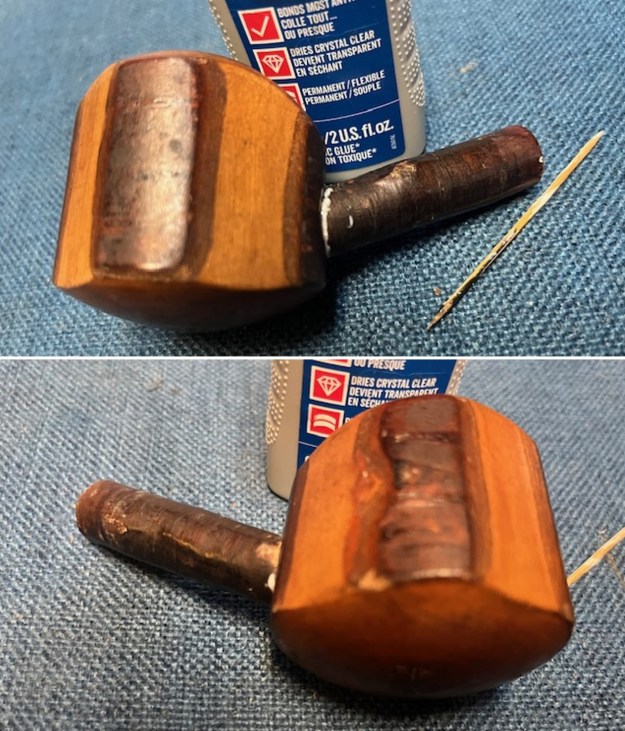
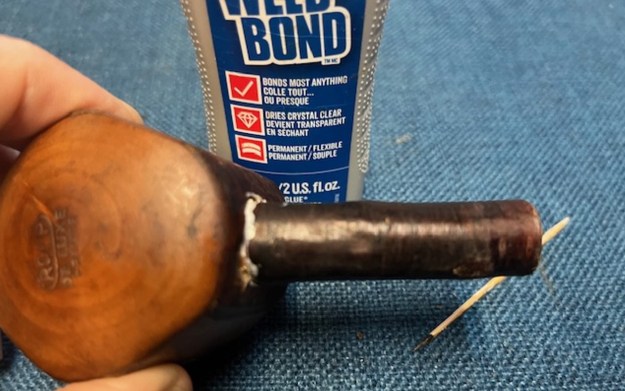
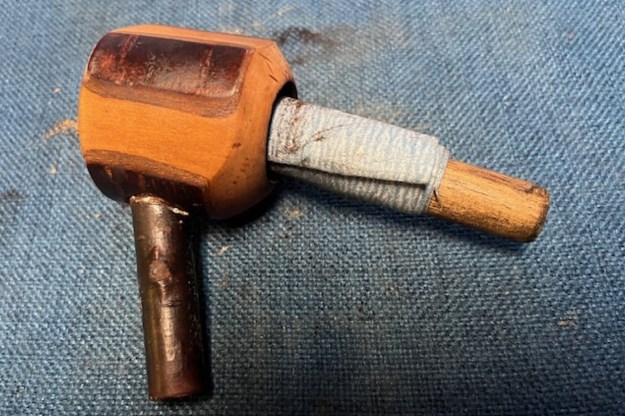
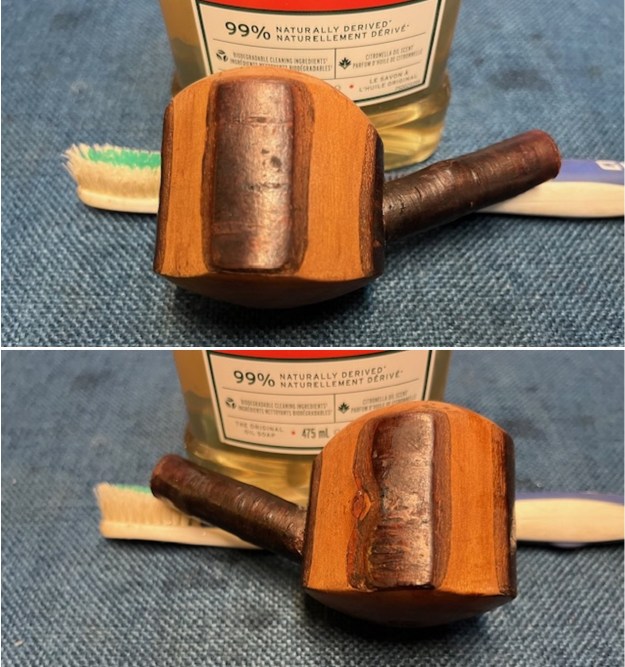
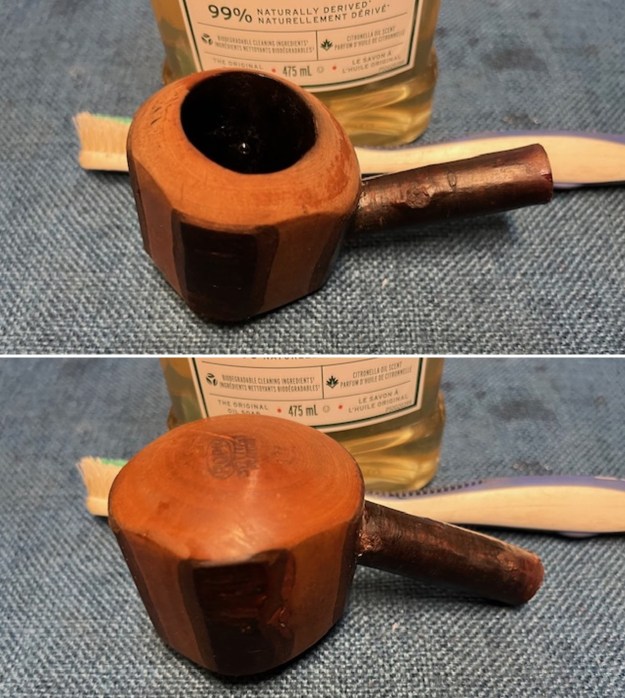
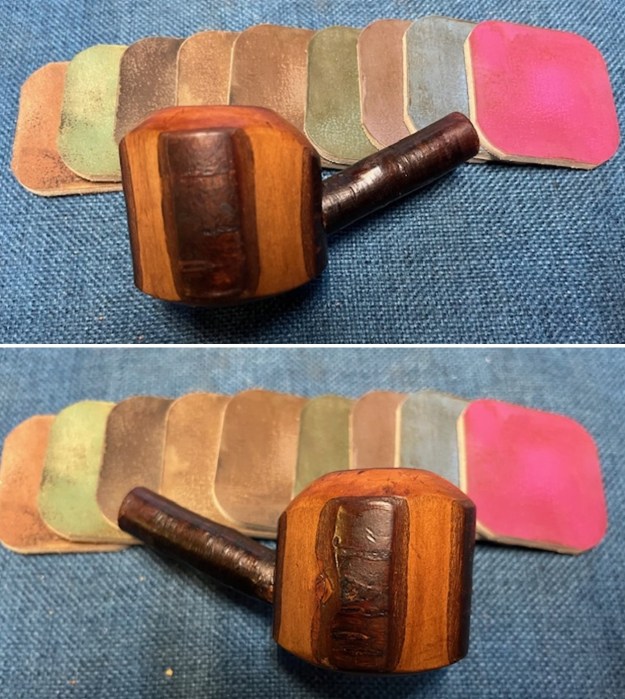
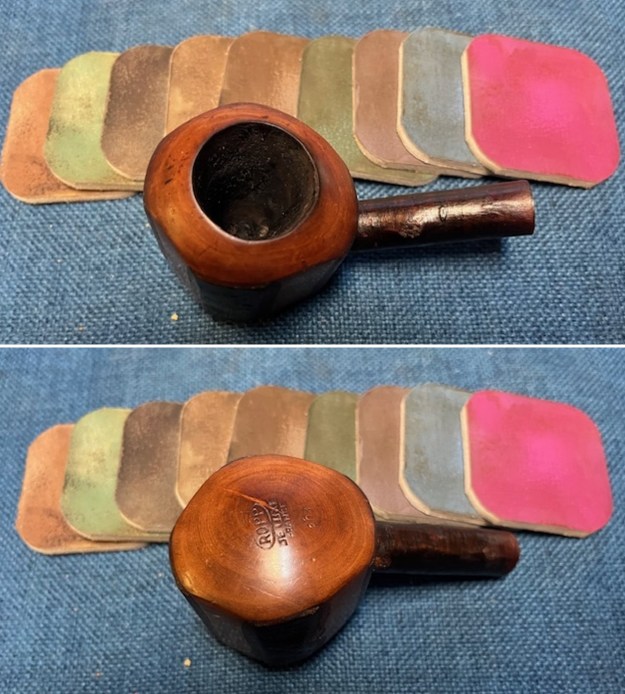
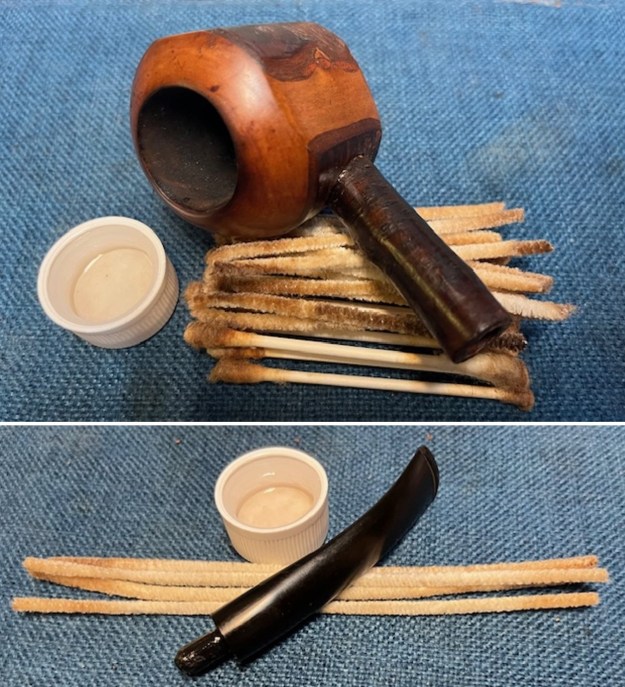
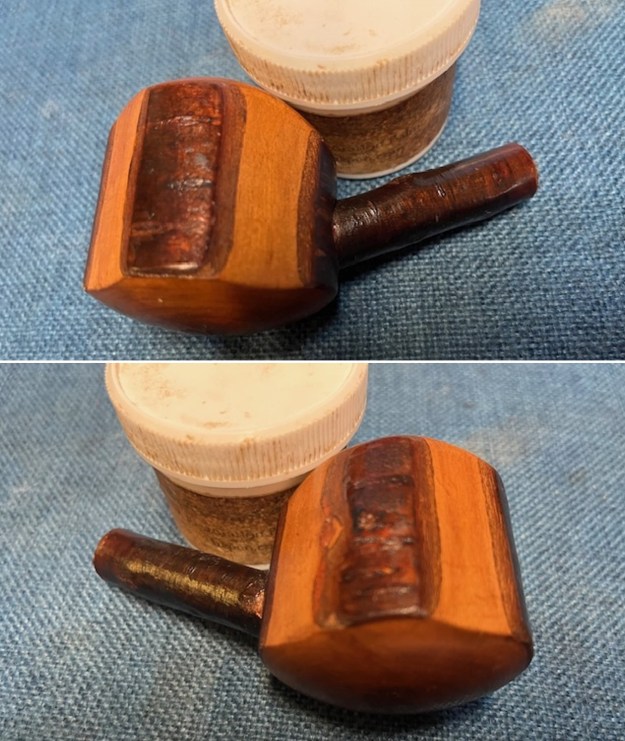
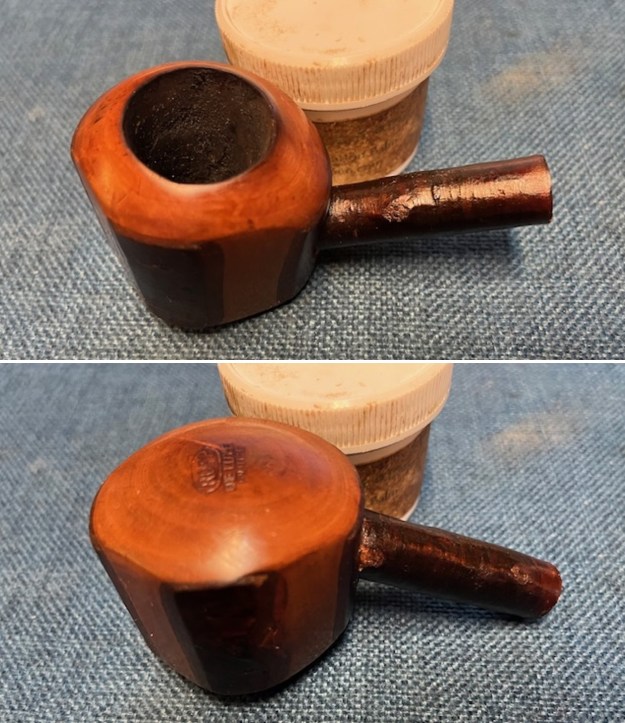
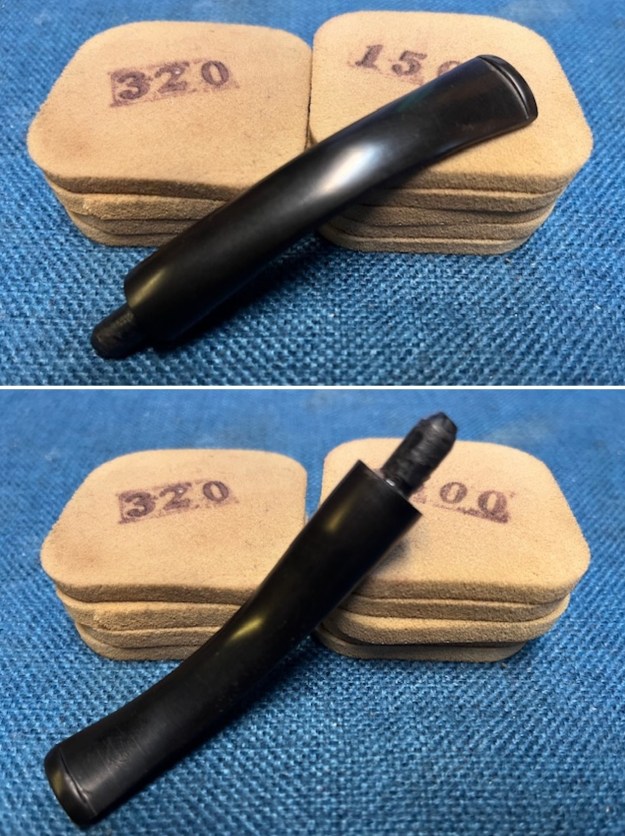
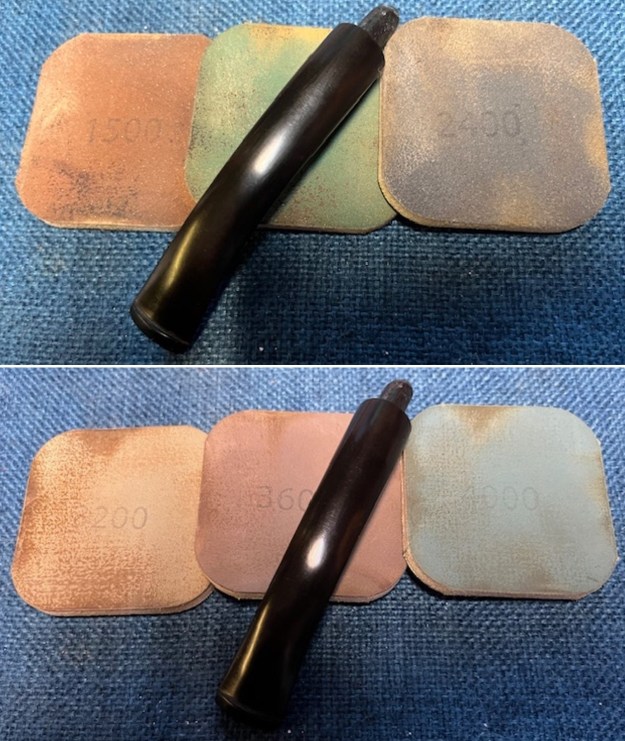
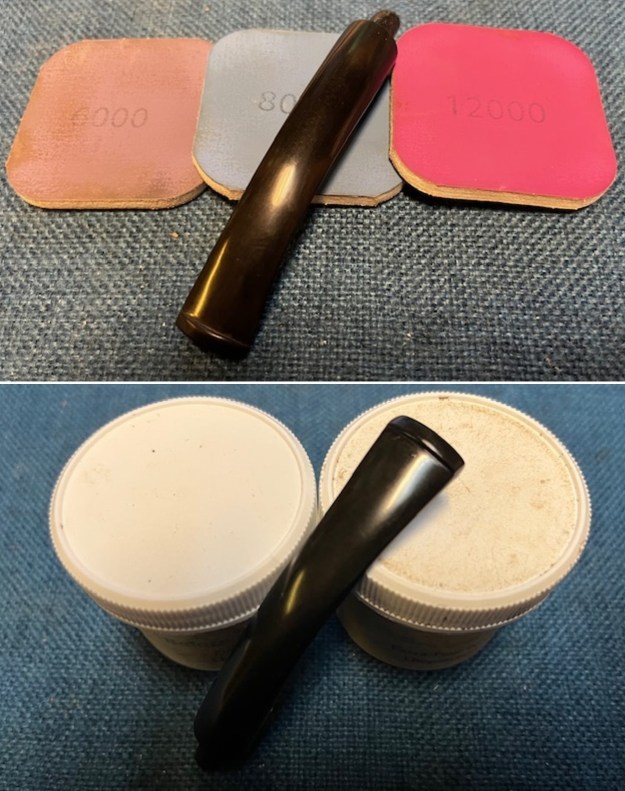
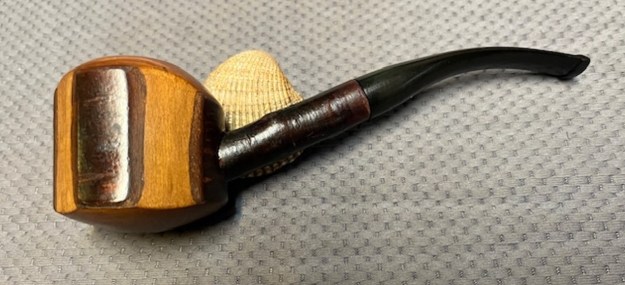
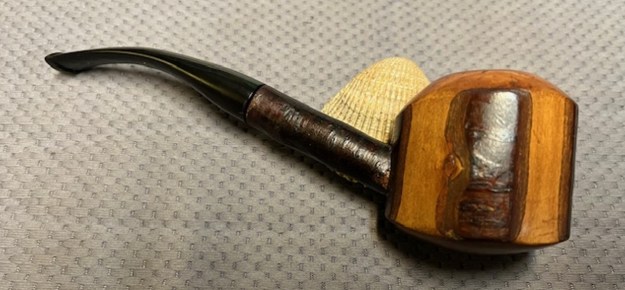
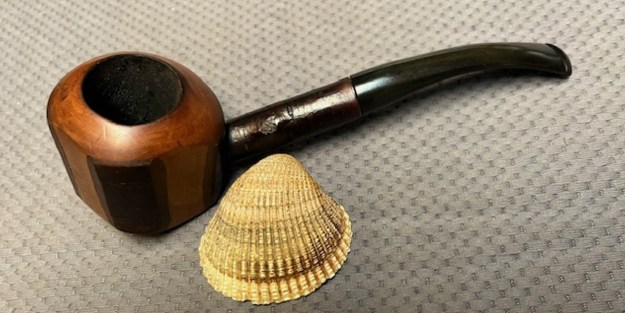
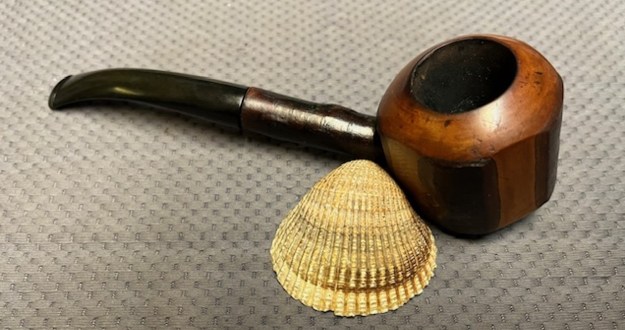
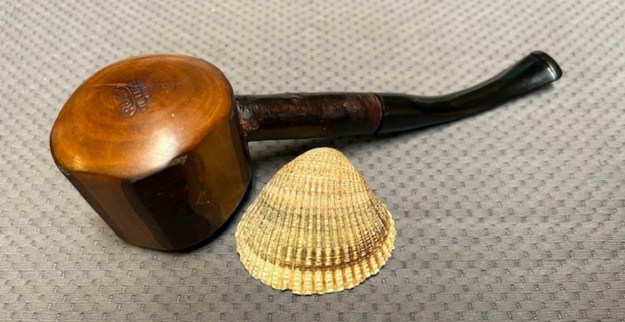
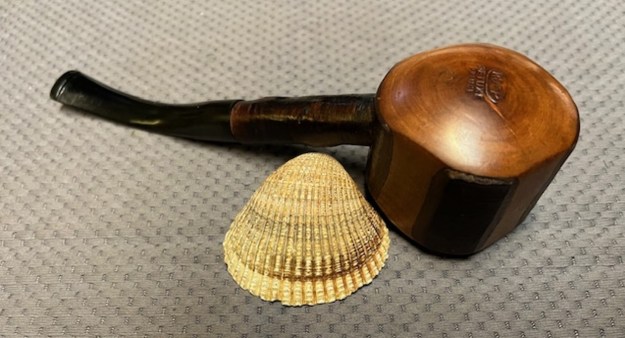
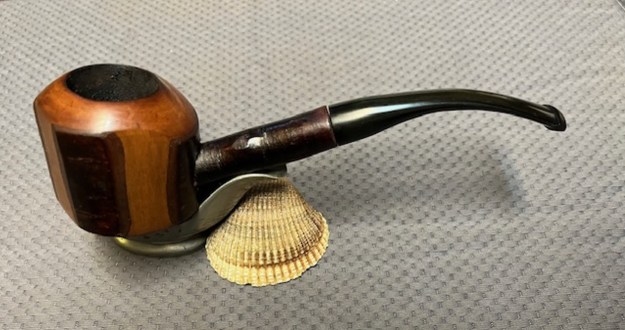
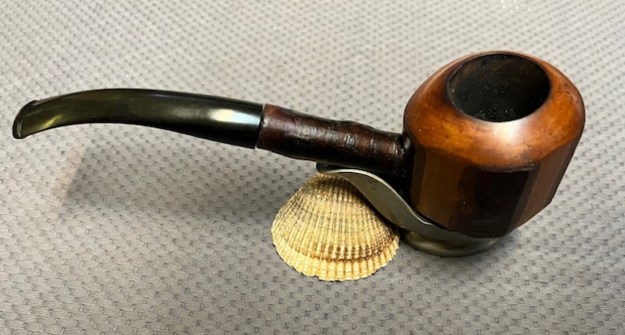
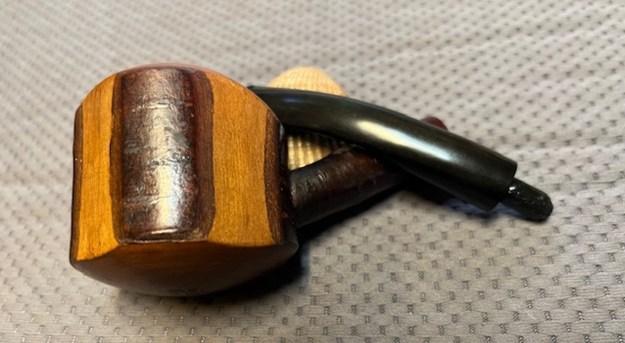
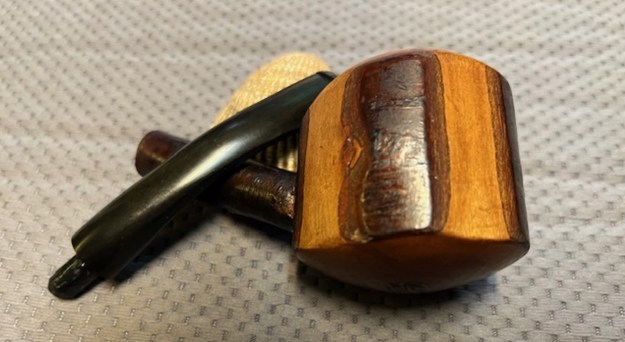
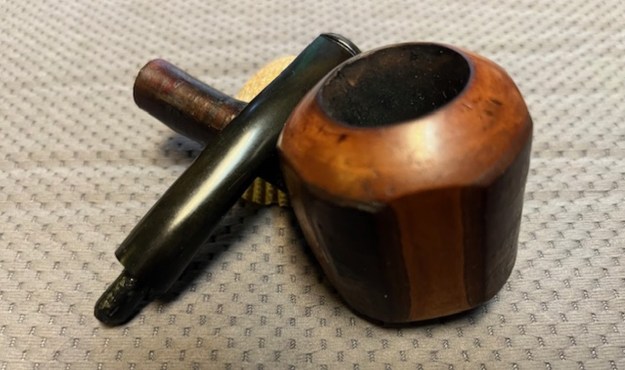
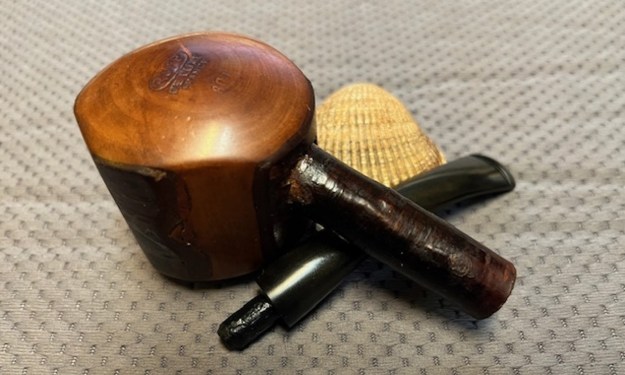
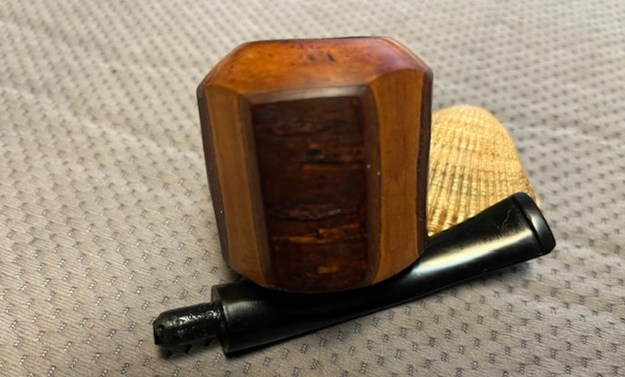
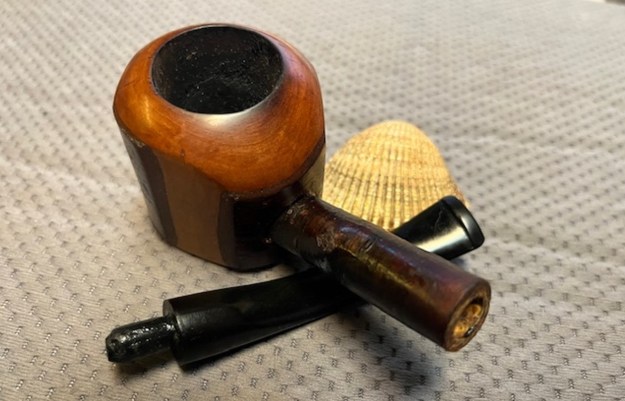
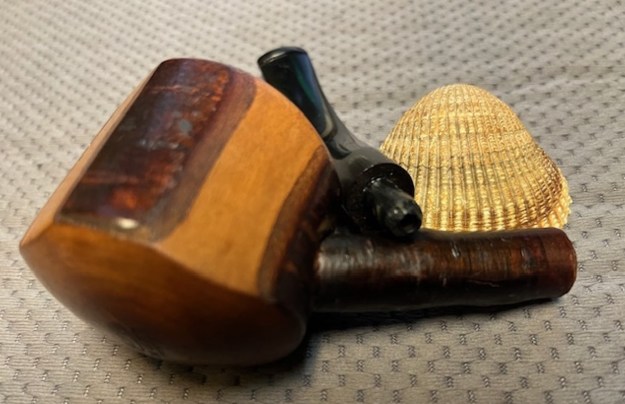
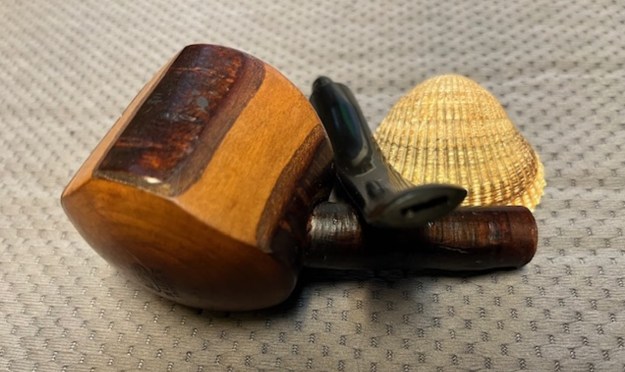
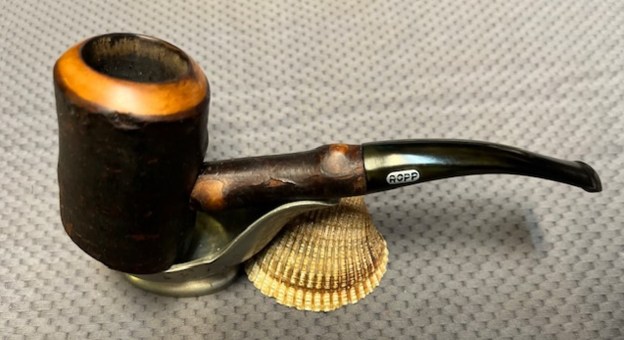
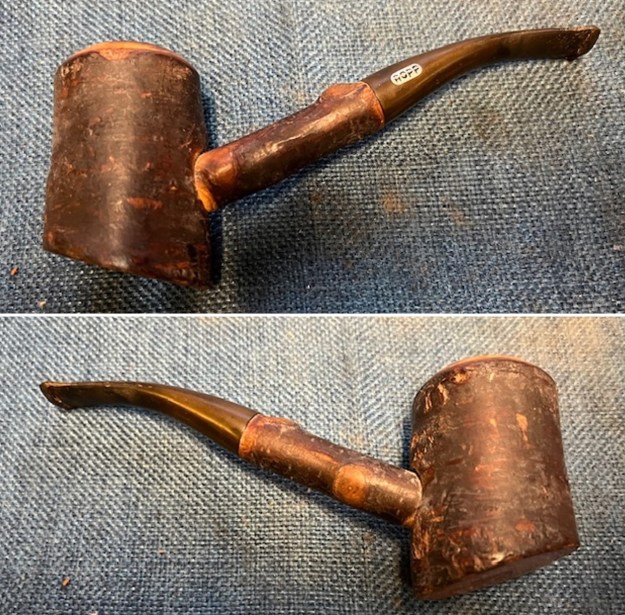
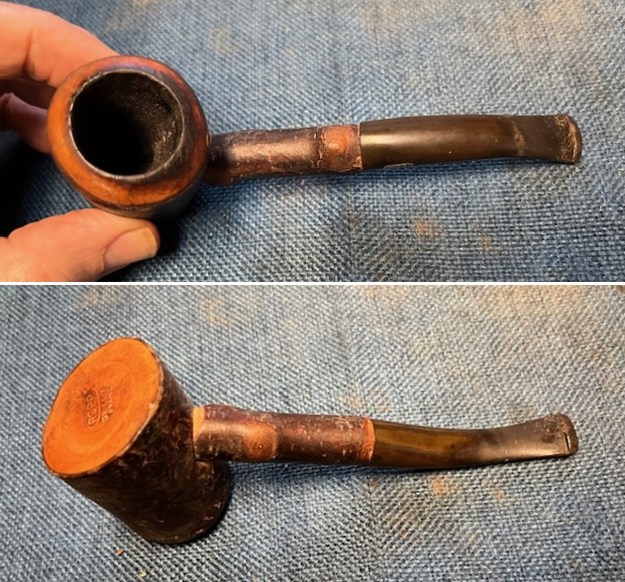
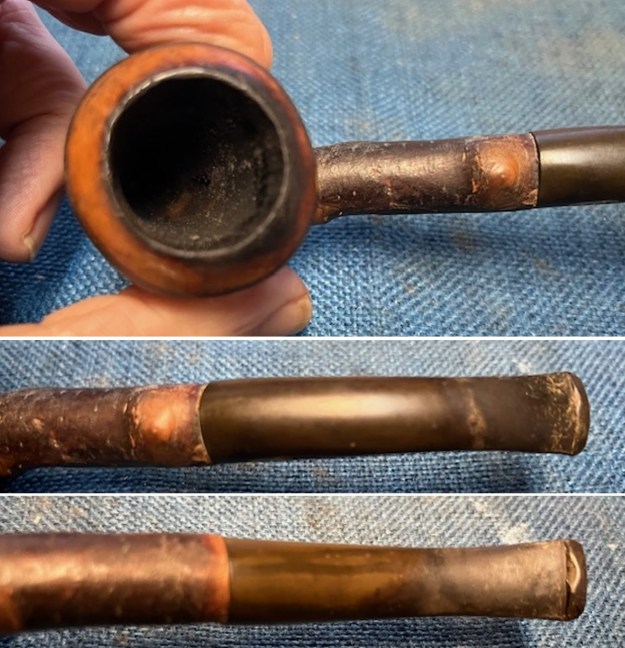
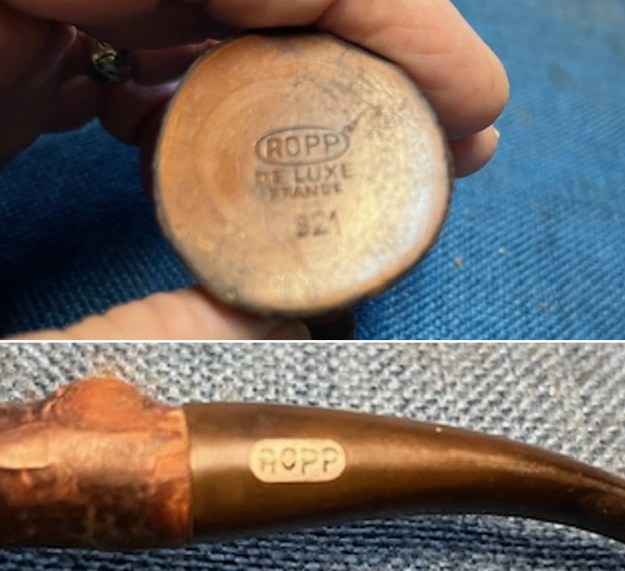
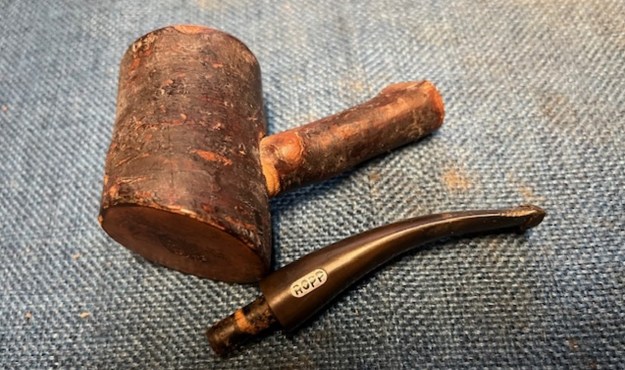
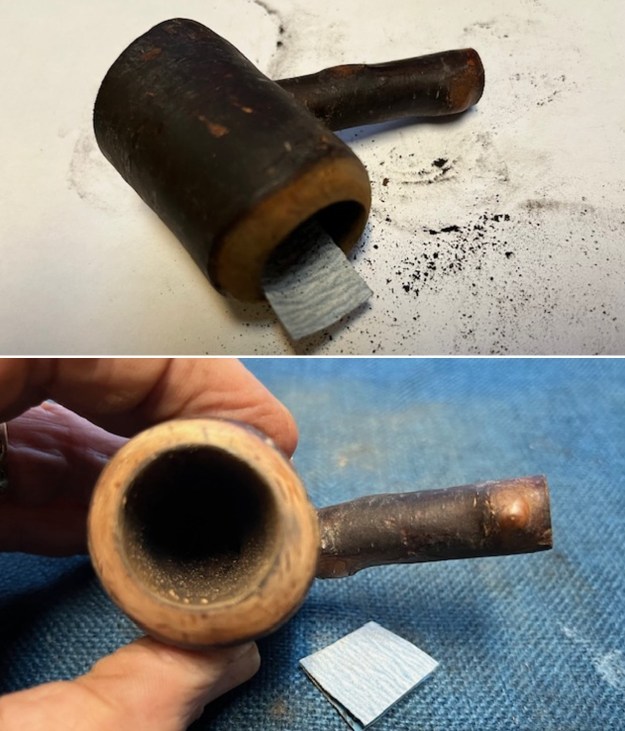
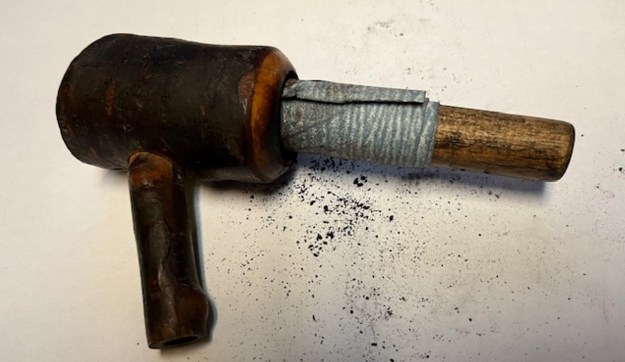
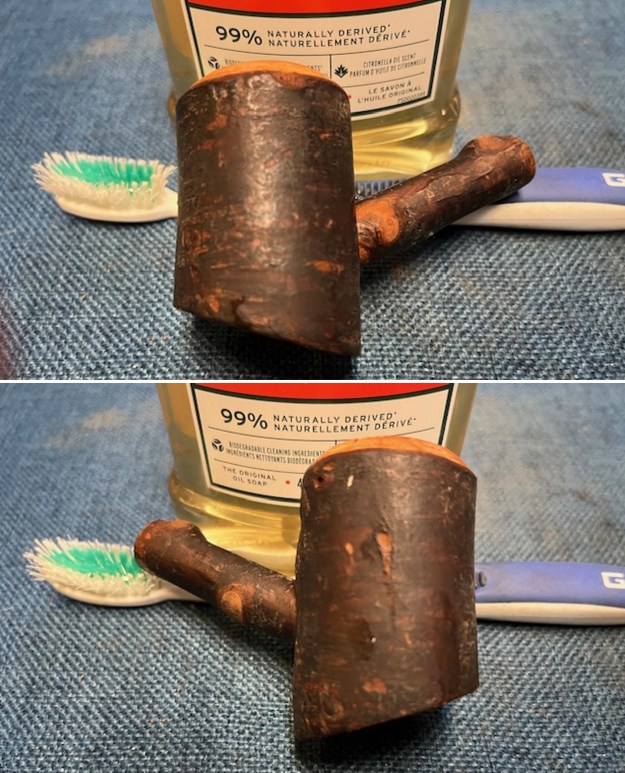
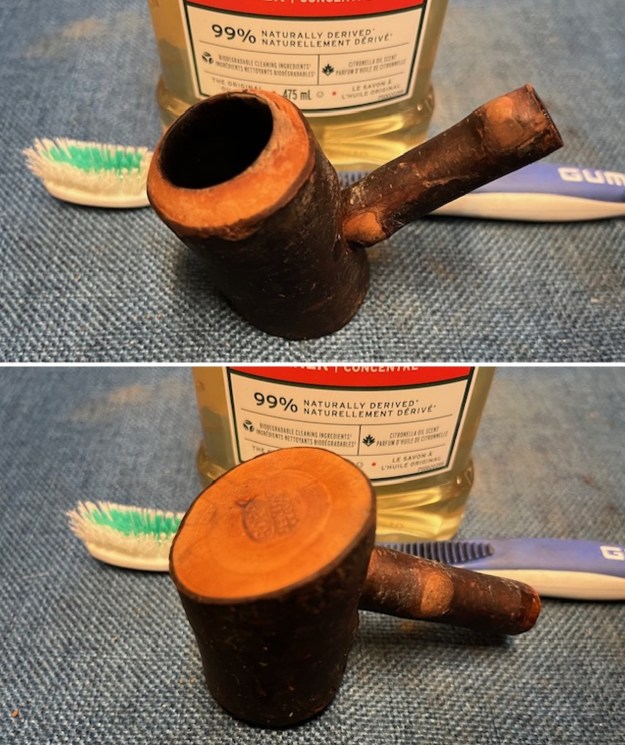
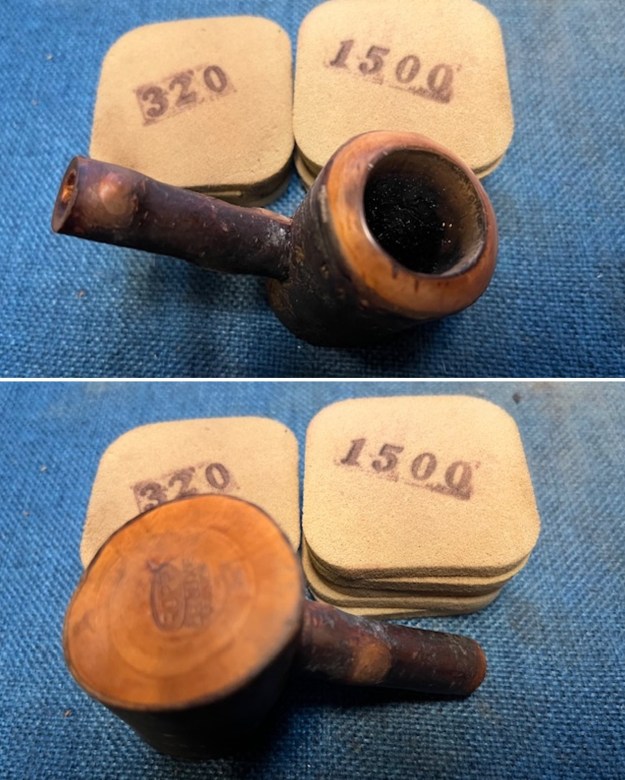
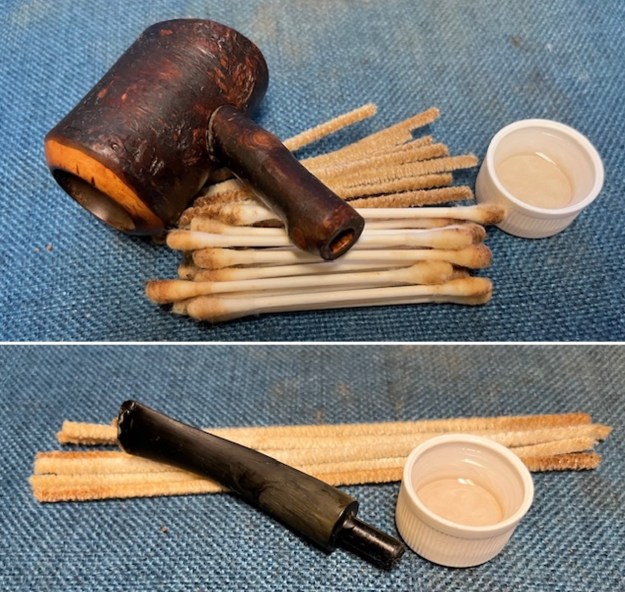
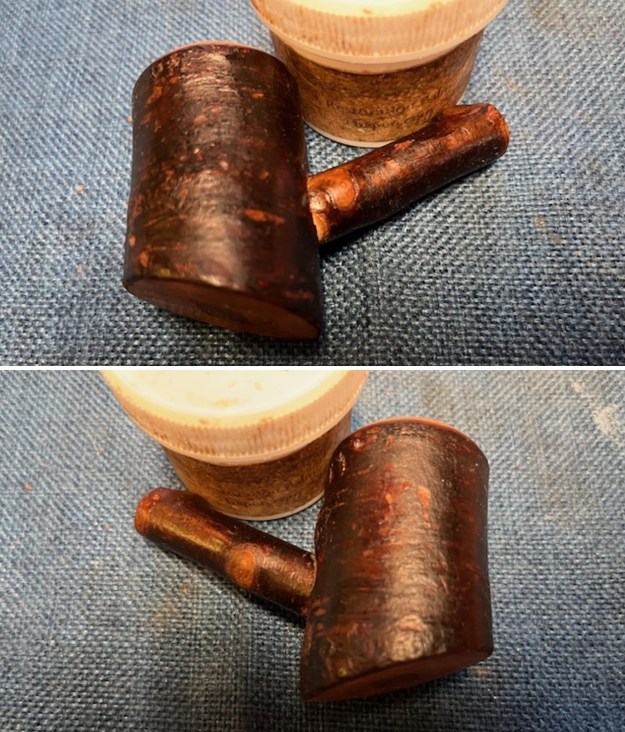
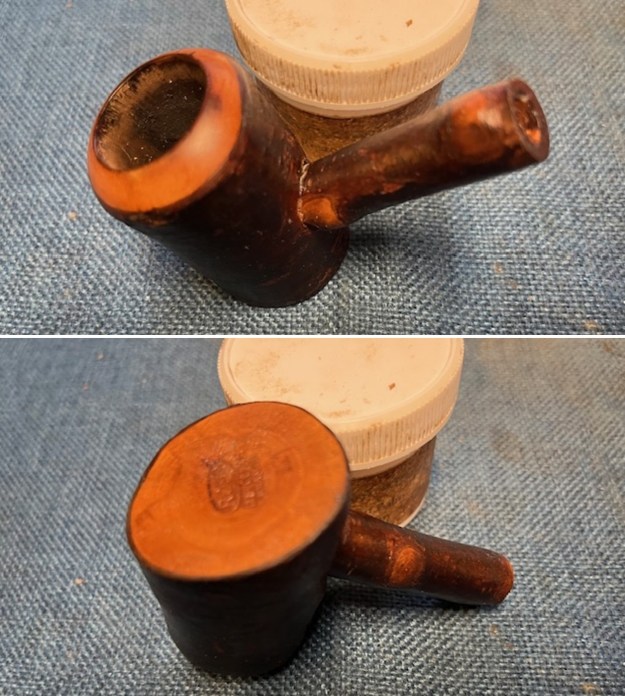
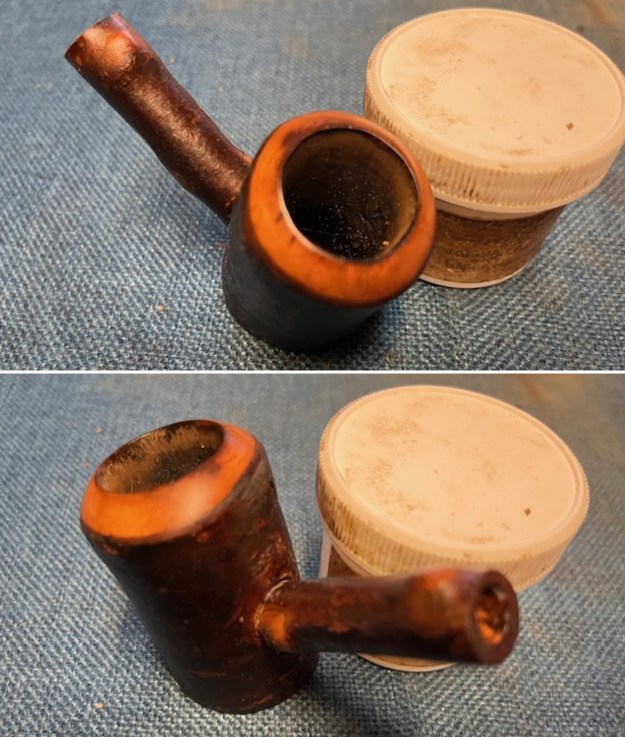
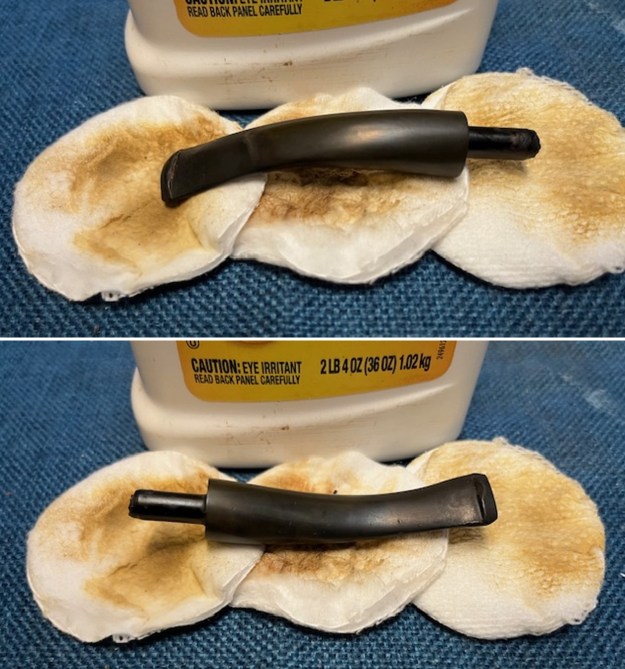
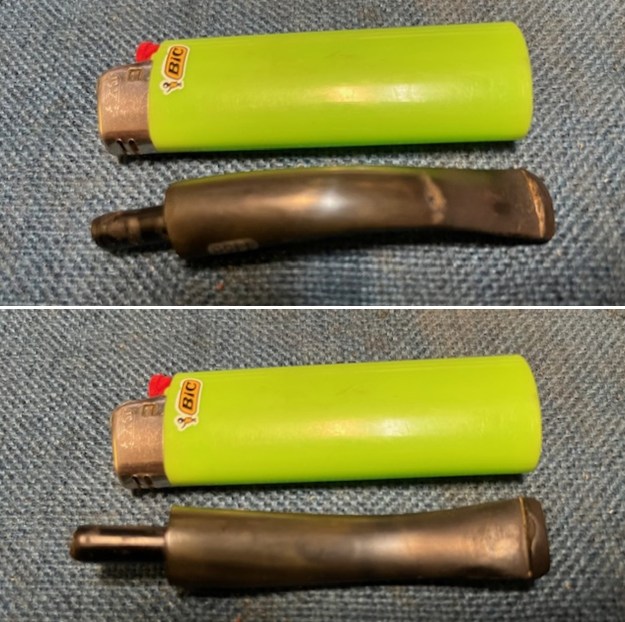
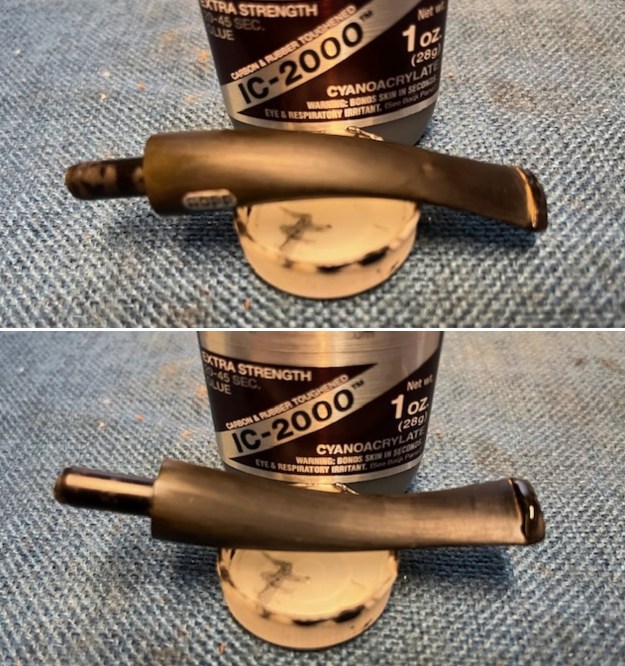
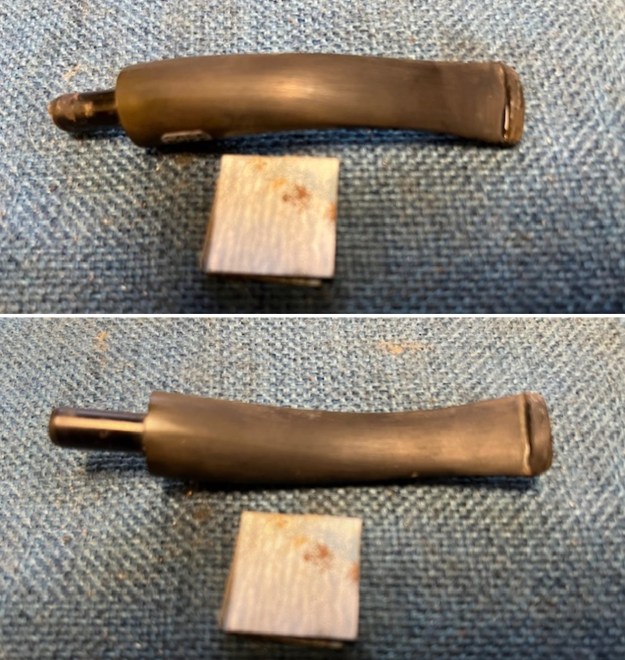
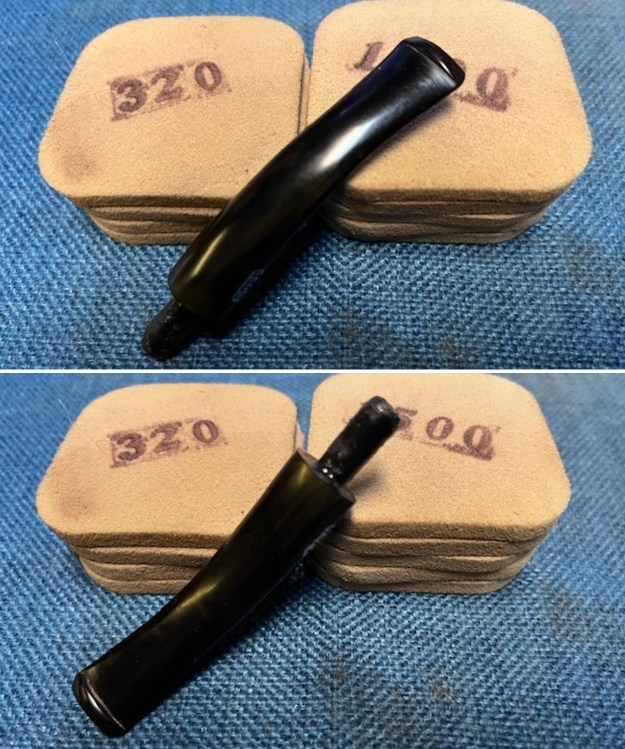
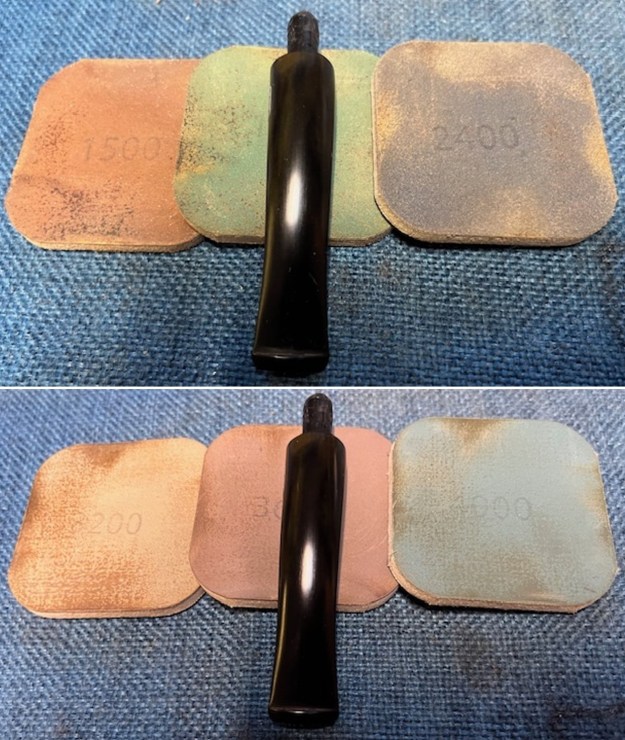
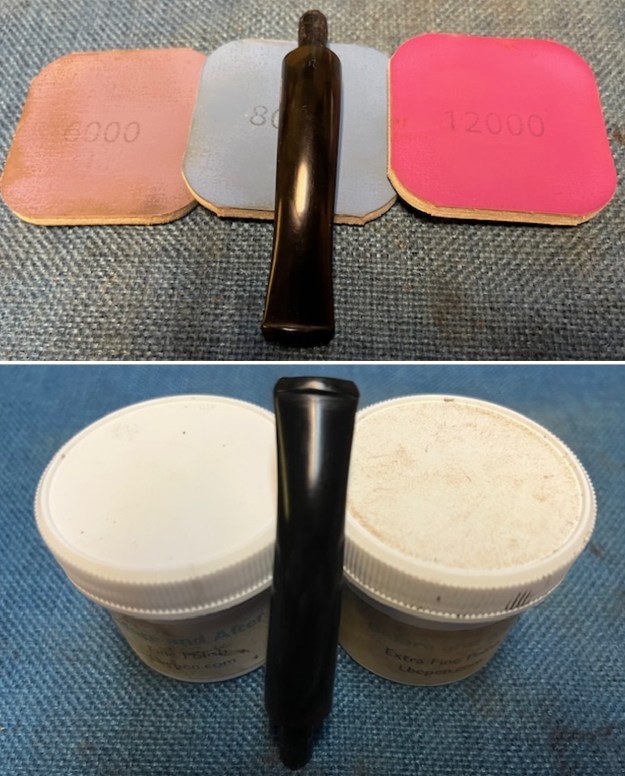
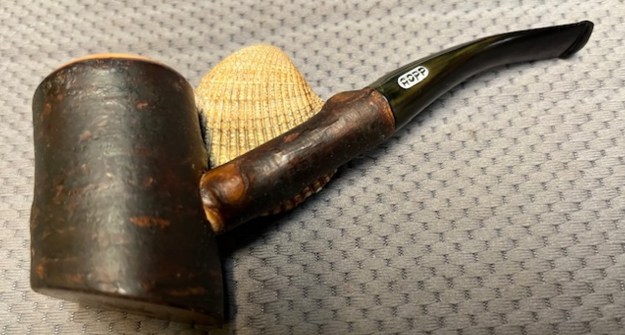
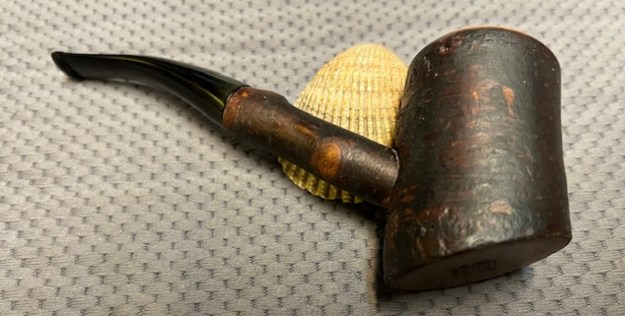
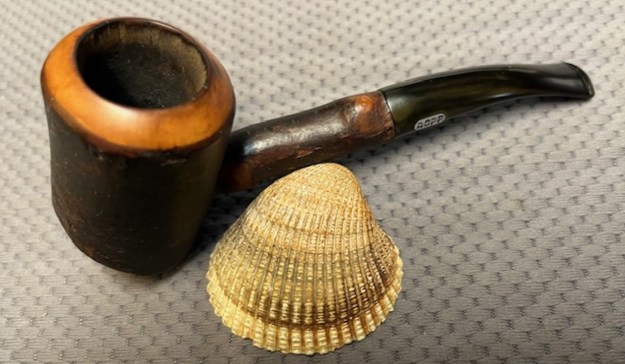
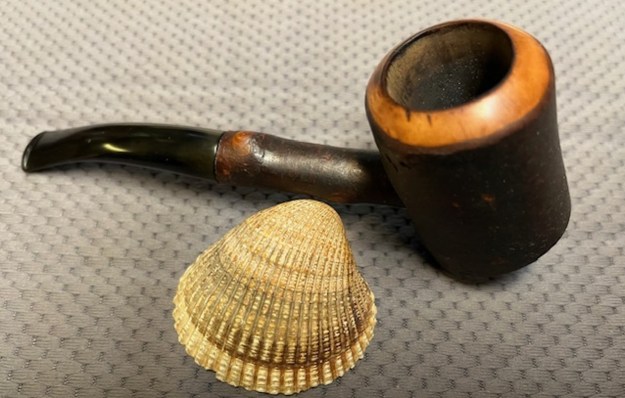
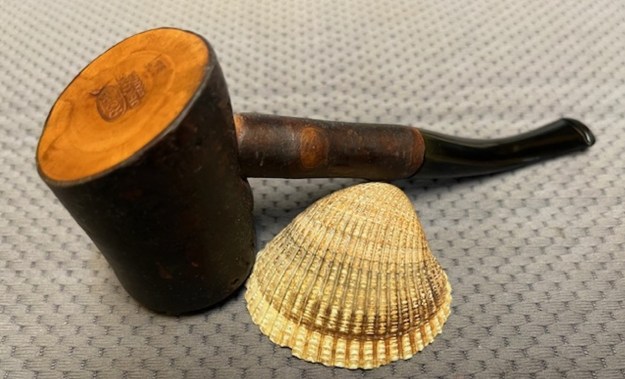
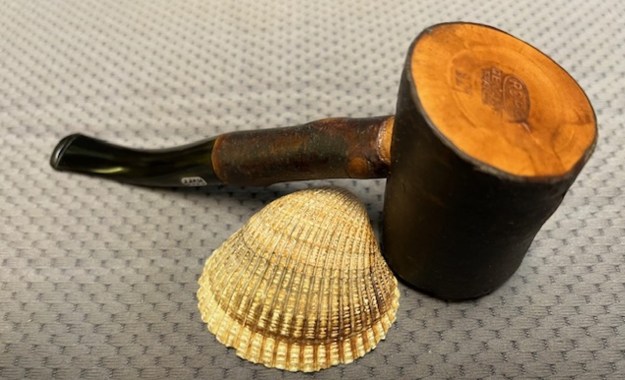
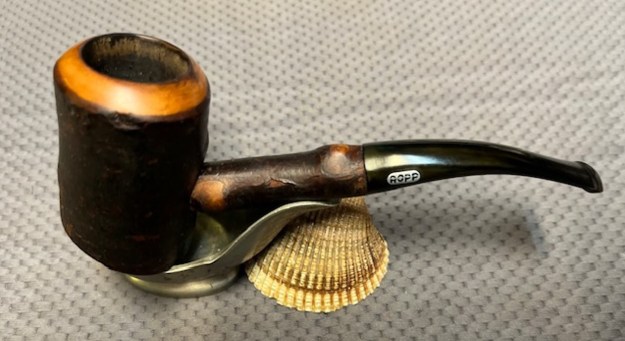
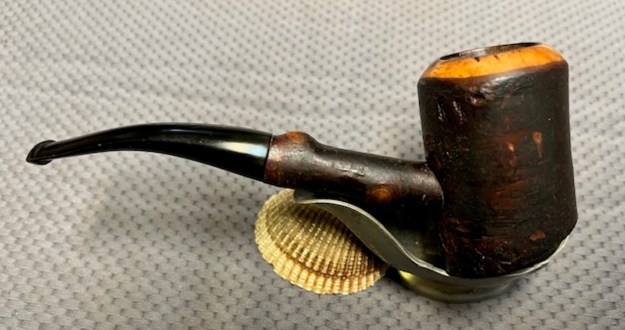
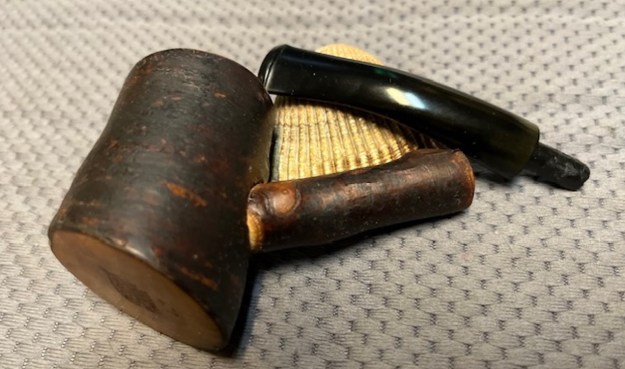
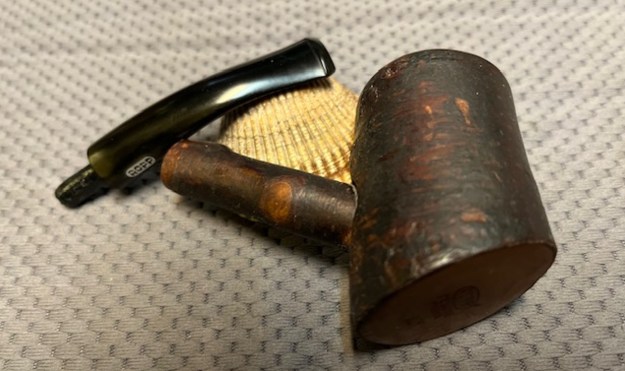
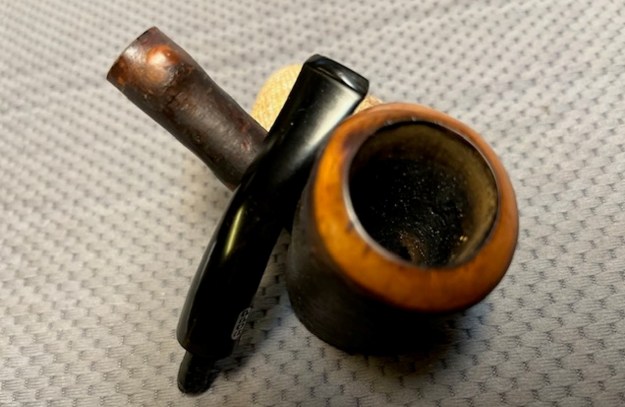
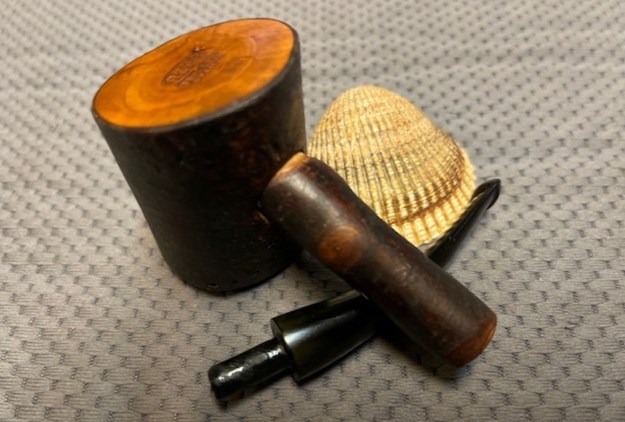
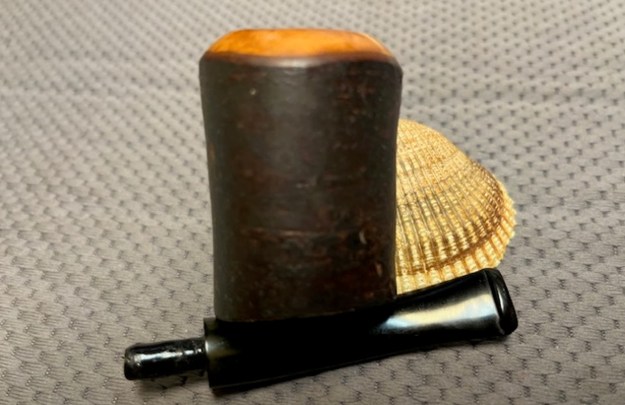
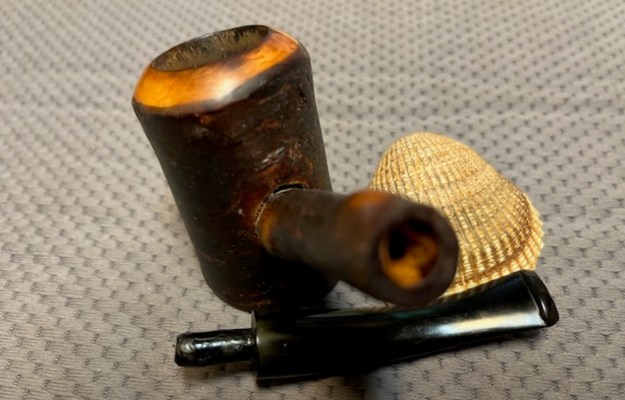
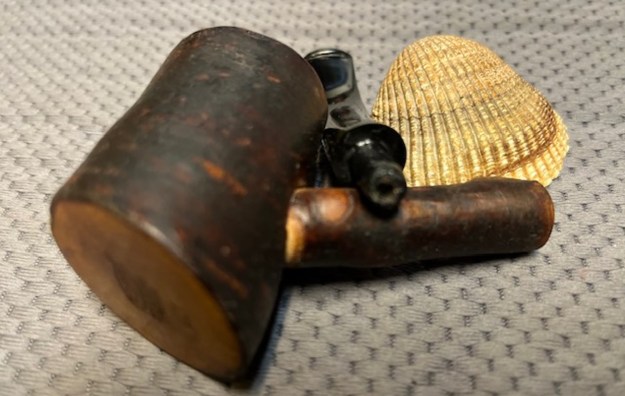
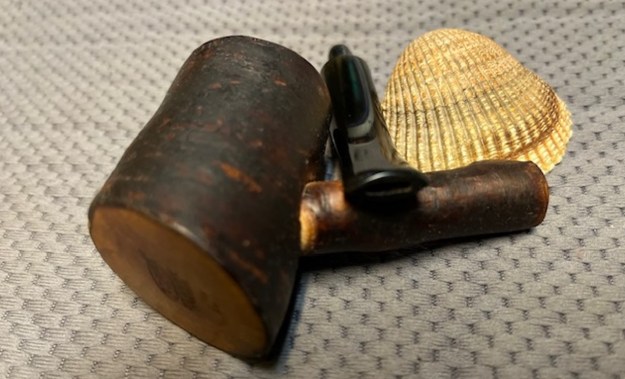
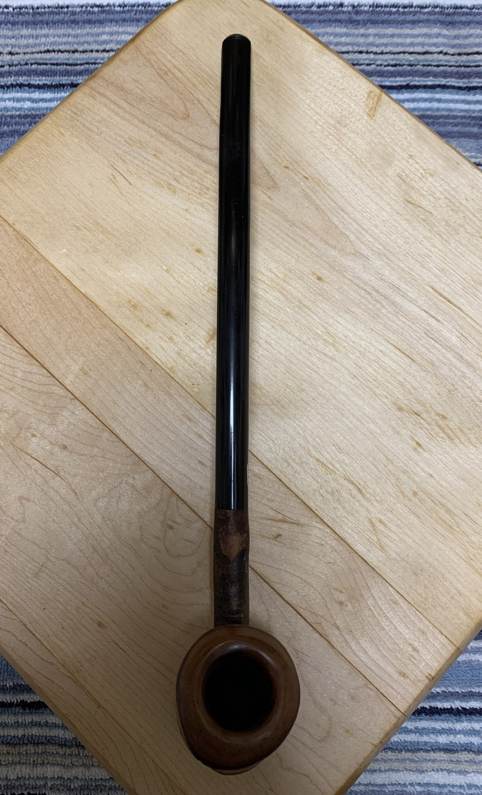
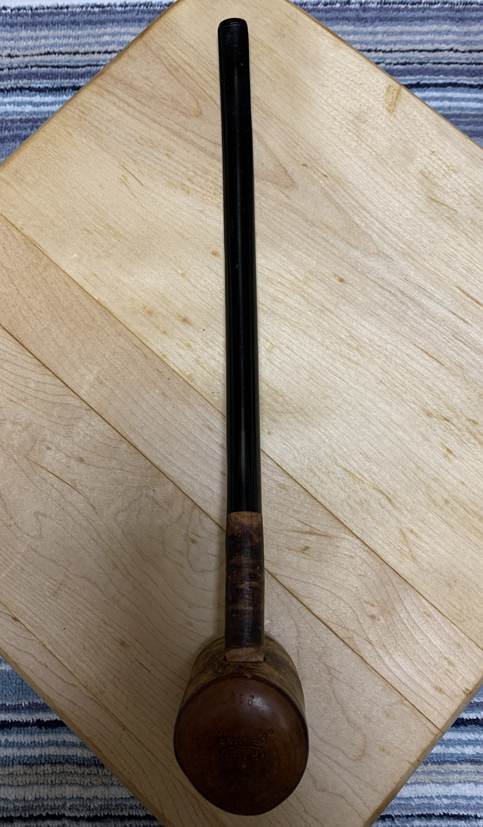
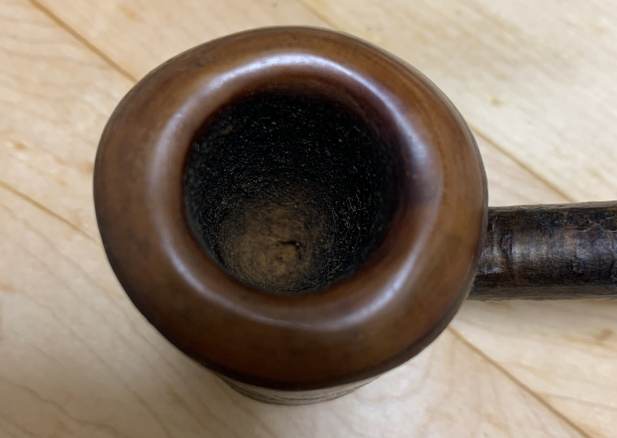
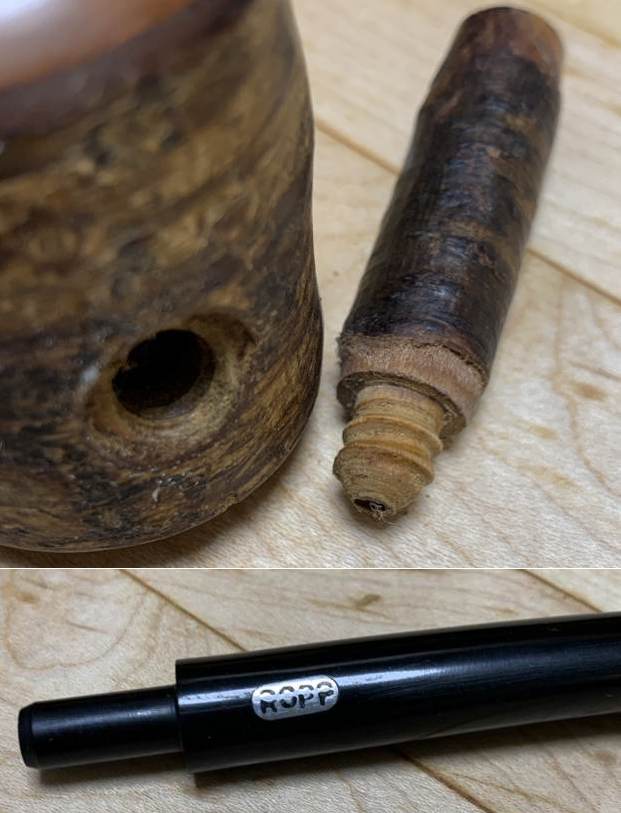
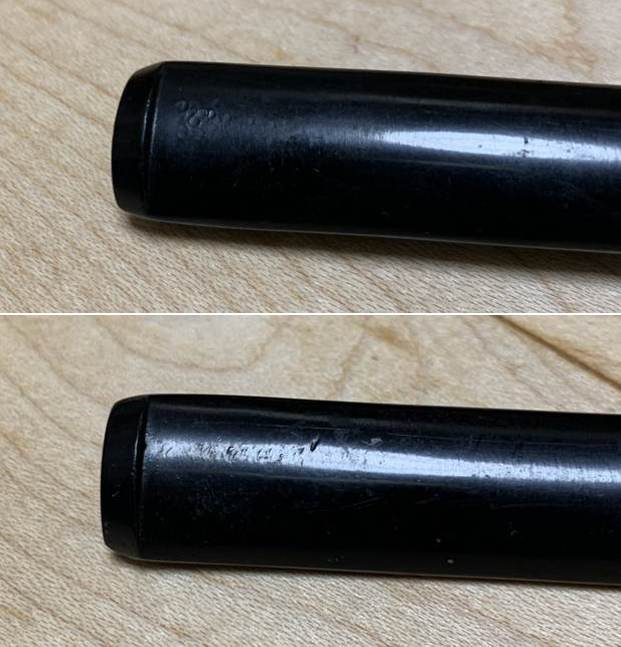
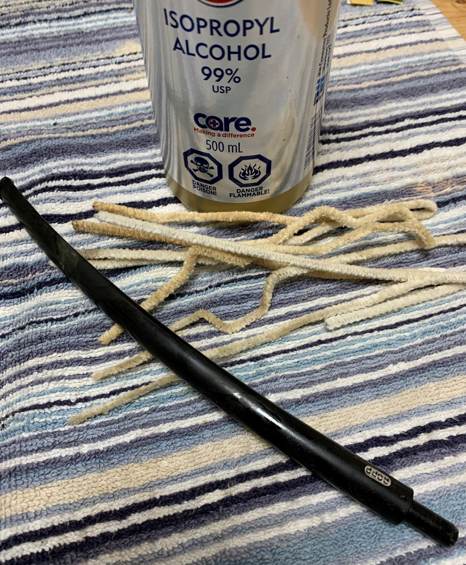
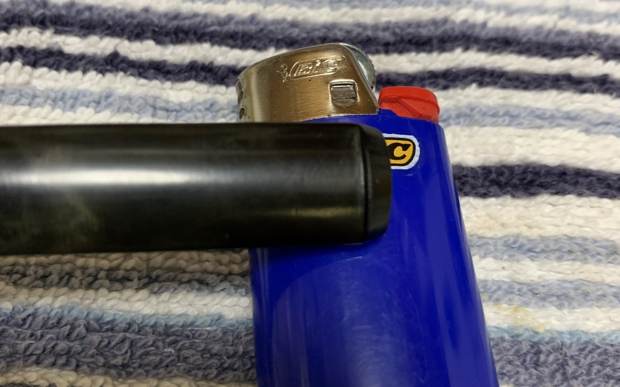
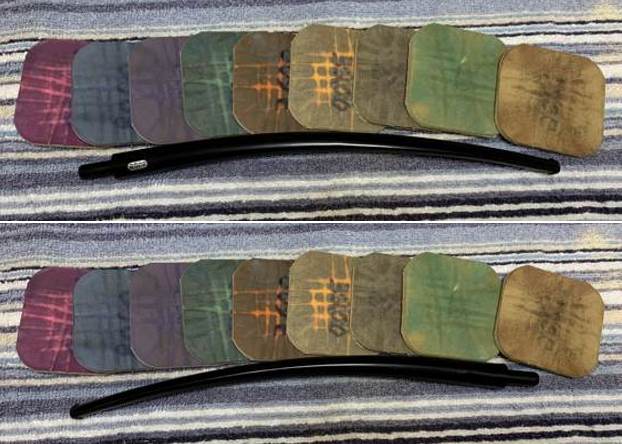
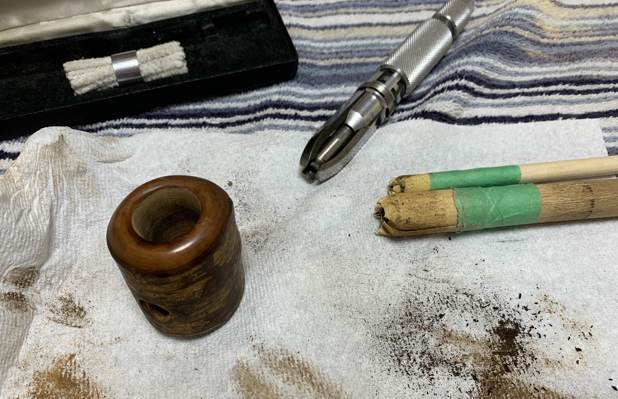
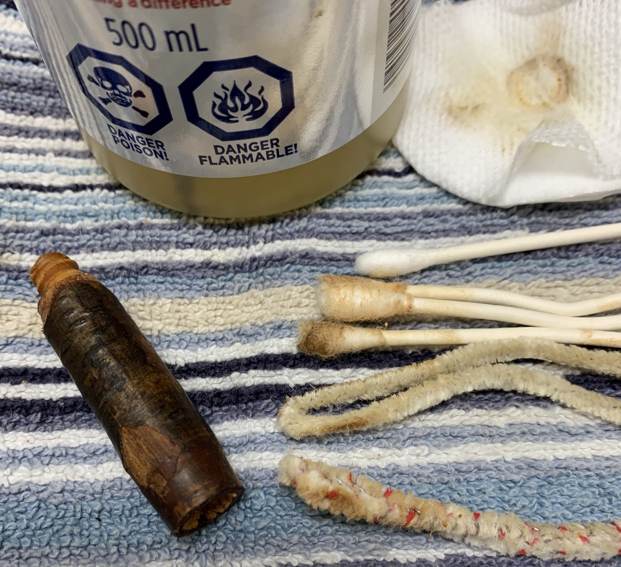
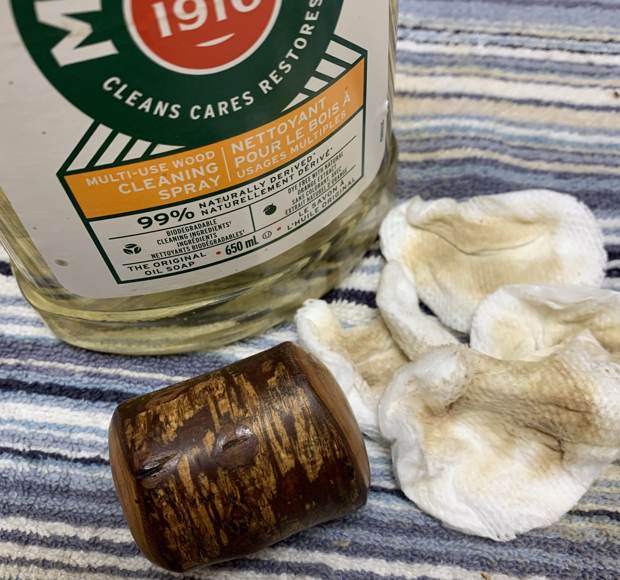
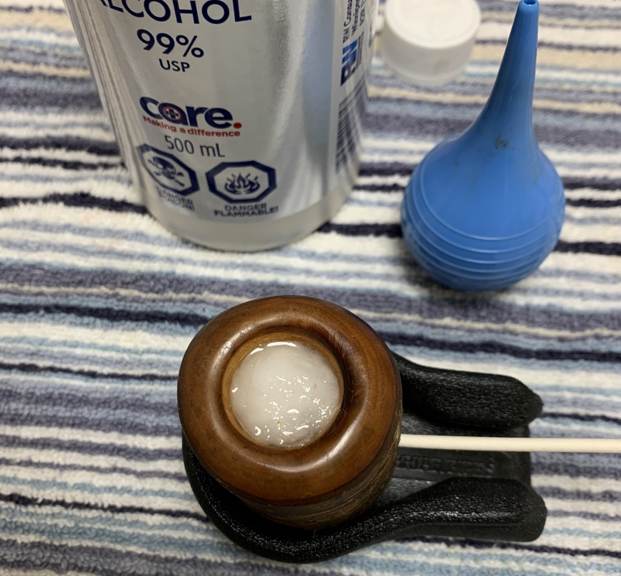
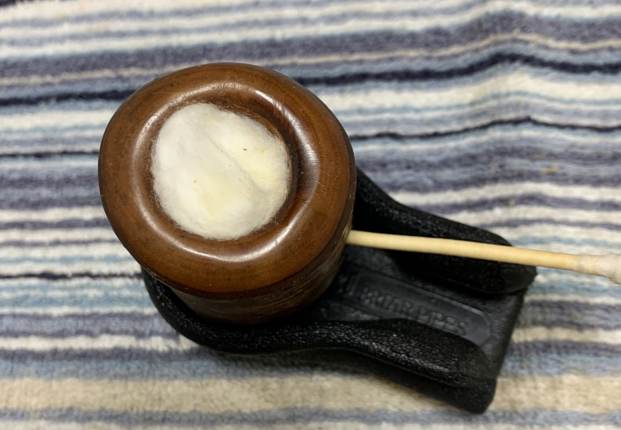
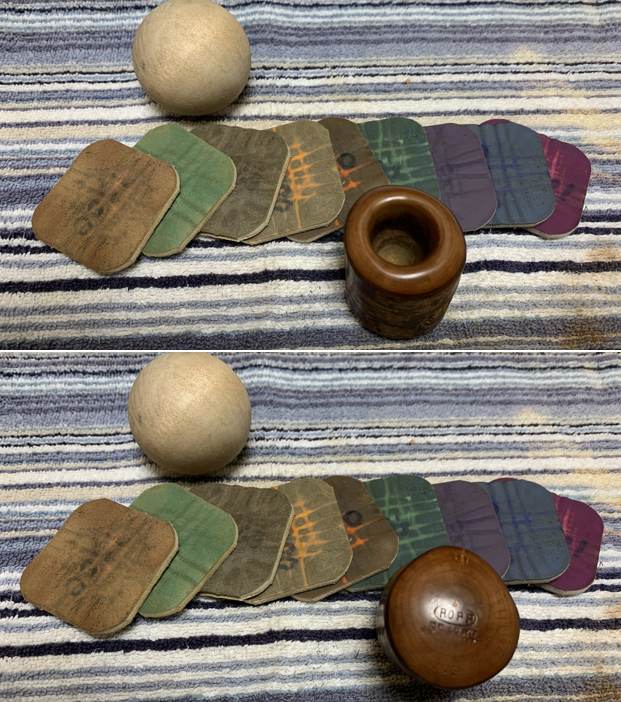
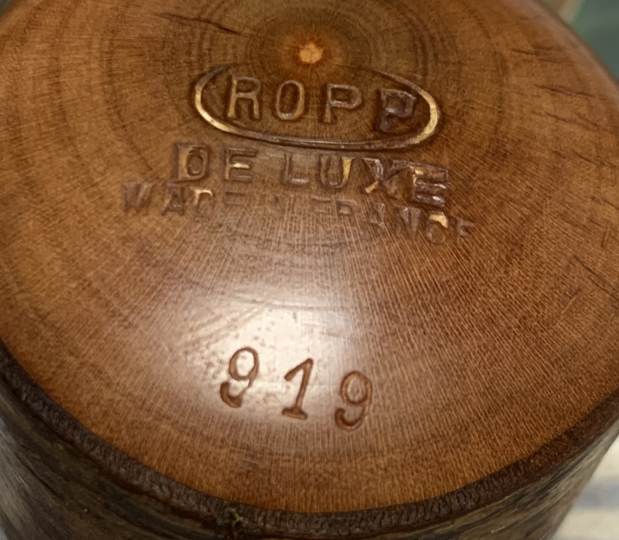
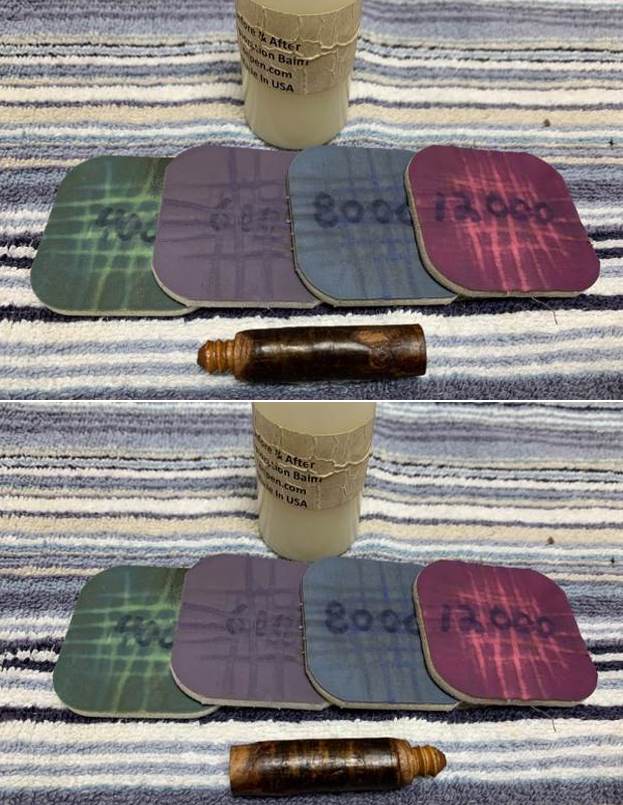
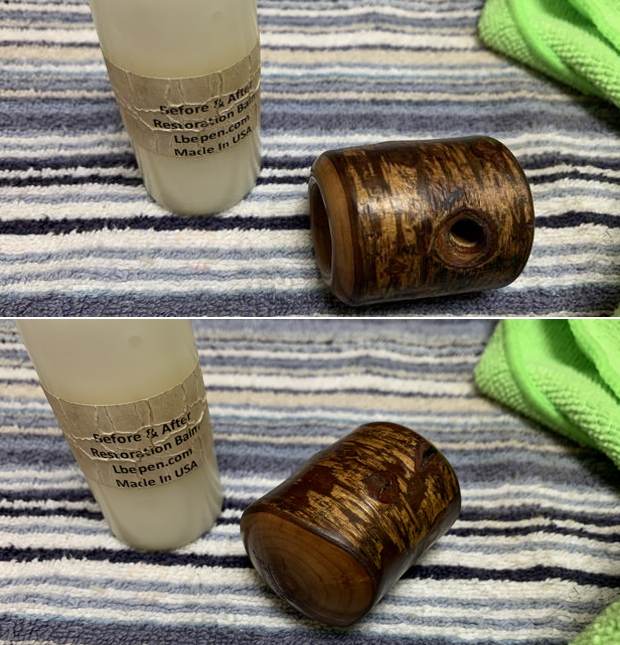
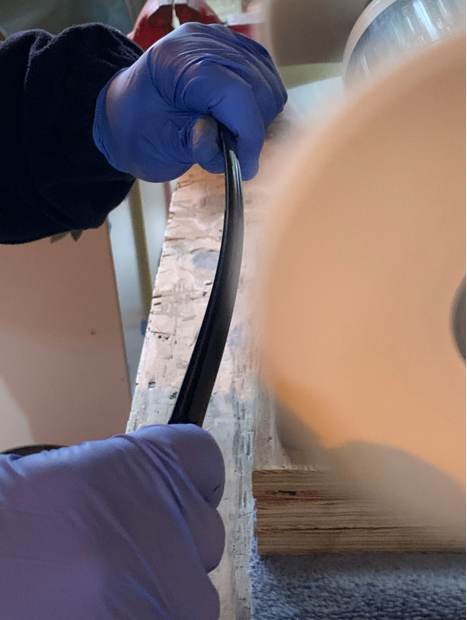
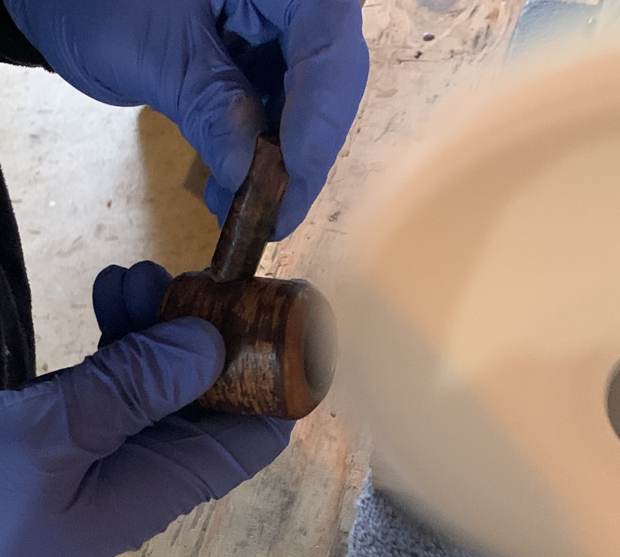
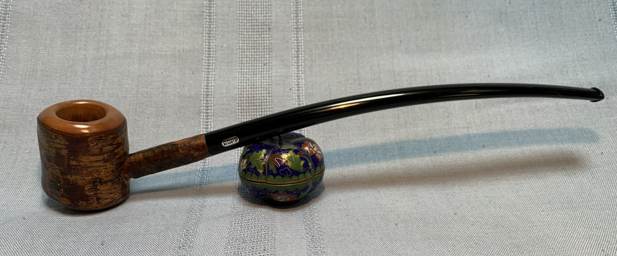
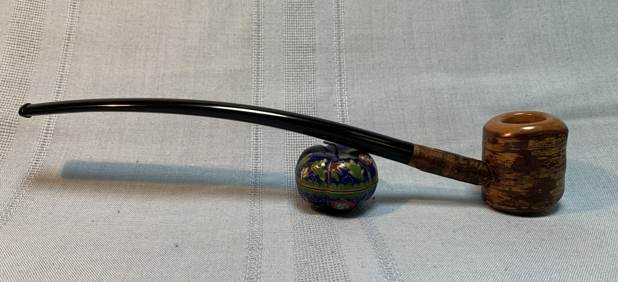
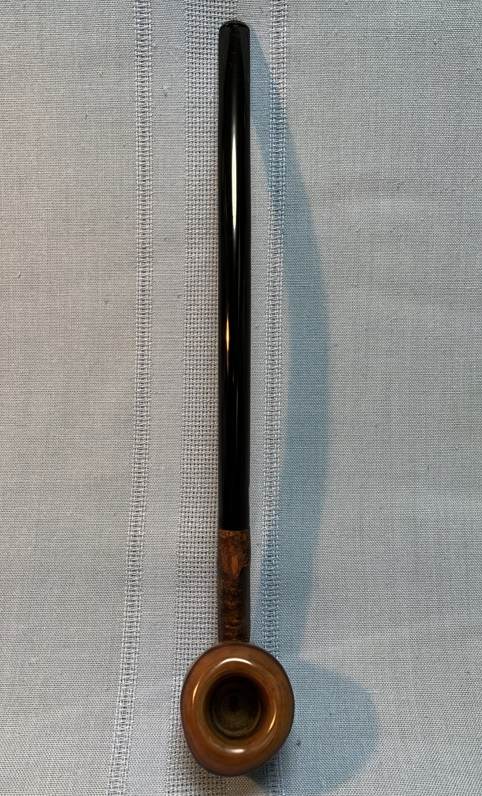
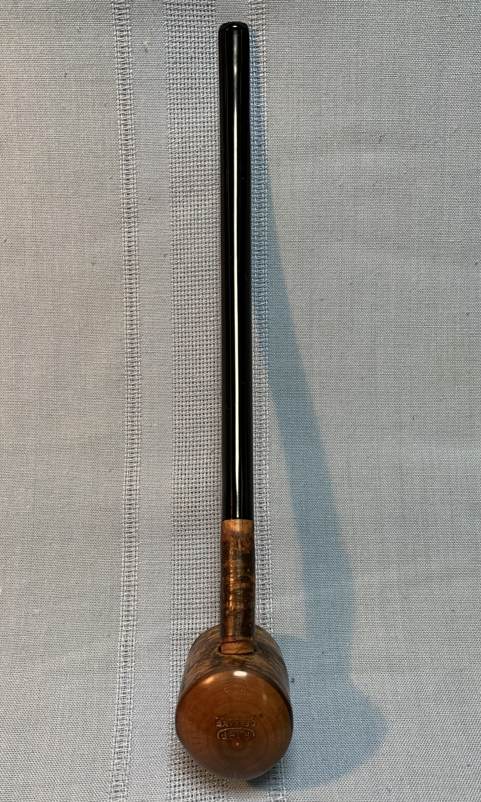
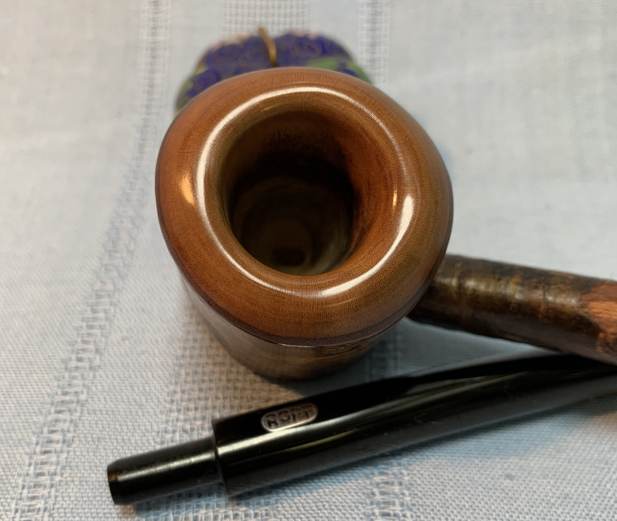
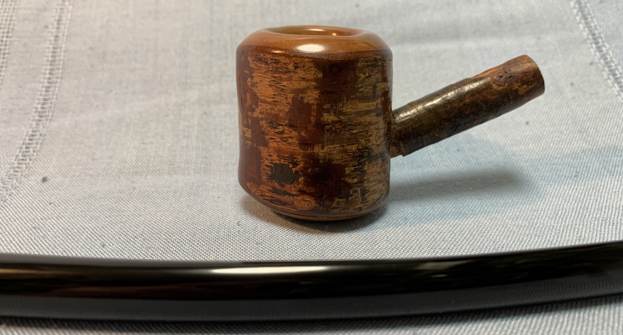
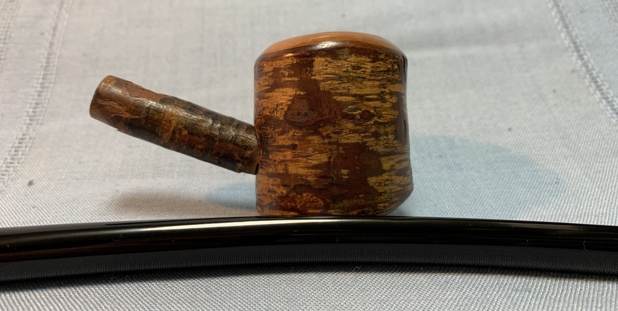
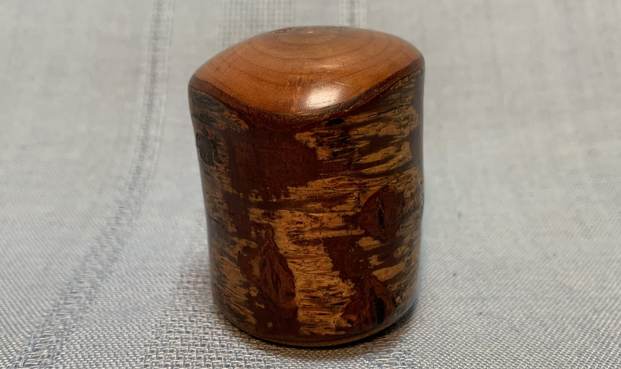
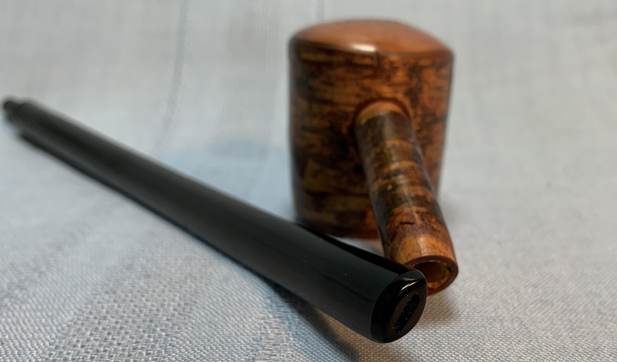
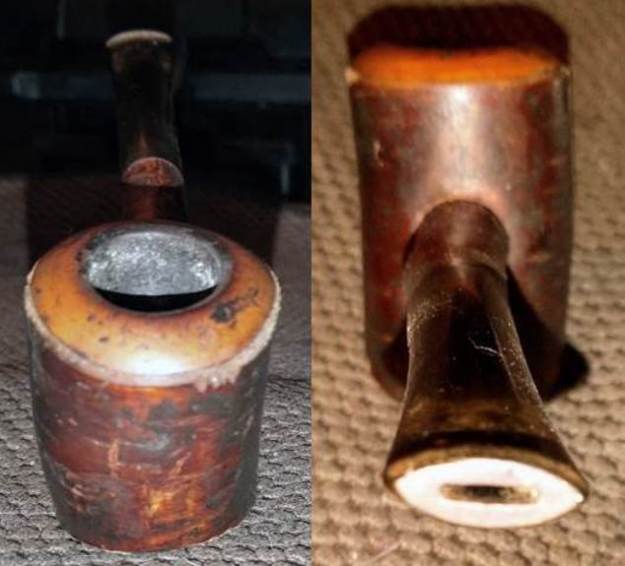
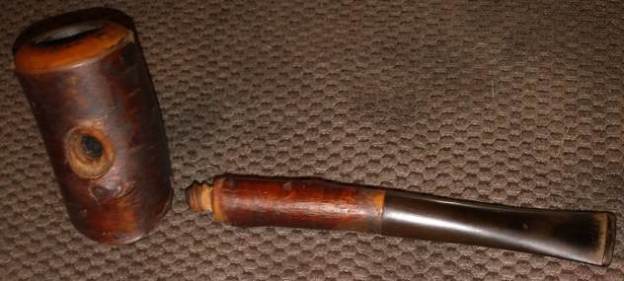
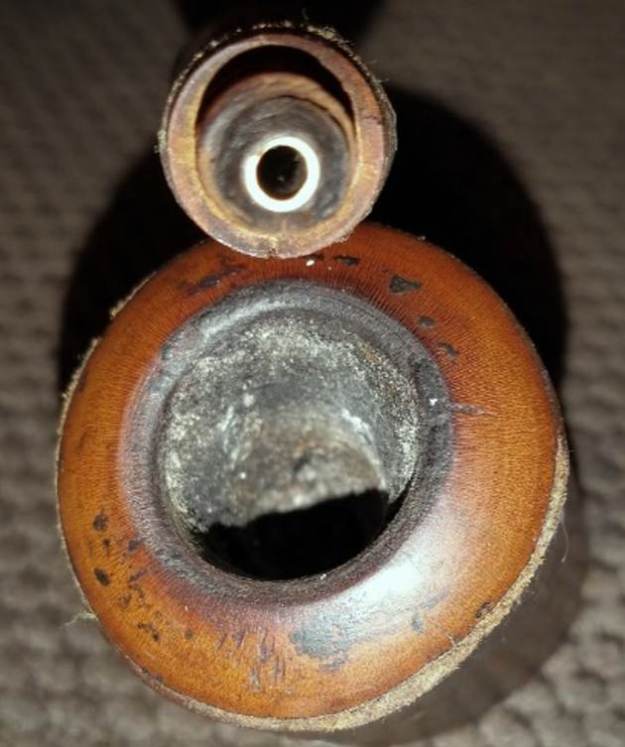
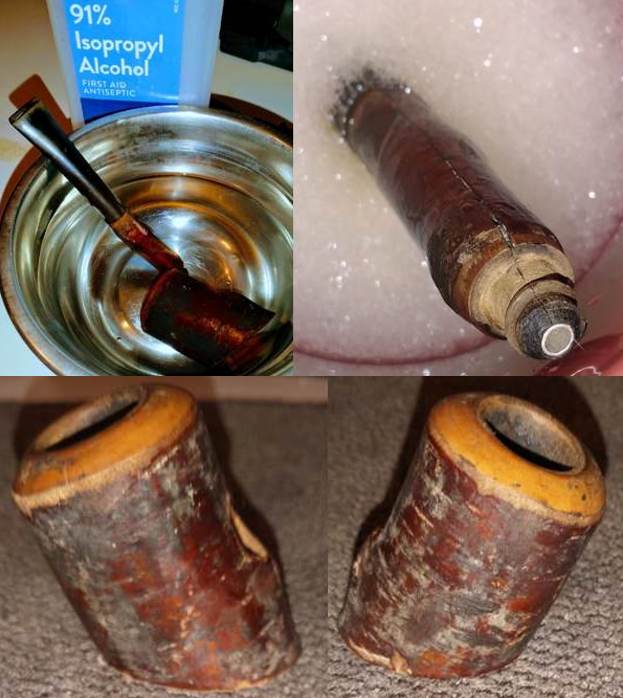
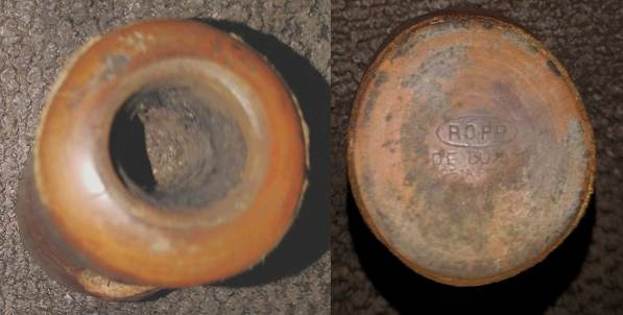
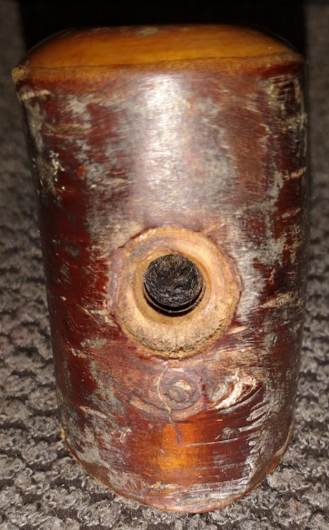
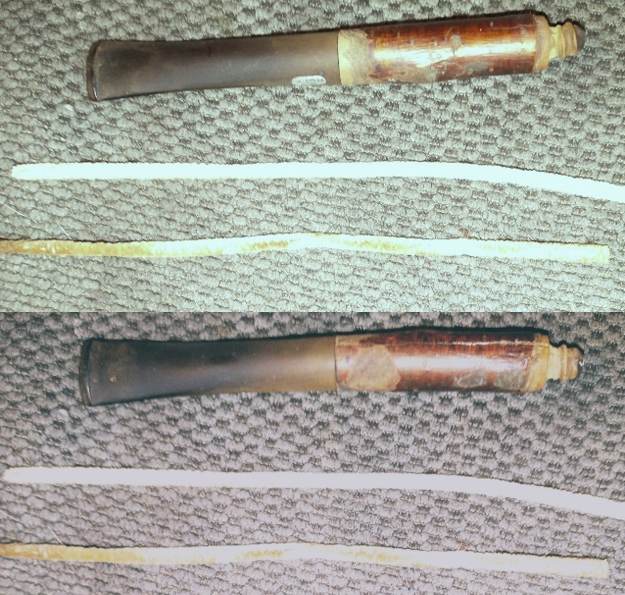
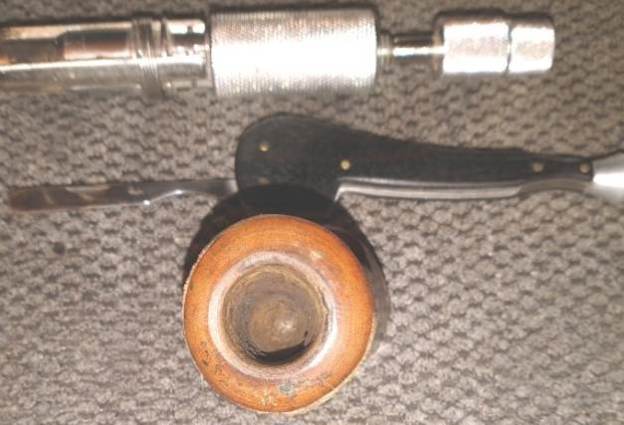
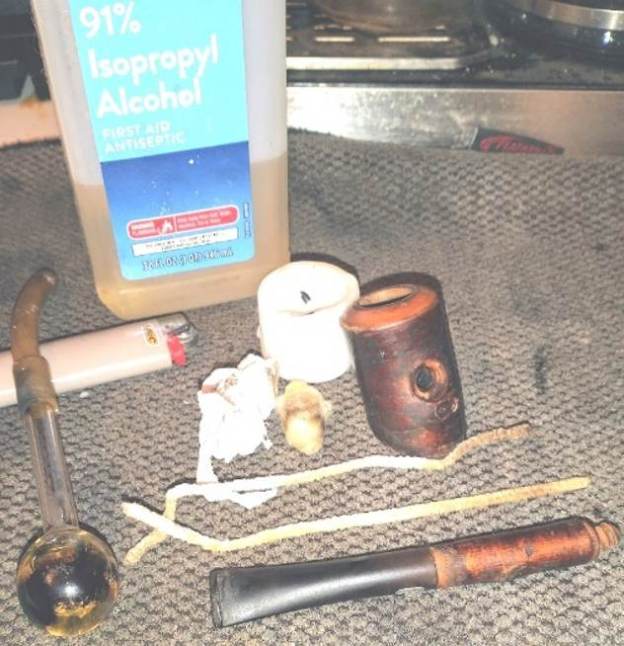
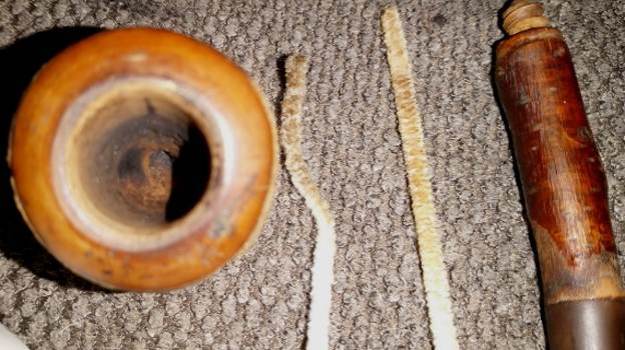
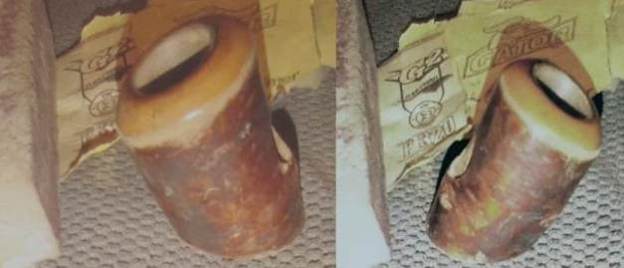
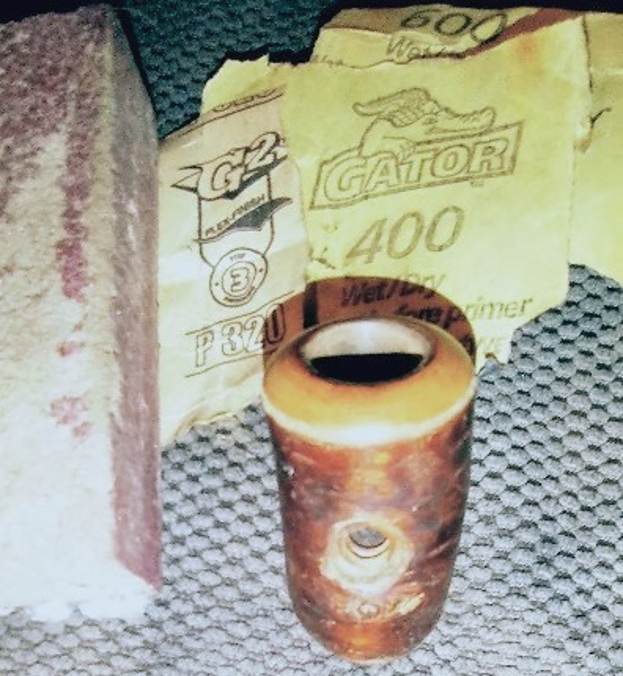
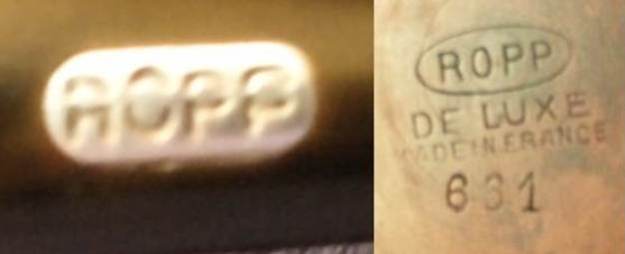
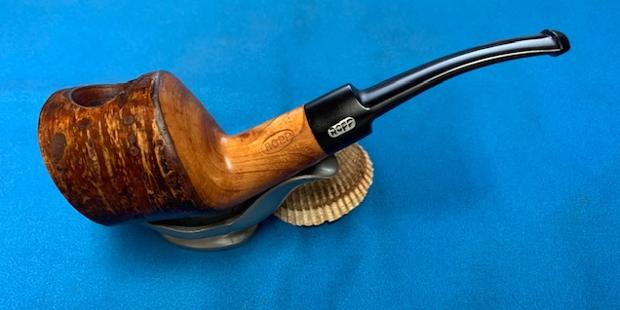
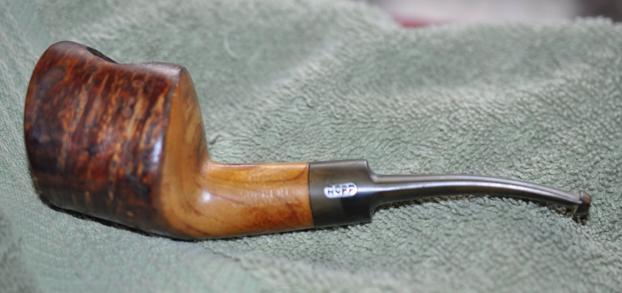
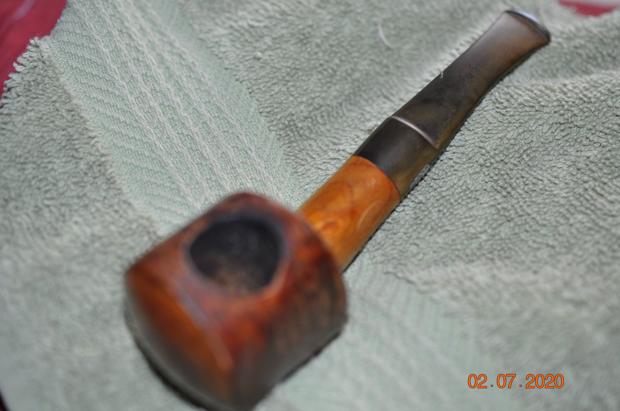
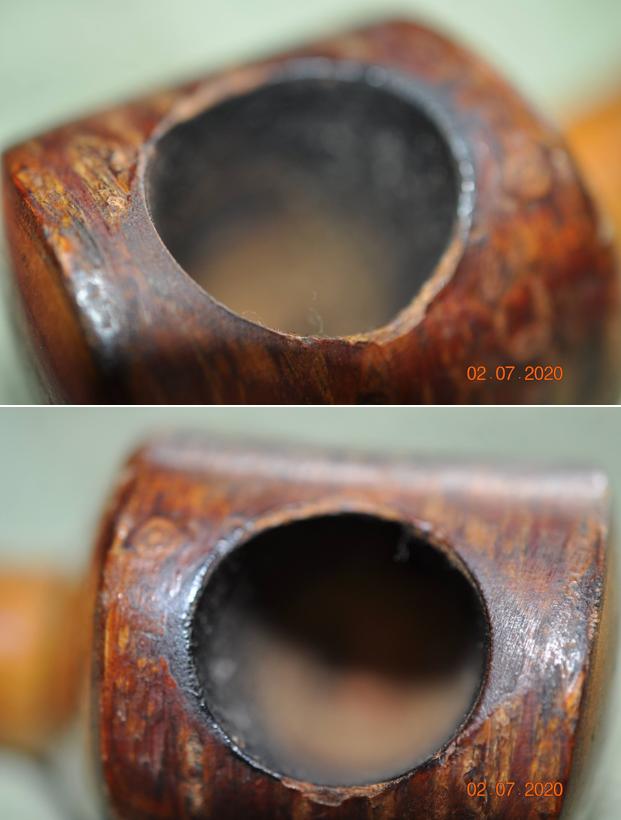
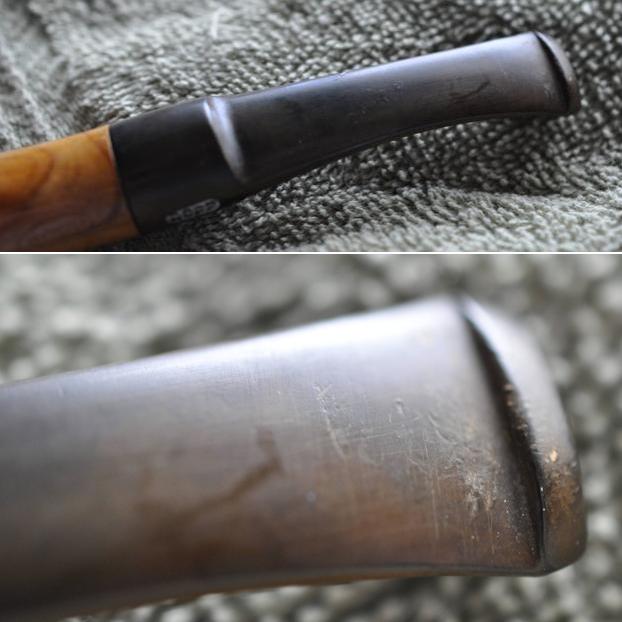
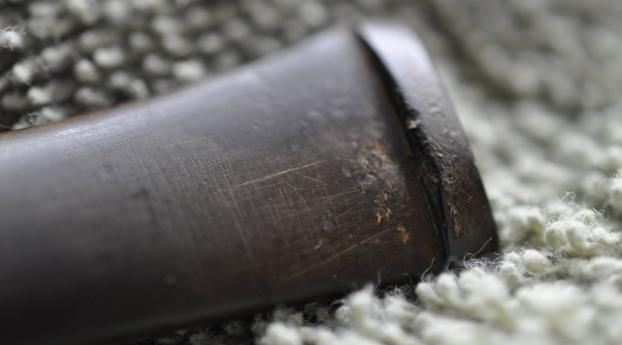
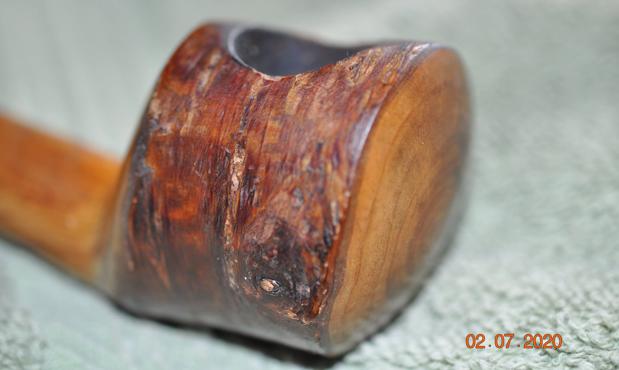
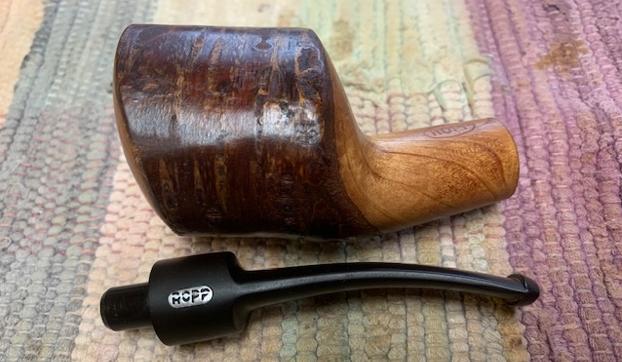
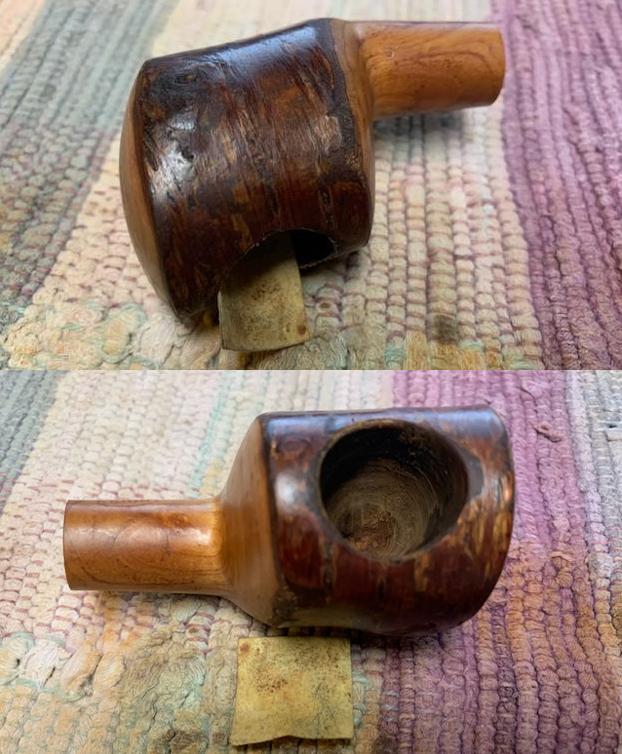
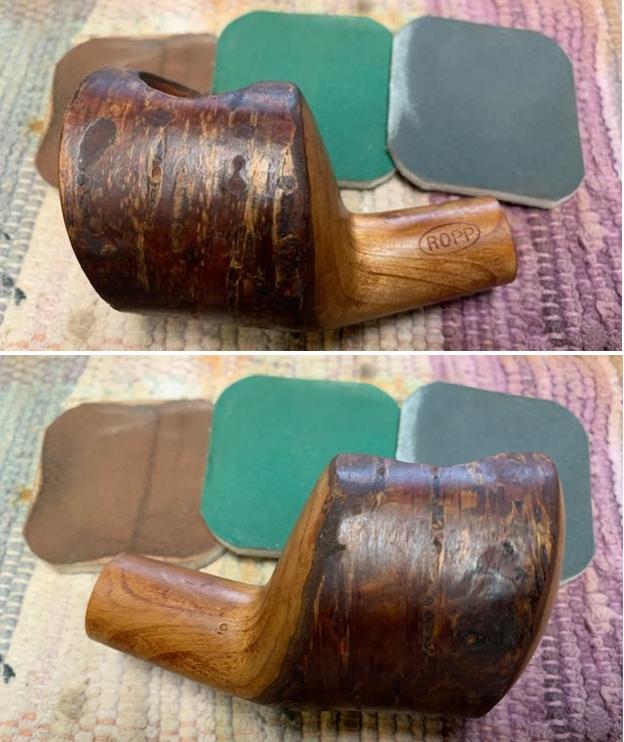
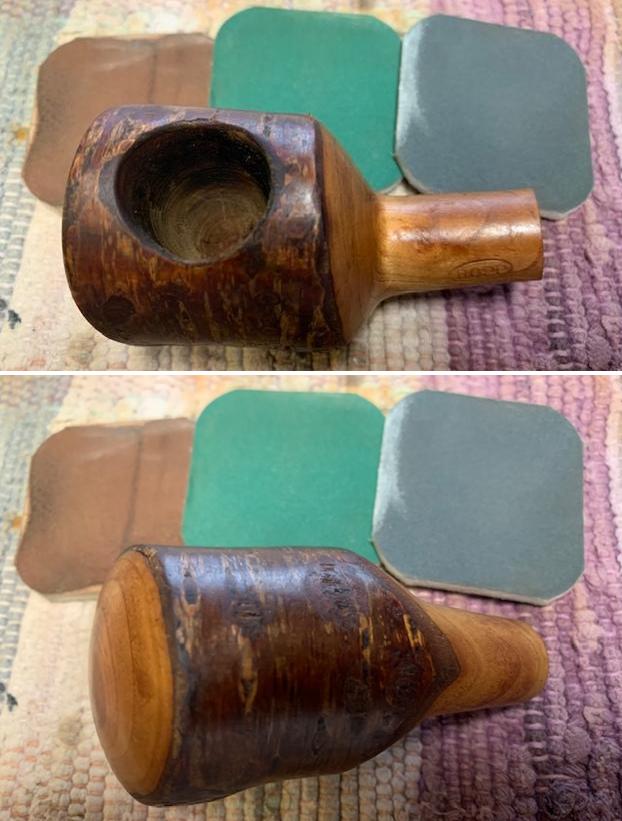
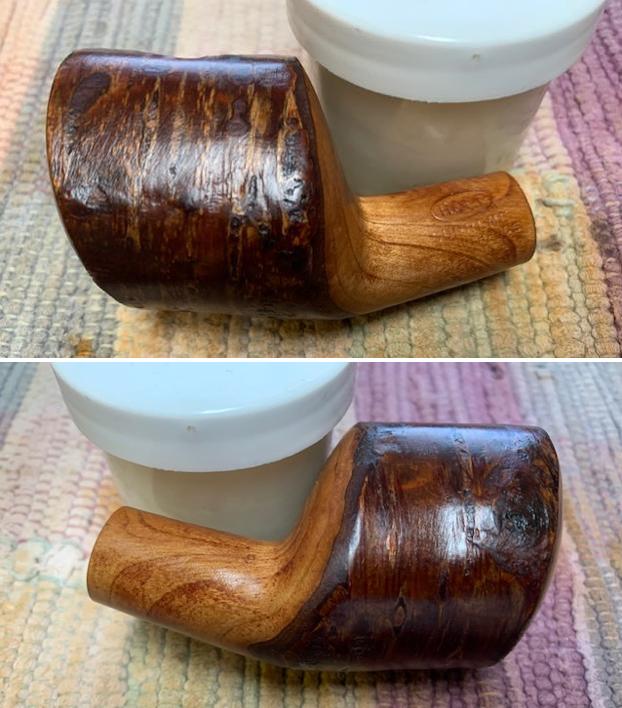
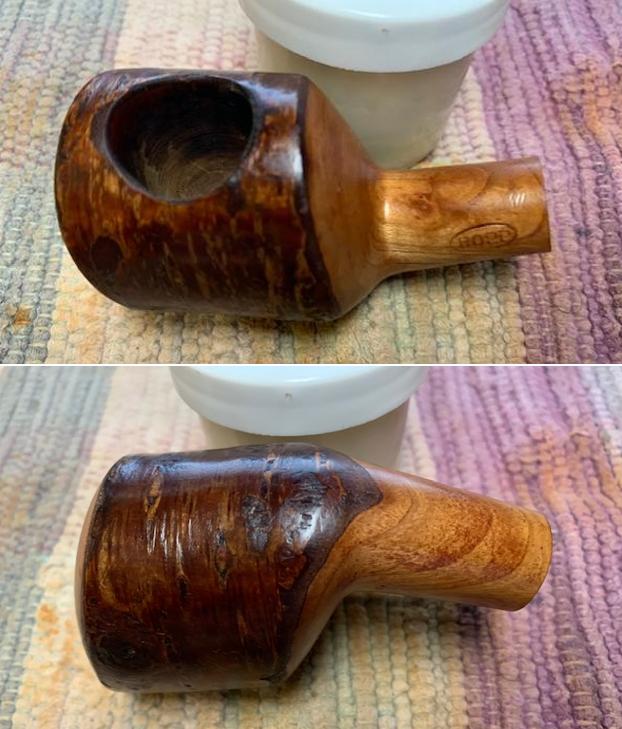
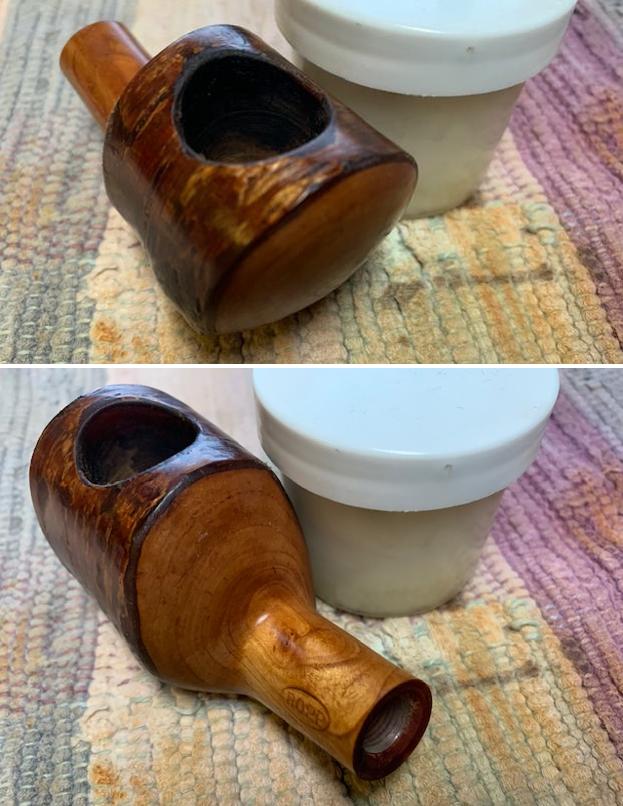
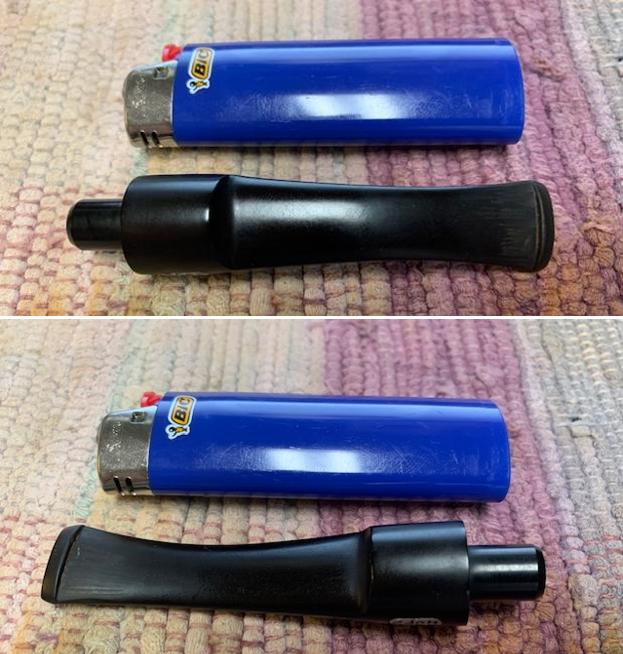
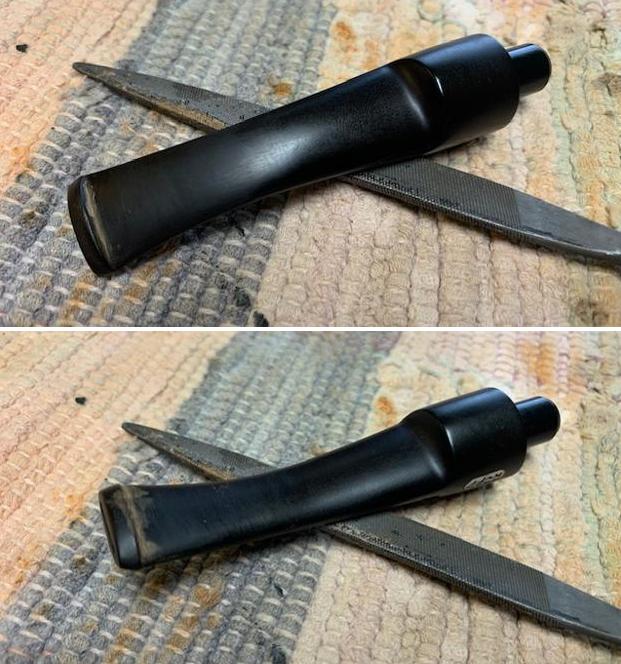
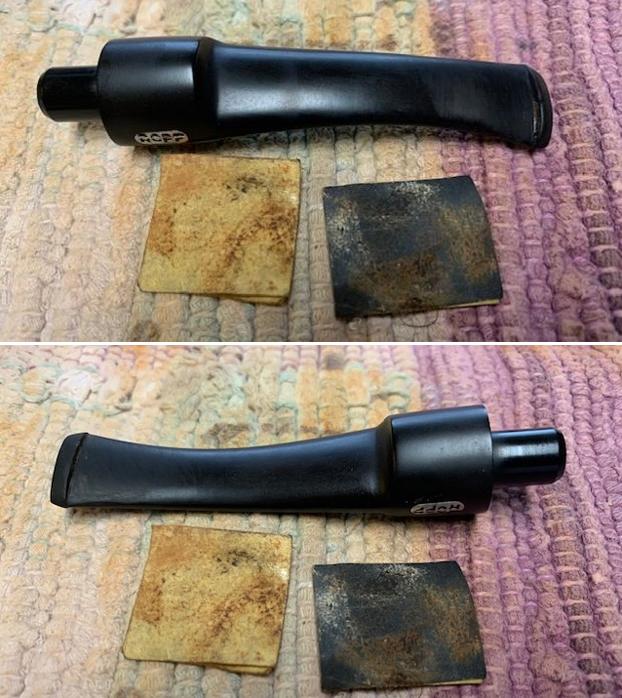
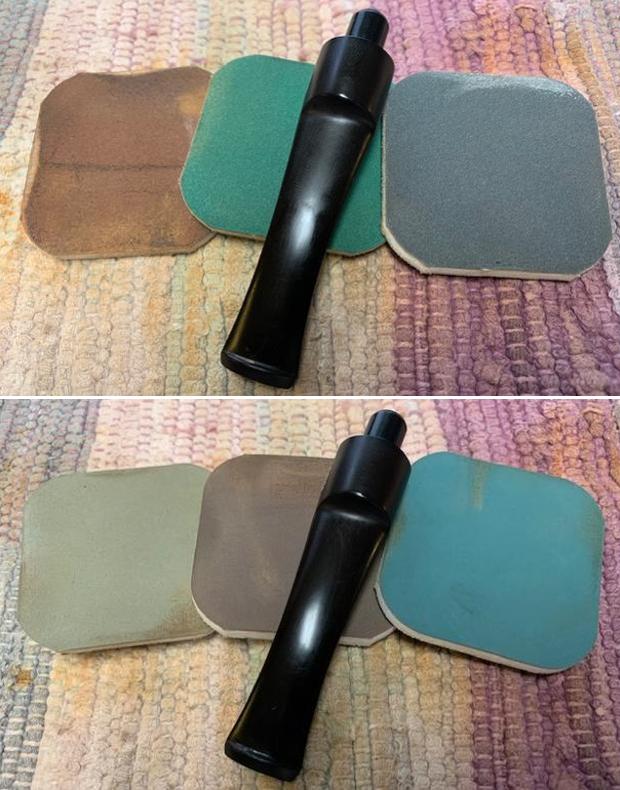
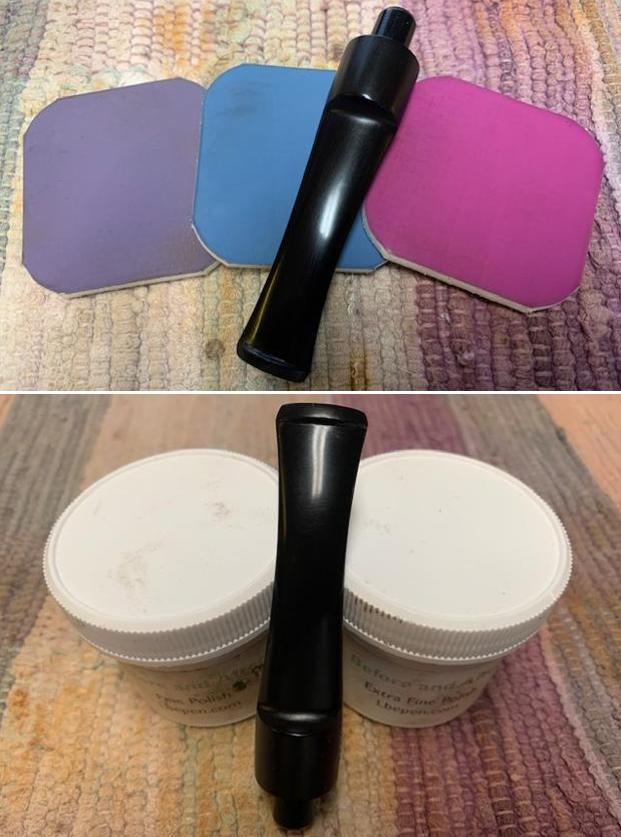
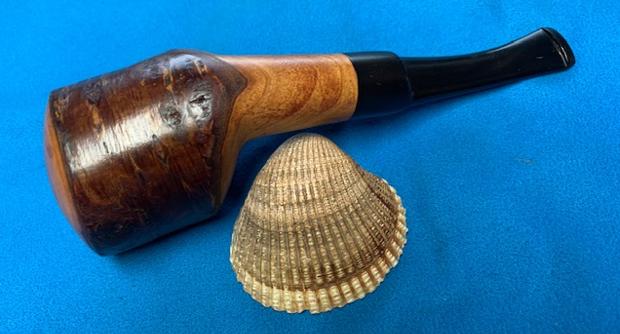
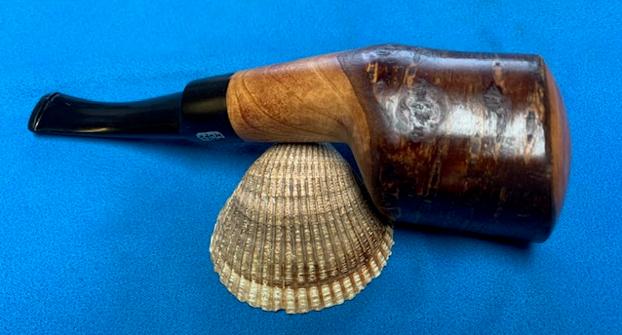
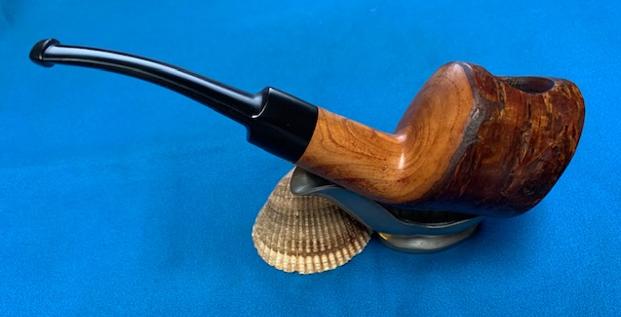
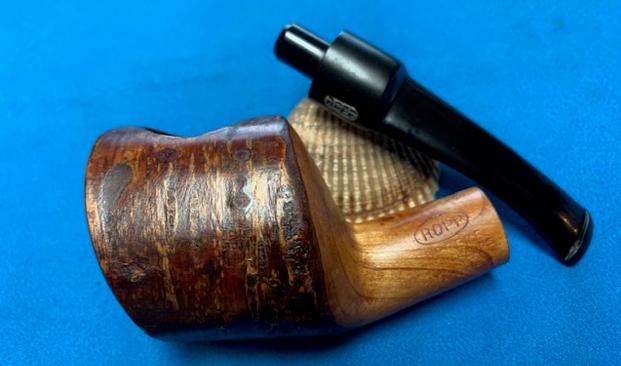
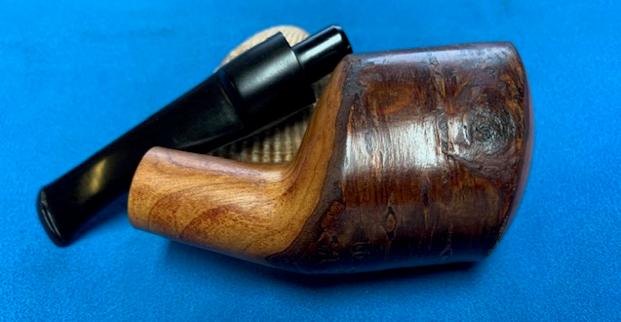
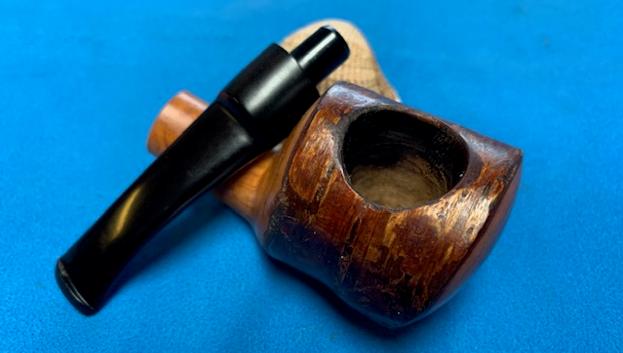
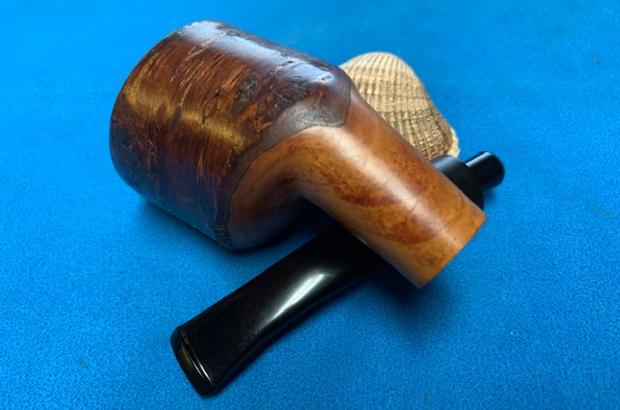
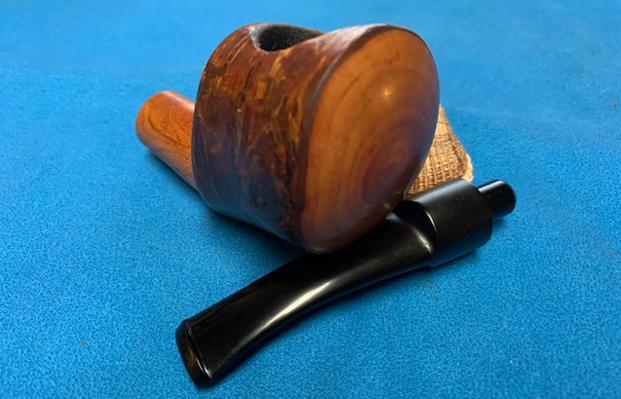
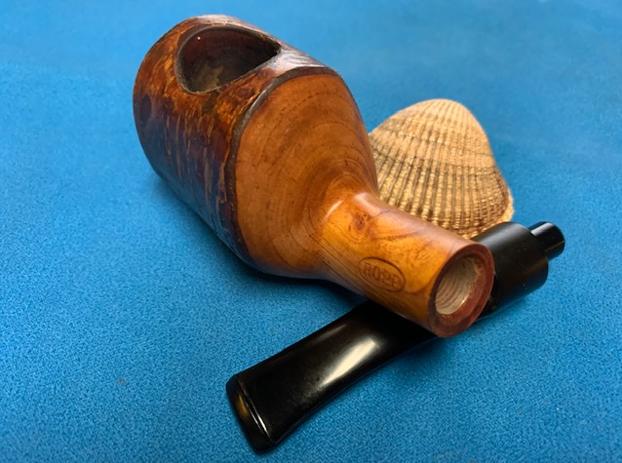
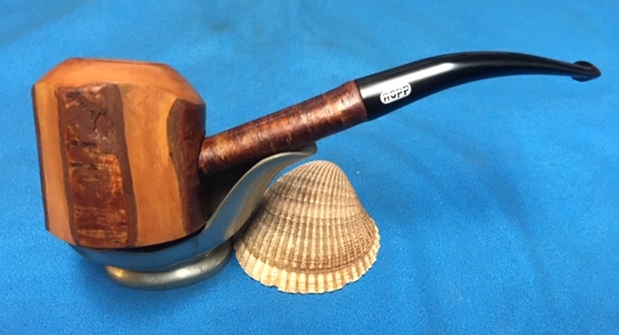
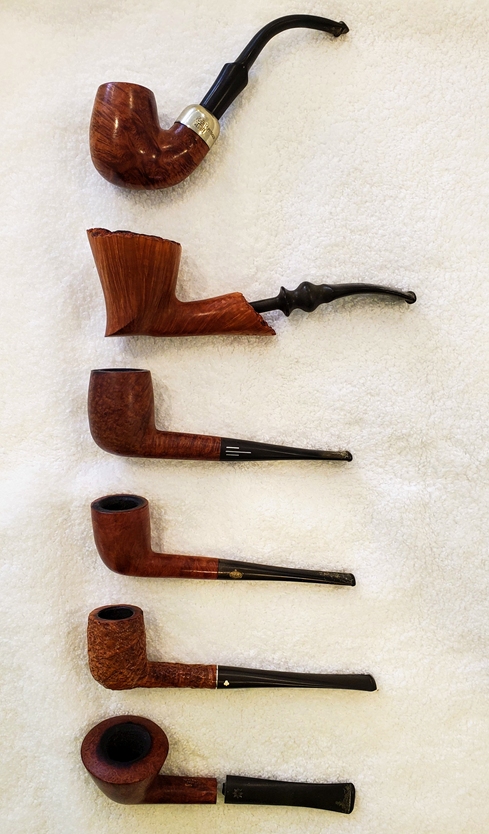
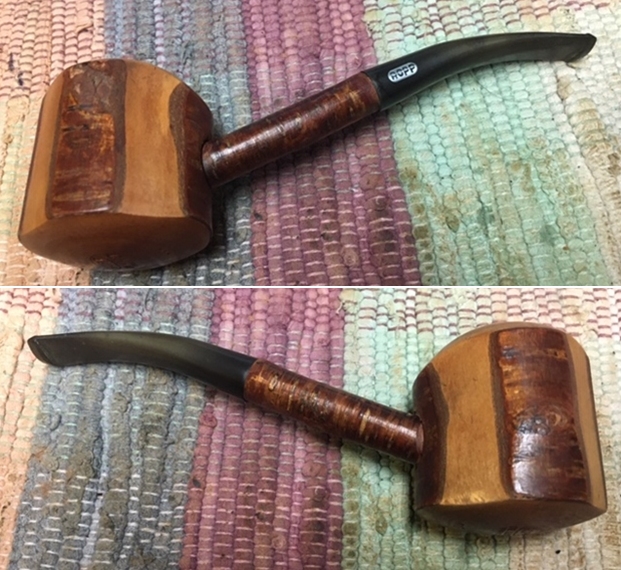
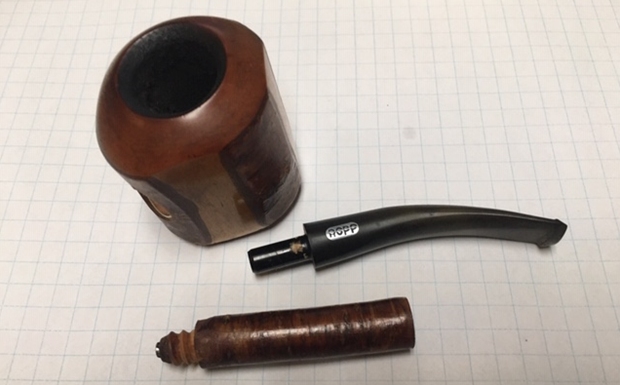
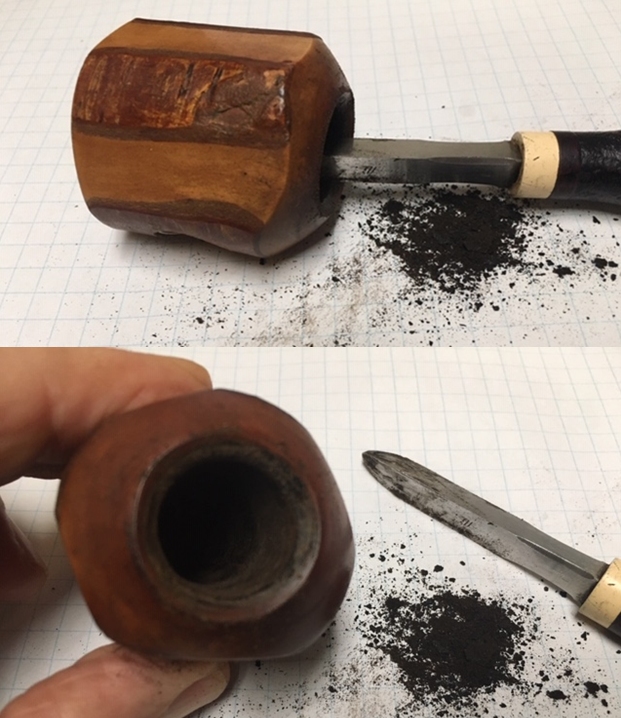
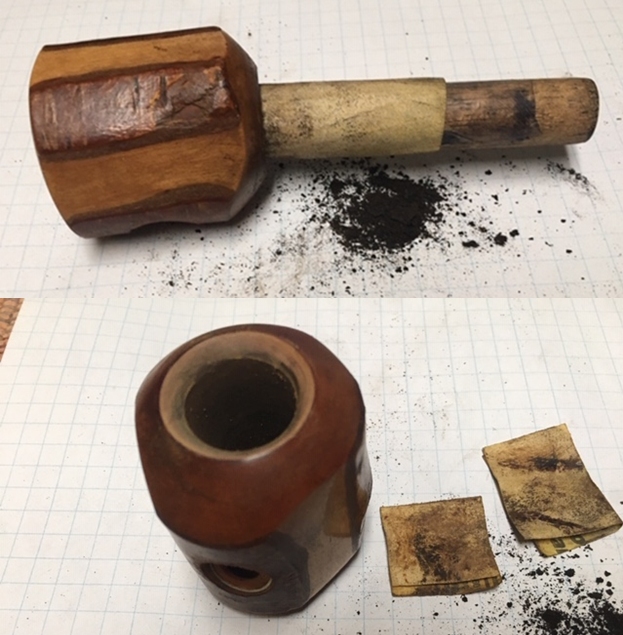
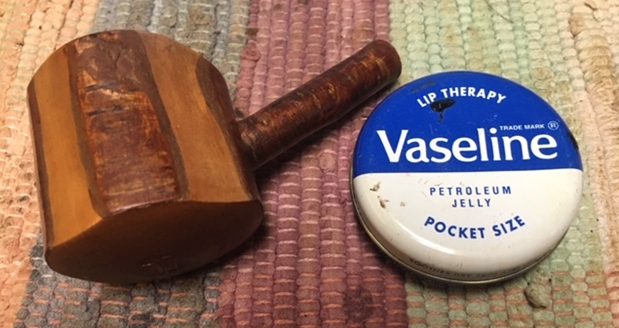
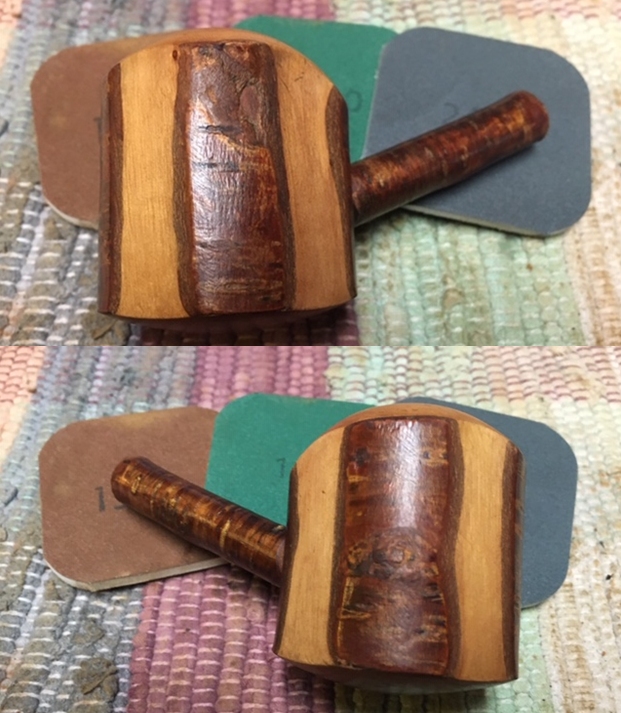
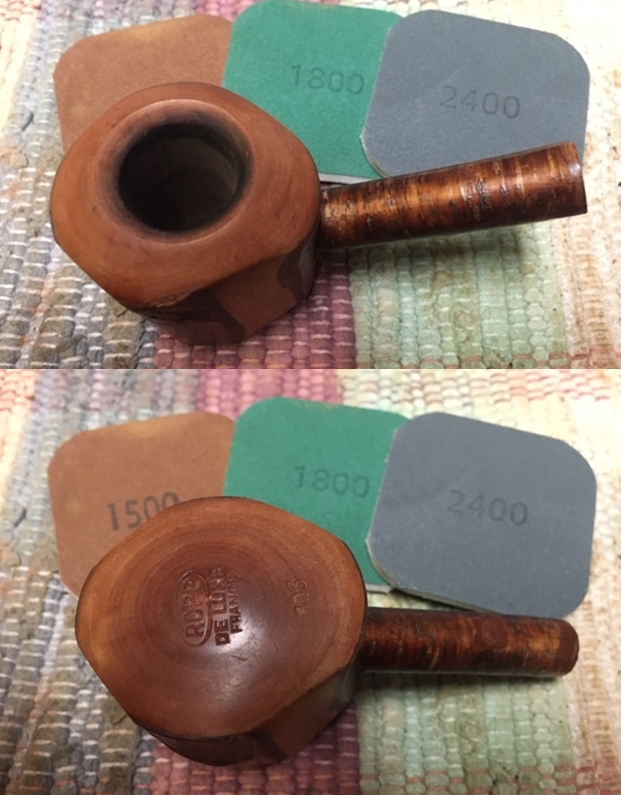
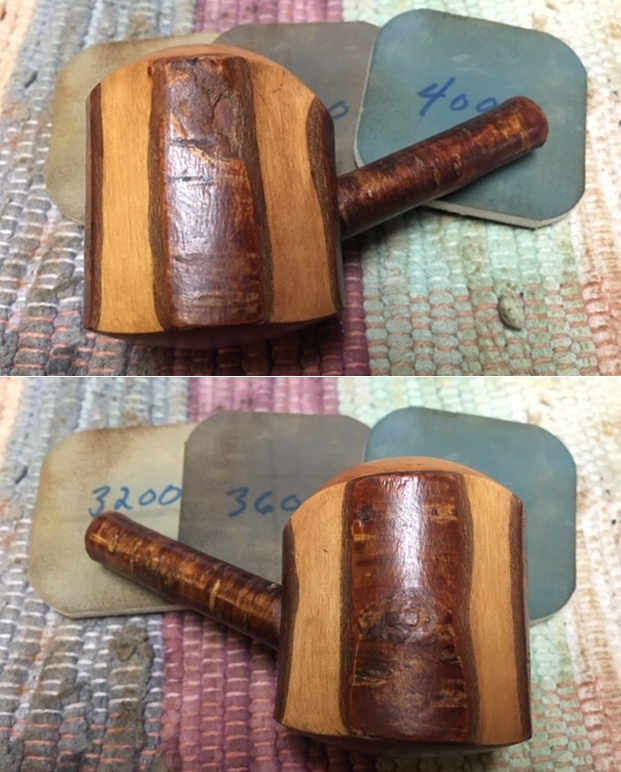
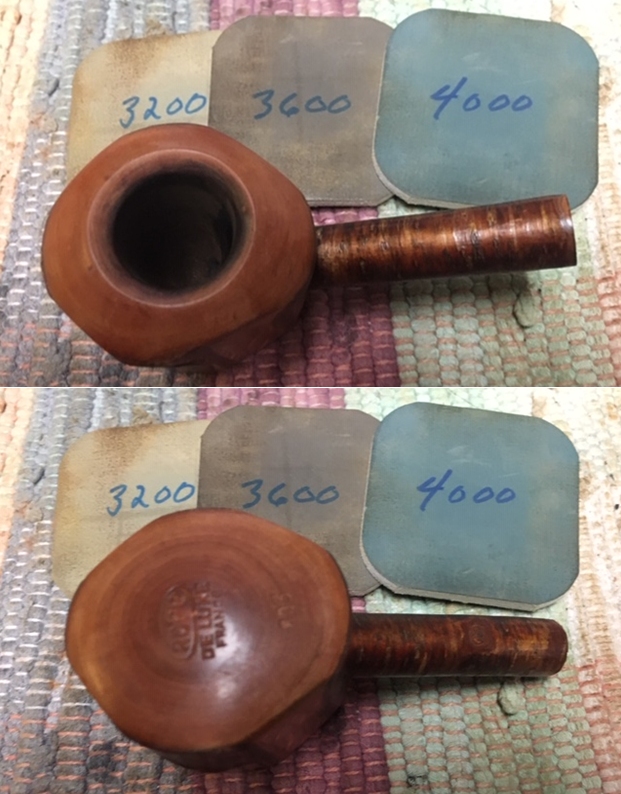
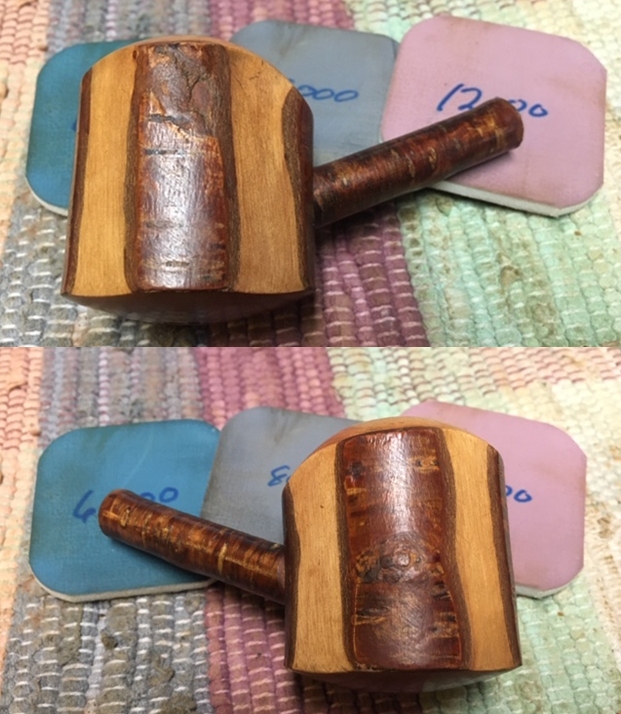
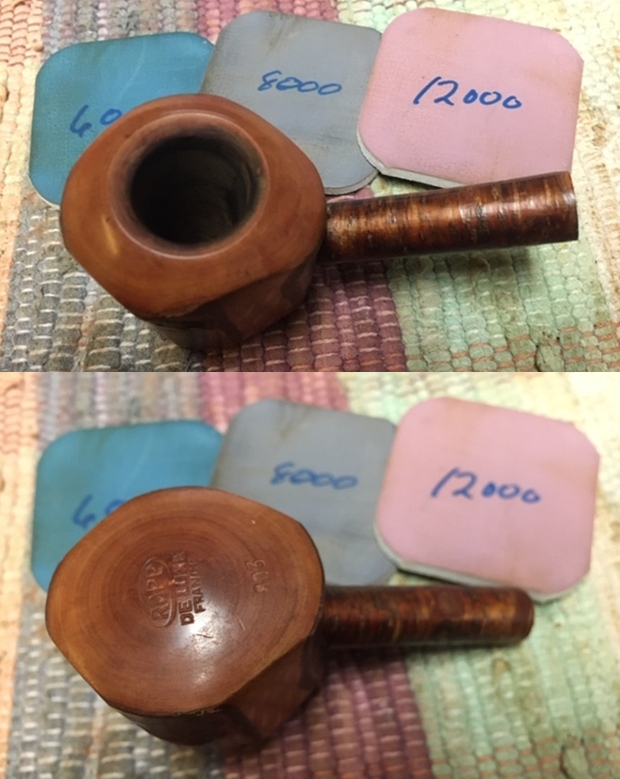
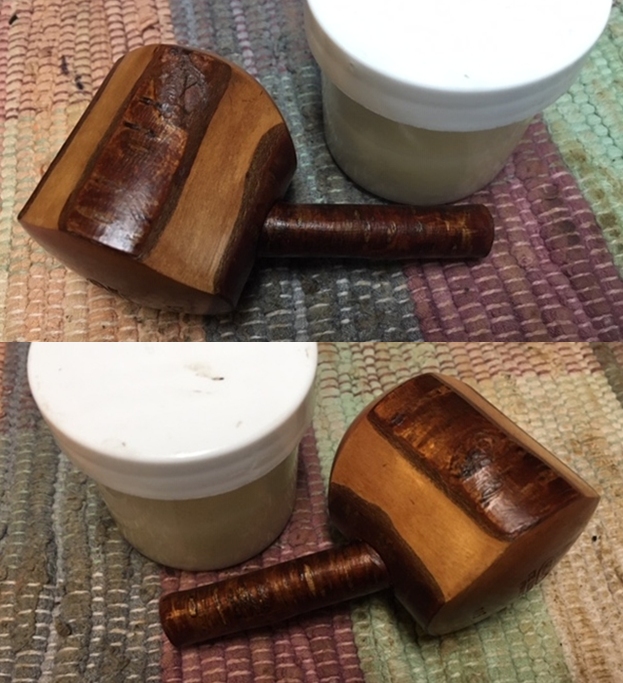
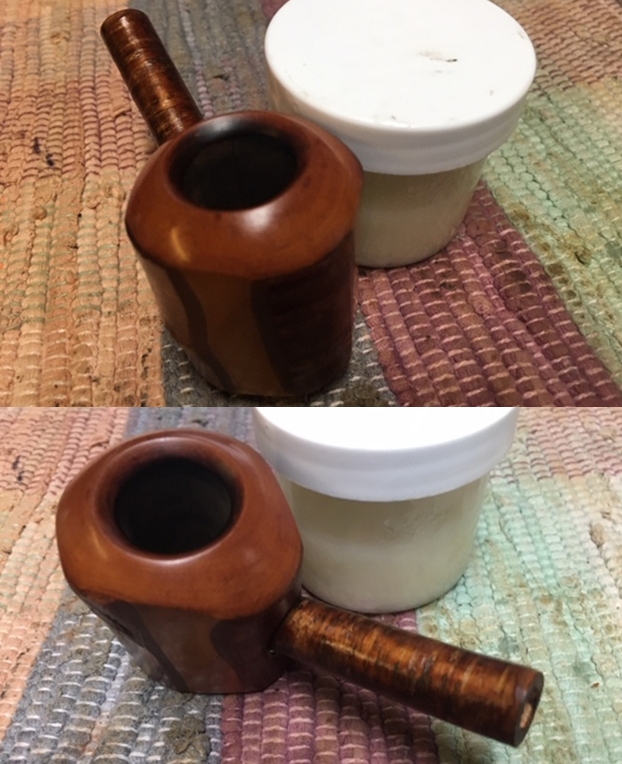
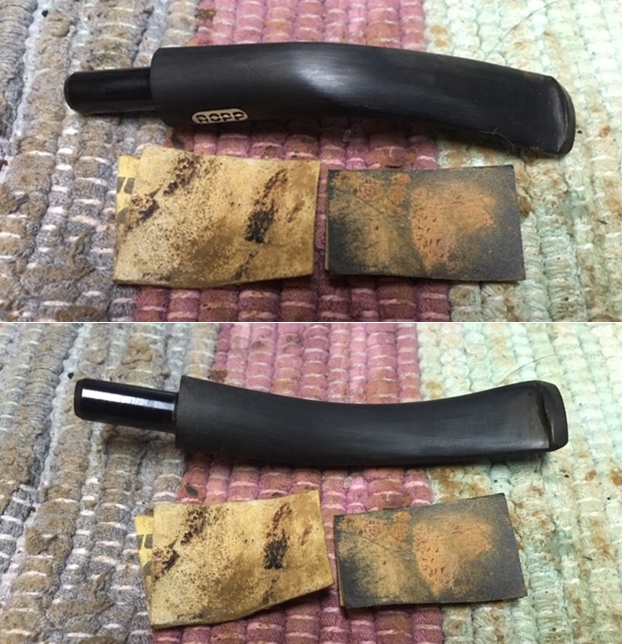
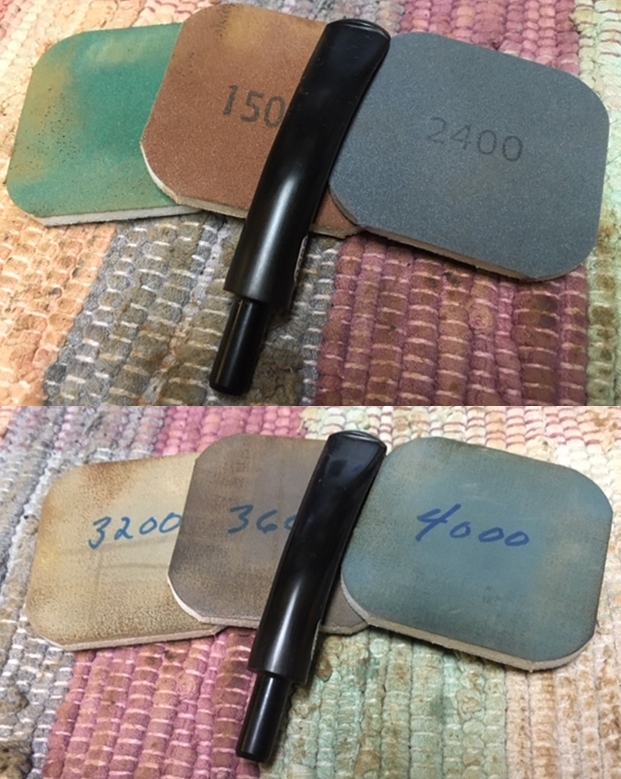
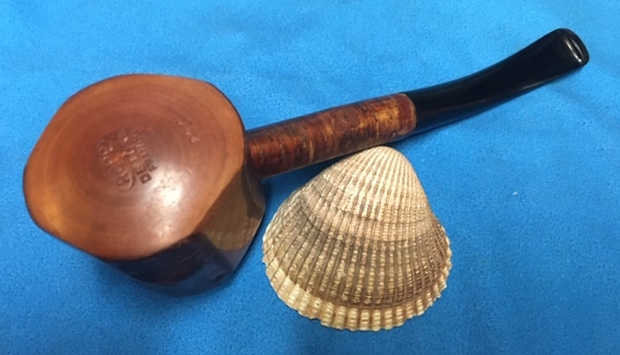
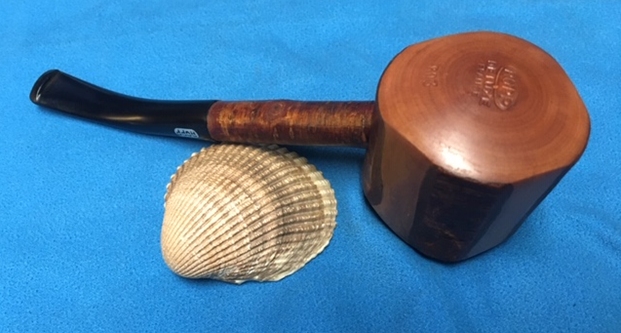
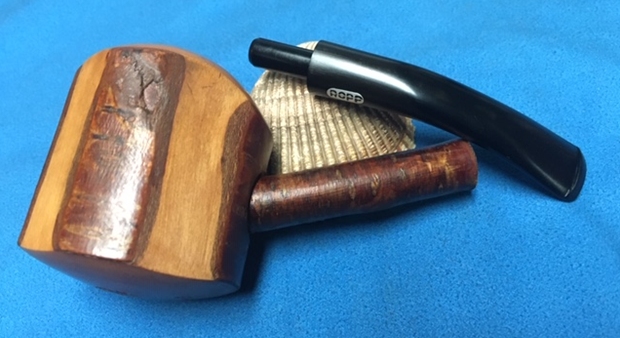
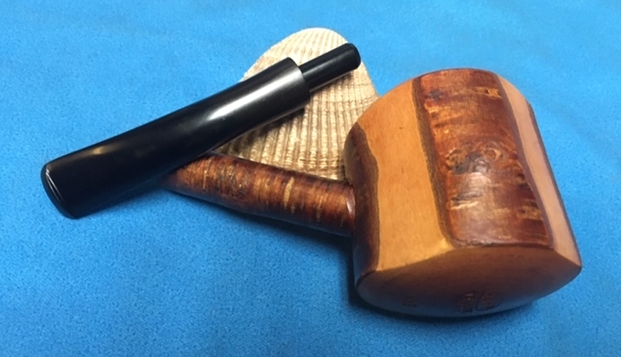
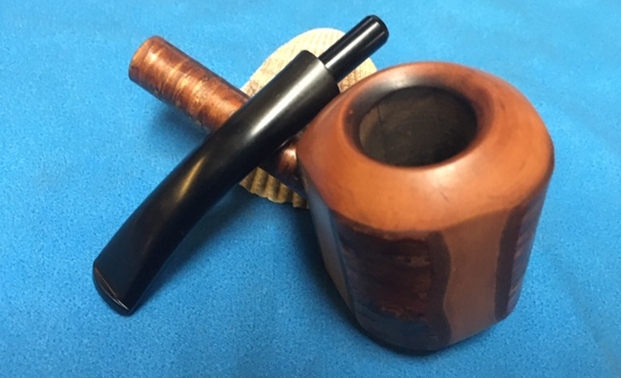
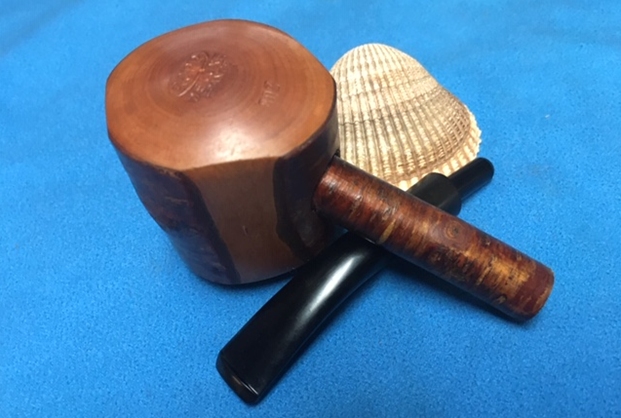
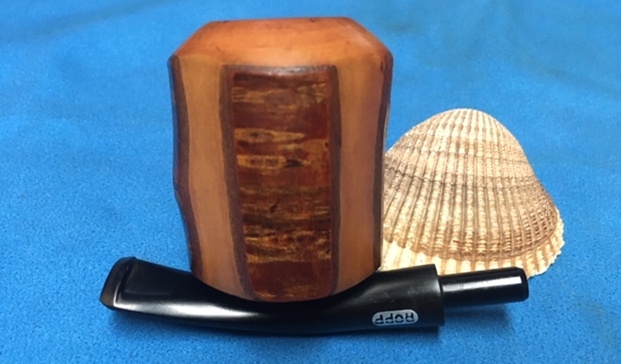
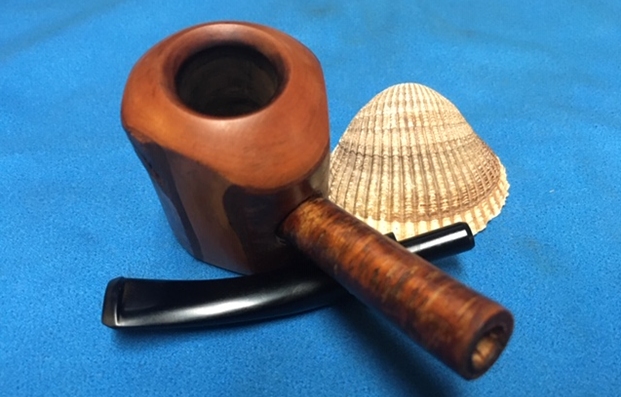
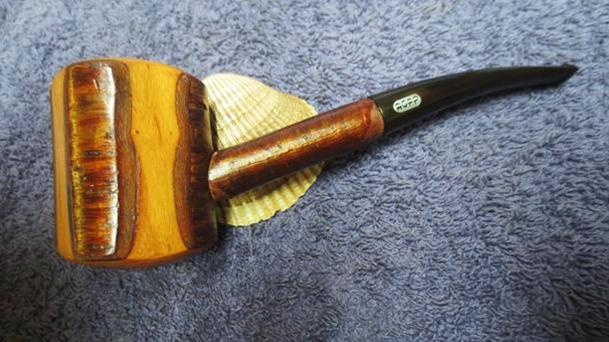
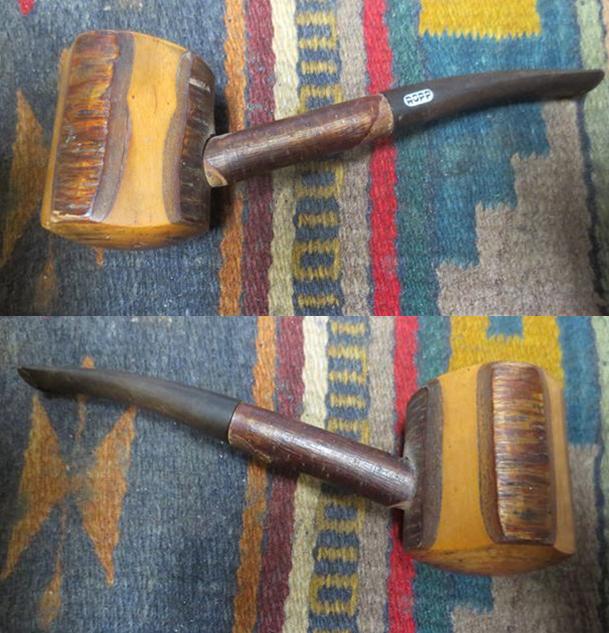
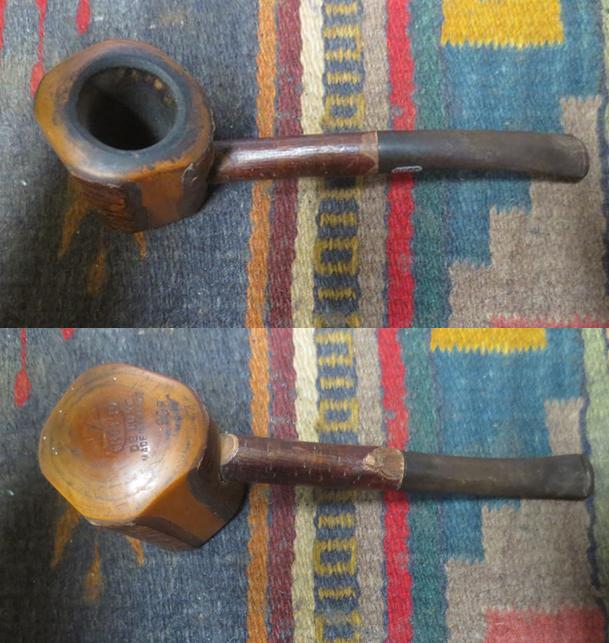
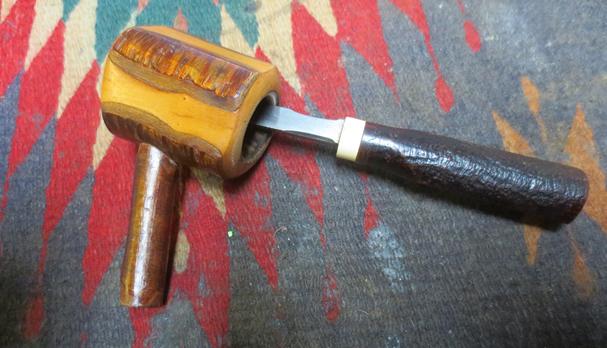
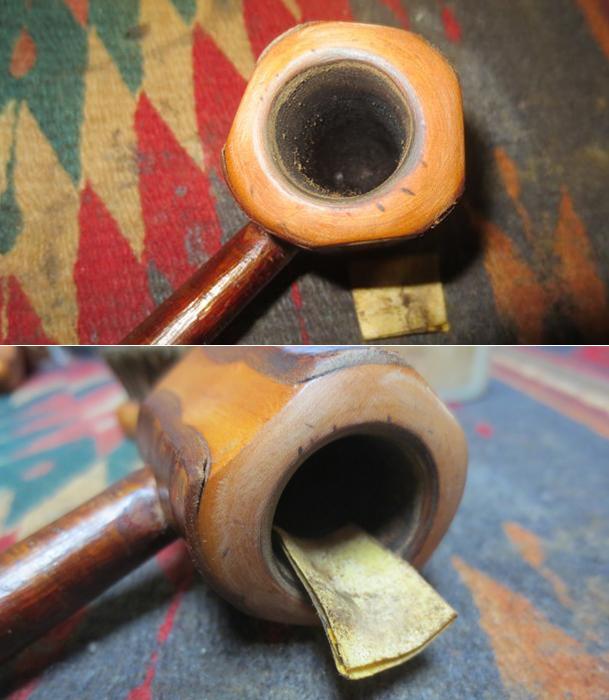
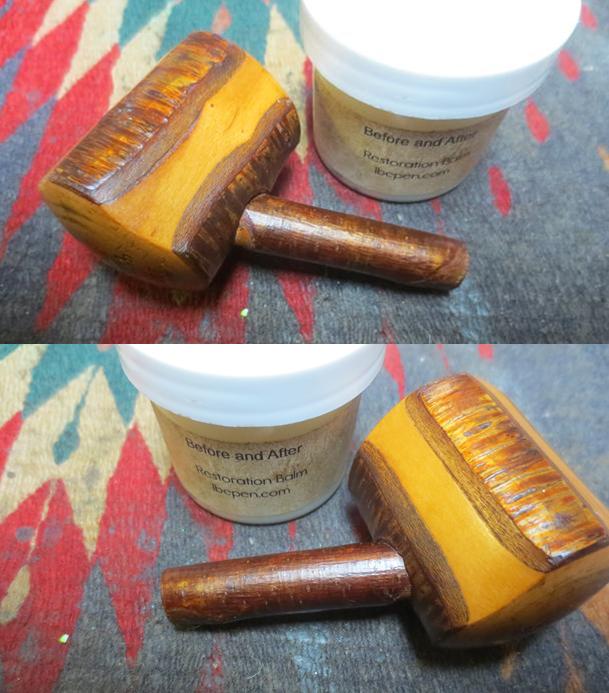
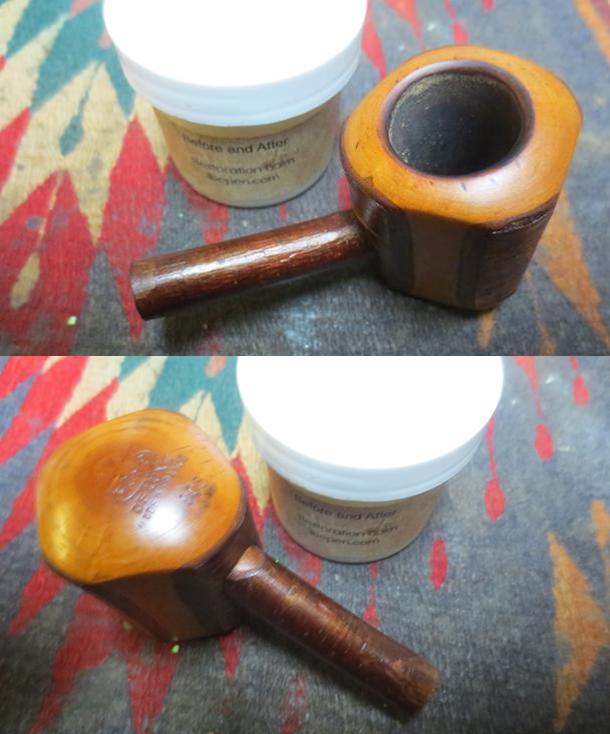
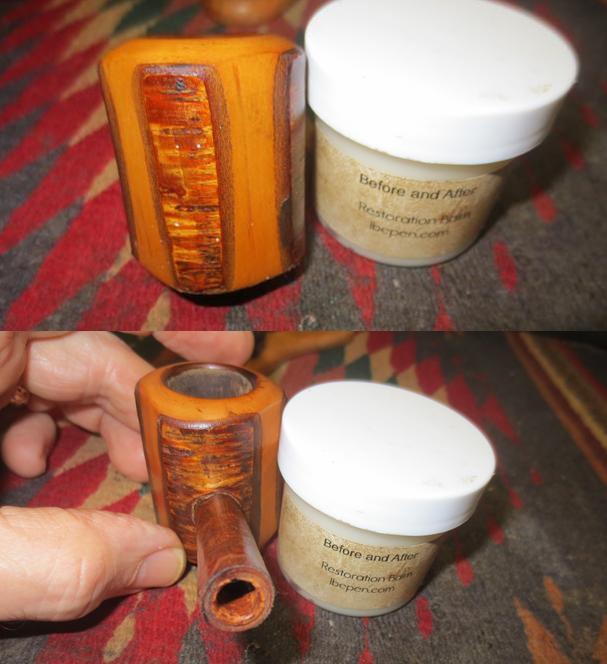
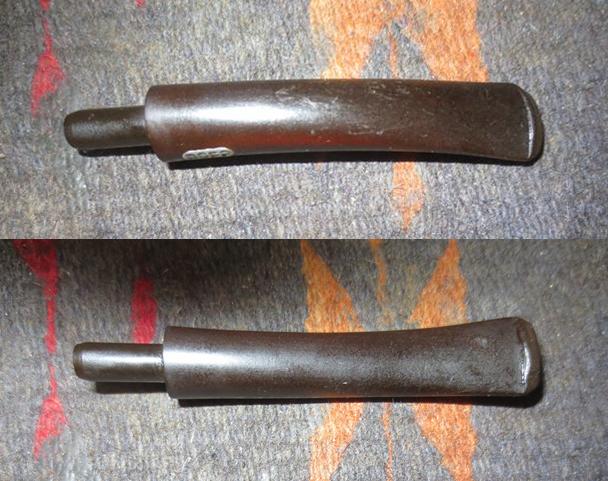
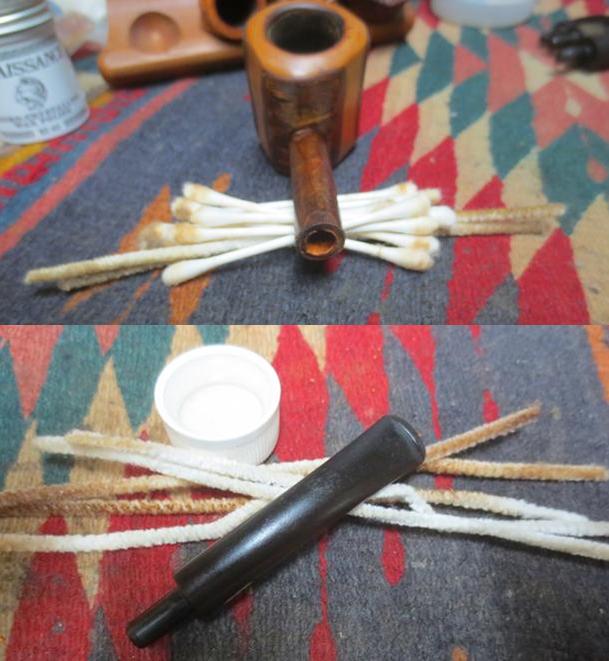
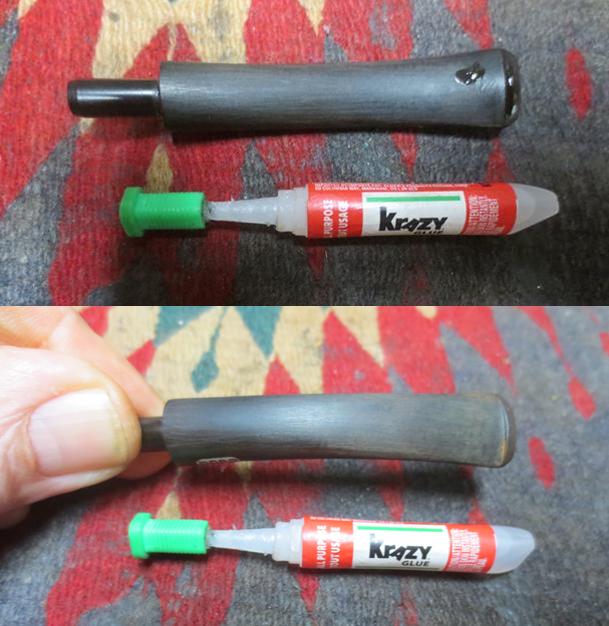
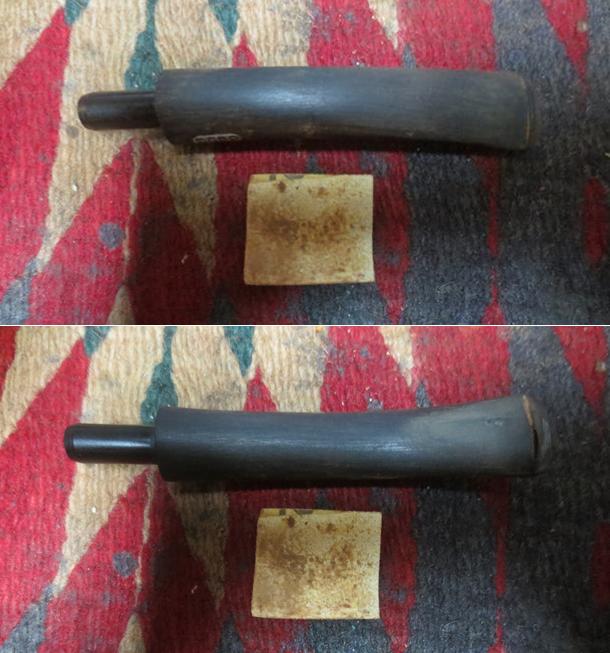
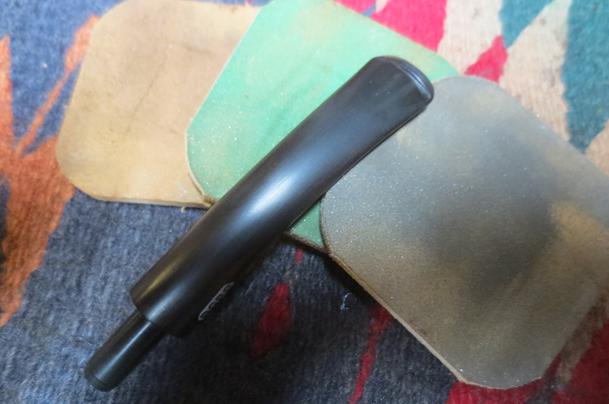
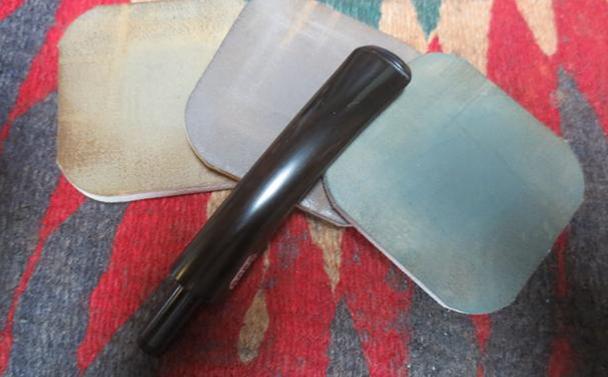
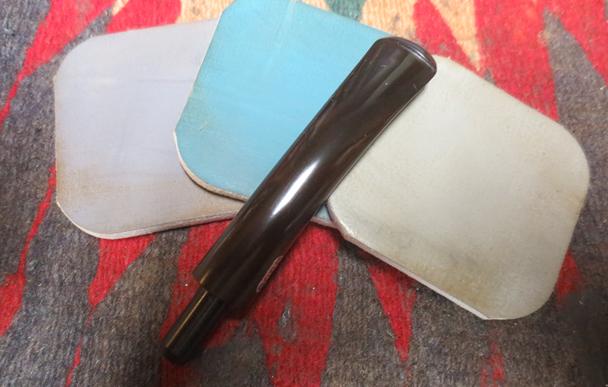
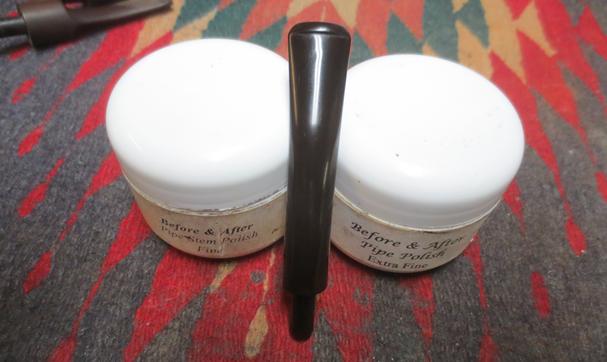
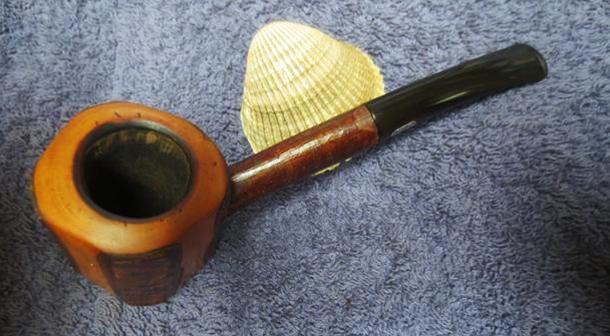
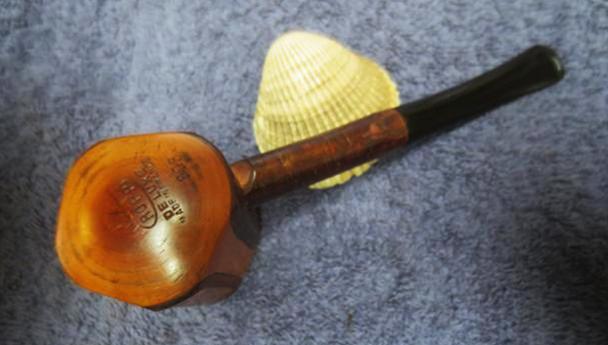
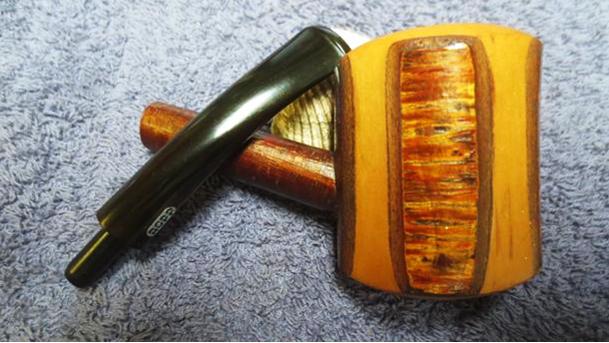
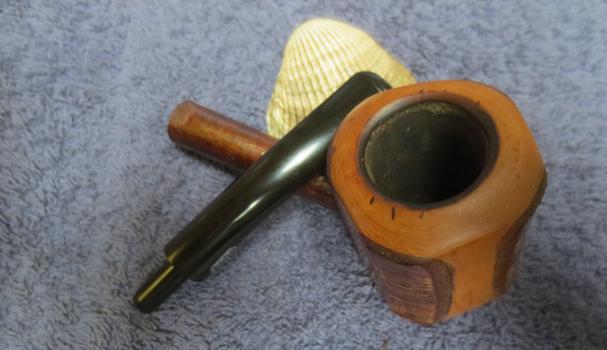
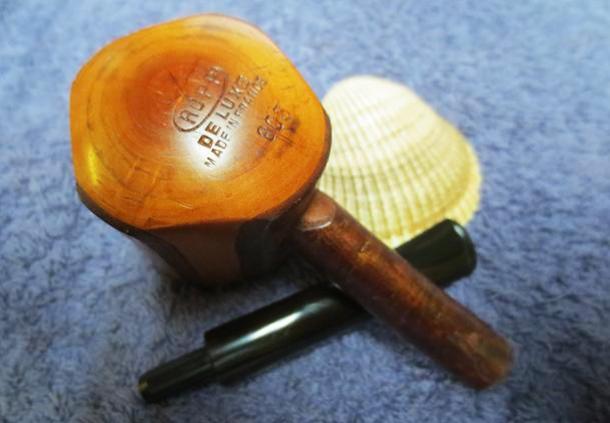
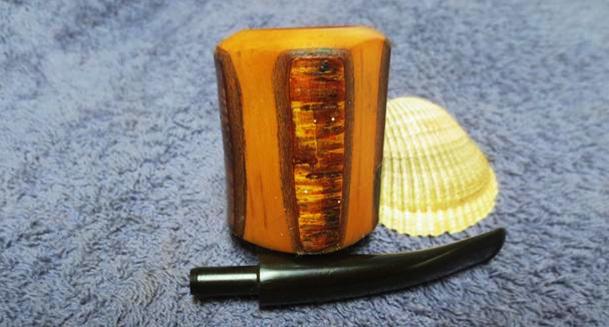
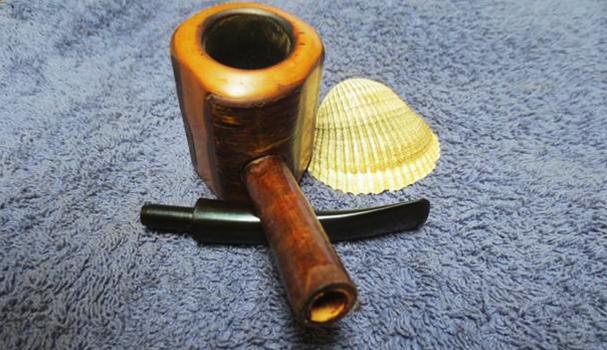
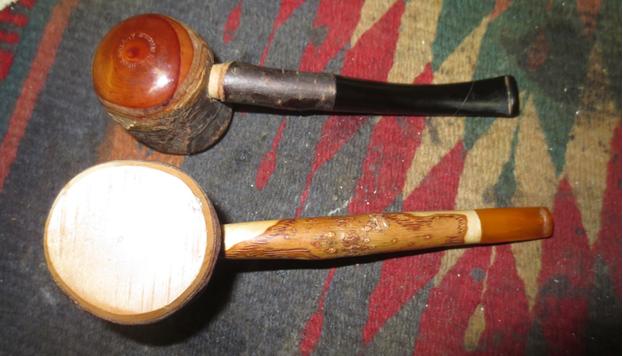
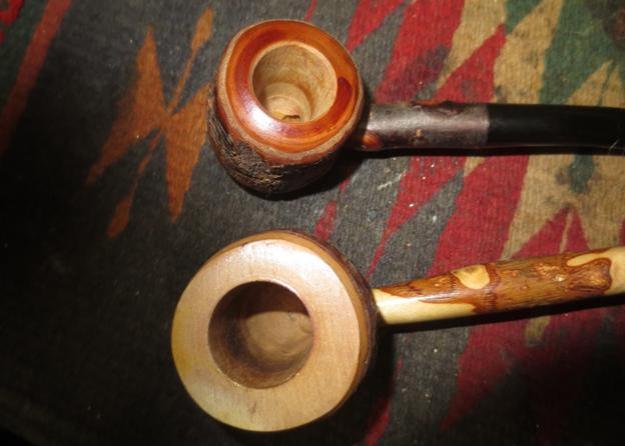
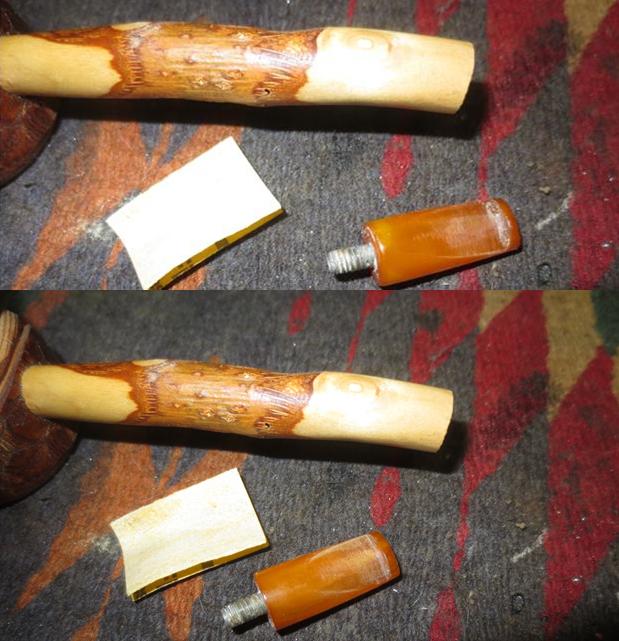
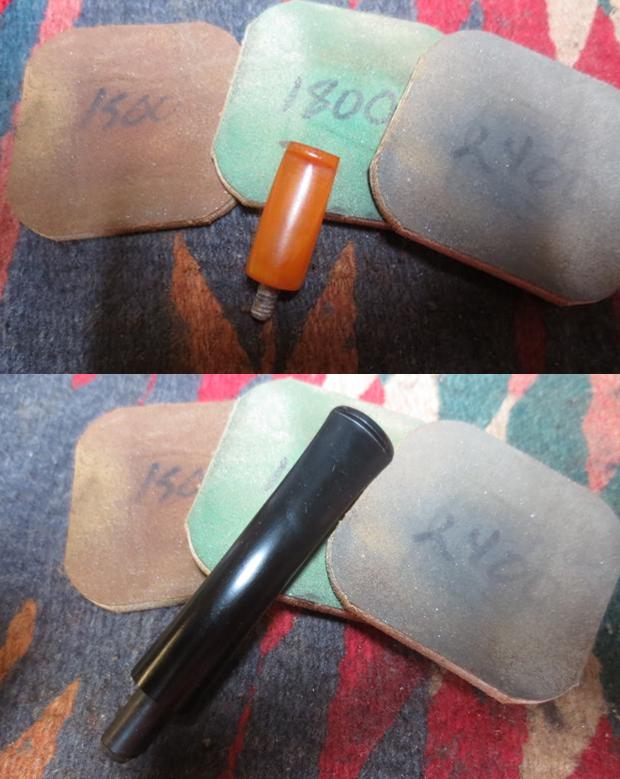
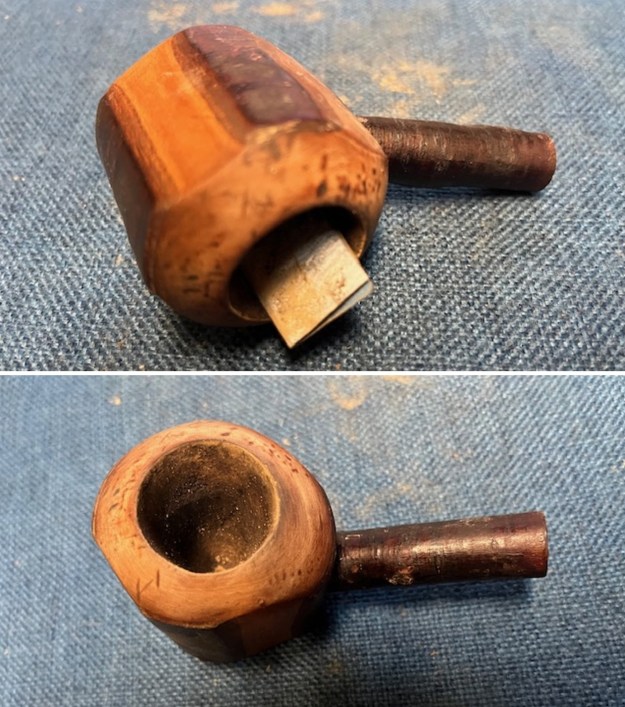
Welcome to another instalment of my Pipe Incident Reports. The idea, in general, is to provide a brief write-up – focusing on a particular pipe-restoration-related issue – rather than an entire restoration story. Today’s story is on the resolution of a very specific pipe repair – replacing a cork mortise – with some added challenges. I hope this blog post will be useful for those undertaking a similar repair.A couple of years ago, I restored this lovely Ropp De Luxe Cherrywood 919 for a friend and he’s smoked it with great gusto since then. In fact, you can see the story of its restoration here. By his own testimony, it’s a great pipe, smokes well, and feels good in the hand. However, over time, he noticed that the cork lining in the shank mortise had chipped and the stem was becoming loose – so he wondered what I thought about it. This news sounded concerning, so I asked him to bring me the pipe. I took it to my workbench and this is what I found: It’s an old pipe and I suppose that it’s no surprise that the cork would degrade over time. This must be repaired so that my friend can continue to enjoy his pipe. First, I took a fairly dull blade (deliberately) and cut out the remaining cork. Mercifully, this was easy and the debris came out quickly.I then gave some thought as to how this should be repaired. In the past, when I’ve repaired cork-lined mortises, I took the cork from a wine bottle and carved it to fit the mortise, then drilled out the cork to fit the tenon. This is fine, but not as precise and tidy as I would like. This time, however, I thought I would try something different. I bought some sheets of cork and decided that cutting an exact piece would be a better solution.How do I figure out what to cut for this pipe? Good question! I am no mathematician, but from somewhere in the recesses of my mind, I remembered how to calculate the circumference of a circle: C = 2πr (or, in this case, C = πd). I grabbed my Vernier caliper and measured the diameter of the mortise. This gave me the information I needed to cut the correct piece of cork. I test fit the tenon with the cork until it fit perfectly. Since cork is a type of wood, I lined the mortise with wood glue and delicately inserted the slice. I let it cure for a full 24 hours, then rubbed the whole stummel with some LBE Before & After Restoration Balm and worked that into the wood. The next day, I returned the pipe to my friend. Happy days.Thanks so much for joining me on this interesting repair. I hope you enjoyed reading this instalment of my Pipe Incident Reports – I look forward to writing more. Below are some photos taken from my original restoration. If you are interested in my work, please follow me here on Steve’s website or email me directly at kenneth@knightsofthepipe.com. Thank you very much for reading and, as always, I welcome and encourage your comments.

Cleaning and Restoring the sixth of a lot of 12 pipes – A Ropp 804 Bent Octagonal Billiard


by Steve Laug

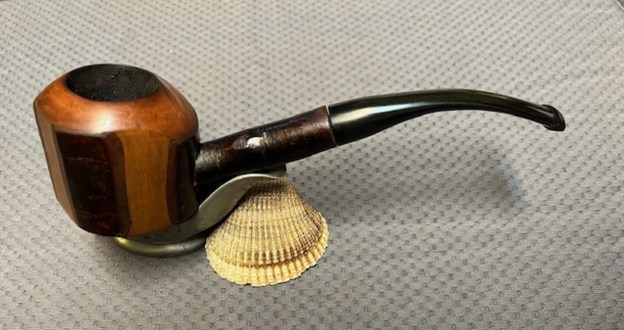
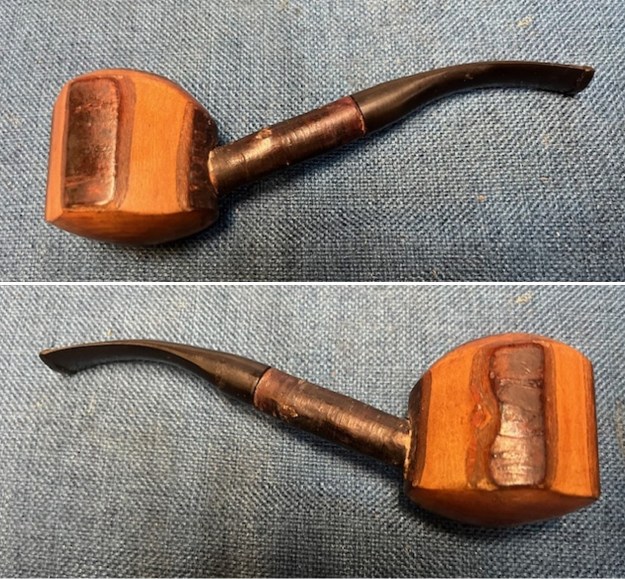
Back in January I received an email from Robert with a group 12 pipes that needed to be restored in various ways from cleanup to restemming. I chose to work on the second of the Cherrywood pipes next. It is a nice-looking Cherrywood Bent Octagonal Bowled Billiard. The bowl and shank had bark on the outside. The bowl has peeled striped around the octagon on every other flat side. The rim top and the base of the bowl were both smooth without bark. The bowl had been reamed at some time so there was no cake in it. The rim top had an overflow of lava on it and some darkening around the inner edge. The underside of the bowl was dirty but it was stamped ROPP [over] De Luxe [over] France. Underneath that what the shape number 804. The stem had no logo on it. It had light tooth marks and tooth chatter on the top and underside ahead of the button. I took some photos of the pipe to show its condition before I started my work on it.The relatively clean bowl looks quite good. There was some thick lava on the rim top and some lava build up on the inner edge of the bowl. It looked to be in good condition other than the lava and darkening. The vulcanite taper stem was dirty, lightly oxidized and has light tooth chatter and marks on both sides. I took photos of the bowl, rim top and the stem to show the condition of both.There was stamping on the heel of the bowl that was clear and readable. It read as noted above. I took a photo of the pipe with the stem removed to show the proportion of this pipe. It is a classic Ropp Cherrywood.I wanted to refresh my memory on the brand so I turned for a short, quick summary to Pipephil (http://www.pipephil.eu/logos/en/logo-ropp.html). I have included the pertinent information from that site below:

Brand created by Eugène-Léon Ropp (1830 – 1907) and continued throughout 3 generations. “GBA Synergie” run by Bernard Amiel (†2008) bought back Ropp in 1988 and owned it until 1991. The company was taken over by Cuty-Fort Entreprises (Chacom, Vuillard, Jean Lacroix…) in 1994.

I also turned to Pipedia to see if there was any additional information that would be helpful (https://pipedia.org/wiki/Ropp). I quote the portion of the article on the Cherrywood pipes.

Eugène-Léon Ropp (1830 – 1907) had acquired a patent for a cherrywood pipe (wild cherry, lat.: Prunus avium) in 1869. In 1870 he established a workshop to manufacture such pipes in Büssingen (Bussang, Vosges mountains). Around 1893 the business moved into the former mill of Sicard (part of the community of Baume-les-Dames – Département Doubs, Upper Burgundy – from 1895 on)… Even though cherrywood pipes were the mainstay of Ropp until the company finally closed down in September 1991. The company was taken over by Cuty-Fort Entreprises (Chacom, Jeantet, Vuillard, Jean Lacroix…) in 1994.

The pipe thus was made in France sometime prior to the closure in 1991. It is made from wild cherry and was a specialty of Ropp. I have worked on quite a few over the years but I had forgotten all the dates and information. Now it was time to work on the pipe.

I turned to work on the pipe itself. The shank was loose in the bowl so I reglued it with all purpose white glue. I used a tooth pick to press it into the grooves around the junction and set it aside to cure. I worked over rim top and inner edge of the bowl. I used a folded piece of 220 grit sandpaper to smooth out the damage and darkening on the smooth rim top and inner edge of the bowl. It looked much better once the debris was removed. I sanded the walls of the bowl smooth with a piece of dowel wrapped with a piece of 220 grit sandpaper. The walls smoothed out very well.I scrubbed the bowl exterior with a tooth brush and undiluted Murphy’s Oil Soap to clean the debris and oils and tars in the cherry bark finish. I rinsed it with clean warm water and dried it off with a soft cotton cloth. I polished the smooth rim top, four panels on the sides and heel of the bowl with 1500-12000 grit micromesh sanding pads. It smoothed out the finish very well and removed much of the damage on the rim top, smooth panels and the scratching around the stamping on the heel. I cleaned out the mortise and airway in the shank and the stem with alcohol, cotton swabs and pipe cleaners. I was able to remove the grime and oils in the shank and the airway in the stem.I worked some Before & After Restoration Balm into the surface of the bowl and shank with my fingertips to clean, enliven and protect the wood. I let the balm sit for 15 minutes and then buffed it off with a cotton cloth to raise the shine. The photos show the bowl at this point in the restoration process. I set the bowl aside and turned my attention to the stem. I sanded the stem with 320-3500 grit sanding pads to further blend in the remnants of the tooth marks and chatter on the stem and to remove the residual light oxidation. I am happy with the way that it looked at this point.I polished the vulcanite with micromesh sanding pads – 1500-12000 grit pads. I wiped it down with Obsidian Oil after each sanding pad. I used Before & After Pipe Polish – both Fine and Extra Fine to further polish the stem. This Ropp De Luxe Cherrywood 804 Octagonal Bent Billiard with a vulcanite taper stem has a cherrywood bark finish with a smooth rim top and bowl heel. The bark covered Cherrywood pipe is what makes Ropp pipes stand out. I put the stem back on the bowl and buffed the pipe with Blue Diamond on the buffing wheel being careful to not buff the stamping. I gave the bowl and the stem multiple coats of carnauba wax on the buffing wheel and followed that by buffing it with a clean buffing pad. I hand buffed the pipe with a microfiber cloth to deepen the shine. The finished Ropp De Luxe Cherrywood Octagonal Billiard is quite nice and feels great in the hand. Give the finished pipe a look in the photos below. The dimensions of the pipe are Length: 6 ¾ inches, Height: 2 inches, Outside diameter of the bowl: 1 ¾ inches, Chamber diameter: 1 inch. The weight of the pipe is 2.36 ounces/66 grams. Thanks for walking through the restoration with me as I worked over another beautiful pipe. I will be sending it back to Robert once I finish the other 6 pipes he sent me to restore. I look forward to hearing what he thinks of this beauty. Thanks for your time.

Cleaning and Restoring the third of a lot of 12 pipes for a customer – a Ropp Cherrywood 921


by Steve Laug

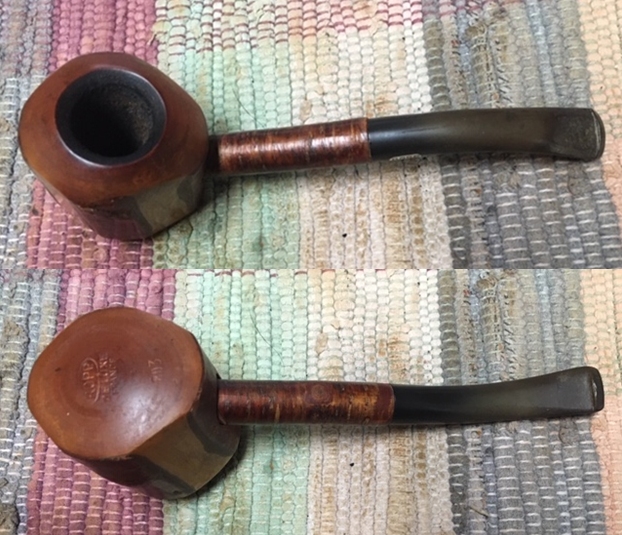
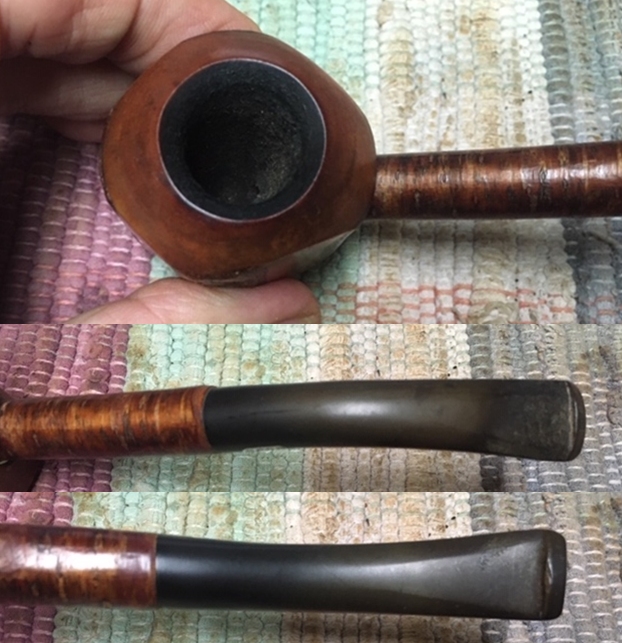
Back in January I received an email from Robert with a group 12 pipes that needed to be restored in various ways from cleanup to restemming. I chose to work on one of the Cherrywood pipes next. It is a nice looking Cherrywood Bent Poker. The bowl and shank had bark on the outside. The rim top and the base of the bowl were both smooth without bark. The bowl had been reamed at some time so there was no cake in it. The rim top had an overflow of lava on it and some darkening around the inner edge. The underside of the bowl was dirty but it was stamped ROPP [over] De Luxe [over] France. Underneath that what the shape number 921. The stem had tooth marks and tooth chatter on the top and underside ahead of the button. I took some photos of the pipe to show its condition before I started my work on it. The relatively clean bowl looks quite good. There was some thick lava on the rim top and some lava build up on the inner edge of the bowl. It looked to be in good condition other than the lava and darkening. The vulcanite taper stem was dirty, lightly oxidized and has tooth chatter and marks on both sides. I took photos of the bowl, rim top and the stem to show the condition of both.There was stamping on the heel of the bowl that was clear and readable. It read as noted above. I also took a photo of the inlaid silver logo on the left side of the taper stem. I took a photo of the pipe with the stem removed to show the proportion of this pipe. It is a classic Ropp Cherrywood. I turned to work on the pipe itself. I worked over rim top and inner edge of the bowl. I used a folded piece of 220 grit sandpaper to smooth out the damage and darkening on the smooth rim top and inner edge of the bowl. It looked much better once the debris was removed. I sanded the walls of the bowl smooth with a piece of dowel wrapped with a piece of 220 grit sandpaper. The walls smoothed out very well. I scrubbed the bowl exterior with a tooth brush and undiluted Murphy’s Oil Soap to clean the debris and oils and tars in the cherry bark finish. I rinsed it with clean warm water and dried it off with a soft cotton cloth. I sanded the smooth rim top and heel of the bowl with 320-3500 grit sanding pads. It smoothed out the finish very well and removed much of the damage on the rim top and the scratching around the stamping on the shank.I cleaned out the mortise and airway in the shank and the stem with alcohol, cotton swabs and pipe cleaners. I was able to remove the grime and oils in the shank and the airway in the stem.I worked some Before & After Restoration Balm into the surface of the bowl and shank with my fingertips to clean, enliven and protect the wood. I let the balm sit for 15 minutes and then buffed it off with a cotton cloth to raise the shine. The photos show the bowl at this point in the restoration process. I set the bowl aside and turned my attention to the stem. I scrubbed the surface of the stem with cotton pads and Soft Scrub. I was able to remove the debris on the stem and the oxidation on the surface. It looked much better.I “painted” the surface of the stem with the flame of a Bic lighter to lift the tooth marks. I was able to lift them all considerably. I filled in the two deep marks – one on each side of the stem just ahead of the button – with black rubberized CA glue. Once it cured, I sanded the repairs with 220 grit sandpaper to blend them into the surface. It looked significantly better at this point. I sanded the stem with 320-3500 grit sanding pads to further blend in the remnants of the tooth marks and chatter on the stem and to remove the residual light oxidation. I am happy with the way that it looked at this point.I polished the vulcanite with micromesh sanding pads – 1500-12000 grit pads. I wiped it down with Obsidian Oil after each sanding pad. I used Before & After Pipe Polish – both Fine and Extra Fine to further polish the stem. This Ropp De Luxe Cherrywood 921 Bent Poker with a vulcanite taper stem has a cherrywood bark finish with a smooth rim top and bowl heel. The bark covered Cherrywood pipe is what makes Ropp pipes stand out. I put the stem back on the bowl and buffed the pipe with Blue Diamond on the buffing wheel being careful to not buff the stamping. I gave the bowl and the stem multiple coats of carnauba wax on the buffing wheel and followed that by buffing it with a clean buffing pad. I hand buffed the pipe with a microfiber cloth to deepen the shine. The finished Ropp De Luxe Cherrywood Poker is quite nice and feels great in the hand. Give the finished pipe a look in the photos below. The dimensions of the pipe are Length: 5 ½ inches, Height: 2 inches, Outside diameter of the bowl: 1 ½ inches, Chamber diameter: 7/8 of a inch. The weight of the pipe is 1.66 ounces/46 grams. Thanks for walking through the restoration with me as I worked over another beautiful pipe. I will be sending it back to Robert once I finish the other 9 pipes he sent me to restore. I look forward to hearing what he thinks of this beauty. Thanks for your time.

Bringing Back a Ropp Cherrywood


Bog by Kenneth Lieblich

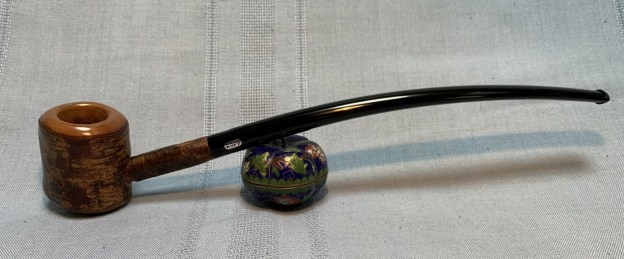
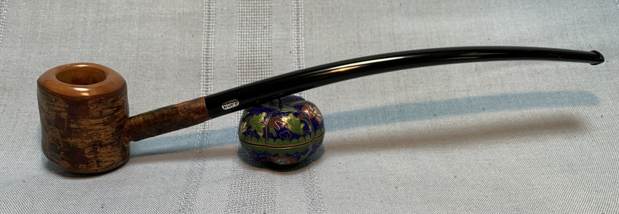
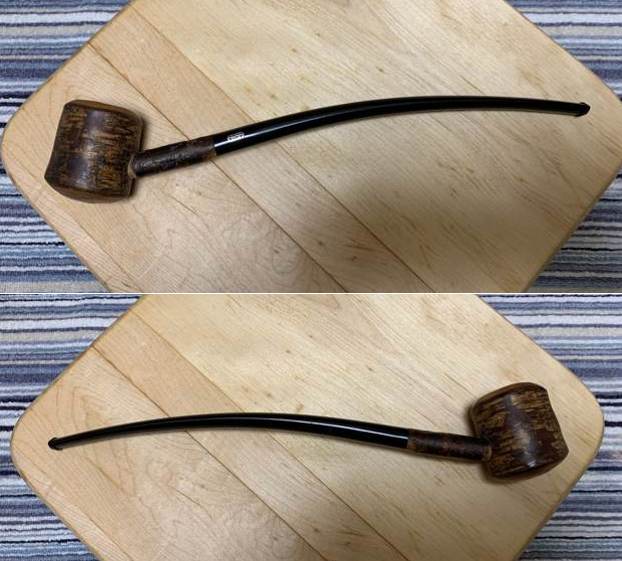
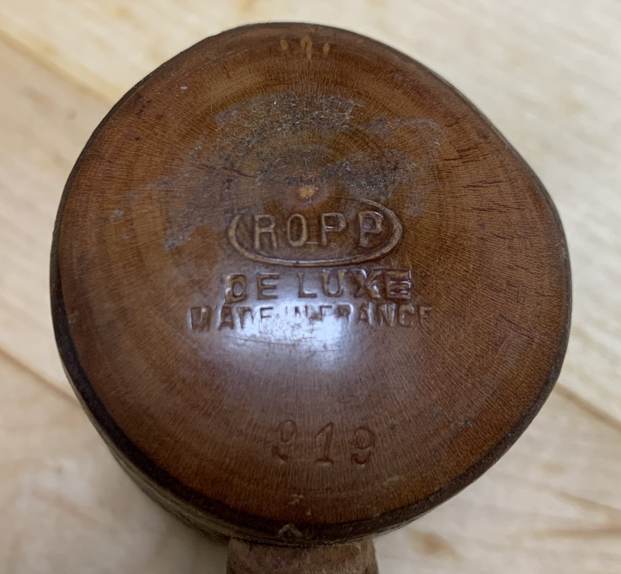
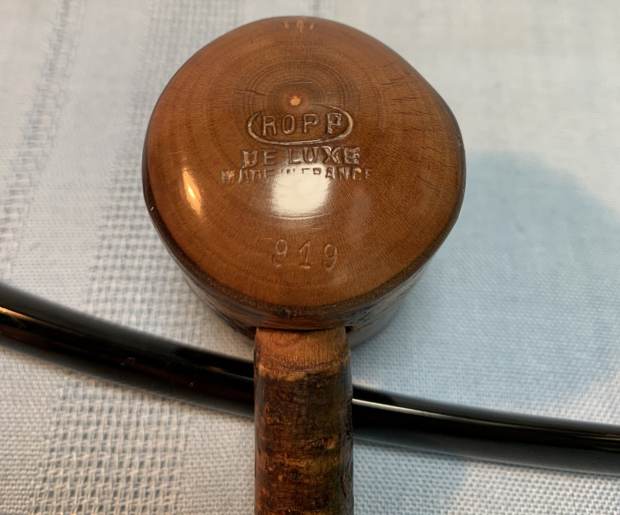
Next on the chopping block is a Ropp Cherrywood Churchwarden, commissioned by a friend. As you may know, Ropp is possibly best known for their cherrywood pipes, this is one of the more attractive cherrywoods I’ve seen in a while. The key here is that they’ve kept the design simple: a solid, handsome stummel and an elegant, lithe stem. They nailed this one. I’m glad that my friend picked this one out; he made a good choice! Of course, this pipe was made by the venerable French pipe company, Ropp. The markings on this pipe were on the underside of the bowl and read Ropp (encircled in an oval) [over] De Luxe [over] Made in France [over] 919. This number is the shape number, and it was somewhat. From Pipedia, here is a very brief history of the Ropp company:

Eugène-Léon Ropp (1830–1907) acquired a patent for the cherrywood pipe in 1869. In 1870, he established a workshop to manufacture such pipes in Bussang, in the Vosges mountains. Around 1893, his business moved into the former mill of Sicard (part of the community of Baume-les-Dames in Upper Burgundy. The pipes were a big success in export as well. Shortly before 1914, Ropp designated A. Frankau & Co. (BBB) to be the exclusive distributor in the UK and its colonies. Probably in 1917, a workshop in Saint-Claude in the rue du Plan du Moulin was acquired to start the fabrication of briar pipes. In 1923, another small building in Saint-Claude, serving as a workshop for polishing, was added. Cherrywood pipes were the mainstay of Ropp until the company finally closed down in September 1991. The company was taken over by Cuty-Fort Entreprises in 1994. The pipe was in very nice condition. The stummel had been lightly smoked add the bowl and shank were a bit dirty, but nothing extraordinary. There was a sticky substance on the underside, possibly the remnants of a price sticker. Similarly, the stem was relatively clean – not much oxidation to speak of, and only a few tooth marks on the bit. Time to get cracking. The stem was first on my list. I wiped the outside down with Murphy’s Oil Soap on some cotton pads. I cleaned out the insides with lemon-infused isopropyl alcohol and some long pipe cleaners.I also took a BIC lighter and ‘painted’ the stem with its flame to lift the few bite marks and dents. This was quite successful in raising the damage. This technique doesn’t always work, but it did here.Fortunately, the stem was in good enough shape that it didn’t need a soak in the Pipe Stem Oxidation Remover. I simply scrubbed and scrubbed with SoftScrub on some cotton pads.  I built up the remaining marks on the stem with black cyanoacrylate adhesive and then cured it with the aid of some CA glue accelerator. I then carefully sanded the adhesive down with 220-, 400-, and 600-grit sandpapers to meld seamlessly into the stem. I then used all nine Micromesh pads (1,500 through 12,000 grit) to bring out the lovely black lustre on the stem. I also used Obsidian Pipe Stem Oil in between each pad scrubbing (from 3,600 onward).Now for the stummel. It was in nice condition, with very few nicks or scratches, which was a relief!  However, I decided to ream out the bowl. I used the KleenReem to remove the built-up cake and followed that with 220-grit sandpaper taped to a dowel to eliminate as much as I could. I took the chamber down to bare briar, as I wanted to ensure there were no hidden flaws in the wall. Fortunately, there were none. I then proceeded to clean out the insides of the shank with Q-tips, pipe cleaners, and lemon-infused isopropyl alcohol. There was a bit of filth inside this stummel and it took a fair amount of cotton to get it clean. I followed that up by cleaning the insides with some dish soap and tube brushes. I used cotton rounds and some Murphy’s Oil Soap to scrub the outside of the stummel. Next, I decided to de-ghost the pipe in order to remove any lingering smells of the past. I thrust cotton balls into the bowl and the shank and saturated them with 99% isopropyl alcohol. I let the stummel sit overnight. This caused any remaining oils, tars and smells to leach out into the cotton. The bowl was nice and clean after this. Following that, I took a solid wooden sphere, wrapped a piece of 220-grit sandpaper around it, and sanded the inner side of the chamber. The circular shape and motion of the sphere gradually returned the edge to a perfect circle. This takes time and patience, but it is quite effective. As you can see, the outside of the bowl still has the original cherrywood bark and I definitely didn’t want to risk damaging it. Although I used all nine Micromesh pads (1,500 through 12,000 grit) on the top and bottom, I used only 4,000 through 12,000 on the sides. I performed a similar operation on the shank. Finally, I applied some Before & After Restoration Balm and buffed it with a microfiber cloth. Again, to preserve the bark, I didn’t use the bench buffer on the sides of the bowl and shank, though I did apply Clapham’s Beeswax Salad Bowl Finish. However, I did buff the top and bottom with White Diamond and carnauba wax on the bench buffer. All shiny and lovely, I know that the new owner will enjoy smoking it for many years to come. I hope you enjoyed reading the story of this pipe as much I as I did restoring it. The approximate dimensions of the pipe are as follows: length 11 in. (280 mm); height 1⅞ in. (48 mm); bowl diameter 1½ in. (38 mm); chamber diameter ¾ in. (19 mm). The weight of the pipe is 2 oz. (58 g). If you are interested in more of my work, please follow me here on Steve’s website or email me directly at kenneth@knightsofthepipe.com. Thank you very much for reading and, as always, I welcome and encourage your comments.

A Ropp De Luxe Cherrywood and My Mojo Reborn


by Robert M. Boughton

https://www.facebook.com/roadrunnerpipes

Ever tried.  Ever failed.  No matter.  Try again.  Fail again.  Fail better.
— Samuel Beckett

Try not.  Do, or do not.  There is no try.
— Yoda

A series of unfortunate events during the past two years led me to an unaccustomed crisis of confidence.  There was the COVID-19 stay at home order from the governor here, followed by the temporary suspension of my pipe sales, as I now choose to think of it.  A brief time later, five thugs surrounded me outside of a convenience store on my way home from a friend’s, and a fight ensued.  Although I fended off four of them, the boss punk got in multiple blows with a steel-balled sap to my head and the rest of my body before I could retreat to my car and point the gun that I should have kept on me through the window at the young man with the sap.  He and his followers fled, and I drove to the university hospital ER.

Eleven hours later, the doctor told me I had suffered a coup-contrecoup concussion, and there was blood on my brain.  I had passed the night in the waiting room except for the MRI and CT scans, the latter with and without contrast, and never even saw him before then.  After that, unable to do the things that made me happiest – and I had always taken for granted – I gave up pipe restoring, my website, blogging and more or less everything else.  The worst part was that I could not even smoke my pipes because of the exponential sharpening the nicotine added to the already crushing, blinding, paralyzing headaches the good ER doctor told me I could expect, but that there was nothing he could give me to alleviate my misery other than Gabapentin and the max dose of Ibuprofen.

I had fallen off the grid and into a hell of my own inner space.  As Austin Powers said, “Crikey!  I’ve lost my mojo!!”  Little white tablets zap the chronic migraines I have suffered since early childhood.  The only cure for the more recent variety of explosive agony was time for my traumatized brainpan to begin healing, as it continues to do.  I am fortunate that my skull turned out to be as thick as my dad always said it was.

Pipes had piled up, waiting to be reborn.  I saw them now and then when I pawed through the mess on a worktable for something else.  As the excruciation ebbed and made clearer thinking possible, more and more I pondered what could be done with them.  The best plan seemed to be giving them to someone like Steve who could make them whole again.  Just the thought made me feel awful.  (No offense, Steve!) Taking another look, the synapses fired in my brain and provided a memory of both of the quotes I cited at the beginning, which I heard in the pilot to Criminal Minds.  There were six pipes in the eBay lot below, the other two being the Ropp in this blog and an Imported Sterling Briar that’s finished also and coming up next.  Below, top to bottom: no-name, Made in London, England; no-name; King, and a stemless GBD New Standard #1451.  I’m quite sure the GBD was the only reason I bought the lot.

There are more from my roommate, who is trying to cut back on his tobacco bonging (from 12000 grams per month!)  and gave me some of his pipes to do with as I wish, and a few of my own that need work.

What follows is the old college try.

RESTORATION
The cherrywood wasn’t in bad shape except for the nomenclature on the bottom, which was fuzzy from wear and tear and a rough area just below the rim that I attribute to shoddy work by Ropp. I gave the stummel an alcohol soak and the stem, which is a permanent part of the shank, an OxiClean bath. The chamber was tiny enough without the accumulated cake, so I cleaned it up with my Senior Reamer and Peterson scraper and gave the pipe a retort. By definition, a cherrywood natural is supposed to be rough, but this was a little much. I used 320, 400 and 600 paper. It needed more work, such as smoothing and staining the area under the rim with Feibing’s brown leather dye, and micro meshing the whole thing.  I seem to have lost track of that part as far as pictures go.

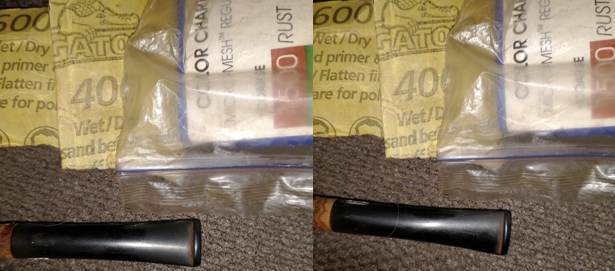
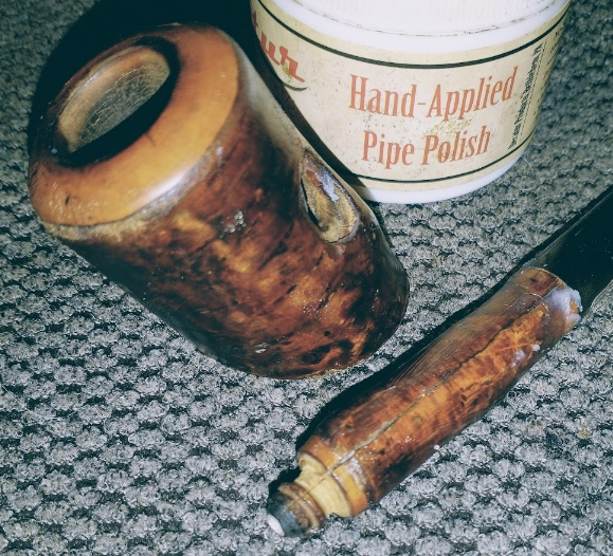
The stem was easy, needing only 400 and 600 paper and dry and wet micro mesh.Decatur Pipe Polish is great for sandblasted, carved and natural finishes, so that’s what I did.All that was left was a spin on the wheels with red Tripoli and carnauba for the stem. The best thing about this project was that I did it – and got my mojo back!  After that, I really enjoyed bringing back the clarity of the nomenclature. It went from illegible to clear enough that I had to correct the folder name in my PC to reflect the actual shape number.


New Life for an older Ropp Supreme 9 Cherrywood Billiard


Blog by Steve Laug

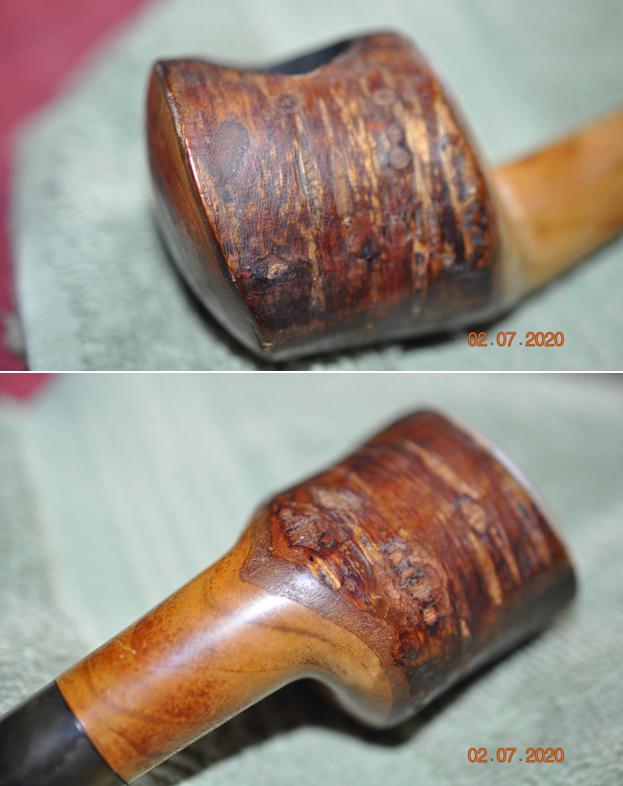
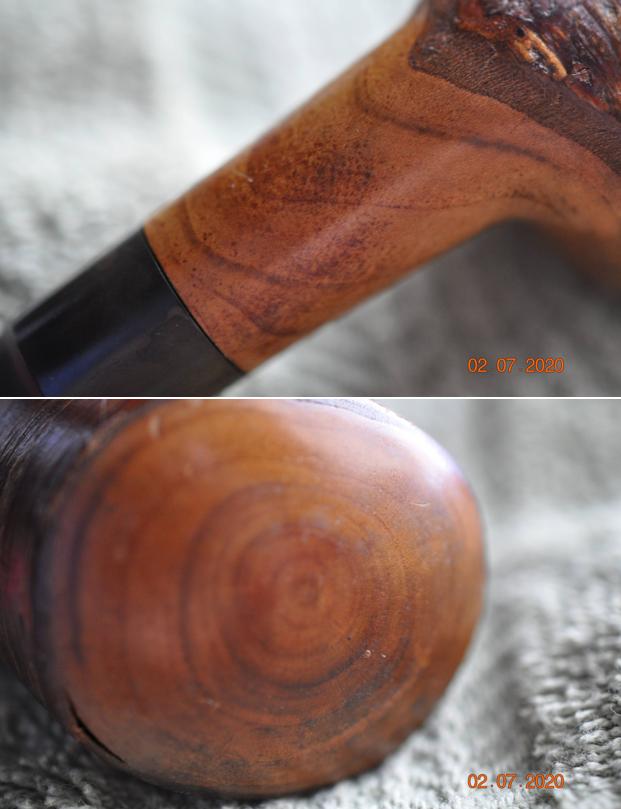
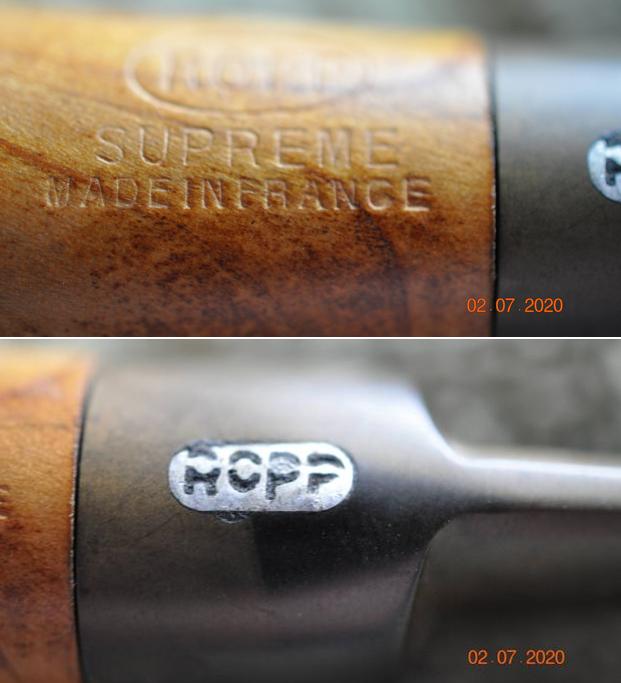
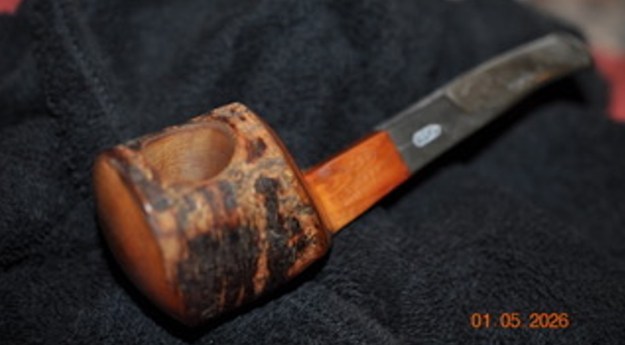
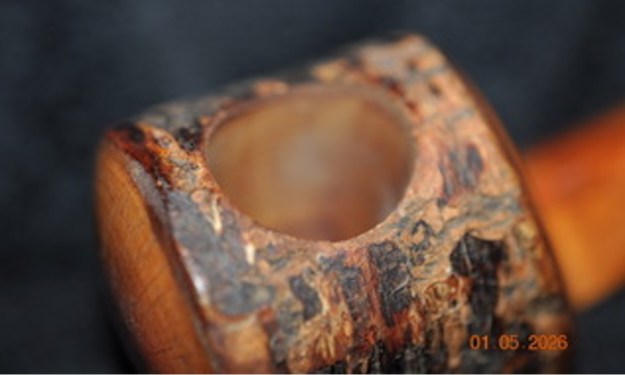
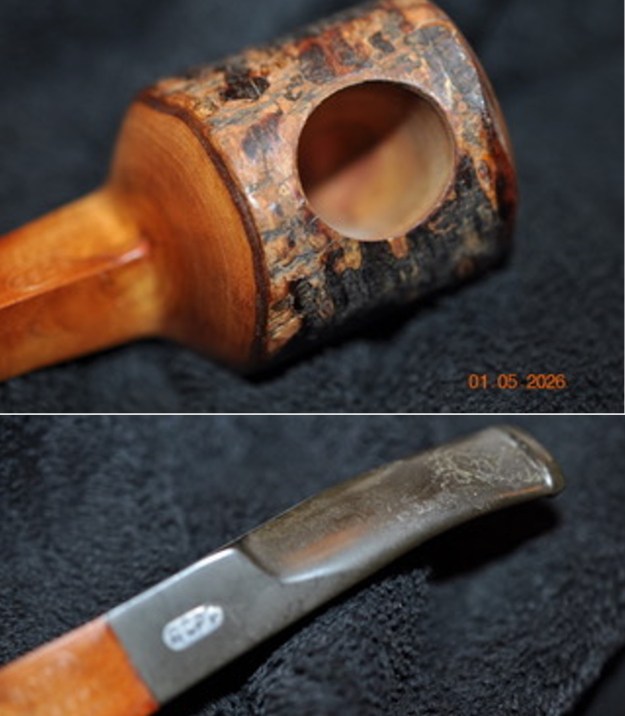
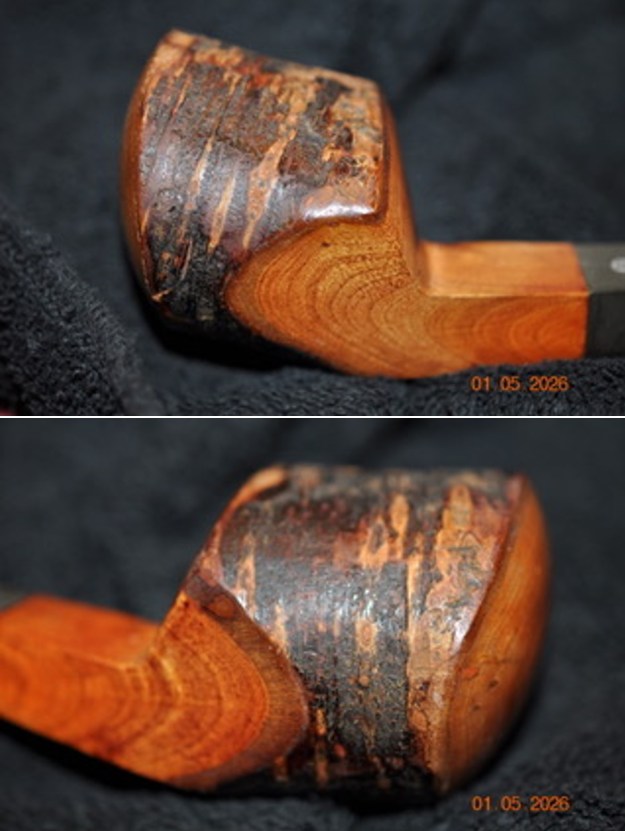
For a guy who has never really liked Ropp Cherrywood pipes I have had a lot of them over the years. I have had full bents, half bents, billiards but never one quite like this one. Jeff picked this pipe up at an antique store in Idaho Falls, Idaho, USA. It is kind of a 1/8 bent billiard with a smooth shank and a smooth oval shaped panel on the front and rear of the bowl. The right and left side, top and bottom of the bowl were left with the bark in place. You can see the knot holes in the bowl where branches were snipped off. The bark around the bowl sides is in decent condition as is the bottom of the bowl. The rim top has some damage on the inner edge of the rim on both the front and the back. There was a cake in the top half of the bowl and the bottom half was pristine and still not blackened. The pipe is stamped on the left side of the shank and reads Ropp in an oval [over] Supreme [over] Made in France. On the left side it bears the shape number 9. The stem is vulcanite with the silver Ropp oval on the left side of the saddle. It is oxidized and has light tooth chatter  and marks on both sides near the button. Jeff took these photos before he started his clean up work. Jeff took photos of the rim edges and top to show the damage that was there. It would take a bit of work to smooth out the edge and clean it up but it was not to bad. He took photos of the stem surface as well to show the condition as noted above. Jeff took photos of the bowl sides, heel and front  of the bowl and the shank to give a sense of the condition of the bark around the sides of the pipe. It is a unique one. You can see where the branches had been lopped off on both sides. He took a photo of the stamping on the left side of the shank and the inset Ropp oval logo on the left side of the stem. Both are readable and clear as noted above.I turned to Pipephil (http://pipephil.eu/logos/en/logo-ropp.html) to get a bit more background on the brand before I did my work on the pipe. No matter how many I have worked on I seem to forget the history of the cherrywood pipes. I quote:
Brand created by Eugène-Léon Ropp (1830 – 1907) and continued throughout 3 generations. “GBA Synergie” run by Bernard Amiel (†2008) bought back Ropp in 1988 and owned it until 1991.The company was taken over by Cuty-Fort Entreprises (Chacom, Vuillard, Jean Lacroix…) in 1994.

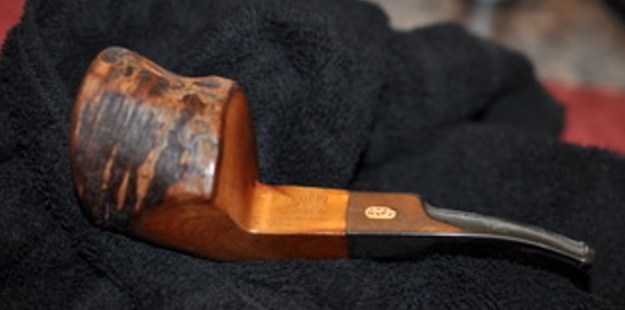
I have also included a screen capture of a Cherry wood pipe. The one I am working on is significantly different that this but it has he bark left on the pipe as noted below.I turned to Pipedia for a bit more detailed history of the brand (https://pipedia.org/wiki/Ropp). I quote below.
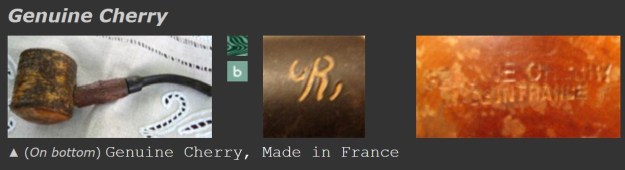
Eugène-Léon Ropp (1830 – 1907) had acquired a patent for a cherrywood pipe (wild cherry, lat.: Prunus avium) in 1869. In 1870 he established a workshop to manufacture such pipes in Büssingen (Bussang, Vosges mountains). Around 1893 the business moved into the former mill of Sicard (part of the community of Baume-les-Dames – Département Doubs, Upper Burgundy – from 1895 on).

The pipes were a big success in the export as well. Shortly before 1914 Ropp designated A. Frankau & Co. (BBB) in to be the exclusive distributor in the UK and it’s colonies.

Probably in 1917 a workshop in Saint-Claude in the Rue du Plan du Moulin 8 was acquired to start the fabrication of briar pipes. In 1923 a small building in the environment of Saint-Claude, serving as a workshop for polishing, was added.

Even though cherrywood pipes were the mainstay of Ropp until the company finally closed down in September 1991. The company was taken over by Cuty-Fort Entreprises (Chacom, Jeantet, Vuillard, Jean Lacroix…) in 1994.

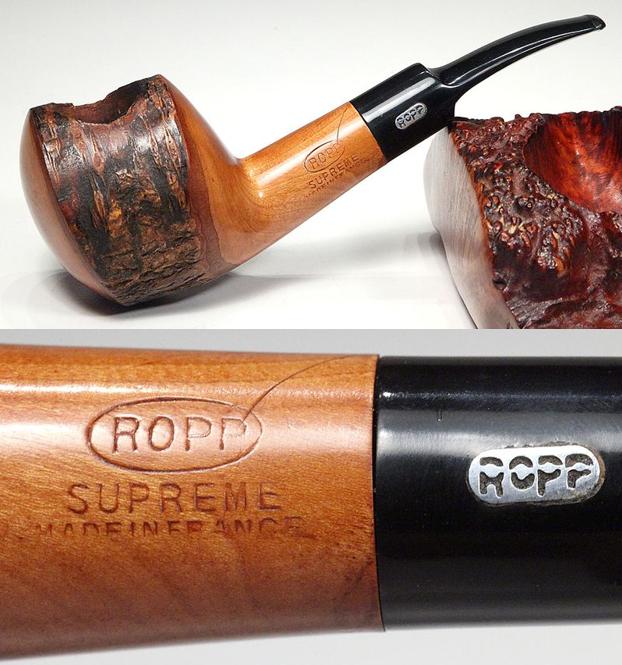
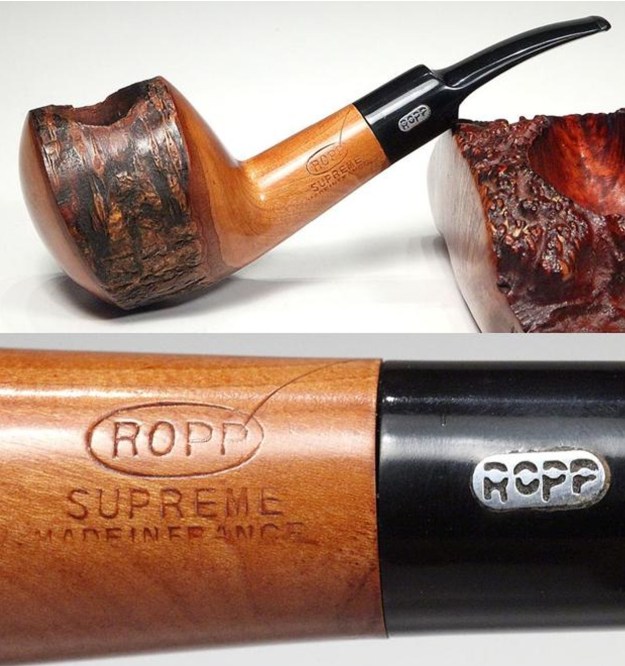
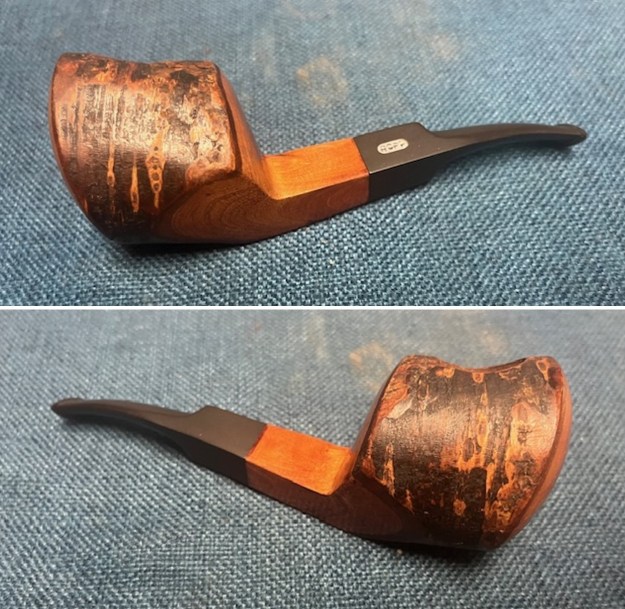
There was also a photo of the Ropp Supreme pipe that was remarkably like the one that I was working on. I have included that  photo as well as the photo of the stamping below.Reminded about the background on the Ropp Family and their Cherrywood pipe it was now time to turn to the pipe itself and do my part of the work. As usual Jeff had done a thorough cleanup on the pipe. He reamed the bowl with a PipNet pipe reamer and followed up with a Savinelli Fitsall pipe knife to remove the cake. He scrubbed out the mortise and the airway in the shank and the stem with alcohol, cotton swabs and pipe cleaners. He scrubbed the exterior of the bowl, rim, shank and stem with a tooth brush and Murphy’s Oil Soap to remove the oils and tars on the rim and the grime on the finish of the bowl. He rinsed it under running water. He dried it off with a soft cloth. He cleaned the internals and externals of the stem with alcohol, pipe cleaners and cotton swabs. He scrubbed the exterior of the stem with Soft Scrub and a cotton pad. Once finished he soaked the stem in Briarville’s Pipe Stem Deoxidizer and rinsed it off with warm water and cleaned out the airway in the stem with alcohol. Other than the damaged rim top the pipe looked good. I took a photo of the rim top and stem to show the condition. The rim top and the inner edge of the bowl had some damage and darkening on the front and the back of the bowl. The vulcanite saddle stem had light tooth chatter and marks on both sides ahead of the button.The stamping on the side of the shank is clear and readable as noted above.I removed the stem from the shank and took a photo of the pipe to give a sense of the whole. It is a nice looking billiard with a slight bend in great condition. I started working on the pipe by addressing the damage to the rim edges and top with a folded piece of 220 grit sandpaper. I gave it a very slight bevel to smooth out the edges and give it a clean look.I polished the bark and clean cherrywood with micromesh sanding pads, dry sanding with 1500-12000 grit sanding pads and wiping it down with an damp cloth after each sanding pad. I rubbed the bowl and shank down with Before & After Restoration Balm. I worked it into the surface of the bowl sides and shank both (smooth and bark covered) with my fingertips to clean, enliven and protect the briar. I let the balm sit for about 10 minutes then buffed it with a cotton cloth to raise the shine. The Balm did its magic and the grain stood out.    I set the bowl aside and worked on the stem. I “painted” the stem surface with the flame of a lighter to lift the tooth marks. I worked very well. I used a small file to sharpen the edge of the button and remove the light chatter on the edge. I sanded out the remnants of tooth marks with 220 grit sandpaper and started polishing the stem with 400 grit wet dry sandpaper. I polished the vulcanite stem with micromesh sanding pads – 1500-12000 grit pads. I wiped it down with Obsidian Oil after each sanding pad. I used Before & After Pipe Polish – both Fine and Extra Fine to further polish the stem. The photo below shows the polished stem. This nice Cherrywood finished ROPP Supreme Made in France 9 Billiard with a black vulcanite saddle stem is a great looking pipe. The rugged bark finish on the sides highlights the grain on the cherrywood bowl front and back side and shank. The black saddle stem works really well with the pipe as a whole. The wood is clean and really came alive. The rich medium brown of the wood gave the grain a sense of depth with the polishing and waxing. The grain really popped. I put the stem back on the bowl and carefully buffed the pipe with Blue Diamond on the buffing wheel using a light touch on the briar. I gave the bowl and the stem multiple coats of carnauba wax on the buffing wheel. I buffed the pipe with a clean buffing pad to raise the shine. I hand buffed the pipe with a microfiber cloth to deepen the shine. The finished ROPP Supreme Cherrywood is a beauty and feels great in the hand and looks very good. Give the finished pipe a look in the photos below. The dimensions of the pipe are Length: 6 inches, Height: 2 inches, Outside diameter of the bowl: 1 ½ inches wide by 1 ¾ inches long, Chamber diameter: ¾ of an inch. The weight of the pipe is 2.29 ounces/65 grams Thanks for reading this blog and my reflections on the pipe while I worked on it. There are many more to come!
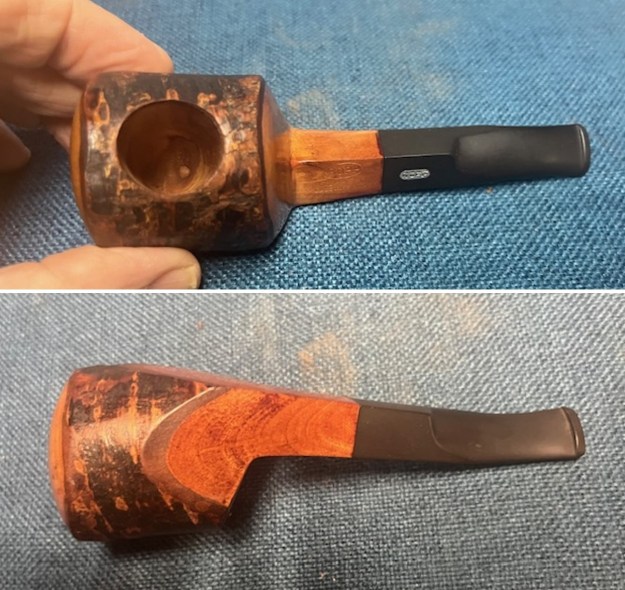
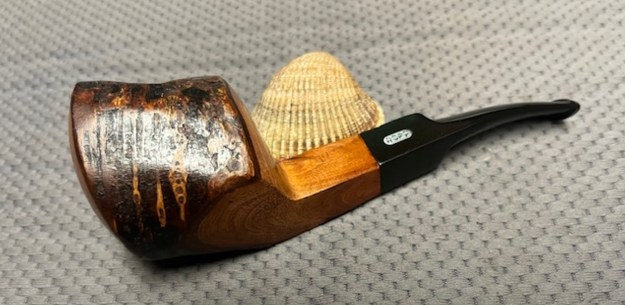
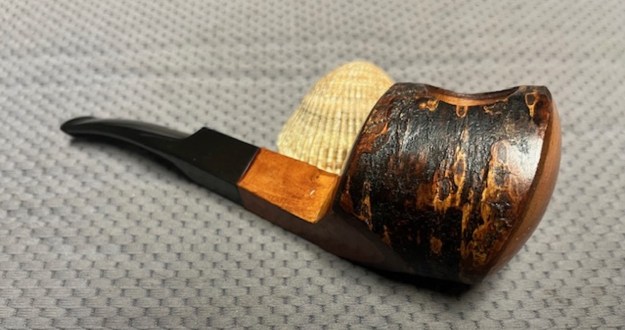
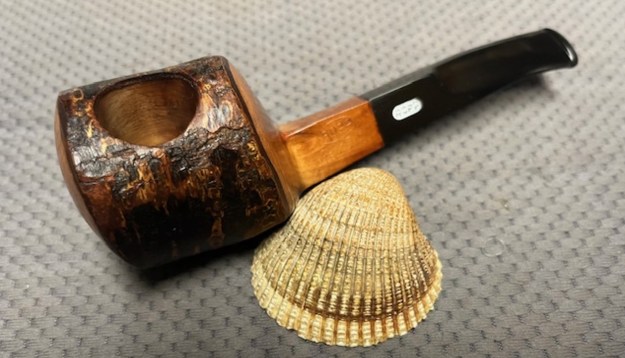
Restoring a Ropp Deluxe 803 Cherrywood Bent Octagonal Poker


Blog by Steve Laug

Not too long ago I received an email from a fellow in Kitchener, Ontario regarding some pipes he needed cleaned up. He had been referred to me by my local pipe and cigar shop. While I am not currently adding more pipes to my queue of repairs I have made a commitment to the shop to work on pipes for their customers. Generally they have one or two pipes that need a bit of work. This fellow sent me the following email:

I just came across my smoking pipes that I’ve had in storage for about 40 years. I’m wondering what you’d charge to have them refurbished. There are 17 in total (11 are Brighams and 6 are various).

It turns out he said he had 17 pipes. That was certainly more than I expected but I communicated that there was a large queue ahead of him and I would have to fit them in as I could. He was fine with whatever time it took. He sent me the following photos of his collection that he wanted restored. The first photo shows his eleven Brigham pipes – all very interesting shapes. The second photo shows the six various pipes in the collection – A Republic Era Peterson’s System 1312 (Canadian Import), A Bjarne Hand Carved Freehand, a Comoy’s Everyman London smooth billiard, a GBD Popular Dublin 12, an English made Kaywoodie Rustica 72B, a Kriswill Bernadotte 60 with a broken tenon. When the box arrived there were two additional pipes included for a total of 19 – a Ropp 803 Deluxe Cherrywood Poker and a Comoy’s Sandblast Everyman Canadian 296. It was a lot of pipes! I decided to start with the first pipe I pulled out of his box – when I unwrapped it the pipe was the Ropp Cherrywood. It was stamped on the heel and read ROPP in an oval over DeLuxe over France with a shape number 803. It was dirty. The exterior of the octagonal pipe was dirty with grime and dust. The rim top had some lava overflow and darkening on the smooth bevel. The bowl had a thick cake that was crumbling. The bark on the shank and bowl was in excellent condition. The end of the threaded portion of the shank that screwed into the bowl had a metal insert as did the area around the side of the bowl where the shank screwed in. The stem had an inlaid Ropp emblem on the left side of the taper stem. It was a push stem and was stuck in the Cherrywood shank. It was oxidized and had tooth chatter and marks on both sides just ahead of the button. I took close up photos of the bowl and rim top to show the condition of the bowl and rim as well as the cake. I also took close up photos of the stem to show its condition as mentioned above. I took a photo of the stamping on the heel of the bowl to show what I was speaking about above. It is very clear and readable. The 803 is clearly the shape number for the octoganal Cherrywood.I carefully took the pipe apart. The shank and stem unscrewed as a single unit from the bowl. I checked the fit of the stem in the shank and from my memory of other Ropp pipes I was pretty certain it was a push stem. I held the shank firmly as close to the shank end as possible to prevent inadvertently cracking it when I twisted the stem. I carefully applied pressure to the stem and sure enough it came loose. There was some bits of wood stuck on the tenon but otherwise everything looked good both inside the mortise and on the tenon.I wanted to refresh my memory on the brand so I turned for a short, quick summary to Pipephil (http://www.pipephil.eu/logos/en/logo-ropp.html). I have included the pertinent information from that site below:

Brand created by Eugène-Léon Ropp (1830 – 1907) and continued throughout 3 generations. “GBA Synergie” run by Bernard Amiel (†2008) bought back Ropp in 1988 and owned it until 1991. The company was taken over by Cuty-Fort Entreprises (Chacom, Vuillard, Jean Lacroix…) in 1994.

I also turned to Pipedia to see if there was any additional information that would be helpful (https://pipedia.org/wiki/Ropp). I quote the portion of the article on the Cherrywood pipes.

Eugène-Léon Ropp (1830 – 1907) had acquired a patent for a cherrywood pipe (wild cherry, lat.: Prunus avium) in 1869. In 1870 he established a workshop to manufacture such pipes in Büssingen (Bussang, Vosges mountains). Around 1893 the business moved into the former mill of Sicard (part of the community of Baume-les-Dames – Département Doubs, Upper Burgundy – from 1895 on)… Even though cherrywood pipes were the mainstay of Ropp until the company finally closed down in September 1991. The company was taken over by Cuty-Fort Entreprises (Chacom, Jeantet, Vuillard, Jean Lacroix…) in 1994.

The pipe thus was made in France sometime prior to the closure in 1991. It is made from wild cherry and was a specialty of Ropp. I have worked on quite a few over the years but I had forgotten all the dates and information. Now it was time to work on the pipe.

I reamed the bowl with a Savinelli Fitsall Pipe Knife, scraping the cake back to bare wood so that I could check on the integrity of the bowl walls. After scraping the cake out of the bow I used the edge to also scrape off the inner beveled edge of the rim top. I sanded the bowl walls with 220 grit sandpaper on a piece of dowel to smooth them out and further examine them. I was happy that the walls looked very good. I cleaned up the rim edge further with a folded piece of 220 grit sandpaper. I cleaned out the threaded mortise area on the bowl and the interior of the shank and stem with pipe cleaners, cotton swabs and alcohol. With the bowl and shank cleaned it was time to put those parts back together. I have learned that the threaded tenons on the Cherrywood work better when lubricated with some Vaseline Petroleum Jelly. It makes it easy to turn them together without damaging or cracking the shank or bowl.I wet sanded the rim top and the smooth portions on the bowl sides with micromesh sanding pads – 1500-12000 grit sanding pads. I wiped the bowl surface down with a damp cloth after each sanding pad to remove the sanding dust. Once I finished the bowl looked good. I rubbed the Cherrywood bowl and shank down with Before & After Restoration Balm. I worked it into the surface of the gourd with my fingertips to clean, enliven and protect it. I let the balm sit for a little while and then buffed with a cotton cloth to raise the shine. Mark Hoover’s Balm is a product that I have come to appreciate and one I use on every pipe I have been working on. I set the bowl aside and turned my attention to the stem. I sanded out the tooth chatter, marks and oxidation with 220 grit sandpaper and started the polishing with 400 grit wet dry sandpaper.  I rubbed down the stem with Denicare Mouthpiece Polish and a cotton pad to remove the remnants of oxidation and to blend in the sanding. The stem is starting to show promise at this point in the process. I polished the stem with micromesh sanding pads – wet sanding it with 1500-12000 grit pads. I polished it further with Before & After Pipe Stem Polish – both fine and extra fine. I finished by wiping it down with Briarville’s No Oxy Oil and buffing it to a shine.  I always look forward to this part of the restoration when all the pieces are put back together. I put the pipe back together and buffed the stem with Blue Diamond on the buffing wheel. I gave the bowl multiple coats of Conservators Wax and the stem multiple coats of carnauba wax. I hand buffed the pipe with a clean buffing pad to raise the shine. It is fun to see what the polished bowl looks like with the smooth Cherrywood set off by the strips of bark contrasting well and finally the black vulcanite stem almost glowing. This Ropp Cherrywood is nice looking and feels great in my hand. It is one that could be clenched and smoked while doing other things as it is very light weight and well balanced. It must have been a fine smoking pipe judging from the condition it was when I received it. Have a look at it with the photos below. The dimensions are Length: 6 inches, Height: 2 inches, Outside diameter of the bowl: 1 ½ inches, Chamber diameter: ¾ of an inch. This is the first of the pipes sent to me from Eastern Canada for restoration. I am looking forward to what the pipeman who sent it thinks of this first restoration. Lots more to do in this lot! Thanks to each of you who are reading this blog. Remember we are not pipe owners; we are pipemen and women who hold our pipes in trust until they pass on into the trust of the next pipeman or woman.

Cleaning and restoring a Ropp Cherrywood De Luxe 805


Blog by Steve Laug

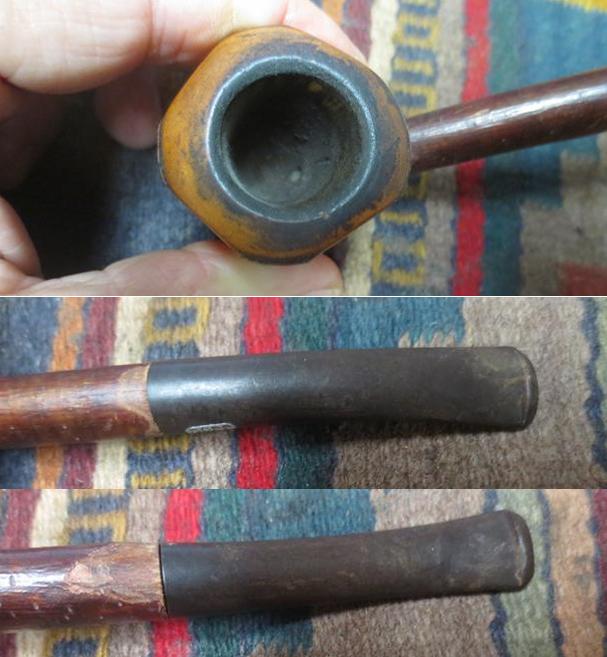
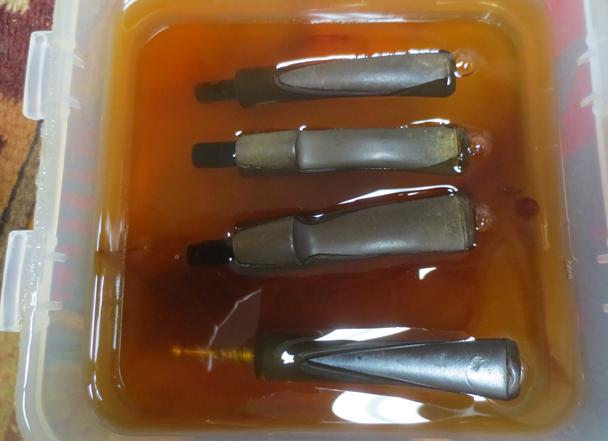
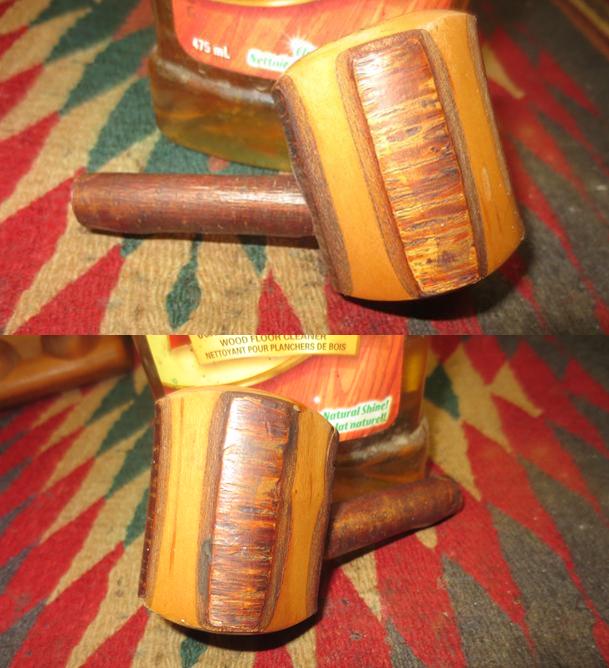
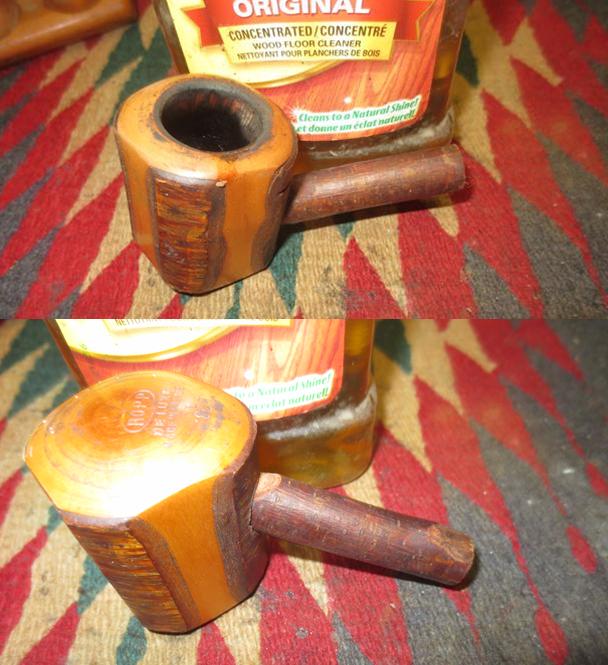
Not long ago I got an email from Mark, who had been reading the rebornpipes blog. He said that he had seven pipes that had belonged to his uncle that he was wondering if I would be interested in restoring. He said that the pipe were in good condition in terms of the bowls (though in looking at them they were in need of a good cleaning). The finishes were in decent shape – just dirty. He said that the stems all had issues and he was right with that. Some were worn with tooth marks on the stem on both the top and underside at the button. Some had been chewed off. All were oxidized to varying degrees. He sent me the following photos of the pipes for me to have a look at and we talked back and forth via email. About a week ago or so they arrived here in Canada. He had done an amazing job packing the lot. Each one was packaged in its own baggy with the stem separated for shipping. They were nicely wrapped in bubble wrap and boxed with the return mailing address inside! Very nicely done package. I opened the box and unpacked each pipe. I went over them carefully to assess what was needed in terms of repair. I chose to work on the Cherrywood pipe at the top of the first photo and on the far left of the second photo. It is a nice looking Cherrywood pipe with panels. The high points on the bowl all had bark on them with stripes without the bark. The shank also had bark on it. The bowl had a light cake in it. The rim top had a thick overflow of lava on it that had overflow from the bowl. There were also some light nicks in the rim top. The underside of the bowl was dirty but it was stamped ROPP over De Luxe over Made in France. Underneath that what the shape number 805. The stem had tooth marks and tooth chatter on the top side of the stem with some deep marks on the underside. The stem surface was oxidized. It had the ROPP oval on the left side of the stem. I took the following photos before I started to clean up the pipe. I took a close up of the rim top to show the lava build up and the cake in the bowl. It appeared that the bowl had been reamed before I received it but there were some remnants of the cake in the bowl. I took some close up photos of the stem to show the condition of both sides.I chose four of the pipes to work on first and put the stems in the Before & After Pipe Stem Deoxidizer. I pushed them under the solution and left them to soak overnight.While the stems were all soaking I turned my attention to the bowl. I scrubbed the surface of the Cherrywood with Murphy’s Oil Soap to clean off the dust and grime that sat on the surface. There were also some paint flecks that needed to be addressed as well. I scrubbed the surface with a tooth brush and rinsed it off with running water. I dried the bowl and shank off with a soft cotton towel to make sure I did not damage the bark. I took photos of the cleaned Cherrywood bowl. It actually looked really good. The rim top still needed work but it looked better. I cleaned up the inside of the bowl to remove the remaining bits of cake on the walls and the bottom of the bowl with a Savinelli Fitsall Pipe Knife.I used a folded piece of 220 grit sandpaper to sand off the remaining thick lava on the rim top and the damaged areas as well. I worked on it to smooth out the surface and then polished it with 1500-4000 grit micromesh sanding pads. I cleaned up the inner edge of the rim with a folded piece of sandpaper and removed the damaged areas there as well.I worked some Before & After Restoration Balm into the surface of the Cherrywood and the bark with my finger tips to deep clean the finish, enliven and protect the wood. I let it sit for a few minutes and then buffed it with a cotton cloth. The wood came alive and really had begun to show through at this point and there was a rich shine to the bark as well. I took some photos of the bowl at this point to mark the progress in the restoration. I set the bowl aside and called it a night. The bowl was ready other than touching up the cleaning of the shank. In the morning. In the morning I removed the stem from the Before & After Stem Deoxidizer and wiped it off with a paper towel to remove the remaining oxidation and bath. I cleaned out the airway with pipe cleaners and alcohol until it was clean. I cleaned out the shank with alcohol, pipe cleaners and cotton swabs at the same time  to remove any debris that remained inside. The stamping on the stem looked good. The stem was clean and black with the scratching, tooth marks and an odd red tint in the vulcanite visible on the left side. It was ready for repairs to the tooth marks and polishing. I lightly sanded the stem to remove the scratching and tooth chatter. I heated the stem with a Bic lighter to lift some of the tooth marks. Once that was done I built up the edge of the button on the underside and filled in the two remaining tooth marks on the underside of the stem with clear super glue. Once the repair had dried I sanded the repaired areas with 220 grit sandpaper to blend them into the surface of the stem. I sanded the rest of the stem as well working on getting rid of the red tint on the left side. I worked over the stem with micromesh sanding pads. I polished out the sanding scratches and marks in the vulcanite – wet sanding it with 1500-2400 grit pads and dry sanding it with 3200-12000 grit pads and wiped it down with Obsidian Oil after each one. When I finished with the 12000 grit pad I gave it a final coat of oil and let it dry. Once it had dried, I polished it with Before & After Pipe Stem Polish Fine and Extra Fine. I rubbed it down with final coat Obsidian Oil and took the following picture. I put the stem back on the bowl and took the pipe to the buffing wheel to work it over. I carefully buffed the bowl and shank with Blue Diamond. I did not want to damage the bark on the bowl or shank so I used a very light touch. I worked on the stem with Blue Diamond to polish it. I gave the bowl multiple coats of Conservator’s Wax and hand buffed it with a shoe brush. I gave the stem multiple coats carnauba wax. I buffed the entire pipe with a clean buffing pad to raise the shine. I hand buffed it with a microfiber cloth to deepen the shine. The finished pipe is shown in the photos below. The bark now has a rich glow to it and the peeled areas of the Cherrywood bowl look rich as well. The shank looks good. The hard rubber/vulcanite stem came out quite nice with a shine to the ROPP oval on the left side. The pipe came out really well. Now I have six more of the uncle’s pipes to finish up and then I will pack these back in their well packed box and send them back to the US to carry on life for the nephew of the pipe man who left them to him. Thanks for looking.


Cleaning up a Ropp Cherrywood and a Carved Cherrywood Pipe


Blog by Steve Laug

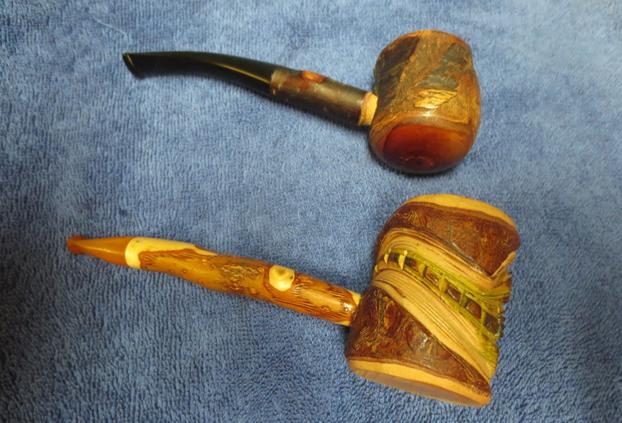
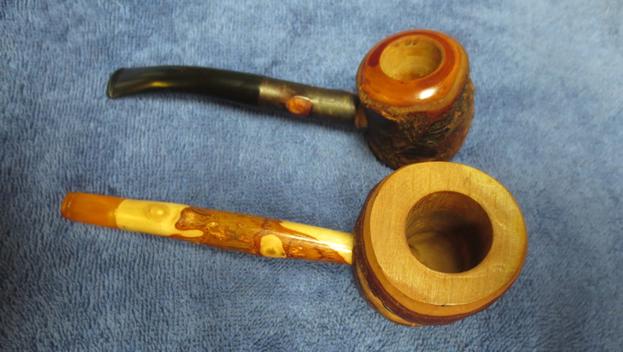
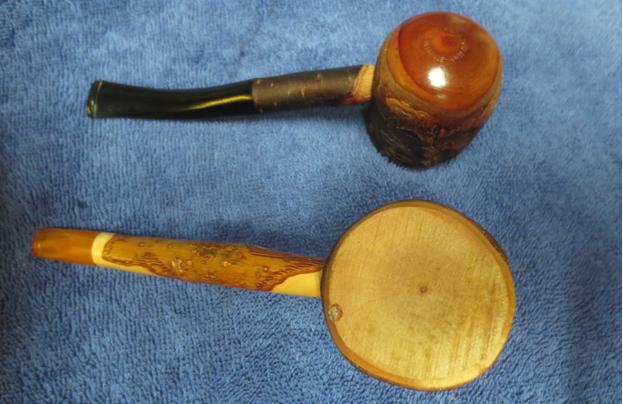
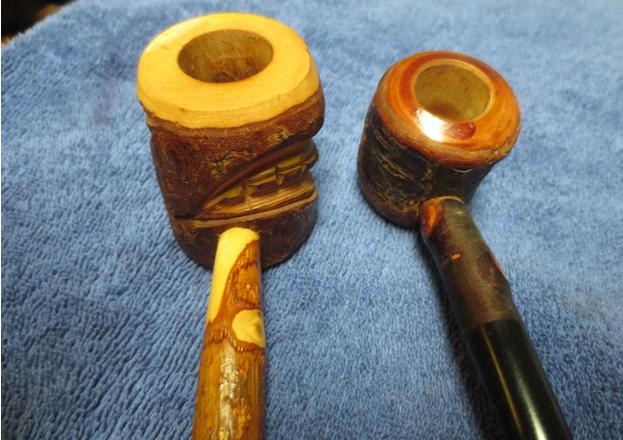
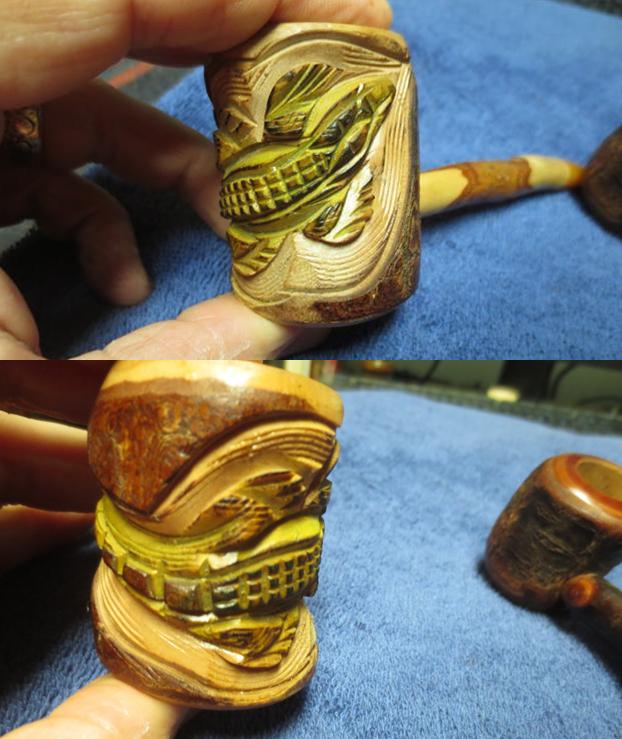
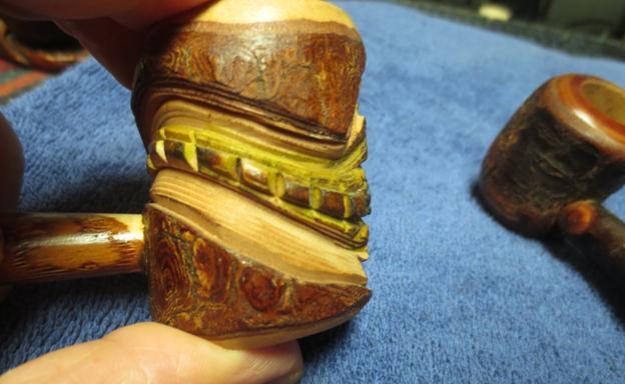
I decided this afternoon to work on a couple of easy pipes – the first is a French Made Ropp Cherrywood and the second is also a Cherrywood but sports that carving of an alligator around the bowl front and sides. The Ropp is stamped on the bottom of the bowl with the typical Ropp circle stamp reading Ropp Cherry arched over Made in France. The “Gator” pipe bears no stamping at all. The Ropp is unsmoked but the stem seems to have marks that make me wonder if it was not a prop in a play or something. I am pretty sure that the stem is not original but a replacement. The “Gator” pipe appears to have been smoked at least once because there is a very faint darkening in the bowl but otherwise it too looks unsmoked. The stem is tiny but it too had some tooth marks on the top and underside near the button. That meant that for both of these I would only need to do the stem work. I took a close up photo of both of the bowls to show the condition. You can see that Ropp is unsmoked (NOS) and that the “Gator” also looks virtually unsmoked.The only thing that looked used on either pipe was the stem. The acrylic yellow stem on the “Gator” pipe had some tooth marks on both sides near the stem. The same was true of the vulcanite stem on the Ropp.I sanded the tooth marks on both stems smooth with 220 grit sandpaper. It did not take too much work to smooth out the tooth marks and chatter. I polished each of the stems with micromesh sanding pads – wet sanding with 1500-2400 grit pads and dry sanding with 3200-12000 grit pads. I rubbed the stem down with Obsidian Oil after each sanding pad and after the last pad I rubbed it down and set it aside to dry. I buffed the stems down with Blue Diamond on the buffing wheel and gave them both multiple coats of carnauba wax. I buffed them with a clean buffing pad to raise the shine. I wiped down the bowls with a light coat of olive oil and gave them a coat of Conservator’s Wax. I hand buffed them both with a shoe brush to raise the shine. The finished pipes are shown in the photos below. The dimensions of the pipes are: ROPP – Length: 5 ½ inches, Height: 1 5/8 inches, Bowl diameter: 1 ½ inches, Chamber diameter: ¾ inches. GATOR – Length: 5 ¾ inches, Height: 2 inches, Bowl diameter: 1 ½ inches, Chamber diameter: ¾ inches. I will be adding both of them to the rebornpipes store shortly. If you are interested they can both be yours for one price. Check out the shop if interested or email me at slaug@uniserve.com or send me a message on Facebook. Thanks for looking. I took some photos of the Gator carving on the one Cherrywood to give you a sense of what it looks like. The first photo shows the head and shoulders on the left side of the bowl. The second photo shows the front of the bowl with the rear legs and body. The last photo shows the tail of the Gator.

Cleaning Up an Old Ropp Cherrywood That Was Once Given Love and Attention – Robert M. Boughton


Guest Blog by Robert M. Boughton
Member, North American Society of Pipe Collectors
http://www.roadrunnerpipes.com
http://about.me/boughtonrobert
Photos © the Author

“Action is character.”
— F. Scott Fitzgerald, in a note to himself on a page of “The Last Tycoon,” his final and unfinished novel (published in 1941)

INTRODUCTION
The great American novelist and short story writer quoted above, who is lesser known for his screenwriting work, and for good reason, only resorted to the genre to make ends meet while he attempted to dry out. Note I write attempted, as he died of alcoholism in 1940 at 44. Nevertheless, he knew from both experiences that memorable characters, and therefore their stories, are created far more through their actions than their words.

Fitzgerald was among the best at describing what all of his characters do in his own unique way, although that in no way detracts from the words they speak. His unvarying craft of employing the rule he penned to himself on his final and half-finished manuscript has become the basis of most good present-day screenwriters’ rule of thumb, “Character is action, not dialogue.”

And so it is with this Ropp cherrywood. Its condition tells the whole story of the man who smoked it through the inconsistent actions he took to preserve it. The wood of the bowl and shank was kept as the pipe’s probable one owner obtained it. The stem, however, was left with scratches and minor tooth marks. And while the bore, mortise and draught hole showed clear signs of being cleaned almost with fanaticism, the chamber did not fare so well. Although nowhere close to being as filled with cake as the other pipes I described in prior admitted diatribes, I still removed enough carbon to fill the chamber whence it came.
All of this suggests to me that the lovely cherrywood was adored by its previous owner, who indeed smoked it so often it may have been his only pipe. His sole lack of full attention was to the chamber.

In a recent purchase of several lots of pipes on eBay, the first of which had some gems that were grotesque from abuse, I still saw that I could restore their luster. Some of my recent blogs have hinted at my ill opinion of those who treat their pipes with such disrespect. I even resorted to outright railing against these unknown enjoyers of the fair leaf. But in fact, the truth is that they know not what they do. When I received it in the mail, the condition of a Ropp natural cherrywood Air Dry system pipe [see “The Revolution of the System Pipe”], with a small brass tube inserted in the bottom of the bowl and leading to the chamber to relieve excess heat, was a little more complicated.

I own a more conventional Ropp natural cherrywood De Luxe, canted and flat on the bottom and therefore a sitter as it should be.

Picture 1

Picture 1

I considered swapping it with the more recent Air Dry, which has a rounded bottom and is already listed for sale on my online store. My only reasoning being that the Air Dry was more novel and might be older, I had a change of heart, in the literal sense. The more I thought about it, the more certain I became that the Air Dry’s long-time owner would not have traded it for anything. Who was I to give up with such nonchalance one that has served me so well? Besides, my De Luxe might just be older.

THE PIPE RESTORATION
The first thing I did was disassemble the pipe, meaning I unscrewed the stem and shank from the bowl.

Picture 2

Picture 2

Picture 3

Picture 3

Picture 4

Picture 4

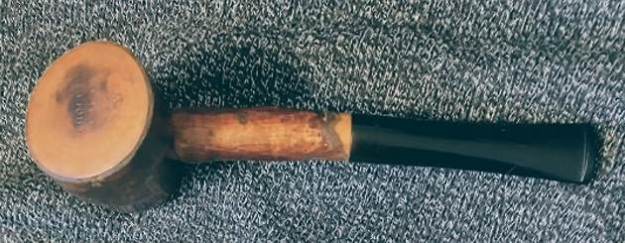
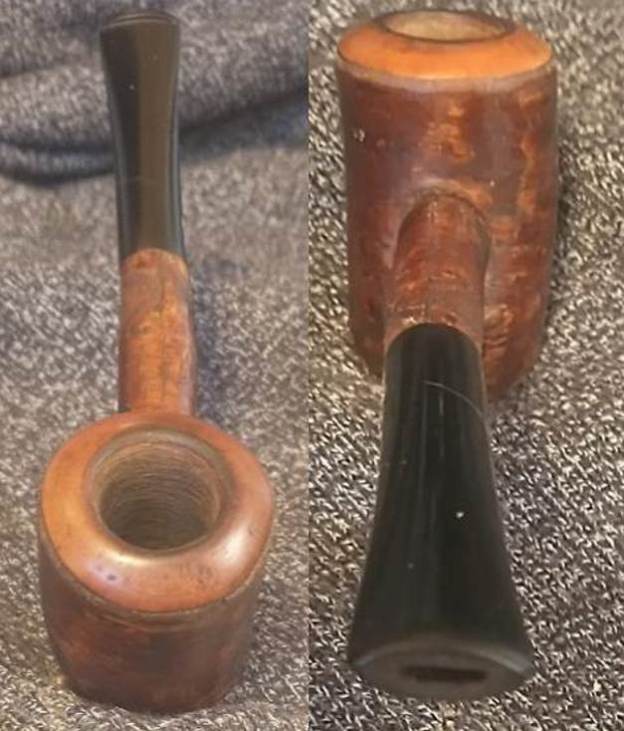
There was blackening beyond the screws in the bowl’s hole [picture 3]. I saw that the threads of the shank itself were blackened [picture 2] and so I cleaned them right away with alcohol and also followed my initial quick clean routine to find if there were any obstructions in the parts. To my happy surprise, given the first impression of the chamber [picture 7], the quick clean was all that was necessary. Without doubt, these were the easiest stem and shank I have ever had to clean, leading to my surmising in the Introduction as to the complicated character of the original owner.

I also noted the small, unpolished areas of wood around the shank hole in the bowl [picture 3] and both ends of the shank [picture 4], although the stem side’s roughness does not show in the last picture. A fast buffing of the bowl’s hole and the tips of the shank (excluding the threads) with red and white Tripoli, White Diamond and carnauba made them shine like the rest of the wood. The following photos are the pipe before any work was done.

Picture 5

Picture 5

Picture 6

Picture 6

Picture 7

Picture 7

Picture 8

Picture 8

Picture 9

Picture 9

Picture 10

Picture 10

Picture 11

Picture 11

Starting the hardest part of the restore, which was pretty straightforward with nothing of special difficulty, I put my reamer to the bowl and began the process of turning it at increasing depths with great care to protect the cherry wood. Most of the top quarter-inch cleared down to the wood. The rest came in time. Altogether this stage took me about a half-hour, including the final sanding with 220-grit paper to make the chamber smooth and even all the way down.

All that was left to do was finish up the scratched stem with minor chatter and the wood. I used #1500 micromesh on most of the stem and 200-grit paper for the teeth marks, and spun it on the buffers with red Tripoli and White Diamond. The shank and bowl I could have left alone, but since it was a bit duller than it could be I applied white Tripoli, White Diamond and carnauba.

As with my De Luxe, a dab of beeswax was needed to hold the stem in place.

Picture 12

Picture 12

Picture 13

Picture 13

Picture 14

Picture 14

Picture 15

Picture 15

Picture 16

Picture 16

Picture 17

Picture 17

Picture 18

Picture 18

CONCLUSION
I figured out at last that those who enjoy pipes are complex characters, perhaps or perhaps not more so than others. As William Shakespeare, a greater writer even than Fitzgerald, had Jacques put it in “As You Like It,” Act II, sc, vii:

All the world’s a stage,
And all the men and women merely players;
They have their exits and their entrances,
And one man in his time plays many parts….

Shakespeare, who is believed to have written the play c. 1600, when he would have been about 36, knew better than anyone about the importance of action to character. He made his final exit when he was 54 – but in those days, that was common.