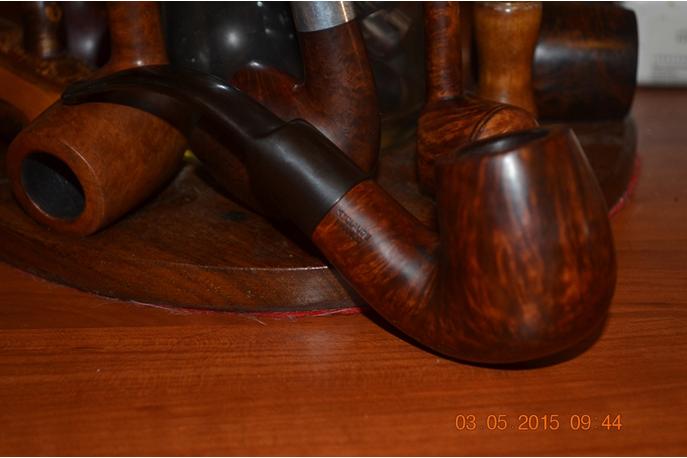
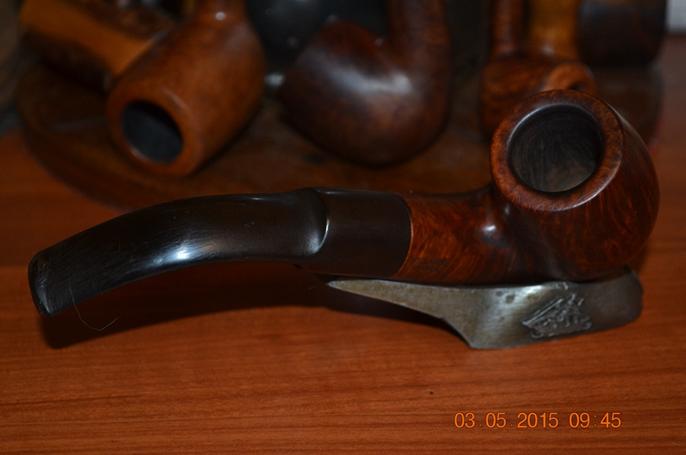
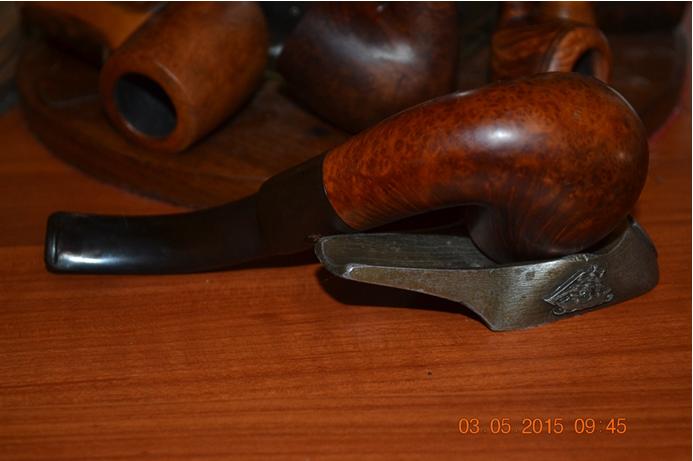
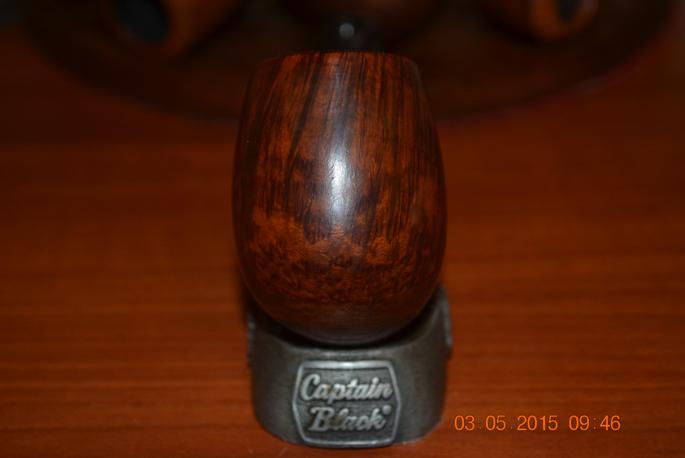
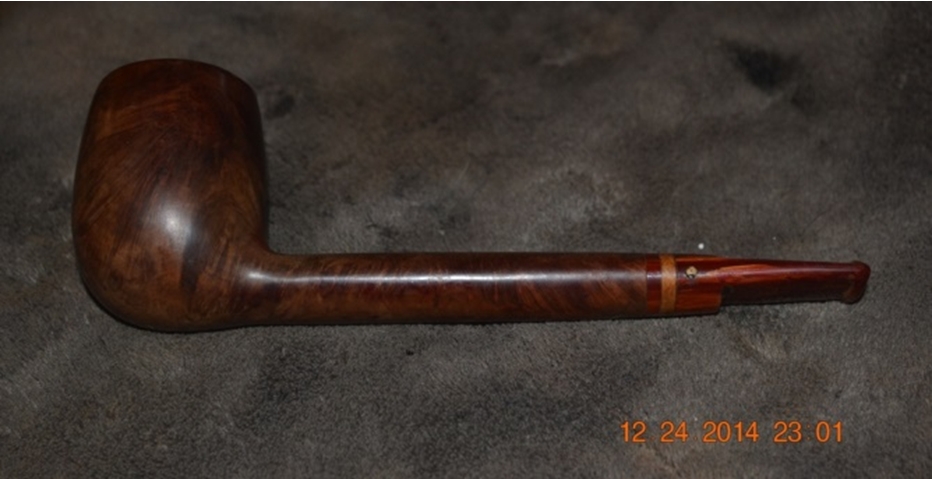
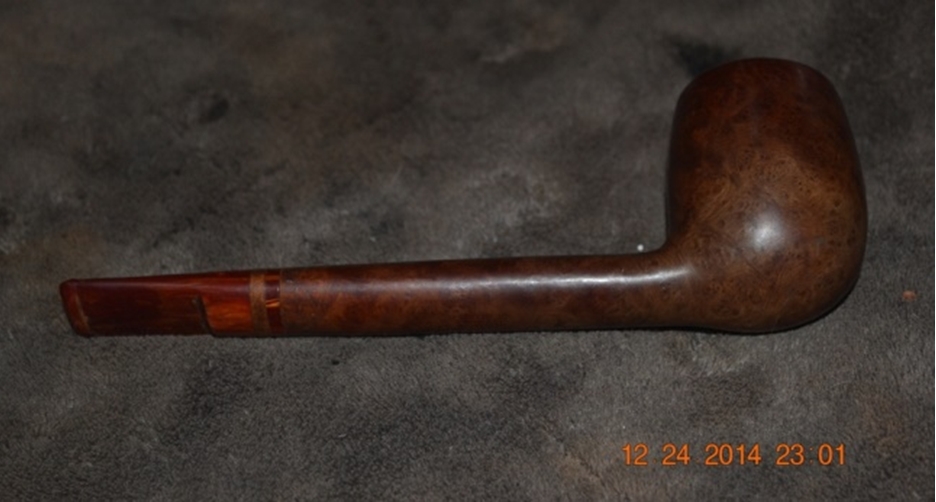
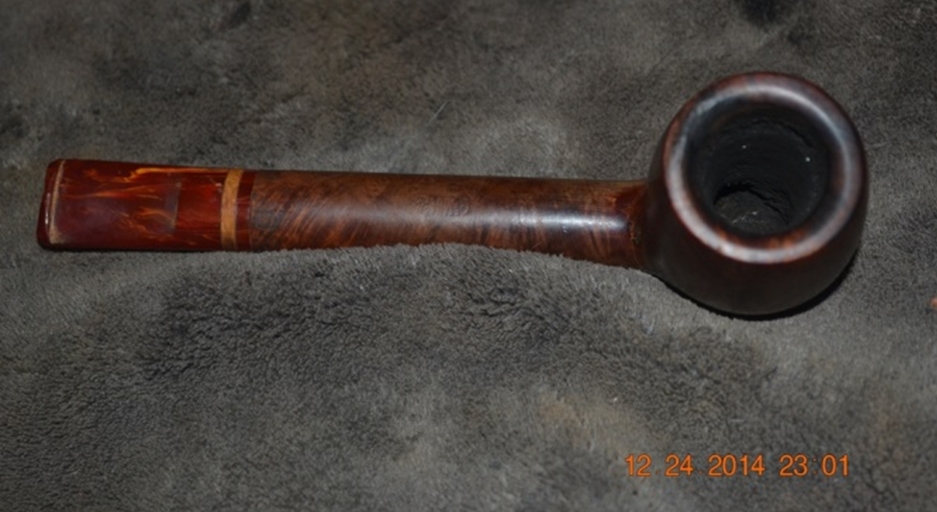
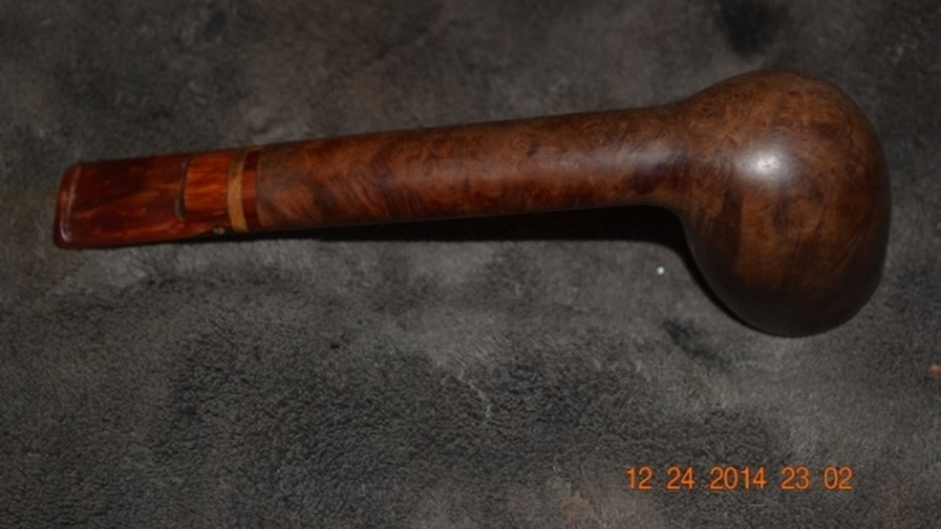
Tag Archives: Robert M. Boughton article

The French Girl with the Fuzzy Identity


Guest Blog by Robert M. Boughton
Member, North American Society of Pipe Collectors
http://www.naspc.org
http://www.roadrunnerpipes.com
http://about.me/boughtonrobert
Photos © the Author

“The problem with putting two and two together is that sometimes you get four, and sometimes you get twenty-two.”
― Dashiell Hammett (1894-1961), U.S. author who re-invented and popularized the hard-boiled private investigator genre, in “The Thin Man” (1934)

INTRODUCTION
I take great solace from life’s frequent misadventures through activities that nevertheless focus on the same causes of grief: reading a good book, realistic or fantastic; writing news articles, blogs, letters to the editor and my own versions of literature; photographing street life, landscapes, nature and the occasional spot news event; drafting, filing and arguing civil actions in courts of law when I too frequently encounter those who would do me harm through ignorance or the misperception that I lack understanding of that study of knowledge, and researching and at times investigating anything and everything. But when I need to retreat all the way into the pleasure centers of my brain, I have only my local tobacconist and pipe acquisition disorder on which to fall back, and on the great majority of my P.A.D. attacks for almost a year now I can at least blame my small but expanding online business of refurbishing or restoring estate pipes for sale. Yet even that endeavor involves research and background checks.

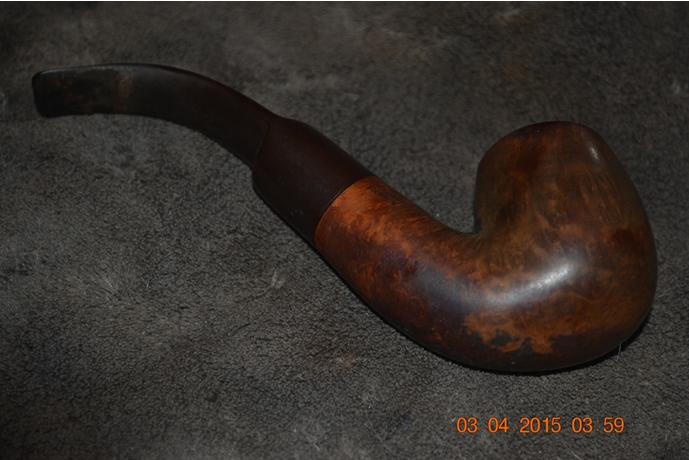
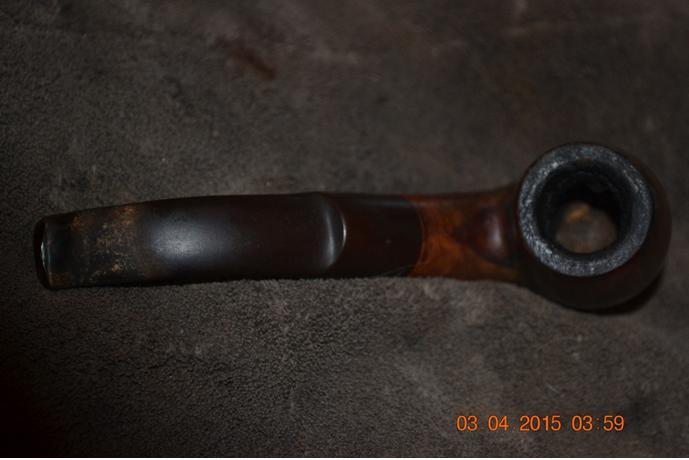
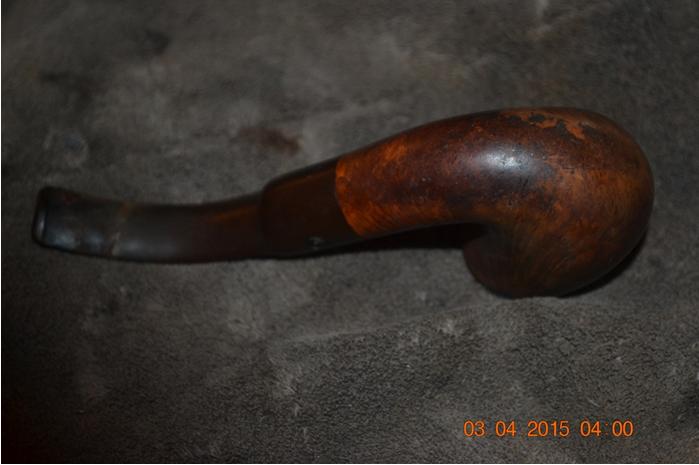
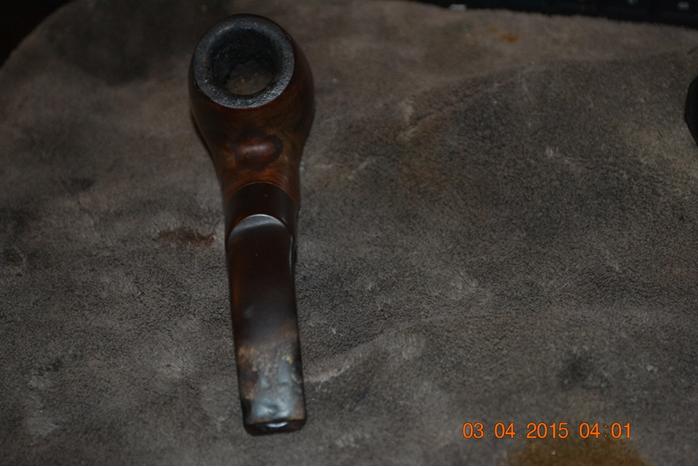
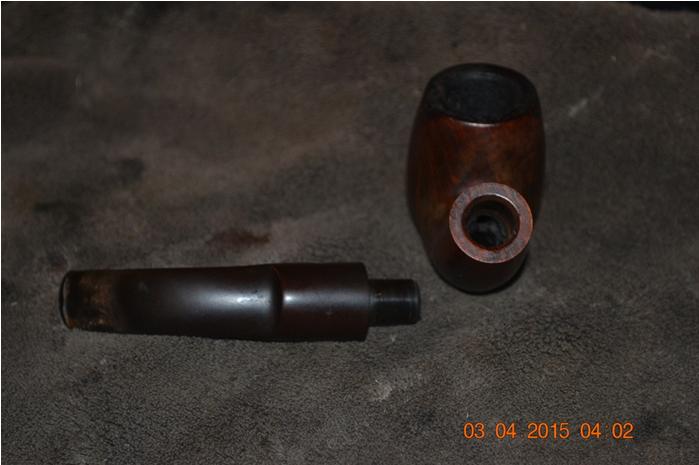
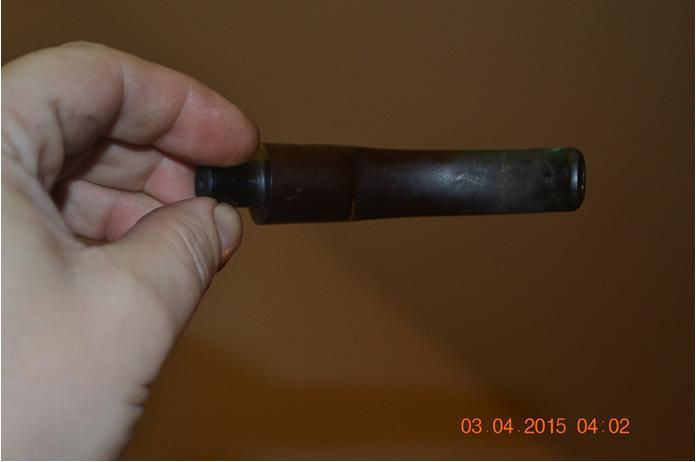
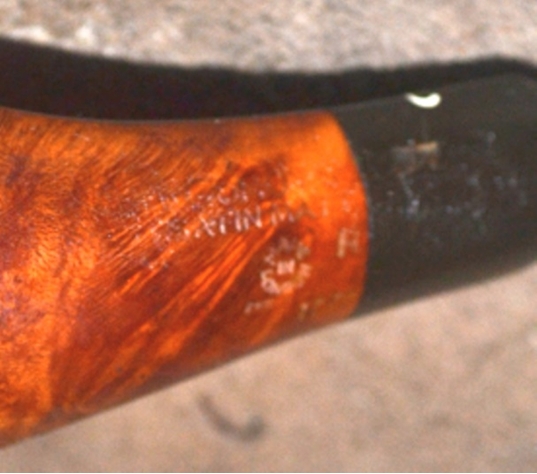
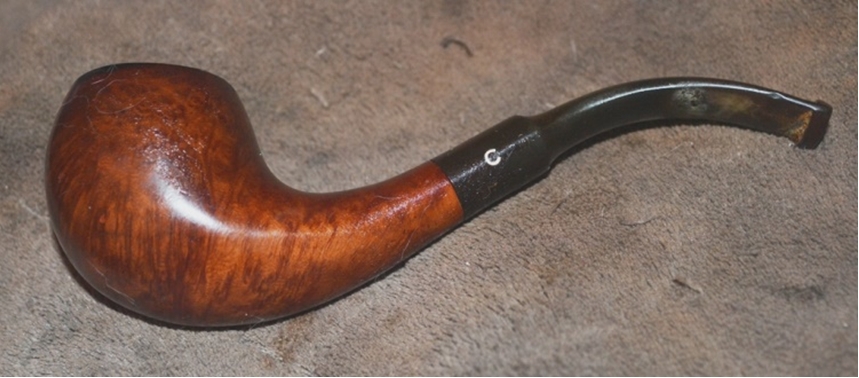
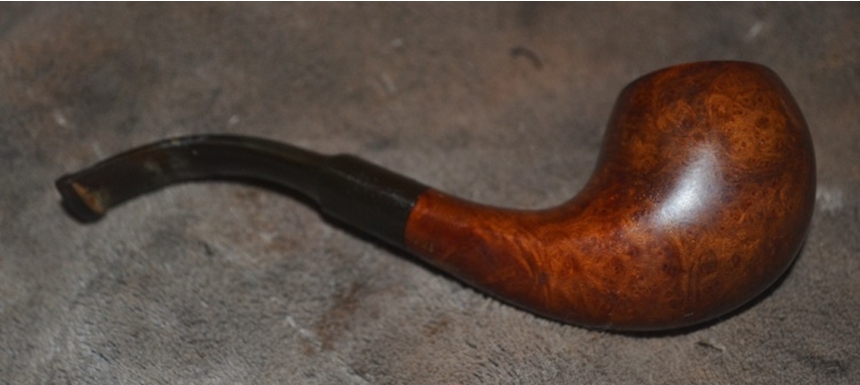
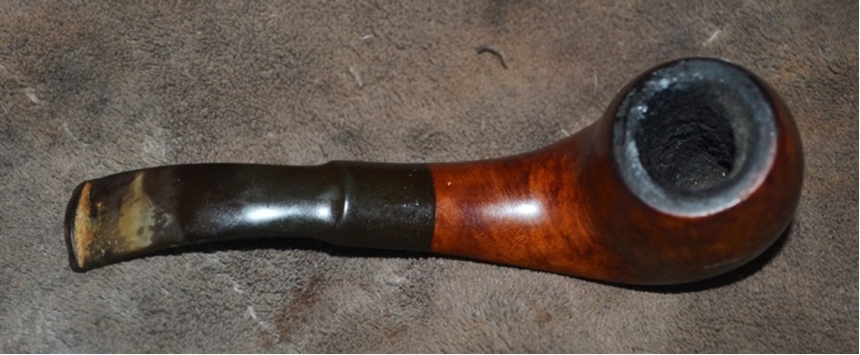
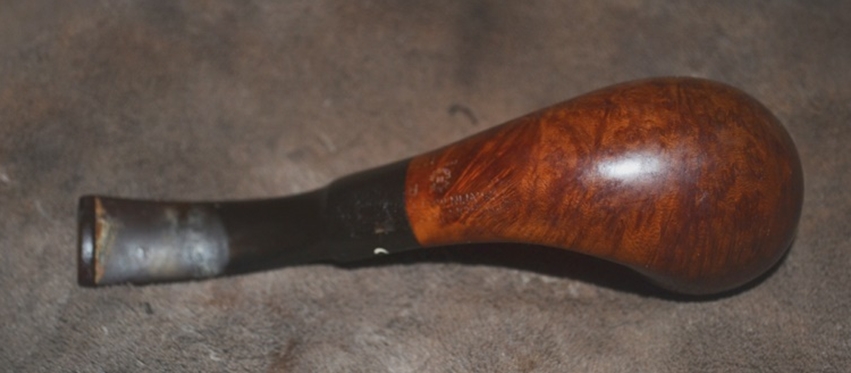
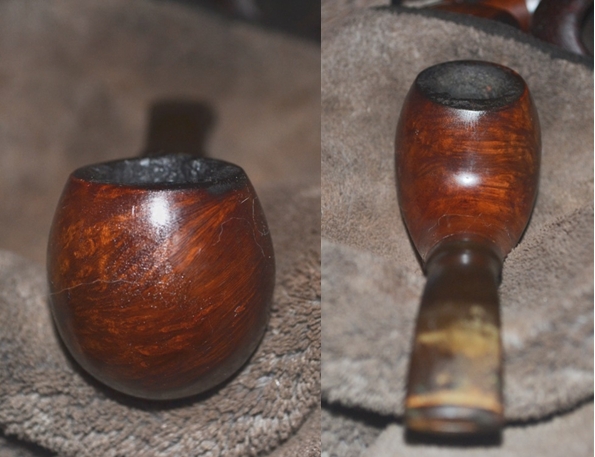
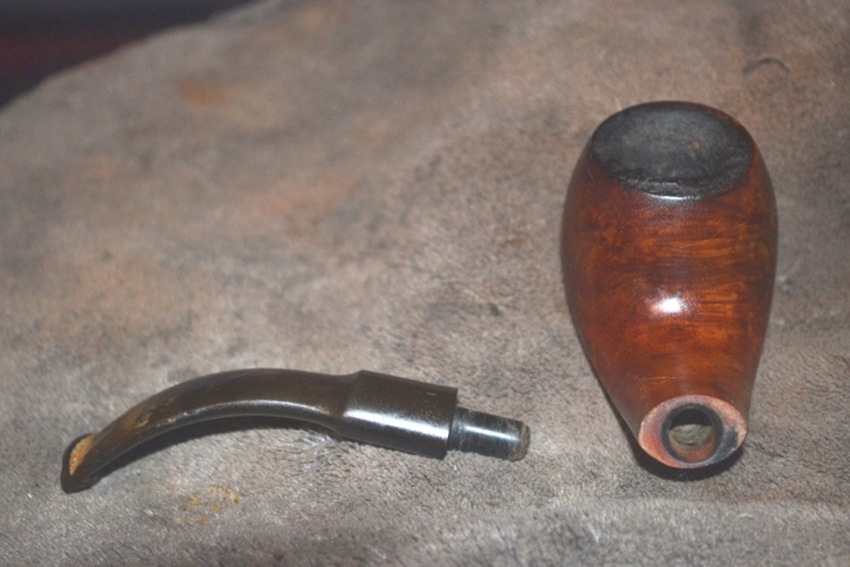
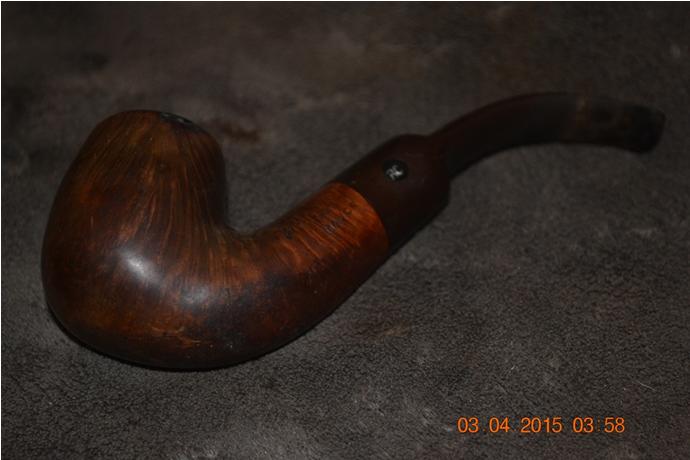
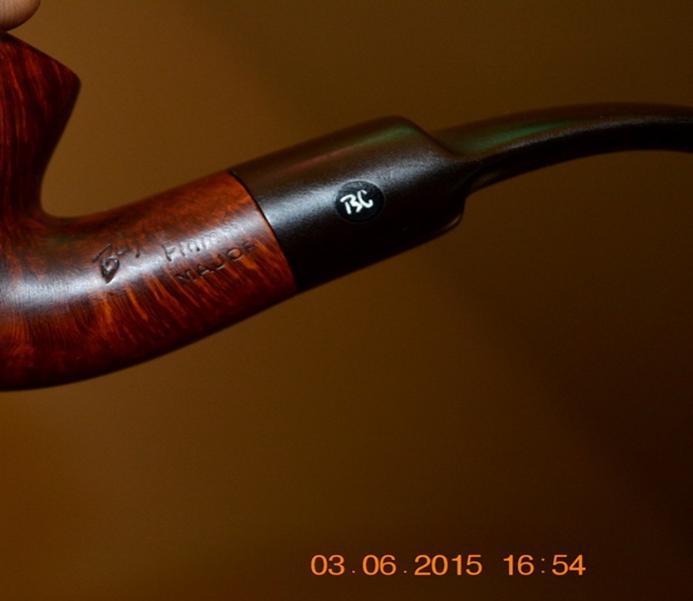
Other than the classic but elegant shape and crafting of the Butz-Choquin bent billiard I scored a few months ago in an estate lot with several lesser gems – including a unique red Kaywoodie lumberman that was, for the most part, sandblasted, but with two natural rings around the billiard bowl and matching sitter bottom and ferrule – the obvious challenge of restoring the shapely French pipe to her original fine condition was a definite attraction. Except for the BC logo clear on the left side of the stem and the overall haggard appearance, I had no idea what I was getting. When the lot arrived, I searched for the BC, but when I found her the nomenclature was so fuzzy I could make out little more of the brand stamp on the left shank than the distinctive cursive B. Of the name itself, I saw two lines, the top beginning with a definite F and the bottom a clear word: MAJOR.

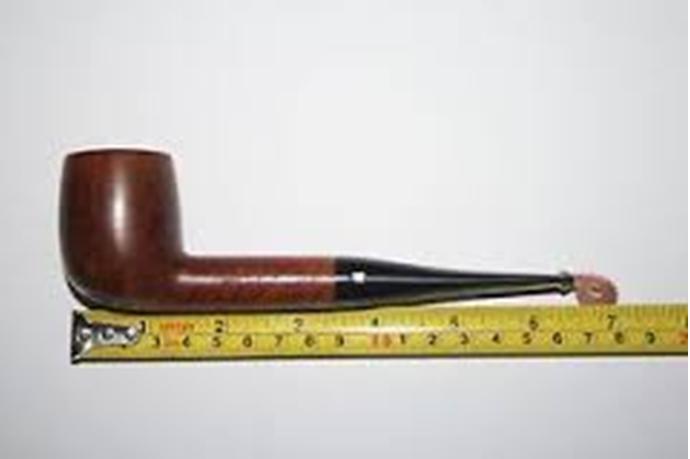
This may sound like plenty to go by, but my browser search suggested multiple possibilities for Butz-Choquin matches starting with F. There was the Formula, Formula Noir, Fait Main and filter, all of which I ruled out. And so I added an L and found Flamme, Flamme Extra, Flamme Standard, Flash and Fleuron. Then I tried Flamme Major and, seeing no suggestions, just Major. That excavated a site with images for BC Major Pipes, among which I saw a similar although straight stem specimen.Butz1 Therefore I returned to the full Butz-Choquin Flamme Major search and completed it, confirming that indeed was what I had.
THE RESTORATION
Butz2

Butz3

Butz4

Butz5

Butz6

Butz7

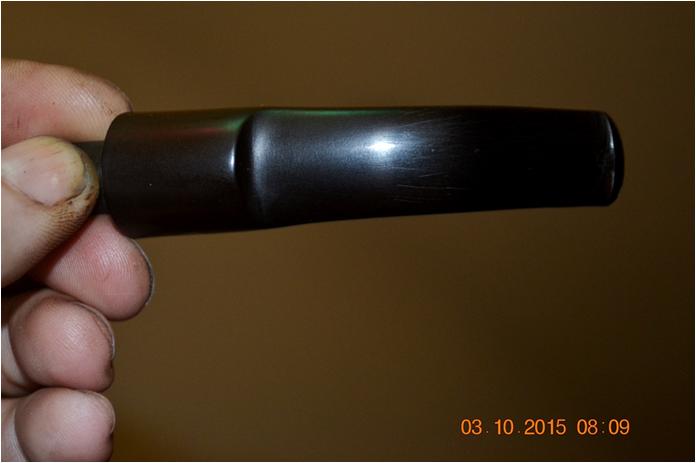
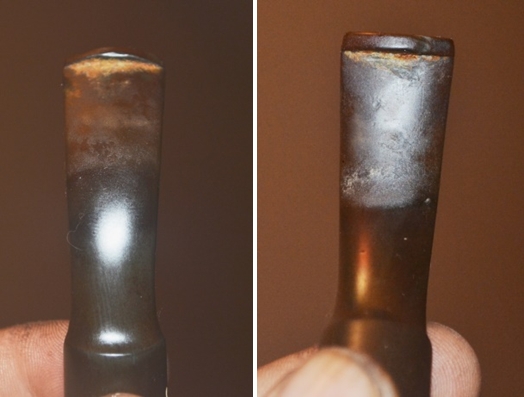
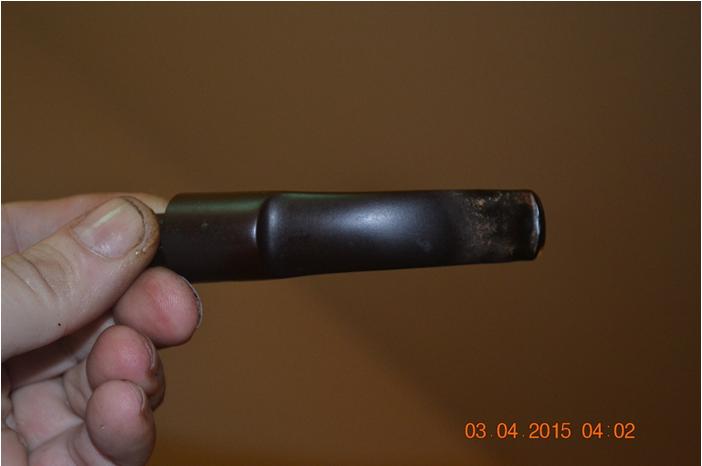
Butz8 I recently started making several basic changes in my pattern of restoration S.O.P. First, I now begin with an OxiClean stem wash as it can go on in the background, so to speak, while I do other tasks. I’ve also found it really works, although not with the comprehensive results sworn to in the site I found for its basic instructions, including the consistent lack of need for additional work such as sanding and on occasion using Black Super Glue for deep fills. Sometimes after washing with OxiClean and warm water, rubbing out the excess discoloration with a cloth and micro-meshing, the result is a perfect stem ready for the wheel. More often than not, however, I need to sand out scratches that are exposed. Such was the case with this stem. But the practice serves its purpose, to clean the stem inside and out and make the job of producing a shinier end product far easier.

Before
Butz9

Butz10
Ready for buffing:Butz11

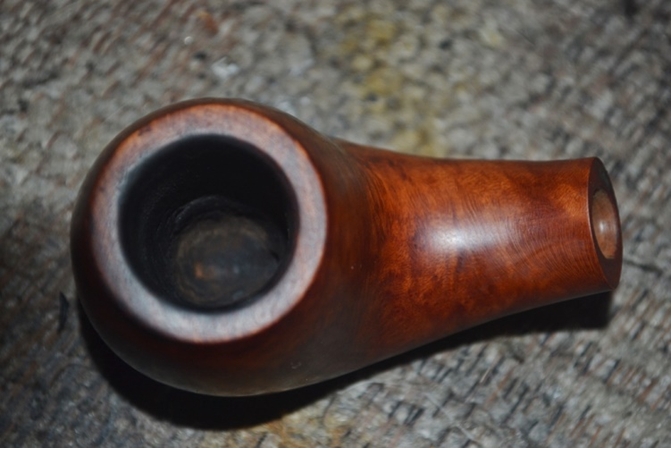
Butz12 The second new habit is working on the rim and chamber and scraping out the major buildup of old tobacco and its related substances from the shank with a wire cleaner rinsed over and over in Everclear. All of these can be completed during the OxiClean wash. Third, I now retort every pipe at this stage.

All of these stages of the process completed, I turned to the bowl and shank, which showed the wear and tear of age. Tell me about it! After washing the briar with purified water, I used a piece of super fine steel wool to lighten the all-too-often over-dark original finish, shine the wood and make the grain show with more clarity. The wood was in very good condition with no pits, dings or scratches worth mentioning, and the slight appearance of discoloring in areas disappeared. I did a full micromesh workup with 1500, 1800, 2400, 3200, 3600 and 4000.

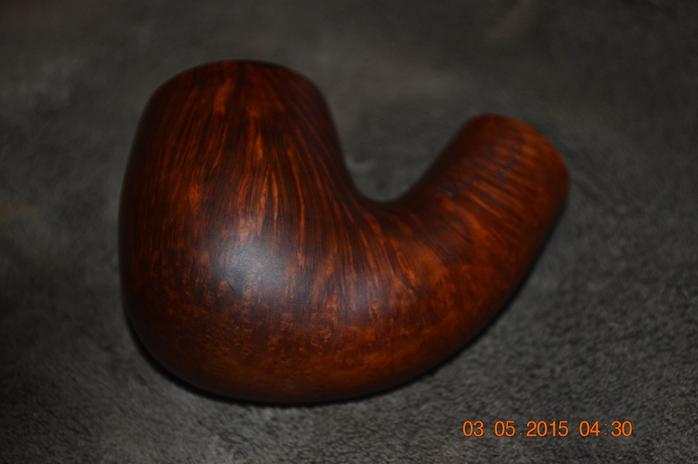
By the end of the restoration, the nomenclature somehow was much clearer.Butz13
Butz14

Butz15

Butz16

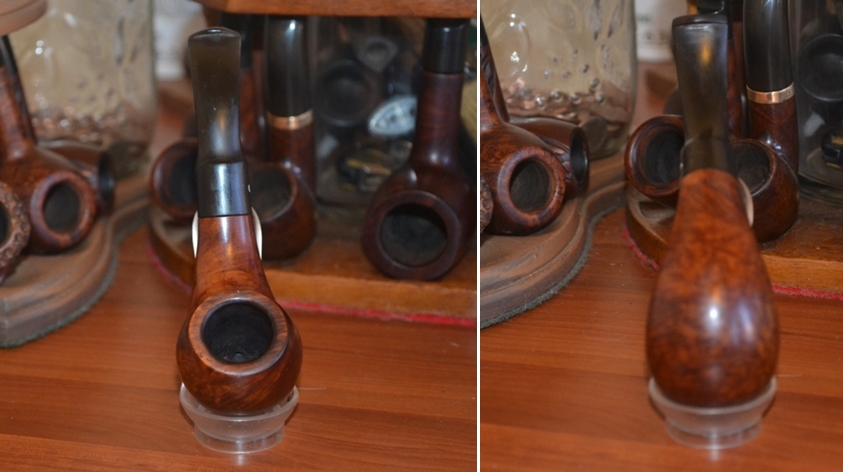
Butz17The time was right for the final buffing, and so I repaired from the comfort of the living room for the prep work to the workroom for finishing. The stem, as usual, I gave a nice shine with red Tripoli and White Diamond. The briar I buffed with white Tripoli, White Diamond, and a few coats of carnauba.Butz18
Butz19

Butz20

Butz21

Butz22

Butz23

Butz24

Butz25CONCLUSION
I think the most notable achievement of this restoration is that for the first time I was able to sand the chamber until it was baby smooth and like-new. I accomplished this by reaming and then sanding with 150-grit paper as usual but followed those steps with a second sanding using 320-grit paper.

All in all, I am happy with the outcome and will, of course, be sorry to let this one get away from me.

Anonimo, or the Modern Westminster Cathedral*


Guest Blog by Robert M. Boughton
Photos © the Author
Member, North American Society of Pipe Collectors
http://www.naspc.org
http://www.roadrunnerpipes.com
http://about.me/boughtonrobert

“…once I falsely hoped to meet the beings who, pardoning my outward form, would love me for the excellent qualities which I was capable of unfolding.”
― Mary Wollstonecraft Shelley (1797-1851), English novelist, in “Frankenstein; or, The Modern Prometheus,” 1818

PREFACE
I was, as my ancestors, a native of Redondo Beach and its environs, and most of my family born in that temperate South Bay region of the California Republic was by any appraisal undistinguished, indeed, a study in dysfunction. Whilst every genealogy has its heritage of eccentricity and neurosis, mine is cursed with a spasmodic line of schizophrenia.

My grandfather, the one shining beacon, remains known the world round for his pioneering and influential photography of the sport that is known as surfing, owing to the vernacular origin peculiar to the American colonies. The good gentleman was a lifelong champion and active participant, with vigor, flair and skill, both in the sport and his avid documentation of its participants, famous and obscure, and the attendant culture. Who knew, in its inception, that his physician’s prescription, ordered in the middle part of the late twentieth century, for a hobby to aid the old man in recovering from a particularly tenacious bout with peptic ulcers, would spawn a latent talent and lead to eternal glory?

Indeed, one beguiled writer at a magazine that showcased most of the great photographers of the previous century – which renowned publication, alas, has now passed almost as thoroughly as my grandfather, remaining for the living and breathing inhabitants of this wayfarer’s station, before the Great Unknown, to appreciate only in the ether realm known as the World Wide Web – was so beside himself with giddiness as to dub the much beloved old man “the godfather of surf photography.”

My mother, being the first offspring of the great man, was the only one of her siblings to pursue a noted career, as a nurse now retired. Together the patriarch and eldest daughter formed the bulwark of the otherwise mostly listless, melancholy clan.

On the subject of my own eclectic interests, I have, since childhood, had a consuming hunger for the study of diverse subjects. This omniology put me on my present path, that is, to understand every facet of human knowledge concerning everything, particularly, in my case, the often seemingly unfathomableness of information relating to the genesis, history, science, study, culture, enjoyment and preservation of smoking pipes. One could call me an omnitabacariusphile, although in my zeal for this inclination, however well-meaning and innocent its beginning, the pursuit lead me to a monster I shudder to recall and doubt in my constitution to do so.

Some months have passed since I set upon the fearsome, God-like determination of restoring life to the creature that this narration shall endeavor to describe in the entirety of its awful nature, the frightful apparition of which you shall observe in its original form as I first perceived it in the mists of the cold, barren, lifeless wasteland that is called the Internet in these peculiar times we are fated to spend our lives. Nothing of that initial sighting, the image of the monster blurred by the swirling incorporation of sundry others similar in basic form yet far fairer in the details of their corporeal makeup, could prepare me for the spectre I beheld when the entire host of them arrived by poste.

Good God! Readers, had you been in my company at the instant when first I disrobed the fiendish animation that was hurled through space and time to alight in my quivering hands, then only would you comprehend truly the horror that consumed my entire humanity. Yet, think not for an instant that the visage I discerned was the genuine inception of my natural sense of loathing. The full nature of my revulsion sprang, as fast as the Trees of Truth and Knowledge, from the immediate and overwhelming understanding of the cruelty that was inflicted by Man upon this poor brute.

FIRST SIGHTING

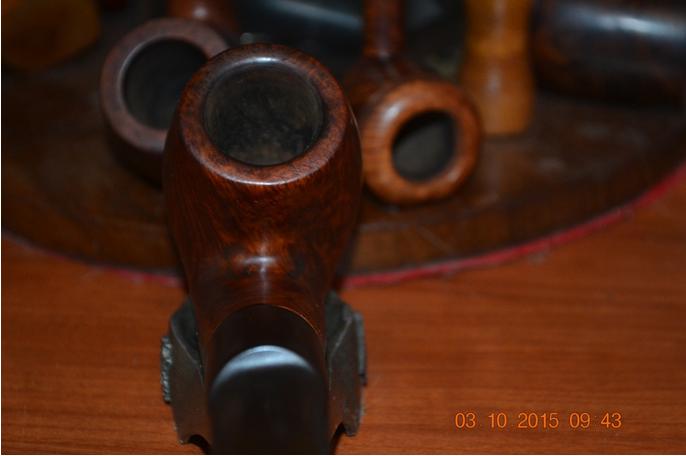
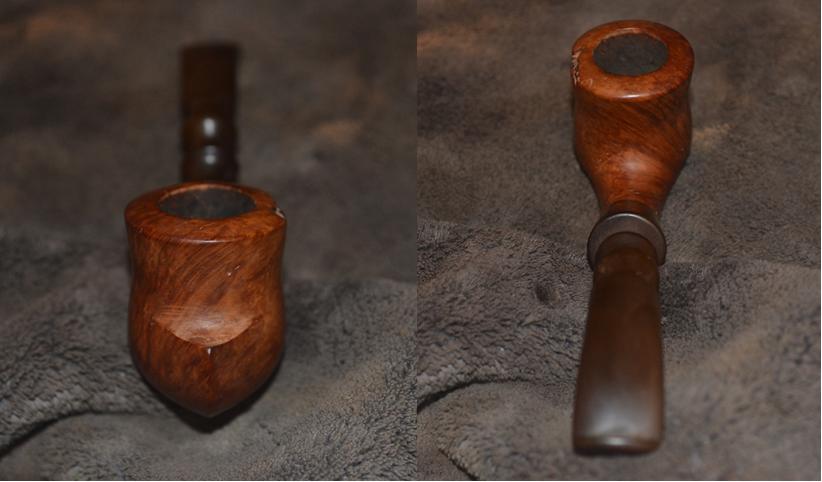
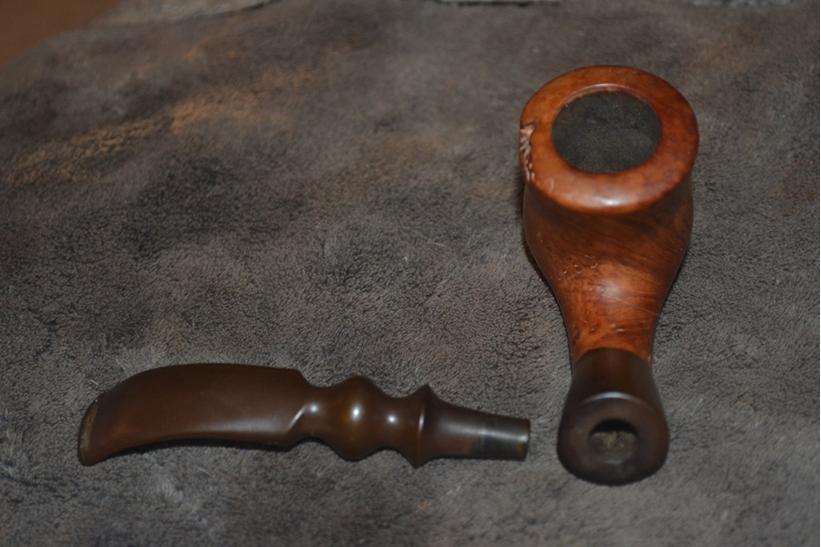
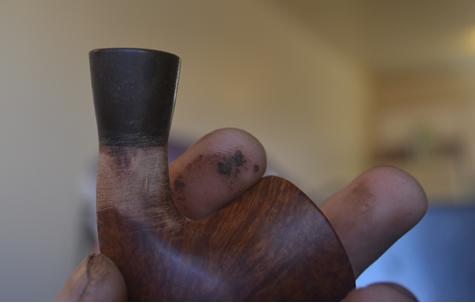
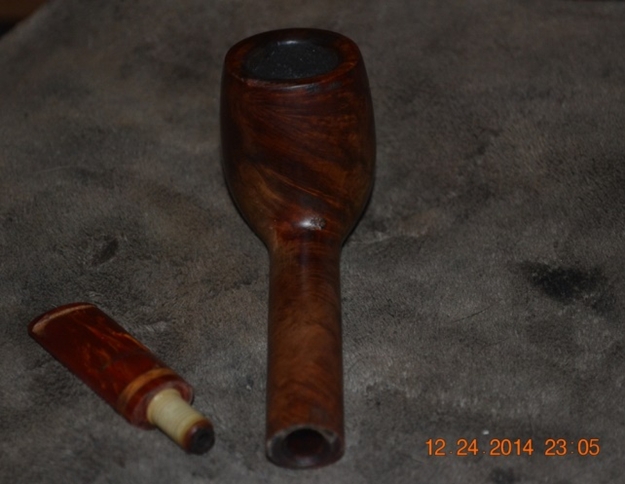
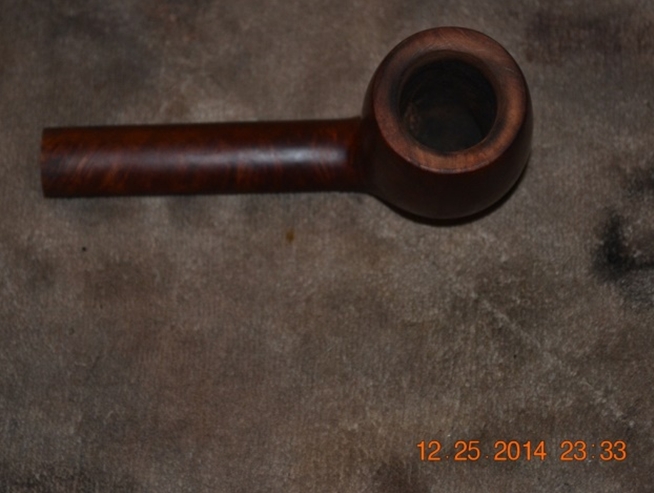
Now, at last, I have regained enough of my stamina – which, for all of my life prior to the advent of the incident which forms the central theme of this account, was as vigorous as that of any young man who plays cricket almost every day – to reveal the thing as I found it, through the following crude illustrations.Anon1

Anon2

Anon3

Anon4

Anon5

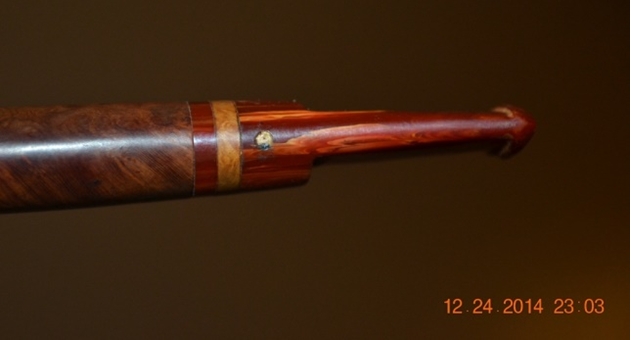
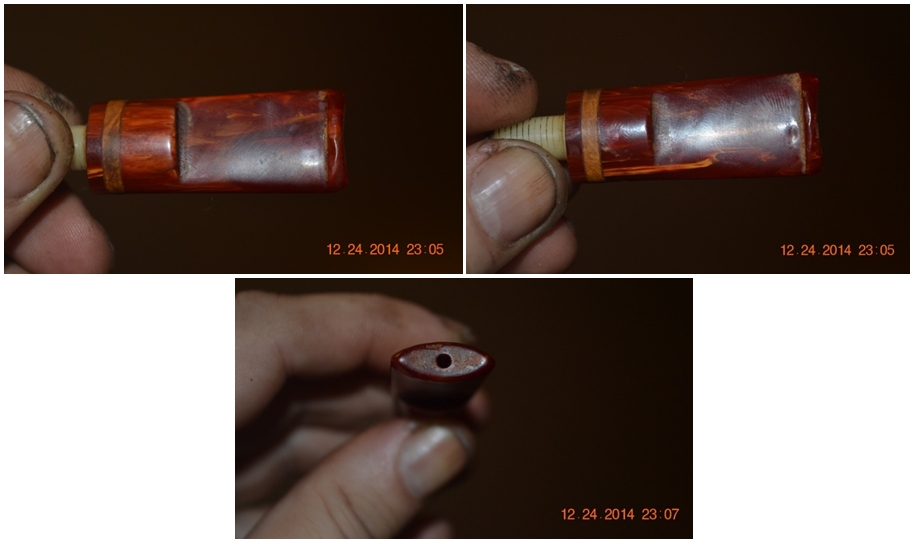
Anon6 I implore you, in the name of all that is Holy, to scrutinize the abominable disfigurements of the beast’s original form. Perceive with more than just your eyes, and especially with pity in your hearts, I further beseech you, the jagged wound inflicted just below its forehead, or rim; the dreadful rending of its skin from the right side of its torso – shank, rather – beside the artificial extension of the same, and lastly, the woeful bleeding of black stain, as blood, from this extension onto the very wood that was to be its natural makeup. At first I took the freak of nature, nay, far worse, the creation of a man, to be the first attempt of a novice at crafting a briar pipe of the freehand variety. Only later was I corrected by one whose opinion and experience in such matters I hold inviolate, my mentor and good friend Chuck Richards, who informed me to my astonishment and dismay that the egregious work was in fact of Italian descent with no name.

Read on at your own peril.

RESTORATION OF LIFE
Seeking no more than to breathe new life into the ruined corpse of a smoking pipe, one I envisioned in my mind’s eye as it could have been, had it been born into the good society so many take for granted, I proceeded with the course of action which I perhaps foolishly believed was pre-determined. Regardless of my motives, I felt a pull that led me inexorably to the conclusion I shall in good time reveal.

Having triaged the wounds to the unknown pipe, I found myself in the gravest sense of urgency whilst I resolved to expunge the haphazard spatter of bloodlike blackness betwixt the briar shank and its extension.Anon7

Anon8 With the utmost surgical care, employing 220-grit paper, I erased the accursed stains.Anon9

Anon10

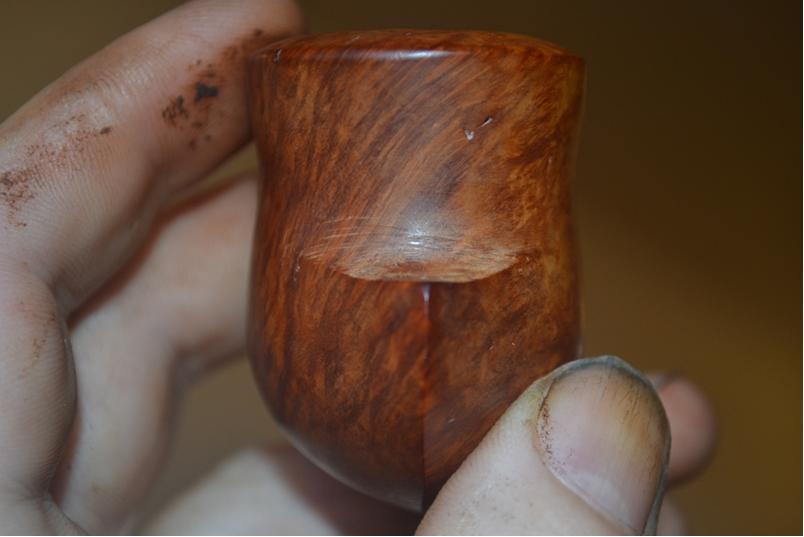
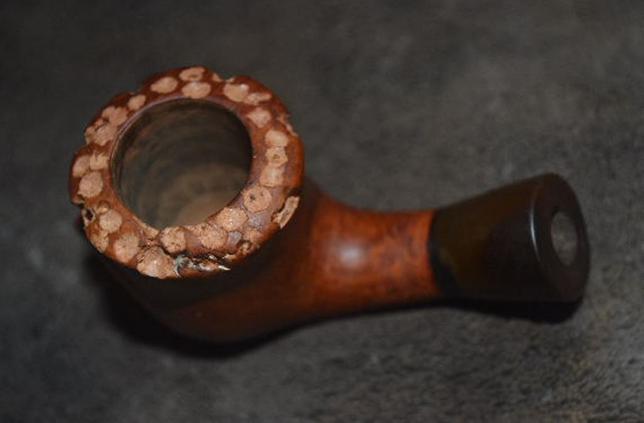
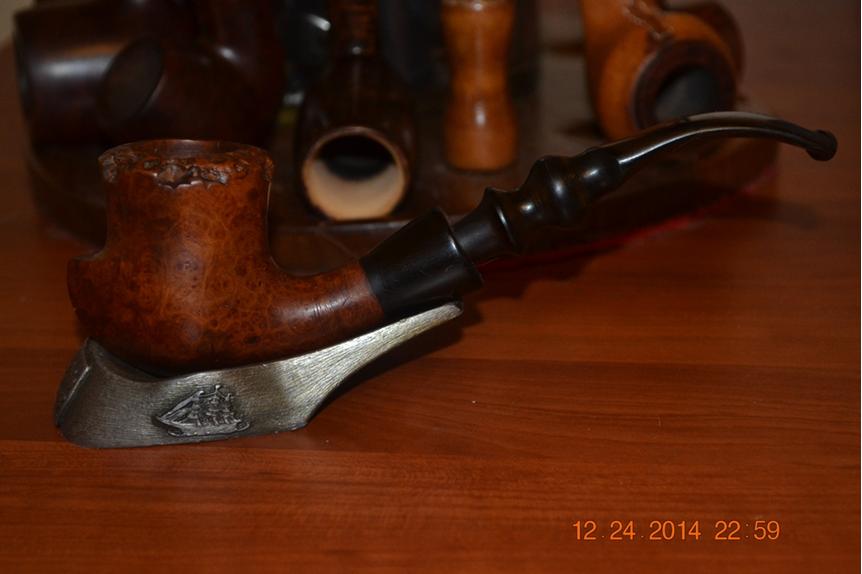
Anon11 Regarding the ridge of the odd, beak-like figure on the front of the bowl, the un-level aspect of the prominently scabrous feature was positively unnerving to behold. Though a full frontal view is not available before its correction, these left and right images reveal the disparity.Anon12 The cruel hideousness of the misdeed inflicted upon a central feature of the freehand was so ghastly to behold, reminding one of the nose of an old man spotted and mangled by the advanced stages of alcoholism, that its repair was my second priority. With the aid of a flat filing tool, I corrected the flaw whilst also removing a gash above it.Anon13 A cursory smoothing of the abraded surface resulted in the beginning of an almost intoxicating, God-like improvement, though minor work to finish the makeover I had begun was still necessary.Anon14 Scarcely able to control my escalating excitement that was directed with all-consuming mania toward the ultimate re-animation of the pipe, I turned my gaze again to the frightful laceration to the cranium – that is to say, the rim.Anon15 Devoid of even a dash of hope for correcting the near fatal head wound, and directly upon the heels of the greatest battle between my ever-intensifying lust to restore the spark that is life to this wretched pipe versus my thoughts of utter failure and ruin, I could envision no measure short of inflicting a deliberate pattern of the very same gouges round the rim and the immediate area of the bowl beneath it. Toward this remarkably heady end, I embarked upon a slippery path of utter destruction of the rim with naught but prayers that I could complete and then reverse, as it were, the radical procedure. The only implement available being a spring-loaded round hole-puncher with a small but sturdy grip, I commenced the initial task of creating matching and equidistant blemishes round the top of the bowl.Anon16

Anon17

Anon18 And then, with mounting glee at the sheer recklessness of the notion, onto the top of the skull – or rim – I repeated the same process with tighter punches.Anon19 Oh, to formulate in words the wonder and terror that overwhelmed my senses is beyond the power of the greatest poet! In my crazed mind I entertained a vision of beauty like a newborn phoenix rising from the ashes! The mental snapshot was breathtaking in its audacity and execution! I was all but hopelessly mad in the ecstasy of the moment! I daresay some would now postulate that I had already surpassed that precipitant threshold.

Therefore it is without any sense of sin whatsoever that I confess my elation at the removal of the few remaining but festering sores that upon first sight of the beleaguered pipe put me in such a state of apprehension.

I performed a retort for a thorough purging of the accreted waste and other filth that continued to leech the innards of the reanimated Italian pipe with no name, though I retained hope that the poor thing would regain some of its more pleasant previous memories, if indeed it ever possessed any, as its recovery progressed.

Wishing to be done forever with the coarse, disheveled appearance of the still recuperating pipe, I applied a progressive regimen of micromesh from 1500 to 4000 upon the unfinished pocks covering the rusticated dome and the pale, sickly spots at various intervals of the pipe’s wooden body where once had flourished cuts, scrapes and crevasses.

The quick application of a double-coat of medium brown leather stain to the areas of the wood effected by the various degrees of sanding and more aggressive restorative measures, and the immediate removal of the dye’s alcohol by ritual of fire left a meager residue of ash that was banished with ease using the 4000 micromesh pad.

The stem, once oxidized to a uniform sickly green shade, glimmered again in its healthy black condition following a treatment with red and white Tripoli and White Diamond.

The wooden body, cured of every ailment that had at first glance so shocked me to the very core of my being, was ready for the final course of medicine, which included the same wholly natural elixirs and a gentle buff with carnauba.Anon20

Anon21

Anon22

Anon23 CONCLUSION
Though mighty powers of science, craftsmanship and other forces beyond the comprehension of Man indeed coexist on some unseen dual plain of reality, the awesome dynamism behind them must be harnessed by the guardians of restoration before they can be utilized on a regular basis. I count myself among the fortunate to have survived this harrowing ordeal with my body, mind and soul intact.

I entreat all those who read this to consider it with open minds, but as a cautionary tale.

*Reconstruction of Westminster Cathedral, the mother church of English Catholicism, began in 1895, but due to the cost has never been completed – leaving much of the interior unfinished brickwork.

The Christmastime Joy of Refurbishing an Old Peterson


Guest Blog by Robert M. Boughton
Member, North American Society of Pipe Collectors
http://www.naspc.org
http://www.roadrunnerpipes.com
http://about.me/boughtonrobert

Photos © the Author

“Smoke your pipe and be silent; there’s only wind and smoke in the world.” – Irish Proverb

INTRODUCTION
Many of the pipe lots I purchased during the past few months were to spruce up and sell at my online restored pipe site, although I admit to liberating a few of the choicer finds here and there for my own collection. However,this fine example of a vintage classic Peterson and a number of other brands I bought as singles in more recent weeks were intended with lust a forethought for my own ultimate and lifelong use. As far as the Pete I just received is concerned, my decision to keep it was not based on the Peterson brand name, 22 of which I already owned.

In fact, I expected to add one of the Pete’s I ordered near the end of November to the trove, which seems to increase at an exponential rate and counts 23 now of this brand alone.I chose instead to list the fine pipe for sale for disparate reasons even I find difficult to explain. My penchant for anything Peterson is so well known that my announcement on the Smokers Forums of my plan to sell the K&P System Standard brought a humorous reply: “I thought you’d never say ‘Enough Petersons.’ ”

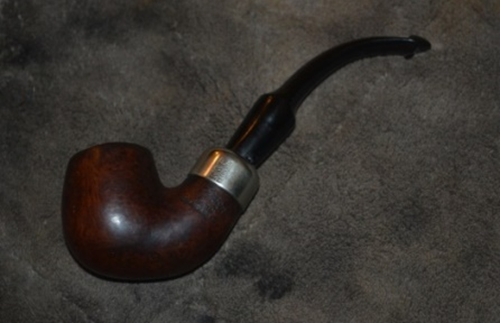
My decision to sell the basic K&P System Standard full bent which, when I at last held it in my hands, was similar to some I already have, was based in part on that factor but, more to the point, it somehow lacked the certain element of instant overwhelming attraction which is too complicated to describe in this forum, and besides, I am sure anyone who reads this already knows the butterfly effect all too well. I am also adding higher-end pipes to my site and concluded a shiny new-looking Peterson would provide a nice incentive to someone out there in Cyberland who possess the essential sense of captivation to give it the loving home it deserves and not enjoy it once or twice only to put it in the rack and almost never again give it a serious thought.

Robert1And I should add how any potential rarity or value of the engaging pipe shown here pre-restored is irrelevant to my sentiments for it. No, I reserved the Peterson Dublin Republic Era straight billiard for my own caring use even despite its mixed grain because it, well, possesses the right stuff as defined by my personal sensibilities. Who knows? Maybe the System Standard full bent is an extraordinary find. I just don’t have eyes for every pipe that comes my way as I do for the subject of this blog.Robert2

Robert3

Robert4

Robert5

Robert6

Robert7

Perhaps the strongest tug at the curious side of me was the stem, which is perfect except for one tell-tale sign that it is not the original for this Made in the Republic of Ireland Peterson. Clear as day on the left side is the symbol that identifies it as a Peterson stem made for a pipe manufactured in France: Robert8

Now that’s one kind of oddity that always endears a pipe to me on first sight.

REFURBISH
First, as the word refurbish suggests, this was, for the most part, not a difficult task. The only actual problem was removing the cake buildup from the chamber, where I started.

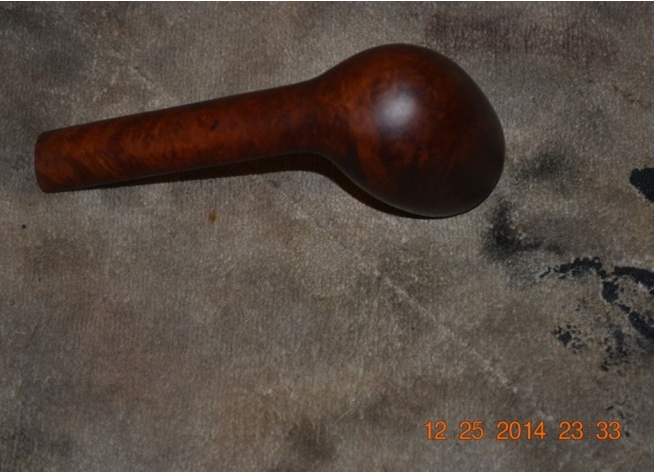
For the most part, in my experience at least, even cake this bad comes free without a fight and leaves the chamber relatively smooth. The third photo above does not do service to the way the cake tapered downward from more to less. This turned out to be one of the ordeal varieties, not a piece of cake at all. (I know, and tender my apology now.) I started with the 19mm reamer since most of the carbon mess was at the top, and it fit about halfway down with snugness. Several laborious full turns later, applying just enough force to see the reamer moving a bit lower, I paused to dump the carbon dust. Seeing the huge amount that fell out, I took another close look into the chamber and was amazed to see not only that the upper bowl needed much more work, but that the bottom was unfazed.

And so I switched to the 21mm reamer that was barely able to clear the inner diameter and gave the entire area a go with several more intense turns, using pressure again to reach the real bottom. Another massive amount of carbon fled the chamber as I turned it upside-down over a proper receptacle. Then, sticking with the bigger reamer, I engaged the entire enemy for the first time. The biggest load of carbon so far emptied out, and after I blew through the shank, a thick dark cloud of dust flew through the air, reminiscent of Victorian Era London skies as described by Charles Dickens with much greater skill.

I soaked a couple of small squares of cotton cloth with Everclear and folded them around my middle finger to insert into the chamber and scrub away much of the residual grime. I did this with both sides of the cloths. Waste not, want not and all that. Of course the wet cotton came out soaked solid black along with part of my finger, but I allowed the alcohol to dry a little as I halfway cleaned my begrimed digit before sticking my clean index finger all the way in and feeling the walls. They were pocked all over.

Reattaching the 19mm blades, I angled them first against the upper half of the chamber before adjusting them to favor the lower half. Much more carbon was loosened, and more alcohol-soaked cotton cloths wiped away the excess. Again I inserted a clean finger and used it to dig out little chunks of carbon. The chamber was better but still needed work.

I turned to a small piece of 200-grit sandpaper long enough to reach the bottom of the chamber with a little above the rim and wide enough to cover half of the wall. With whatever finger fit inside the chamber leaving enough room to press down against the paper and turn it with roughness 360 degrees a few times, I heard that old familiar fingers-on-chalkboard screech the entire time. But I felt the wall smoothing. The paper came out black, and I wiped it over a rag to remove the dust. Still again, a small mountain of carbon fell from the inverted chamber. Feeling the wall with a bare finger, I knew I had to get rough at last.

A perfect old piece of 150-grit paper presented itself for my use, and I went at the chamber again with real gusto. The fact that another pile of carbon was removed dismayed and discouraged me. I repeated the process several times, cleaned the chamber with cotton cloths and Everclear, and believe it or not, got the reward I had awaited with a clean, smooth finger inspection. So that’s my page and a half on fixing the dang chamber.
Next up on my itinerary was beginning the cleaning process of the shank. After about ten minutes of running a wire-handled bristle cleaner dipped in alcohol over and over through the inner shank, I saw it was having an effect and stopped to prepare for the retort.

At this point I remembered the small stem was Lucite, which can be warped and ruined by alcohol. However, finding the task of attaching the rubber tube of the retort kit directly over the wide shank opening, and also locating no suitable temporary stem, I saw no choice but to take a chance. And so I connected the rubber over the lip of the stem and commenced the retort process.

Several test tubes of Everclear later, the shank at last came clean. Removing the stem as fast as I could and inserting a stem cleaner into it, where I let it stay long enough to dry, I found that it was intact. I completed the retort by removing the cotton balls from the chamber and using more cotton cloth to scour the chamber clean and dry and doing the same to the shank with a soft cleaner.

The stem, as nice as it was, still had a couple of minor bite marks and other blemishes I might have ignored with a pipe I was keeping, but I couldn’t do it.Robert9The ease of removing the bitemarks and other marks with 400-grit paper came as a happy surprise. While the sandpaper was handy, I cleaned the shank opening, as you will see below. After that all I needed to do was micromesh the bowl and shank with 1500, 2400 and 3200.

I was more reluctant than ever before to remove any of the original stain, but had no choice with the rim, which was blackened beyond the help of purified water, steel wool or micromesh. I chose 400-grit paper, which eliminated the blackening, before a three-step micromesh using 1500, 2400 and 3200. That done, I considered which of my modern day stains would best approximate the original, and decided to go with the medium brown. I flamed it and set it aside to cool. After a few minutes, I took out my 2400 micromesh pad and gently rubbed away the ash, followed by a quick wipe with a soft rag.

I’d have to say the greatest surprise with this old pipe was the flawless condition of the bowl and shank, with the exception of the rim as described. Based on the general design, the less familiar shade of brown and the grain that is not as uniform as pipe enjoyers today expect, I estimate that this pipe dates to the 1940s or 1950s. At first I believed the pipe was never waxed until I gave it a good wash with purified water and cotton cloth and was able to make out a couple of thin, shiny streaks on the top of the shank, where it appears its long-time previous owner seldom if ever touched the faithful companion.

Still, to assure its readiness for a smooth buffing, I prepared the wood with micromesh progressing from 1500 to 2400 to 3200 and at last 4000.Robert10

Robert11

Robert12

Robert13

Robert14 Eager to try out this wondrous pipe that, as I noted, was created before I was, I found myself filled with more excitement than usual as the moment to buff the beauty with waxes arrived. Leaving the stem behind, having waxed it with red and white Tripoli followed by White Diamond while the new rim stain dried, I carried the smooth piece of old briar into my workroom. Wanting to bring out as much of the varied grain as possible, I decided to use the whole ball of wax. (I know, I know! Again, I apologize.) Starting with the red Tripoli wheel, I coated it with an easy, light touch before moving to the white Tripoli, followed by White Diamond, and to finish it off, carnauba.Robert15

Robert16

Robert17

Robert18

Robert19 CONCLUSION
I could never describe what it is about a pipe that attracts me to it. My tastes are too eclectic. But when I see it, it is always like love at first sight. I mean that in the literal sense, as with two or three times in my life when I took one look at someone and was instantly light-headed with my stomach full of butterflies and found myself tongue-twisted. Alas, none of those relationships worked out in the end. With pipes, at least, love is forever – and perhaps a bit lecherously, I have quite the stable of mistresses.

The author enjoying the pipe.

The author enjoying the pipe.

Comoy’s Satin Matte Bent Christmas Pipe, In Four-Part Harmony – Robert M. Boughton


Guest Blog by Robert M. Boughton
Member, North American Society of Pipe Collectors
http://www.naspc.org
http://www.roadrunnerpipes.com
http://about.me/boughtonrobert
Photos © the Author

This blog is dedicated to my older uncle, Frank Lee Grannis (1945-2014), who was maybe Arlo Guthrie’s biggest fan. Frank once snapped a black and white photo of a teenaged Arlo, at an outdoor music festival somewhere in the countryside, smiling and signing an autograph for another fan who was about Arlo’s age. I lost the photo in my younger, wilder days, or I would include it here, but the image will always be in my memory.

Let’s get Santa Clause ’cause:
Santa Clause has a red suit
He’s a communist
And a beard, and long hair
Must be a pacifist
What’s in the pipe that he’s smoking?
—Arlo Guthrie, U.S. singer-songwriter-musician, in “The Pause of Mr. Claus” (1968)

INTRODUCTION
Now friends, tonight we’re gonna sing you a song, a Christmas carol in four-part harmony. The song…the Christmas carol is part of an album called “Arlo.” That’s my name. Some of you right about now might be thinking, thinking in your private thoughts there in your heads, well, this Arlo fella must have a pretty big ego. I mean, to go and name an album after himself, he must have let all that fame and fortune go to his head. I don’t know about the fame and fortune part, because all that doesn’t last long, but my head, my head is really sort of small. We’ve never actually met. All of you out there and me, that is.But that’s not what I came to talk about. Came to talk about a pipe. Remember the pipe? This is a story about a pipe.And I’ll get to it. In time, and four-part harmony.
So there I was, sitting on a bench, looking for a song to start with. I didn’t find it. I’m not proud…or tired.Out of all the songs I wrote, there I was, on the bench trying to pull just one verse from my head, but nothing would come.I knew right then and there I had to get ahold of Steve Laug, he’s a good friend of mine. We’ve never actually met. But we write emails back and forth to each other all the time. Now friends, if you ask me, that’s one hell of a way for folks to talk. Sort of like writing a story, in four-part harmony.

And then it hits me that it would be a friendly gesture to sing a Christmas carol about the guy who started it all. A guy in a red coat who has a beard, and all he does is give presents…for free…to all the rest of us. Must be something deranged about a guy like that.Living in Canada…living at the North Pole, it’ll do that to a guy.

Now, Steve and me, we never exactly said anything about any quote. All we talked about was the pipe. Remember the pipe? Anyway, I sent him a picture with the email, an eight-by-ten color glossy with all the details written down, and I said I thought it was what’s called a brandy shape, and Steve, he says it’s like a BBB he has that’s the same shape, only it’s a Christmas pipe. Well, I never heard of any Christmas pipe shape, but Steve knows more than I do. And later on he wrote back and sent a picture of his BBB, an eight-by-ten color glossy with all the details. And the two eight-by-ten color glossies with all the details were almost the same.

And the good news is, that’s when I remembered this Christmas carol I wrote, in four-part harmony, because it was about Santa Claus, even though it’s spelled with an “e” in the song. Don’t ask me why, you can figure it out. Now, everyone knows old Santa is all about Christmas. So that’s about how that story goes.

Now I’ll get on with the other story, about the pipe. Remember the pipe?

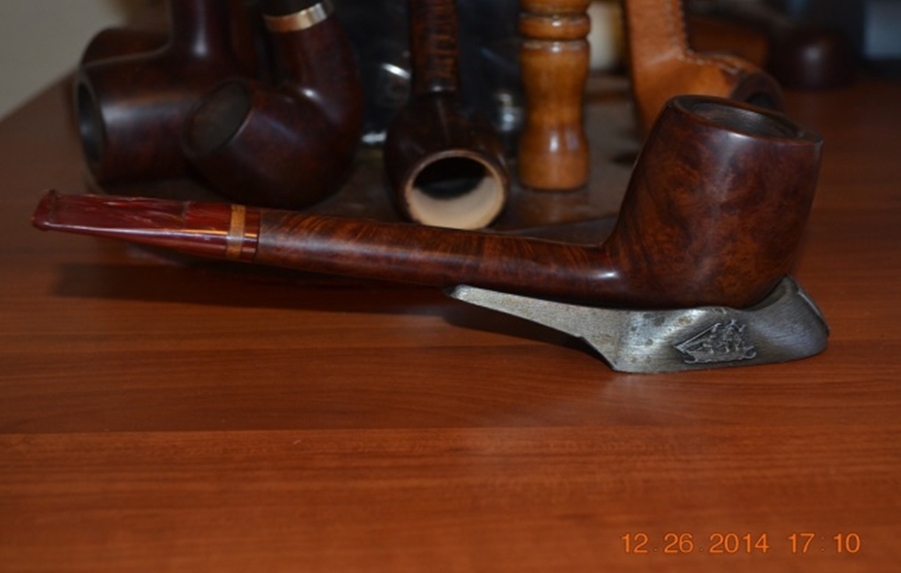
I got mixed up online with some poor fella who was selling seven pipes all together and didn’t have a clue what all was in there. ’Cause my eye went straight to one with a white C on the stem and even I knew what that meant. The listing, in micro-mini small print at the bottom of the page, that you’re not supposed to read, called it a “Como’s Bent Billiard,” but I took a closer look and made out the blurry Y after Como. So there I was, still sitting on the bench and having a good old time knowing how nobody else knew the Como pipe was in there with all the others, and that’s why the price was so low with time running out.Rob2 I’d like to dedicate this Christmas carol to all the pipe-abusing S.O.B.s out there who have been bad little boys and girls and ought to keep that in mind this coming Christmas. It’s called “The Pause of Mr. Como.” Now here’s how the song goes.

RESTORATION
Meanwhile, back to myself again after a brief diversion, I will describe the pipe as I received it. Although there were bad cake buildup in the chamber, rim burning, ubiquitous scratches on all sides of the bowl and a stem in dire need of work and polishing, the allure of this excellent Comoy’s example was almost intoxicating, and I haven’t tasted alcohol in 26 years – not that you could tell after reading my Introduction.Rob3

Rob4

Rob5

Rob6

Rob7

Rob8

Rob9 I like to start on a rim with super fine steel wool, as I did with this pipe. In general, this approach takes off most or all of the char and leaves the wood beneath without a single new scratch and often even shiny. This time I got nowhere with the regular method, and so I switched to 400-grit paper, which removed the char as well as dings and scratches I uncovered. Of course, the sandpaper also took off the old stain.

With the rim clean and smooth, showing the fine grain, I found my old Senior Reamer in its box and took on the chamber.This time, the reamer worked as it should. Almost all of the buildup was reduced to dust. A little quick sanding with 120-grit paper was needed before smoothing with 400.Rob10 Now, as I described earlier, the outer wood was scratched almost everywhere. I very much wanted to avoid ruining the good, light stain of the original. Having learned that micromesh can go a long way, from advice of my mentor, Chuck Richards, as well as our host and several previous readers, I put the theory to a tougher test than I had before.

And you know what? I think they’re on to something! Starting with 800-grade, I was able to eliminate all but the most insignificant scratches. I then worked my way up from 1000 to 1500 to 2400 and ending with 3200, leaving the briar– well, leaving the briar as smooth as it must have been the day it left the Comoy’s shop.

Taking on the stem only required heavy sanding and buffing with 1500, 2400 and 3200 micromesh.

Cleaning the pipe turned out to be the hardest part. I just kept dipping the bristly cleaners in Everclear one half at a time and scrubbing away until they came out of the shank and stem clear.Rob11

Rob12

Rob13

Rob14 CONCLUSION
If I had kept this fine example of Comoy’s craftsmanship, I would prize it as the best as compared to the two I own. However, as fate would have it, the pipe sold almost as soon as I posted it on my restored pipes Website. My only consolation is that I have reason to believe it is in adoring hands.