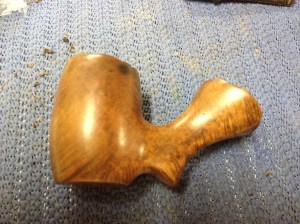
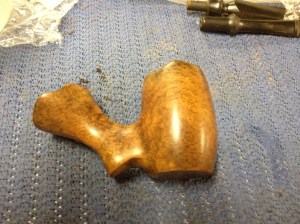
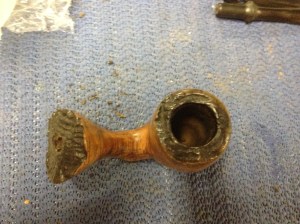
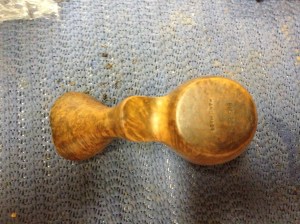
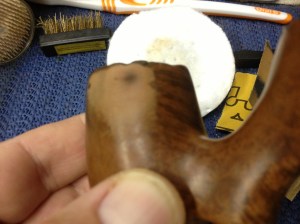
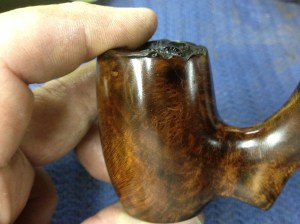
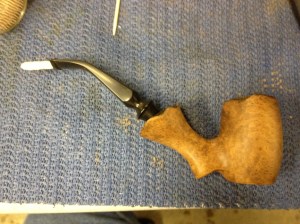
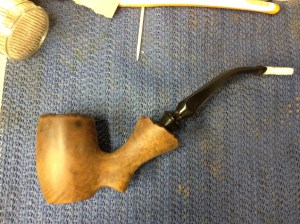
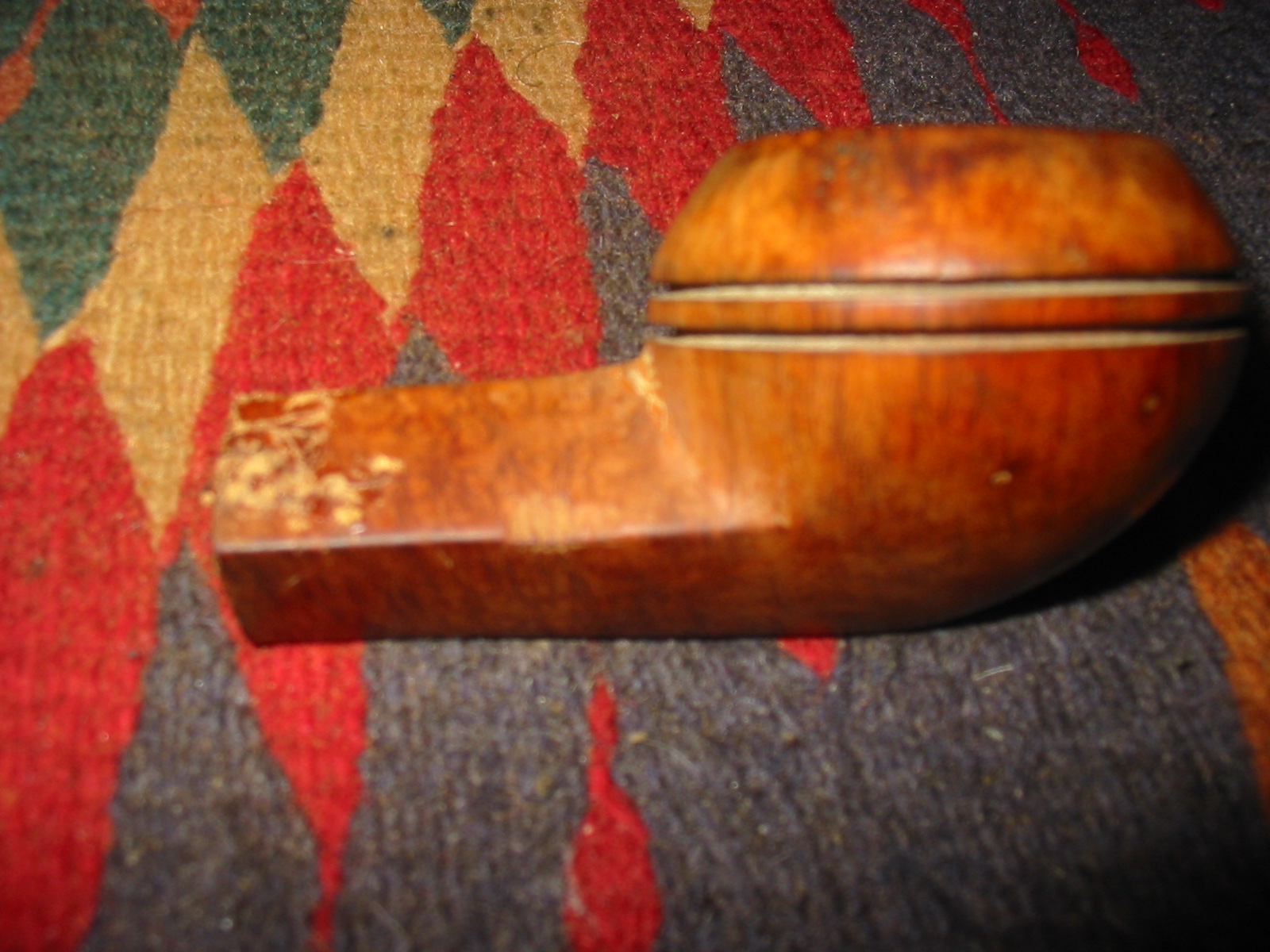
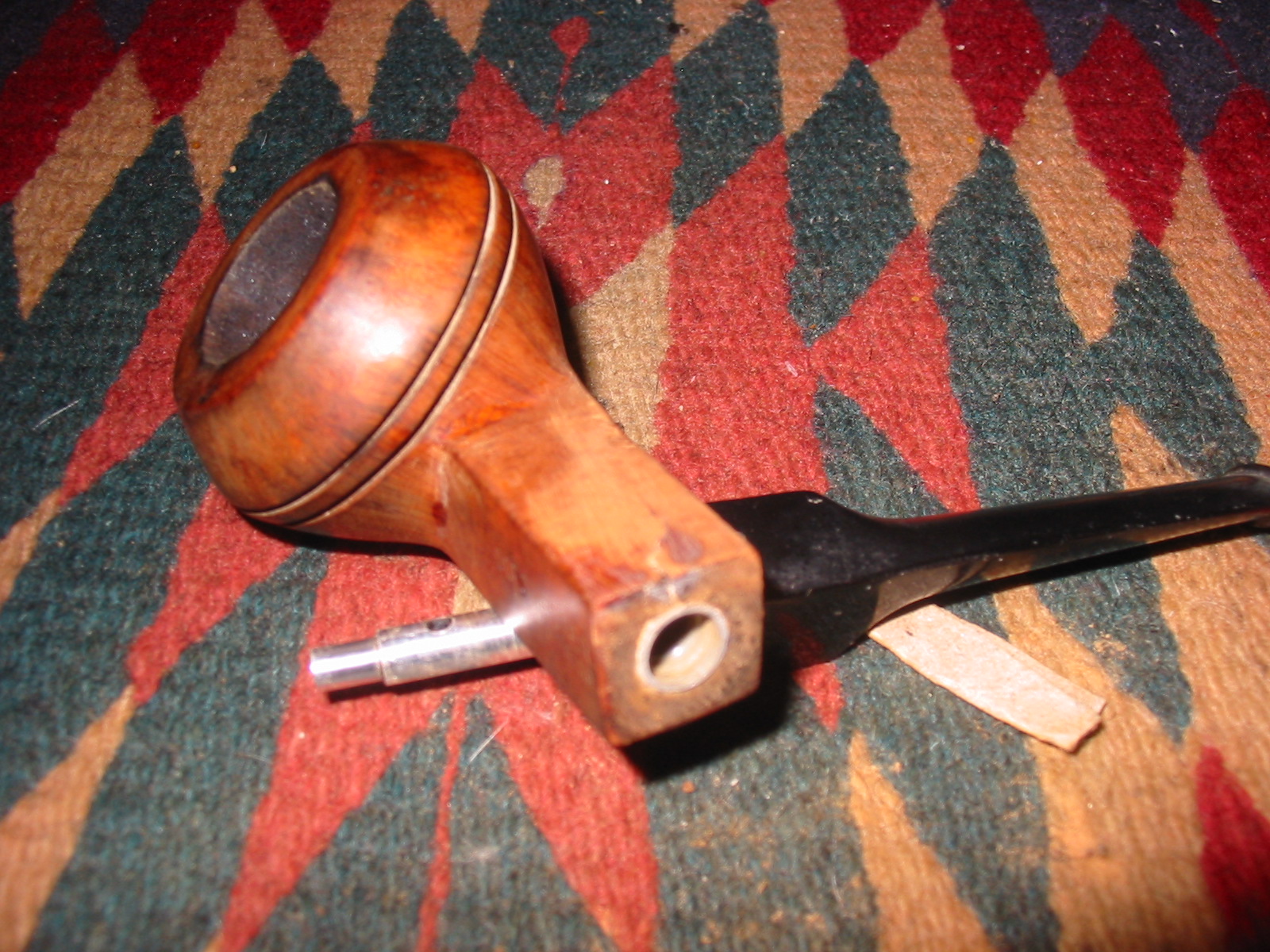
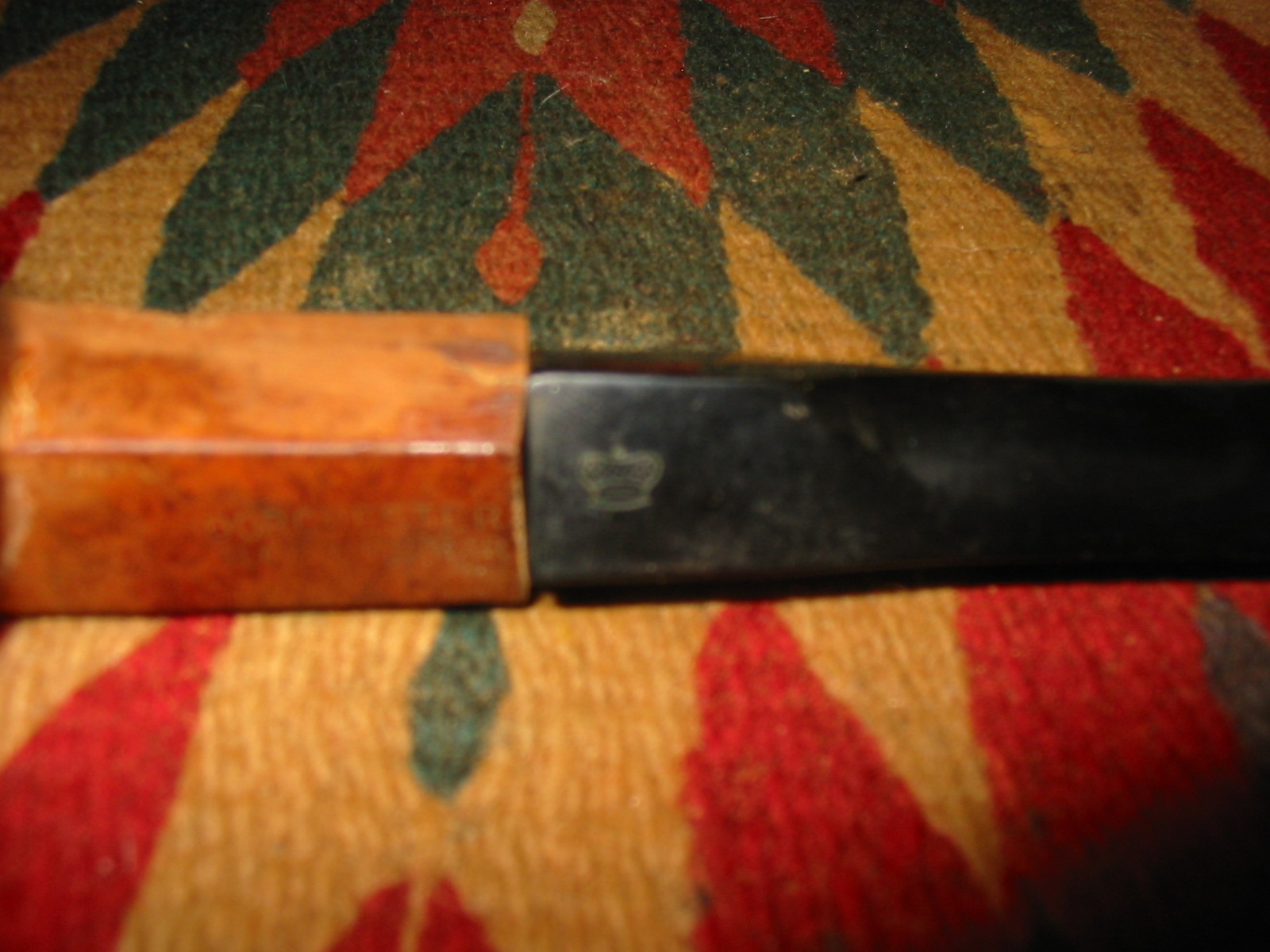
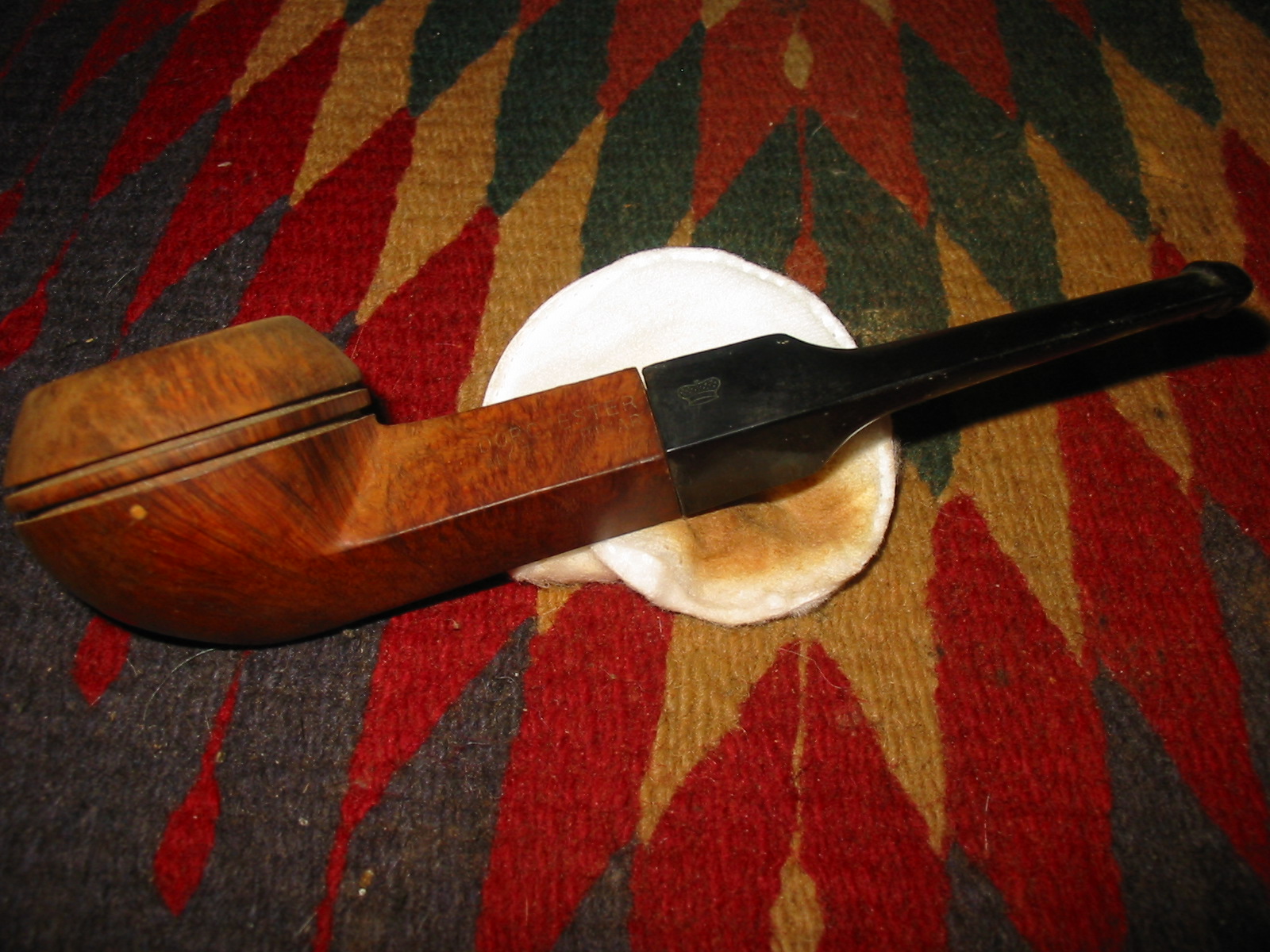
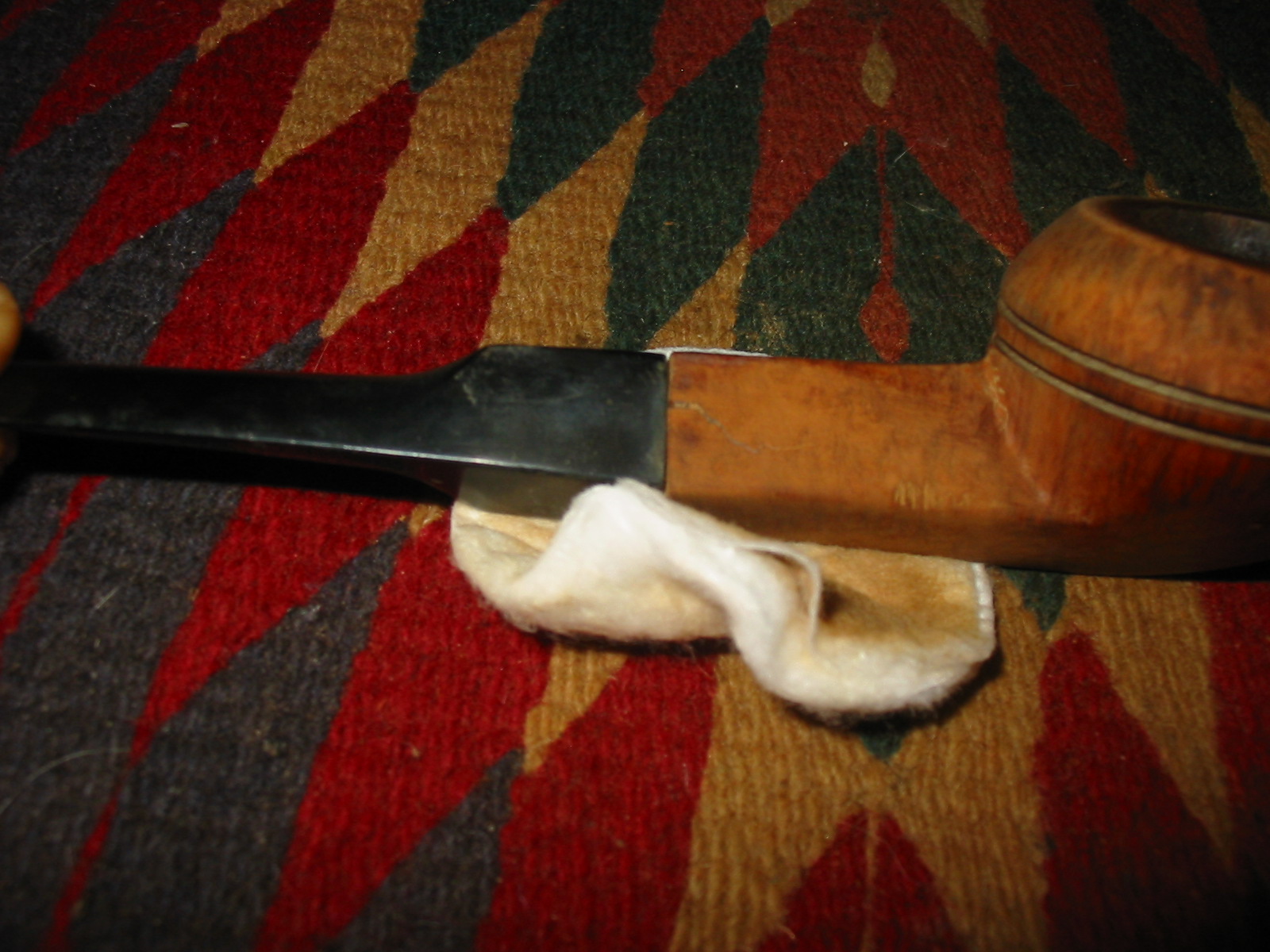
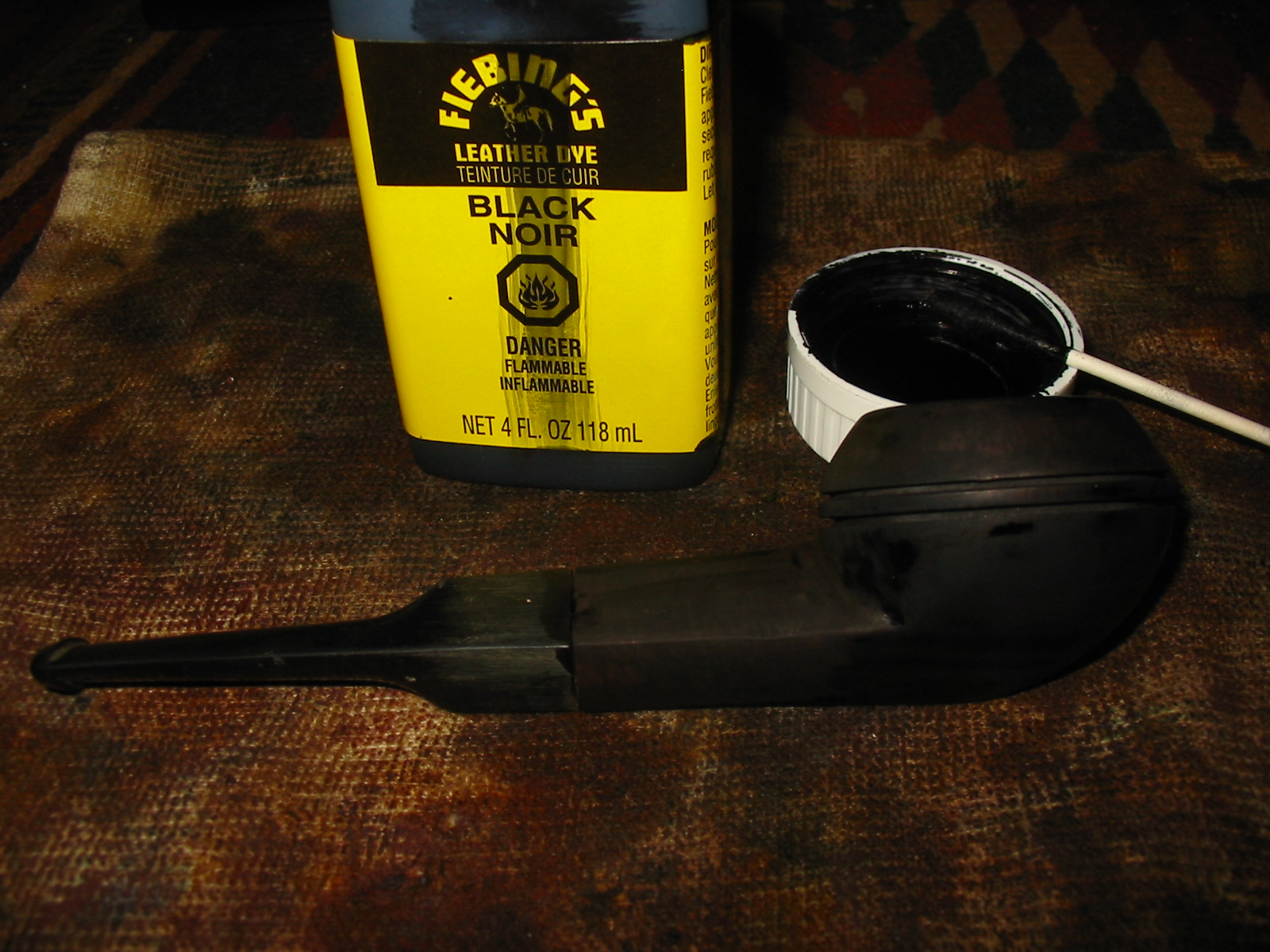
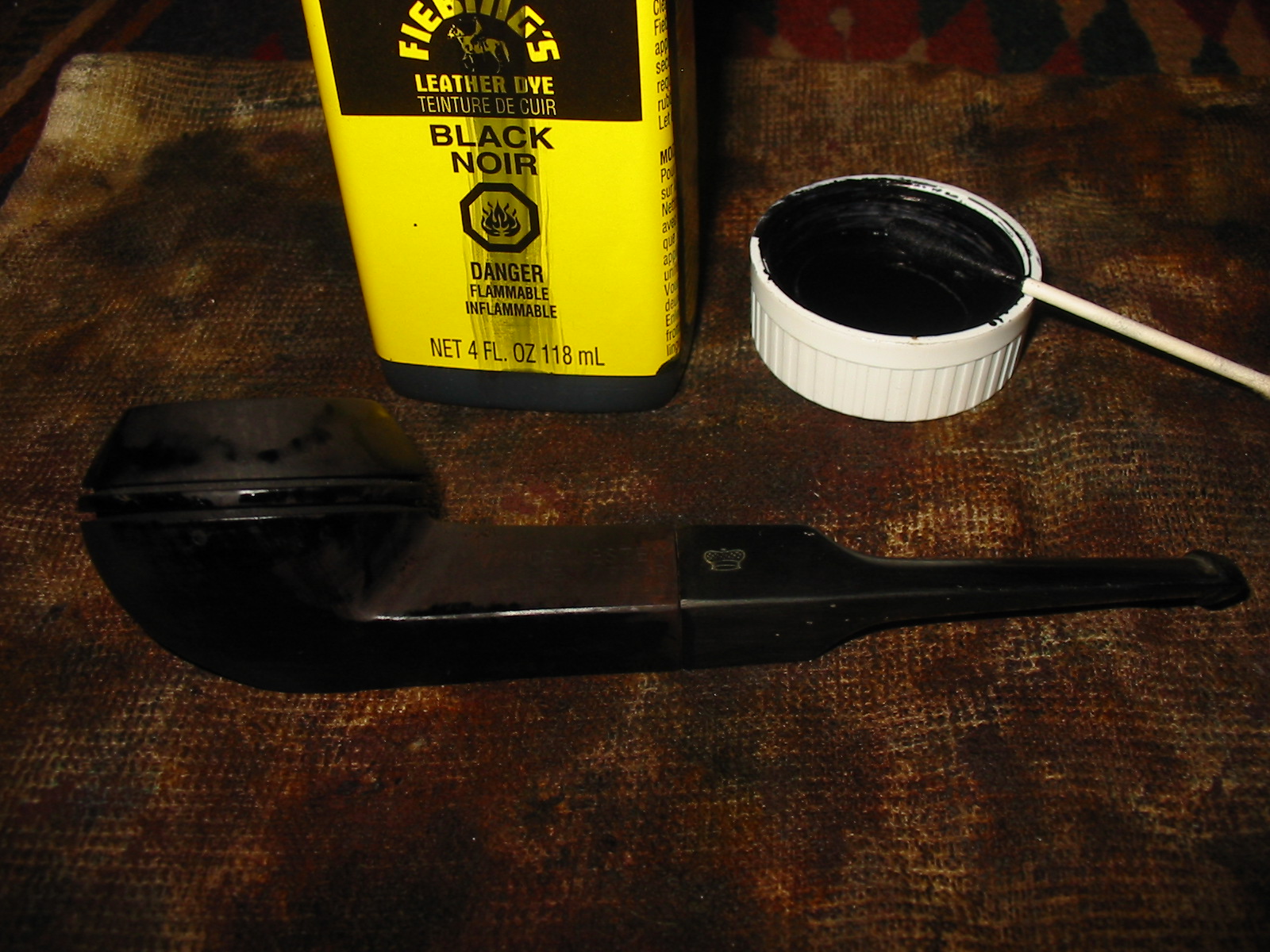
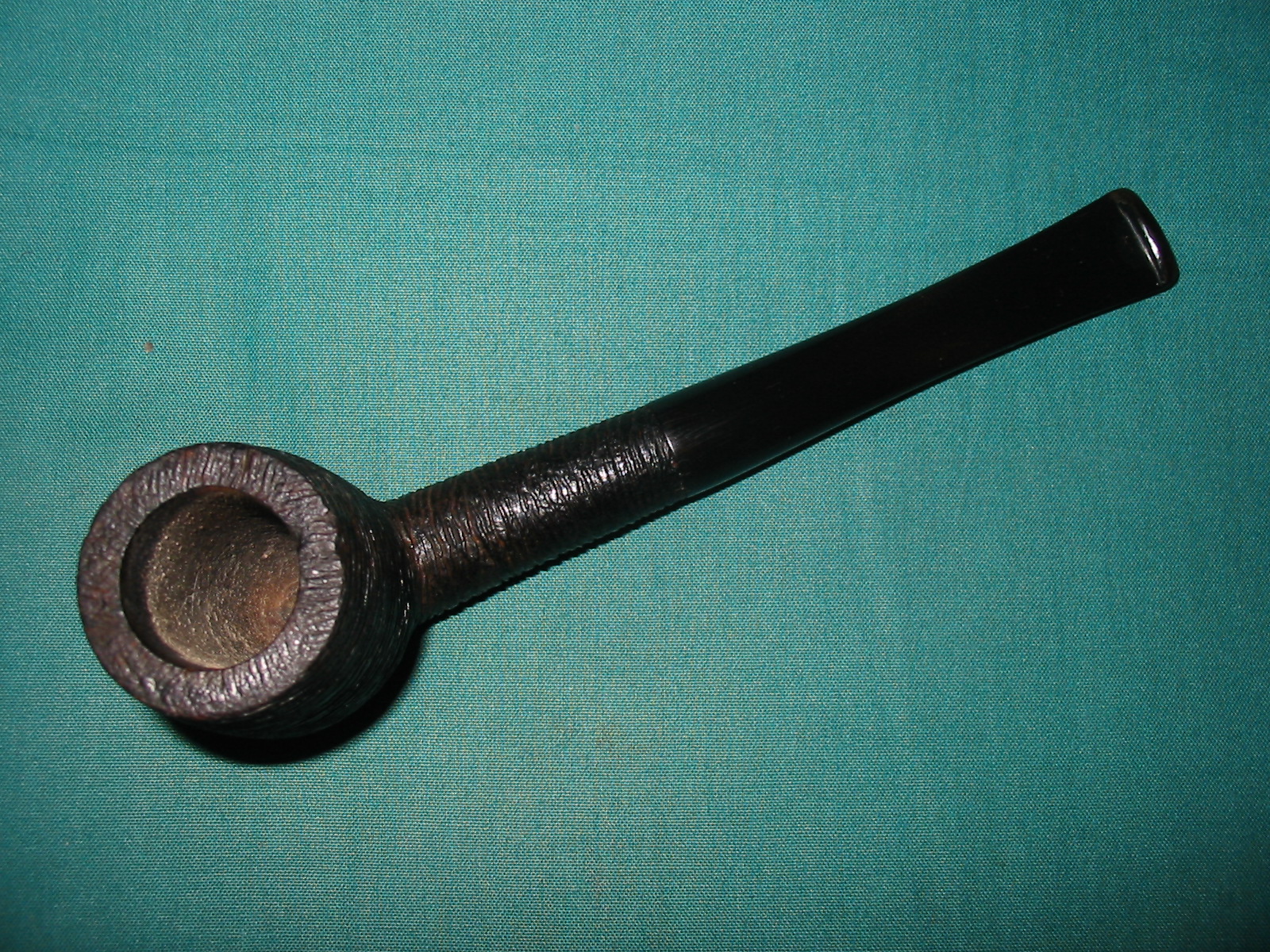
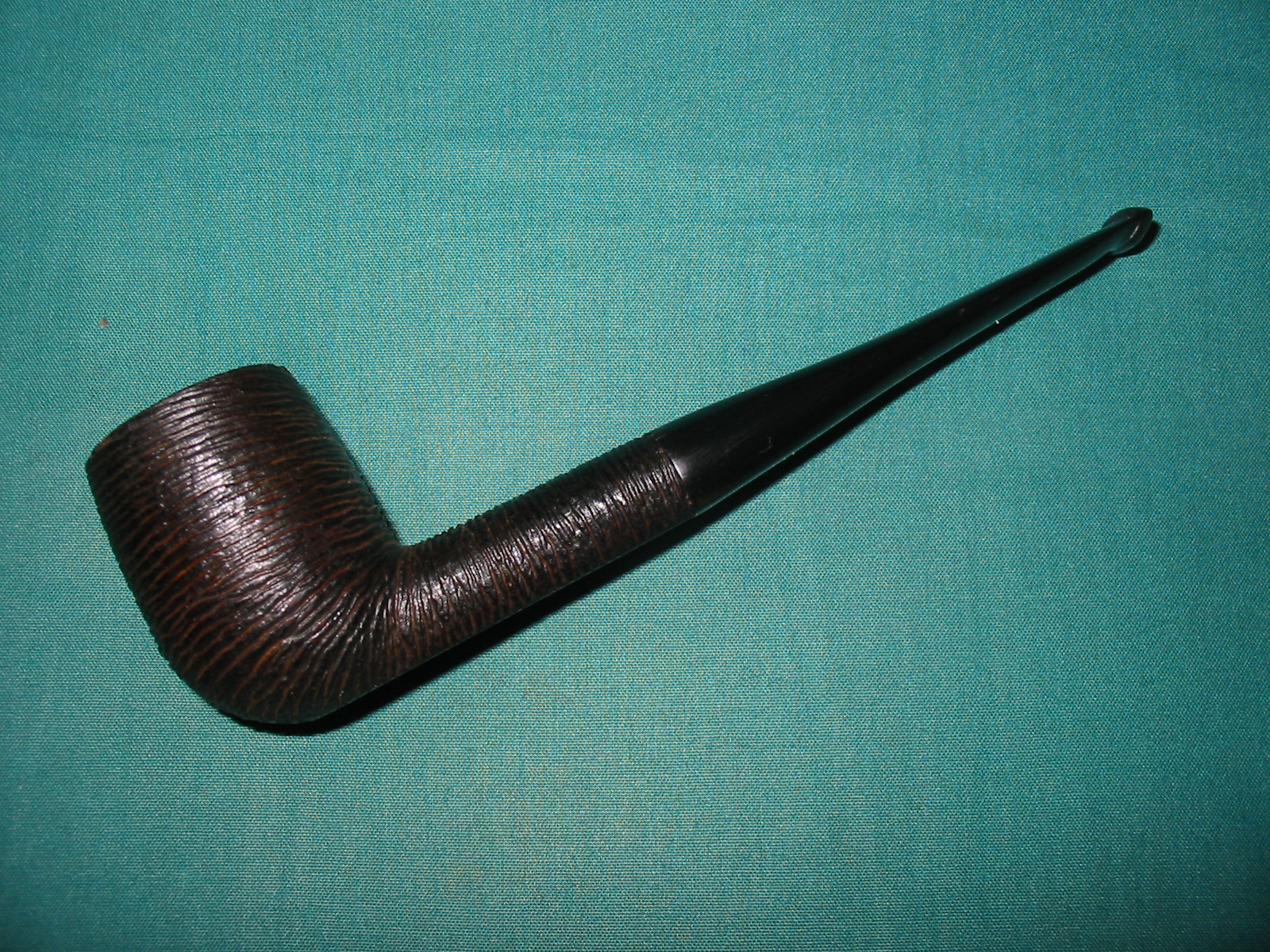
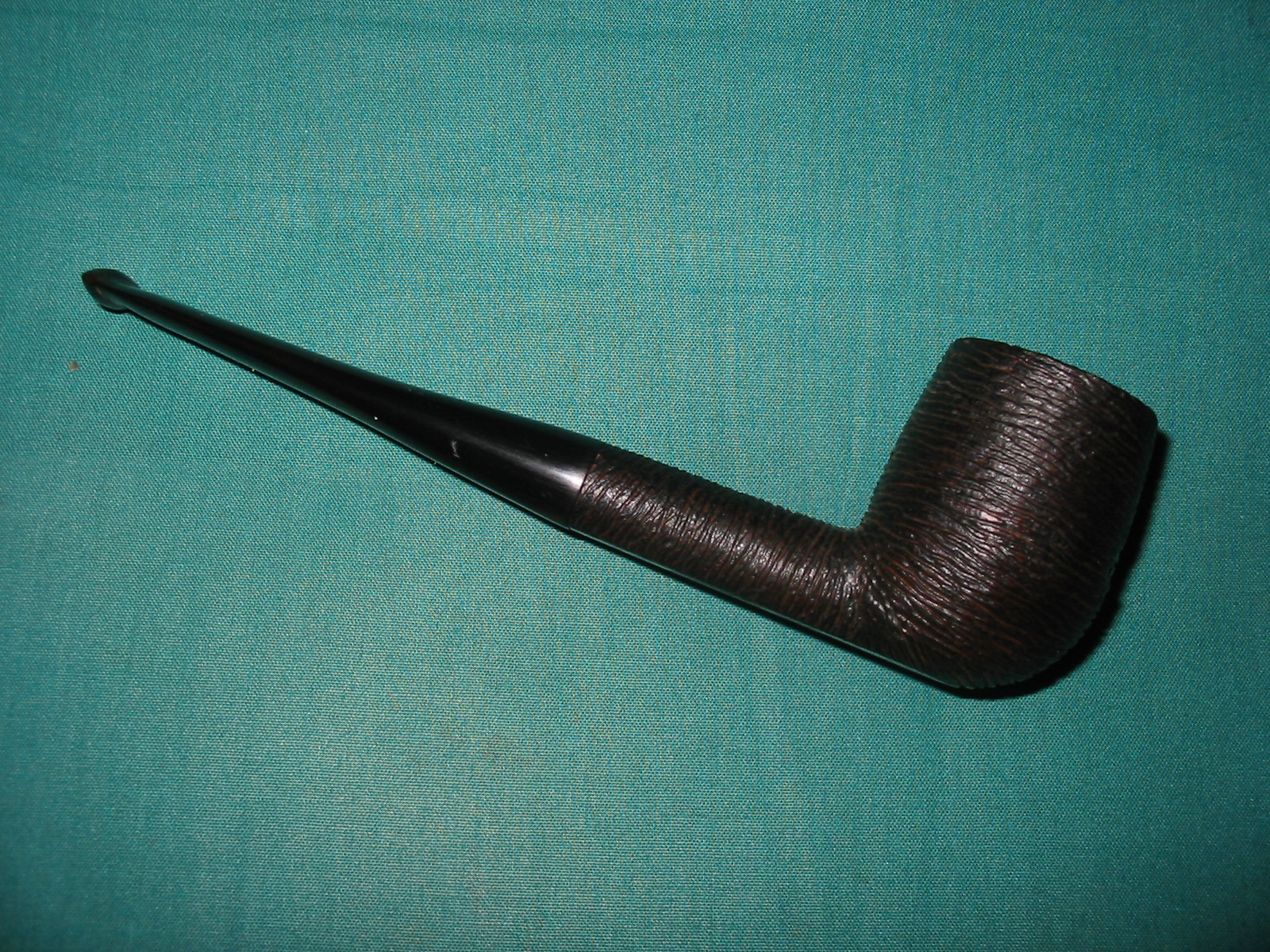
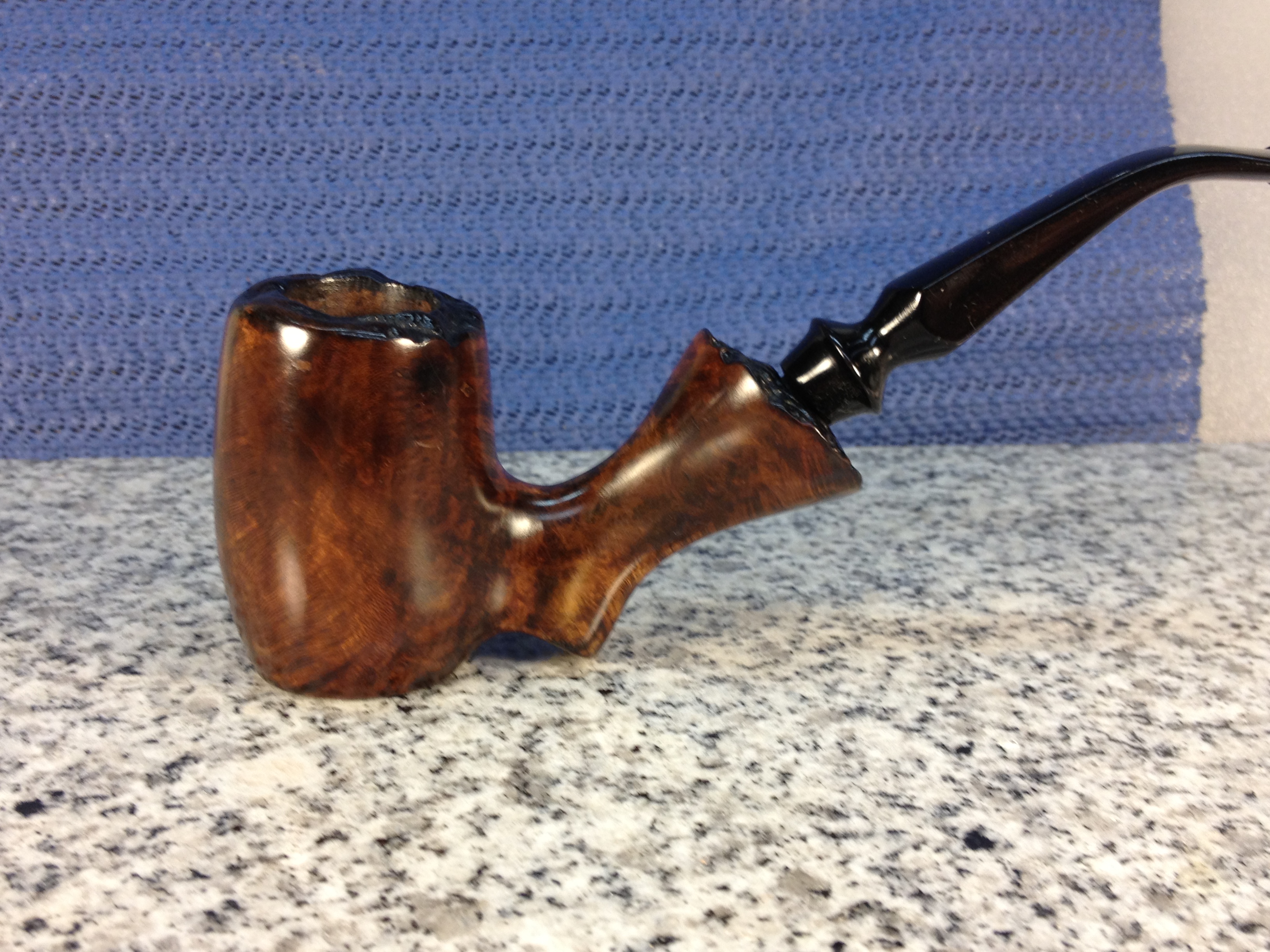
Tag Archives: restaining
Israeli Made Bent Ball Repaired and Refurbished


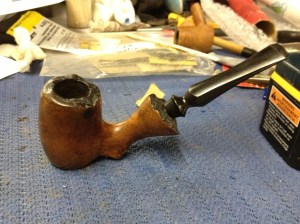
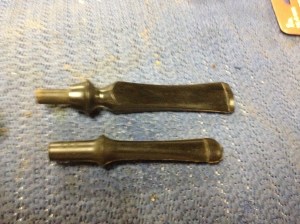
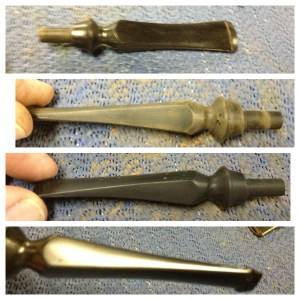
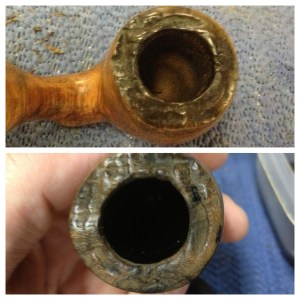
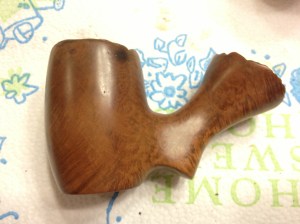
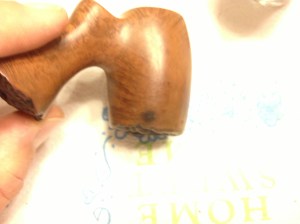
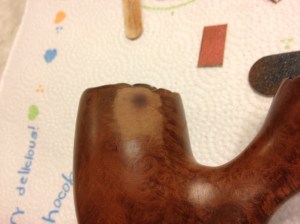
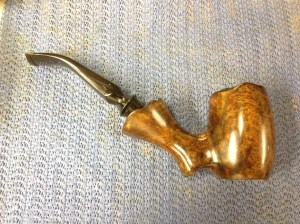
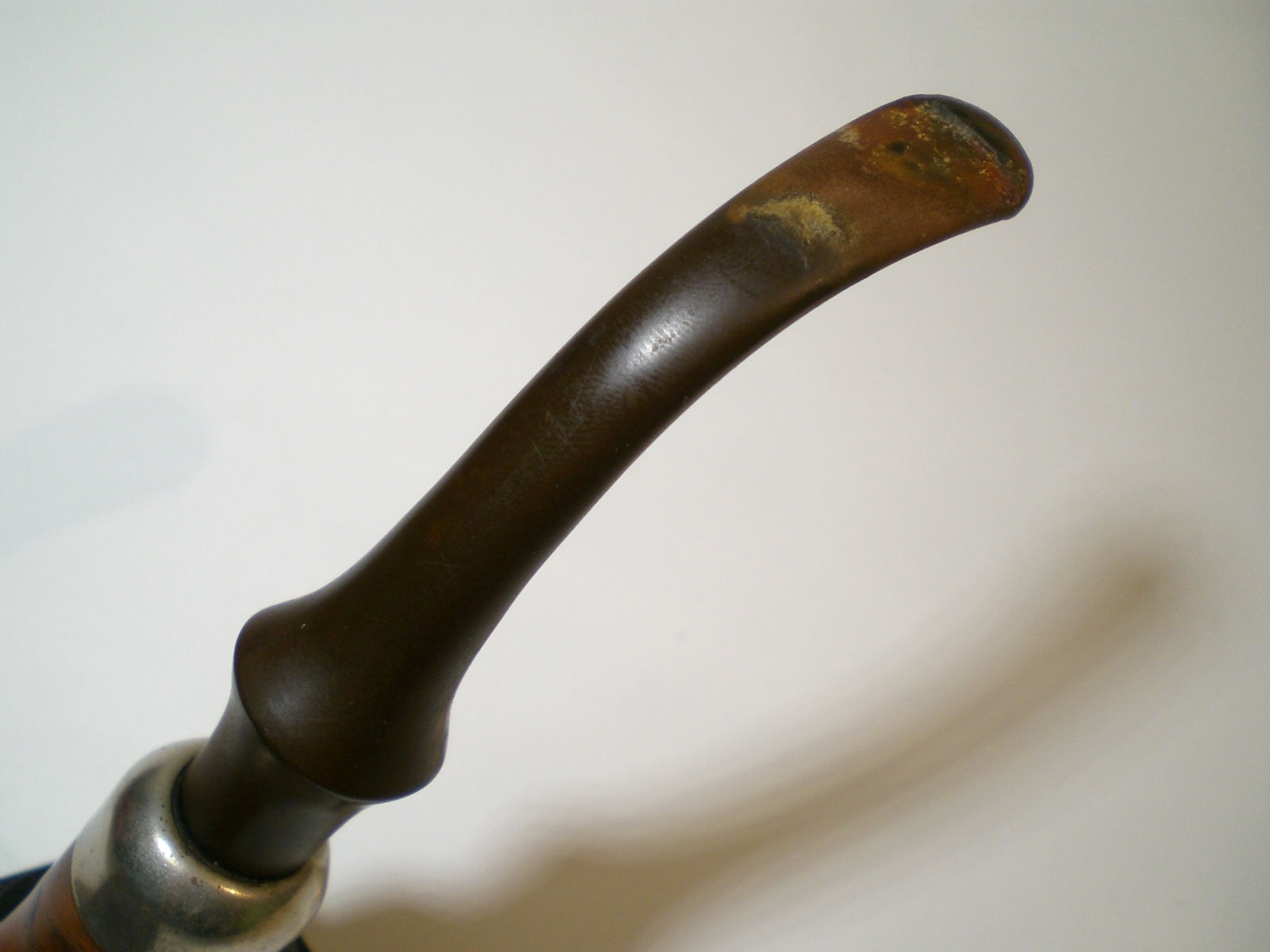
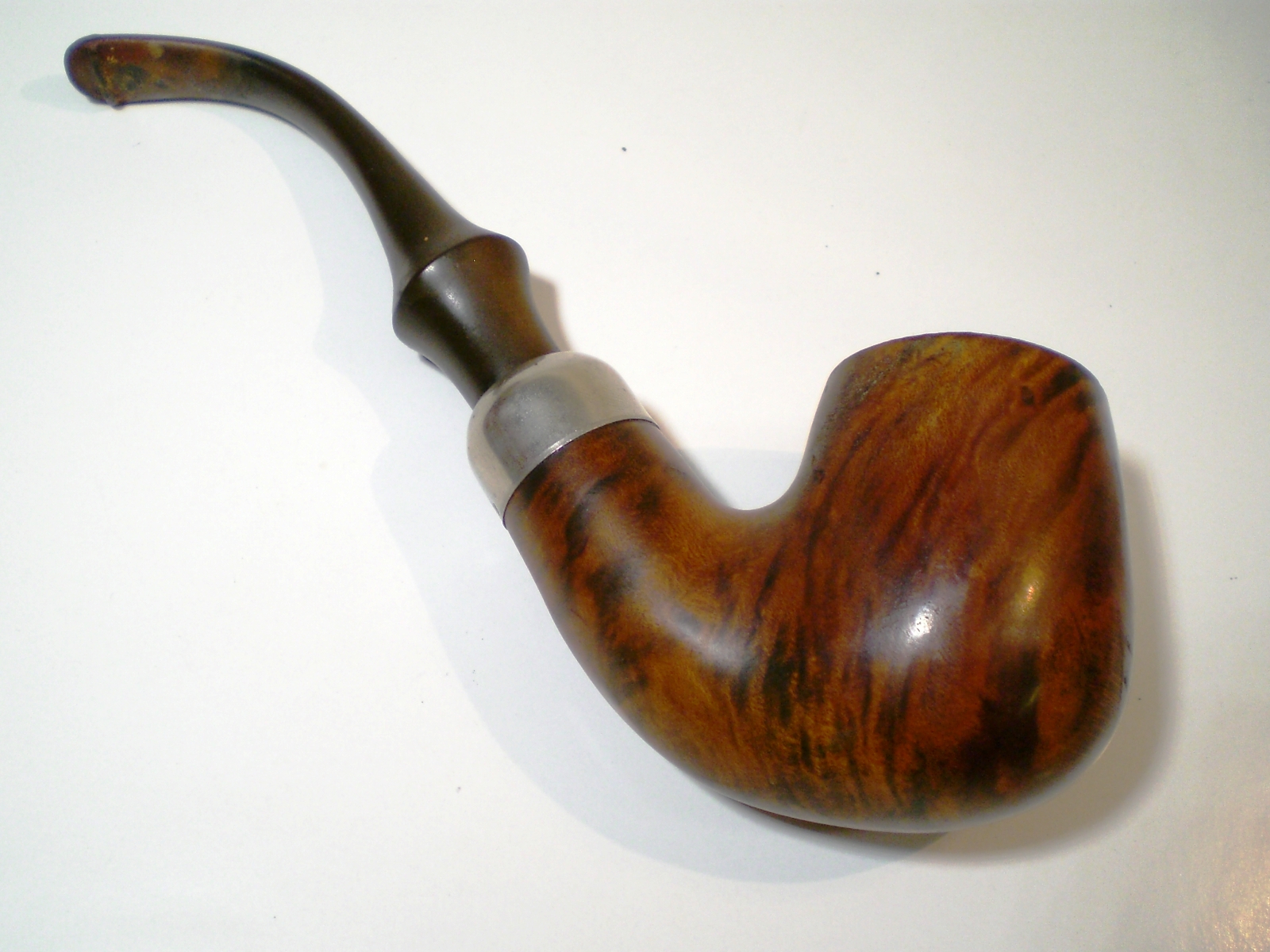
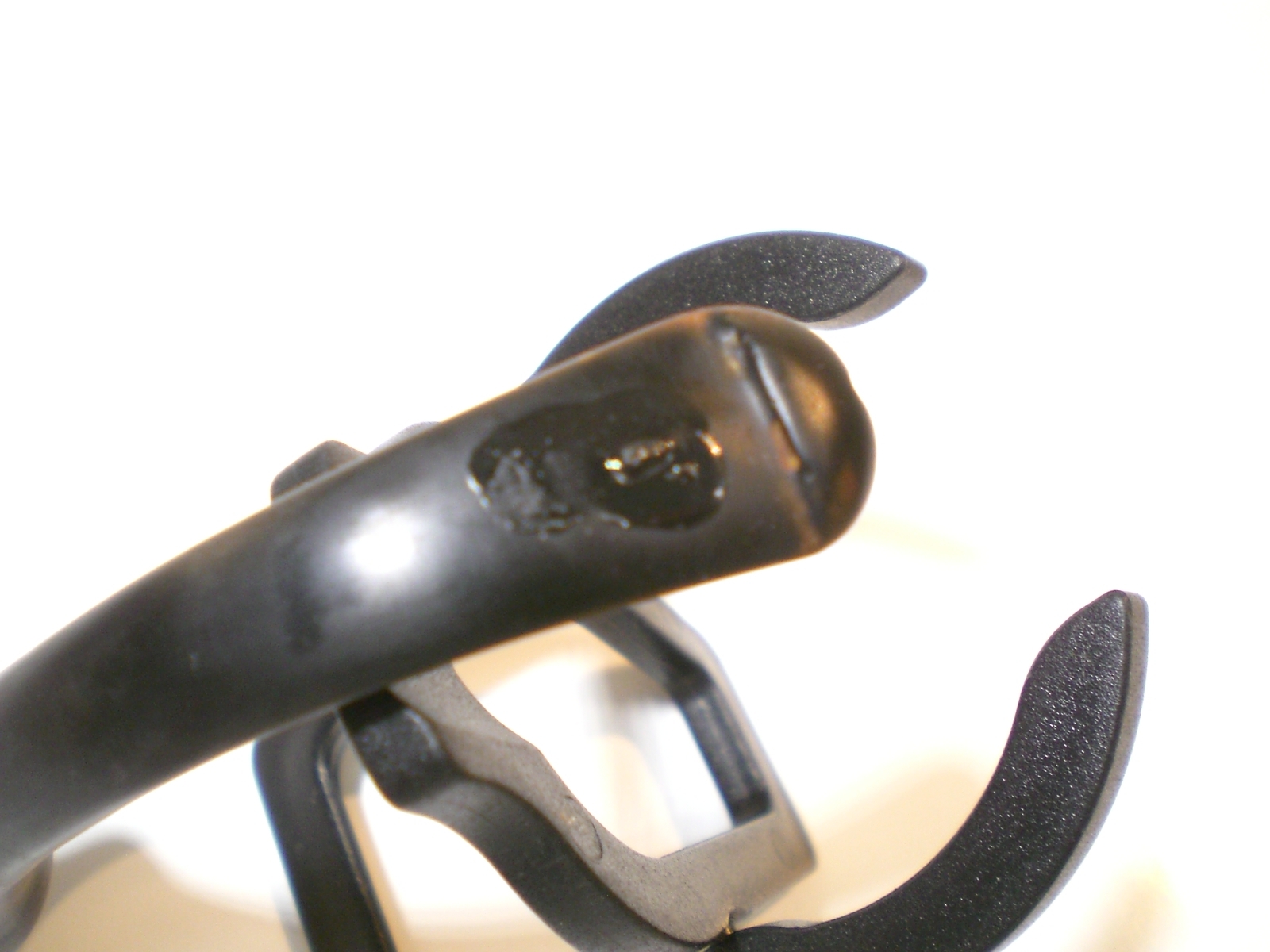
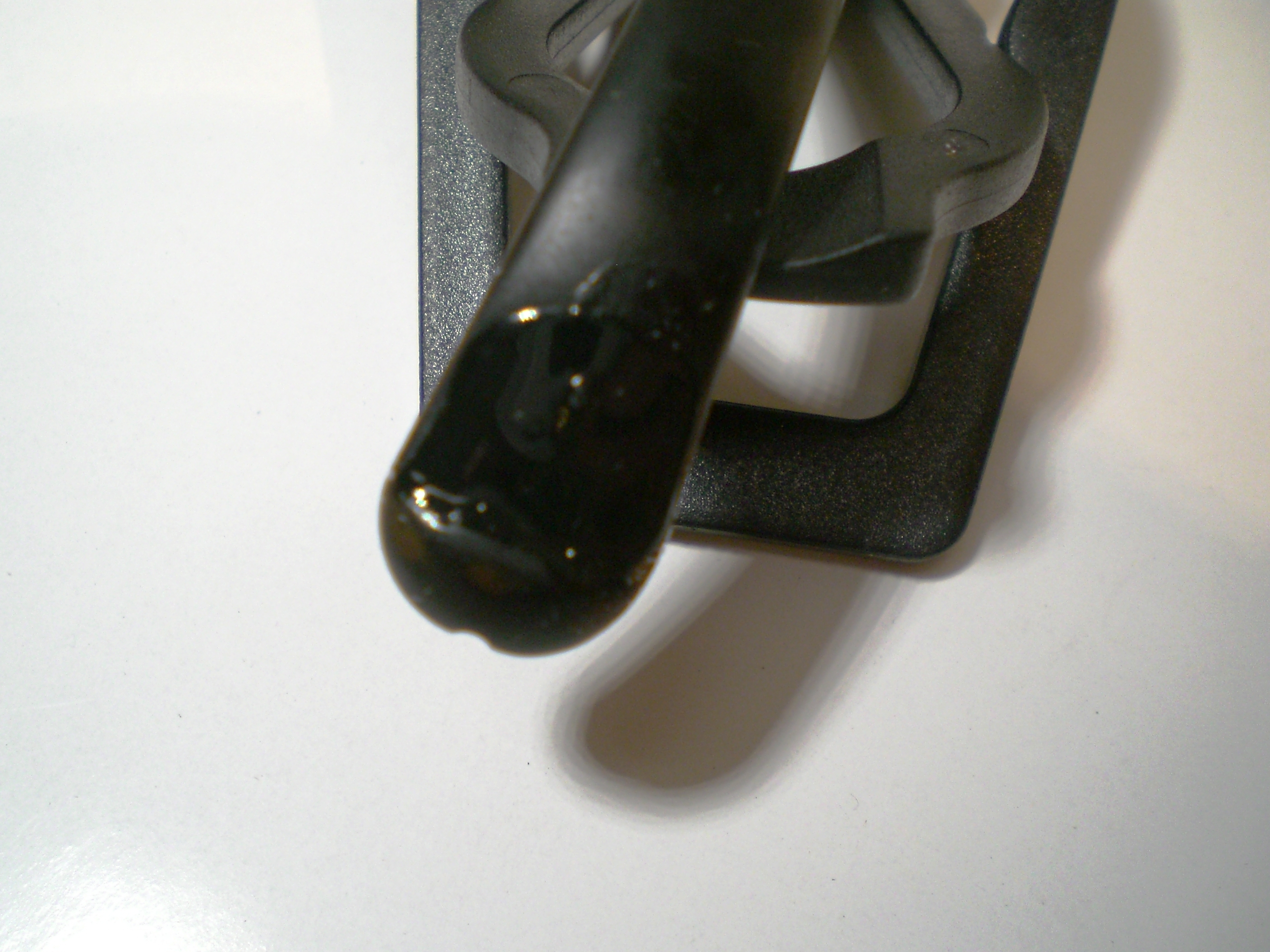
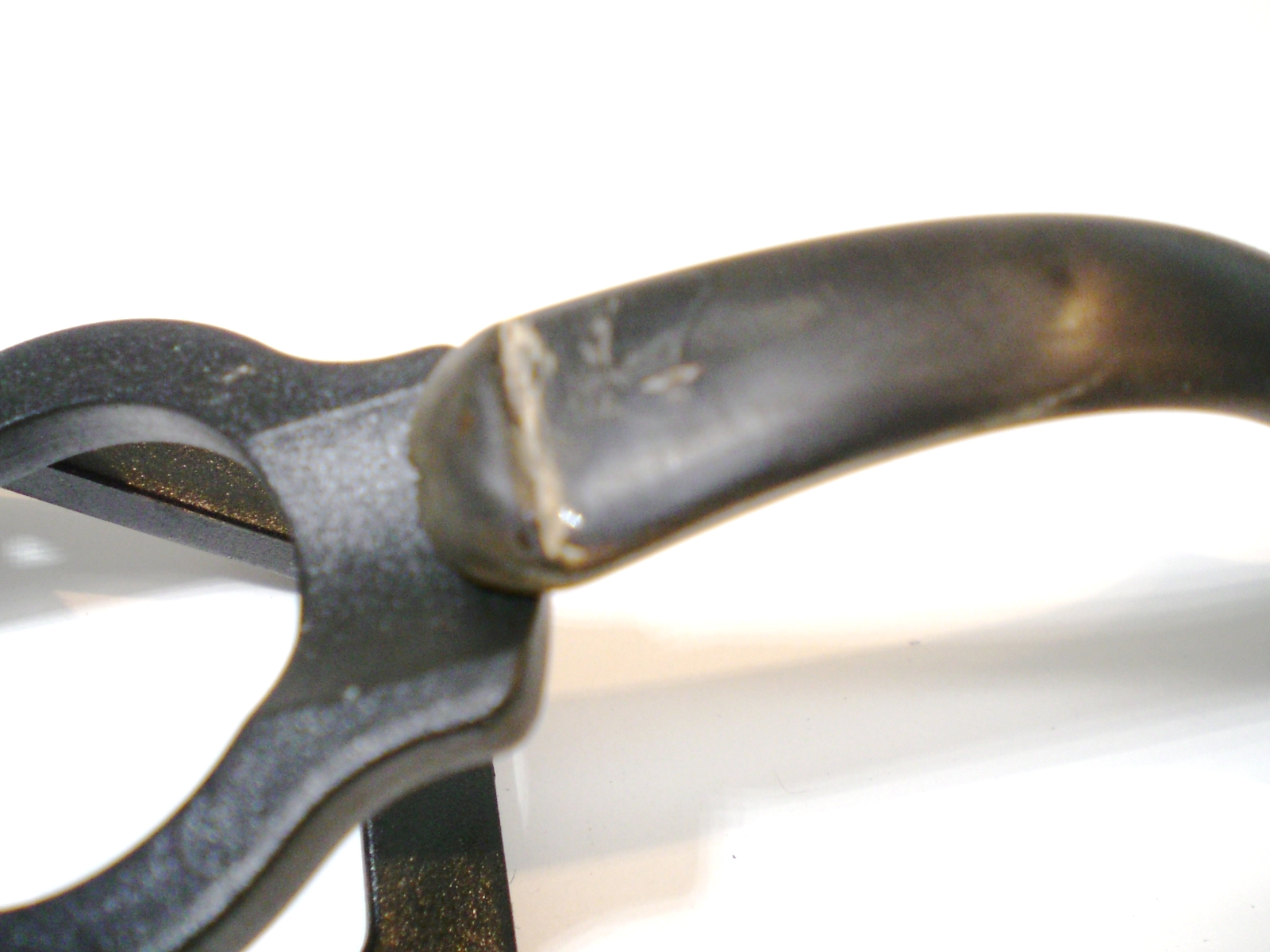
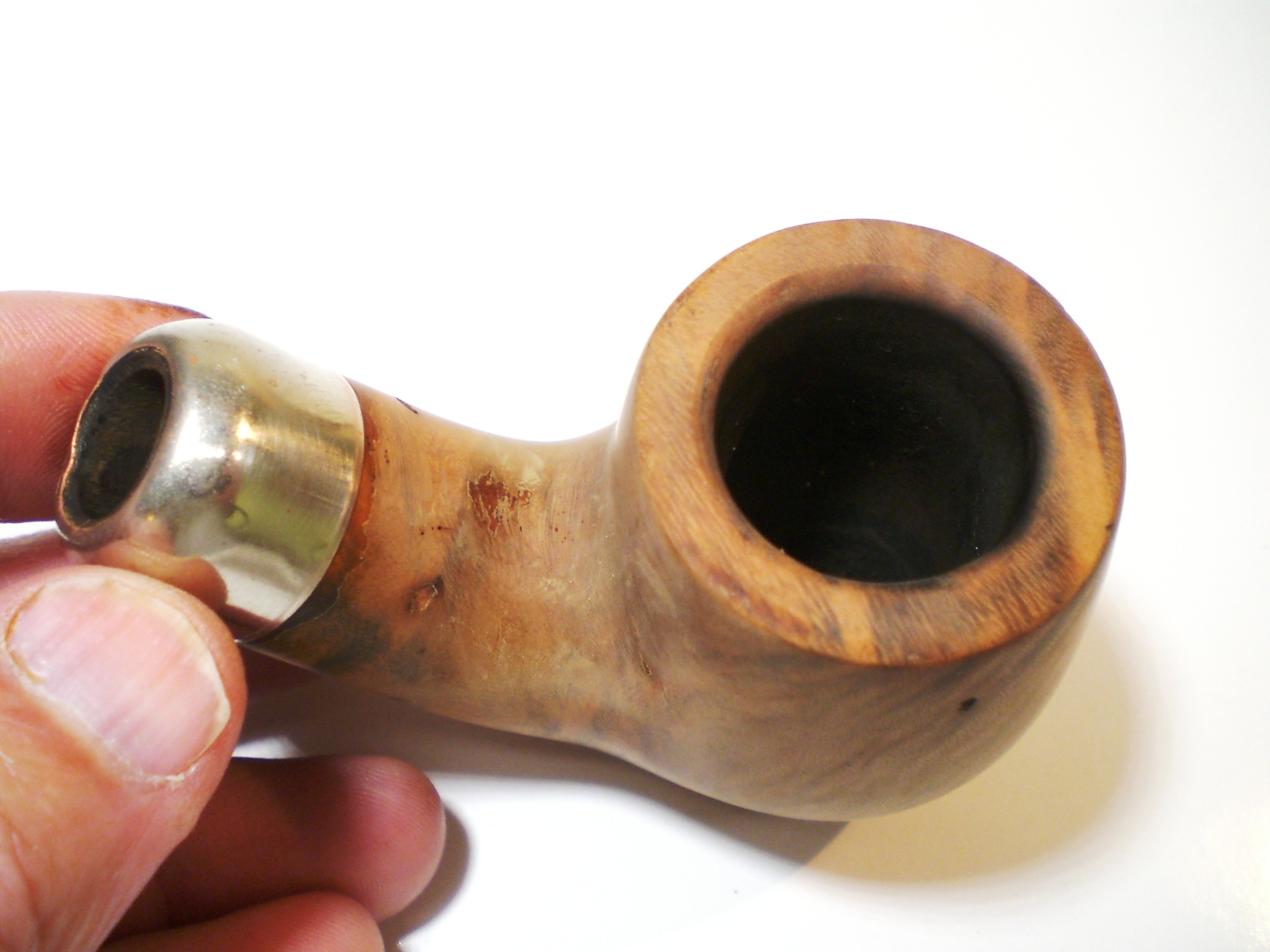
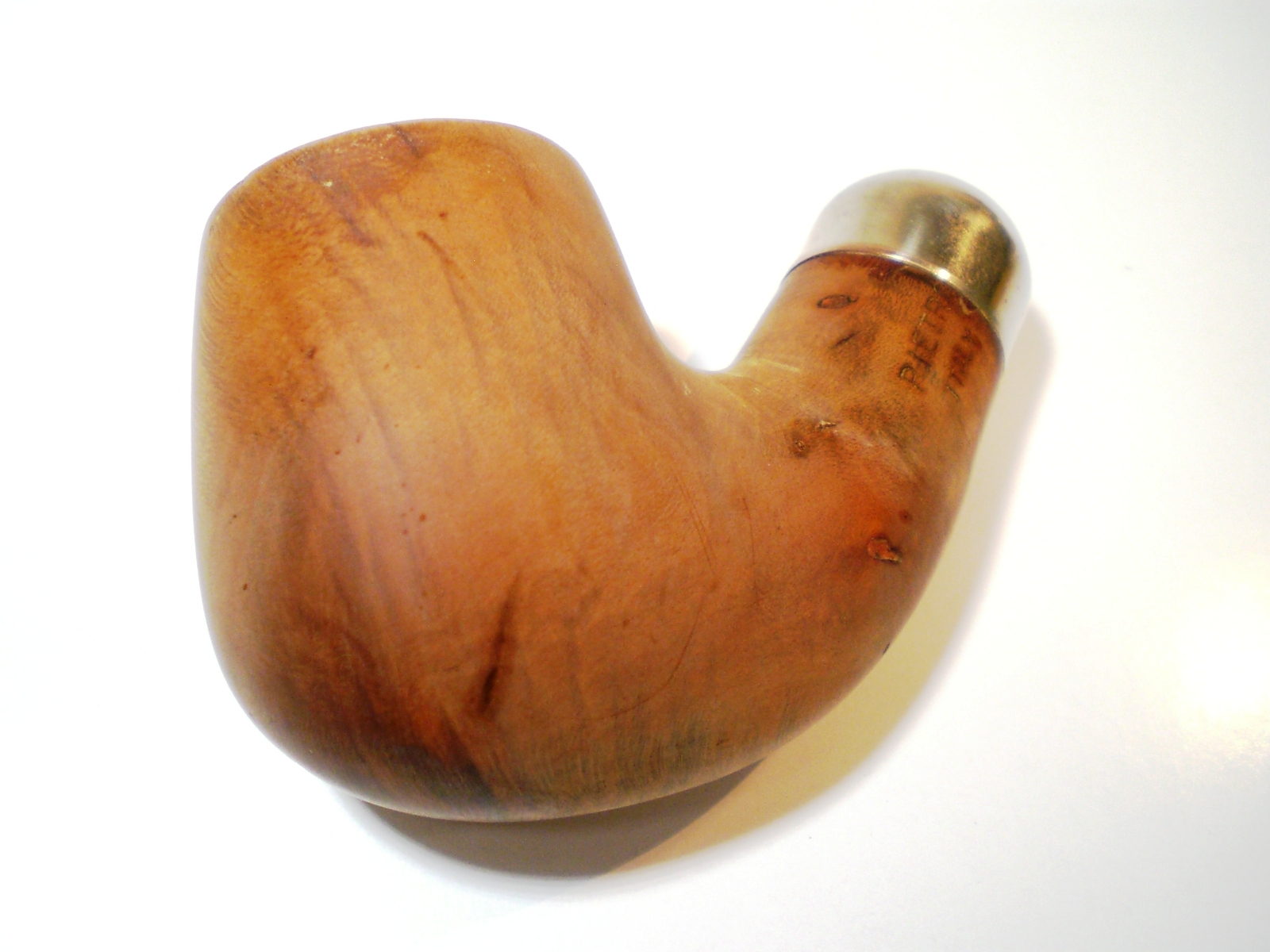
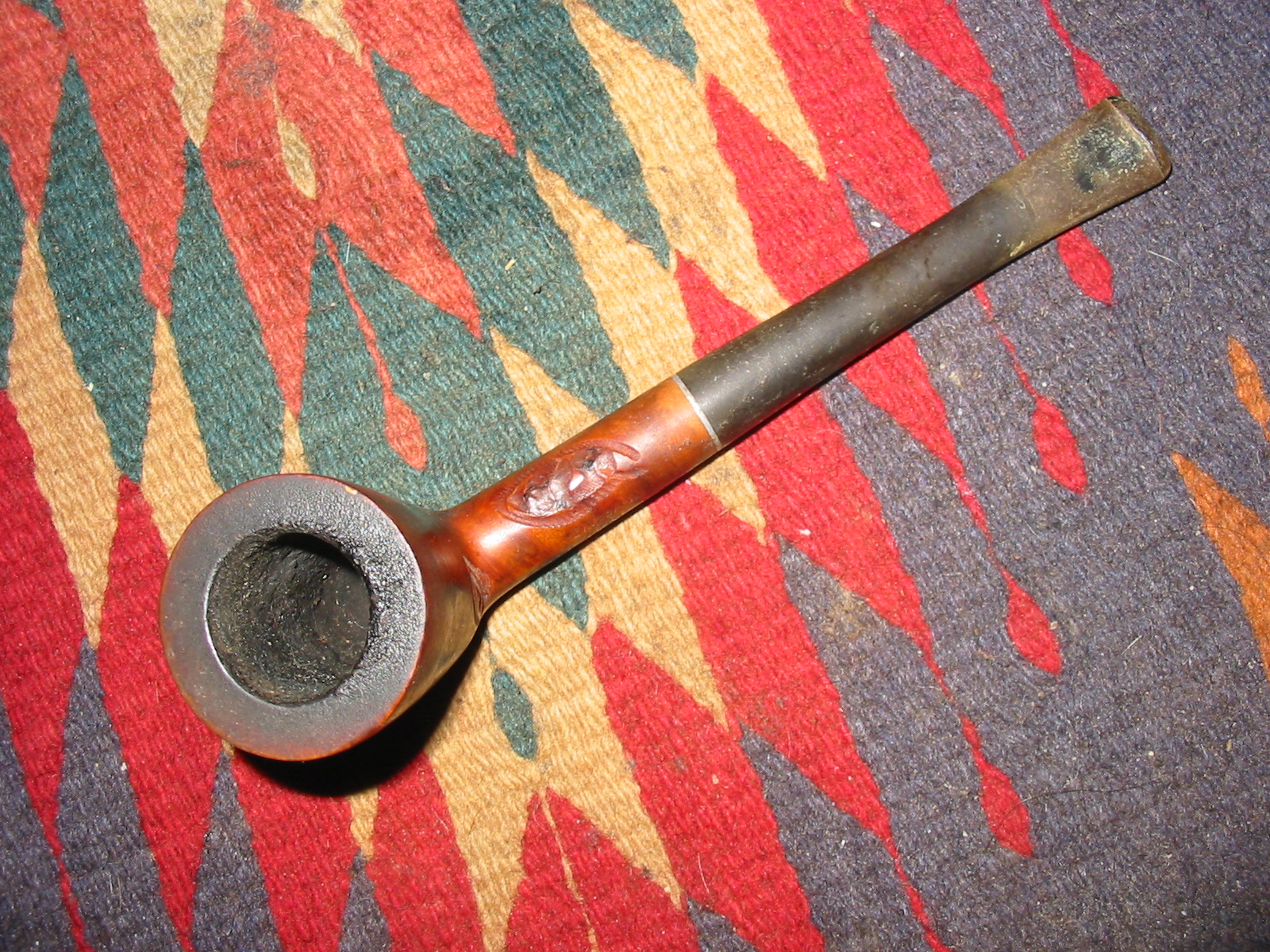
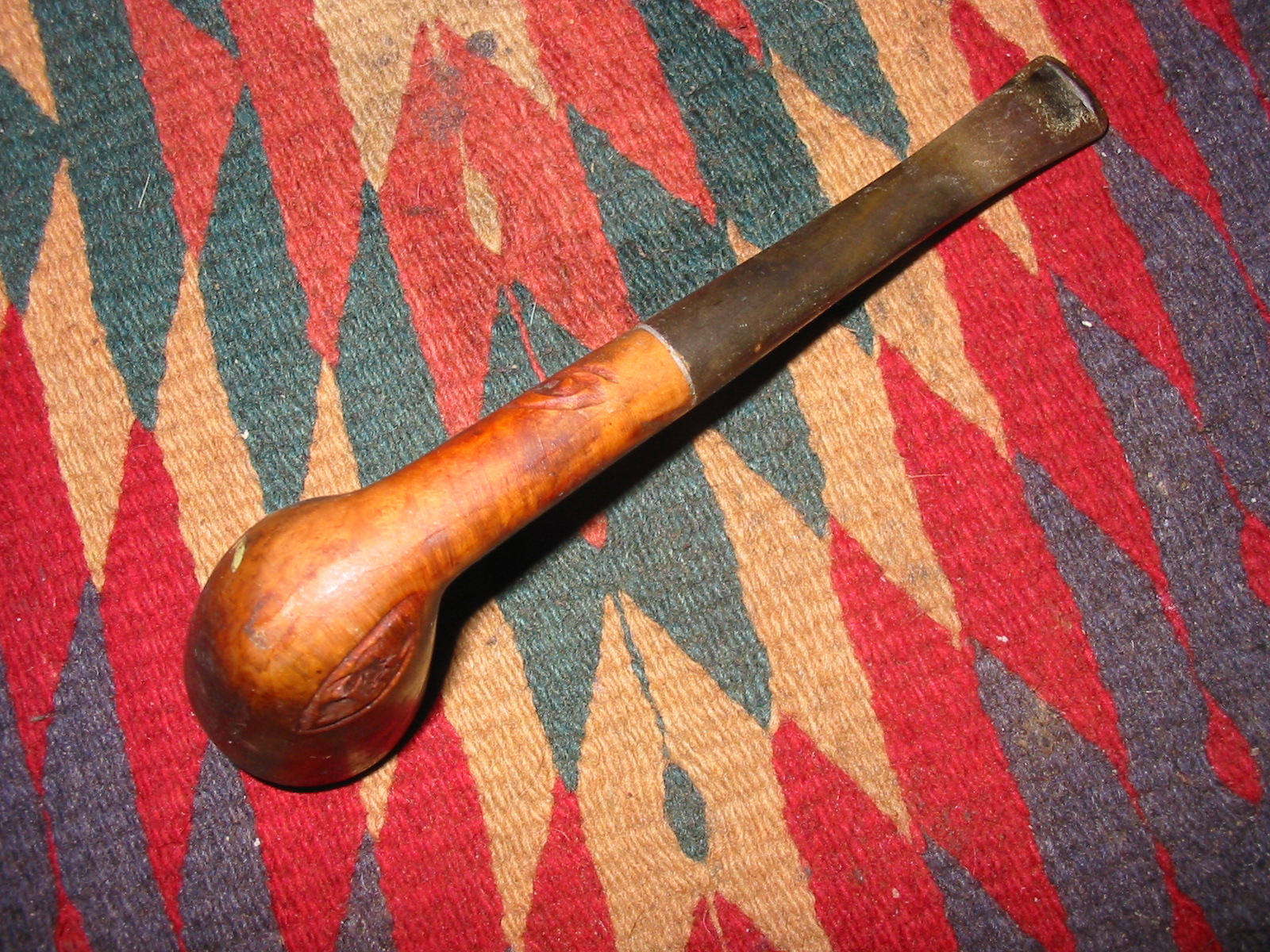
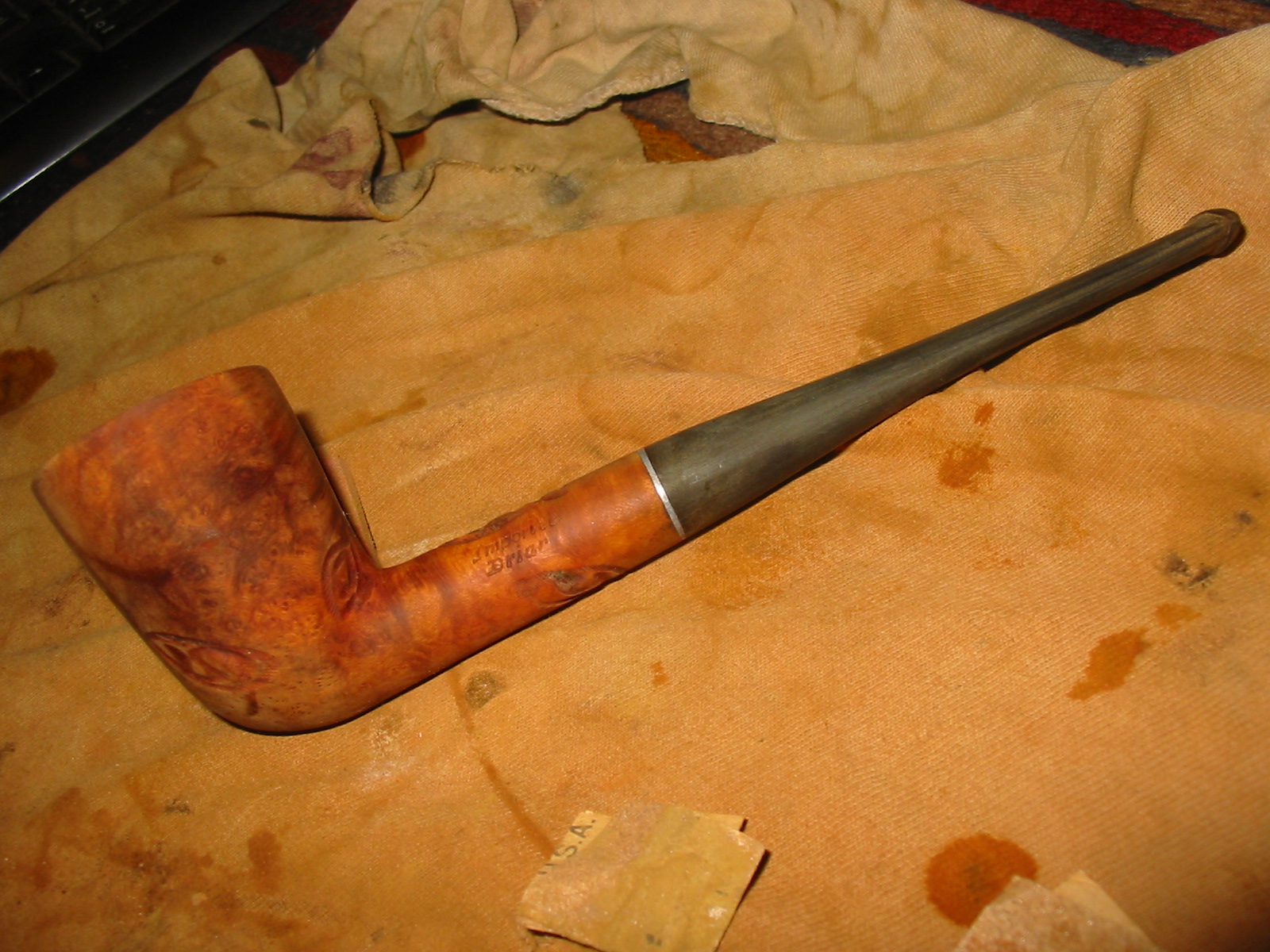
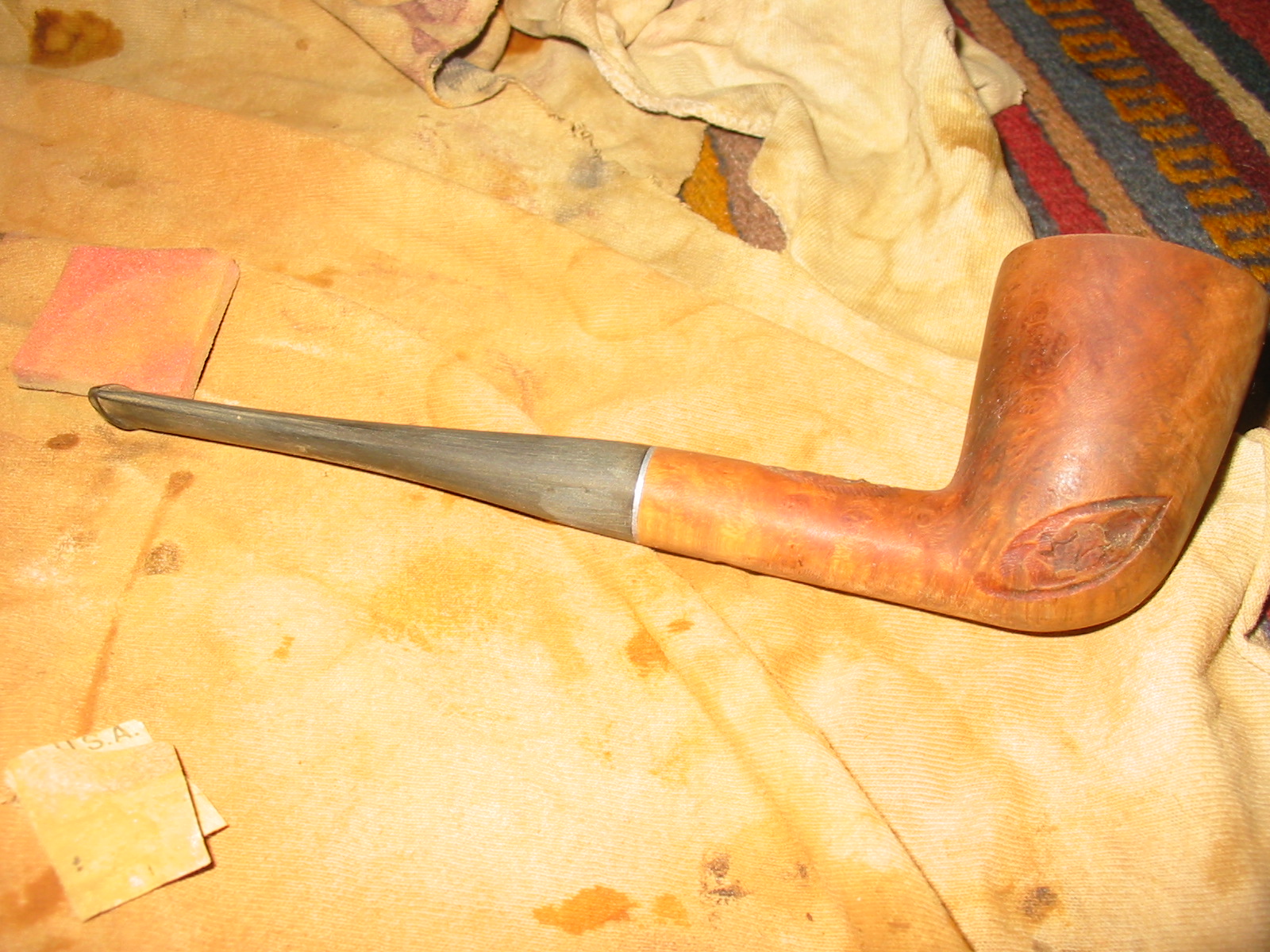
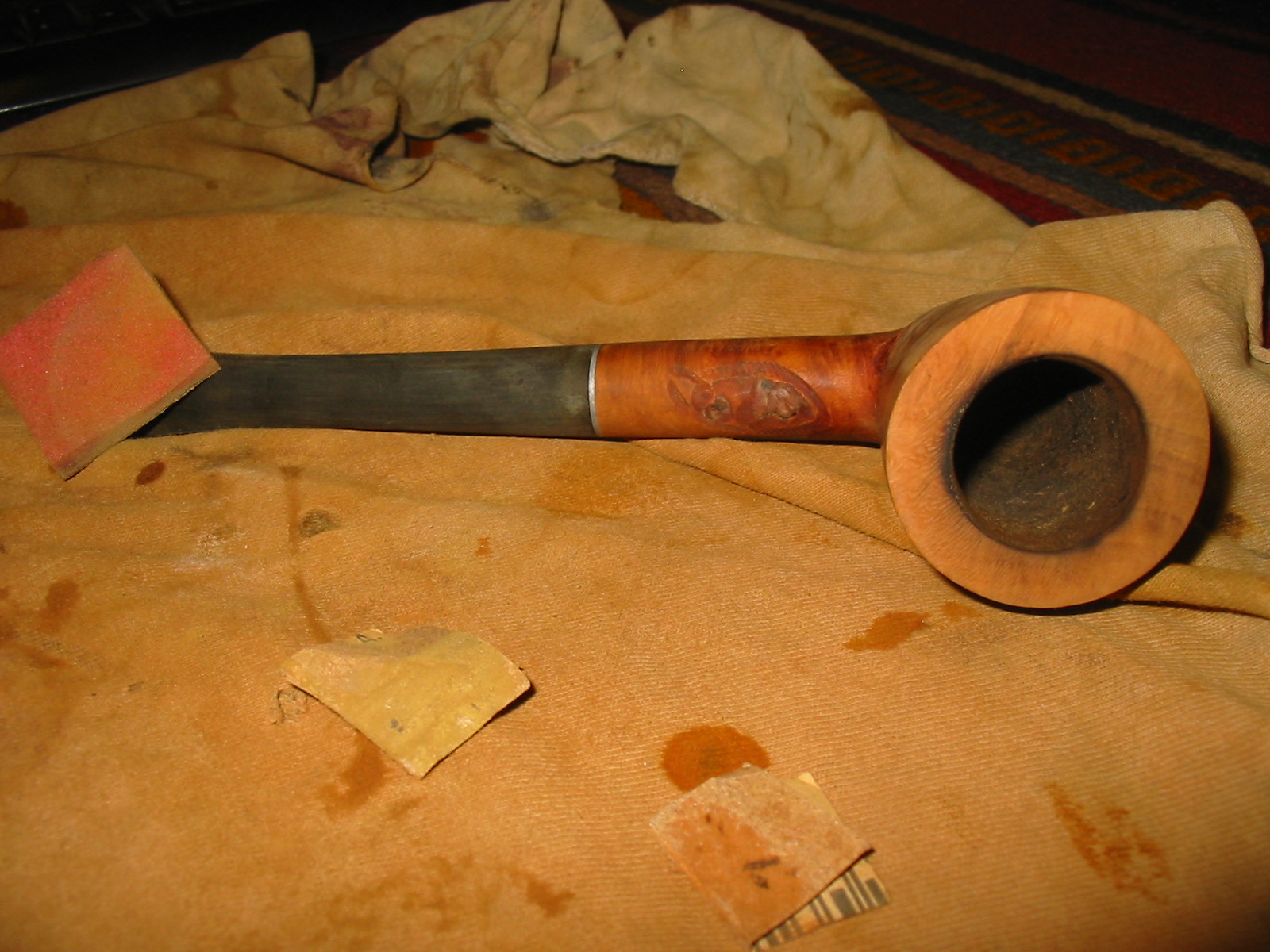
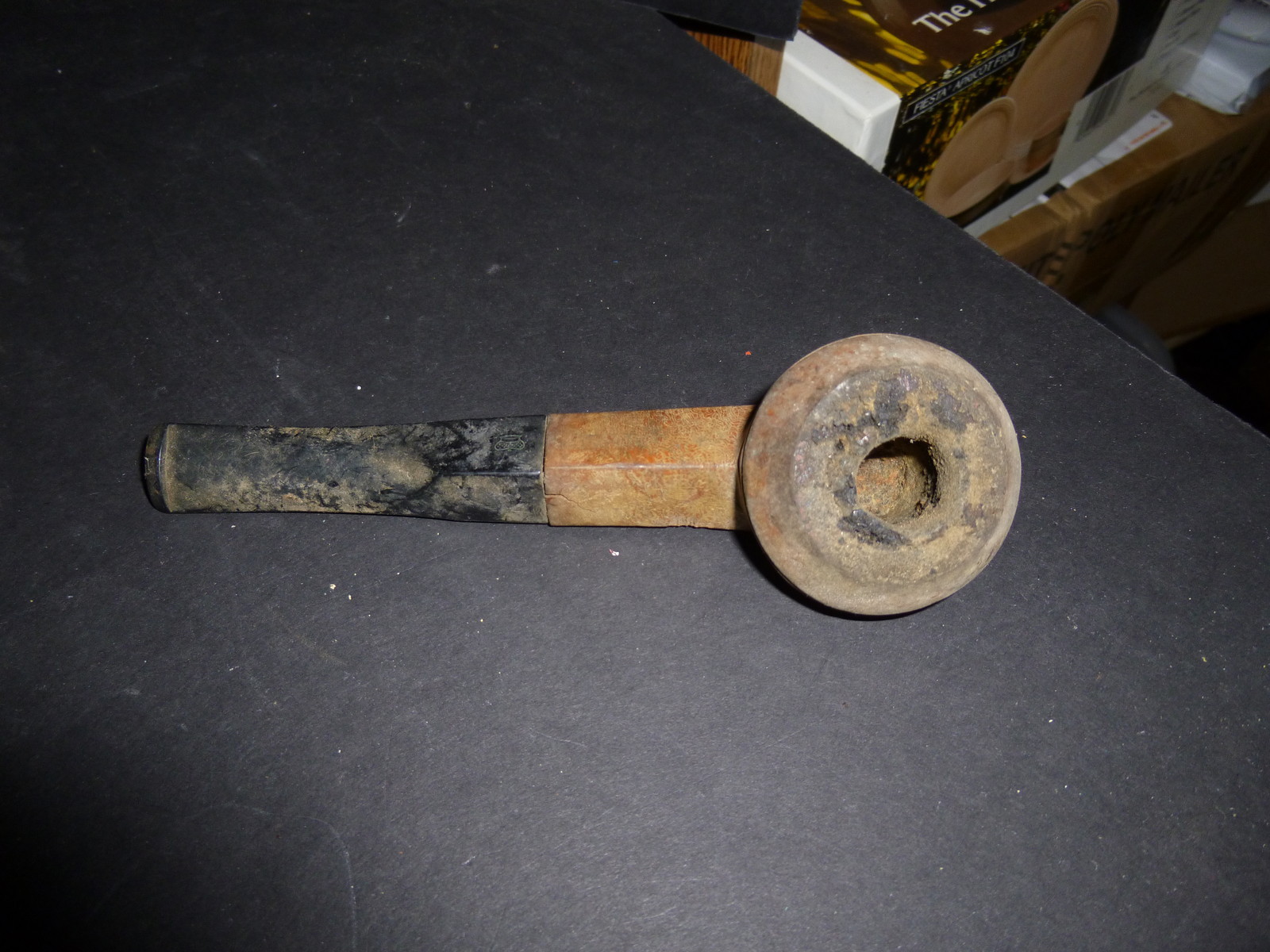
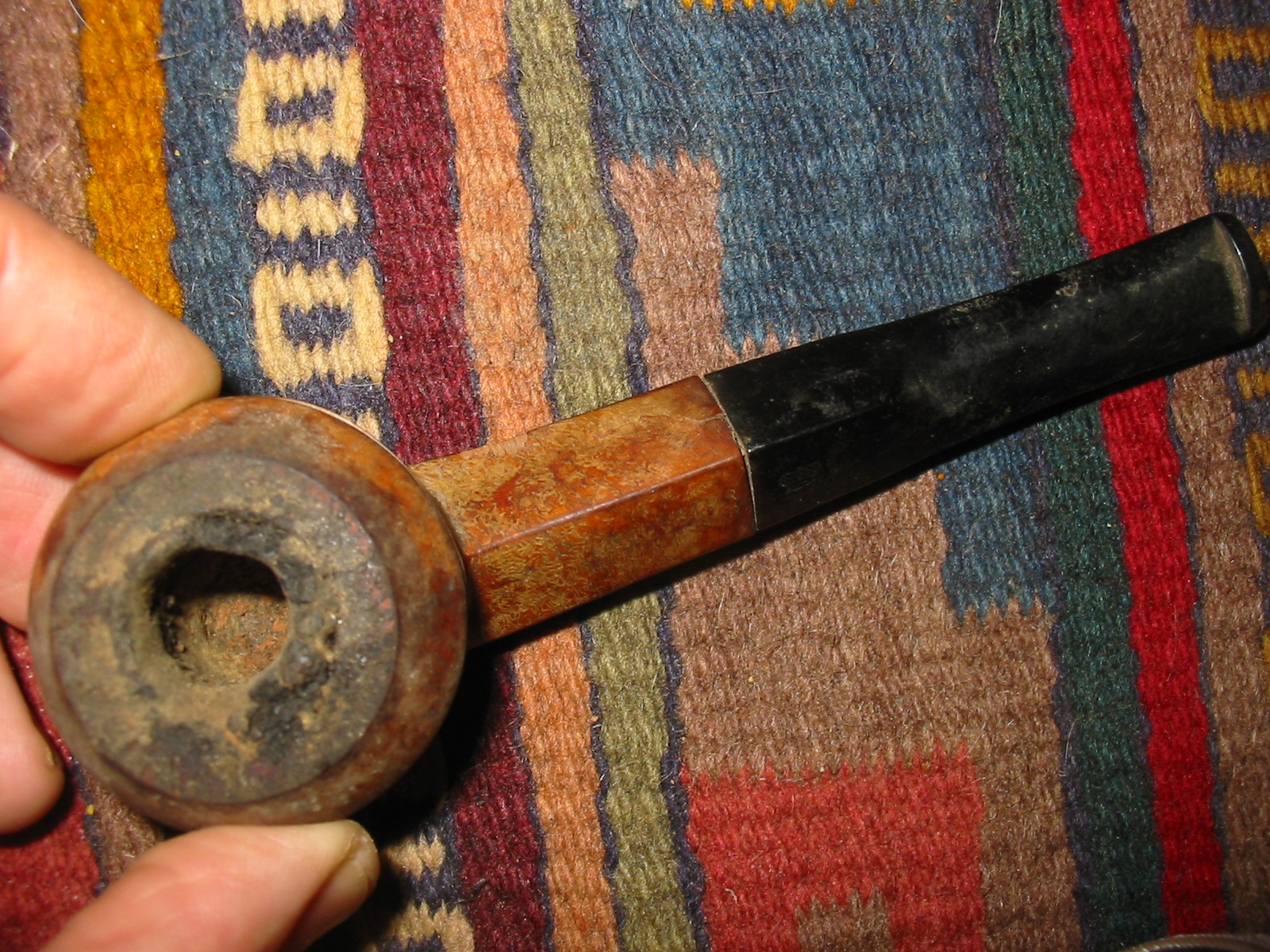
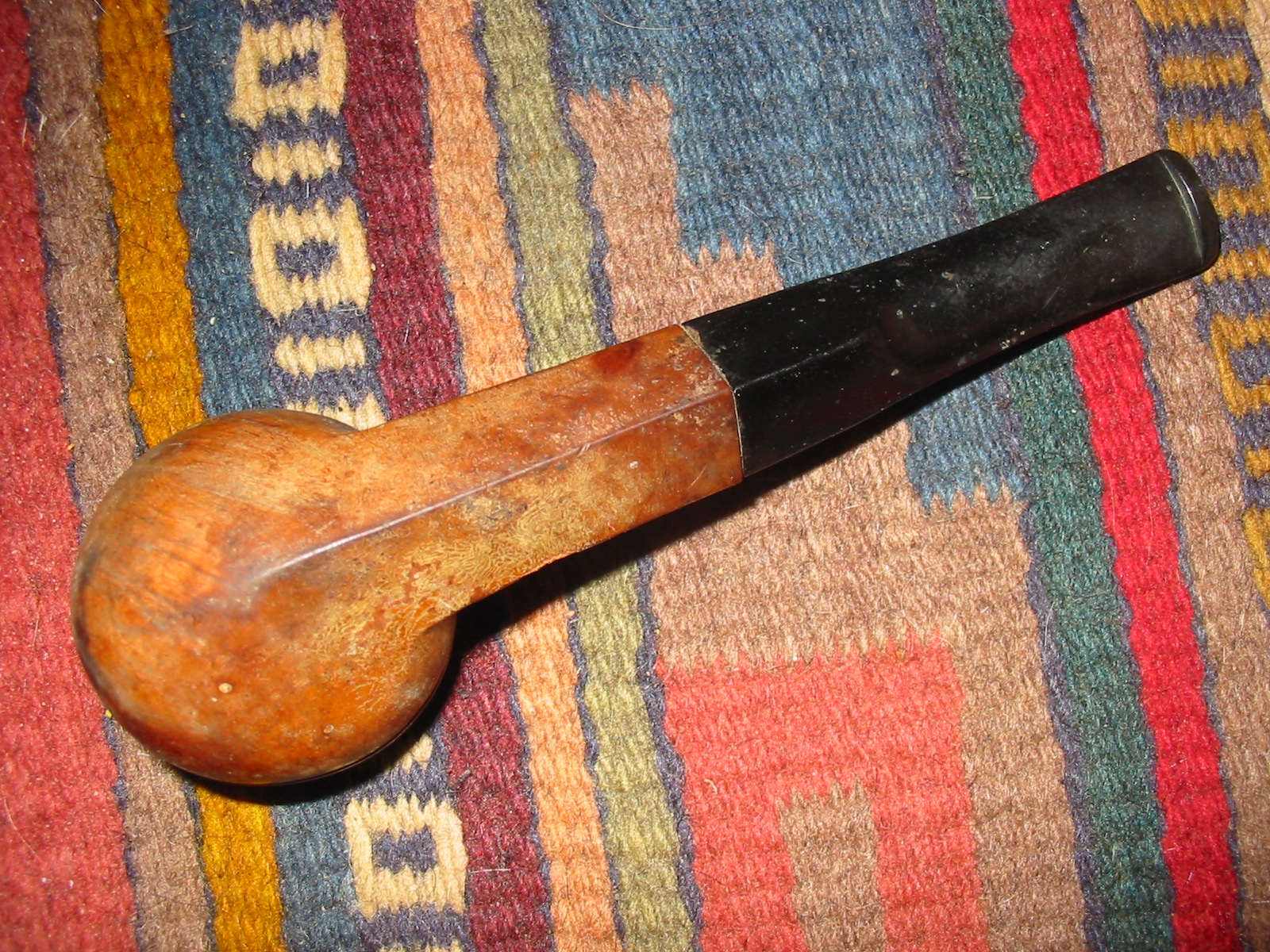
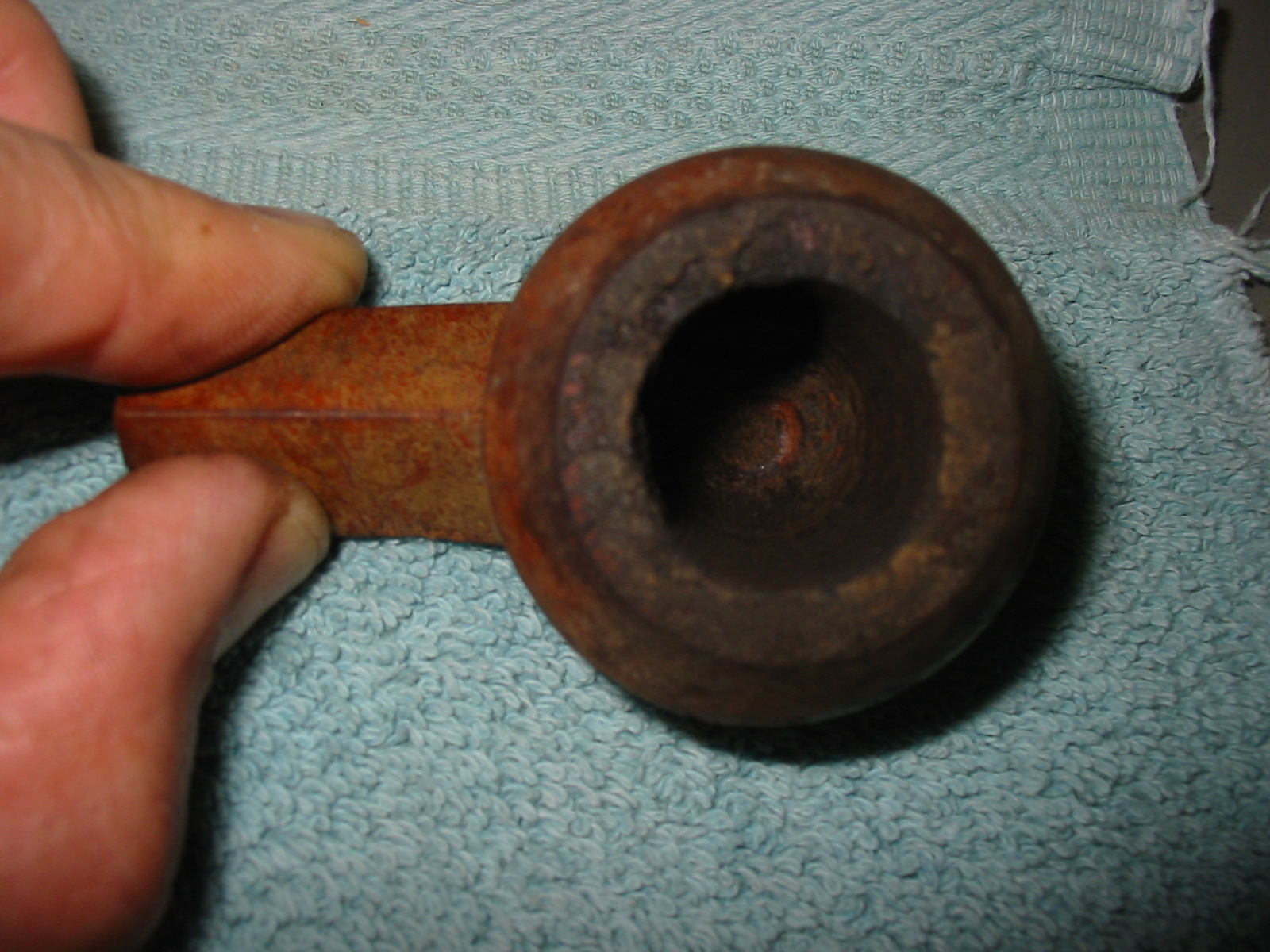
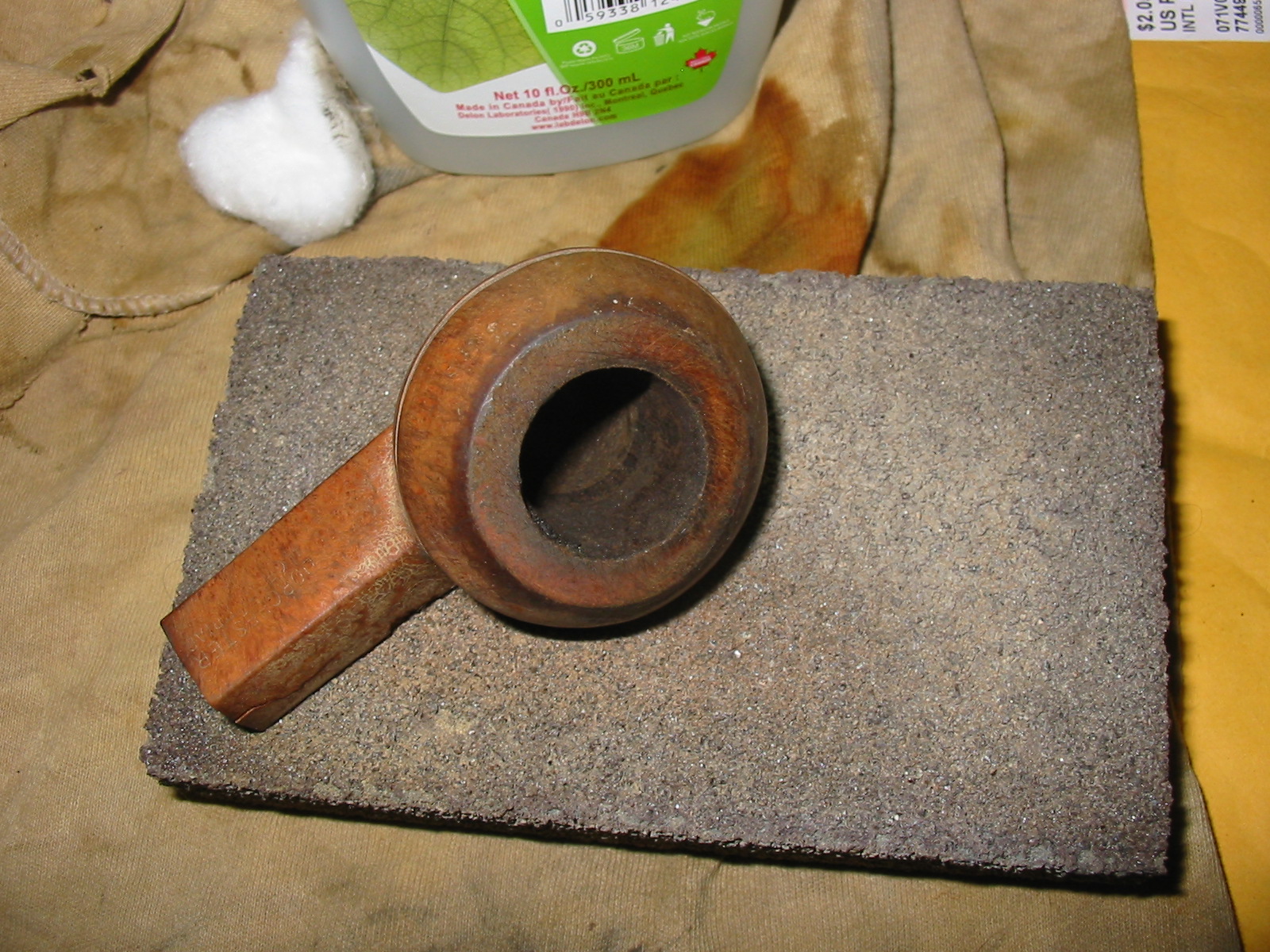
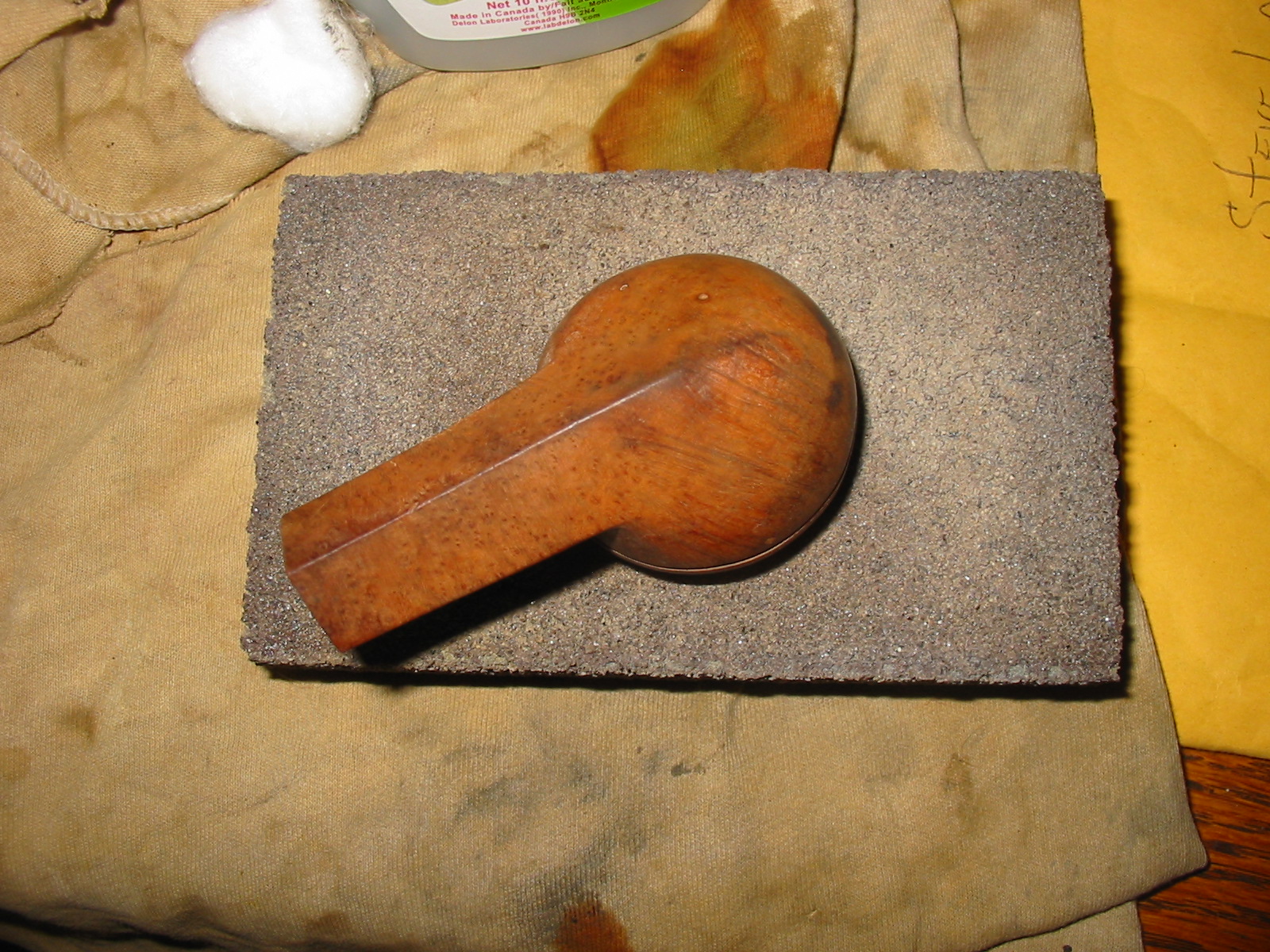
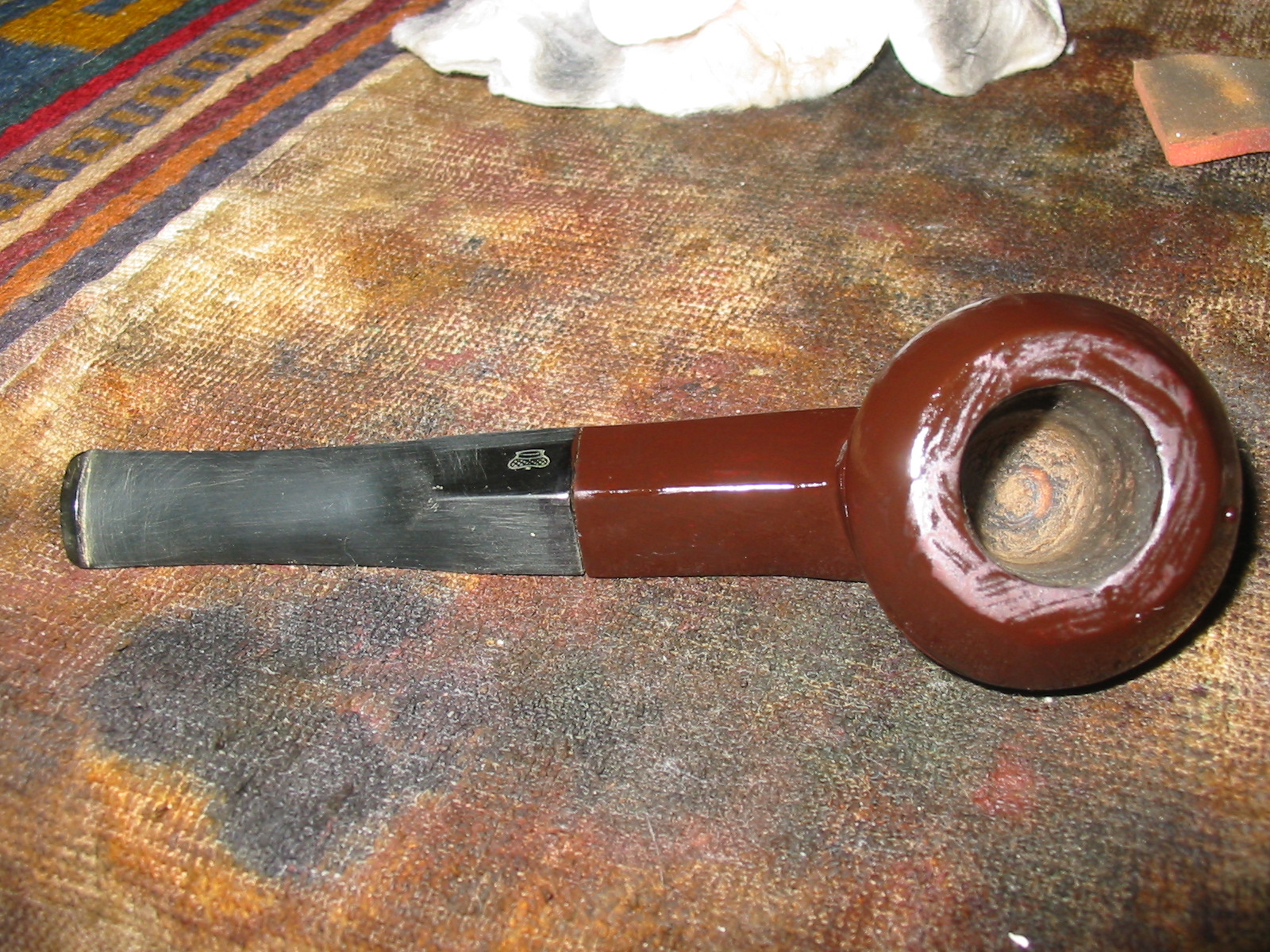
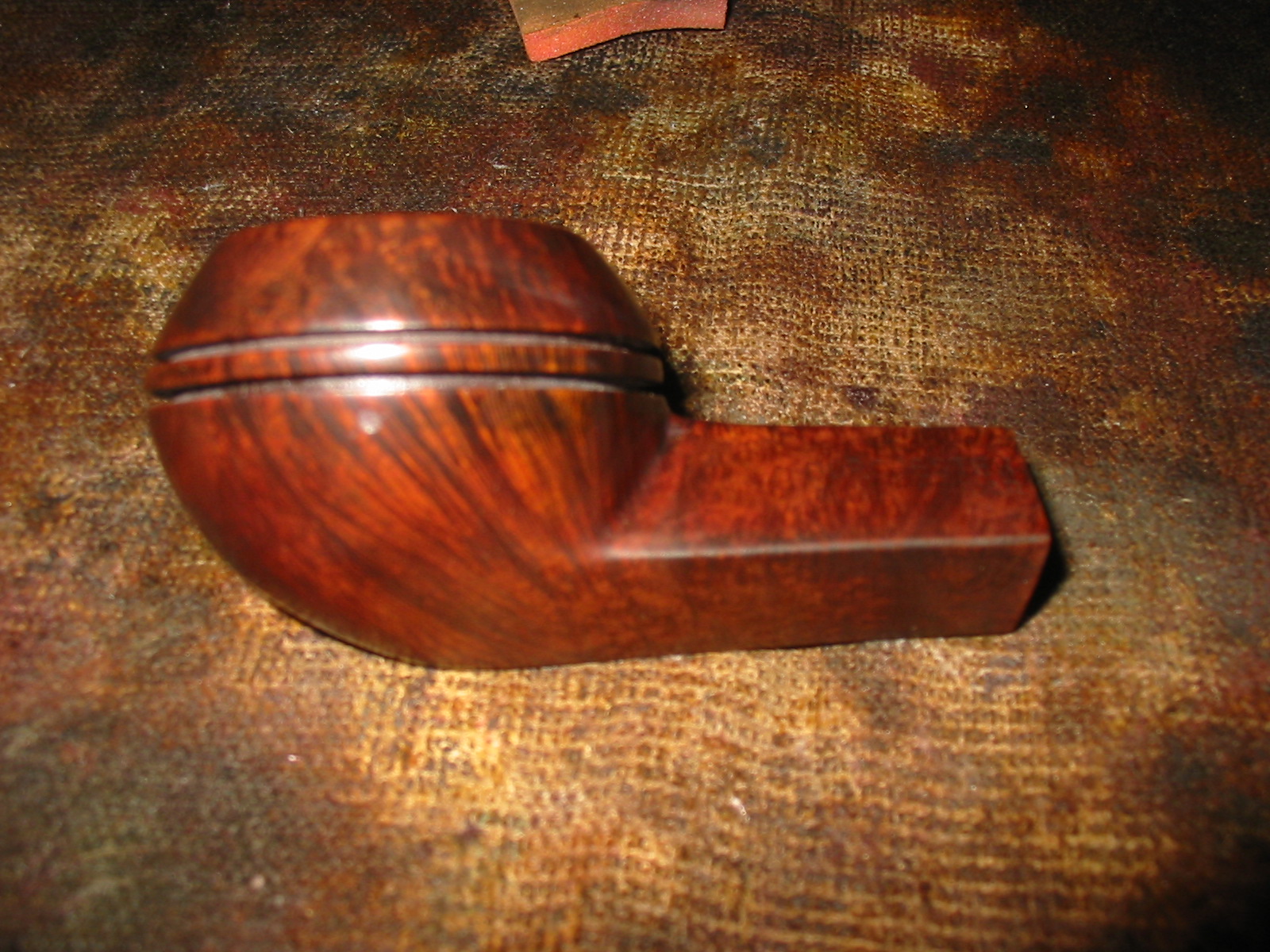
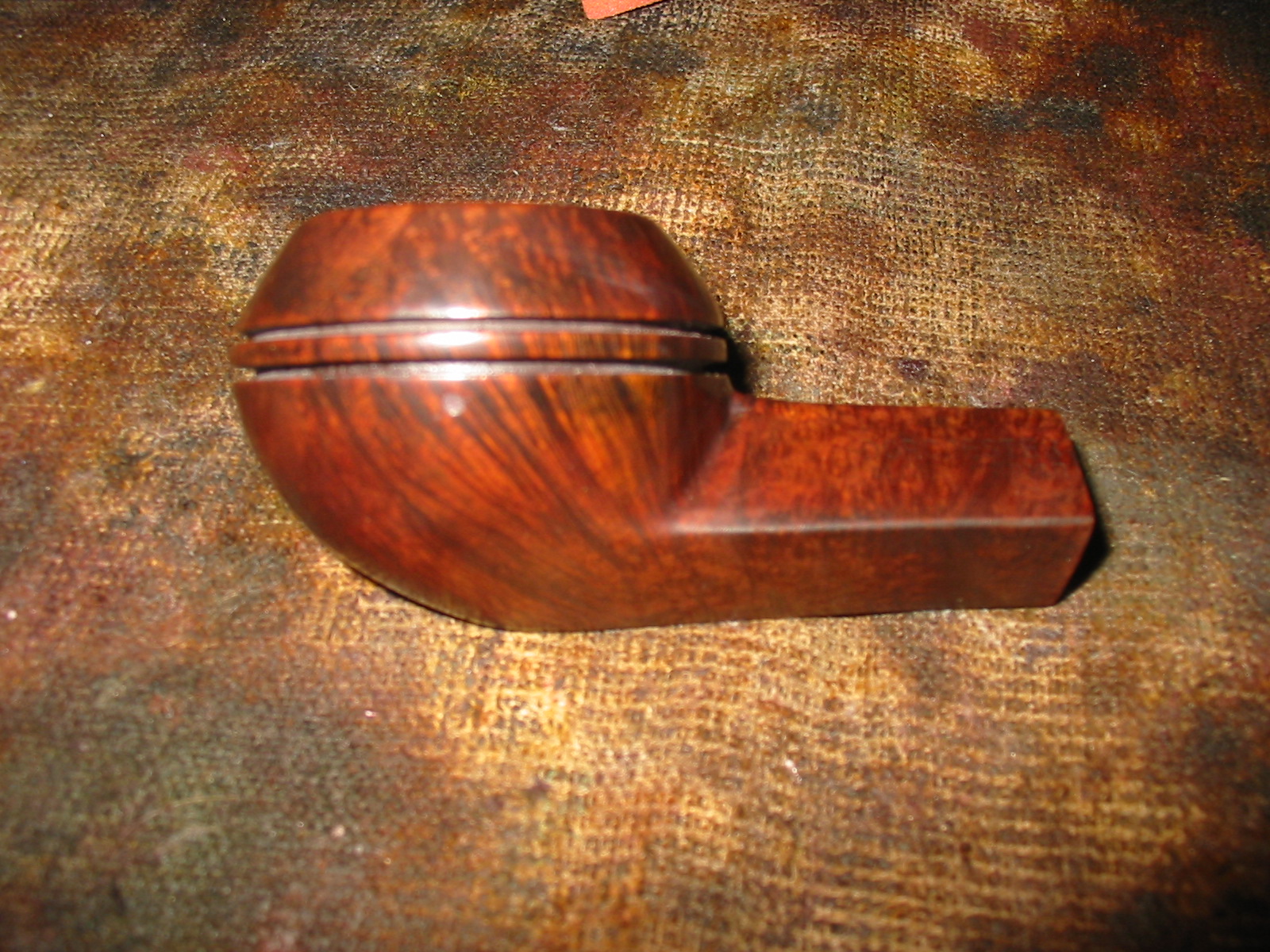
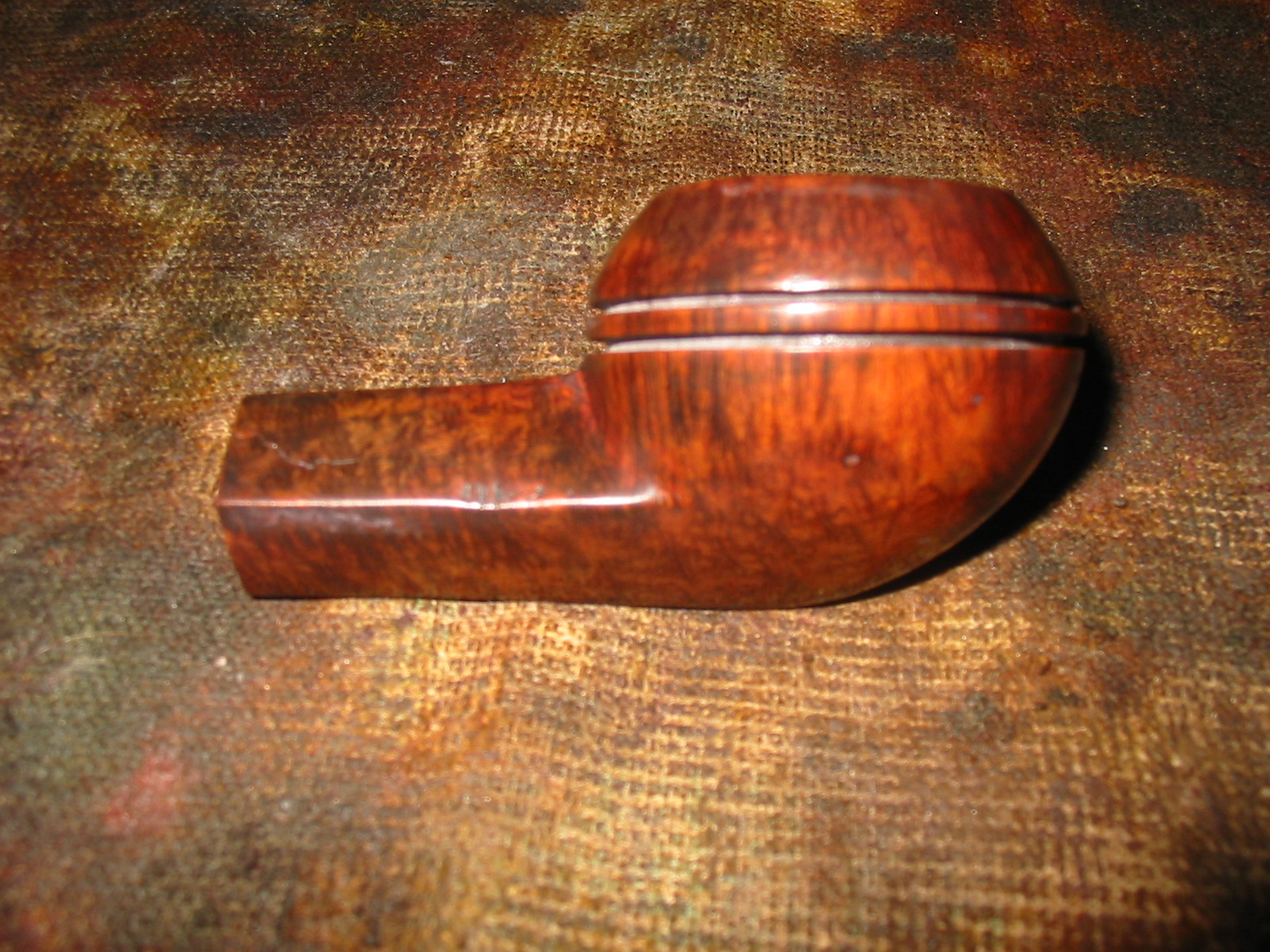
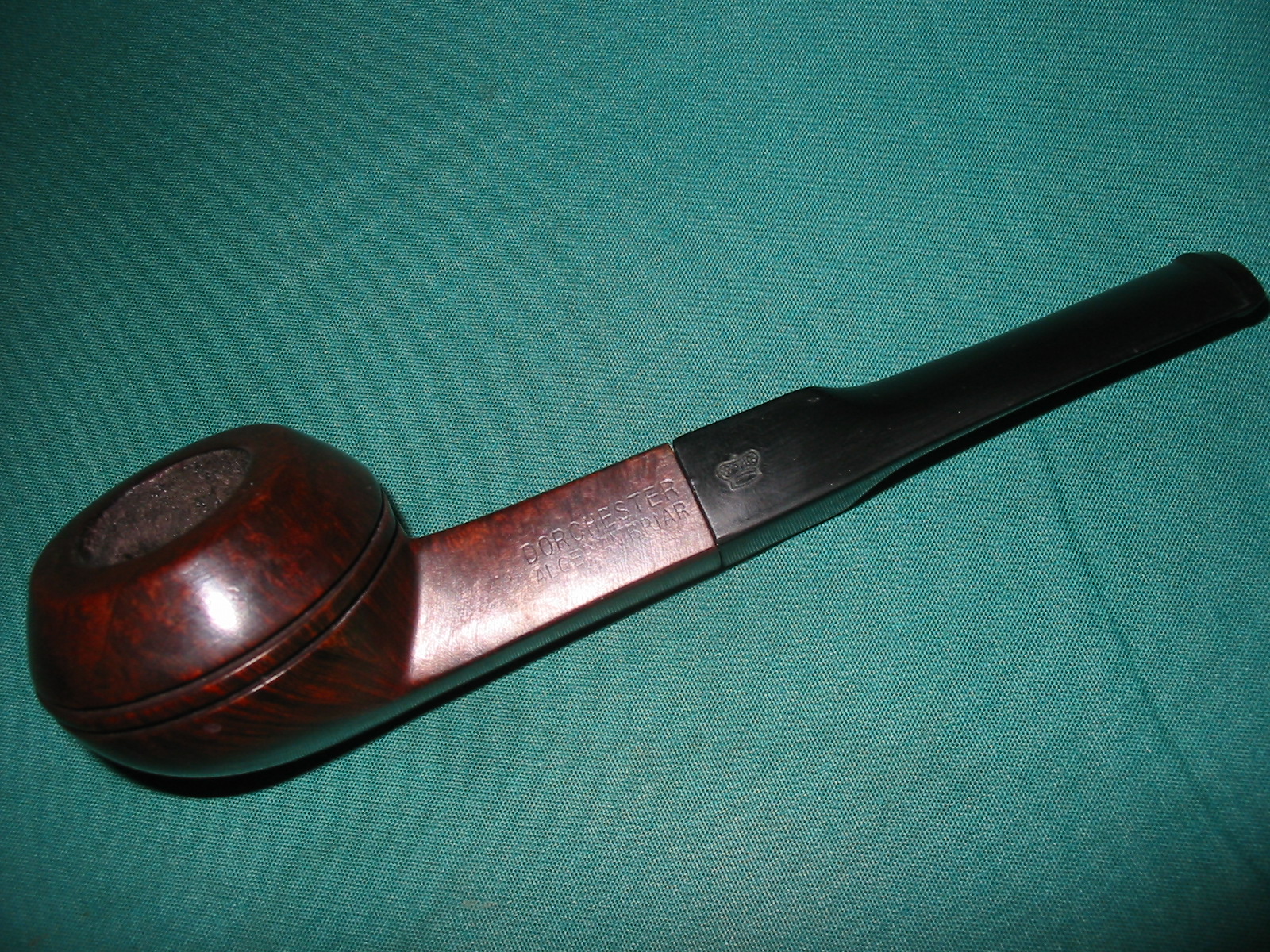
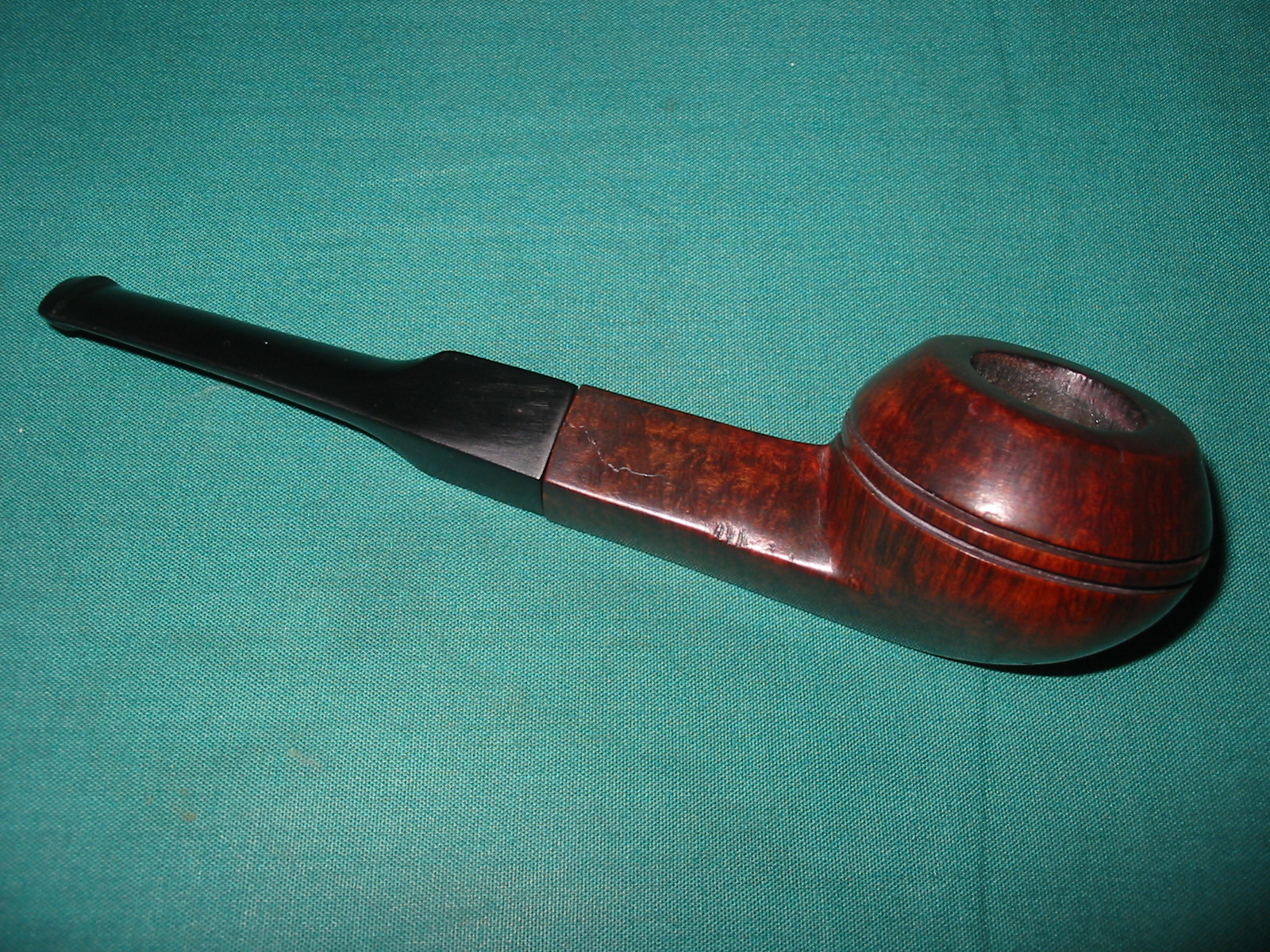
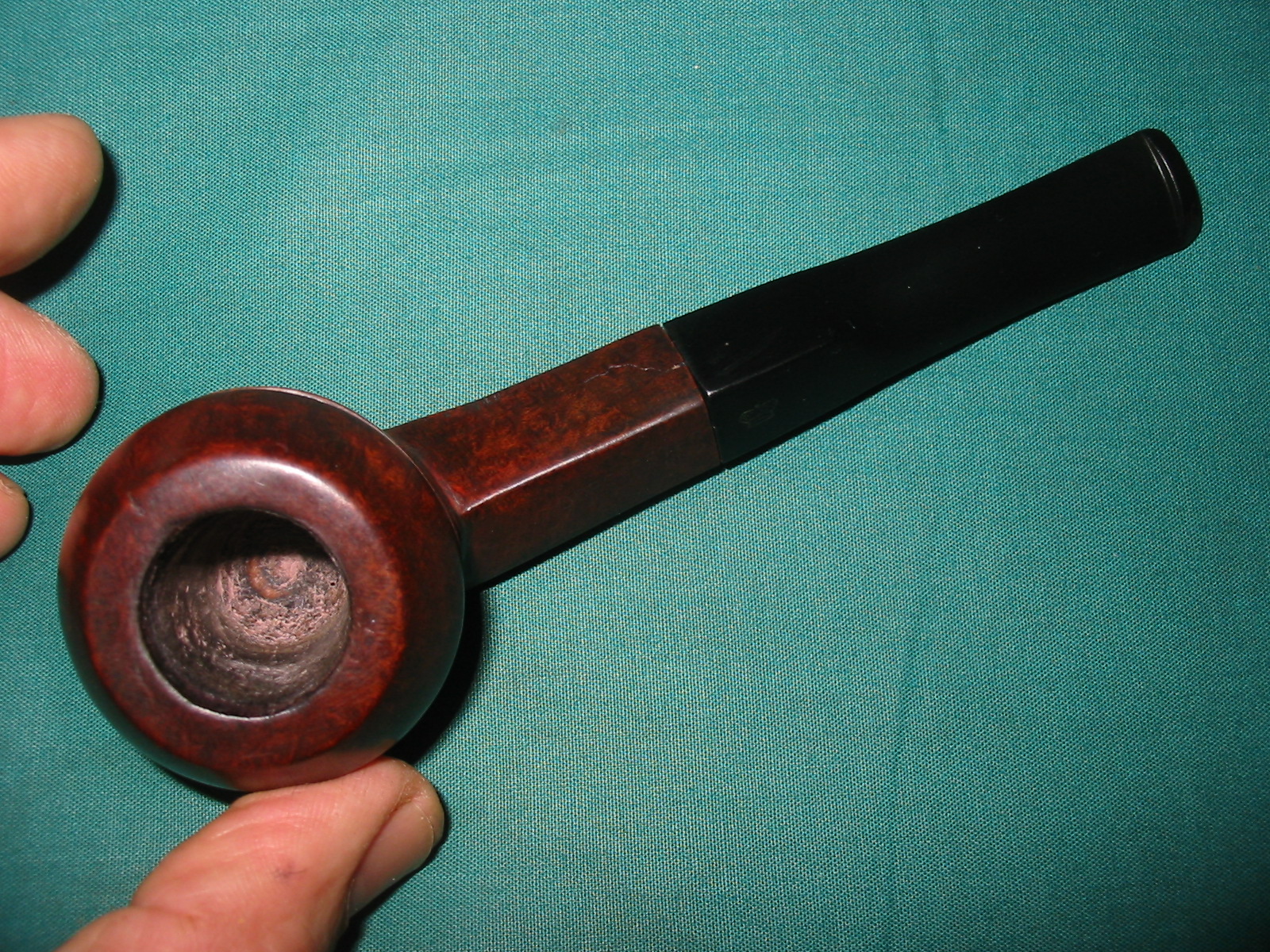
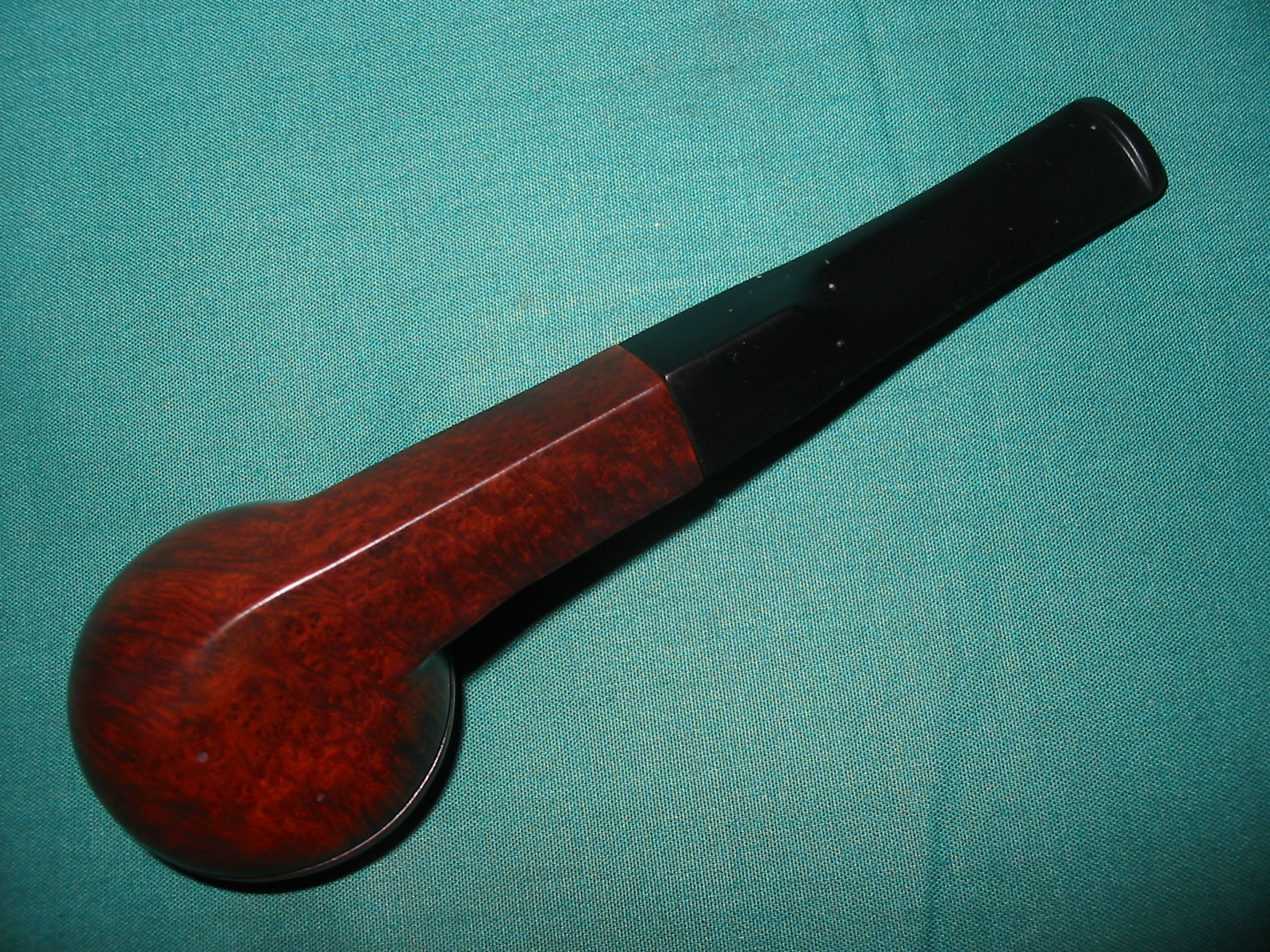
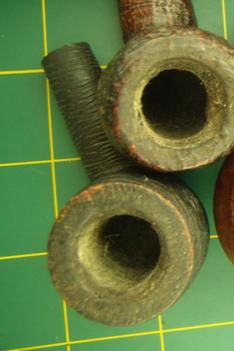
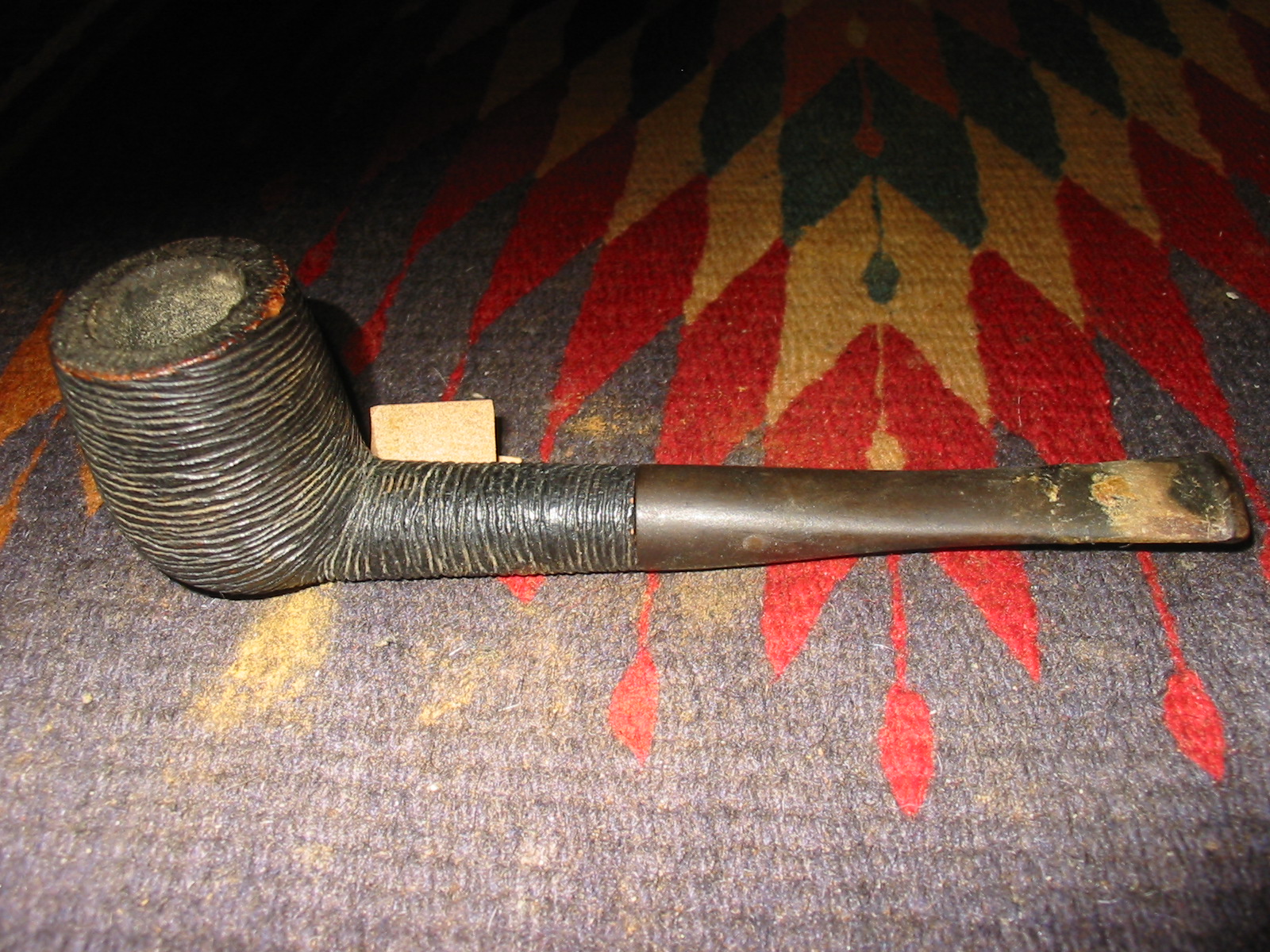
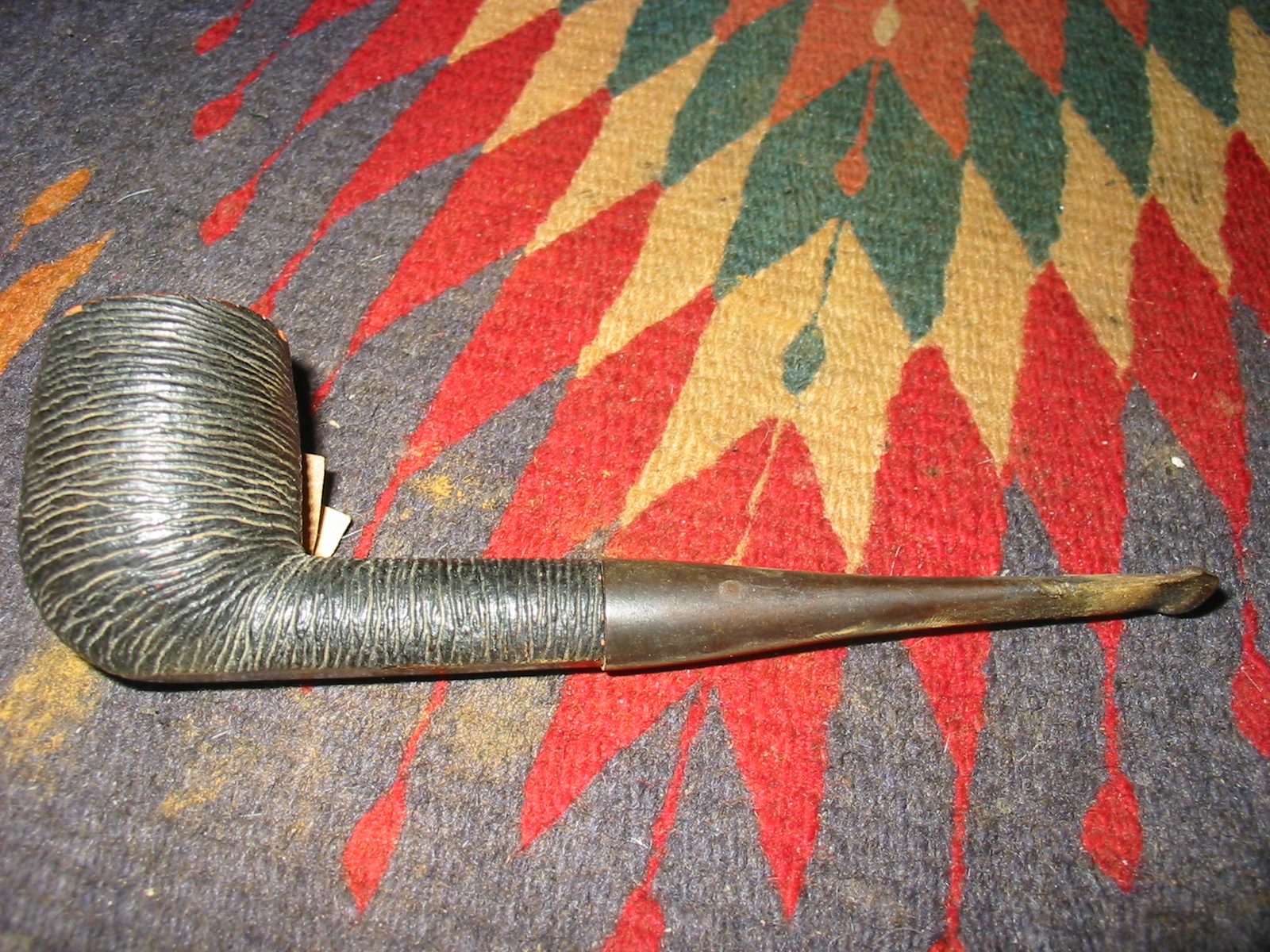
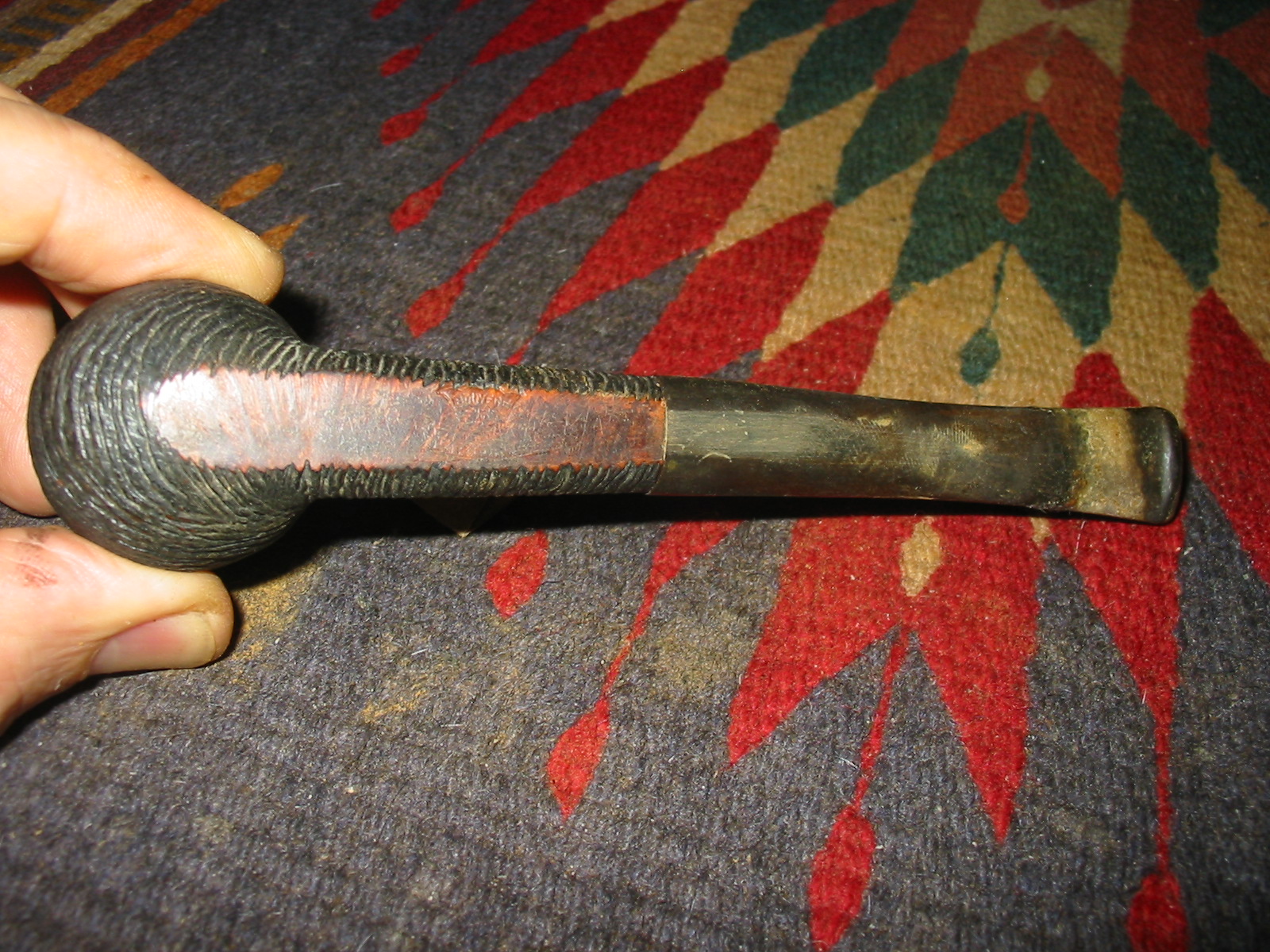
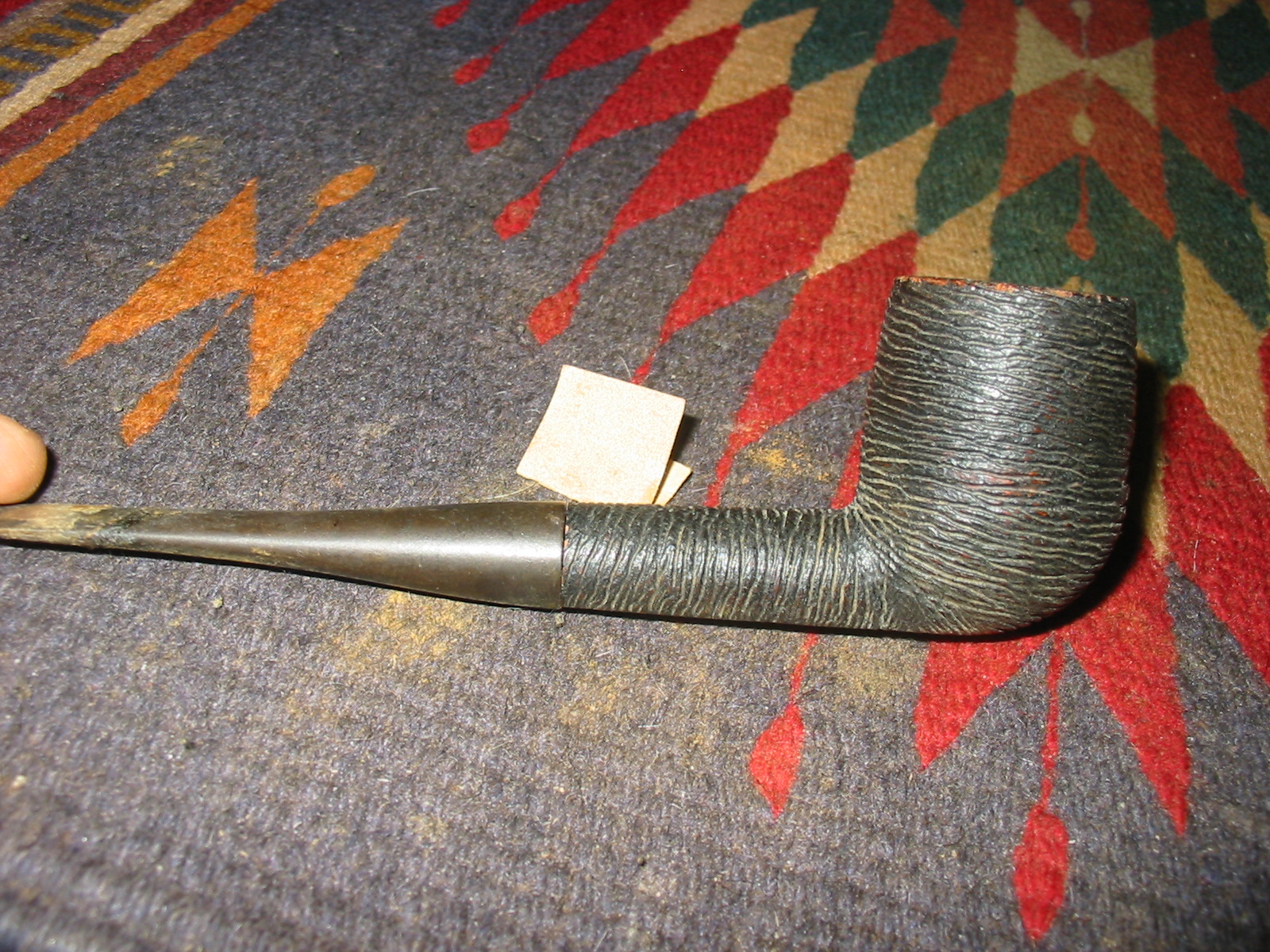
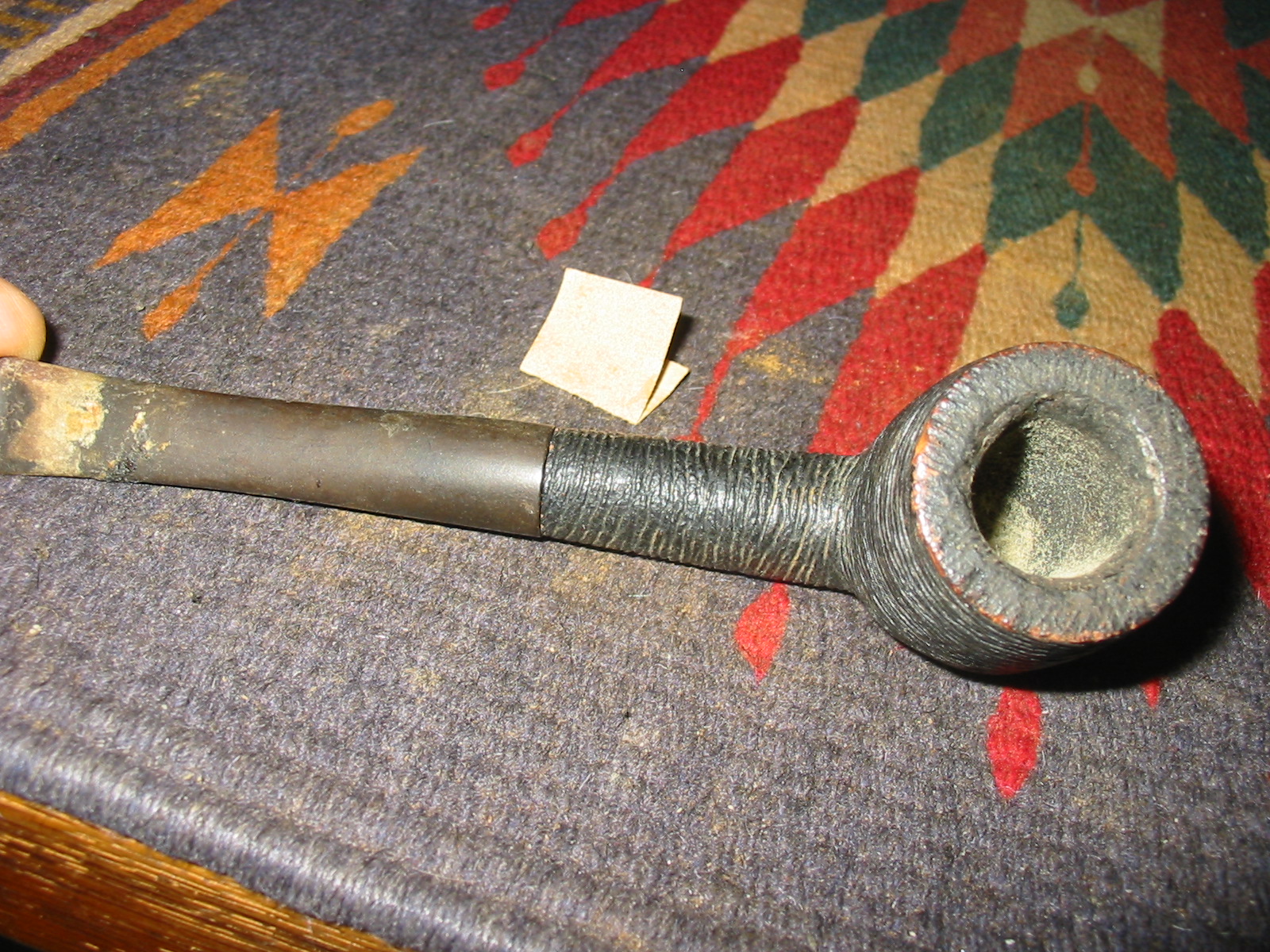
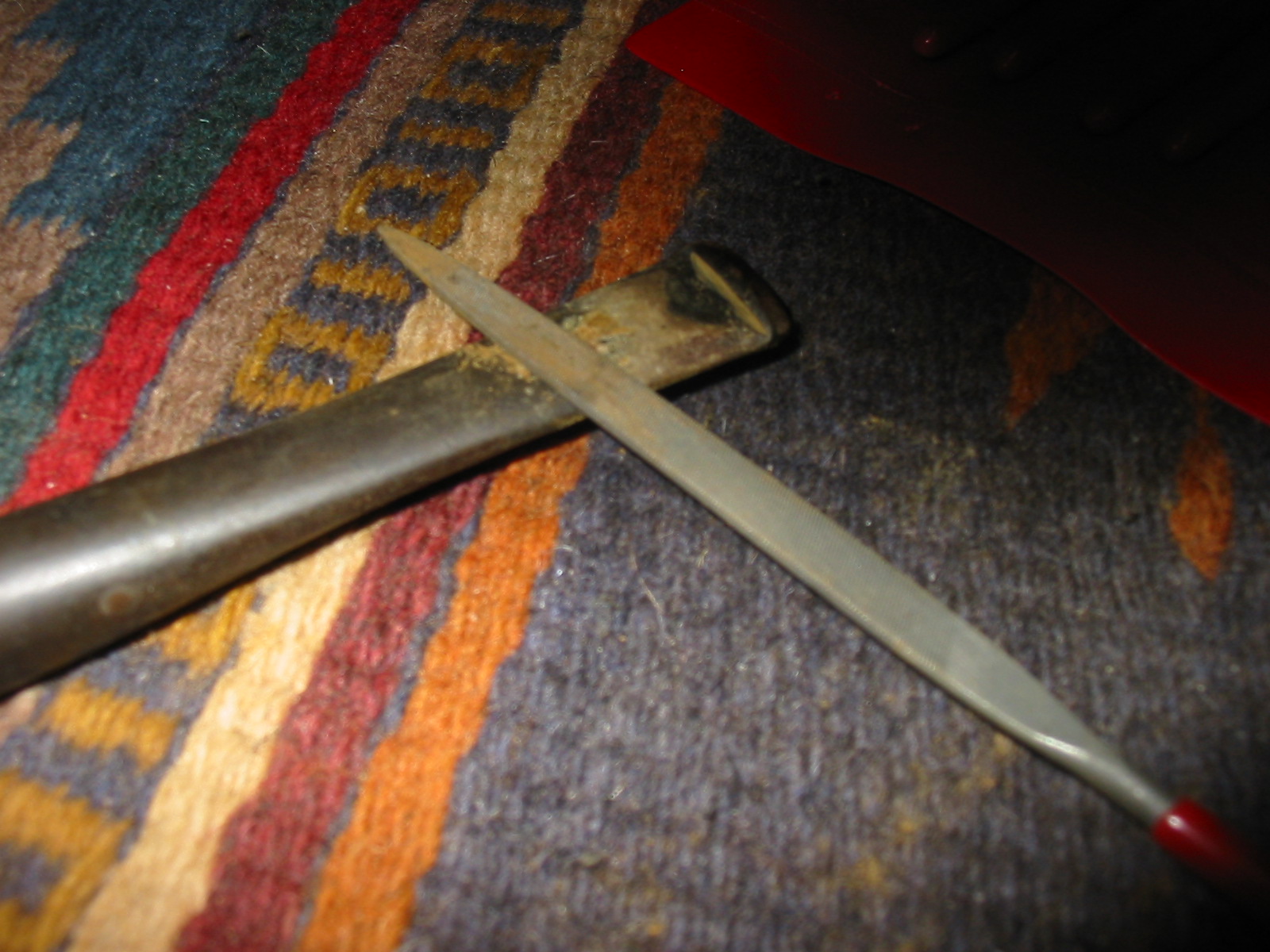
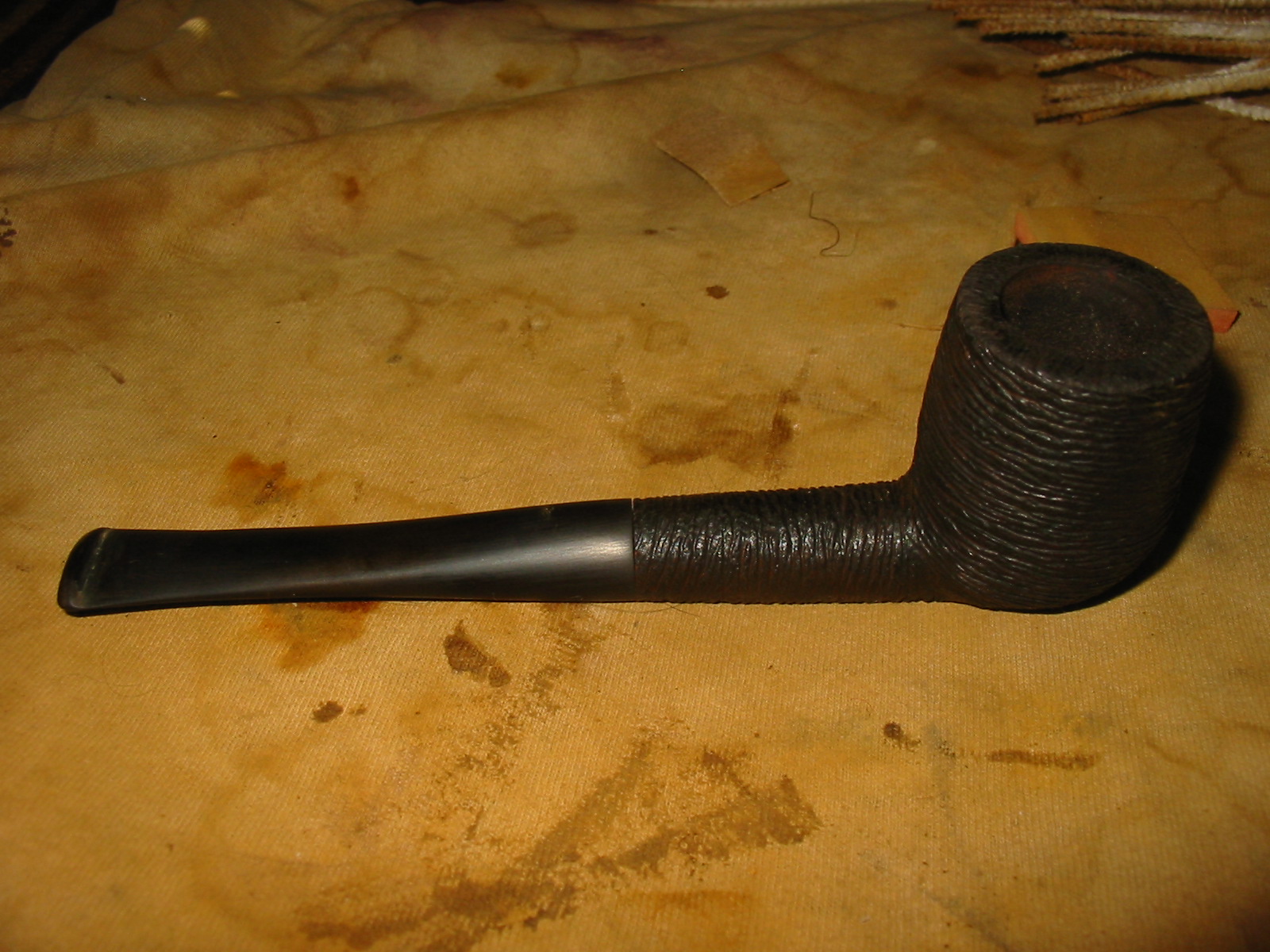
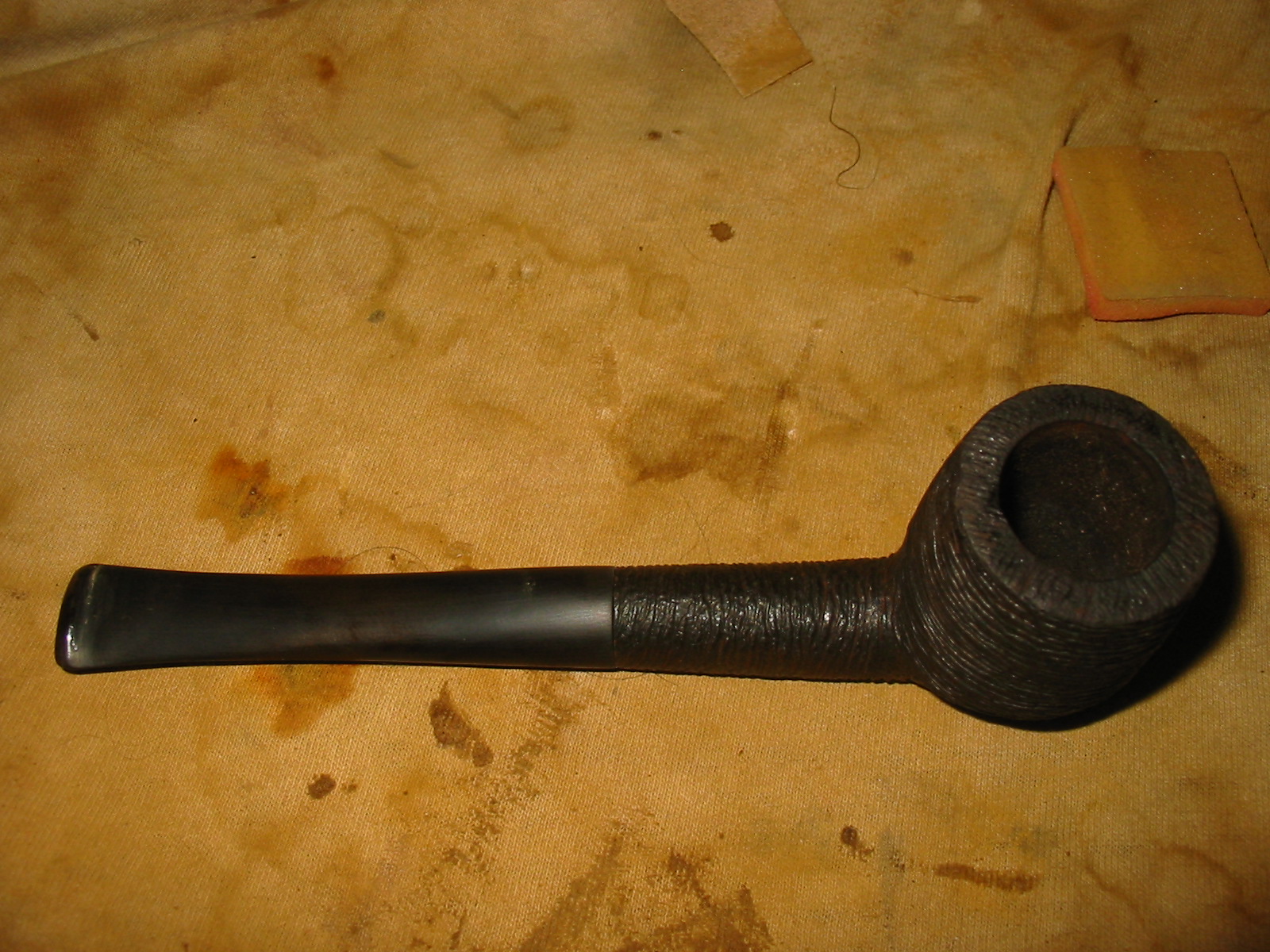
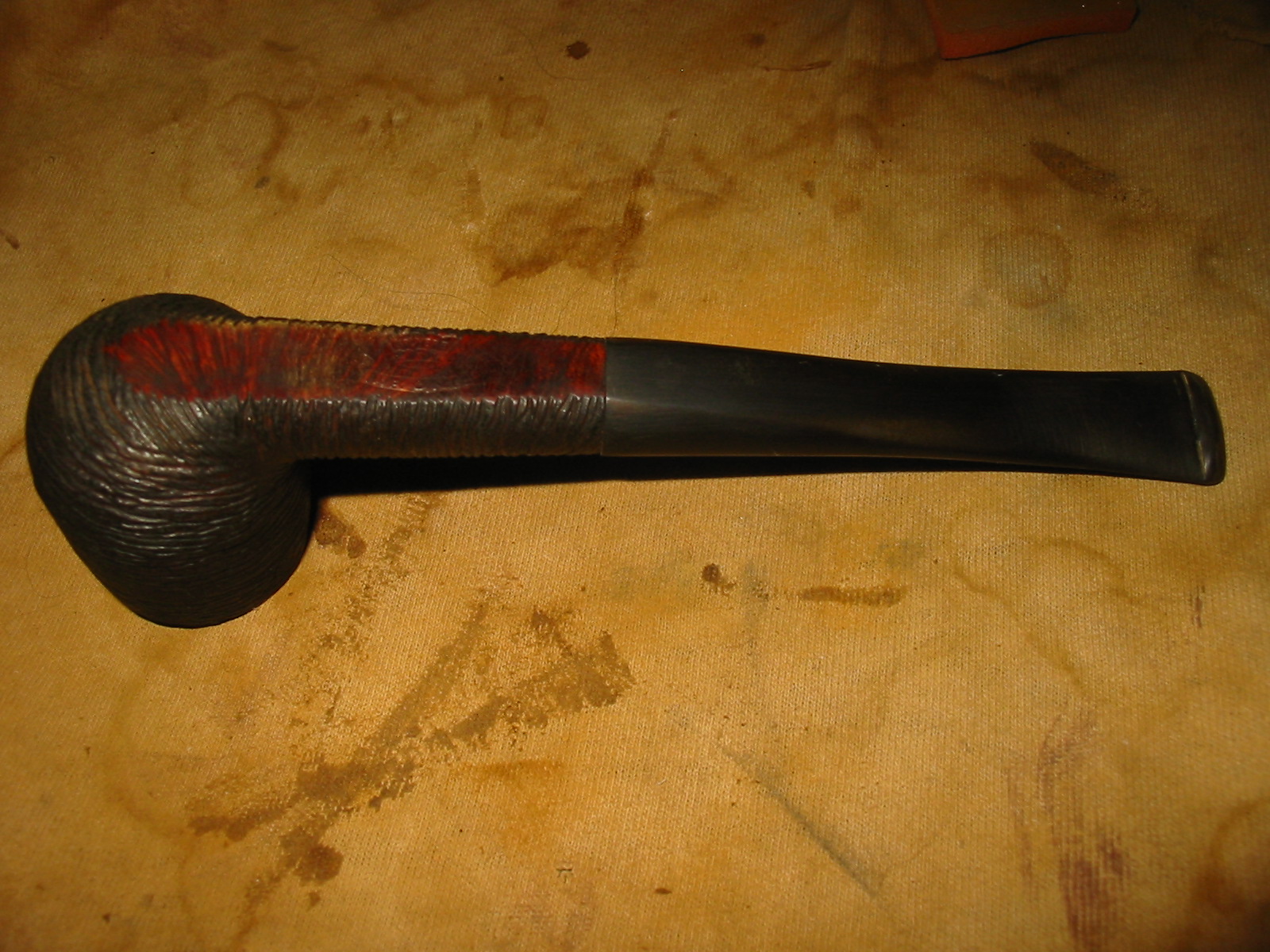
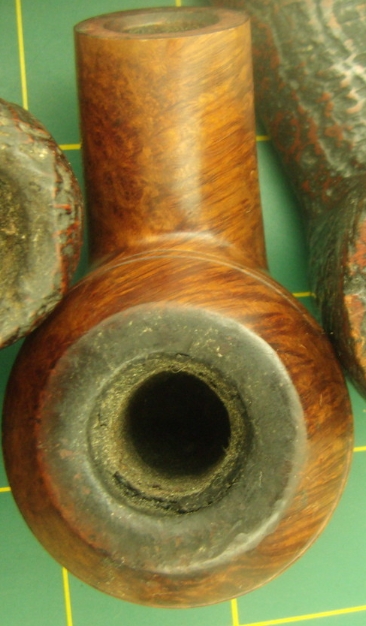
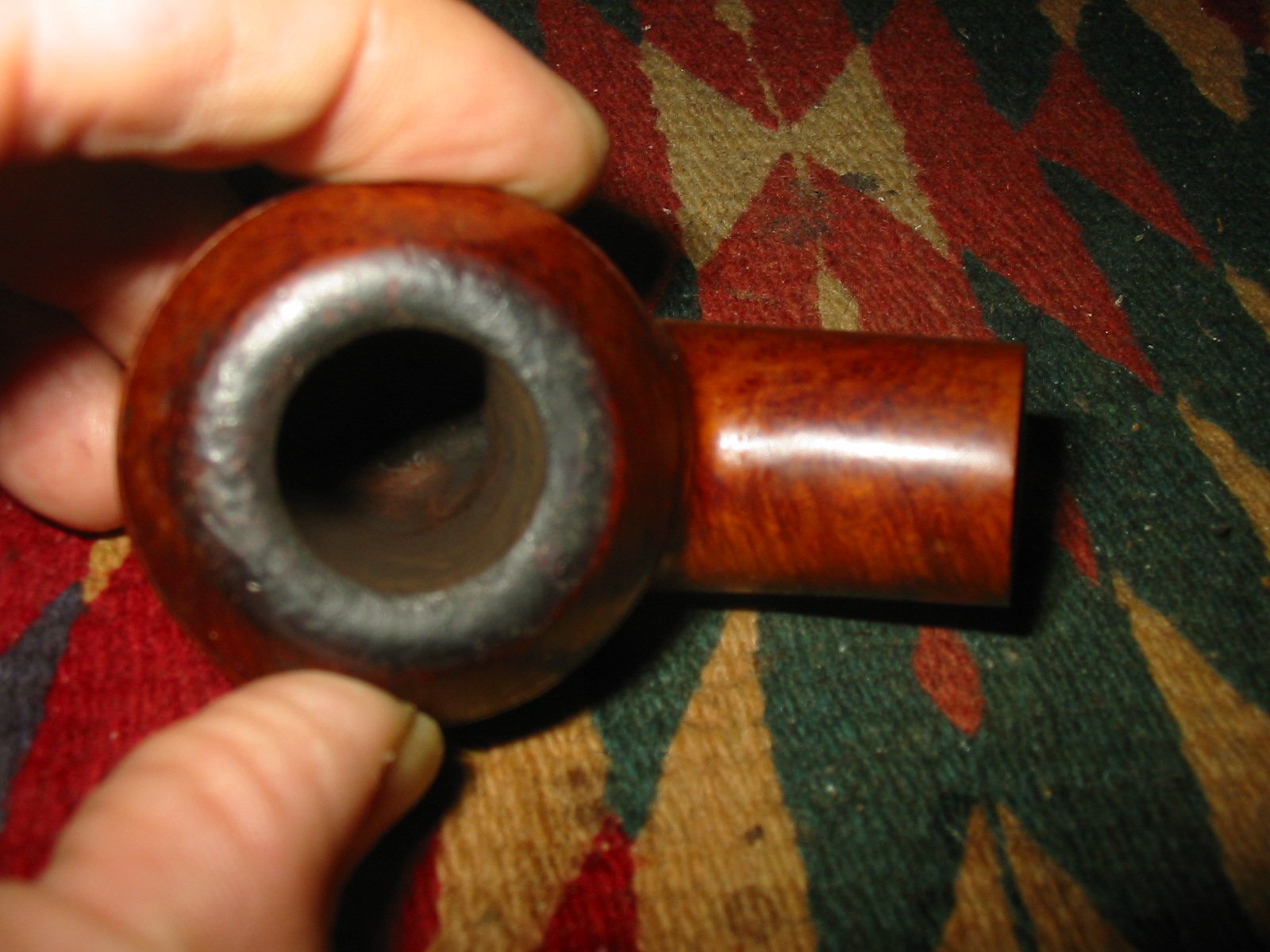
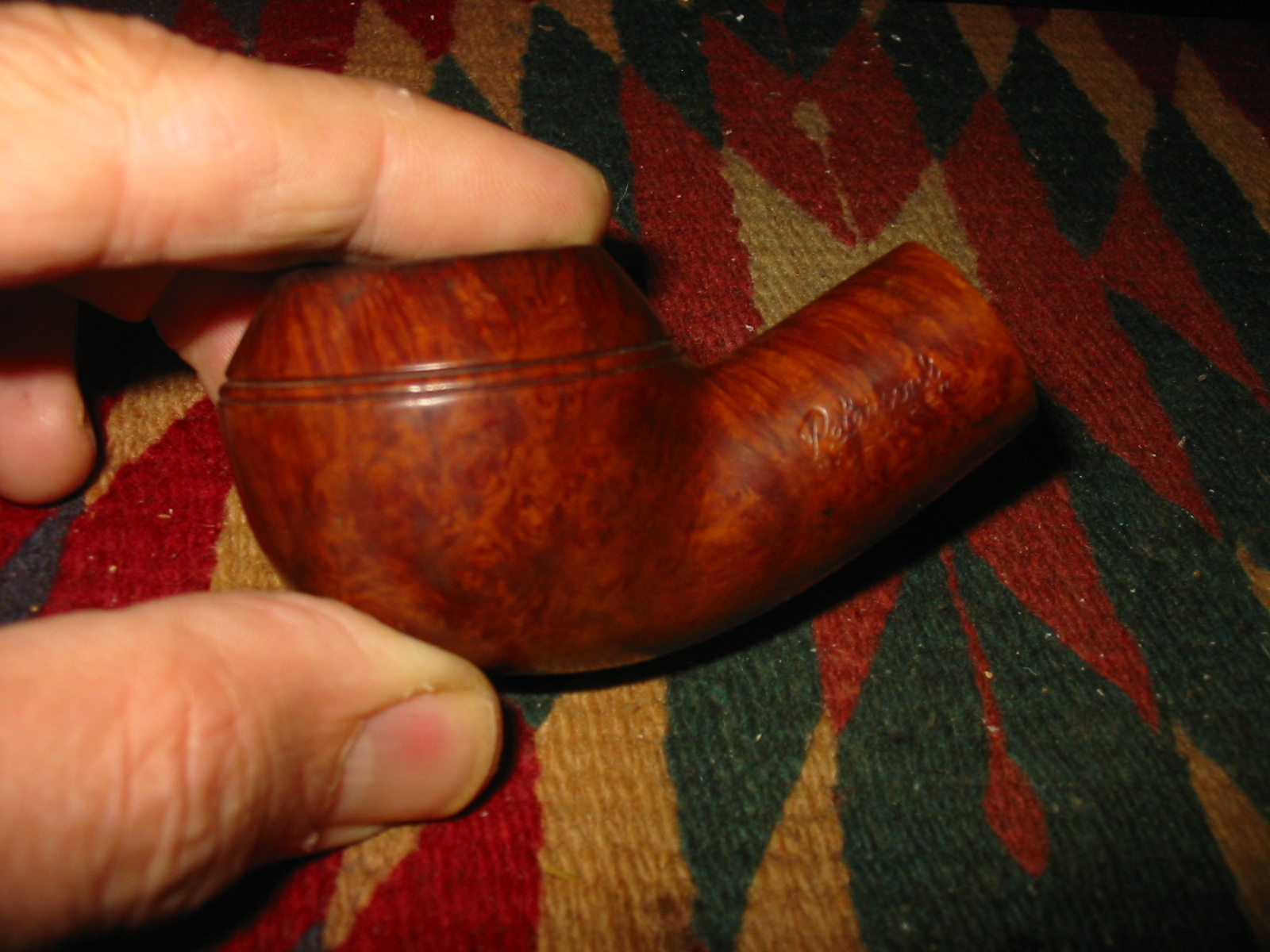
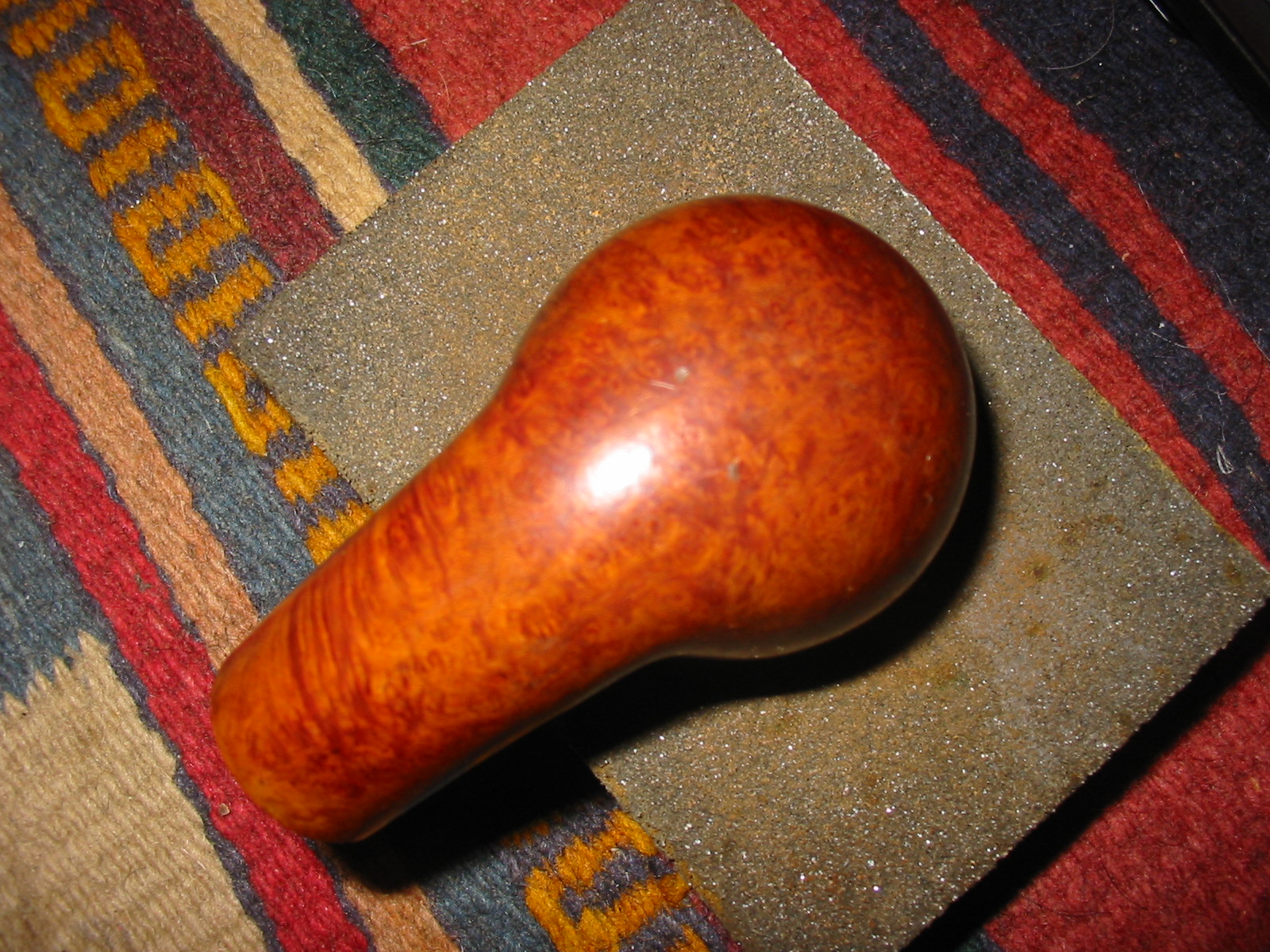
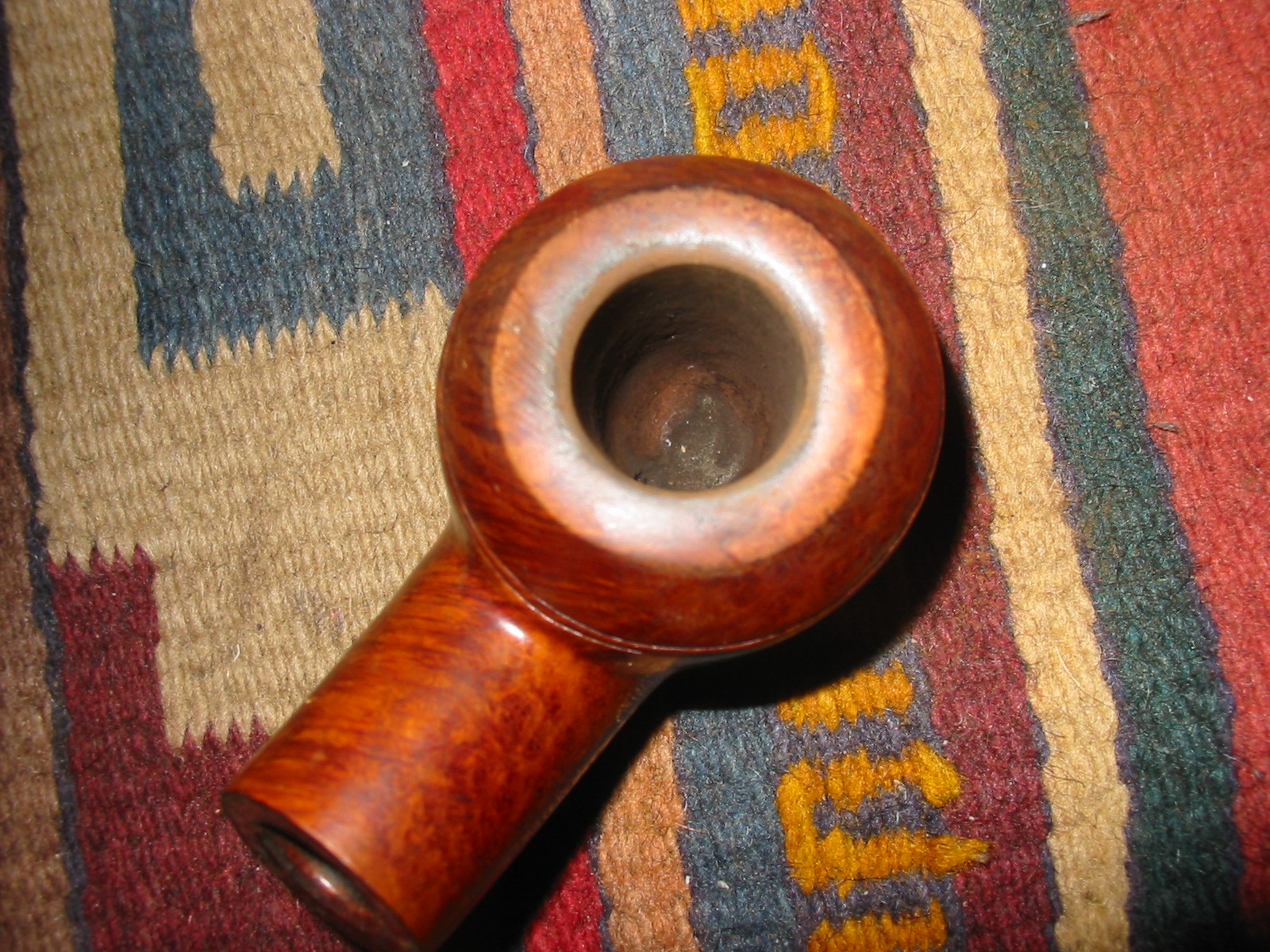
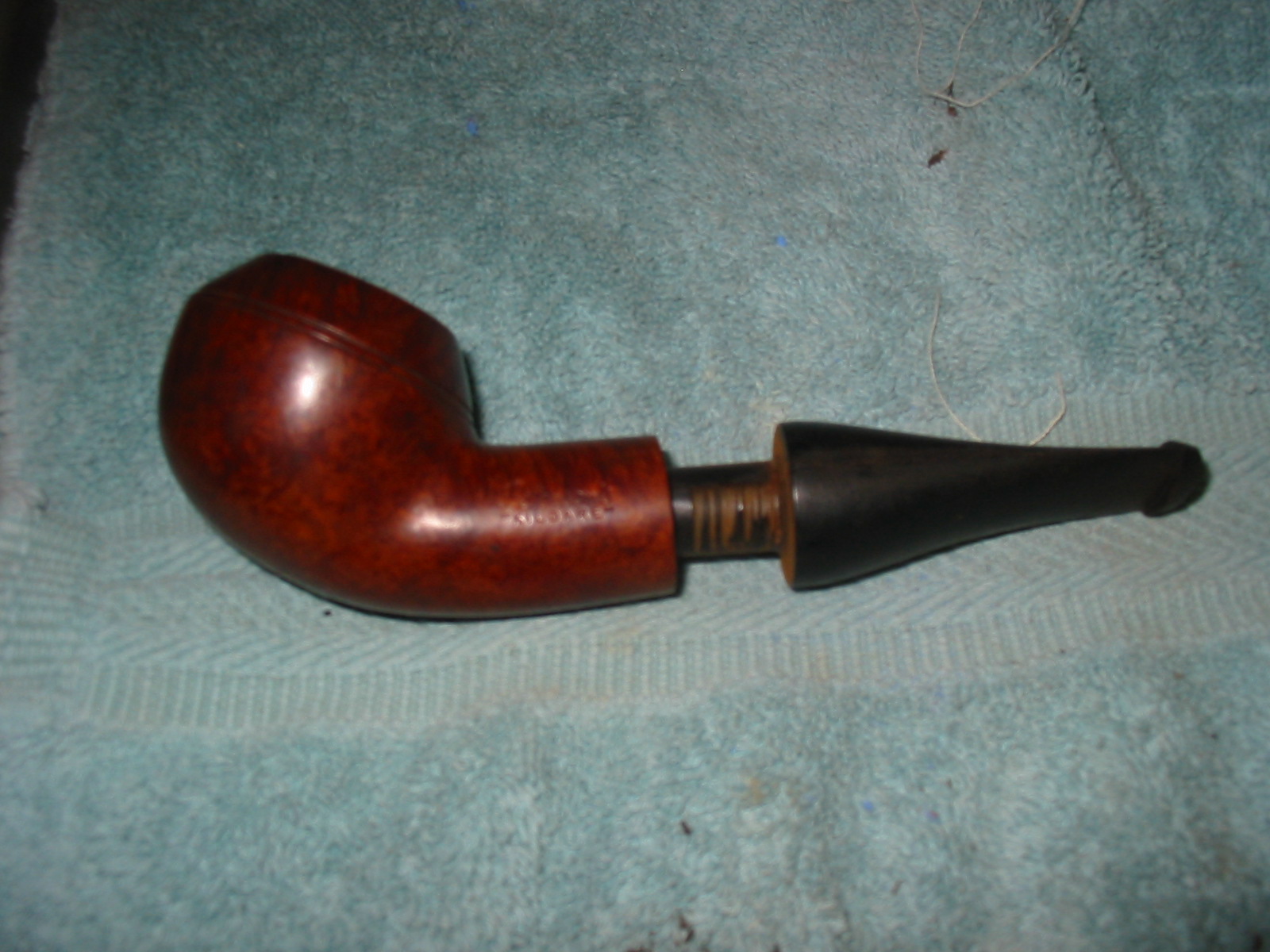
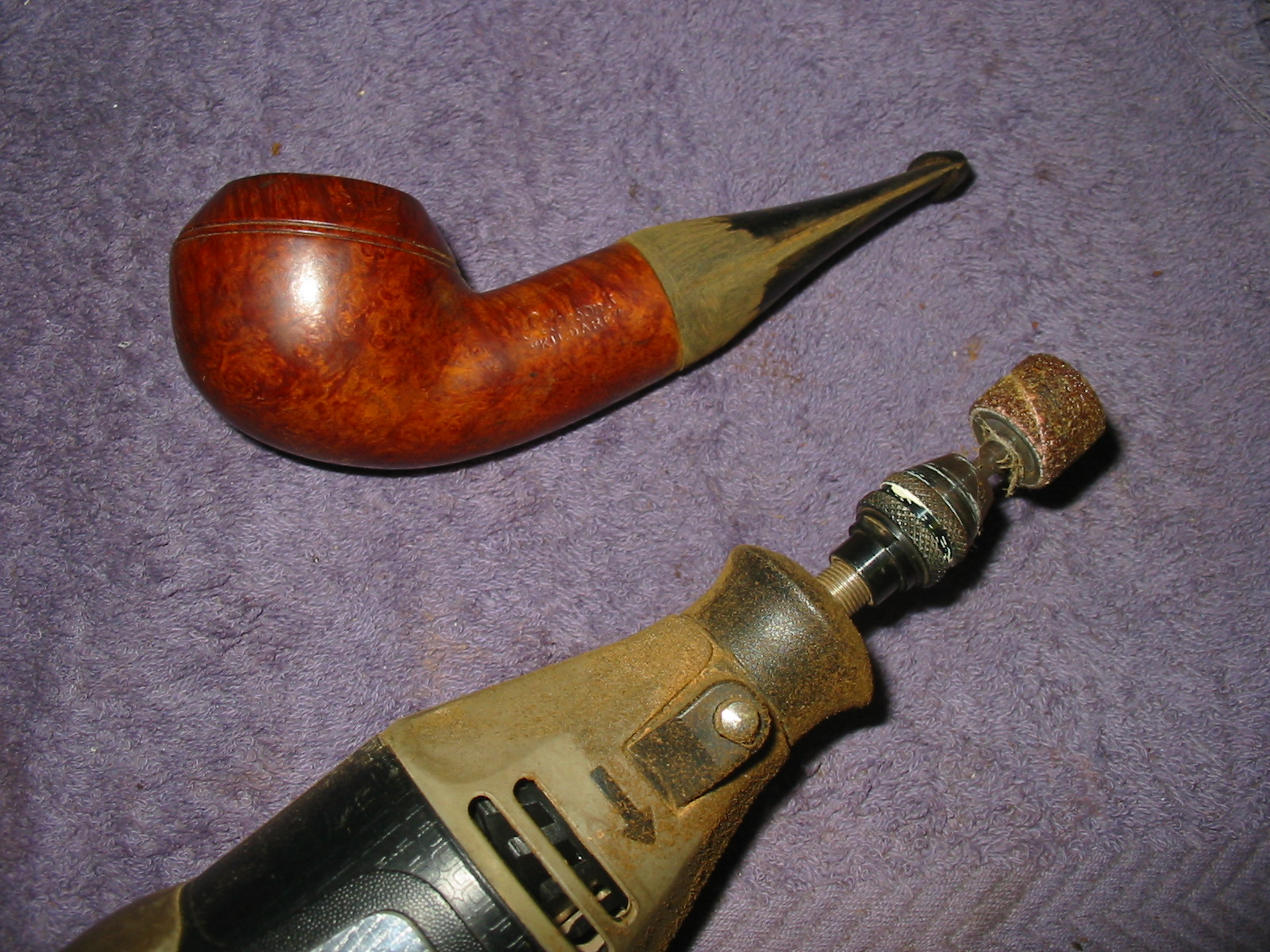
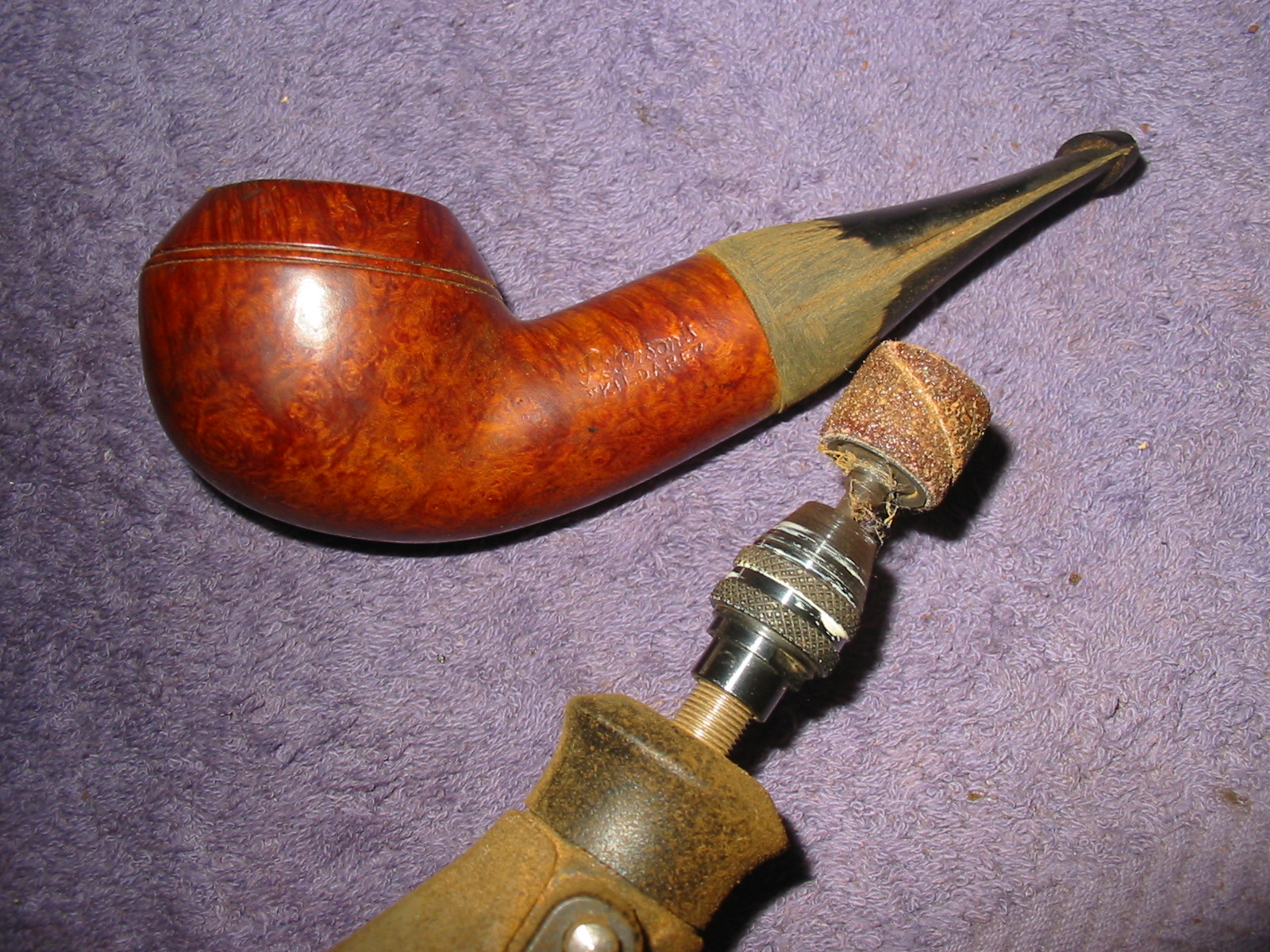
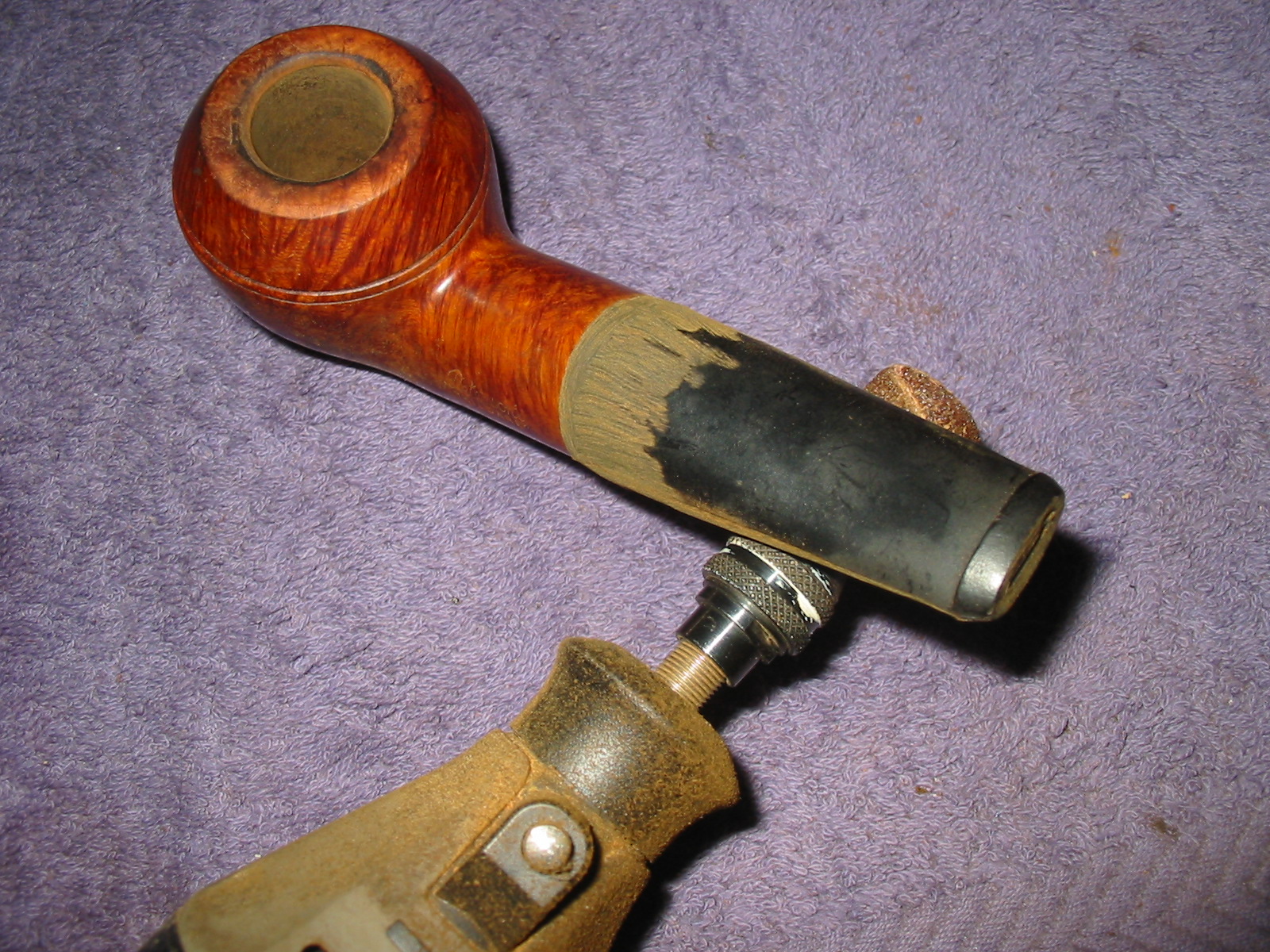
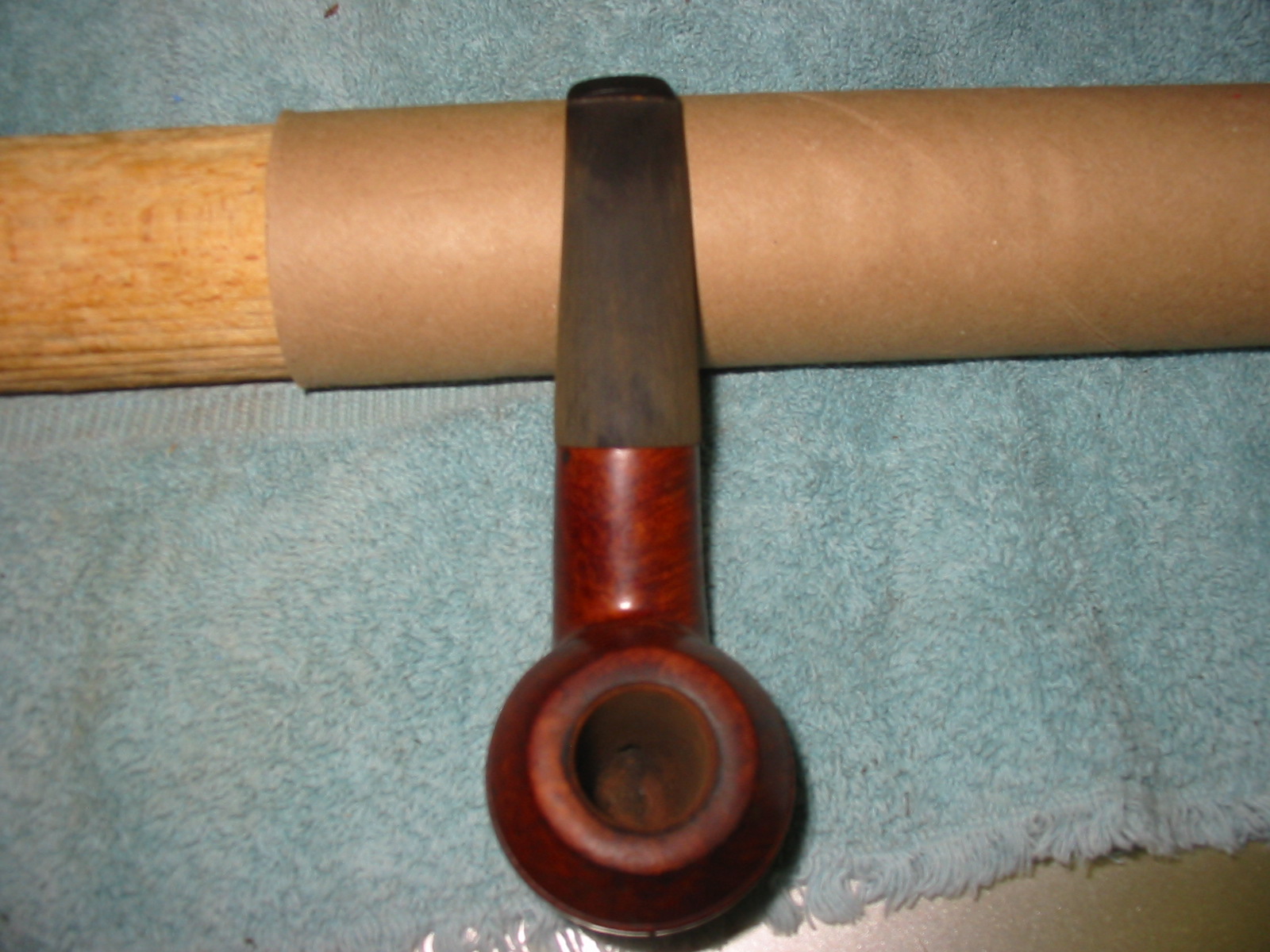
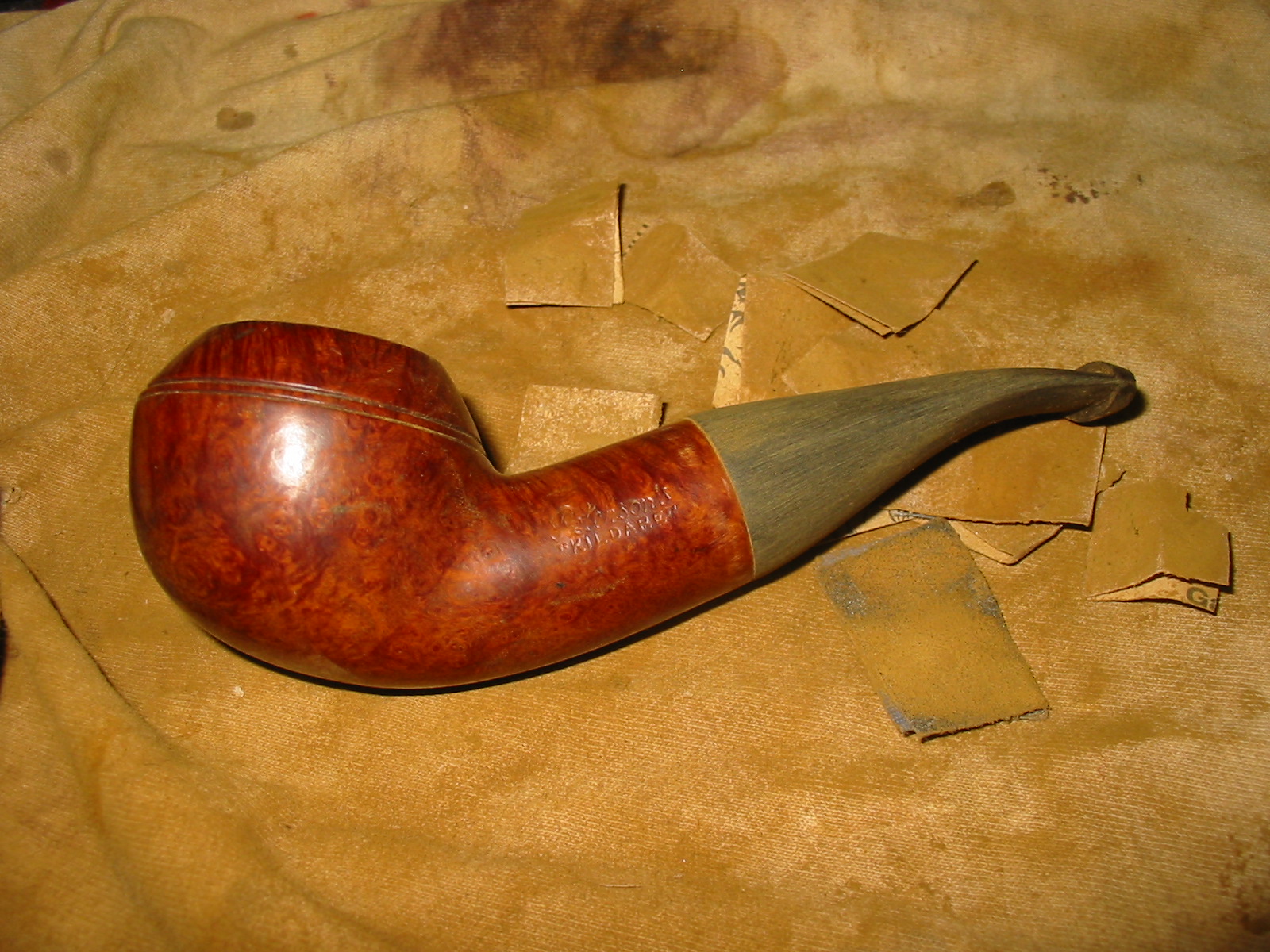
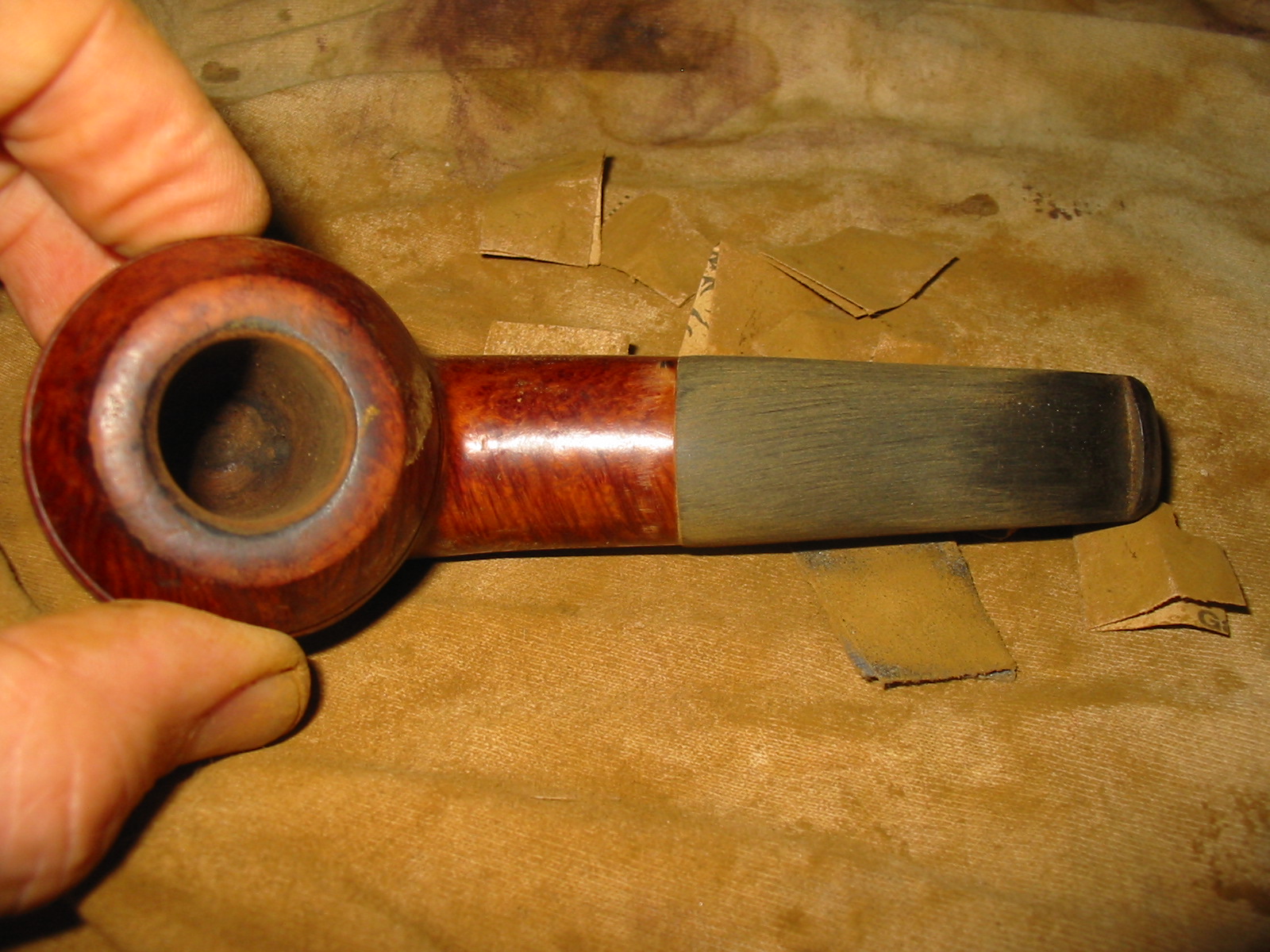
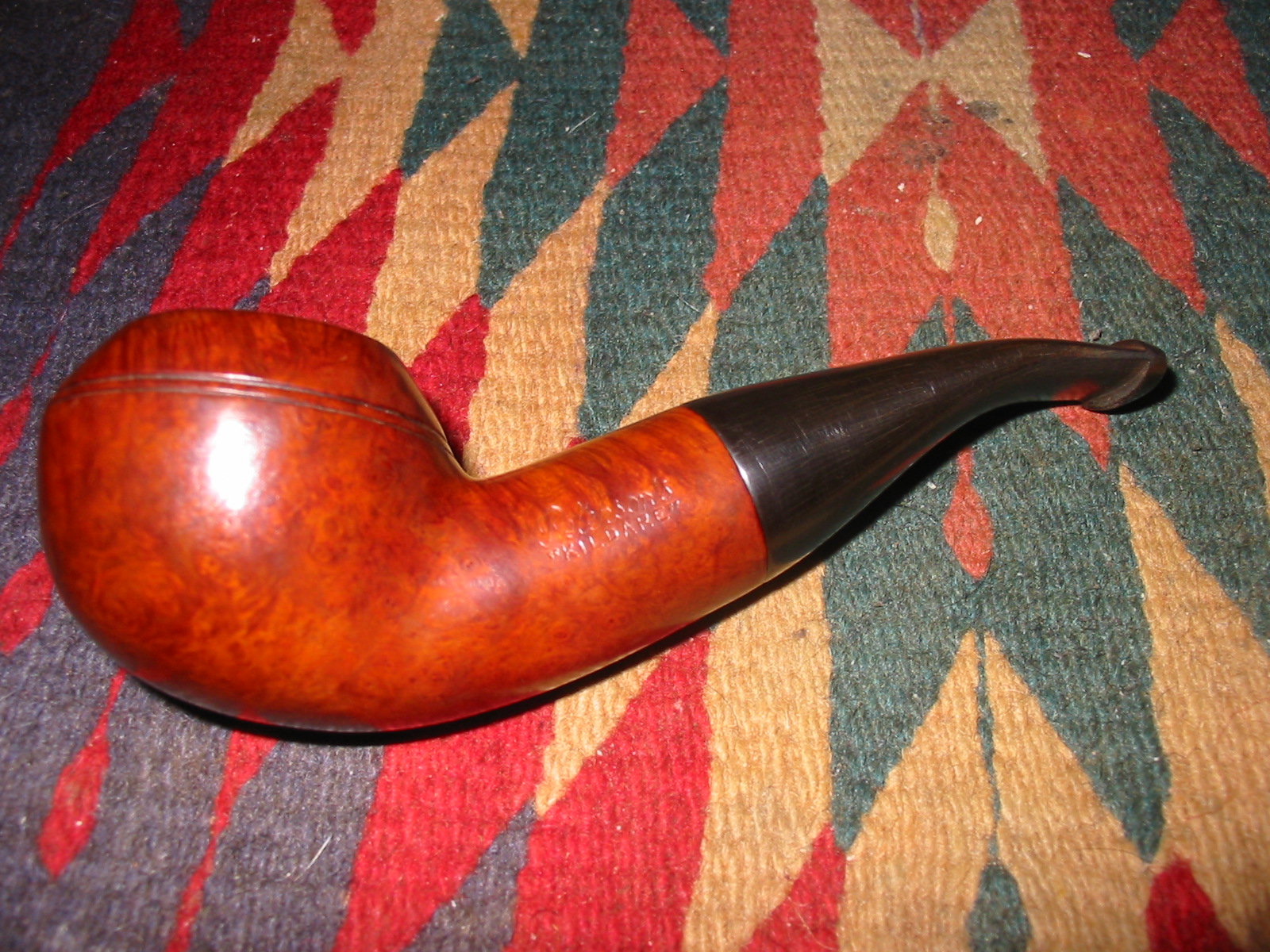
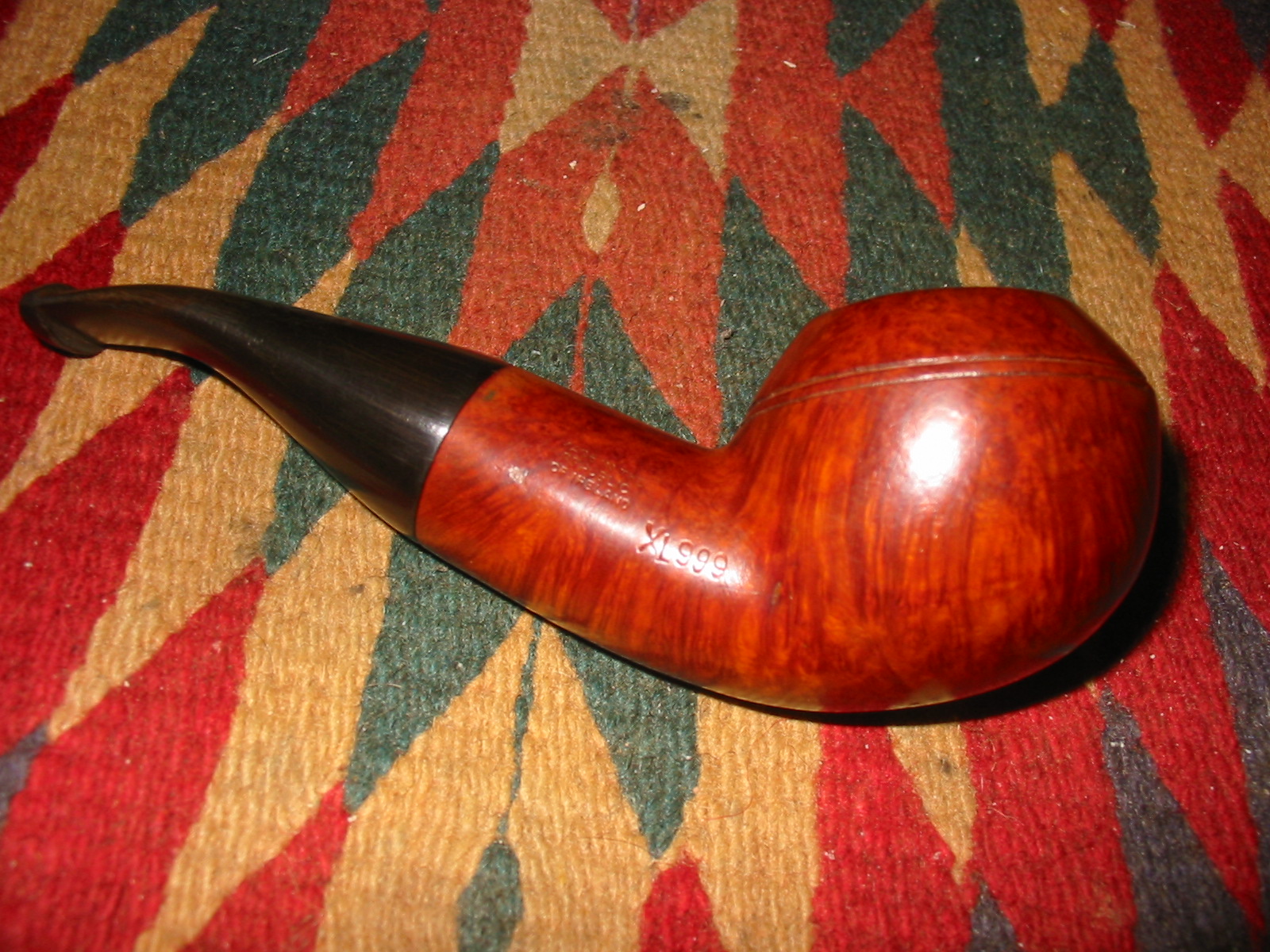
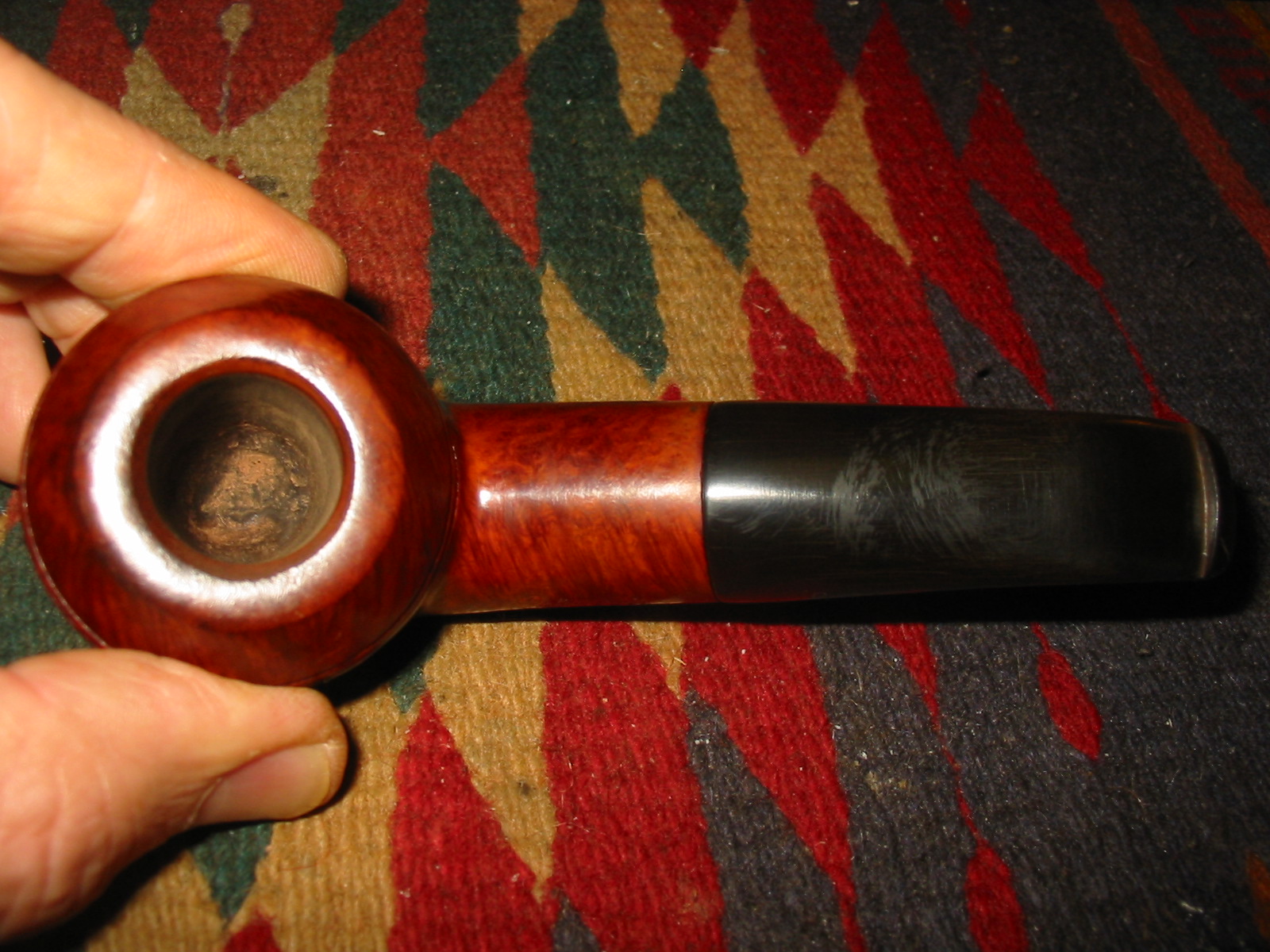
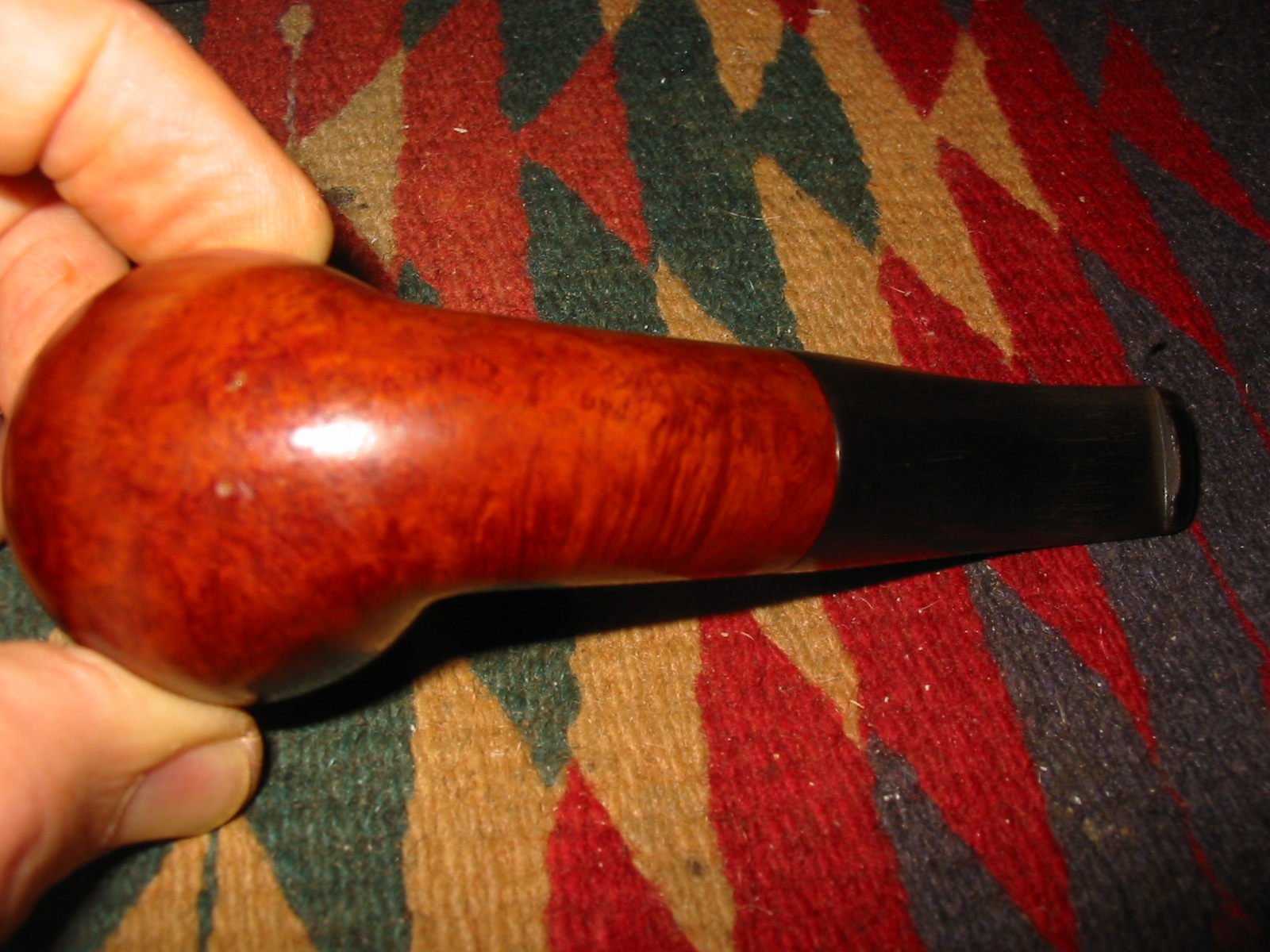
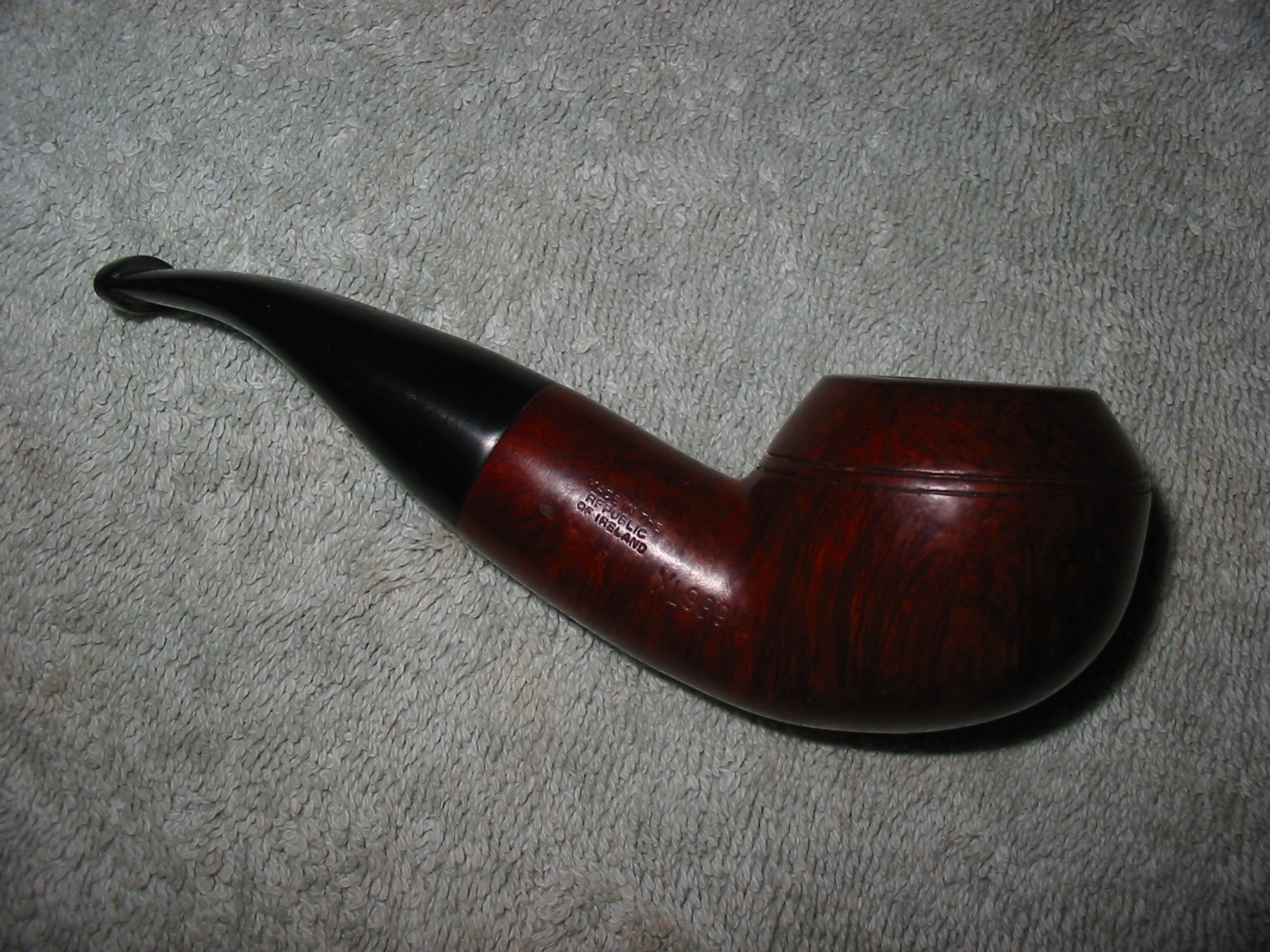
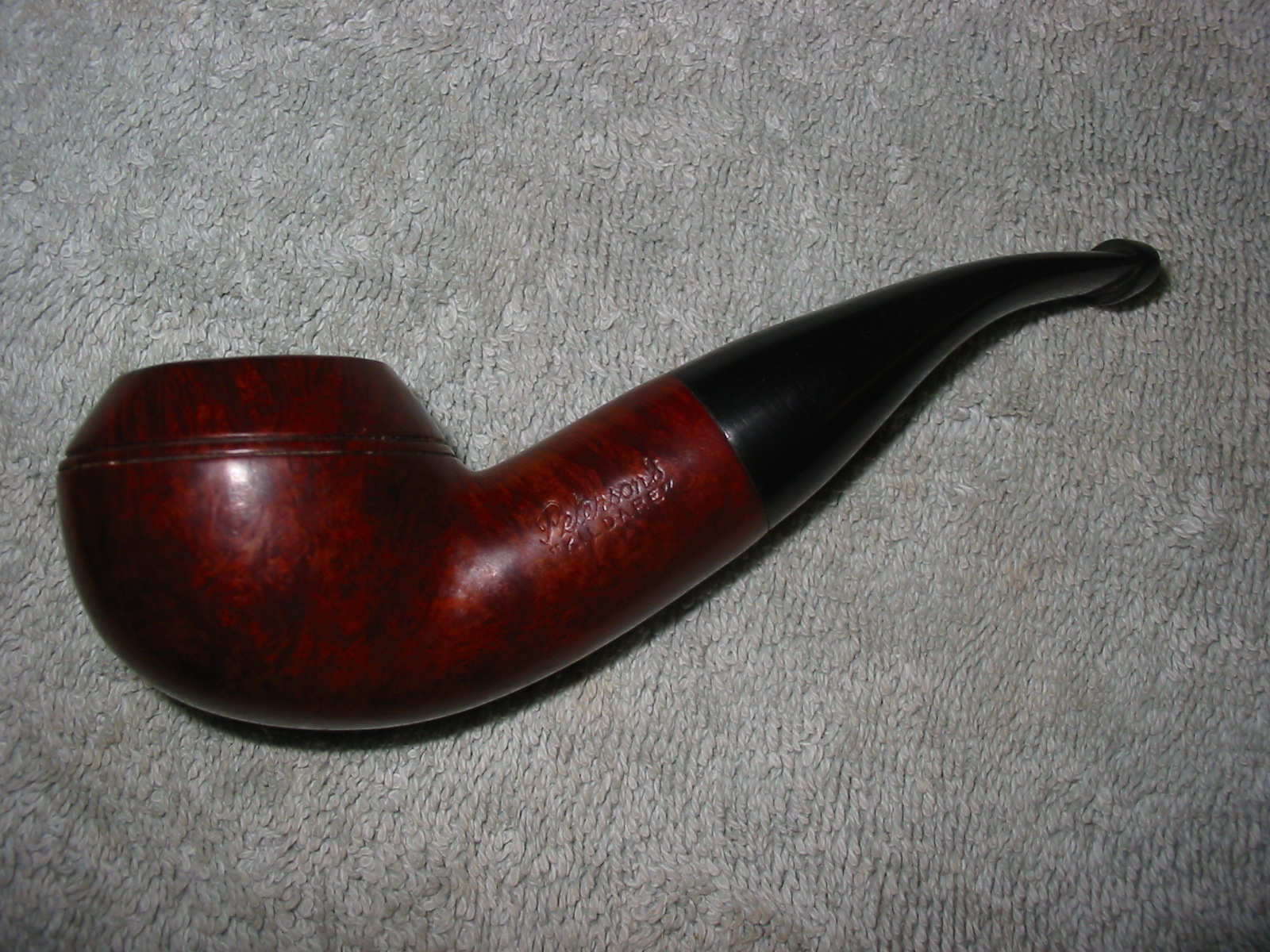
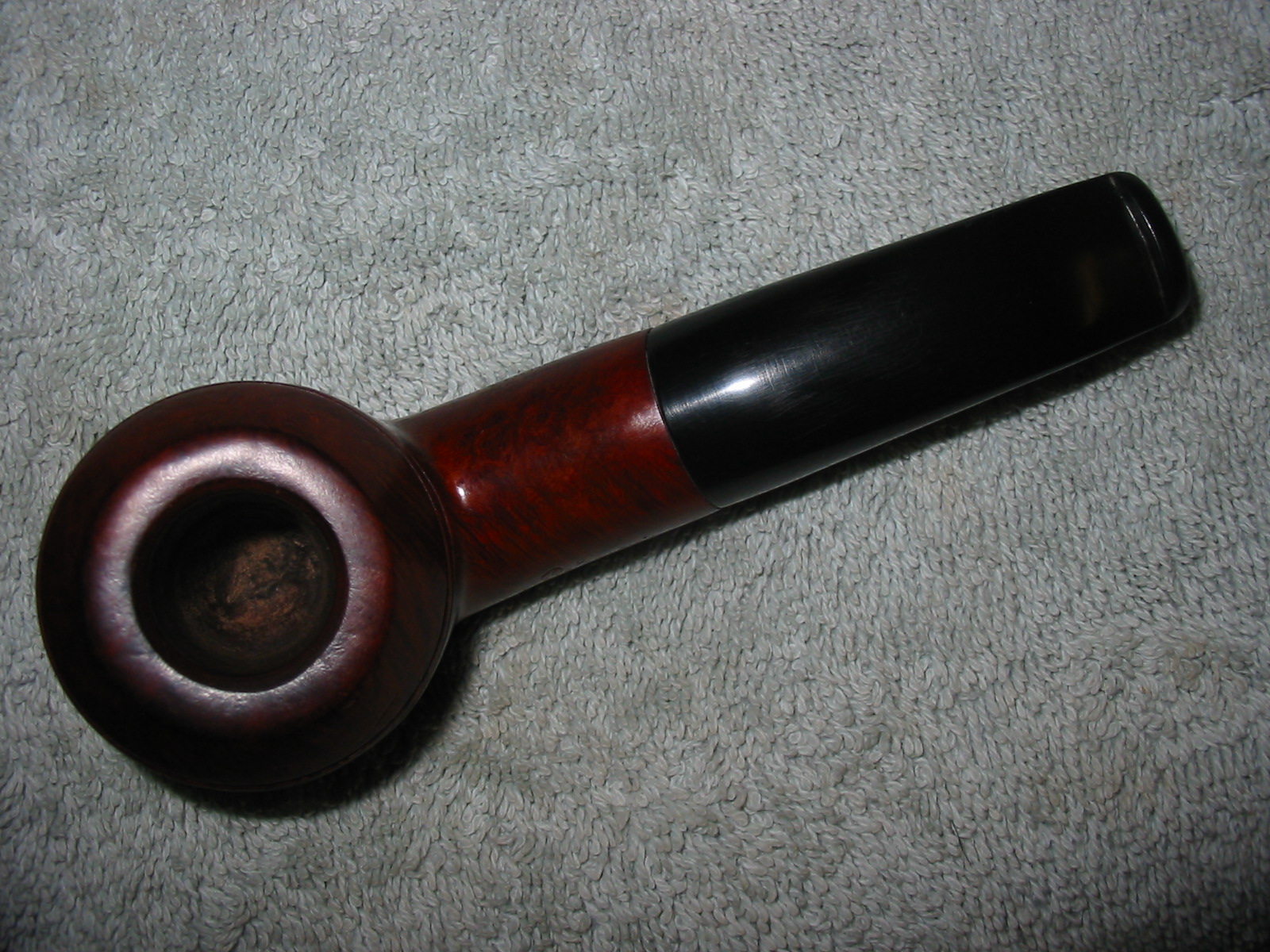
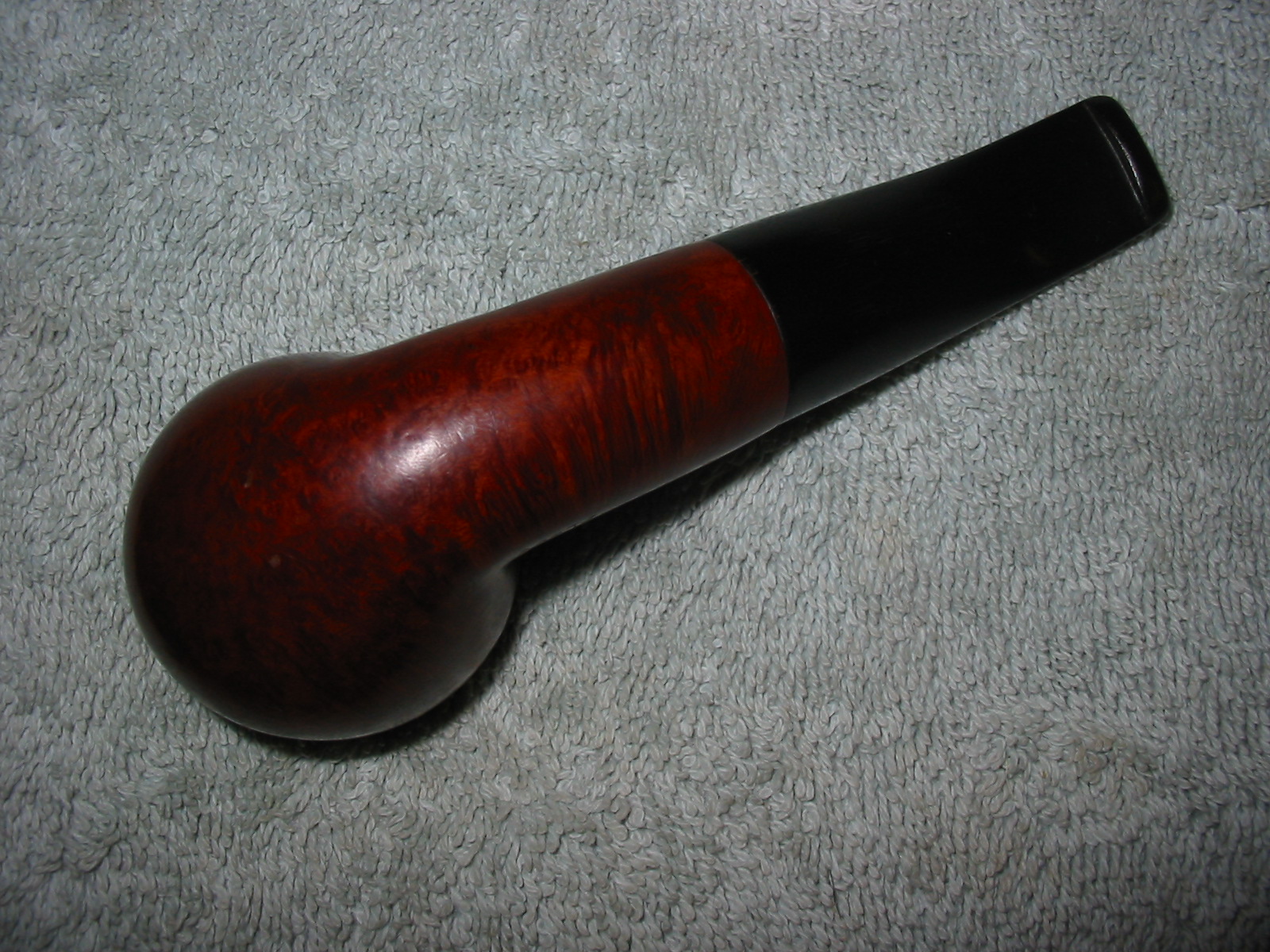
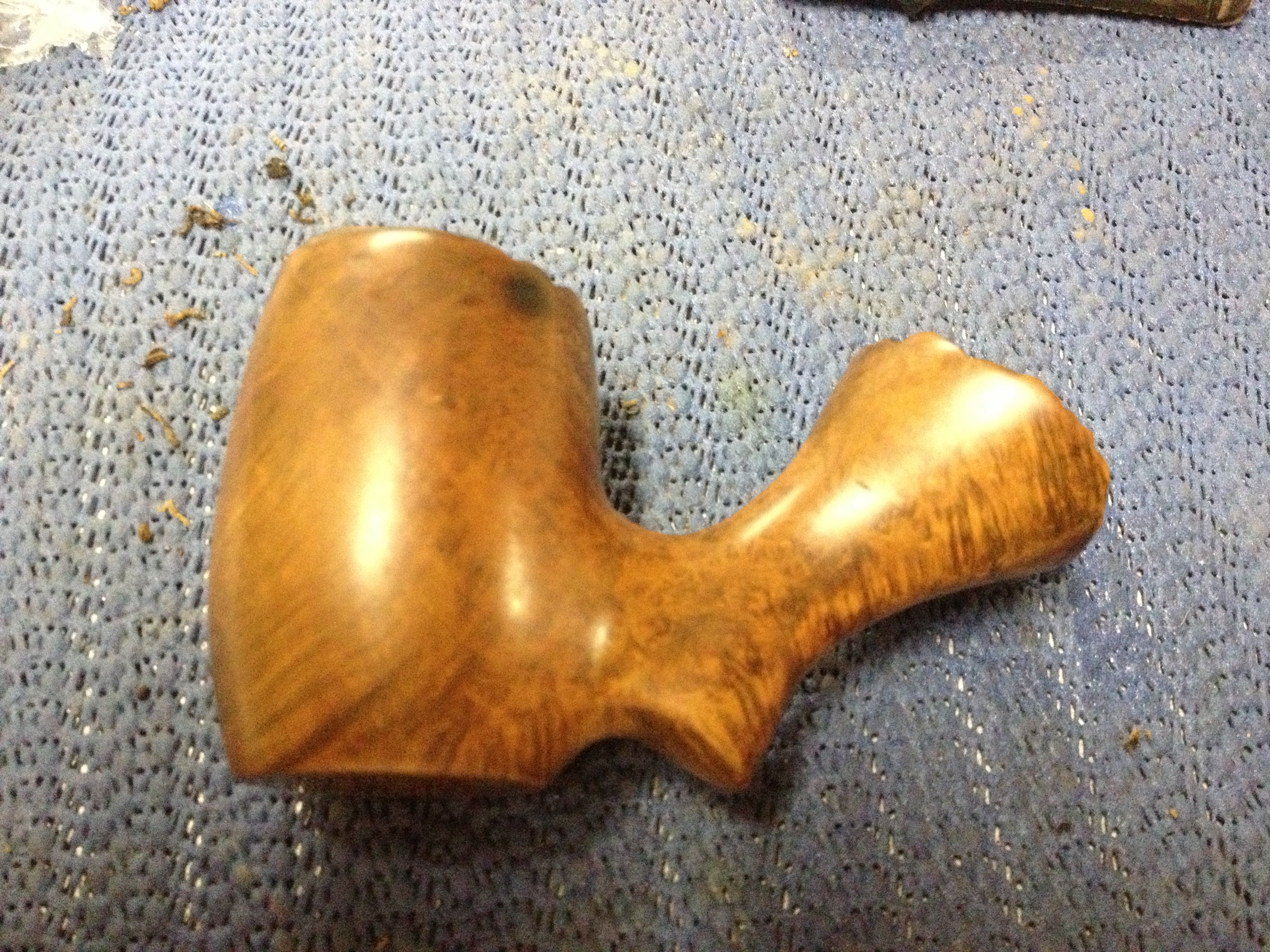
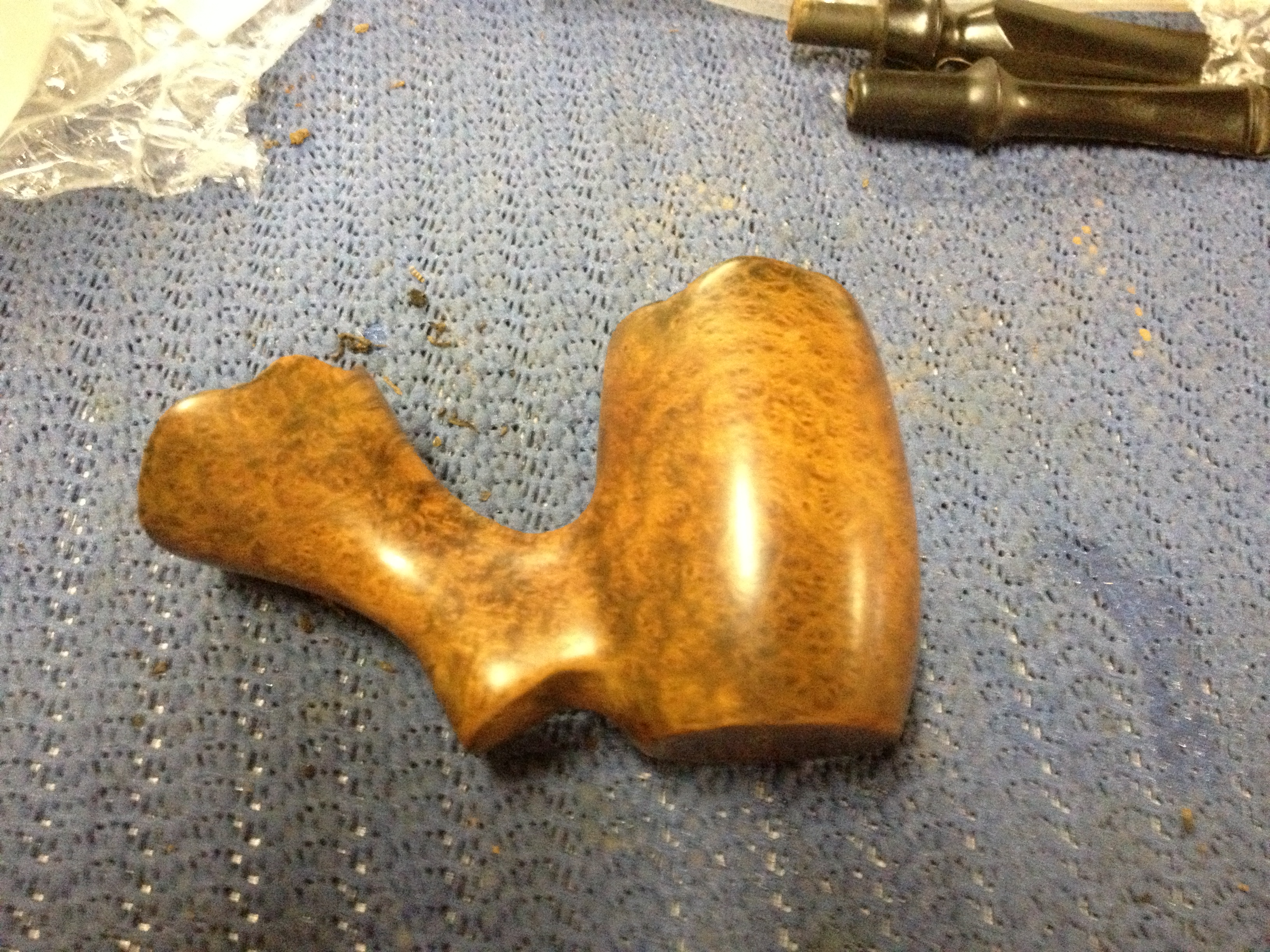
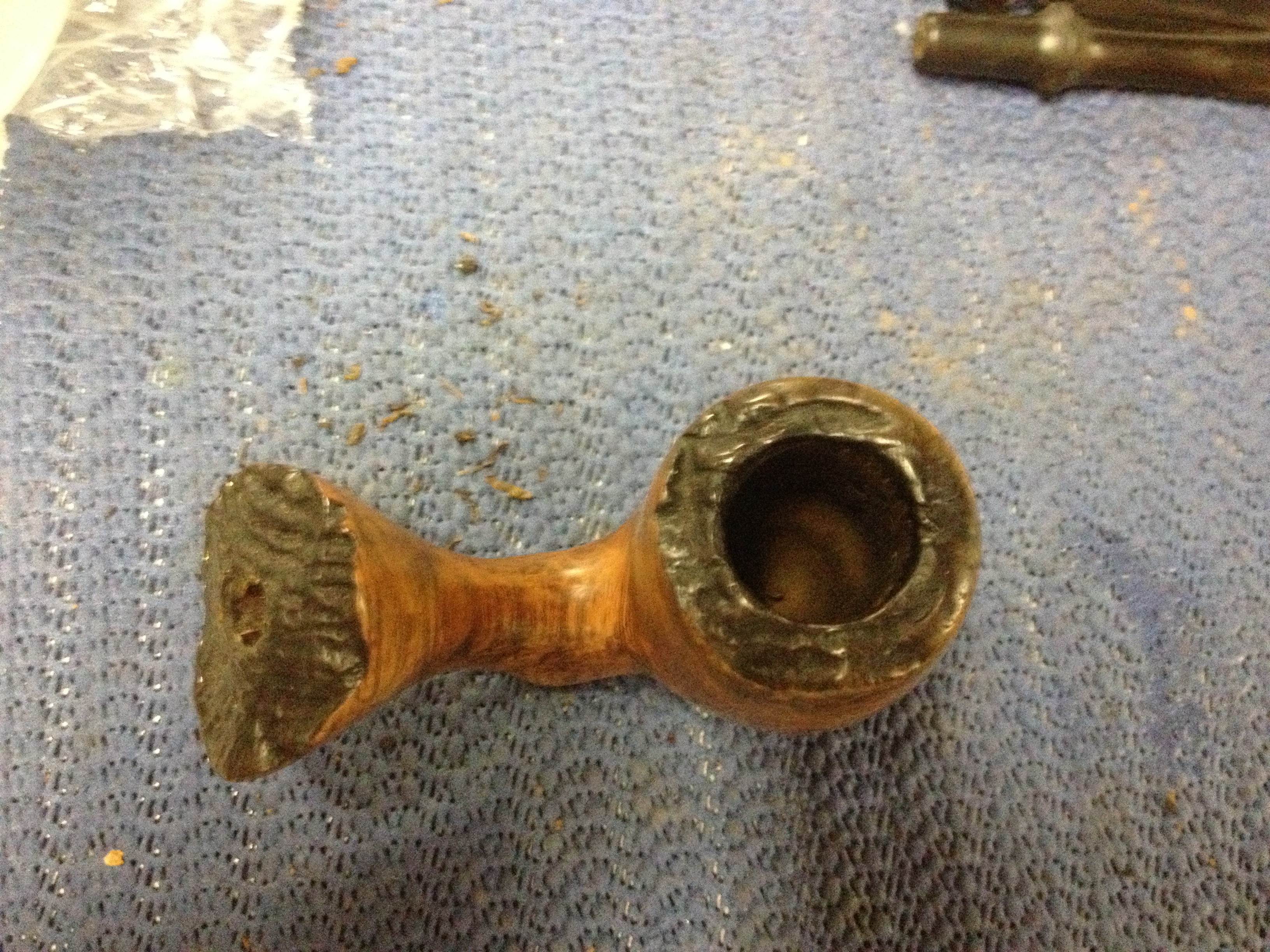
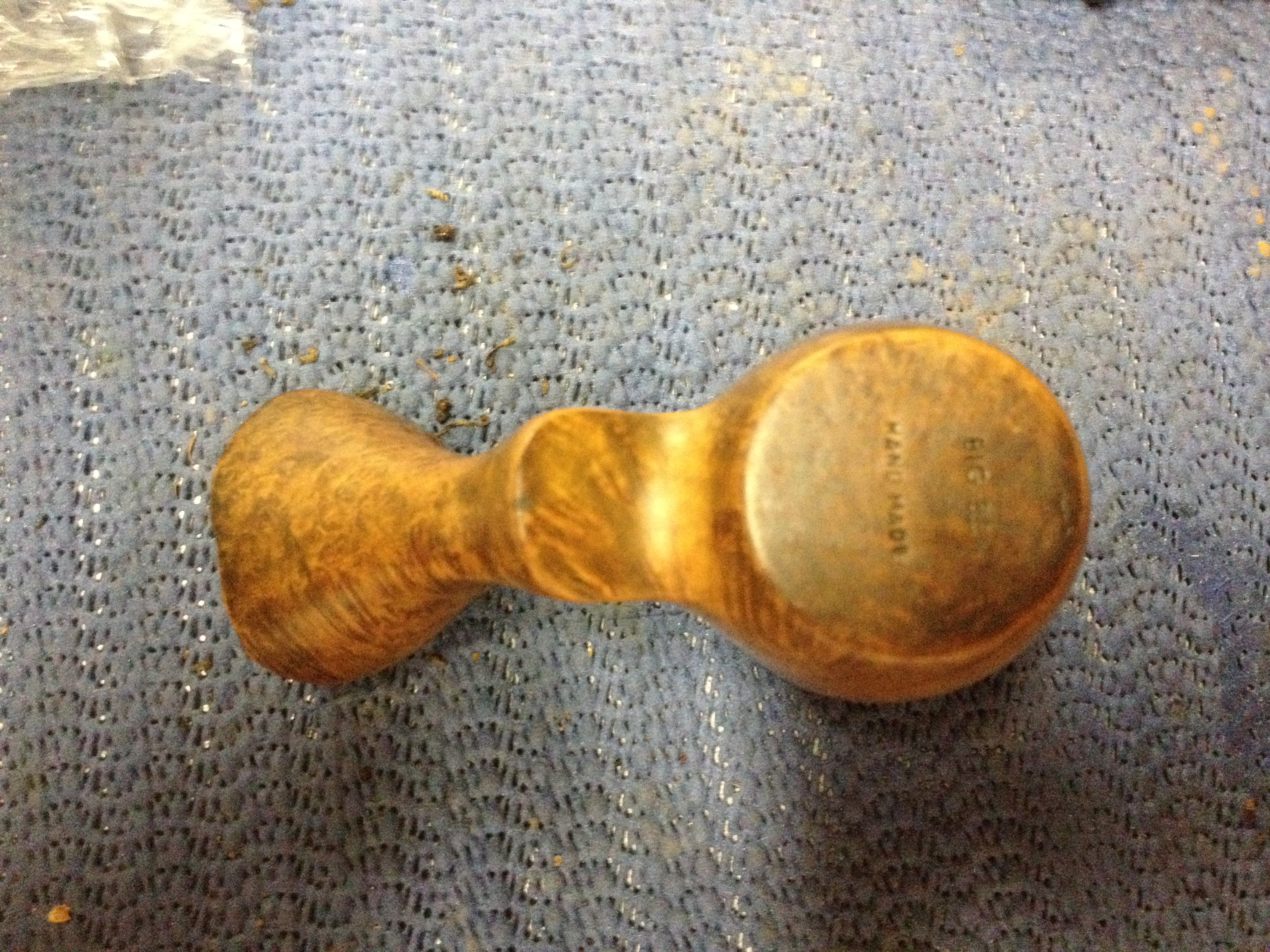
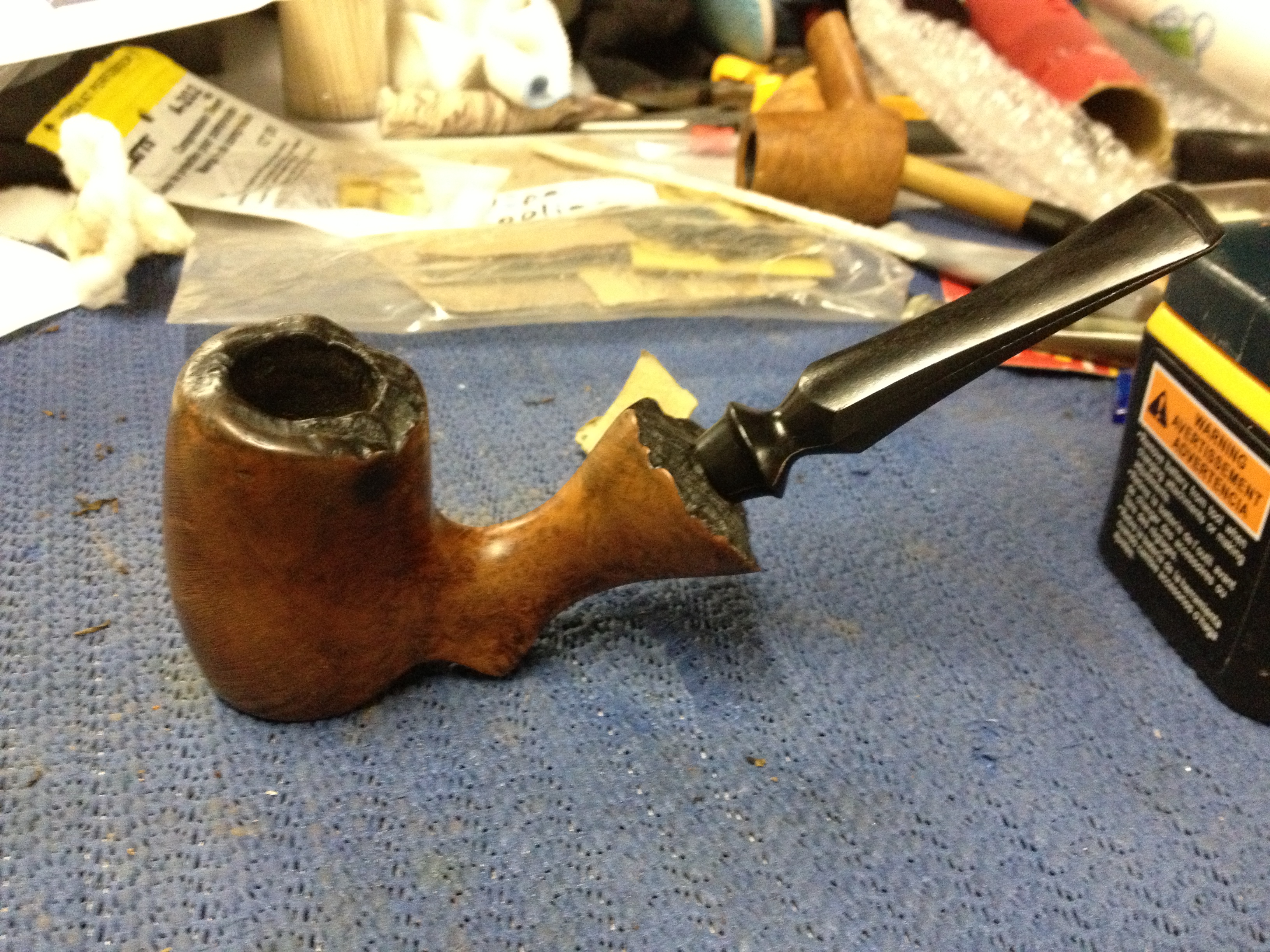
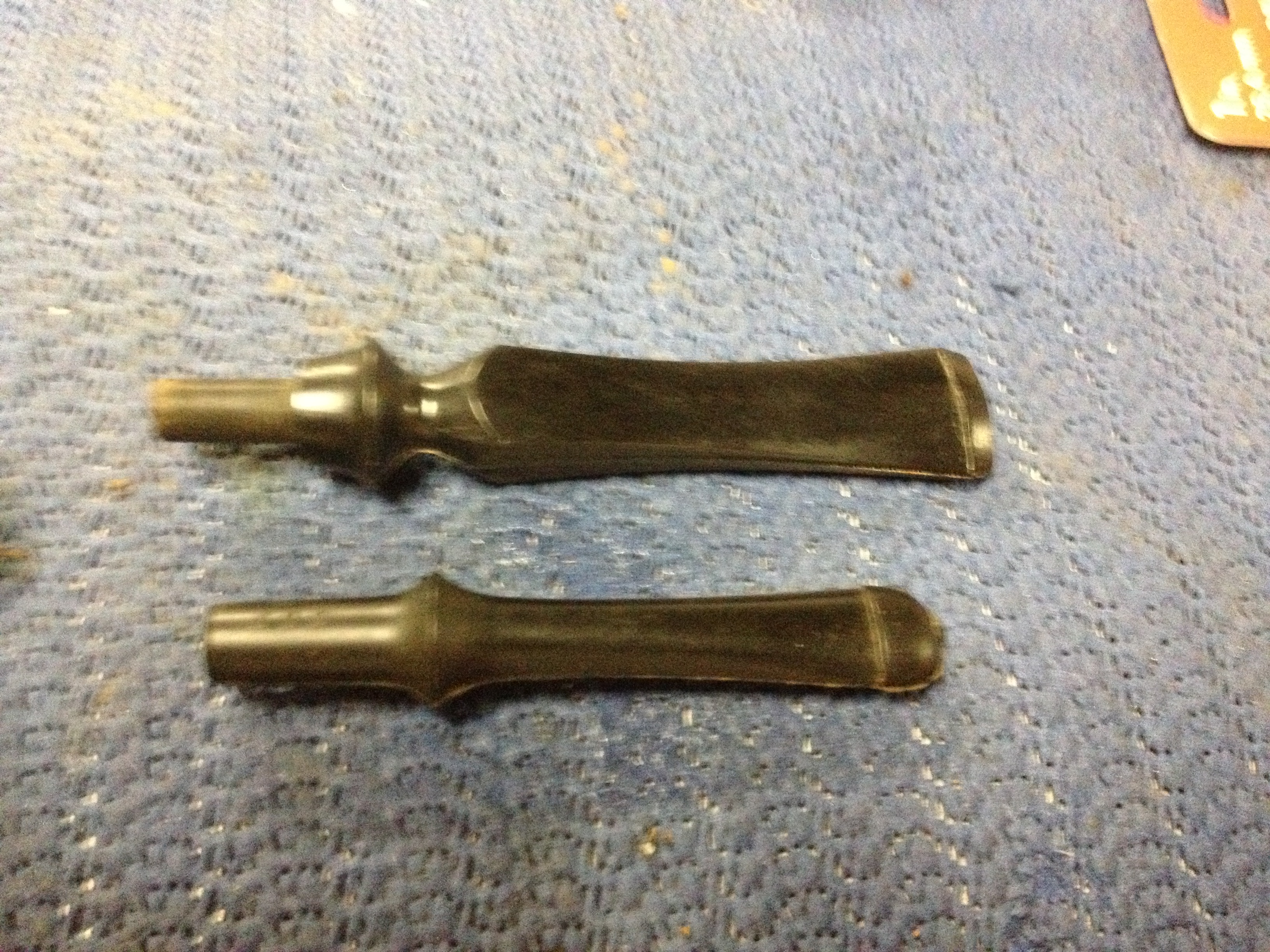
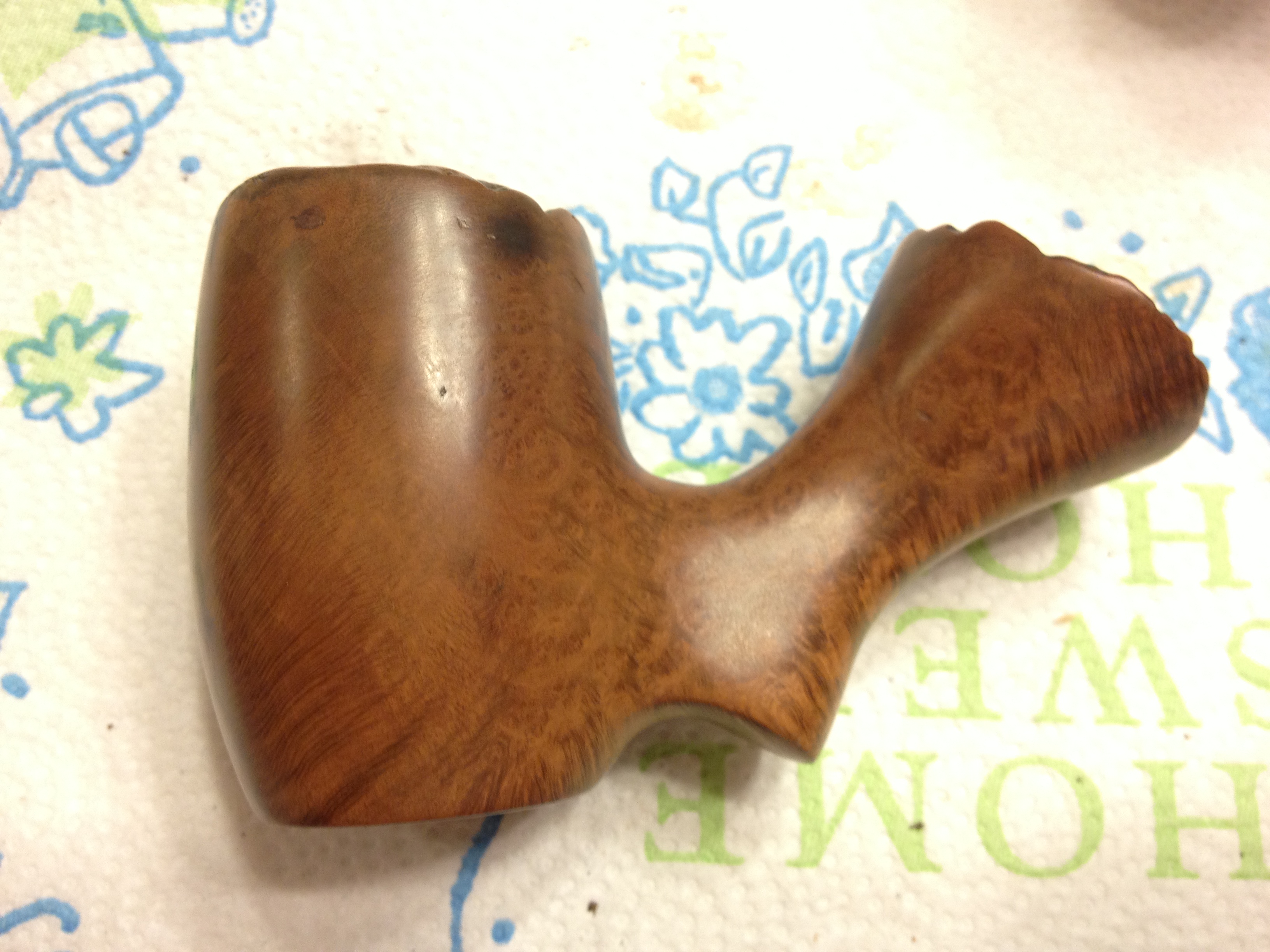
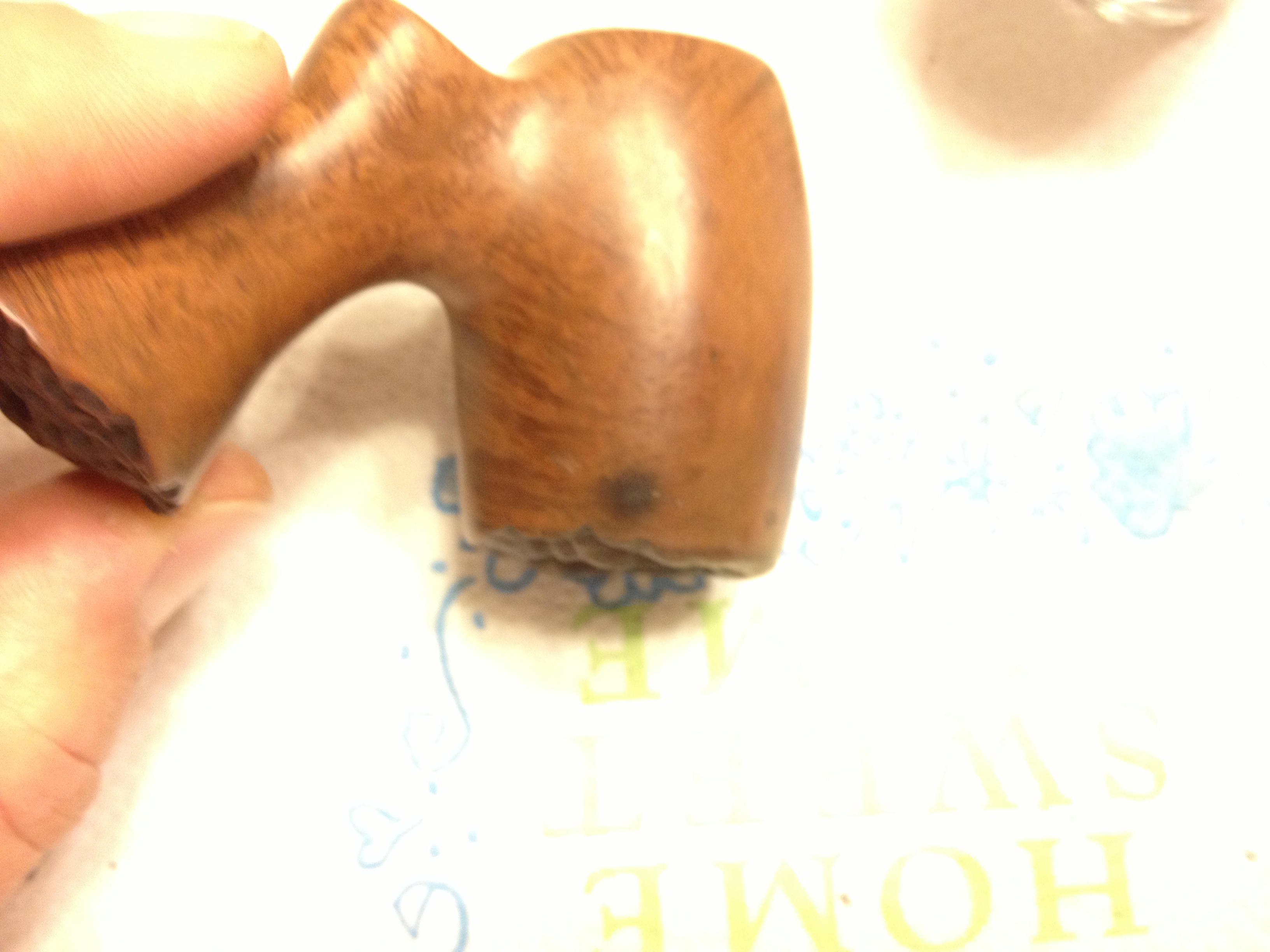
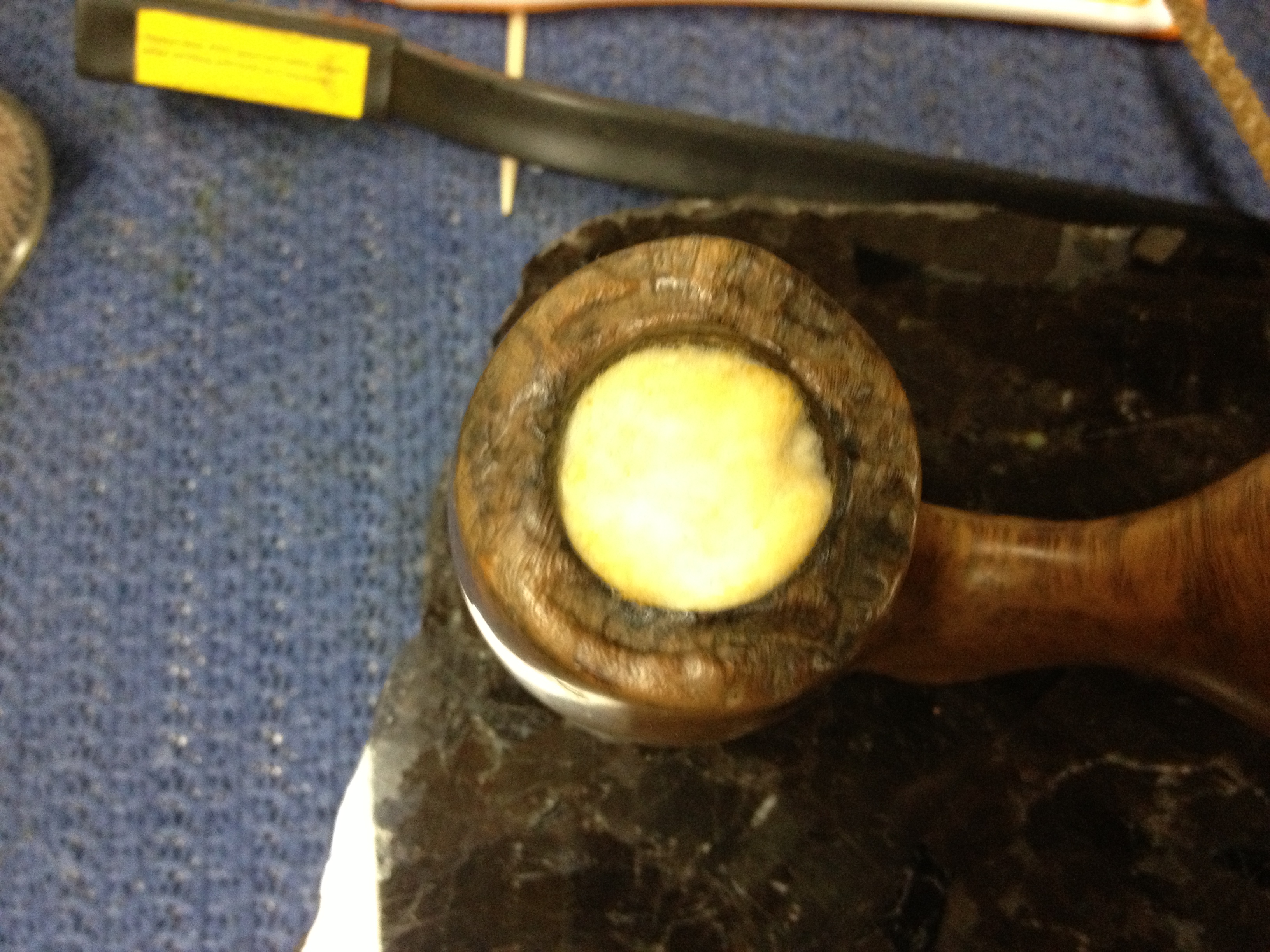
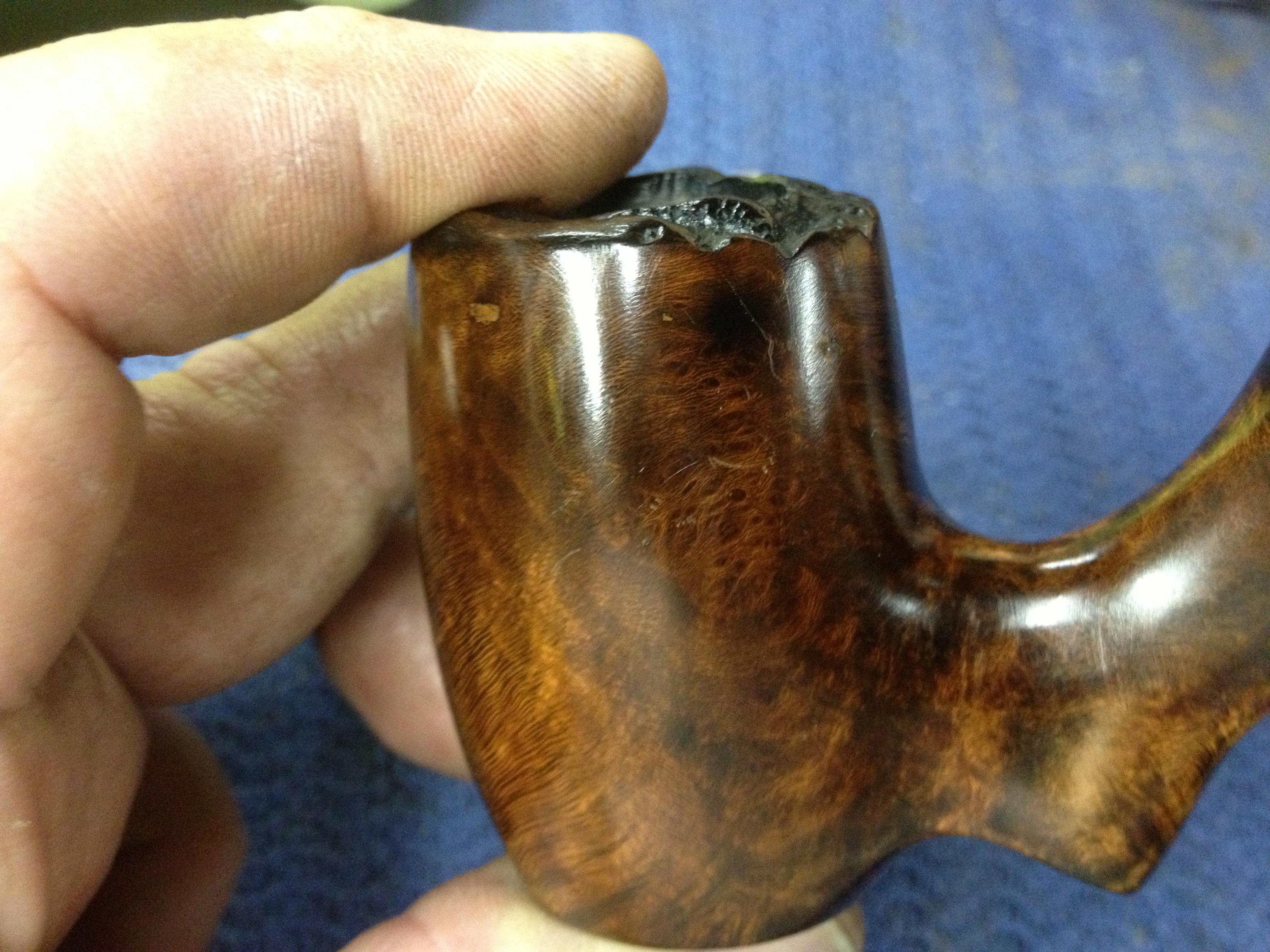
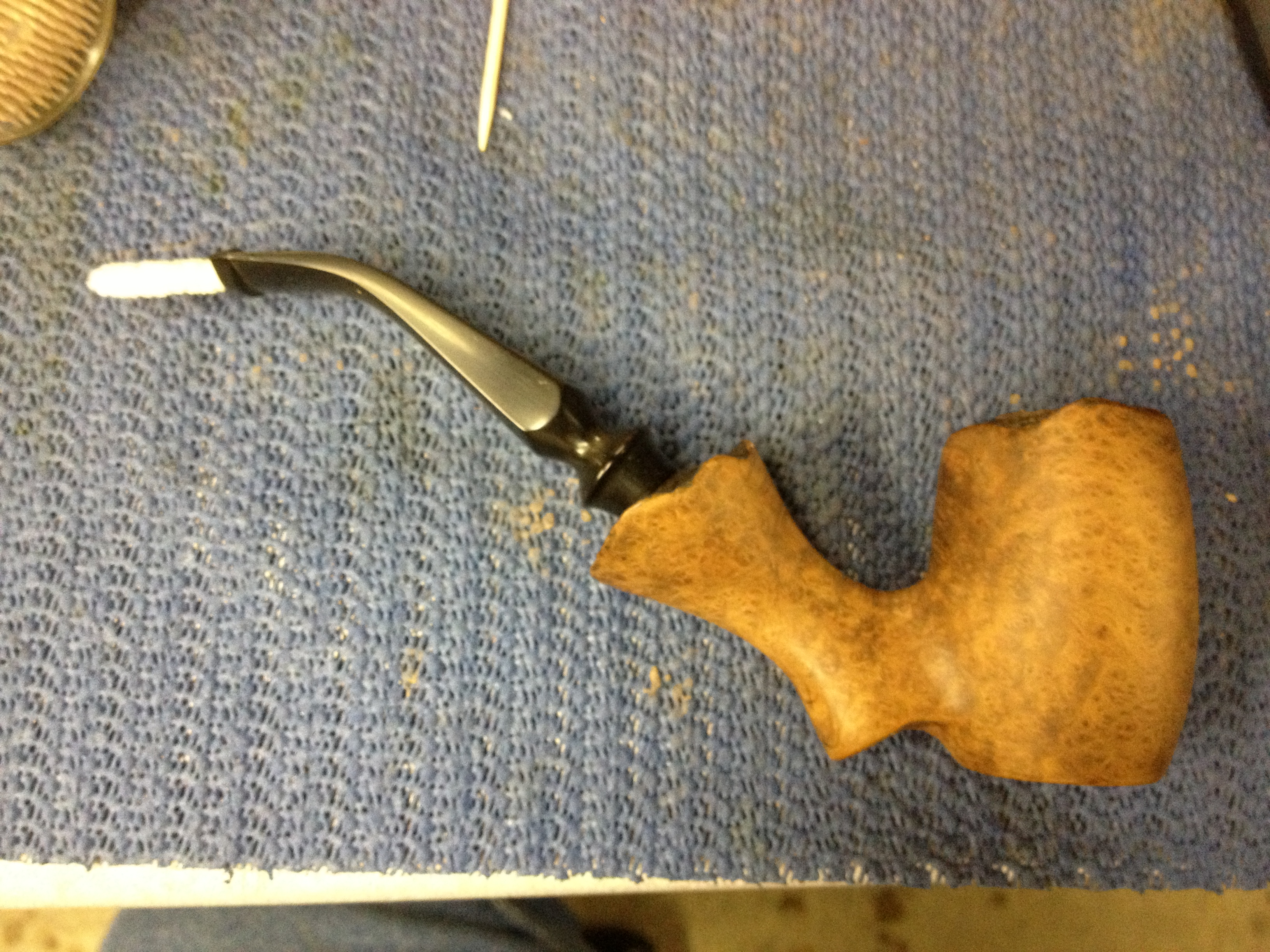
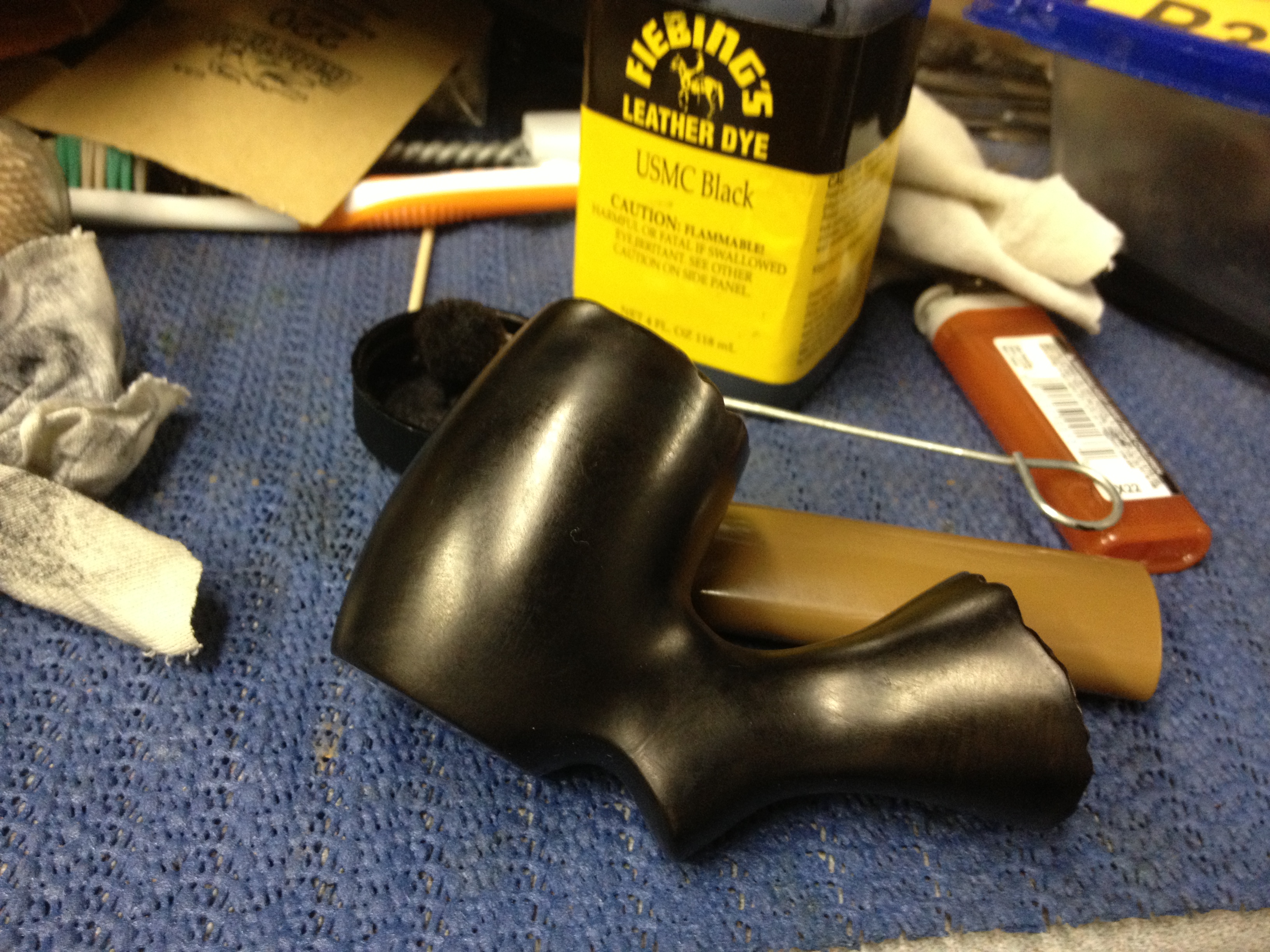
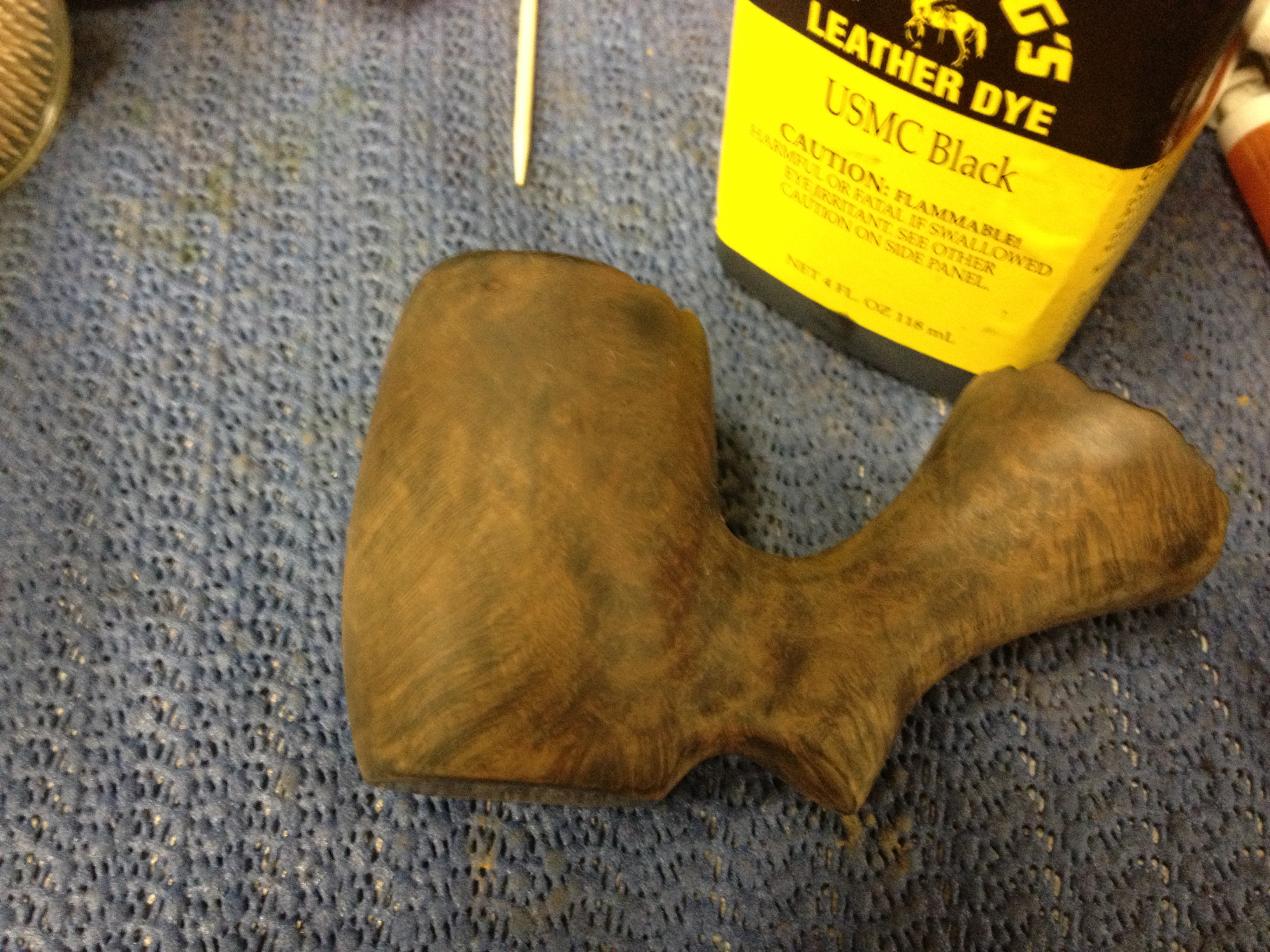
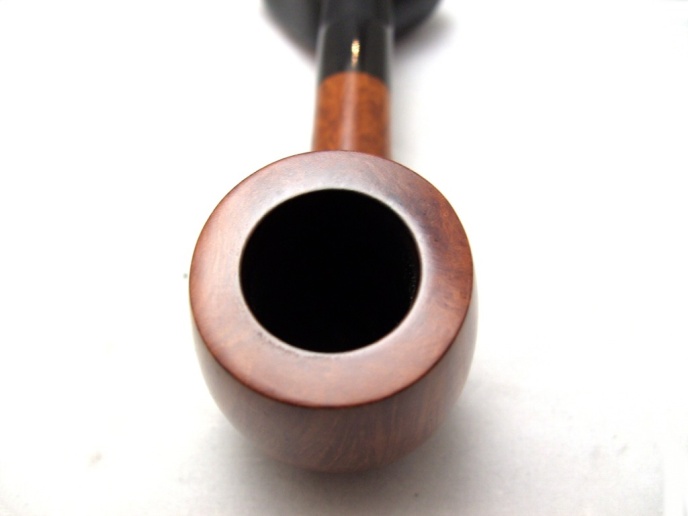
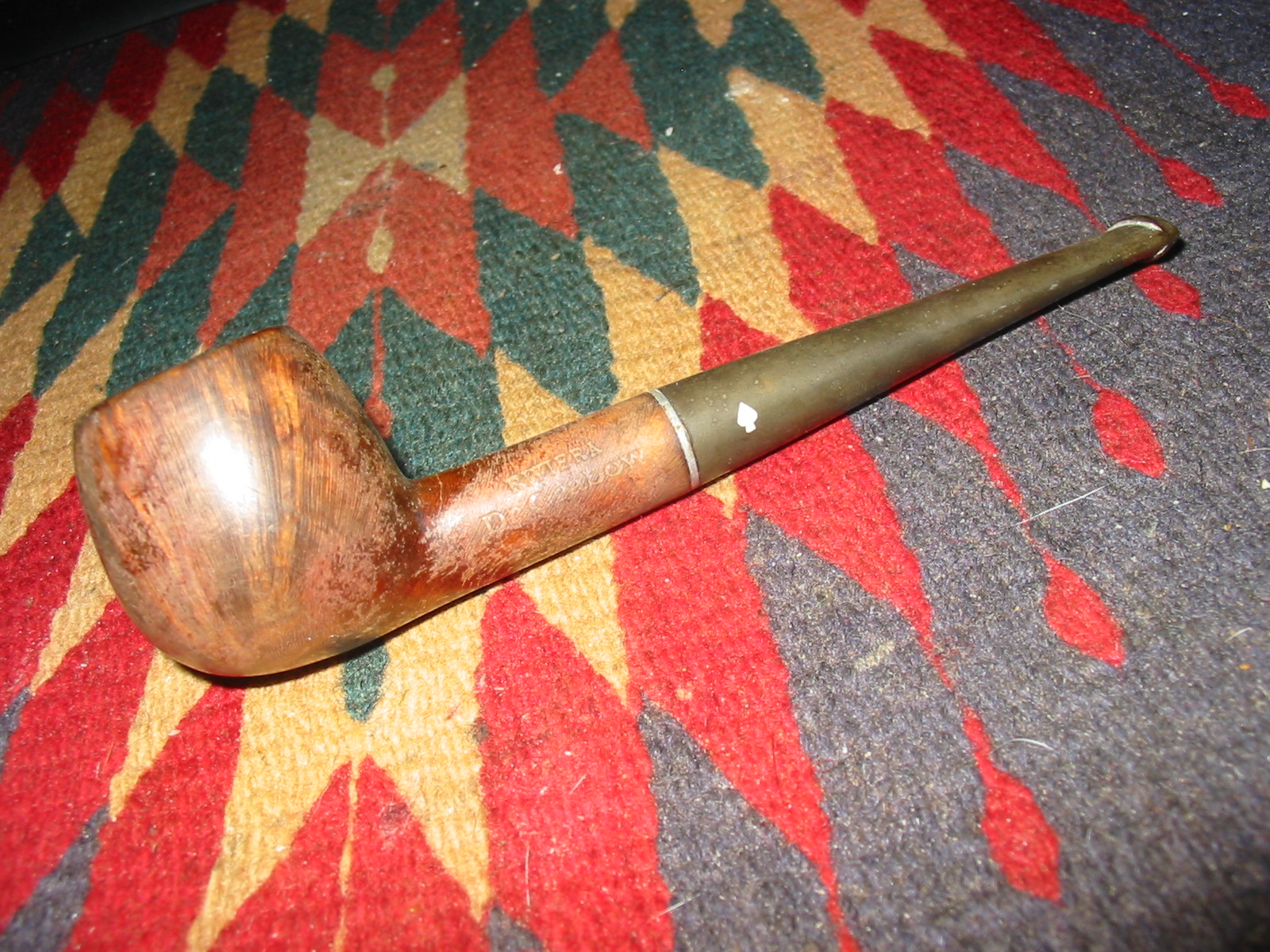
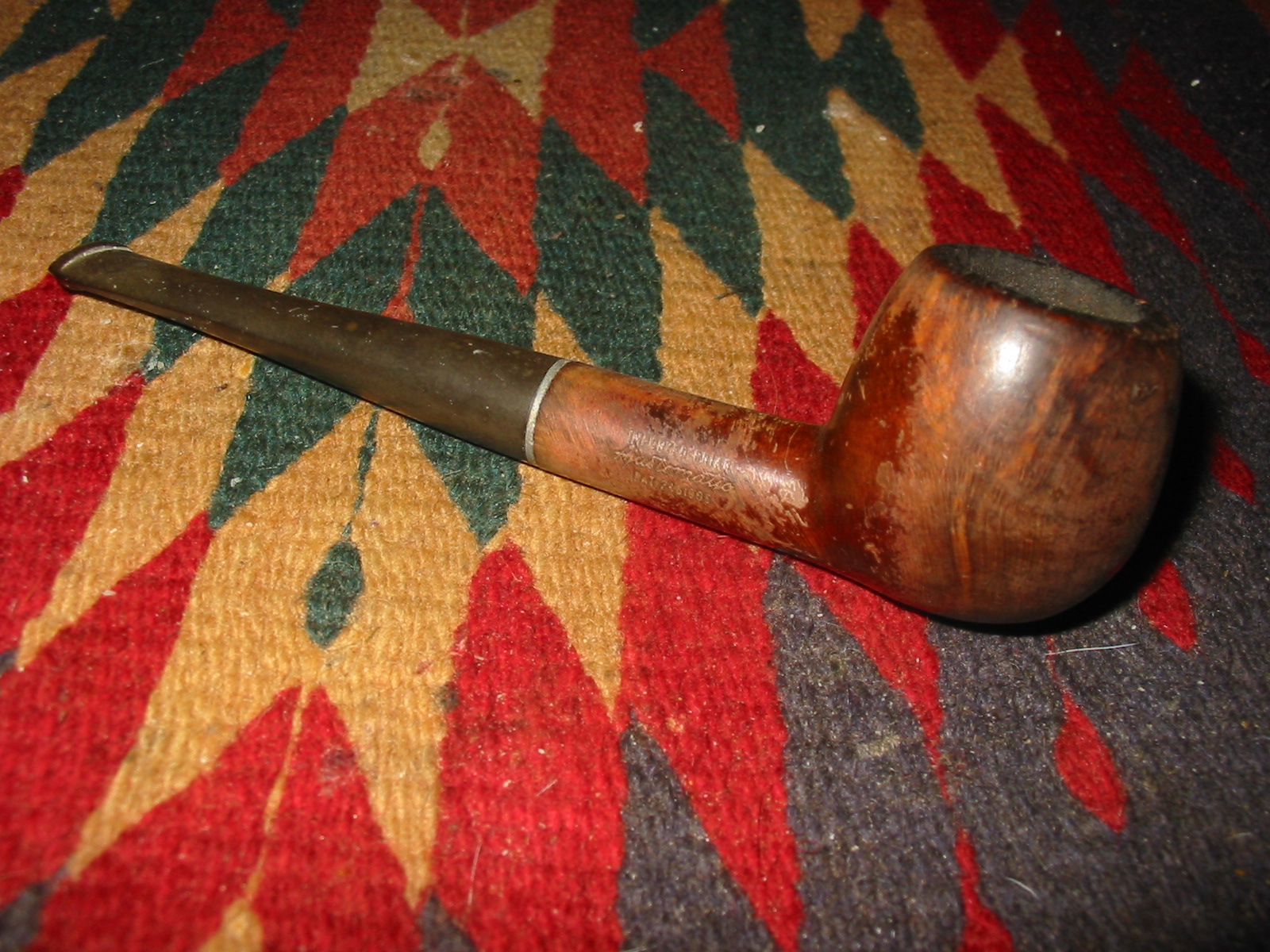
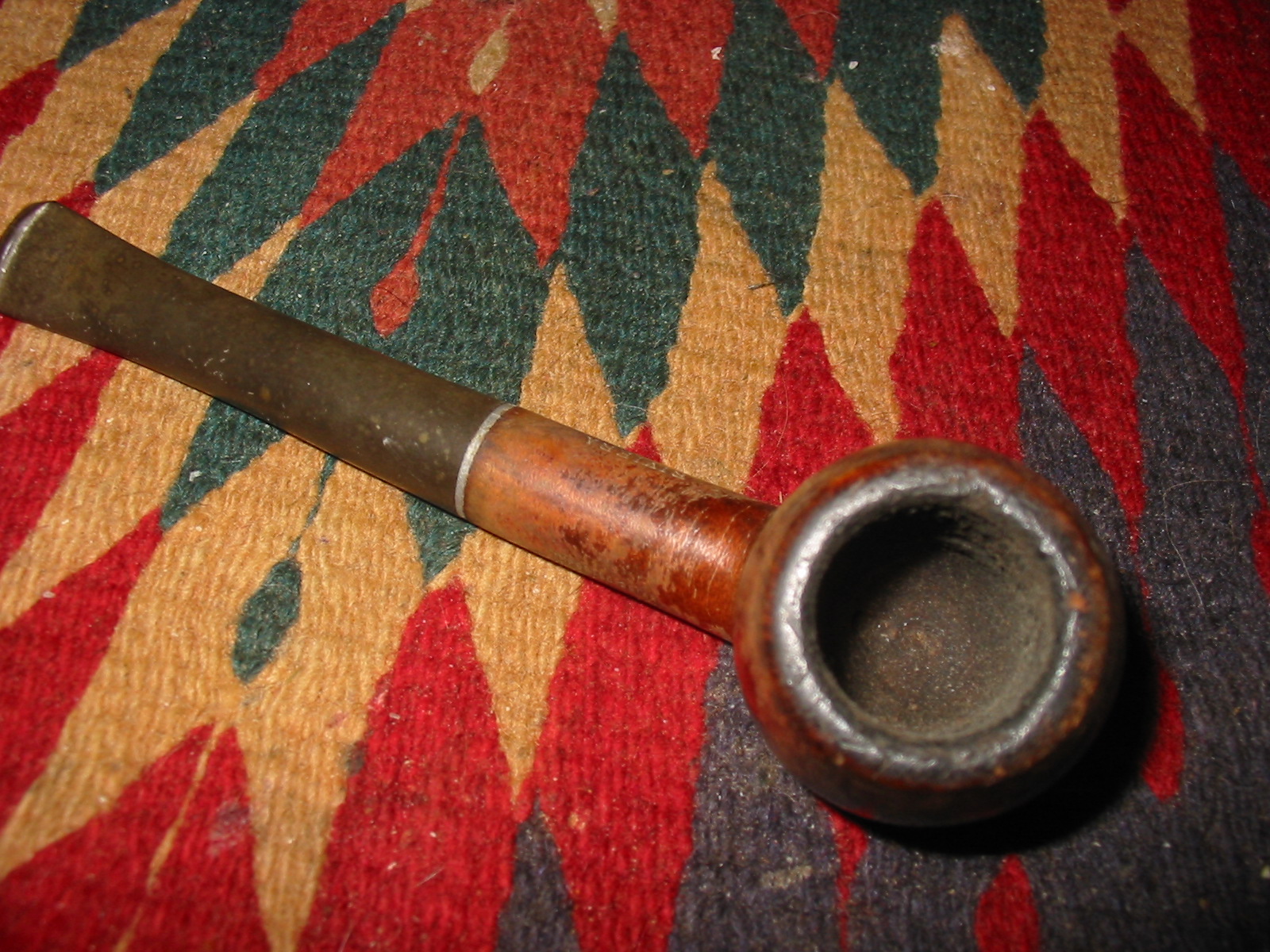
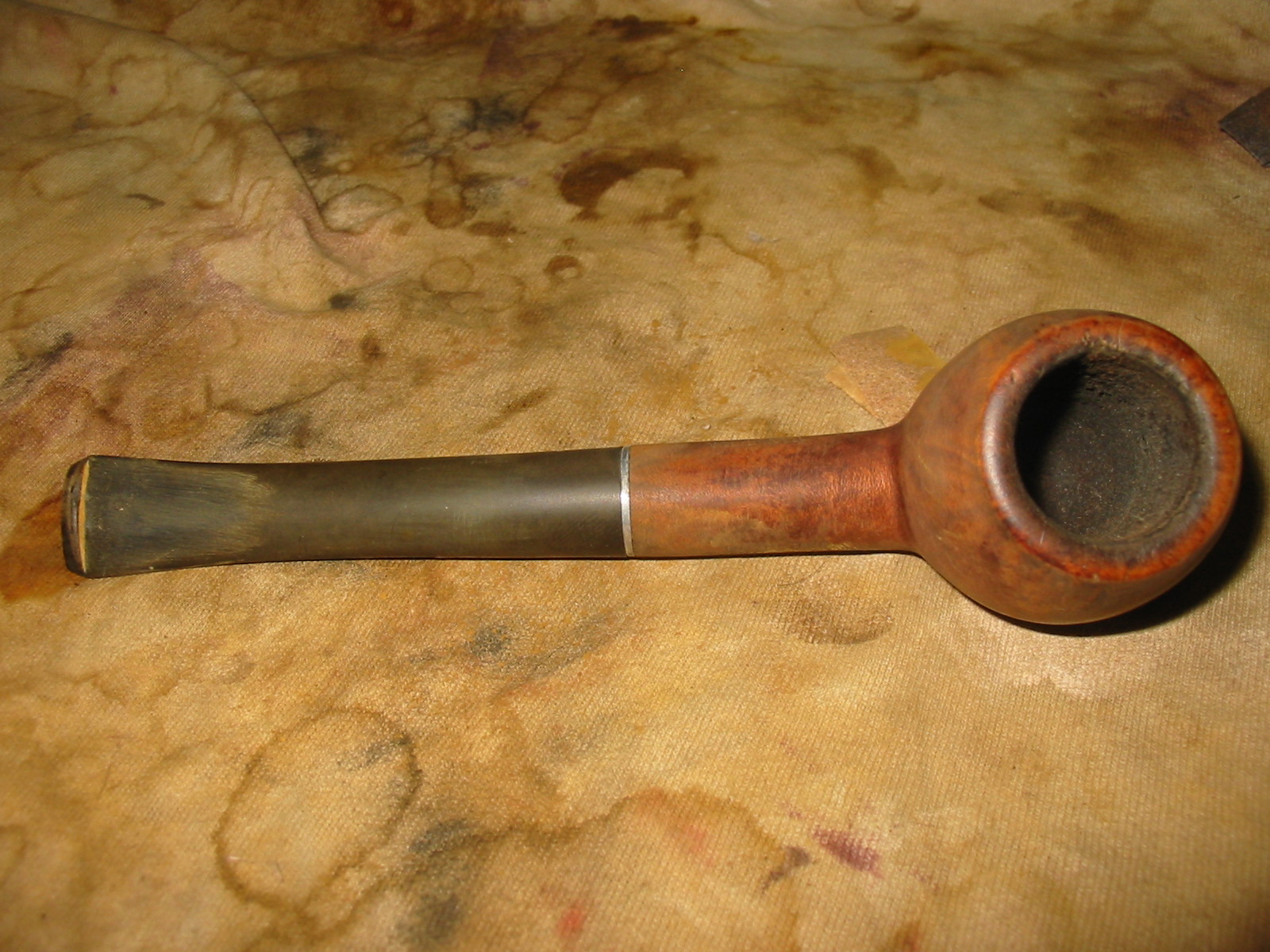
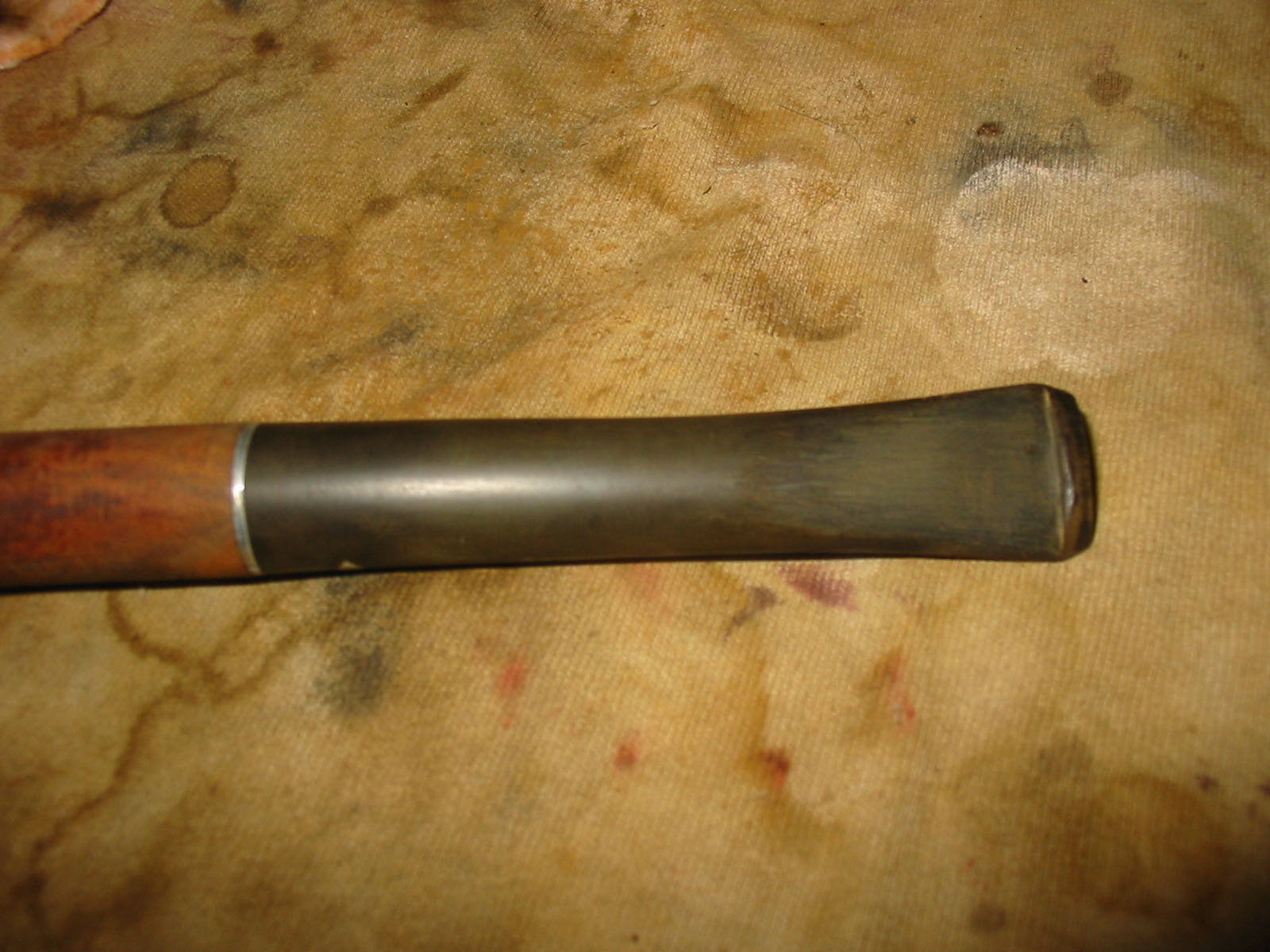
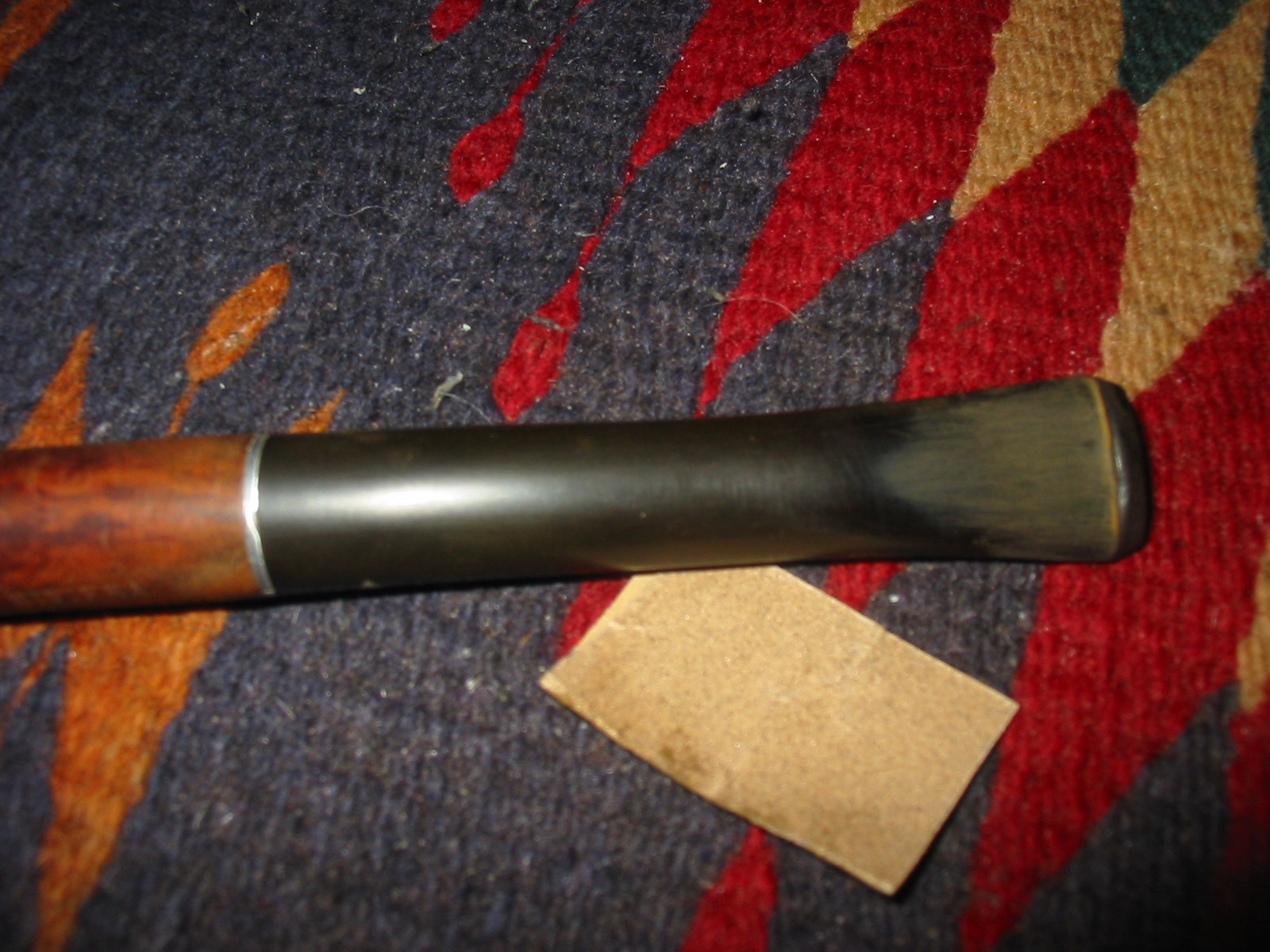
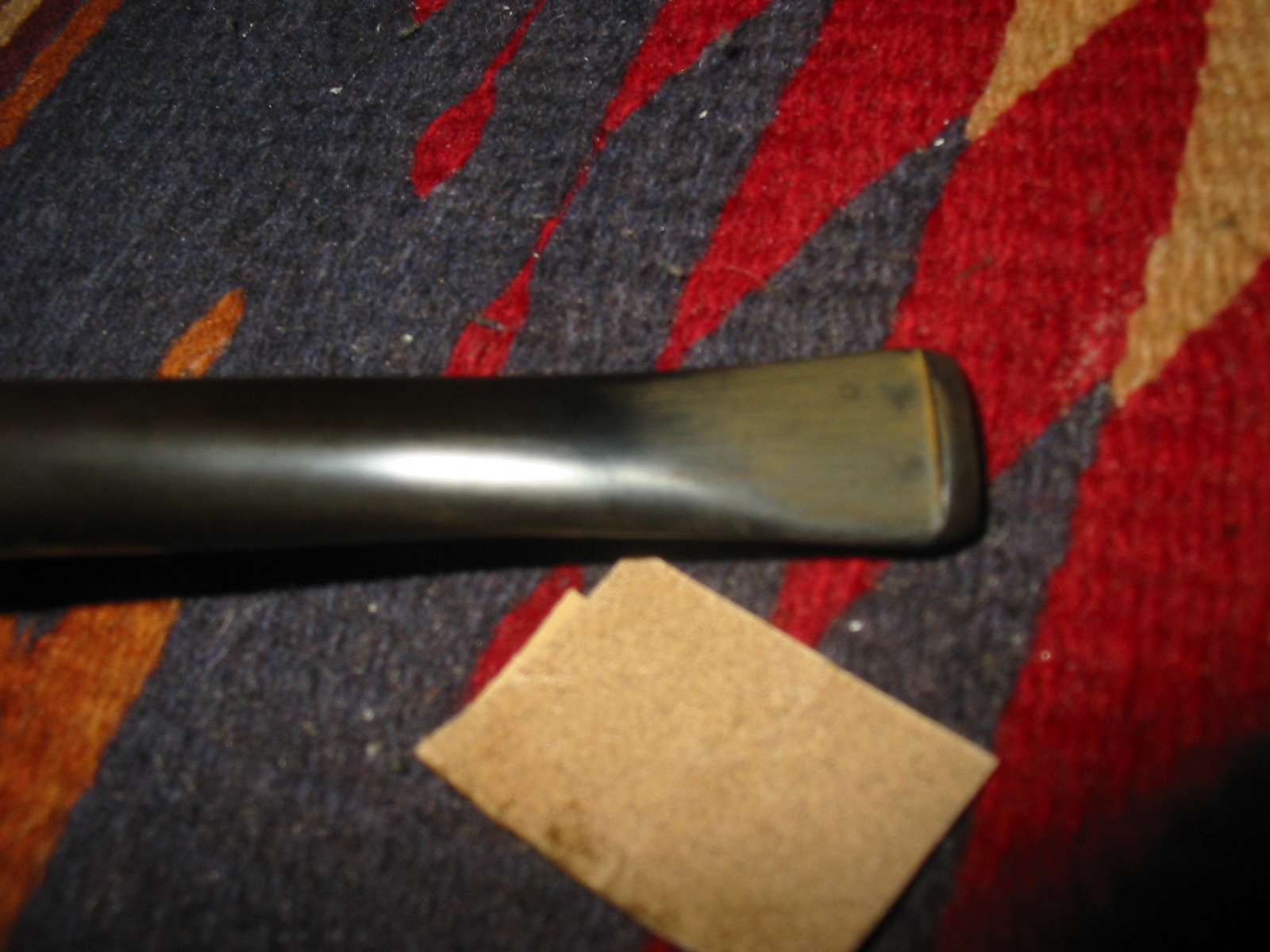
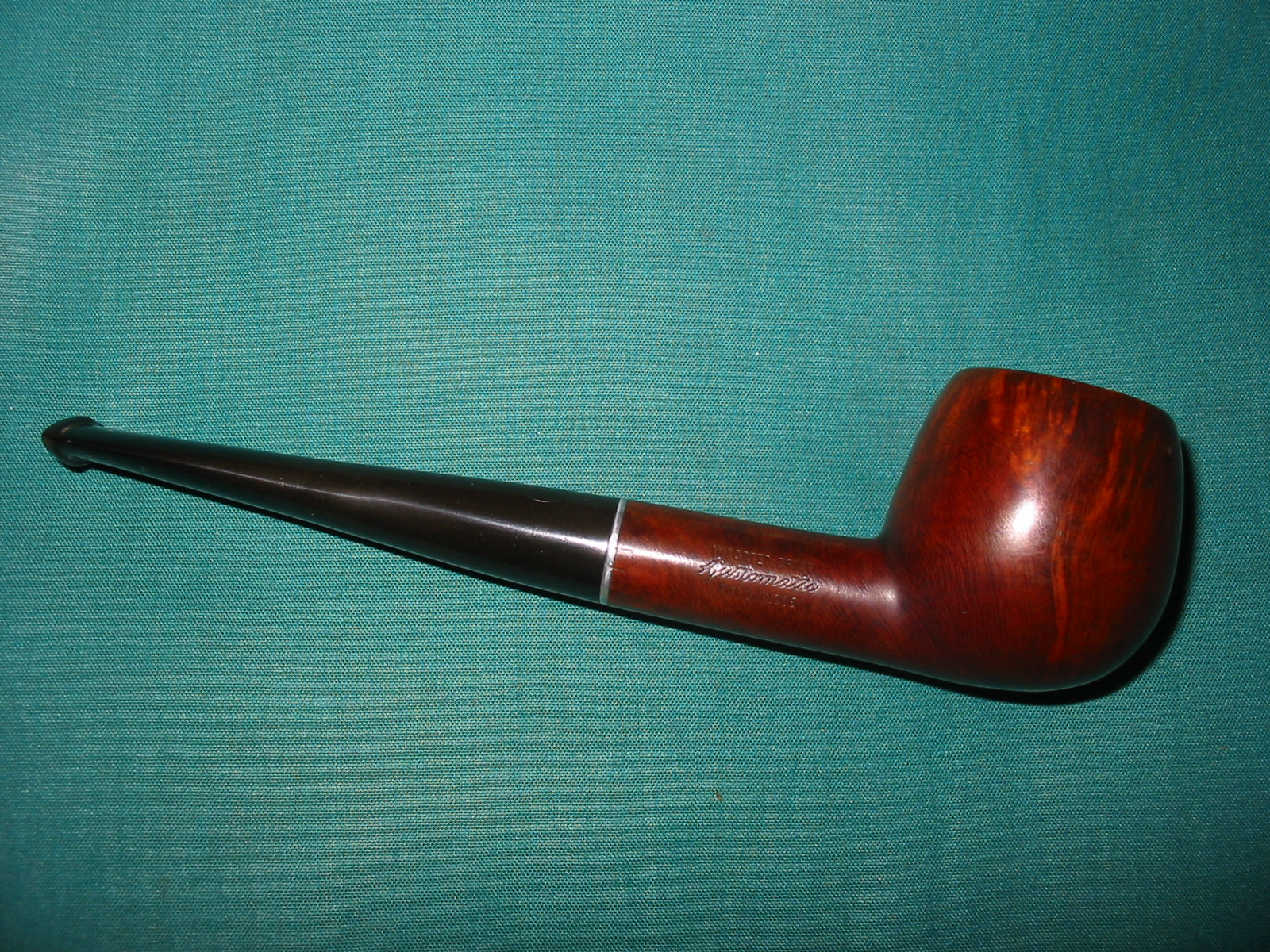
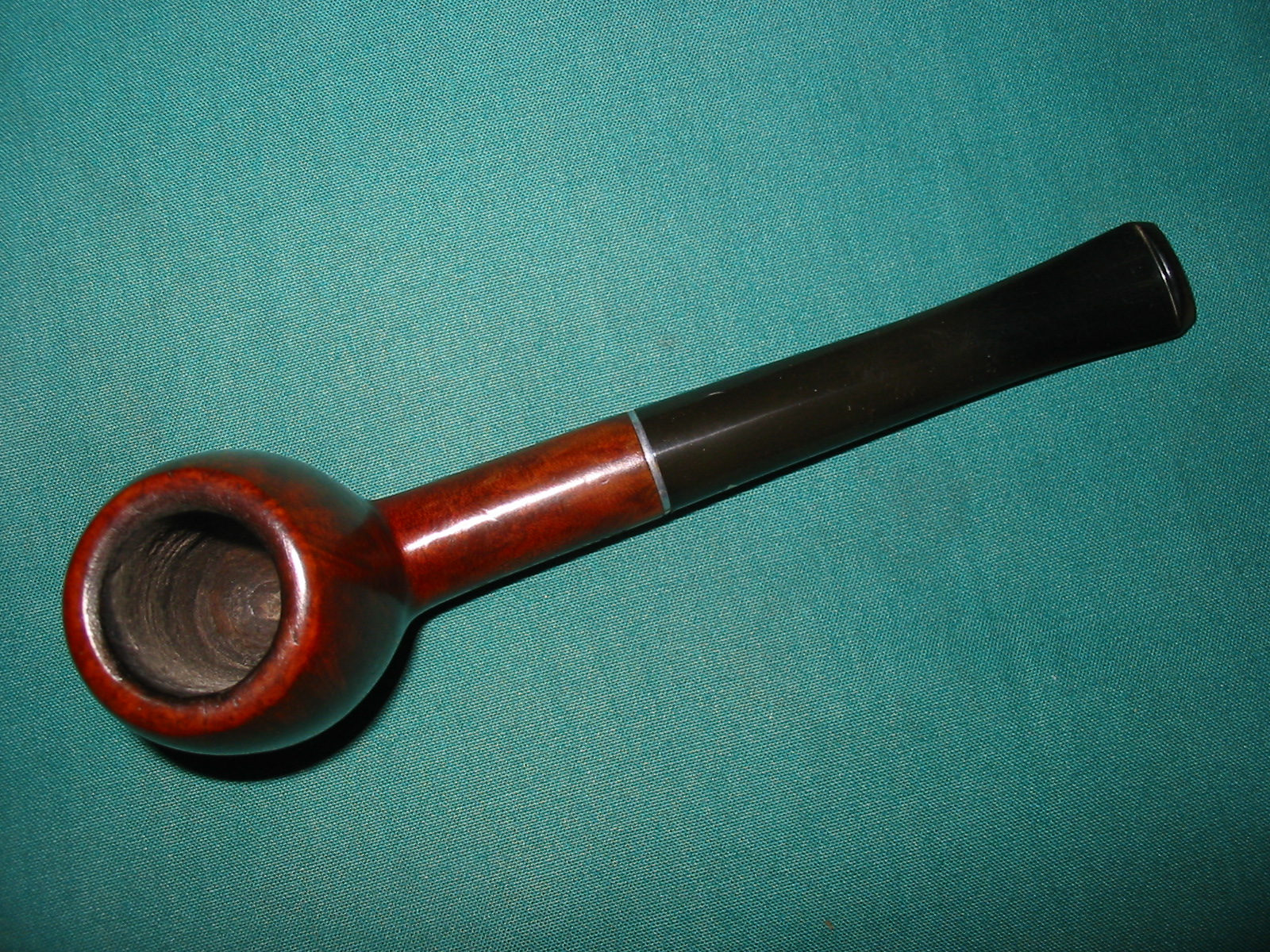
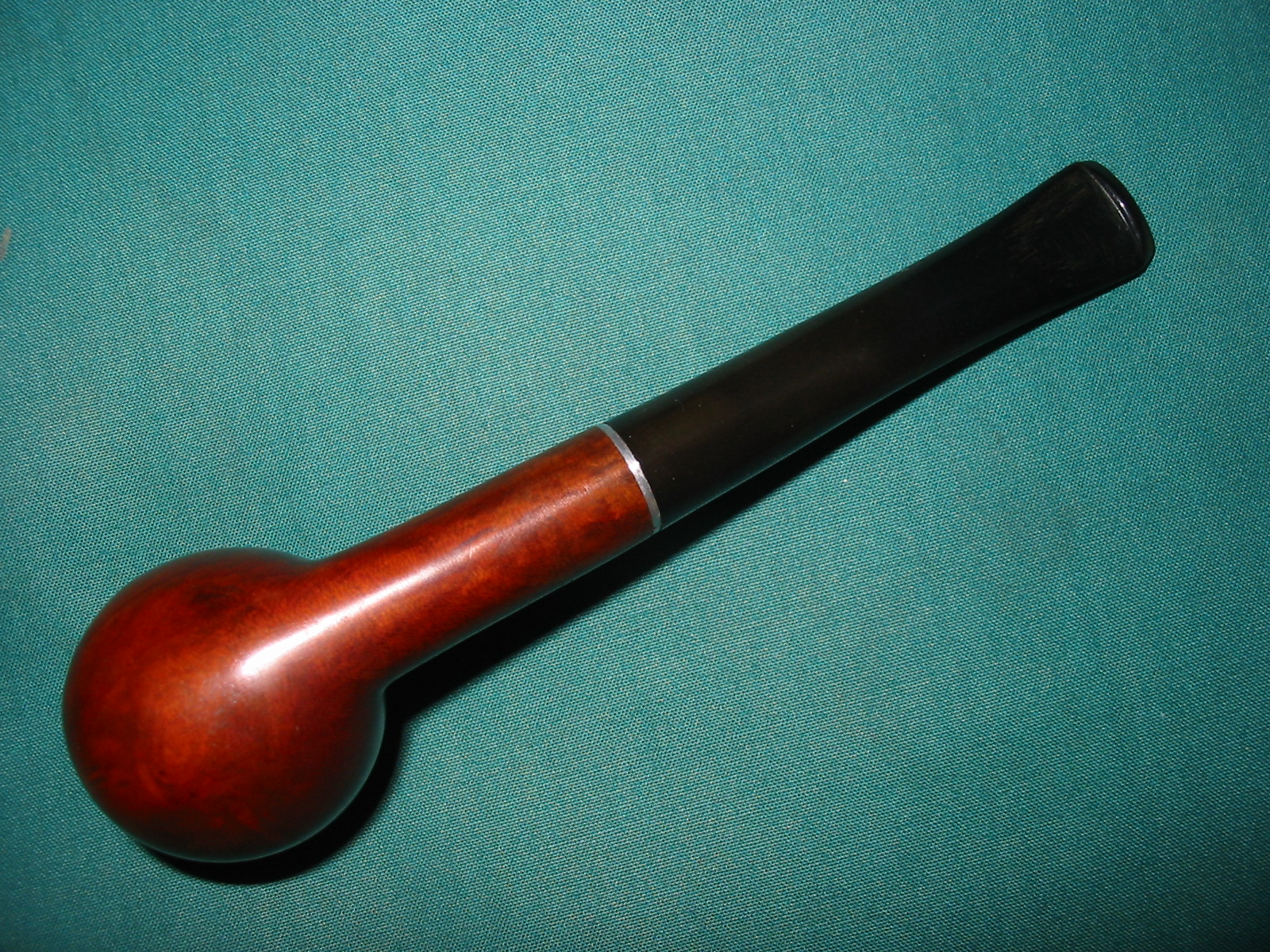
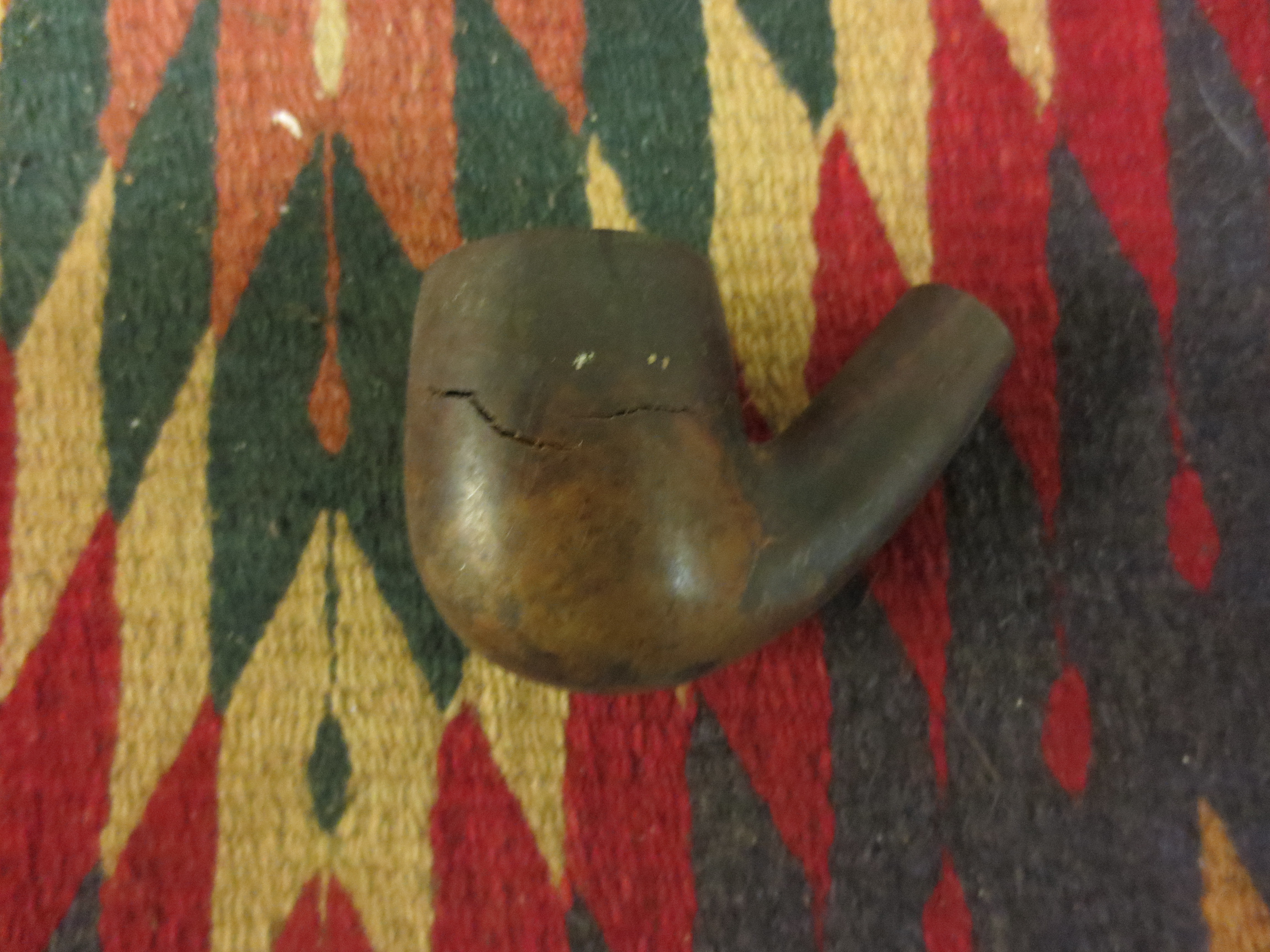
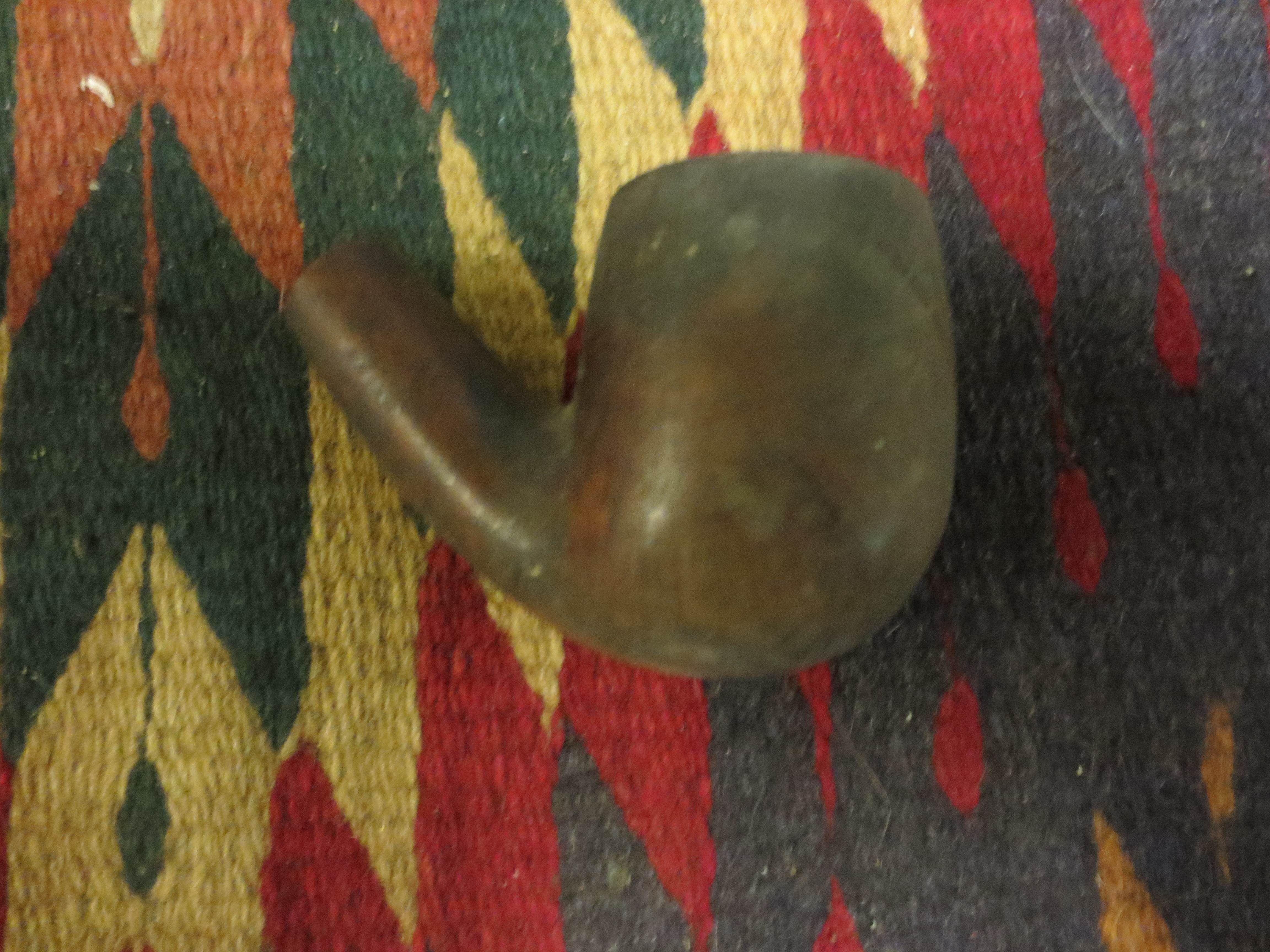
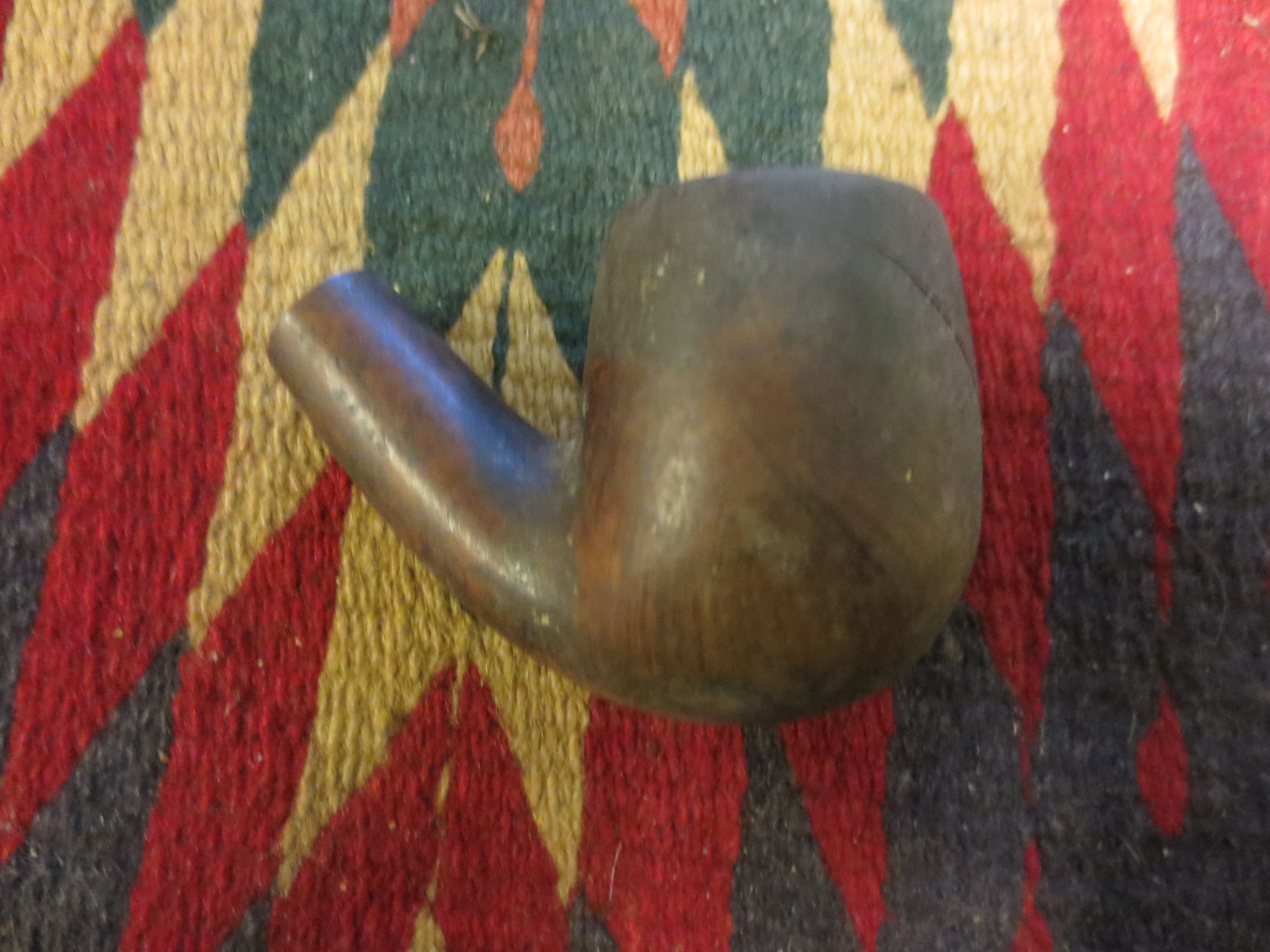
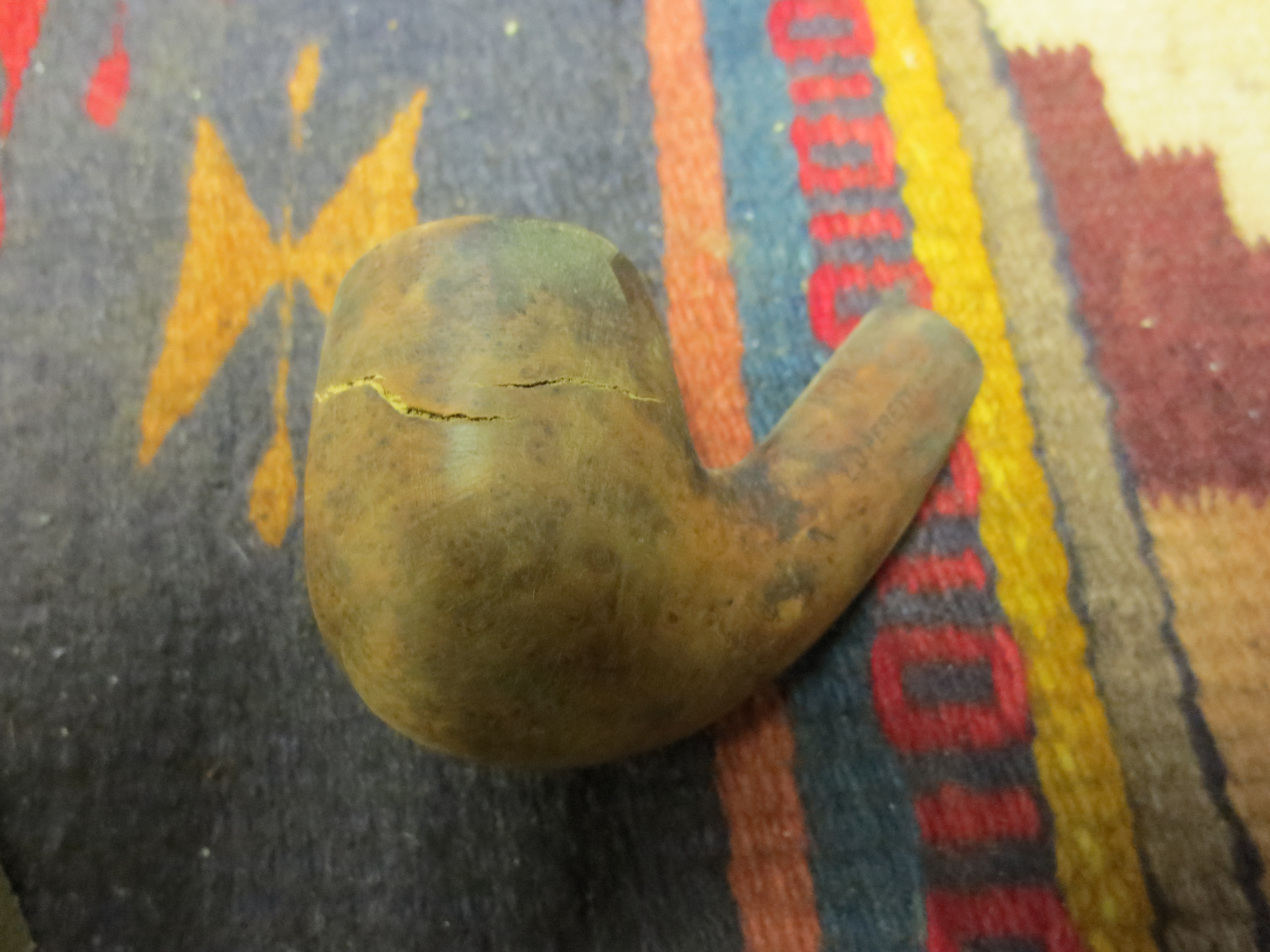
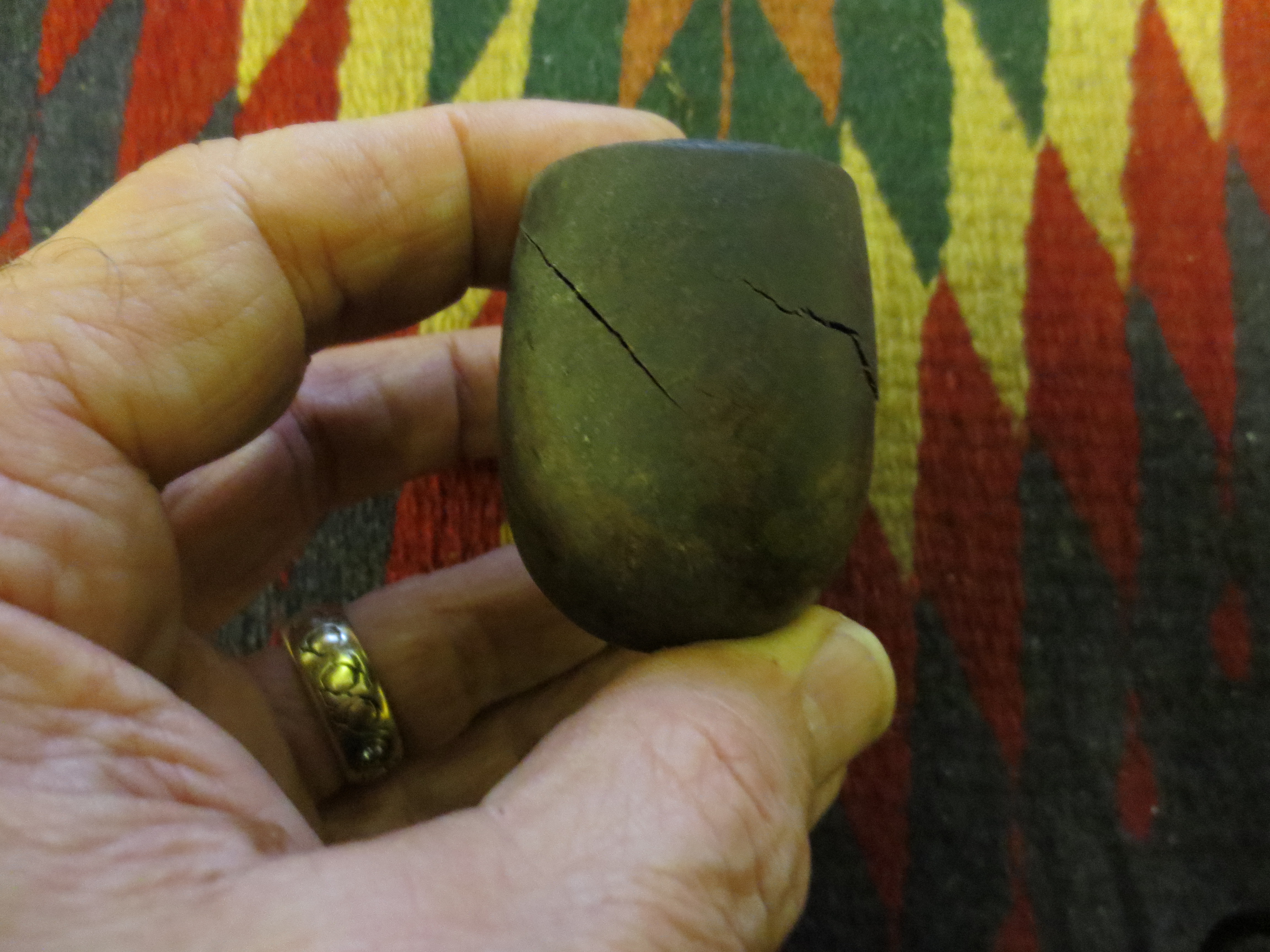
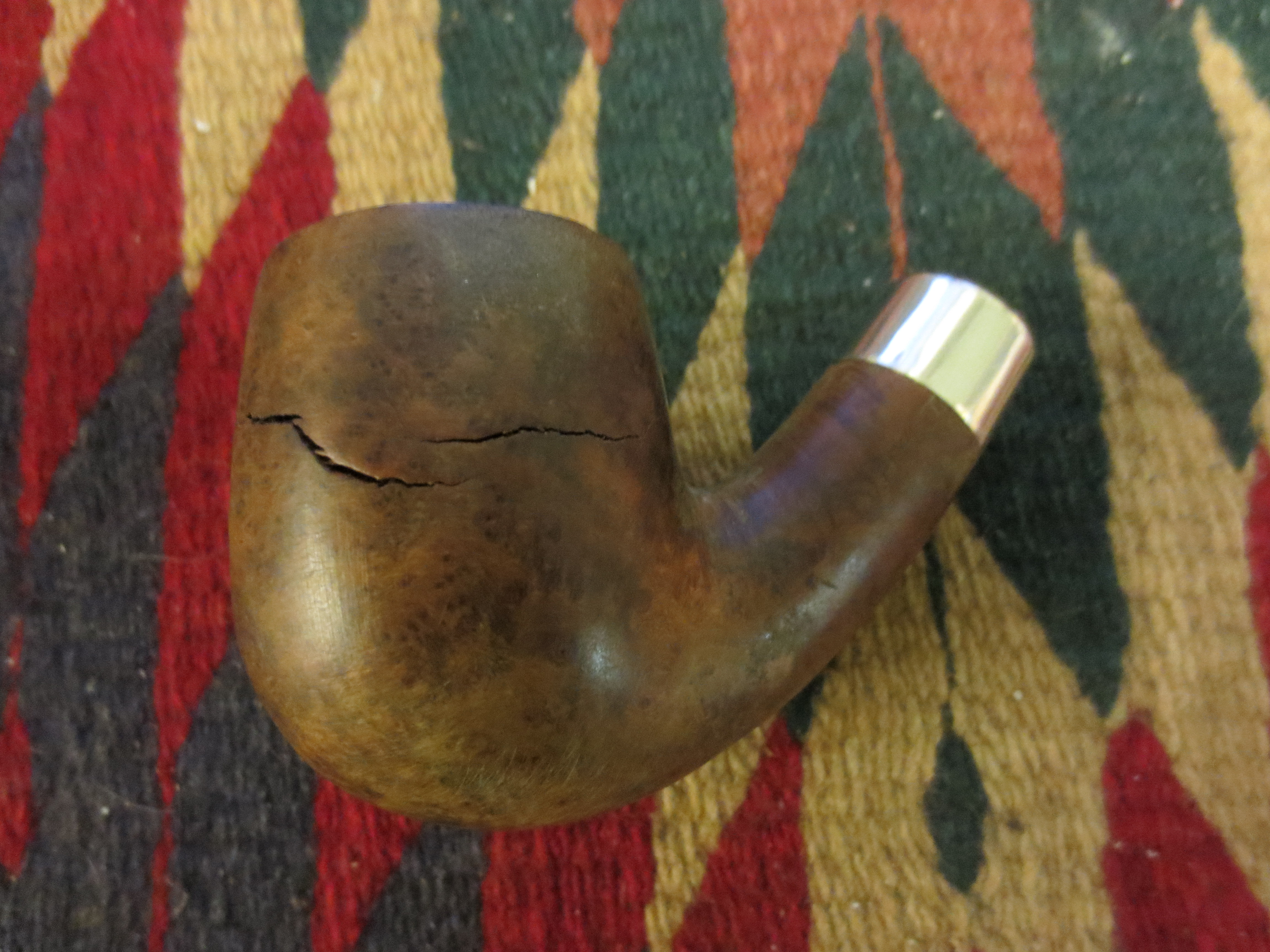
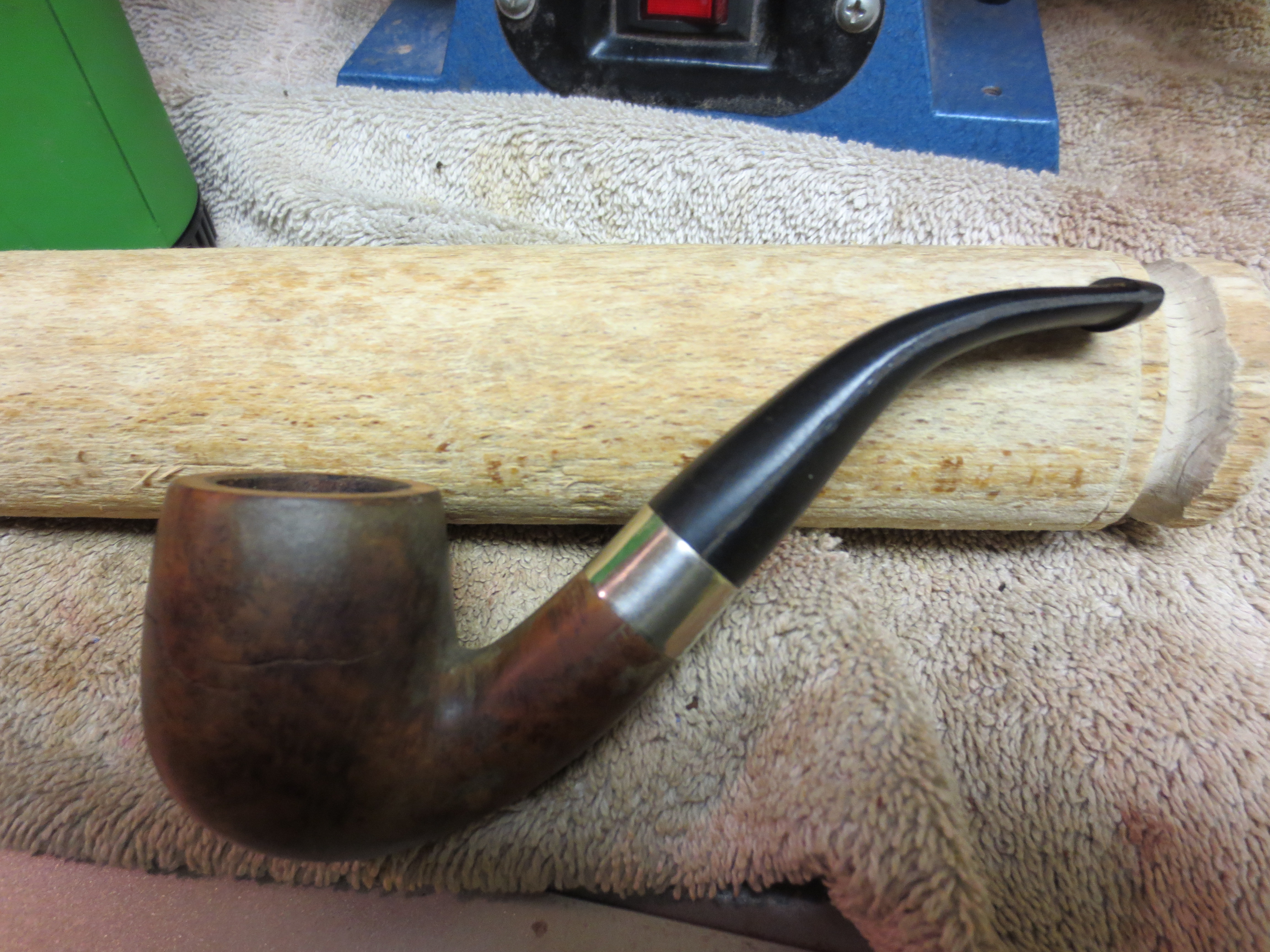
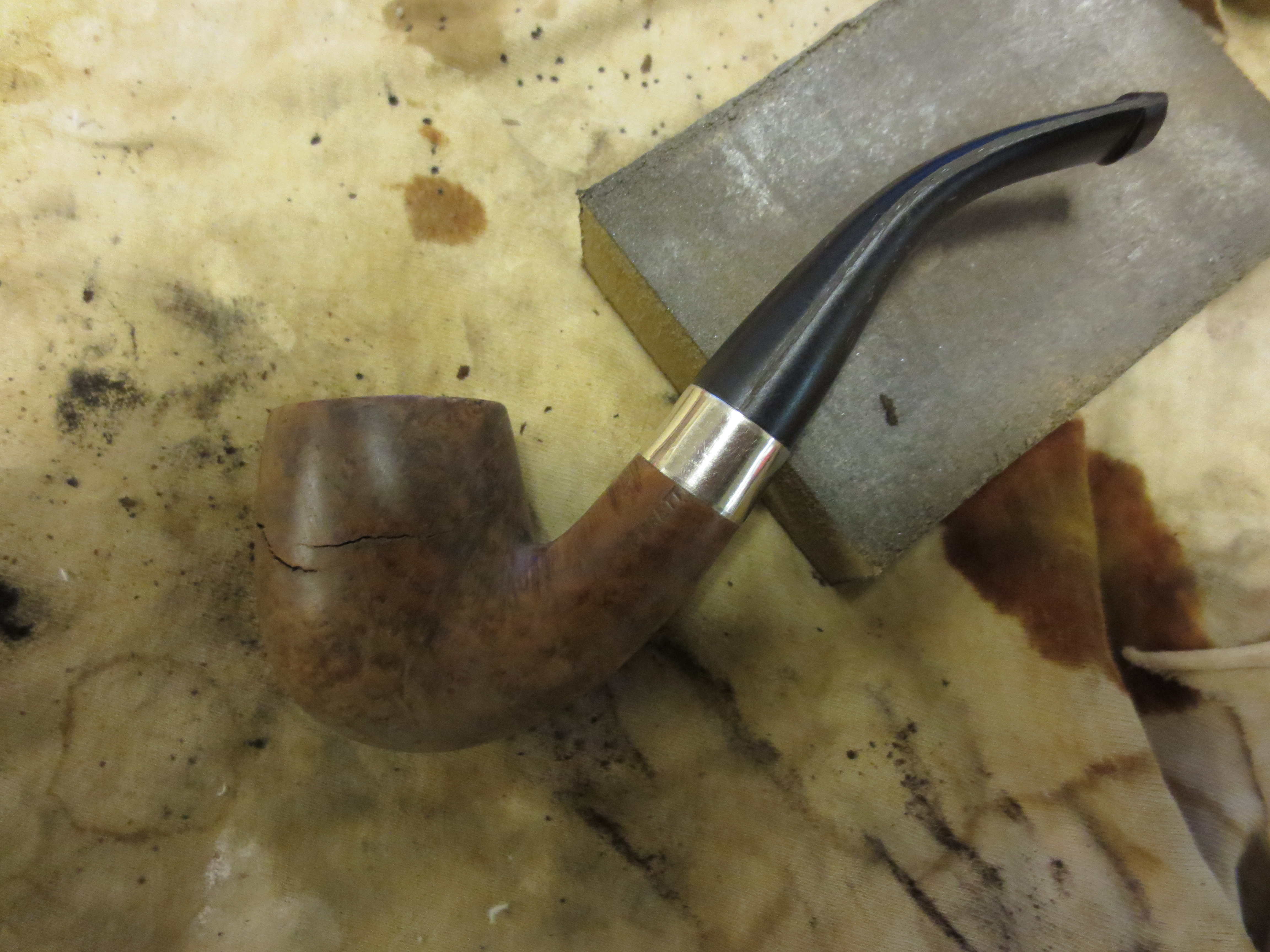
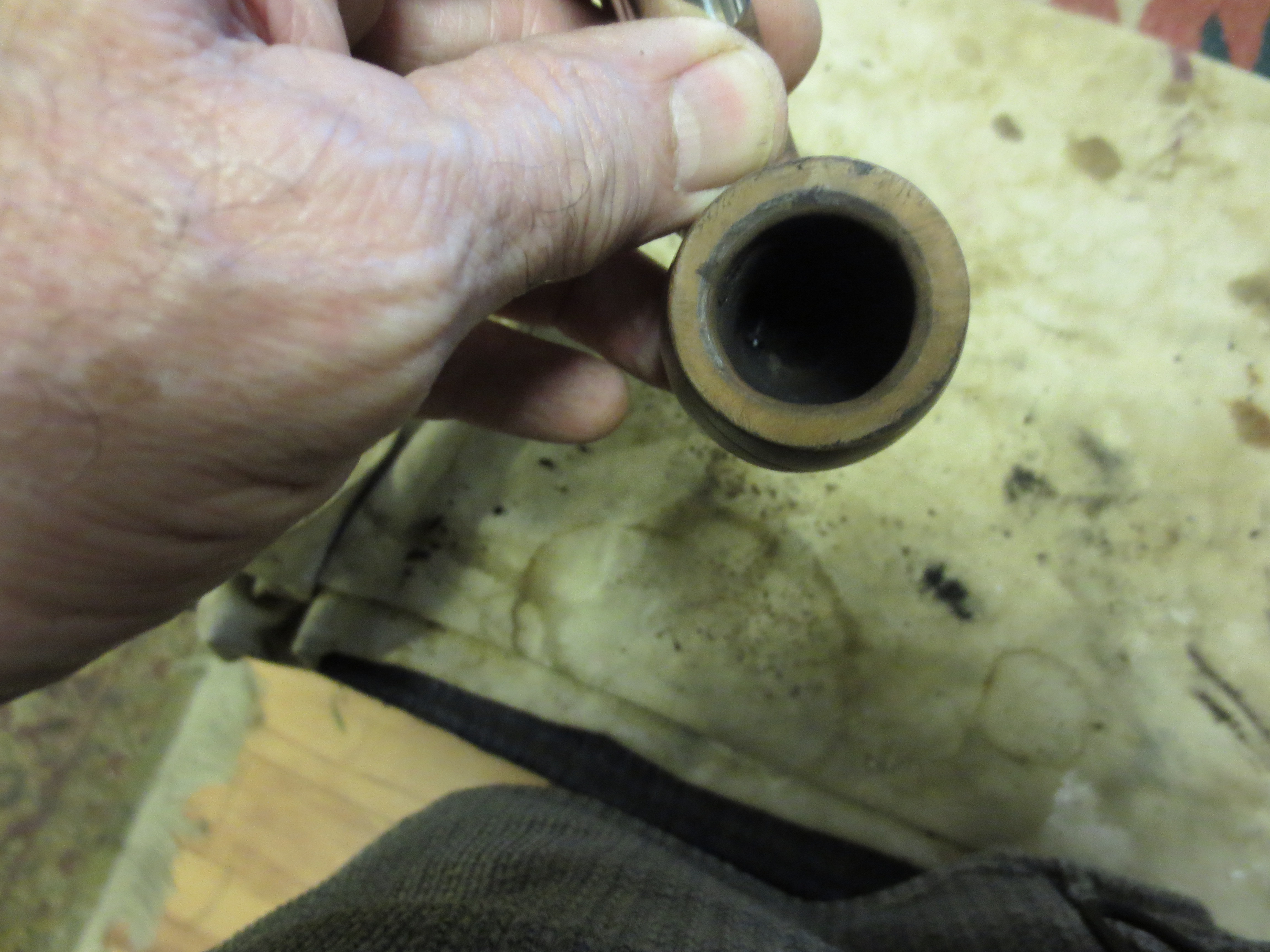
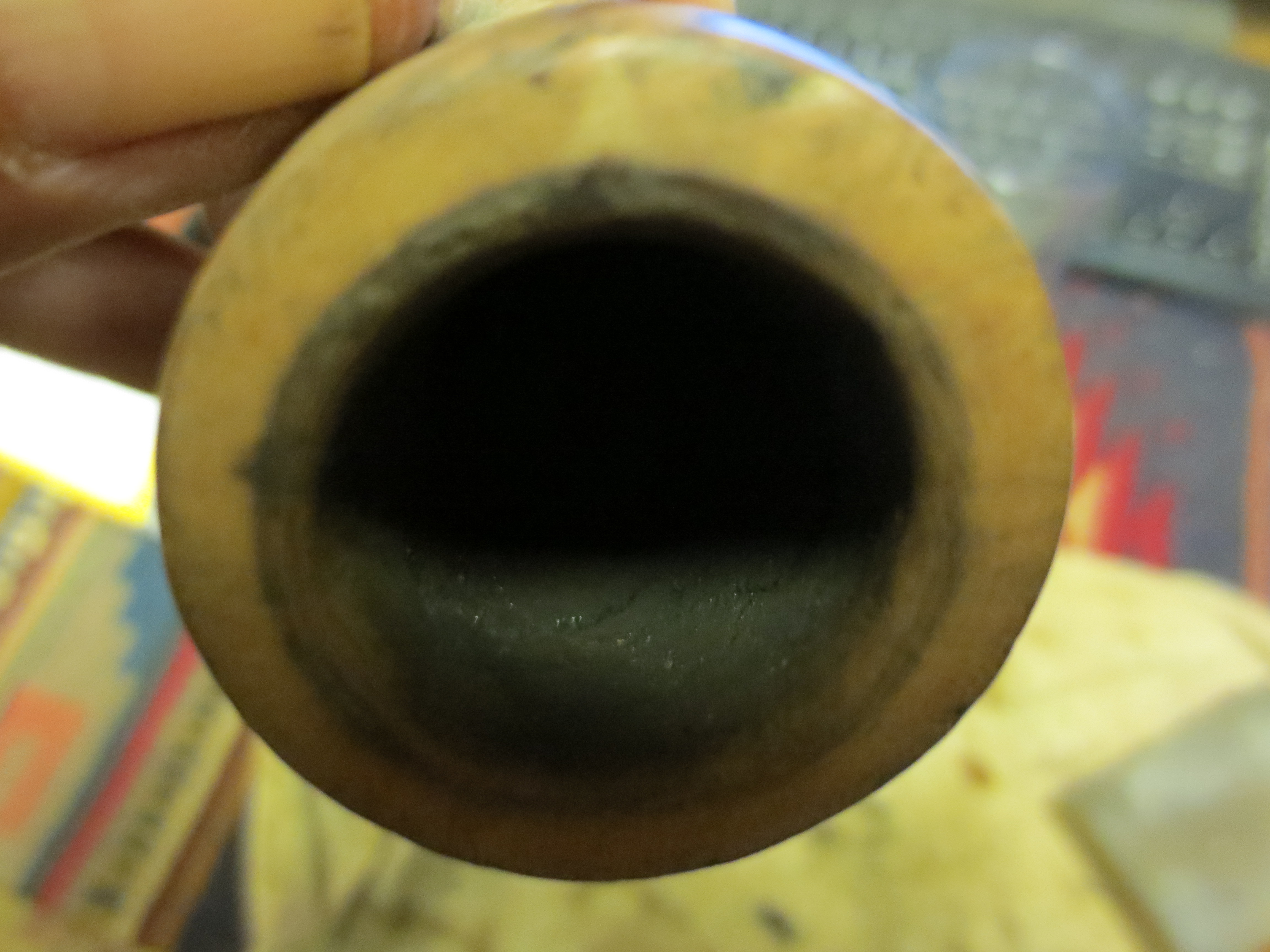
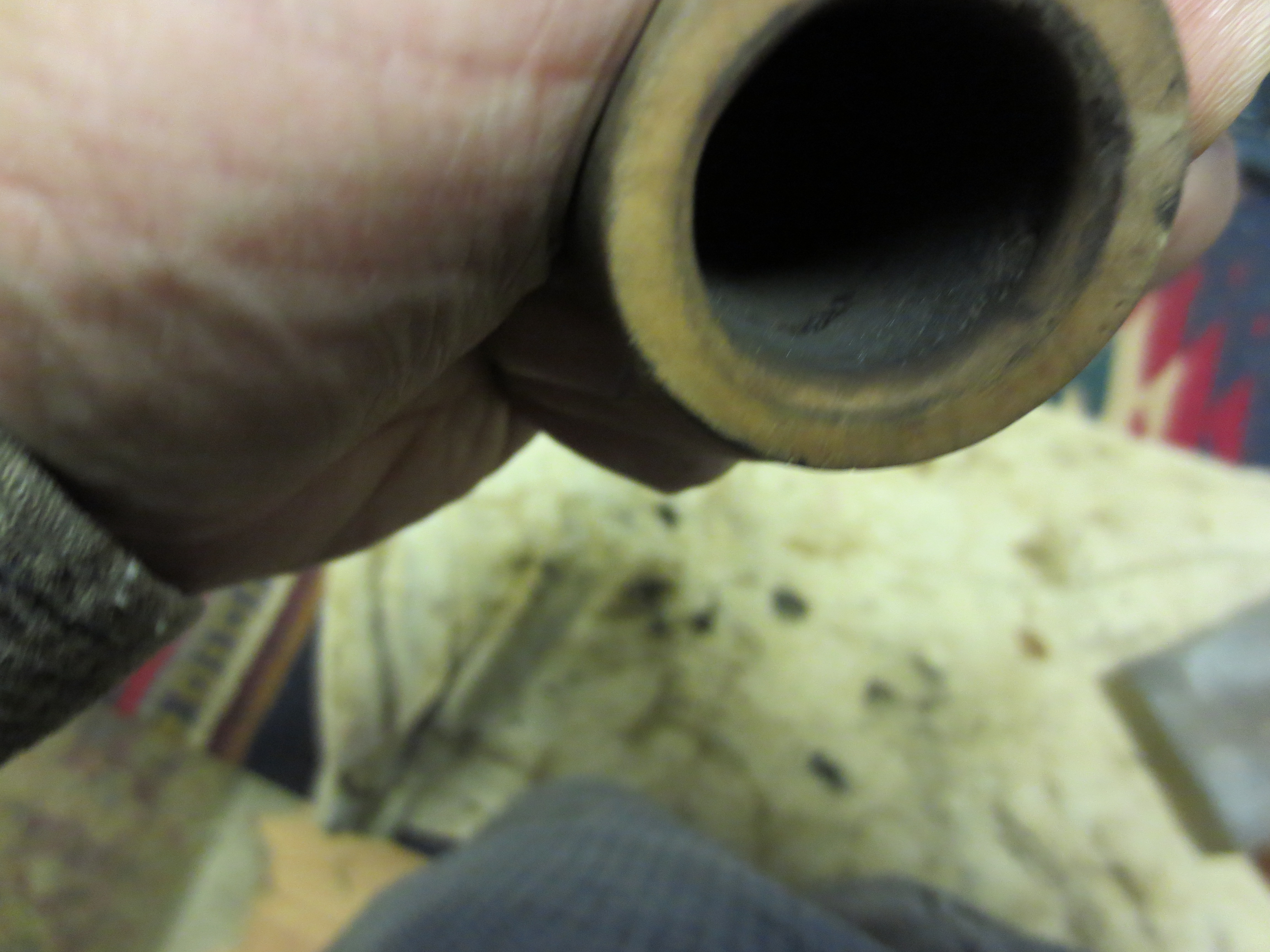
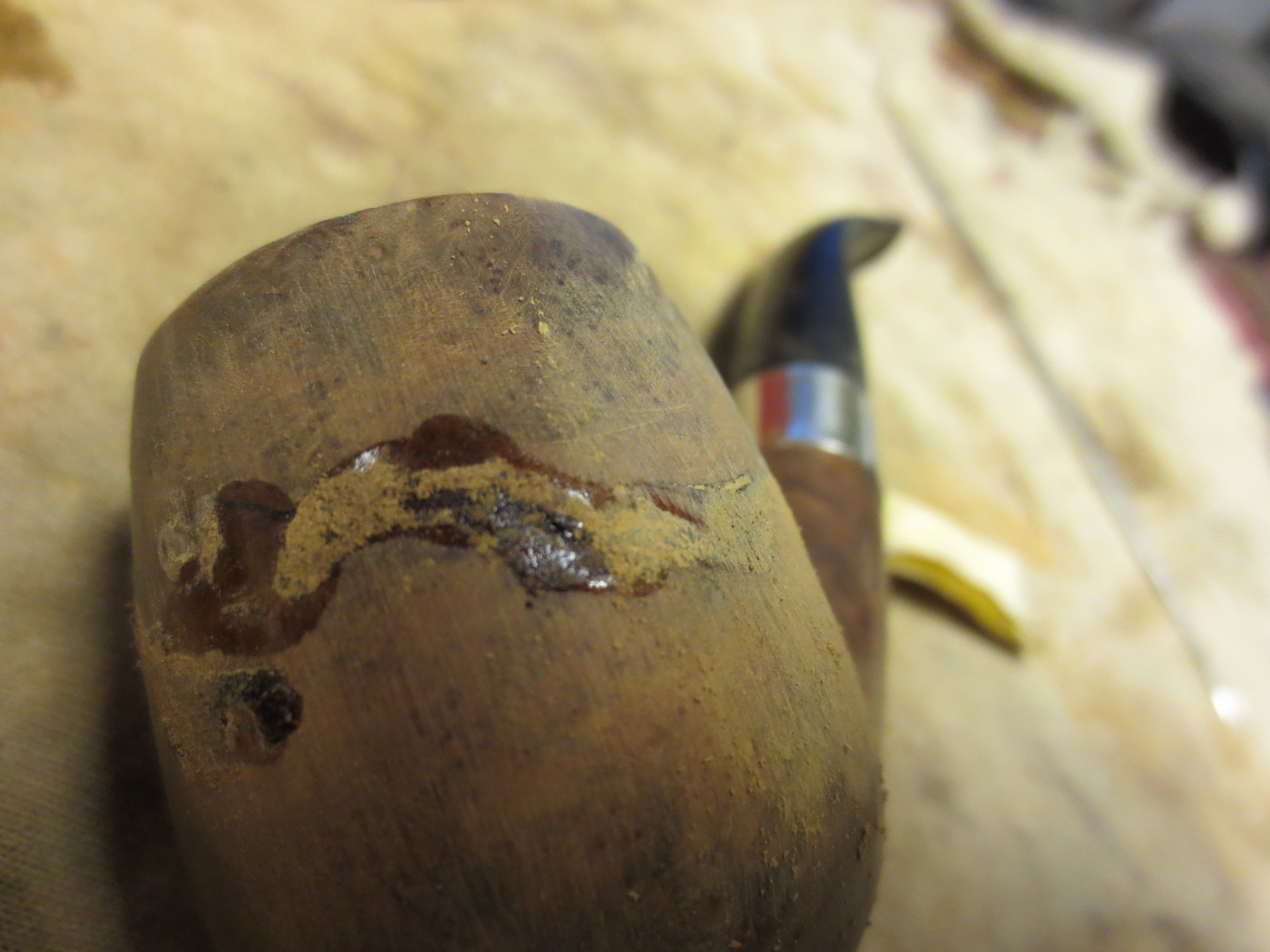
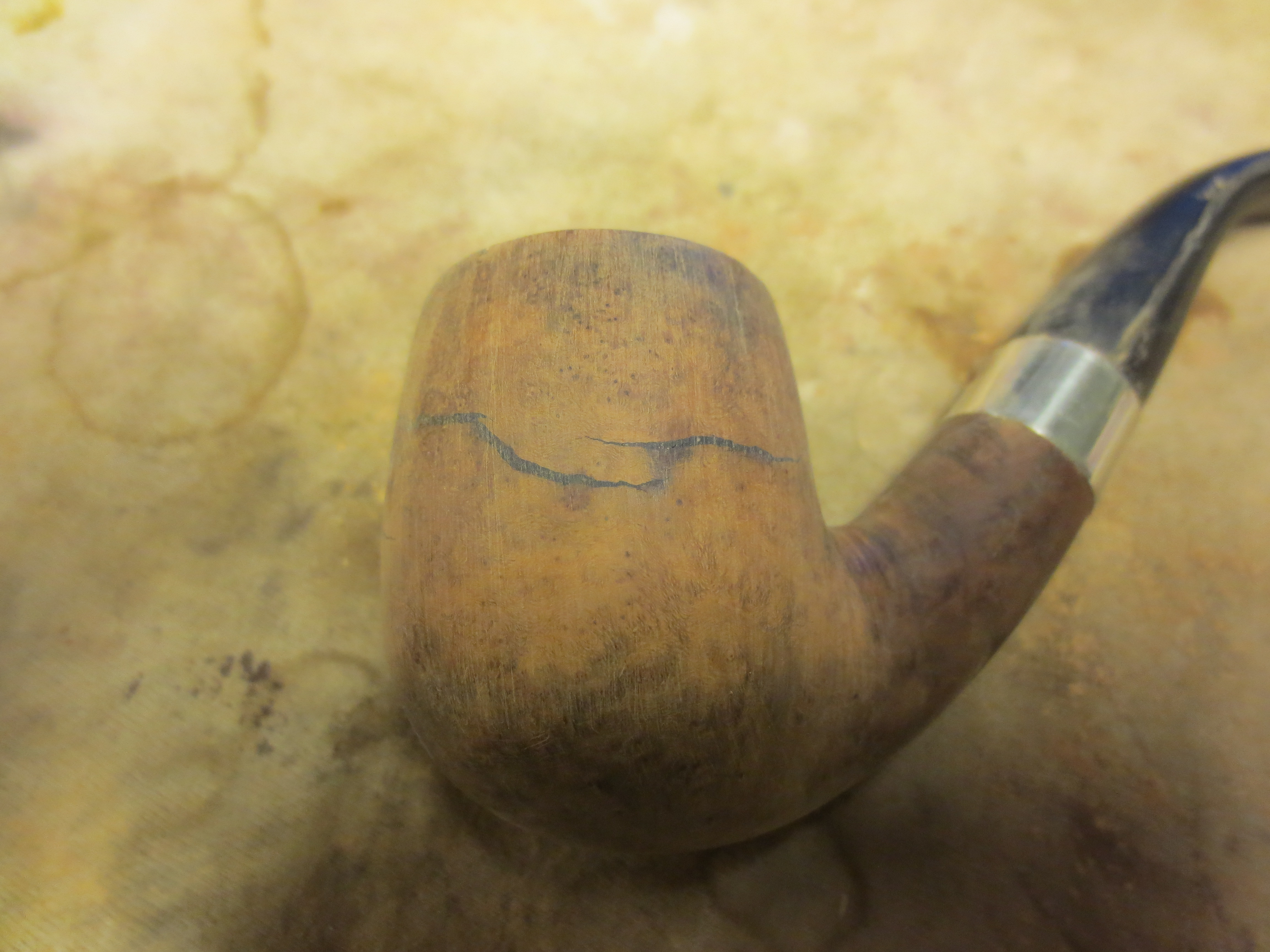
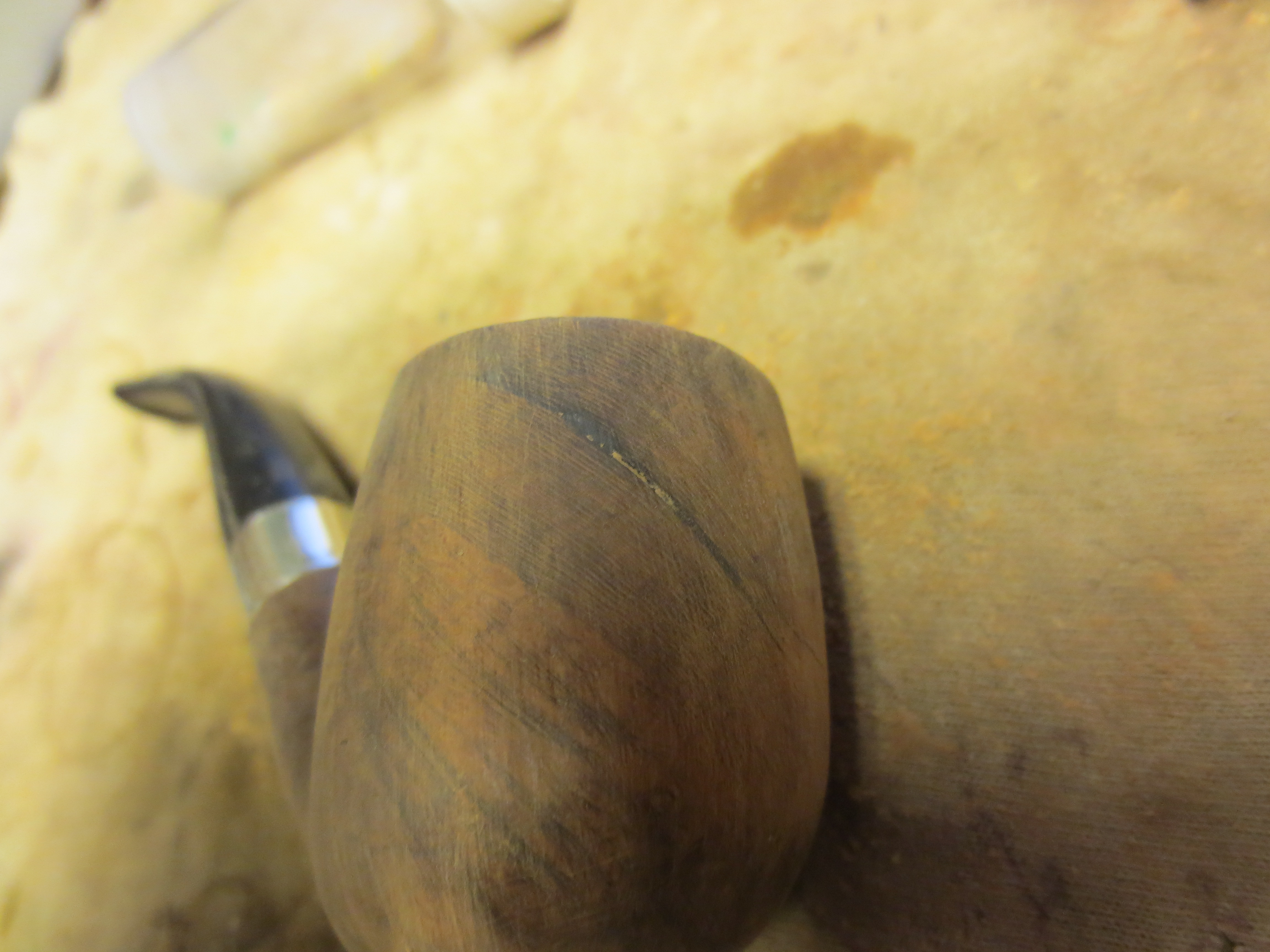
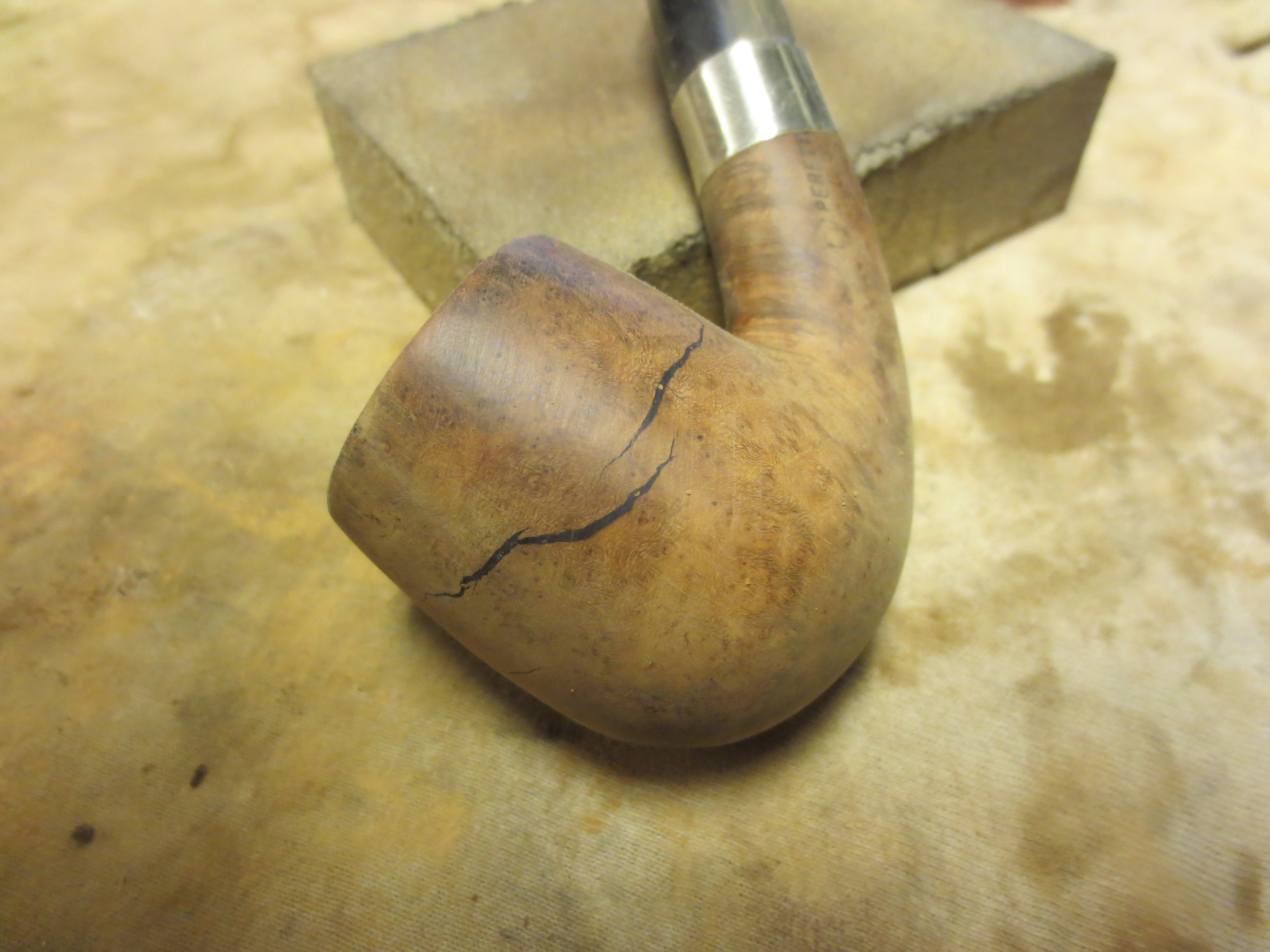
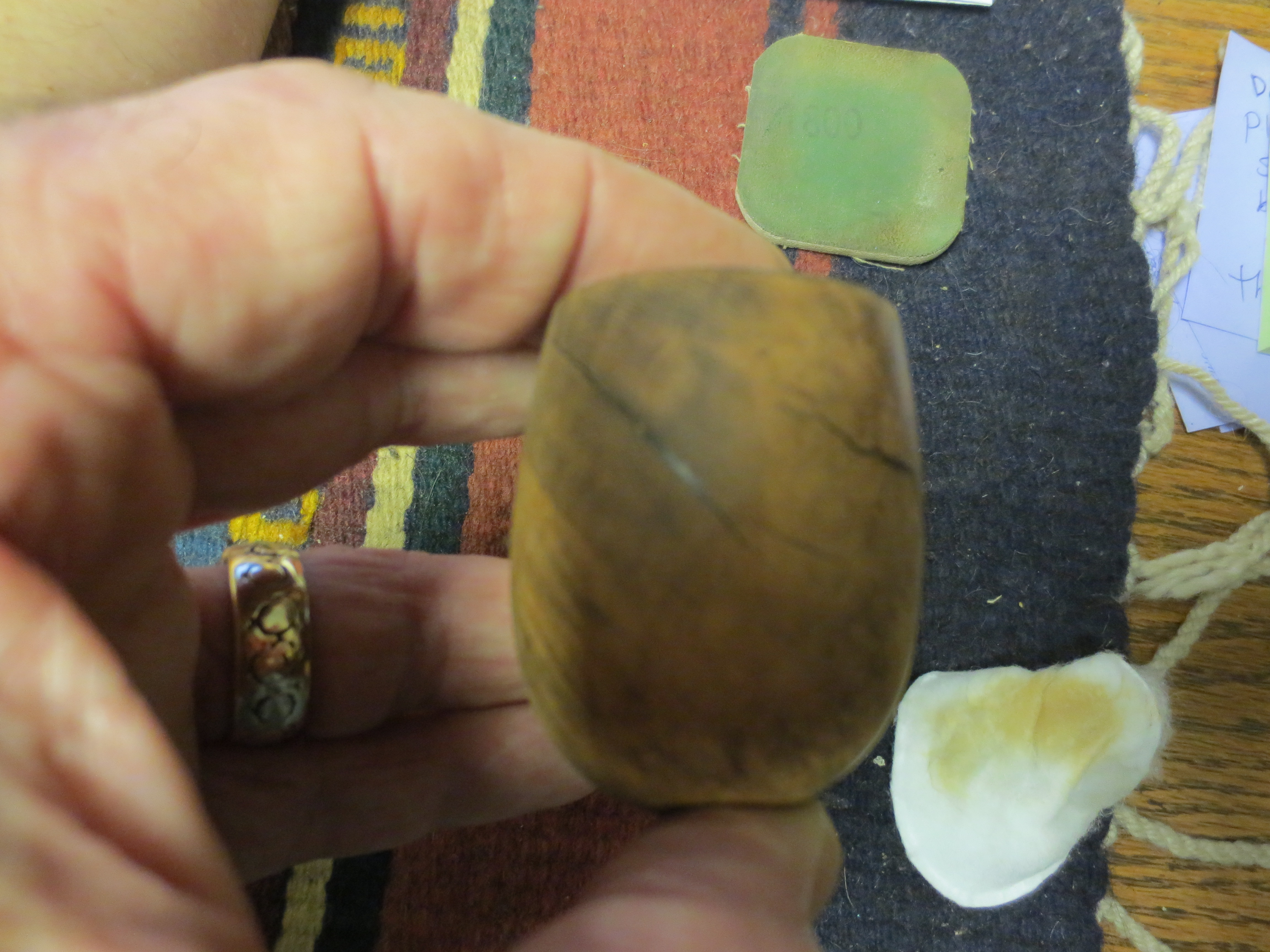
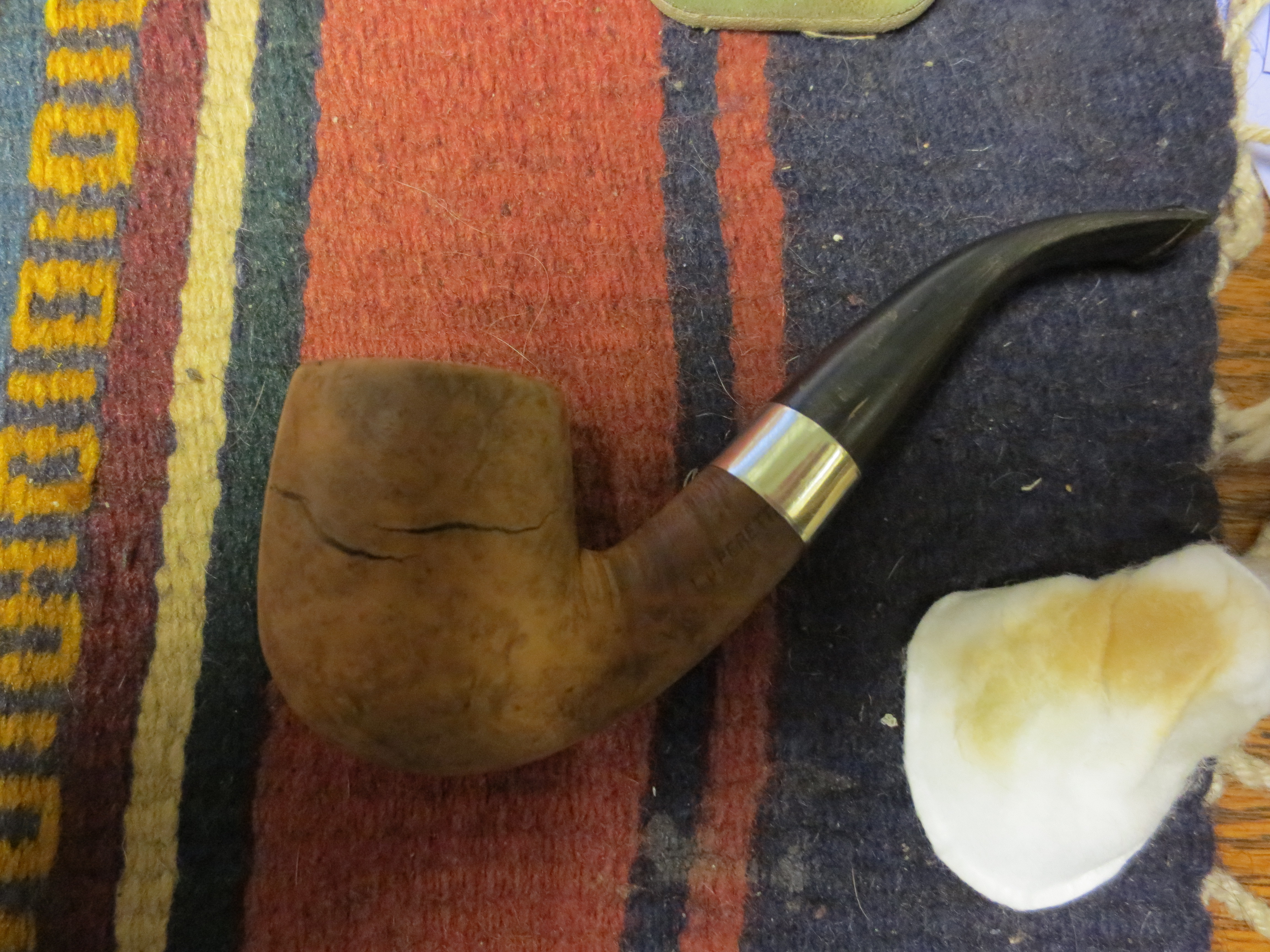
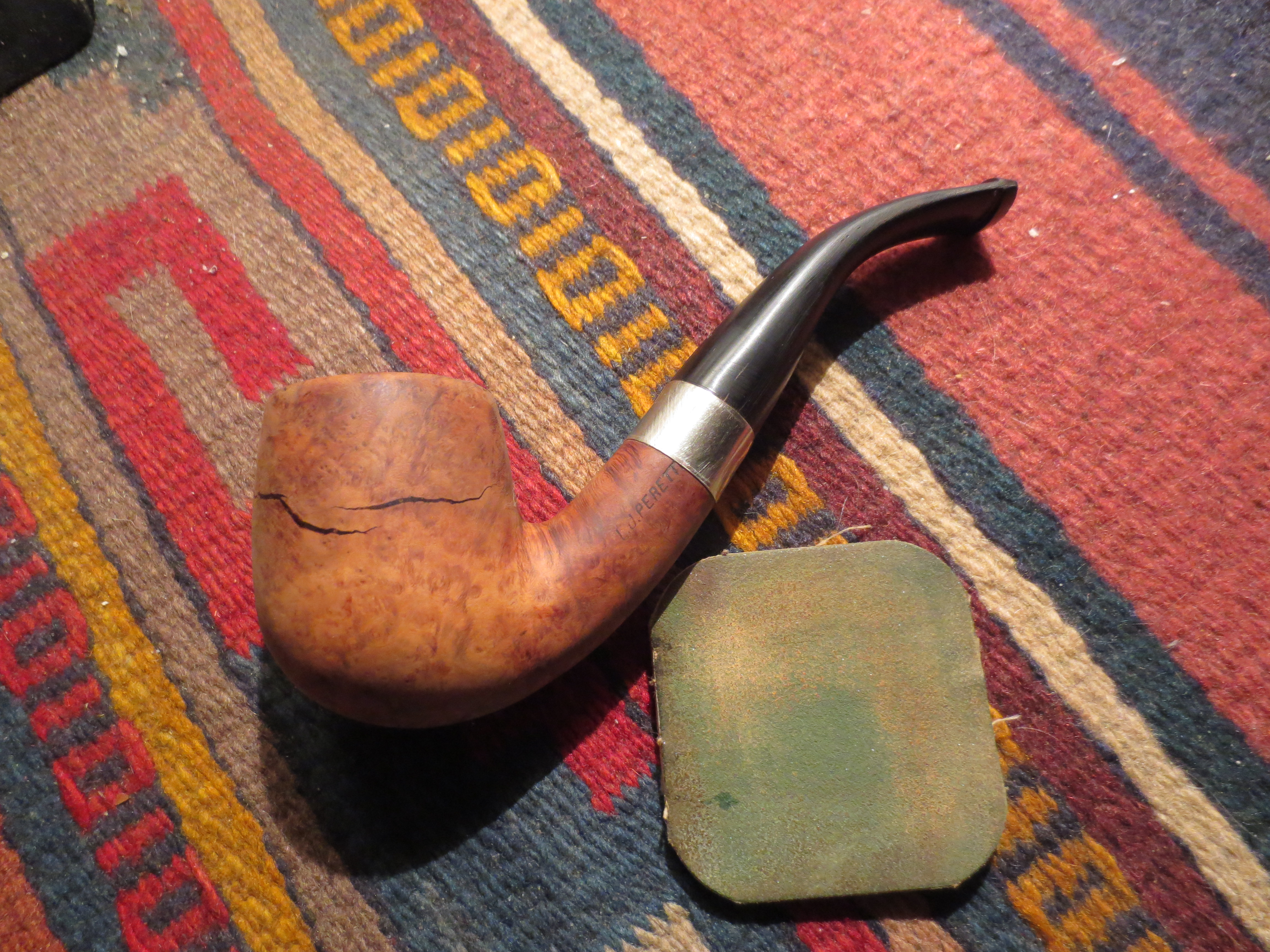
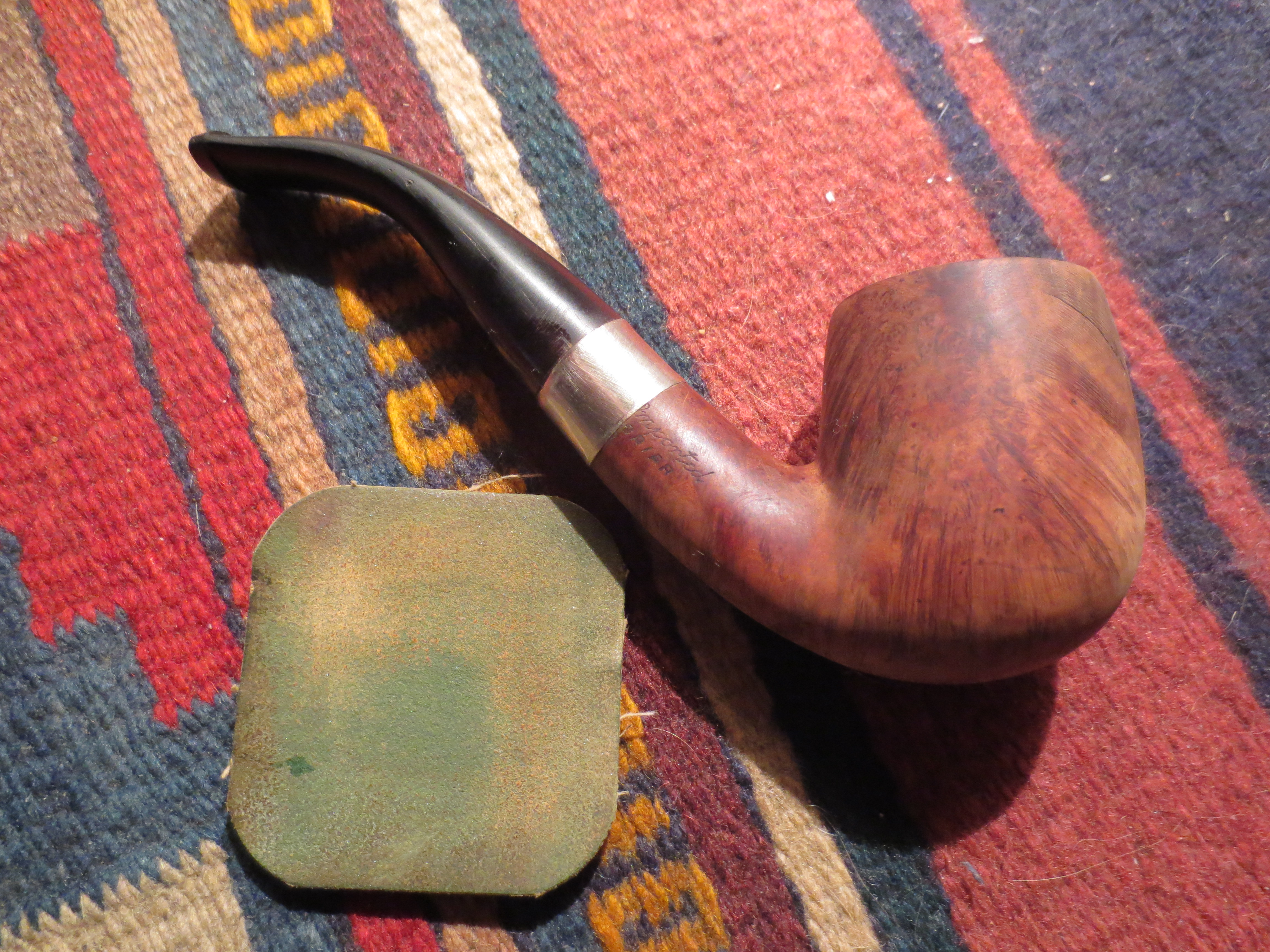
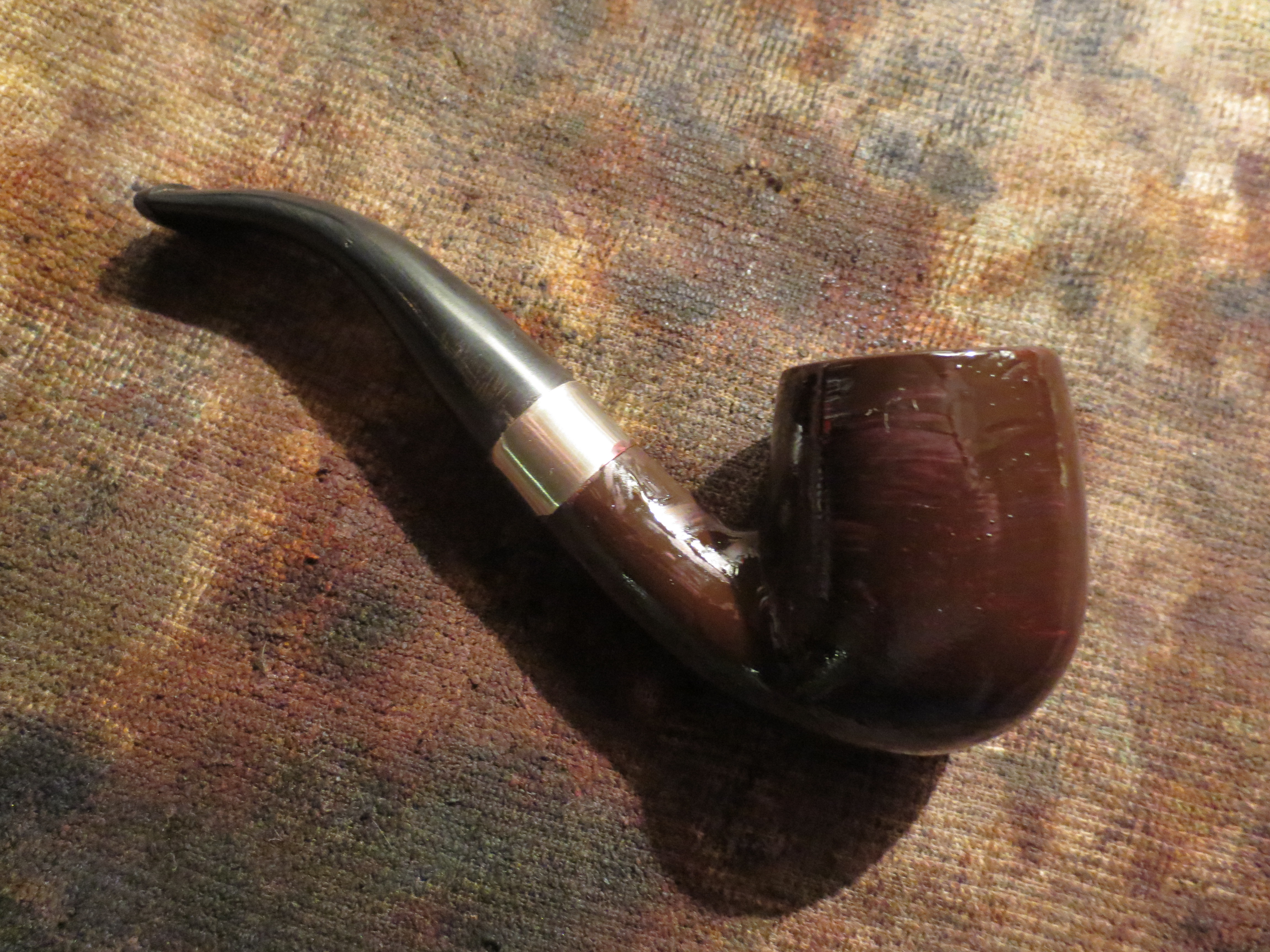
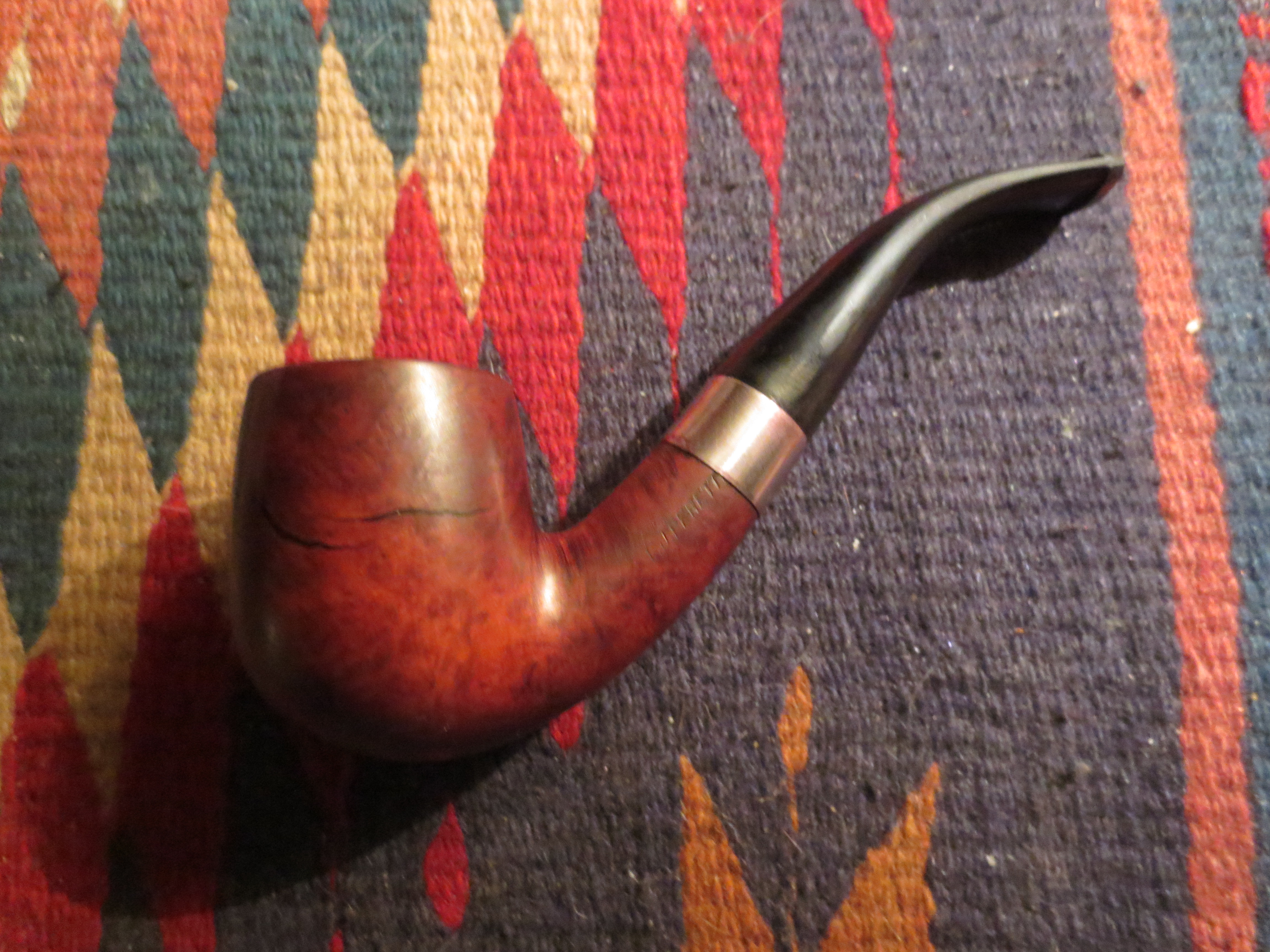
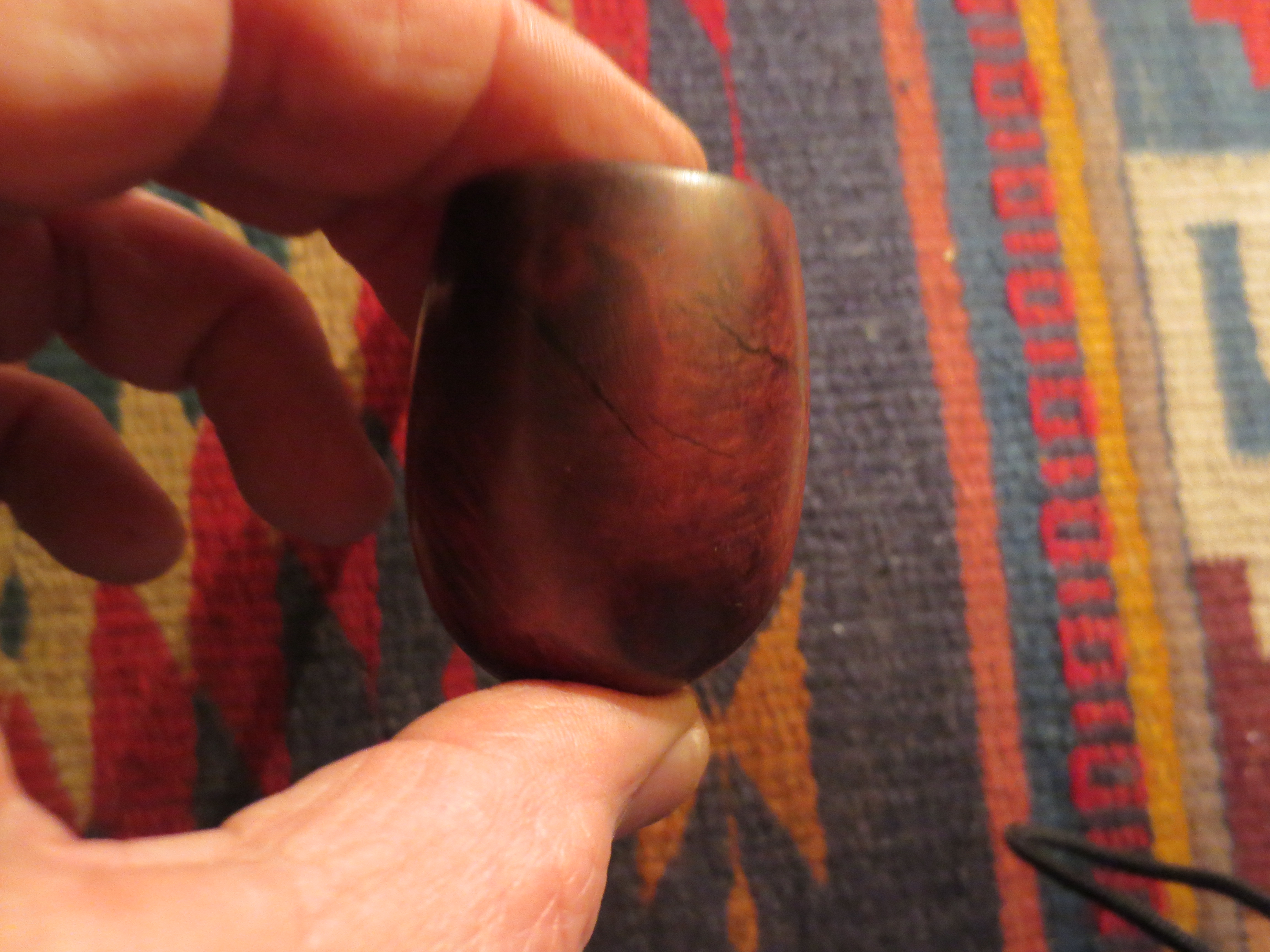
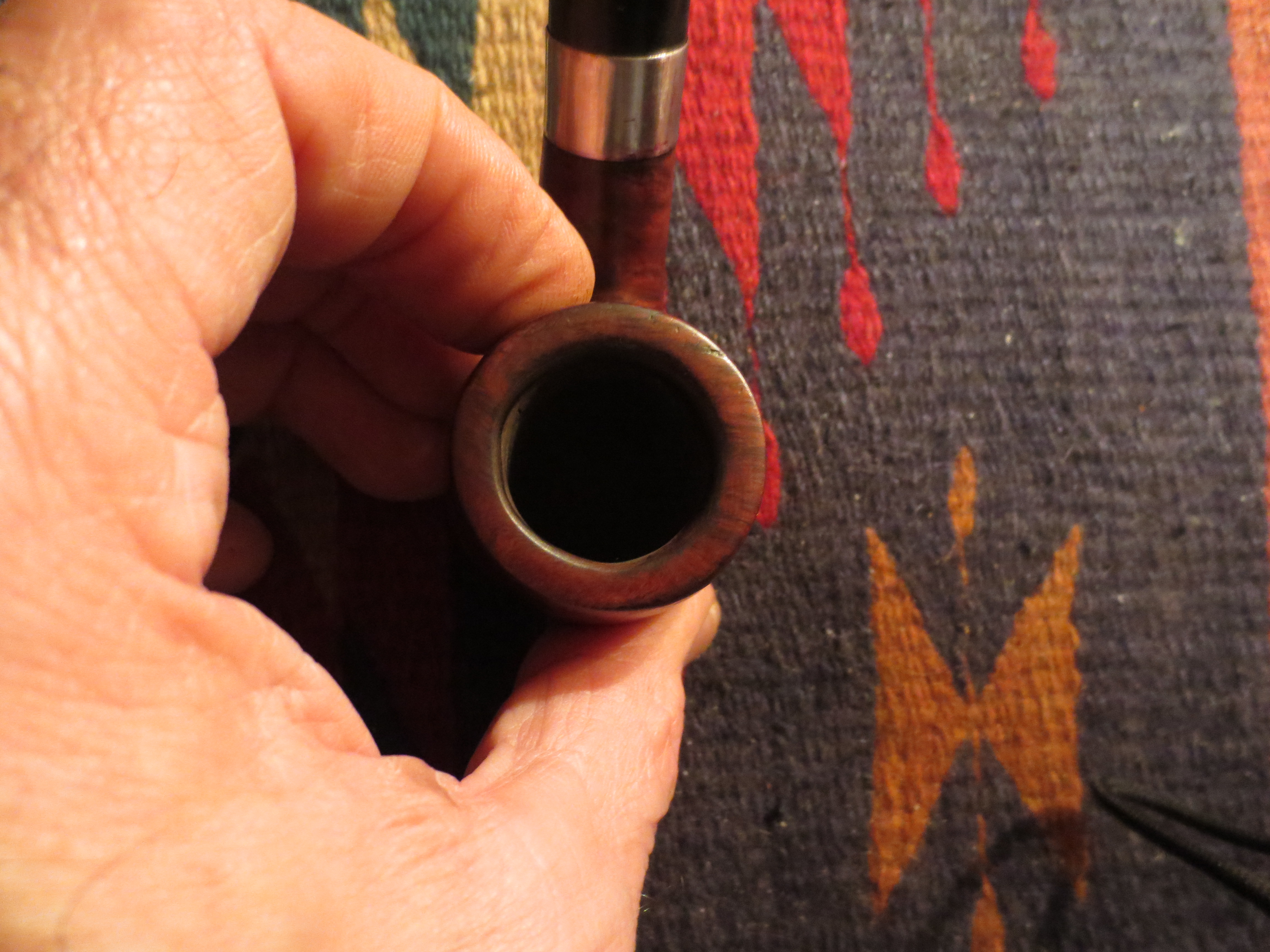
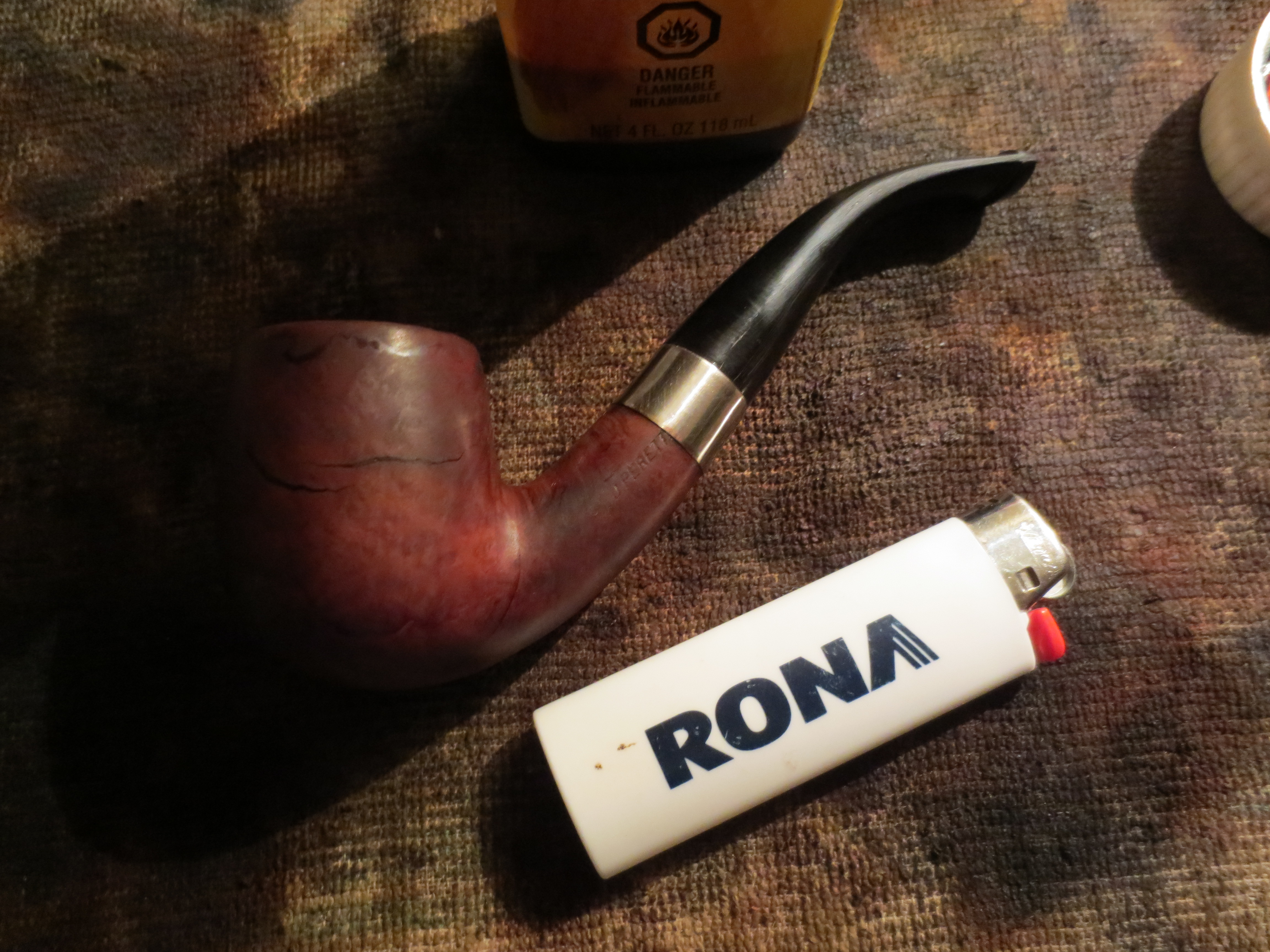
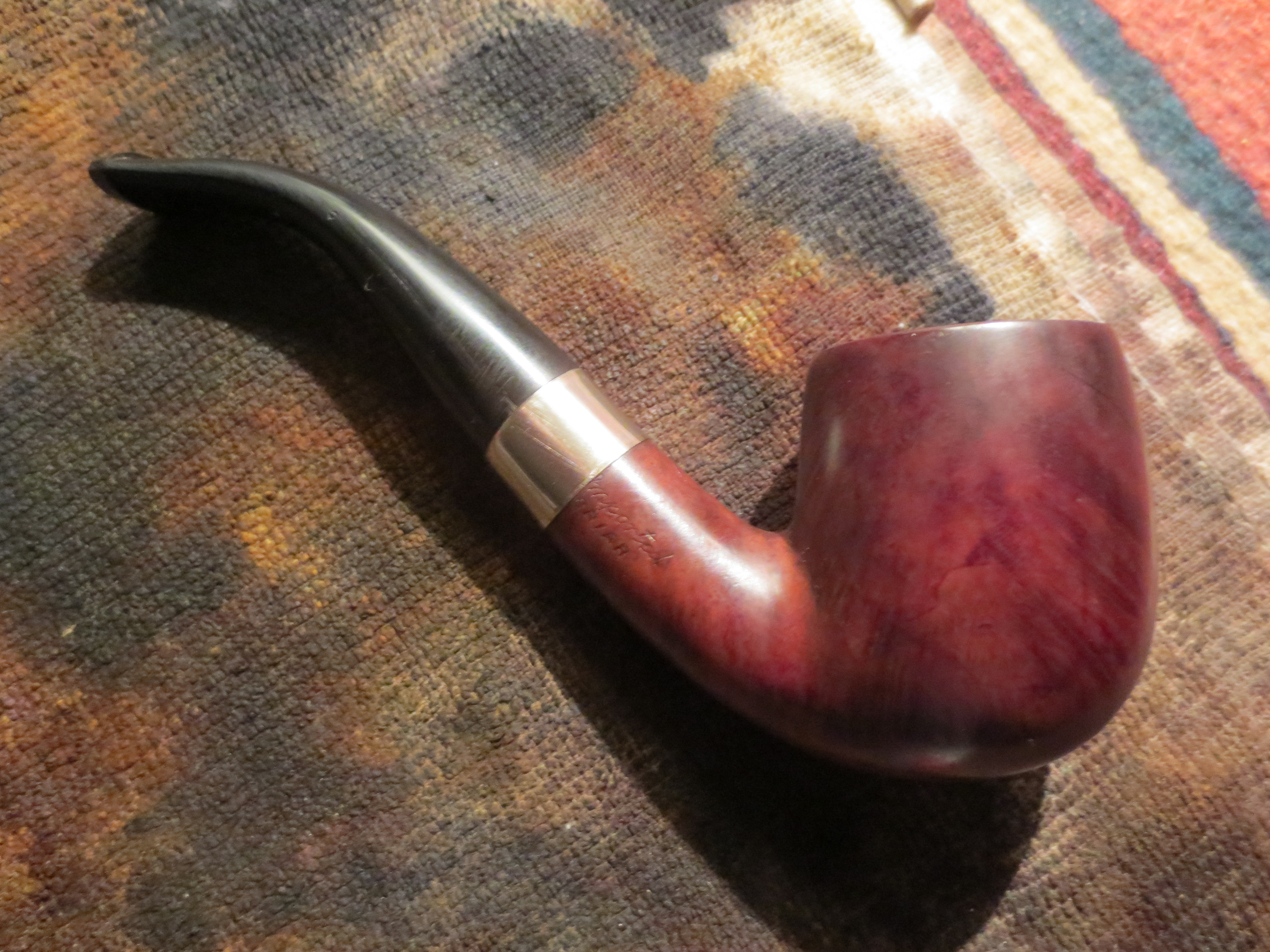
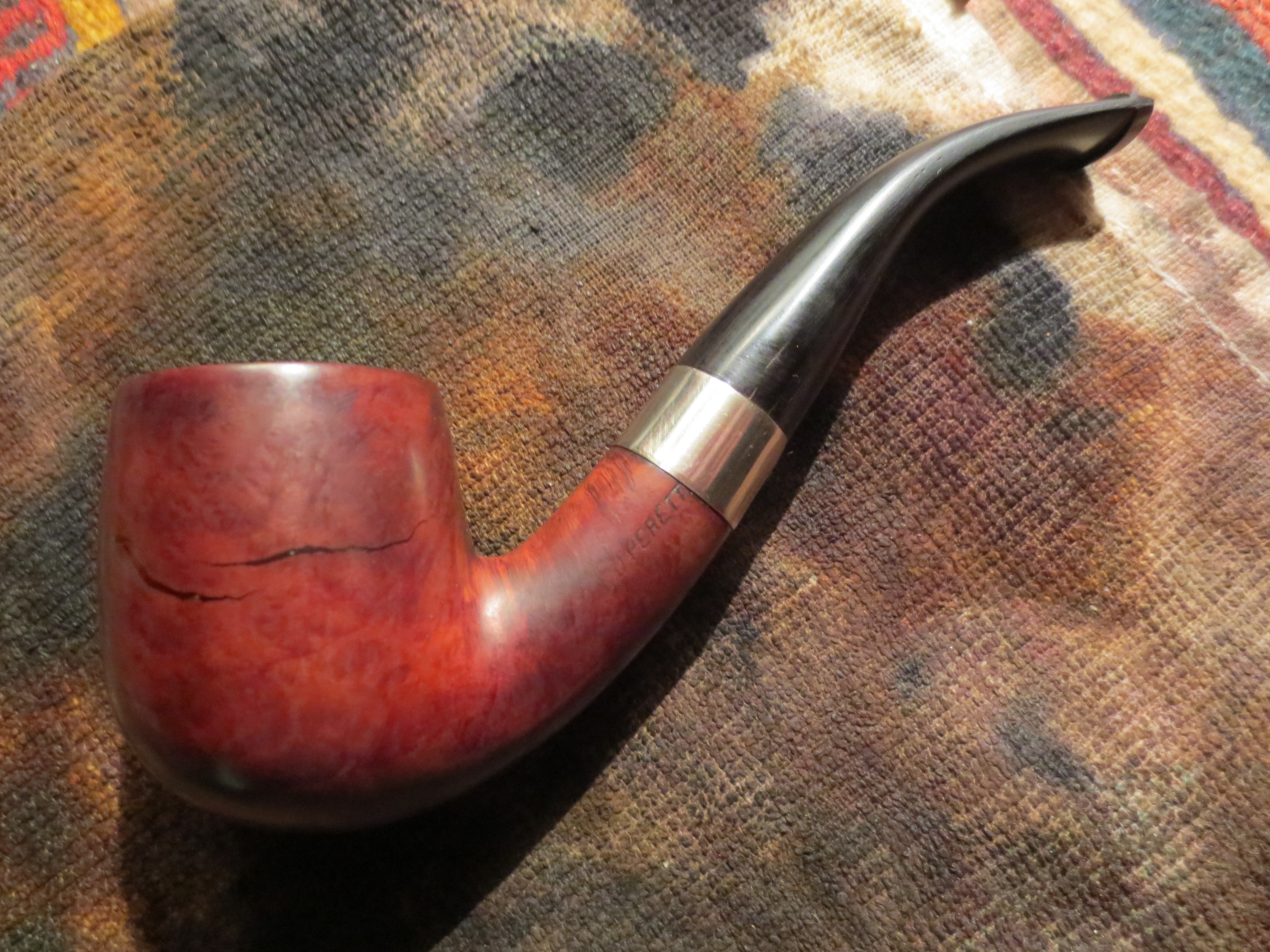
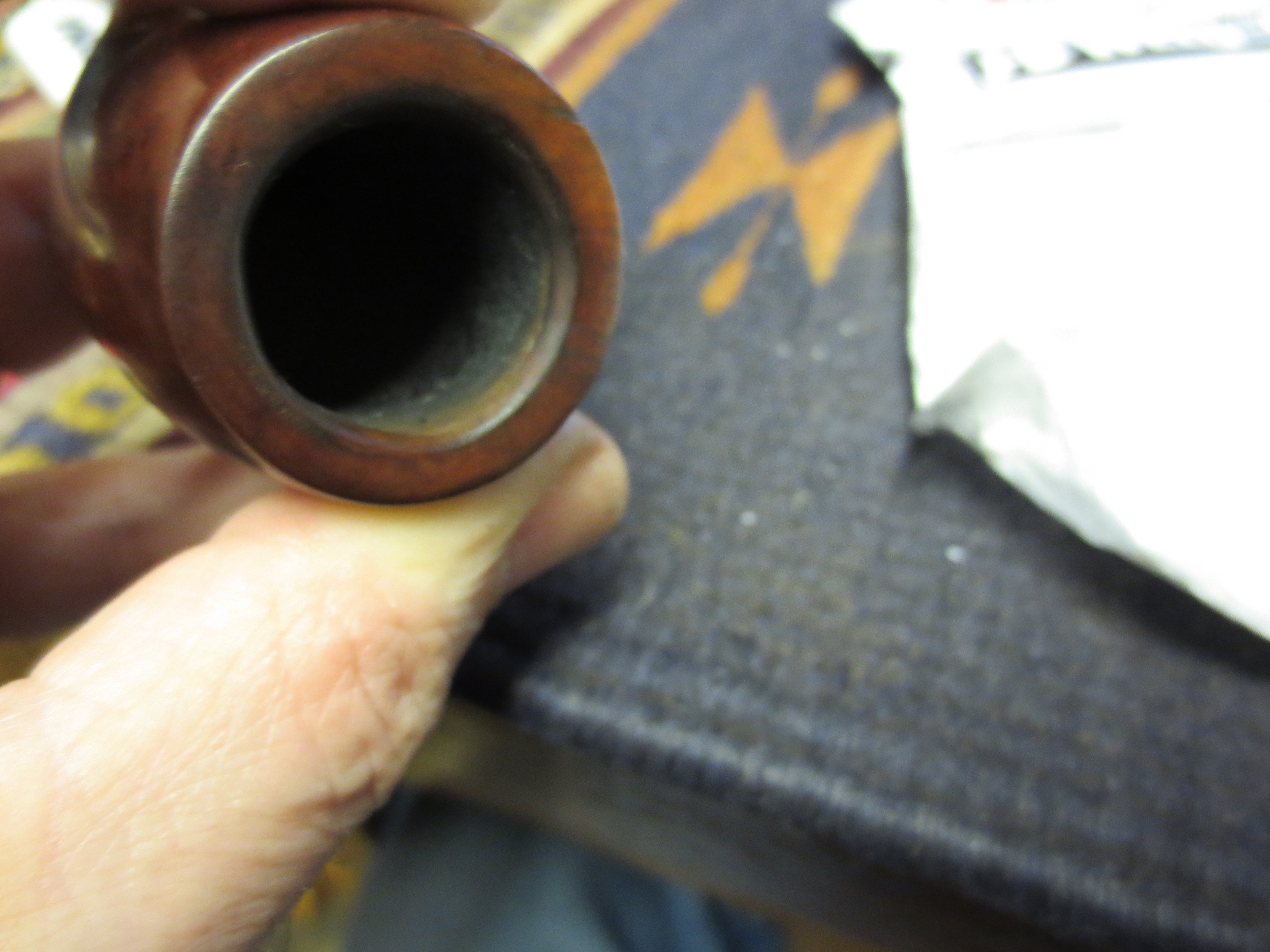
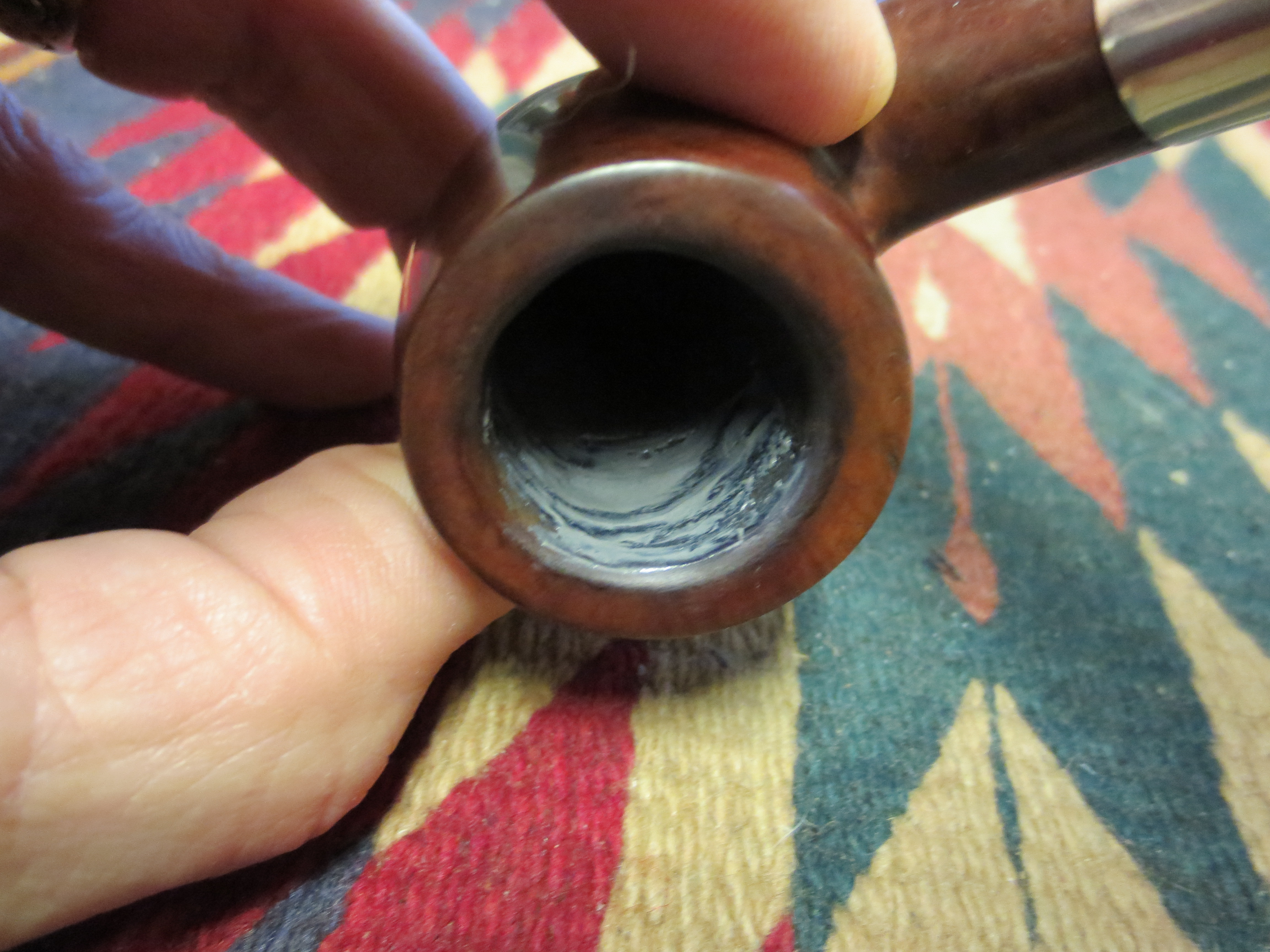
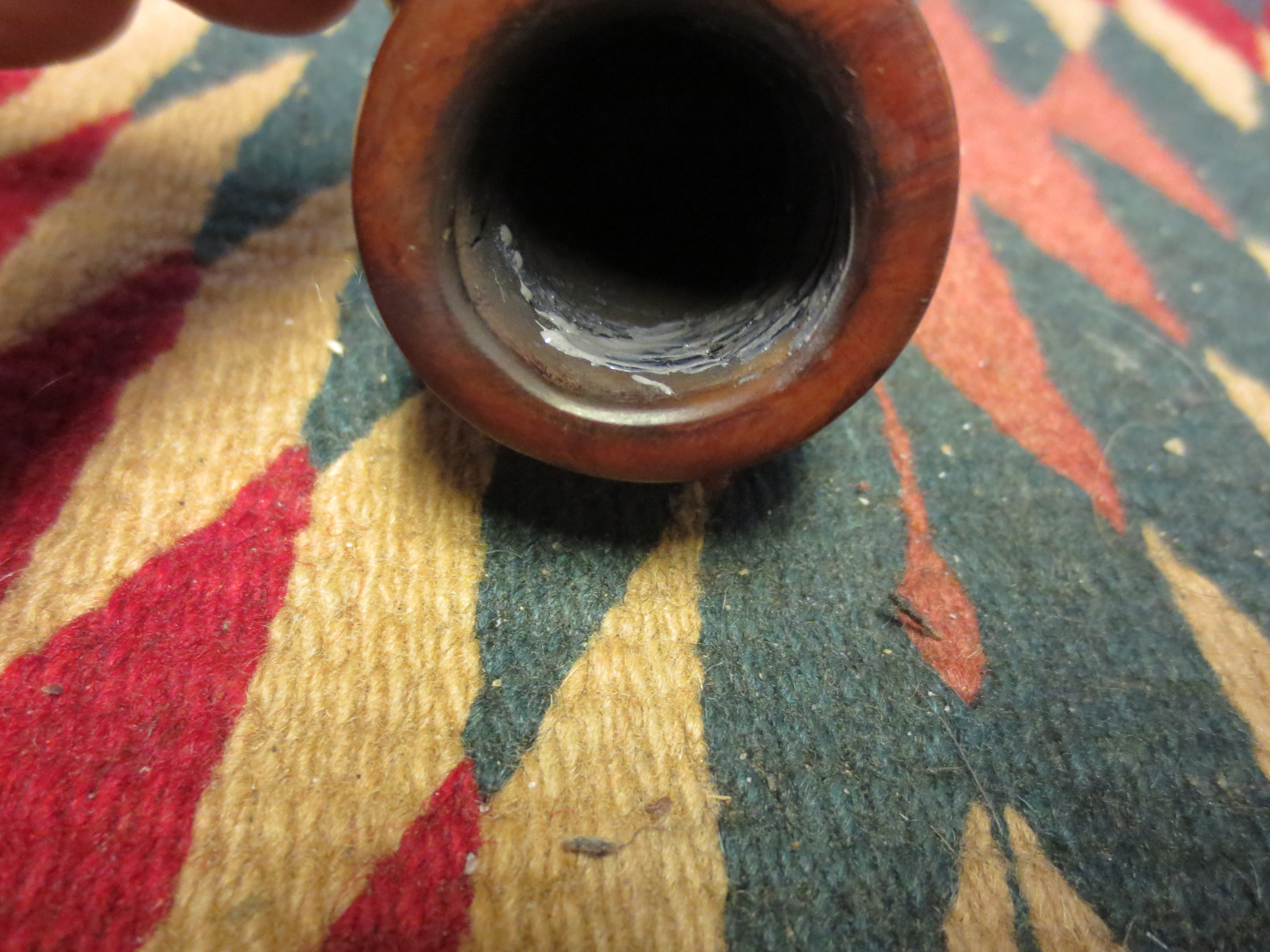
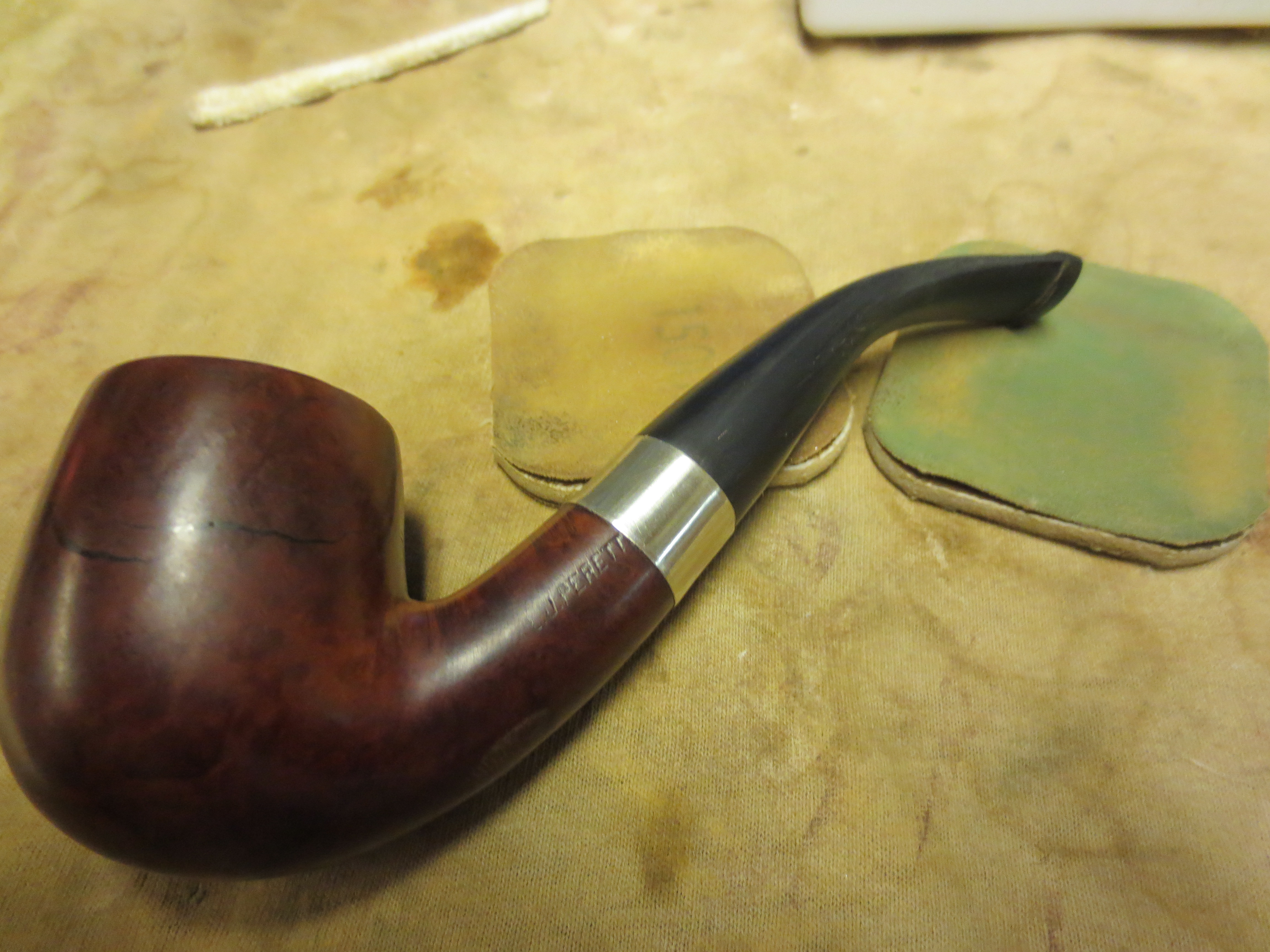
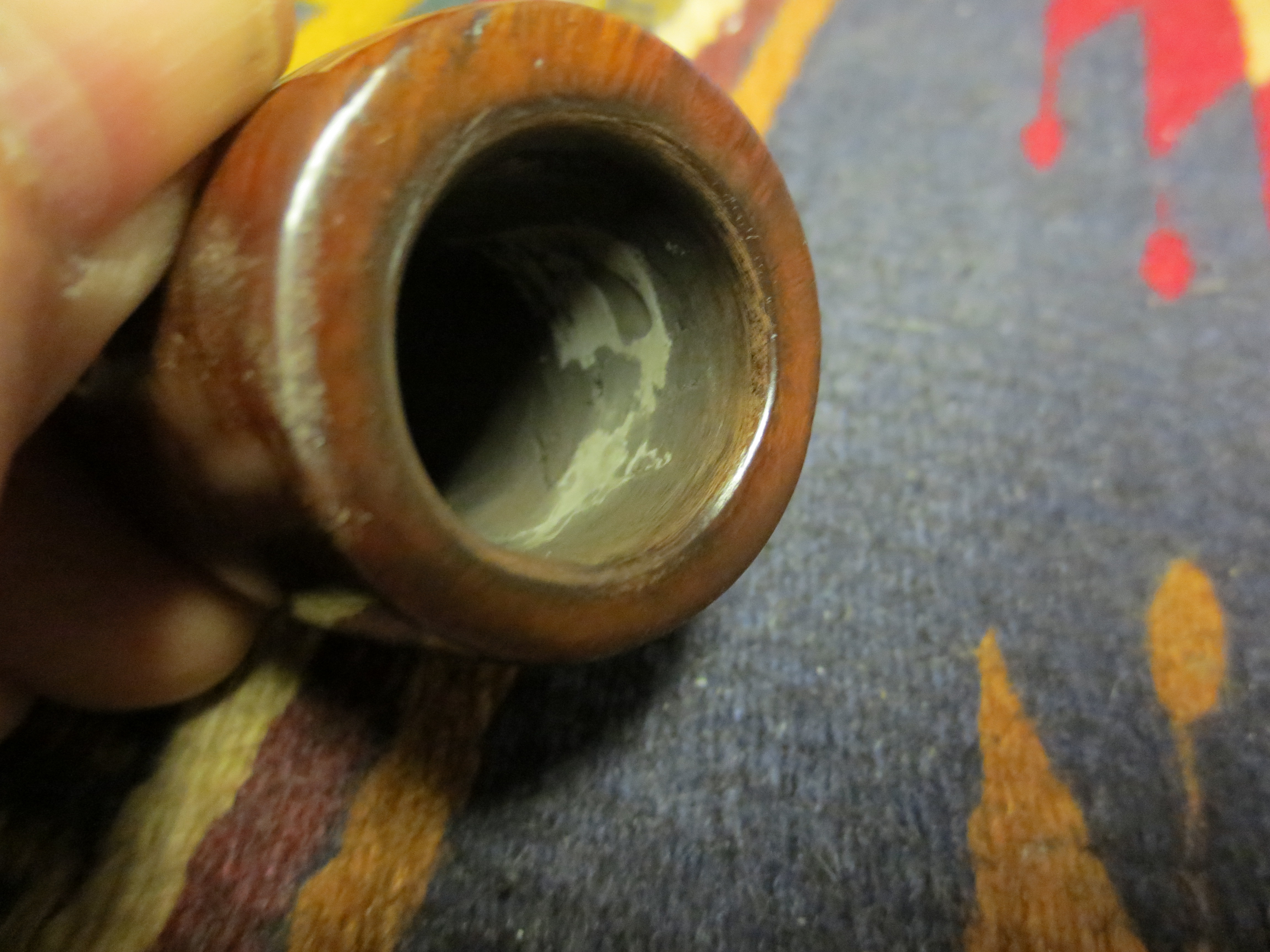
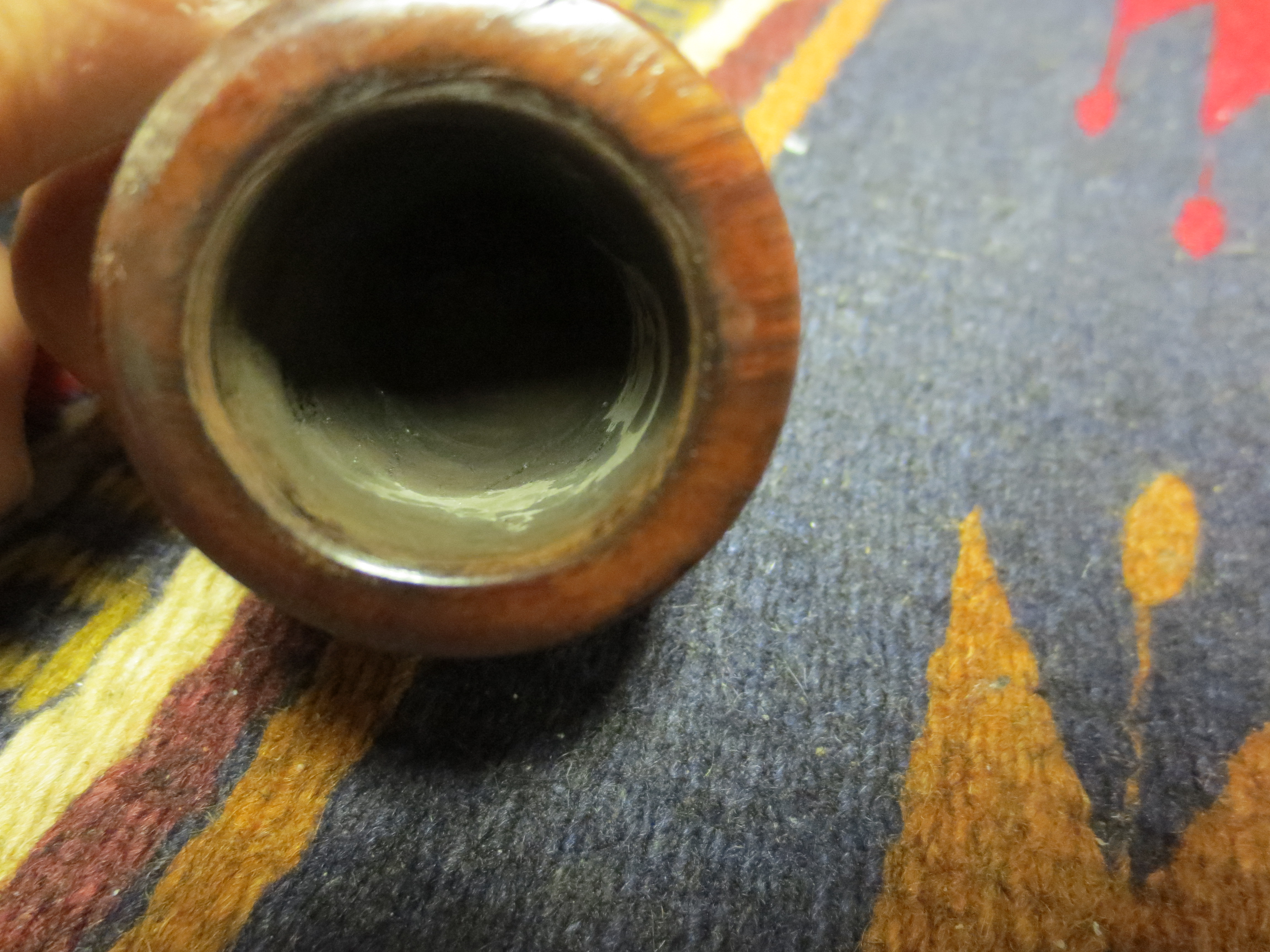
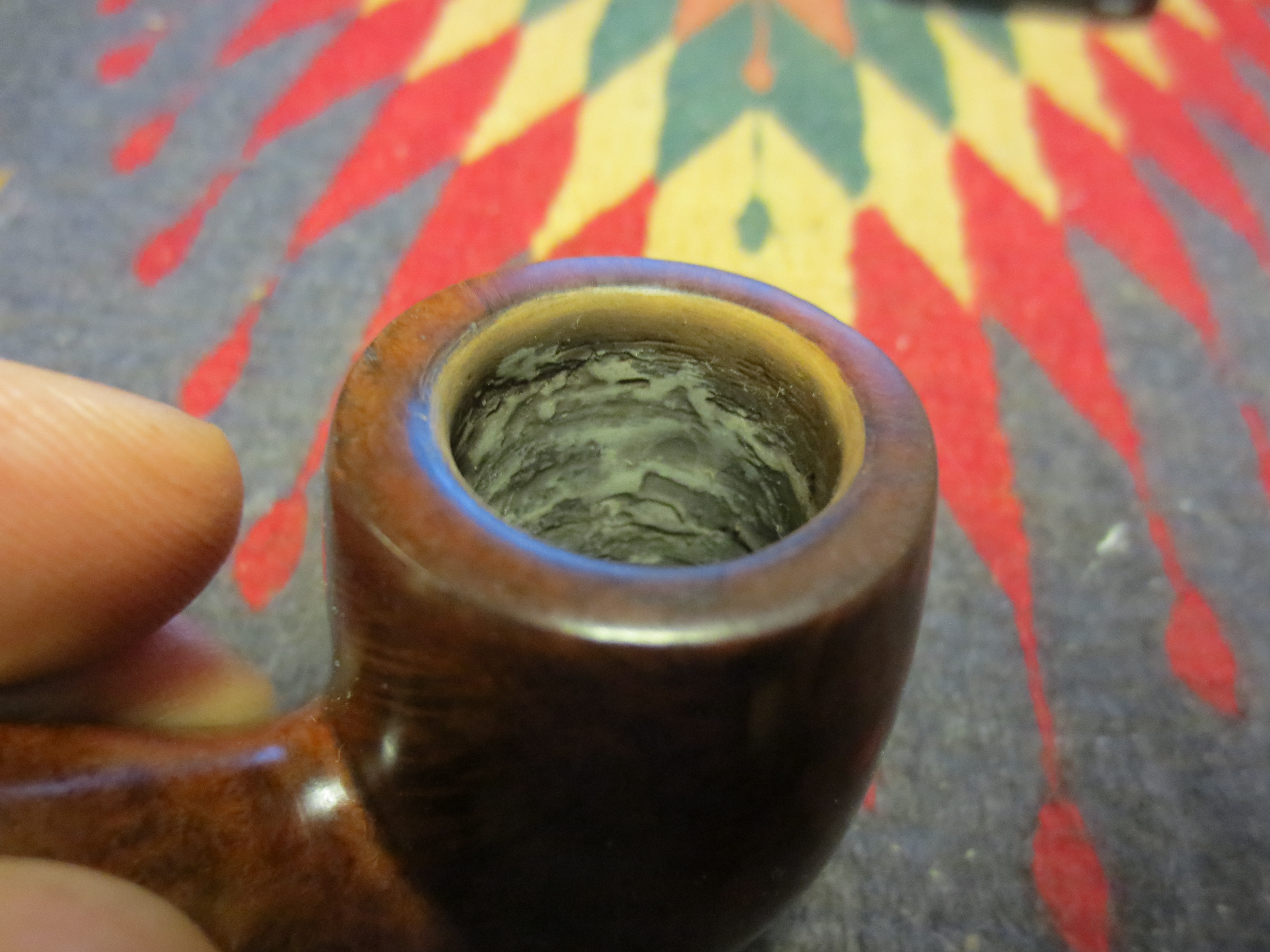
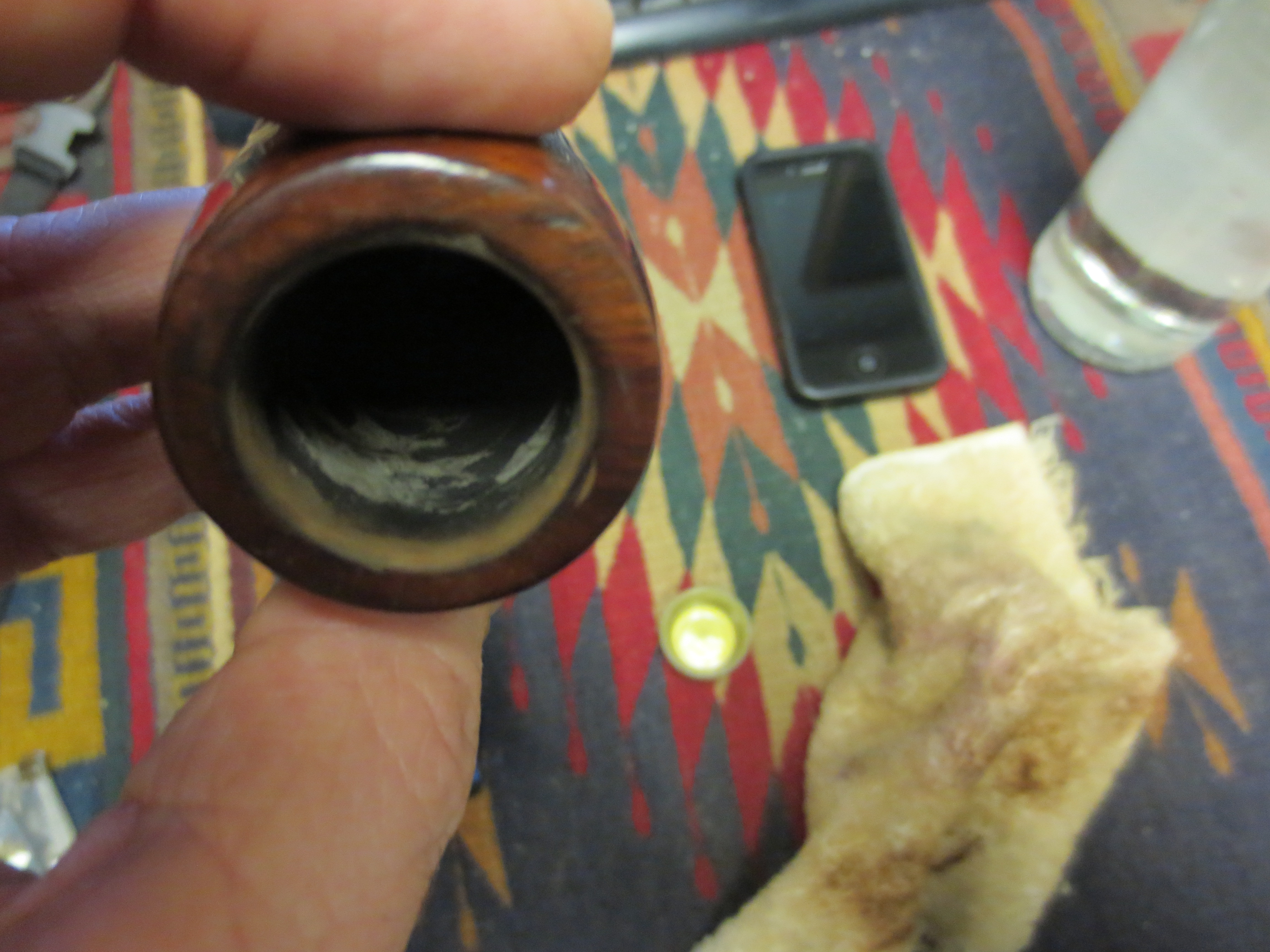
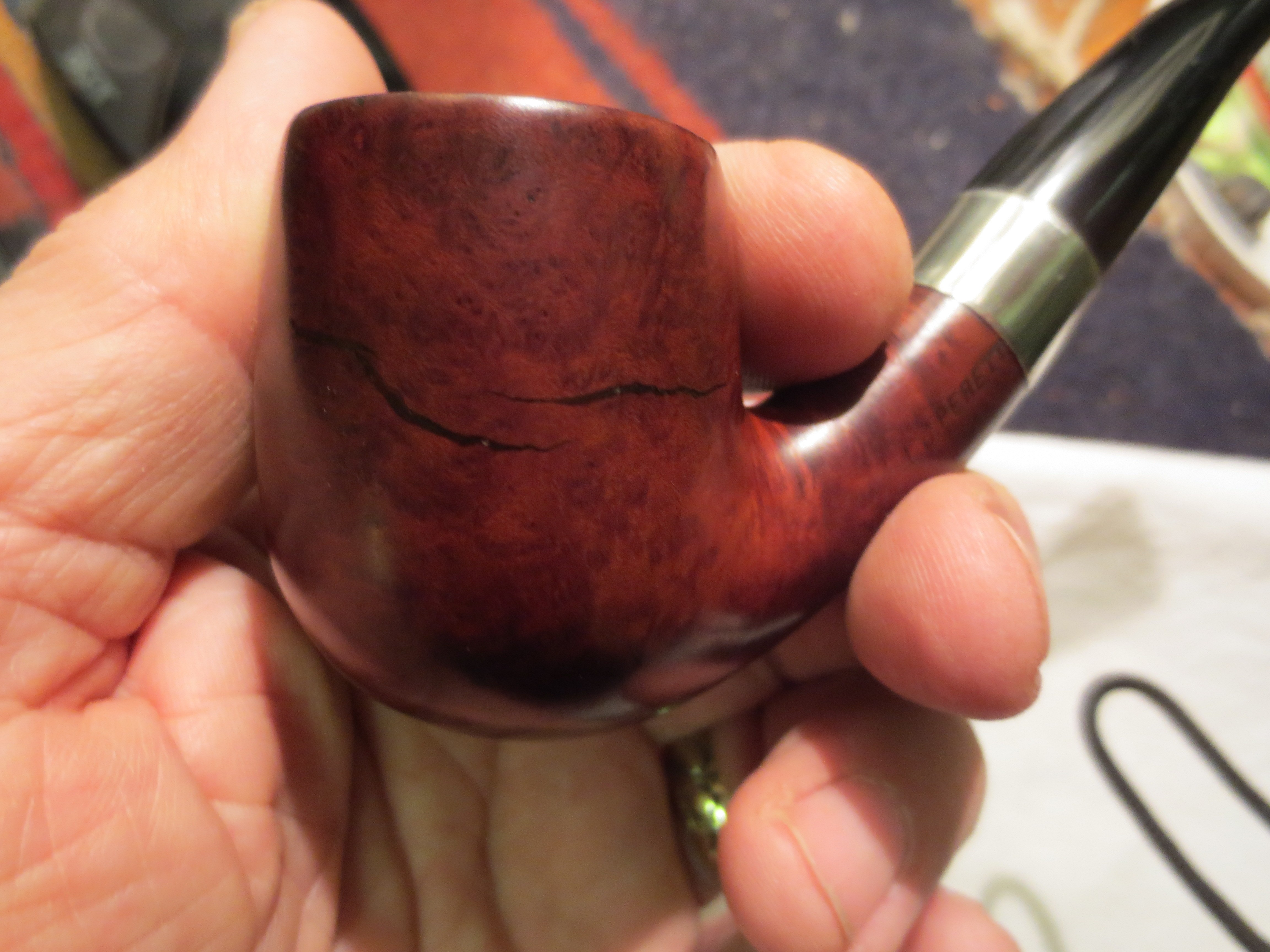
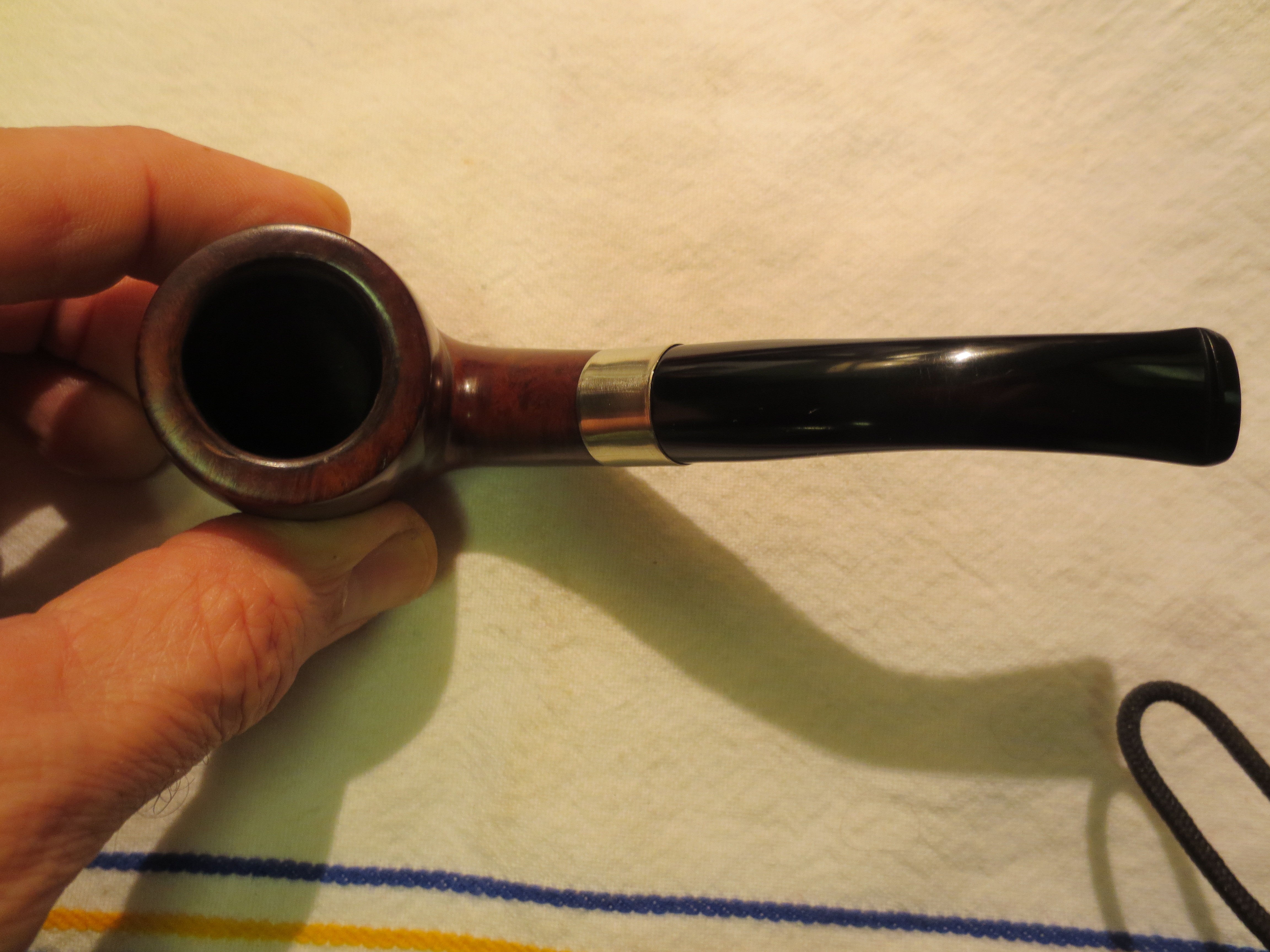
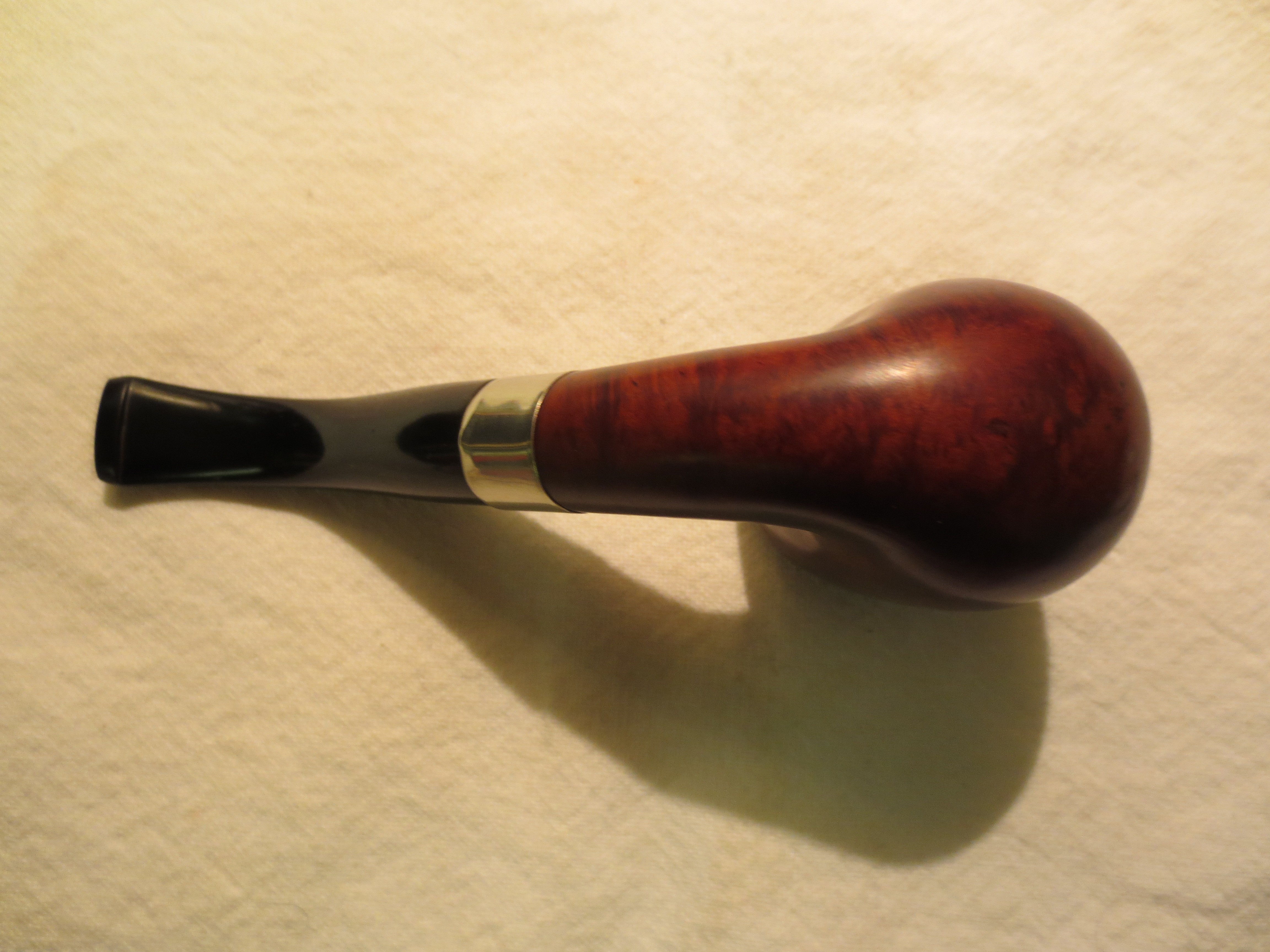
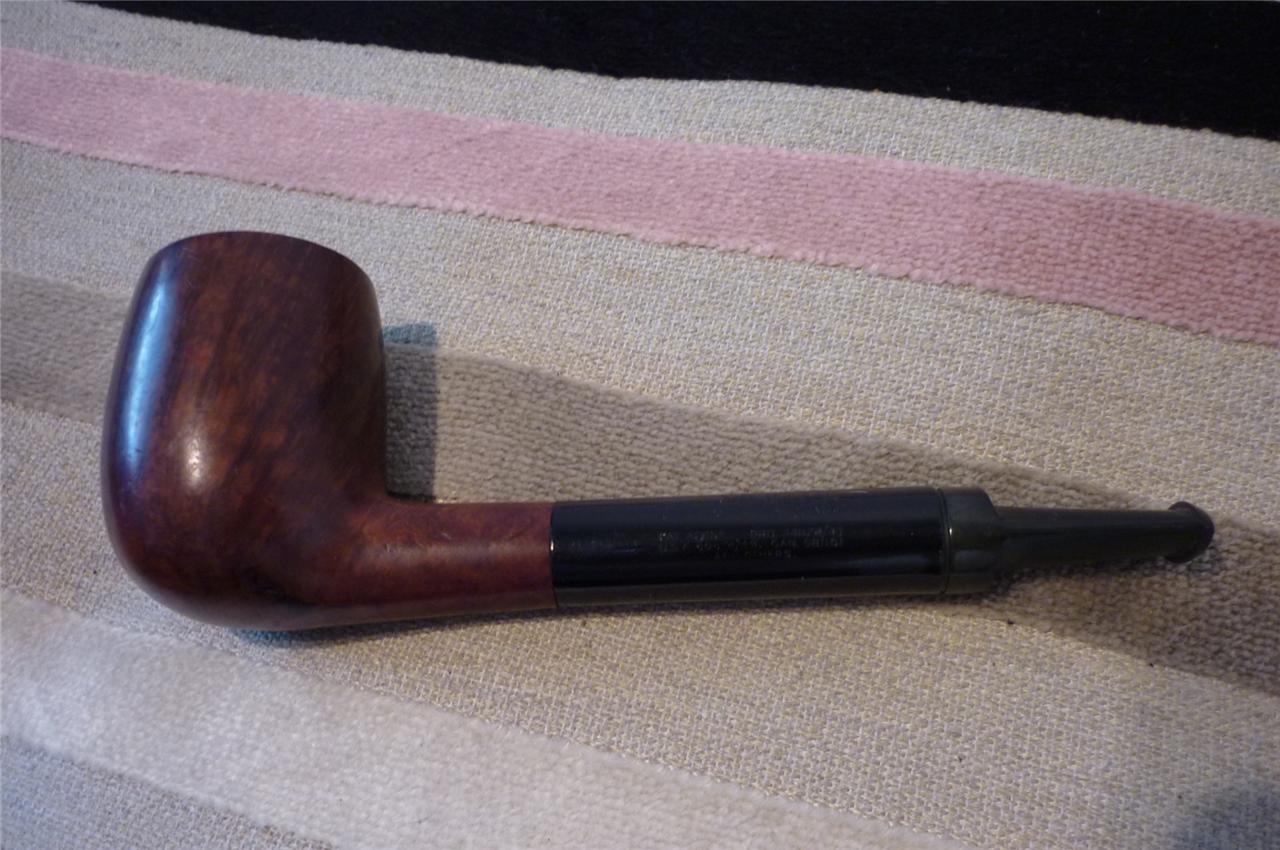
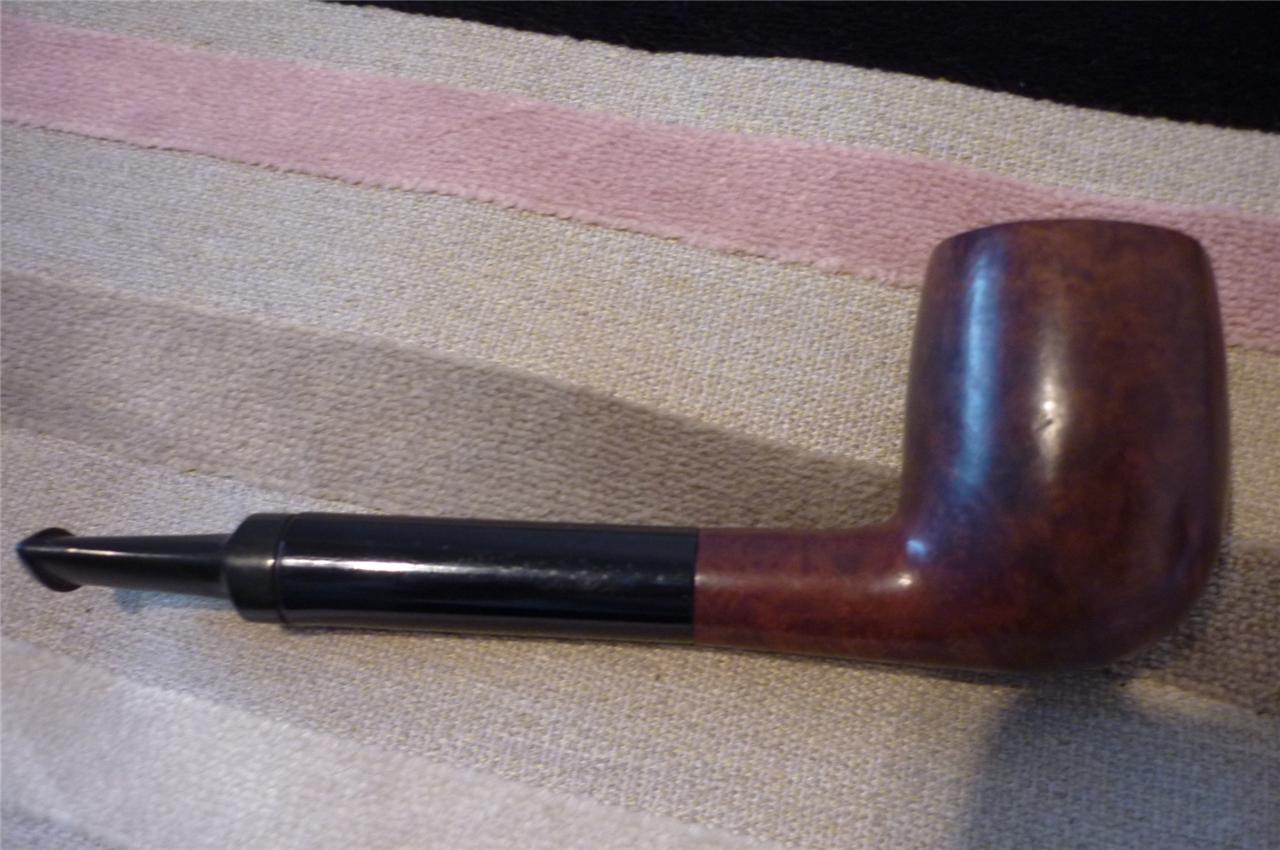
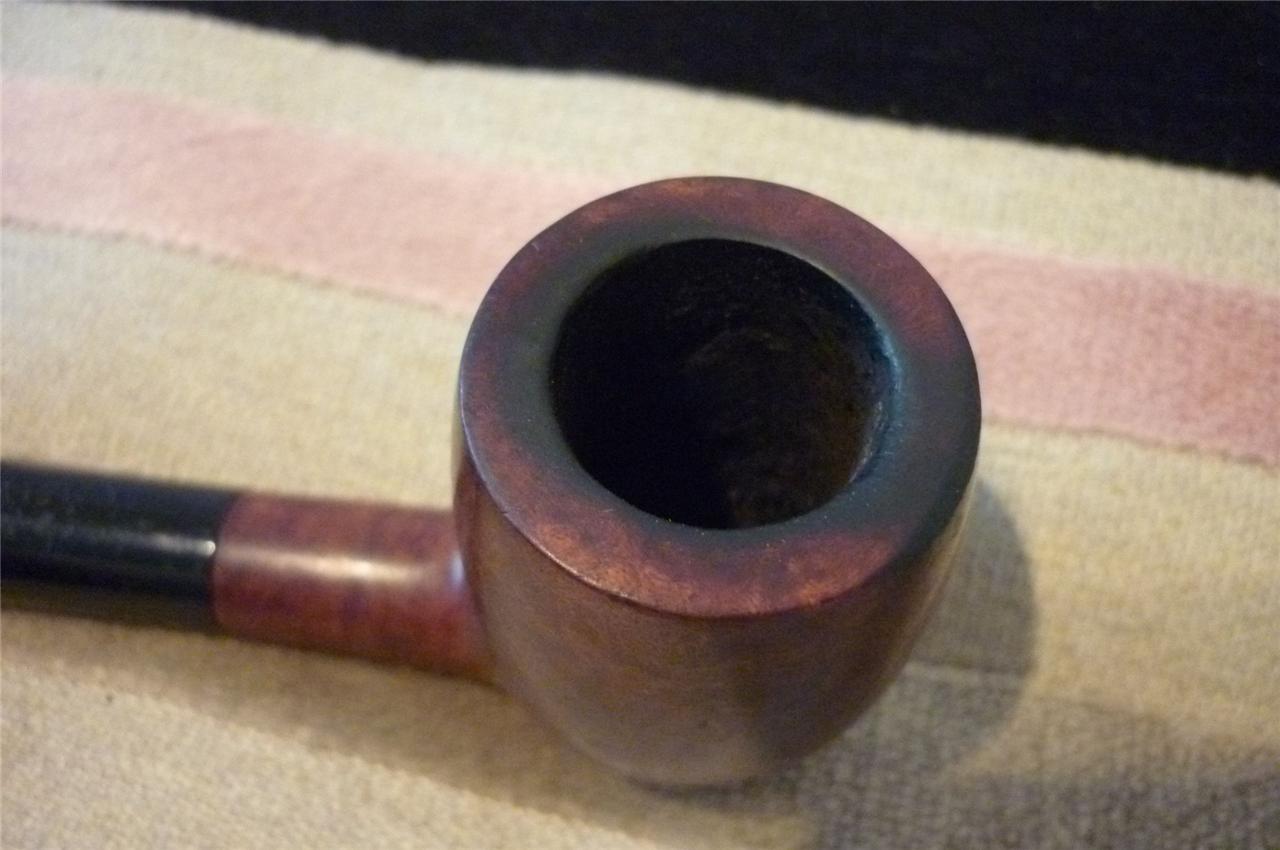
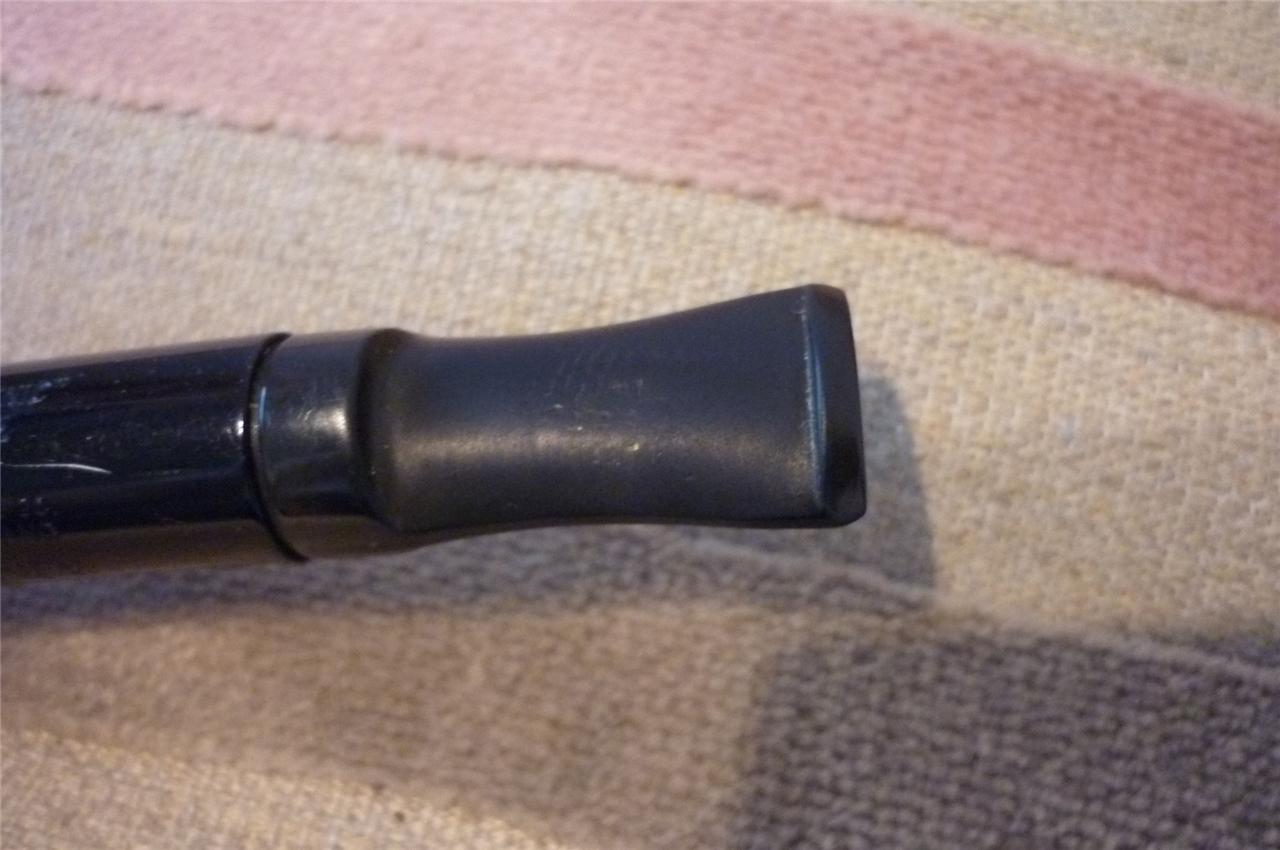
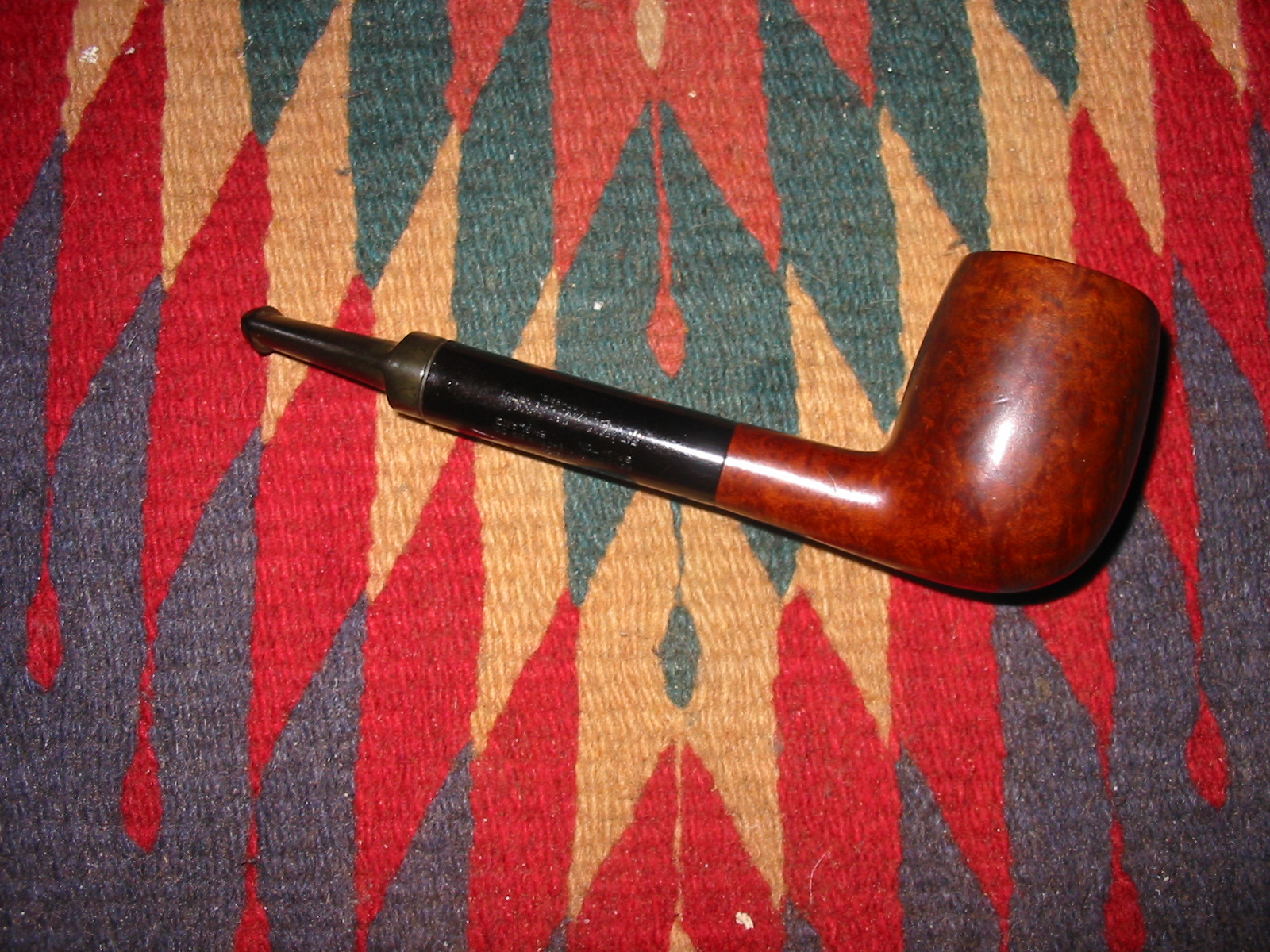
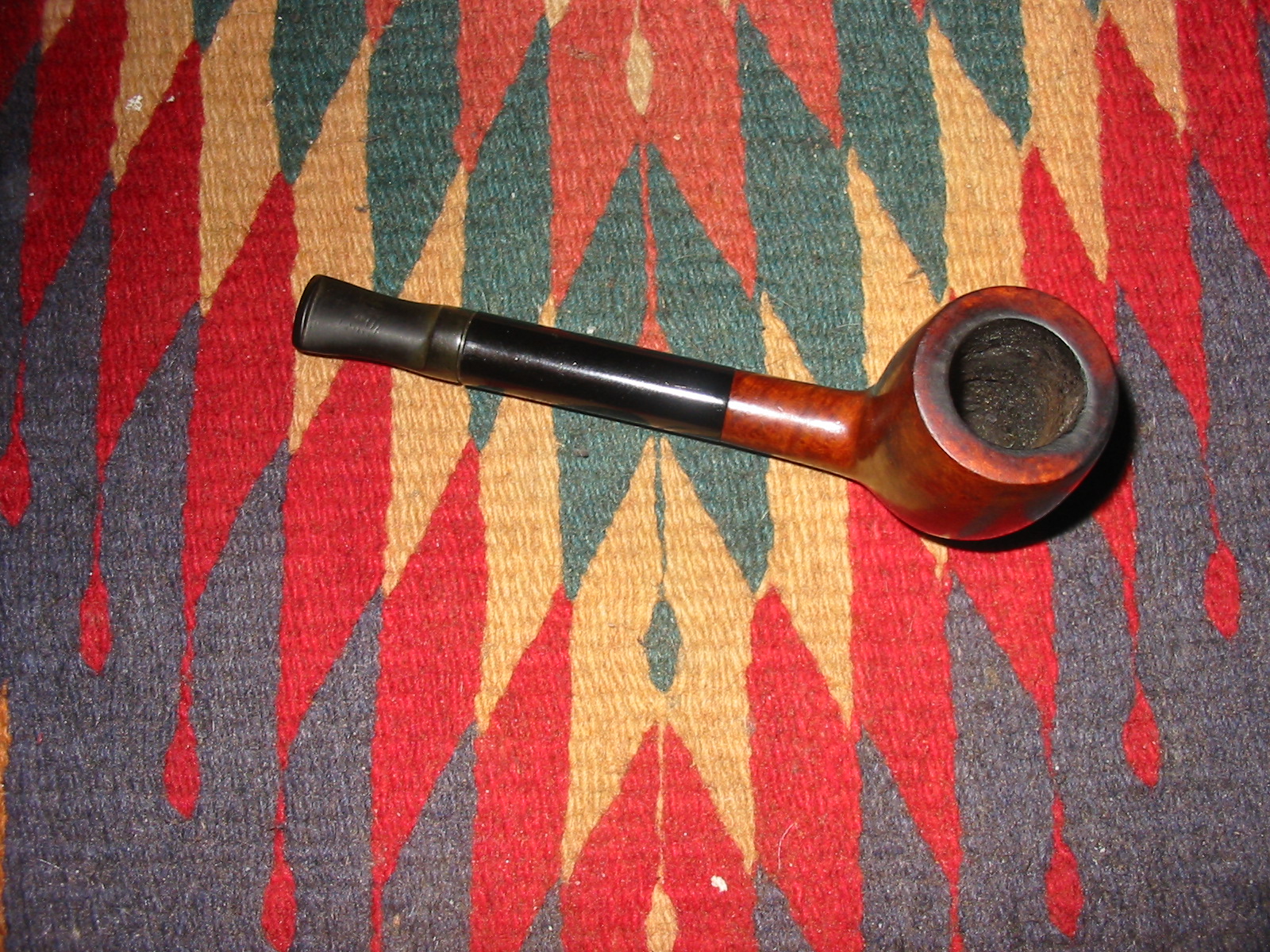
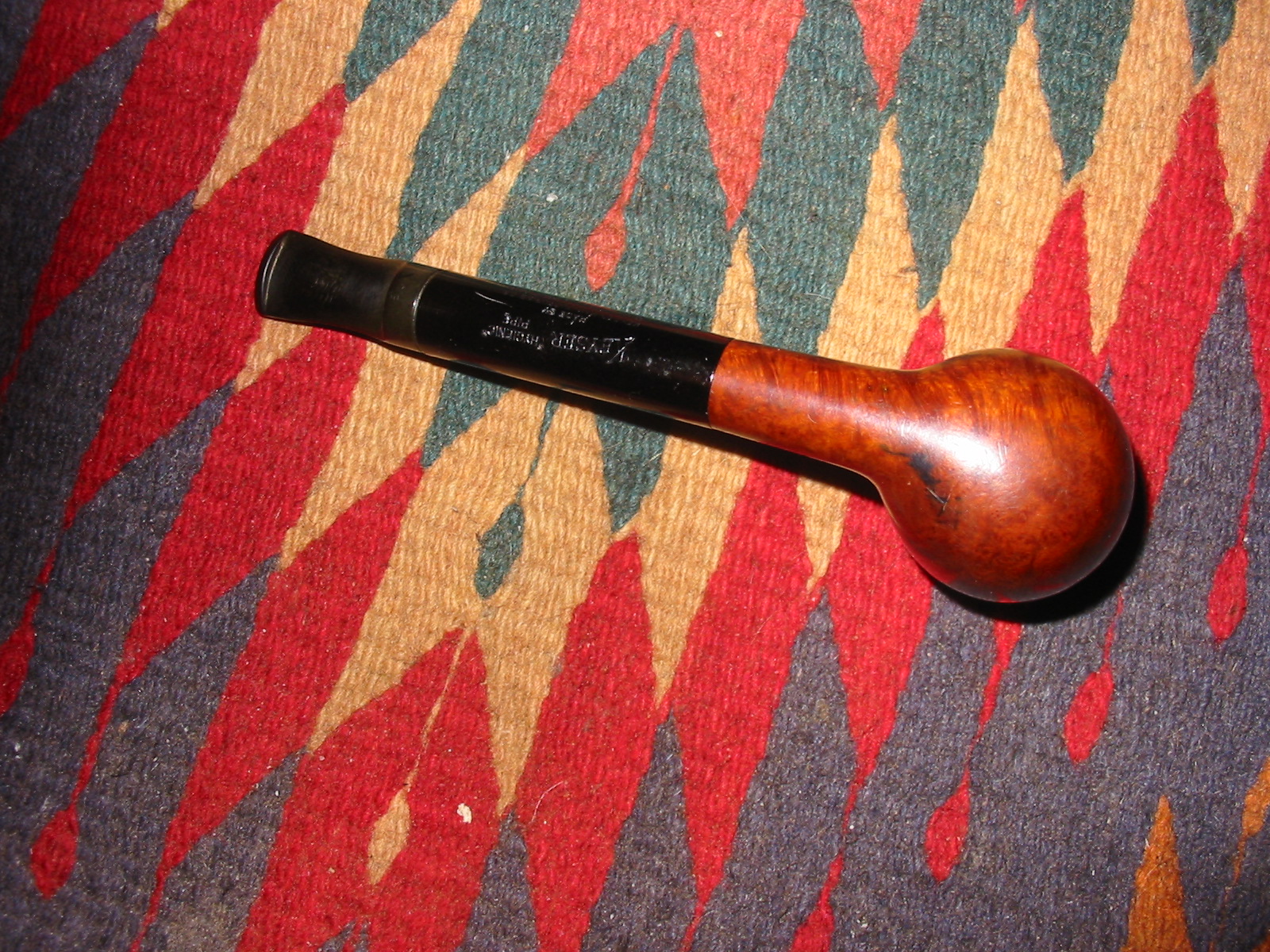
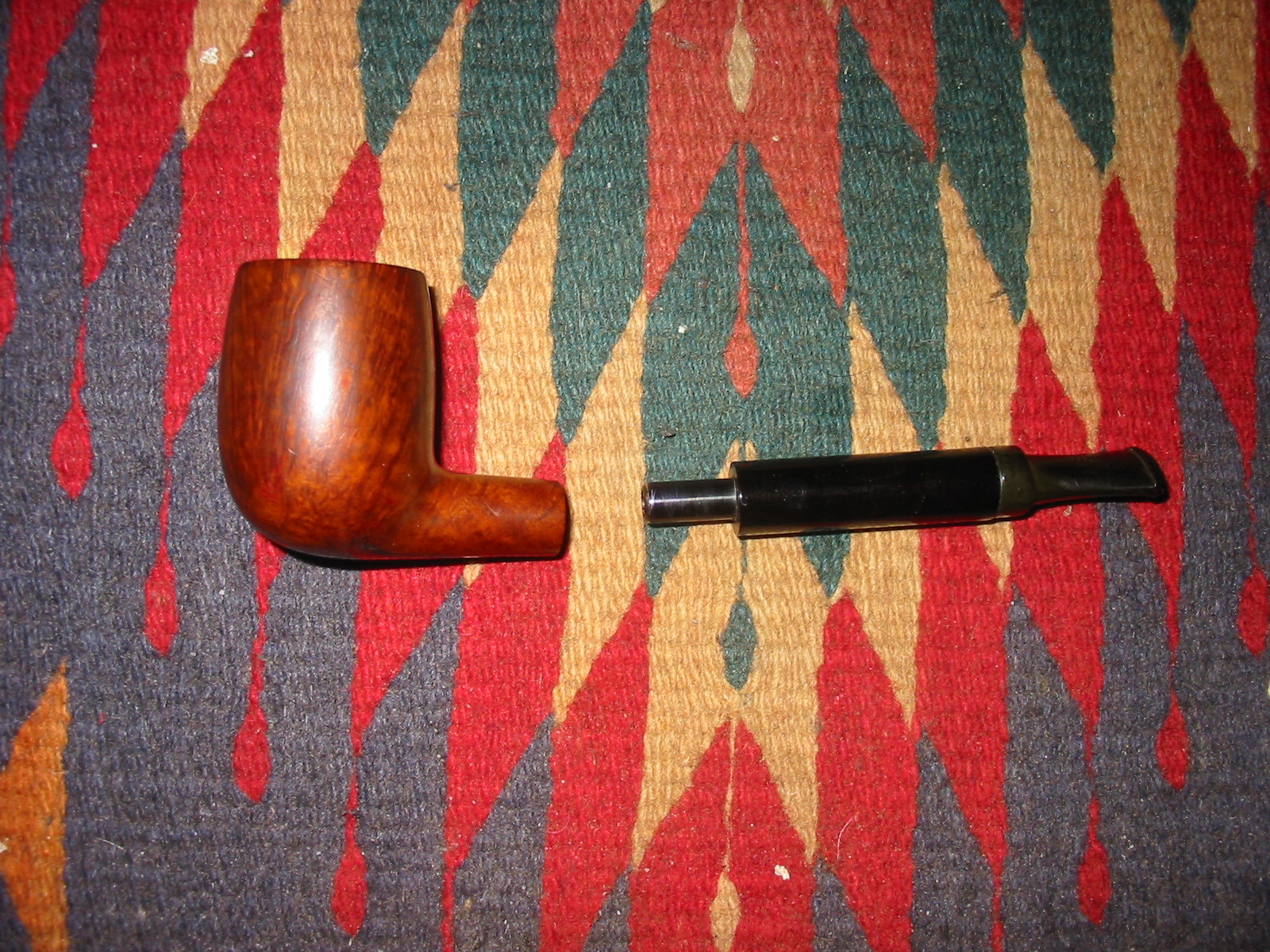
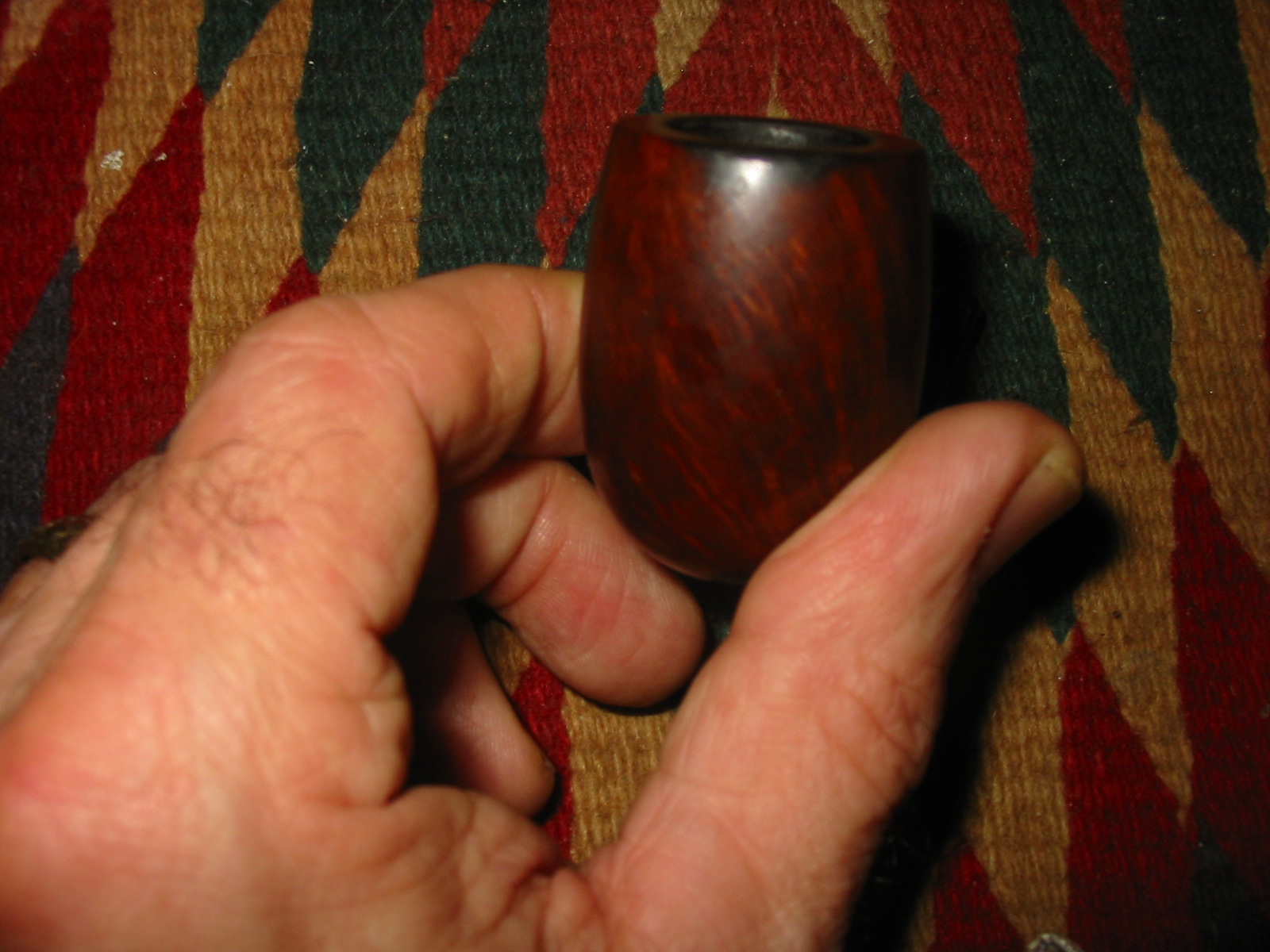
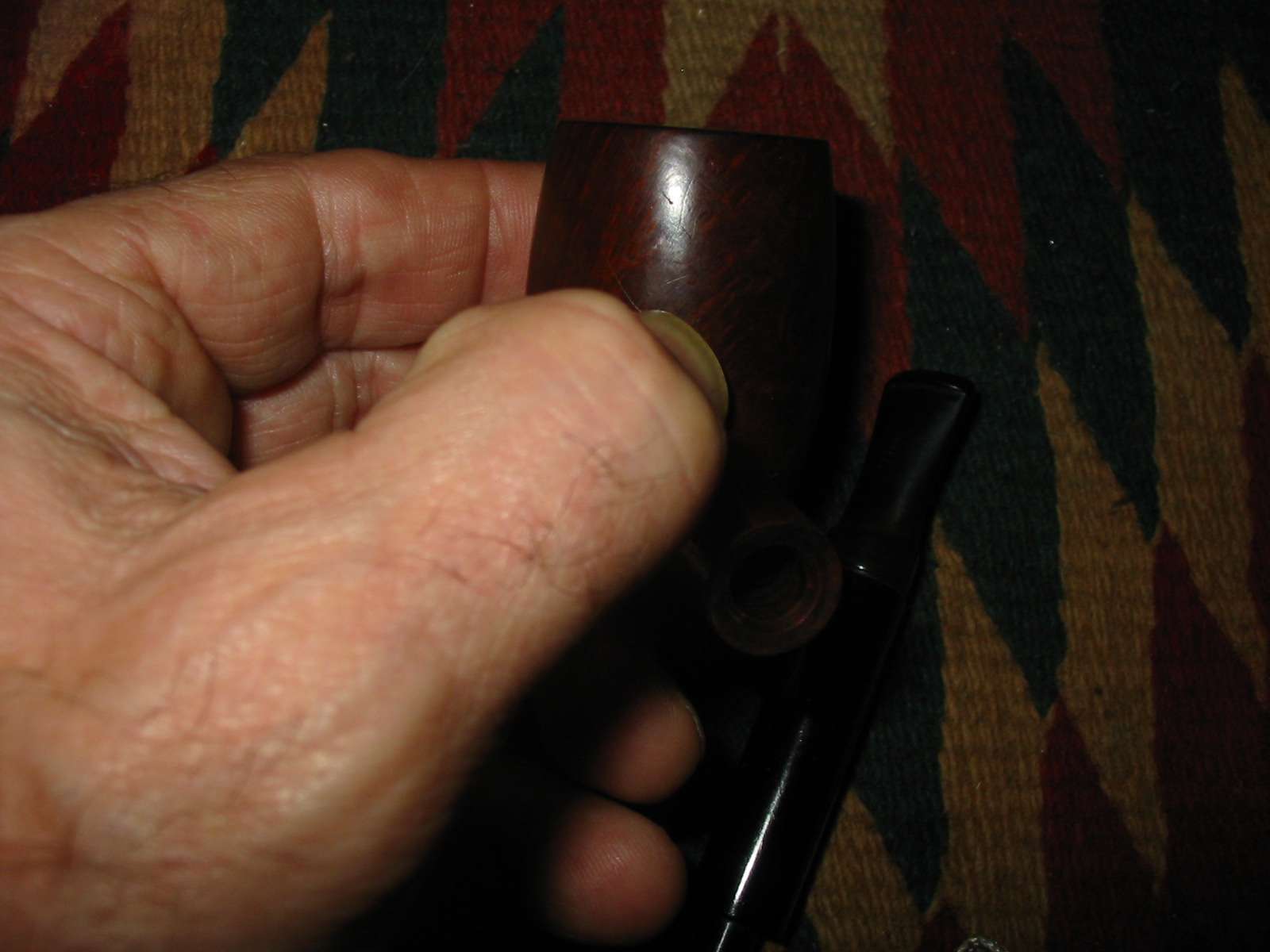
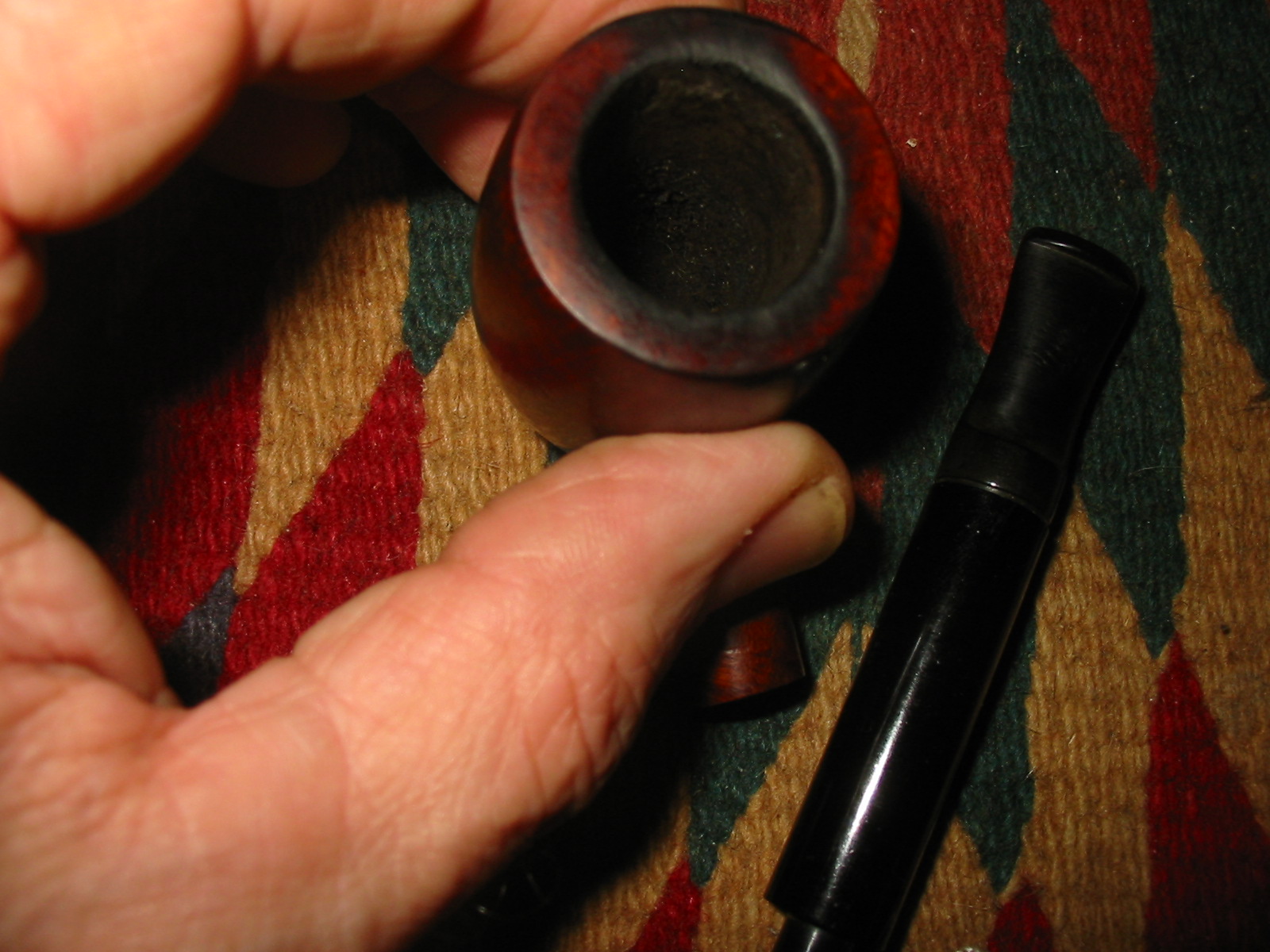
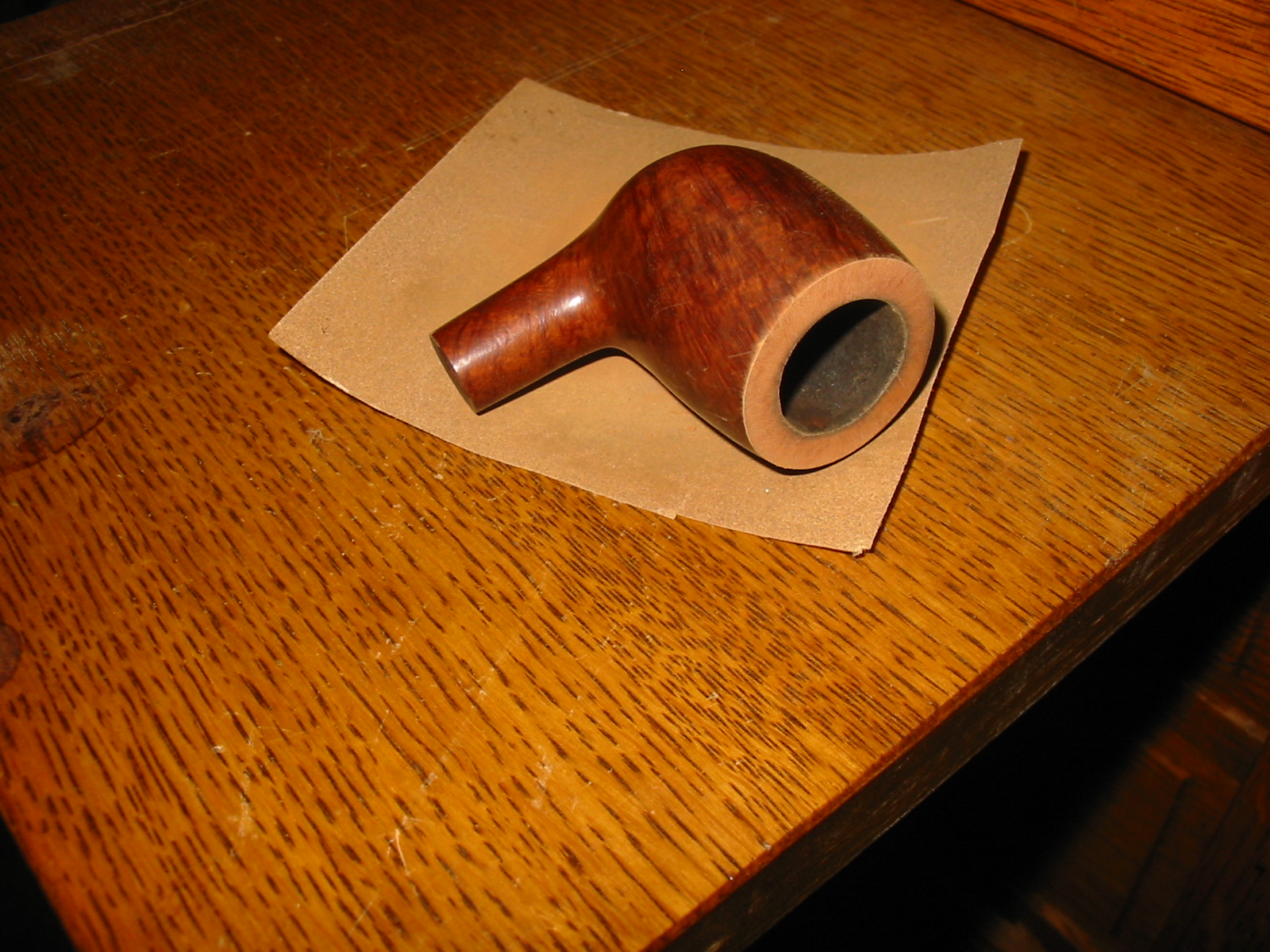
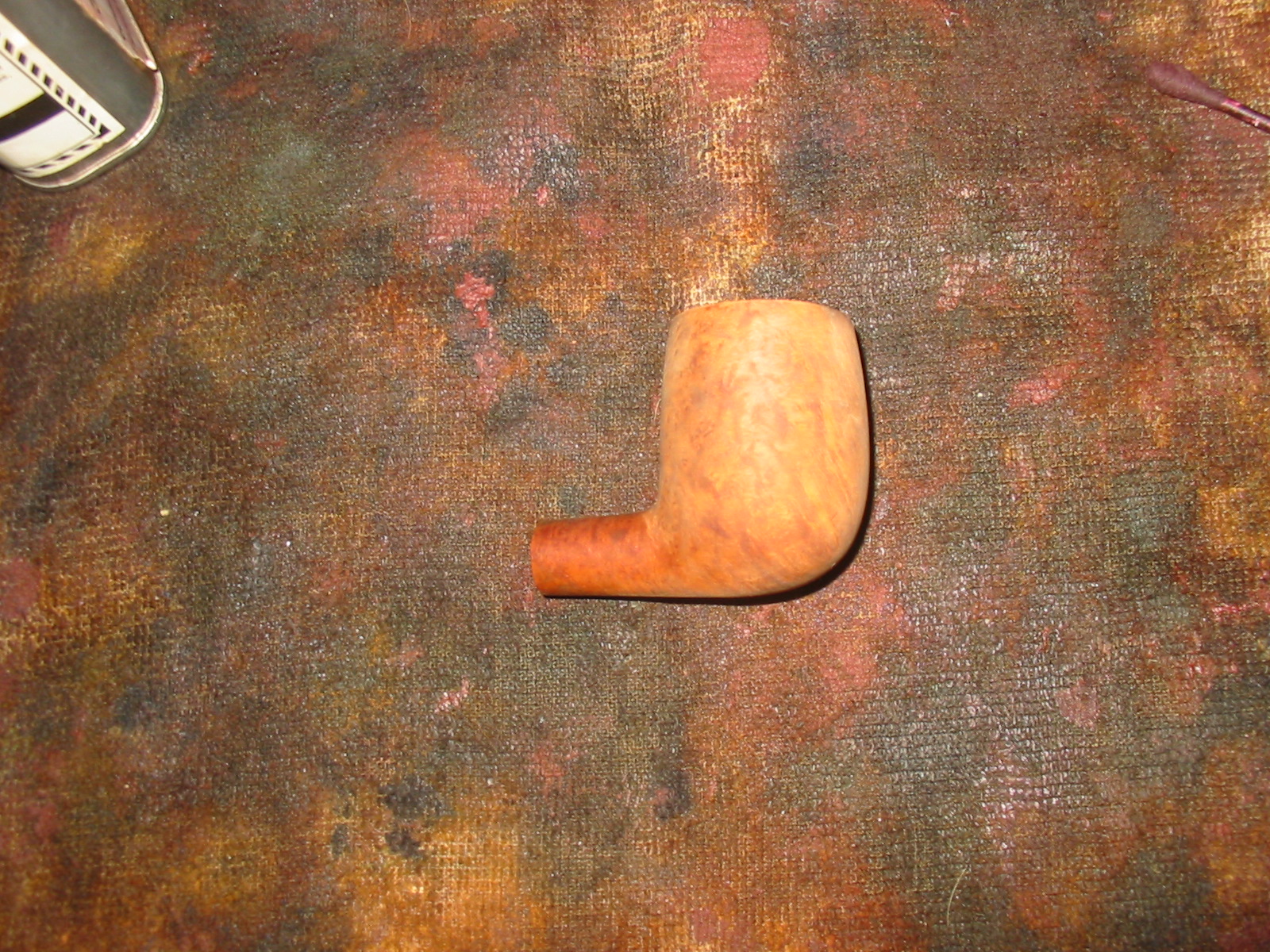
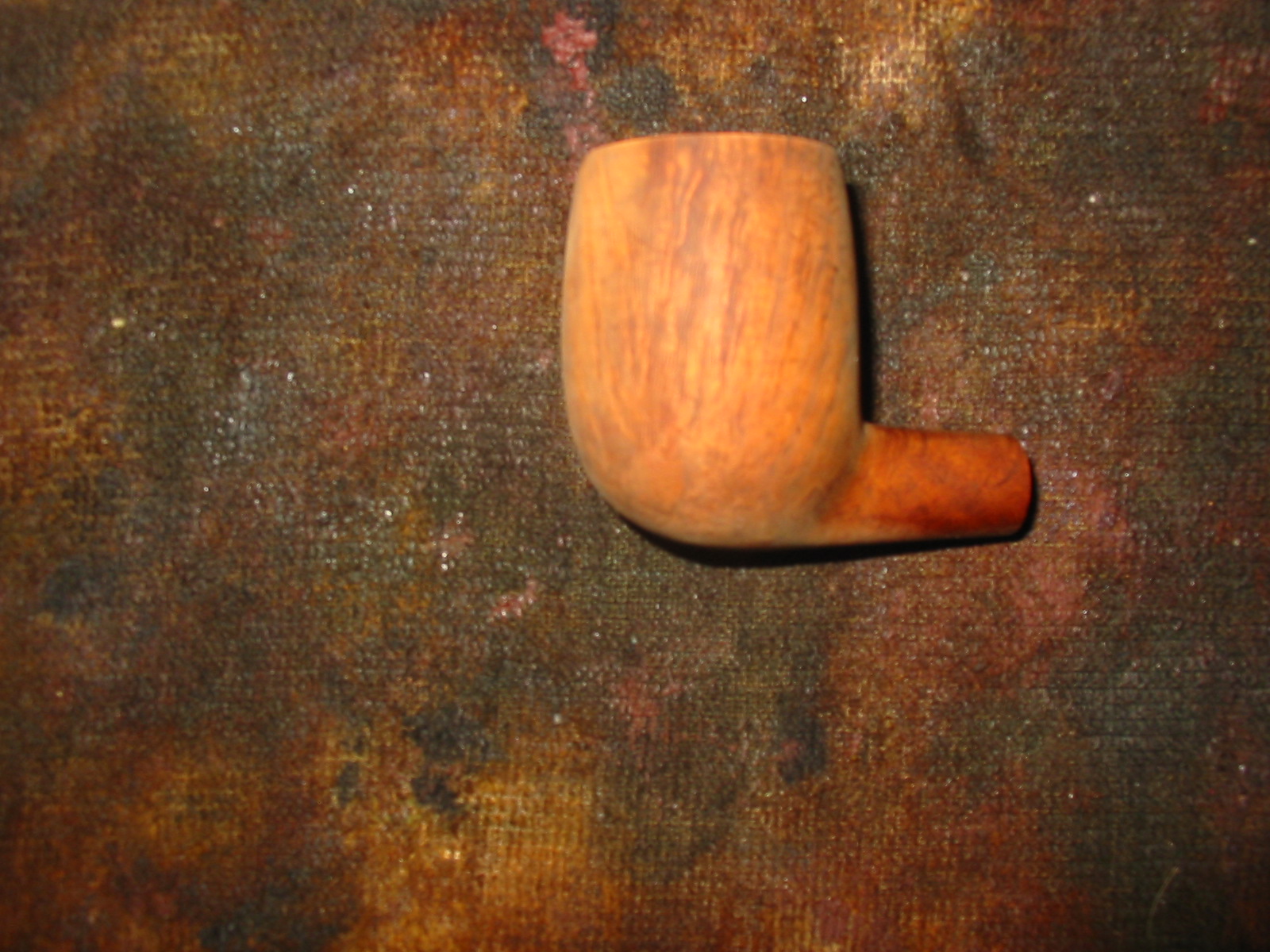
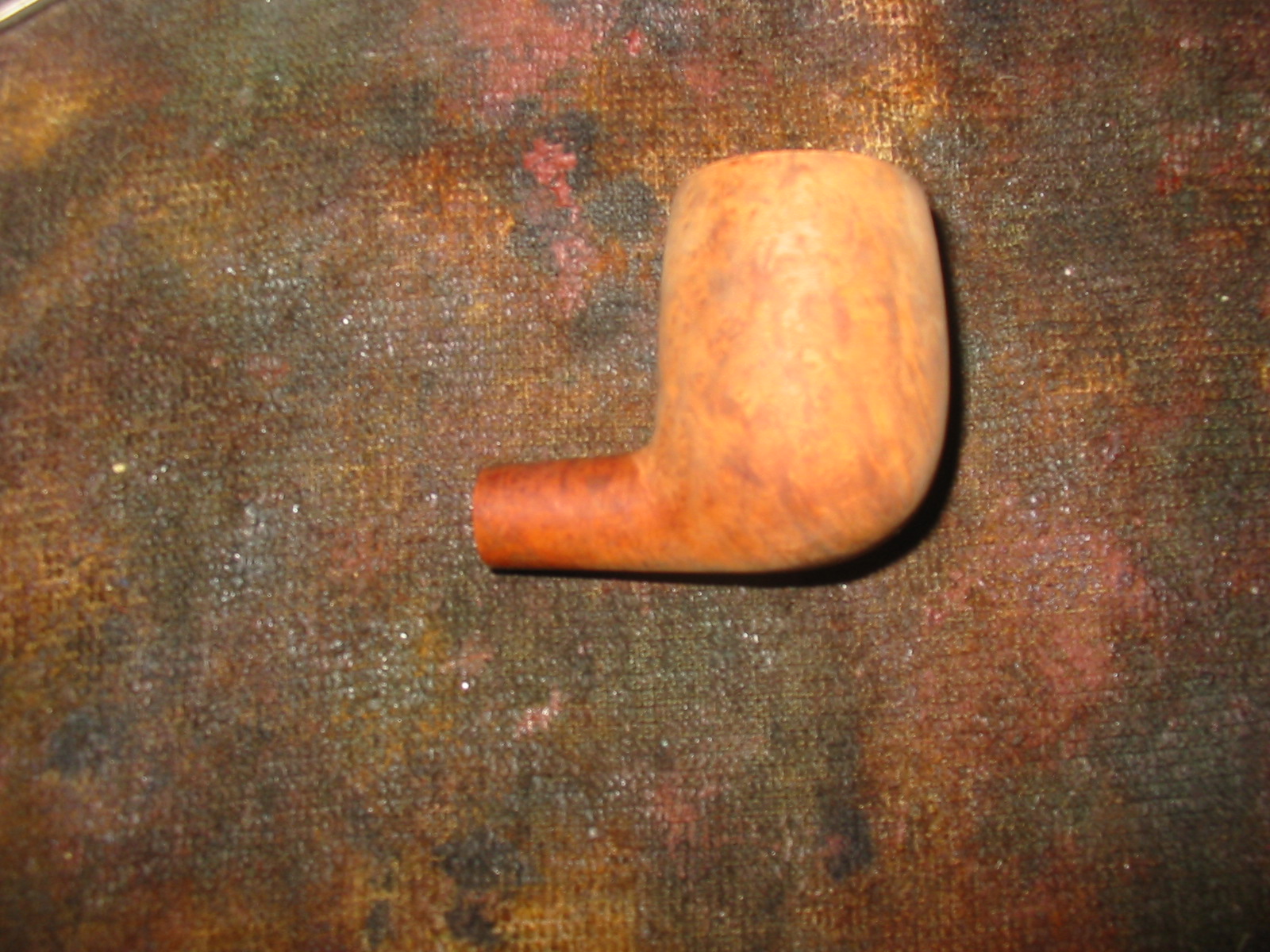
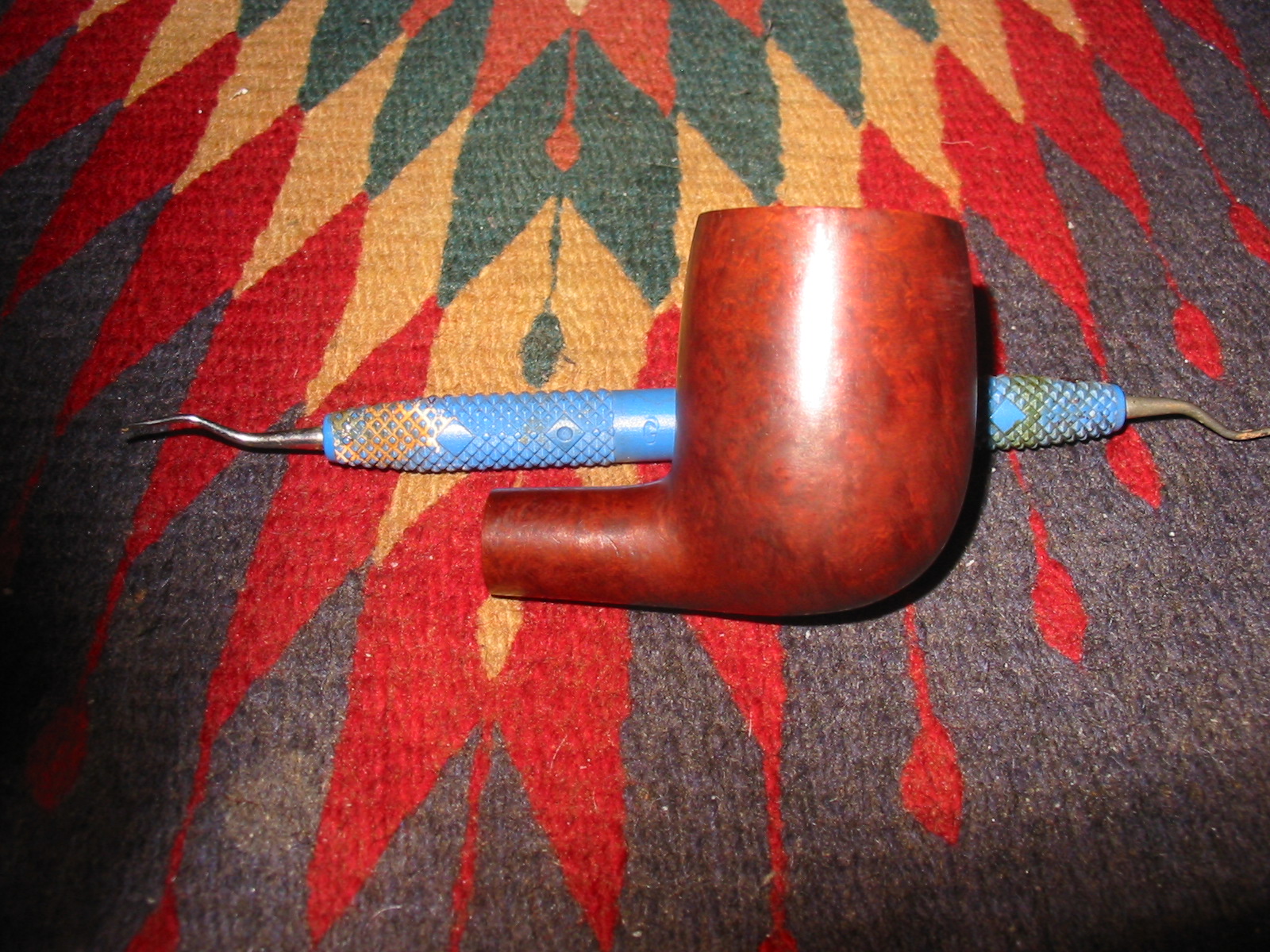
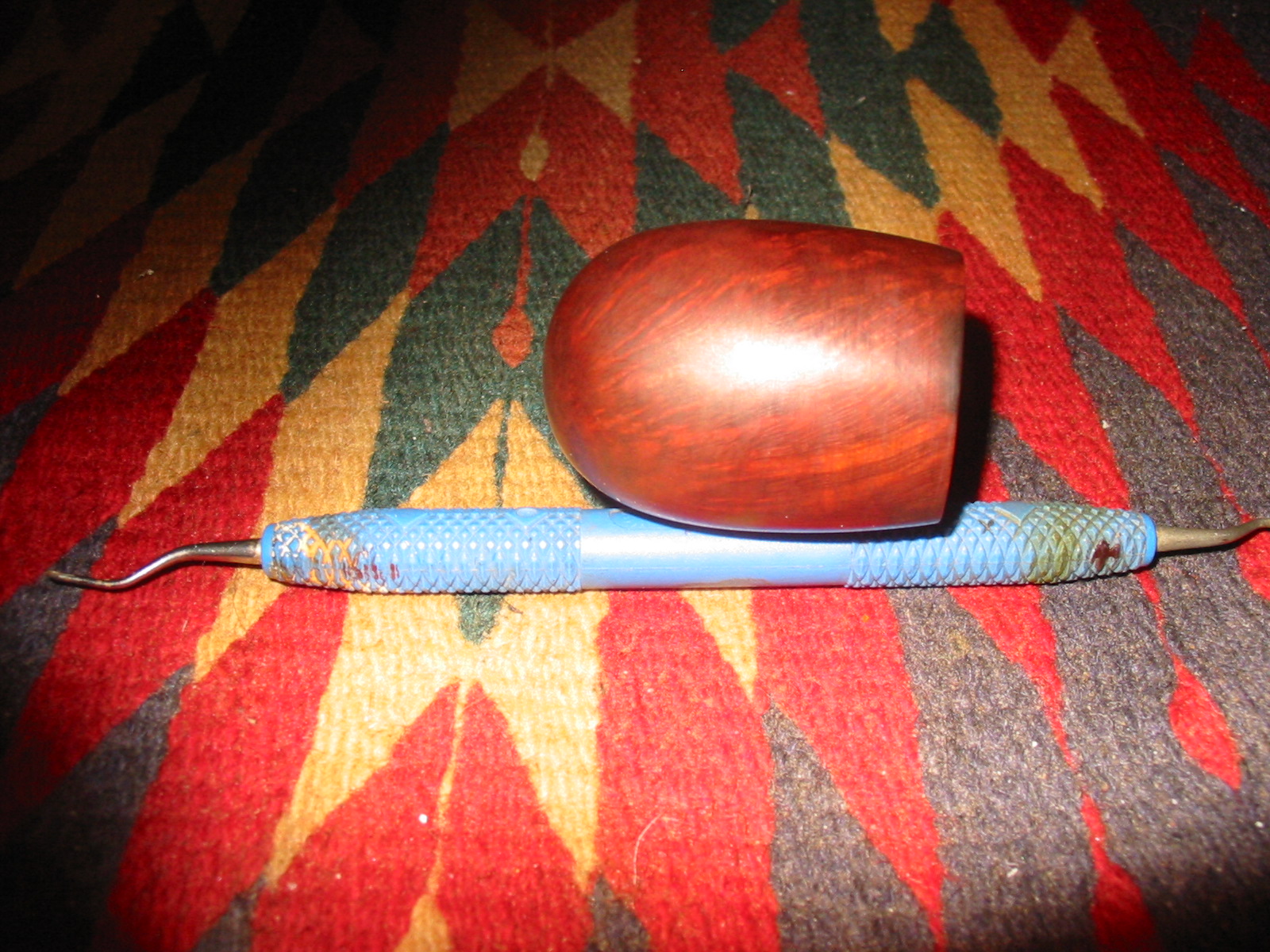
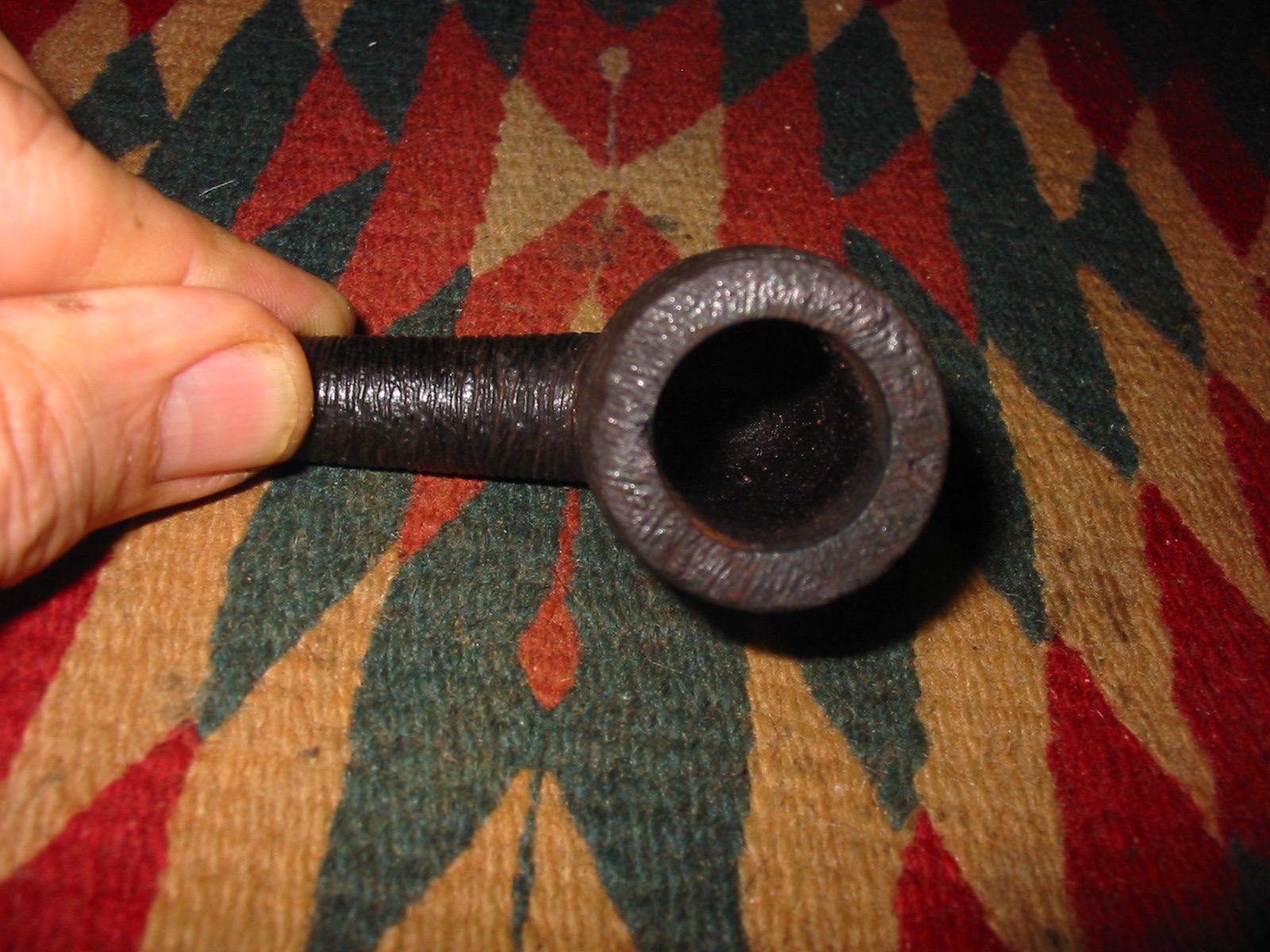
This is the second of three pipes that I picked up in a lot from EBay. It included the Richmond, a Comoy’s Everyman, and this BR Israeli made ball. It is stamped BR in large block script on the left side of the shank. On the underside of the shank is stamped ISRAEL. I know nothing of the brand and would love to hear from any of you who might have some information. The stem had tooth chatter and bite marks. It looked like it had also had a rub bite guard on it because the white calcified build up on the top and the bottom of the stem was the same distance into the stem as the bite guard. There was a distinct line where the edge was. The coloured band is slid on to the tenon of the stem. It is a brass wheel with an inlaid acrylic. The finish was shot and the briar was full of fills. The right side was the only clean side on the pipe. The front had a large putty fill at the top near the edge and several on the lower portion, the left side had 3-4 fills and the underside also had two. Most of these were on the smaller side as far as fills go but the one on the front was huge and spanned the width of the bowl. The rim and downward curve of the bowl from the rim back was very tarred and oily. There was a gummy buildup that was like a lava flow down the bowl sides. The bowl was caked with an uneven and oily aromatic smelling cake. The first series of four photos shows the state of the pipe when it arrived on my worktable.

ImageImageImageImage

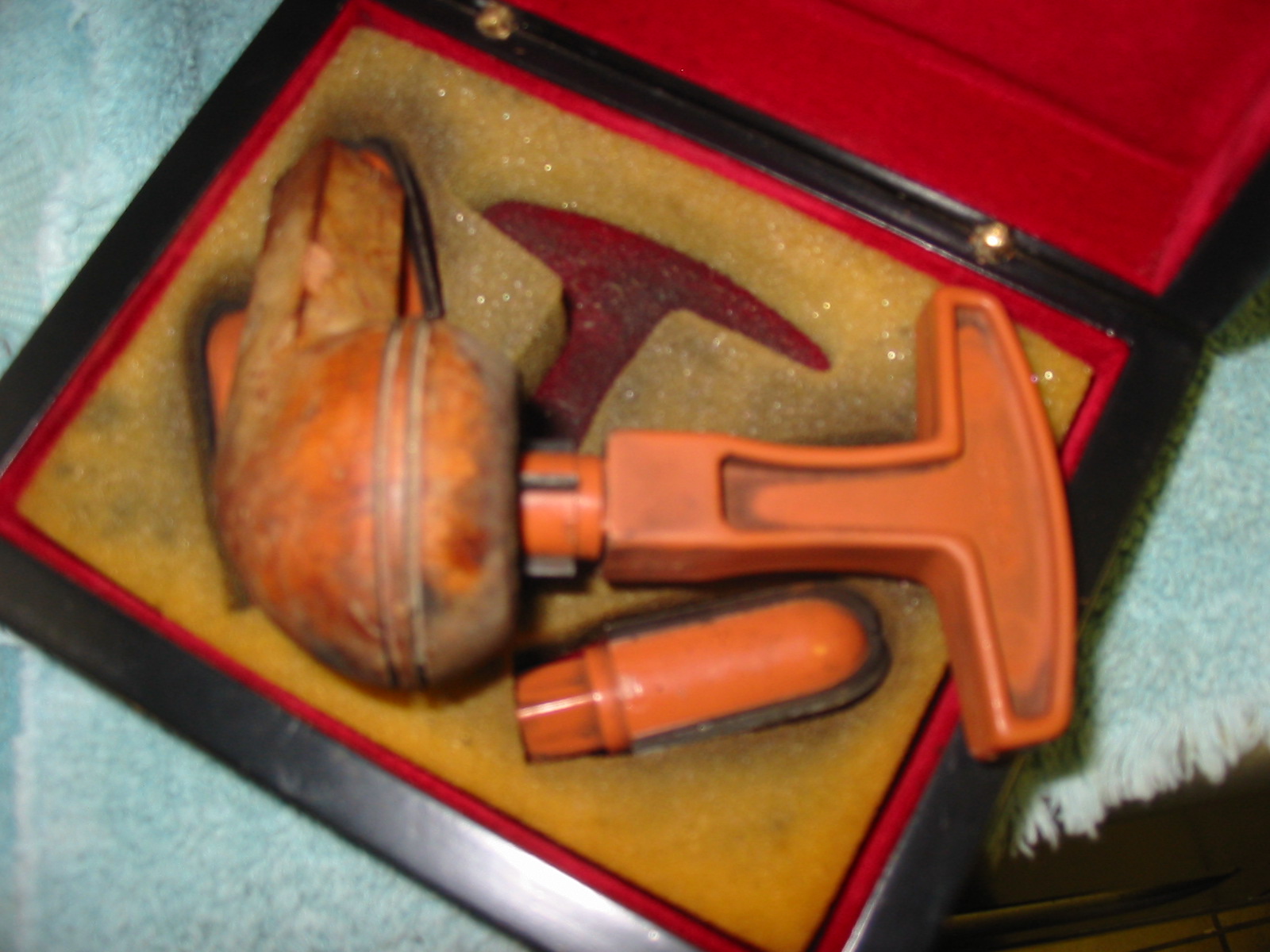
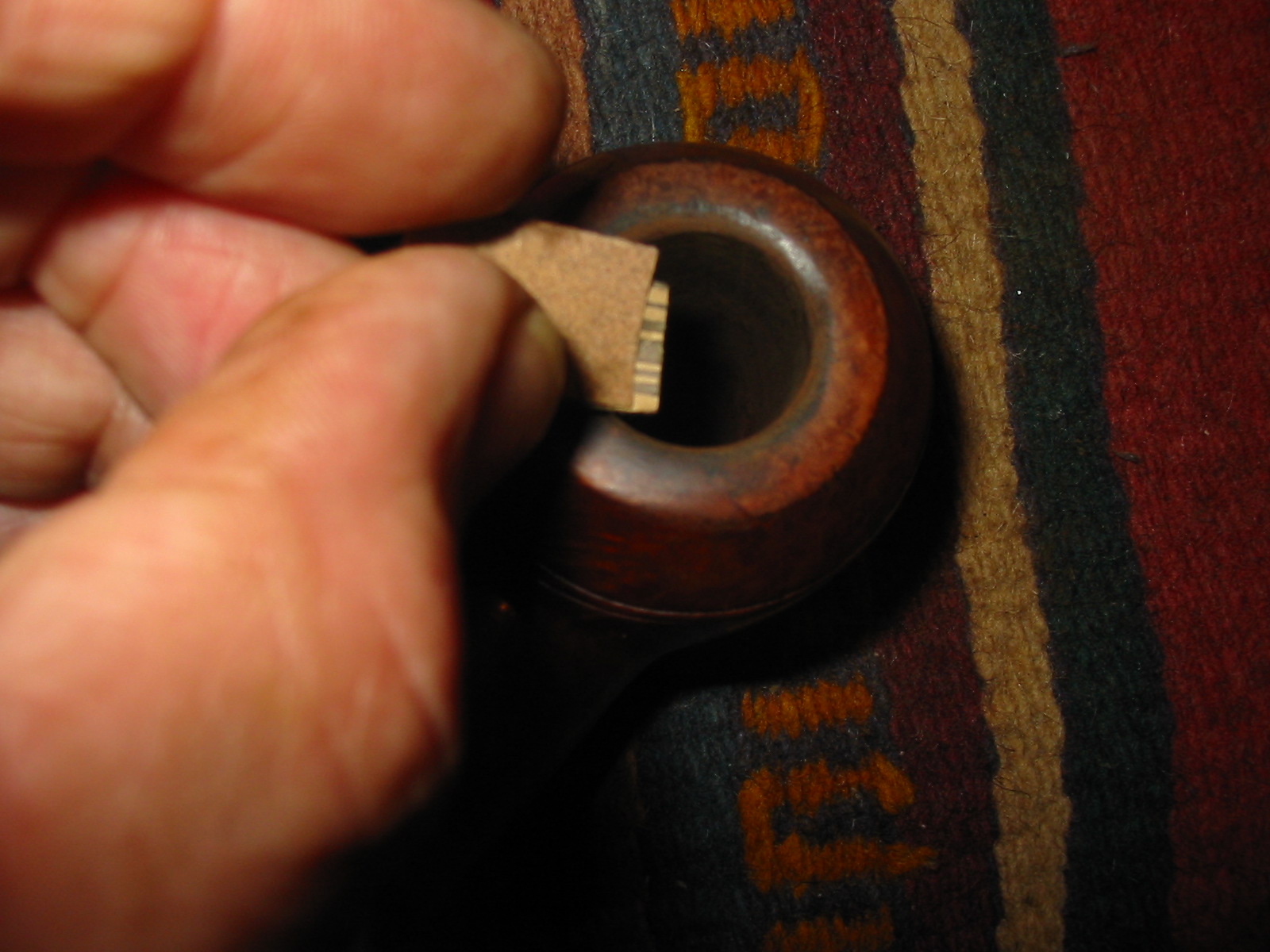
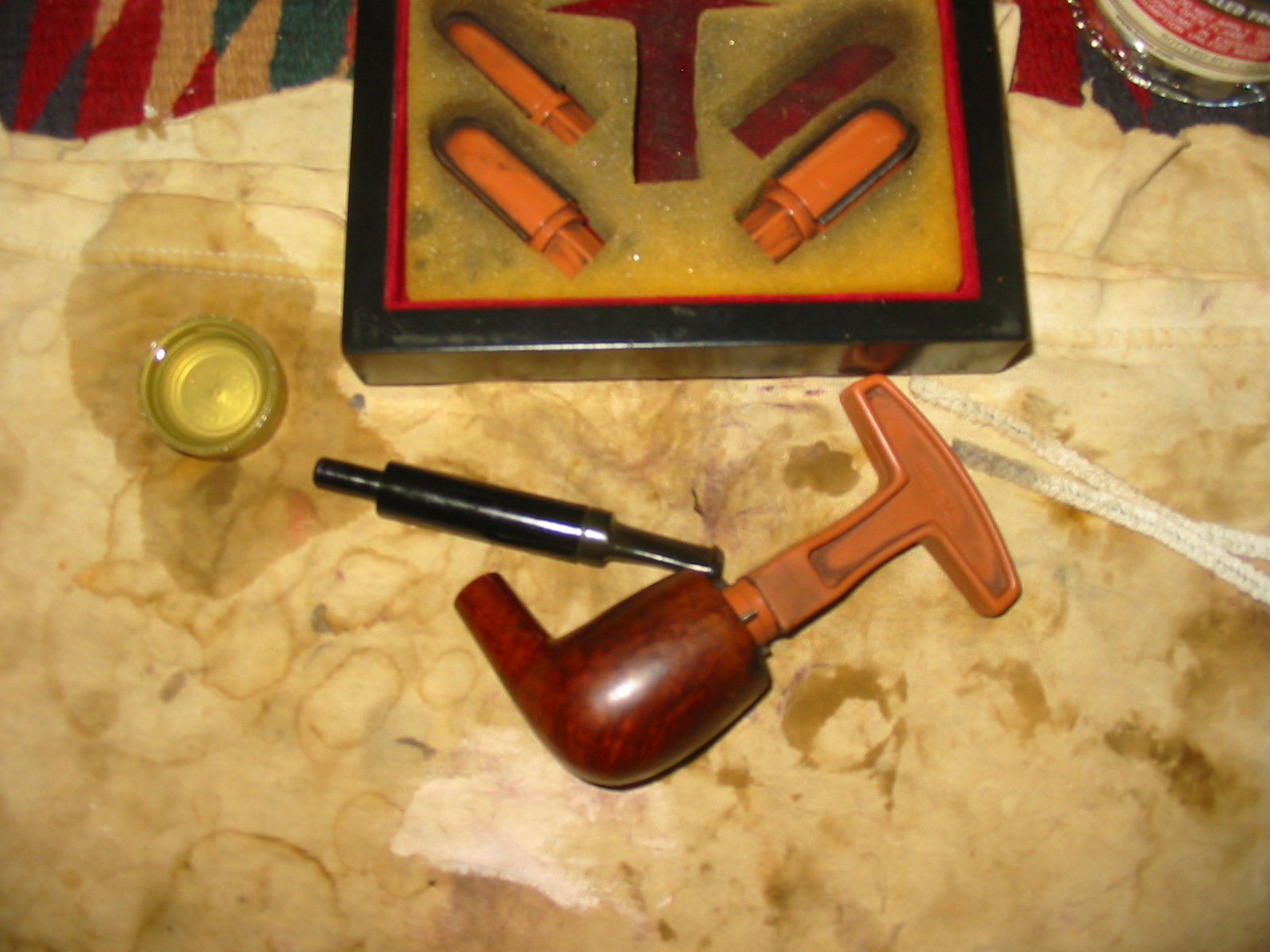
When I get a bowl that looks like this one I usually start by reaming the bowl. That aromatic, syrupy cherry smelling cake has to go in my opinion. I reamed it with my T handled Pipnet Reaming set. I generally start with a small cutting head and work my way up until I have removed most of the cake. The next two photos show the reaming process.

ImageImage

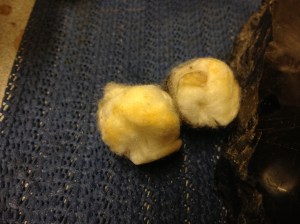
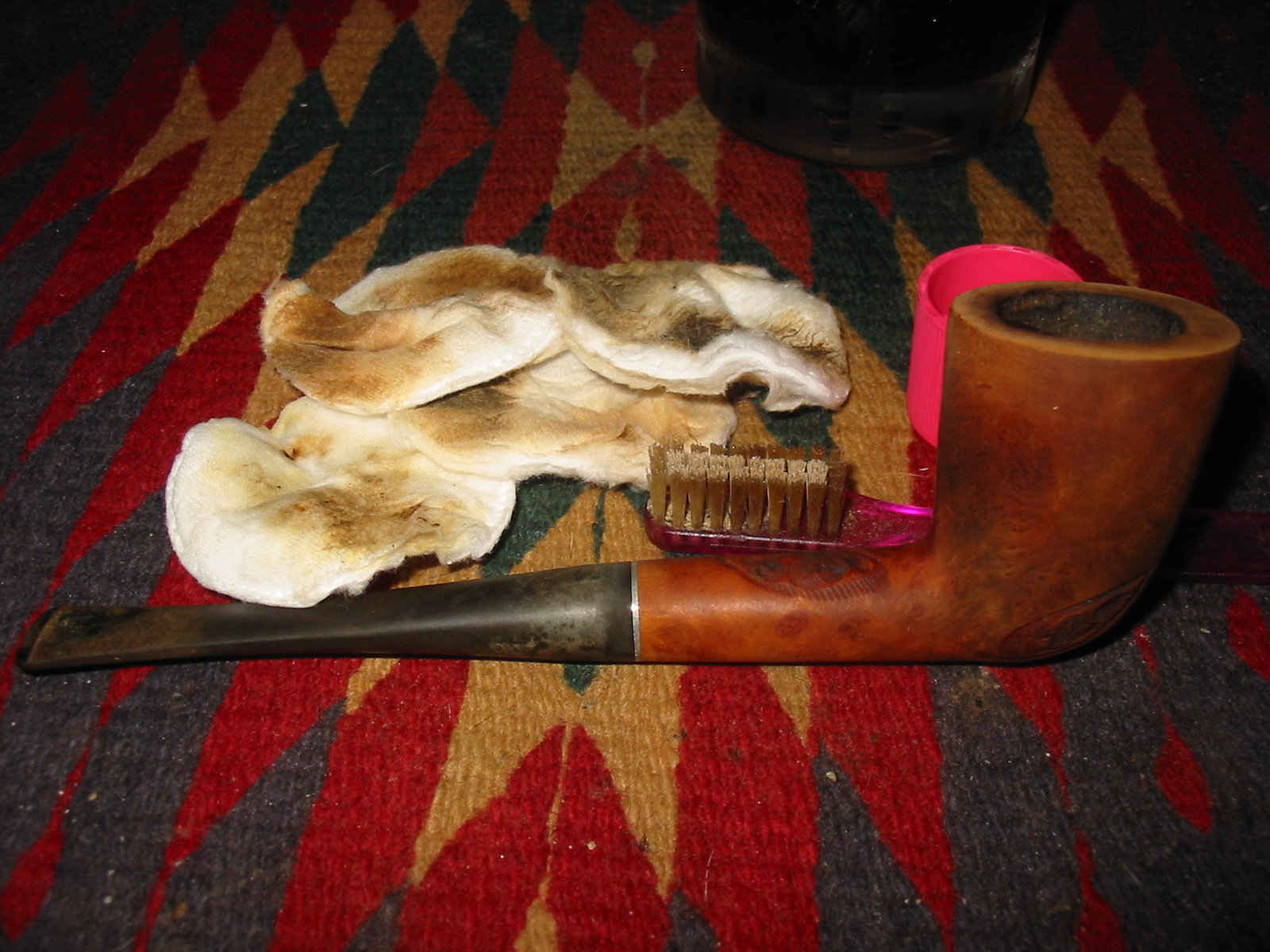
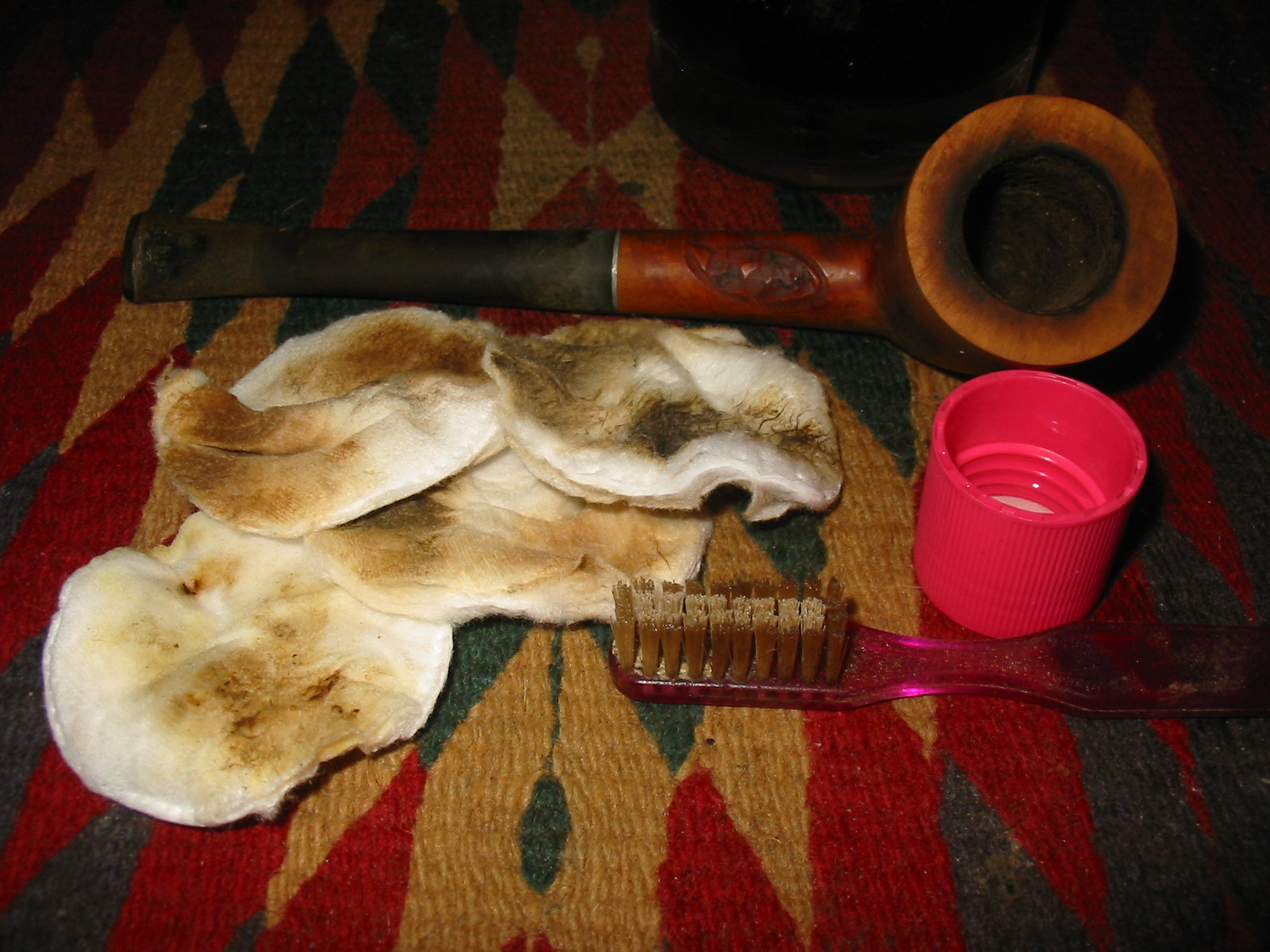
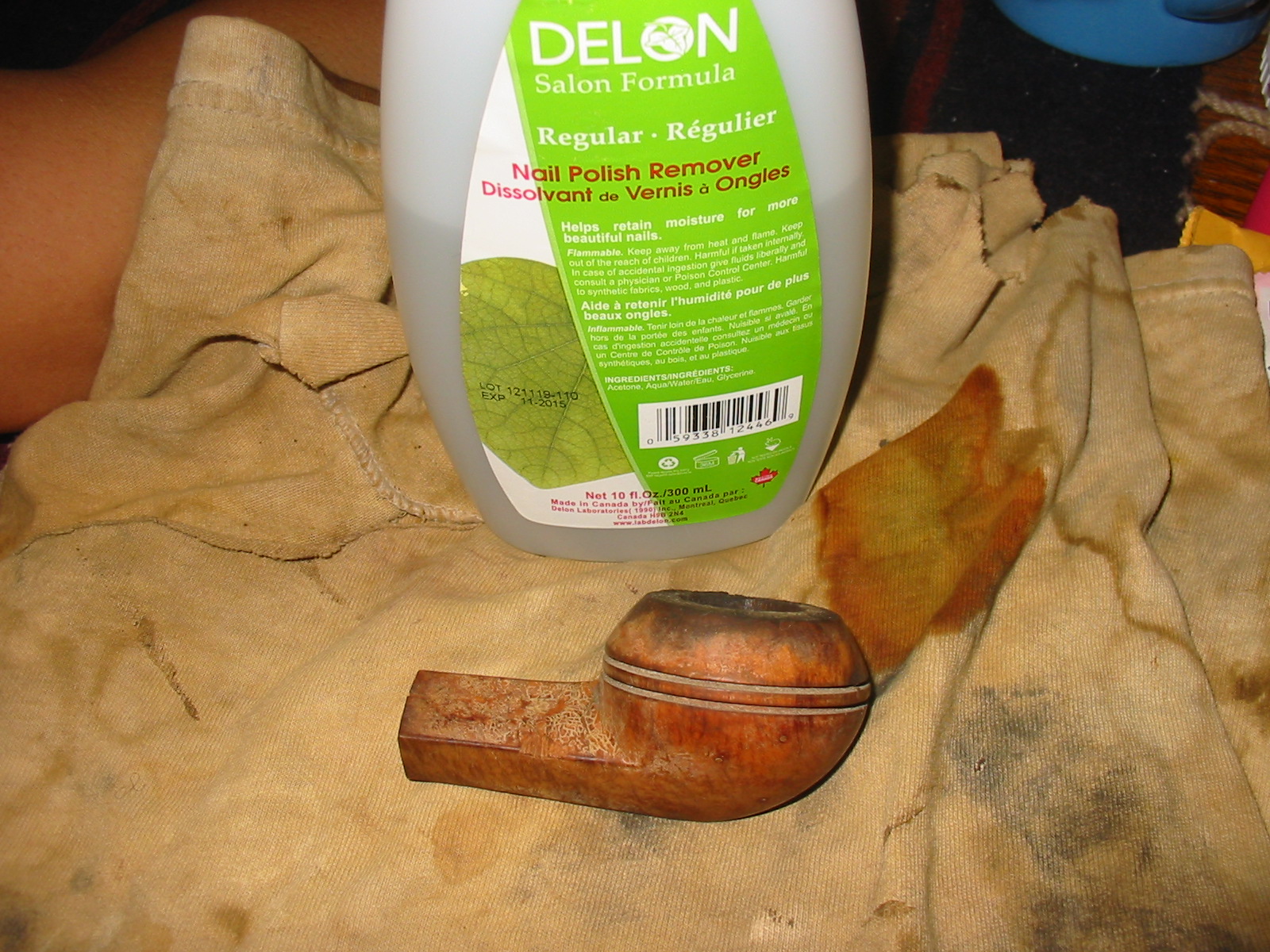
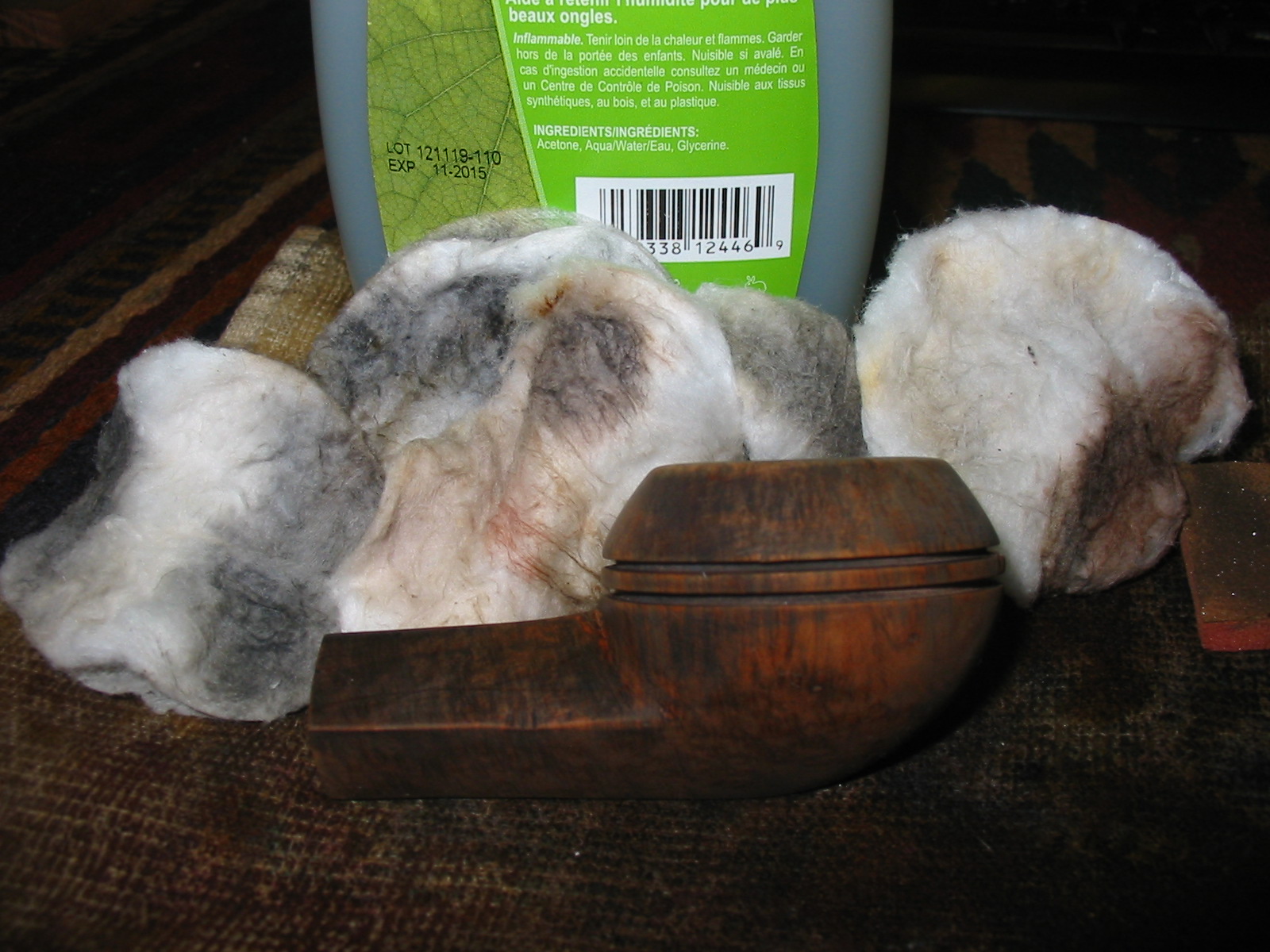
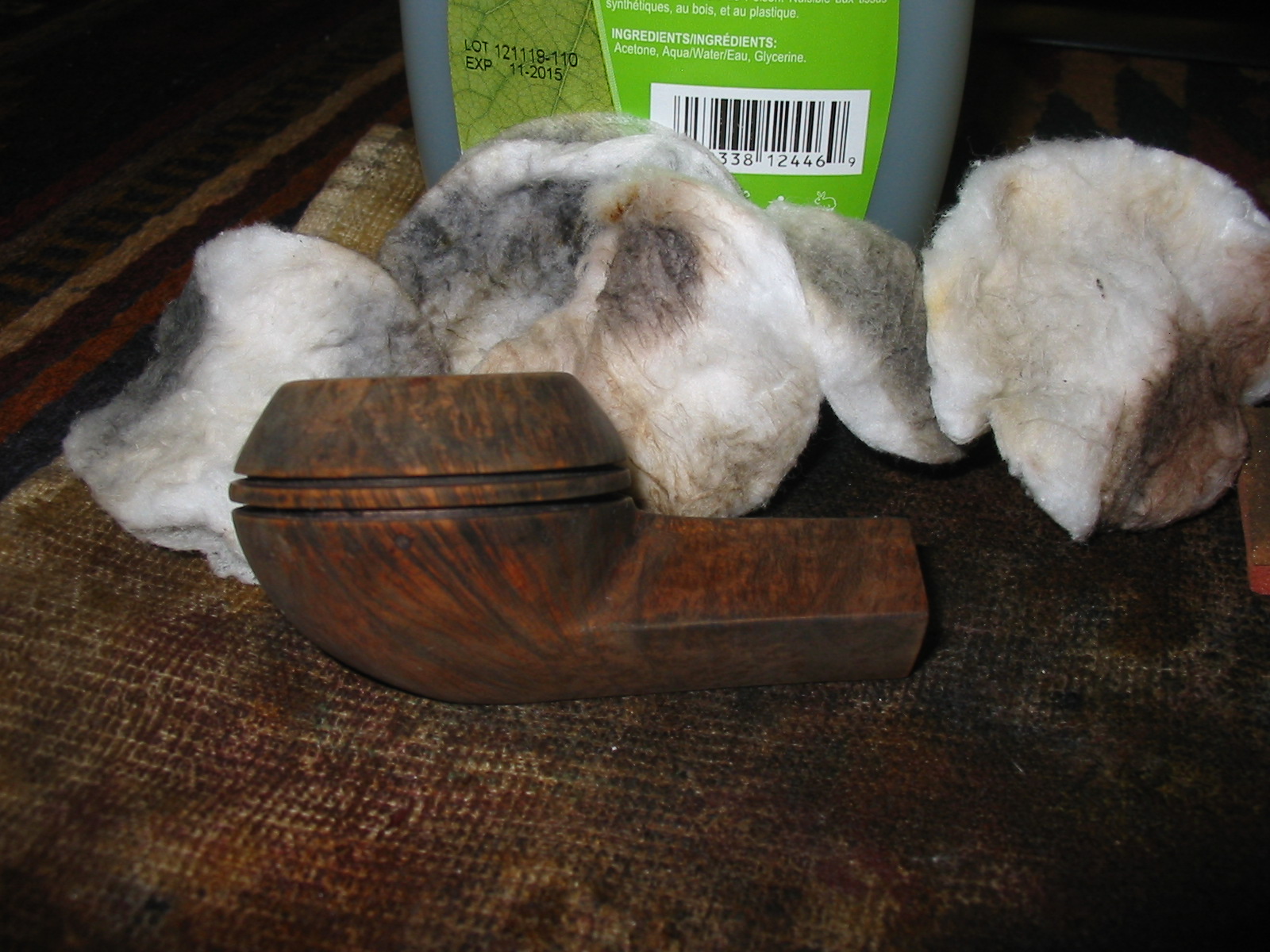
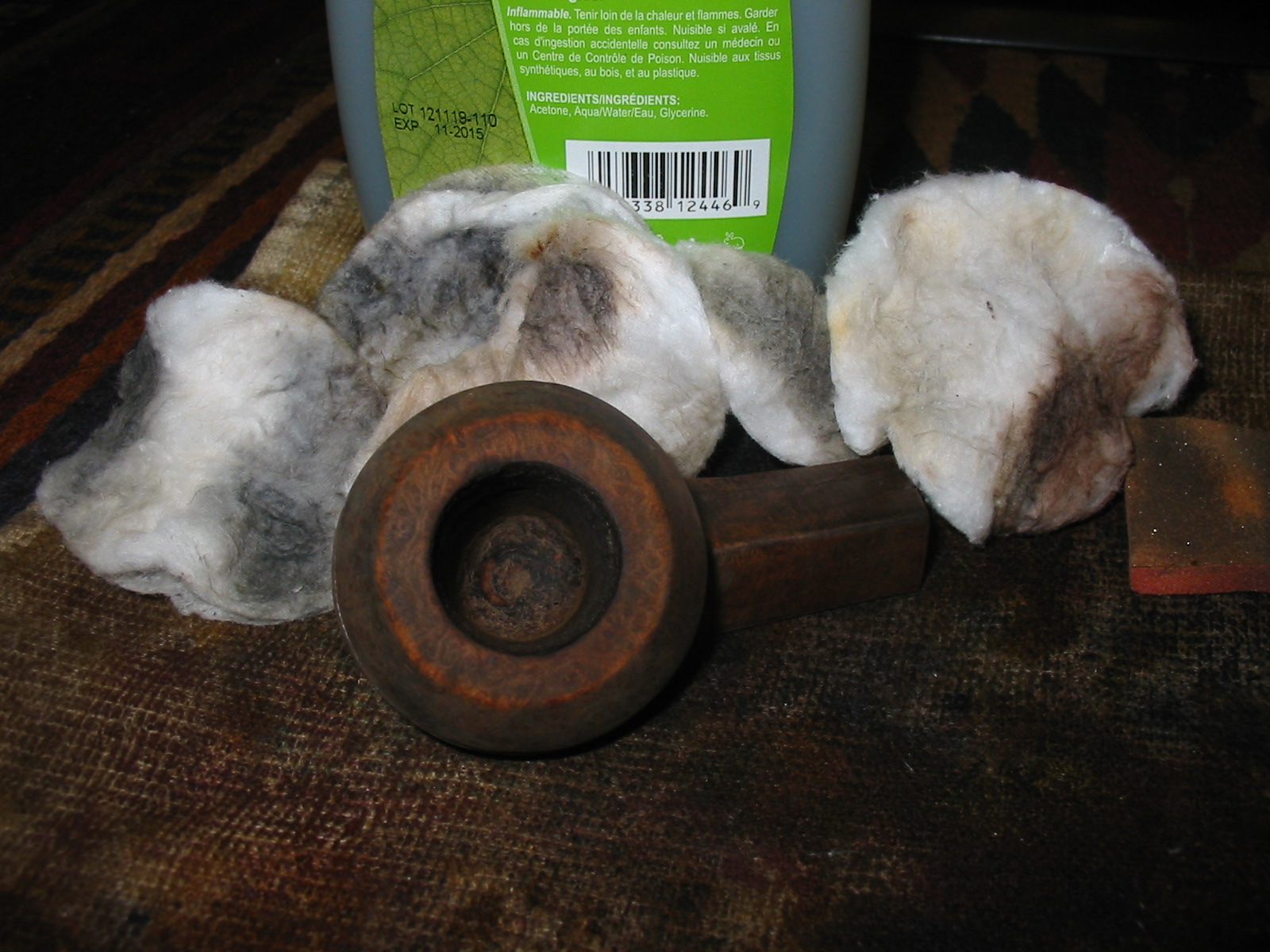
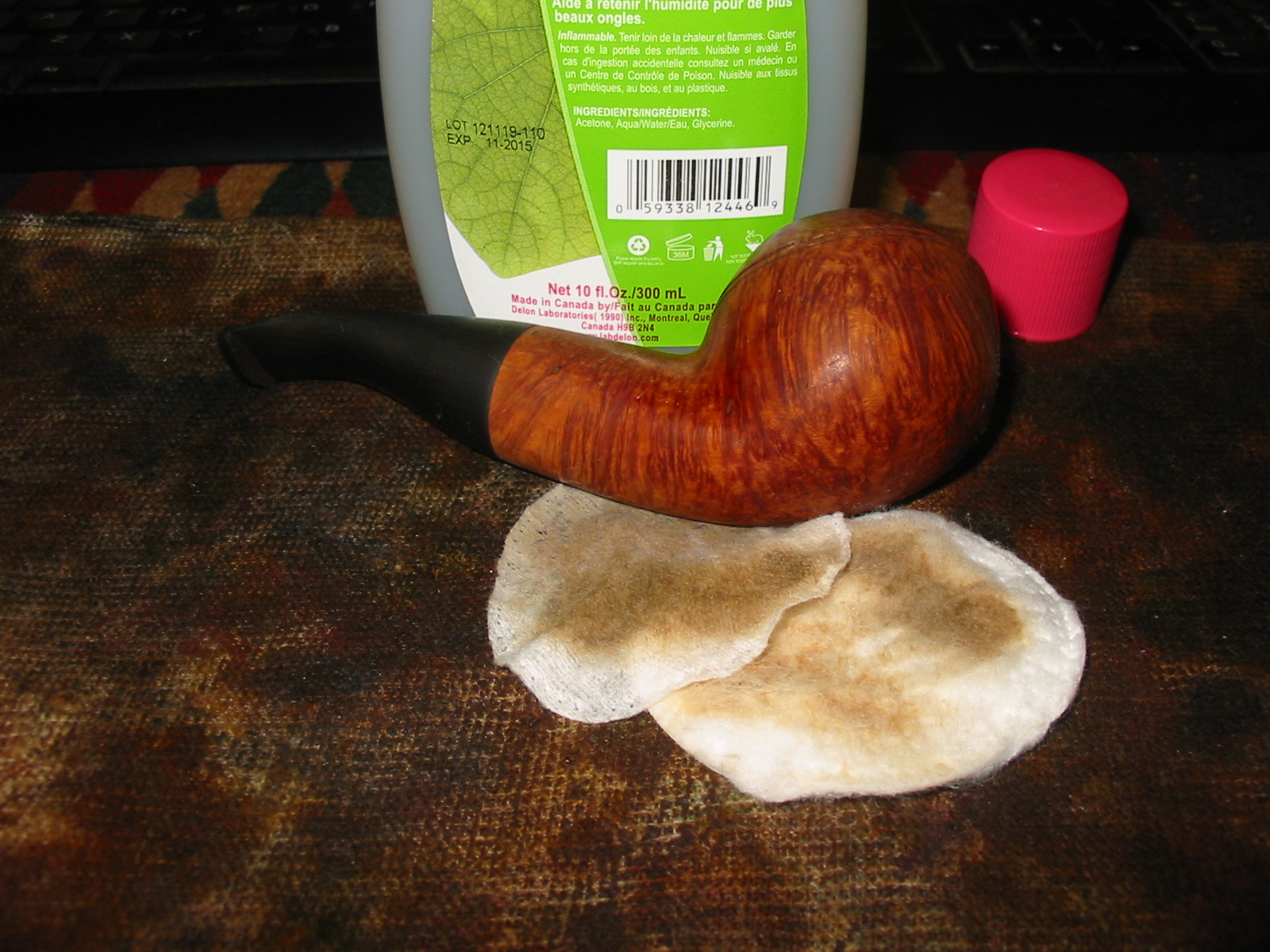
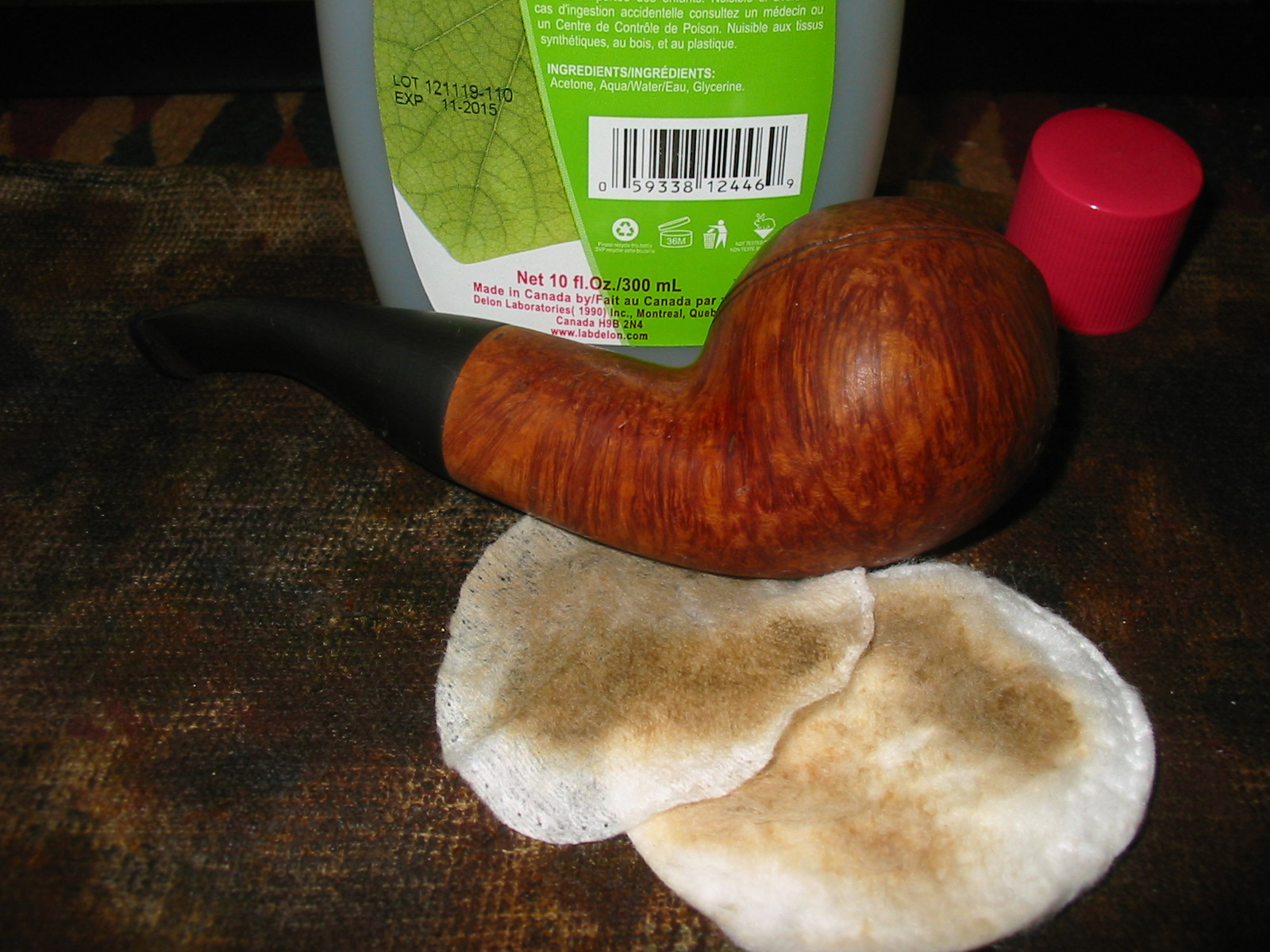
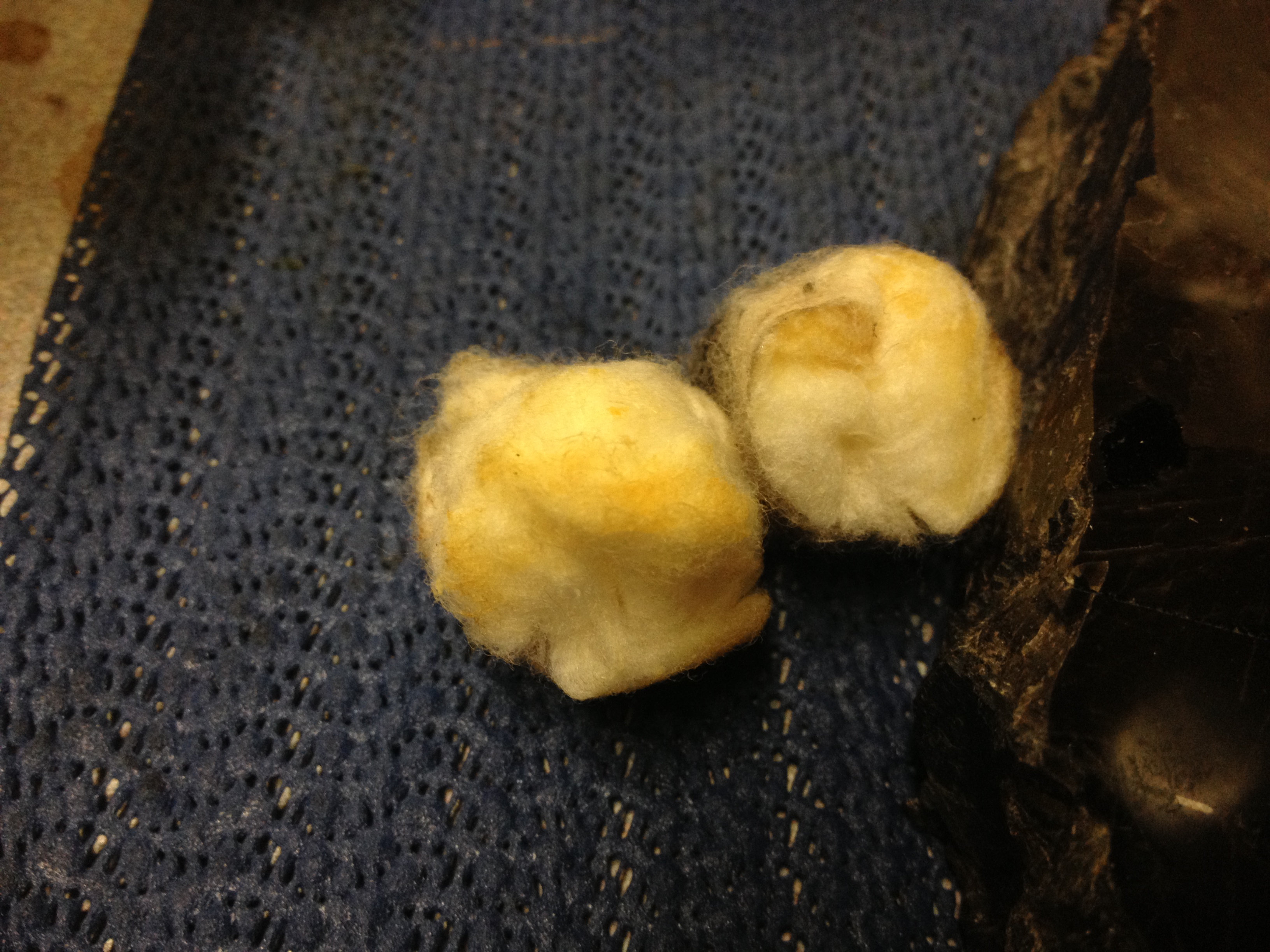
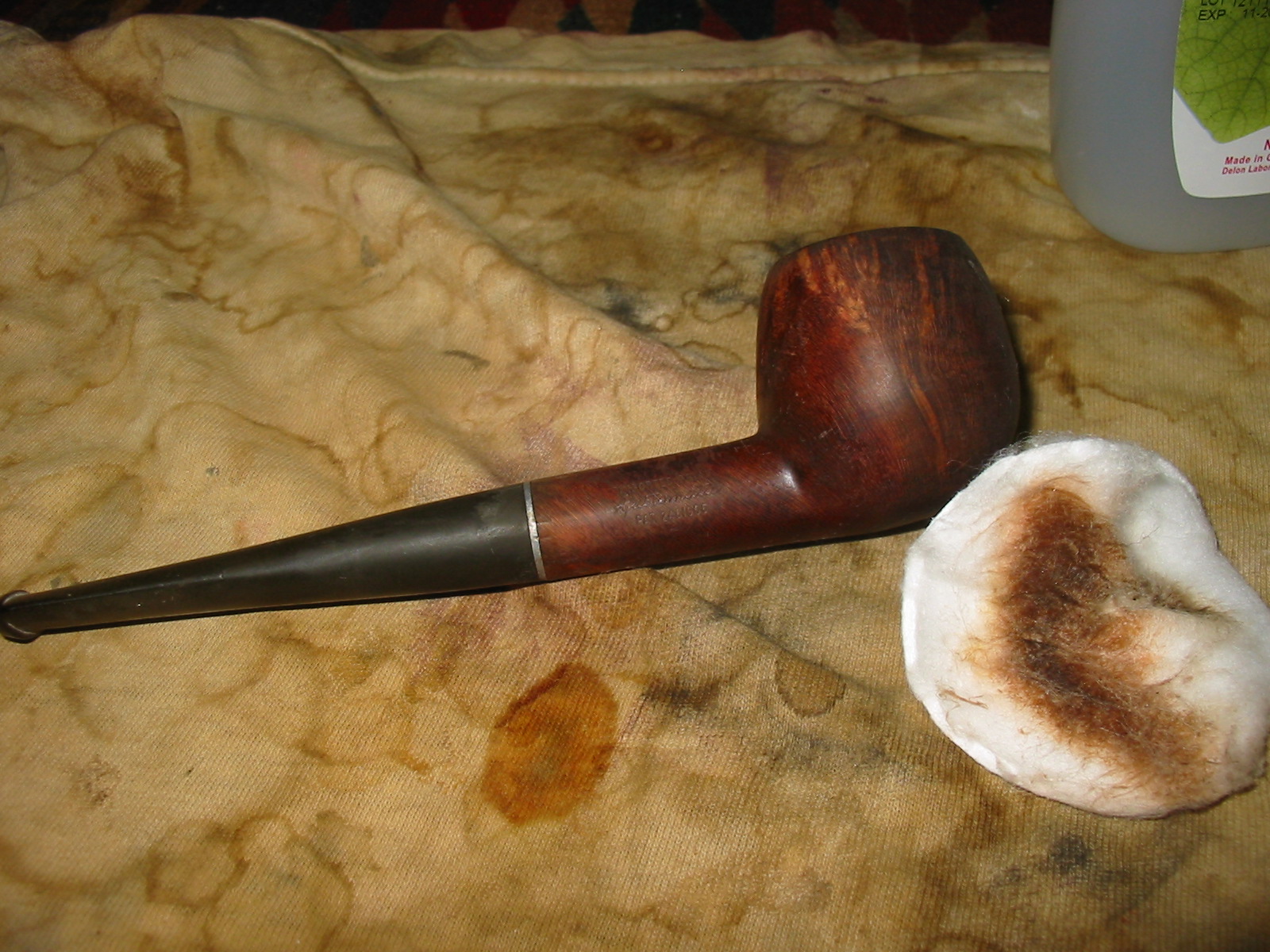
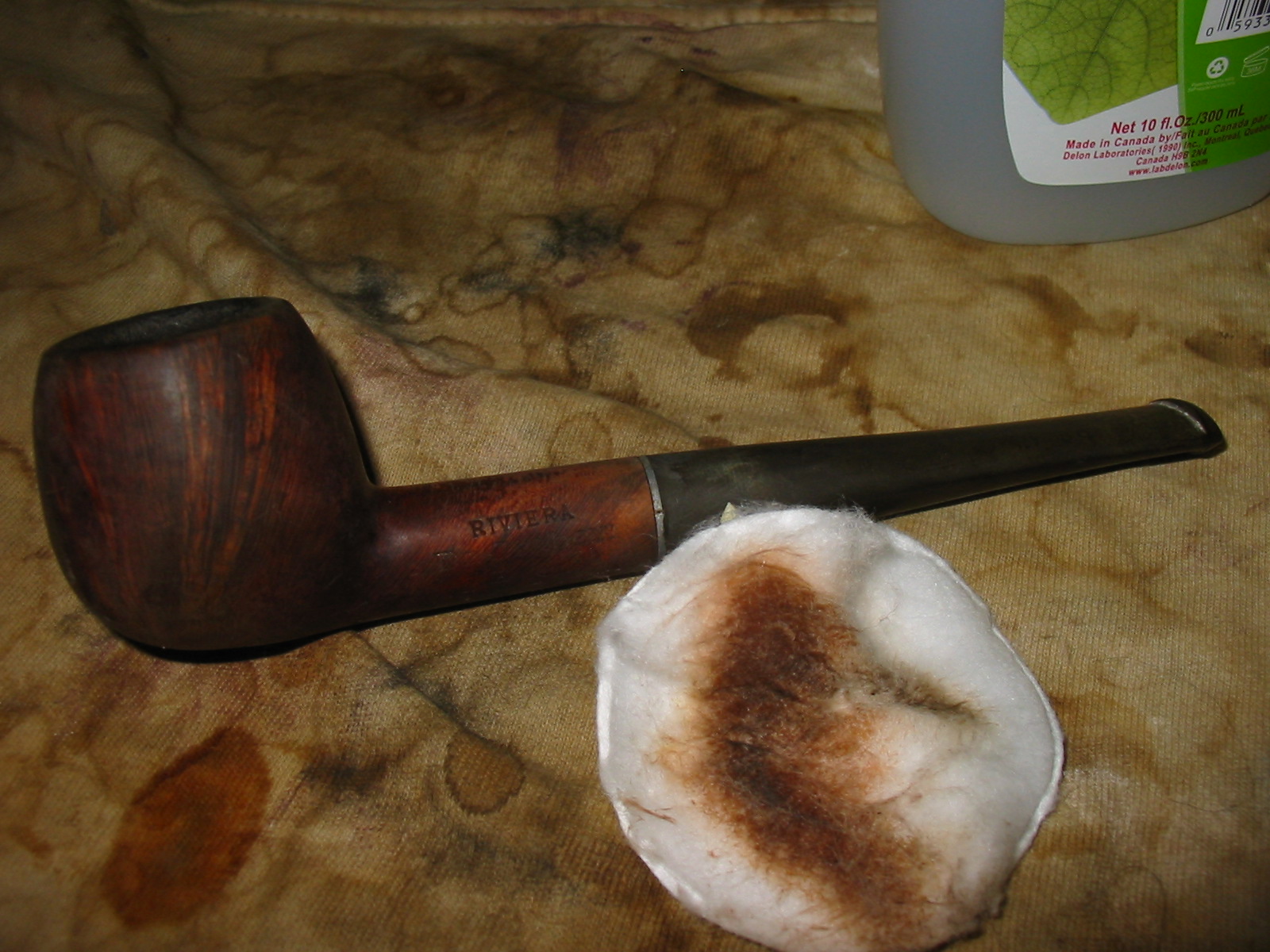
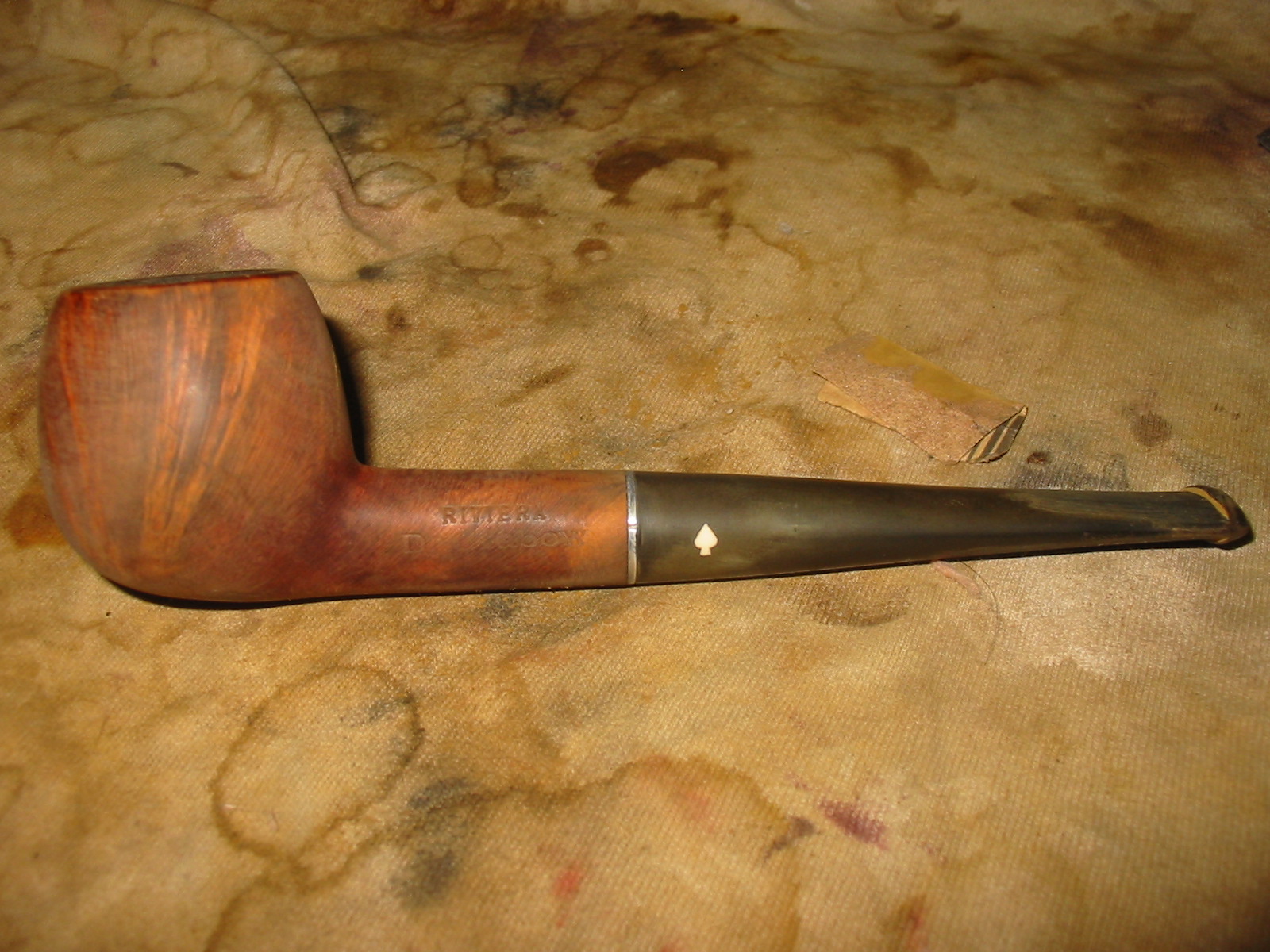
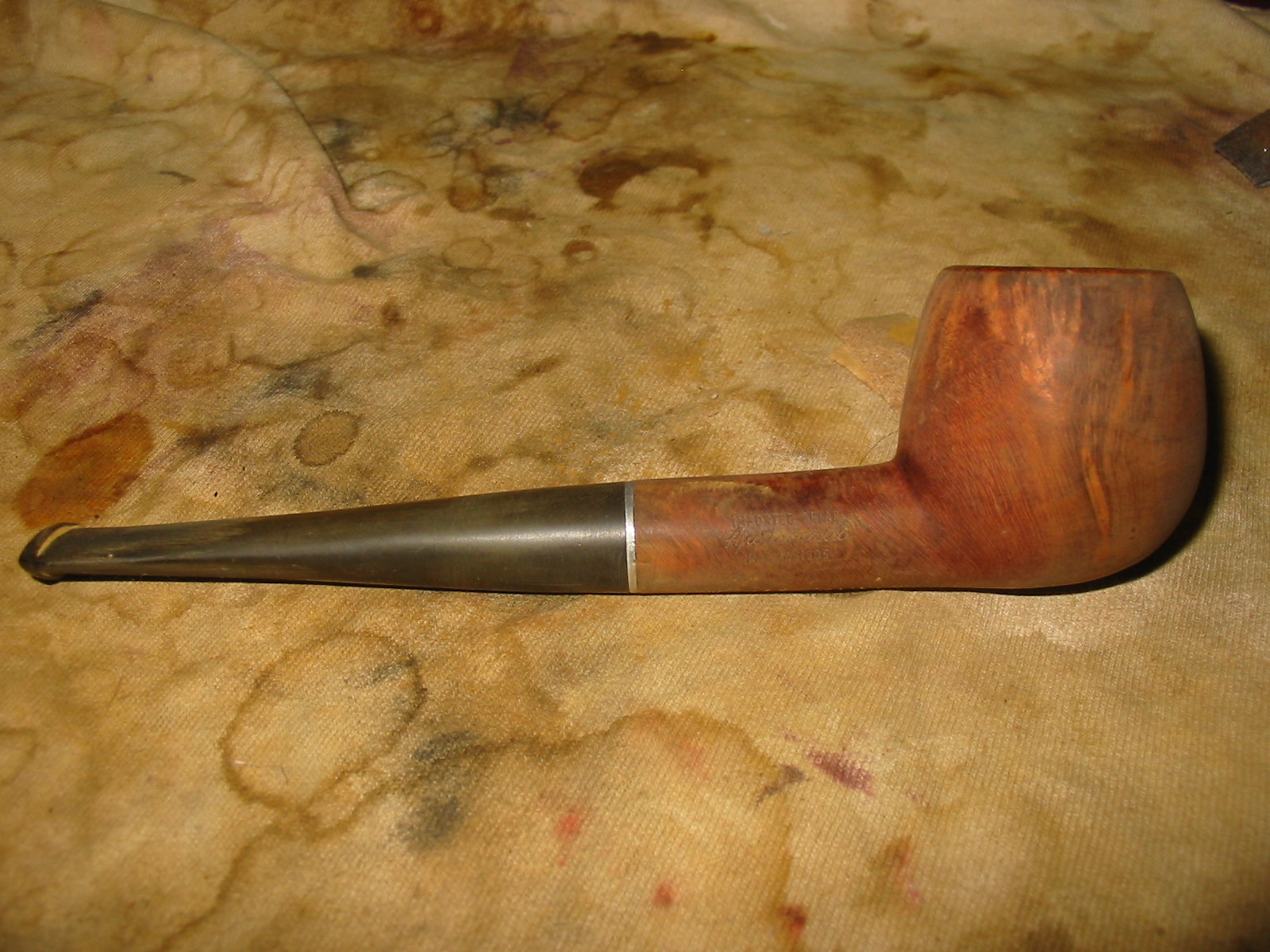
Once the bowl was reamed it was time to scrub the exterior with some acetone on cotton pads. I wanted to remove the tars and oils from the rim and bowl sides and also remove the embedded grime and surface dirt on the whole pipe. The next series of three photos show the process of the scrubbing and the look of the bowl once the grime and tars were removed. I would still have to sand the bowl down to remove the remaining buildup once I had washed it with acetone.

ImageImageImage

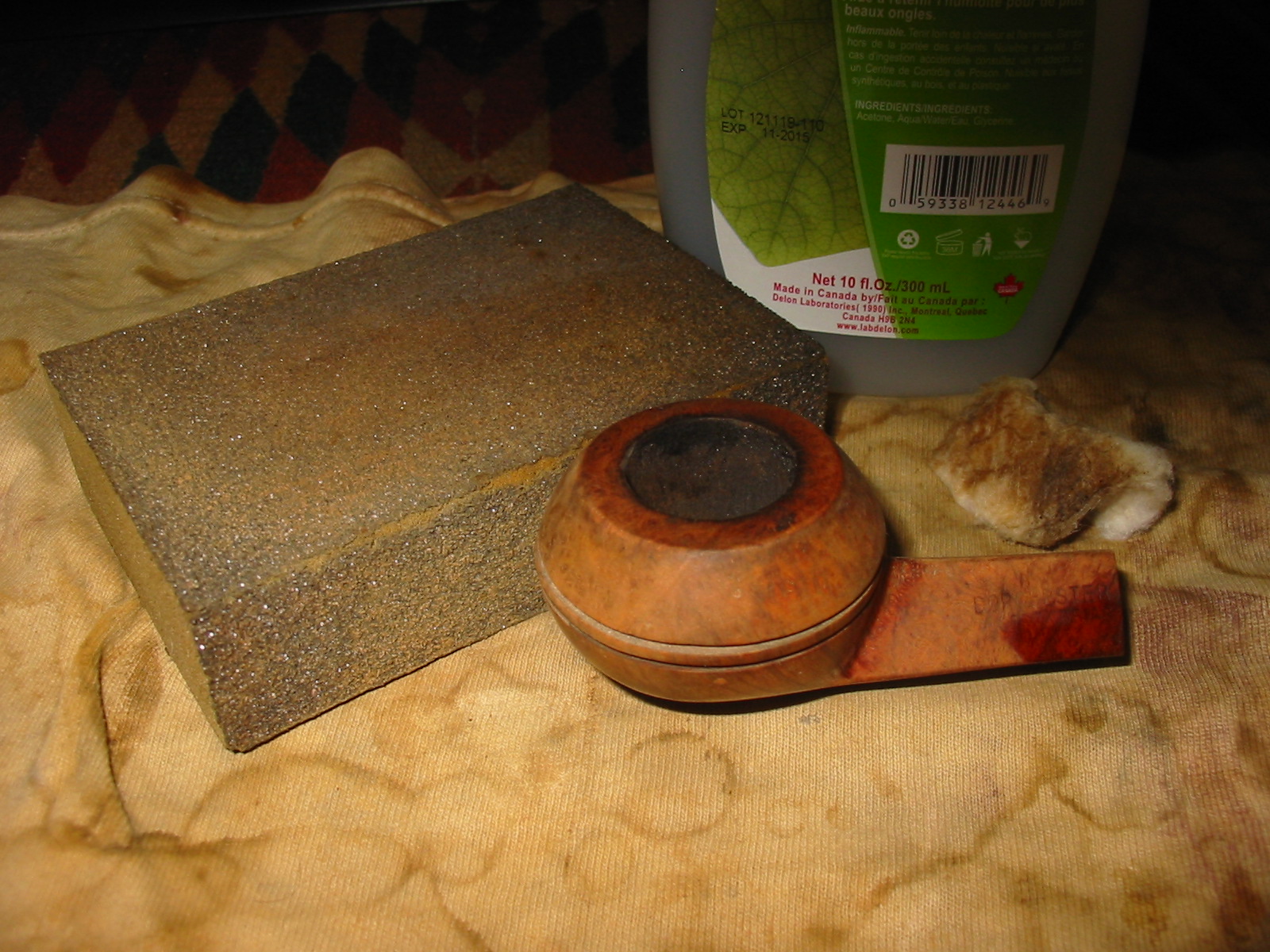
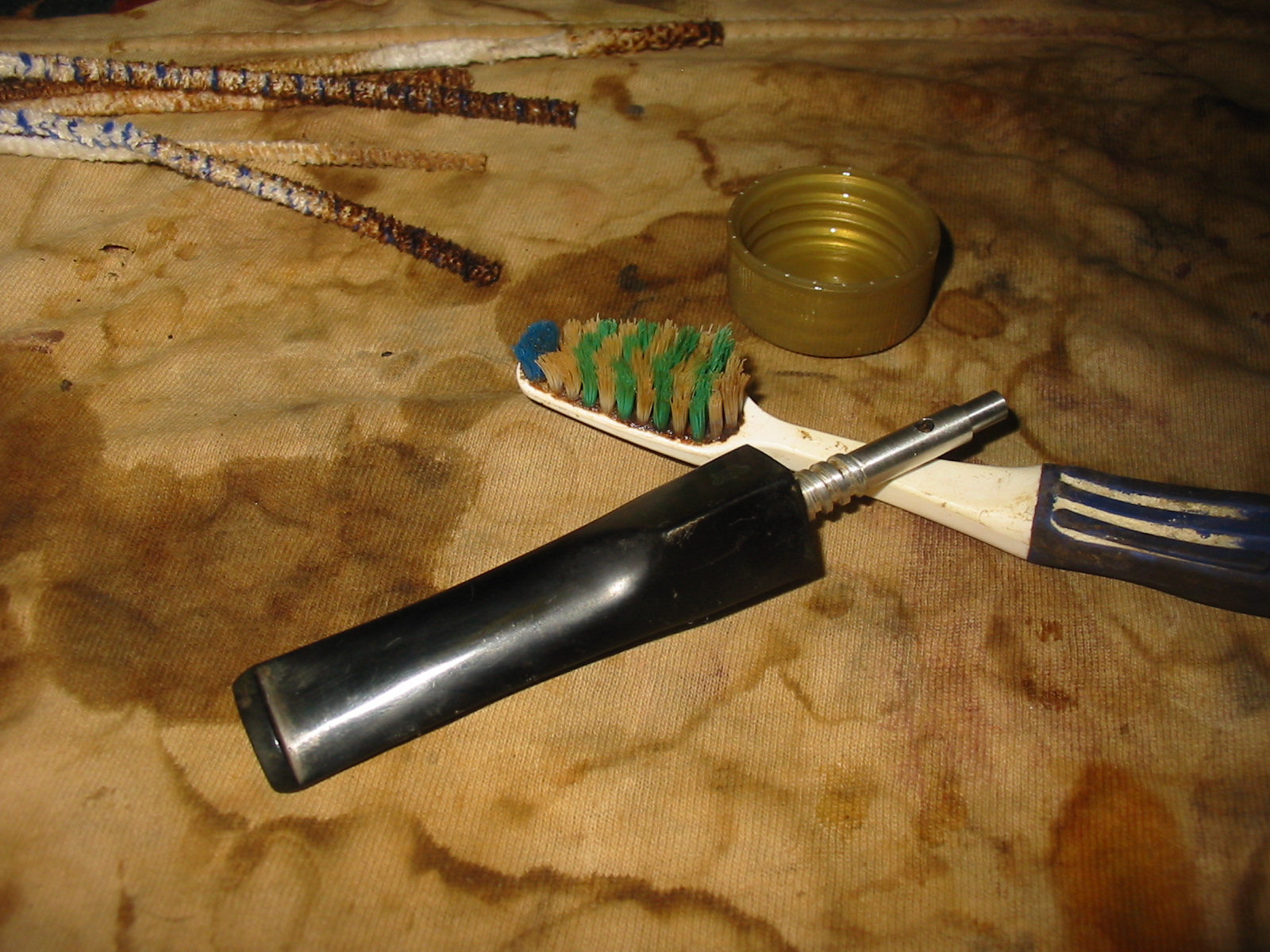
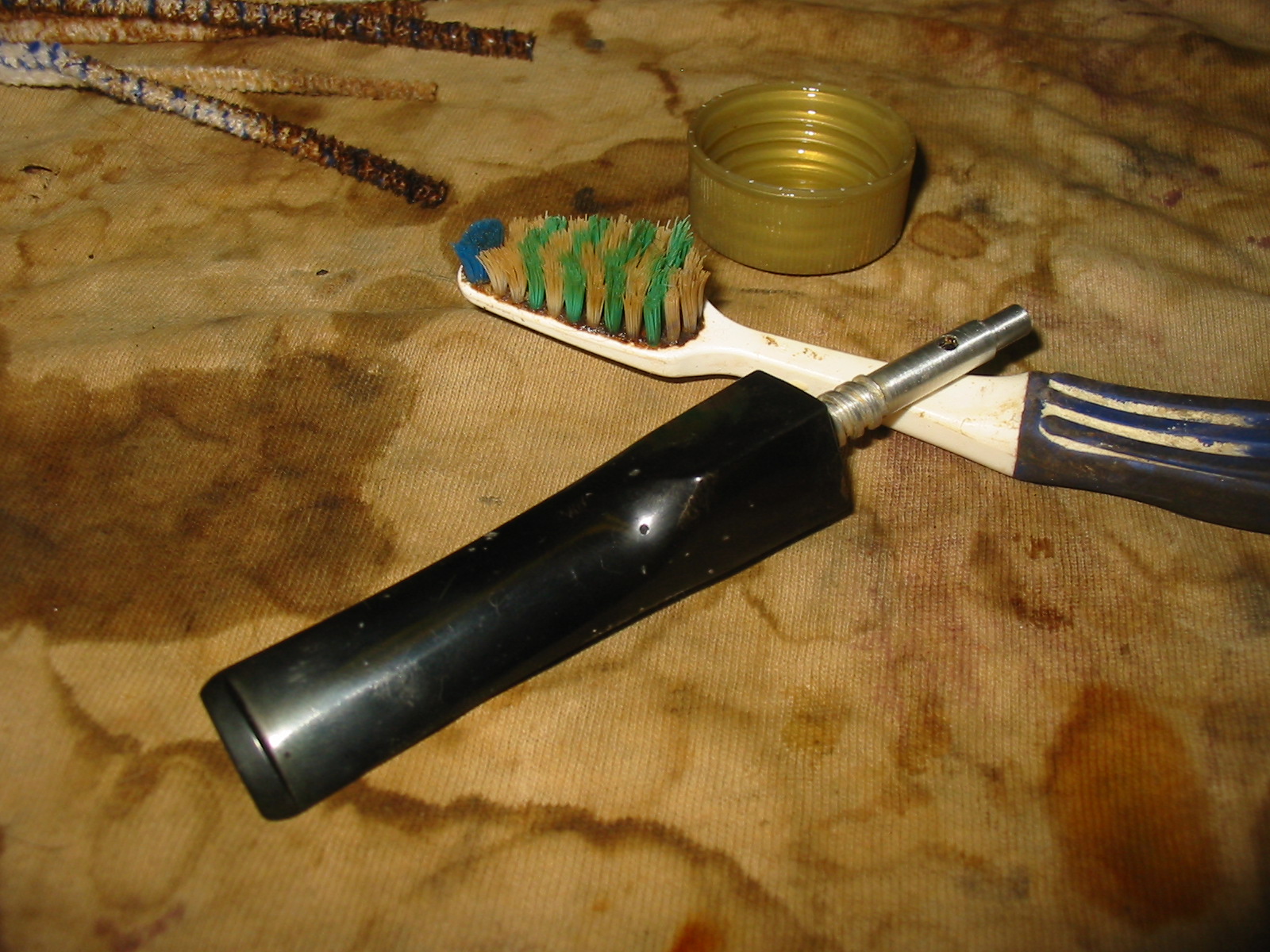
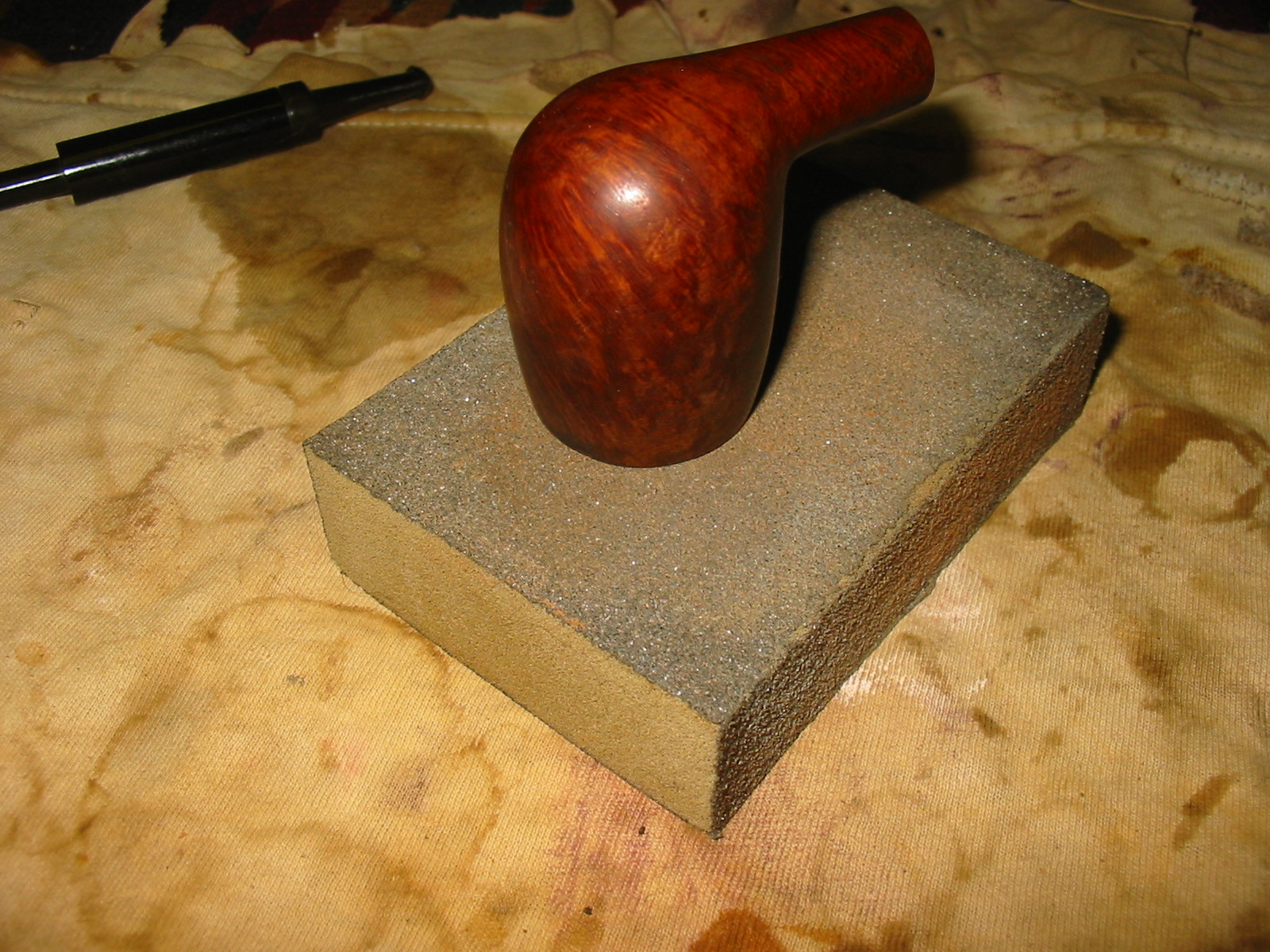
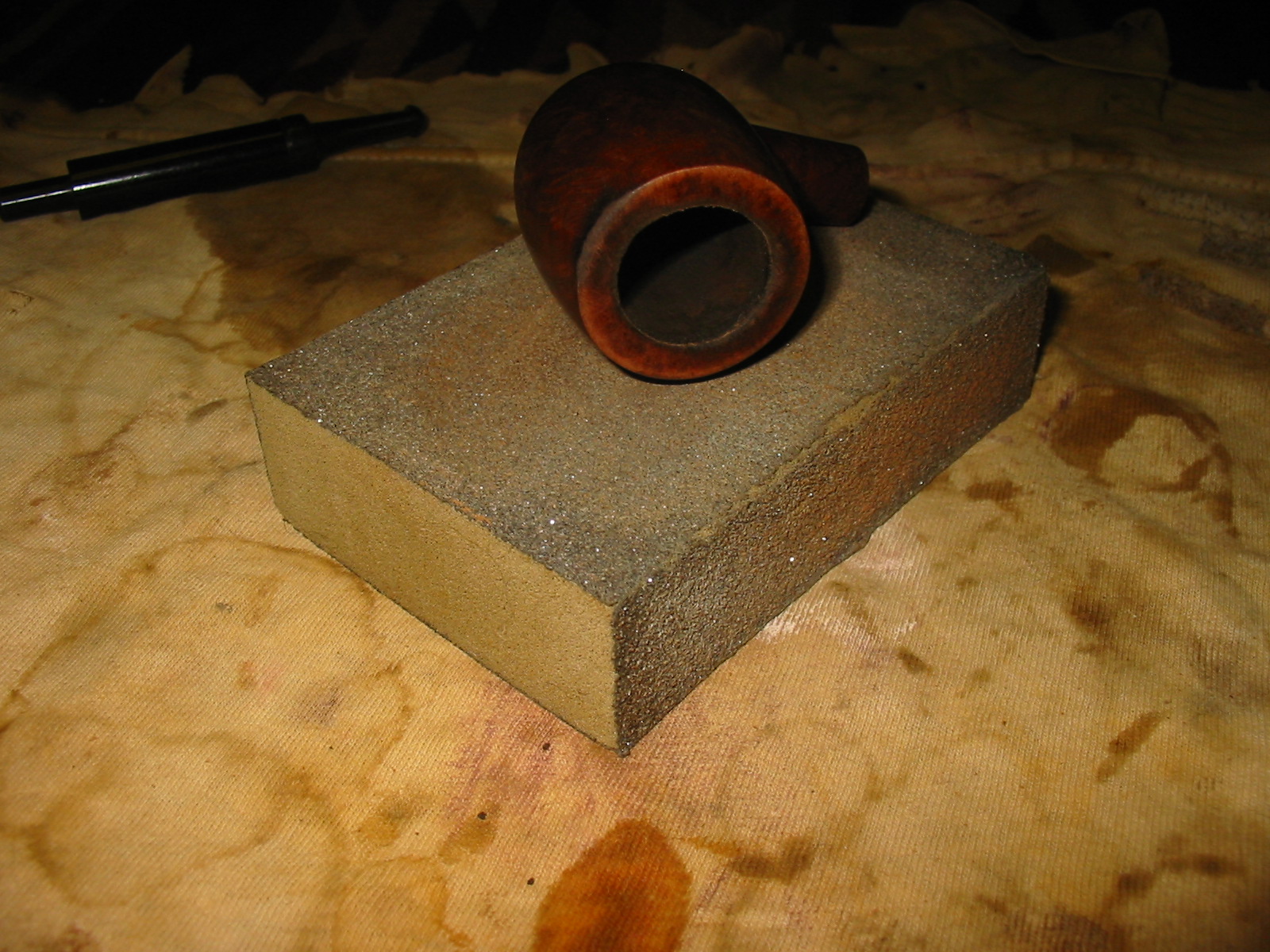
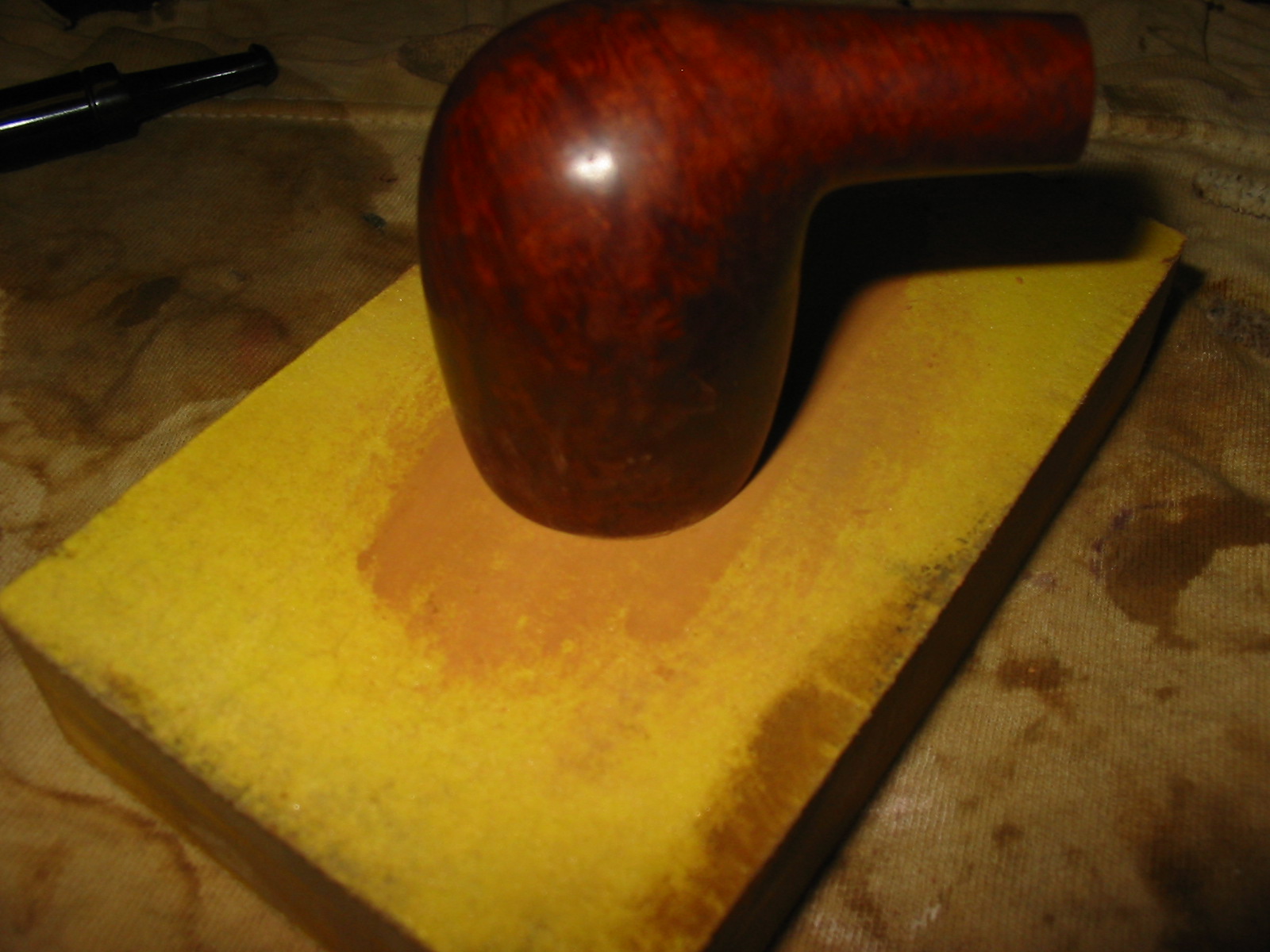
I cleaned out the shank and mortise with cotton swabs and Everclear. I dipped the cotton swab in some of the alcohol that I poured in the lid and used as a bowl for washing the shank. It took a lot of cotton swabs to clean out all the tars and oils in the shank. When I started it smelled like cherry cough syrup and as I added the alcohol it was stronger. The nice thing was that as it got clean the smell disappeared. I used fluffy pipe cleaners to clean out the airway to the bowl. When I was finished I put the stem back on the bowl for sanding so that I would not round any edges on the shank and also to protect the shank from any changes in shape from sanding. I find that when I do this I am more careful around the stem shank union than when I sand without the stem. I used a medium and a fine grit sanding sponge (pink foam sanding sponge in the pictures below). I sanded the entire bowl and spend a significant amount of time on the upper curves of the bowl so that I could get rid of all of the tar remnants. I also sanded the stem with the sanding sponges as well. The next series of four photos show the cleaned bowl and the oxidation and calcification beginning to be removed from the stem.

ImageImageImageImage

When I finished sanding the bowl I wiped it down with an alcohol dampened cotton pad to remove the sanding dust and remaining grime on the briar. Then I laid the bowl aside and worked on the stem. I sanded it with 320 grit sandpaper to get rid of the oxidation and remaining signs of calcification around the button. I also worked on the tooth marks with the sandpaper. The next three photos show the stem as I sanded away the tooth chatter and the oxidation.

ImageImageImage

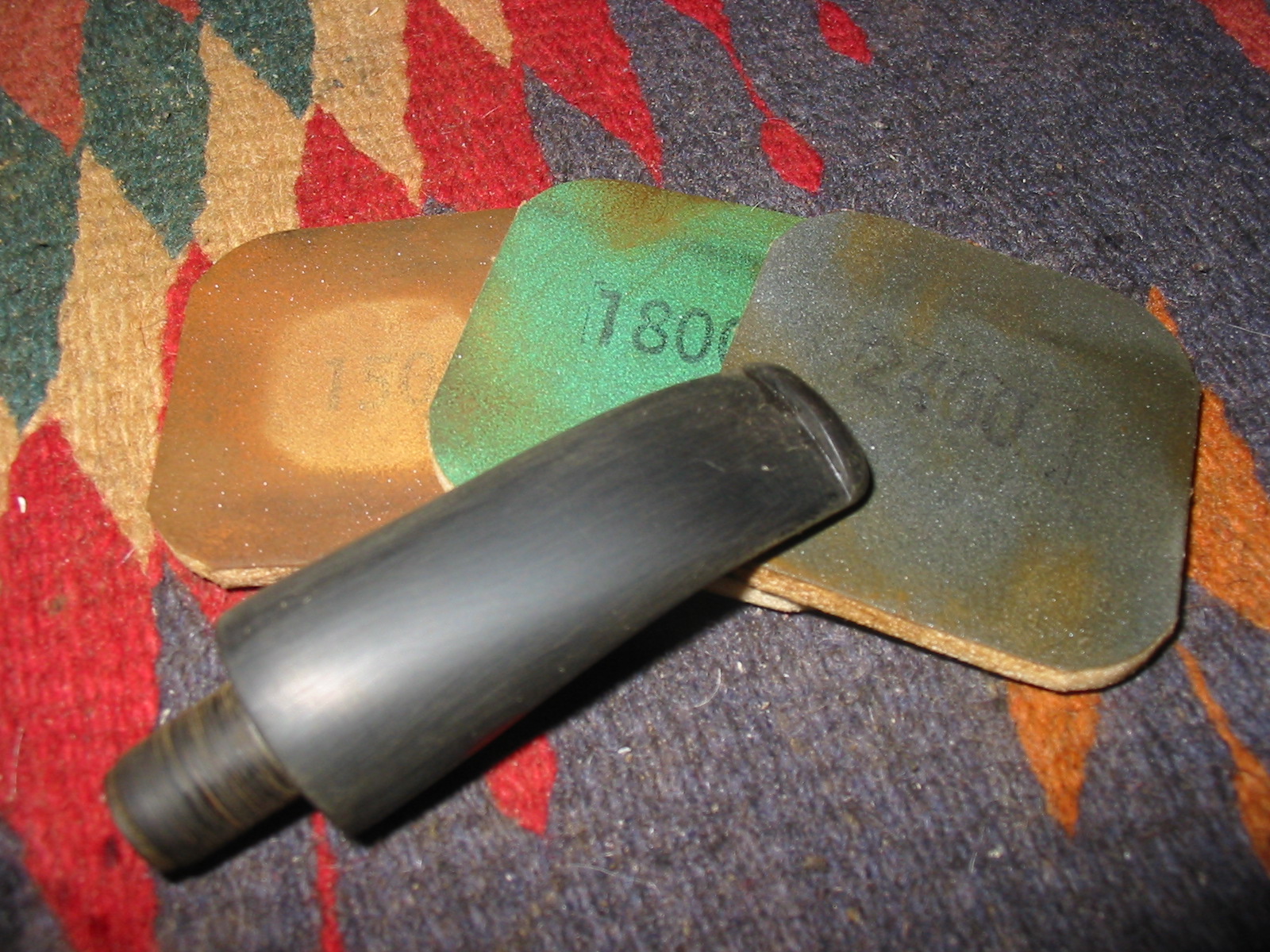
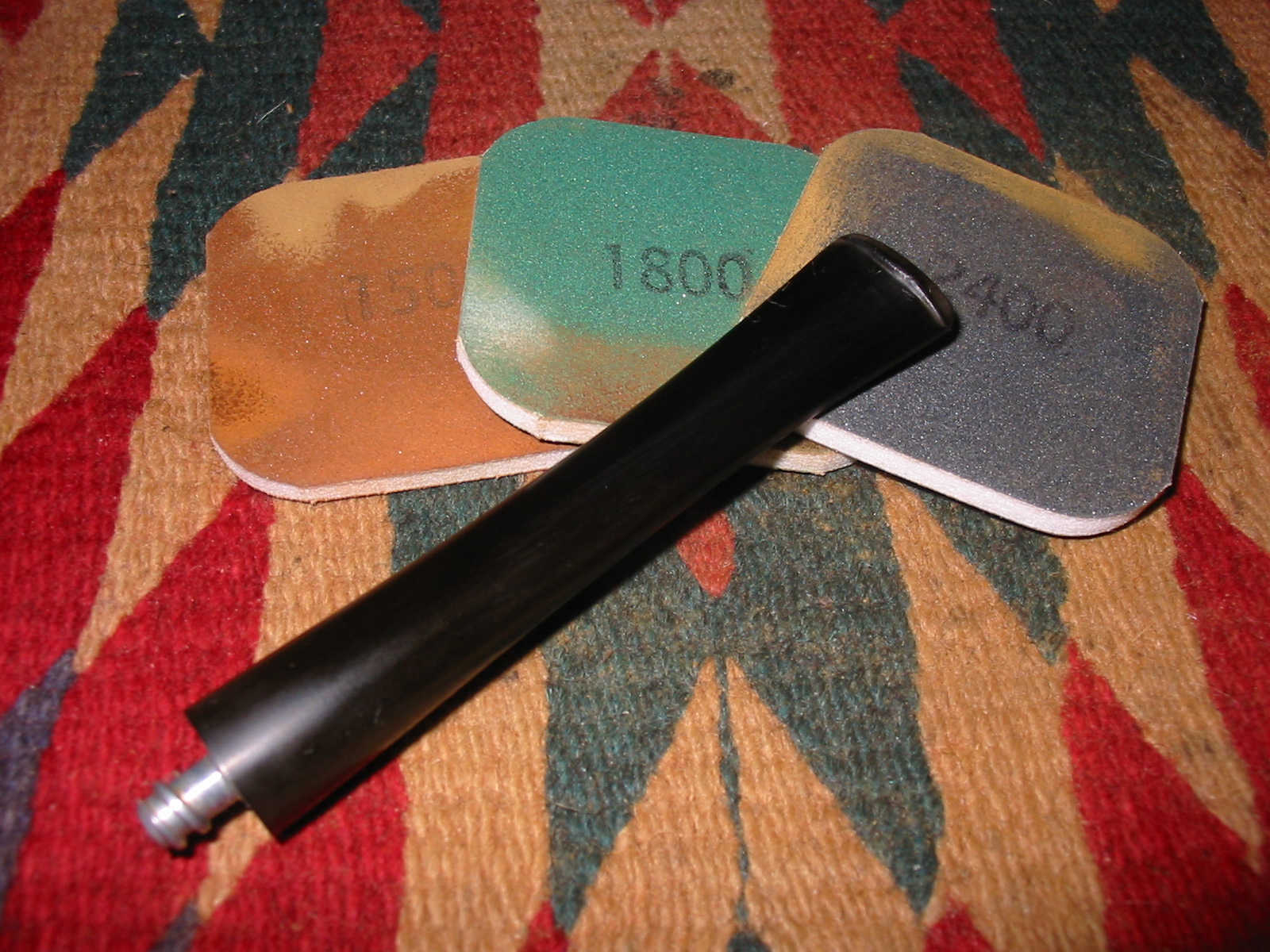
After this initial sanding I decided to wet sand with the 1500-2400 grit micromesh sanding pads. The next series of five photos show that process and the ever blackening colour of the stem sans oxidation.

ImageImageImageImageImage

After the 2400 grit micromesh sanding I used Maguiar’s Scratch X2.0 and rubbed it onto the stem with my fingers and scrubbed it off with cotton pads.

Image

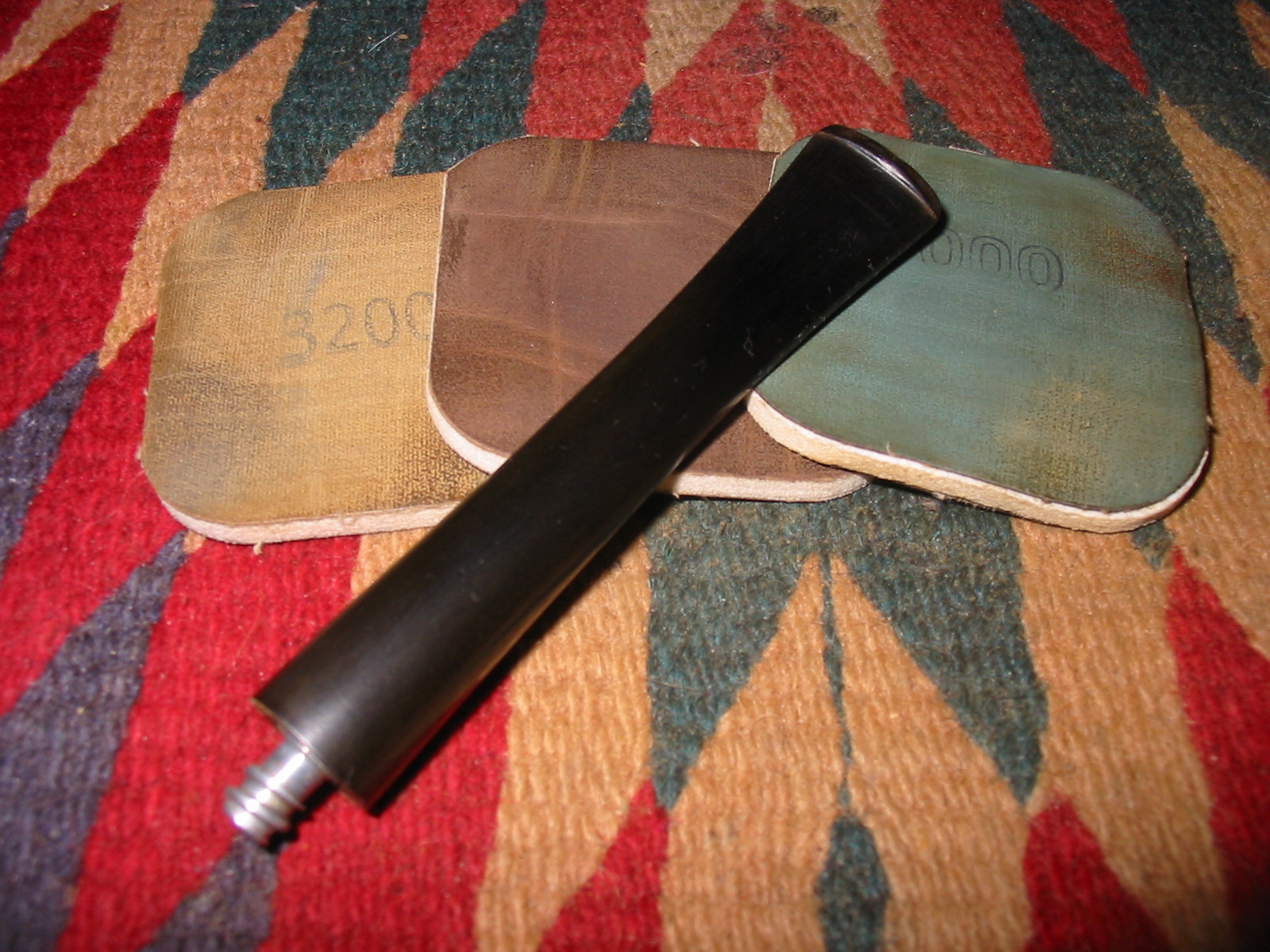
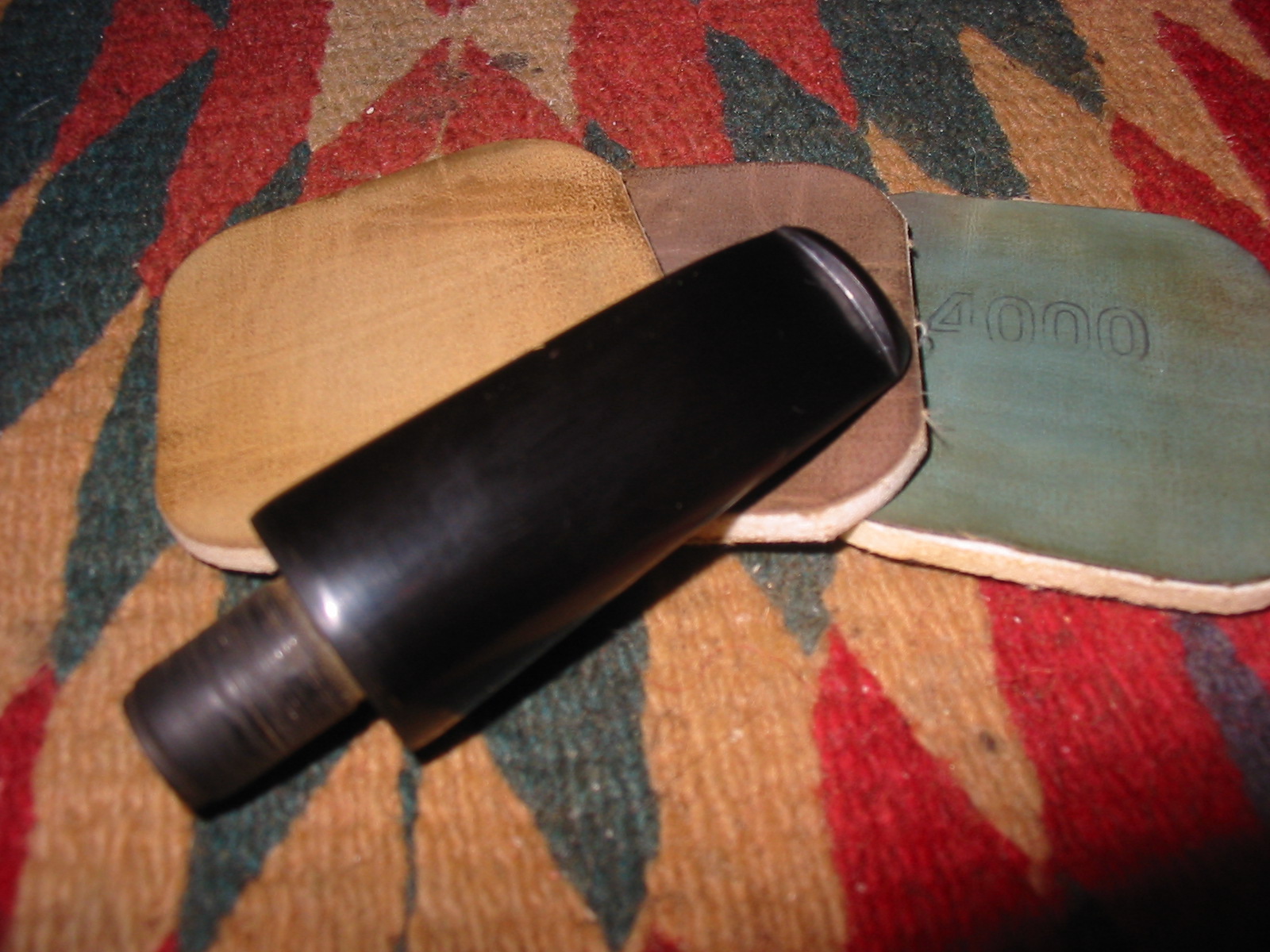
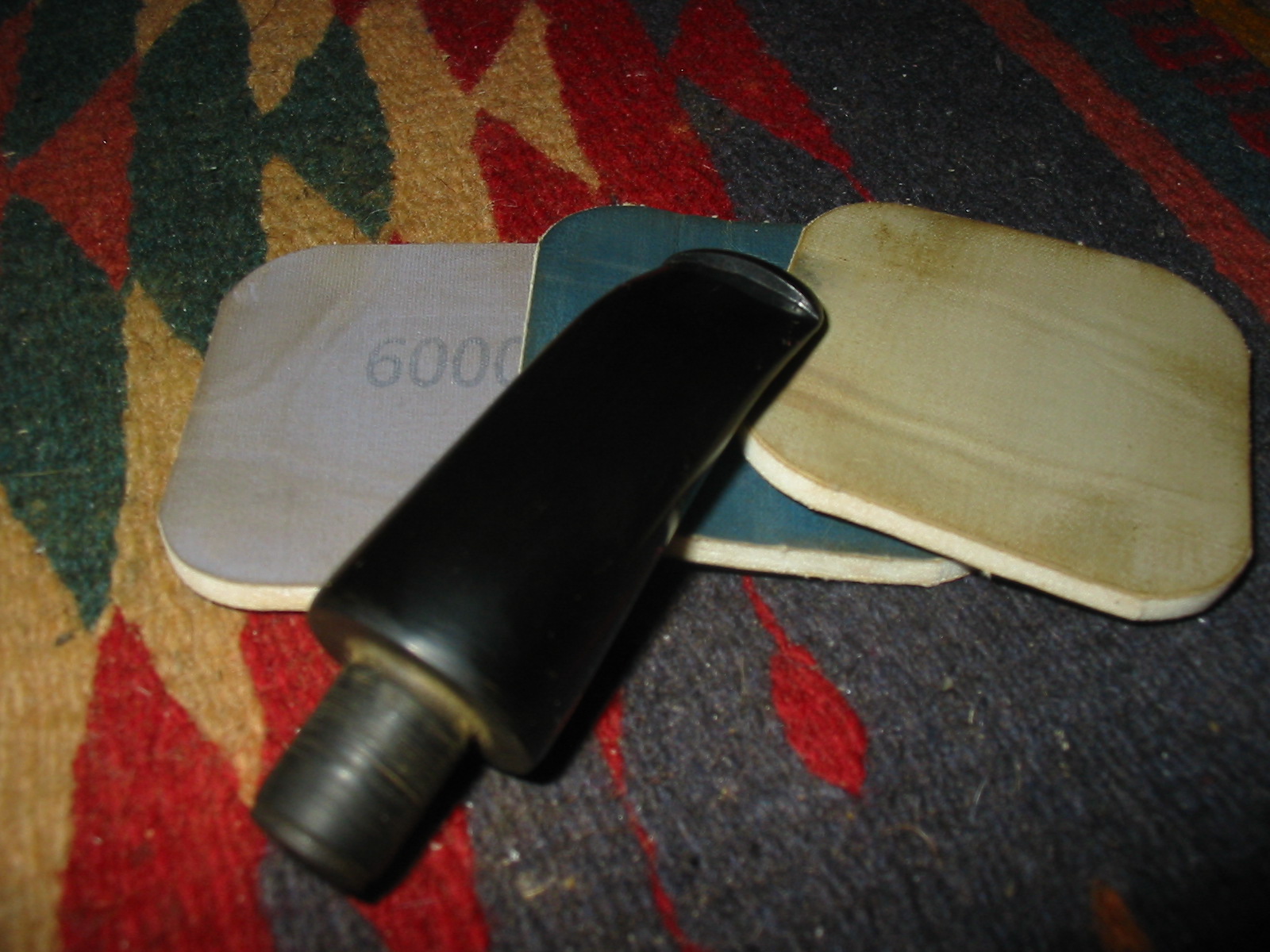
I then dry sanded it with 3200, 3600 and 4000 grit micromesh sanding pads. I finished sanding with the remaining grits of micromesh from 6000-12,000 and then set the stem aside to work on the bowl.

Image

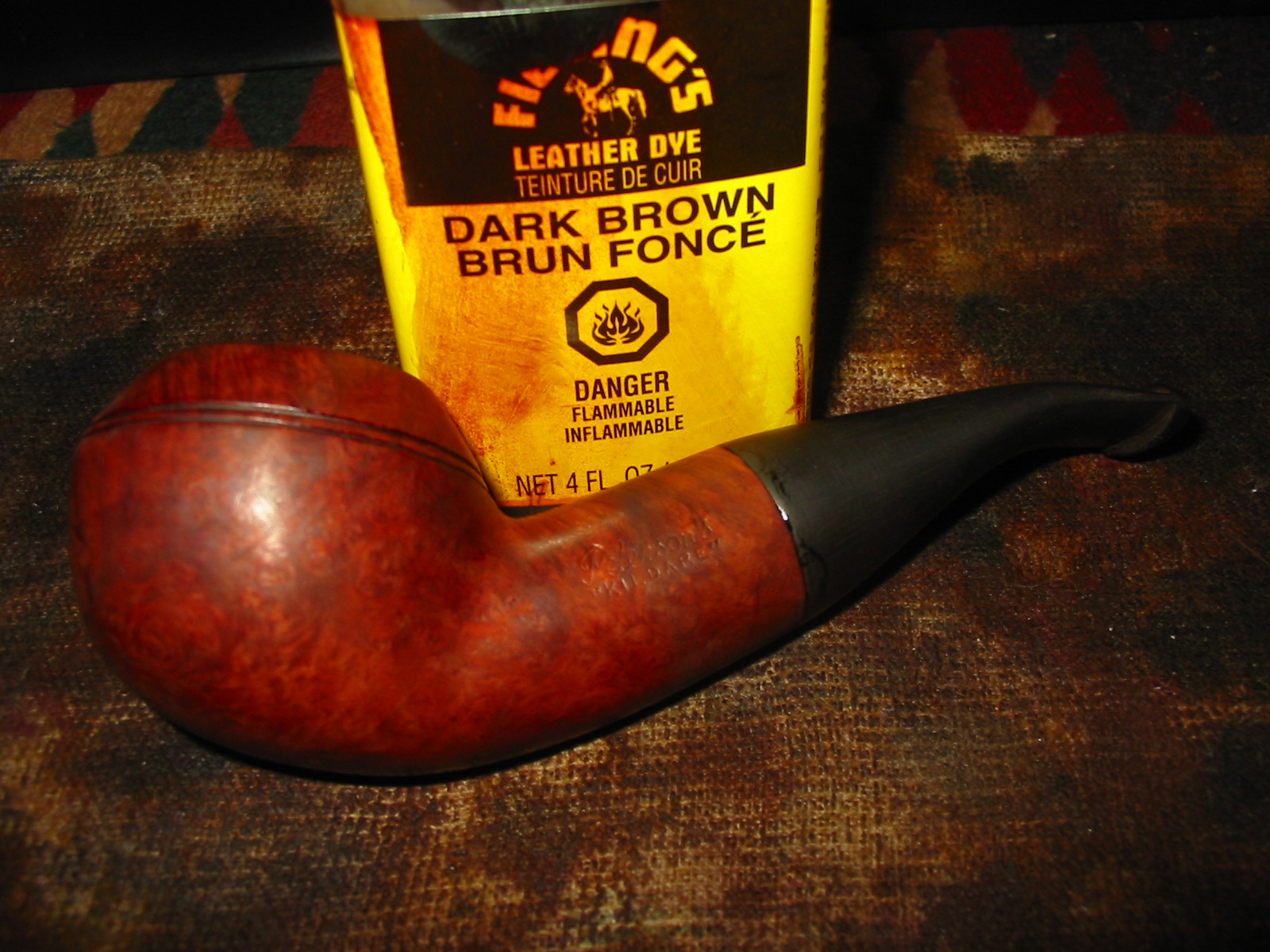
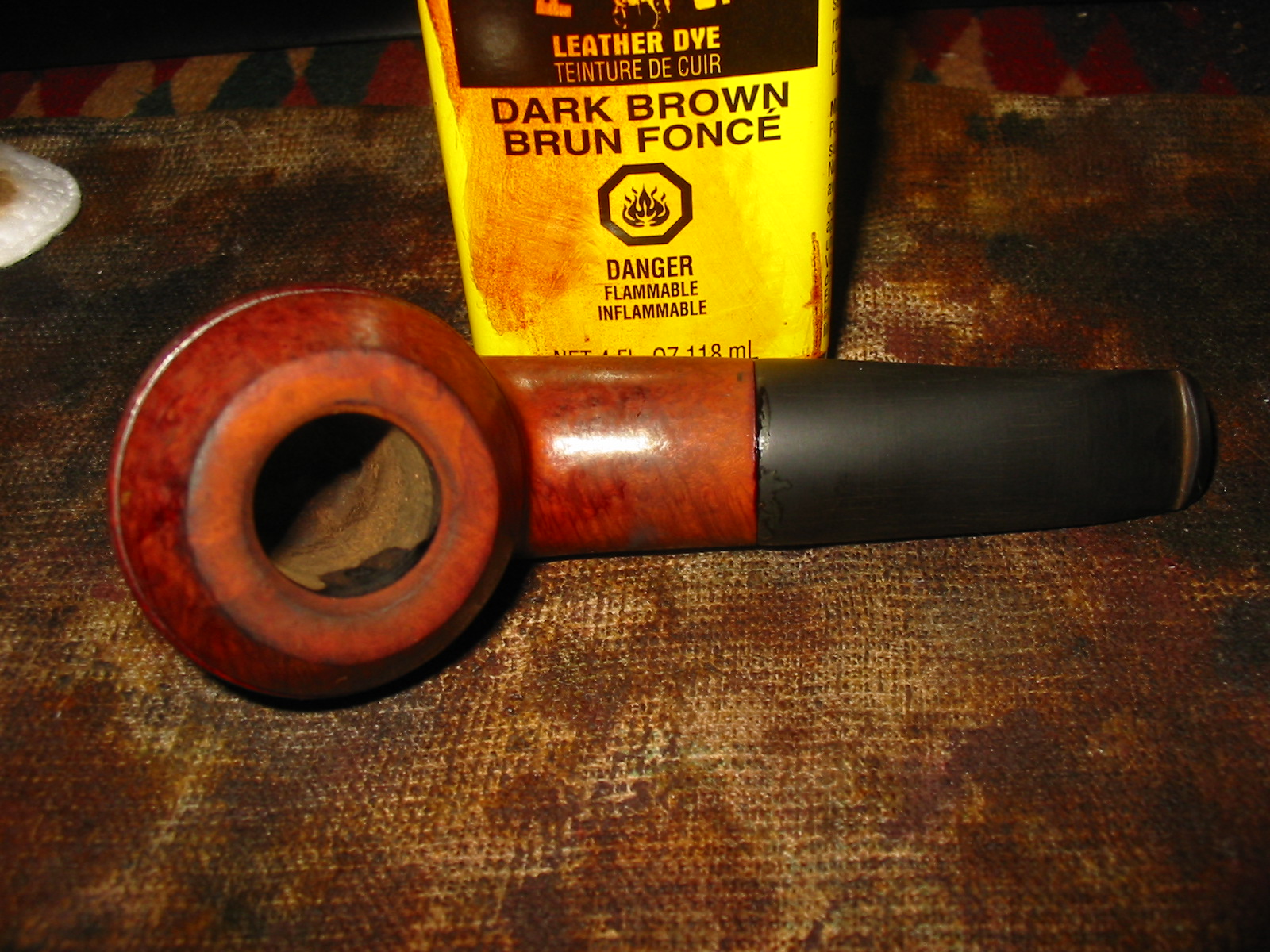
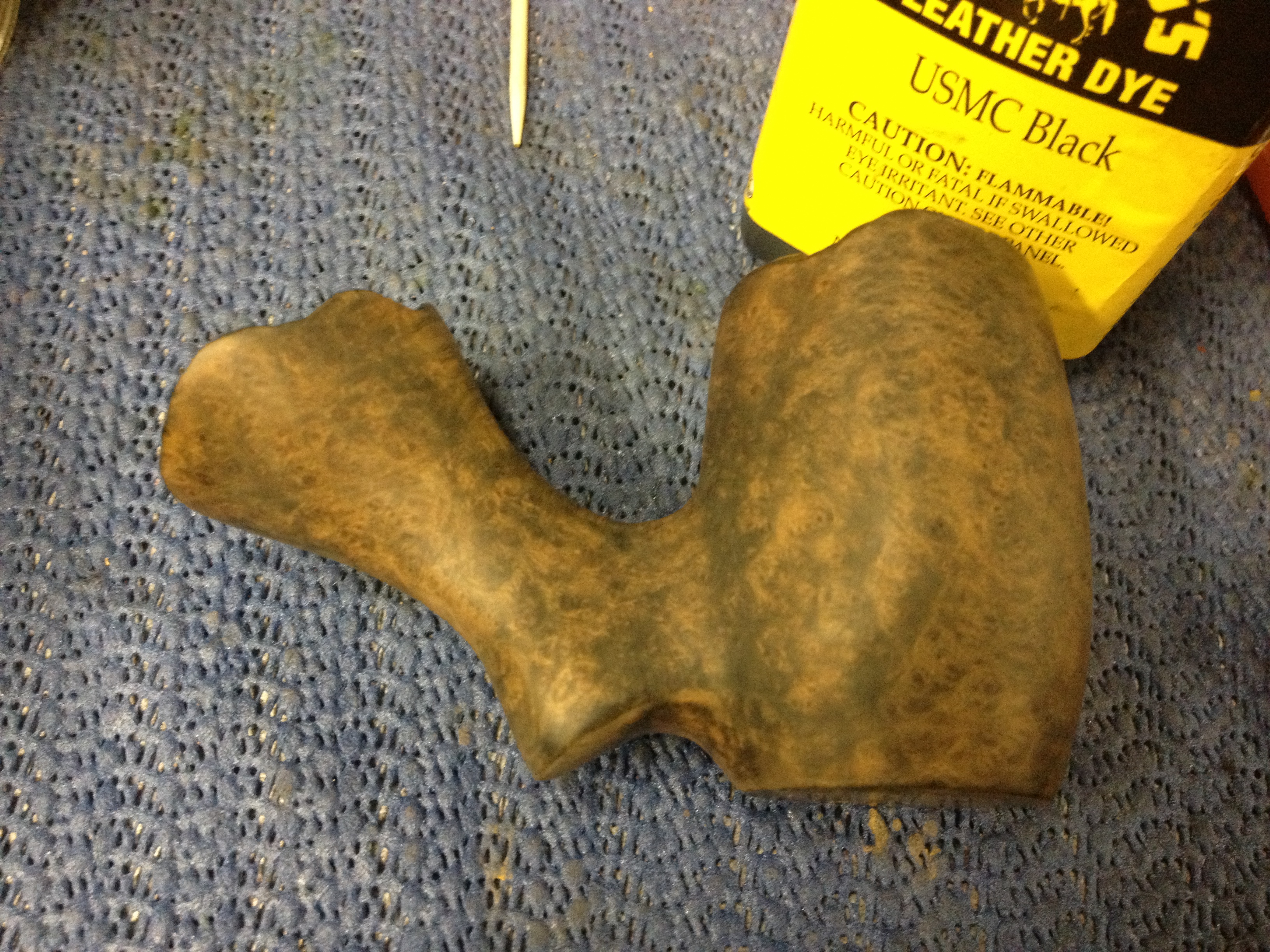
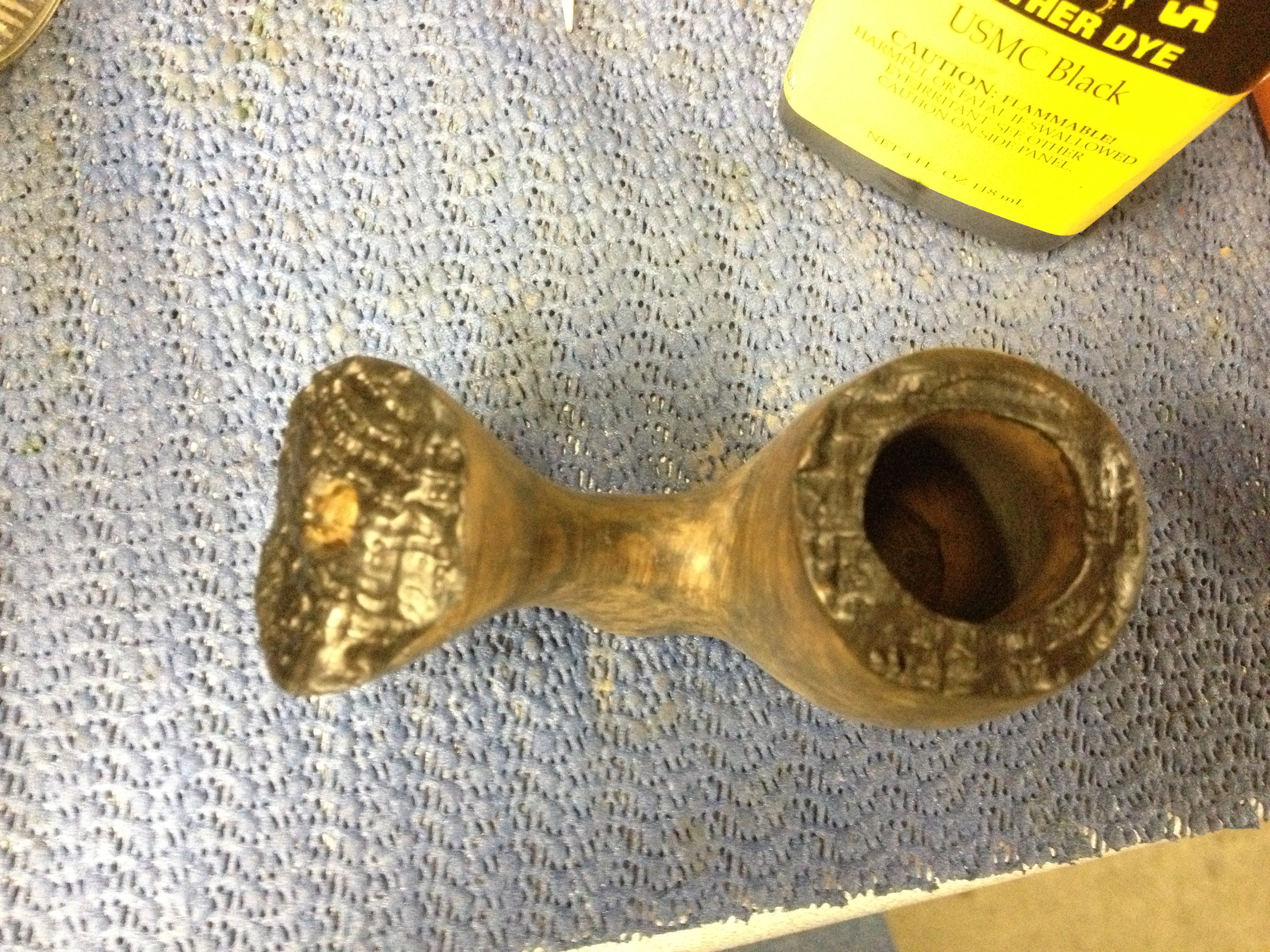
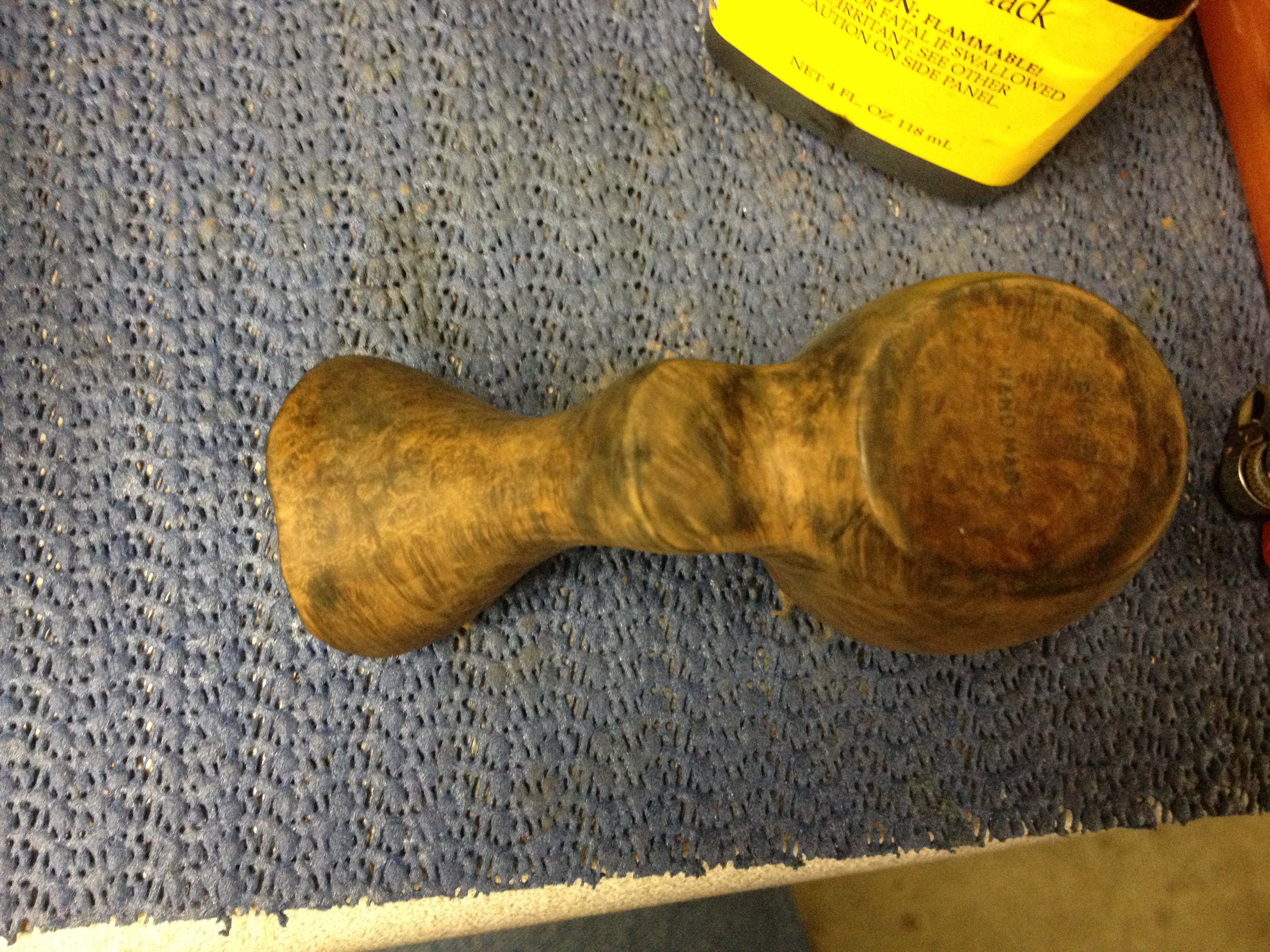
I decided to stain the pipe with a Dark Brown aniline stain to see how it would cover the fills. I was a bit worried that they would not pick up the pigment of the stain. I warmed the bowl and then applied the stain with the dauber and then flamed it, restained it, reflamed it and let it dry. The next two photos show the stained bowl and the fills standing out from the stain.

ImageImage

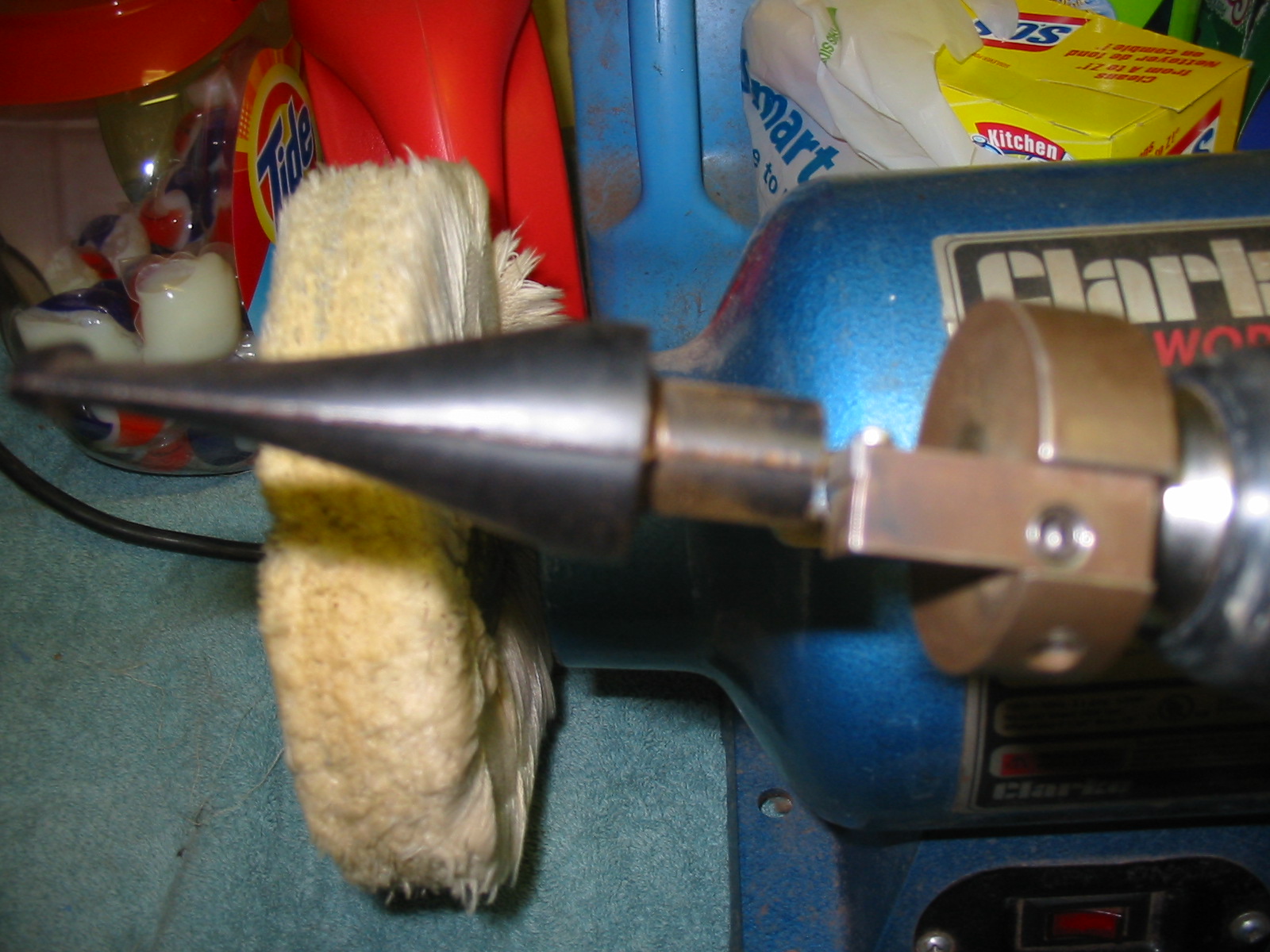
I put the stem back on the pipe and took it to my buffer. I buffed it with Tripoli and White Diamond to a shine. The fills seemed to just pop from the surface of the bowls! They stood out like eyesores and really bothered me. In the first two photos below you can see them clearly. The stem also showed a bit more oxidation that I would need to address as I finished the pipe.

ImageImage

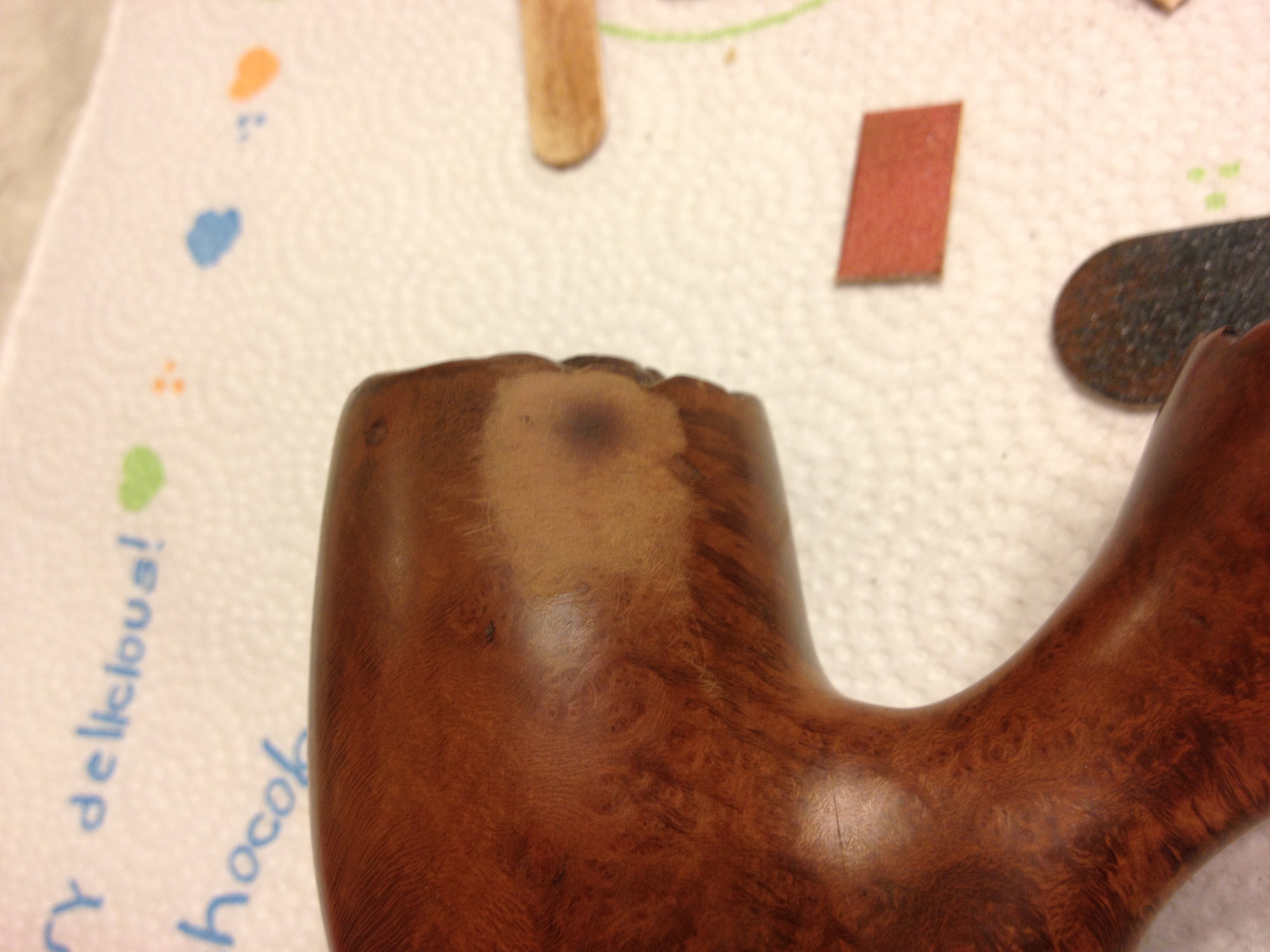
I decided to try lightening the colour to see if the fills would blend in any better. I wondered if the high contrast of the dark stain and the light fills made them more visible. I wiped the bowl down with an alcohol dampened cotton pad to remove excess finish and try to blend the fills into the finish. It worked to a degree and the next three photos show the softened colour of the stain. In person the fills were still way to visible for my liking.

ImageImageImage

I wiped the stem down with Obsidian Oil and set it aside while I worked on picking out the fills with my dental pick. The next series of three photos show the cleaned out fills. They are stark white after the removal of the putty. In actuality they are a natural briar colour. I picked them clean and then wiped down the area with the damp pad one final time before I went to work on filling them.

ImageImageImage

The next series of seven photos shows the process I use for replacing putty fills. After I have cleaned them out I fill them with briar dust that I have collected. I pack it into the fill holes with the end of my dental pick. I wet the end of the pick so that the briar dust sticks to the end when I dip it in the dust. I then scrape the dust into the hole and pack it in tightly. I work on one hole at a time as I don’t want the dust and superglue mix running all over the pipe. That is a real challenge on a ball shaped bowl. Once I have the dust packed in the hole I drip superglue into the dust. I also add a bit more dust if it is necessary and repack and reglue it. You can see from the photos that the result is a messy patch over the fill hole. The dust and superglue mix hardens quickly and forms a great patch for the holes. Once I had all the holes filled I then sanded the bowl.  

ImageImageImageImageImageImageImage

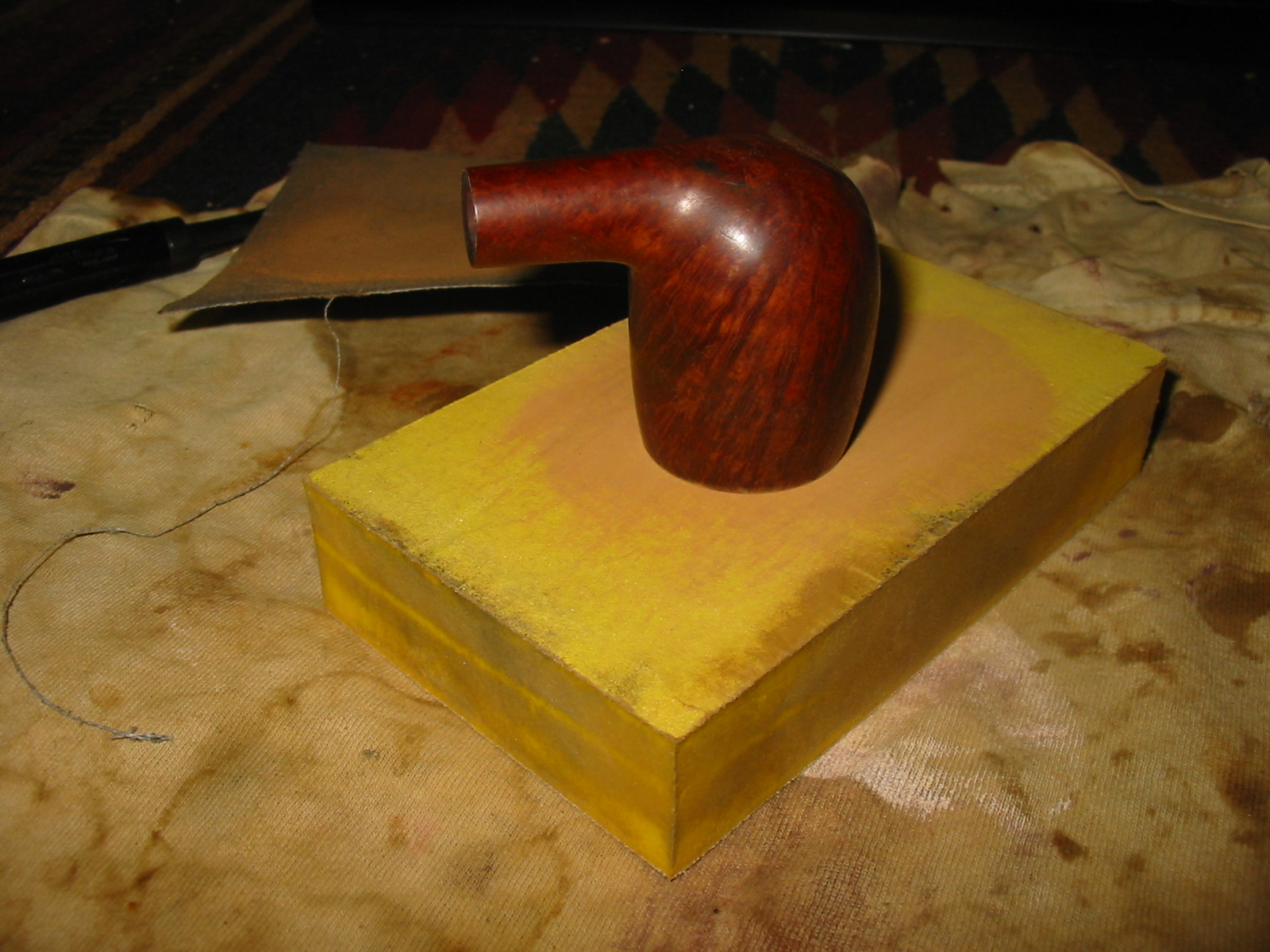
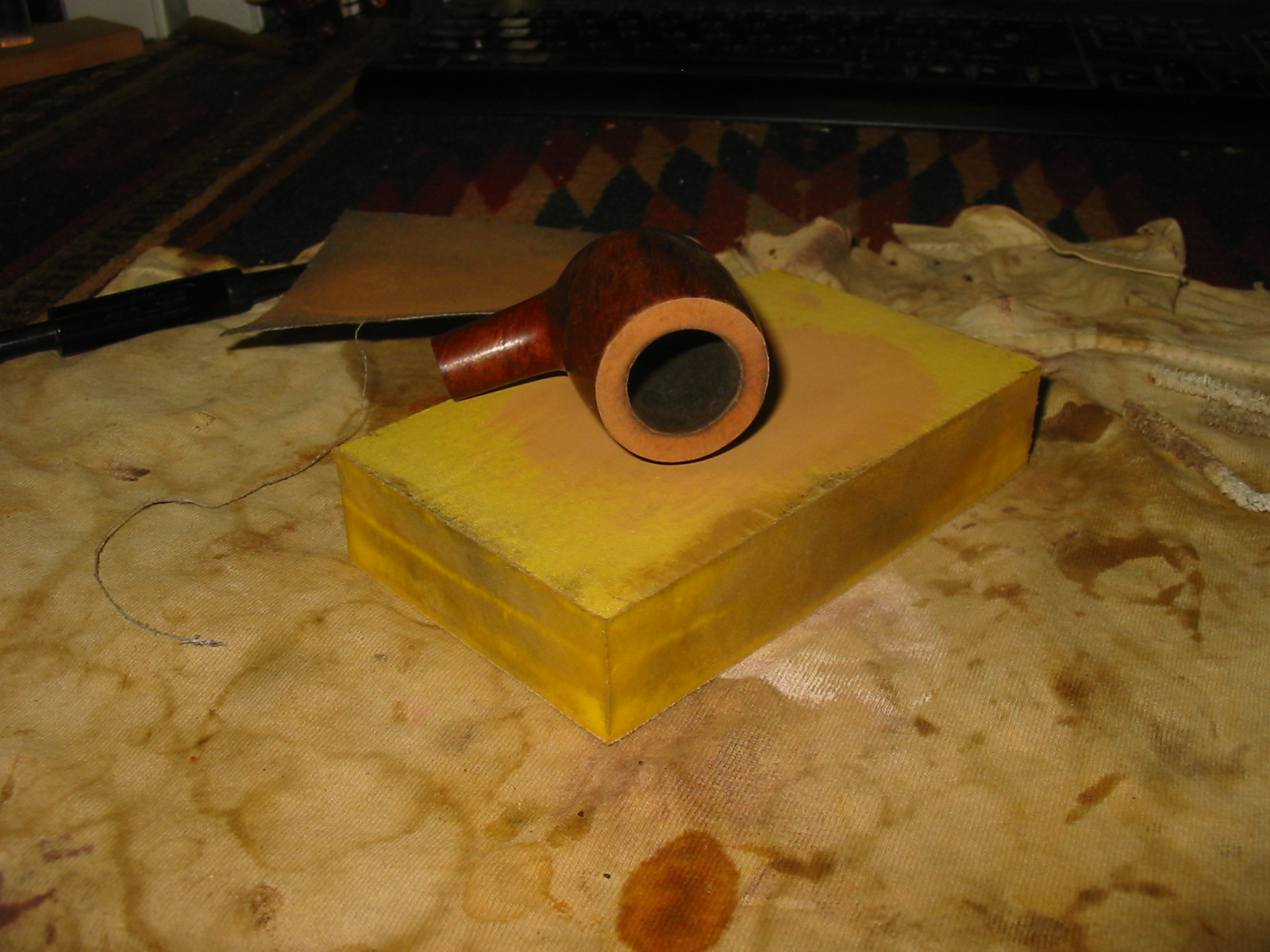
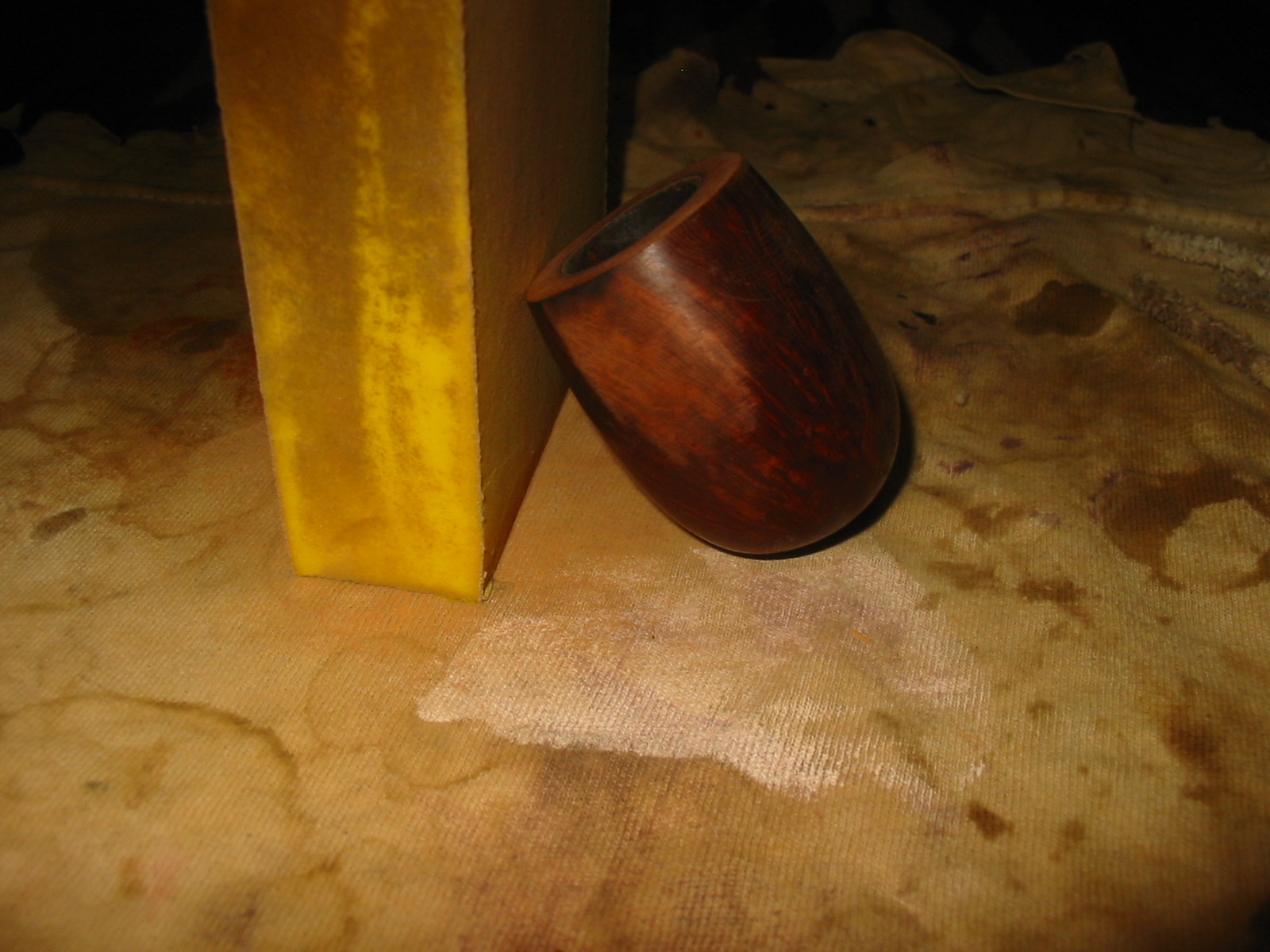
The next eight photos show the sanded bowl. I use 320 grit sandpaper to sand off the excess superglue and briar dust and bring the surface of the patch smooth with the surface of the bowl. The finished patch is almost black in appearance. In the bare briar bowl the patches show up as black on the light coloured briar. I find that this dark patch actually is easier to blend in with the stain than the lighter putty patches. Once I have sanded the patches smooth I sand the entire bowl with the fine grit sanding sponge so that when I restain it I will be able to get an even coat. After sanding I wipe the bowl down with an alcohol dampened cotton pad to remove any remaining finish and the dust and grit from sanding the bowl. This prepares it for staining.

ImageImageImageImageImageImageImageImage

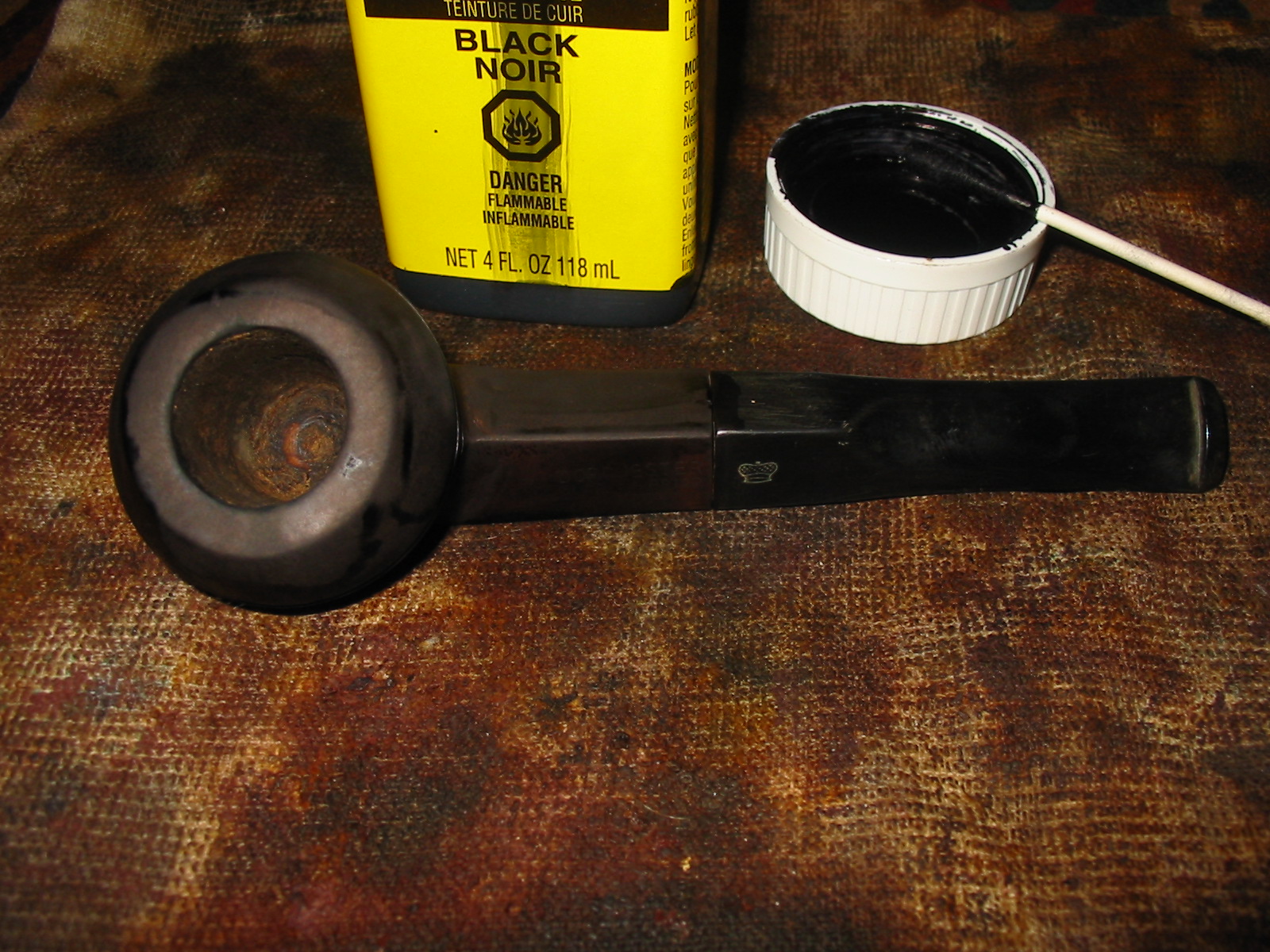
For the restain of the bowl I decided I would use an oxblood stain. It is an alcohol based paste stain that I have used in the past with good coverage over the replace fills. I applied with a dauber and rubber is into the surface of the pipe. Once I had the whole pipe covered I flamed it and then rubbed it off with a cotton towel I use for that purpose. The next four photos show the coverage of the stain before I wiped it off.

ImageImageImageImage

Once the stain was dry I buffed it on my buffer using White Diamond. The next four photos show the bowl after buffing. The fills are still dark and stand out to the eye. I have learned through experimenting that I can blend them into the stain a bit better by using a permanent marker and draw grain lines through the fills making them flow with the pattern of the grain on the bowl. The trick it not to have a heavy hand and to try to follow existing graining patterns. The black permanent marker stands out initially on the new stain but after is applied I restain the bowl with another coat of the oxblood stain, flame it and then rub it off.

ImageImageImageImage

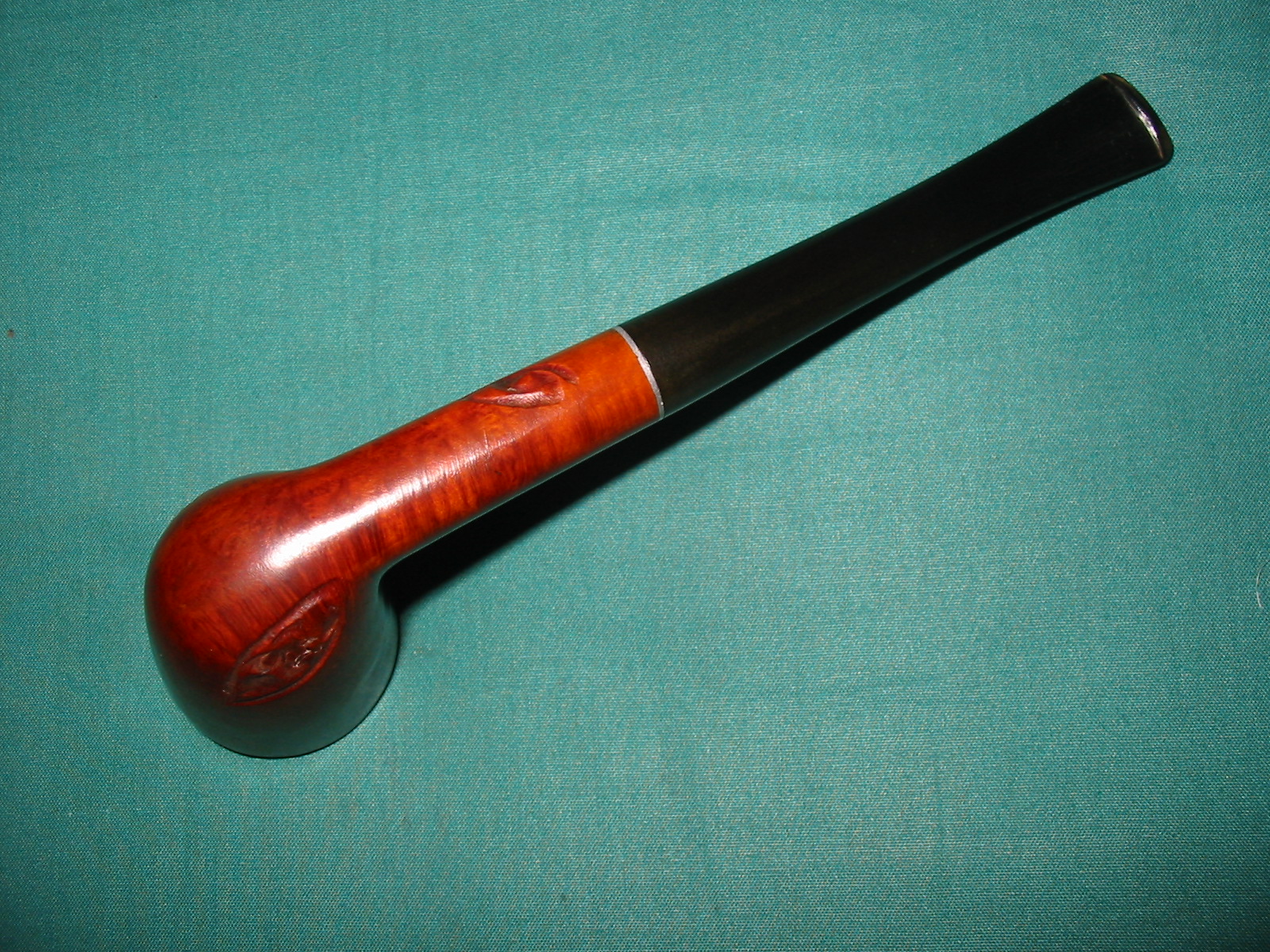
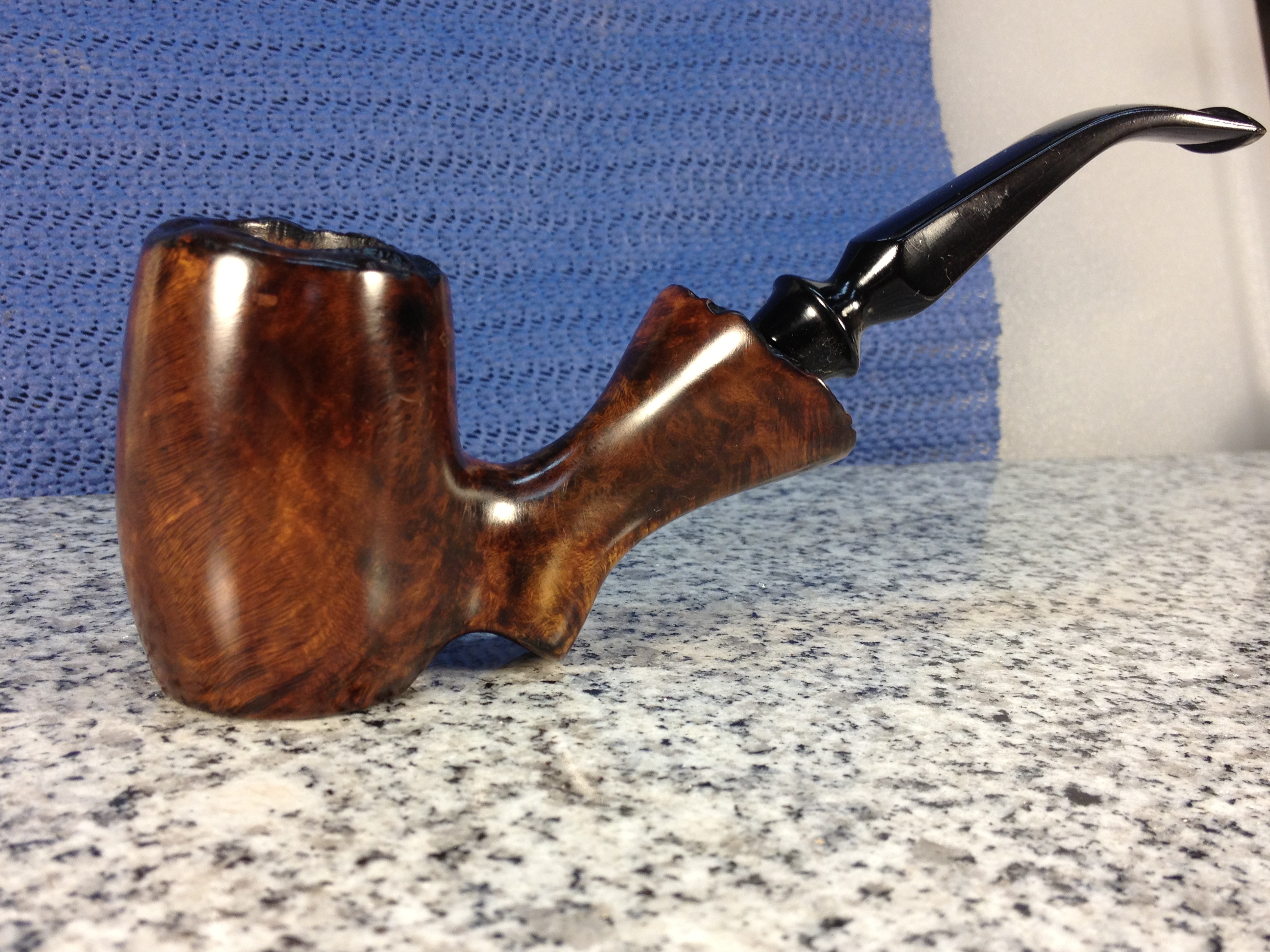
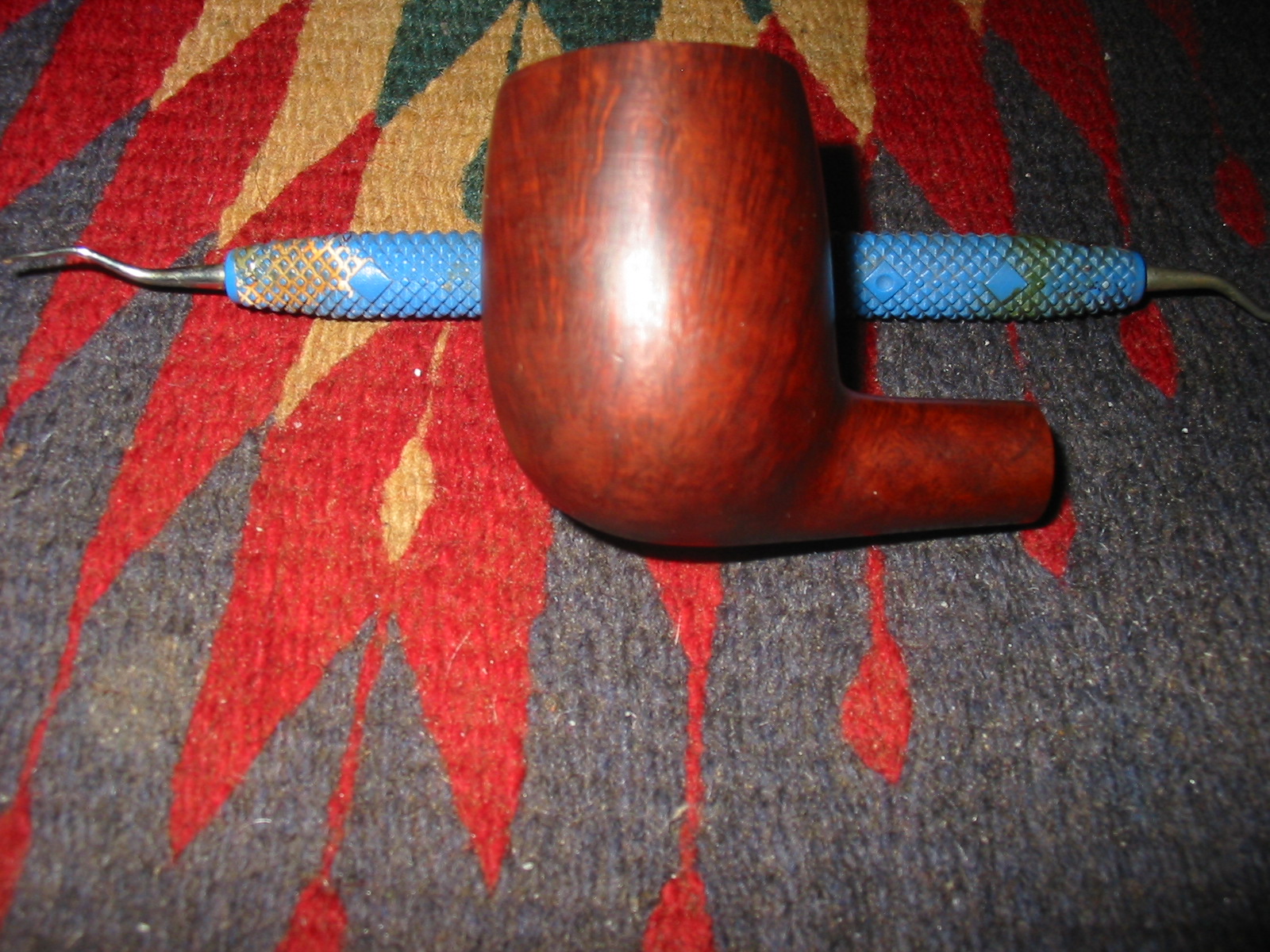
The final series of five photos show the finished pipe. The fills are still visible if you look closely but they blend into the surface of the bowl and stain more nicely. I gave the pipe a final buff with White Diamond and then applied several coats of carnauba wax and buffed with a clean flannel buffing pad. The pipe is now ready to smoke and the medicinal cherry smell is gone. Though the fills are far from being invisible they are certainly better and the overall effect is a much nicer pipe.

ImageImageImageImageImage

Wally Frank Shipmate


Blog by Greg Wolford

The same trip out that I picked up the Dr. Grabow Freehand I also picked up this Wally Frank. It was in pretty good condition, really just needing a good clean up. I’d never had a Wally Frank before, like the Freehand, so that was part of my interest. But the real interest laid in its shape: a Rhodesian.  The Bulldog and Rhodesian top my list of favorite shapes so this one had to come home with me.
The following photos show the Wally Frank and the aforementioned Dr. Grabow as they looked when I unwrapped them at home. You can see that the Frank was in much better condition than the Grabow, especially the stem!

IMG_4431 IMG_4432IMG_4433 IMG_4436 IMG_4436IMG_4434IMG_4435IMG_4436IMG_4438

There are some fills in the pipe but the only one that really bothered me was the one on the face of the bowl (last photo), though I’m not sure how well you can see it. That one irritation made me decide to refinish the pipe but to keep it as close to original as I could.

At the time I was working on this pipe I didn’t know I would be writing about the experience, so there are no in progress photos to share.

I started by dropping the stem into a OxiClean bath to loosen the gunk and oxidation. Since I didn’t want to remove all the stain I didn’t do an alcohol bath. I began by lightly reaming the bowl which was actually not bad at all; there was virgin briar still in there! After reaming, I began to clean the bowl with acetone on disposable cotton pads; I buy them in the make-up section of Wal-Mart. Once cleaned I then topped the bowl. For topping I used 320 wet/dry sandpaper laid out on my workbench which has a granite slab on it for my leather working. Once the bowl was sufficiently evened out to my satisfaction I began to work on the fill that annoyed me.

I used some 400 grit wet/dry sandpaper to touch up the area a but before I picked out the fill. I then cleaned the area with a isopropyl dampened cotton pad and then, using briar dust from the bowl topping, I packed the area with dust and dripped on some Super Glue. I let it penetrate for 30 seconds or so and then quickly wiped off the excess. The result looked nice, with little extra glue. I gave it another few minutes to set well and then moved on to sanding.

As I said, I wanted to preserve the original look as much as possible and the other smaller fills didn’t really bother me. I decided the best approach was to lightly sand the whole pipe with 400 grit wet/dry paper, avoiding the nomenclature completely. I would work over the entire bowl, wipe it with alcohol pads, evaluate, and repeat; I belive it took three passes to get it to where I liked it.

I then mixed up some Fiebing’s Medium Brown leather dye 50/50 with 91% isopropyl alcohol which I applied with a wool dauber and flamed in. I buffed it by hand to see what the color looked like, trying to blend the sanded briar with the mostly untouched stamped areas; it was a very close match but needed another application. The bowl rim needed more, too, due to the topping so I started by applying and flaming the dye to the rim only and then applying and flaming the entire bowl. Again I buffed it by hand and compared the two areas; I was happy with the results so it was time to move on to the stem.

After taking the stem out of the OxiClean bath I washed it well and scrubbed it with a Miracle Eraser, which removes a lot of the loosened oxidation. From there I began wet sanding with 320/400/800 grits; thankfully there were no holes, dents or even much chatter to work on with this stem. Next I applied the Novus 2 plastic polish. Sometimes I don’t use the plastic polish this soon but I wanted to get an idea of the shape of the stem at this point. The stem looked better than I expected so I then moved on to the micro mesh, wet sanding with 1500-4000 grits. I used another application of the Novus 2, which I work in with a cotton pad and then polish off with another clean one. I then polished with the micro mesh, dry, through 12000. At this point I switched to the Novus 1 plastic polish to bring up the shine.

I moved to the buffer and buffed the bowl with Tripoli. I then put the pipe and stem together and buffed the entire pipe with white diamond and a few coats of carnauba wax. I buffed the pipe out to the final shine with my “mushroom” on my cordless drill.Mushroom

The final result was one I am happy with. The pipe smokes much better than I’d anticipated; there is no more virgin briar in its bowl. The fit and feel of it are fantastic and now it looks more like it once did, when someone else loved it.

IMG_5186 IMG_5187 IMG_5188 IMG_5189 IMG_5190 IMG_5193

A Transformation from a GBD Billiard to a GBD Lovat


Blog by Steve Laug

I picked up this little GBD New Era Billiard while traveling awhile back. It had a cracked and broken stem. The GBD roundel was still intact and in good shape. The bowl was a mess in that the rim was hammered. The top of the rim was chipped and rough. It was also out of round from over reaming. Since I had found it I had been looking for a new stem for a replacement. I had searched EBay and some of my other usual spots to see if I could pick up a GBD stem or even broken pipe that would work for me. This evening I gave up on the hunt and decided to see what I could do with the existing stem. I set out to transform the pipe from a billiard to a lovat by shortening the stem.

ImageImageImageImage

The first step in that process was the shortening of the stem – the removal of the damaged portion of the stem would have to go. I used my Dremel with the sanding drum to remove the broken part of the stem and cut a straight line across it. The next three photos show the stem before the cutting and after. The fourth photo in the series shows the airway in the stem. There was plenty of vulcanite for me to cut a new button on the stem and to open a slot in the button.

ImageImageImageImage

The next series of six photos show the process and results of topping the bowl. I used emery cloth on a solid board to sand away the damage to the rim. I chose the emery cloth because the damage was quite deep and extensive and I wanted to be able to remove the rough briar before sanding the rim with higher grit sandpaper. I hold the pipe with the rim flat against the sandpaper and work the pipe over the surface of the sandpaper in a clockwise motion. I find that this works better than using a horizontal or vertical motion and minimizes the scratches on the surface of the briar. I sanded the top until all of the damage was removed on the rim. There was one spot at about 5 o’clock on the rim where there was a large chunk taken out of the briar. I minimized that as best as I could but could not remove it all without damaging the profile of the pipe.

ImageImageImageImageImageImage

Once the rim was finished I decided to clean the pipe inside and out. I used Everclear and pipe cleaners and cotton swabs to clean out the interior of the pipe and stem and then some acetone on a cotton pad to wipe down the bowl surface. I also sanded the rim with 320 grit sandpaper and went on to use 400 and 600 grit wet dry sandpaper to wet sand the rim. In the four photos below you can see the little lovat being born.

ImageImageImageImage

Once the pipe was clean I decided to work on the slot in the end of the stem before cutting the button. There is no logical order to what I worked on next; it was more a matter of whatever I wanted to look at first. I opened the slot with needle files and started to shape the slot into the oval opening I was aiming for. Once it was roughed in I cut the button on the surface of the stem with needle files. The first two photos show the slot taking shape. The next seven photos show the progress of the button and the adjustments to the slope of the stem. I carved the stem with my files removing vulcanite on the top to flatten the profile of the rounded stem. It took quite a bit of sanding to the top and bottom of the stem to achieve the right angles. I also used folded emery cloth to smooth out the flow and remove the file marks from the surface of the stem. By the seventh photo you can see the progress of the button and the slope quite clearly.

ImageImageImageImageImageImageImageImageImage

The next series of six photos show my next steps in shaping the stem. I put it back on the pipe and continued to work on the slope of the stem surface and the definition of the button. By the sixth photo the stem is virtually done in terms of shaping. I finished cutting the slot and smoothing it out by a folded piece of sandpaper. I also sanded the remaining parts of the stem on the saddle to remove the oxidation that was prevalent on that stem as a whole.

ImageImageImageImageImageImage

Once the shaping was finished and the rough sanding done to the surface of the stem I progressed through 320 grit sandpaper and 400 and 600 wet dry sandpaper used wet to remove the scratches left behind by the emery paper. It took quite a bit of fine sanding to work around the roundel and not damage the stamping of the brass. When I finished with the sandpapers I worked with micromesh sanding pads. I used the first three grits – 1500, 1800 and 2400 and wet sanded the stem. I find that the rounded corners of the sanding pads allow me to work closely around the roundel and clean up the oxidation and scratches.

ImageImage

I then polished the stem with Maguiar’s Scratch X 2.0 to remove the surface scratches and to see what remained to work on in terms scratches and marks. I rub the polishing compound on with my finger and work it over the surface of the stem and into the angles of the button. Once it is applied that way I scrub it with a cotton pad to polish and remove the compound. I then sanded it with the next three grits of micromesh – 3200, 3600 and 4000. I dry sanded with these grits and began to see a deep shine emerging. Once finished with the 4000 grit I rubbed the stem down with Obsidian Oil and set it aside. I then stained the pipe with medium brown aniline stain that I thinned down 2:1 with isopropyl. I flamed the stain to set it and then reapplied the stain, flamed it again and then reapplied it to the rim a third time and flamed it. I took it to the buffer and used Tripoli and White Diamond to buff it. I wiped the bowl down with isopropyl on a soft cotton pad to lighten the stain and make the grain variations more visible. I put the stem back on the pipe and finished sanding it with the final three grits of micromesh – 6000, 8000, 12,000. After dry sanding with these pads I took the pipe to the buffer and buffed it with White Diamond. I finished by giving pipe and stem several coatings of carnauba wax and buffing with a soft flannel buff. The new little lovat is pictured in the four photos below.

ImageImageImageImage

Refurbishing and Restemming an Irwin’s Canadian


One of the six pipes I picked up in Washington was a Canadian bowl sans stem that is stamped IRWIN’S over London Made on the top of the shank and London England over 1451 on the underside of the shank. It had a tenon still stuck in the shank and the bowl top was rough from beating it out on an ashtray or something. Irwin’s is a GBD line (seconds??? Though this one has no fills or flaws to suggest that). The grain is quite nice and the contrast staining was also well done. It always makes me wonder what makes a pipe move from the first line to a second line. You can see from the series of photos below that the bowl was dirty on the sides and the top was damaged quite severely. There were no cracks in the shank or the bowl so that was a bonus. The bowl was unevenly caked and pretty dirty as well.

ImageImageImage

I reamed and cleaned the bowl and then used a screw to pull the broken tenon from the shank. Once I had that removed I cleaned out the shank with pipe cleaners and Everclear. Once the shank was clean I took a stem blank from my jar of stems and turned the tenon with the Pimo Tenon Turner until it was a close fit. Then I hand sanded the tenon until it was a good snug fit. I used the Dremel to take off the excess vulcanite and make a smooth transition between the stem and the shank. I then sanded the stem with medium grit Emery cloth to smooth out the surface of the scratches left behind by the Dremel sanding drum. From there I proceeded to use 220 grit sandpaper and also 340 grit sandpaper to further sand out the scratches. I wiped down the bowl with acetone to remove the dirt and grime and remnants of the top coat of stain. I wanted to prepare the surface for a new stain of diluted dark brown aniline. I also topped the bowl to remove the damage to the surface and clean up the edges of the bowl. The next two photos show the pipe with the stem fitting and the bowl cleaned and topped. It was ready for the staining once I sanded the rim top smooth with the micromesh sanding pads.

ImageImage

I diluted some dark brown aniline stain 3-1 with isopropyl alcohol and stained the bowl and rim. I flamed the stain and then restained it and flamed it again. I stained the rim two more times to darken the surface to match the bowl. I took it to the buffer and buffed the entirety with Tripoli and White Diamond. The four photos that follow show the pipe after staining. It was still too dark in my opinion to highlight the contrast of grains in the pipe so I took it back to my work table to deal with that.

ImageImageImageImage

I wiped the bowl down with acetone to remove some of the stain and lighten the overall look of the pipe. It had to be wiped down several times to get the look I was after. The next series of photos show the bowl after repeated washings. I used a cotton pad soaked with acetone and scrubbed the surface to get the desired look. Once it was done I again took it to the buffer and buffed it with White Diamond.

ImageImageImageImage

The stem still needed a lot of work to get it to the place of shiny newness. I continued to work on the stem with micromesh sanding pads – 1500-12,000 grit. The first three pads 1500-2400 I wet sanded the stem. The other 6 pads I dry sanded. After sanding with the pads through 4000 I used the Maguiar’s Scratch X 2.0 a second time and finished with the 6000, 8000 and 12000 grit sanding pads. I finished the polishing with a coat of Obsidian Oil and then buffed it with White Diamond a final time. I gave the entire pipe several coats of carnauba wax and buffed the pipe with a soft flannel buff. The next four photos show the finished pipe.

ImageImageImageImage


1937 Patent Era Brigham Lovat


Blog by Steve Laug

I picked this little Lovat up in a trio of pipes from EBay. I refurbished the first two – the no name Sandblasted Poker and the Dr. Plumb Statesman already. I have written about them earlier on the blog. Today I worked on the Brigham Lovat. It is stamped Brigham over Can. Pat. 372982. The shape stamp in on the flattened bowl bottom and is stamped 199. The finish was pretty well worn off but there was some nice looking grain on the bowl and shank. The briar actually is flawless with no fills or sandpits. The rim was black and covered with what appeared to be a thin coat of hard tar. The stem was badly oxidized and the brass one dot logo was obscured. Once the stem was removed the Brigham patented filter system was a little hard to remove. The hard rock maple filter was clean but there was a white cobweb like substance in the bowl and in the shank and filter.

ImageImageImageImage

I did a patent search on the Canadian Patent site and found documentation filed with the number stamped on the pipe. I have copied that documentation in the following three pictures. The first picture is a drawing of the Brigham filter system signed by the designer Roy Brigham when it was filed. The next two pictures are the descriptive text of the patent. It is always fascinating to me to discover these pieces of history when I am working on a pipe. This old timer had a story to tell that is for sure. I am not sure when Brigham stopped stamping their pipes with the patent number but in the many that have crossed my desk I have not seen one with the numbers.

ImageImageImage

I put the bowl to soak in the Isopropyl alcohol bath with the other bowls while the stem soaked in an Oxyclean bath. Once I took the bowls out I wiped them down and went to work on them. The Brigham is the bowl at the top of the photo below. You can see the grain on it is actually quite beautiful.

Image

The bowl when dried off is pictured below is quite clean. It has no fills or sand flaws in the briar. It is going to stain nicely and be a great looking pipe when finished.ImageImage

In the picture above you can see the tars on the rim of the pipe. I dried it off and sanded the rim with a 1500 grit micromesh sanding pad to remove the tar build up on the rim. The next two photos below show the rim with the tars removed and the surface smooth. The beauty of this old pipe was that the rim was flawless. There were no dings or dents in it. The outer and inner rim edges were still quite sharp.

ImageImage

After sanding the rim I sanded the entire bowl of the pipe and also the first sanding on the stem. The picture below shows the sanded bowl. I used 1500-2400 grit micromesh sanding pads, carefully sanding around the Brigham Patent Stamping.

Image

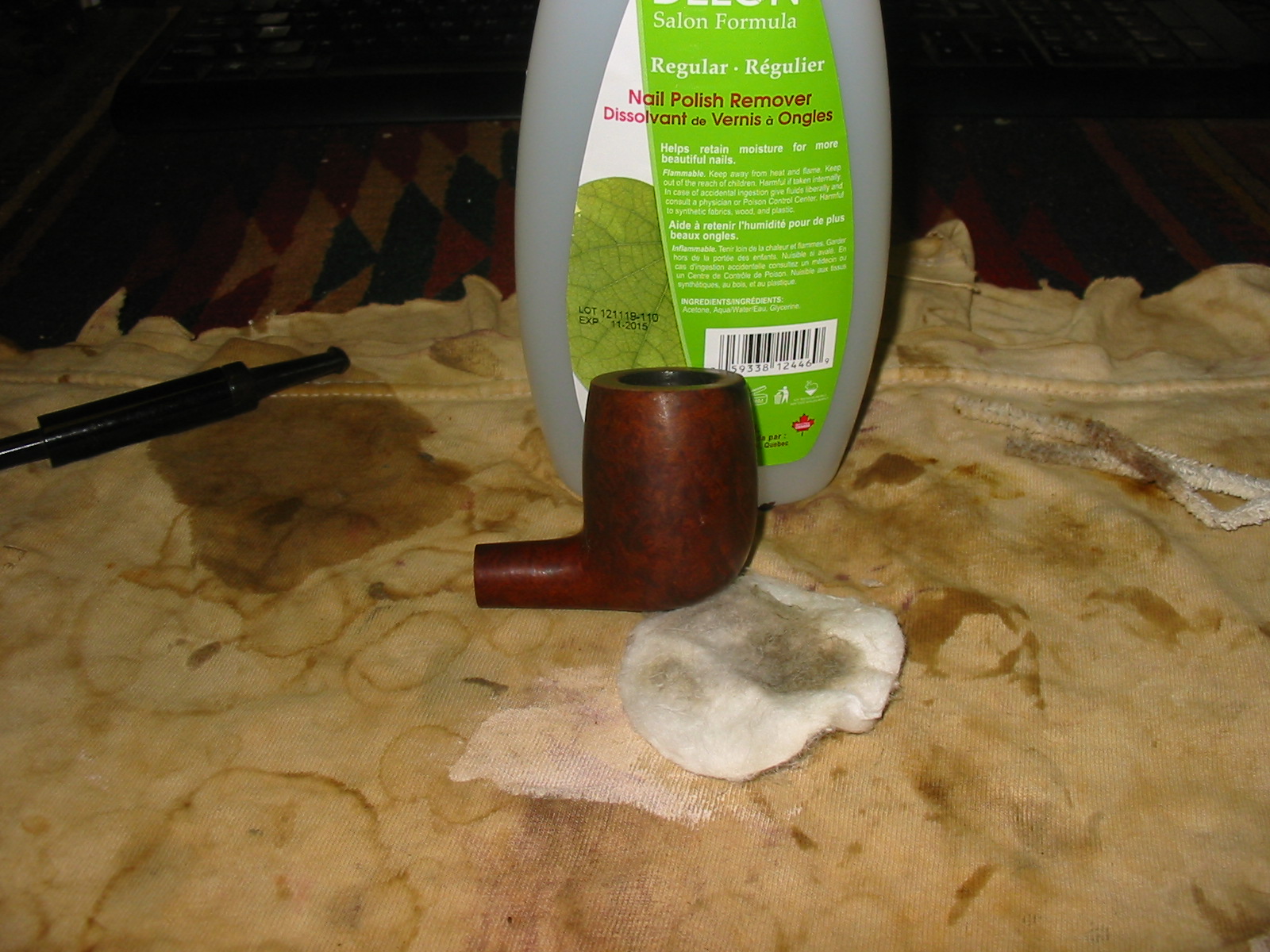
When I finished sanding I wiped the bowl down with acetone on a cotton pad. I use nail polish remover which is a solution of acetone and that is readily available at our local dollar store. It works well to lift any remaining stain in the briar and clean the surface of any leftover debris from the sanding process. The grain is really standing out nicely in the three photos below and will make a great looking finished pipe. I also continued to sand the stem with a medium and a fine grit sanding pad to cut through the heavy oxidation.

ImageImageImage

After sanding with the sanding pads I moved on to wet sanding with 1500-2400 grit micromesh sanding pads. I have a cup of water at hand to dip the sanding pad into and then sand the stem to remove the oxidation. These first three grits of micromesh do a great job in removing the remaining oxidation on the stem. The water begins to turn a brownish yellow as I dip the sanding pad and squeeze out the grit from the sanding. The stem begins to come back to black by the 2400 grit pad.

ImageImage

At this point in the process I have started to use Meguiar’s Scratch X2.0 before going onto the higher grits of micromesh. I rub on the Mequiar’s with my finger and scrub it into the finish of the stem. Once it is applied I let it dry for a few moments and then scrub the stem with a cotton pad. The next three photos below show the stem after the rub down with the Mequiar’s and a hand buff with the cotton pad.

ImageImageImage

After polishing the stem I rub it down with Obsidian Pipe Stem Oil. I find that it penetrates the vulcanite and the remaining oxidation seems to lift to the surface. Once it is dry I continue to sand the stem with the micromesh sanding pads from 3200-12,000 grit.

ImageImage

After the stem really begins to shine I remove it from the shank and place a dental pick into the mortise to provide a handle for me when I am staining the pipe. This allows me control as I turn it over in my hands. I stained this pipe with Dark Brown aniline stain (Feibing’s Leather Dye). The first photo below shows the pipe ready to be stained and the second is with its first coat of stain. While it is still wet I flame it by lighting it with a match and setting the stain.The flame sets the alcohol in the stain on fire and burns it off.

ImageImage

Once it is flamed I rub down the bowl with a piece of cotton terry cloth. It removes the surface stain and leaves the stain set in the softer grain. The next series of photos show the pipe after it has been wiped down but not buffed.

ImageImageImageImageImage

Once I have wiped it down I take it to the buffer to remove any more of the stain and to give it a shine. With this particular pipe the stain obscured the grain a bit so I decided to wipe it down with the acetone to lighten the stain. I wiped it until I got the effect that I desired. I then buffed it repeatedly to get a shine.

ImageImageImage

The stain was still a little dark to me and I wanted a bit more contrast in the stain. I wiped the bowl a final time with Isopropyl and then buffed it a final time. I also buffed the stem. I scrubbed the metal tenon with 0000 steel wool to polish the oxidation on the aluminum. It shined as well. I inserted a new Brigham Hard Rock Maple filter and put the pipe back together. I gave the stem a final coat of Obsidian Oil and then when it had dried I gave the bowl and stem multiple coats of carnauba wax on my buffing wheel. I finished with a quick buff with a soft flannel buffing wheel. The finished pipe can be seen in the pictures below.

ImageImageImageImage

Refurbishing a horn stemmed Bruyere Garantie Beautiful Swan Necked Pipe


I picked this old timer up in an antique shop near Vancouver, quite a few years ago now. When I got it the bowl was almost black and dirty. The rim had a good 1/8 inch of grime and tar built up so that it looked like a plateau top. The finish was so opaque that you could not see the grain through it. The stem was dirty and to be honest with you all, when I got it I had no idea it was a horn stem. I worked hard to get the oxidation off it and all I got was more of the brown tones coming through. There was tooth chatter on the top and bottom of the stem. The chatter was kind of white coloured. I asked several guys about the stem and they also did not even think about a horn stem. I had the pipe in my collection for about 5 years or more before it dawned on me that it was a horn stem.

This is a big pipe and it is elegant. It is 8 inches long and the bowl is a little over 2 inches tall. It is stamped on the left side of the shank Bruyere in an arch over Garantie. On the right side it is stamped St. Claude in script over Bruyere. Once I stripped it down there are a few visible fills in the briar but they blend in quite well surprisingly – no pink putty on this one. I cleaned the rim meticulously by hand with warm soapy water on a damp paper towel. I scrubbed it until it was clean. I then sanded the bowl to remove the varnish coat and grime. I had not learned many of the tricks I use now so it was one of the first old timers that I refurbished. I wiped the bowl down with Isopropyl alcohol once I had sanded the majority of the finish coat off the pipe. It took quite a bit of time to carefully wipe away the finish around the stamping without damaging that. The bowl was finally cleaned and smooth – I remember sanding it with 1200 wet dry sandpaper to finish. Then I stained it with a medium brown wood stain – I have no idea if it was an alcohol stain, it well could have been Watco Danish Oil for all I know!

The stem took quite a bit of work to sand it smooth. I cleaned it up twice. Once when I first got it and then again when I figured out it was a horn stem. It is a big piece of horn and quite pretty in terms of the sheen and depth of colouration in it. I used the method I spelled out in a previous post on polishing horn stems and it is like new. I sanded it with wet dry sandpaper up to 2400 grit and then buffed it with lots of carnauba wax. Later I used the micromesh sanding pads on it and really gave it a depth of shine. The pipe is a great smoking pipe and is definitely a sitting pipe. It is a handful. The first picture shows the finished pipe. I wish I had some before photos but this was found in the days I never thought of doing that. So all I have is finished photos. The next series of photos show the size of the pipe in comparison to a nice little bent billiard that is about a group three sized pipe. The grain is quite nice. Nothing striking in terms of straight grain but there are several spots with nice birds eye and then the rest is swirling grain that almost seems to have movement to it. The stem is multicoloured and has the old orific (round) airhole in the button.

ImageImageImageImage

A Classic Rework of A Royal Duke Supreme


Blog by Steve Laug

I had this old Royal Duke bowl in my box. It had some promise to my eye but it needed some work. The first thing I did was drill out the metal mortise that took a threaded tenon. I did not have any stems that fit it anyway and I wanted to try something new. The issue that remained once it was gone was the fact that the mortise rough inside and the end of the shank was not square so that there was no way to get a new stem to fit it seamlessly. The finish was very rough as can be seen in the photos below. The varnish on the outside of the bowl had bubbled and blistered. The front edge of the bowl was actually darkened as the varnish seemed to have burned or at least coloured. There were dents in the bowl and the rim was rough. I turned a precast stem with my tenon turner and got it close. I had to custom fit it as the shank was a little tapered toward the end.

ImageImageImage

The stem fit fairly well but would take a bit of customizing to get a good tight fit to the shank. It would also need a good cleanup to trim off the castings on the stem. The vulcanite was fairly decent quality as I have had it a long time but it showed no oxidation.

Image

I decided to work on the bowl first to clean up the remaining finish and remove the varnish from the bowl. I also wanted to see if I could remove the darkening around the front and back of the bowl. I washed the bowl with acetone on a cotton pad and cleaned off the finish. It took repeated washing to break through the varnish coat and also the burned and bubble finish. The next two photos show the pads after the wash. You can begin to see the grain coming out on this beauty. That is what drew me to the pipe in the first place and I was glad to see that it was truly there.

Image

I repeated the washing until the pipe was clean and had no remaining finish coat. The dark undercoat of stain still remained and light brown topcoat also was still present. This is clearly seen in the photos below. I worked on the fit of the stem and tapered the tenon enough to get a good snug fit to the bowl. I also used my Dremel to remove excess vulcanite from the top and the sides of the stem so that it lined up smoothly with the shank of the pipe. It was at that point I decided to pressure fit a nickel band to the shank to square things up a bit. There was no way that the stem and the shank would meet squarely as the shank was a bit angled and dented from the metal inserted mortise. The previous mortise had been threaded in and it had a thin band or flat top on it that sat against the briar. It was also patched a bit with putty to make the flow from the shank to the insert smooth. I fit the nickel band with heat and pressed it into place. I liked the finished look of the band and it gave me a straight edge to work with on the new stem. I again used the Dremel with a sanding drum to shave off more of the vulcanite and make the stem fit against the band inside edge. The next two pictures below show the stem after the fit and the shaving with the Dremel. You can see the rough surface on the saddle and the cleaned up edges of the cast stem and the button.

ImageImage

I then sanded the bowl and the stem with 240 grit sandpaper to remove the scratches in the briar and also on the vulcanite stem. It took quite a bit of sanding to smooth out the saddle of the stem. The next five photos show the progress of the sanding on the stem. I also sanded the bowl to remove the remaining finish and scratches. I topped the bowl and smooth out the inner and outer rim to remove the damages to them both. I also used my heat gun to put the bend in the stem. I have a curbed dowel here that I put the heated stem on to ensure that the bend is straight and that I do not crimp or bend the stem unevenly.

ImageImageImageImageImage

Once the sanding was at this point I wiped the bowl down with Isopropyl alcohol. I find that it removes any sanding dust and also the wet look shows me places where I still need to sand the bowl and stem. Once that was done I sanded the bowl again with 400 and 600 grit wet dry sand paper and water. I progressed through micromesh sanding pads 1500-12,000 grit – the first four pads with water and the remaining ones dry sanding. Once it was completed and smooth I wiped it down a final time before staining it.

ImageImage

While I was sanding the pipe and working on the stem I tried to visualize what stain I wanted to use on this pipe. At this point remember I was not trying to restore the original Royal Duke colouration. I was working a new pipe out of this piece of briar even though I left the stamping. I decided to go with an oxblood aniline stain. I applied it with a cotton swab, flamed it and then took it to my buffer and buffed it with White Diamond.

ImageImage

The next three photos show the pipe after the buffing with White Diamond. I had not applied any wax at this point nor was I finished working on the stem. The colour came out better than I imagined. The dark under notes of the grain come through nicely in the finished pipe. The light areas have a reddish brown hue that is a bit lighter as the pipe has been waxed and buffed.

ImageImageImage

Once the pipe was stained I coated the bowl with multiple coats of carnauba wax to protect the new stain while I worked on the band and the stem. The nickel bands shine up really well with the higher grit micromesh sanding pads. I sanded the band with the 6000-12,000 grit pads and then polished it with some wax as well. I moved on to the stem. I sanded it some more with 240 grit sandpaper to remove some more of the scratches in the saddle area left by the Dremel. I then sanded it again with the 400 and 600 grit wet dry and water to smooth out the lesser scratches left behind by the 240 grit sandpaper. I went on to use 1500-3200 wet micromesh sanding pads to polish up the stem some more. These early grits of micromesh leave behind a matte finish as they sand out the scratches. It takes the grits above 4000 to really see the depth and polish that is there when finished. Once I used the lower grits I then polished the stem using Maguiar’s Scratch X2.0 polish and rubbed it on with a cotton pad and polished it off. I buffed the stem with White Diamond following this to see what I needed to work on.

I took the stem back to my work table and used the higher grits of micromesh. I started with 3600 and worked through 4000, 6000, 8000 and 12,000. Once I finished I buffed it again with the White Diamond and then coated the stem with Obsidian Oil and let it sit while the oil soaked the stem. I hand buffed the oil with a soft cotton cloth and then polished it with some carnauba wax paste and then buffed the entire pipe with several coats of carnauba. I buffed it with a clean cotton buff between coats of wax. The final photos are of the pipe as it stands now.

ImageImageImageImage

Cleaning up a Swedish Bromma Dollar System Pipe


Blog by Steve Laug

I picked up this old Swedish Pipe in a little town in Northern Alberta, Canada. It was an antique mall, the only one in town and I was able to pick up this one for about $10 so I did not feel too bad about it. I had not seen one of these pipes before. It is stamped BROMMA over Sweden on one side of the shank. On the other there is an Elephant logo in a circle and inside the circle is the word DOLLAR. The bowl is briar and the rest of the pipe seems to be either plastic or Bakelite. It is interesting. I was able to take the stem out when I picked it up but the bowl would not budge. It was definitely a screw on bowl as it was on crooked and at somewhat of an angle. The stem had tooth chatter on the top and bottom but no tooth dents. I sprayed some solvent on the bowl stem connection to try to loosen it. I twisted it carefully but it would not budge so I set it in my box of pipes for repair.

ImageImageImageImage

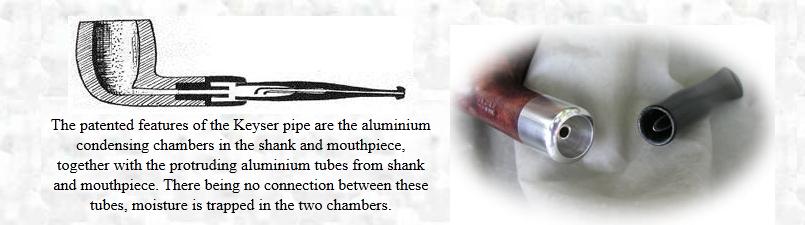
Today was my day to work on it. I took it out of the box and gave the bowl a twist and it would not budge. I used the sanding board to top the bowl and once it was smooth and clean I wiped the entire bowl with acetone. I was careful not to get any on the shank or bottom of the part. I then used Isopropyl and a cotton swab to swab alcohol around the bowl and the bottom portion of the pipe – the keeper for lack of a better word. I repeated this several times and tried to carefully twist the bowl off the keeper. I repeated the swab and alcohol until finally I was able to twist it off the keeper. The next two photos below show what I found inside the keeper portion of the pipe. This is amazingly like the stem portion of the Falcon pipes. The difference is the material it is made of. It is incredibly lightweight and resilient. The base was absolutely full of hardened tars and sludge. My guess is that it had never been taken apart after the initial purchase and after the bowl was put on and misaligned. This would take some work to be sure. The stuff was as hard as rock and would not budge with a pipe cleaner.

ImageImage

I decided to drop the bowl into the alcohol bath and let it soak away while I worked on the stem and base portion. I used my dental pick and Isopropyl alcohol to work at the rocklike tar in the base. I soaked the tarry stuff with alcohol and picked at it with the dental pick. Once I had some of it loose I would use the cotton swabs to daub out the gunk and alcohol and then repeat the process. The next series of three photos show the process of picking away the tar and the results after wiping it clean with the swabs. I probably used about 60 or more swabs and removed a lot of the gunk from the bottom of the base. I soaked it and kept at it. I used 0000 steel wool to scrub the tars once I had the majority of the material picked free. Then I took it to the sink and used a microfiber cloth to scrub the base with hot water and degreaser.

ImageImageImage

The next two photos show the inside of the base after it has been thoroughly cleaned. The shank itself was almost like a Kirsten barrel and need lots of soft tissue and cloth run through it until it was clean and shiny on the inside. The photos are slightly out of focus but the cleanness of the base is very visible.

ImageImage

I then removed the bowl from the alcohol bath and went to work on it. I picked out the two putty fills with my dental pick. I also followed the threads with the dental pick to remove the grime and grit that filled the threads and did not allow the bowl to be threaded on correctly. I also used a bristle tooth brush and alcohol to scrub the bottom of the bowl from the threads down to the nipple like structure on the bottom. The next four photos show the bottom of the bowl and the threads after cleaning them. There is an inset portion of the bowl bottom that is like a moat around an island that has the moutainlike nipple in the centre. This took quite a few cotton swabs to clean the grime out of the channel. Once it was clean there is a patent stamp on it. It reads Pat. S. I am guessing it is a Swedish Patent mark. The portion of the bowl that is threaded seems like it is made of the same kind of material as the base of the pipe. The mountain in the middle is briar. It is an interesting and unique design. I am looking forward to firing it up and giving it a smoke once it is finished.

ImageImageImageImage

Once the bowl was clean I decided to replace the fills with briar dust and super glue. The next series of photos show that process. I had already picked out the putty fill. I used a dental pick to tamp briar dust into the pits on the bowl. The first picture shows the briar dust before I wiped it smooth and added a few drops of super glue to the mix. The second and third photo are a bit out of focus but show the repaired fills after I sanded them down with sandpaper to smooth the surface to match the surface of the bowl.

ImageImageImage

The bowl was now ready to be stained with an oxblood coloured aniline stain. I applied the stain with a cotton swab and then flamed it and buffed it off. The first two photos below show the stain applied and ready to be flamed with a match. I held the bowl with a dauber so that I could manipulate it to apply the stain.

ImageImage

The next two photos show the bowl after a buff with Tripoli. I had not polished them at all at this point I merely buffed off the stain to get an even coat on the bowl sides and rim. The great thing with the briar and super glue fill is that it takes the stain and darkens with the finish coat. It is far more attractive to me than the pink putty fills that were originally present.

ImageImage

The next two photos show the pipe taken apart. There is the bowl base and long shank that is made of the plastic or Bakelite material, the bowl itself. It has a small burn mark on the top of the rim but I left it rather than take it down any deeper into the surface. The third portion is the stem unit with a four finned stinger apparatus. The airflow is straight through from the bottom of the bowl to the slot in the button. The stinger with cooling fins is designed to cool the smoke and trap the tar and oils along the fins. This portion and the inside of the stem took work to clean. It is open enough to take a pipe cleaner through it with no problem.

ImageImage

The final four photos are of the complete pipe reassembled and ready to smoke. I coated the bowl base and stem with Obsidian Oil and then hand waxed it with Halcyon II wax and buffed it to a shine by hand as I did not want to risk it on the buffer. I have had this kind of material melt when buffed so I am shy to try it on this pipe. The stem was sanded with micromesh sanding pads from 1500-12,000 grit and then polished with Maguiar’s Plastic polish as I have been doing on all of the pipes lately. I put some carnauba wax on the threads of the bowl to lubricate make the threads as I screwed on the bowl.

ImageImageImageImage

A Bruyere Dublin – Given New Life


This little Bruyere pipe came to me in a box from a friend in Germany. It had a lacquer coat on the bowl and the rim was blistered a bit and the outer edges damaged from tapping it out. The bowl had a light cake that was incomplete – leaving the bottom of the bowl uncaked. The stem was oxidized but did not have any tooth marks or dents on it. The overall condition was promising and needed a bit of time. I removed the stem and put it in the Oxyclean bath that I have made up. It takes a full scoop of Oxyclean and two cups of warm water. It has a lid so I shake the mixture until it is well mixed. The stem sat in the bath while I worked on the bowl.
Bru1

Bru2

Bru3

I reamed the bowl with the smallest bit on my Pipnet reaming set. I wiped the top of the bowl and the outside of the bowl with cotton pads soaked in acetone to remove the lacquer finish. I find that while the acetone does not remove the lacquer it does soften it enough that it sands off easily. I set up the sandpaper on the board I use for topping a bowl and work the top of the bowl on the sandpaper until it was smooth and the roughened edges were not as noticeable. I then used sandpaper to bevel the outer edge of the rim to further hide the rim damage. I sanded the entire bowl using 380 grit sanding pads and removed the remaining lacquer finish. I wiped it down between sanding with acetone. The final sanding was done with micromesh sanding pads 1500-12,000 grit. I restained the bowl with a medium brown aniline stain, flamed it and then buffed it with White Diamond.

I took the stem out of the bath and wiped it dry with a rough cotton cloth that removed the moisture and also removed the top layer of oxidation. I then buffed the stem with Tripoli and White Diamond before returning to the work table to sand it with micromesh pads. I sanded it with 1500-3200 grit micromesh pads and water. I dried it and polished it with the Meguiar’s Scratch X 2.0 polish. I wiped it down and then finished the sanding with the 3600-12,000 grit micromesh. I dry sanded with these grits. Once the stem was smooth and shiny I put it back on the bowl and buffed the pipe with White Diamond and multiple coats of carnauba wax.
Bru4

Bru5

Bru6

Bru7

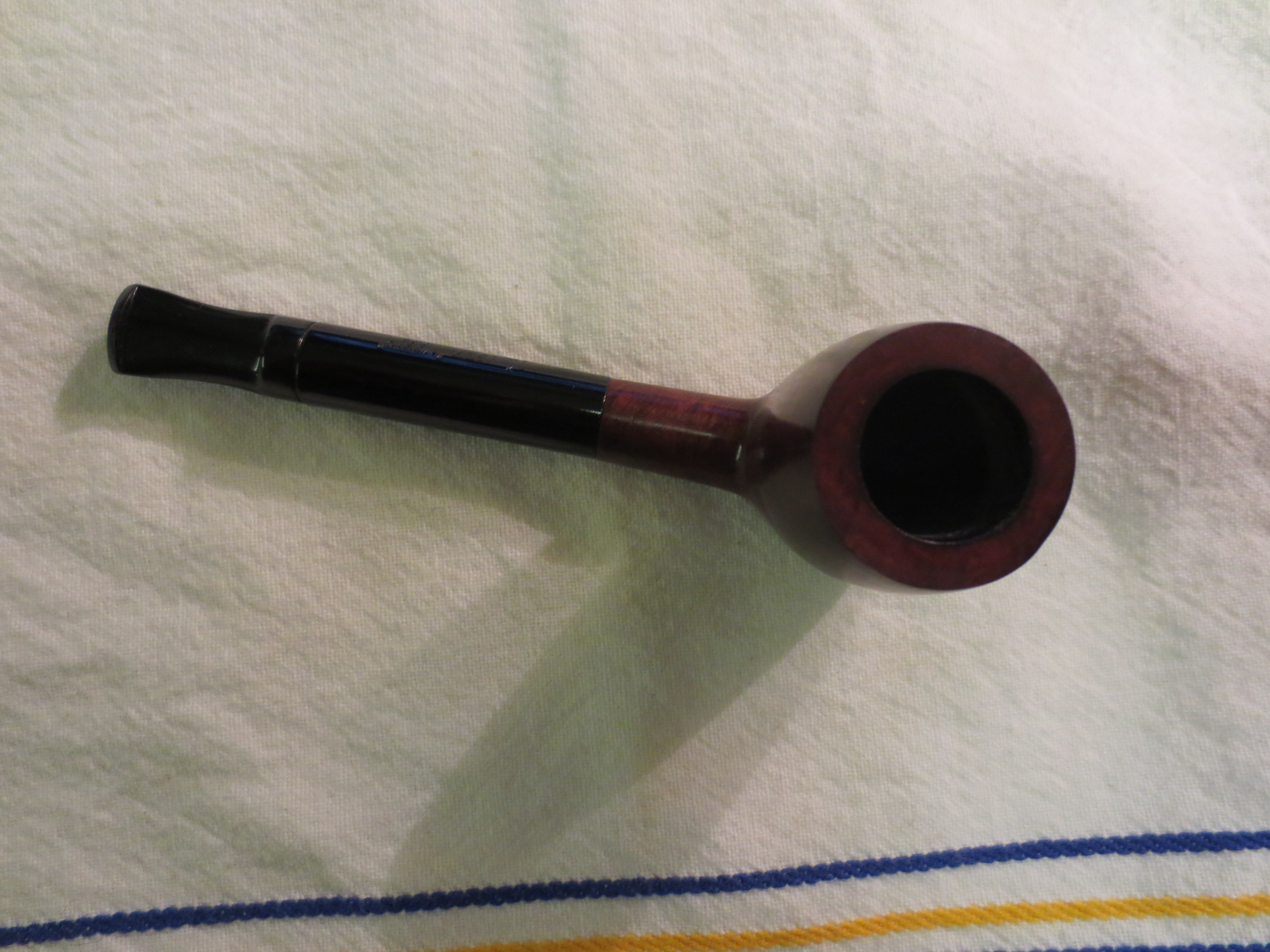
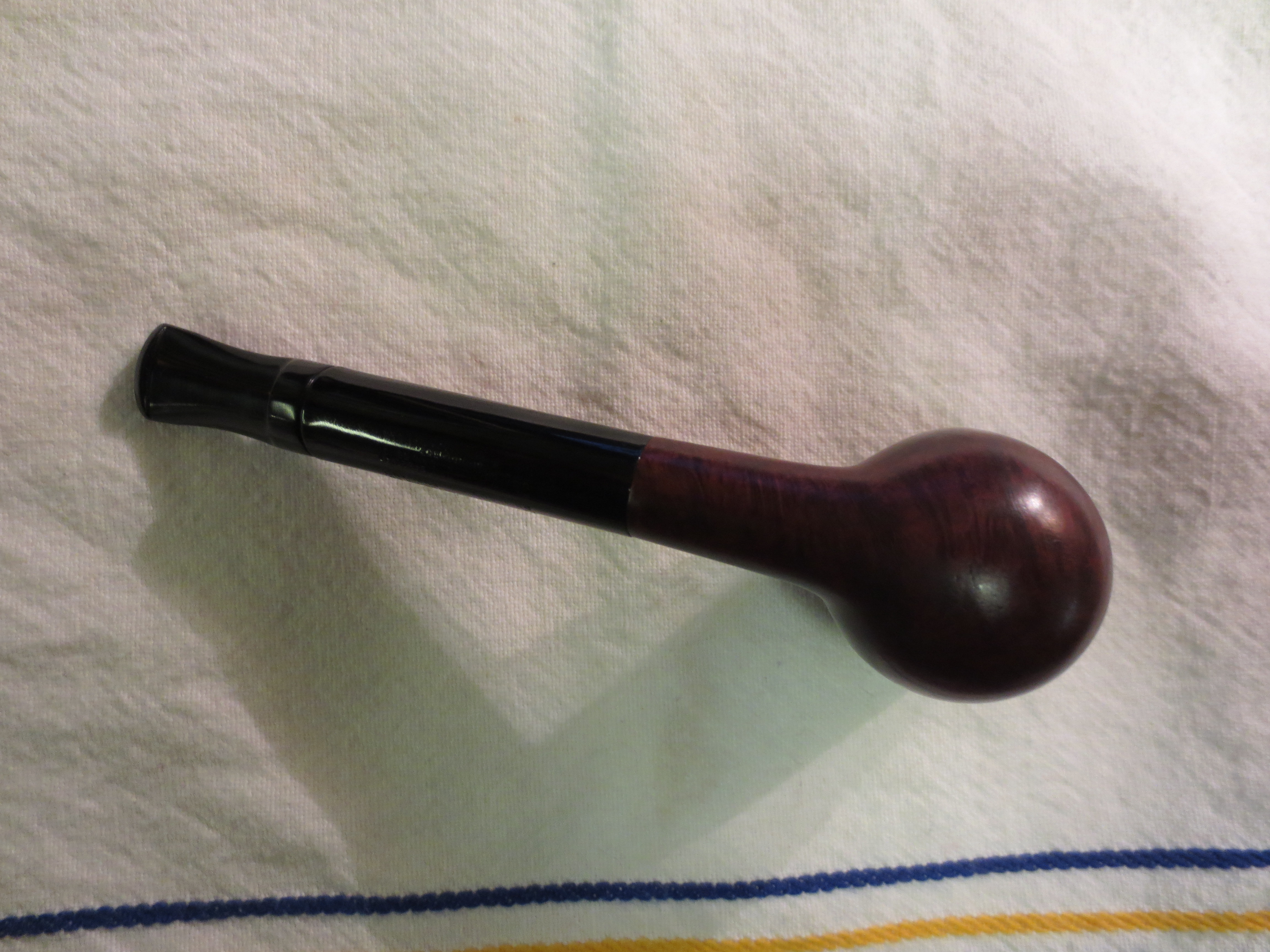
An Interesting Weatherproof Wally Frank “Pepper Shaker”


I picked up this interesting piece of tobaciana somewhere though I no longer remember where it came from. It is an oval bowled pipe by Wally Frank and it has a briar wind cap that is attached via a brass peg. To me it looks like a Pepper shaker so that is what I have named it. I have a few other ones like this but the cap is made out of Bakelite and is on a side pin that allows it to flip forward. This one spins to the side or can be removed should the pipeman not want to use it covered.

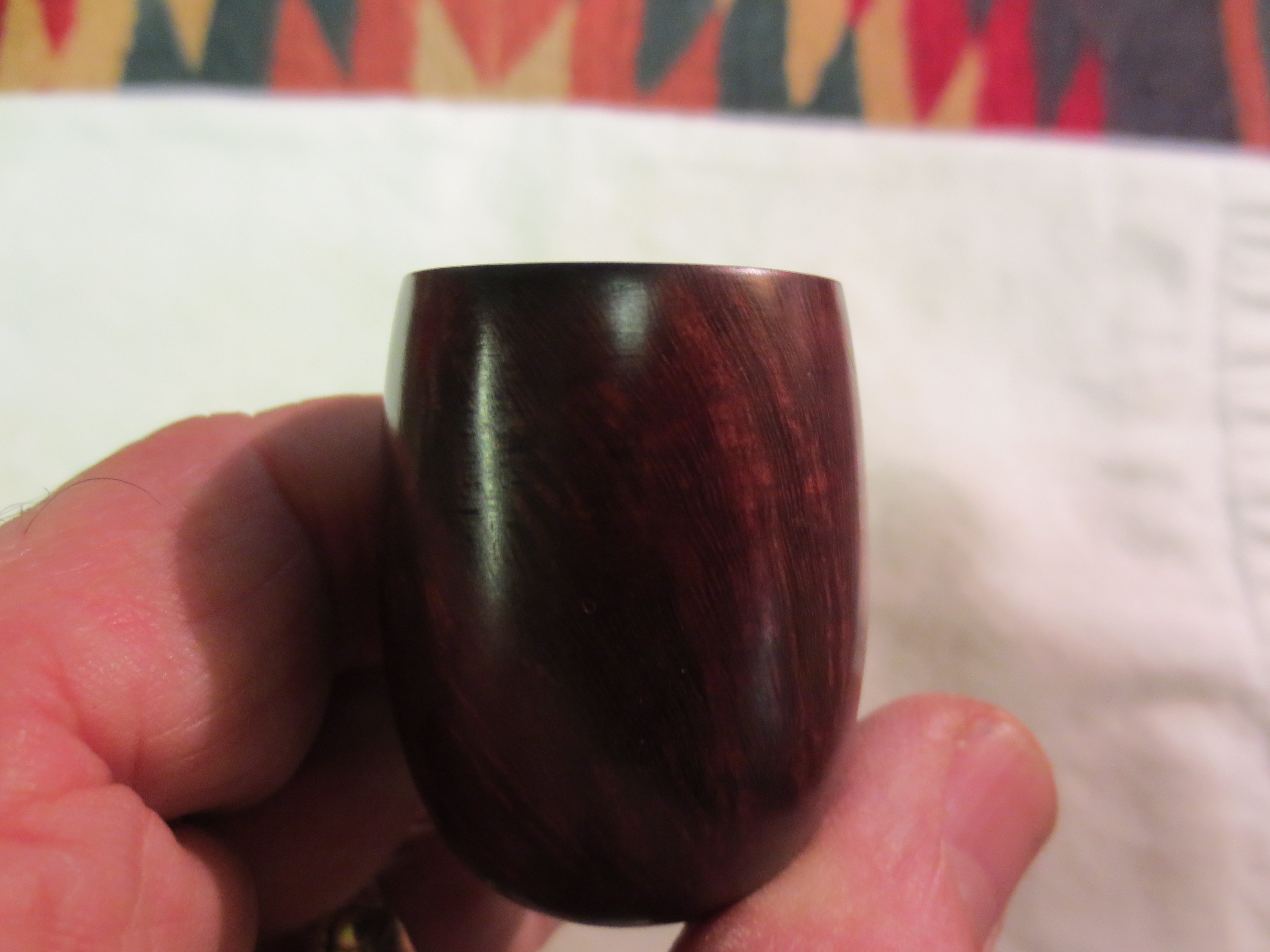
It came to me unsmoked and clean on the inside. The finish was very poorly done. There was a coat of varnish or lacquer on the pipe. It was spotty and in some places seemed to have bubbled or ran when it was applied. The stain that was underneath obscured the grain on the pipe. I decided to refinish the bowl and give it a new stain. I soaked it in an alcohol bath and then wiped down the bowl with acetone to clean the finish off. Once it was removed I sanded it with micromesh pads to get it smooth. I restained it with a nice cherry aniline stain. I flamed the stain to set it in the grain and then buffed the bowl to remove the excess and surface stain. The stem and pipe were buffed as a whole with white Diamond and then several coats of carnauba. Here is the finished product.
Frank1

Frank2

Frank3

Frank4