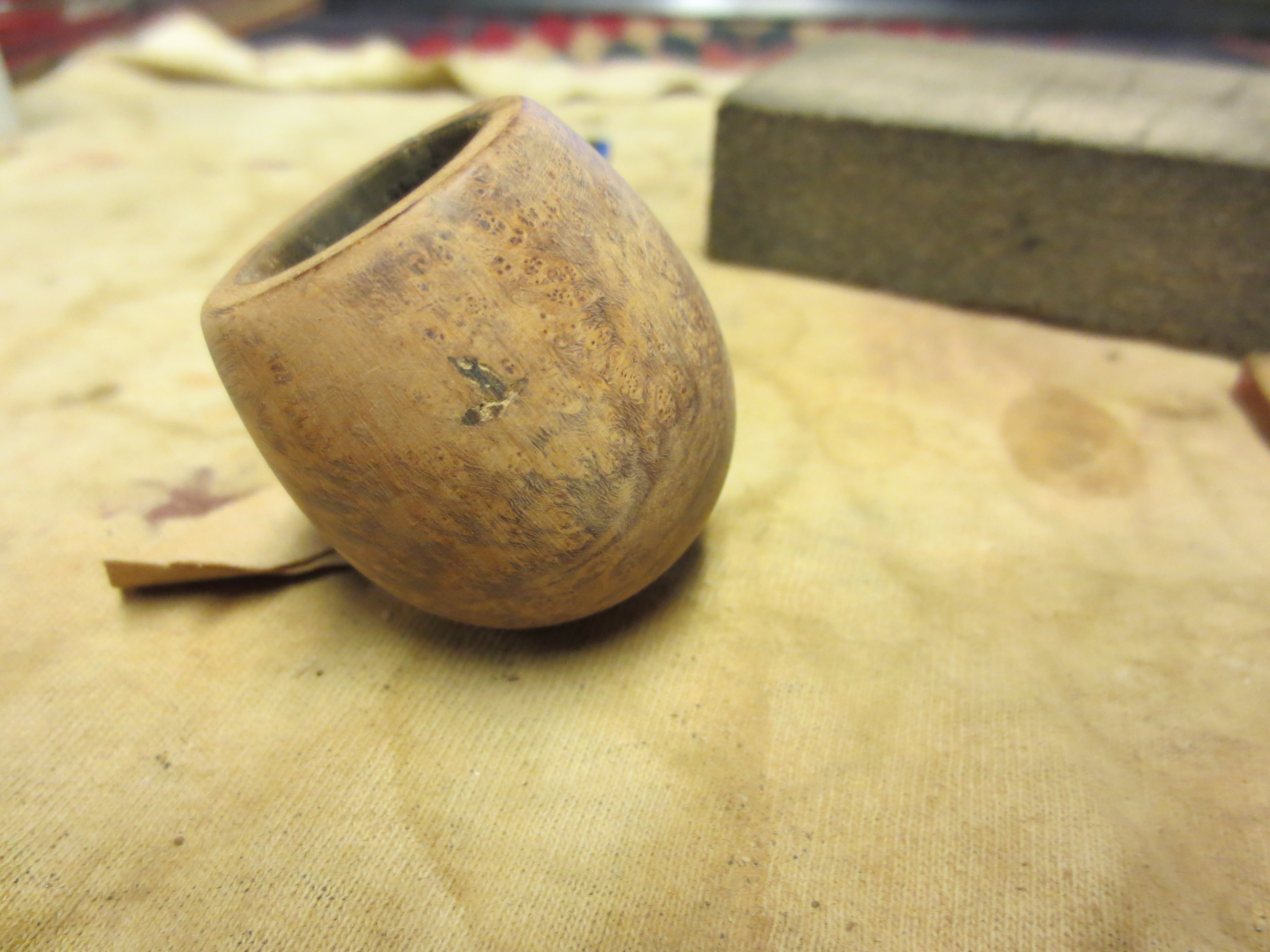
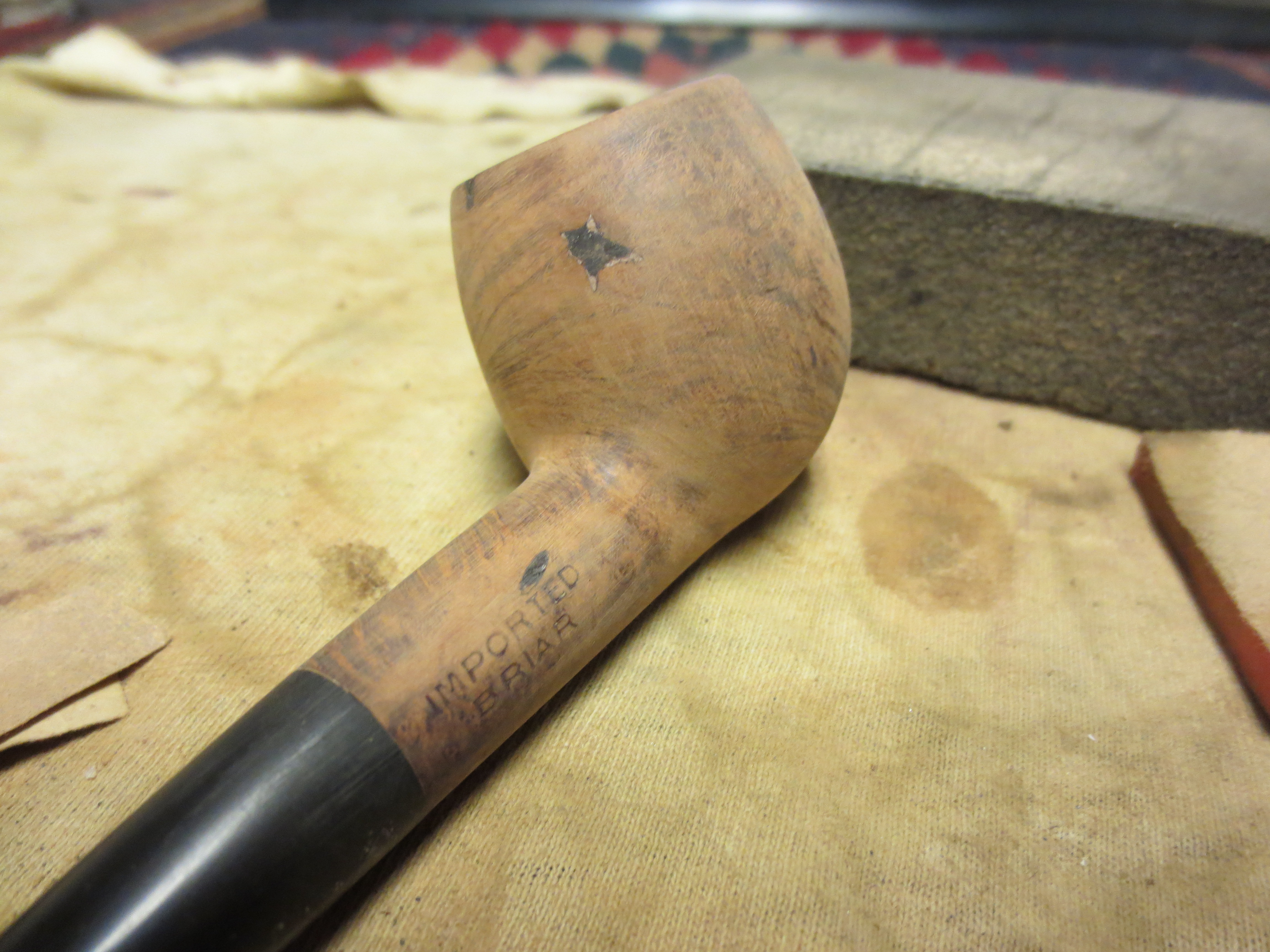
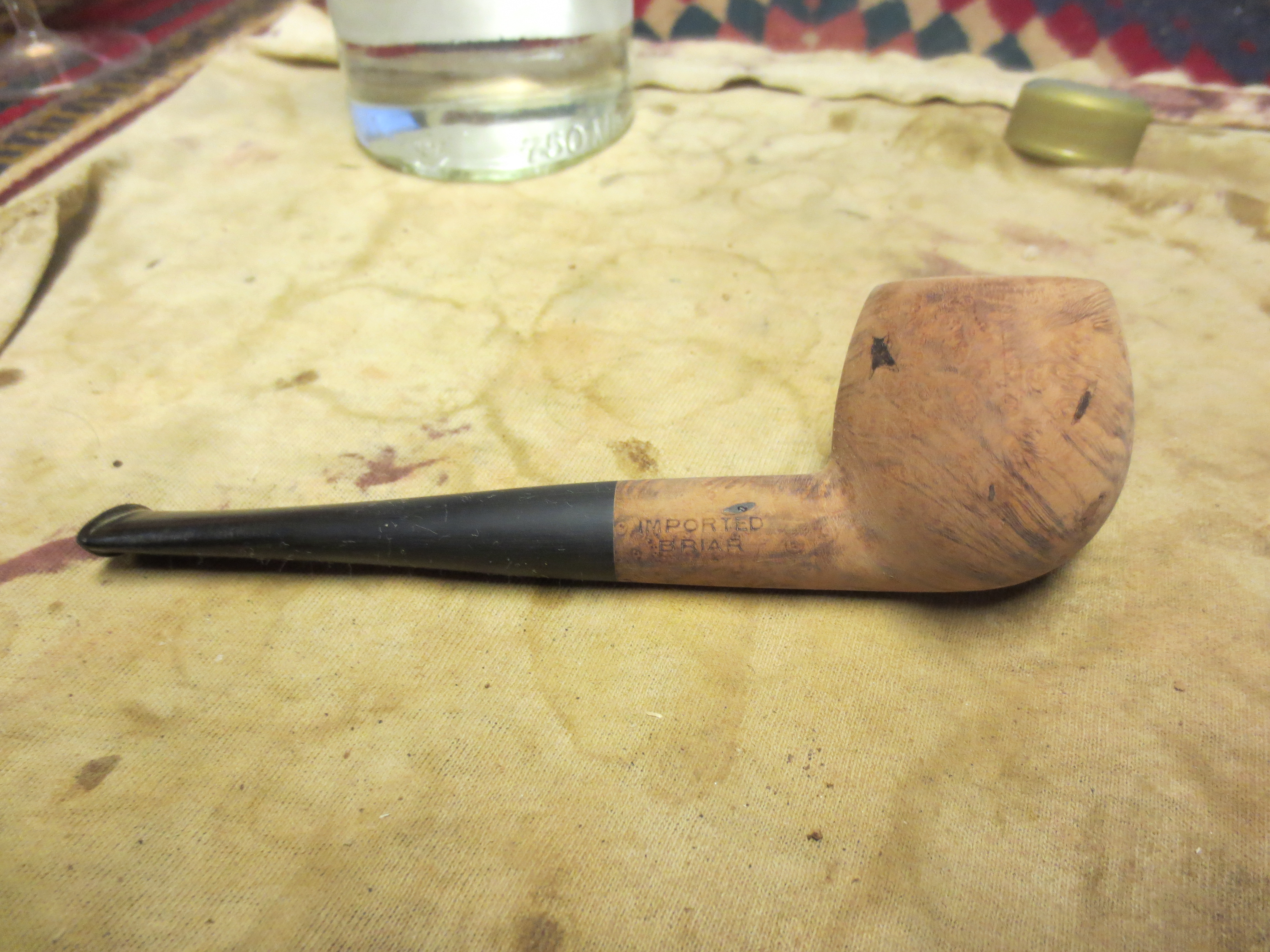
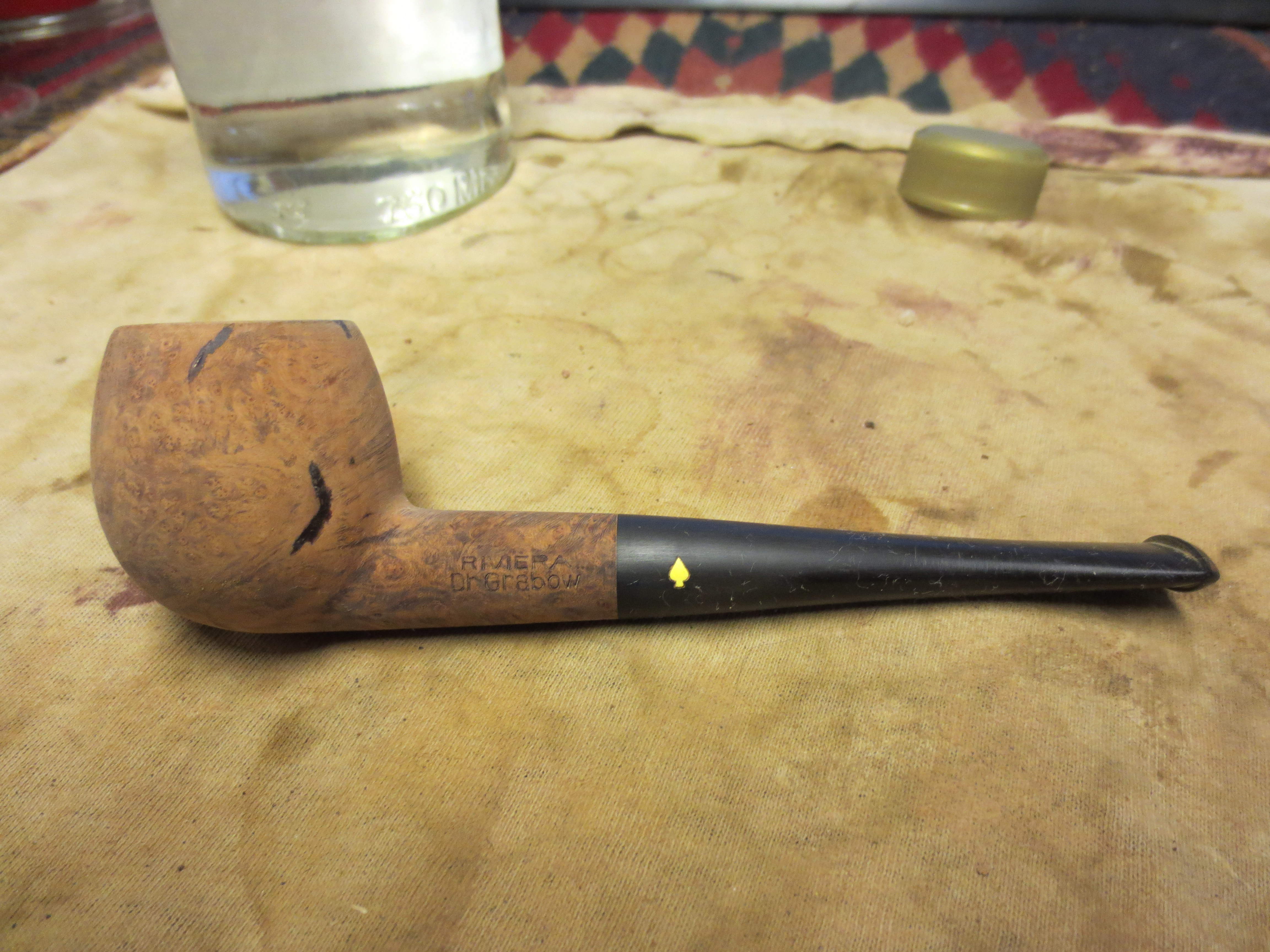
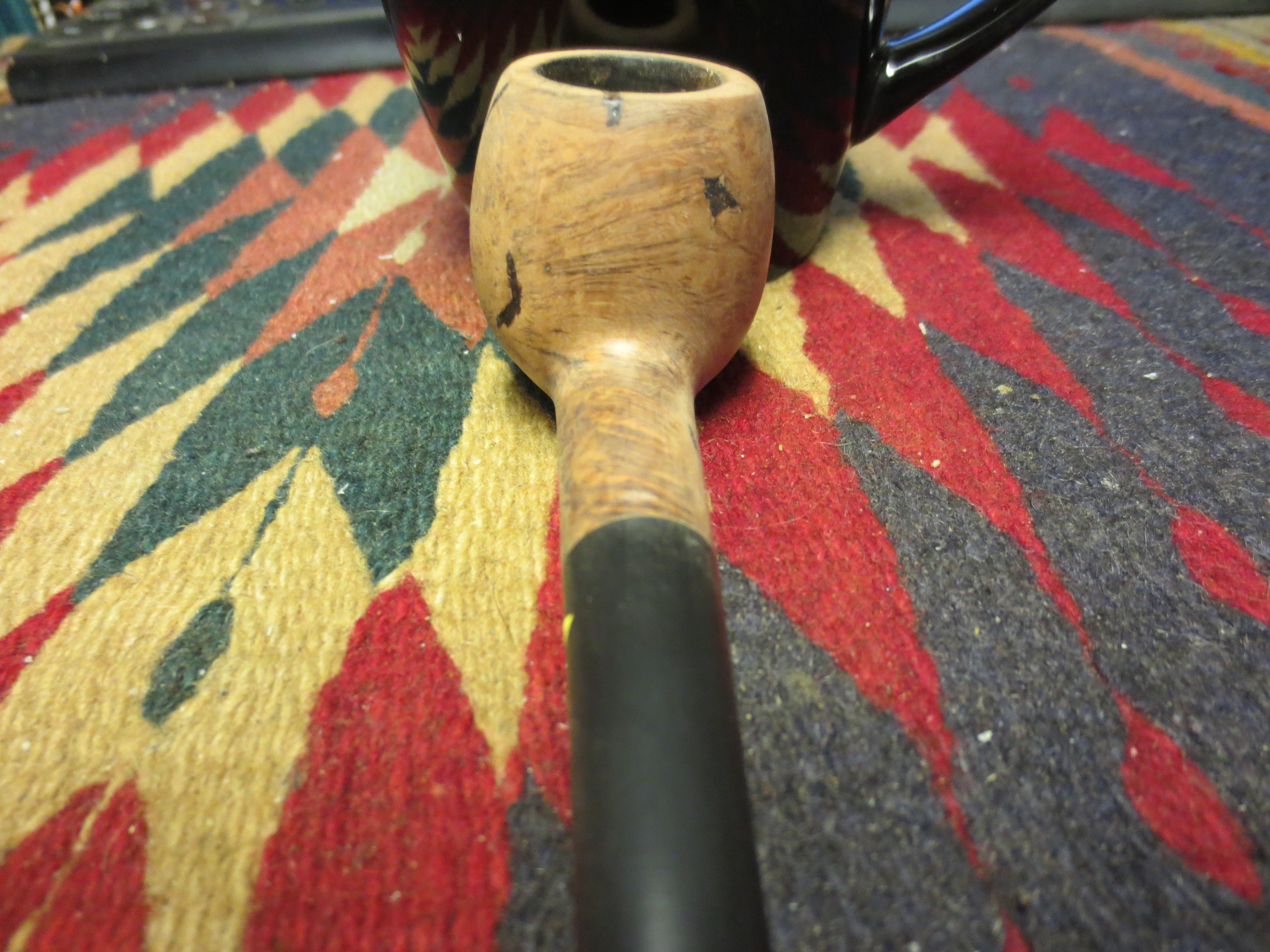
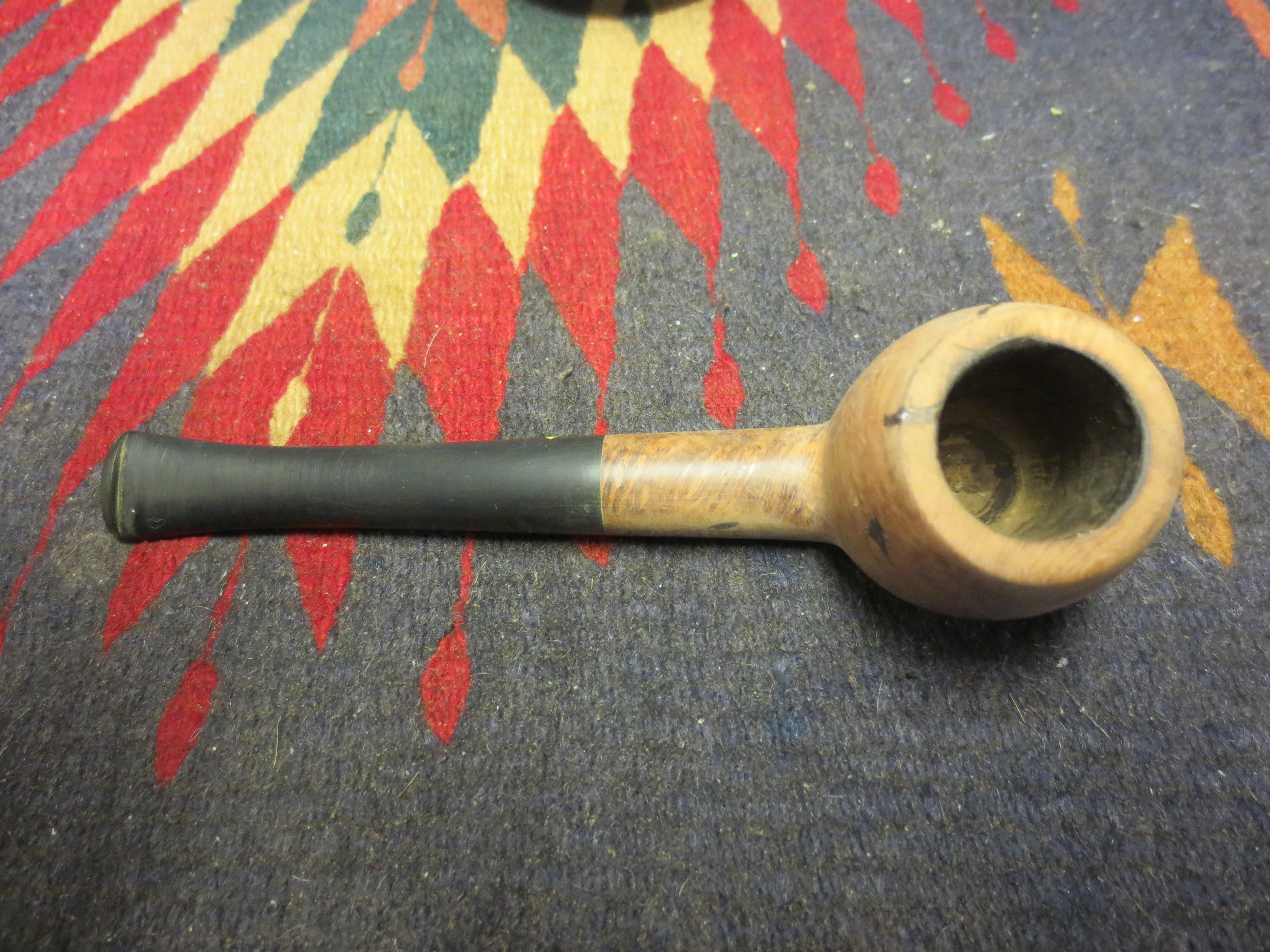
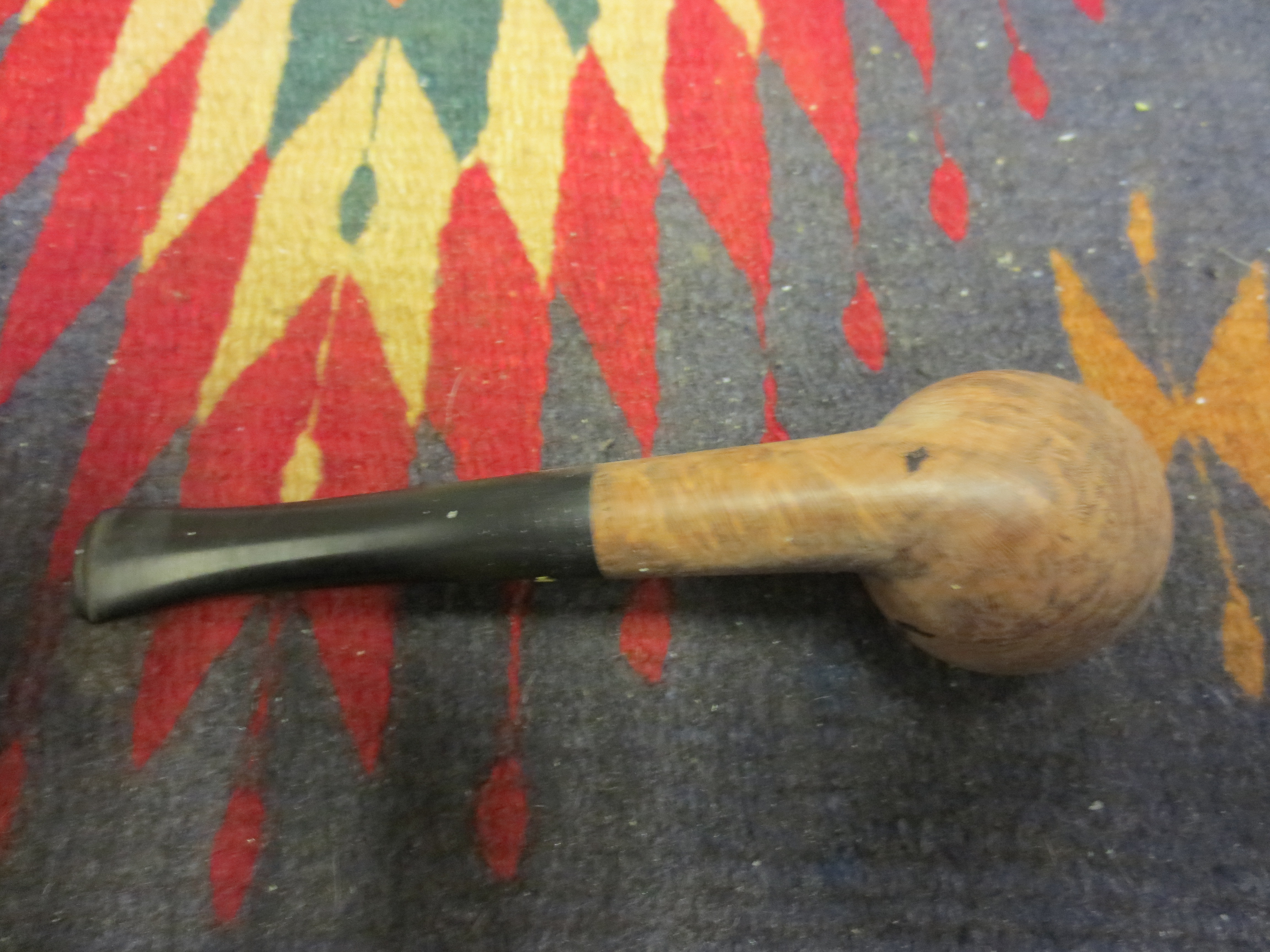
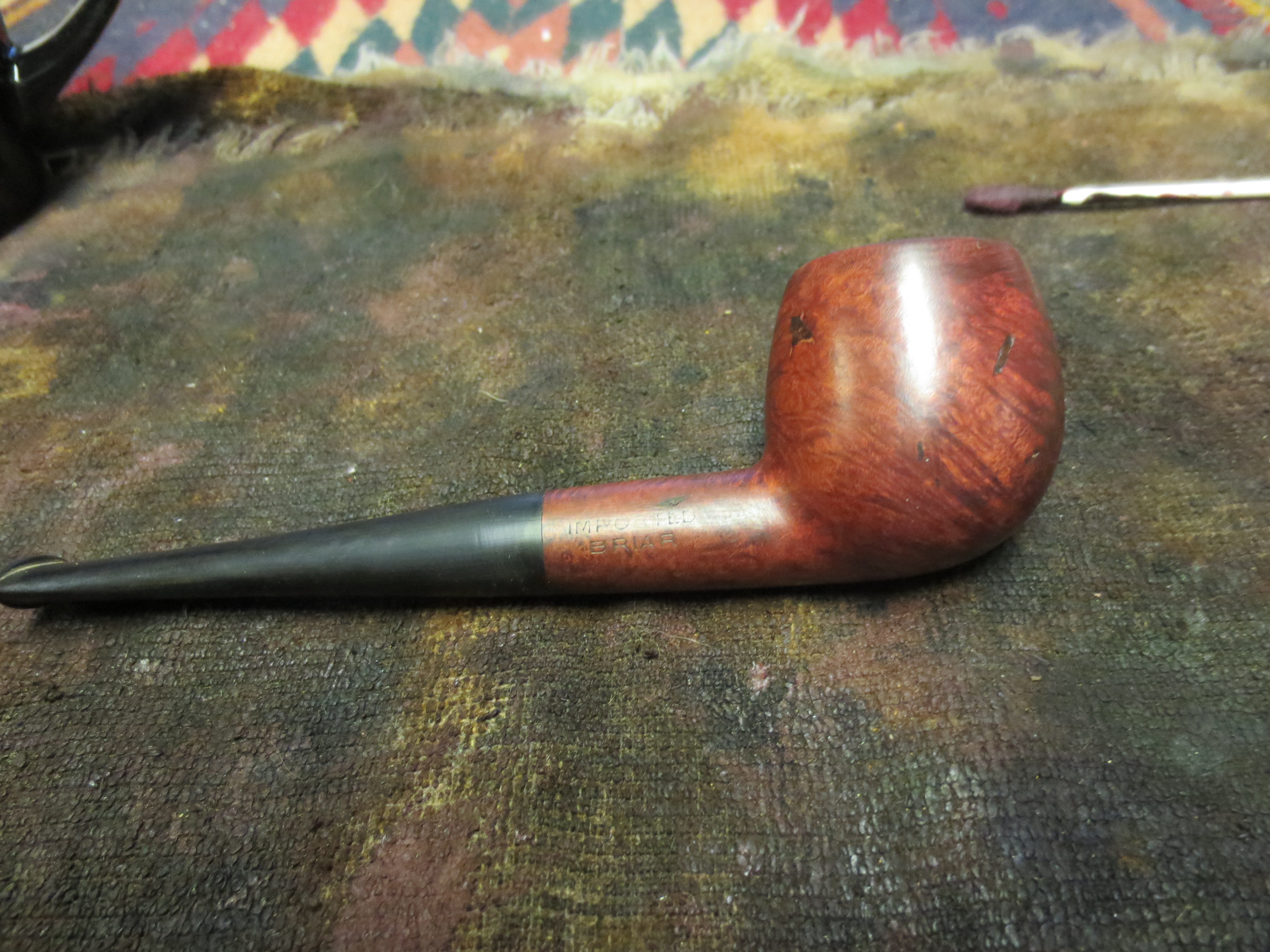
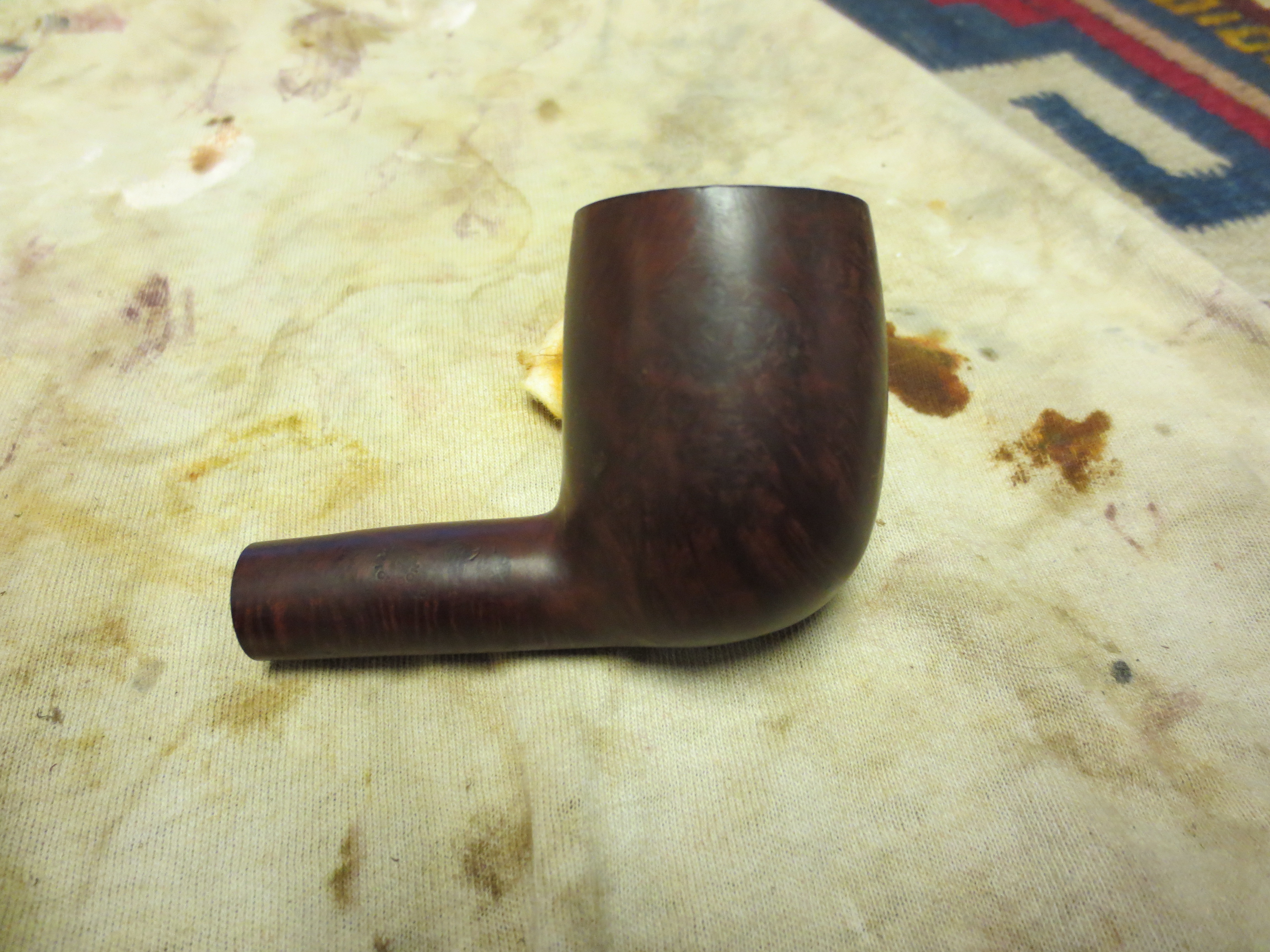
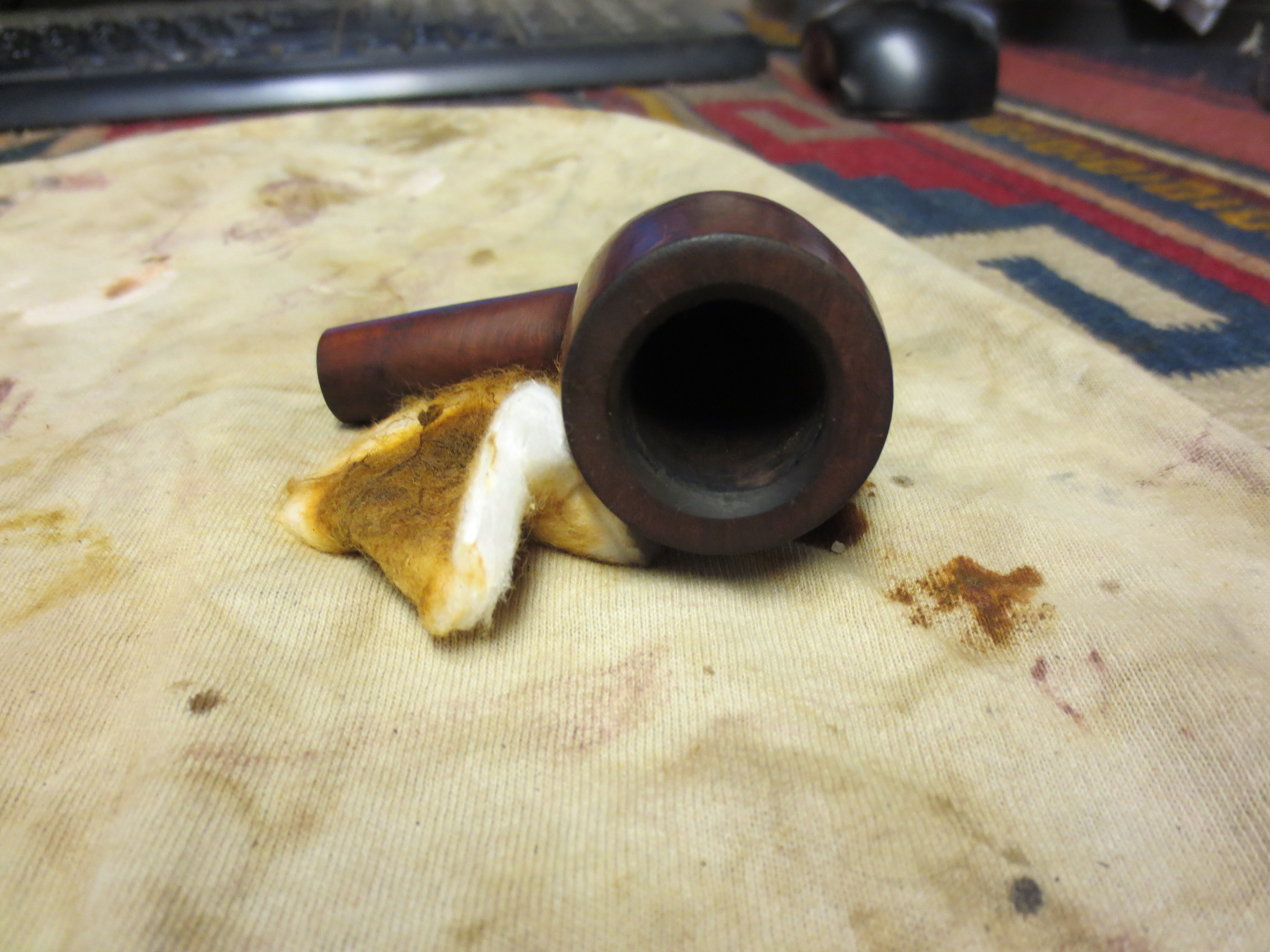
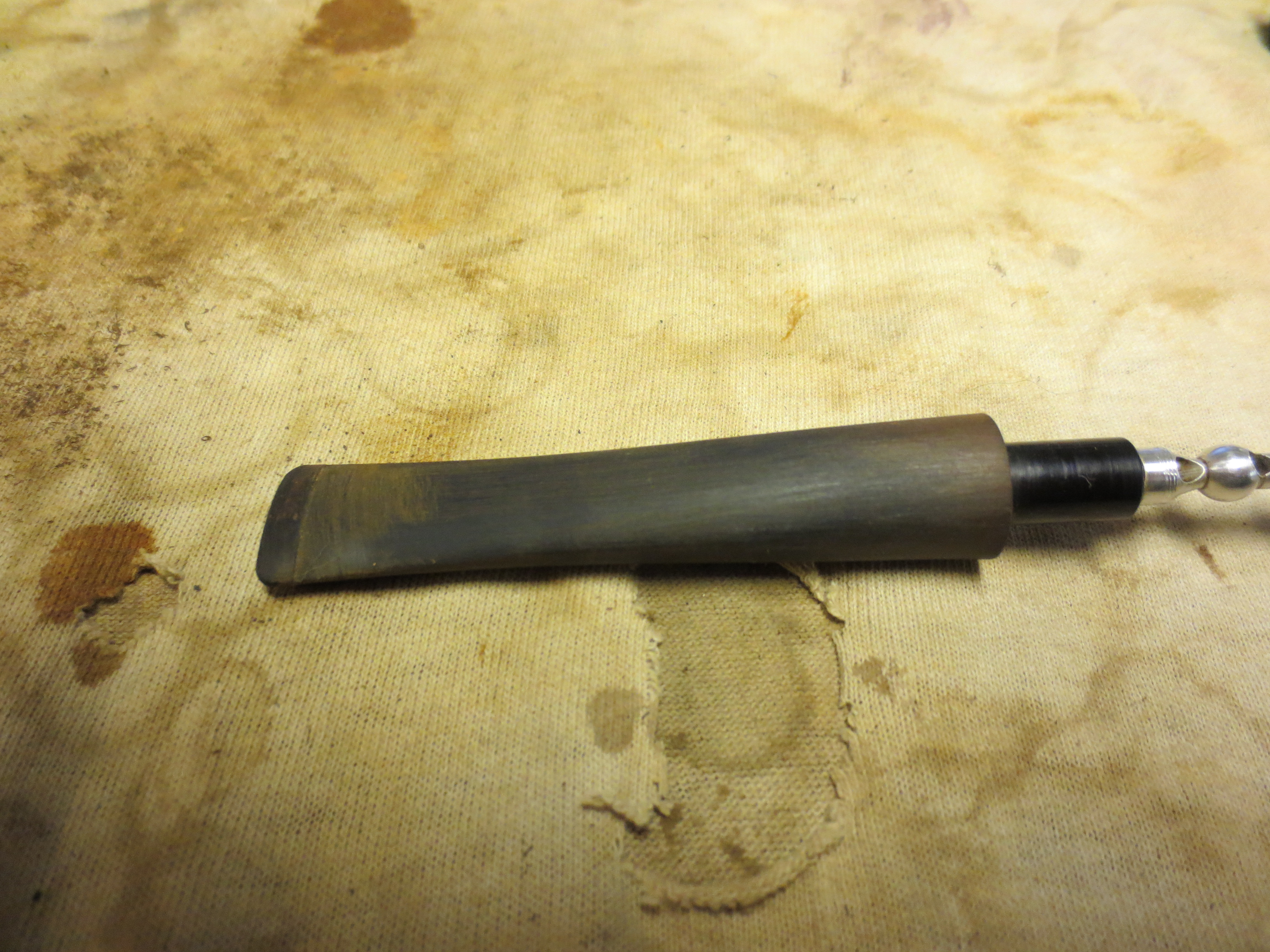
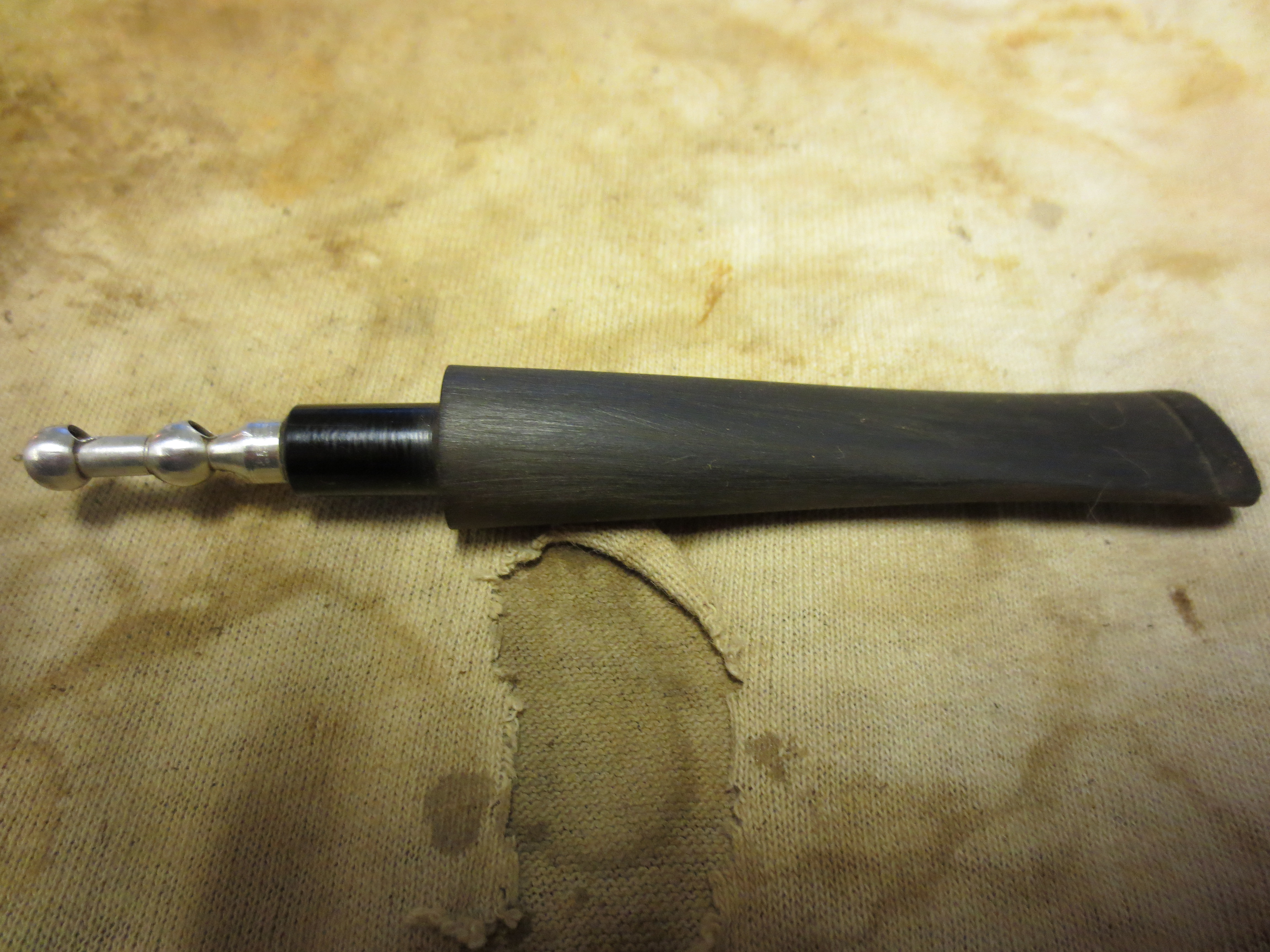
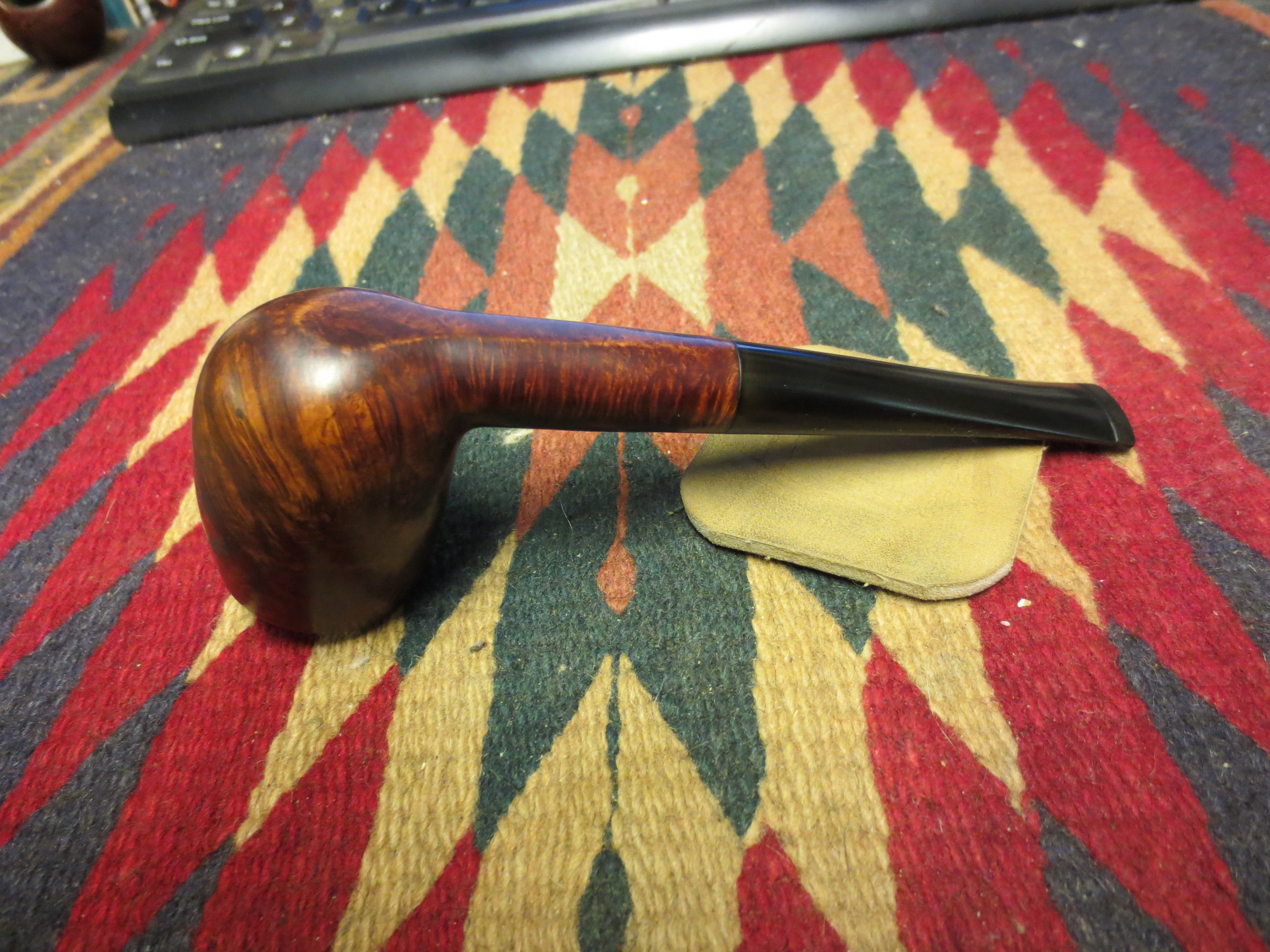
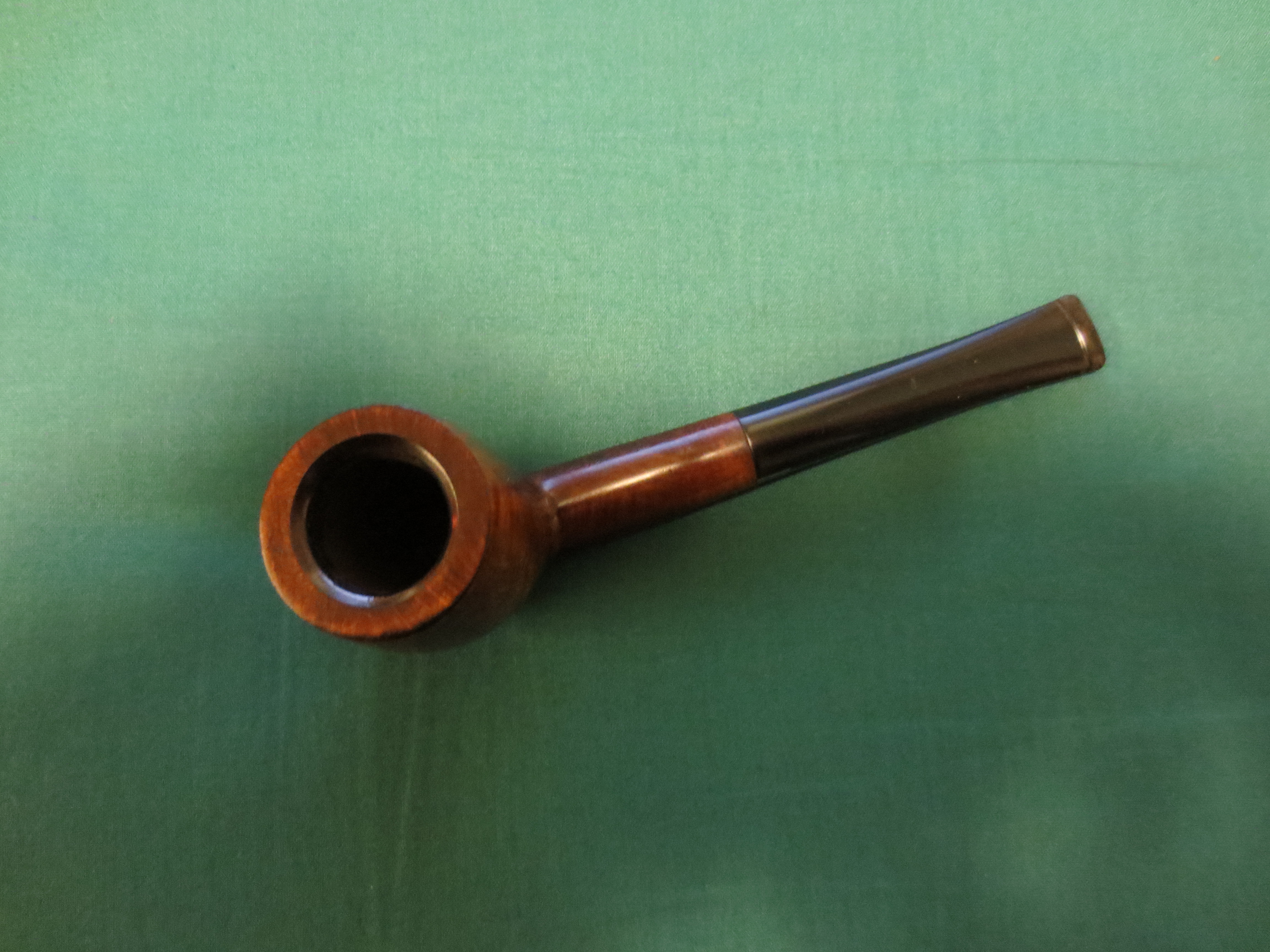
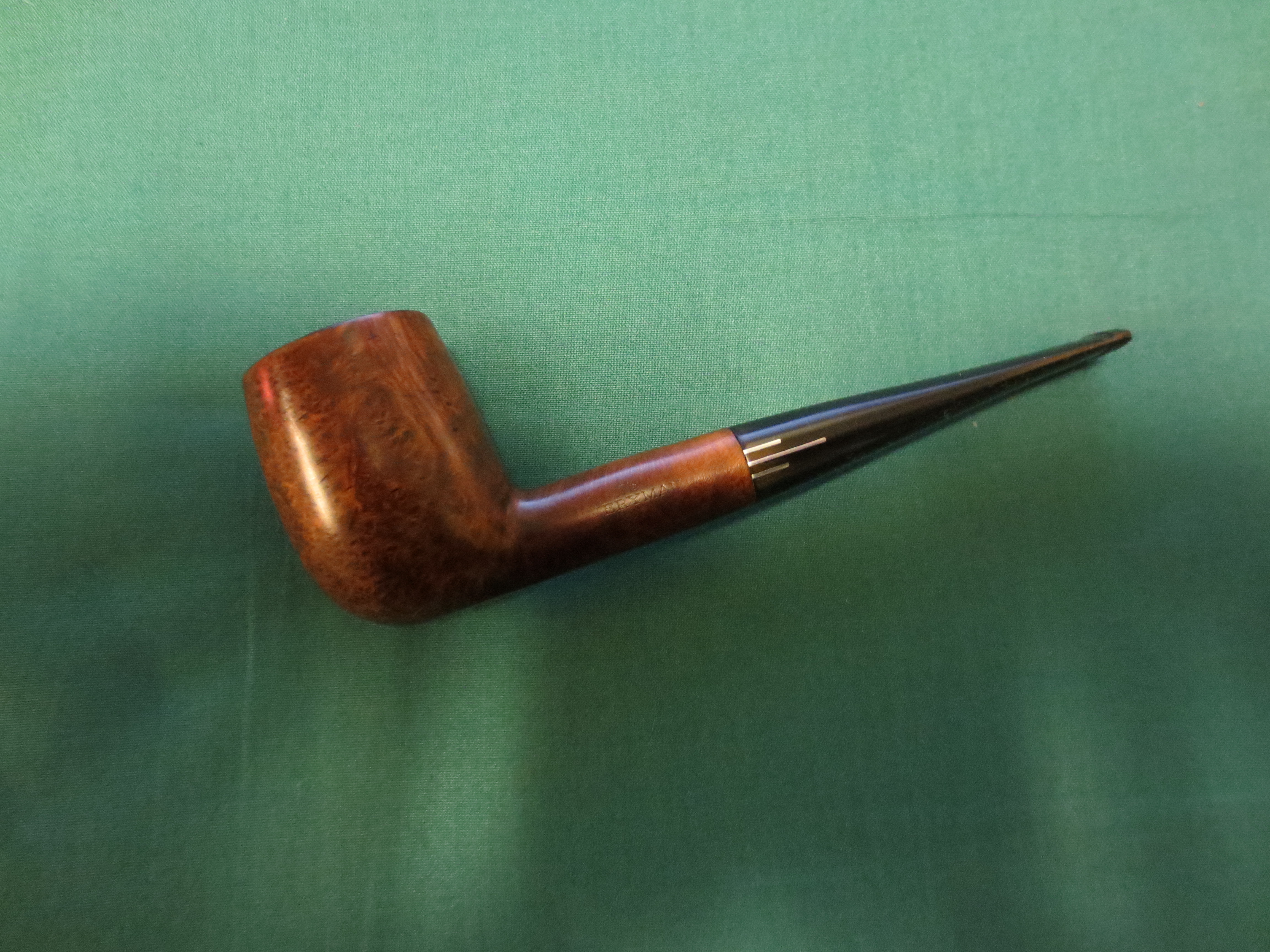
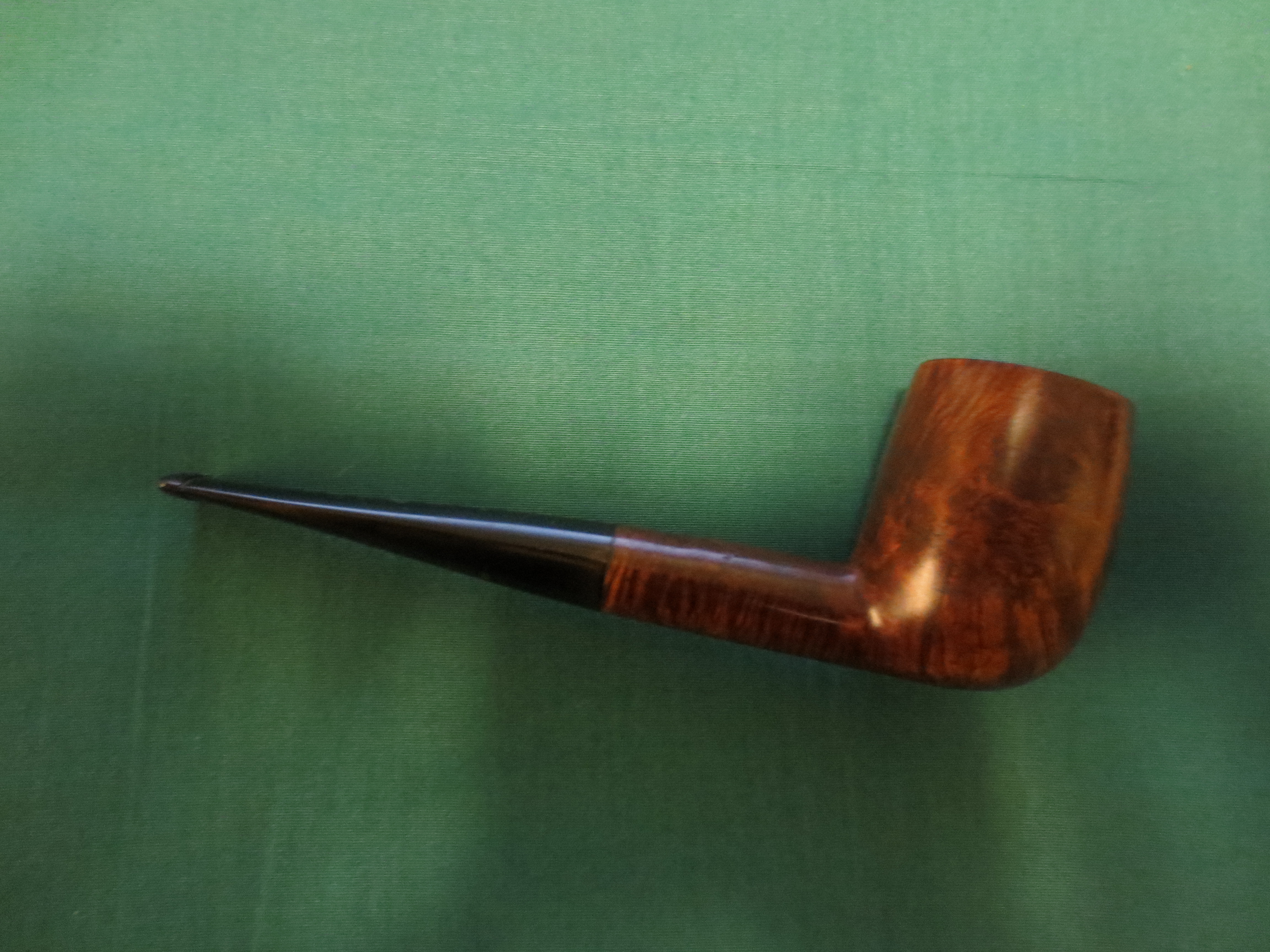
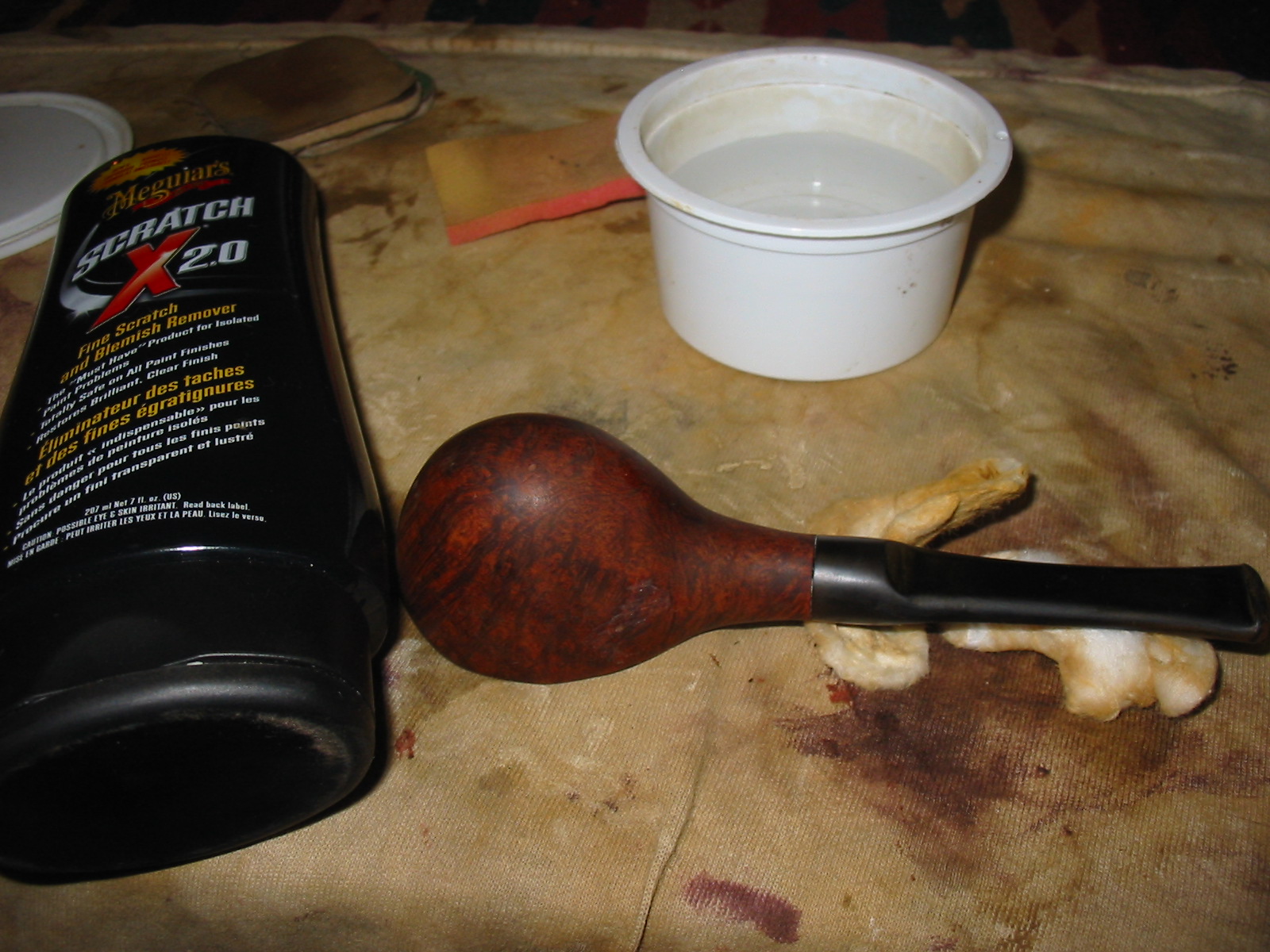
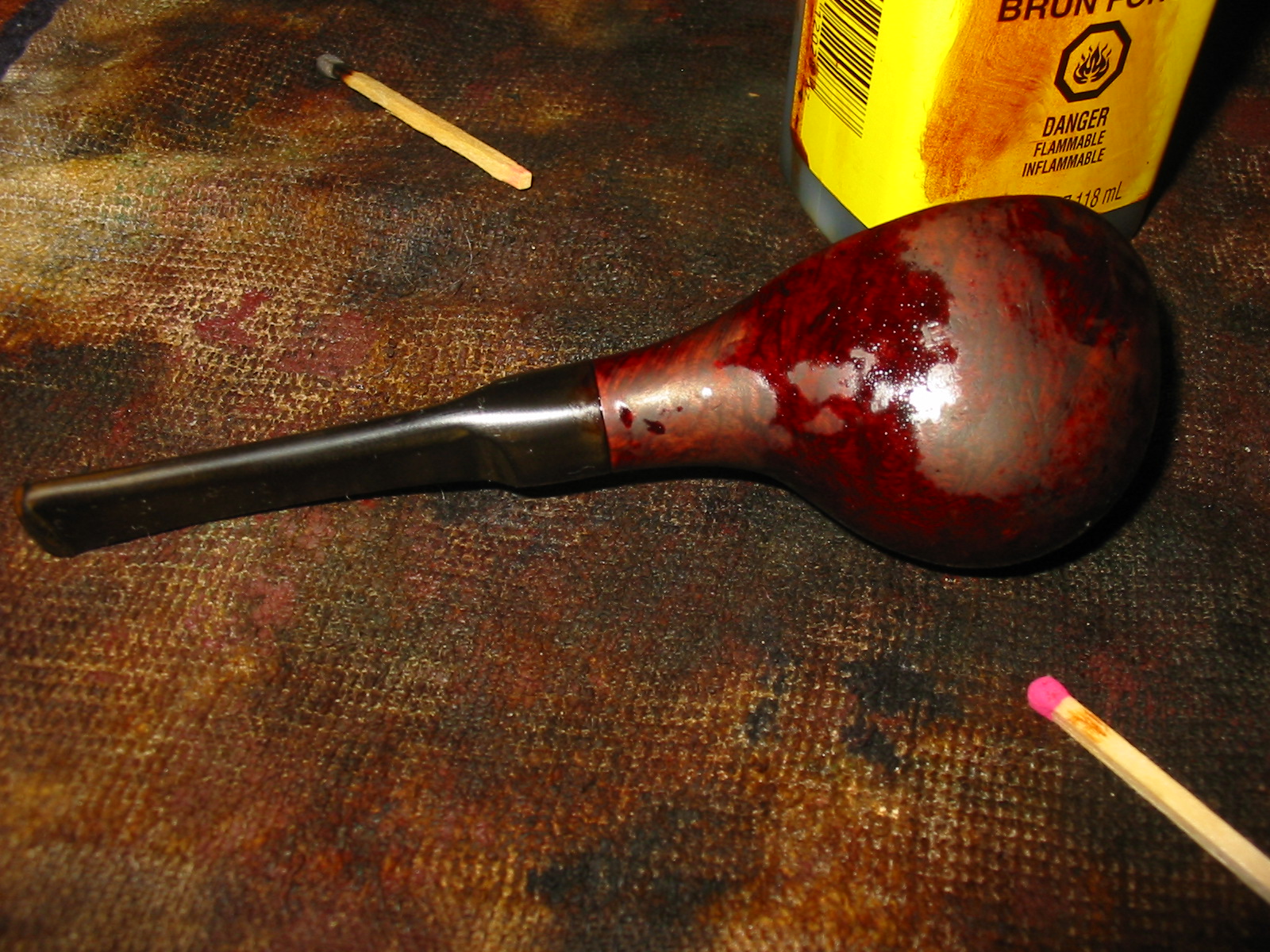
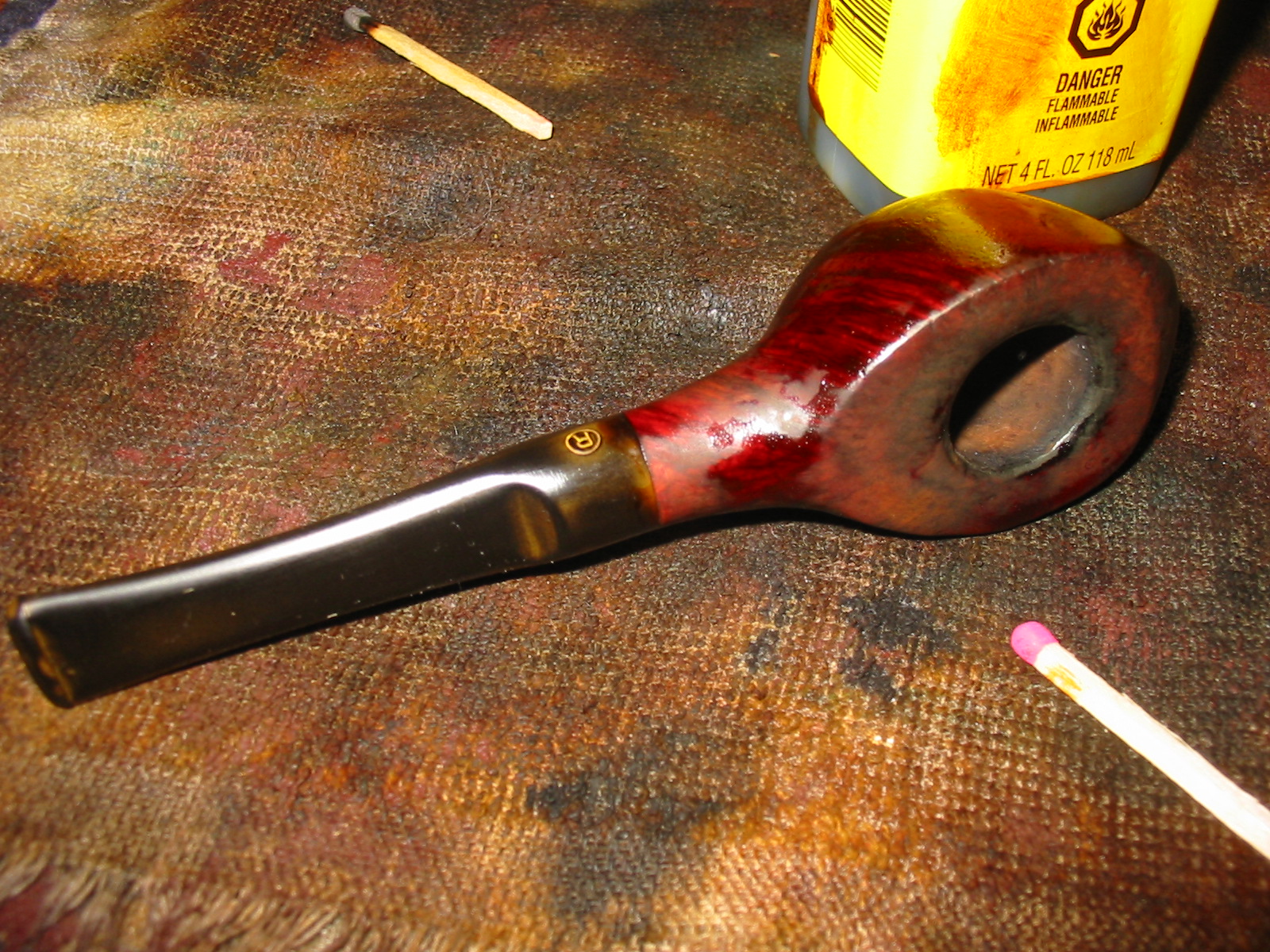
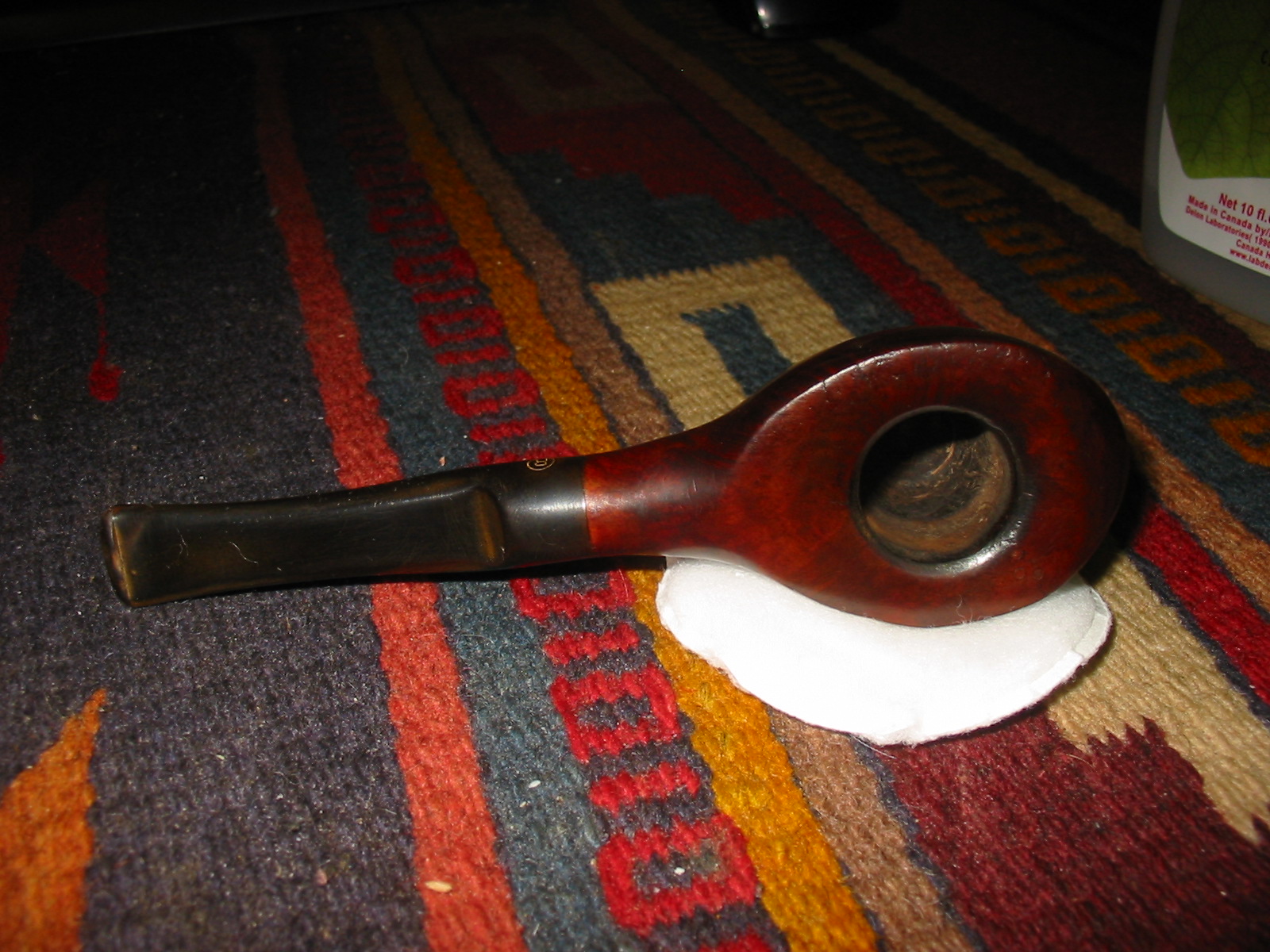
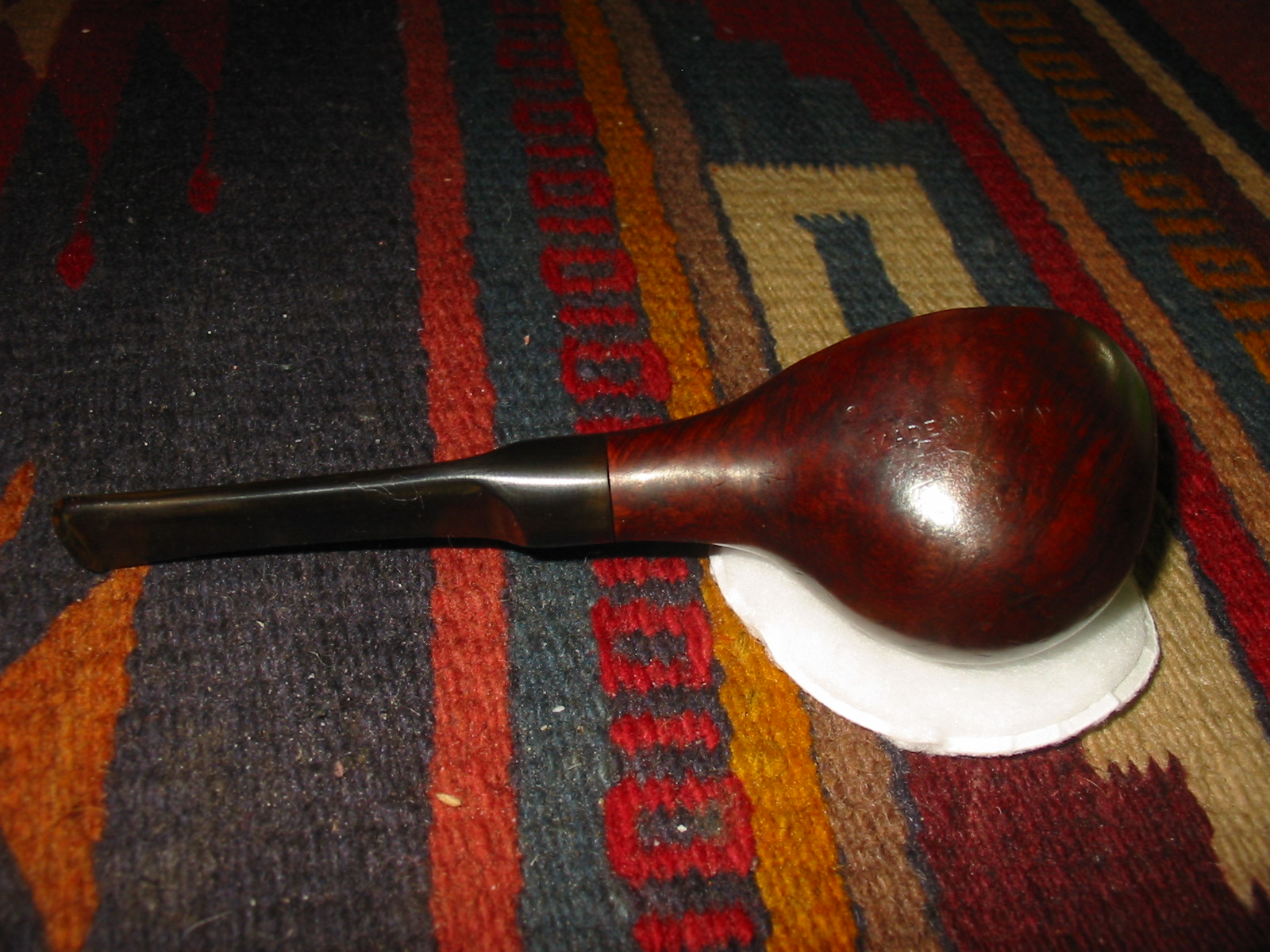
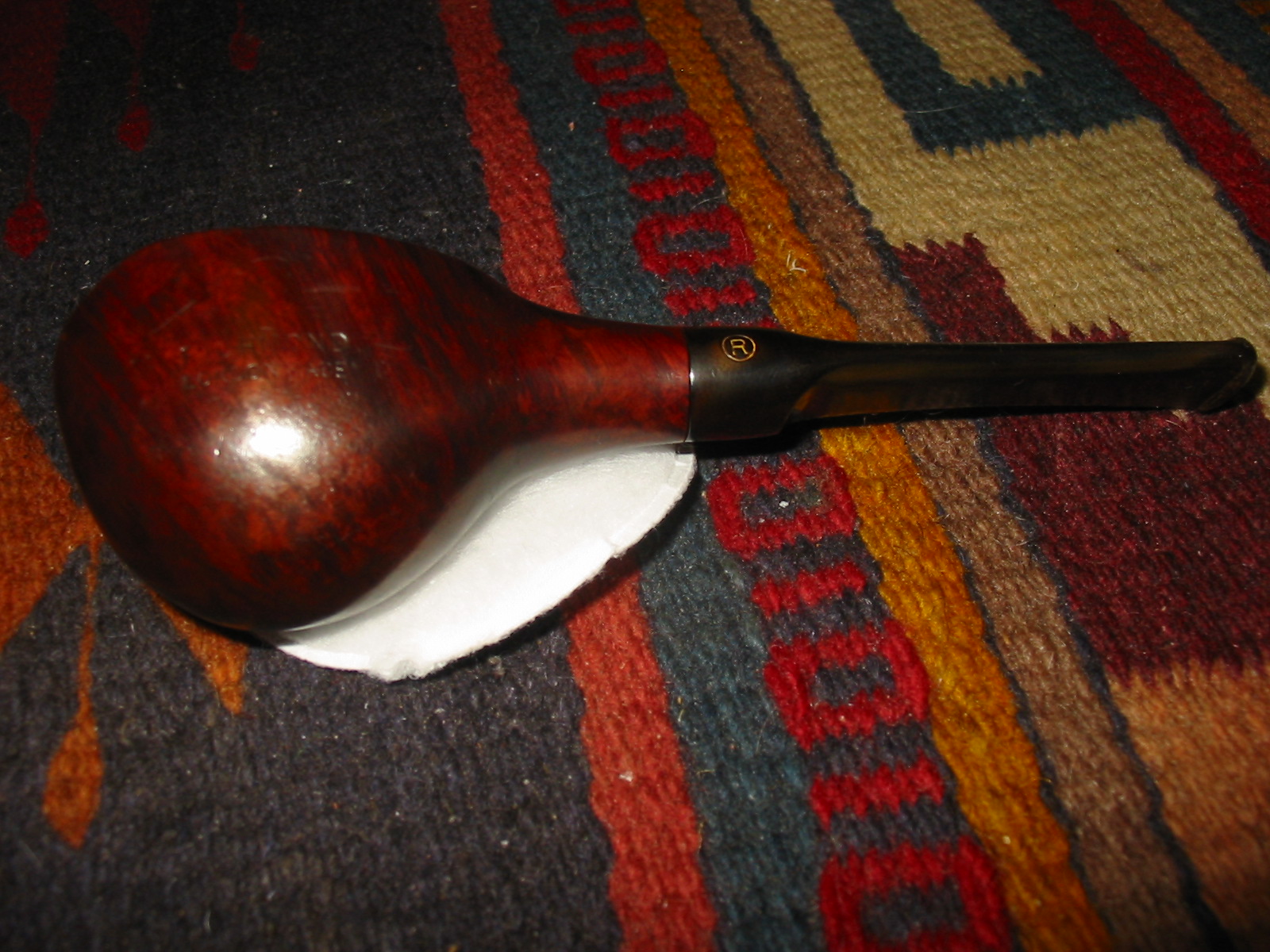
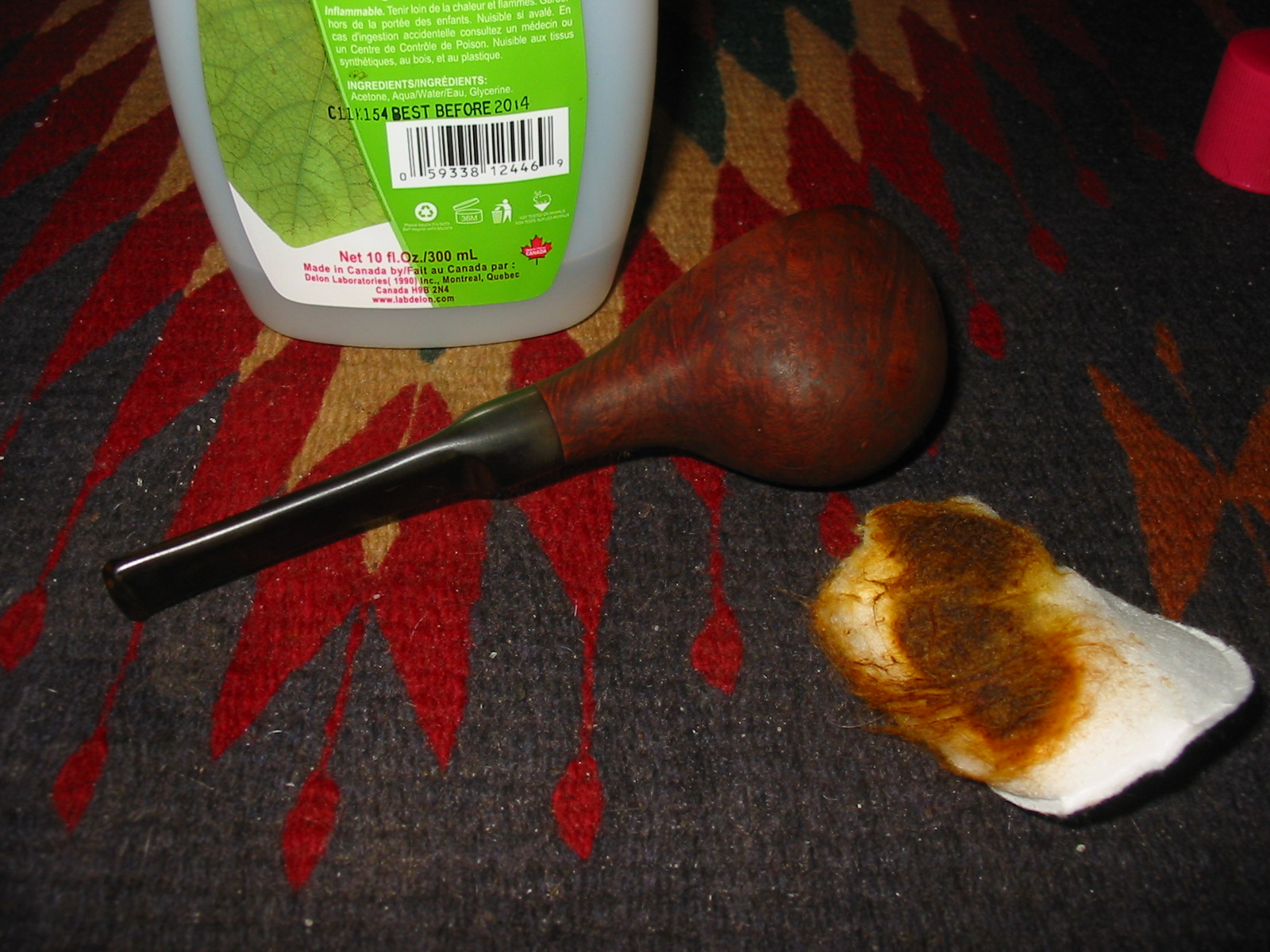
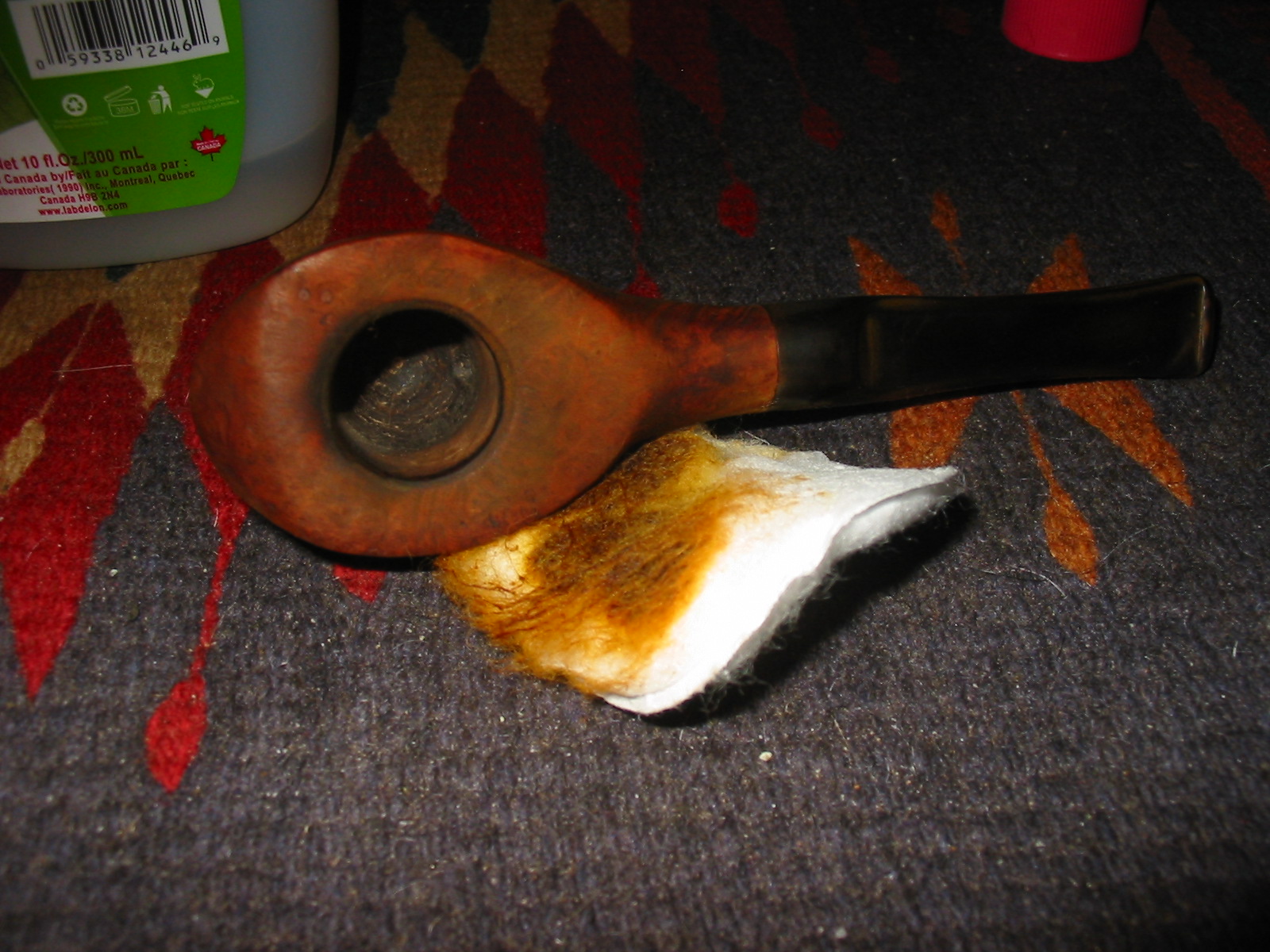
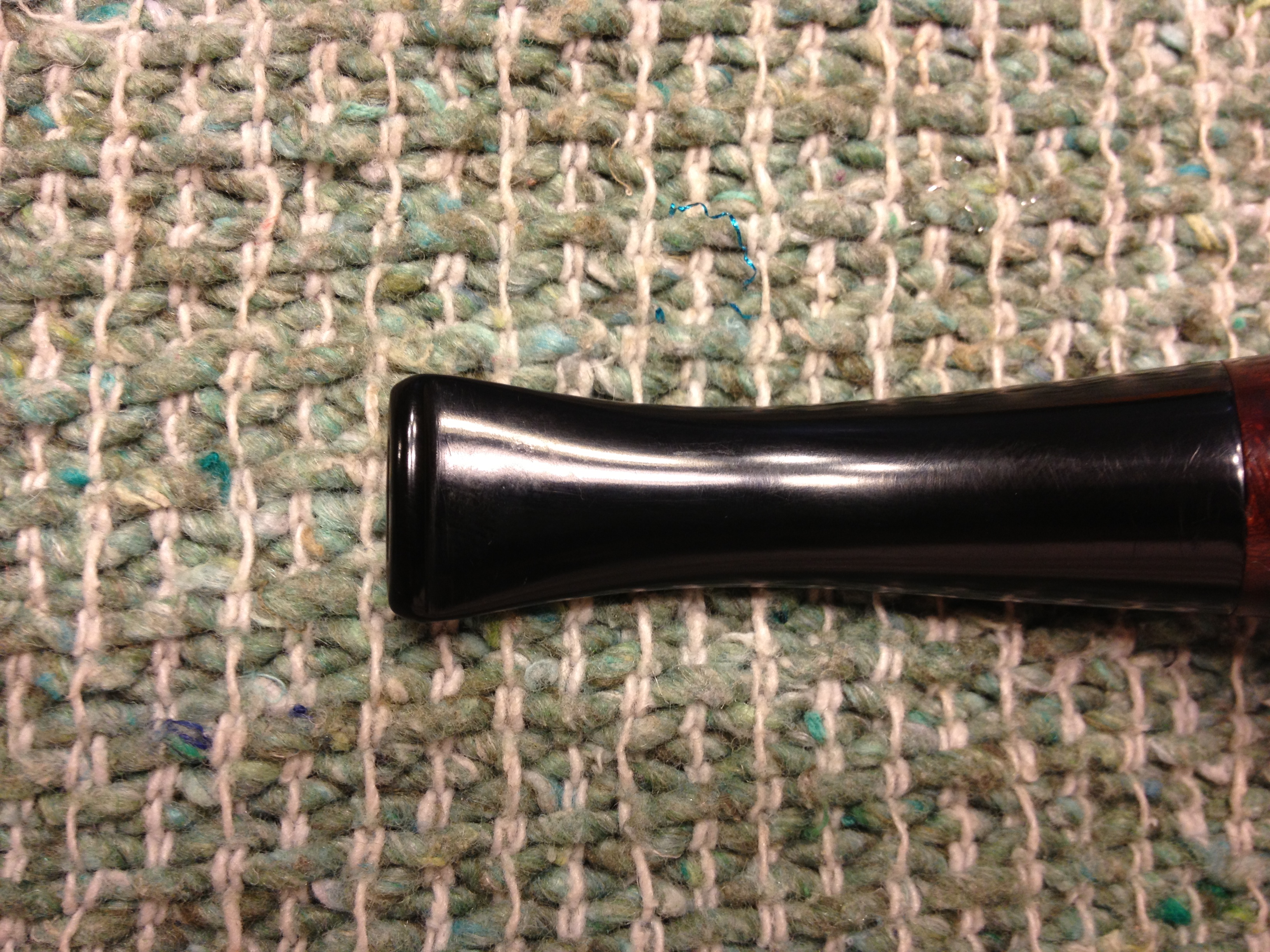
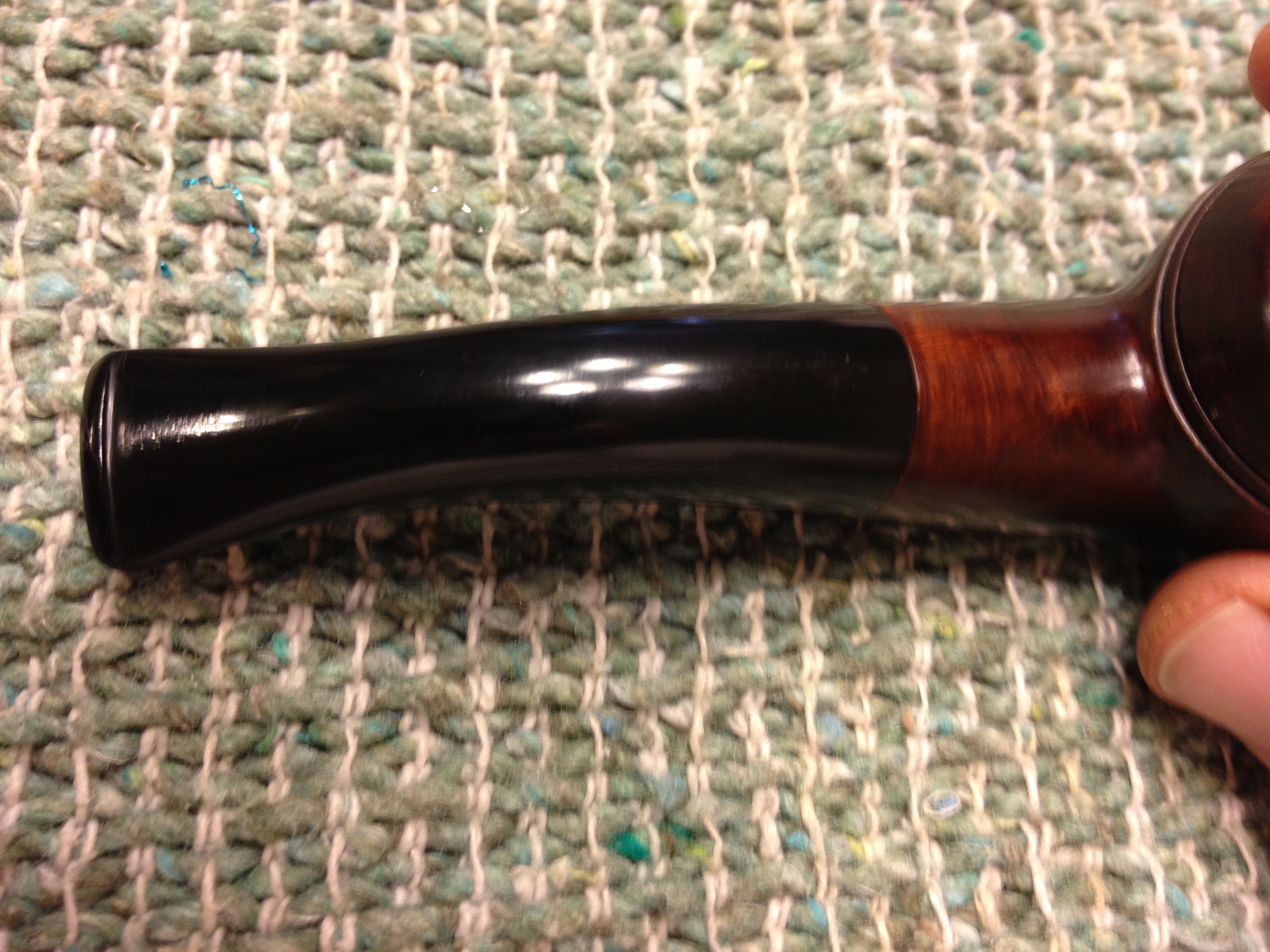
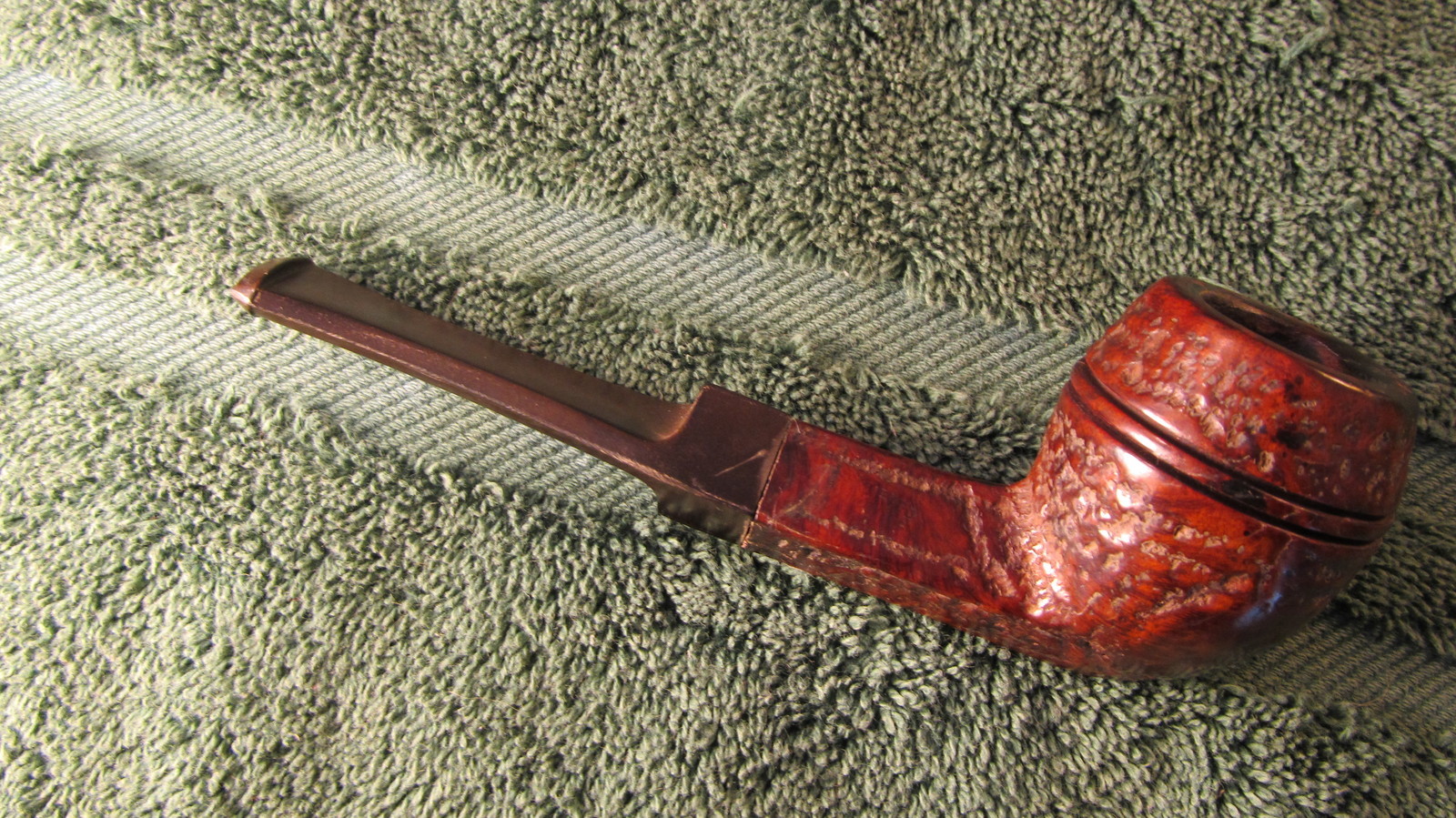
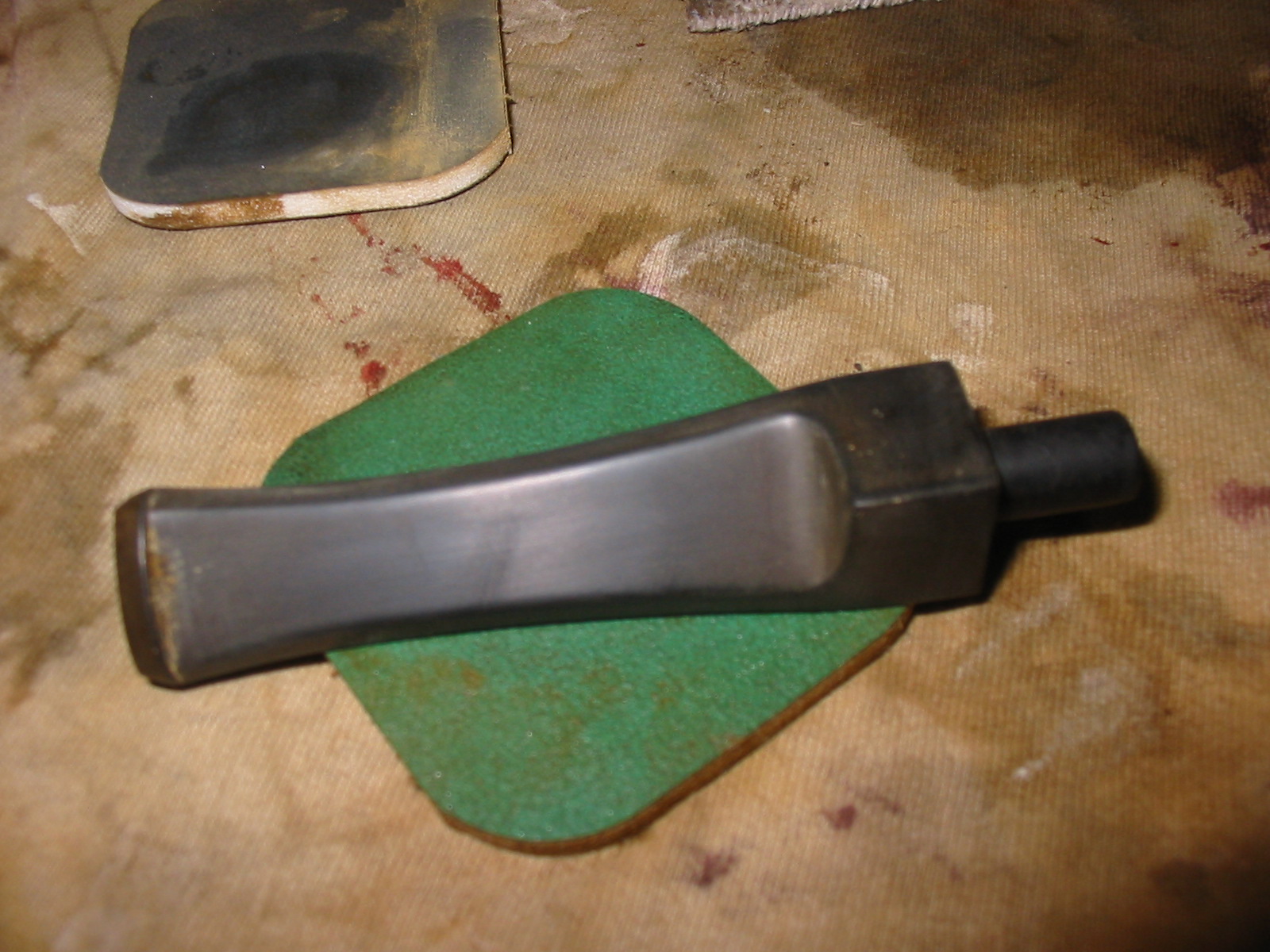
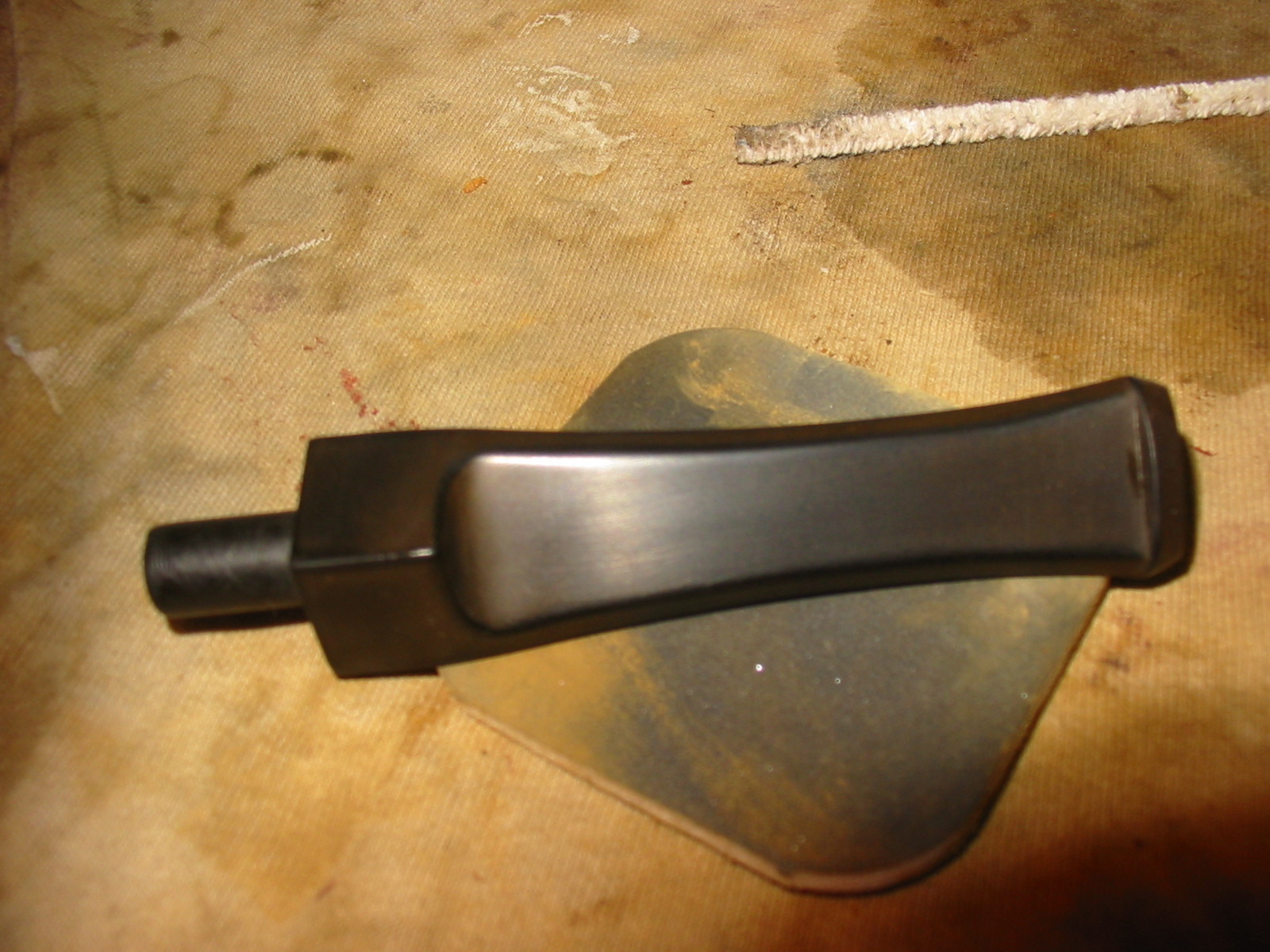
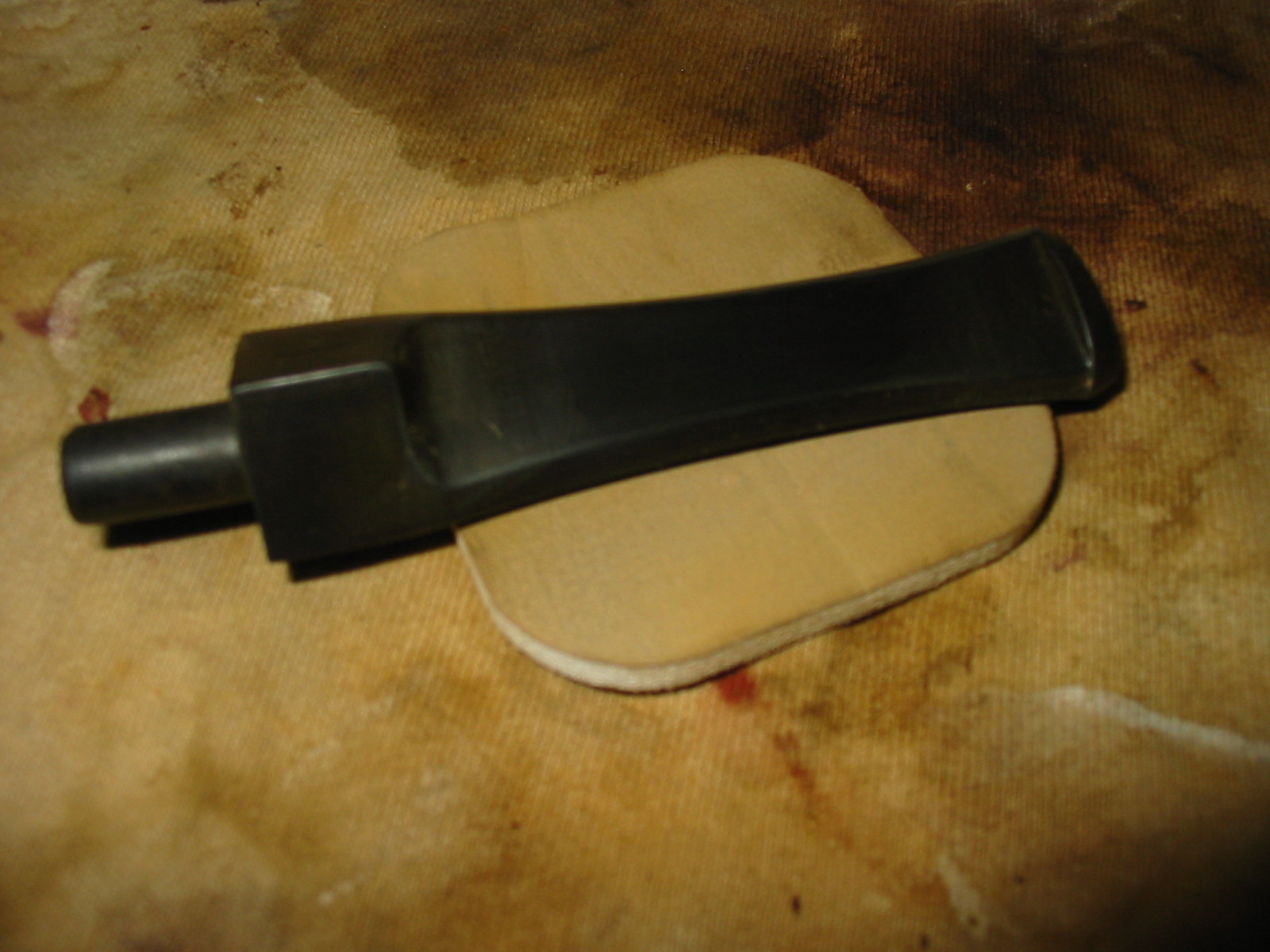
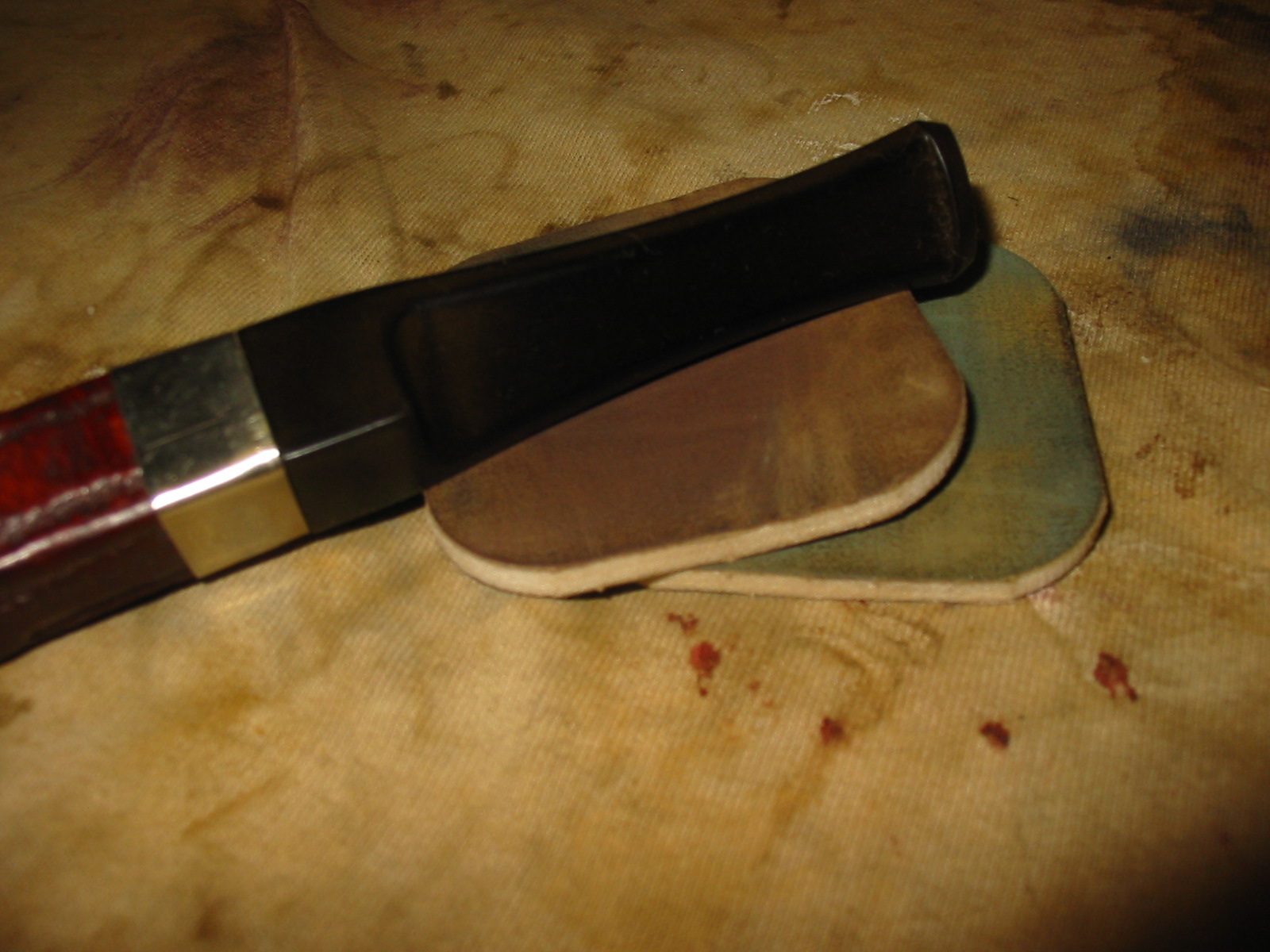
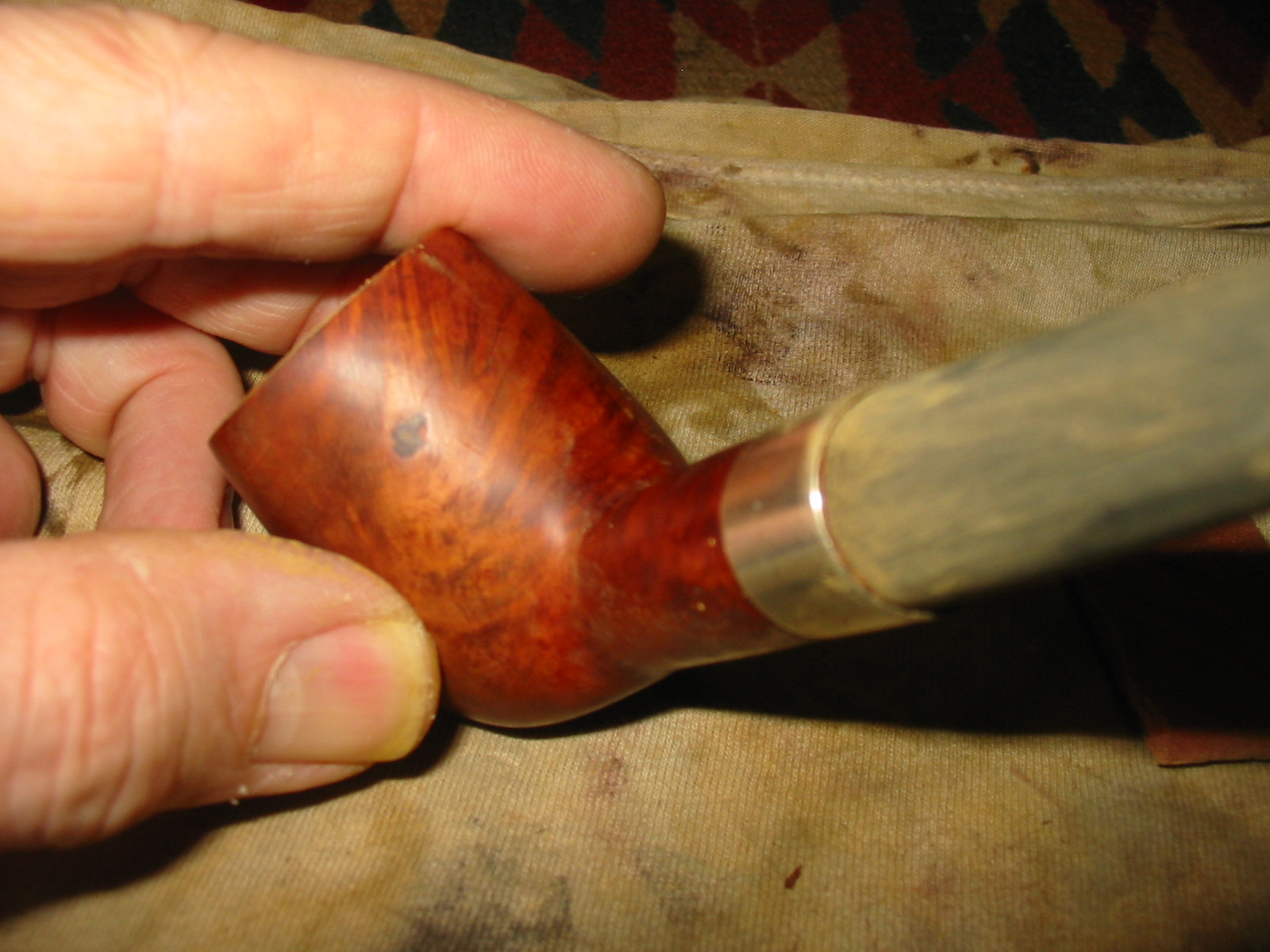
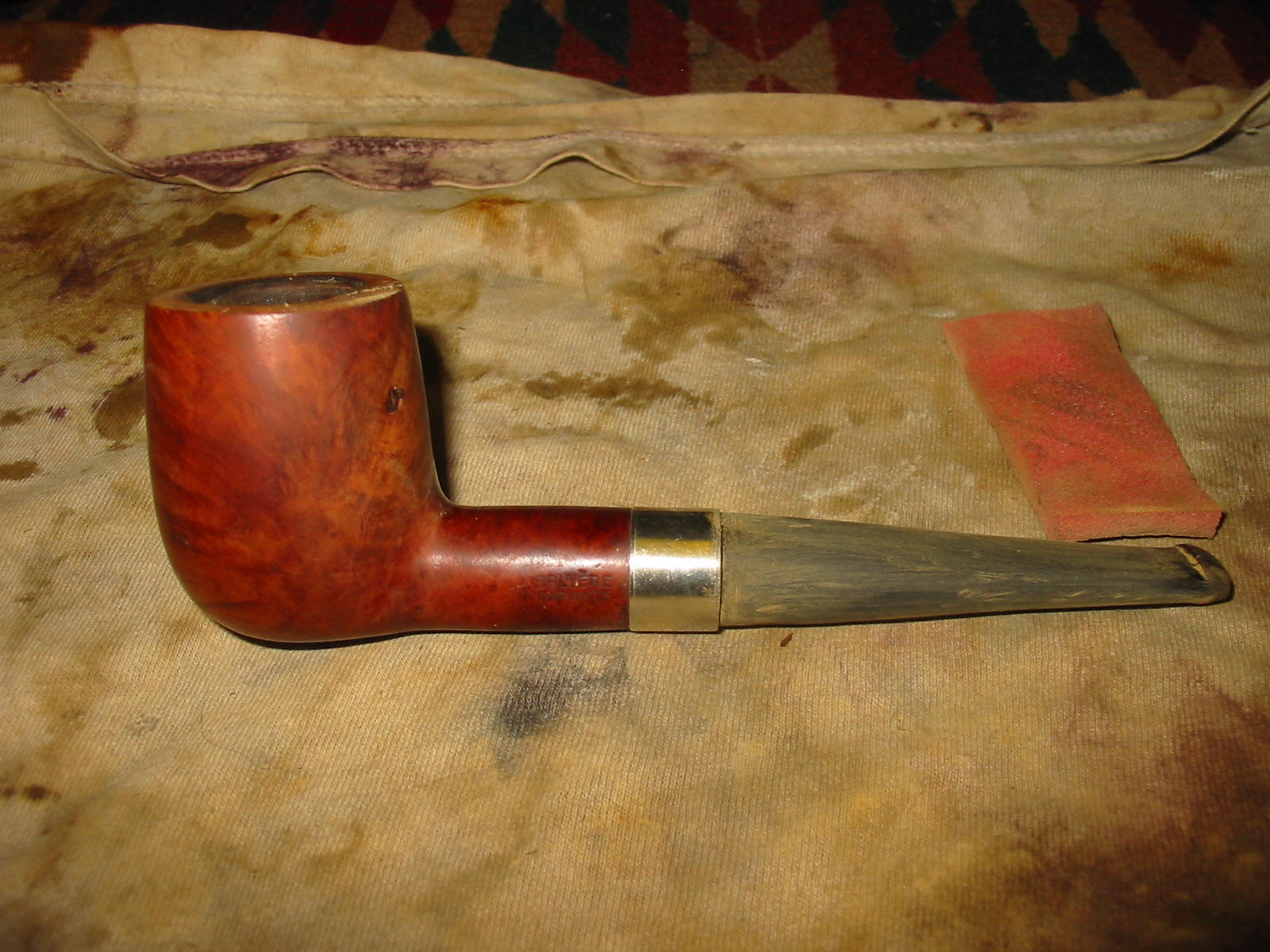
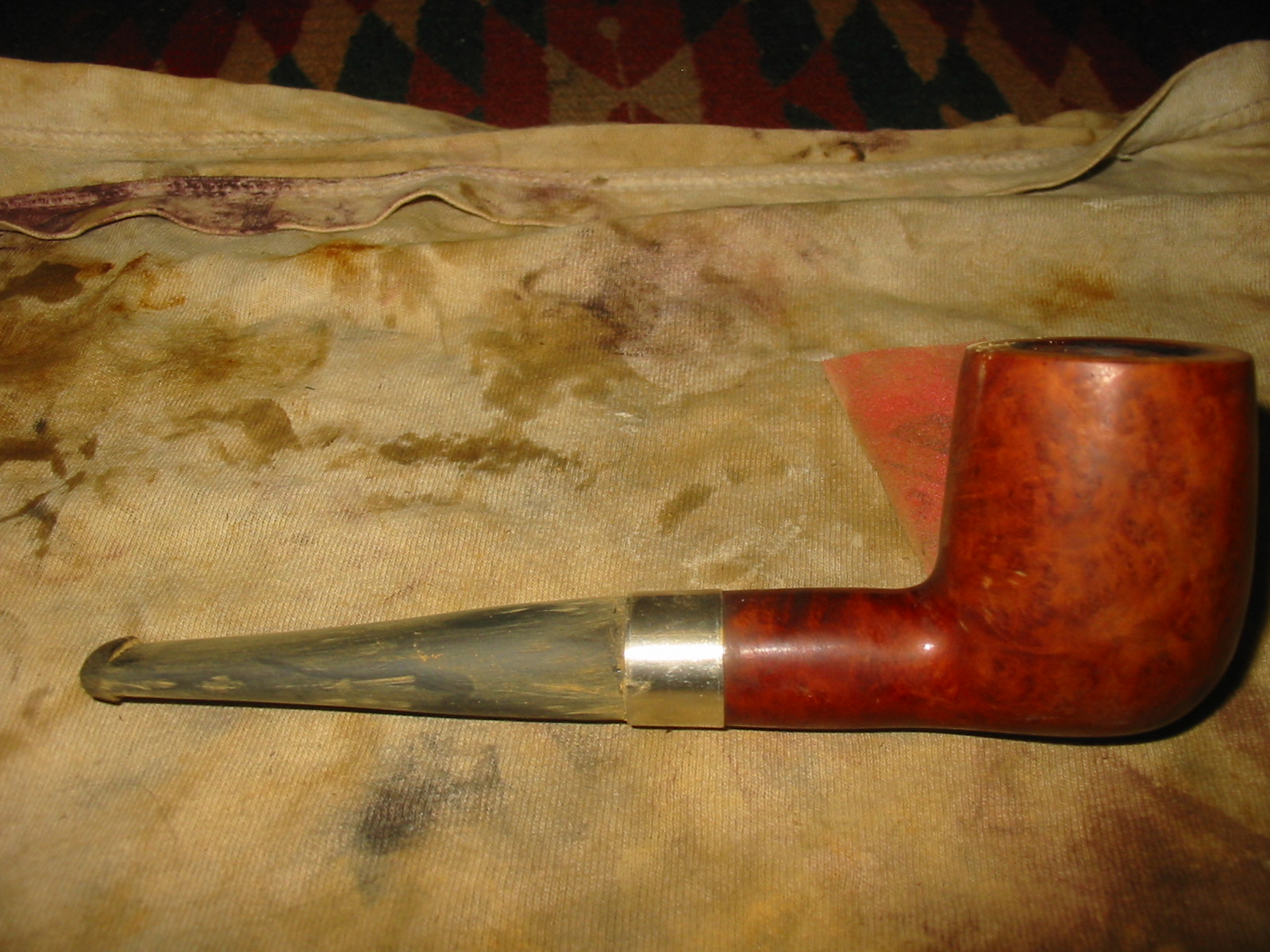
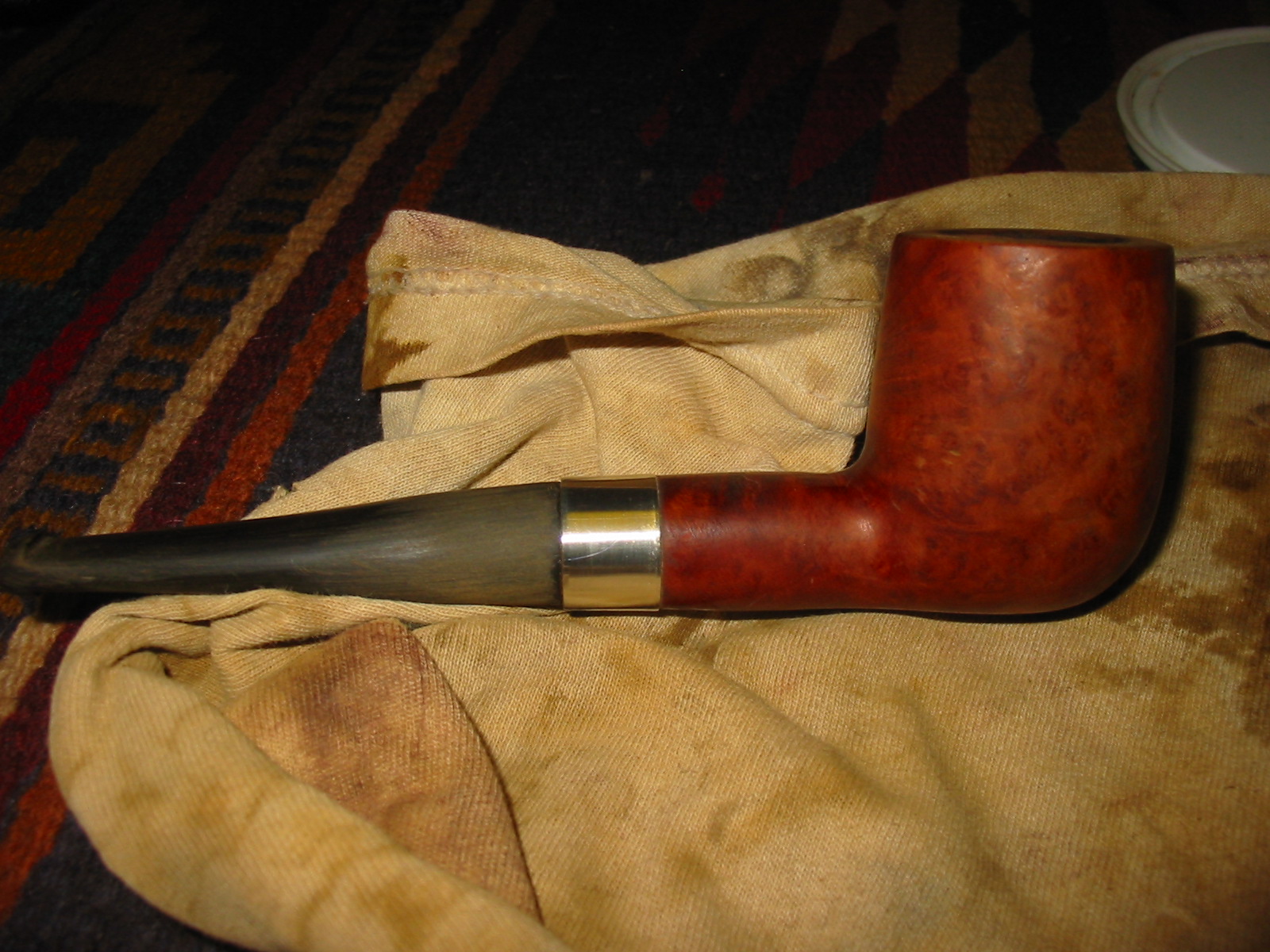
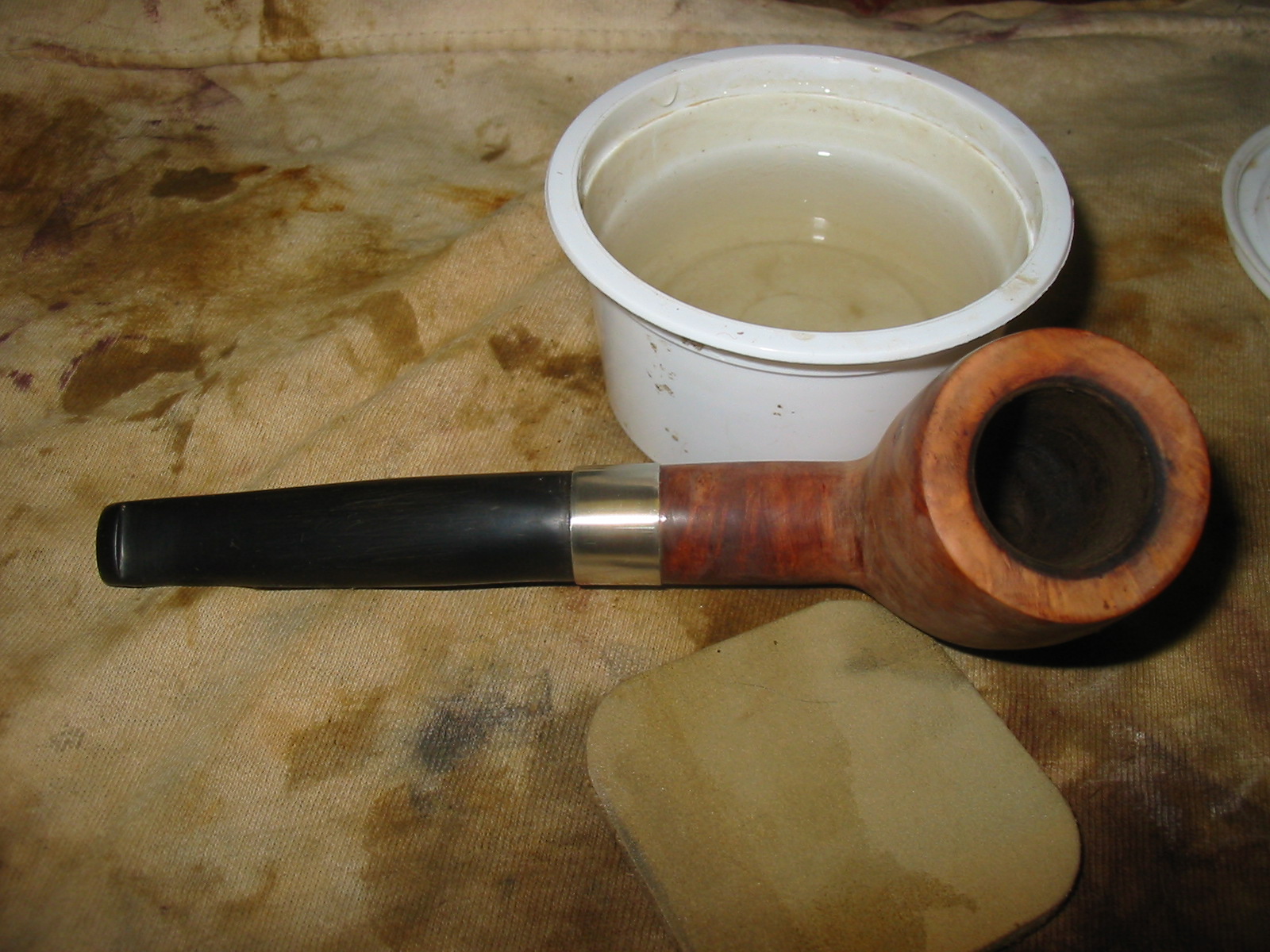
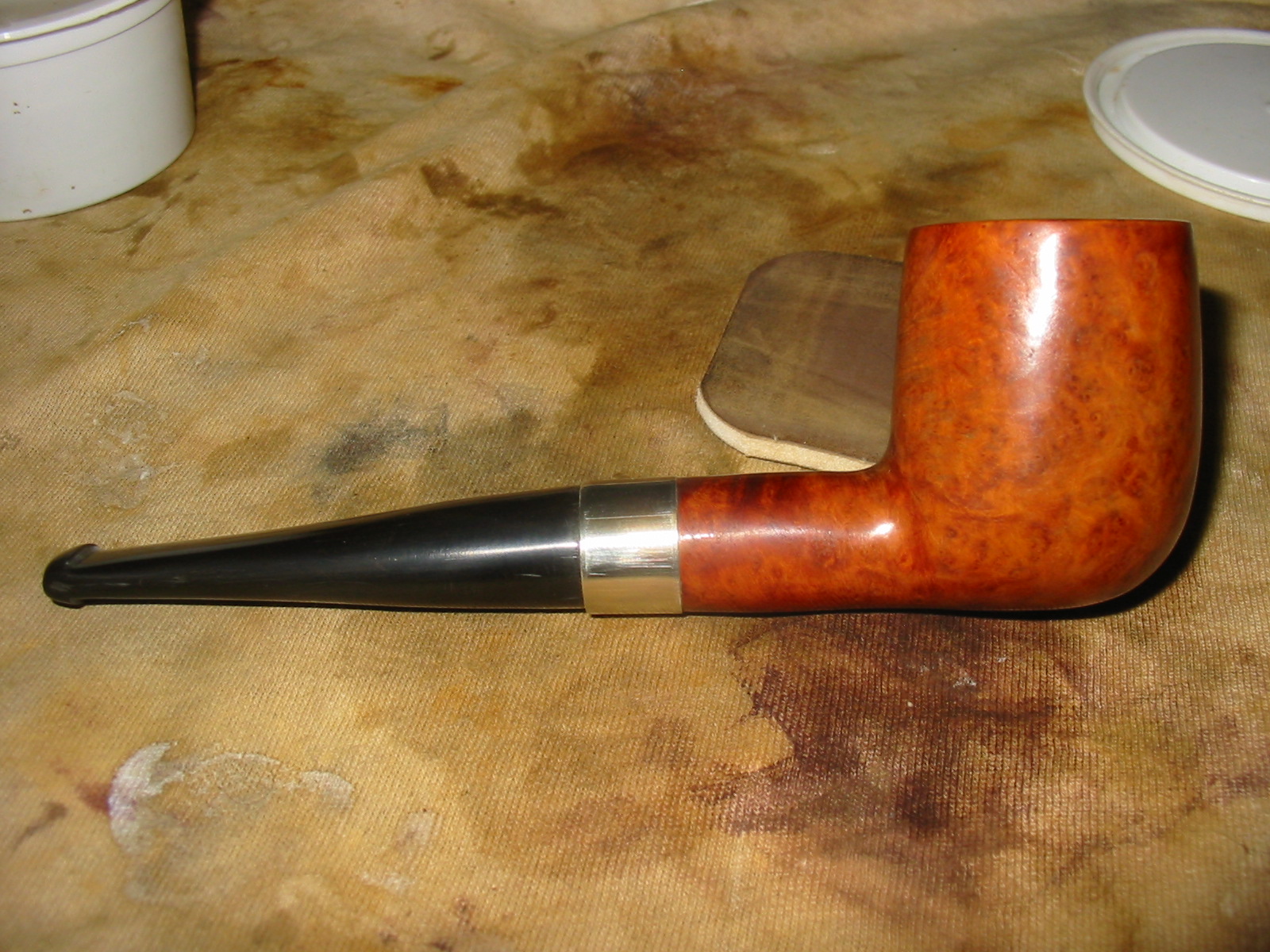
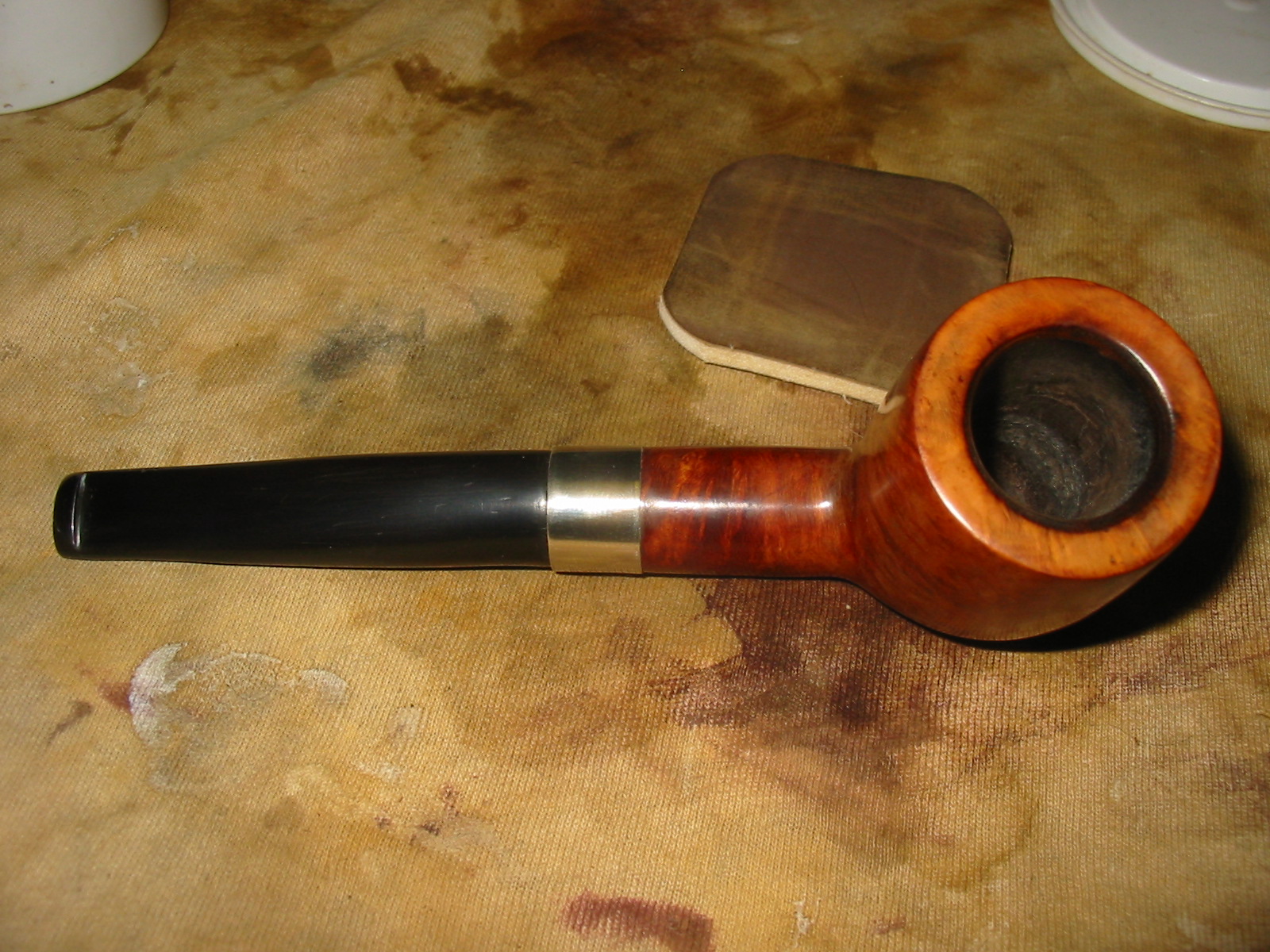
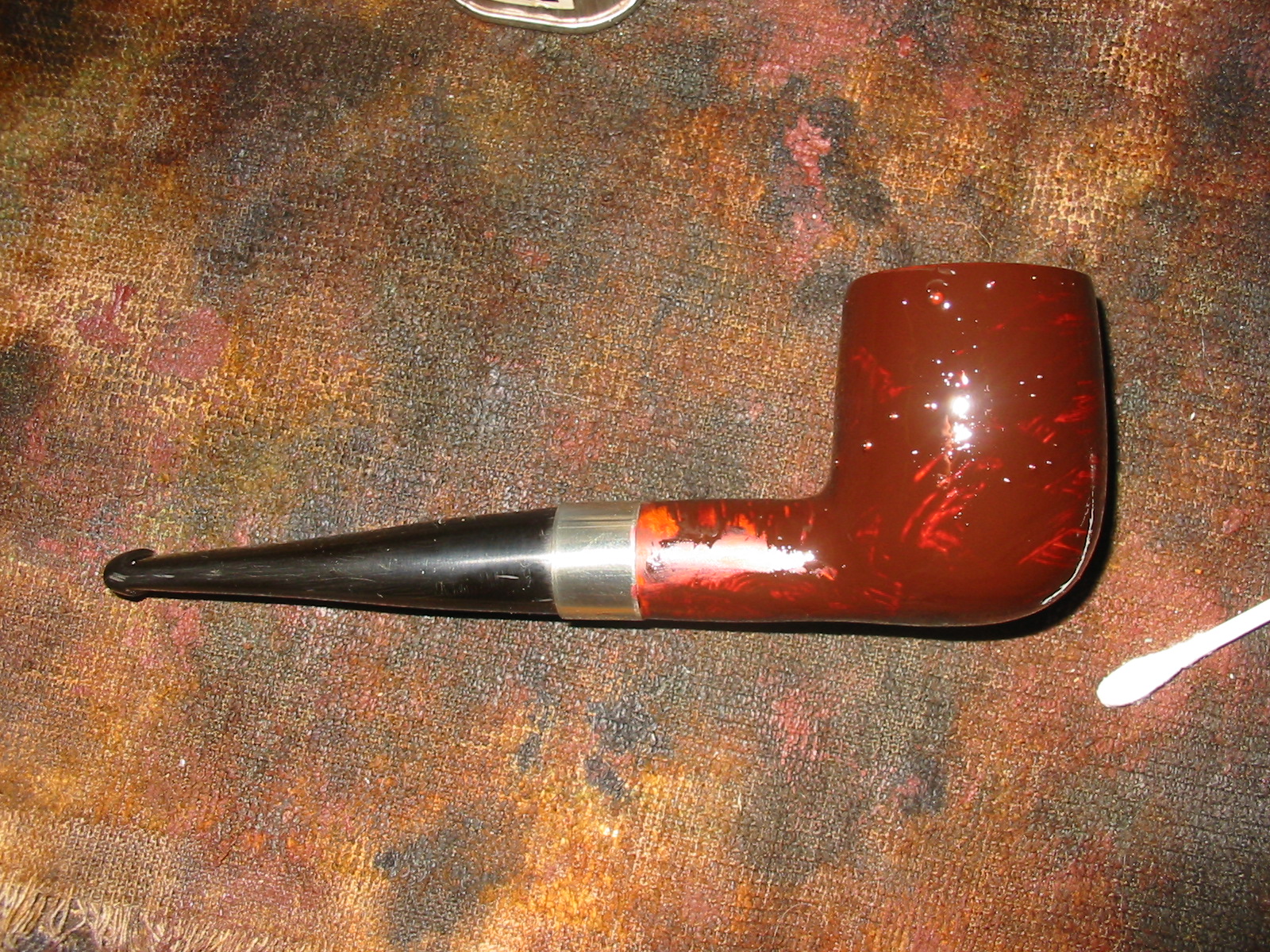
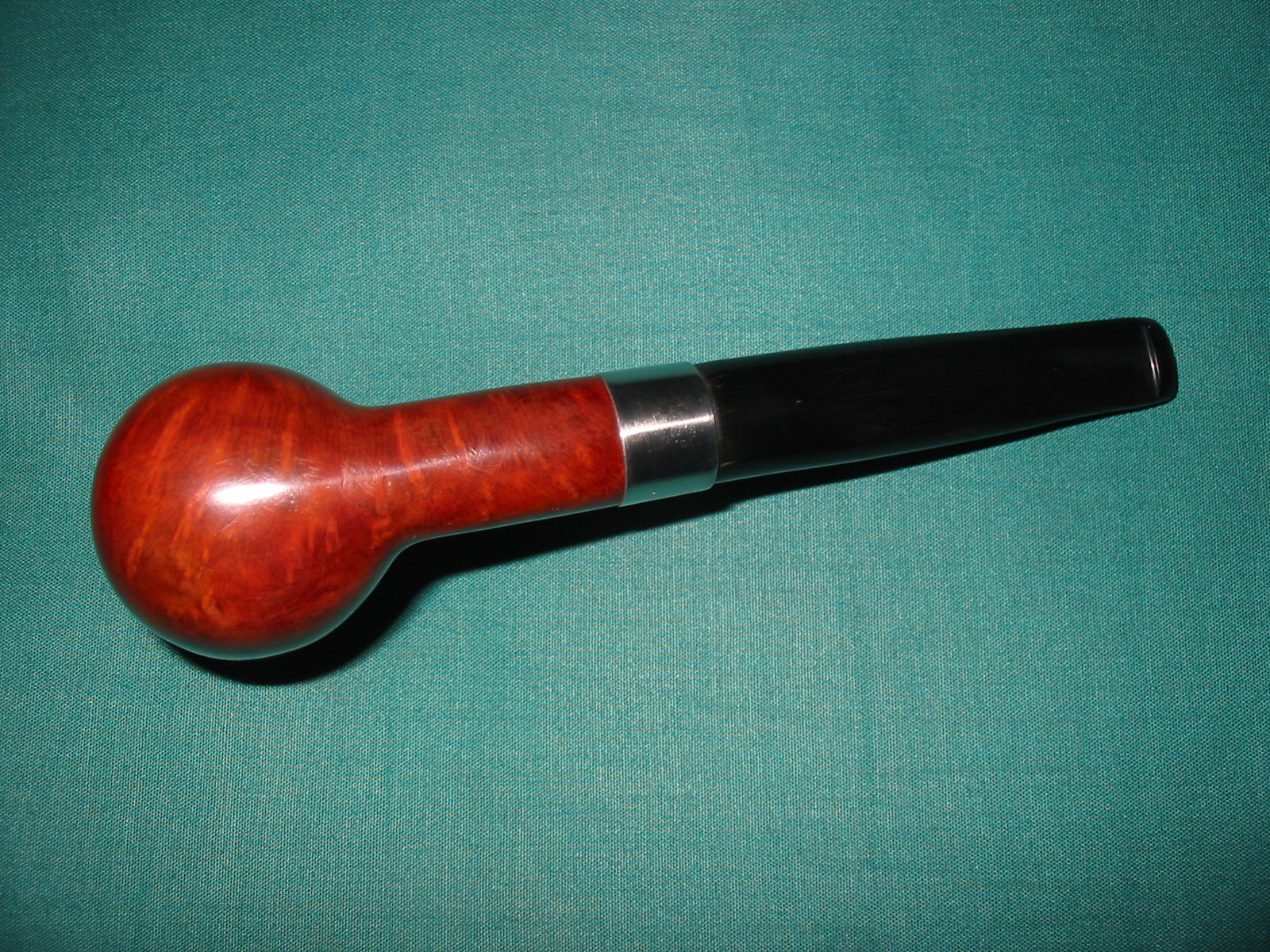
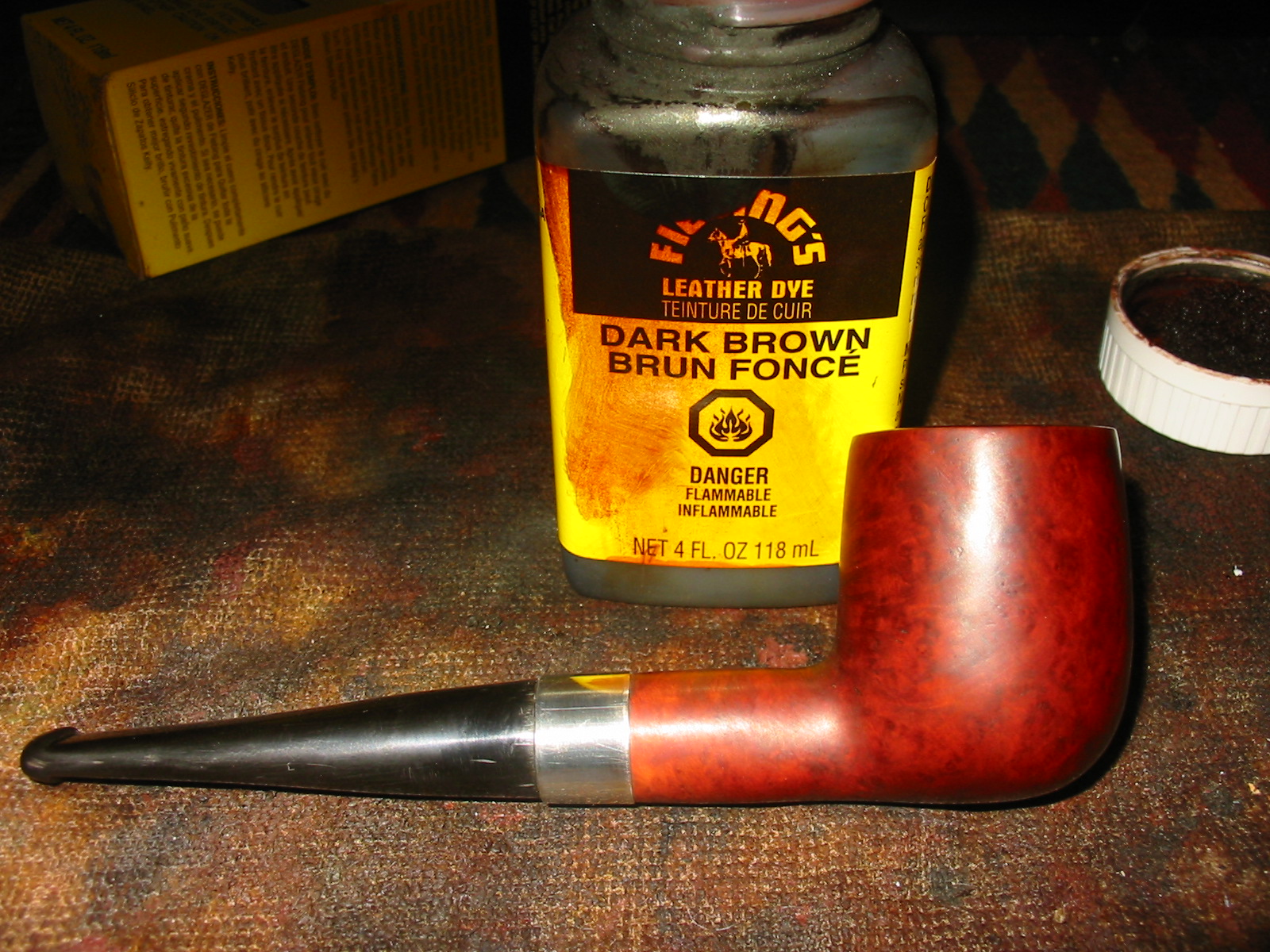
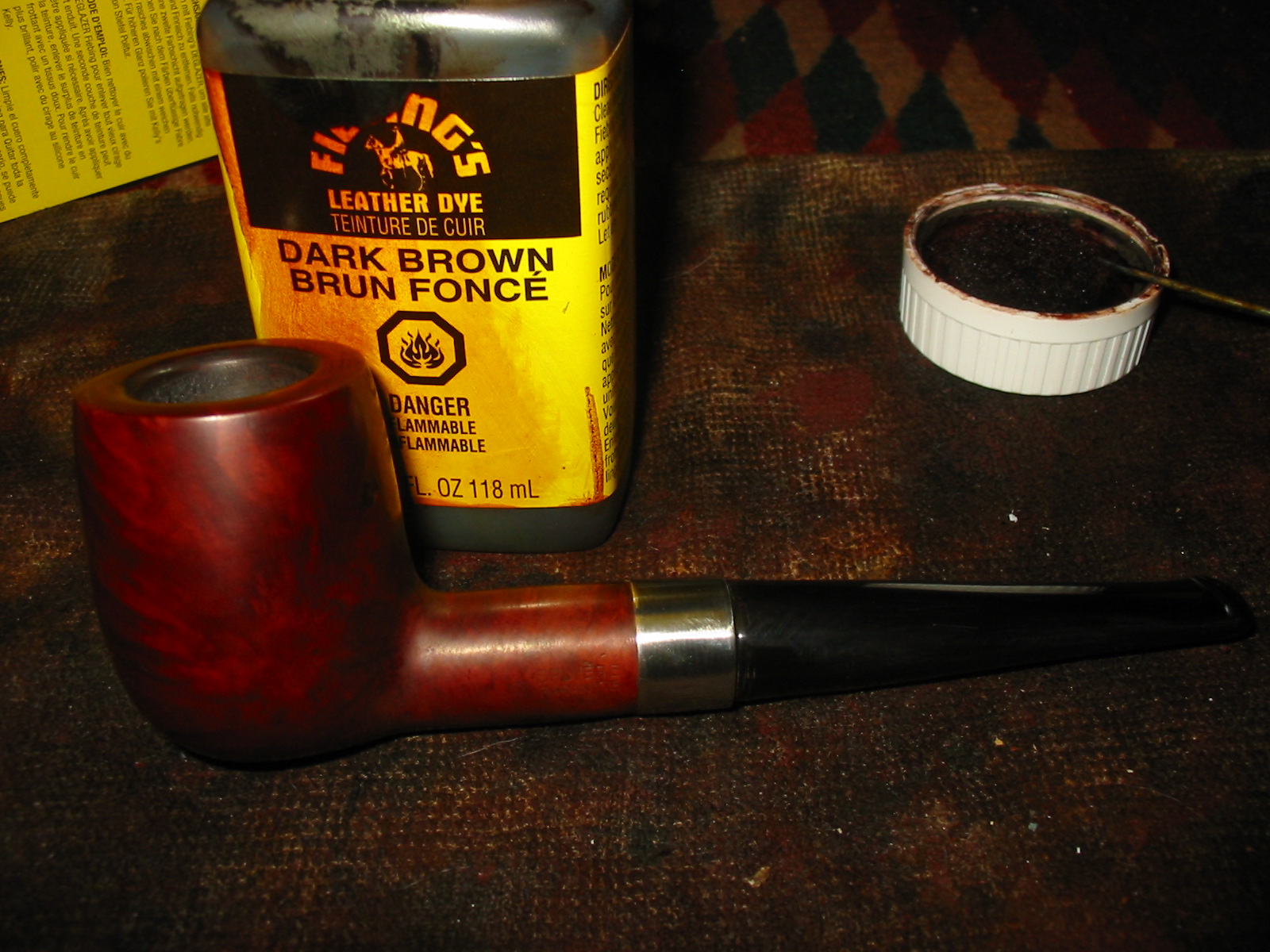
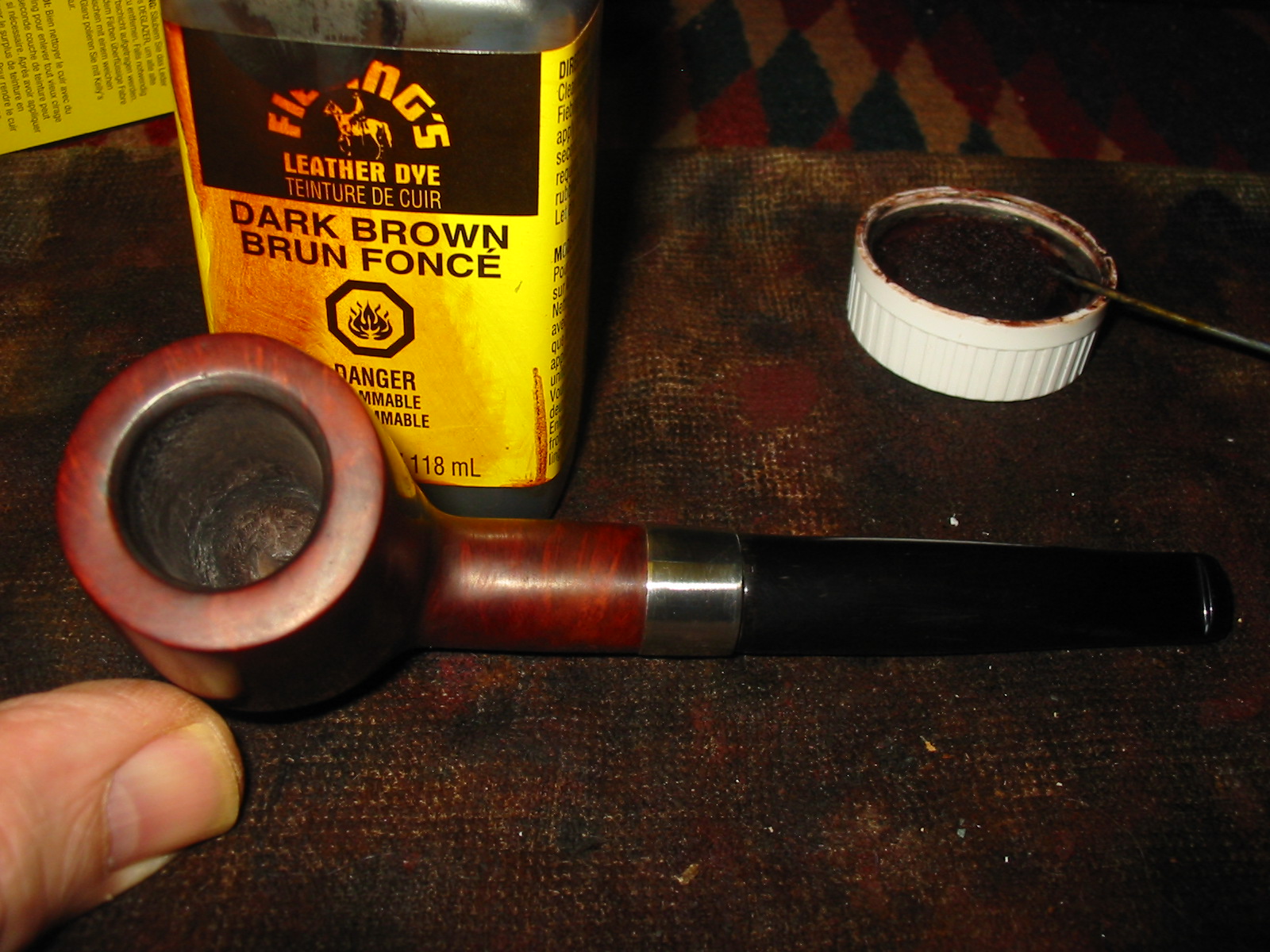
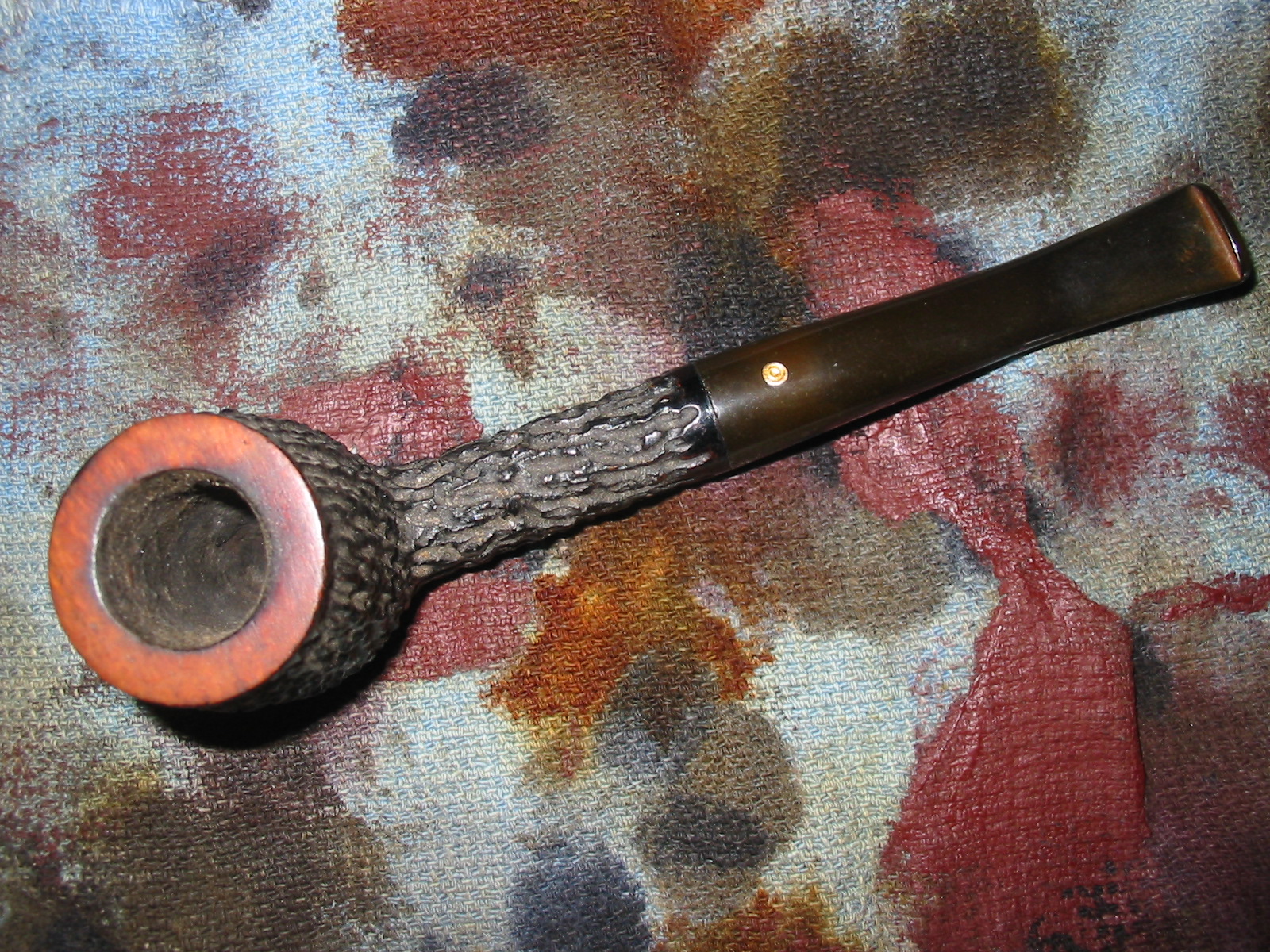
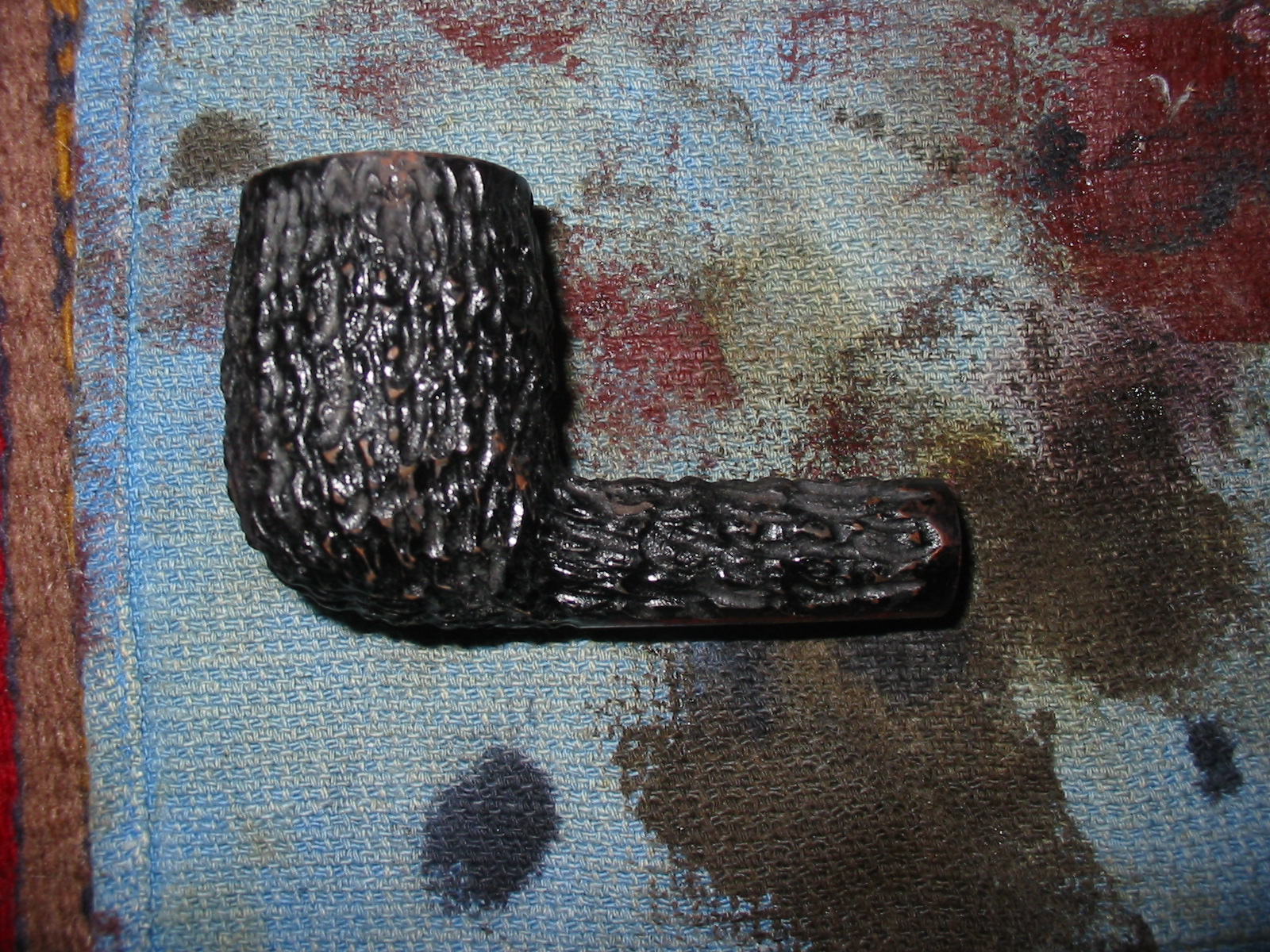
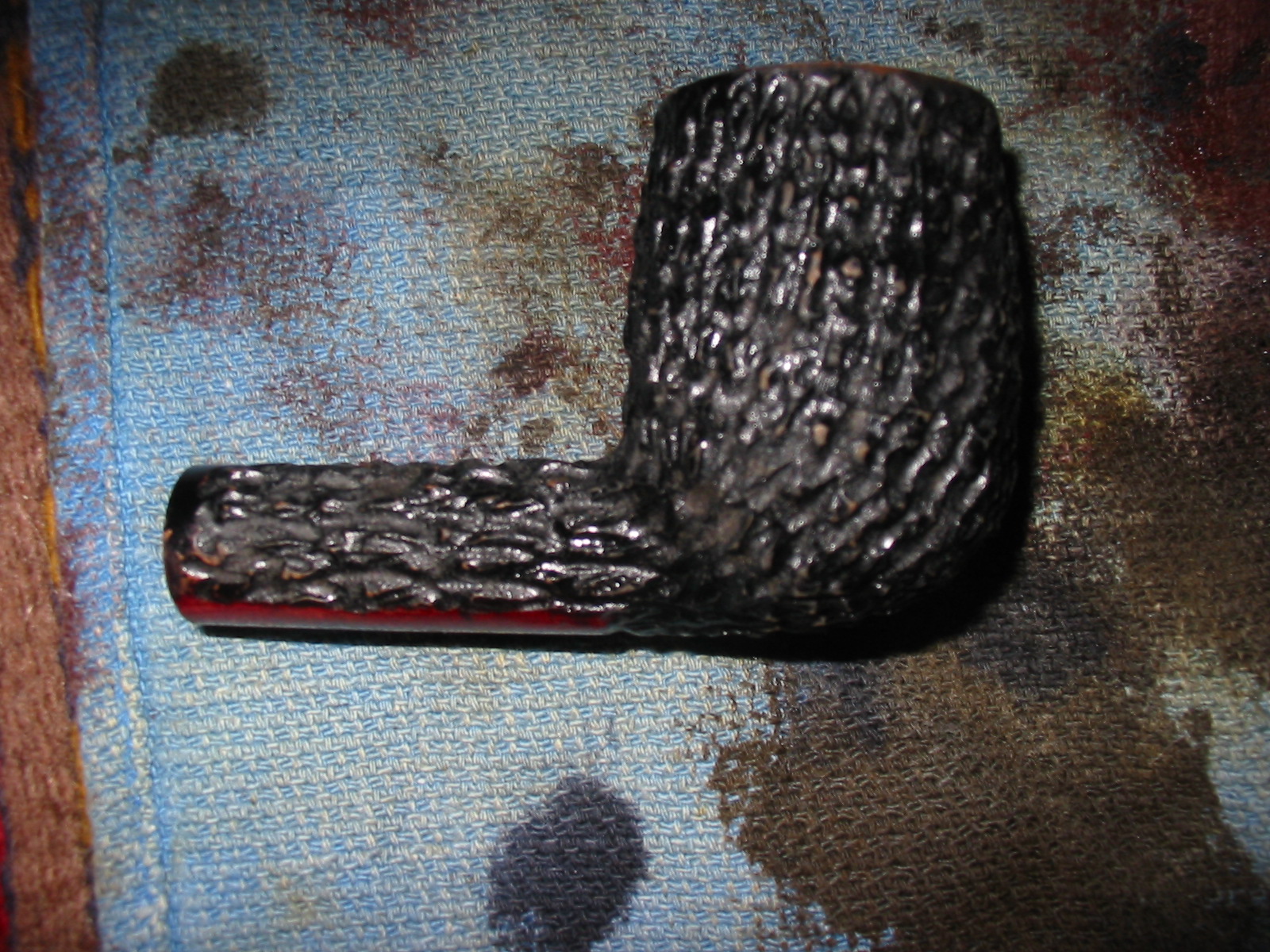
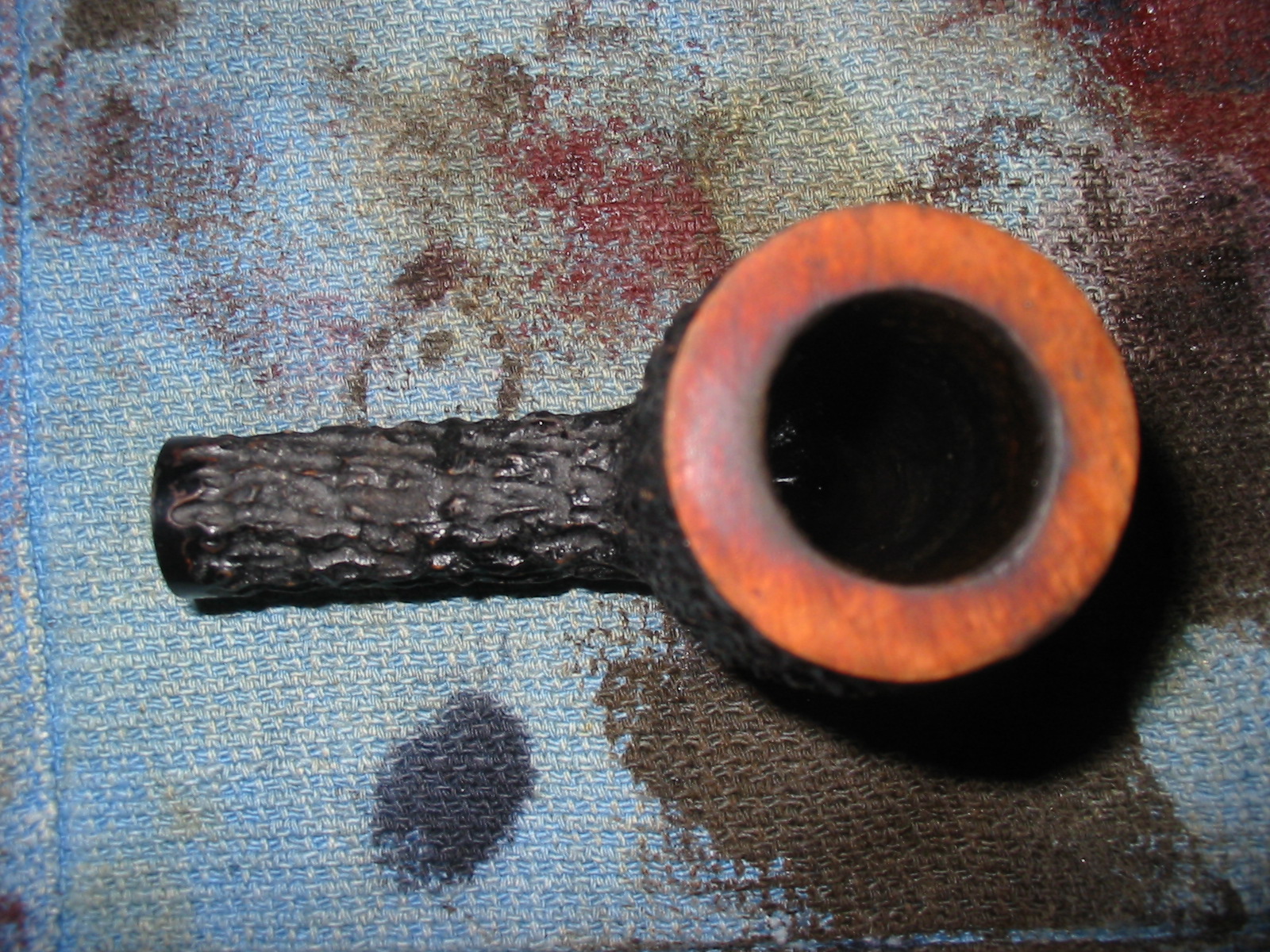
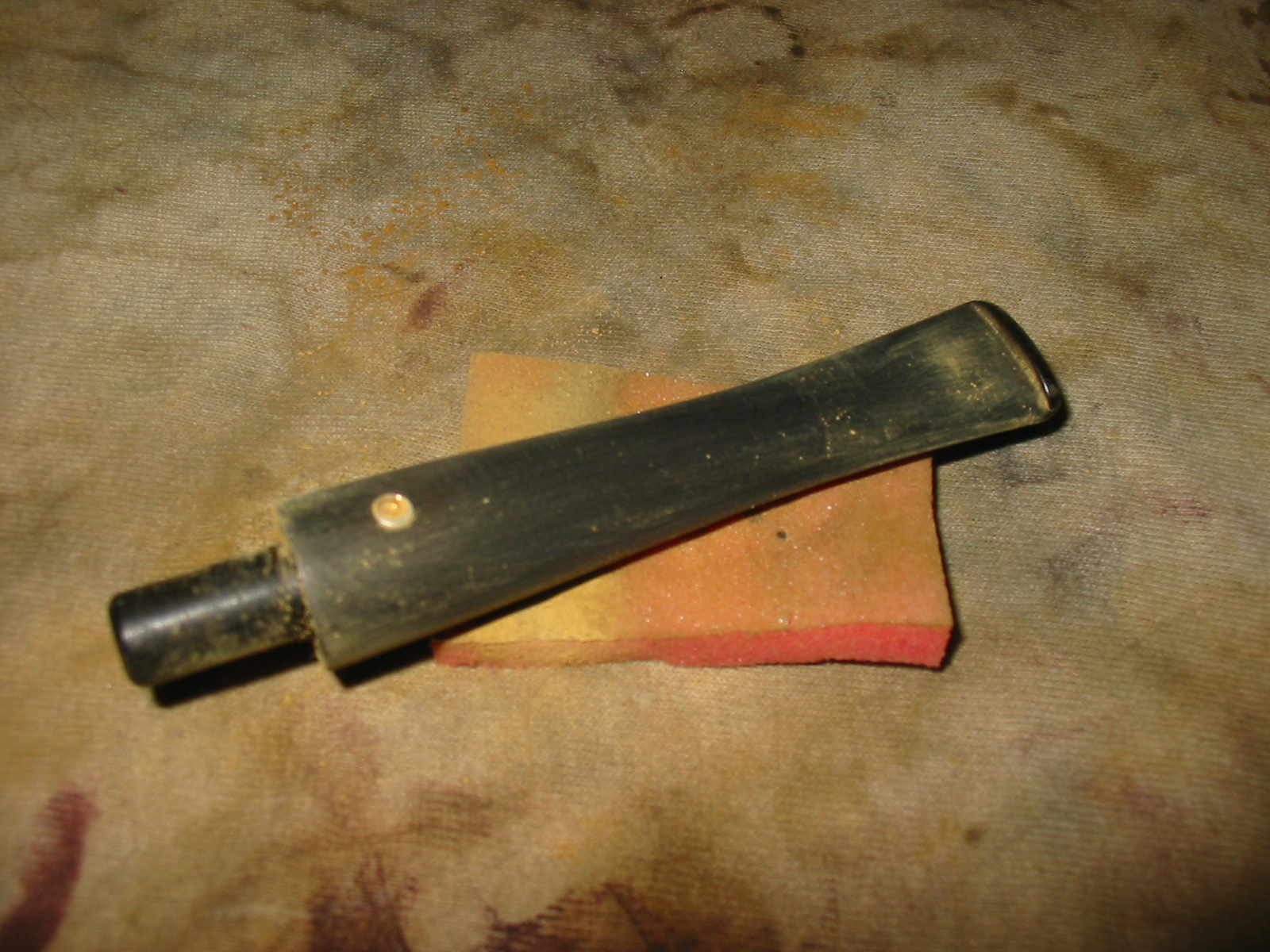
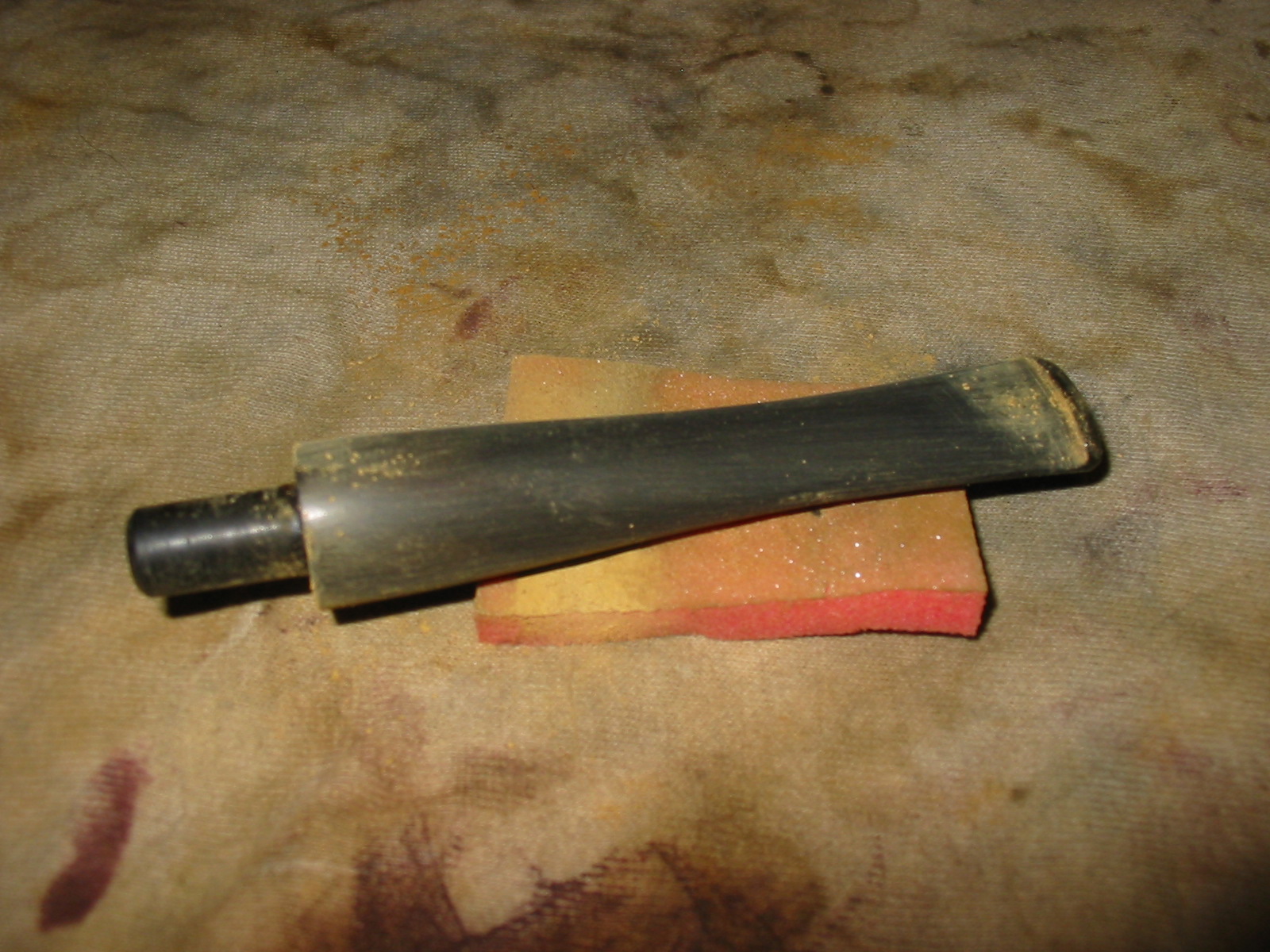
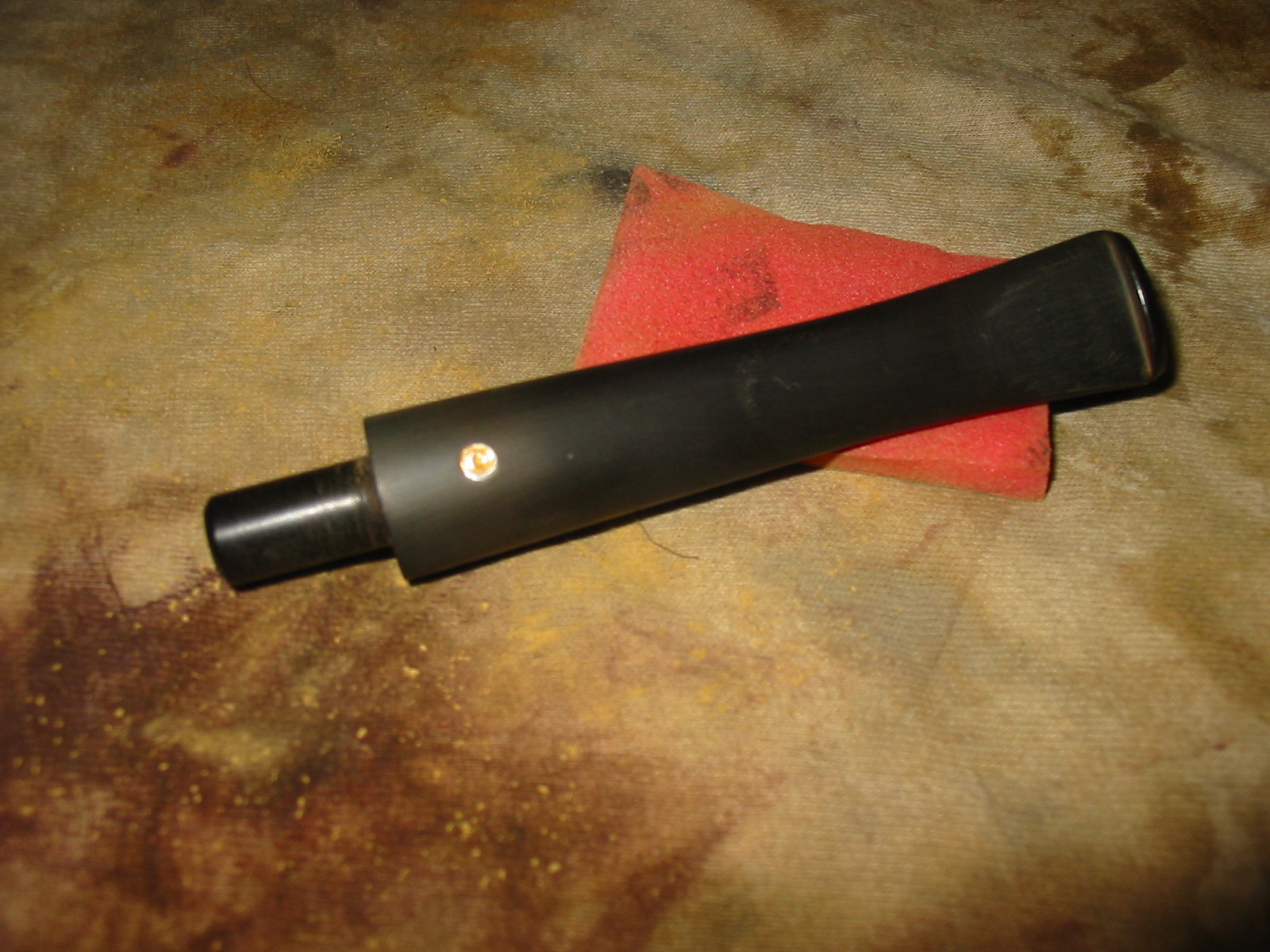
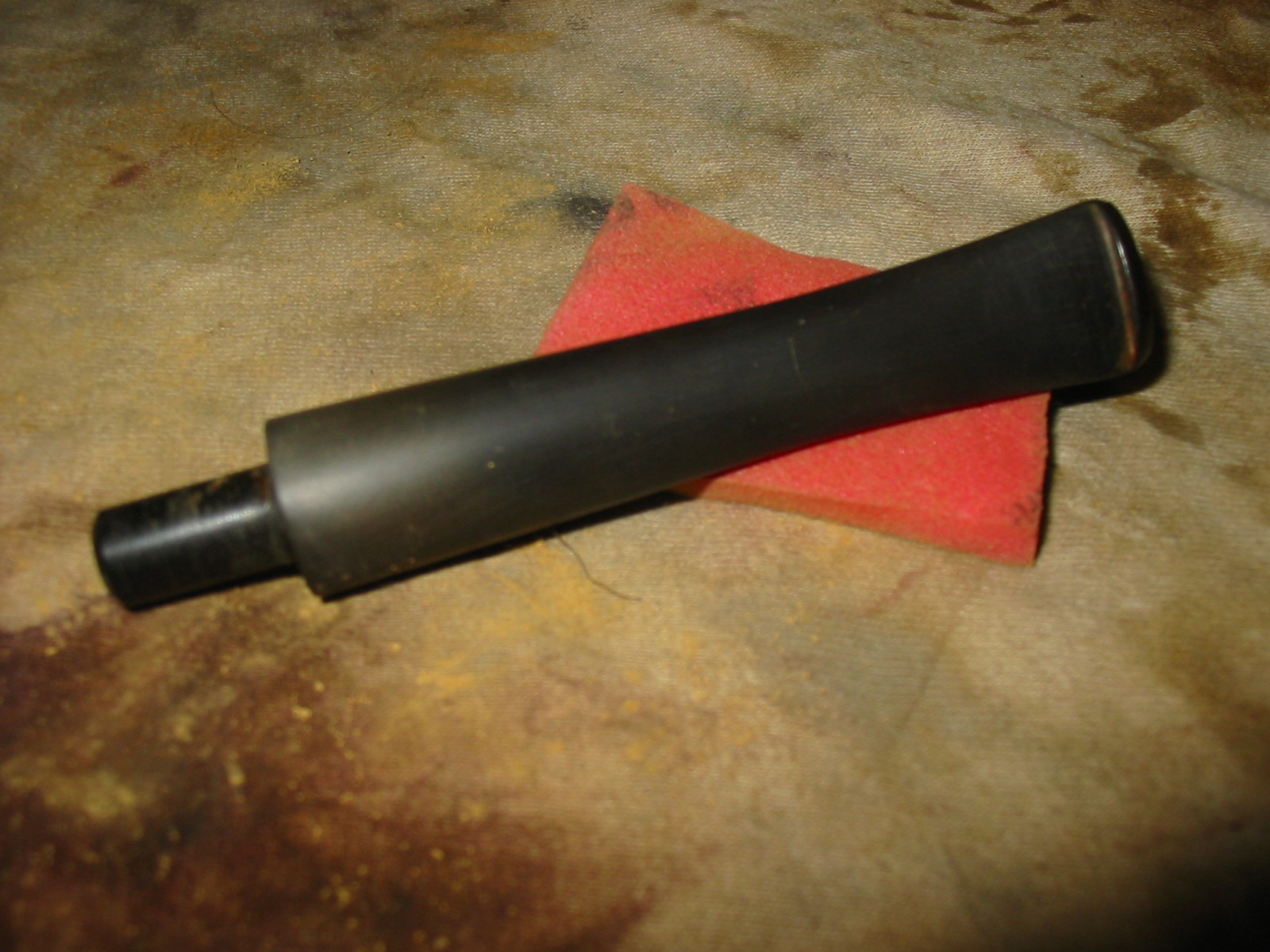
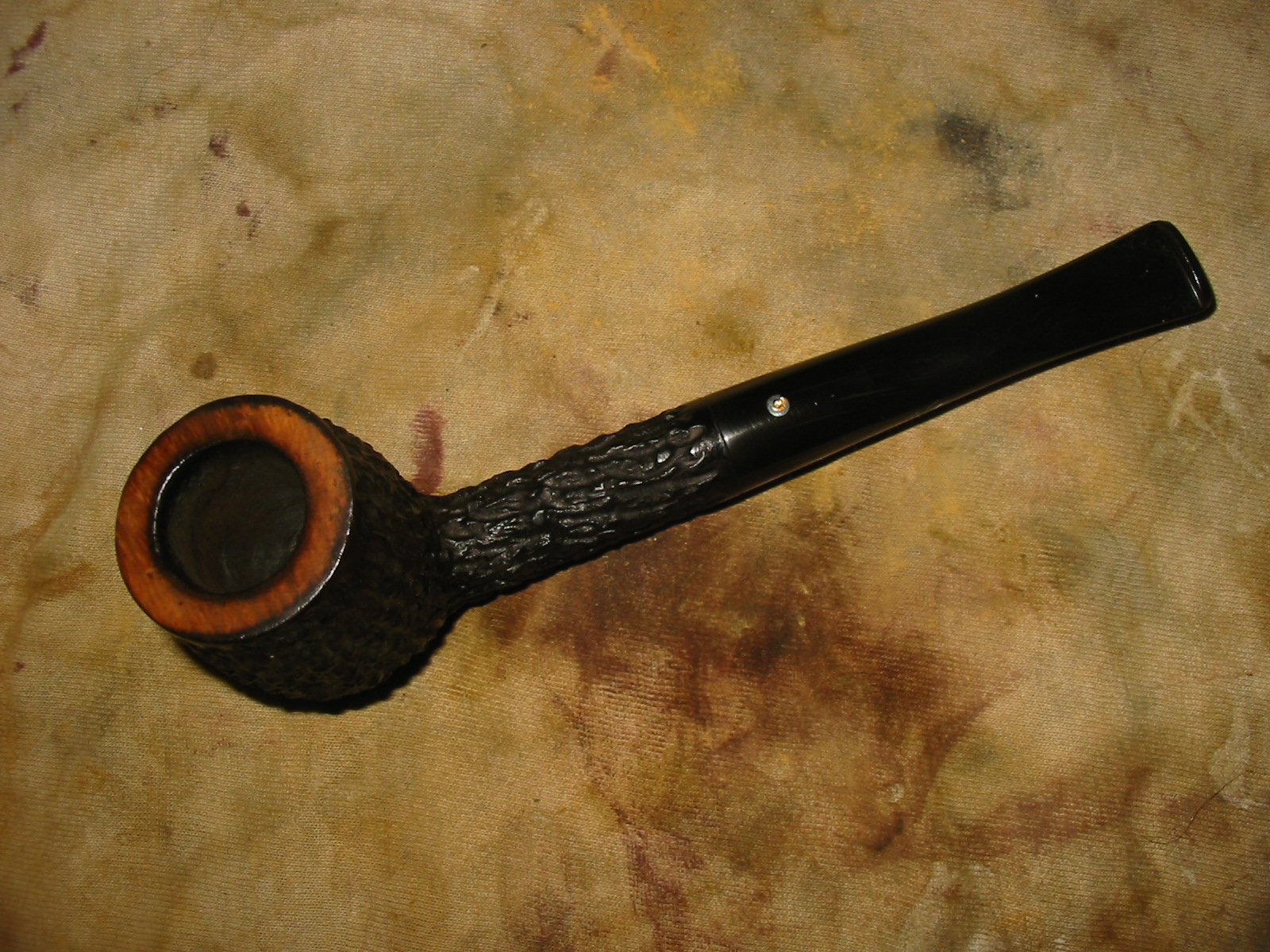
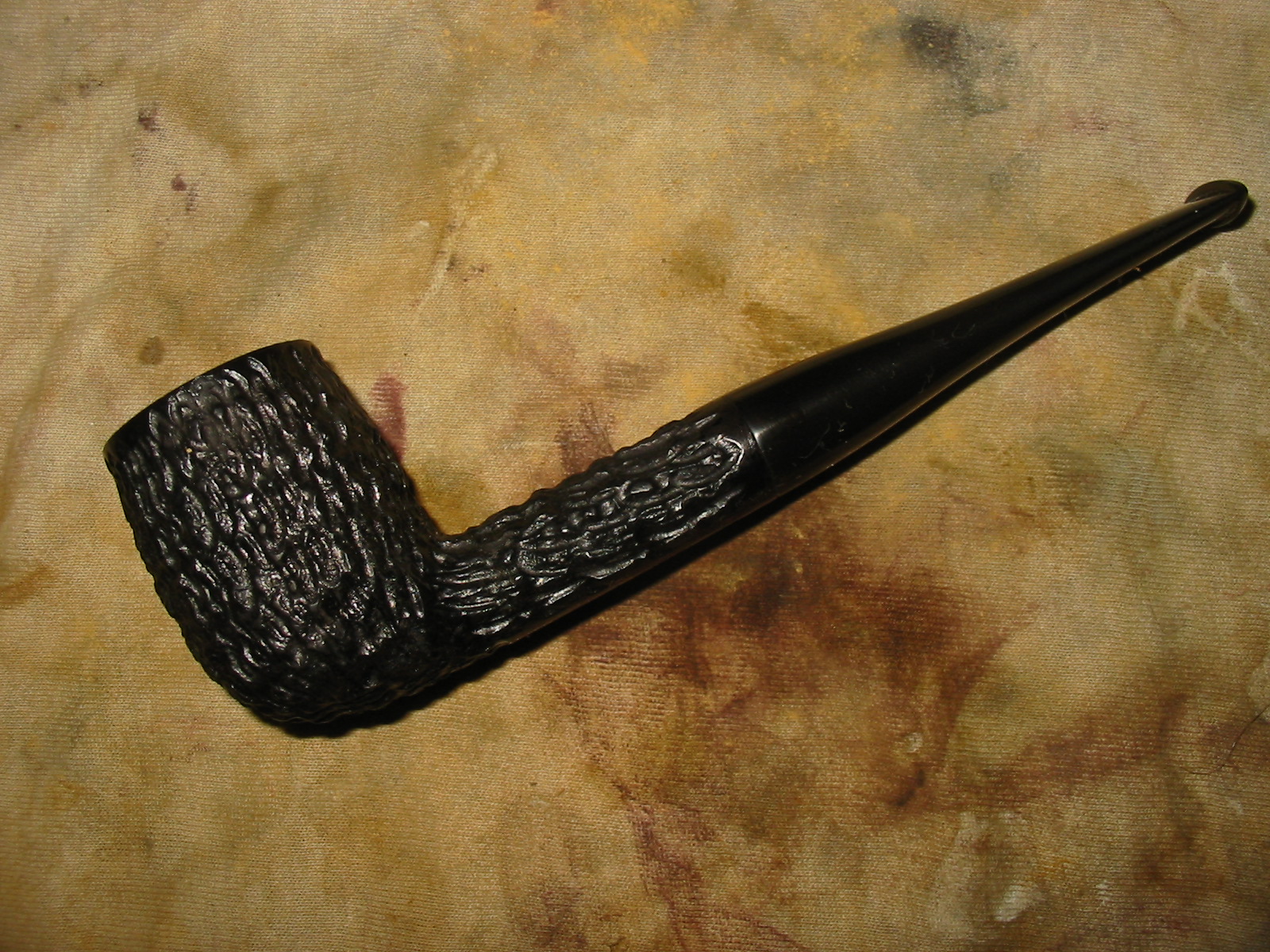
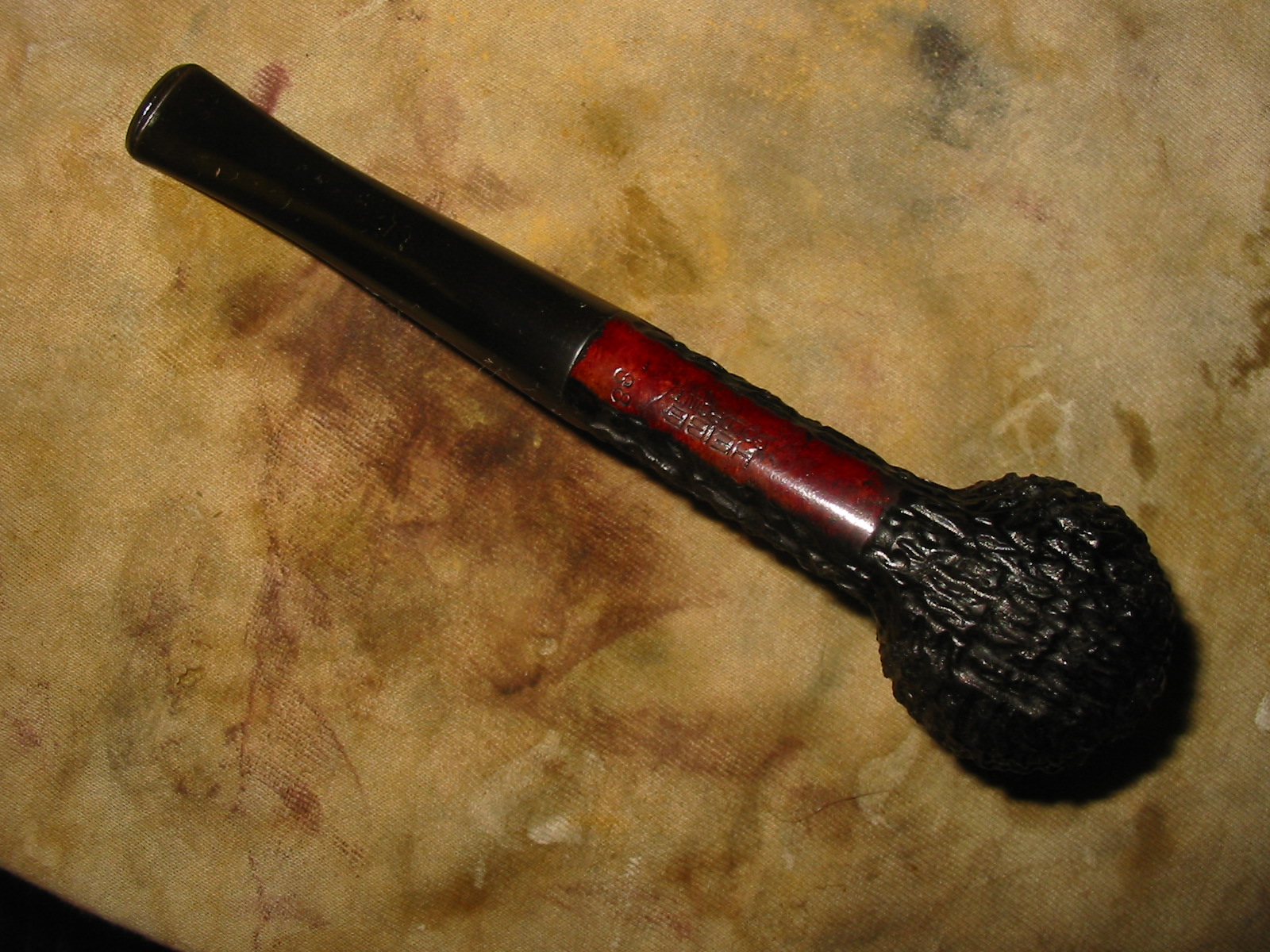
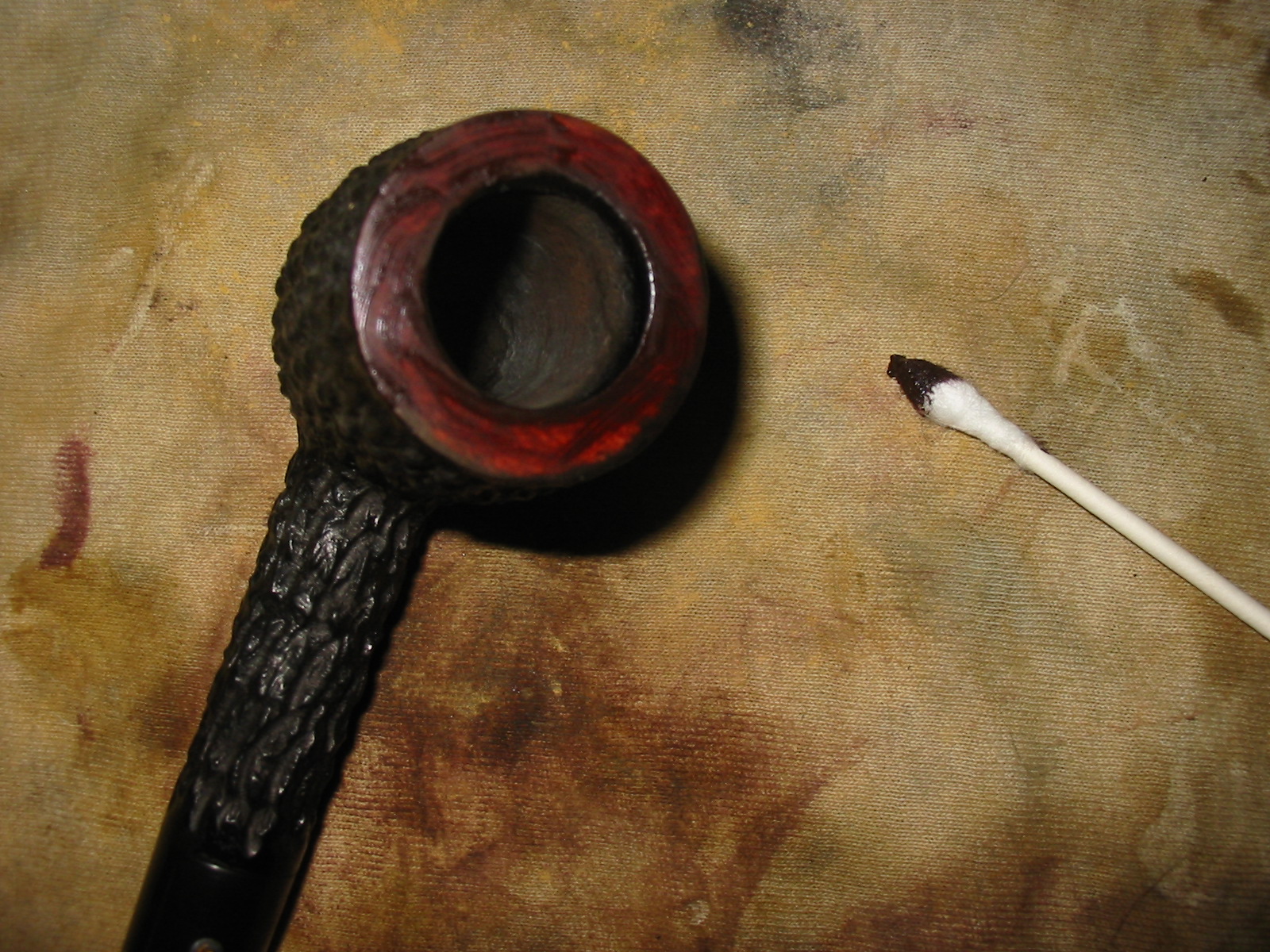
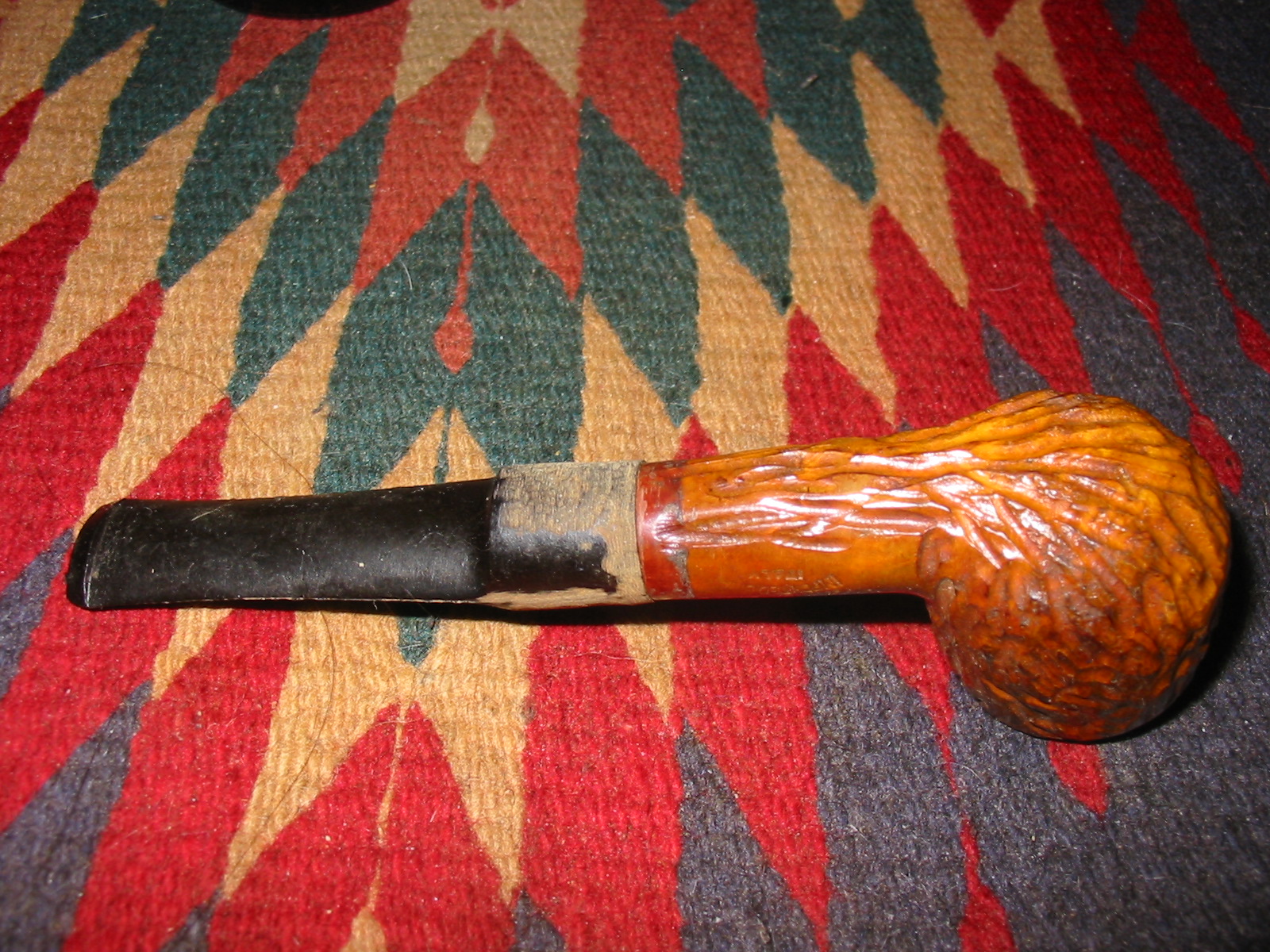
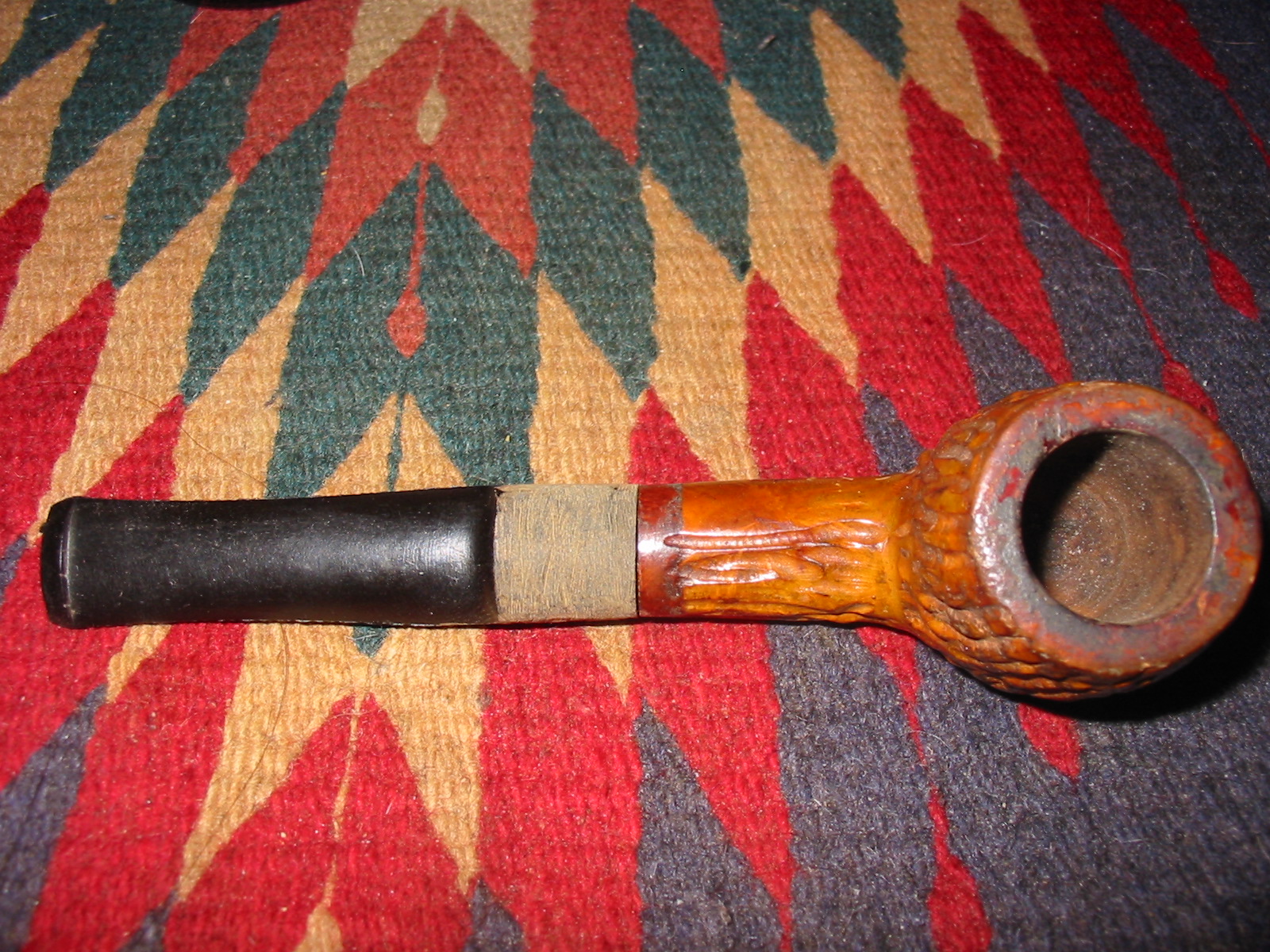
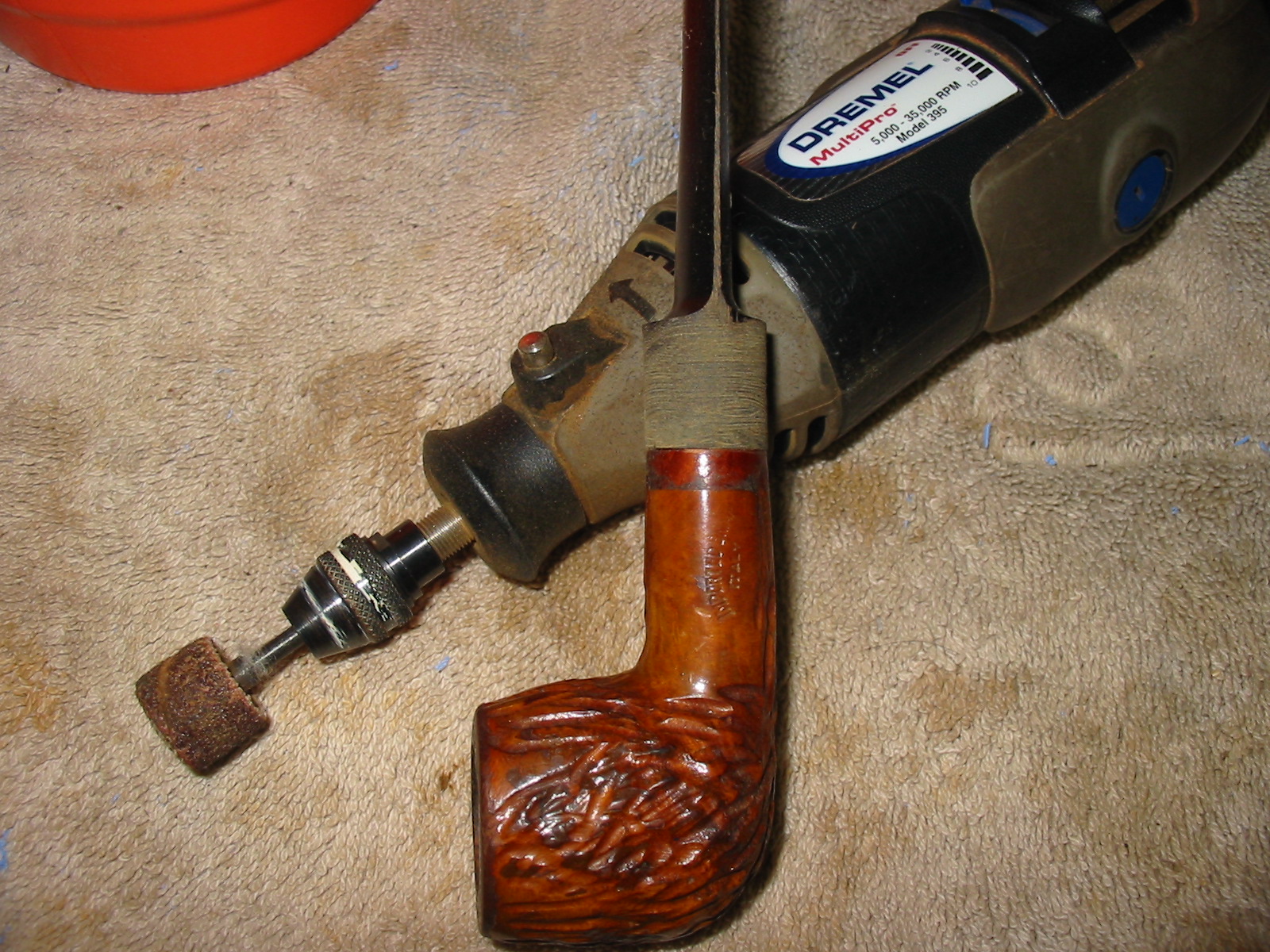
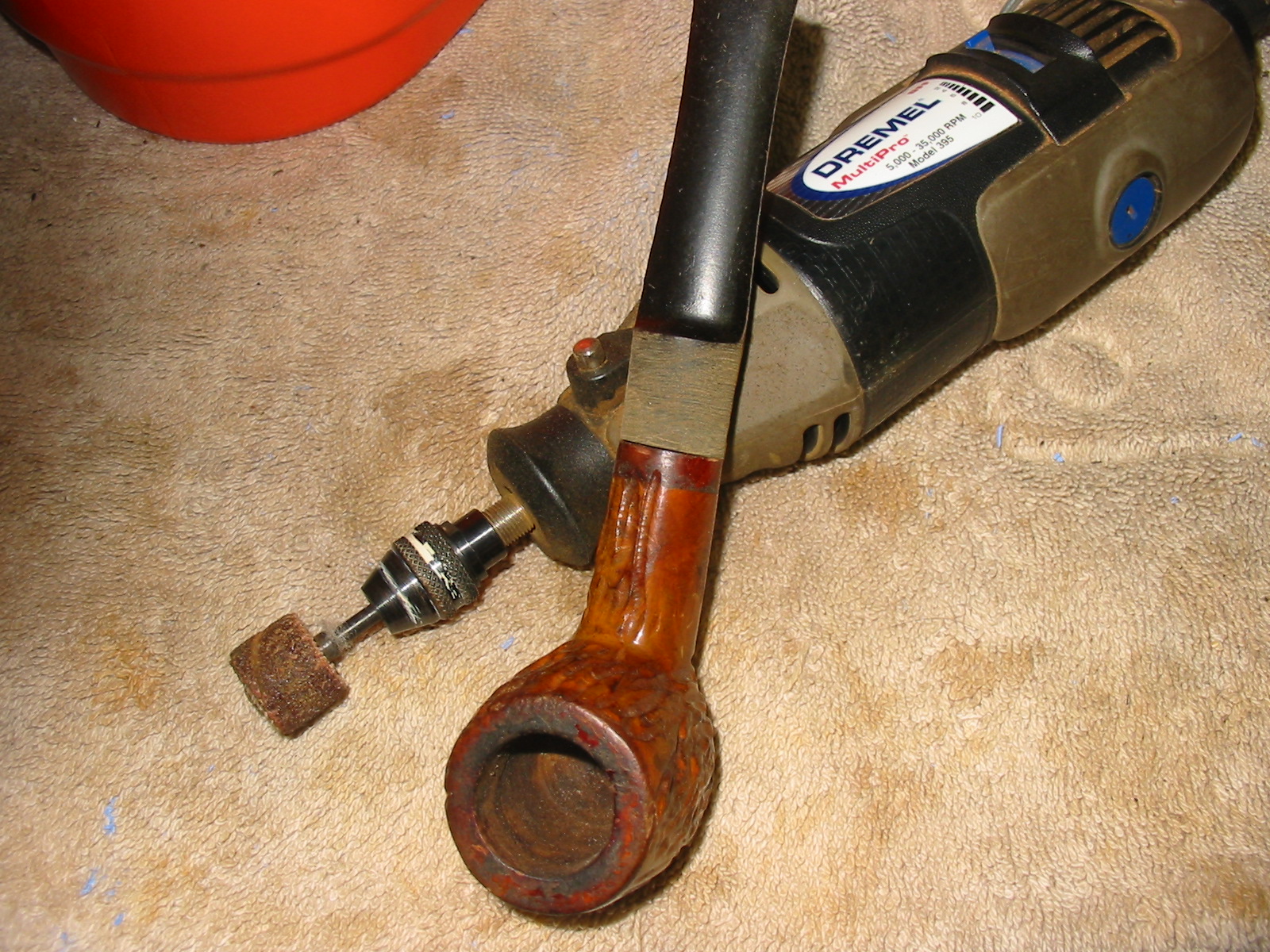
Tag Archives: restaining a bowl and rim

Restoring a GFB Bent Billiard – Another Reclamation Project


Blog by Steve Laug

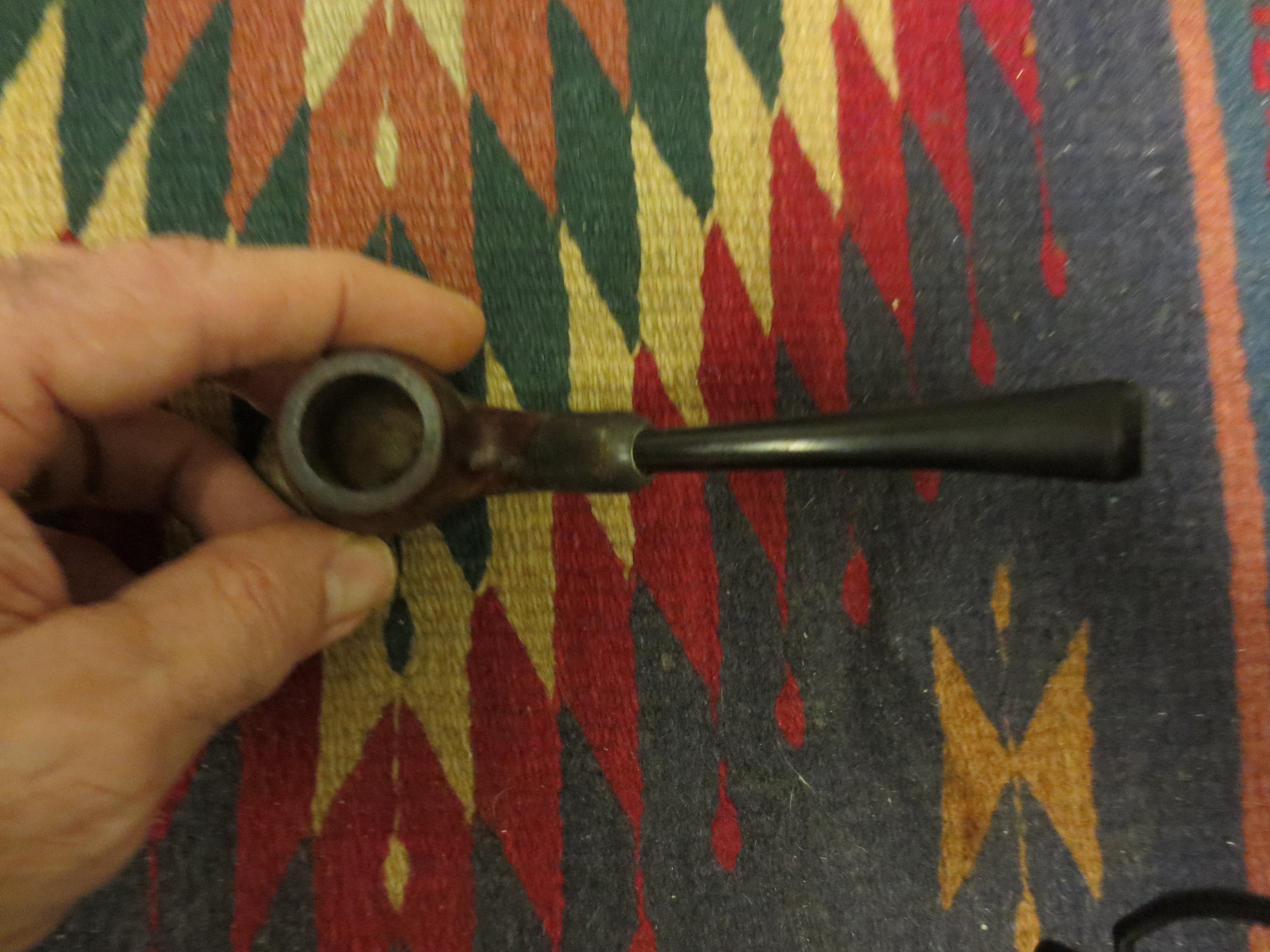
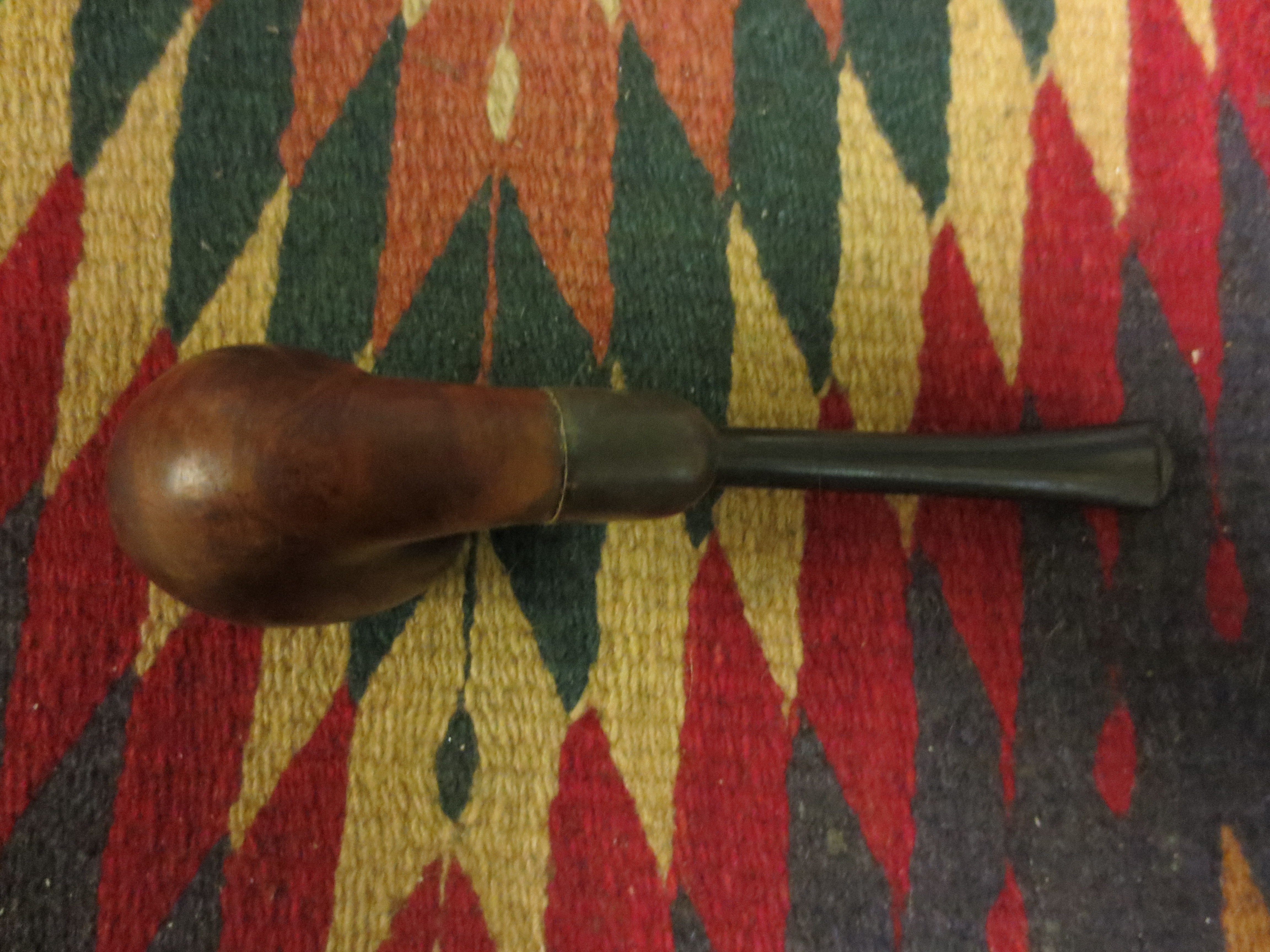
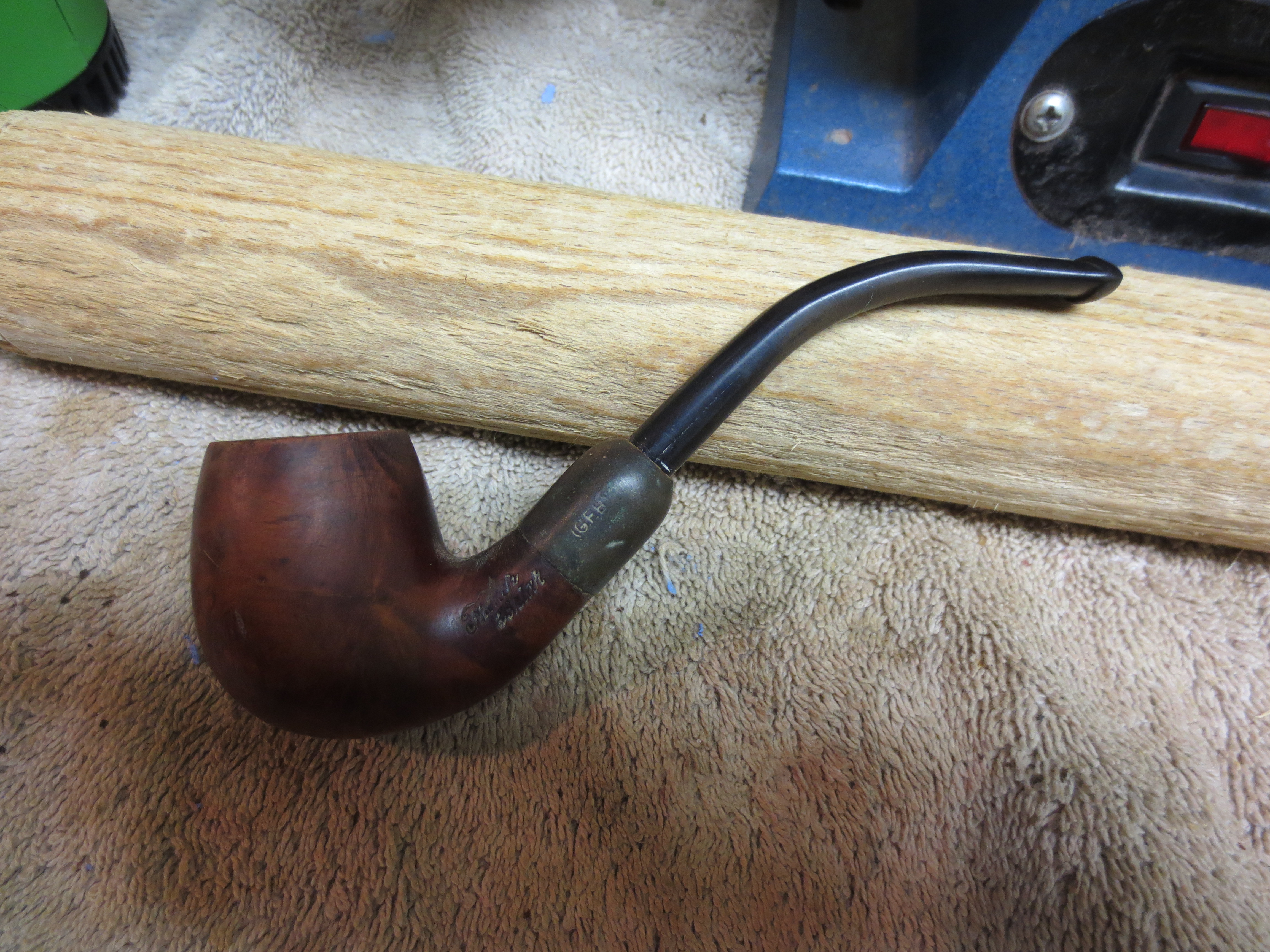
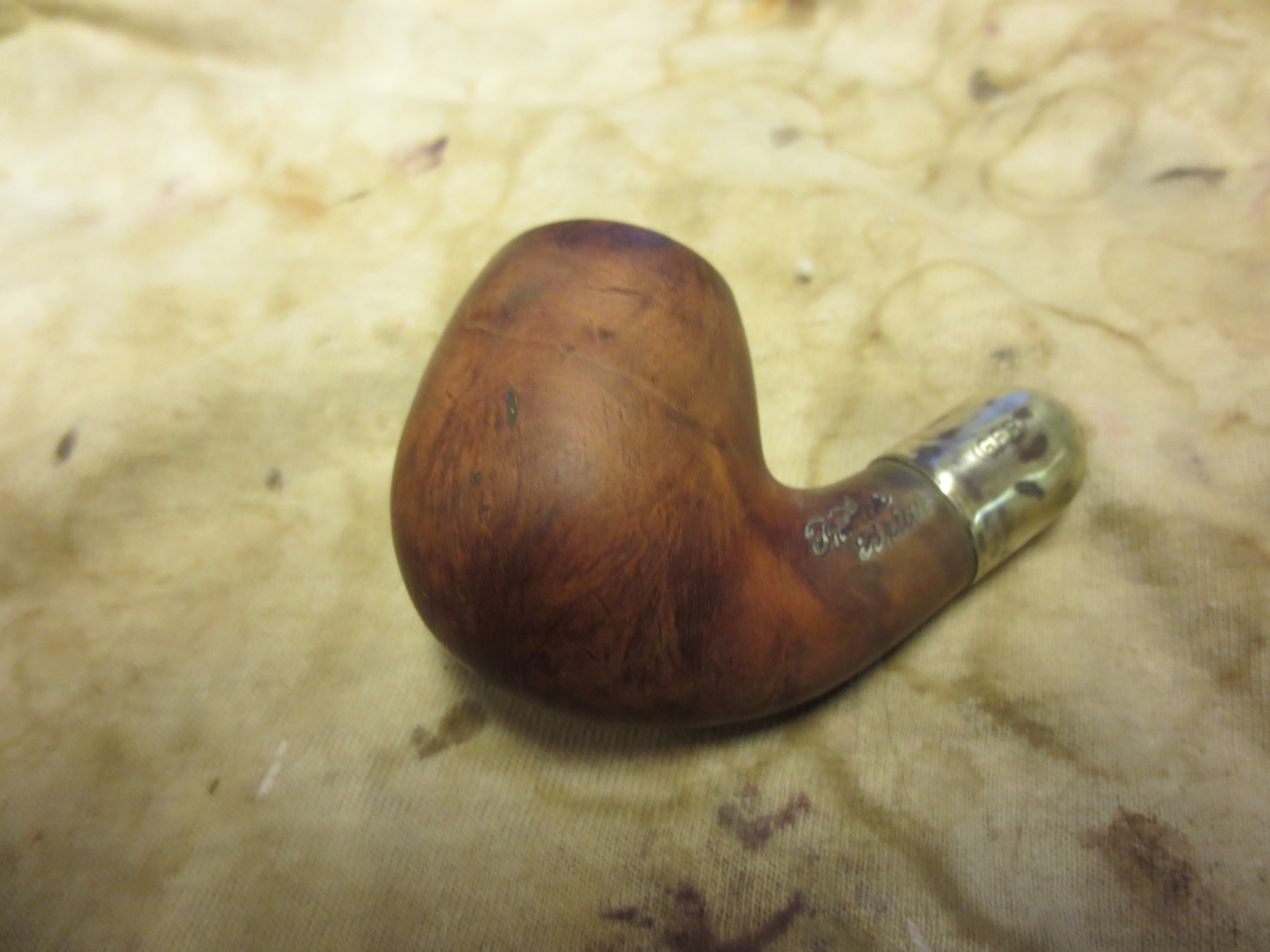
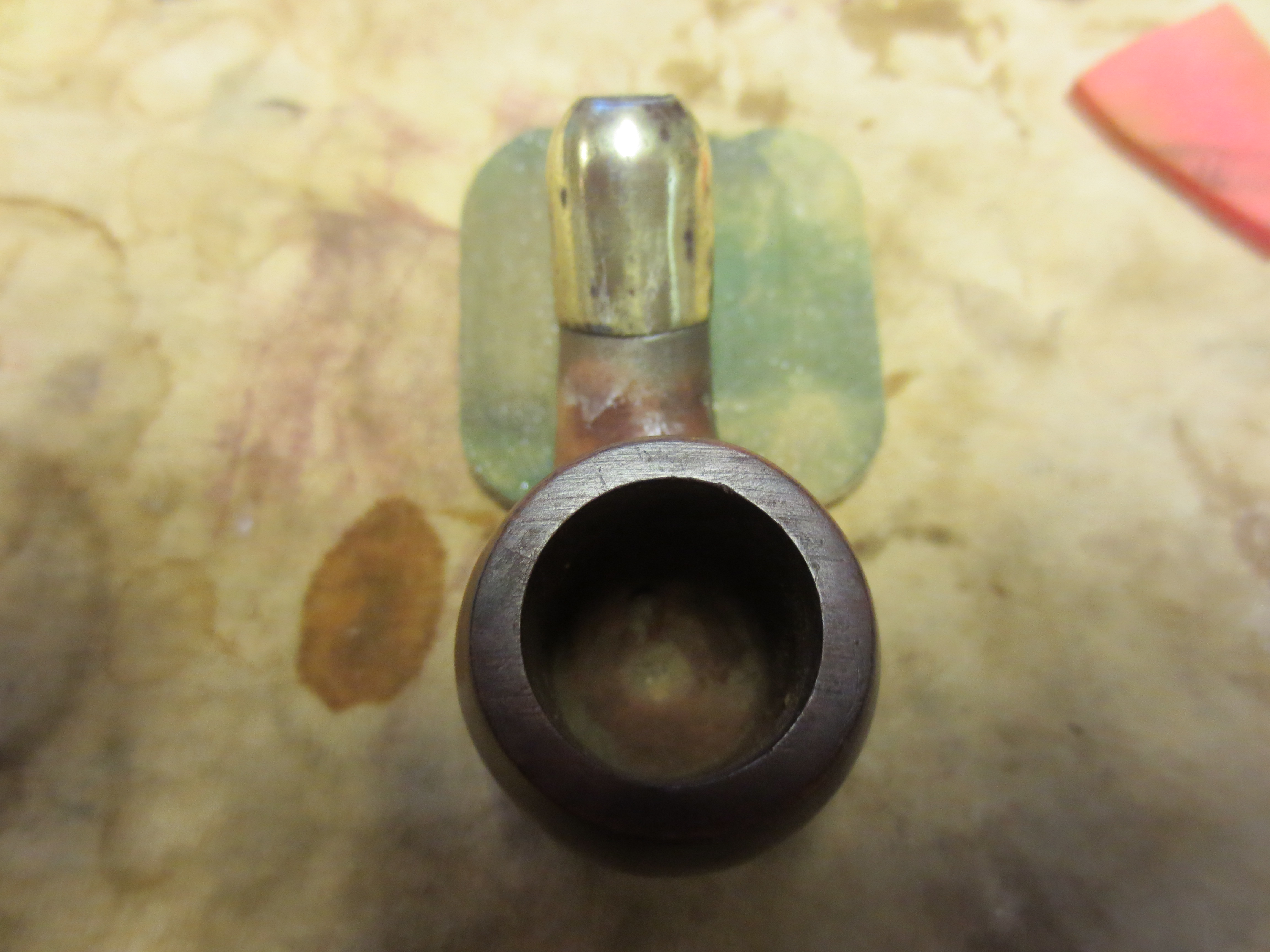
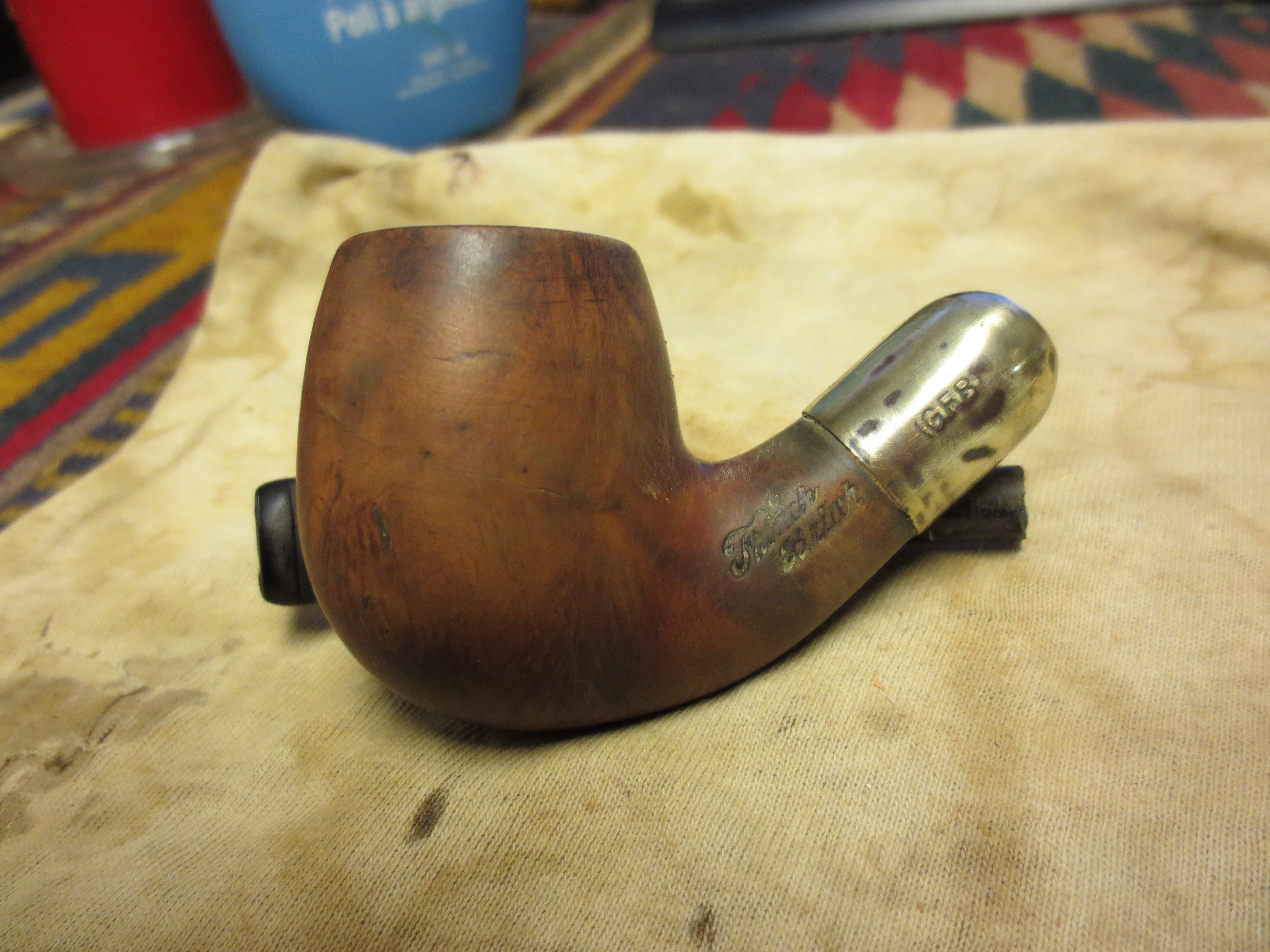
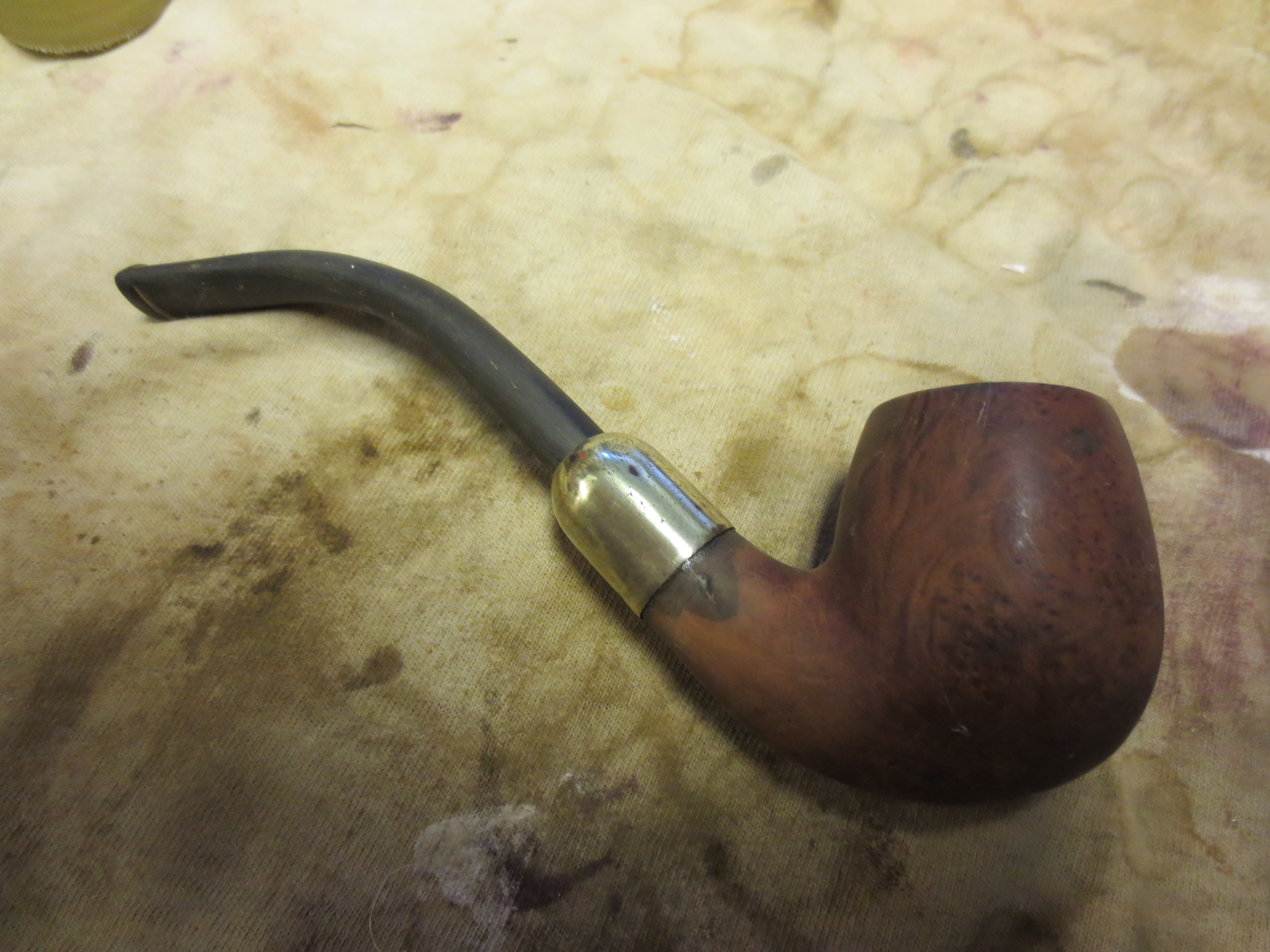
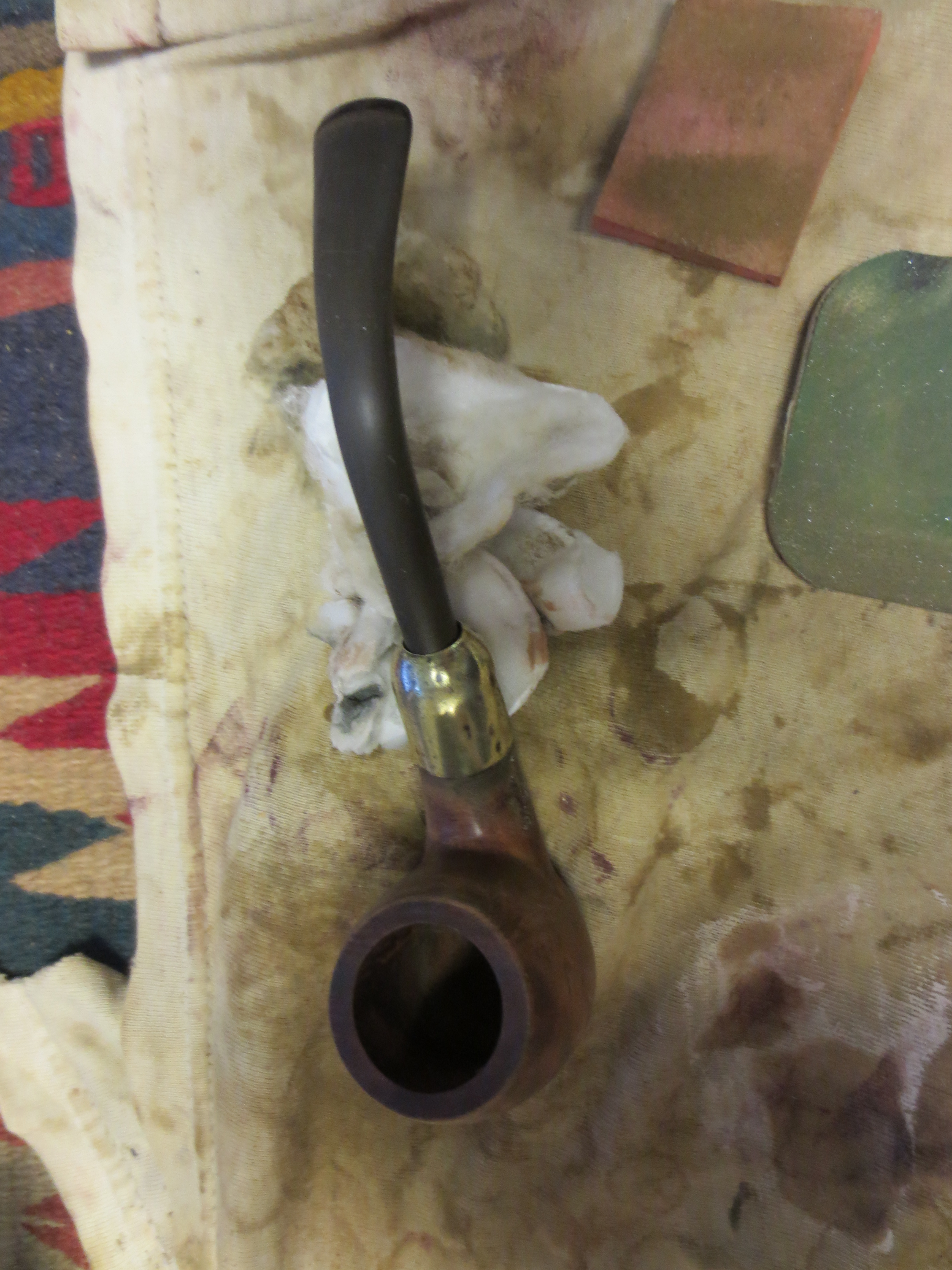
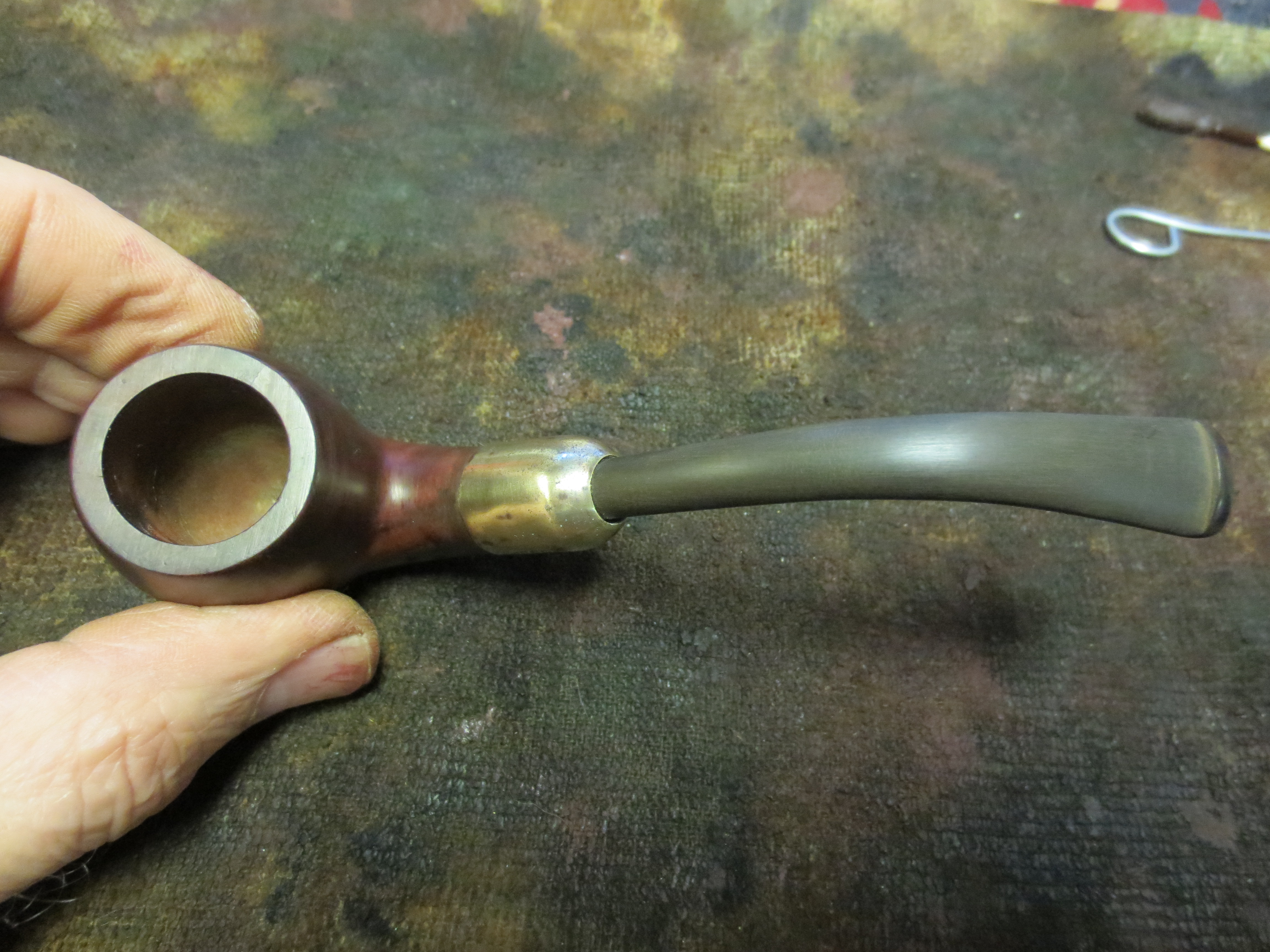
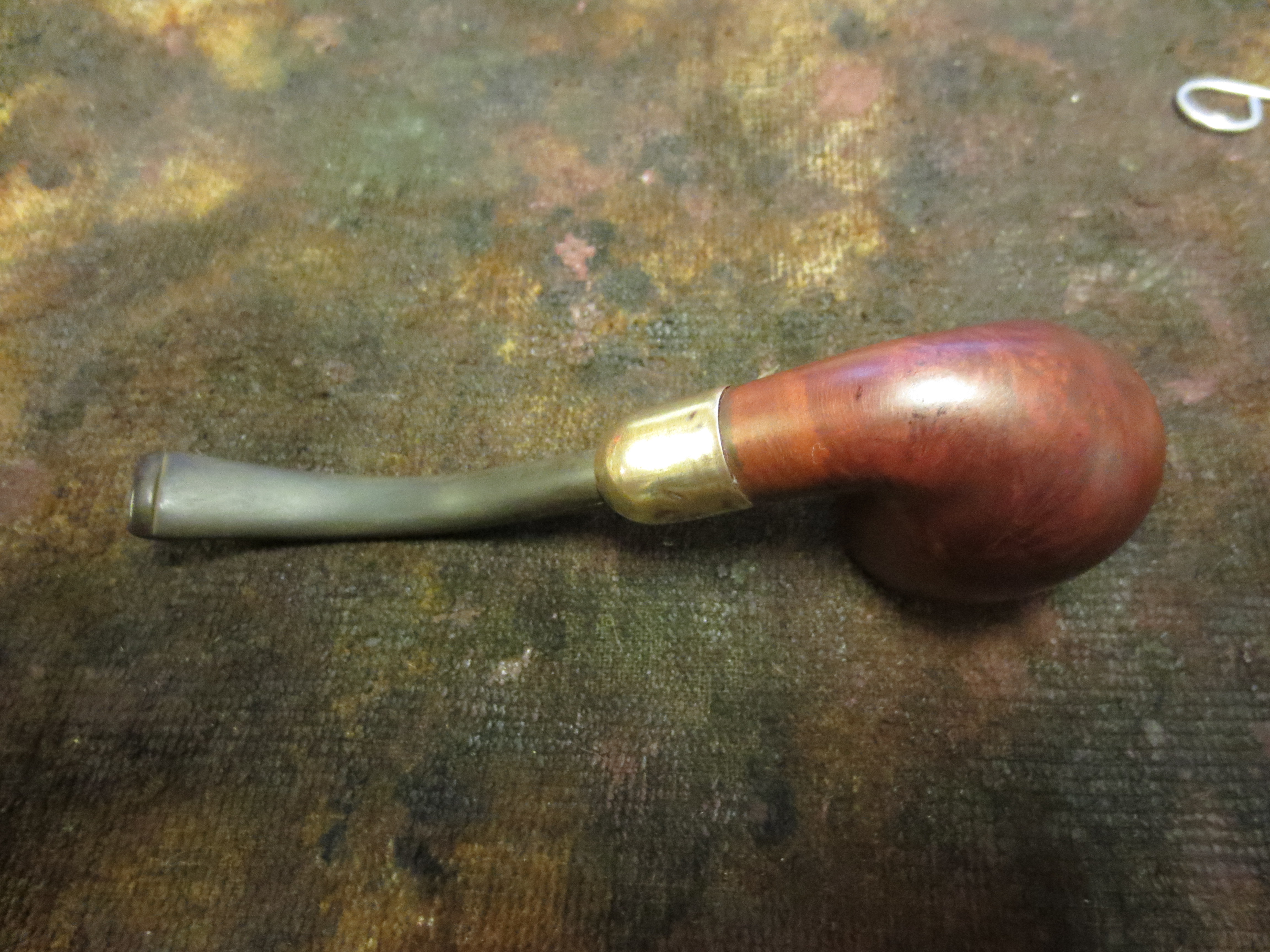
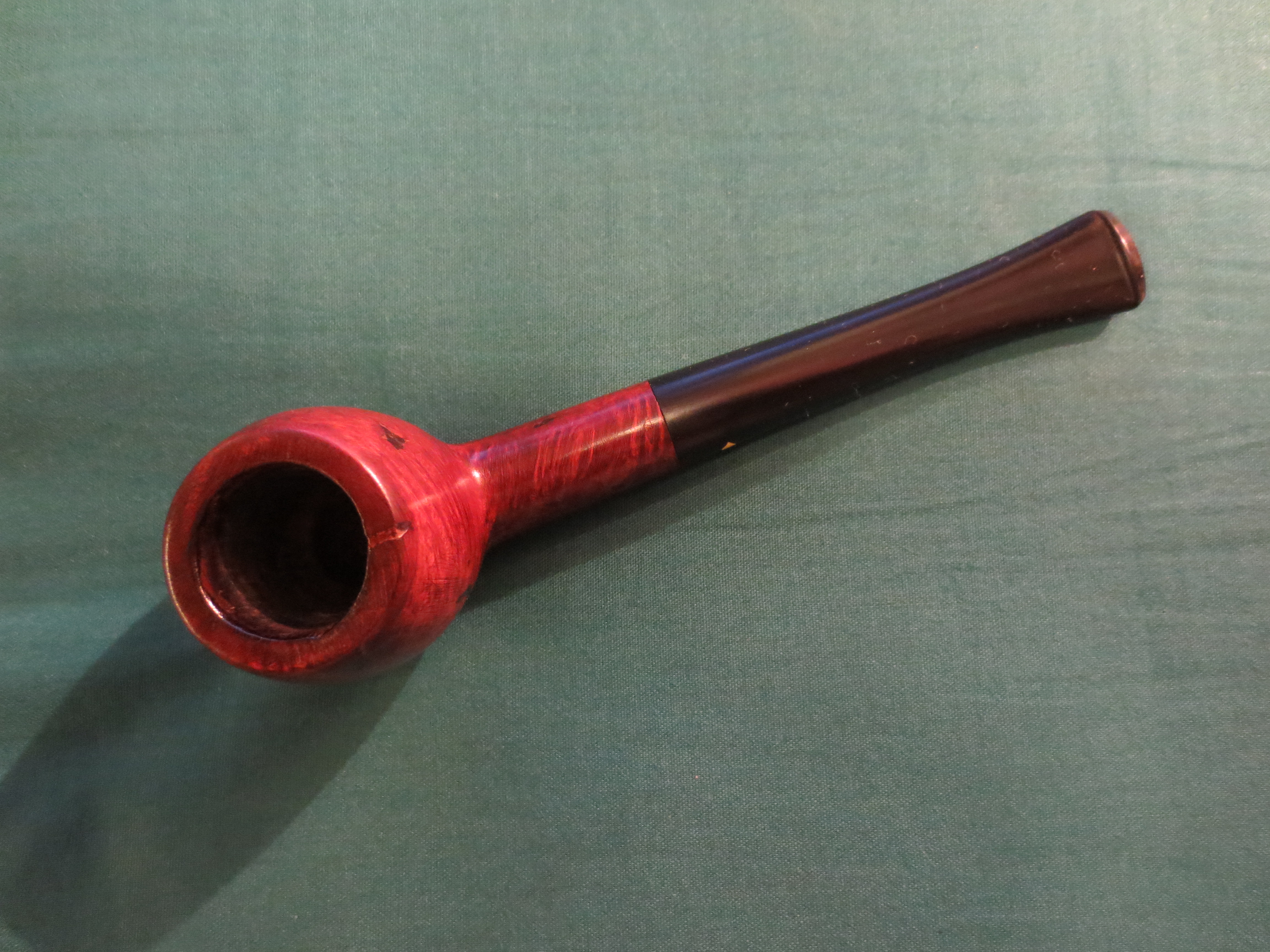
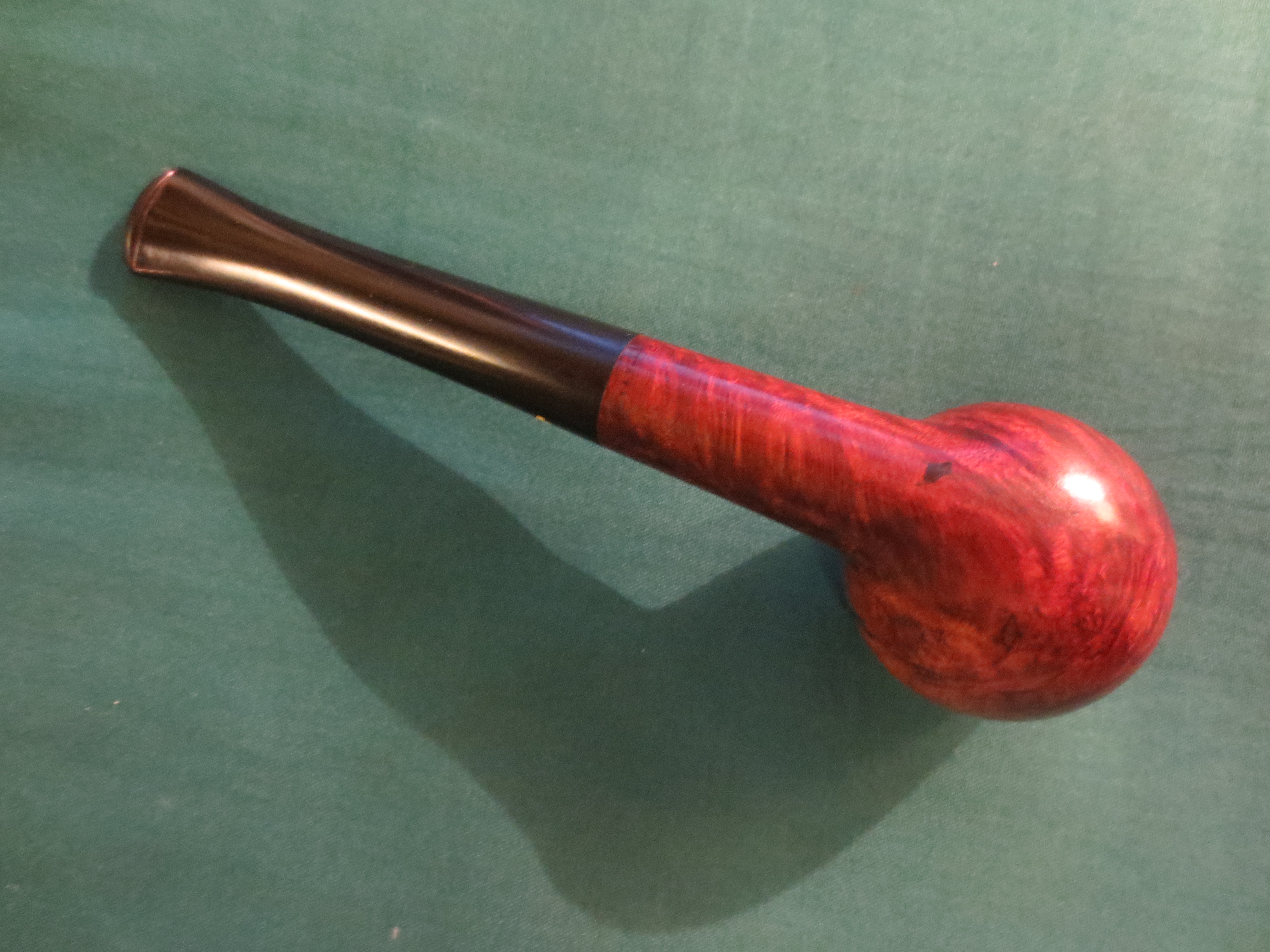
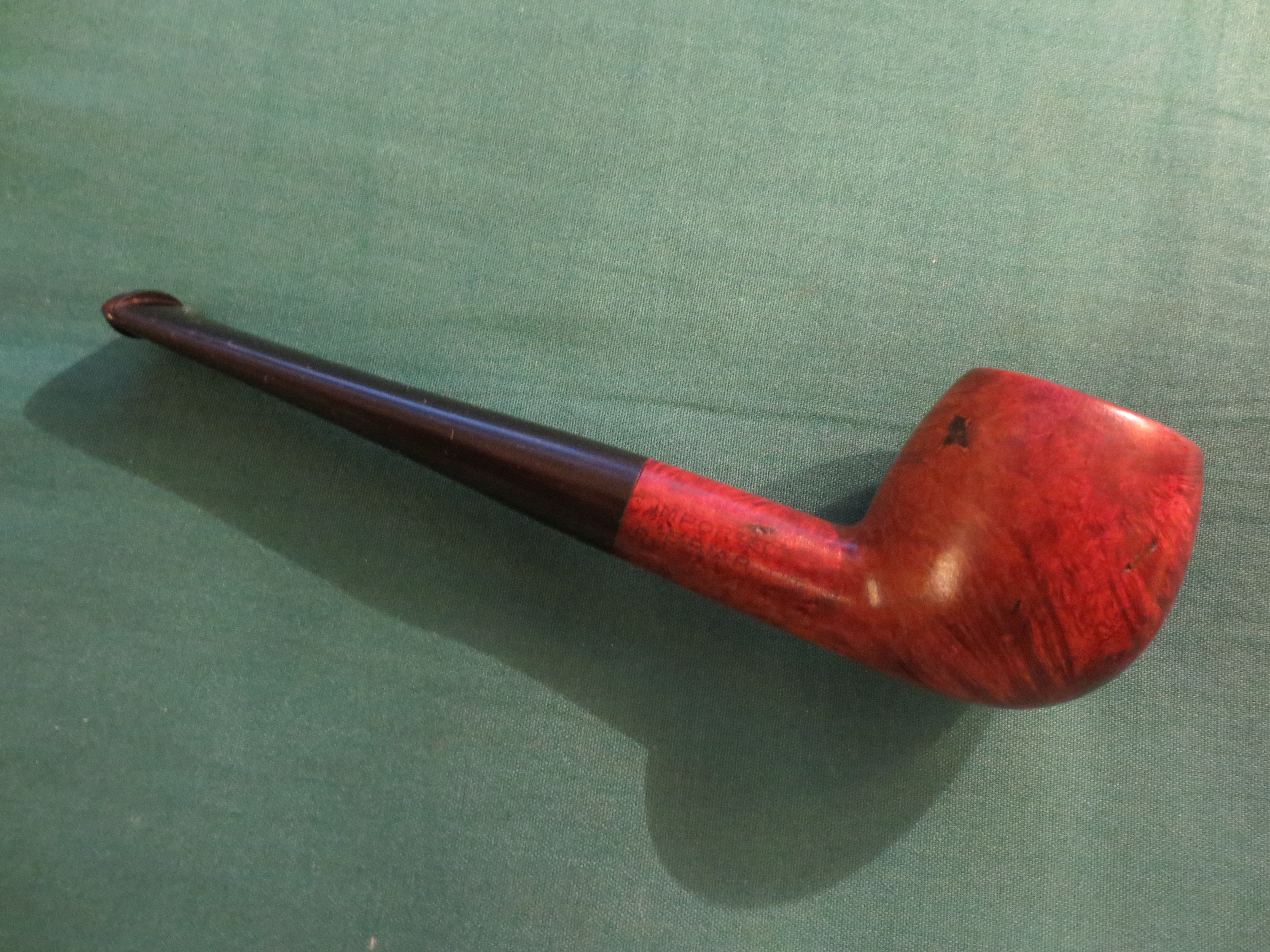
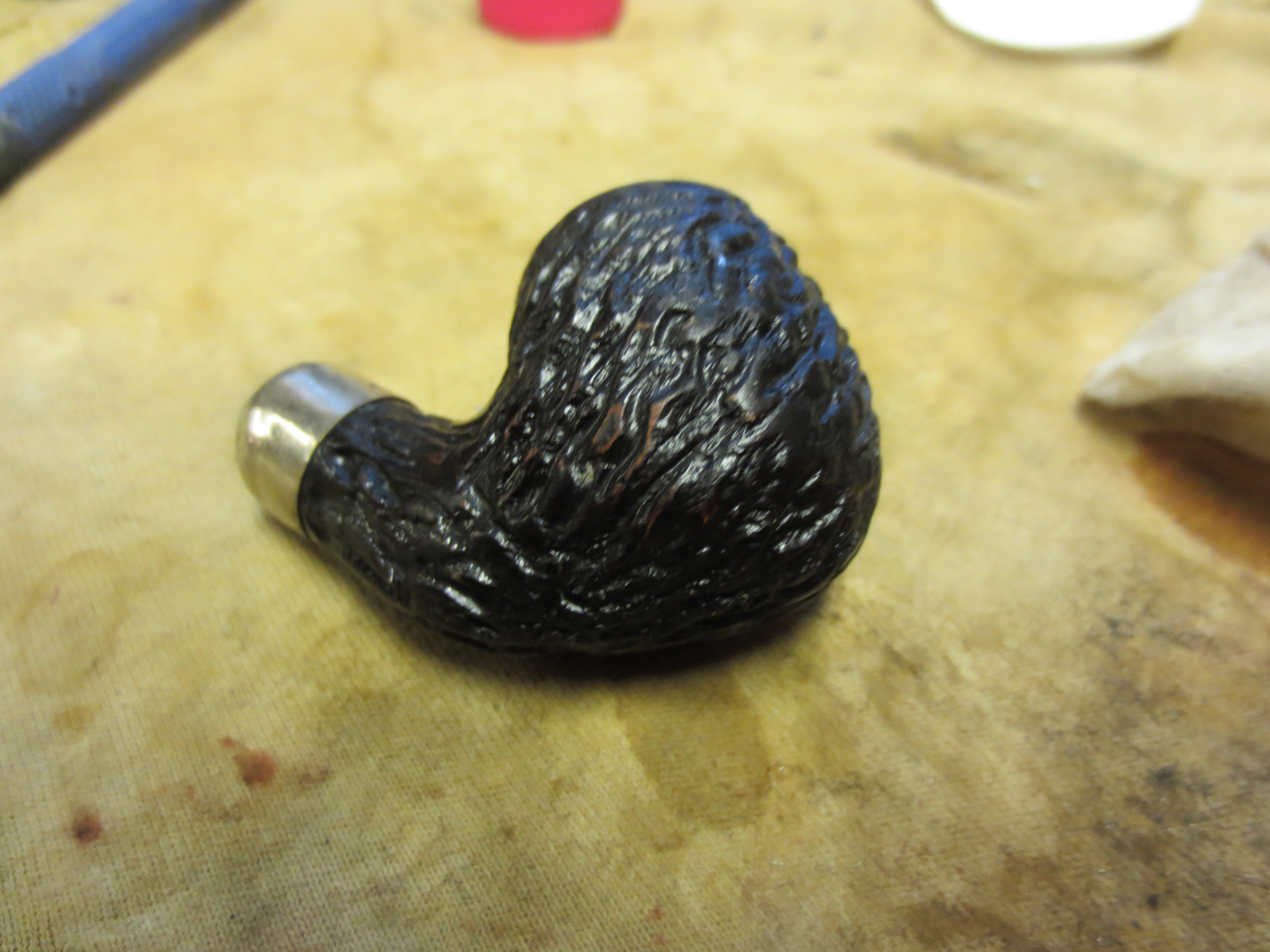
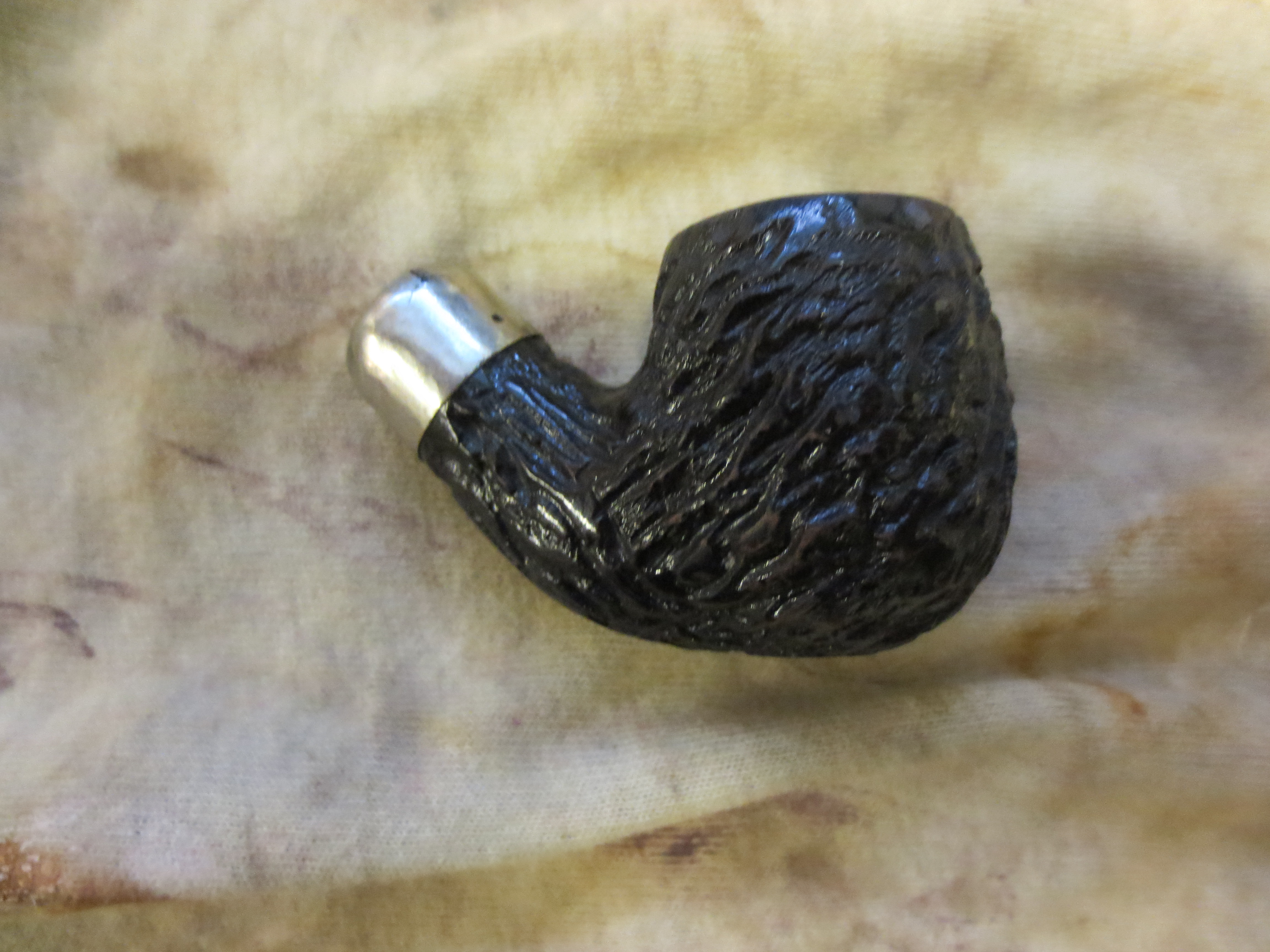
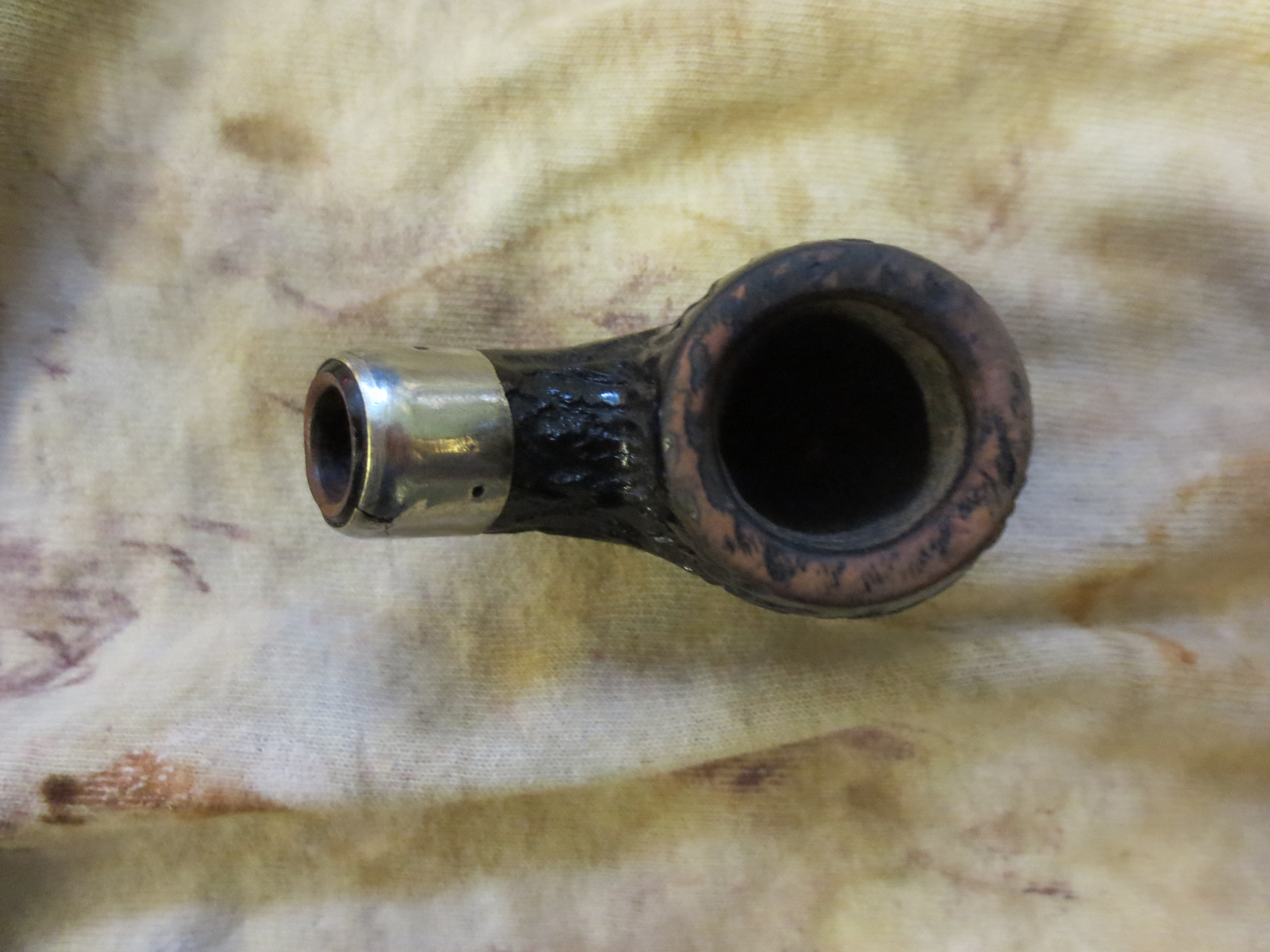
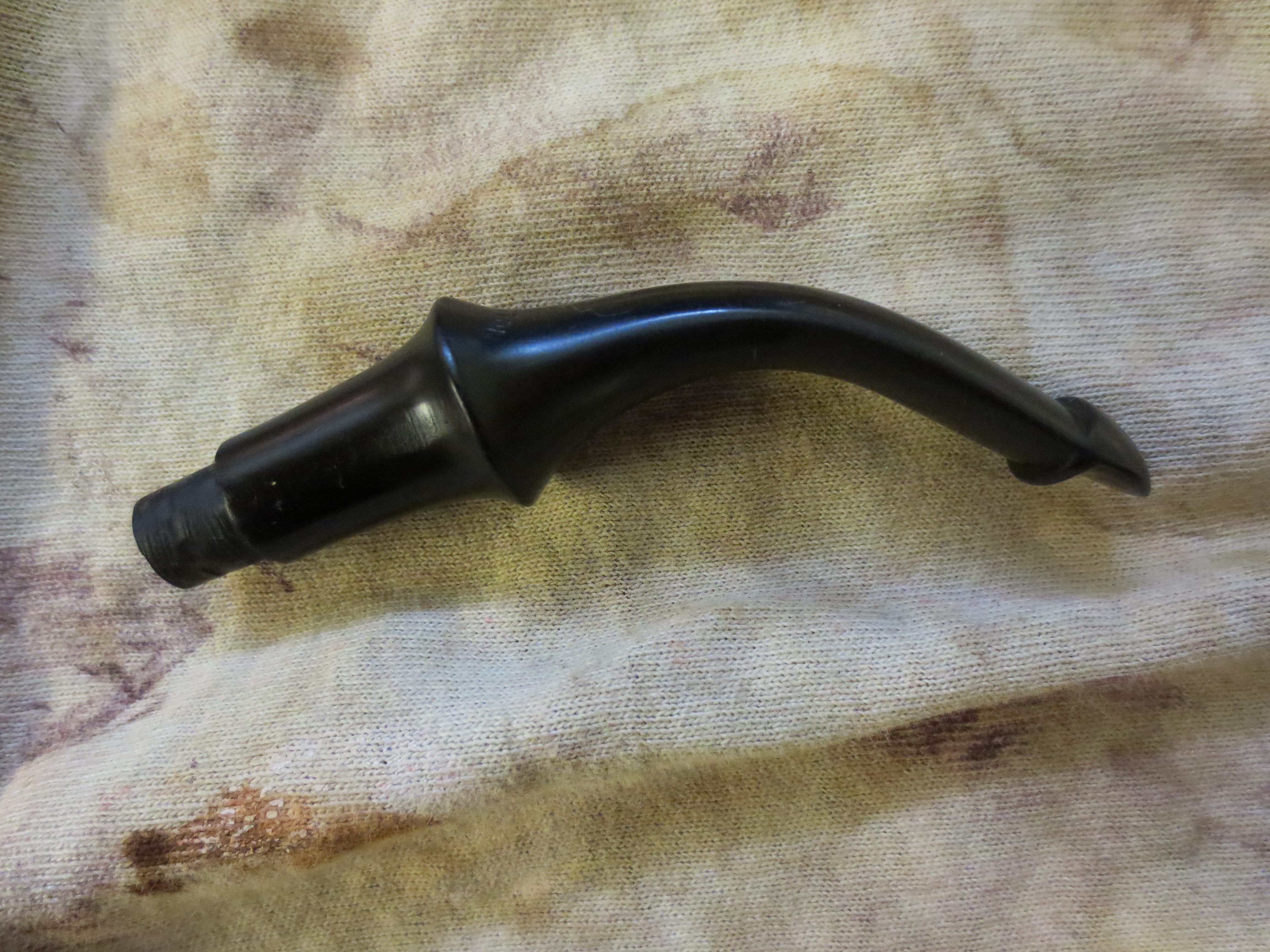
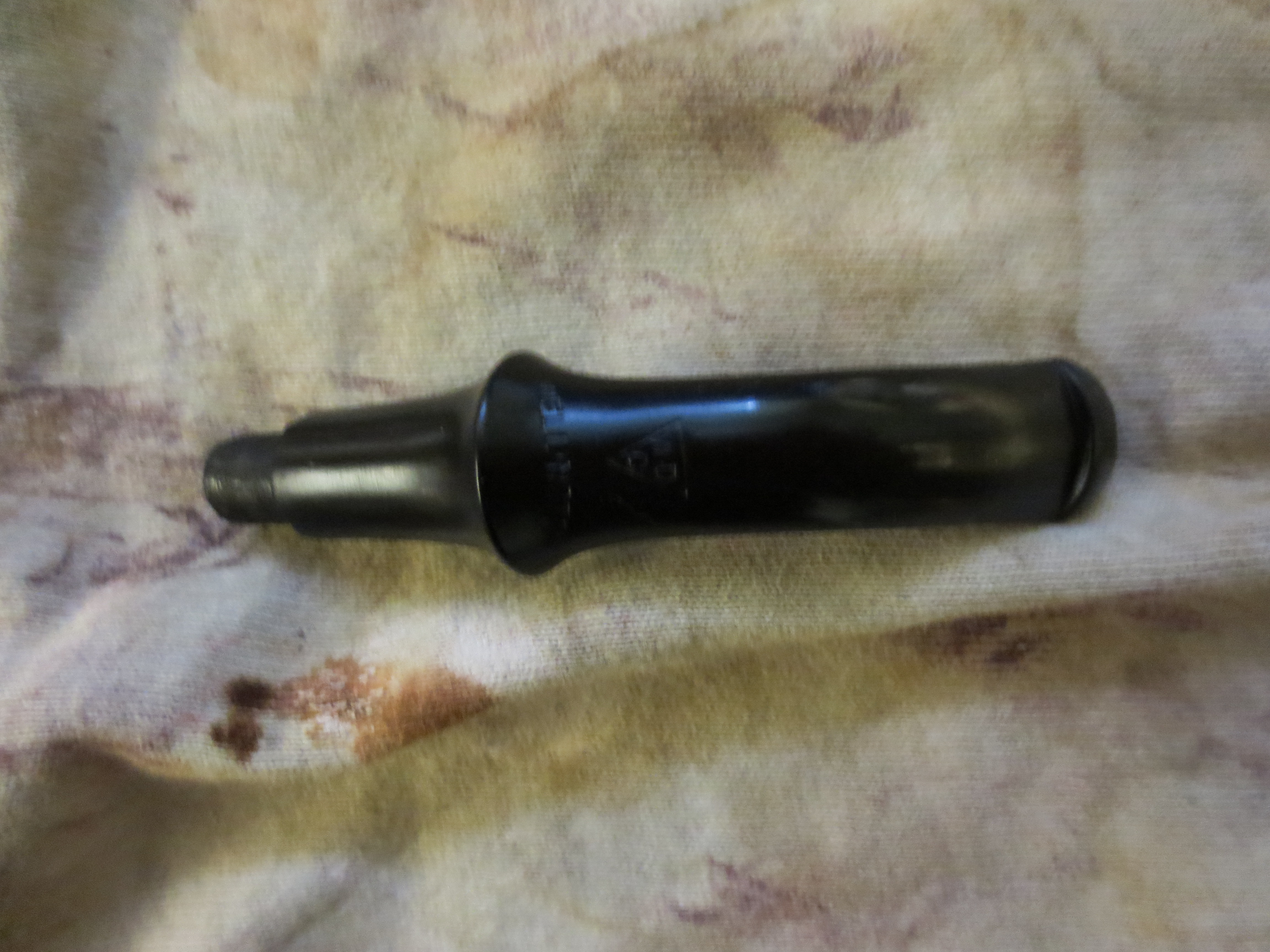
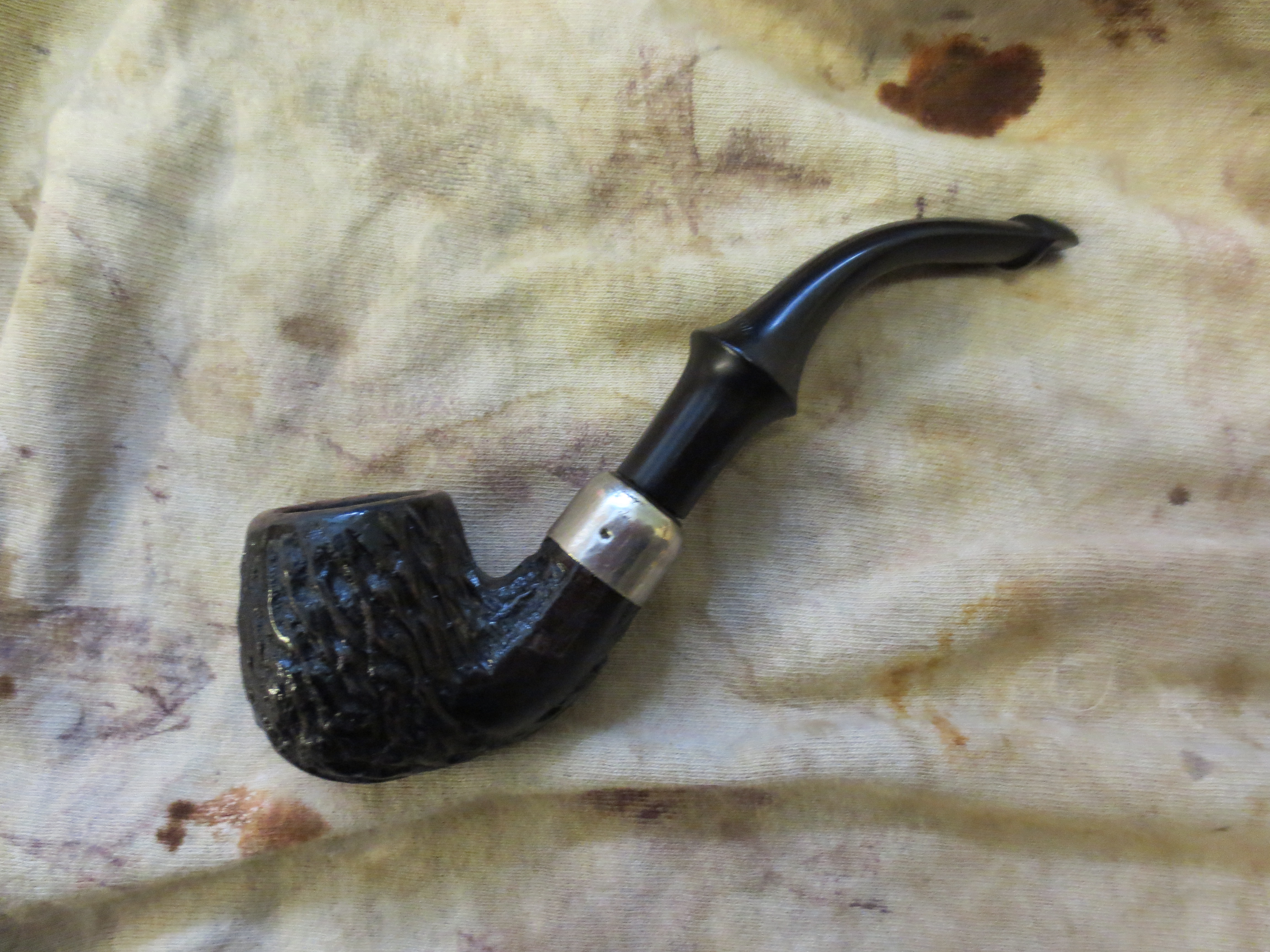
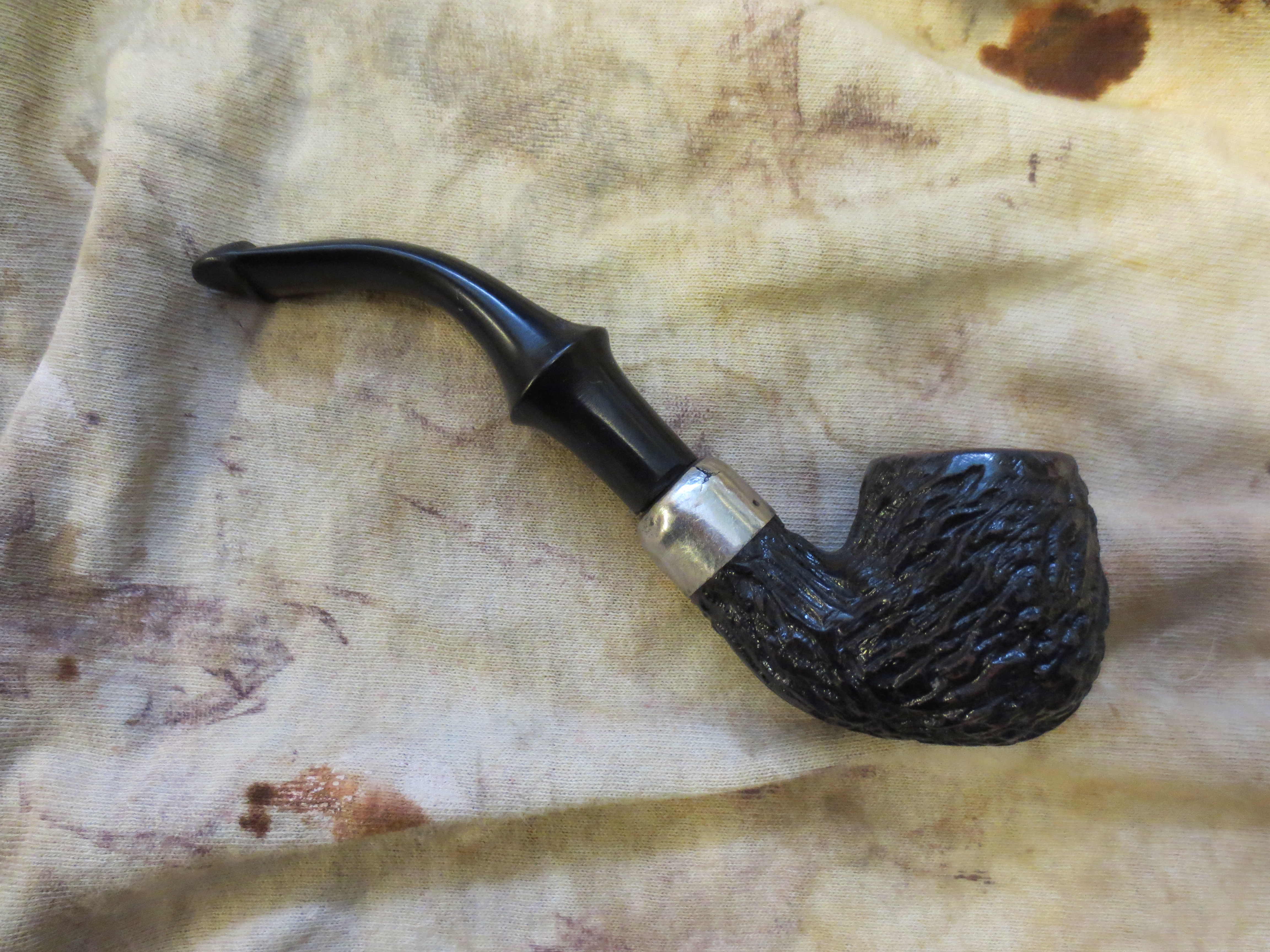
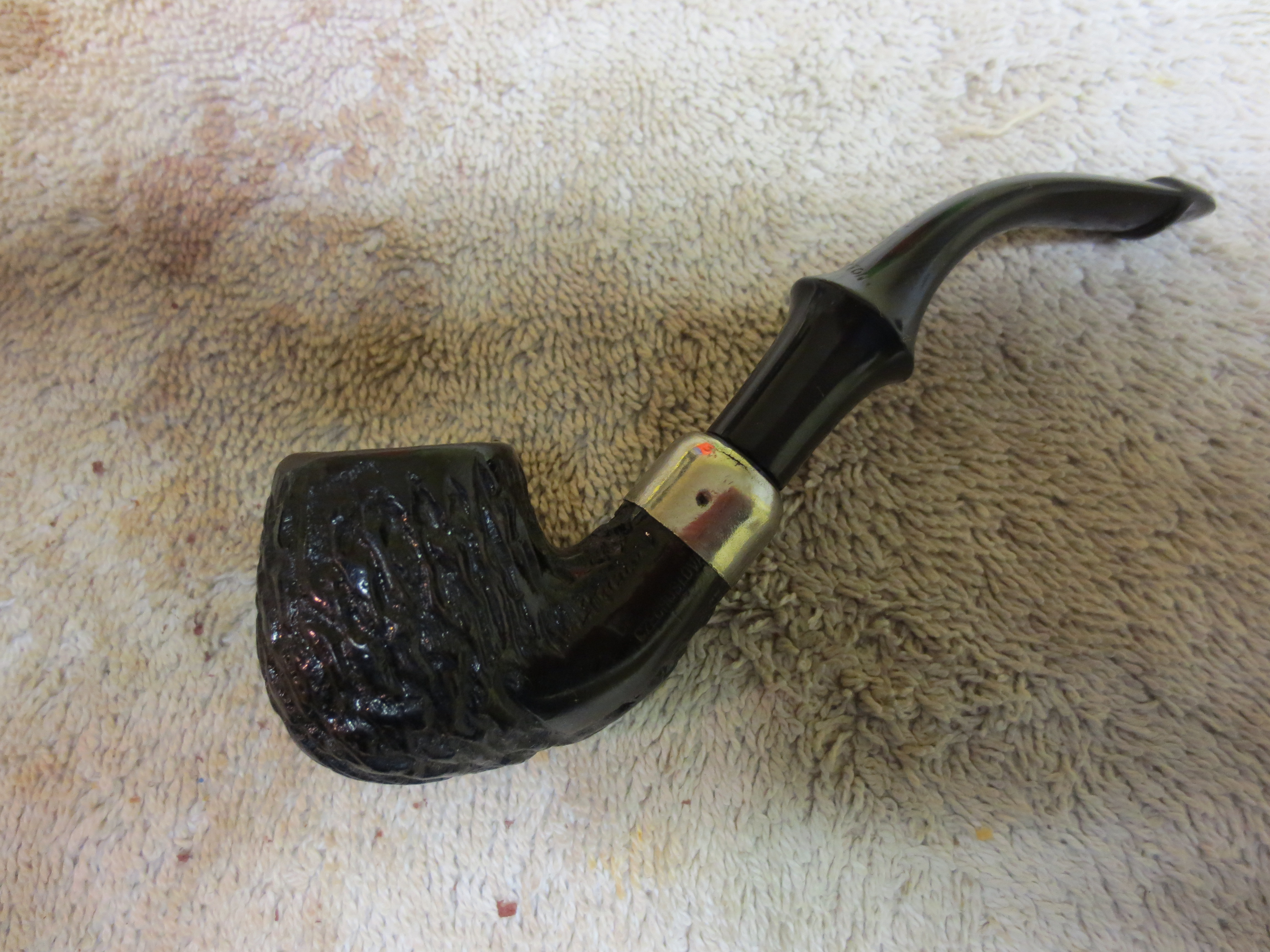
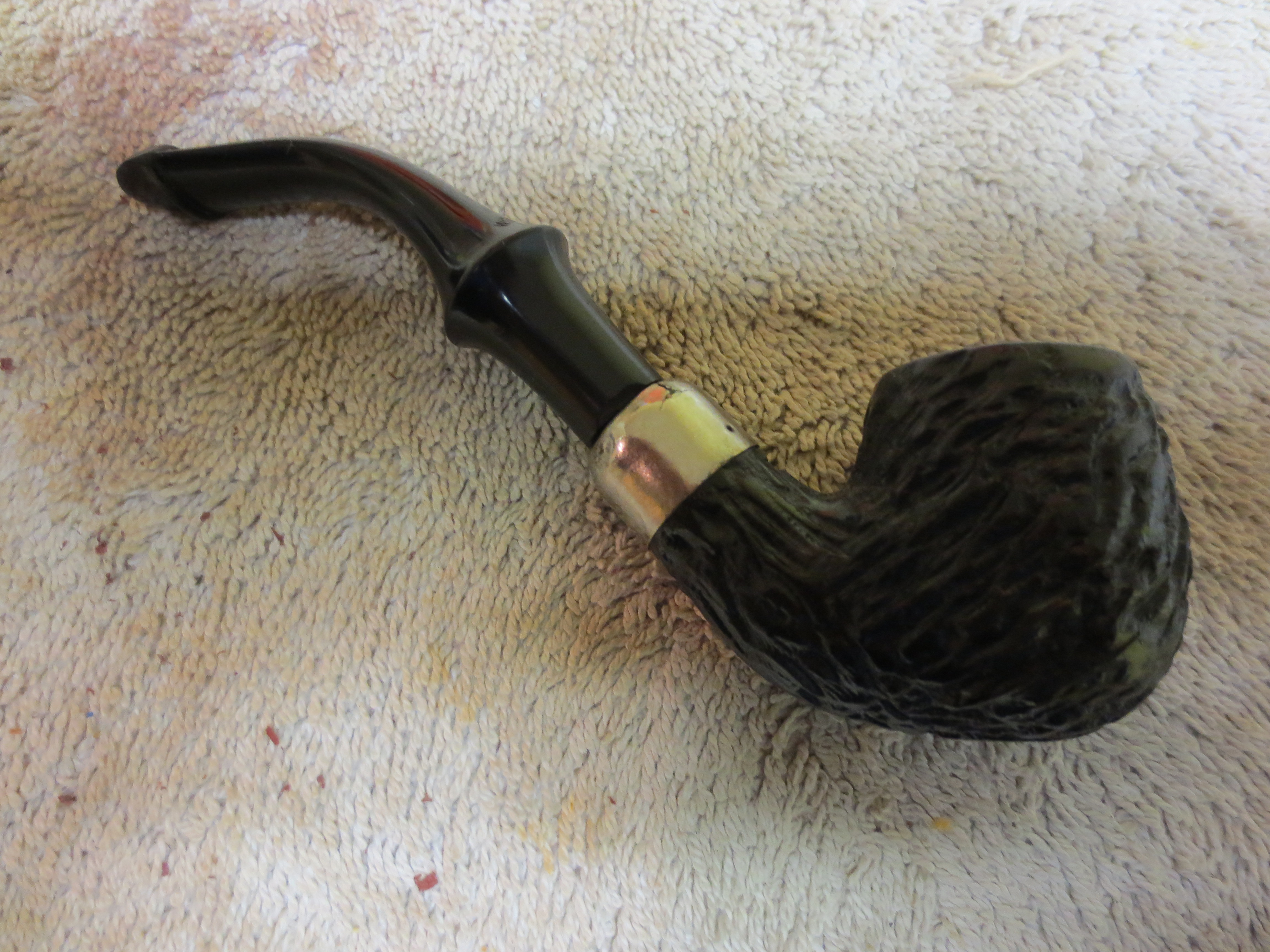
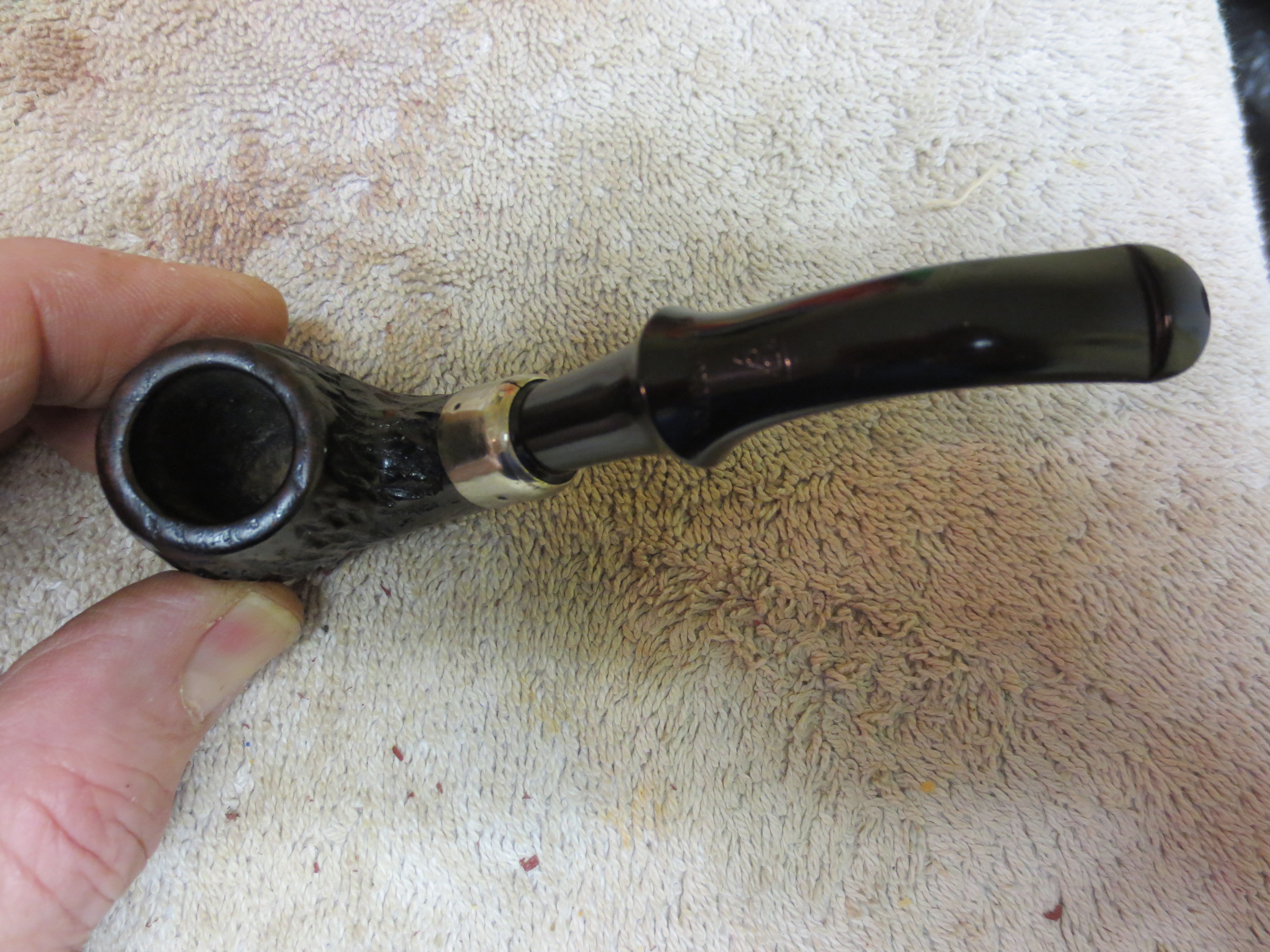
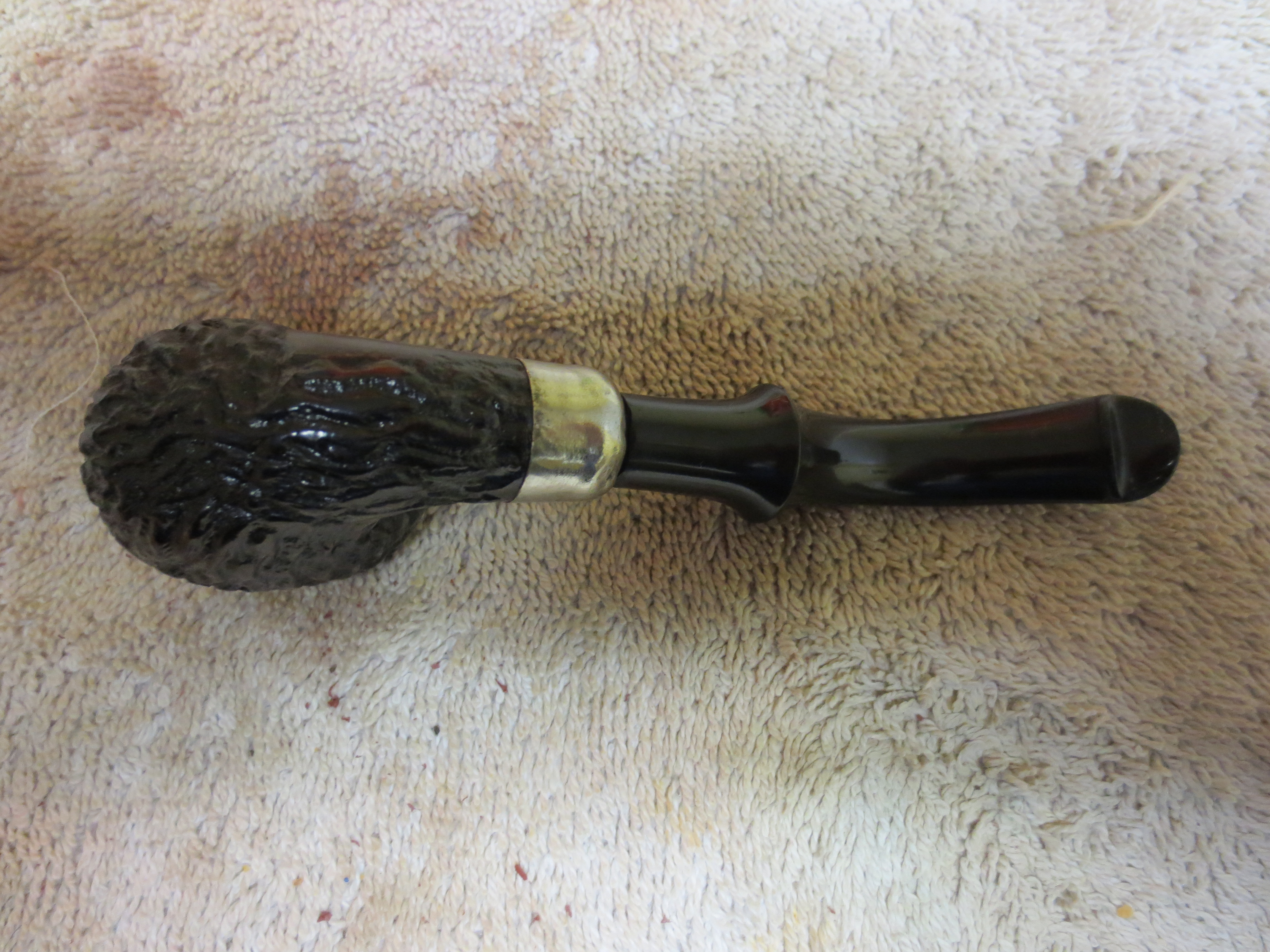
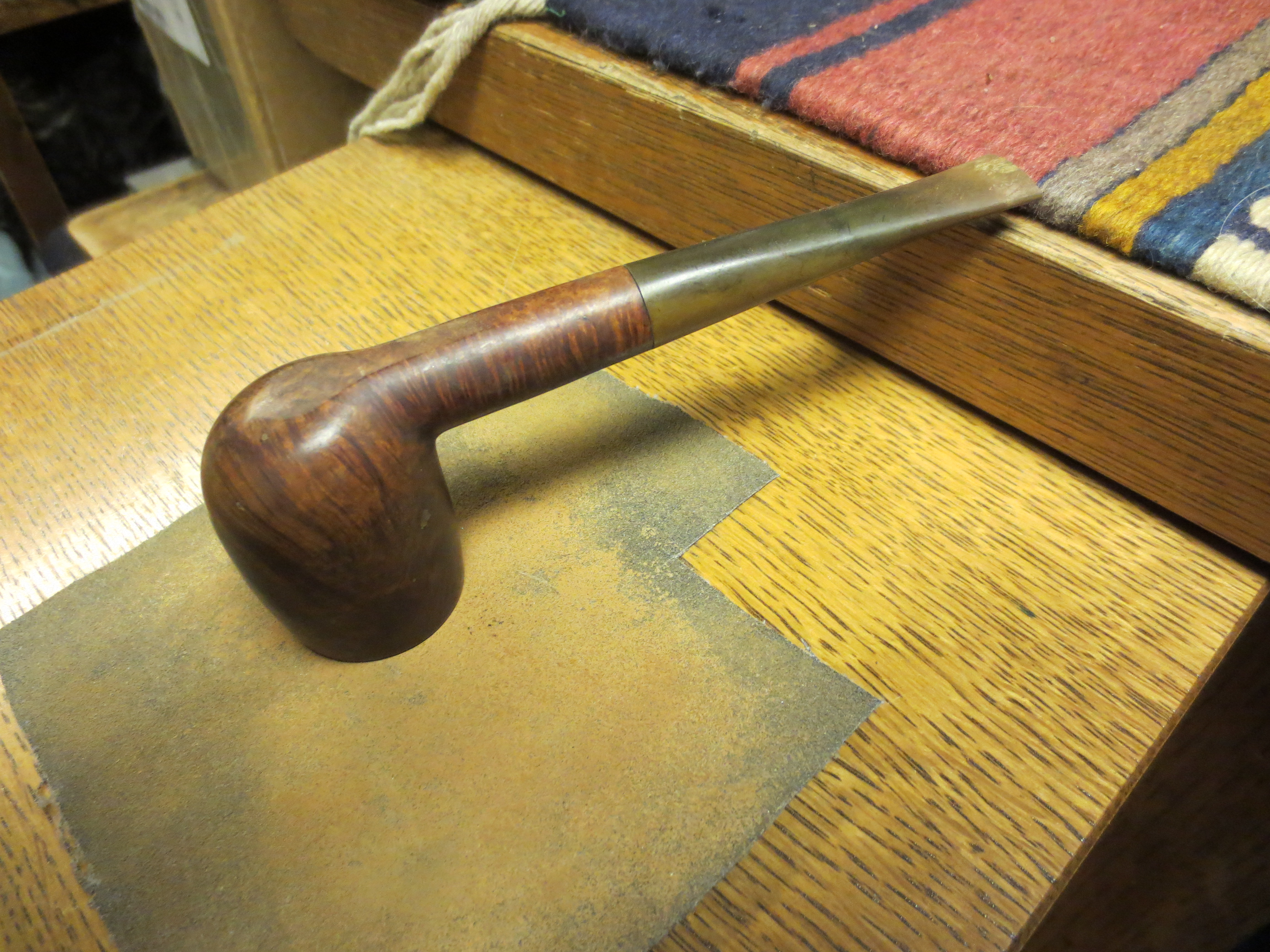
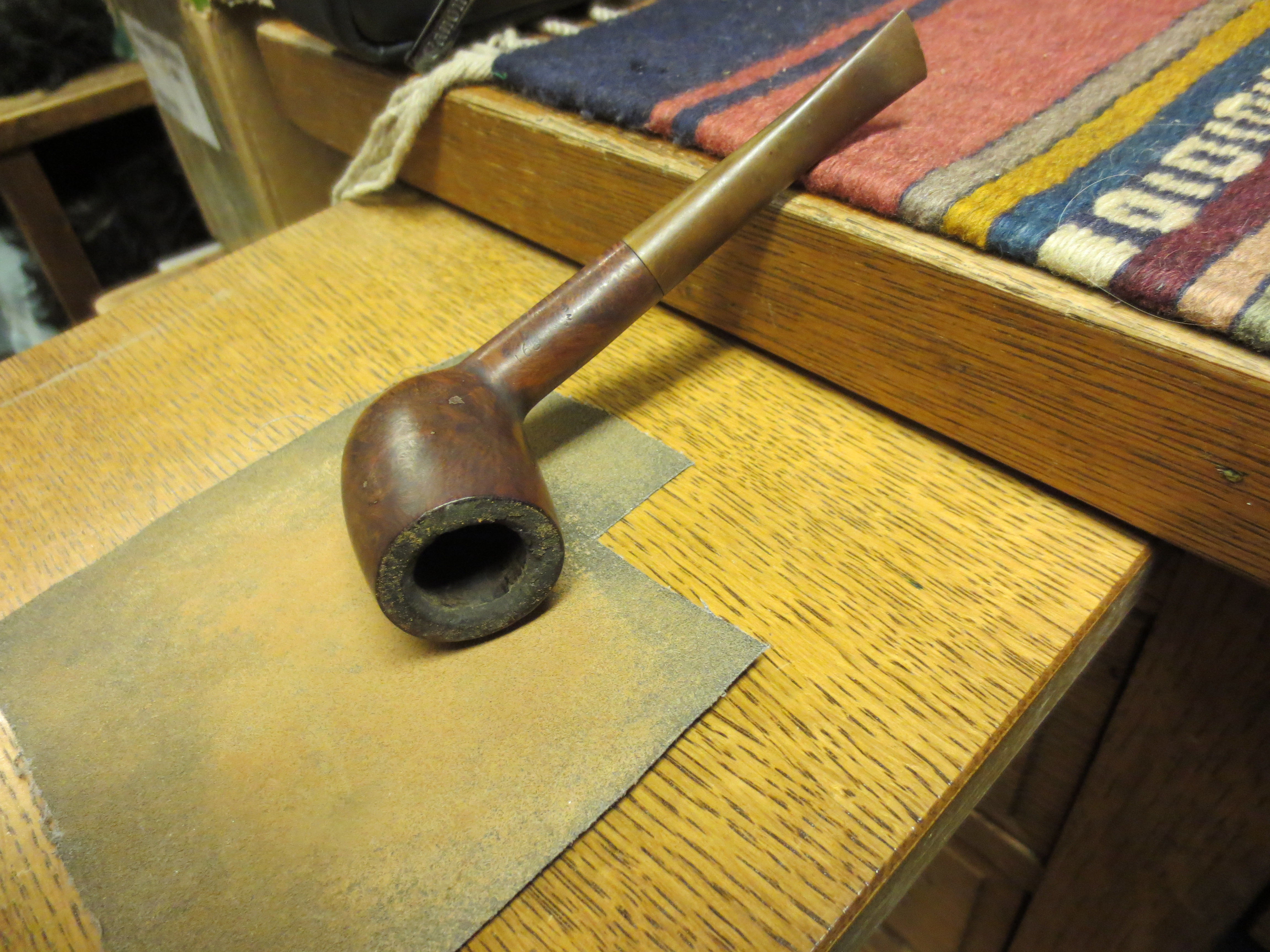
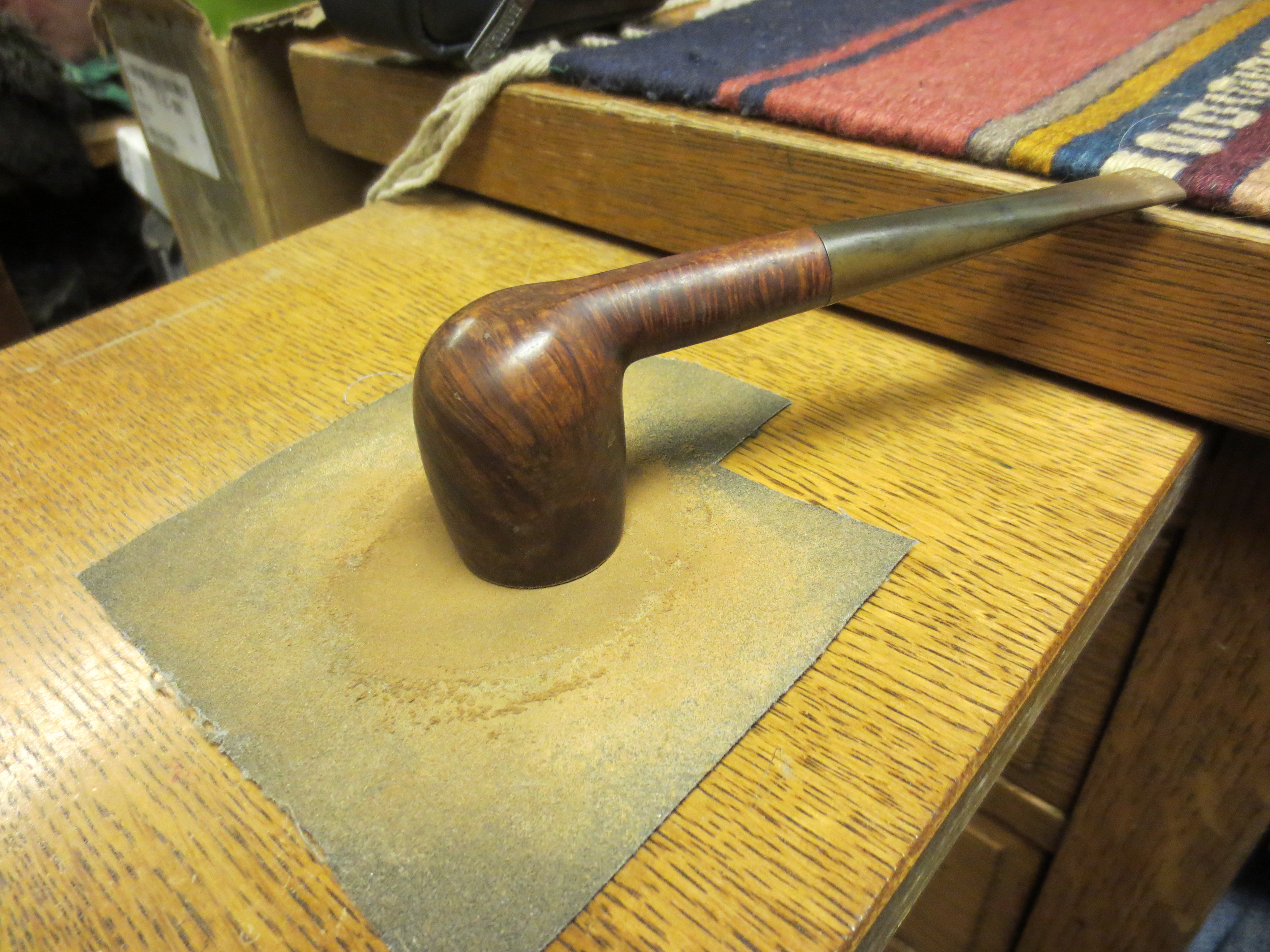
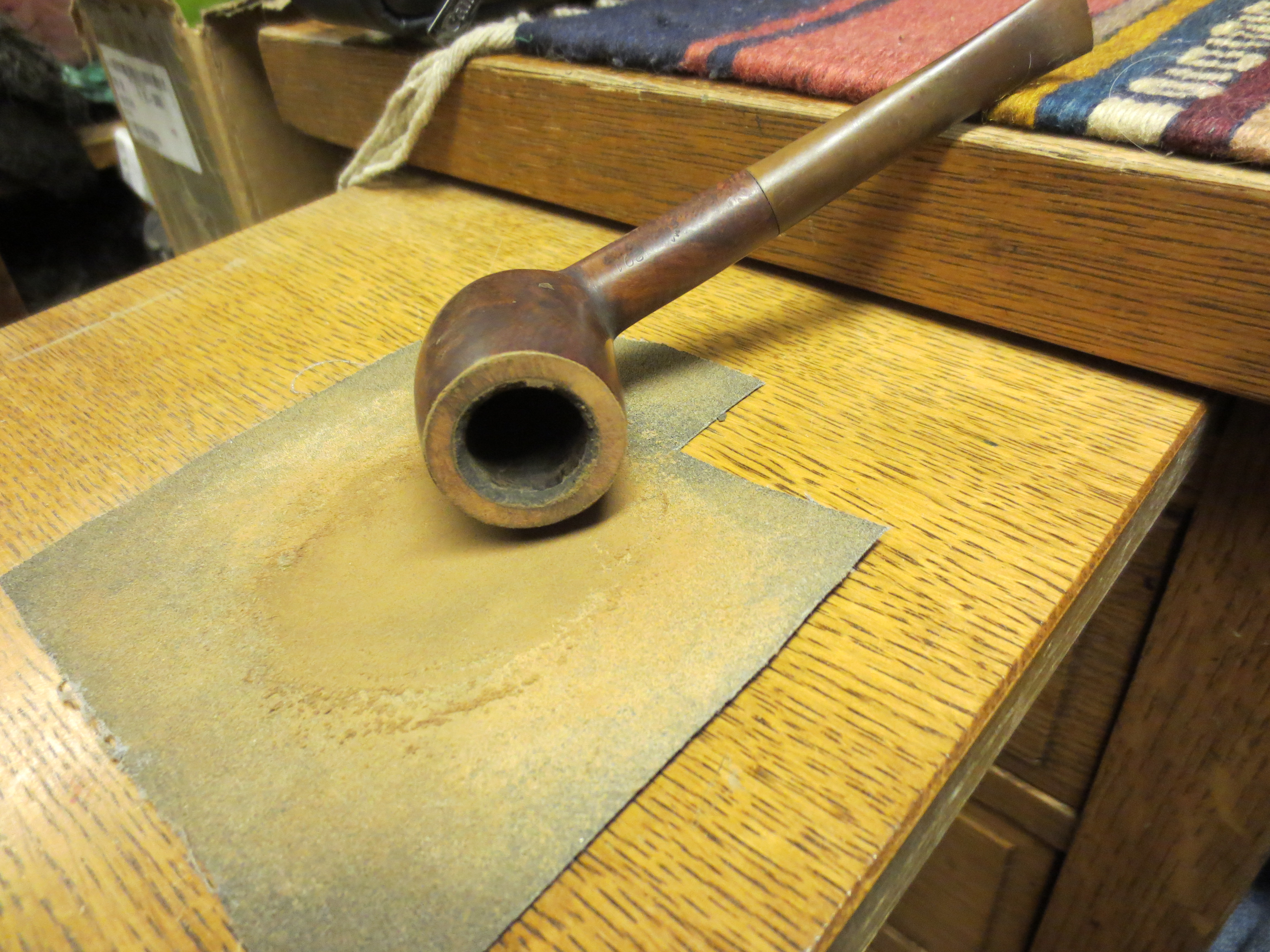
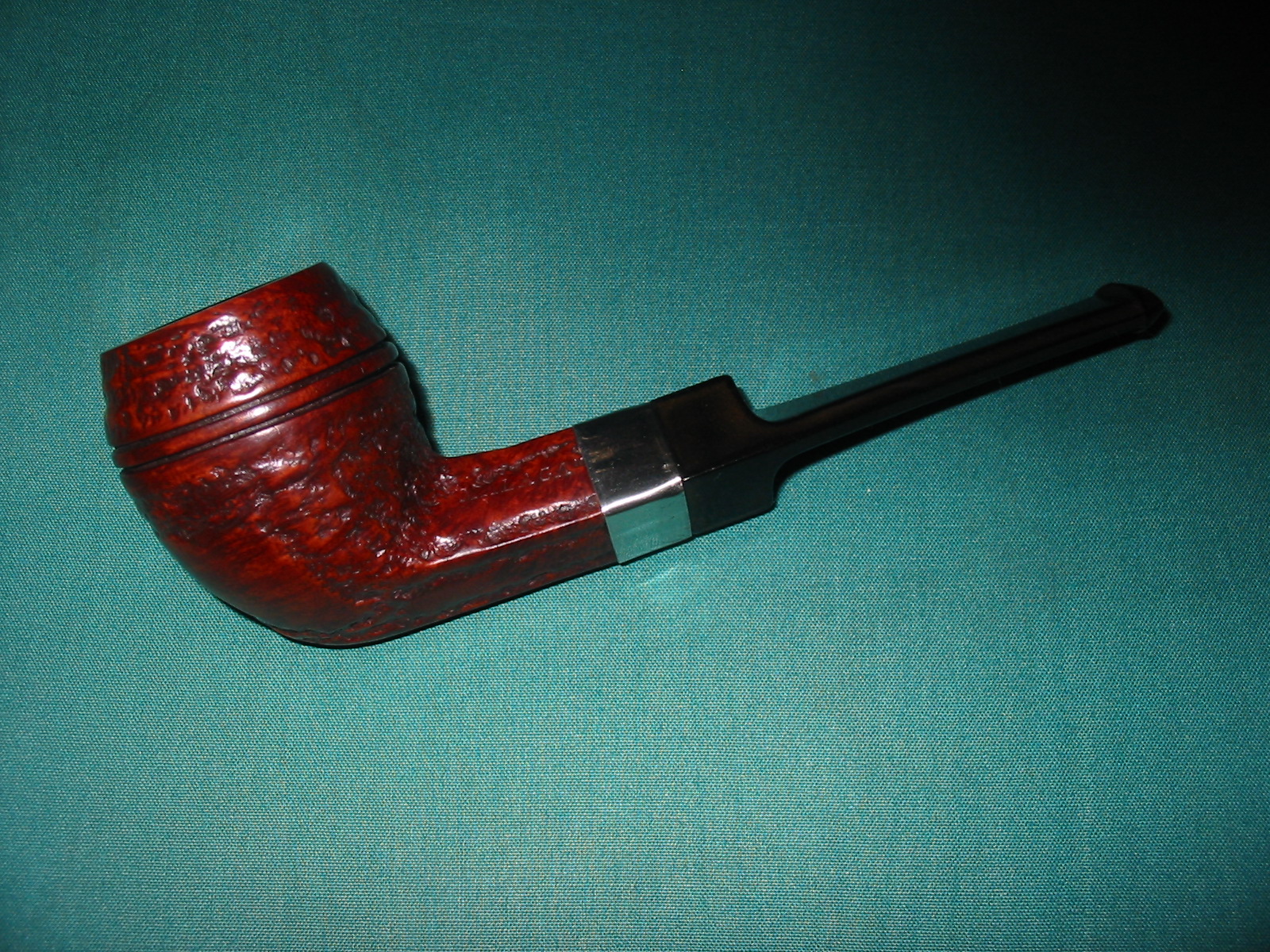
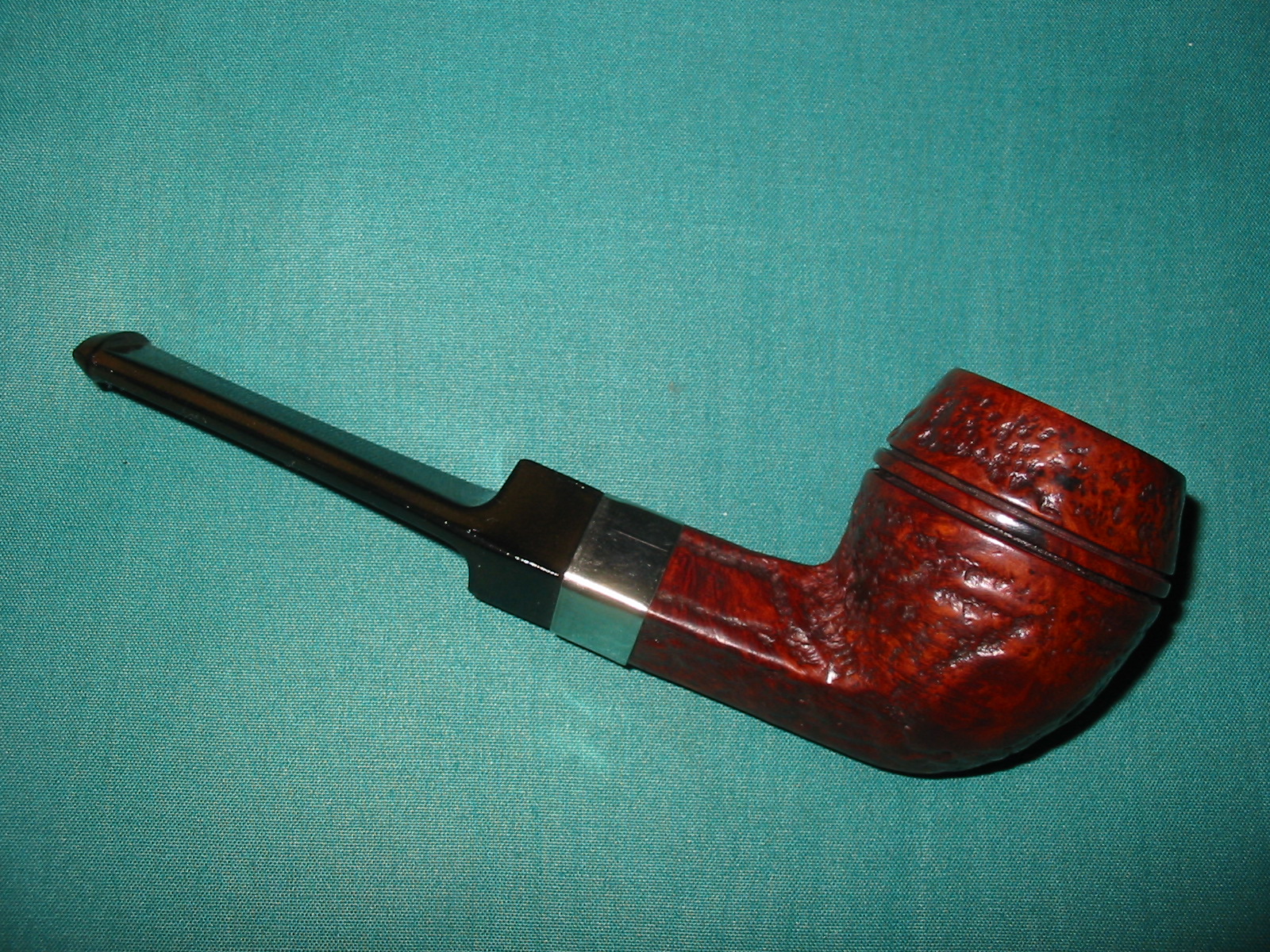
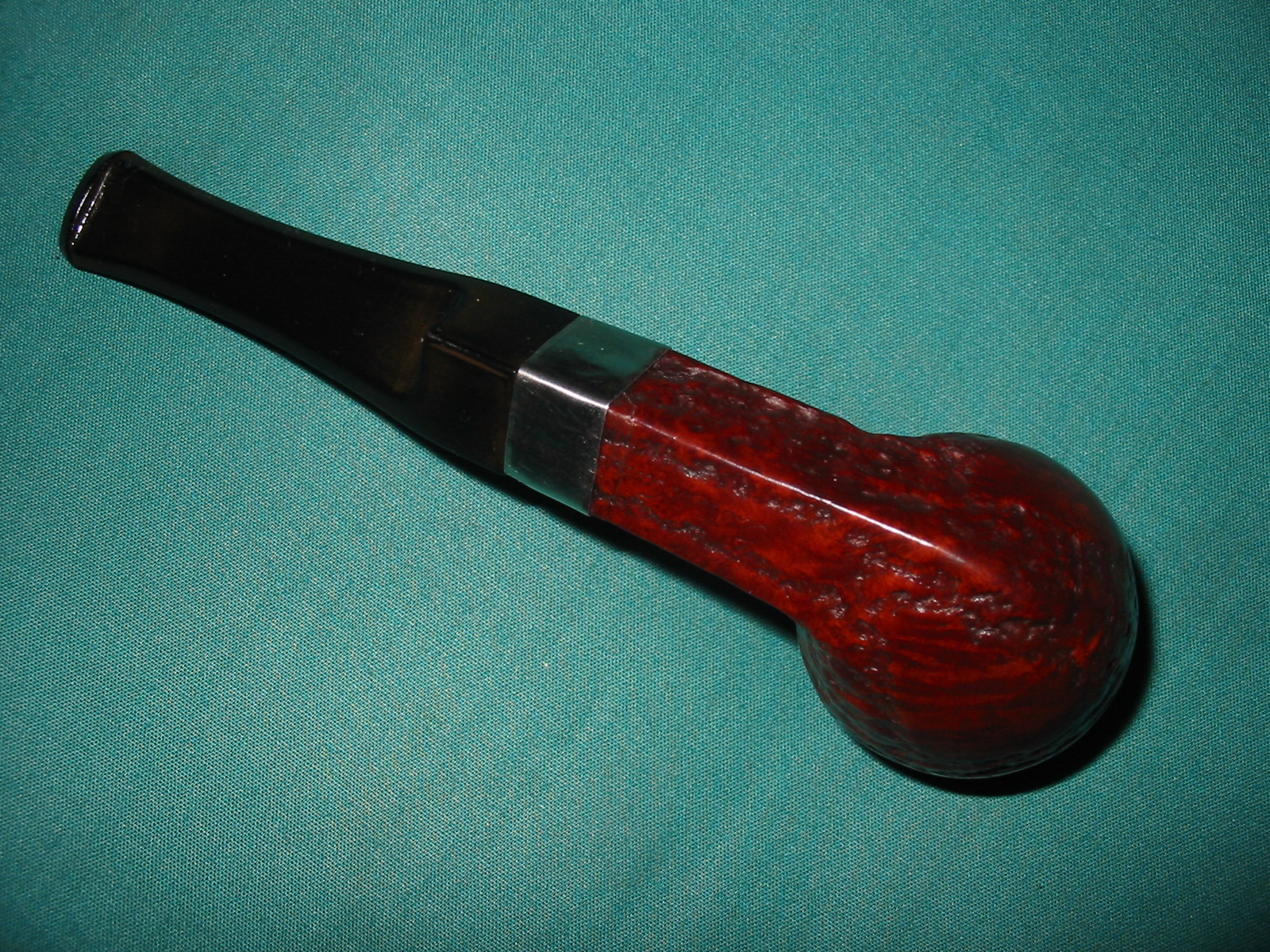
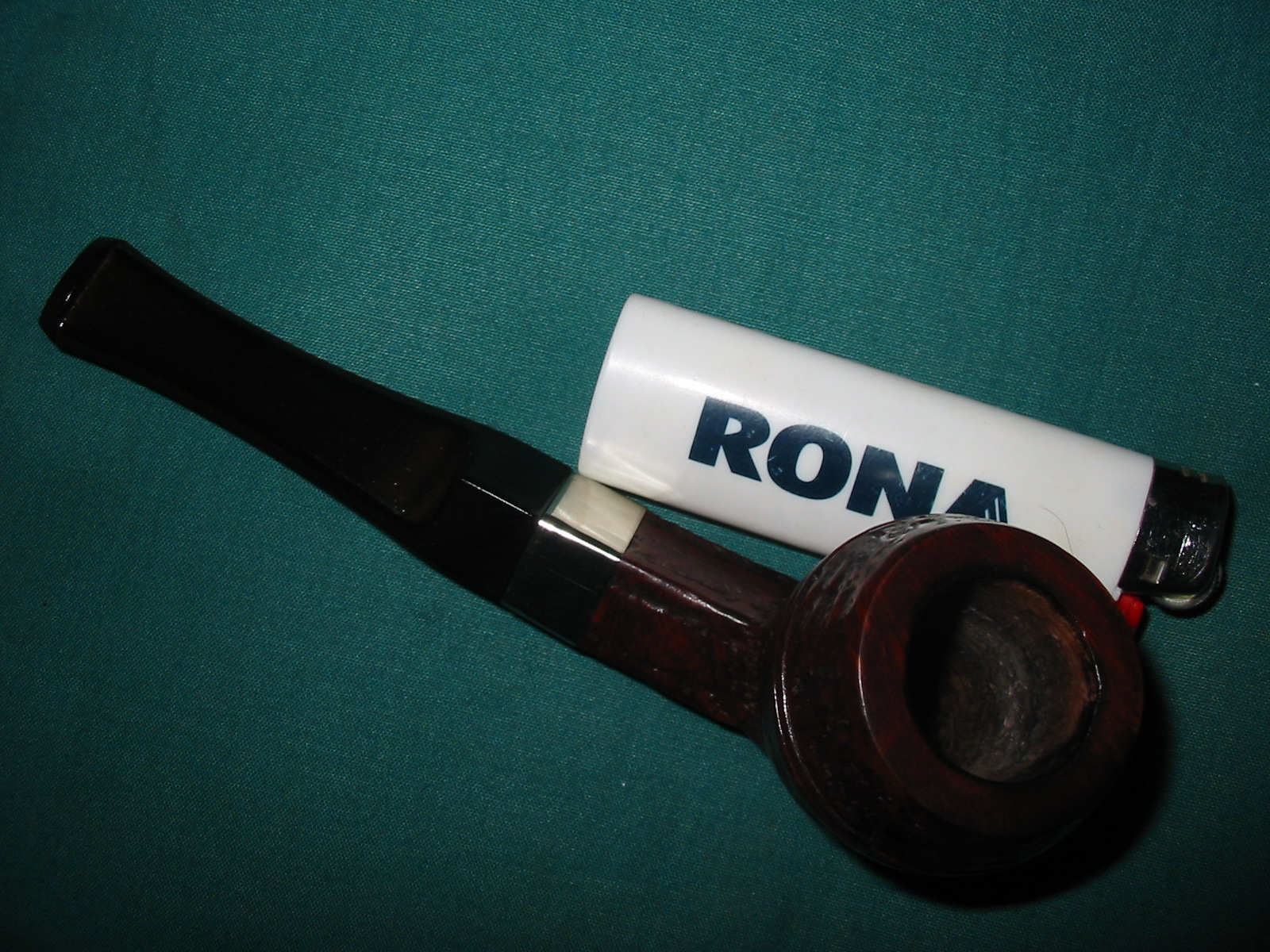
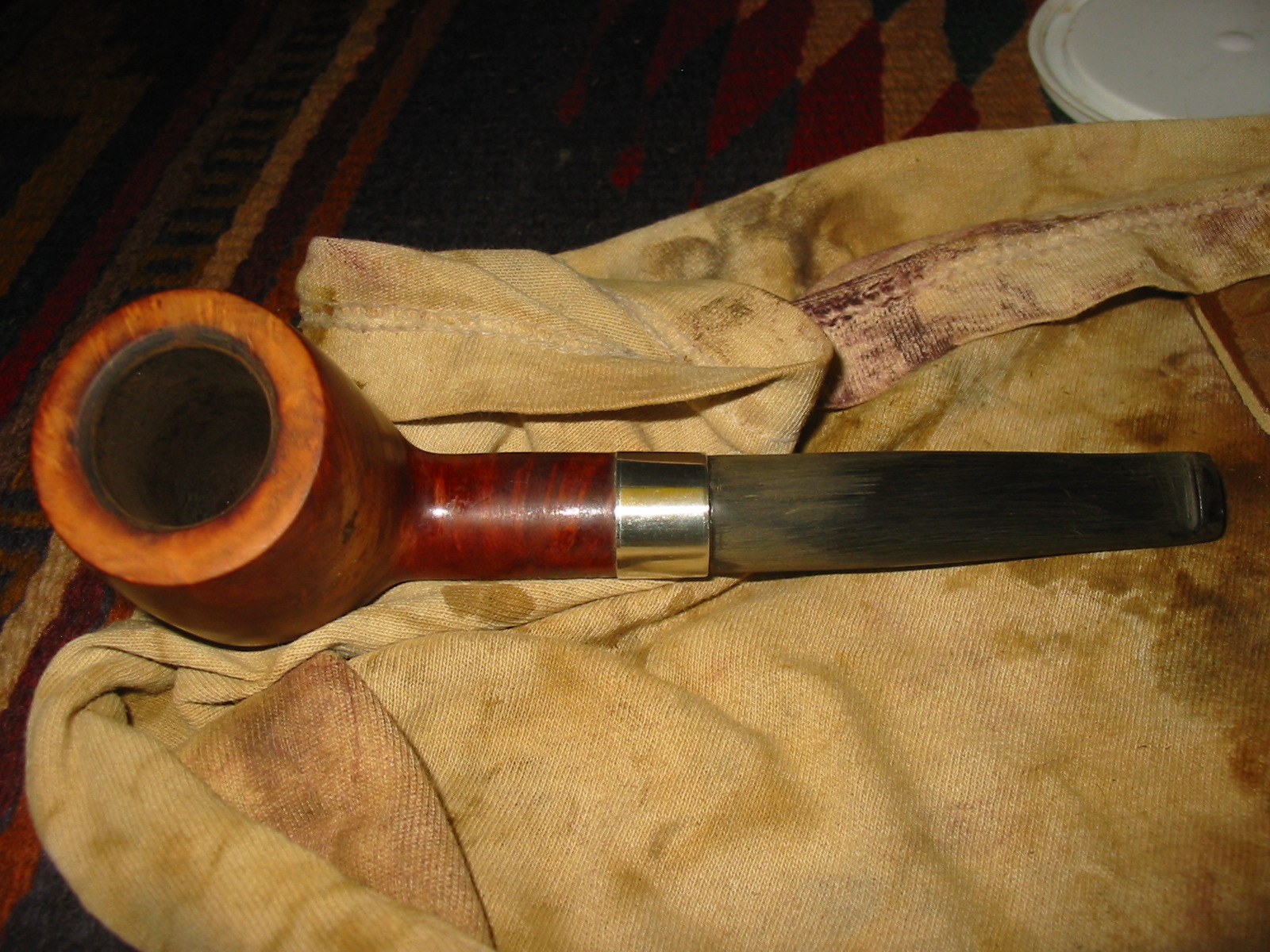
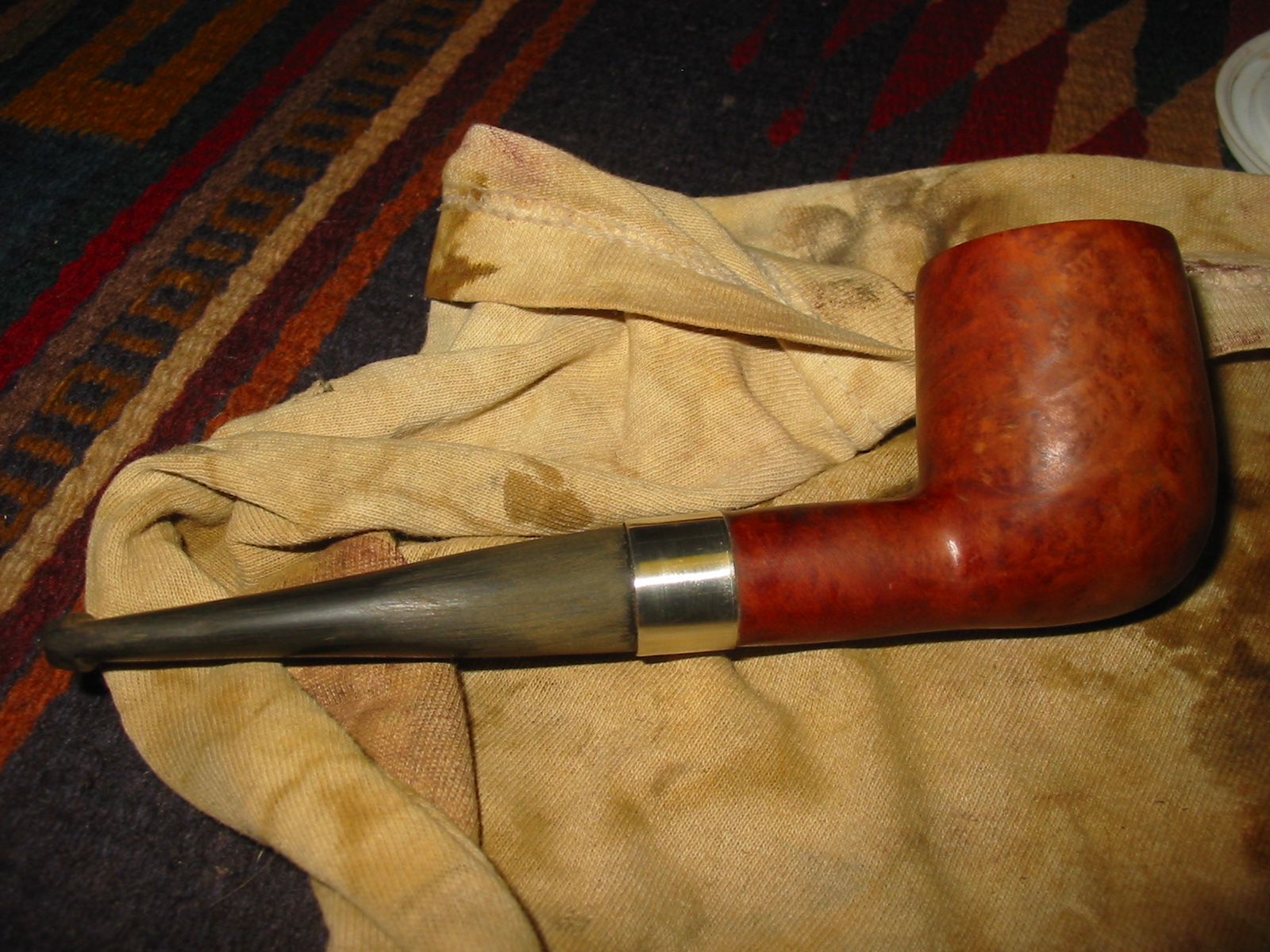
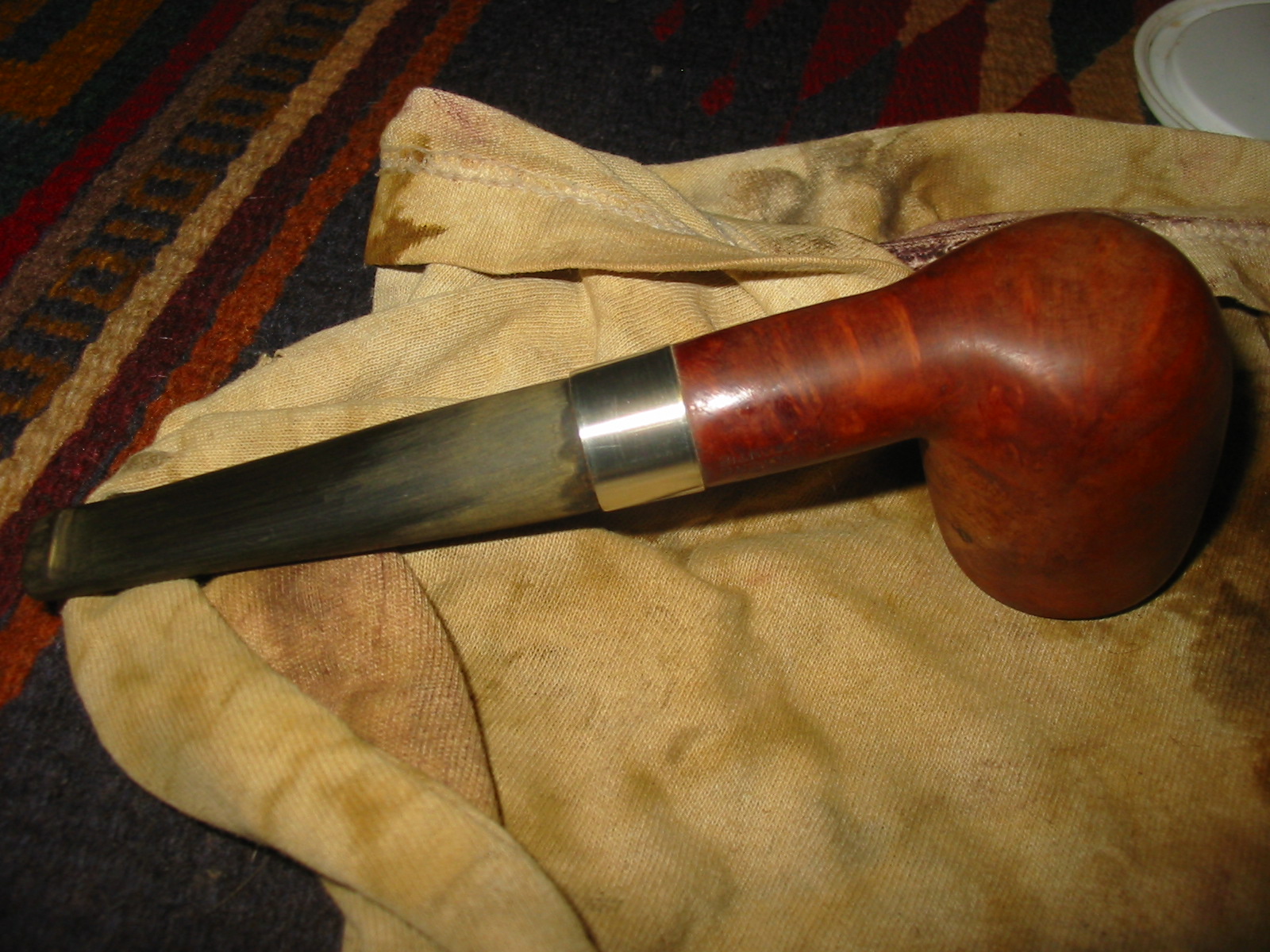
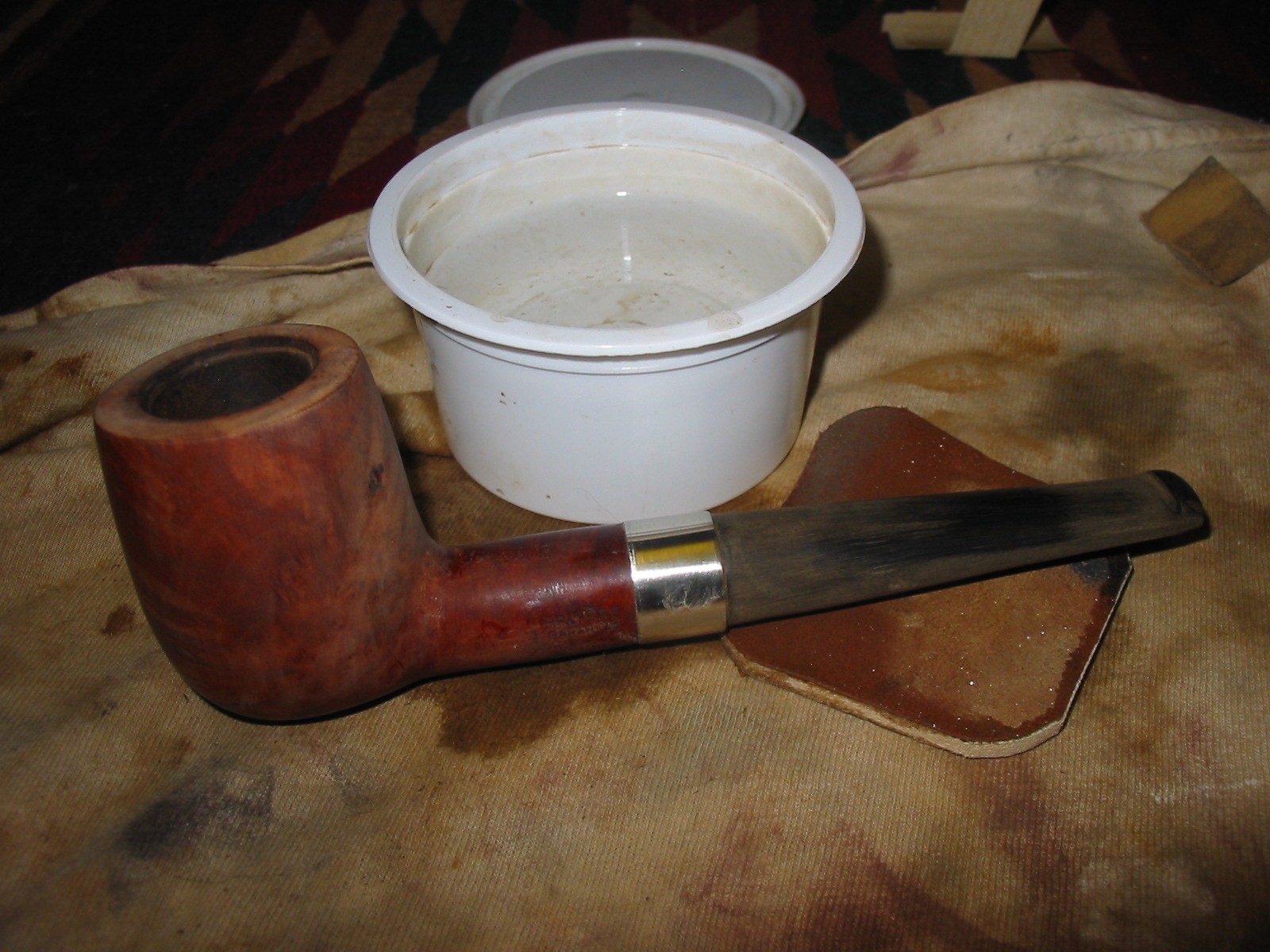
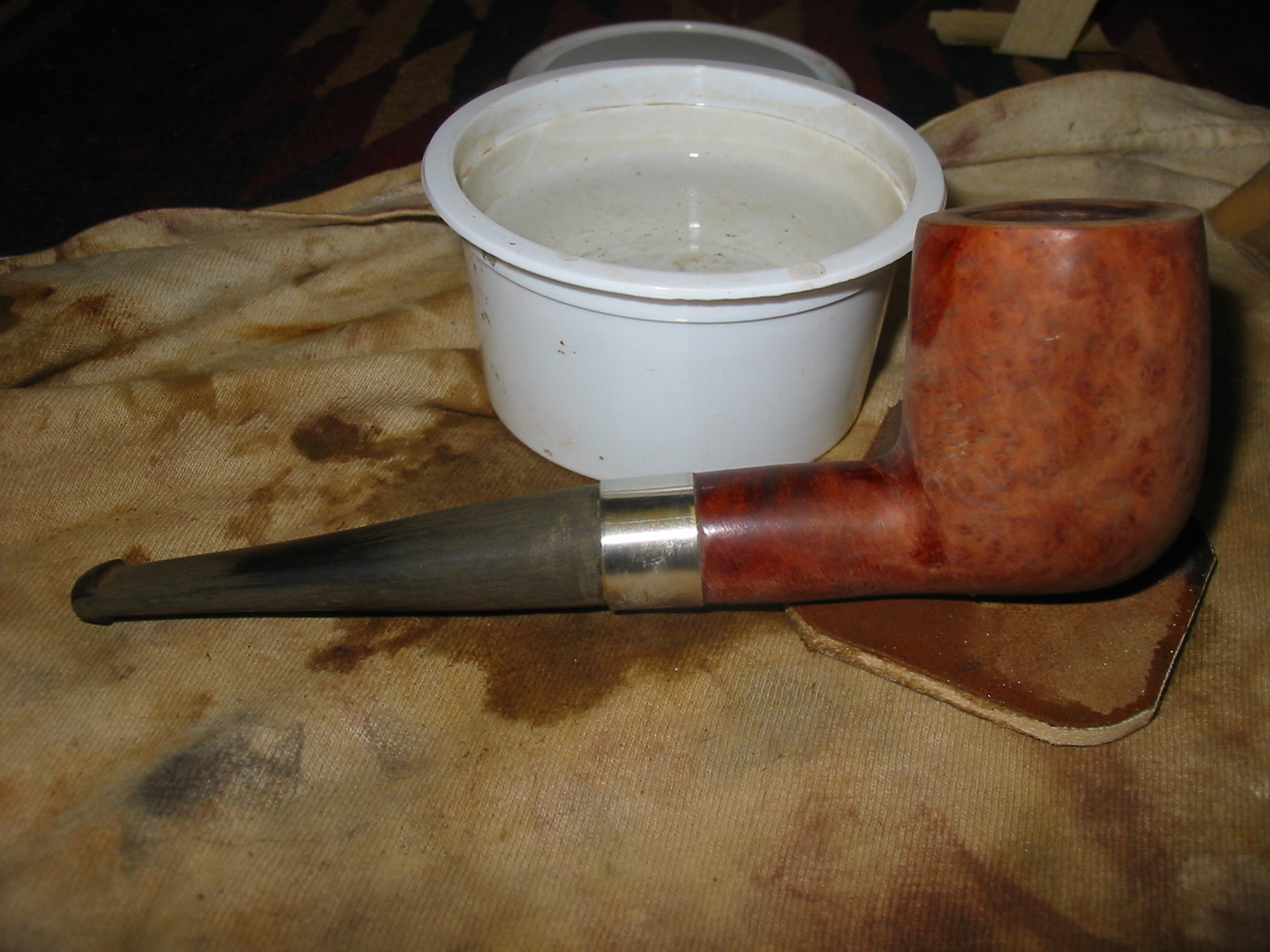
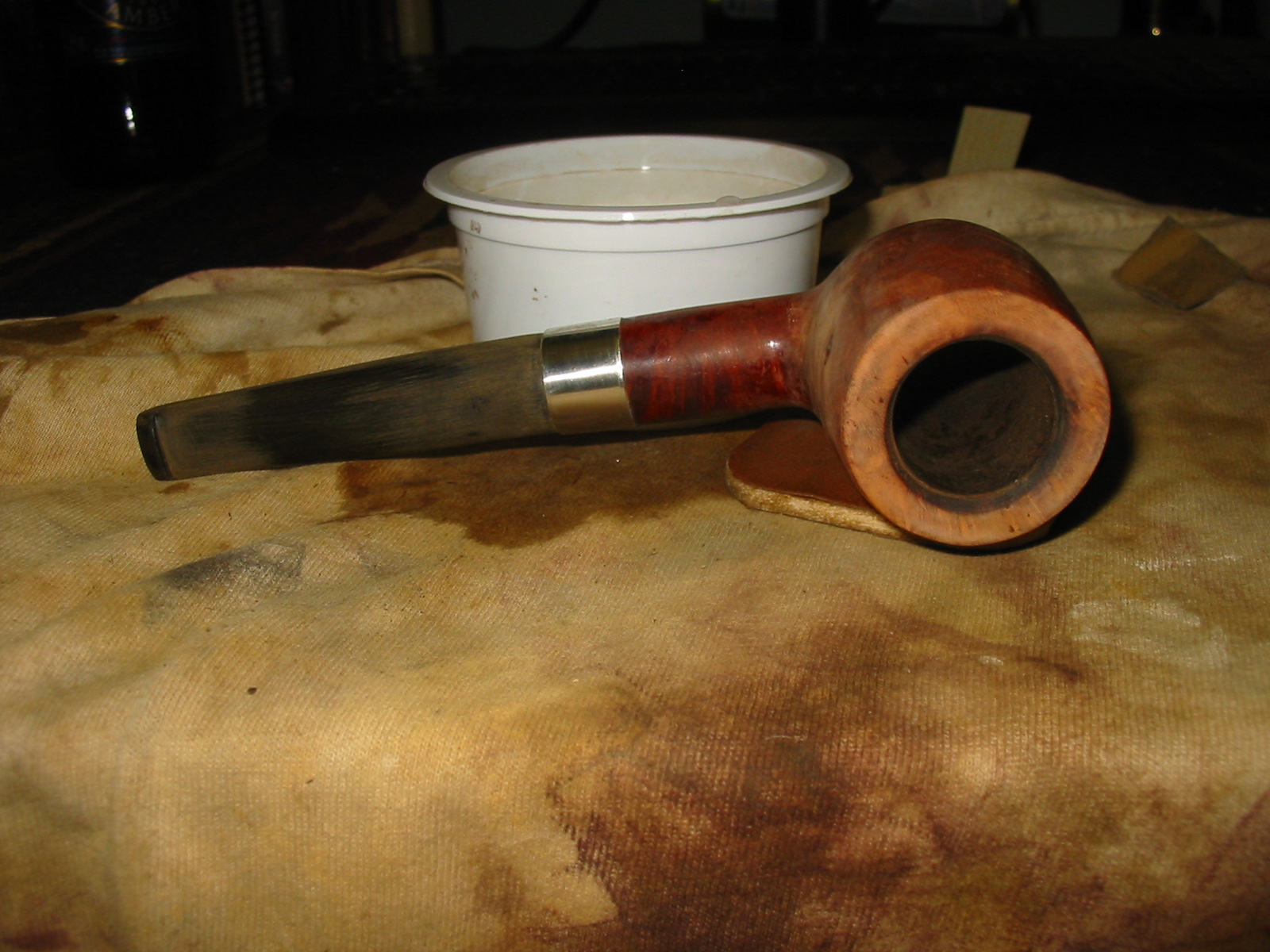
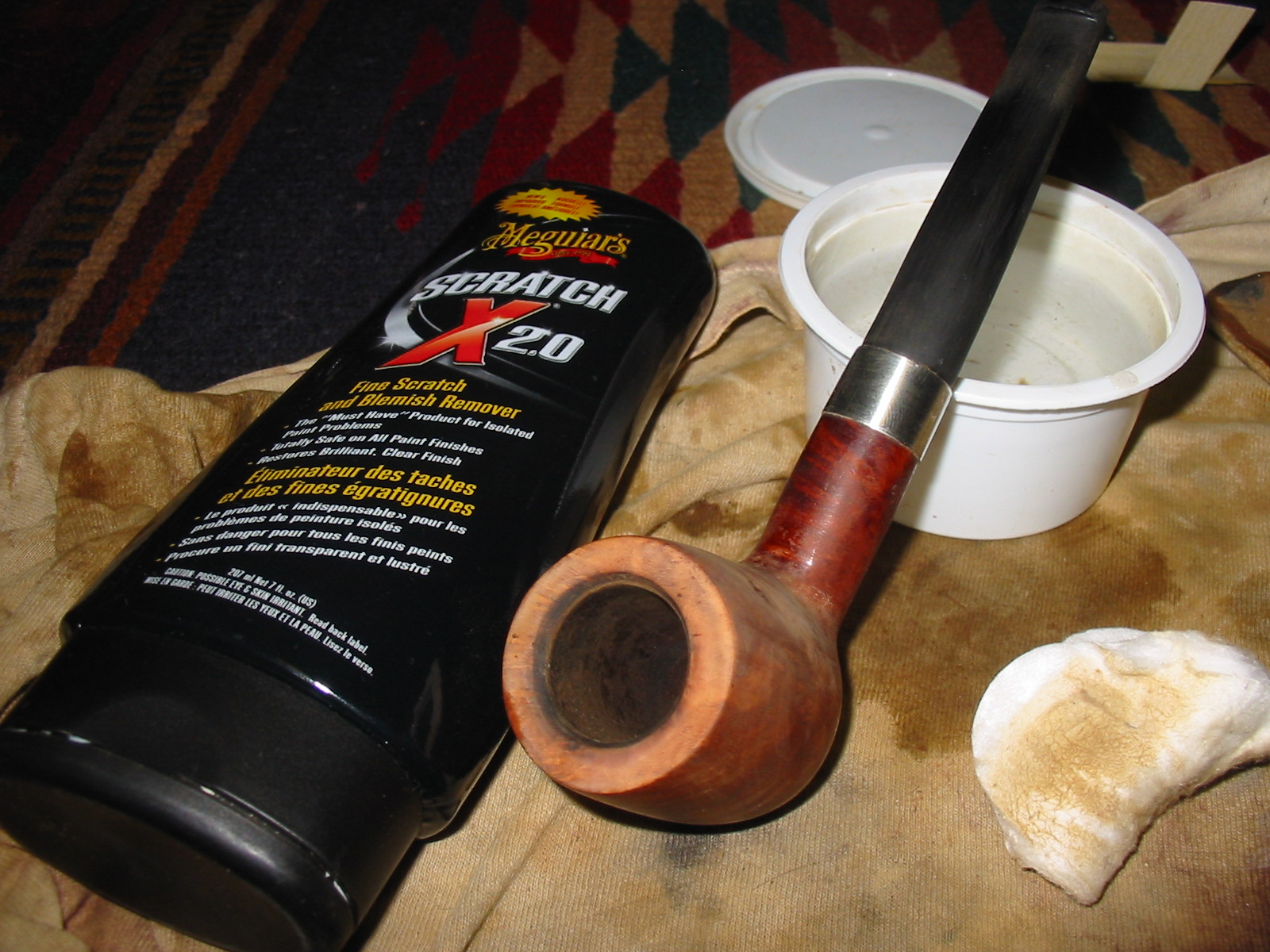
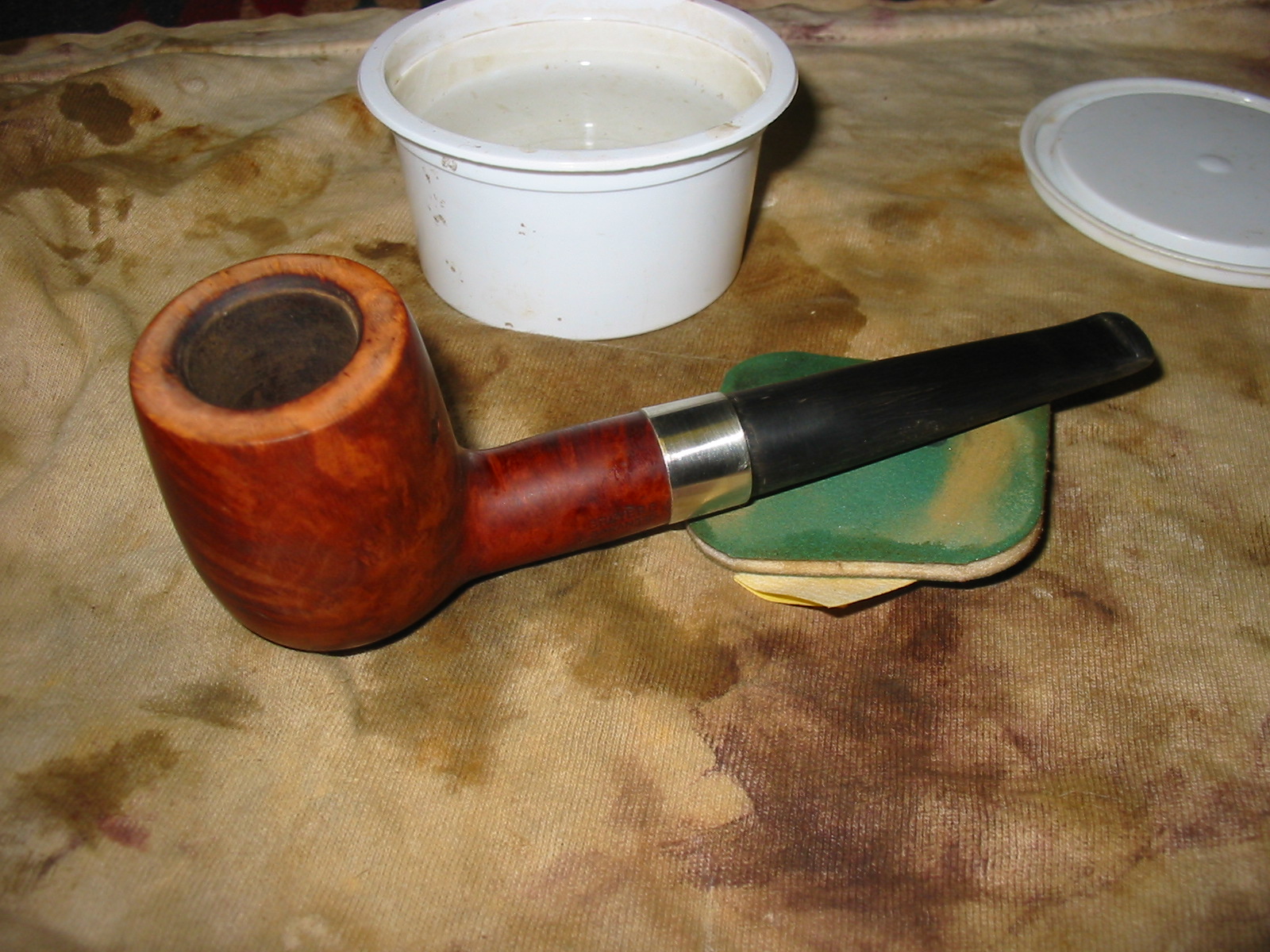
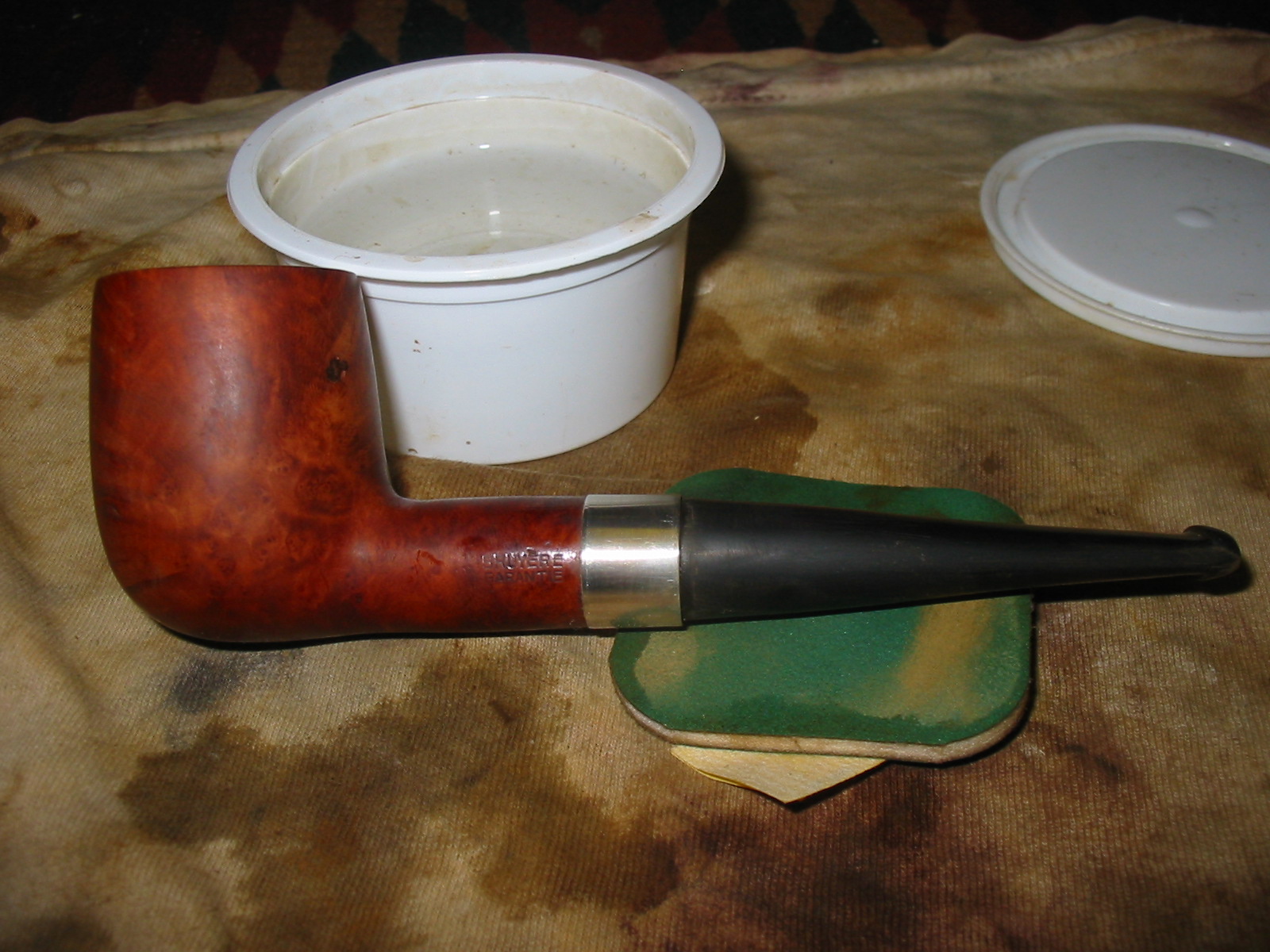
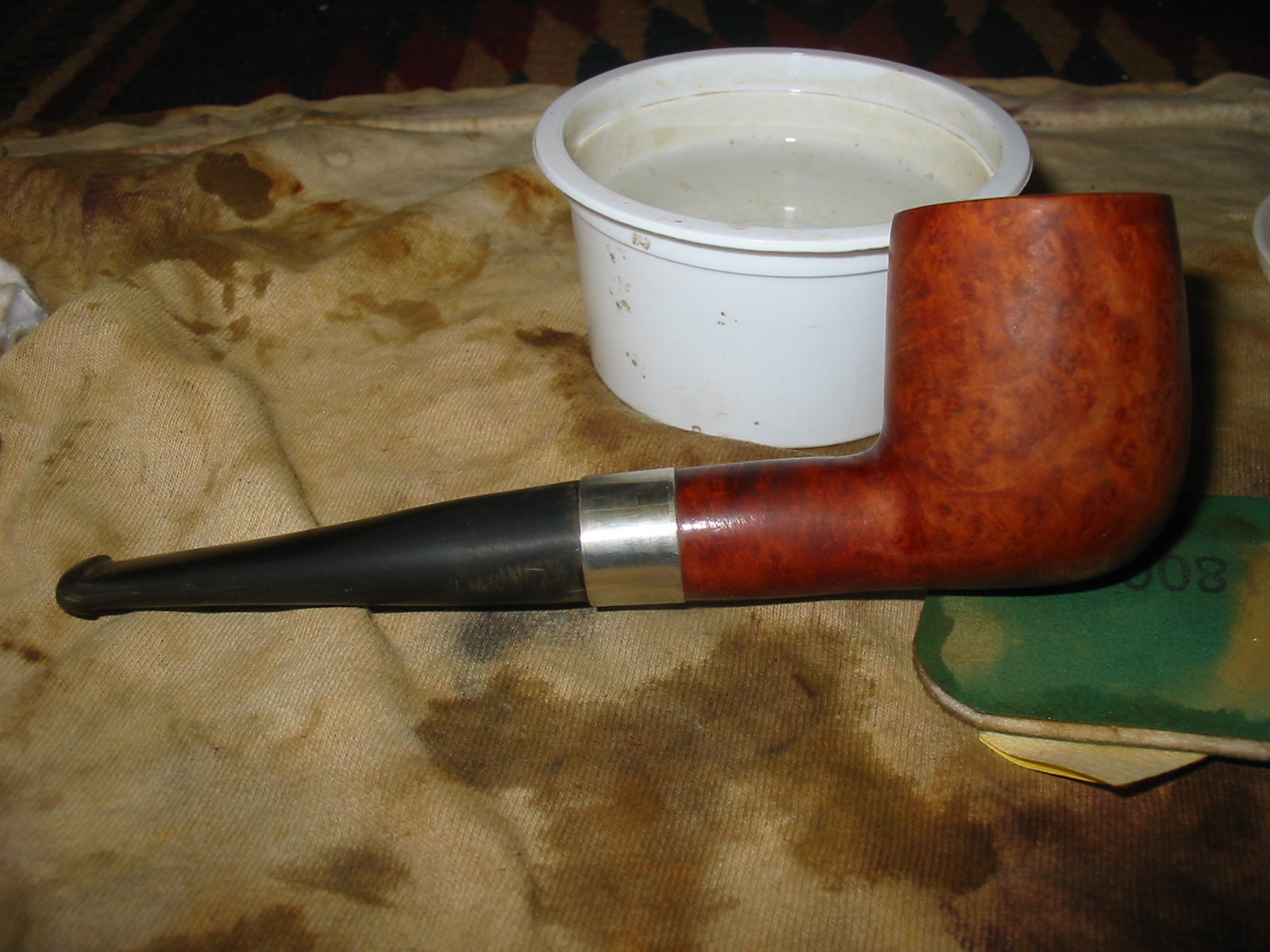
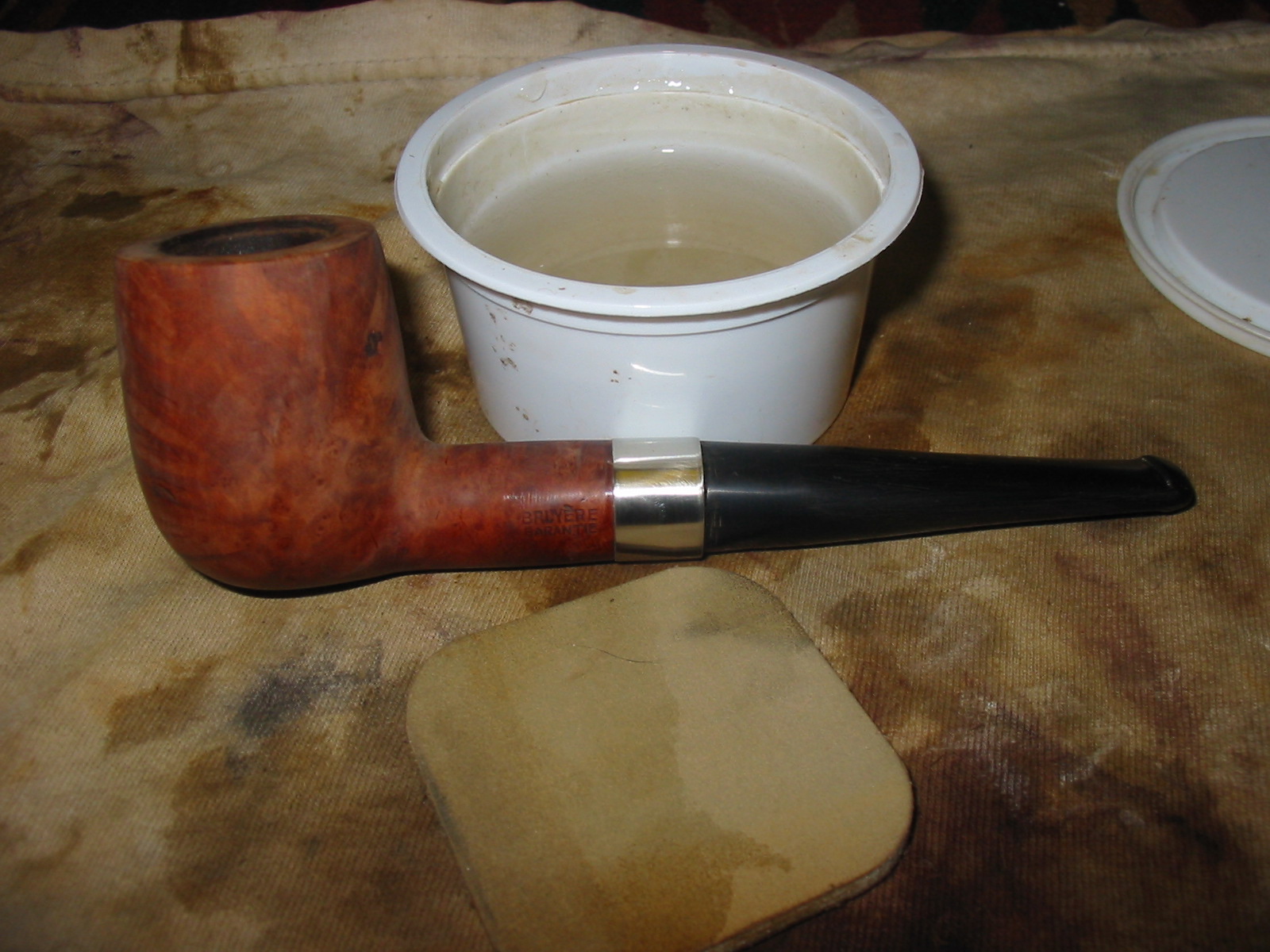
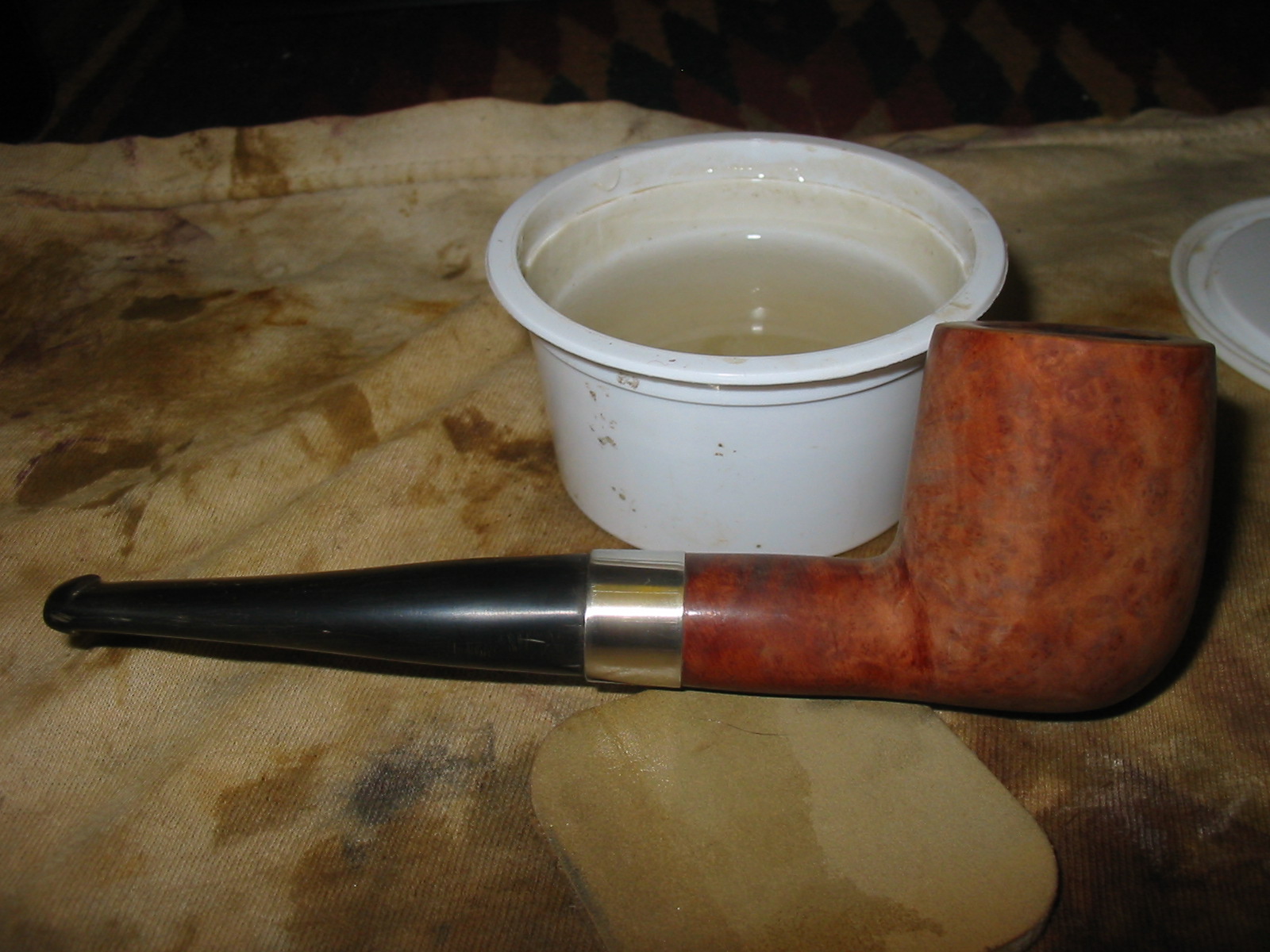
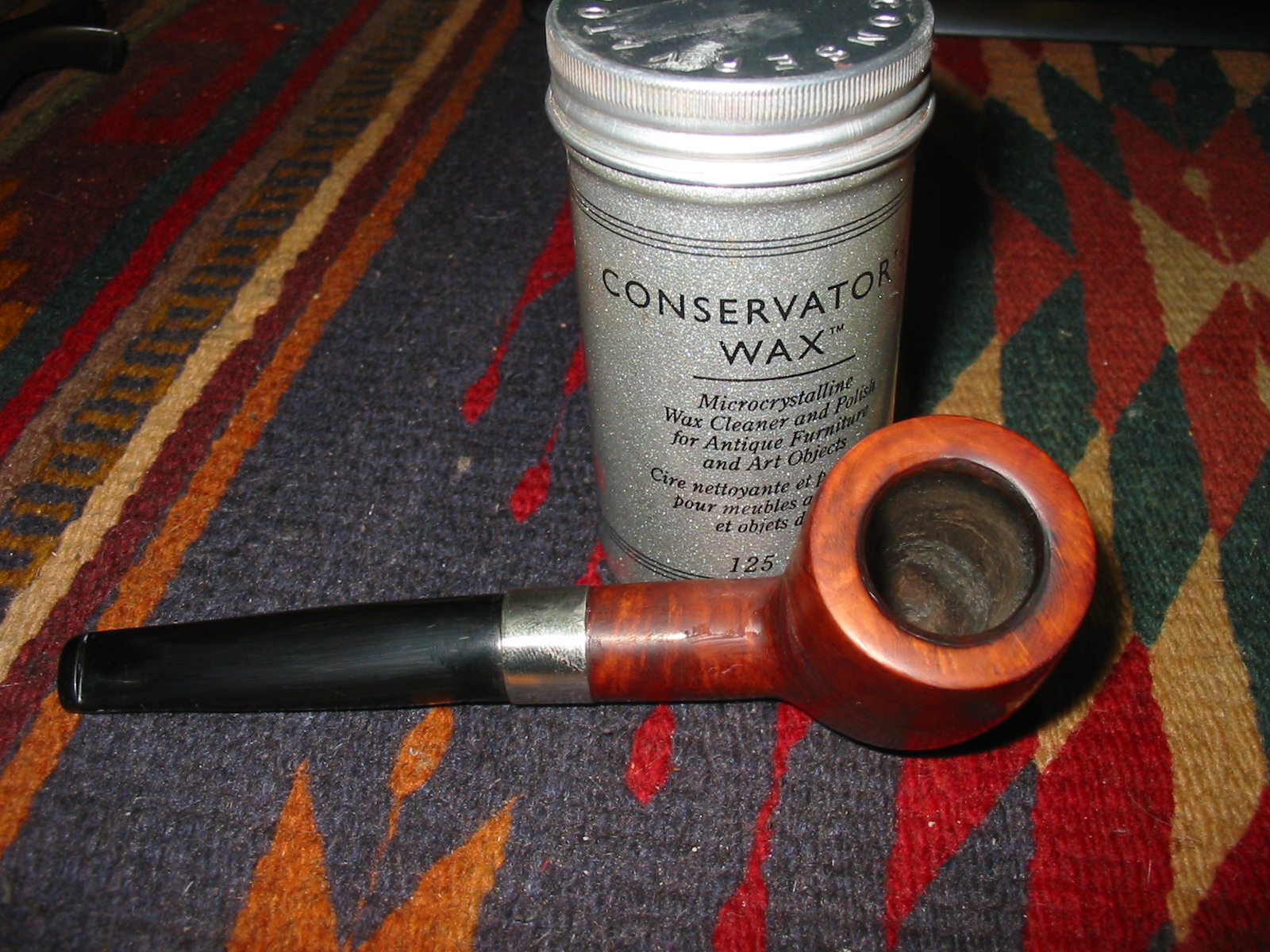
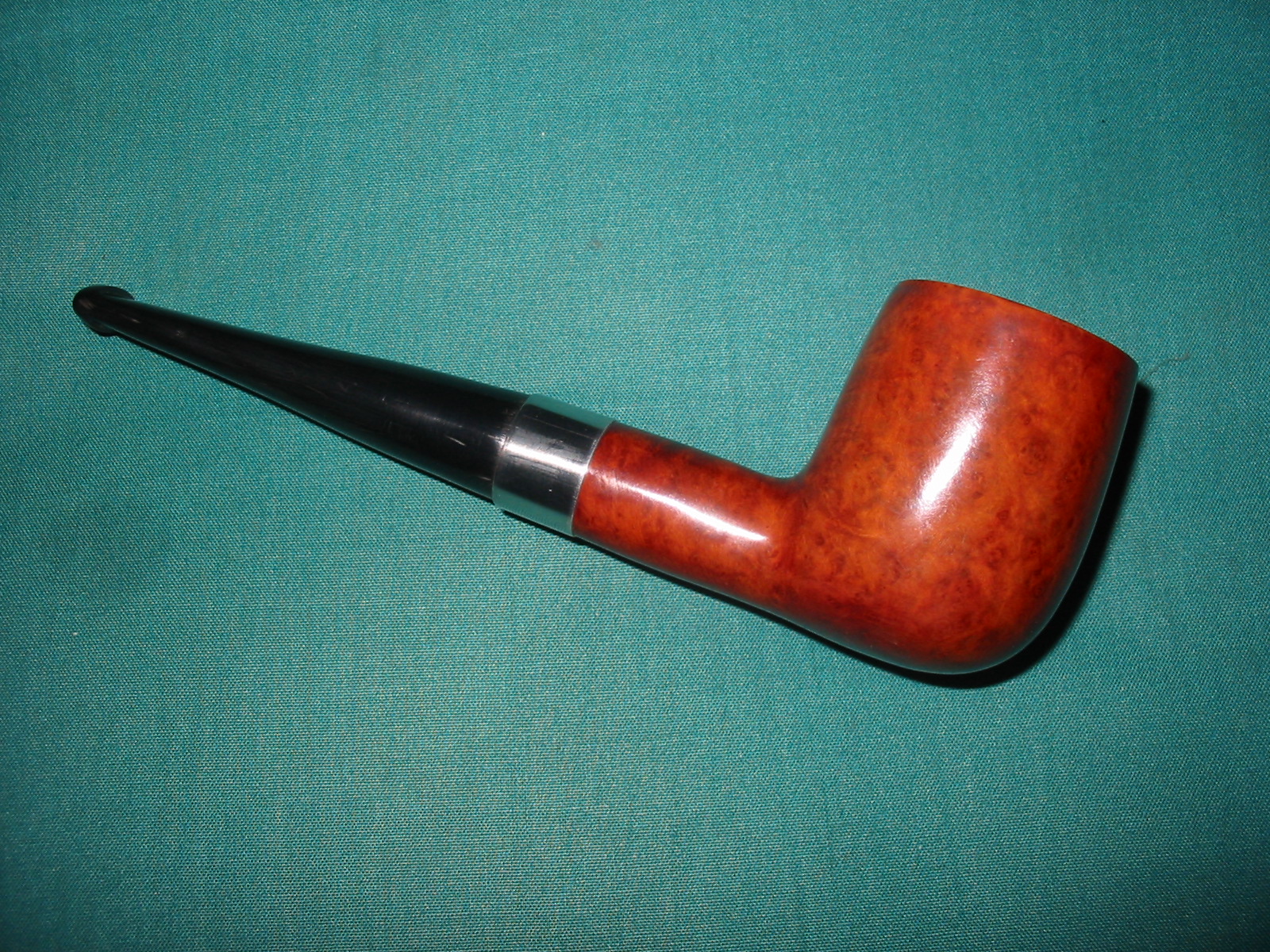
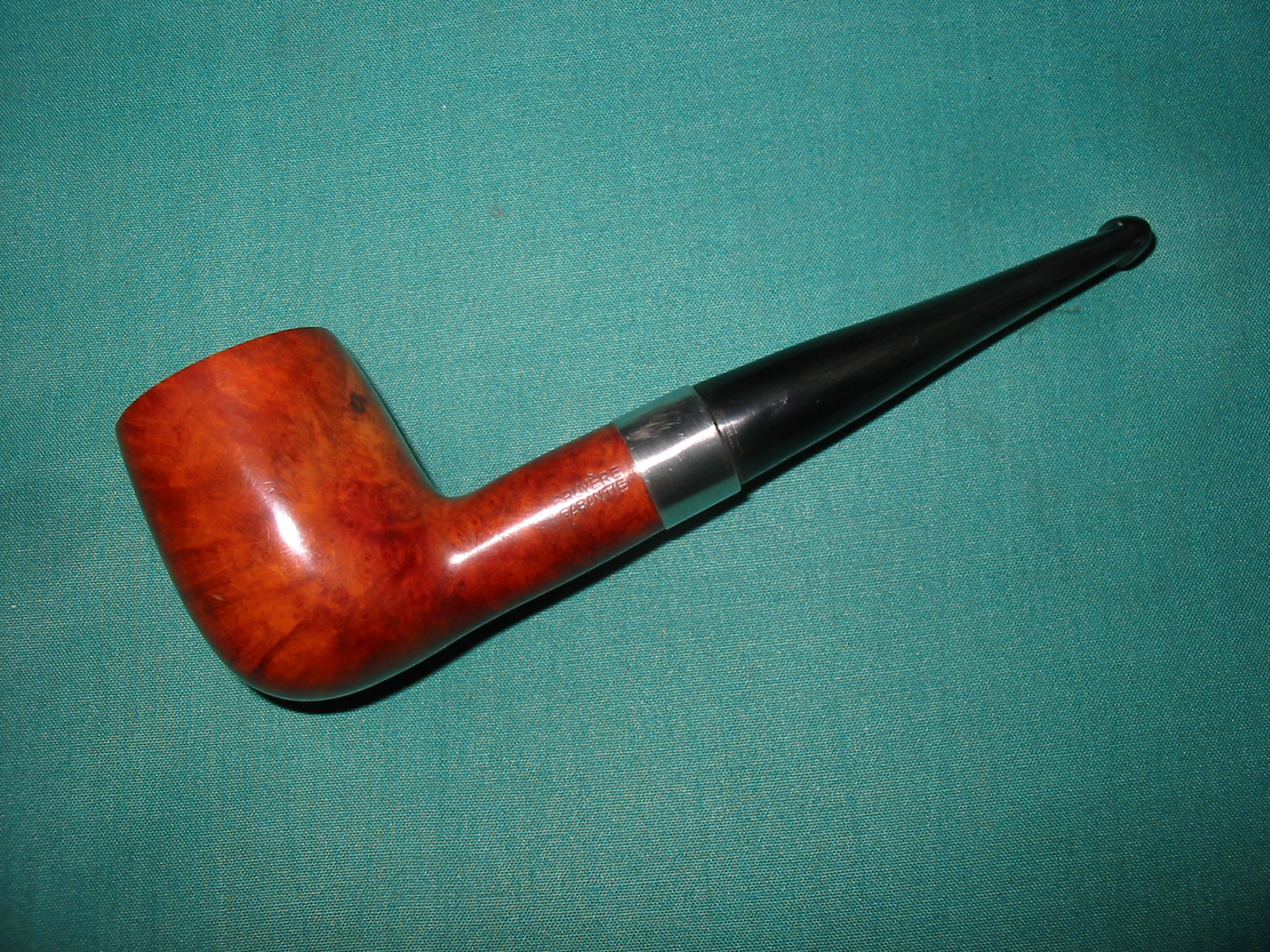
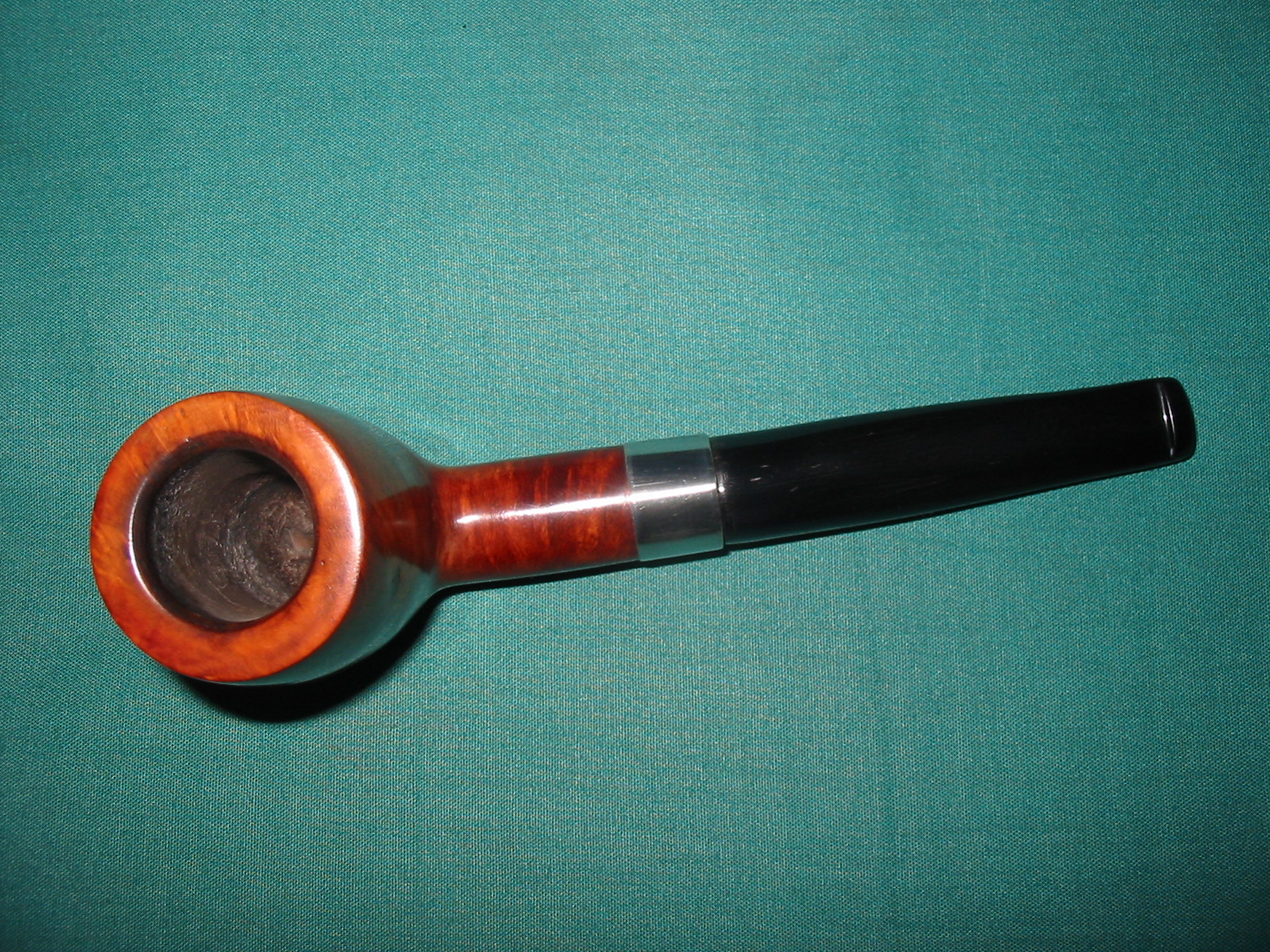
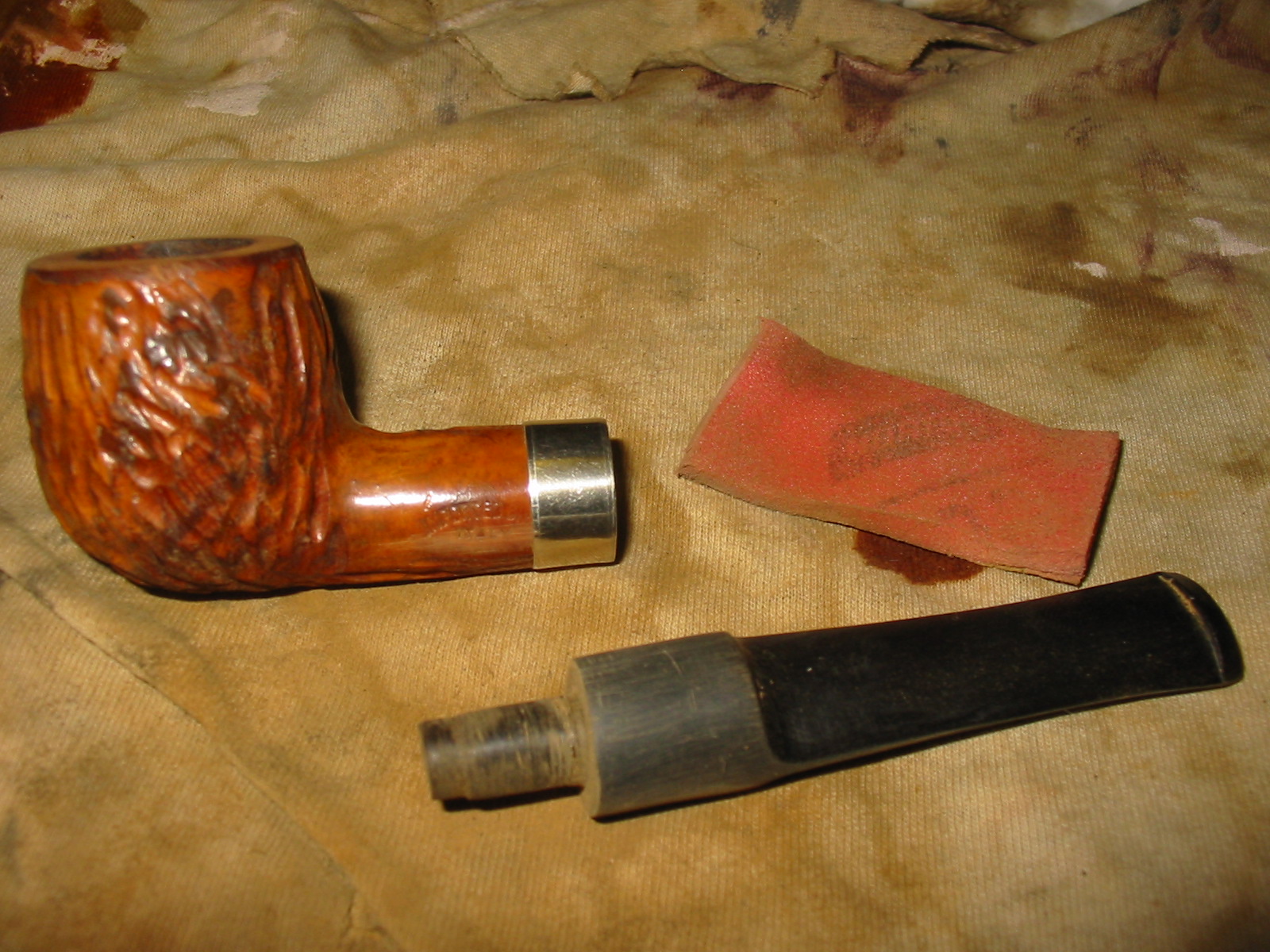
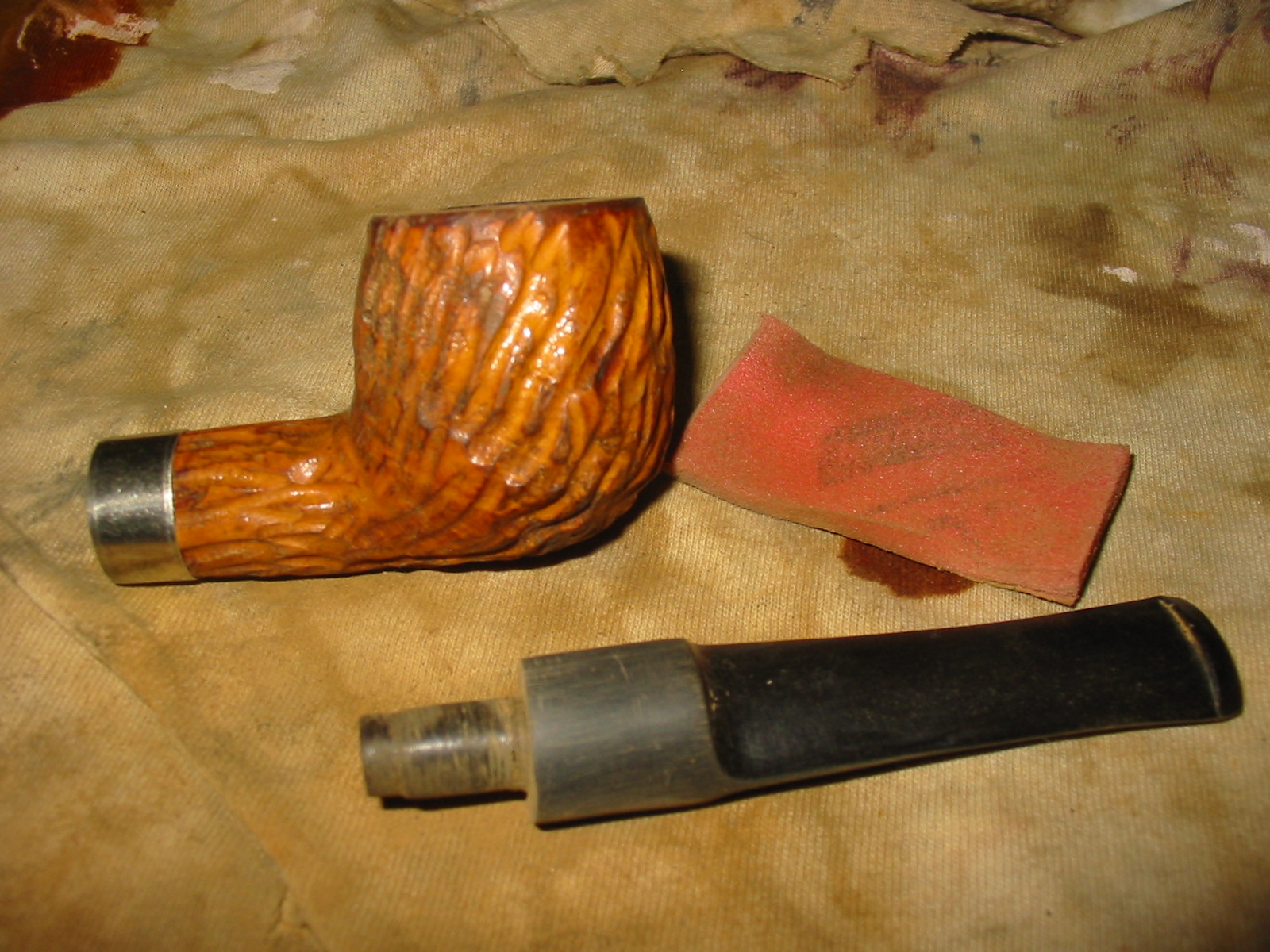
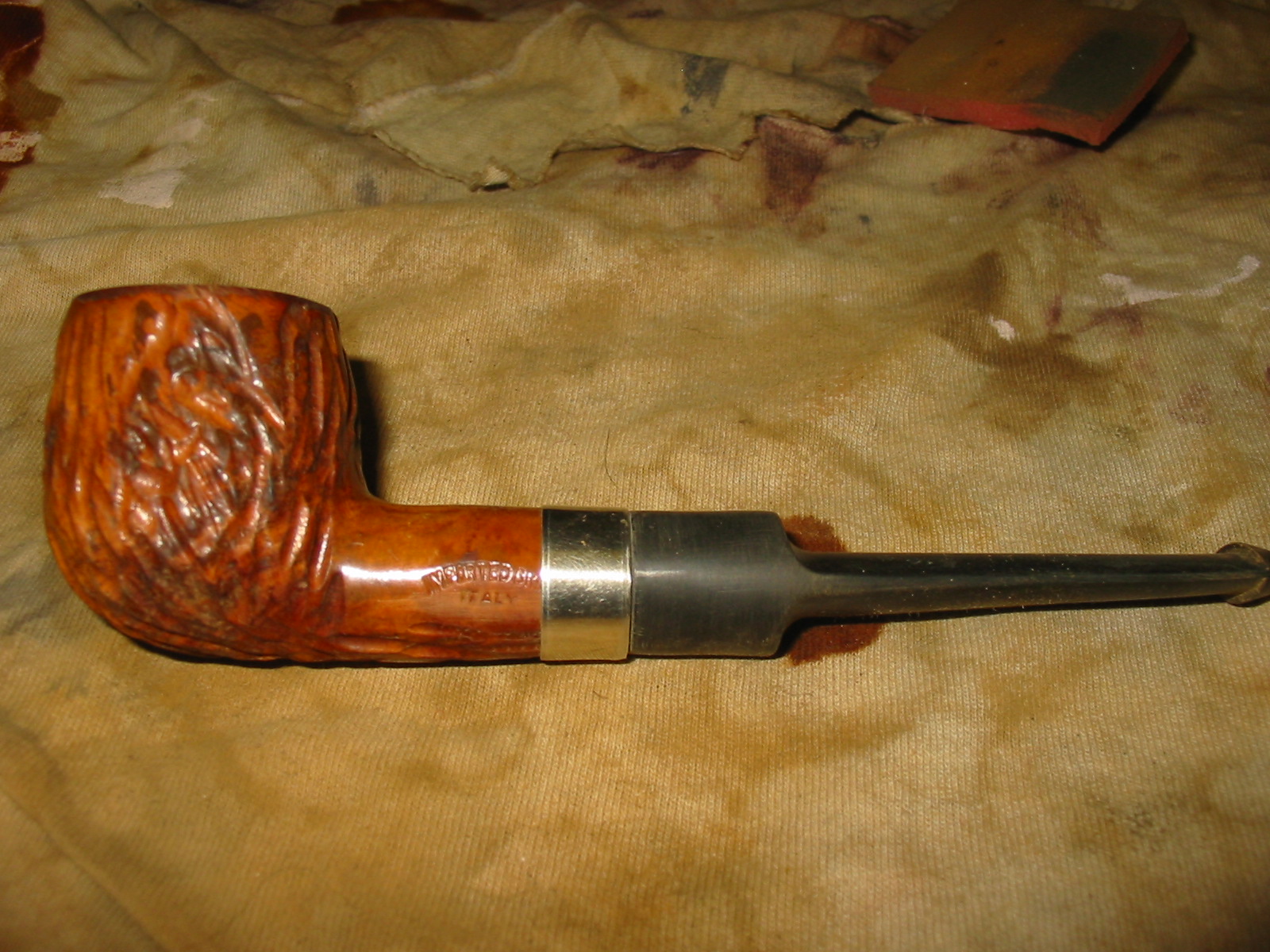
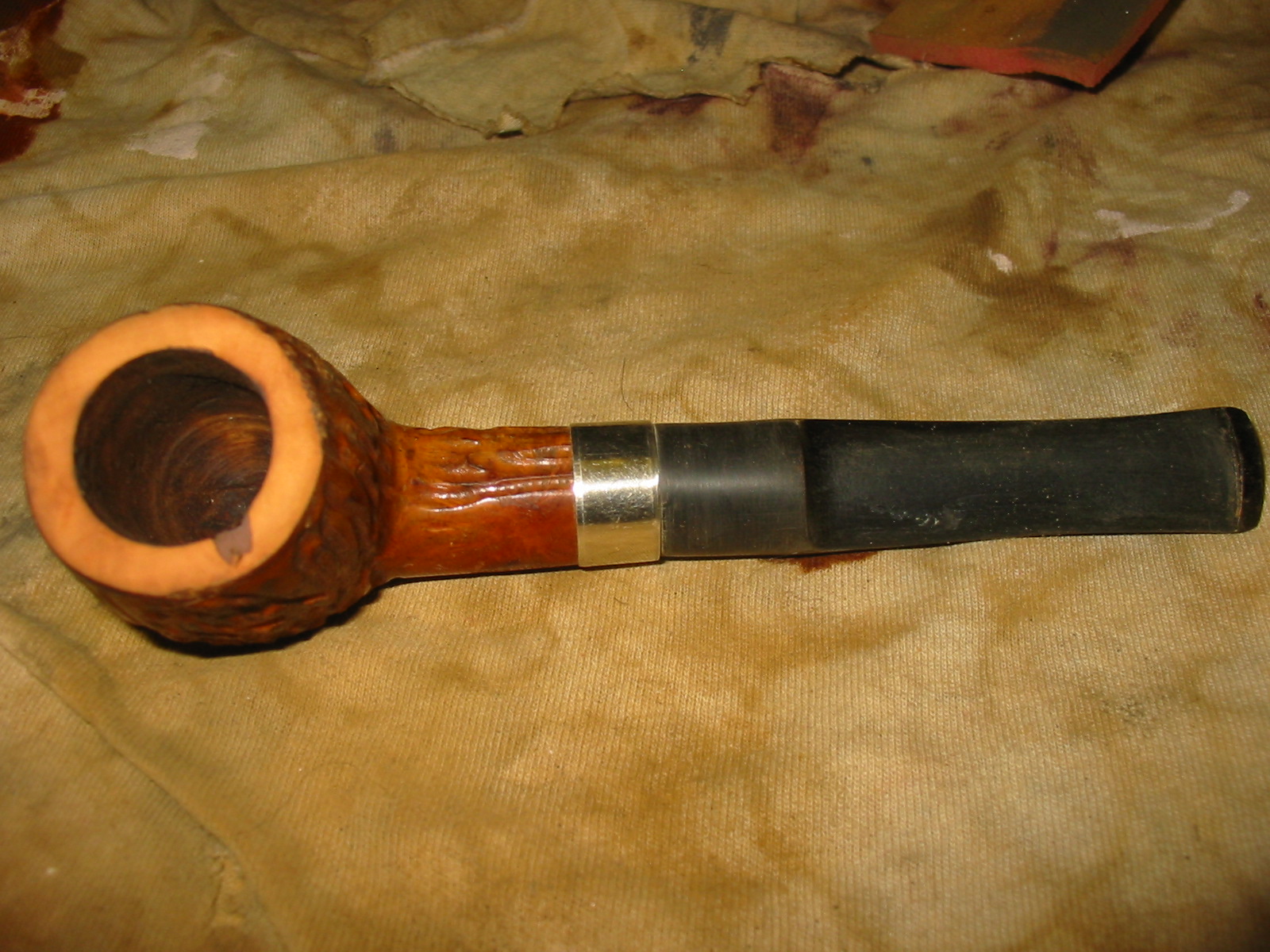
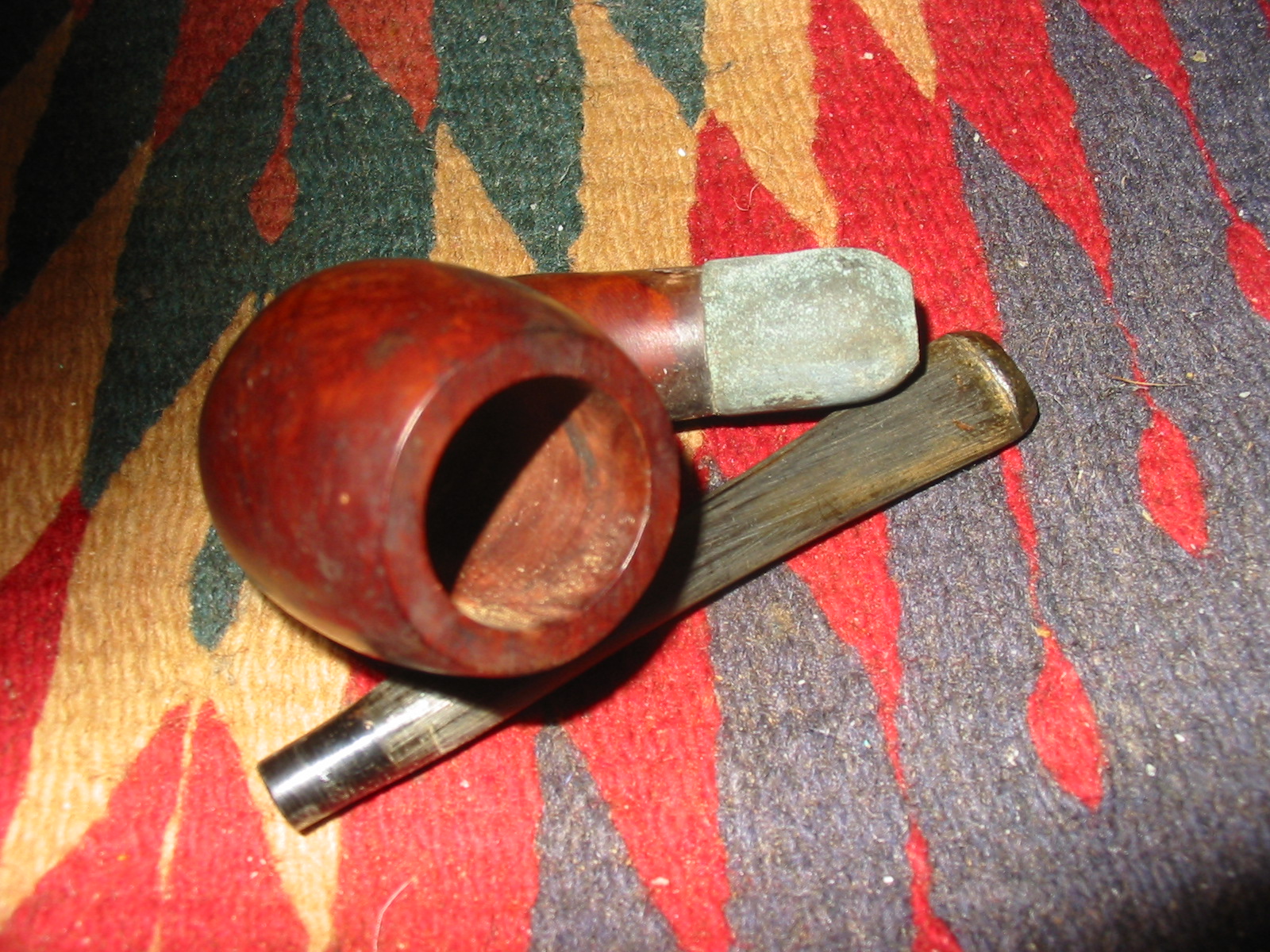
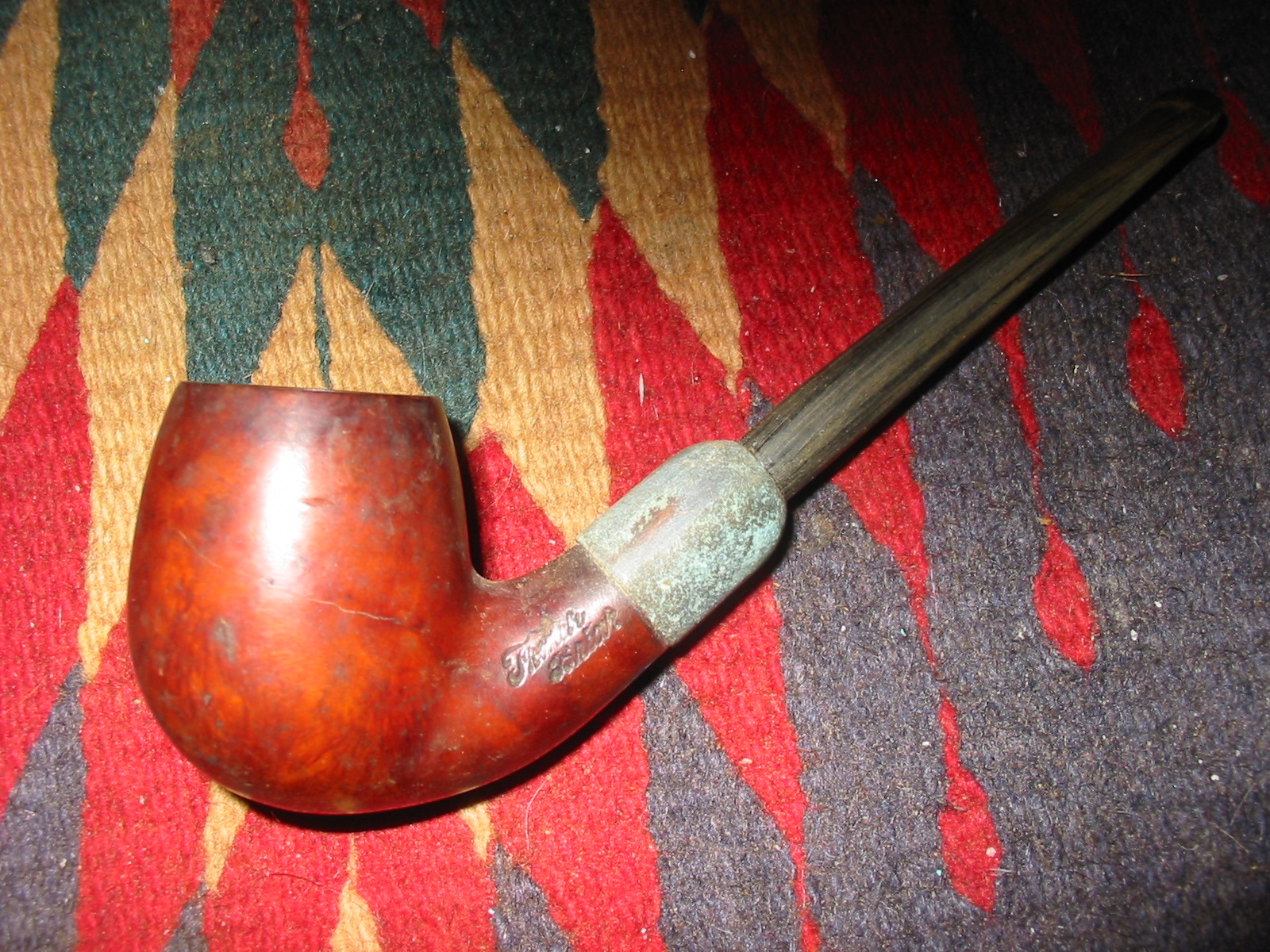
This project was another pipe bowl that was in the lot from EBay. It is a billiard stamped French Briar in script on the left side of the shank and it too was in very rough shape at first glance. It is an old timer. The band on this one was also as badly oxidized as the CPF billiard I wrote of before. It was to the point of being crusty with oxidation and a greenish hue. They were also rough to the touch which led me to believe that they were pitted underneath all of the oxidation. It came stemless but I found a stem of the proper age in my can of stems. The finish was rough, a reddish hue in terms of stain, but there were no deep dings or dents. There was one spot on the right side of the shank near the shank cap where there was a sandpit that had darkened from some bleed off the oxidized shank cap. This one did not have any darkening around the bowl or shank other than the one spot near the sandpit. The shank cap on this one was also loose and when I touched it, it came off (I am glad they stayed on the pipe long enough to arrive here. One of the lot is missing the end cap so that will prove a later challenge. Again after the initial examination I came to see that underneath the grime there was a pretty nice piece of briar. The first series of two photos shows the state of the pipe when I took it to my work bench to begin working on it early this morning.
ImageImage

I cleaned the shank cap the same time I worked on the CPF billiard. I applied the Hagerty Tarnish Remover and scrubbed the cap with a cotton pad. I was able to remove some of the heavy oxidation and darkening but not a significant amount. The next two photos show the process of cleaning the shank cap with the Hagertys.
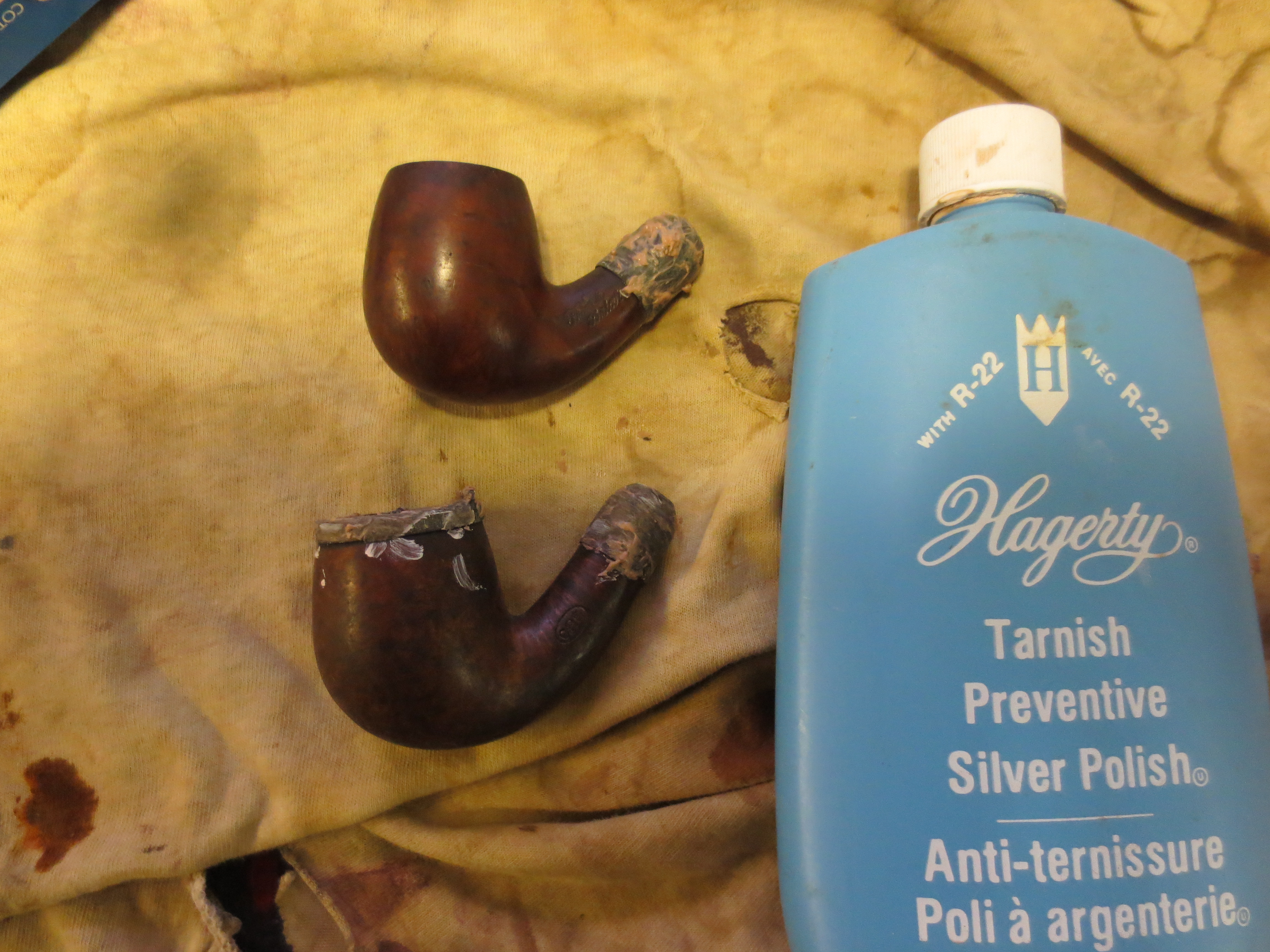
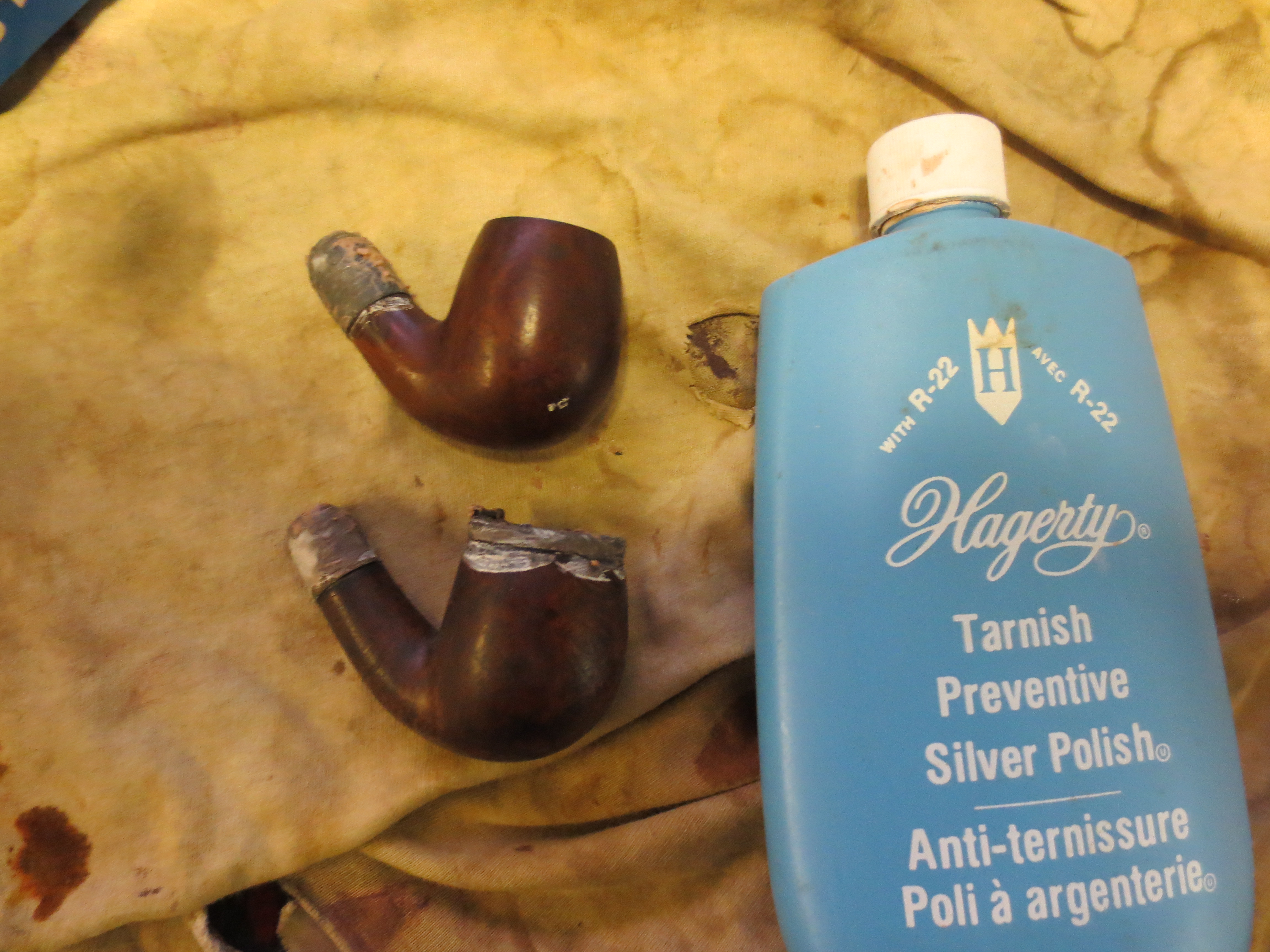
ImageImage

I dropped the bowl in the alcohol bath with the CPF billiard and let it soak while I work on the CPF pipe. Once it had been sitting in the bath for about an hour I removed it and dried it off.
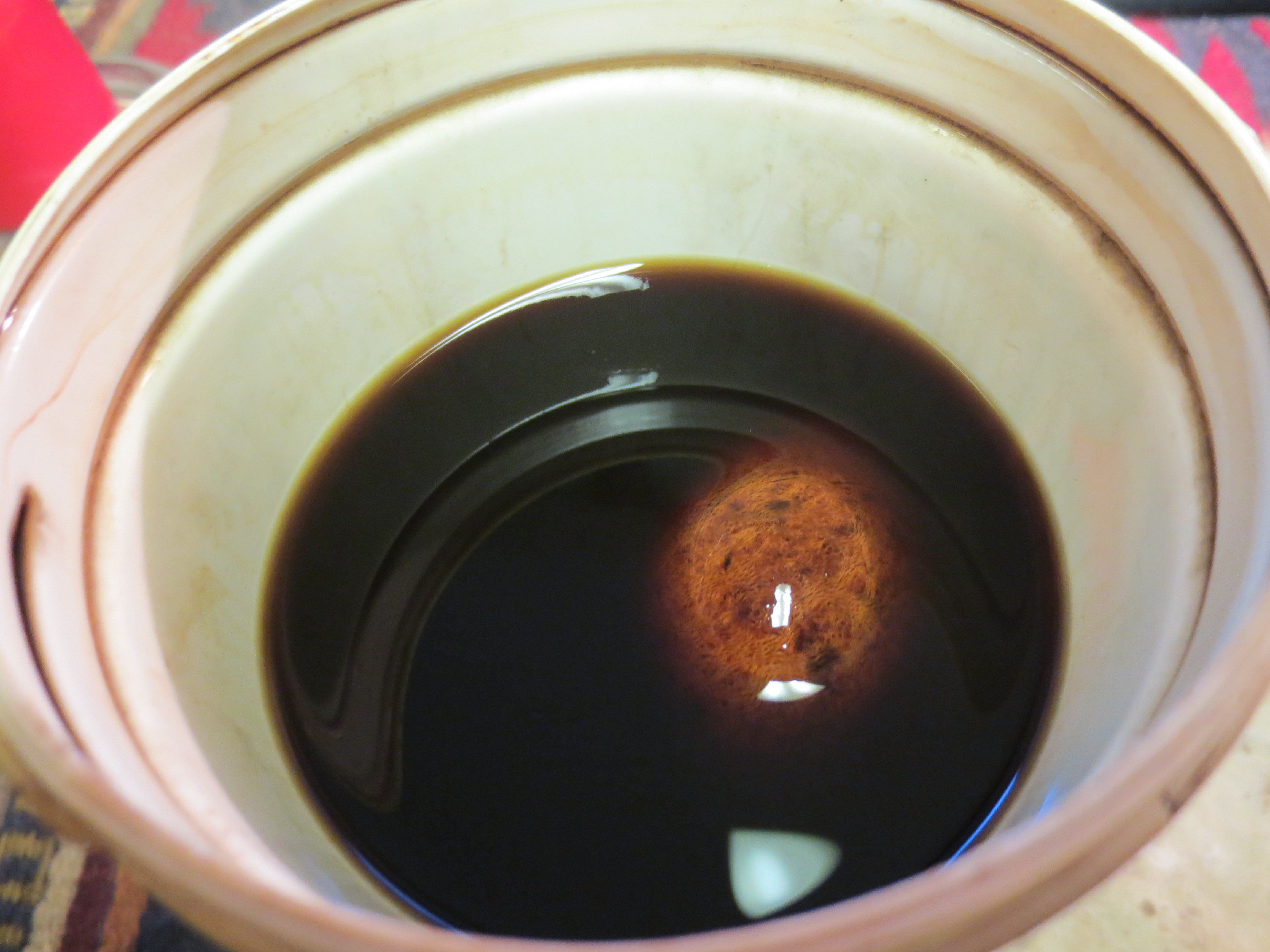
Image

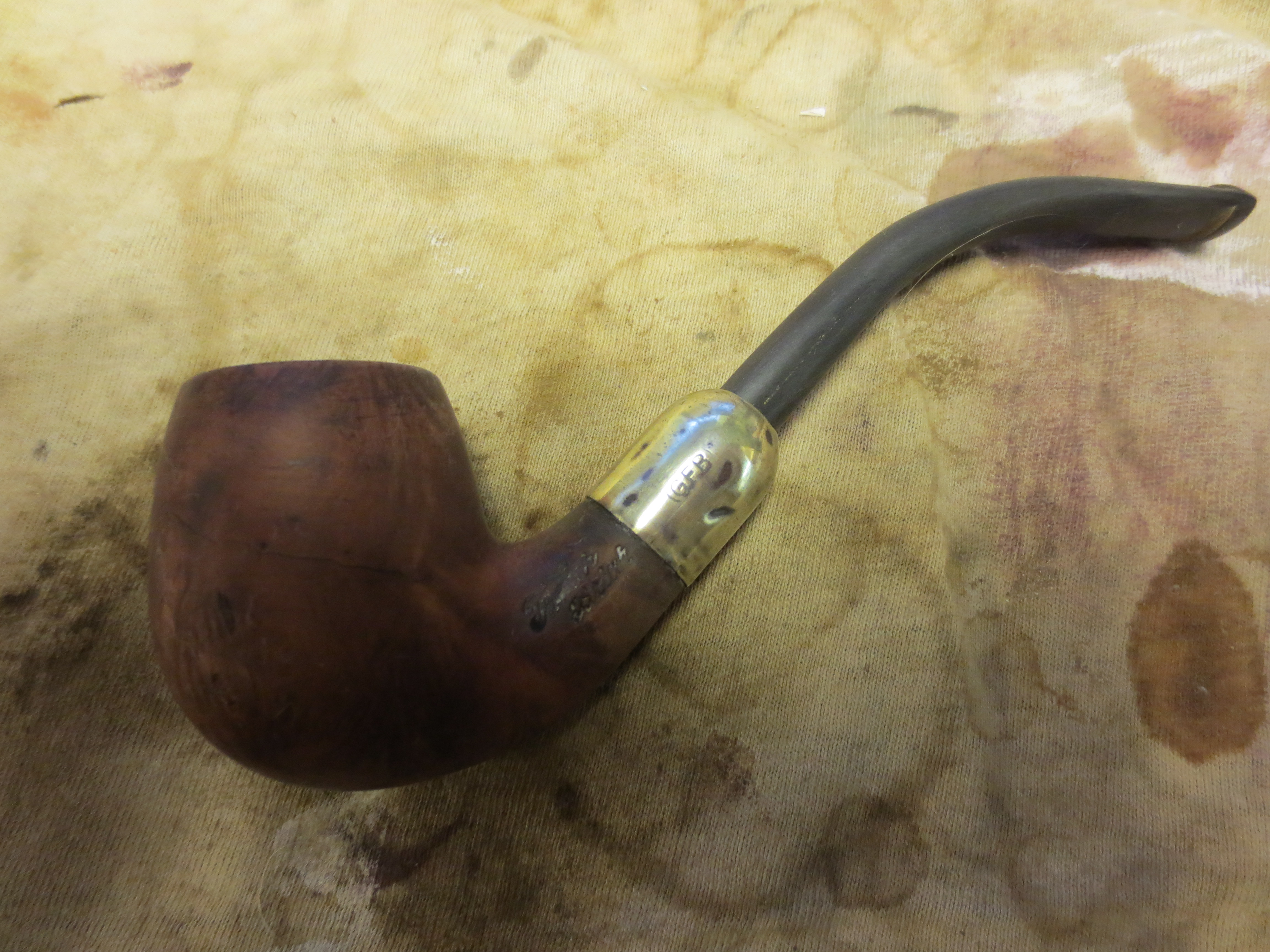
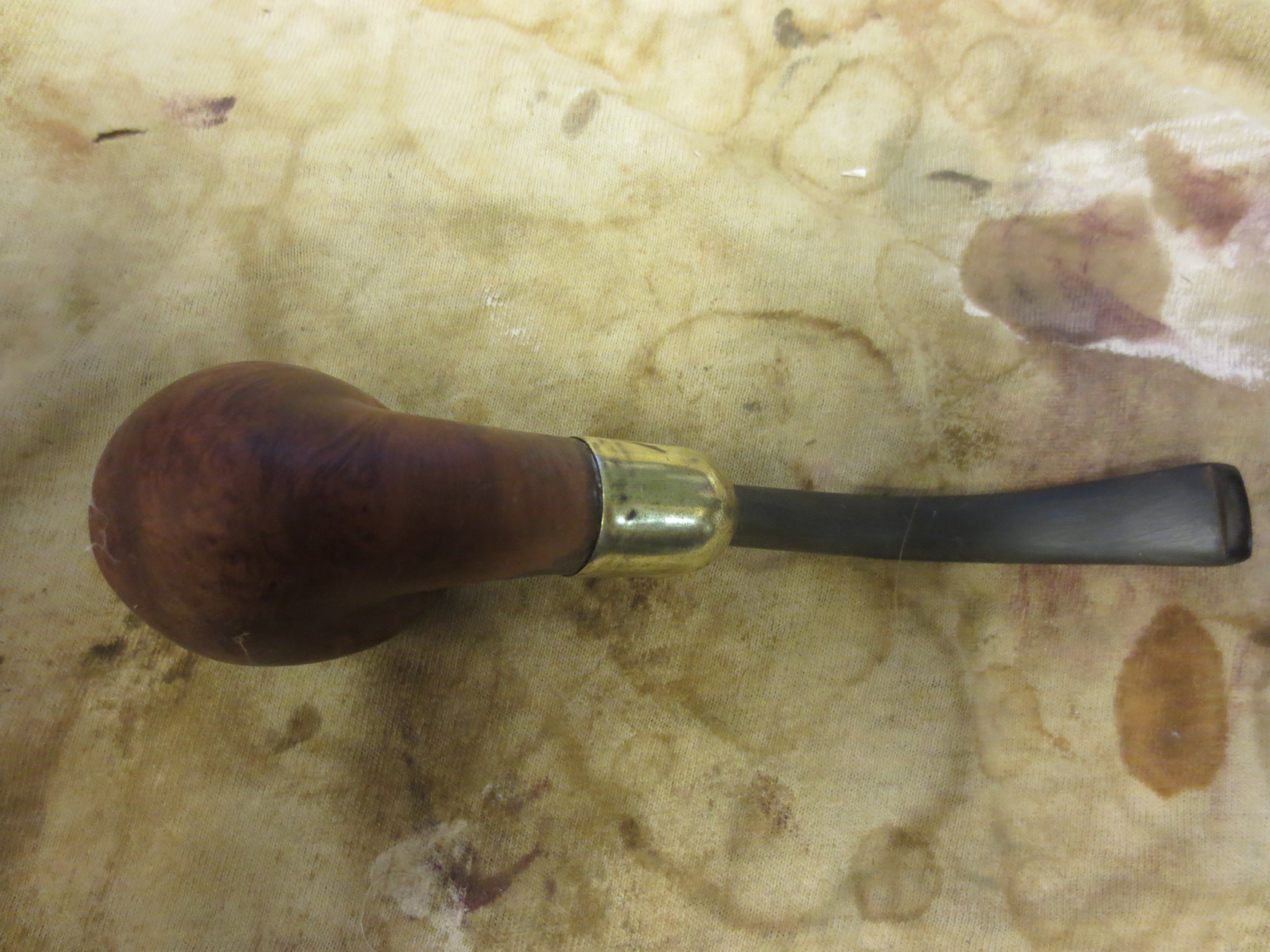
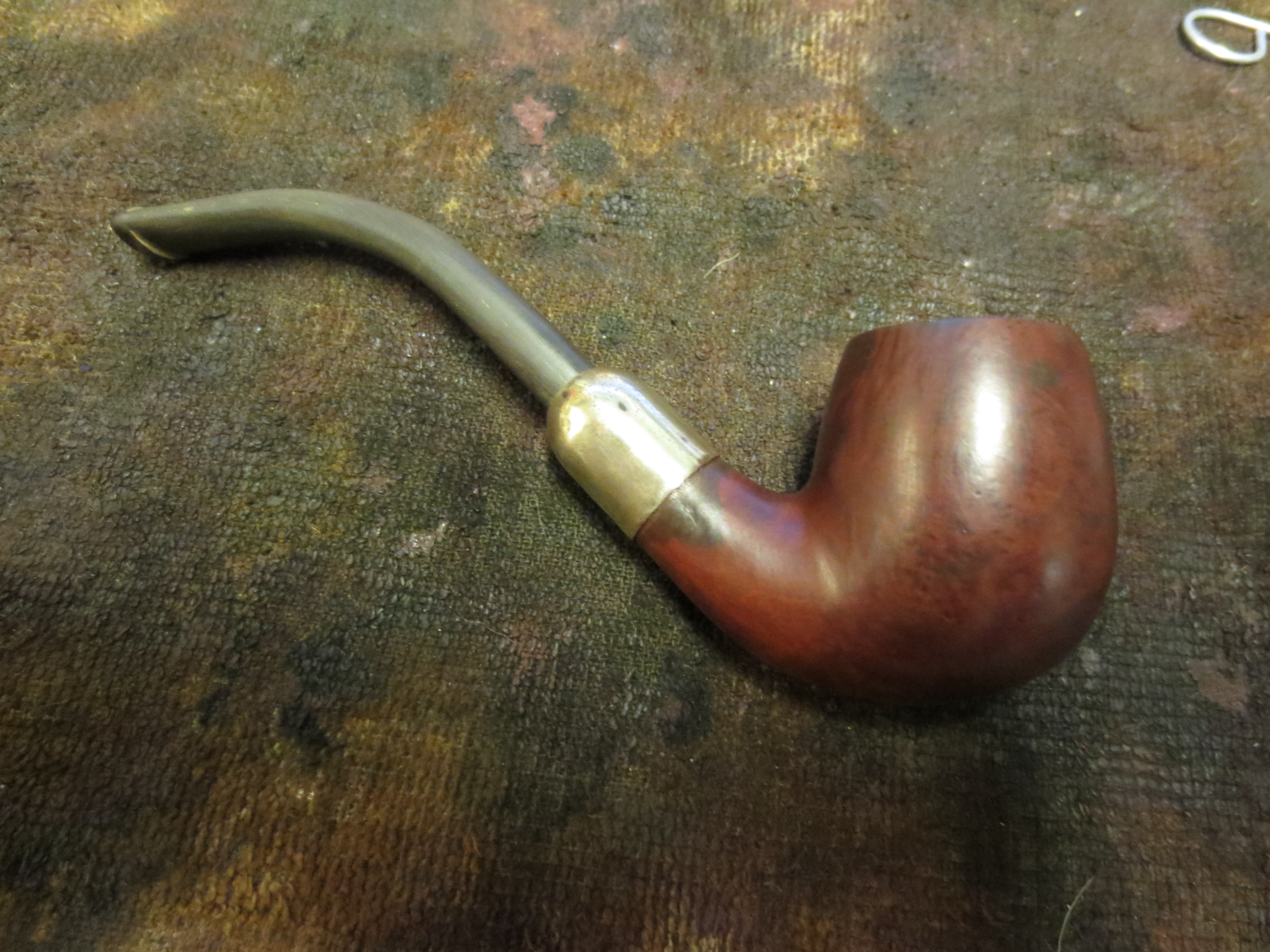
The next series of four pictures show the pipe after it had been sitting overnight and dried from the alcohol bath. Most of the grime is gone from the outside of the bowl of the pipe and the oxidation on the stem was not fairly smooth – just black and needed to be cleaned. The shank cap also had quite a few dents that would make it a challenge to remove the oxidation.

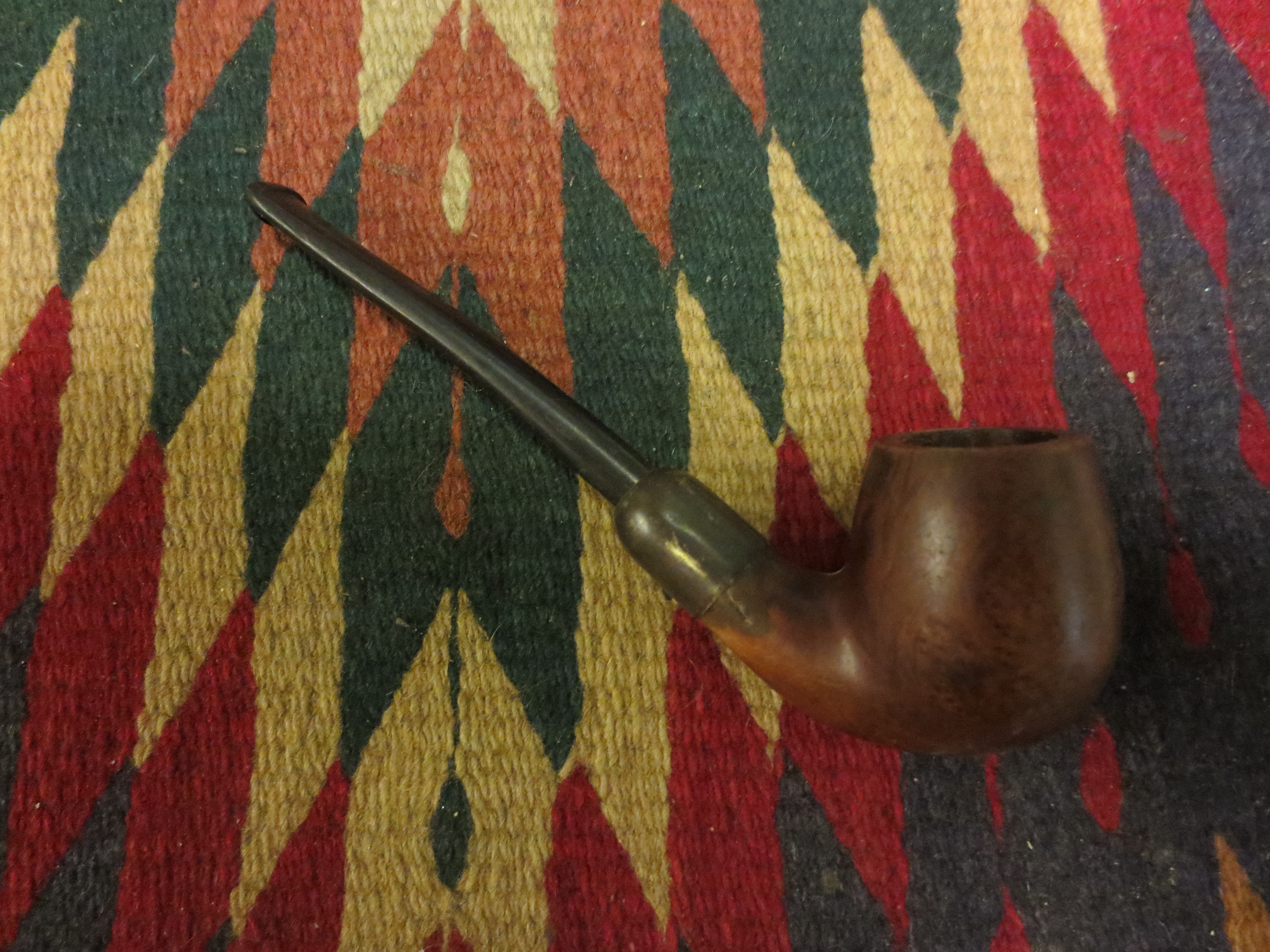
ImageImageImageImage

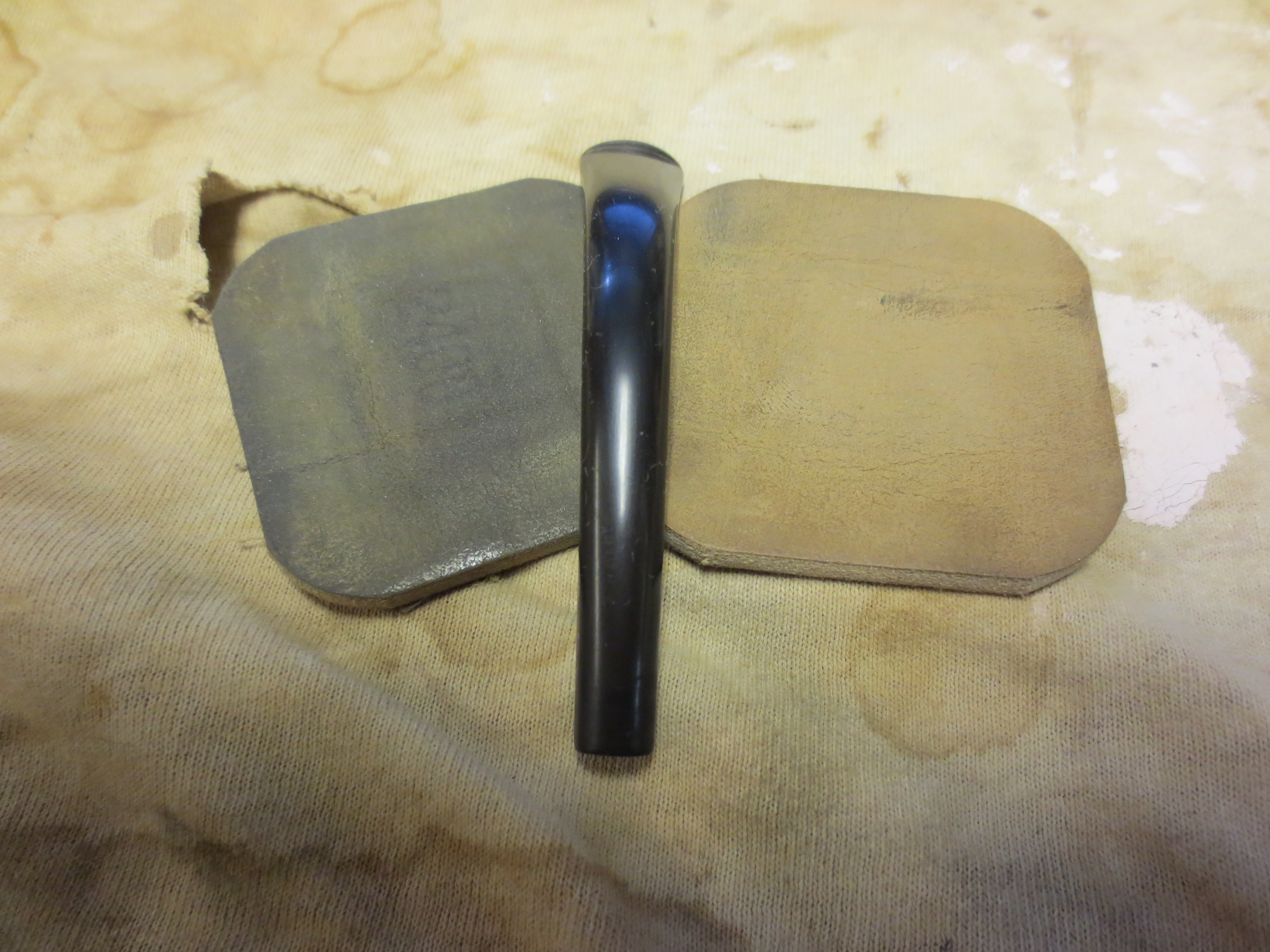
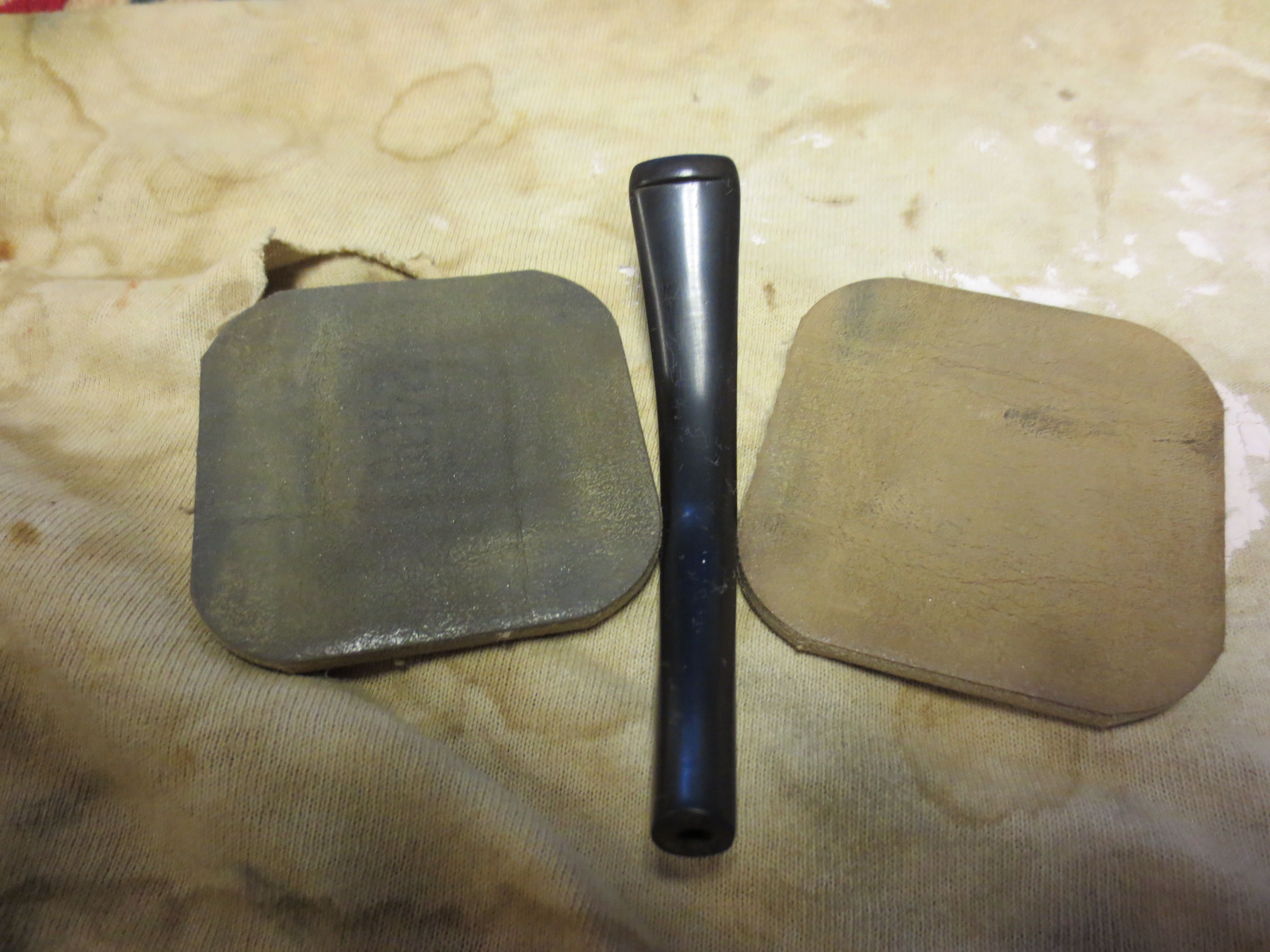
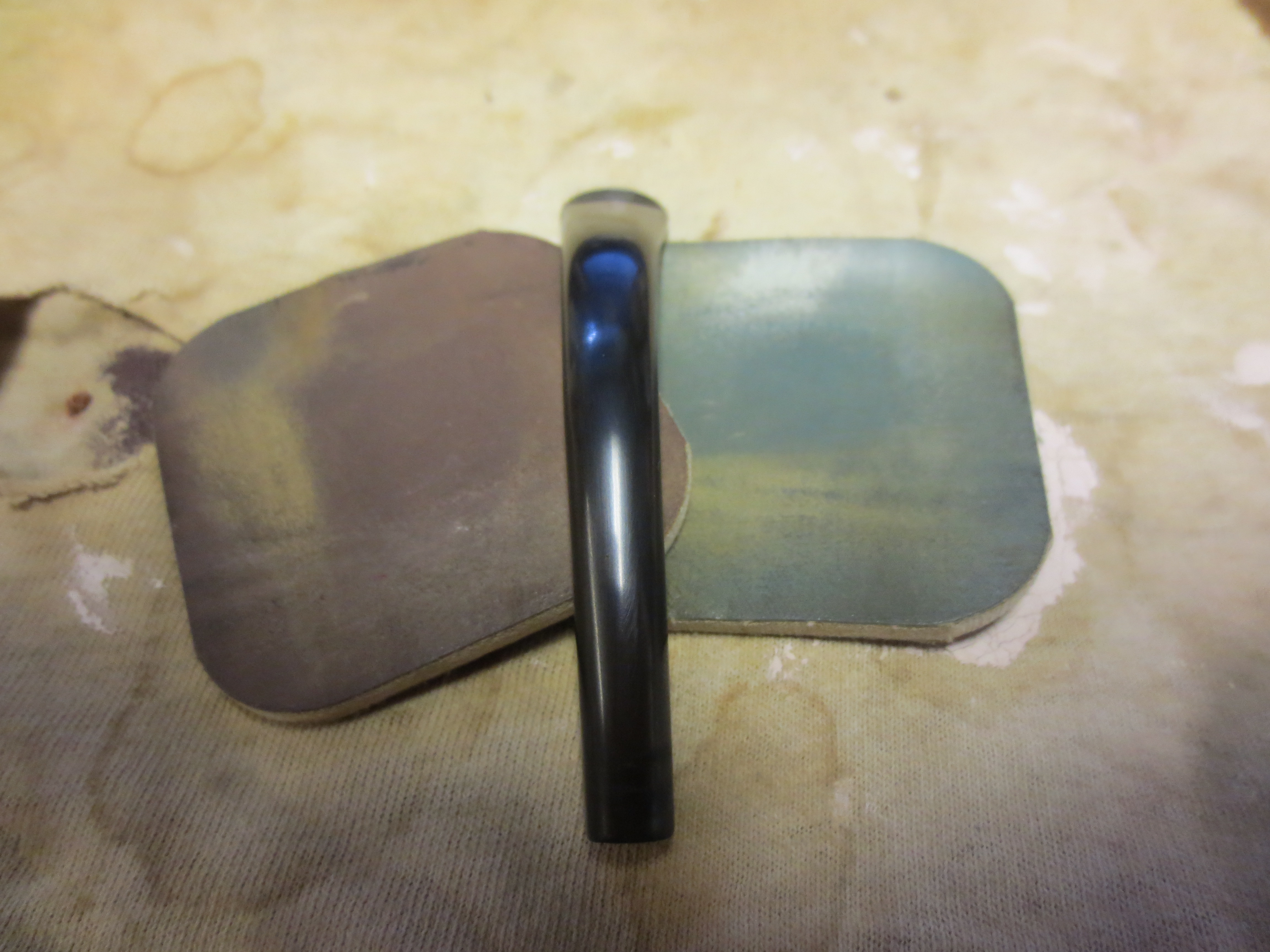
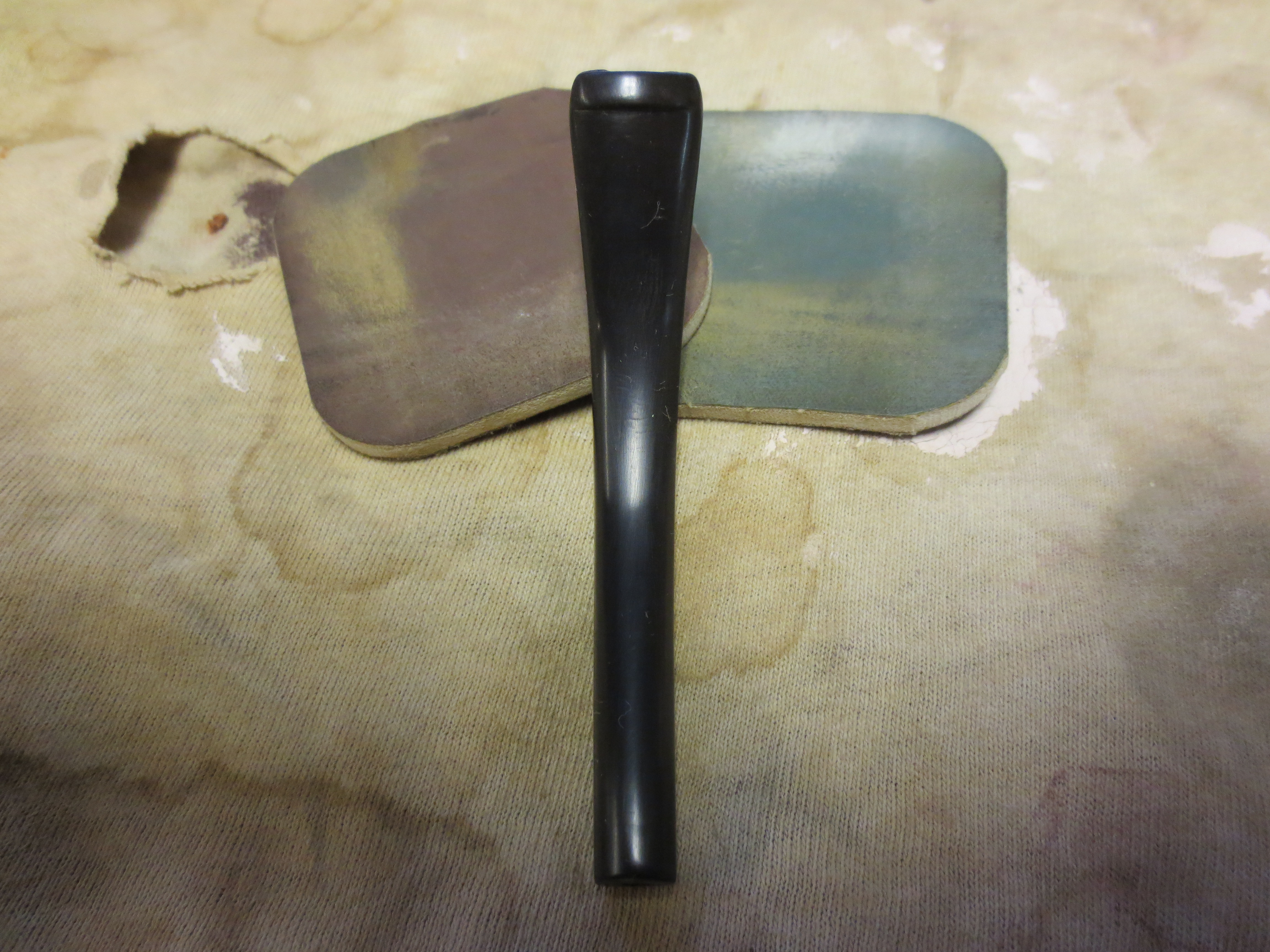
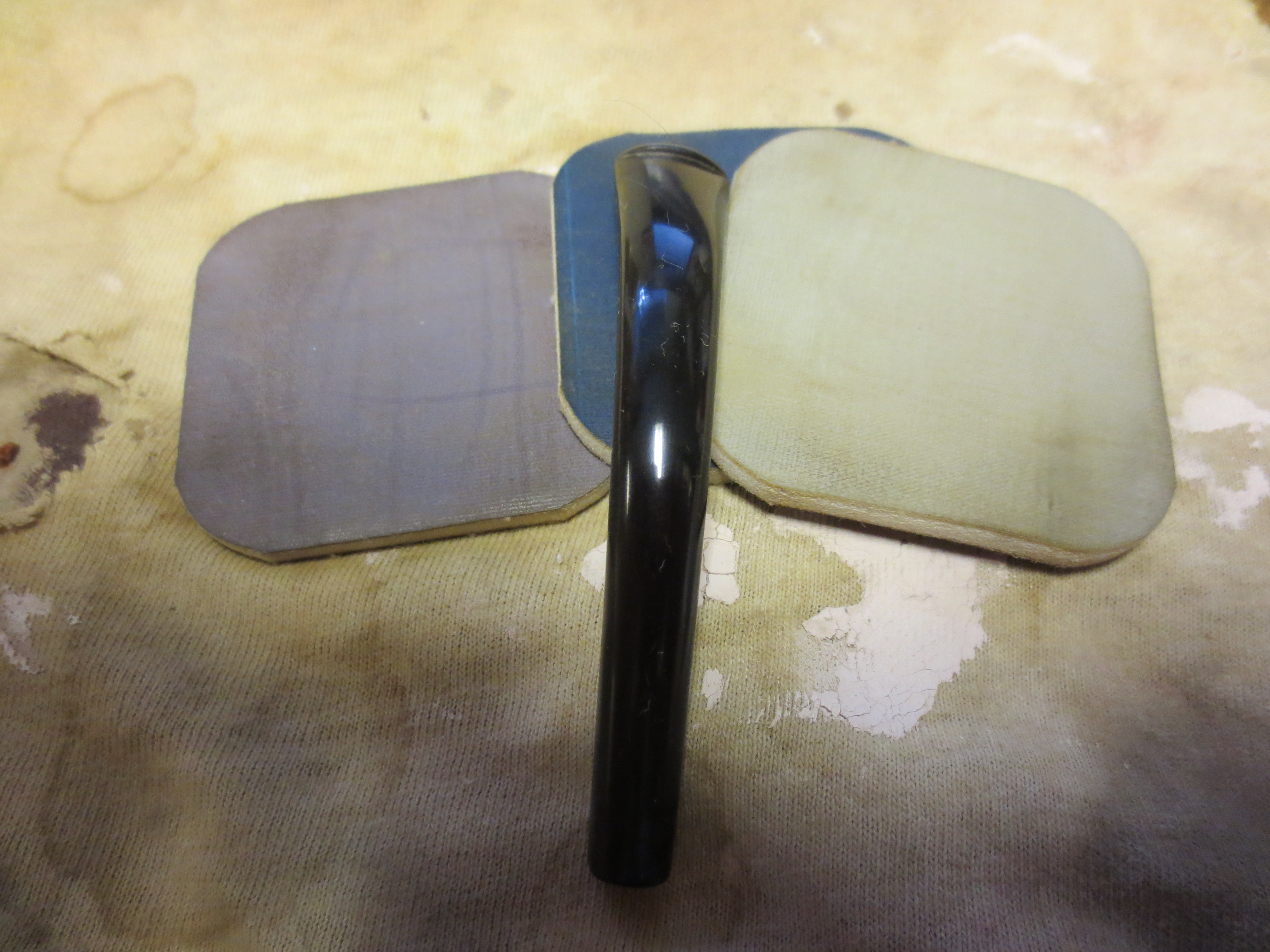
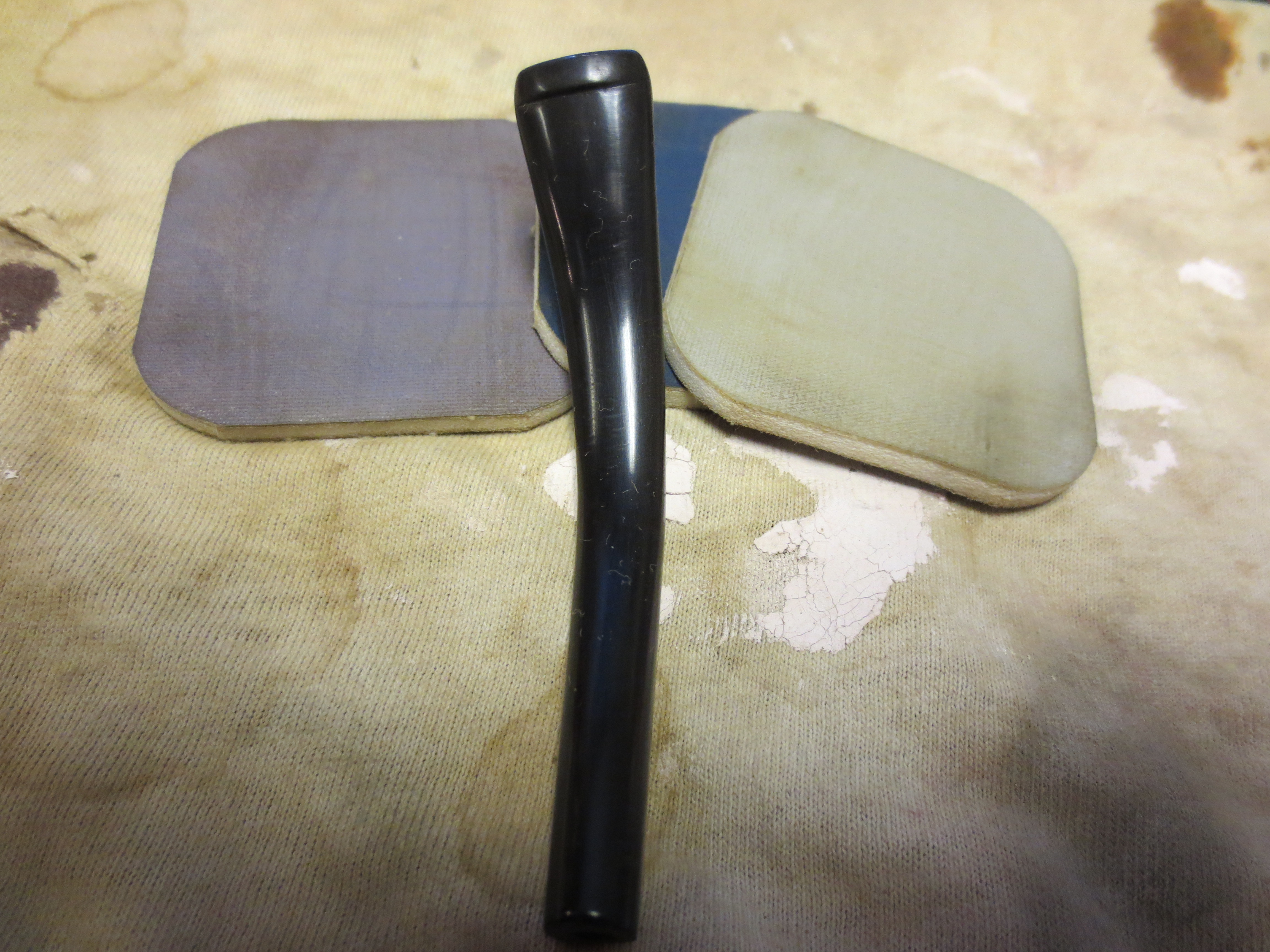
At this point in the process I decided to bend the stem. It was pretty clean and did not have any oxidation on it. It merely needed to be polished and shined. So I set up my heat gun and the old rolling pin to bend the stem over and went to work on it. The next three photos show the bending process and the finished bend in the stem.
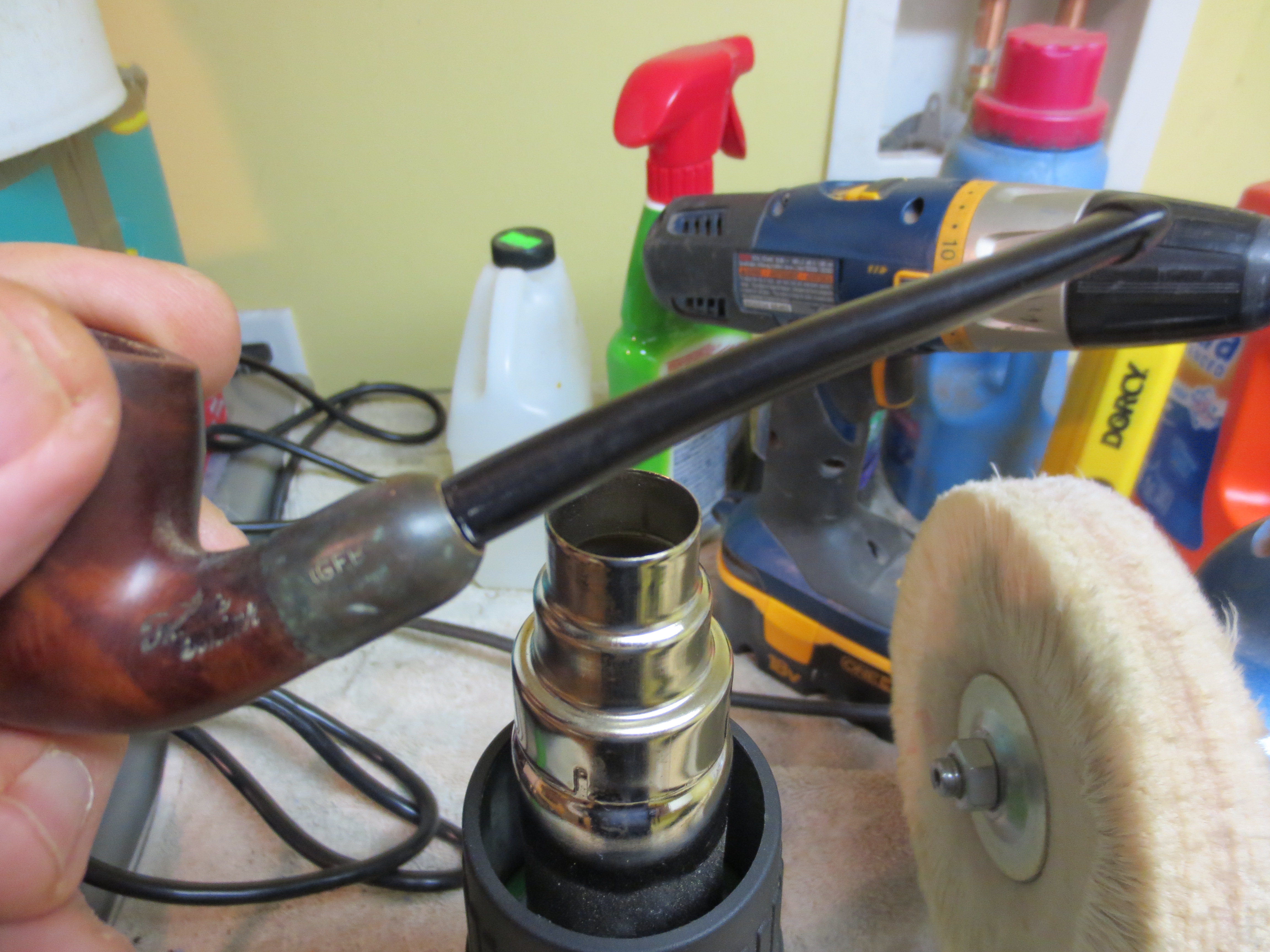
ImageImageImage

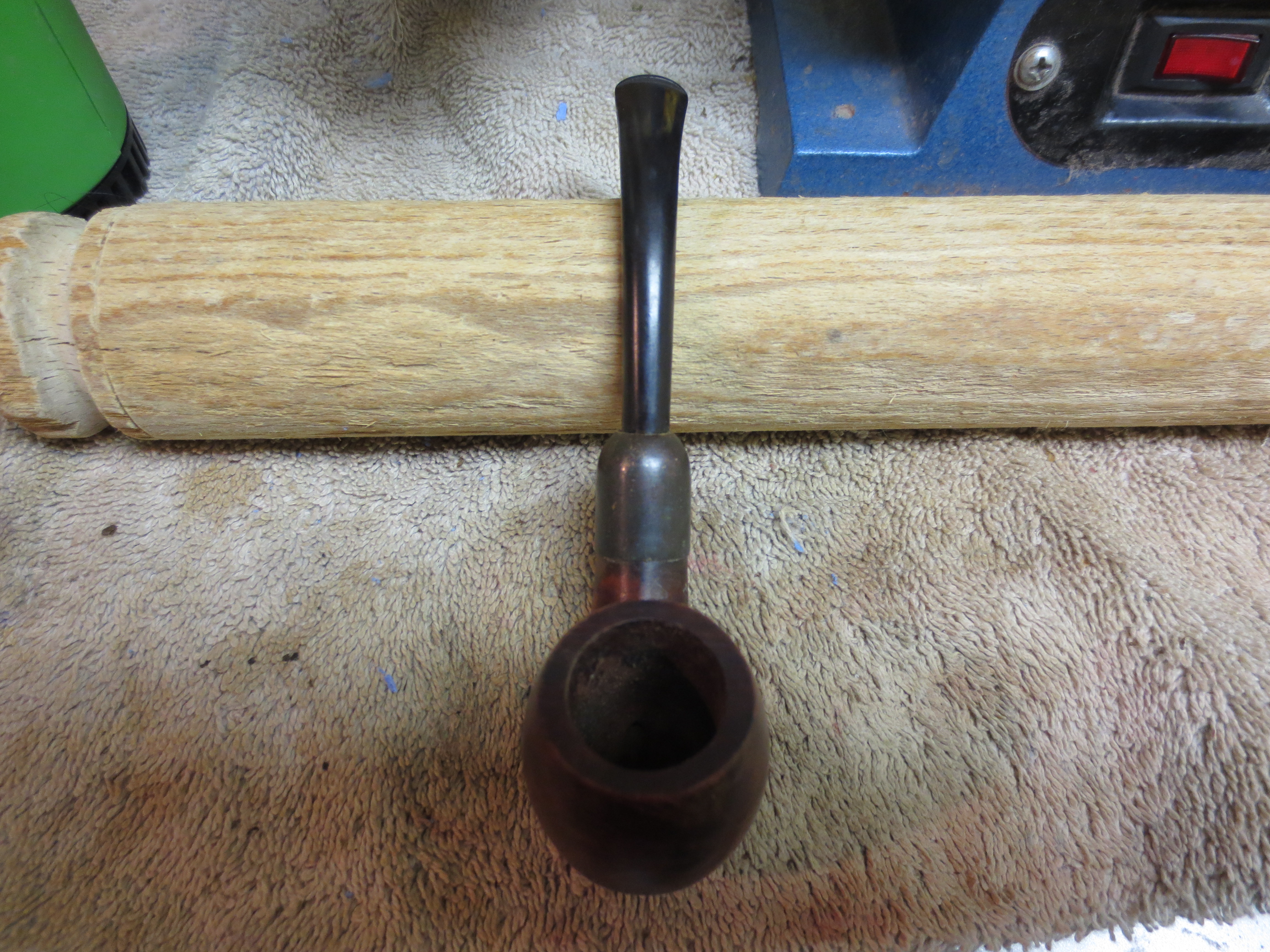
At this point in the process I took the pipe back to the work table and took two more pictures before taking the end cap off the shank and working on the pipe bowl and end cap.
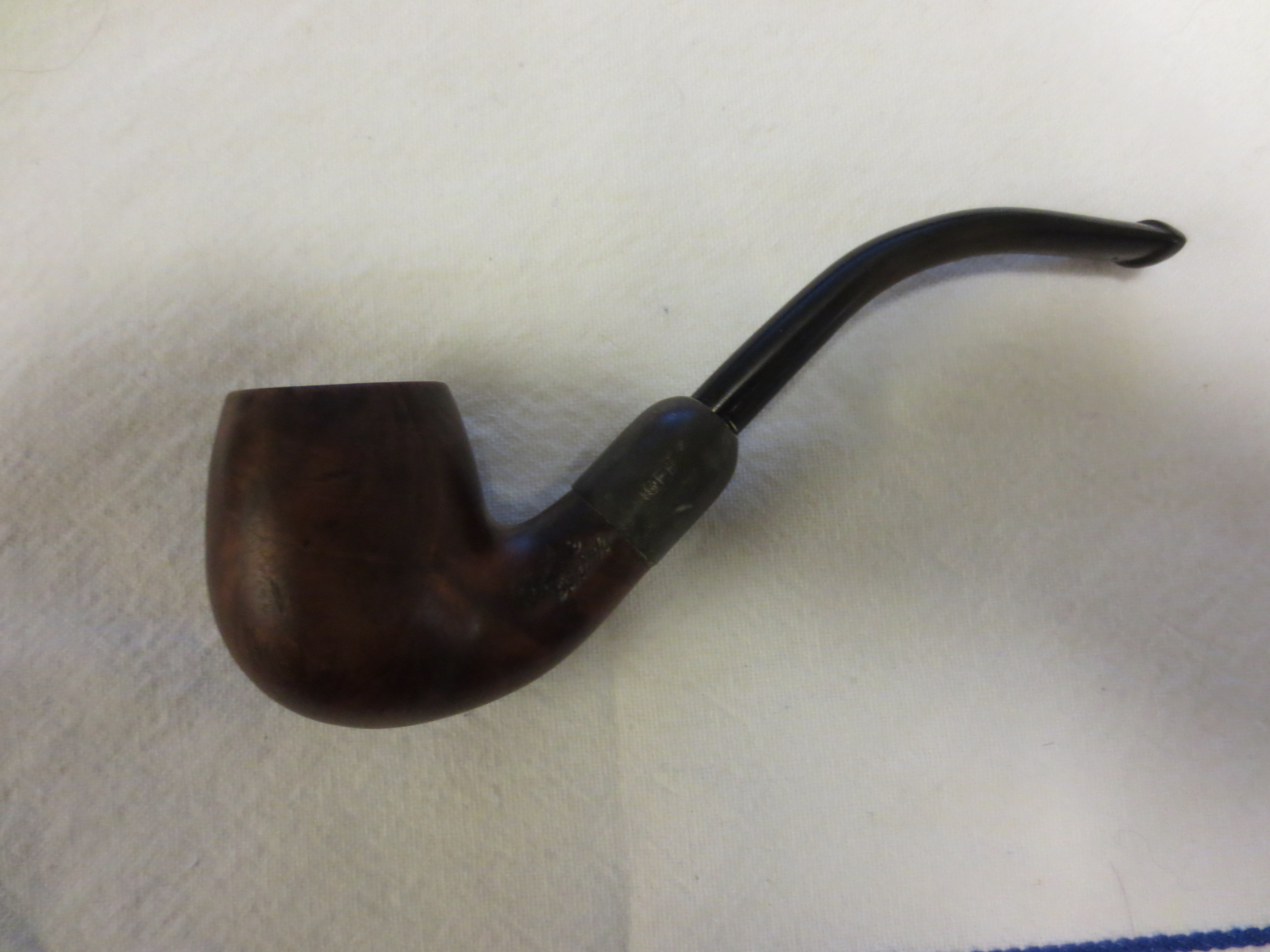
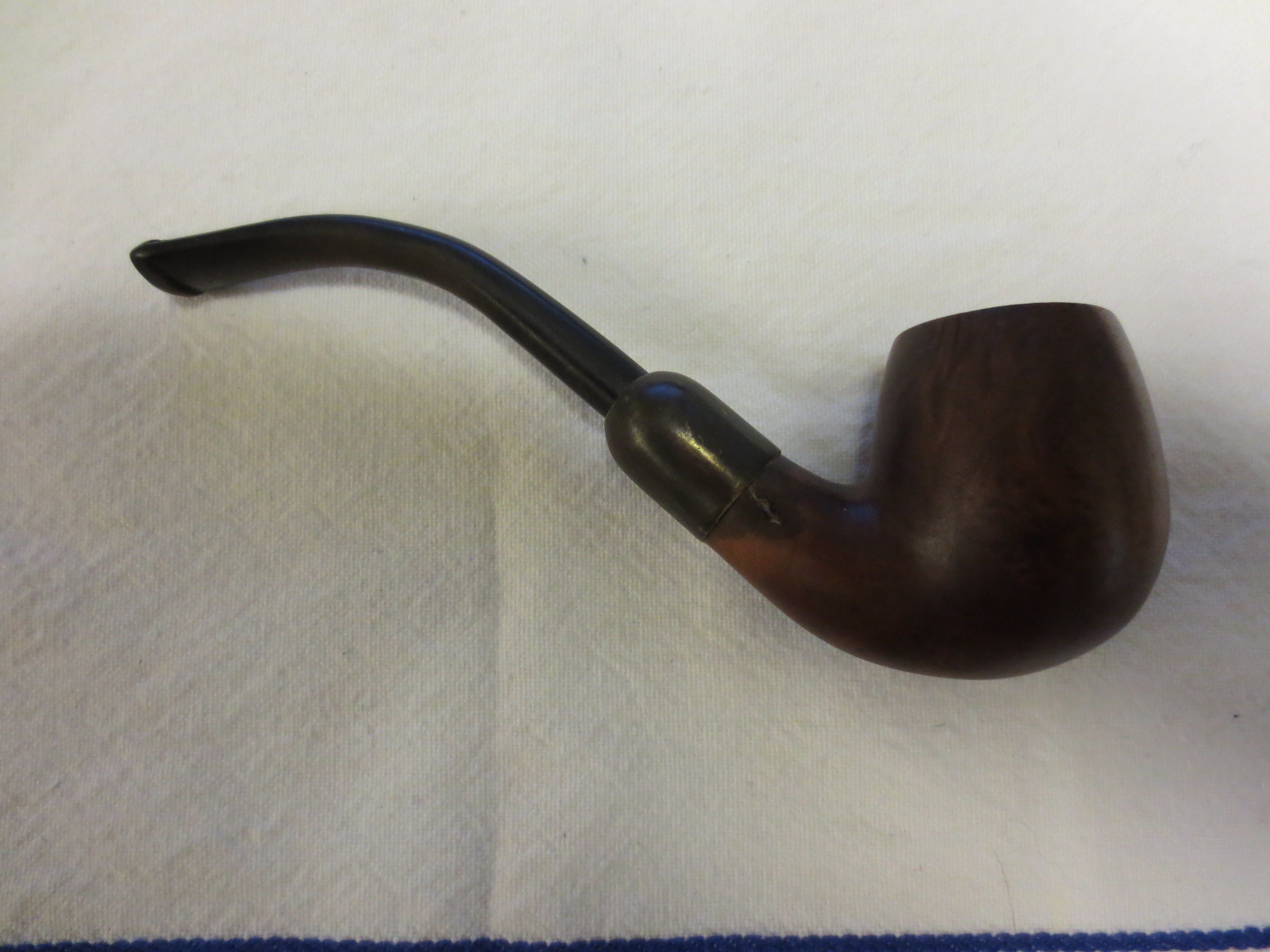
ImageImage

I scrubbed down the shank cap with the Hagertys Tarnish Remover while I had it off of the shank. I also sanded it with my fine grit sanding sponge to remove the heavy buildup of oxidation. It took a lot of elbow grease to clean it off and to avoid damage to the stamping that became apparent in the cleaning of the cap. Once I had it relatively clean I sanded the bowl with the sanding sponge, wiped it down with an acetone wet cotton pad and prepared to reglue the shank cap. I used white glue to reglue the cap. I applied the glue to the shank of the pipe quite heavily as I wanted to close the gap between the cap and the shank. I pushed the cap into place and wipe away the excess glue. The next three photos show that process.

ImageImageImage

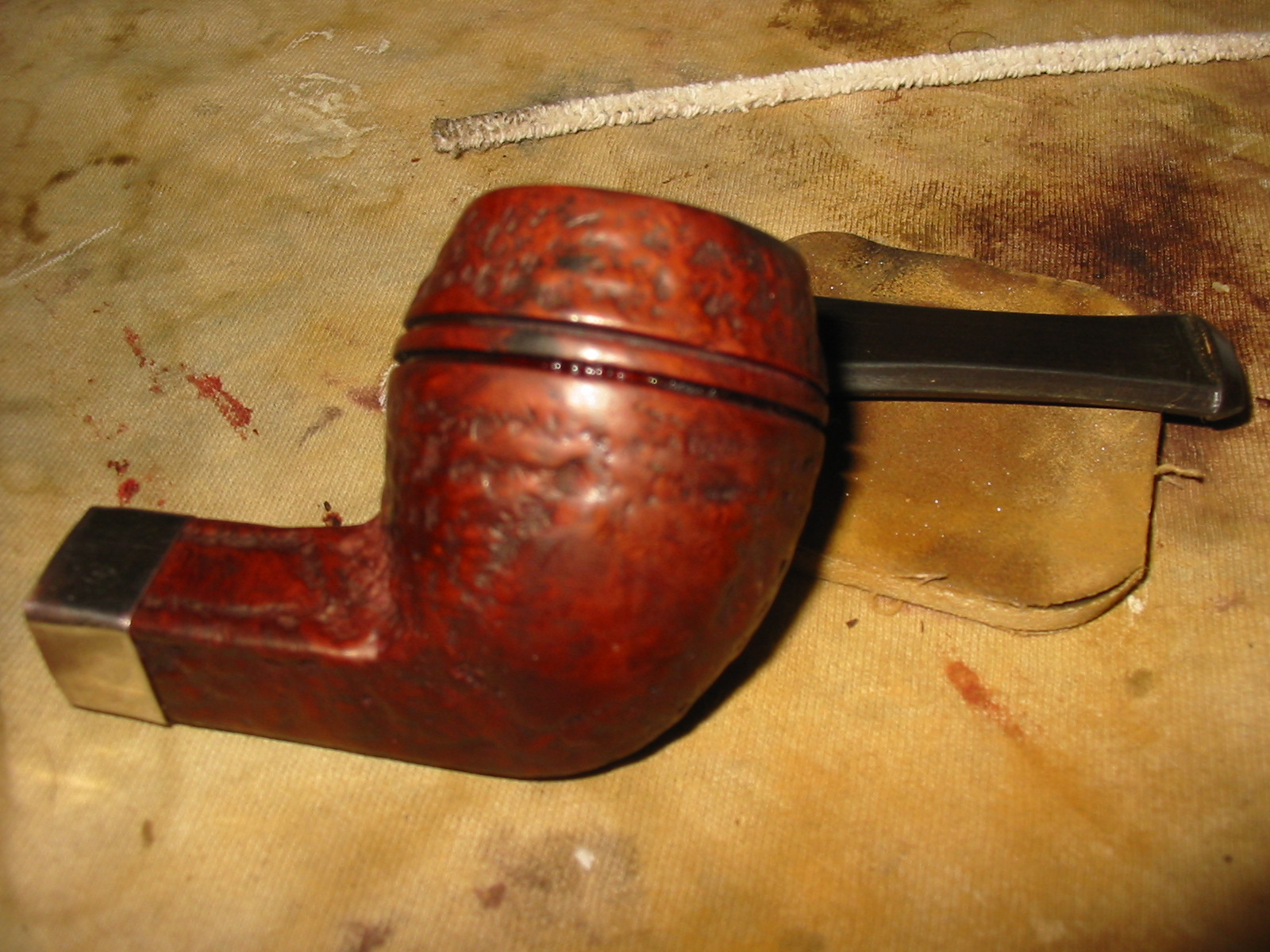
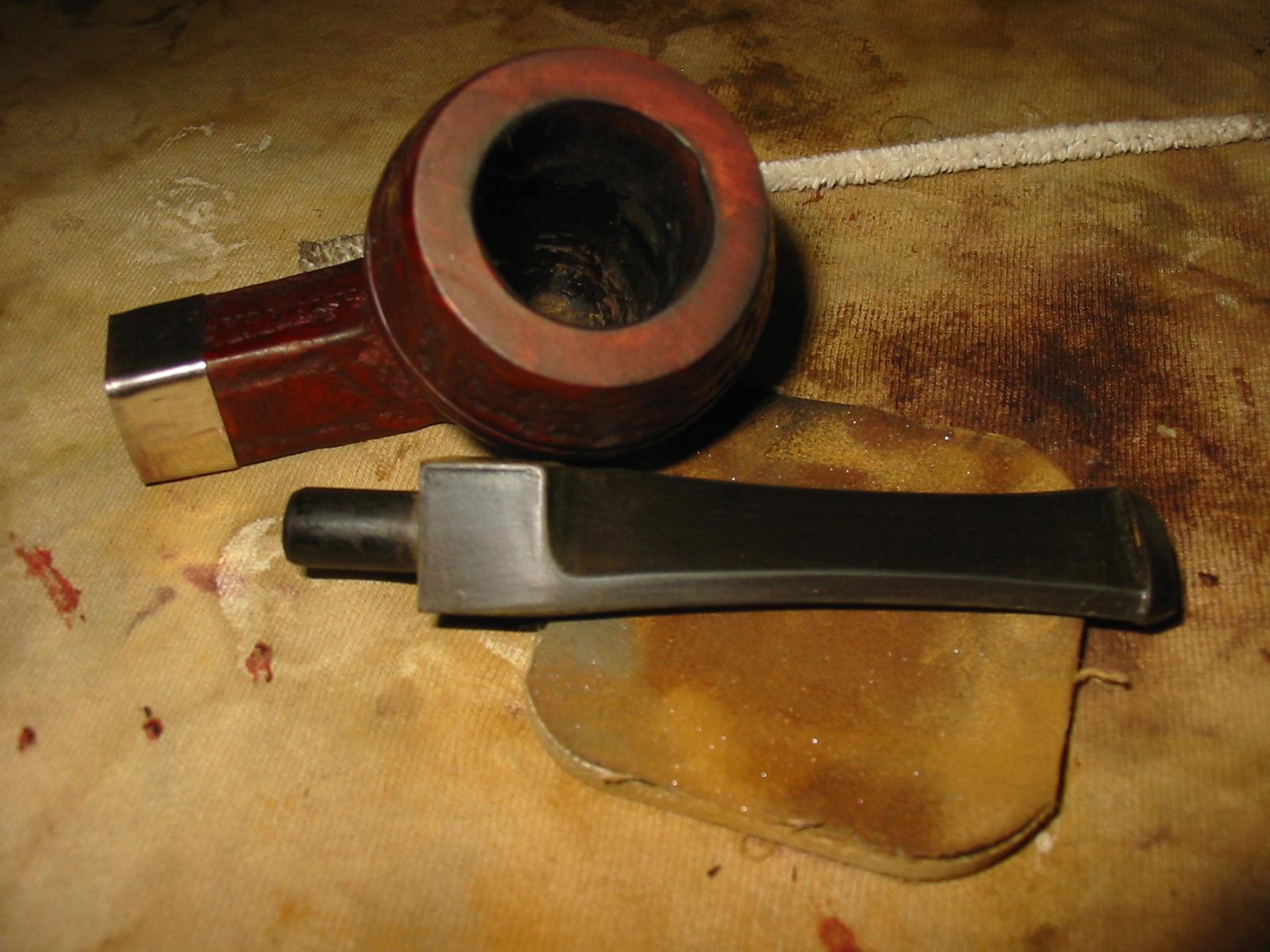
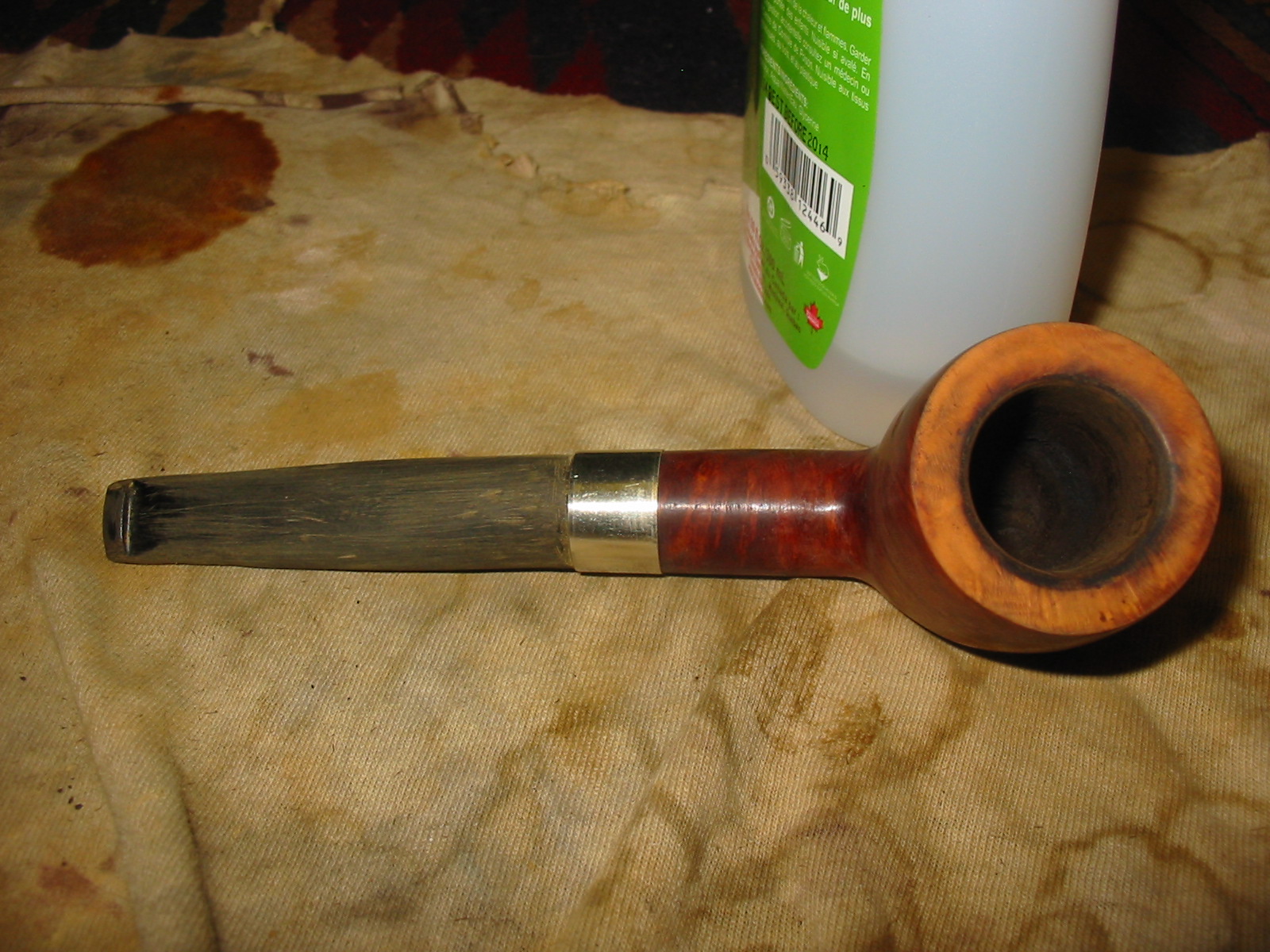
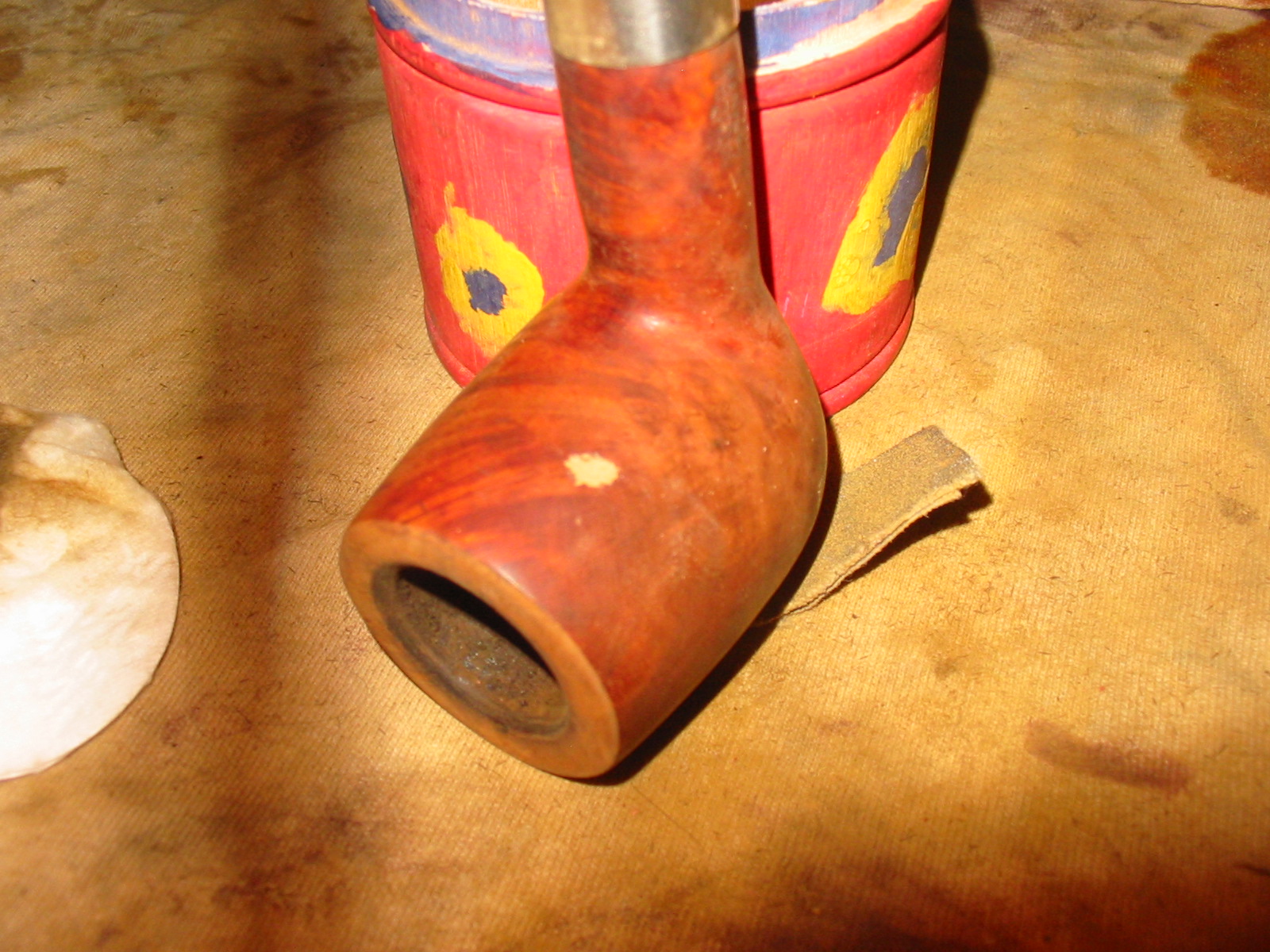
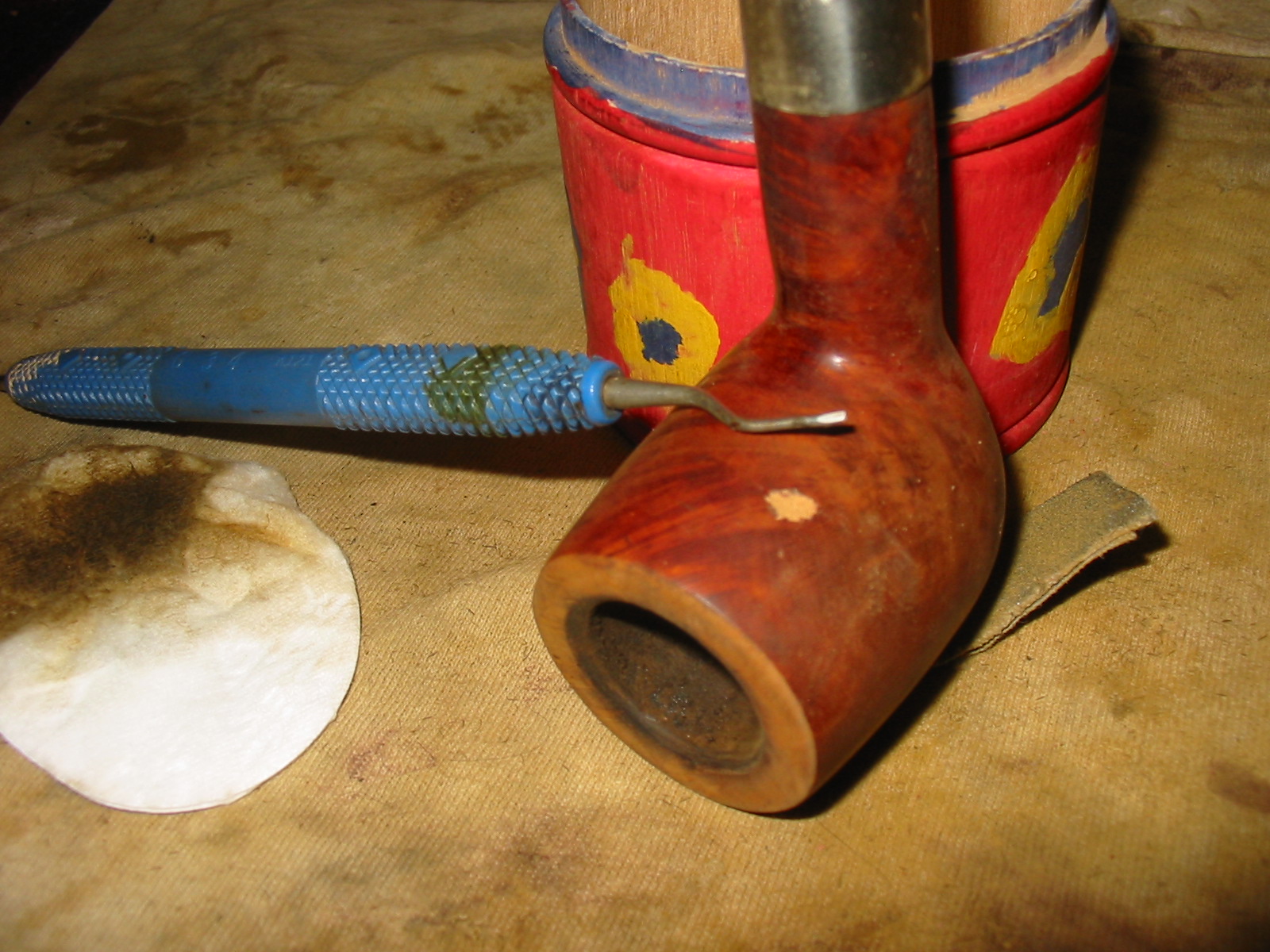
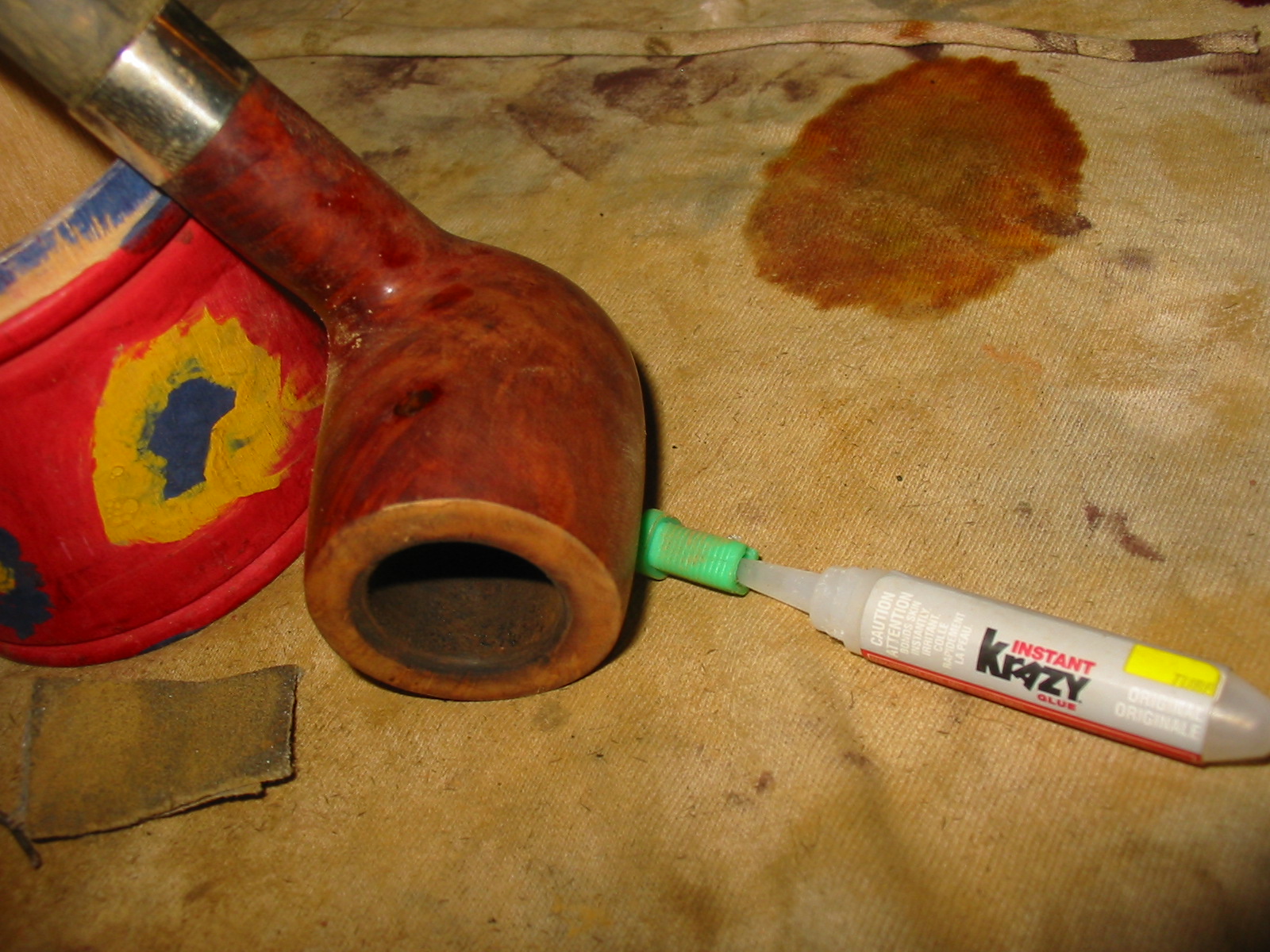
While the glue was drying I picked out the grit from the sandpit on the right side of the shank and repaired it with briar dust and superglue. The photo below shows the filled and repaired sandpit just next to the shank cap. The second photo below shows the newly place end cap and the work that still remained on the nickel/silver (?) shank cap.
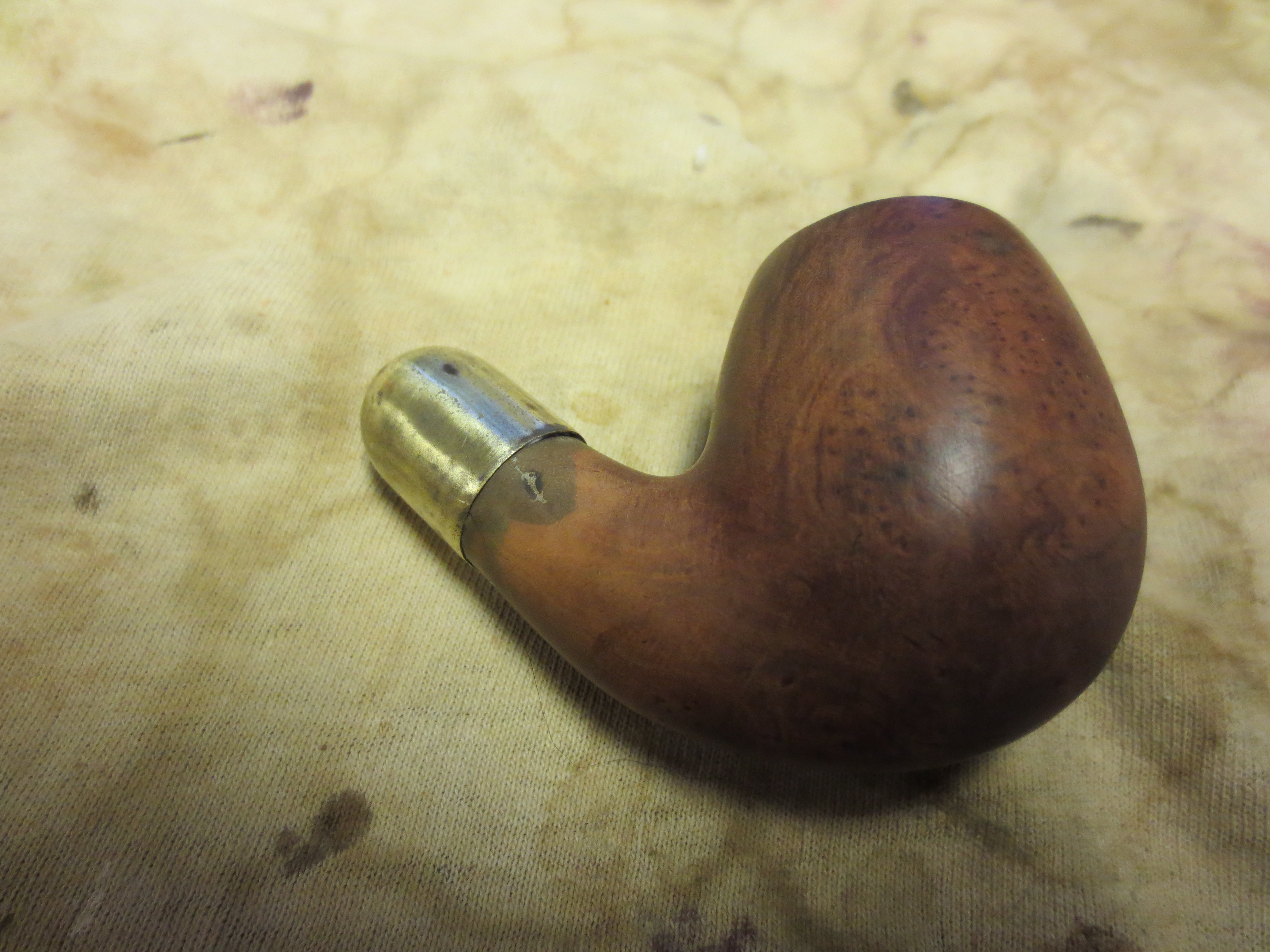
ImageImage

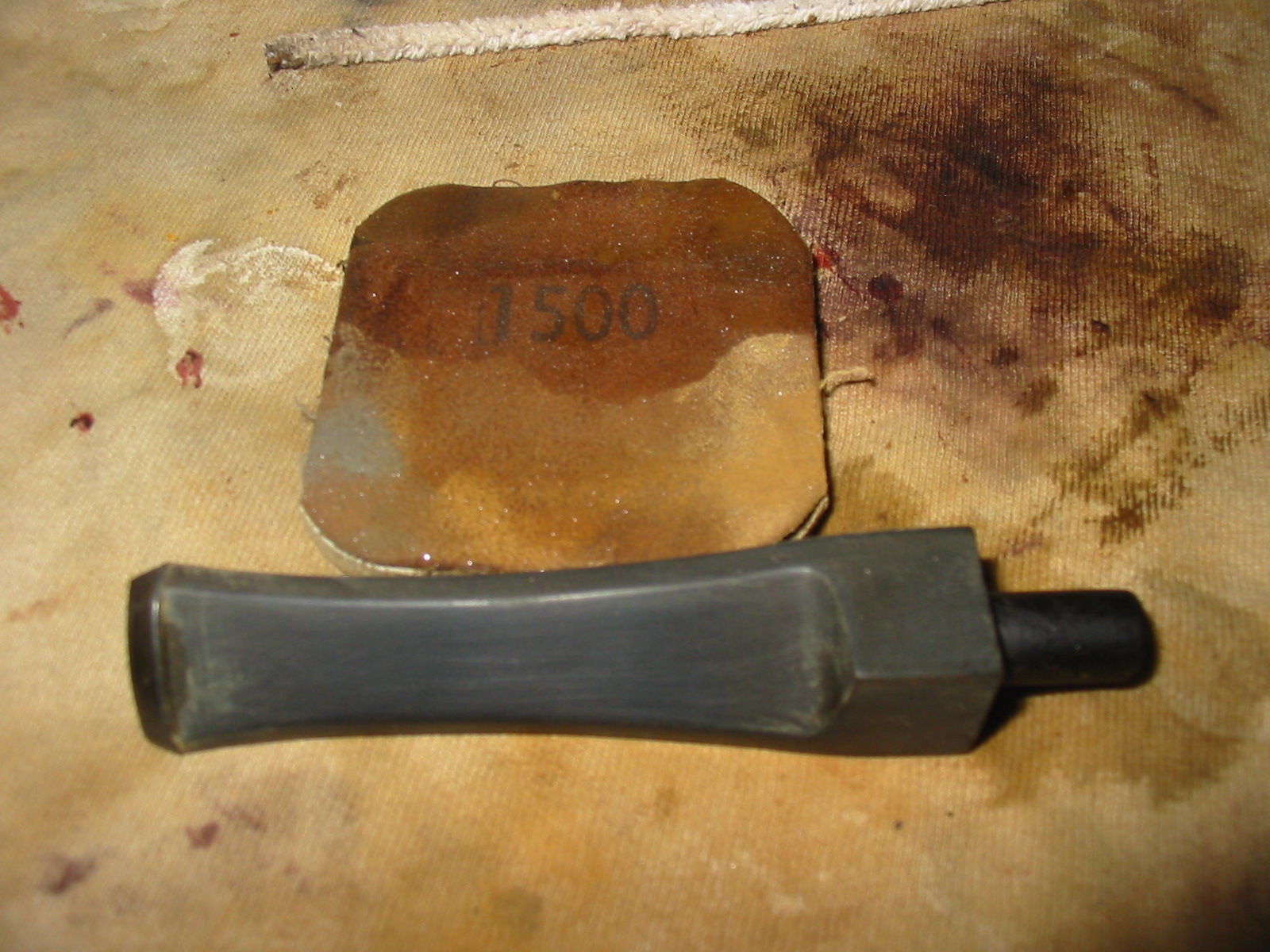
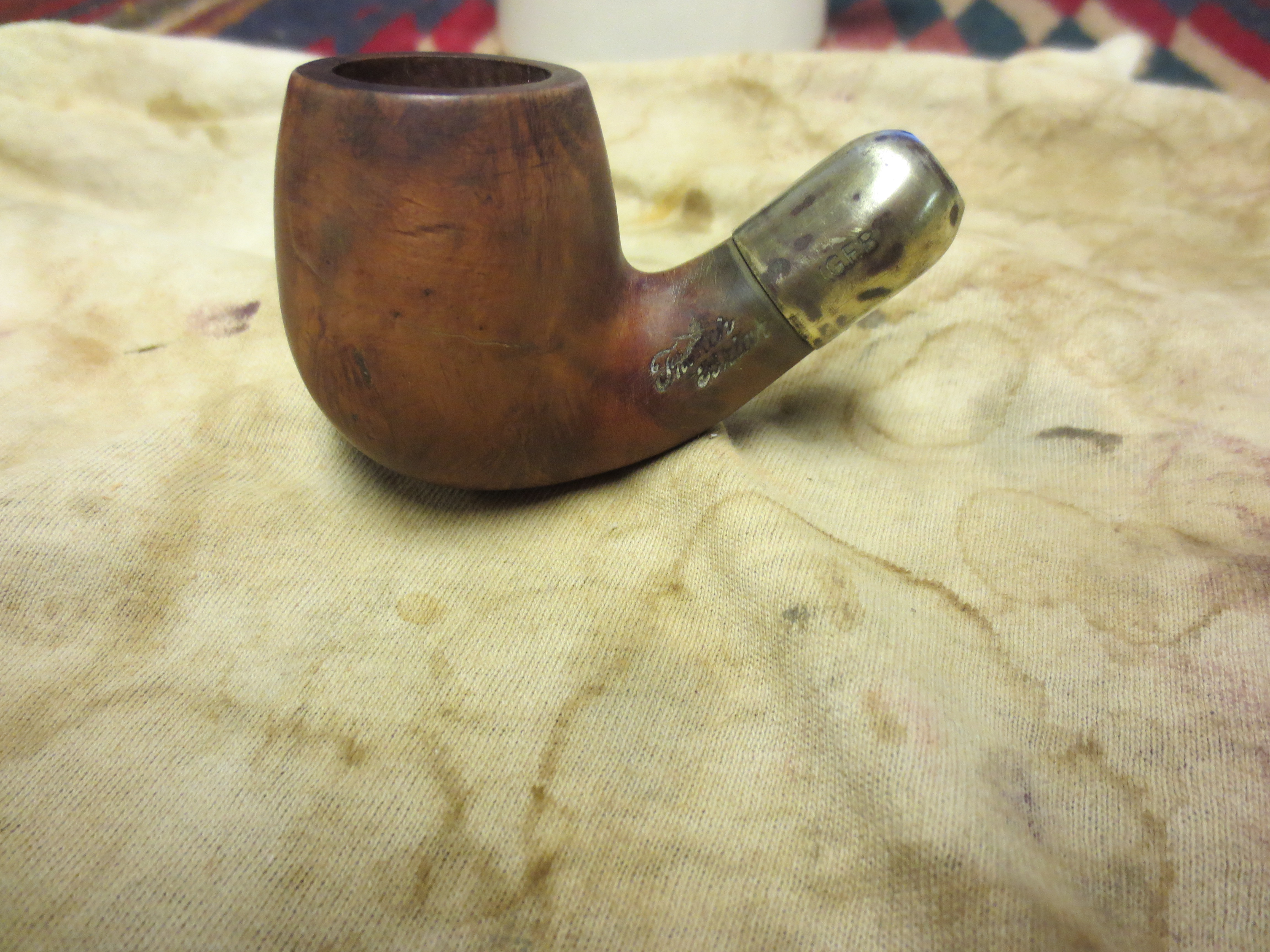
I worked on the shank cap once it was dry with micromesh sanding pads. I used 1500 – 2400 to wet sand the cap. It took much elbow grease to get it to the point is at in the four photos shown below.
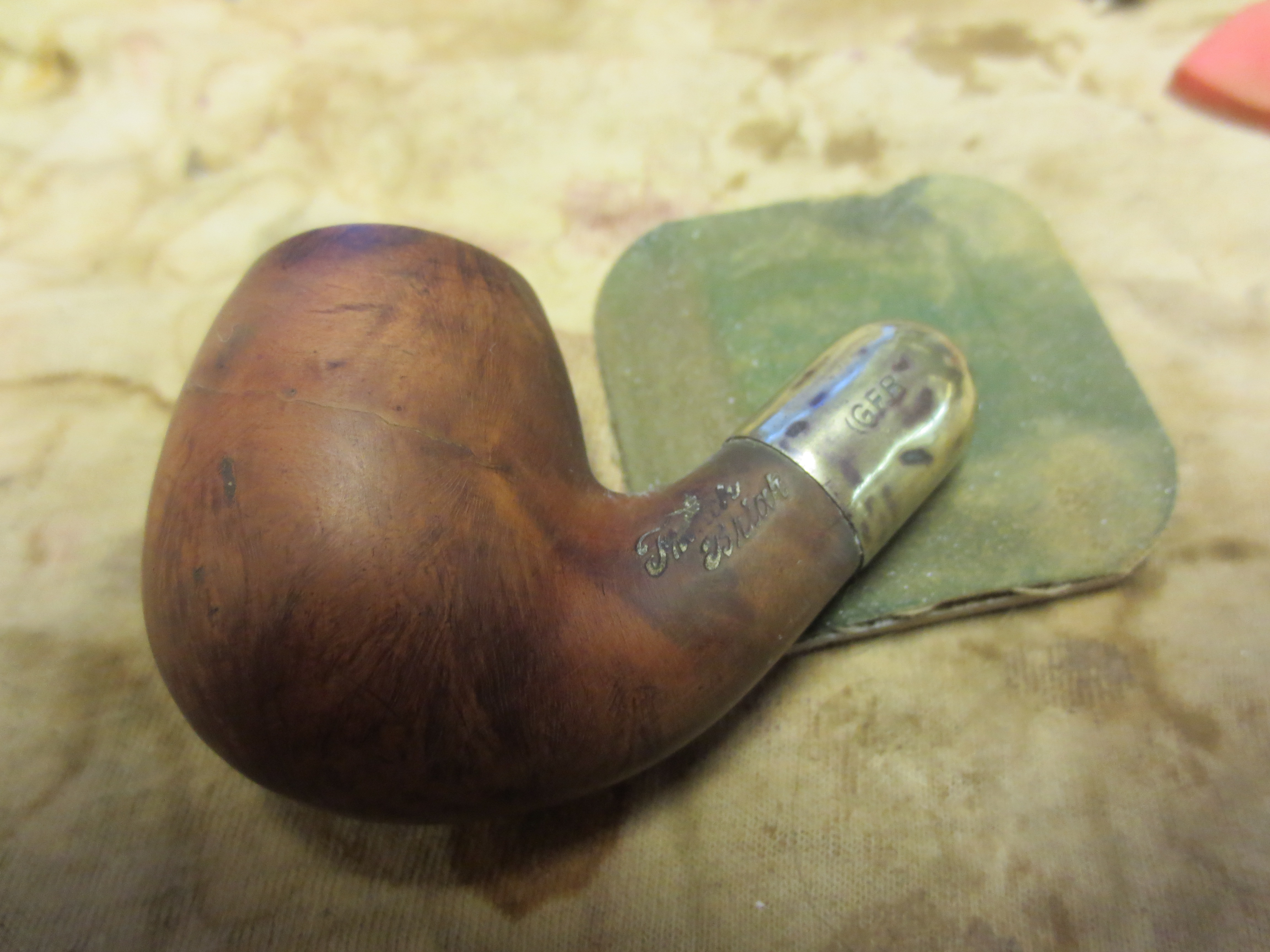
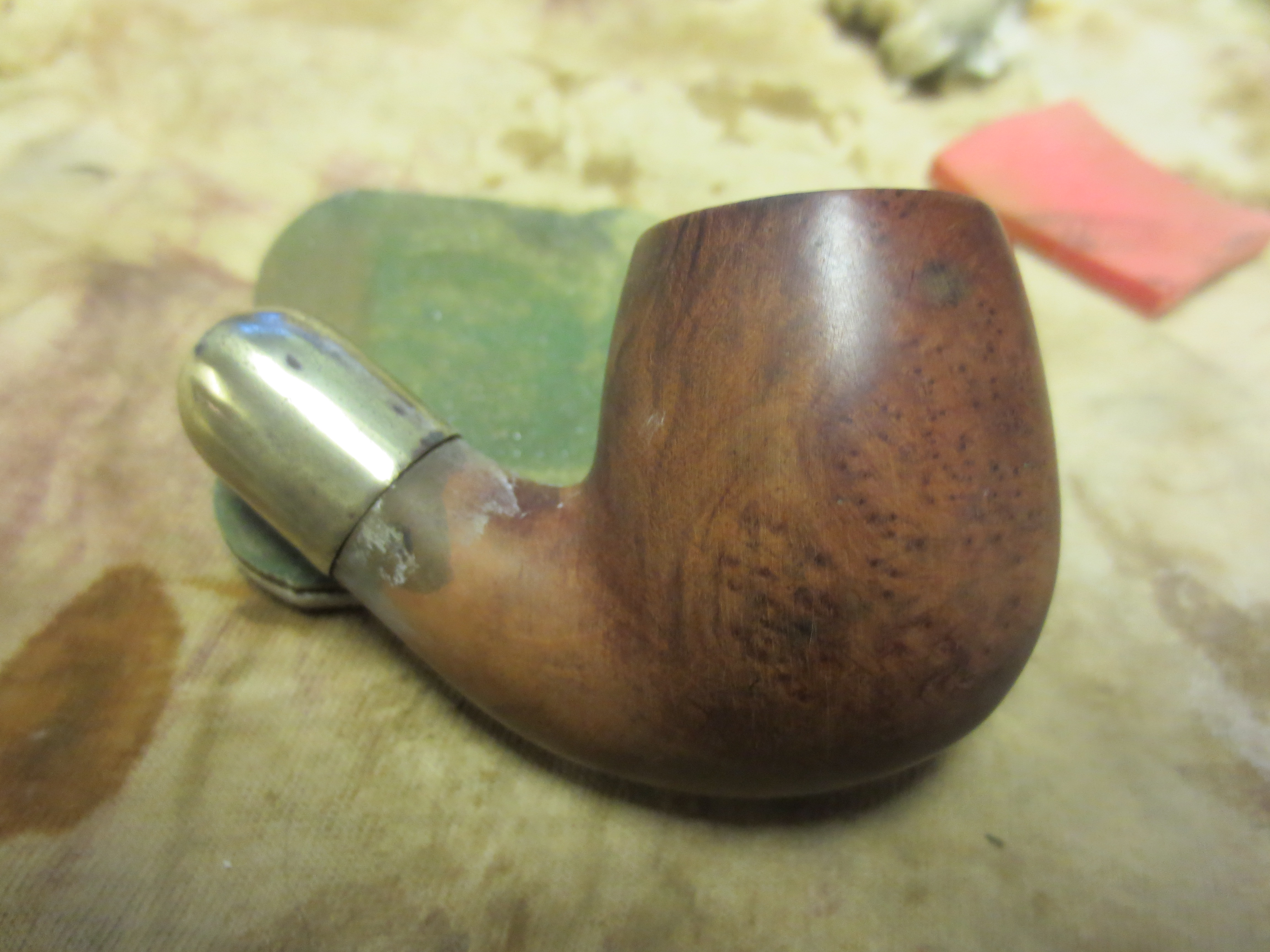
ImageImageImageImage

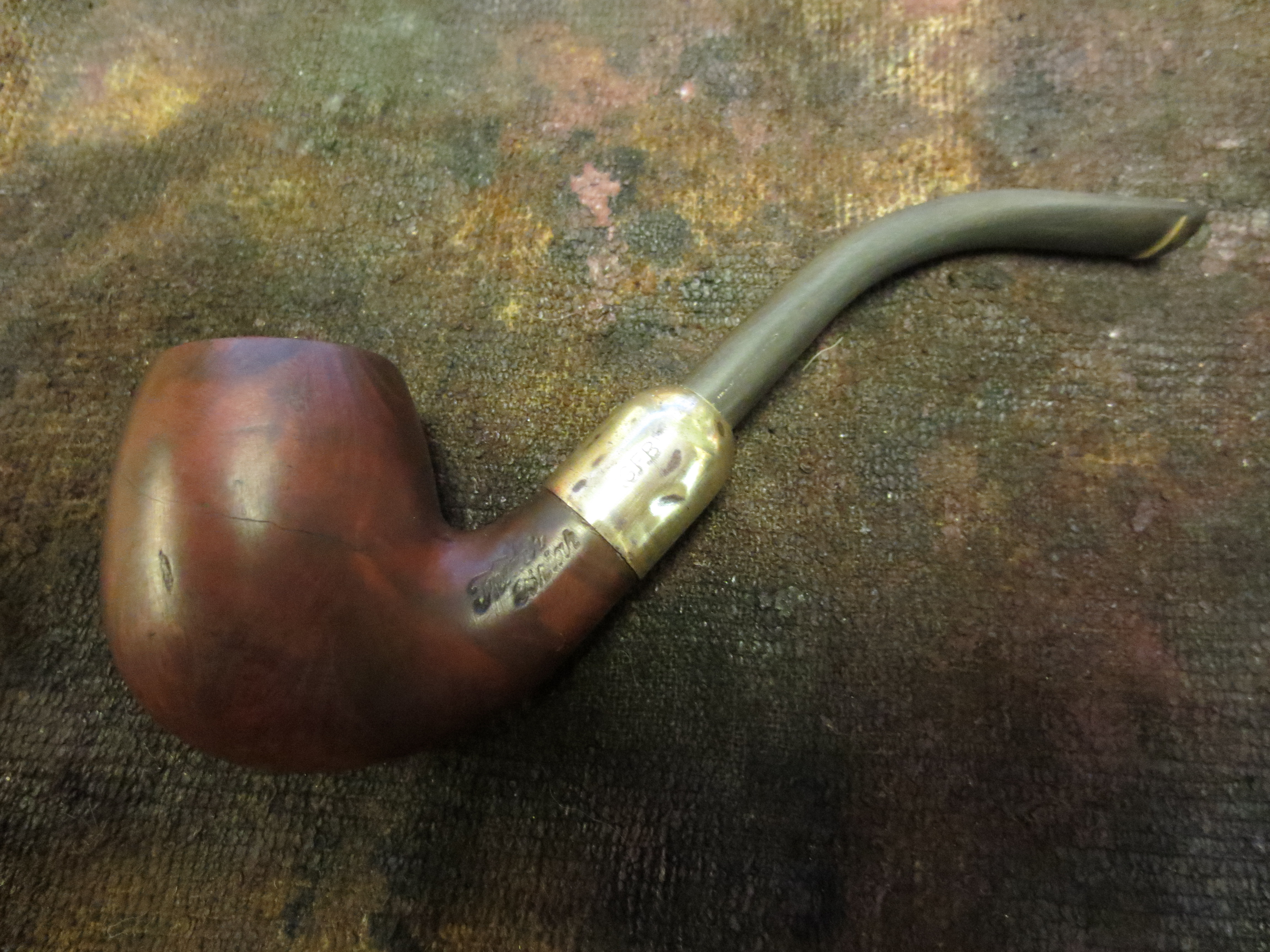
The GFB stamp on the cap shows up clearly in the photo above and the ones below. There were many small dents in the cap that I was not able to remove. However, I continued to polish the cap with some Neverdull Wool – a cotton product that is impregnated with a tarnish remover. It is soft enough to get into the dents on the cap. I then went on to sand the bowl with the fine grit sanding sponge to clean up the finish. The next six photos show the sanding progress. Once it was finished I wiped the bowl down with some Everclear on a cotton pad to remove the sanding dust and prepare the surface of the wood for restaining.
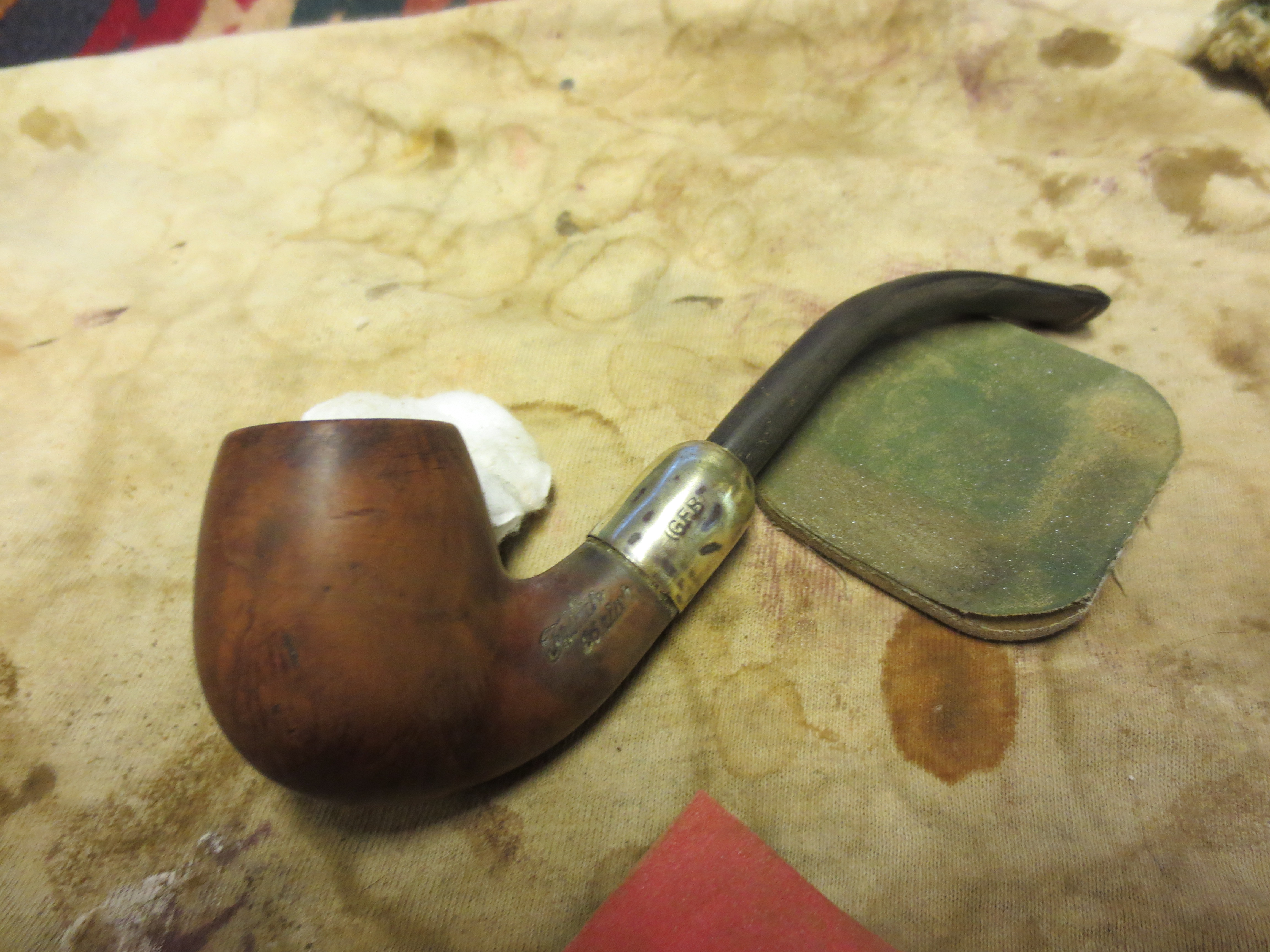
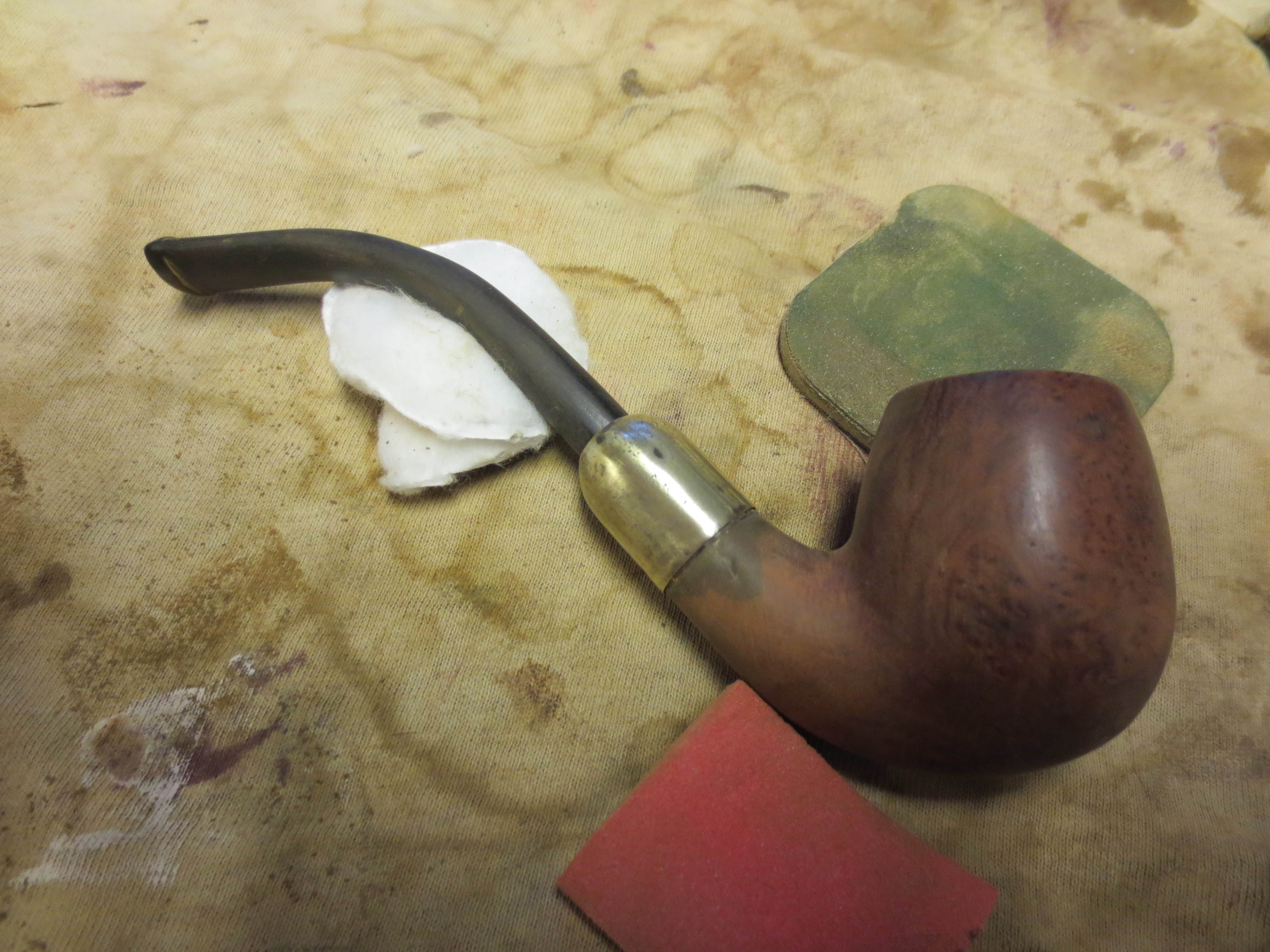
ImageImageImageImageImageImage

I decided to restain the pipe bowl with an oxblood stain to maximize the stain that remained in the briar. I believe the original stain was oxblood coloured so the look would approximate the original finish of the pipe. I applied the stain, flamed it, reapplied it and flamed it a second time. The first two photos below show the pipe after the application of the stain. The next four photos show the pipe after it has been hand buffed with a soft cotton cloth to remove excess stain on the briar. The filled area near the shank cap on the right side is visible and the darkening of the area is also clear.
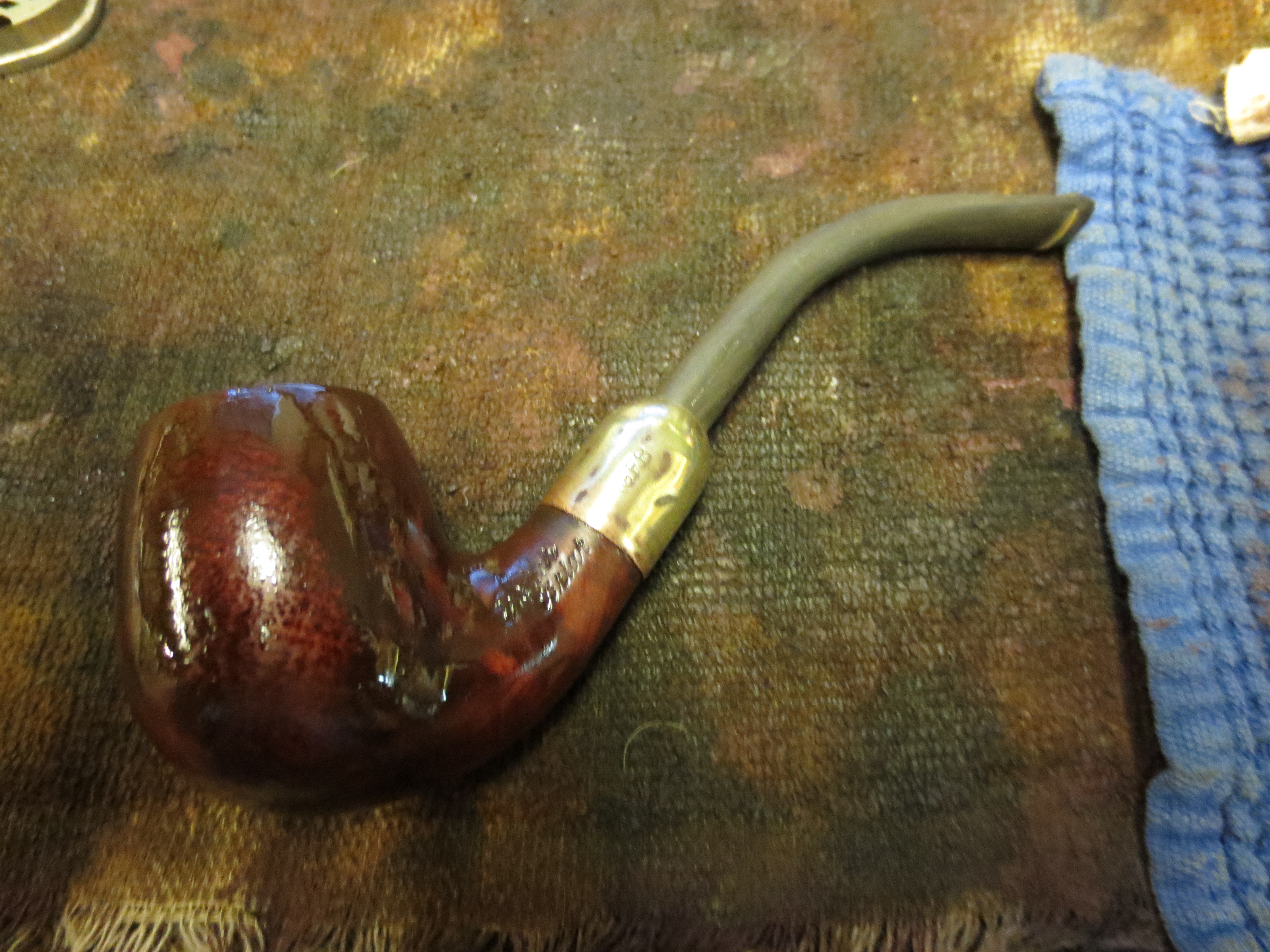
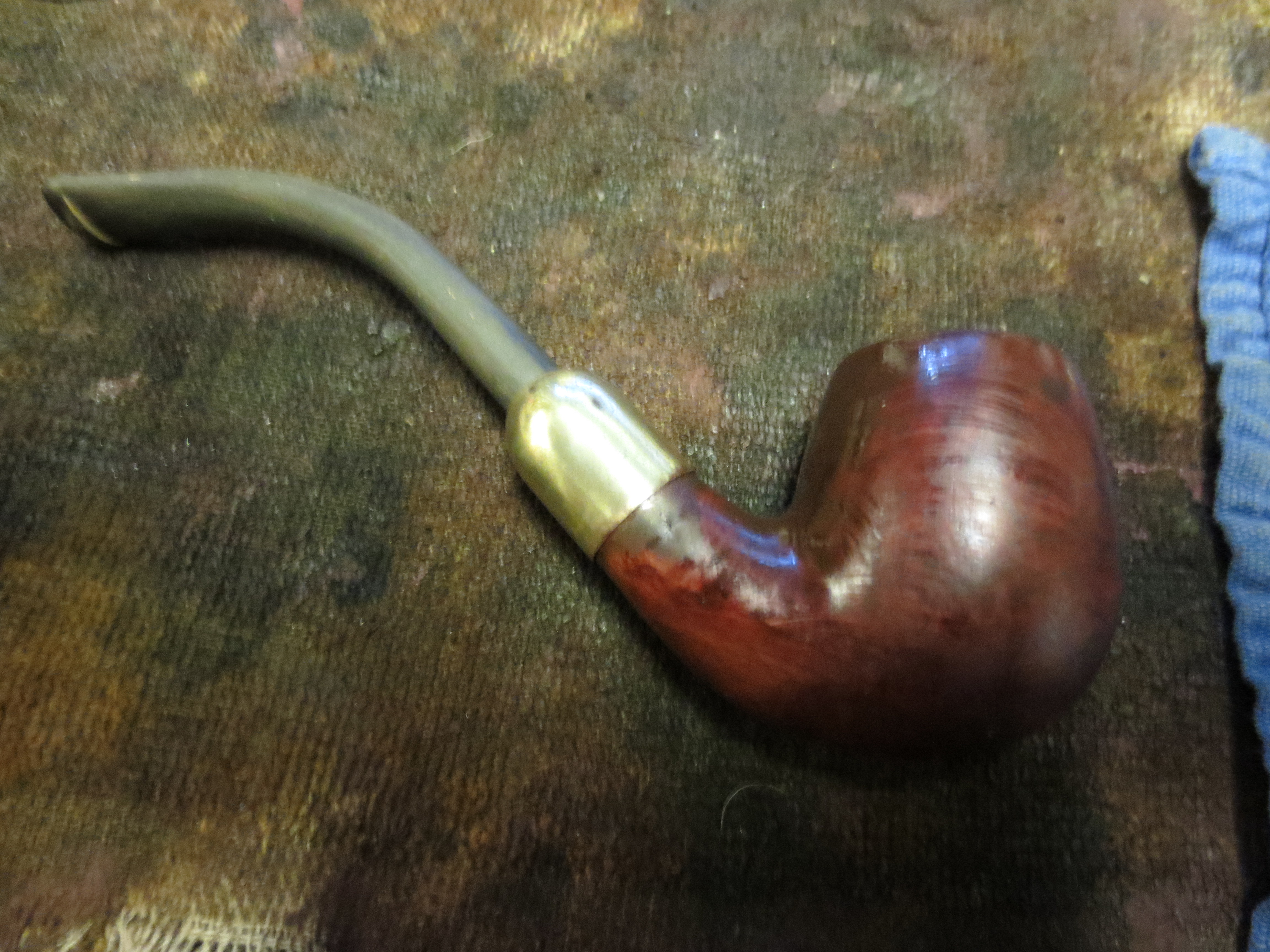
ImageImageImageImageImageImage

At this point in the process I set the bowl aside and worked on polishing the stem. I quickly gave it a once over with the fine grit sanding sponge and then worked my way through the micromesh sanding pads from 1500 – 12,000 grit. The next series of eight photos shows the shine that comes to the surface of the vulcanite with each successive grit of micromesh.
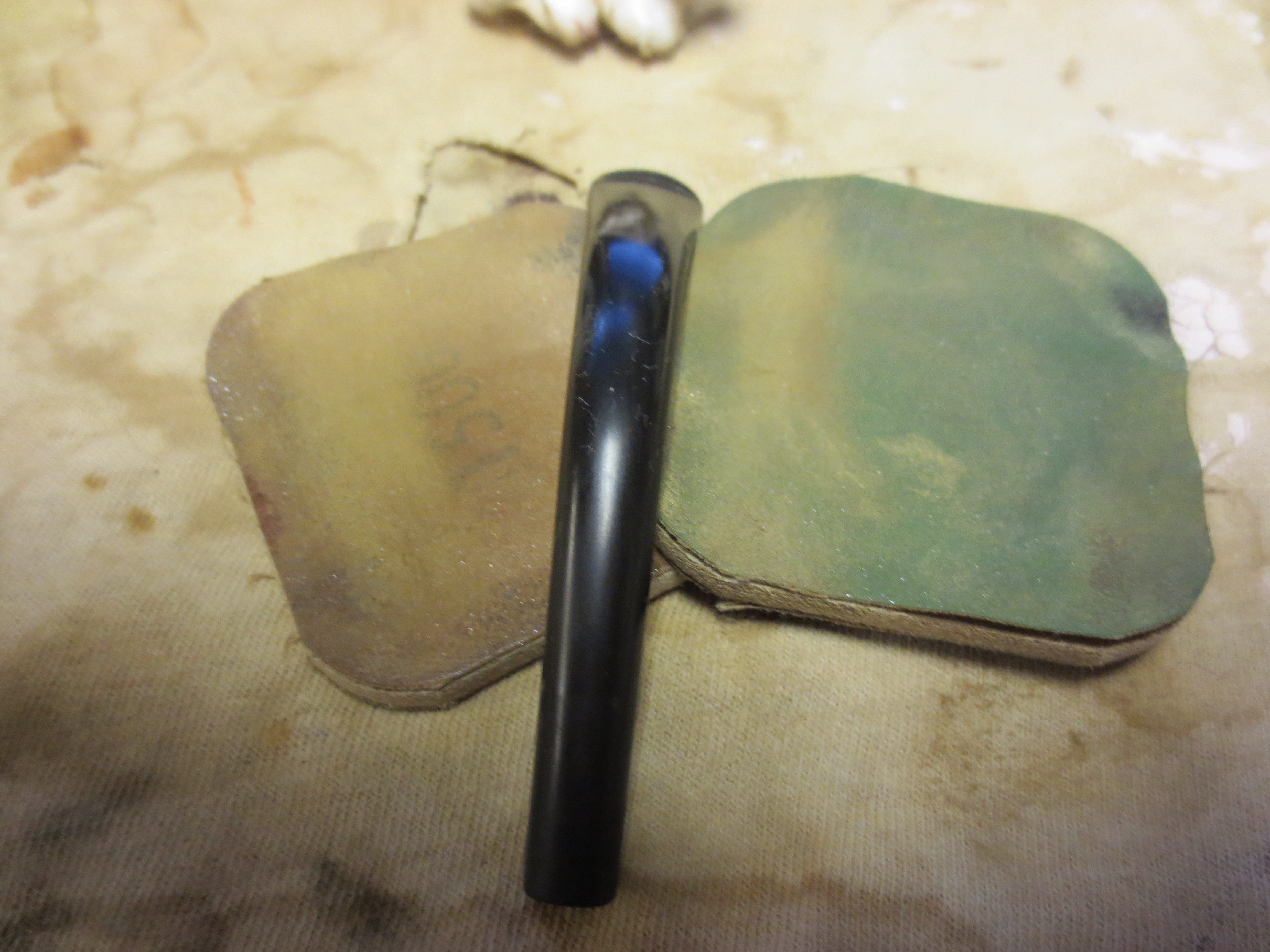
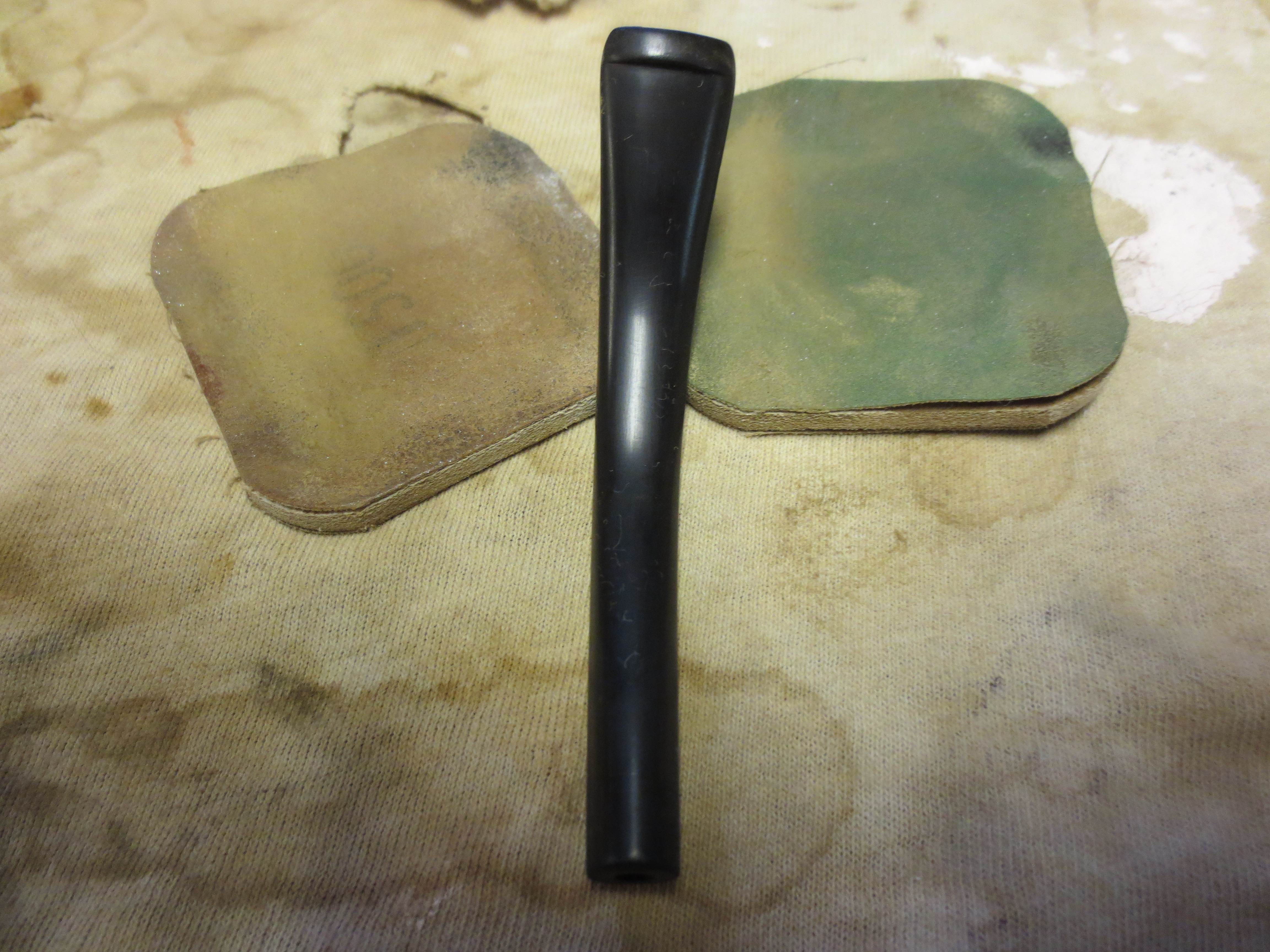
ImageImageImageImageImageImageImageImage

I wiped the stem down with Obsidian Oil and then hand waxed it with some carnauba paste wax that I have in the shop. It is the wax available from Walker Briar Works and I will often hand apply it to the stems at this point in the process and hand buff a shine. I then reassembled the pipe, polished the bowl with a little of the carnauba as well. I hand buffed the pipe with a soft cotton cloth I use for that purpose. The next four photos show the pipe after this process. I purposely did this on this pipe to see if the wax would cause the area on the right side of the shank that is darker to blend in a bit and be less visible. It seemed to work very well.
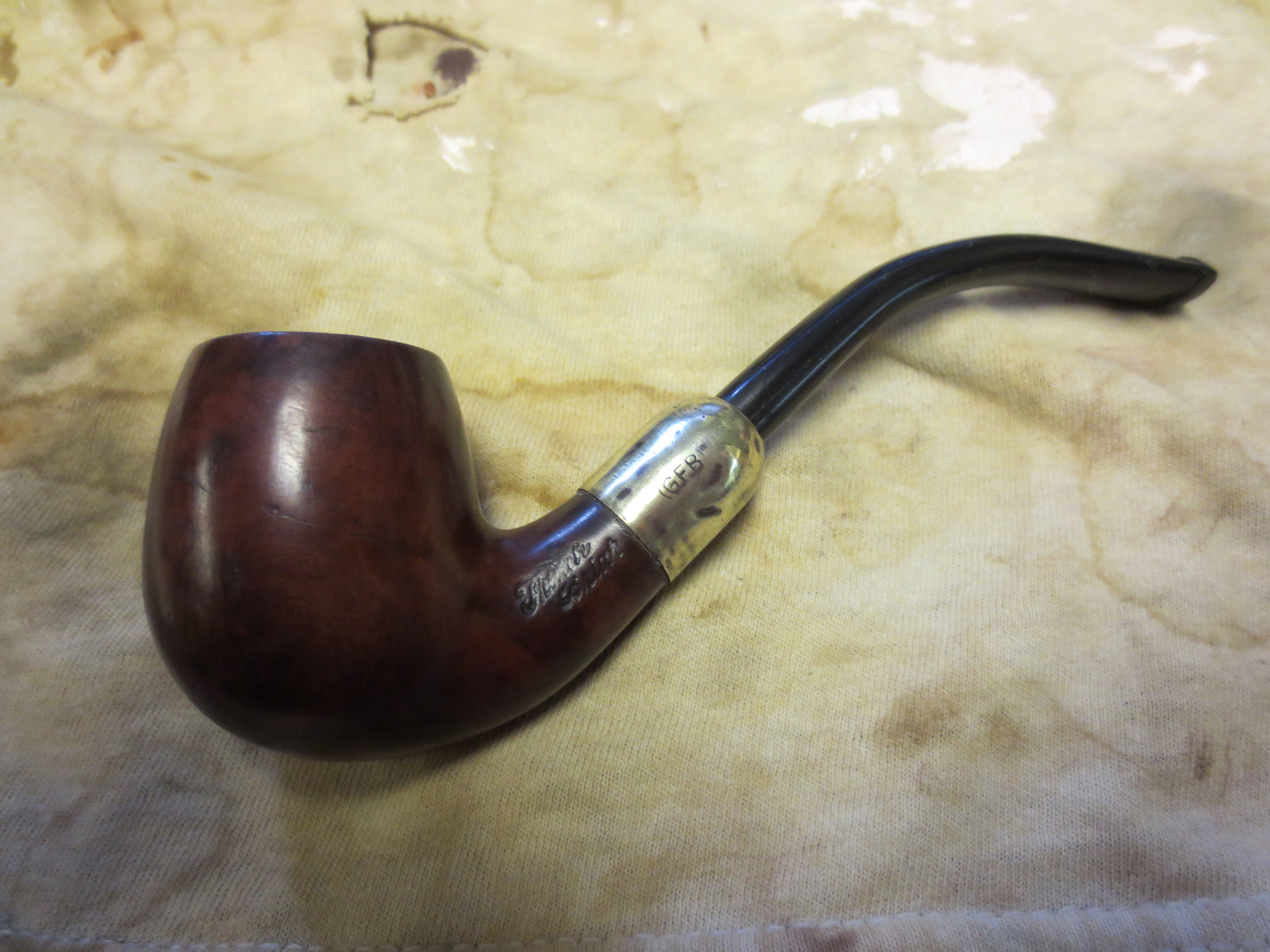
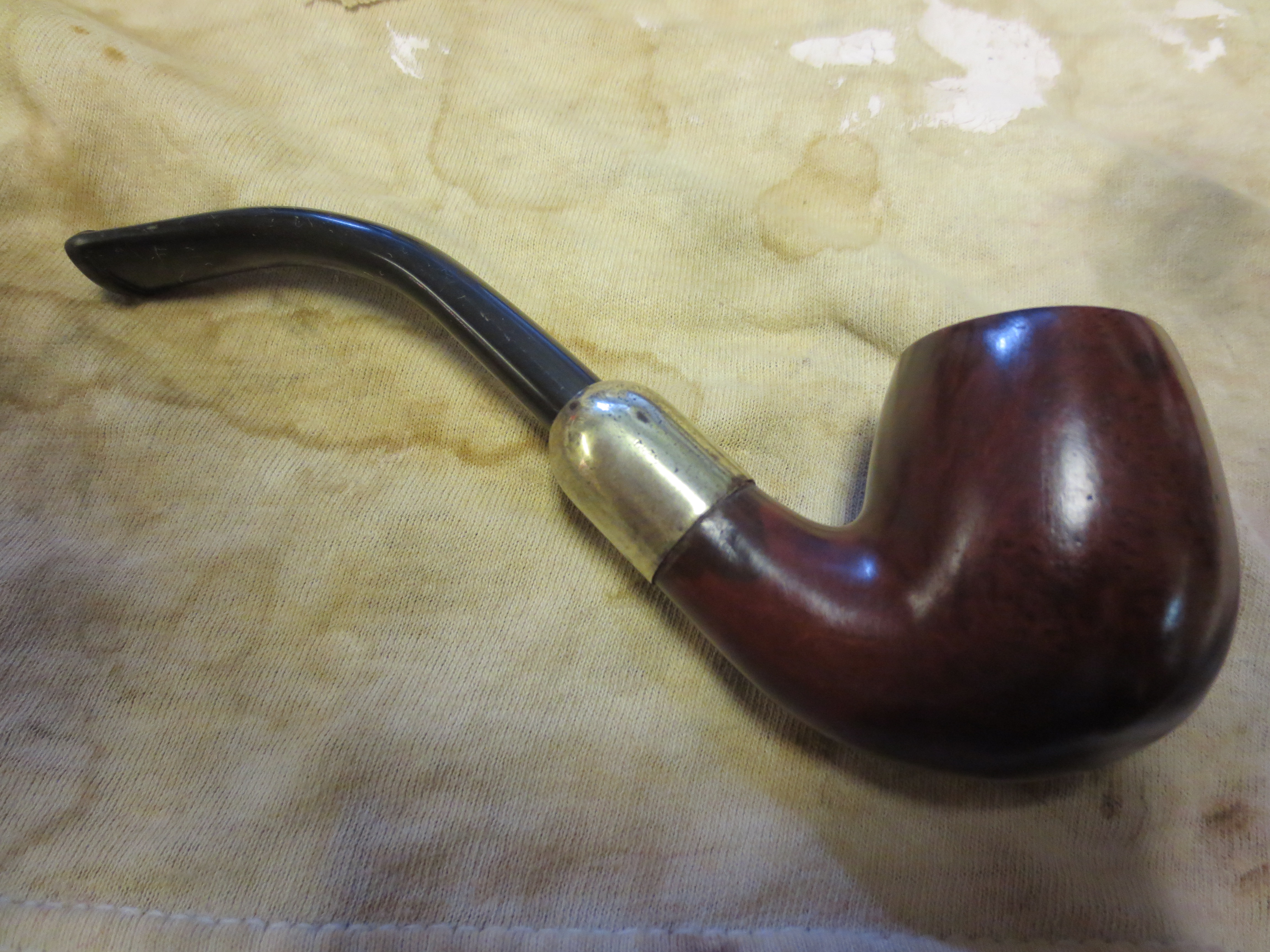
ImageImageImageImage

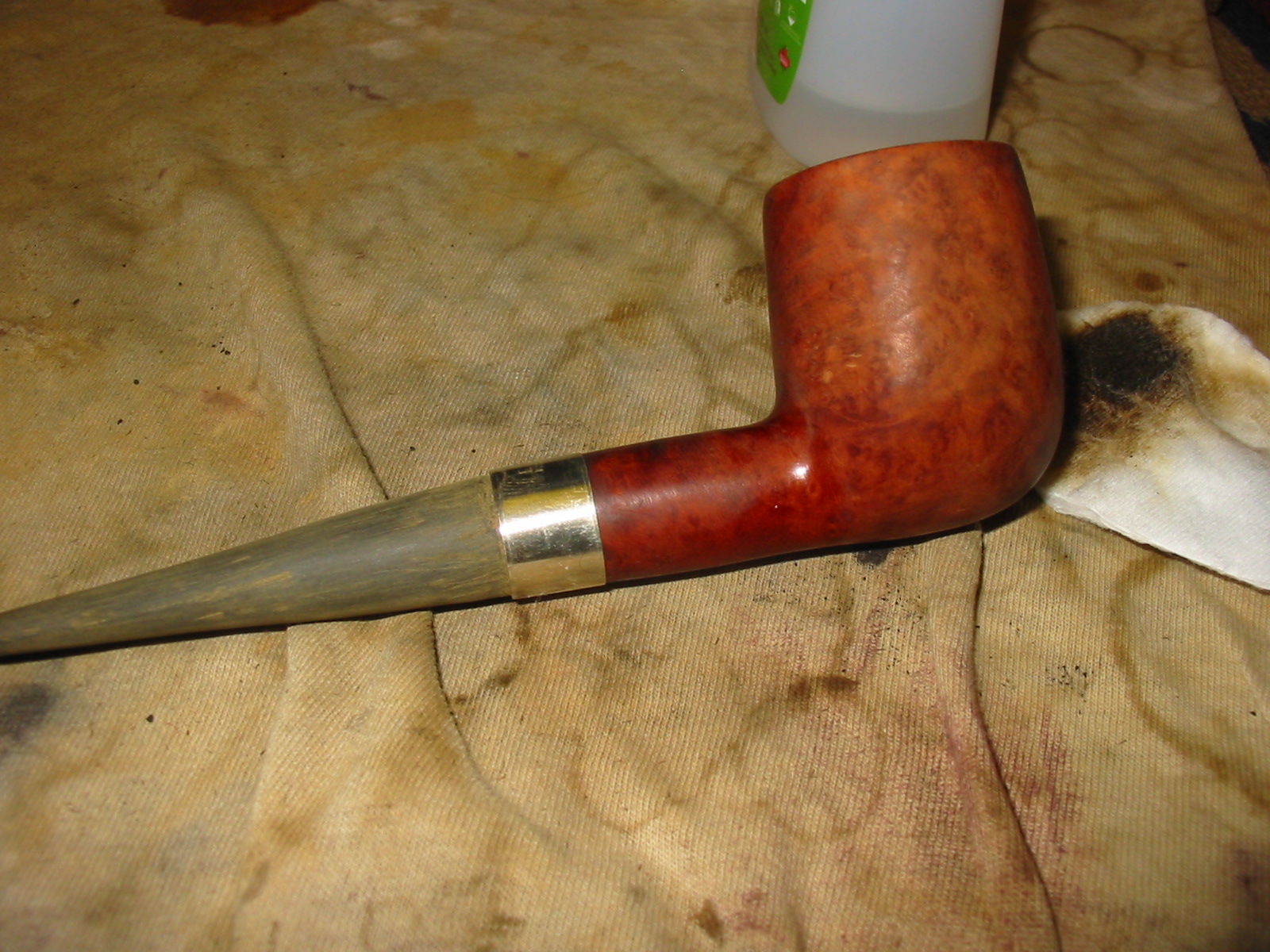
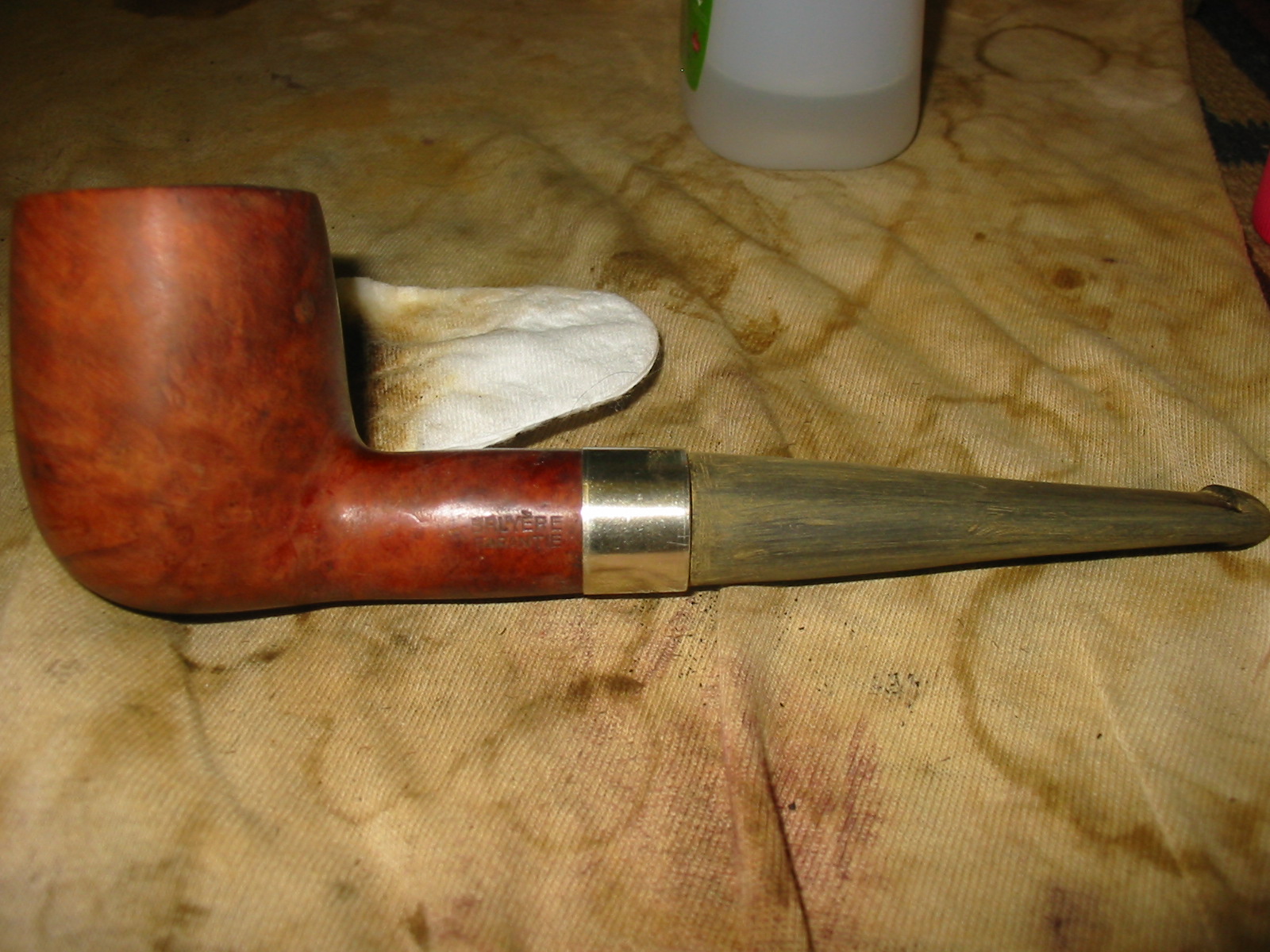
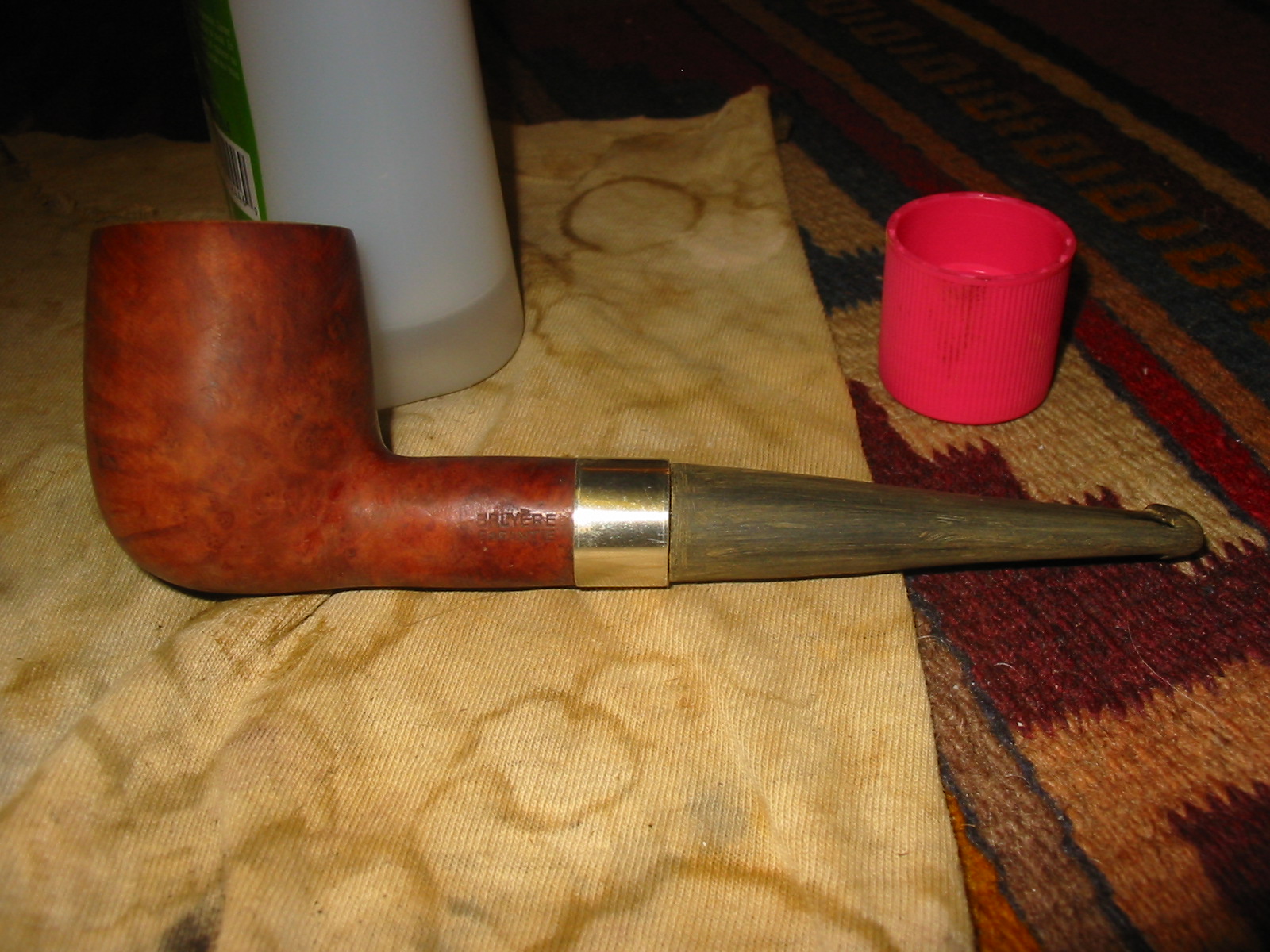
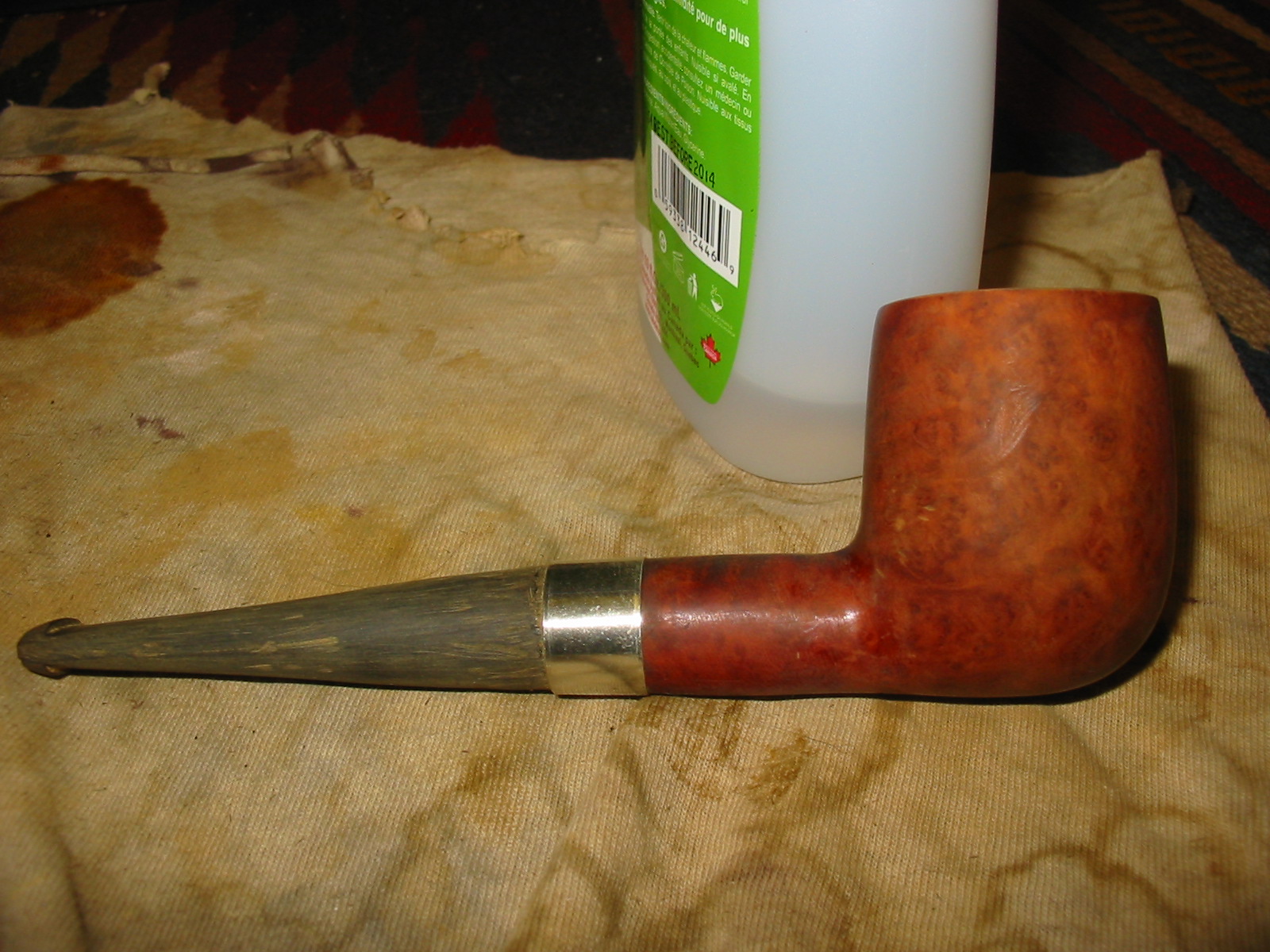
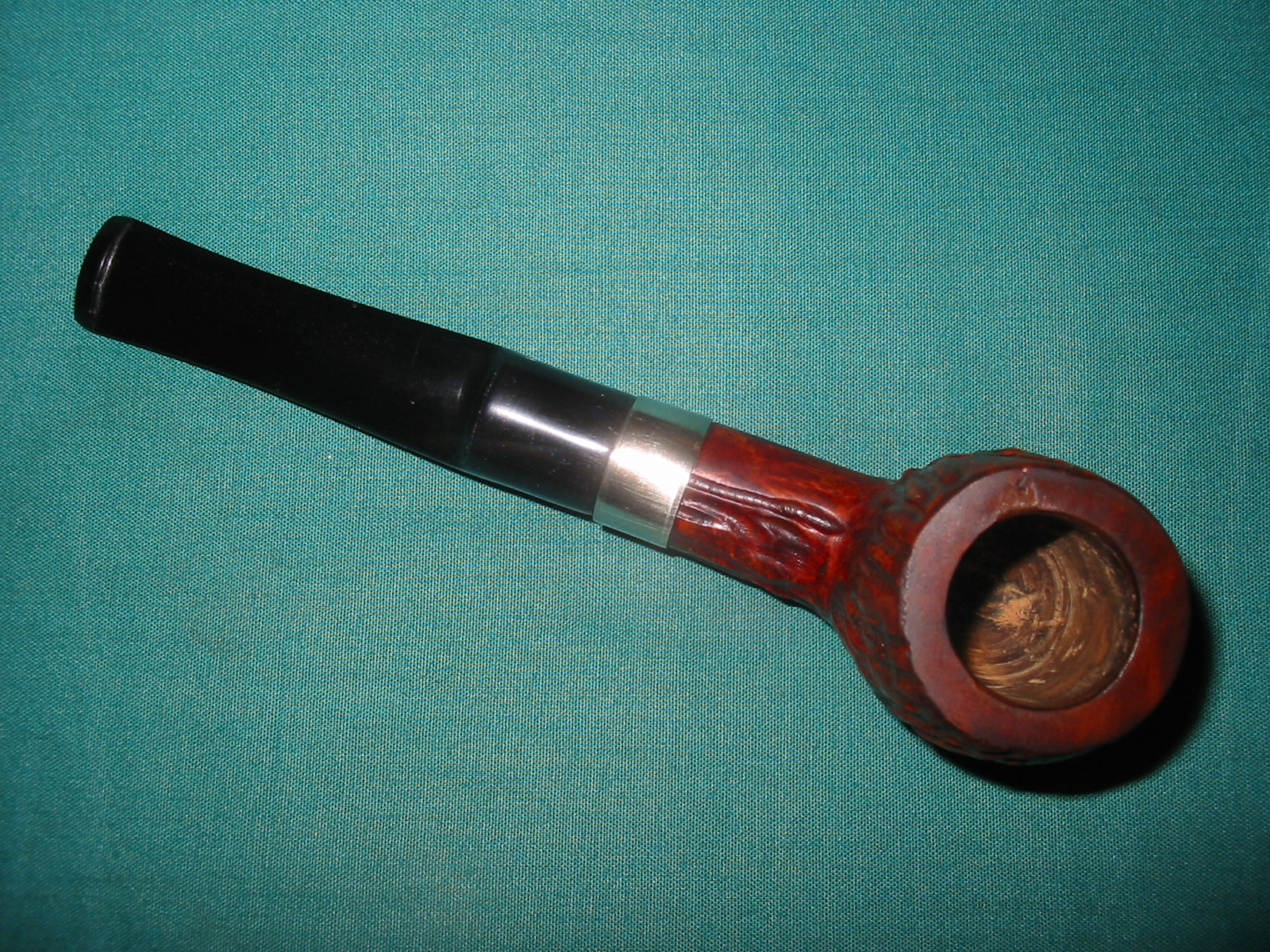
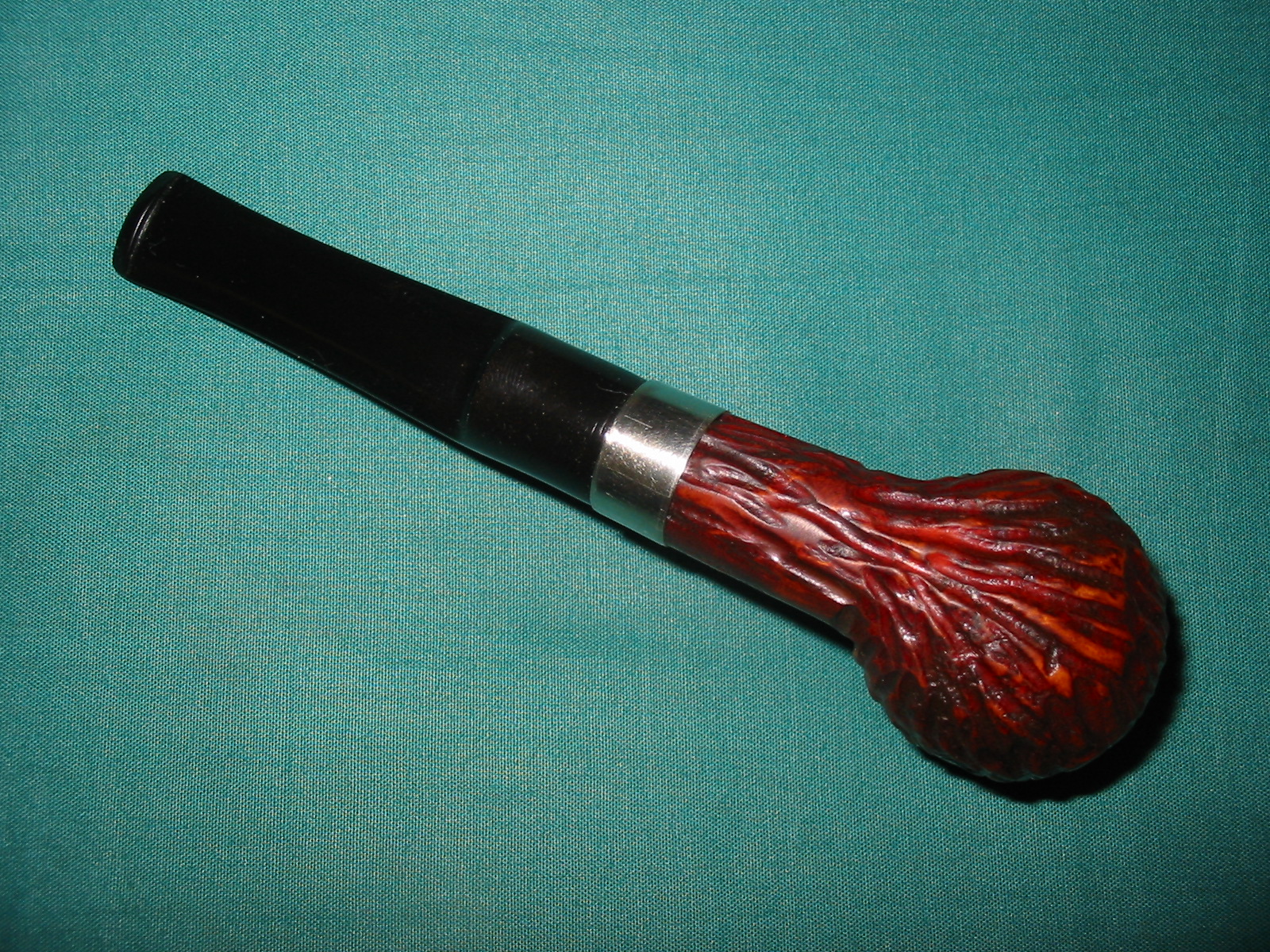
Once I was finished with the hand buff and had checked out the dark spot I took the pipe to my buffer. I lightly buffed the pipe and stem with White Diamond and then gave it multiple coats of carnauba wax and a final buff with a soft, clean flannel buffing pad. The next four photos show the finished pipe. It has been brought back to life and should well serve a new generation of pipe smokers. I do believe it will live longer than I do!
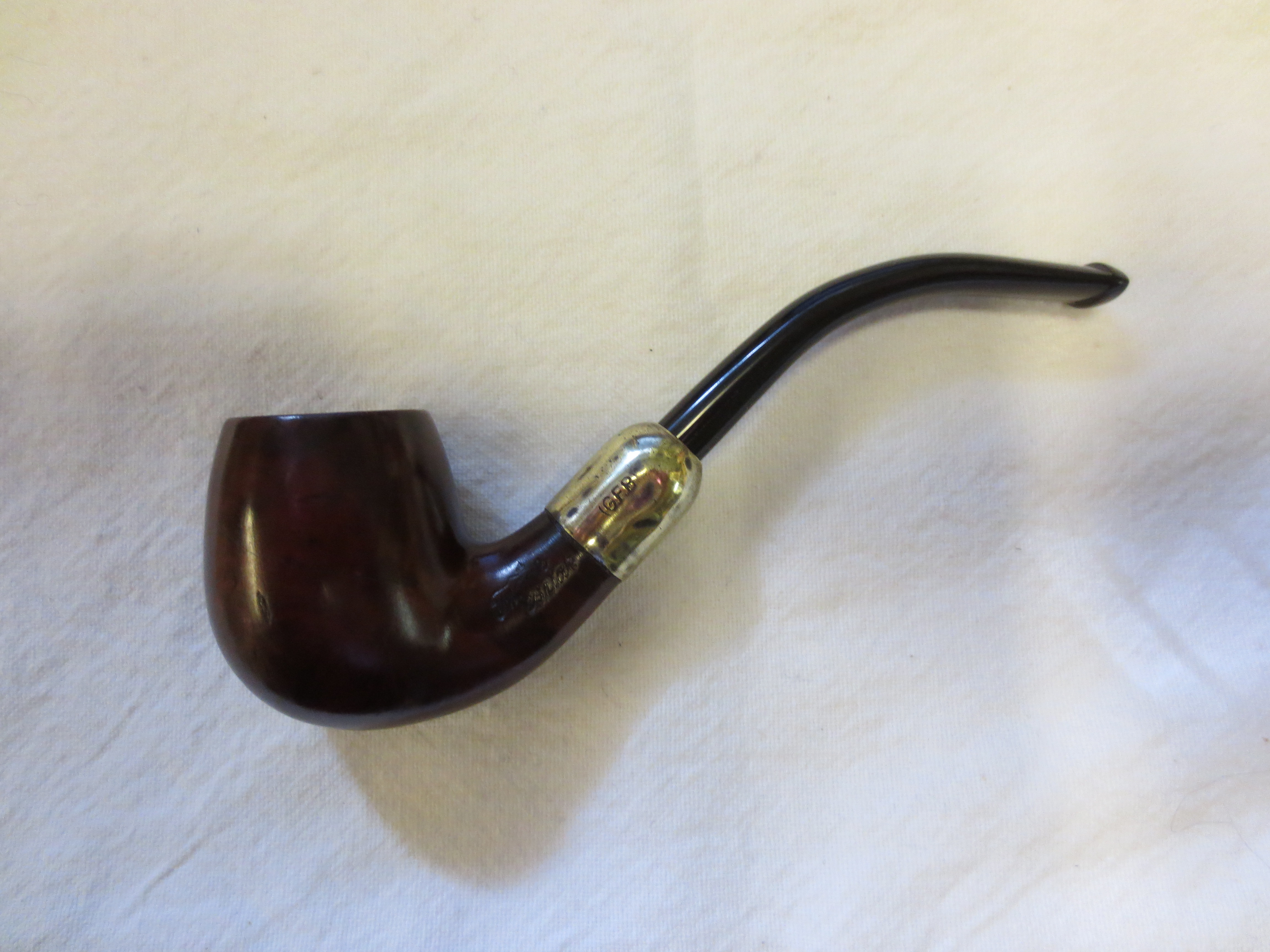
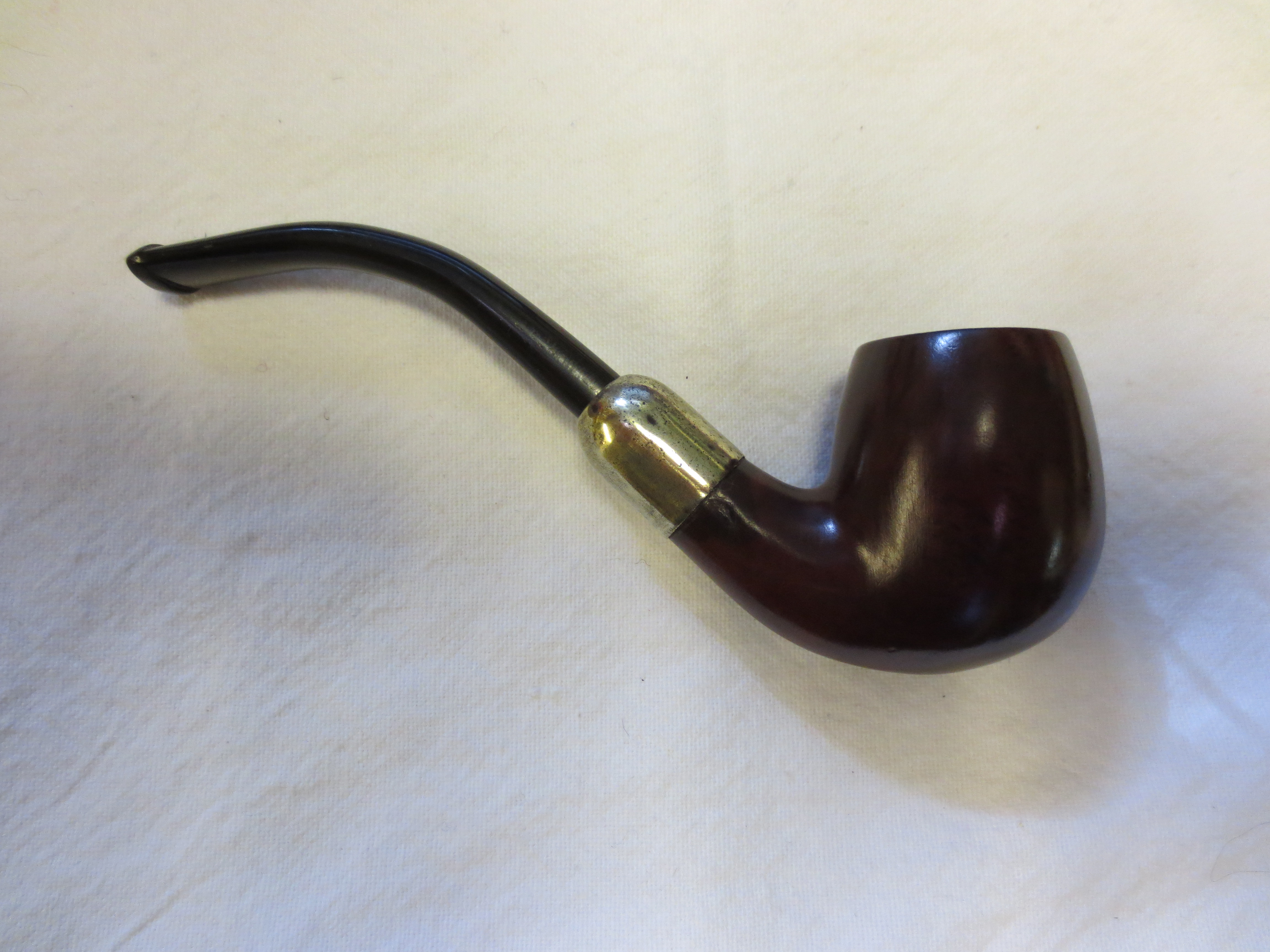
ImageImageImageImage

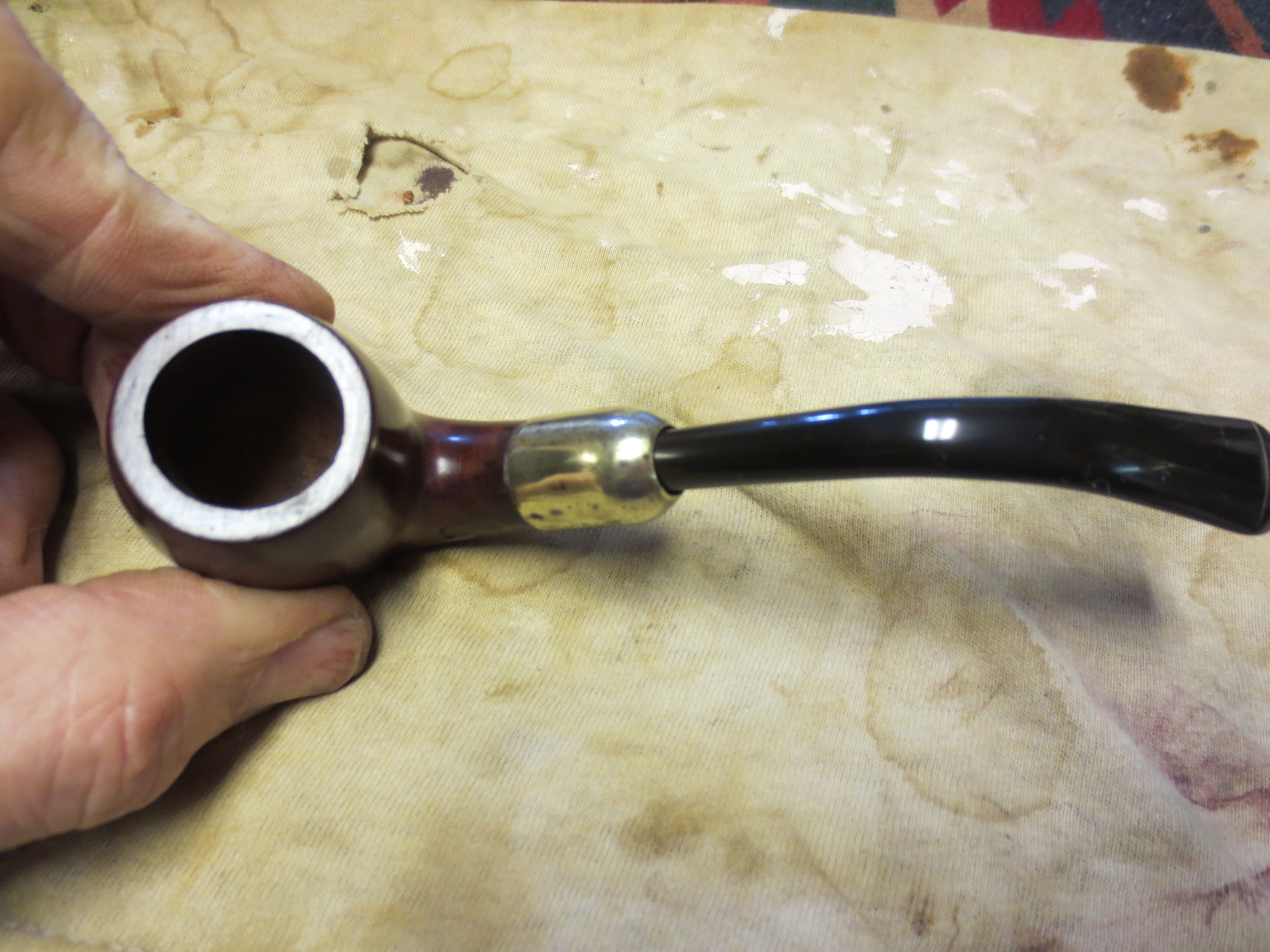
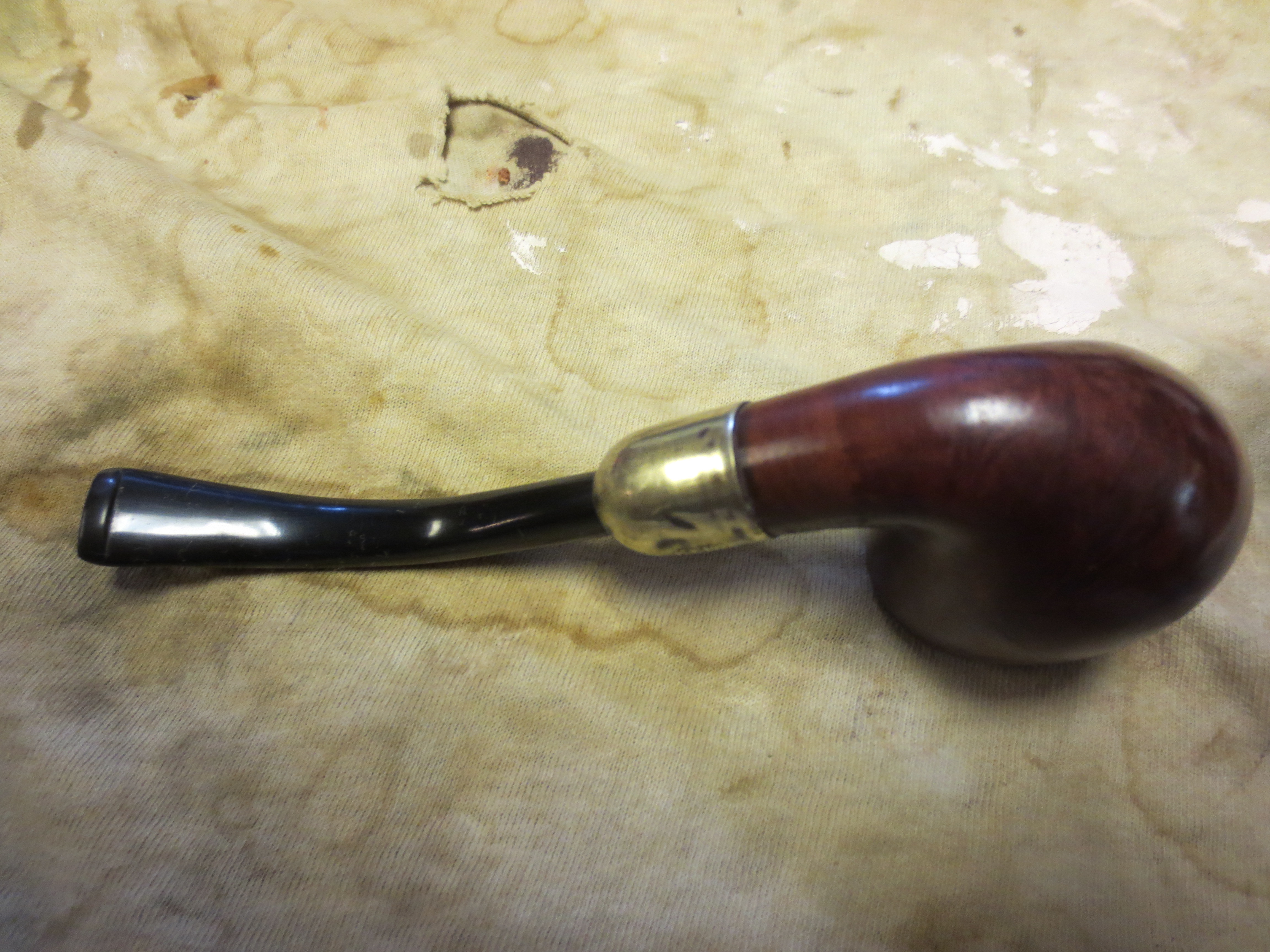
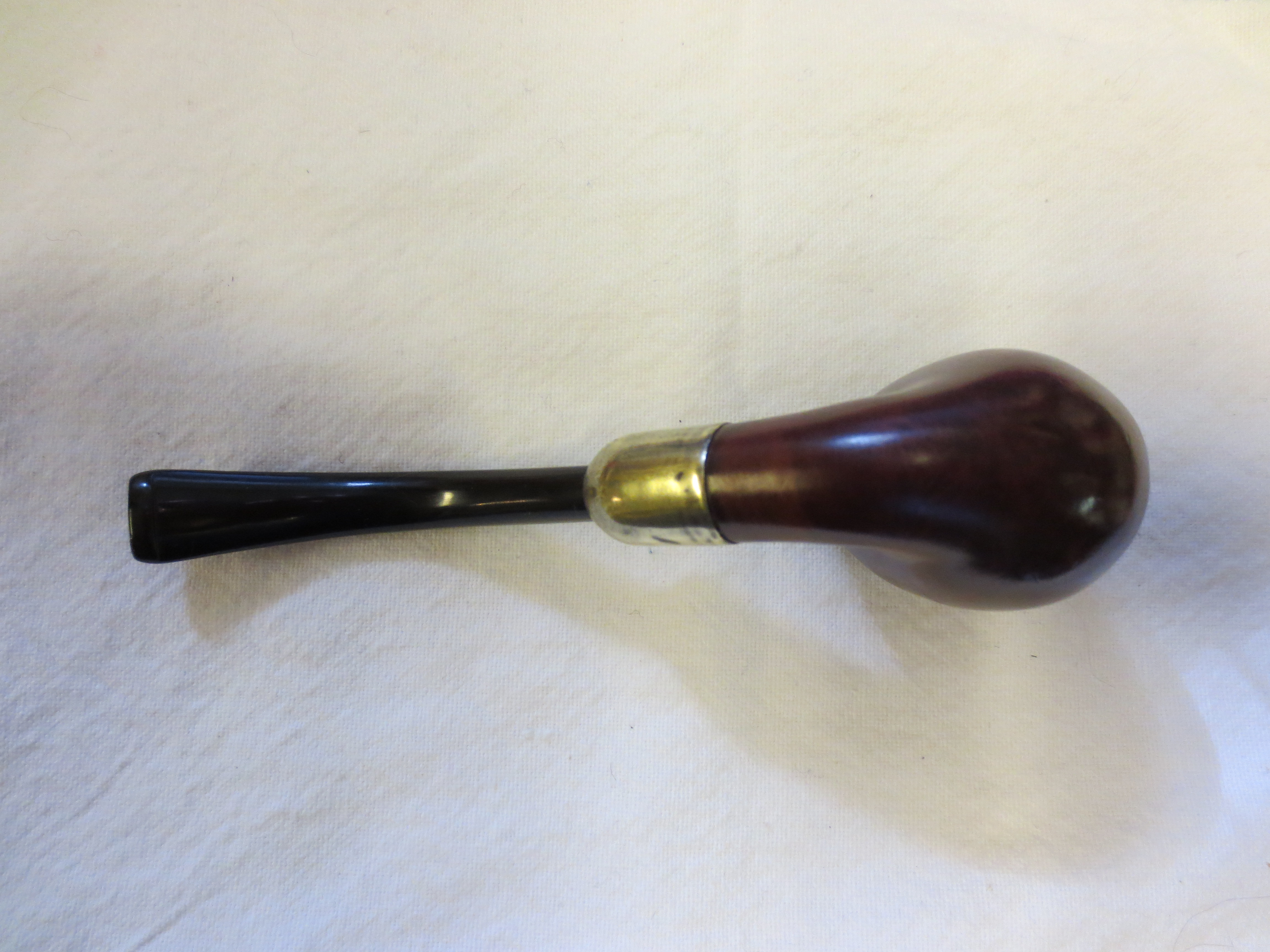
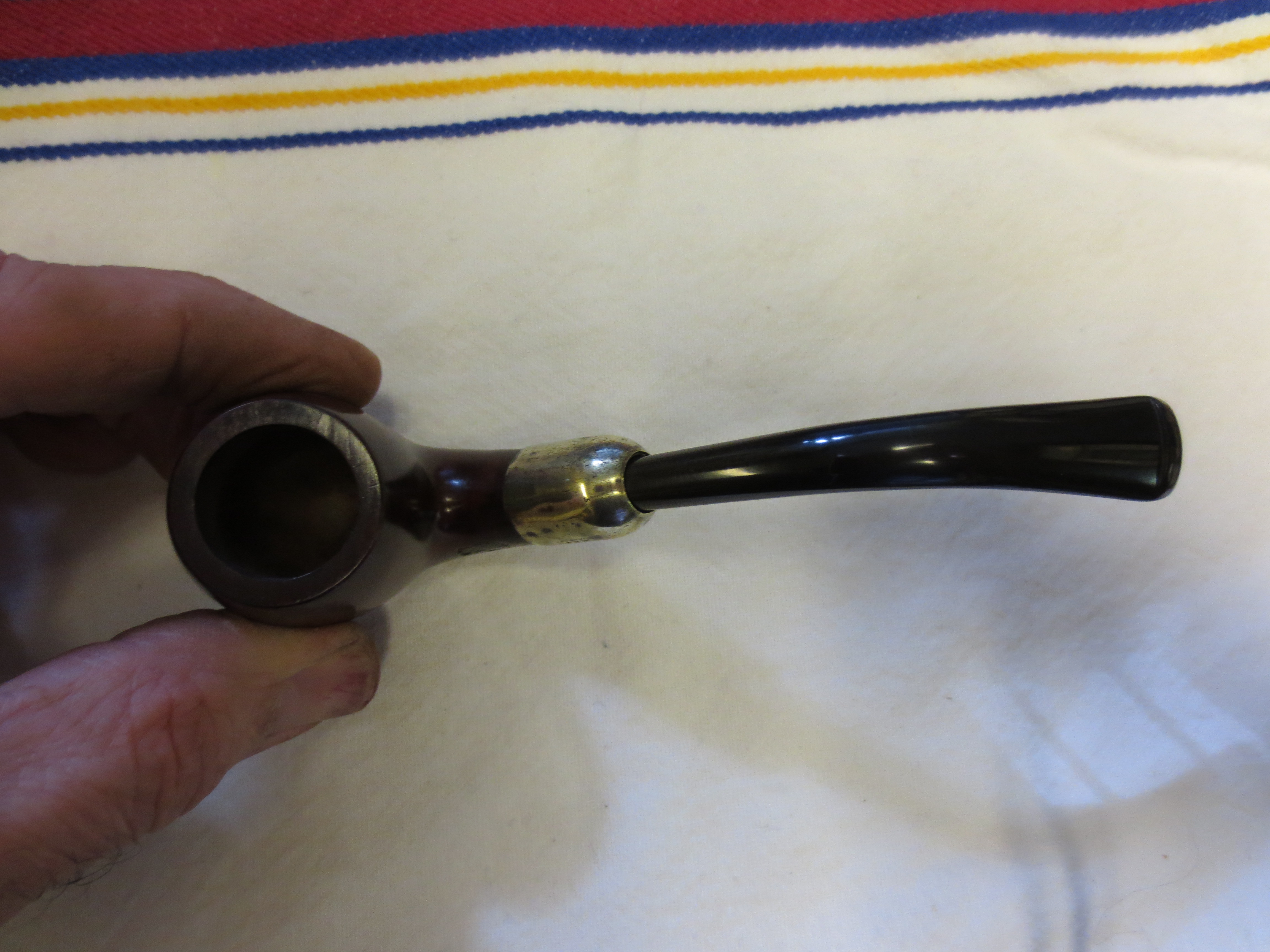
As I finished this piece on the GFB pipe I thought I would take some photos of the CPF and the GFB old timers posed together. The next two photos show the pair in their newly found glory. I can’t help but think that this is how they looked when they were purchased by the original owner. I believe that both came from the same pipe smoker so now they are returned to the look that must have caught his eye when he purchased them. The pair look enough alike I wanted you to see them in this pose! A noble pair of old pipes, don’t you agree?
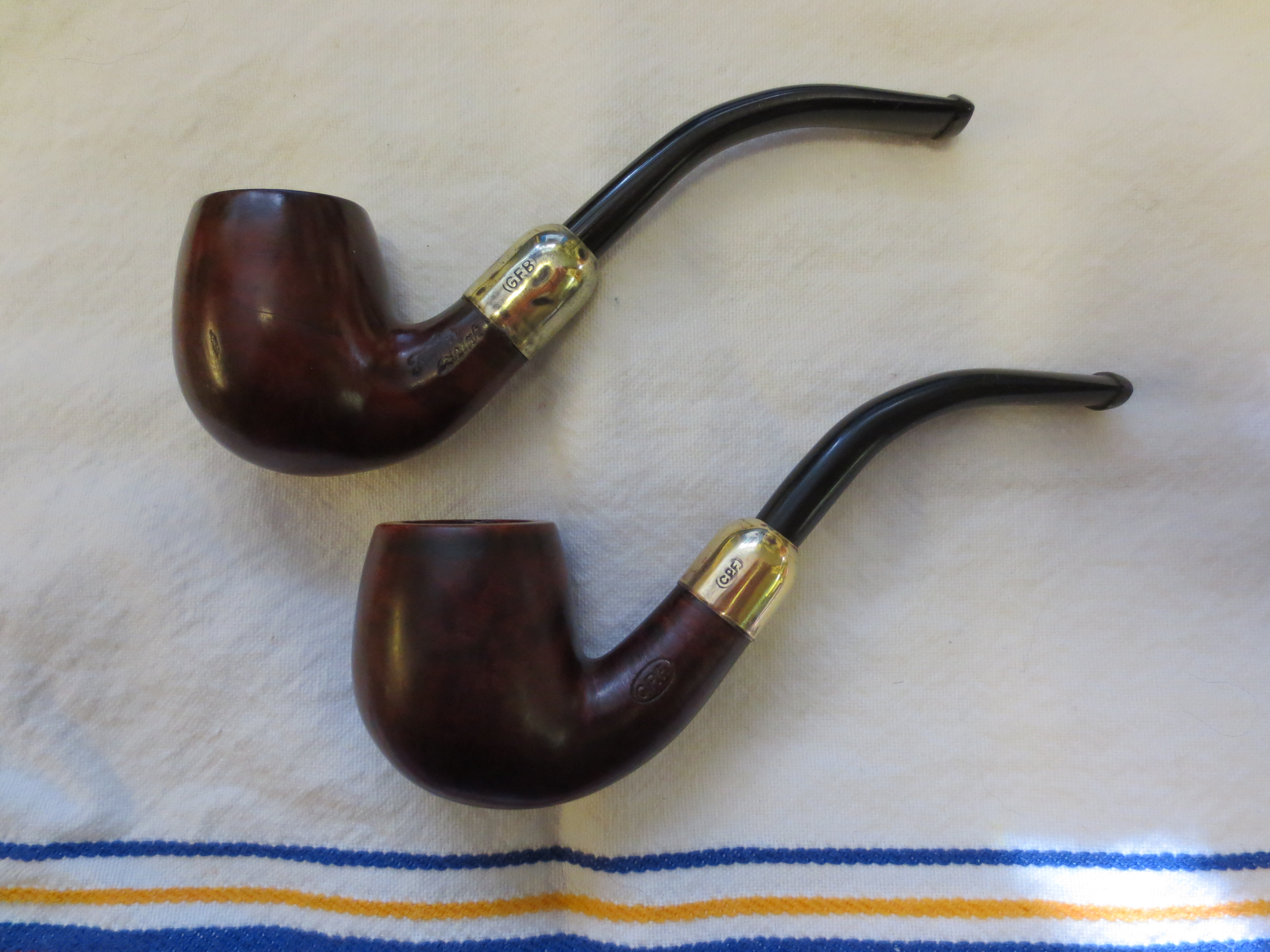
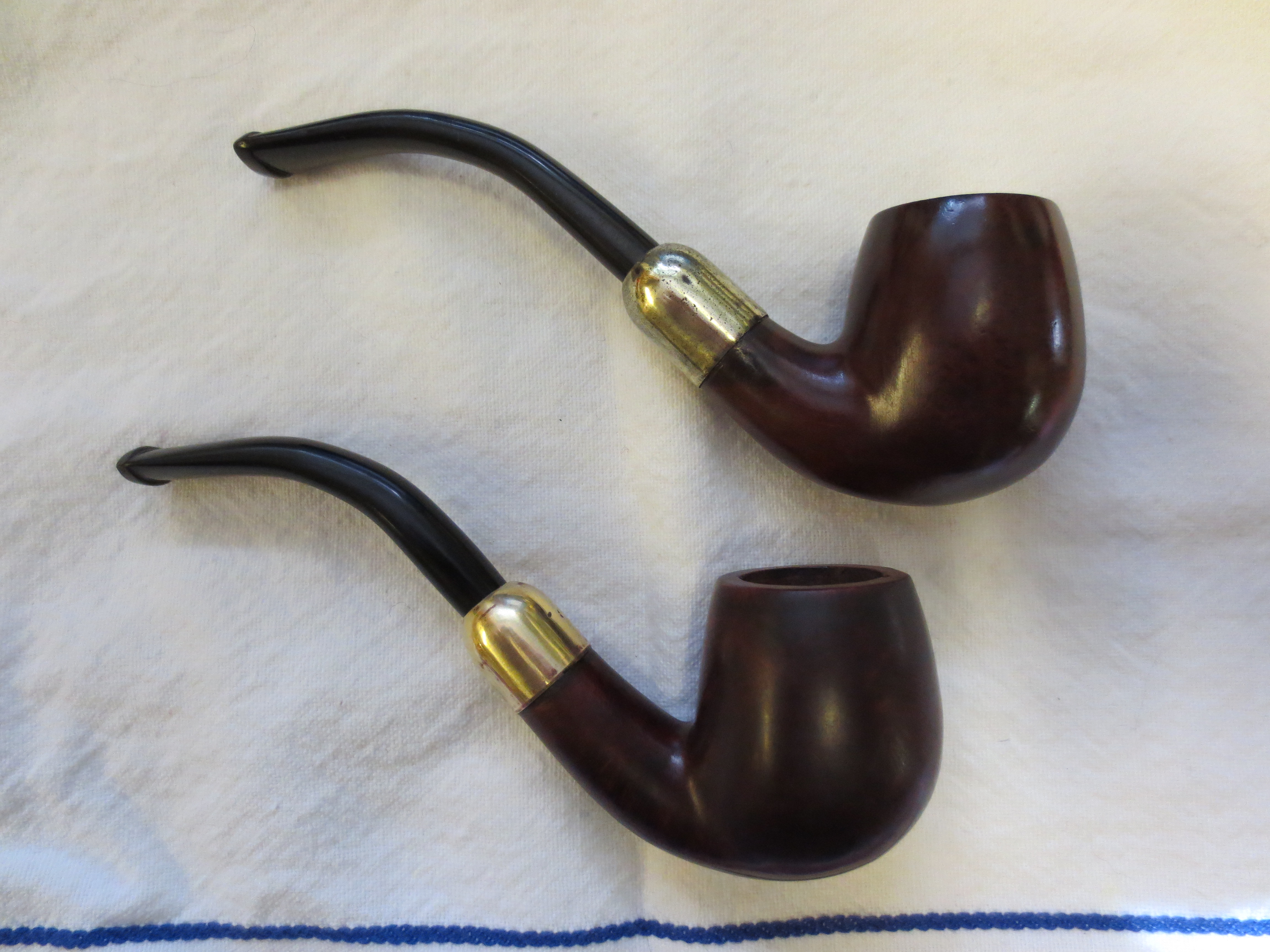
ImageImage

Reworking a Dr. Grabow Riviera


Blog by Steve Laug

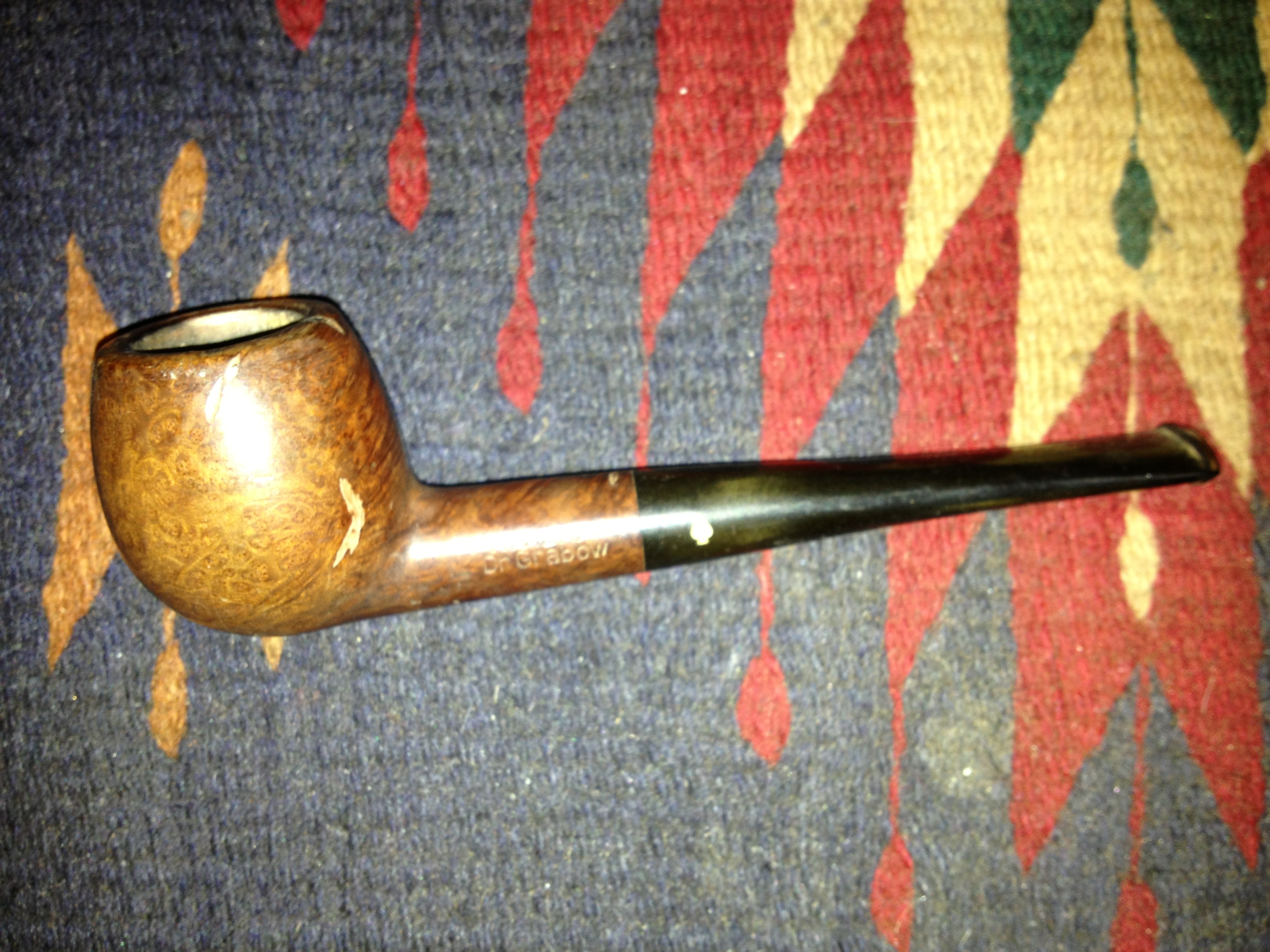
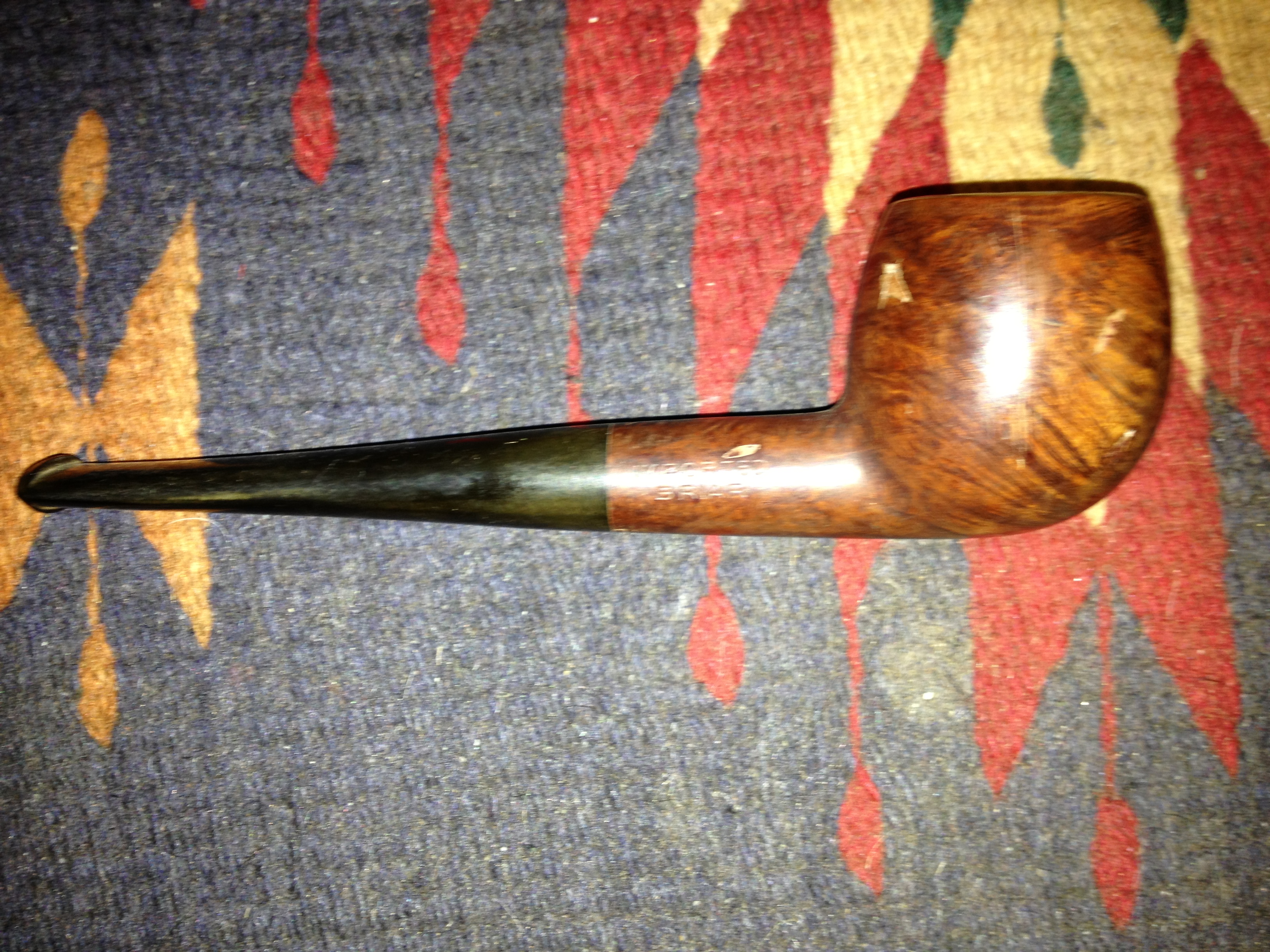
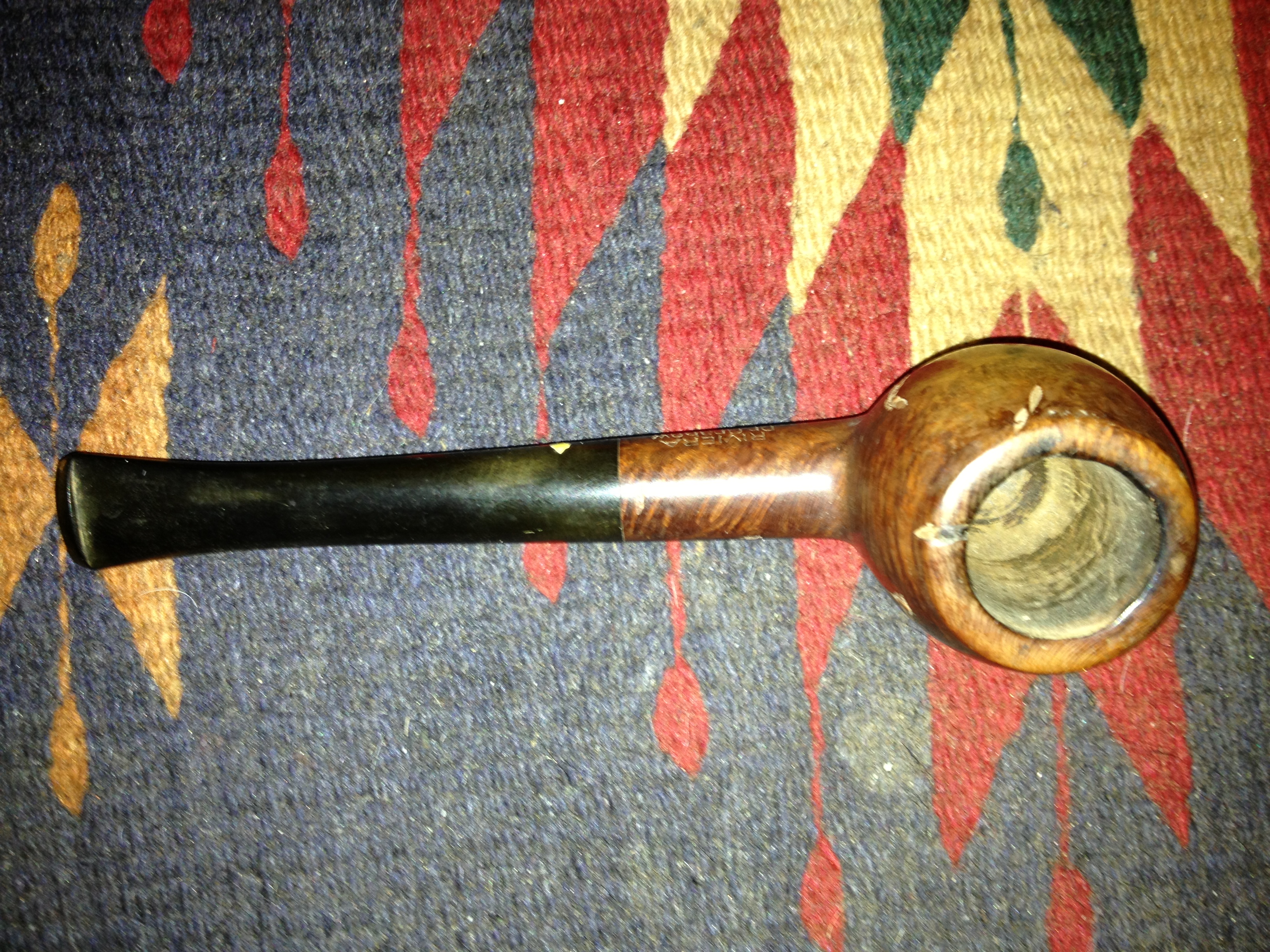
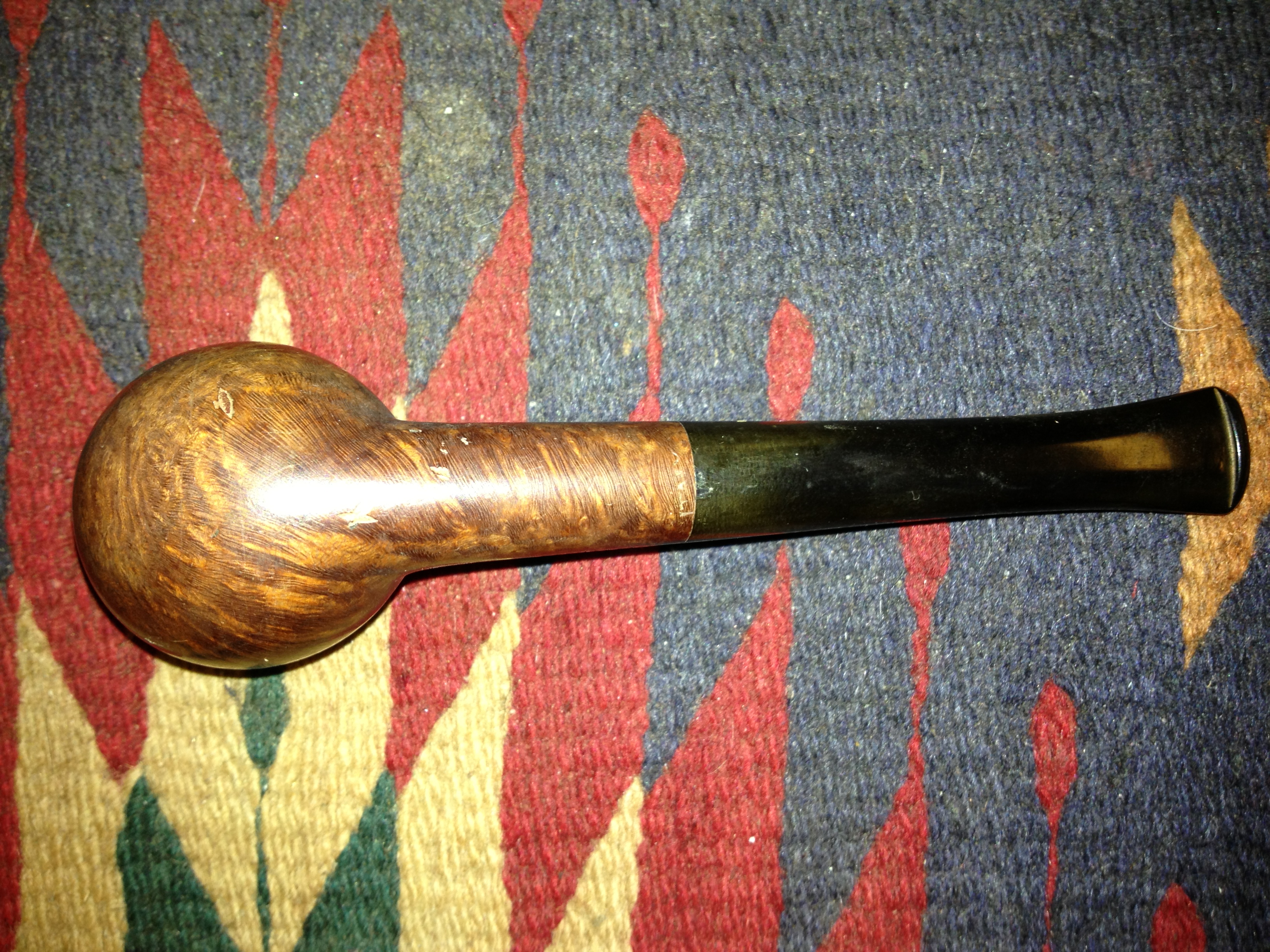
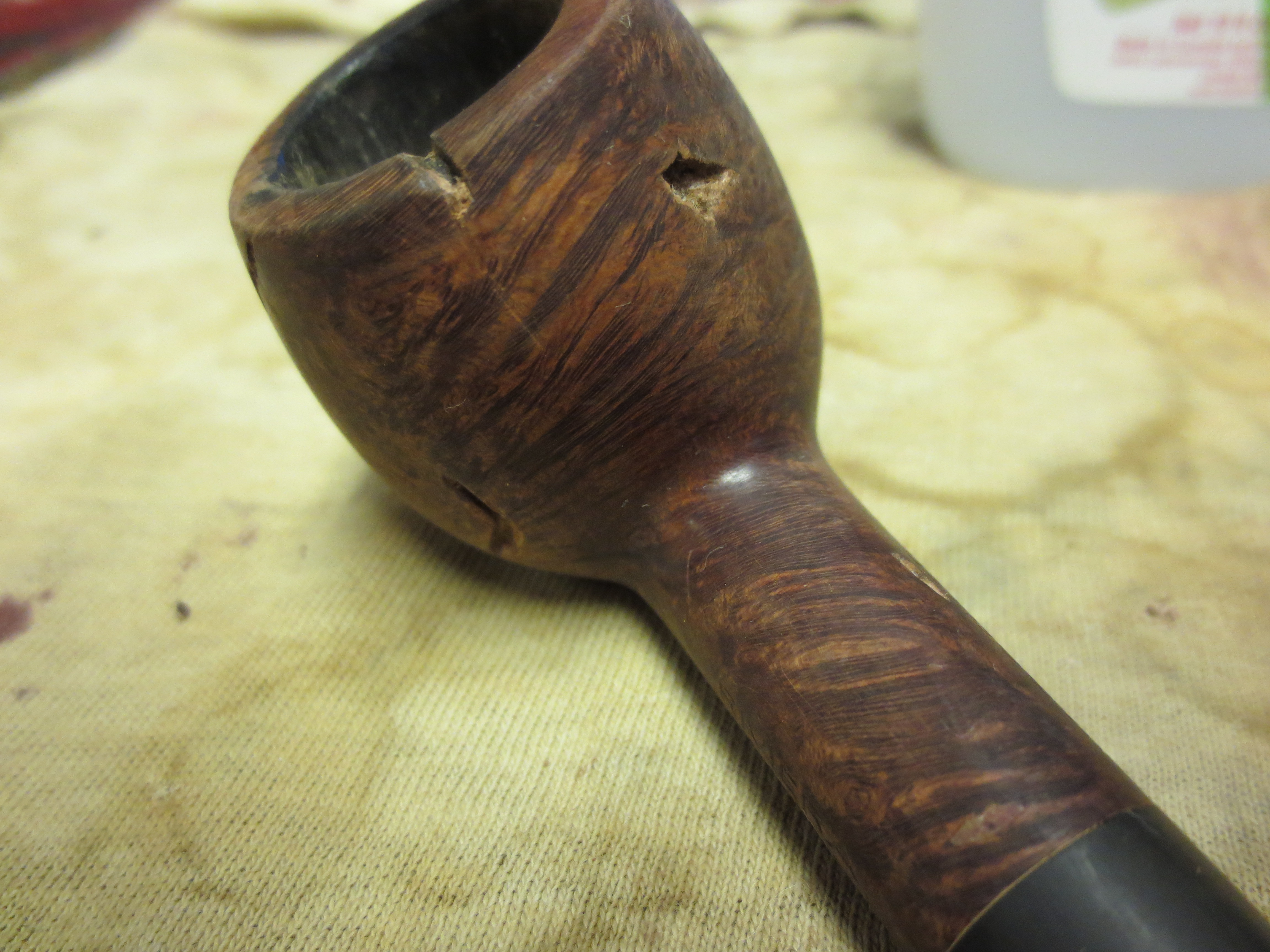
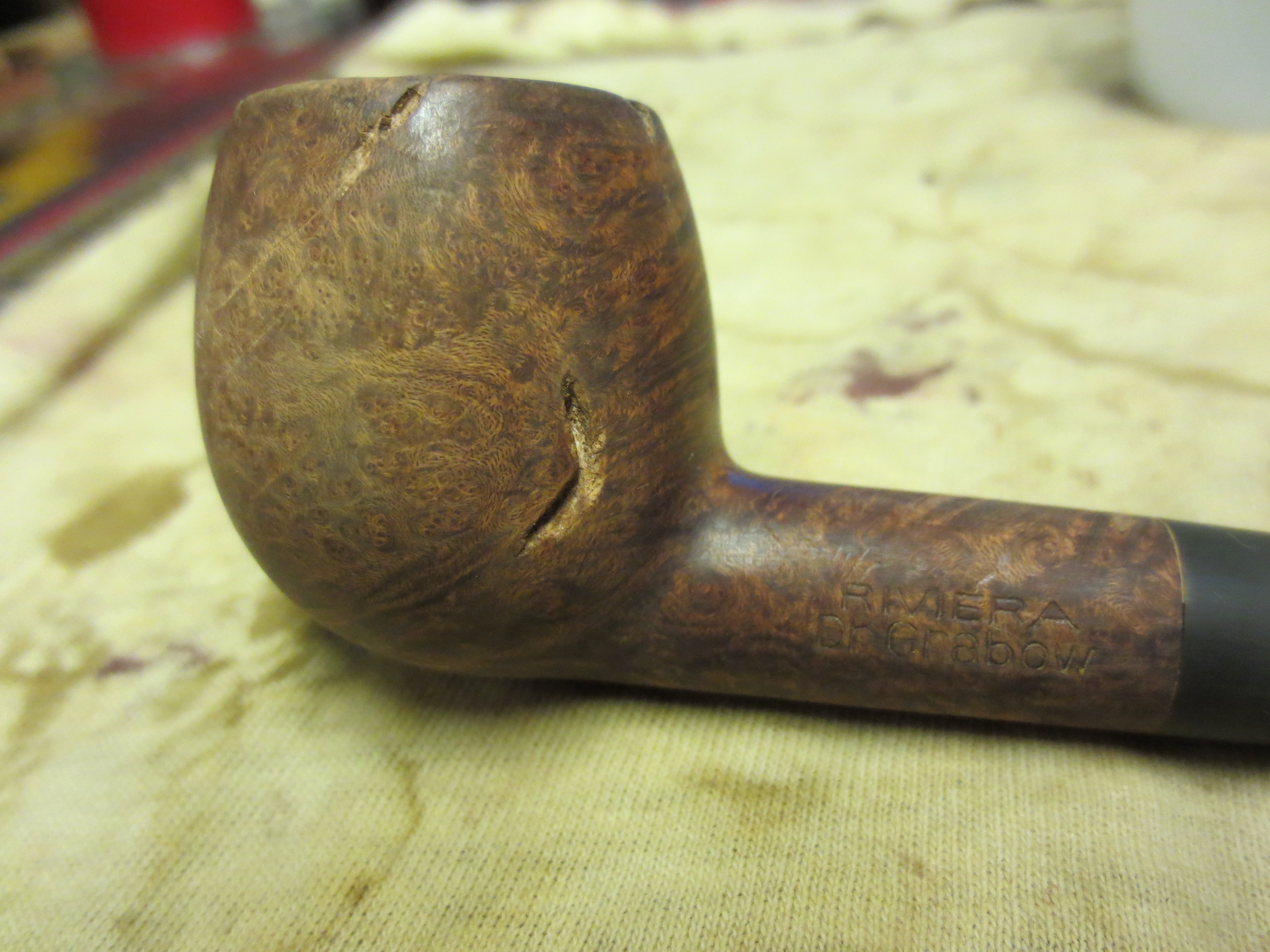
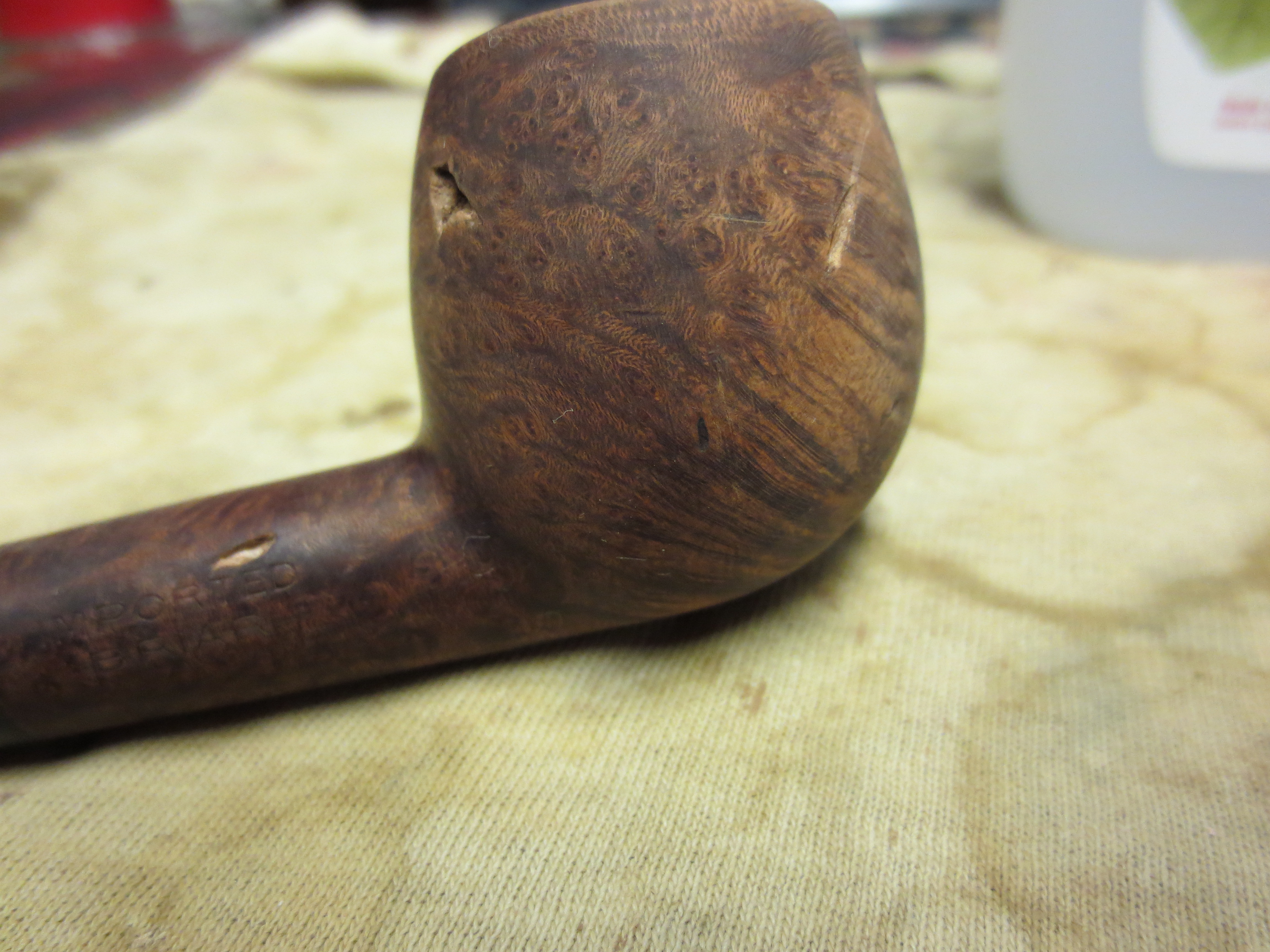
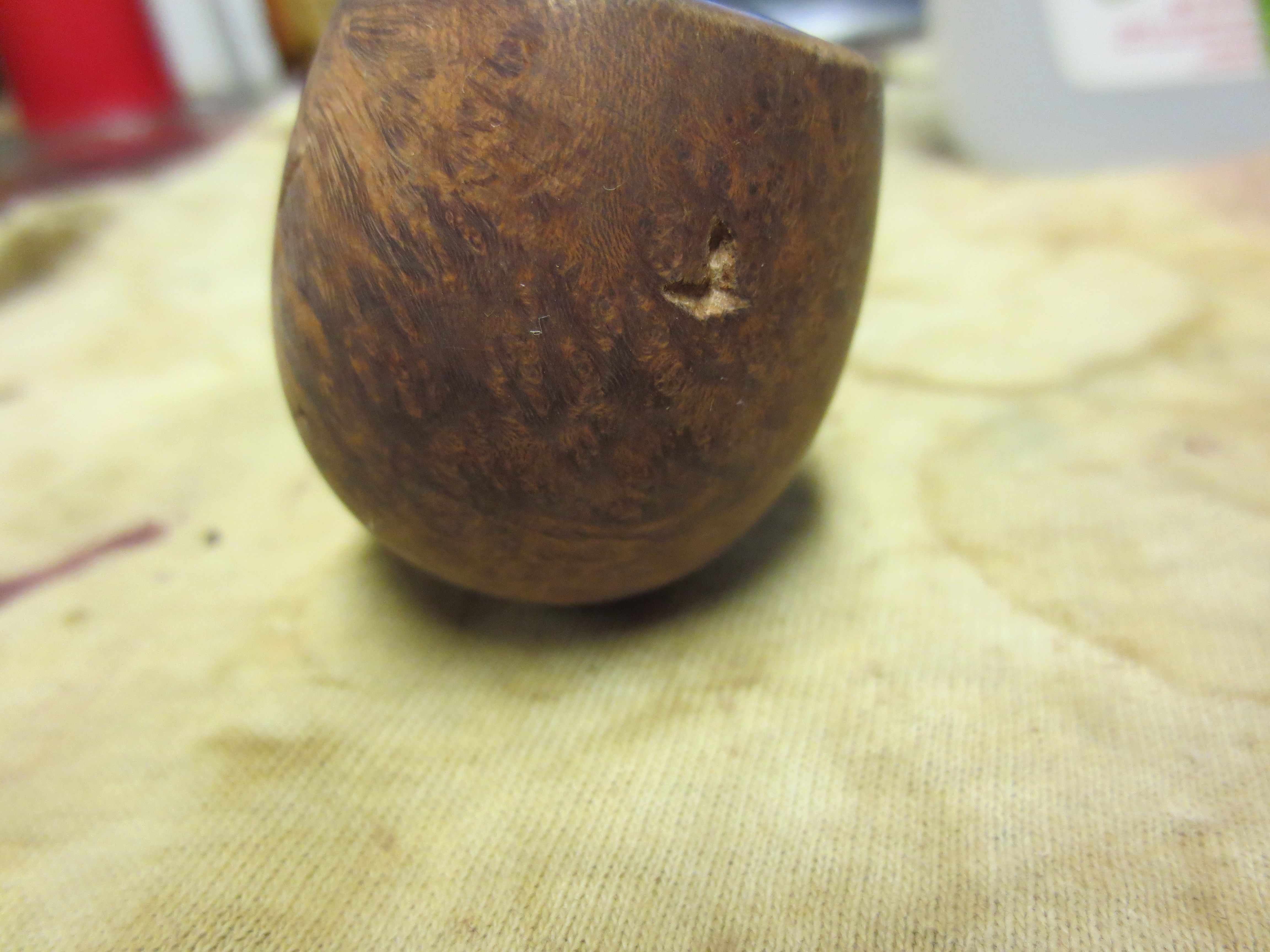
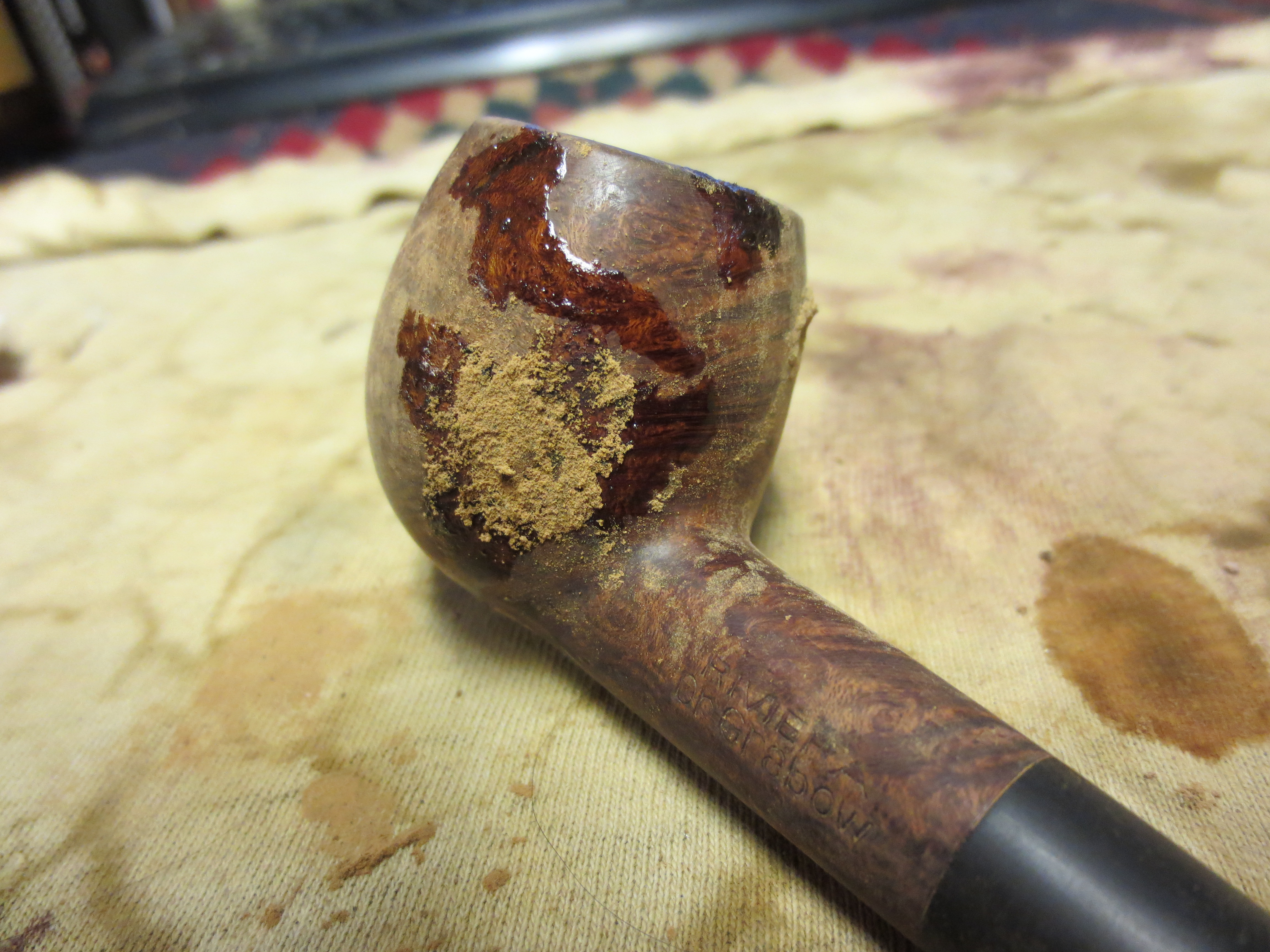
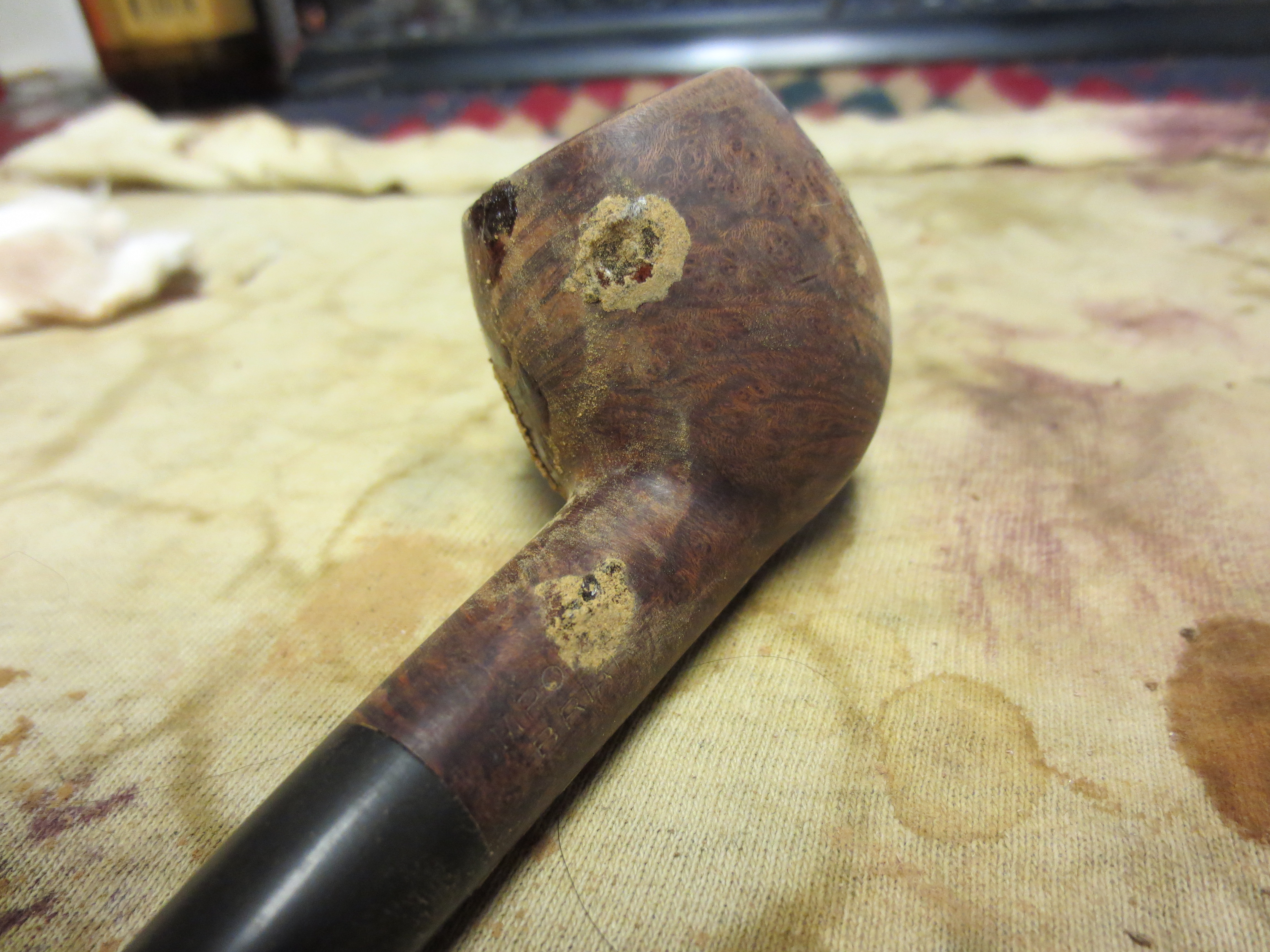
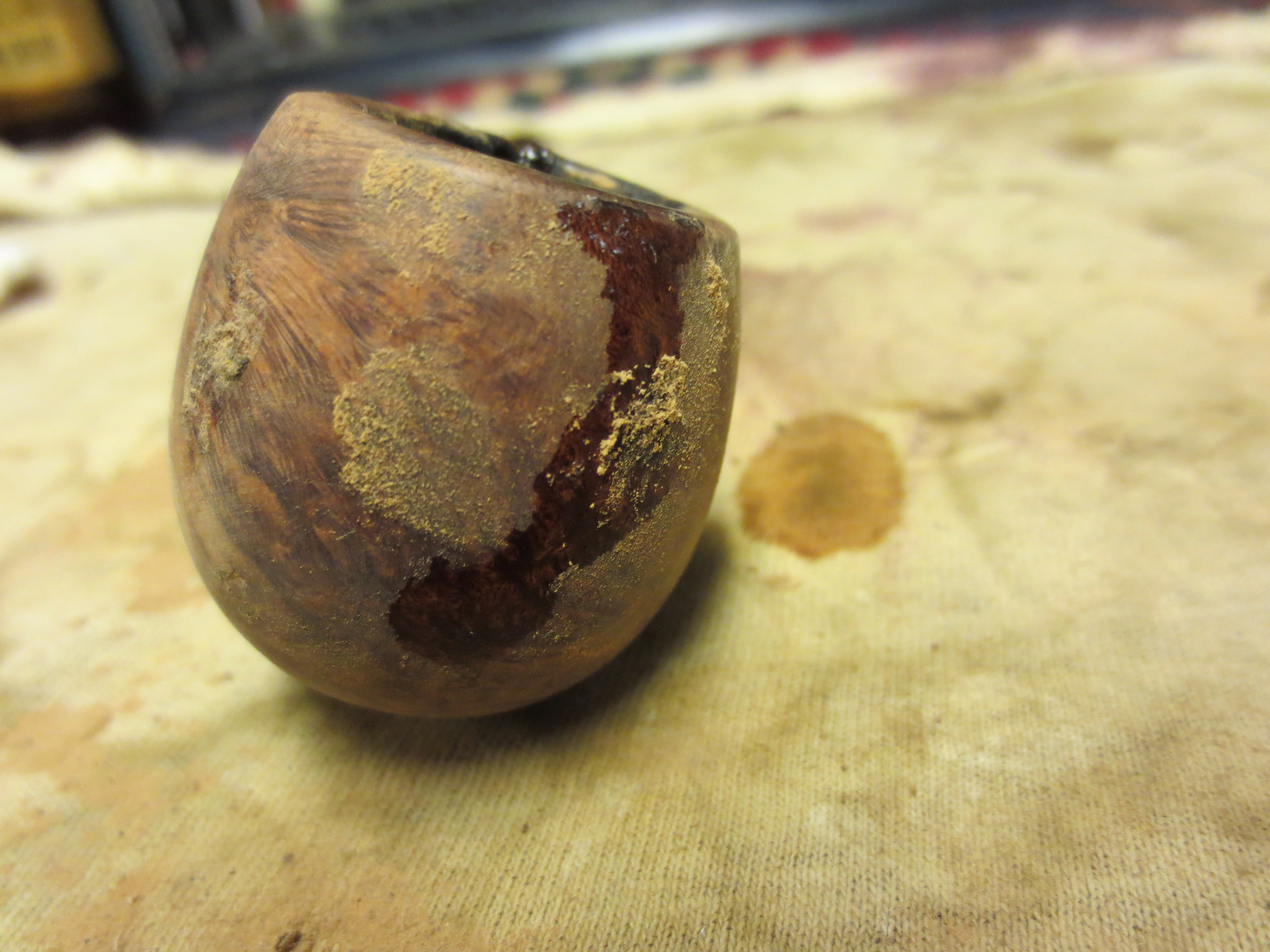
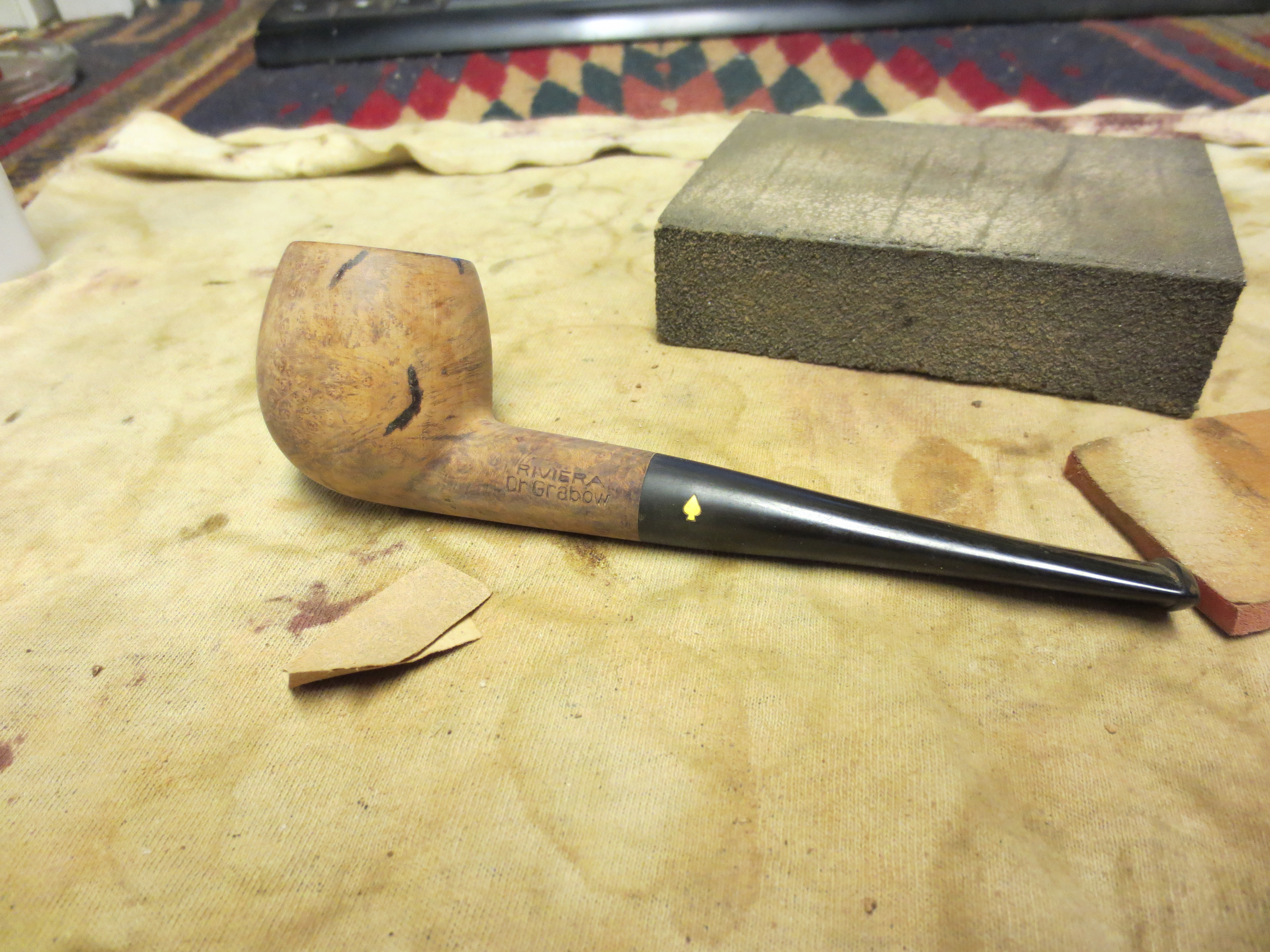
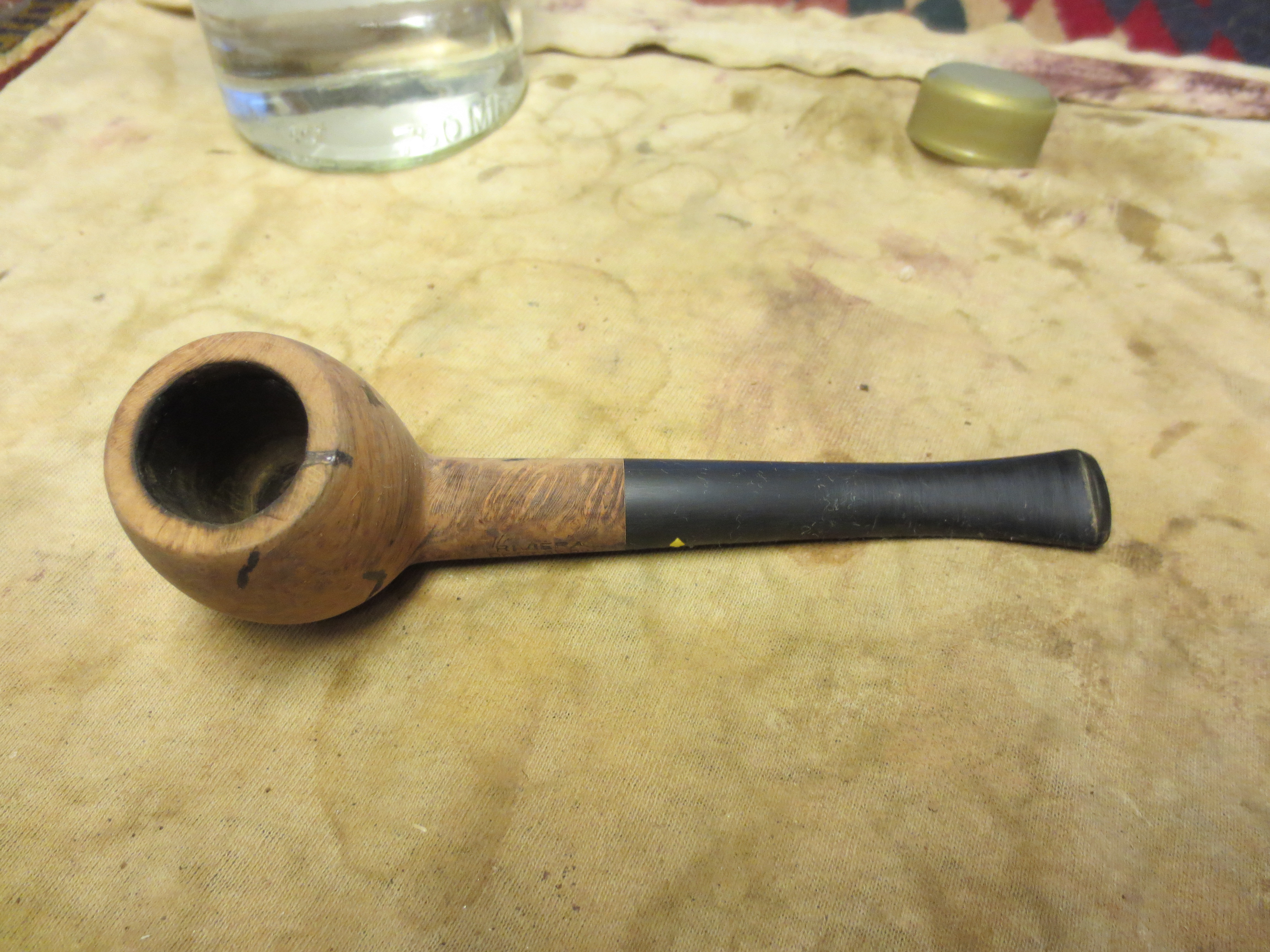
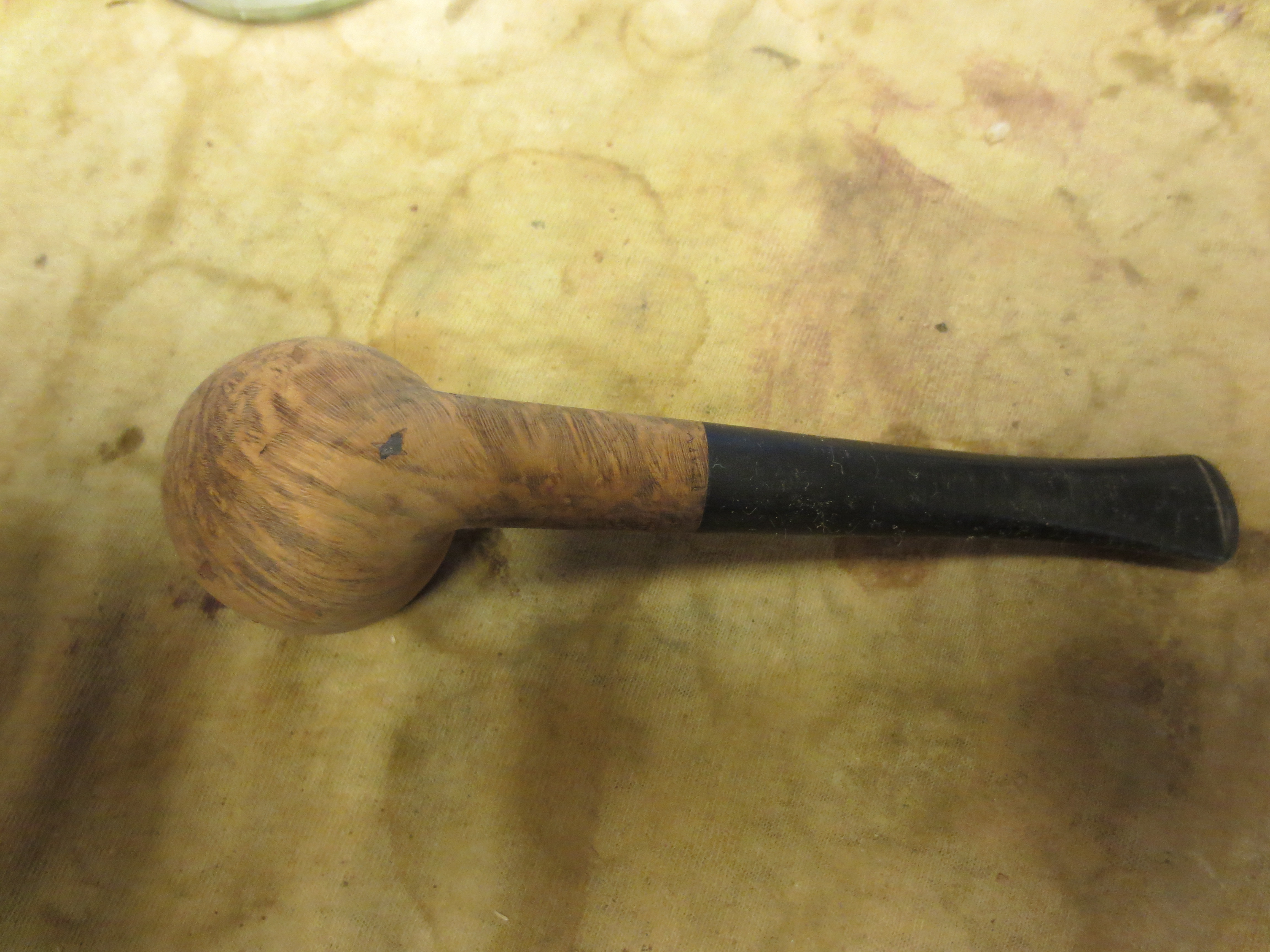
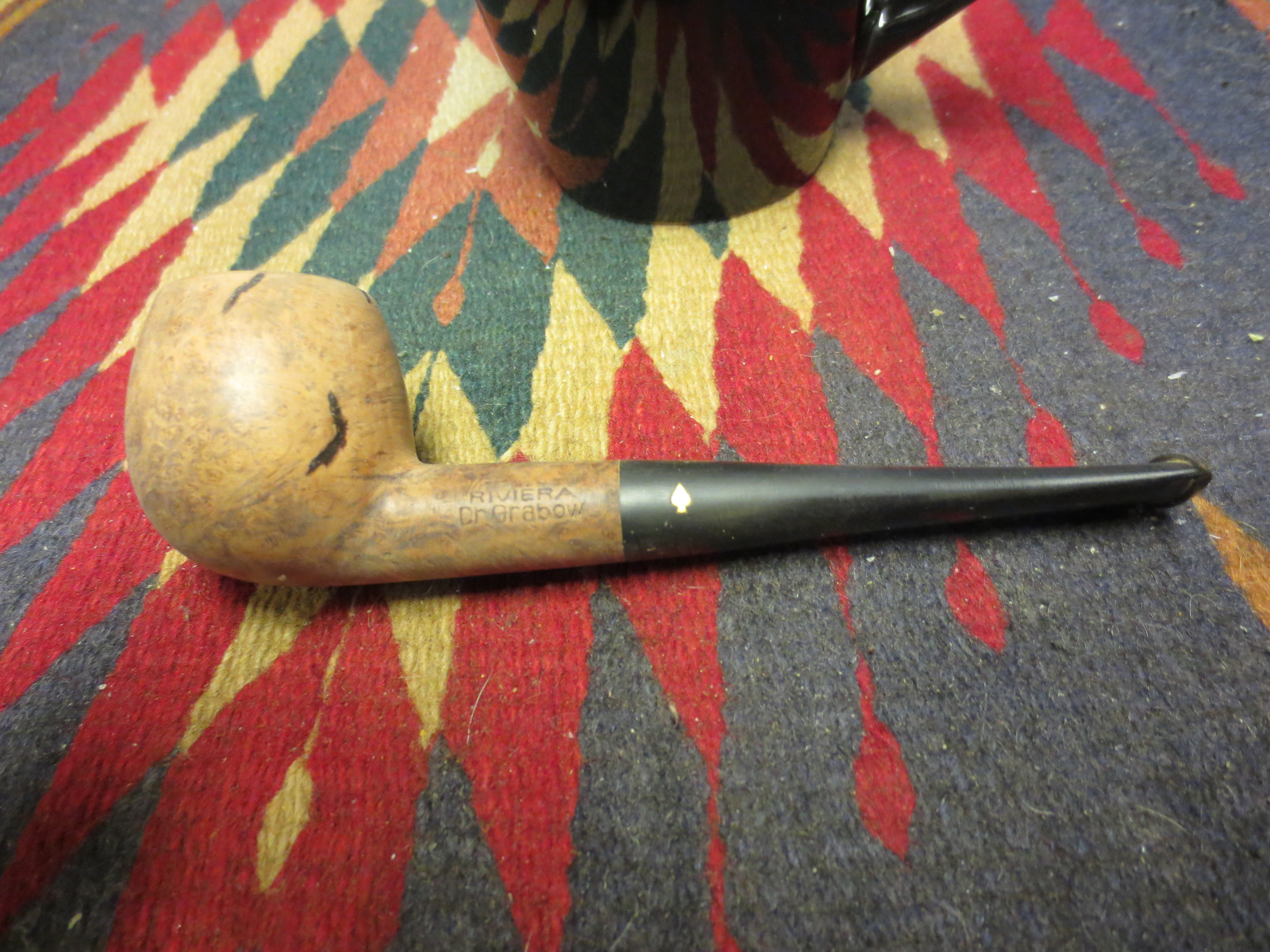
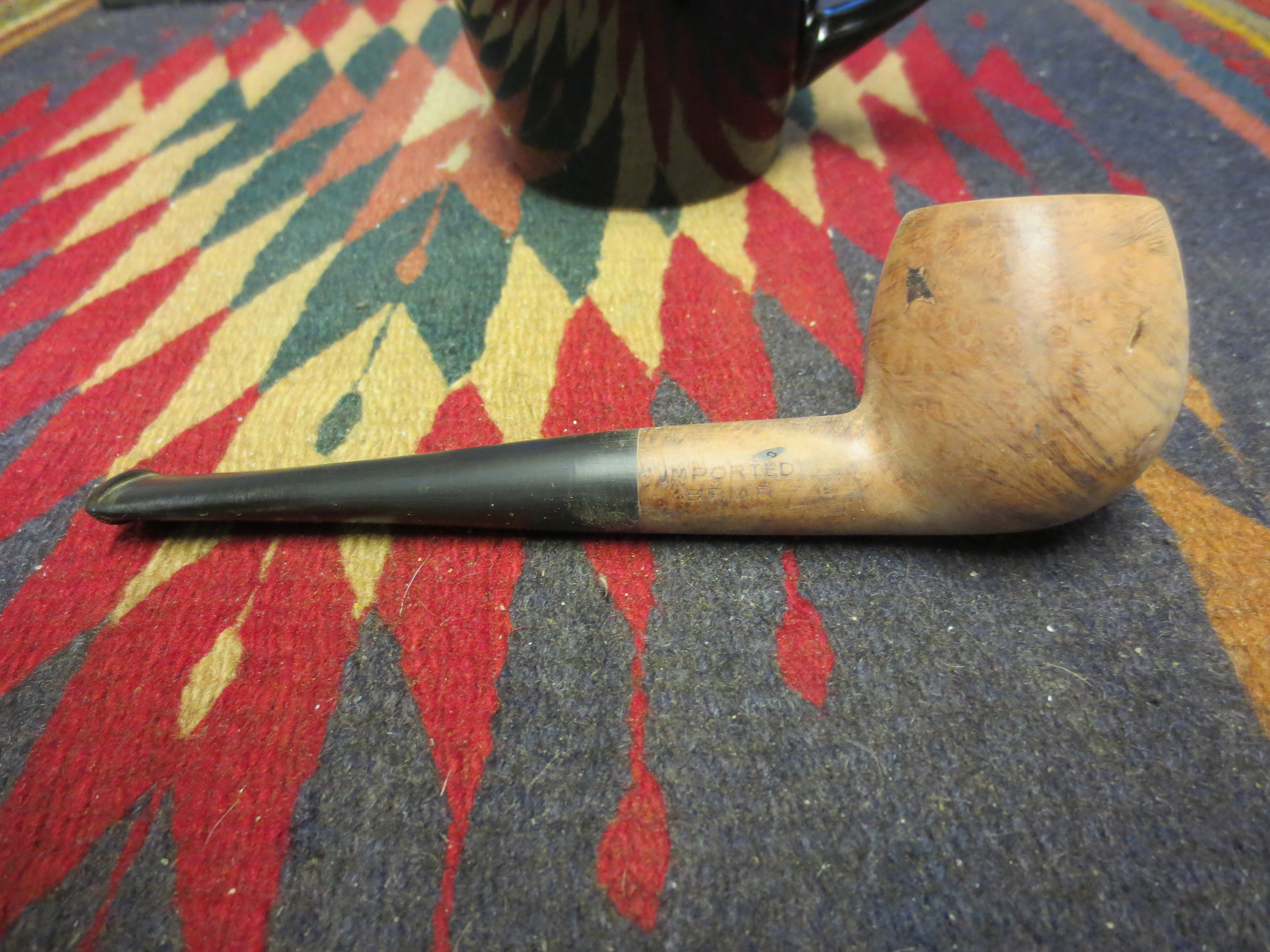
I am finally down to the last five pipes in my refurbishing box. I have a bunch more on their way here but I would like to finish up this lot before they arrive as they have been sitting here for a long time always getting passed over and laid aside for more favorable looking options. Last evening I decided to rework this old Dr. Grabow Riviera. It was a pleasant shape but an ugly piece of briar. I removed the stem and was amazed that it was a push stem with a well made tenon. The drilling was spot on and the internals were really well done. The draught on the pipe was excellent. The bowl was clean and the drilling in the bowl was nicely done as well with the airway perfectly centered on the back bottom edge of the bowl. The externals however left much to be desired. The first series of four pictures below show the bowl with the many fills that are on the outside of the bowl. These were not tiny fills by any means; in fact the majority of them are quite large. I had to make a decision on whether to refill them or to rusticate the pipe. Last evening I just was not in the mood to rusticate the pipe. Sometimes I just feel like working over a bowl but this was not the night for doing that. So I decided to pick out the fills and rework them with briar dust and superglue and restain the pipe. The stem was in pretty decent shape also – no bite marks or tooth chatter, very clean with a minimum of oxidation.

IMG_0250 IMG_0251

ImageImage

The next series of four photos show the bowl after I have picked out the fills with my dental pick. I actually have a good time picking out the ugly pink putty or as in this case bright white putty. The holes that were filled were not deep but they were on the larger side. Once I picked out the putty I wiped down the bowl with acetone to clean up the mess. I always try to scrunch the cotton pad down into the hole to draw out the last of the putty dust. The worst fill to work with was the one on the back side rim. It was like a saw cut in the rim. It was quite deep and intrusive going from the outside to the inside of the bowl.

ImageImageImageImage

With each of the cleaned out holes I used my dental pick to tamp in briar dust. I try to tamp in the dust until the hole is packed and the dust forms a bit of a bulge on the hole. I find that once I drip in the superglue the dust settles in and the new fill is closes to the surface of the bowl. I also purposely overfill so that I can work to smooth out the fill with sandpaper and blend it into the surface of the bowl. The next three pictures show the patches on the bowl. You will notice the overflow of superglue on the surface of the bowl in the pictures below. This is fairly easily removed as it dries quickly and does not permeate the surface of the bowl.

ImageImageImage

The next series of thirteen photos show the progress of sanding the patches back to the surface of the bowl. In this case I was planning on refinishing the bowl anyway so I sanded the whole bowl back to bare briar. I began by sanding the patches with 240 grit sandpaper and then 320 grit sandpaper. Once the overfill of briar dust and glue was sanded fairly smooth I sanded itwith a medium grit sanding sponge and then a fine grit sanding sponge. I wanted to get rid of the excess fill and also to remove all the scratches in the surface of the bowl. I wet sanded the bowl after this with 1500 and 1800 grit micromesh to ready it for staining. I wiped it down with acetone on a cotton pad. The final pictures show the pipe as it is ready for restaining. You can see that the white putty fills are now dark patches on the bowl. I find that those these dark patches still show up they are easier to blend into the stain and somehow do not seem as intrusive to my eyes as the white patches.

ImageImageImageImageImageImageImageImageImageImageImageImageImage

I decided to stain the pipe with an oxblood aniline stain. I applied it with a cotton swab, flamed it, restained and reflamed it. Once it was dry I hand buffed it with a soft cotton cloth before taking it to the buffer. The next four photos show the pipe after the staining and initial hand buff.

ImageImageIMG_0428 IMG_0429

After staining the bowl I worked on the stem. I sanded it with a fine grit sanding sponge and then worked through the micromesh sanding pads from 1500-12,000 grit. I wet sanded with the first three grits (1500, 1800 and 2400 grit) and then dry sanded with the remaining grits. I took it to the buffer and buffed the stem and bowl with White Diamond before applying several coats of carnauba wax and then buffing with a soft flannel buff. The next series of four photos show the finished pipe. In my opinion the fills look far better than when I first started on the pipe. They now are tolerable in my sight and I believe this will make a fine yard pipe or rotation extender for some new pipe smoker. It is cleaned and ready to smoke.

IMG_0430 IMG_0431 IMG_0432 IMG_0433


A Little Czech System Pipe Reborn


I had this little Czechoslovakian rusticated bowl in my box. I decided it was the day to work on it so I took it from the box and gave it the once over to see what needed to be done. The finish was a bit spotty, and the shiny varnish on it was peeling so I dropped it in an alcohol bath to try to break down the finish. The next three photos show the bowl after I had taken it out of the bath. While it was still wet I used a wire brush and some Everclear to scrub the surface of the bowl to remove the flaking finish and the varnish coat. I also topped the bowl to remove the damage that had been done to it from tapping it out. The fourth picture below shows the topped bowl

ImageImageImageImage

I went through my can of stems to find one that would fit. I had a nice p-lip style stem stamped WDC Wellington that came from a pipe of similar size and shape. I was able to sand it a little to make a good fit tight fit to the shank. I cleaned up the stem with micromesh sanding pads 1500-12,000 and then gave the stem a polish with Maguiar’s. I sanded it a final time with the 12,000 grit micromesh before wiping it down with Obsidian Oil. The two photos below show the finished stem.

ImageImage

I restained the bowl with dark brown aniline stain, flamed it, restained and flamed it a second time. The restained pipe is shown in the next two photos. Once it was dry I took it to the buffer and buffed the stem and the bowl with White Diamond.

ImageImage


I brought the pipe back to the work table and gave it multiple coats of the Halcyon II wax as I find it does a great job giving rusticated pipes a nice sheen. I also coated the stem with carnauba wax and hand buffed the entire pipe with a shoe shine brush. The hand buffing brought out a nice shine on the pipe.

ImageImageImageImage


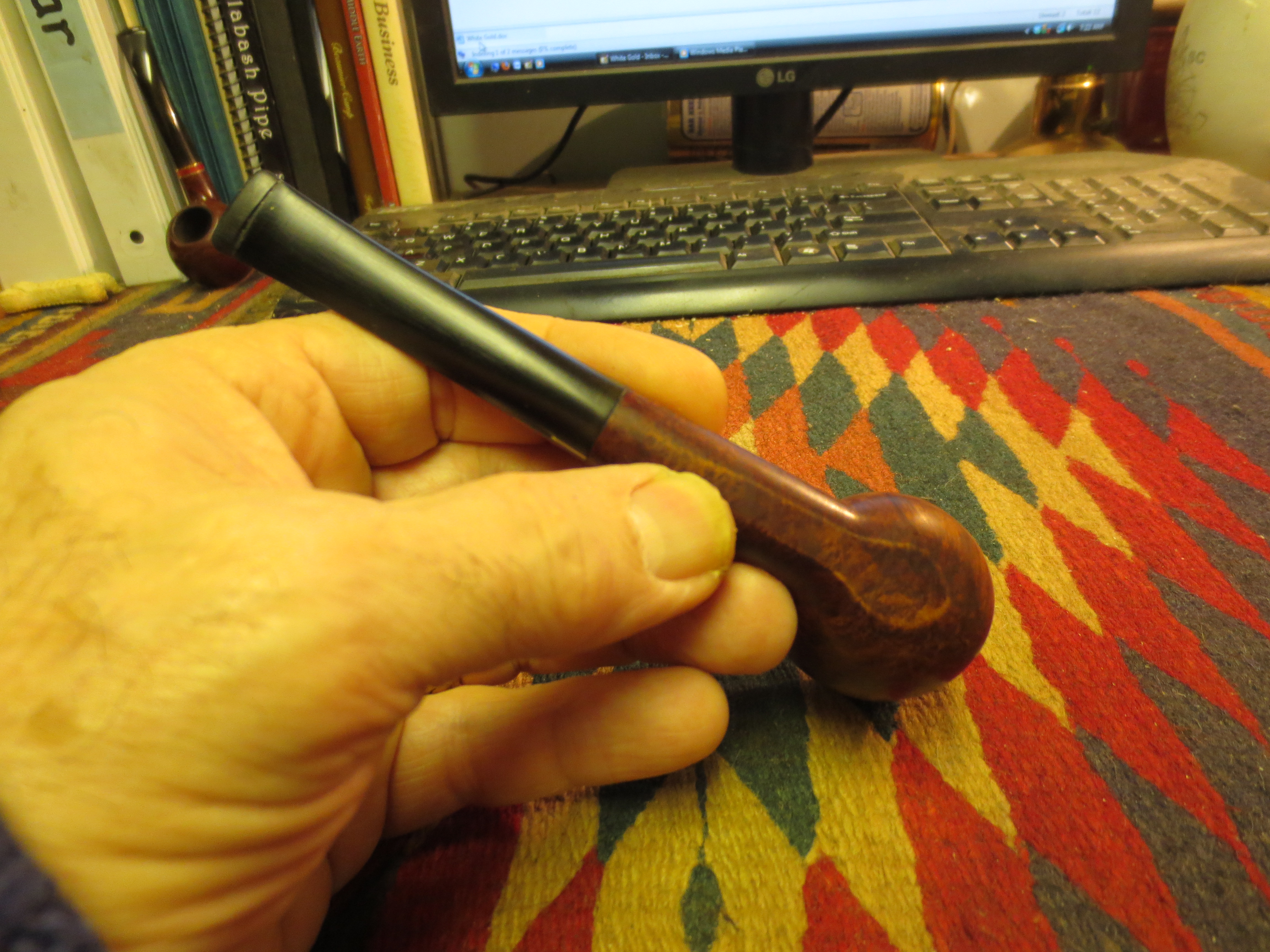
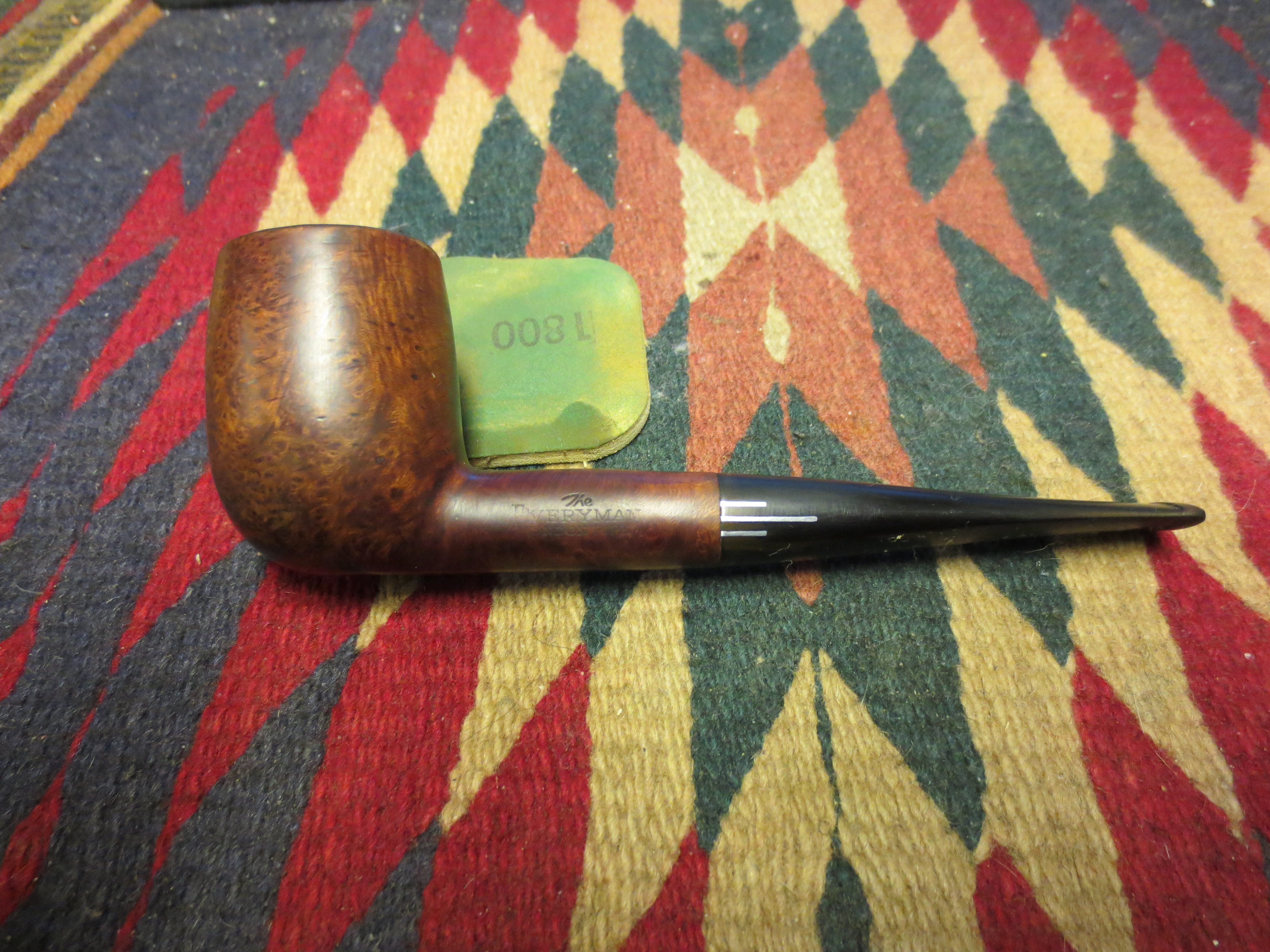
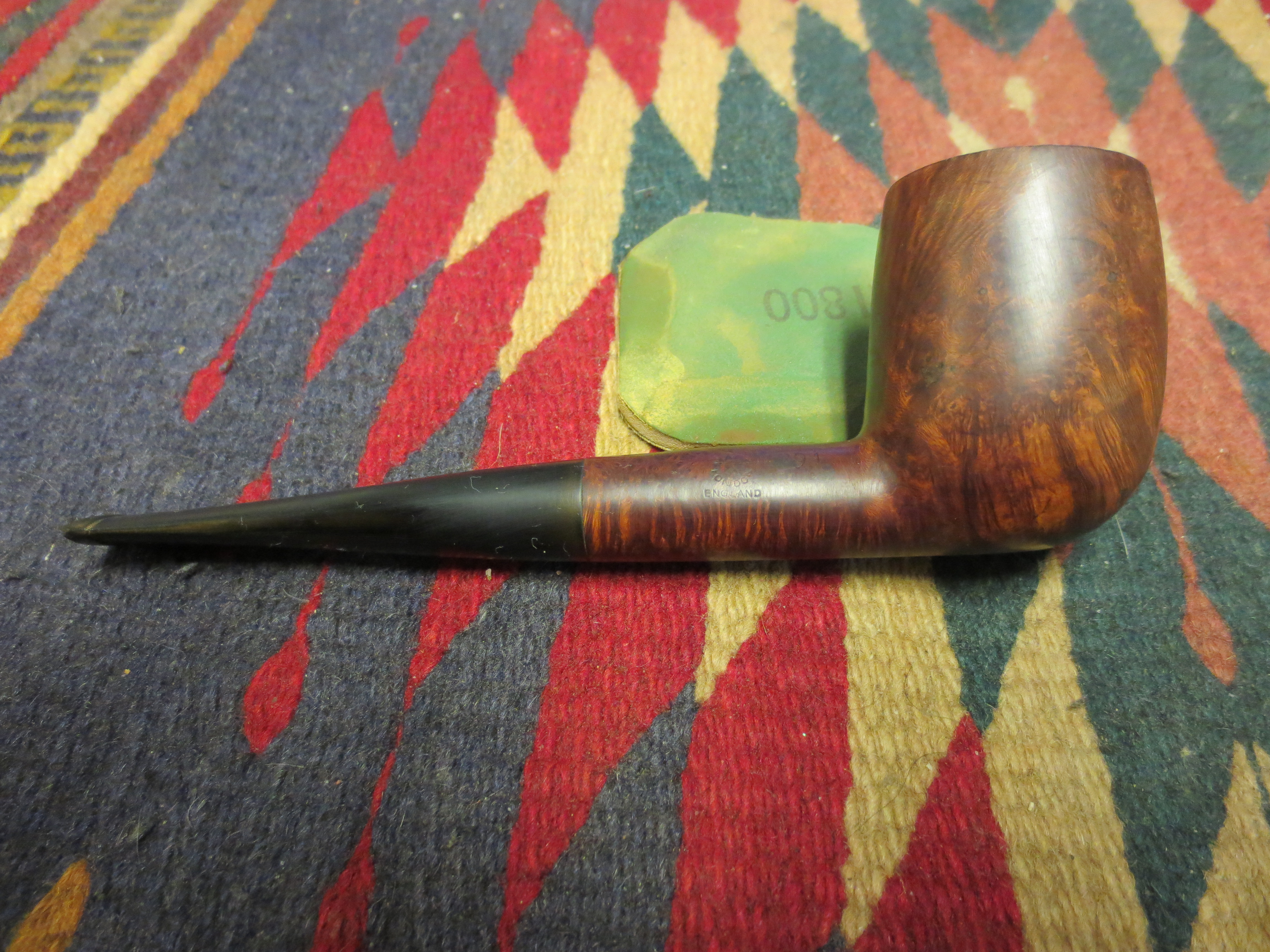
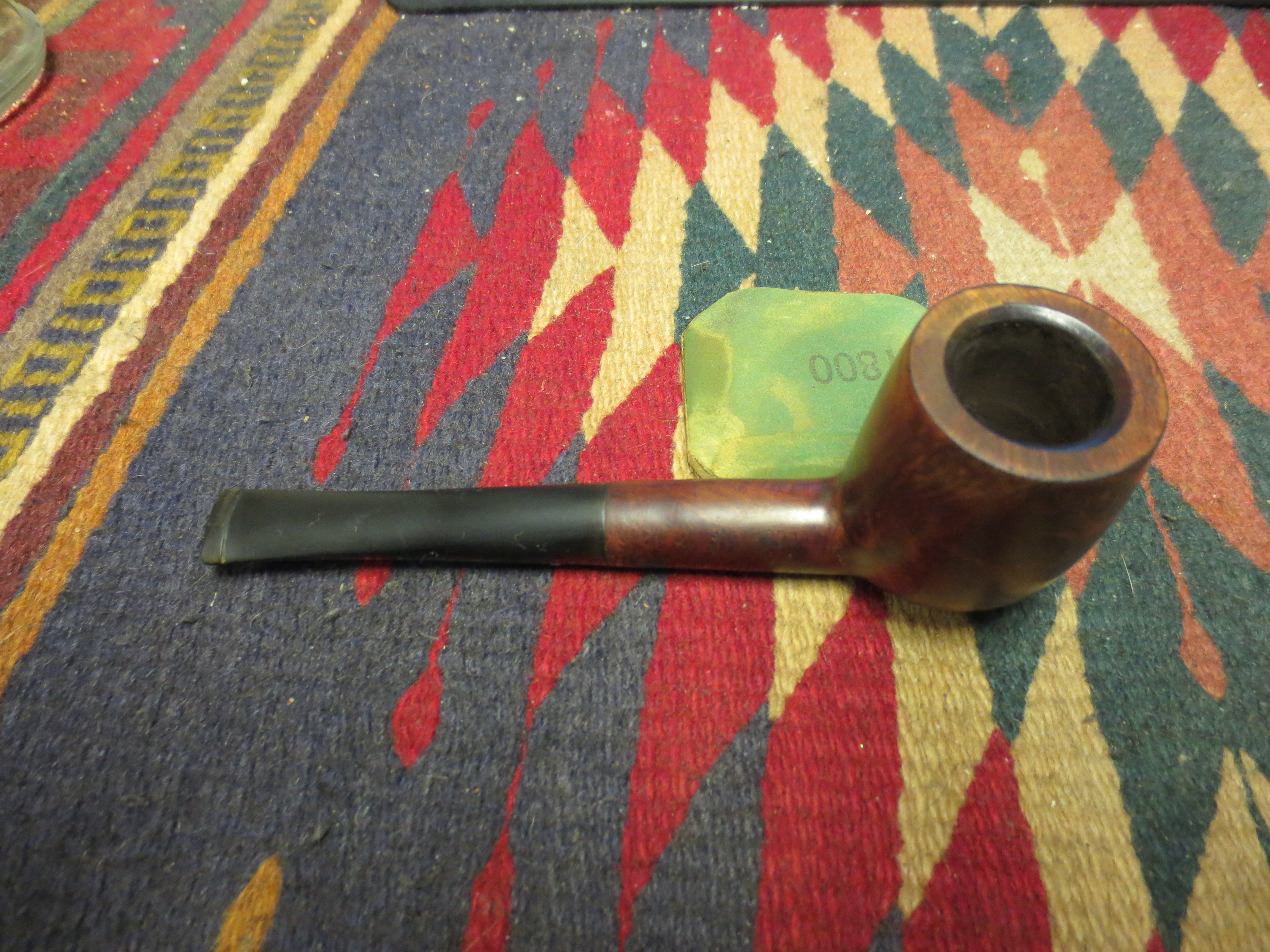
Comoy’s The Everyman Billiard Brought Back to Life


Blog by Steve Laug

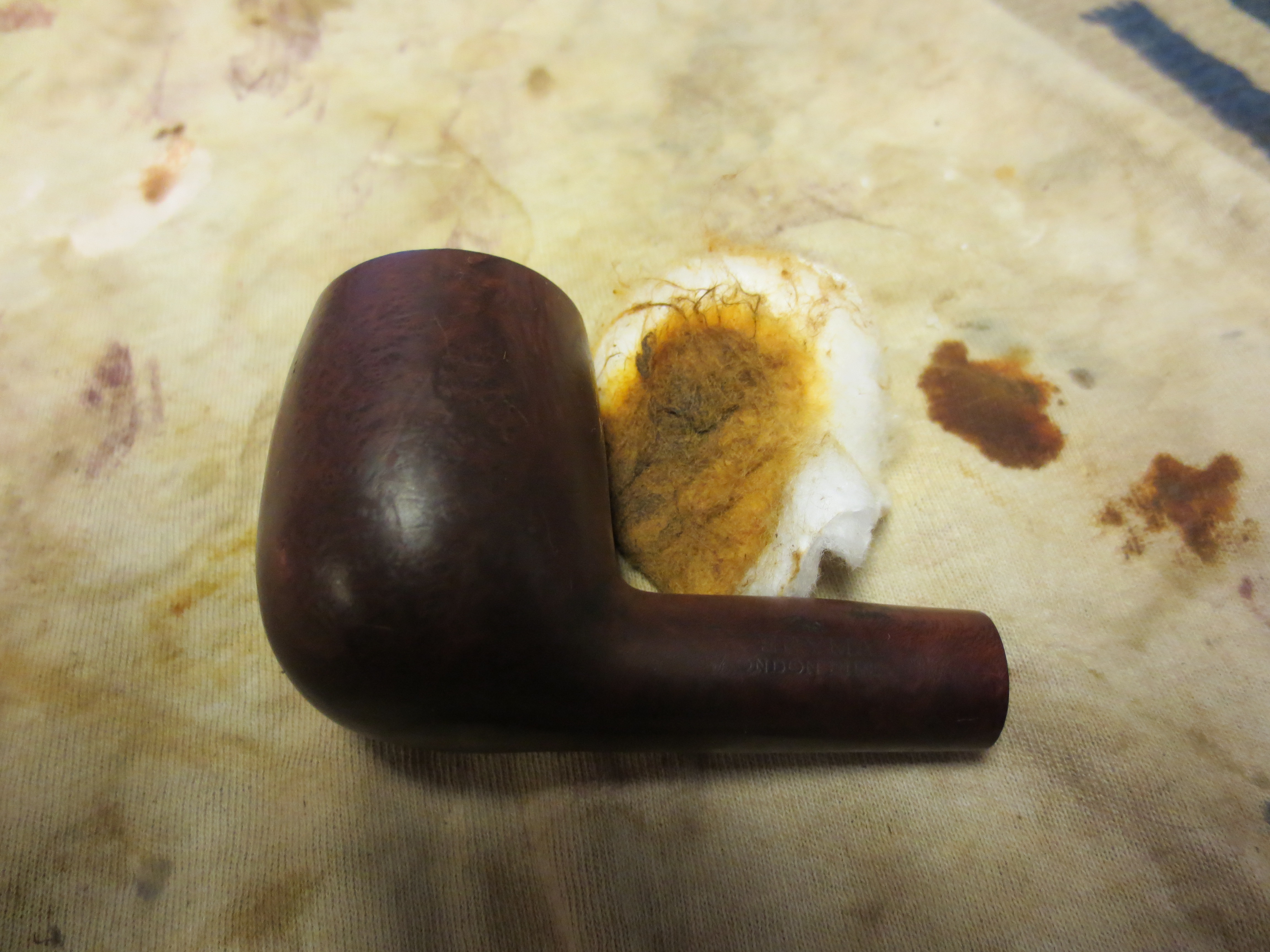
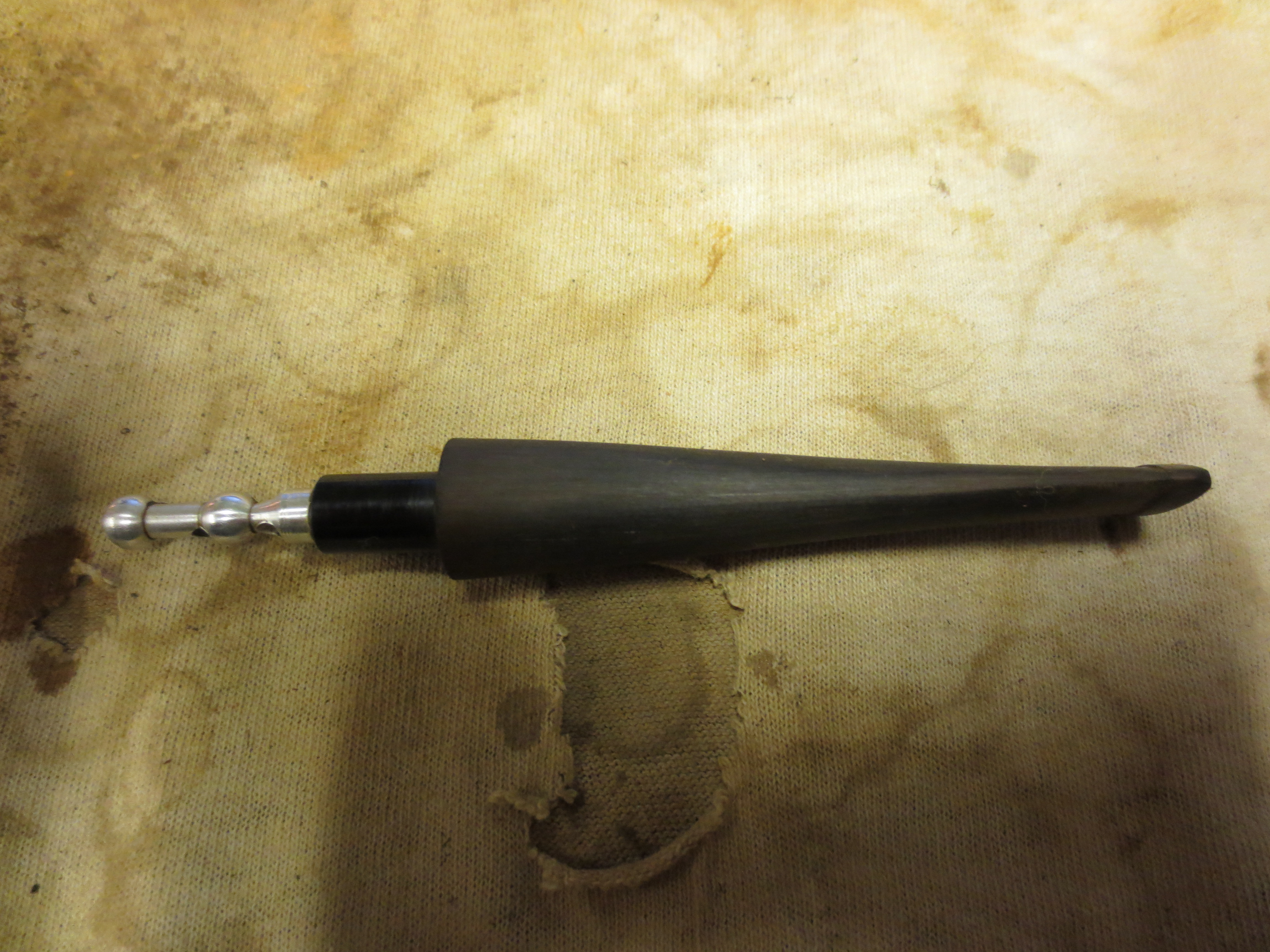
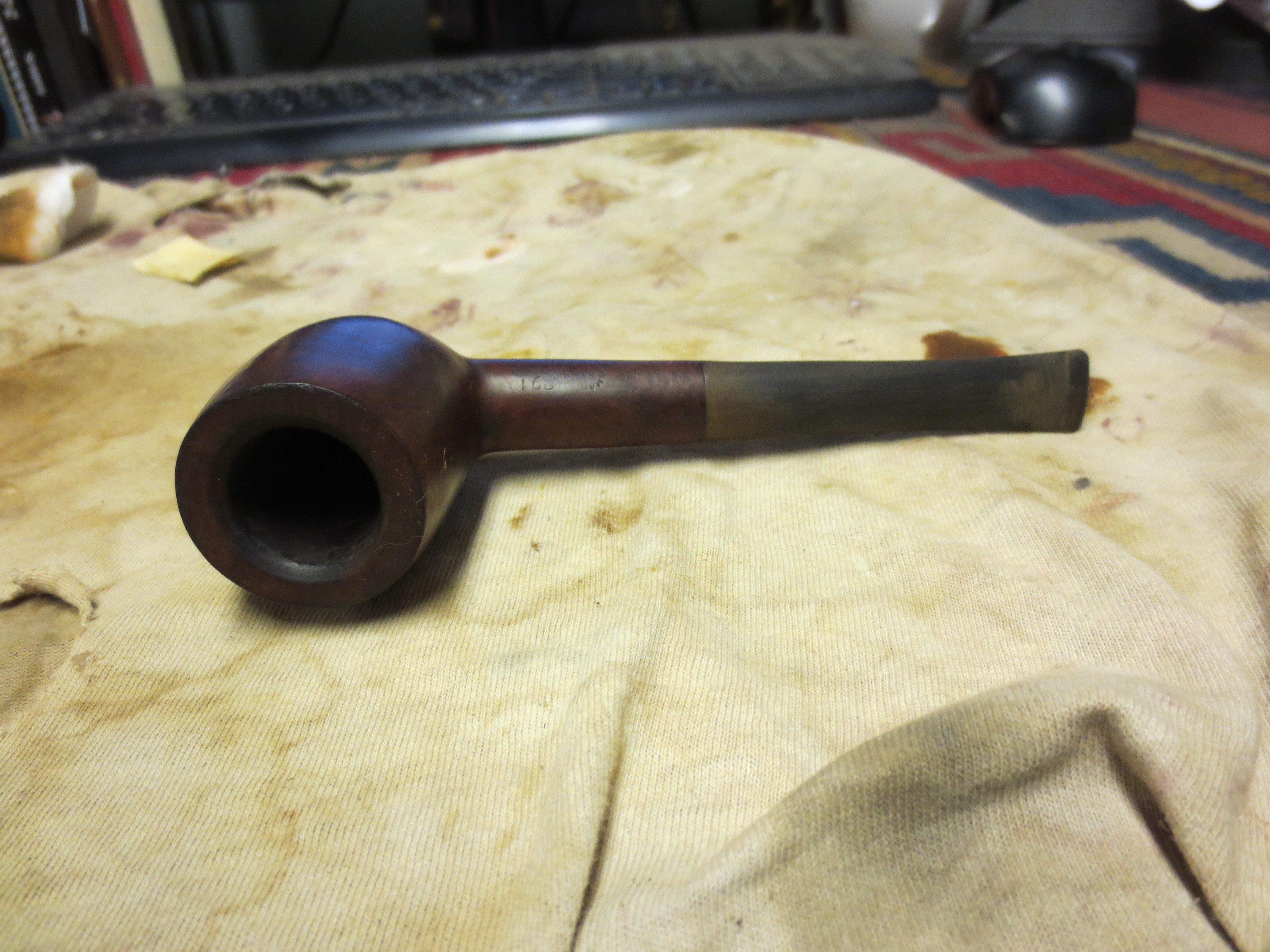
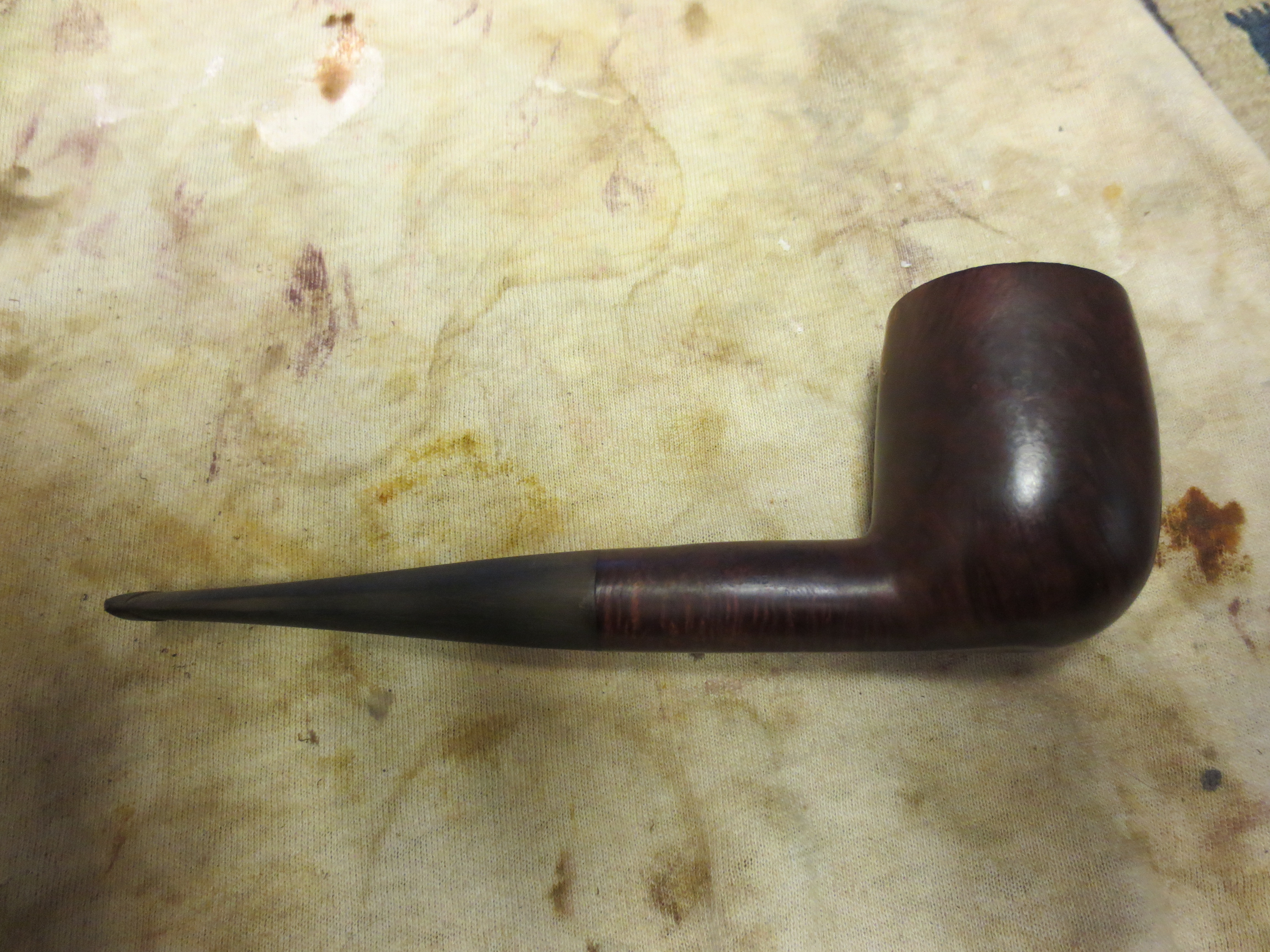
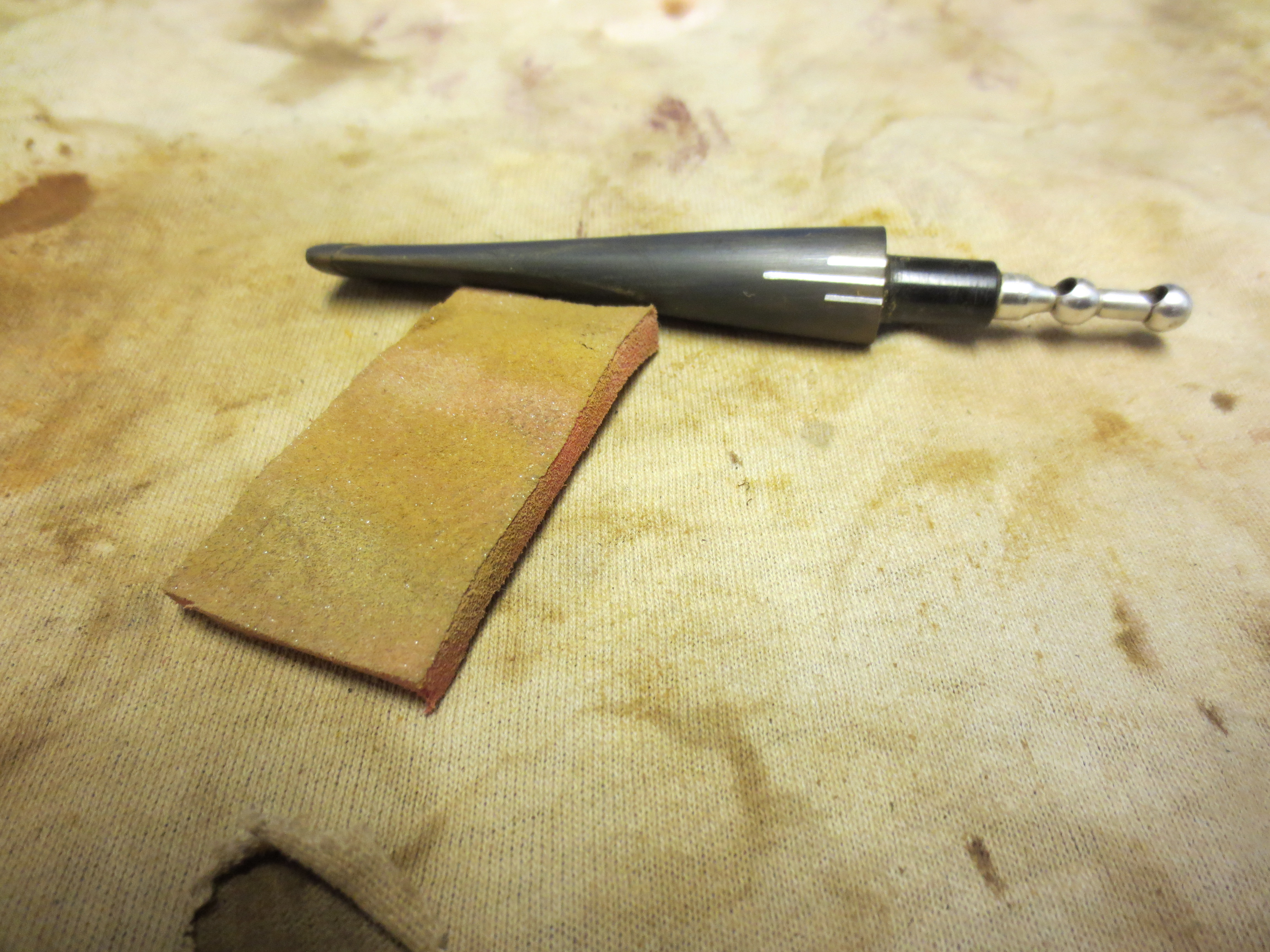
This is the third of the lot that I picked up on EBay that included the BR Israeli Apple and the Richmond Oddity. This one is stamped The Everyman over London Pipe on the left side of the shank. On the right side it is stamped Made in London in a circle over England and the shape number 291. This one came to me in rough shape. The bowl showed promise of great grain under the grime. The finish was shot but the briar was undented. The rim was caked with tars and oils but there were no dents or burns. Even the beveled inner edge of the bowl was clean under the grime. The bowl had a thick crumbly cake that reeked of the same sweet aromatic smell as the other two pipes in this lot. There was one rather large fill on the right side of the bowl that was hard and dark. The stem was oxidized and a major chunk of vulcanite had been chomped off. It was a large bite out of the top of the stem extending back along the stem about a ¼ inch or more. The fifth photo below shows the extent of the damage to the stem. Since the stem had the Comoy’s three bar logo I did not want to make a new stem for this old pipe but rather look for a way to keep it. The series of four photos below show the state of the pipe when it arrived to my work table.

ImageImageImageImageImage

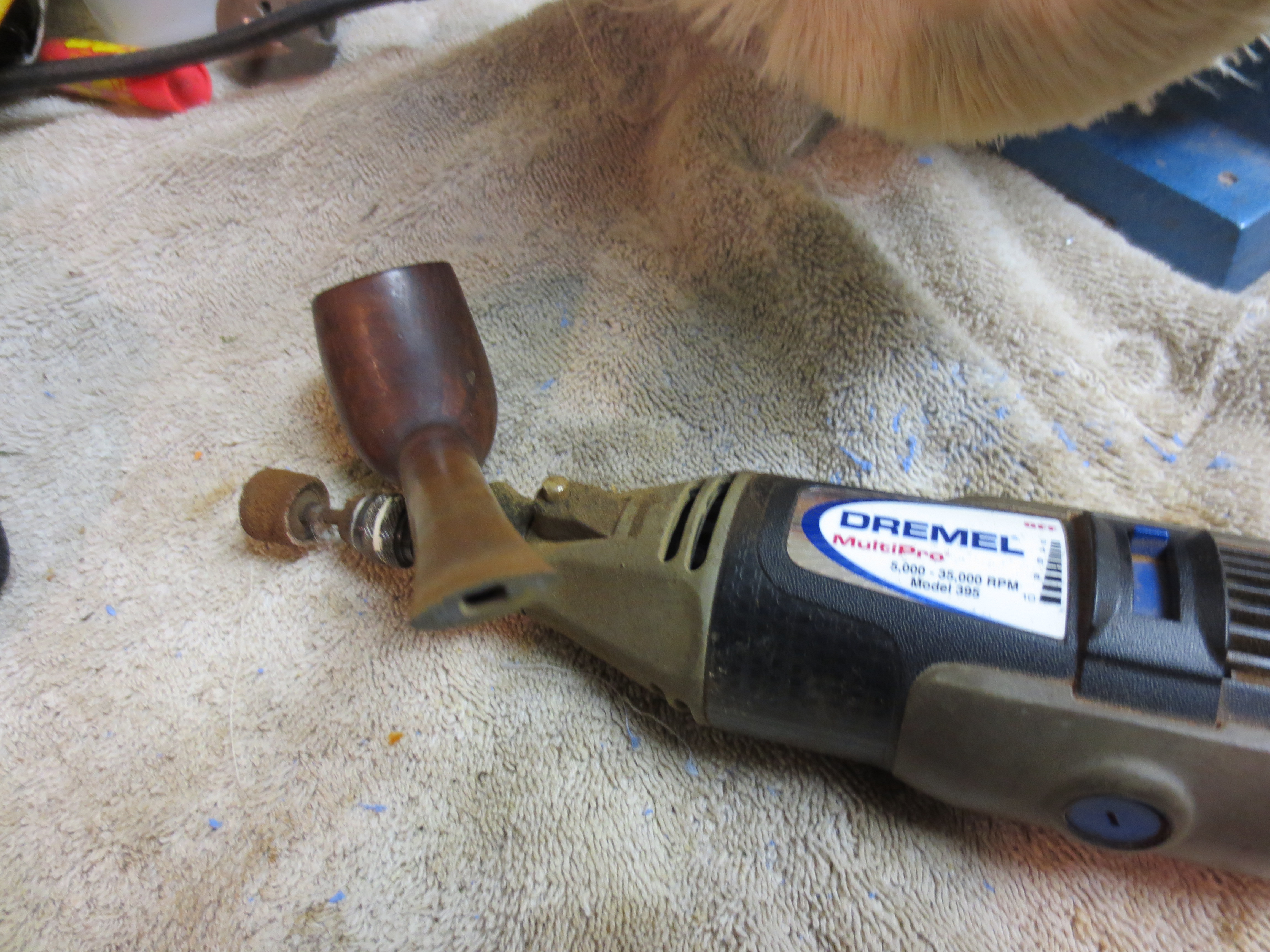
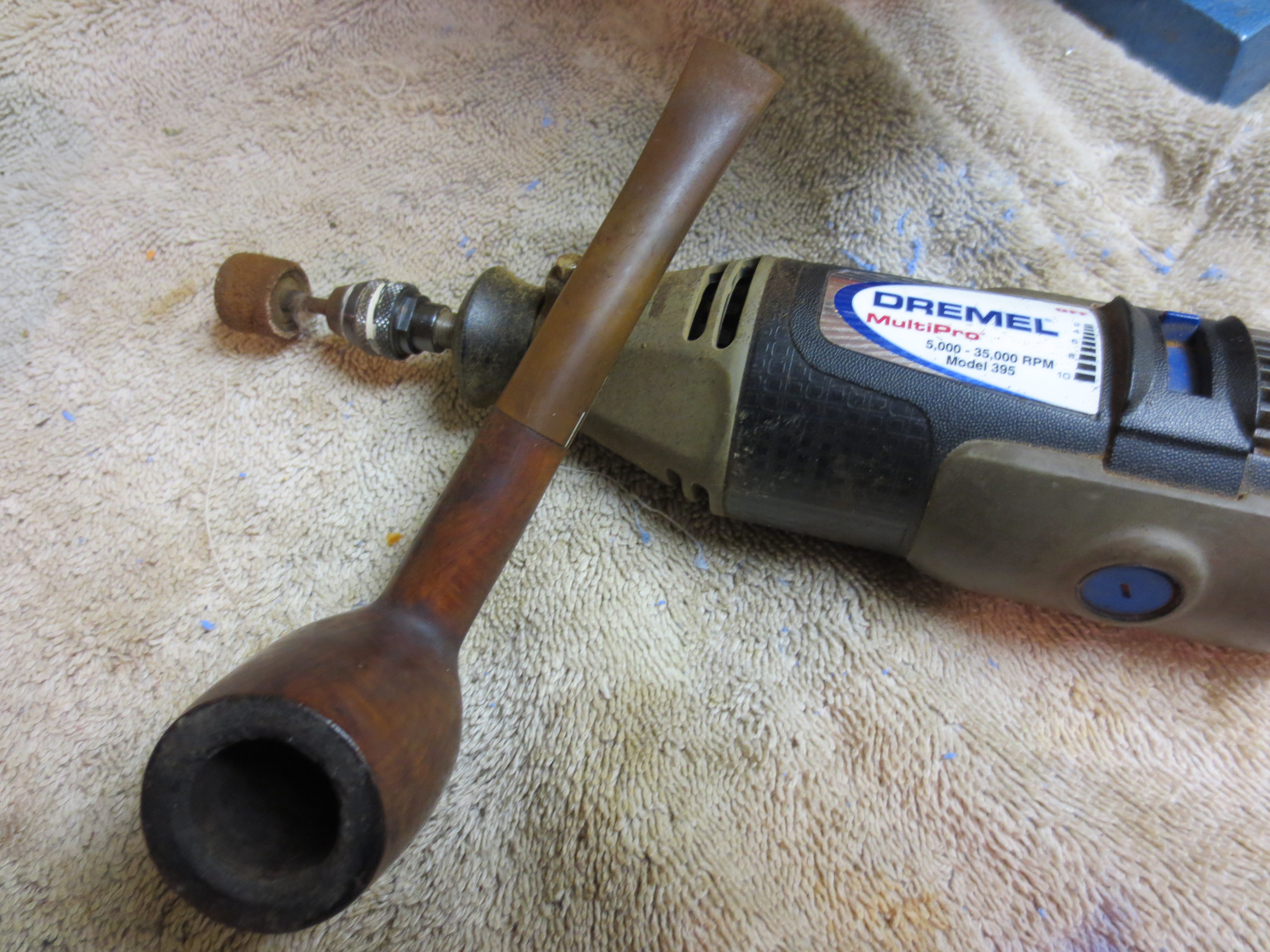
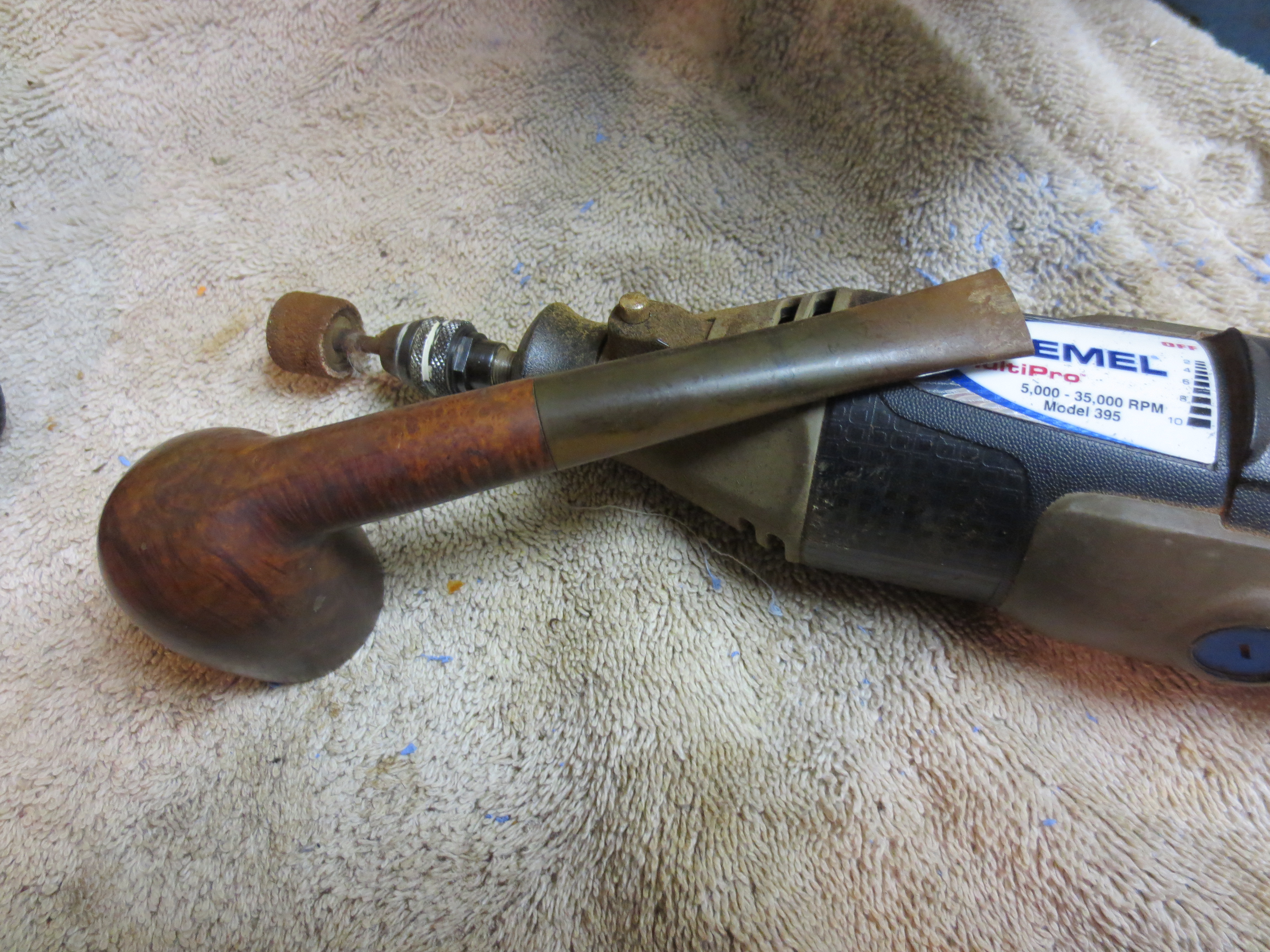
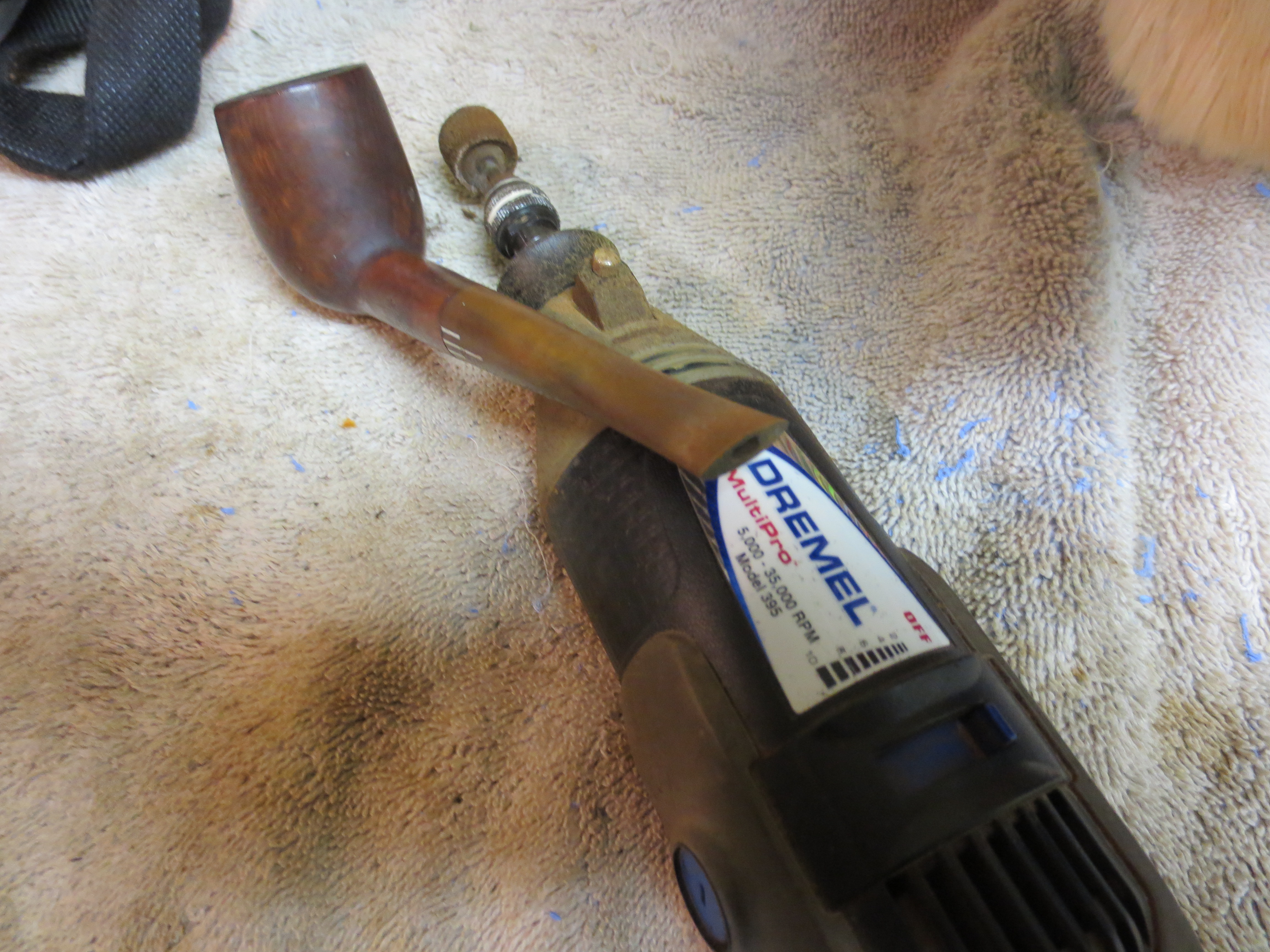
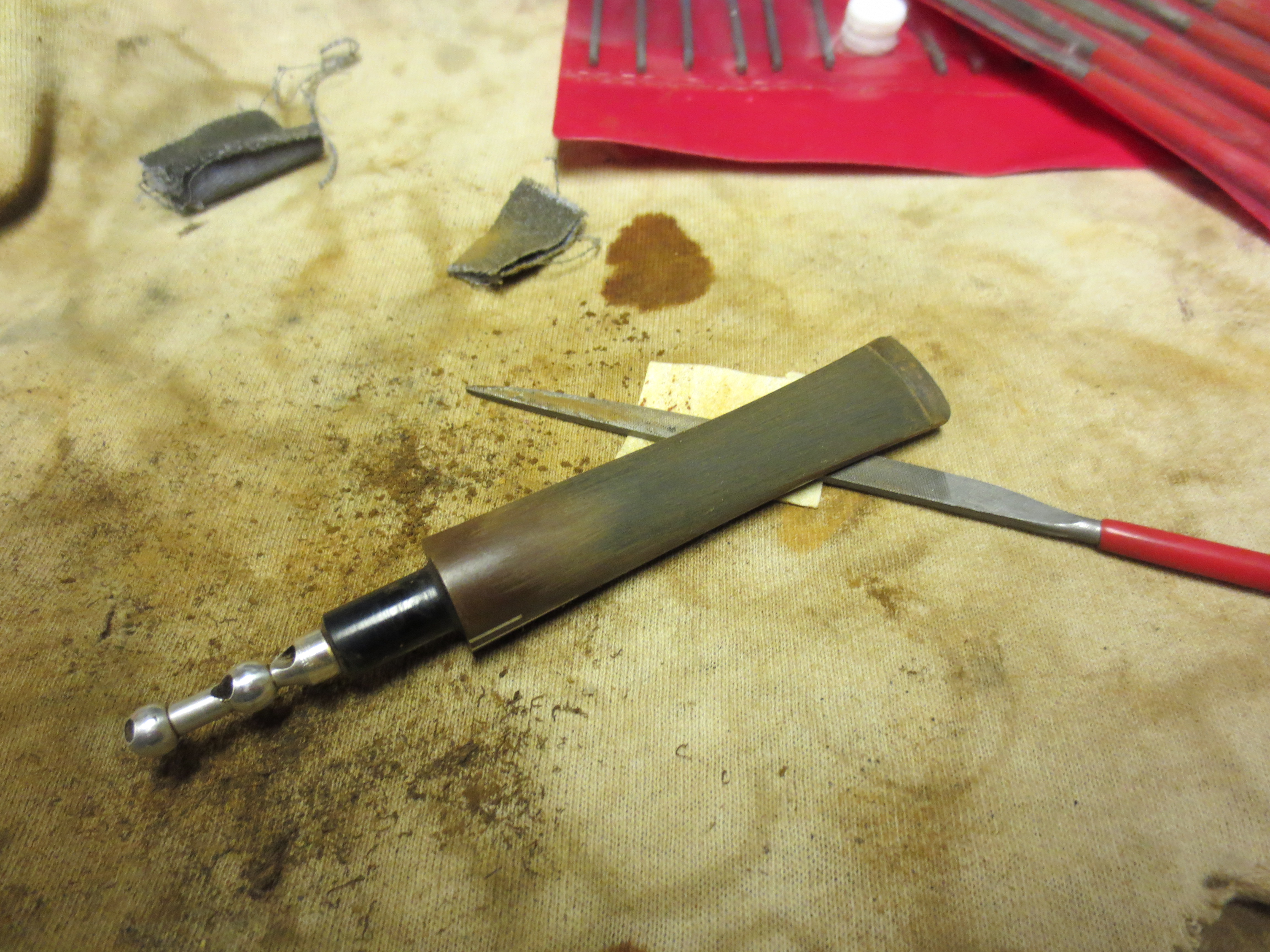
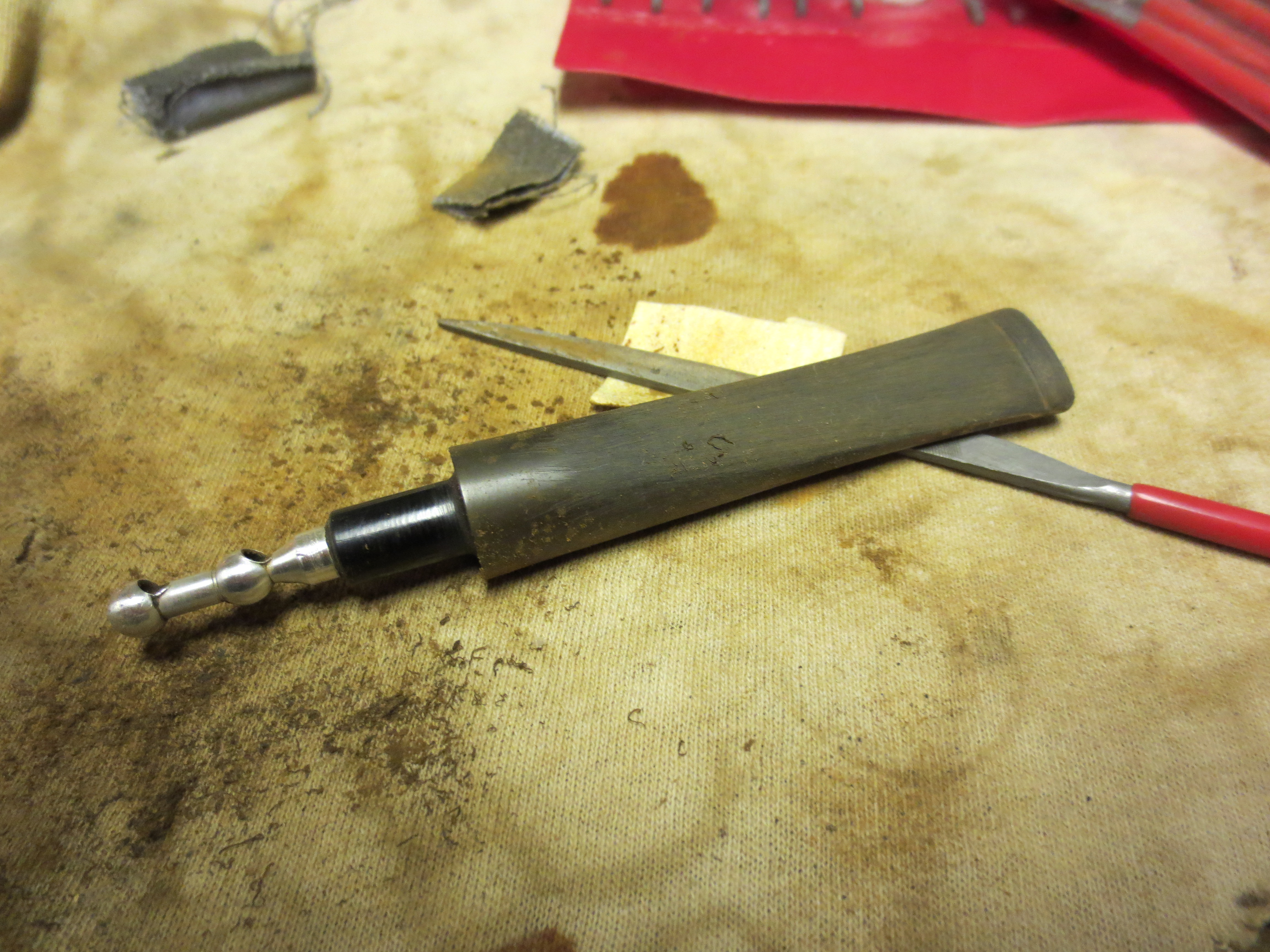
I took the stem to the work area where I have my Dremel to cut off the broken part of the stem. I have the large sanding drum on the Dremel and use it at half speed to cut off the stem. I have learned that it works very well at that speed and allows me to control the angles of the cut to insure that the line is straight. This one was a bit of a challenge as the Y cut in the airway was very close to the surface of the stem. I needed to cut it back far enough to allow me to have enough material to work with to cut the new button. The next six photos show the process of cutting the stem back. There are several photos of the end of the stem showing the new airway and the amount of material available to cut the new button. From the point of the stem the airway dropped suddenly back to the normal straight drilling and would allow me room to do the shaping.

ImageImageImageImageImageImage

I took the pipe back to my work table and reamed the bowl back to bare wood. I then topped the pipe very slightly to remove the buildup on the rim and to smooth things out. The next series of four photos show the topping process and the results. In the fifth photo below I used a medium grit sanding sponge and then a fine grit sponge to finish the topping and remove any sign of scratching to the surface. I also used 320 grit sandpaper to clean up the beveled inner edge of the bowl.

ImageImageImageImageImage

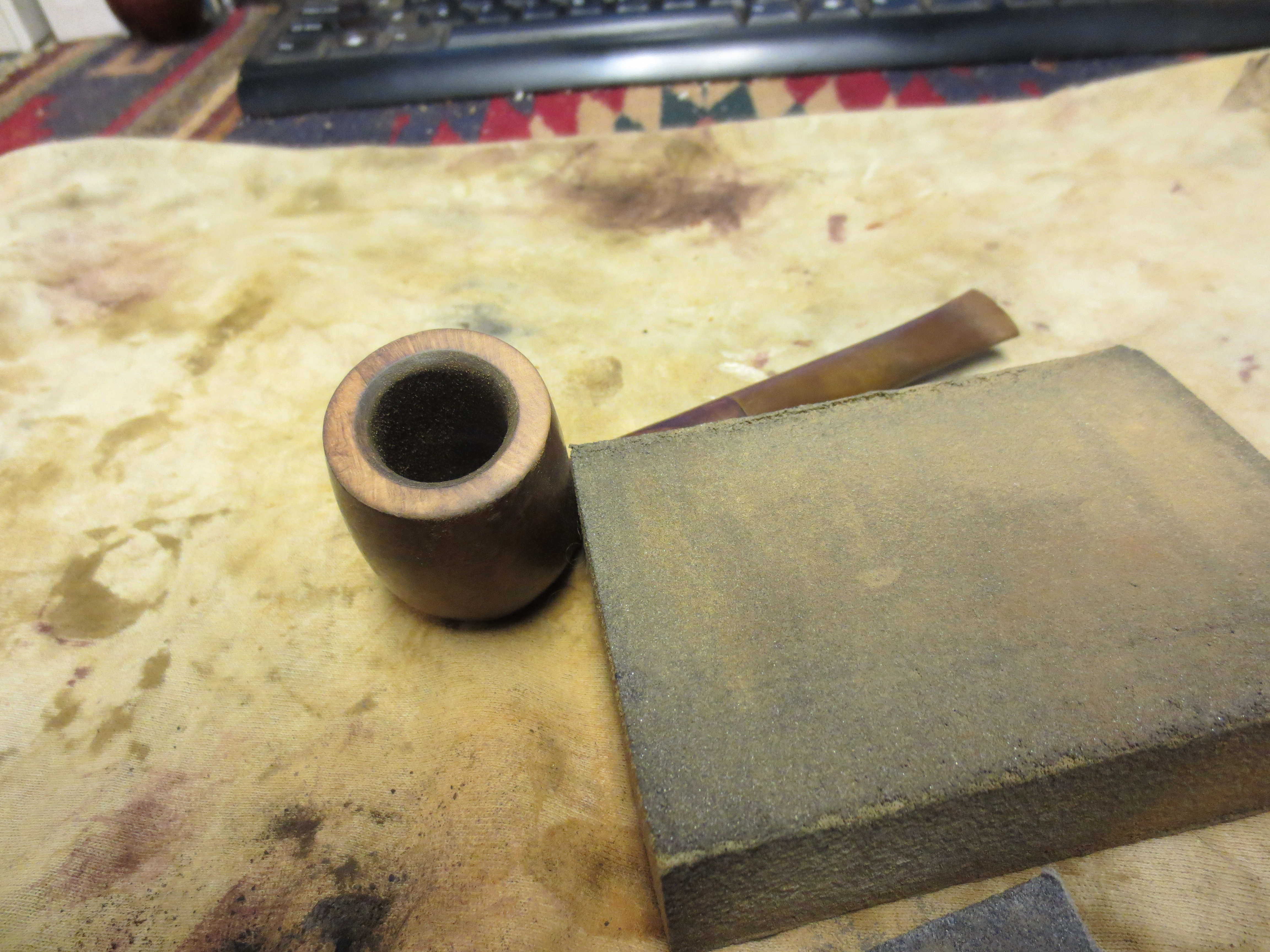
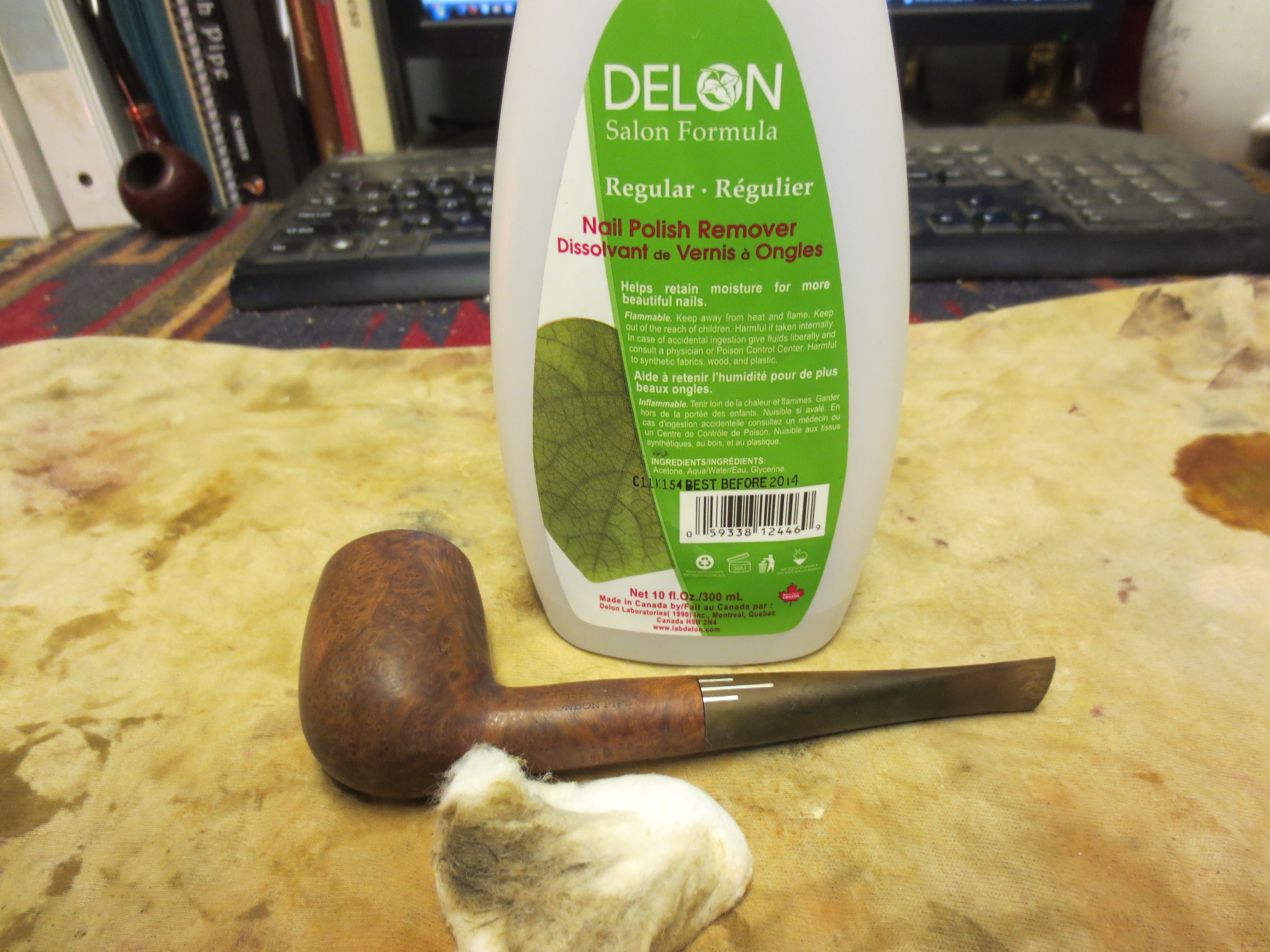
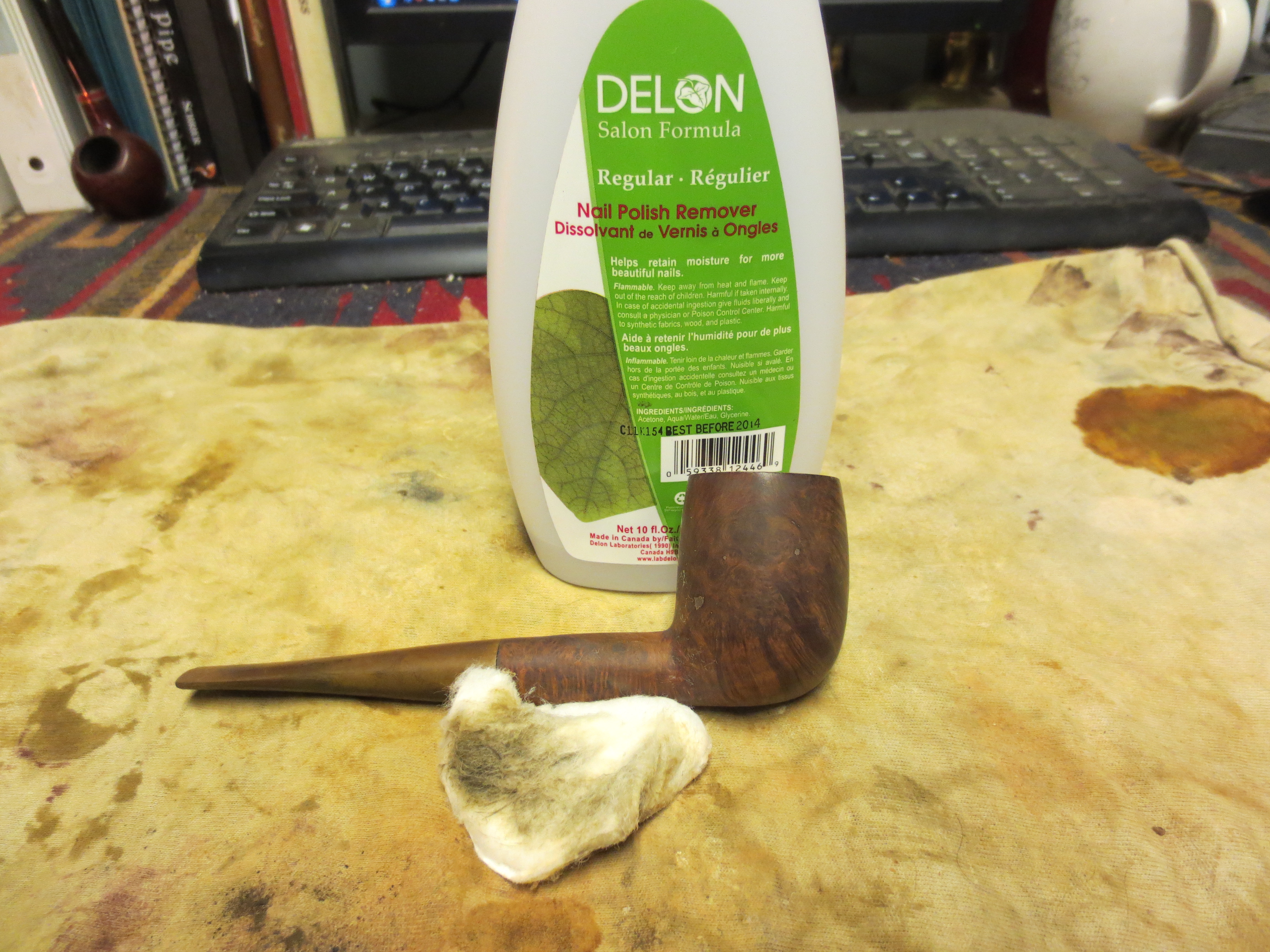
Once the top was cleaned and smooth I wiped the bowl down with acetone (finger nail polish remover) on a cotton pad to clean off the grime and remnants of finish on the bowl. The next two photos show the bowl after I have wiped it down. There was some beautiful birdseye on one side of the bowl and some great flame grain on the other side. In the second photo you can see the fill that is visible on the bowl.

ImageImage

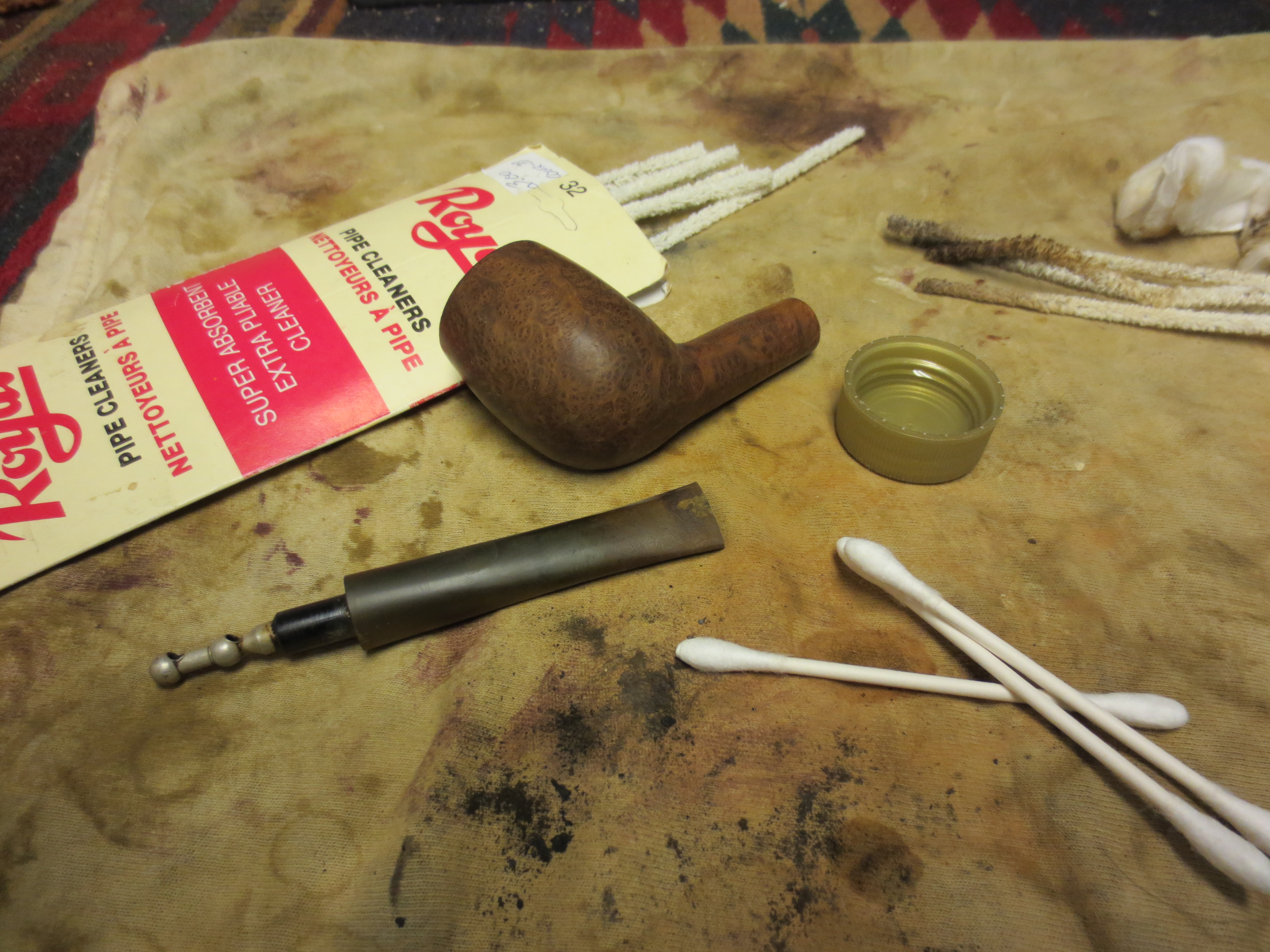
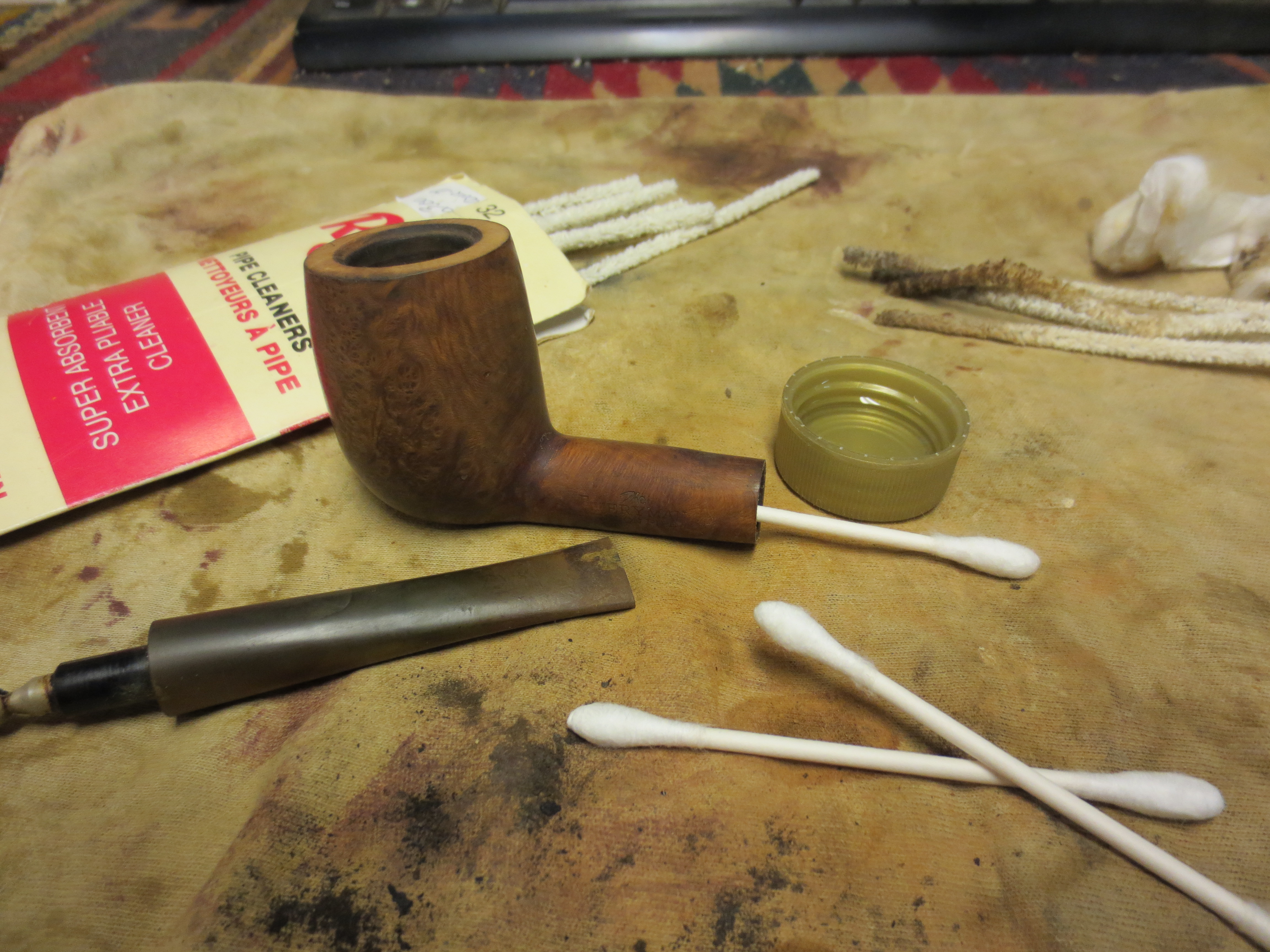
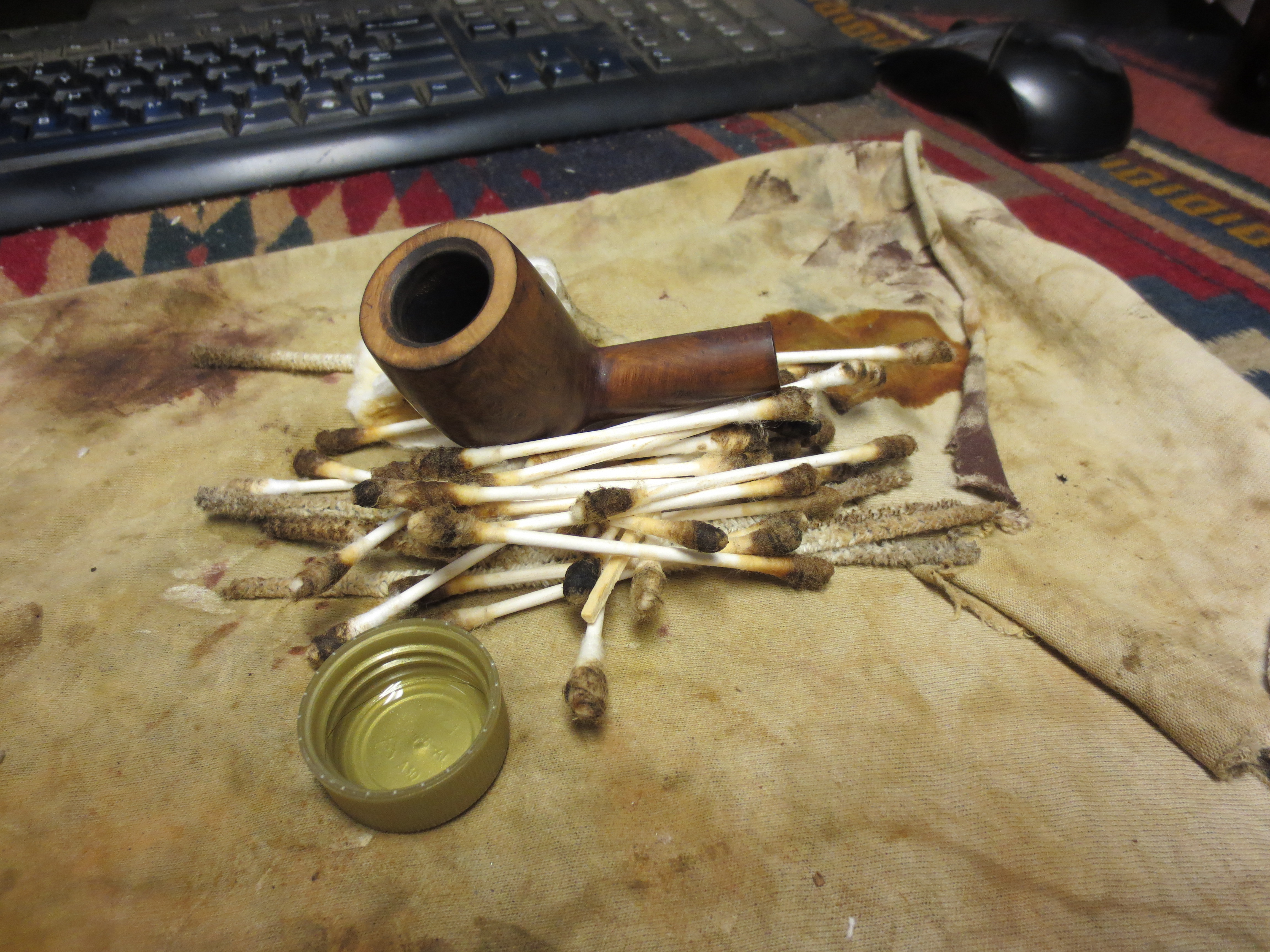
After cleaning the outside of the bowl it was time to clean the shank and bowl. I removed the stem and poured some Everclear into the cap to use to clean the airway. I used many cotton swabs to clean out the airway and the mortise. I also used a significant number of pipe cleaners in the process. The next three photos show the cleaning materials I use and the final photo of the threesome shows the pile of cotton swabs and pipe cleaners used to clean the shank.

ImageImageImage

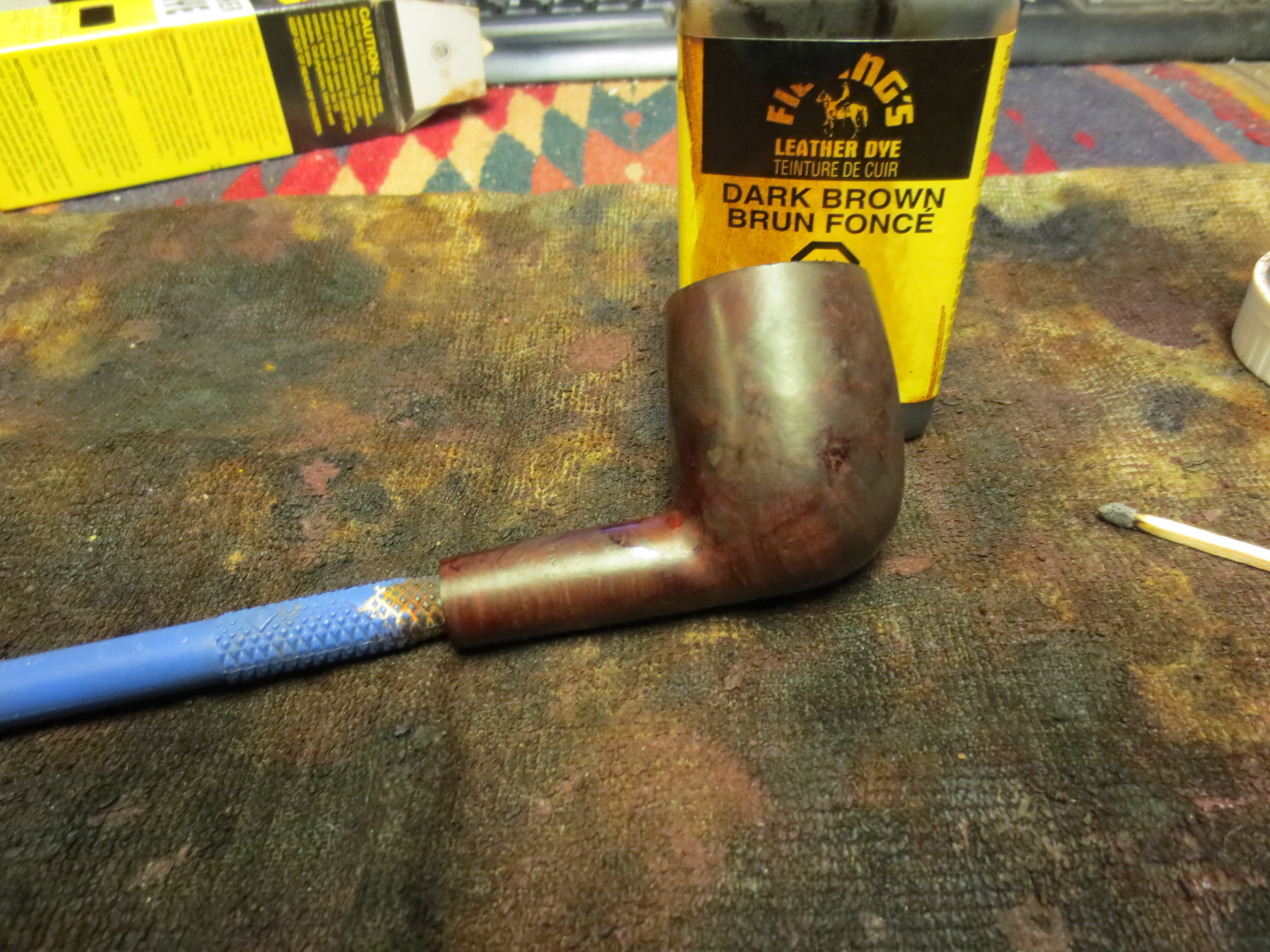
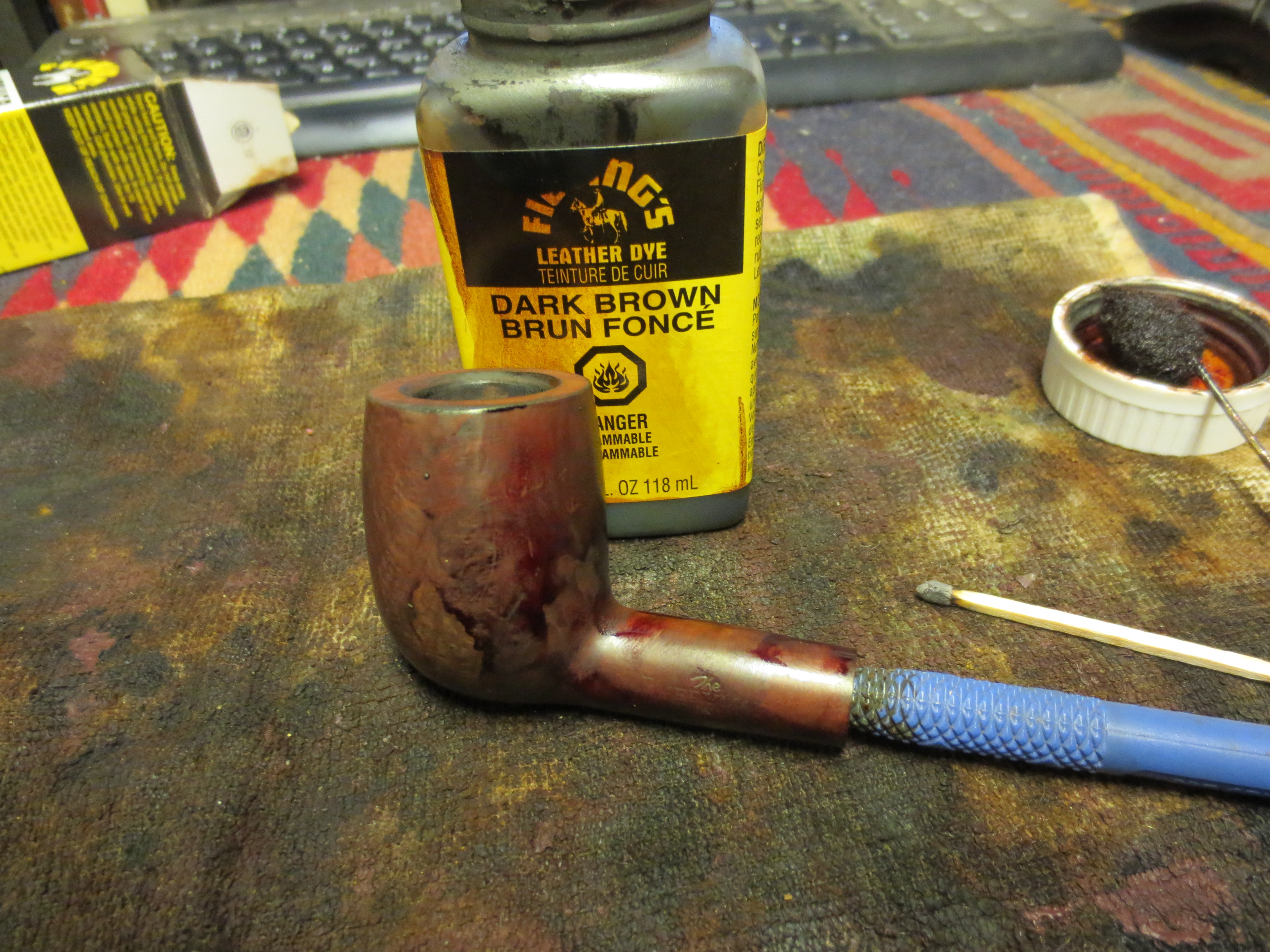
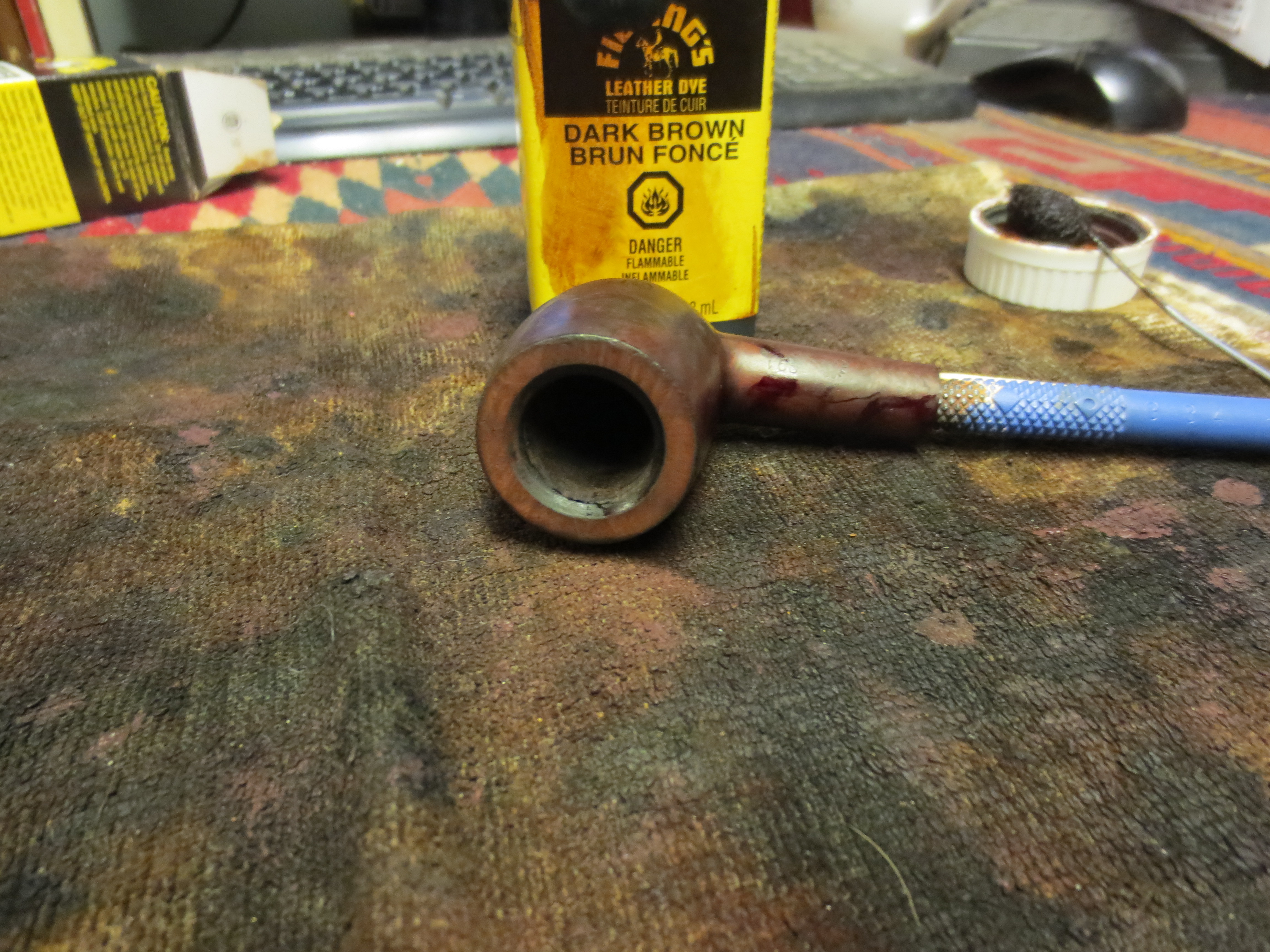
I used a black permanent marker to draw the grain pattern over the fill to make it less obvious once I stained it. I stained the bowl next using a dark brown aniline stain (Feibings Shoe Dye) and applied the stain with the dauber in the box. I flamed it with a match to set the stain, restained it and then flamed it a second time. I paid particular attention to putting the stain on heavy on the rim. The next three photos show the pipe after staining.

ImageImageImage

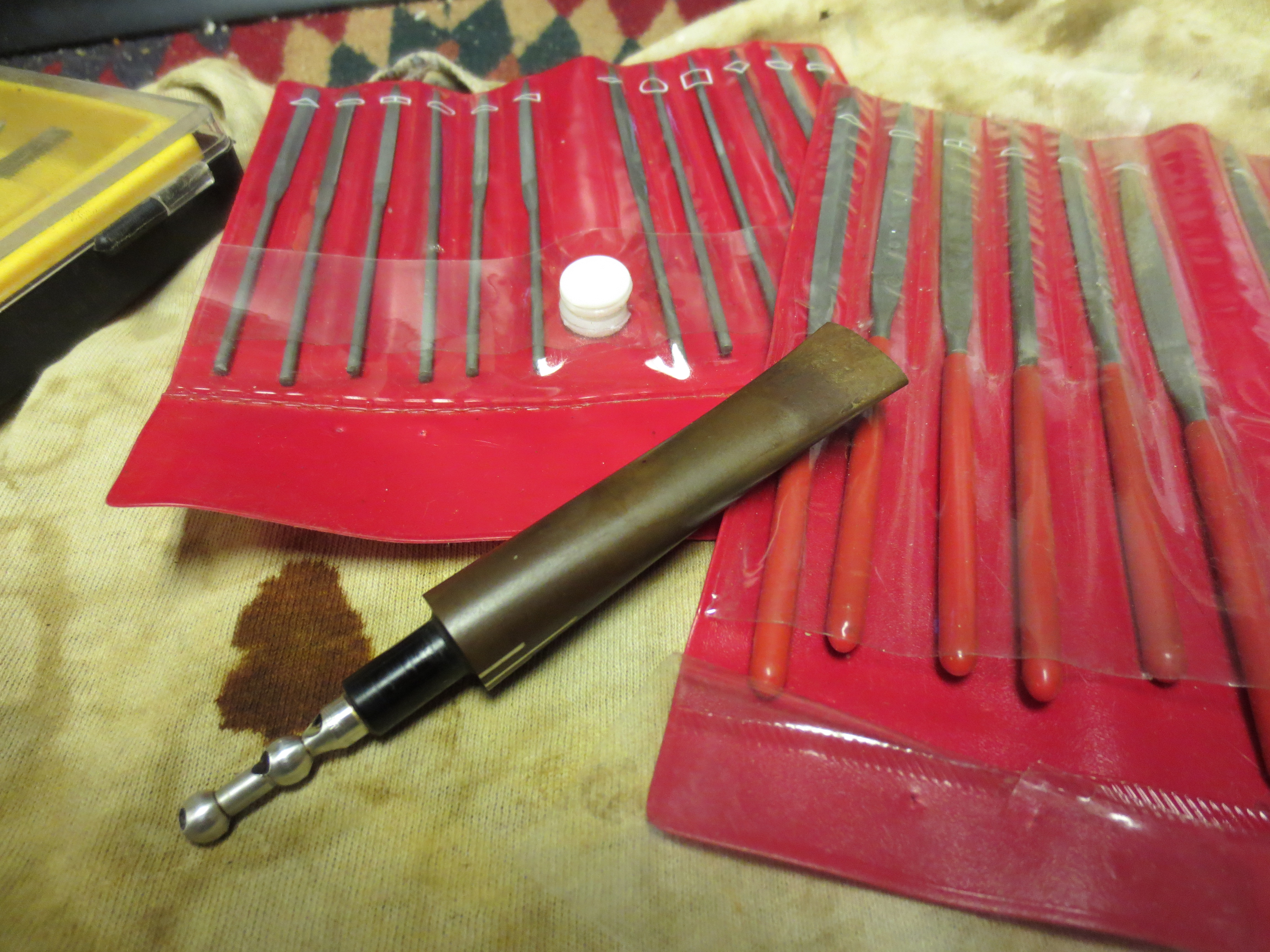
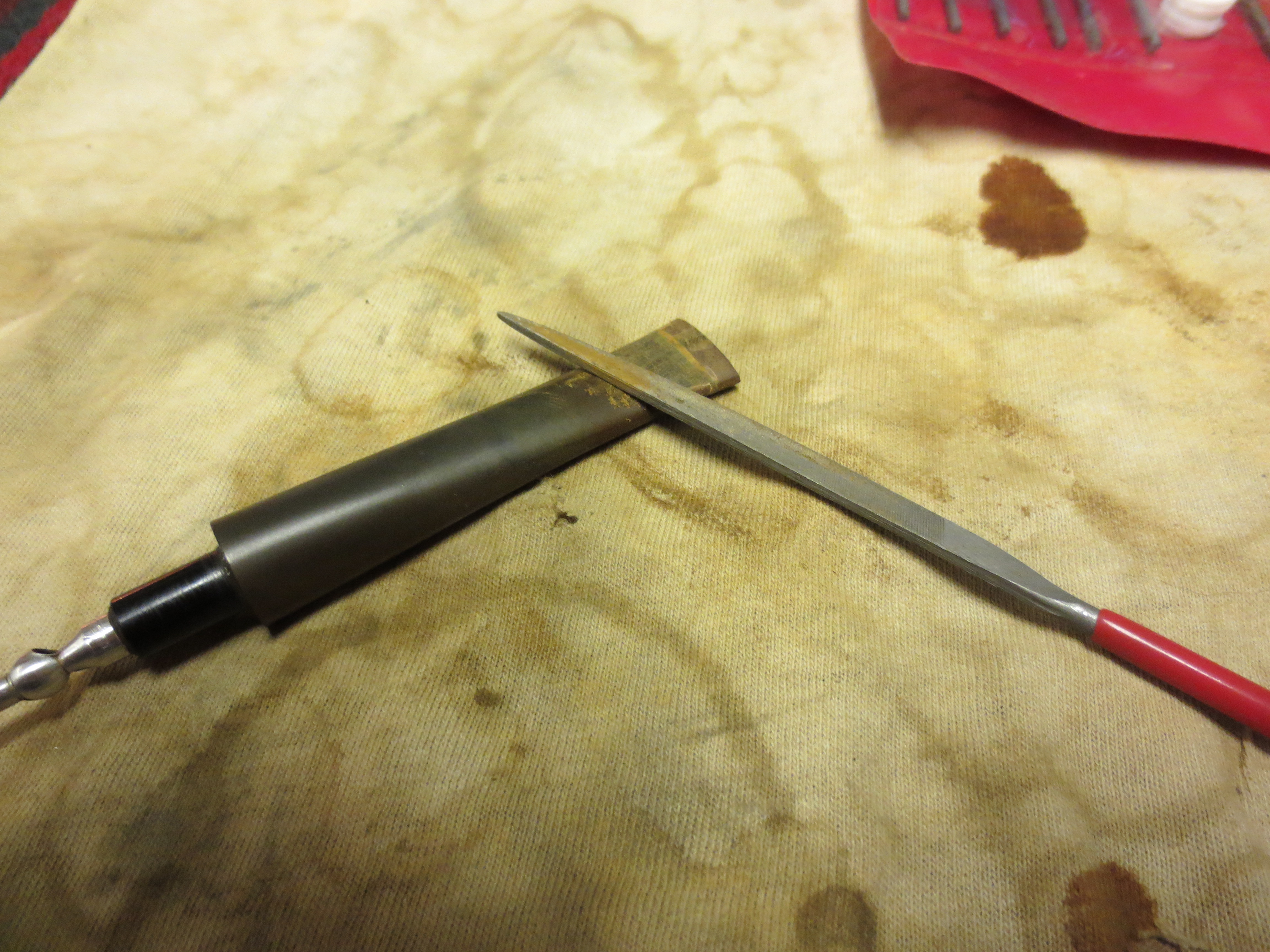
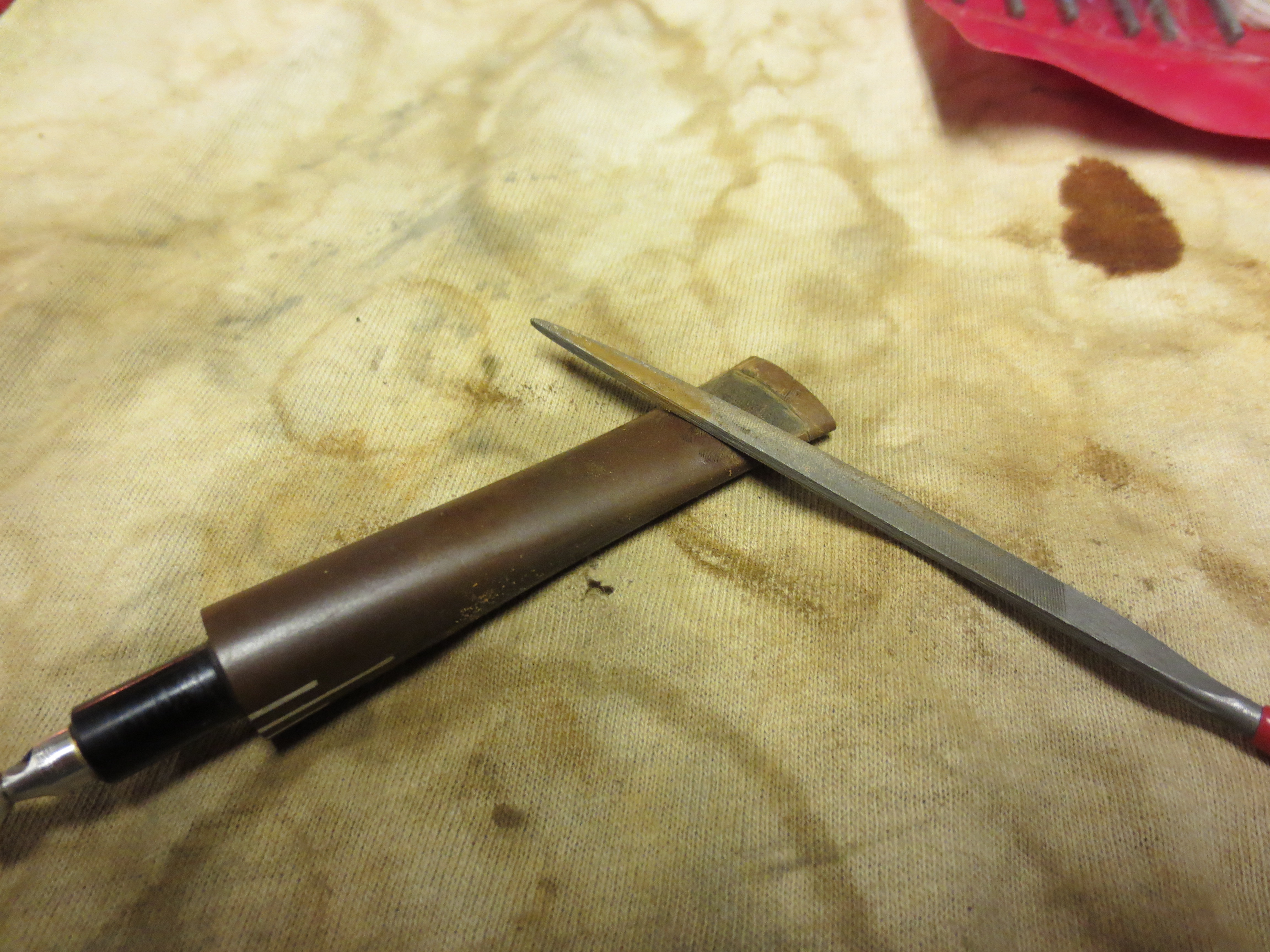
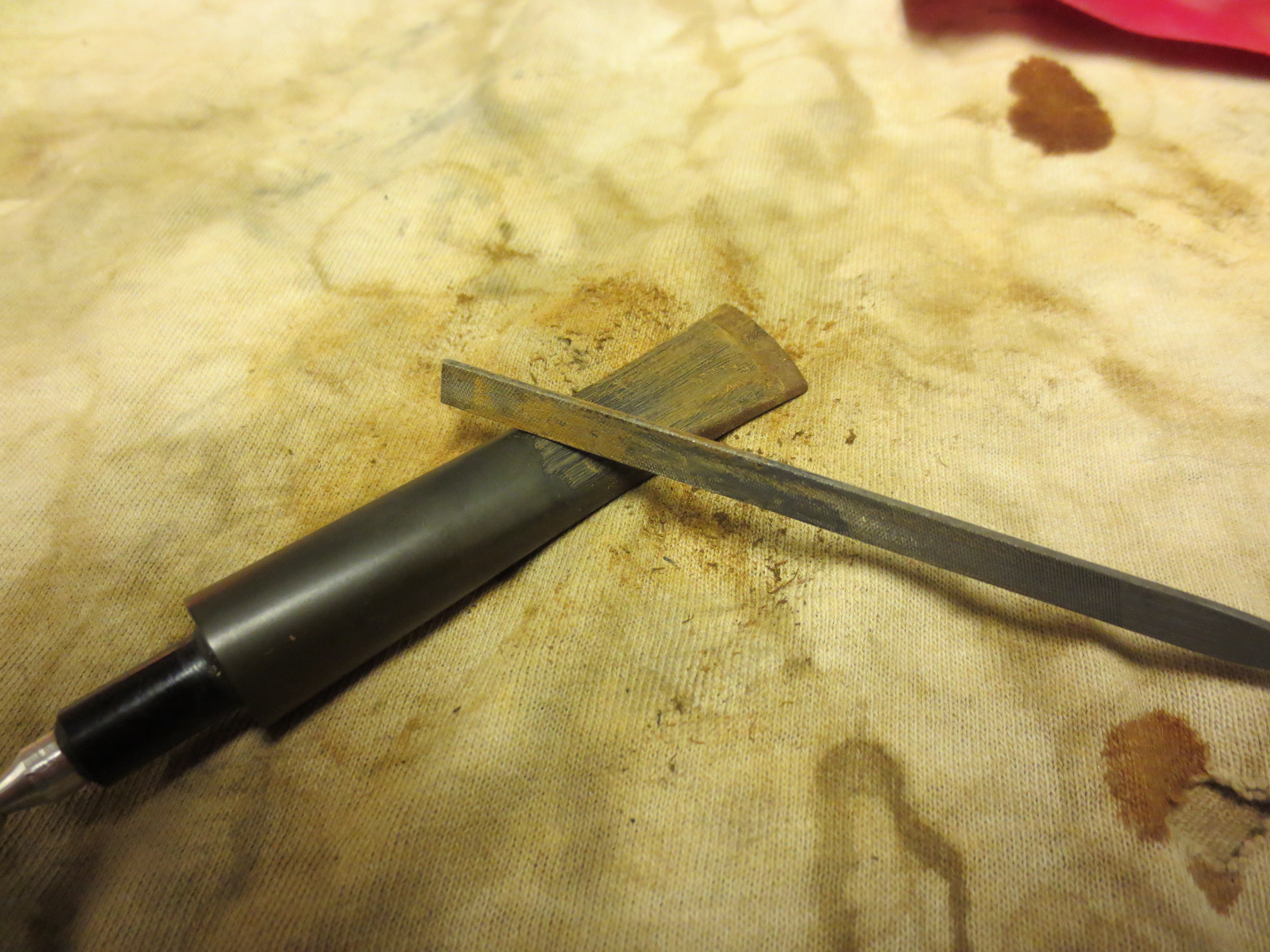
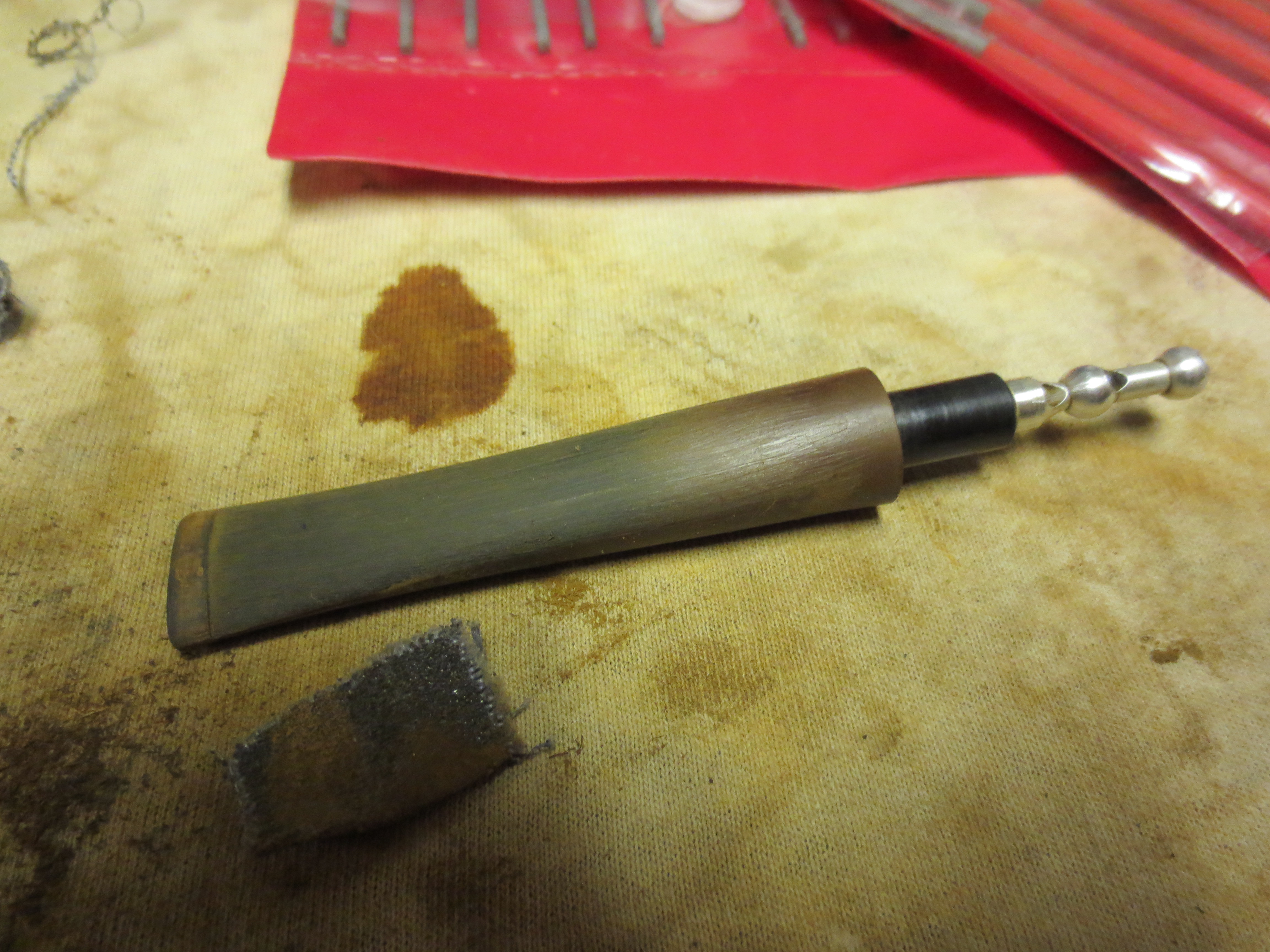
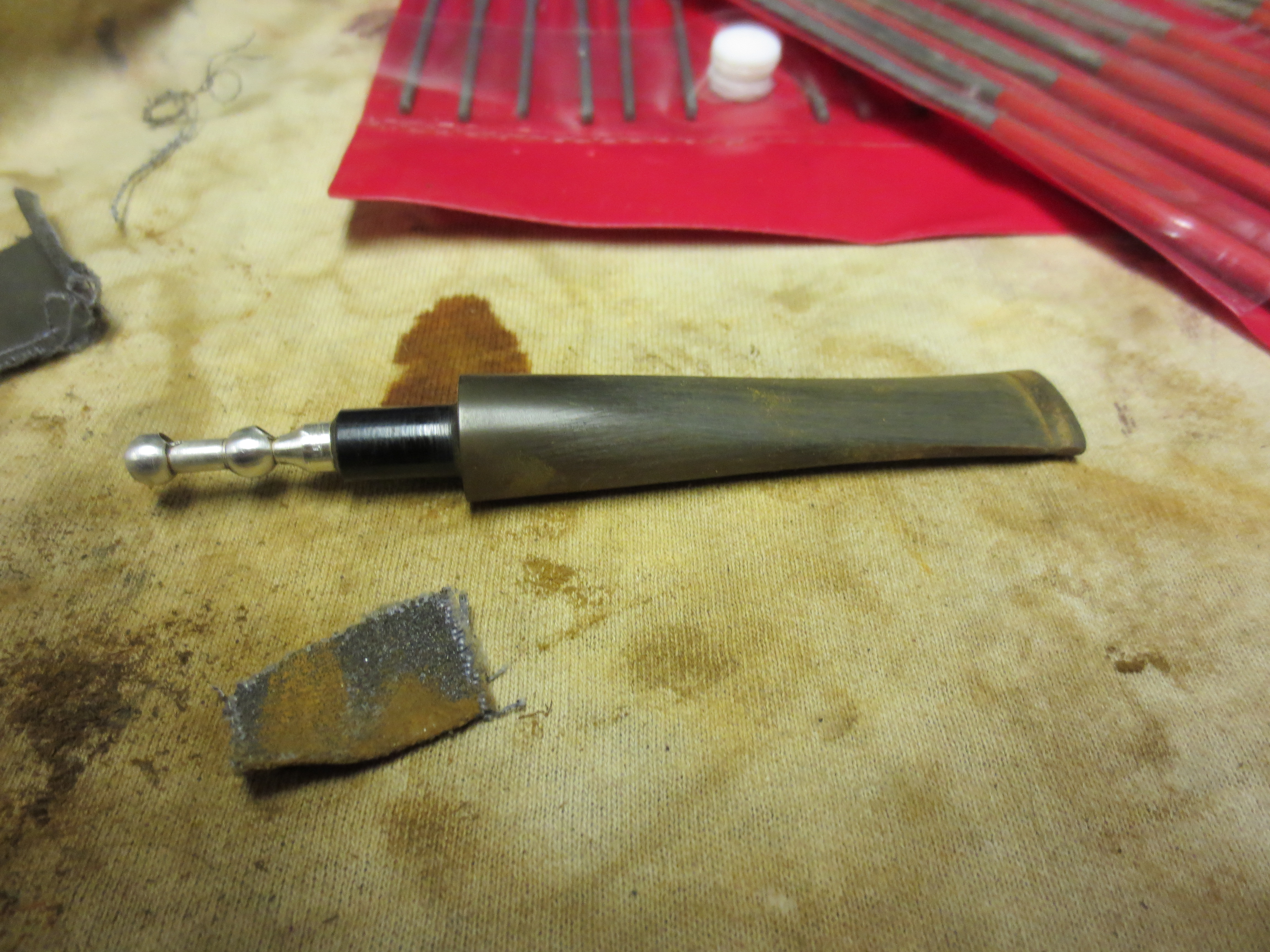
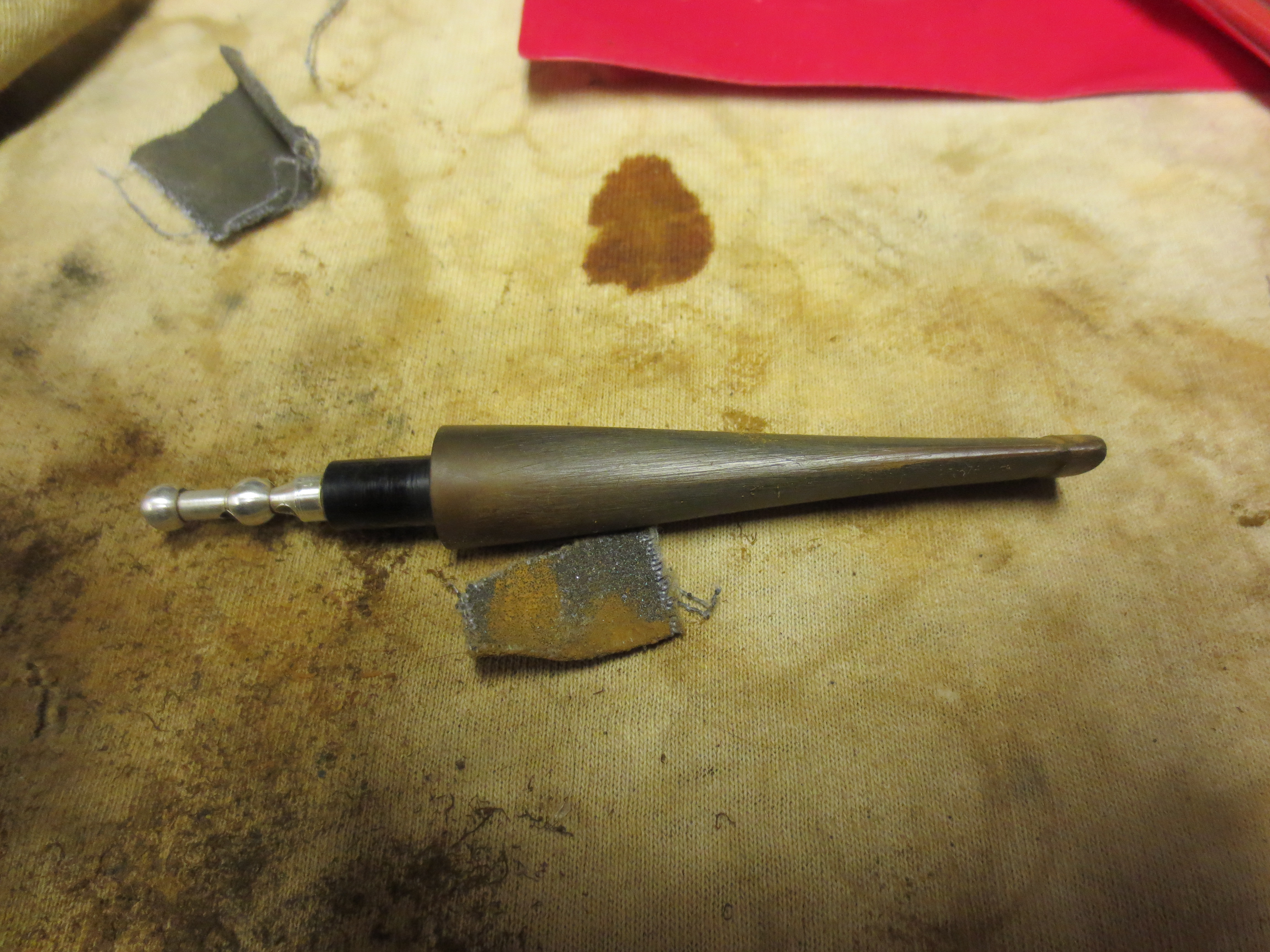
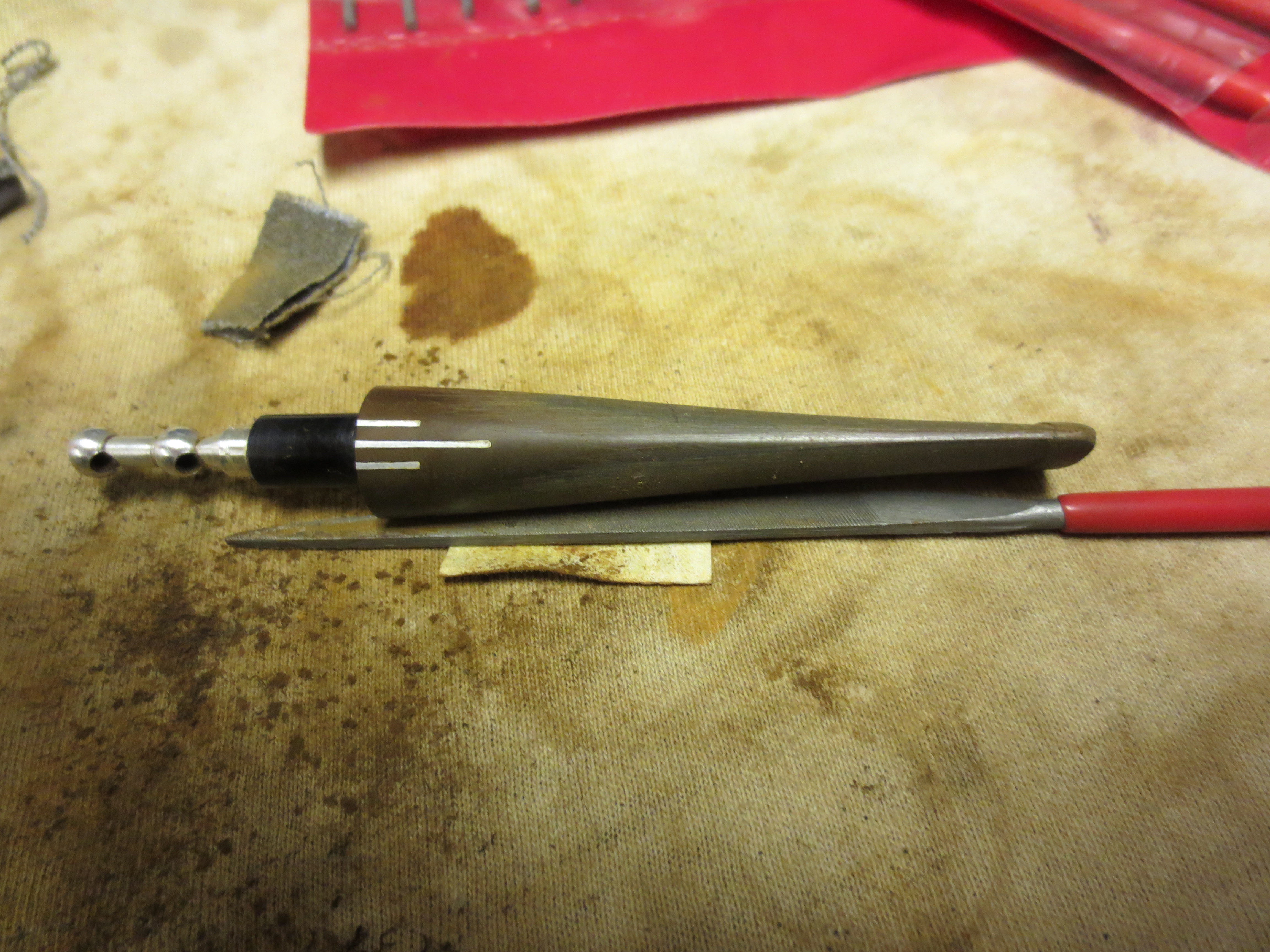
After staining I set the bowl aside to thoroughly dry and went to work on reshaping/cutting the new button on the stem. I use needle files to cut the button and work to keep it even on both sides of the stem and to also modify the taper from the stem backward to the button. After cutting the edge with the files and working the slope to make a smooth transition with the files I use a fine grit emery paper to sand out the scratches left by the file and to remove the oxidation. I am careful as I near the stem shank joint to not remove too much material as I do not want to round the shoulders on the stem or reduce the diameter of the stem in the process. I follow that by sanding with 320 grit sandpaper to yet again reduce the scratching. The next eleven photos show the progress of shaping the button and modifying the stem.

ImageImageImageImageImageImageImageImageImageImageImage

Once the button is cut and the taper modified I set the stem aside to work again on the bowl. There is no logic to this in terms of timing. I just need to give my hands and wrists a rest after working on the vulcanite. I wipe the bowl down with some isopropyl alcohol as the dark brown stain is too dark and opaque for what I wanted the finished pipe to look like. I find that the alcohol will remove the surface stain while leaving the undercoat. I work at this carefully to get the finish to the colour I want and then set it aside to dry yet again. The next three photos show the bowl after the wash.

ImageImageImage

I went back to the stem and worked on it with 320 grit sandpaper again. I worked to remove the oxidation and the scratches. I also used 0000 steel wool to scrub the stinger apparatus that is present in the Everyman pipes.

ImageImageImage

I then put the stem back on the pipe to check the fit and the profile of the pipe. I wanted to make sure that the angles looked right on the slope and also that the shank and stem junction still was smooth. The next three photos show the look that I had been aiming for in the process of reshaping the stem.

ImageImageImage

I once again removed the stem and sanded it again with a fine grit sanding sponge (pink sponge backed sanding medium). The scratches and oxidation are becoming less pronounced. The next four photos show that progress.

ImageImageImageImage

I reinserted the stem and polished it with some Maguiar’s to see where I stood on the scratches. I also buffed the bowl and stem to get an idea of the finished look. The next series of four photos show the state of the pipe after that work. The fill on the right side of the bowl is almost invisible and the pipe is beginning to look like the final product. There still remained much to do to get the stem back to a new look.

ImageImageImageImage

I wet sanded the stem with 1500, 1800 and 2400 grit micromesh sanding pads and also dry sanded the bowl with the same pads. I wanted a bit lighter and translucent finish on the pipe. The next four photos show the bowl and stem after this treatment. The fifth and sixth photos below show the stem and bowl after I had once again polished the stem with the Maguiar’s. You can see the new look of the finish on the bowl. The grain really is beginning to pop through.

ImageImageImageImageImageImage

I continued sanding with 3200-12,000 grit micromesh to finish the stem work and then polished the stem a last time with Maguiar’s before taking it to the buffer and polishing the stem and bowl. I brought it back to the work table, wiped down the stem with Obsidian Oil and then applied multiple coats of carnauba wax to the stem and bowl. The first two photos below show the state of the pipe after the sanding, buffing and application of Obsidian Oil. The stem and bowl are looking very good in my estimation. The final four photos show the finished pipe with the newly adjusted stem and many coats of wax. It is ready for its inaugural smoke.

ImageImageImageImageImageImage

An Odd Pipe Restored – Richmond London Made


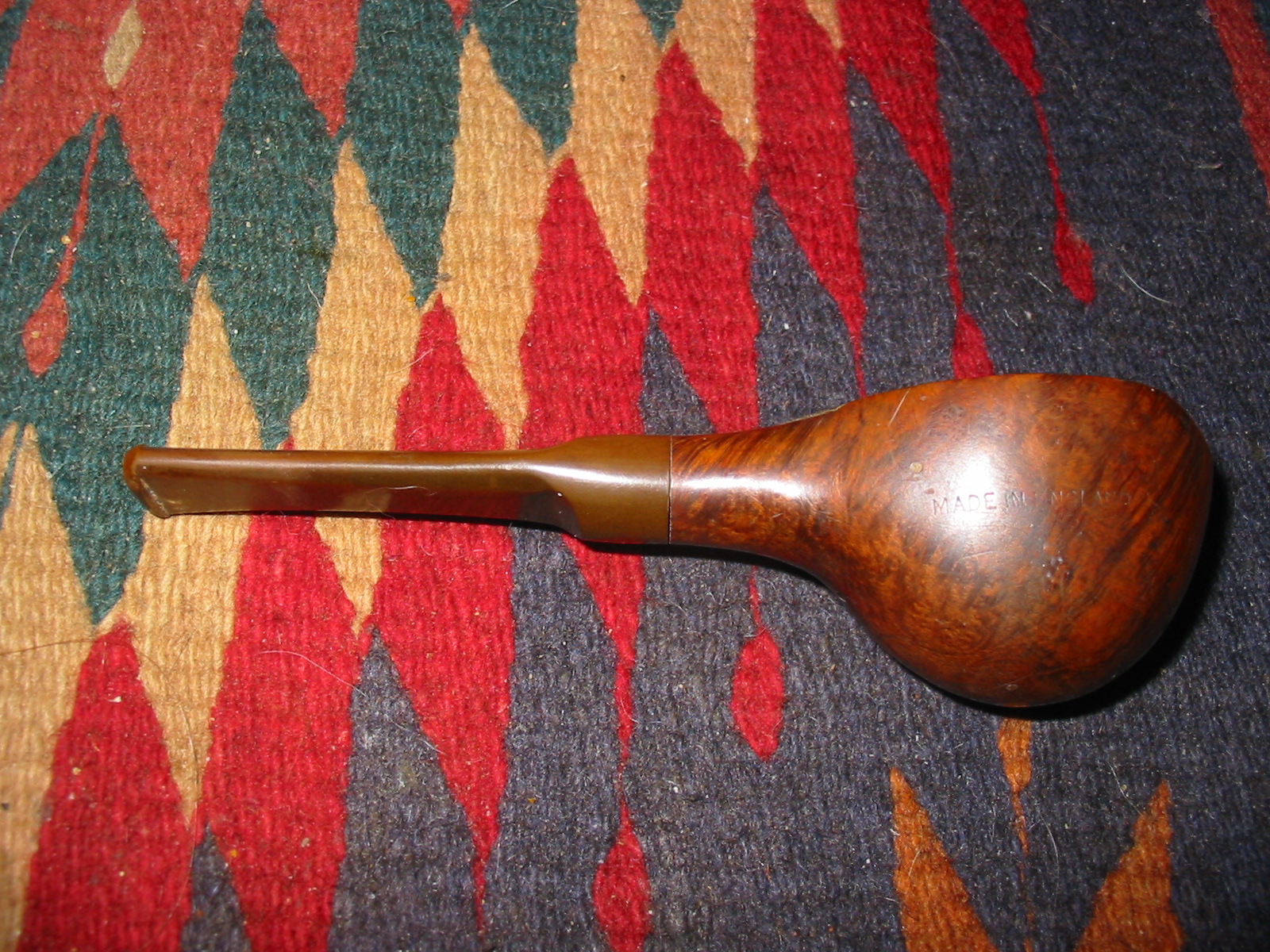
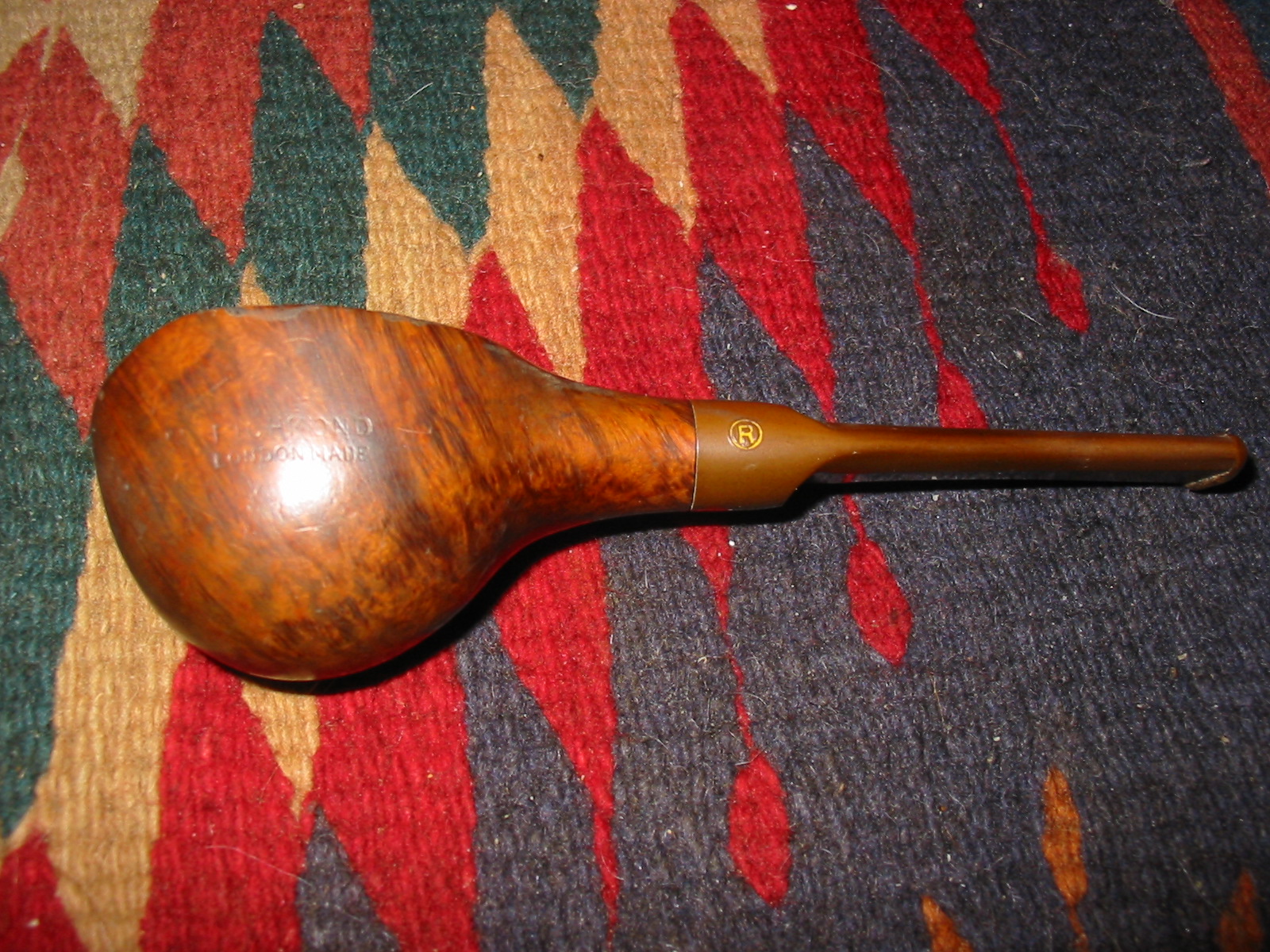
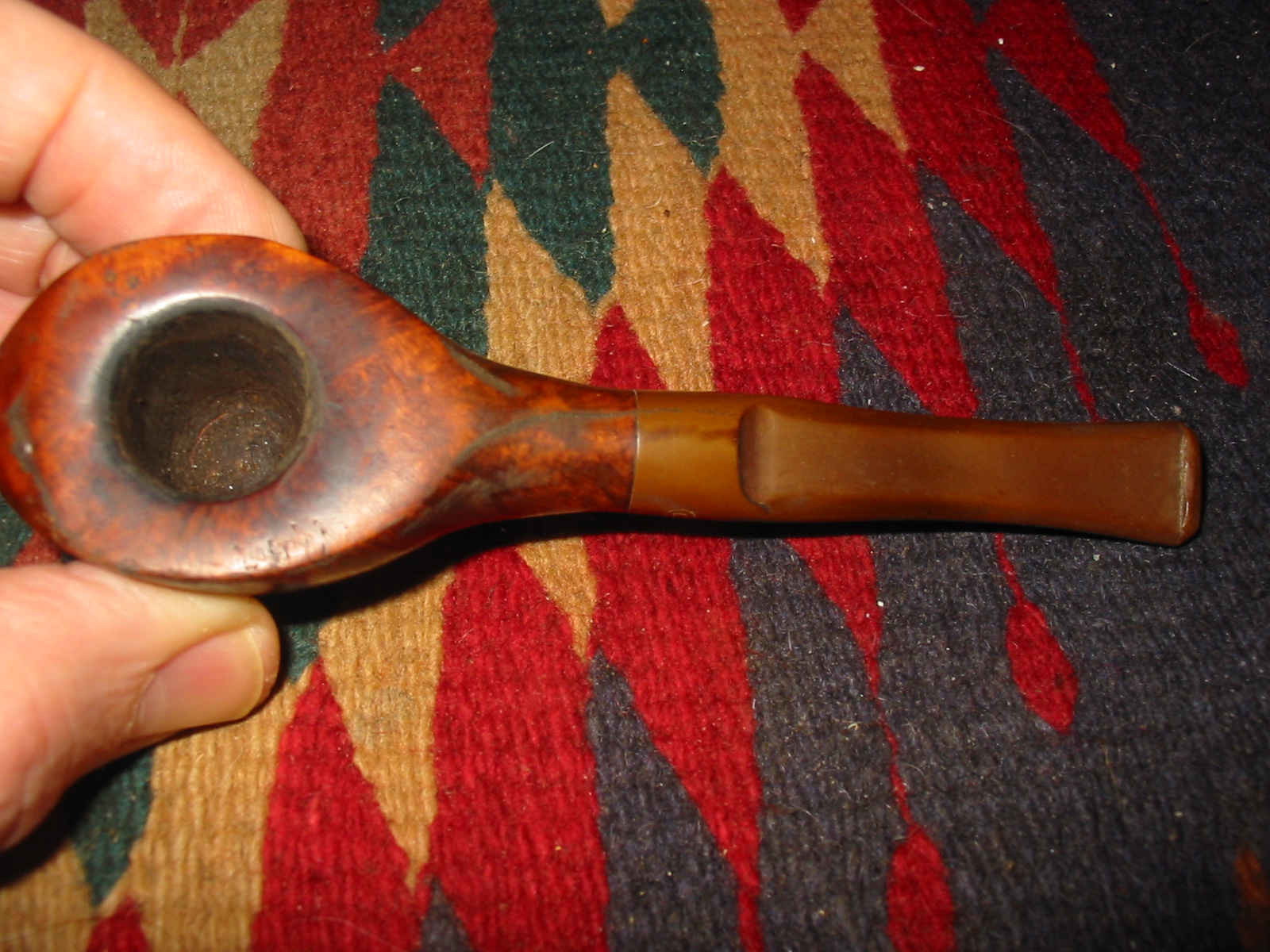
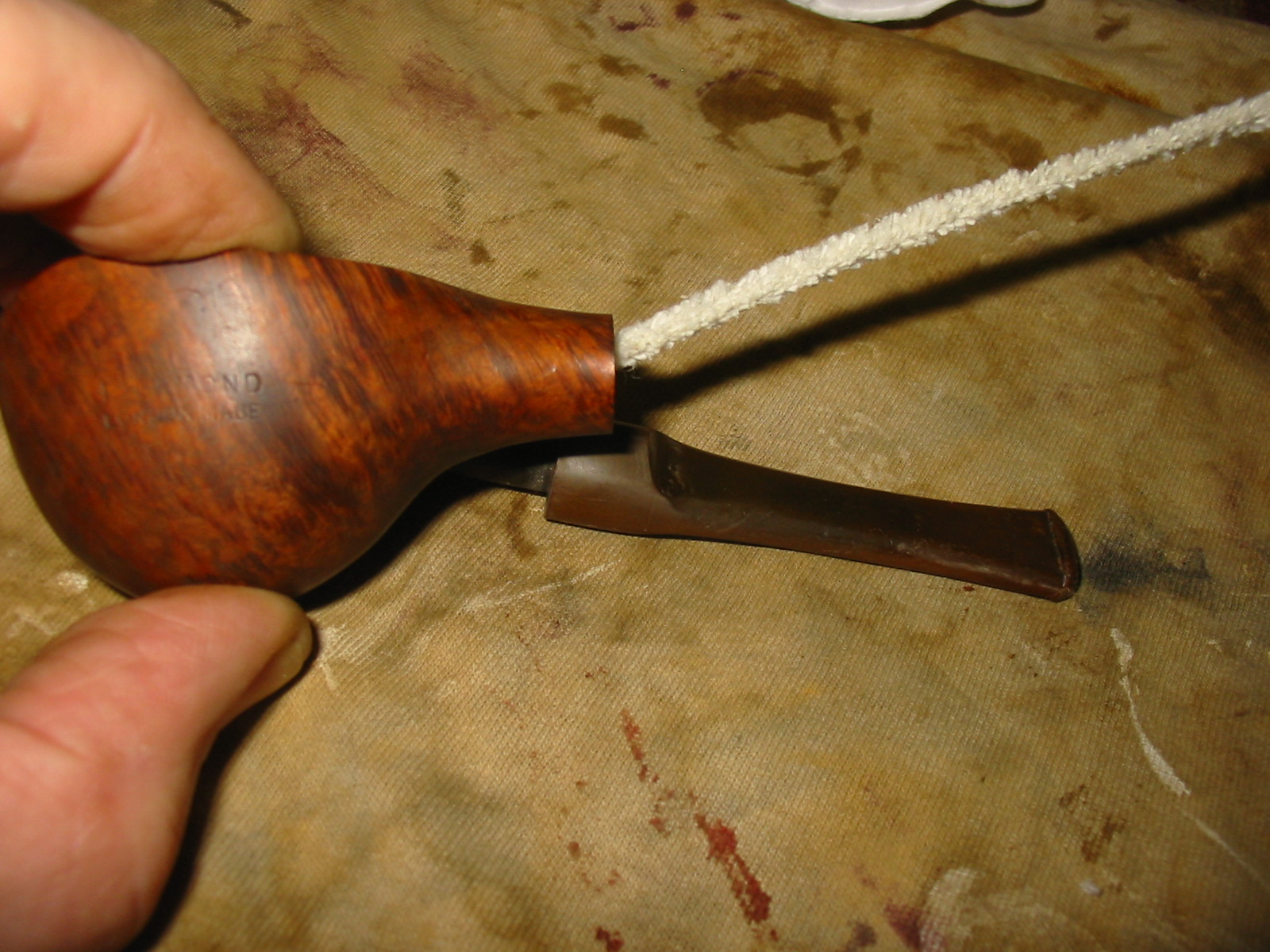
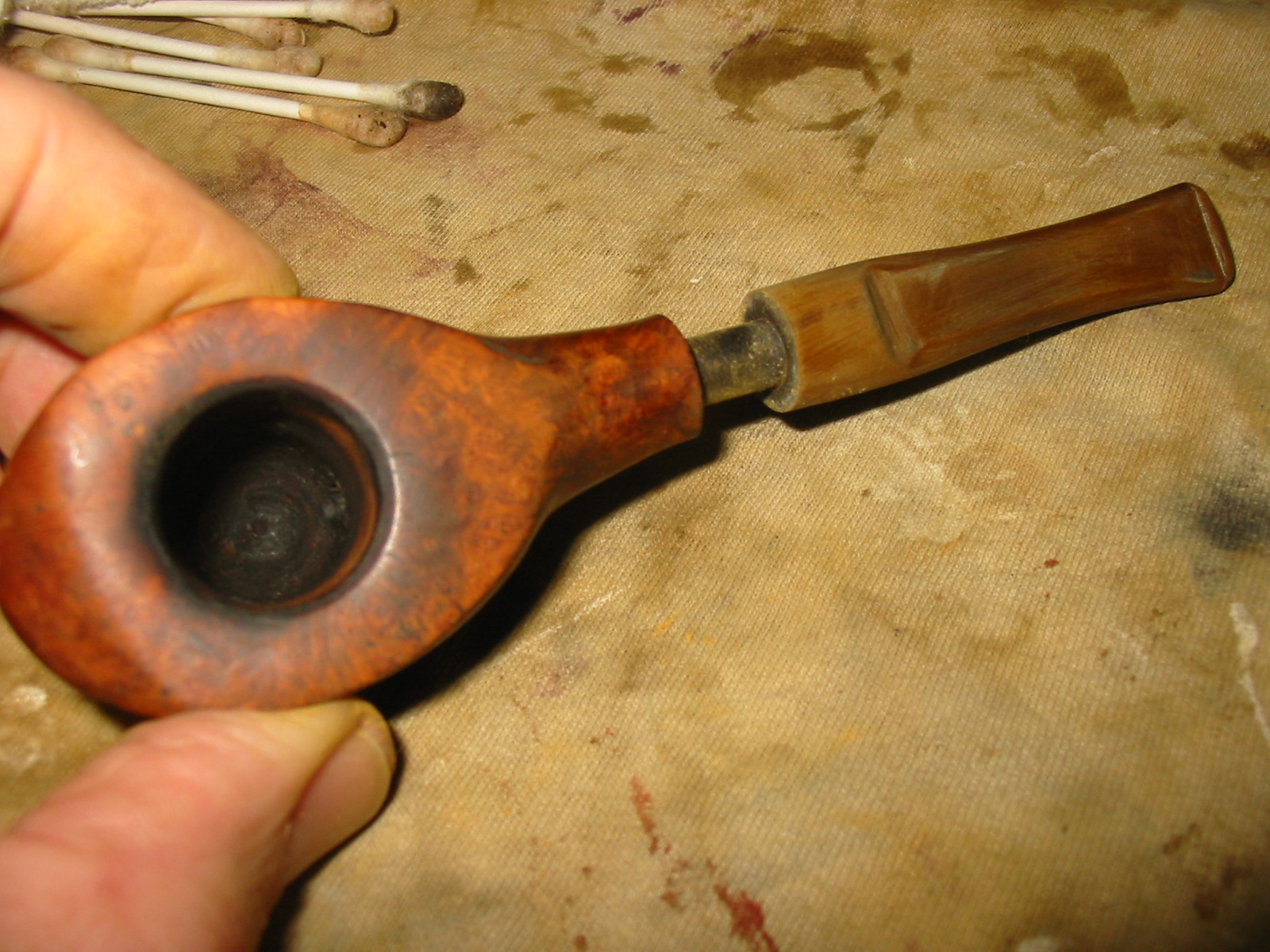
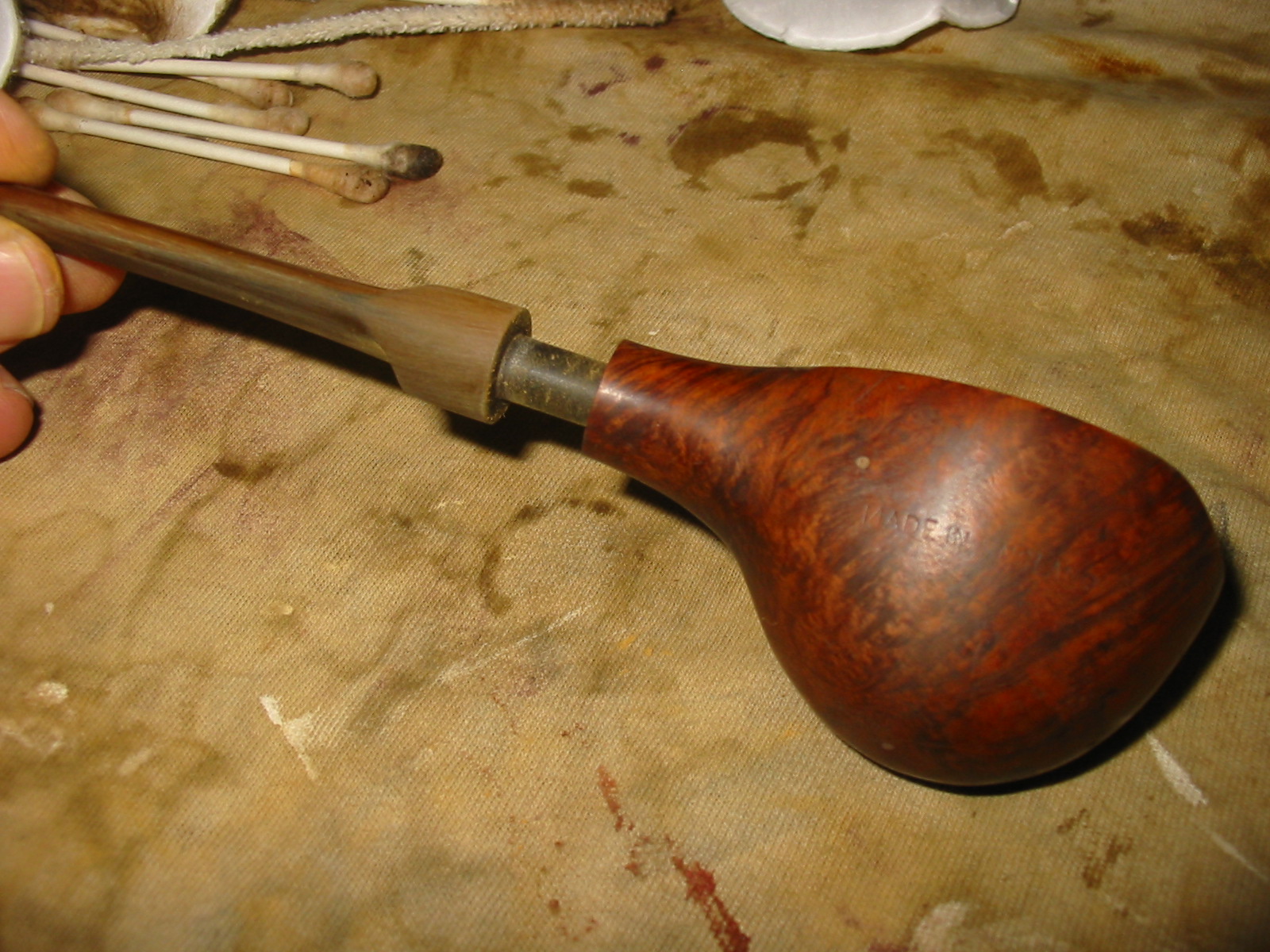
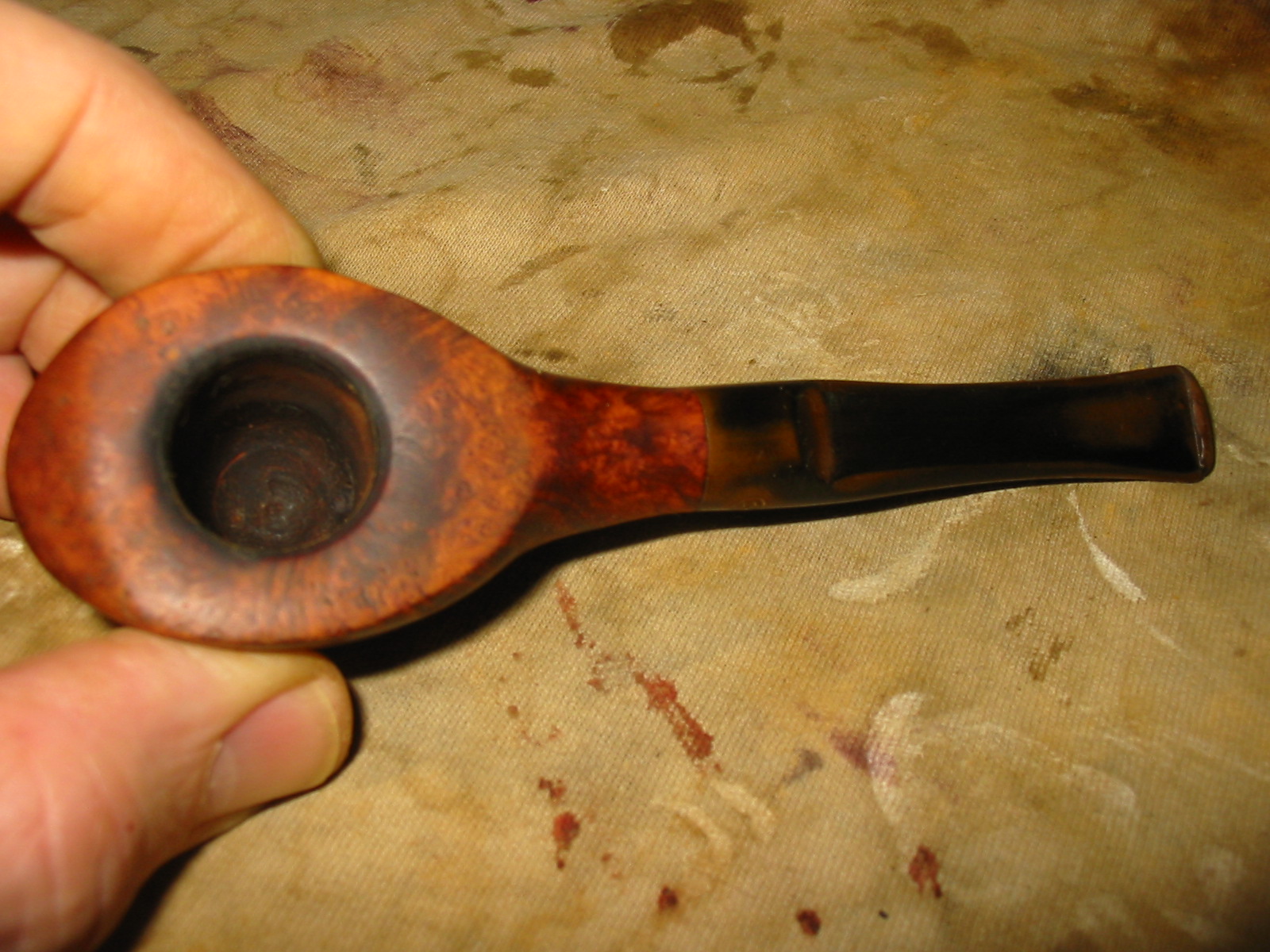
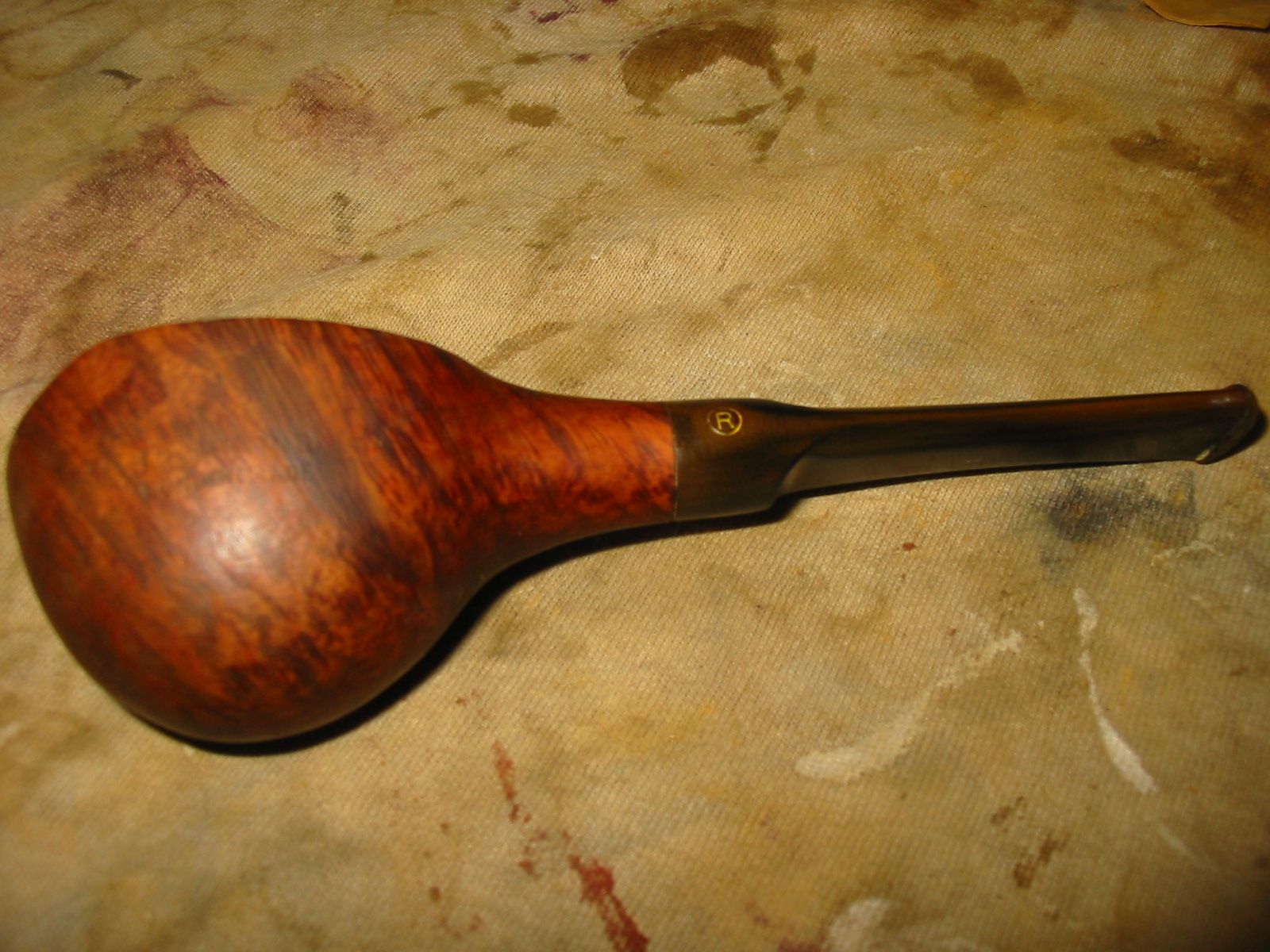
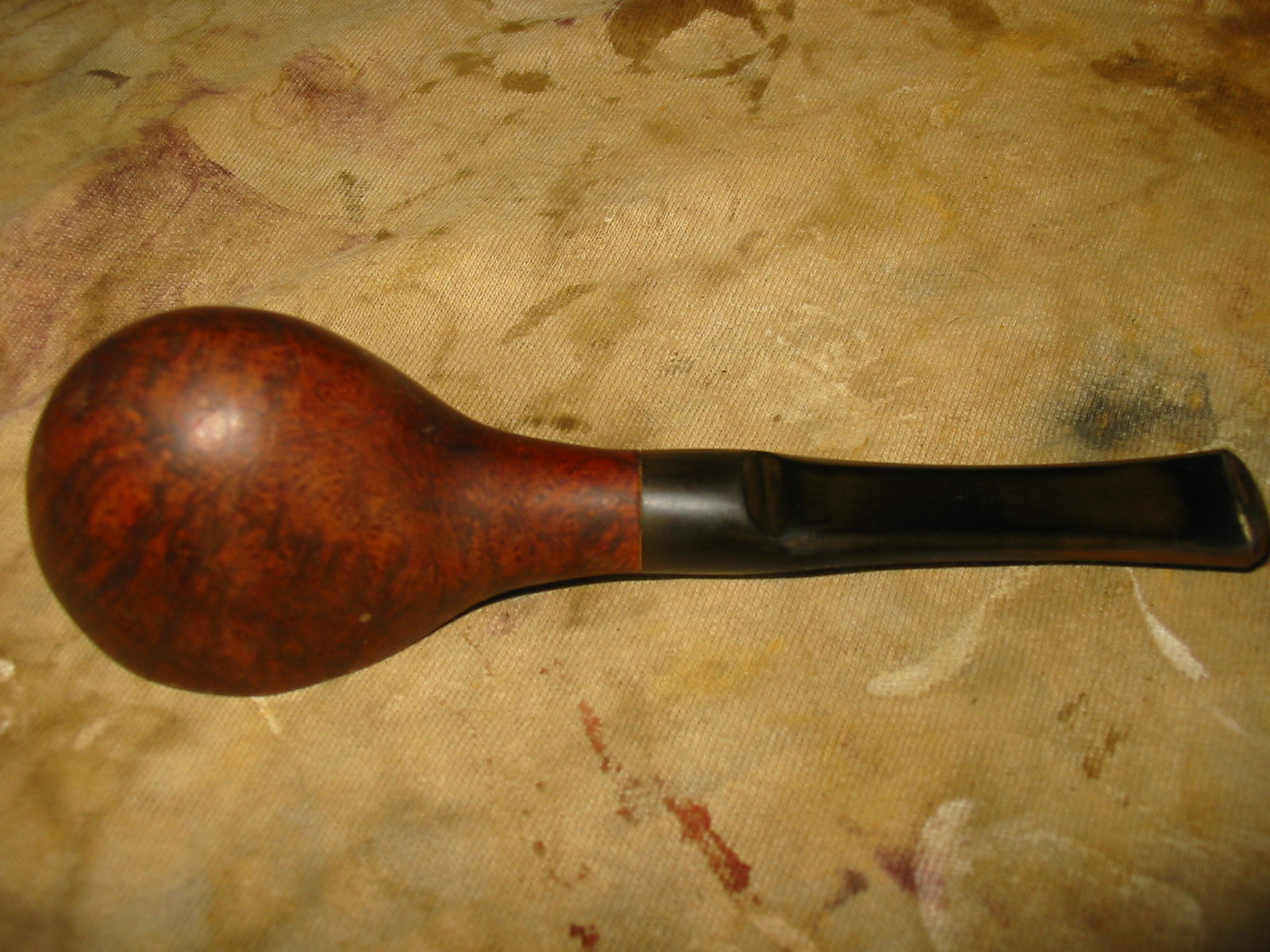
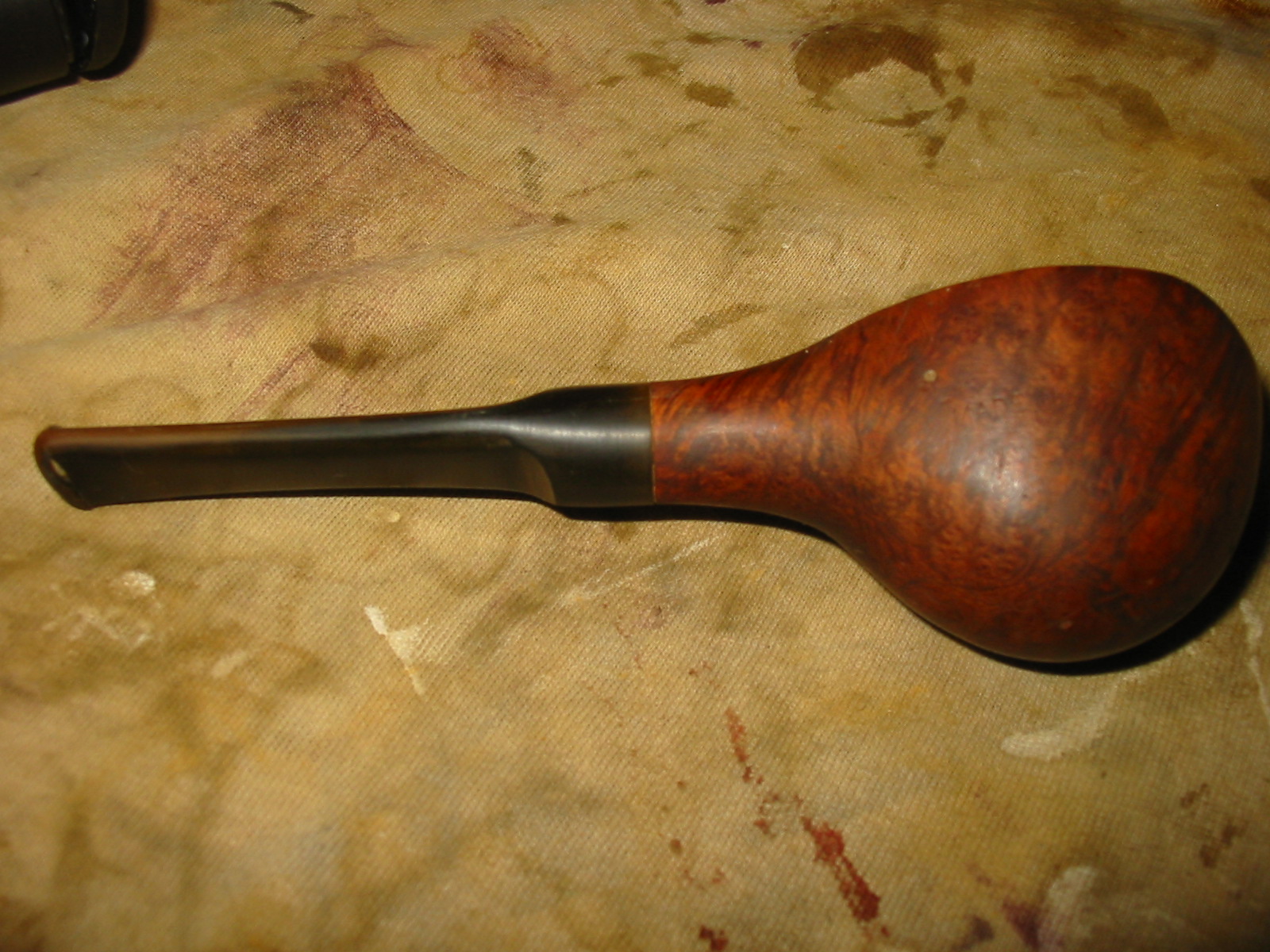
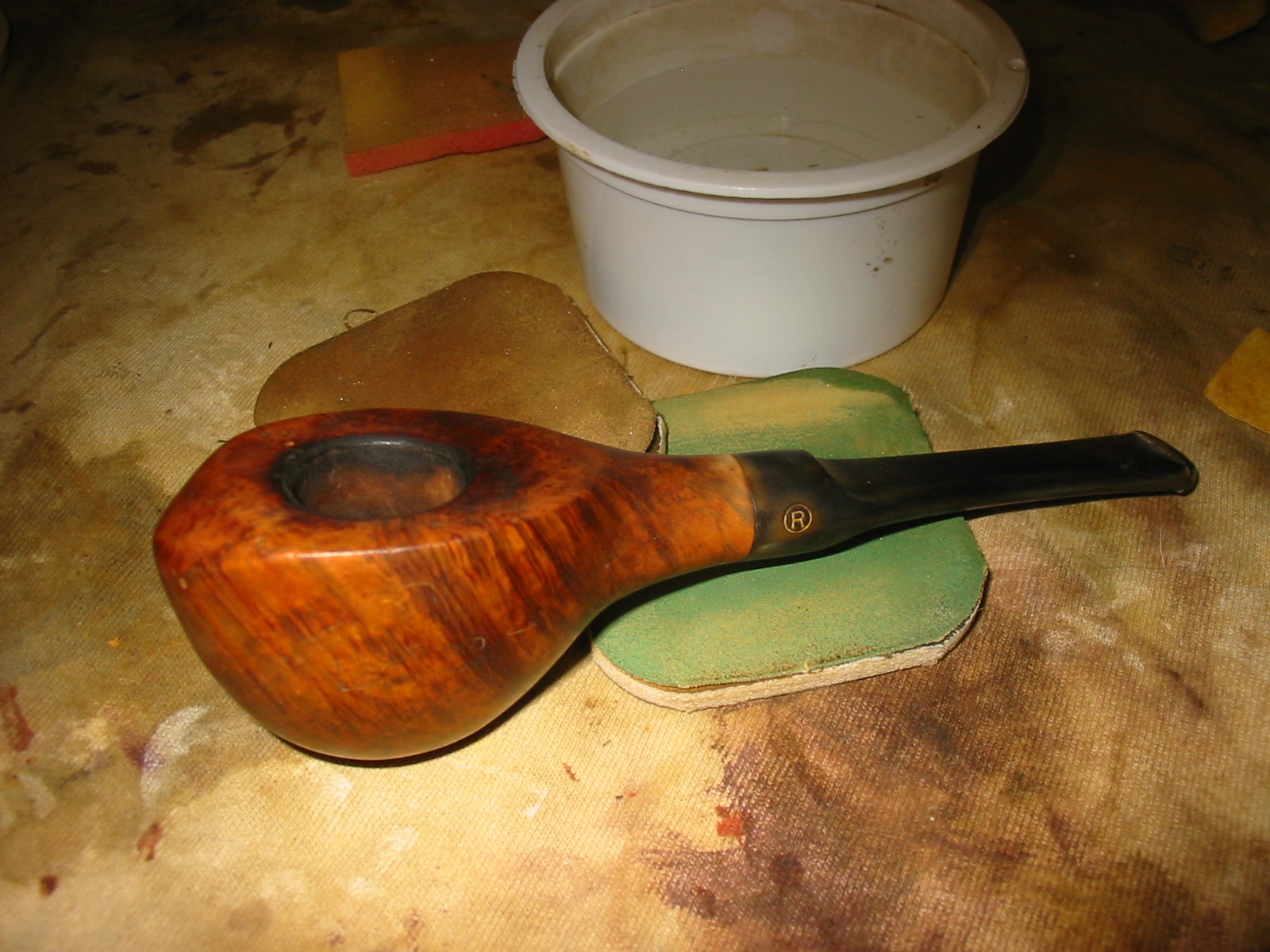
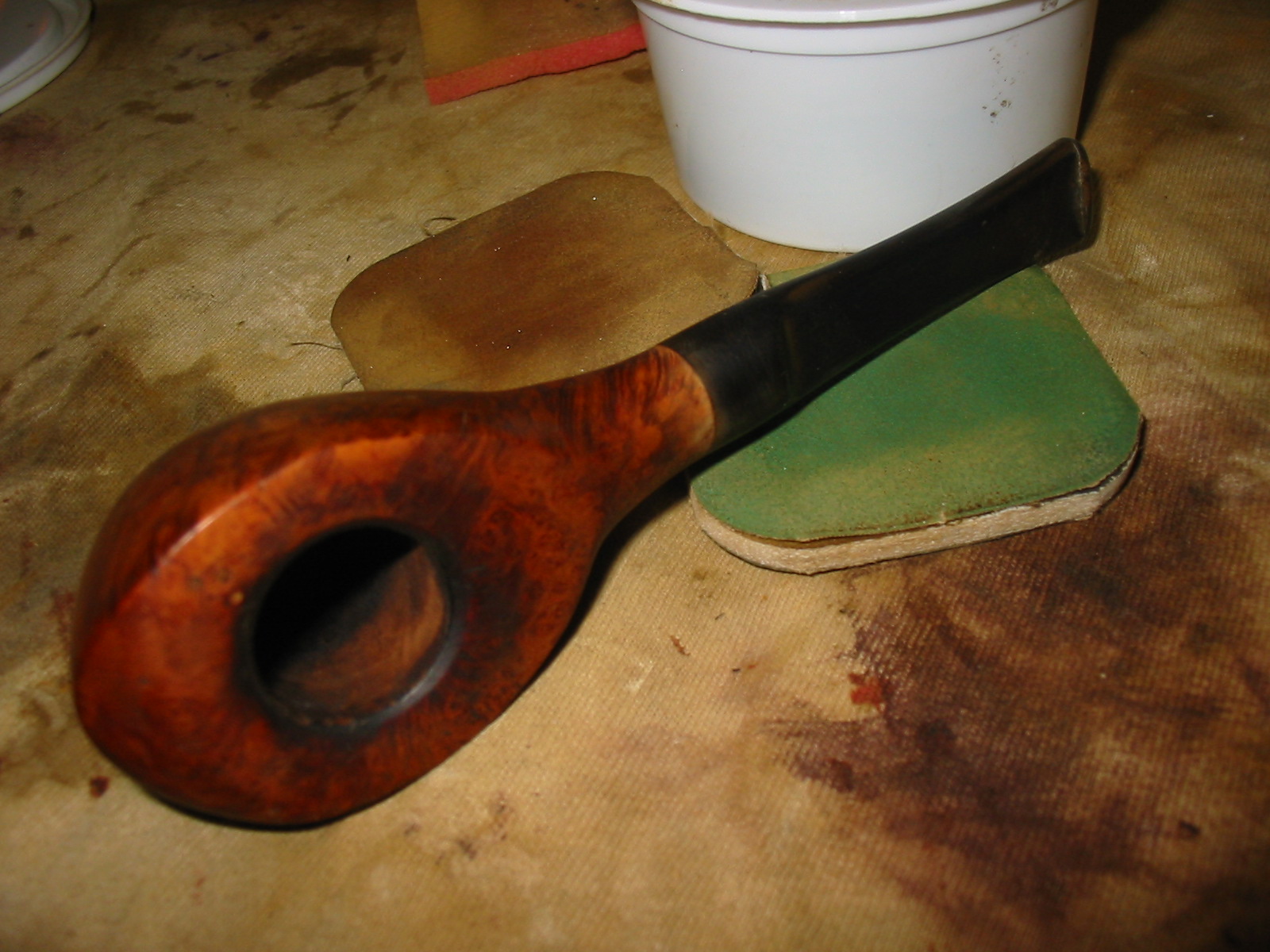
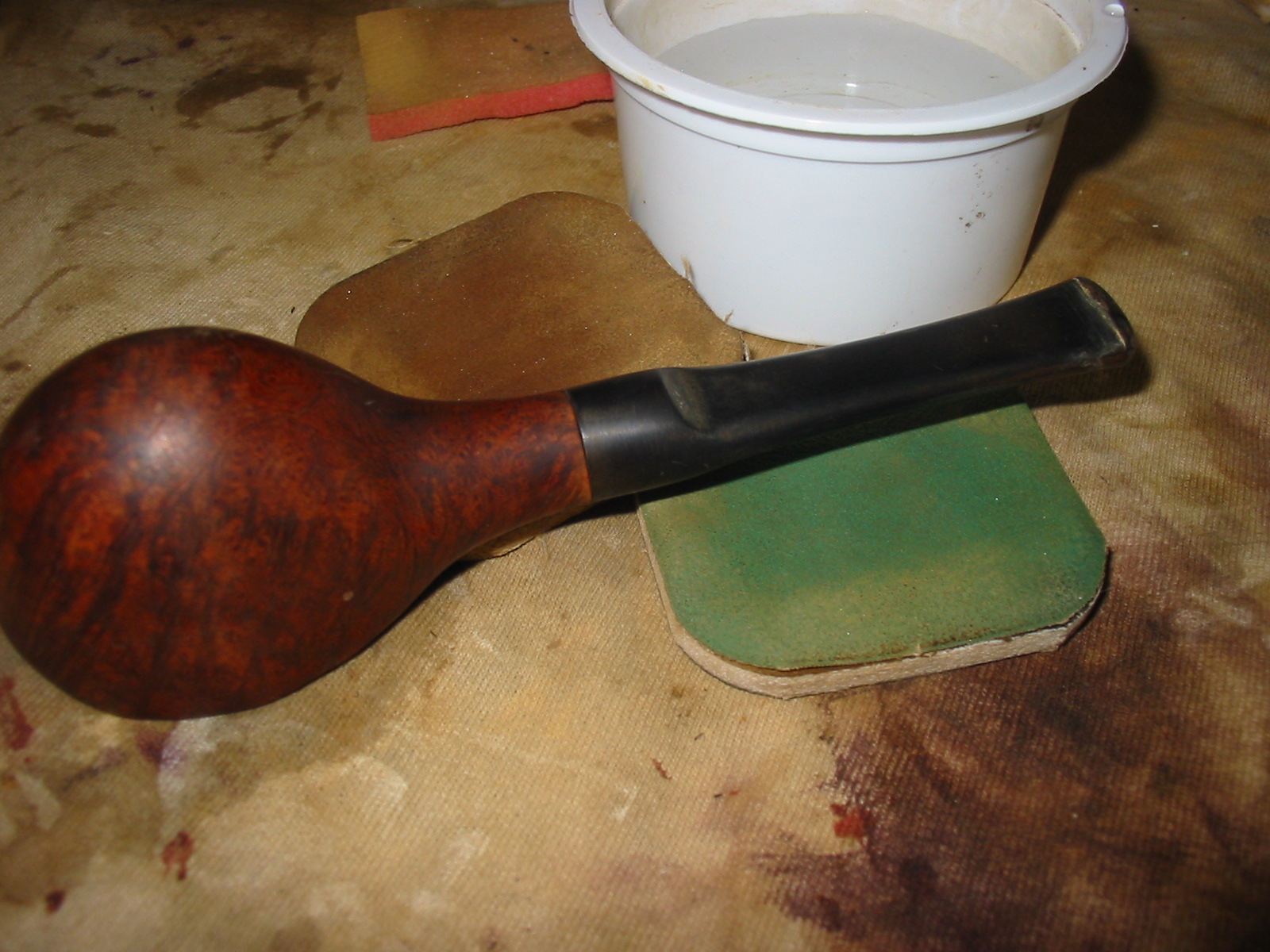
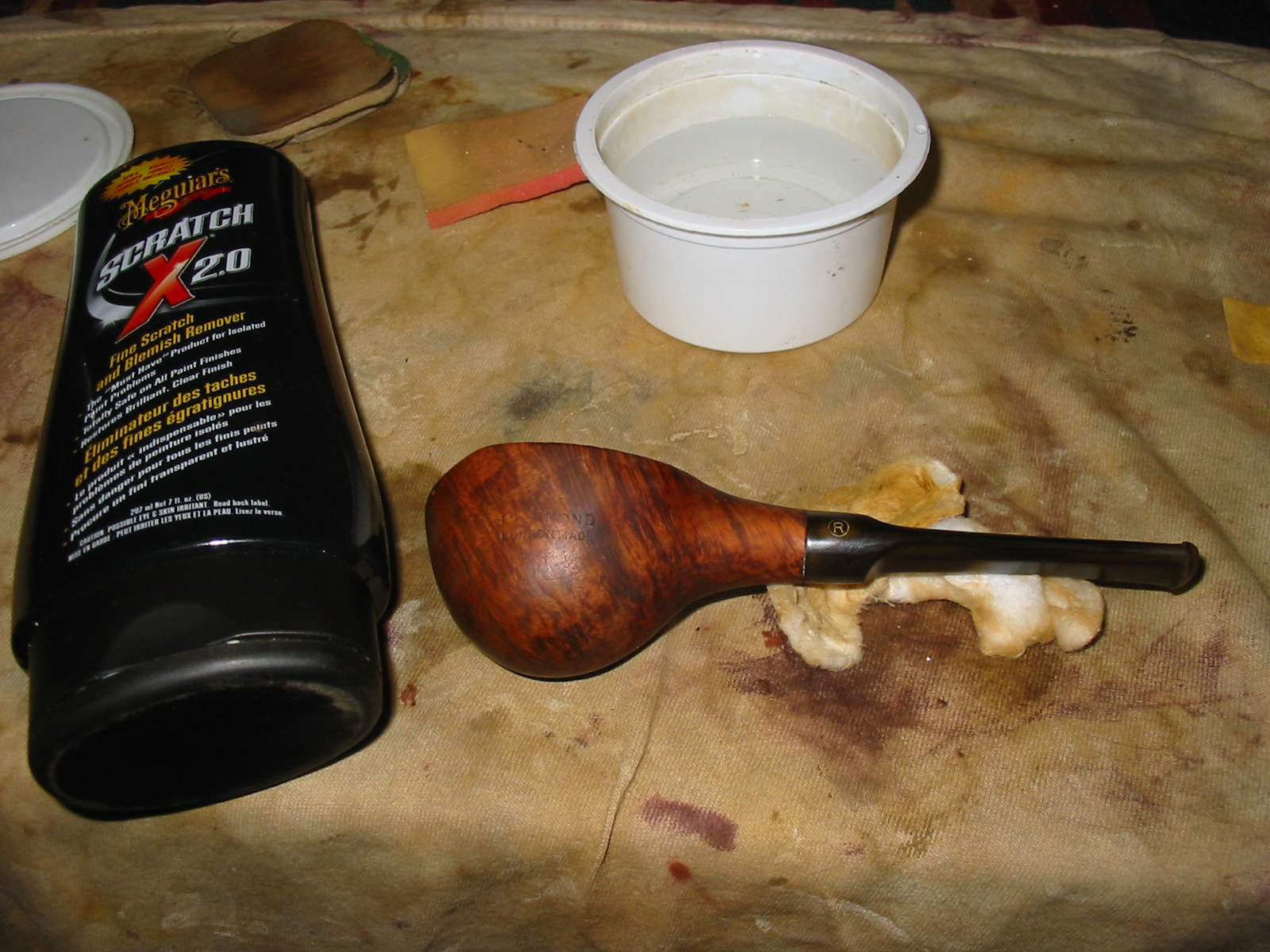
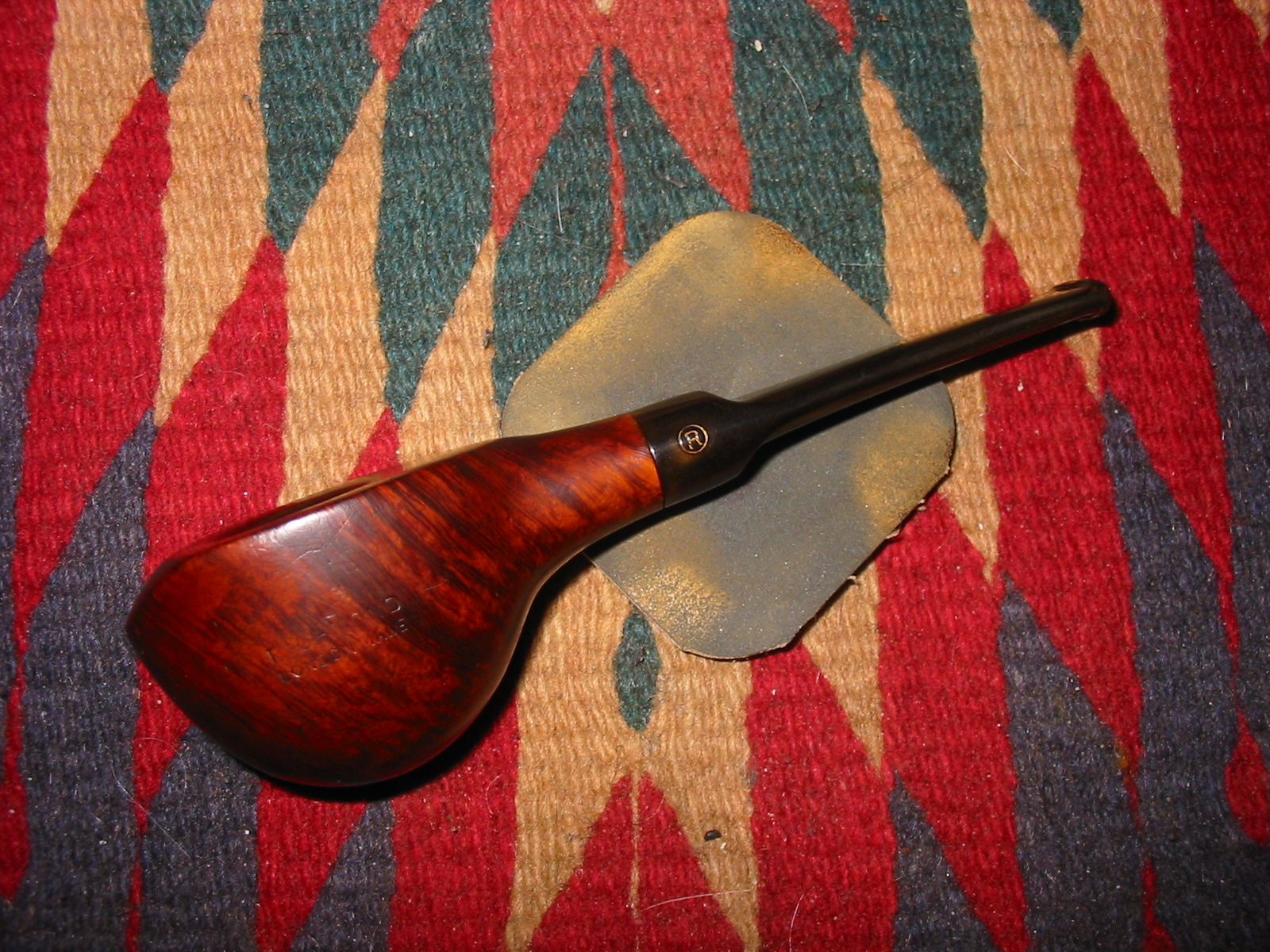
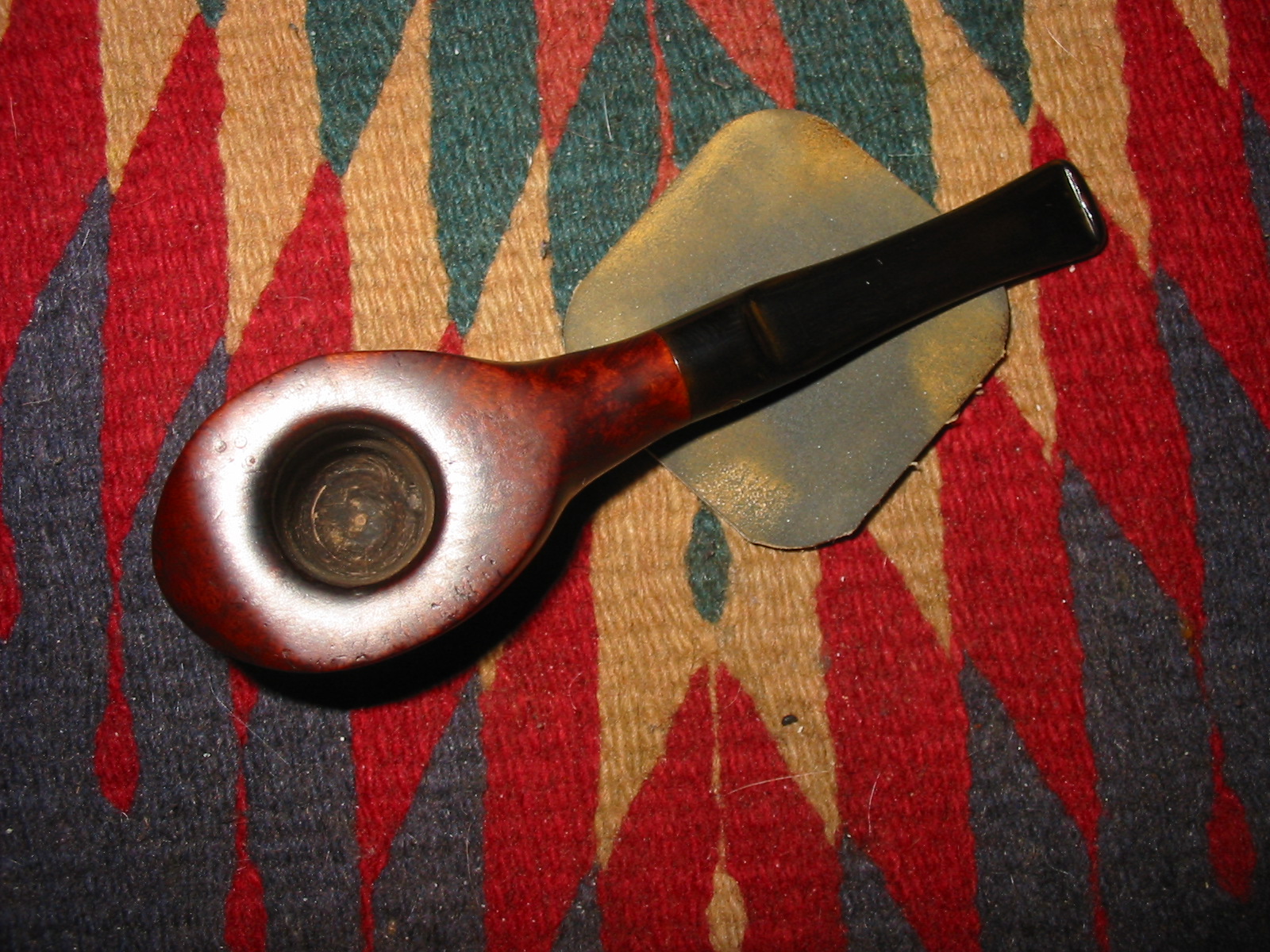
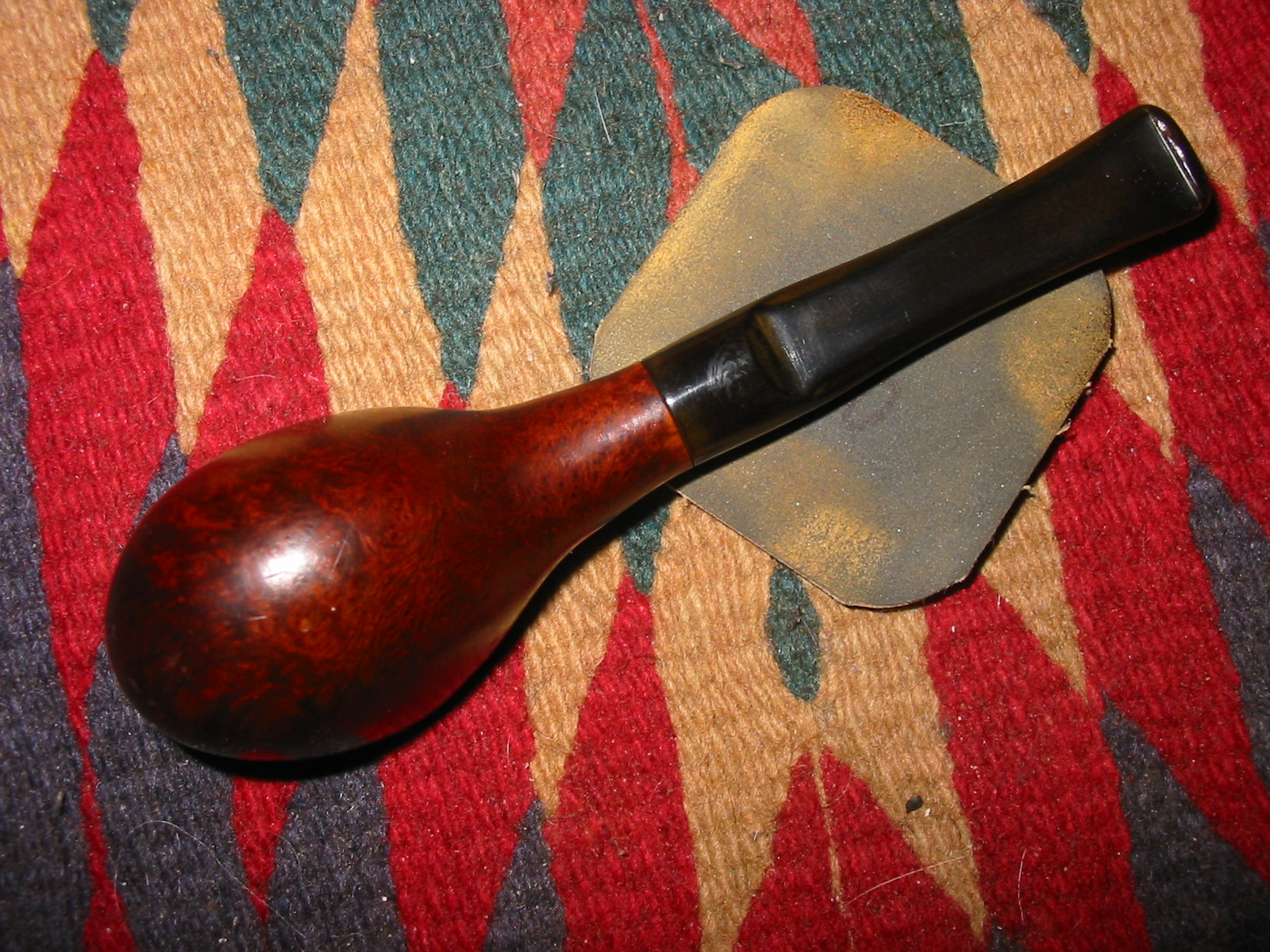
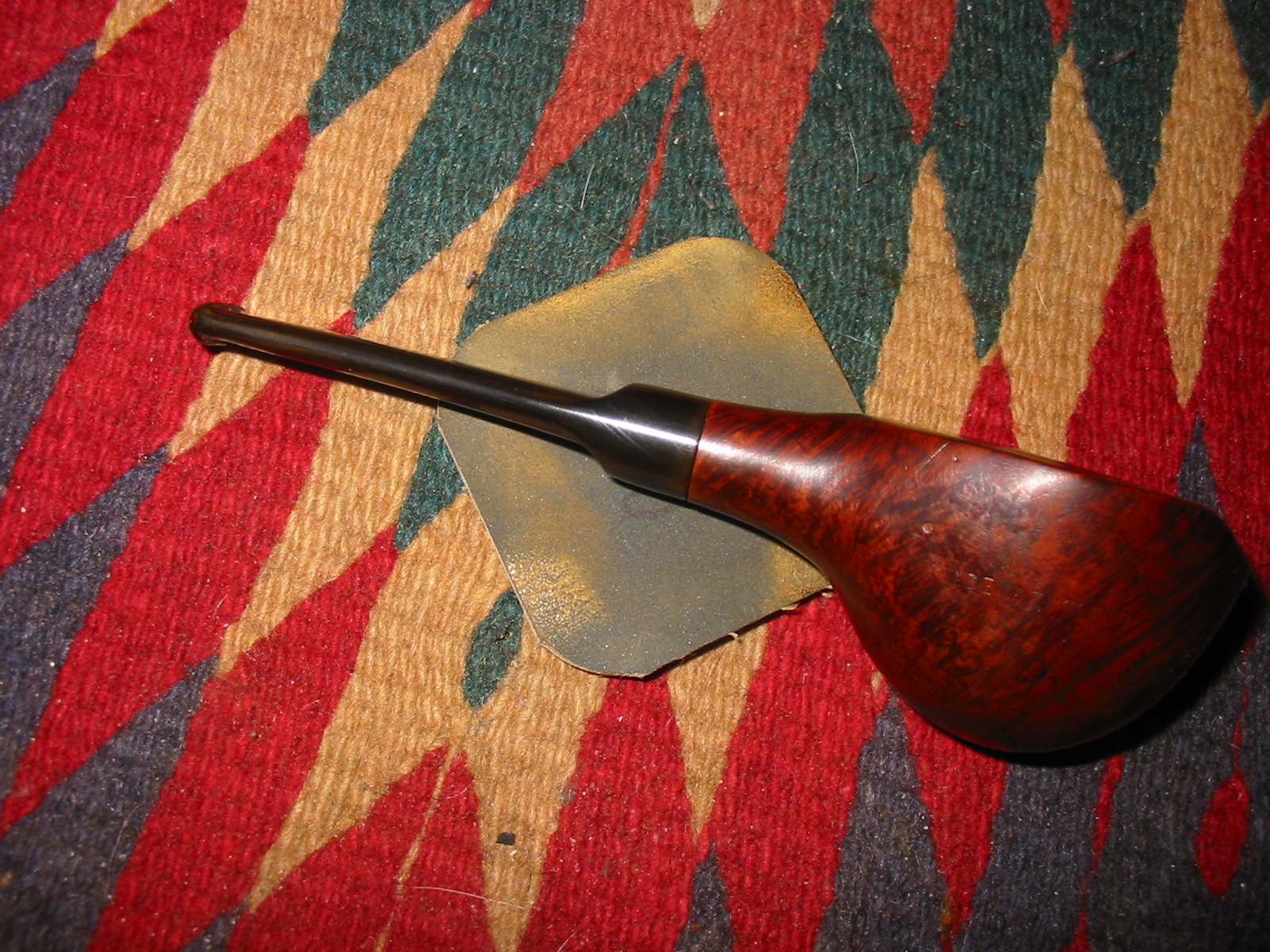
This old timer is an odd shaped pipe with the bowl hanging below the height of the shank. The line from the rim to the stem is straight and the bowl hangs below that. It is stamped Richmond over London Made on the left side of the bowl and on the right it is stamped Made in England. From the information that I can find the pipe was made by either Saseini or Comoys. Both stamped pipes with the Richmond label. The first series of four photos show the pipe as it was when it arrived here at my workbench.

ImageImageImageImage

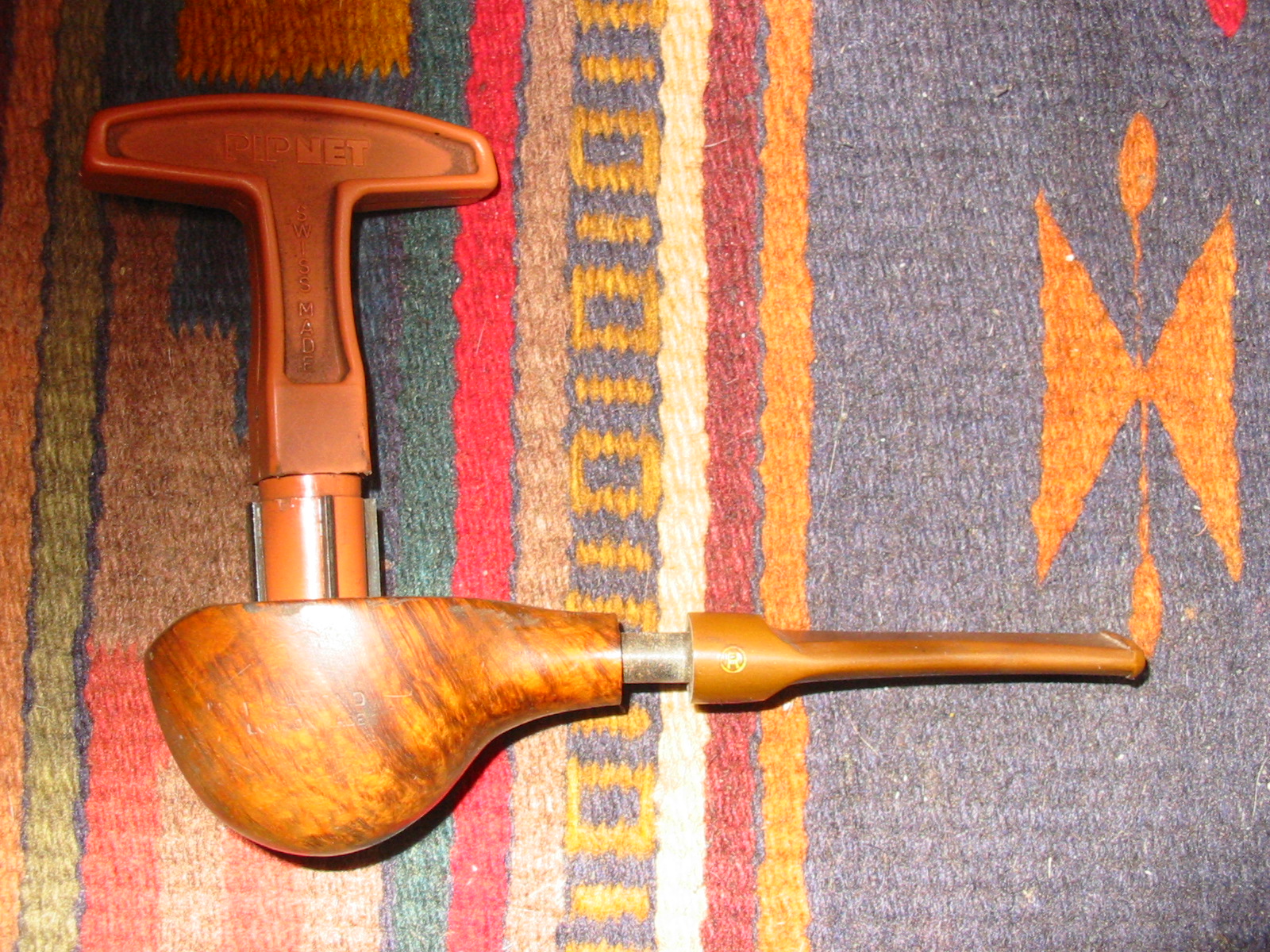
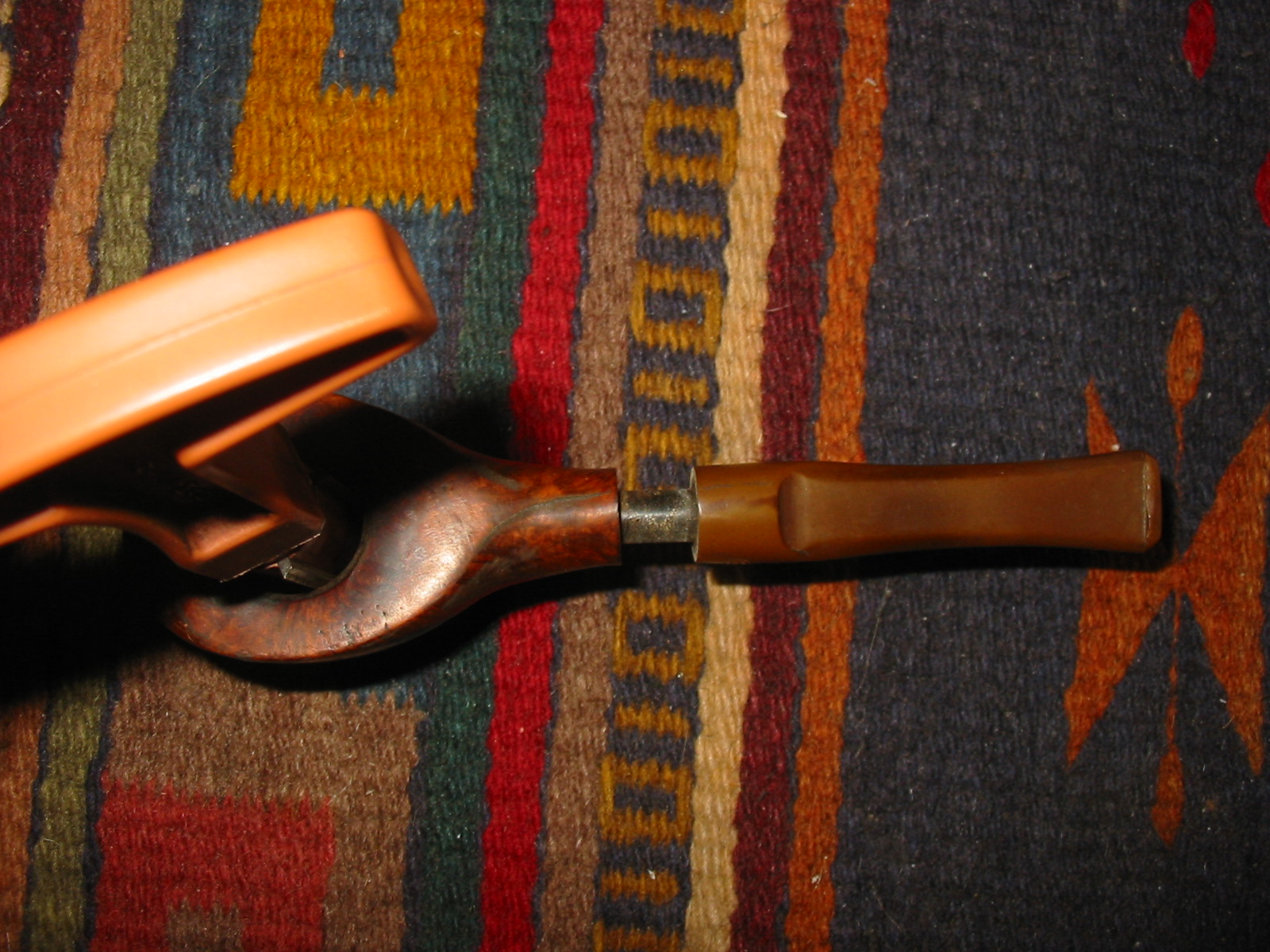
I cleaned the bowl and shank with Isopropyl alcohol. I reamed out the cake in the bowl. I use a Pipnet T handle reamer. In this case I started with the smallest blade set and worked up to the one that is pictured below in the next two photos.

ImageImage

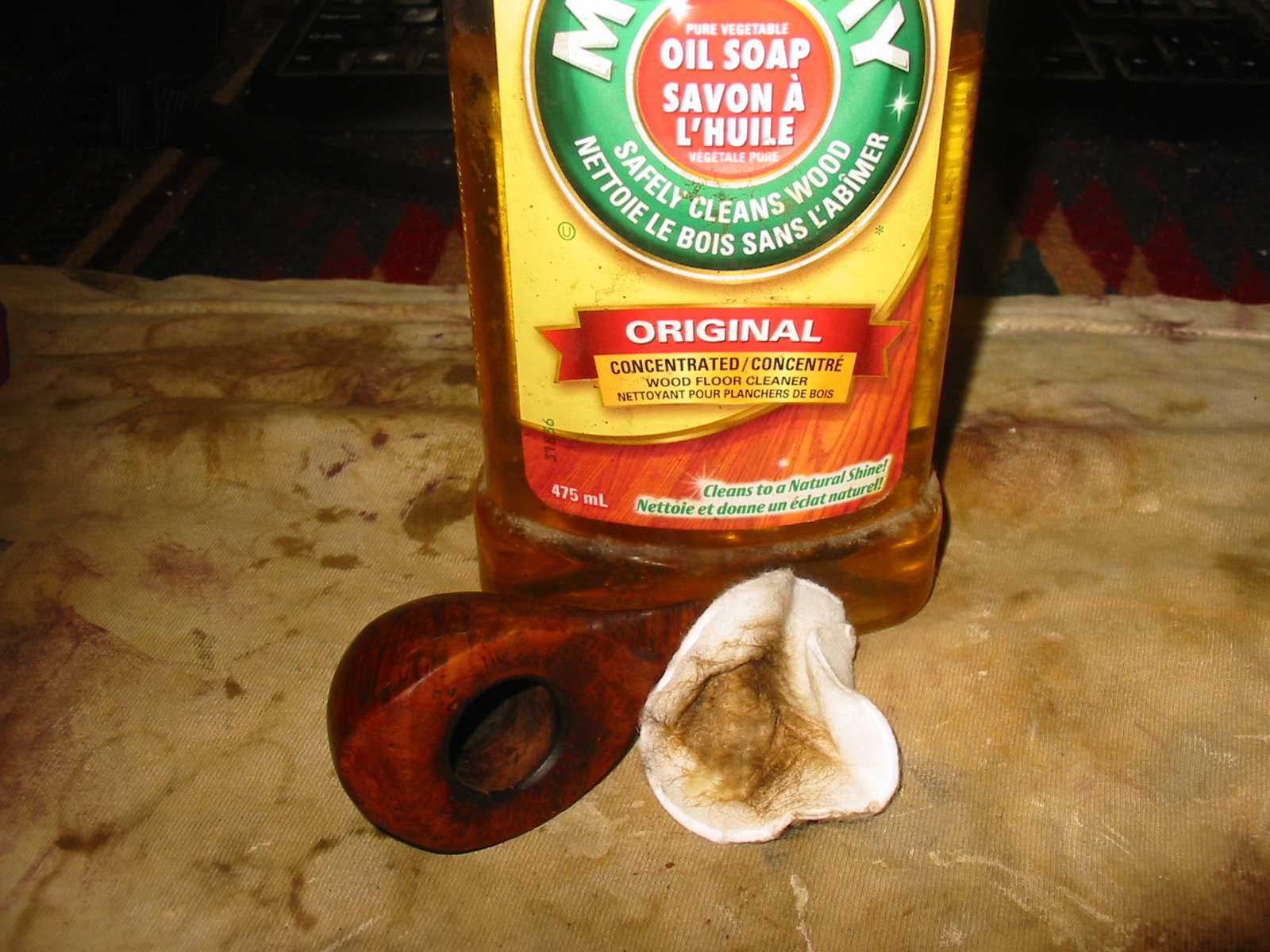
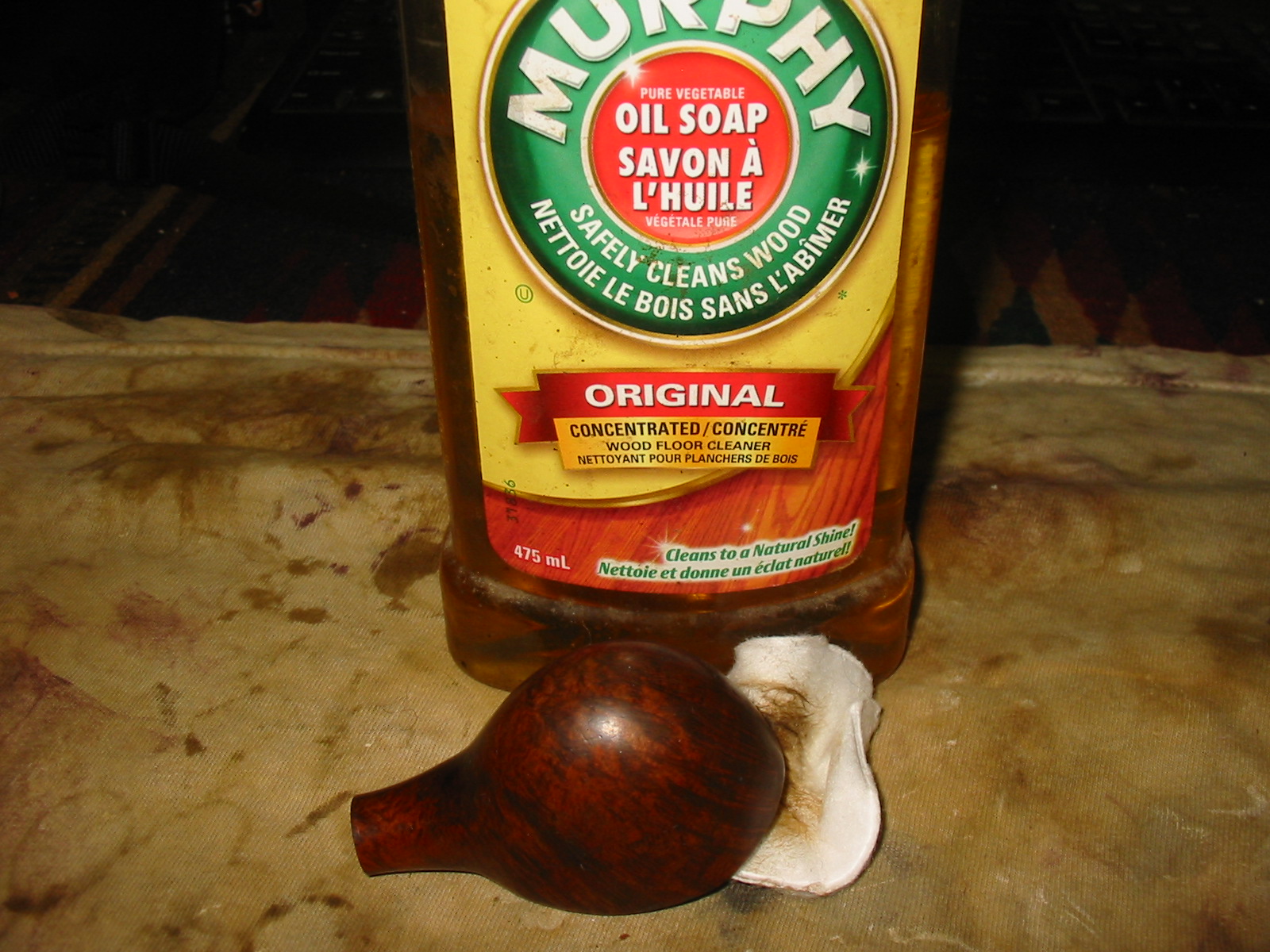
After reaming the bowl I scrubbed the outside of the bowl with Murphy’s Oil Soap on a cotton pad. I wanted to remove as much of the old waxes and grime that was on the surface of the bowl and the rim.

ImageImage

After the scrubbing I worked on the inside of the shank. I scrubbed it out with alcohol on pipe cleaners and then scrubbed the mortise with cotton swabs dipped in isopropyl alcohol. The two photos below show the angle of the drilling from the shank to the bottom of the bowl. The drilling started at the bottom edge of the mortise and came out at the centre of the bottom edge of the bowl. It is a well drilled pipe.ImageImage

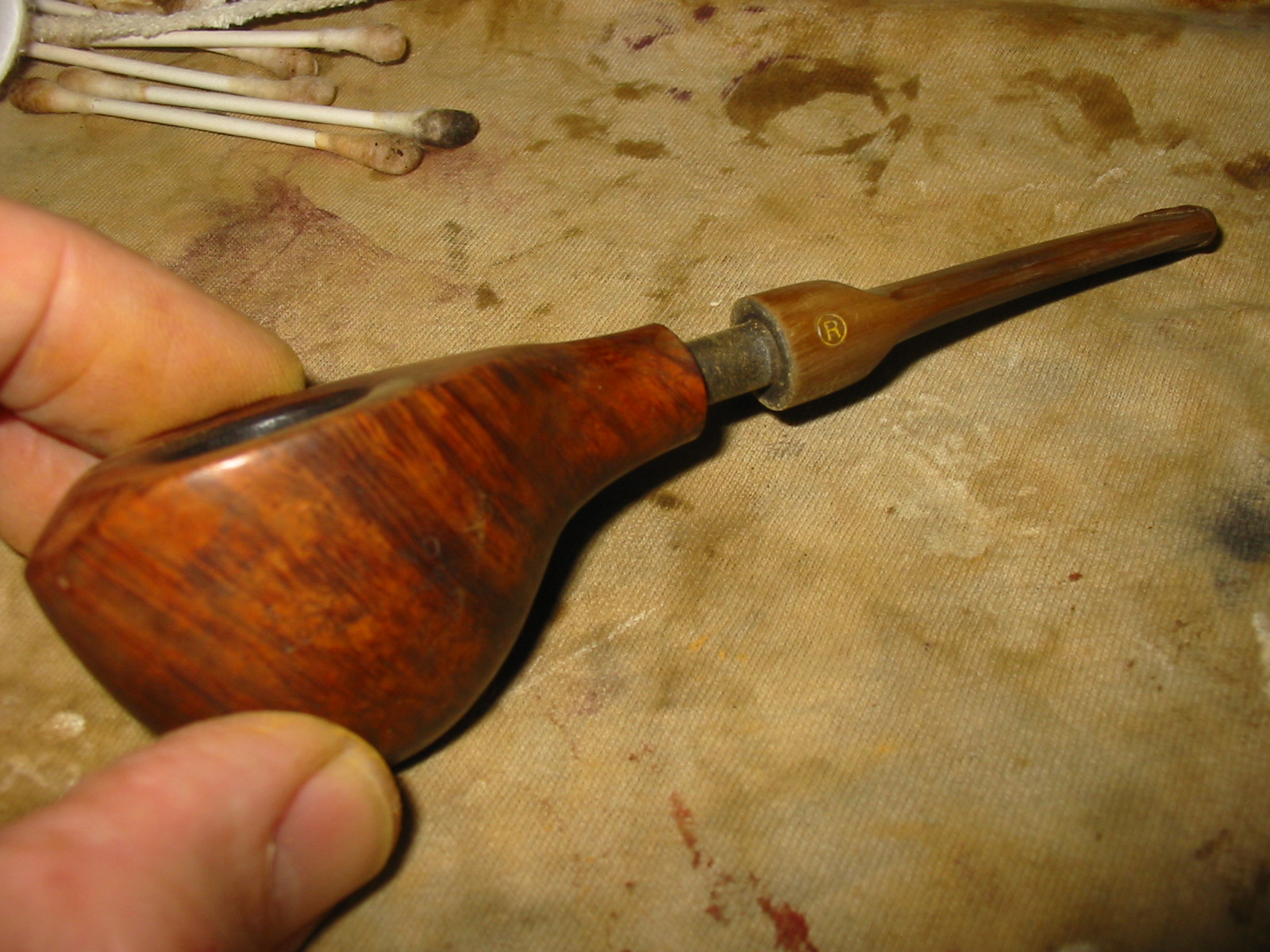
The next three photos show the bowl after I had scrubbed it. I also used the Murphy’s on the stem to remove some of the surface oxidation. I wanted to preserve the Circle R stamping on the stem so I carefully worked around that area.

ImageImageImage

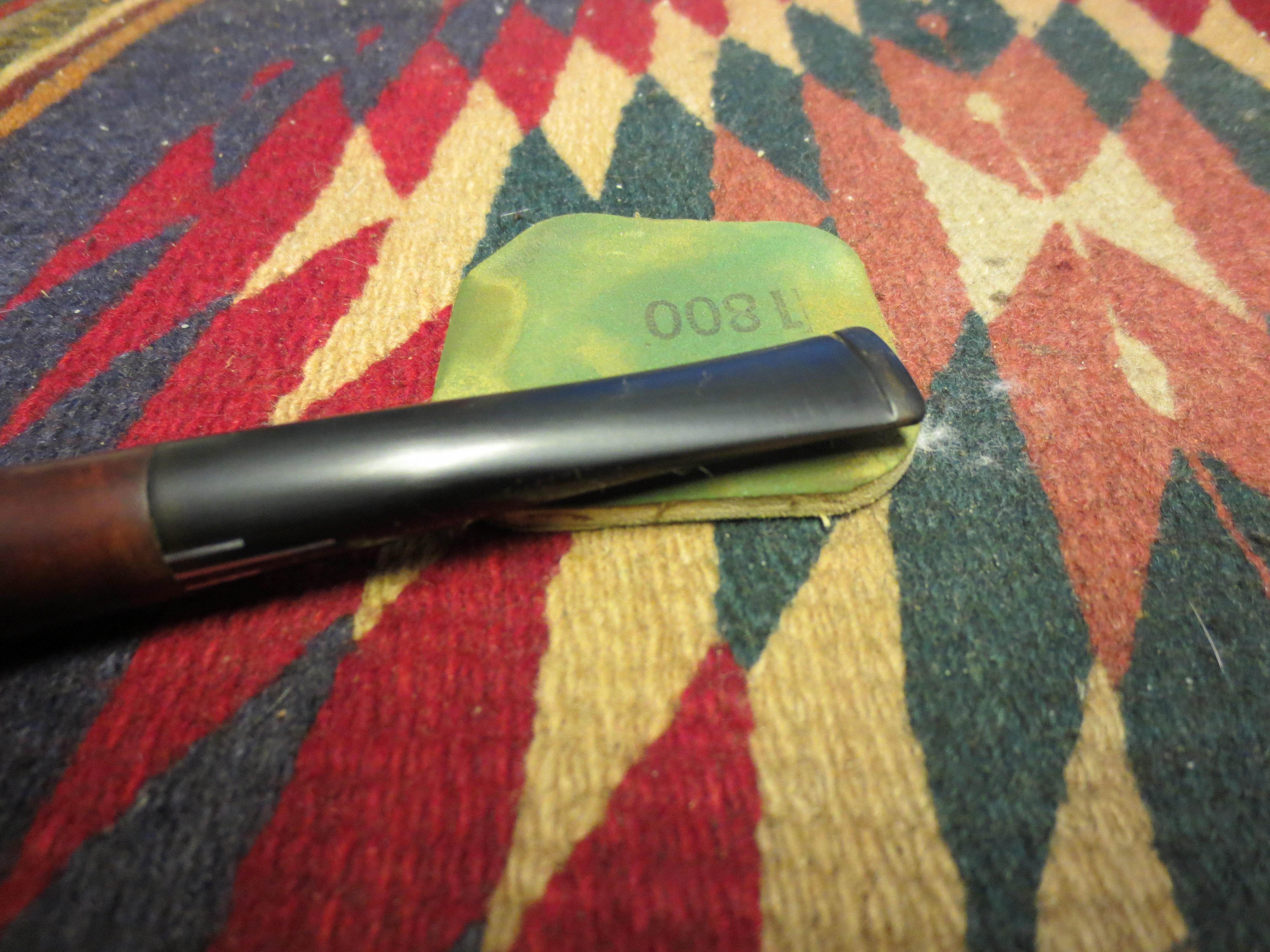
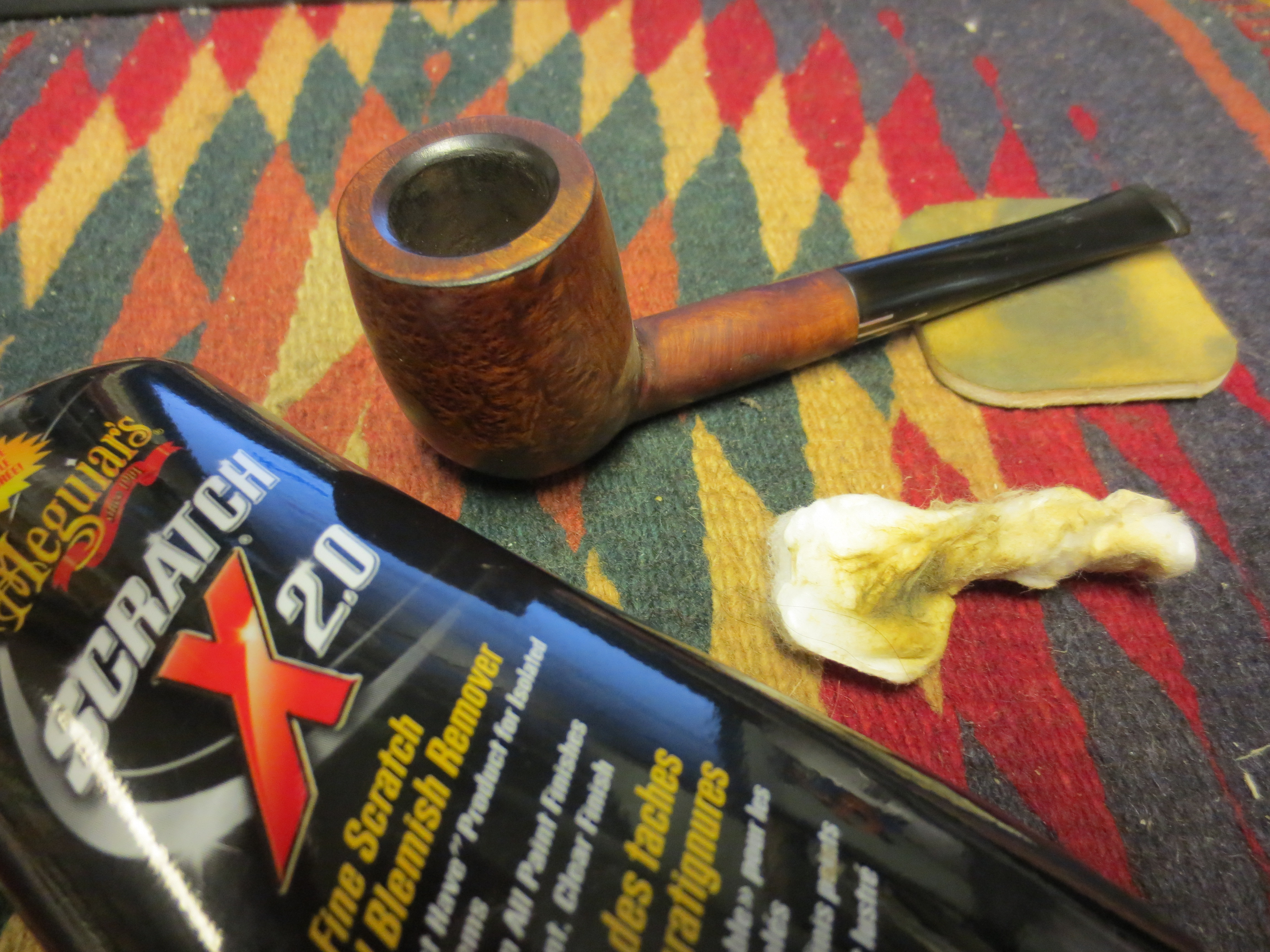
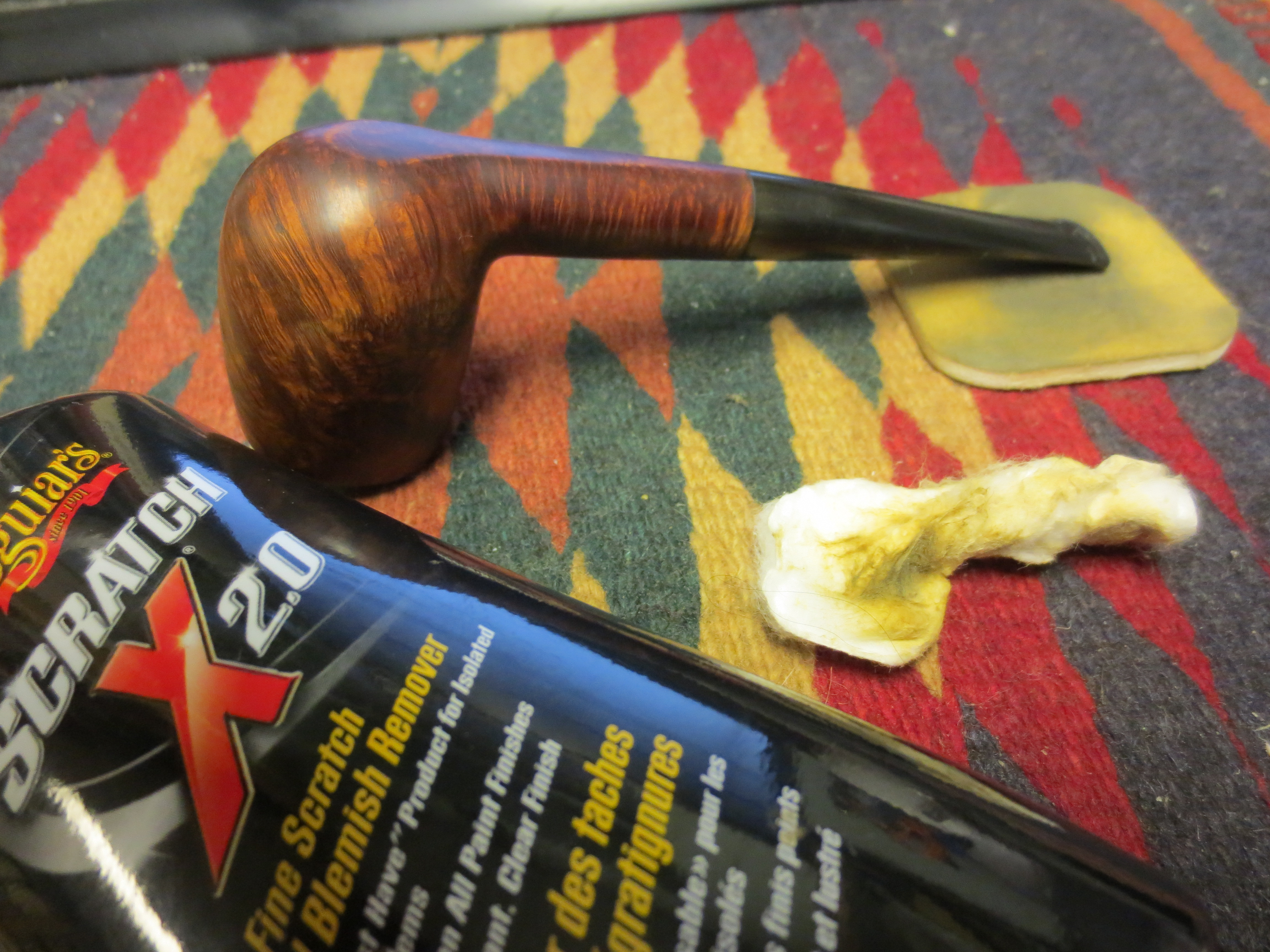
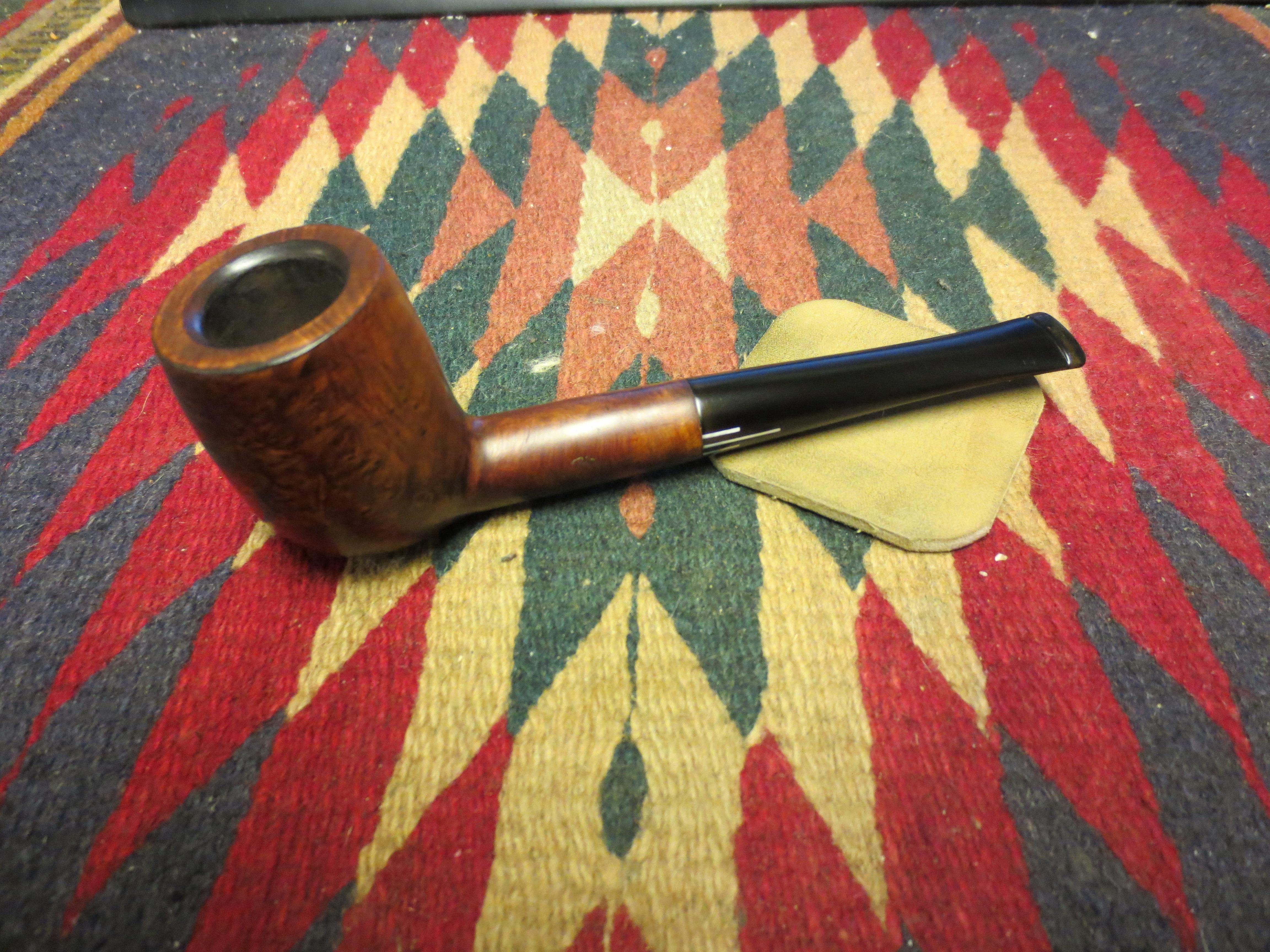
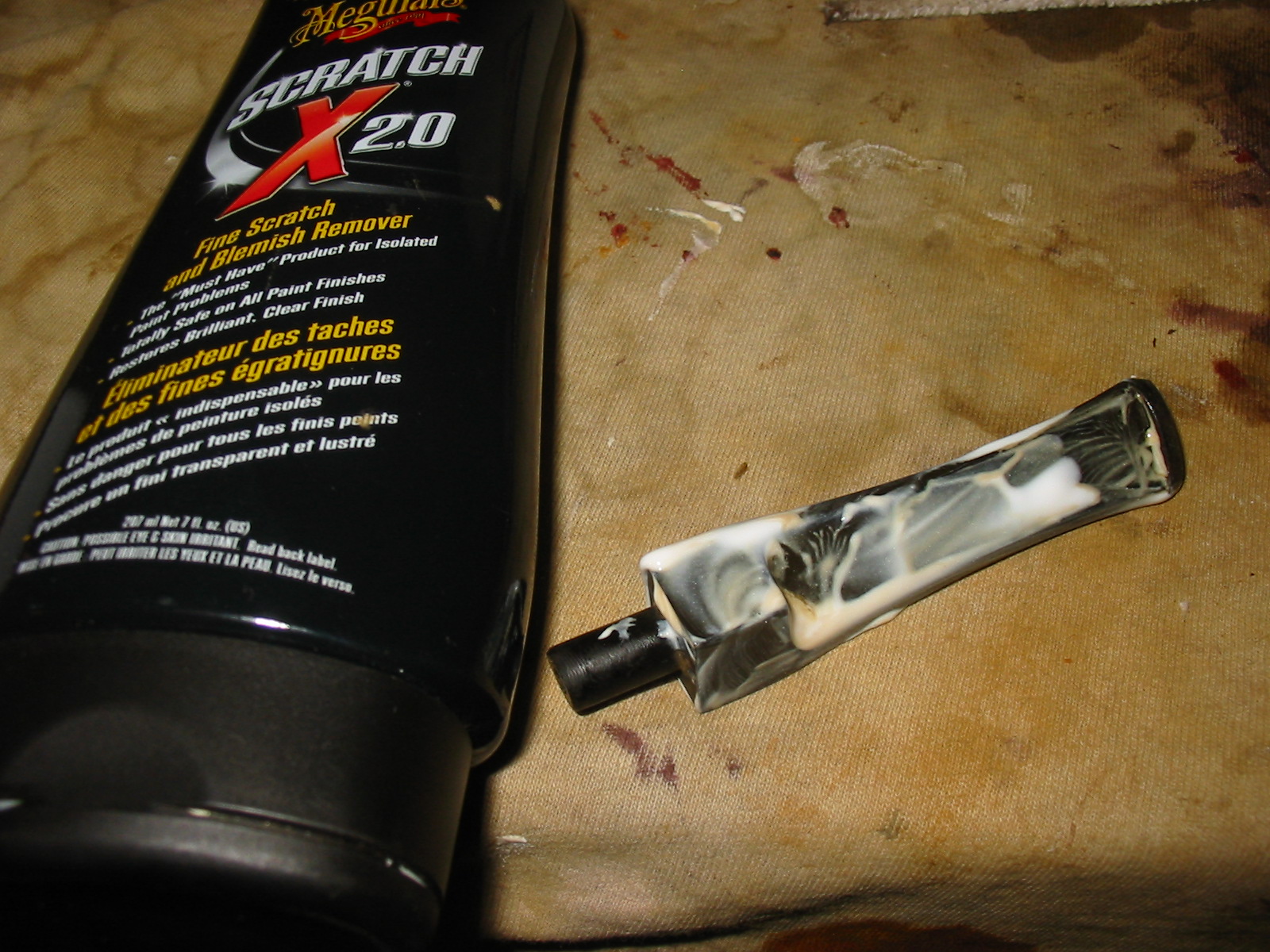
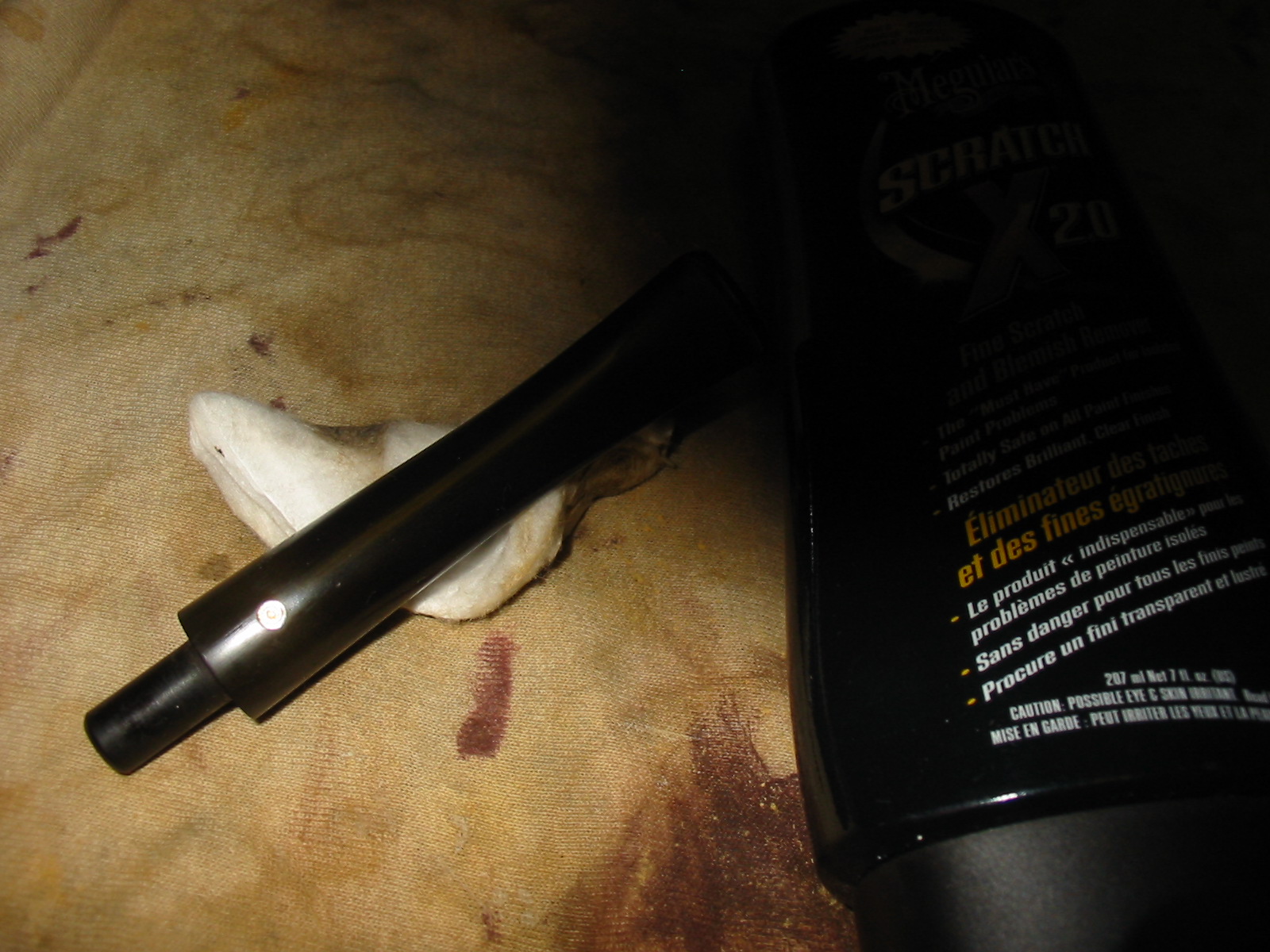
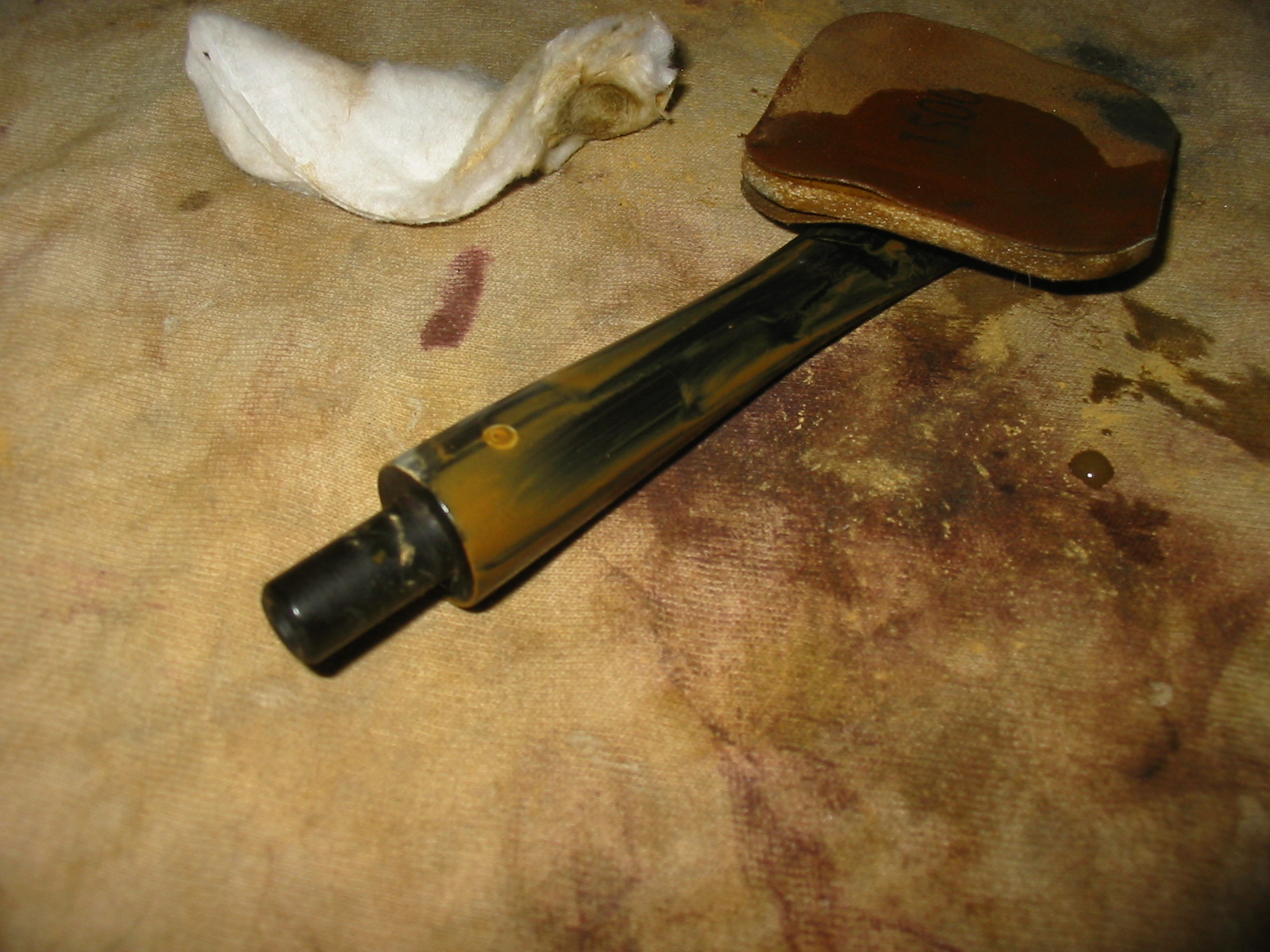
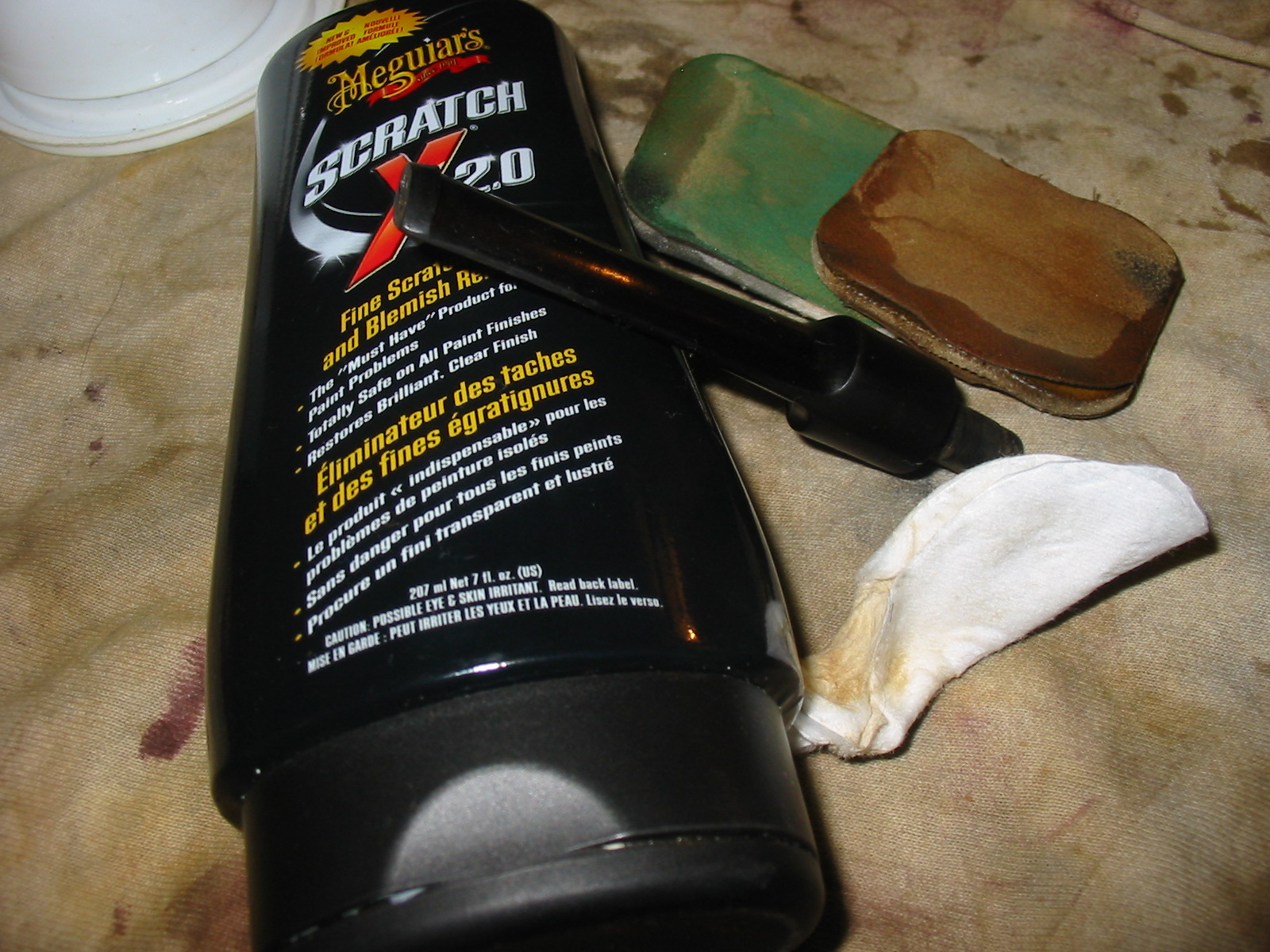
The next four photos show the stem after I had scrubbed it with the oil soap and then polished it with the Maguiar’s Scratch X2.0. The majority of the surface oxidation came off. What remained was deeply embedded in the stem and would require more work.

ImageImageImageImage

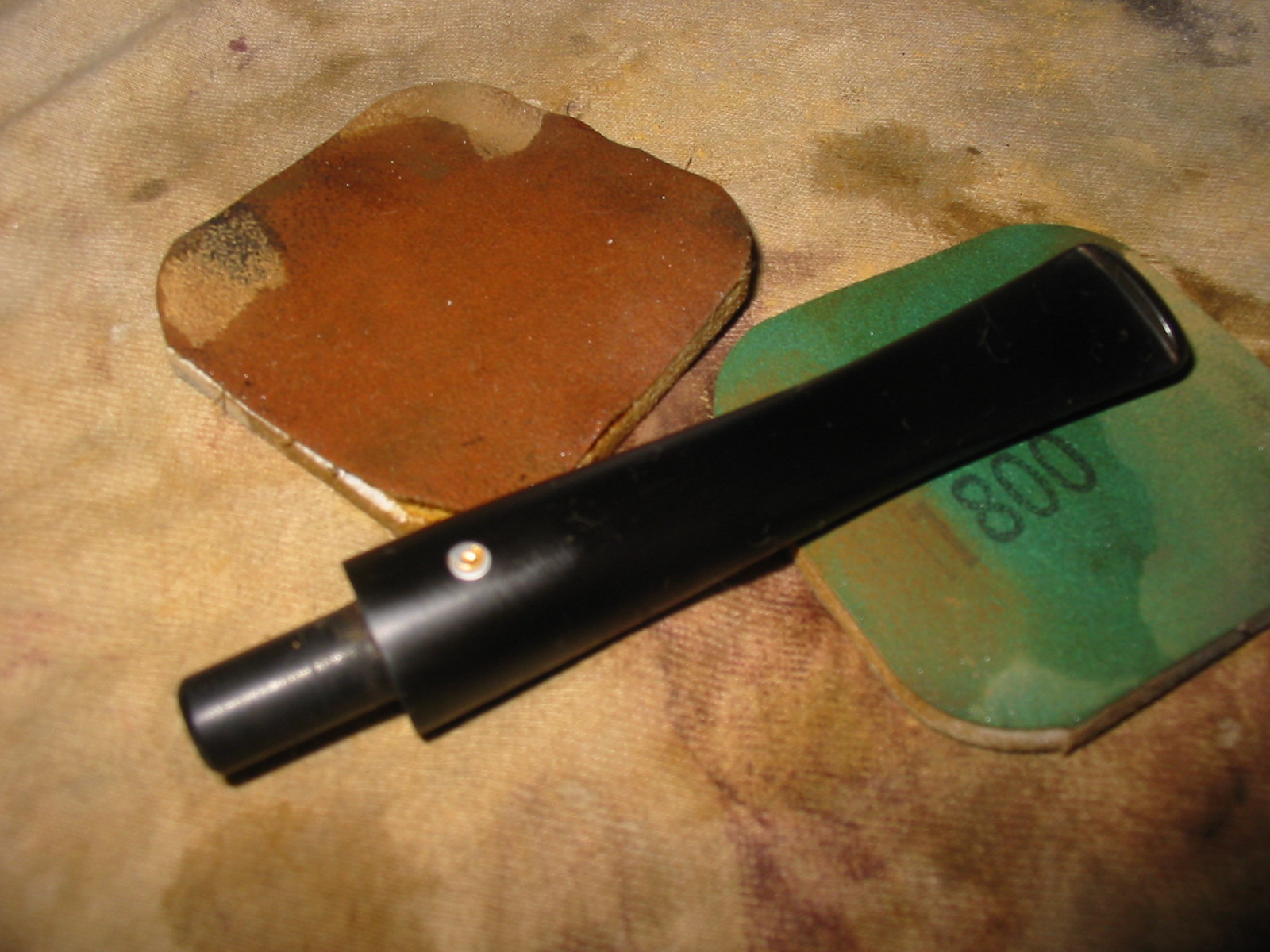
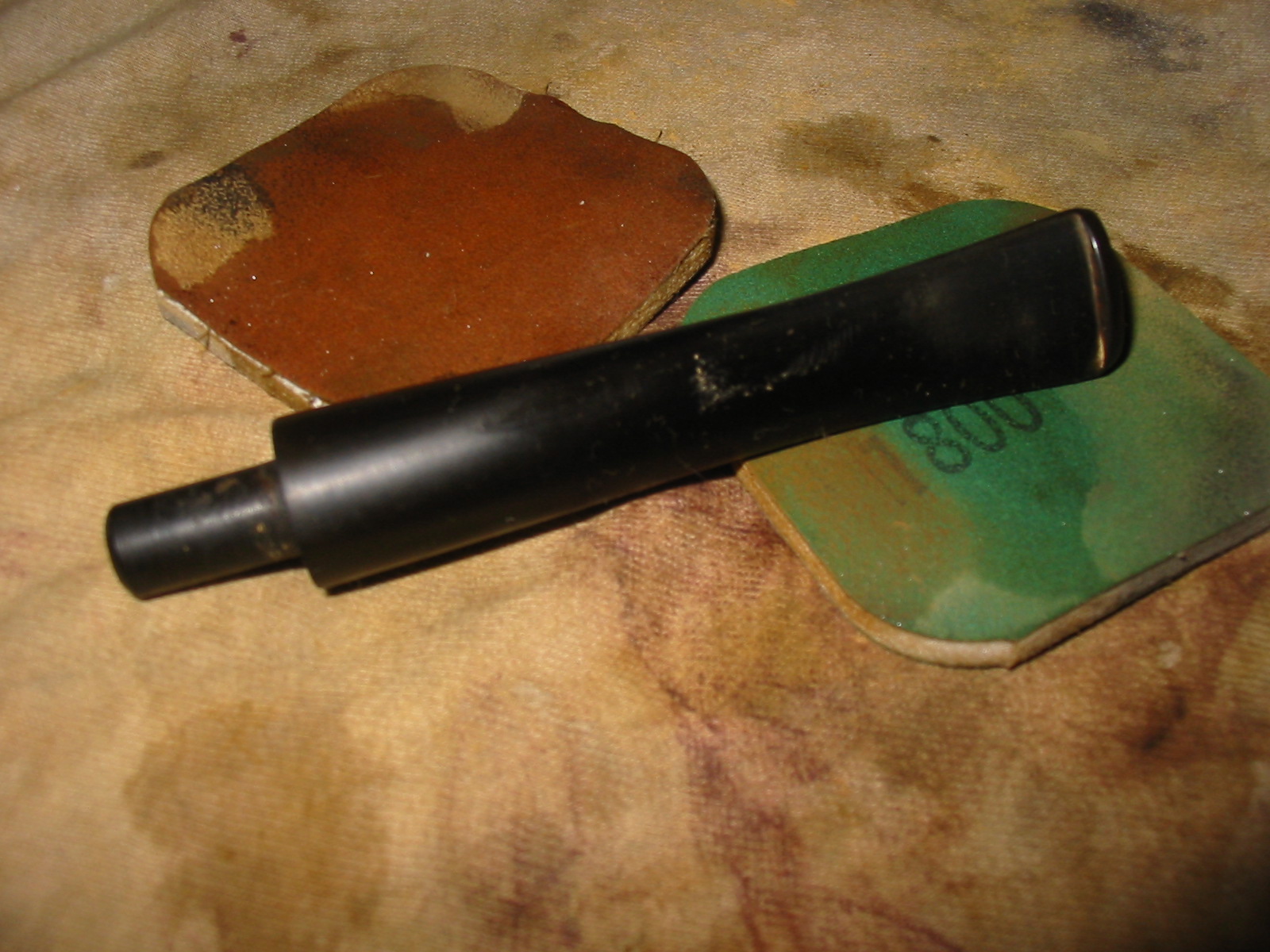
At this point I worked on the remaining oxidation on the stem using the micromesh sanding pads. The next series of six photos show the process. I wet sanded with 1500 and 1800 grit micromesh and then polished the stem with Maguiar’s Scratch X2.0 polish.

ImageImageImageImageImageImage

After polishing I stained the bowl with a dark brown aniline stain mixed 2:1 with isopropyl alcohol to restore the finish to the bowl. I stained it, flamed it, restained and reflamed it to set the finish coat. The first two photos below show that process. I took it to my buffer and gave it a buff with White Diamond. The next three photos show the pipe after I had buffed it.

ImageImageImageImageImage

The finished colour was too dark to my liking and obscured the grain rather than highlighting it so I used acetone on cotton pads to reduce the intensity of the colour. The next series of three photos show the new look to the colour after wiping it down with acetone. Note the stain on the cotton pads in the photos.

ImageImageImage

I took the pipe to the buffer again and buffed it with White Diamond. The next series of photos show the finished look of the stain at this point. They also show the ongoing work on the oxidation on the stem using the further grits of micromesh. I dry sanded with 2400-12,000 grit micromesh to finish polishing the stem. After I had finished with the micromesh I used the Maguiar’s again to do a final hand polish. I rubbed the stem down with some Obsidian Oil.

ImageImageImageImage

The next five photos show the finished pipe. I took it to the buffer a last time and buffed the stem using White Diamond. I also lightly buffed the bowl. I gave the stem and bowl several coats of carnauba wax and buffed it lightly with a soft flannel buff to bring up the shine. You will note a little oxidation remaining around the logo on the stem. I decided to leave that and not damage the stamping on the stem.

ImageImageImageImageImage

Wally Frank Shipmate


Blog by Greg Wolford

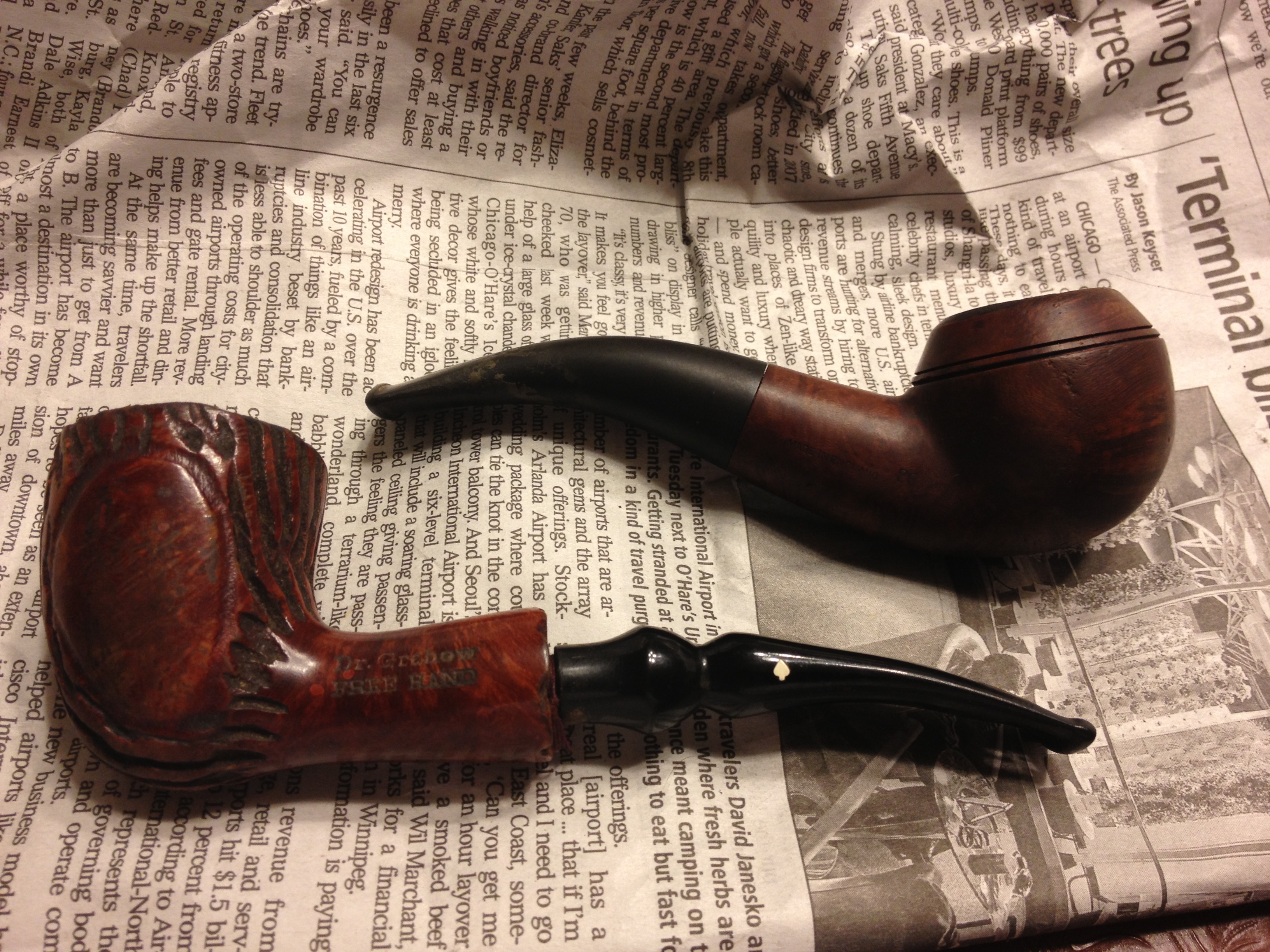
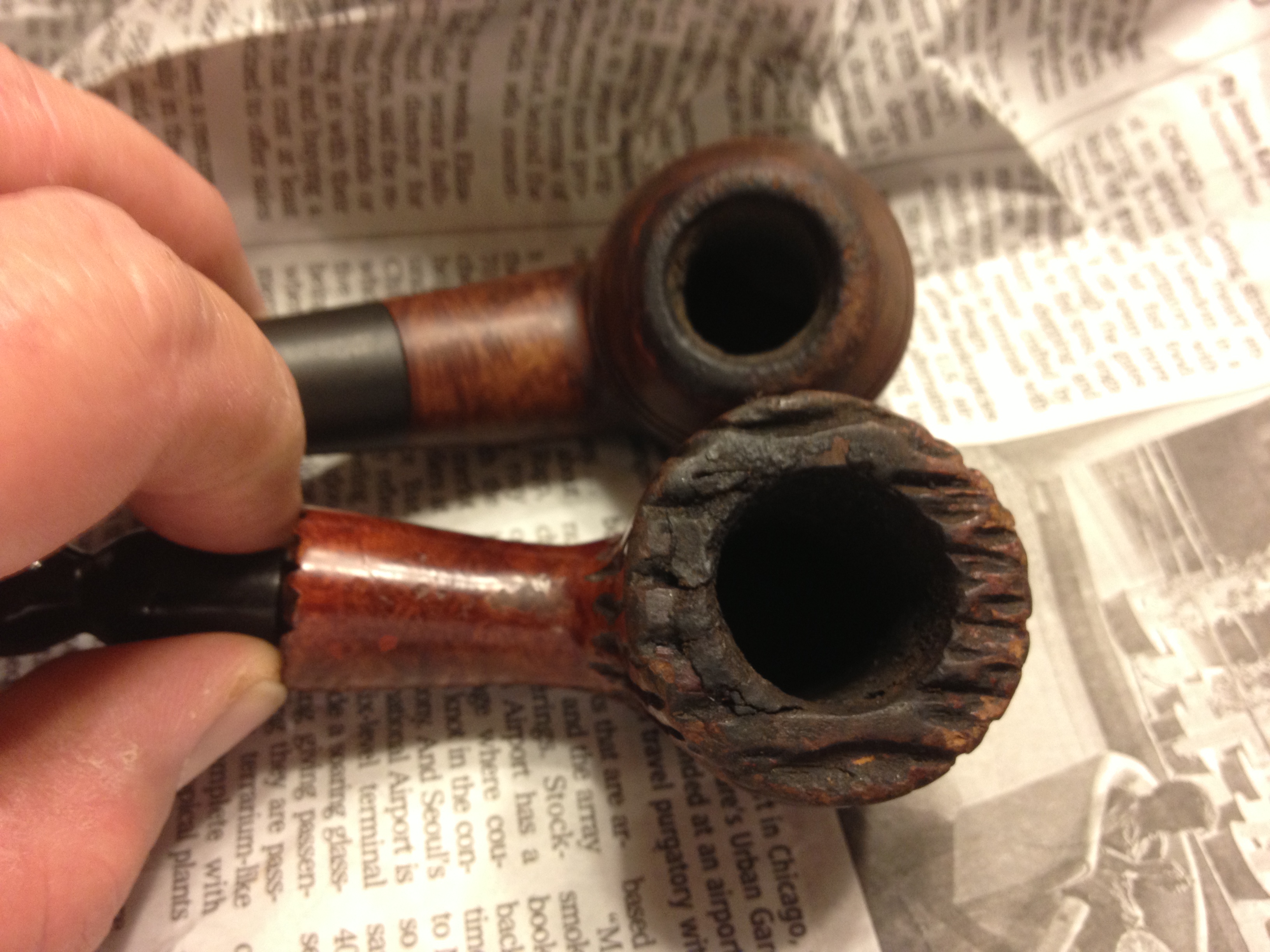
The same trip out that I picked up the Dr. Grabow Freehand I also picked up this Wally Frank. It was in pretty good condition, really just needing a good clean up. I’d never had a Wally Frank before, like the Freehand, so that was part of my interest. But the real interest laid in its shape: a Rhodesian.  The Bulldog and Rhodesian top my list of favorite shapes so this one had to come home with me.

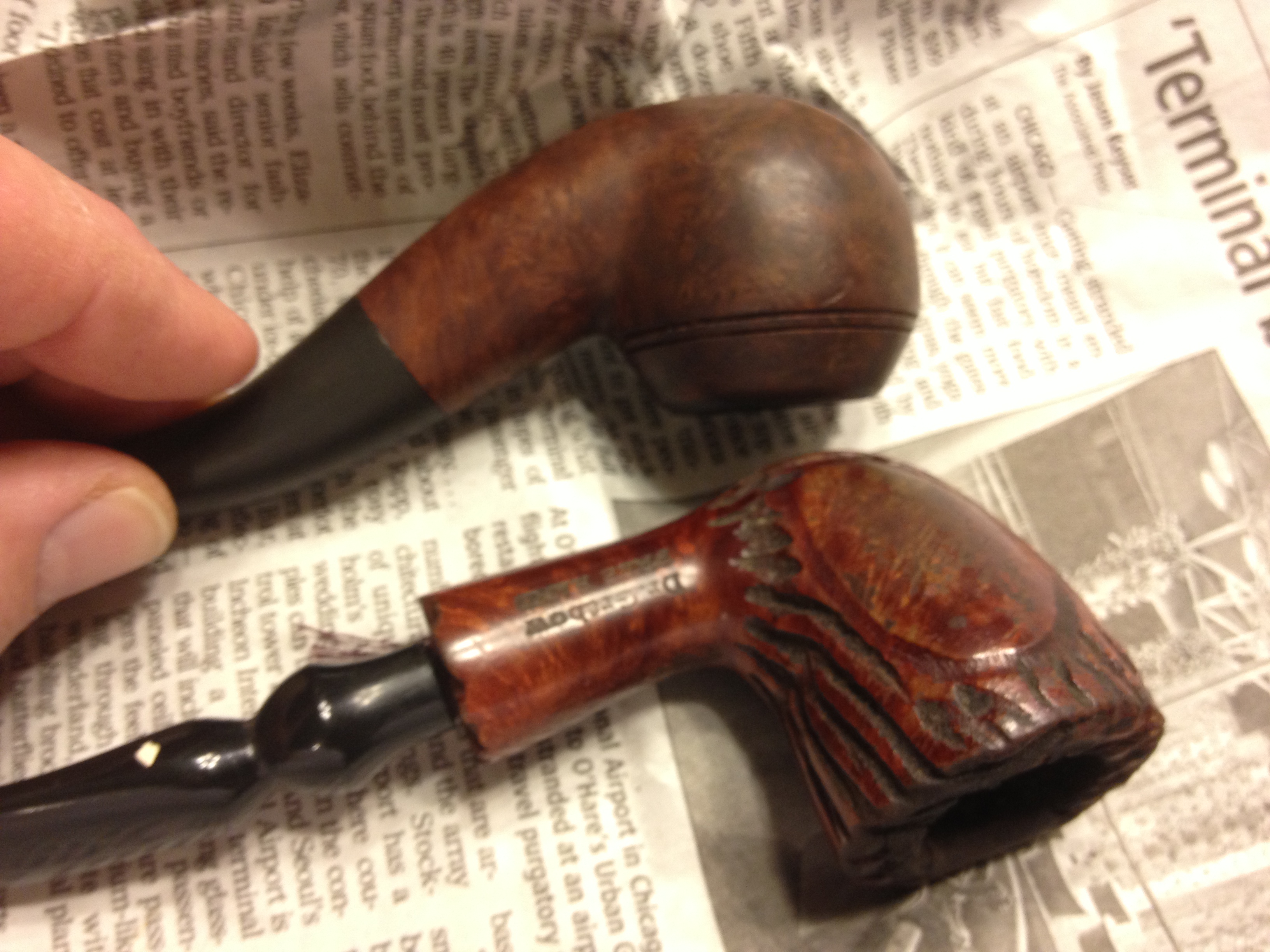
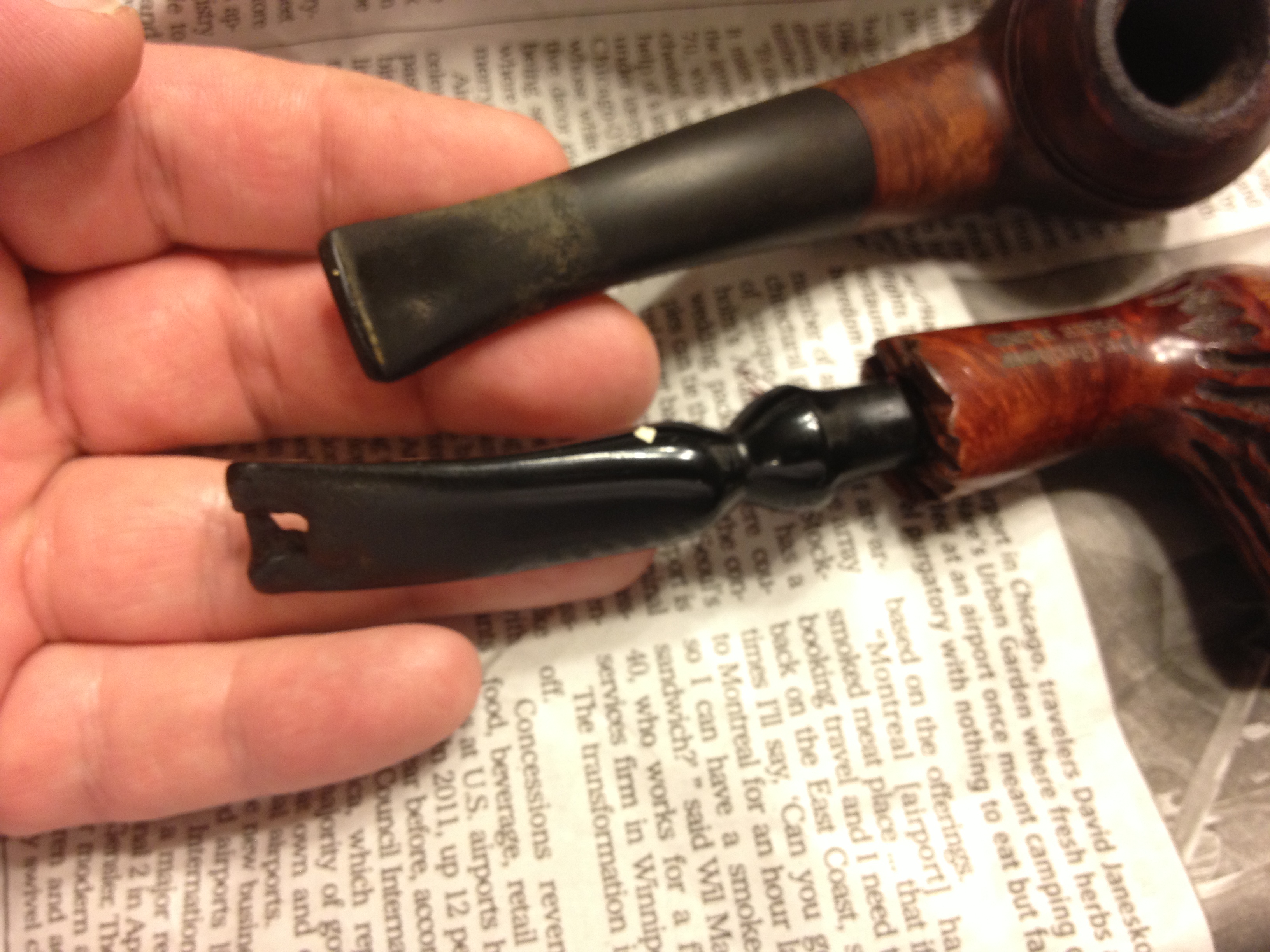
The following photos show the Wally Frank and the aforementioned Dr. Grabow as they looked when I unwrapped them at home. You can see that the Frank was in much better condition than the Grabow, especially the stem!

IMG_4431 IMG_4432IMG_4433 IMG_4436 IMG_4436IMG_4434IMG_4435IMG_4436IMG_4438

There are some fills in the pipe but the only one that really bothered me was the one on the face of the bowl (last photo), though I’m not sure how well you can see it. That one irritation made me decide to refinish the pipe but to keep it as close to original as I could.

At the time I was working on this pipe I didn’t know I would be writing about the experience, so there are no in progress photos to share.

I started by dropping the stem into a OxiClean bath to loosen the gunk and oxidation. Since I didn’t want to remove all the stain I didn’t do an alcohol bath. I began by lightly reaming the bowl which was actually not bad at all; there was virgin briar still in there! After reaming, I began to clean the bowl with acetone on disposable cotton pads; I buy them in the make-up section of Wal-Mart. Once cleaned I then topped the bowl. For topping I used 320 wet/dry sandpaper laid out on my workbench which has a granite slab on it for my leather working. Once the bowl was sufficiently evened out to my satisfaction I began to work on the fill that annoyed me.

I used some 400 grit wet/dry sandpaper to touch up the area a but before I picked out the fill. I then cleaned the area with a isopropyl dampened cotton pad and then, using briar dust from the bowl topping, I packed the area with dust and dripped on some Super Glue. I let it penetrate for 30 seconds or so and then quickly wiped off the excess. The result looked nice, with little extra glue. I gave it another few minutes to set well and then moved on to sanding.

As I said, I wanted to preserve the original look as much as possible and the other smaller fills didn’t really bother me. I decided the best approach was to lightly sand the whole pipe with 400 grit wet/dry paper, avoiding the nomenclature completely. I would work over the entire bowl, wipe it with alcohol pads, evaluate, and repeat; I belive it took three passes to get it to where I liked it.

I then mixed up some Fiebing’s Medium Brown leather dye 50/50 with 91% isopropyl alcohol which I applied with a wool dauber and flamed in. I buffed it by hand to see what the color looked like, trying to blend the sanded briar with the mostly untouched stamped areas; it was a very close match but needed another application. The bowl rim needed more, too, due to the topping so I started by applying and flaming the dye to the rim only and then applying and flaming the entire bowl. Again I buffed it by hand and compared the two areas; I was happy with the results so it was time to move on to the stem.

After taking the stem out of the OxiClean bath I washed it well and scrubbed it with a Miracle Eraser, which removes a lot of the loosened oxidation. From there I began wet sanding with 320/400/800 grits; thankfully there were no holes, dents or even much chatter to work on with this stem. Next I applied the Novus 2 plastic polish. Sometimes I don’t use the plastic polish this soon but I wanted to get an idea of the shape of the stem at this point. The stem looked better than I expected so I then moved on to the micro mesh, wet sanding with 1500-4000 grits. I used another application of the Novus 2, which I work in with a cotton pad and then polish off with another clean one. I then polished with the micro mesh, dry, through 12000. At this point I switched to the Novus 1 plastic polish to bring up the shine.

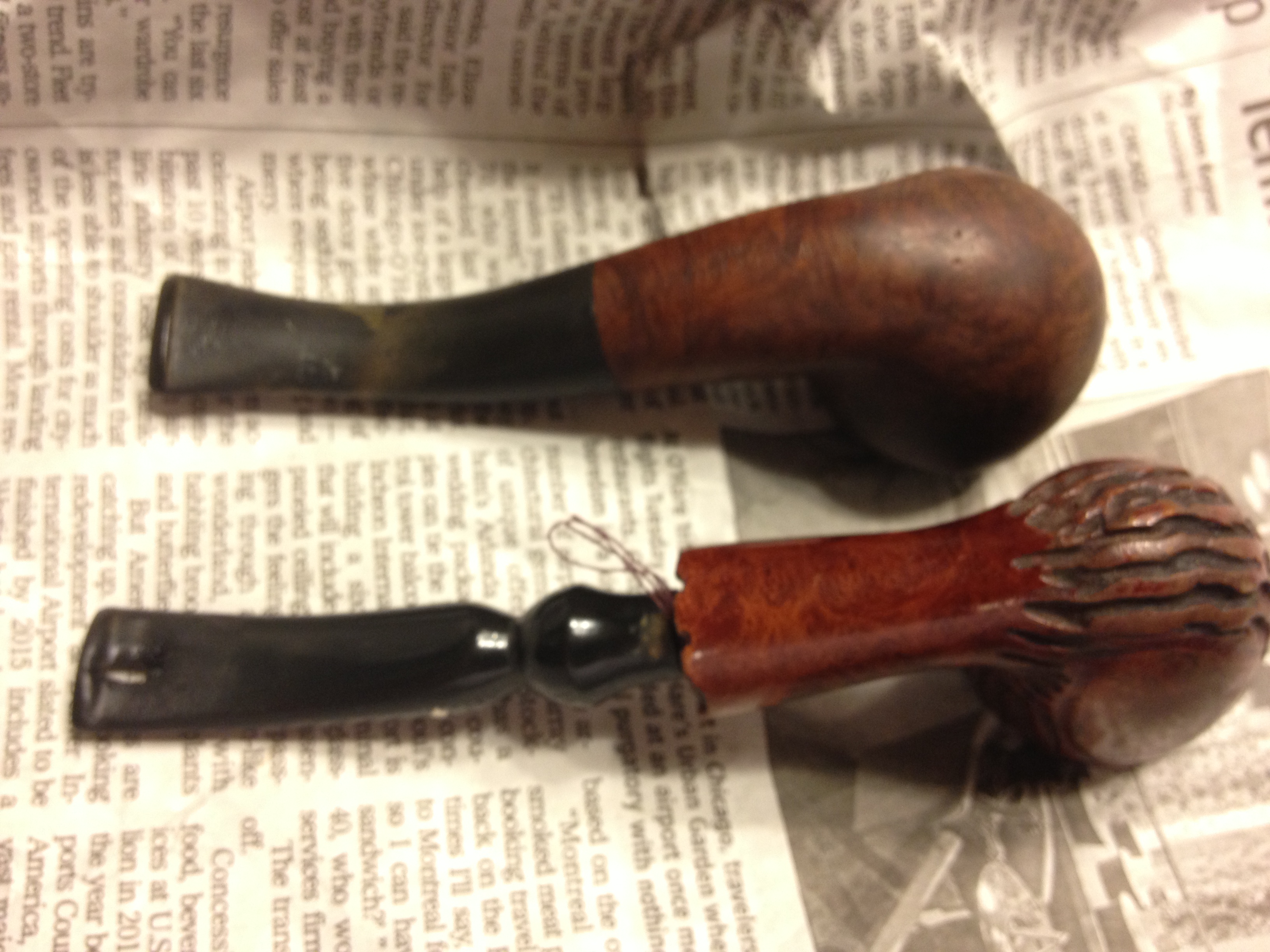
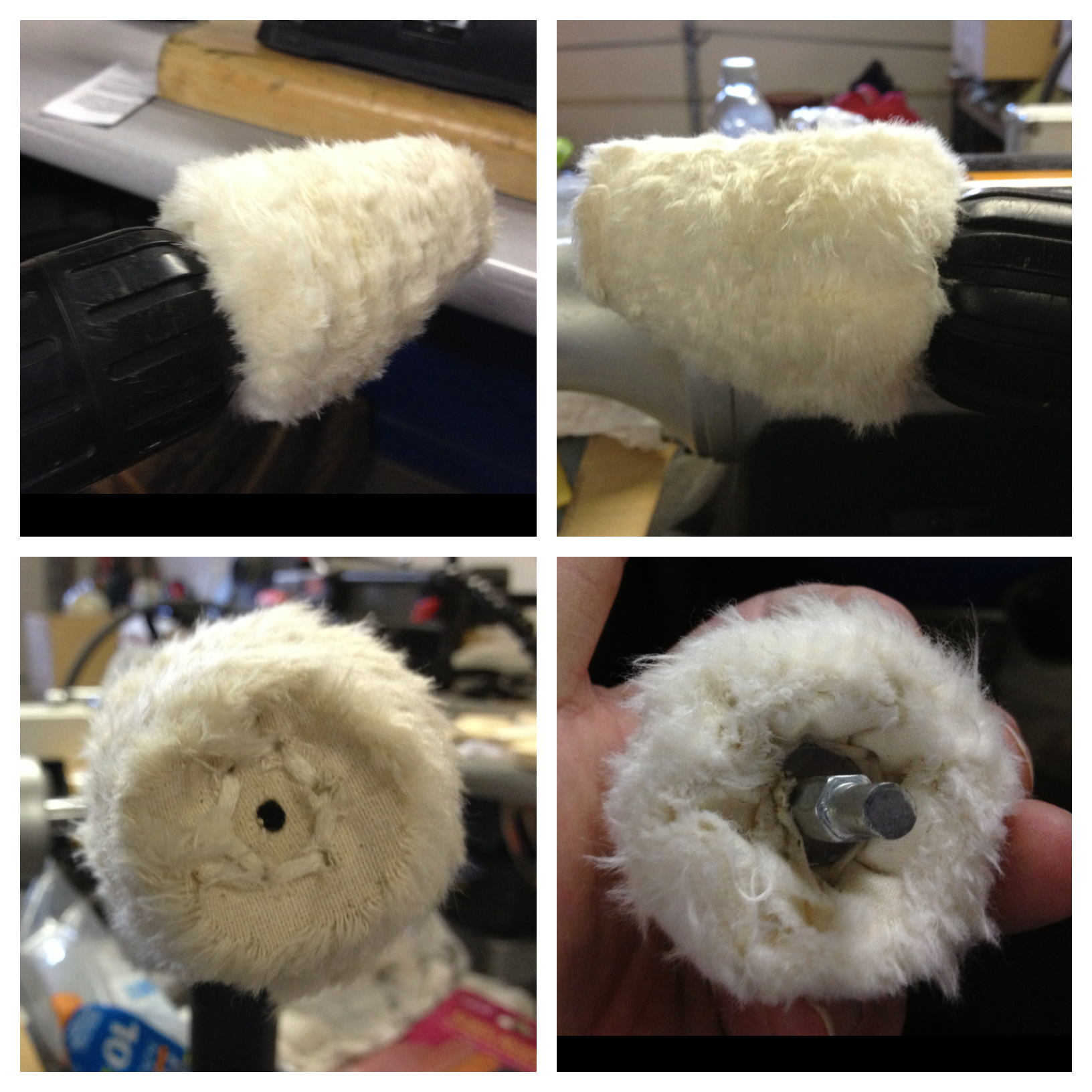
I moved to the buffer and buffed the bowl with Tripoli. I then put the pipe and stem together and buffed the entire pipe with white diamond and a few coats of carnauba wax. I buffed the pipe out to the final shine with my “mushroom” on my cordless drill.Mushroom

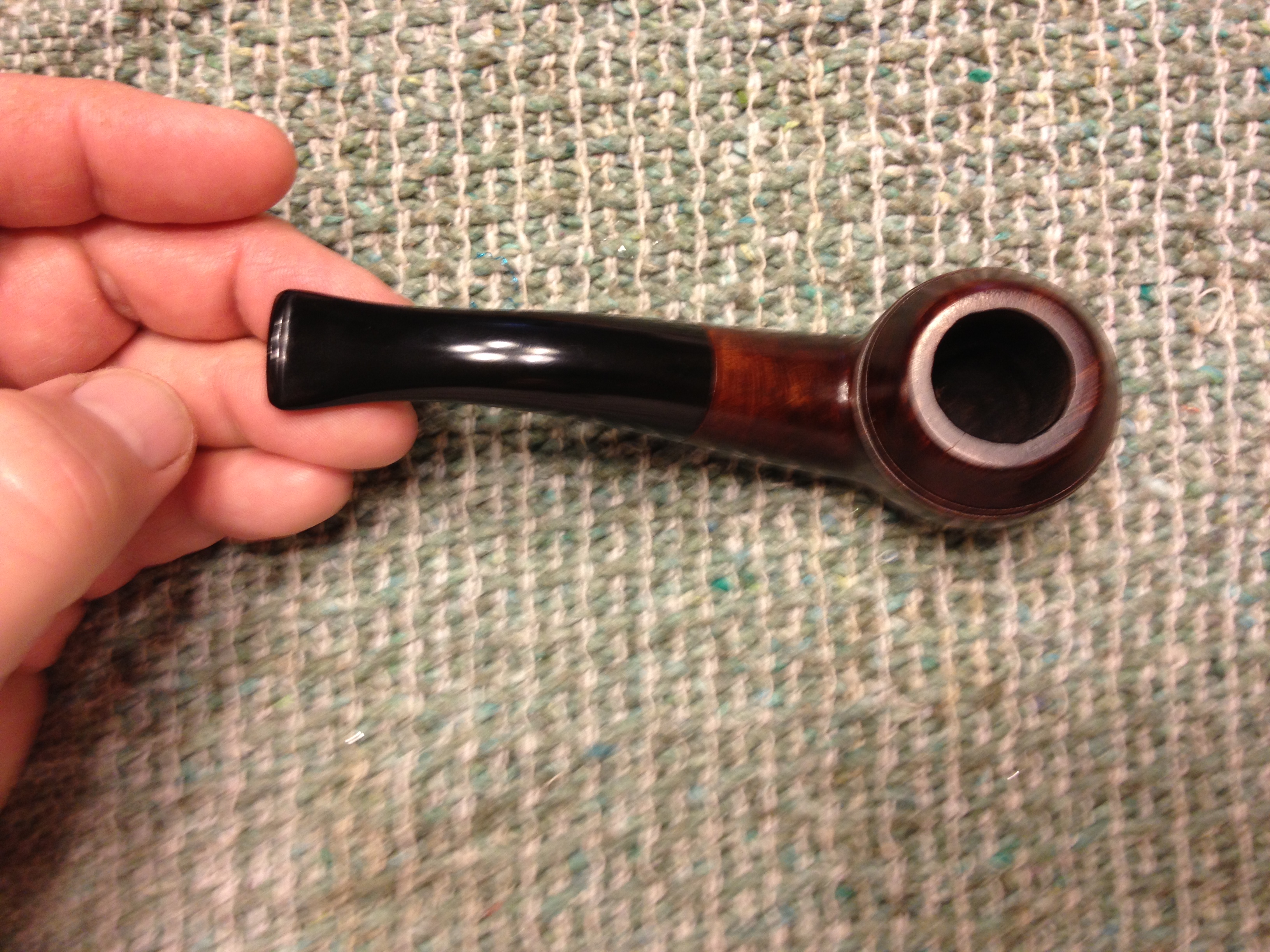
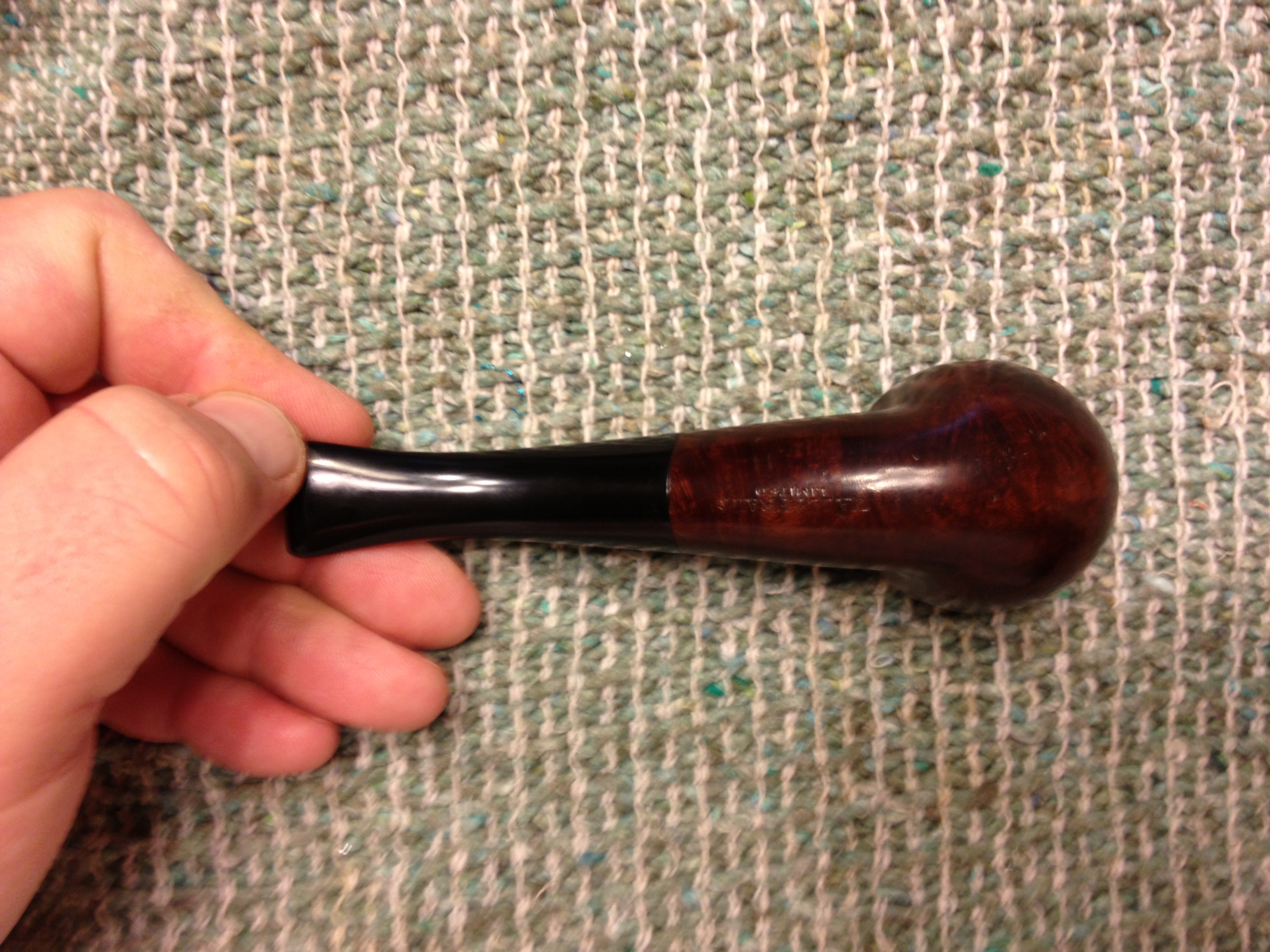
The final result was one I am happy with. The pipe smokes much better than I’d anticipated; there is no more virgin briar in its bowl. The fit and feel of it are fantastic and now it looks more like it once did, when someone else loved it.

IMG_5186 IMG_5187 IMG_5188 IMG_5189 IMG_5190 IMG_5193

Renewed Malaga Bulldog


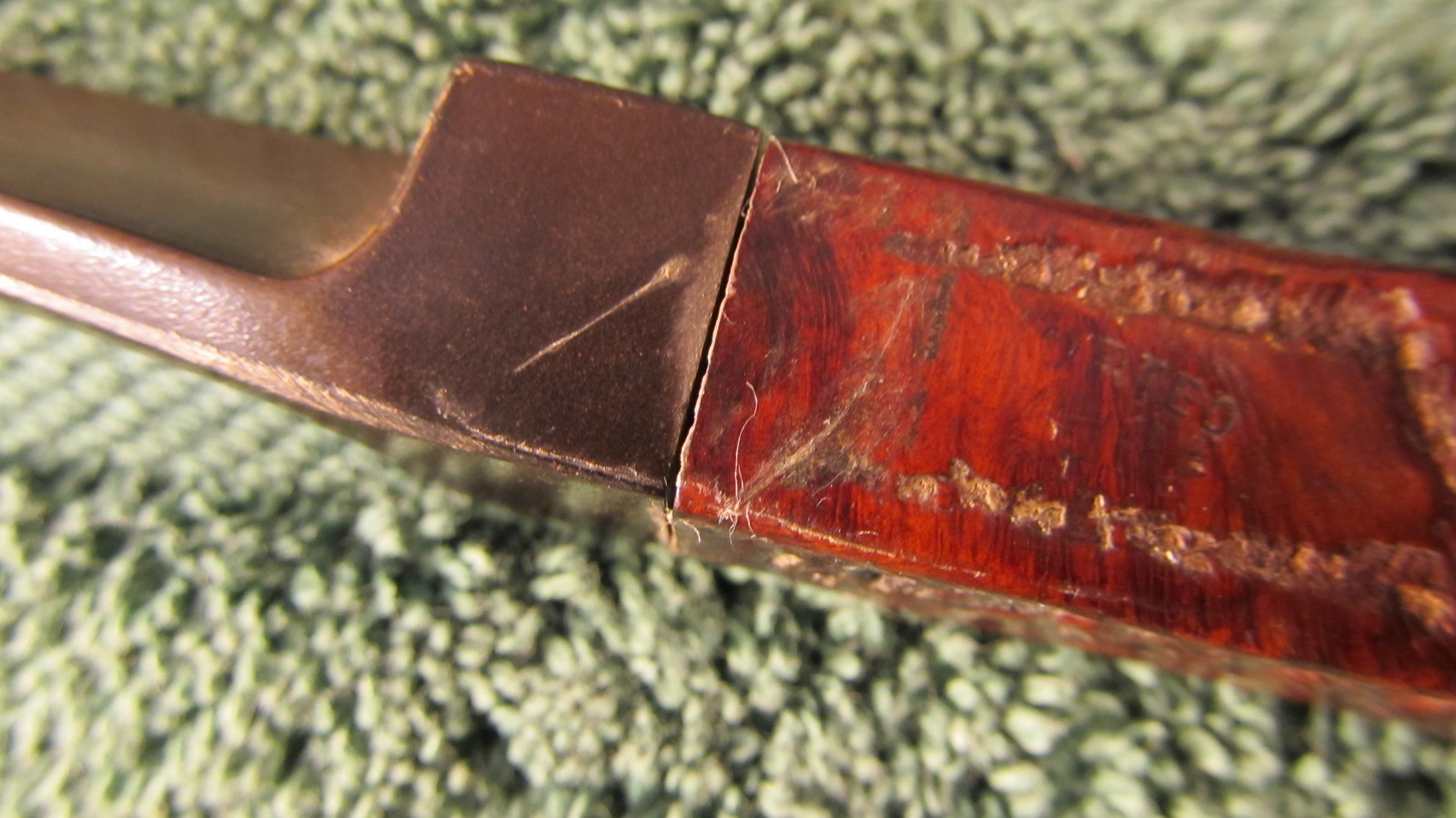
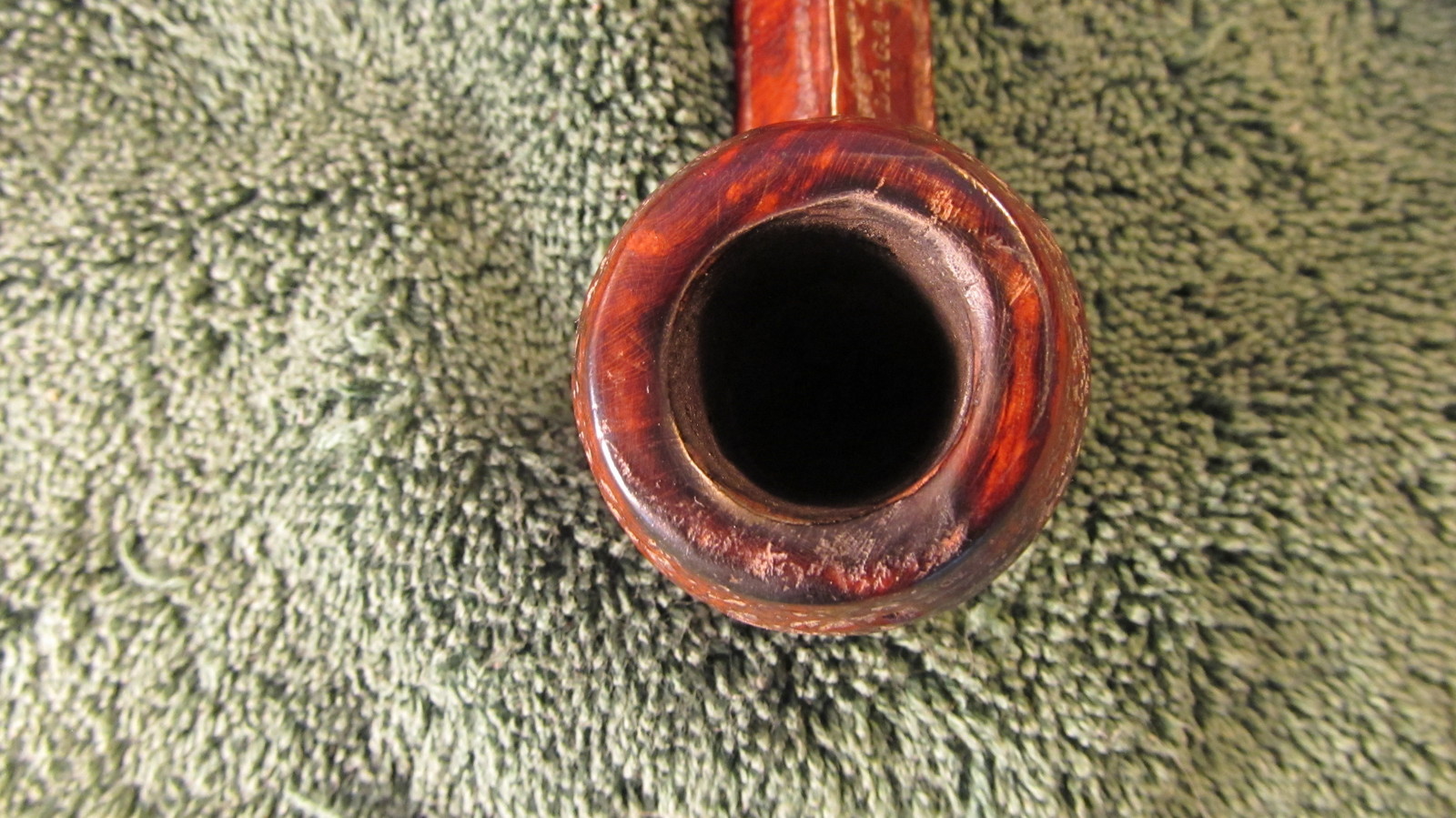
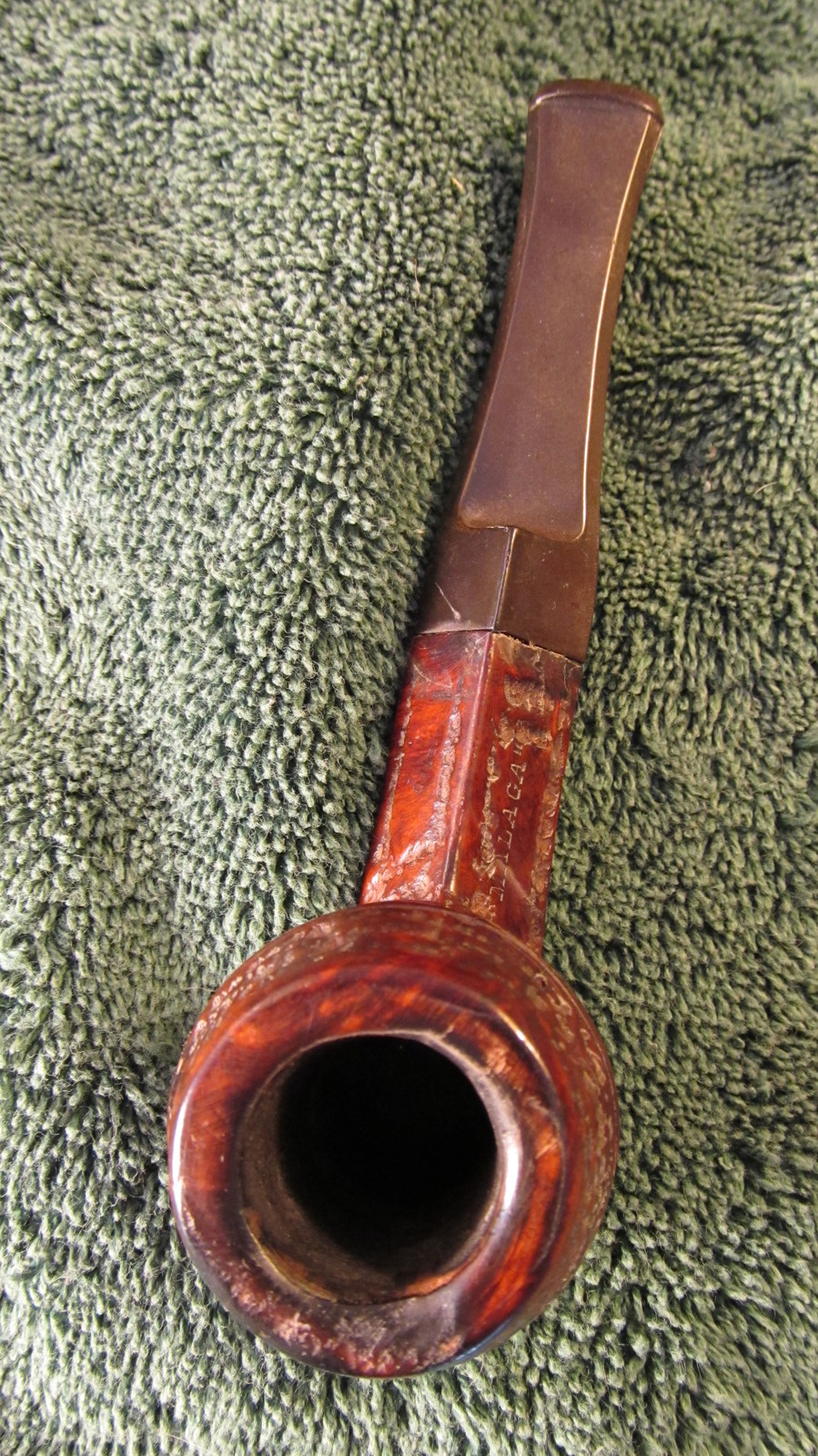
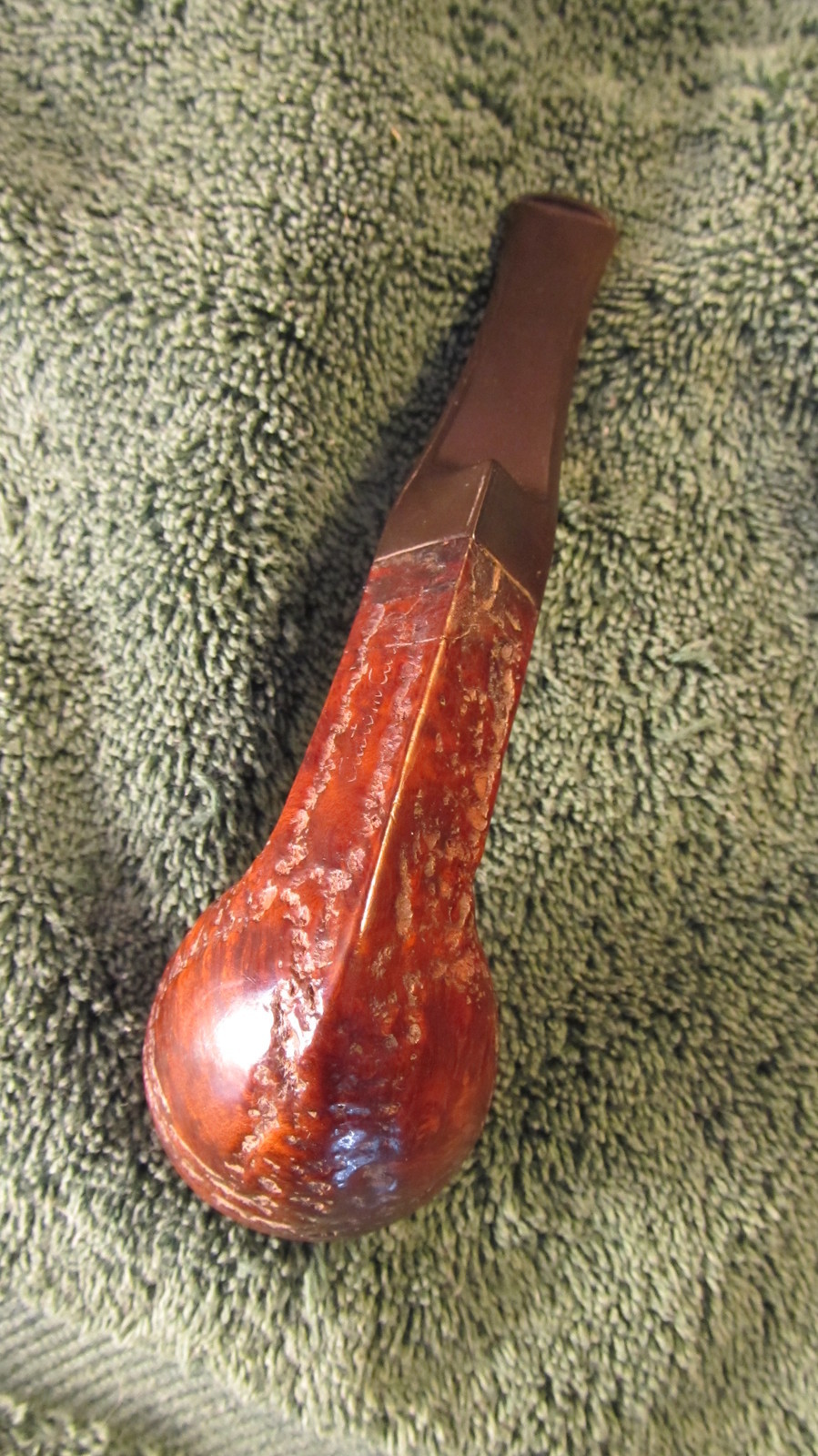
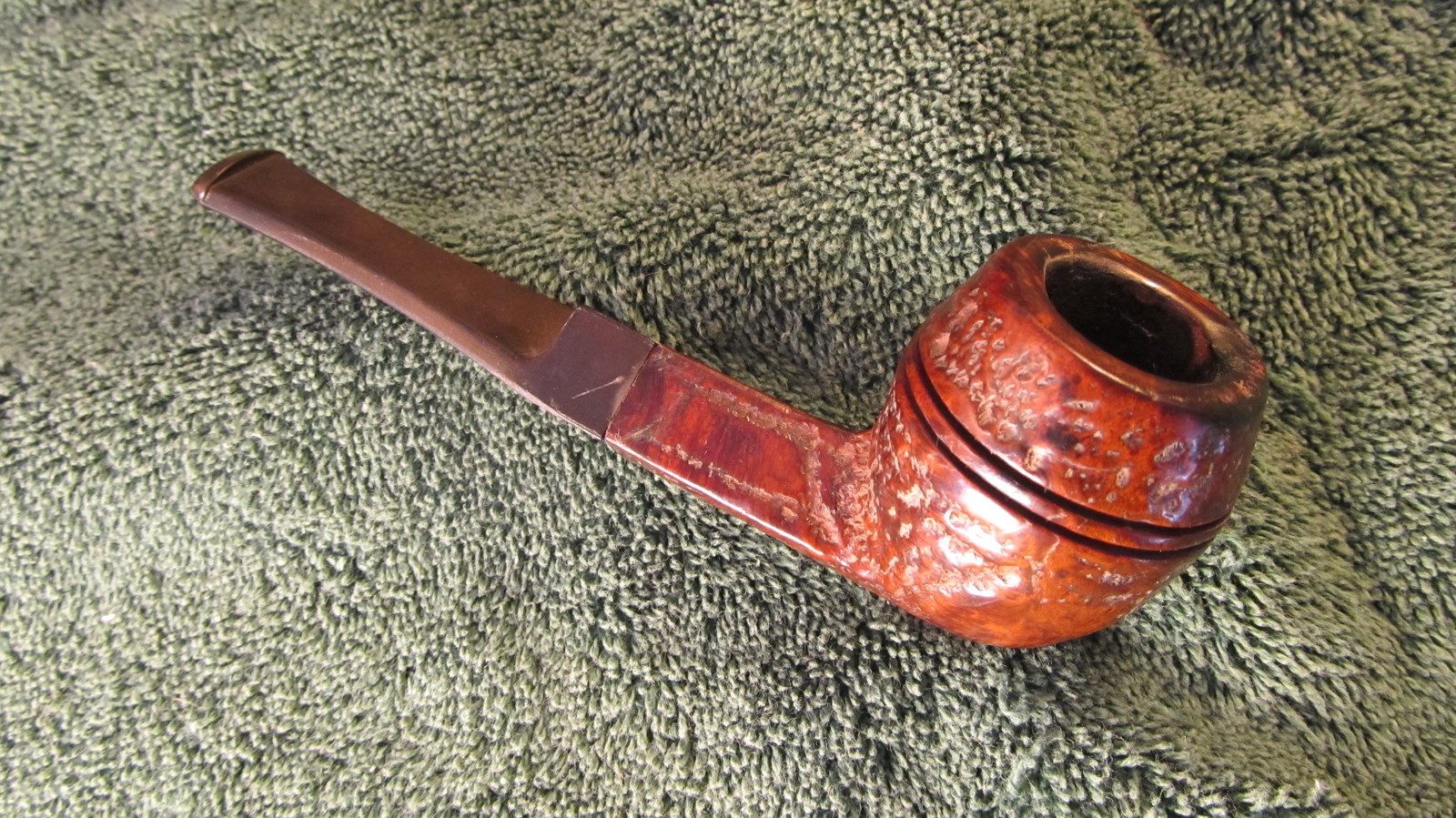
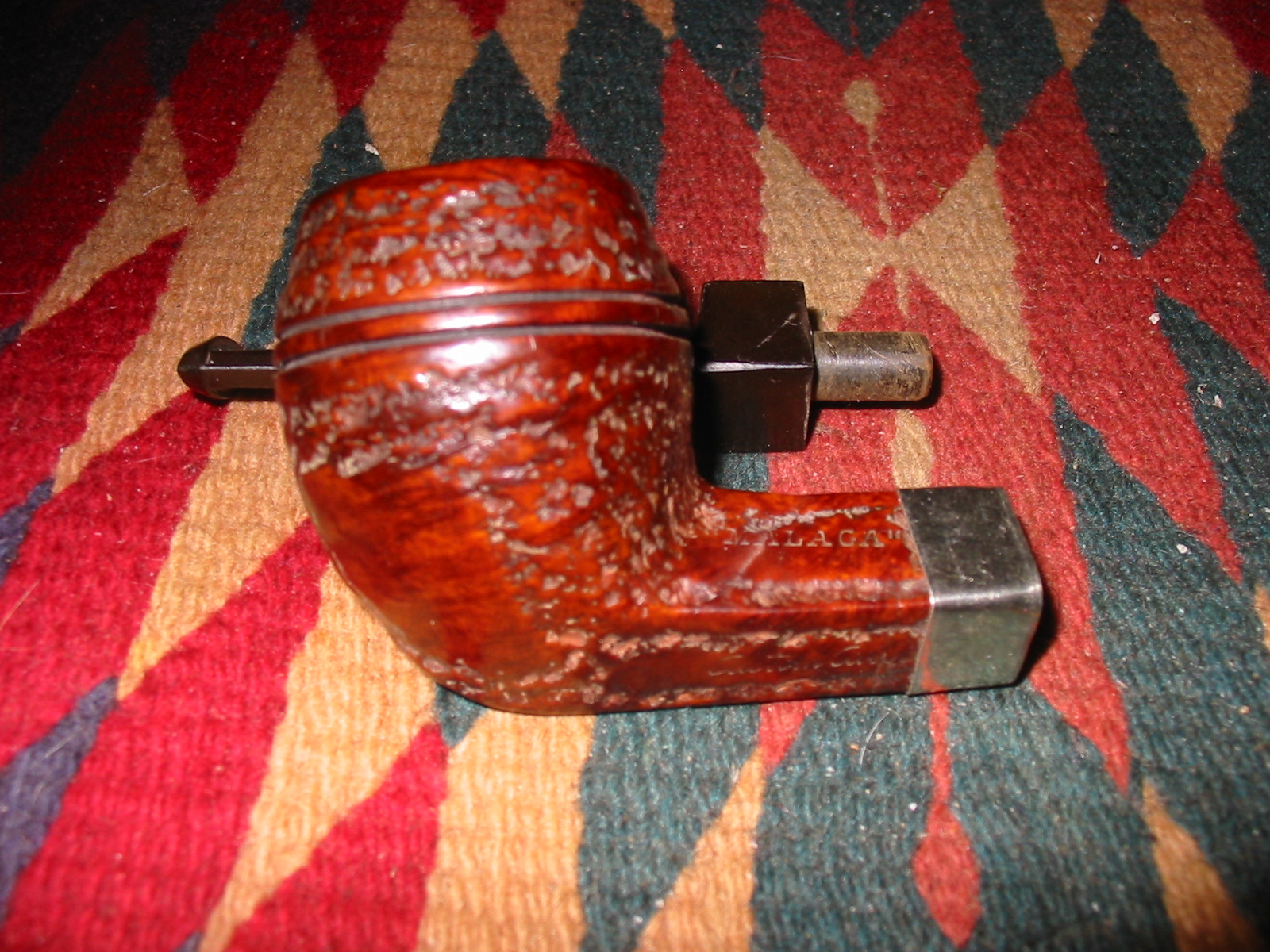
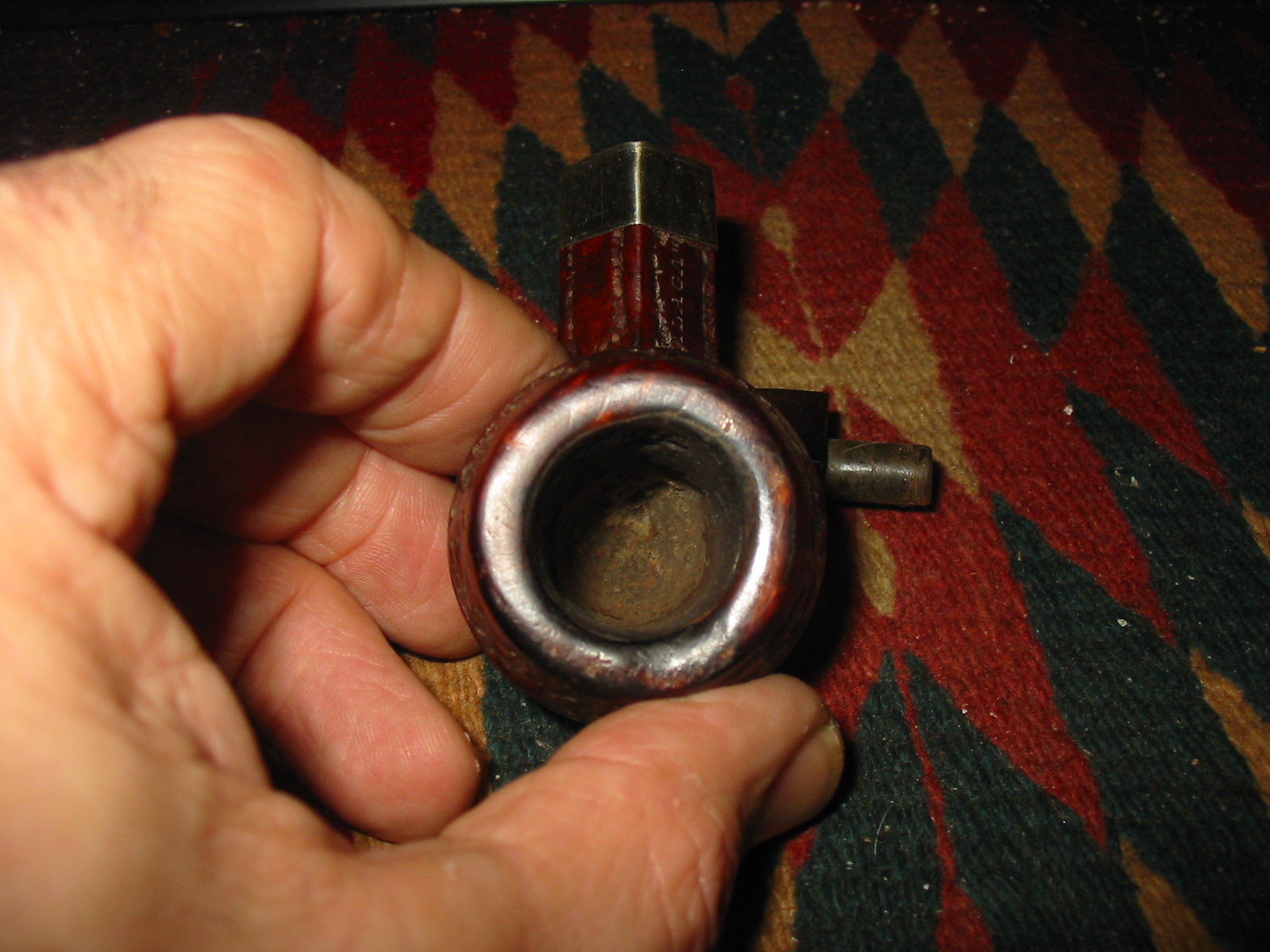
In an earlier post on Malaga pipes and their maker George Khoubesser, https://rebornpipes.wordpress.com/2013/02/09/george-khoubesser-and-malaga-pipes/, I mentioned that I wanted to hunt down a pipe. Not long after that post I was able to pick up this bulldog. It is a rusticated pipe with some smooth patches like those done by GBD on some of their pipes. This one is stamped Malaga in quote on the upper left side of the shank and Custom Carved on the lower left side of the shank. The pipe was in fair shape. The bowl needed to be reamed as the little cake that was present was in the top half of the bowl. The bottom of the bowl had cobwebs in it. The shank inside was very clean. The stem had some oxidation and a small amount of tooth chatter but was in good shape. The rim had a burned area on the front right and it had created a small dip in the rim. The shank was cracked in multiple places near the stem. It looked like it had been repaired and there was some darkening around the place where the shank met the stem that seemed to indicate that a band that no longer was present had once been in place. The first series of eight photos show the items that I mention above. Looking closely at the photos you can see the cracks in the shank and the burn on the rim. All of the other items come through in the photos as well.

ImageImageImageImageImageImageImageImage

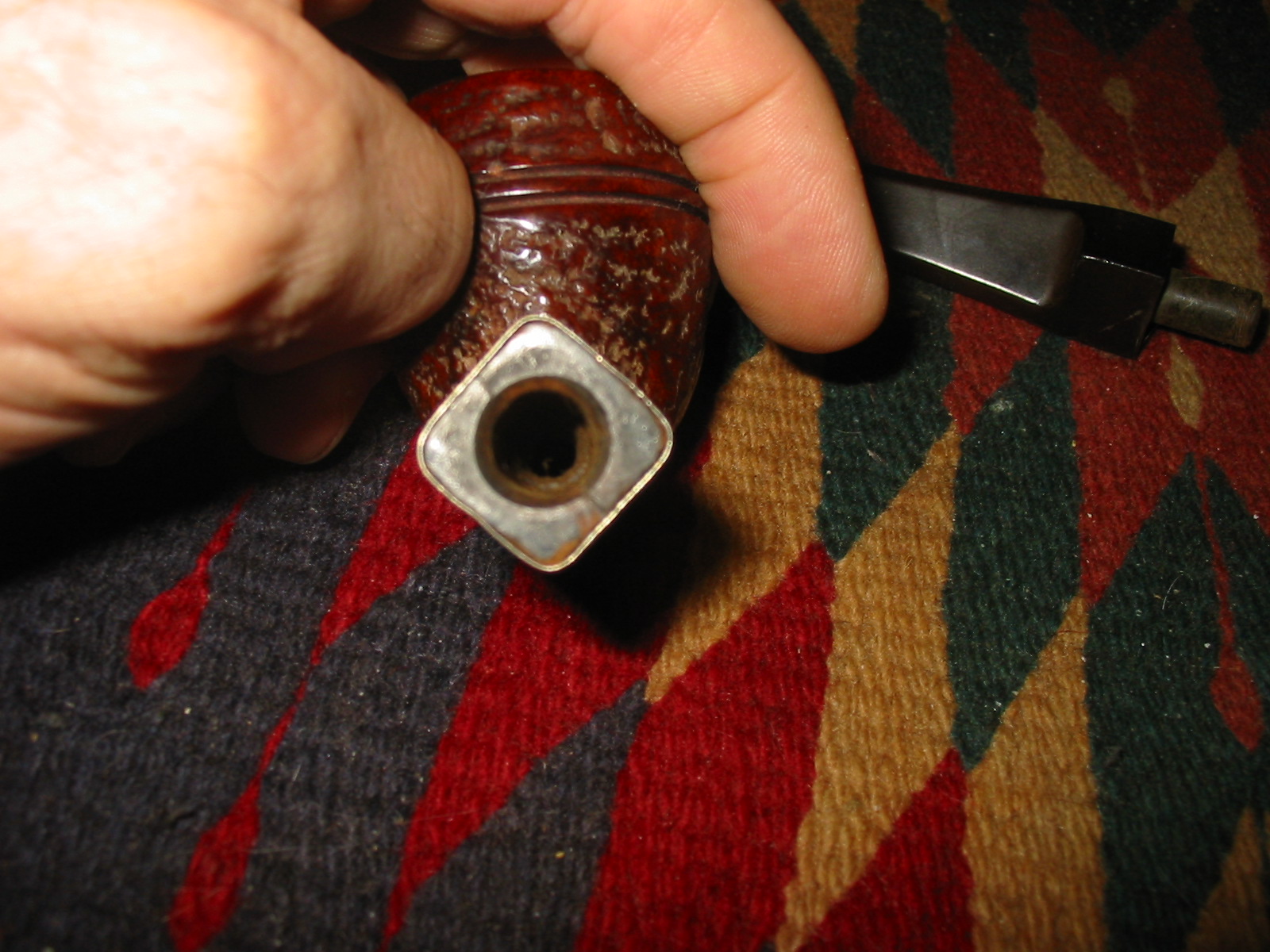
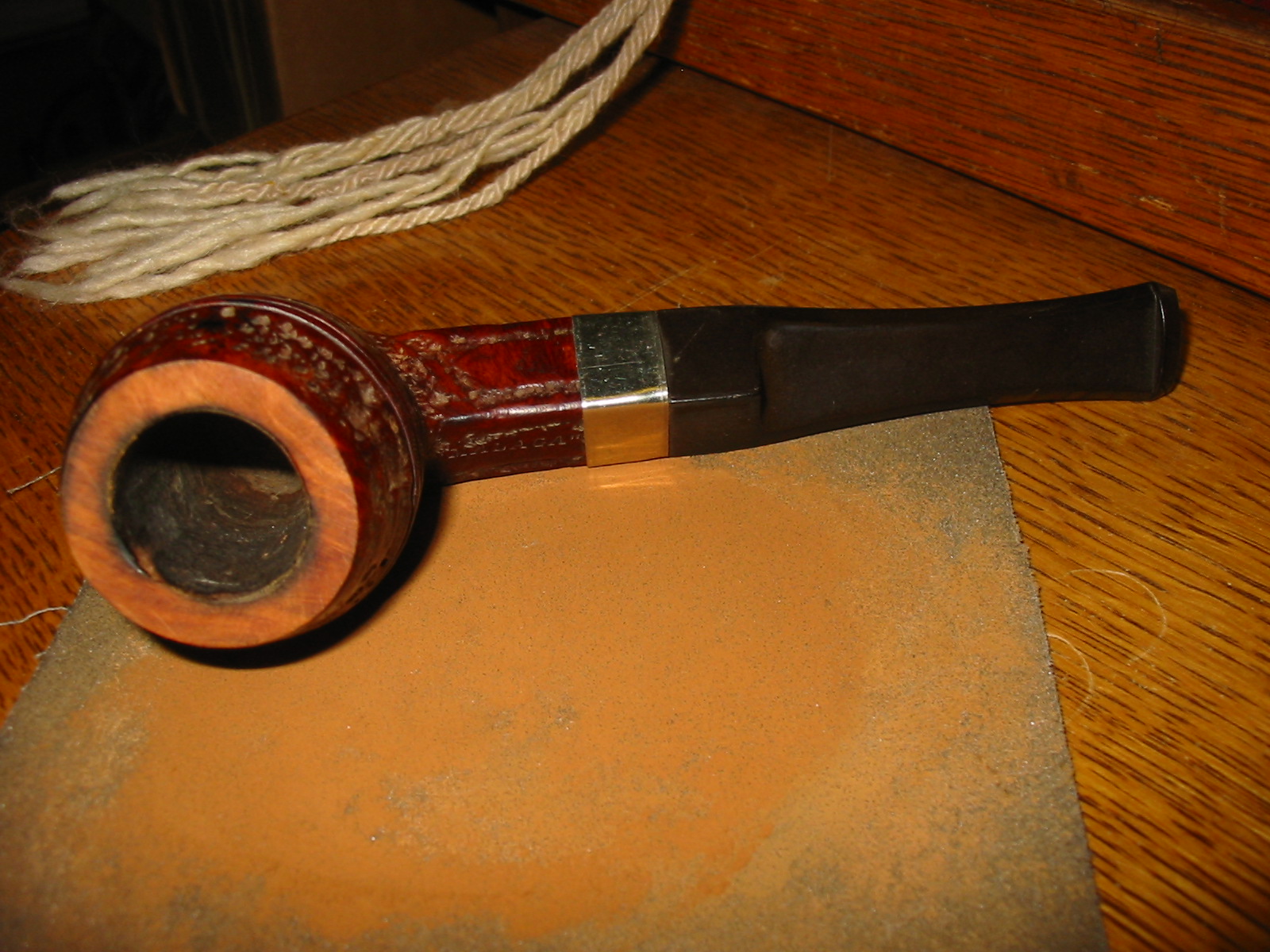
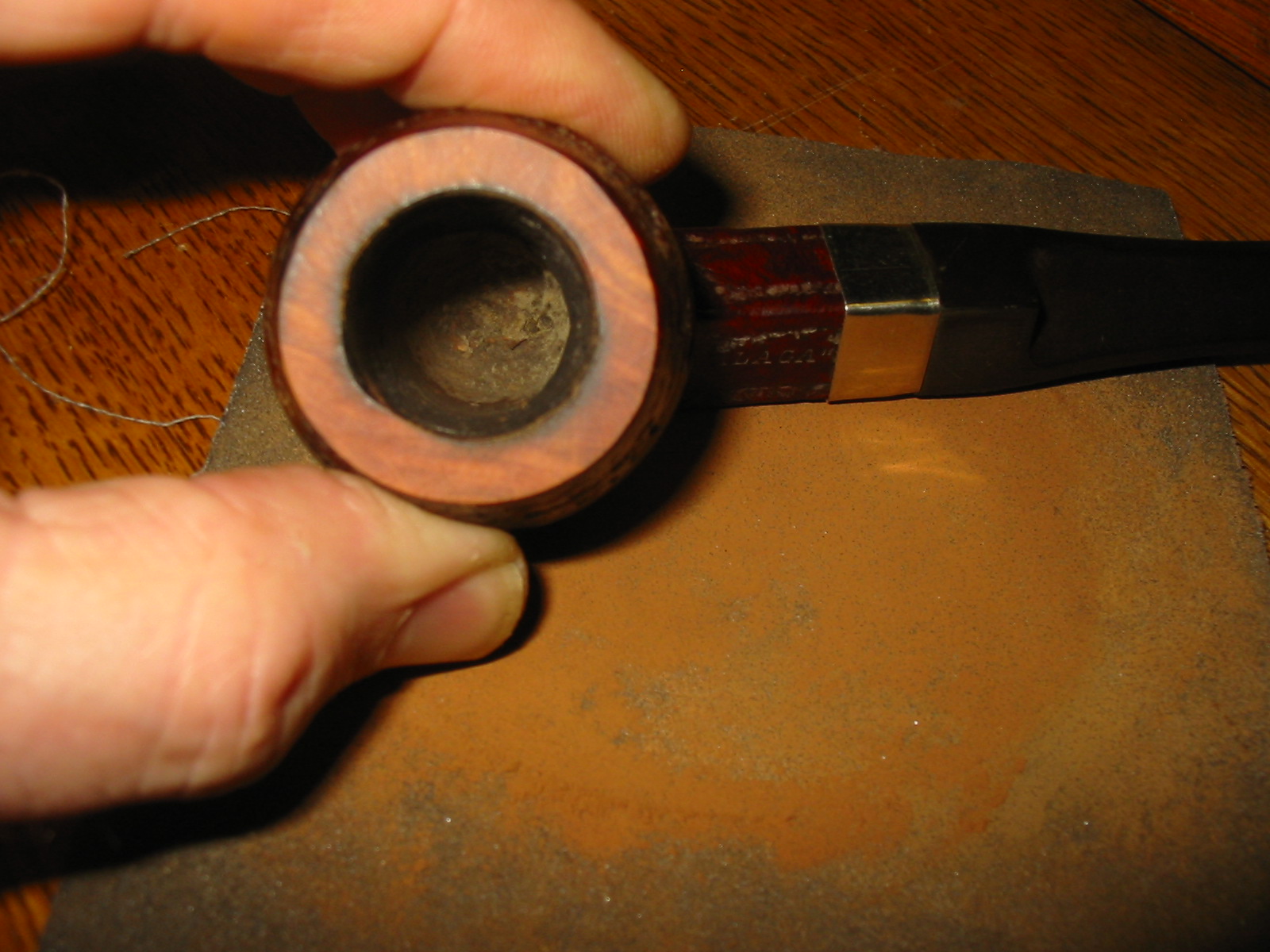
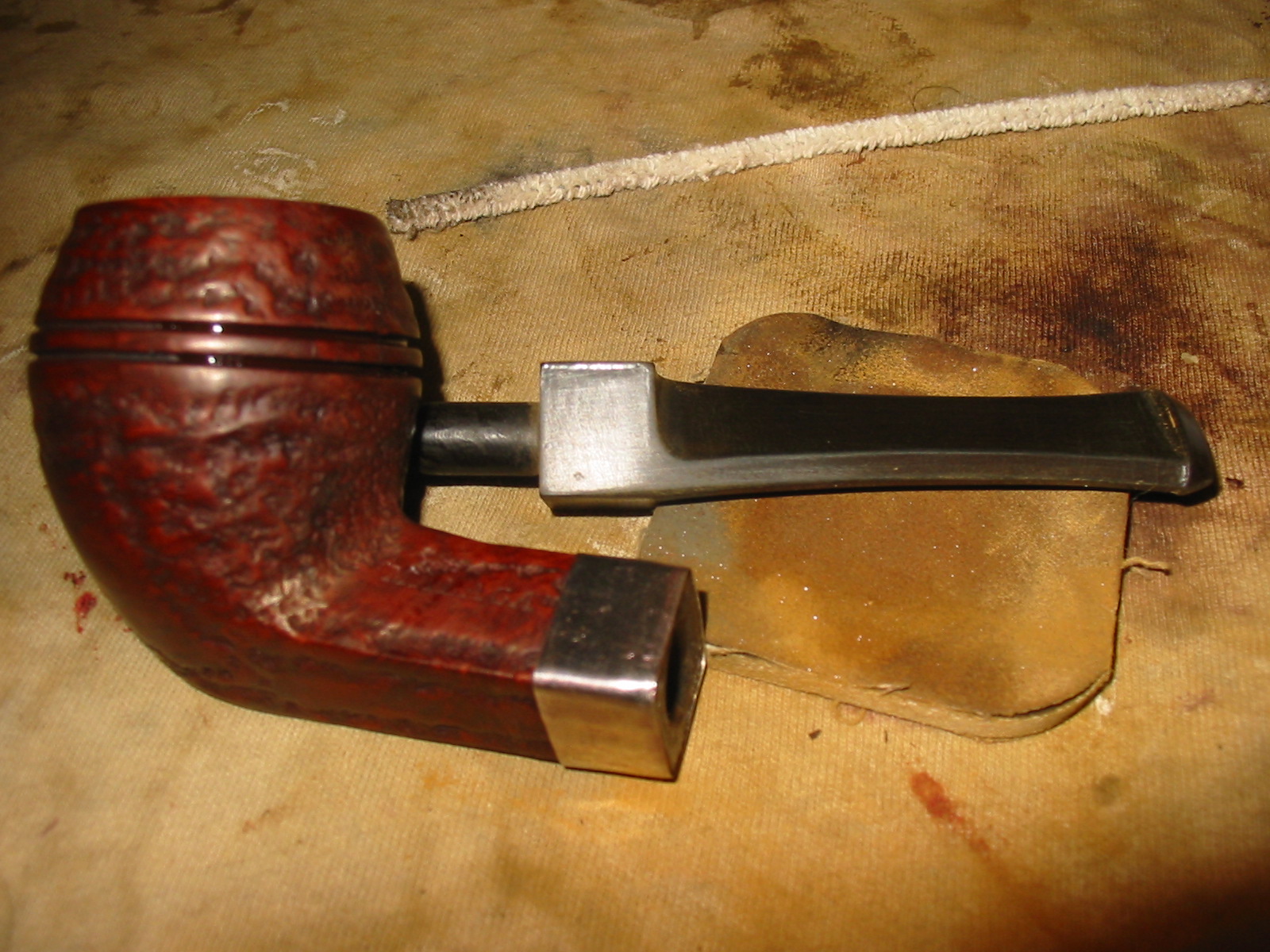
I began the process by reaming out the bowl and then shaping a nickel band into a diamond and pressure fitting it on to the shank. I also then used a small hammer to tap the band into shape around the shank and square off the edges. The next four pictures show the band after it has been shaped and pressure fit into place. The final picture of the four shows the end view of the shank with the band in place.

ImageImageImageImage

I decided to top the bowl to remove the damage of the burn and smooth out the rim edge. The burn was not very deep but it was a small trough in the rim that went from edge to edge. The inner edge of the bowl was also damaged by burning. I use a piece of medium grit emery cloth to begin with. I put it on a flat board on my work table and then sand the bowl rim in a clockwise circle until I have removed all of the damage. I follow up the emery cloth with 320 grit sandpaper used in the same manner. I finish the rim with a fine grit sanding sponge. The next four photos show the process and the progress of the topping procedure. In the second photo you can clearly see the damage from the burn. The third and fourth photos show the rim after it is smoothed out and the burn damage is minimized. I did not take pictures of the sanding process with the 3230 grit and sanding sponge as they followed the same format as that of the emery cloth.

ImageImageImageImage

After topping the bowl and finishing the rim sanding with micromesh sanding pads in 1500-3200 grit I stained the bowl with an oxblood stain. I restained the entire bowl in order to get a match between the bowl and the rim. The next photos show the stained bowl. At this point in the process I still needed to buff the bowl but I decided to set it aside to dry while I worked on the stem to remove the oxidation and tooth chatter. I began by wet sanding the stem with a 1500 grit micromesh sanding pad. I keep a bowl of water at hand so that I can dip the sanding pad in the water and also clean it between sandings. The next four photos show the stem after sanding it with the 1500 grit pads.

ImageImageImageImage

I polished the stem with Maguiar’s Scratch X2.0 after the 1500 grit sanding. I then wet sanded the stem with 1800 and 2400 grit micromesh sanding pads. The next three photos picture that process and the progress on the stem.

ImageImageImage

I continued sanding with the micromesh pads. I dry sanded with 3200, 3600 and 4000 grit pads. I worked on the inside of the saddle with a folded pad to get the angles correct and clean up that area. I also scrubbed around the button and the edges of the button, working to keep the edges sharp and defined. The next three photos show that progress.

ImageImageImage

I scrubbed the stem once again with the Maguiar’s and wiped it off repeatedly with a cotton pad. I continued to dry sand the stem with 6000, 8000, 12,000 grit micromesh. Once I had finished the sanding I buffed the stem and pipe with White Diamond on my buffer to shine both. I took the pipe back to my bench and gave the stem a coat of Obsidian Oil. I rubbed it into the stem and then gave the bowl a coat of Halcyon II wax and hand buffed it with a cotton cloth and then gave the rim and stem several coats of carnauba wax. Once I was finished I took it to the buffer once again and gave it a buff with a clean flannel buffing pad. The finished pipe can be seen in the photos below.

ImageImageImageImage


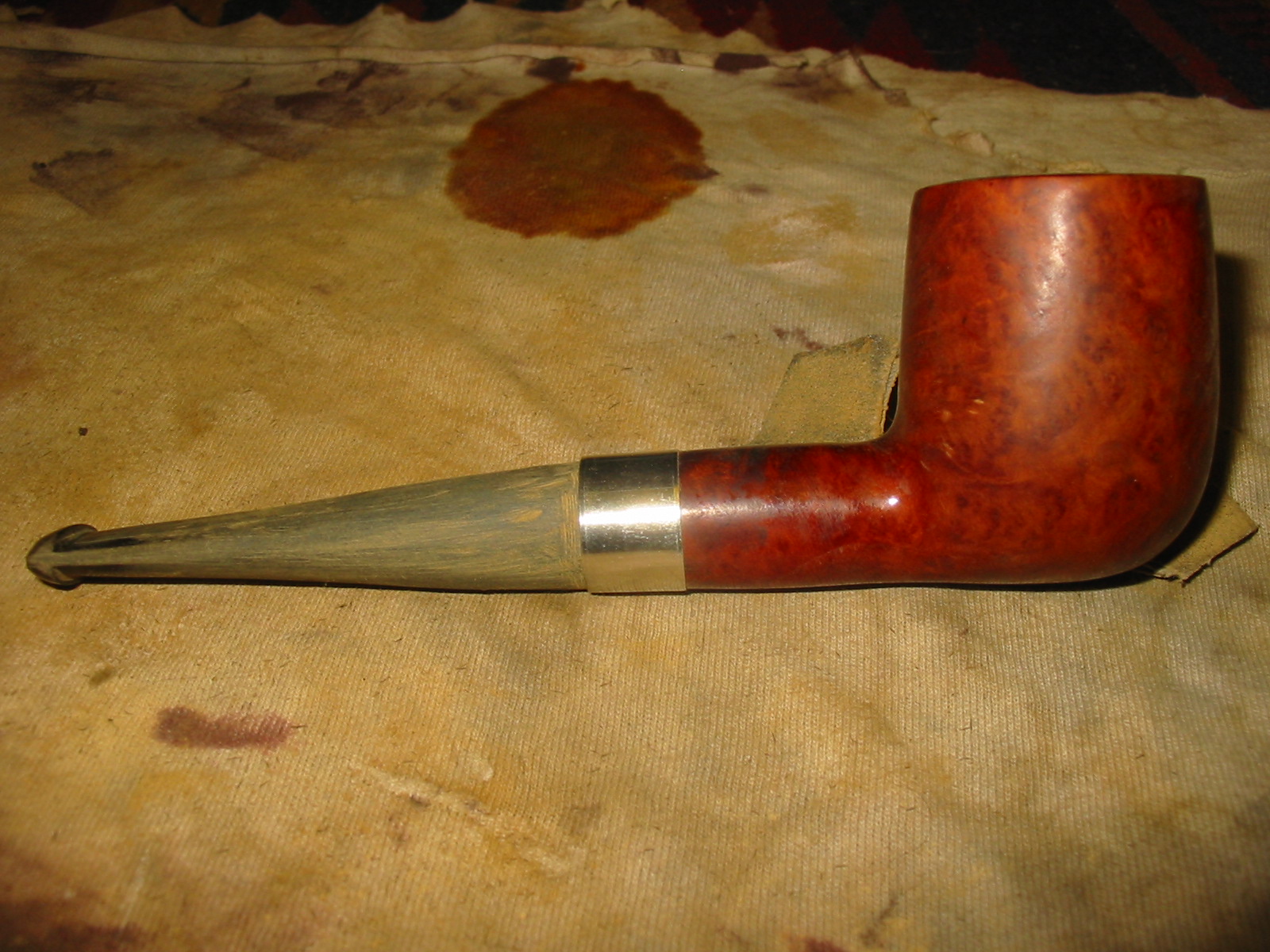
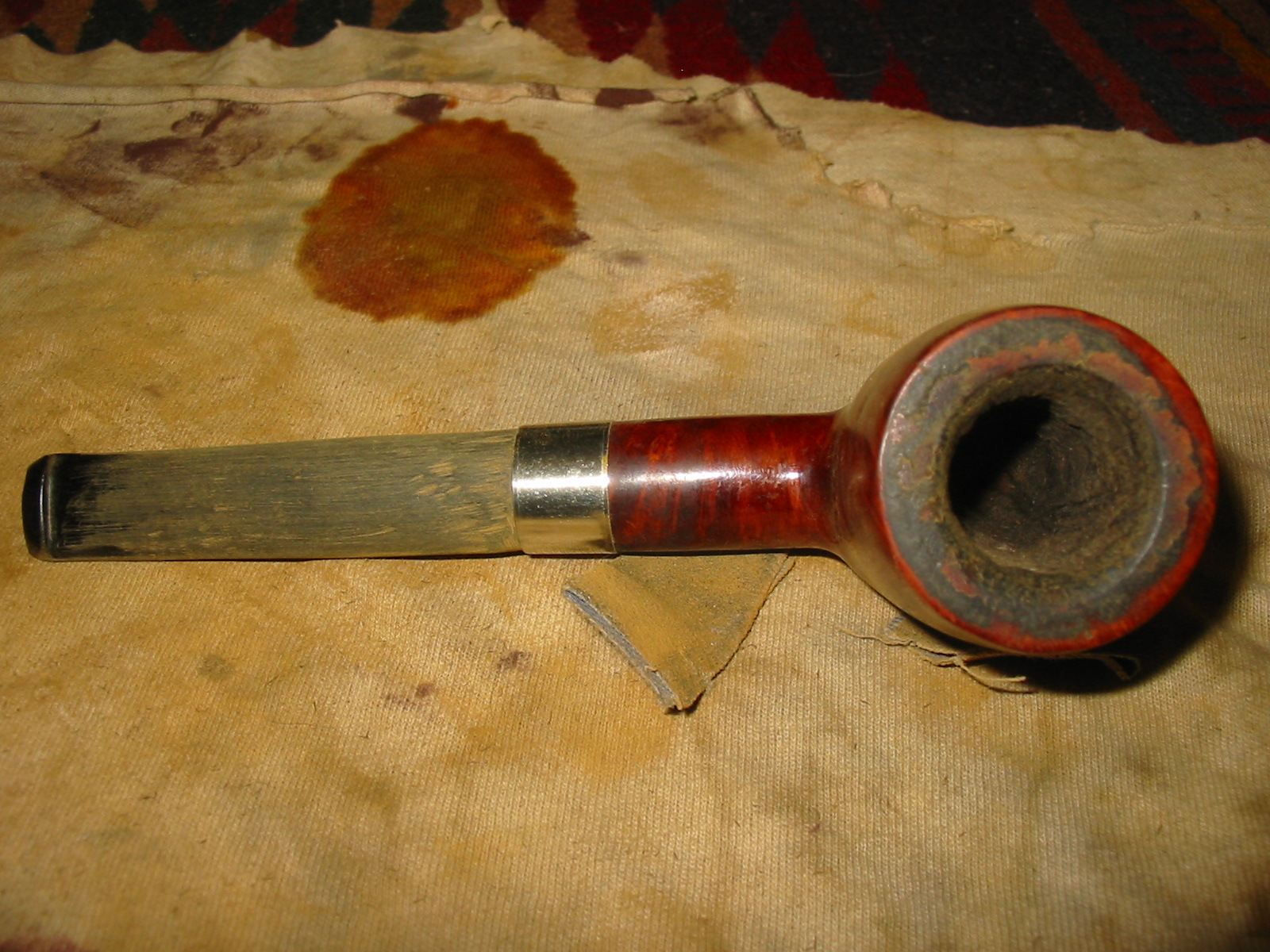
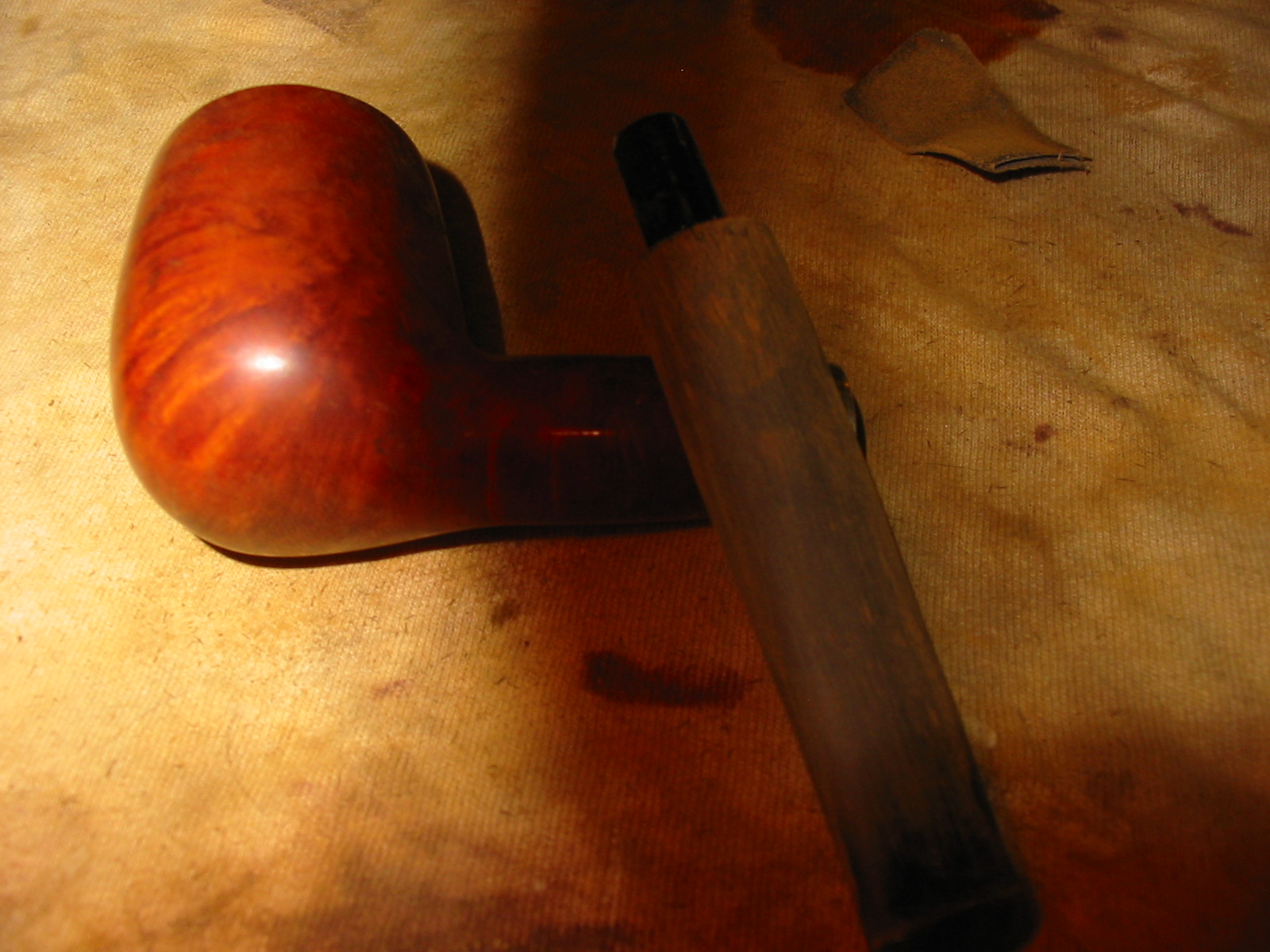
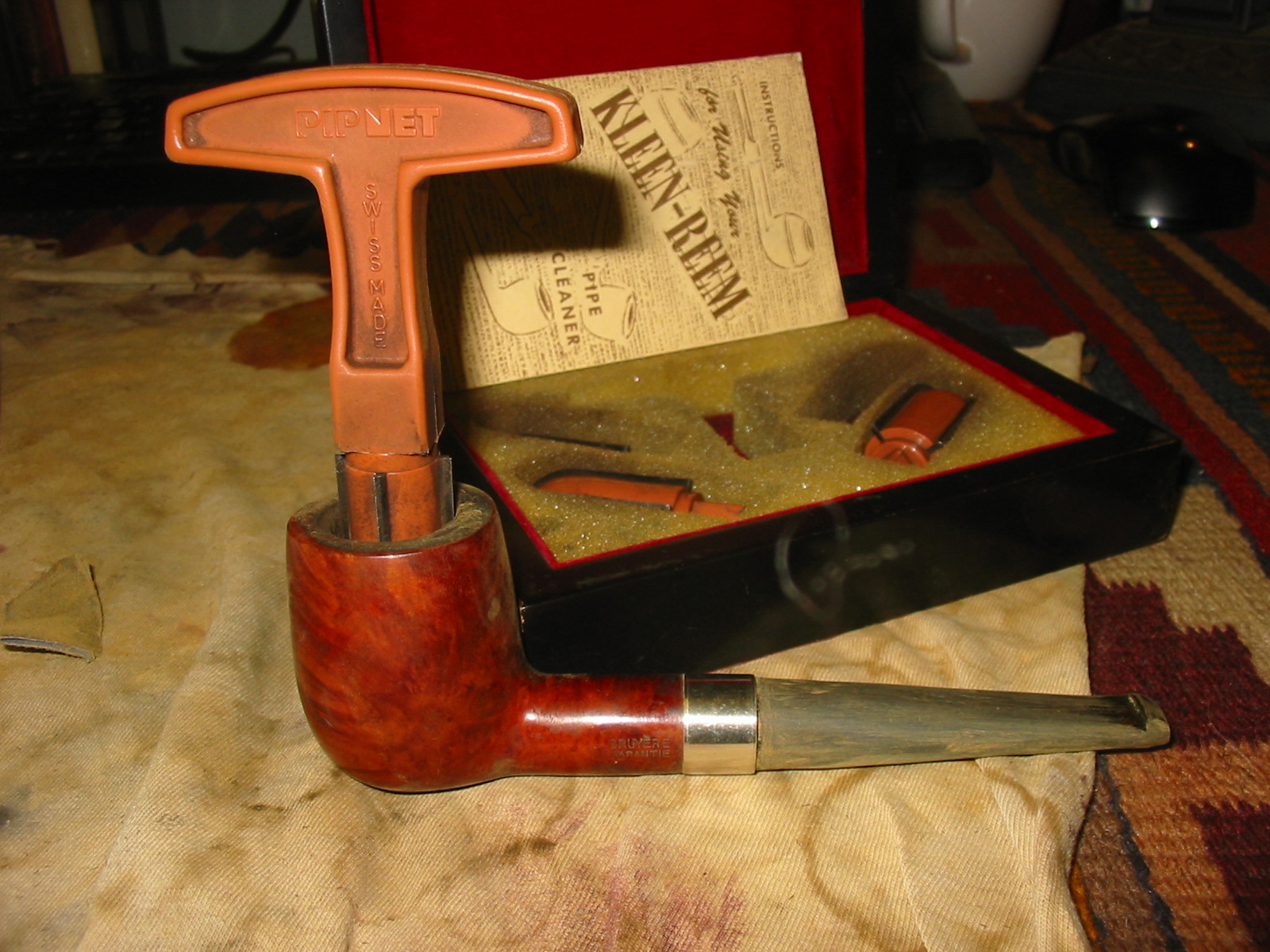
Restemming an Old Bruyere Garantie Billiard


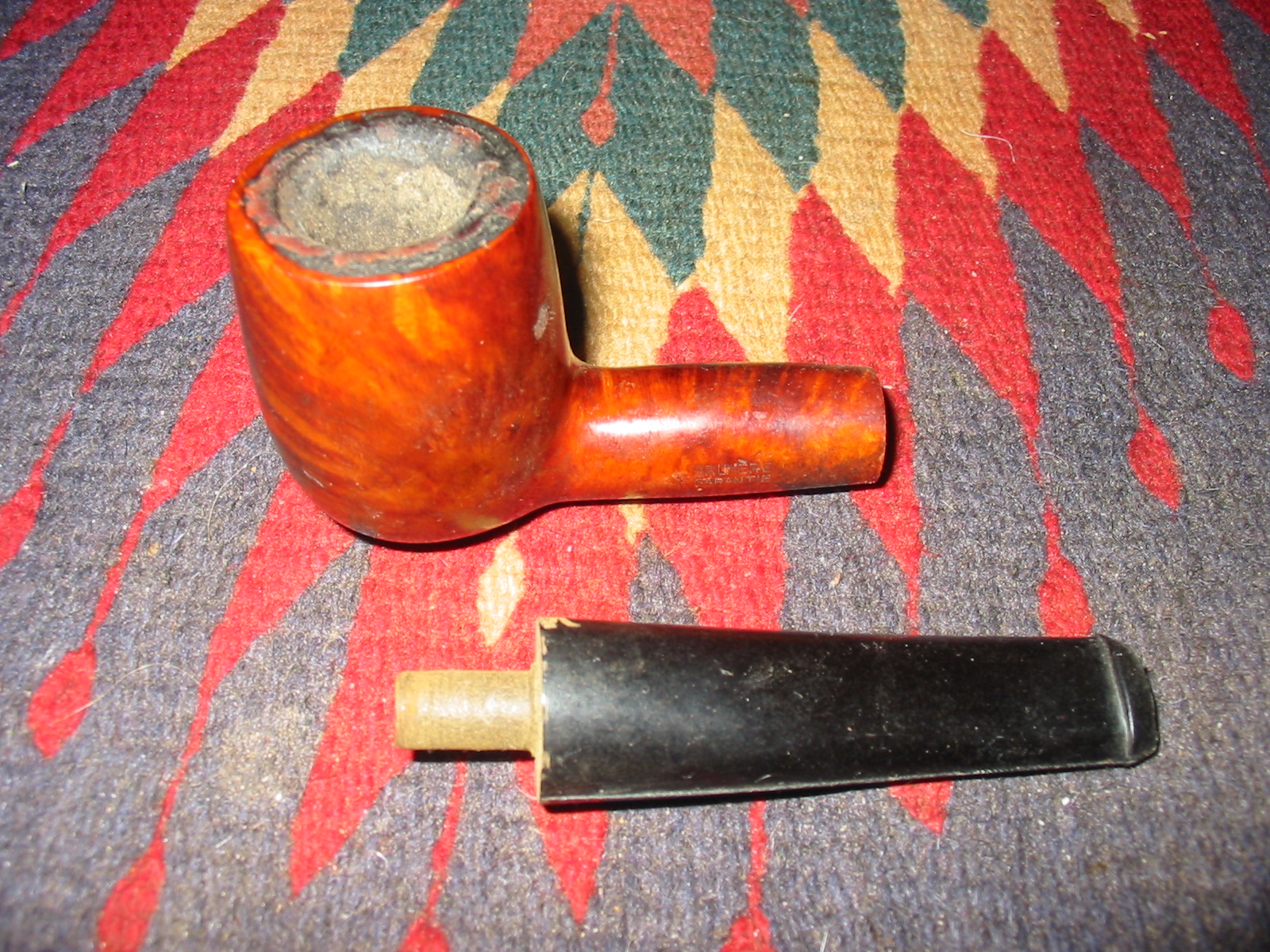
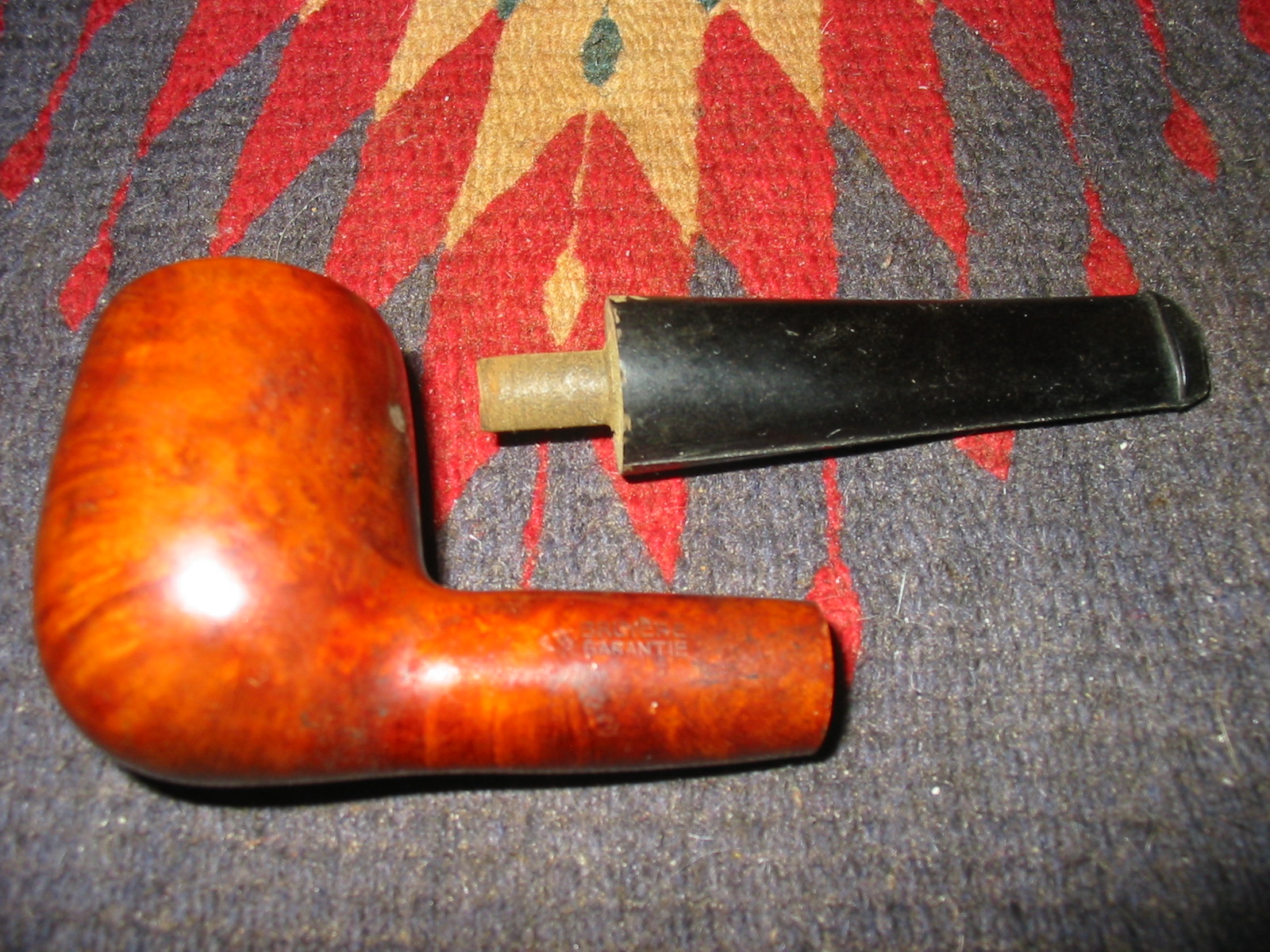
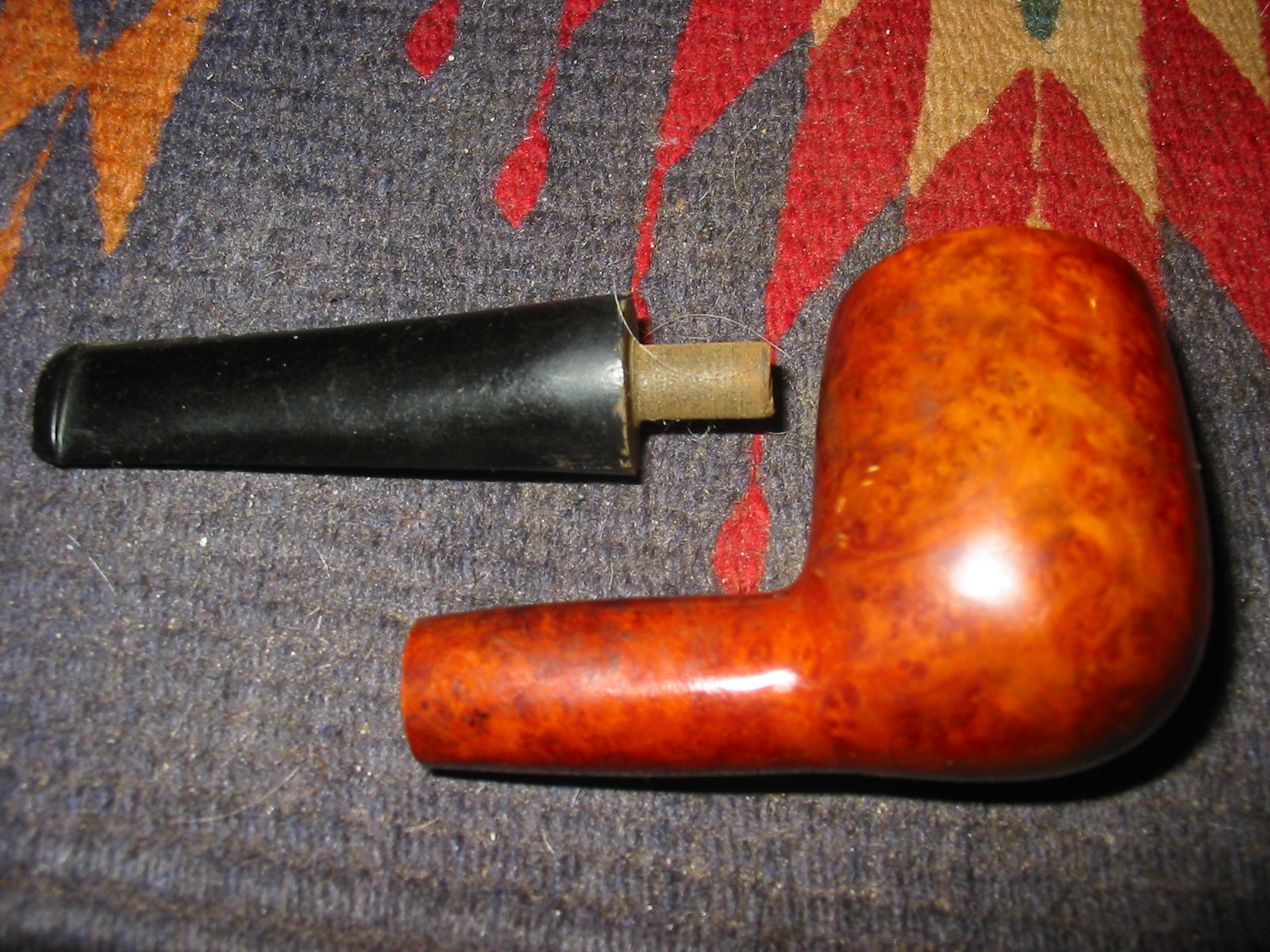
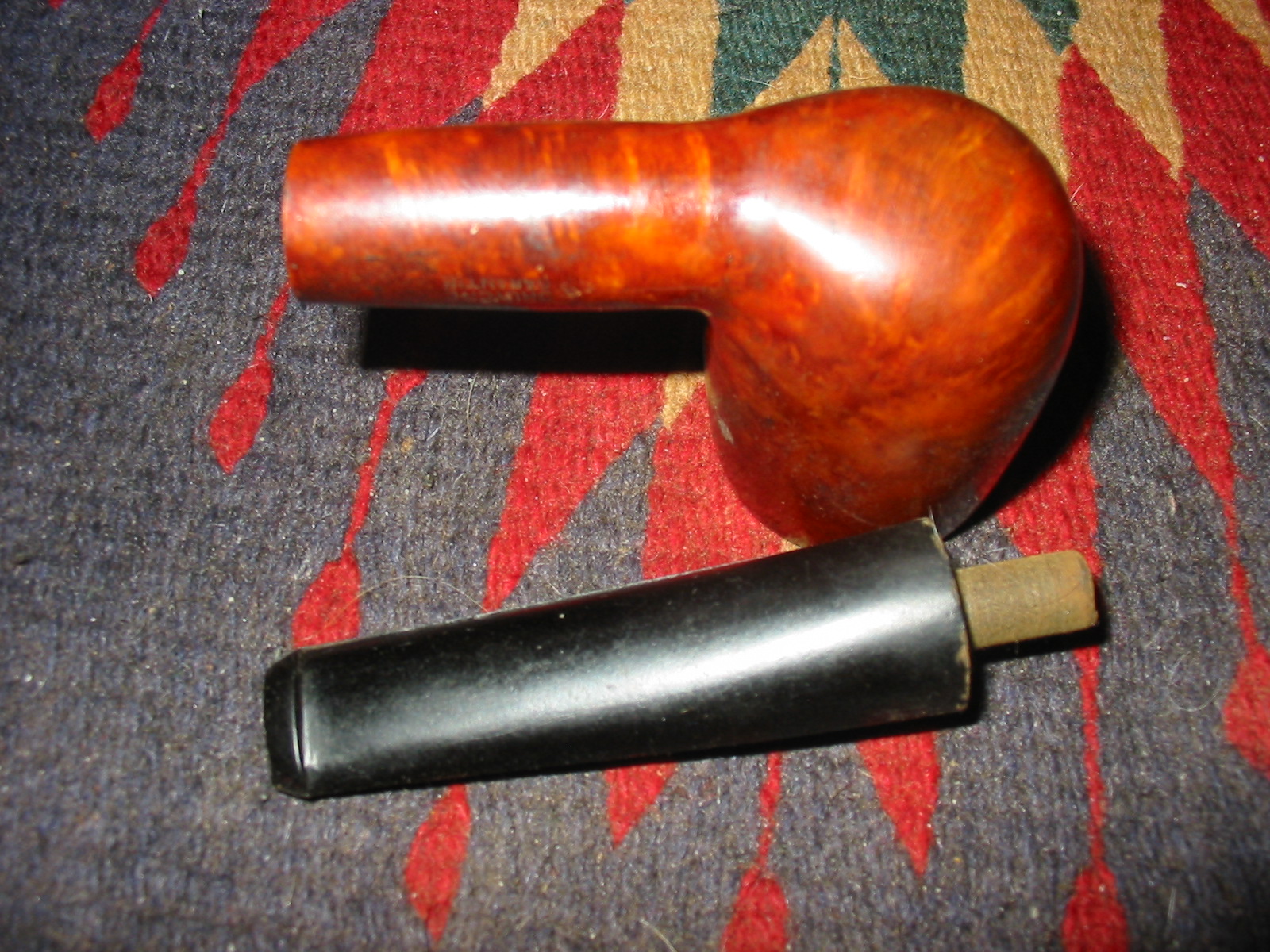
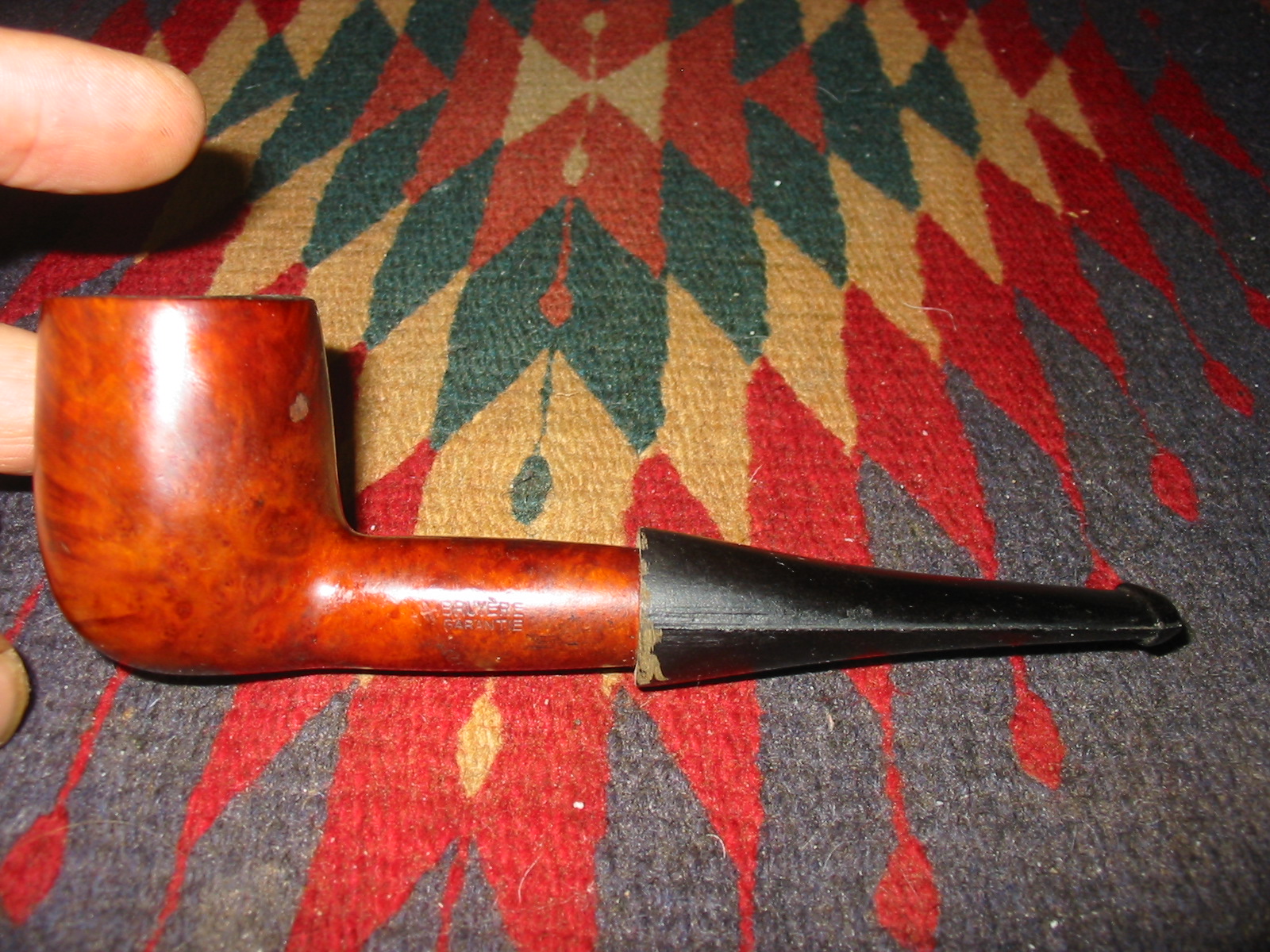
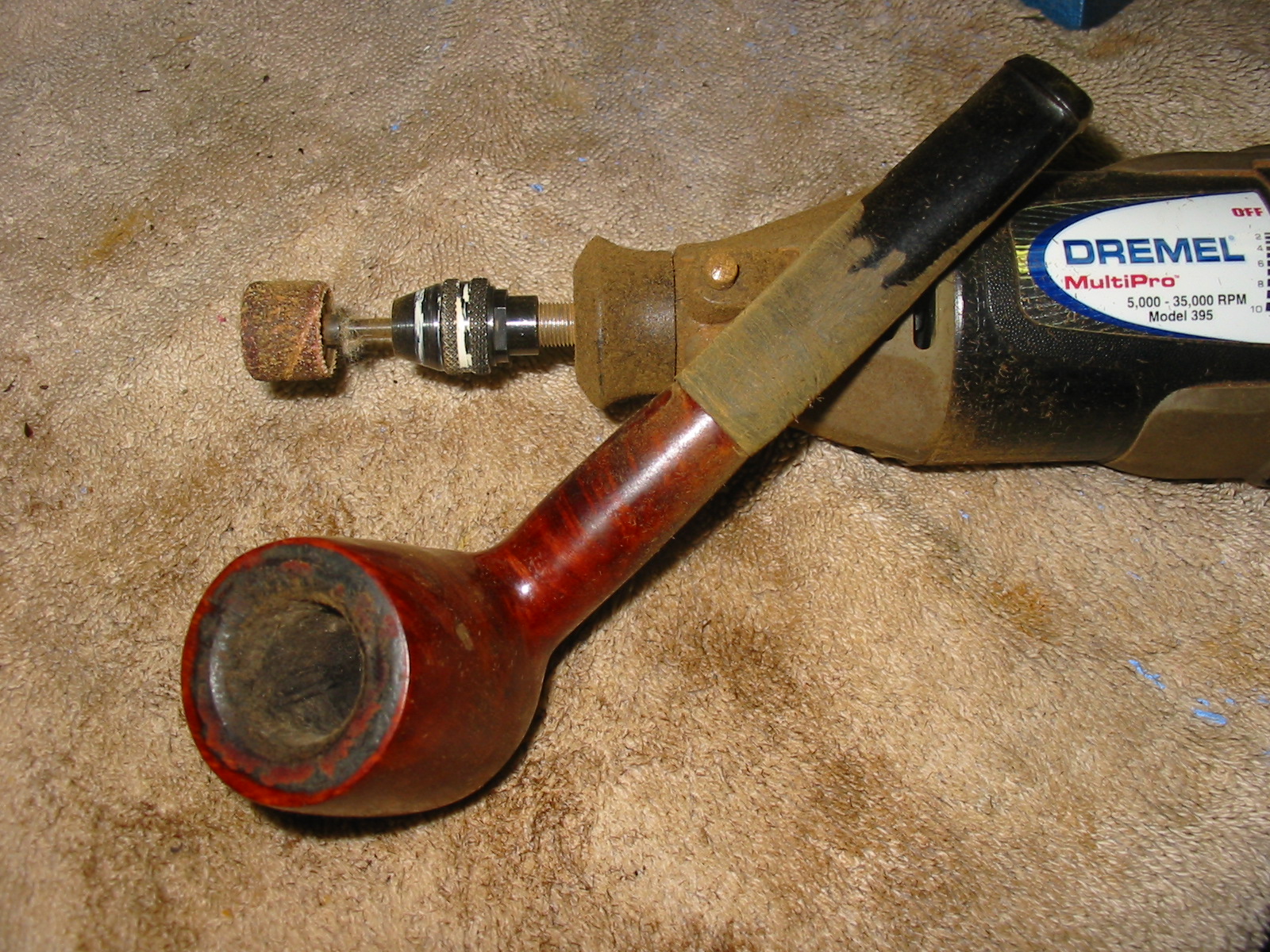
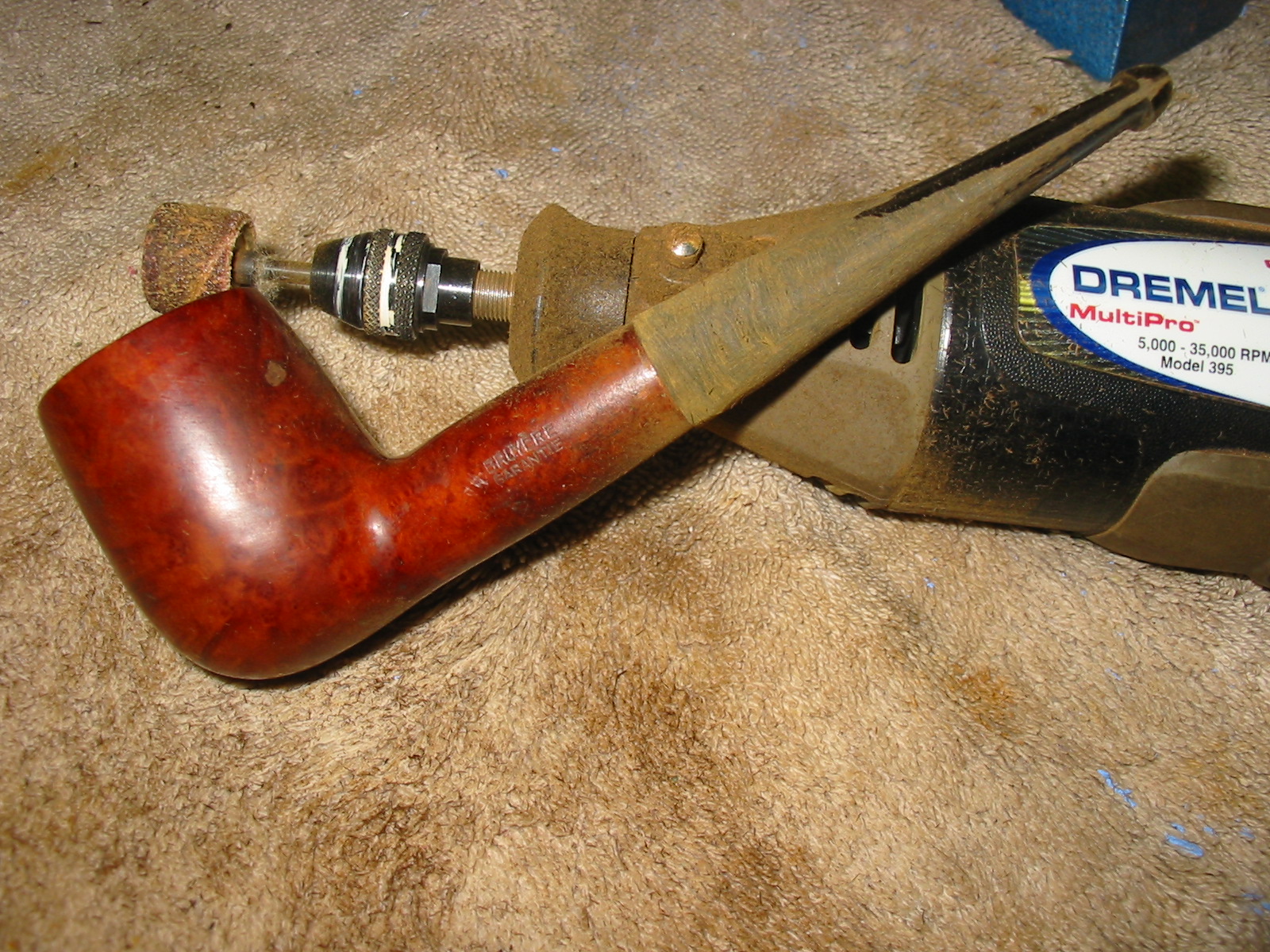
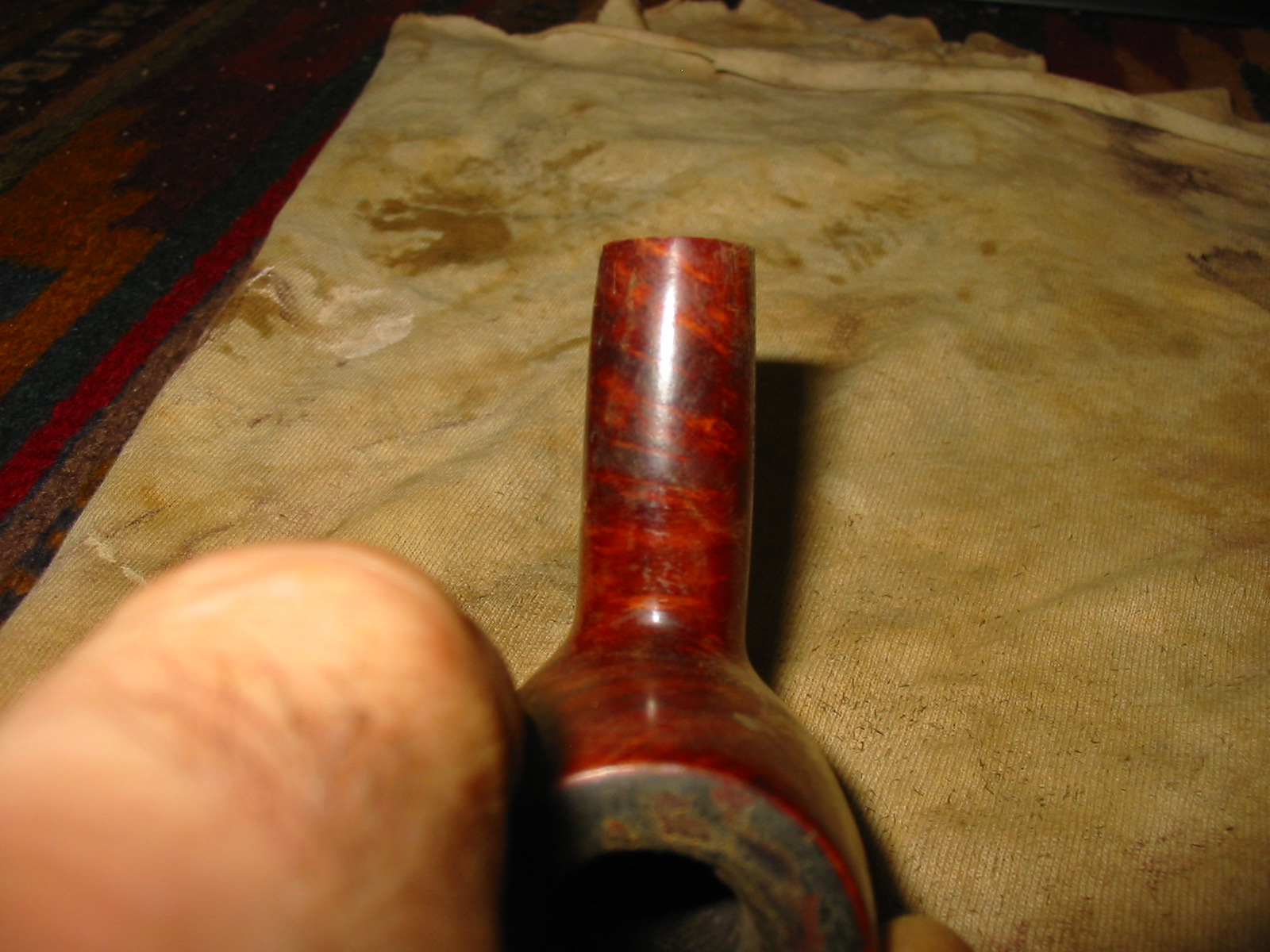
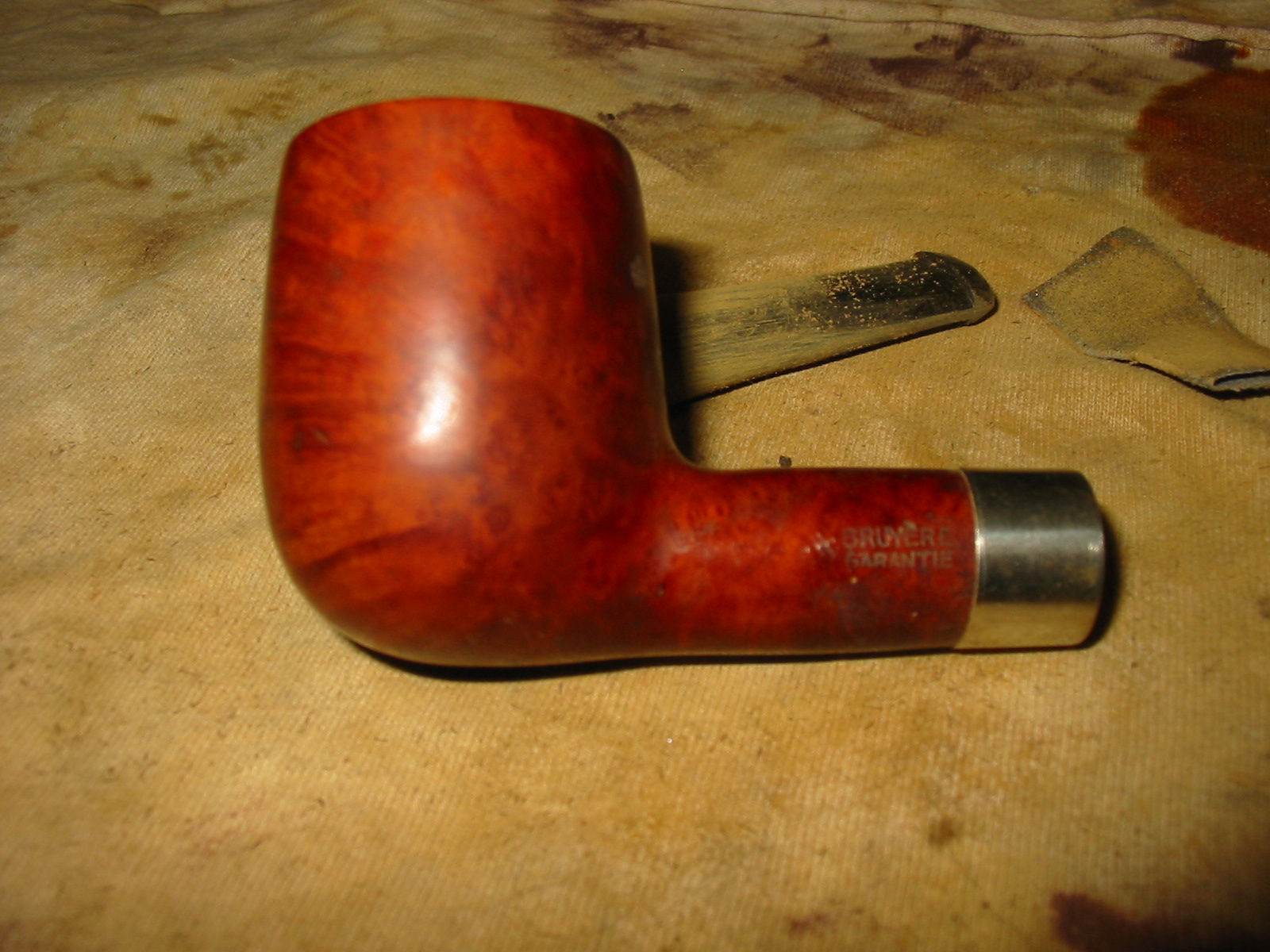
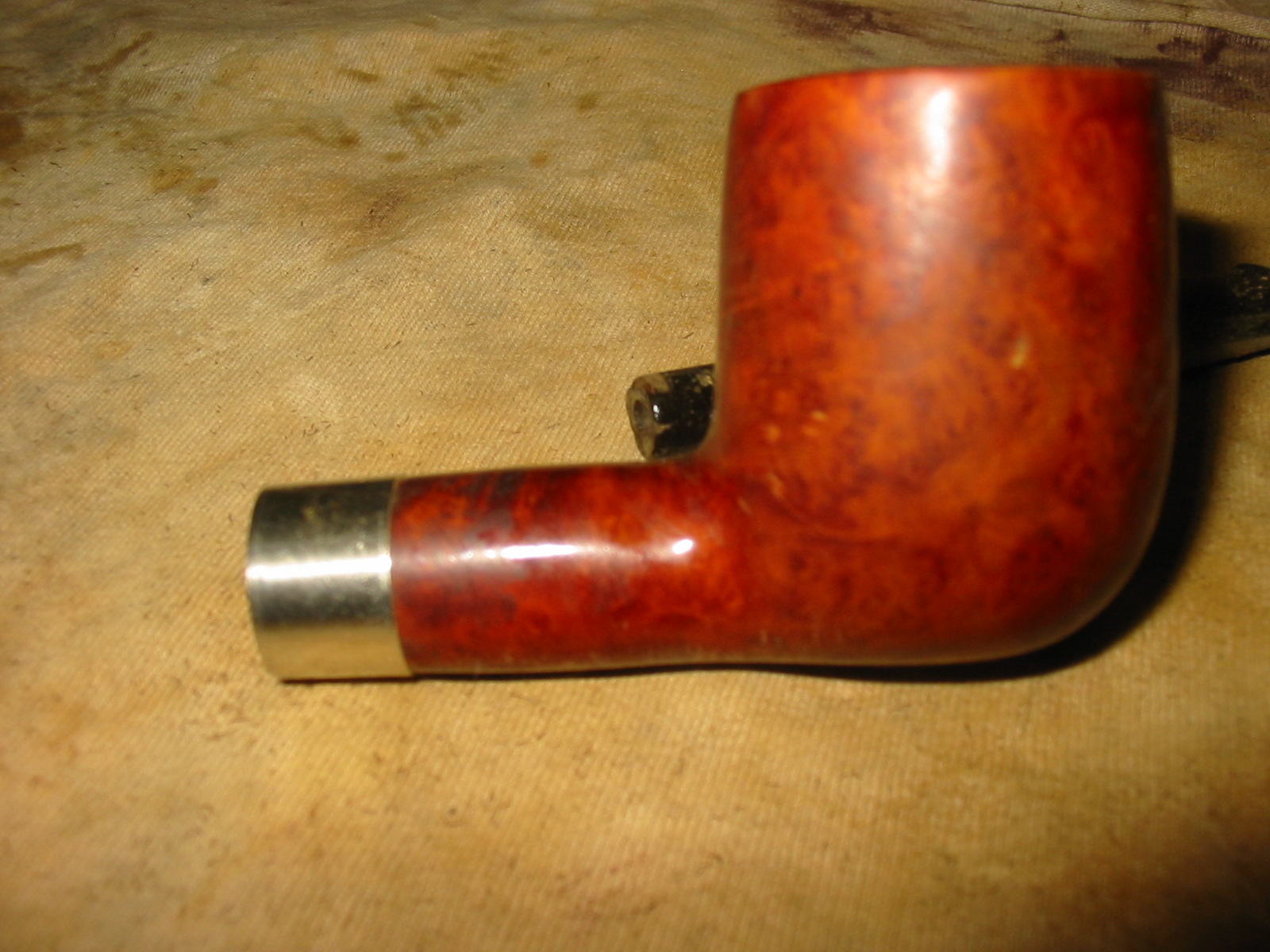
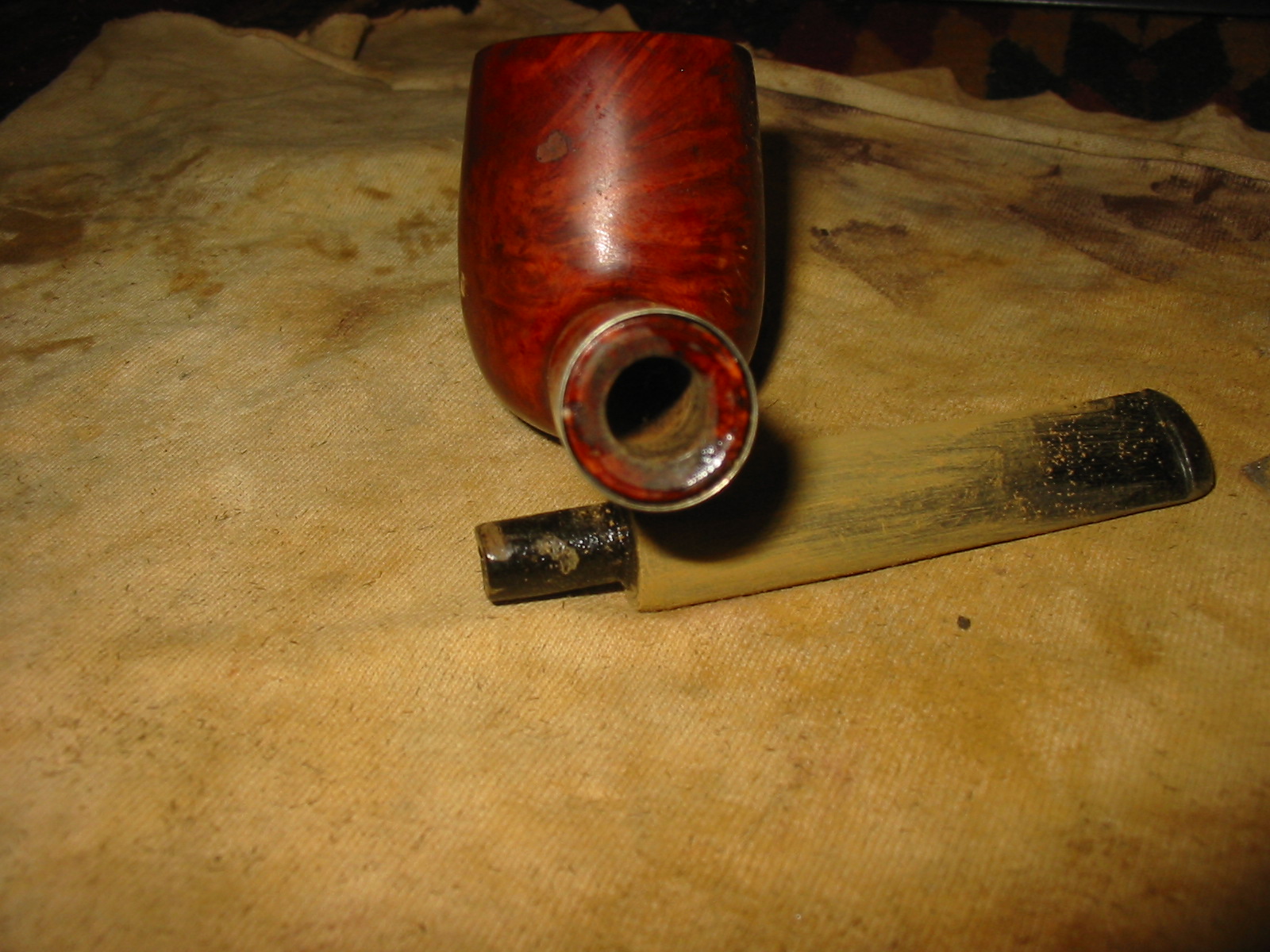
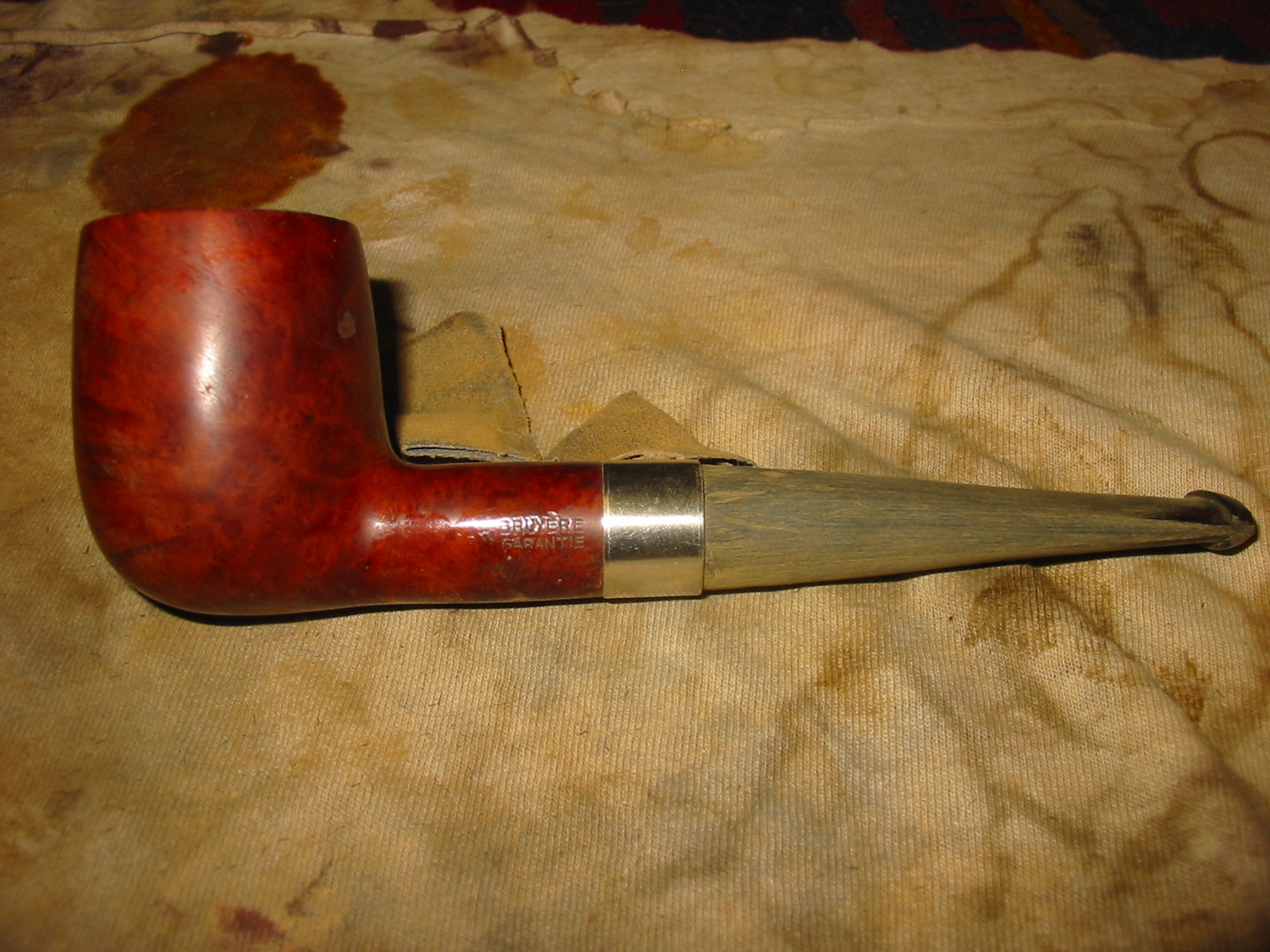
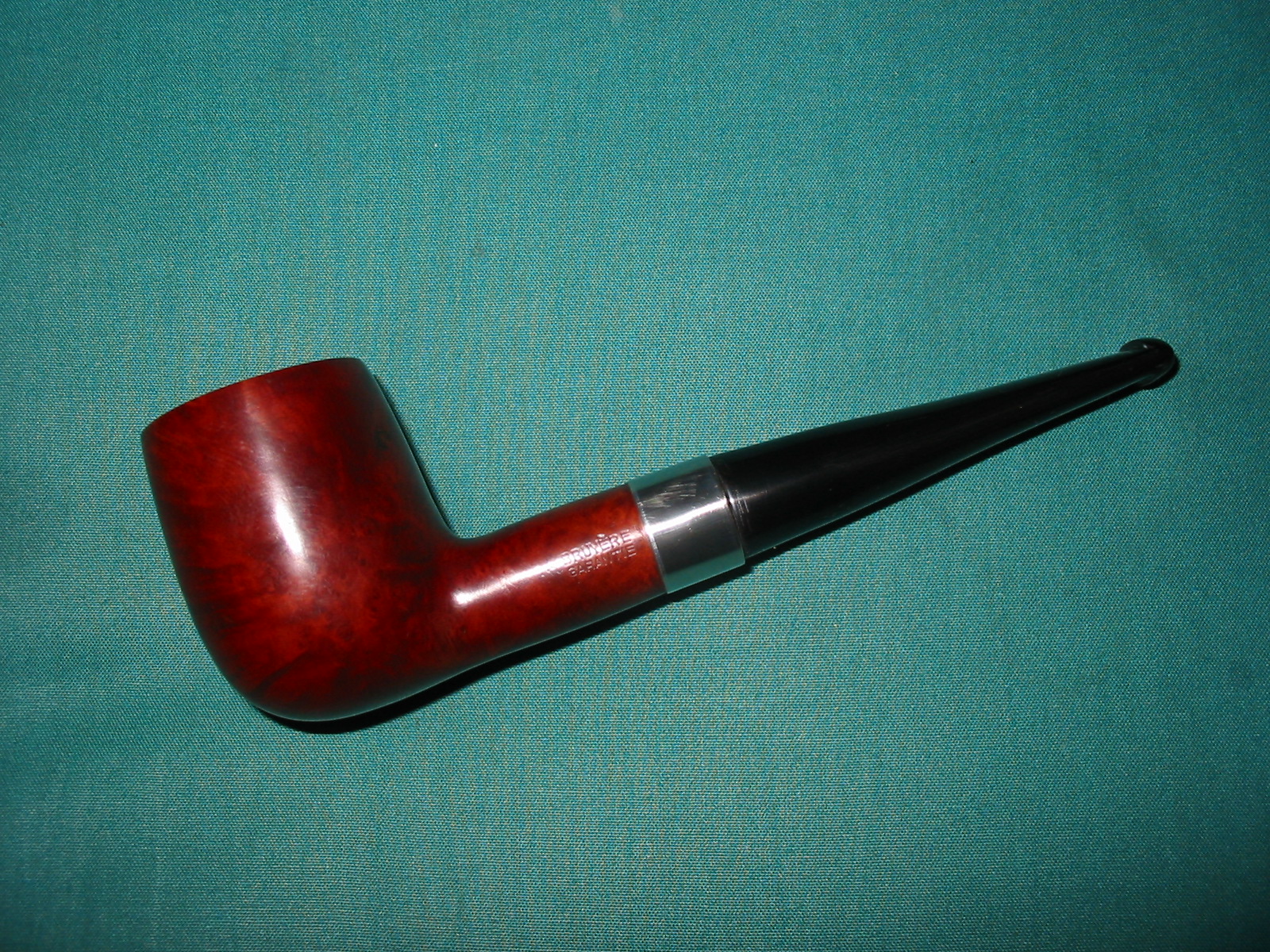
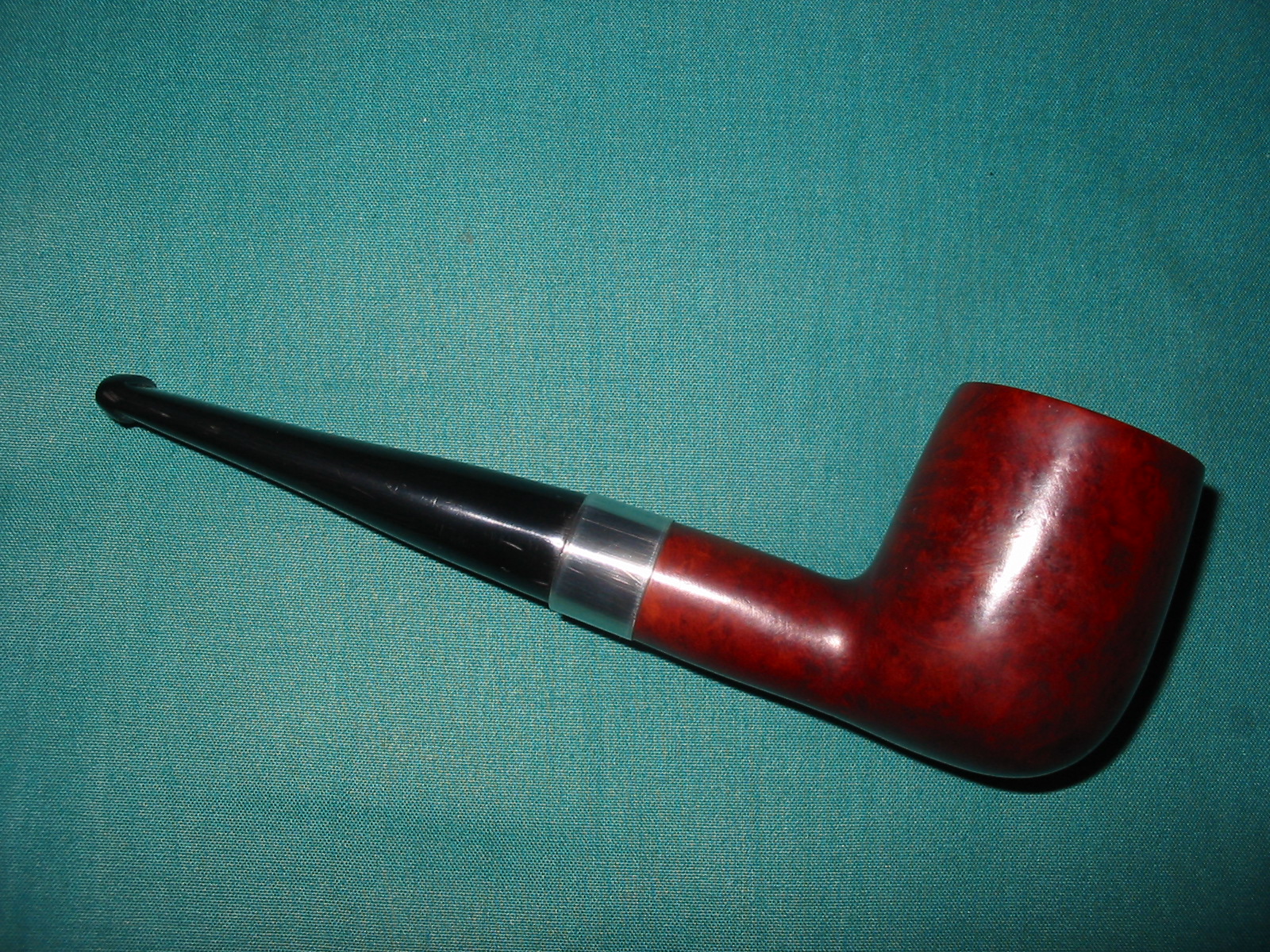
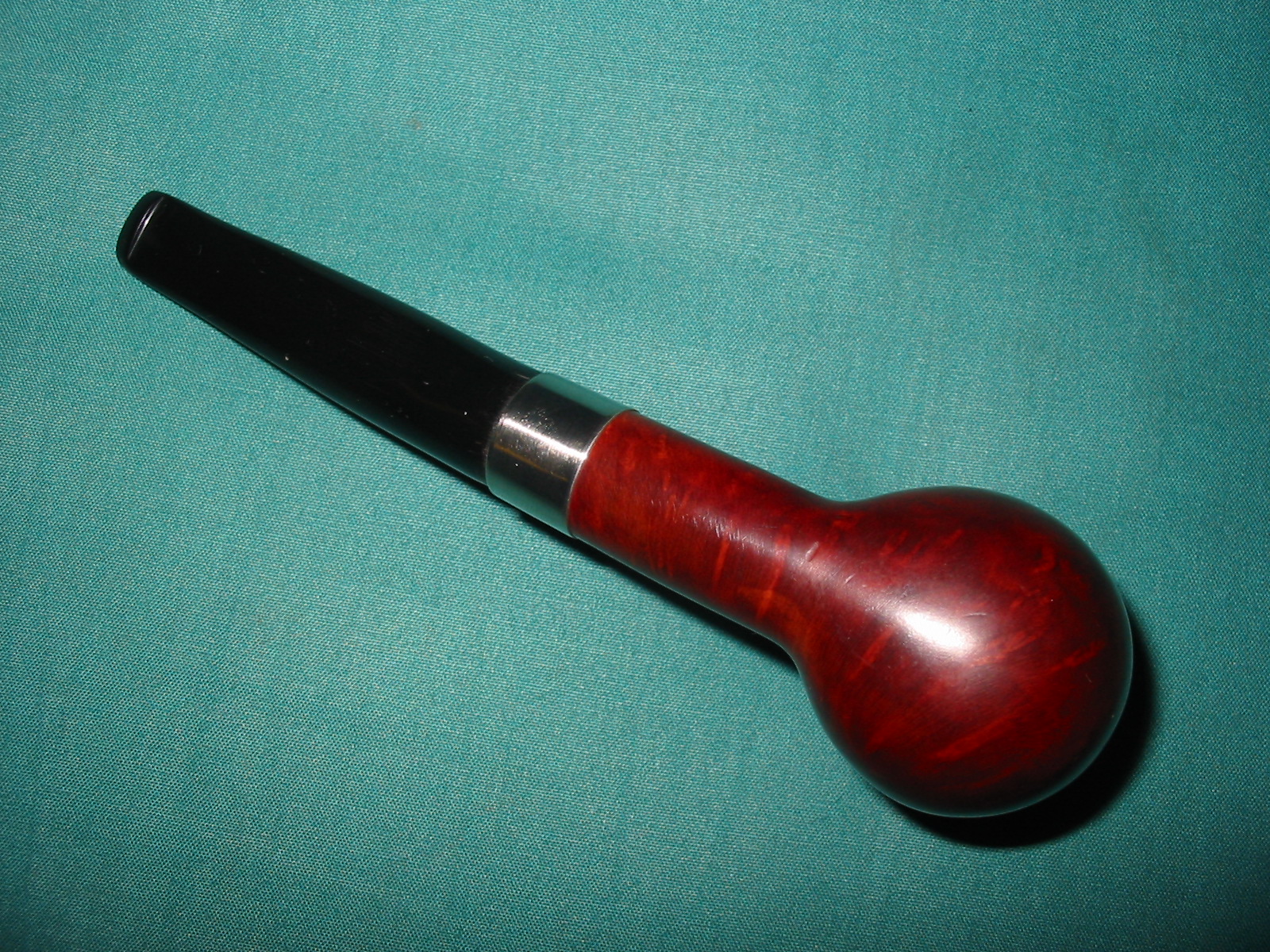
This is yet another of the bowls that was in my box of stummels. It is stamped Bruyere over Garantie on the left side of the shank with no other stamping. The bowl was badly caked with an crumbling, uneven cake. The cake was thicker at the top of the bowl than in the bottom of the bowl. The rim was also caked with oils and hardened tars. It was also dented and had a slight burn mark at about 12 o’clock on the front of the bowl. The shank was misshapen and out of round where it met the stem. It was almost as if someone had sanded the previous shank to meet the stem. There was a large fill on the back side of the bowl near the shank bowl junction. The finish had a coat of lacquer or varnish on it. I fit a tenon to the shank and worked on the stem to be a good tight fit to the bowl. The next series of four photos show the newly turned tenon and the shape of the shank at the shank stem junction.

ImageImageImageImage

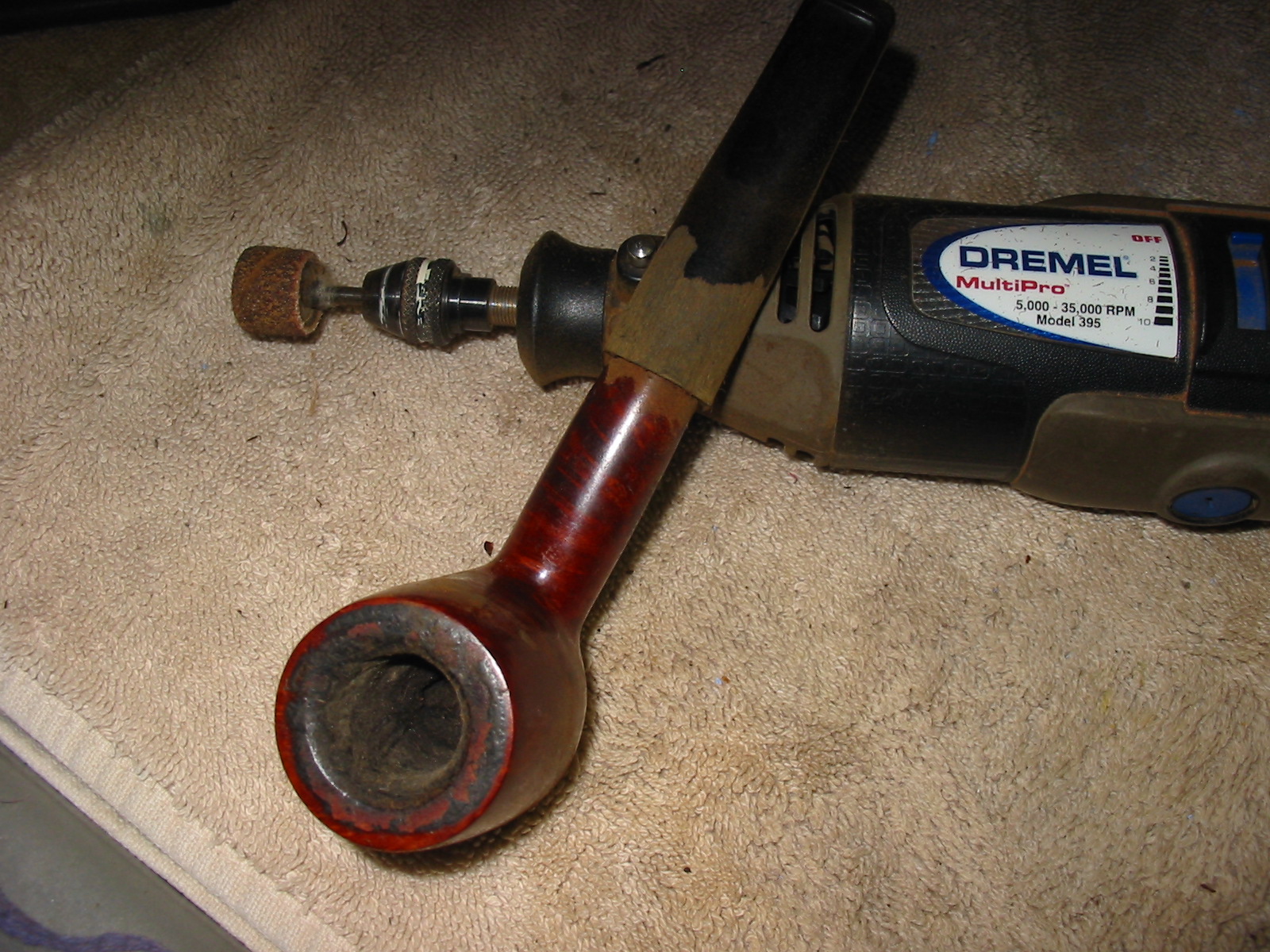
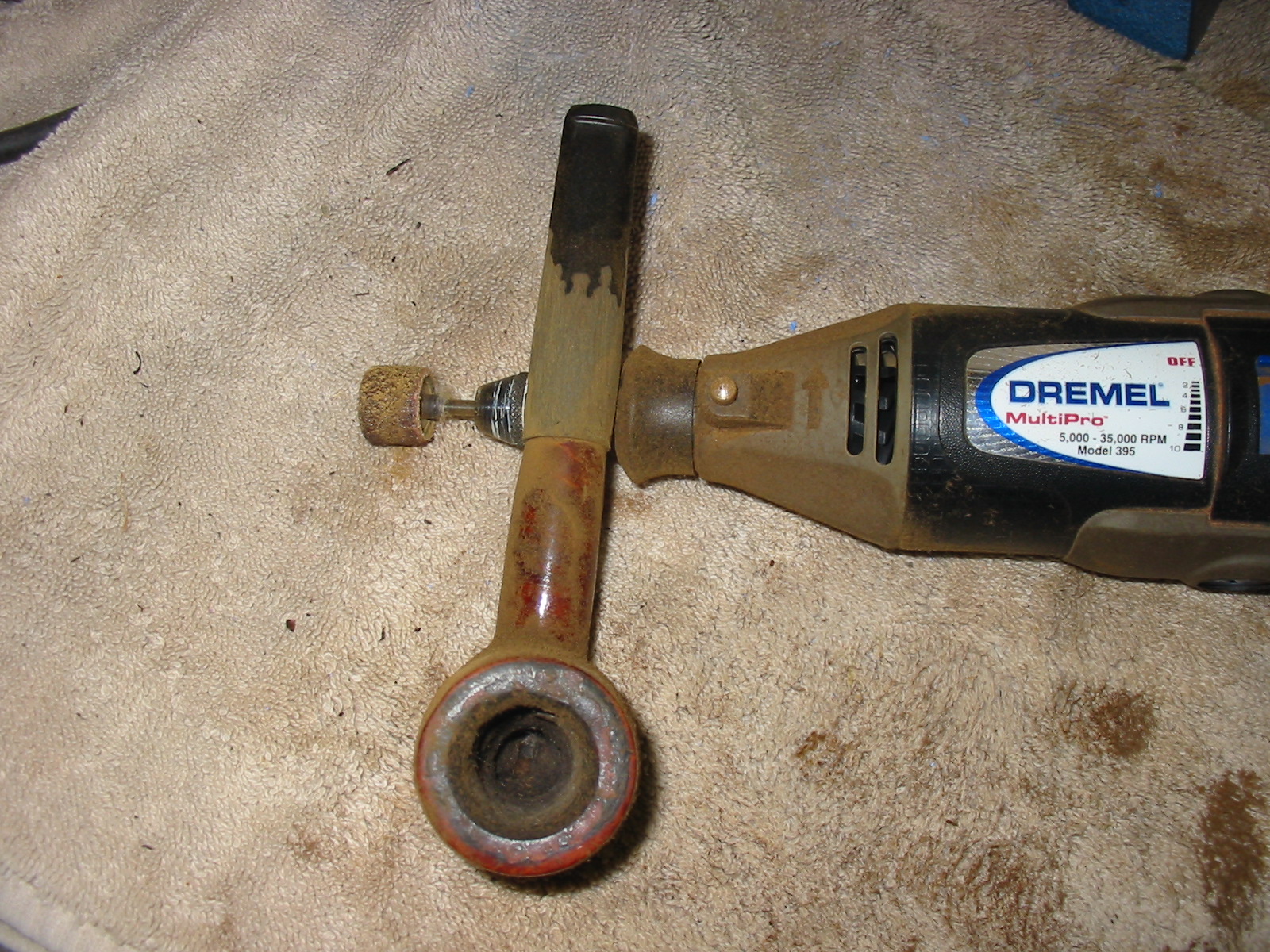
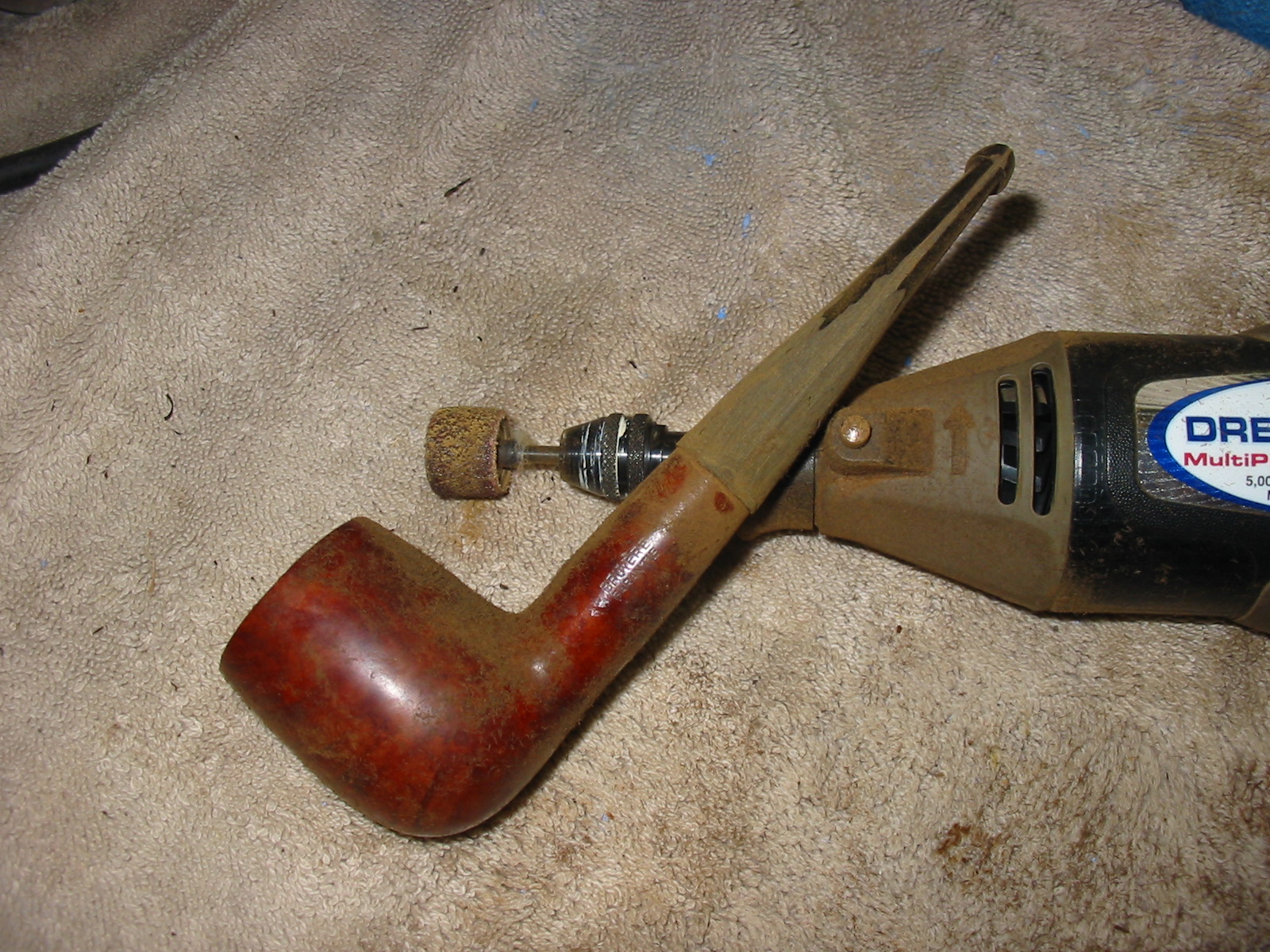
Once I had the tenon cut and sanded to a good snug fit I inserted it in the shank. The first two photos below show the fit of the stem to the shank. You can also see the taper on the on the shank that shows the misshaped nature of the shank. The stem fit very well but was much larger in diameter than the shank. I used my Dremel with a sanding drum to remove the excess diameter of the stem. The next series of six photos show the progress of removing the excess vulcanite with the sanding drum. The final photo of the six shows the newly formed fit of the stem to the shank. The taper on the shank is bothersome so that I wanted to have to address that issue before I finished the final fitting of the stem.

ImageImageImageImageImageImageImageImage

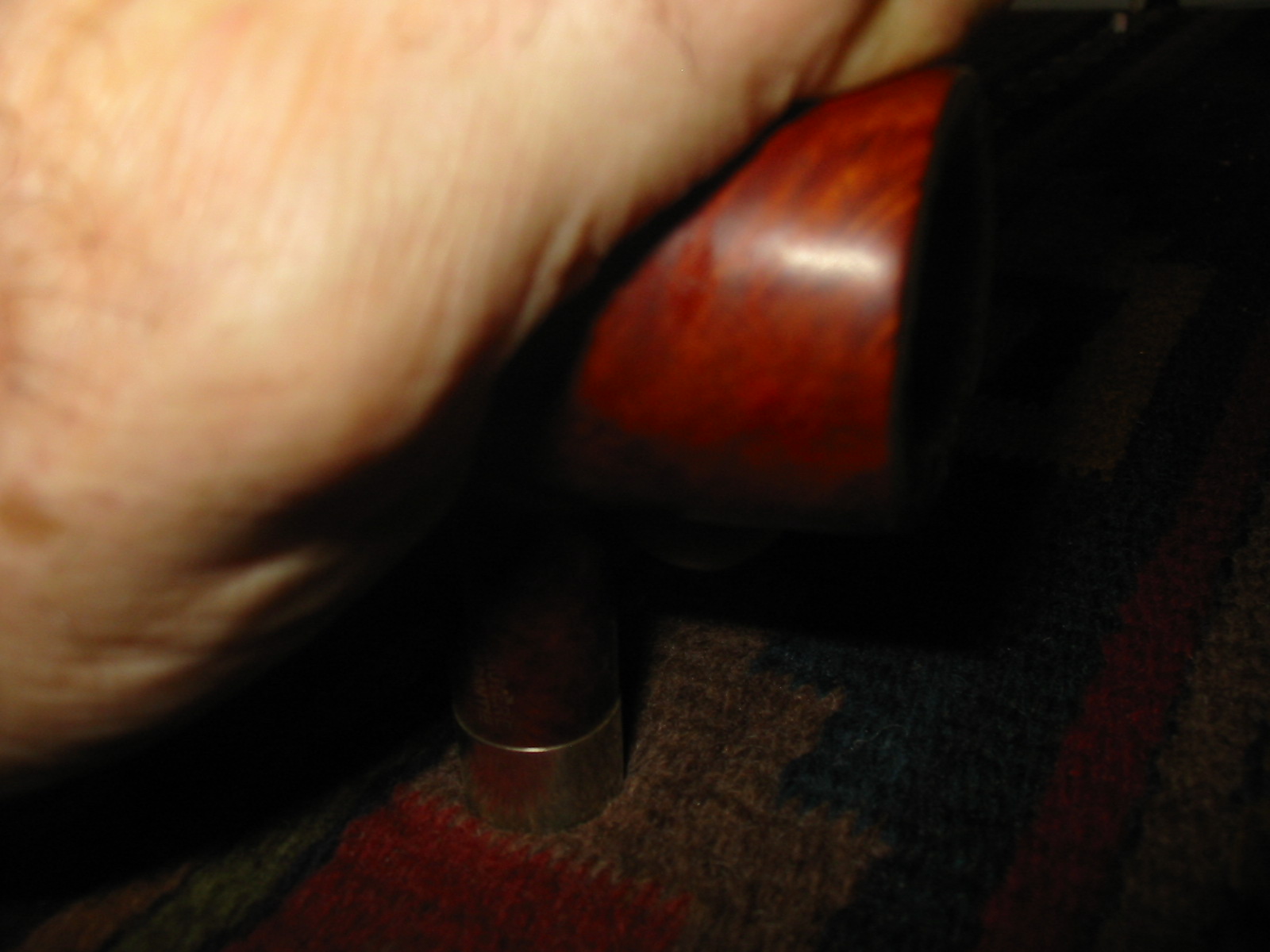
Once I had the stem fitting well I decided to band the shank to even out the flow and roundness of the shank. A wide nickel band would fit the shank well and flatten out the shank taper. I wanted an even flow from the shank bowl junction to the stem. The look of the taper on the shank was something that bothered me and that I decided to minimize with the band. The next five photos show the process and results of banding. I heated the band and then pressure fit it onto the shank. I then used some superglue to fill in the vacant areas in the inner diameter of the band.  The final photo in the series shows an end view of the band on the shank.

ImageImageImageImageImage

The next three photos show the fit of the new stem to the shank. The band sets off the stem shank junction well. The taper of the stem works very well in my opinion. More sanding needed to be done in making the fit smooth and the taper correct.

ImageImageImage

I worked on the stem with medium grit emery cloth to remove the scratches and to even out the taper on the stem and the flow of the sides of the stem from the shank to the button. The next two photos show the stem after sanding the stem.

ImageImage

At this point in the process of fitting the stem I decided to set it aside and work on the bowl of the pipe. I reamed it out using several different bits on the t handle of the Pipnet pipe reamer. I reamed the bowl back to bare wood so that I could rebuild the cake more evenly. The next two photos show the reaming process.

ImageImage

After reaming the bowl I decided to wipe the outside of the bowl down with acetone. I wet a cotton pad with the acetone and scrubbed the outside of the bowl. I also wiped down the rim to soften the tars and build up on the top. The next four photos show the bowl after I had wiped it down multiple times. I wanted to cut through the varnish or topcoat on the bowl so that I could restain it.

ImageImageImageImage

The next photo shows the bowl after I had topped it on the board and sandpaper. I was able to remove the damage of the dents and roughness with a minor topping on the sandpaper.Image

I also decided to remove the putty fill on the back side of the bowl. I picked out the putty with a dental pick. I wiped the bowl down after I had removed the fill to clean out the sandpit. I then picked it clean a second time and wiped it down again as well. Once it was clean I used the dental pick to pack the sandpit with briar dust that I had saved for this purpose. I packed it in and then tamped it down with the end of a pipe nail. I refilled the sandpit until the briar dust bulged slightly above the surface of the bowl. At this point I dripped superglue into the briar dust to anchor it in the hole. I repacked the dust and dripped in glue a second time. The first two photos below show the packed briar dust. The next two photos show the sandpit after the superglue has been dripped into the dust and dried. It blackens nicely with the superglue and instead of a pink fill the fill is now a black briar dust and superglue. I have found that the patch is much easier to blend in with stain than the putty fills.

ImageImageImageImage

The photo below shows the newly filled patch after I have sanded it. I sanded off the excess with a folded piece of fine grit emery cloth and then used a fine grit sanding sponge to smooth out the surface of the new fill to match the surface of the bowl.

Image

At this point in the process I decided to continue working on the stem of the pipe. I sanded it with the sanding sponge. I worked on the fit of the stem to the band. My ideal was to have the stem sit evenly within the band so that the gap was even all the way around the band and the stem was centered in the mortise. The next five photos show the sanding process to this point. Remember the issue at stake was to work on the fit of the stem to the band and to remove the deeper scratches in the surface of the stem. I also used the sanding drum on the Dremel to taper the stem a bit more at the button. I wanted the button end to be narrow and give the pipe and older feel and look. The top view photo below shows the shape of the stem at this point in the process.

ImageImageImageImageImage

I then wet sanded the bowl and the stem with 1500 grit micromesh sanding pads and water. This process removed many of the remaining scratches in the surface of the stem and also removed the remaining finish on the pipe bowl and rim. I wanted the bowl to be cleaned of the varnish finish and as much of the stain colour as possible so that I could more easily blend the rim and the bowl colour. The next three photos show the pipe and the stem after wet sanding. The stem fit is working well at this point and the angles and flow of the taper on the stem is looking more and more finished.

ImageImageImage

I wiped down the stem with some of the water and then used the Maguiar’s Scratch X2.0 polish on the stem to get a clear view of the remaining areas that needed more work with 320 grit sandpaper before I moved on to the higher grits of micromesh.

Image

I continued to wet sand the bowl and stem with 1800 grit micromesh sanding pads. The next three photos show the progress that was made on the smoothing and polishing of both the stem and the bowl. I continued to wet sand with the 1800 grit until the surface was smooth and matte finished.

ImageImageImage

I continued wet sanding with 2400 and 3200 grit micromesh pads. The next three photos show the progress of the sanding on the bowl and the stem at this point in the process. I also decided to sand the band with these two grits to polish the nickel.

ImageImageImage

At this point in the sanding process I switched to dry sanding the bowl and the stem with the 3600 grit micromesh sanding pad. I sanded the bowl, band and stem with this sanding pad to bring out the growing shine in both. I wiped down the bowl and the stem with a damp cloth to remove the sanding dust and to prepare the bowl for staining.

ImageImageImage

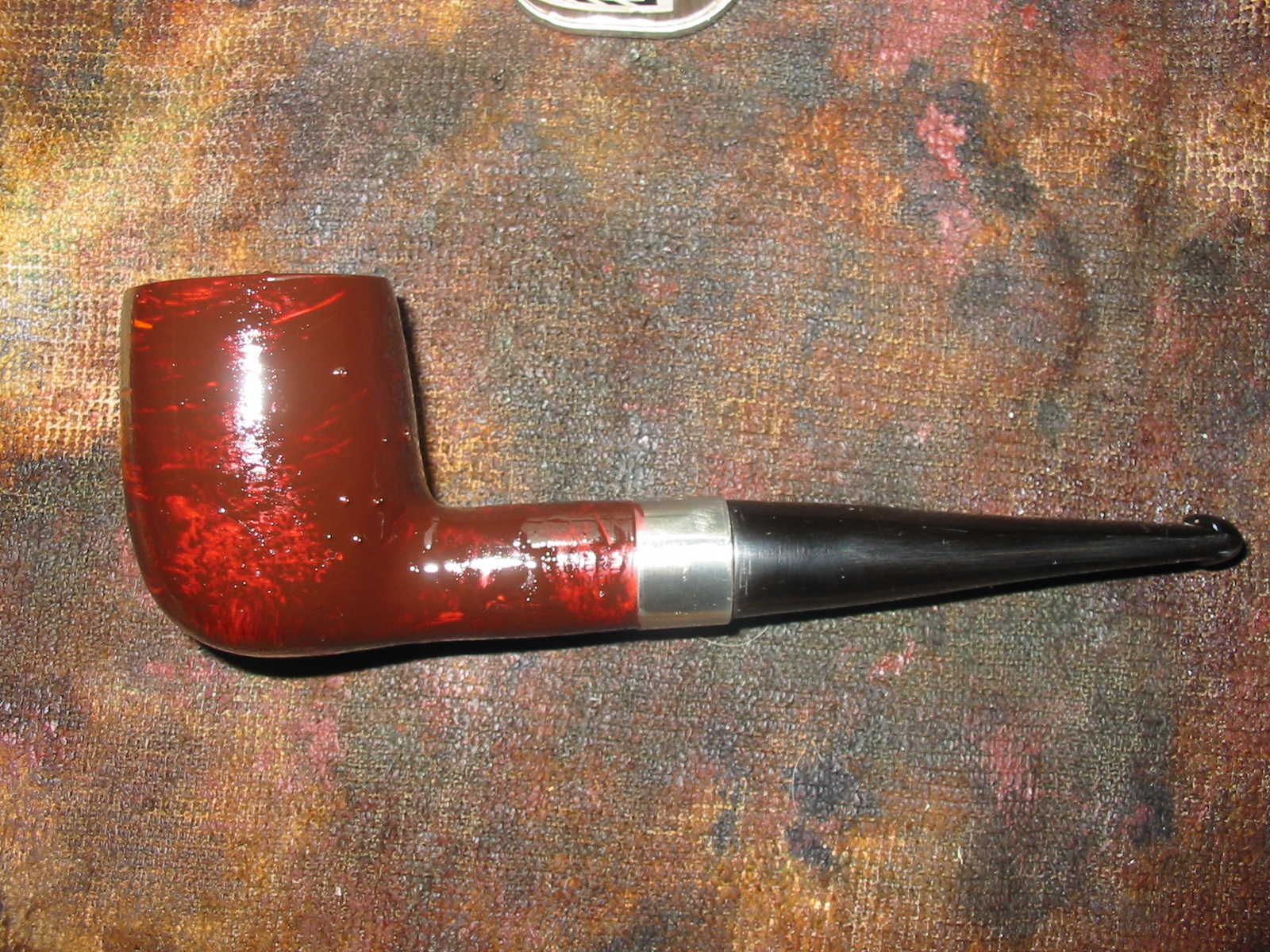
For stain on this pipe I ended up using a two step process. I began with an oxblood stain as an undercoat. I applied it with cotton swabs and also a dauber. I rubbed it into the bowl and shank and flamed it and buffed it off.  The next three photos show the application of the stain.

ImageImageImage

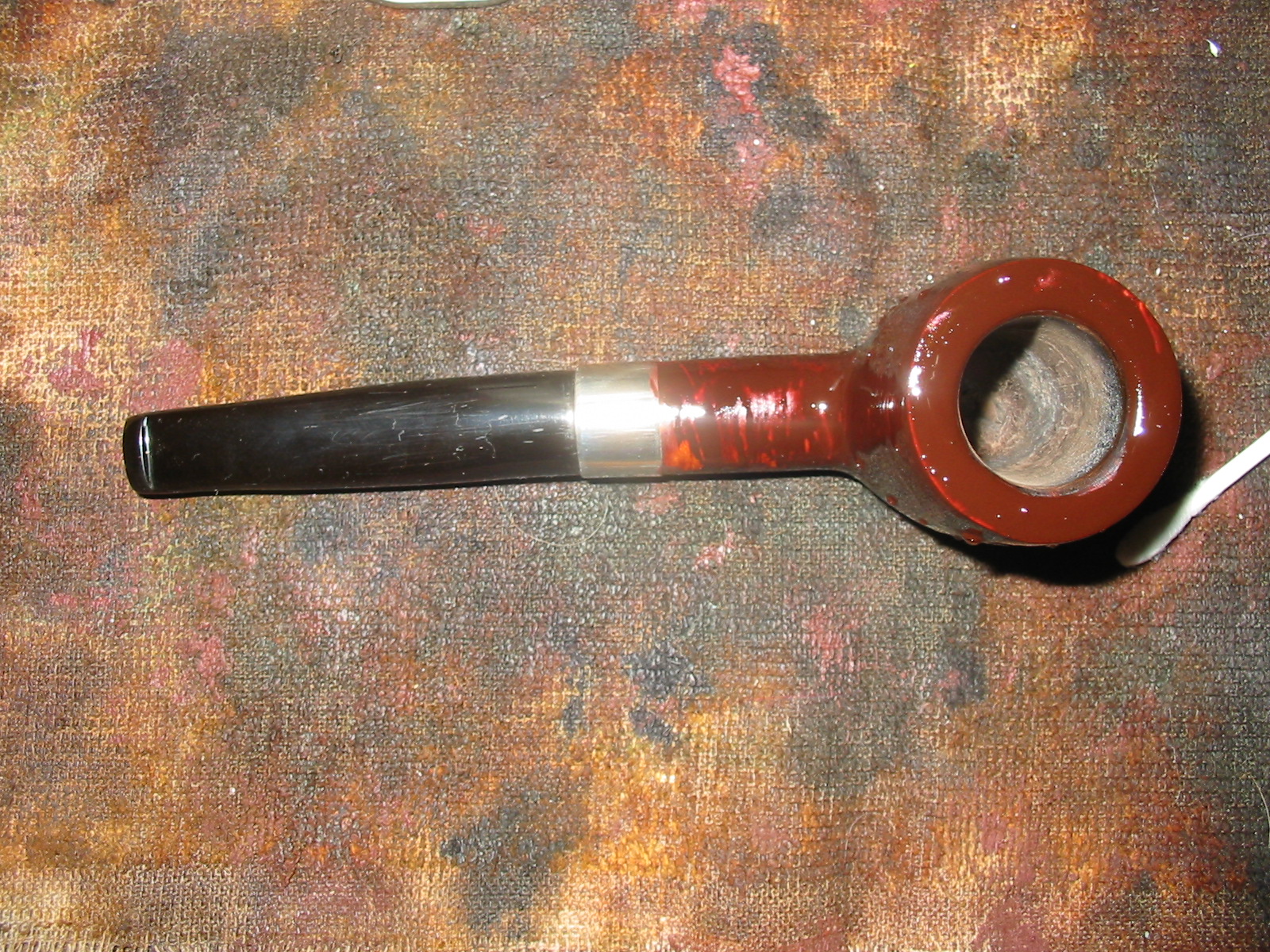
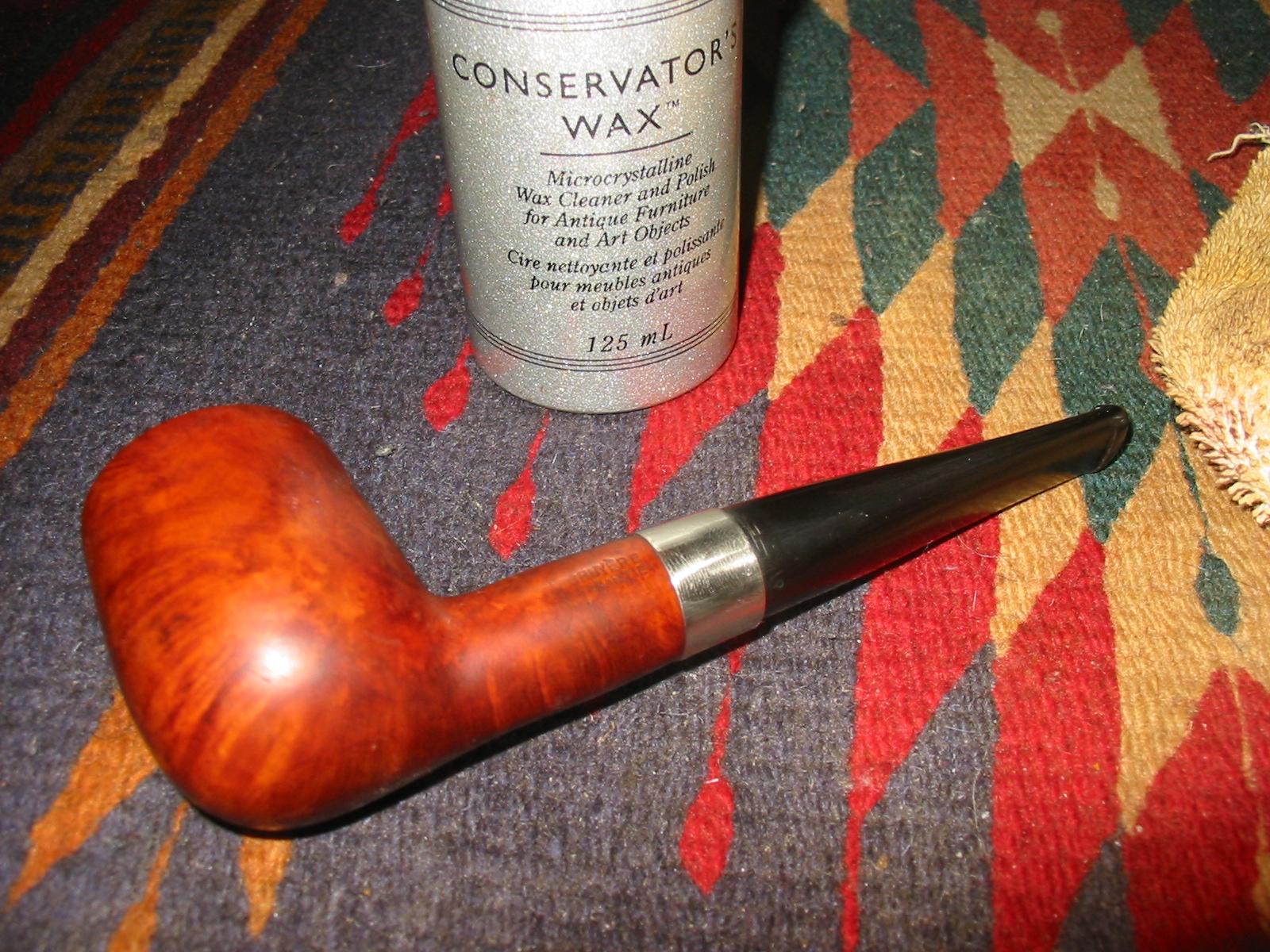
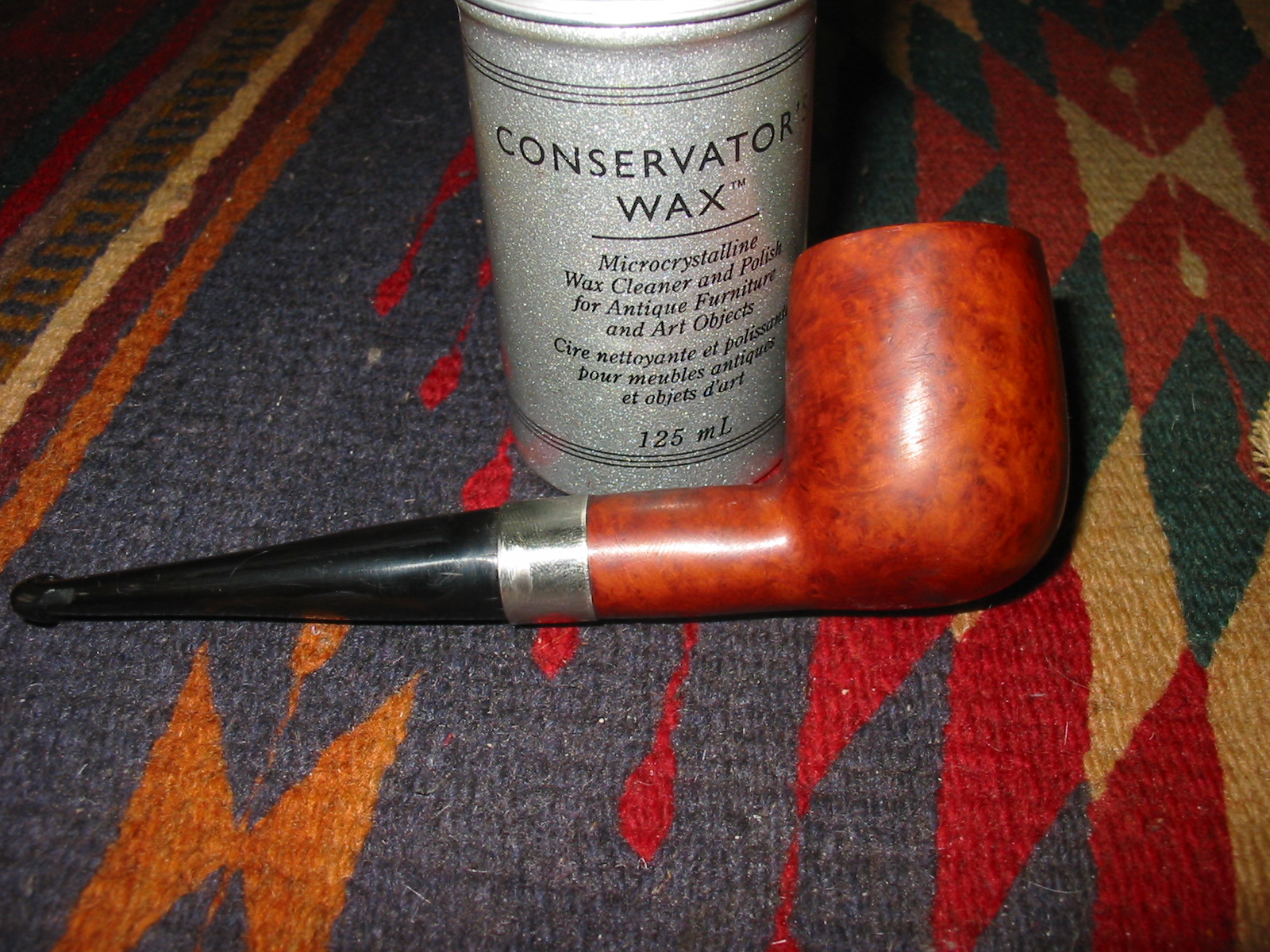
I liked the look of the oxblood stain so I wanted to see what it looked like with a light coat of wax on it. I rubbed on some conservator’s wax and then buffed it off by hand. The next series of photos shows the bowl after a light coat of wax. I was not overly happy with the overall coverage of the stain and the fill still was highly visible on the bowl. It did not blend well. I buffed the pipe with White Diamond on my buffer to see if I could even out the coverage a bit. The fourth through seventh photos below show the pipe after buffing. The coverage was not acceptable to me so I decided to go on and give the pipe a second stain coat of dark brown aniline. I wiped the bowl off with a soft cloth pad dampened with alcohol to cut the wax coat and take the bowl back to the briar before staining it with the second colour.

ImageImageImageImageImageImageImage

The next series of three photos shows the pipe after the application and flaming of the dark brown aniline stain. It was mixed 2:1 with isopropyl alcohol to get the colour that I wanted to use as the top coat. I applied the stain with the dauber and flamed it with my Bic lighter. I reapplied the stain two other times and reflamed it each time. I wanted a rich brown top coat that would give depth to the finish.

ImageImageImage

The final series of four photos show the finished pipe. After the stain dried I buffed it with White Diamond and then applied several coats of carnauba wax. I also gave the stem a coat of Obsidian Oil and rubbed it into the stem. Once the stem dried I buffed it with White Diamond for a final time and then wax it as well. The finished pipe has a great looking stain now and the shape of the stem lends an air of antique to the pipe.

ImageImageImageImage


Rejuvenating a Heibe Goldpoint Billiard


Blog by Steve Laug

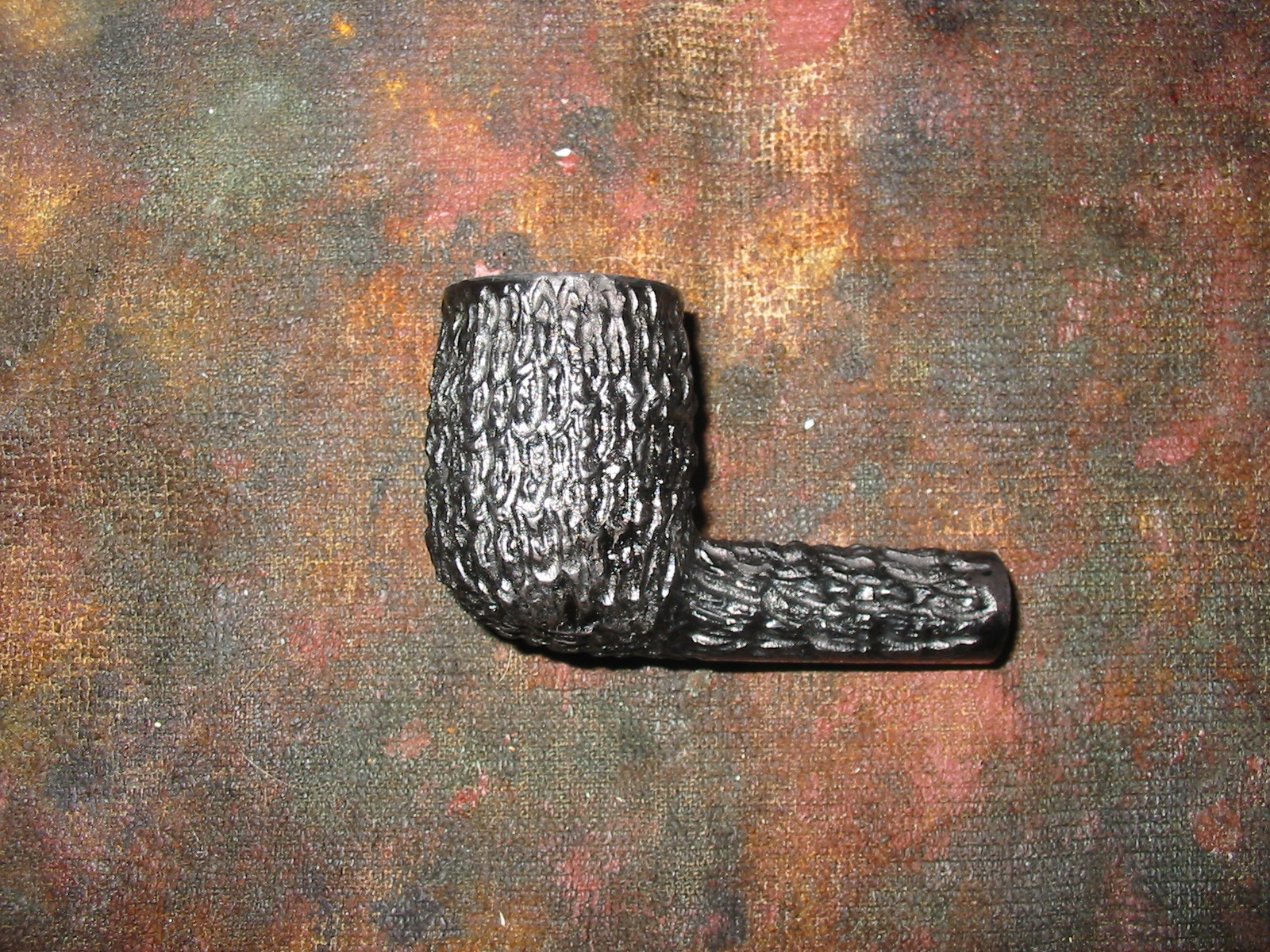
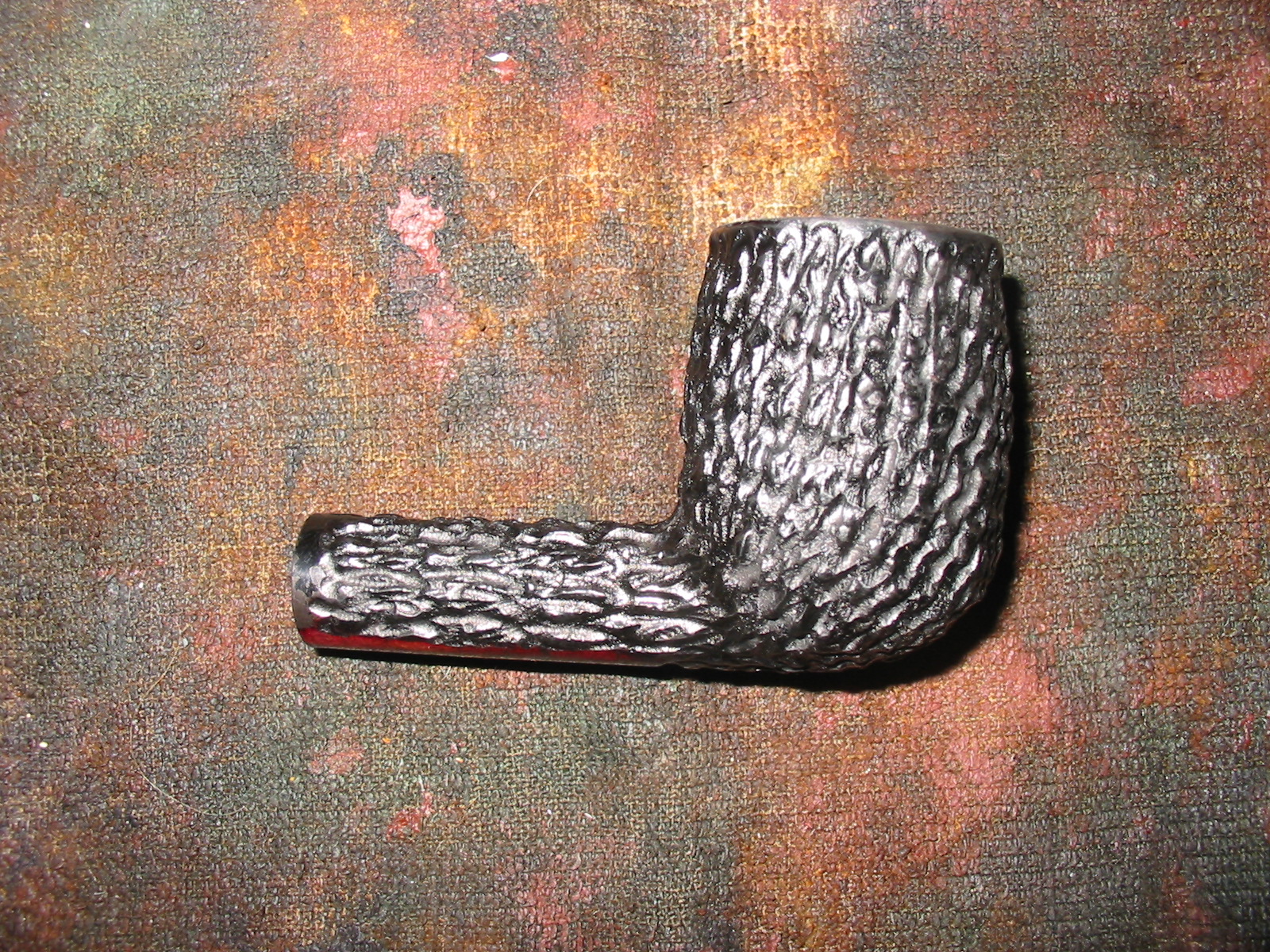
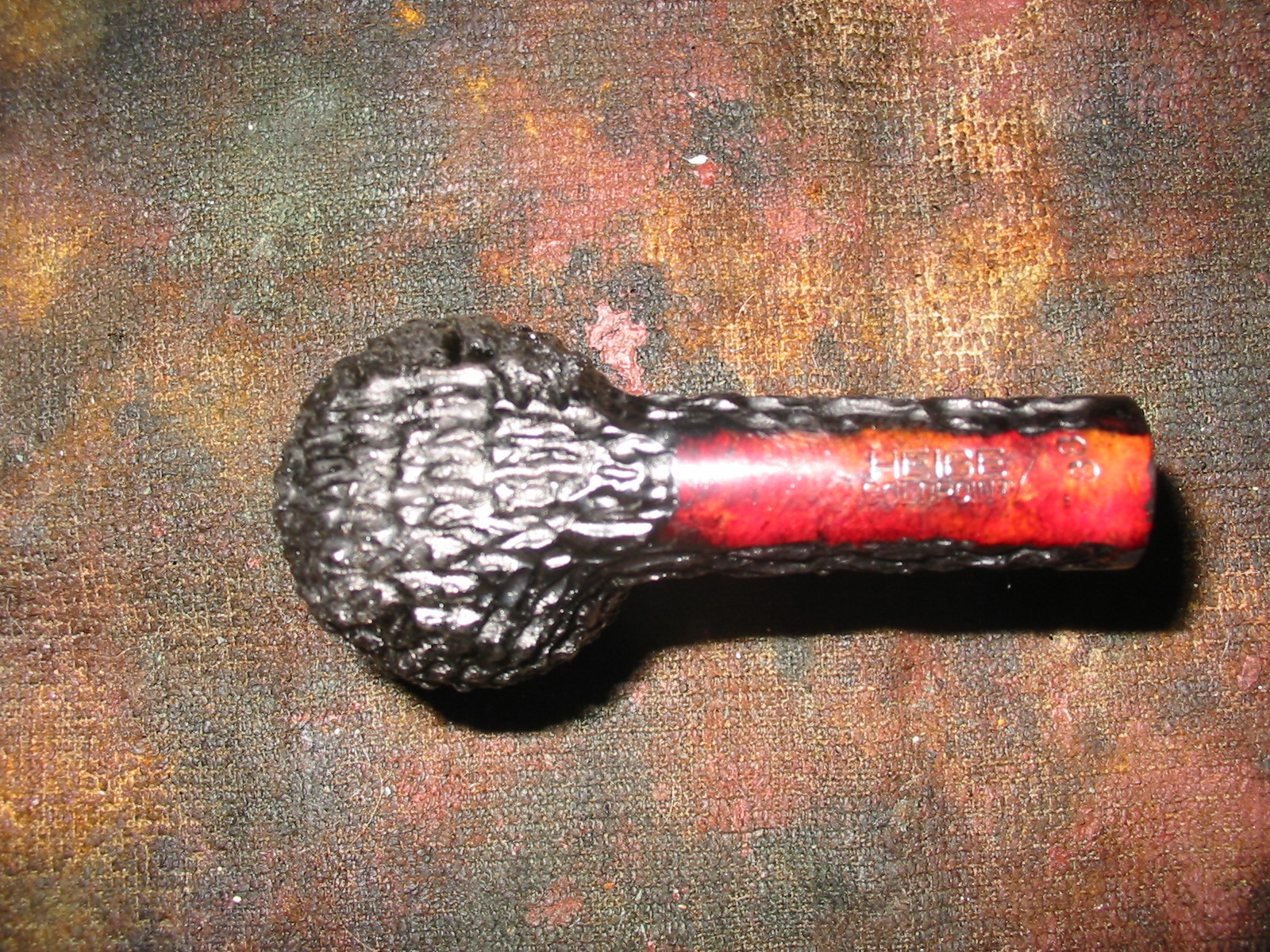
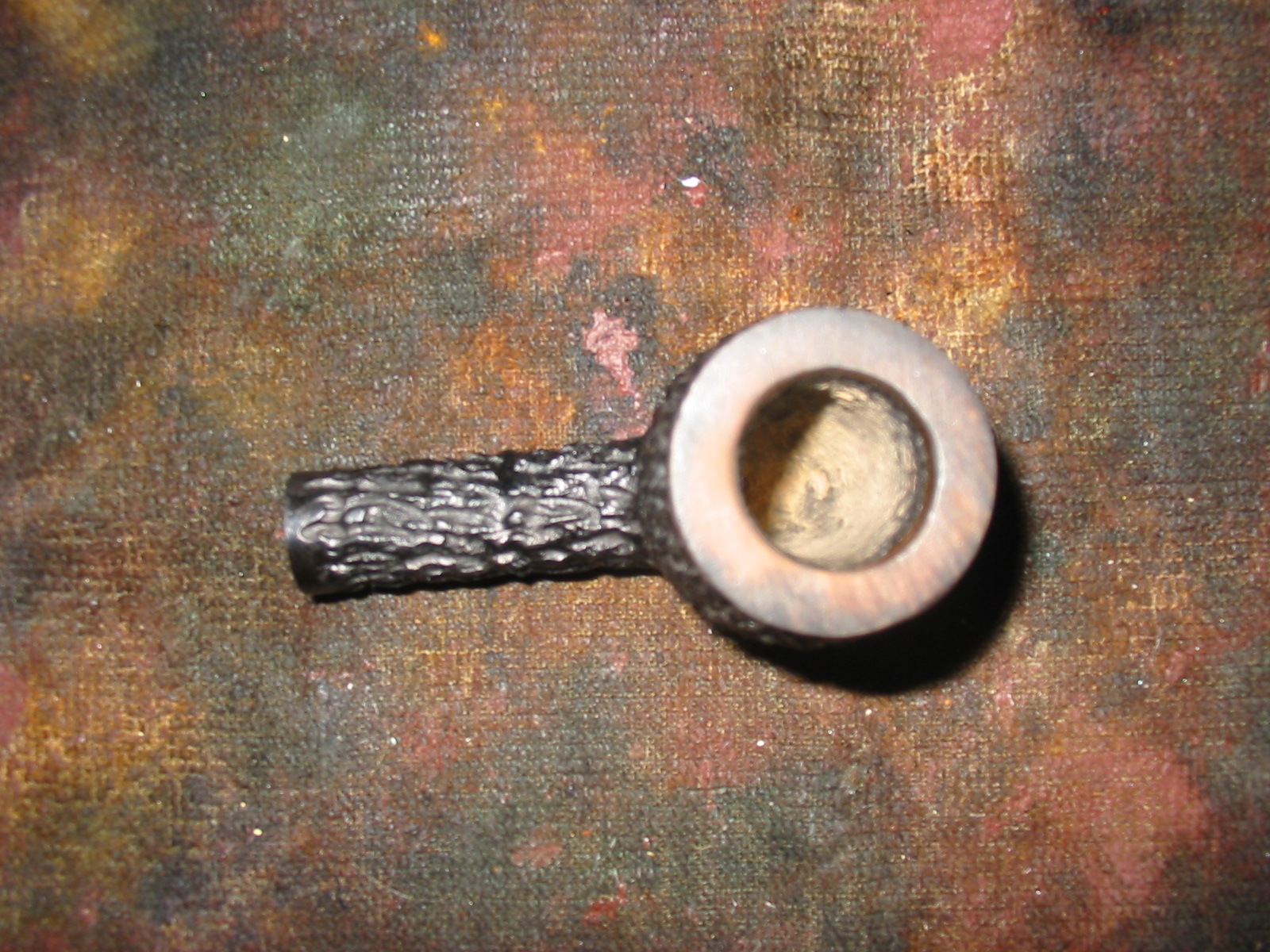
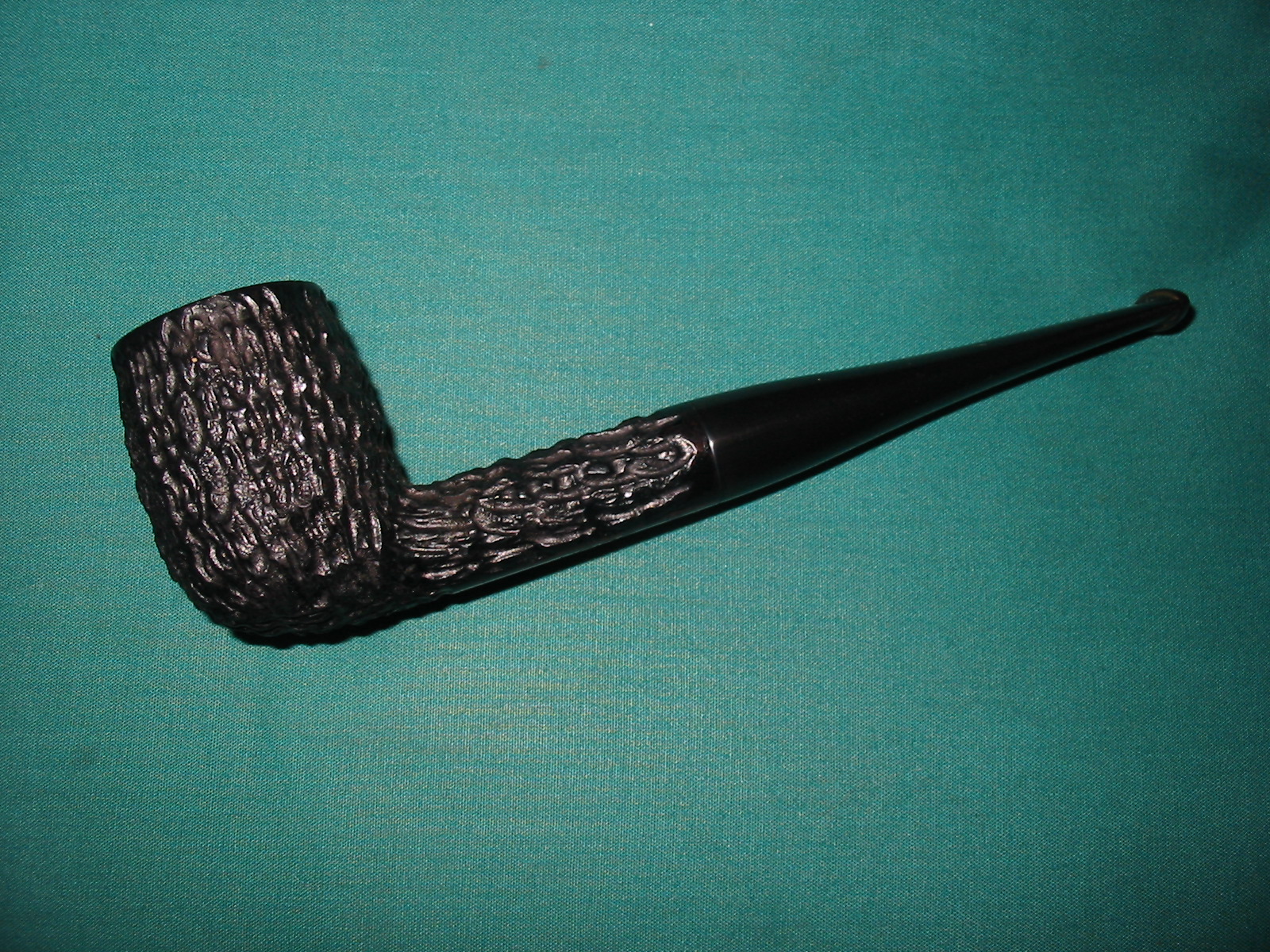
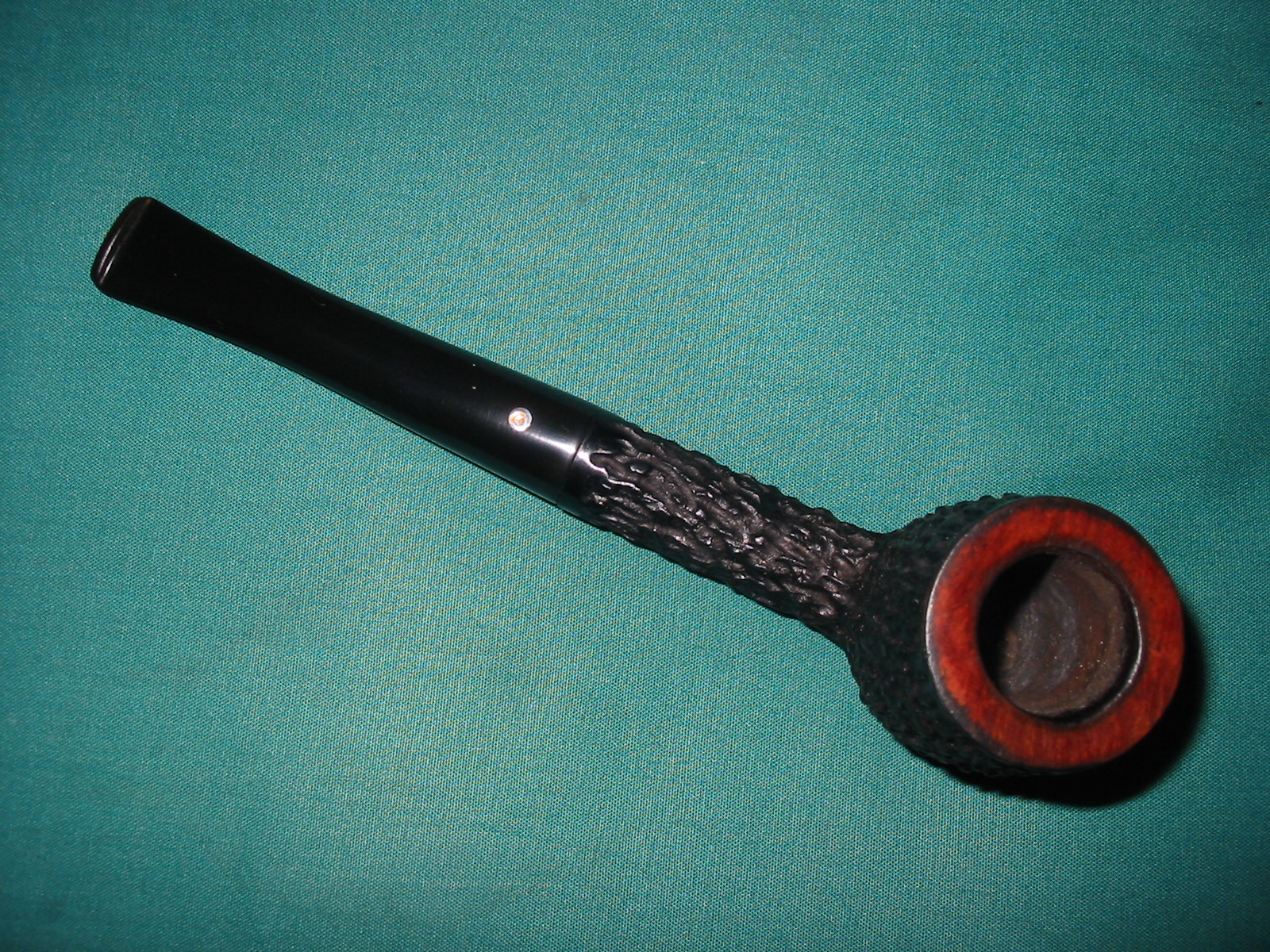
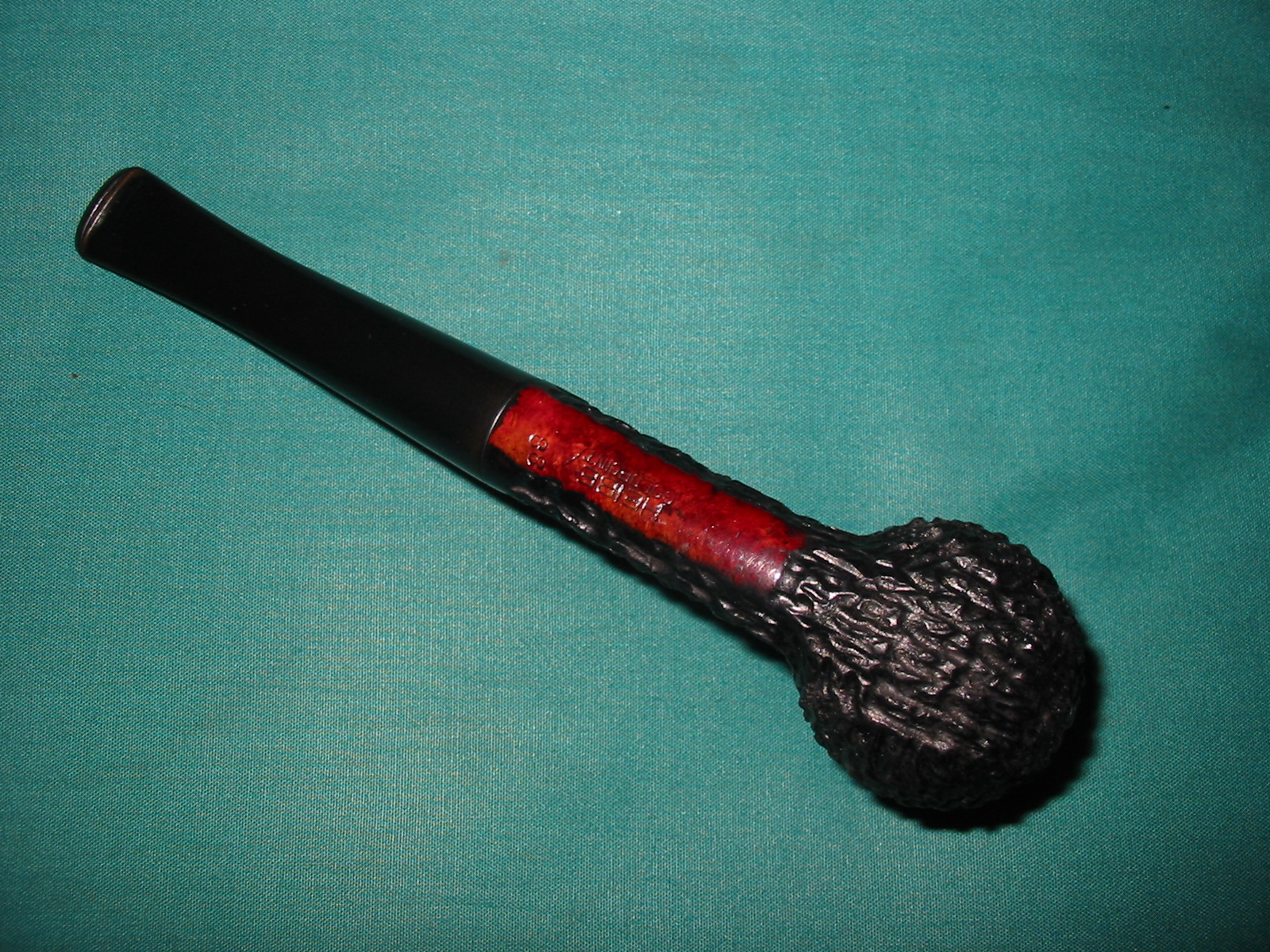
Heibe is a German brand of pipe made by pipe maker Erich Heikaus; Bergneustadt, Germany in the 1970’s. The stamping is on the smooth bottom of the shank and it reads HEIBE over Gold Point and to the right of that stamping is stamped 88. I am guessing that is the shape number. It has an ebonite stem with a gold point in the top of it. The point swirls and gives an attractive look to the stem. The stem was oxidized and had some tooth chatter and a tooth mark on the top and underside of the stem. The stem was also loose fitting. The bowl was caked but not evenly and the cake seemed to be very soft. The rim was a bit darkened but no burn marks and the inner rim was still round. The bowl finish is rusticated with a tree bark like rustication and the stain was black. The rim and the smooth spot on the underside of the shank were stained oxblood. The finish was dirty and in spots the stain was missing and the briar was showing through – particularly on the edges of the rim and on the shank near the stem. Some of the high points on the bark rustication were also showing briar through the stain. The original stain was black. The next series of four photos shows the state of the pipe when I started working on it this morning.

ImageImageImageImage

I decided to begin by scrubbing the bowl with Murphy’s Oil Soap and a soft bristle tooth brush that I have used for a long time to scrub deeply into the rustication patterns. Once I scrubbed it thoroughly I rinsed it off under warm water in the sink. I do not leave it under the water long, just enough to scrub off the soap and get it cleaned. I then dry it off with a soft cotton cloth and wipe out any water than got in the bowl with a cotton swab. The first picture below shows the pipe scrubbed and covered with the oil soap. The tooth brush in the photos is the one I use to scrub the bowl. The next four photos show the bowl after I have rinsed it with warm water and dried it off. You can see where removing the grime and dirt from the bowl left the spots very visible that needed to be restained. The rim also cleaned up nicely.

ImageImageImageImageImage

After I thoroughly dried it off it was time to stain the bowl. I did a bit of research and found some estate Heibe pipes on a German estate pipe selling site. The finish on this one was normal for Heibe’s rustications and it states that it was stained black. With that information I decided to restain it with some black aniline stain. I used the dauber that came with the stain and applied it heavily to the rim and the bowl making sure that it went deeply into the crevices of the bowl and the shank. I would clean off the rim and the shank later and worry about staining them afterwards. I stained the bowl and flamed it with a Bic lighter, then restained and reflamed the bowl. The next series of three photos show the newly stained pipe.

ImageImageImage

Once it was dry I rubbed the stain off the rim and also off the shank smooth portion with a soft cloth and then with some alcohol on a cotton pad. I also buffed the bowl with White Diamond on the buffing wheel. The smooth portion on the shank cleaned up nicely and the finish of the oxblood stained came through well. The rim (fourth photo below) did not fare as well. I wiped it down with acetone and also more isopropyl but in the end I would need to use a soft sanding sponge to remove the black from the edges of the rim.

ImageImageImageImage

I set the bowl aside to let it dry thoroughly while I worked on the stem. I began by sanding out the tooth marks and the tooth chatter with 320 grit sandpaper until they no longer showed. I then used my medium grit sanding sponge to sand the entire stem and work on removing the oxidation. The first two photos below show the sanding sponge and the work that it did in removing the oxidation. The next two photos below show the stem after I wiped it down from the sanding with the sanding sponge.

ImageImageImageImage

I then used some Maguiar’s Scratch X2.0 and scrubbed the stem with my finger as I applied it and then rubbed it off with a cotton pad. The point was that I wanted to remove more of the scratches and also polish off some of the oxidation. The next two photos show the stem after polishing (forgive the first photo – somehow it blackened on the right edge but you can still see the polish that is happening around the logo).

ImageImage

After polishing with the Maguiar’s you can see the oxidation on the stem particularly on the tenon end. It extends about an inch back toward the button and was also in the crease of the button. It was time to sand the stem with the micromesh sanding pads. I wet sanded the stem with 1500 and 1800 grit micromesh pads. The next three photos show the stem in process and after the sanding. I finished wet sanding and then wiped the stem down. I then dry sanded the stem with the remaining micromesh pads from 2400-12,000 grit. I used the Maguiar’s a third time to polish the stem and then buffed it with White Diamond on the buffer. Once I had finished buffing I wipe the stem down with Obsidian Oil and set it aside to dry.

ImageImageImage

The next series of four photos show the finished stem. I reinserted it in the bowl. The tenon fit was loose so I dripped superglue on the tenon and then sanded it back until the fit was snug. I gave the bowl and stem another buff with White Diamond. I coated the stem with carnauba wax and buffed it with a flannel buff. In the first photo below you can see that the rim needed some work. The stain just did not come back after the cleaning. I sanded it with the micromesh 3200 grit pad and then it was ready to be stained. The fifth picture below shows the restaining of the rim with a cotton swab and oxblood stain. I applied the stain with a cotton swab and then flamed it. I hand buffed it with a terry cloth towel I use for hand buffing and applied carnauba wax to the rim.

ImageImageImageImageImage

The final series of four photos show the finished pipe. The stain contrast came out very well. The black and the oxblood highlights look great. The stem shined up exceptionally well. It is a group four sized pipe and should smoke very well. It has a nice open draw. I know that some of the Heibe pipes were made for filters but this one is not fit for filters. It is just a normal push tenon. All in all it is a beautiful pipe.

ImageImageImageImage

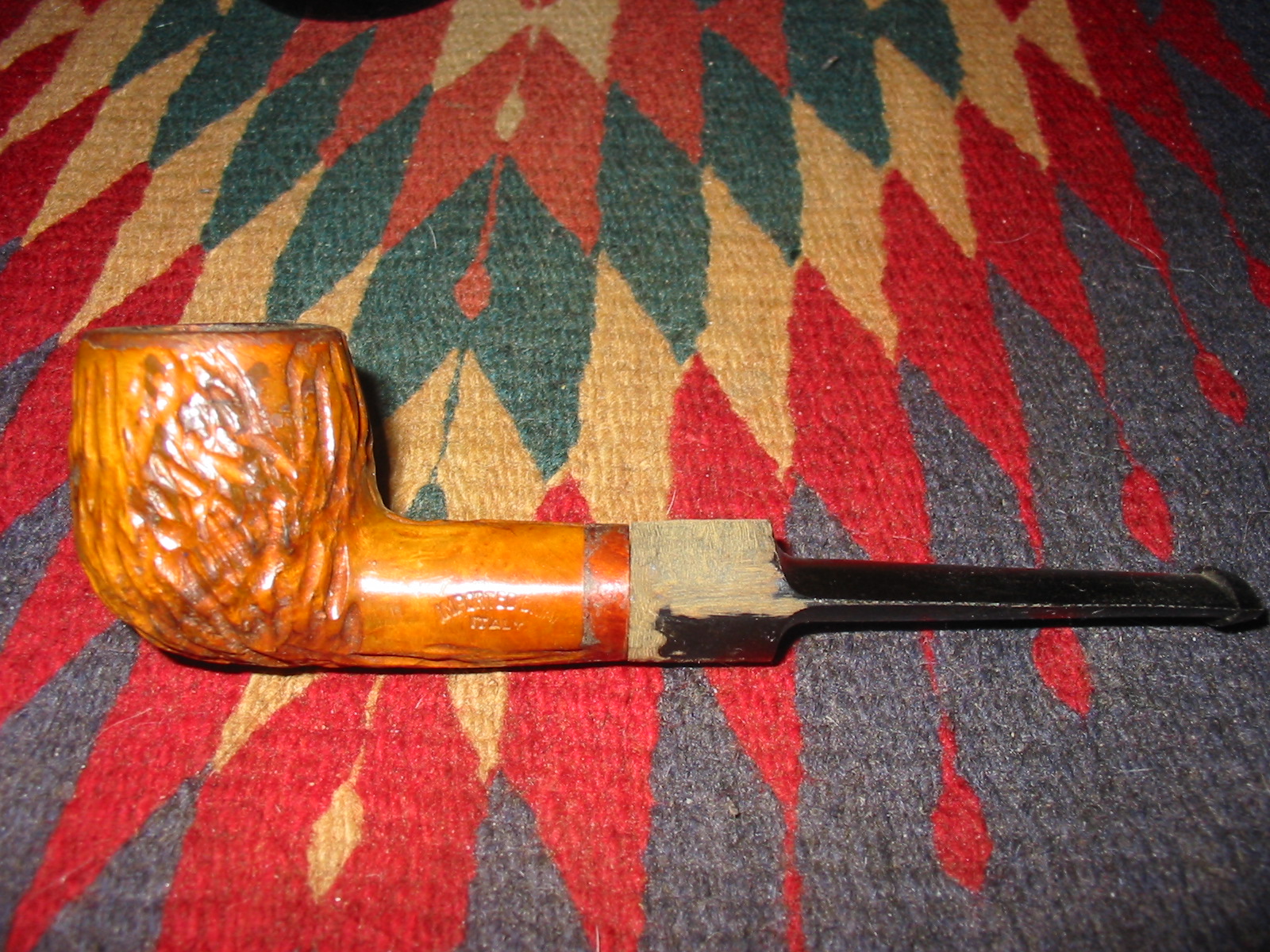
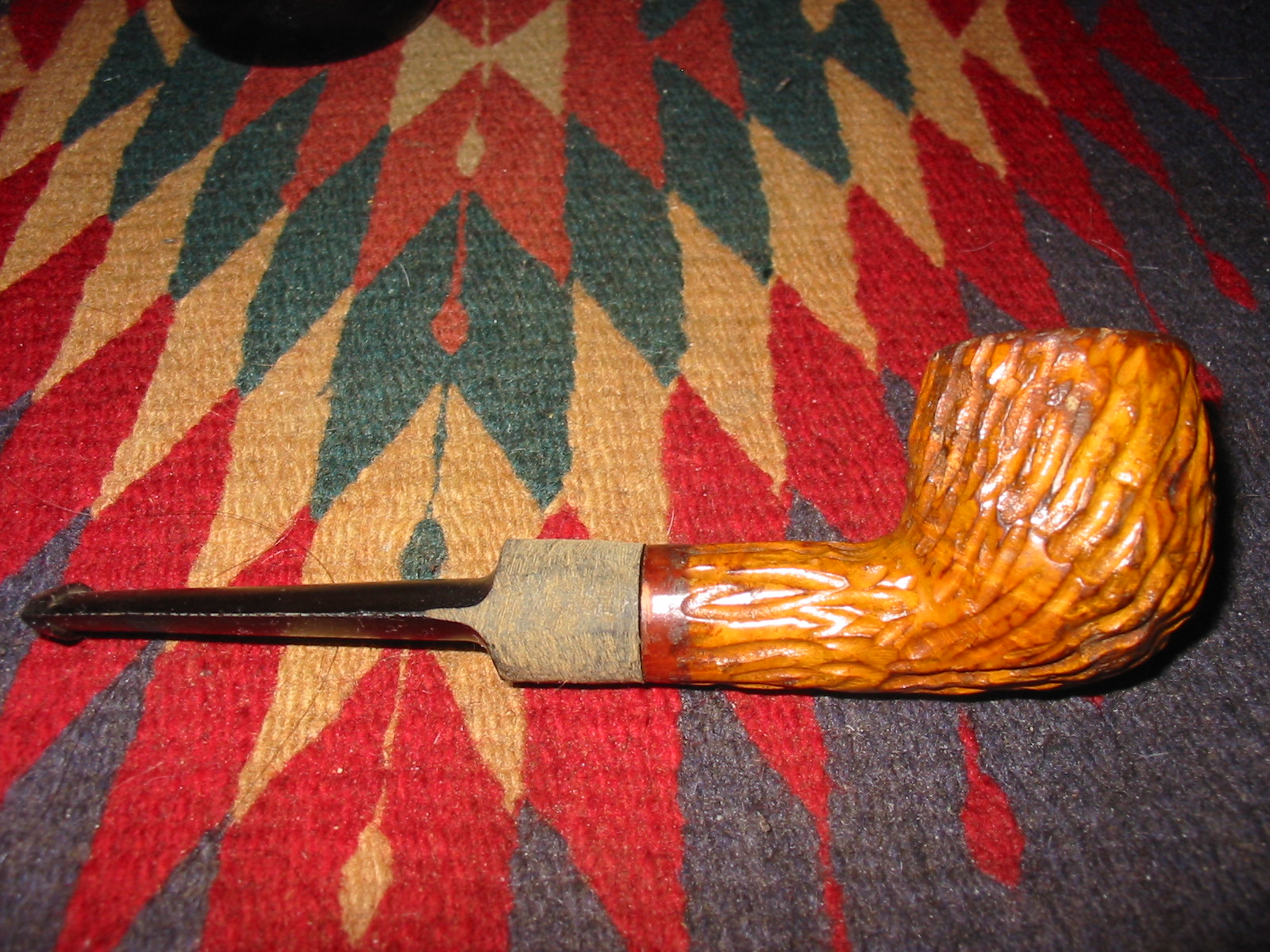
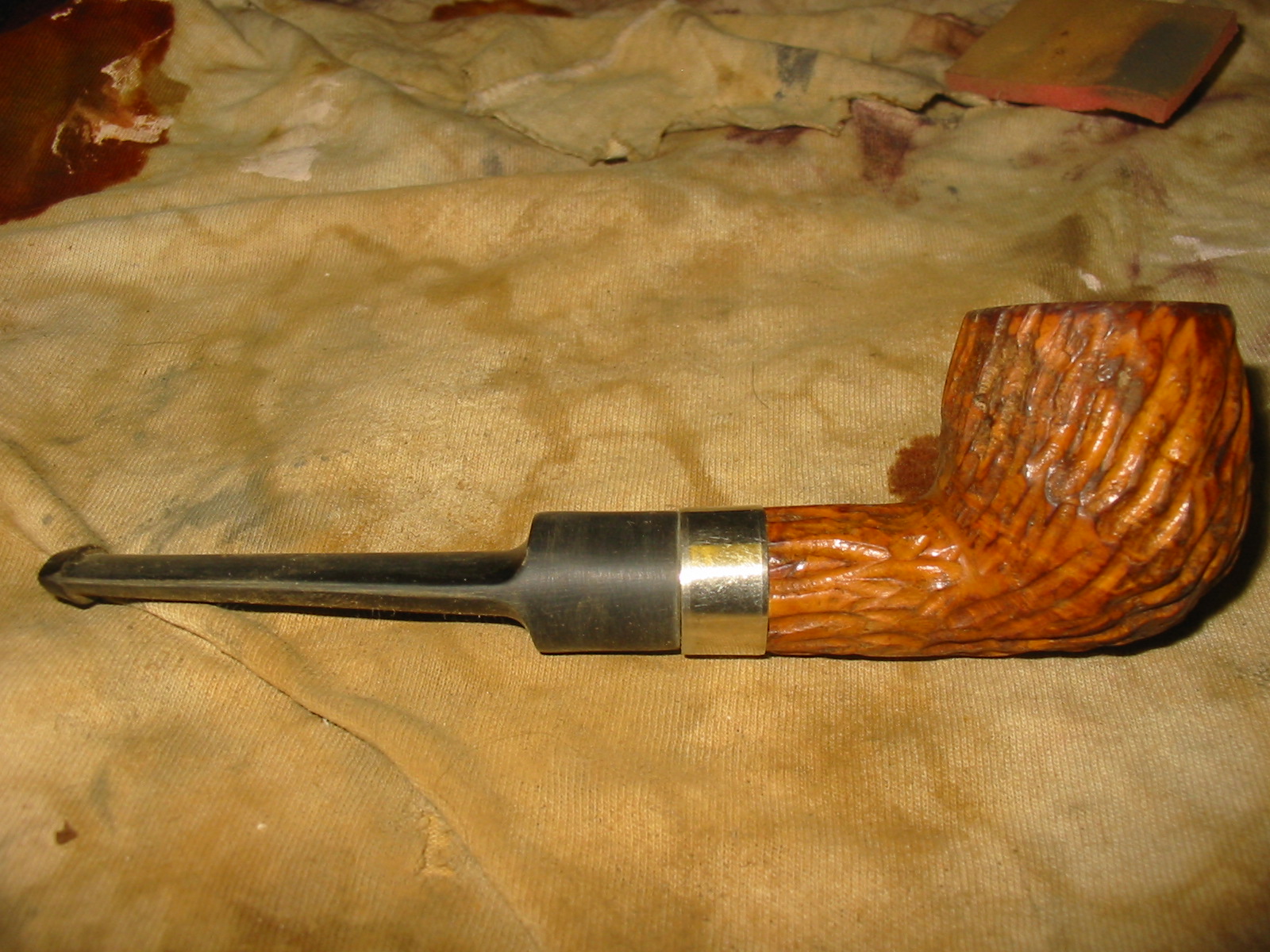
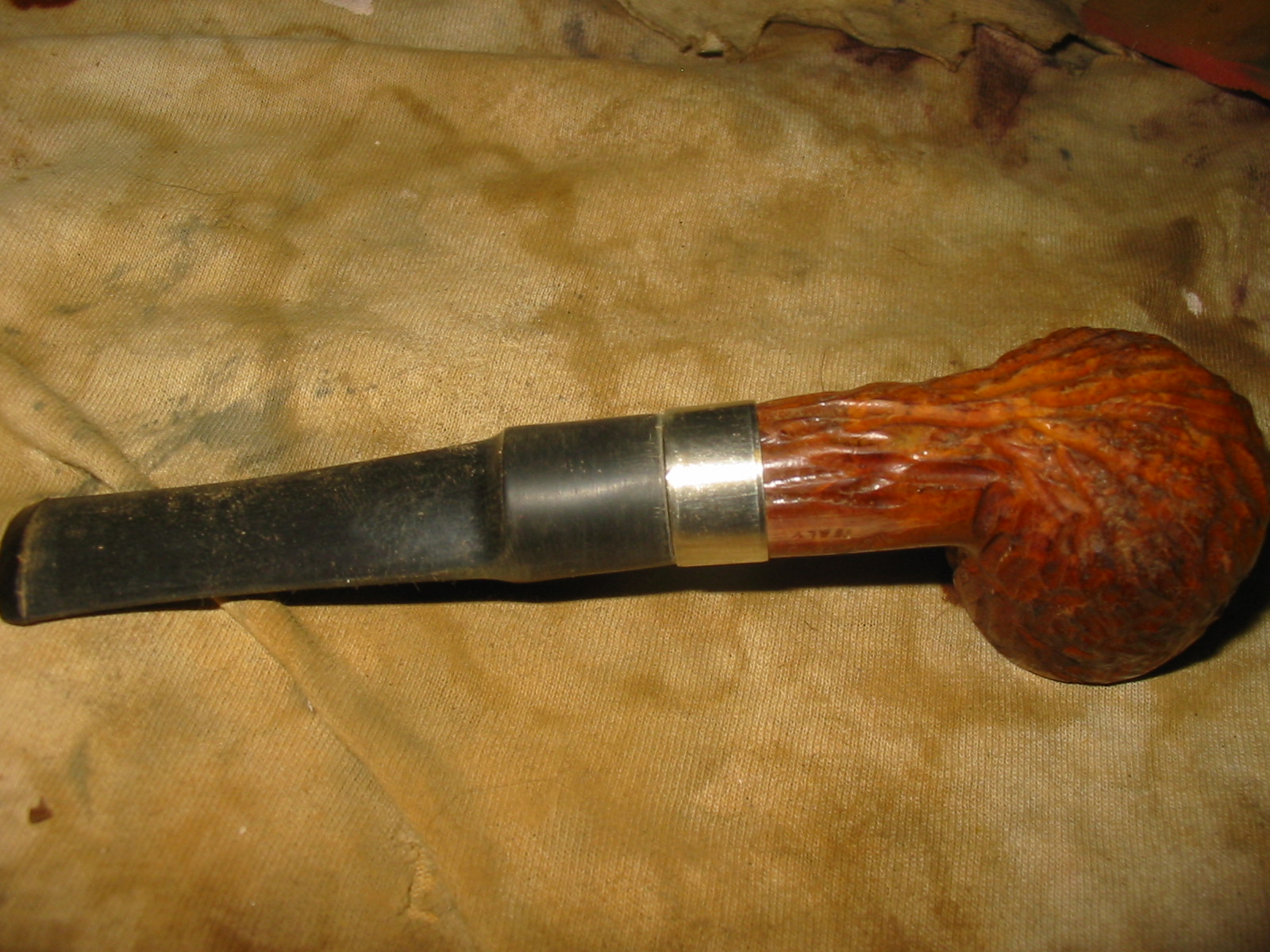
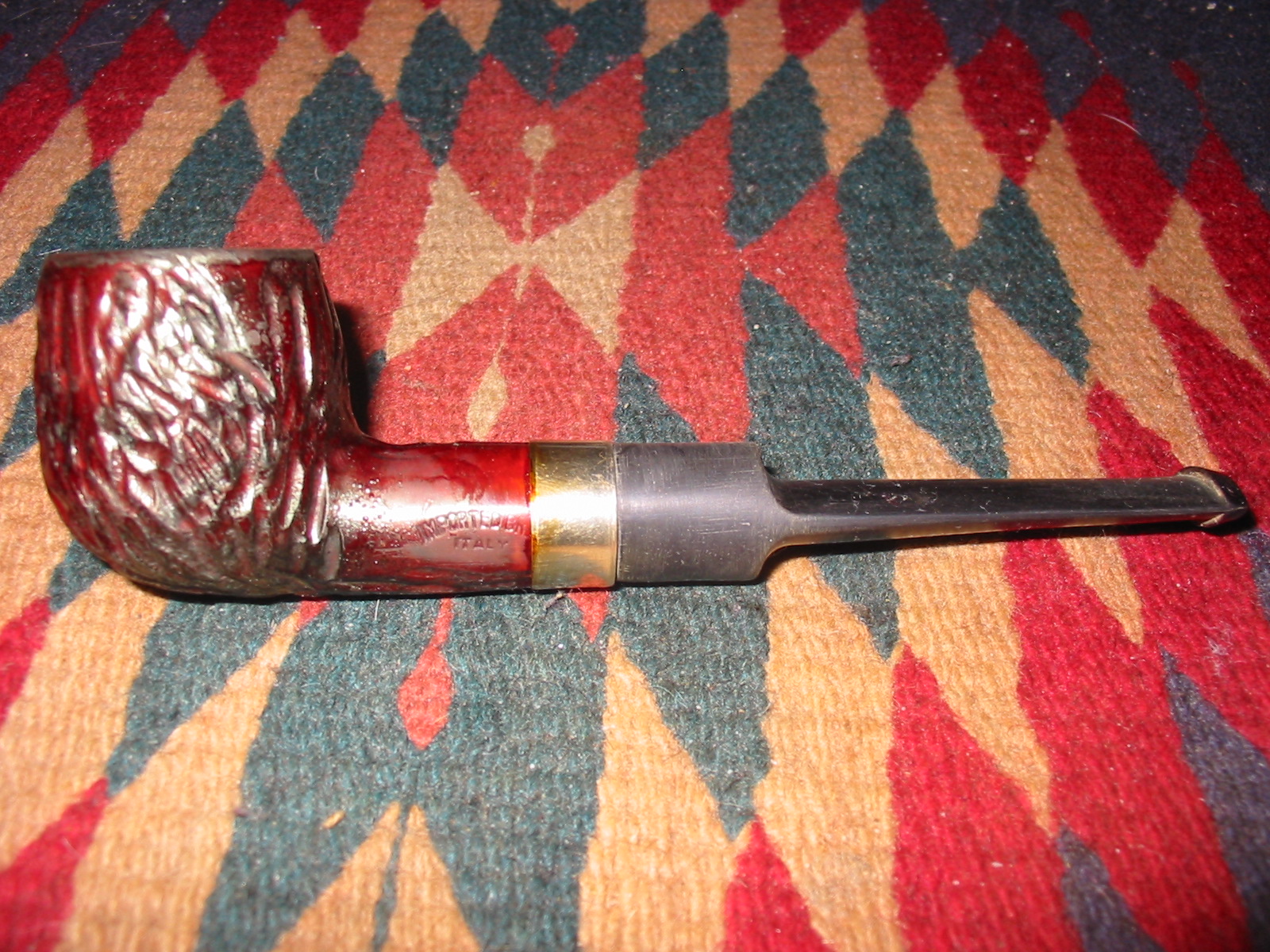
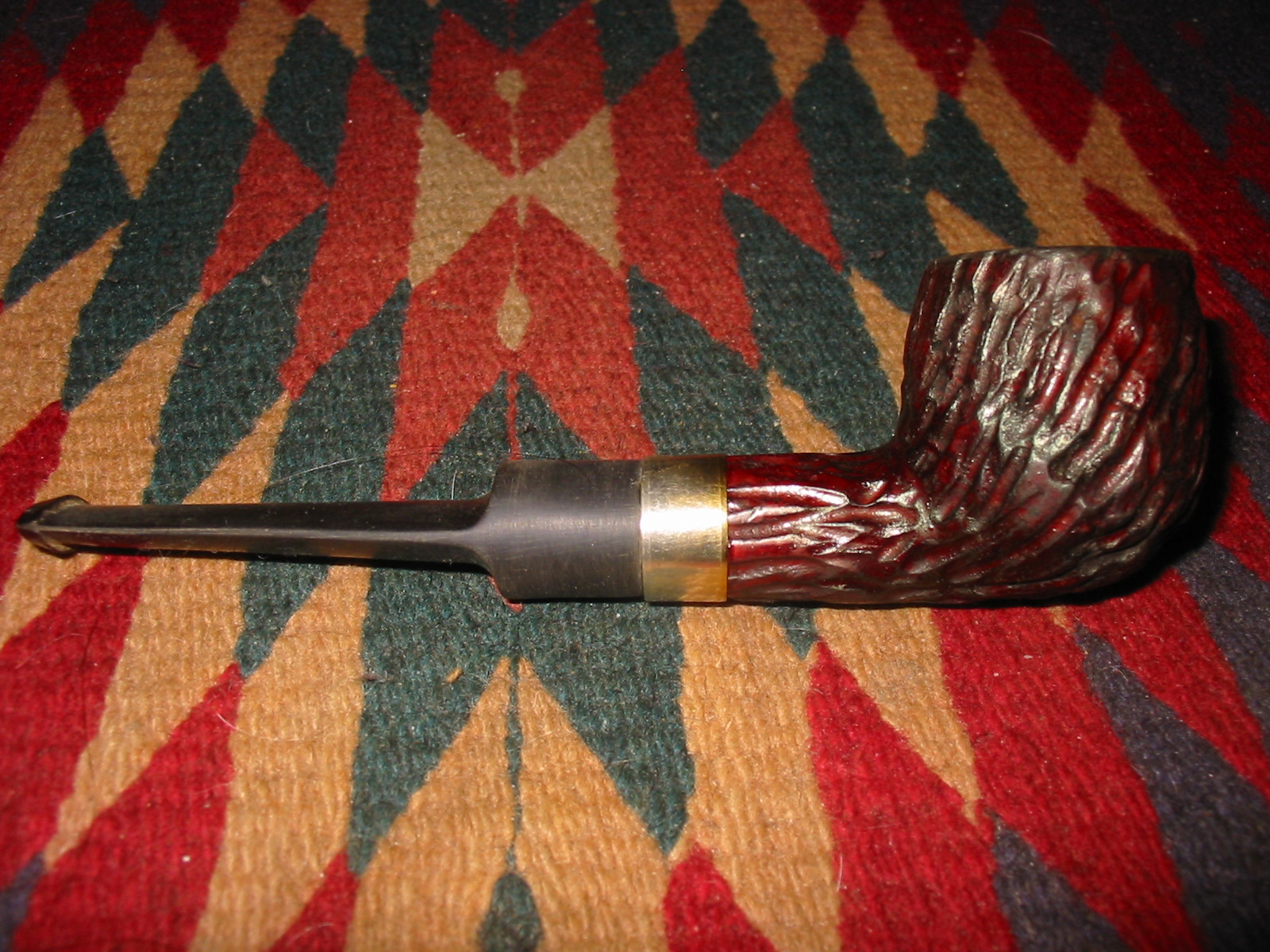
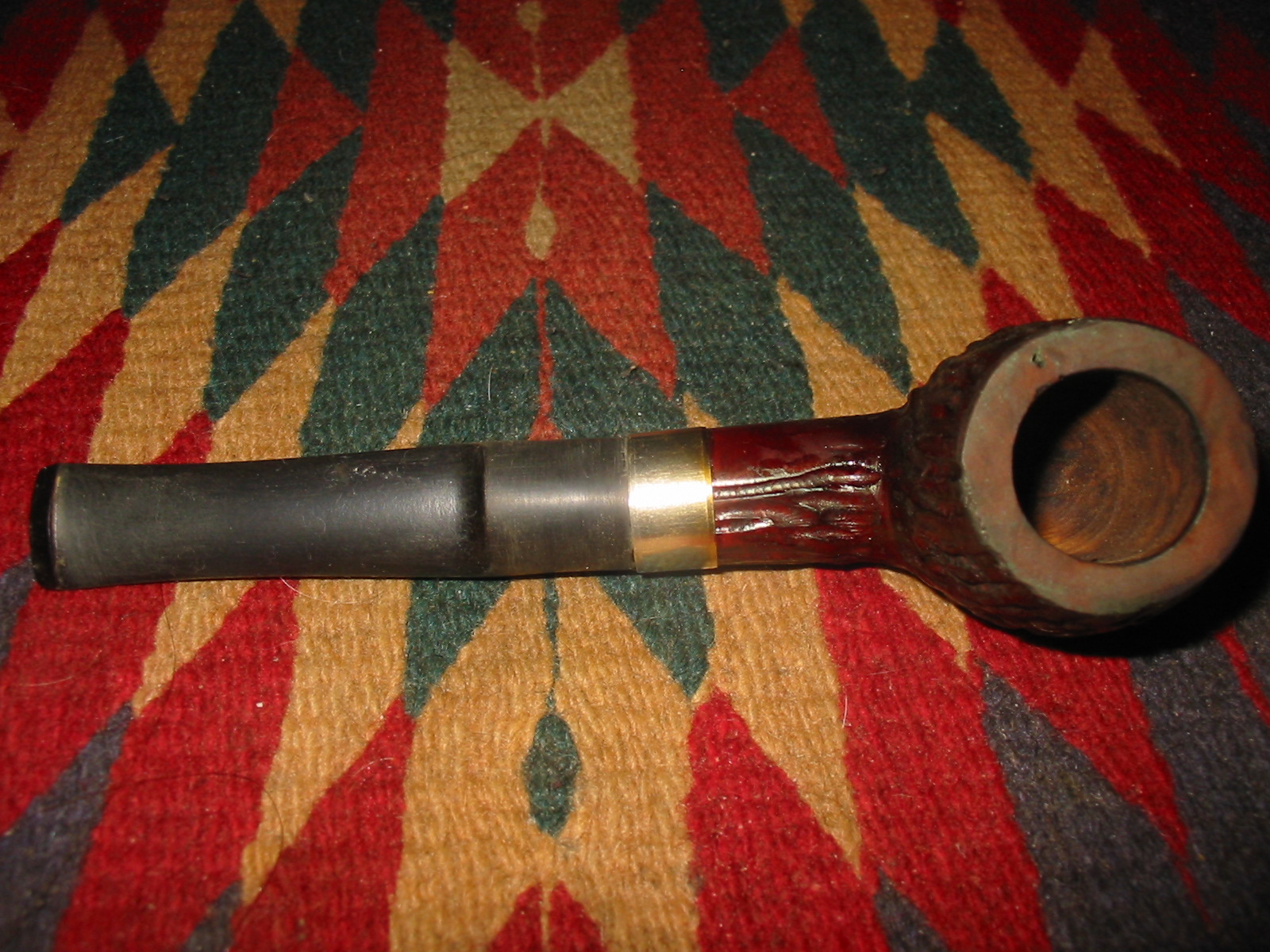
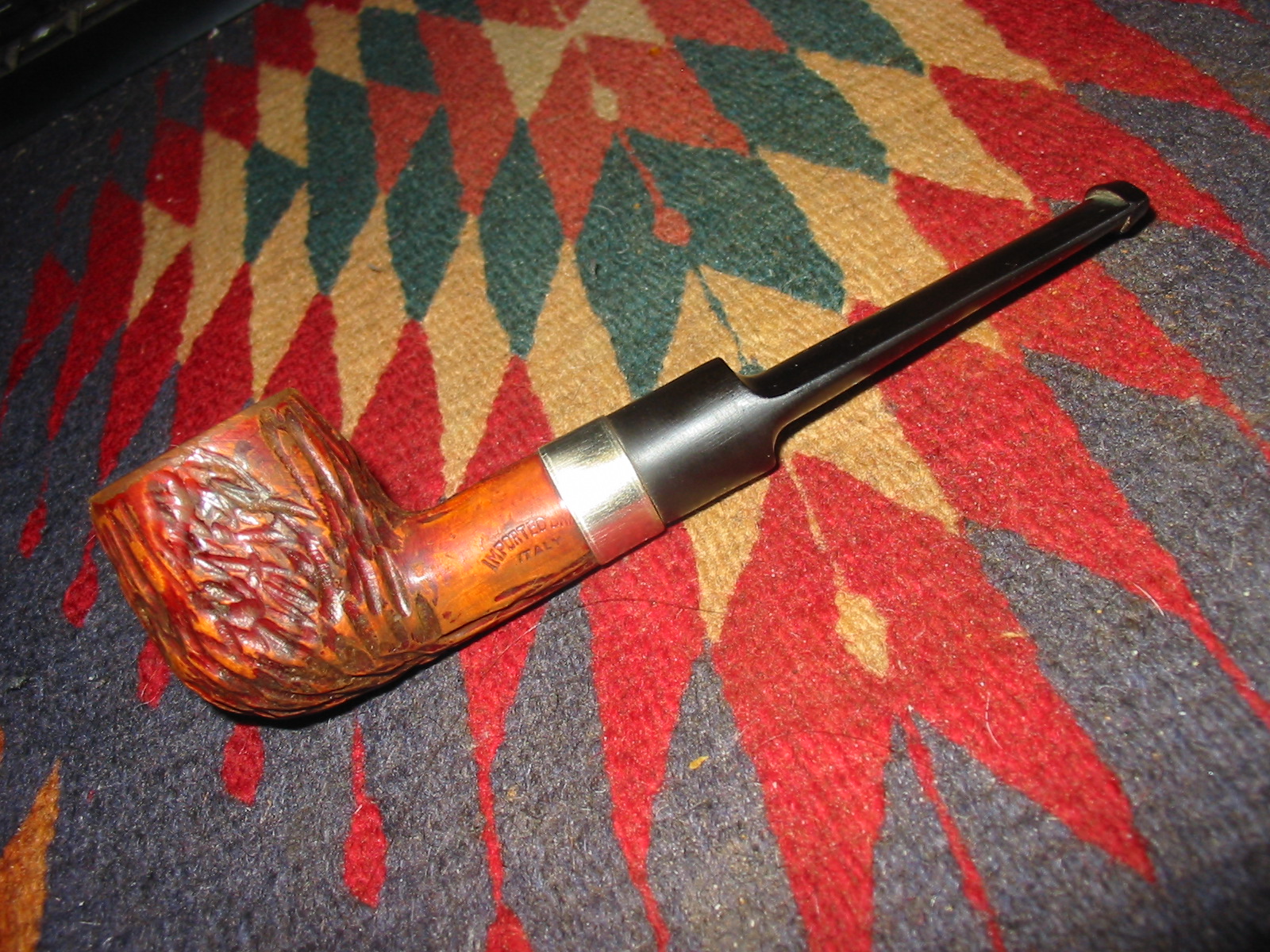
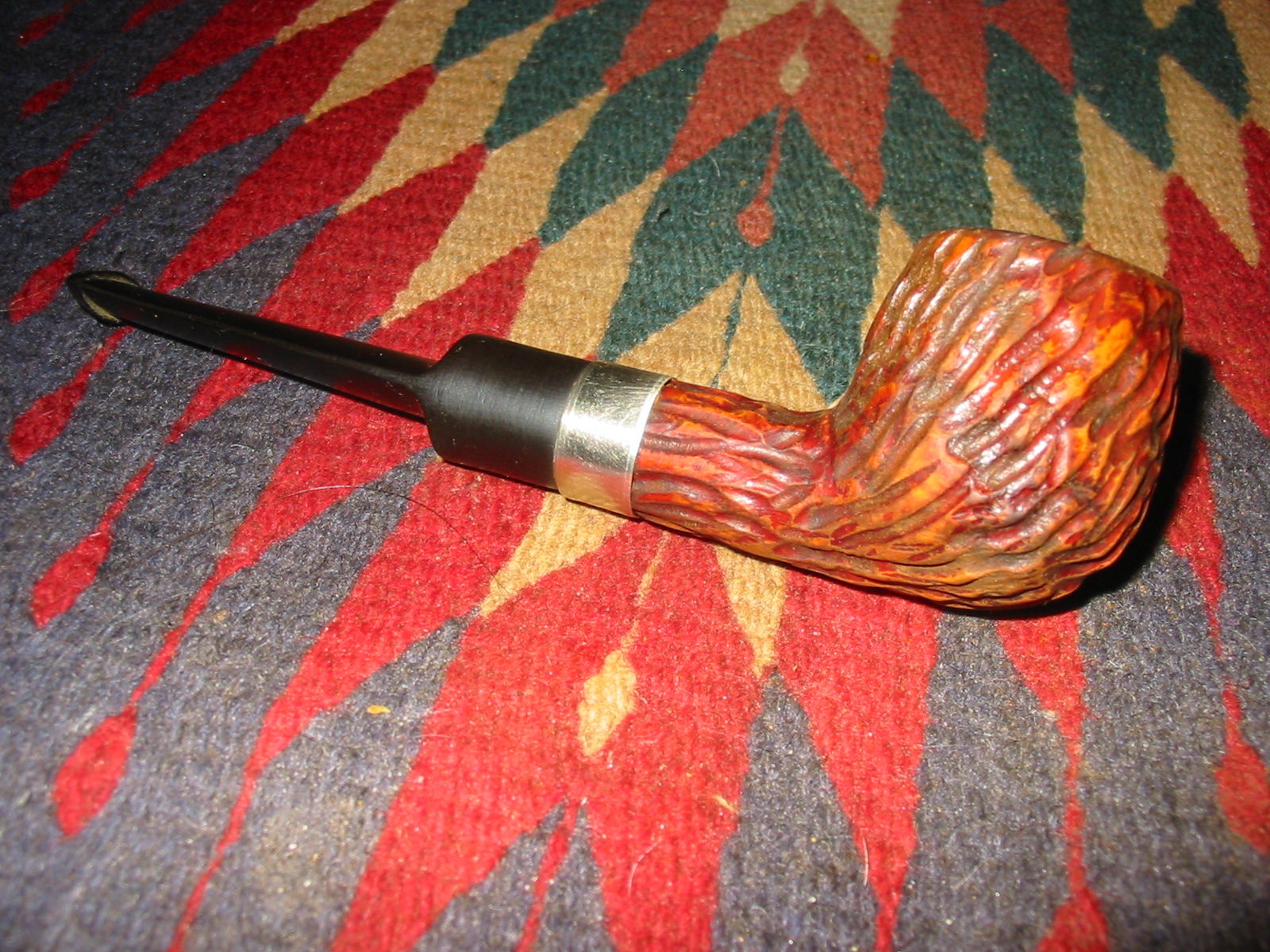
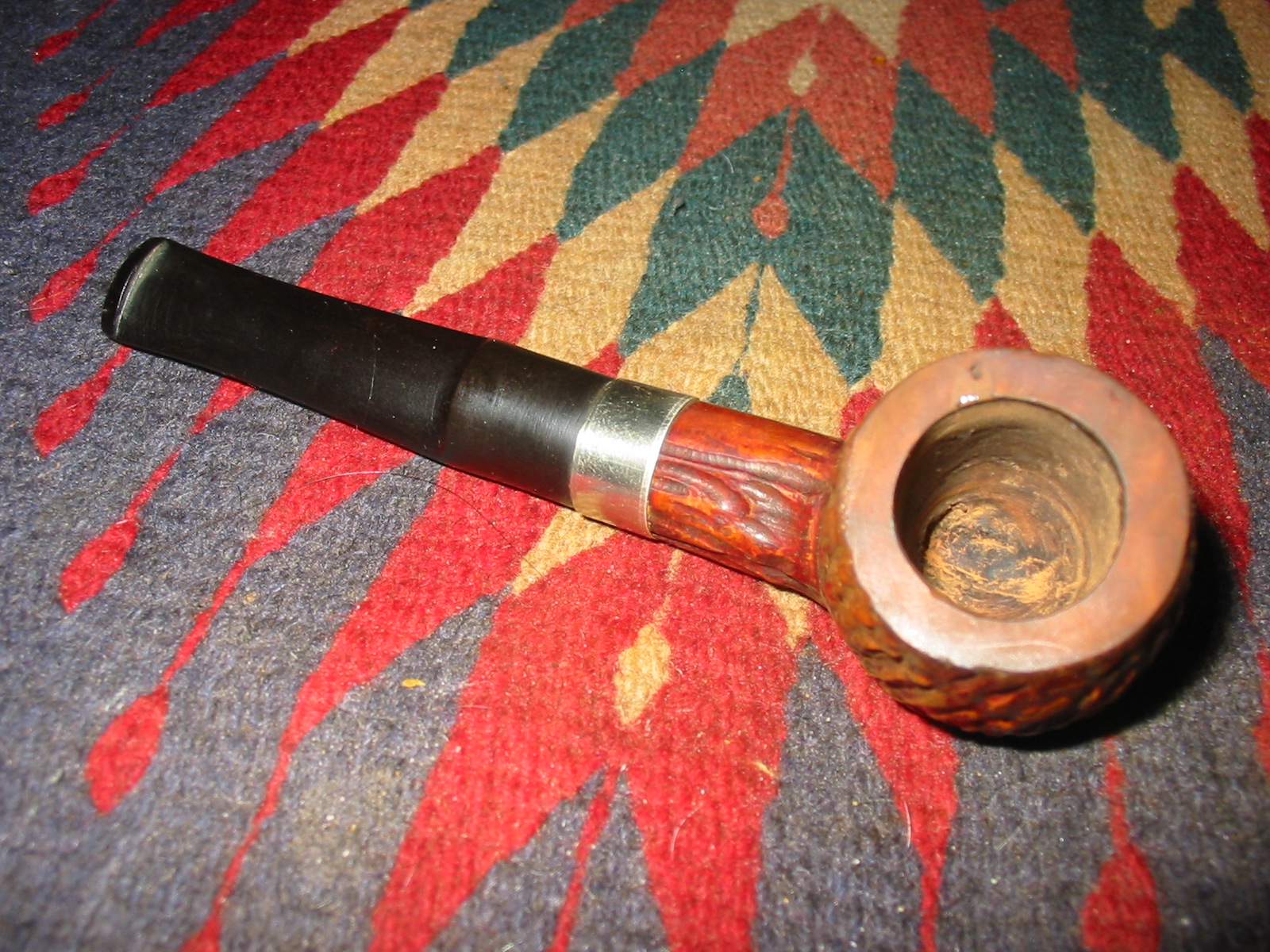
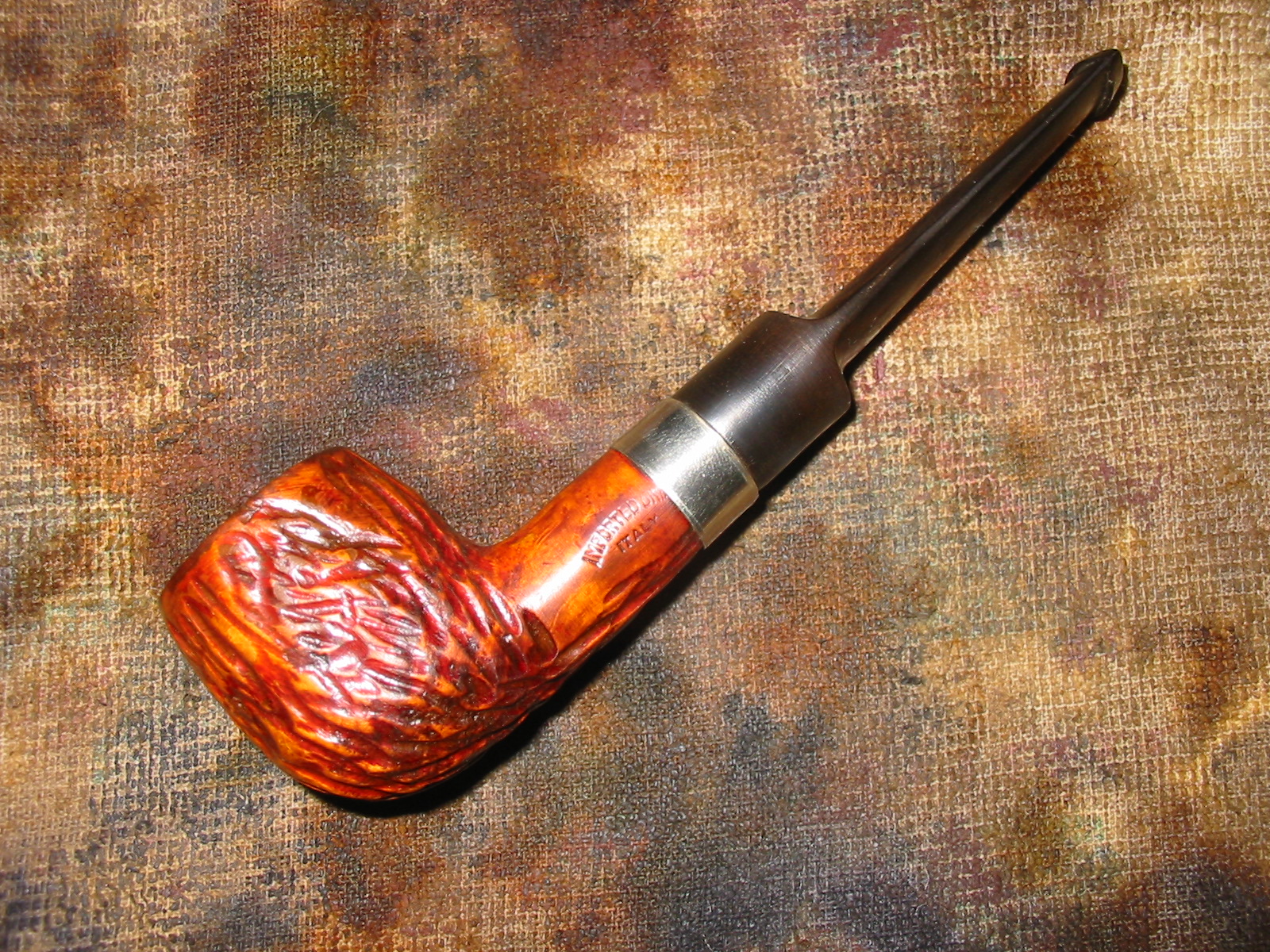
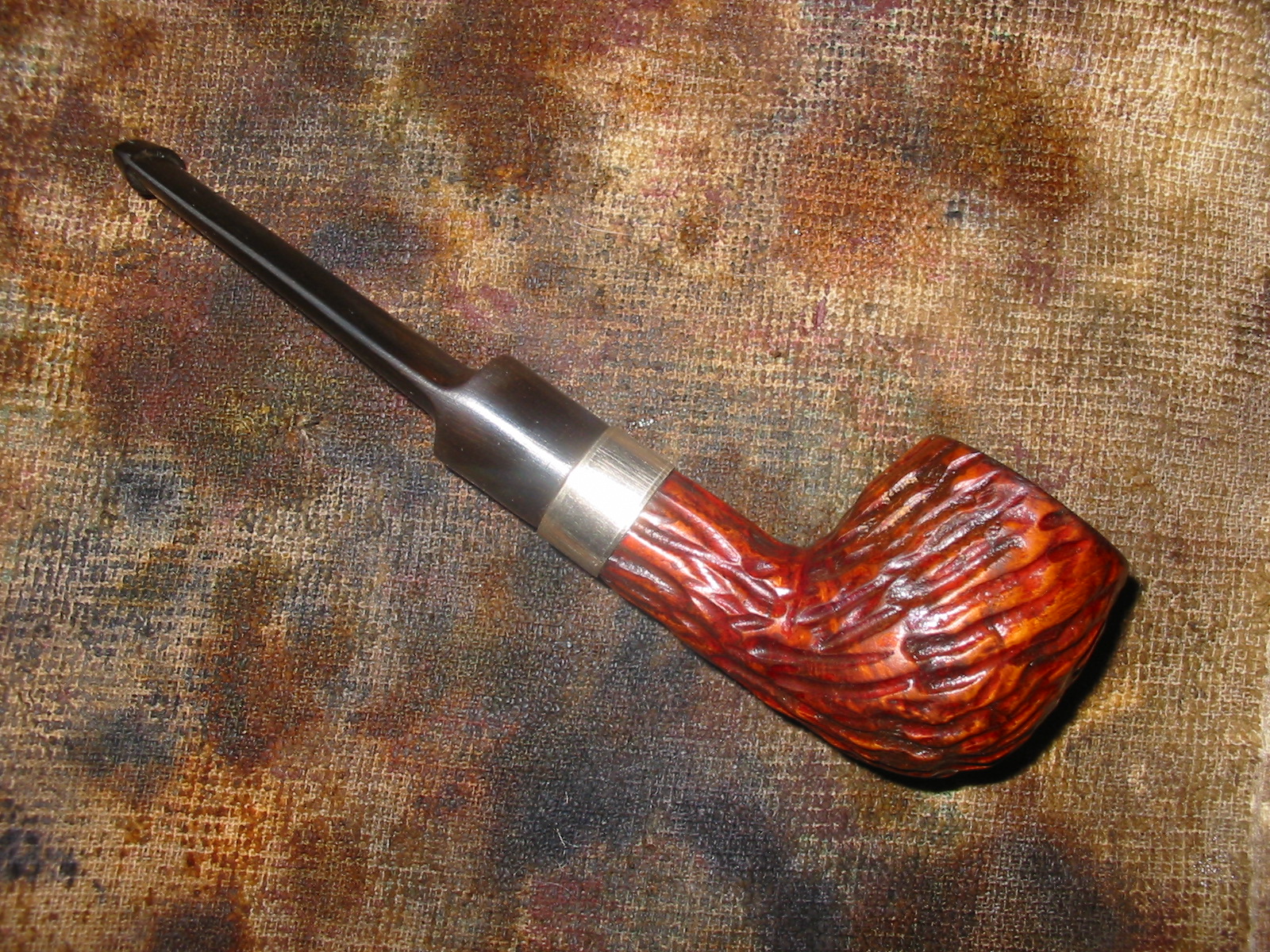
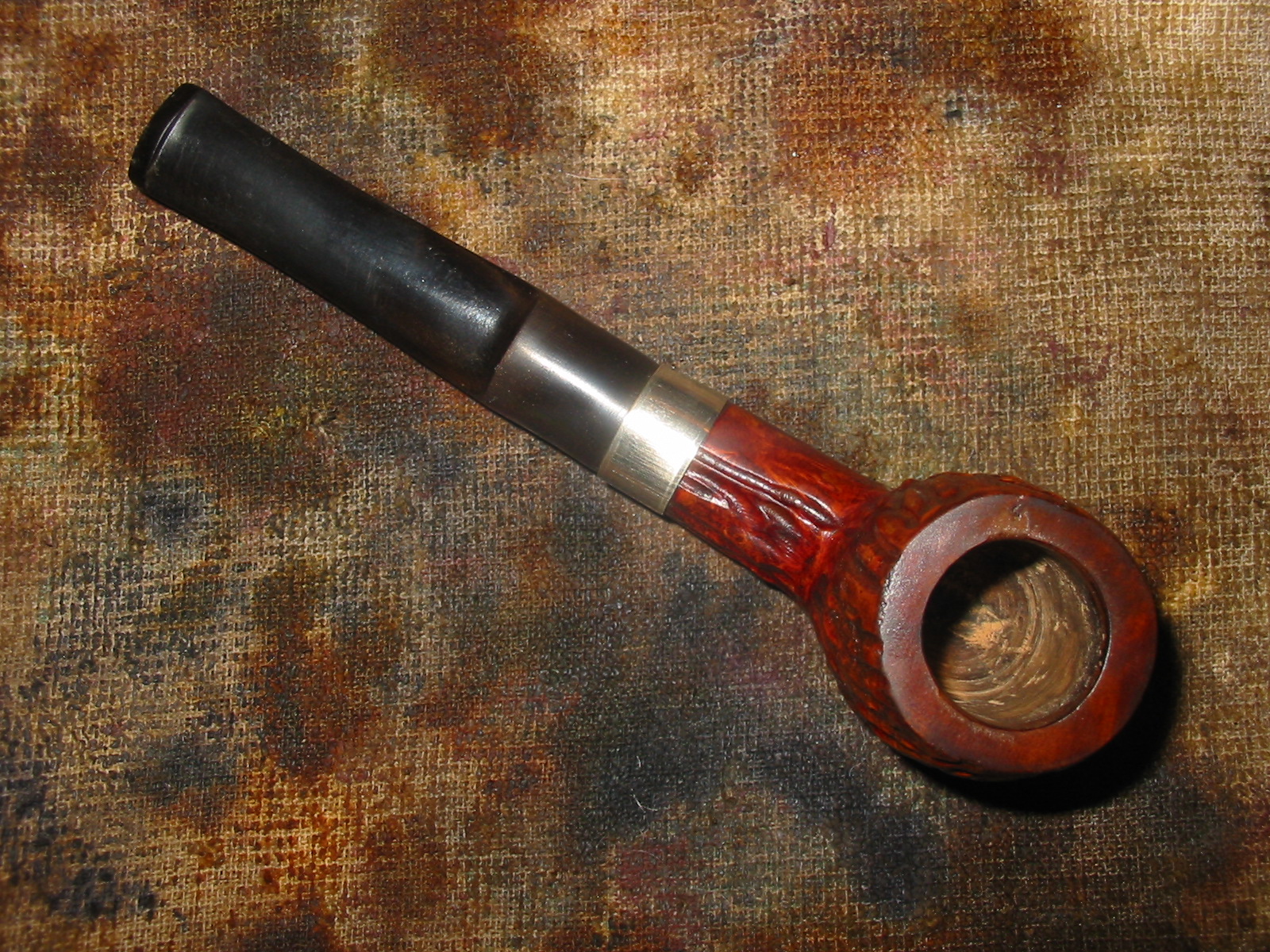
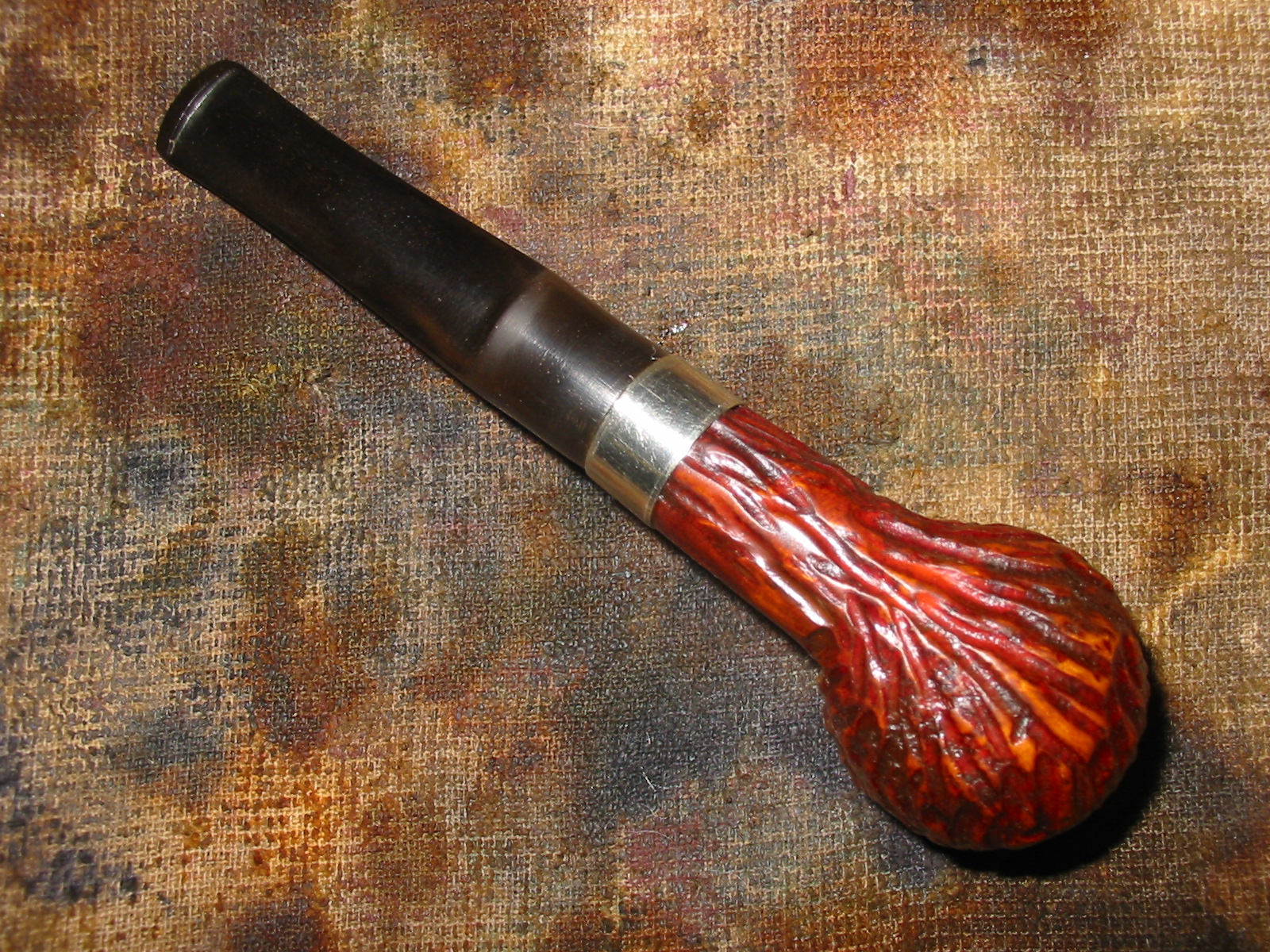
Restemming and Refinishing an Imported Briar Italian Billiard


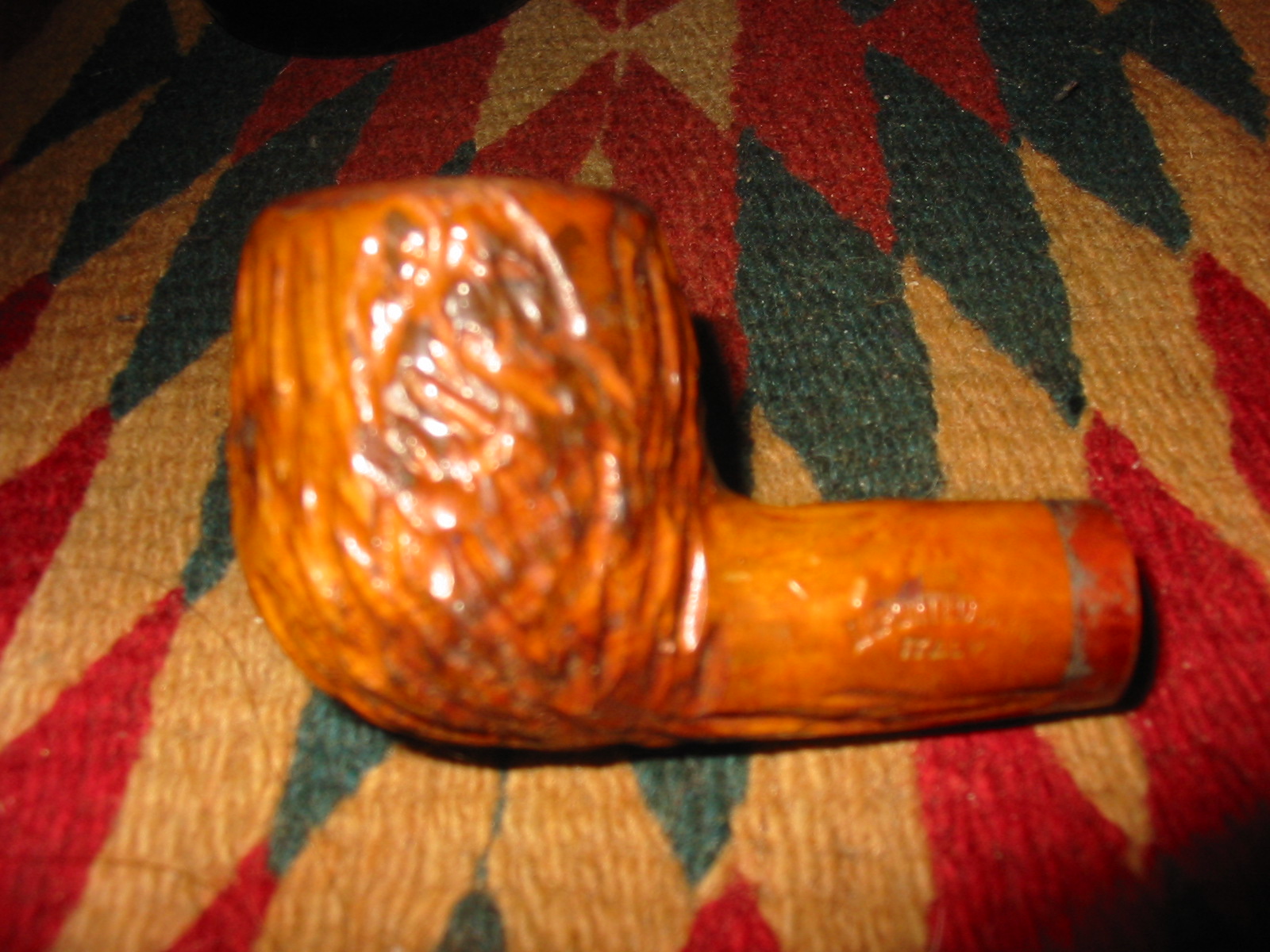
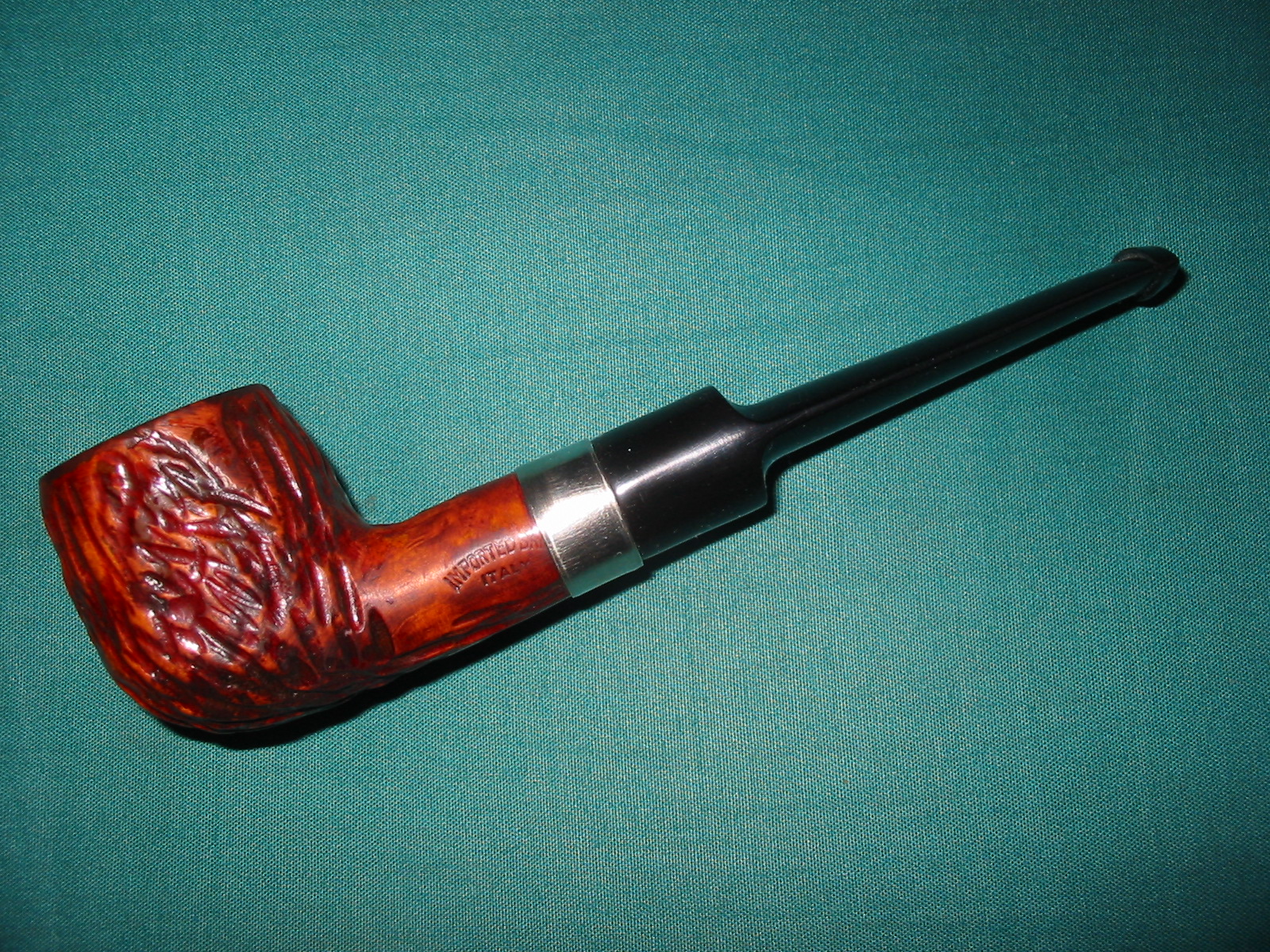
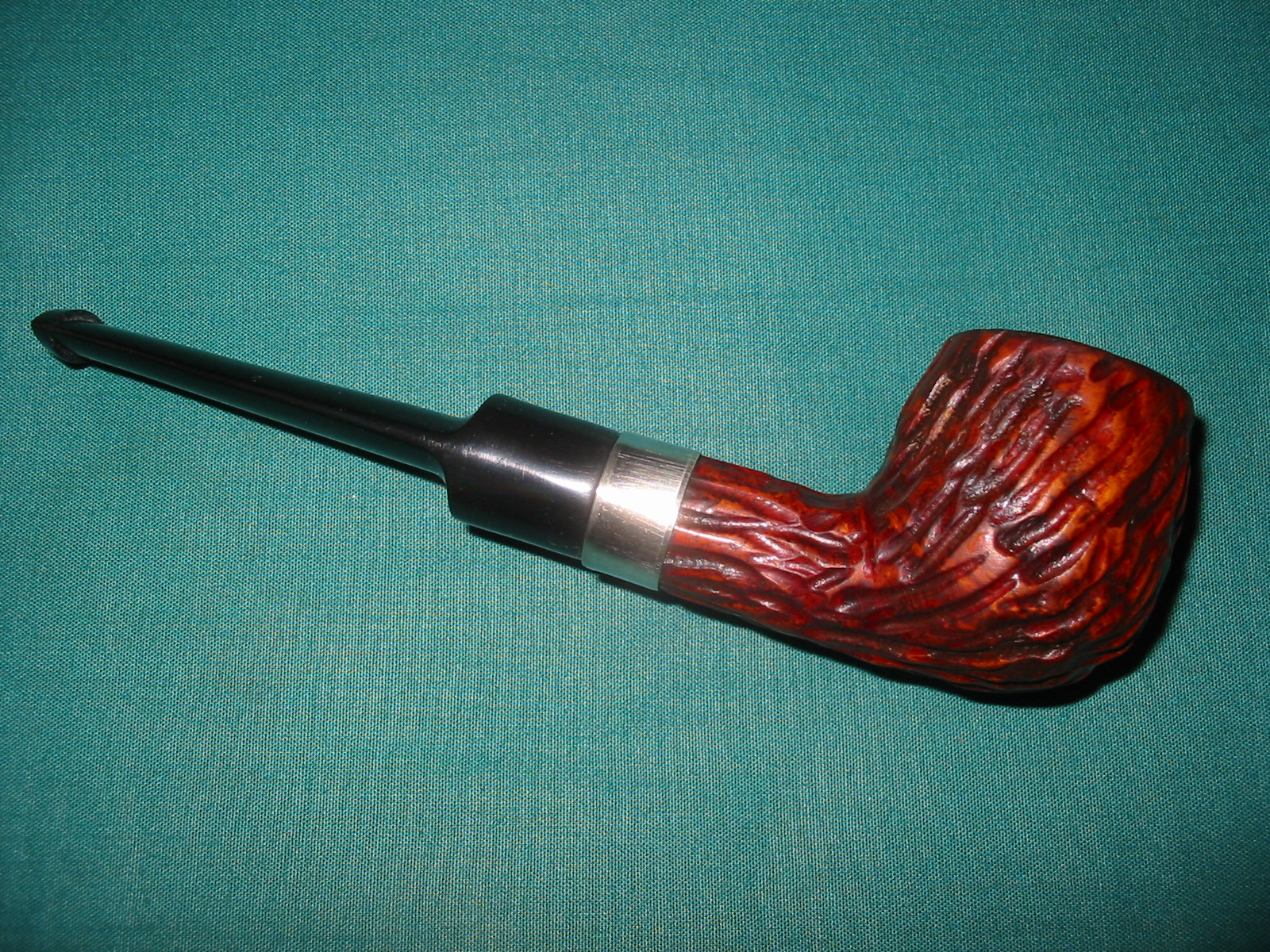
Today I took another bowl out of my box of pipes to restem. I had previously turned the tenons with a Pimo tenon turner and fit it to the bowl and shank. I had not fit the stem when I started. The diameter of the stem was larger than the bowl. This bowl was a real mess. It is stamped Imported Briar in an arch over Italy on the smooth left shank of the pipe. It had originally had a band but that was no longer present with the bowl. The finish on the pipe was in bad shape. It was almost a yellow varnish that was chipping and peeling away. The rustication was filled with grit and grime and the colour of the bowl was an ugly yellow colour under the varnish. The bowl was still round and the reaming had already been done and it was pretty clean. The rim had some build up of tars and oils and a few dents. Looking it over I decided I would have to top it to clean it up.

ImageImageImage

The tenon was a good tight fit. I stepped down the end of it to sit in the stepped mortise in the shank. I needed to remove a good deal of vulcanite from the saddle portion of the stem to bring it to the same diameter as the shank. I used my Dremel to do that work. The next series of four photos show the process of removing the material from the stem. I use a Dremel with a sanding drum to do the work. I run it at a medium speed that allows me to float it over the stem without digging to deeply into the vulcanite. I find that a slower speed gives a very rough finish and a faster speed is harder to control the work.

ImageImageImageImage

The next series of three photos shows the finished fit of the stem. I have finished sanding it with the Dremel. The photos show that it is relatively smooth with no deep gouges or scratches in the surface of the saddle. I also used the Dremel to sand down the castings on the button and on the sides of the stem. You can also see the place on the shank where the band was previously.

ImageImageImage

One the stem fit well against the shank I decided to top the bowl. I set up my sanding board with the piece of sandpaper I use. I hold the paper on the board (it is a fine grit emery paper). Then I place the pipe on the paper and sand it by working it clockwise against the sandpaper. The next two photos show the bowl against the paper and the finished topping of the bowl. The final photo in this threesome is one of the brass bristled tire brush that I use to clean rusticated bowls. This one was quite easy to work as I could work it along the grooves of the rustication and work it until the bowl was clean.

ImageImageImage

After scrubbing the pipe with the brass brush and some alcohol it was ready for a new band. I sorted through my bands and found one that fit the shank well. The next three photos show the shank before banding and then after I pressure fit the band to the shank. The emery paper and the fine grit sanding sponge in the pictures was used to sand the stem and begin removing the scratches and make a good fit against the band.

ImageImageImage

The next series of four photos show the fit of the stem against the banded shank. More work needed to be done on the stem to remove the scratches and refine the fit against the shank. Once the scratches were removed from the stem then I would work on the fit. I wiped down the bowl with acetone on cotton pads to remove the finish. I scrubbed it with the wire brush a second time and then wiped it with acetone again. I also sanded the bowl surface with the sanding sponge to remove the finish from the shank and the high points on the rustication.

ImageImageImageImage

At this point in the restoration I decided to restain the pipe with a dark brown aniline stain mixed 2:1 with isopropyl alcohol. I applied it and flamed it, reapplied and reflamed it. I gave the rim two extra coats of the stain to match the colour of the bowl. The next series of three photos show the stained bowl. It was darker than I wanted for the end product so I decided to lighten it.

ImageImageImage

I wiped the bowl down with isopropyl alcohol on a cotton pad to lighten the stain. I wanted to see if I could clear it off the high points while still allowing it to remain in the grooves for contrast. The next three photos show the pipe after I had wiped it down.

ImageImageImage

When I had finished wiping it down I took the pipe to the buffer and buffed the bowl with Tripoli to remove some of the dark stain. I wanted to remove it from the high surfaces of the bowl while leaving the dark stain in the grooves of the rustication. The next four photos show the pipe after I buffed it with the Tripoli. I also buffed the stem with Tripoli and White Diamond to give it a bit of polish and see what I needed to do with the sandpaper.

ImageImageImageImage

I then removed the stem and wet sanded it with the micromesh sanding pads in 1500 and 1800 grits. I use fresh warm water and dip the sanding pad in the water and then sand the stem. I also used the Maguiar’s Scratch X2.0 after sanding. The next photo shows the stem after sanding and polishing.

Image

I then dry sanded the stem with the remaining grits of micromesh 2400-12,000 and then gave it a final polish with the Maguiar’s. The photo below shows the stem after sanding with the 3600 grit sanding pad. The shine is beginning to rise on the surface of the stem. I rubbed it down with Obsidian Oil and let it dry. The final four photos show the finished pipe. I buffed the stem with White Diamond and then polished the bowl and the stem with carnauba wax to get the shine.

ImageImageImageImageImage

The pipe has come a long way from the stummel that was sitting in my repair box. I am happy with the finished pipe and the contrast stain. It feels great in the hand and will make a great smoking pipe for someone.