Tag Archives: repairing bite marks in the stem

Rebirth of a No Name Bakelite Pipe with Bakelite Stem


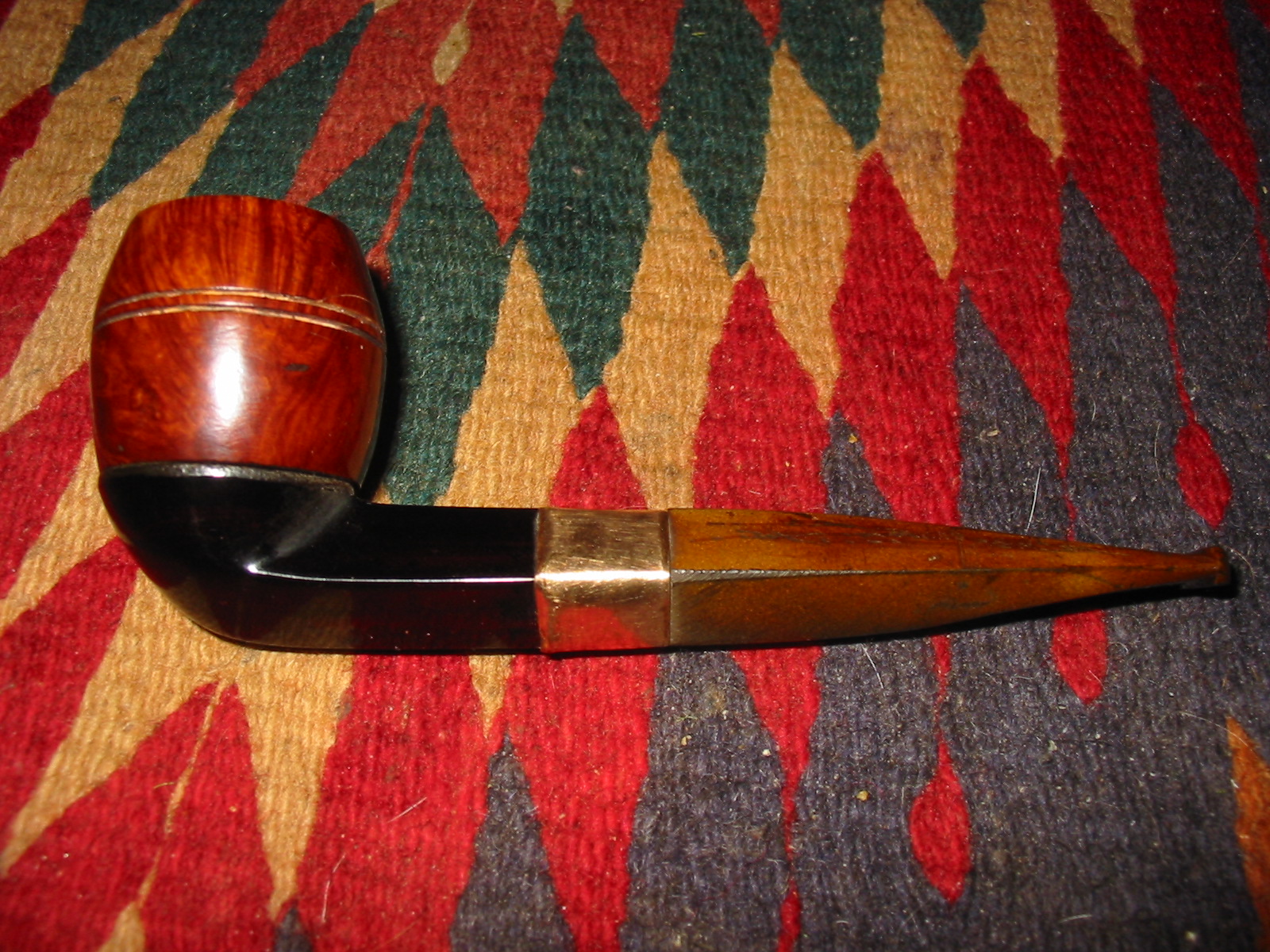
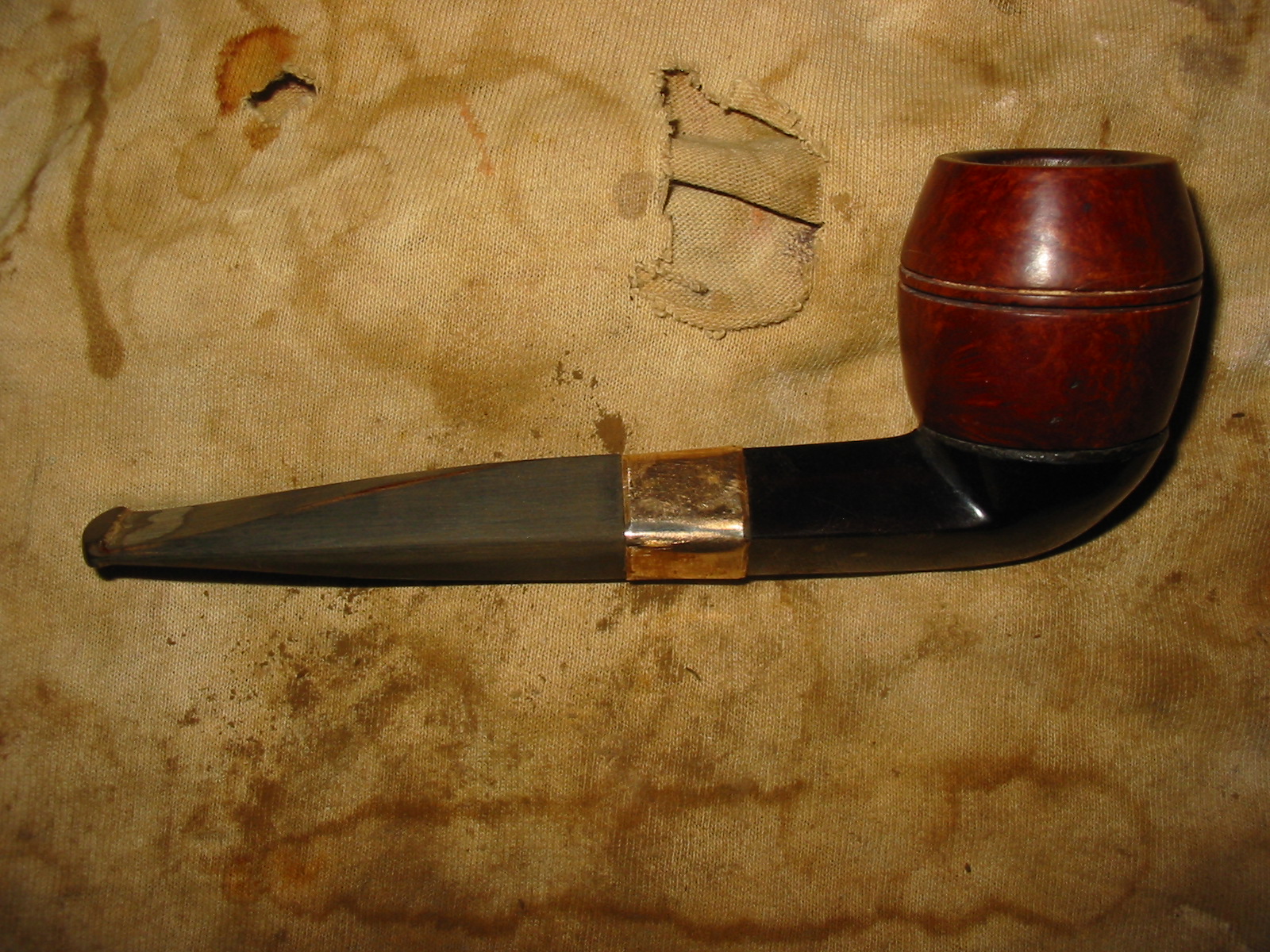
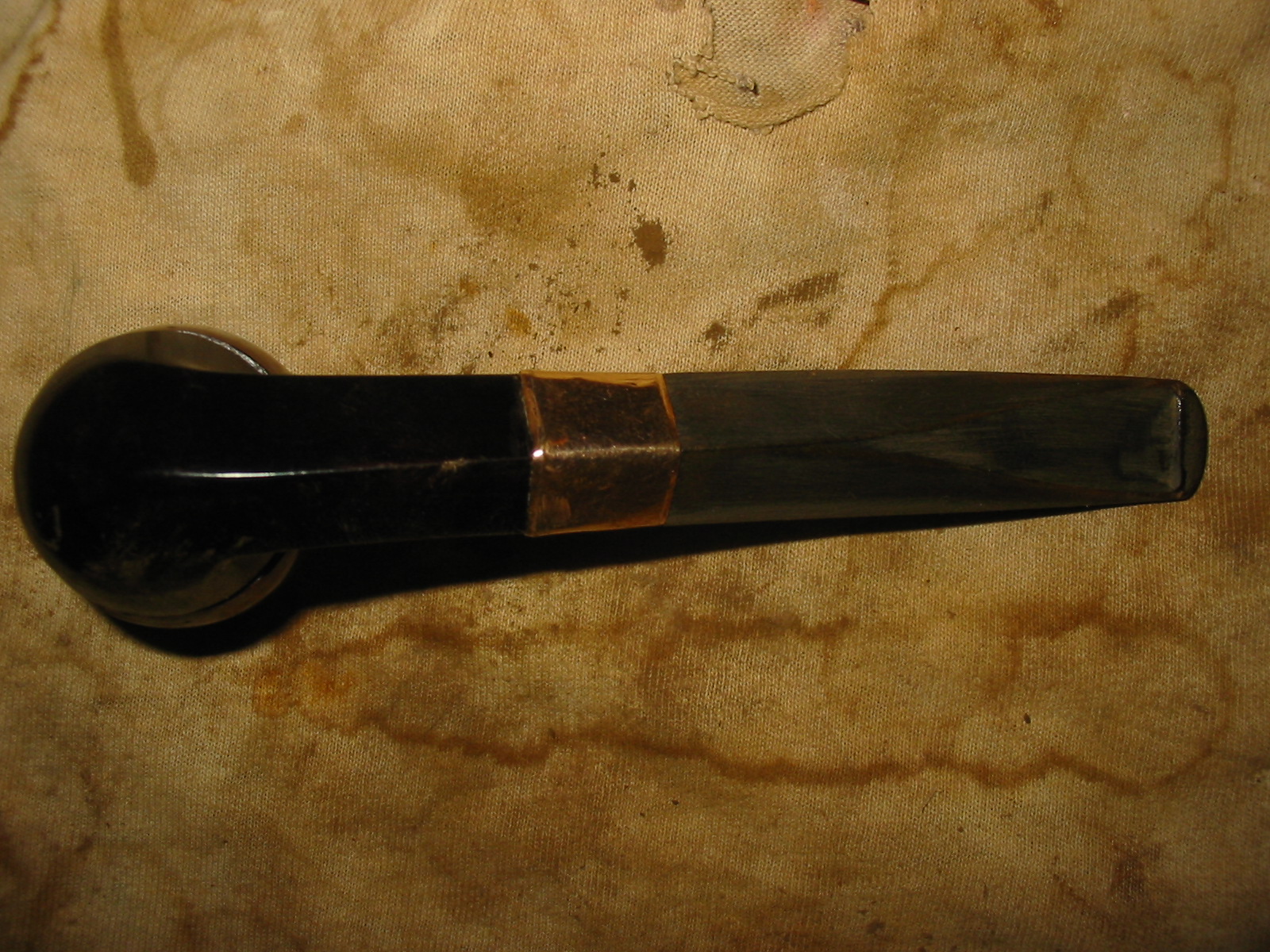
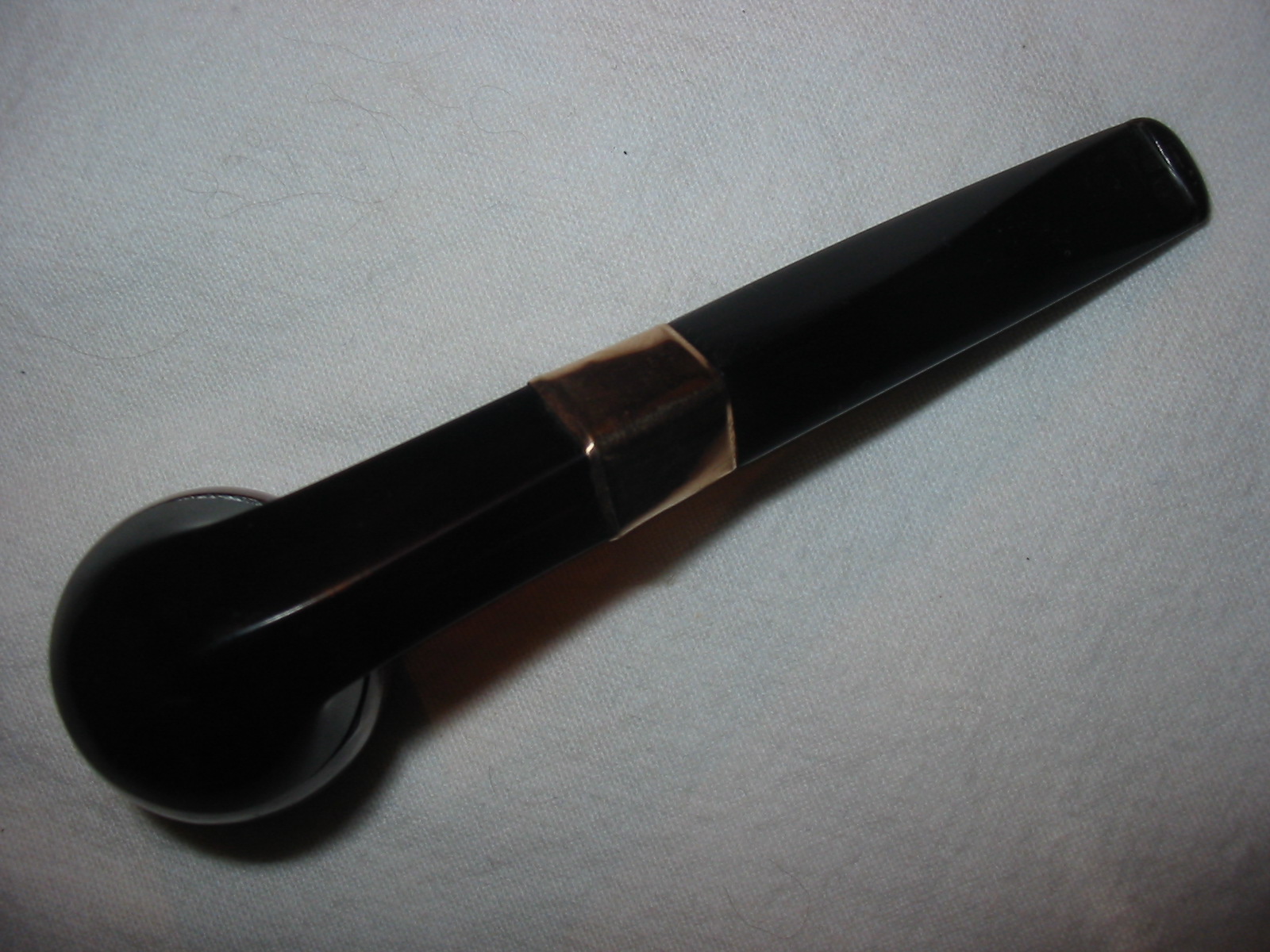
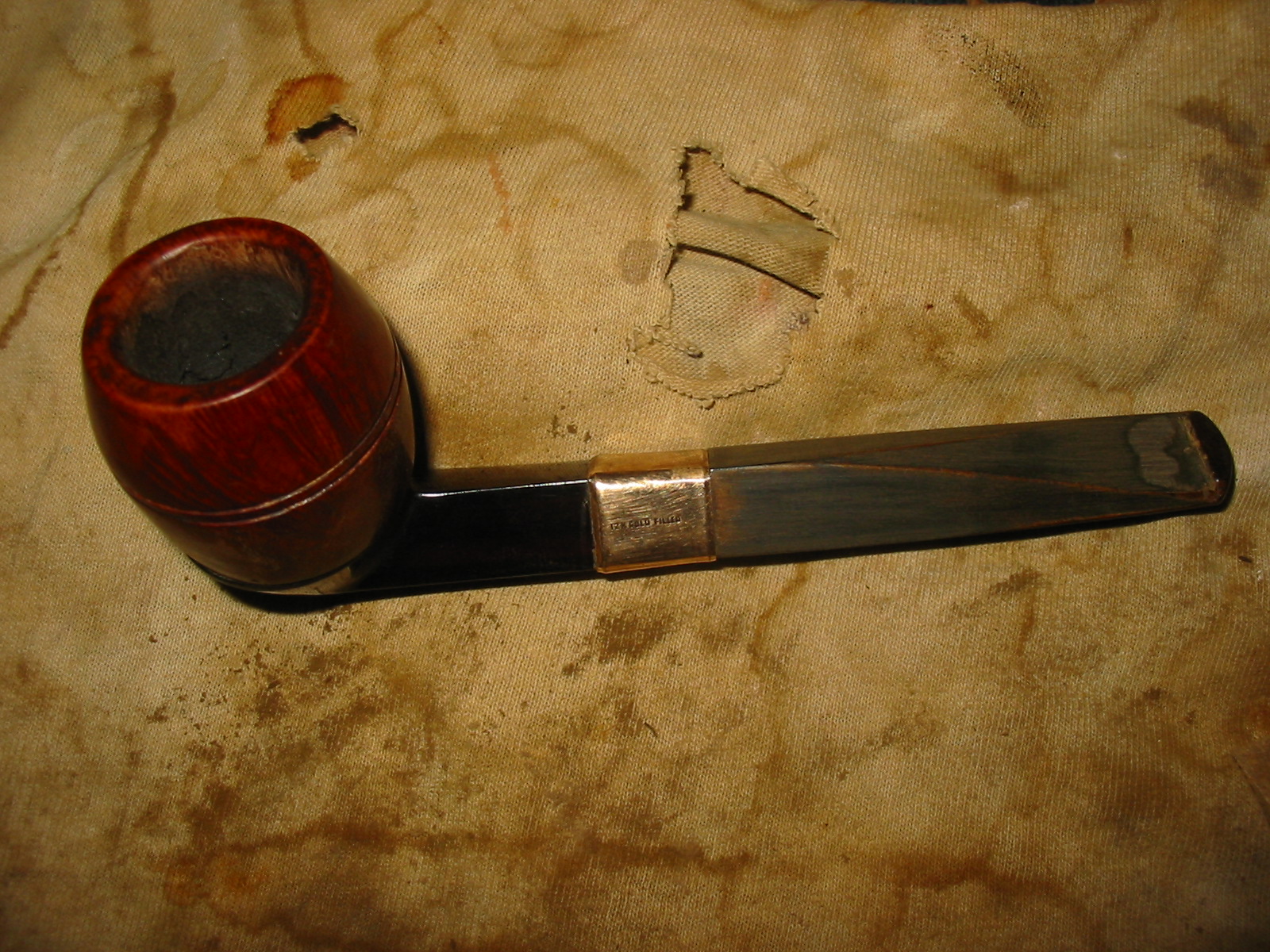
This pipe came to me from Chuck Richards (Desertpipe) in a box he sent me. It is the first of three old timers that he sent for me to work with. It is a common interest that we share – this love of the old timers and restoring them to some of their former glory. The first four photos below show the pipe as it was when it arrived to my work table. There is no stamping on the pipe at all. The gold band is stamped 14K Gold Filled. The stem has no logos or stampings. The underside of the bowl and the Bakelite base has no information stamped on it either. It is much like some of the WDC or William Demuth pipes that I have from the same era. The pipe itself was in pretty decent shape. The bowl was very clean. The rim was undamaged and the finish on the bowl was quite nice. The double grooves around the bowl were filled with grit and the surface had a few pits in it. The Bakelite bowl base and shank were in good shape. There seems to have been a metal decorative rim that went around the base between the bowl and base that was missing. The 14K gold filled band was in place but was on backwards so that the stamping of the gold was upside down. The stem was very oxidized and had been filed to give a steeper angle on the taper to the button. The filing had gone too deep and the airway next to the button was exposed. At first examination it appeared that the stem was too hard a material to be vulcanite and the filing marks did not look like they were on vulcanite. My initial guess was that the stem was also Bakelite.
IMG_0649

IMG_0650

IMG_0651

IMG_0652
I removed the bowl from the base and reamed and cleaned it. I reamed it with a PipNet reamer back to a very thin cake. I cleaned out the airway at the bottom of the bowl. I used a dental pick to clean out the dual lines around the bowl top. I cleaned out the reservoir in the bottom of the base with cotton swabs and Everclear. I cleaned out the shank with bristle and fluffy pipe cleaners and Everclear as well. I removed the band from the shank by heating it gently. The glue softened and I was able to remove it and turn it around. I tapped the band with a small furniture hammer to flatten out the edges and squared the edges. I reglued it with wood glue. When this work was done I set the bowl and shank aside and went to work on the stem.
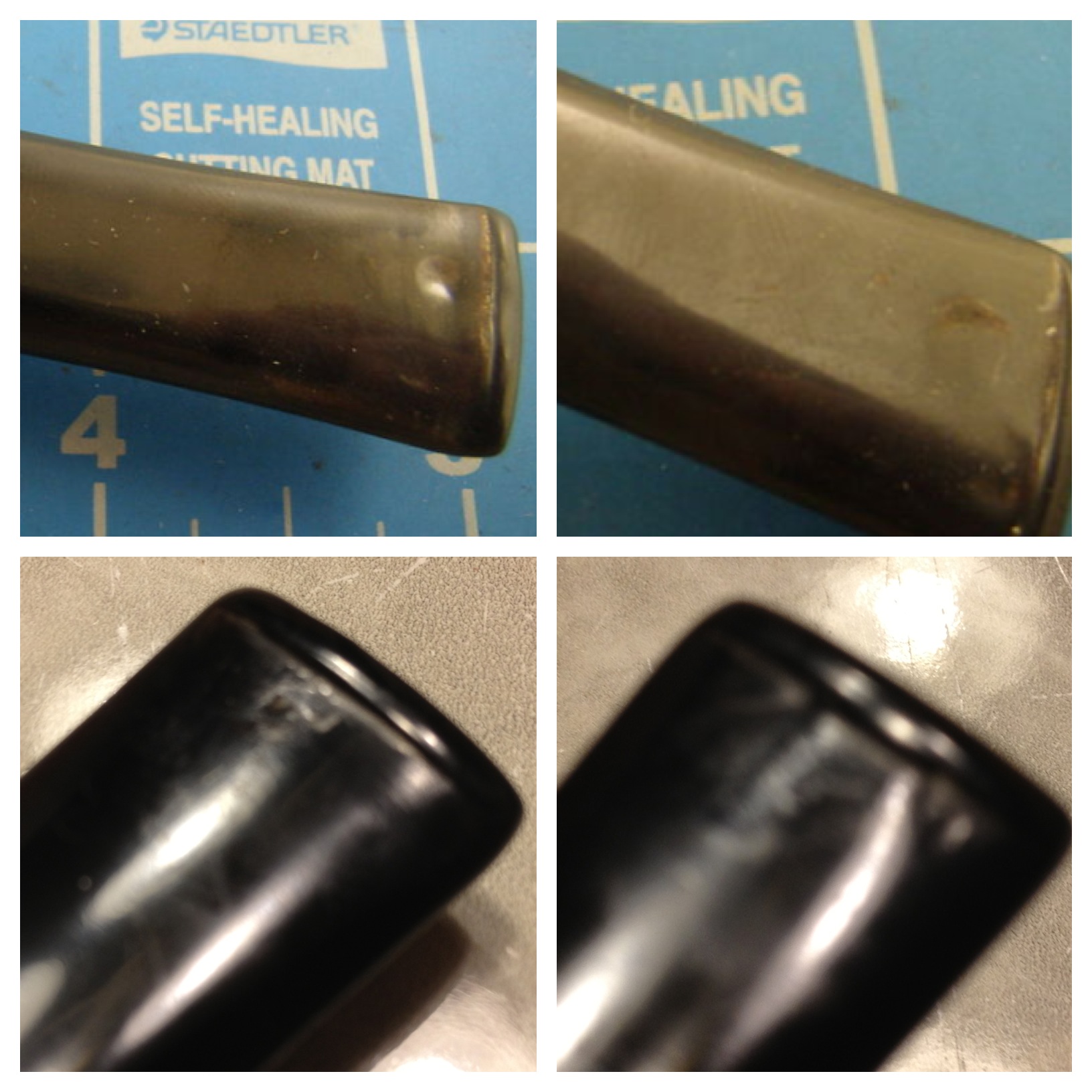
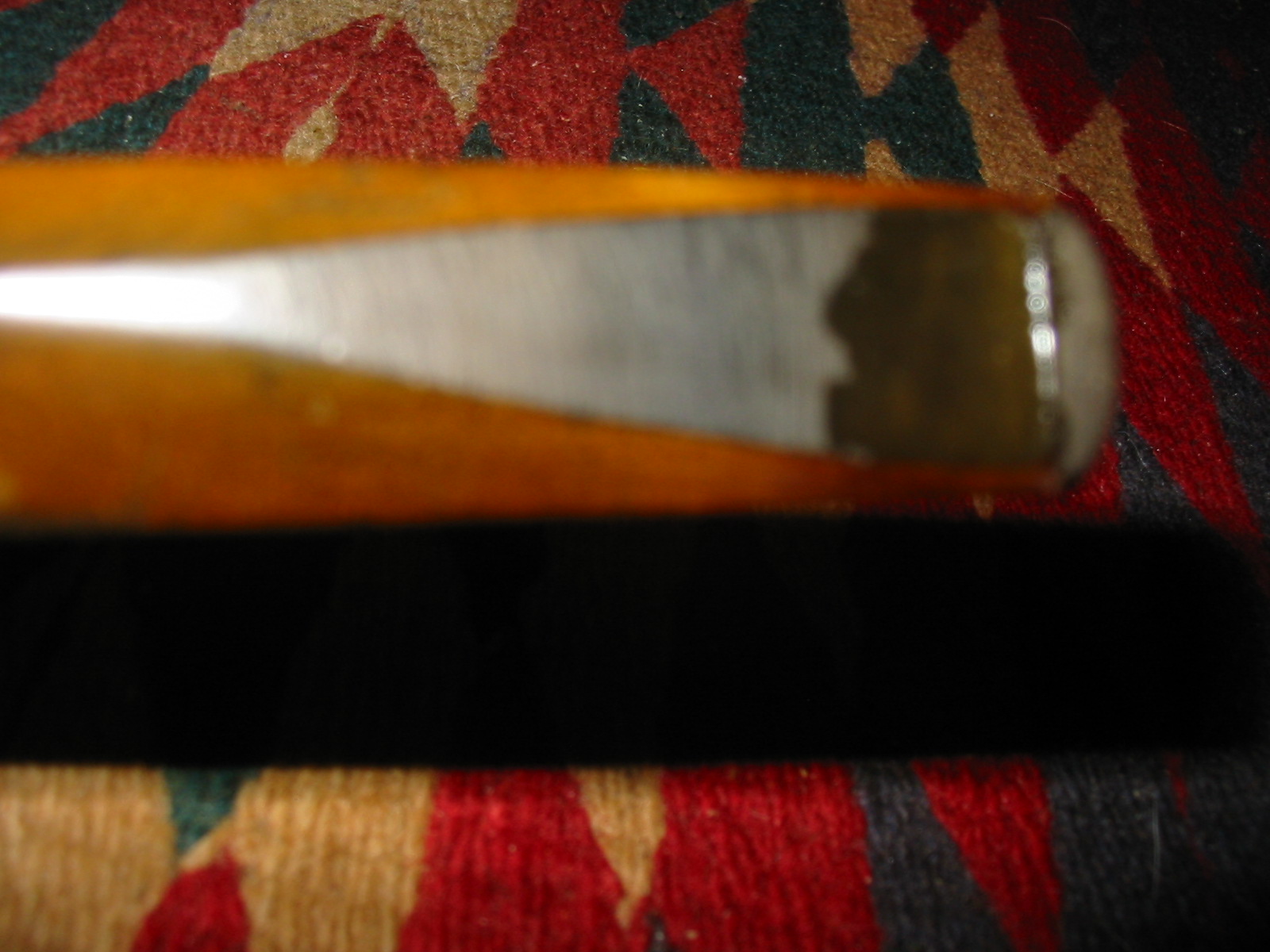
The stem took significant work. Somehow my camera failed (maybe the photographer did) and I was unable to get any good photos of the stem work. I built up the filed area against the button with clear superglue (Photos 1 -2). I layered on lightly, let it dry, relayered it and repeated until the thickness was sufficient enough for the airway to be protected. I also built up the button. It looked to me that a previous repair had been done and a new button had been cut in the stem. I repaired the shape and the thickness of the button. It was an old style bone tenon that was mounted in the shank so I cleaned that up and cleaned the inside the stem. The hole in the button was the old style orific or “o” opening. The rebuilding of the button and stem took the majority of time in working on this old stem. Once it was dry and had cured overnight I worked on the oxidation. I did not want to use anything that could possible harm the Bakelite so I kept the alcohol to a minimum and only on the inside the airway and was careful not let it touch the outside. For the outside I used 240 grit sandpaper to smooth out the newly repaired slope on the stem and to sand out the file marks that remained from the previous repair. I also sanded the corners on the stem to give it a more rounded look in keeping with the era it was made. The 240 grit sandpaper easily removed the oxidation. Photos 3 – 4, though of poor quality, give an idea of how the stem looked after patching with the superglue and sanding with the 240 grit sandpaper. The oxidation was pretty well removed. The button is shaped and the patch on the stem in front of the button is visible. There is still a lot of sanding to do at this point. From the 240 grit I went on to sand with 320 grit and also a fine grit sanding sponge to further blend the patch and to remove the oxidation.
IMG_0647

IMG_0648

IMG_0653

IMG_0660
I put the stem back on the pipe and worked on the fit against the band. When I reversed the band the stem was too large on the right side and extended beyond the width of the band. To repair that I had to take of material at the bottom edge of the top right side and the upper edge of the bottom right side of the diamond to reduce the angle of the diamond on that side. By reducing these two points on the stem I was able to bring the sharp edge to the same width as the shank and band. It balanced the look of the stem. I used the 240 and 320 grit sandpaper for doing this part of the stem work. I continued to use the sanding sponge to blend the patches on the top and bottom of the slope to the button. The next series of eight photos show the progress on the stem. The patch is clearly visible in the photos of the top side. The one on the bottom was not as big and it blended in more easily.
IMG_0662

IMG_0663

IMG_0664

IMG_0665

IMG_0666

IMG_0687

IMG_0688

IMG_0689
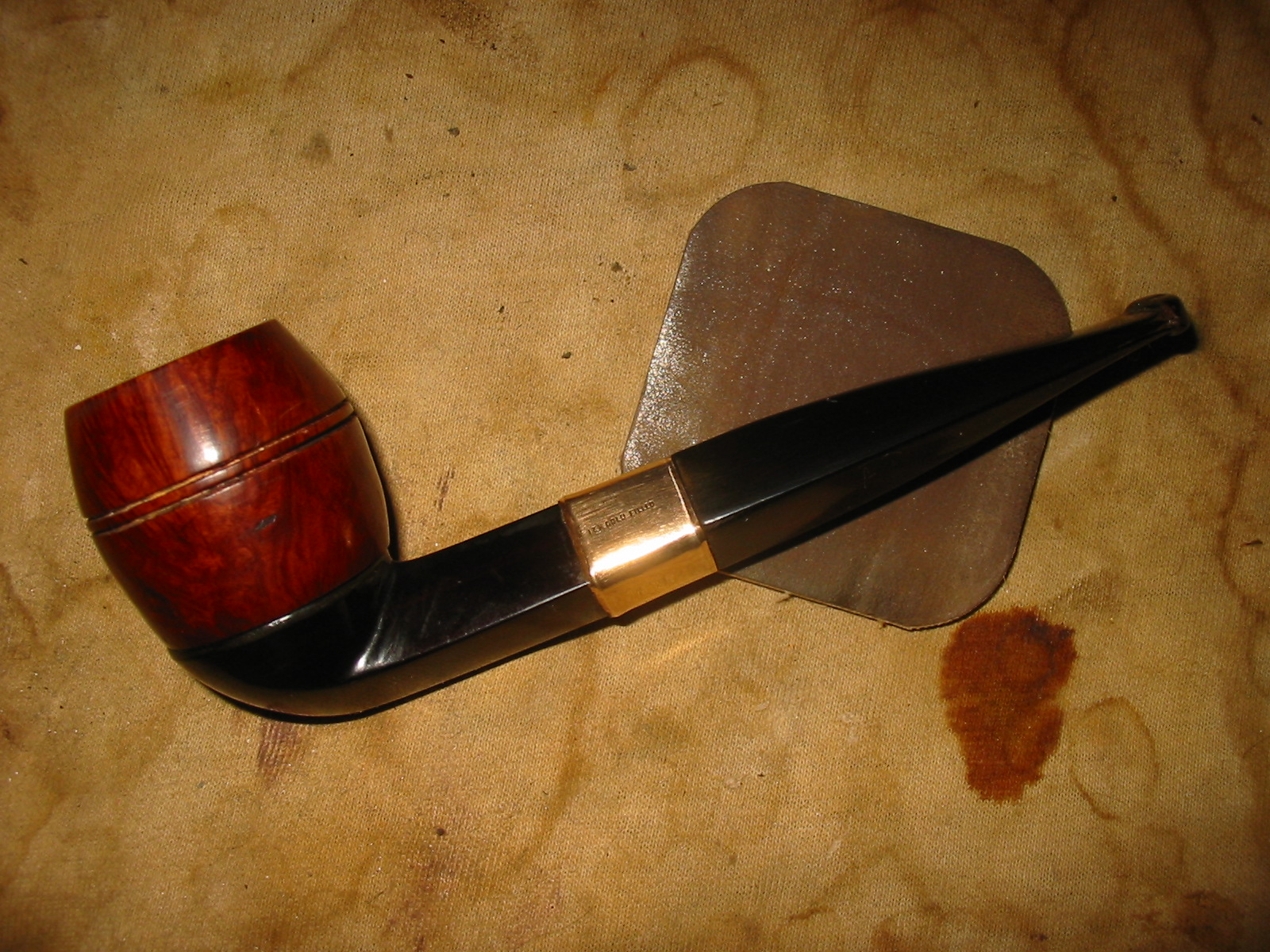
After removing the scratches and oxidation with the sandpaper I sanded with the fine grit sanding sponge and then progressed through the various grits of micromesh sanding pads from 1500-12,000 to smooth and polish the stem. As I worked on it my initial conjecture about the material being Bakelite was confirmed. The next four photos are a sample of the work of the micromesh sanding pads on the stem. The pad in the photos is 3600 grit. I also used the micromesh on the bowl and the Bakelite base and shank to remove some of the surface scratches.
IMG_0690

IMG_0691

IMG_0692

IMG_0693
I gave the pipe a very light buff on the buffer with White Diamond. I had learned on previous occasions that the speed of the buffing pad can produce heat that can actually damage the Bakelite and cause fibres from the pad to embed in the stem. A very light touch is necessary if you are going to buff these stems. I wanted to give them a quick light buff to remove any remaining scratches and give it a quick sheen. I buffed the base and bowl at the same time as well. The final series of four photos show the finished pipe. I applied a coating of carnauba wax to the pipe by hand. I buffed it lightly with a soft flannel cloth to bring up a shine and finished buffing with a soft shoe brush. The finished pipe speaks for itself. It is a testimony to the life that resides in these old timers. It is a life that will certainly extend beyond mine! As mentioned above, I share a love for these older pipes with Chuck that seems to extend to their restoration and re-entry into the purposes for which they were made. What do you think Chuck? How does the final pipe look to you?
IMG_0695

IMG_0696

IMG_0697

IMG_0698

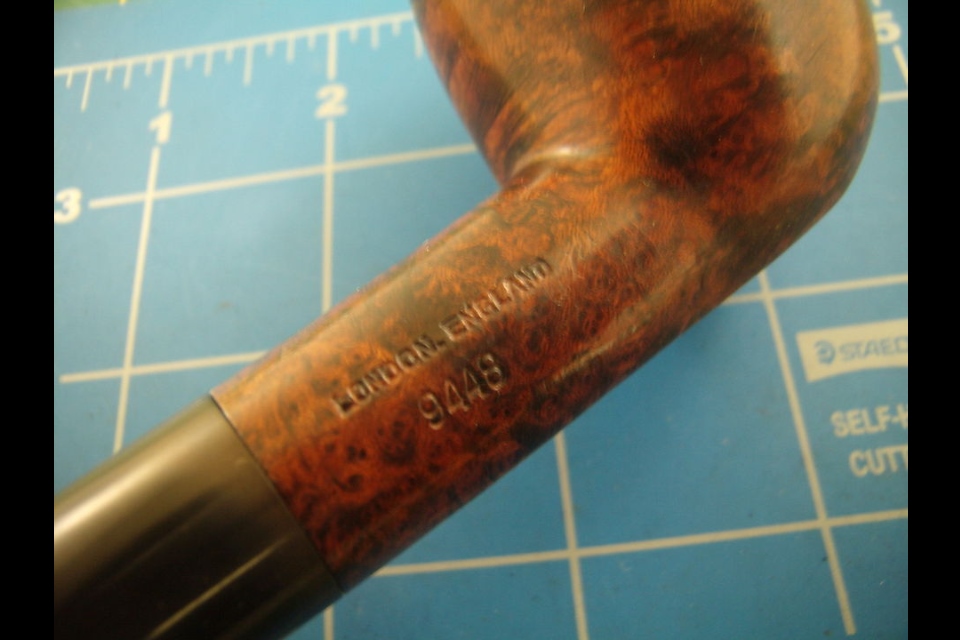
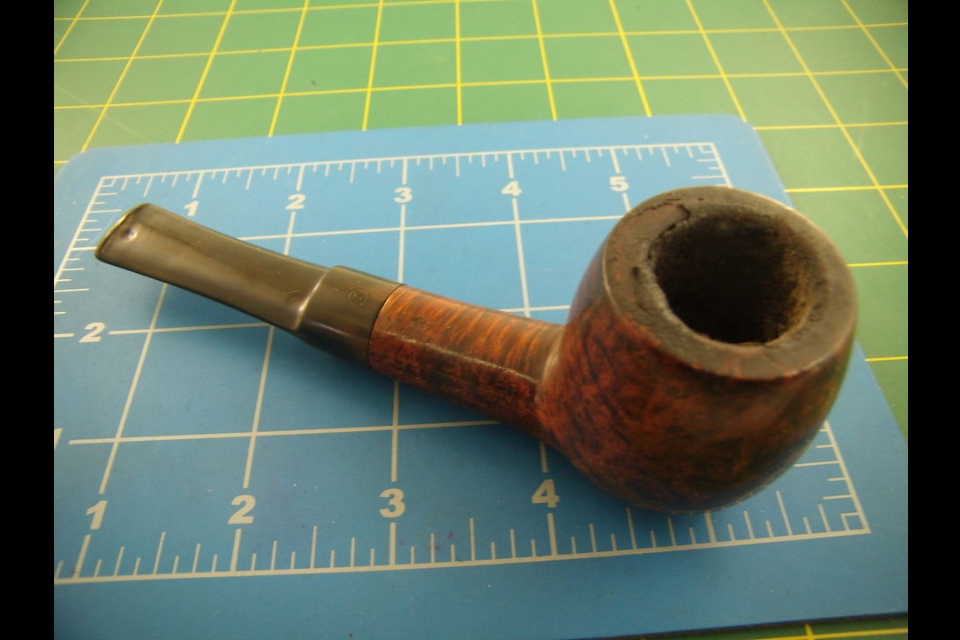
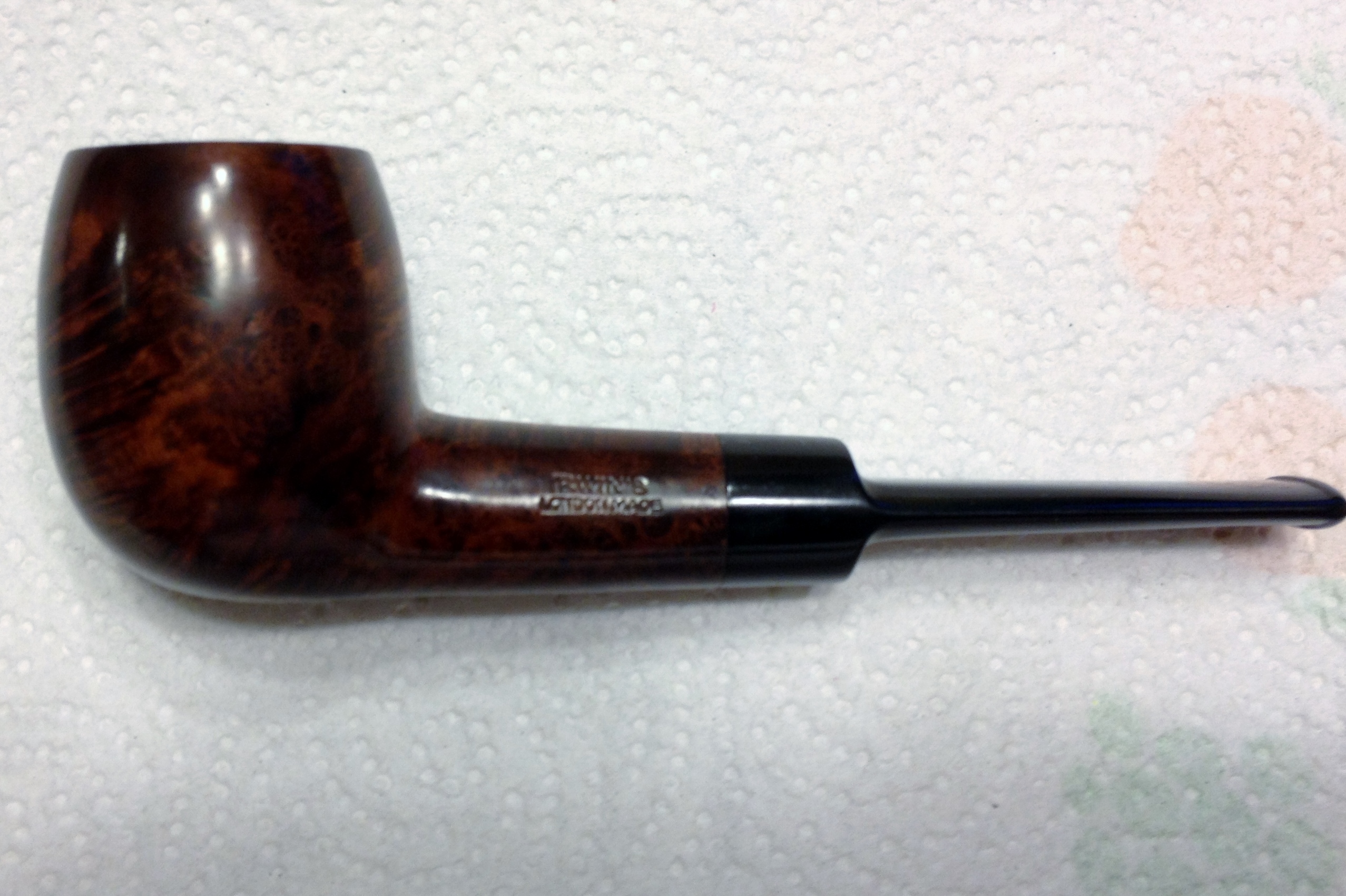
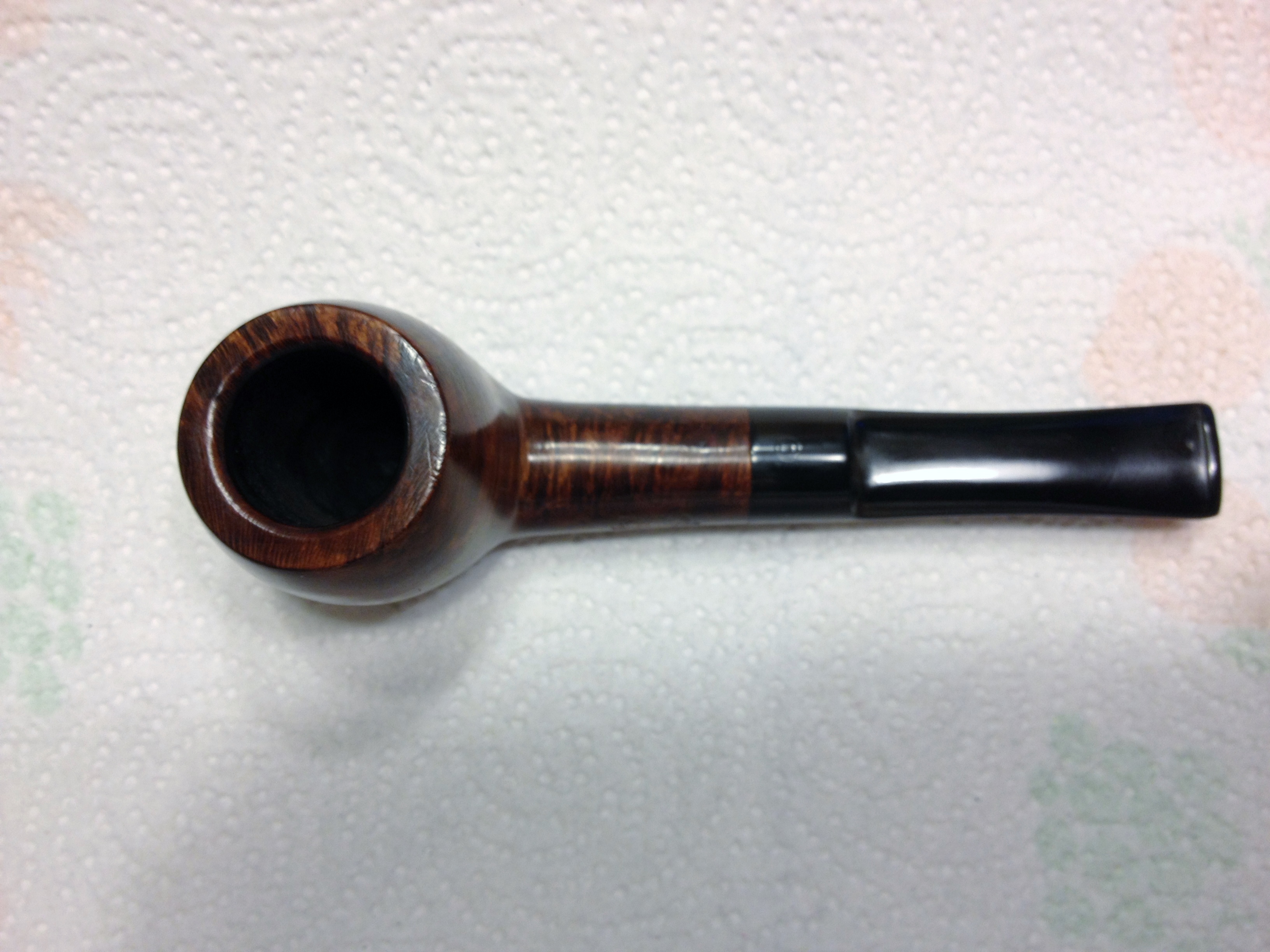
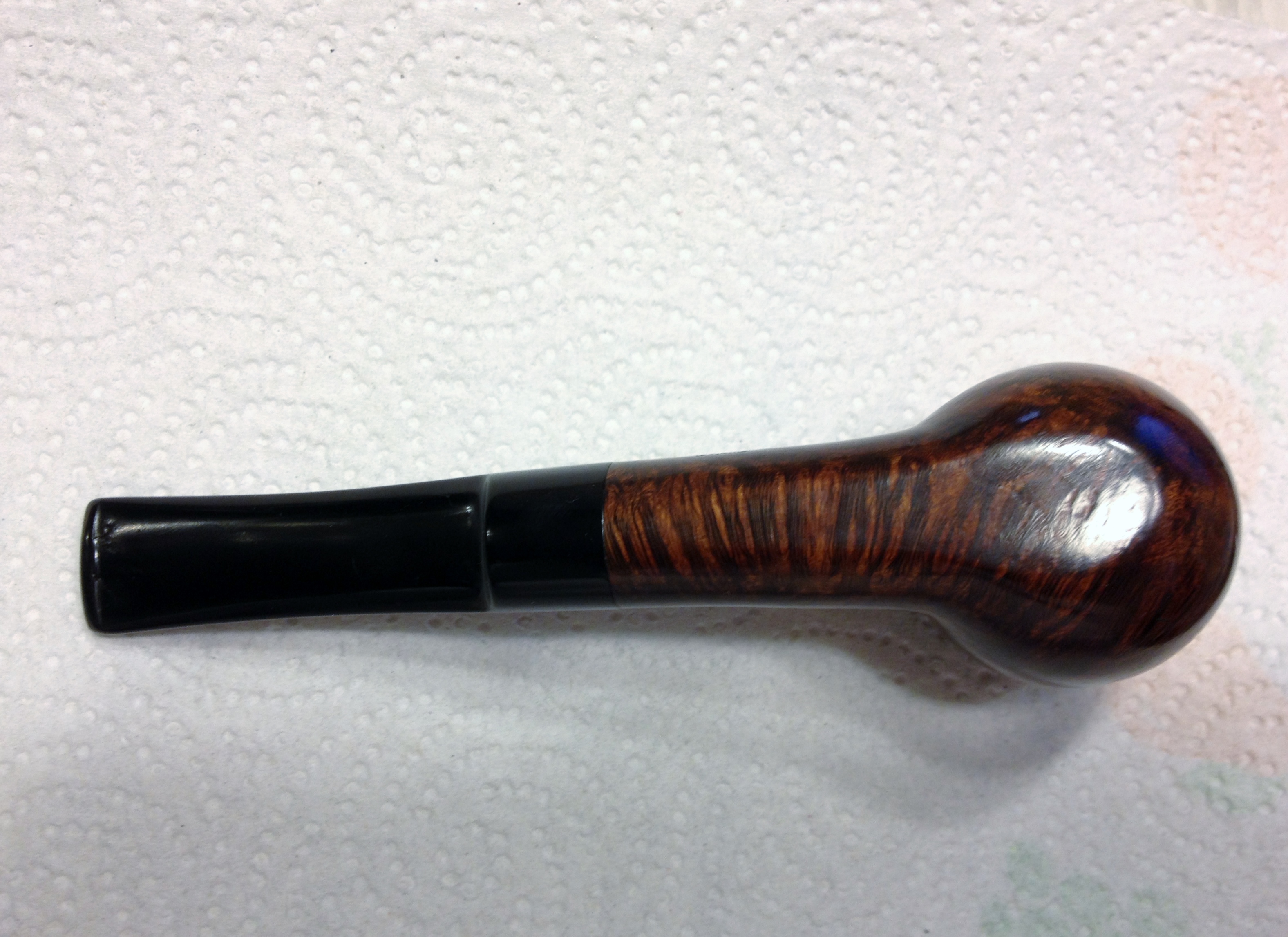
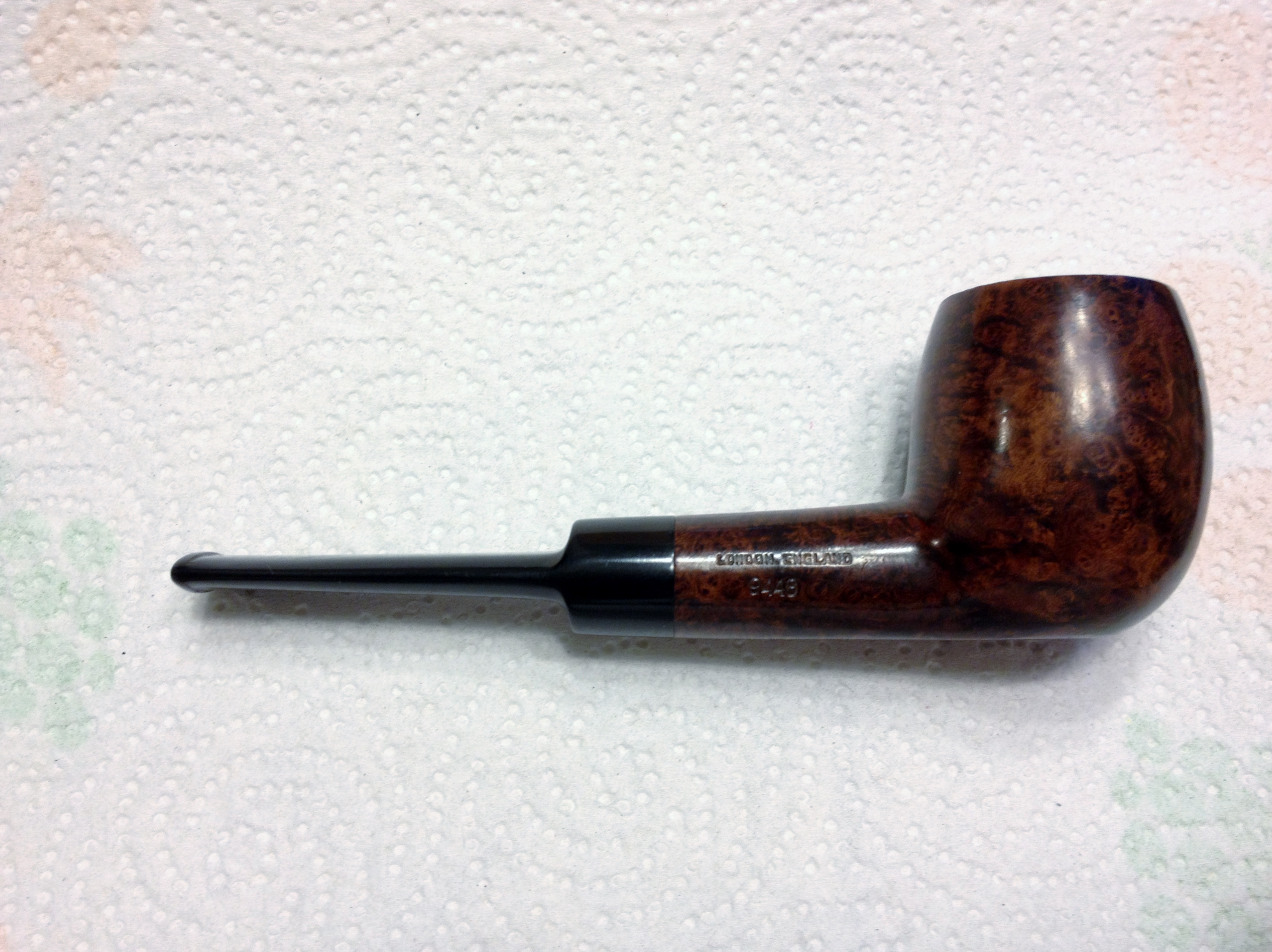
Irwin’s (GBD Second) 9448 Refurbished


Blog by Greg Wolford

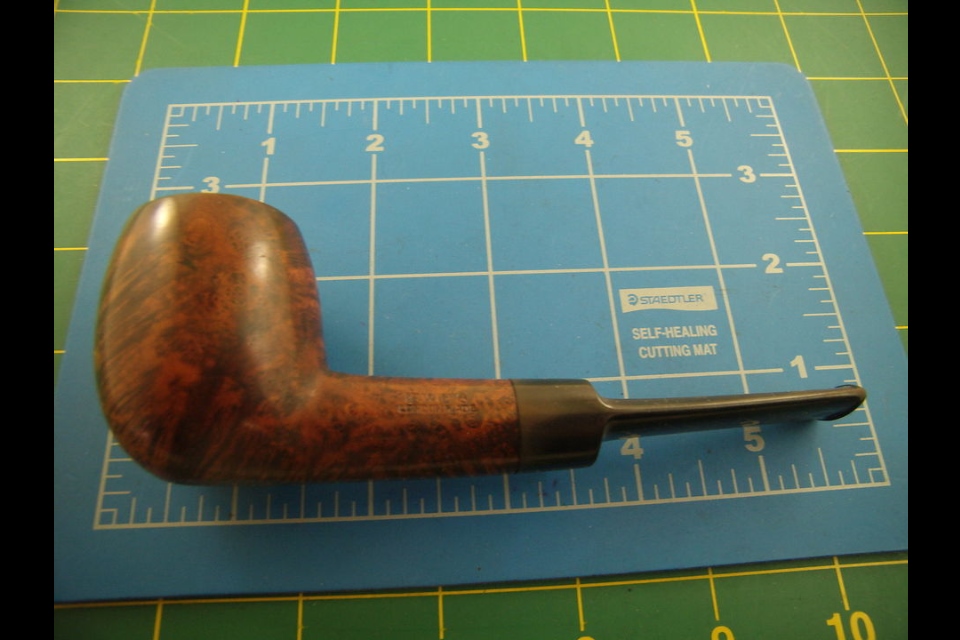
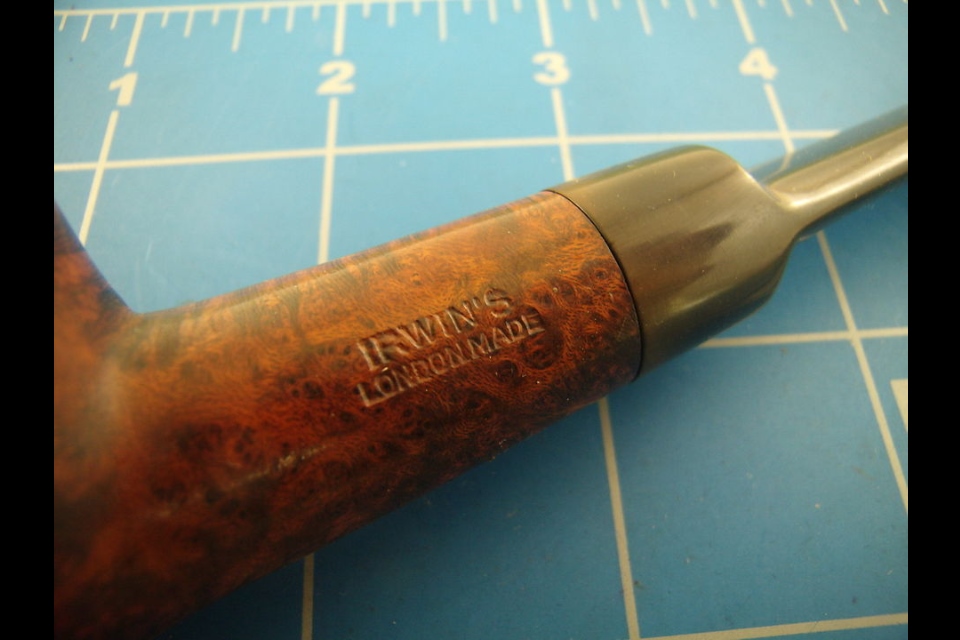
I picked this Irwin’s 9448 up not too long ago expecting it to be an easy clean up, which was partly right and partly wrong, and knowing it was a GBD second it should be a great pipe for the money. From the seller’s photos I figured a little heat to lift the tooth dents, some light sanding and then micro meshing and the stem would be good to go. The stummel I figured would need to be cleaned, soaked in an alcohol bath and retained. Here are the photos from the seller:

Seller's Photo

Seller’s Photo

IMG_5457 (2) IMG_5458 (2) IMG_5459 (2) IMG_5460 (2) IMG_5461 (2) IMG_5462 (2)

I forgot to take my own photos when the pipe arrived and during the process so only the seller’s before and my after photos will be shown. The process went as follows though:

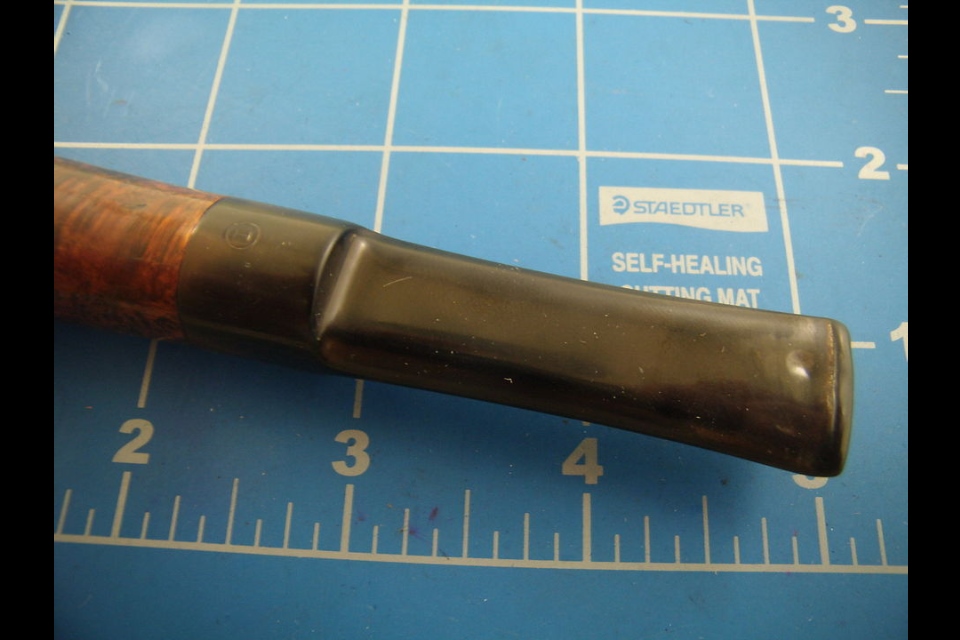
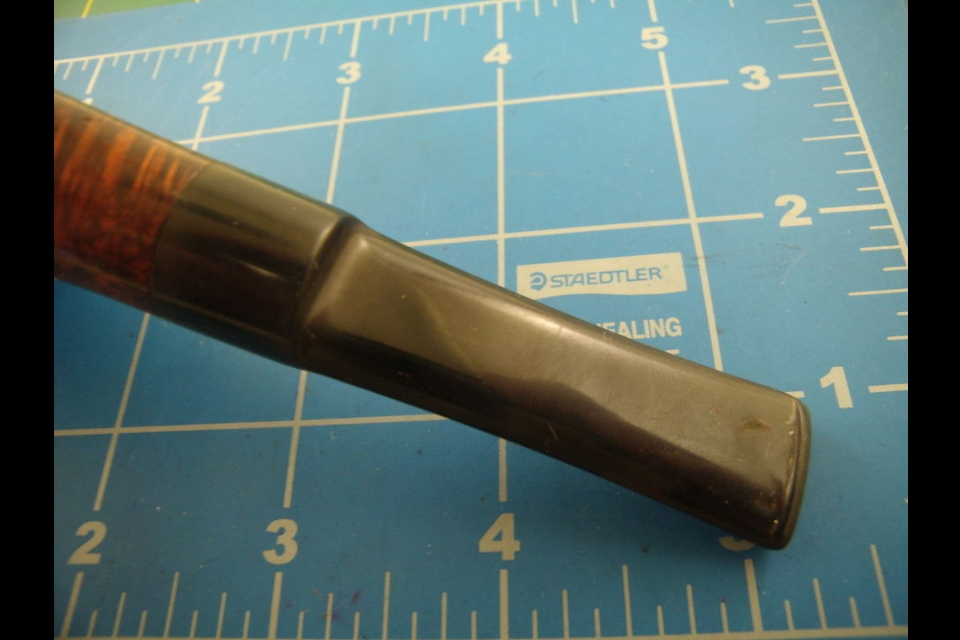
The stummel was in better shape than I anticipated: it was dirty and did have a few dents to raise but was in really good condition overall. The stem was another story: the tooth dents were much deeper than the photos showed or than I had expected. I knew that this stem was going to require filling the dents and thought over a few options, which I have more to say on later here. So, I decided to start with the stummel.

After reaming the bowl and cleaning the shank, I began by wiping the pipe down with acetone on disposable cotton pads, and went through many of them. After get most of the dirt and wax off, I took some cotton swabs dipped in 91% isopropyl alcohol and began to work off the heavy build up on the rim. It was a slow process but as the layers came off I could see the rim was in very nice shape and didn’t need topped. Once all the gunk was off, I took a few more passes over the entire stummel with a couple more cotton pads wet with alcohol to make sure all the finish and dirt was removed. I then turned my attention to the dents: one on the front of the bowl, two on the bottom near where the curve of the bowl met the flat “sitter” area, and a couple on the rim.

I used my heat gun to heat up the end of an old kitchen “butter knife” and a wet scrap rag to produce the steam to raise the dents. All of them came out fairly easily except for one on the “sitter” portion and it took several applications of steam to get it out. But it did finally raise.

At this point I went to the buffer to see what the stummel looked like. I buffed it with some Tripoli and then again my hand with an old t-shirt. I saw then that the pipe had good color under all the dirt, it had just been hidden. And the steam had done its job very nicely, too, giving me a pretty well smoothed out stummel. There was one fill on the left side of the bowl but not a large one and it didn’t really stand out to my eye so I decided to leave it alone. I wiped it down with one more alcohol pad to remove any trace left from the Tripoli and then decided to not sand or re-stain it; the color was really nice and the grain showed in a nice contrast. So I set the stummel aside to work on the stem.

I began by heating the stem, with a pipe cleaner inserted to make holding, moving and not damaging the airway easier. The dents lifted some but, as I expected, were too deep to come anywhere near level. So now it was time to try some patching or filling of the dents.

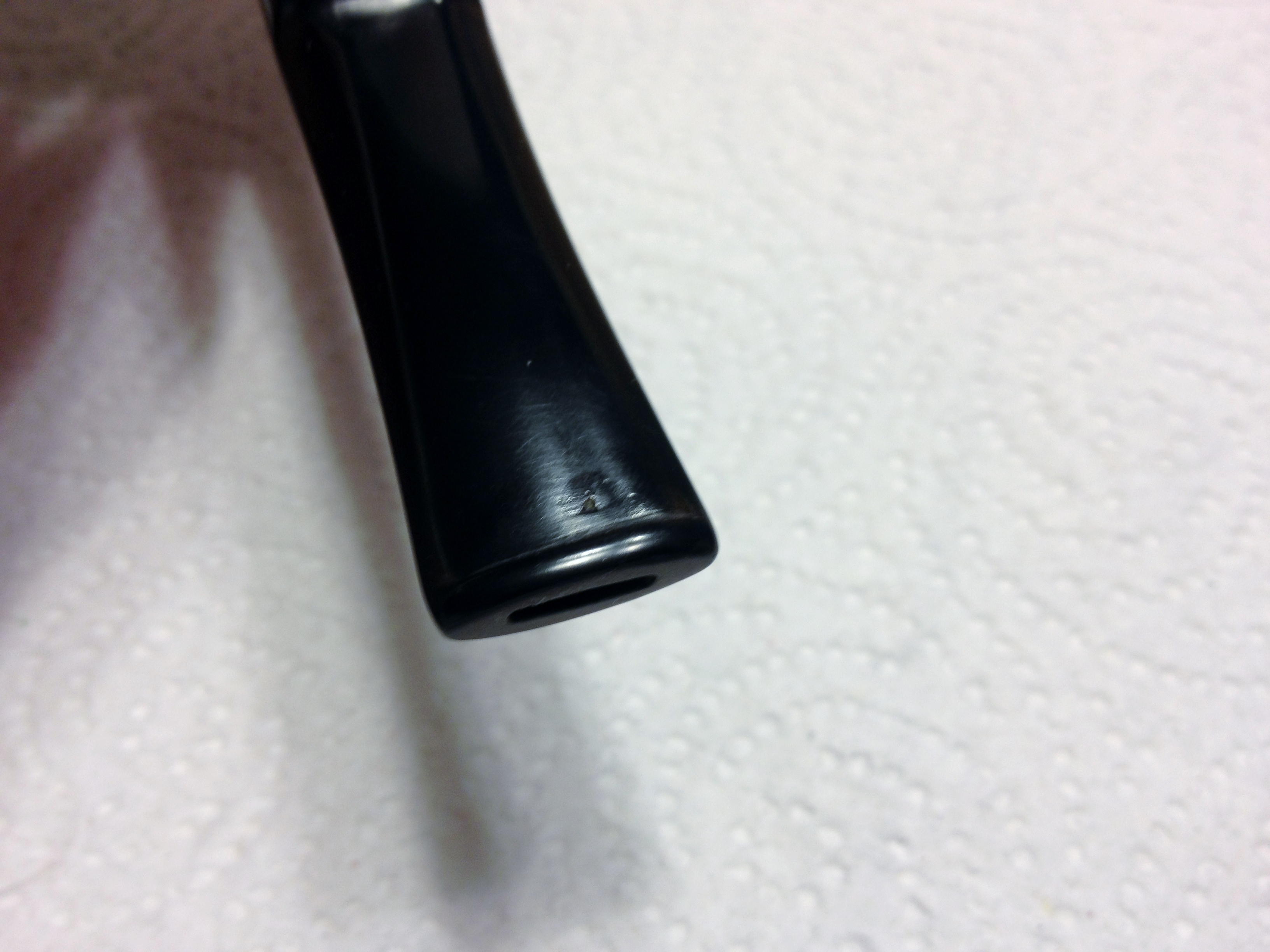
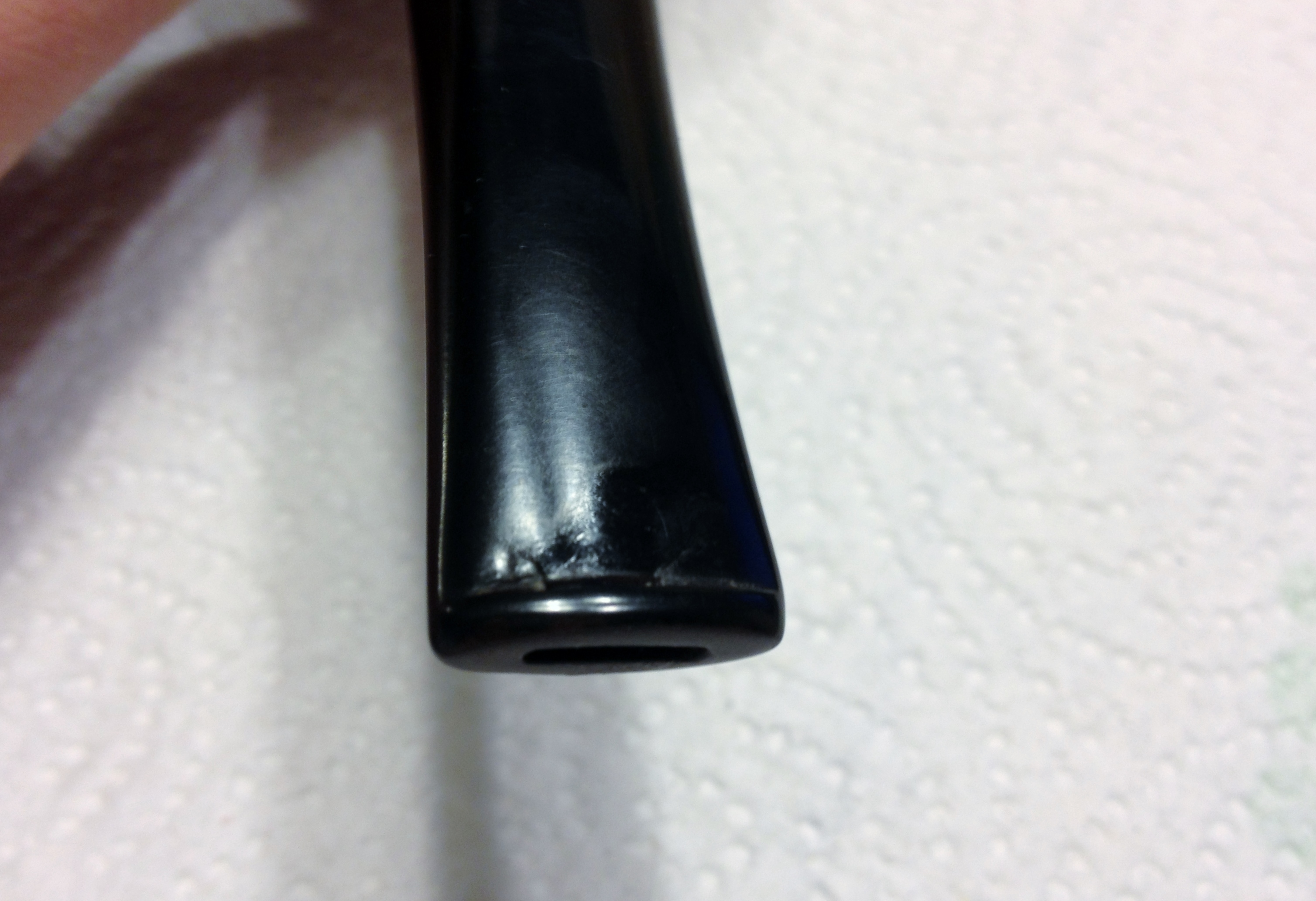
A while back Al, another contributor here on the blog, had mentioned he had used cigar ash to fill in a few dents but that they were still visible repairs. I have been experimenting with a couple of ideas that so far have not made any great improvements over just using super glue alone. I thought that on this one I would try to make a patch with carbon reamed from the pipe. The carbon is much darker, a real black, than ash so I thought this might make a better repair. I worked in layers, packing in the carbon, applying a drip of super glue, allowing it to dry, sanding it back down with an emery board and repeating; I think I did three rounds on each side of the stem, trying raise the dents slowly and make them stronger in the long run. After the last application on the underside, I began to work with my needle files, then emery boards, 320 grit wet sand and finally onto micro mesh, wet sanding 1500-2400. I then applied the Novus 2 plastic polish, rubbing it on and off with cotton pads. The remaining grits of micro mesh I used dry through 12,000. Finally I used the Novus 2 again, applied the Mother’s Back to Black with my fingers and let it dry before buffing it off with another cotton pad. The final step was to polish it with the Novus 1 plastic polish. Now it was time to reassemble the pipe and take it back to the buffer. At this point I knew the patch wasn’t as good as I’d hoped it would be: it was better, I think, but it was also still noticeable.

I buffed the stummel with Tripoli again before I reassembled the pipe and buffed the entire pipe with white diamond. I then applied several coats of carnauba wax to the pipe and buffed it out with a new soft cloth wheel. This is what the pipe looks like now, cleaned up (except for the fact I smoked it before I took the photos) but without any new staining done to it.

After

After

IMG_5493 IMG_5492 IMG_5491

The bit area does look a lot better and it is smooth, almost; apparently the layering technique wasn’t my best idea as a small piece of the top patch came off at some point, probably on the buffer. Next time I will not work in layers but more like a briar-dust fill and do it all at once, which be faster, too. I do wish it were less noticeable on the whole,though.

IMG_5494 IMG_5495

Before and After

Before and After

I have a few other ideas about trying to get a less visible patch that I may pursue. However, now that I know I can get black super glue, already made, that may be my future course. But the “can I do it myself ” part of me wants to keep experimenting so we shall see. If any of you readers have any ideas on making these repairs less visible I’d be most appreciative if you would share them in the comments section.

An Old Manhattan Billiard with a Bakelite Stem


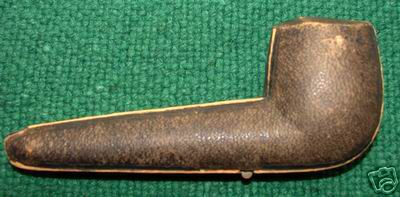
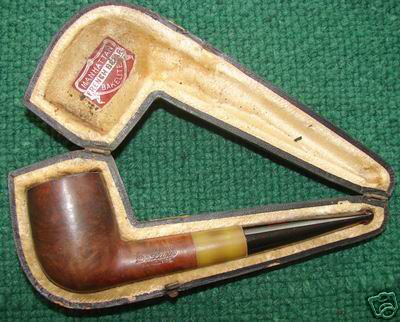
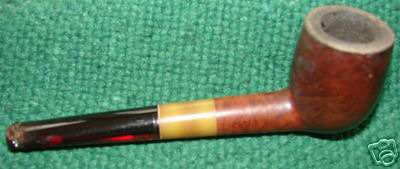
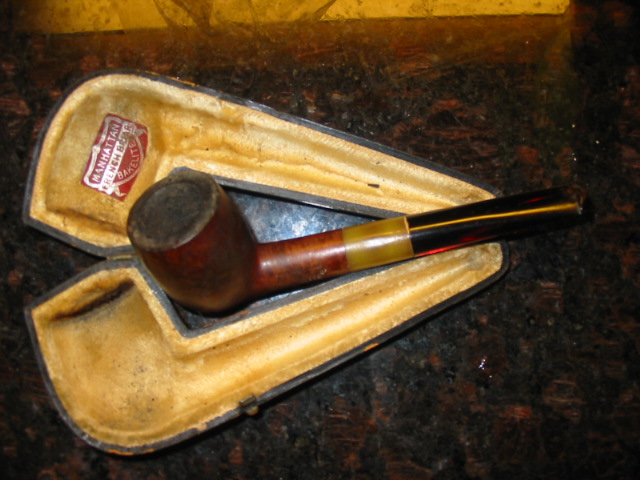
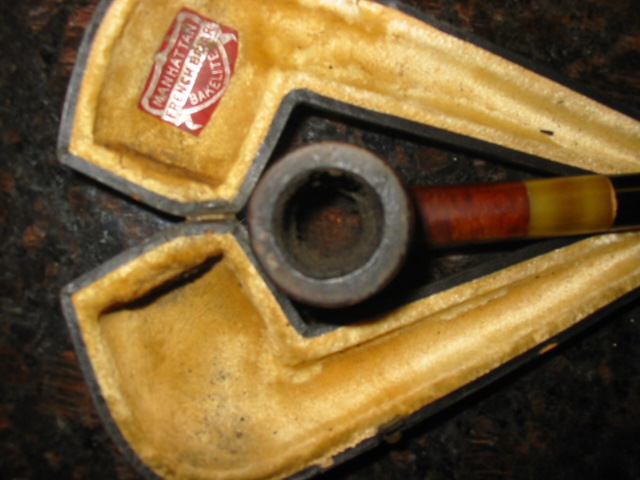
I picked up this old timer a while ago now and did a quick clean on it and put it away. Today I decided to take it out and finish it. The first tree pictures below are photos that were with the EBay auction. I liked the look of the pipe in those photos and decided to bid on it. From the EBay photos it appeared to be in pretty good shape. It appeared to be dirty and in need of a good cleaning. The stem was red Bakelite and the shank extension appeared to be yellow Bakelite. The rim looked dirty and tarred but pretty sound.

ImageImageImage

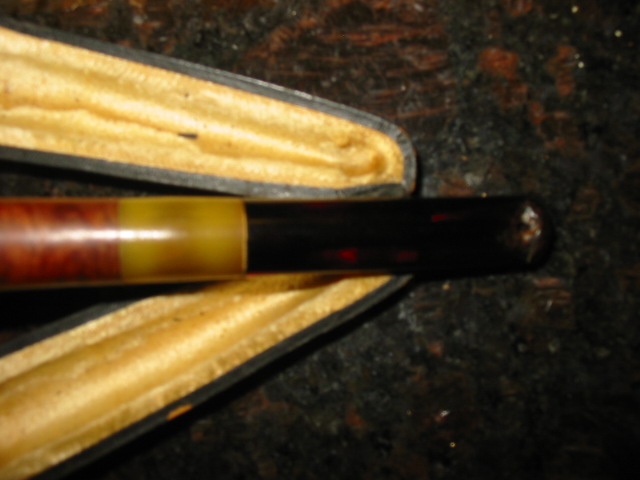
When it arrived it was in worse shape than the pictures showed. The rim was rough around the outer edge. The inner edge was also rough and out of round. The bowl was caked with a broken and chipped cake. The stem was over turned and had some significant bite marks in it on the top surface near the button. On the underside of the stem there was what appeared to be a repair to a bit through. It looked like an epoxy patch. The fill on the patch was overdone and the edge of the button was virtually gone. The top side bite marks were deeper than I expected and would need some work to raise them.

ImageImageImageImage

I reamed the bowl and cleaned the shank and bowl with pipe cleaners and Isopropyl alcohol. Once the pipe cleaners came out clean I was happy with it. The stem also needed a thorough cleaning. The tenon was a screw tenon and appeared to be metal as it was corroded and a little rusty. The previous owner or maybe the seller had put a paper washer on the stem before turning the stem on tightly. I think this was the solution to the overturned stem. I scraped the washer off of the shank and the stem and cleaned up the tenon with steel wool and alcohol. Once it was clean I worked on the button area on the underside of the stem. The epoxy repair was thick so I sanded it down and then recut the button edge with my flat needle file. I recut the top edge as well to clean it up and give it a new sharpness. I sanded the patch and the tooth marks until they were smooth and then used micromesh sanding pads from 1500-12,000 grit to sand the surface smooth. I also used the Maguiar’s scratch polish to polish out the scratches. Once that was finished I took it to the buffer and buffed it with White Diamond. To readjust the overturned tenon I heated the tenon and then turned it until it aligned. I also turned and turned it back until I had a good solid fit on the shank. Once the stem was aligned I gave it a coating of Obsidian Oil and set it aside for a little while and worked on the bowl rim.

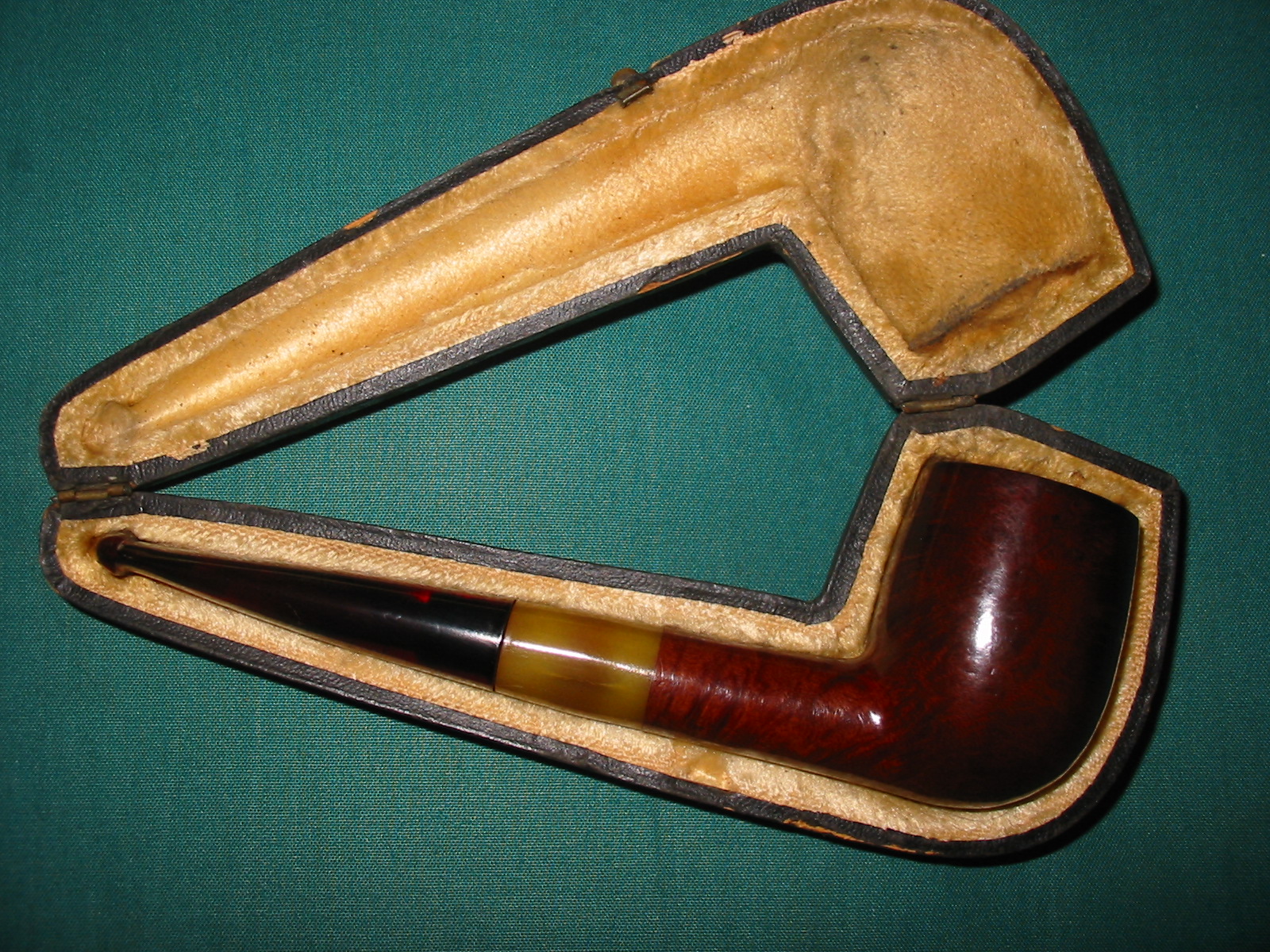
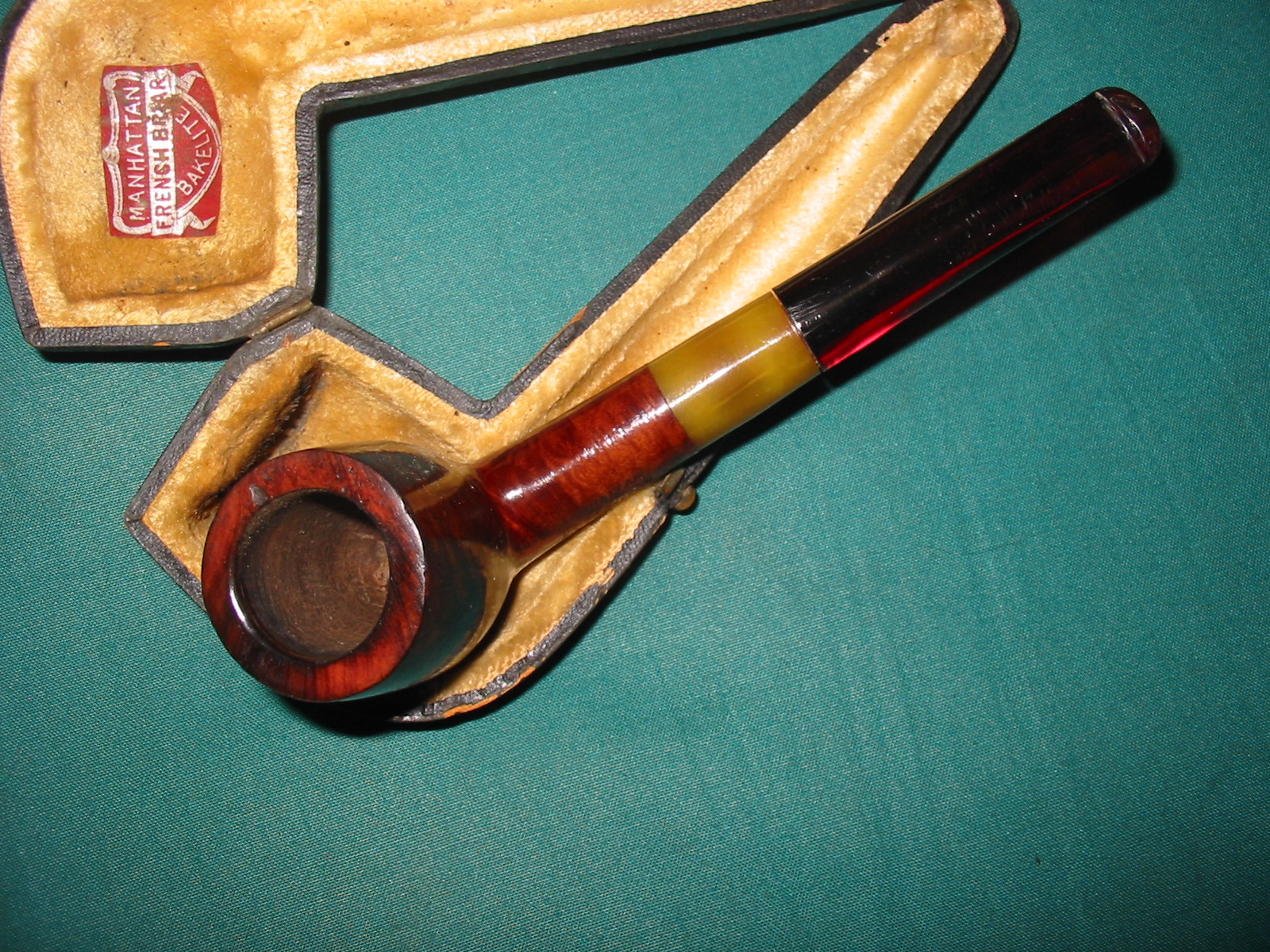
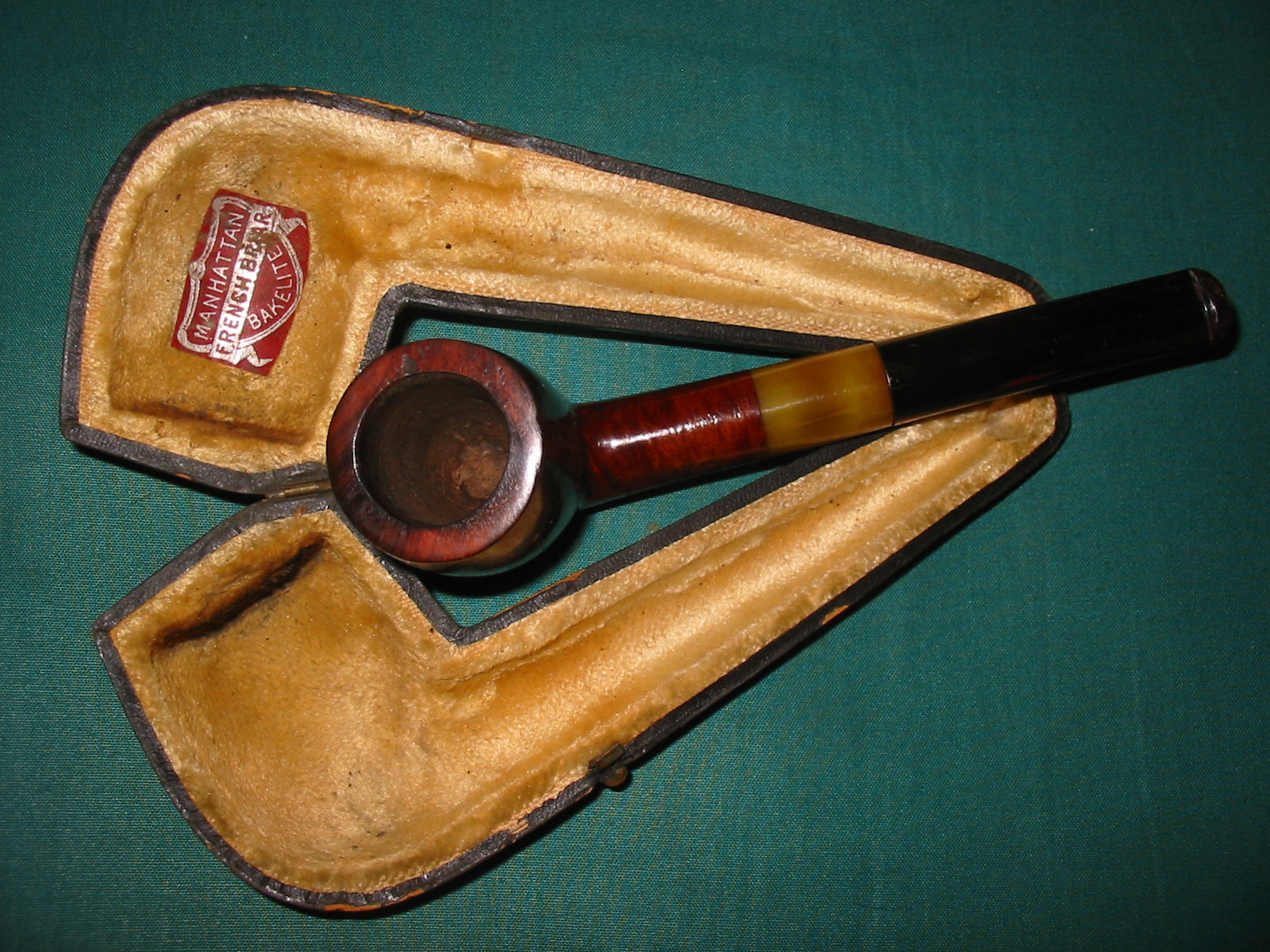
The rim took a bit of work as there were quite a few deep marks in the surface of the rim and also a rough edge on the outside of the bowl all the way around. I steamed the dents to the surface and then topped the bowl on a flat board until the edge was smooth once again. I worked the inner edge of the bowl with sandpaper to minimize the out of round shape of the bowl and make it at least appear to be more round again. I then sanded the bowl rim with progressively higher grit sandpaper end with 400 and 600 grit wet dry. I finished sanding with micromesh sanding pads using all grits from 1500-12,000. There is one small fill that is visible on the top right edge of the rim that is the only fill I find in the pipe. I restained the pipe with an oxblood aniline stain and carefully applied it with a cotton swab as I did not want the stain to mark the shank extension. I did not flame it this time around as I did not want to risk any melting of the extension with the fire. Once it was dry I put the stem on and took it to the buffer to buff with White Diamond. I finished by buffing the entire pipe with carnauba wax until it shone. The finished pipe is pictured below.

I am not familiar with the Manhattan brand but am pretty sure that it is a US made pipe. It is older as it has the Bakelite stem with an orific button. Manhattan Pipe Company made pipes in the US and I would assume made this one. It is stamped only on the left side of the shank with the words MANHATTAN over DeLuxe (in script) over the word BAKELITE. The case has a tag in it that also reads MANHATTAN over French Briar over Bakelite in a shield style logo.

ImageImageImageImage