
blog by Steve Laug
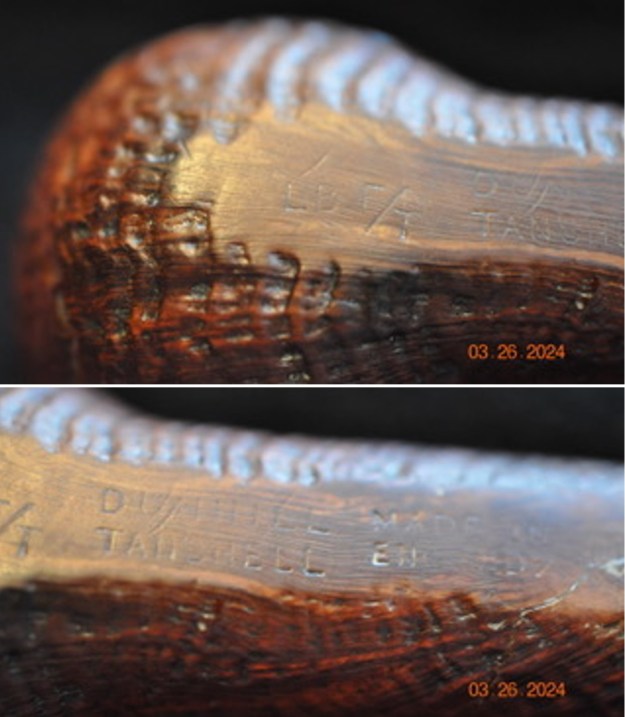
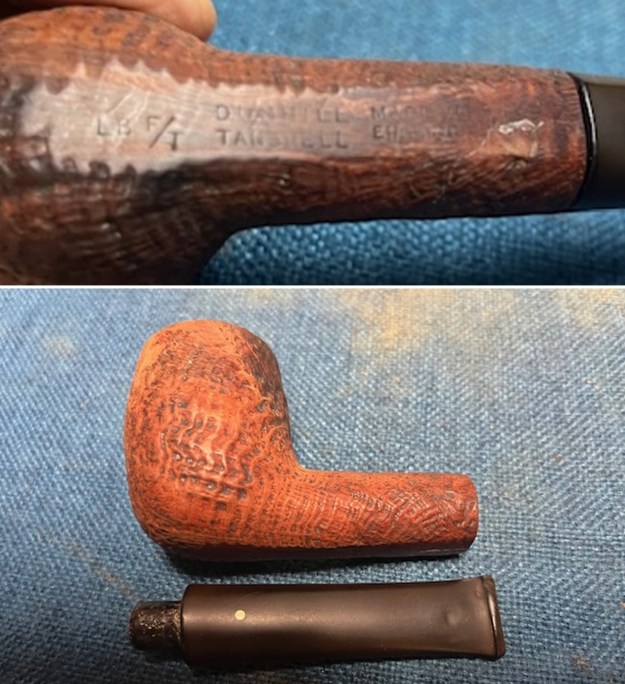
The next pipe on the table came to us from a seller on Facebook Instant Collection in Oregon City, Oregon, USA on 03/21/2024. It is a Dunhill Tanshell Briar Billiard that is in good condition. The original stem is on the pipe and it is made for a filter. It is stamped on a smooth panel on the underside of the shank. On the heel of the bowl it is stamped with the shape number LB F/T followed by Dunhill [over] Tanshell Briar [followed by] Made in [over] England 7. After that it is stamped with a 4 in a circle [followed by] T for Tanshell. The stamping is clear and readable. The pipe has a mix of tan and brown stains on a sandblast finish and some amazing grain that the shape follows well. The finish was dusty around the nooks and crannies of the sandblast but otherwise fairly clean. The shank had repaired cracks around the end that actually included about 1/3 of the shank and extended up the shank about ½ inch. The bowl had a thick cake in the bowl and there was lava in the sandblasted rim top or edges. The taper stem was dirty and had tooth marks and chatter ahead of the button. Jeff took photos of the pipe to show what it looked like before he started working on it.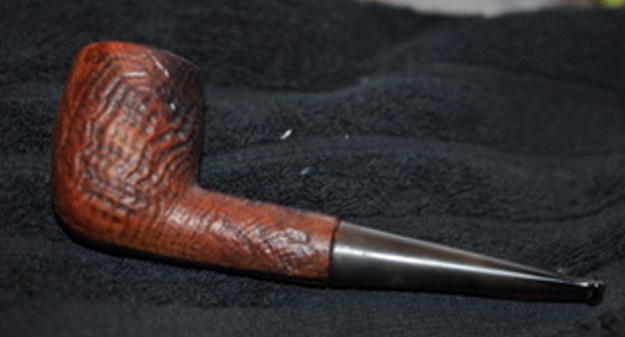
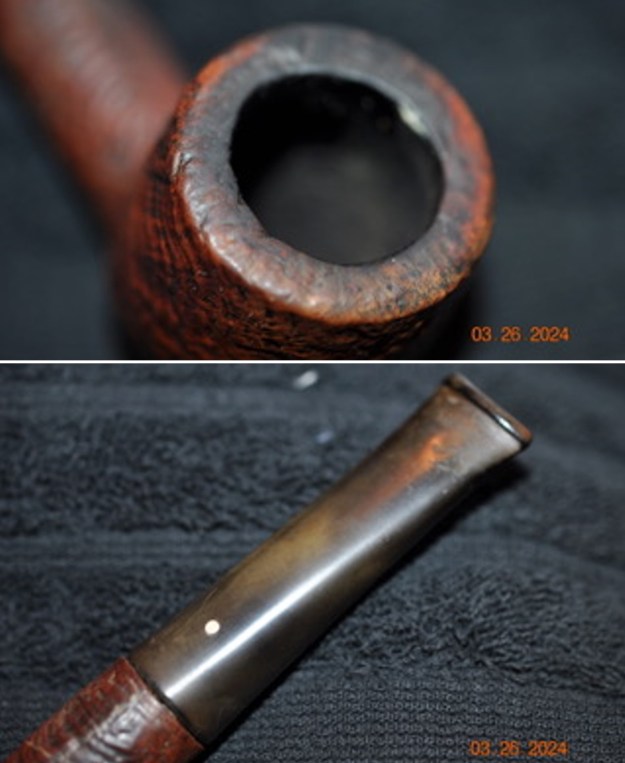
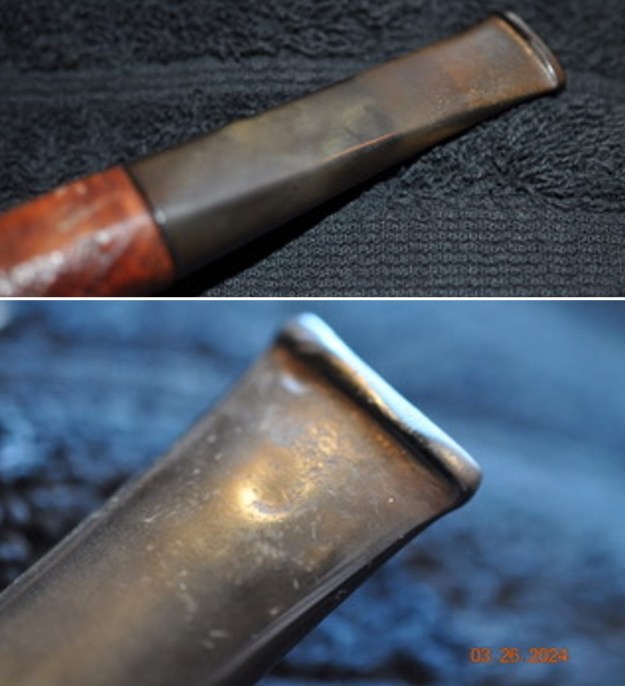
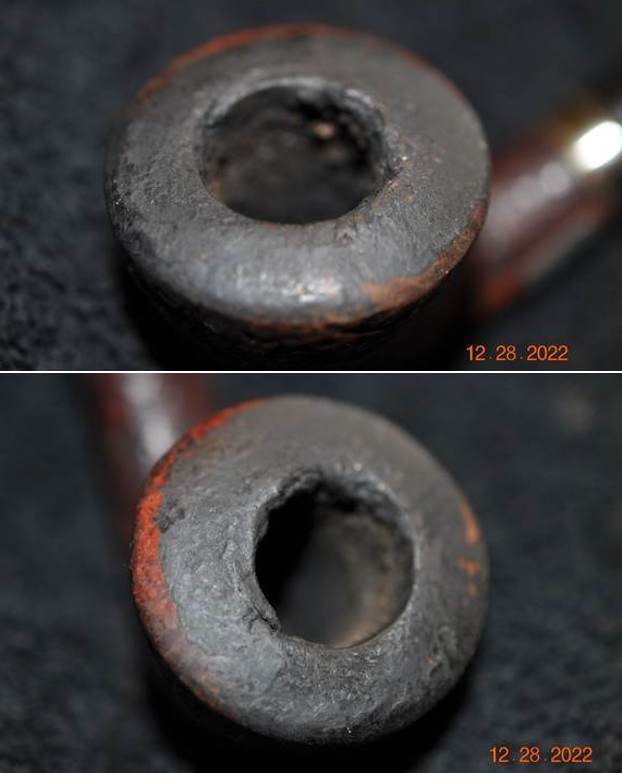
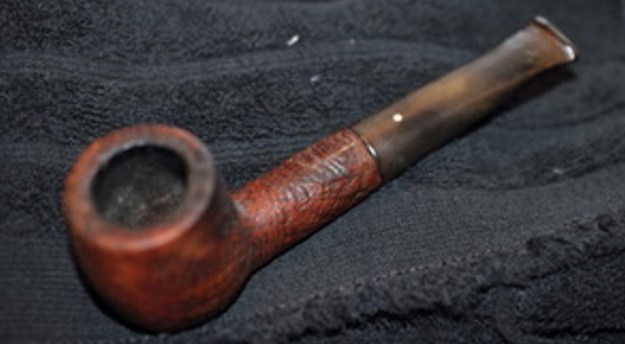 He took photos of the bowl and rim top to show how clean they were and of the stem to show the condition of both sides of the stem.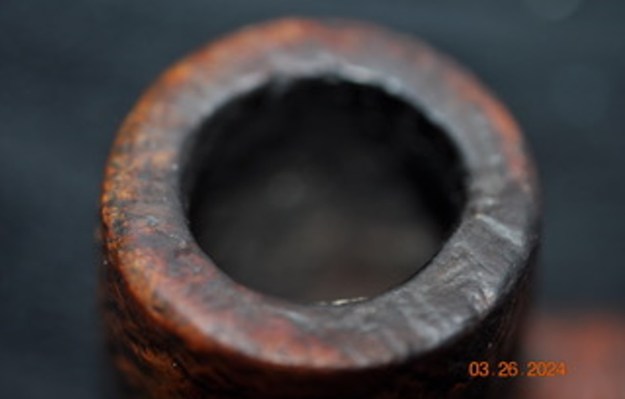
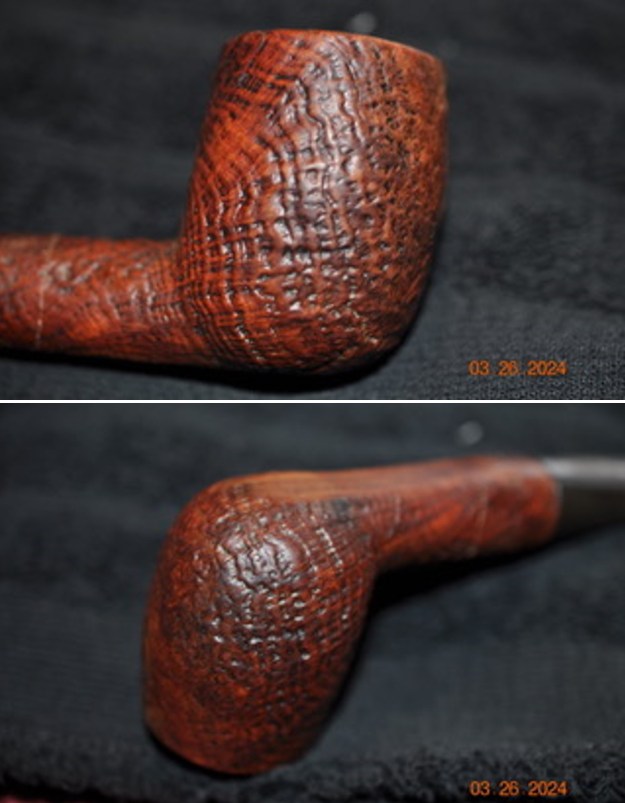
 The photos of the sides and heel of the bowl show the deep sandblast grain on the pipe. There were some dark spots on the back of the bowl, the rim top and spots on the sides. It is a beauty.
  The stamping on the heel of the bowl and shank read as noted above. It was faint but it is readable in good light.
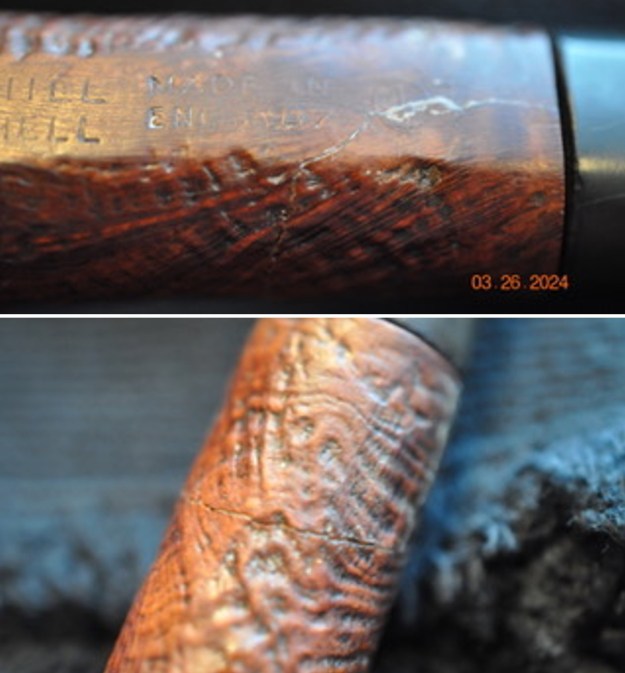
 He took some photos of the cracks in the shank. It is clear and visible. It had been well repaired and the repair was well done. To the naked eye the crack is hidden in the valleys and low areas in the sandblast.
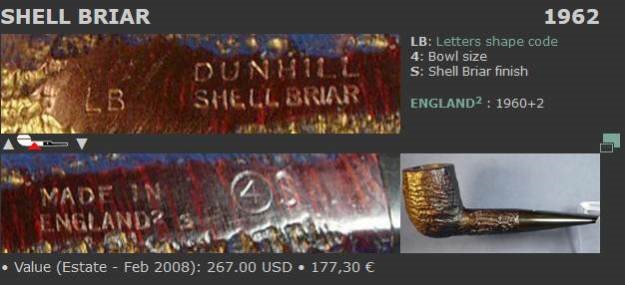
 One of the first things I like to do is to unpack the stamping and understand each element in it. I turned to Pipephill helpful site (http://pipephil.eu/logos/en/dunhill/shell-briar1.html). The stamping is interpreted as follows: The LB is the shape for a larger thick shank billiard and the F/T is the stem shape – a Fish Tail stem. The Dunhill Tanshell Briar is the finish which is corroborated the S at the end of the stamping. The size of the pipe is a Group 4. The 7 following the D of England gives the date the pipe.
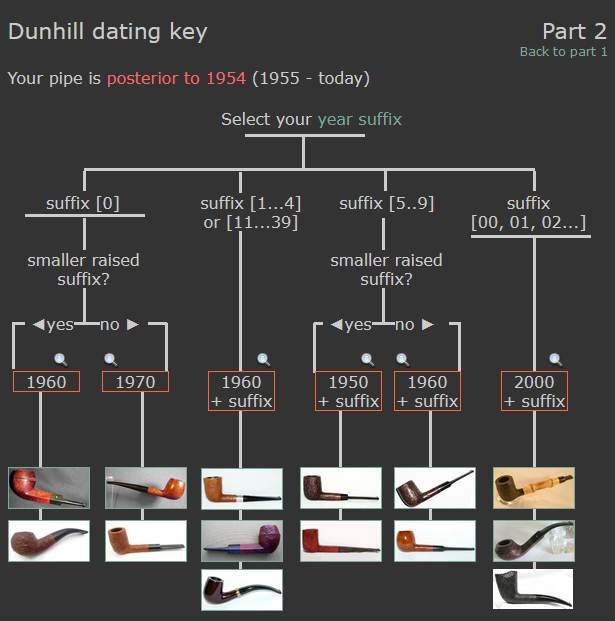
 Pipephil also has some helpful dating keys on the site that are basically flow charts that you can walk through to date your pipe (http://pipephil.eu/logos/en/dunhill/cledat-en1a.html). I turned to Part 2 of the Dating Key and followed the chart. This pipe has a suffix of 8 following the D in England. It is not raised /smaller so that took me to the section on the chart below (column three) which instructed me that the pipe could be dated by adding the suffix 7 to 1960 which made the pipe a 1967 Tanshell Briar.
 I turned to Pipedia’s section on Dunhill Root Briar to get a bit of background on the Dunhill finishes (https://pipedia.org/wiki/Dunhill#Root_Briar). I quote:
Tanshell
The Tanshell, introduced between 1951 and 1952, was Dunhill’s fourth major finish and its first significant post-war addition to the product line. It is a light tan sandblast, a finish achieved by using Sardinian briar exclusively through the 1960s. As Sardinian briar is considerably harder and denser than the Algerian variety, the resulting sandblast pattern is far more even and regular in its texture.
The development of the Tanshell was not straightforward. According to John C. Loring, the finish was the product of “certain processes… not previously employed”. The pipe was initially slated to be named the ‘Root Shell’, and a stamp to that effect was ordered in May 1951. Ultimately, however, the name ‘Tanshell’ was chosen, though the stamp for the new name was not received until December. This delay explains why most, if not all, Tanshell pipes manufactured in 1951 did not enter retail distribution until 1952 and were consequently stamped with a 1952 date code.
I have also included a chart from the site from Dunhill spelling out the Standard Pipe Finishes and giving short information and a timeline. 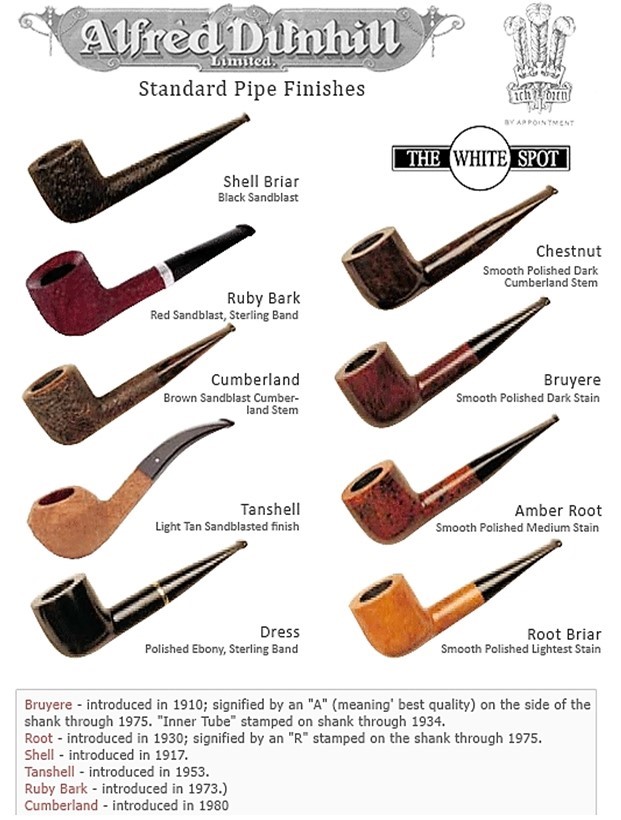 I turned to work on the pipe itself. Jeff had carried out his usual thorough cleanup of the pipe. He reamed the bowl with a PipNet reamer and cleaned up the reaming with a Savinelli Fitsall Pipe Knife. He scrubbed the internals of the bowl, shank and stem with alcohol, cotton swabs, shank brushes and pipe cleaners. He scrubbed the externals with undiluted Murphy’s Oil Soap and a tooth brush. He rinsed the bowl off with running water and dried it off with a soft cloth. He soaked the stem in Briarville’s Pipe Stem Deoxidizer and once it had soaked rinsed it off with warm water to remove the residual solution. He dried it off and rubbed it down to remove any oxidation that was still on the stem. The pipe looked very good when I received it. There were dark spots on the back of the bowl, the back of each side and the back of the rim top.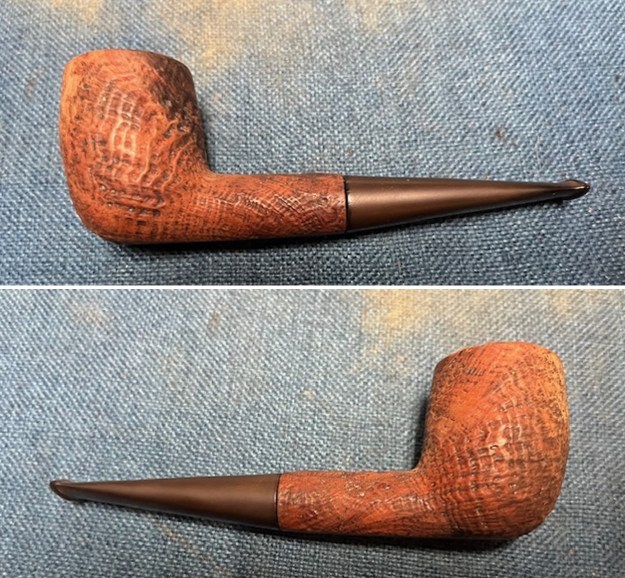
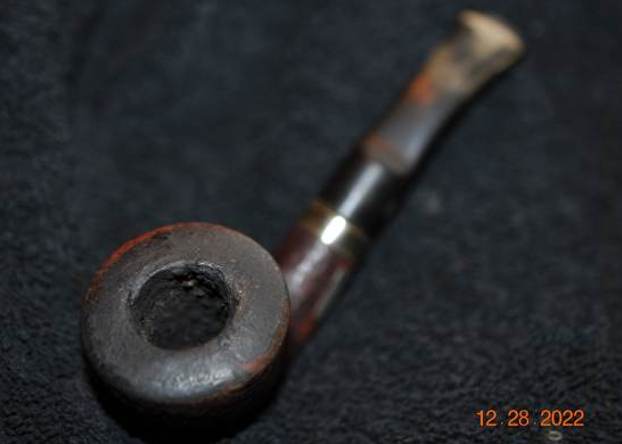
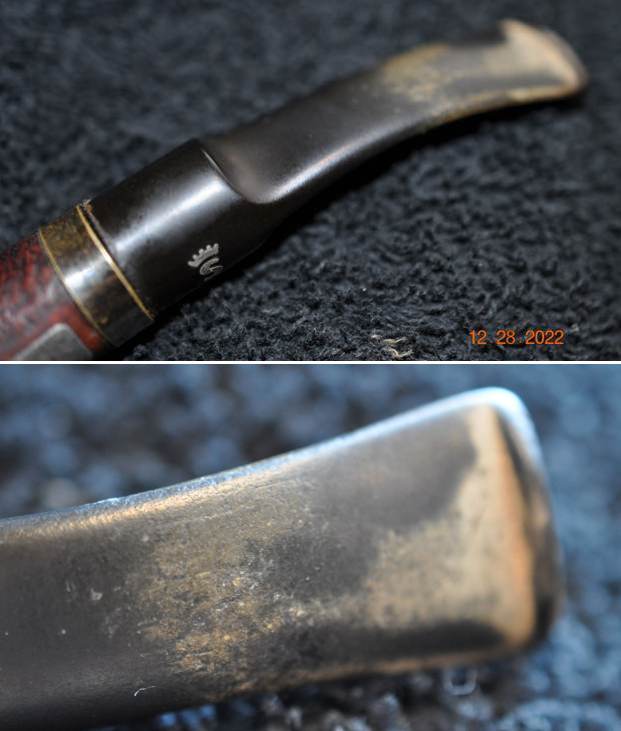
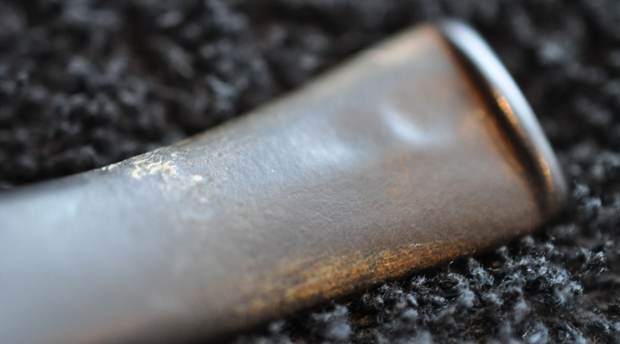
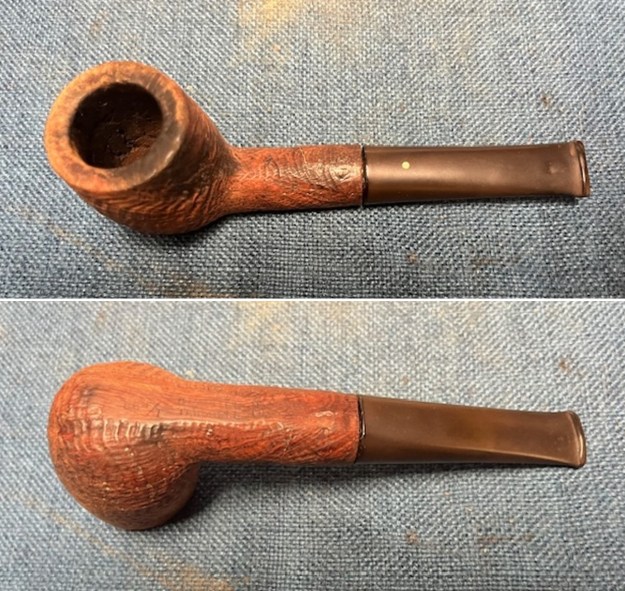 I took a photo of the rim top to show the condition. You can see the clean bowl and darkening on the rim top. The stem came out looking quite good. There are some deep tooth marks and chatter on both sides ahead of the button.
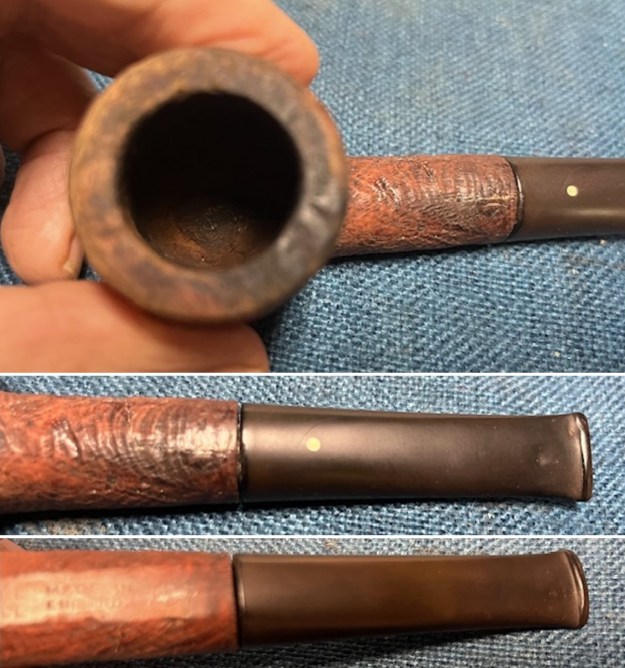 I took a photo of the underside of the shank to show the stamping. It is clear and readable as noted above. I removed the stem from the shank and took a photo of the pipe parts to show what I was working with. It is a nice looking pipe.
 I started my work on the pipe by dealing with the cracks in the shank. I took photos of the shank cracks. I trickled some clear CA glue into the cracks on the top and underside of the shank. I worked it into the cracks with a tooth pick.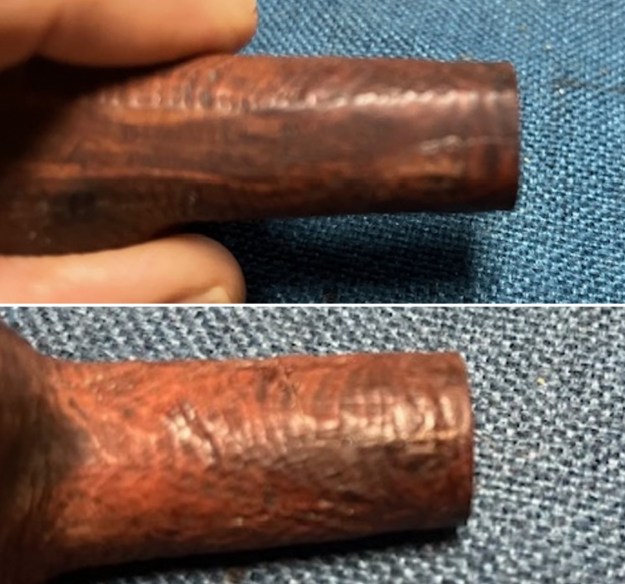
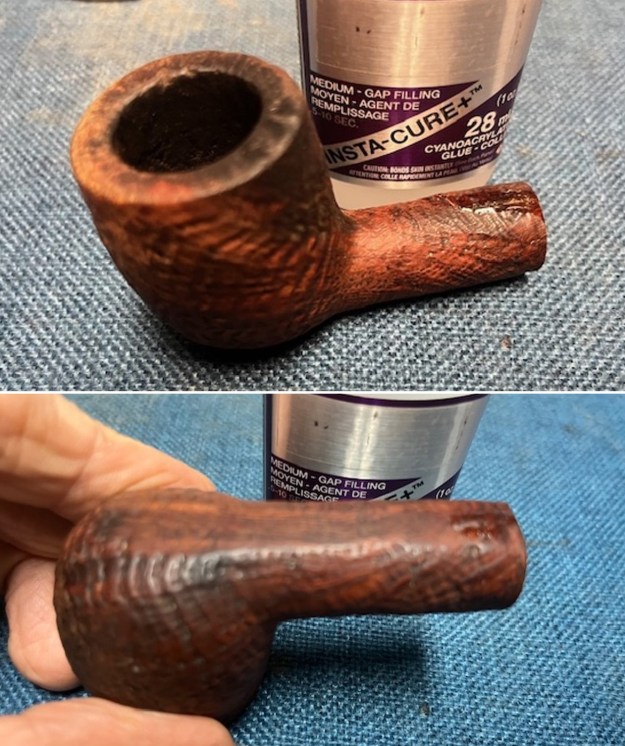 I went through my bag of brass bands and found one that fit the shank. It was a snug fit and once glued in place it would pull the cracks tight. I flattened the bottom of the band and put a few spots of glue on the band inside. I pressed it onto the shank for a tight fit. I took some photos of the banded shank. I really liked the look of it and the band worked well to tie the repairs together.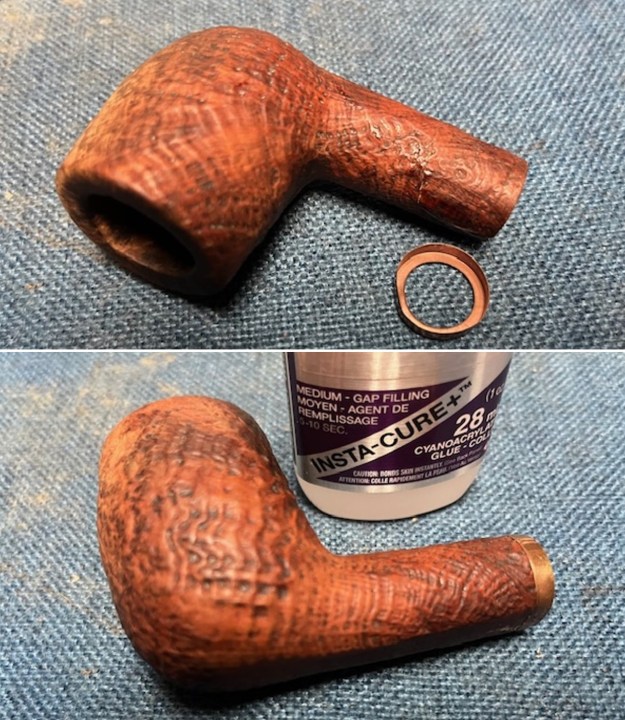
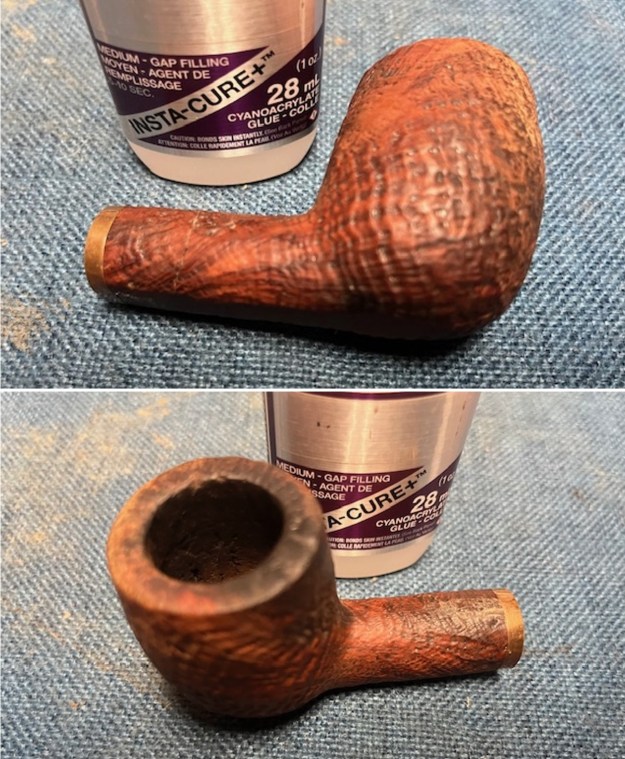
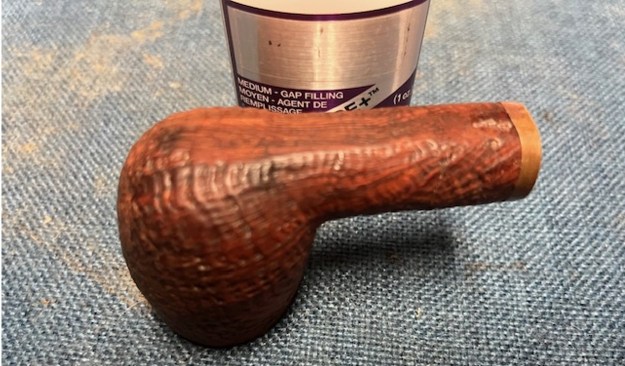 I wiped the dark areas on the back of the bowl, rim top and shank with acetone on a cotton pad. I was able to remove the darkening and the bowl was washed out in those spots but it was very clean.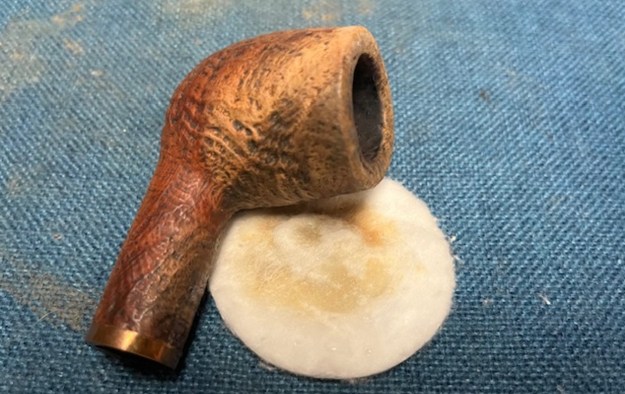
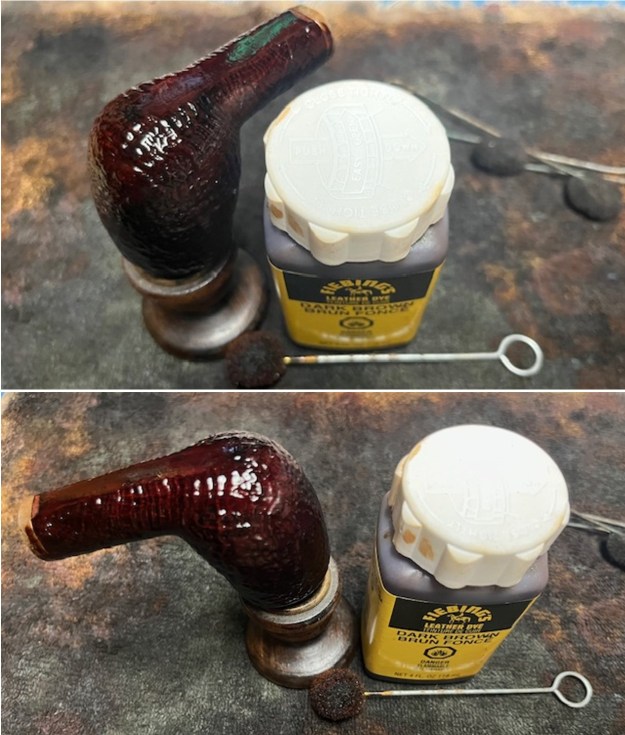
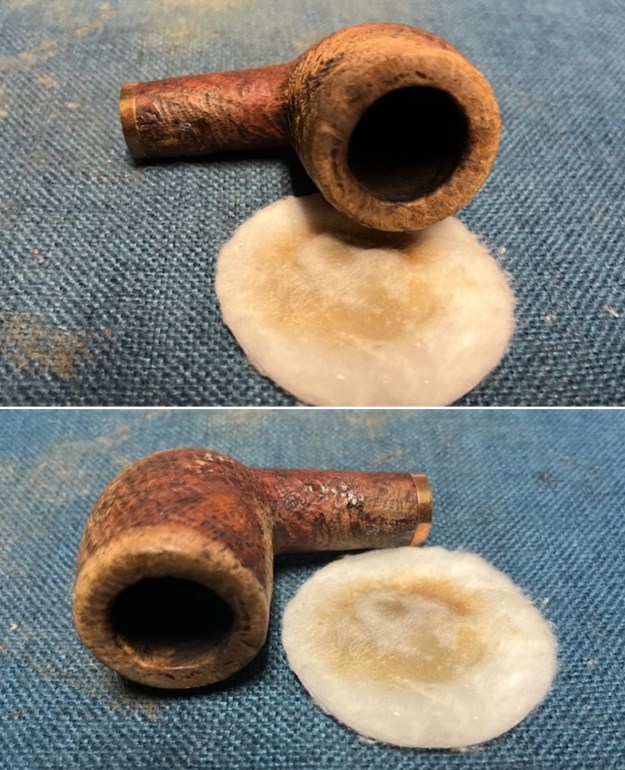 I restained the bowl with a brown aniline stain. I applied it with the wool dauber and then flamed it to set it in the grain. I repeated the process multiple times until the colour was consistent all around the bowl sides.
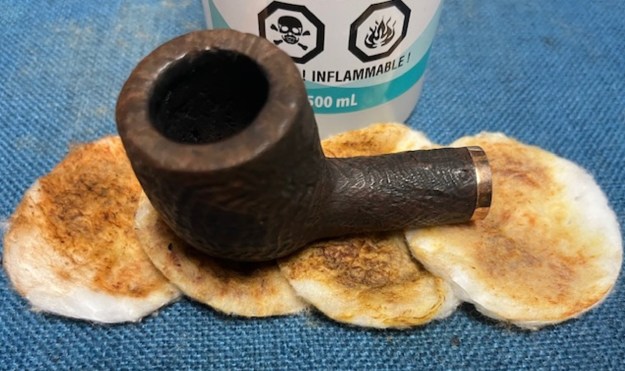
 Once I had flamed the stain on the bowl I wiped it down with isopropyl alcohol on cotton pads to make the stain a bit more transparent. I wanted to hide the burn and darkening marks and this stain would blend them into the surface a bit more.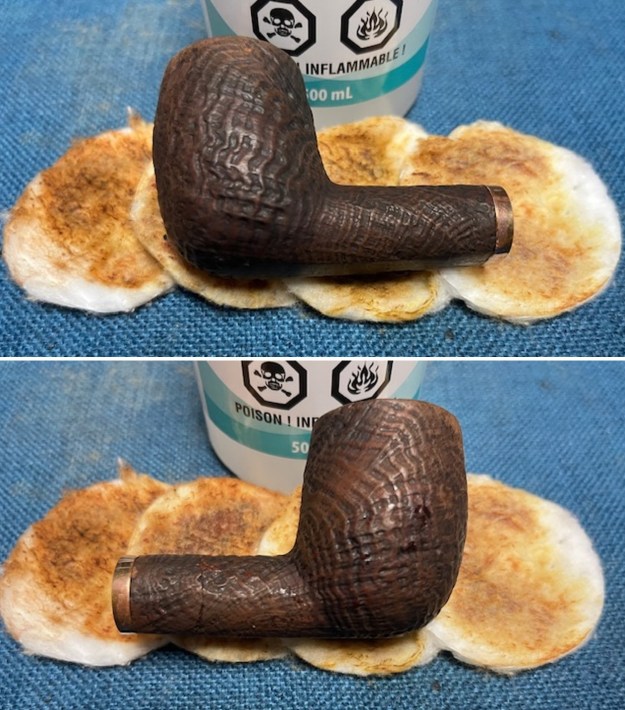
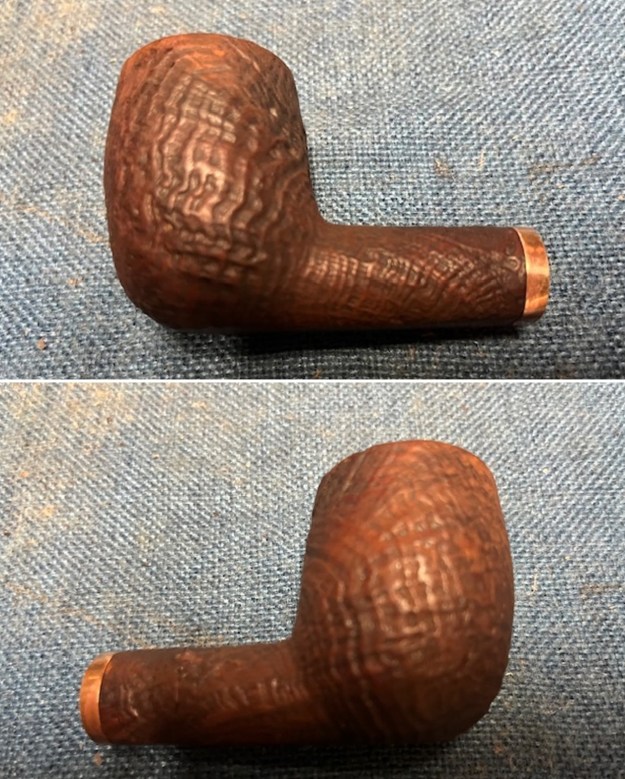
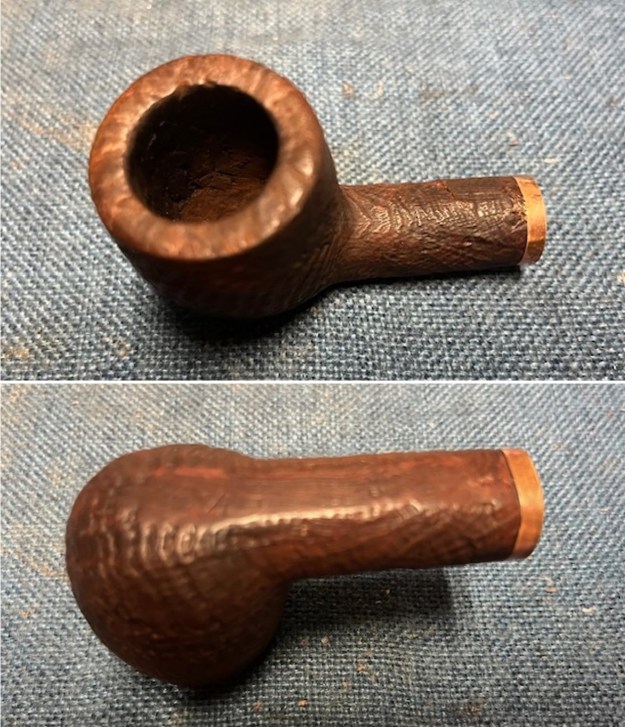 I rubbed the briar down with Before & After Restoration Balm. I worked it into the briar with my fingertips and a horsehair shoe brush to work it into the nooks and crannies of the sandblast finish. The product works to clean, enliven and preserve the briar. I let it sit for 10 minutes then I buffed it with a cotton cloth to deepen the shine. The briar really comes alive with the balm.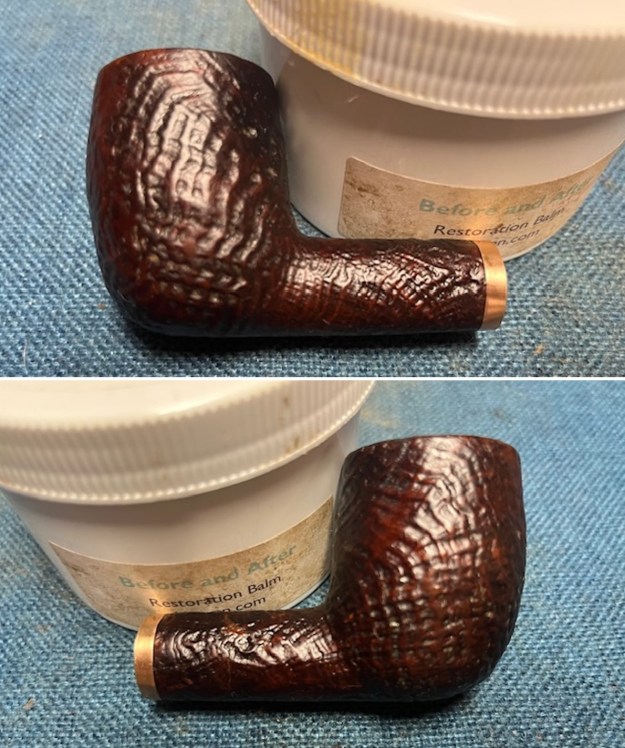
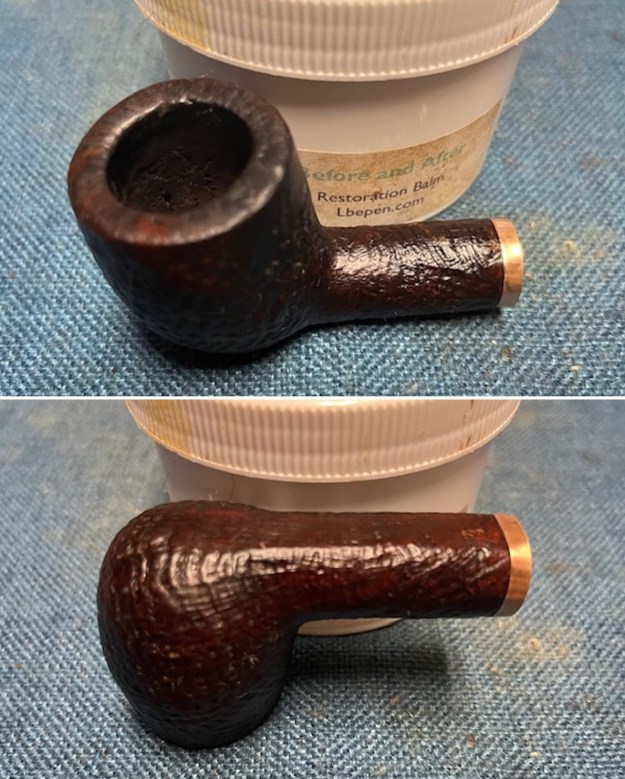
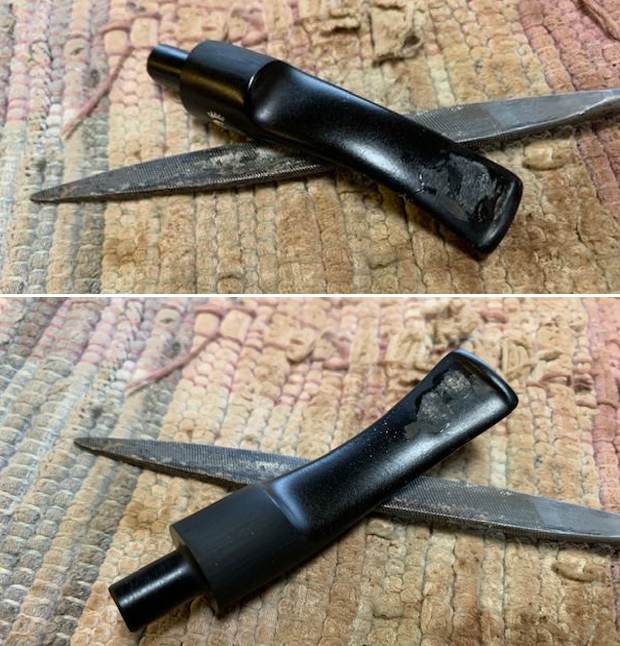
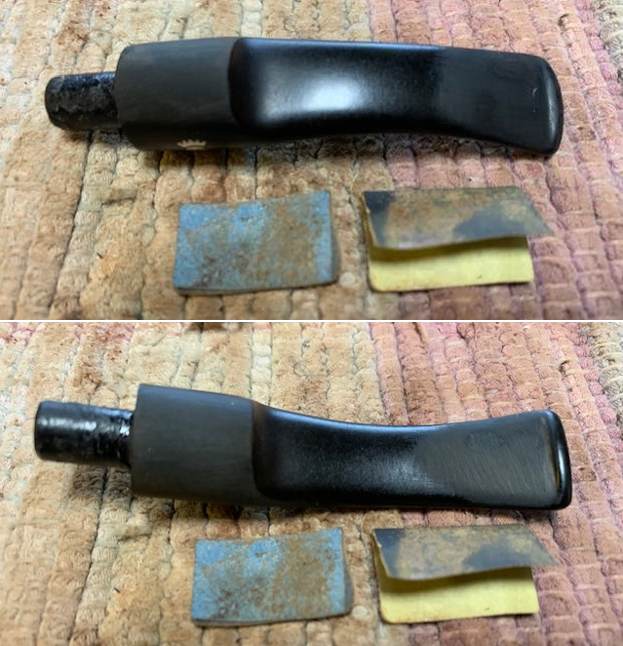
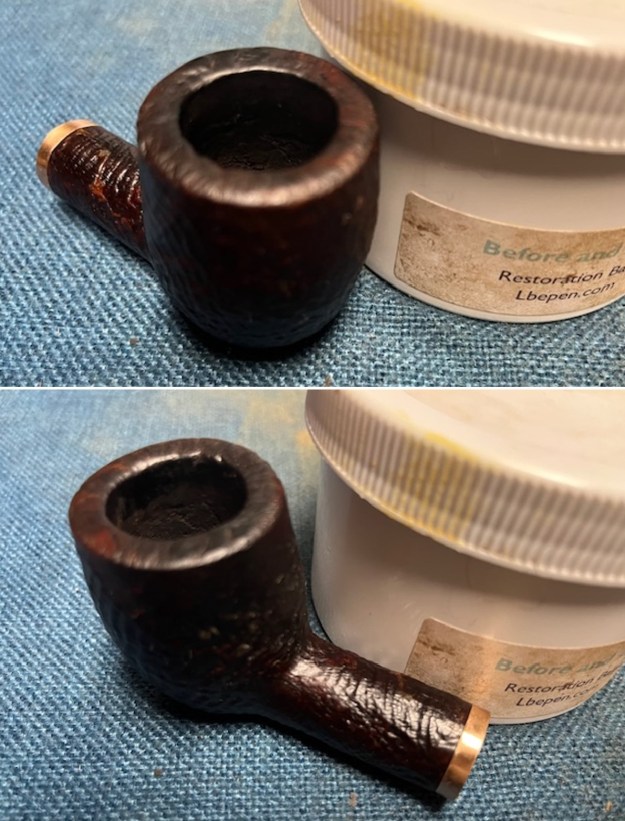 I filled in the tooth marks on the top and underside of the stem with a black, rubberized CA glue. Once it cured I used small files to flatten the repaired areas. I sanded them with 220 grit sandpaper to smooth them and blend them into the surface of the vulcanite.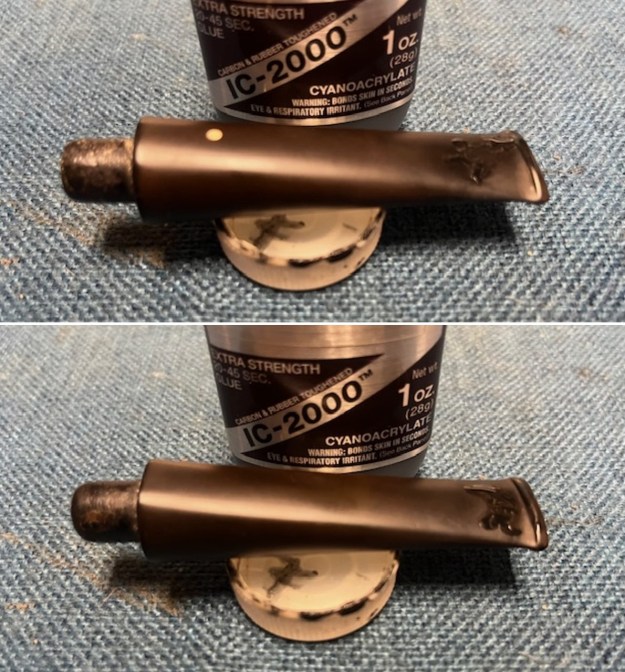
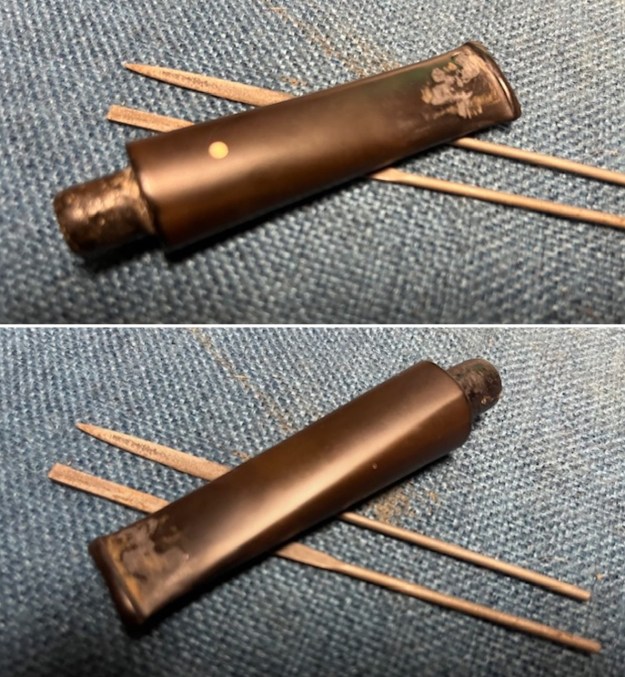
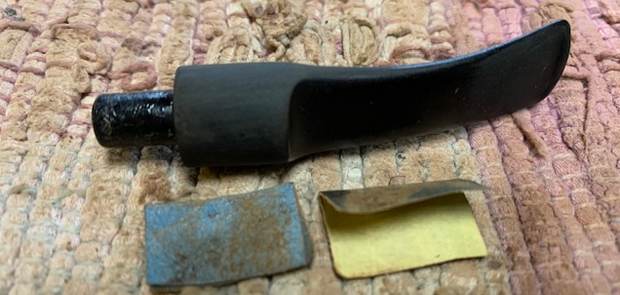
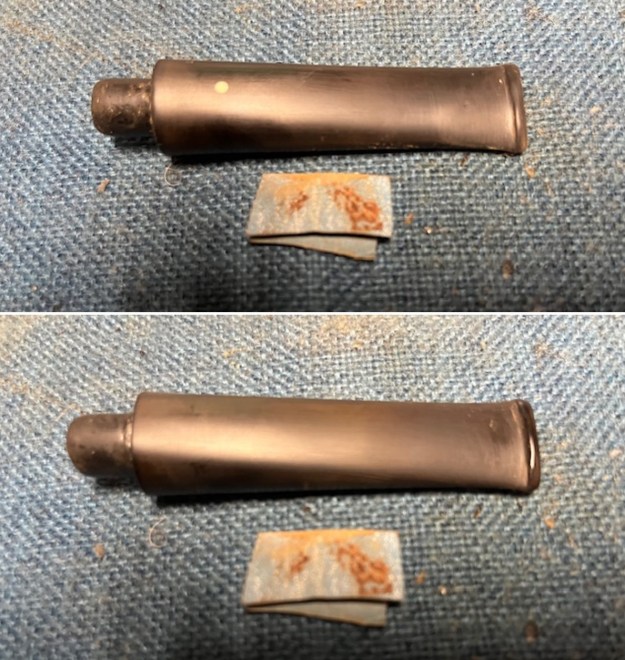 I sanded the stem surface with 320-3500 grit 2×2 inch pads. I wiped the stem down with an Obsidian Oil cloth after each sanding pad.
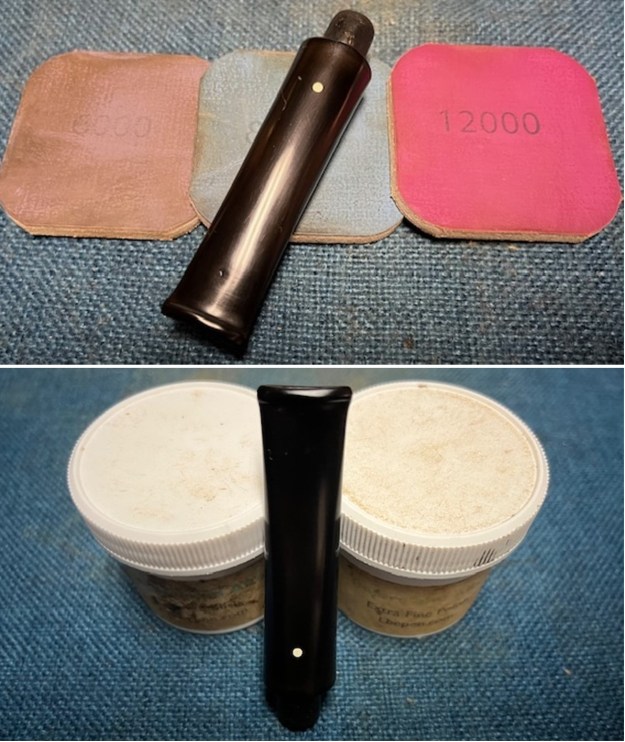
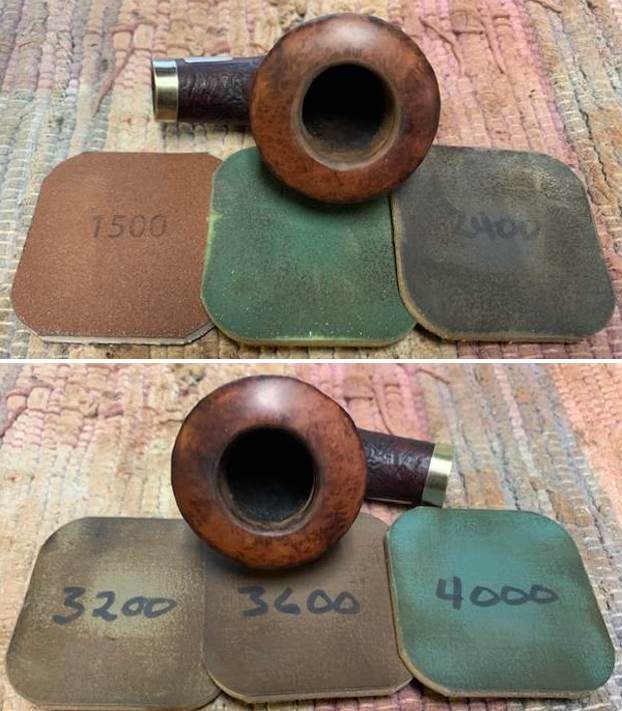
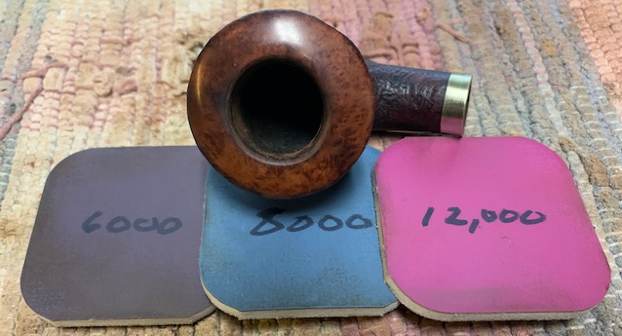
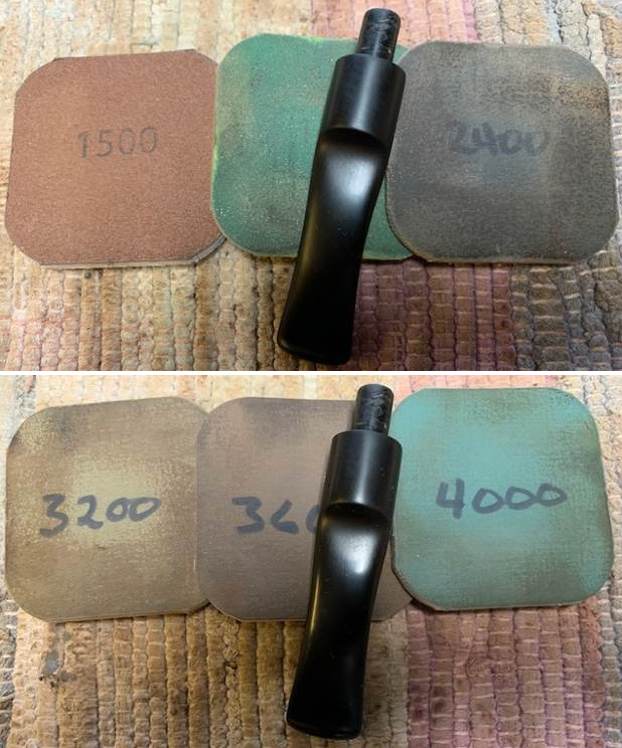
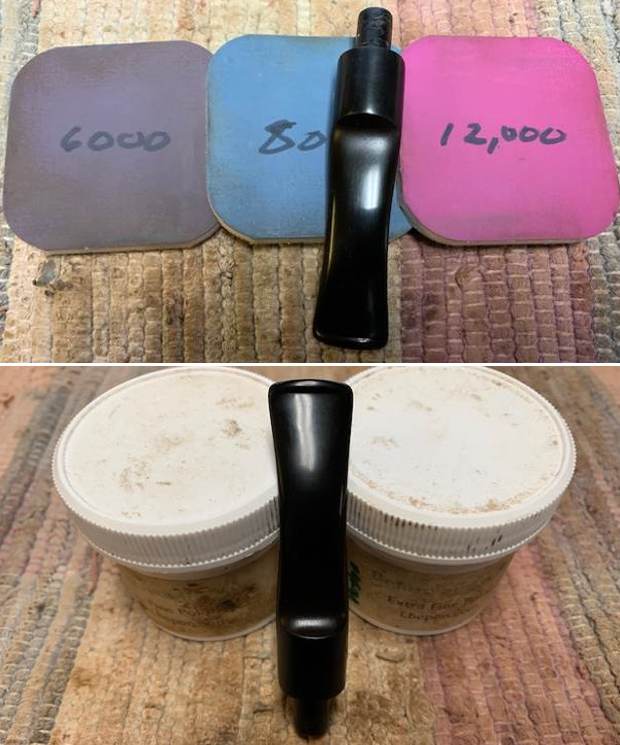
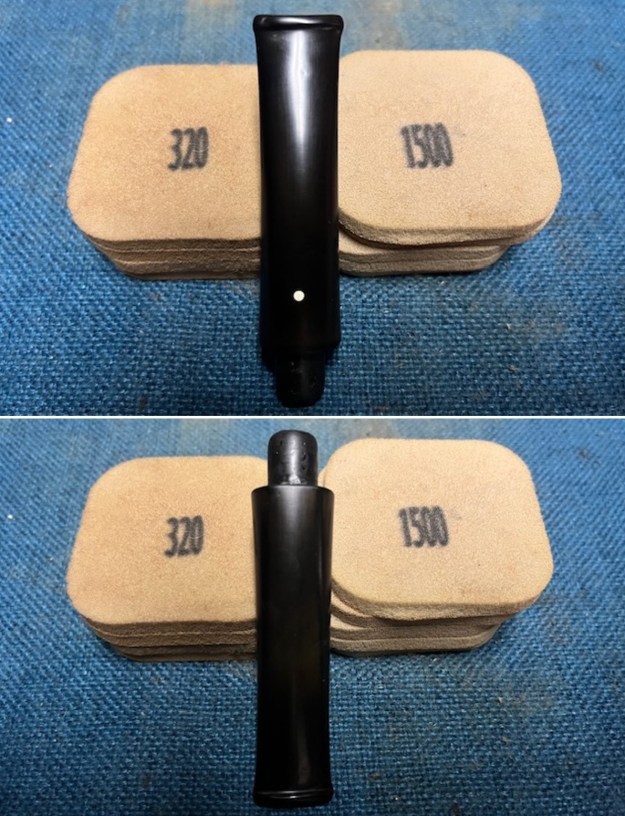 I polished the vulcanite with micromesh sanding pads – 1500-12000 grit pads. I wiped it down with Obsidian Oil after each sanding pad. I used Before & After Pipe Polish – both Fine and Extra Fine to further polish the stem.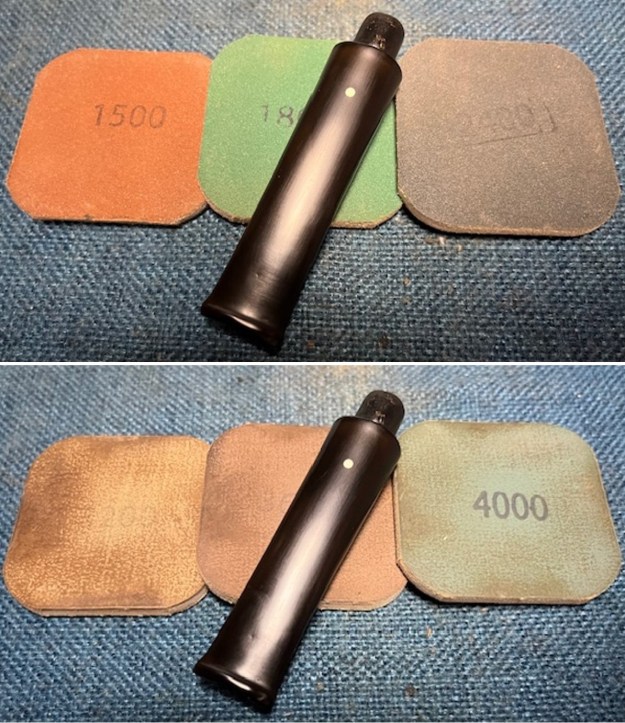
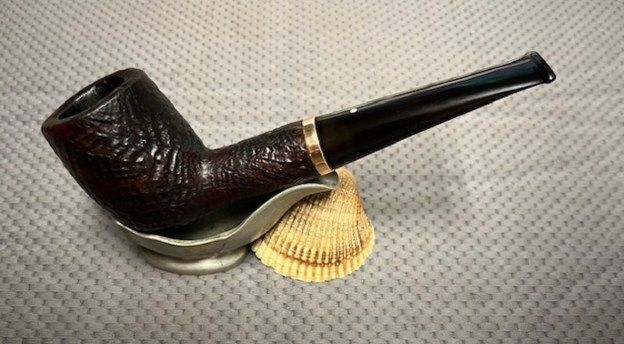
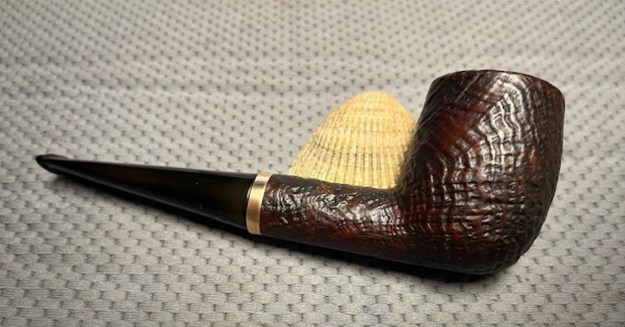
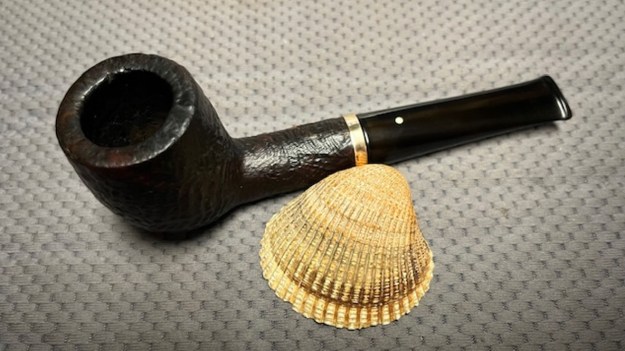
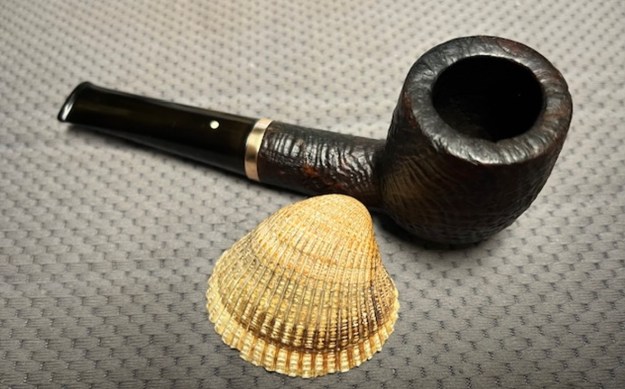
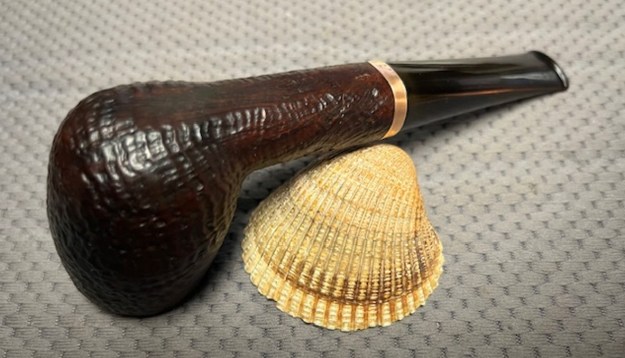
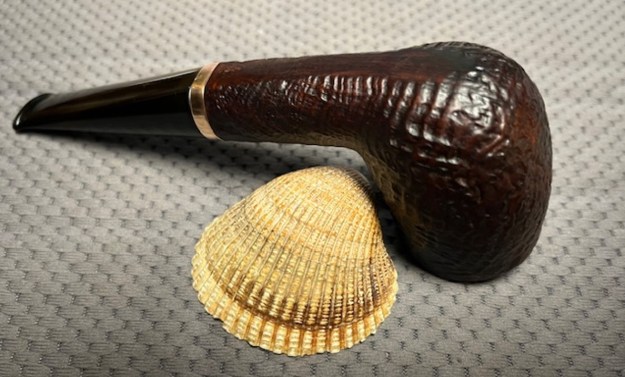
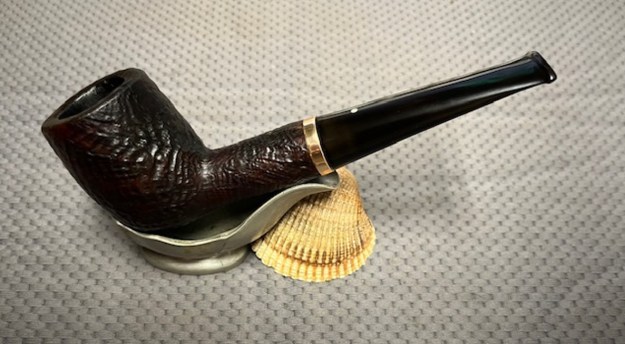
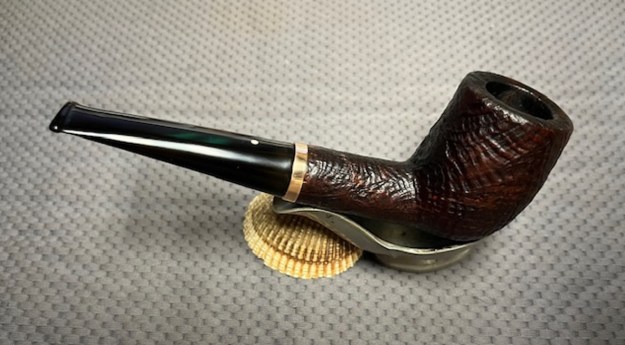
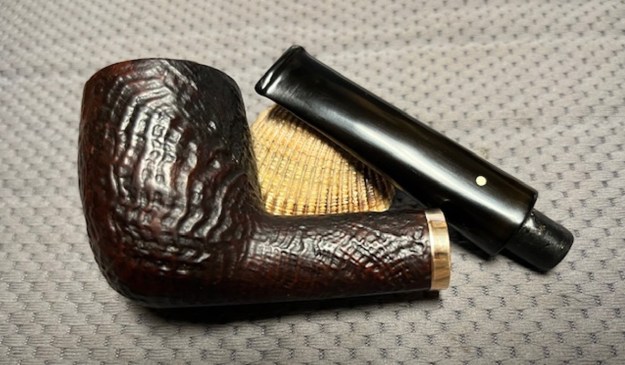
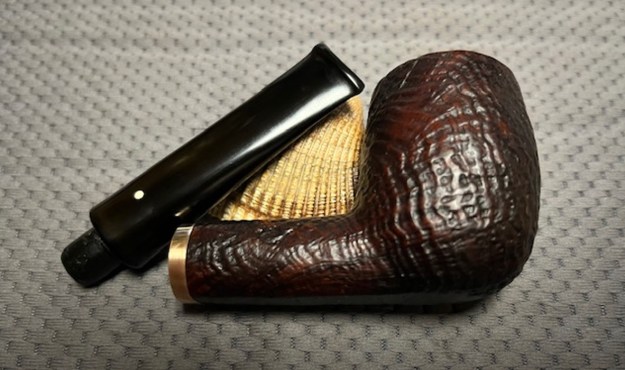
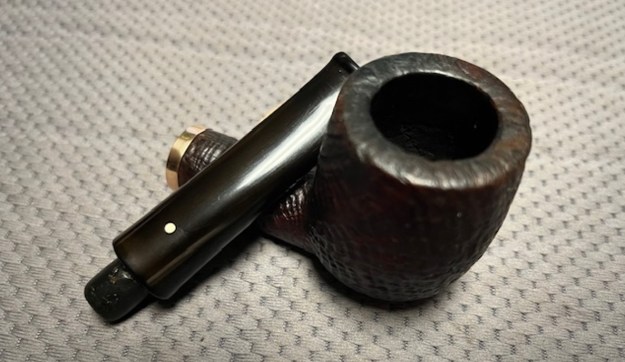
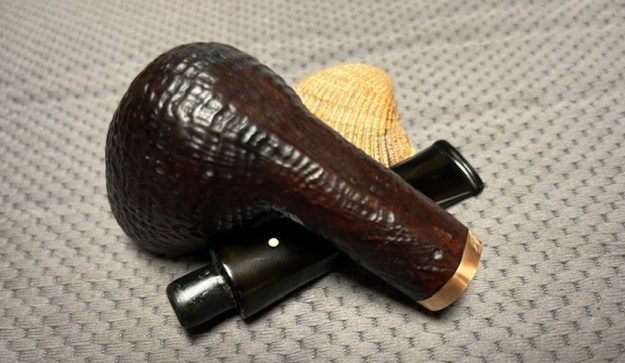
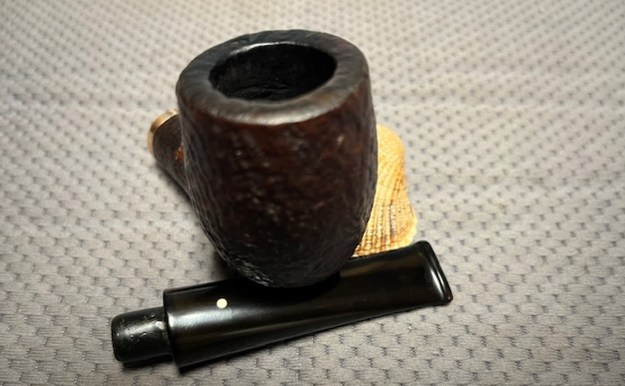
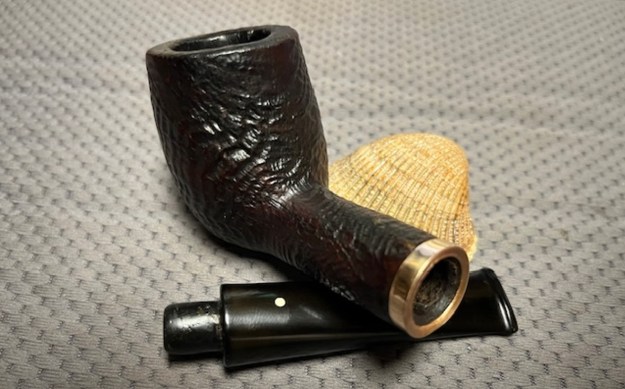
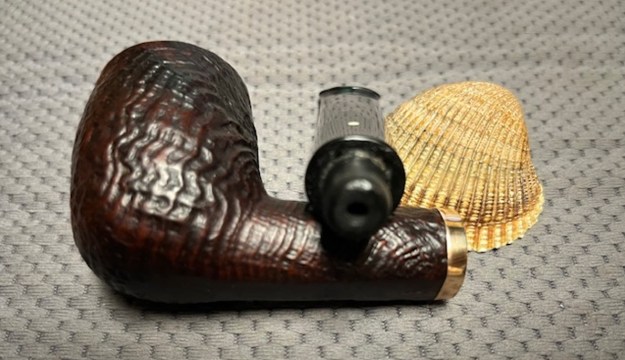
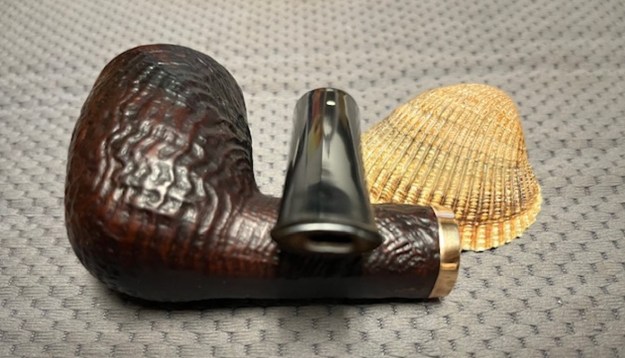
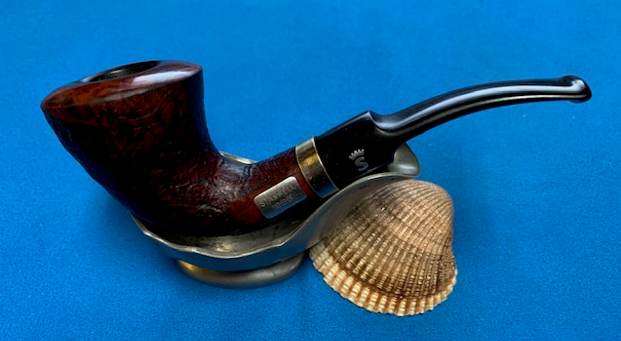
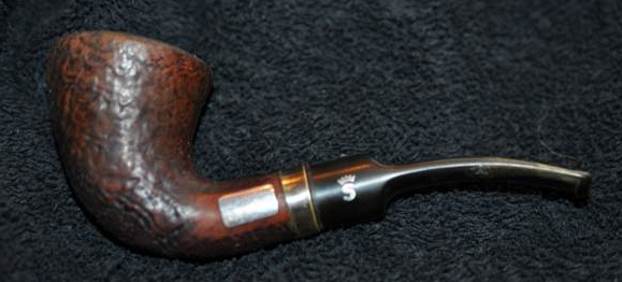
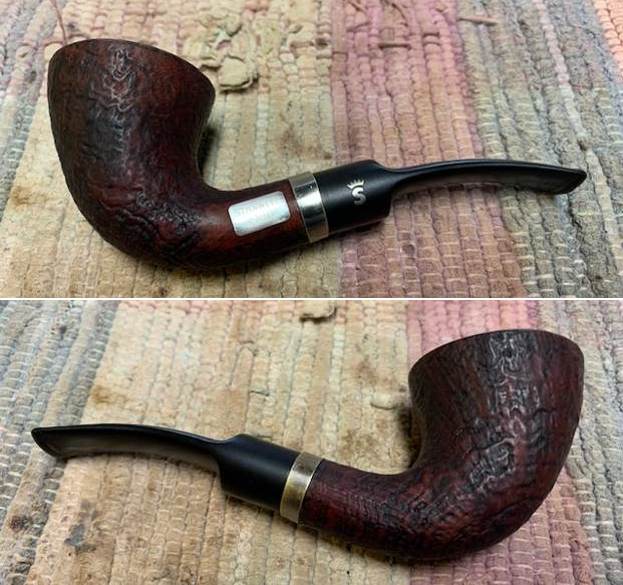
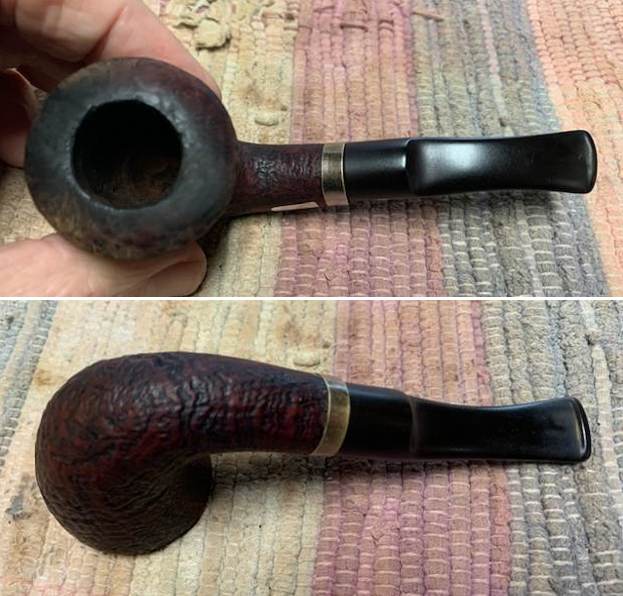
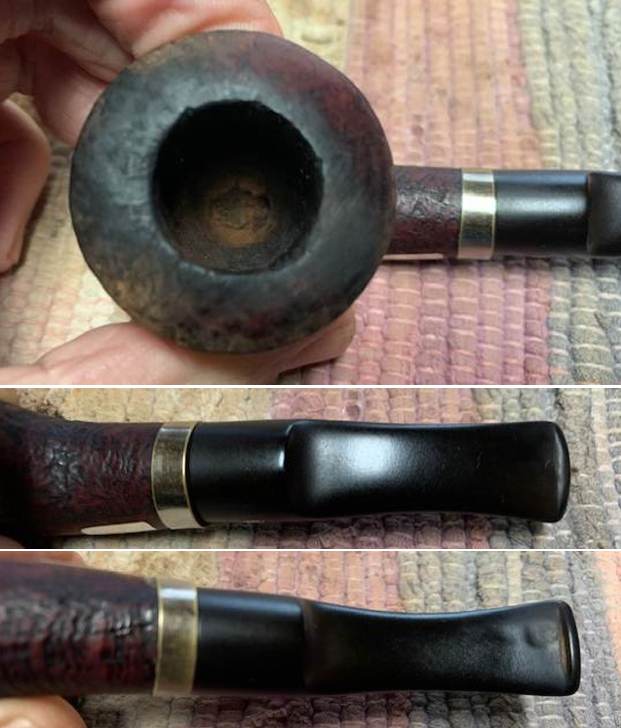
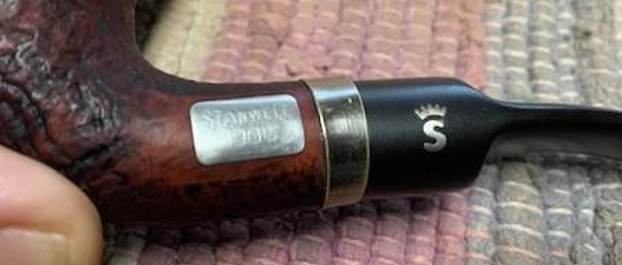
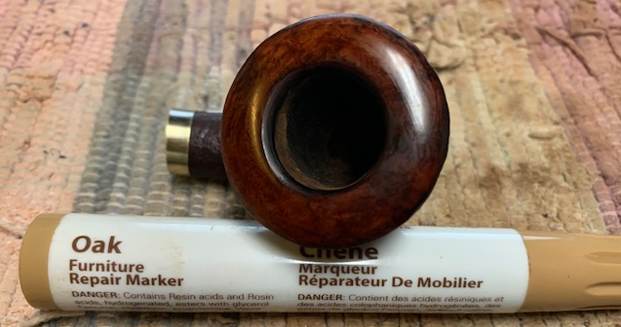
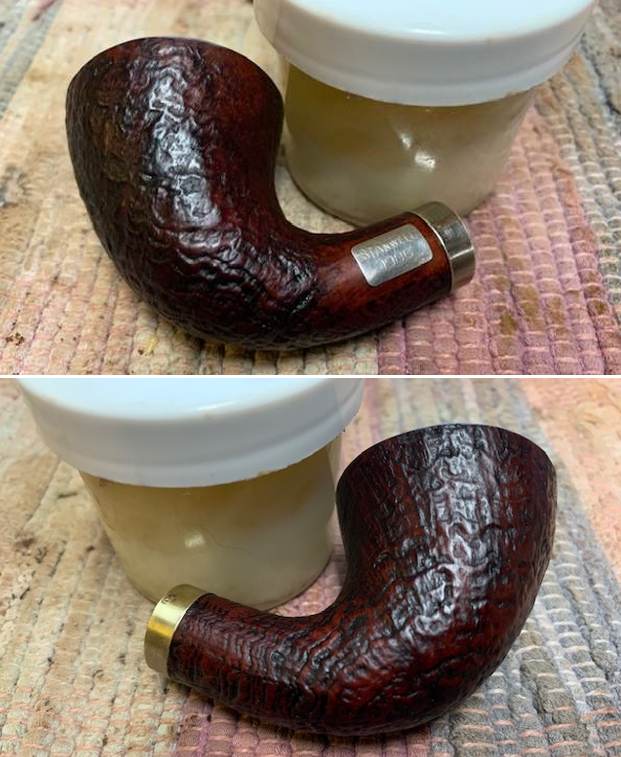
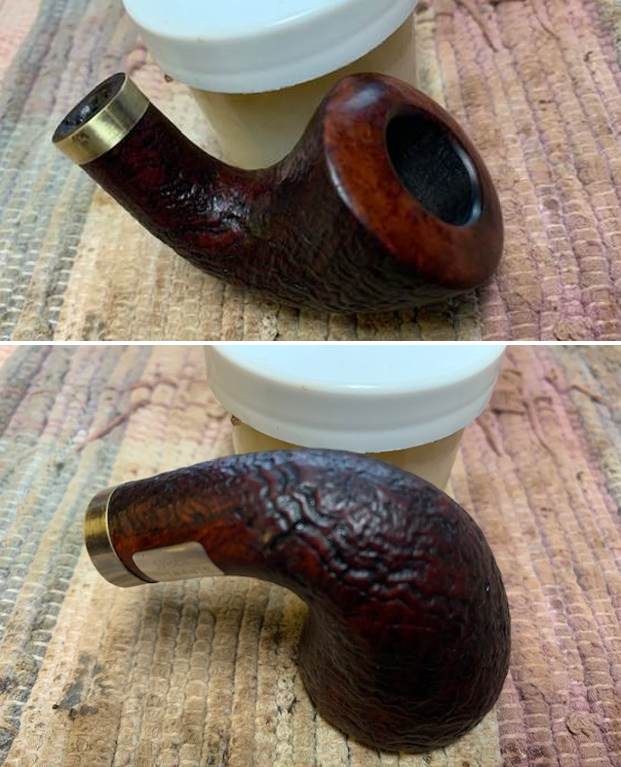
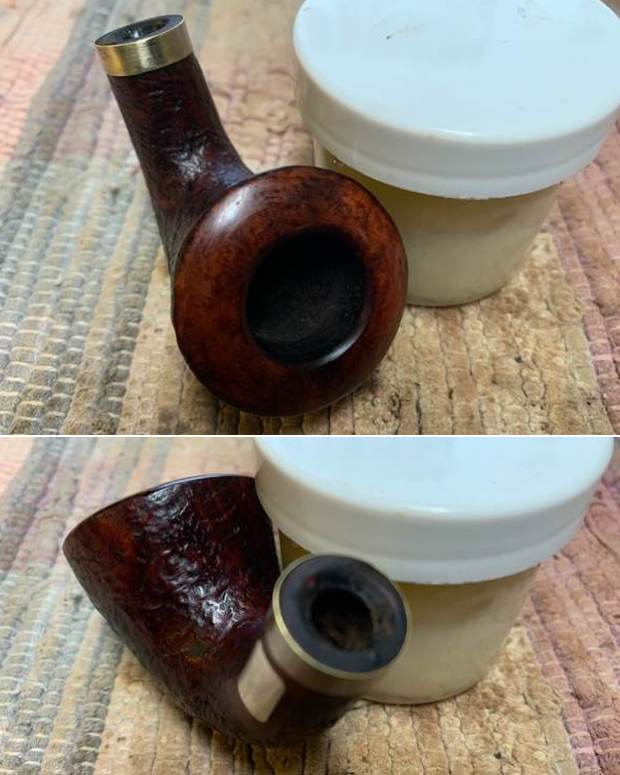
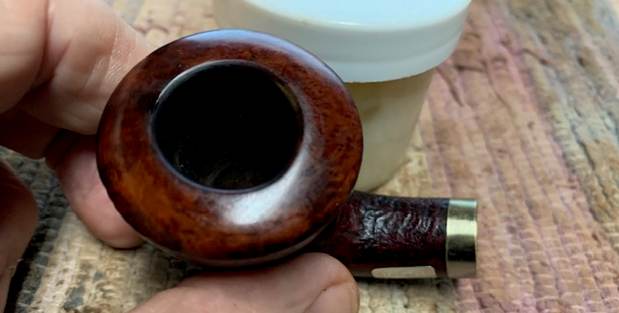
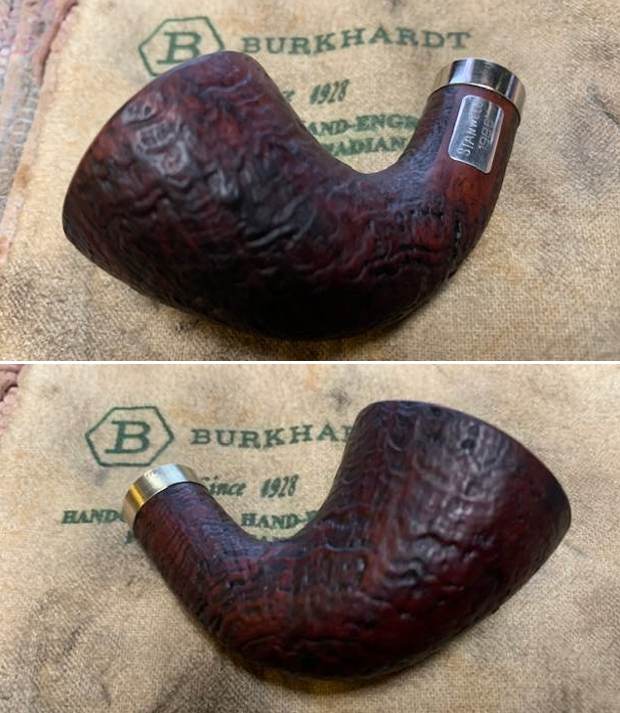
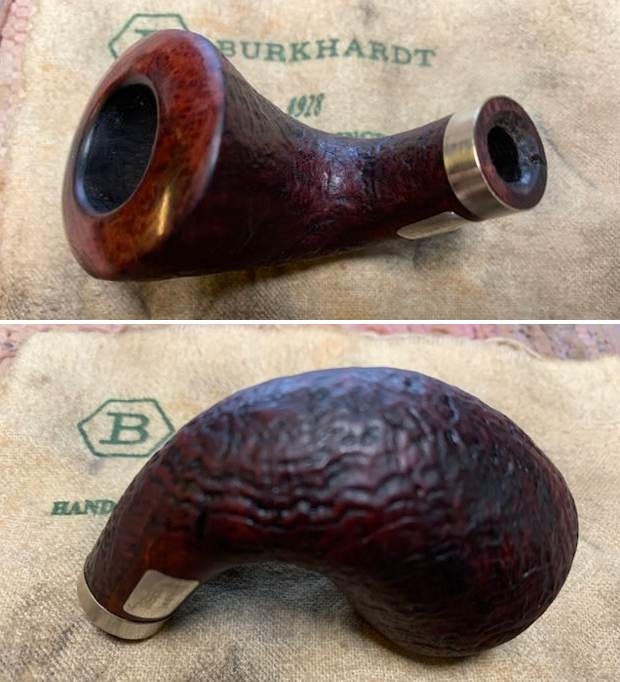
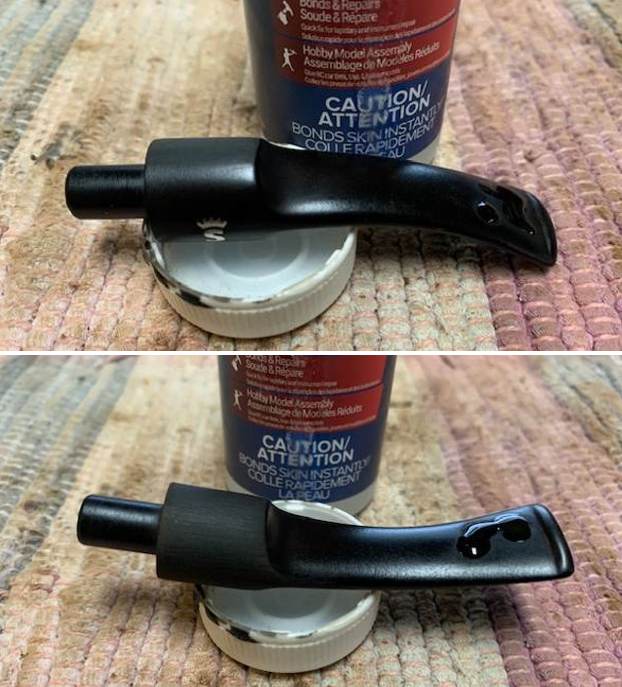
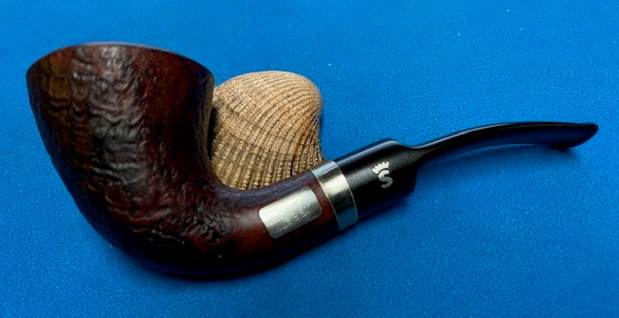
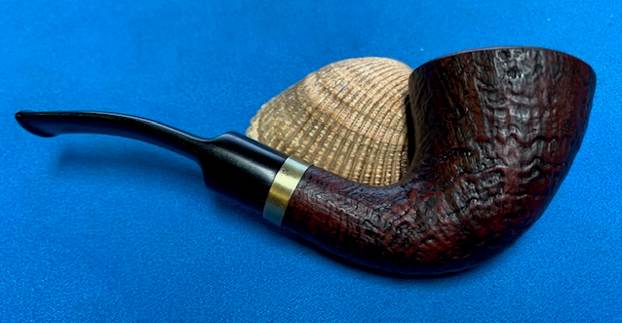
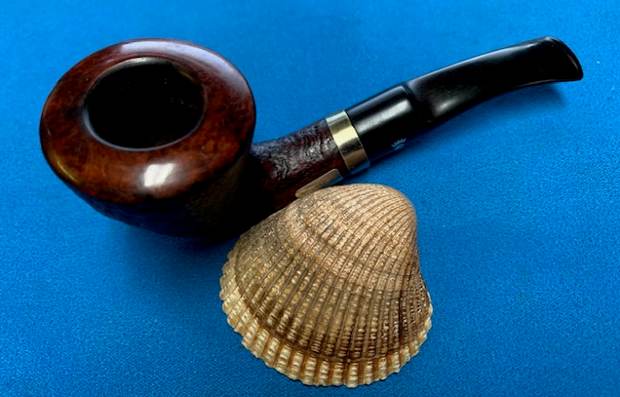
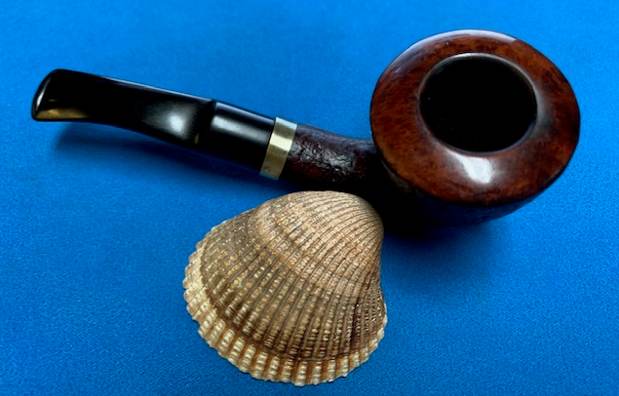
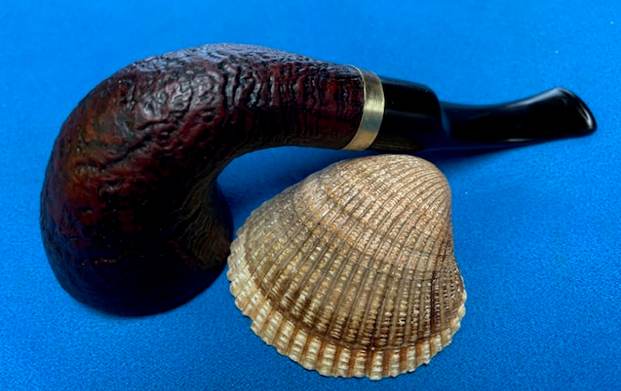
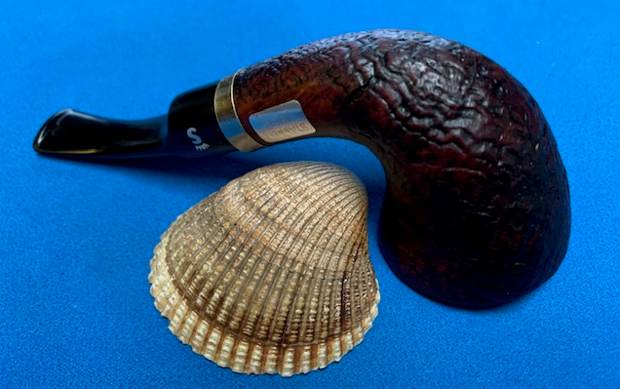
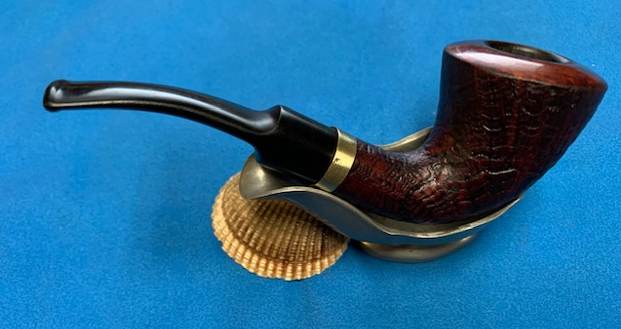
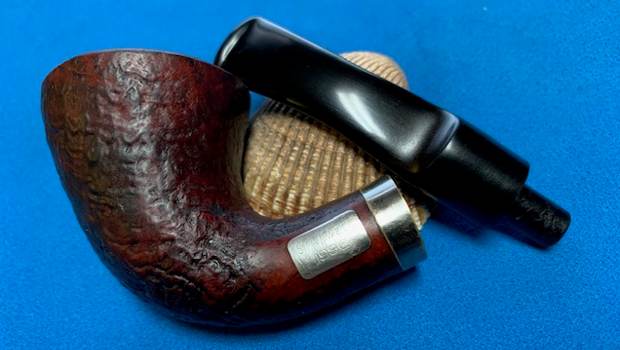
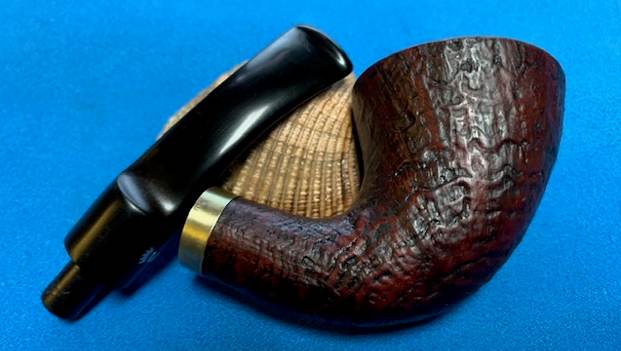
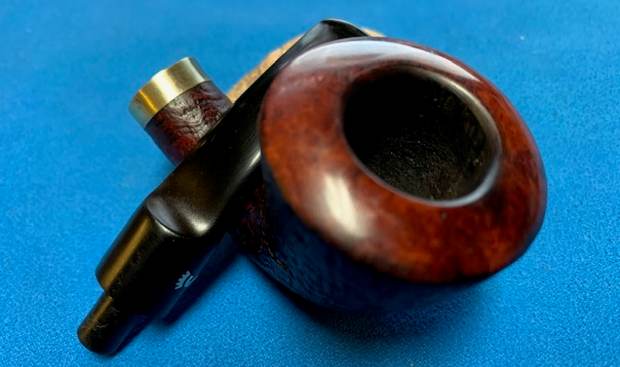
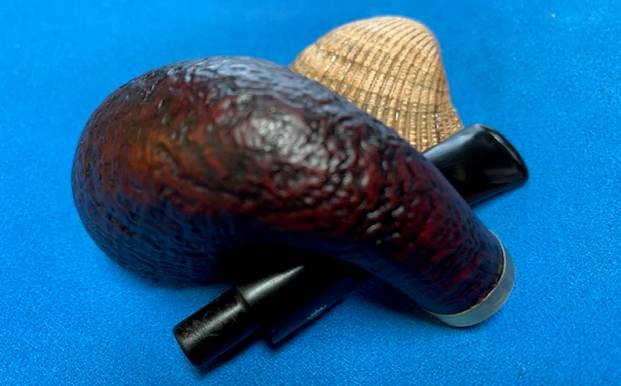
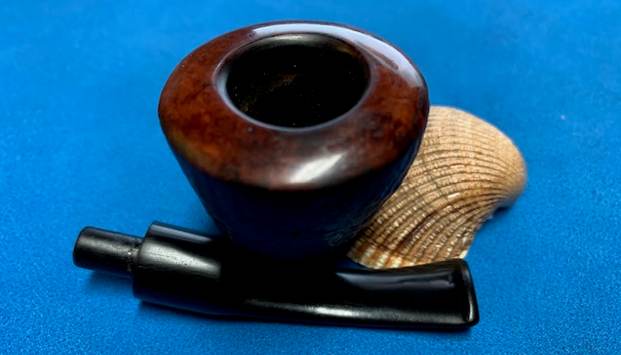
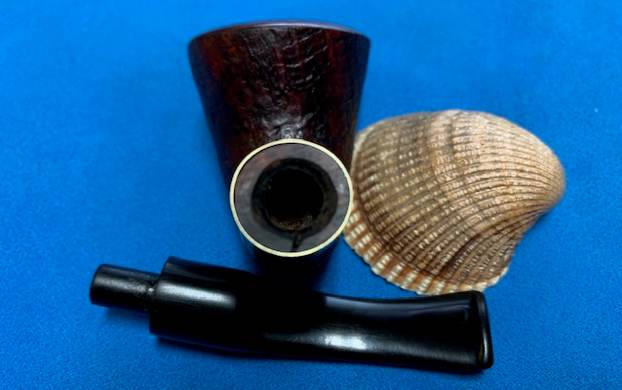
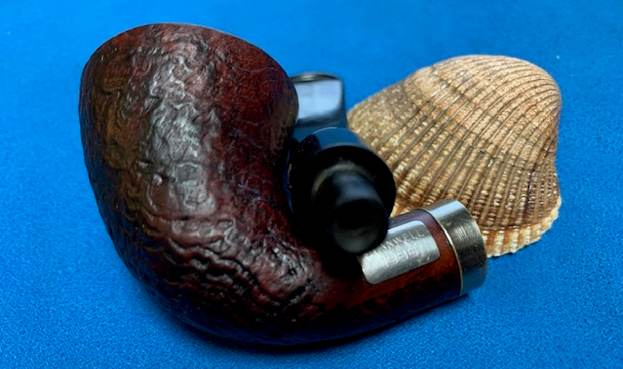
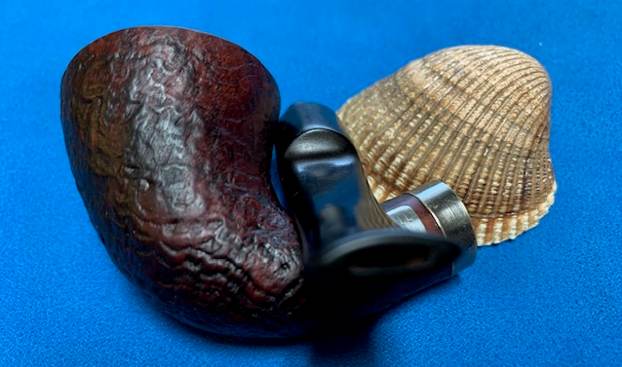
 This Dunhill Tanshell Briar LB F/T Chunky Billiard with taper stem has a beautiful, unique Dunhill Sandblast finish made in 1967. The thin brass repair band adds to this great looking pipe that is in almost new condition. The rich brown washed finish that is identified with some great grain around the bowl and shank. It has some great rugged sandblast that Dunhill specialized in making. The polished black vulcanite taper stem adds to the mix. I put the stem back on the bowl and buffed the pipe with Blue Diamond on the buffing wheel being careful to not buff the stamping. I gave the bowl and the stem multiple coats of carnauba wax on the buffing wheel and followed that by buffing it with a clean buffing pad. I hand buffed the pipe with a microfiber cloth to deepen the shine. The finished Dunhill Tanshell Briar LB F/T Shell Briar Billiard is quite nice and feels great in the hand. Give the finished pipe a look in the photos below. The dimensions of the pipe are Length: 5 ¾ inches, Height: 1 ¾ inches, Outside diameter of the bowl: 1 ¼ inches, Chamber diameter: ¾ of an inch. Thanks for walking through the restoration with me as I worked over another beautiful pipe. This one will stay with me for a while. I love the thick shank and solid feel of the LB shape. Thanks for your time.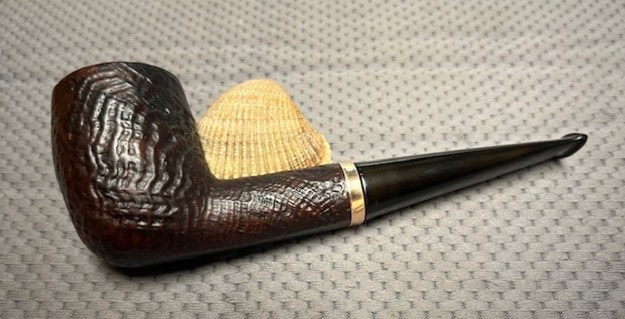
 rebornpipes