

Blog by Kenneth Lieblich
Next on the chopping block is a very personal pipe – and one that is staying in my collection. The photo you see below is of my late grandfather, in the early 1970s, smoking a charming Bewlay Canadian pipe. It is this pipe’s restoration that I am recounting today. I do not know where my grandfather acquired it (or under what circumstances), but I suppose it does not ultimately matter. My grandfather was an enthusiastic pipe smoker and he clearly enjoyed this one. I am definitely looking forward to cleaning this one up. It has a value well beyond dollars.


 The pipe is from The House of Bewlay and is a Canadian shape. What a charming and elegant pipe! In order to read the markings correctly, I used my old trick of rubbing chalk over them (like a gravestone) and that helped a lot. The pipe’s markings read Bewlay [over] Twenty. The other side of the pipe shows the shape number, 003 [over] London Made. This sort-of corresponds with a Bewlay catalogue from the late 60s, as you can see in the photos. I say, “sort-of”, because the brochure shows shape numbers 001 and 002. I do not know the exact date of the pipe, but it is likely from the late-1960s or early-1970s.


 Let us read a bit more about Bewlay from the Pipedia article:
The English brand of Bewlay & Co. Ltd. (formerly Salmon & Gluckstein Ltd.), was in business from the early 20th century until the 1950s. The brand ended up being sold and taken over by Imperial Tobacco Co. The shop chain closed in the 1980s but there seems to be one shop still in business on Carr Lane in the city of Hull. Bewlay pipes were made by prestigious firms. Notably Barling, Charatan, Loewe & Co., Sasieni, Huybrecht, and Orlik. So understandably, the English considered a Bewlay pipe a quality pipe.
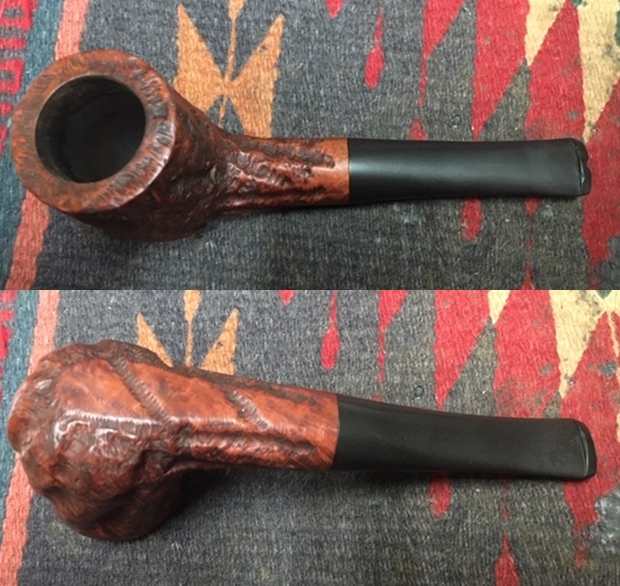
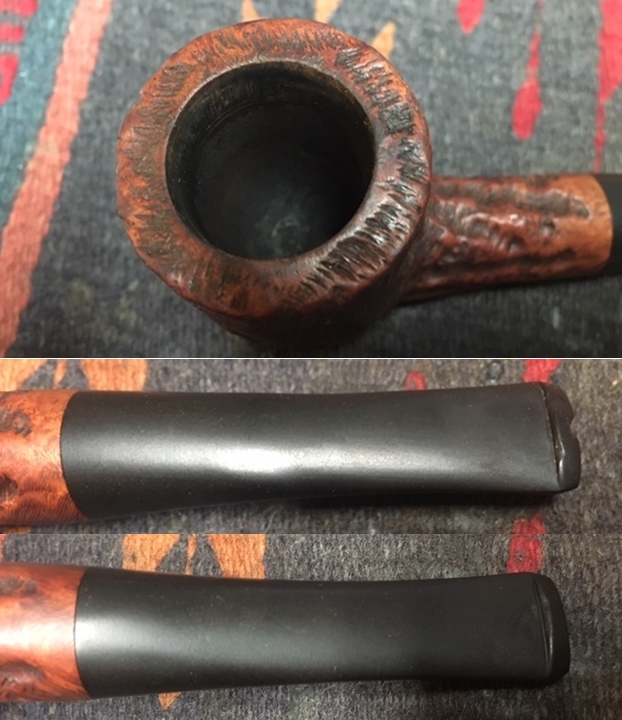
Anyway, on to the pipe – and what a beauty it was. However, it was not without its issues. The stummel had the following problems: lava on the rim, a notable burn to the rim, plenty of cake in the bowl, a couple of nicks to the bowl, and a tired, worn-out colour of wood. By the way, the strange “stains” to the bowl are, in fact, old bits of newspaper. After my grandfather died, the pipes were wrapped in newspaper and stuck in a box. The newspaper got wet at some point in the intervening years. Meanwhile, the stem had its own set of problems: some oxidation and calcification, minor tooth marks and dents, a filthy stinger, the ‘B’ logo was a bit worn, and (worst of all) a large chunk of vulcanite missing from the bit! This pipe was going to be a bit tricky, and I needed to be especially careful to ensure the missing vulcanite would be repaired properly – so it could be used for many years to come.


 The stem was first on my list. This stem has a stinger in it – and it was being quite stubborn about coming out of the tenon! I opted to warm the stem and stinger with a hair dryer and this provided just enough softening of the internal goo to allow me to pull it out. The stinger then went for a soak in some lemon-infused isopropyl alcohol. I let it set for several hours and then cleaned it off and it looked much improved. I then finished it with some metal polish and moved on.

 I wiped down the outside of the stem with Murphy’s Oil Soap on some cotton pads. I also took a BIC lighter and ‘painted’ the stem with its flame in order to lift the bite marks and dents. This was fairly successful in raising the damage. Then, I cleaned out the insides with pipe cleaners and isopropyl alcohol. Once this process was done, the stem went for an overnight soak in the Before & After Hard Rubber Deoxidizer. The following day, I cleaned all of the de-oxidizing sludge off with alcohol, pipe cleaners, et cetera. The oxidation had migrated to the surface and would be fairly straightforward to remove. I scrubbed vigorously with SoftScrub on cotton pads to remove the leftover oxidation. I also built up some tiny dents on the stem with cyanoacrylate adhesive and let it fully cure.


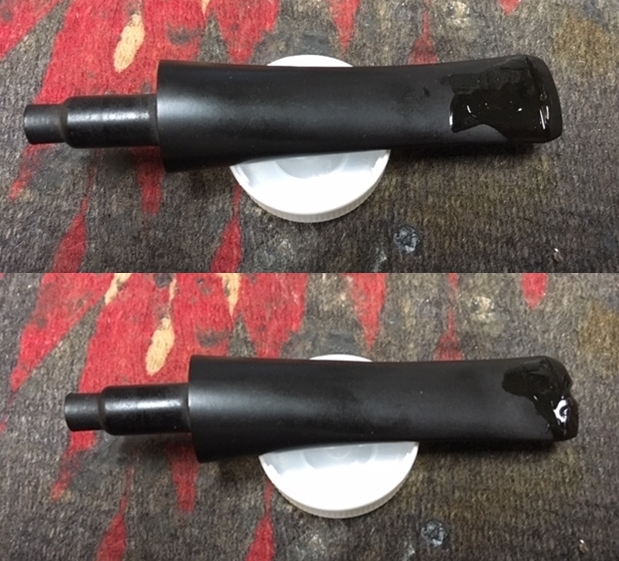
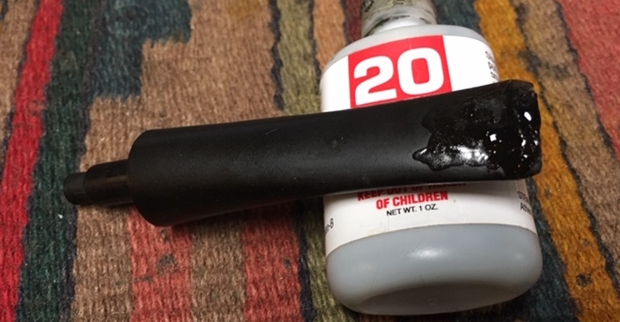
 Now it was time to make a patch for the missing chunk of vulcanite. This patch was made with a mixture of cyanoacrylate glue and activated charcoal powder. This created a black, resilient mush that would be very hard-wearing when cured and would work perfectly for this repair. Thanks to Steve’s instruction, I first plugged up the stem’s draught hole with a pipe cleaners coated in petroleum jelly. This ensured that any of the cyanoacrylate and charcoal mush would not accidentally plug up the air passage in the stem.

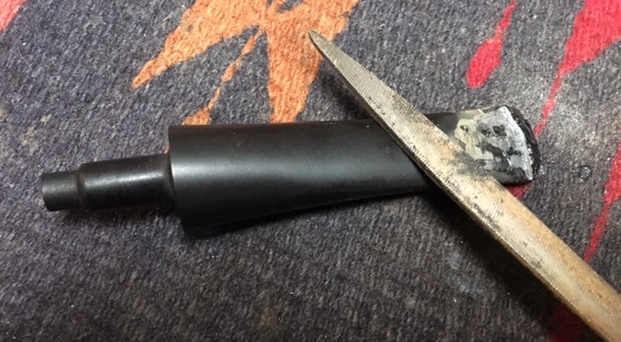
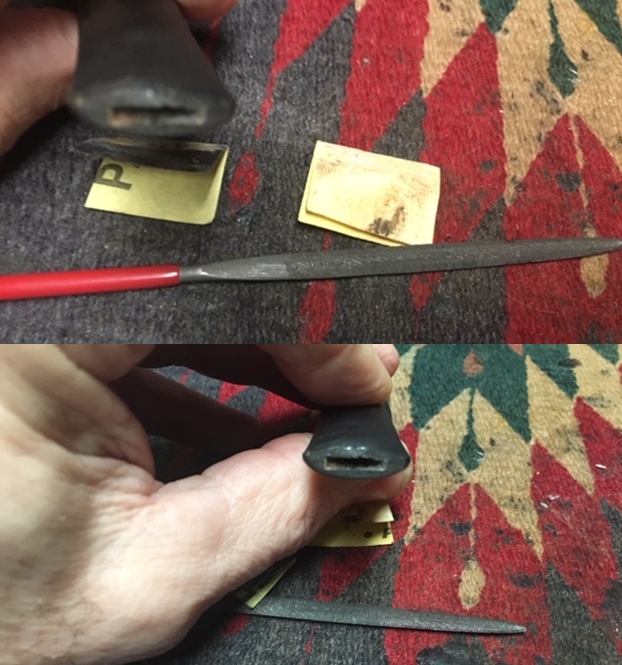
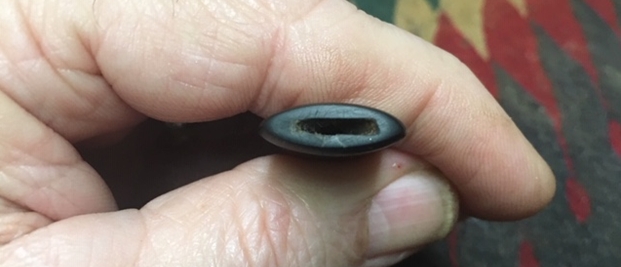
 This was a tricky business and it took some real patience and effort to make it work. As the photos show, after I applied the cyanoacrylate and charcoal mush, it looked pretty darn ugly, but I was expecting that. I also managed to get some of the bits of pipe cleaner bristles into the repair! No big deal – those were quickly excised. After the curing, I pulled out the Dremel rotary tool and began to remove the excess material. This was also the preliminary step in shaping the button. To carry this process on, after the Dremel, I used a miniature file to further shape the button and make it suitable for sanding. I used another file on the inside to ensure there were no rough edges in the bore.

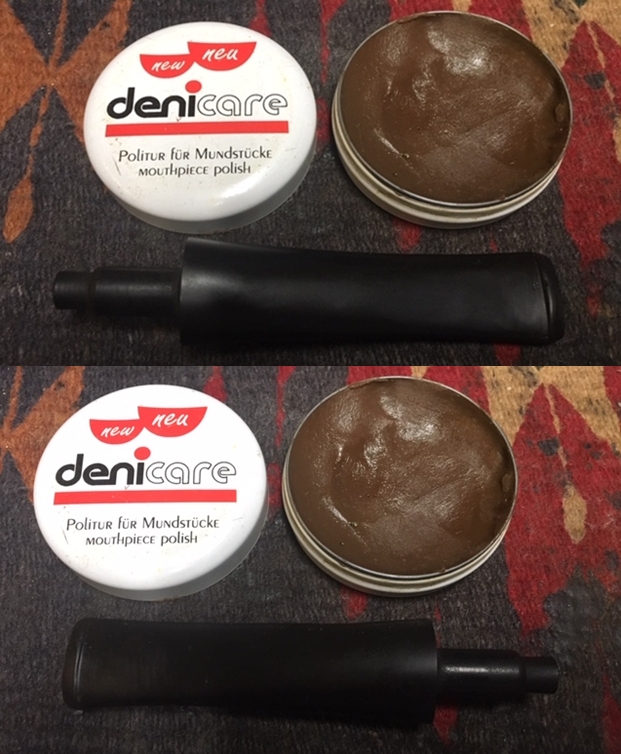
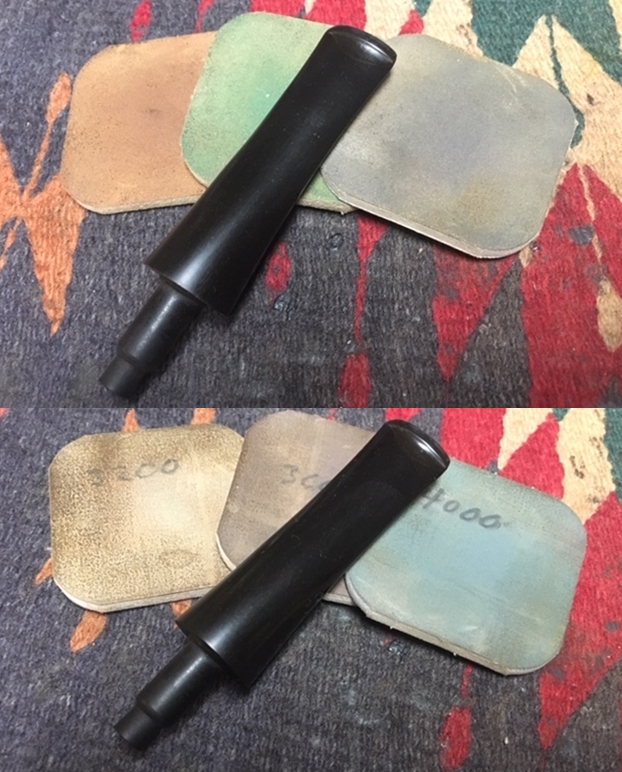
 I then sanded the stem down with 220-, 400-, and 600-grit sandpapers to meld seamlessly into the stem. This ensures that it keeps its shape and looks like it should. I then used all nine Micromesh pads (1,500 through 12,000 grit) to bring out the lovely black lustre on the stem. I also used Obsidian Pipe Stem Oil in between each pad scrubbing. It is worth noting that a repair this big on a stem will never be completely invisible, but I was very pleased with how I managed to make the stem of my grandfather’s pipe look so good.

 Just before finishing with the Micromesh pads, I took the opportunity to repair the “B” logo on the stem. It had faded – both by loss of paint and also by fingers inadvertently smoothing out the “B” over time. So, I added some acrylic paint with a paint brush, let it dry, and buffed it to make it look good. The “B” is back, but, as later photos reveal, a little bit has disappeared into history.
 On to the stummel, and the usual cleaning procedures were in order for this pipe. I used both the PipNet Reamer and the KleenReem to remove the built-up cake, and followed that with 220-grit sandpaper to remove as much as I could. I wanted to take the bowl down to bare briar to ensure there were no hidden flaws in the walls of the bowl. Fortunately, there were none. I then proceeded to clean out the insides of the shank with cotton swabs, pipe cleaners, and isopropyl alcohol. There was quite a bit of filth inside this stummel – it took many pipe cleaners et cetera to clean it out.
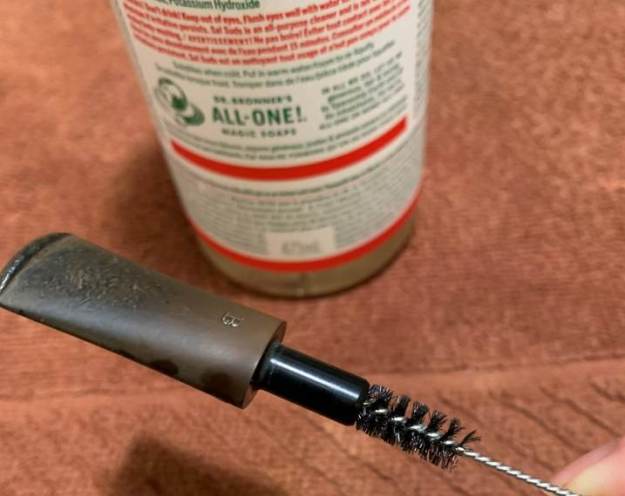
 I followed that up by cleaning the insides with some dish soap and tube brushes. I then moved on to cleaning the outside of the stummel with Murphy’s Oil Soap and some cotton pads. That removed the bits of aforementioned newspaper and any remaining dirt. I also soaked the rim in Murphy’s for a while just to loosen up the lava.


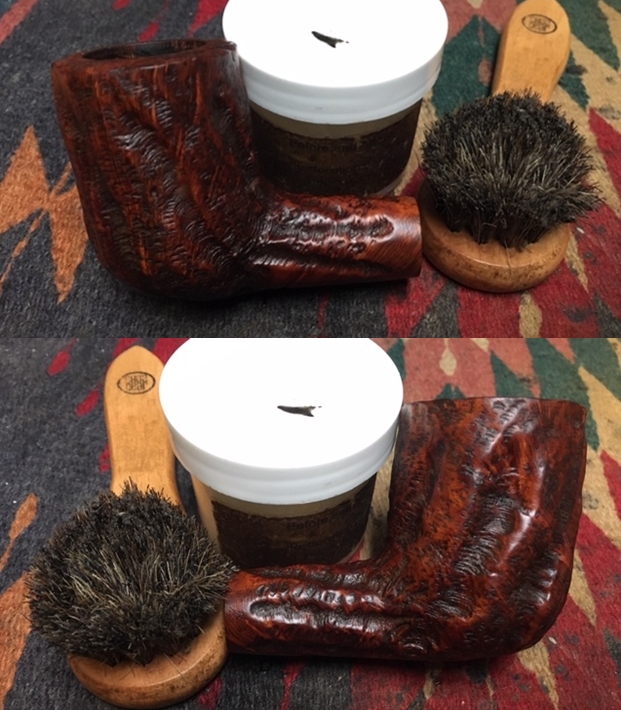
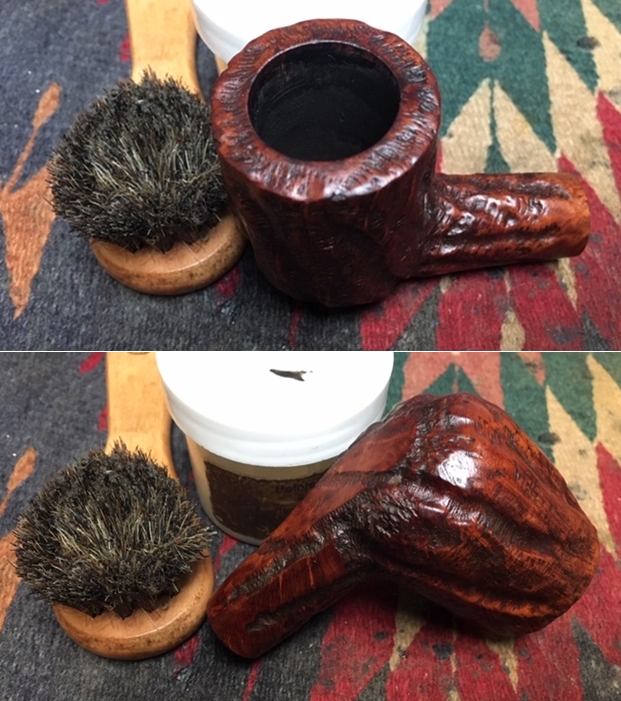
 In order to remove the lingering bits of lava and fix any nicks on the rim, I “topped” the pipe – that is to say, I gently and evenly sanded down the rim on a piece of 220-grit sandpaper. This effectively removed the lava, without altering the look of the pipe. After that, a light application of Before & After Restoration Balm brought out the best in the stummel’s grain. What a difference that made! There is some beautiful wood under the grime!
 Having completed that, I was able to address the small nicks on the stummel. I dug out my iron and a damp cloth to try and raise the nicks. The hot and moist steam can often cause the wood to swell slightly and return to shape. There was some movement – not a lot, but it was better than doing nothing. I filled the remaining divots with cyanoacrylate adhesive and let it cure. Now, with the nicks filled, it was time to sand down the stummel. I used all nine Micromesh pads (1,500 through 12,000 grit) to wet/dry sand everything smooth. Then I added a bit more Before & After Restoration Balm.


 Then it was off for a trip to the buffer. A dose of White Diamond and a few coats of carnauba wax were just what this pipe needed. The lovely shine made the wood look absolutely beautiful.


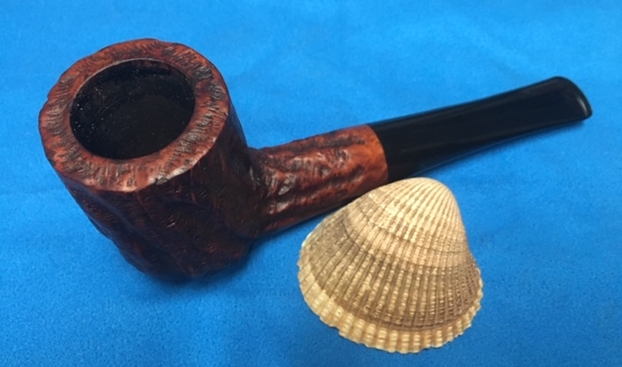
 This is a wonderfully crafted pipe and has a very elegant feel to it. It took a lot of work, but I am proud of it and the final product is (hopefully) worthy of my beloved grandfather’s memory. Obviously, this is one pipe that I am keeping for myself and adding to my collection. I am sure that I will be enjoying this one for many years to come. I hope you enjoyed reading the story of this pipe as much I as I did restoring it. If you are interested in more of my work, please follow me here on Steve’s website or email me directly at kenneth@knightsofthepipe.com. Thank you very much for reading and, as always, I welcome and encourage your comments.














 rebornpipes