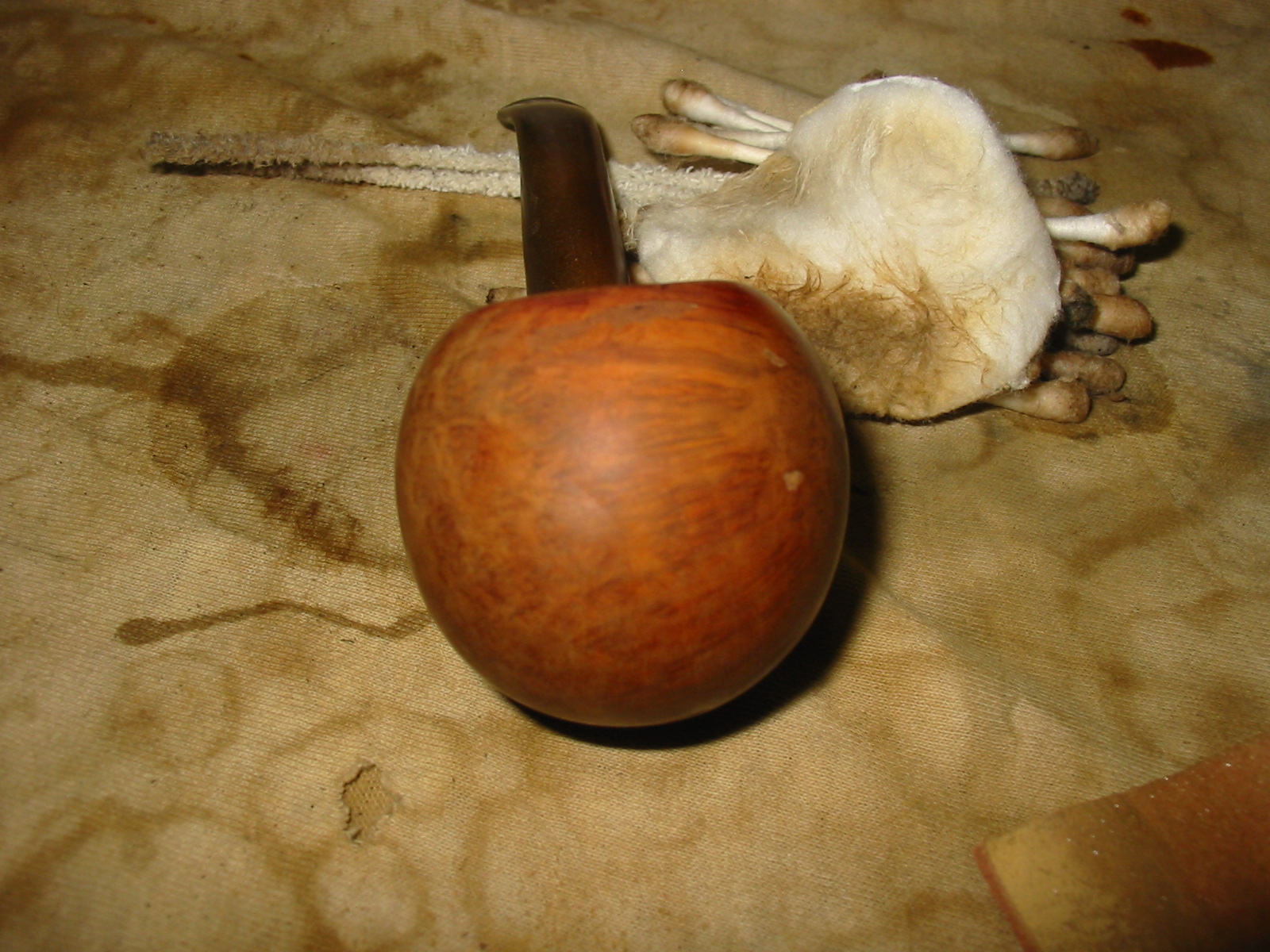
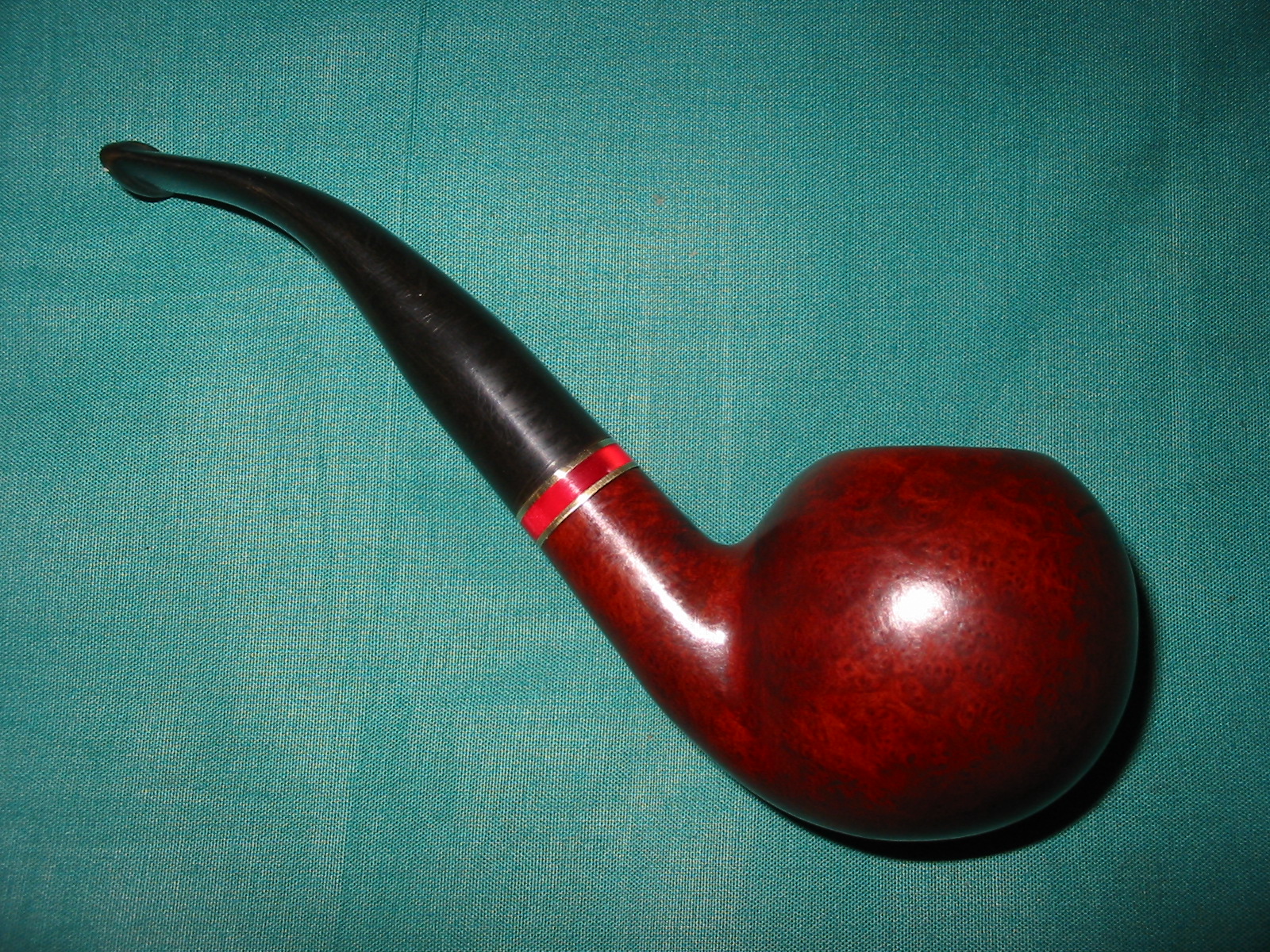
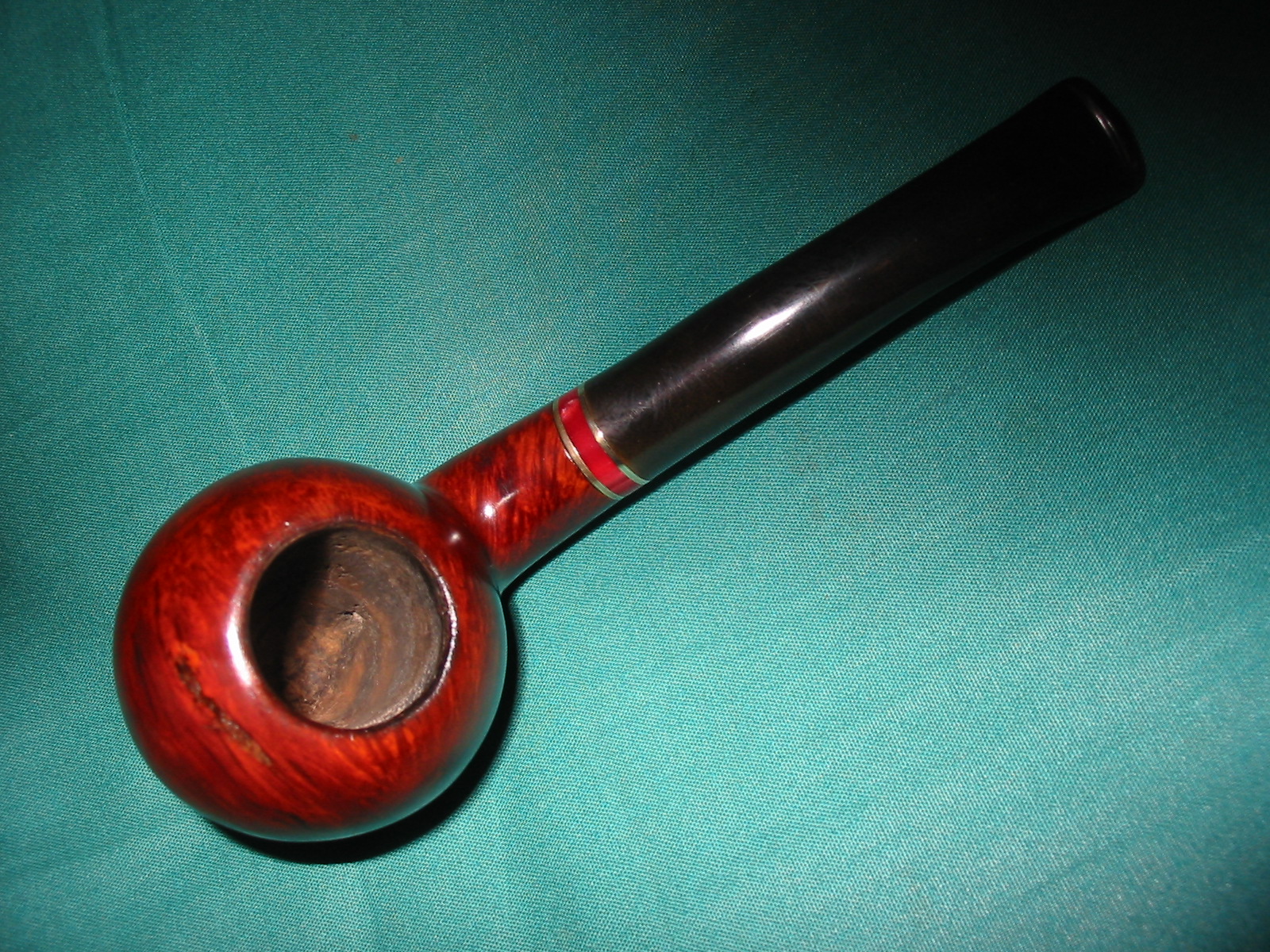
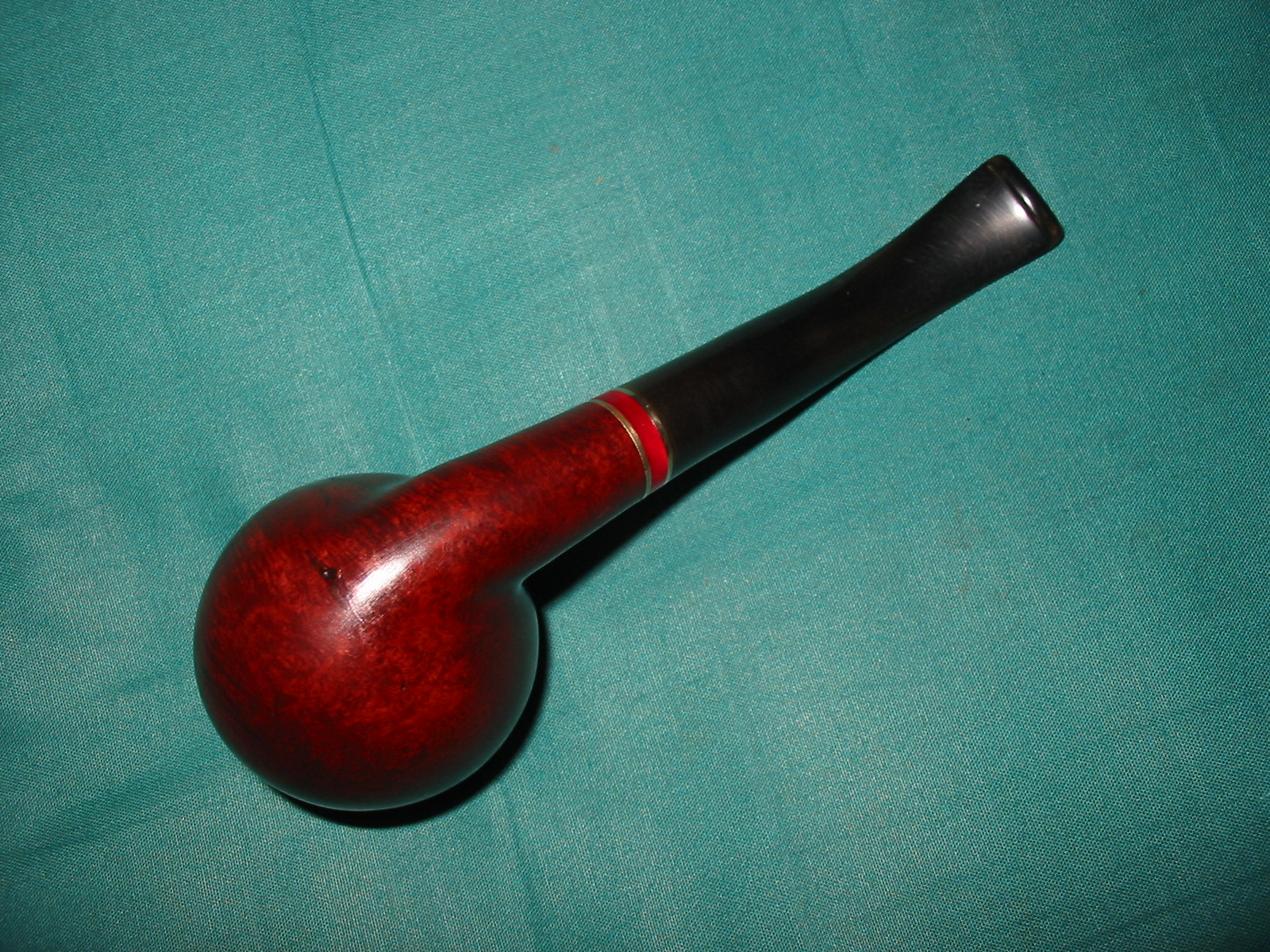
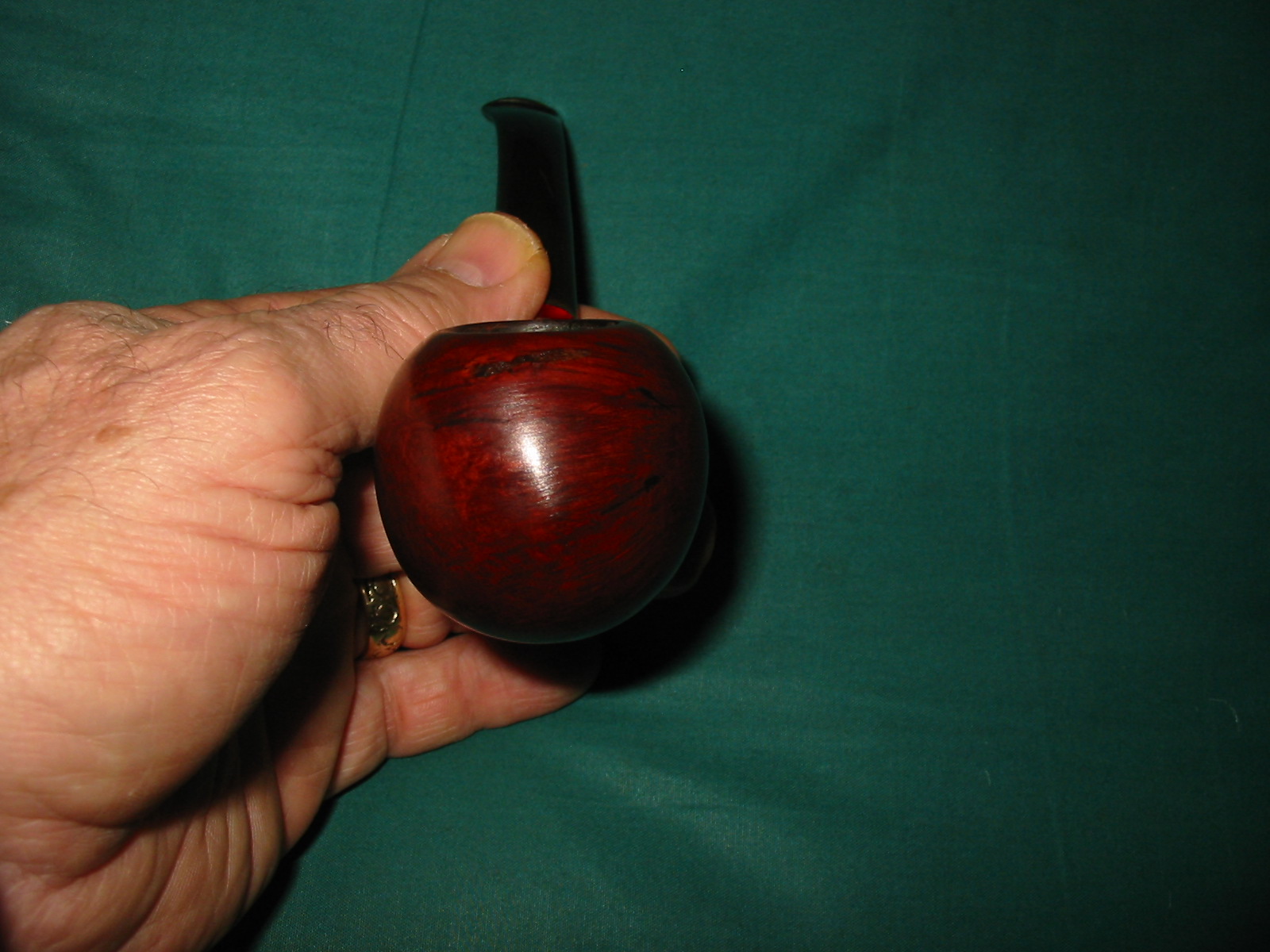
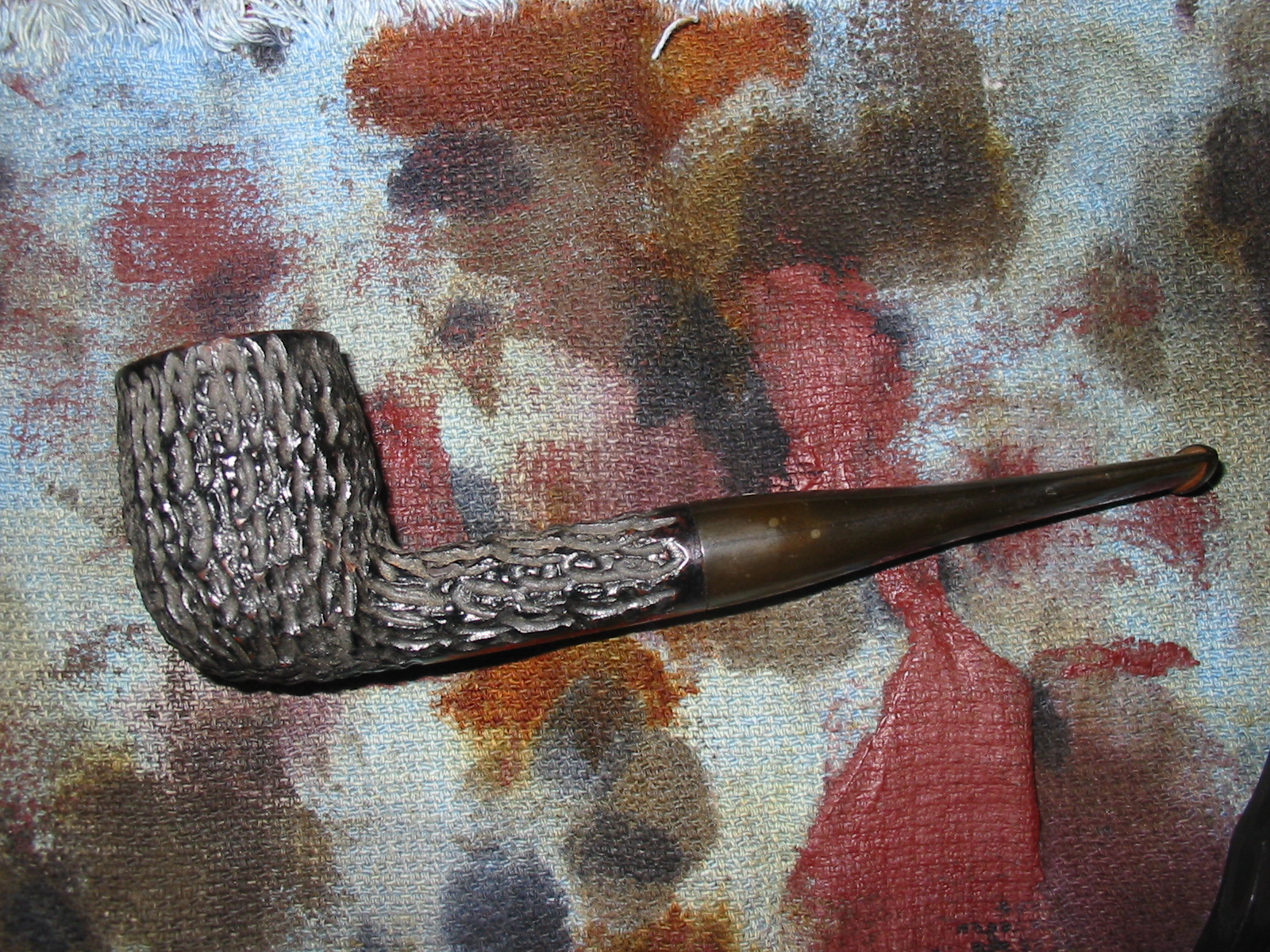
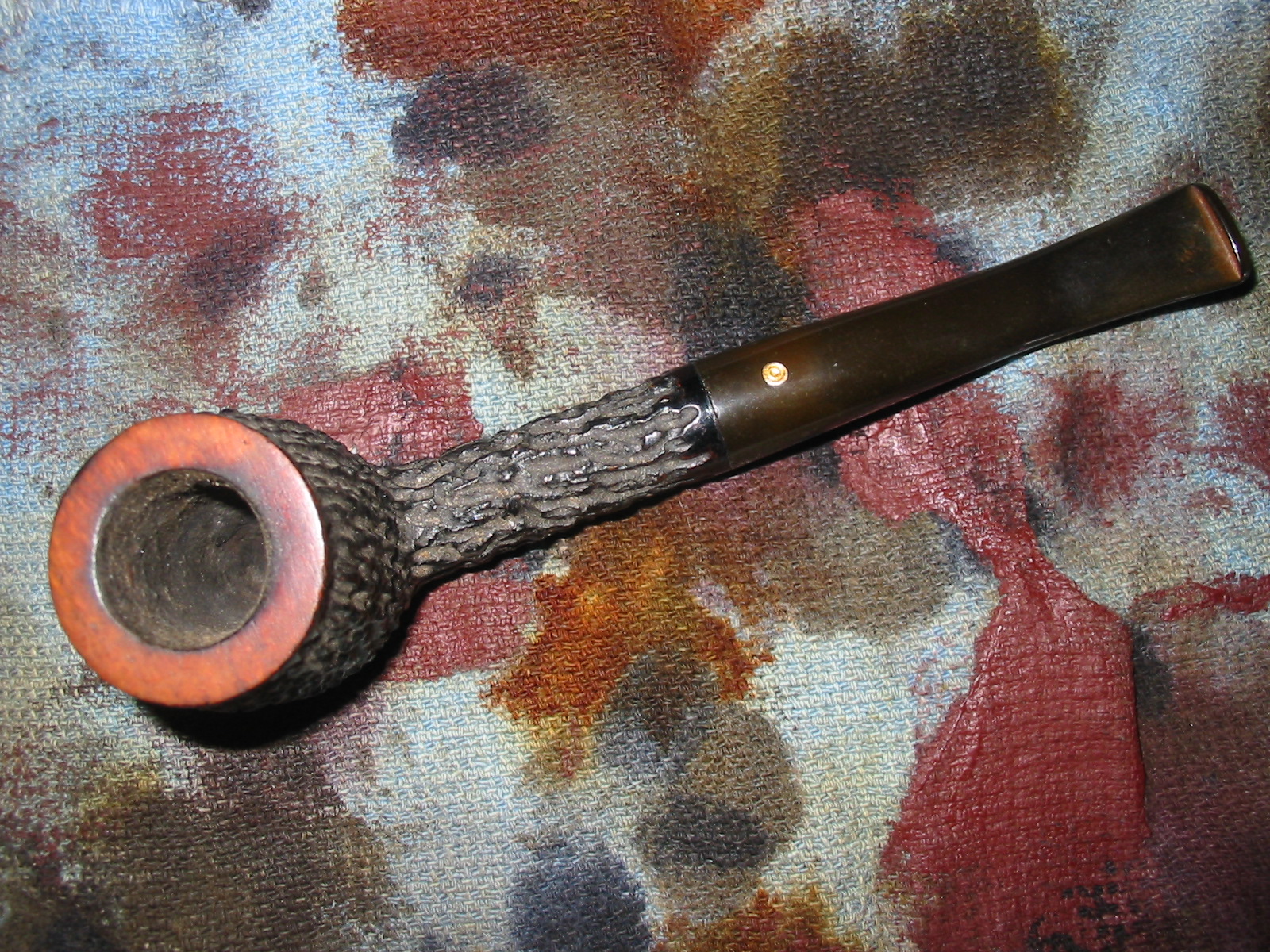
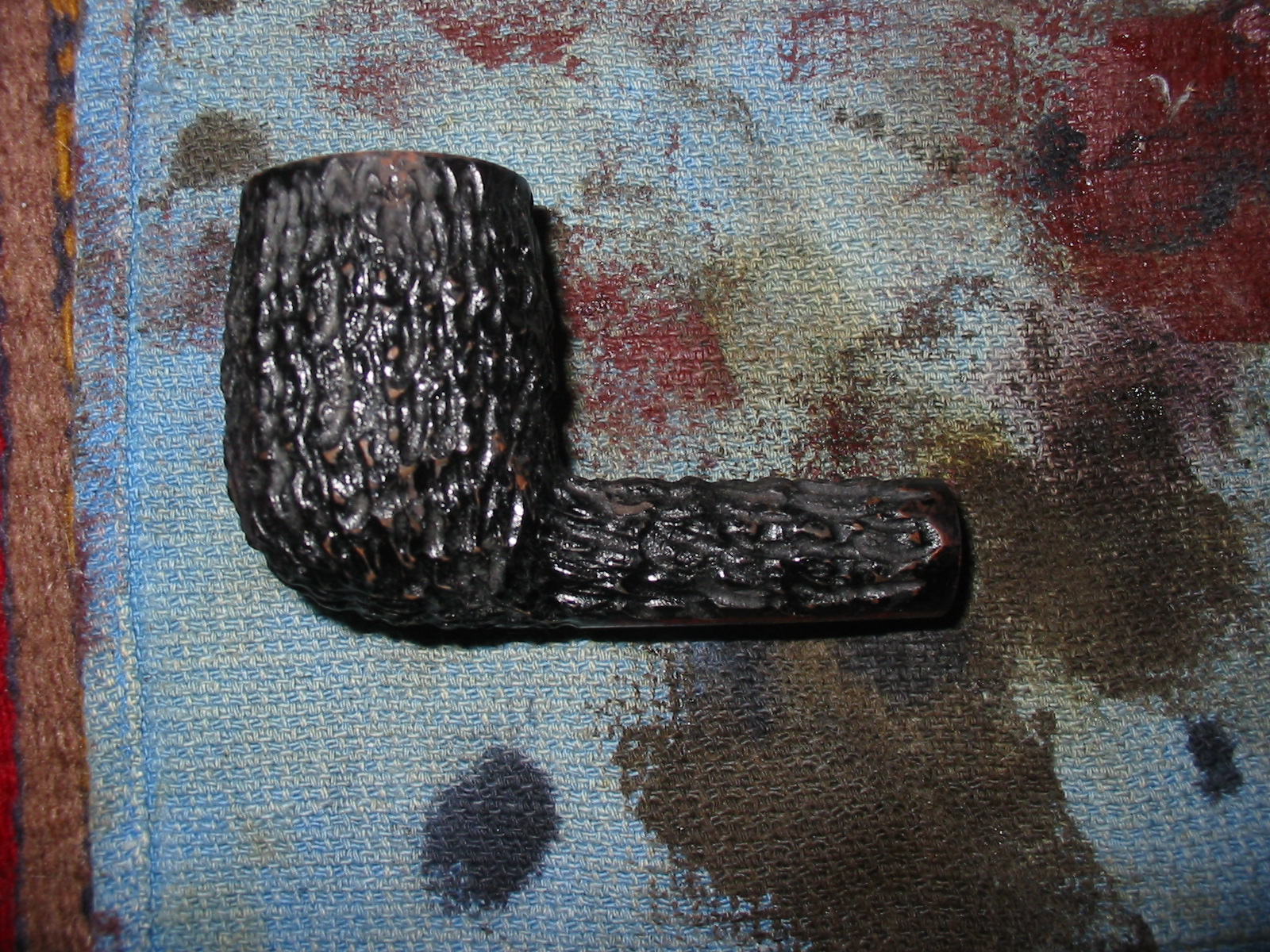
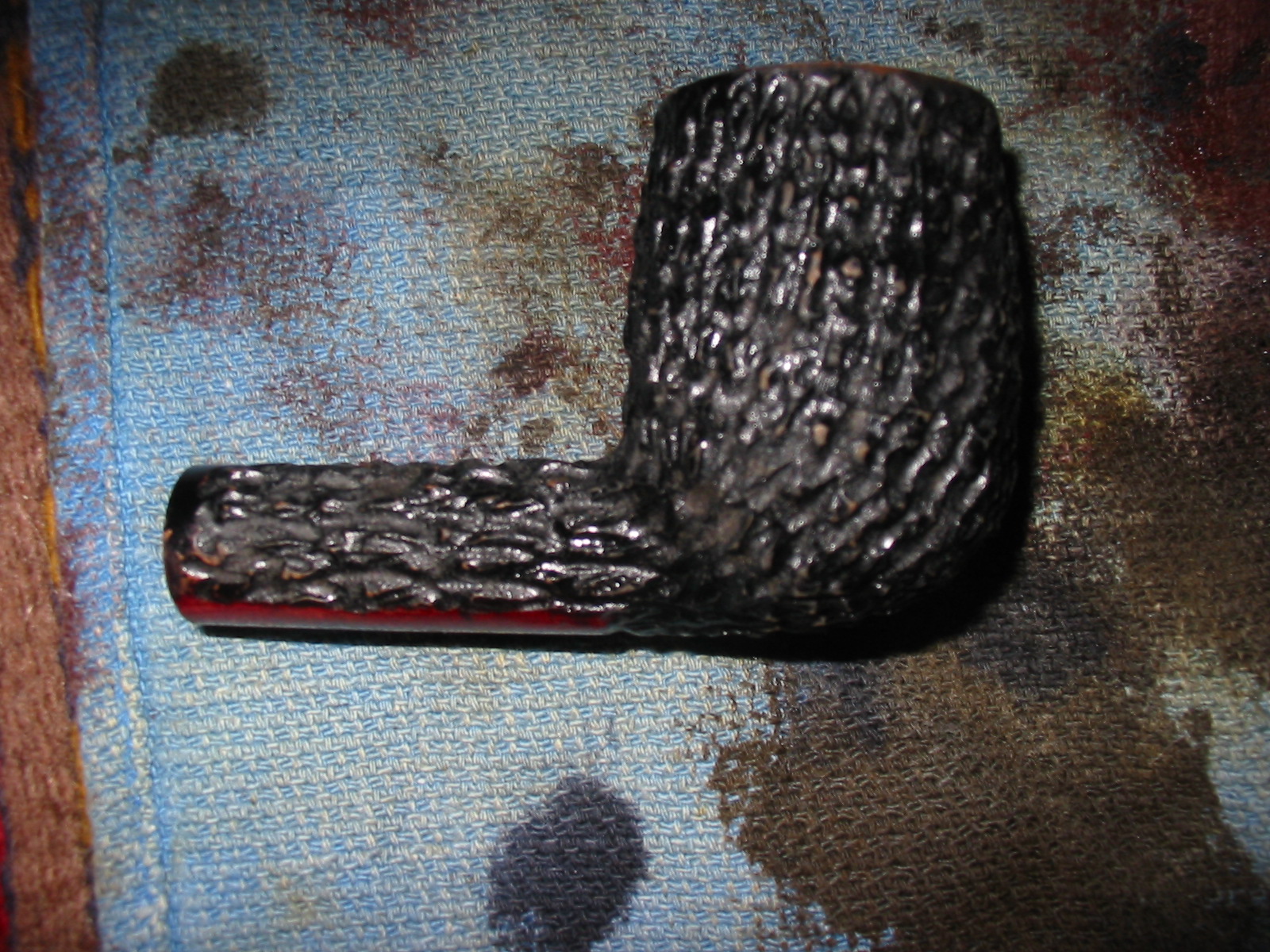
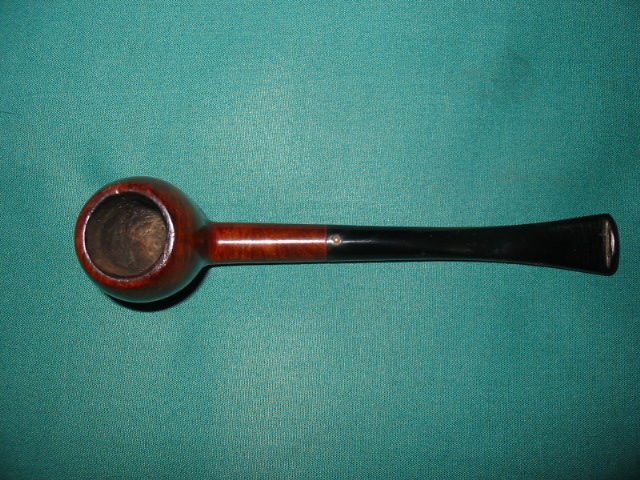
Tag Archives: removing tooth chatter

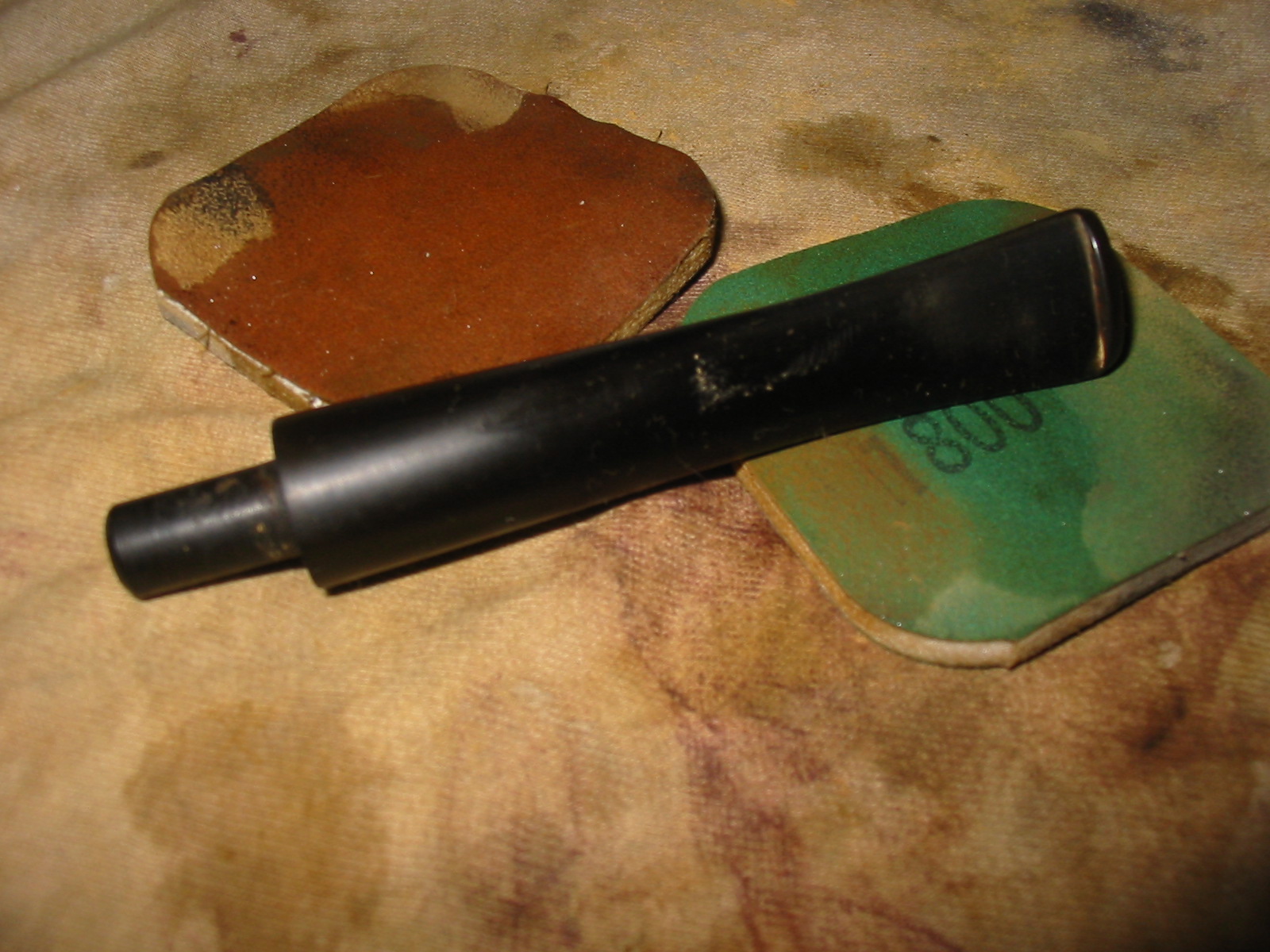
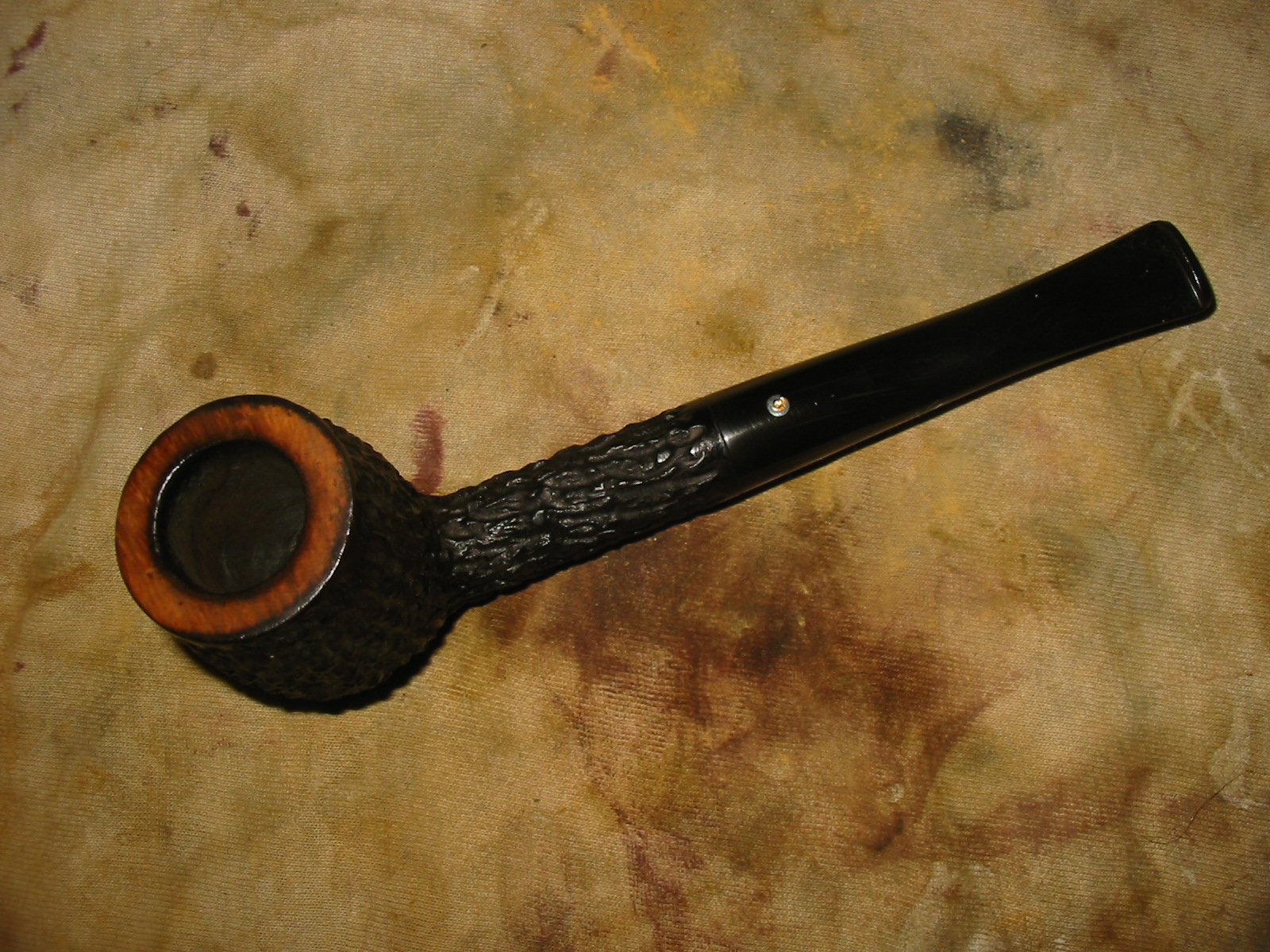
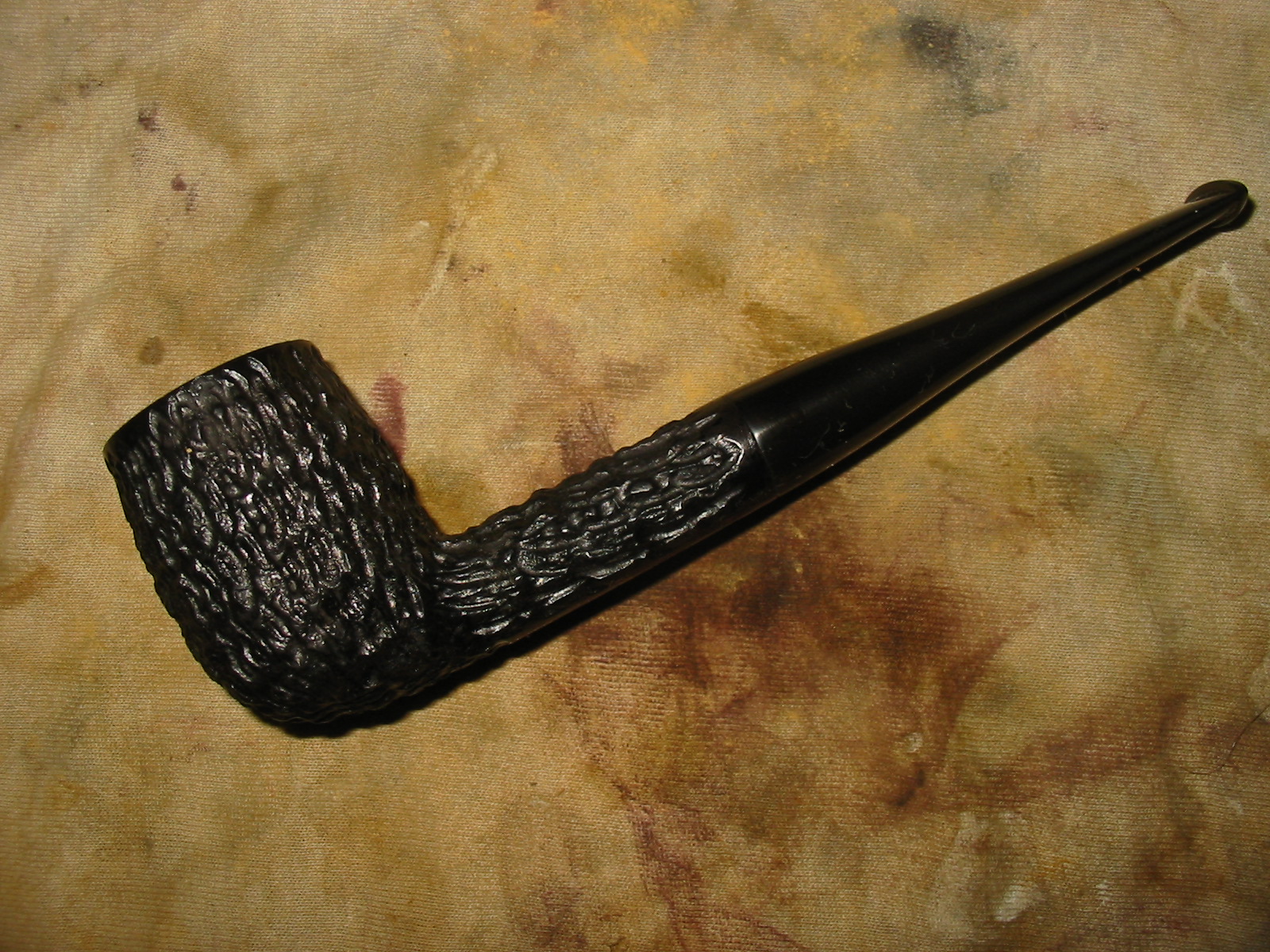
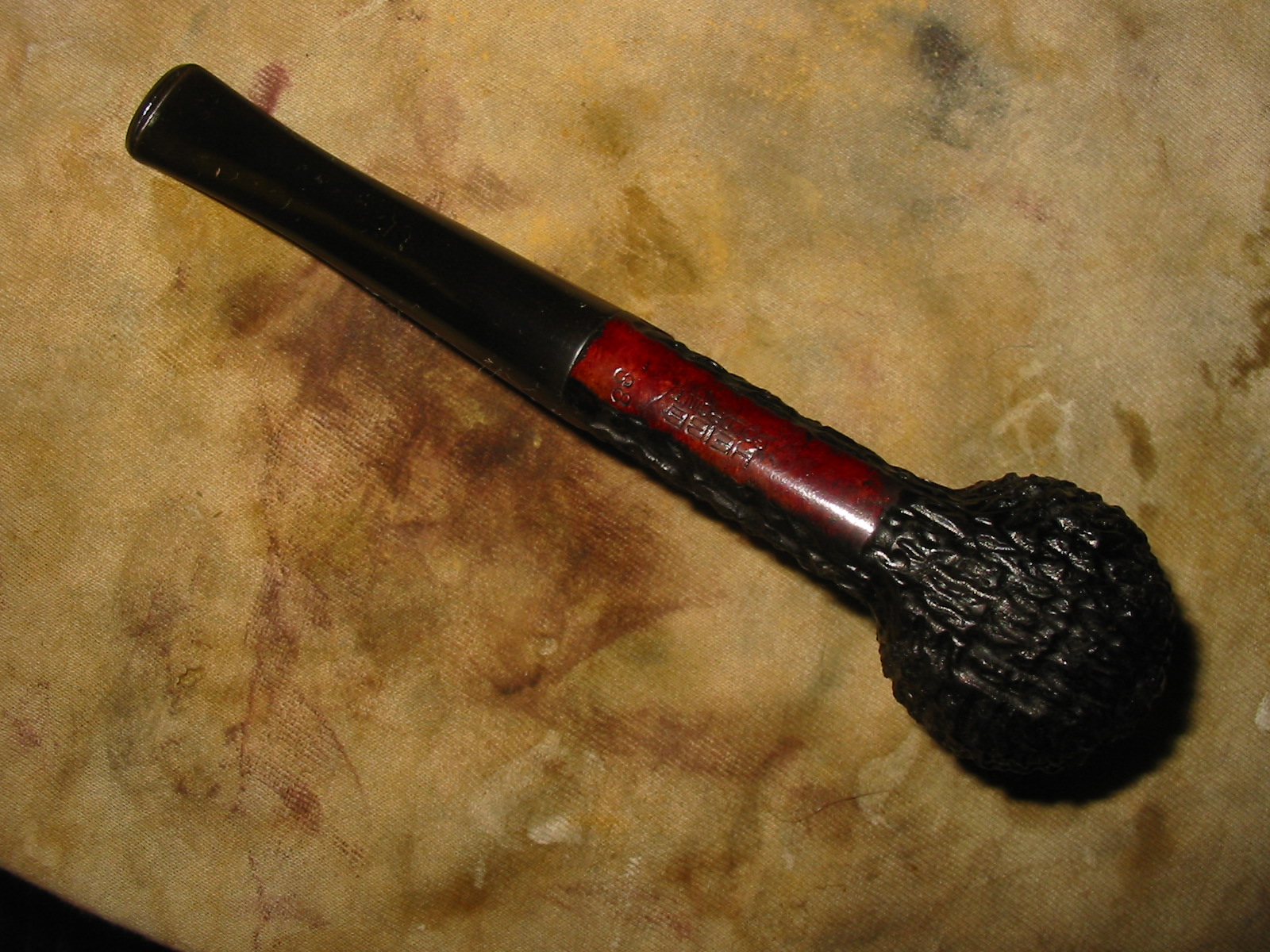
Repairing a Bite Mark on a Kirsten Stem


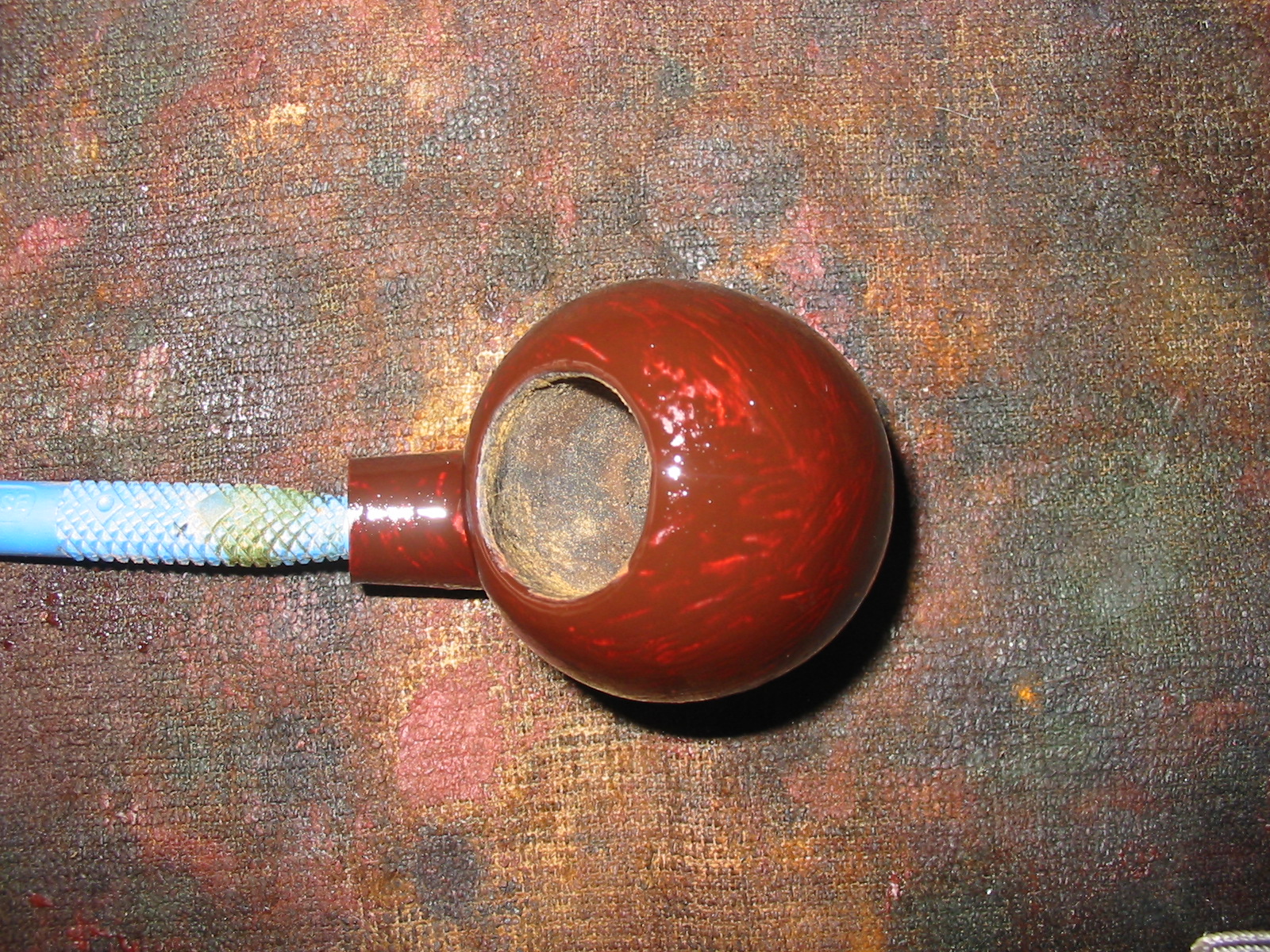
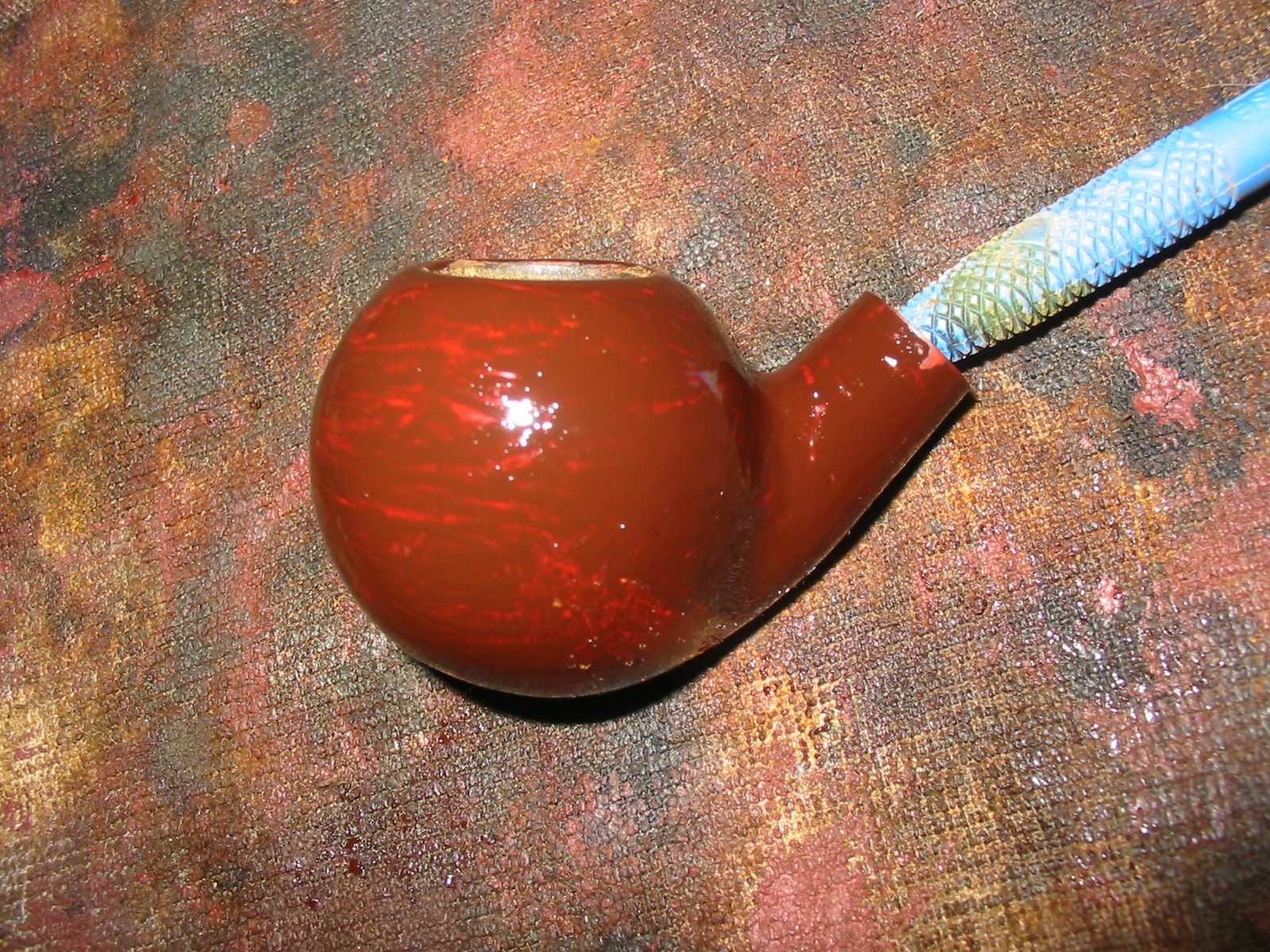
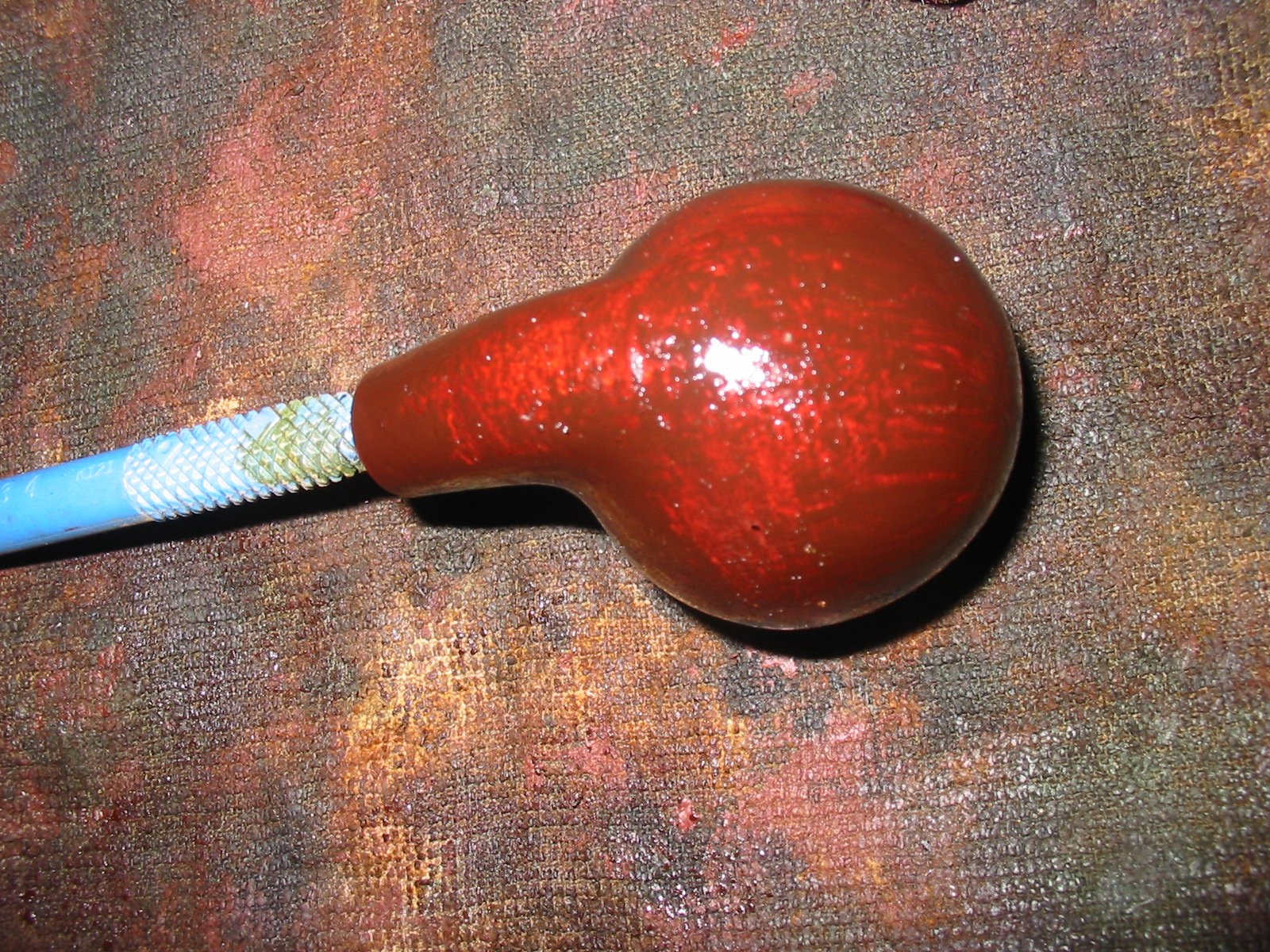
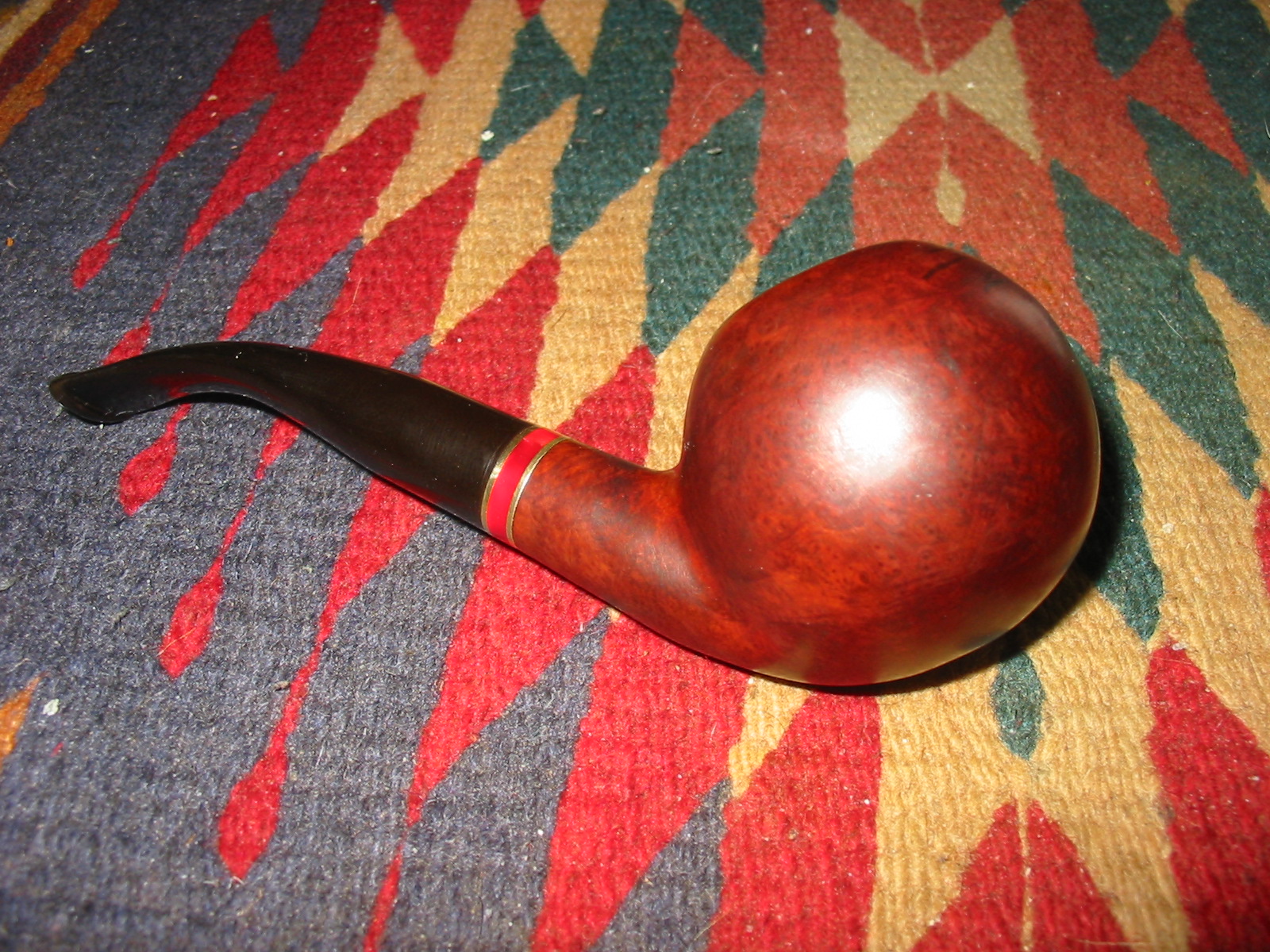
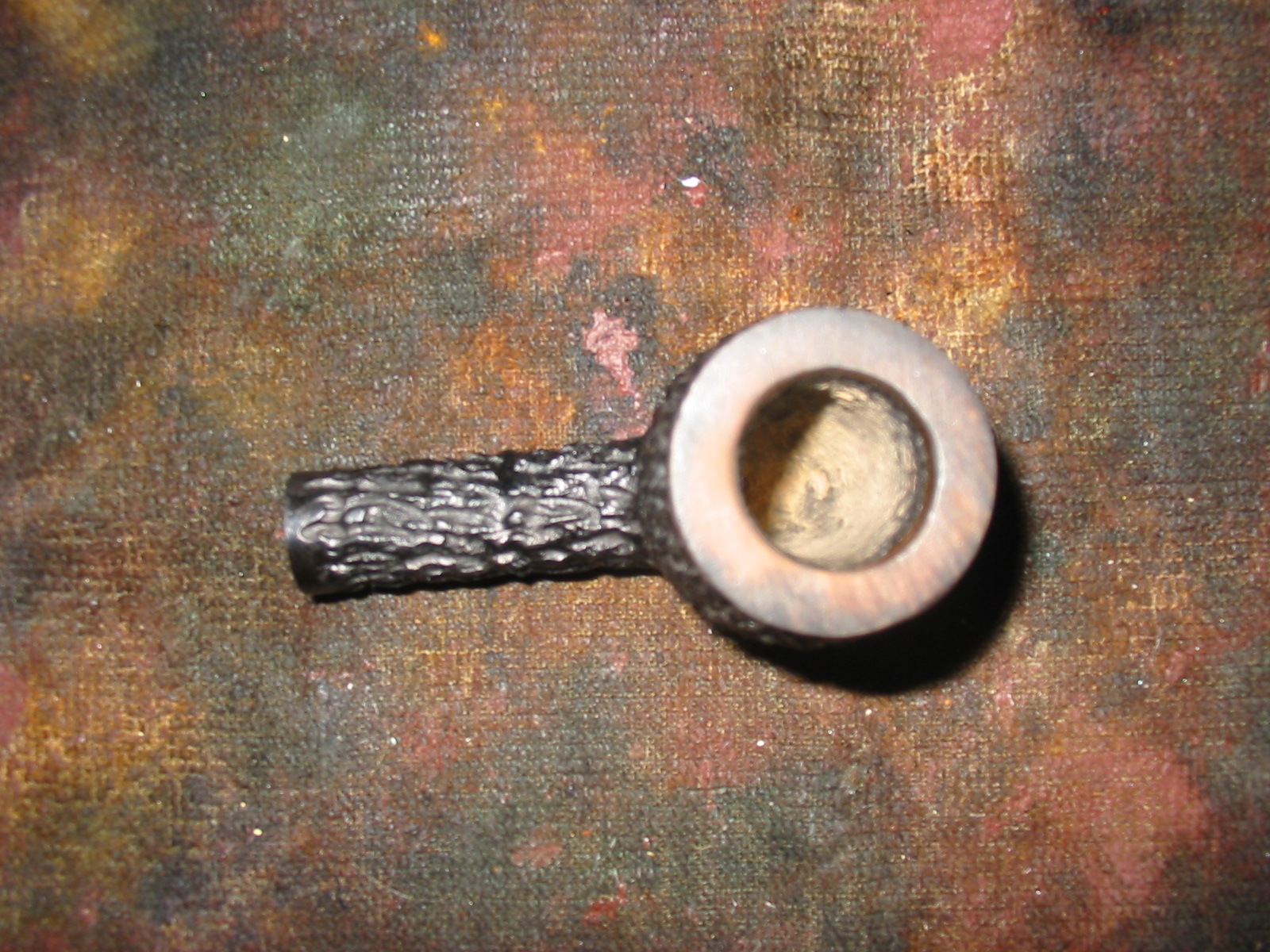
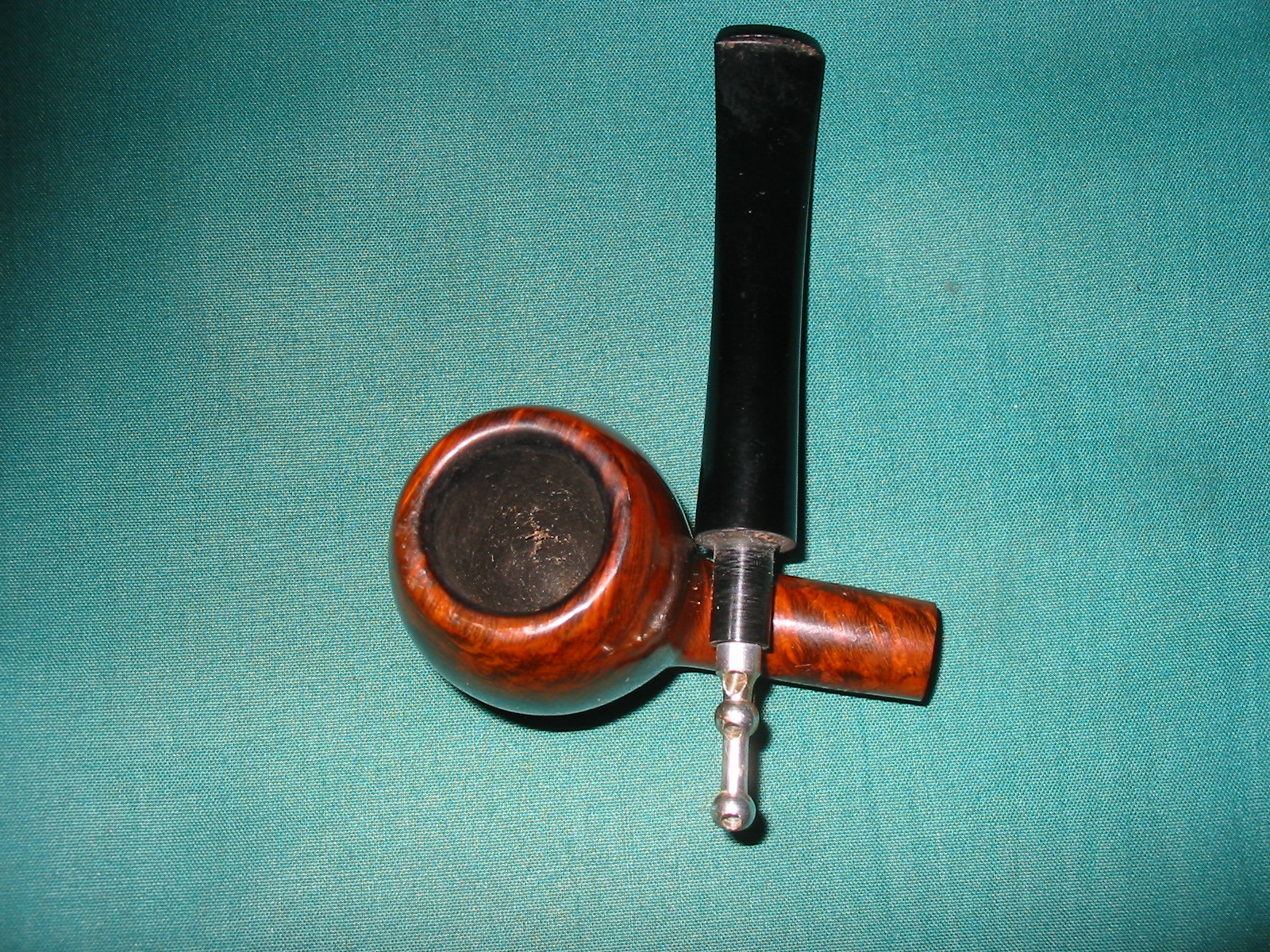
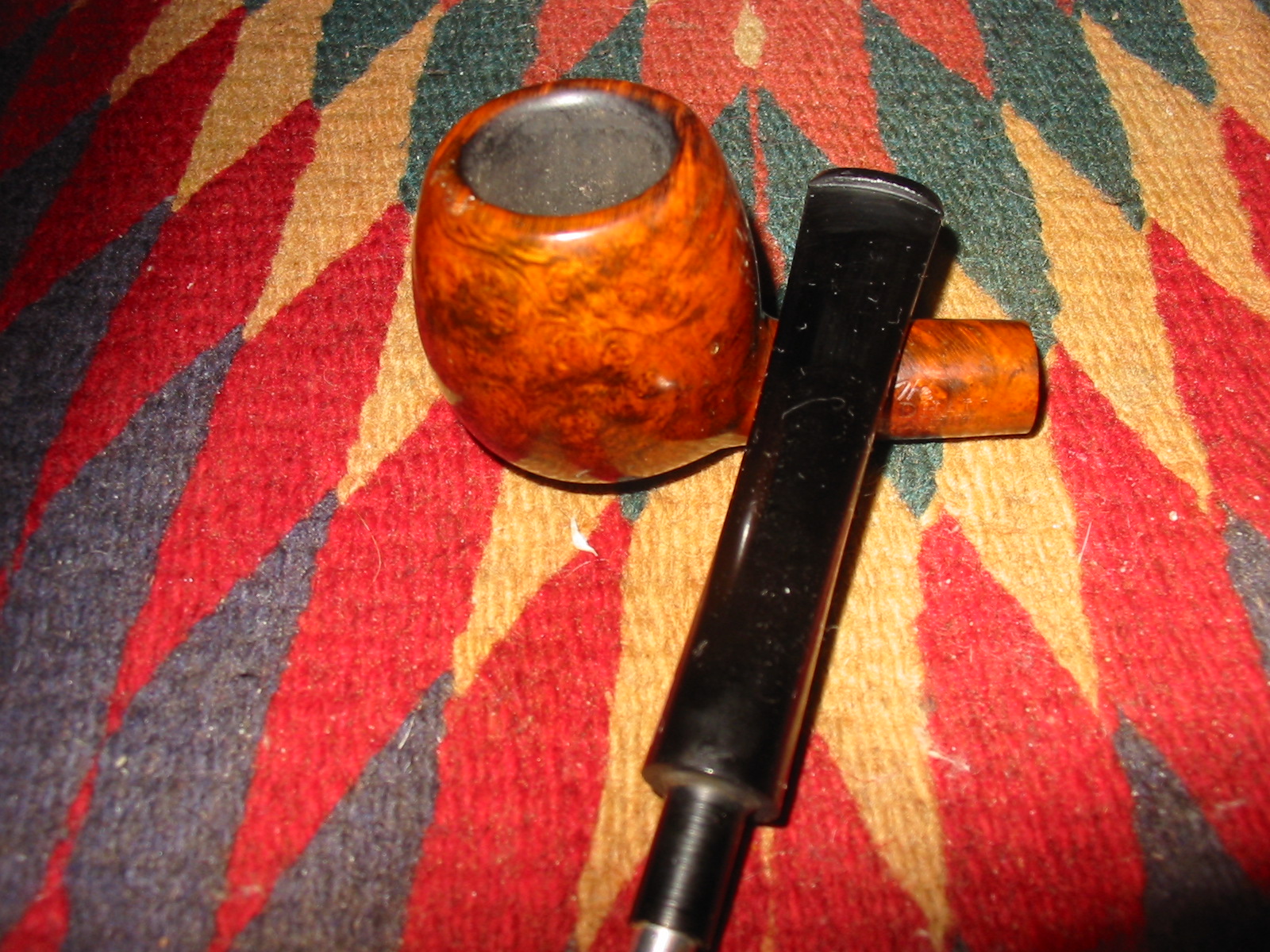
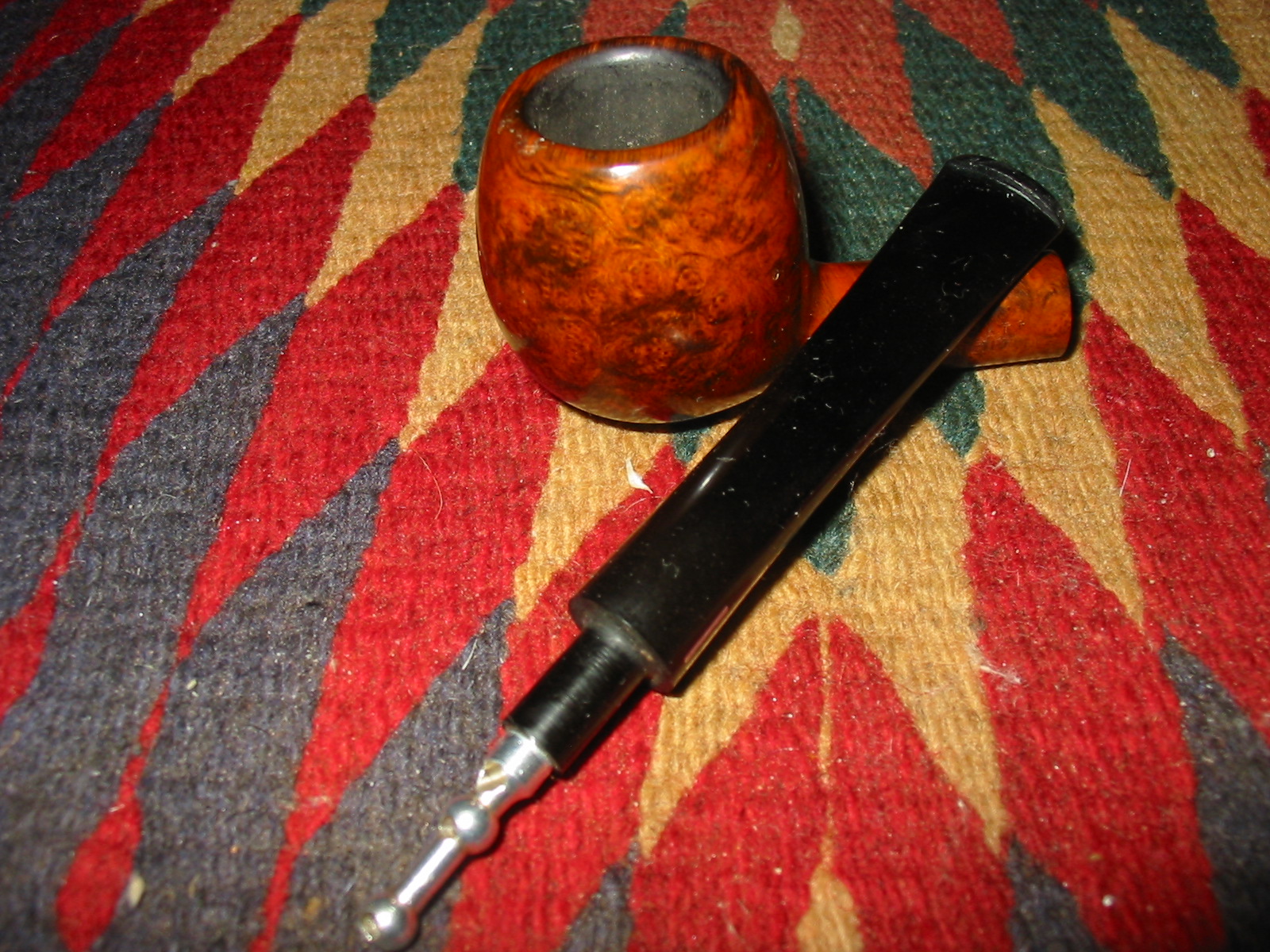
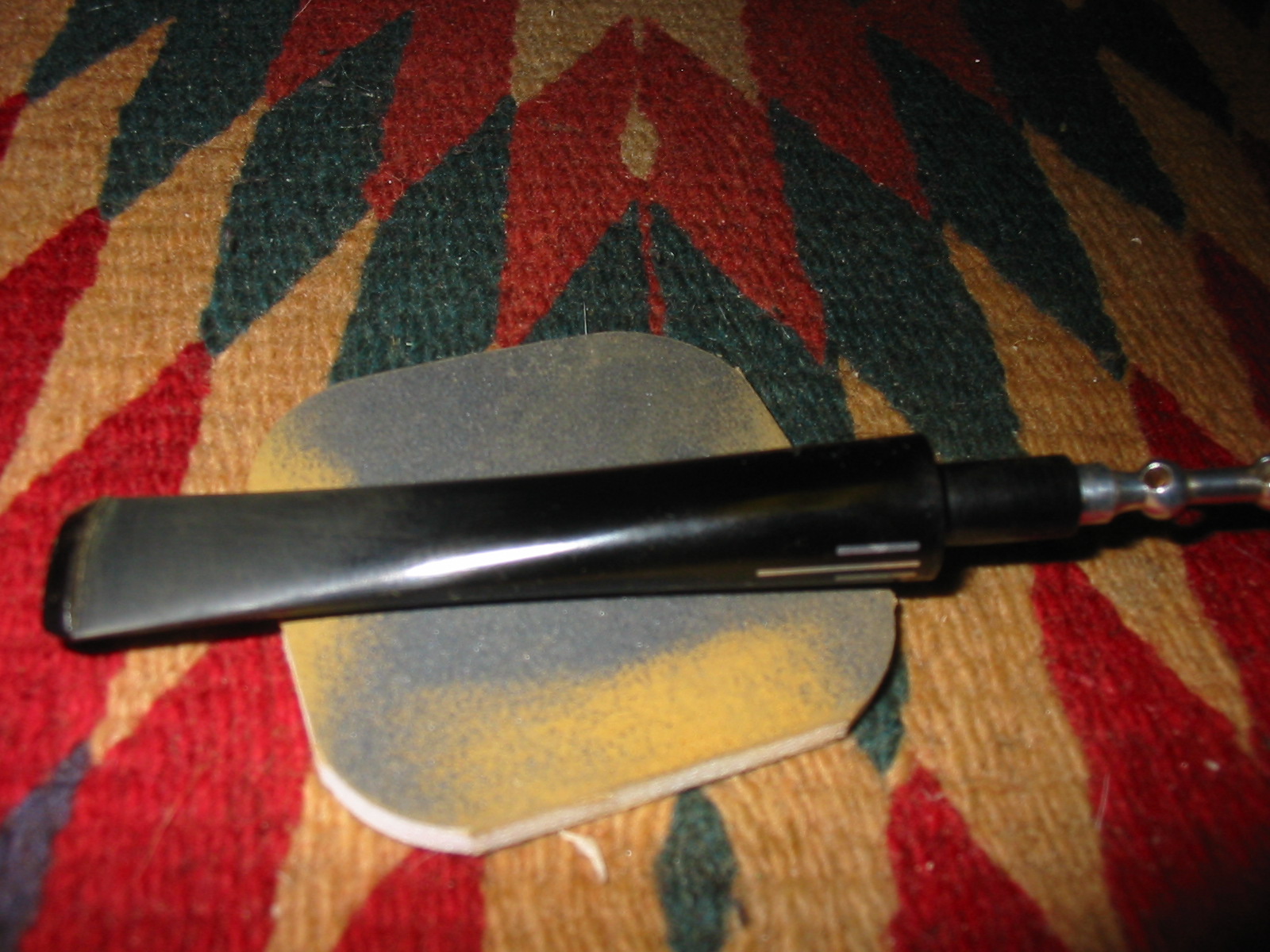
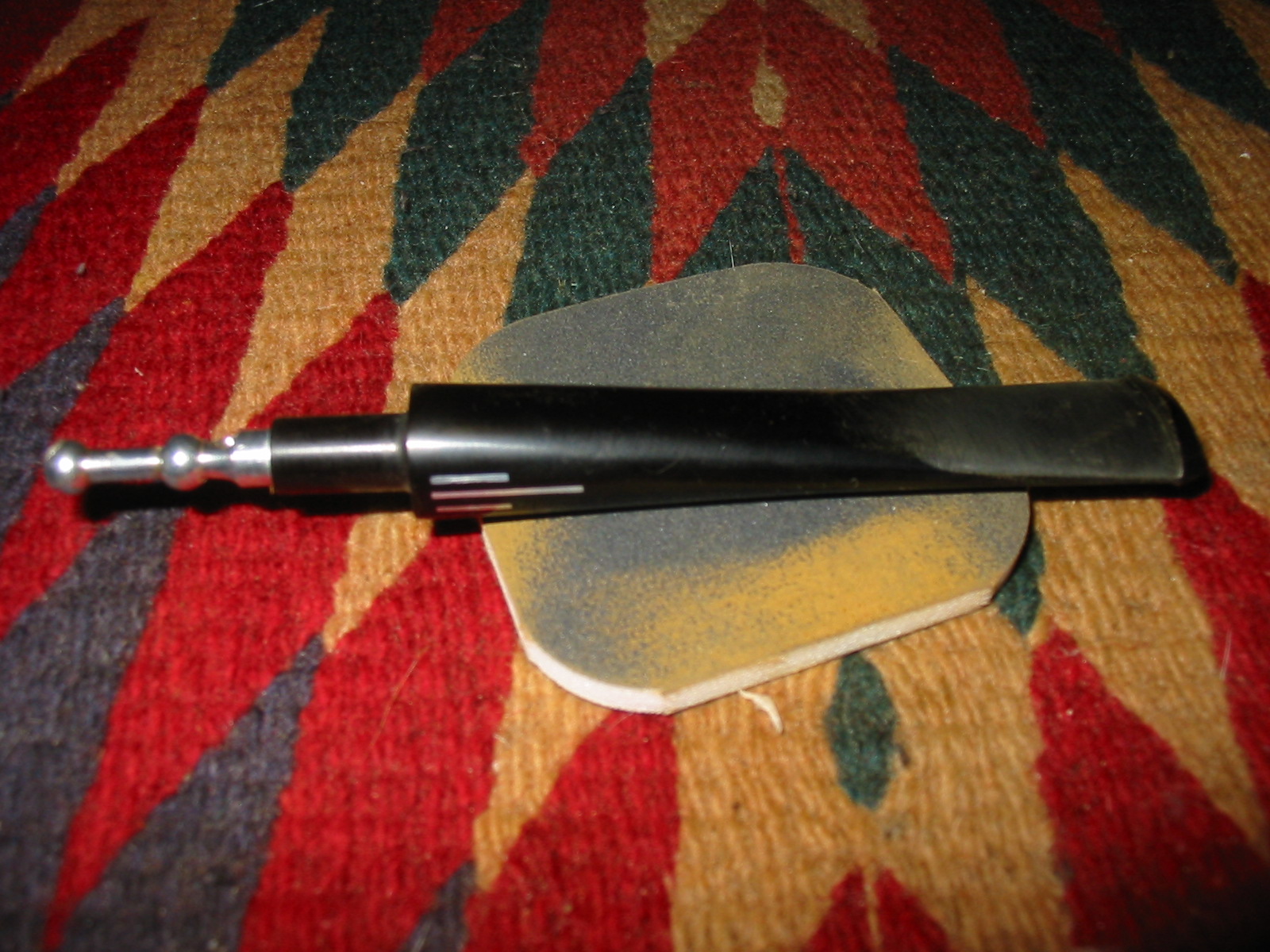
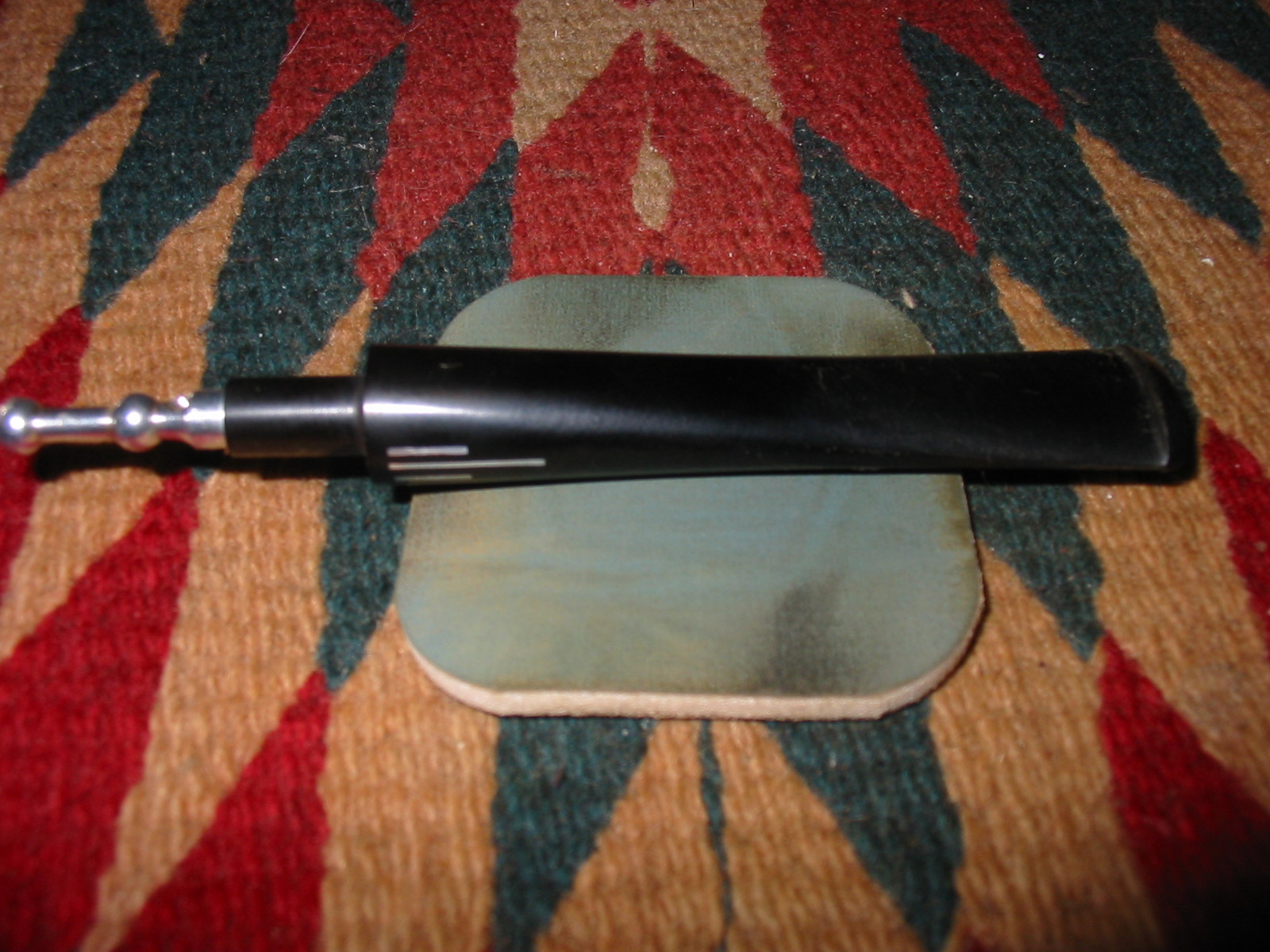
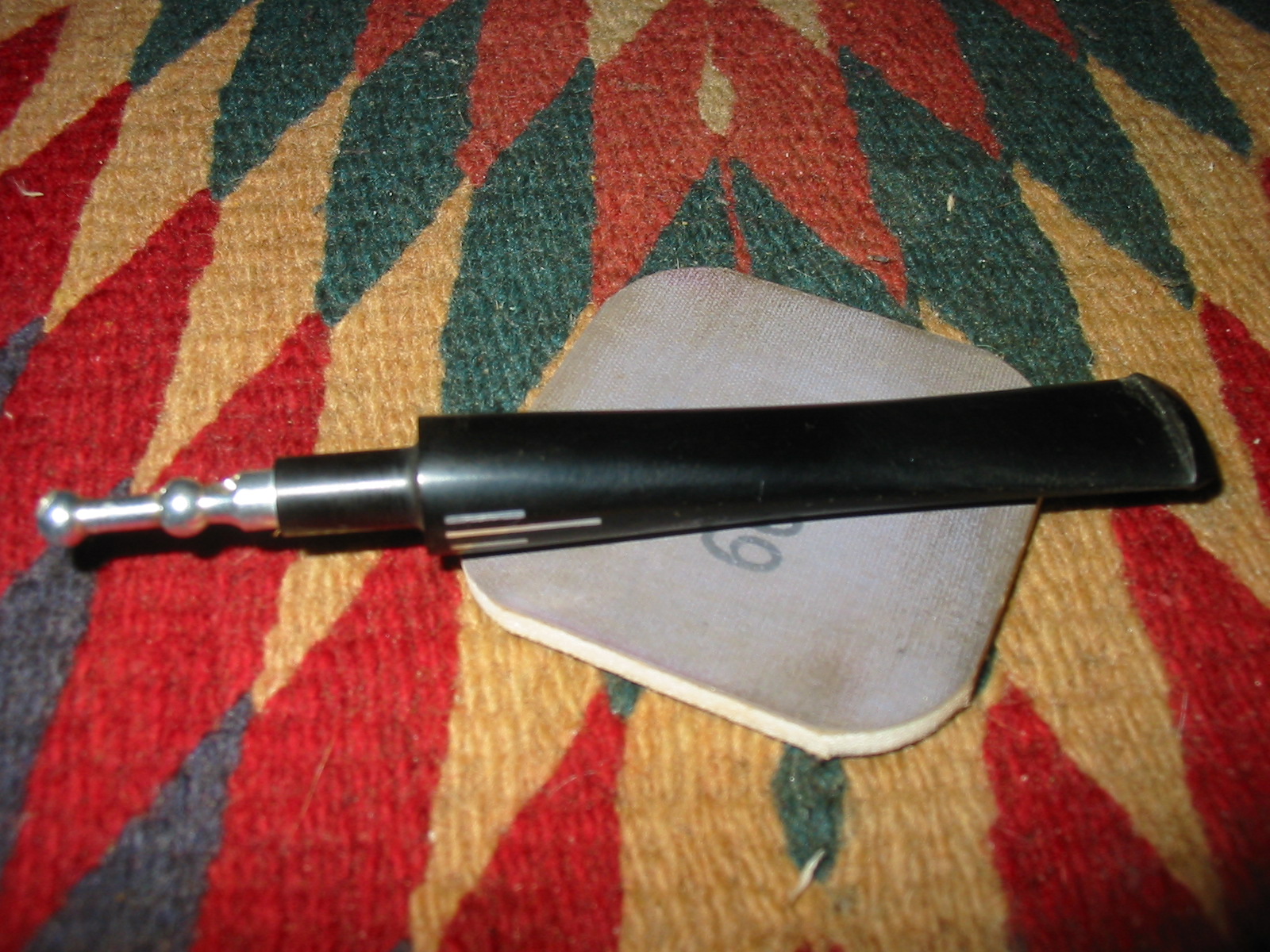
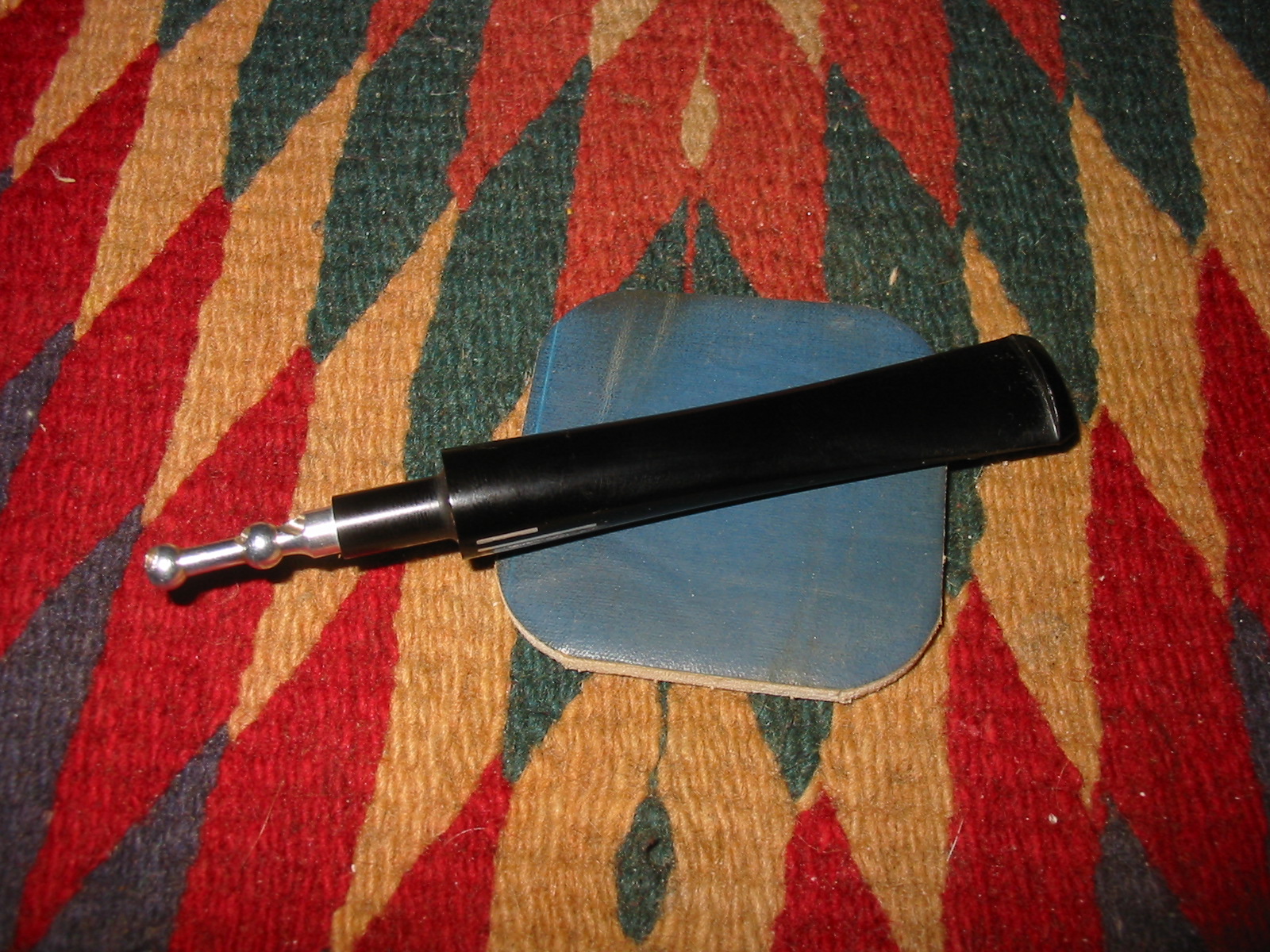
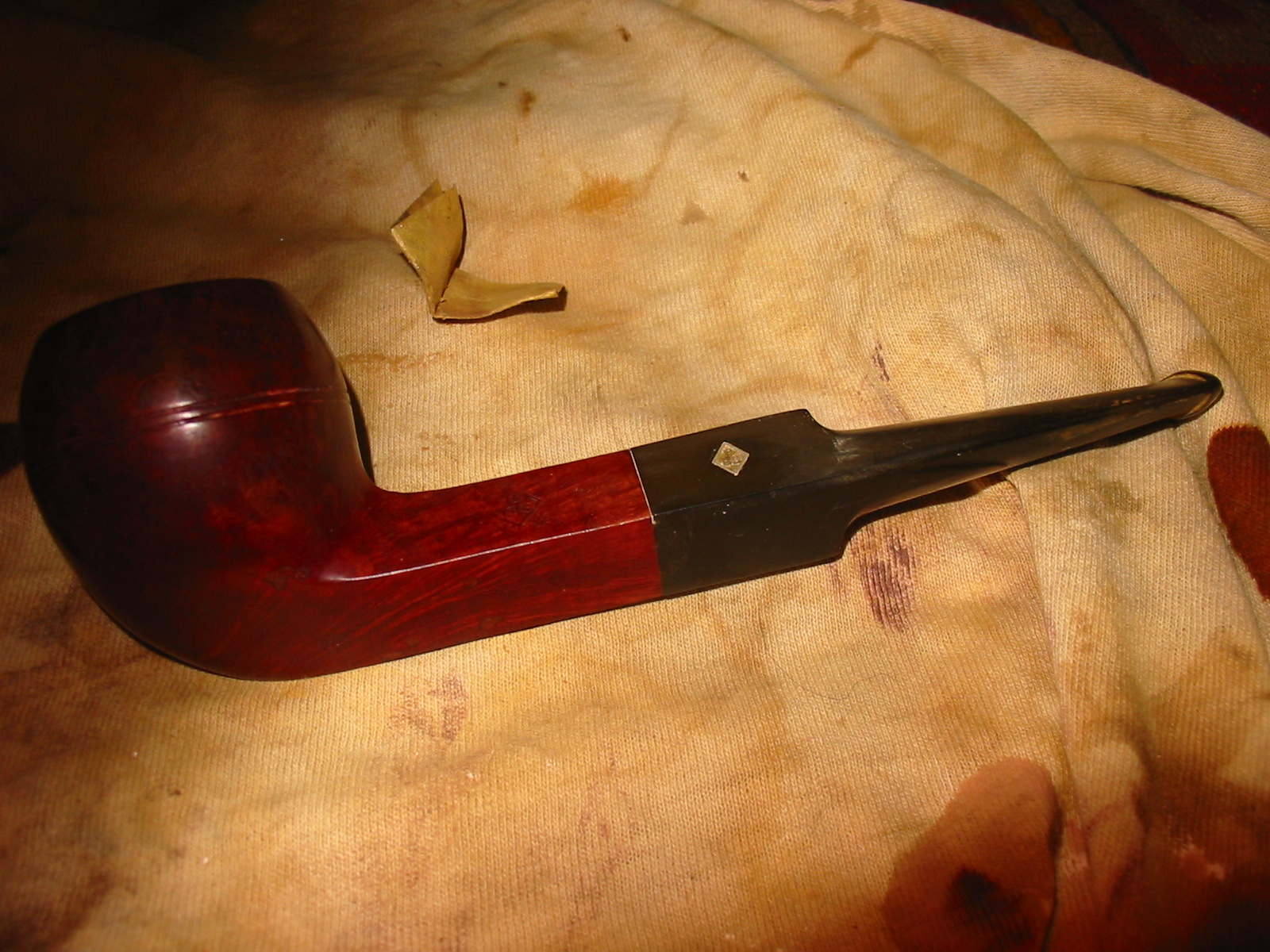
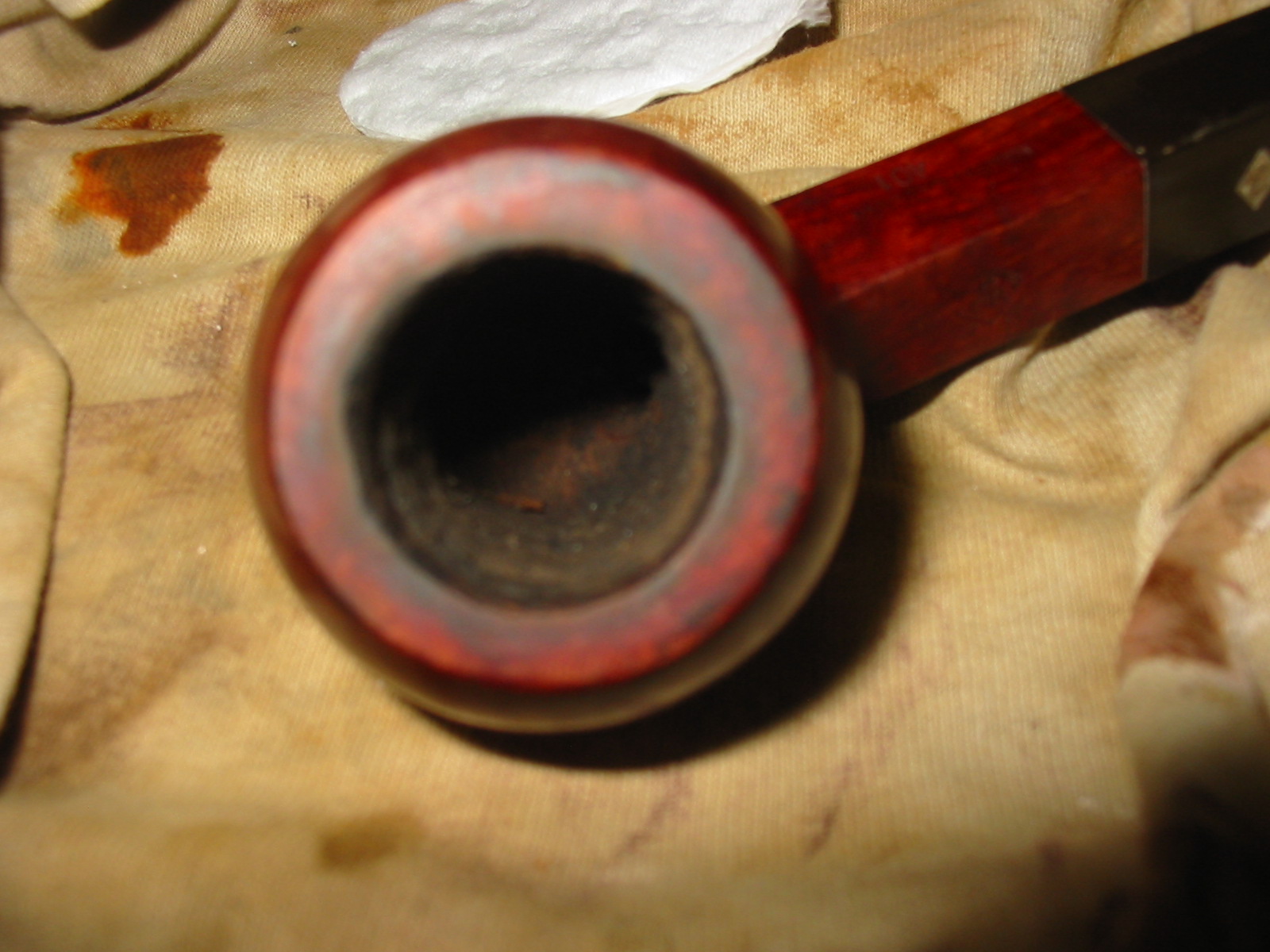
In one of my EBay bargain basket purchases I picked up a Kirsten Barrel and stem. It is complete minus the bowl. I have a bowl coming from a friend so it was time to do some work on the stem and barrel. The valve on the end of the stem was stuck shut so removed the stem and needle valve system from the barrel and filled the barrel with alcohol up to the top of the valve on the end. This worked through the buildup on the valve and I was able to remove it. The barrel was fairly easy to clean up with alcohol and cotton swabs. The stem valve also cleaned up nicely but the stem was another matter altogether.
ImageImage

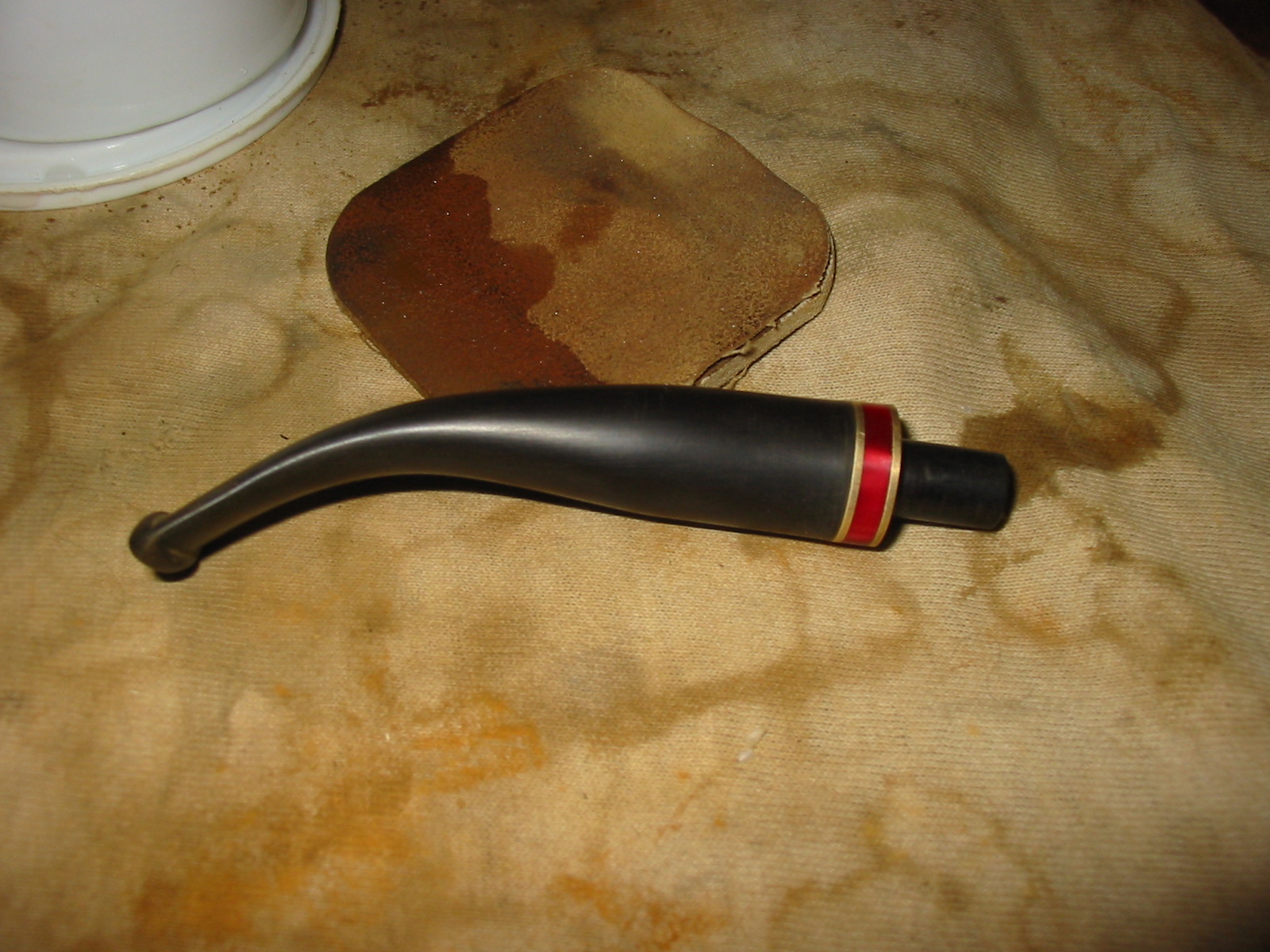
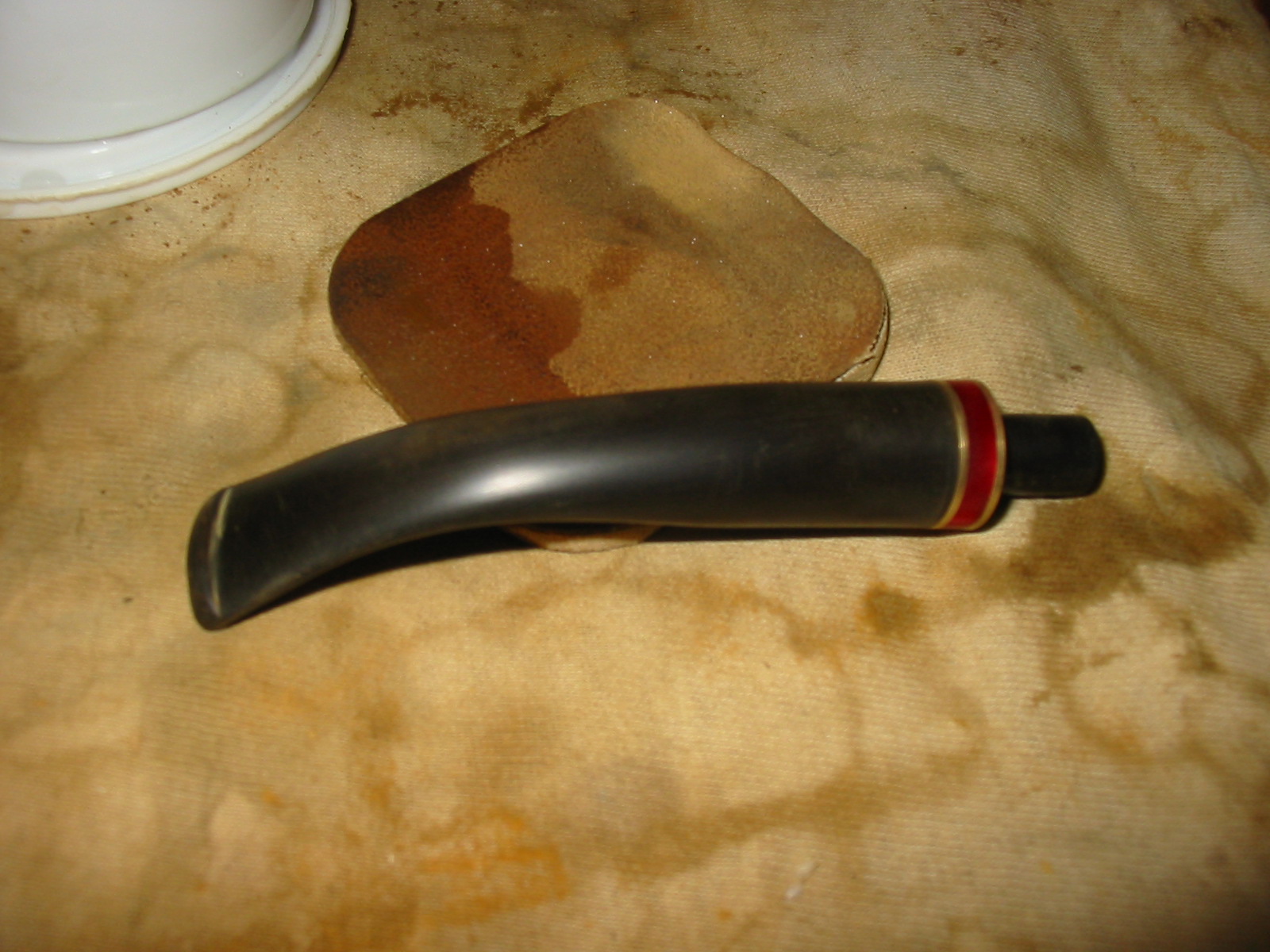
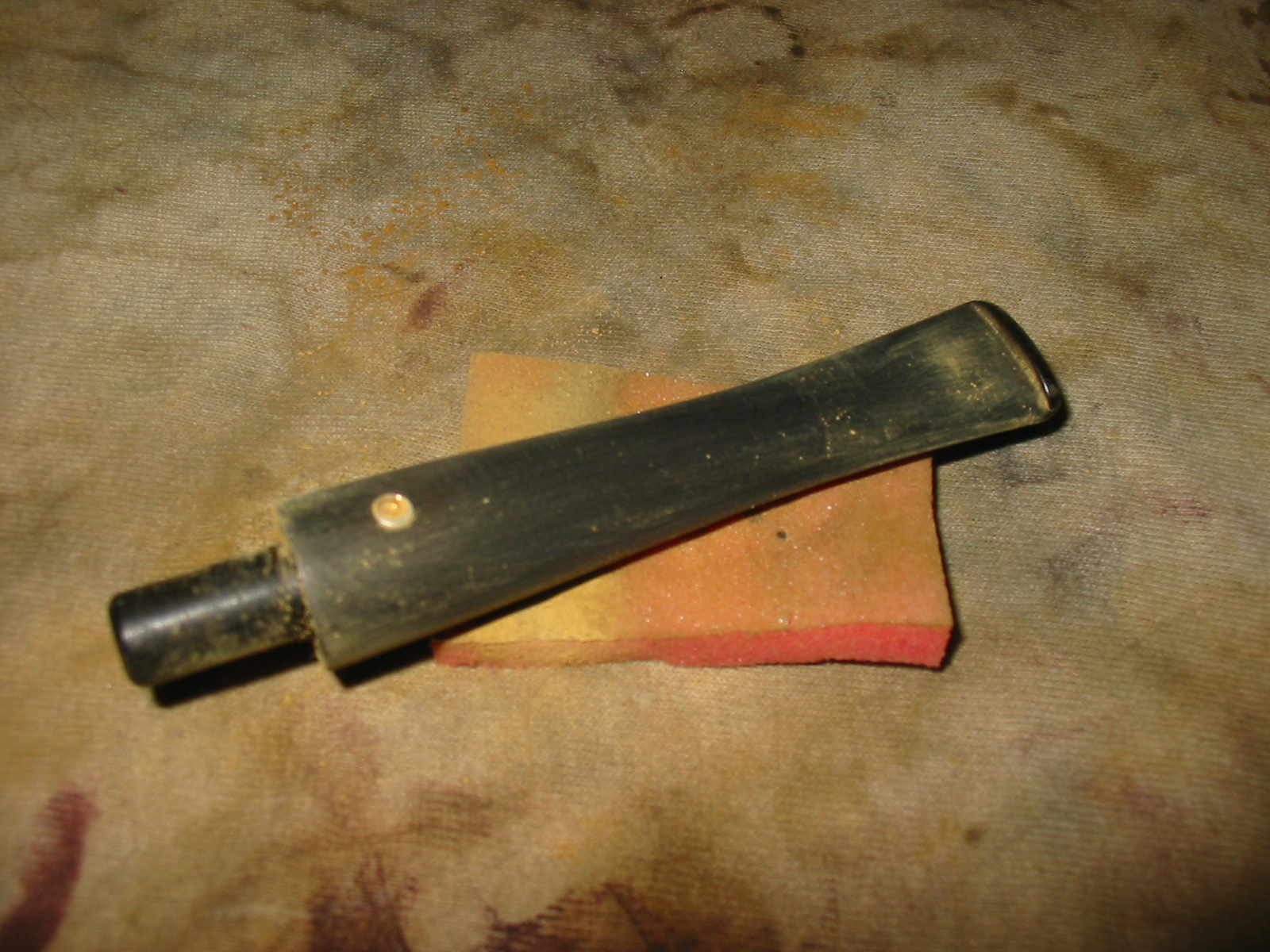
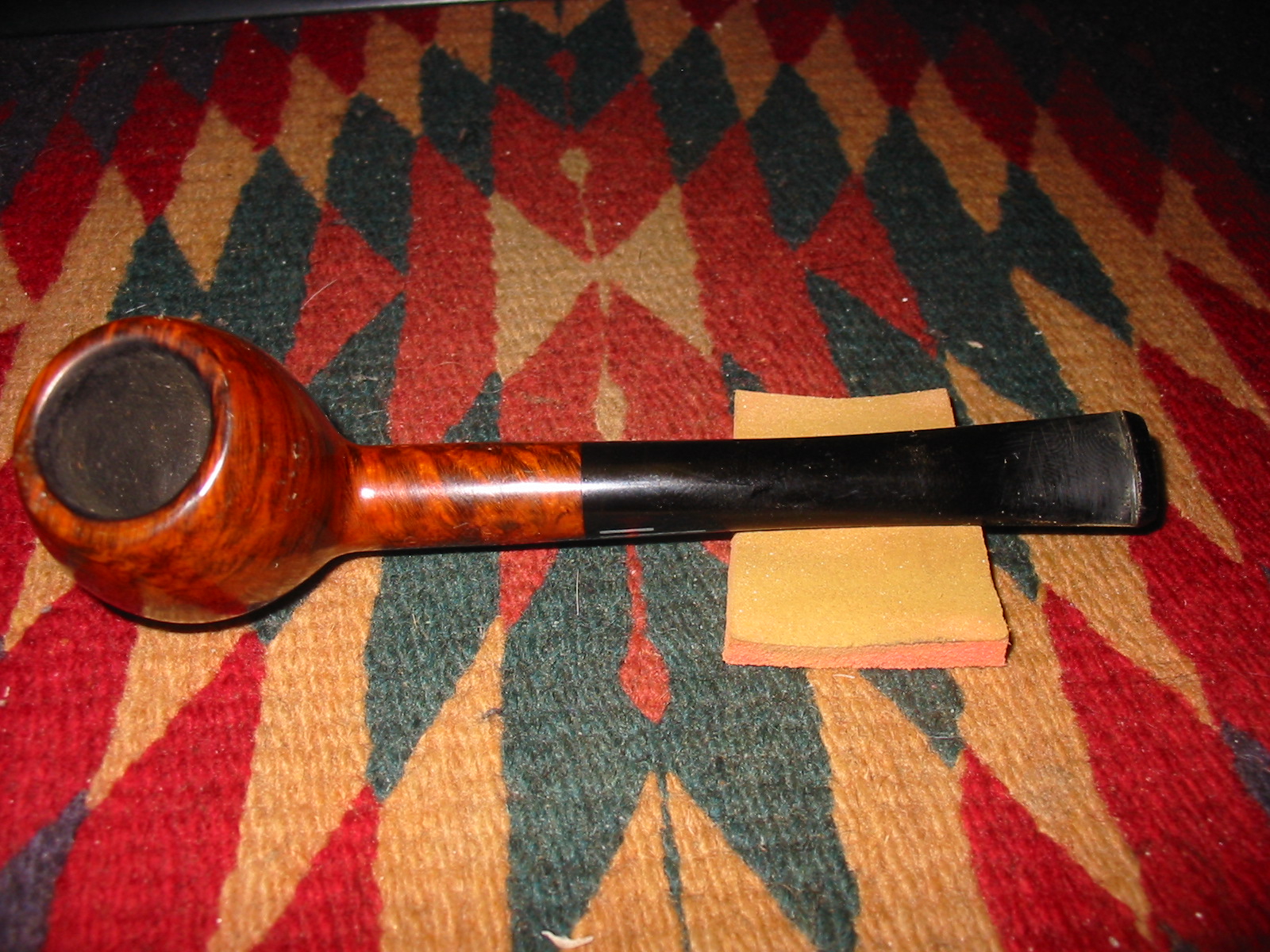
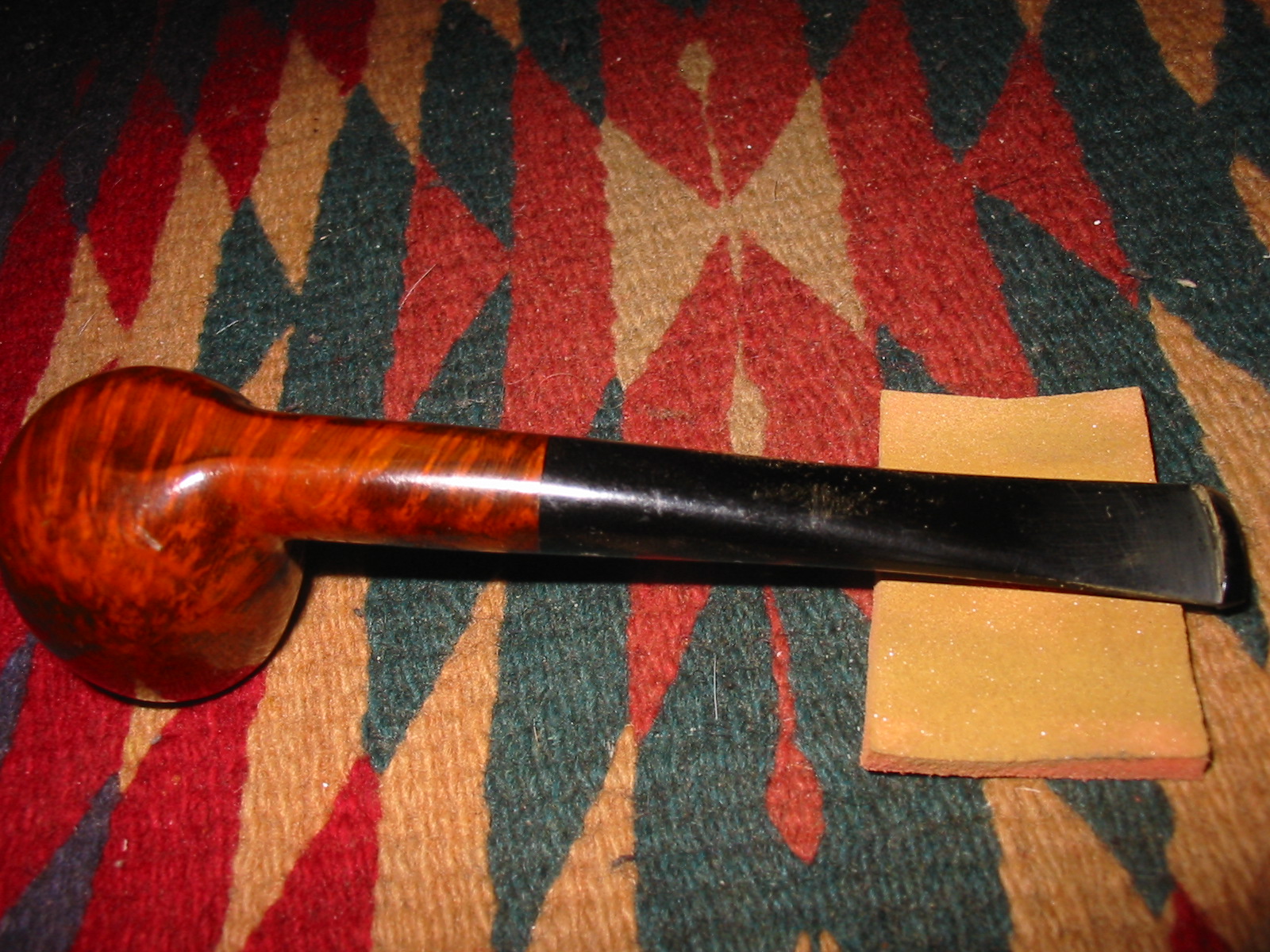
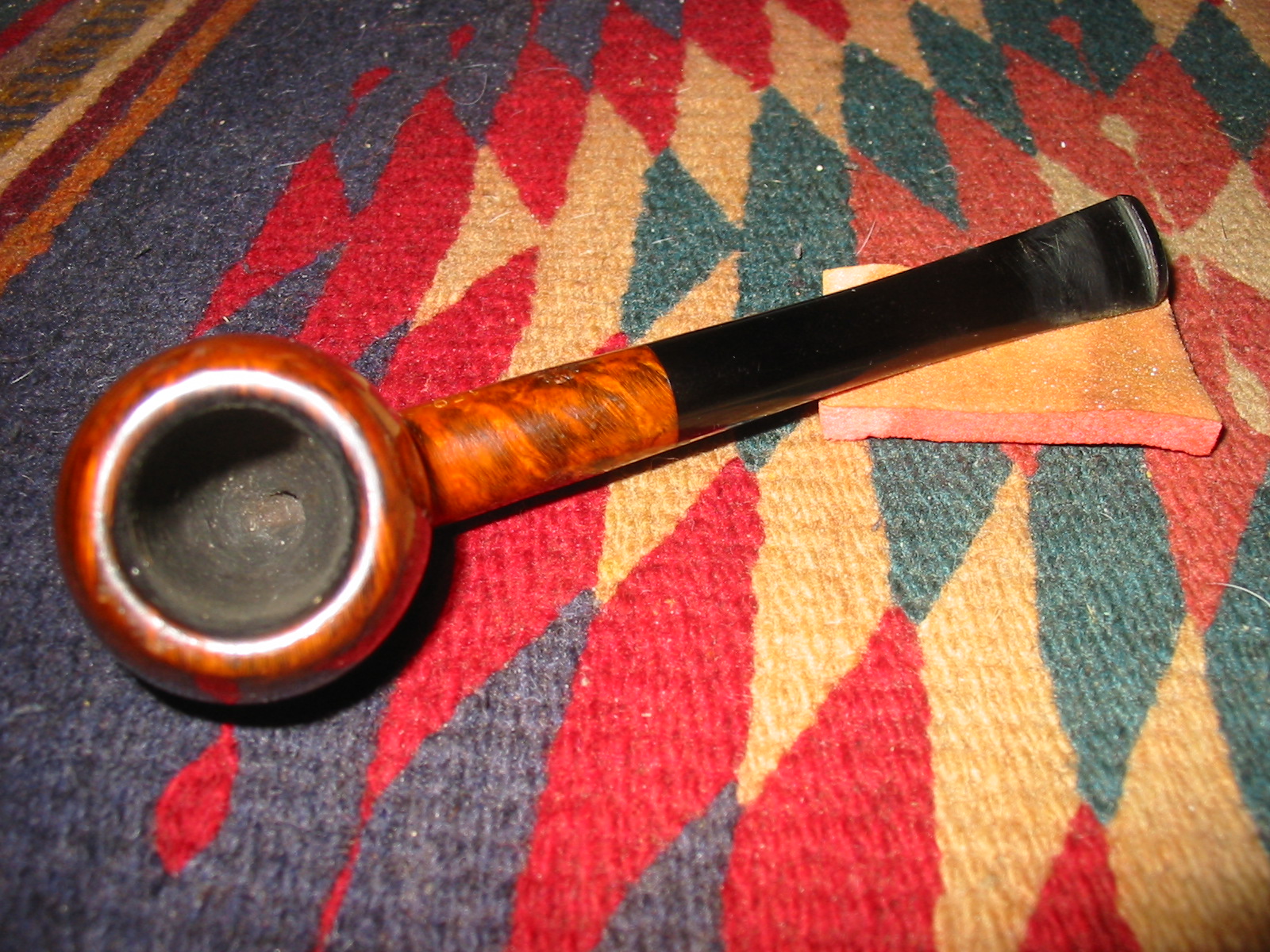
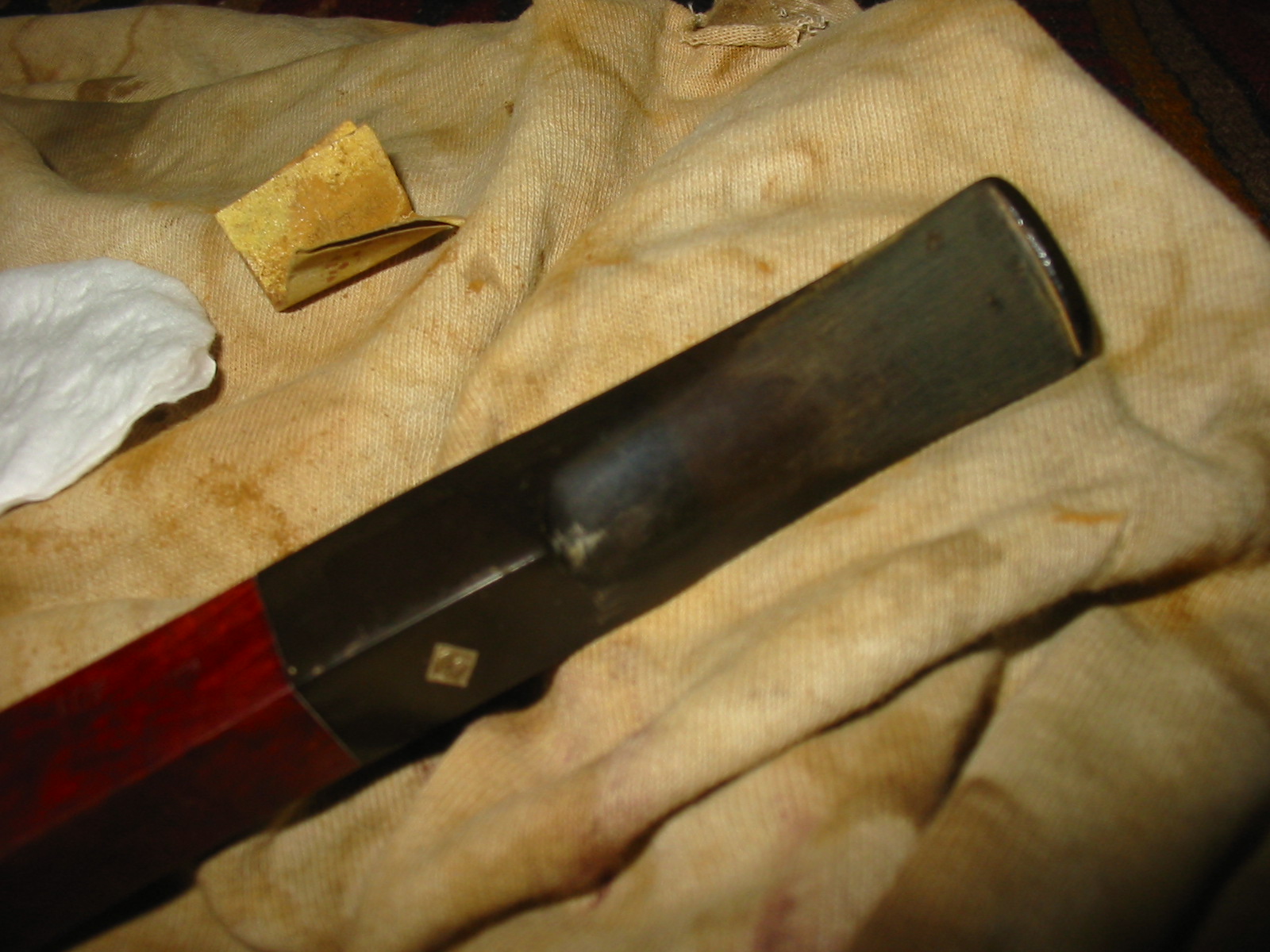
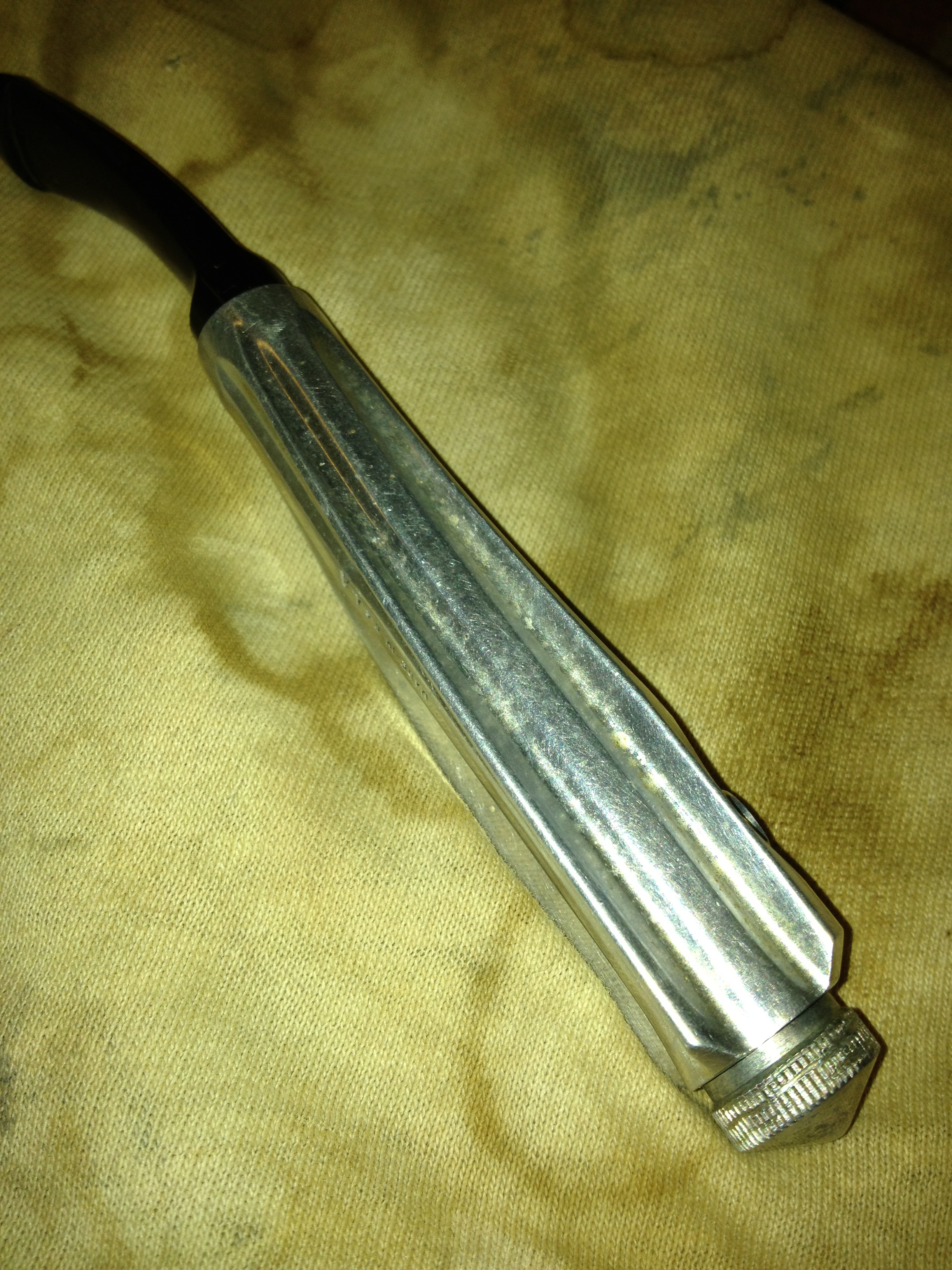
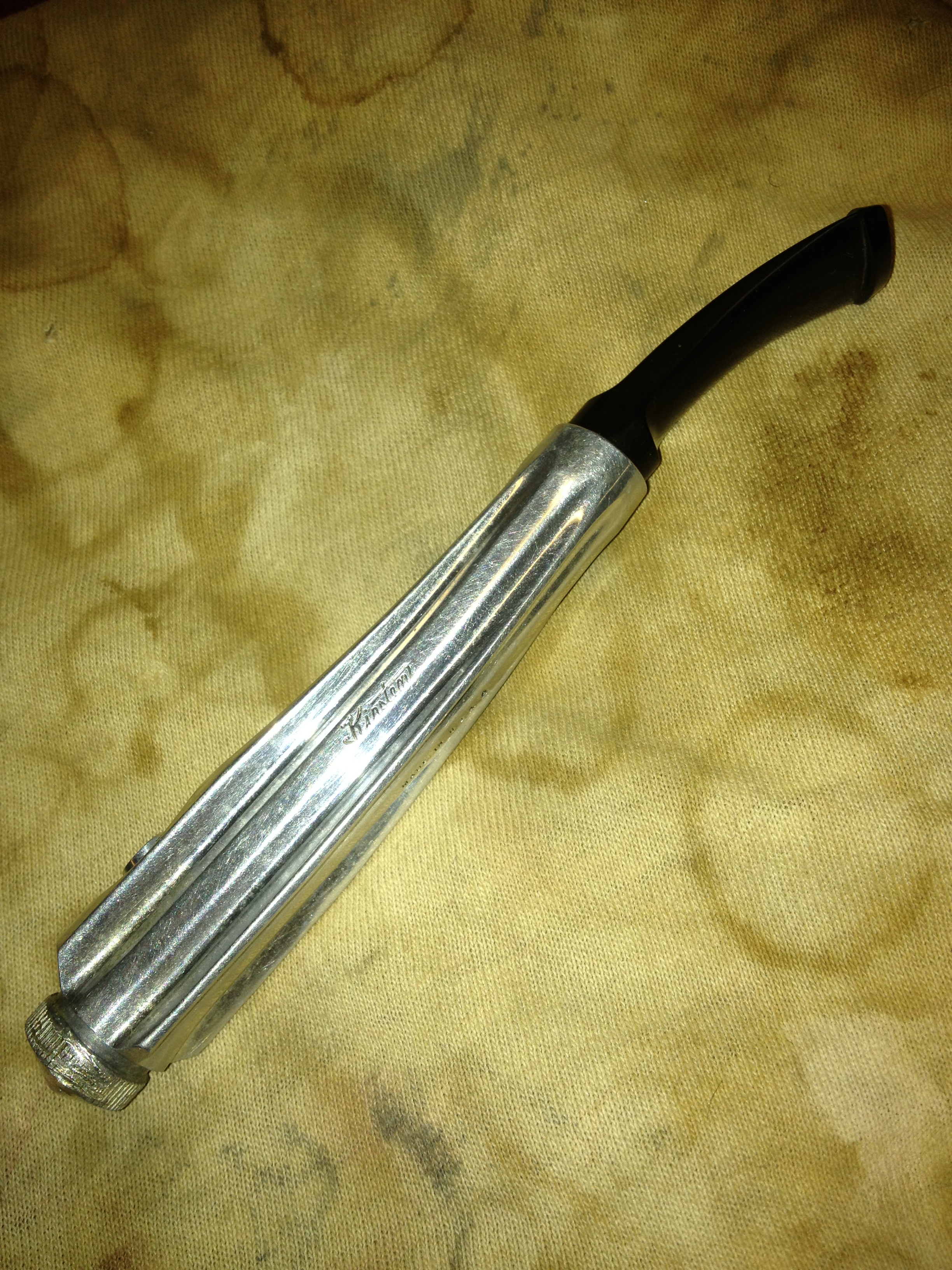
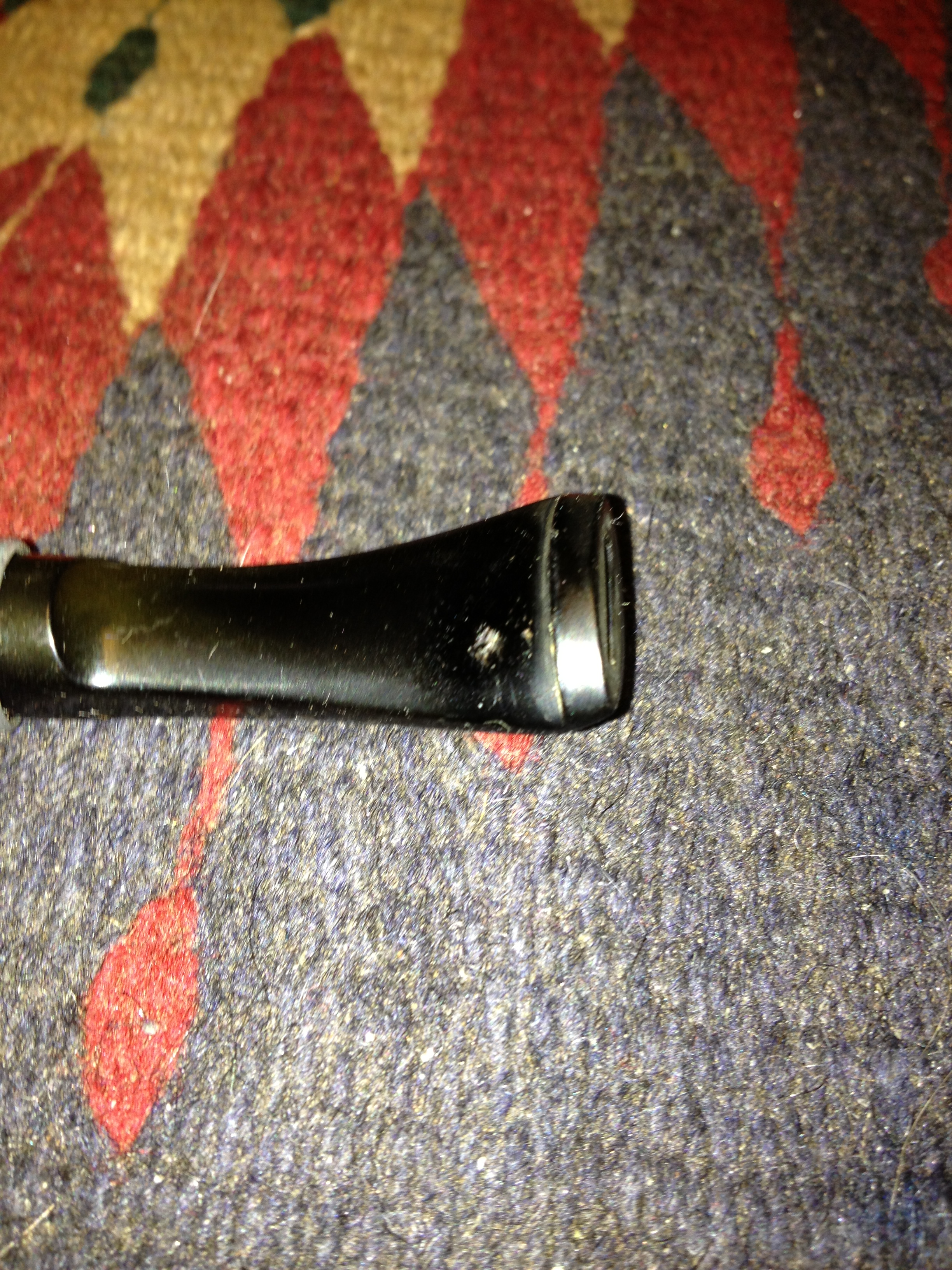
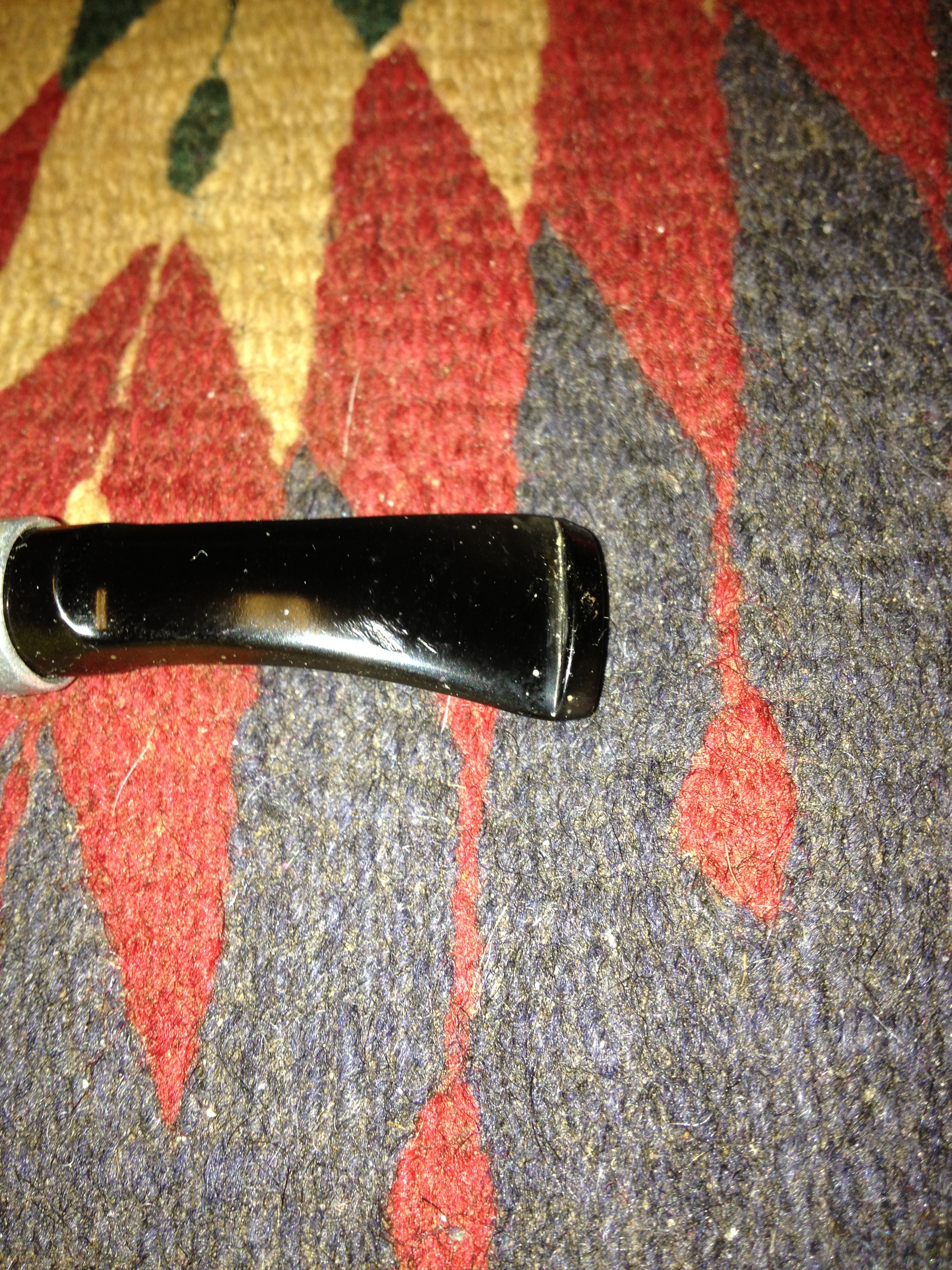
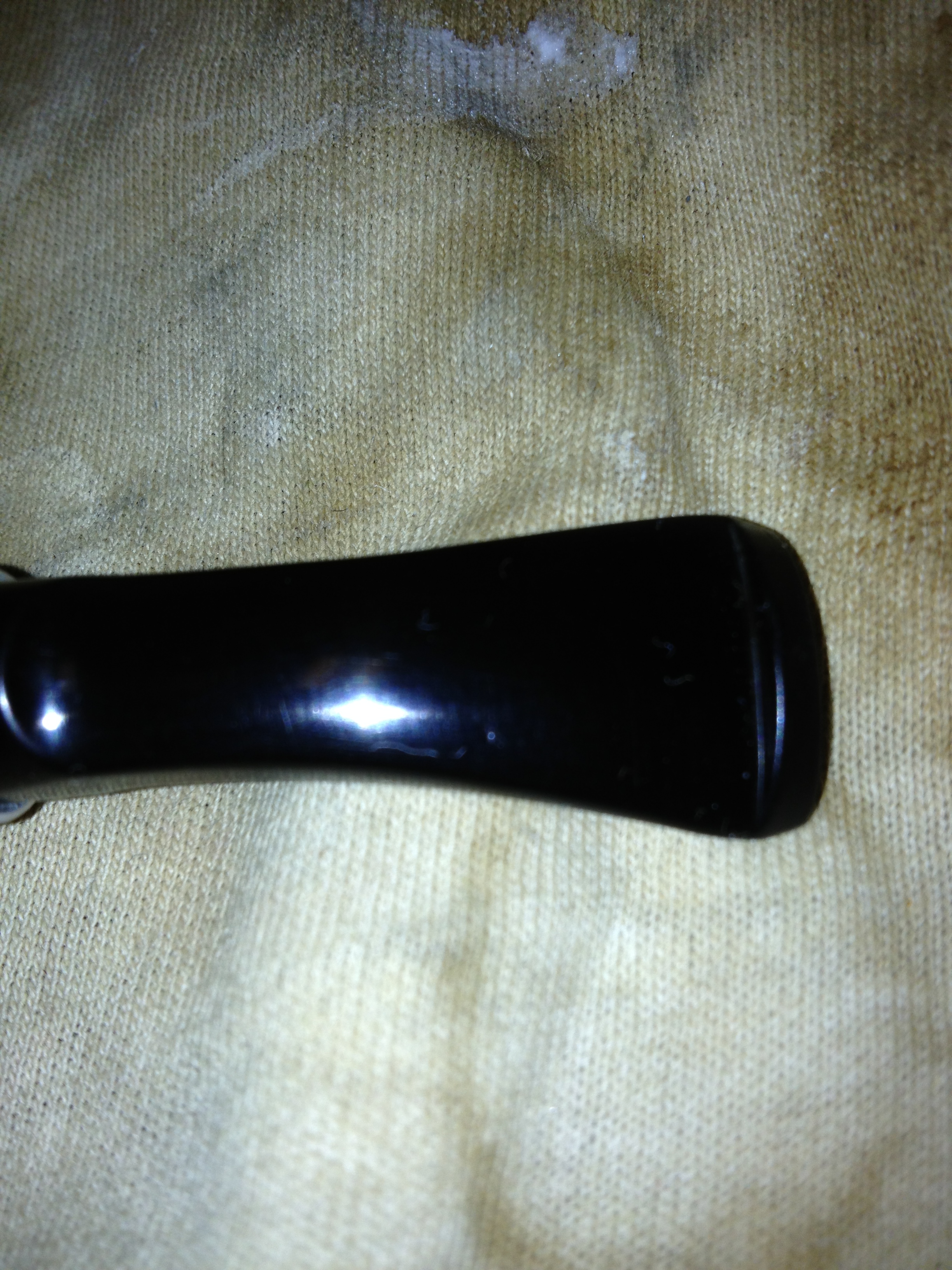
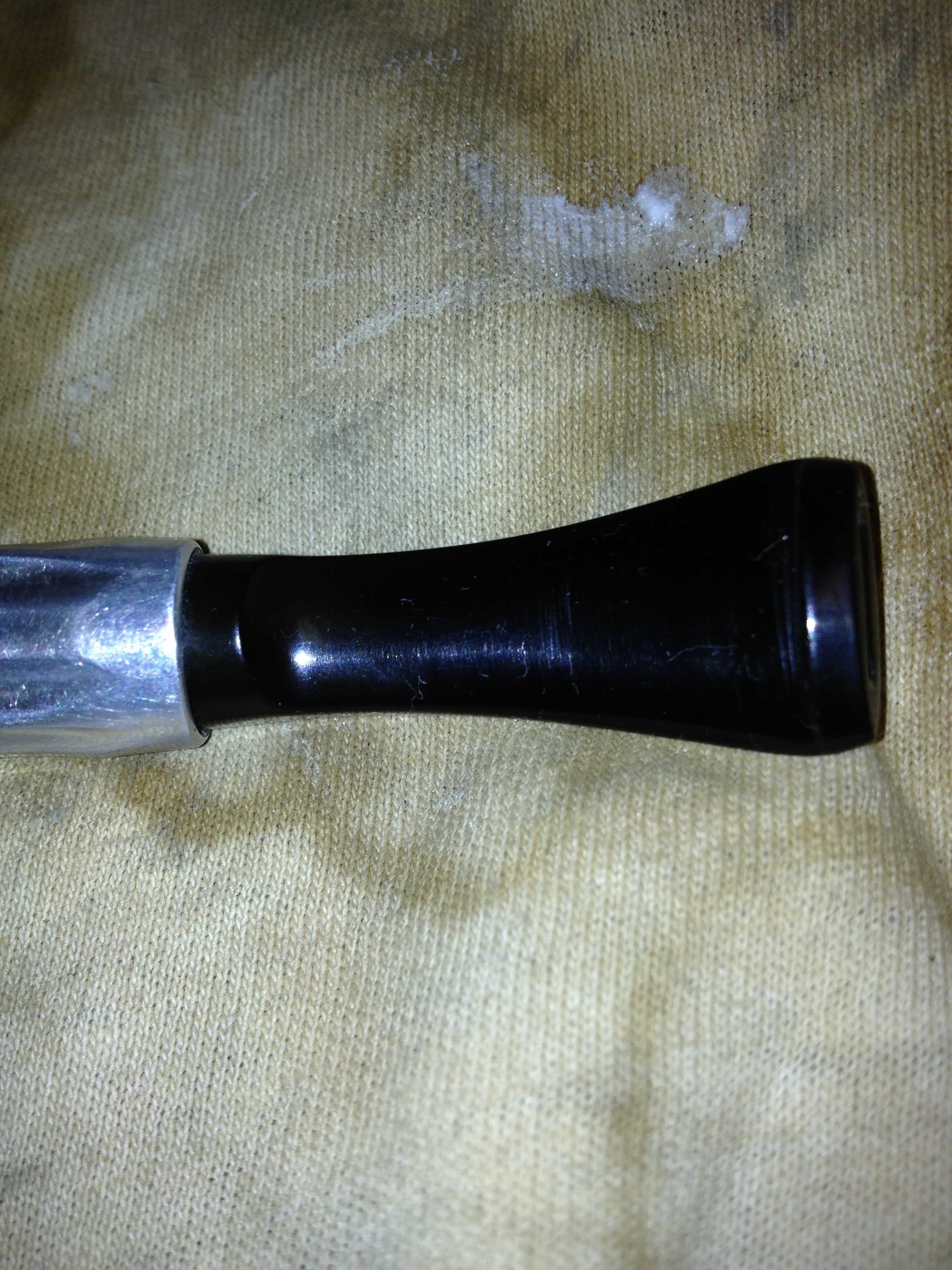
On the underside of the stem was a deep bite mark. It was rough around the edges and the vulcanite was compromised. On the top side of the stem were some smaller and less deep bite marks that were more like dents. There was also a wrinkle in the topside of the stem that was strange. The first two photos below show the stem when I began to work on it.
ImageImage

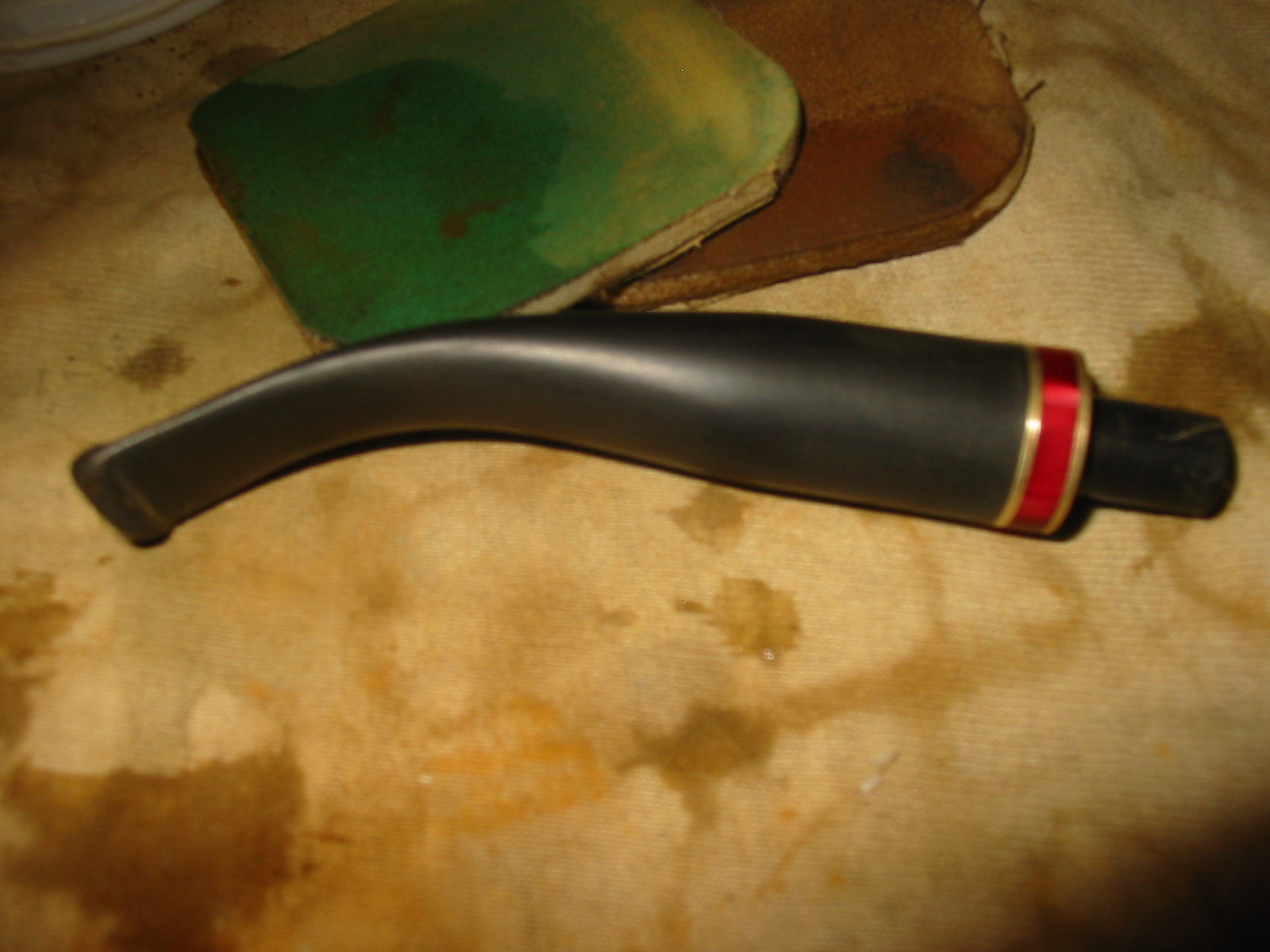
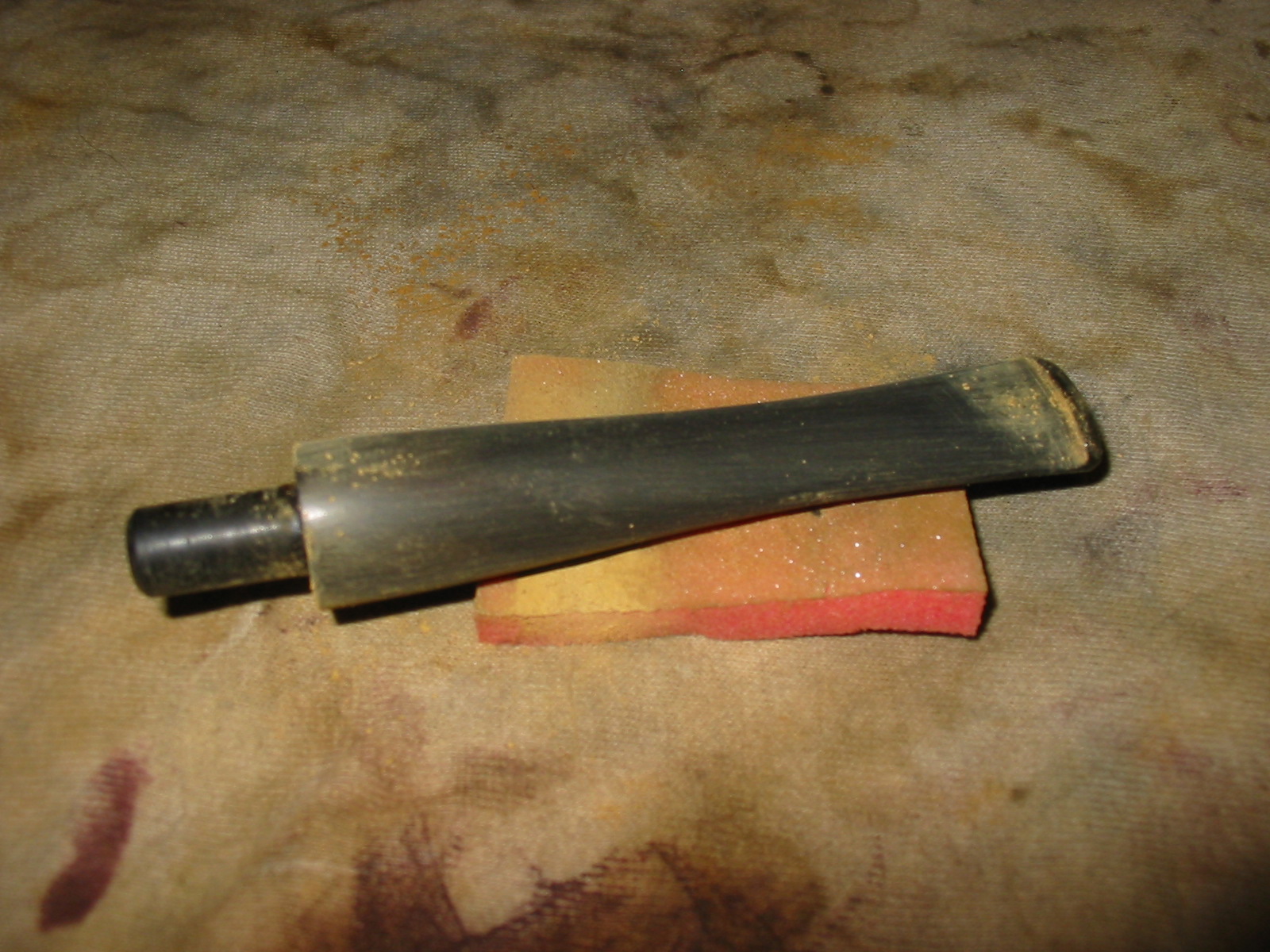
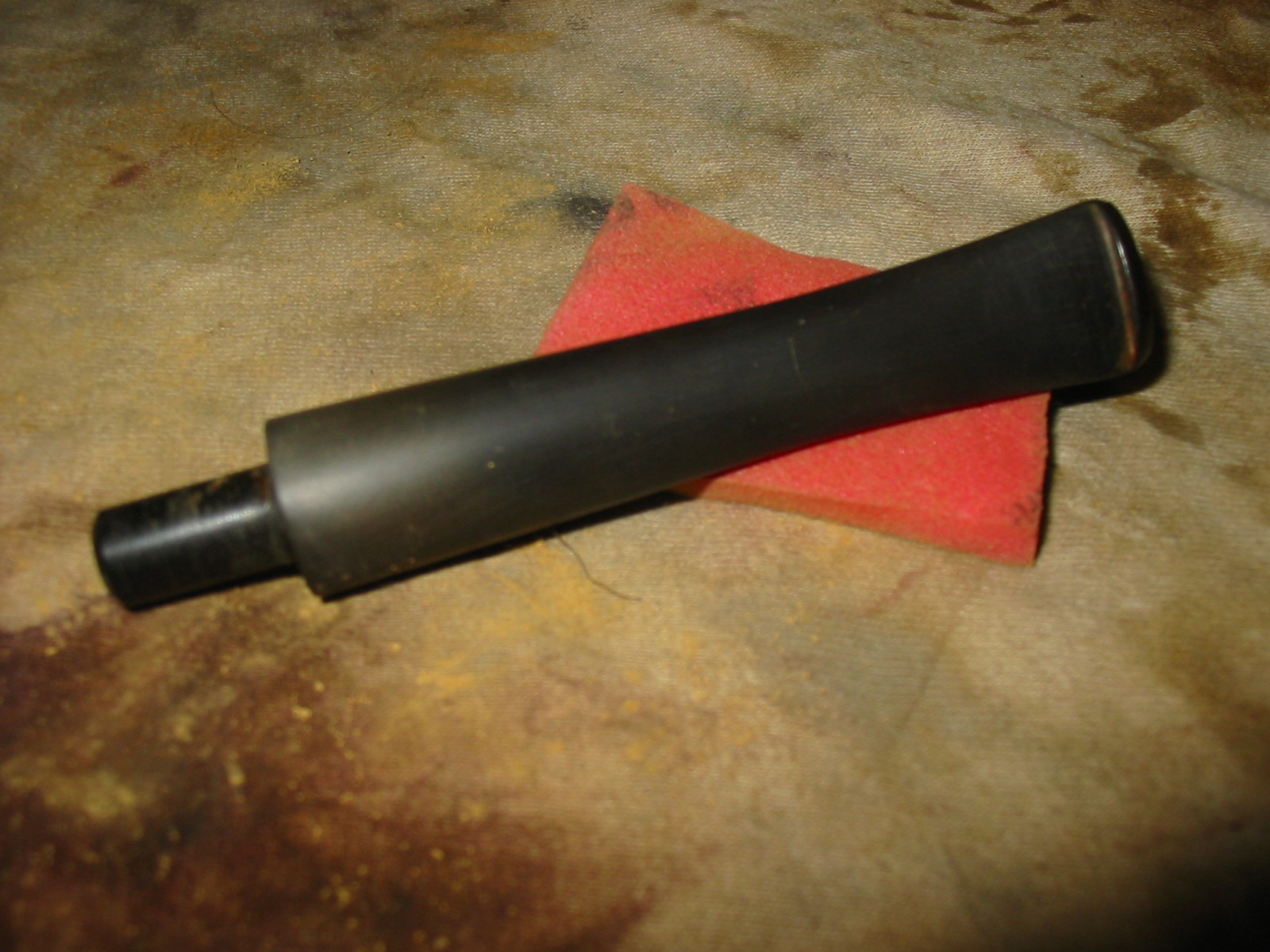
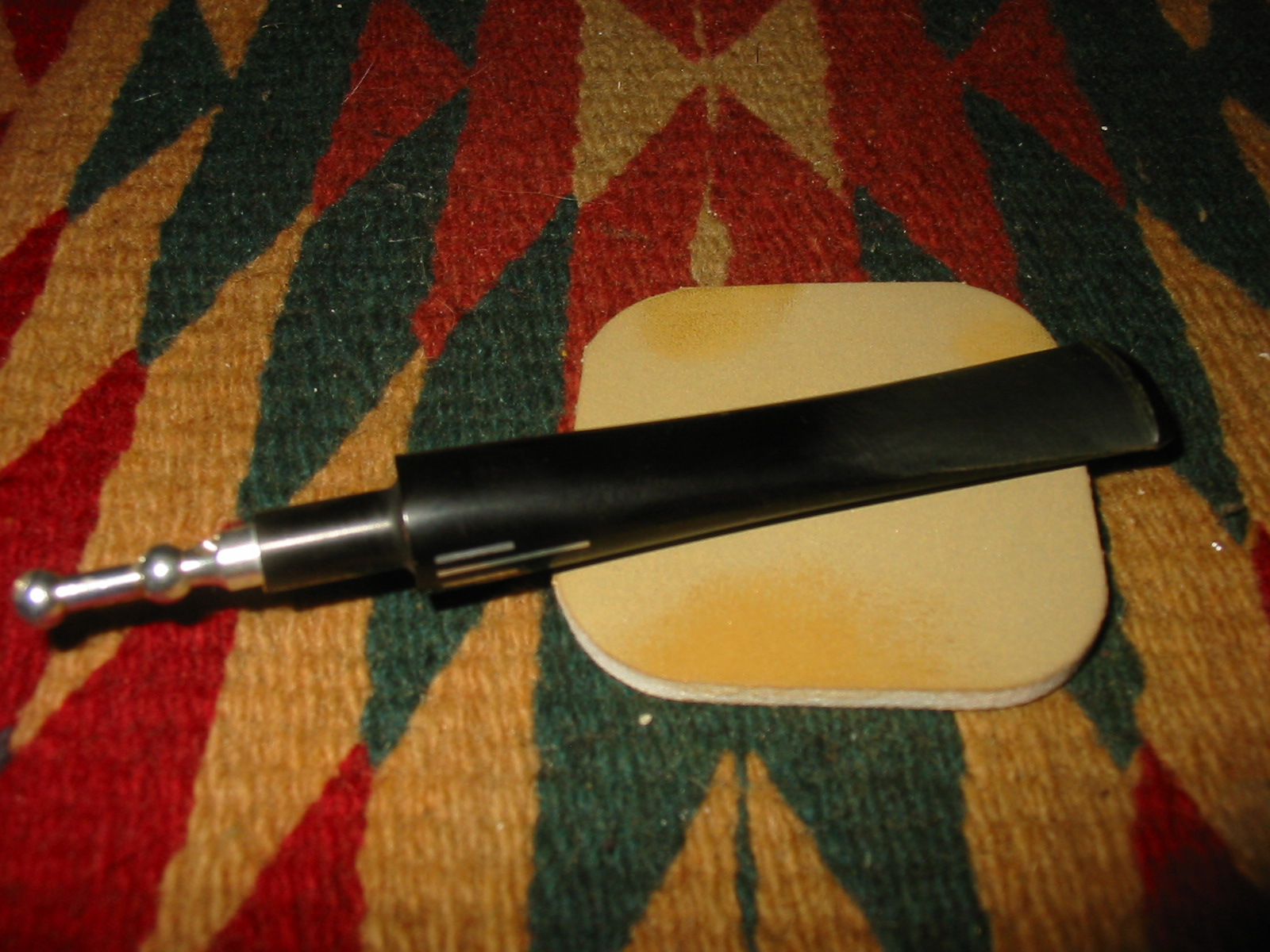
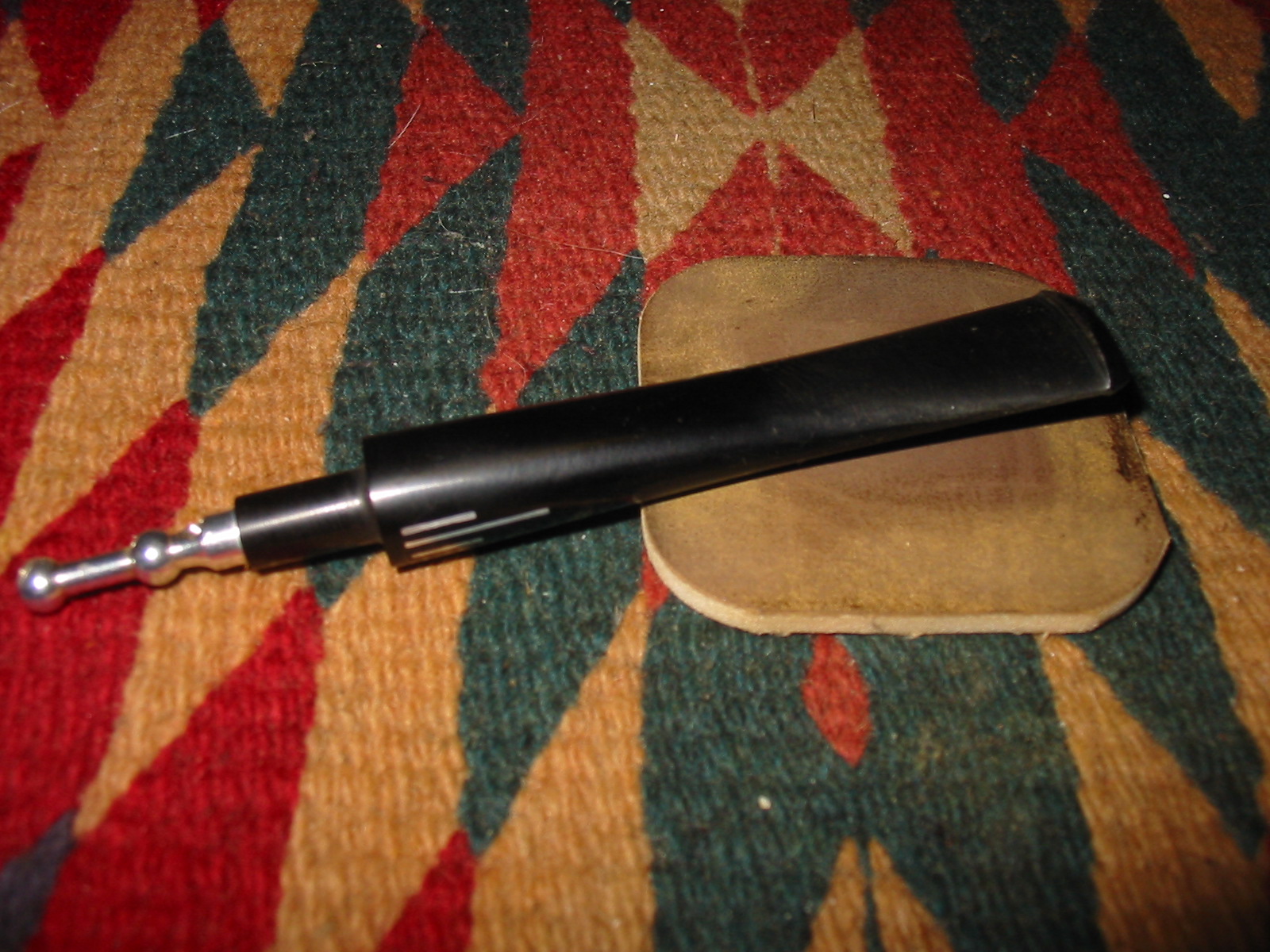
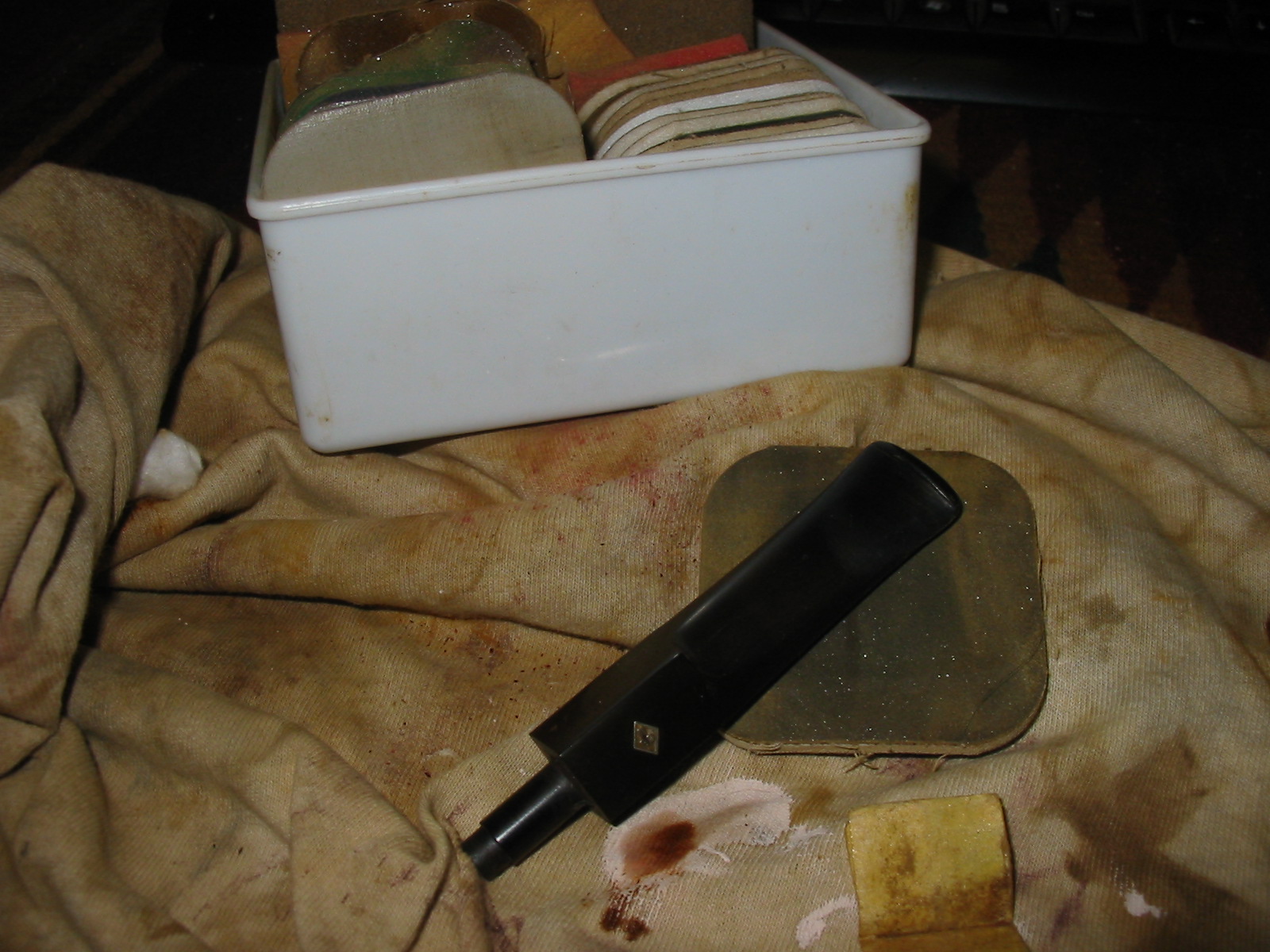
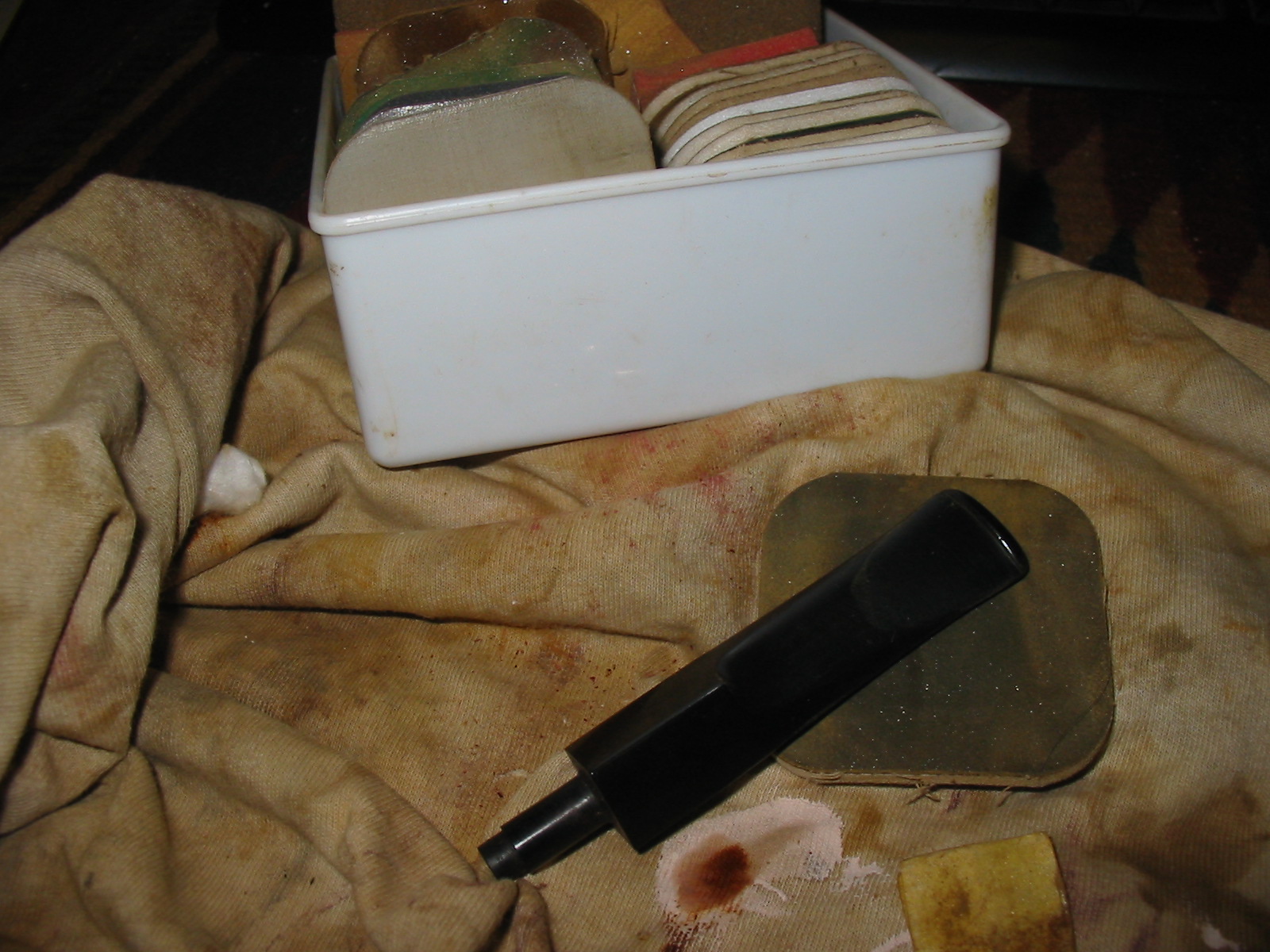
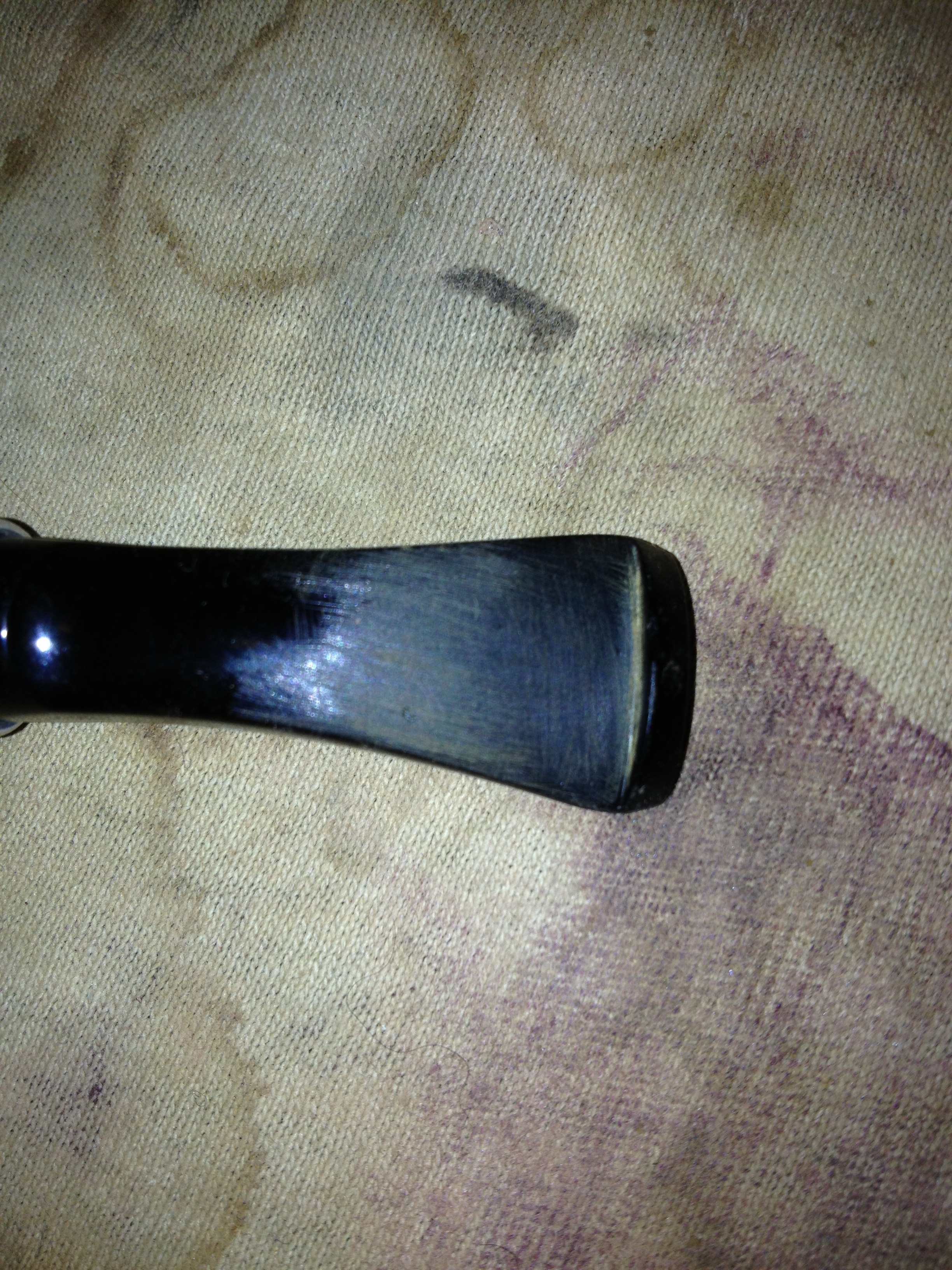
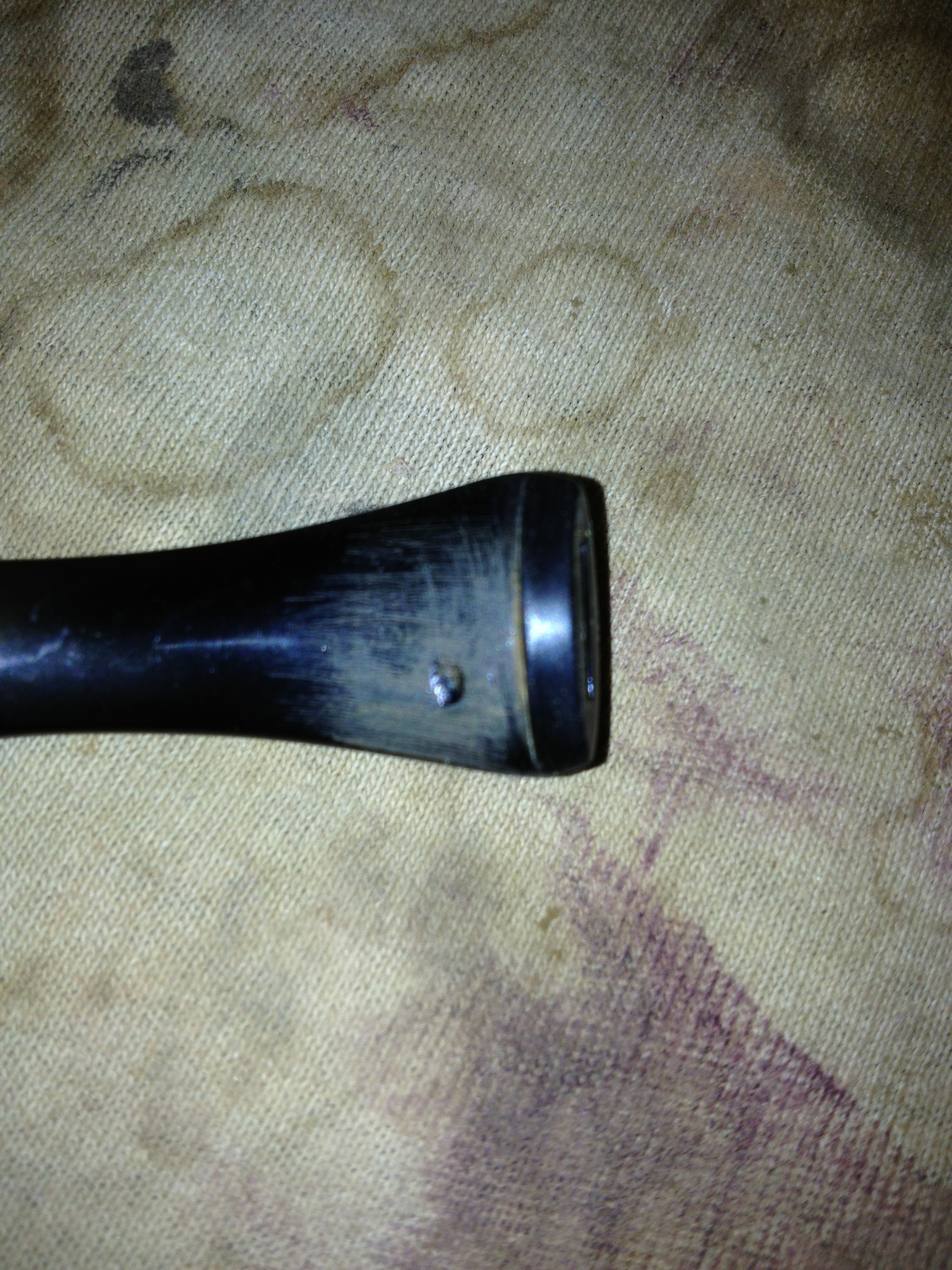
I decided to use my heat gun and set it on the lowest setting and held the stem over the gun to lift the tooth marks as much as possible. The ones on the top side of the stem lifted very easily with the heat. The wrinkle also smoothed out easily with the heat. The bite mark on the underside lifted slightly but it was not going to come out smoothly. I then sanded it with 240 grit sandpaper to remove the remnants of the bite marks and remaining tooth chatter. The top of the stem came out very nicely and I would need to work out the scratches with higher grits of sandpaper and micromesh. The underside was another matter. I sanded out the roughness around the edges of the crater in the stem. I sanded out the remnants of tooth chatter to see what I would have to do to reclaim the stem. The next two photos show the stem after the sanding with the 240 and 320 grit sandpaper. The topside is nice, but the bottom crater remains – smaller but visible.
ImageImage

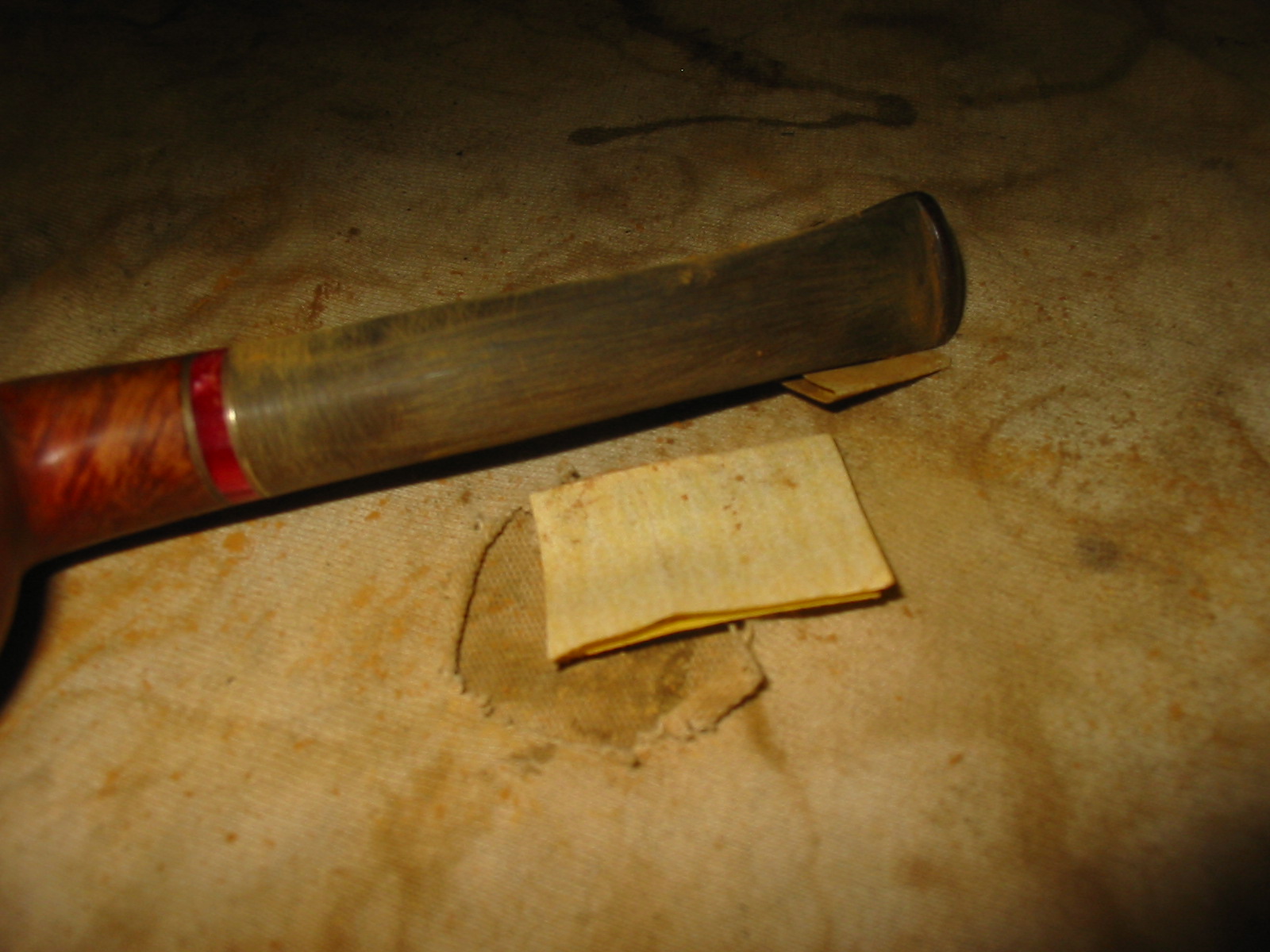
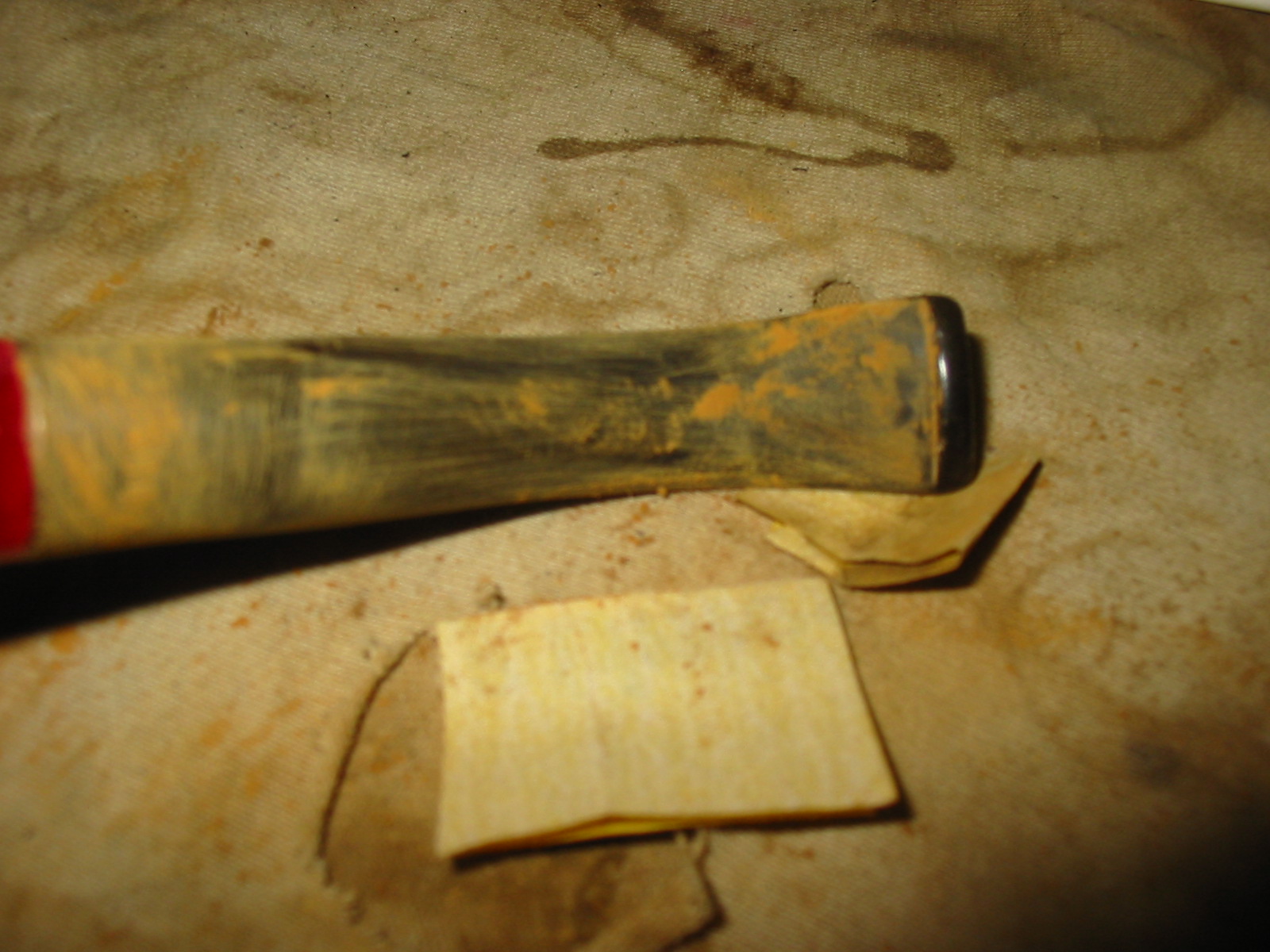
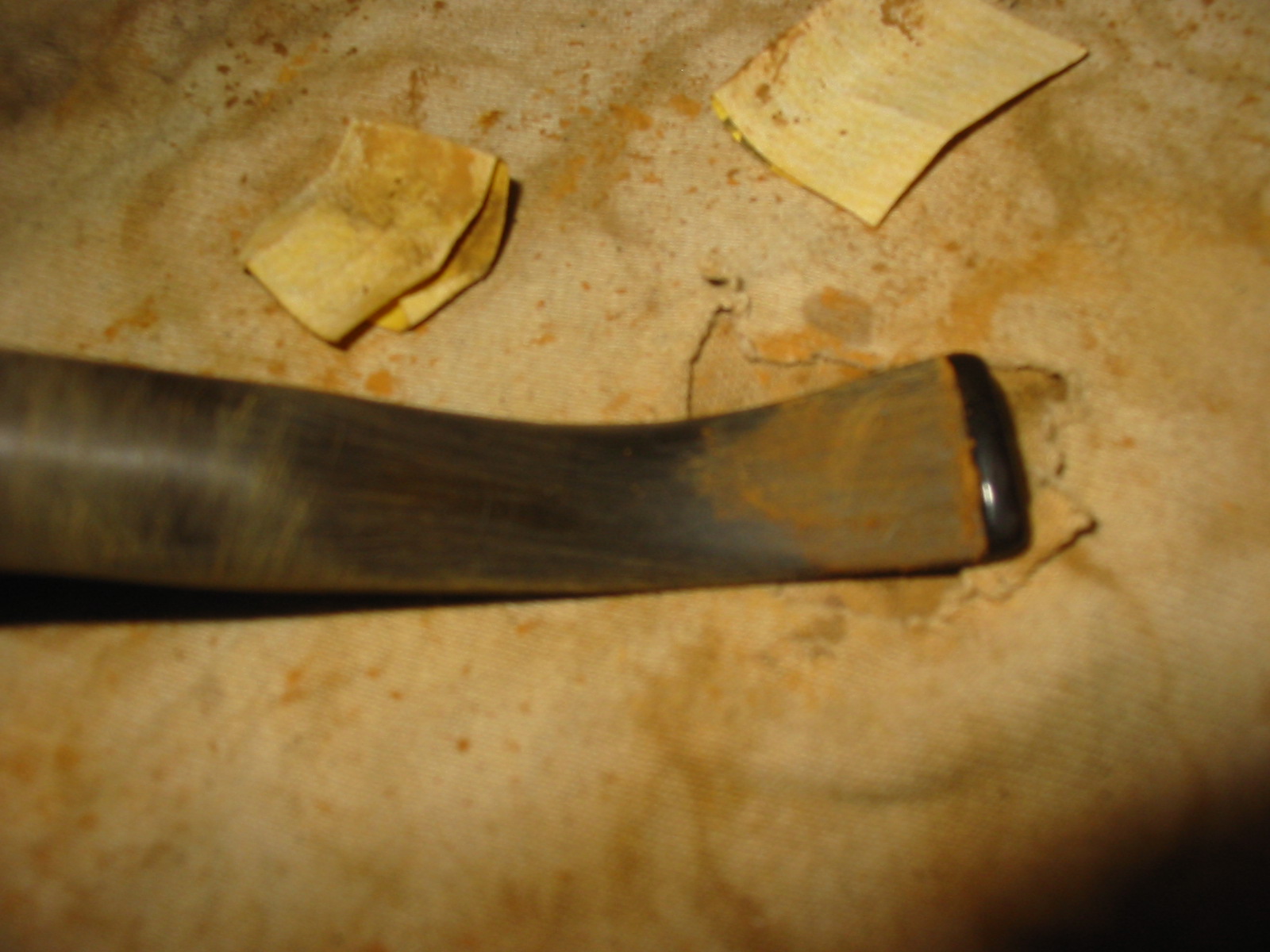
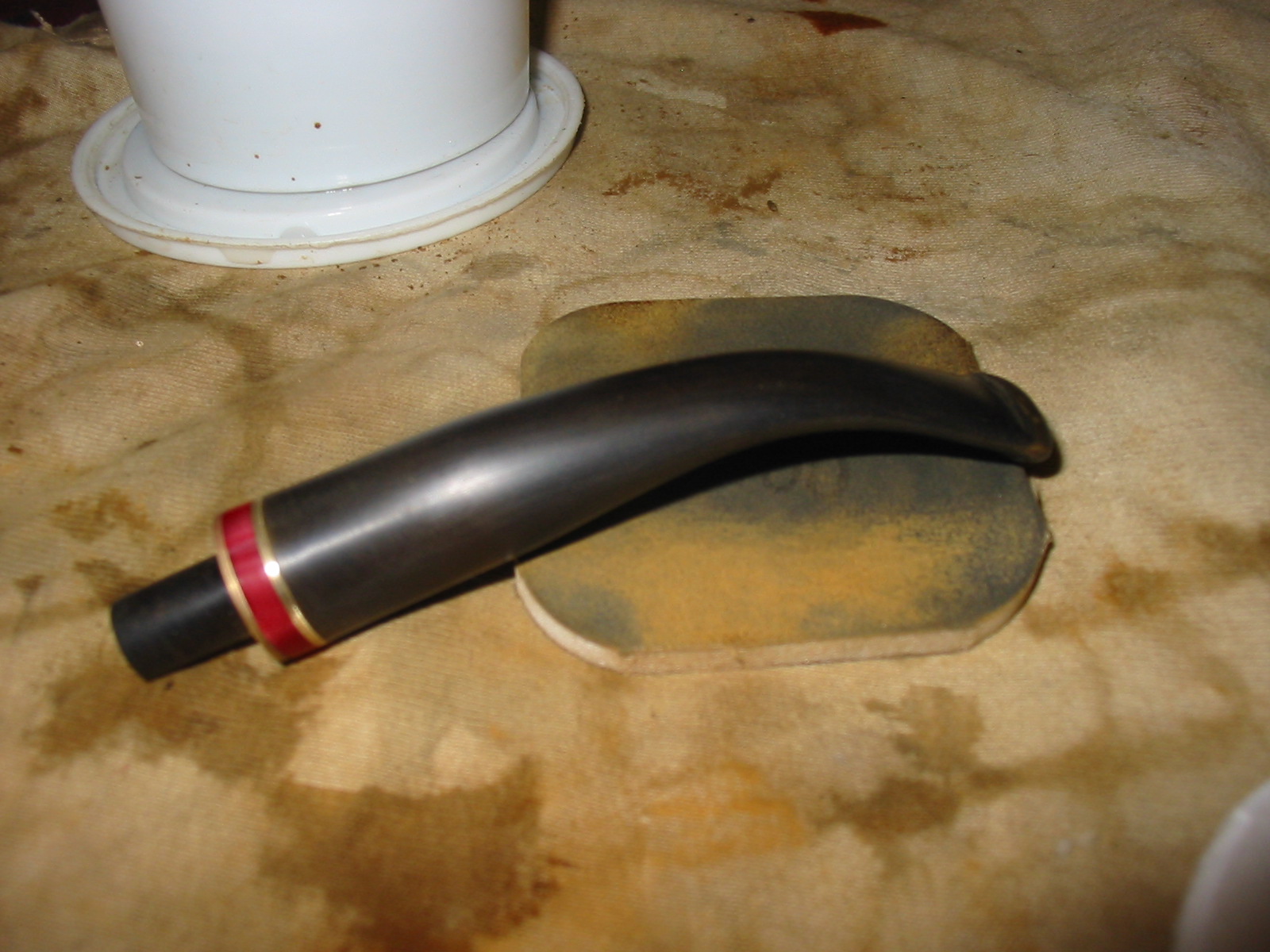
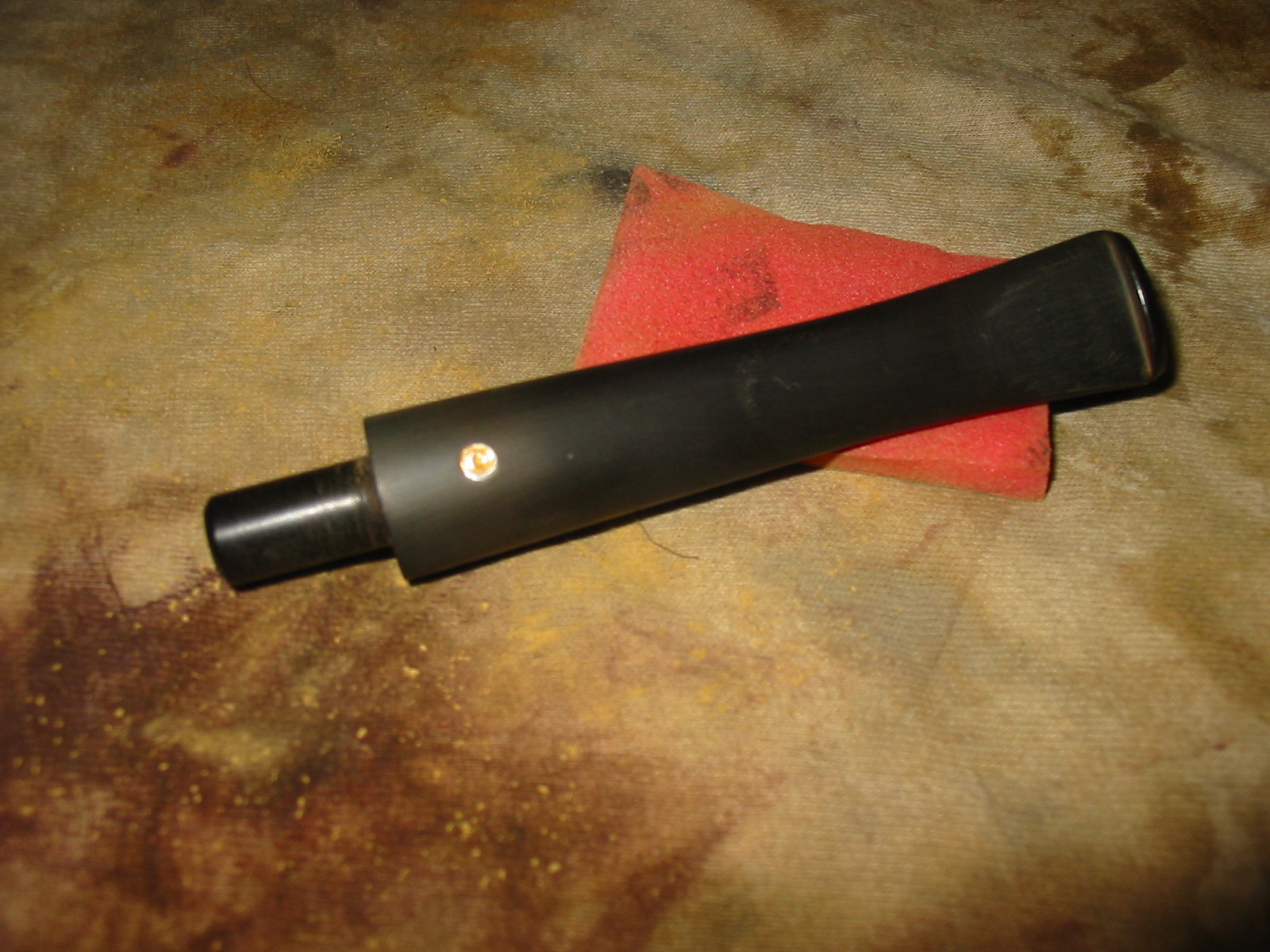
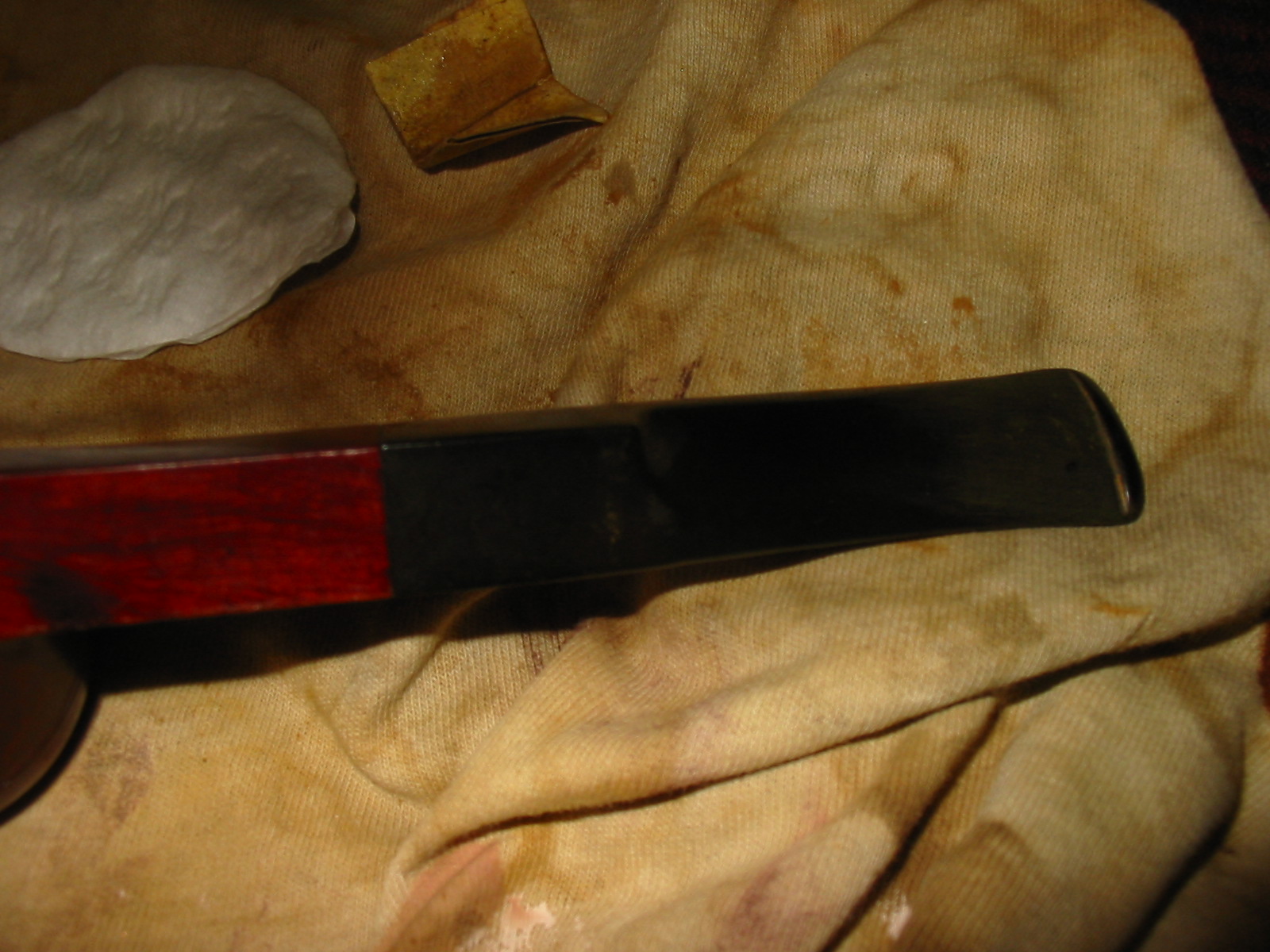
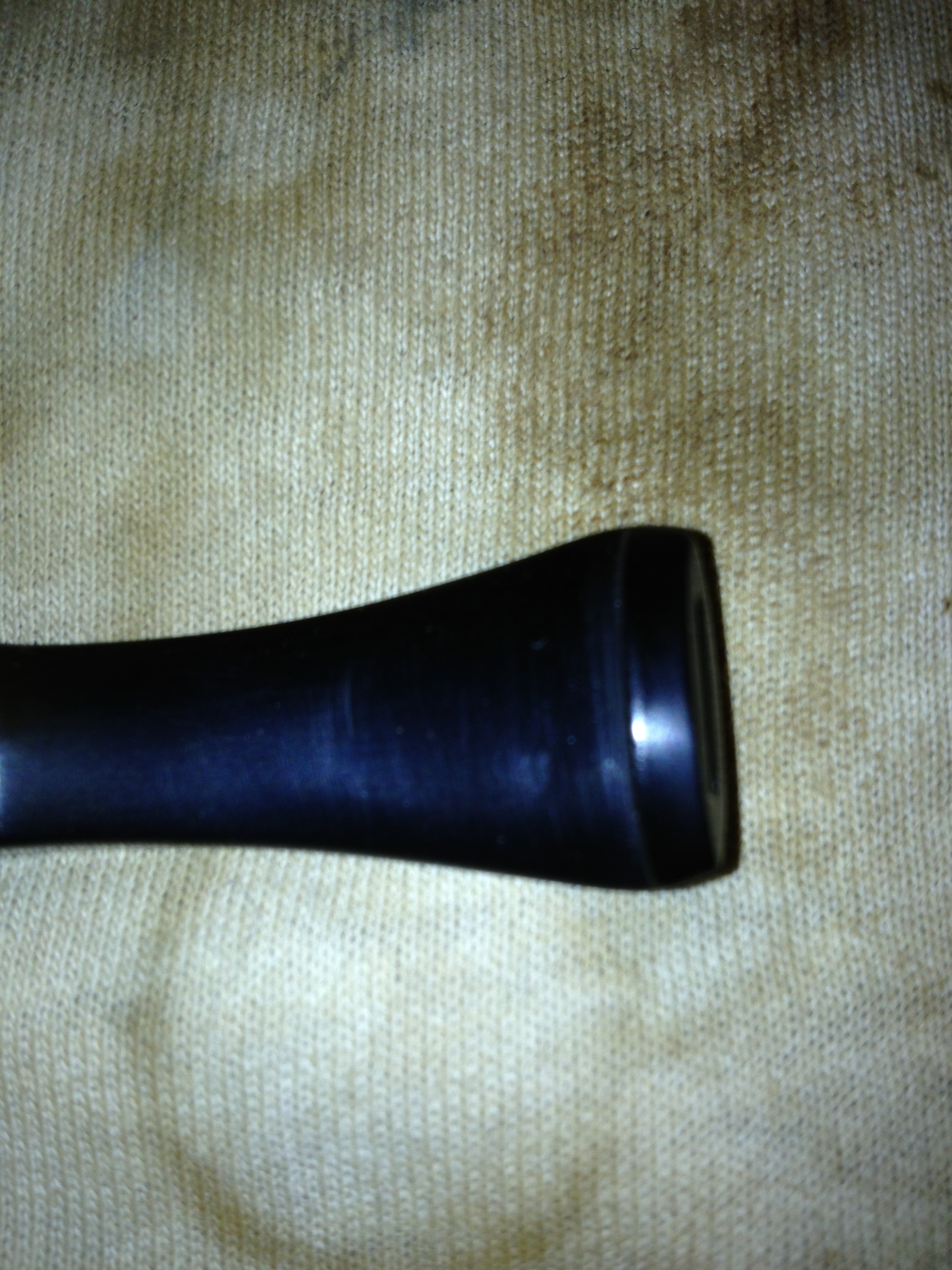
I sanded the stem with 400 and 600 grit wet dry sandpaper to remove the majority of the scratches pictured above. The top side I then sanded with 1500-2400 grit micromesh sanding pads. The first photo below shows the top of the stem and the bite marks and tooth chatter is gone. The stem from the top looks clean and new – ready for the bowl when it gets here. The second photo shows the underside of the stem. For the crater in the underside I cleaned out the hole with a cotton swab and alcohol. I picked away any debris that had collected in the hole with a dental pick. I then filled the hole with black superglue. I made a superglue bubble over the hole to make sure that when it dried it would be able to be full enough. I set it aside for the night. In the morning I sanded it with 320 grit sandpaper and took the bubble down to the surface of the stem. I then sanded with 400 and 600 wet dry to smooth it out more. Finally I sanded it with the 1500-2400 micromesh sanding pads to get it to the point shown in the second photo below.

ImageImage

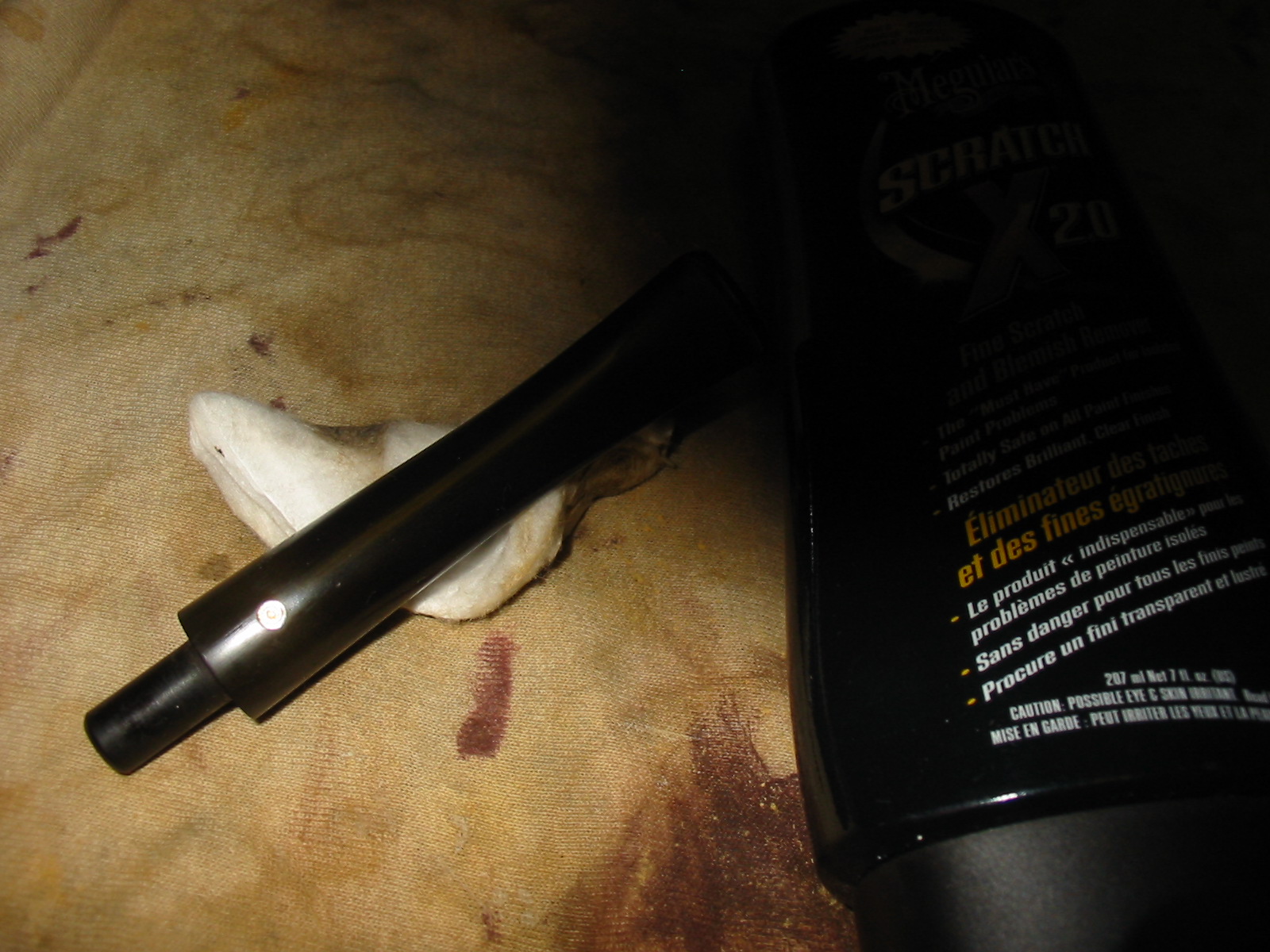
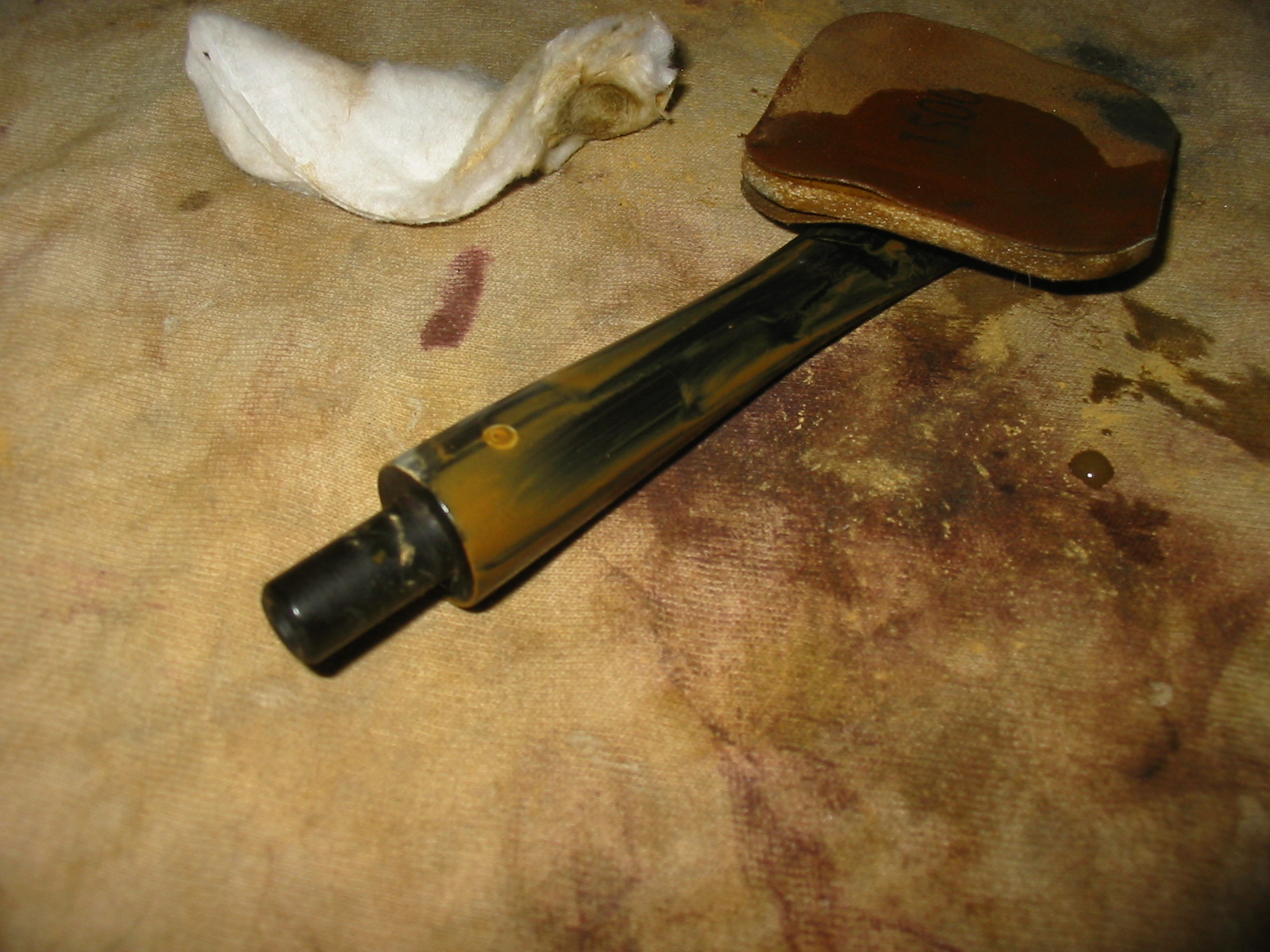
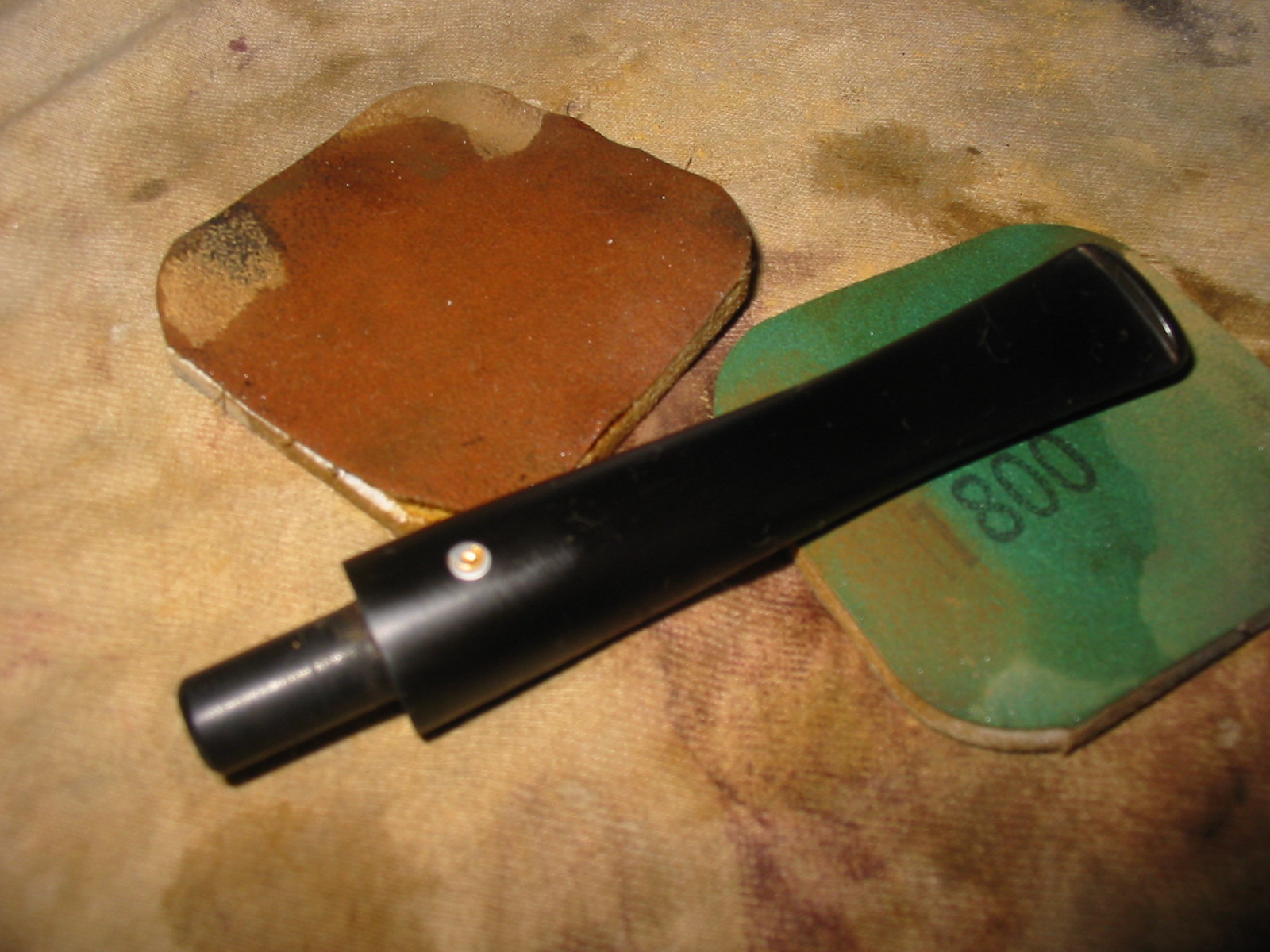
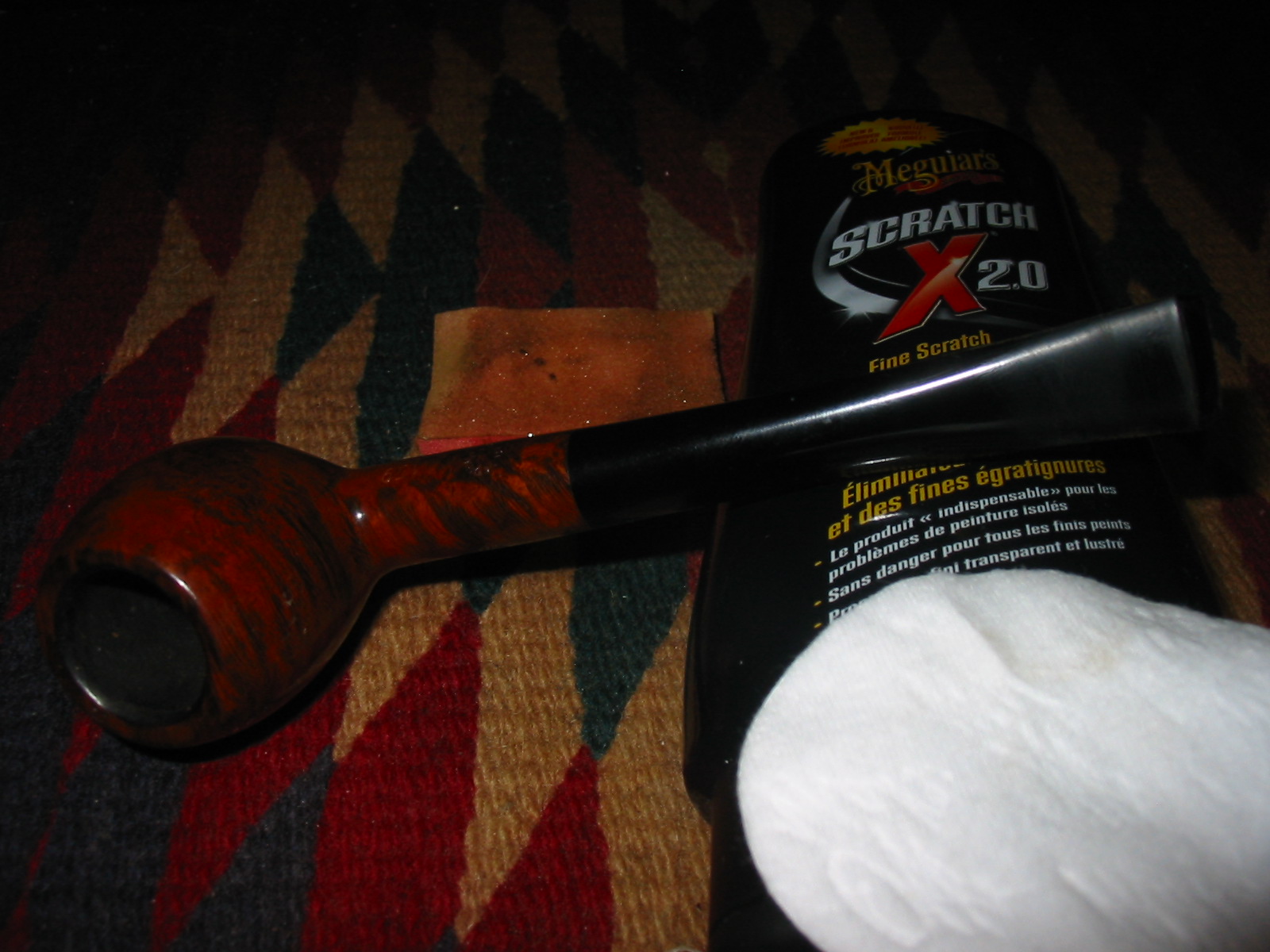
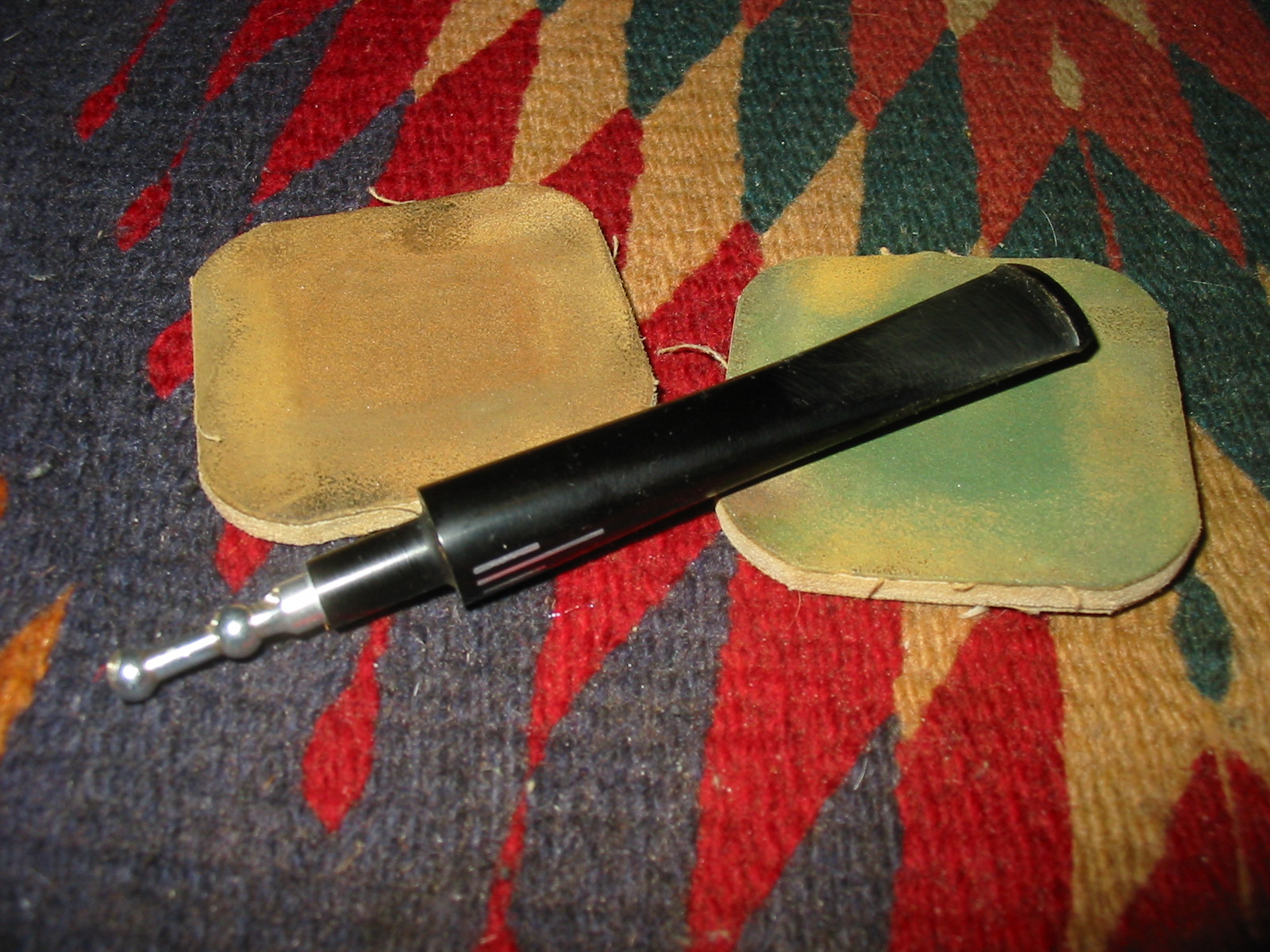
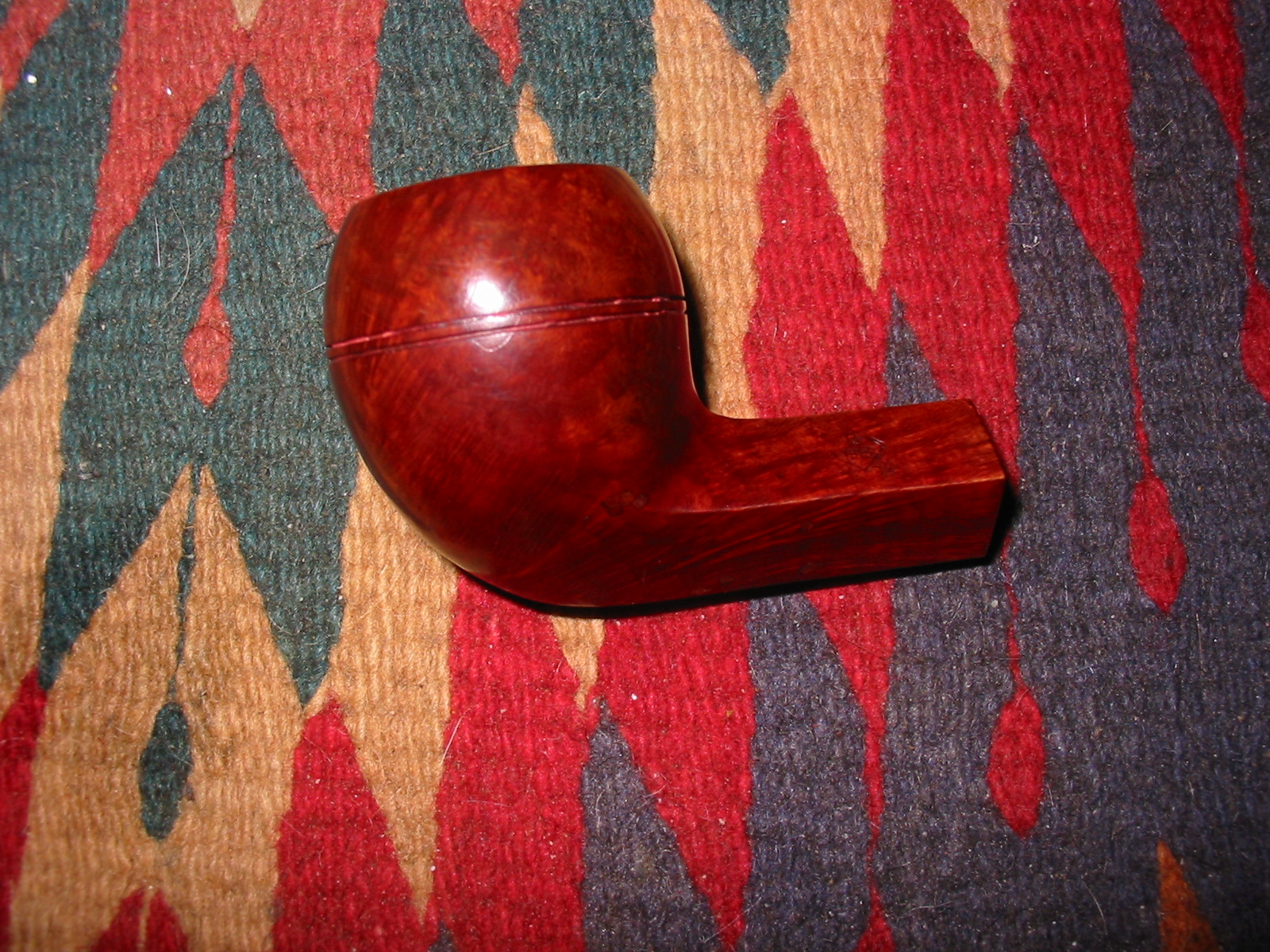
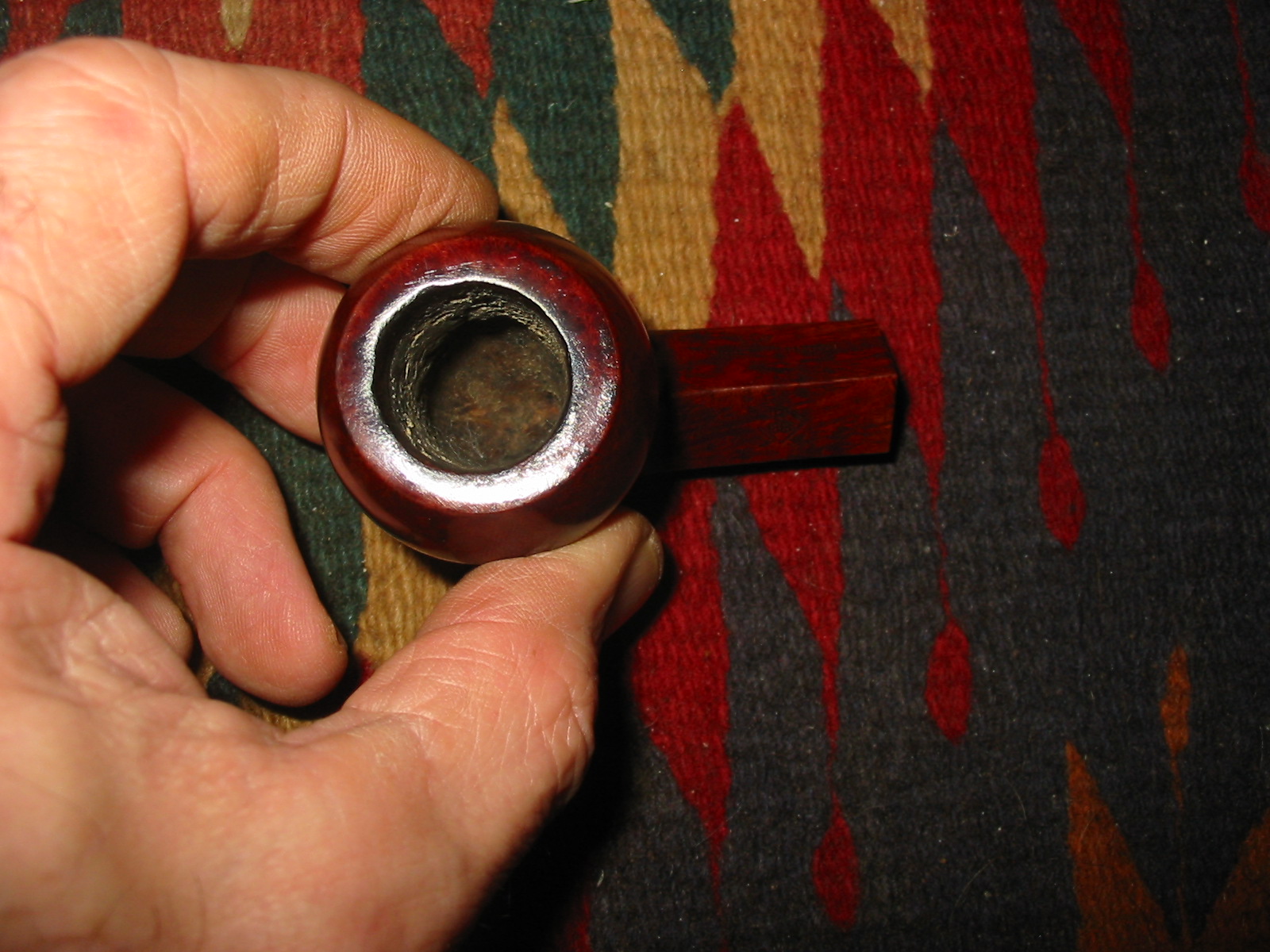
At this point the stem is repaired and all that remains is to do some final sanding with the higher grits of micromesh sanding pads. I worked on it with 3200 and 3600 grit micromesh and then polished it Maguiar’s. After that I sanded it with 4000-12,000 grit micromesh and then gave it a coat of Obsidian Oil. The finished stem was buffed with White Diamond and then more carnauba wax. I also hand polished the barrel with carnauba wax.
ImageImage


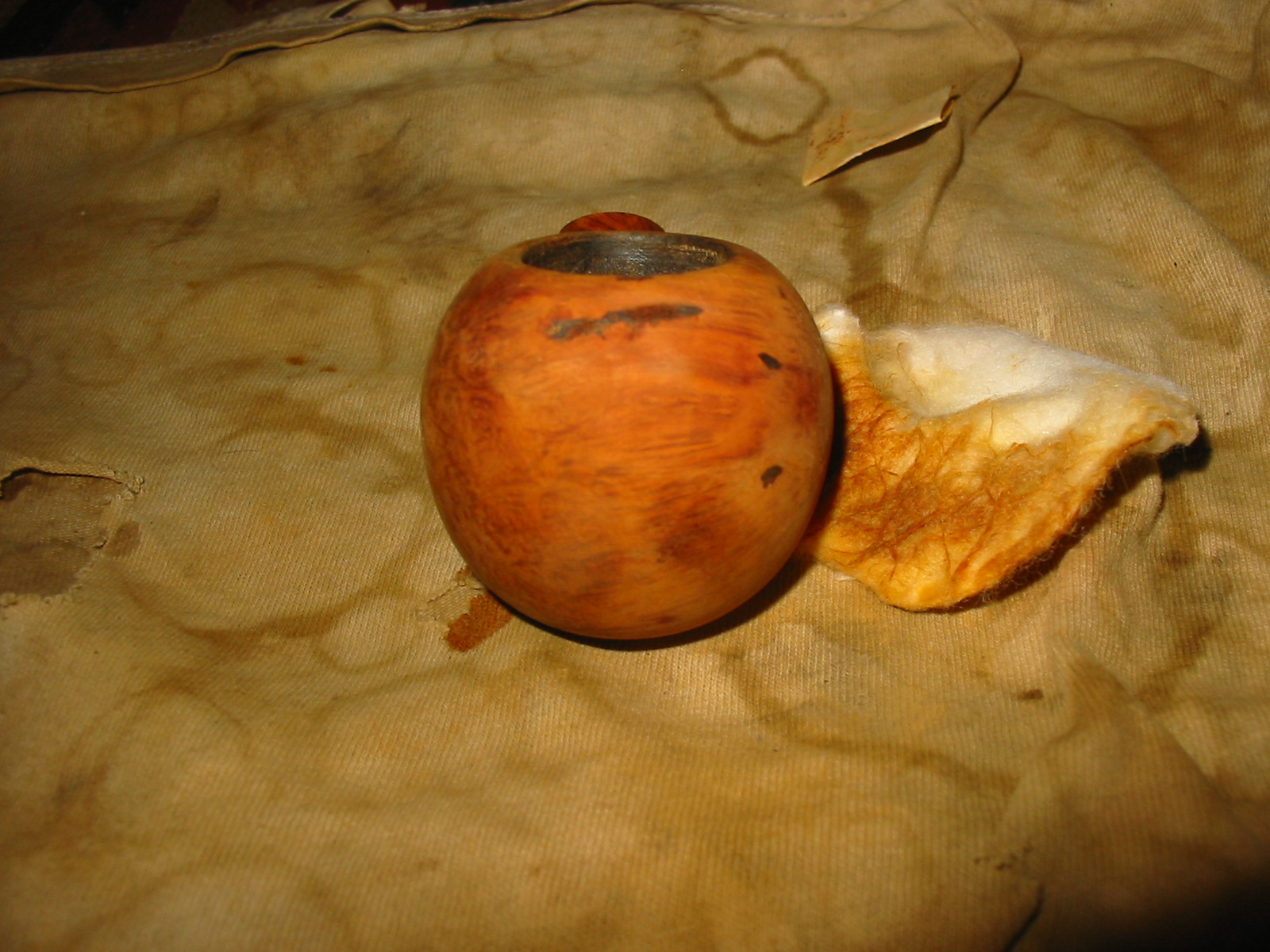
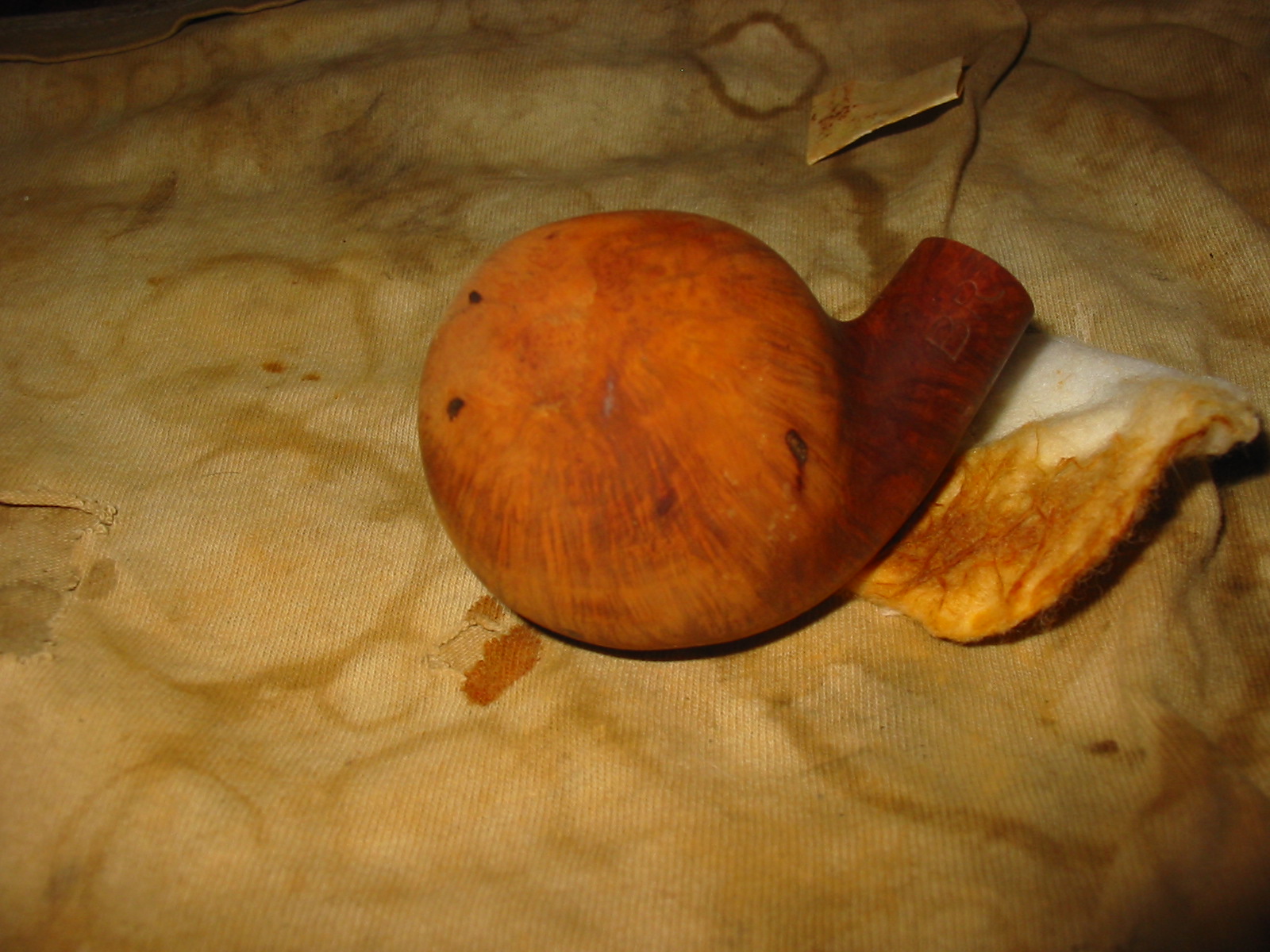
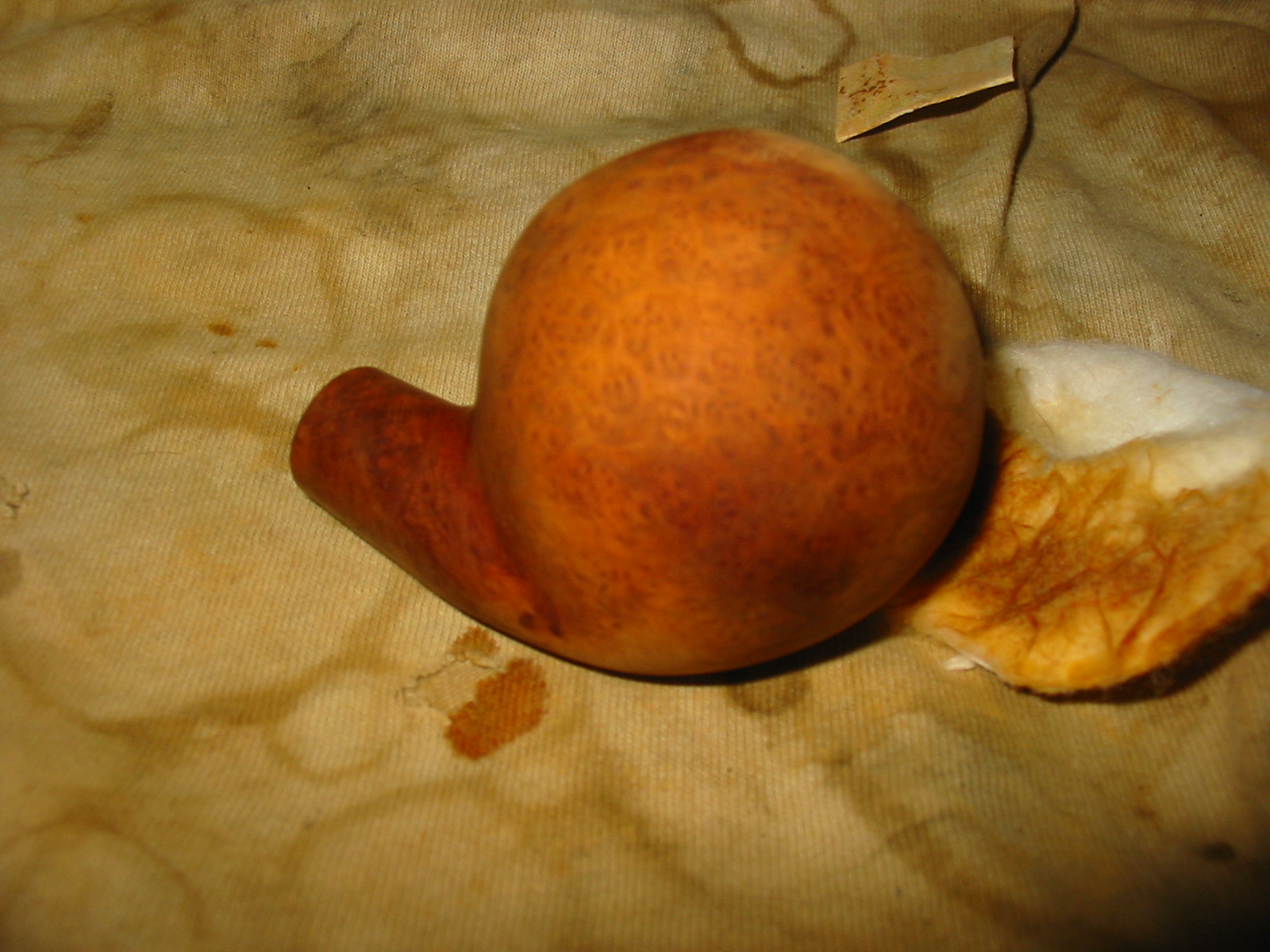
Israeli Made Bent Ball Repaired and Refurbished


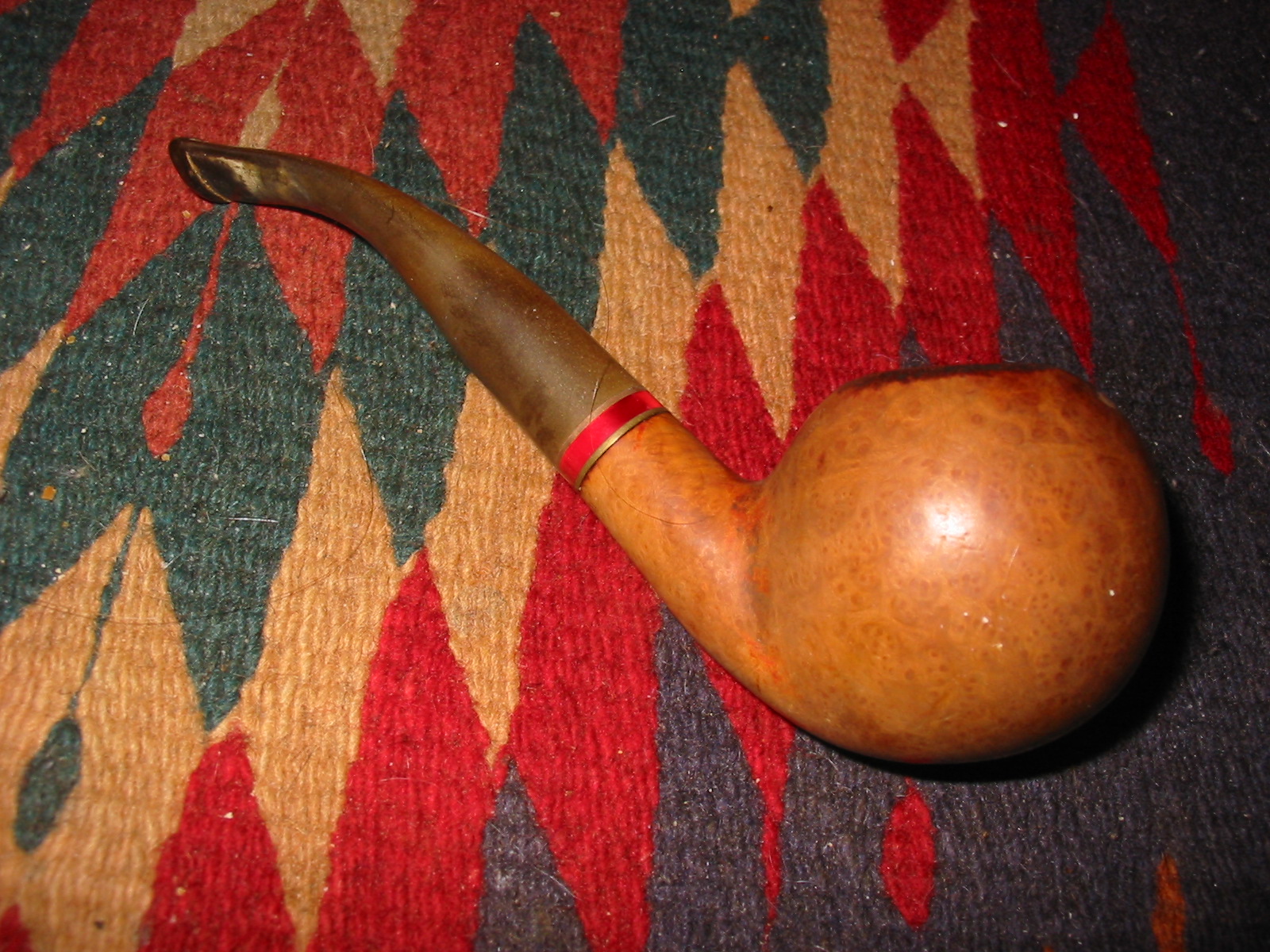
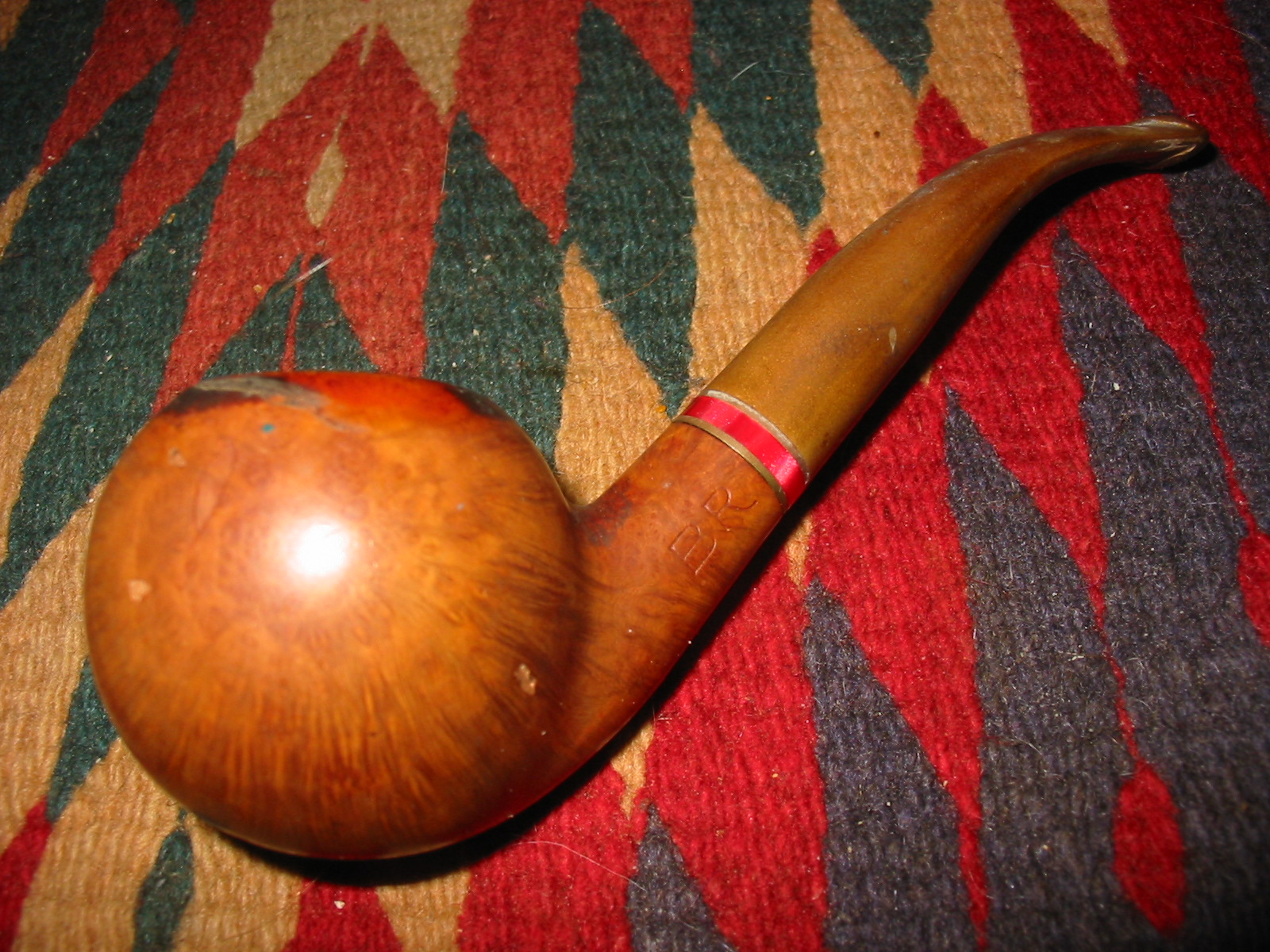
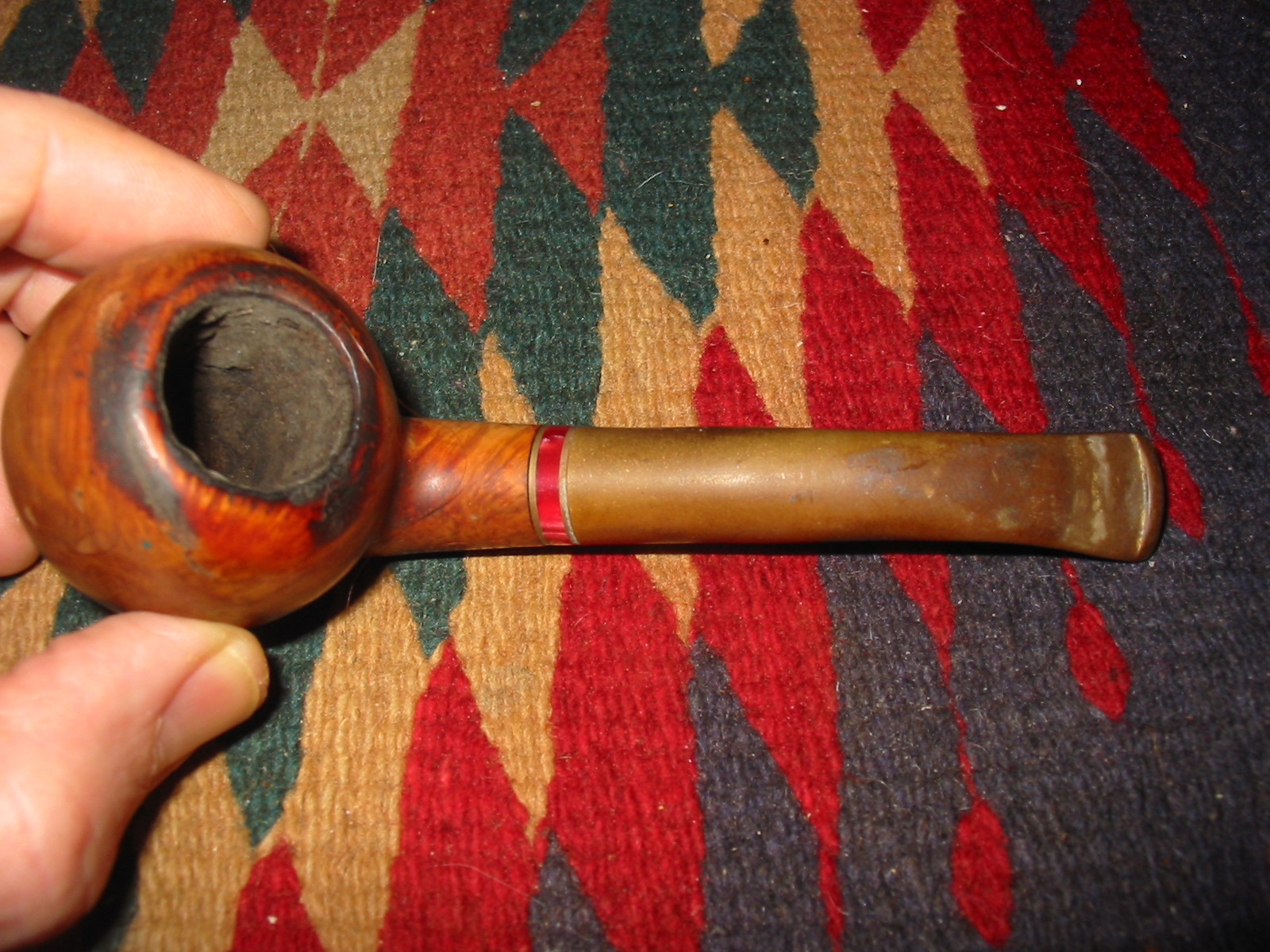
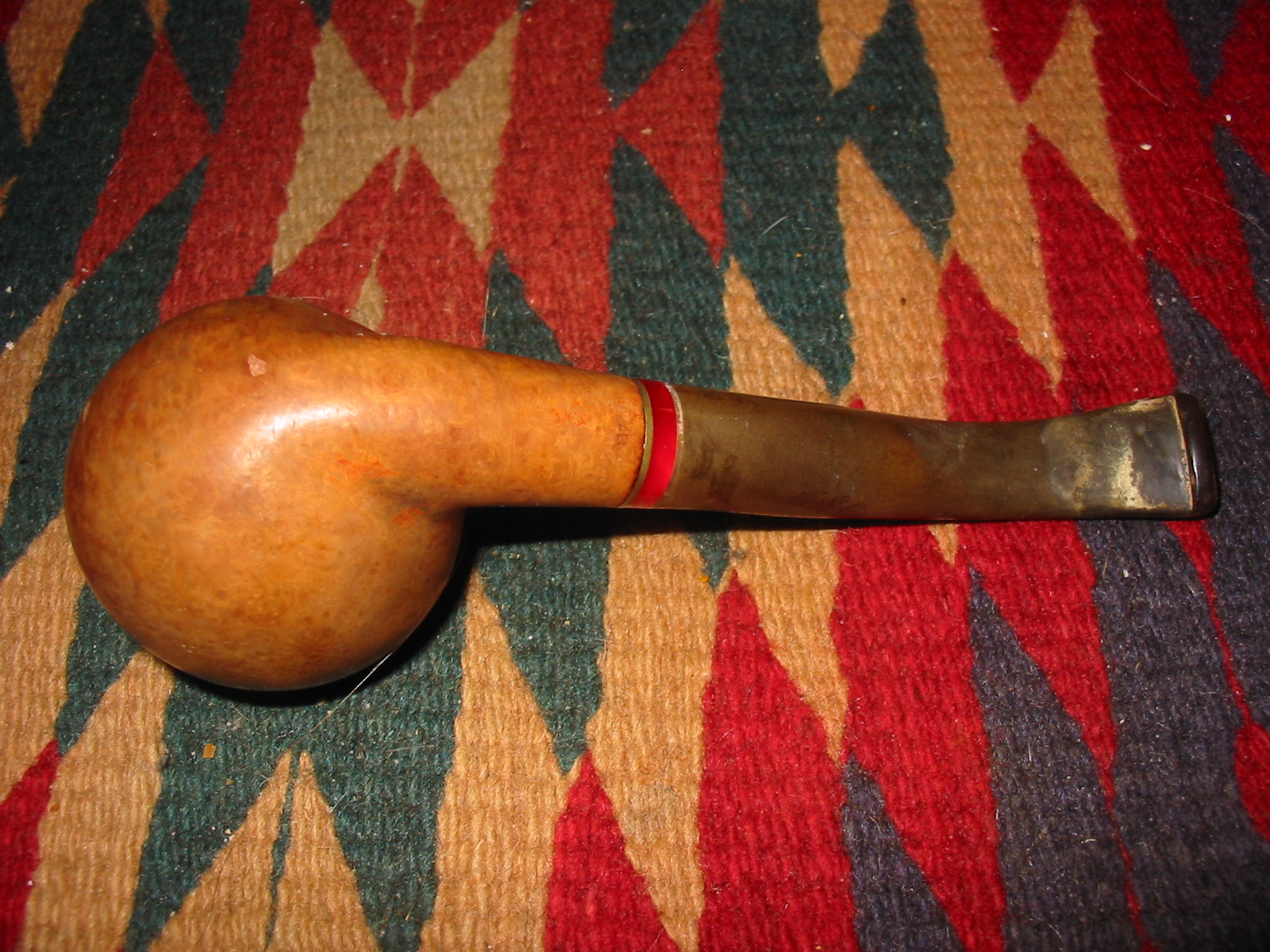
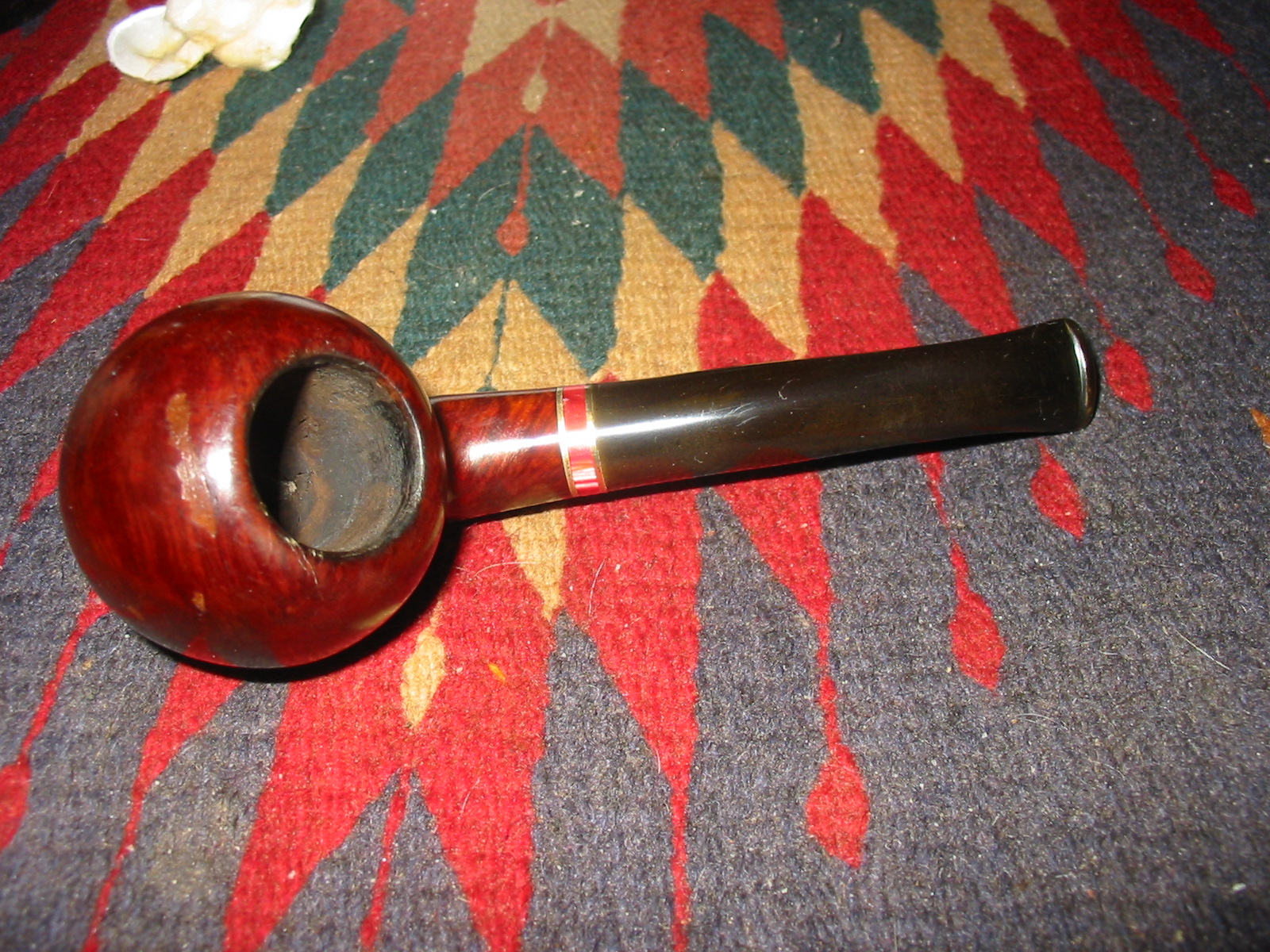
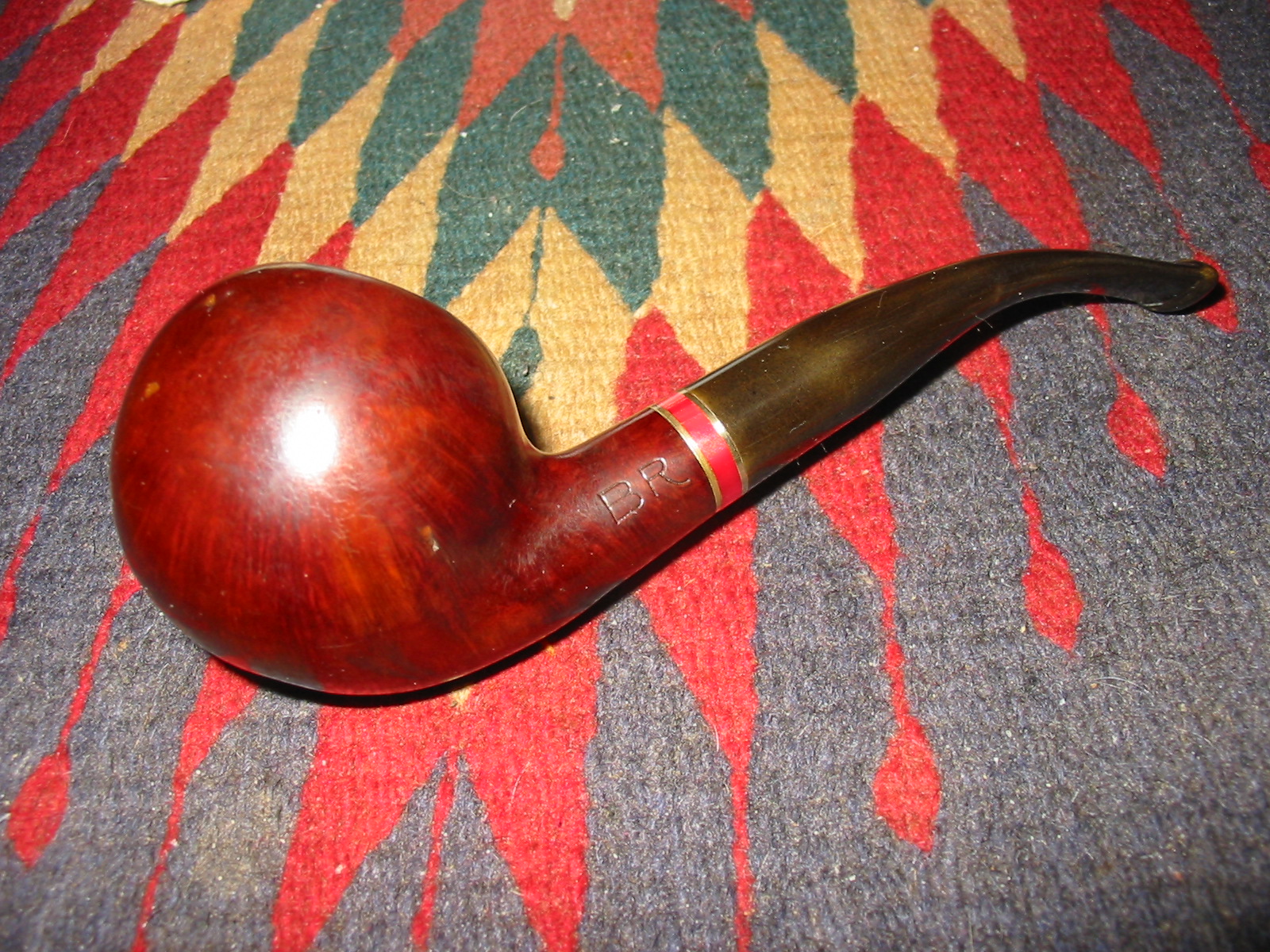
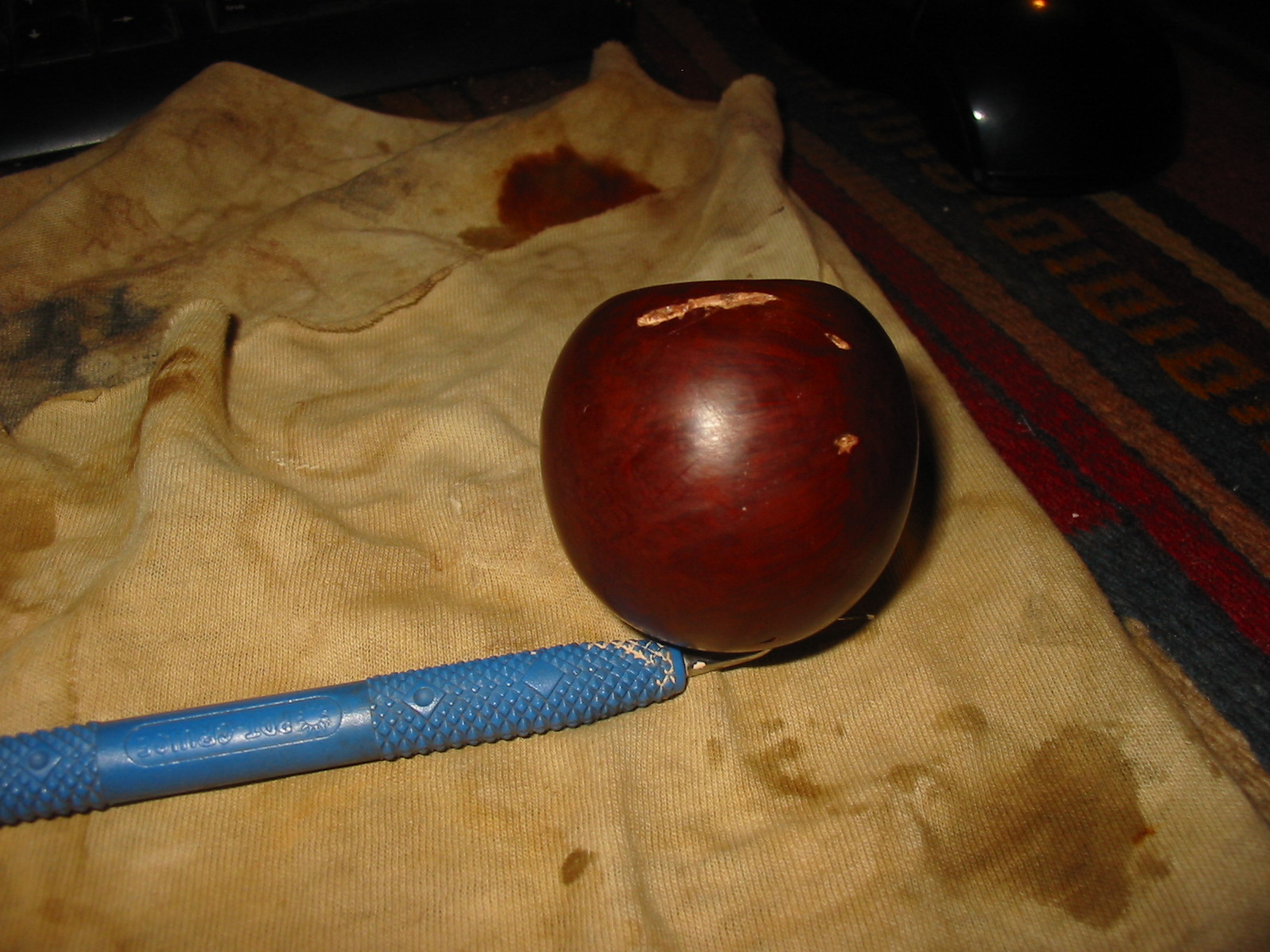
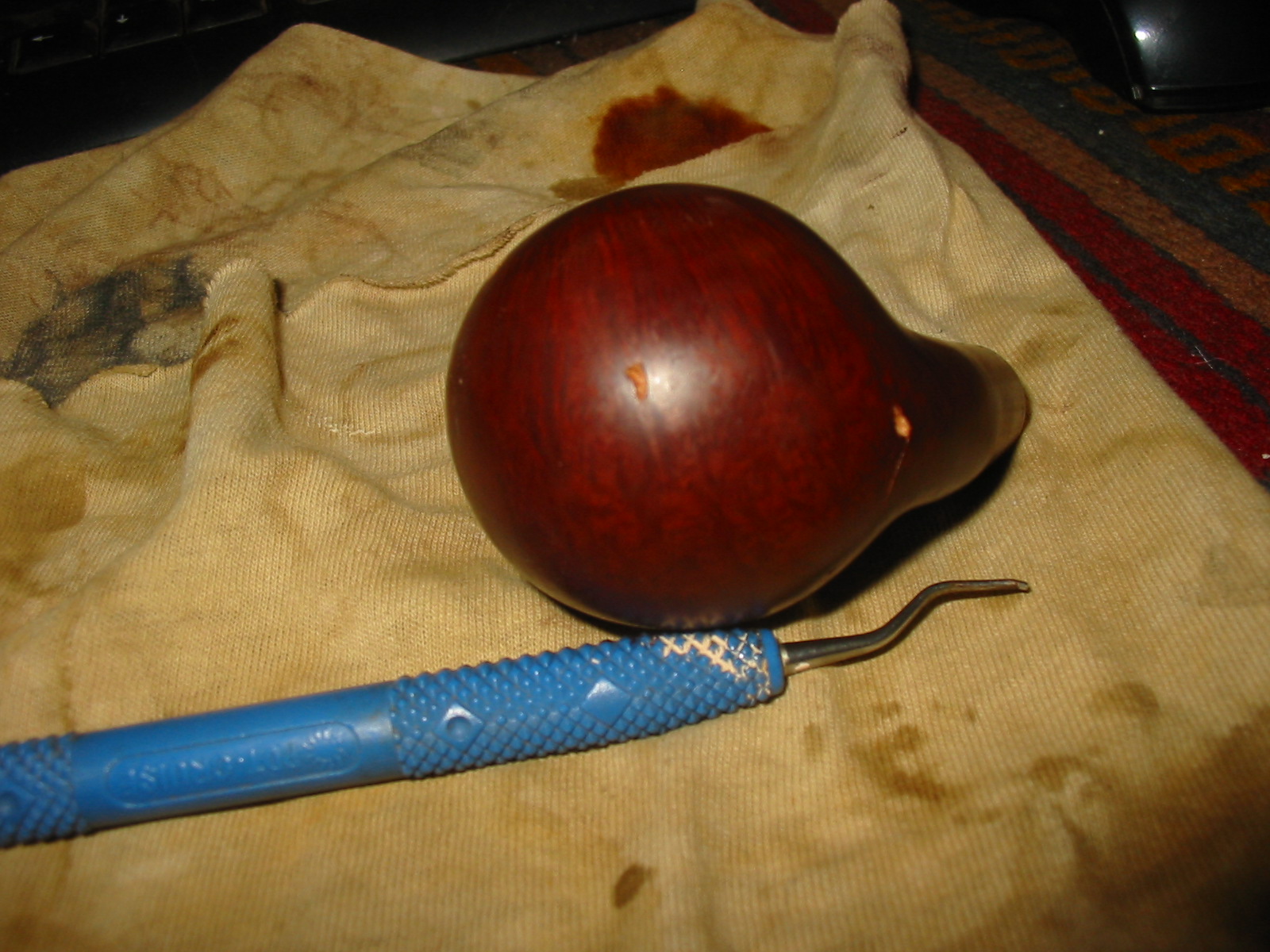
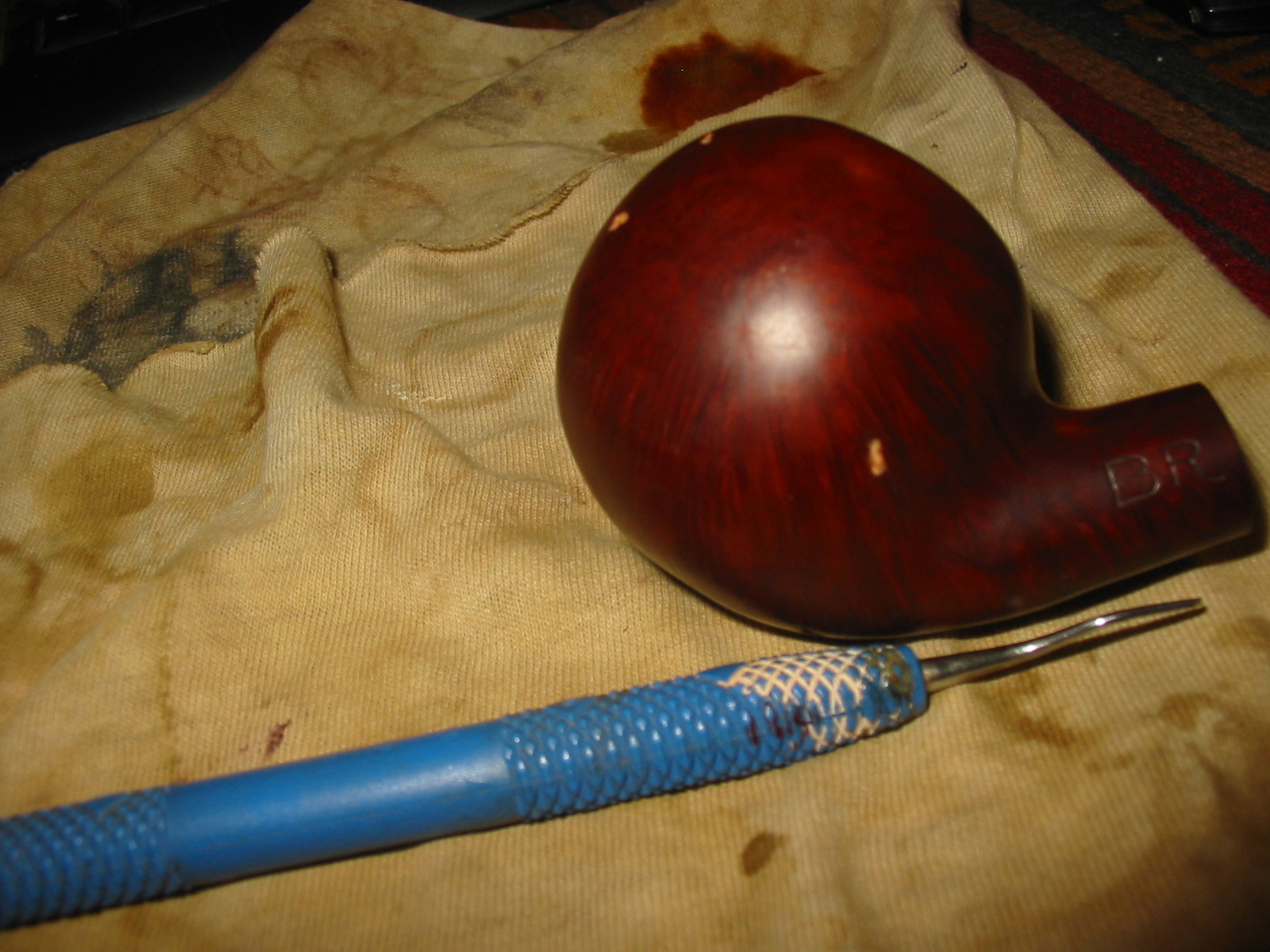
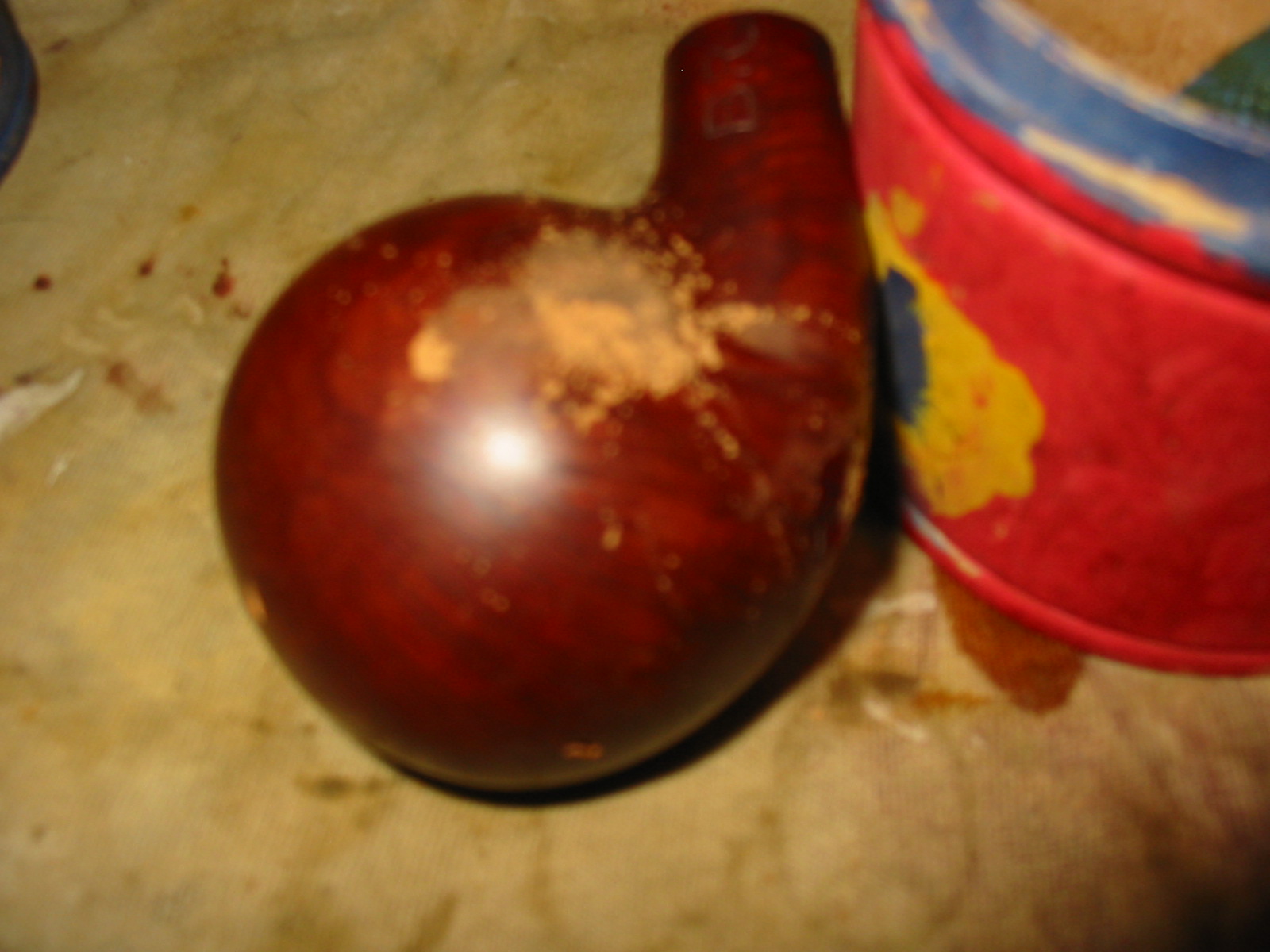
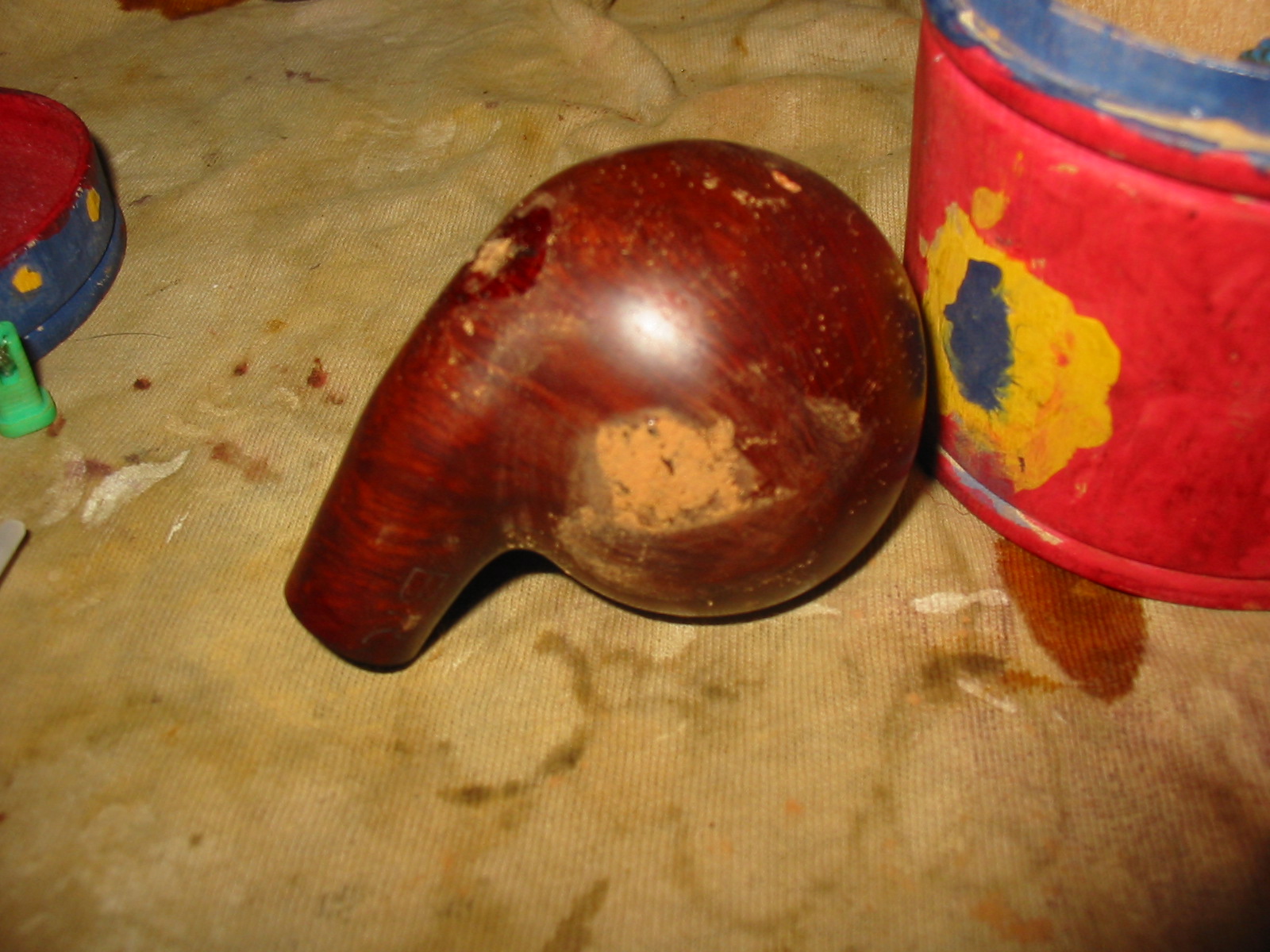
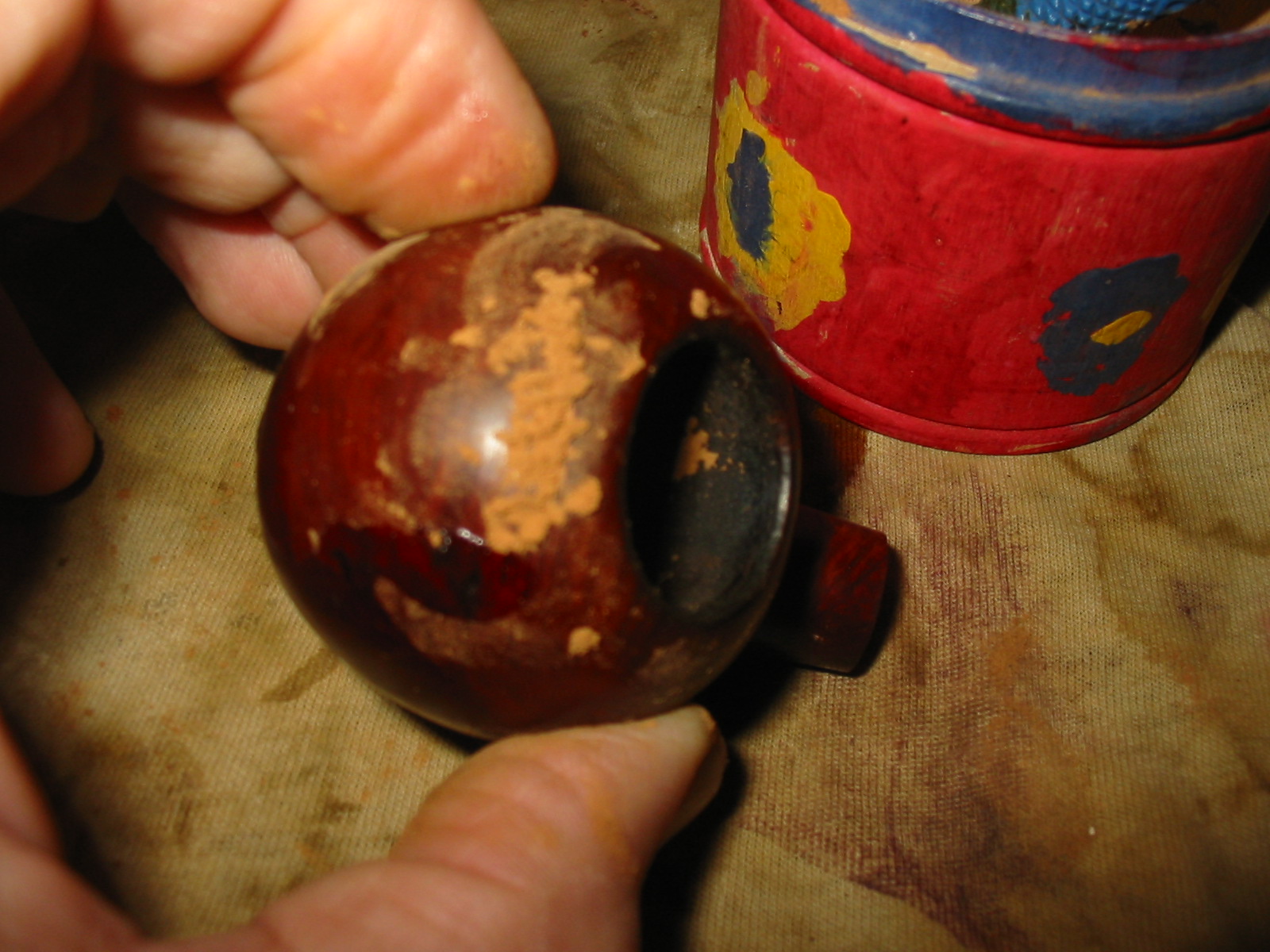
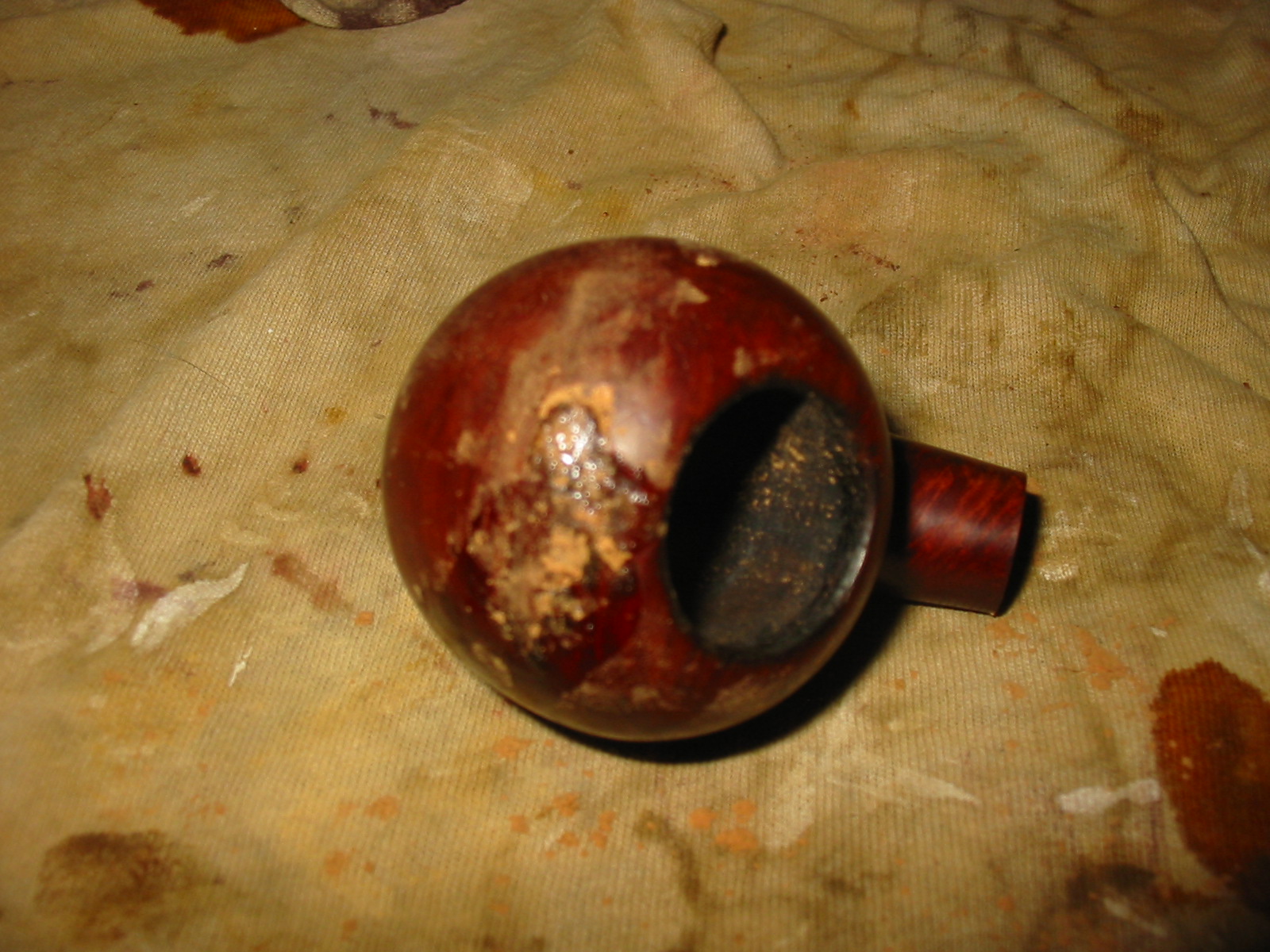
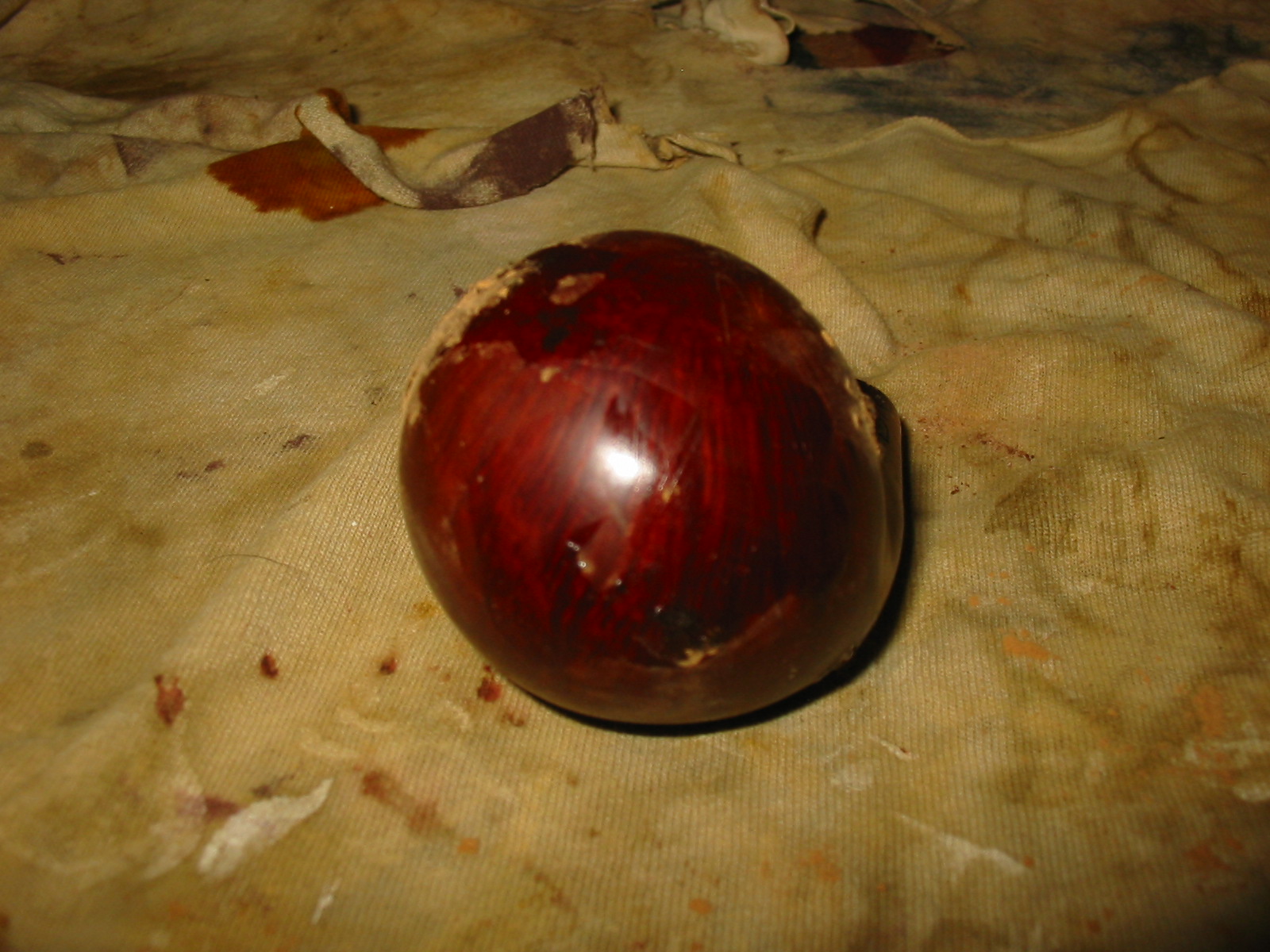
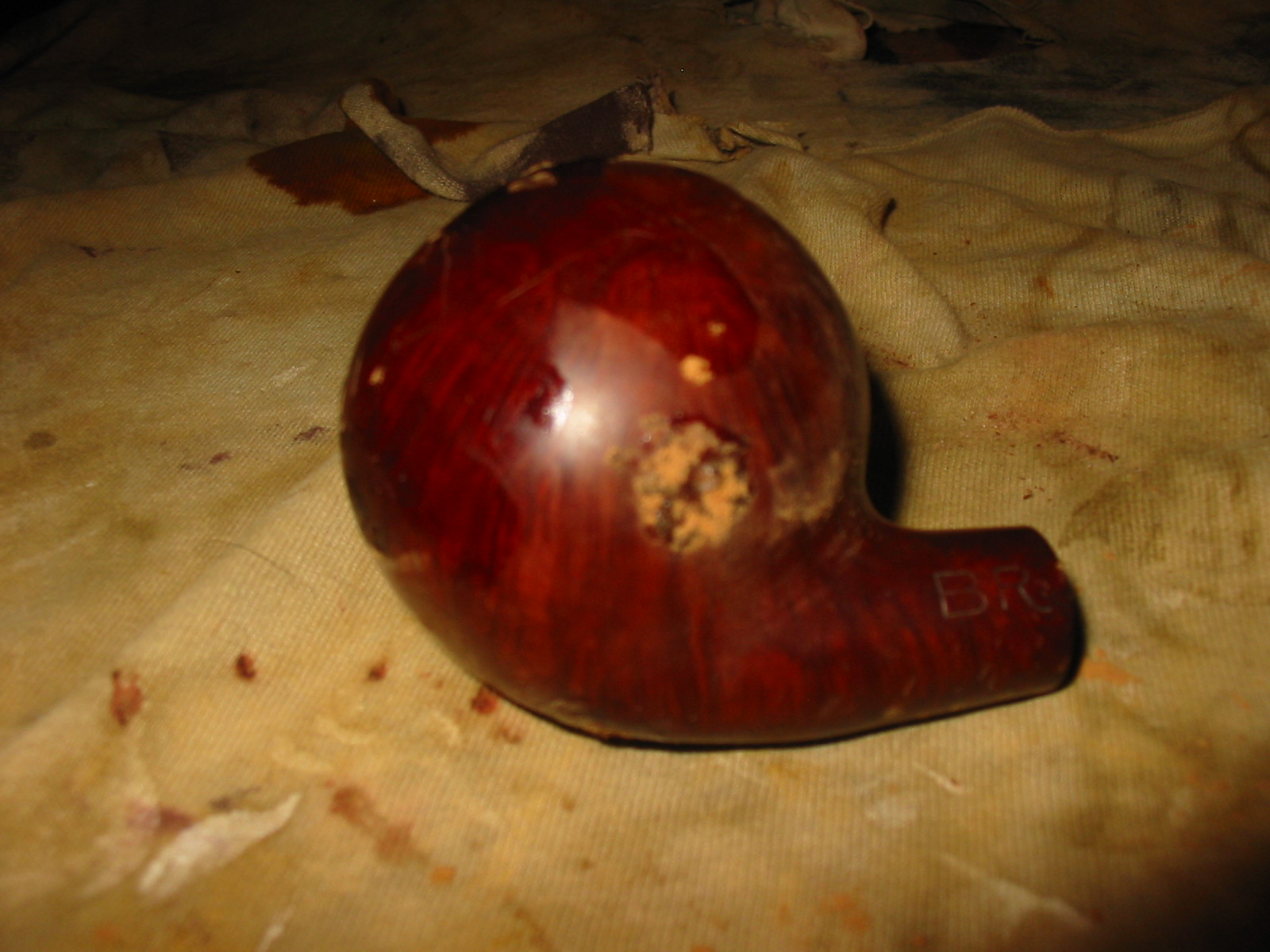
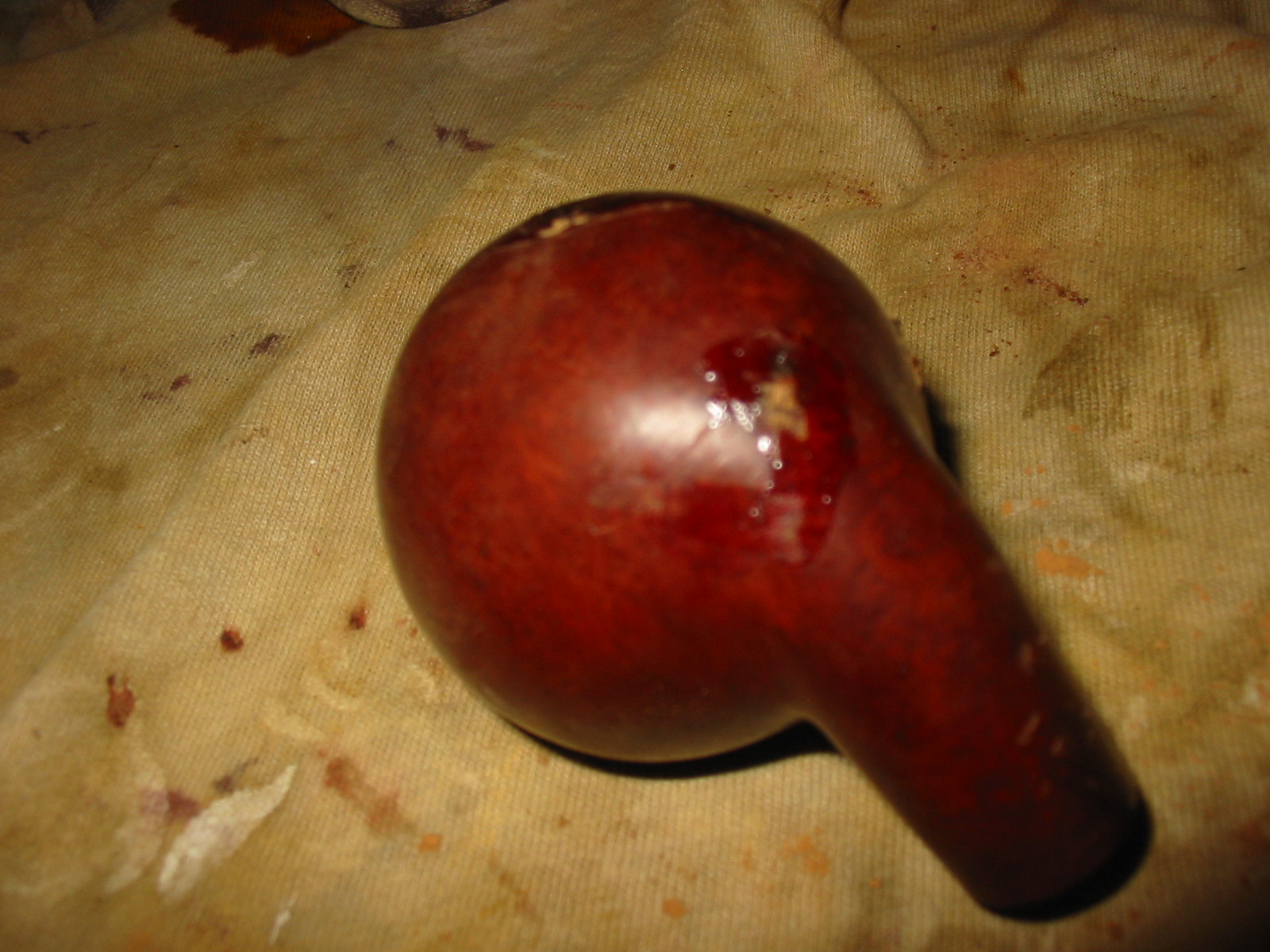
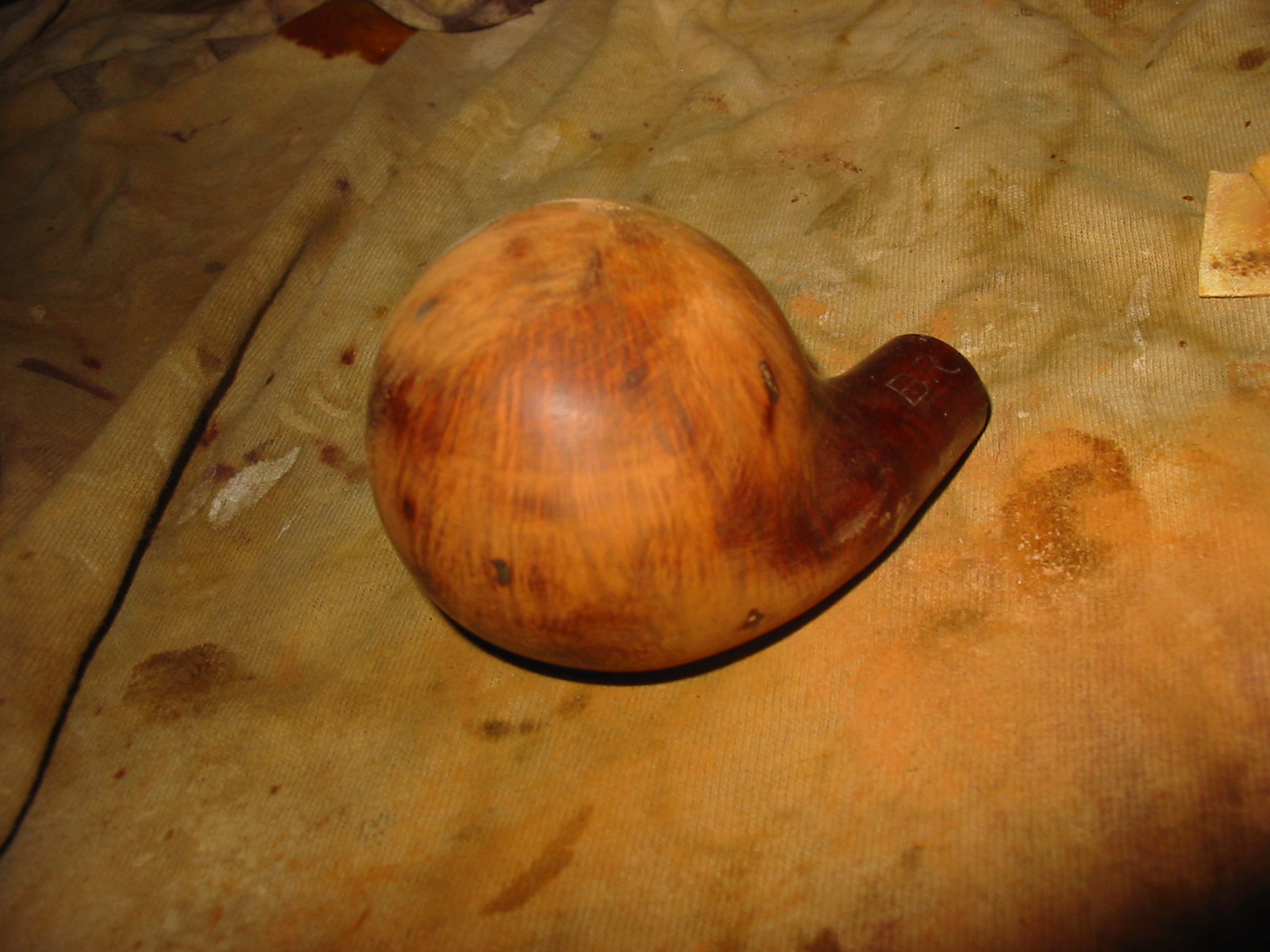
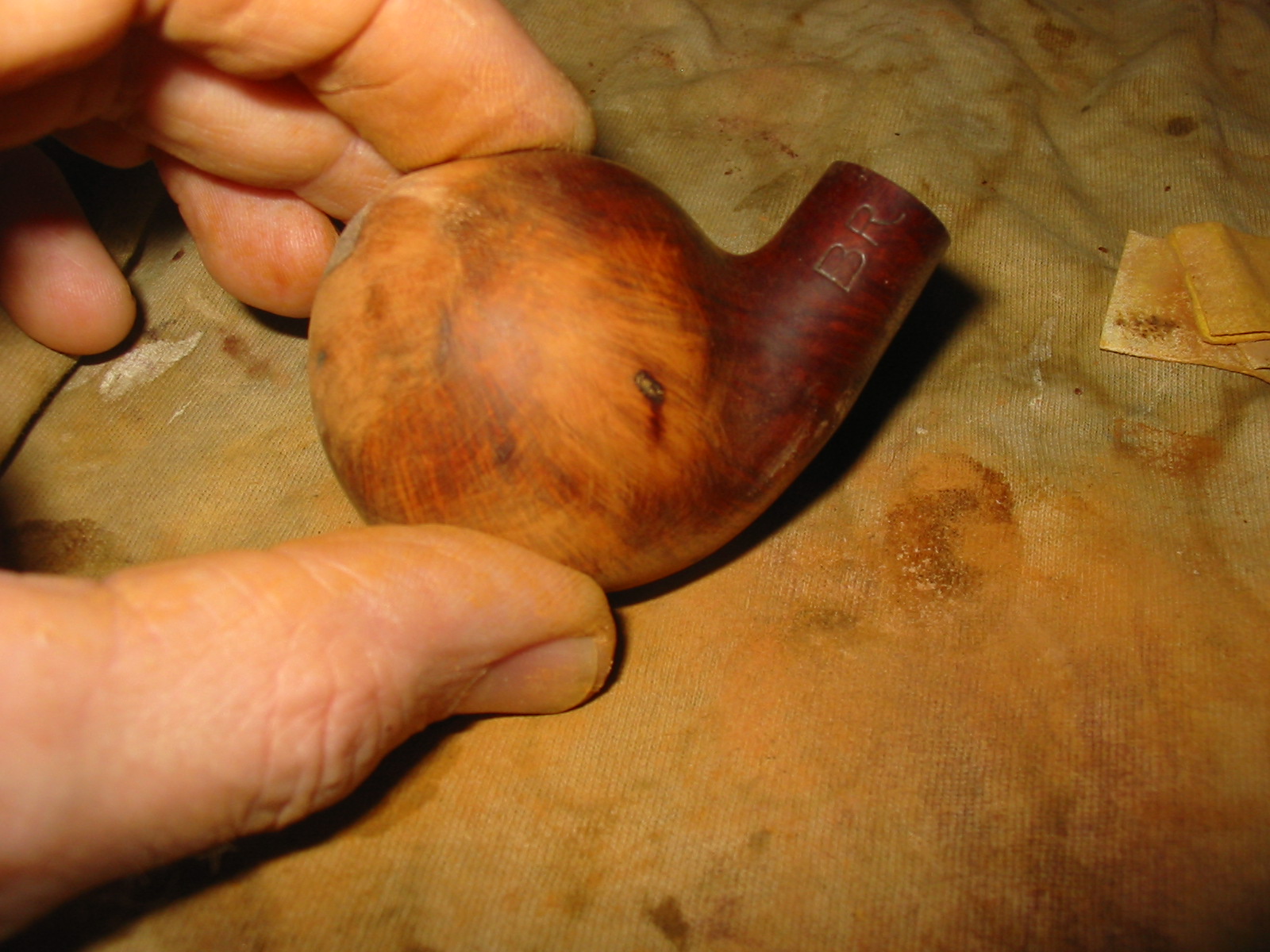
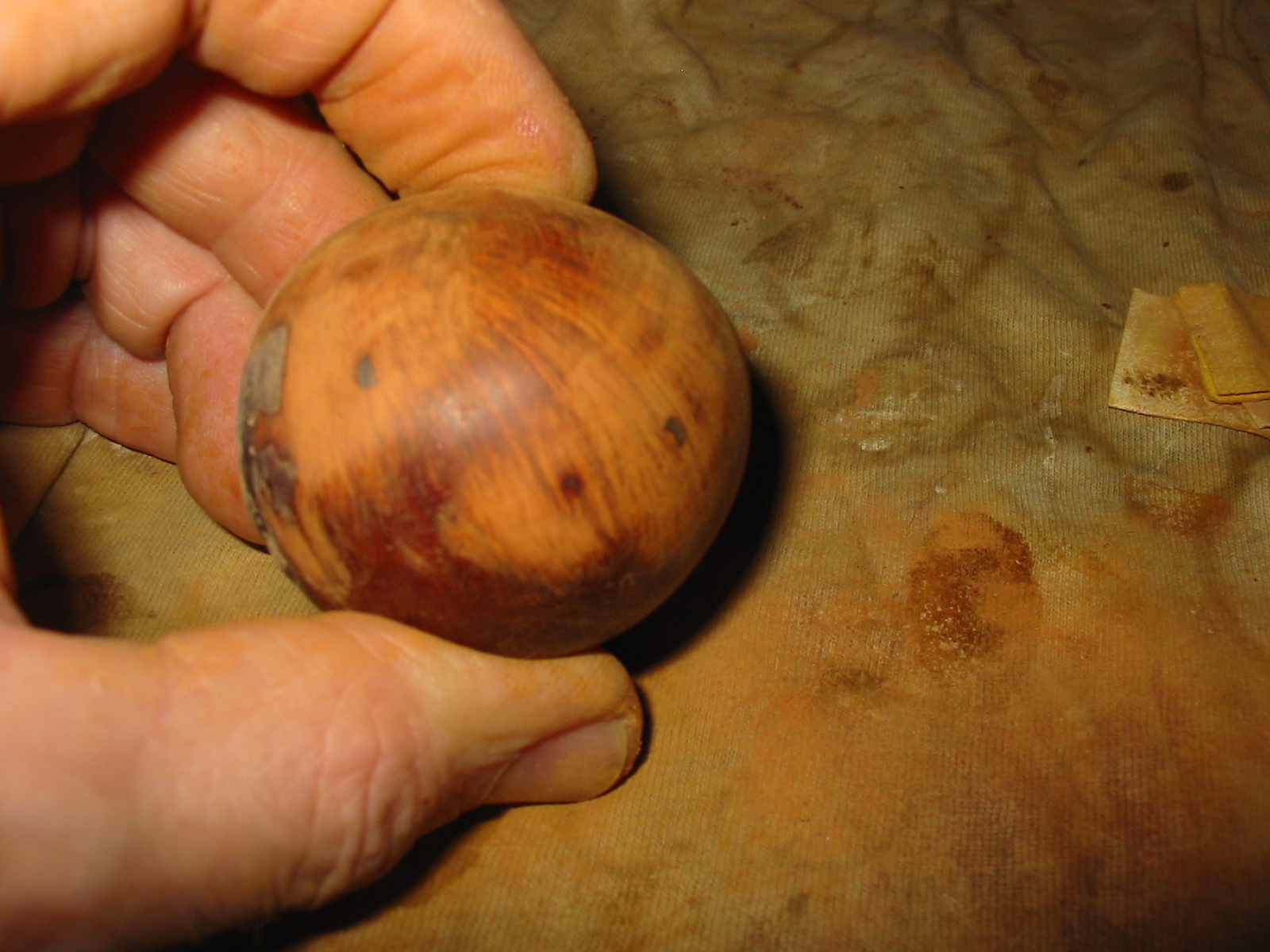
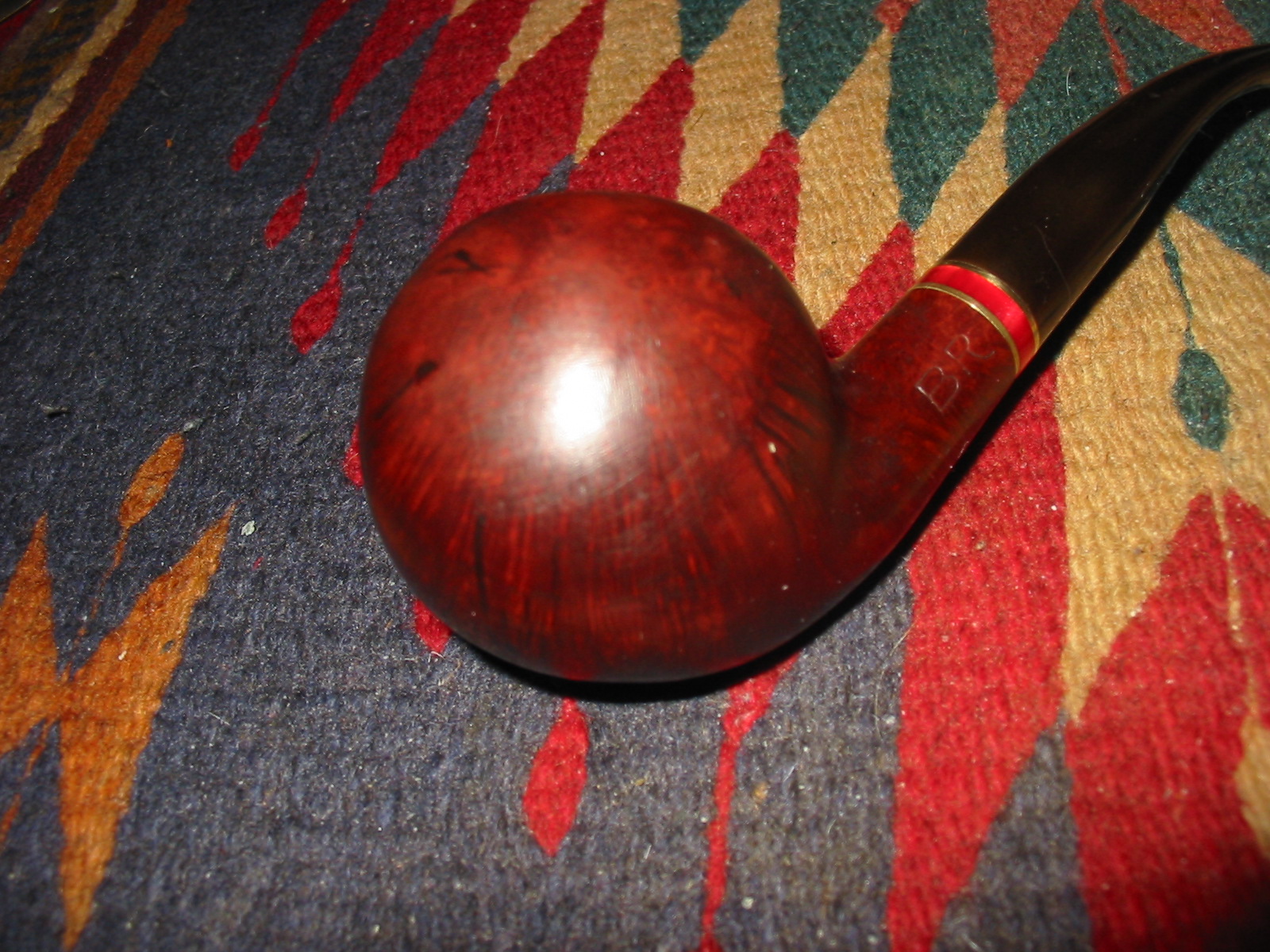
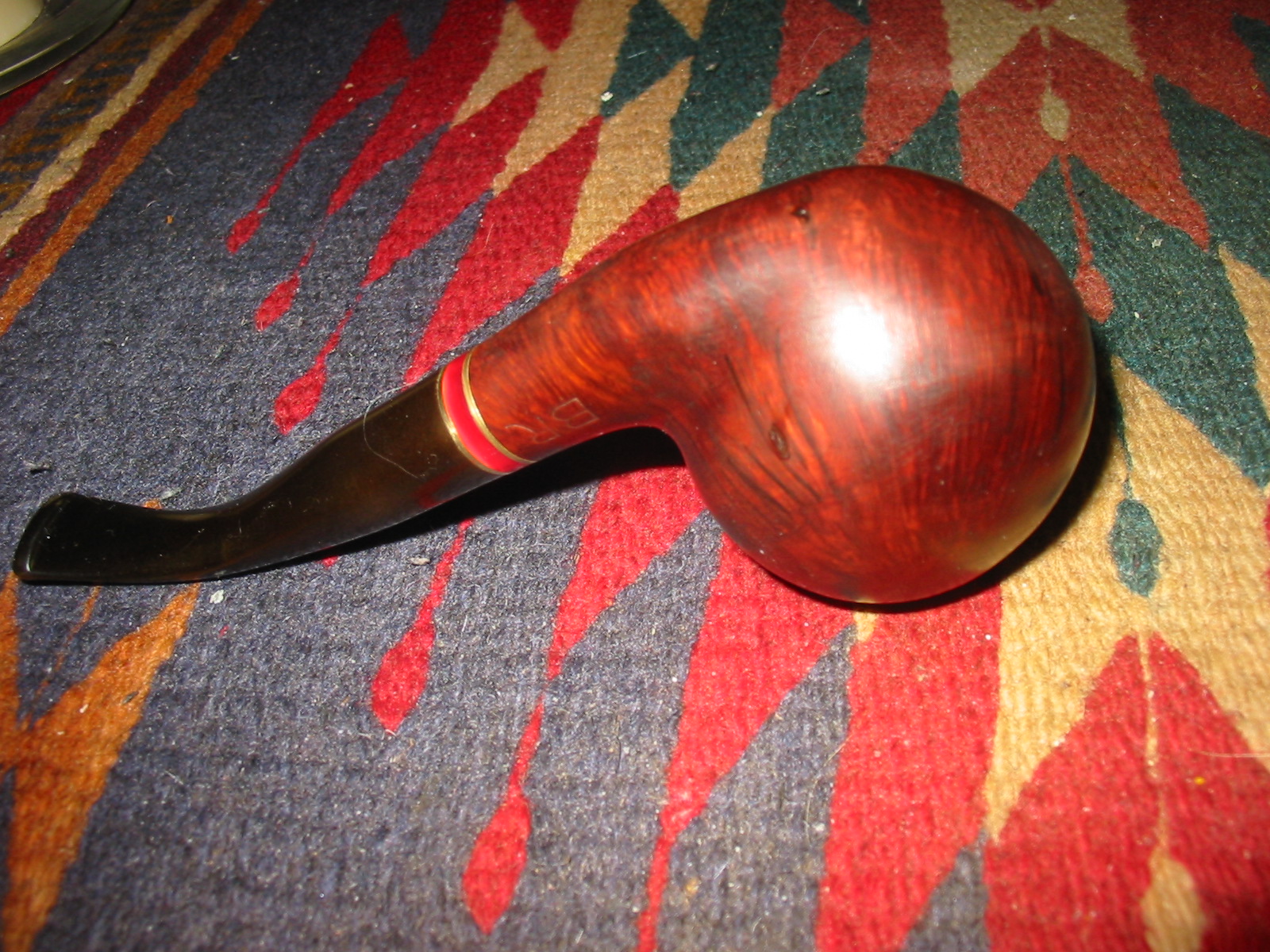
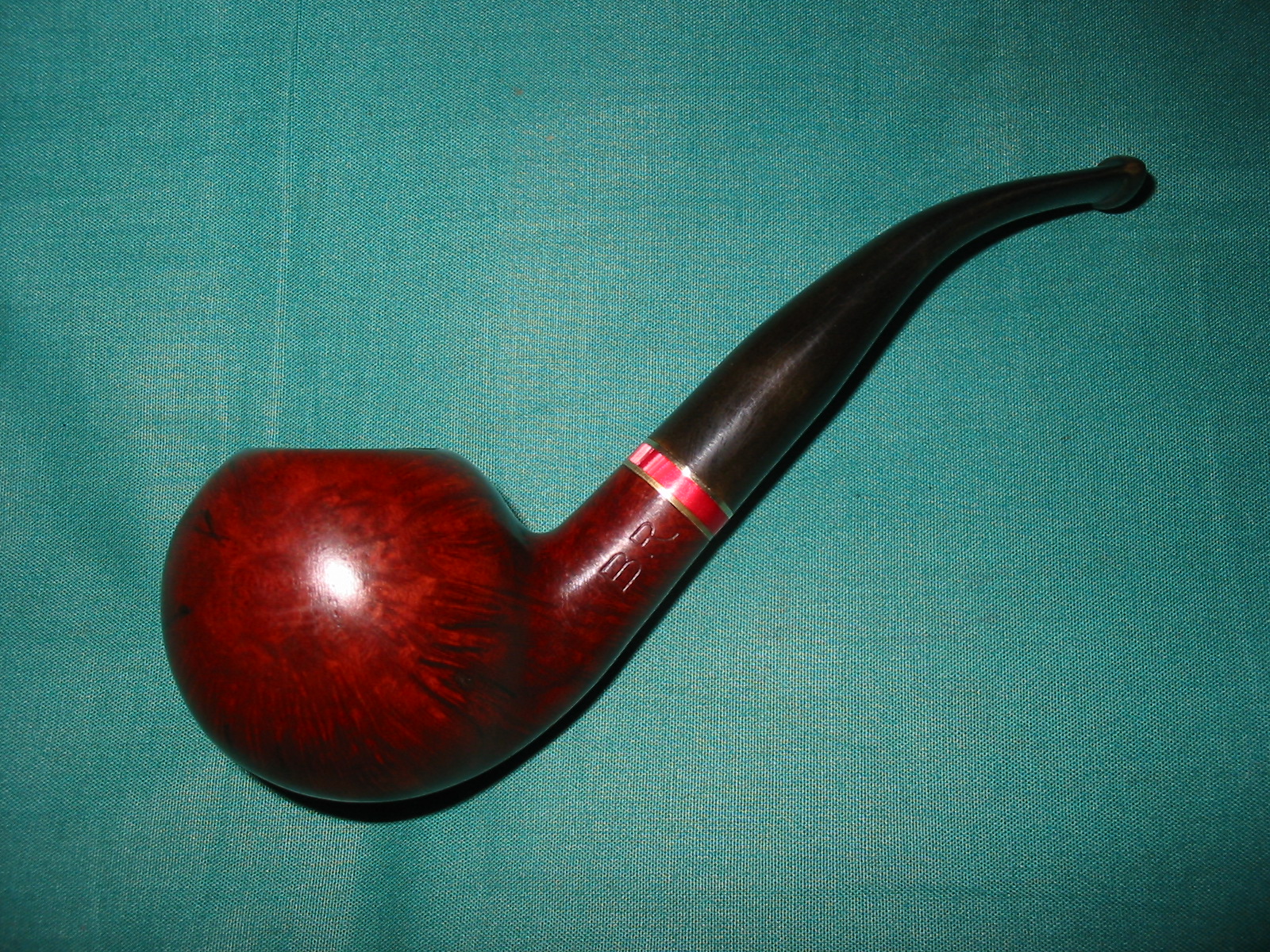
This is the second of three pipes that I picked up in a lot from EBay. It included the Richmond, a Comoy’s Everyman, and this BR Israeli made ball. It is stamped BR in large block script on the left side of the shank. On the underside of the shank is stamped ISRAEL. I know nothing of the brand and would love to hear from any of you who might have some information. The stem had tooth chatter and bite marks. It looked like it had also had a rub bite guard on it because the white calcified build up on the top and the bottom of the stem was the same distance into the stem as the bite guard. There was a distinct line where the edge was. The coloured band is slid on to the tenon of the stem. It is a brass wheel with an inlaid acrylic. The finish was shot and the briar was full of fills. The right side was the only clean side on the pipe. The front had a large putty fill at the top near the edge and several on the lower portion, the left side had 3-4 fills and the underside also had two. Most of these were on the smaller side as far as fills go but the one on the front was huge and spanned the width of the bowl. The rim and downward curve of the bowl from the rim back was very tarred and oily. There was a gummy buildup that was like a lava flow down the bowl sides. The bowl was caked with an uneven and oily aromatic smelling cake. The first series of four photos shows the state of the pipe when it arrived on my worktable.

ImageImageImageImage

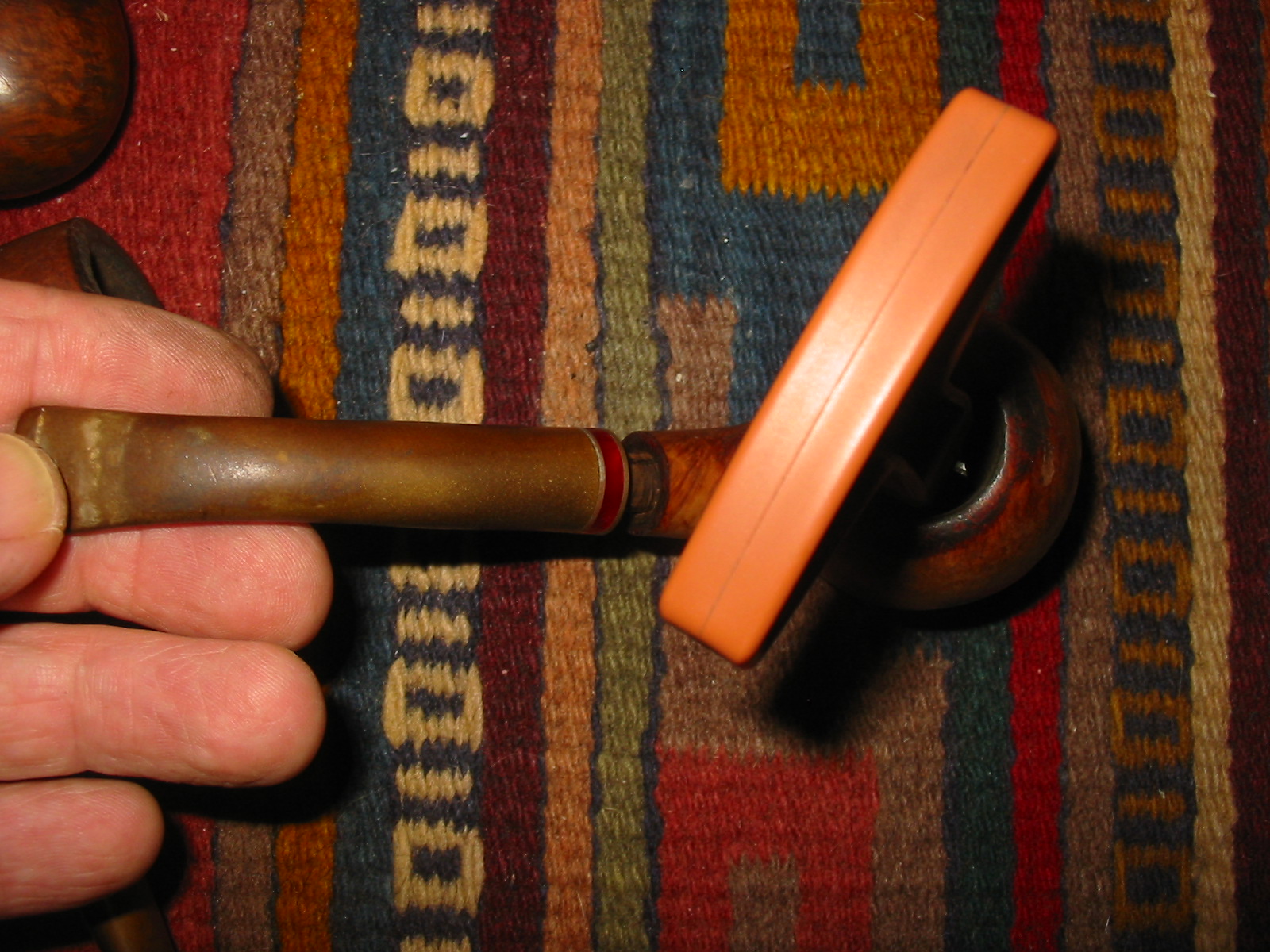
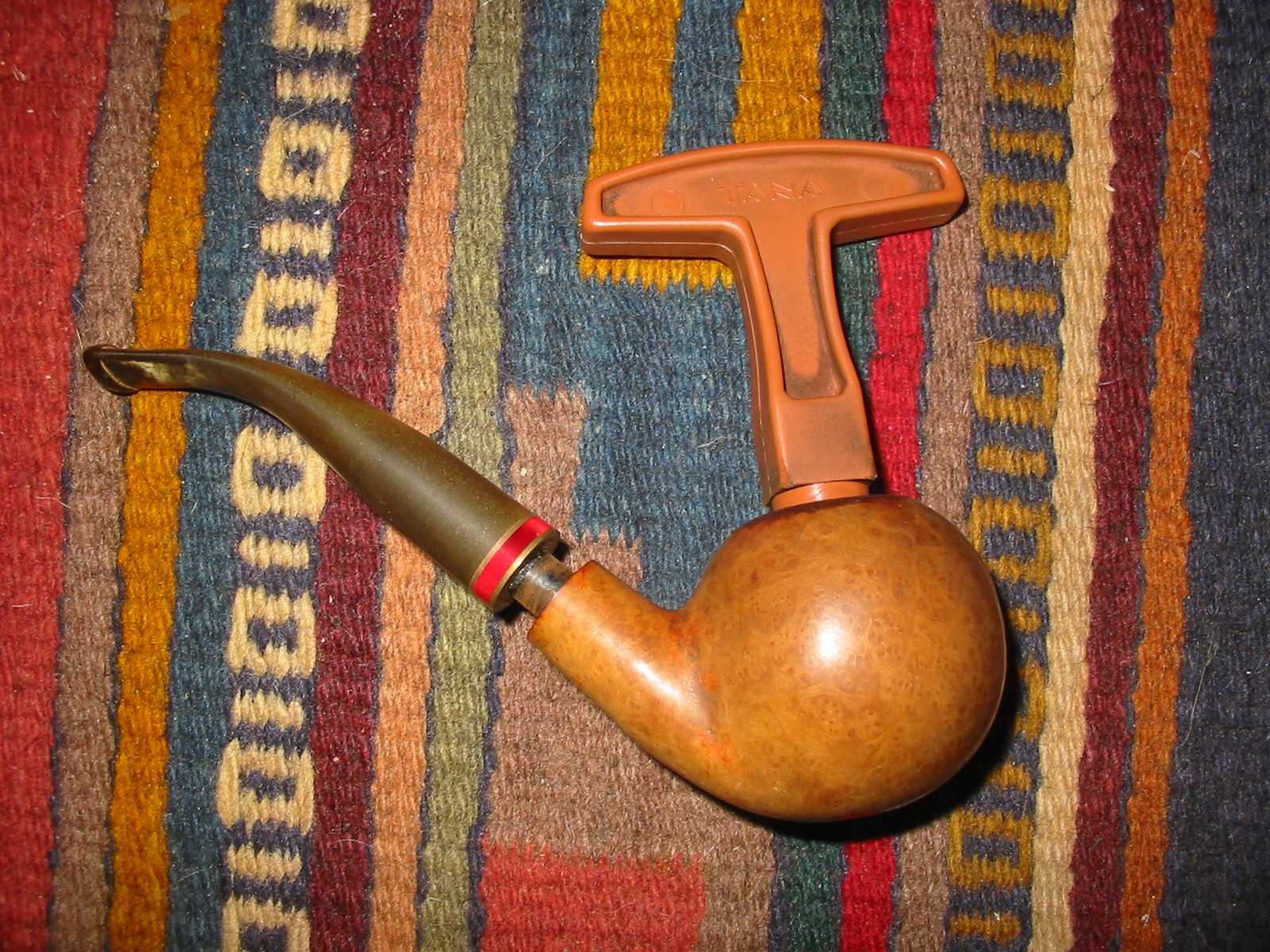
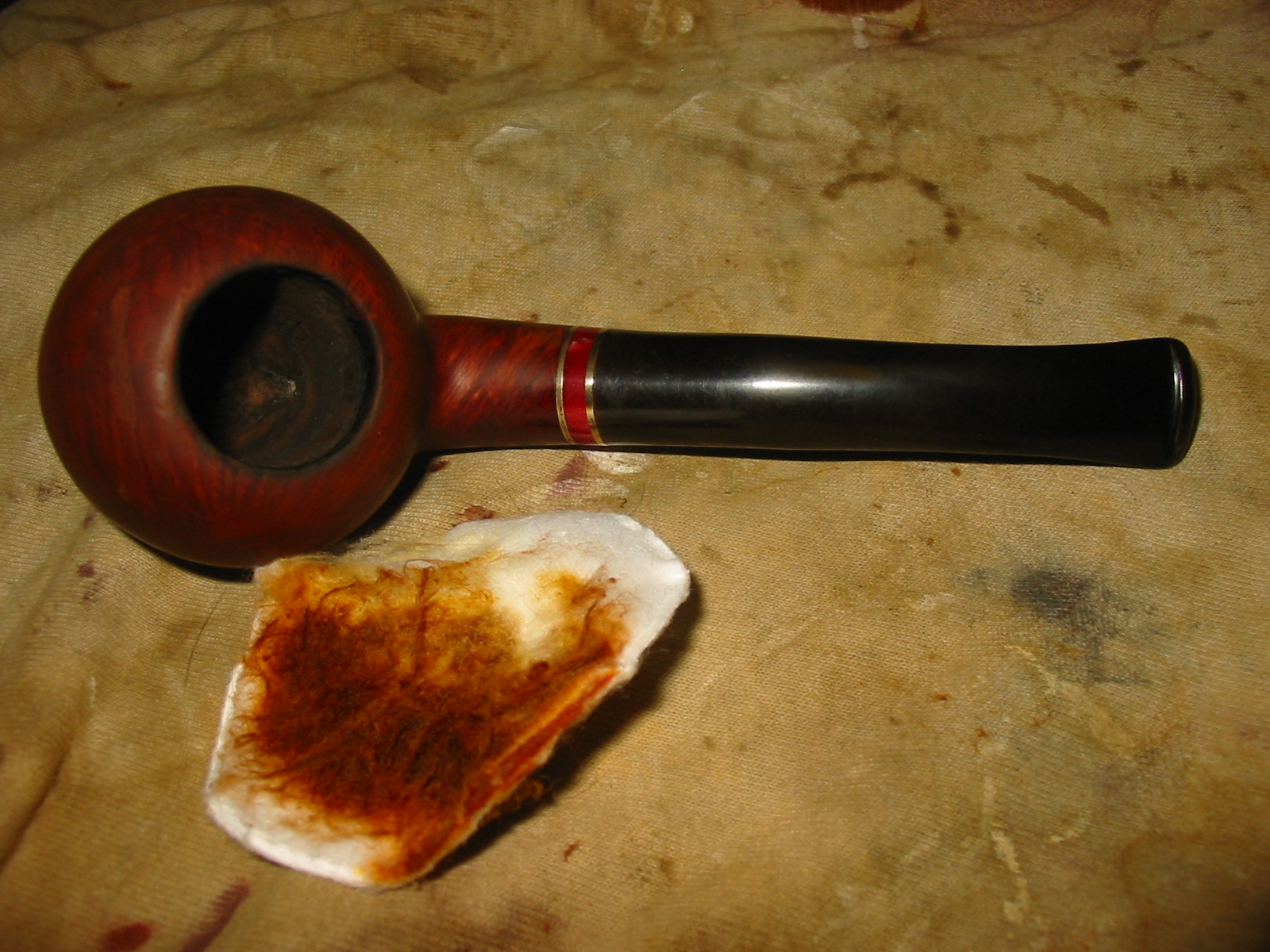
When I get a bowl that looks like this one I usually start by reaming the bowl. That aromatic, syrupy cherry smelling cake has to go in my opinion. I reamed it with my T handled Pipnet Reaming set. I generally start with a small cutting head and work my way up until I have removed most of the cake. The next two photos show the reaming process.

ImageImage

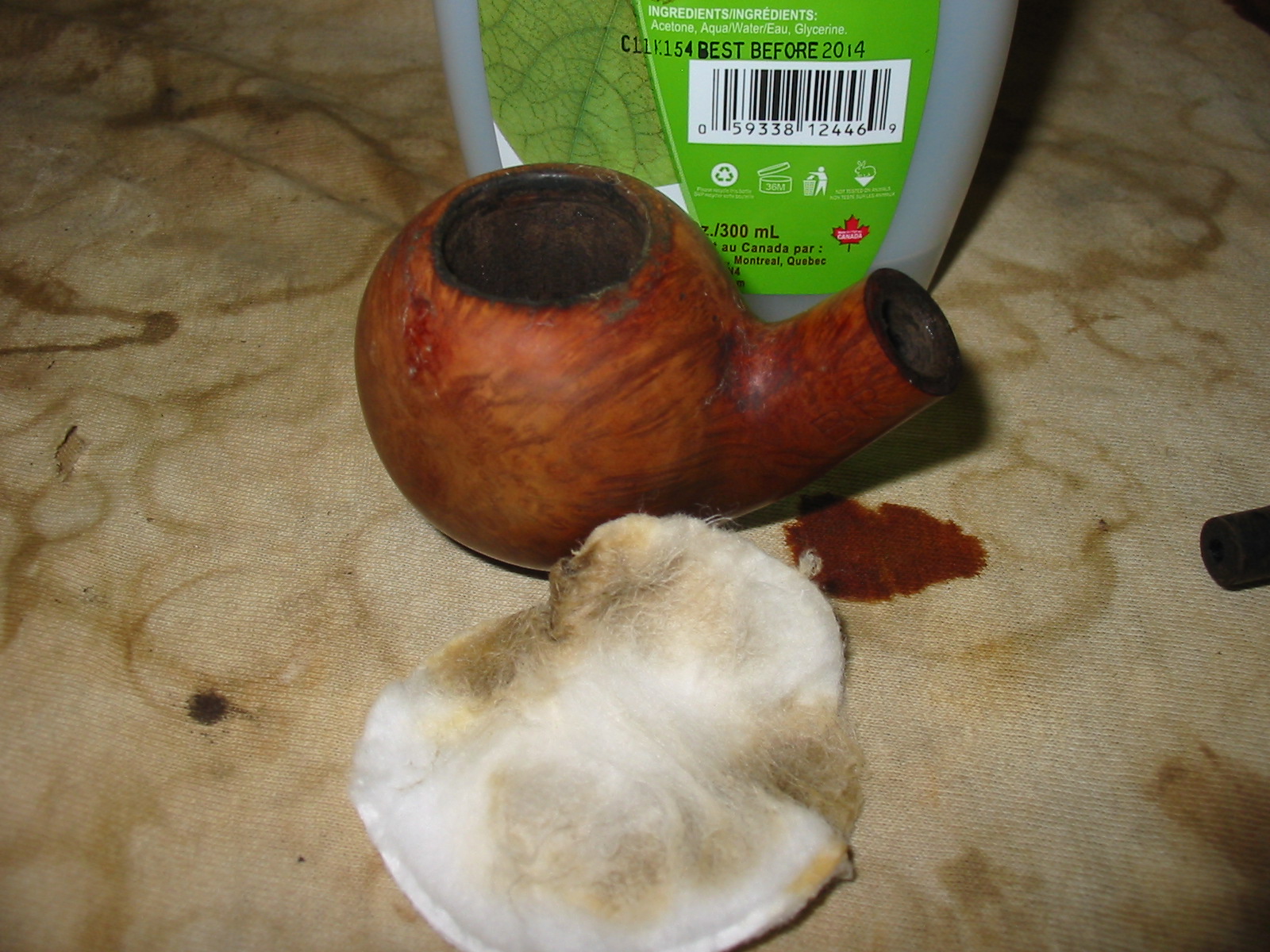
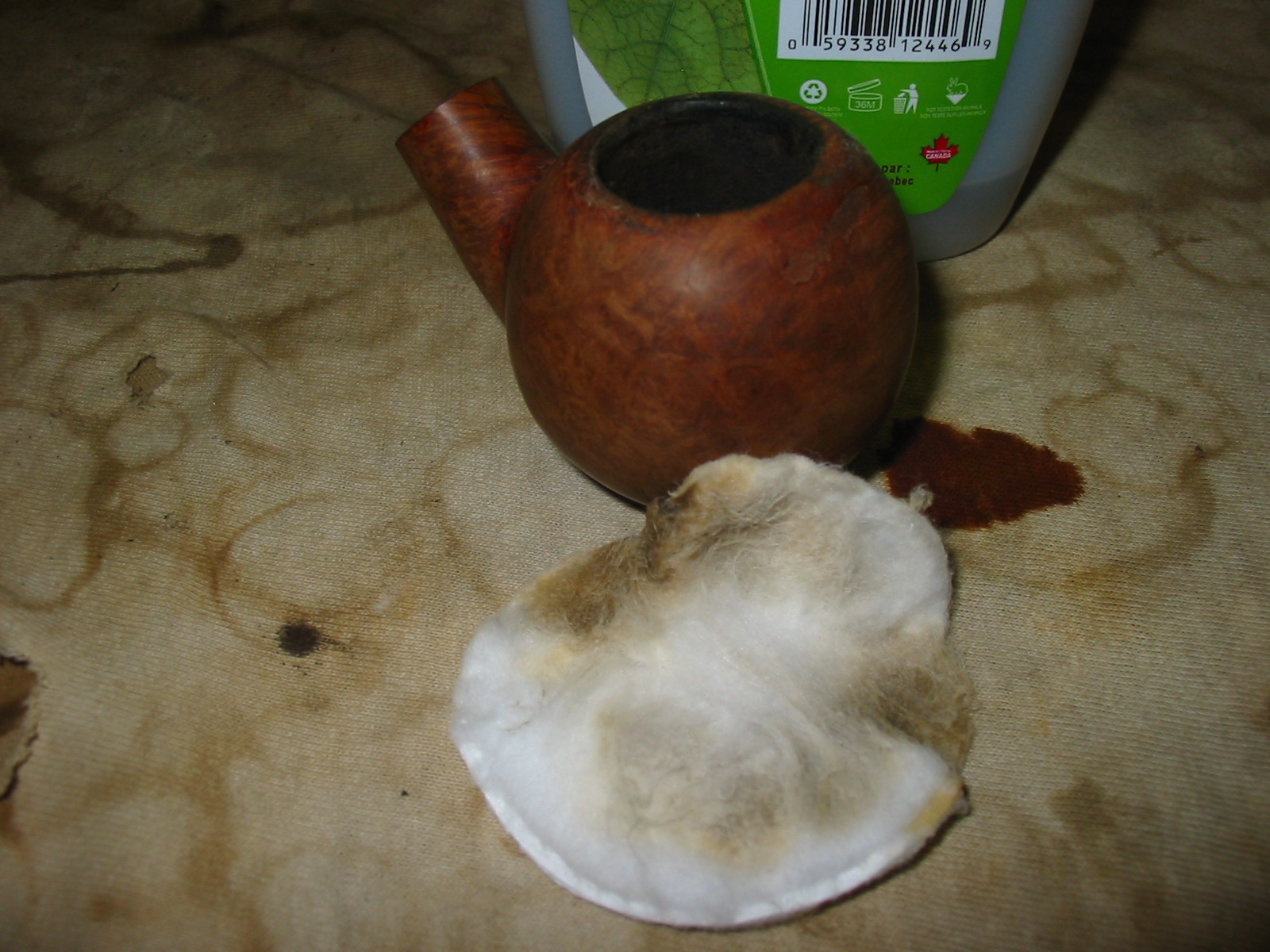
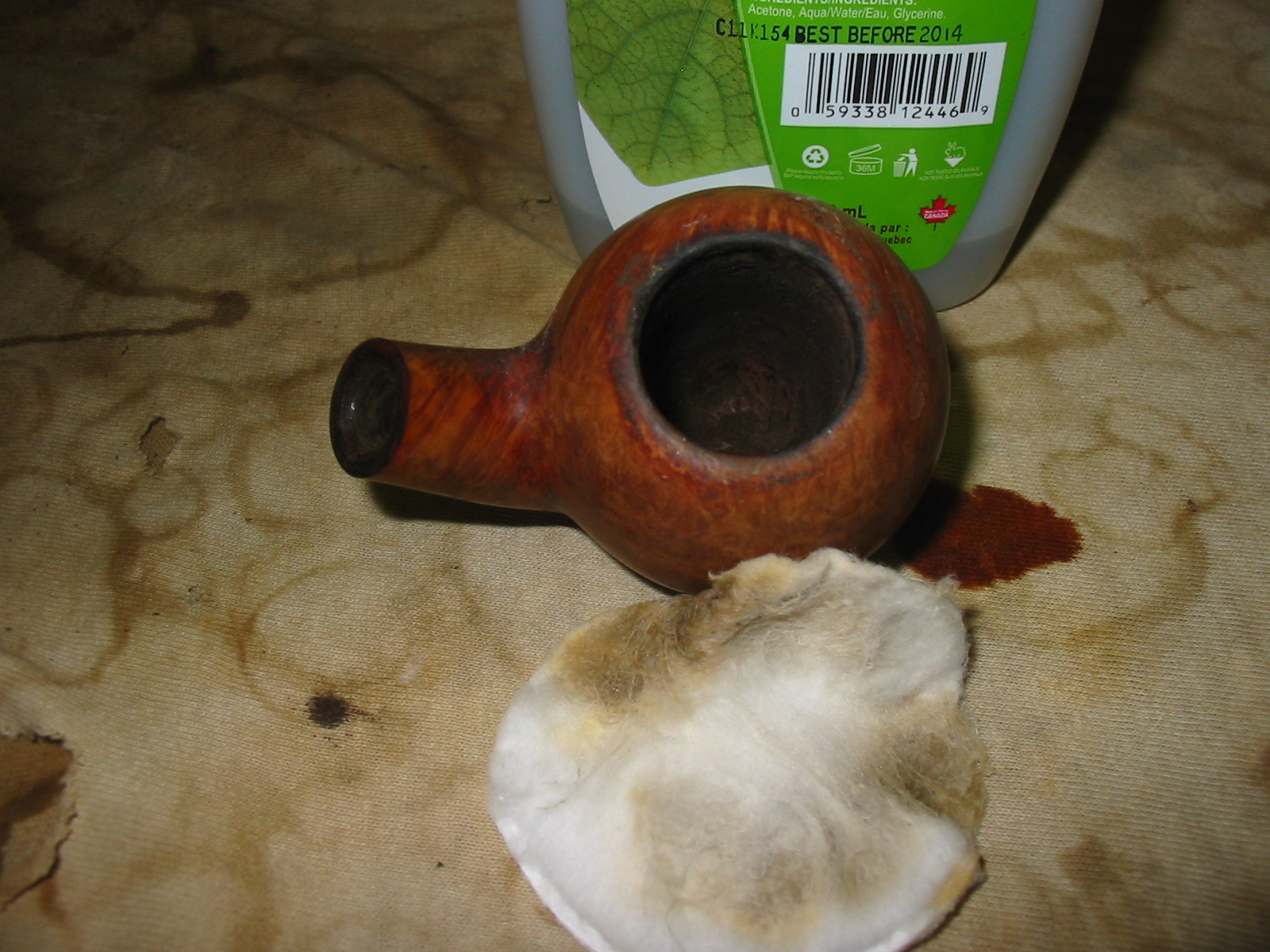
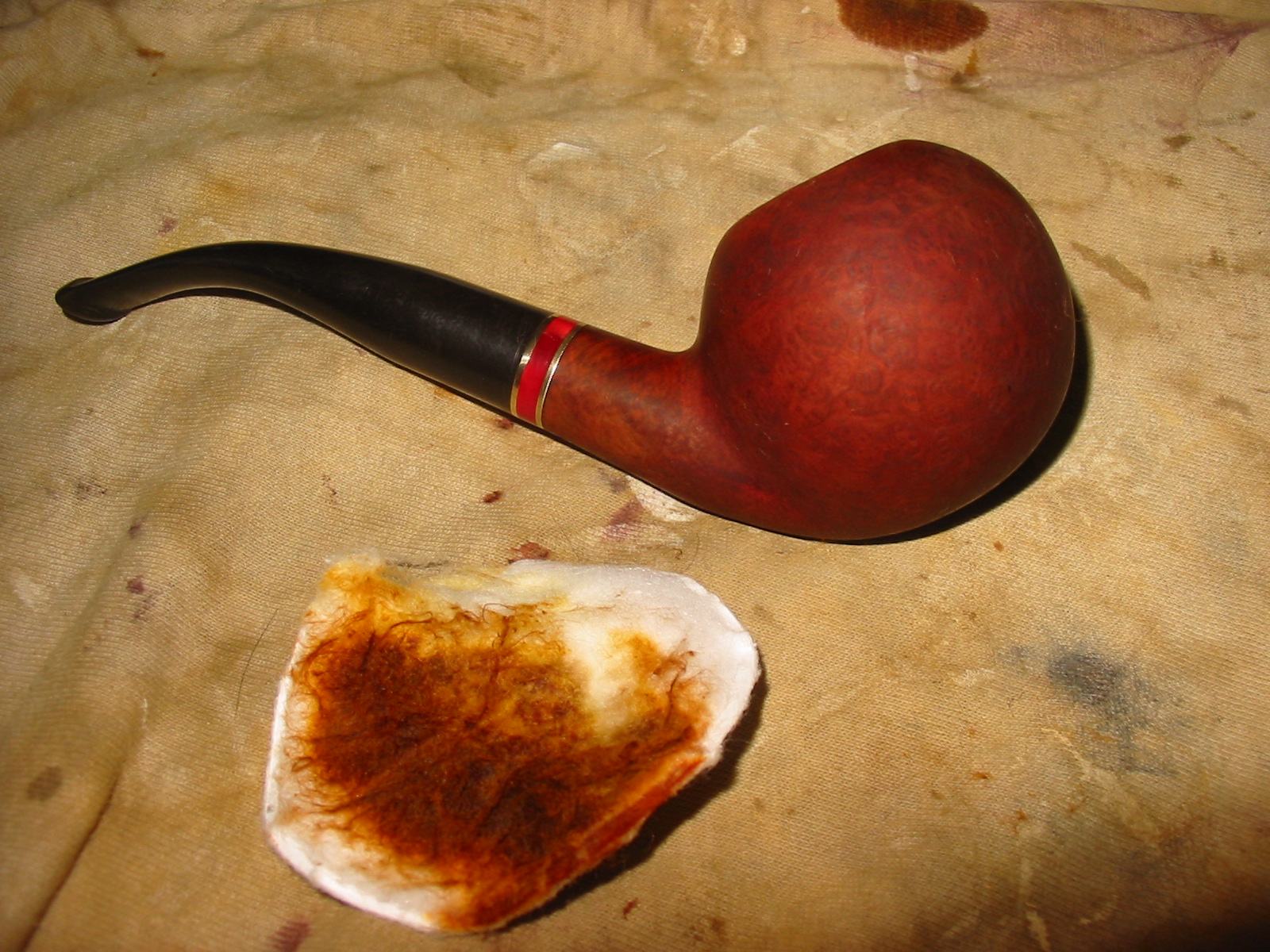
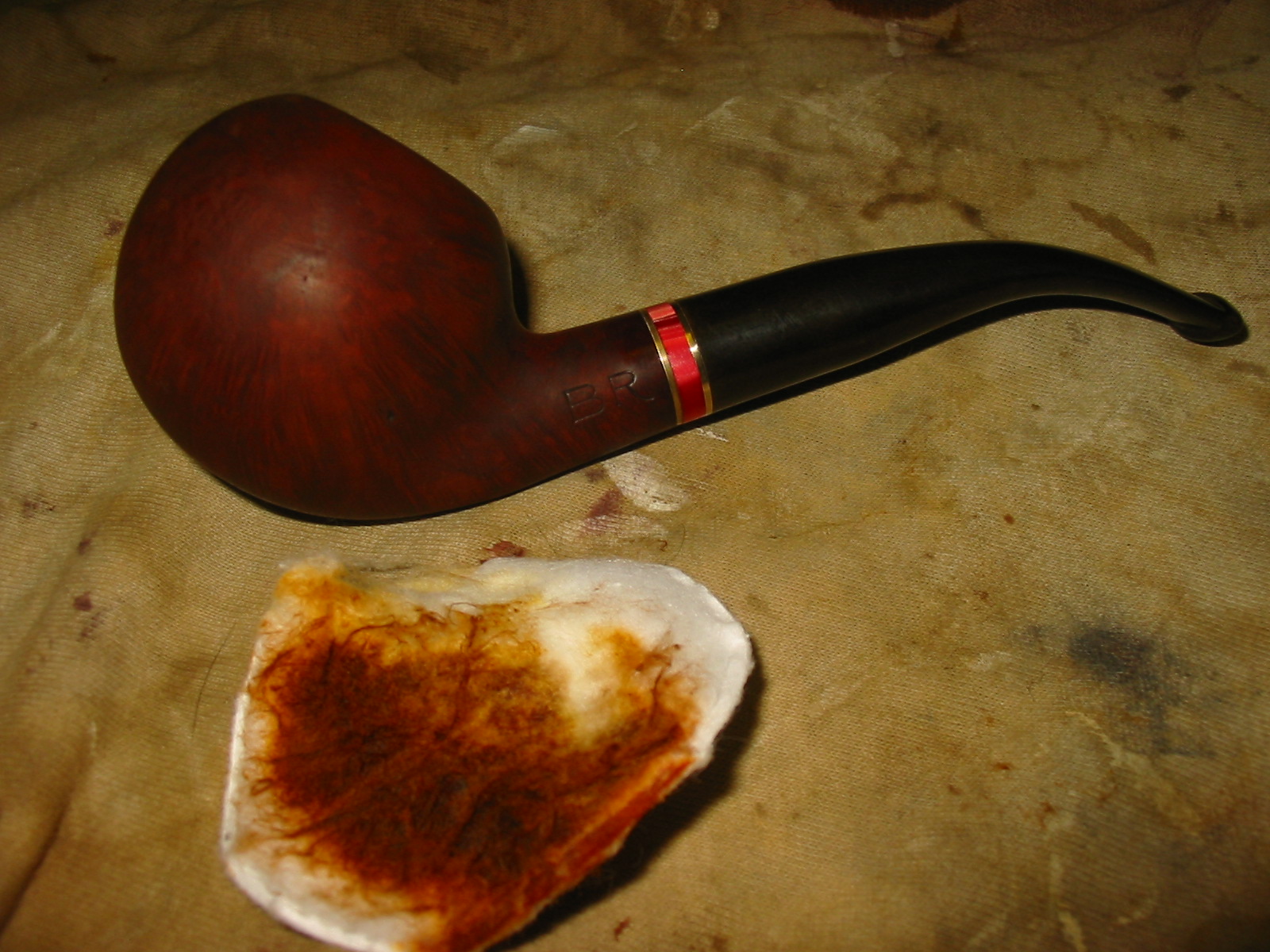
Once the bowl was reamed it was time to scrub the exterior with some acetone on cotton pads. I wanted to remove the tars and oils from the rim and bowl sides and also remove the embedded grime and surface dirt on the whole pipe. The next series of three photos show the process of the scrubbing and the look of the bowl once the grime and tars were removed. I would still have to sand the bowl down to remove the remaining buildup once I had washed it with acetone.

ImageImageImage

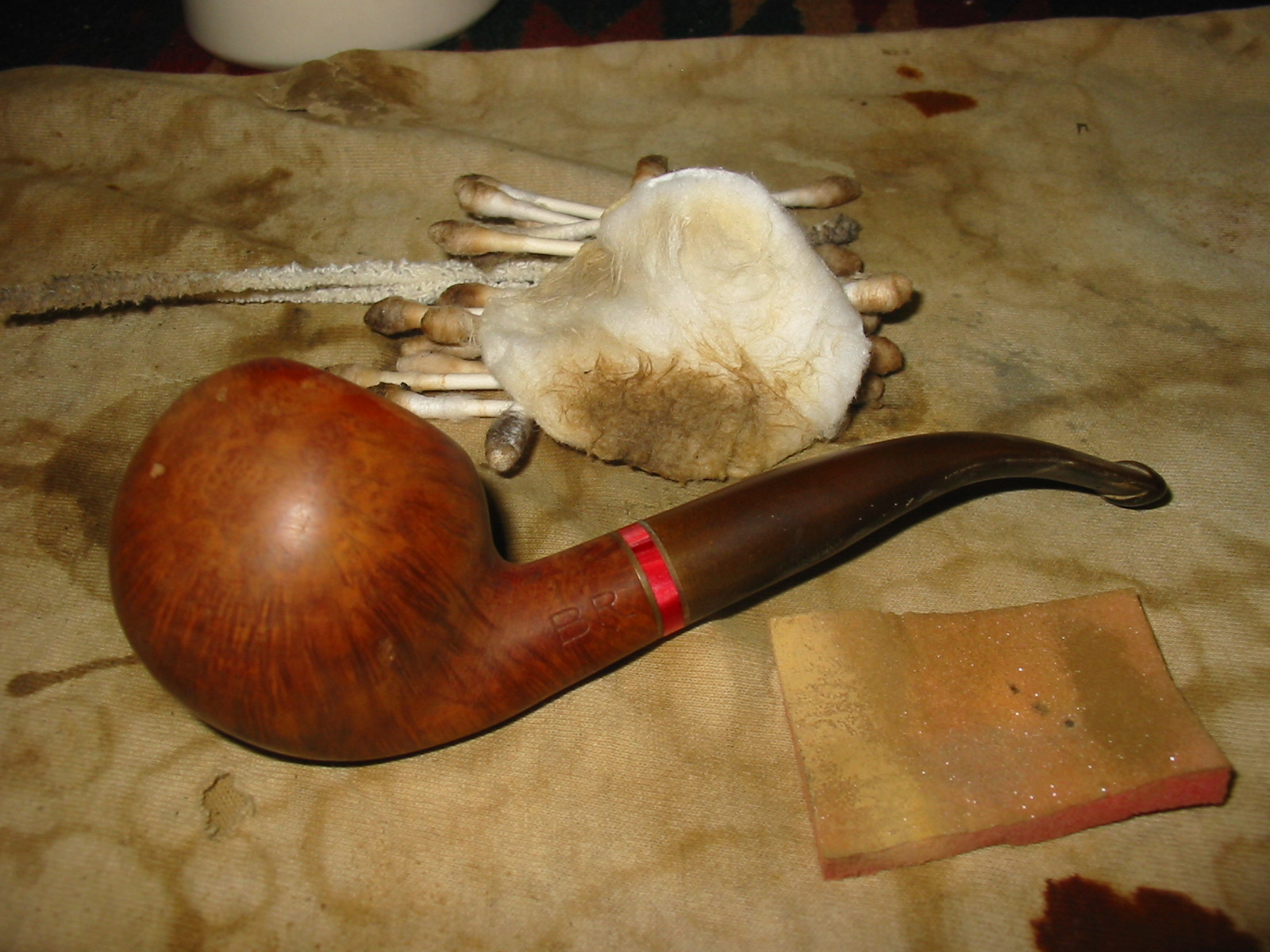
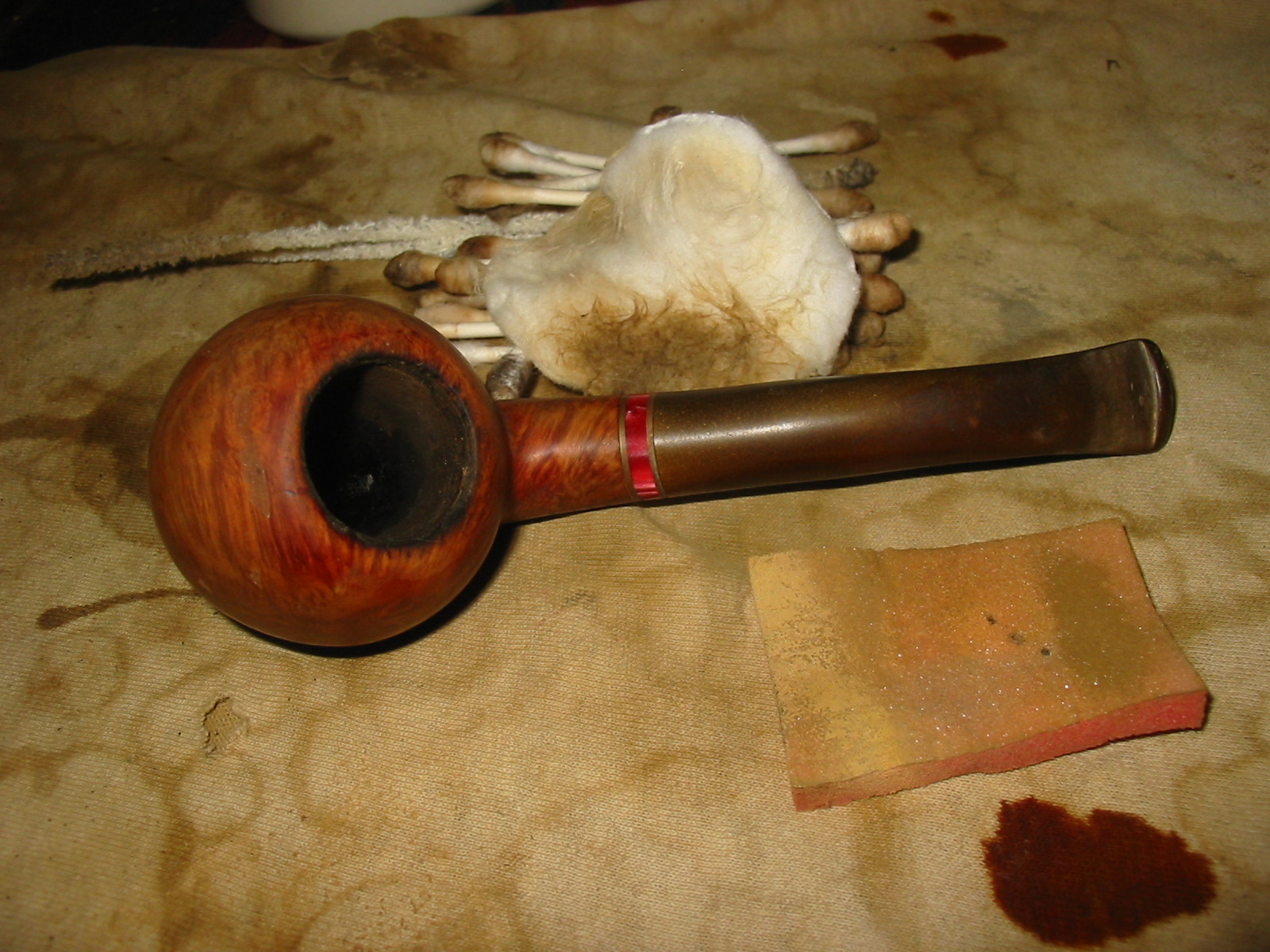
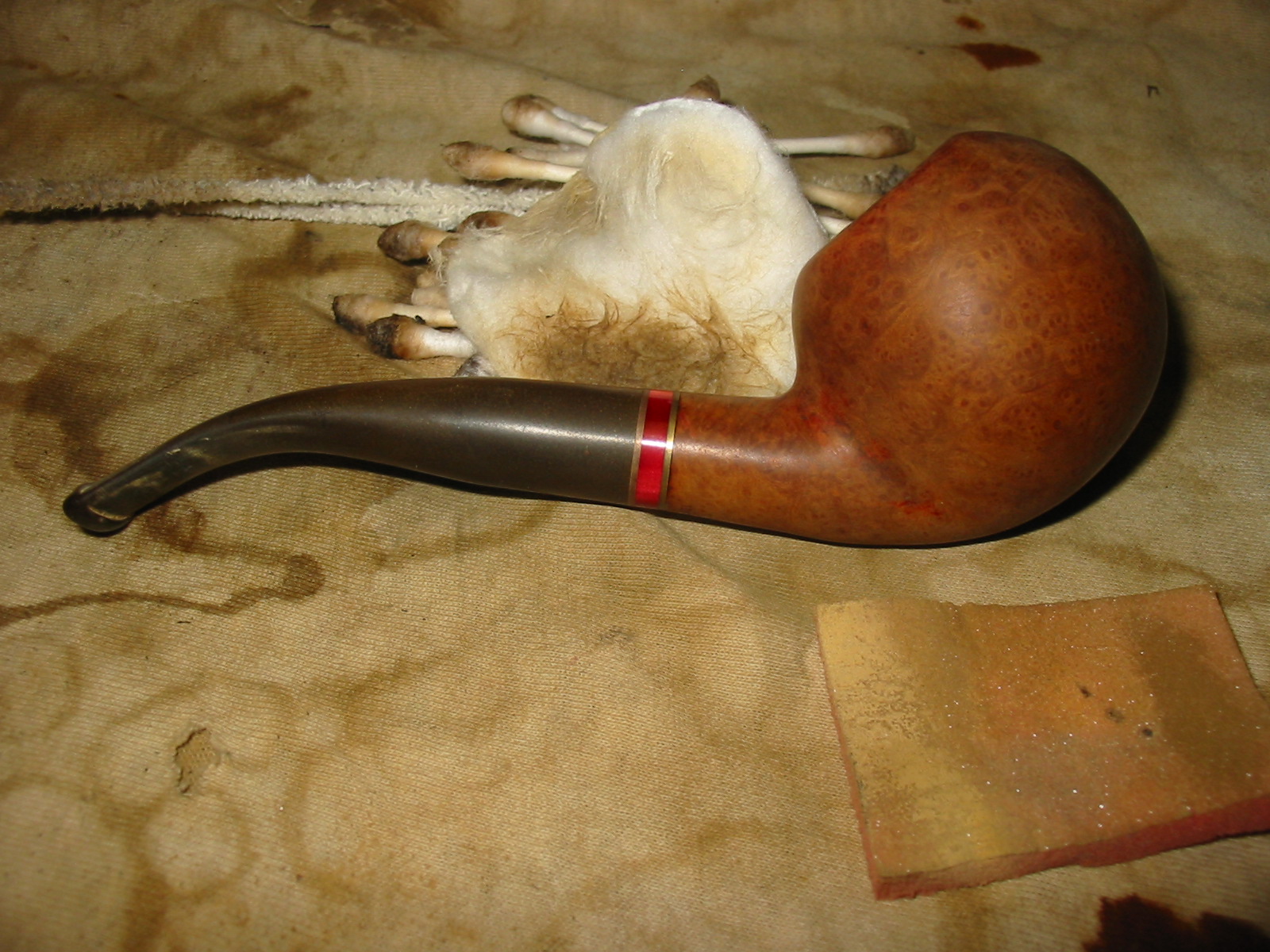
I cleaned out the shank and mortise with cotton swabs and Everclear. I dipped the cotton swab in some of the alcohol that I poured in the lid and used as a bowl for washing the shank. It took a lot of cotton swabs to clean out all the tars and oils in the shank. When I started it smelled like cherry cough syrup and as I added the alcohol it was stronger. The nice thing was that as it got clean the smell disappeared. I used fluffy pipe cleaners to clean out the airway to the bowl. When I was finished I put the stem back on the bowl for sanding so that I would not round any edges on the shank and also to protect the shank from any changes in shape from sanding. I find that when I do this I am more careful around the stem shank union than when I sand without the stem. I used a medium and a fine grit sanding sponge (pink foam sanding sponge in the pictures below). I sanded the entire bowl and spend a significant amount of time on the upper curves of the bowl so that I could get rid of all of the tar remnants. I also sanded the stem with the sanding sponges as well. The next series of four photos show the cleaned bowl and the oxidation and calcification beginning to be removed from the stem.

ImageImageImageImage

When I finished sanding the bowl I wiped it down with an alcohol dampened cotton pad to remove the sanding dust and remaining grime on the briar. Then I laid the bowl aside and worked on the stem. I sanded it with 320 grit sandpaper to get rid of the oxidation and remaining signs of calcification around the button. I also worked on the tooth marks with the sandpaper. The next three photos show the stem as I sanded away the tooth chatter and the oxidation.

ImageImageImage

After this initial sanding I decided to wet sand with the 1500-2400 grit micromesh sanding pads. The next series of five photos show that process and the ever blackening colour of the stem sans oxidation.

ImageImageImageImageImage

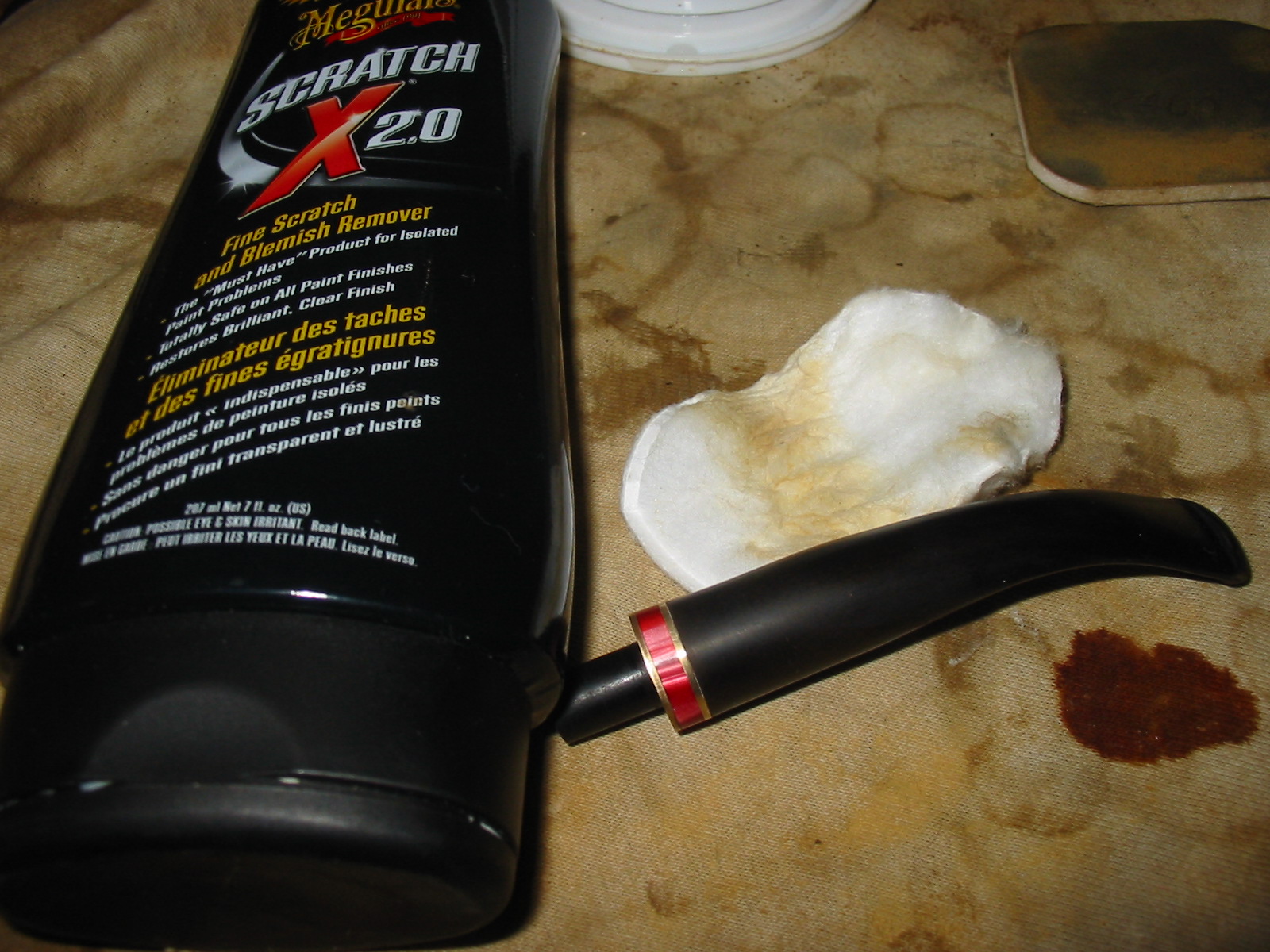
After the 2400 grit micromesh sanding I used Maguiar’s Scratch X2.0 and rubbed it onto the stem with my fingers and scrubbed it off with cotton pads.

Image

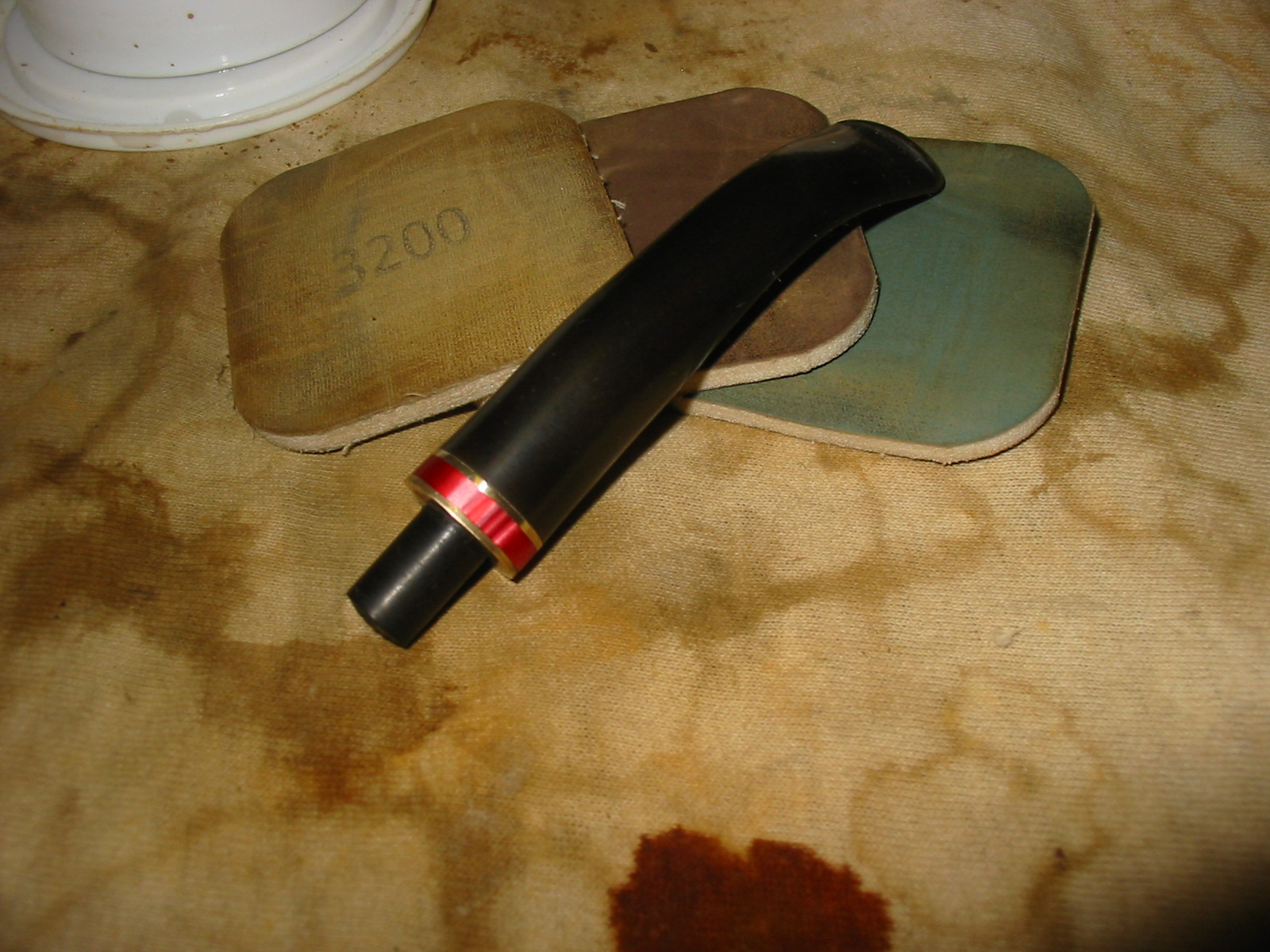
I then dry sanded it with 3200, 3600 and 4000 grit micromesh sanding pads. I finished sanding with the remaining grits of micromesh from 6000-12,000 and then set the stem aside to work on the bowl.

Image

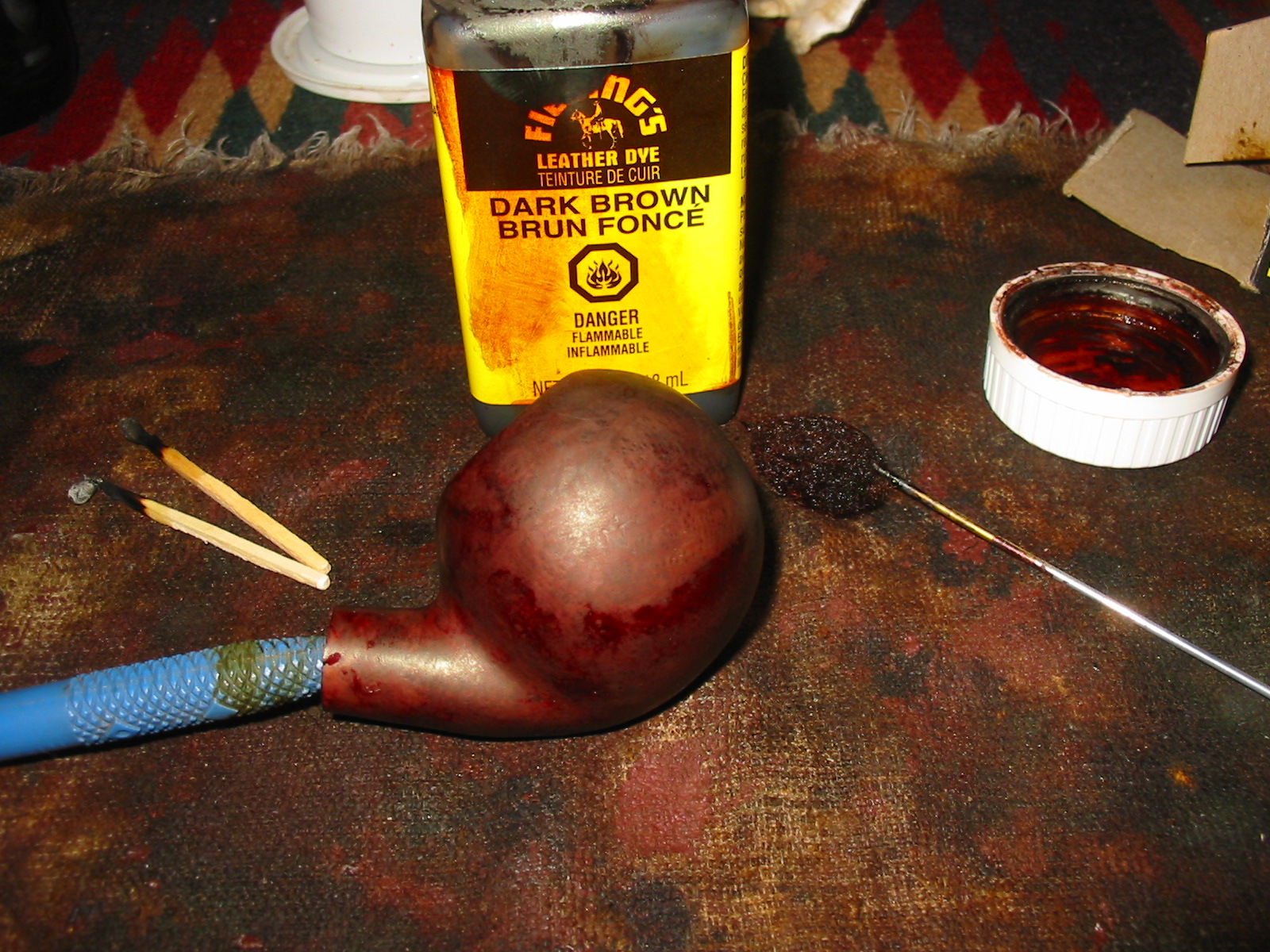
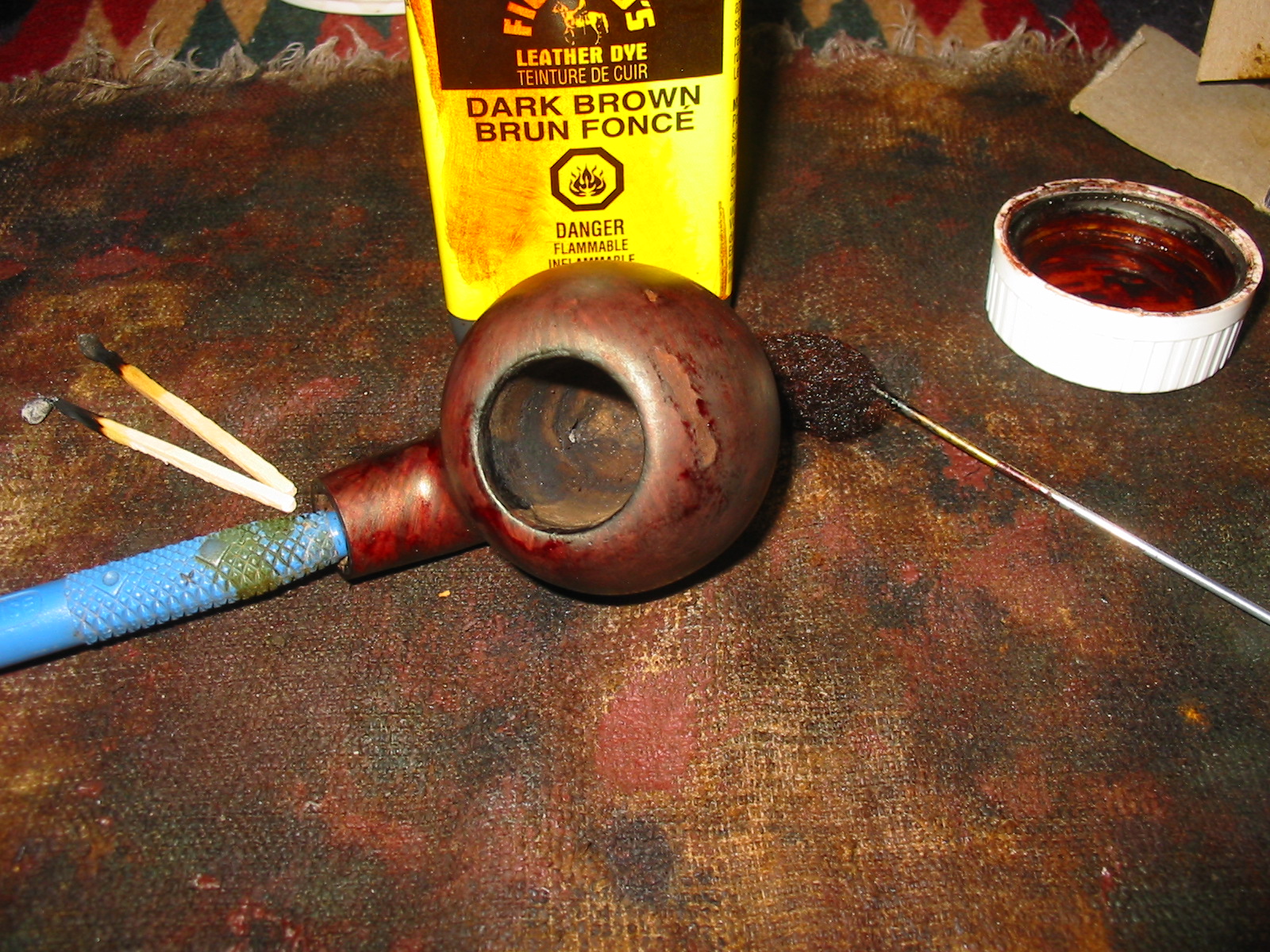
I decided to stain the pipe with a Dark Brown aniline stain to see how it would cover the fills. I was a bit worried that they would not pick up the pigment of the stain. I warmed the bowl and then applied the stain with the dauber and then flamed it, restained it, reflamed it and let it dry. The next two photos show the stained bowl and the fills standing out from the stain.

ImageImage

I put the stem back on the pipe and took it to my buffer. I buffed it with Tripoli and White Diamond to a shine. The fills seemed to just pop from the surface of the bowls! They stood out like eyesores and really bothered me. In the first two photos below you can see them clearly. The stem also showed a bit more oxidation that I would need to address as I finished the pipe.

ImageImage

I decided to try lightening the colour to see if the fills would blend in any better. I wondered if the high contrast of the dark stain and the light fills made them more visible. I wiped the bowl down with an alcohol dampened cotton pad to remove excess finish and try to blend the fills into the finish. It worked to a degree and the next three photos show the softened colour of the stain. In person the fills were still way to visible for my liking.

ImageImageImage

I wiped the stem down with Obsidian Oil and set it aside while I worked on picking out the fills with my dental pick. The next series of three photos show the cleaned out fills. They are stark white after the removal of the putty. In actuality they are a natural briar colour. I picked them clean and then wiped down the area with the damp pad one final time before I went to work on filling them.

ImageImageImage

The next series of seven photos shows the process I use for replacing putty fills. After I have cleaned them out I fill them with briar dust that I have collected. I pack it into the fill holes with the end of my dental pick. I wet the end of the pick so that the briar dust sticks to the end when I dip it in the dust. I then scrape the dust into the hole and pack it in tightly. I work on one hole at a time as I don’t want the dust and superglue mix running all over the pipe. That is a real challenge on a ball shaped bowl. Once I have the dust packed in the hole I drip superglue into the dust. I also add a bit more dust if it is necessary and repack and reglue it. You can see from the photos that the result is a messy patch over the fill hole. The dust and superglue mix hardens quickly and forms a great patch for the holes. Once I had all the holes filled I then sanded the bowl.  

ImageImageImageImageImageImageImage

The next eight photos show the sanded bowl. I use 320 grit sandpaper to sand off the excess superglue and briar dust and bring the surface of the patch smooth with the surface of the bowl. The finished patch is almost black in appearance. In the bare briar bowl the patches show up as black on the light coloured briar. I find that this dark patch actually is easier to blend in with the stain than the lighter putty patches. Once I have sanded the patches smooth I sand the entire bowl with the fine grit sanding sponge so that when I restain it I will be able to get an even coat. After sanding I wipe the bowl down with an alcohol dampened cotton pad to remove any remaining finish and the dust and grit from sanding the bowl. This prepares it for staining.

ImageImageImageImageImageImageImageImage

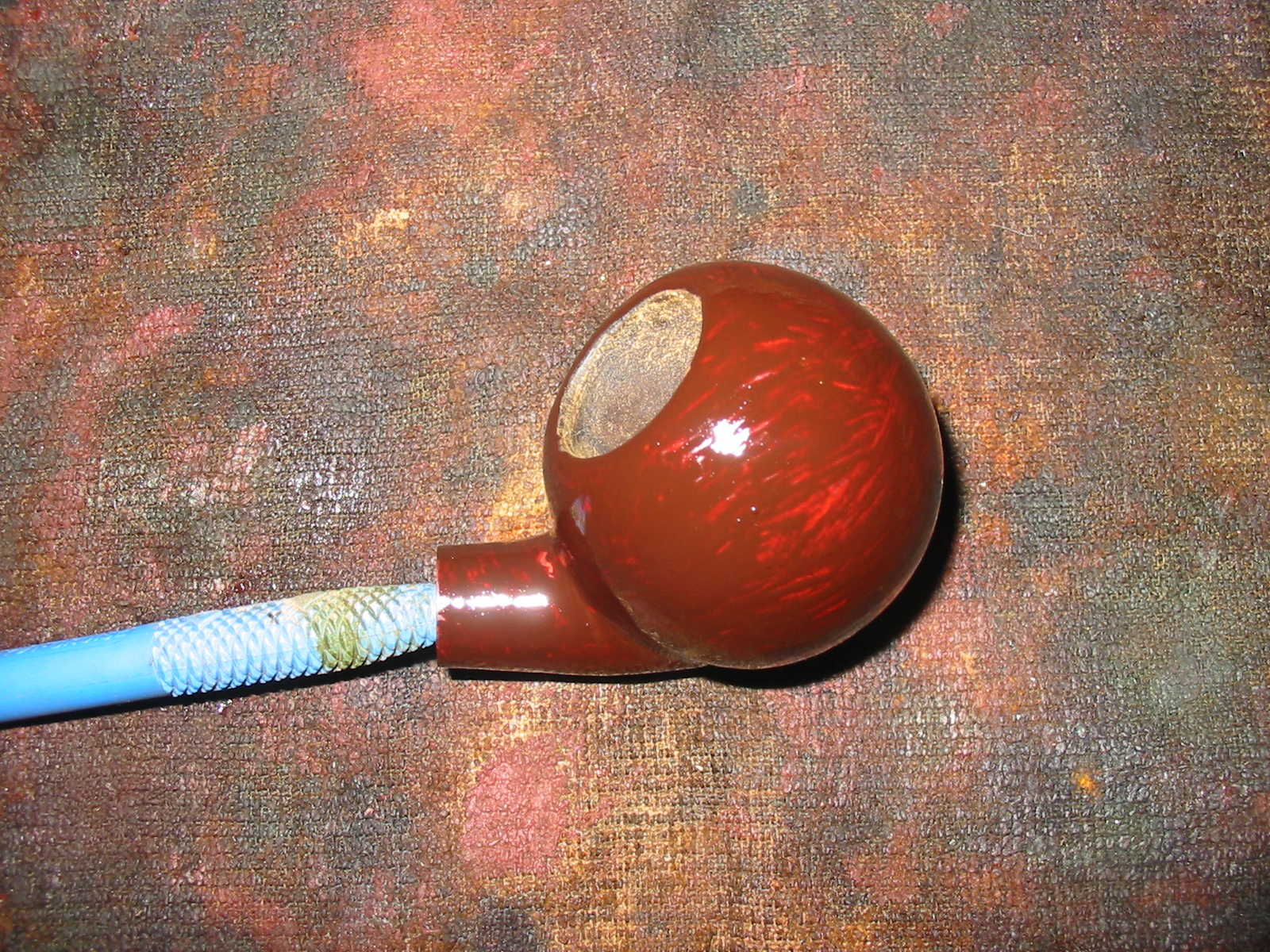
For the restain of the bowl I decided I would use an oxblood stain. It is an alcohol based paste stain that I have used in the past with good coverage over the replace fills. I applied with a dauber and rubber is into the surface of the pipe. Once I had the whole pipe covered I flamed it and then rubbed it off with a cotton towel I use for that purpose. The next four photos show the coverage of the stain before I wiped it off.

ImageImageImageImage

Once the stain was dry I buffed it on my buffer using White Diamond. The next four photos show the bowl after buffing. The fills are still dark and stand out to the eye. I have learned through experimenting that I can blend them into the stain a bit better by using a permanent marker and draw grain lines through the fills making them flow with the pattern of the grain on the bowl. The trick it not to have a heavy hand and to try to follow existing graining patterns. The black permanent marker stands out initially on the new stain but after is applied I restain the bowl with another coat of the oxblood stain, flame it and then rub it off.

ImageImageImageImage

The final series of five photos show the finished pipe. The fills are still visible if you look closely but they blend into the surface of the bowl and stain more nicely. I gave the pipe a final buff with White Diamond and then applied several coats of carnauba wax and buffed with a clean flannel buffing pad. The pipe is now ready to smoke and the medicinal cherry smell is gone. Though the fills are far from being invisible they are certainly better and the overall effect is a much nicer pipe.

ImageImageImageImageImage

Rejuvenating a Heibe Goldpoint Billiard


Blog by Steve Laug

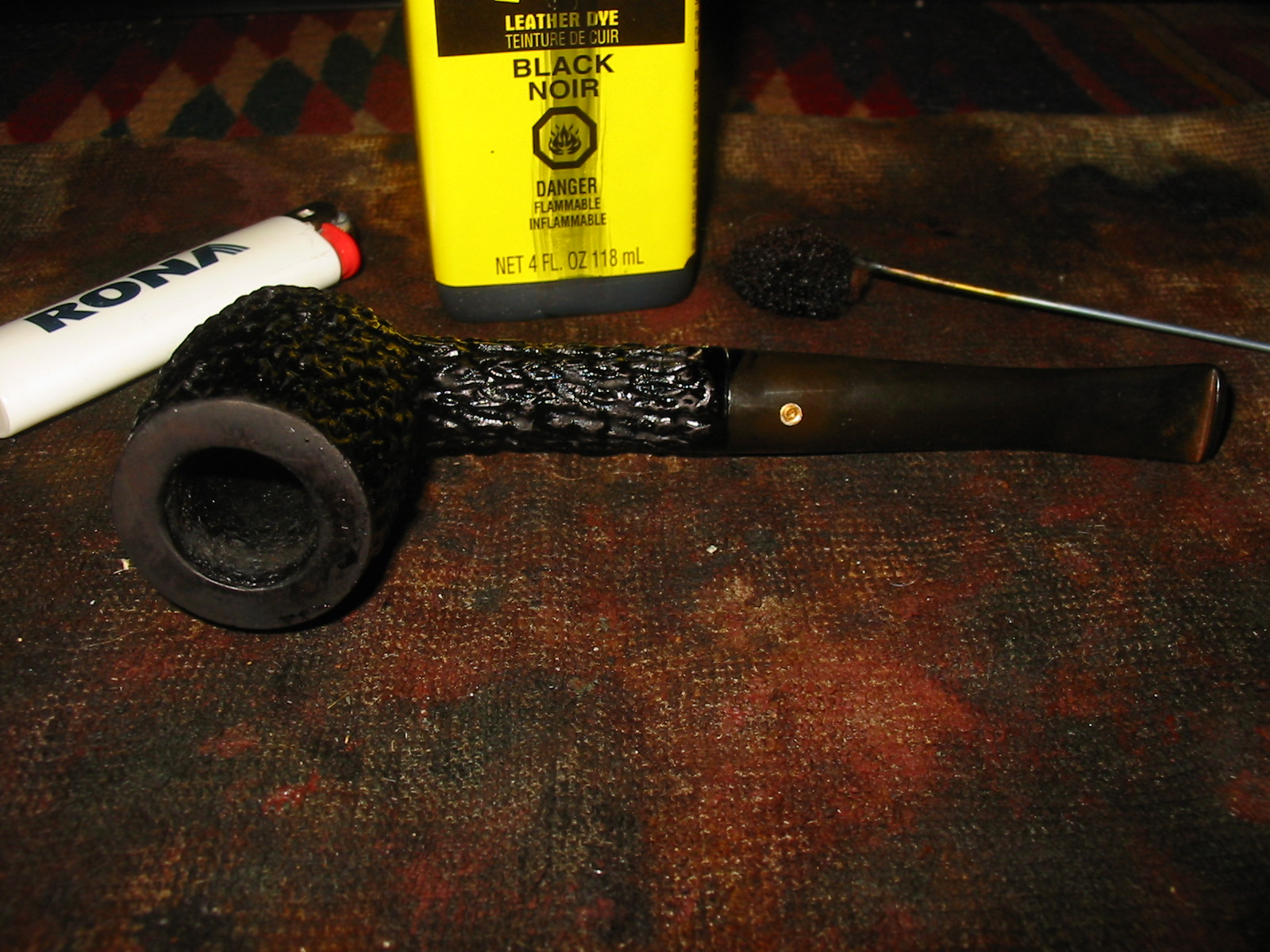
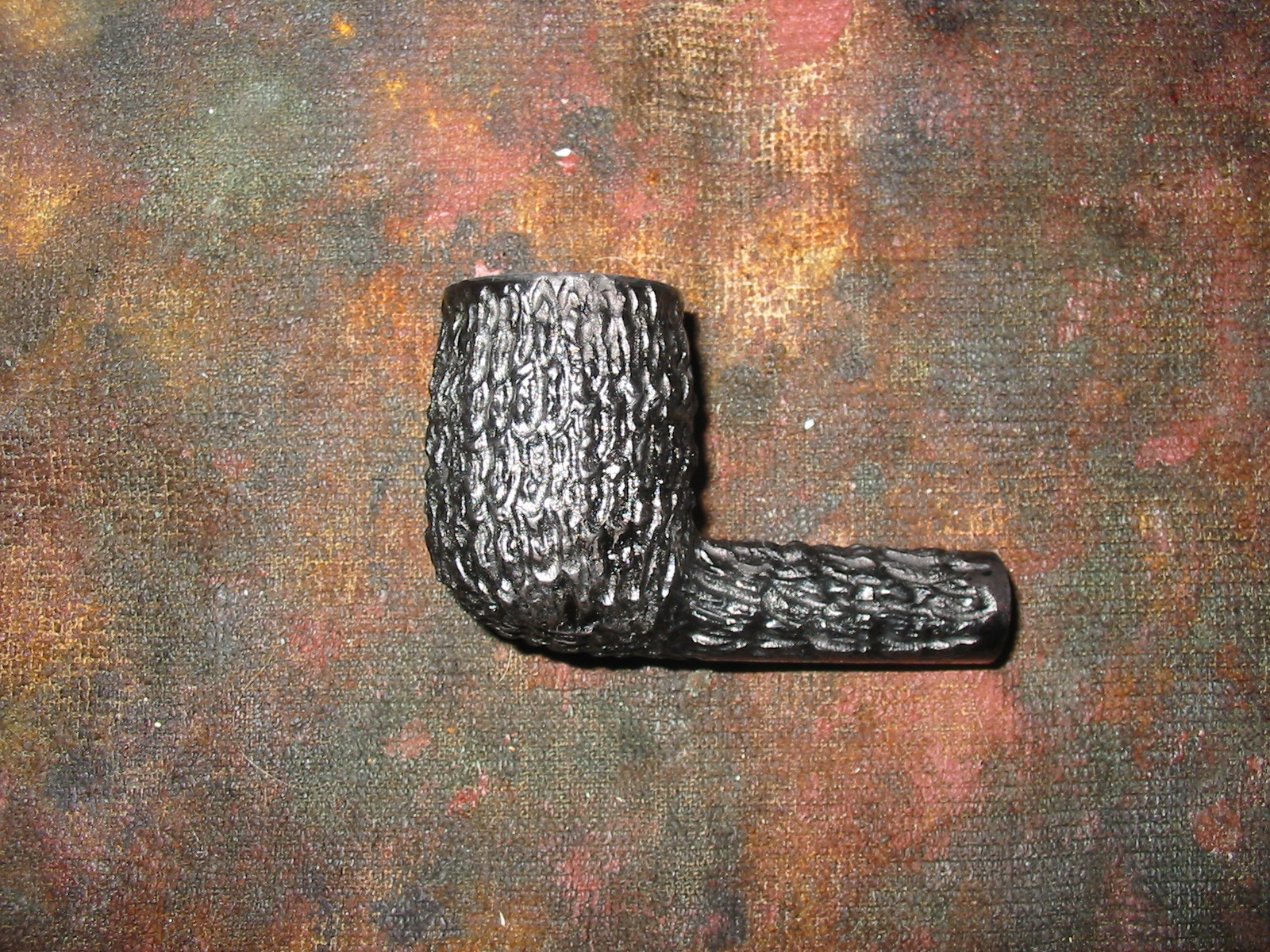
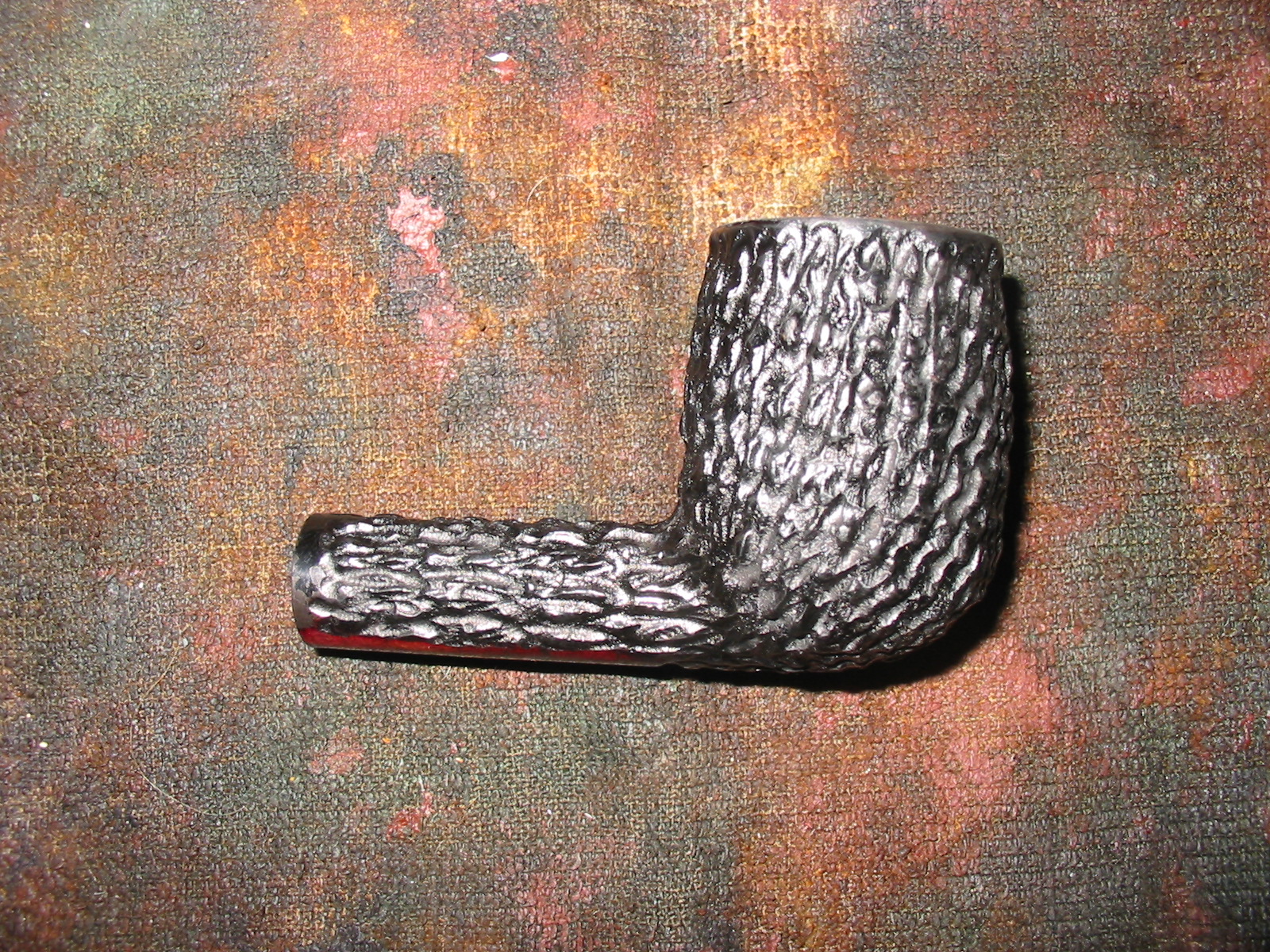
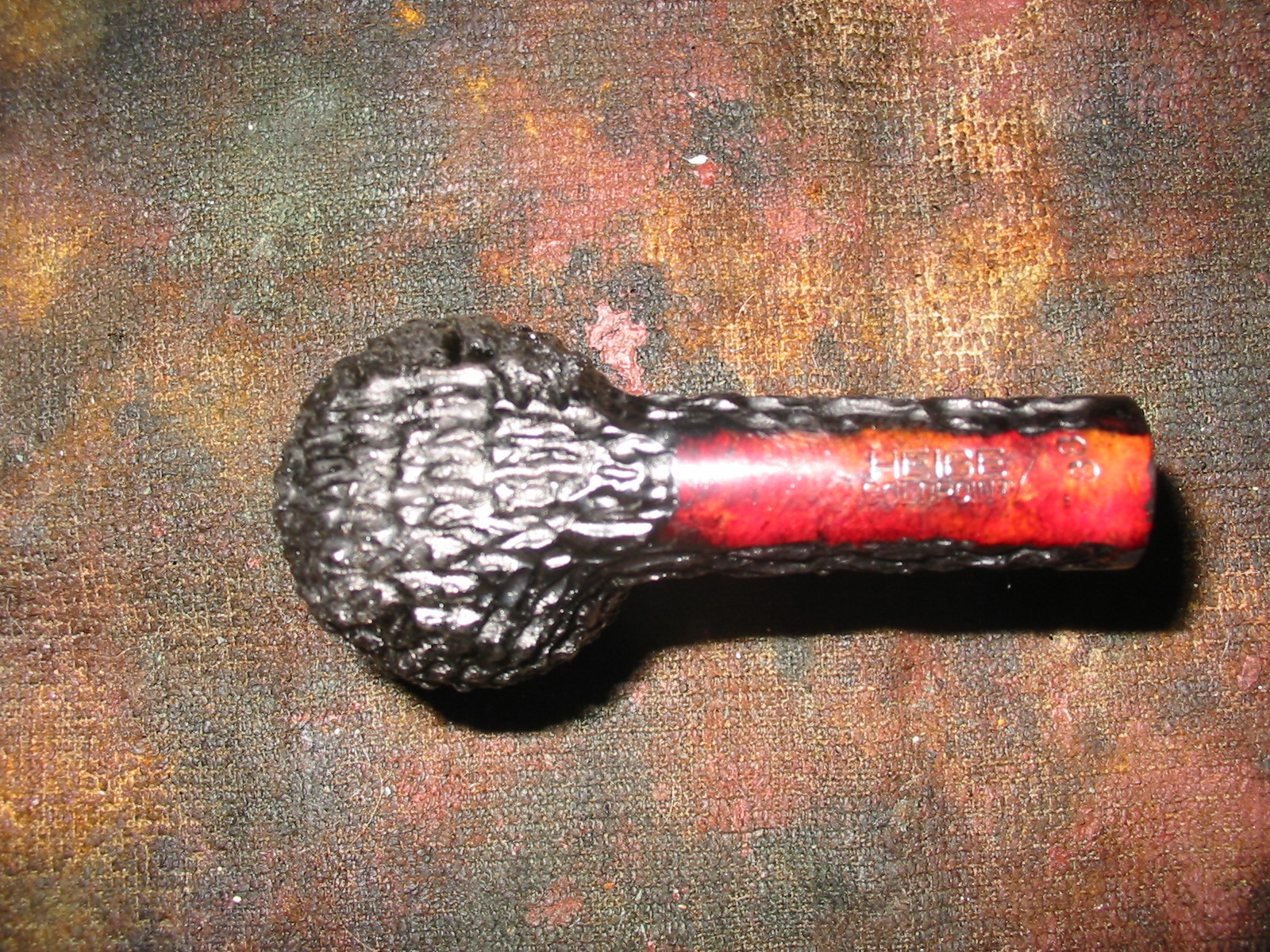
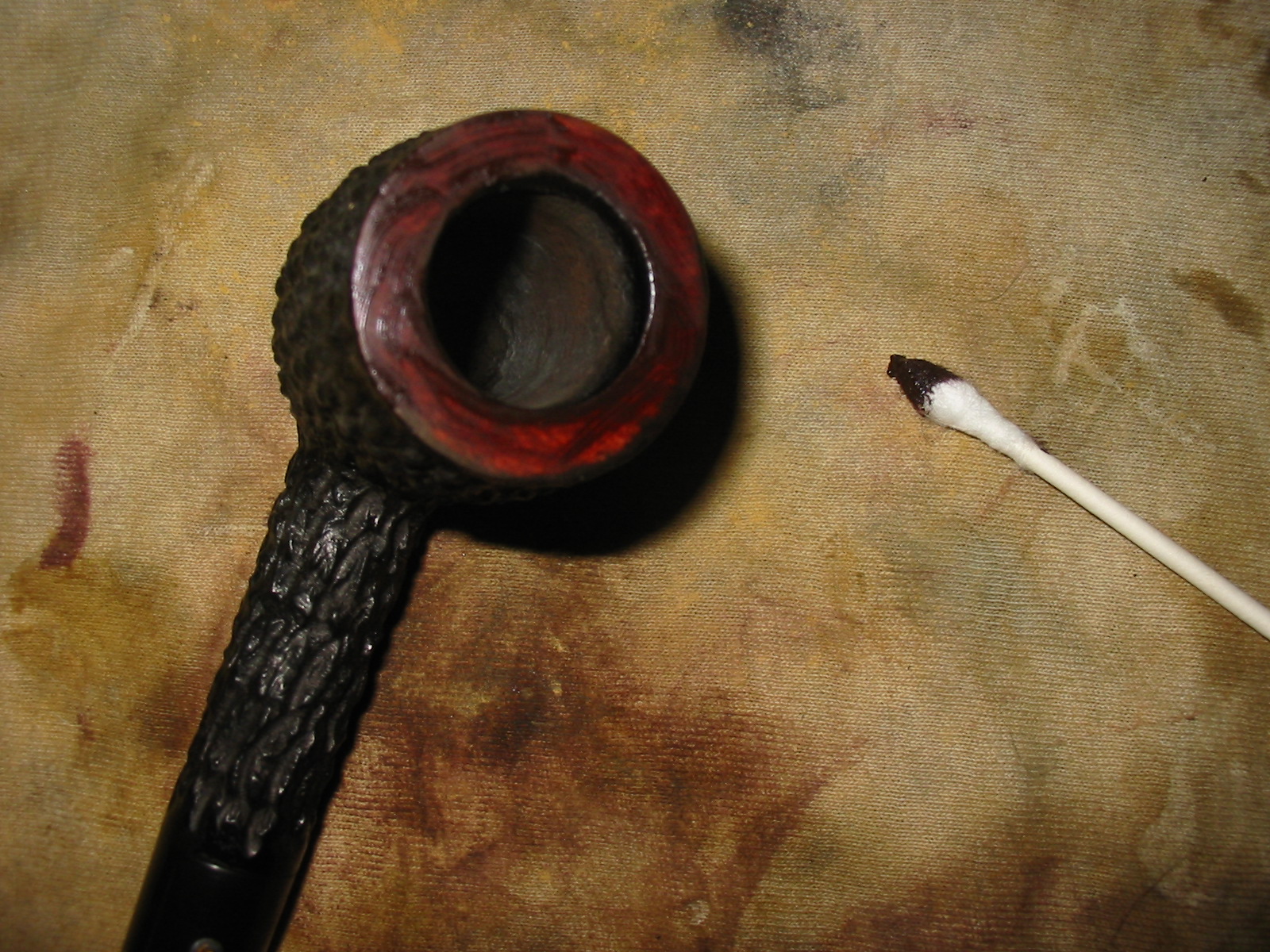
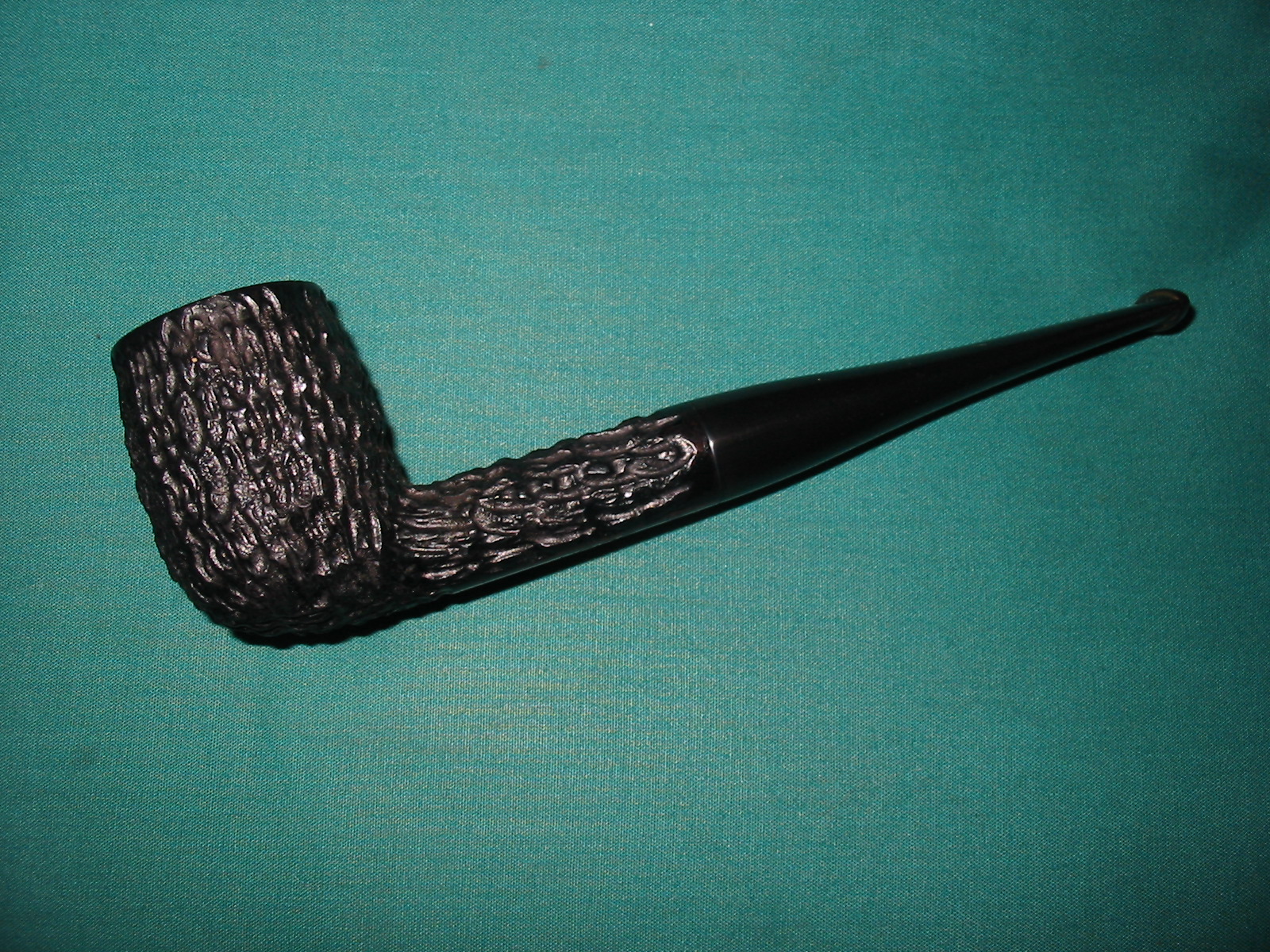
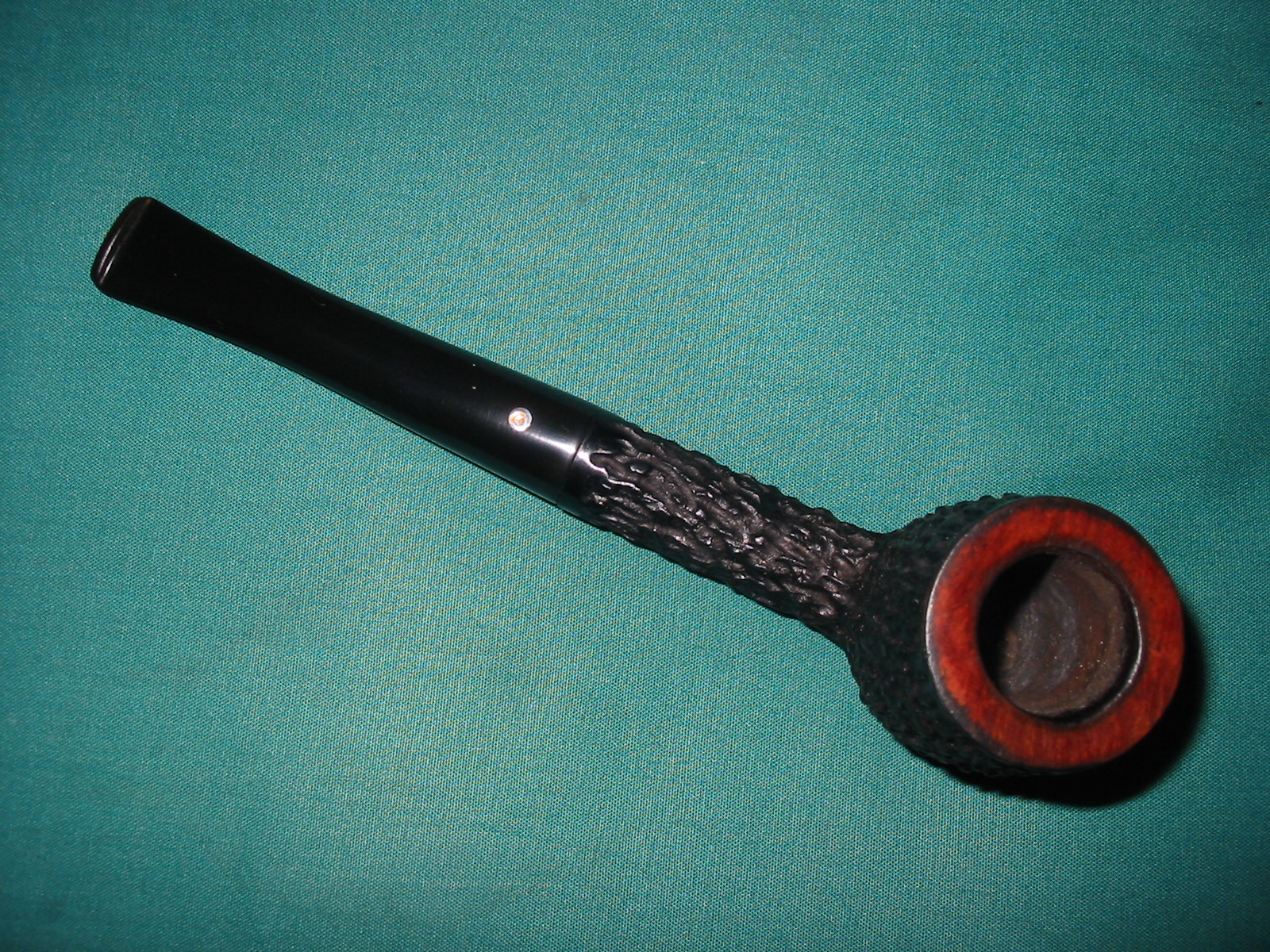
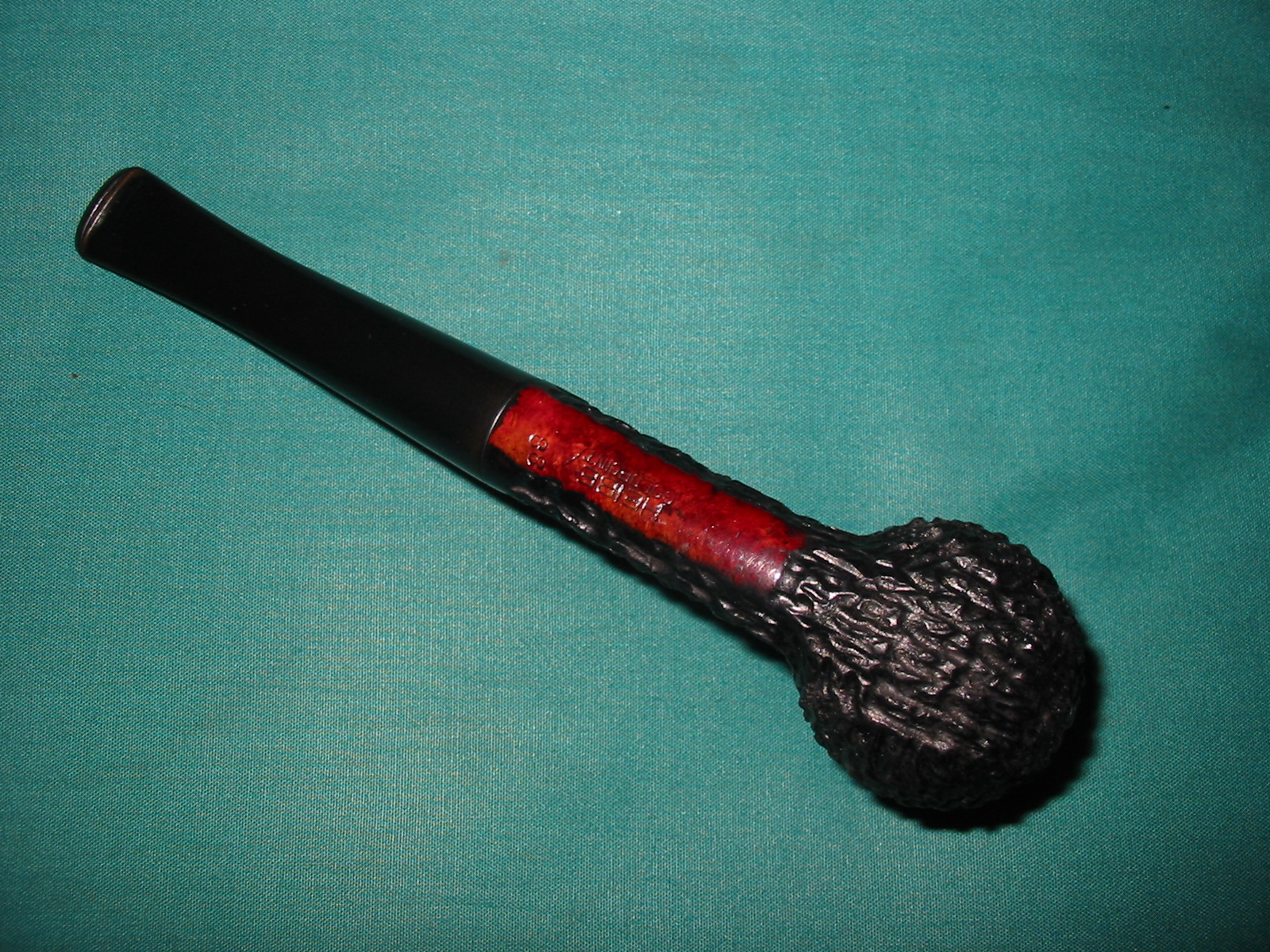
Heibe is a German brand of pipe made by pipe maker Erich Heikaus; Bergneustadt, Germany in the 1970’s. The stamping is on the smooth bottom of the shank and it reads HEIBE over Gold Point and to the right of that stamping is stamped 88. I am guessing that is the shape number. It has an ebonite stem with a gold point in the top of it. The point swirls and gives an attractive look to the stem. The stem was oxidized and had some tooth chatter and a tooth mark on the top and underside of the stem. The stem was also loose fitting. The bowl was caked but not evenly and the cake seemed to be very soft. The rim was a bit darkened but no burn marks and the inner rim was still round. The bowl finish is rusticated with a tree bark like rustication and the stain was black. The rim and the smooth spot on the underside of the shank were stained oxblood. The finish was dirty and in spots the stain was missing and the briar was showing through – particularly on the edges of the rim and on the shank near the stem. Some of the high points on the bark rustication were also showing briar through the stain. The original stain was black. The next series of four photos shows the state of the pipe when I started working on it this morning.

ImageImageImageImage

I decided to begin by scrubbing the bowl with Murphy’s Oil Soap and a soft bristle tooth brush that I have used for a long time to scrub deeply into the rustication patterns. Once I scrubbed it thoroughly I rinsed it off under warm water in the sink. I do not leave it under the water long, just enough to scrub off the soap and get it cleaned. I then dry it off with a soft cotton cloth and wipe out any water than got in the bowl with a cotton swab. The first picture below shows the pipe scrubbed and covered with the oil soap. The tooth brush in the photos is the one I use to scrub the bowl. The next four photos show the bowl after I have rinsed it with warm water and dried it off. You can see where removing the grime and dirt from the bowl left the spots very visible that needed to be restained. The rim also cleaned up nicely.

ImageImageImageImageImage

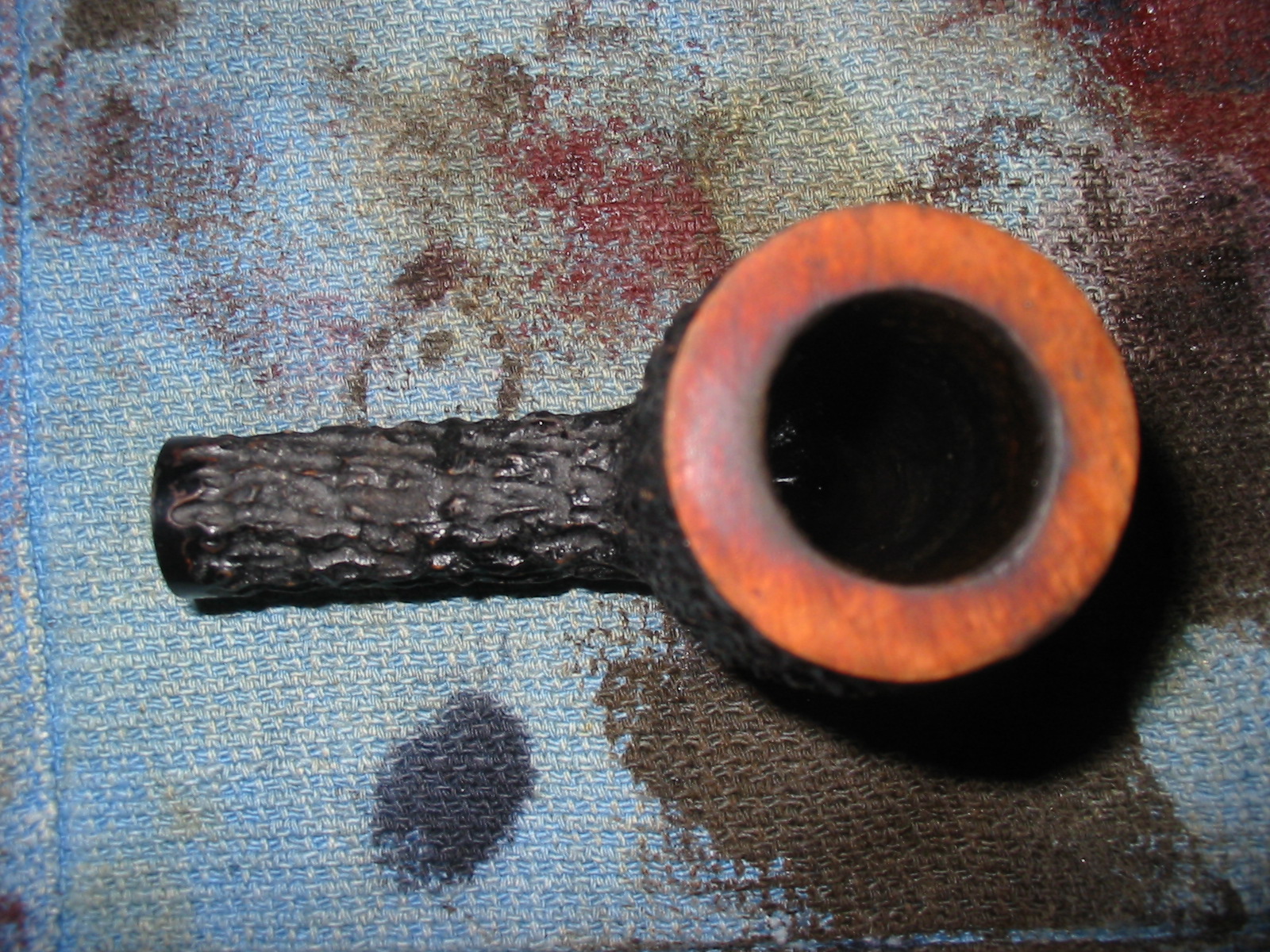
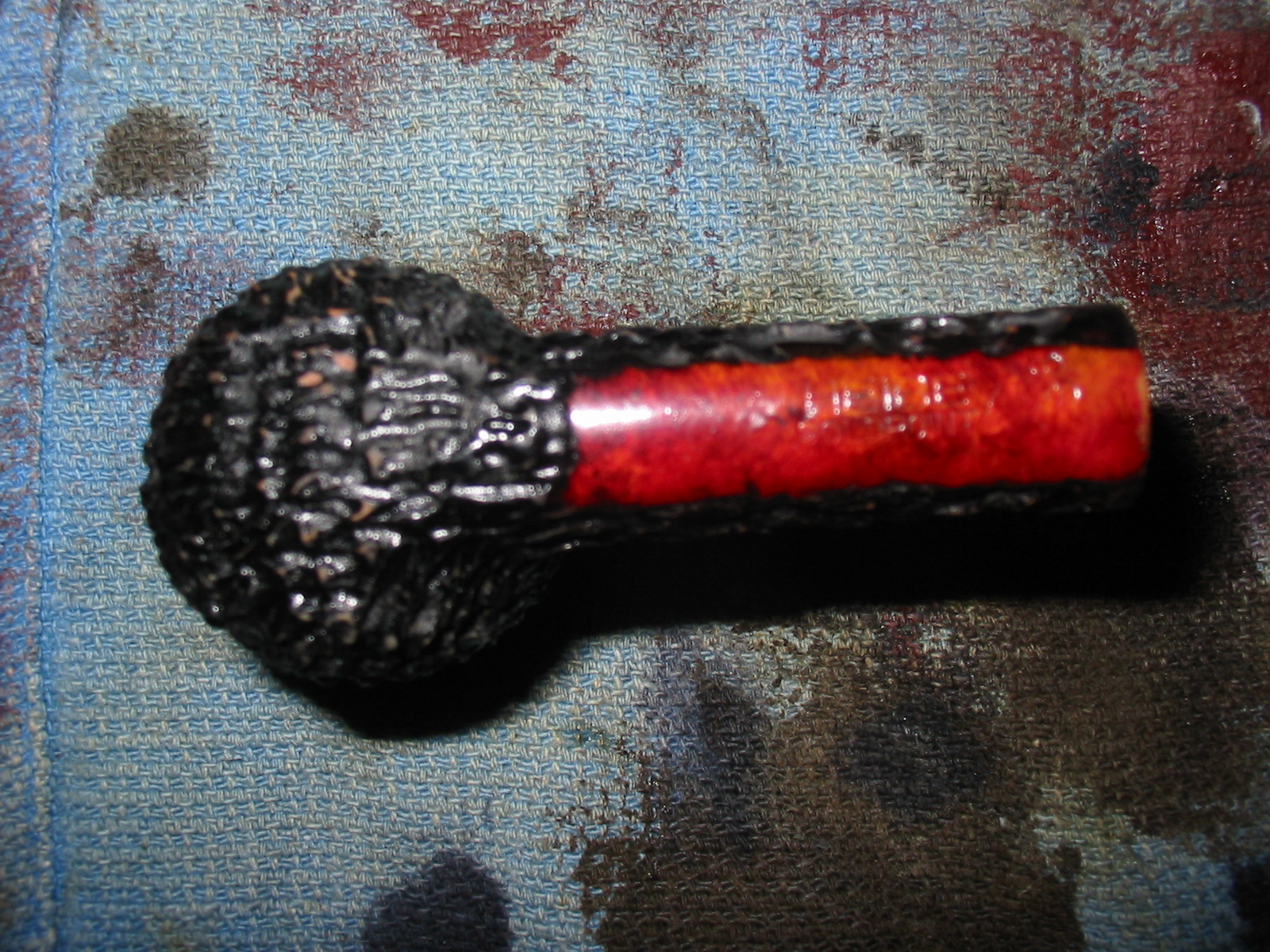
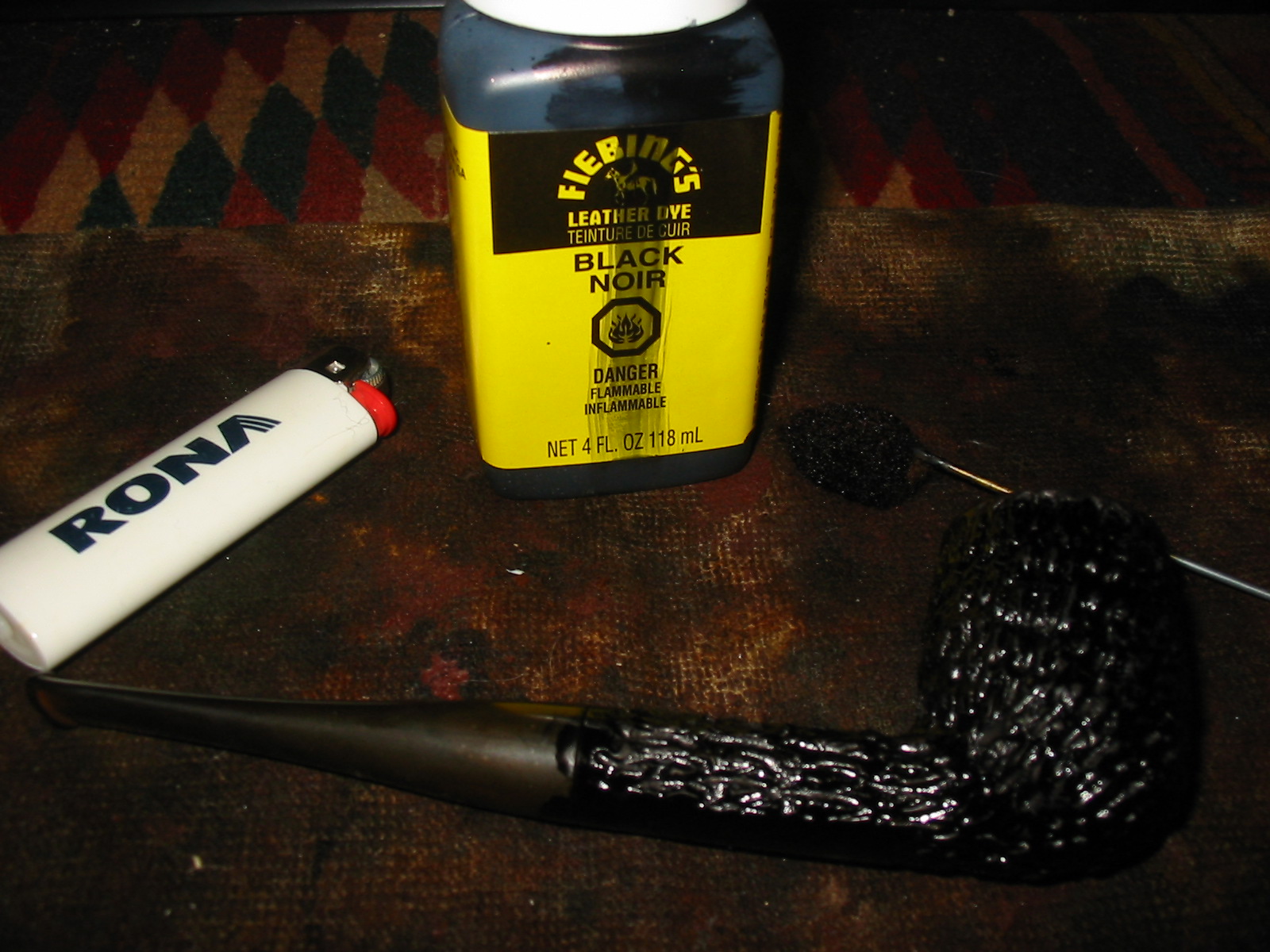
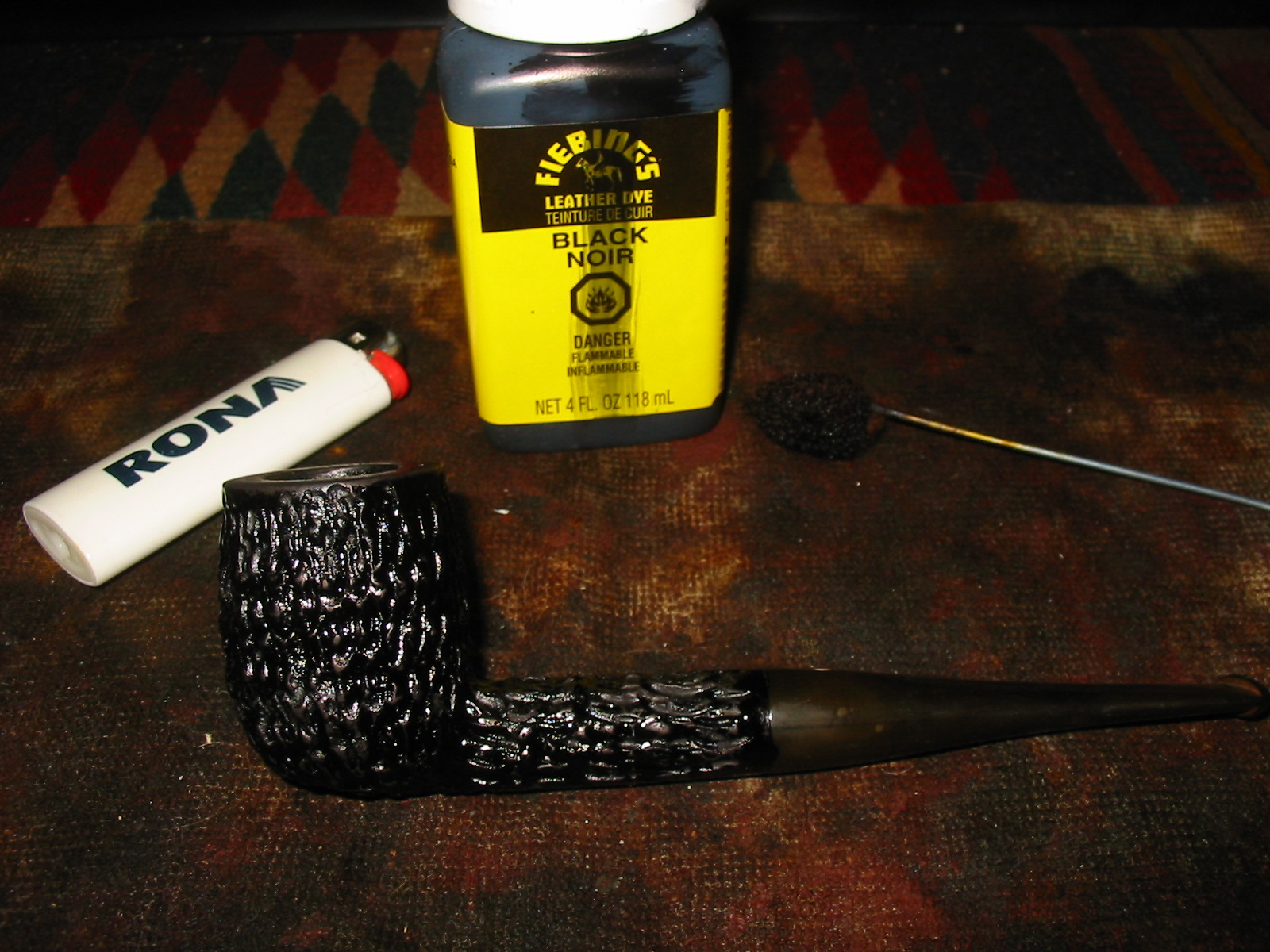
After I thoroughly dried it off it was time to stain the bowl. I did a bit of research and found some estate Heibe pipes on a German estate pipe selling site. The finish on this one was normal for Heibe’s rustications and it states that it was stained black. With that information I decided to restain it with some black aniline stain. I used the dauber that came with the stain and applied it heavily to the rim and the bowl making sure that it went deeply into the crevices of the bowl and the shank. I would clean off the rim and the shank later and worry about staining them afterwards. I stained the bowl and flamed it with a Bic lighter, then restained and reflamed the bowl. The next series of three photos show the newly stained pipe.

ImageImageImage

Once it was dry I rubbed the stain off the rim and also off the shank smooth portion with a soft cloth and then with some alcohol on a cotton pad. I also buffed the bowl with White Diamond on the buffing wheel. The smooth portion on the shank cleaned up nicely and the finish of the oxblood stained came through well. The rim (fourth photo below) did not fare as well. I wiped it down with acetone and also more isopropyl but in the end I would need to use a soft sanding sponge to remove the black from the edges of the rim.

ImageImageImageImage

I set the bowl aside to let it dry thoroughly while I worked on the stem. I began by sanding out the tooth marks and the tooth chatter with 320 grit sandpaper until they no longer showed. I then used my medium grit sanding sponge to sand the entire stem and work on removing the oxidation. The first two photos below show the sanding sponge and the work that it did in removing the oxidation. The next two photos below show the stem after I wiped it down from the sanding with the sanding sponge.

ImageImageImageImage

I then used some Maguiar’s Scratch X2.0 and scrubbed the stem with my finger as I applied it and then rubbed it off with a cotton pad. The point was that I wanted to remove more of the scratches and also polish off some of the oxidation. The next two photos show the stem after polishing (forgive the first photo – somehow it blackened on the right edge but you can still see the polish that is happening around the logo).

ImageImage

After polishing with the Maguiar’s you can see the oxidation on the stem particularly on the tenon end. It extends about an inch back toward the button and was also in the crease of the button. It was time to sand the stem with the micromesh sanding pads. I wet sanded the stem with 1500 and 1800 grit micromesh pads. The next three photos show the stem in process and after the sanding. I finished wet sanding and then wiped the stem down. I then dry sanded the stem with the remaining micromesh pads from 2400-12,000 grit. I used the Maguiar’s a third time to polish the stem and then buffed it with White Diamond on the buffer. Once I had finished buffing I wipe the stem down with Obsidian Oil and set it aside to dry.

ImageImageImage

The next series of four photos show the finished stem. I reinserted it in the bowl. The tenon fit was loose so I dripped superglue on the tenon and then sanded it back until the fit was snug. I gave the bowl and stem another buff with White Diamond. I coated the stem with carnauba wax and buffed it with a flannel buff. In the first photo below you can see that the rim needed some work. The stain just did not come back after the cleaning. I sanded it with the micromesh 3200 grit pad and then it was ready to be stained. The fifth picture below shows the restaining of the rim with a cotton swab and oxblood stain. I applied the stain with a cotton swab and then flamed it. I hand buffed it with a terry cloth towel I use for hand buffing and applied carnauba wax to the rim.

ImageImageImageImageImage

The final series of four photos show the finished pipe. The stain contrast came out very well. The black and the oxblood highlights look great. The stem shined up exceptionally well. It is a group four sized pipe and should smoke very well. It has a nice open draw. I know that some of the Heibe pipes were made for filters but this one is not fit for filters. It is just a normal push tenon. All in all it is a beautiful pipe.

ImageImageImageImage

A Comoy’s The Guildhall London Pipe


Blog by Steve Laug

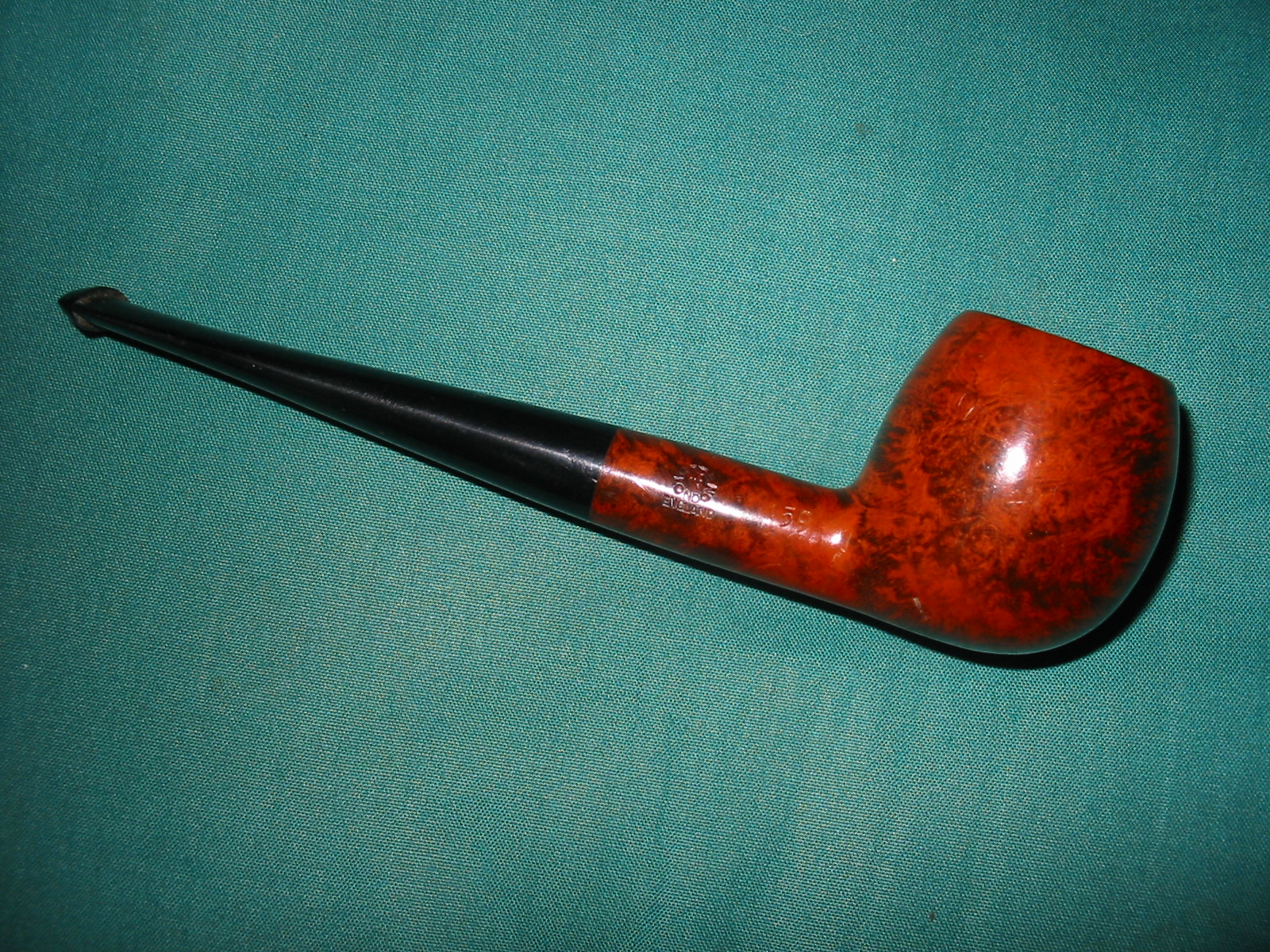
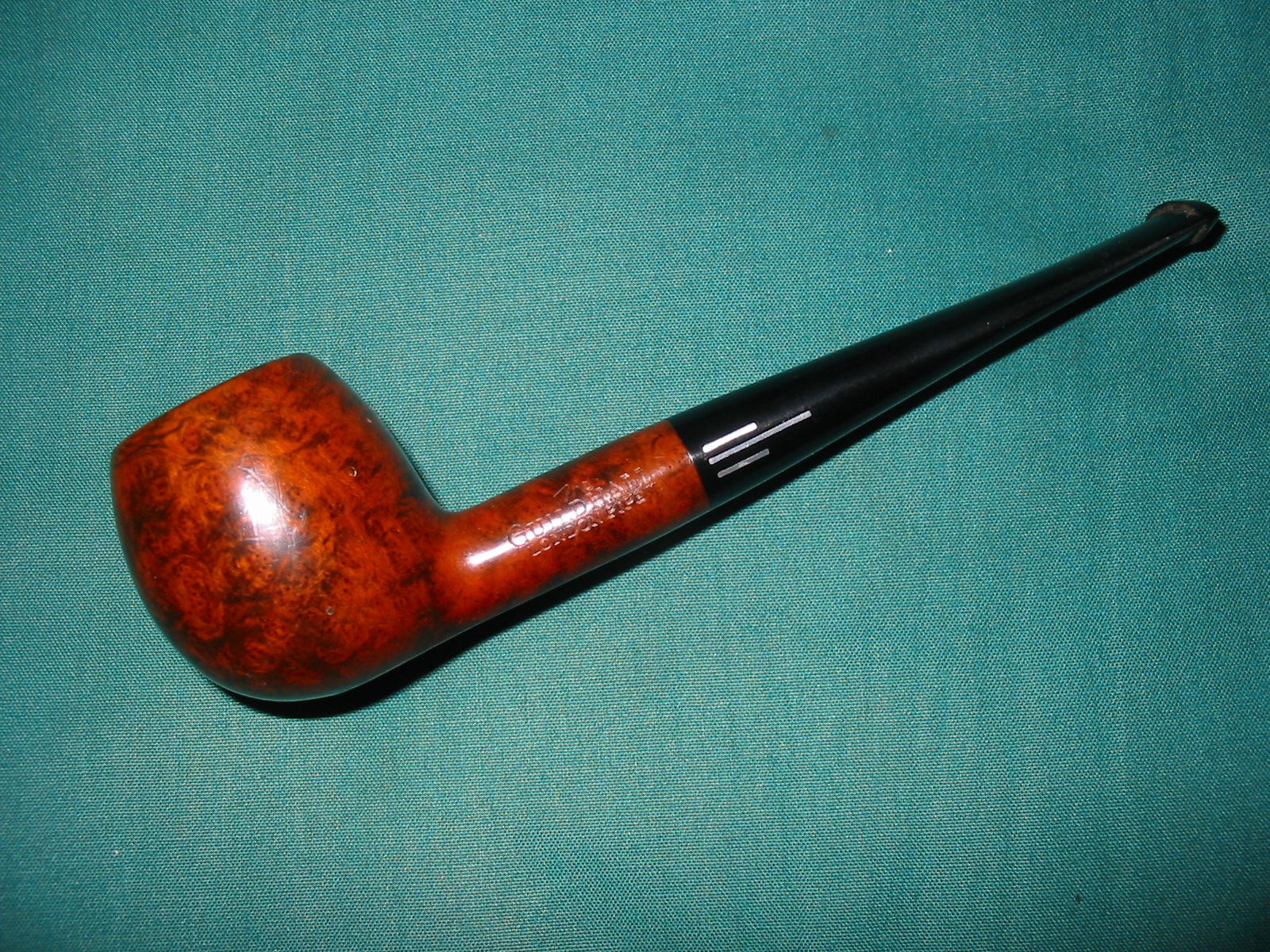
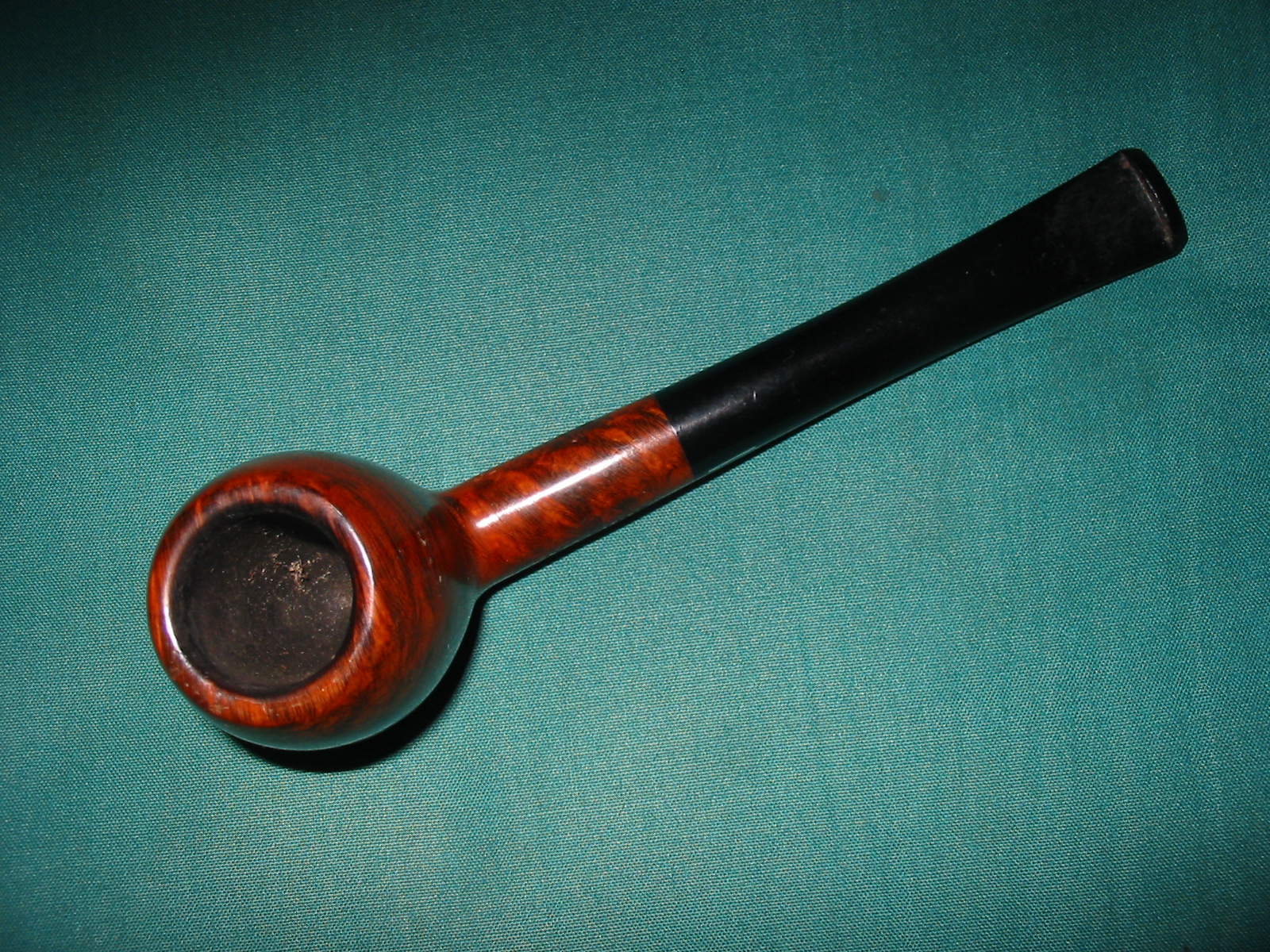
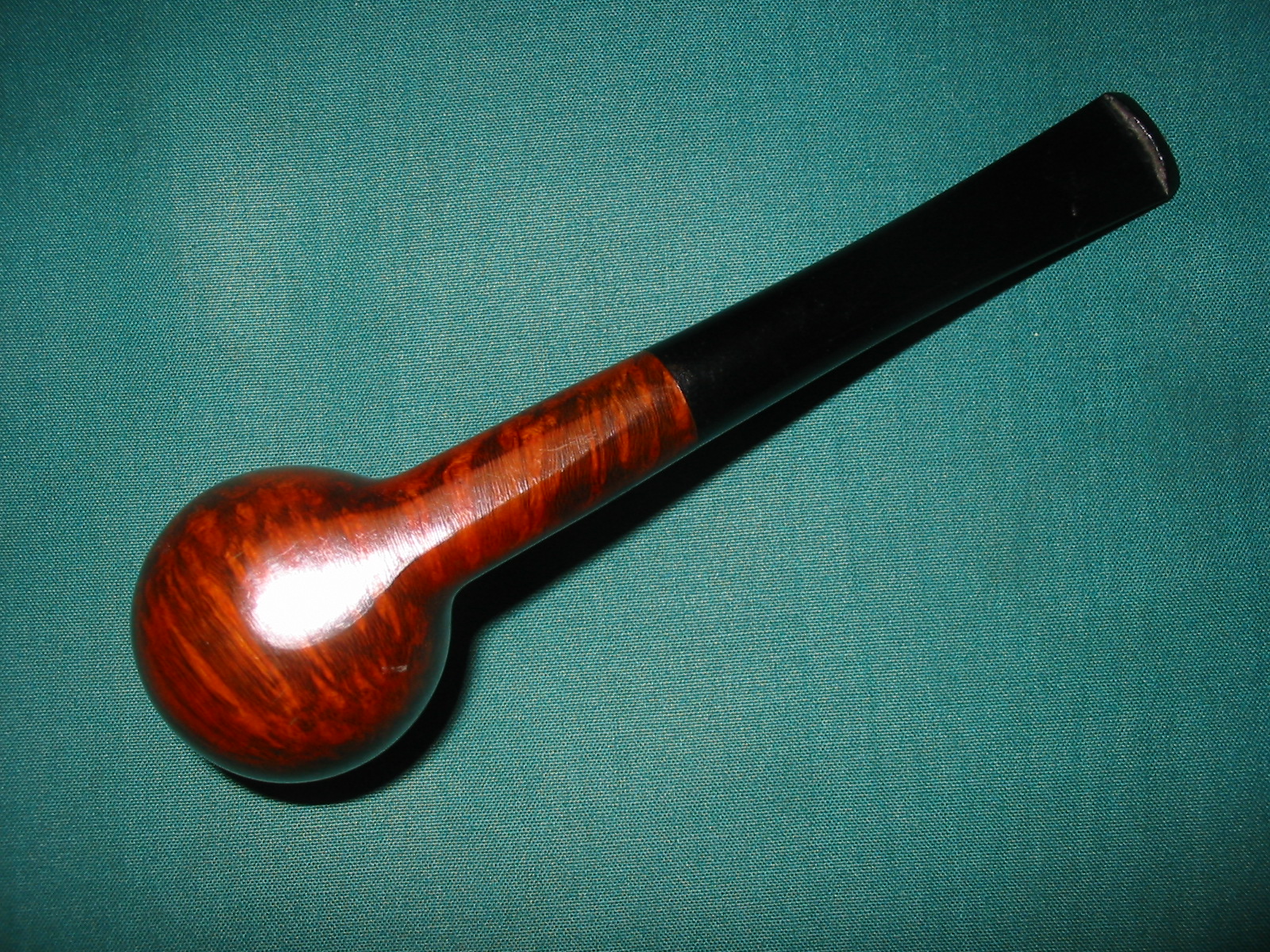
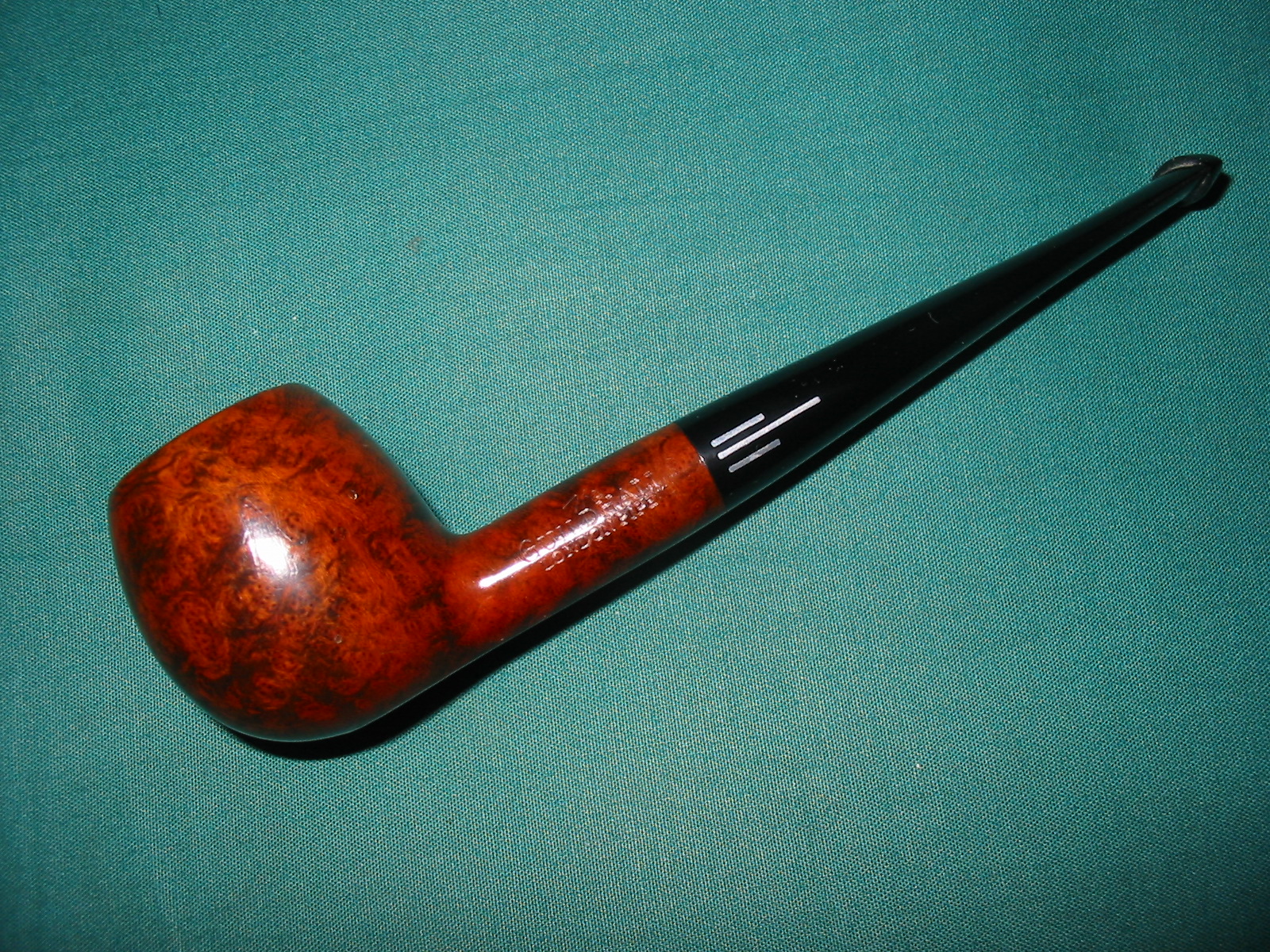
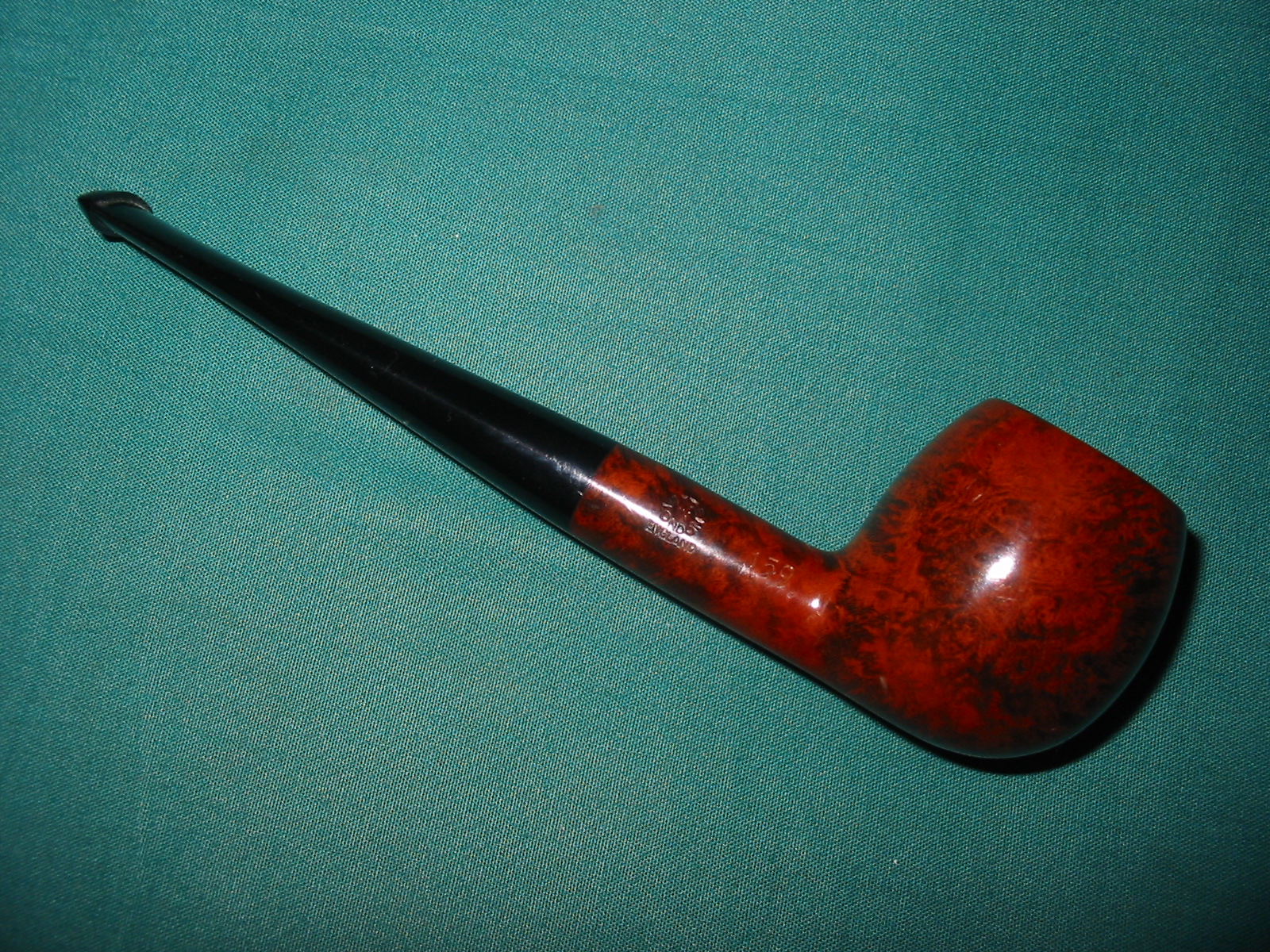
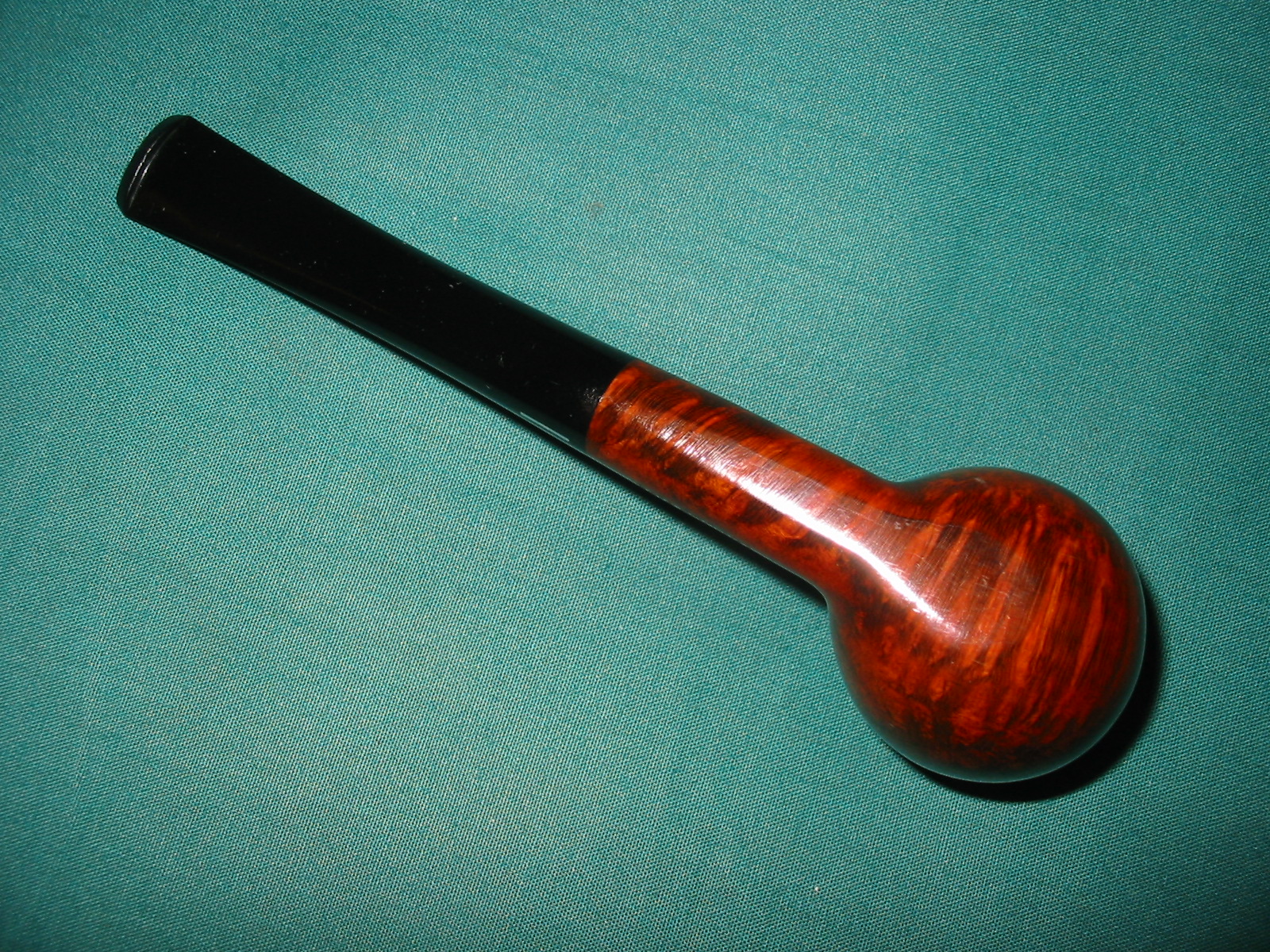
This refurbishment was probably the easiest I have done in a long time. The pipe is unsmoked as far as I can tell. The shank is pristine, the stinger apparatus is unsoiled and clean, the stem inside is clean and the bowl is carbonized but unsmoked. The stem had some tooth chatter that makes me wonder if someone used it for a prop or something. The finish was in excellent shape with no nicks or dings. The bowl is flawless in terms of fills, I can find one pinhole sandpit but otherwise perfect. It is stamped on the left side of the shank The over Guildhall over London Pipe. On the right side it is stamped Made In London in a circle with the In central in the circle. Underneath the circle is stamped England. Toward the front of the shank on the right side is the shape number 159. The first series of five pictures shows the state of the pipe when I got it.ImageImageImageImageImage

I sanded out the tooth chatter with a medium grit sanding sponge. I find that these give me a lot of flex and fit well against the button and follow the curve of the stem nicely. The medium grit works well to remove tooth chatter from the stem without removing too much of the material. The next series of three photos show the stem after sanding it with the sanding sponge.

ImageImageImage

After sanding with the medium grit sponge I used the Maguiar’s Scratch X2.0 polish on the stem. As usual I applied it with a finger to rub it into the stem and then removed it with a cotton pad, polishing as I removed it. The next three photos show the stem after polishing with the plastic polish.

ImageImageImage

I then used the micromesh sanding pads from 1500-12,000 grit to finish the polishing of the stem. The next series of eight photos show the progressive shine that is achieved by the micromesh pads. The last of the eight photos is the 8000 grit pad. I continued sanding with the 12,000 grit pad to finish and then buffed the stem and pipe with White Diamond.

ImageImageImageImageImageImageImageImage

The pipe is finished – that did not take too long – a very easy refurbishment that is for sure. The next series of four photos show the finished pipe. After buffing with White Diamond I gave it multiple coats of carnauba wax to bring it to a shine. Now it is ready to smoke and looking pristine.

ImageImageImageImage

A Quick Refurb on a BBB Straight Bulldog


Blog by Steve Laug

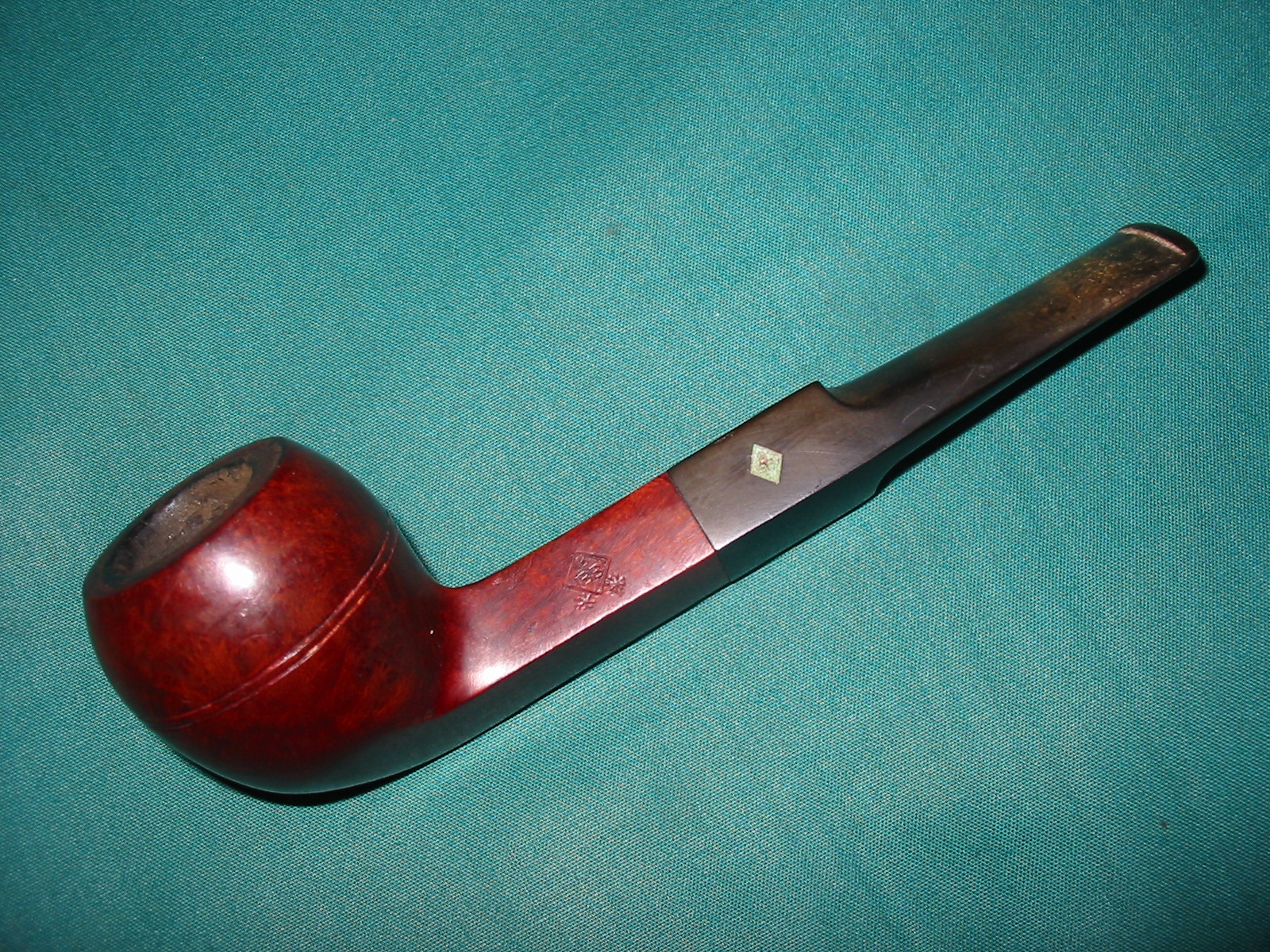
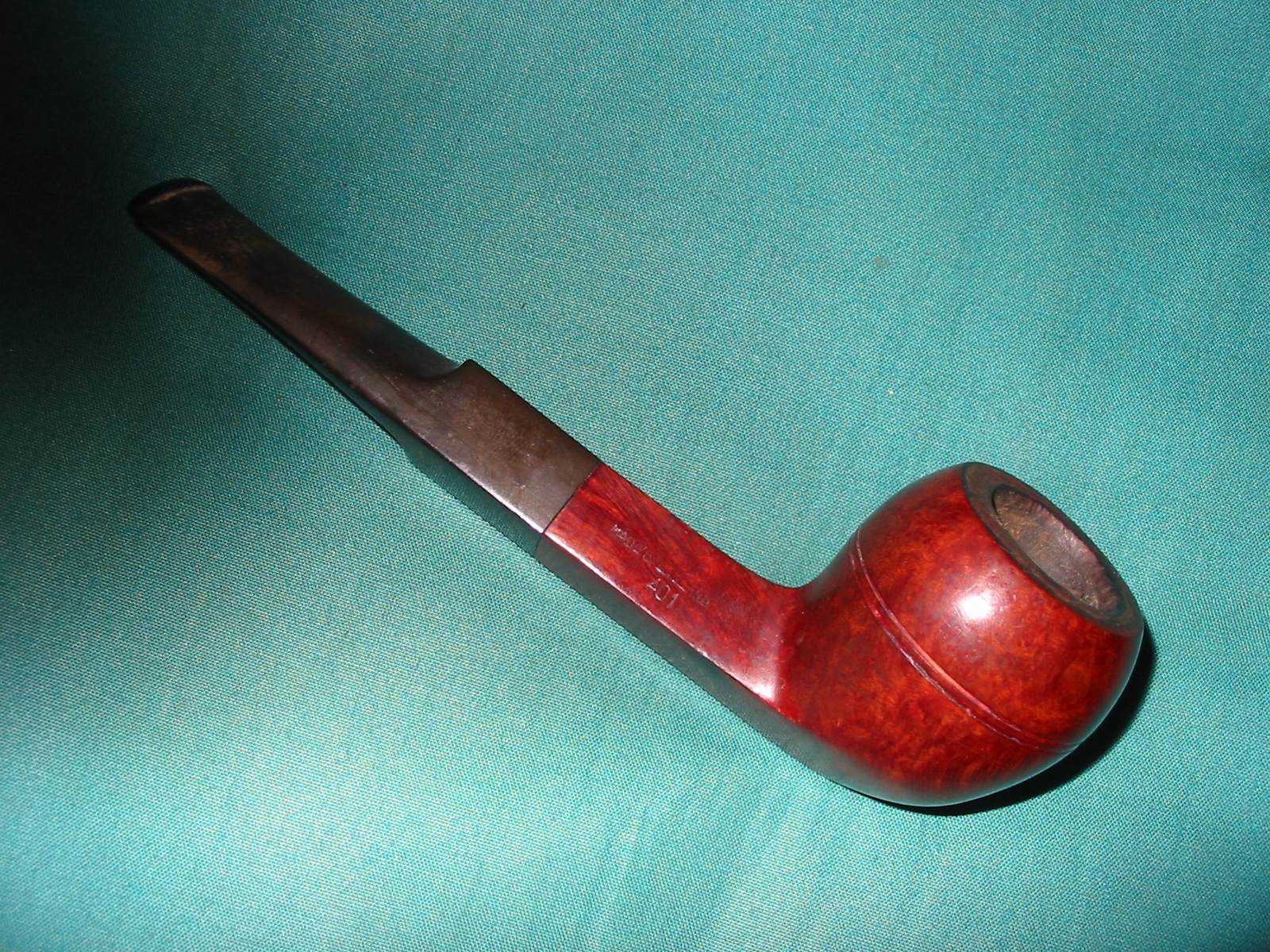
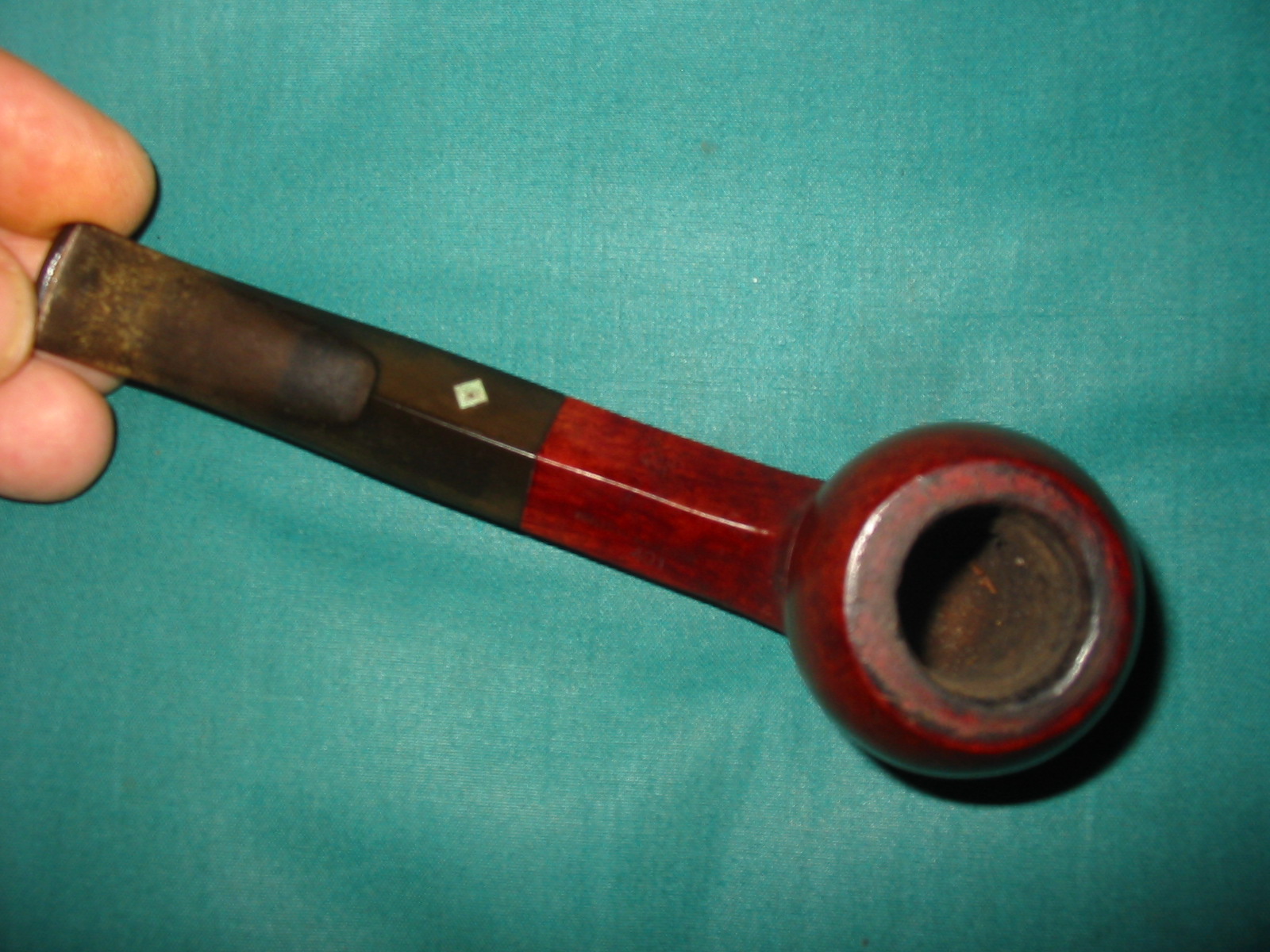
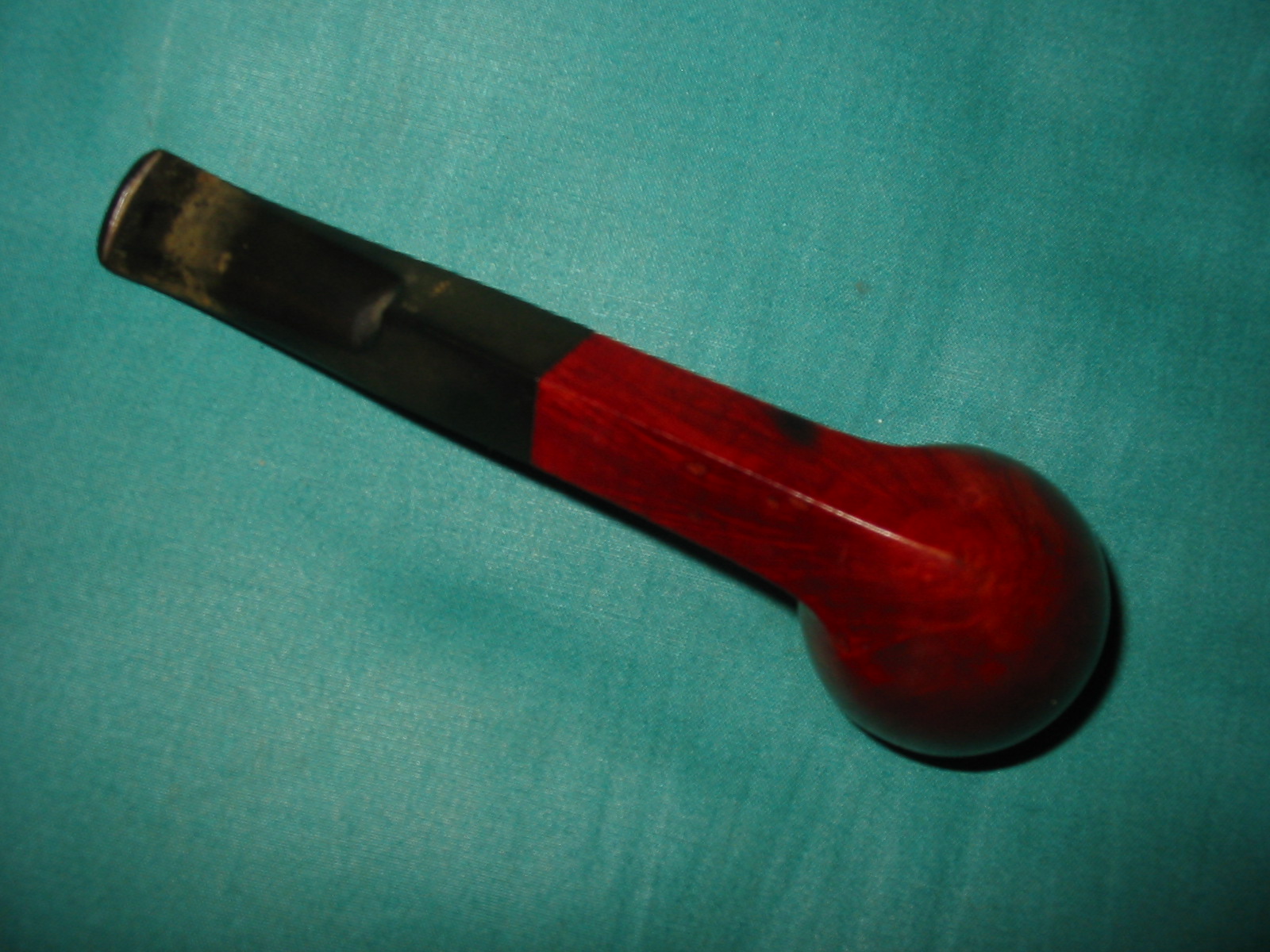
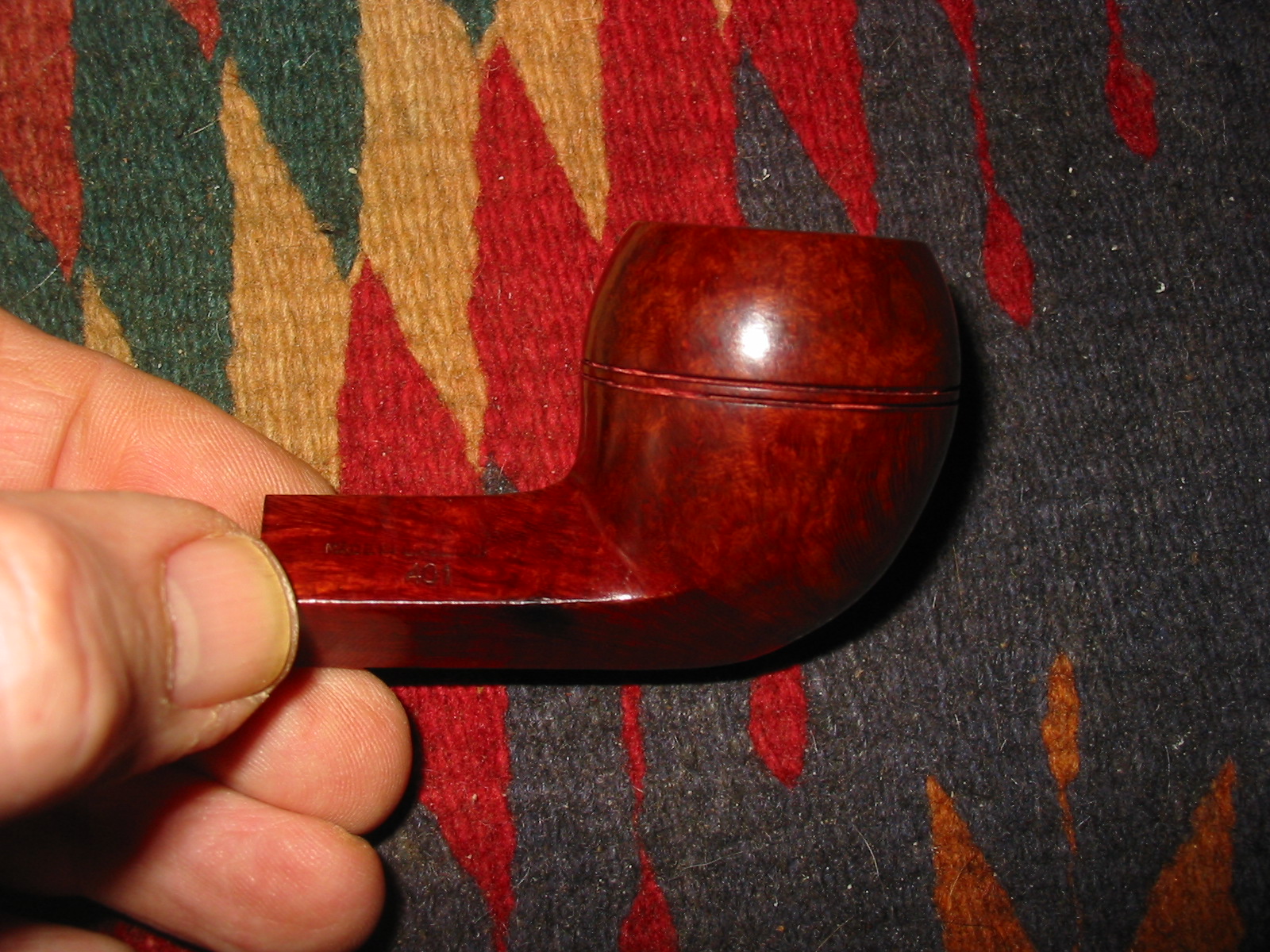
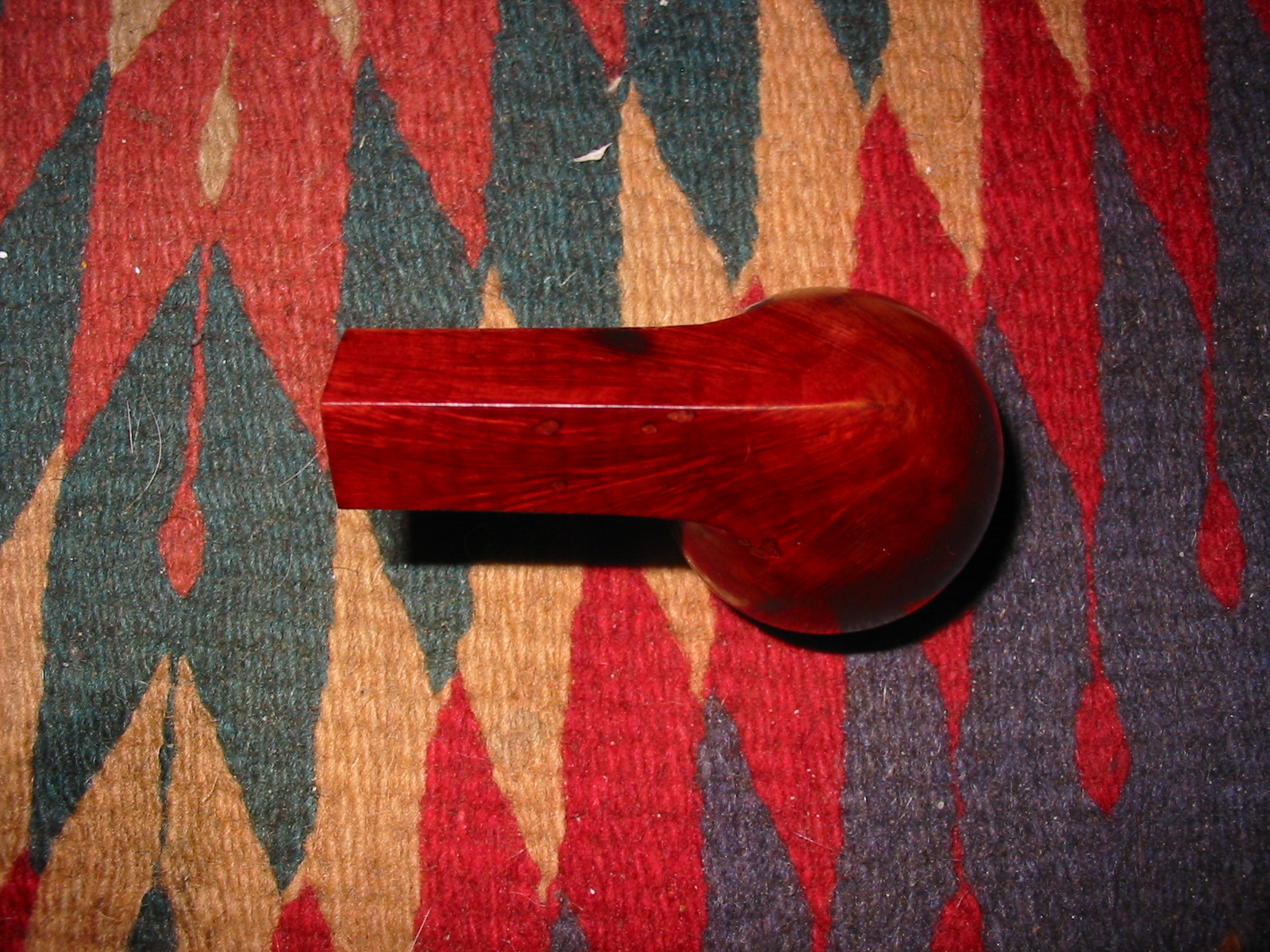
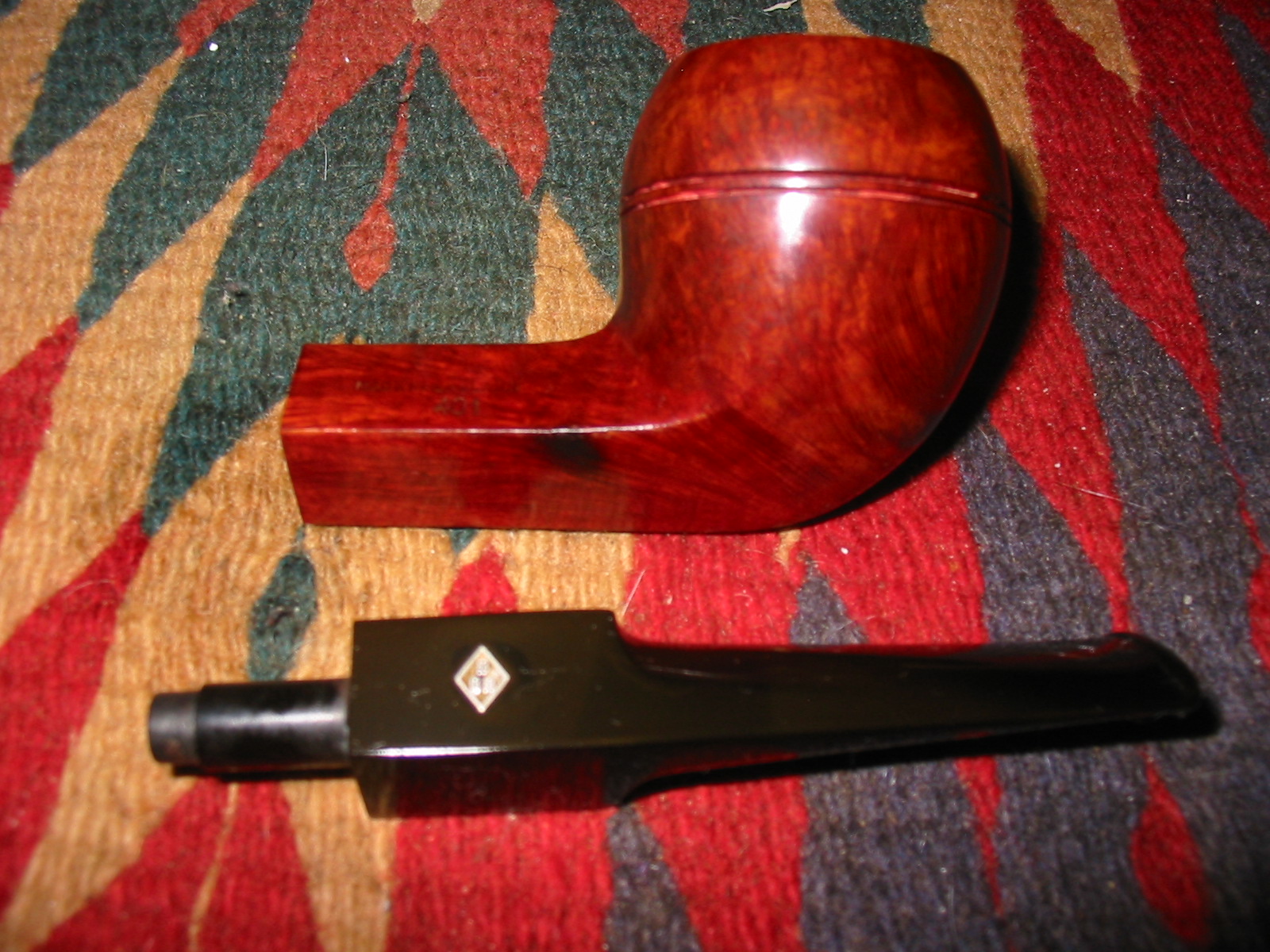
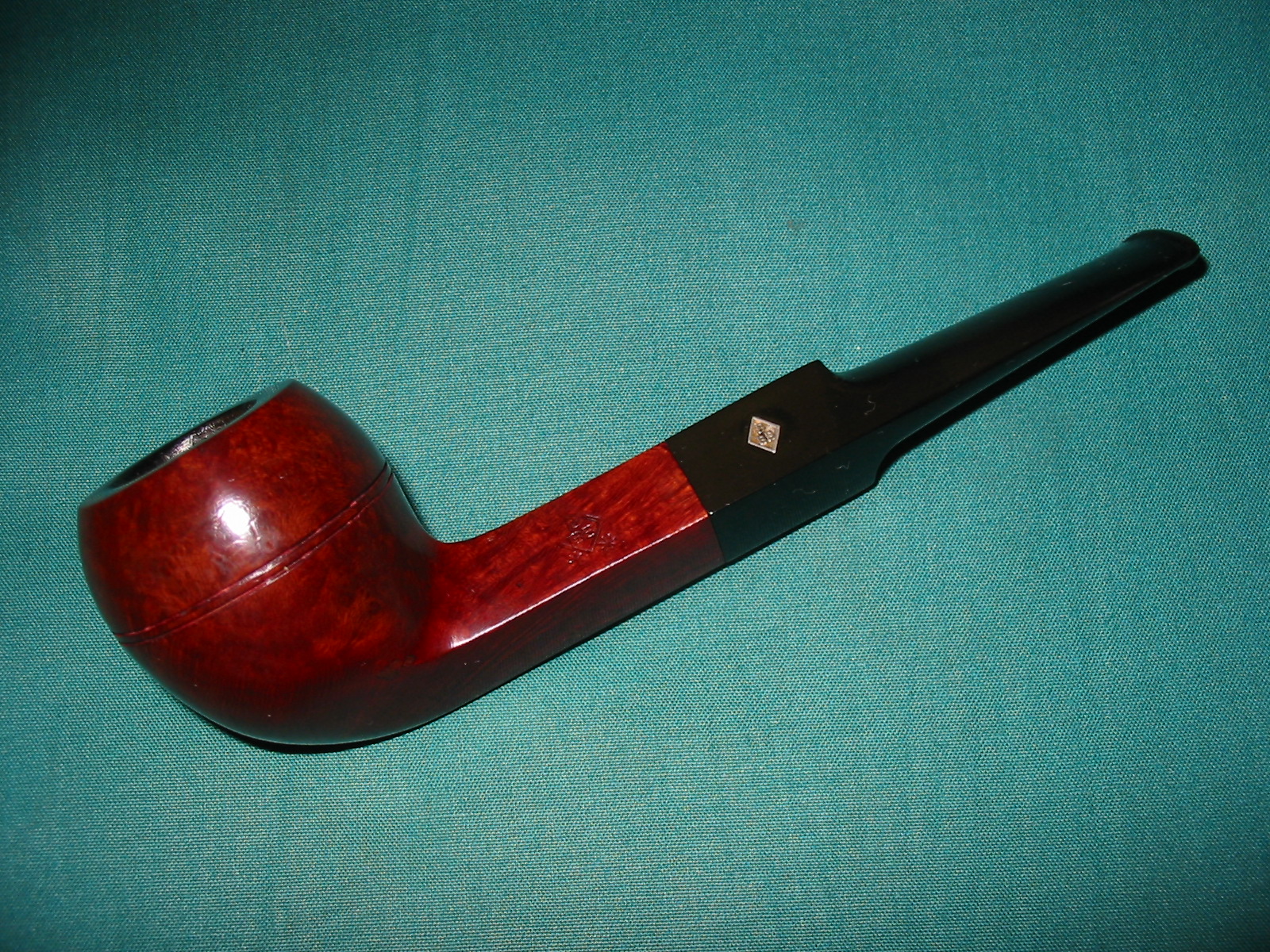
I picked this little BBB ** Bulldog up yesterday at a flea market for $16. It is stamped BBB in a diamond over ** on the left side of the shank. The other side is stamped 401 (shape number) over Made in England. The first four pictures below show what it looked like when I found it. It was hidden under a group of worn old pipes and this one and a little Comoy’s Guildhall became mine. The bowl was in pretty clean shape. The finish is clean with only a small dark spot on the shank where it must have touch a coal in an ashtray. The wood is not burned only darkened. The rim was clean but for a little tar. The bowl did not need to be reamed though it was a little out of round. The inner edge of the rim on the front right is a bit damaged from lighting the pipe repeatedly in the same spot. The double rings around the bowl were filled with wax in many spots and would need to be cleaned out for them to really show well. The stem had tooth marks on the underside and topside near the button and the tooth chatter on the oxidized stem would need some work. The BBB diamond was full of gunk and was oxidized with a greenish hue. Inside the shank and stem were dirty but would not take much to clean it up.

ImageImageImageImage

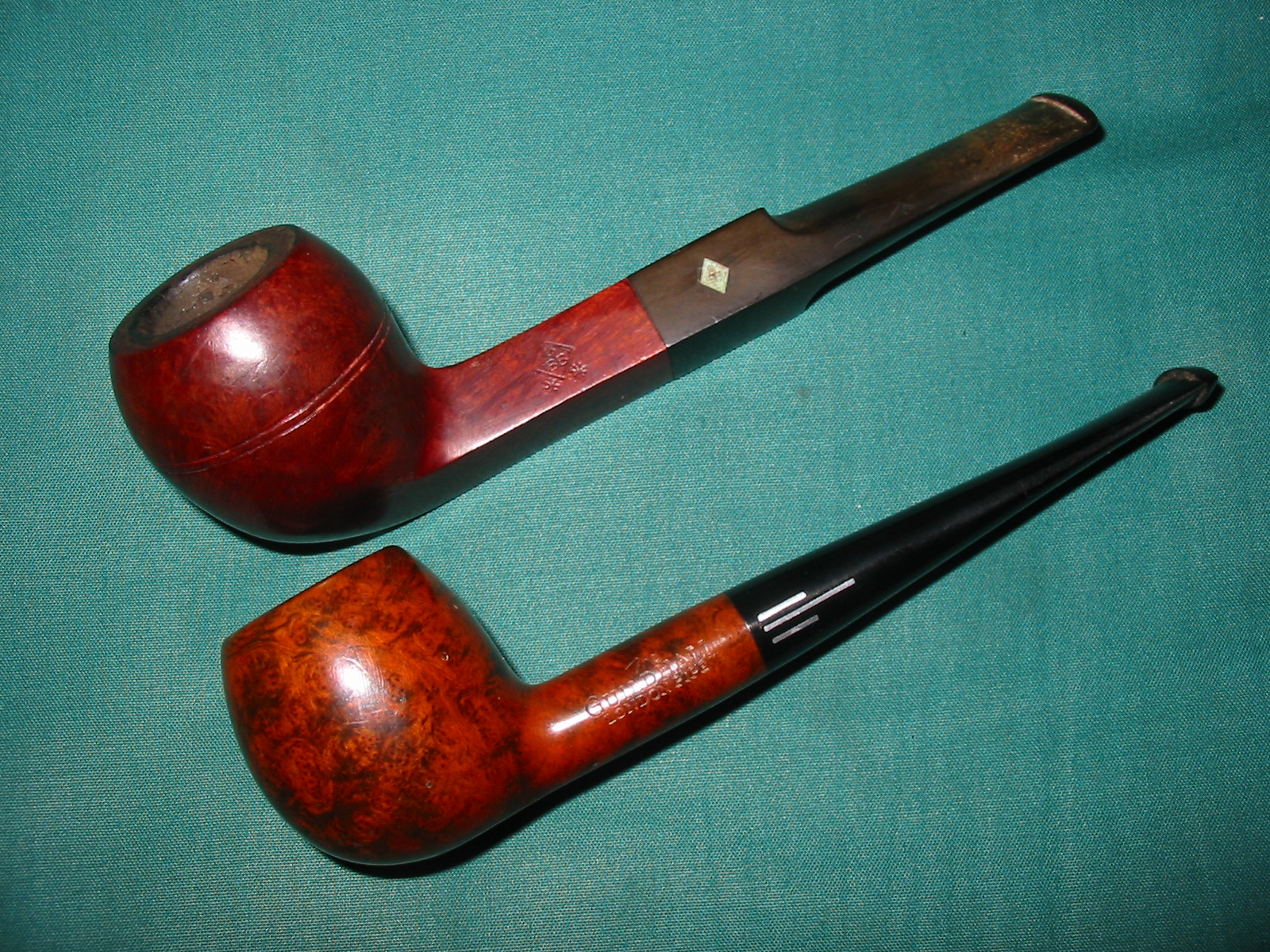
I put the next picture in to show the little Comoy’s Guildhall that I picked up at the same time and give a feel for the size of the pair. Both will not need a lot of work to bring them up to being ready for a smoke.

Image

I used silver polish to begin with and cleaned the brass BBB logo. I wanted to see what kind of shape it was in before I began work on the stem. It turned out to be in great shape under the grime and oxidation. The BBB stamp is clean and sharp and the lines in the background are still visible. Once I had the logo cleaned I worked on the tooth chatter and tooth marks in the stem. I used 320 grit sandpaper to work out the tooth chatter and a lighter to heat up the bite marks and lift them out. I then sanded them with 320 grit sandpaper to remove the remnants of them. The next series of three photos show the stem after sanding tooth chatter and bite marks out of the stem.

ImageImageImage

I cleaned the rim by lightly sanding it with 320 grit sandpaper and then wiping it down with saliva until the tars were removed. The photo below shows the rim after the sanding and cleaning.

Image

I sanded the stem with a medium grit sanding sponge to remove the scratches left by the sandpaper and then polished it with Maguiar’s Scratch X2.0. The next series of three photos show the stem as I worked on it with the micromesh sanding pads 1500-12,000 grit. In this case I wet sanded with the 1500, 1800 and 2400 grit micromesh and then dry sanded with the remaining grits of micromesh.

ImageImageImage

I gave the bowl a quick buff with White Diamond and then gave it several coats of carnauba wax. The next four photos show the polished bowl.

ImageImageImageImage

The next three photos show the stem after it has been polished with the micromesh pads up through 12,000 grit. I then used the Maguiar’s polish to finish off the polishing. The oxidation around the stem medallion and on the top sides of the saddle came off with some serious scrubbing with the polish. I also used a dental pick to clean out the two rings around the bowl cap of the bulldog.

ImageImageImage

The next series of four photos show the finished pipe, cleaned and ready to smoke. I rubbed the stem with Obsidian Oil and then once dry gave the whole pipe several coats of carnauba wax. The dark burn mark on the shank is only surface but still shows clearly in the finished pipe  – won’t affect the way it smokes though.

ImageImageImageImage

A Tiny Pair – Refurbishing and repairing an old couple


Blog by Steve Laug

This morning I decided to work on these two old timers – a little mini bulldog and a mini bent billiard. Both are old as is clear from the orific button on the stems and the shape of button on both (the round hole in a crowned surface of the button – see the photo below).

Image

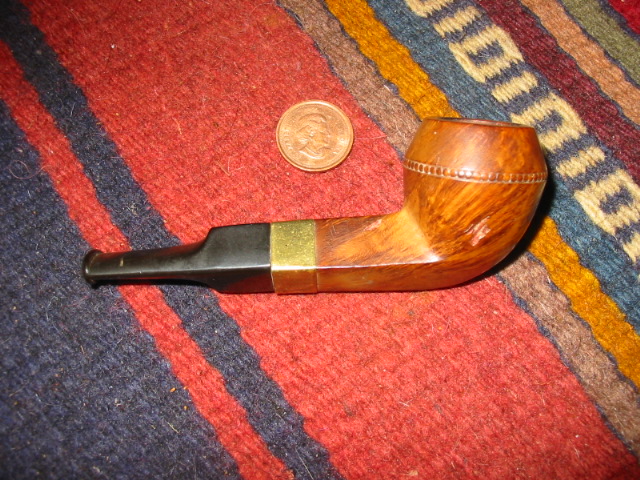
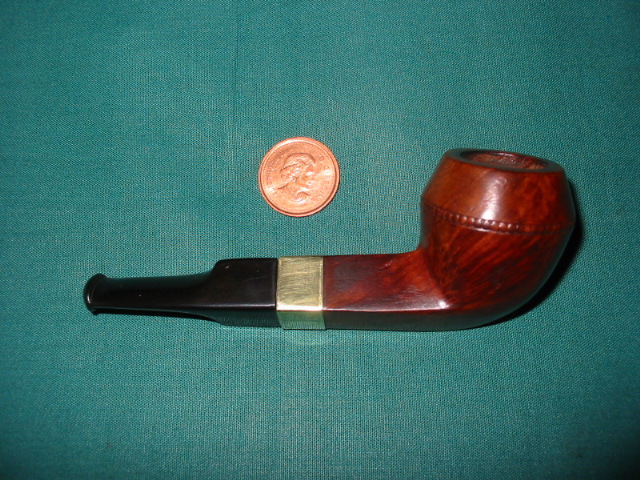
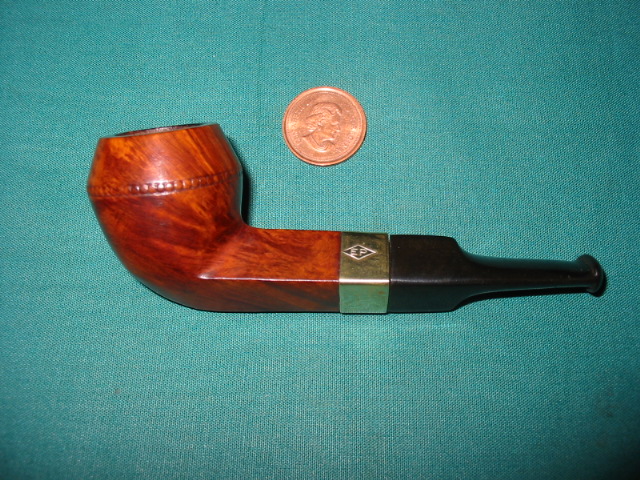
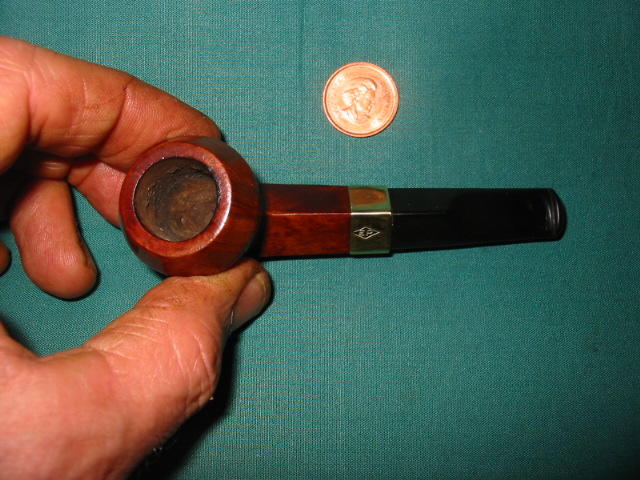
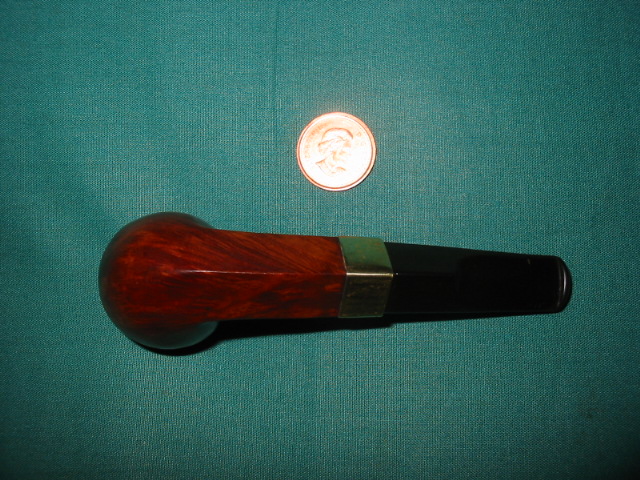
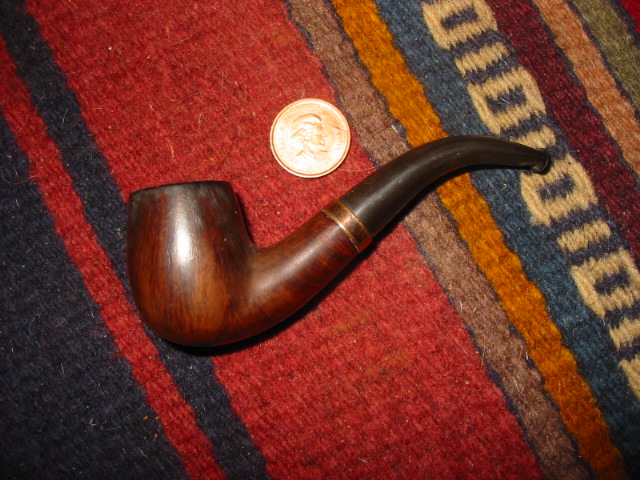
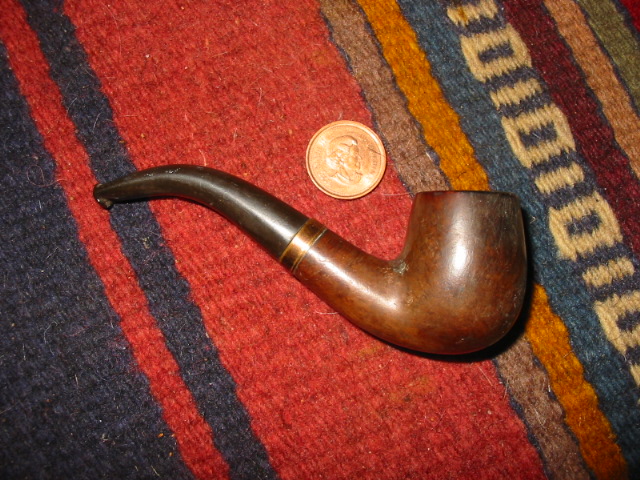
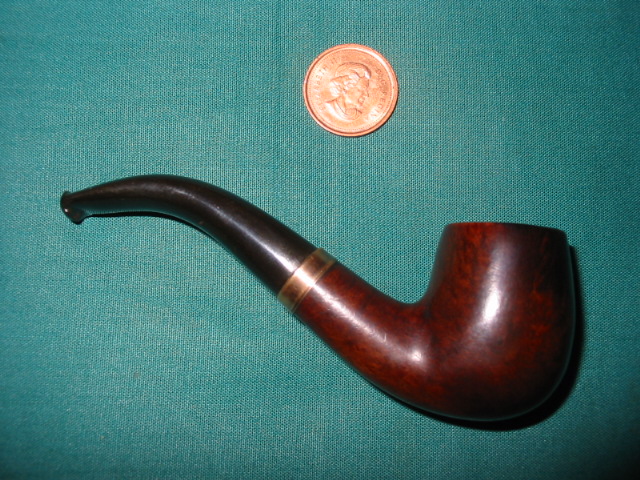
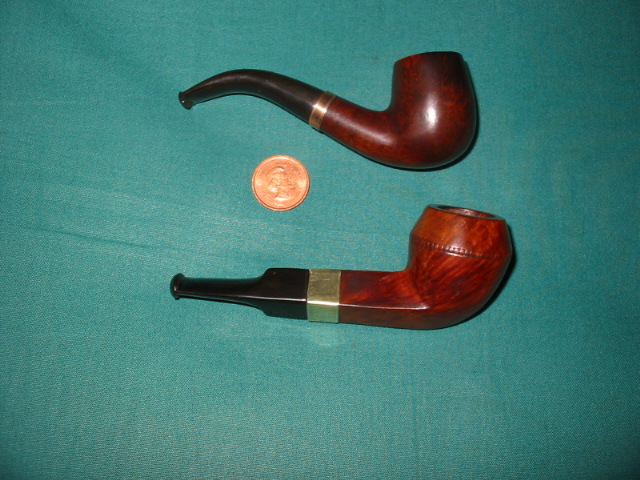
The first is a no name bulldog with a gold band on it. It has EP on the band which I believe means Electro Plated. The stem was in pretty fair shape though the previous owner had cut a small groove in the stem about a 1/8 inch ahead of the button on the top and the bottom. The bowl was in pretty good shape though it was darkened near the band and there was a deep cut on the shank about mid way along toward the bowl and on the bowl side – both on the right side and visible below. The photo with a penny (1 cent piece) gives a good picture of the size of this little dog. The bowl was pretty clean so all I needed to do was wipe it out with a cotton swab and isopropyl alcohol. I did the same with the shank and the stem as well. It was pretty black and tarry on the inside of the stem and shank. I had to use a paper clip to break through the clog that was in the shank about mid way to the bowl and also in the stem.

ImageImageImage

I worked on the bowl and shank exterior with sand paper to remove the finish around the two cuts in that I was going to work on. I washed off the surface after sanding with acetone to clean off the briar dust and the remaining finish. Once it dried I decided to fill the cuts with clear super glue. The process is pretty straight forward – I drip a drop in both holes and lay it aside until it dries. Then I add another drop, lay it aside and repeat until the cut is filled. I find that the clear super glue is a great way to fill the cuts or pits as it allows the briar to show through clearly and once it is stained it virtually disappears. Once the super glue dried I sanded the spots with 240 grit sandpaper and then with 400 and 600 grit wet dry and water to smooth off the spots and remove any of the over flow around the spots. I want the super glue to fill only the spot and not carry over onto the clean briar so I sand it down level with the surface it is filling. I then sanded the entire bowl with micromesh pads from 1500-6000 grit and then wiped the bowl down with isopropyl alcohol on a soft cloth.

I then worked on the stem and sanded down the grooves to make the stem smooth once again. I used the same pattern of sanding – 240, 400, 600 grit sandpaper and micromesh – 1500, 1800, 2400, 3200, 4000 and 6000 grit. Once I had the grooves and the stem clean and pretty polished I took it to the buffer and used White Diamond on both the stem and bowl. I took it back to the work table and gave it a coat of Obsidian Oil and set the stem aside while I stained the bowl. I wanted to keep a lighter look to the bowl so I used some oxblood stain and wiped it on and off before it had time to dry. I gave it two coats and then flamed it. I buffed the bowl with White Diamond and then gave it a coat of carnauba wax. I also polished the band and gave it a coat of wax. Here is the finished pipe. The two cuts or pits have disappeared on the right side of the bowl (top picture).

ImageImageImageImage

I finished it and put it aside to work on the bent billiard. It was in a bit rougher shape than the bulldog. It is also a no name old timer with a gold band – very tarnished. The bowl was very grimy on the outside and the finish was cloudy and dark. The stem was grooved in the same manner as the bulldog – probably same owner making his own comfort bit to enable him to clench these little guys.

ImageImage

I scrubbed the bowl down with acetone on a cotton boll and removed the finish and the grime. The top was a bit dented so I gave it a very light topping and then sanded out the inside of the bowl and worked on the roundness of the inner rim as it was a bit out of round.  I used a small piece of sandpaper to bevel the edge enough to repair the roundness. I cleaned out the shank and the stem. This pipe was also clogged in both the stem and the shank so I use a paper clip in the shank and to open the end of the stem from each end. I then used small pipe cleaners soaked with alcohol until they came out clean. I set the bowl aside to work on the stem.

Image

The stem needed the same treatment as the one on the bulldog to remove the grooves from the previous owner. Fortunately on both pipes they were not very deep so it did not change the profile of the stem. I sanded the entirety of the stem down and used the same pattern of sandpaper and micromesh as above. I buffed this one with Tripoli before finishing with the micromesh. I gave it a coat of Obsidian Oil and set it aside to stain the bowl.

I cleaned the bowl exterior one last time and then stained it with oxblood stain – wipe on and wiped off pretty quickly several times to get good coverage. I polished the gold band with the highest grit micromesh pad (6000) and then gave the bowl and band a coat of wax by hand and once it dried buffed it by hand with a soft cloth. I put the stem back on and took it to the buffer and buffed the entirety with White Diamond followed by carnauba wax.

ImageImageImageImage

Here is a picture of the pair together so their diminutive size is clearly seen. They are incredibly light with group one sized bowls. They are clean and ready to smoke.

Image

Refurb on a Brigham 2 Dot Lovat


Blog by Steve Laug

I just finished refurbishing this Brigham 2 Dot Lovat that I picked up in the estate pipe rack at a local tobacconist. This one was a challenge, but I loved working on it. It has the standard Brigham style rustication. It was in rough shape. The bowl was incredibly grimy and needed a lot of work. The grime had filled in most of the rustication to the point that it looked worn out and smooth. I soaked and scrubbed it for about an hour using a brass white wall tire brush to scrub out the grime caked on the outside of the bowl. The inside of the bowl was so badly caked that I reamed it back to the wood. Once I had it reamed and the scrubbing of the outside finished I dropped it in the alcohol bath overnight and went to work on the stem.

ImageImageImage

The stem was another story. It was given a soak in OxyClean to soften the oxidation. I find that OxyClean does not remove the oxidation at all, but it does soften it and make working on it much simpler. After the Oxy soak I went to work on the inside of the stem. Where normally there was to be a Brigham filter in the long metal tenon this time it was gone and the tars had built up to the point that the stem was totally closed off. I tried to blow through it but could not get any air through. I used an awl or ice pick to open up the stem and the tenon. Then I worked on it with bristle pipe cleaners and a shank brush. It took a lot of pipe cleaners and alcohol to get it clean. Then the outside was sanded with 400 and 600 grit wet dry sandpaper followed by the run of micromesh sanding pads. Once it was clean and shiny I set it aside and turned my attention to the bowl.

I took the pipe bowl out of the alcohol bath and went to work on it. I used the brass brush one last time to clean off the remaining grime and then dried off the pipe. There was no finish left on the pipe so I restained it with a cherry stain. I reinserted the stem in the shank and took it to my buffer and polished the entirety with Tripoli and White Diamond, finishing with a coat of wax.

ImageImageImage

Refurb on a London Made Dainty Prince


This was a refurb I did last August while I was laid up with a couple of cracked ribs. I wanted to post it here because it gives a good idea of the process of refurbishing and taking grimy old pipes and bringing them back to life.

I am a bit laid up after a fall so I am sitting quietly in my shop instead of doing painting and trim on the house (original plan for the holidays). The great part of this is no guilt about not working on the house or yard. Because of that I am getting a bunch of old pipes I have in boxes cleaned up and finished.

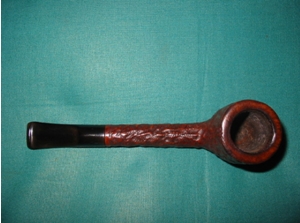
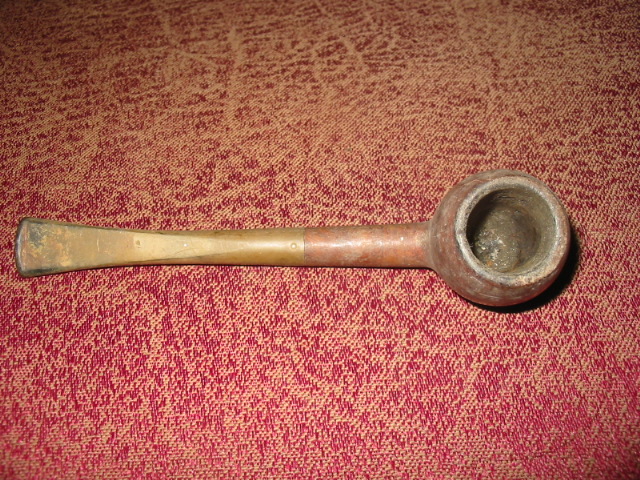
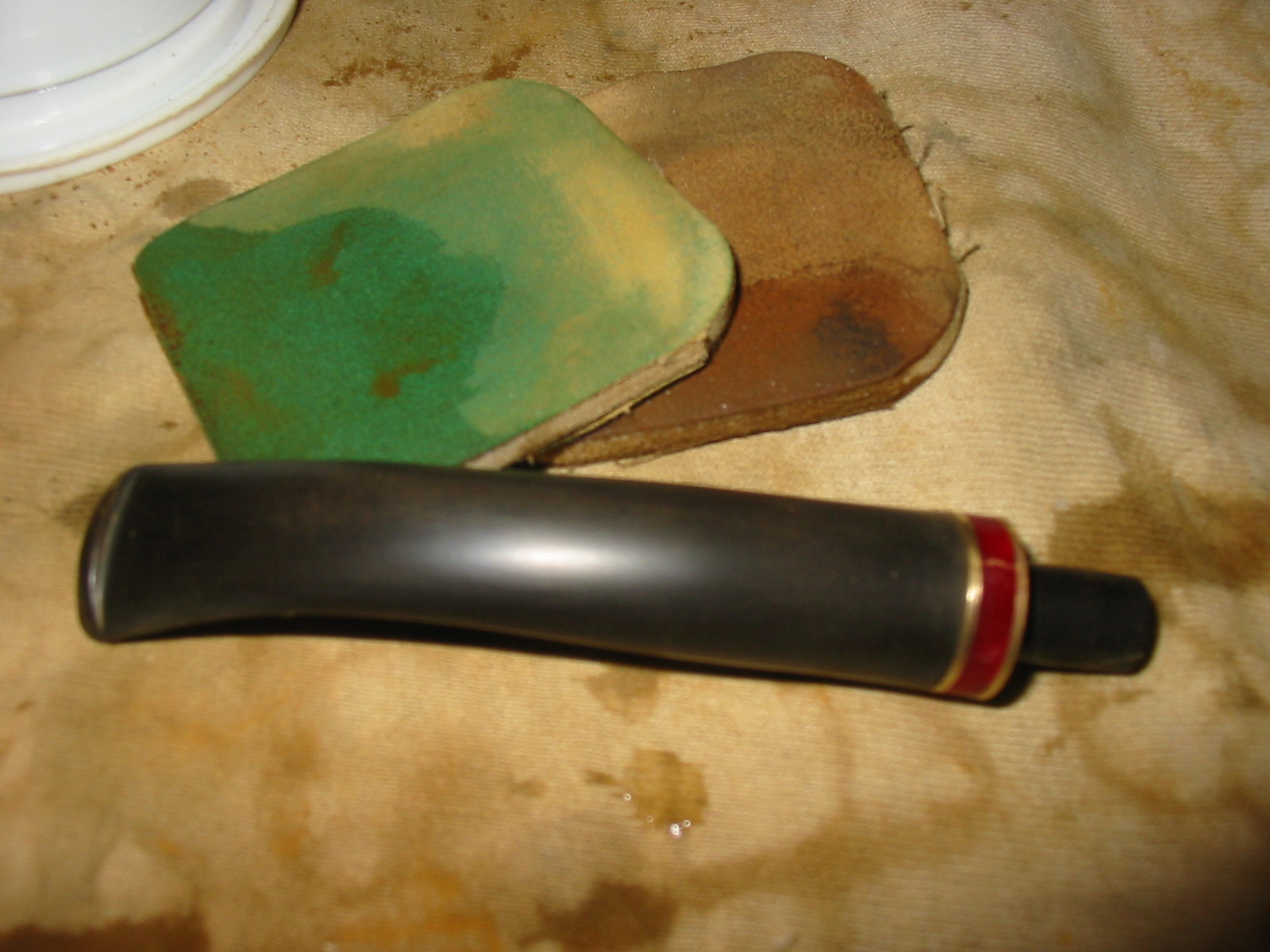
The first one today (Aug. 1) is a nice little London Made Prince with a patented Flat Grip Stem. (I cannot remember who made these but I have had a few over the years). The stem is stamped Flat Grip and has a nice raised silver spot on the stem. The bowl is stamped London Made. It is a small pipe – 5 1/4 inches long but about a group one sized bowl.

From the pictures below you can see the state it was in after the reaming. I got into a groove and forgot to take pictures before I reamed it. But it was really dirty and caked – to the point that a pencil could not stand in the bowl. It always amazes me that in these small pipes, which hold very little tobacco any way, people let them get to the point where they hold even less tobacco. Just a few minutes of work and they would have had a clean bowl.

I reamed and cleaned the bowl and shank and put it in my alcohol bath for the morning. I have a pint jar filled with Isopropyl alcohol that serves as the bath for filthy bowls. In this case it sat in the bath for 3 hours before I got to work on it. It is a nice sized jar in that I can drop 4 or 5 bowls in it at the same time and work on the stems while they soak. Once it came out and dried I sanded the bowl all around and cleaned it once again to get any residual grime out. The airway was clogged so a paper clip took care of that and then a good scrub with a bristle pipe shank brush and repeated pipe cleaners. Once clean I stained it with a cherry stain that works with these old timers and brings out the colours of the briar. It was then buffed with Tripoli and White Diamond and waxed it with carnauba.

The stem was rough so I buffed and sanded and buffed and sanded and got the oxidation off and then sanded a bit more to get the teeth chatter off of the surface of the stem near the button. I always start with a 220 or 240 grit sandpaper in removing the oxidation and tooth chatter and then progress through 400 and 600 grit wet dry sandpaper before finishing the progress with micromesh sanding pads – 1500, 1800, 2400, 3200, 4000 and 6000 grit. Once the sanding is finished I took the pipe to the buffer for a final buff with White Diamond before polishing the whole pipe with carnauba wax.
Before shots: (I reamed out the cake prior to this photo set)

ImageImage

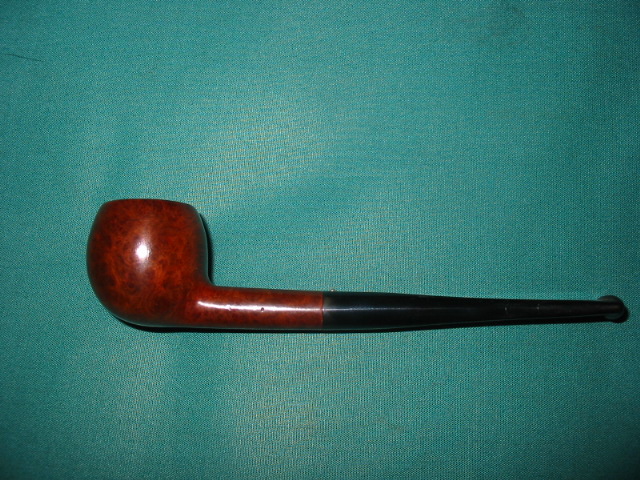
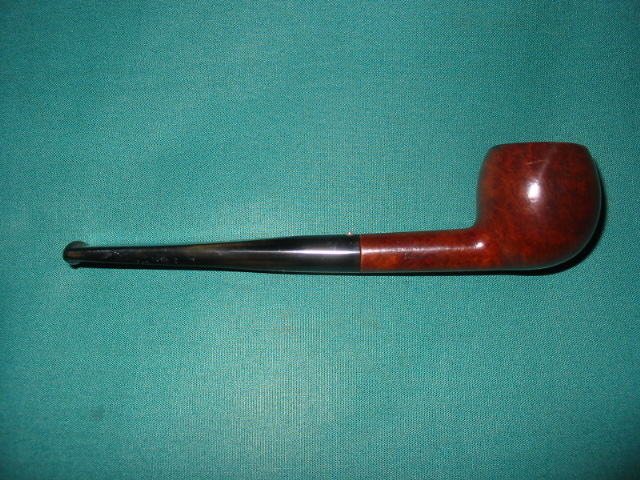
Photos of the finished pipe:

ImageImageImage