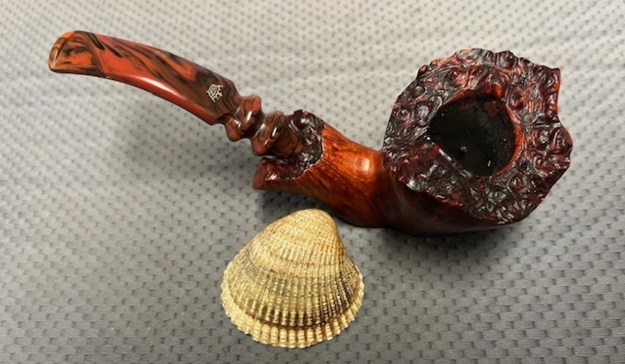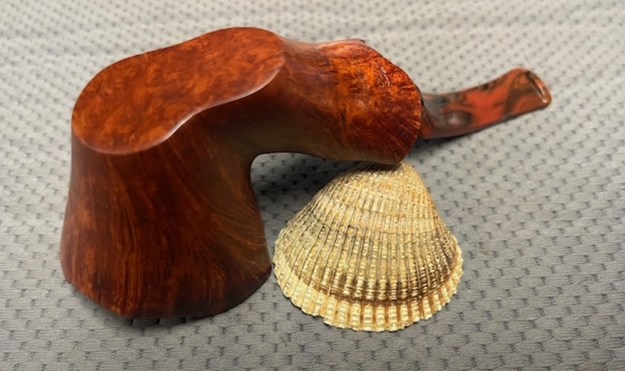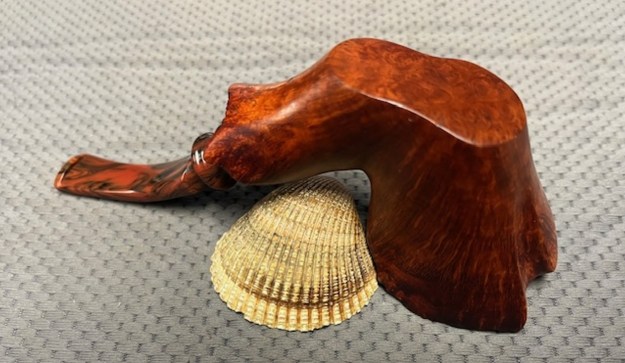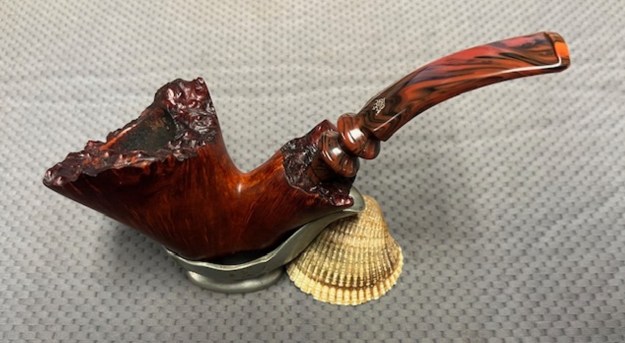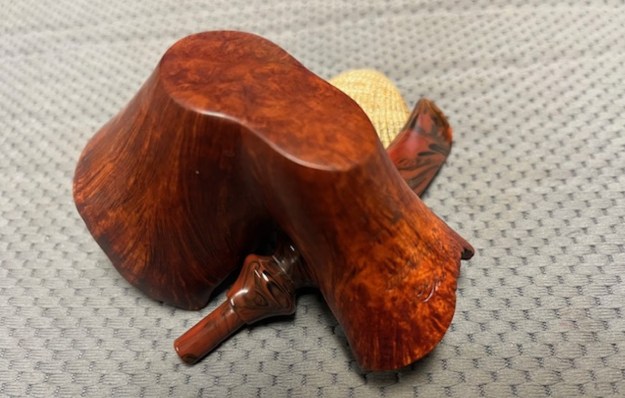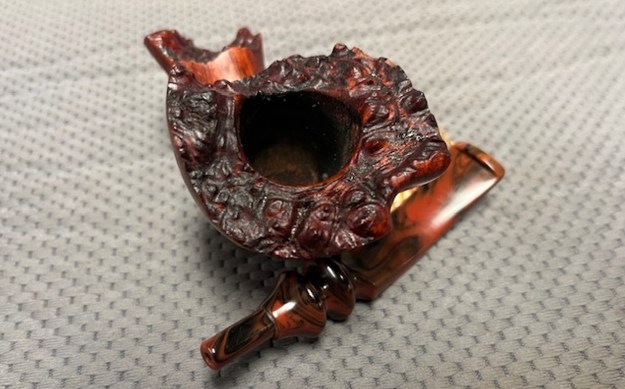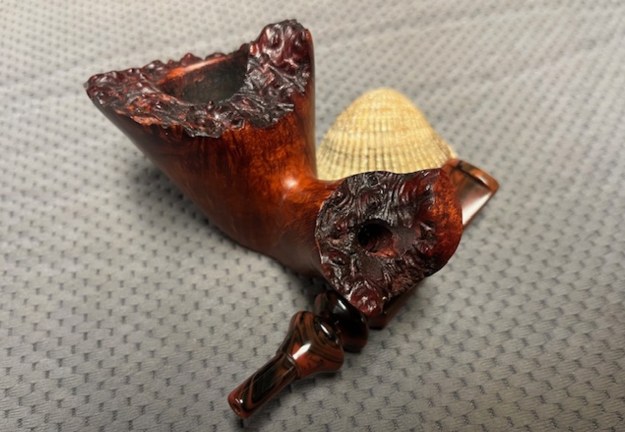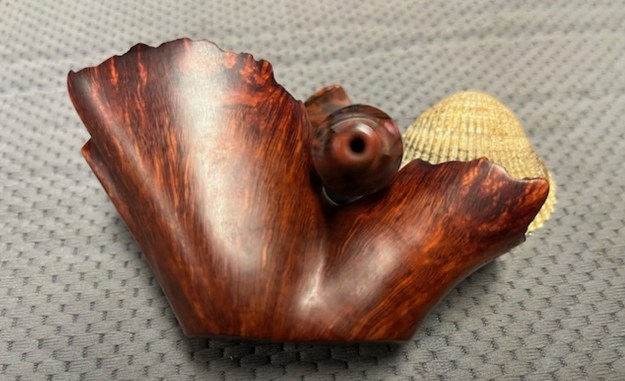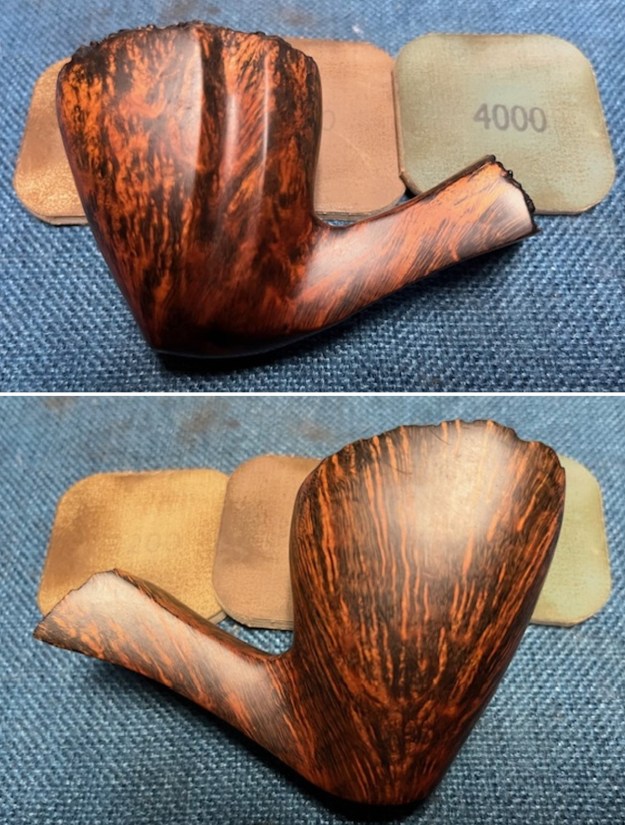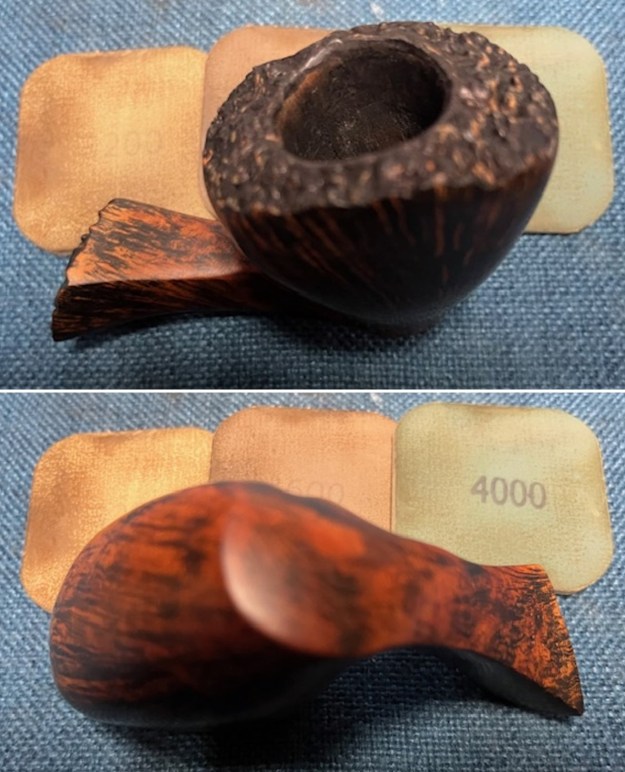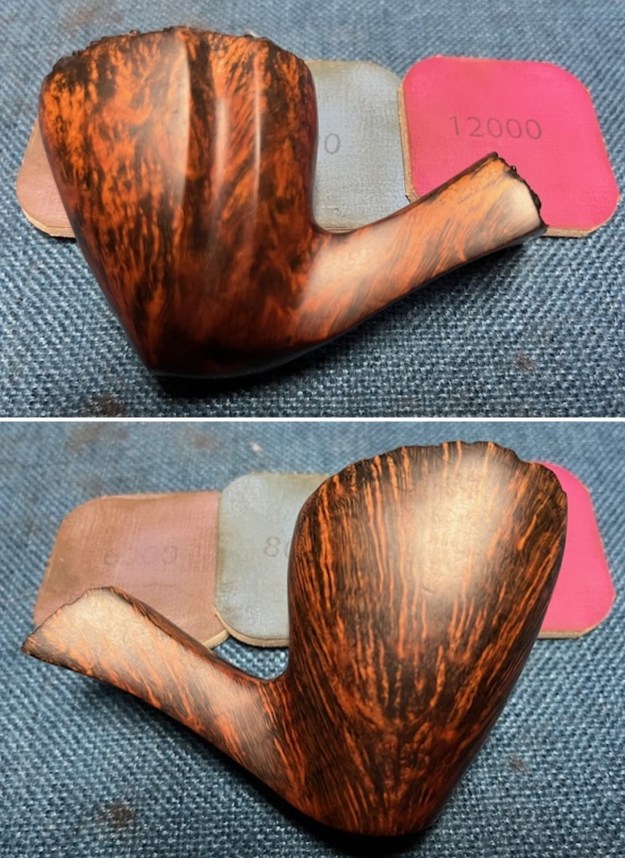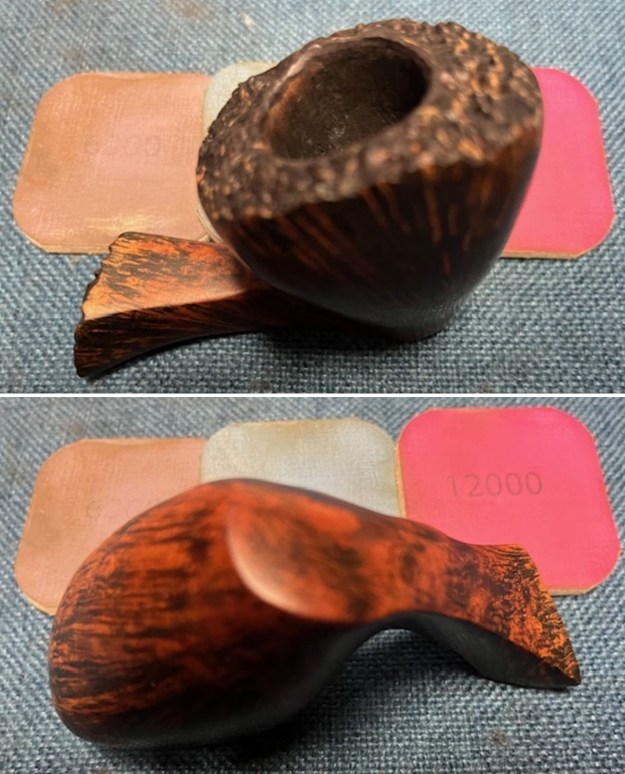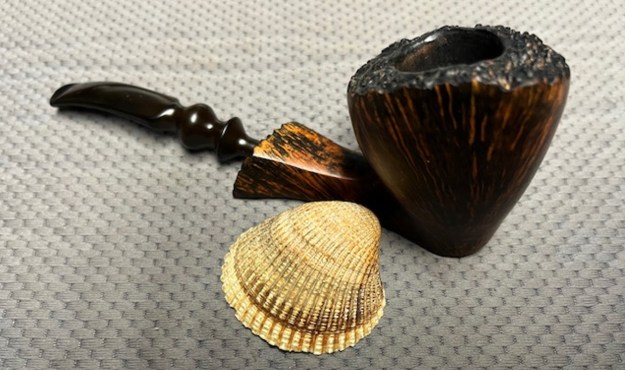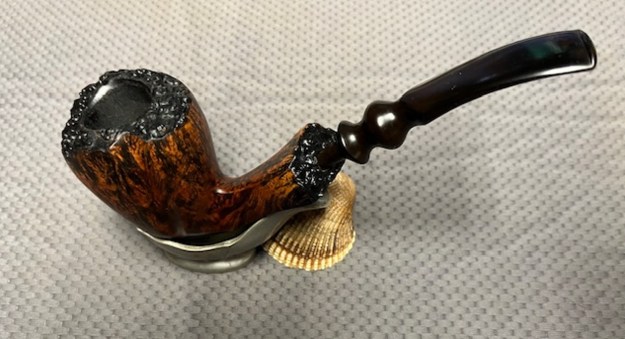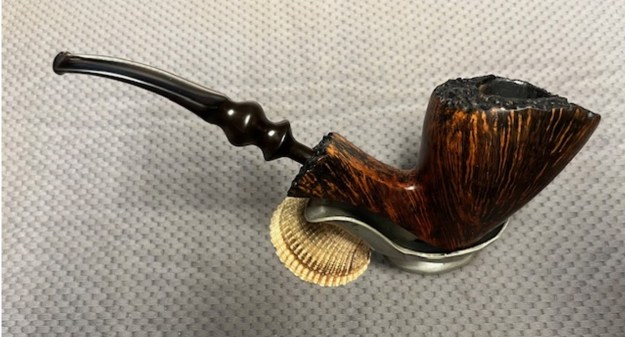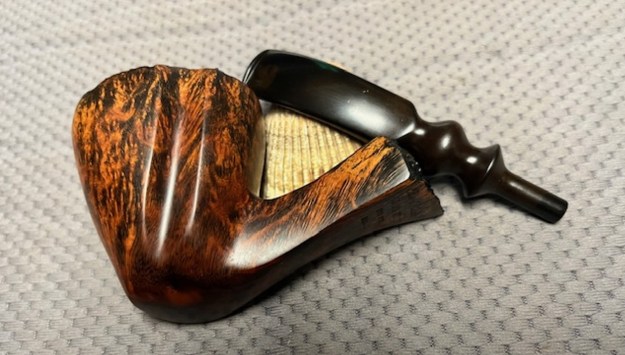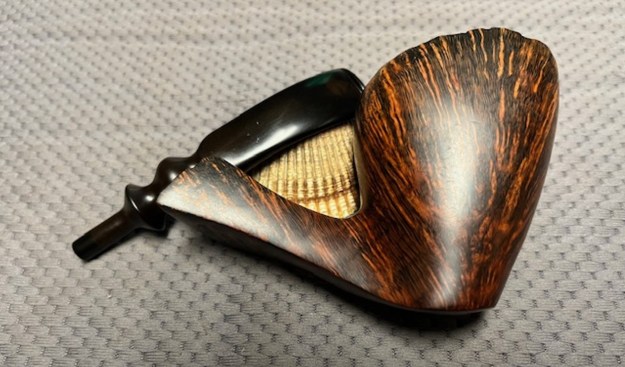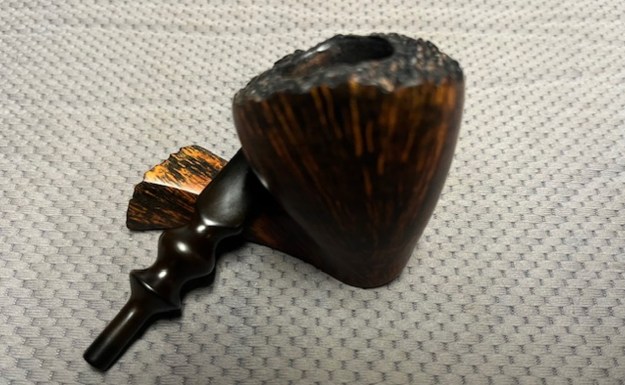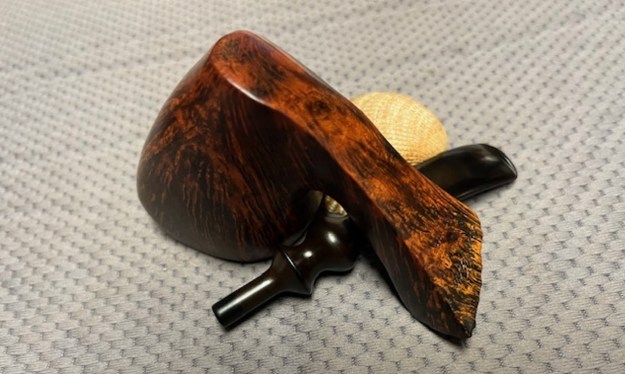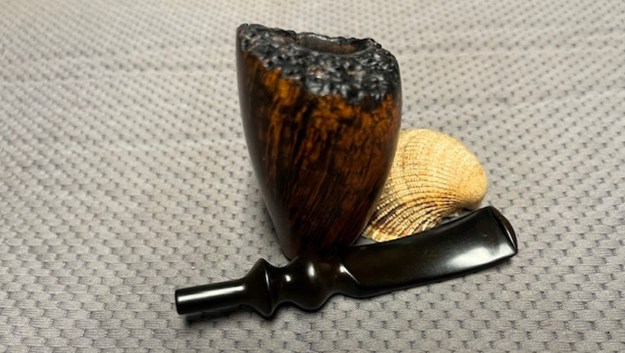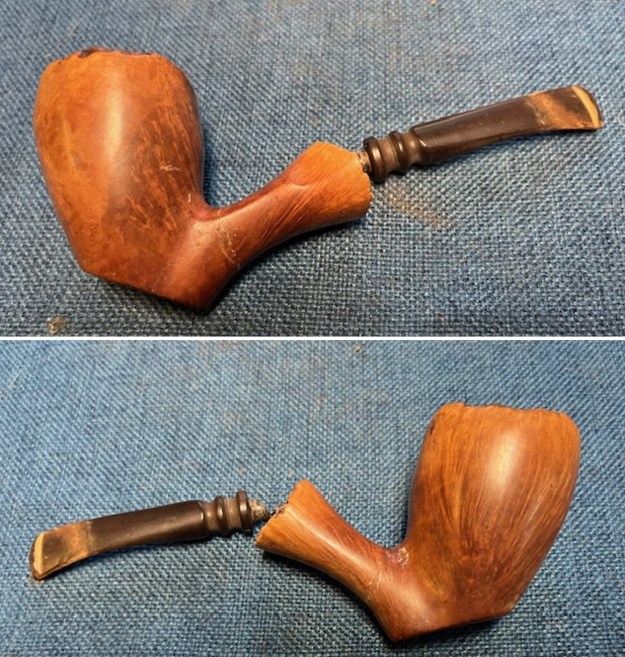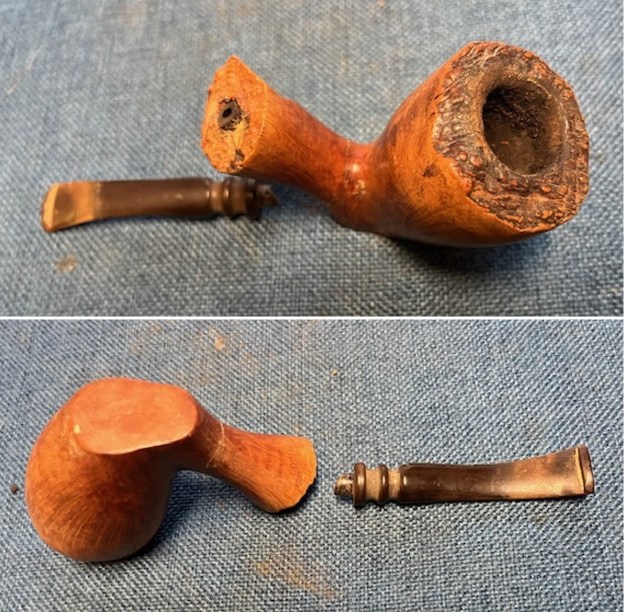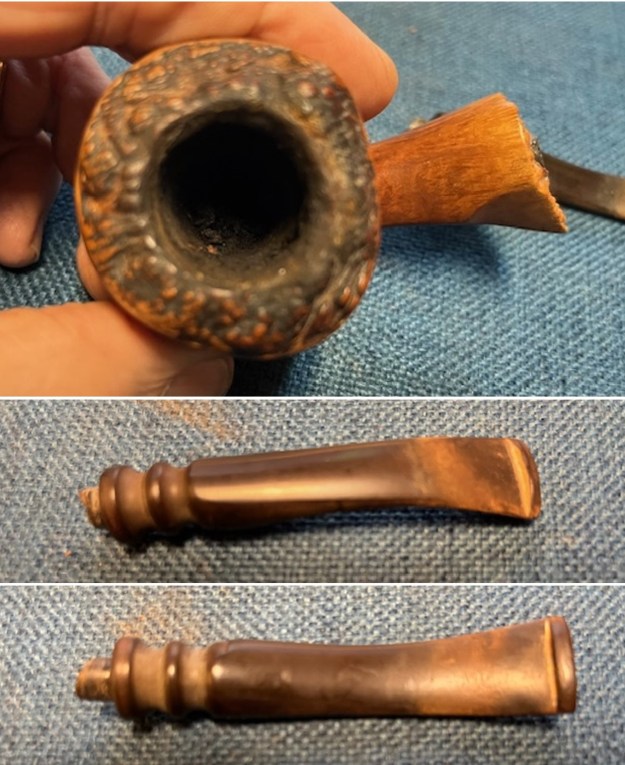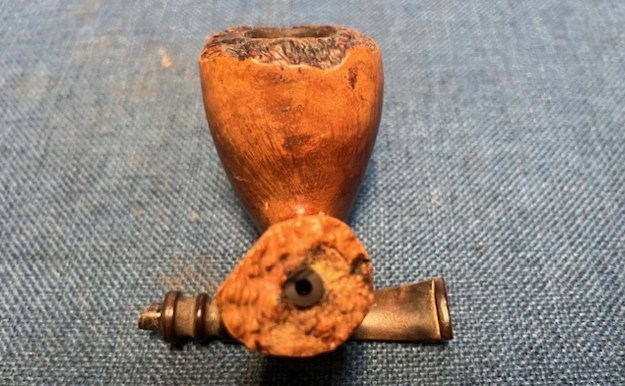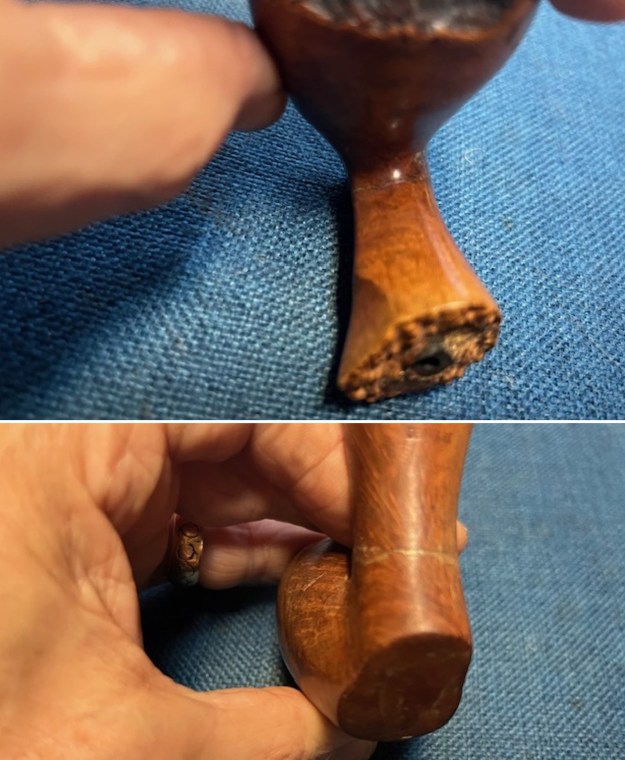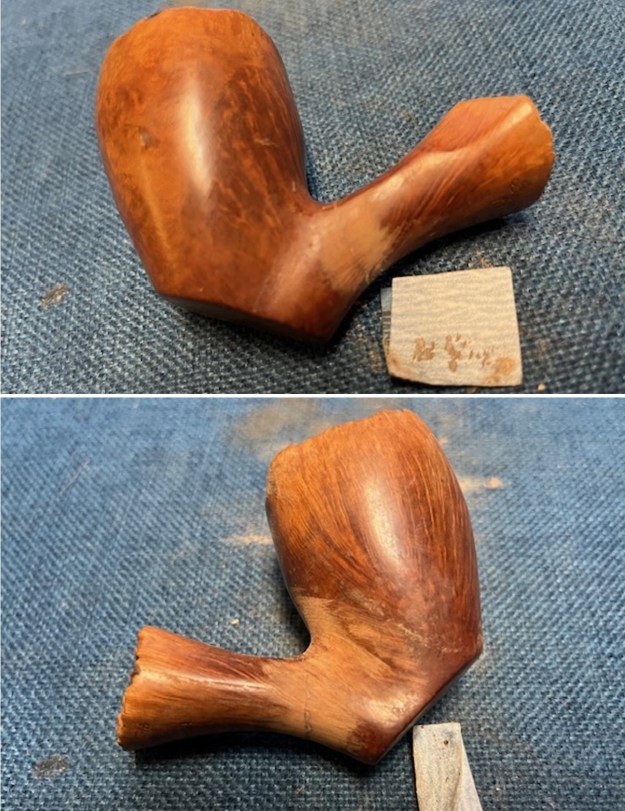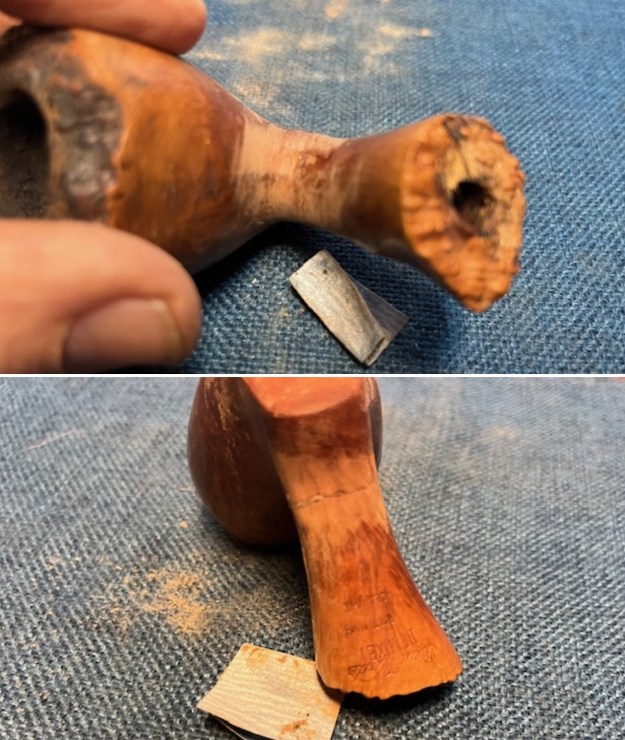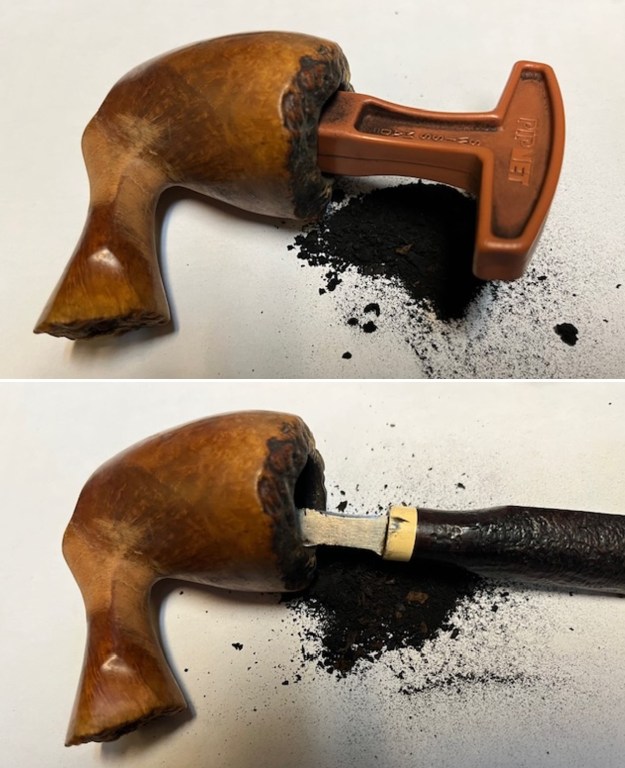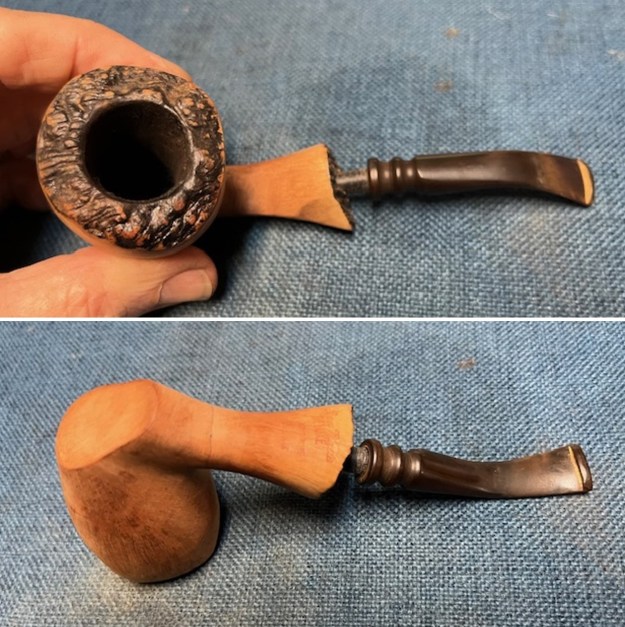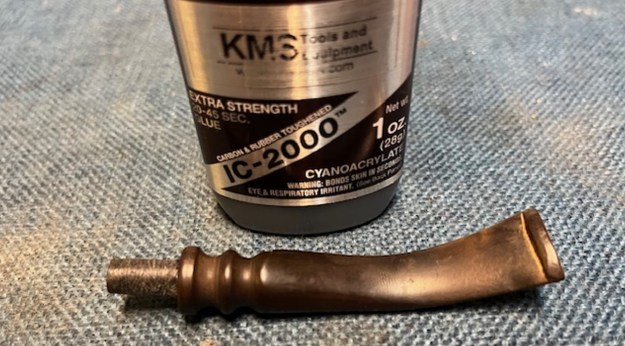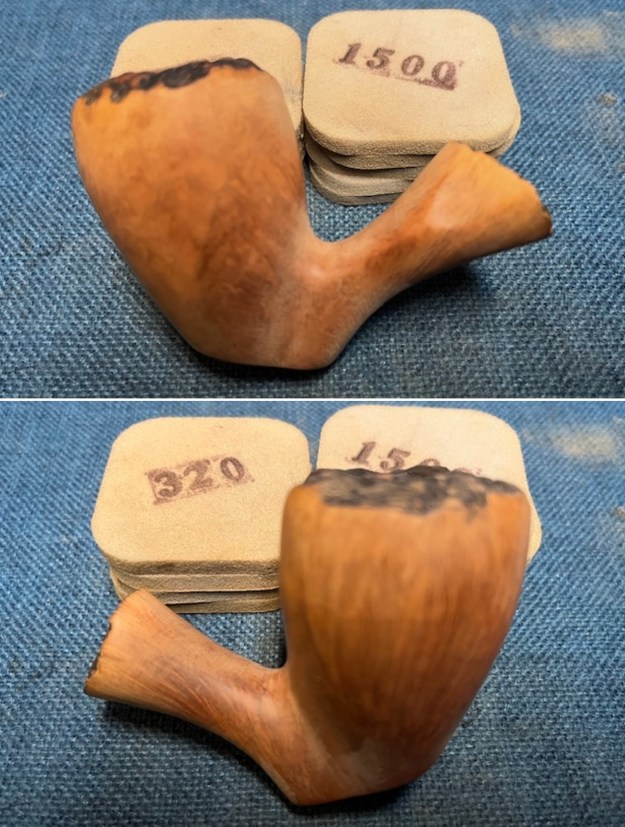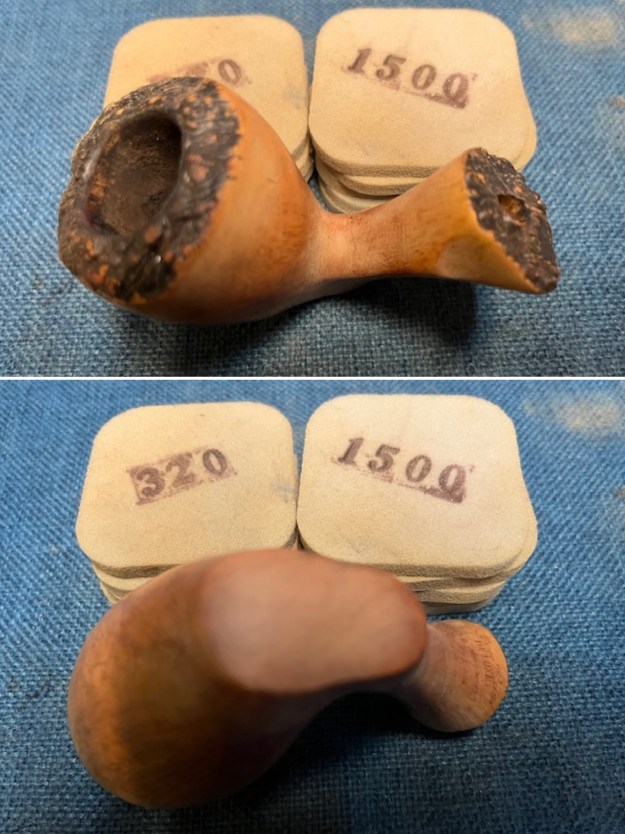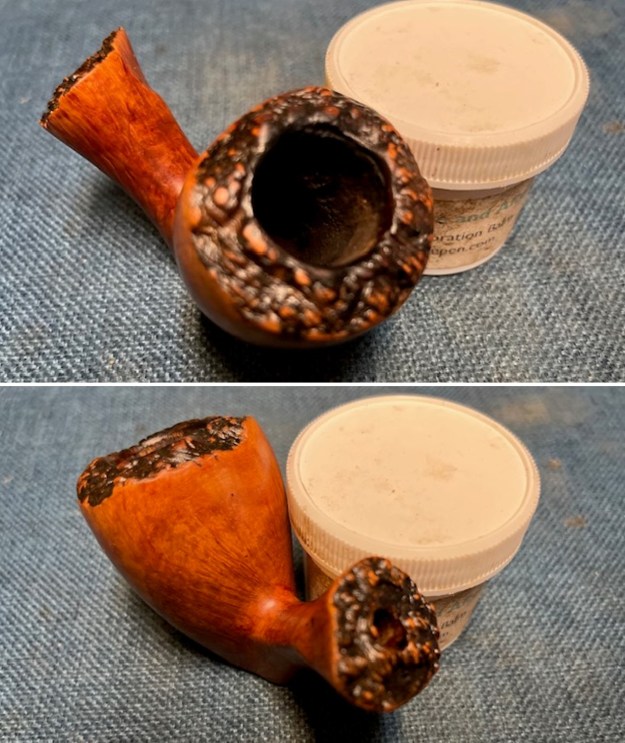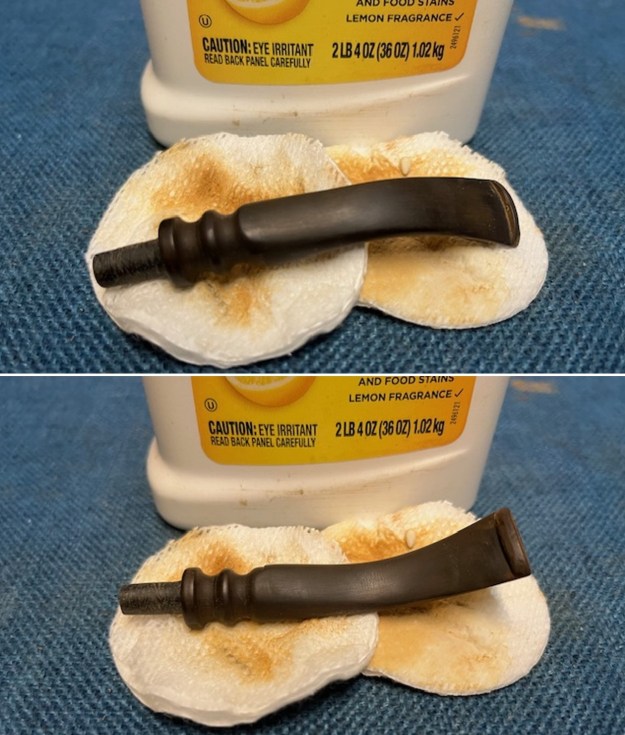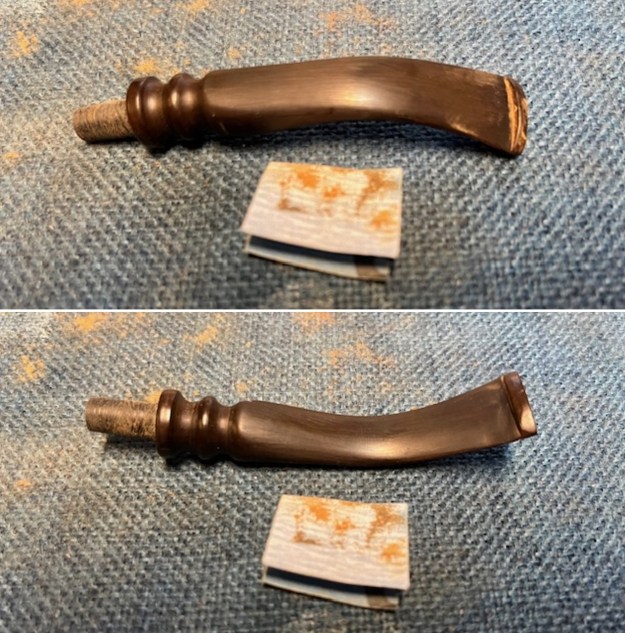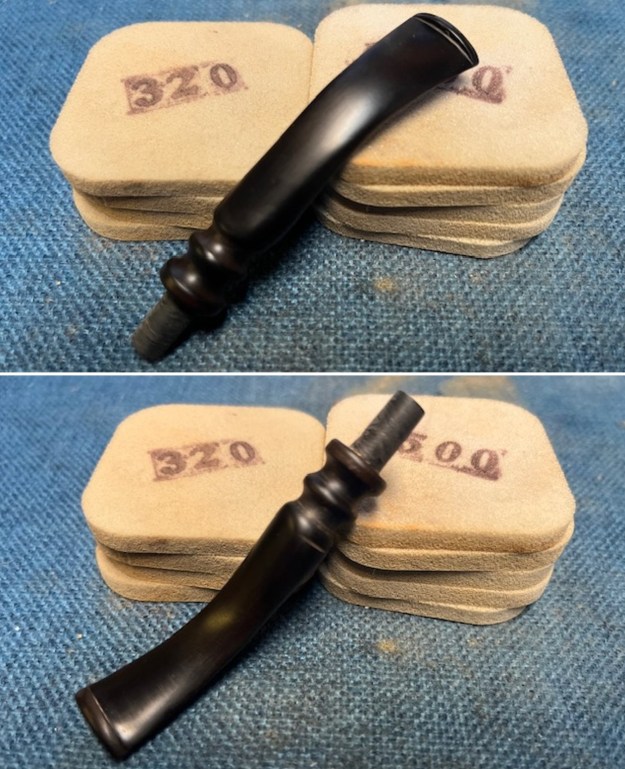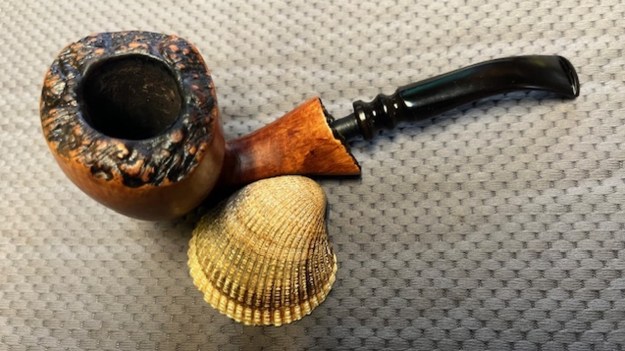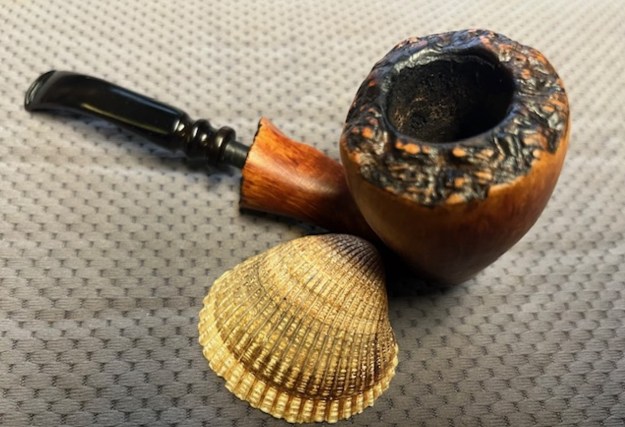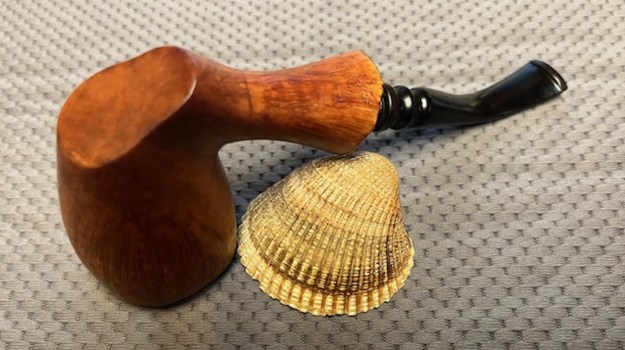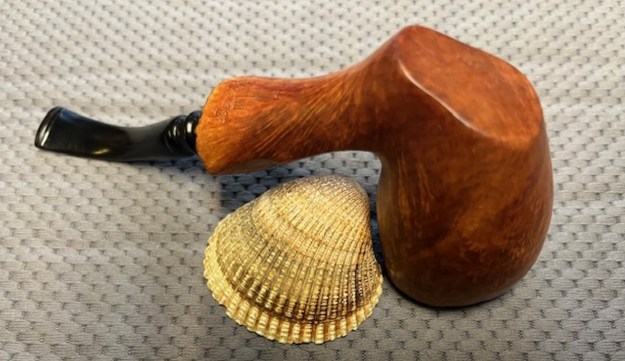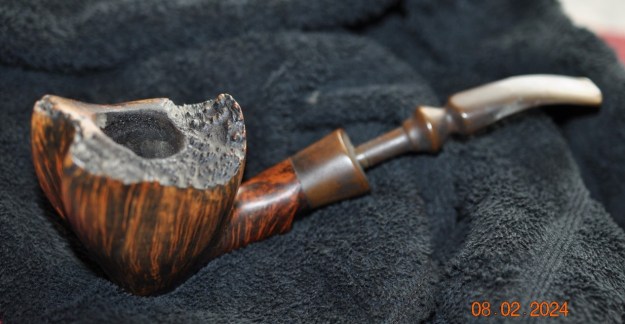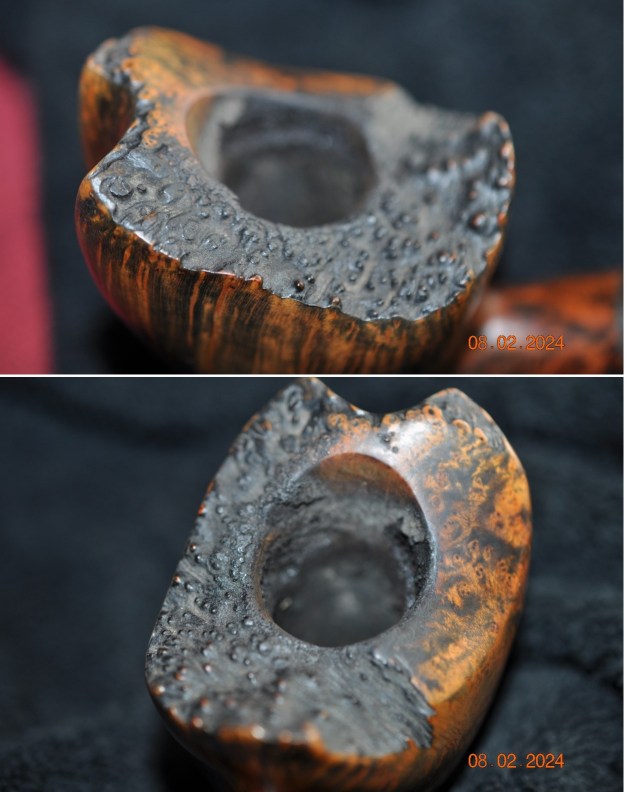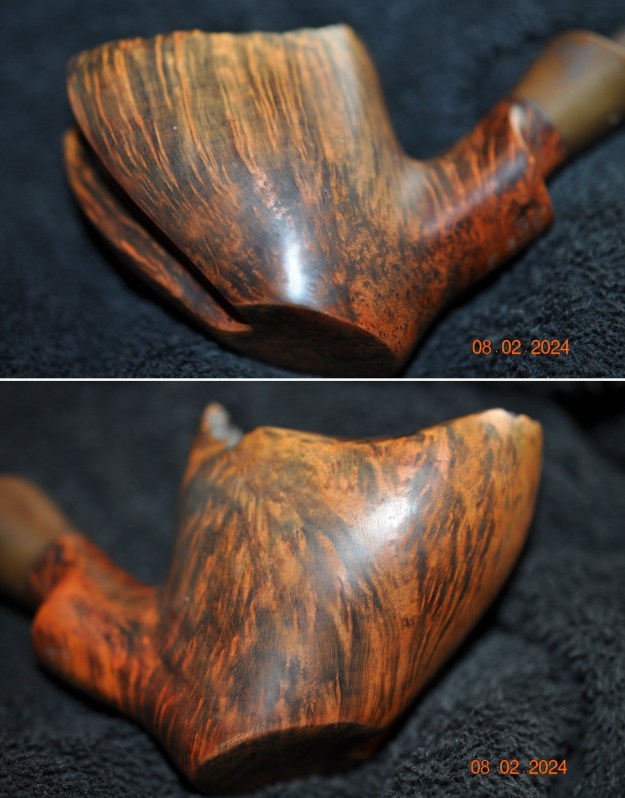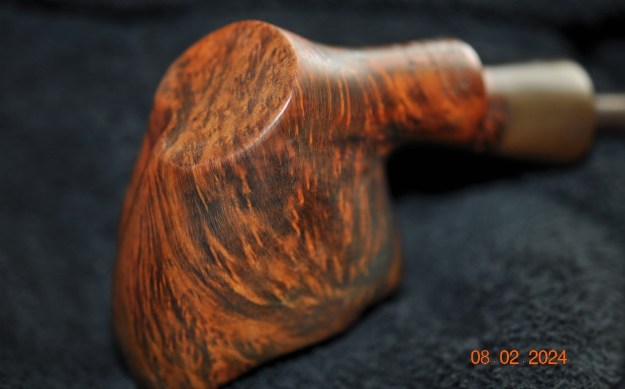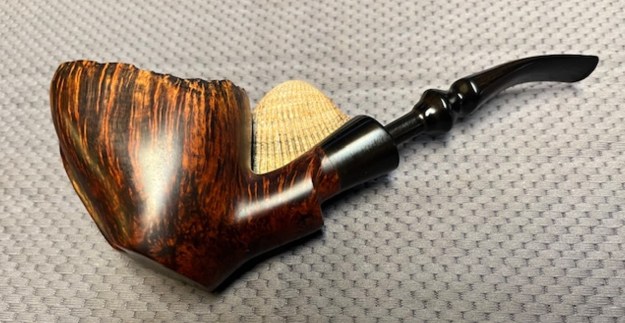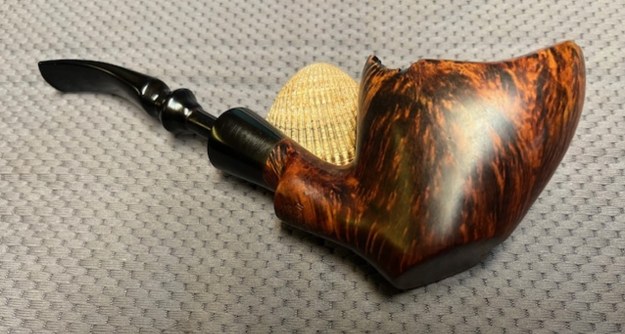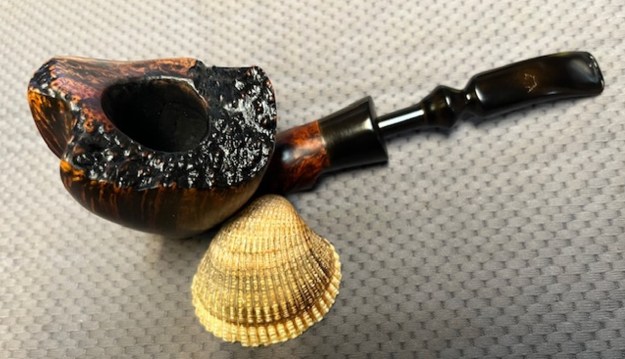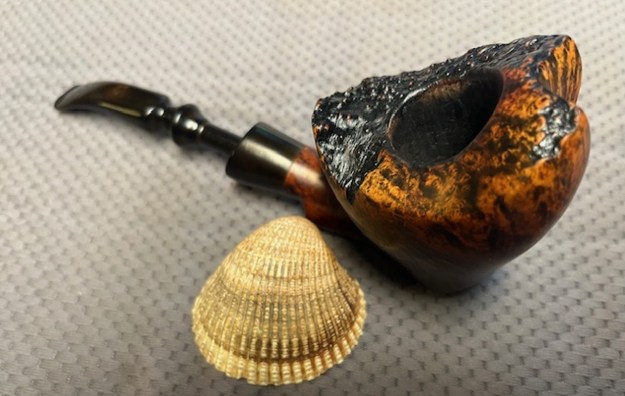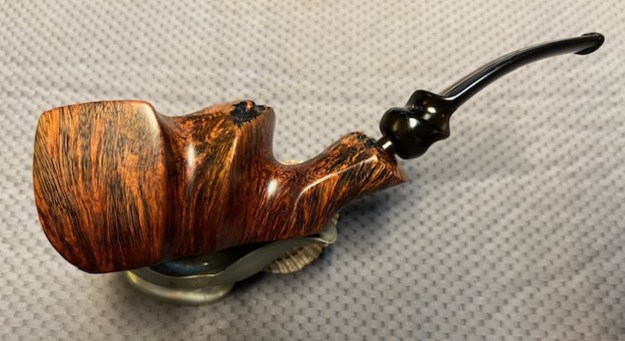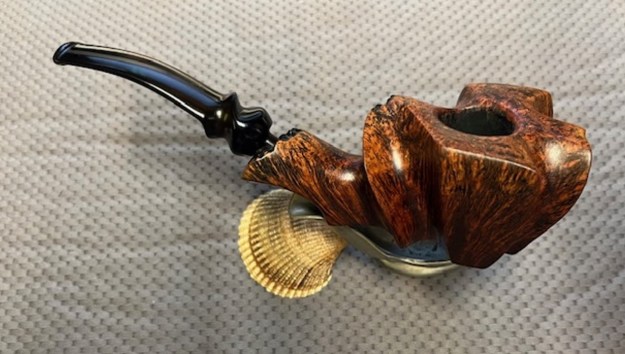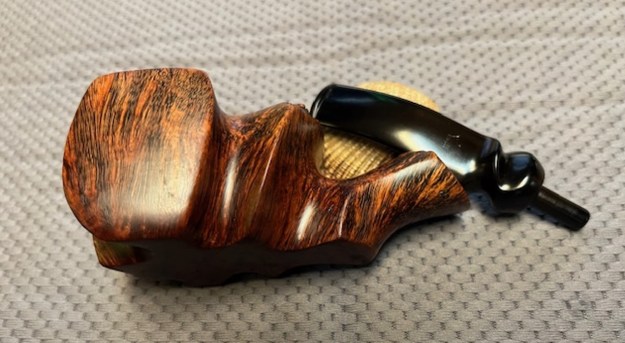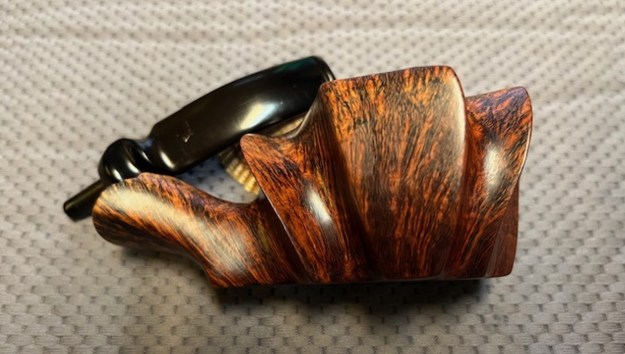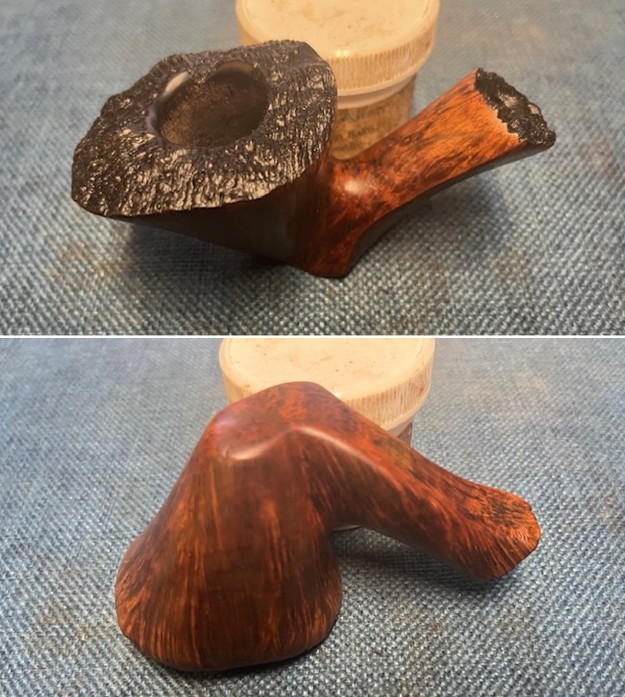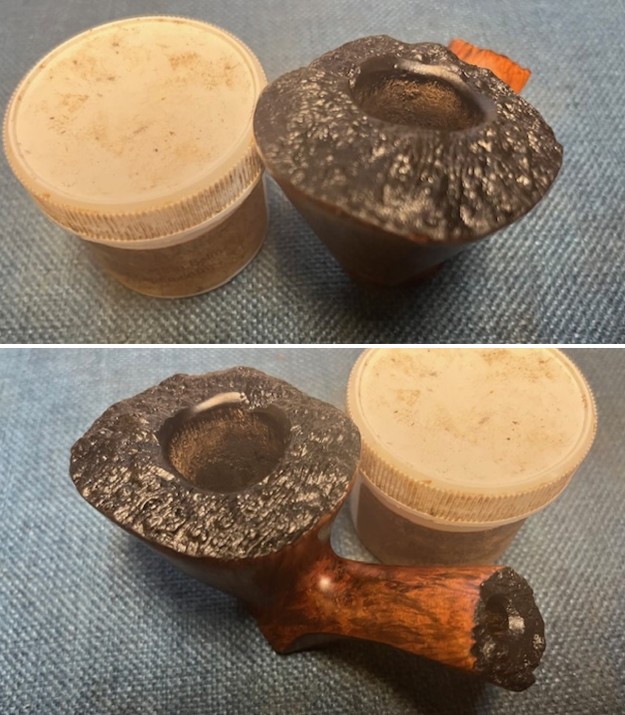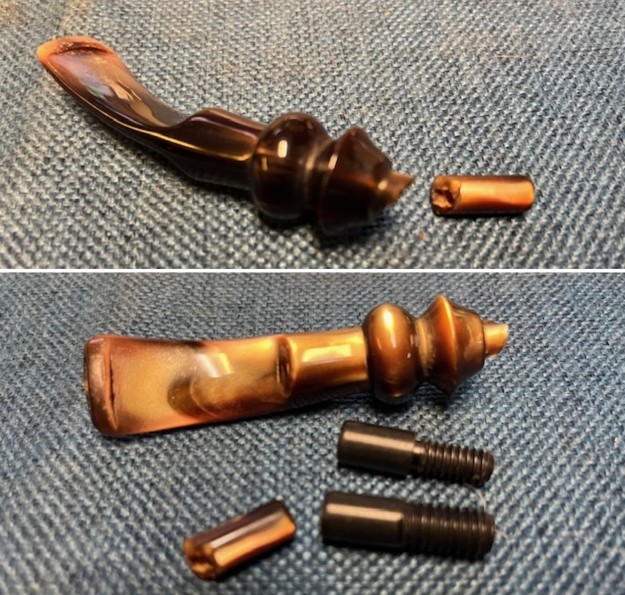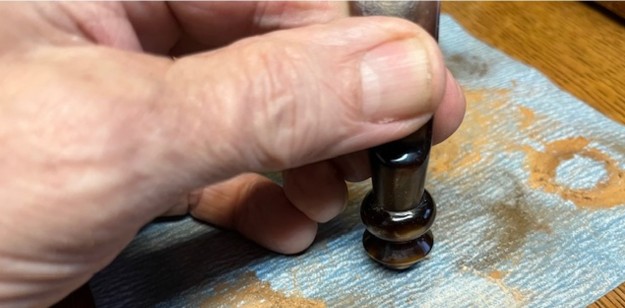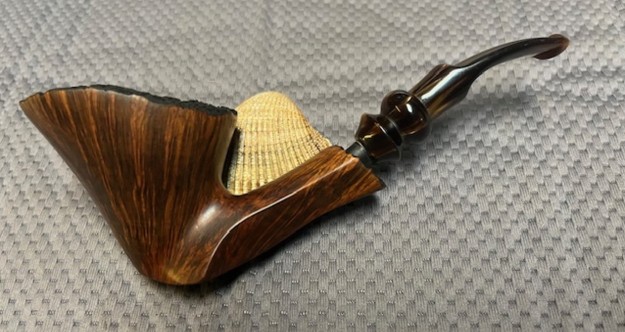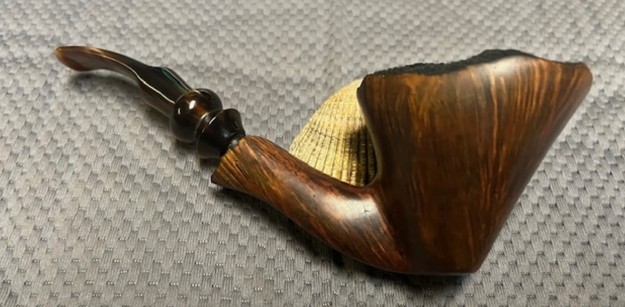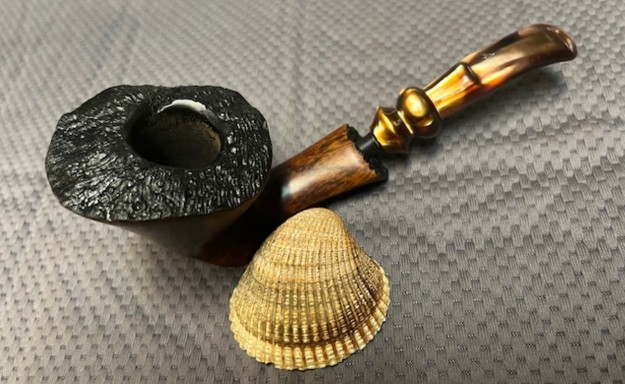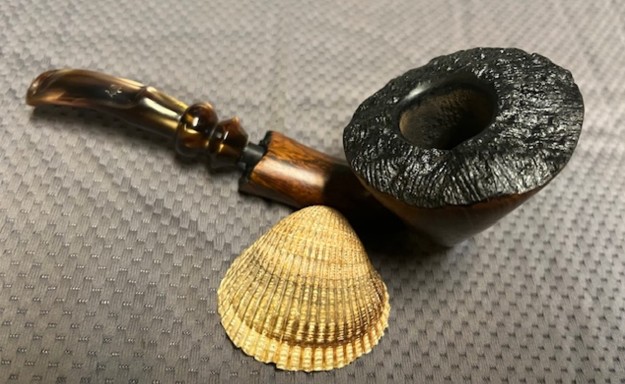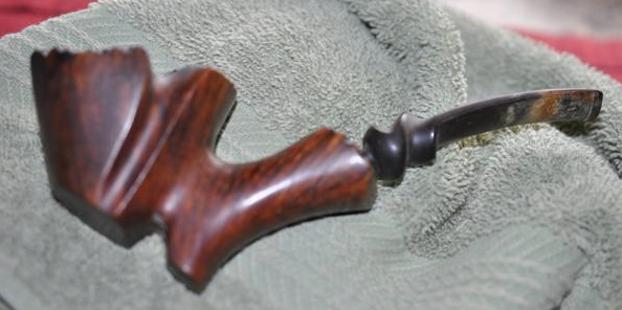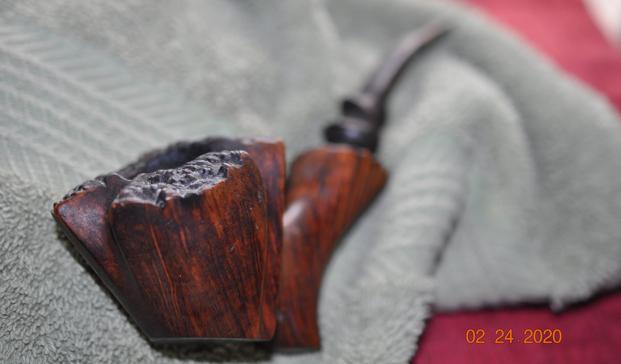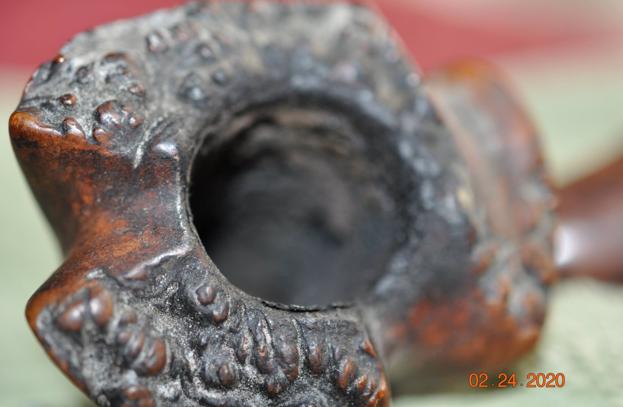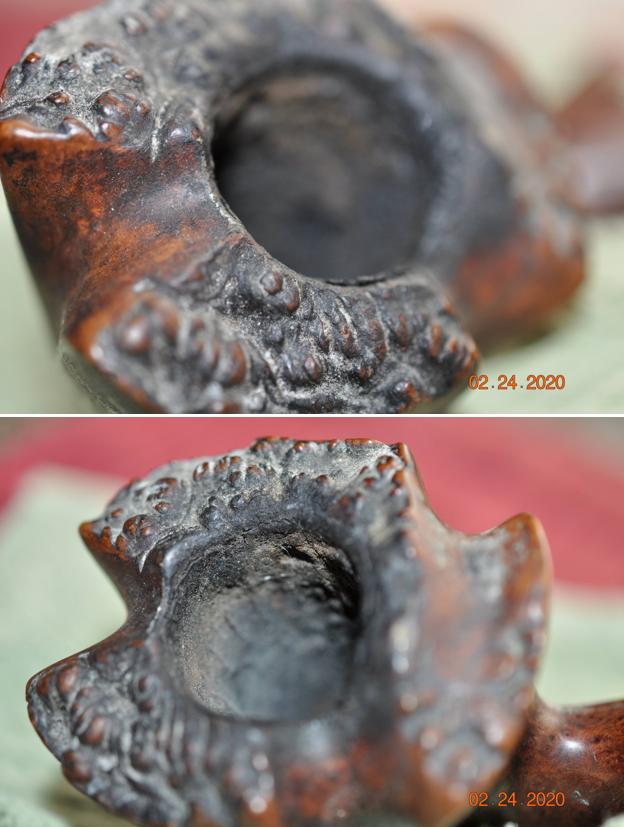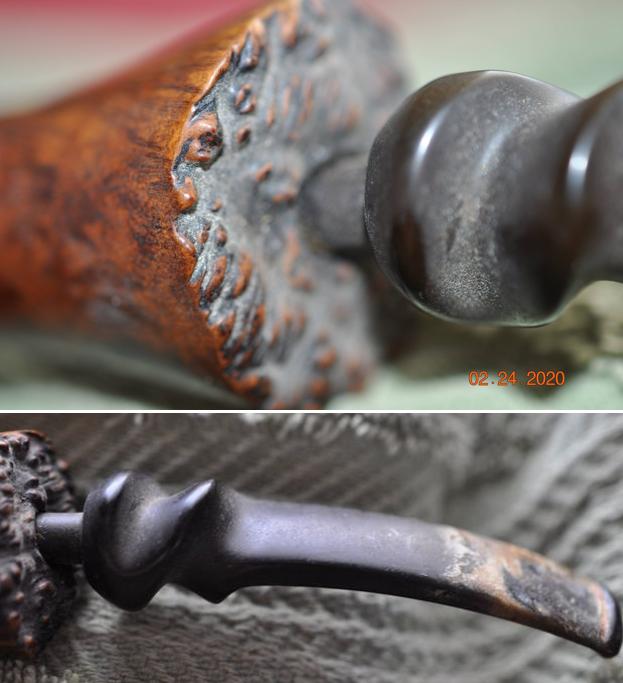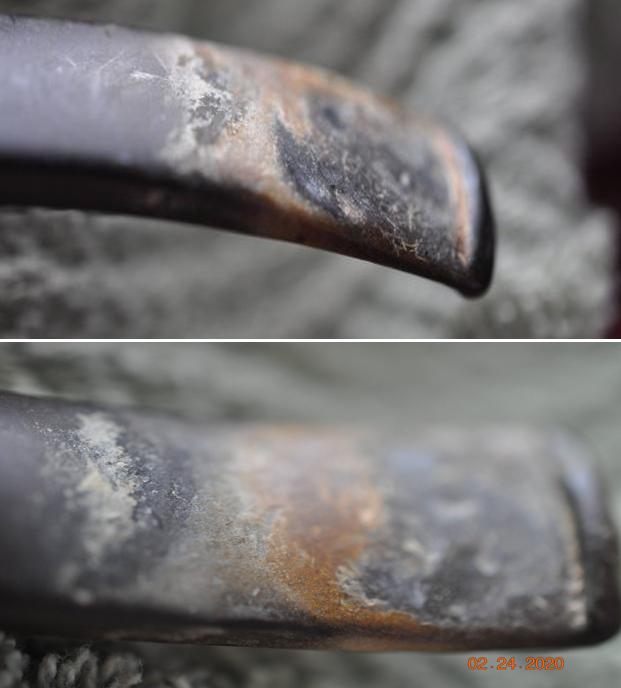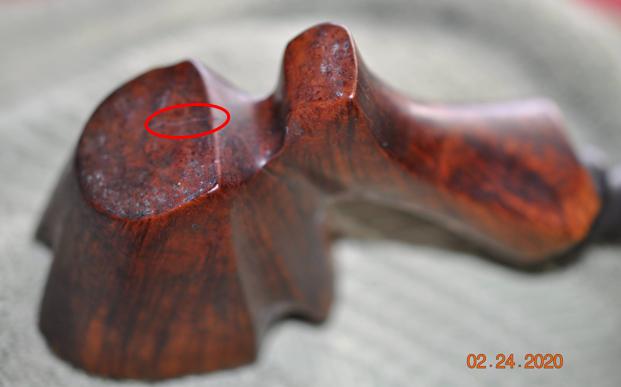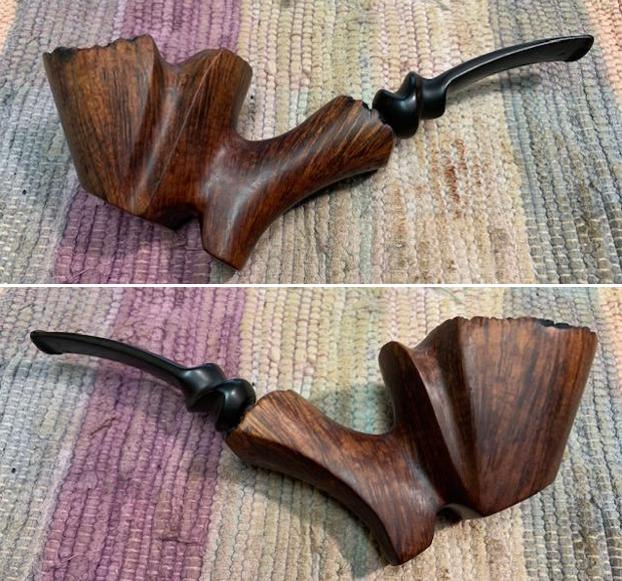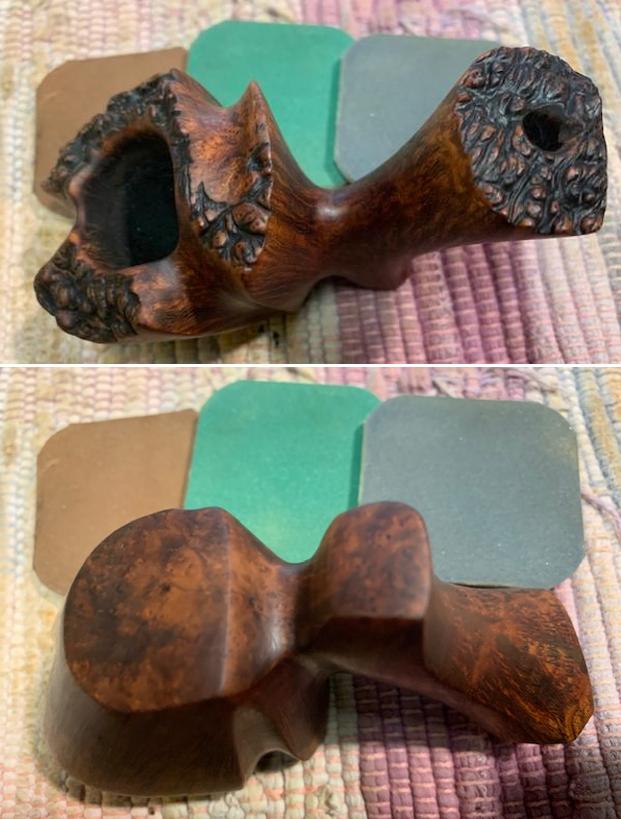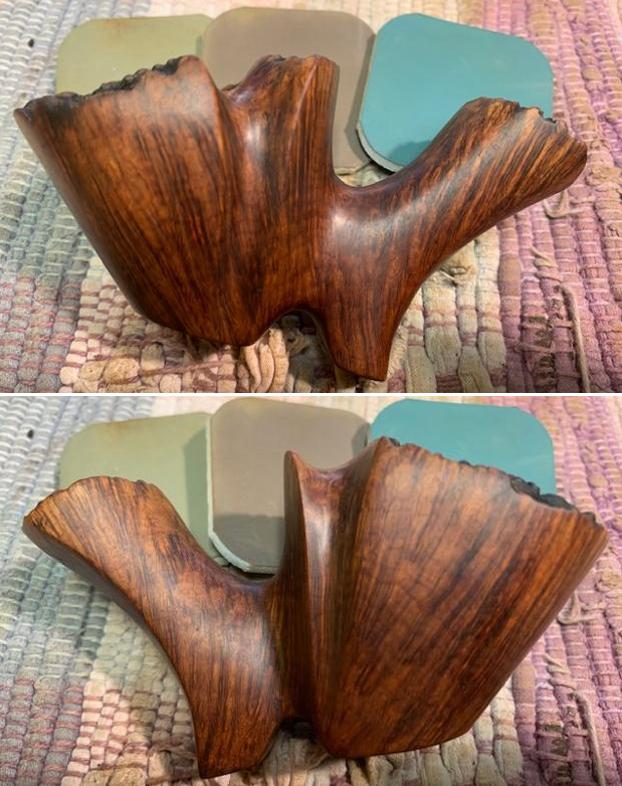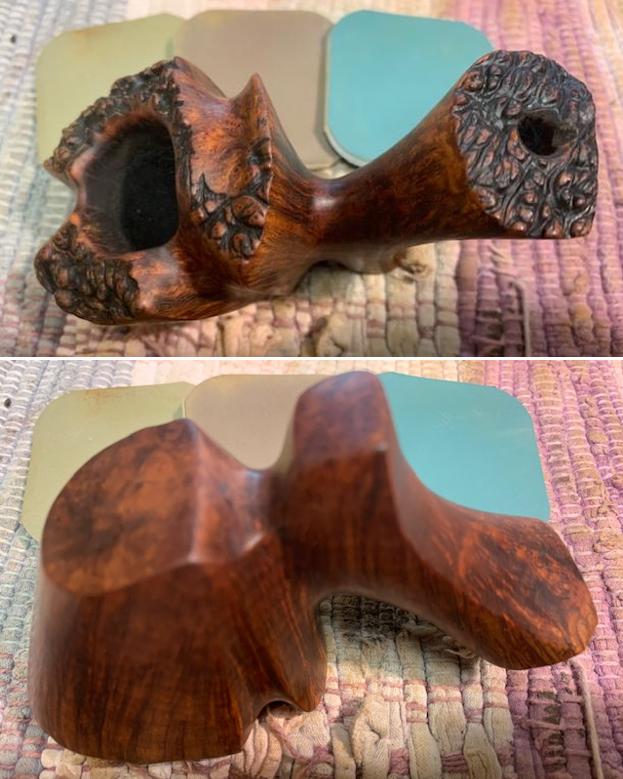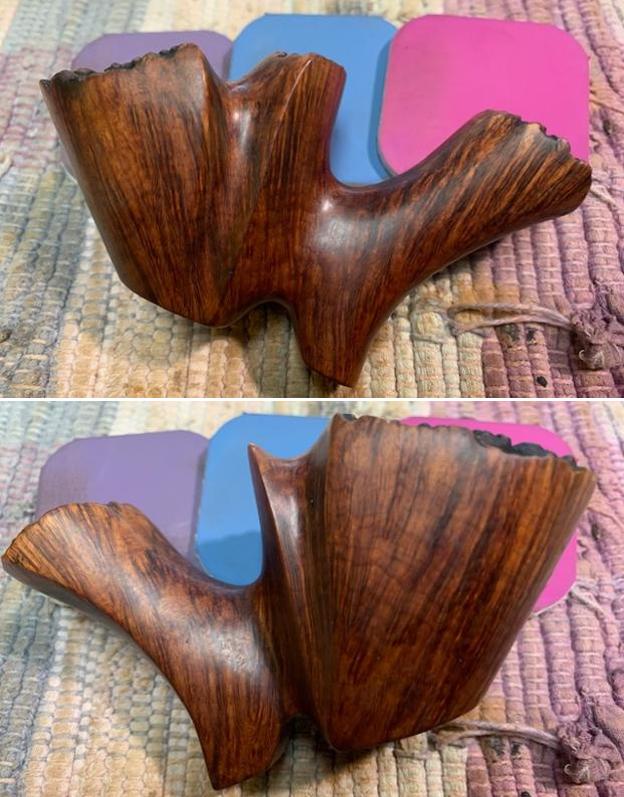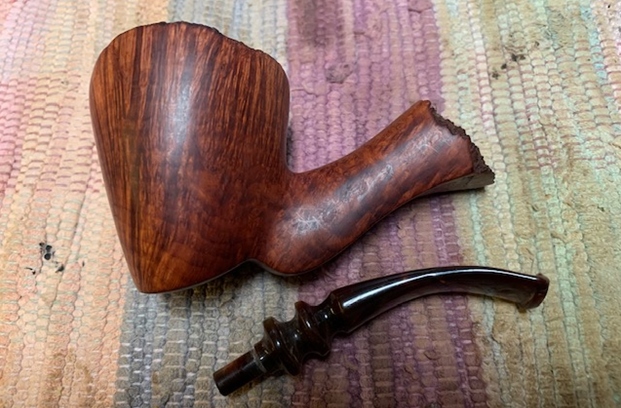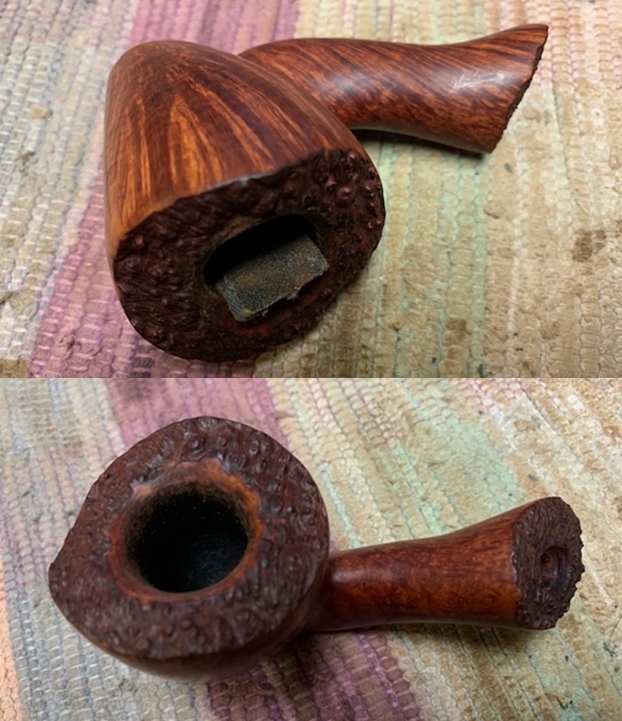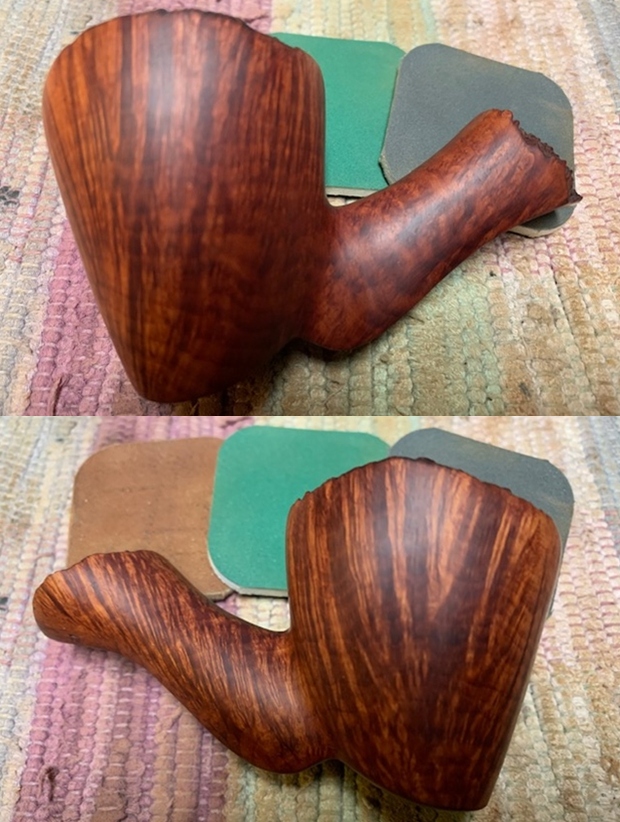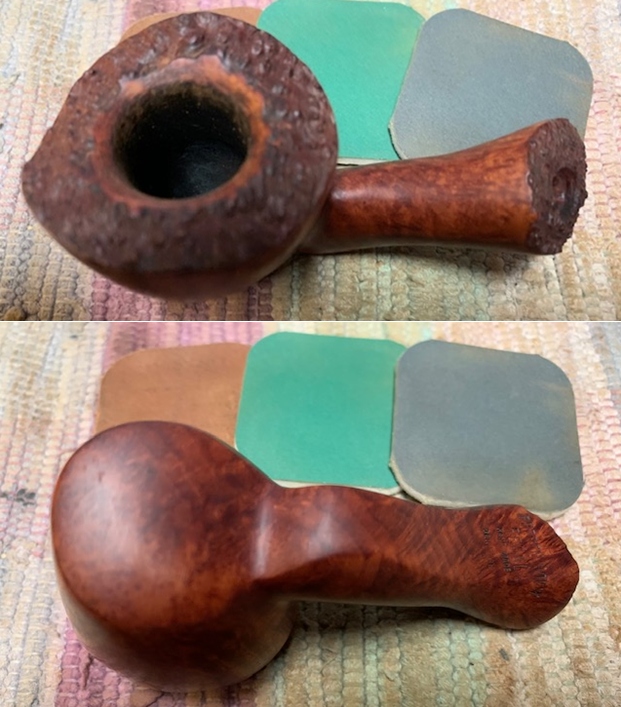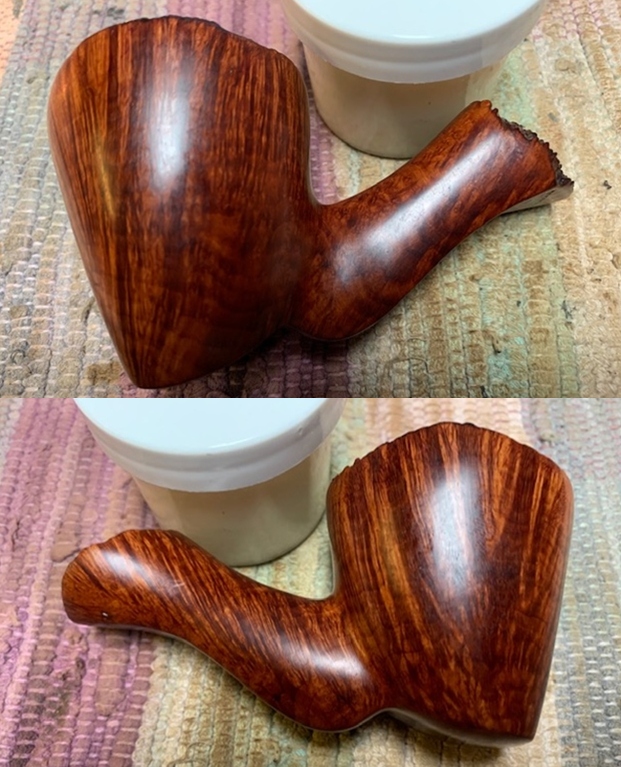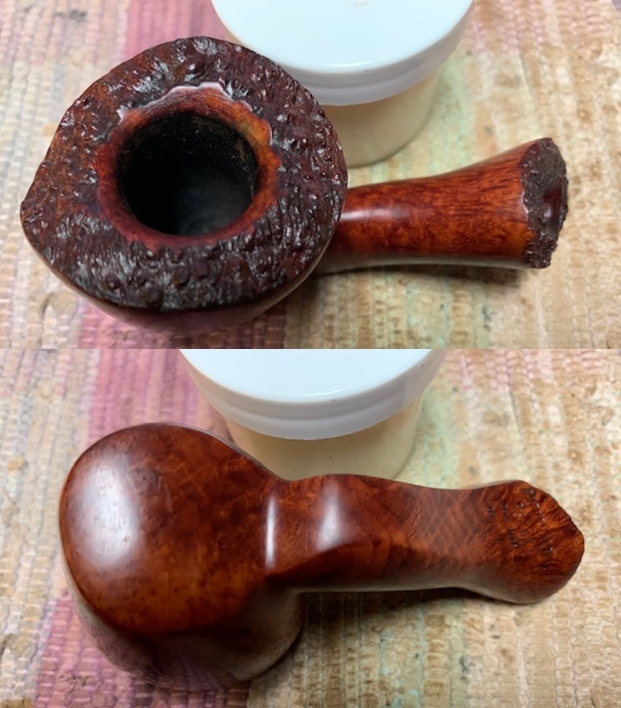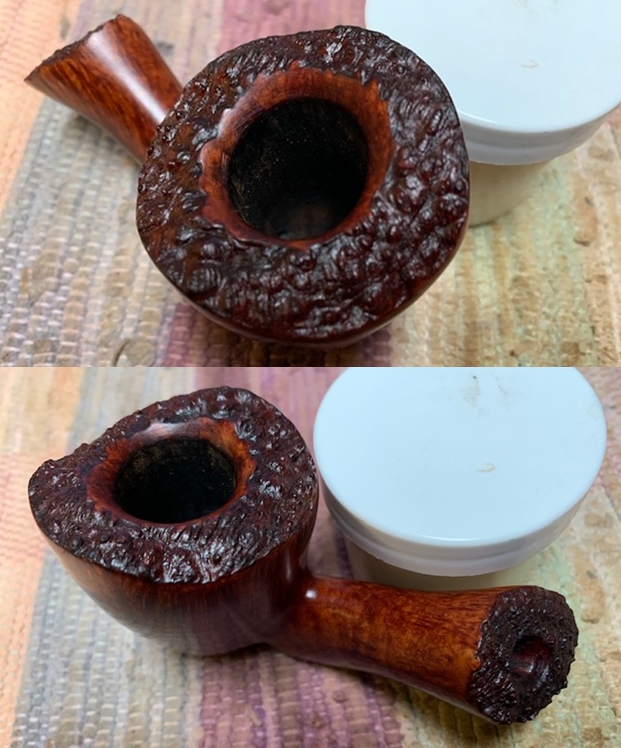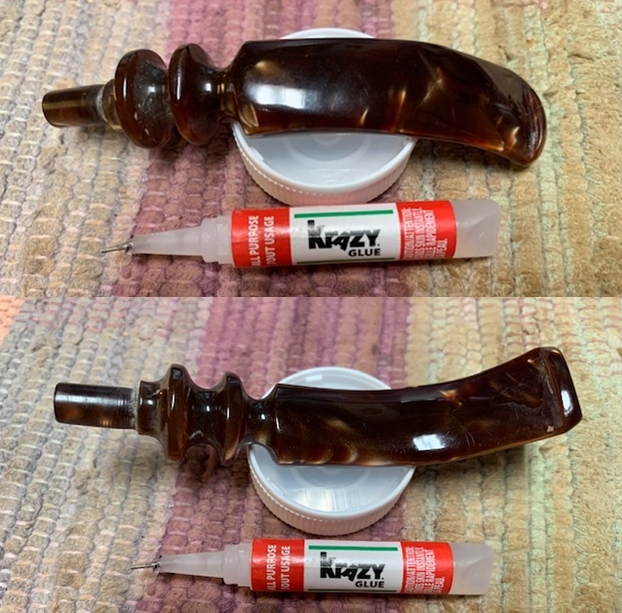
Tag Archives: Preben Holm Pipes

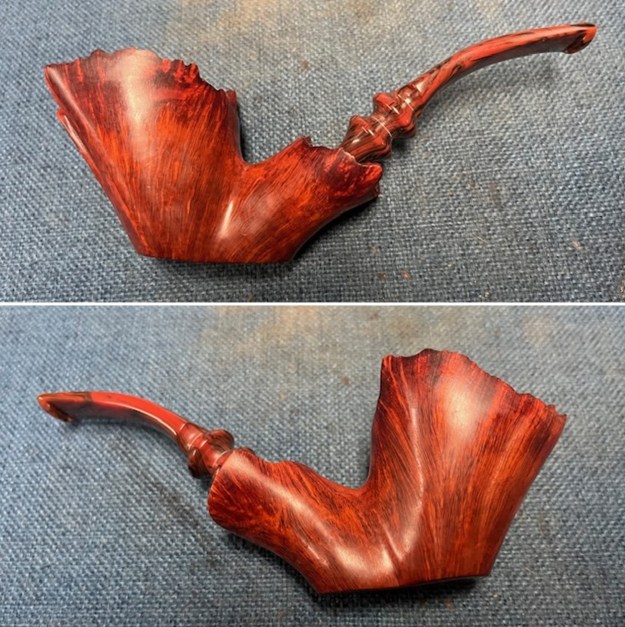
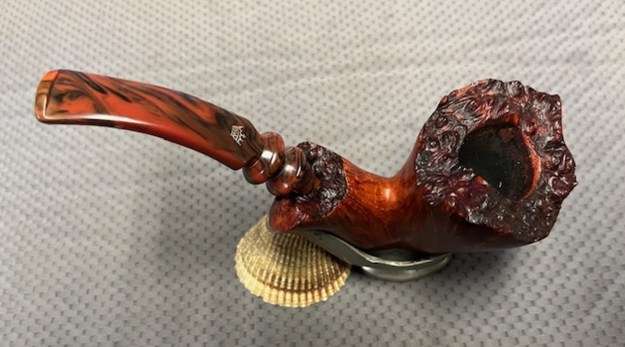
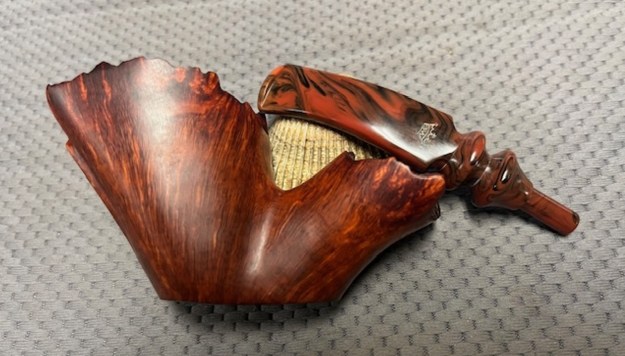
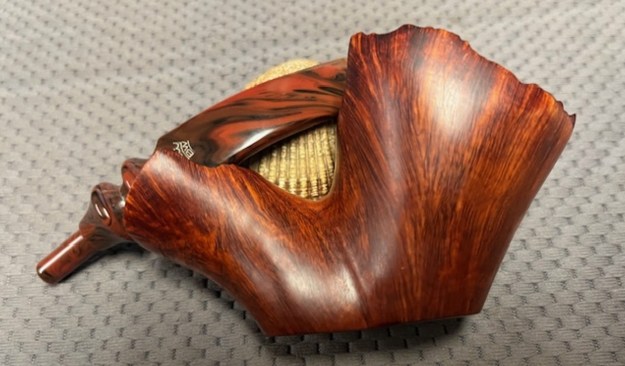
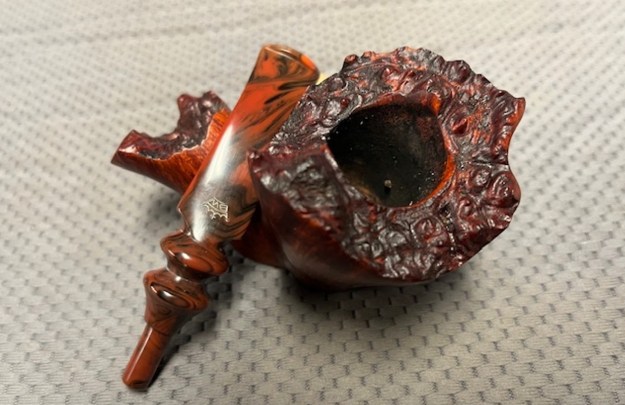
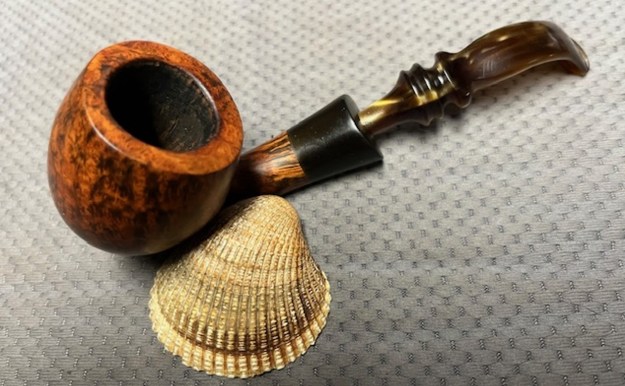
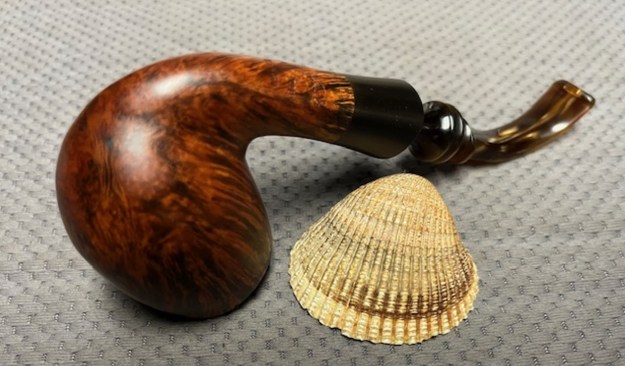
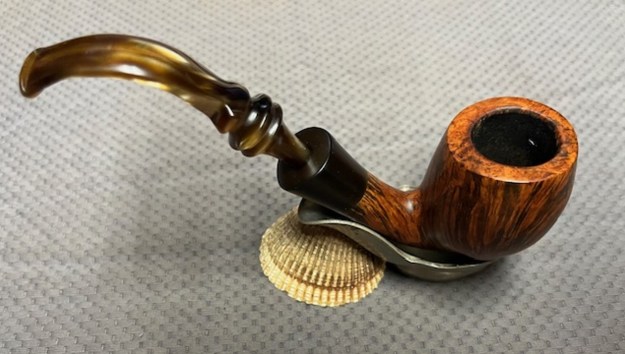
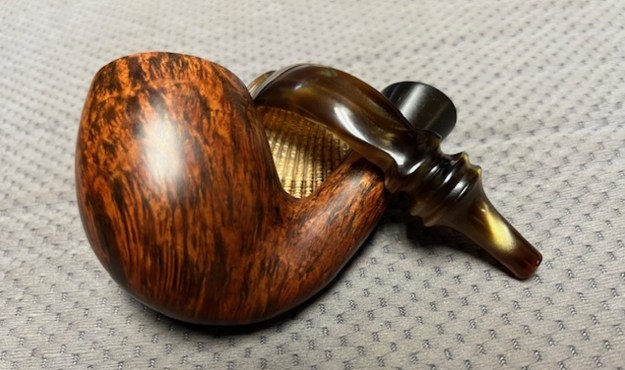
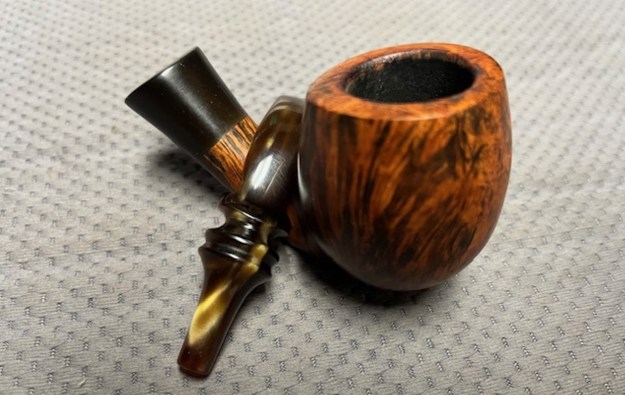
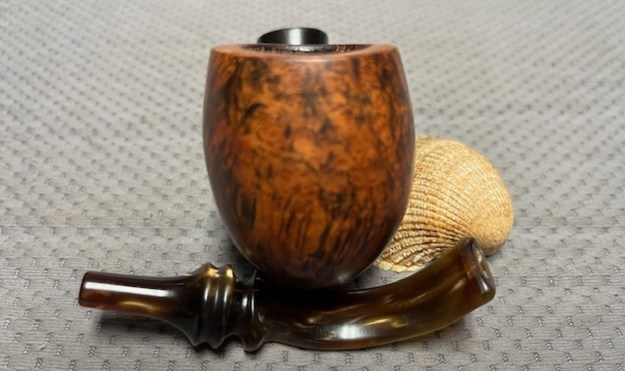
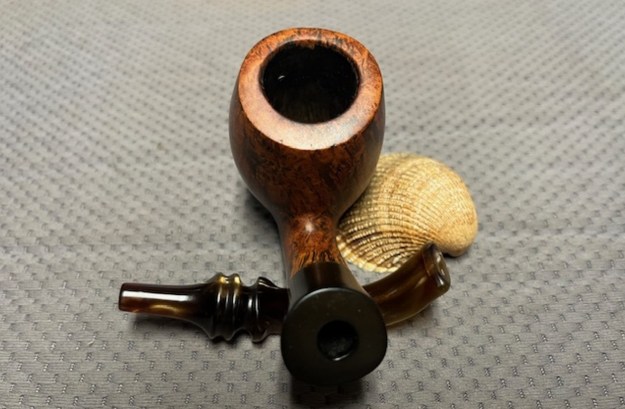
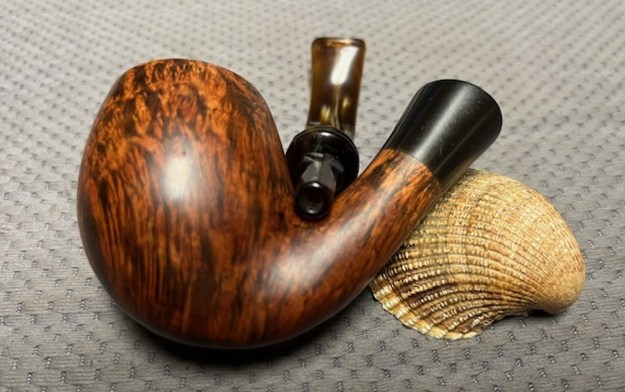
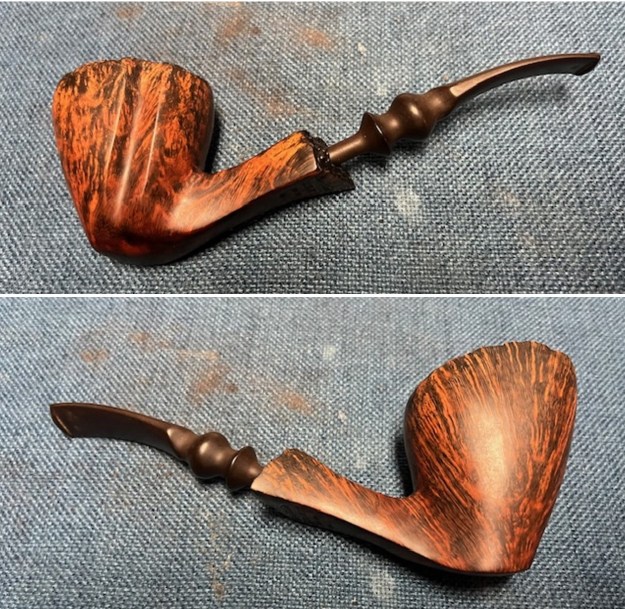
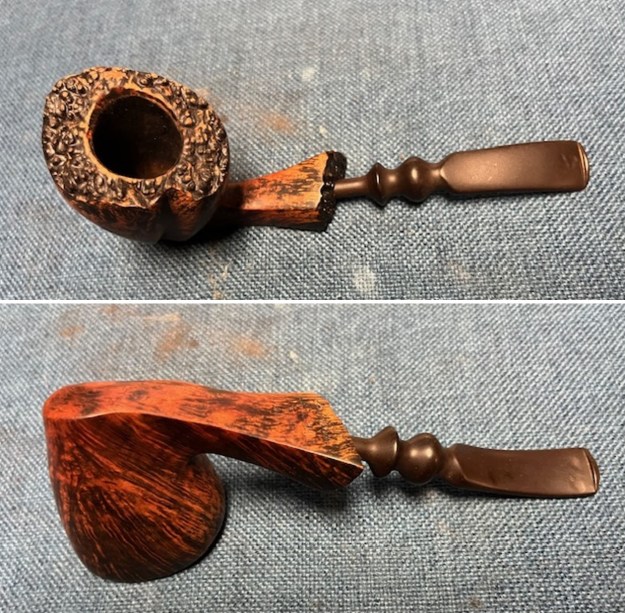
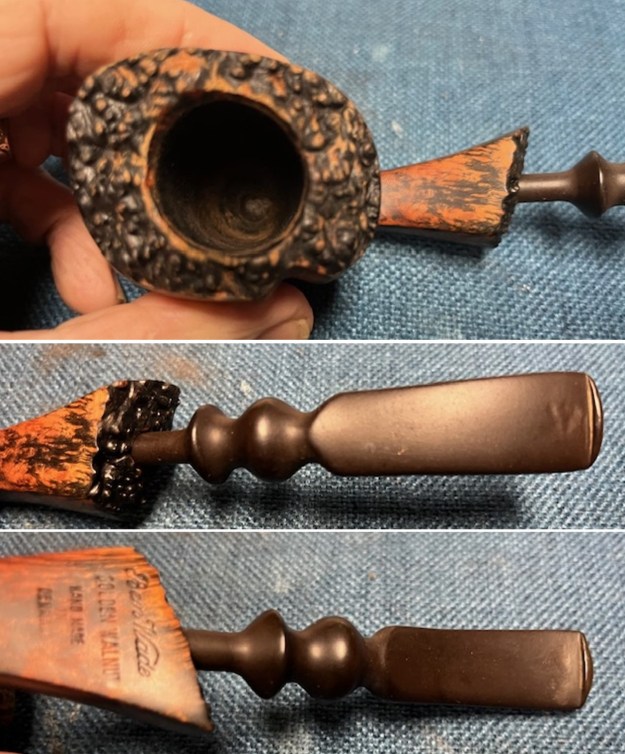
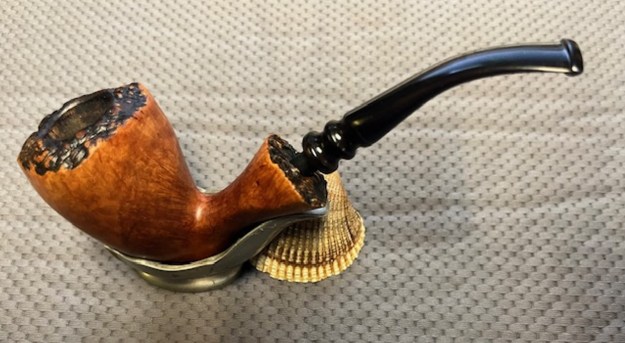
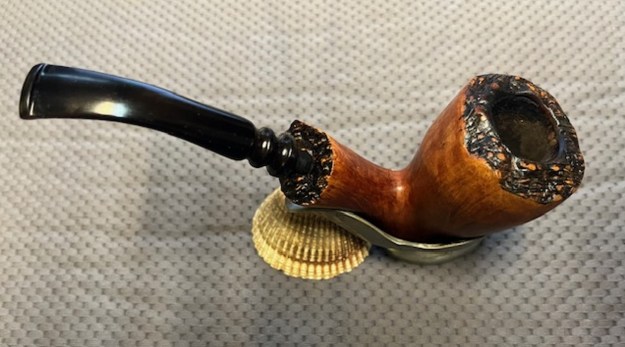
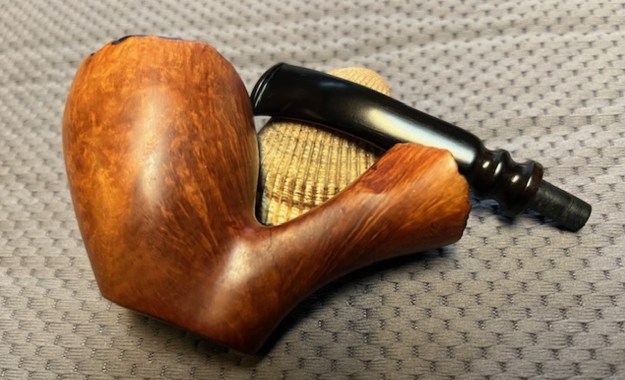
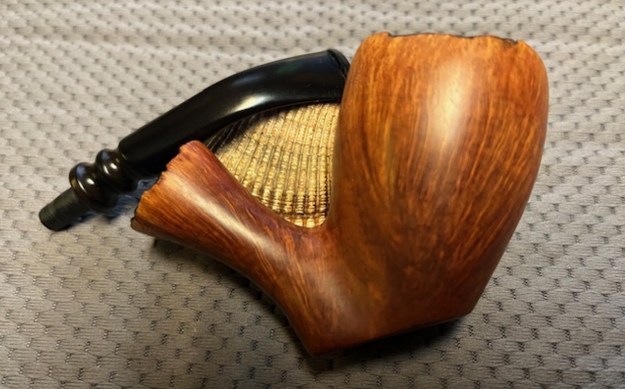
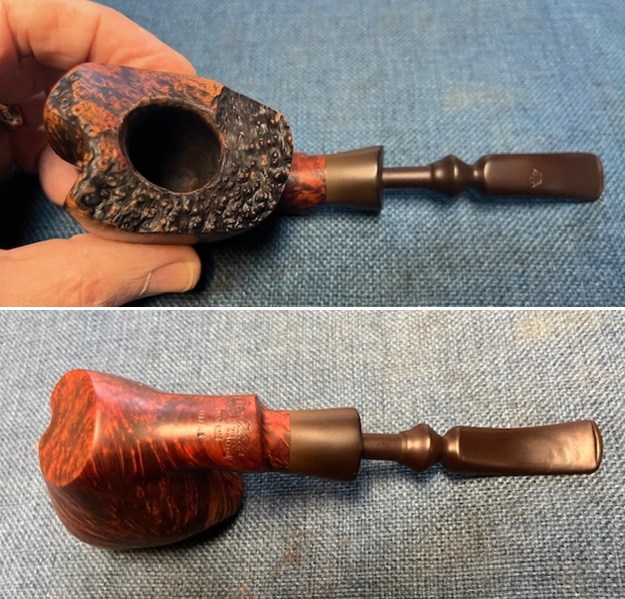
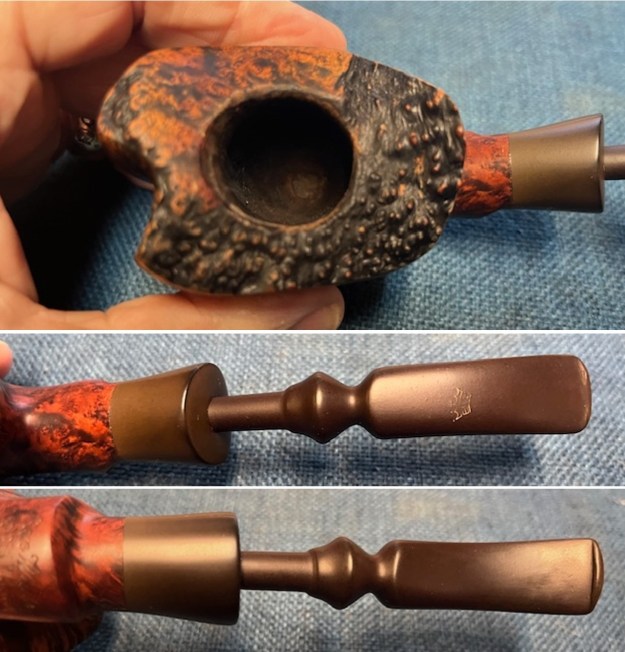
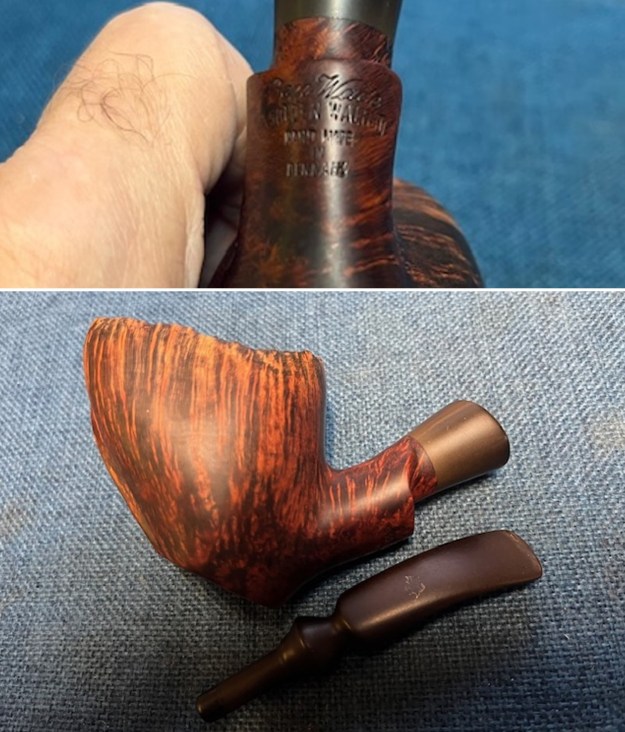
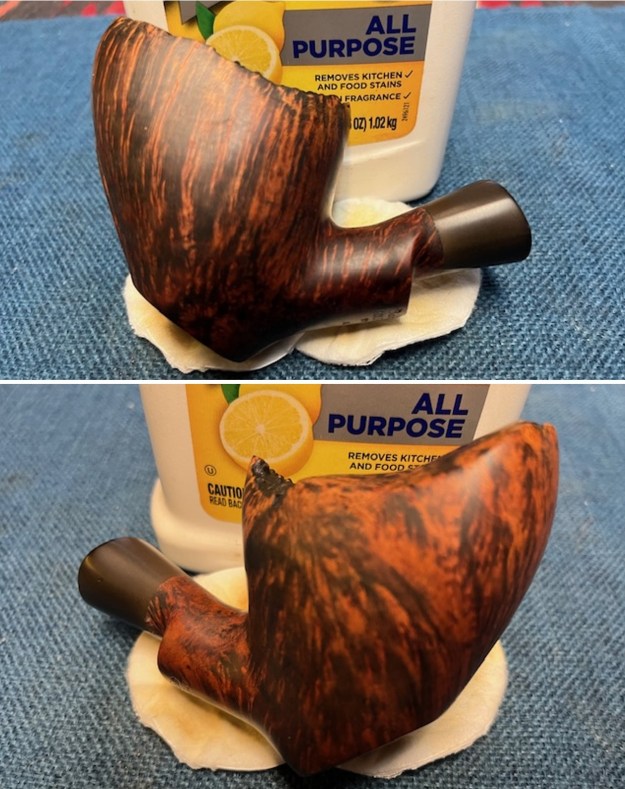
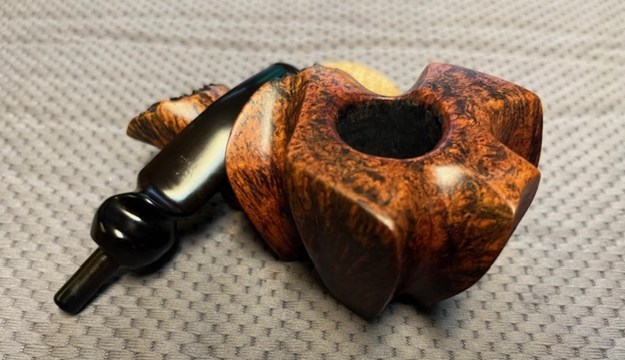
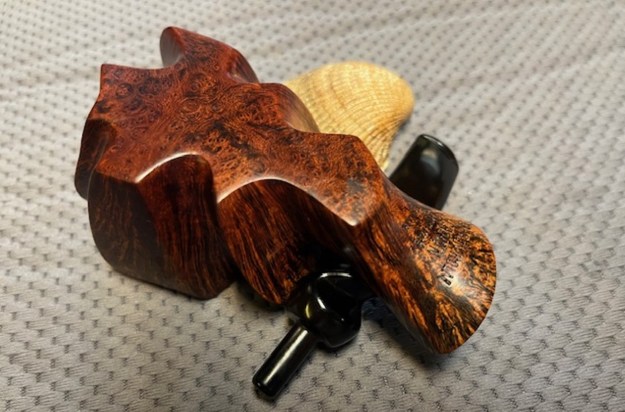
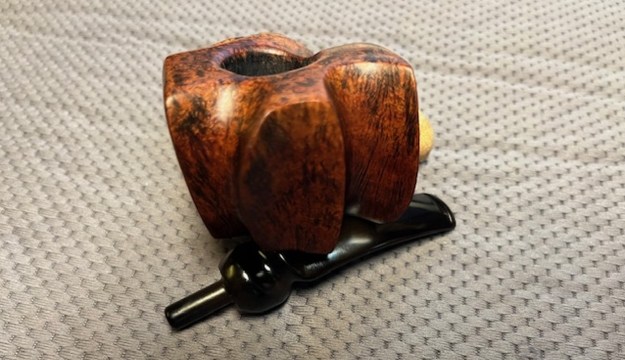
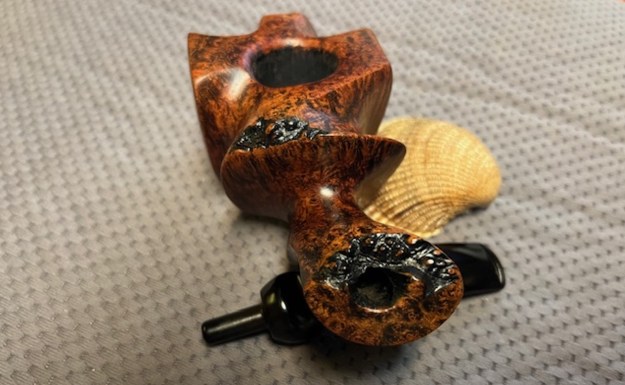
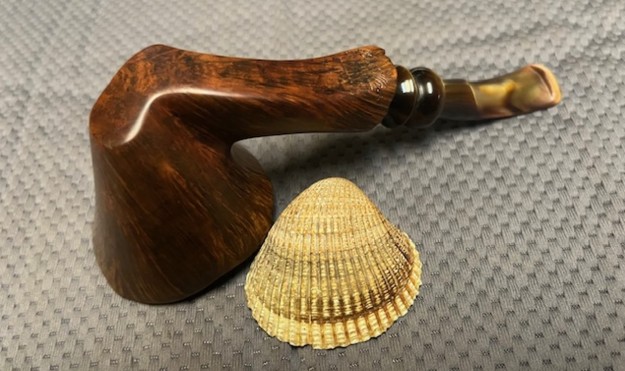
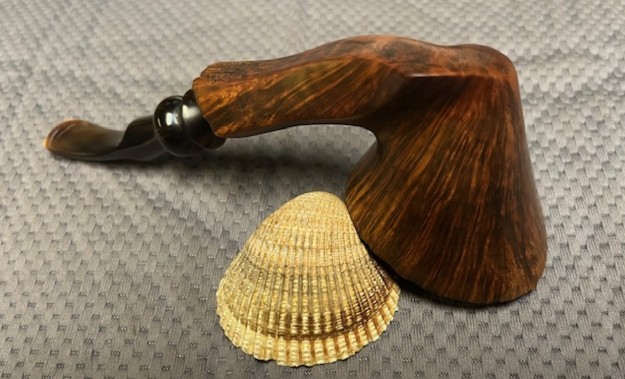
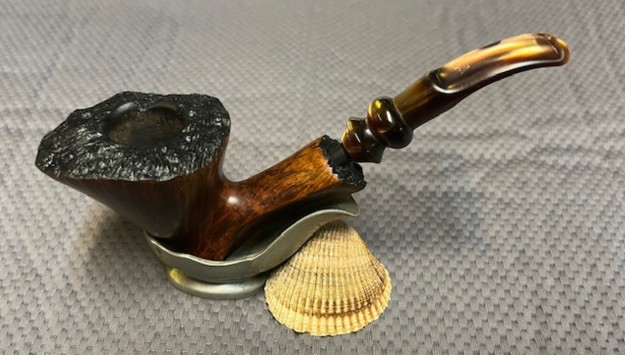
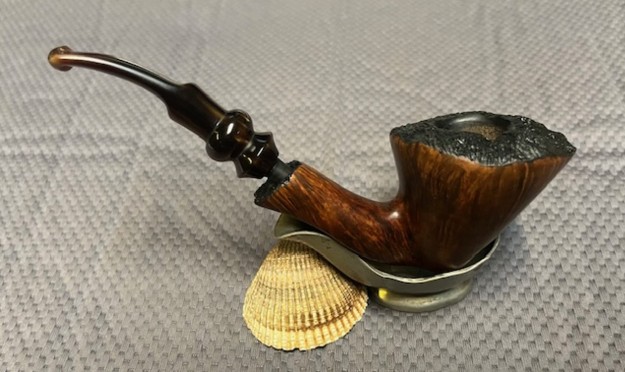
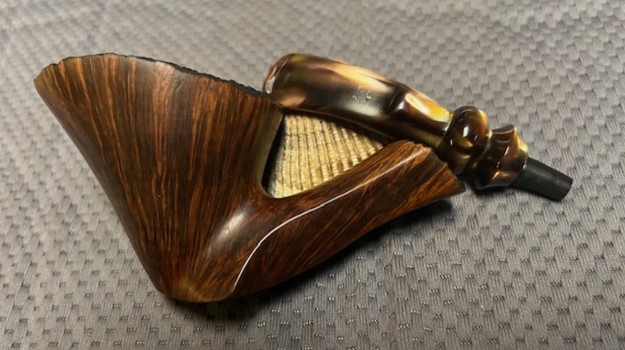
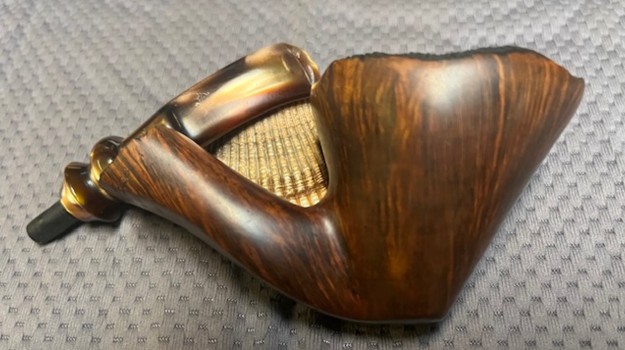
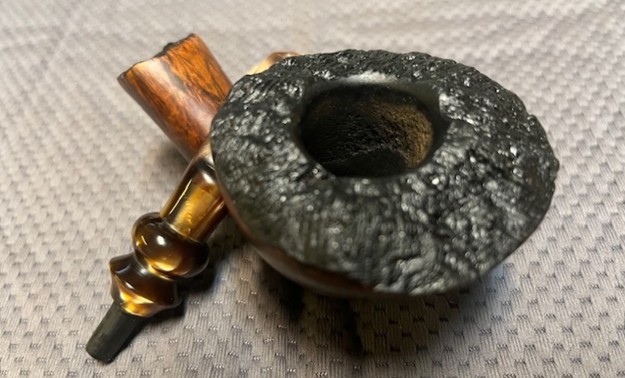
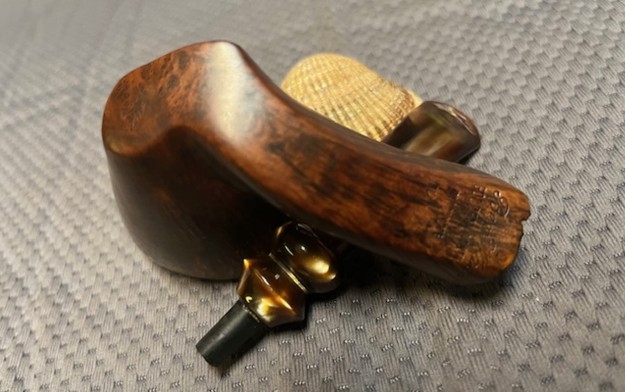
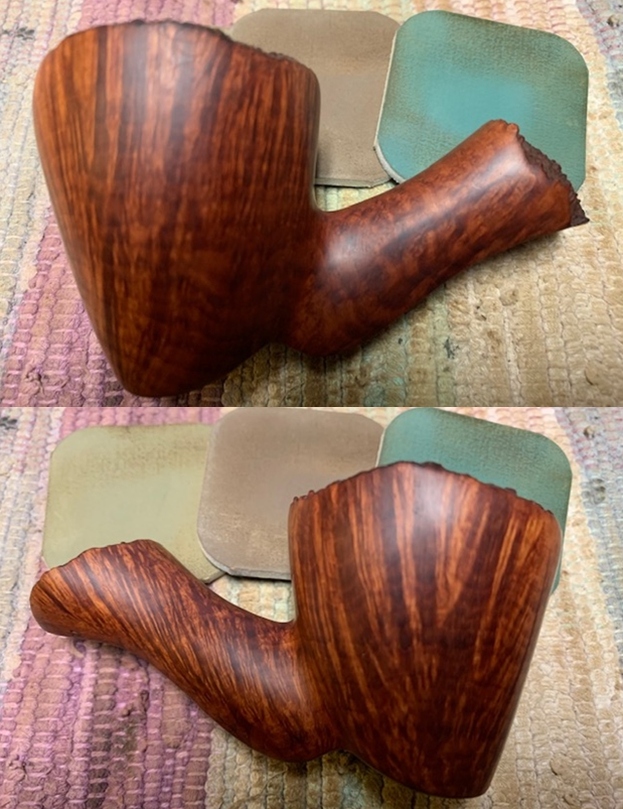
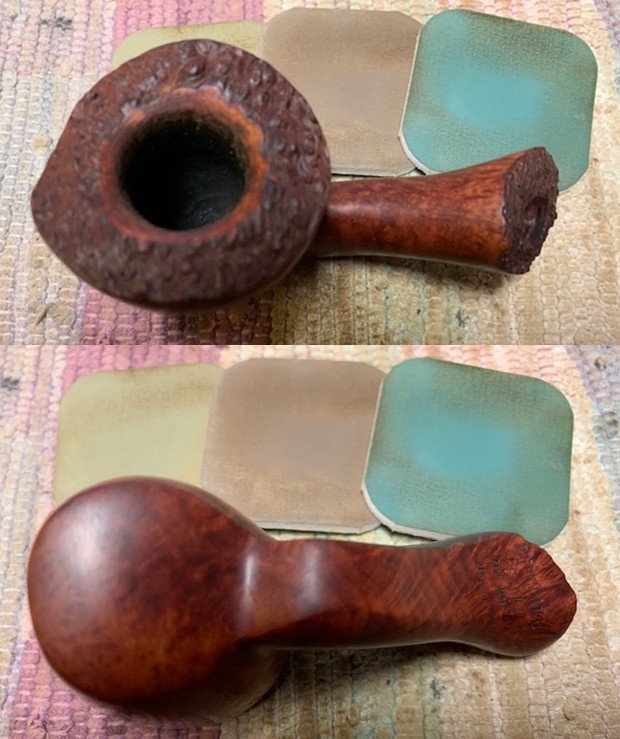
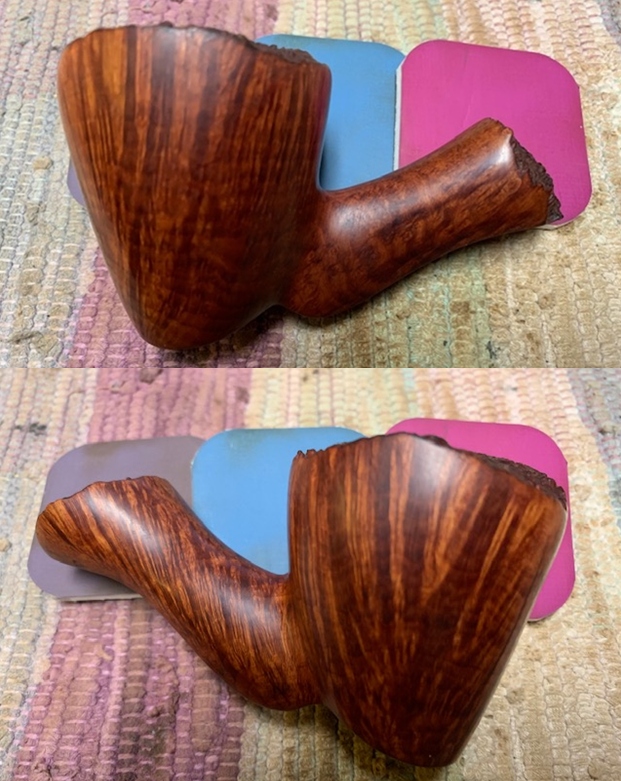
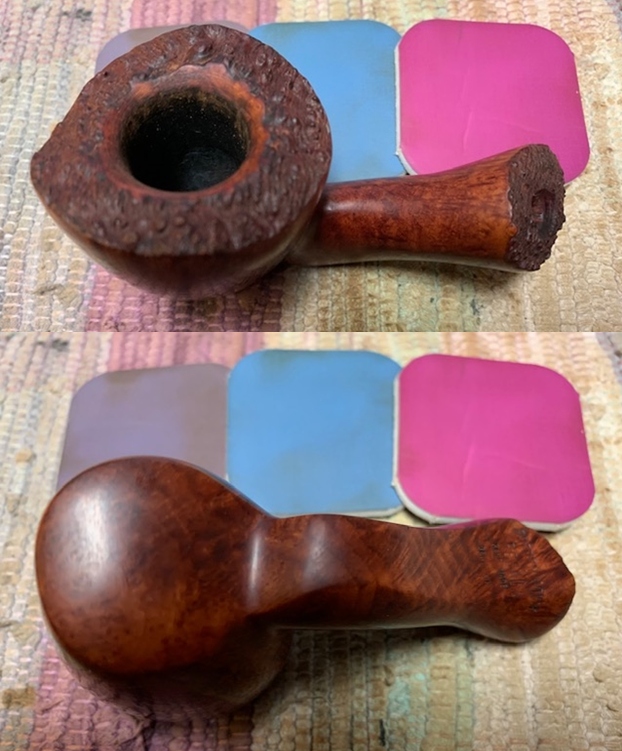
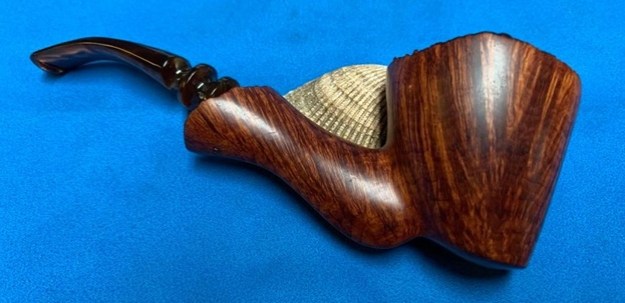
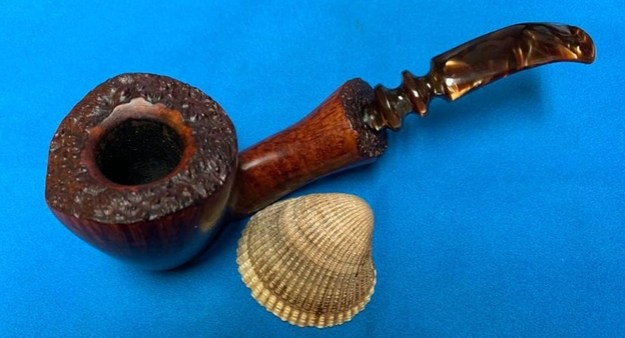
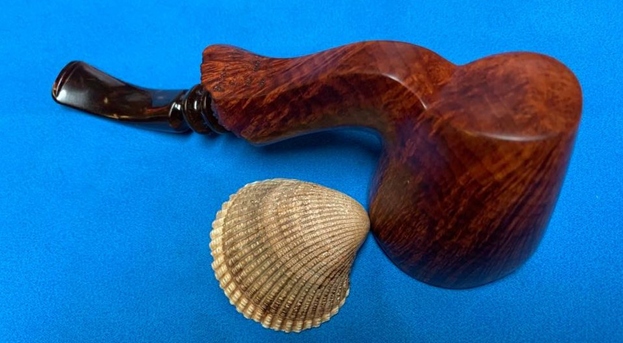
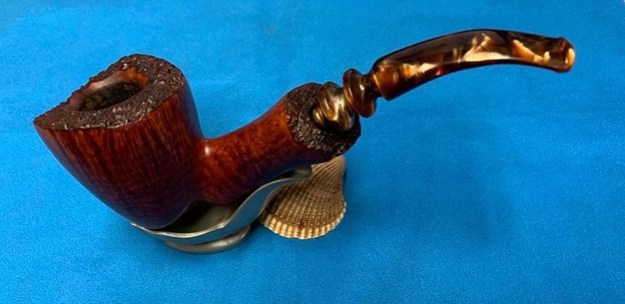
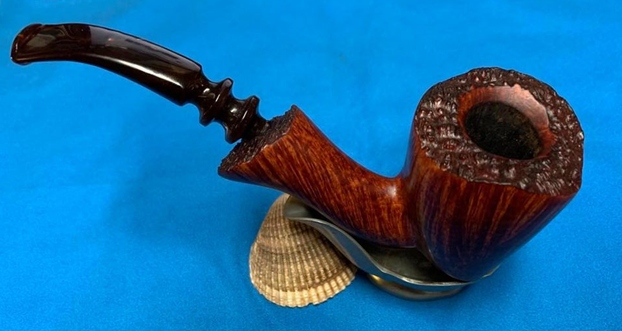
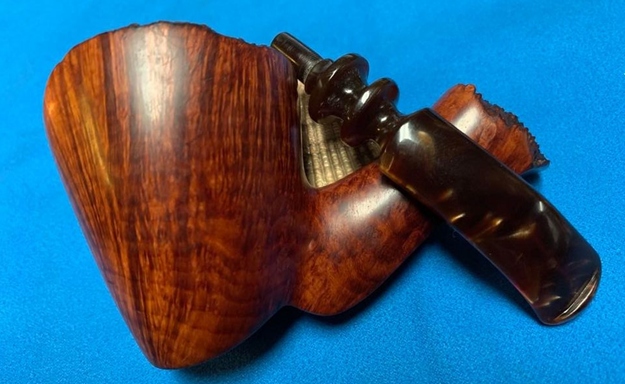
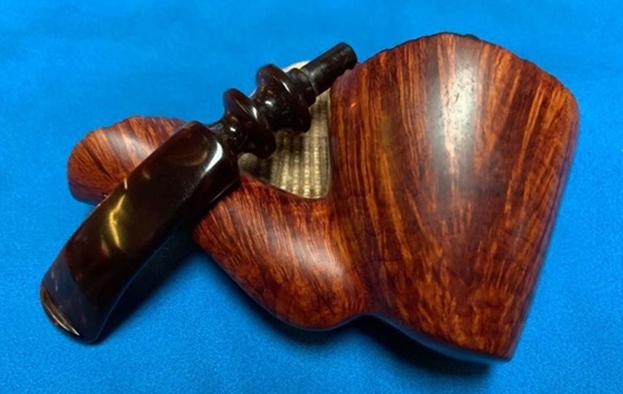
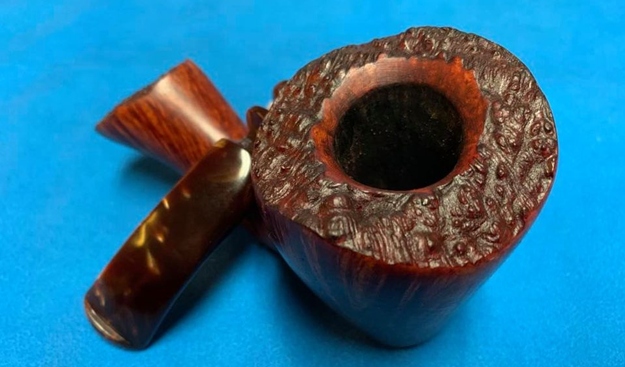
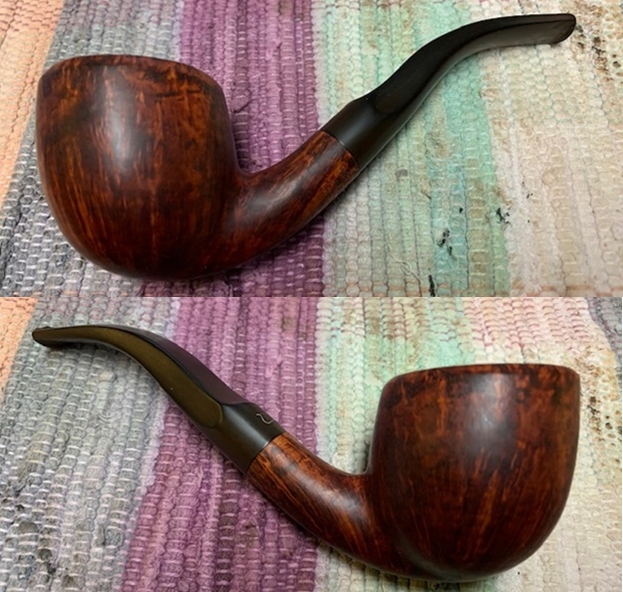
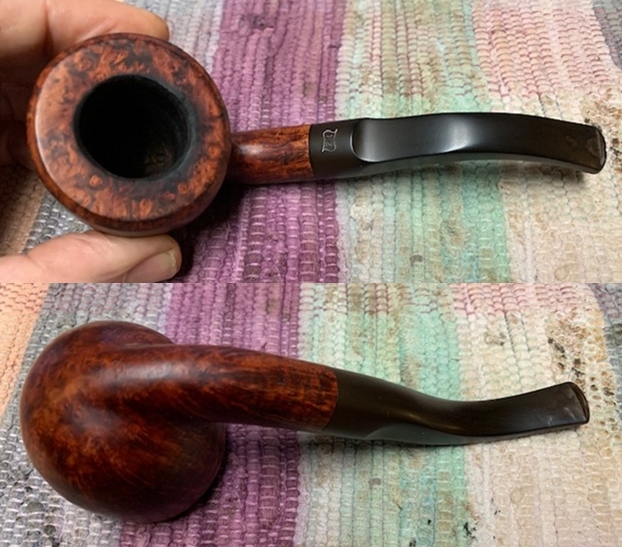
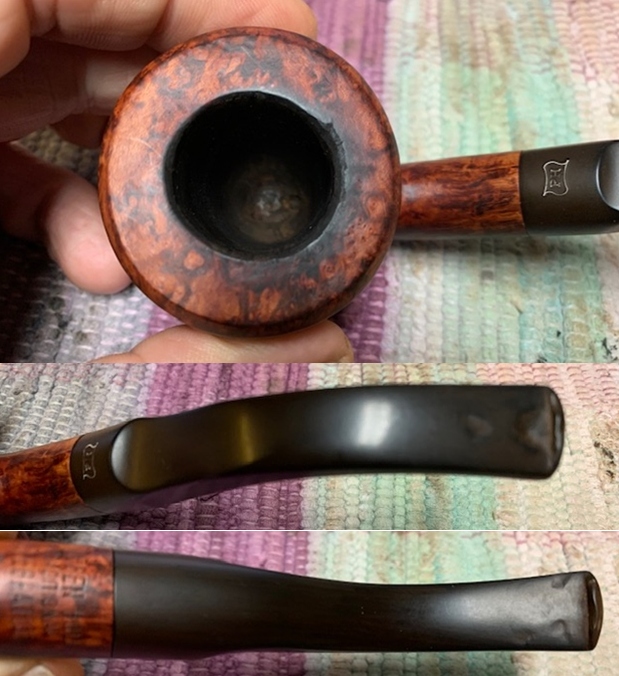
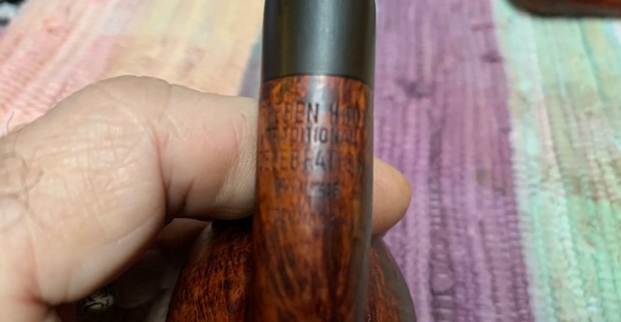
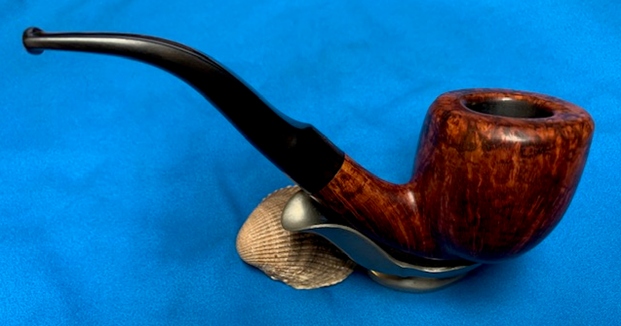
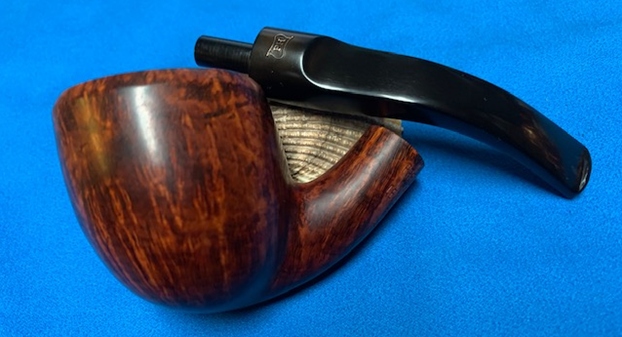
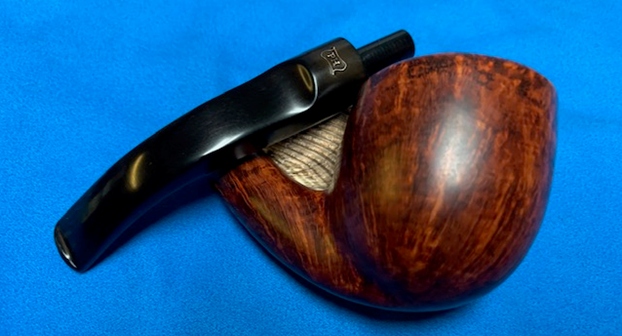
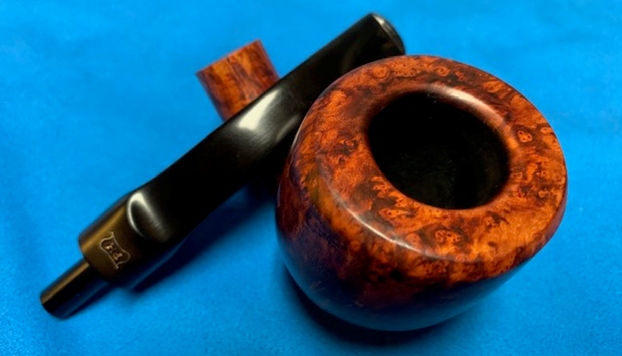
One I had not seen before a Reflection by Ben Wade 012 Hand Made in Denmark


by Steve Laug

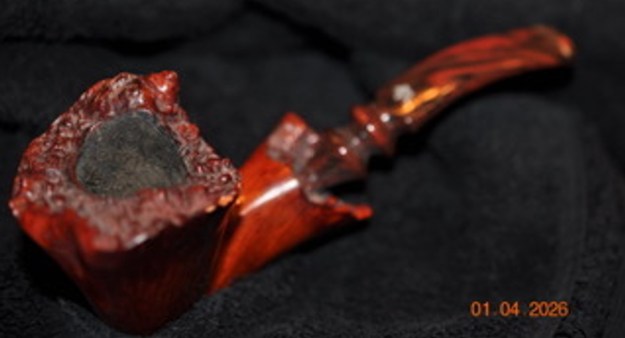
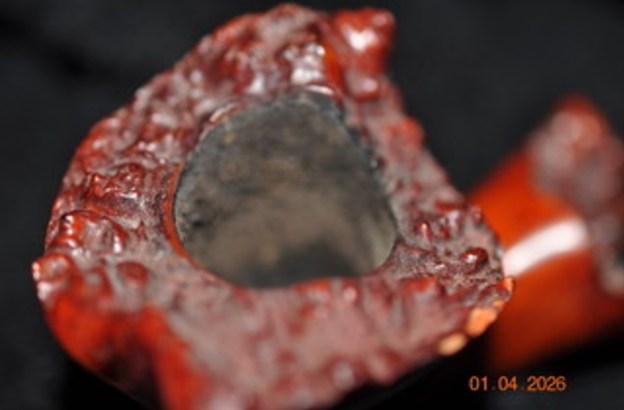
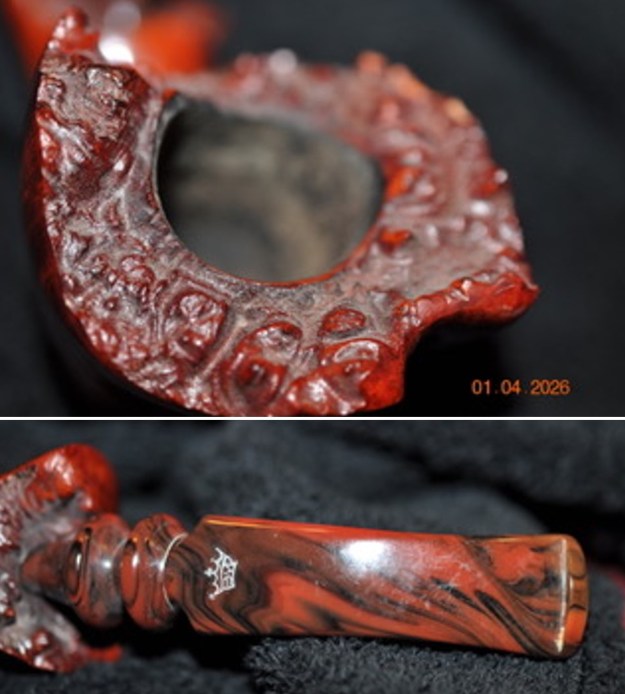
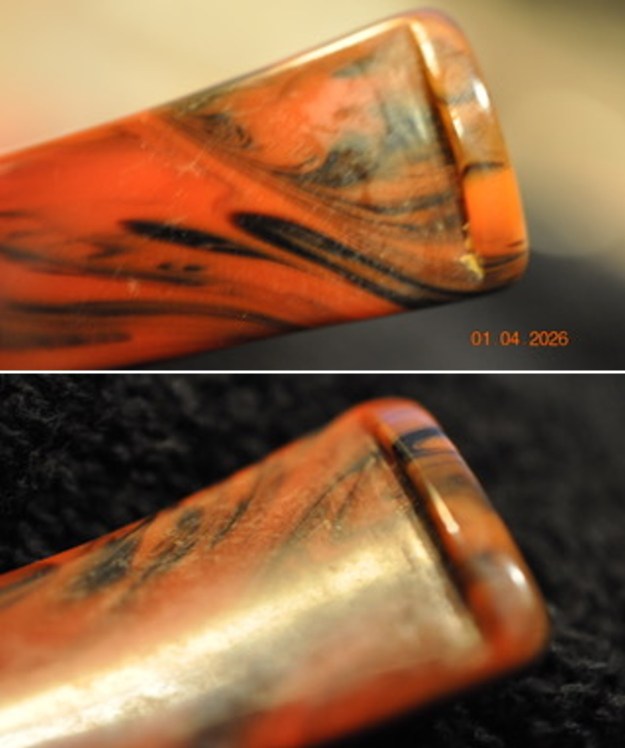
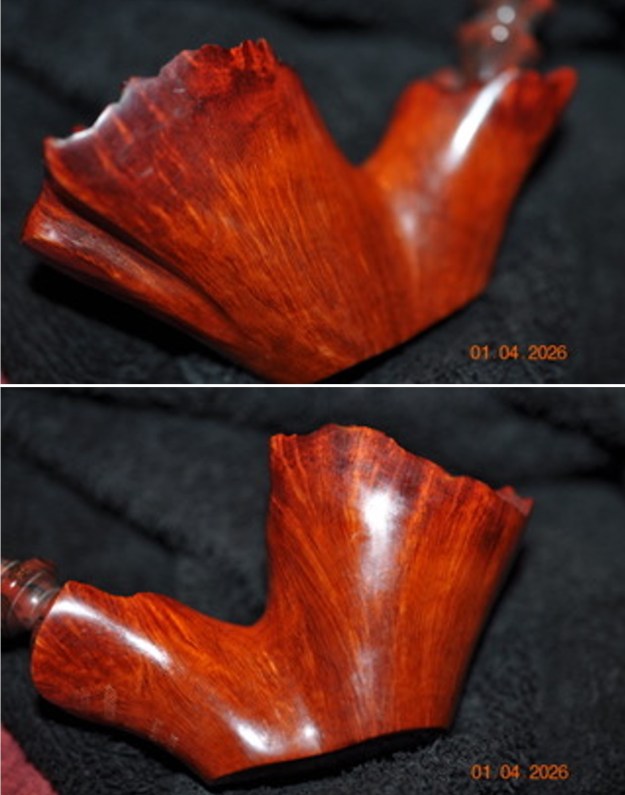
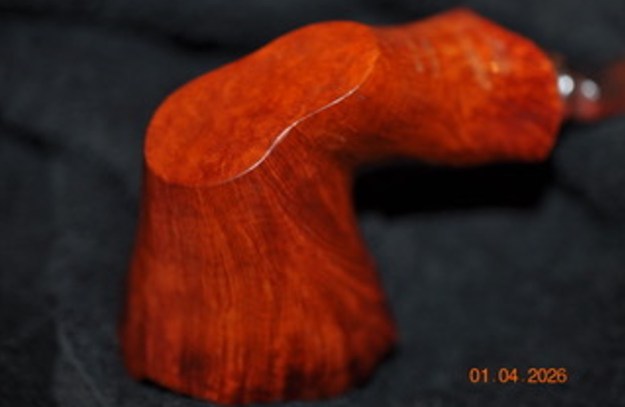
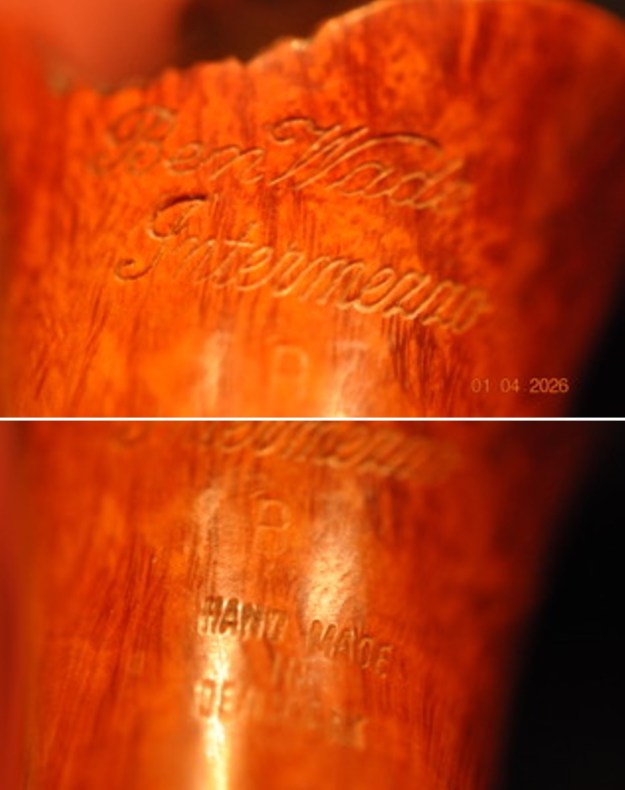
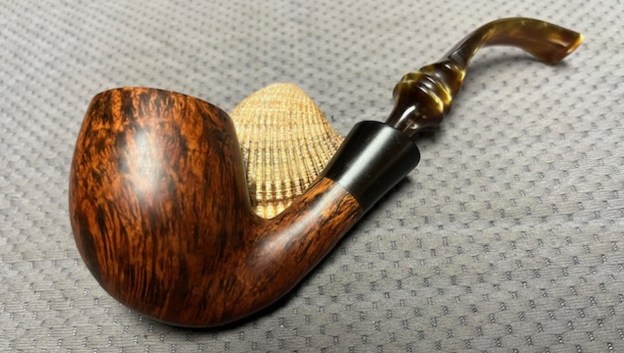
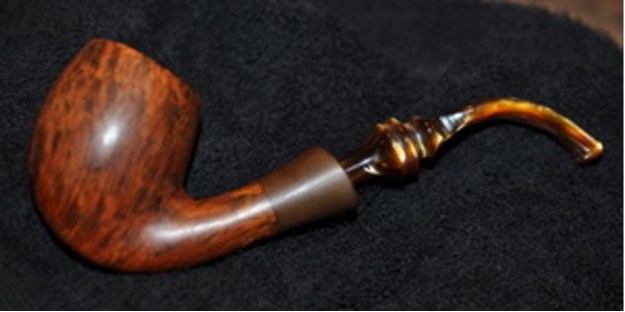
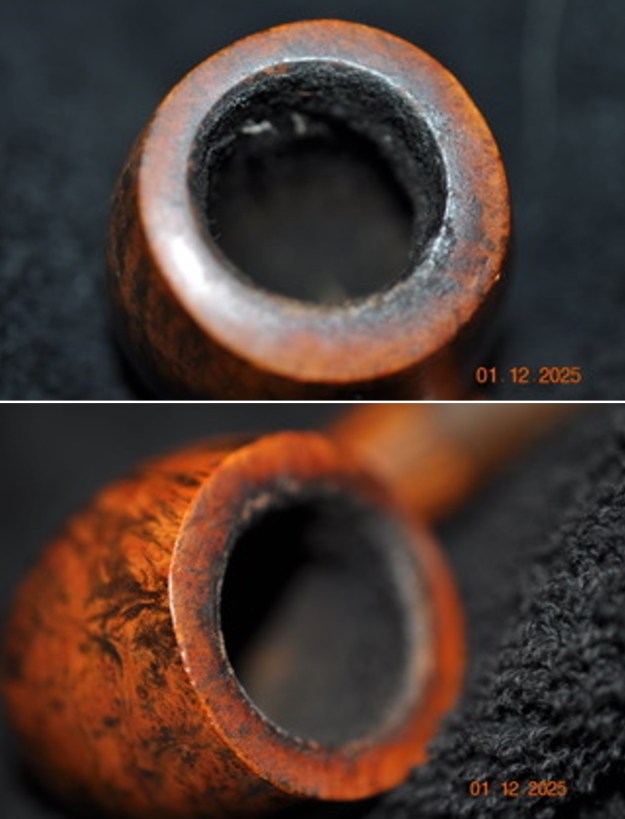
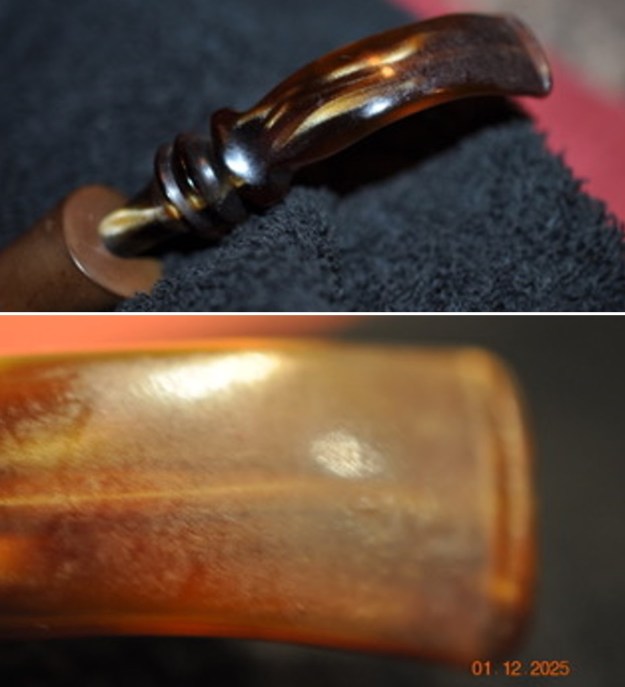
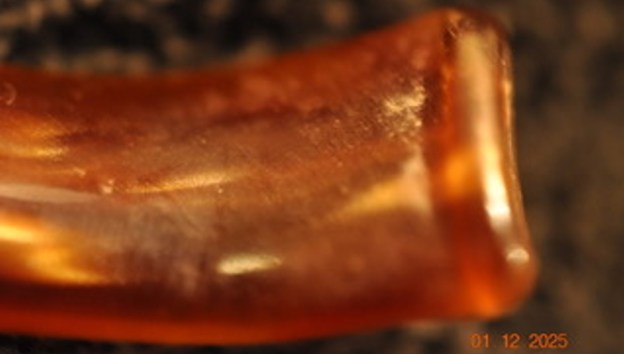
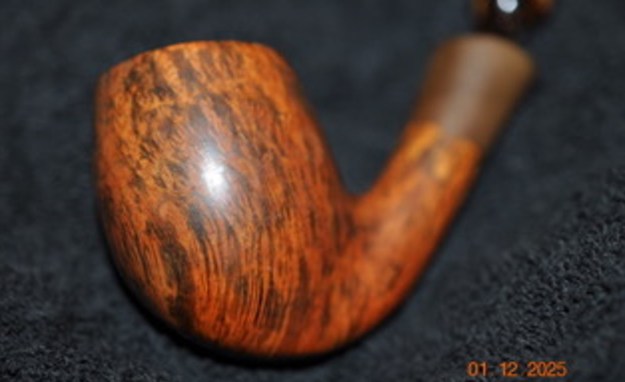
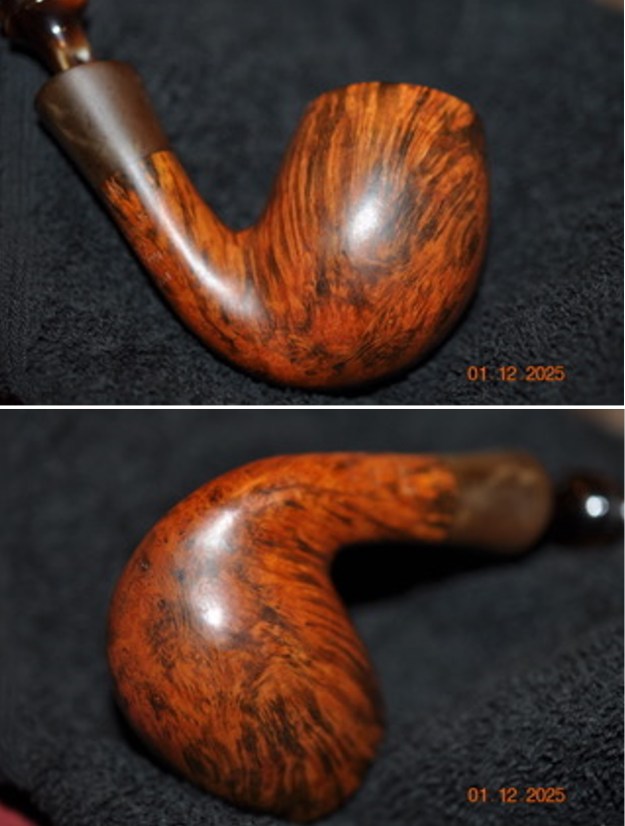
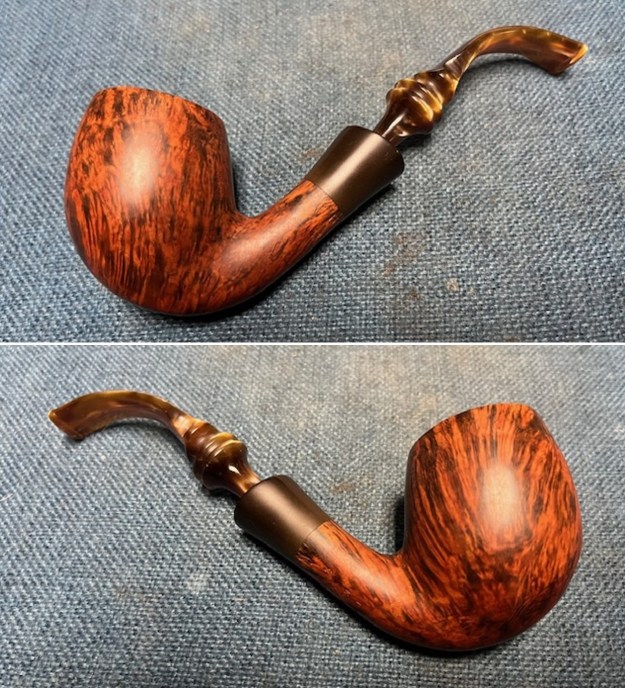
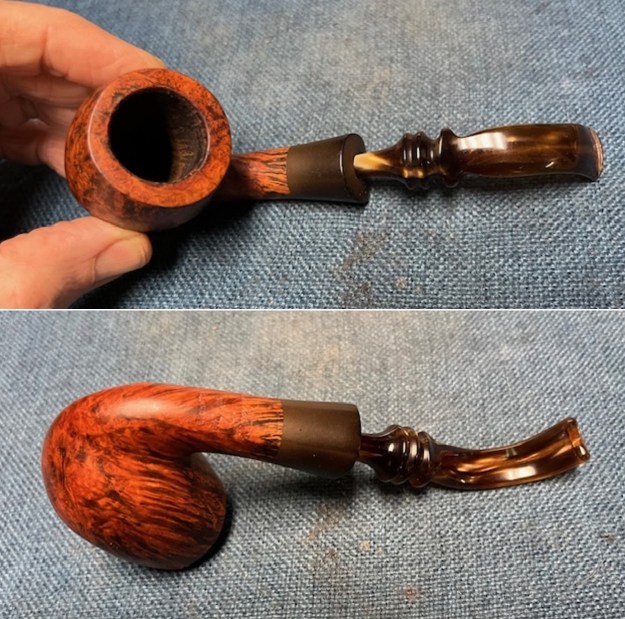
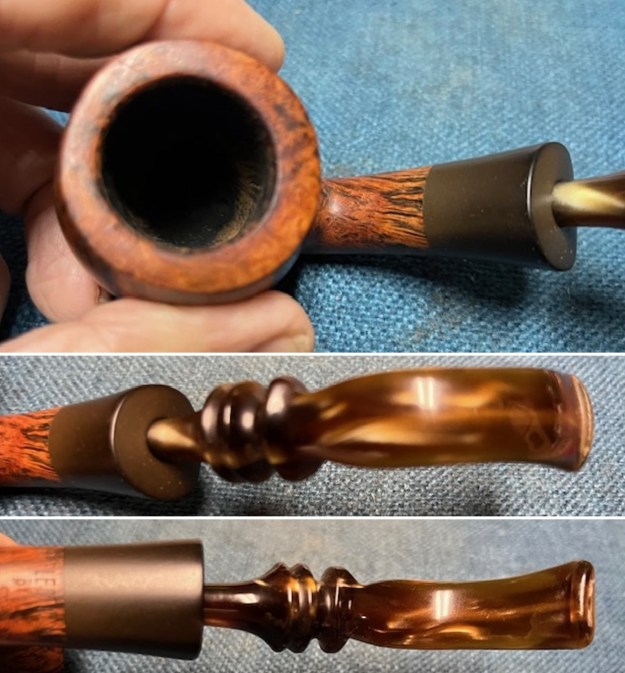
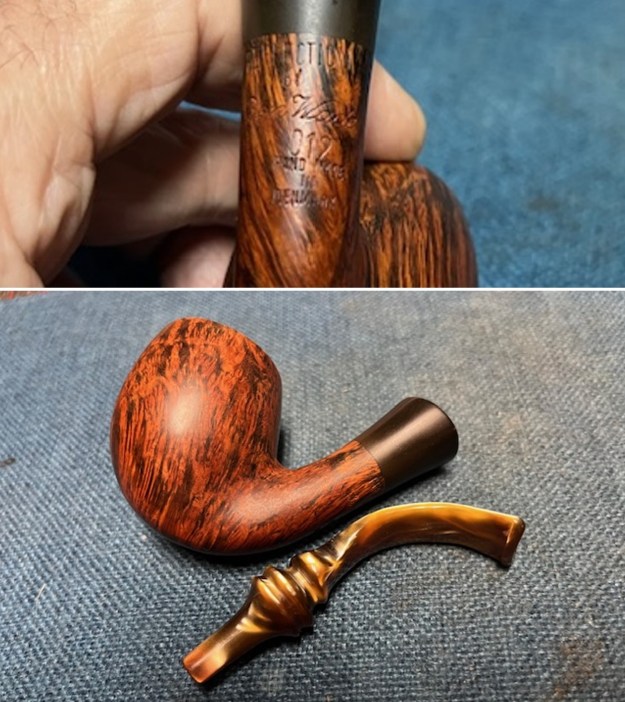
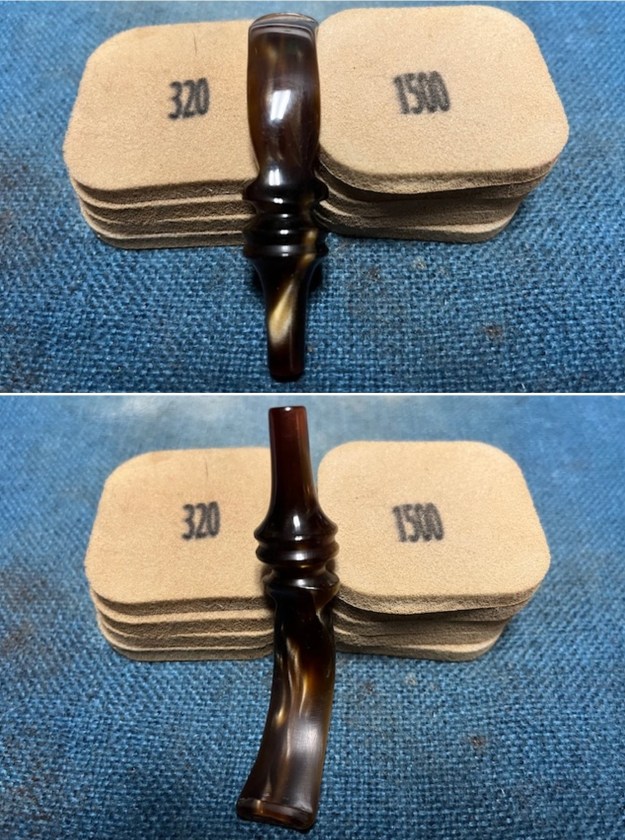
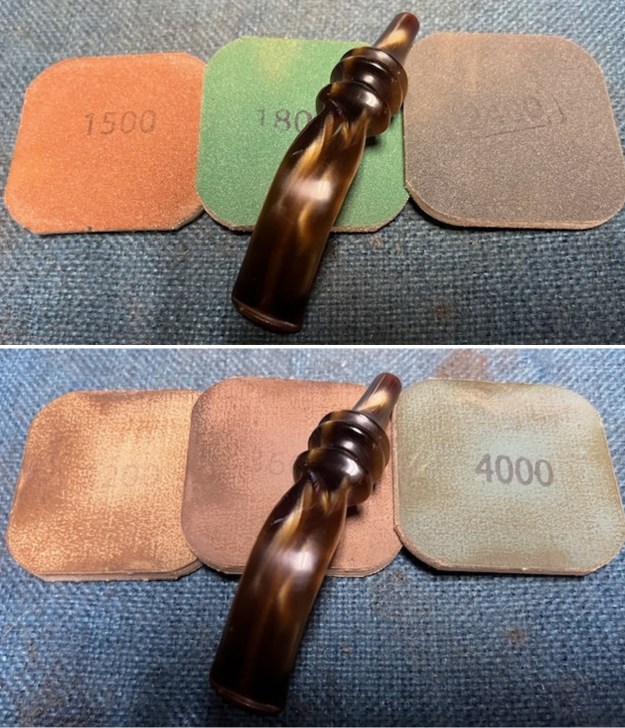
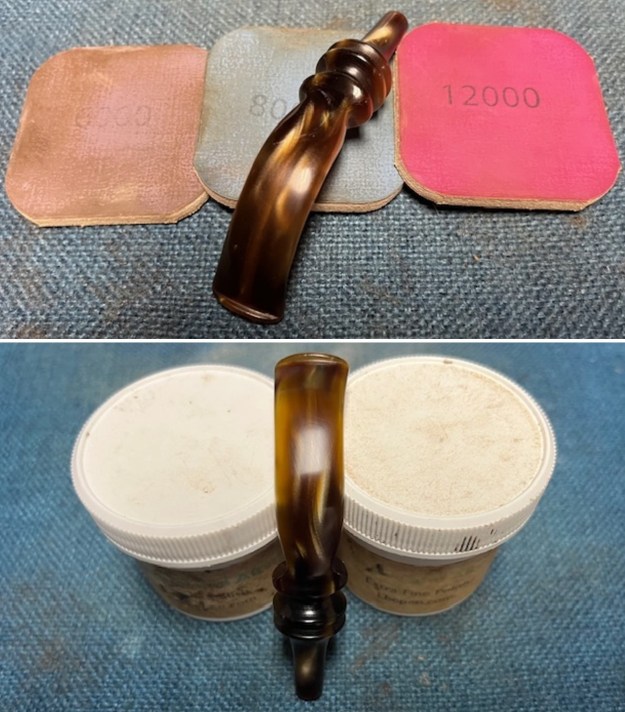
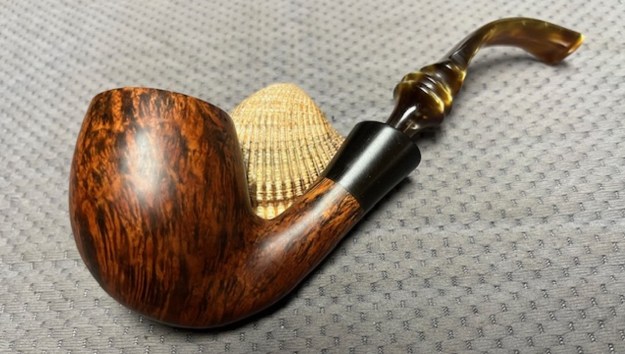
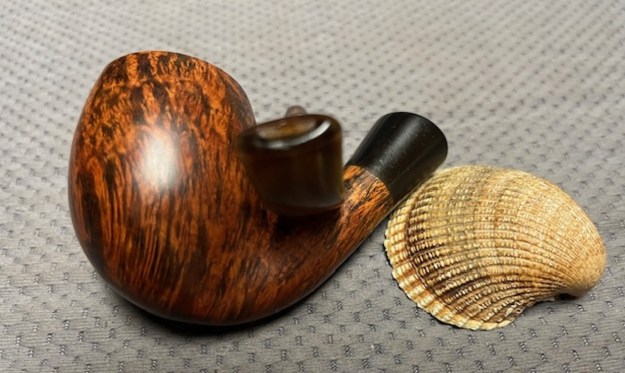
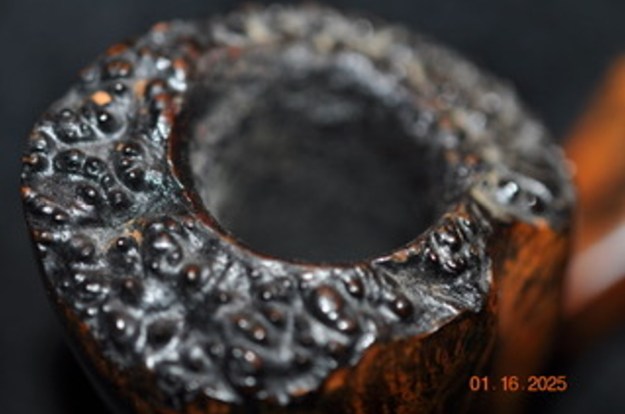
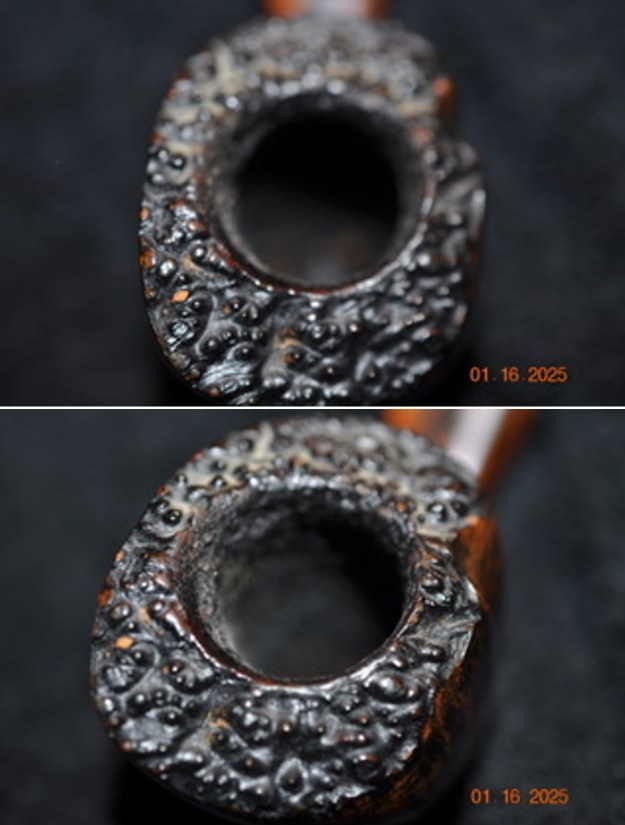
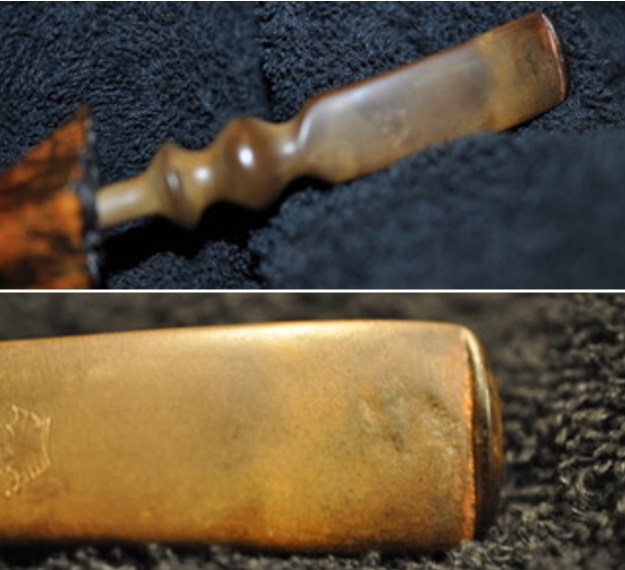
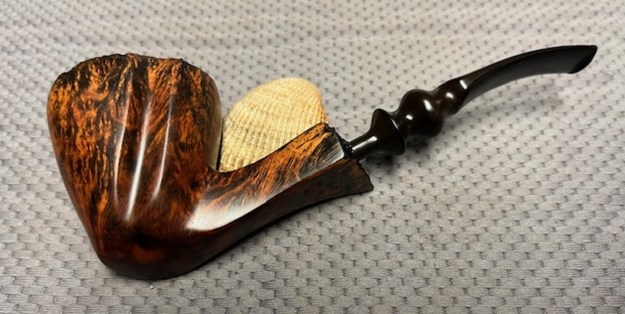
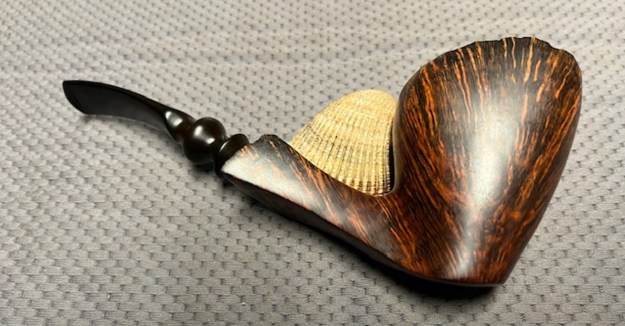
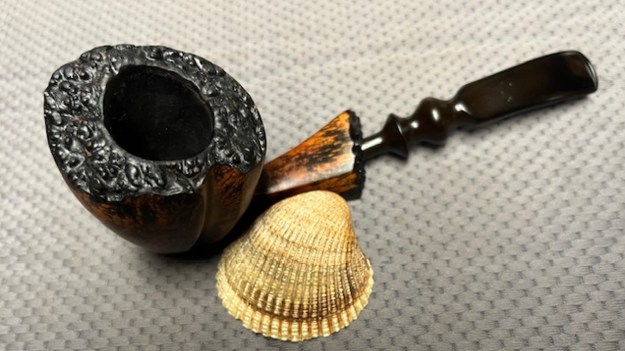
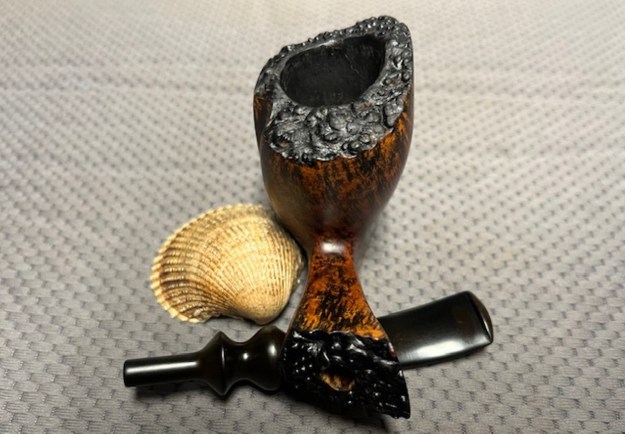
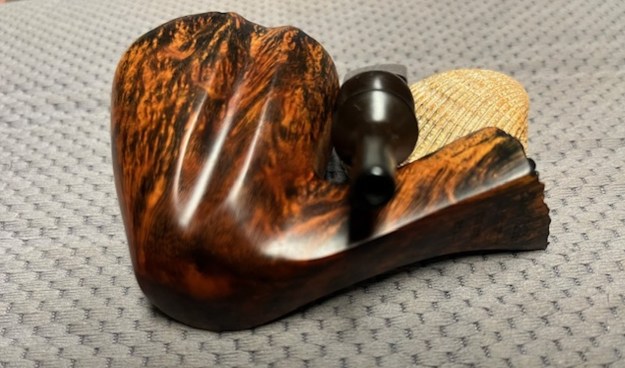
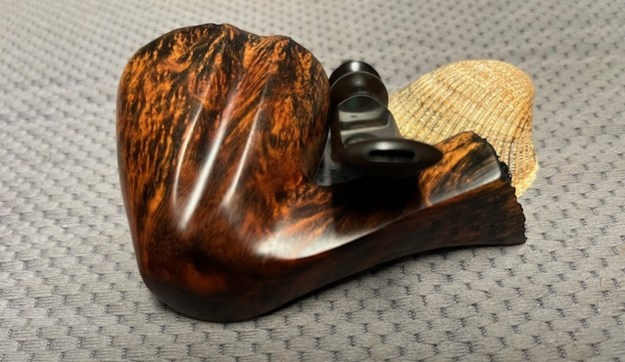
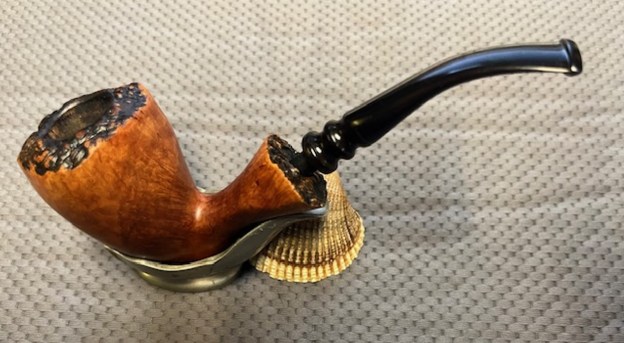
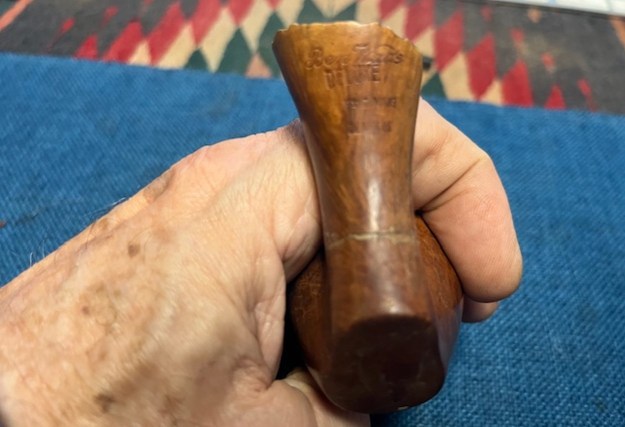
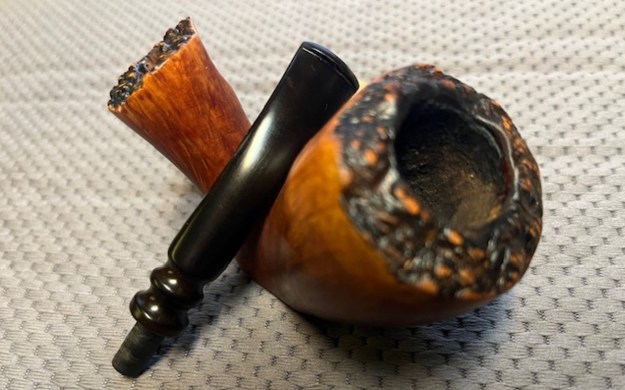
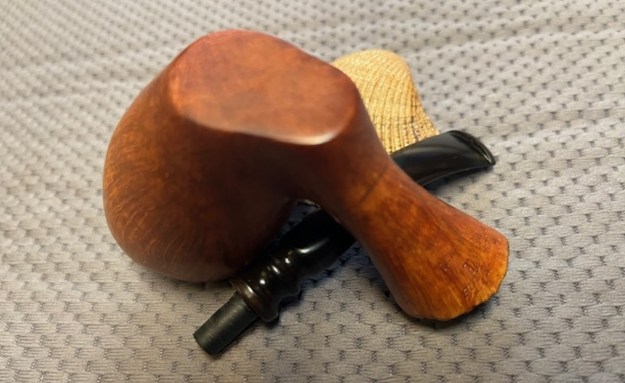
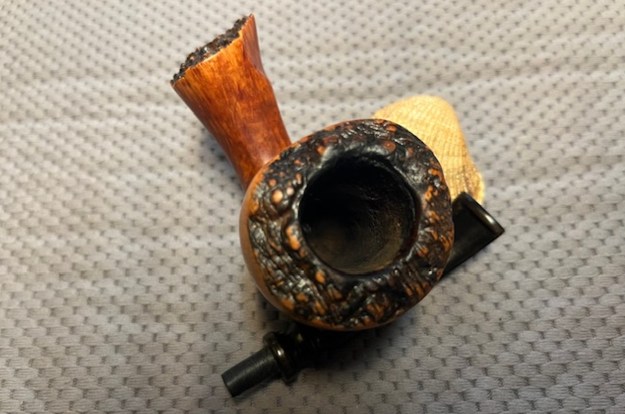
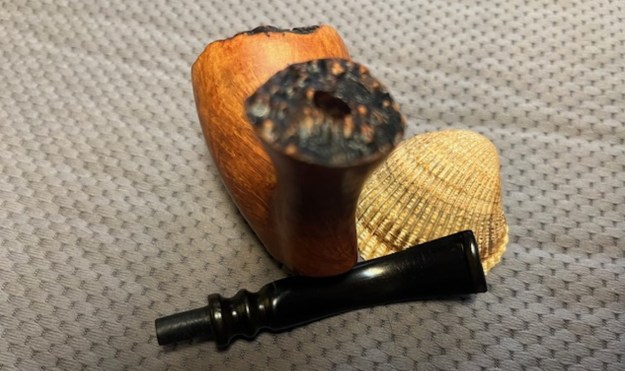
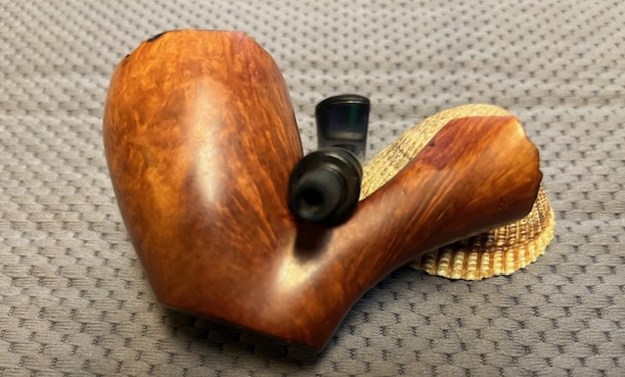
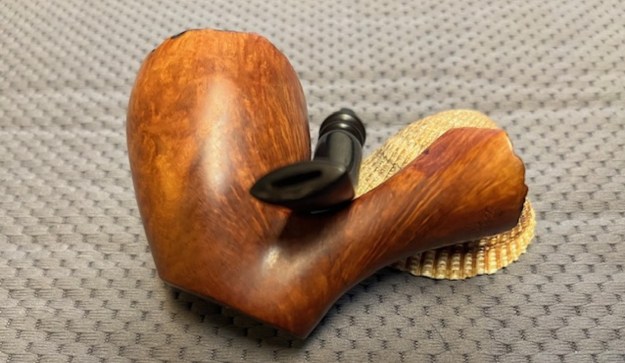
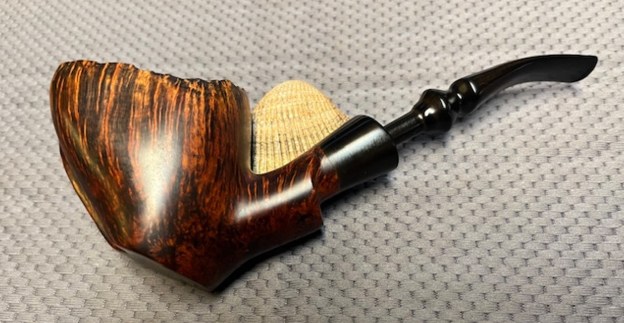
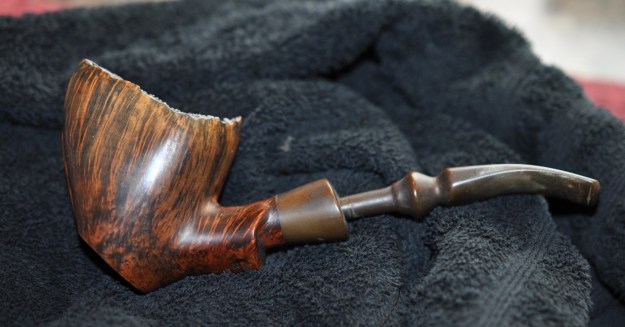
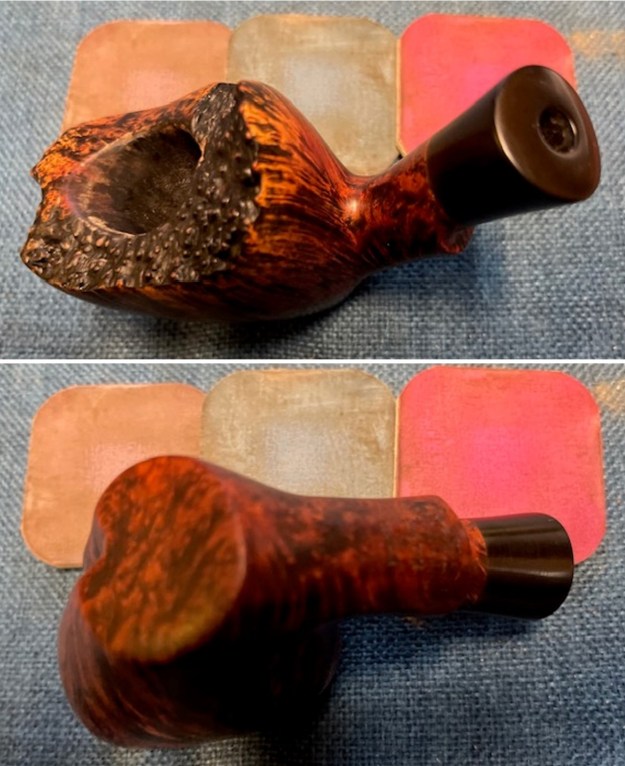
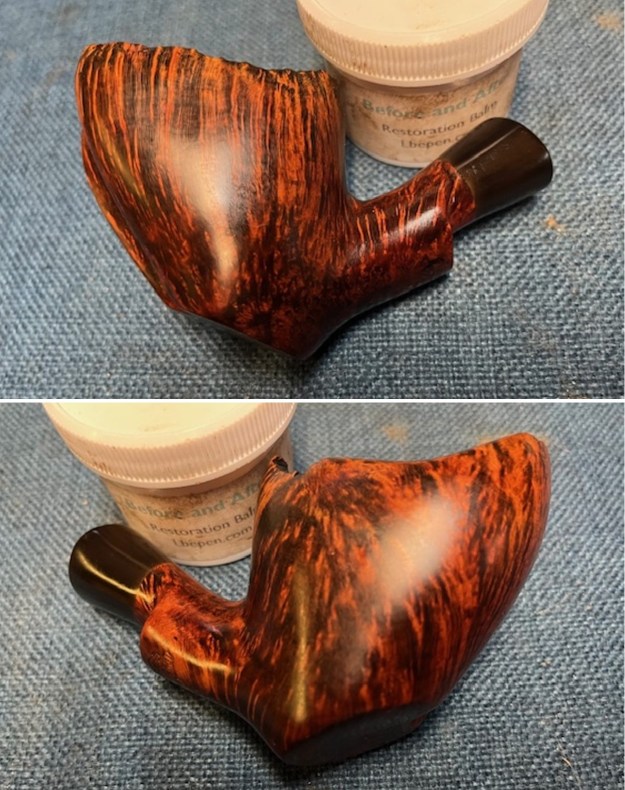
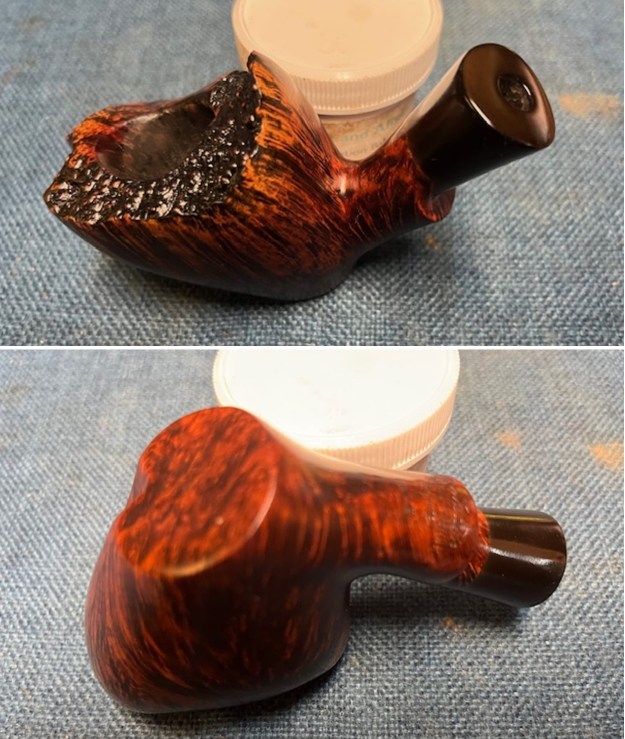
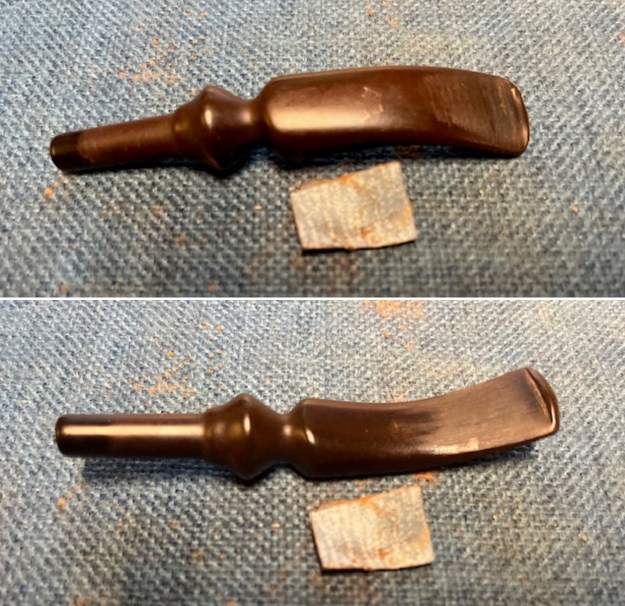
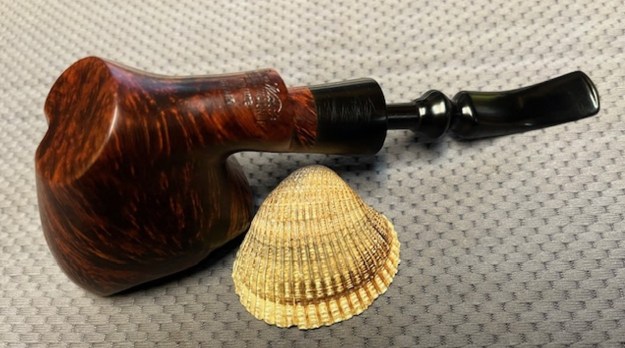
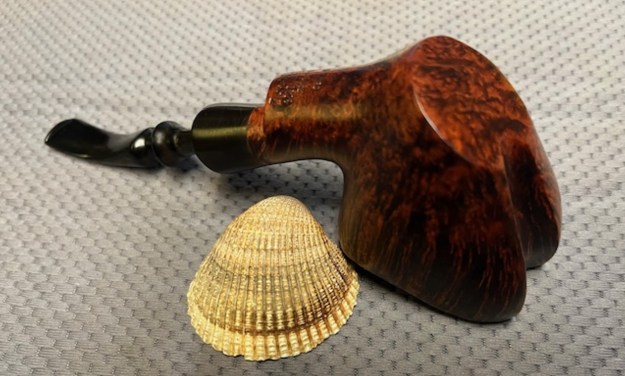
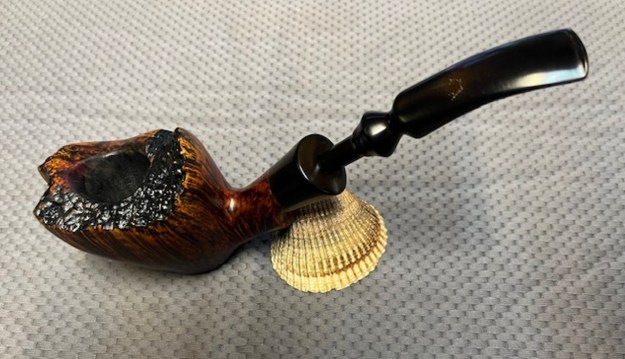
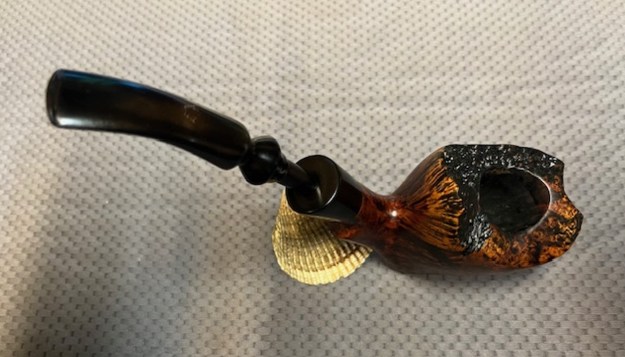
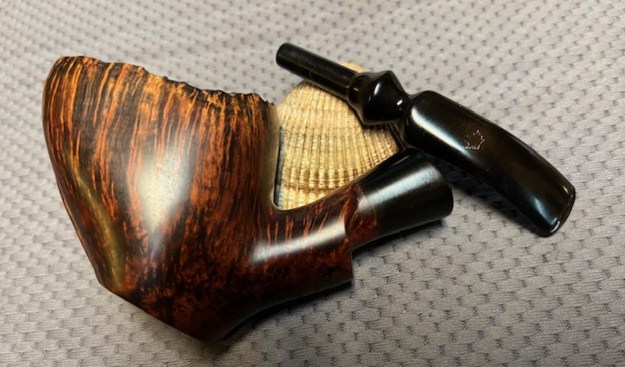
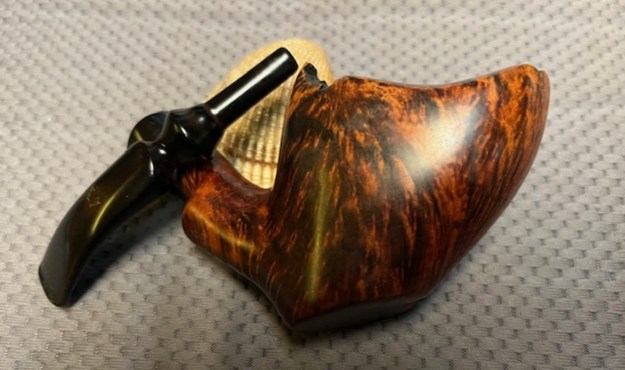
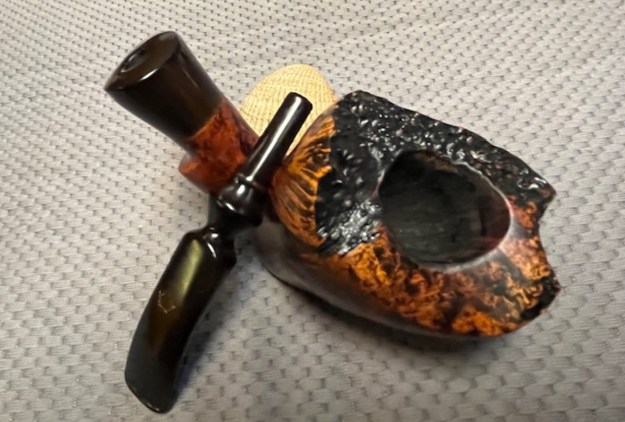
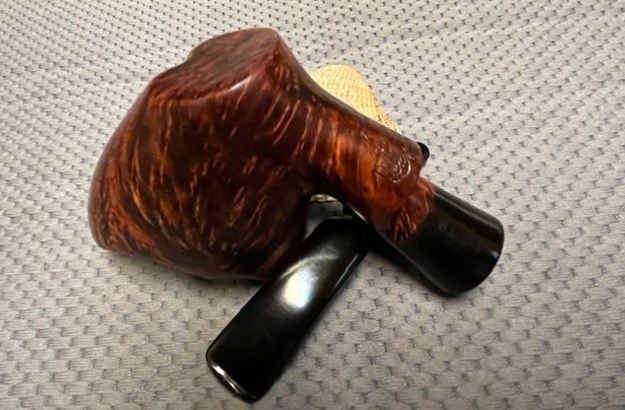
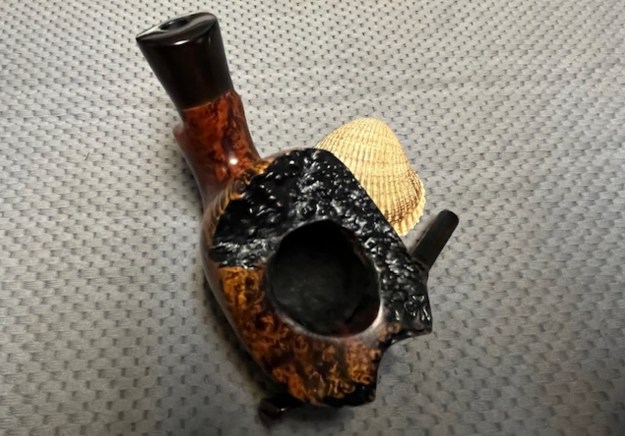
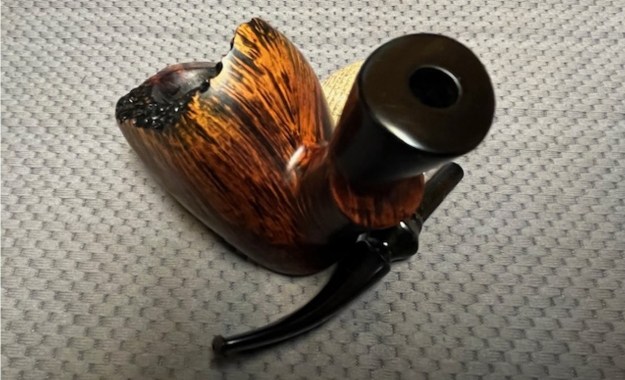
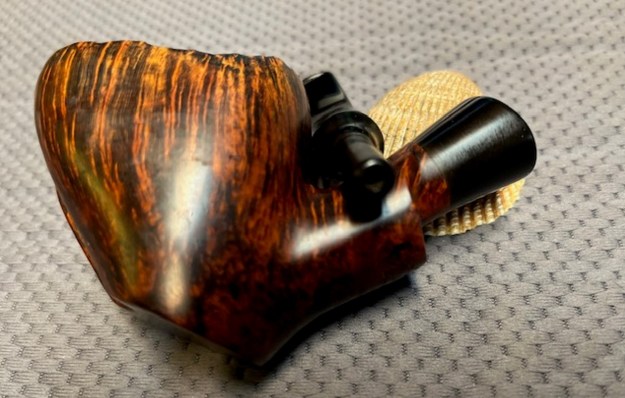
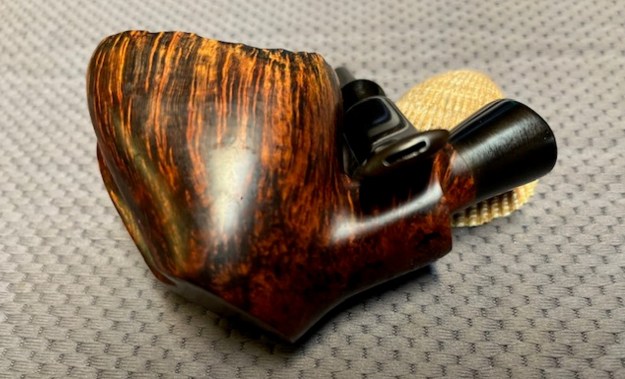
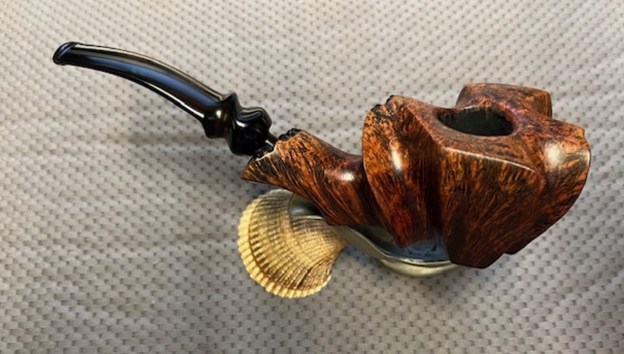
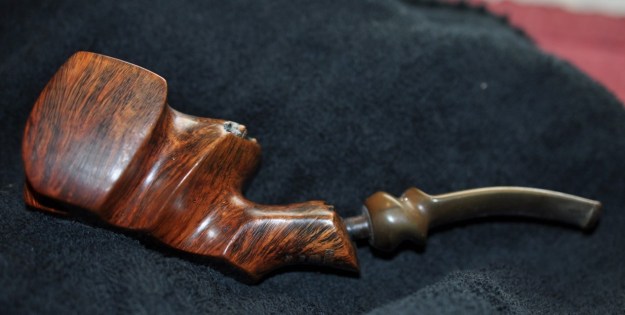
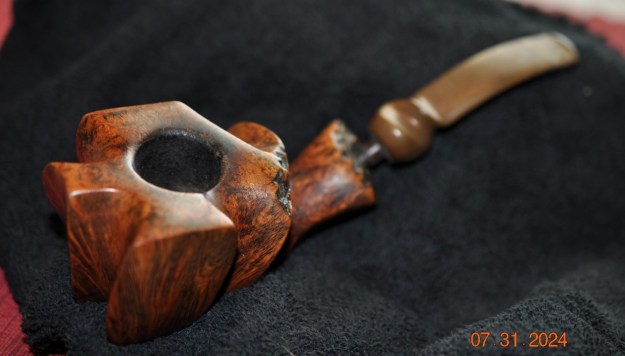
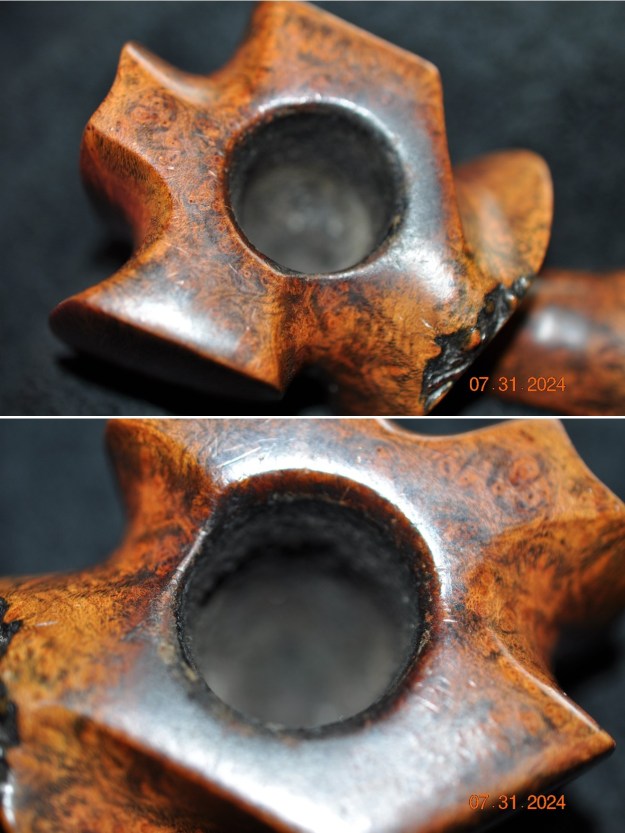
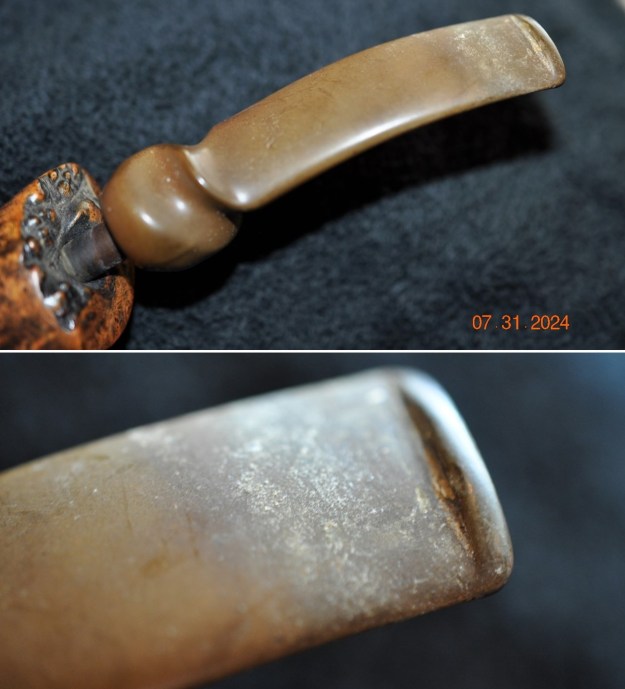
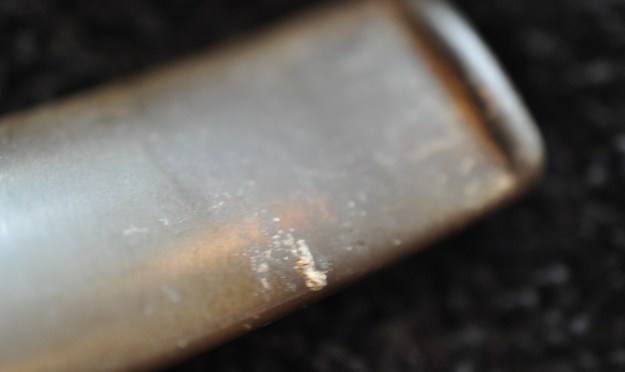
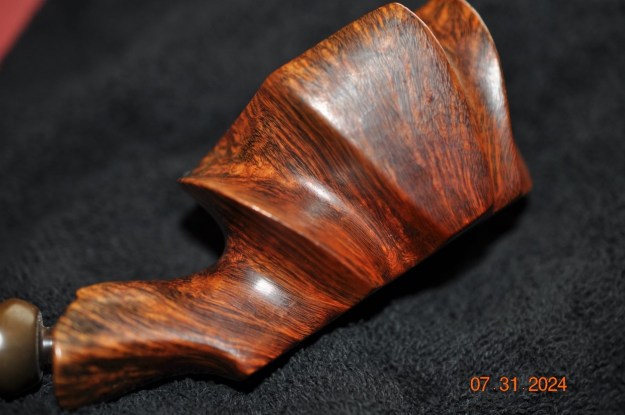
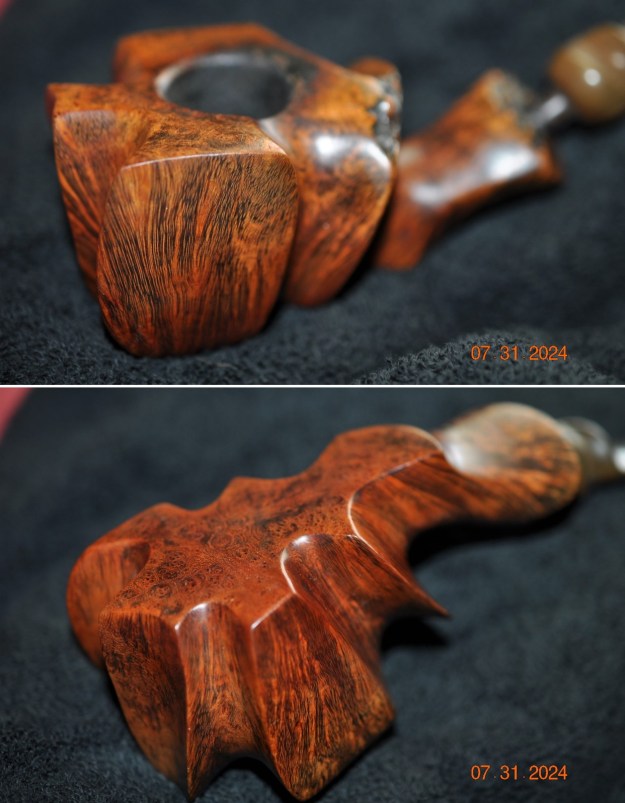
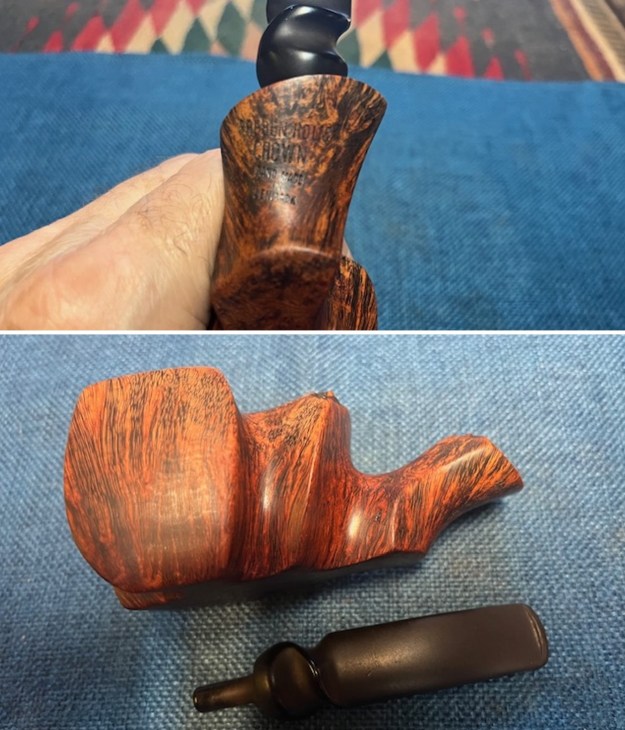
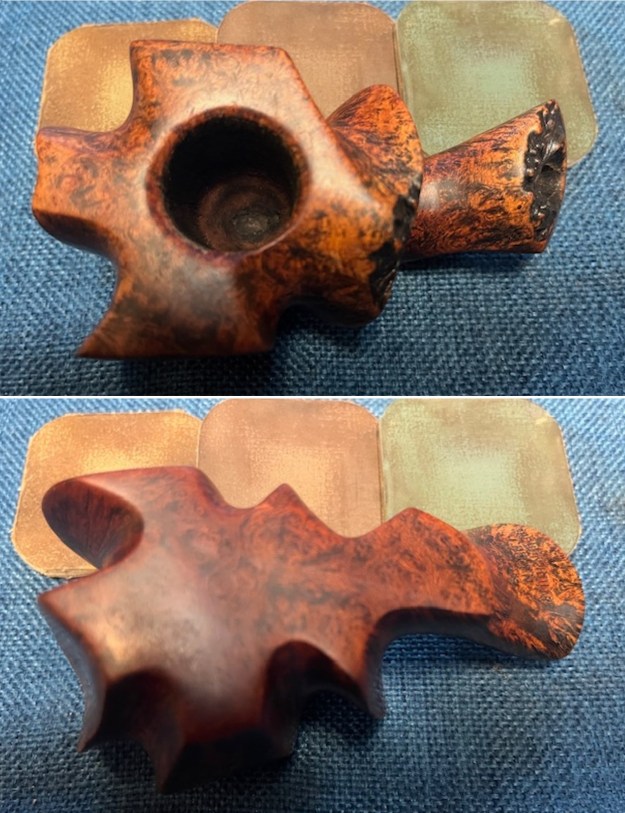
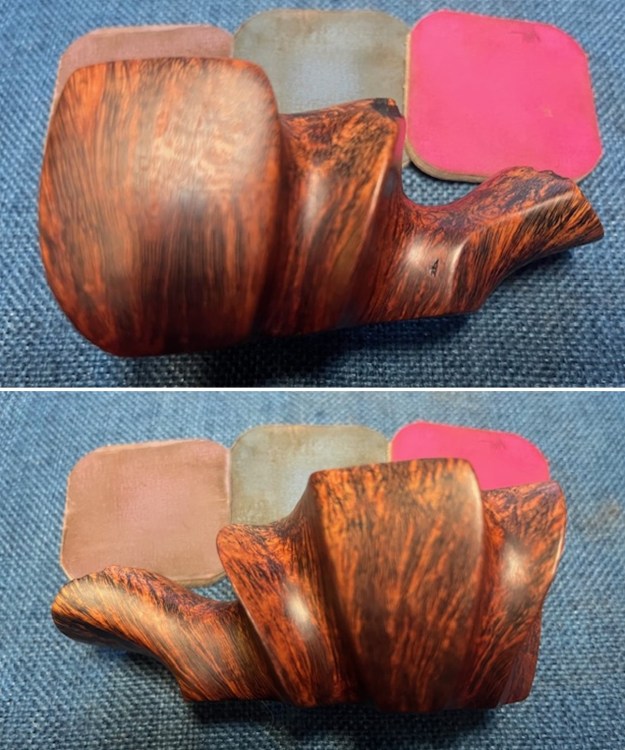
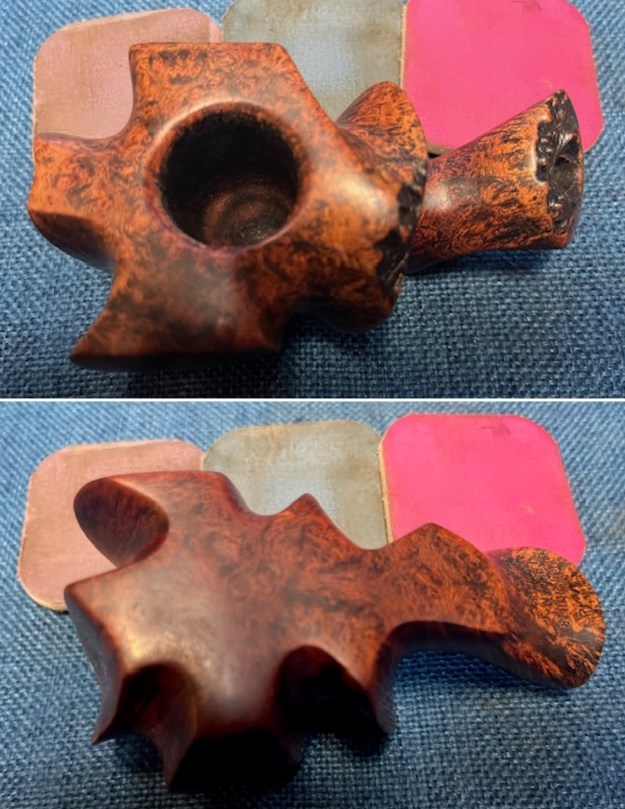
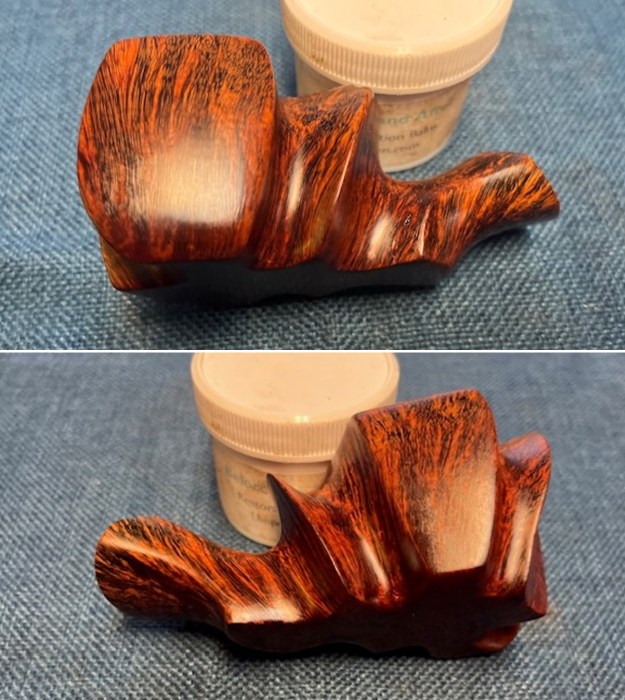
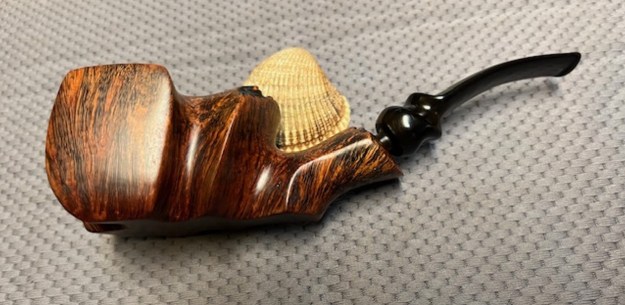
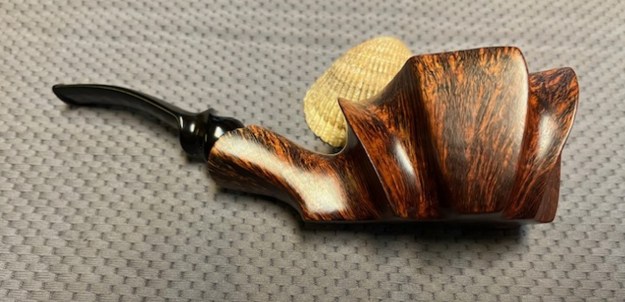
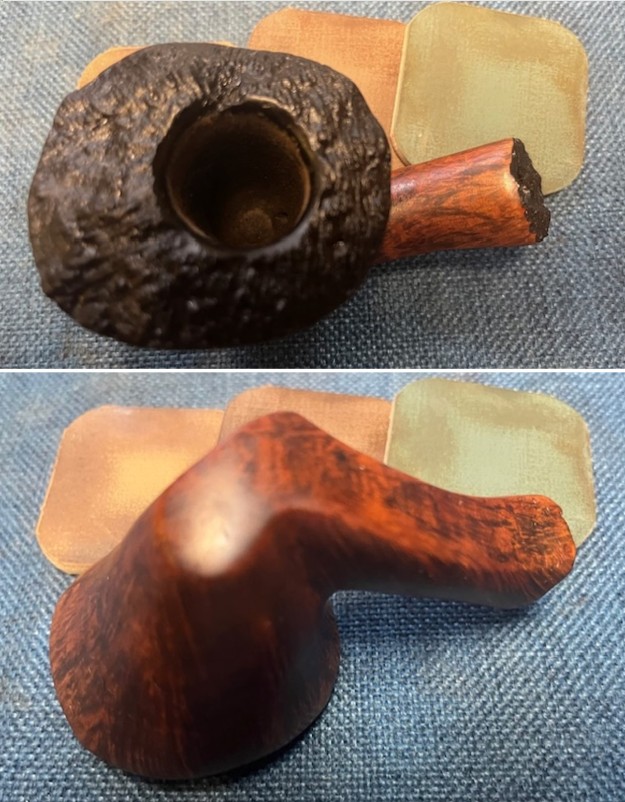
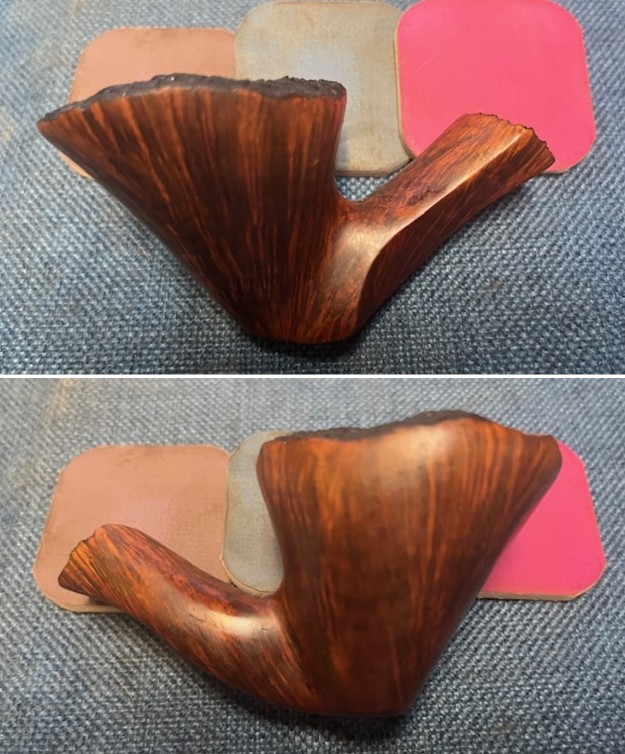
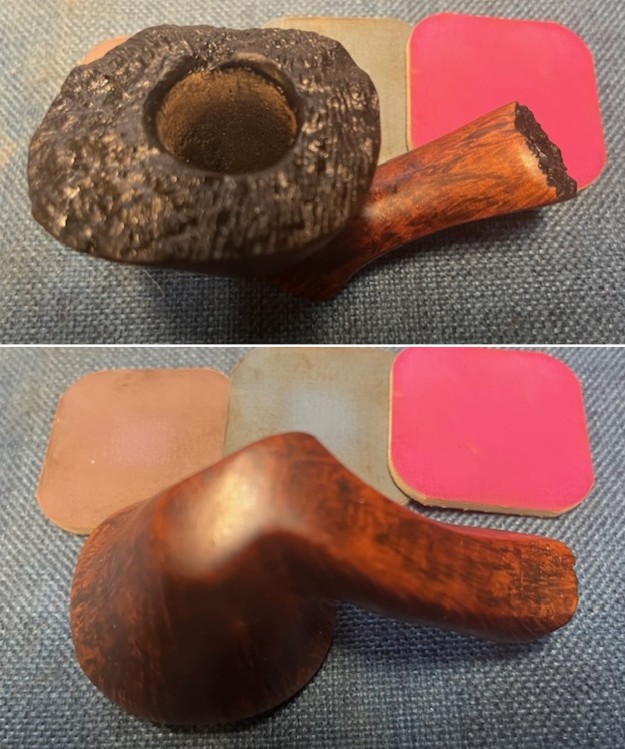
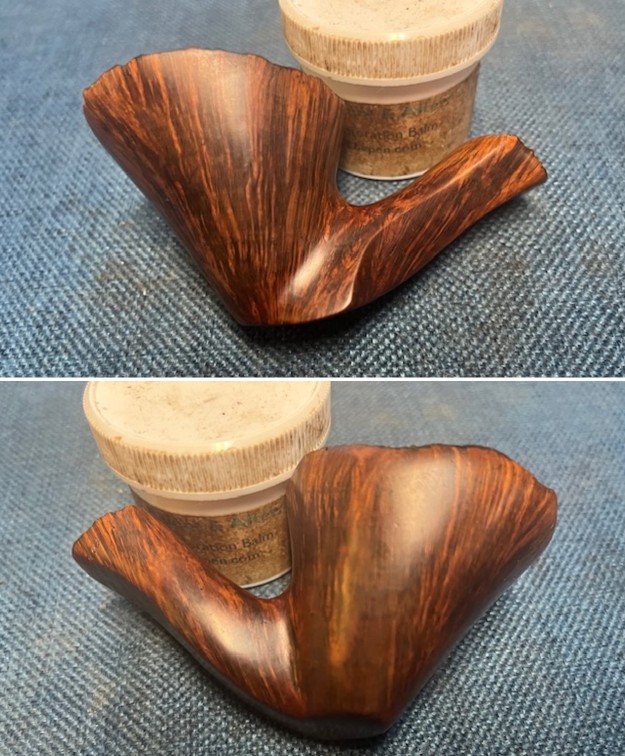
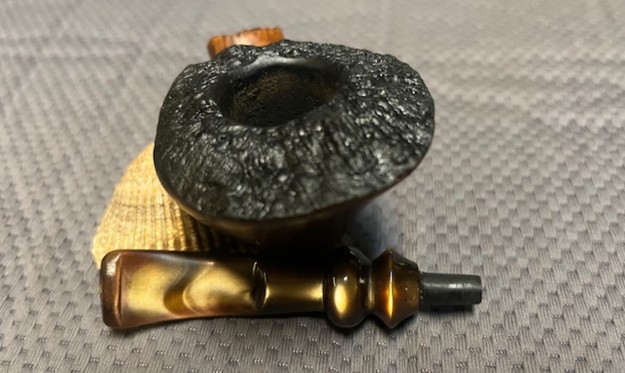
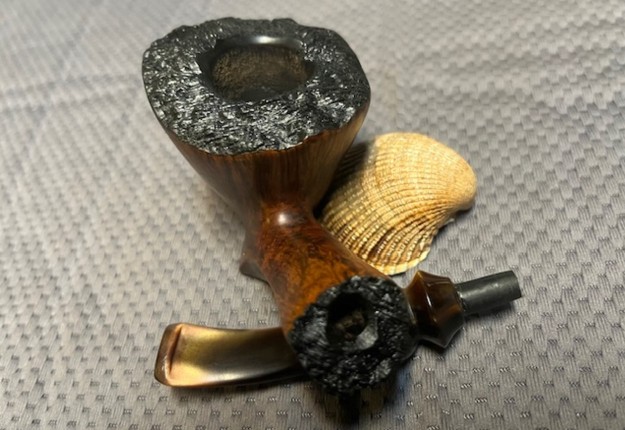
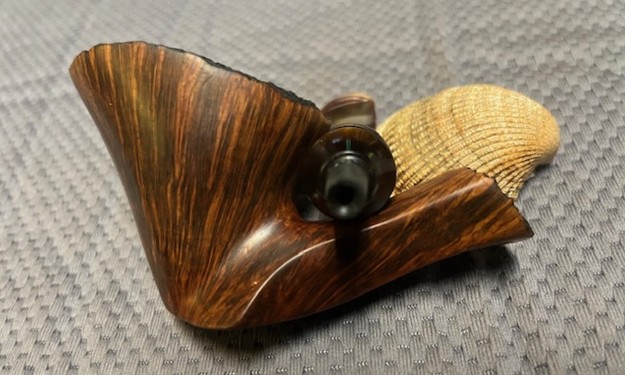
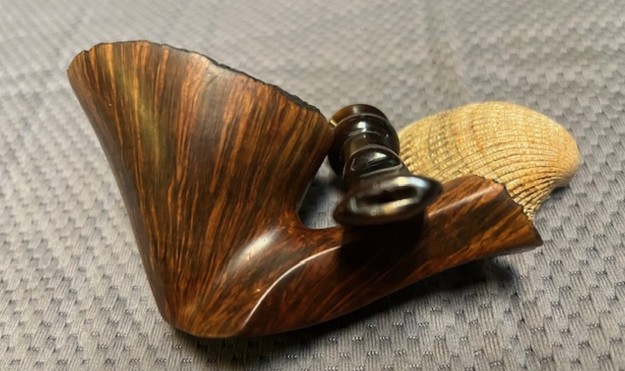
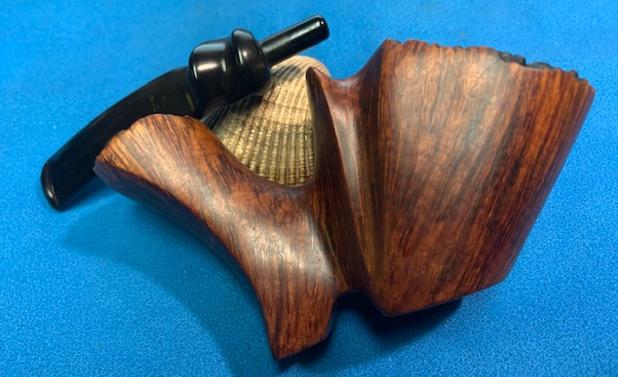
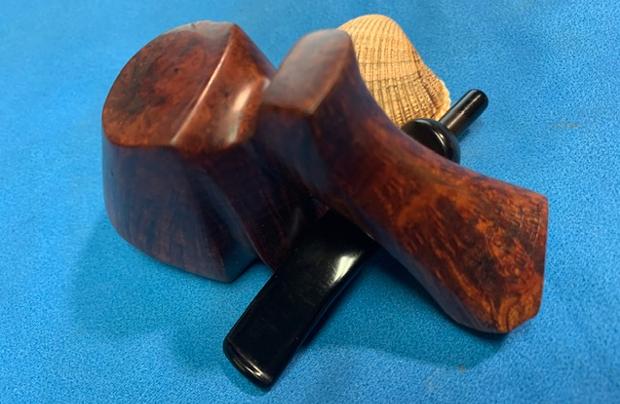
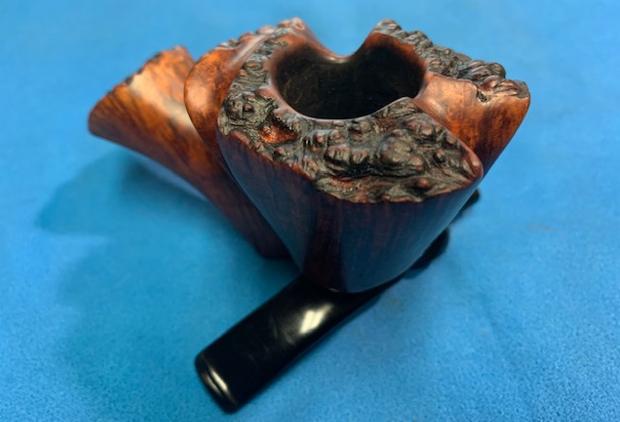
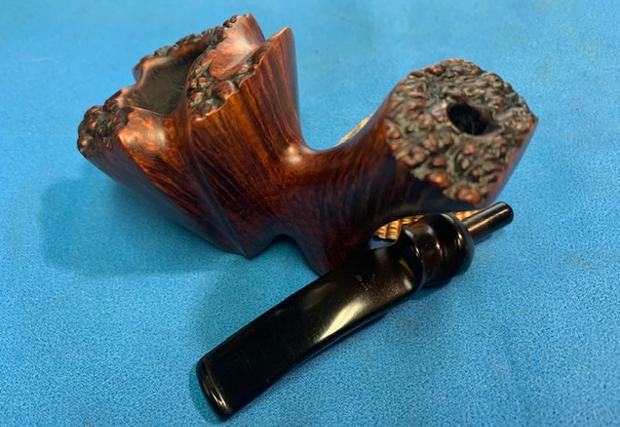
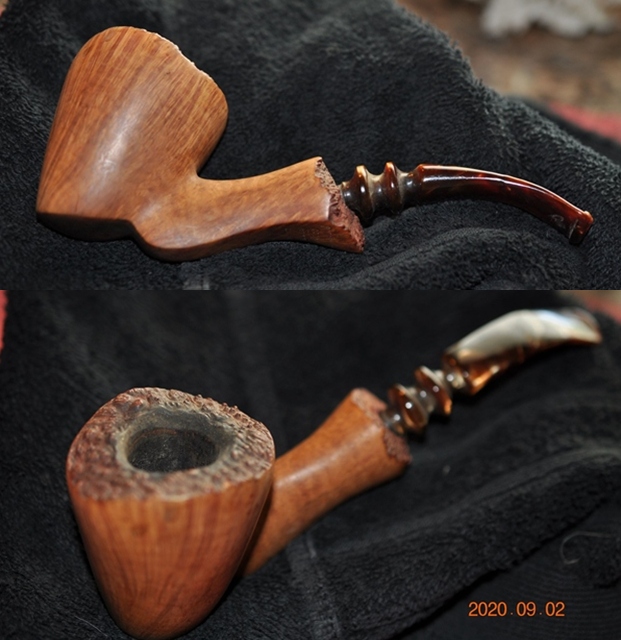
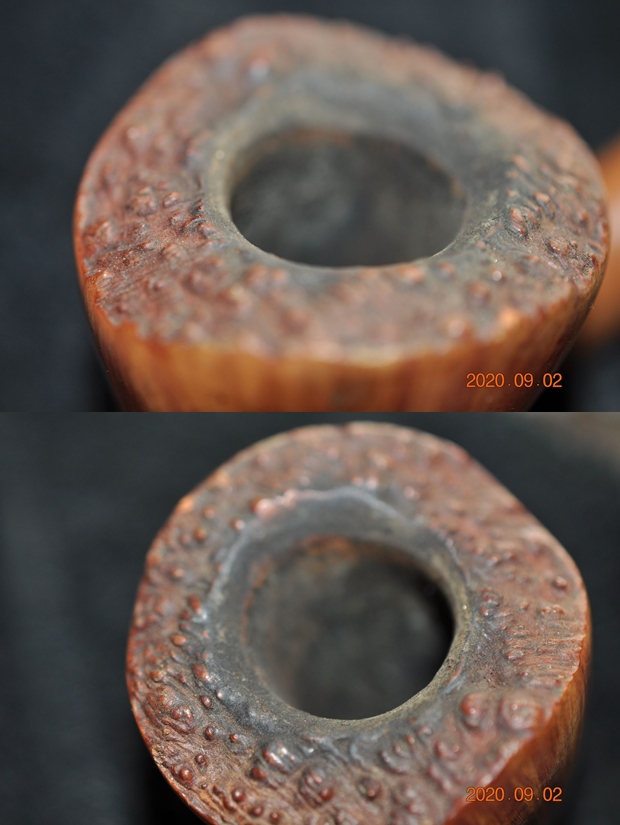
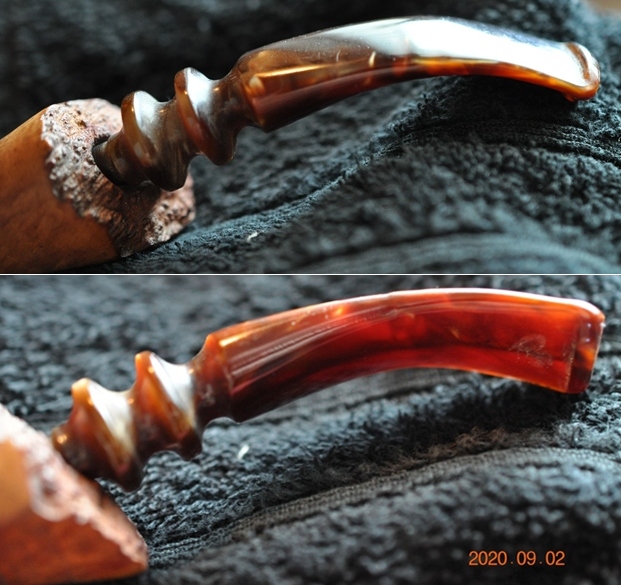
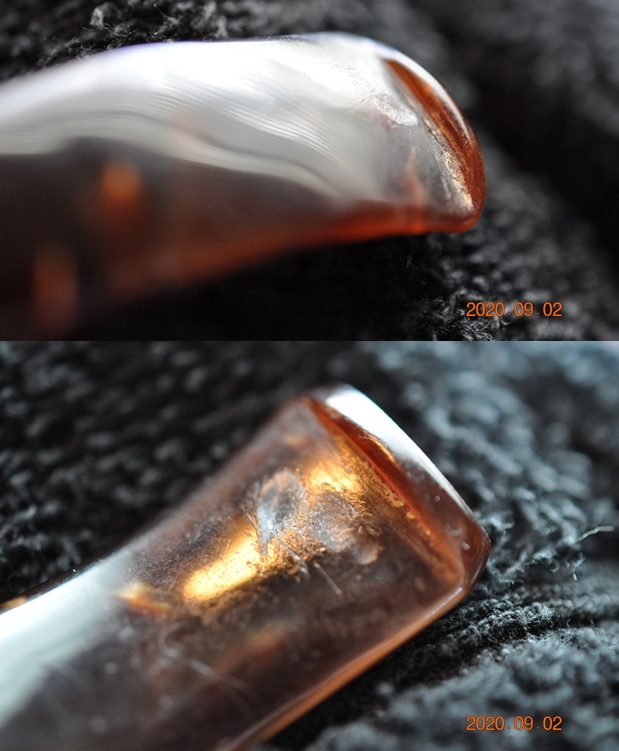
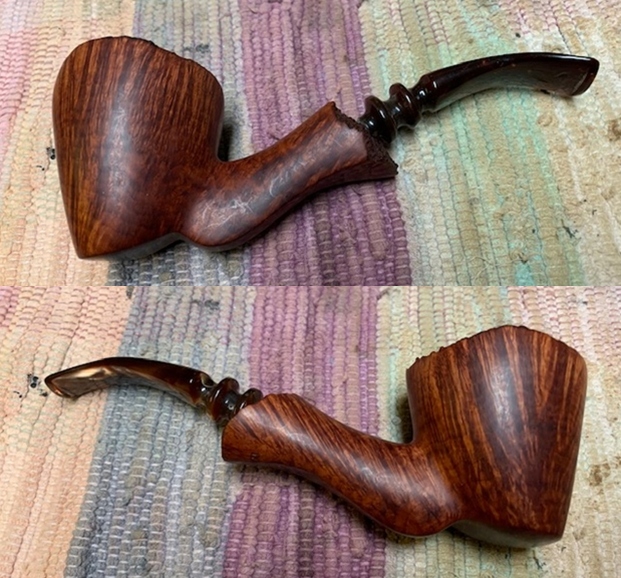
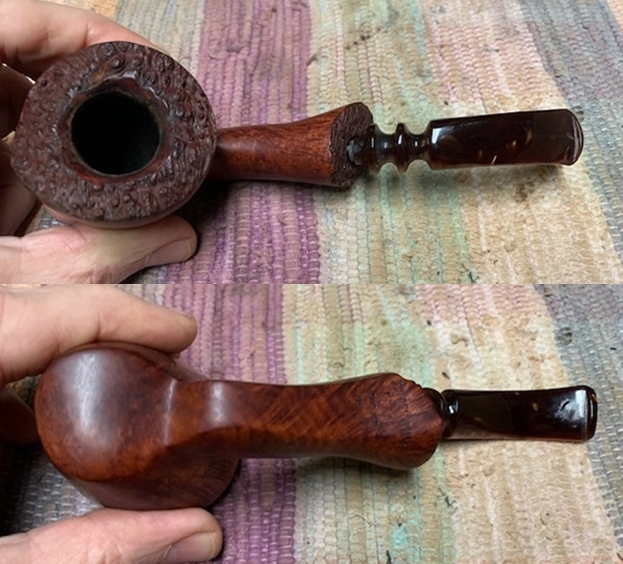
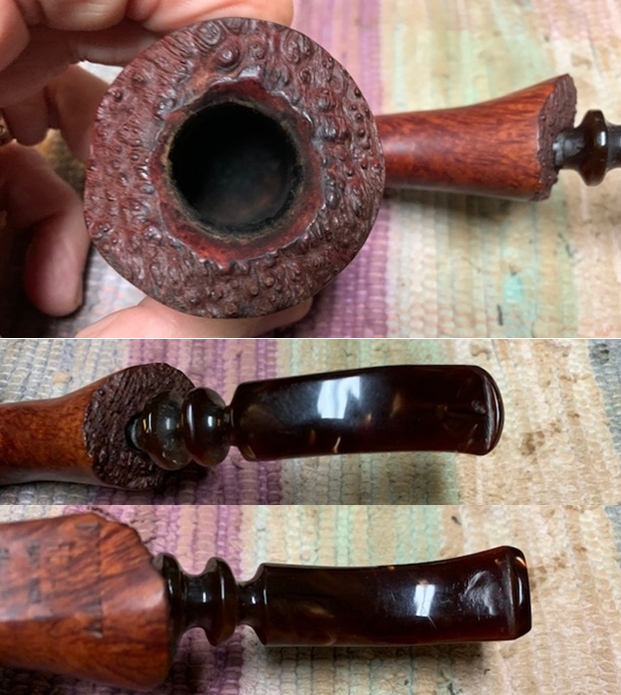
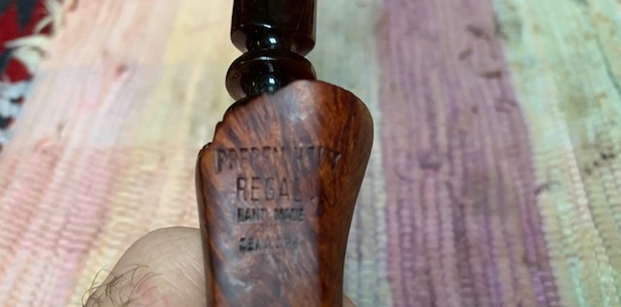
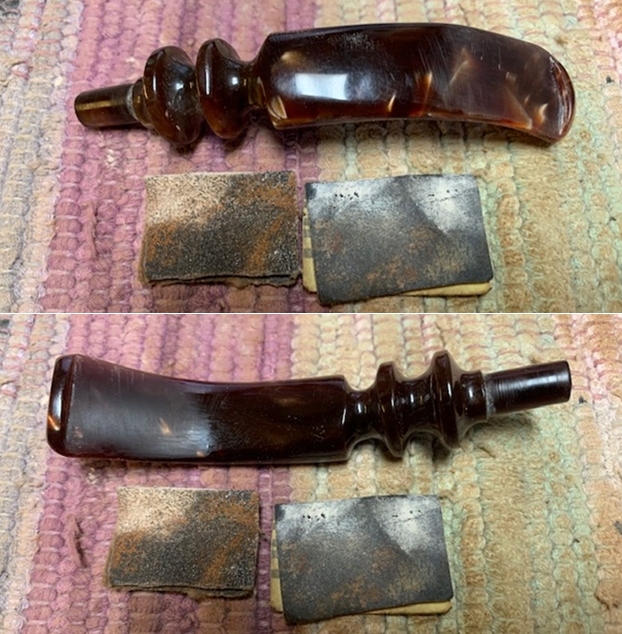
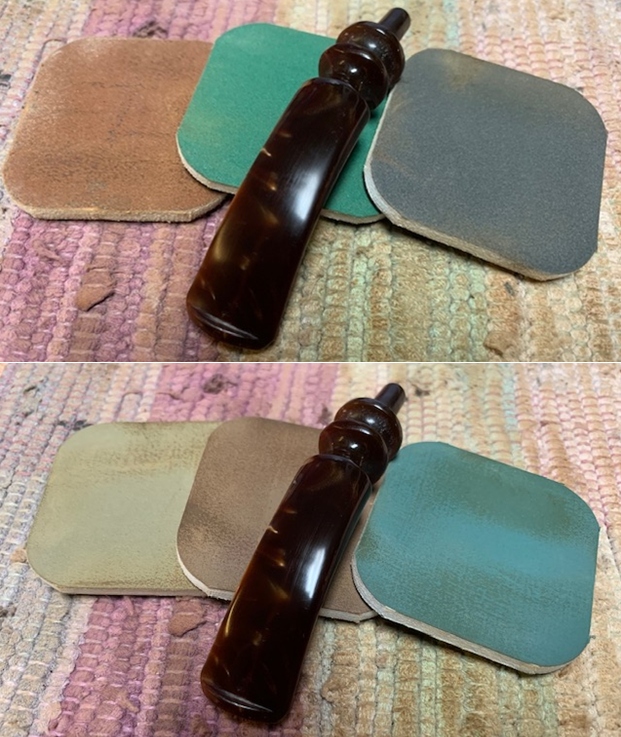
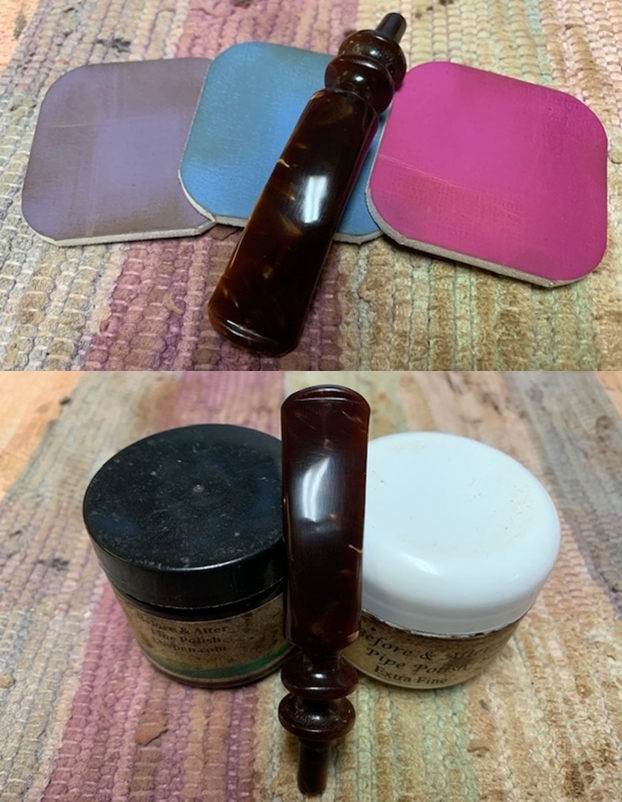
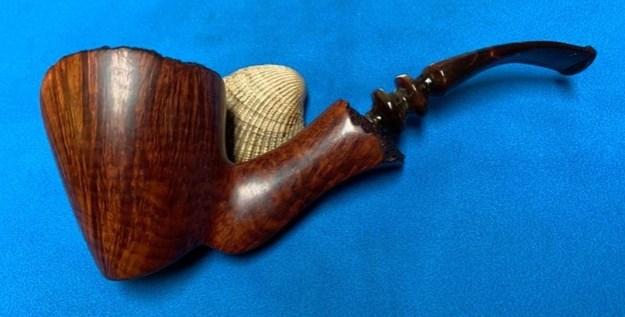
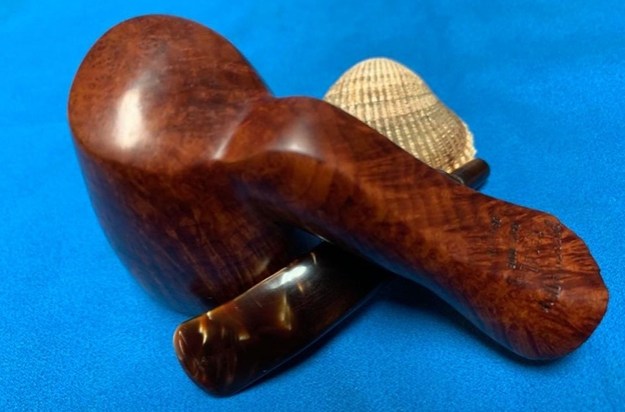
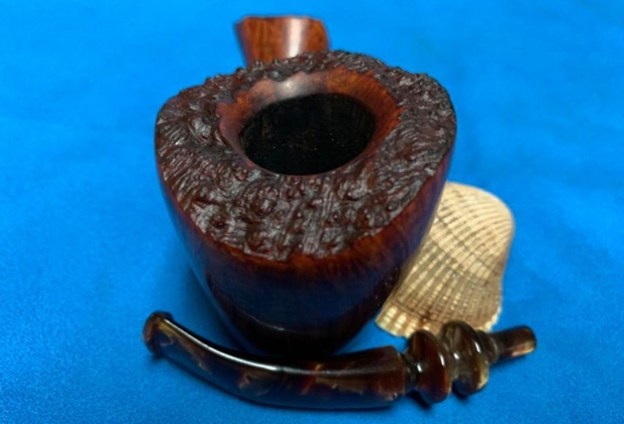
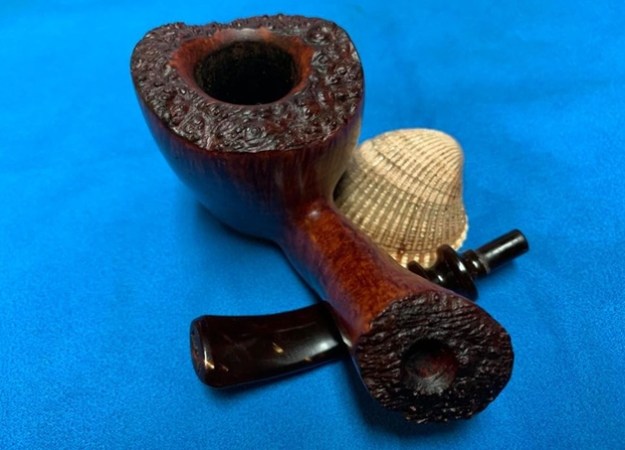
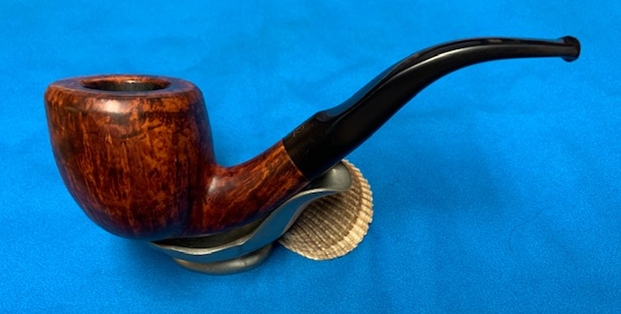
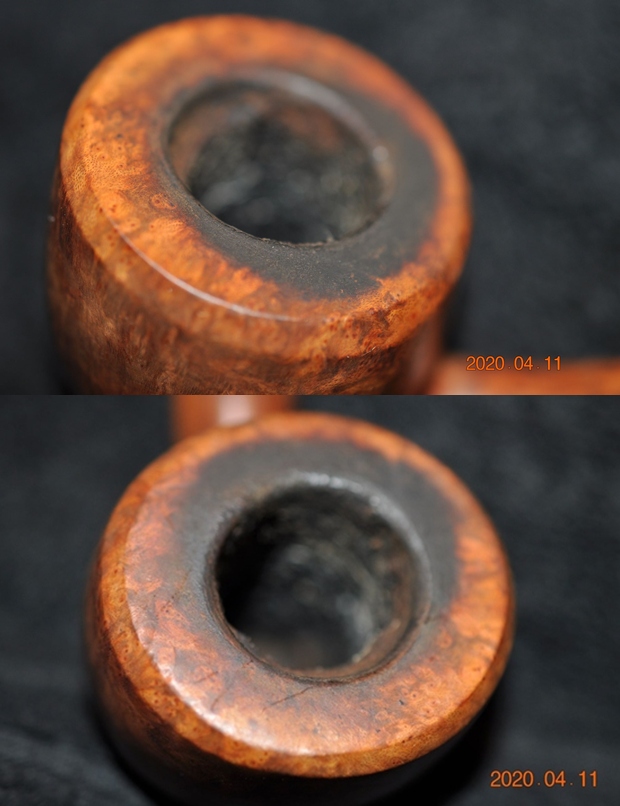
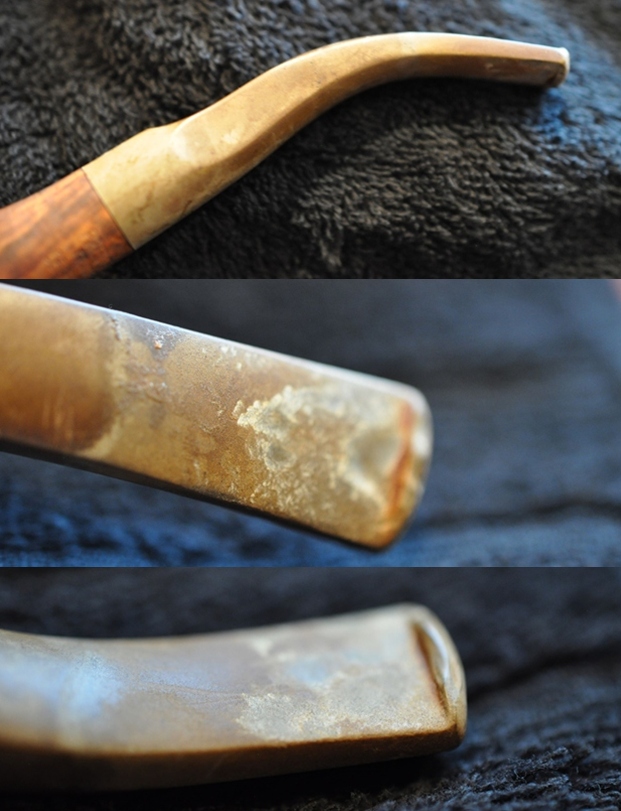
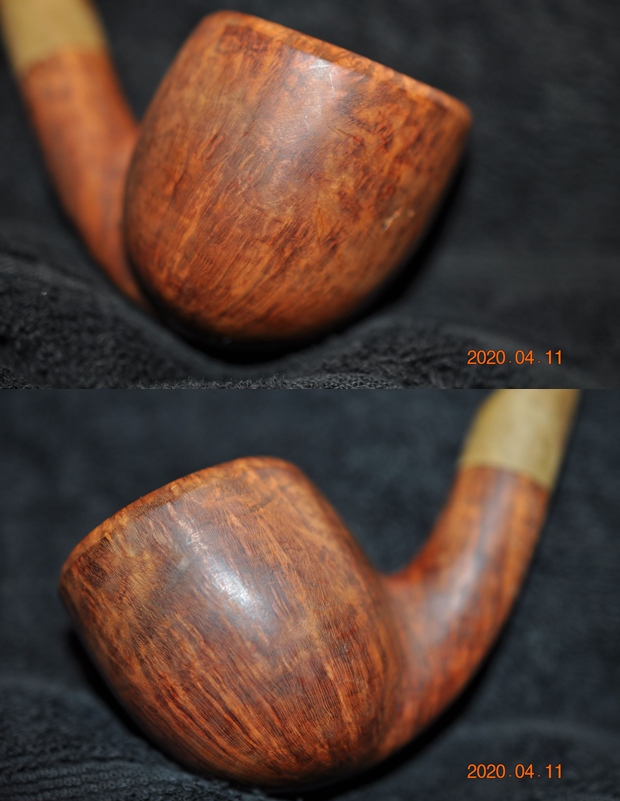
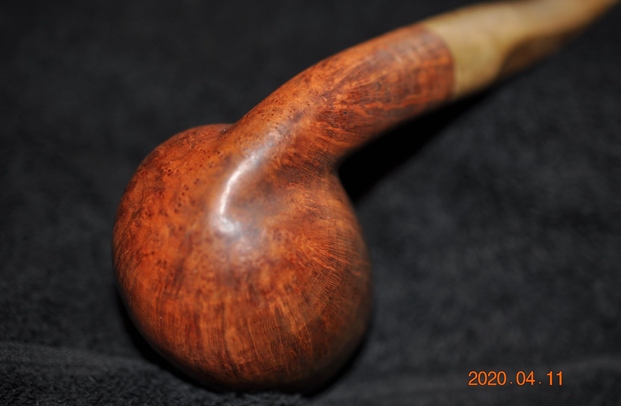
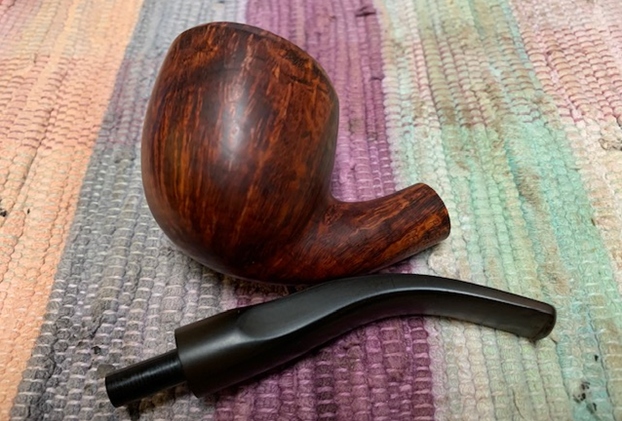
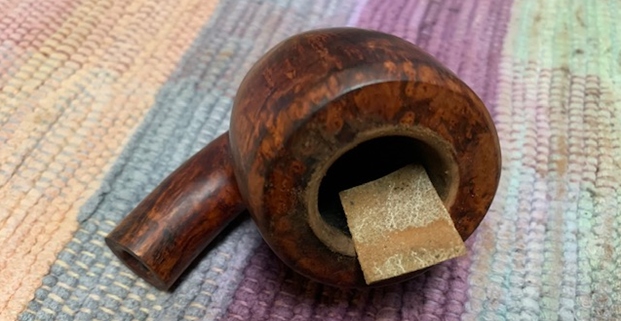
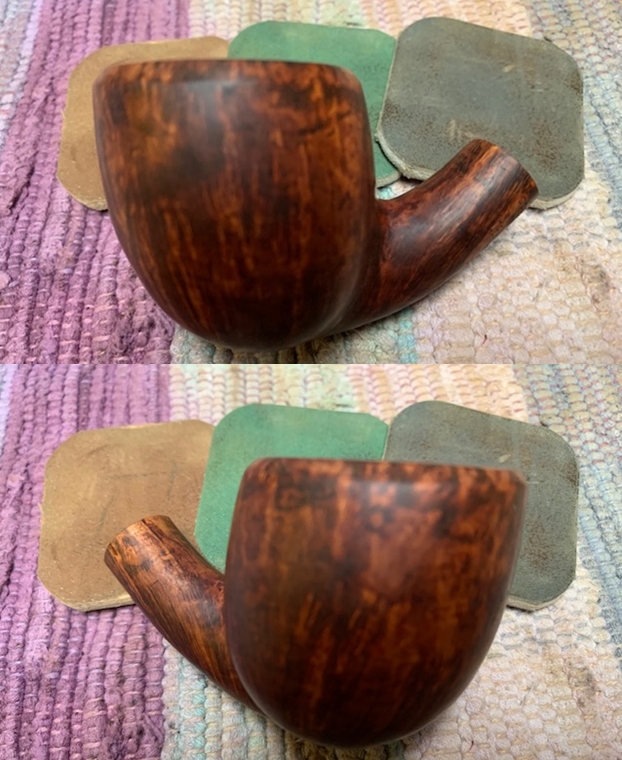
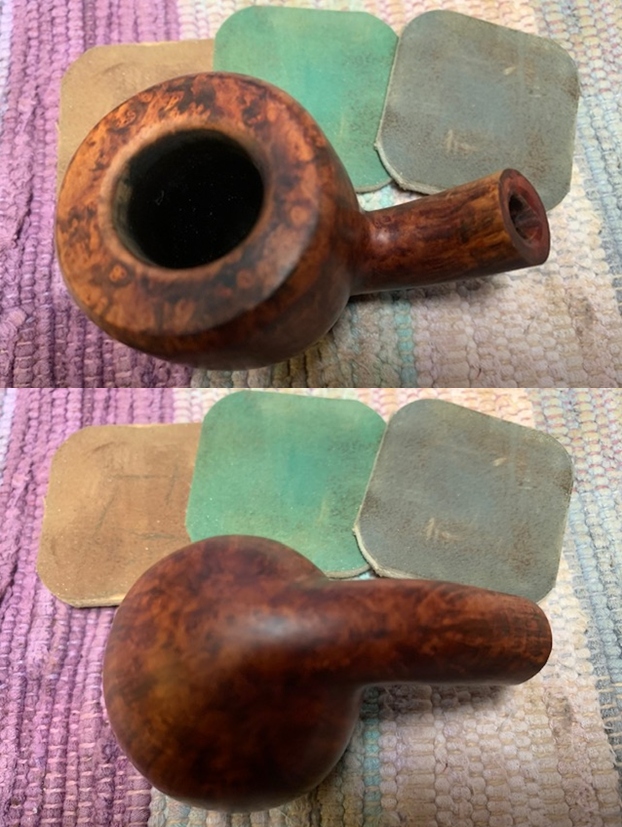
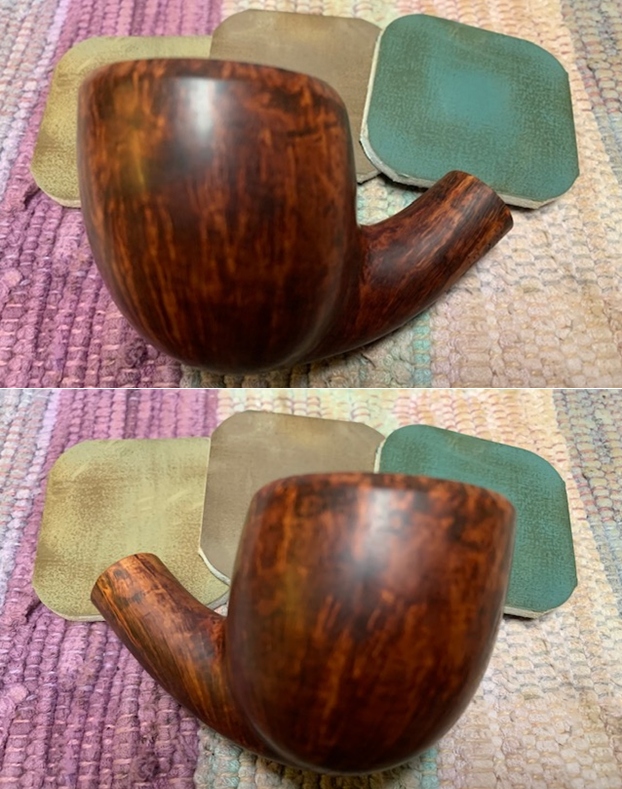
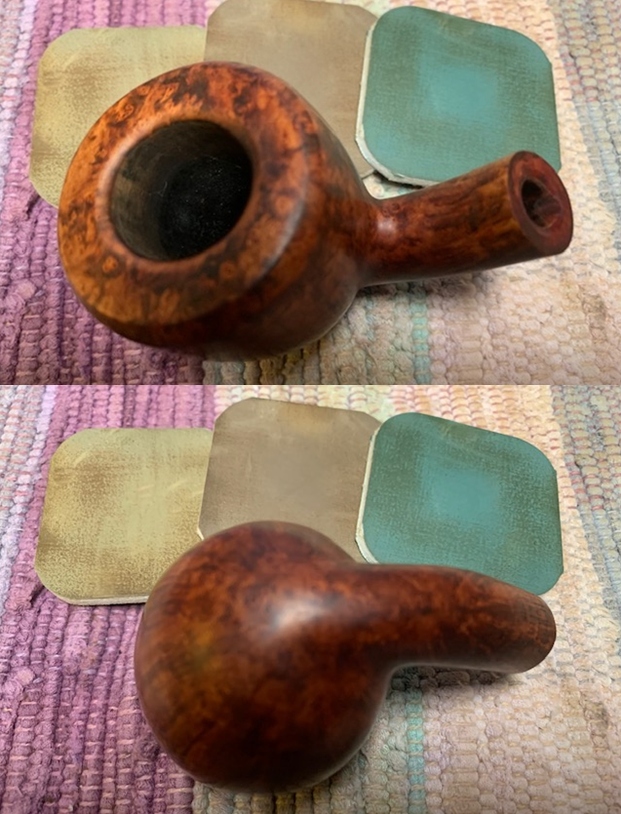
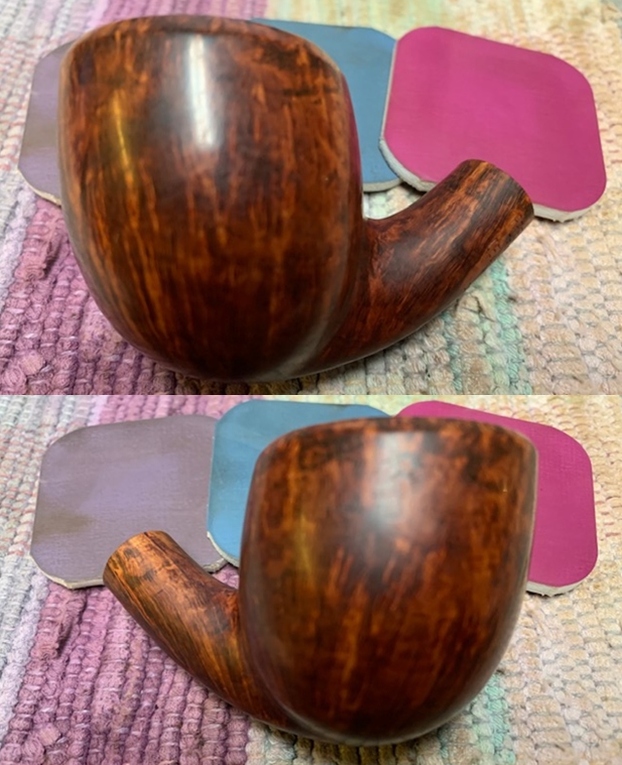
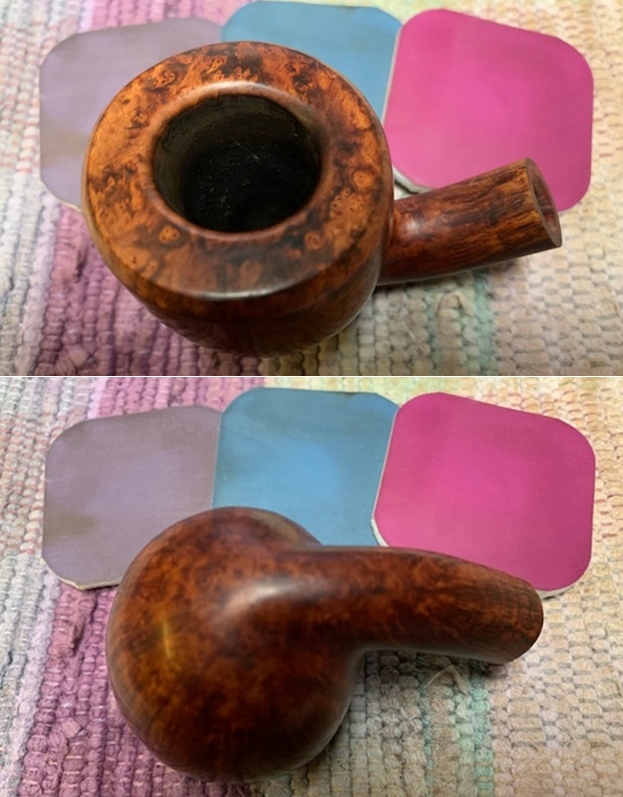
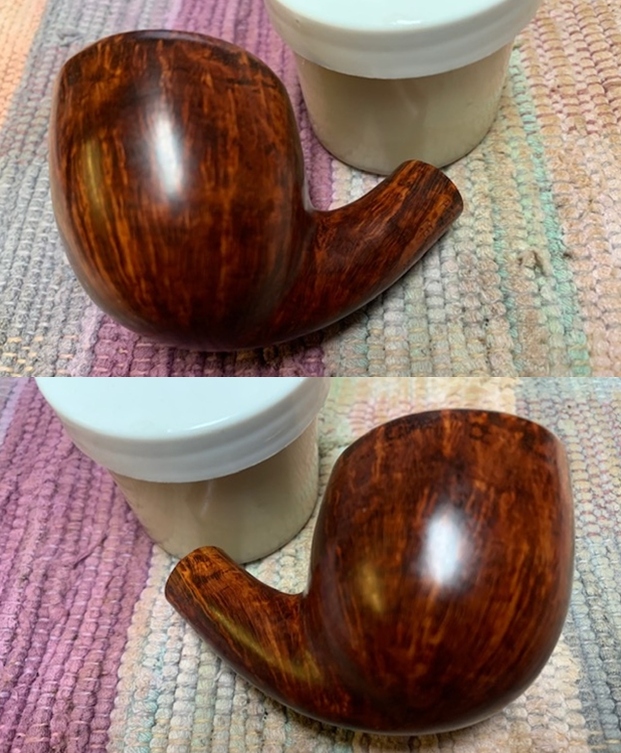
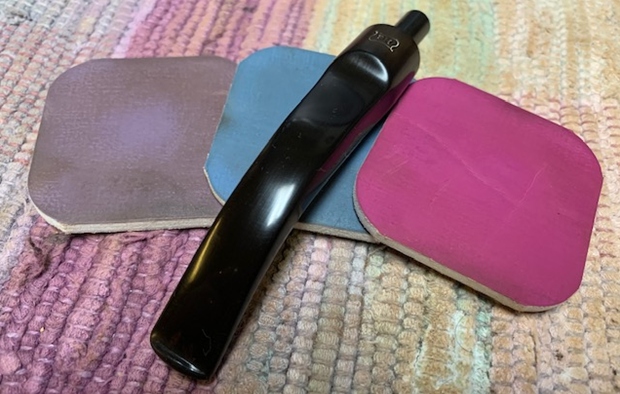
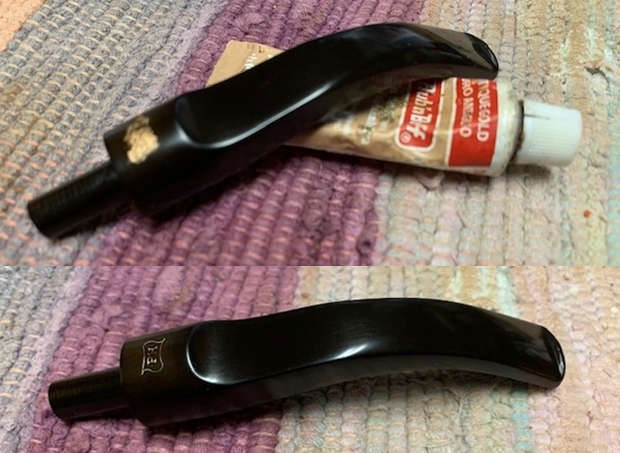
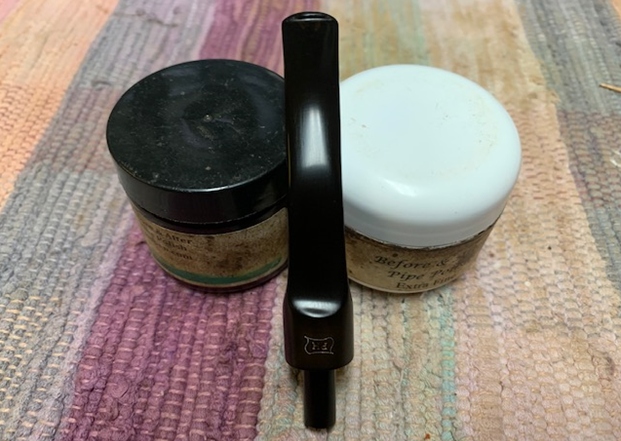
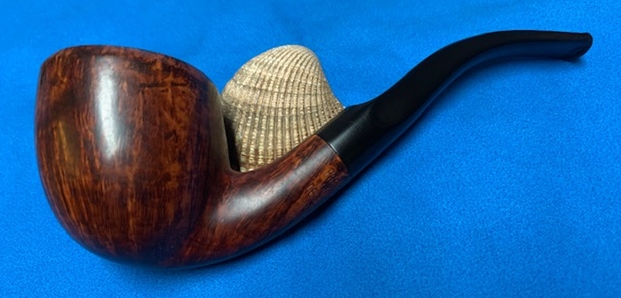
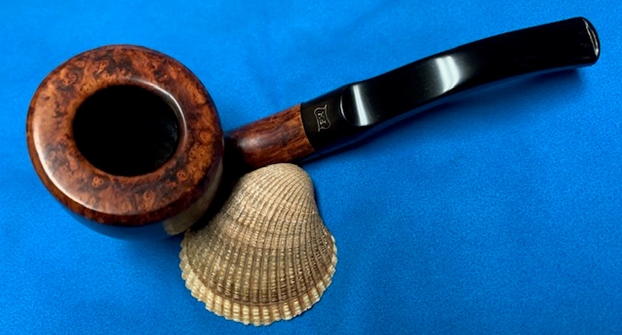
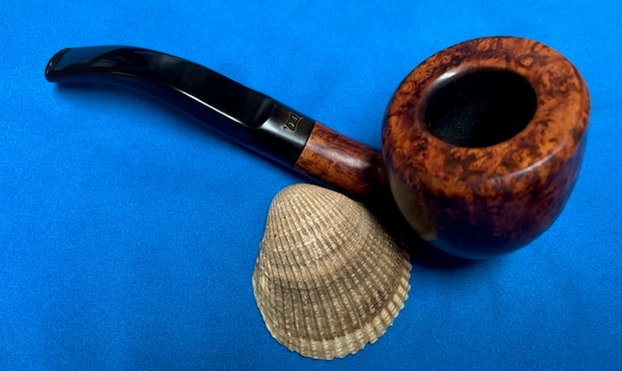
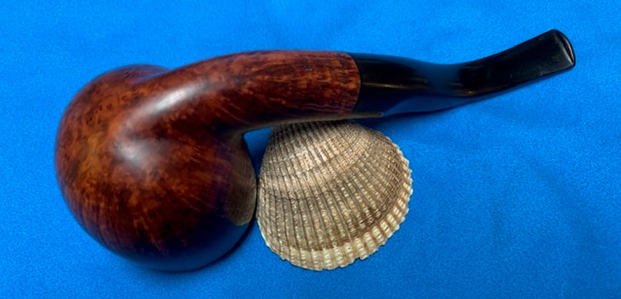
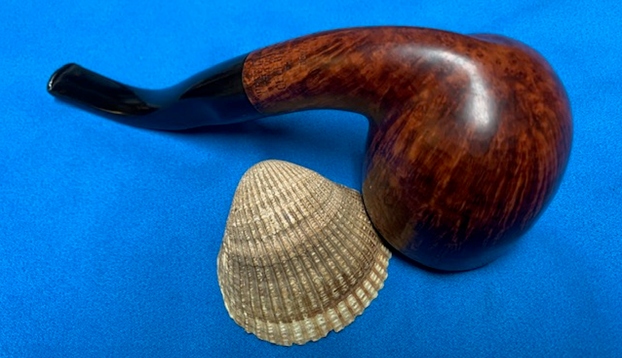
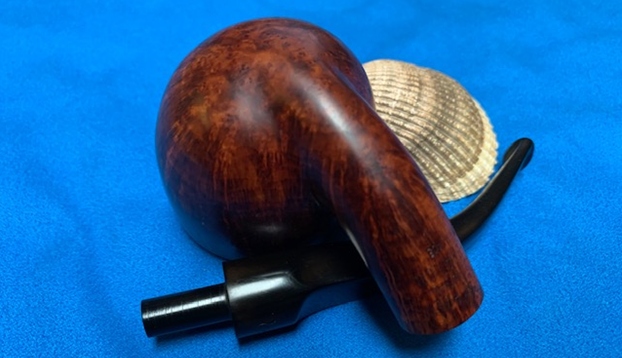
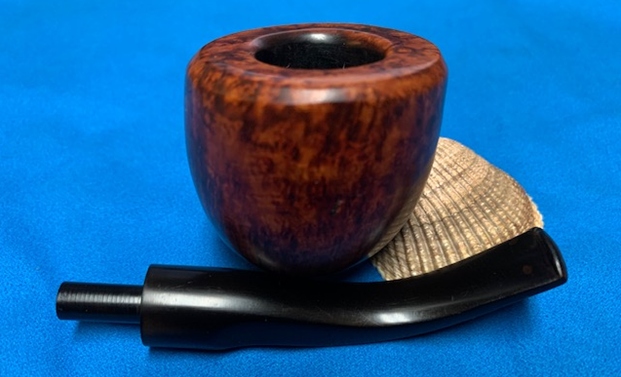
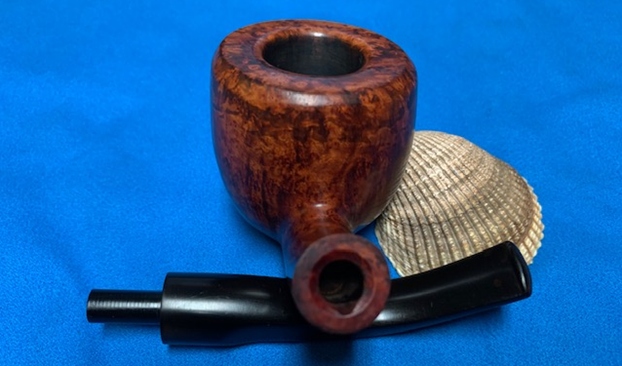
To me there is always something electric about handling and working on a pipe designed and carved by Preben Holm. Even his more classic pipes have that same feel to me. I can’t describe adequately the feeling I have when I turn the bowl and stem over in my hands even before I start working on the pipe. There is an energy that flows through the way he carved and shaped his pipes. This Ben Wade Reflection pipe was no exception. We picked it from a seller on Facebook Marketplace from Durham, North Carolina, USA on 12/08/2021. It is stamped on the underside of the shank and reads Reflection [over] By [over] Ben Wade [over] 012 [over] Hand Made in Denmark in three lines. It has a smooth finish with a vulcanite shank extension. It has a smooth rim top and the shape is a basic Danish Egg. The combination of dark and medium stains highlights grain that runs like flames across both sides of the bowl culminating at the flat heel of the bowl. This is another well-loved pipe as you can see from the thick cake in the bowl and the lava on the rim top. The finish is dirty with grime and oils. The vulcanite shank extension was oxidized, dirty and dusty. The acrylic tan/gold variegated stem was dirty with light tooth chatter and marks ahead of the button on both sides. Jeff took these photos before he started his part of the restoration. He took close up photos of the bowl and rim top from different angles to show the condition of the rim top. The bowl has a thick cake that lining the walls and overflowing lava and build up on the rim top and flowing over the inner edge of the bowl onto the top. It is hard to know if there is damage or if the lava protected it. He also took photos of the stem to show the surface of the top and underside of the acrylic stem. You can see the tooth marks and chatter on both sides ahead of the button. He took photos of the sides and heel of the bowl to show the lay of the grain around the pipe. It is a beautiful piece of briar. Unique! The vulcanite shank extension though oxidized works well with it. Jeff took several photos of the stamping on the underside of the shank to capture all of the stamping. It was clear and read as noted above. I turned to Pipephill’s site (http://www.pipephil.eu/logos/en/logo-benwade.html) and did some looking at the section on Ben Wade Pipes. The photos do not show the Reflection at all. That part remains a mystery. The finish and overall look is the similar. The stem I have is not stamped, or at least it is worn from buffing. The stamping on the shank is similar.I am including the background history that I included on the previous blog. It includes the idea that the Preben Holm pipes were marketed under the Ben Wade label in the US and imported through Lane Ltd. I quote below:

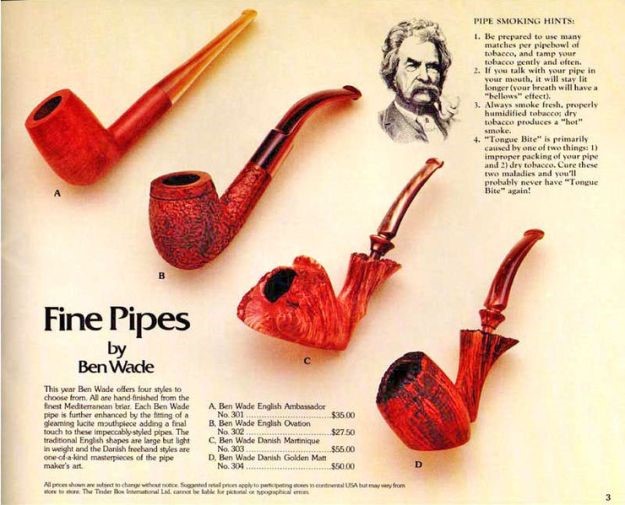
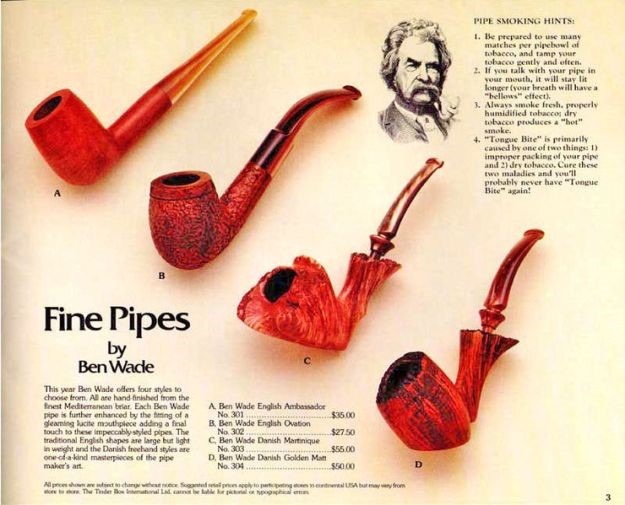
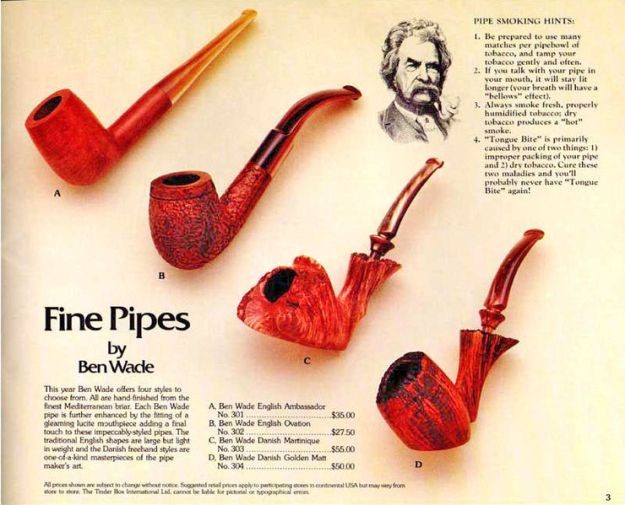
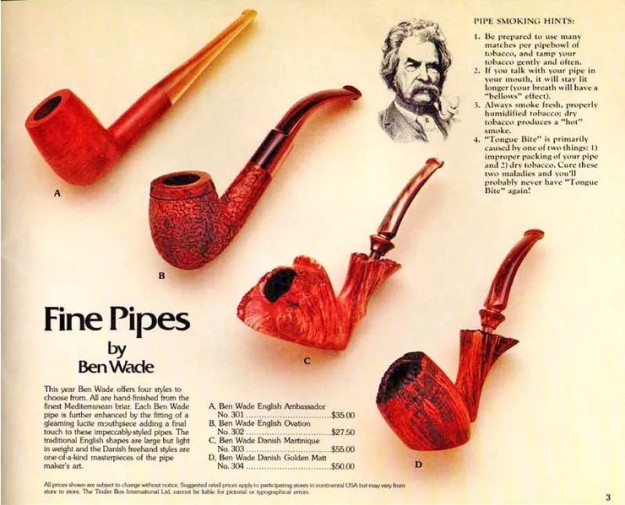
Ben Wade Ad in a Tinder Box catalog, courtesy Doug Valitchka

I turned to Pipedia and read the listing on the brand to refresh my memory and flesh out the knowledge of the brand (https://pipedia.org/wiki/Ben_Wade). I have included a photo from that site that was taken from a Tinderbox advertisement.

I quote the portion of the article that summarizes the history of the brand.

Young Copenhagen master pipemaker Preben Holm had made a meteoric career heading a pipe manufacture employing 45 people at the age of 22! But around the turn of 1970/71 he was in major financial difficulties. His US distributor, Snug Harbour Ltd. in New York City, left him in the lurch. Holm had three unpaid invoices on his desk and another large shipment was ready for the USA, when Snug Harbour’s manager told him on the phone that there was no money at all on the account to pay him.

So, the Dane went to New York for an almost desperate search for a new distribution partner. He made contacts with Lane Ltd. and met Herman G. Lane in February 1971. Lane Ltd. had no interest in Holm’s serial pipes produced at that time but so much the more in the hand-carved freehands because the hype for Danish freehands and fancies in the States was still on its way to the climax then. The meeting resulted in an agreement to start a cooperation. Lane insisted to improve the quality considerably and in return he assured to be able to sell essentially larger quantities.

Holm went back home to work on new samples with all-new designs and altered finishes for Lane. Both, Lane and Holm, agreed that it would be unwise to sell the pipes under Preben Holm’s name as long as Snug Harbour had a considerable stock of Preben Holm pipes and might sell them pipes at very low prices just to bring in some money.

So, on Mr. Lane’s proposal it was determined to use the name Ben Wade belonging to Lane Ltd. Lane spent considerable amounts of money for advertising the new brand in the big magazines– the centerpiece being whole-page ads showing a very exclusive Seven Day’s Set.

The cooperation with Lane Ltd. proved to be an eminent business success for both partners. Within a very short time Ben Wade Handmade Denmark sold in much larger quantities and at higher prices than they had ever dreamed of. And the hype these freehands and fancy pipes caused went on unbroken long after Herman G. Lane deceased. Preben Holm – obviously much more brilliant in pipe making than in pipe business – was in major troubles again in 1986 and had to sack most of his staff. The Ben Wade production was significantly lowered but continued until his untimely death in June of 1989.

Up to now Preben Holm made Ben Wade pipes are cult and highly sought for on the estate markets.

With that information my initial thoughts were confirmed. This pipe was another Preben Holm made Freehand distributed in the US by Lane Ltd under the name Ben Wade. The freehand rage occurred in the late 70s and the pipes were made until Preben’s death in 1989. My guess would be that this pipe was made sometime during that time period and potentially in the late 70s.

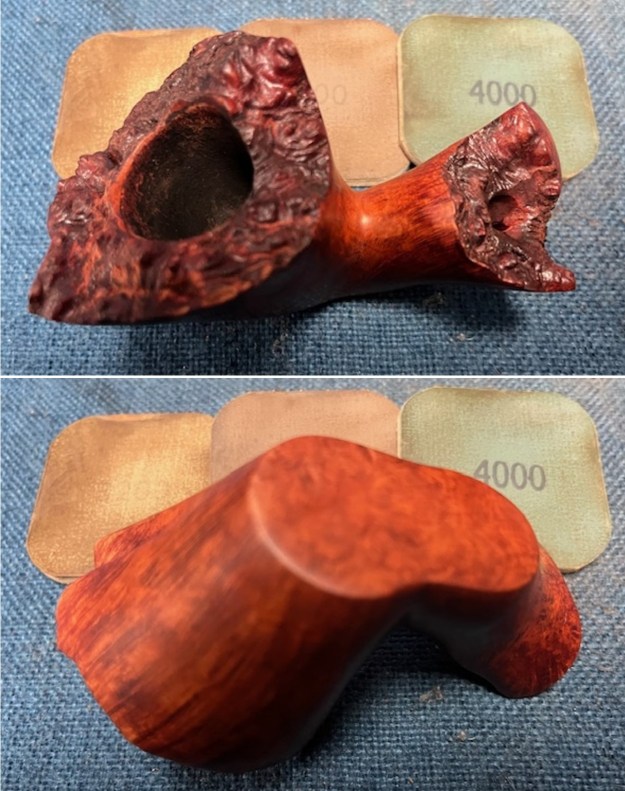
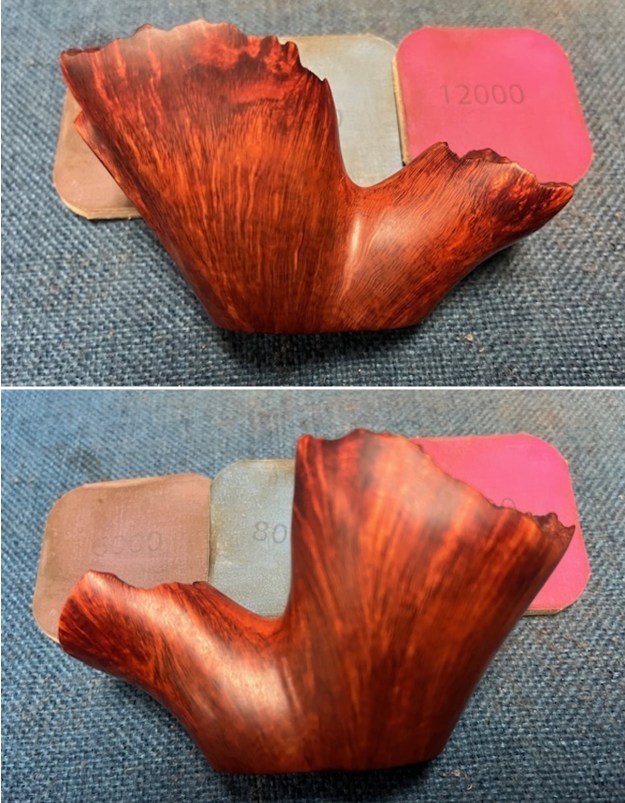
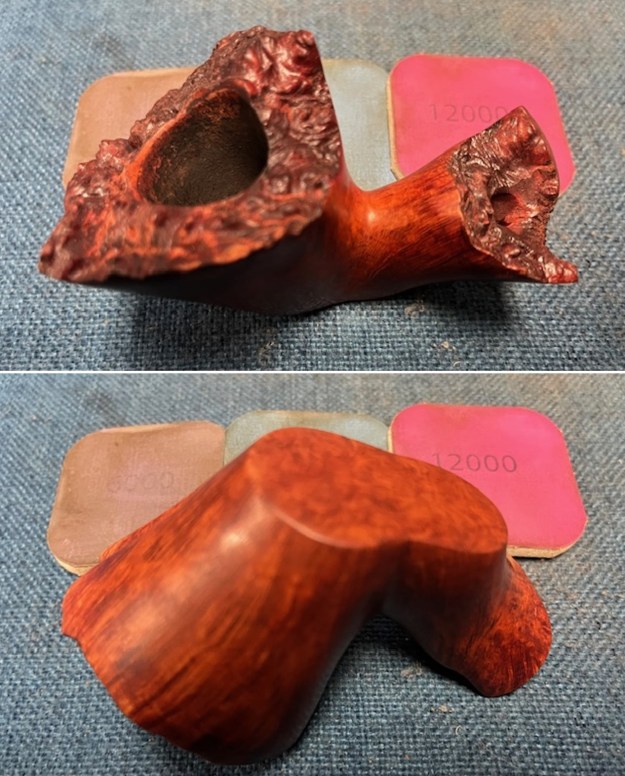
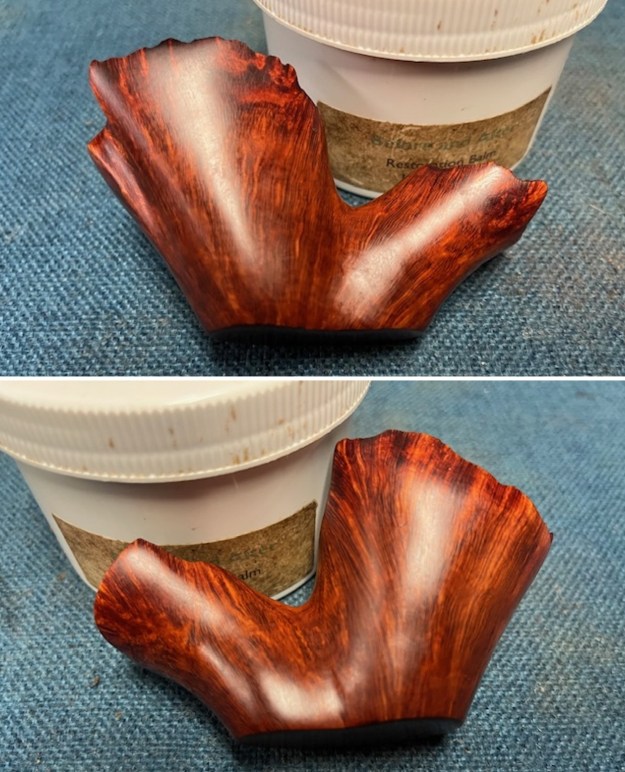
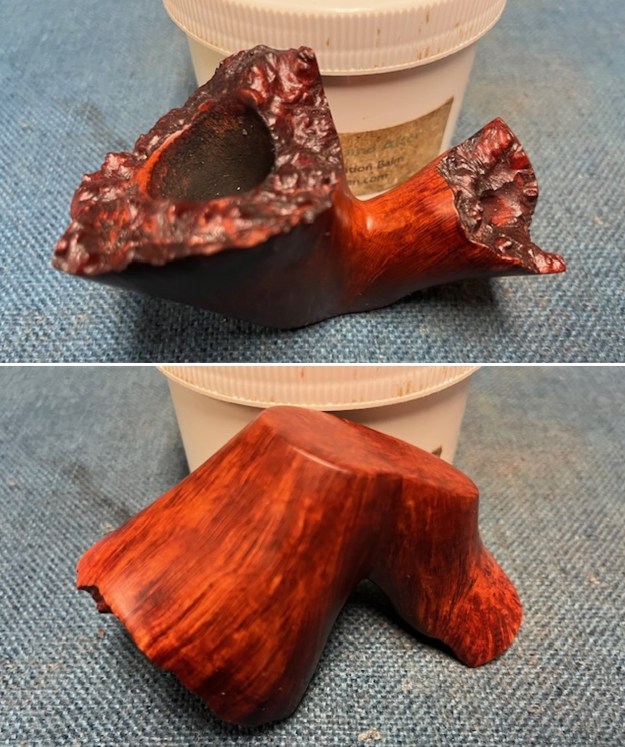
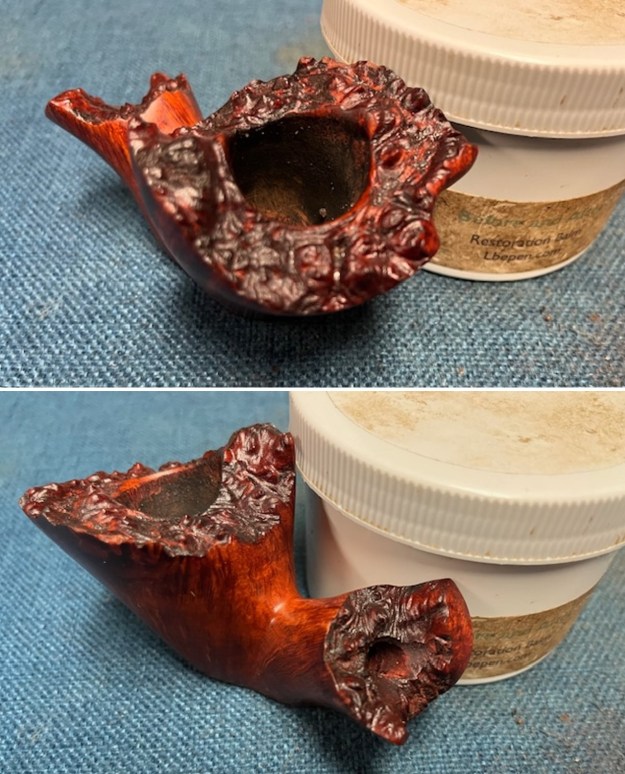
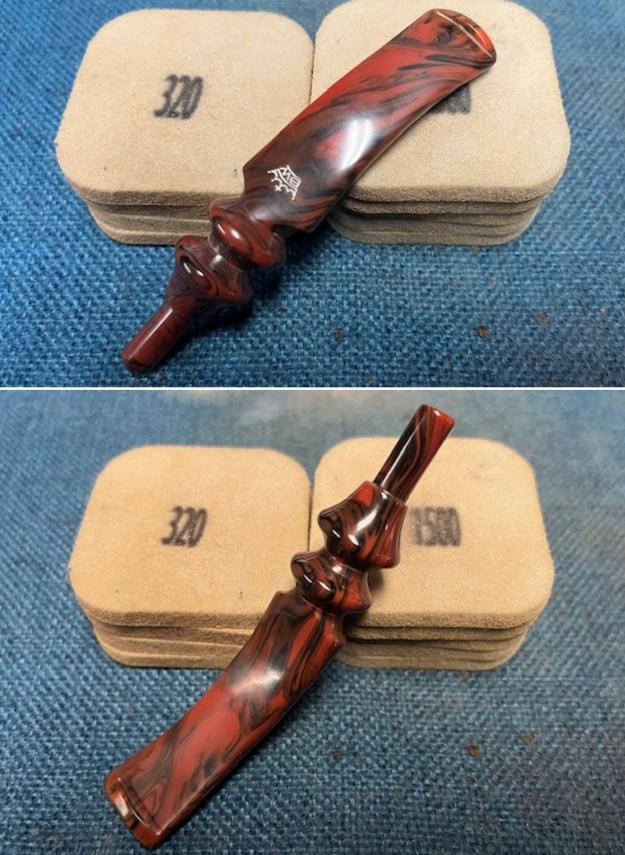
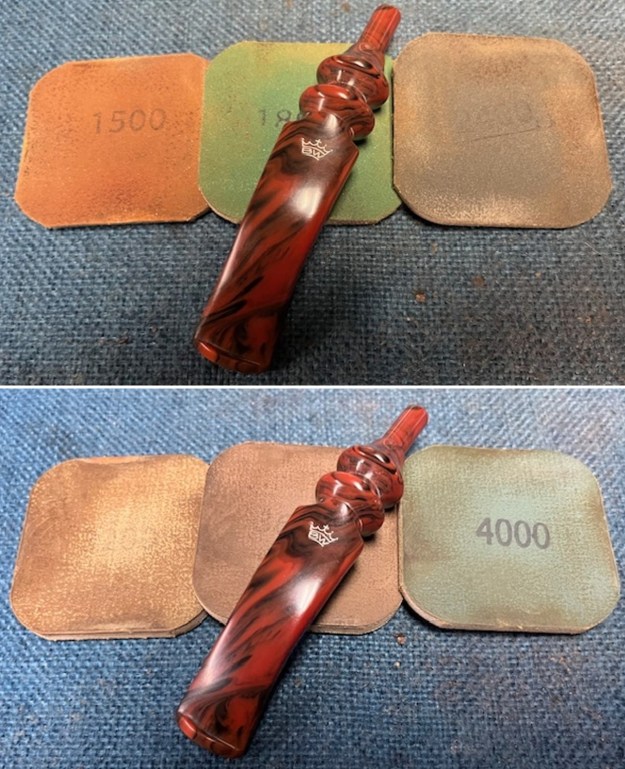
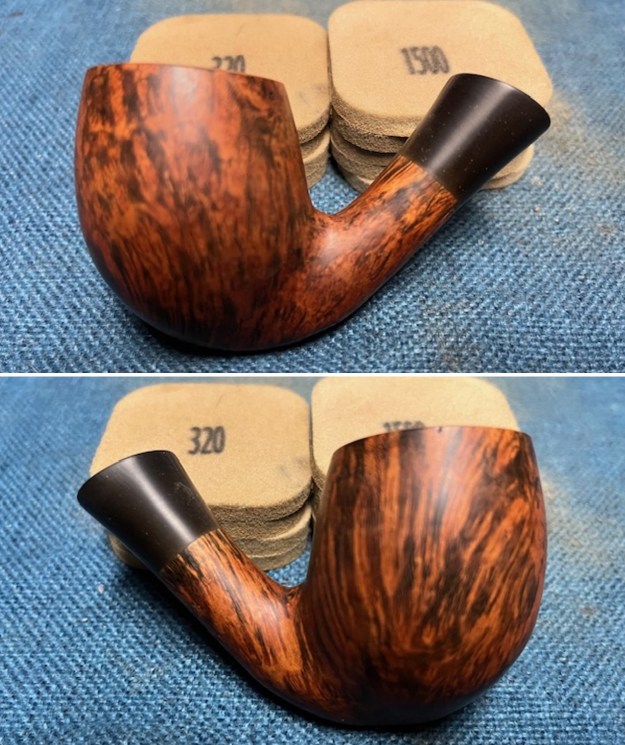
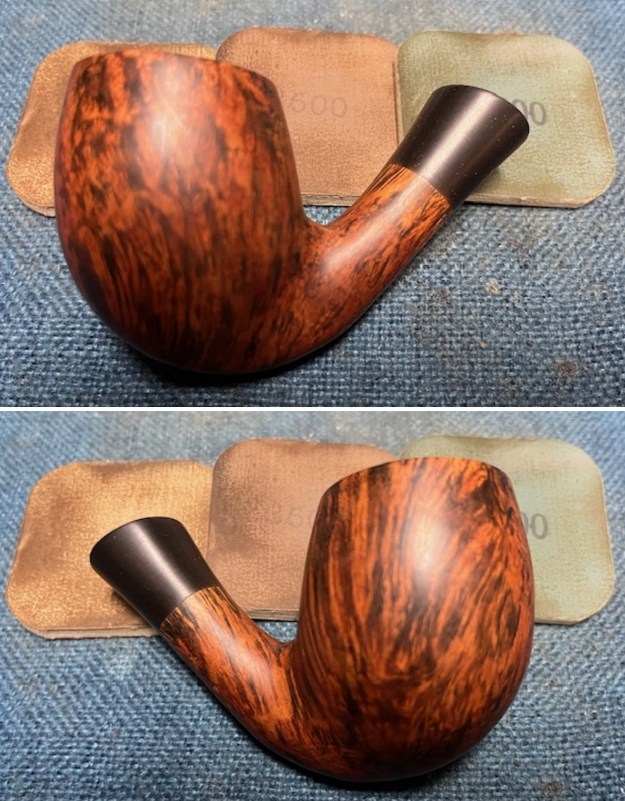
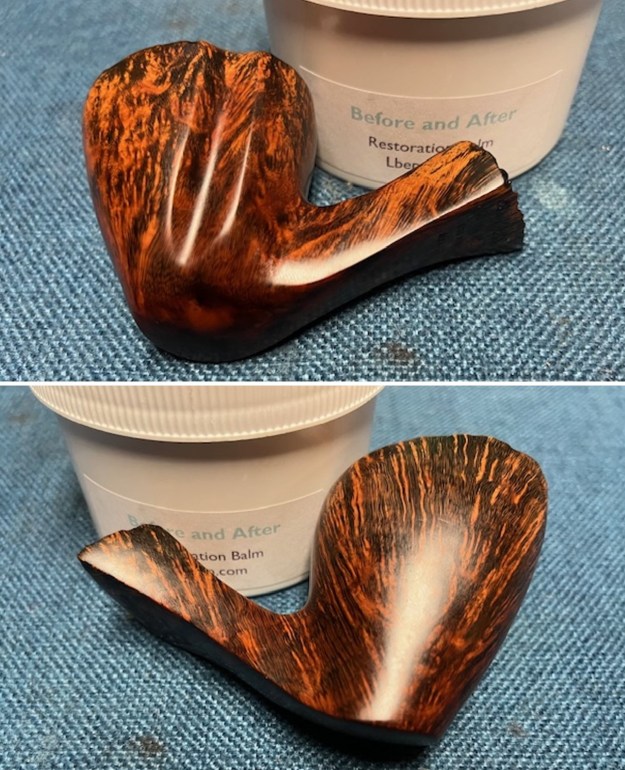
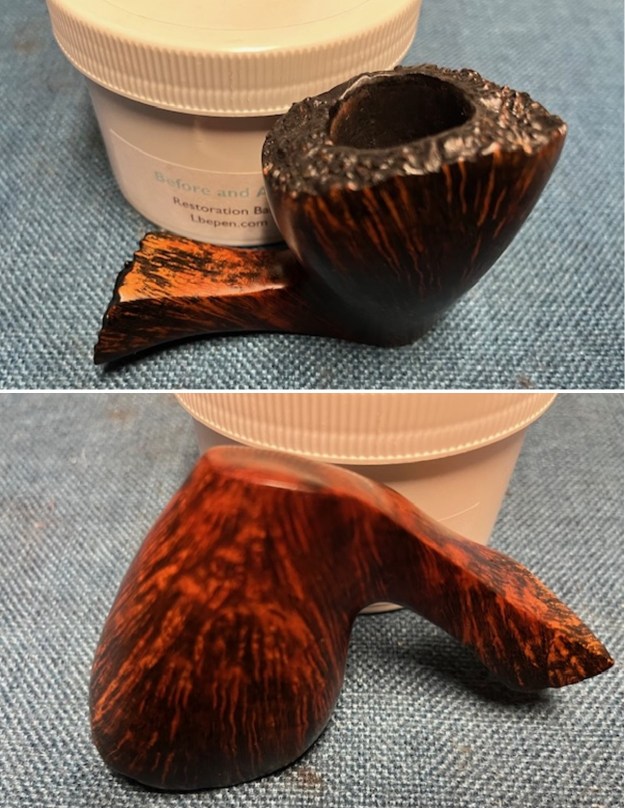
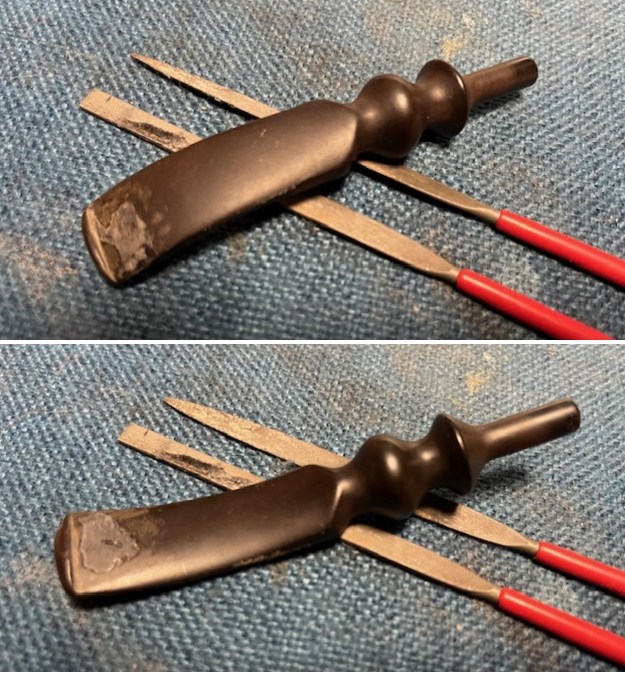
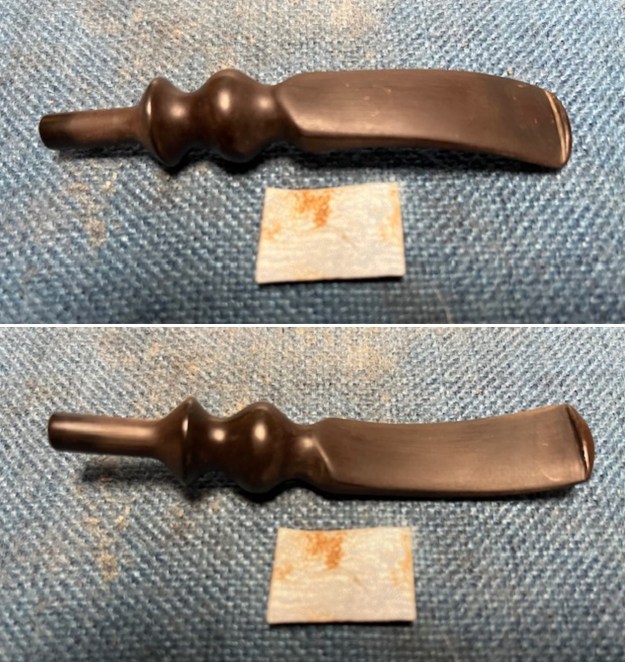
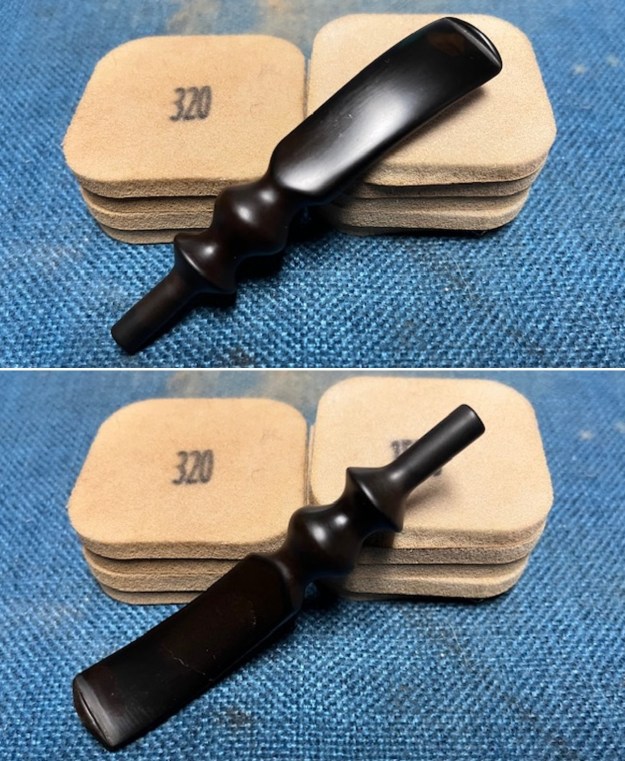
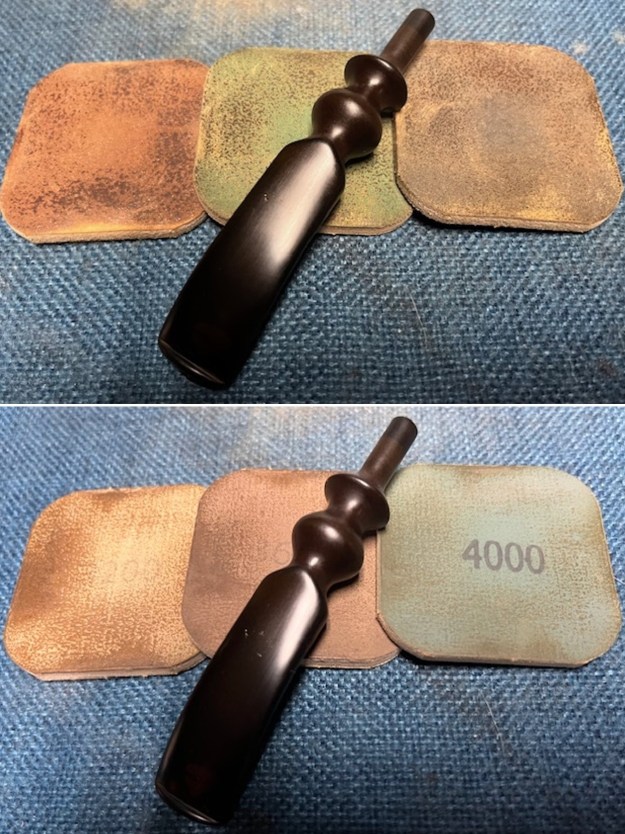
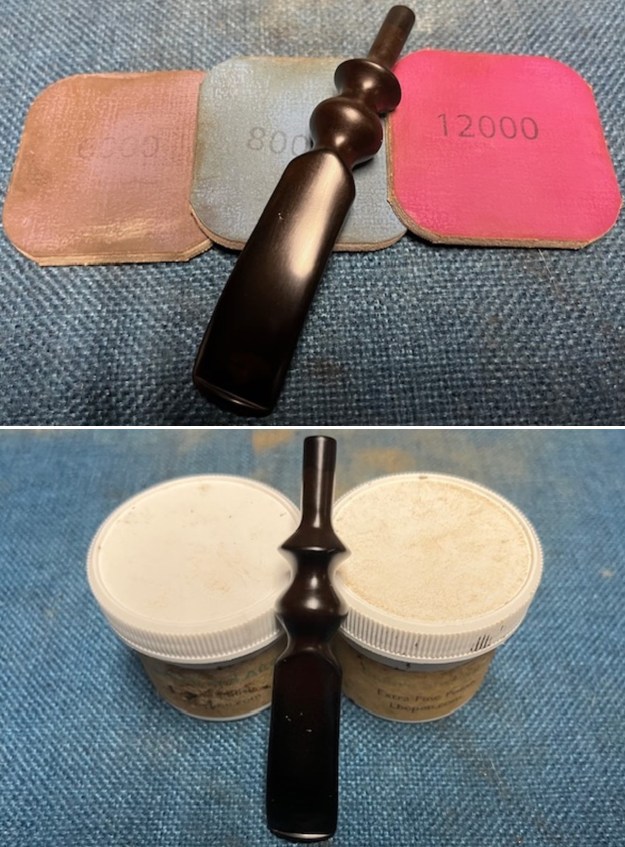
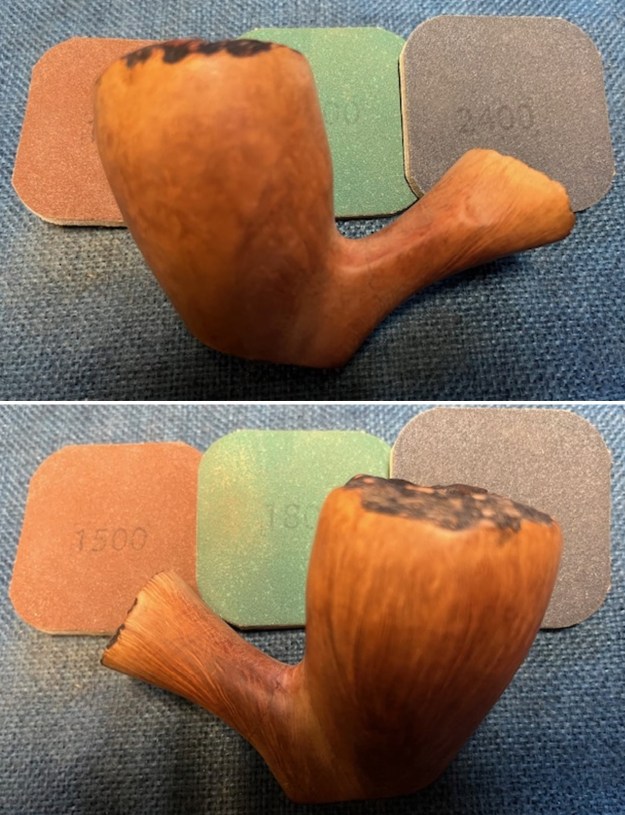
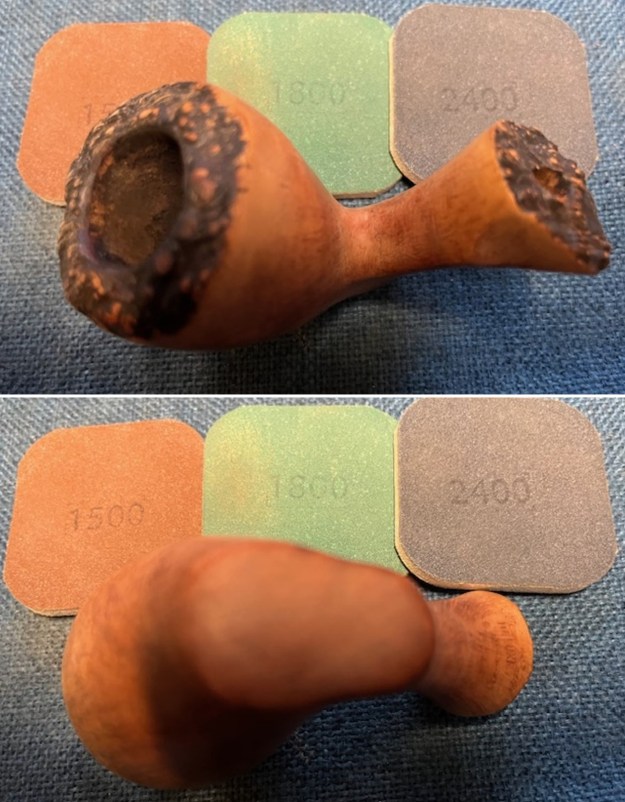
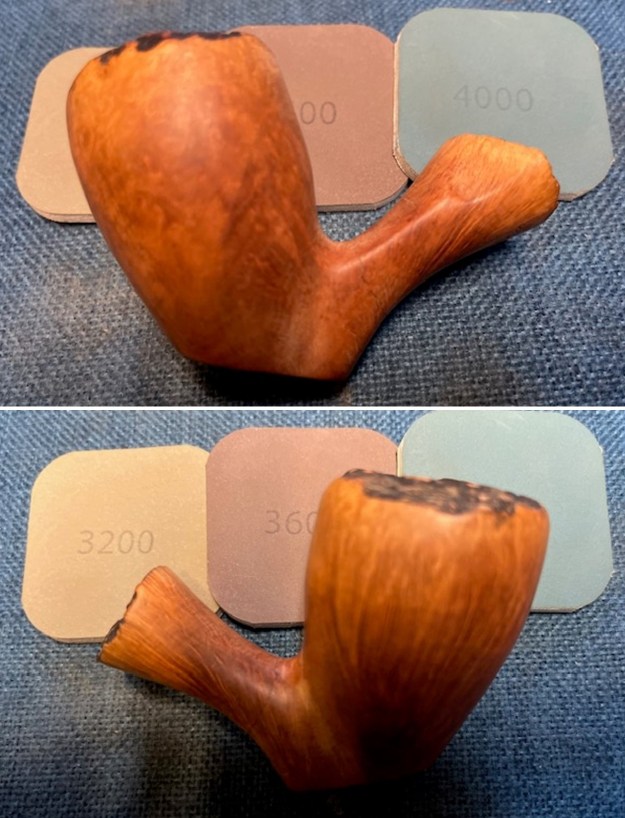
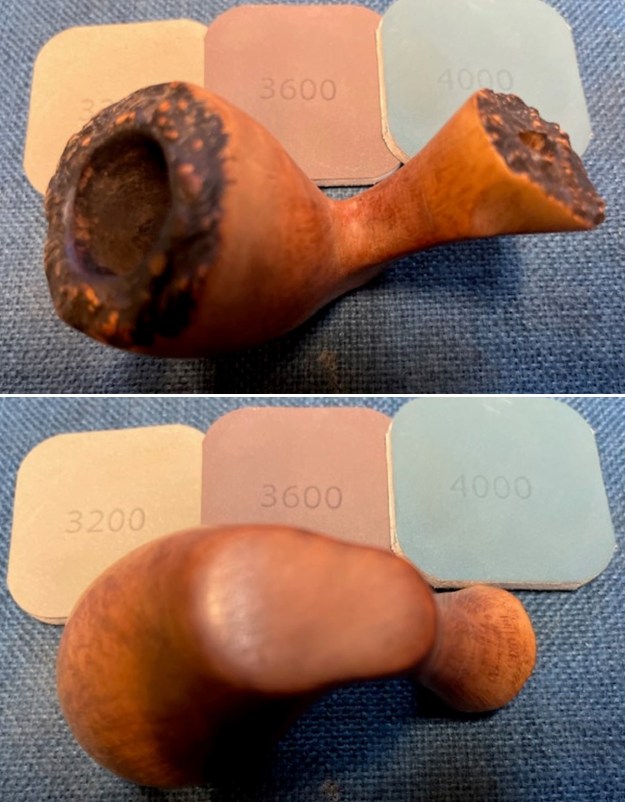
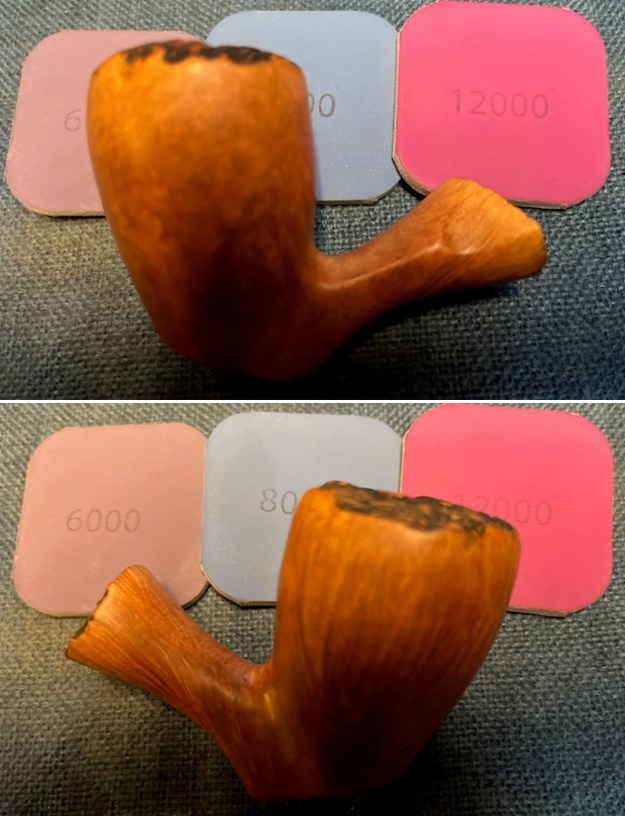
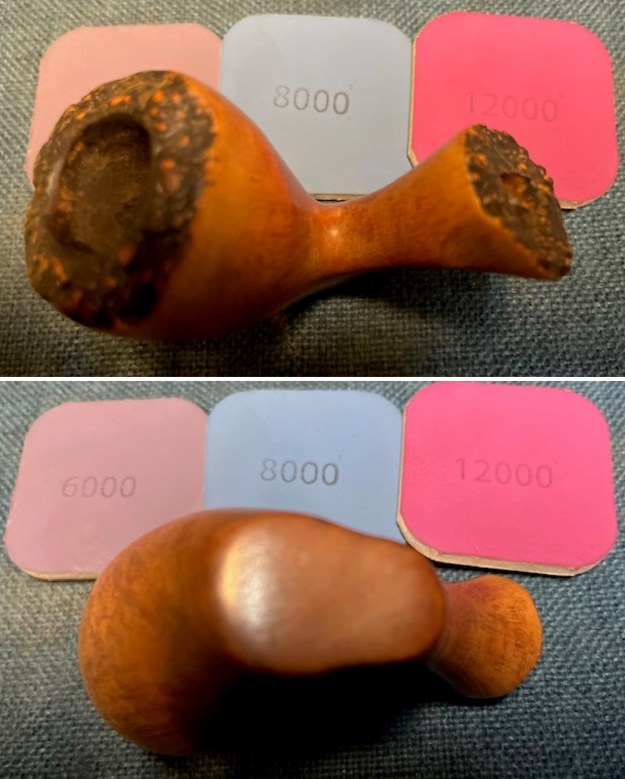
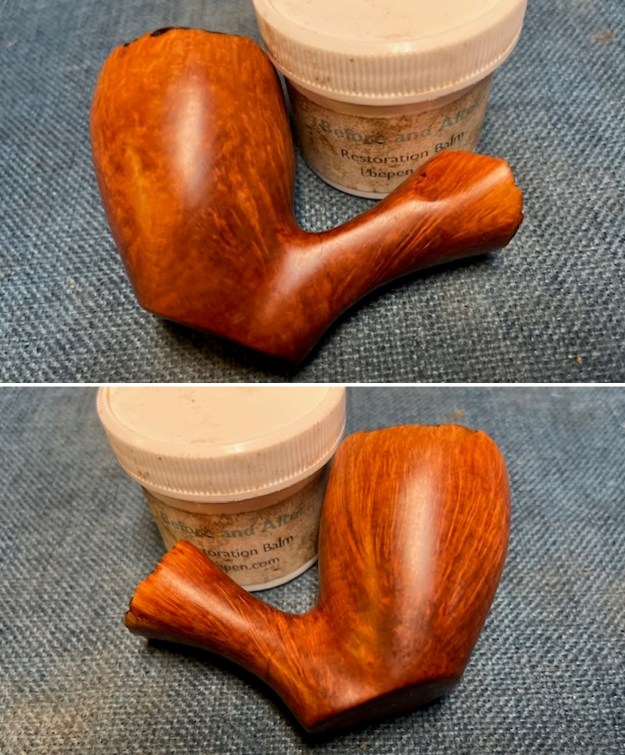
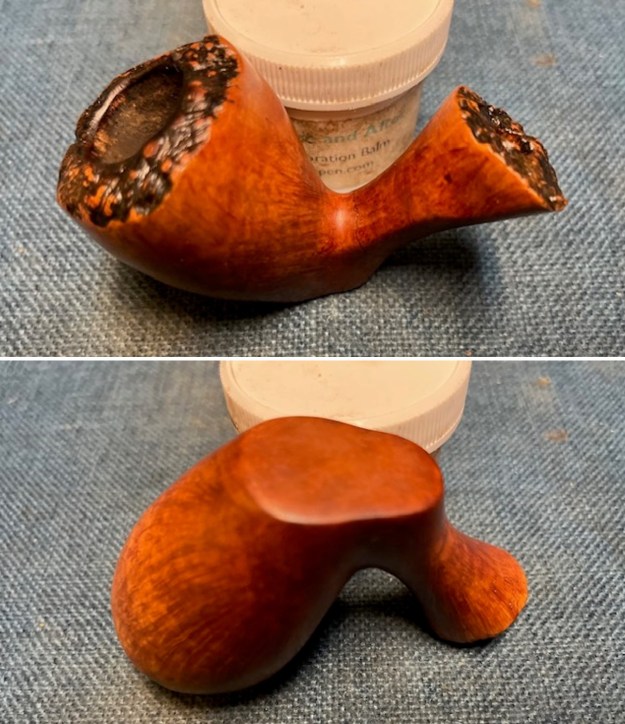
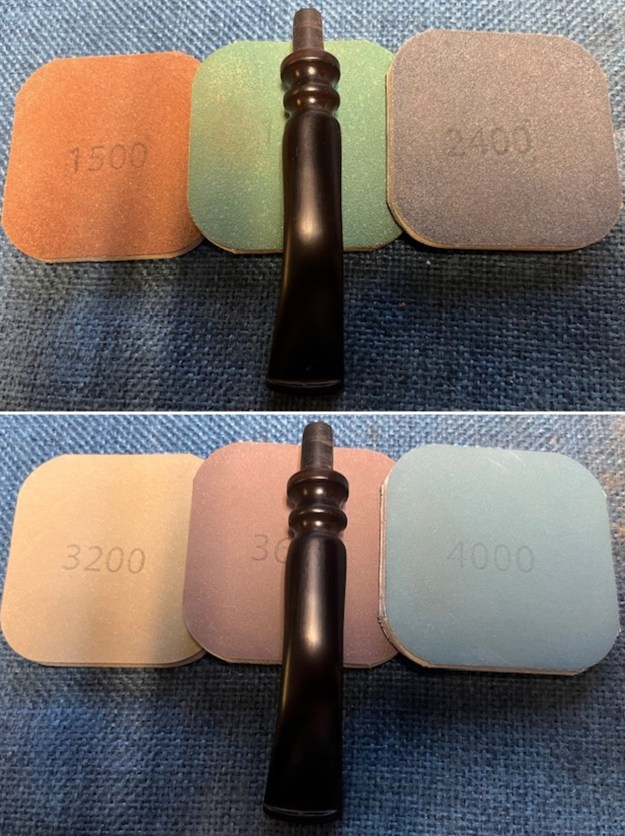
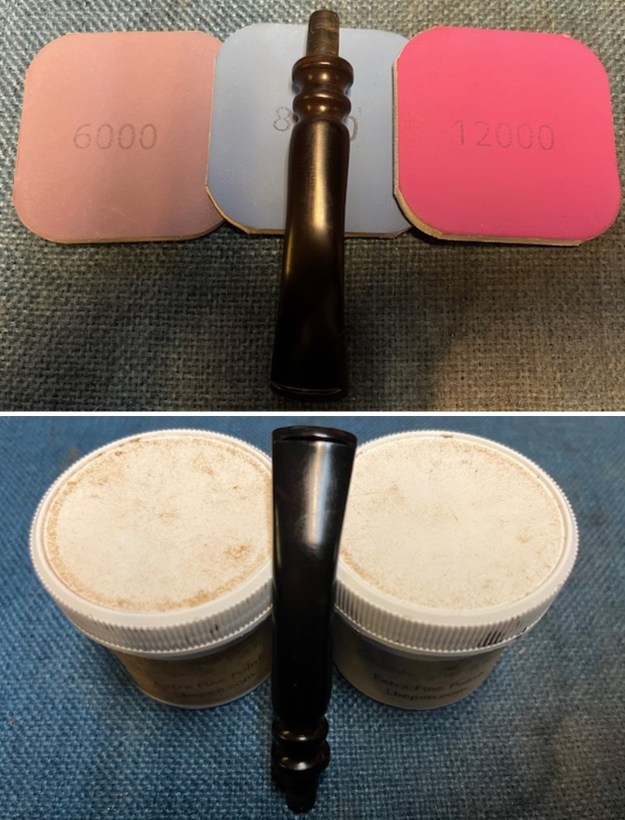
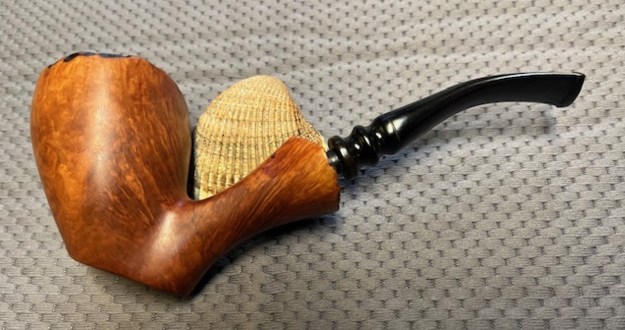
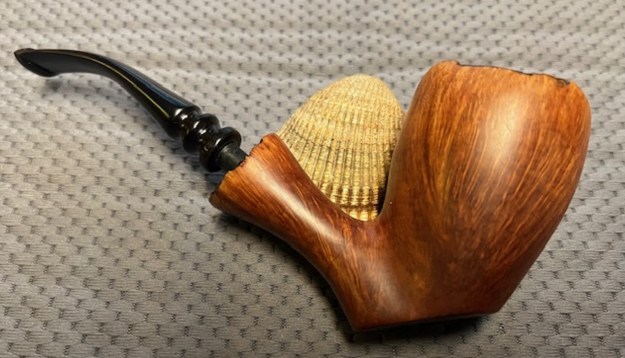
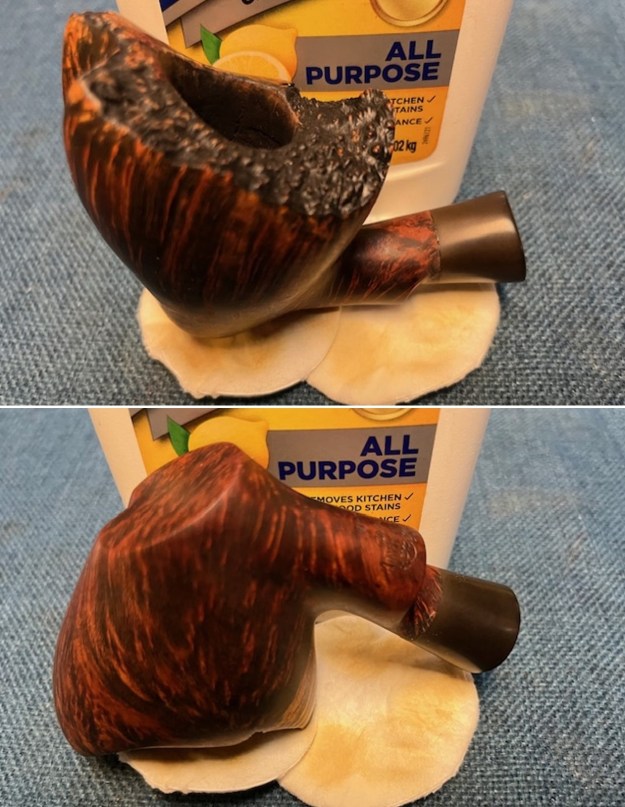
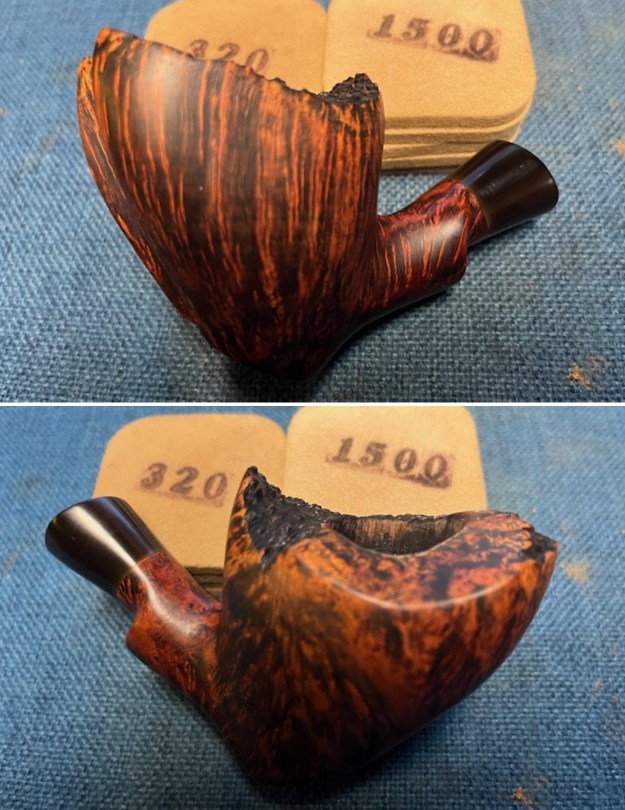
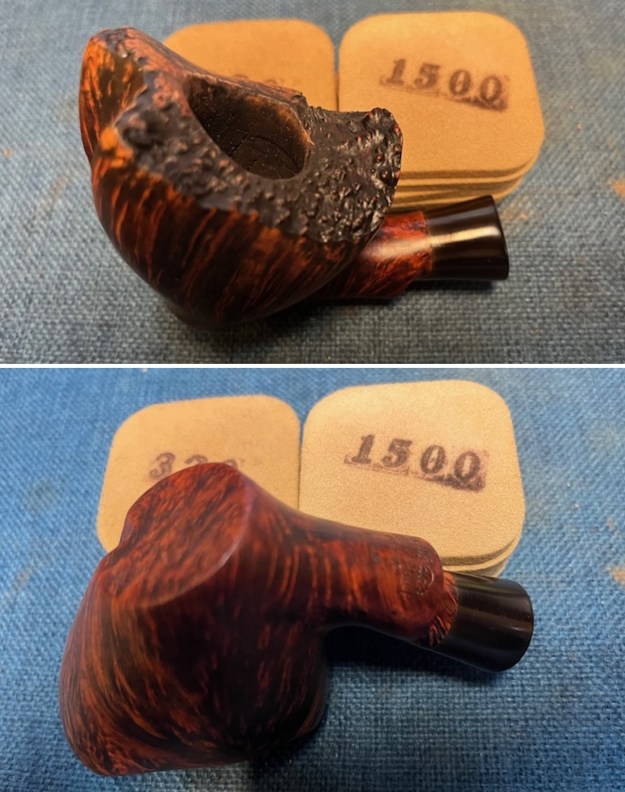
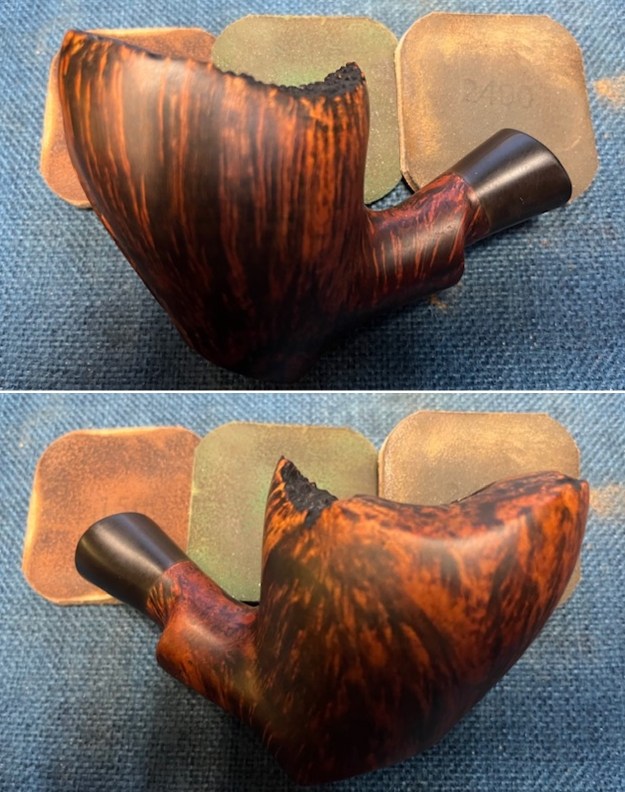
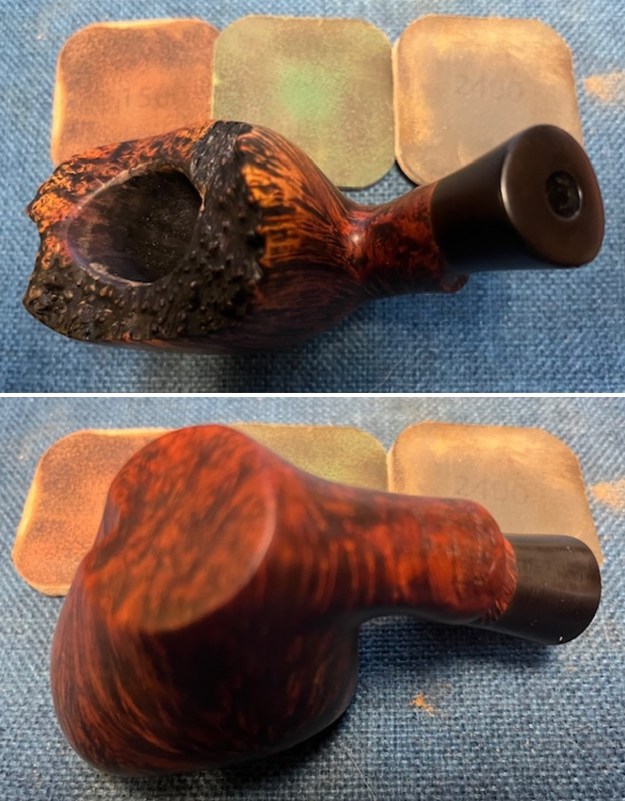
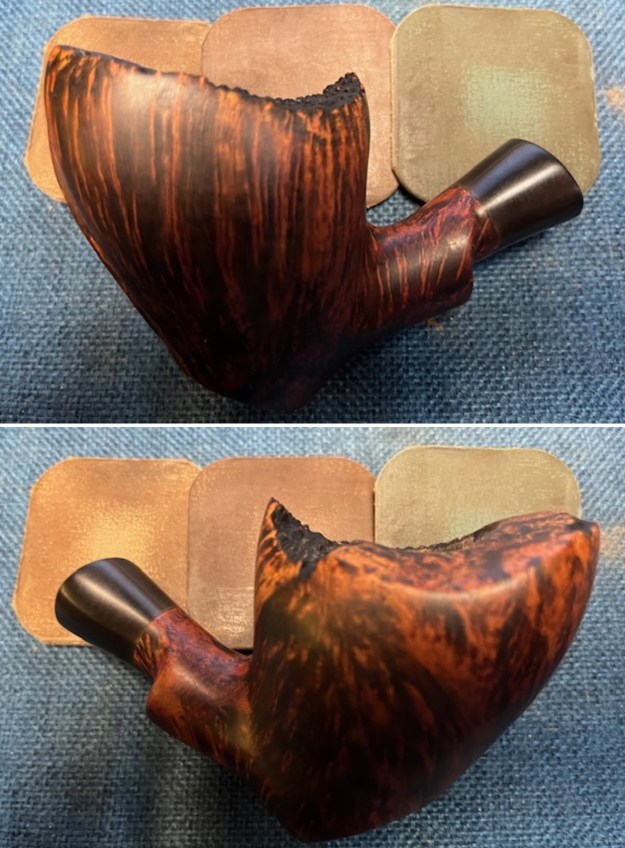
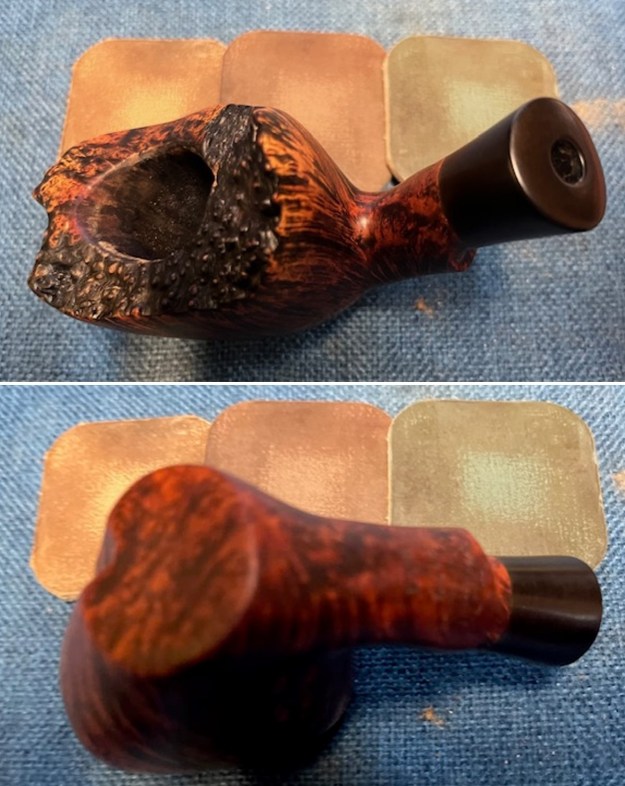
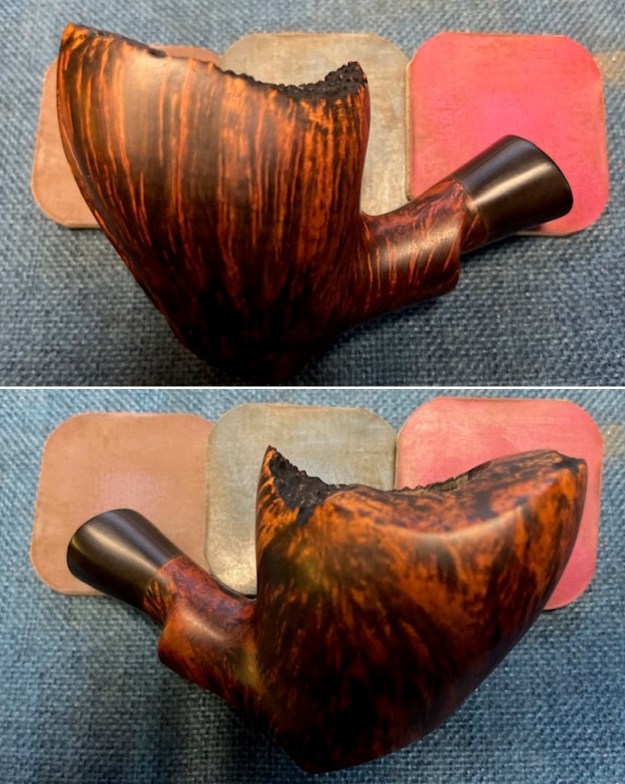
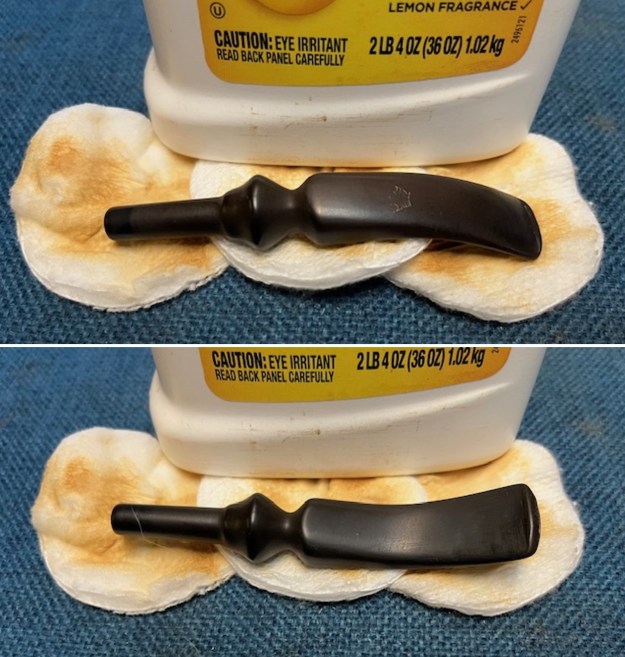
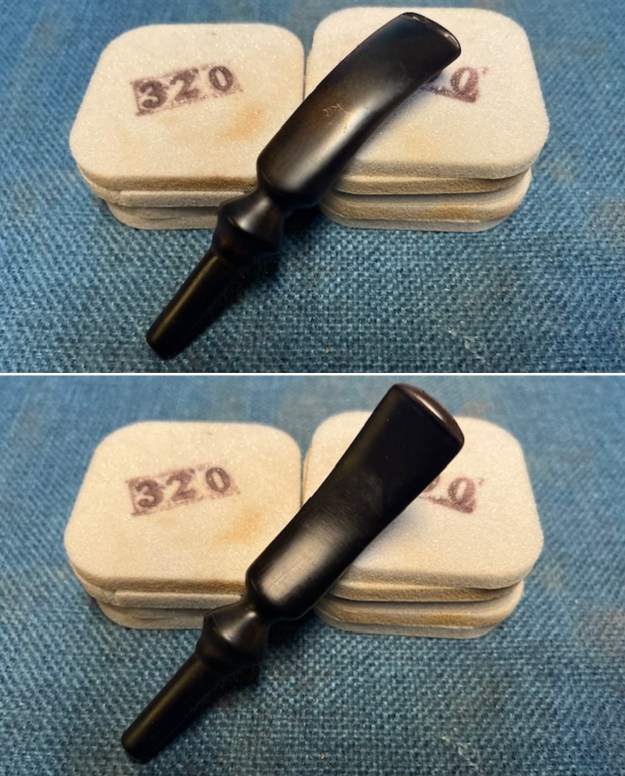
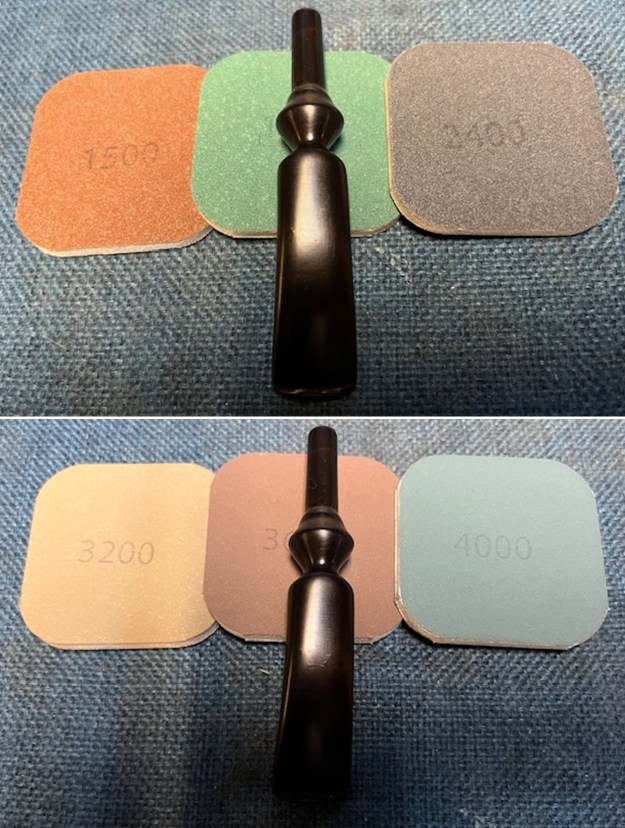
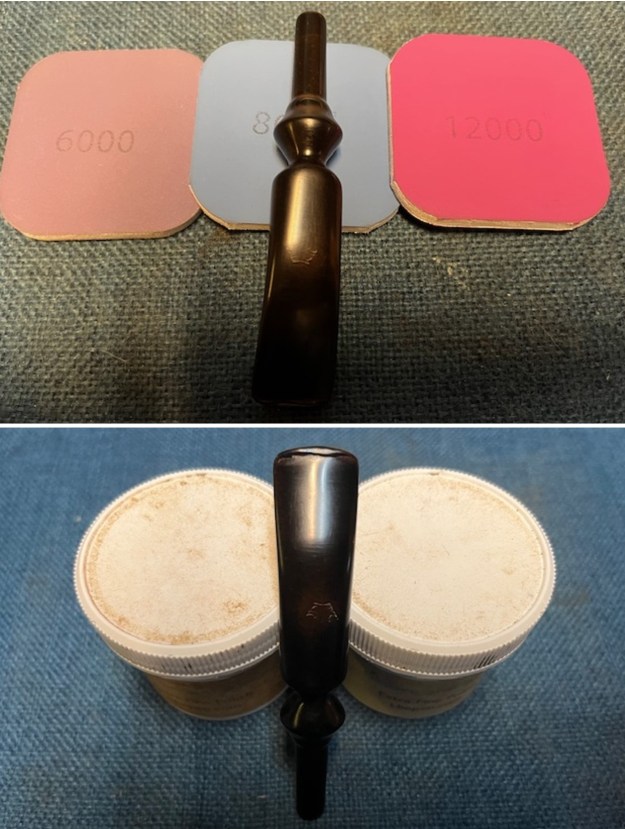
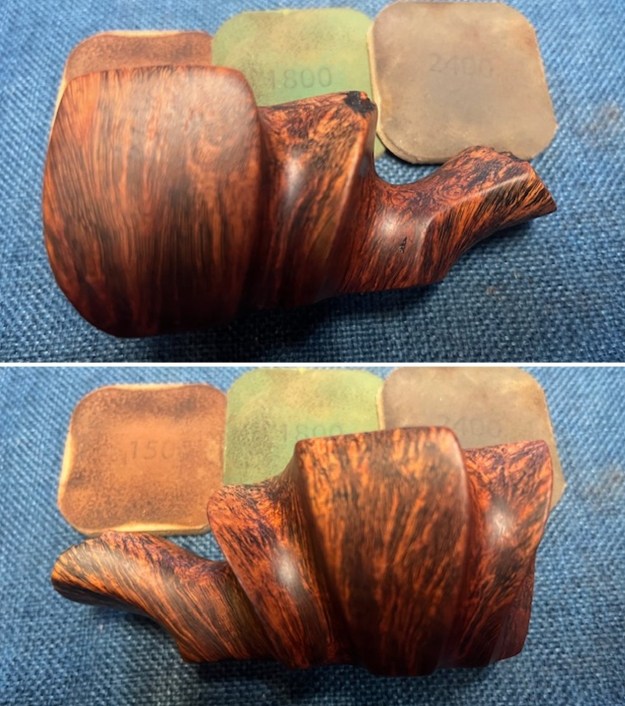
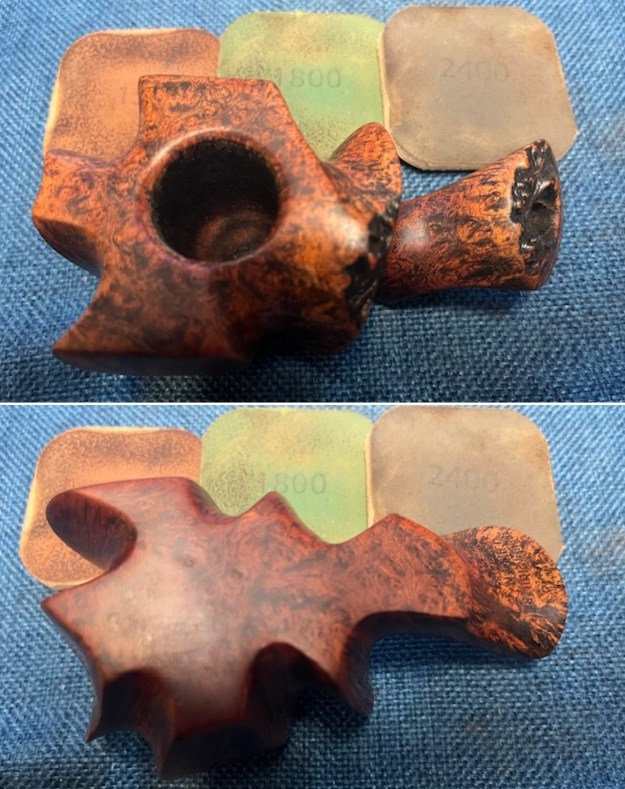
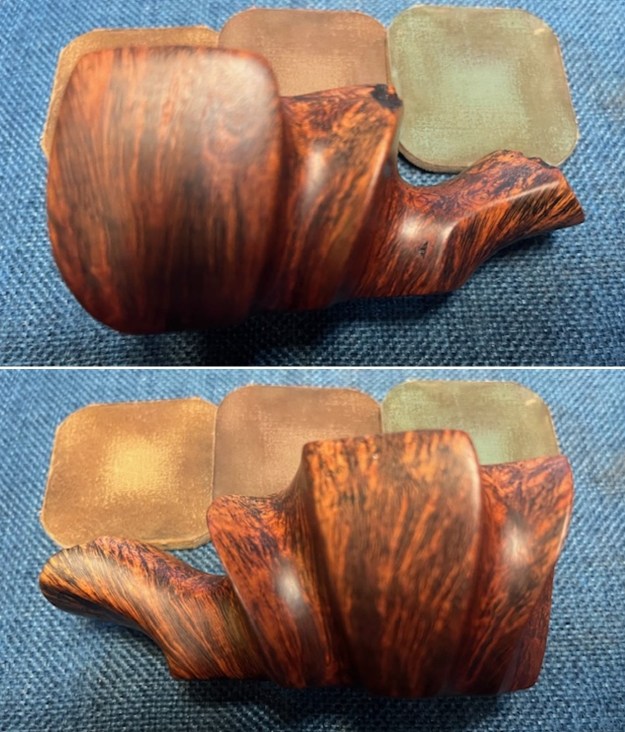
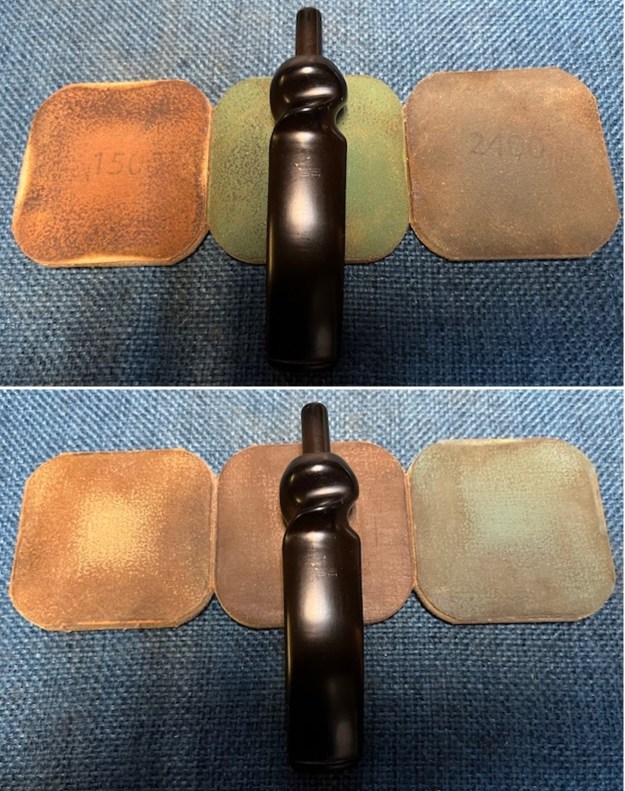
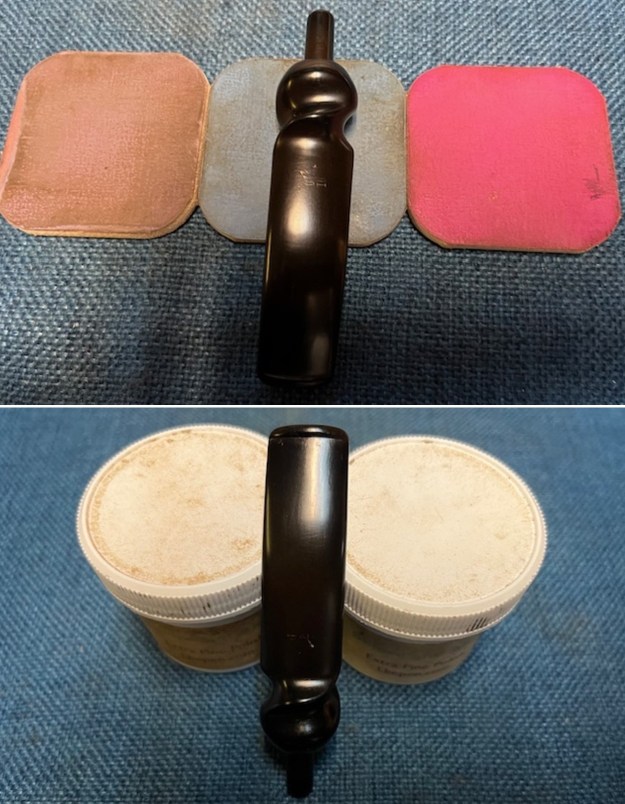
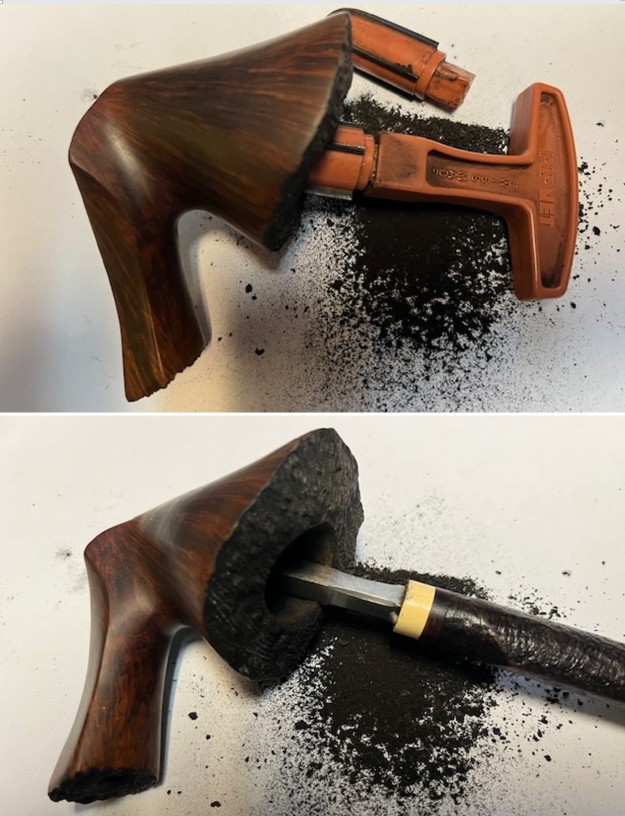
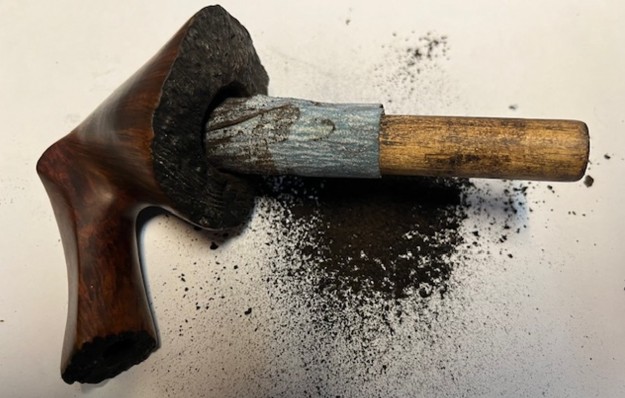
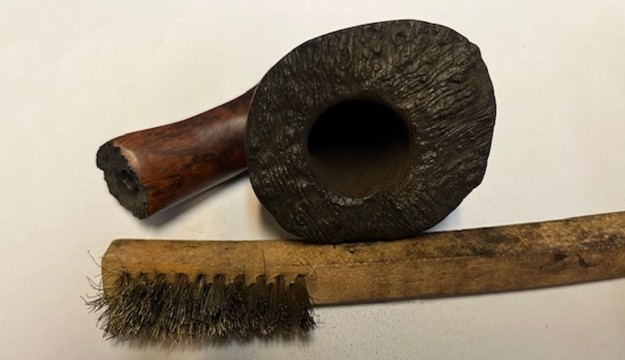
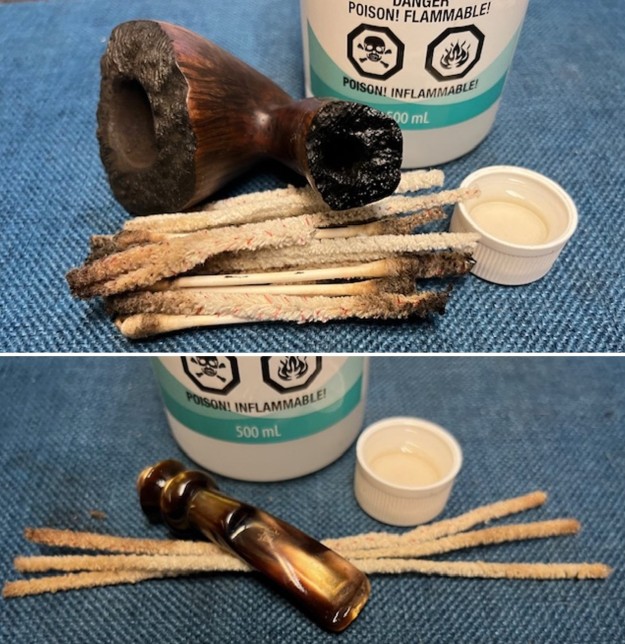
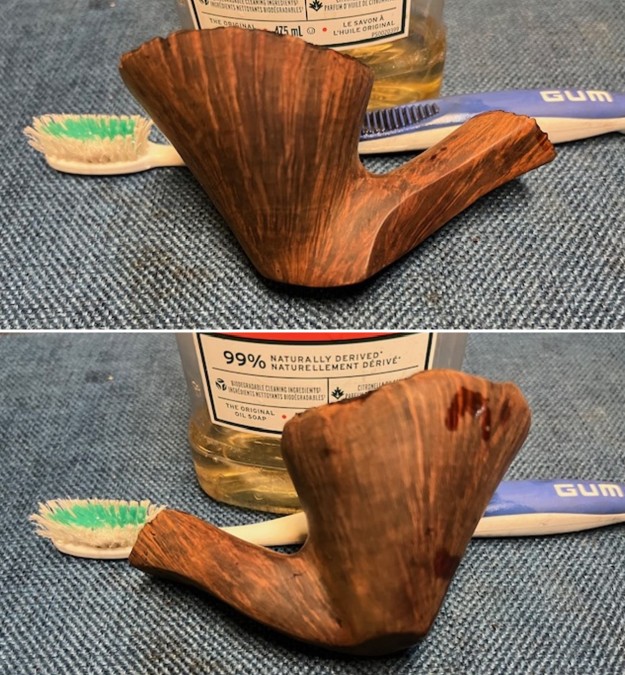
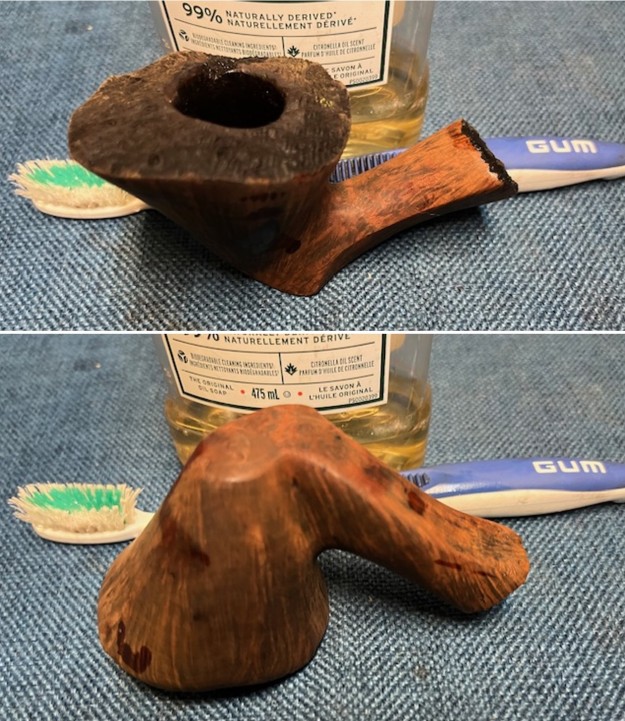
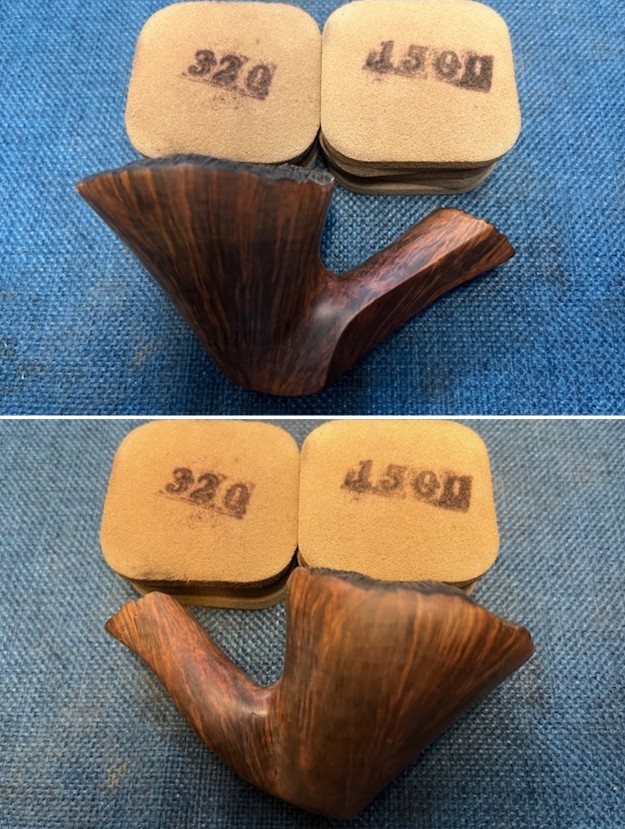
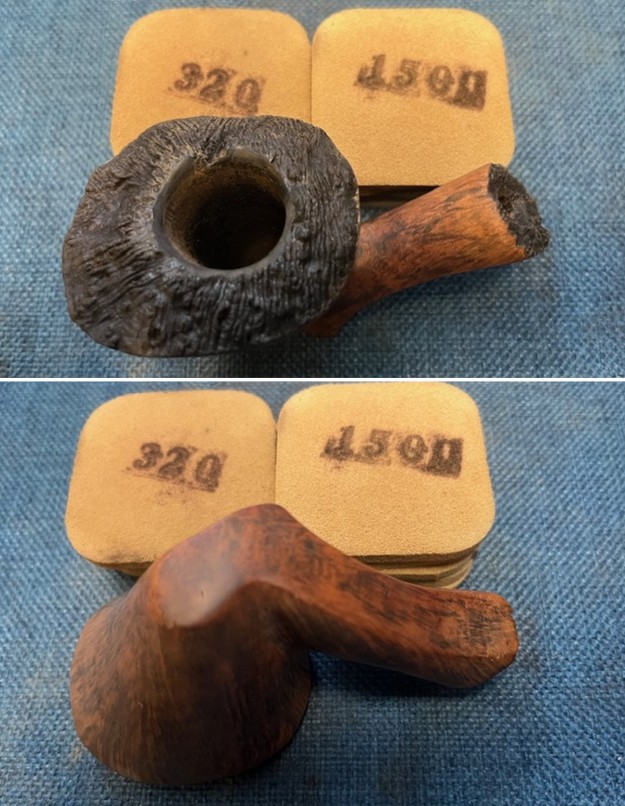
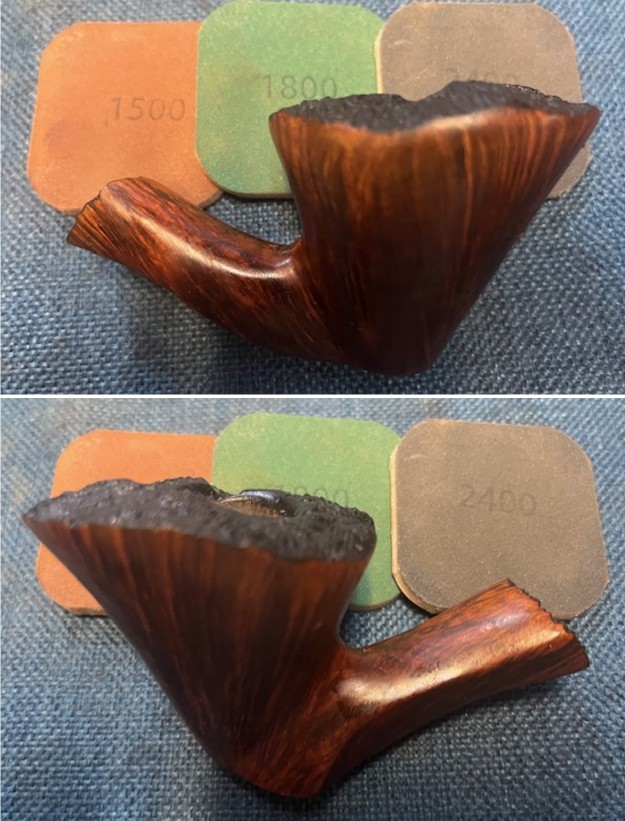
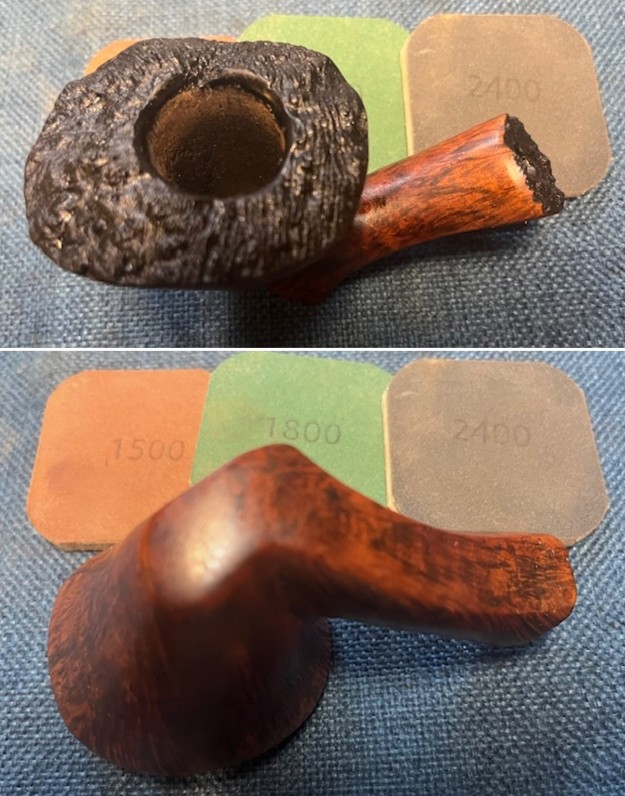
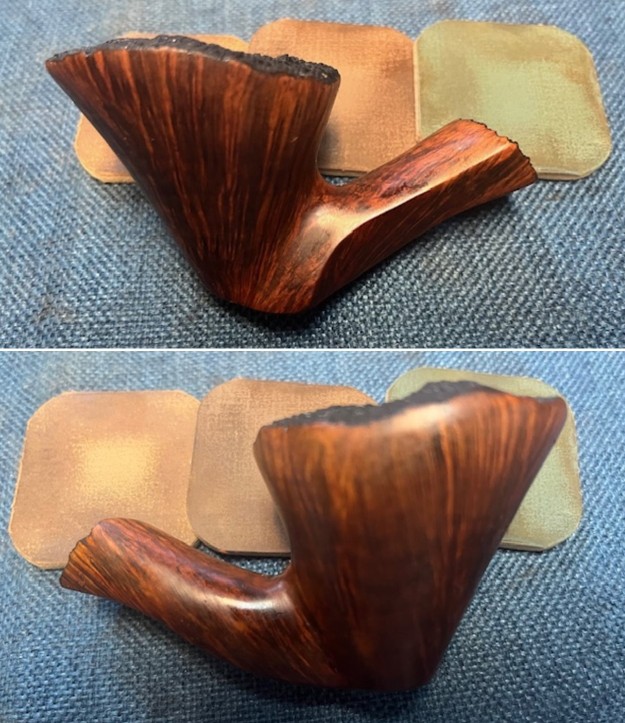
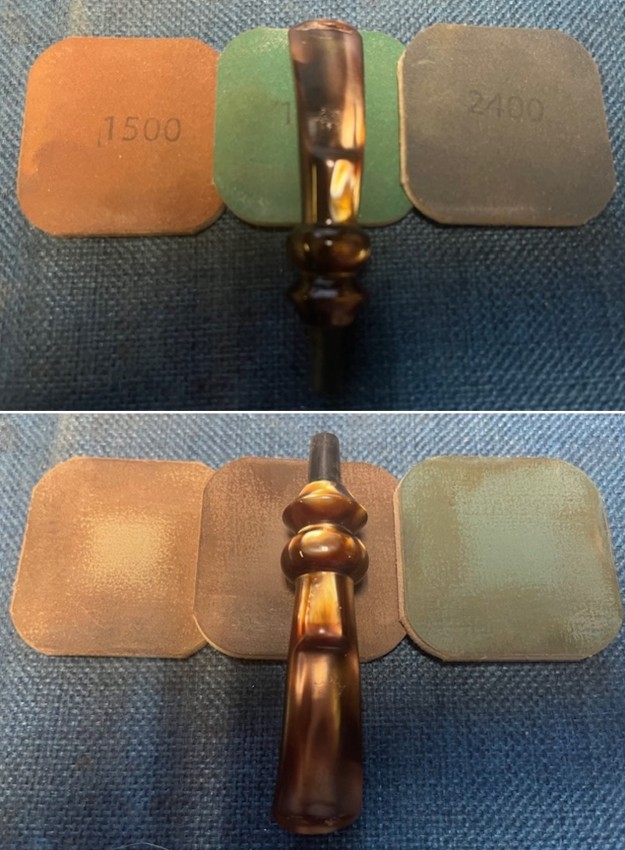
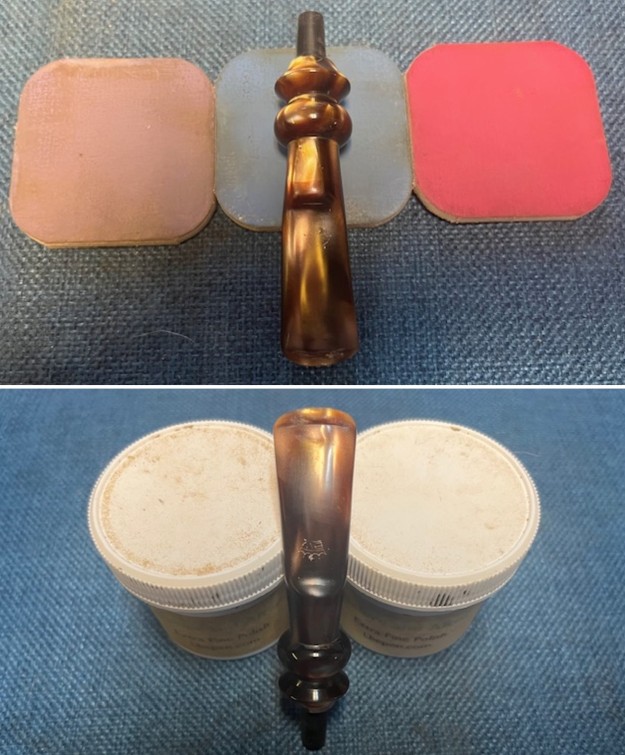
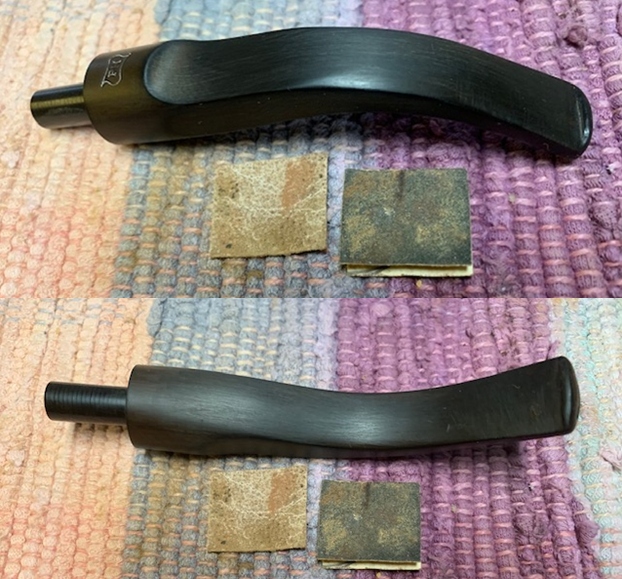
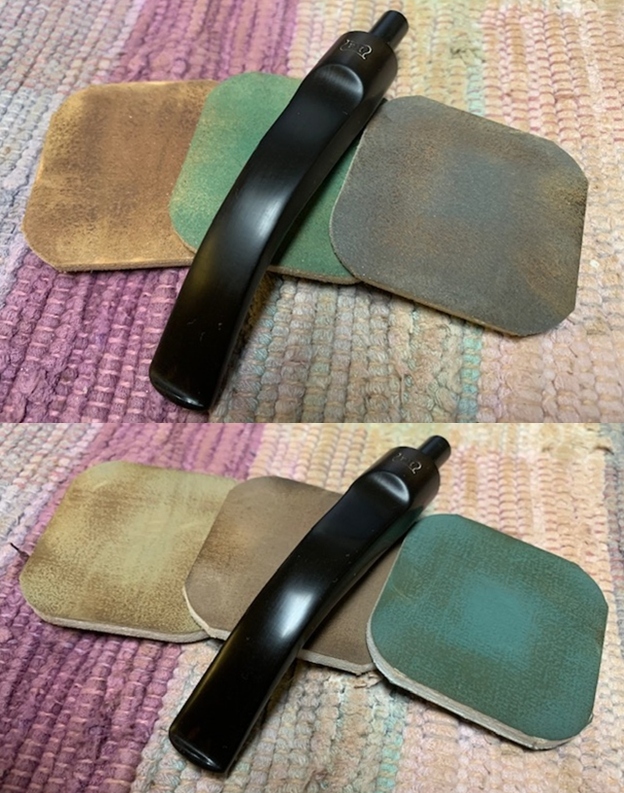
Jeff had done a great job cleaning up the pipe as usual. He reamed the pipe with a PipNet reamer and cut back the cake back to the bare briar. He cleaned up the walls with a Savinelli Fitsall Pipe Knife. He scrubbed the interior of the bowl and shank with pipe cleaners, shank brushes, cotton swabs and alcohol to remove the tars and oils. He scrubbed the exterior of the pipe with undiluted Murphy’s Oil Soap and a tooth brush to remove the grime from the finish. He worked on the rim top lava and darkening with the soap and tooth brush. He scrubbed the inside of the stem with alcohol and shank brushes, pipe cleaners. He scrubbed the exterior with Soft Scrub and then soaked it in Briarville’s Pipe Stem Deoxidizer. He washed it off with warm water to remove the Deoxidizer. The pipe looked far better when it arrived. I took some photos of the rim top and stem to show the condition of them both when it arrived. It looked good. The stem had light tooth marks and chatter ahead of the button on both sides.I took photos of the stamping on the sides of the shank to capture it. The was faint in spots but readable as noted above. I removed the stem and took a photo of the parts to give a sense of the look of the pipe.I started my work on the pipe by working on the oxidation on the shank extension and smoothing out the scratches in the briar with 320-3500 grit 2×2 inch sanding pads. I wiped it down with a damp cloth after each pad to see the progress. The vulcanite is definitely getting back to black and the briar looks very good. I polished the bowl and vulcanite shank extension with micromesh sanding pads – dry sanding with 1500-12000 grit pads. I wiped the briar down after each pad with a damp cloth. The bowl is starting to look very good. I worked some Before & After Restoration Balm into the surface of the briar with my fingertips and into the plateau rim top and shank end with a horsehair shoe brush to clean, enliven and protect it. I let the balm sit for a little while and then buffed with a cotton cloth to raise the shine. The photos show the bowl at this point in the restoration process. I set the bowl aside and turned my attention to the stem. I sanded out the tooth marks ahead of the button with 220 grit sandpaper.I sanded the stem with 320-3500 grit 2×2 inch sanding pads. I wiped the briar down after each pad with a damp cloth to remove the sanding dust and debris. I wiped it down with an Obsidian Oil cloth. It began to look very good.I polished the stem with micromesh sanding pads – wet sanding with 1500-12000 grit sanding pads. I wiped it down after each sanding pad with some Obsidian Oil. I finished polishing it with Before & After Pipe Stem Polish – both Fine and Extra Fine and buffed it off with a cotton cloth. I wiped it down with Obsidian Oil to protect the stem. This is a beautiful Preben Holm made Reflection by Ben Wade 012 Hand Made Freehand with a fancy, turned, gold/tan variegated acrylic stem. It has a great look and feel. The shape fits well in the hand with the curve of the bowl and shank junction a perfect fit for the thumb around the bowl when held. I polished stem and the bowl with Blue Diamond polish on the buffing wheel. I gave the bowl and the stem multiple coats of carnauba wax. I buffed the pipe with a clean buffing pad to raise the shine. I hand buffed it with a microfiber cloth to deepen the shine. The pipe polished up pretty nicely. The rich combination of brown stains and black vulcanite shank extension took on life with the buffing. The rich colour of the briar works well with the polished acrylic stem. I like the grain and finished look of this Preben Holm Reflection by Ben Wade Freehand. Have a look at it with the photos below. The dimensions are Length: 6 inches, Height: 2 ¼ inches, Outside diameter of the bowl: 1 ½ inches, Chamber diameter: 7/8 of an inch. The weight of the pipe is 1.94 ounces/55 grams. This Danish Freehand is a real beauty. Thanks for walking through the restoration with me as I worked over another beautiful pipe. This one will be going on the rebornpipes store in the Danish Pipemakers Section shortly if you would like to add it to your collection. Thanks for your time.

Breathing New Life into a Ben Wade Golden Walnut Hand Made in Denmark Freehand


by Steve Laug

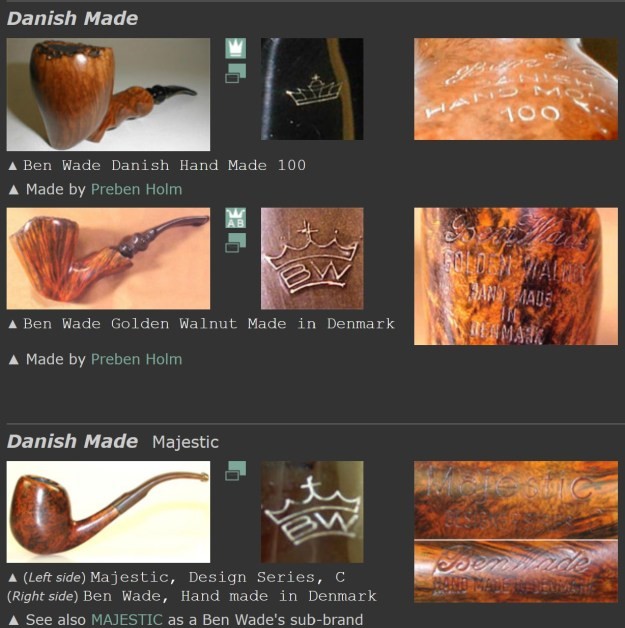
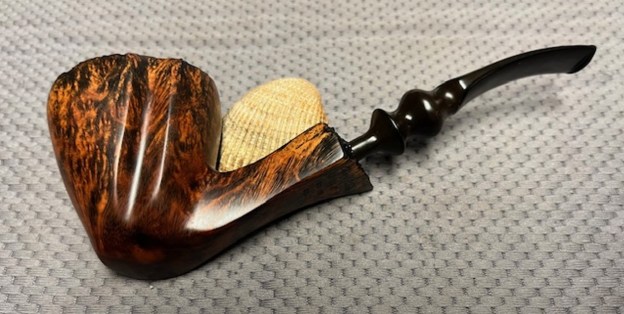
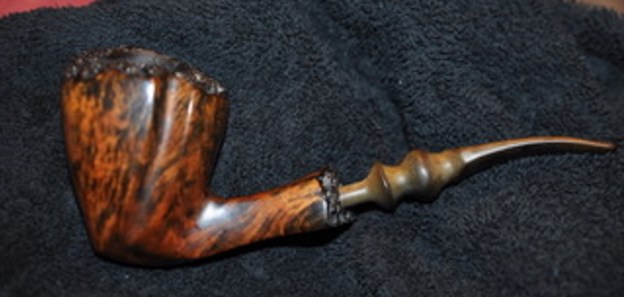
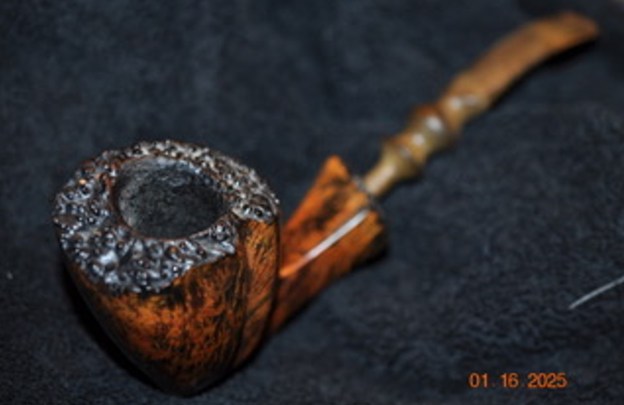
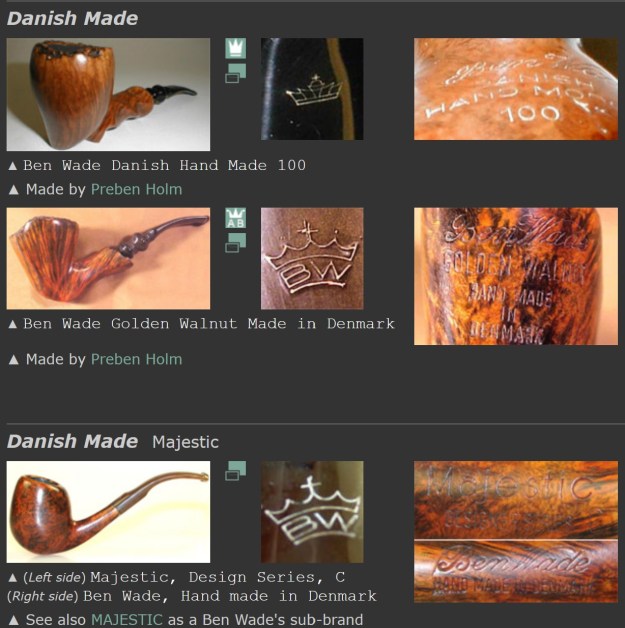
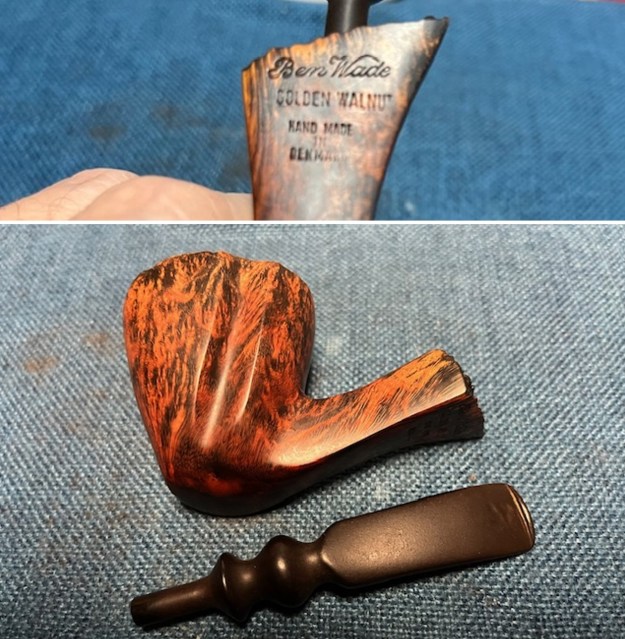
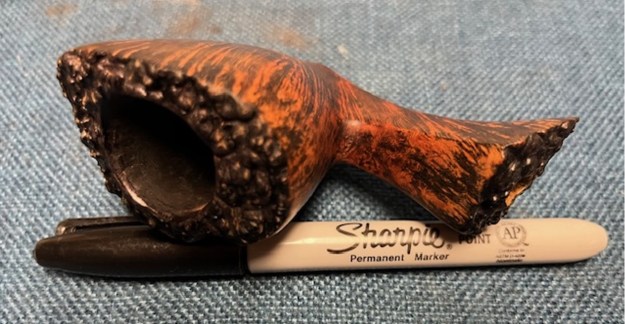
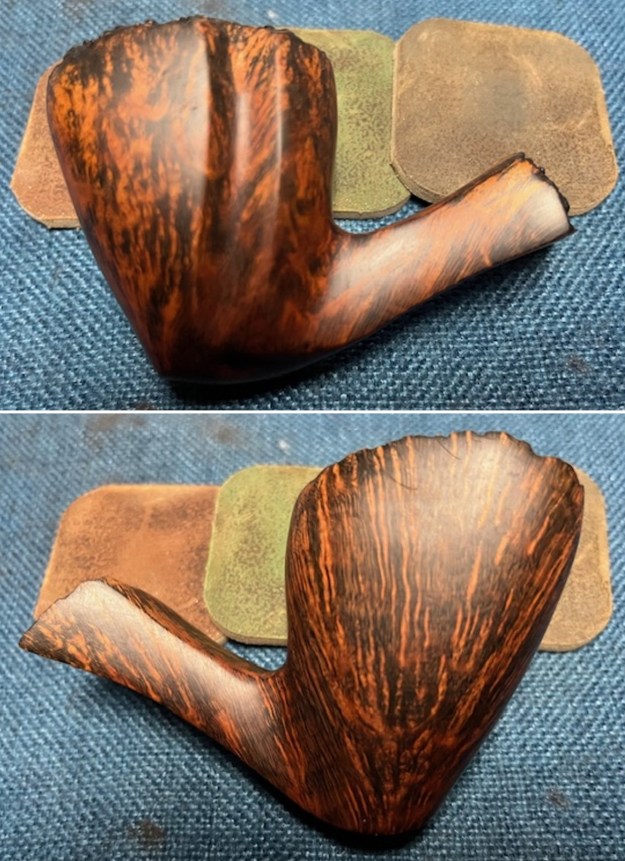
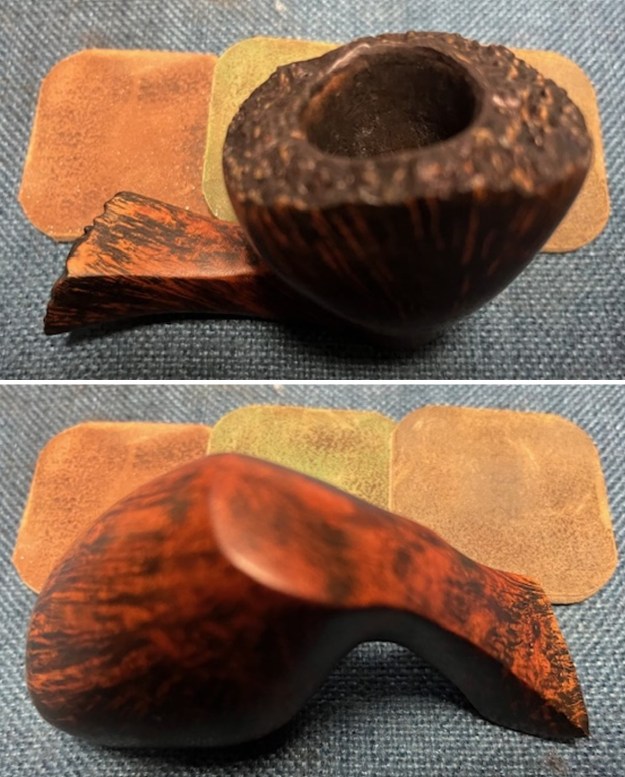
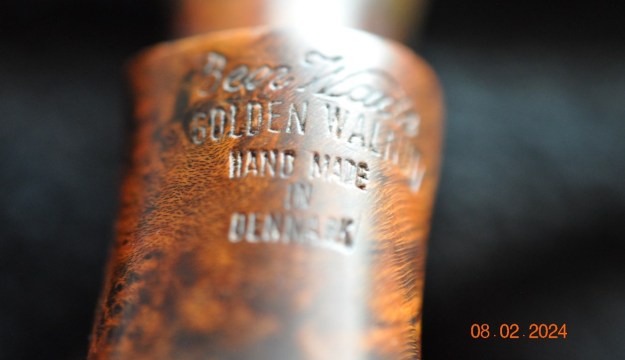
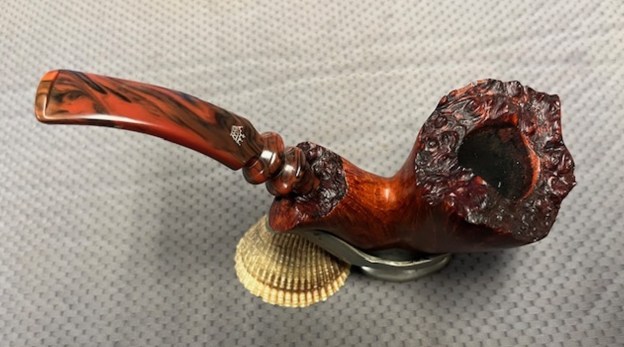
To me there is always something electric about handling and working on a pipe designed and carved by Preben Holm. I can’t describe adequately the feeling I have when I turn the bowl and stem over in my hands even before I start working on the pipe. There is an energy that flows through the way he carved and shaped the pipes of his making. This Ben Wade pipe was no exception. We picked it from an Antique Shop in Ogden, Utah, USA on 09/16/2019. It has a smooth finish with a carved groove on the right side of the bowl. It has plateau on the rim top and the shank end. The shank is almost rectangular. The combination of dark and medium stains highlights grain that runs like flames across both sides of the bowl culminating at the flat heel of the bowl. This is another well-loved pipe as you can see from the thick cake in the bowl and the lava on the rim top. It is hard to know the condition of the inner edge of the bowl due to the lava on the edges. The outside of the bowl and plateau portions are dirty and dusty but the grain pops through. The vulcanite stem was oxidized, dirty and dusty with tooth marks on the blade just ahead of the button on both sides. Jeff took these photos before he started his part of the restoration. He took close up photos of the bowl and rim top from different angles to show the condition of the plateau finish. The bowl has a thick cake that lining the walls and overflowing into lava. There was lava and build up on the rim top and flowing over the inner edge of the bowl onto the plateau. It is hard to know if there is damage or if the lava protected it. He also took photos of the stem to show the surface of the top and underside of the vulcanite stem. You can see the tooth marks and damage both sides ahead of the button. He took photos of the sides and heel of the bowl to show the lay of the grain around the pipe. It is a beautiful piece of briar. The top of the bowl is craggy and rugged looking. Unique! The shank end is also a unique mix of plateau and smooth. Jeff took several photos of the stamping on the underside of the shank to capture all of the stamping. It was clear and read Ben Wade in script at the top. Under that it read Golden Walnut. Under that was stamped Hand Made in Denmark. I turned to Pipephill’s site (http://www.pipephil.eu/logos/en/logo-benwade.html) and did some looking at the section on Ben Wade Pipes. The second photo in the screen capture below is a Golden Walnut Pipe.  The finish and overall look is the similar. The stem I have is not stamped, or at least it is worn from buffing. The stamping on the shank is identical.I am including the background history that I included on the previous blog. It includes the idea that the Preben Holm pipes were marketed under the Ben Wade label in the US and imported through Lane Ltd. I quote below:

I turned to Pipedia and read the listing on the brand to refresh my memory and flesh out the knowledge of the brand (https://pipedia.org/wiki/Ben_Wade). I have included a photo from that site that was taken from a Tinderbox advertisement.

Ben Wade Ad in a Tinder Box catalog, courtesy Doug Valitchka

I quote the portion of the article that summarizes the history of the brand.

Young Copenhagen master pipemaker Preben Holm had made a meteoric career heading a pipe manufacture employing 45 people at the age of 22! But around the turn of 1970/71 he was in major financial difficulties. His US distributor, Snug Harbour Ltd. in New York City, left him in the lurch. Holm had three unpaid invoices on his desk and another large shipment was ready for the USA, when Snug Harbour’s manager told him on the phone that there was no money at all on the account to pay him.

So the Dane went to New York for an almost desperate search for a new distribution partner. He made contacts with Lane Ltd. and met Herman G. Lane in February 1971. Lane Ltd. had no interest in Holm’s serial pipes produced at that time but so much the more in the hand-carved freehands because the hype for Danish freehands and fancies in the States was still on its way to the climax then. The meeting resulted in an agreement to start a cooperation. Lane insisted to improve the quality considerably and in return he assured to be able to sell essentially larger quantities.

Holm went back home to work on new samples with all-new designs and altered finishes for Lane. Both, Lane and Holm, agreed that it would be unwise to sell the pipes under Preben Holm’s name as long as Snug Harbour had a considerable stock of Preben Holm pipes and might sell them pipes at very low prices just to bring in some money.

So, on Mr. Lane’s proposal it was determined to use the name Ben Wade belonging to Lane Ltd. Lane spent considerable amounts of money for advertising the new brand in the big magazines– the centerpiece being whole-page ads showing a very exclusive Seven Day’s Set.

The cooperation with Lane Ltd. proved to be an eminent business success for both partners. Within a very short time Ben Wade Handmade Denmark sold in much larger quantities and at higher prices than they had ever dreamed of. And the hype these freehands and fancy pipes caused went on unbroken long after Herman G. Lane deceased. Preben Holm – obviously much more brilliant in pipe making than in pipe business – was in major troubles again in 1986 and had to sack most of his staff. The Ben Wade production was significantly lowered but continued until his untimely death in June of 1989.

Up to now Preben Holm made Ben Wade pipes are cult and highly sought for on the estate markets.

With that information my initial thoughts were confirmed. This pipe was another Preben Holm made Freehand distributed in the US by Lane Ltd under the name Ben Wade. The freehand rage occurred in the late 70s and the pipes were made until Preben’s death in 1989. My guess would be that this pipe was made sometime during that time period and potentially in the late 70s.

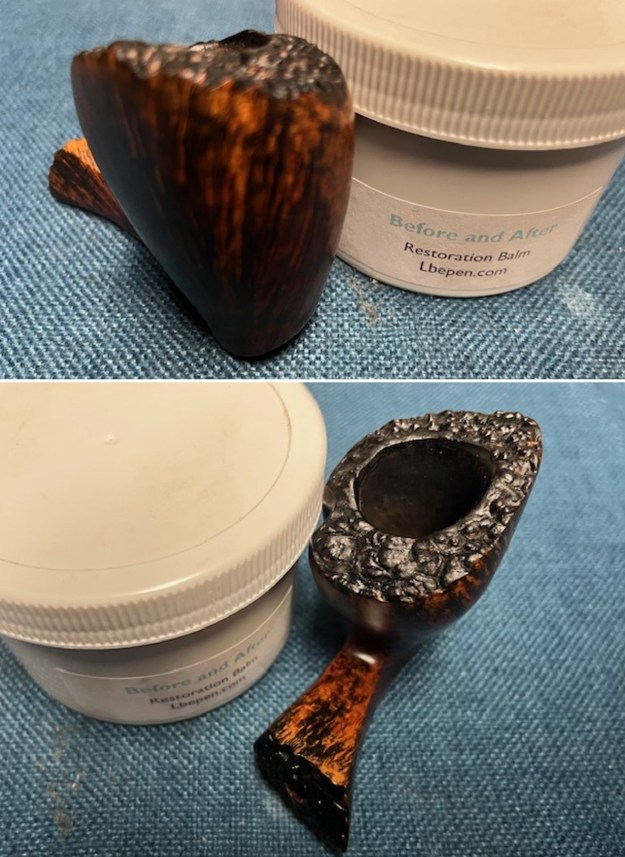
Jeff had done a great job cleaning up the pipe as usual. He reamed the pipe with a PipNet reamer and cut back the cake back to the bare briar. He cleaned up the walls with a Savinelli Fitsall Pipe Knife. He scrubbed the interior of the bowl and shank with pipe cleaners, shank brushes, cotton swabs and alcohol to remove the tars and oils. He scrubbed the exterior of the pipe with undiluted Murphy’s Oil Soap and a tooth brush to remove the grime from the finish. He worked on the rim top lava and darkening with the soap and tooth brush. He scrubbed the inside of the stem with alcohol and shank brushes, pipe cleaners. He scrubbed the exterior with Soft Scrub and then soaked it in Briarville’s Pipe Stem Deoxidizer. He washed it off with warm water to remove the Deoxidizer. The pipe looked far better when it arrived. I took some photos of the rim top and stem to show the condition of them both when it arrived. It looked good. There is some darkening and damage to the inner edge of the bowl. The stem had some deep tooth marks ahead of the button and on the button surface on both sides.I took photos of the stamping on the sides of the shank to capture it. The was faint in spots but readable as noted above. I removed the stem and took a photo of the parts to give a sense of the look of the pipe.To begin my part of the restoration work I restained the plateau top and shank end with a Black Sharpie Pen. It is amazing how good the plateau looks once it is cleaned and stained.I polished the bowl with micromesh sanding pads – wet sanding with 1500-12000 grit pads. I wiped the briar down after each pad with a damp cloth. The bowl is starting to look very good. I worked some Before & After Restoration Balm into the surface of the briar with my fingertips and into the plateau rim top and shank end with a horsehair shoe brush to clean, enliven and protect it. I let the balm sit for a little while and then buffed with a cotton cloth to raise the shine. The photos show the bowl at this point in the restoration process. I set the bowl aside and turned my attention to the stem. The stem was very clean so I filled in the tooth marks with clear super glue and set it aside to cure. Once it had cured I flattened out the repairs and sharpened the edge of the button with a needle file. I sanded out the tooth chatter with 220 grit sandpaper. I sanded the stem with 320-3500 grit 2×2 inch sanding pads. I wiped the briar down after each pad with a damp cloth to remove the sanding dust and debris. I wiped it down with an Obsidian Oil cloth. It began to look very good.I polished the stem with micromesh sanding pads – wet sanding with 1500-12000 grit sanding pads. I wiped it down after each sanding pad with some Obsidian Oil. I finished polishing it with Before & After Pipe Stem Polish – both Fine and Extra Fine and buffed it off with a cotton cloth. I wiped it down with Briarville’s No Oxy Oil to protect the stem and slow down the oxidation. This is a beautiful Preben Holm made Ben Wade Golden Walnut with a fancy, turned, black vulcanite stem. It has a great look and feel. The shape fits well in the hand with the curve of the bowl and shank junction a perfect fit for the thumb around the bowl when held. I polished stem and the bowl with Blue Diamond polish on the buffing wheel. I gave the bowl and the stem multiple coats of carnauba wax. I buffed the pipe with a clean buffing pad to raise the shine. I hand buffed it with a microfiber cloth to deepen the shine. The pipe polished up pretty nicely. The rich combination of browns and black in the smooth finish and the plateau areas took on life with the buffing. The rich colour of the briar works well with the polished vulcanite stem. I like the grain and finished look of this Preben Holm Ben Wade Golden Walnut pipe. Have a look at it with the photos below. The dimensions are Length: 7 inches, Height: 2 ½ inches, Outside diameter of the bowl: 1 ½ inches wide x 2 inches long, Chamber diameter: 1 inch. The weight of the pipe is 2.40 ounces/ 69 grams. This Danish Freehand is a real beauty. Thanks for walking through the restoration with me as I worked over another beautiful pipe. This one will be going on the rebornpipes store in the Danish Pipemakers Section shortly if you would like to add it to your collection. Thanks for your time.

Repairing a Broken Tenon and Restoring a Wreck of a Ben Wade Deluxe Freehand


by Steve Laug

There is something almost electric about handling and working on a pipe designed and carved by Preben Holm. I can’t describe adequately the feeling I have when I turn the bowl and stem over in my hands even before I start working on the pipe. There is an energy that flows through the way he carved and shaped the pipes of his making. It calls me to clean up and restore even the worst wrecks of his pipes that come across my table. This filthy Ben Wade Deluxe was in the box of bowls with snapped tenons that I have here. It is number 6 of the recent rash of tenon replacements I have been doing.

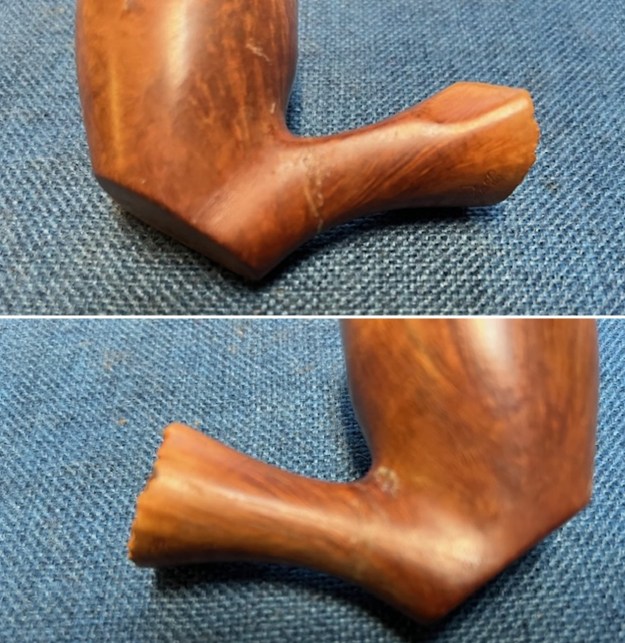
In the title I call the pipe a wreck because of some serious issues that stood out on the pipe. It had some visible repairs on the shank at the bowl and on the plateau on the shank end. The shank had been broken off somewhere along its journey. It had been well repaired with a stainless tube inside the shank. The repairer left a lot of glue all around the repaired crack – I say around because it went well beyond just the crack. It was a mess. The shank end plateau had what looked like a crack but surprisingly turned out to be a repaired chunk of briar that had been expertly fit and rusticated on the top right side along the mortise. The vulcanite stem had a snapped tenon and was oxidized, calcified and had tooth marks ahead of the button on both sides.

The grain on the bowl was present but almost a ghost. Preben Holm always chased the grain so it must be there under the dirt, messy glue and heavy oils on the surface. The plateau on the rim top was worn and heavily filled in with lava and debris on both the top. The shank end plateau was dry and spotty looking from the grime. While the pipe was a wreck all of the repairs pointed to the fact that it was well loved. It had continued to be smoked until the tenon snapped in the shank. The thick cake in the bowl and the lava on the rim top point to the fact that it was always in use. The cake is quite sticky and stinky and makes me wonder what was smoked in the pipe. Was it a heavily cased aromatic or something more nefarious? I am not sure, maybe both! I took these photos before I started my work. I took close up photos of the bowl and rim top to show the condition of both the bowl and plateau finish. You can see the lava and build up on the rim top and the lava flowing over the inner edge of the bowl. It is hard to know if there is damage or if the lava protected it. The bowl has a thick cake that lining the walls and overflowing into lava. The plateau surface is duty and also has some lava overflow in the valleys and crannies of the surface. The stem is oxidized, calcified and has tooth marks and chatter on both sides ahead of the button. Add to the mix the snapped tenon and you have a mess!I took a photo of the shank end to show the snapped tenon in the shank. It is snapped off quite smooth so it should be a relatively easy fix.I took a photo of the stamping on the underside of the shank, It is clear and readable. It reads Ben Wade [over] Deluxe [over] Hand Made [over] In [over] Denmark.I remembered a bit of history on the brand that included the thought that the Preben Holm pipes were marketed under the Ben Wade label in the US and imported through Lane Ltd. I turned to Pipedia and read the listing on the brand to refresh my memory and flesh out the knowledge of the brand (https://pipedia.org/wiki/Ben_Wade). I have included a photo from that site that was taken from a Tinderbox advertisement.Ben Wade Ad in a Tinder Box catalog, courtesy Doug Valitchka 

I quote the portion of the article that summarizes the history of the brand.

Advertisement

Young Copenhagen master pipemaker Preben Holm had made a meteoric career heading a pipe manufacture employing 45 people at the age of 22! But around the turn of 1970/71 he was in major financial difficulties. His US distributor, Snug Harbour Ltd. in New York City, left him in the lurch. Holm had three unpaid invoices on his desk and another large shipment was ready for the USA, when Snug Harbour’s manager told him on the phone that there was no money at all on the account to pay him.

So the Dane went to New York for an almost desperate search for a new distribution partner. He made contacts with Lane Ltd. and met Herman G. Lane in February 1971. Lane Ltd. had no interest in Holm’s serial pipes produced at that time but so much the more in the hand-carved freehands because the hype for Danish freehands and fancies in the States was still on its way to the climax then. The meeting resulted in an agreement to start a cooperation. Lane insisted to improve the quality considerably and in return he assured to be able to sell essentially larger quantities.

Holm went back home to work on new samples with all-new designs and altered finishes for Lane. Both, Lane and Holm, agreed that it would be unwise to sell the pipes under Preben Holm’s name as long as Snug Harbour had a considerable stock of Preben Holm pipes and might sell them pipes at very low prices just to bring in some money.

So on Mr. Lane’s proposal it was determined to use the name Ben Wade belonging to Lane Ltd. Lane spent considerable amounts of money for advertising the new brand in the big magazines– the centerpiece being whole-page ads showing a very exclusive Seven Day’s Set.

The cooperation with Lane Ltd. proved to be an eminent business success for both partners. Within a very short time Ben Wade Handmade Denmark sold in much larger quantities and at higher prices than they had ever dreamed of. And the hype these freehands and fancy pipes caused went on unbroken long after Herman G. Lane deceased. Preben Holm – obviously much more brilliant in pipe making than in pipe business – was in major troubles again in 1986 and had to sack most of his staff. The Ben Wade production was significantly lowered but continued until his untimely death in June of 1989.

Up to now Preben Holm made Ben Wade pipes are cult and highly sought for on the estate markets.

With that information I knew that this pipe was a Preben Holm made Freehand for distribution in the US by Lane Ltd under the name Ben Wade. The freehand rage occurred in the late 70s and the pipes were made until Preben’s death in 1989. My guess would be that this pipe was made sometime during that time period and potentially in the late 70s.

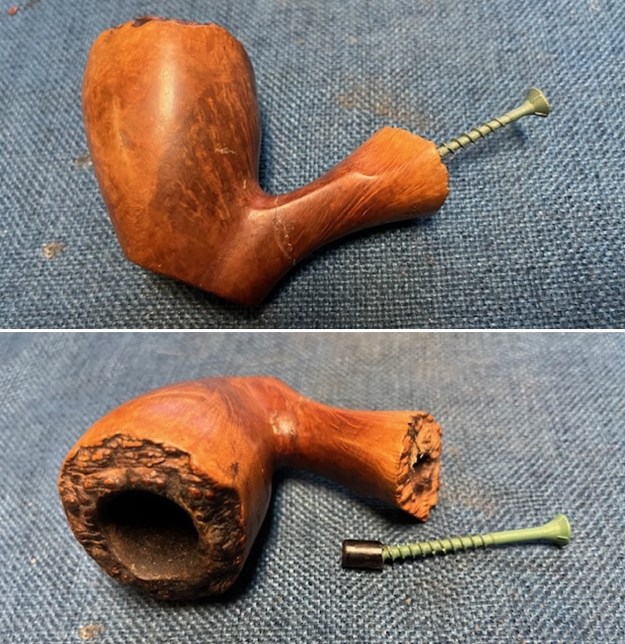
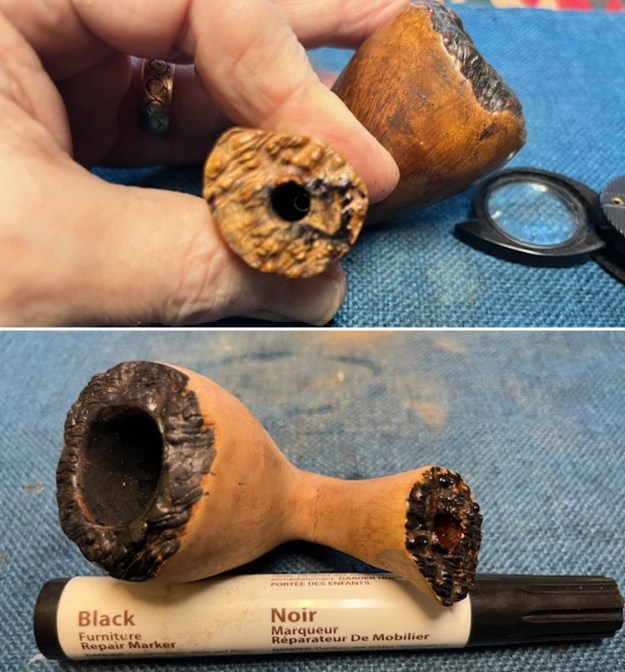
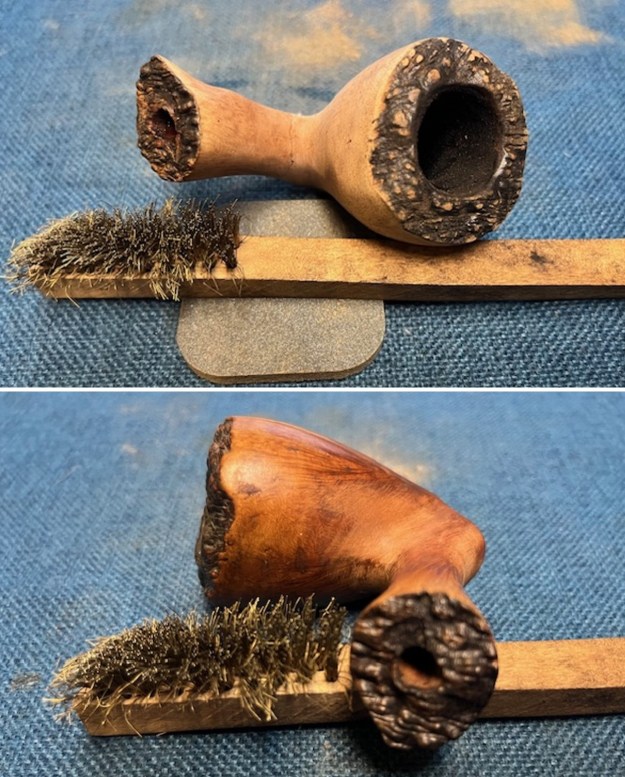
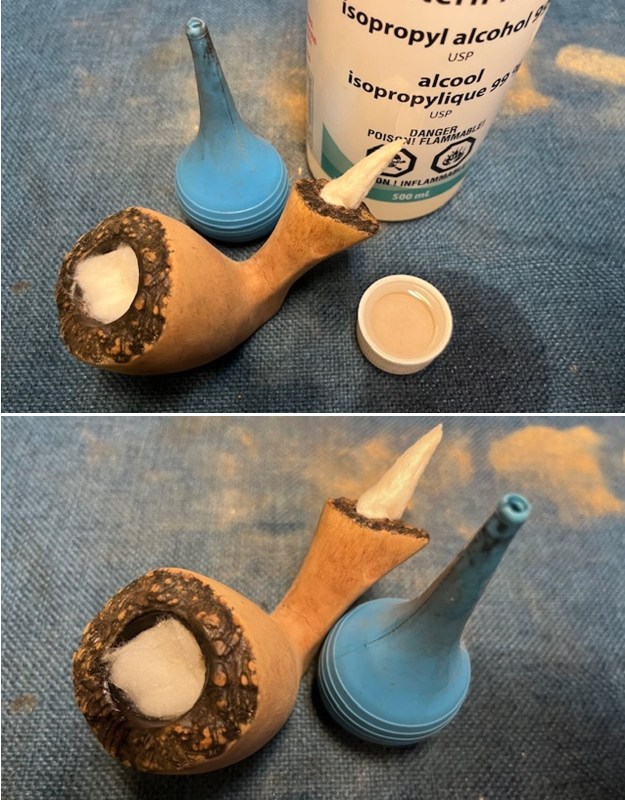
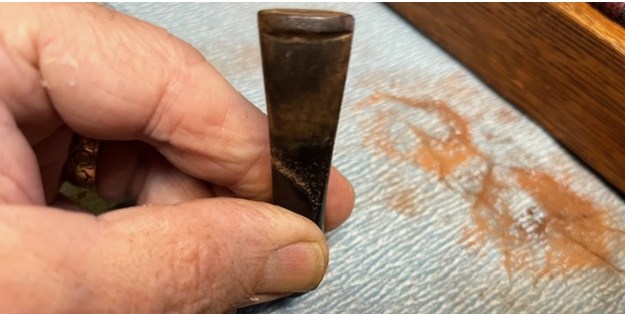
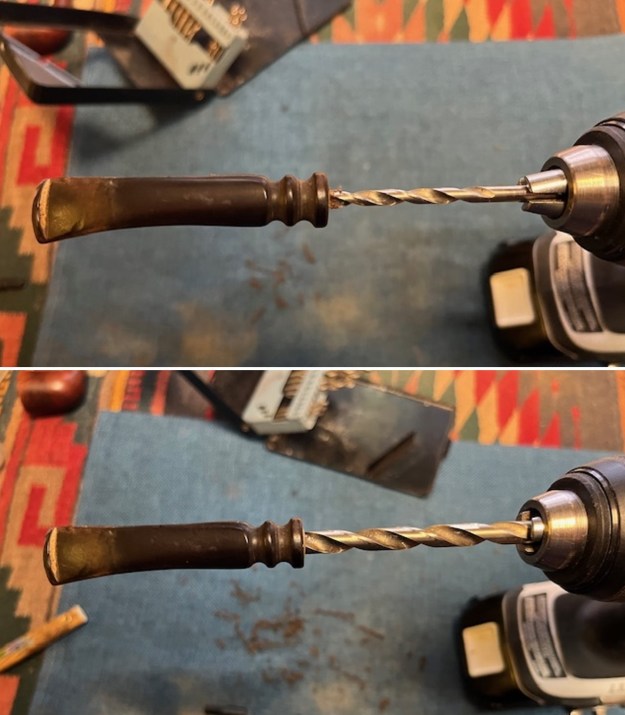
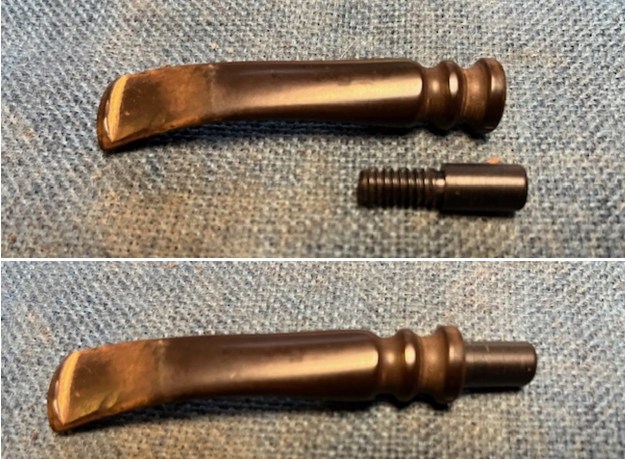
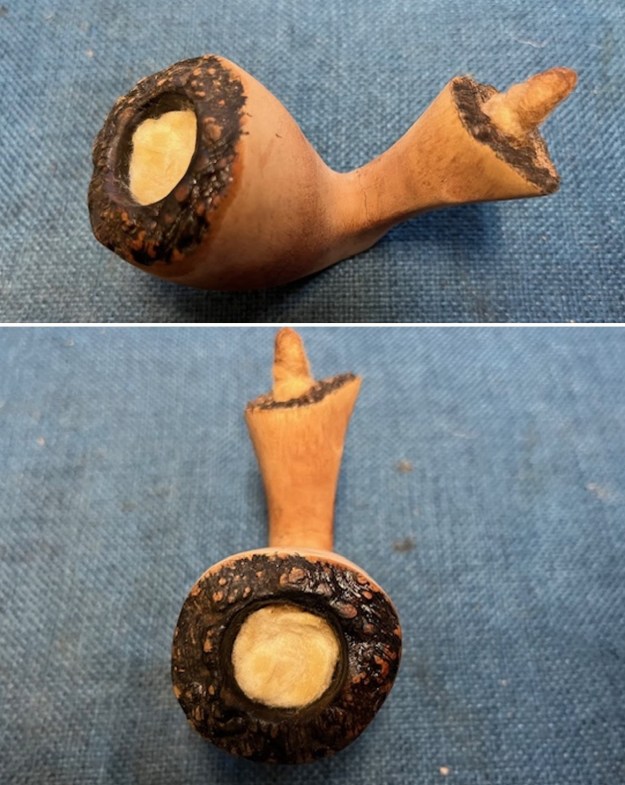
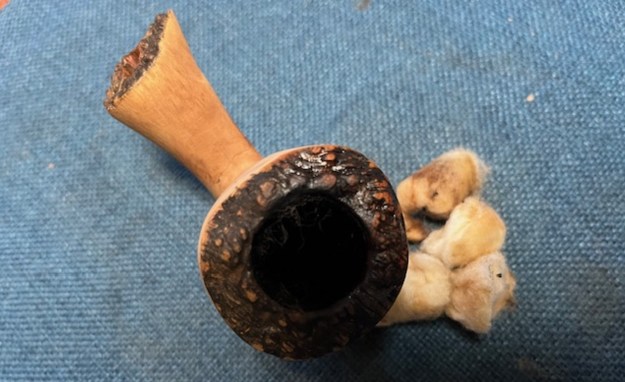
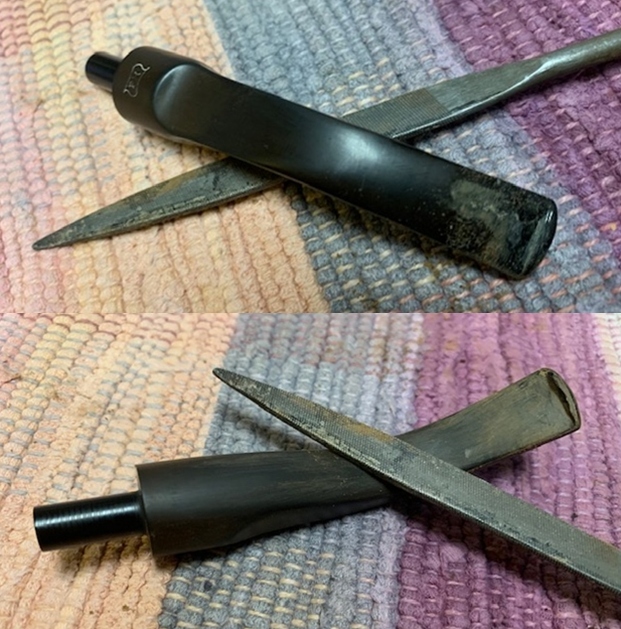
I started my work on the pipe by pulling the broken tenon from the shank. I used a dry wall screw turned into the airway in the broken tenon. I wiggled the tenon until it came free. It was tight so it took a bit of fiddling to get it to pop free.I took photos of the repaired crack on the shank. It had a heavy coat of glue all around the shank. It was smeared around the crack and also on the curved where the shank joined the bowl. It was messy but it was a strong bond. I sanded the area around the repair and the surrounding briar with a folded piece of 220 grit sandpaper. I was able to smooth out the repair and remove all of the glue spread around the briar. I decided to ream the bowl and do some internal clean up work before further polishing the briar. I reamed the bowl with a PipNet pipe reamer using the 2nd and 3rd cutting heads to remove the cake in the bowl. I cleaned up the reaming with a Savinelli Fitsall Pipe Knife and finally sanded the bowl with 220 grit sandpaper wrapped around a piece of dowel to clean up the walls of the bowl. The walls appeared to be in good condition. It still needed a lot of cleaning as the sticky debris was still on the walls. I cleaned out the shank and airway into the bowl and the stem with pipe cleaners, cotton swabs and alcohol to remove the tars and oils. I cleaned out the airway in the stem at the same time. I scrubbed the bowl and rim top with undiluted Murphy’s Oil Soap and a tooth brush to remove the grime. I rinsed it with warm water and dried it off with a cotton towel. I drew a box around the repair on the shank end. There was a square plug of briar that had been glued into the shank end and rusticated to look like plateau. I stained the shank end and the rim top with a black stain pen to blend the surfaces together. I used a brass bristle wire brush to work over the plateau on the top and shank end. I used a sanding pad to remove the black stain from the high spots on the plateau and it looked better. There was a strong stink of the previous tobacco (?) in the pipe so I stuffed the bowl with cotton bolls and filled it with alcohol using an ear syringe. I rolled a cotton boll and plugged the shank with it. I set it aside to draw out the tars and oils for the afternoon.While the cotton and alcohol were doing there work deghosting the bowl I turned my attention to working on the new tenon. I flattened out the tenon end of the stem with a Dremel and sanding drum and cleaned up the area on a topping board with 220 grit sandpaper.I drilled the home for the new tenon using airway in the stem as a guide. I drilled it several times with increasingly larger drill bits until I had the opening the same size as the threaded portion of the new tenon.I fit the tenon in the stem to make sure it was straight everything aligned straight. At this point the stem and new tenon looked very good. I took a break at this point and went out on the porch and enjoyed a few bowls in my new Castello. I came in late afternoon once it got cooler and checked on the deghosting of the bowl. I could not do any more work fitting the stem until I had removed the cotton bolls and cleaned out the shank and bowl once more. The cotton had darkened and once I removed it the bowl smelled much better. I cleaned up the bowl and shank with alcohol cotton swabs and pipe cleaners a second time. It smelled much cleaner and looked that way too. Now I could fit the new tenon to the mortise. I took a photo of the repair to the shank. There is a stainless steel tube in the shank that gives it more strength. It is a well done and solid repair. [The photo is from an earlier moment before I stained the shank end.]
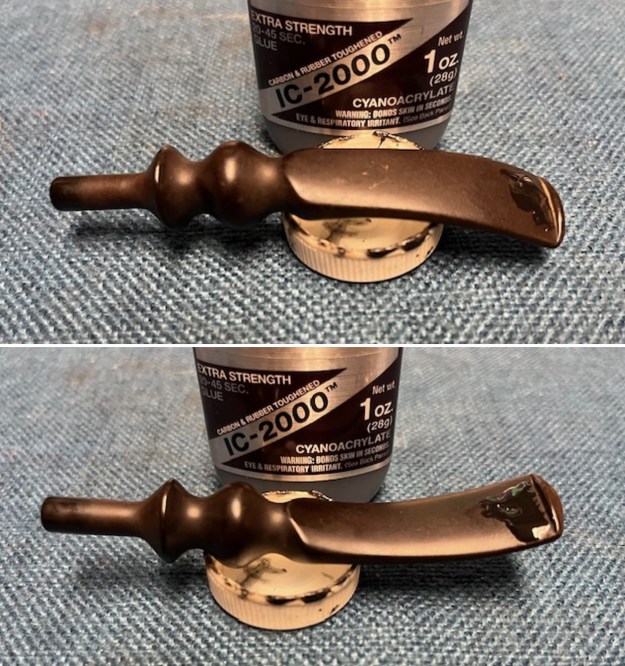
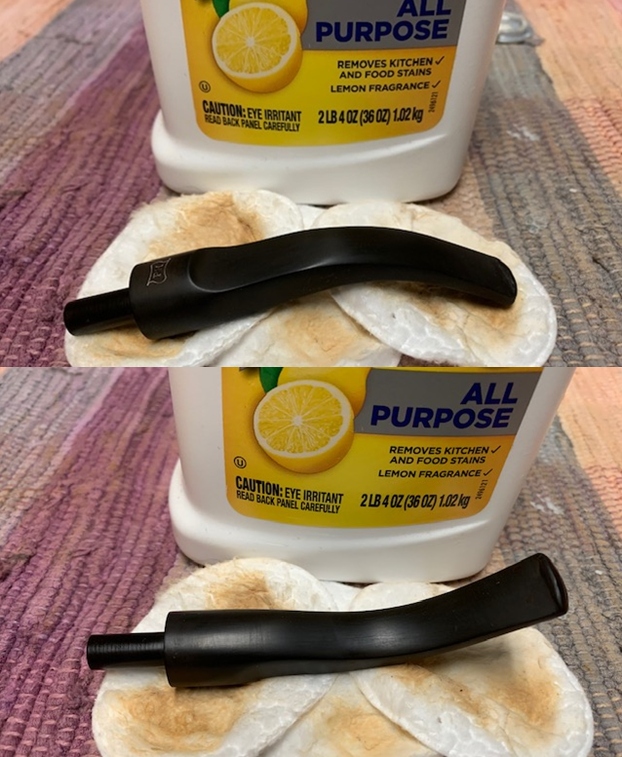
I used the Dremel and sanding drum to reduce the diameter of the new tenon to fit in the mortise. I fit it in the shank to make sure it would work well. I put it in the stem to show the fit as well. I put the tenon in the shank and slipped the stem over it to see what the pipe looked like with the stem fit in place. I liked what I saw and new that it would clean up very well and polish up nicely. Now that everything fit well I glued the tenon in the stem with black CA glue. I set the stem aside to let the glue cure. I sanded the bowl and shank with sanding pads – 320-3500 grit pads. I wiped the bowl down after each sanding pad to remove grime and check the progress. It was looking very good by the time I finished with the final pad. I polished the rim top and bowl with micromesh sanding pads – dry sanding with 1500-12000 grit sanding pads. I wiped it down with a damp cloth after each sanding pad to remove the dust and debris. The grain stood out more with each set of pads. I worked some Before & After Restoration Balm into the finish of the bowl, rim top and shank with my fingertips to clean, enliven and protect it. I find that the balm really makes the briar come alive again. I let the balm sit for 15 minutes and then buffed with a cotton cloth to raise the shine. The bowl really looks good at this point. I set the bowl aside and turned my attention back to the stem. I rubbed the stem down with Soft Scrub and cotton pads to remove the oxidation in the grooves. It looked much better once I had removed the oxidation.I sanded the stem with 220 grit sandpaper to smooth out the tooth marks and remove the stubborn oxidation in the grooves and against the button edge. Once finished it began to look better.I sanded the stem with 320-3500 grit sanding pads and wiped the stem down after each pad with an Obsidian Oil saturated cloth to remove the grime and protect the stem.I polished the stem with micromesh sanding pads – dry sanding it with 1500-12000 grit pads. I polished it further with Before & After Pipe Stem Polish – both fine and extra fine. This once wreck of a pipe turned out to be a beautiful Preben Holm made Ben Wade Deluxe with a fancy, turned, black vulcanite stem. It has a great look and feel. The shape fits well in the hand with the curve of the bowl and shank junction a perfect fit for the thumb around the bowl when held. I polished stem and the bowl with Blue Diamond polish on the buffing wheel. I gave the plateau on the rim top and shank end multiple coats of Conservator’s Wax. I gave the bowl and the stem multiple coats of carnauba wax. I buffed the pipe with a clean buffing pad to raise the shine. I hand buffed it with a microfiber cloth to deepen the shine. The pipe polished up pretty nicely. The rich combination of browns and black in the smooth and plateau finishes took on life with the buffing. The rich colour of the briar works well with the polished stem. I like the grain and finished look of this Preben Holm Ben Wade Deluxe Freehand. Have a look at it with the photos below. The shape, finish and flow of the pipe and stem are very well done. The dimensions are Length: 6 inches, Height: 2 ½ inches, Outside diameter of the bowl: 1 ¾, Chamber diameter: 7/8 of an inch. The weight of the pipe is 2.12 ounces/60 grams.This Danish Freehand is a real beauty. Thanks for walking through the restoration with me as I worked over another beautiful pipe. I will be putting it on the rebornpipes store in the Danish Pipe Makers Section shortly if you would like to add it to your collection. Thanks for your time.

Restoring a Ben Wade Hand Made Golden Walnut Freehand Sitter


by Steve Laug

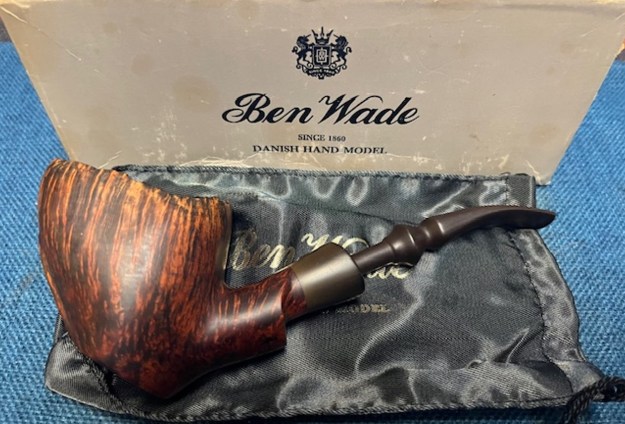
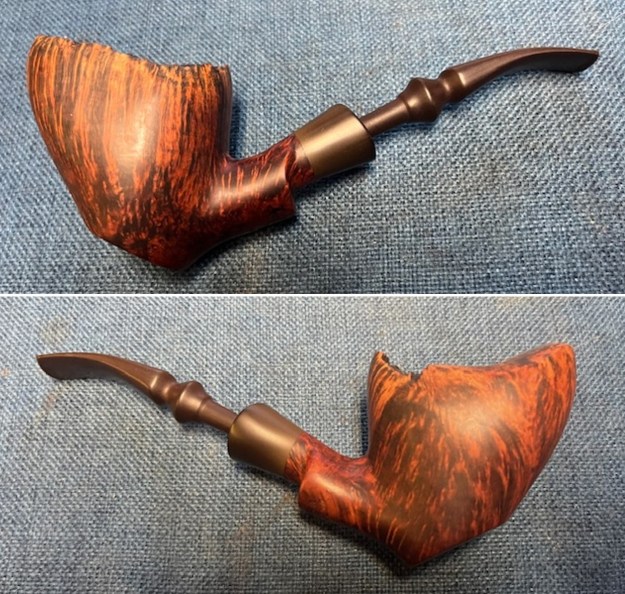
This great looking Ben Wade Freehand came to us in its original box and pipe sock. The box is marked with the Ben Wade of England seal on the cover [over] Ben Wade [over] Since 1860 [over] Danish Hand Model. It links the old English Company with Preben Holm in Denmark – the master freehand maker. The particular model is the epitome of a Danish Freehand coming from Preben Holm’s workshop for the American market. It is stamped Ben Wade [over] Golden Walnut [over] Hand Made [over] in [over] Denmark. We purchased it on 08/20/2021 from a seller in Princeton Junction, New Jersey, USA. The bowl of the pipe is a beautiful straight grain piece of briar. The rim top is plateau and the shank extension is vulcanite. The plateau rim top and inner edge of the bowl is filled in with lava and overflowing cake. The bowl has a thick cake. The finish is very dirty with oils and grime ground into the finish. The beauty is in no way compromised by the grime. The vulcanite shank extension and fancy turned stem are heavily oxidized. There are tooth marks and chatter on both sides of the stem. Jeff took photos of the pipe before he started his clean up work to capture the condition of the pipe when we acquired it. He took close up photos of the bowl and rim top from different angles to show the condition of both the smooth and plateau finish. It is truly a uniquely carved rim top maximizing the plateau and the smooth parts flowing up from the bowl sides. You can see the lava and build up on the rim top and the lava flowing over the inner edge of the bowl onto the plateau. It is hard to know if there is damage or if the lava protected it. The bowl has a thick cake that lining the walls and overflowing into lava. He also took photos of the top and underside of the stem to show the tooth marks and damage both on the button surface and on the blade itself. He took photos of the sides and heel of the bowl to show the lay of the grain around the pipe. It is a beautiful piece of briar. The top of the bowl is craggy and rugged looking. Unique! The shank end is also a unique mix of plateau and smooth. Jeff took a photo of the stamping on the underside of the shank. It was clear and read Ben Wade in script at the top. Under that it read Golden Walnut. Under that was stamped Hand Made in Denmark. I am including the background history that I included on the previous blog. It includes the idea that the Preben Holm pipes were marketed under the Ben Wade label in the US and imported through Lane Ltd. I turned to Pipedia and read the listing on the brand to refresh my memory and flesh out the knowledge of the brand (https://pipedia.org/wiki/Ben_Wade). I have included a photo from that site that was taken from a Tinderbox advertisement.
Ben Wade Ad in a Tinder Box catalog, courtesy Doug Valitchka

I quote the portion of the article that summarizes the history of the brand.

Young Copenhagen master pipemaker Preben Holm had made a meteoric career heading a pipe manufacture employing 45 people at the age of 22! But around the turn of 1970/71 he was in major financial difficulties. His US distributor, Snug Harbour Ltd. in New York City, left him in the lurch. Holm had three unpaid invoices on his desk and another large shipment was ready for the USA, when Snug Harbour’s manager told him on the phone that there was no money at all on the account to pay him.

So the Dane went to New York for an almost desperate search for a new distribution partner. He made contacts with Lane Ltd. and met Herman G. Lane in February 1971. Lane Ltd. had no interest in Holm’s serial pipes produced at that time but so much the more in the hand-carved freehands because the hype for Danish freehands and fancies in the States was still on its way to the climax then. The meeting resulted in an agreement to start a cooperation. Lane insisted to improve the quality considerably and in return he assured to be able to sell essentially larger quantities.

Holm went back home to work on new samples with all-new designs and altered finishes for Lane. Both, Lane and Holm, agreed that it would be unwise to sell the pipes under Preben Holm’s name as long as Snug Harbour had a considerable stock of Preben Holm pipes and might sell them pipes at very low prices just to bring in some money.

So on Mr. Lane’s proposal it was determined to use the name Ben Wade belonging to Lane Ltd. Lane spent considerable amounts of money for advertising the new brand in the big magazines– the centerpiece being whole-page ads showing a very exclusive Seven Day’s Set.

The cooperation with Lane Ltd. proved to be an eminent business success for both partners. Within a very short time Ben Wade Handmade Denmark sold in much larger quantities and at higher prices than they had ever dreamed of. And the hype these freehands and fancy pipes caused went on unbroken long after Herman G. Lane deceased. Preben Holm – obviously much more brilliant in pipe making than in pipe business – was in major troubles again in 1986 and had to sack most of his staff. The Ben Wade production was significantly lowered but continued until his untimely death in June of 1989.

Up to now Preben Holm made Ben Wade pipes are cult and highly sought for on the estate markets.

With that information my initial thoughts were confirmed. This pipe was another Preben Holm made Freehand distributed in the US by Lane Ltd under the name Ben Wade. The freehand rage occurred in the late 70s and the pipes were made until Preben’s death in 1989. My guess would be that this pipe was made sometime during that time period and potentially in the late 70s.

Jeff had thoroughly cleaned up the pipe. He reamed the pipe with a PipNet Pipe Reamer and cleaned up the remnants with a Savinelli Fitsall Pipe Knife. He scrubbed the bowl with undiluted Murphy’s Oil Soap with a tooth brush. He rinsed it under running warm water to remove the soap and grime. He cleaned out the inside of the shank and the airway in the stem with alcohol, cotton swabs, pipe cleaners and shank brushes. He scrubbed the exterior of the stem with Soft Scrub to remove the grime and calcification. He soaked the stem in Before & After Deoxidizer and rinsed it with warm water. I took some photos of the rim top and stem to show the condition of them both when it arrived. It looked good. The stem had some light tooth marks and chatter ahead of the button and on the button surface on both sides.I took a photo of the stamping on the underside of the shank. It was clear and readable. It read as noted above. I took the stem off the shank and took a photo of the pipe parts in perspective.To begin my part of the restoration work I decided to clean off the remaining oxidation on the vulcanite shank extension. I scrubbed it with Soft Scrub cleanser to remove the oxidation. It removed most of the oxidation and the extension looked much better. I sanded the shank extension with 320-3500 grit sanding pads. I wiped it down after each sanding pad to remove the debris from sanding. It began to look very good as I finished. I polished the bowl with and shank extension with micromesh sanding pads – wet sanding with 1500-12000 grit pads. I wiped the briar down after each pad with a damp cloth. The bowl is starting to look very good. I worked some Before & After Restoration Balm into the surface of the briar with my fingertips and into the plateau rim top with a horsehair shoe brush to clean, enliven and protect it. I let the balm sit for a little while and then buffed with a cotton cloth to raise the shine. The photos show the bowl at this point in the restoration process. I set the bowl aside and turned my attention to the stem. I sanded out the tooth marks and chatter on both sides of the stem in front of the button using 220 grit sandpaper. I was able to remove the marks on the stem surface. I scrubbed the surface with Soft Scrub cleanser to remove the oxidation that remained. I sanded the stem with sanding pads – dry sanding with 320-3500 grit sanding pads. After each pad I wiped the stem down with Obsidian Oil on a cloth. It is looking much better.I polished the stem with micromesh sanding pads – wet sanding with 1500-12000 grit sanding pads. I wiped it down after each sanding pad with some Obsidian Oil. I finished polishing it with Before & After Pipe Stem Polish – both Fine and Extra Fine and buffed it off with a cotton cloth. I wiped it down with Obsidian Oil to protect the stem and slow down the oxidation. This is a beautiful Preben Holm made Ben Wade Golden Walnut Freehand with a fancy, turned, black vulcanite stem. It has a great look and feel. The shape fits well in the hand with the curve of the bowl and shank junction a perfect fit for the thumb around the bowl when held. I polished stem and the bowl with Blue Diamond polish on the buffing wheel. I gave the plateau on the rim top and shank end multiple coats of Conservator’s Wax. I gave the bowl and the stem multiple coats of carnauba wax. I buffed the pipe with a clean buffing pad to raise the shine. I hand buffed it with a microfiber cloth to deepen the shine. The pipe polished up pretty nicely. The rich combination of browns and black in the smooth finishes and the plateau areas took on life with the buffing. The rich colour of the briar works well with the polished vulcanite stem. I like the grain and finished look of this Preben Holm Ben Wade Golden Walnut pipe. Have a look at it with the photos below. The shape, finish and flow of the pipe and stem are very well done. The dimensions are Length: 7 inches, Height: 2 ½ inches, Outside diameter of the bowl: 2 wide x 2 ¼ inches long, Chamber diameter: 7/8 of an inch. The weight of the pipe is 93 grams/3.25 ounces. This pipe will be going on the Danish Pipe Makers Section of the rebornpipes store if you are interested in adding it to your collection. Thanks for reading this blog and my reflections on the pipe while I worked on it. This is an interesting estate to bring back to life.

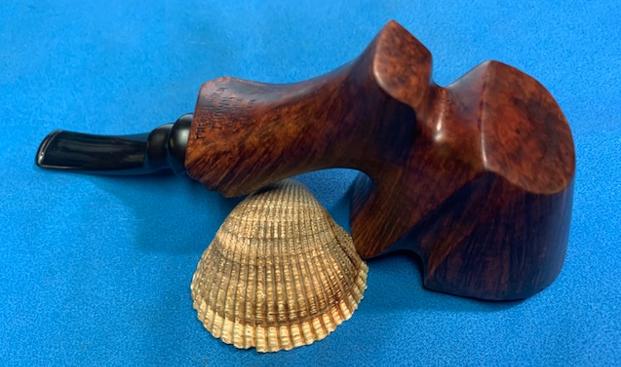
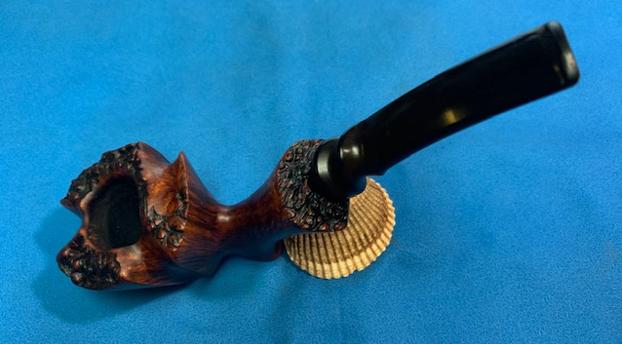
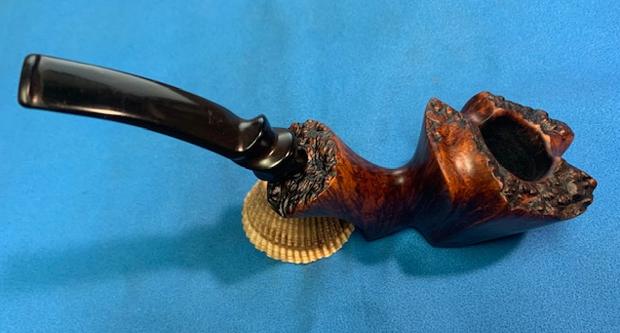
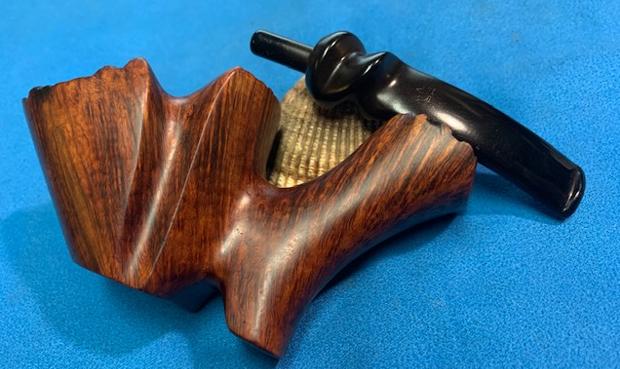
Restoring a Preben Holm Crown Hand Made in Denmark flat bottom Sitter


by Steve Laug

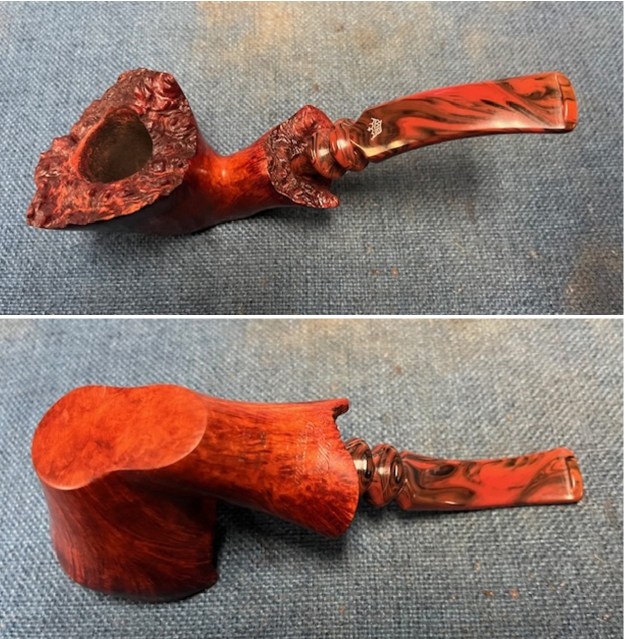
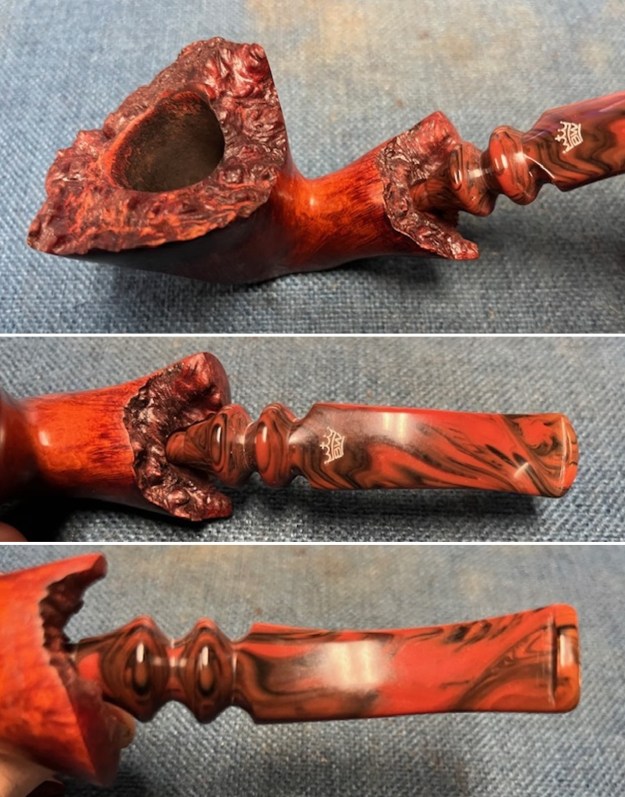
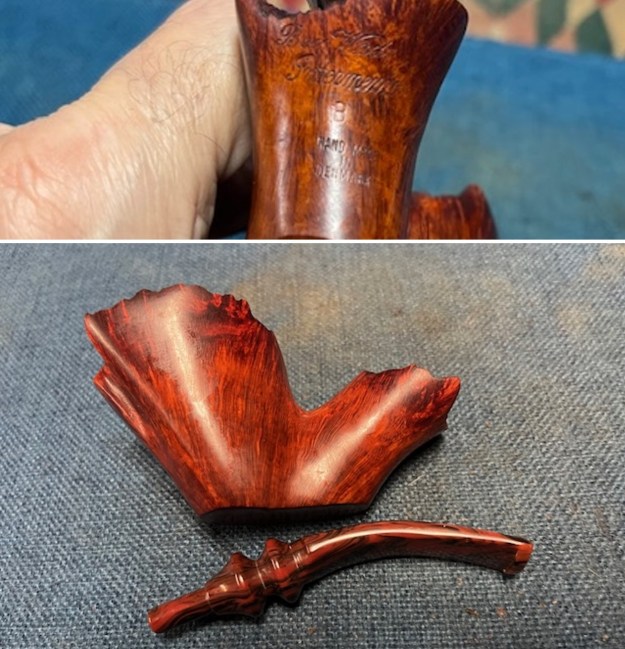
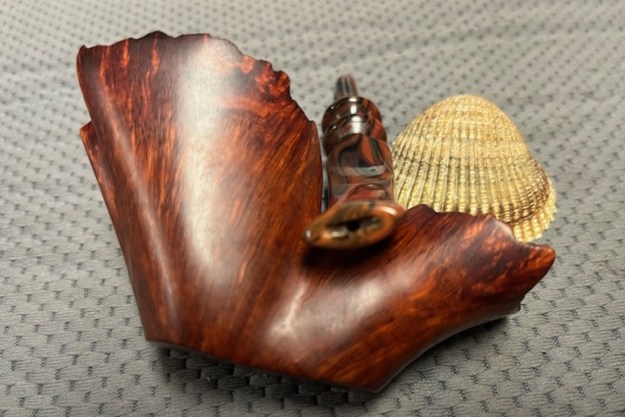
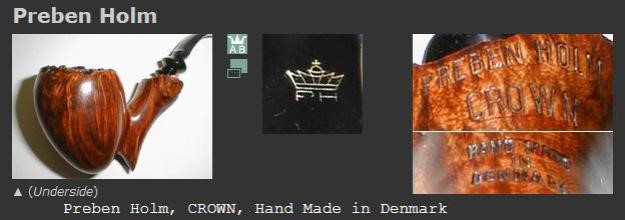
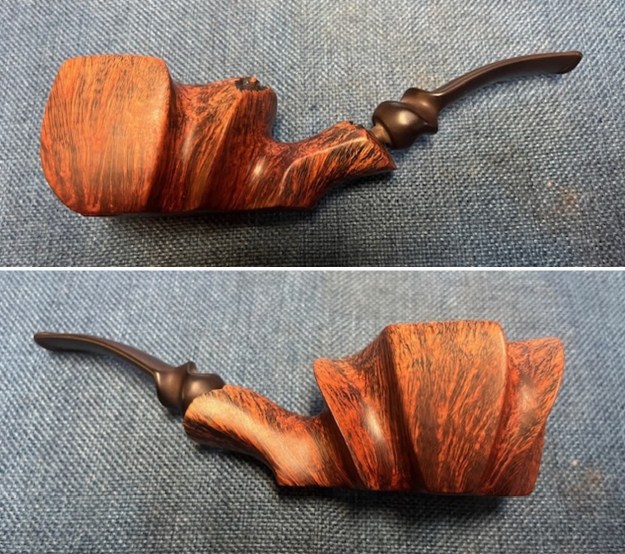
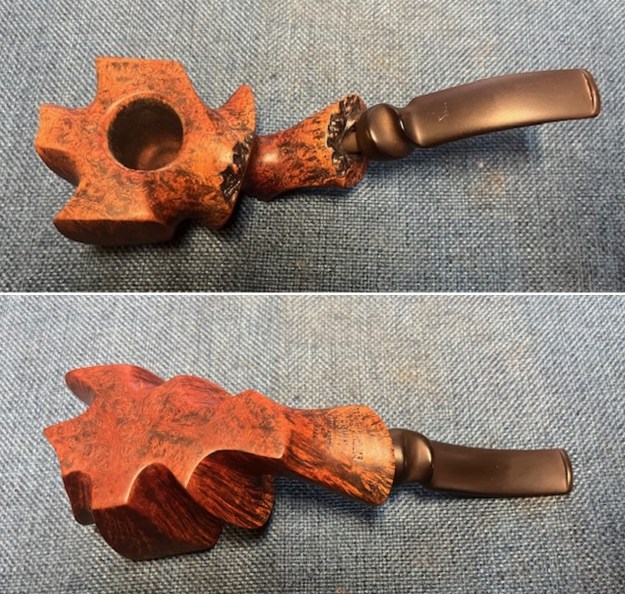
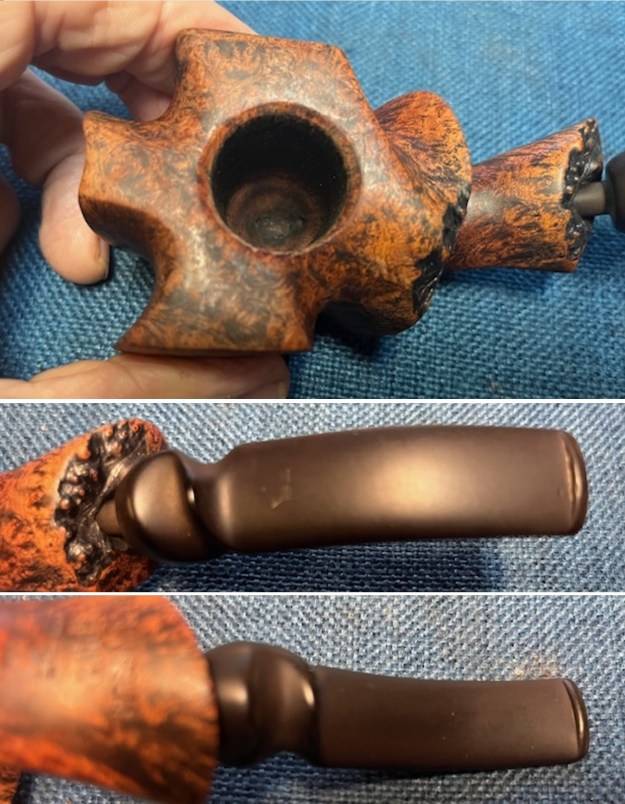
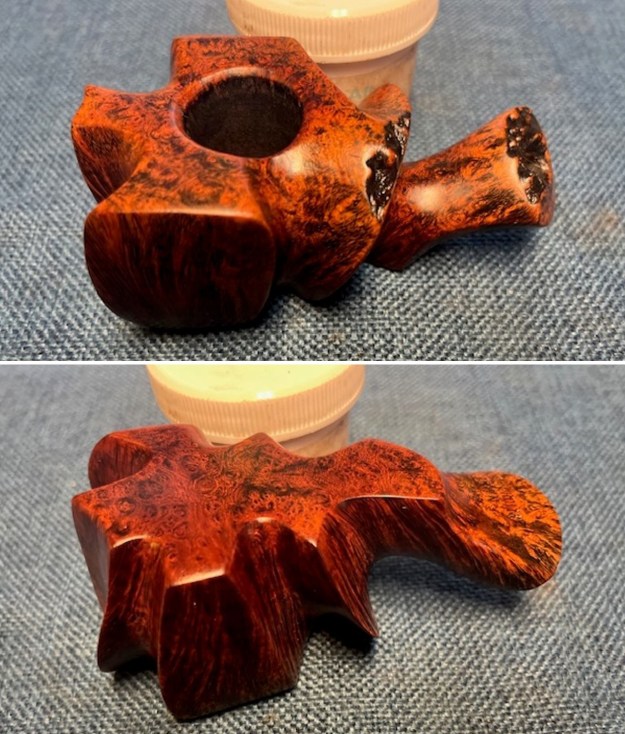
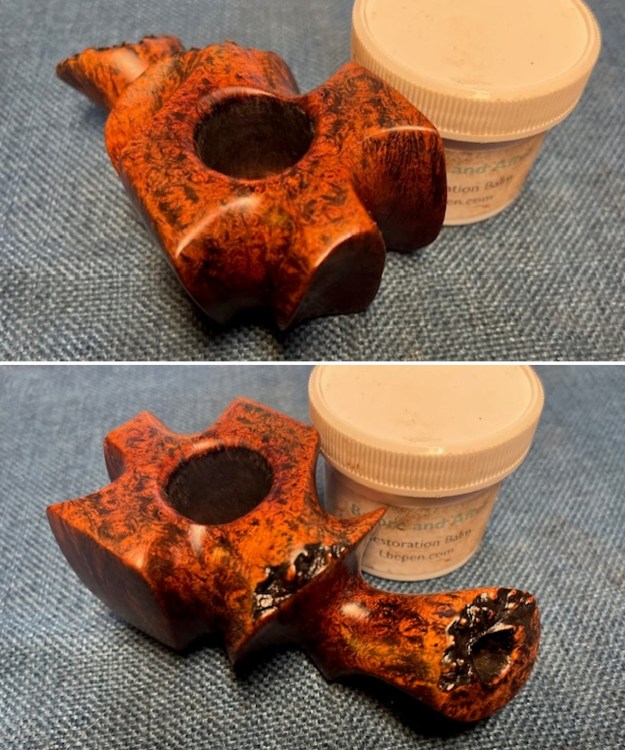
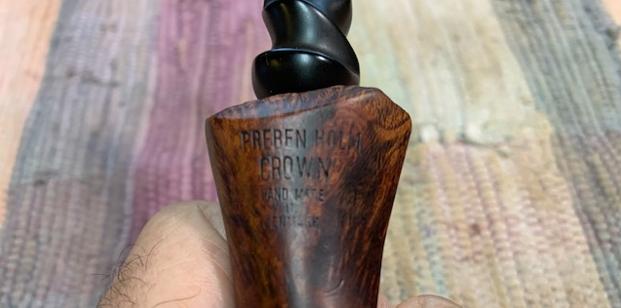
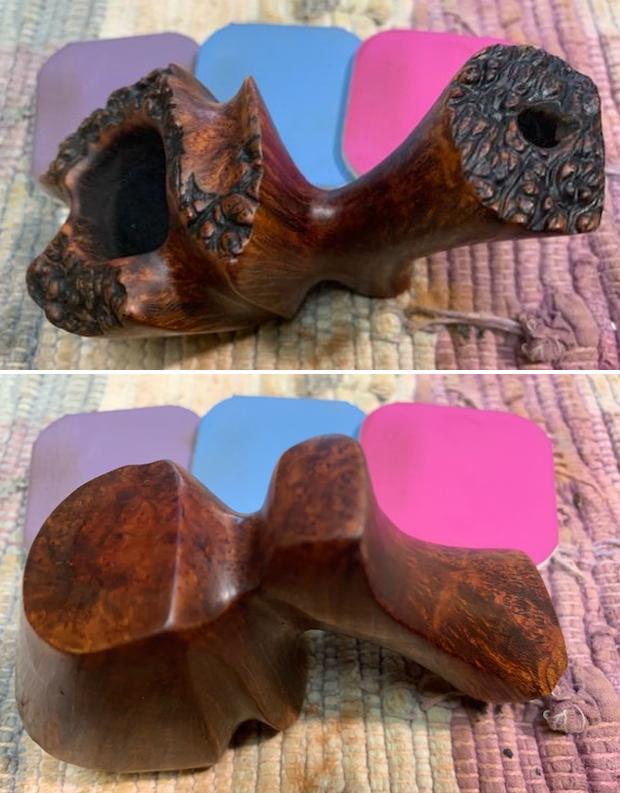
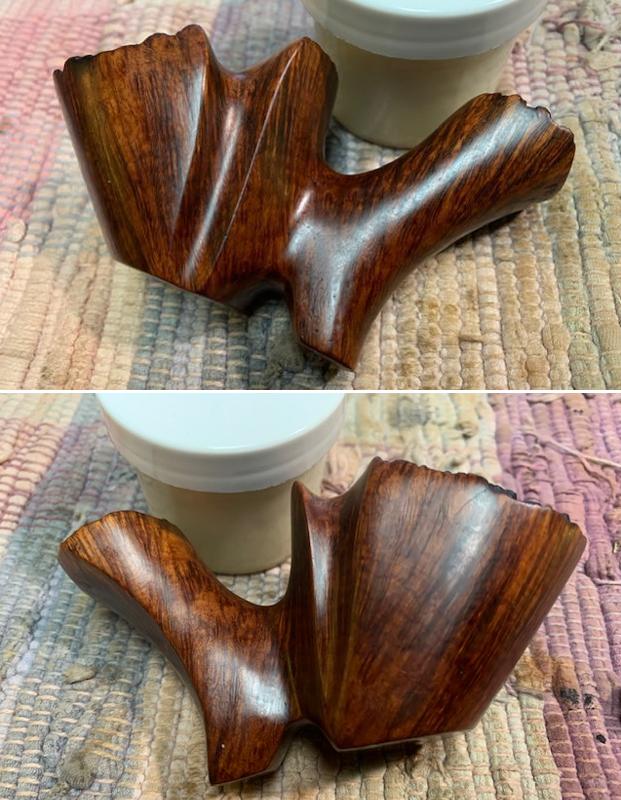
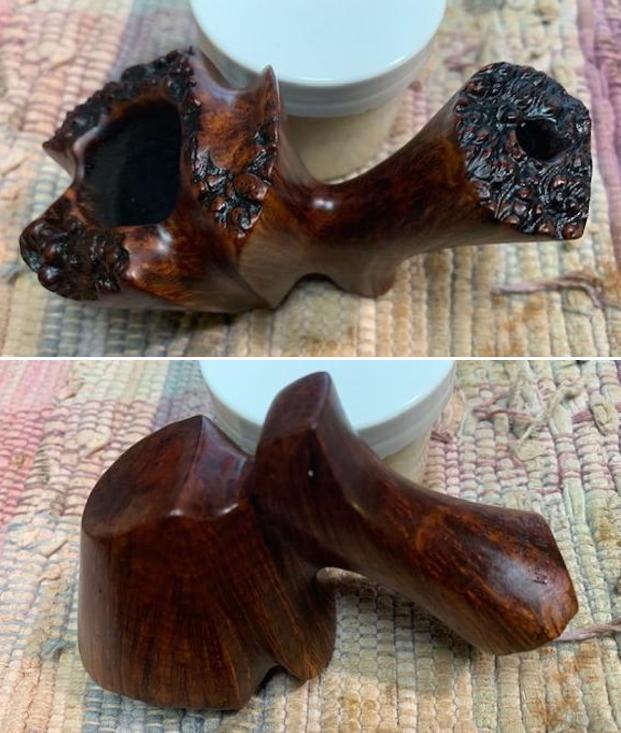
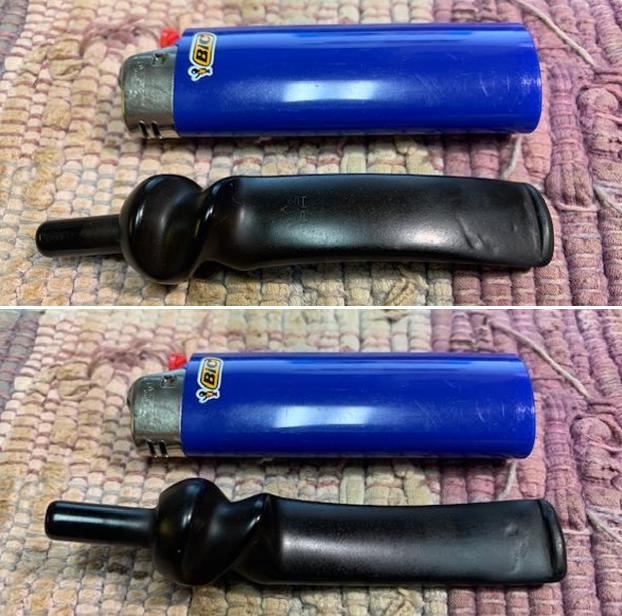
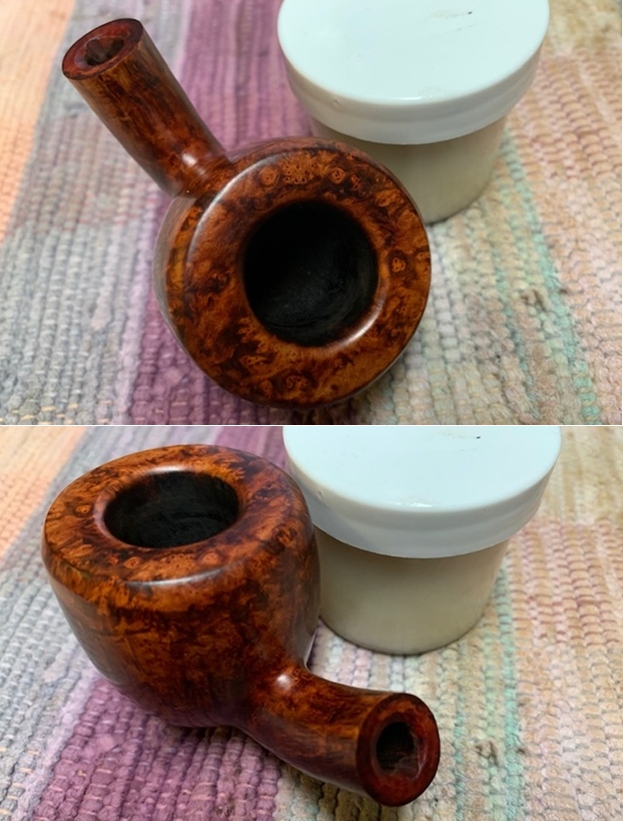
This interesting Preben Holm Freehand Sitter with both smooth and plateau spot on the rim and shank end came to us from an estate we purchase from Santa Cruz, California USA on 05/28/2024. It is a unique looking pipe even for Preben Holm pipes. The pipe is a flat bottom pipe that is shaped from a rectangle. The stamping on the underside of the shank read Preben Holm [over] Crown [over] Hand Made [over] In [over] Denmark. The pipe has a flat bottom so it is a sitter. The top and bottom of the bowl has some great birdseye grain. The sides of the bowl have straight grain all around. The finish is dirty with dust and oils ground into the finish and dust and debris in the plateau spots on the rim top and shank end. The rim top has some darkening on the right and the back of the bowl. There is thick lava on the inner edge and all around the rim top. The bowl has a thick cake. The fancy, turned saddle stem had a twist around the saddle portion and is oxidized and has tooth marks on both sides ahead of the button. Jeff took some photos of the pipe before he started his work on it. He took photos of the rim top to show the cake in the bowl and the thick lava coat and debris in the finish on the rim top. There was darkening all around the bowl edge and on the bevelled inner edge. He took photos of the stem to show the oxidation and tooth marks on both sides of the stem ahead of the button. Jeff took photos of the sides and heel of the bowl to give a sense of the finish on the bowl sides. Even under the grime it is a beautiful piece of briar in a shape that I have not seen before. He captured the stamping as best as possible on the underside of the shank. It reads as noted above.I turned first to Pipephil to see what I could find about the Crown line of pipes and get some background (http://pipephil.eu/logos/en/logo-p5.html). I have included the photo capture below as it shows the look of the stamping and logo on the pipe I am working on.I turned then to Pipedia and read the listing on the brand to refresh my memory and flesh out the knowledge of the brand (https://pipedia.org/wiki/Holm,_Preben) and the article on Ben Wade (https://pipedia.org/wiki/Ben_Wade). I quote the portion of the Ben Wade article that summarizes the Danish period of the history of the brand:

Young Copenhagen master pipemaker Preben Holm had made a meteoric career heading a pipe manufacture employing 45 people at the age of 22! But around the turn of 1970/71 he was in major financial difficulties. His US distributor, Snug Harbour Ltd. in New York City, left him in the lurch. Holm had three unpaid invoices on his desk and another large shipment was ready for the USA, when Snug Harbour’s manager told him on the phone that there was no money at all on the account to pay him.

So the Dane went to New York for an almost desperate search for a new distribution partner. He made contacts with Lane Ltd. and met Herman G. Lane in February 1971. Lane Ltd. had no interest in Holm’s serial pipes produced at that time but so much the more in the hand-carved freehands because the hype for Danish freehands and fancies in the States was still on its way to the climax then. The meeting resulted in an agreement to start a cooperation. Lane insisted to improve the quality considerably and in return he assured to be able to sell essentially larger quantities.

Holm went back home to work on new samples with all-new designs and altered finishes for Lane. Both, Lane and Holm, agreed that it would be unwise to sell the pipes under Preben Holm’s name as long as Snug Harbour had a considerable stock of Preben Holm pipes and might sell them pipes at very low prices just to bring in some money.

So on Mr. Lane’s proposal it was determined to use the name Ben Wade belonging to Lane Ltd. Lane spent considerable amounts of money for advertising the new brand in the big magazines– the centerpiece being whole-page ads showing a very exclusive Seven Day’s Set.

The cooperation with Lane Ltd. proved to be an eminent business success for both partners. Within a very short time Ben Wade Handmade Denmark sold in much larger quantities and at higher prices than they had ever dreamed of. And the hype these freehands and fancy pipes caused went on unbroken long after Herman G. Lane deceased. Preben Holm – obviously much more brilliant in pipe making than in pipe business – was in major troubles again in 1986 and had to sack most of his staff. The Ben Wade production was significantly lowered but continued until his untimely death in June of 1989.

Up to now Preben Holm made Ben Wade pipes are cult and highly sought for on the estate markets.

With that information my initial thoughts were confirmed. This pipe was a Preben Holm made Freehand distributed in the US by Lane Ltd under his own name. The freehand rage occurred in the late 70s and the pipes were made until Preben’s death in 1989. My guess would be that this pipe was made sometime during that time period and potentially in the late 70s.

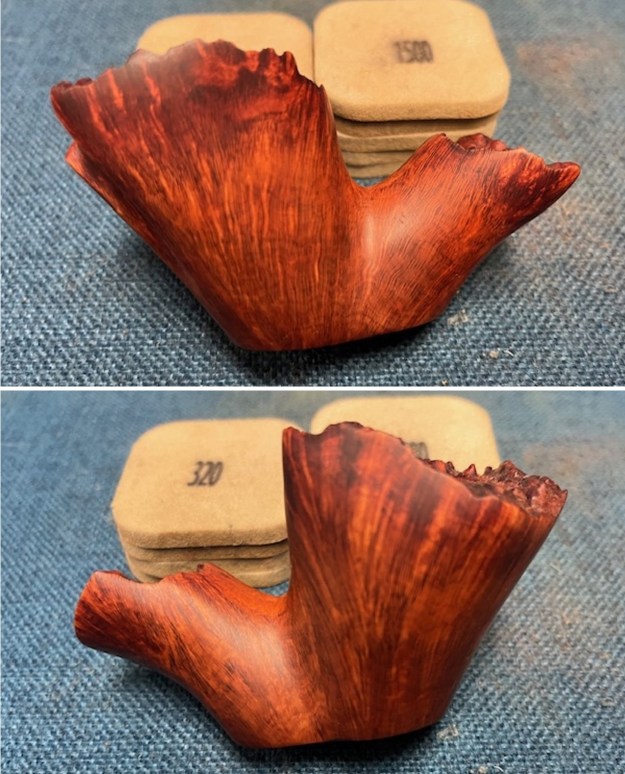
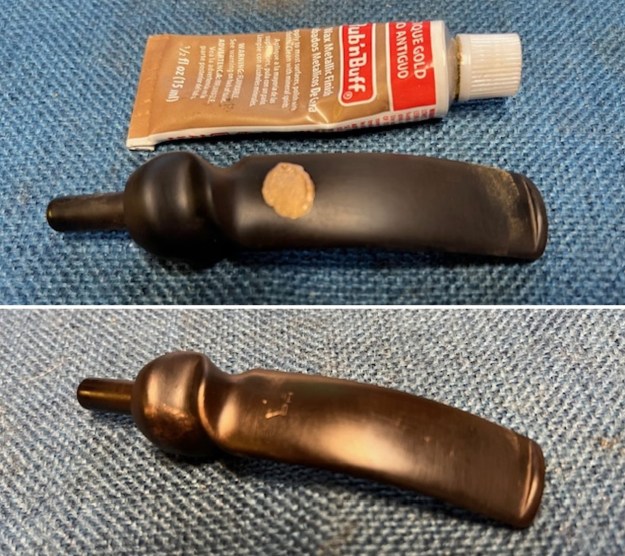
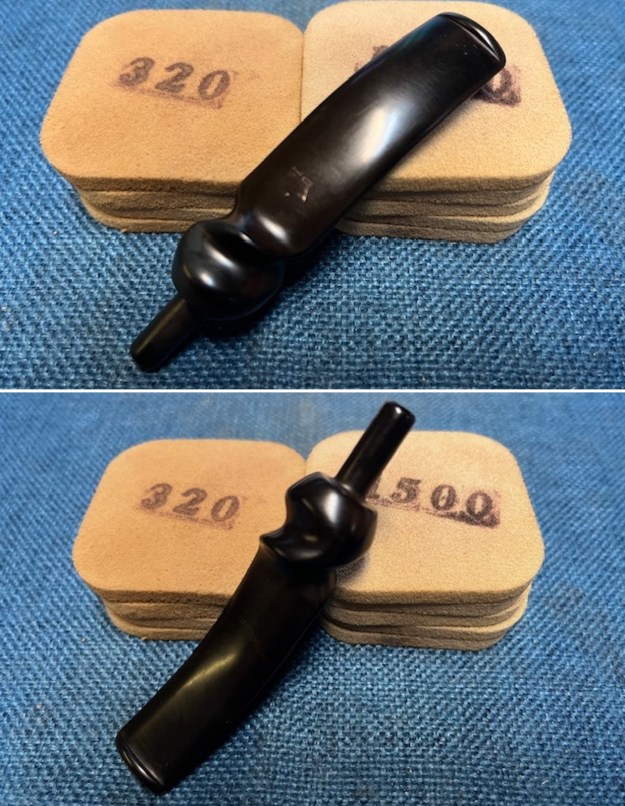
Jeff had cleaned up the pipe following his normal cleaning process. In short, he reamed it with a PipNet pipe reamer to strip out the cake in the bowl and then cleaned up the reaming with a Savinelli Fitsall Pipe Knife. He scrubbed the bowl with undiluted Murphy’s Oil Soap with a tooth brush. He worked over the lava and debris on the rim top and the spots of plateau on the top and shank end and was able to remove it. He rinsed it under running warm water to remove the soap and grime. He cleaned out the inside of the shank and the airway in the stem with alcohol, cotton swabs and pipe cleaners. He scrubbed the stem with Soft Scrub and cotton pads to remove the debris and oils on the stem. He soaked it in Briarville’s Pipe Stem Deoxidizer and then rinsed it with warm water and dried it off. I took photos of the pipe once I received it. It really looked good. I took close up photos of the stem and the rim top to show both how clean they were and what needed to be addresses with both. The rim top and bowl look good. The inner edge bevel looked clean and undamaged. The stem looked better and there were light tooth marks and chatter on both sides ahead of the button.I took a photo of the stamping on the underside of the shank. You can see from the photo that it is clear and readable. I removed the stem from the bowl and took a photo of the parts to give a sense of the beauty of the pipe. The bowl was in such good condition that I started by polishing the smooth briar with micromesh sanding pads – wet sanding with 1500-12000 grit sanding pads. I wiped down the briar after each pad with a damp cloth to remove the dust and debris from the surface. The briar began to take on a shine. I worked some Before & After Restoration Balm into the surface of the briar with my finger tips and a horse hair shoe brush to get into the crevices of the plateau rim top and shank end. The product is incredible and the way it brings the grain to the fore is unique. It works to clean, protect and invigorate the wood. I set the bowl aside and turned my attention to the stem. I wiped the stem down with a cotton pad and some Soft Scrub cleanser to clean up the surface around the turned portion and the stamping area in preparation for trying to bring out some of the stamping on the stem top. I touched up the faint stamp on the top of the stem with Rub’n Buff Antique Gold. I rubbed the product into the stamping and buffed it off with a soft cloth. It is not perfect but is visible and distinguishable.I sanded the stem with 320-3500 grit sanding pads. Between the pads I wiped the stem down with Obsidian Oil. It is starting to look very good.I polished the stem with micromesh sanding pads – wet sanding it 1500-12000 pads. I wiped it down with Obsidian Oil after each pad to enliven and protect the vulcanite. I polished it with Before After Pipe Polish – both Fine and Extra Fine. I gave the stem another rub down with Obsidian Oil and set it aside to dry. I am really happy with the way that this Preben Holm Crown Hand Made Danish Freehand Sitter turned out. It really is a beautiful looking pipe with a very unique shape and smooth finished bowl and rim and the remnant of plateau on back edge of the rim and the shank end. The fancy original vulcanite saddle stem is really nice. The polished black of the stem works well with the briar. The briar really came alive with the buffing. The rich brown stains of the finish gave the pipe a sense of depth with the polishing and waxing. I put the stem back on the bowl and carefully buffed the pipe with Blue Diamond on the buffing wheel using a light touch on the briar. I gave the bowl and the stem multiple coats of carnauba wax on the buffing wheel. I buffed the pipe with a clean buffing pad to raise the shine. I hand buffed the pipe with a microfiber cloth to deepen the shine. The finished Preben Holm Crown Hand Made really is a beauty and feels great in the hand and looks very good. Give the finished pipe a look in the photos below. The dimensions of the pipe are Length: 7 inches, Height: 1 ¾ inches, Outside diameter of the bowl: 2 ¾ inches long x 2 ¼ inches wide, Chamber diameter: 1 inch. The weight of the pipe is 89 grams/3.17 ounces. The pipe will be going on the rebornpipes store in the Danish Pipe Makers Section if you would like to add it to your collection. Thanks for reading this blog and my reflections on the pipe while I worked on it. It was a fun one to work on!

Repairing a Broken Tenon and Restoring A Ben Wade Golden Matt Handmade Freehand


Blog by Steve Laug

To me there is something almost electric about handling and working on a pipe designed and carved by Preben Holm. I can’t describe adequately the feeling I have when I turn the bowl and stem over in my hands even before I start working on one of these his pipes. All I know is that there is an energy and fluidity that flows through the pipe because of the way he carved and shaped the briar. He is a master of chasing the grain in the briar. Every time I get a chance to work on one I am excited about the possibility. So, a few weeks ago when I got an email from a reader of the blog about his Ben Wade, Preben Holm pipe it was with no hesitation that I accepted working on it. I have included that email below along with a photo I asked him to send me to see the pipe.

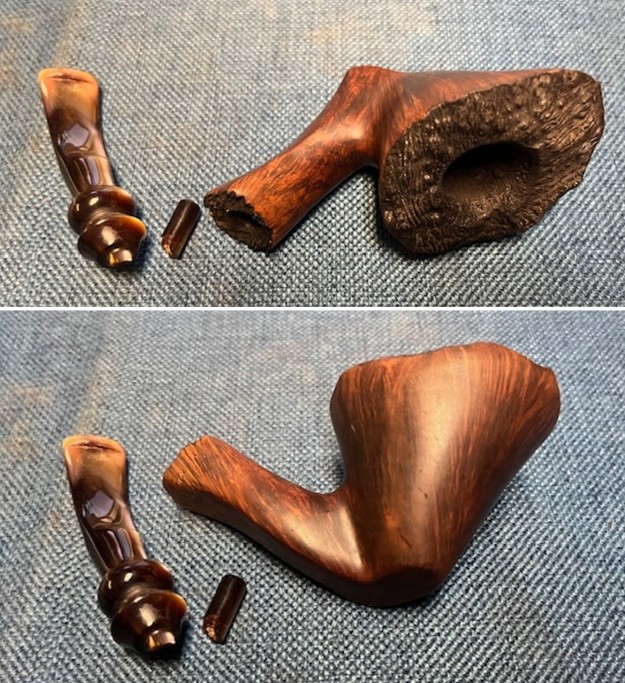
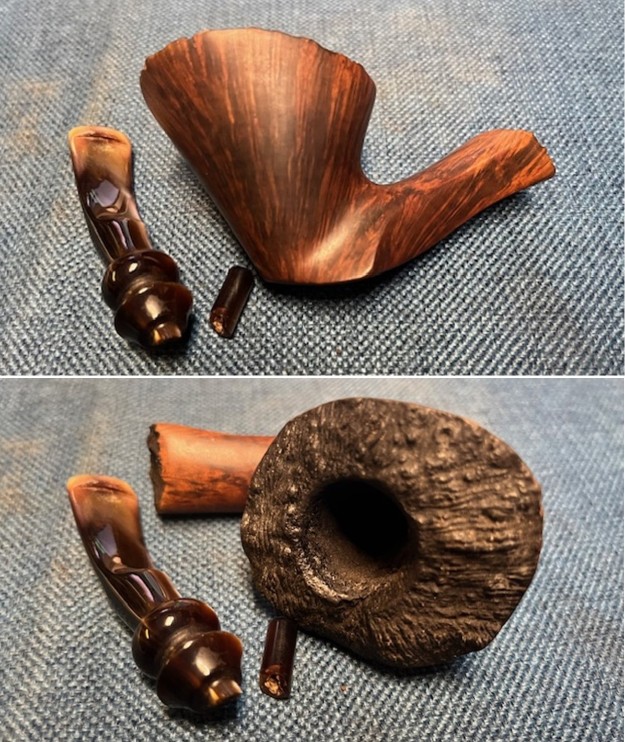
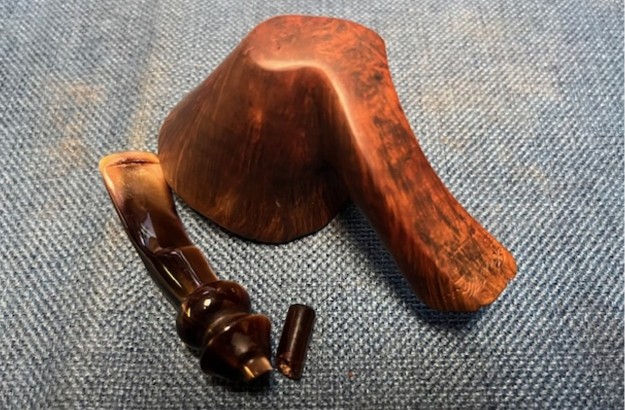
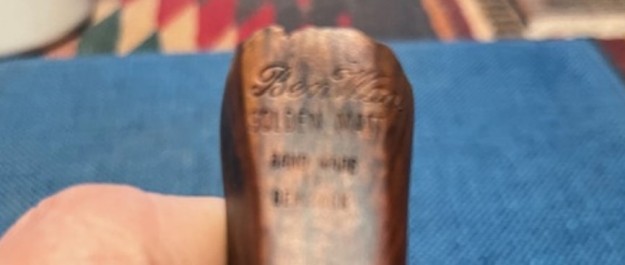
I wondering if you can find me a replacement pipe stem for my Ben Wade pipe. Dropped my pipe and broke it. — TomThis Ben Wade Golden Matt was no exception to my experience with Ben Wade pipes. Tom sent it to me and today it arrived. I was excited to be able to work on it. This one has incredible grain around the bowl sides and shank. The bowl had a very thick cake on the walls. The plateau on the rim top is filled with tars and lava but it is a large top. The shank end also has a plateau finish. It is very unique pipe. The combination of dark and medium stains highlights grain that runs like flames across both sides of the bowl culminating at the flat heel of the bowl. The rim top is plateau and it looks quite unique – with the valleys and hills in the top and also something that looked like it had been wire brush. The variegated copper, brown and gold acrylic stem is beautiful and the turning of acrylic give it an amazing look. The tenon is broken off and fortunately the piece has been pulled from the shank. It is a smooth break which makes things easier. There were tooth marks on the top and underside of the stem ahead of the button. I took photos of the pipe to try and capture what it looked like before I started working on it. It really is a beauty in spite of the grime in the finish. I took some time to really examine the condition of the pipe. I made some notes of what I saw. It is clear to me that this is one of Tom’s favourite pipes as you can see from the thick cake in the bowl and the lava on the rim top. It is hard to know the condition of the inner edge of the bowl due to the lava on the edges. The outside of the bowl and plateau portions are dirty and dusty but the grain pops through. The fancy acrylic turned stem still had a faint BW Cross and Crown logo on the top just past the fancy turnings. The stem as a whole was dirty and dusty with tooth marks and chatter on the both sides ahead of the button. I took a photo of the stamping on the underside of the shank to capture all of the stamping. It was clear and read Ben Wade in script at the top [over] Golden Matt [over] Hand Made [over] in [over] Denmark. Though the photo is a bit blurry the stamping is much clearer in person.I wanted to get a sense of the background of the pipe. I always enjoy the background as a part of my work on a pipe. I am including the history that I included in a previous blog. It includes the idea that the Preben Holm pipes were marketed under the Ben Wade label in the US and imported through Lane Ltd. I turned to Pipedia and read the listing on the brand to refresh my memory and flesh out the knowledge of the brand (https://pipedia.org/wiki/Ben_Wade). I have included a photo from that site that was taken from a Tinderbox advertisement. The pipe labelled D in the advertisement is a Ben Wade Golden Matt Freehand.
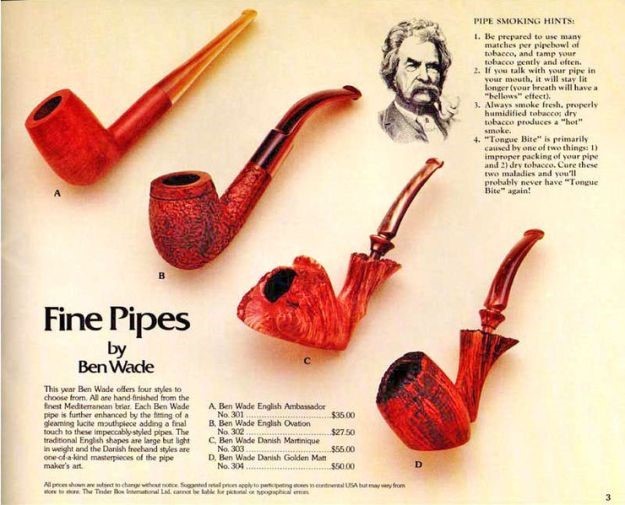
Ben Wade Ad in a Tinder Box catalogue, courtesy Doug Valitchka

I quote the portion of the article that summarizes the history of the brand.

Young Copenhagen master pipemaker Preben Holm had made a meteoric career heading a pipe manufacture employing 45 people at the age of 22! But around the turn of 1970/71 he was in major financial difficulties. His US distributor, Snug Harbour Ltd. in New York City, left him in the lurch. Holm had three unpaid invoices on his desk and another large shipment was ready for the USA, when Snug Harbour’s manager told him on the phone that there was no money at all on the account to pay him.

So, the Dane went to New York for an almost desperate search for a new distribution partner. He made contacts with Lane Ltd. and met Herman G. Lane in February 1971. Lane Ltd. had no interest in Holm’s serial pipes produced at that time but so much the more in the hand-carved freehands because the hype for Danish freehands and fancies in the States was still on its way to the climax then. The meeting resulted in an agreement to start a cooperation. Lane insisted to improve the quality considerably and in return he assured to be able to sell essentially larger quantities.

Holm went back home to work on new samples with all-new designs and altered finishes for Lane. Both, Lane and Holm, agreed that it would be unwise to sell the pipes under Preben Holm’s name as long as Snug Harbour had a considerable stock of Preben Holm pipes and might sell them pipes at very low prices just to bring in some money.

So, on Mr. Lane’s proposal it was determined to use the name Ben Wade belonging to Lane Ltd. Lane spent considerable amounts of money for advertising the new brand in the big magazines– the centerpiece being whole-page ads showing a very exclusive Seven Day’s Set.

The cooperation with Lane Ltd. proved to be an eminent business success for both partners. Within a very short time Ben Wade Handmade Denmark sold in much larger quantities and at higher prices than they had ever dreamed of. And the hype these freehands and fancy pipes caused went on unbroken long after Herman G. Lane deceased. Preben Holm – obviously much more brilliant in pipe making than in pipe business – was in major troubles again in 1986 and had to sack most of his staff. The Ben Wade production was significantly lowered but continued until his untimely death in June of 1989.

Up to now Preben Holm made Ben Wade pipes are cult and highly sought for on the estate markets.

This pipe was another Preben Holm made Freehand distributed in the US by Lane Ltd under the name Ben Wade. The freehand rage occurred in the late 70s and the pipes were made until Preben’s death in 1989. My guess would be that this pipe was made sometime during that time period and potentially in the late 70s.

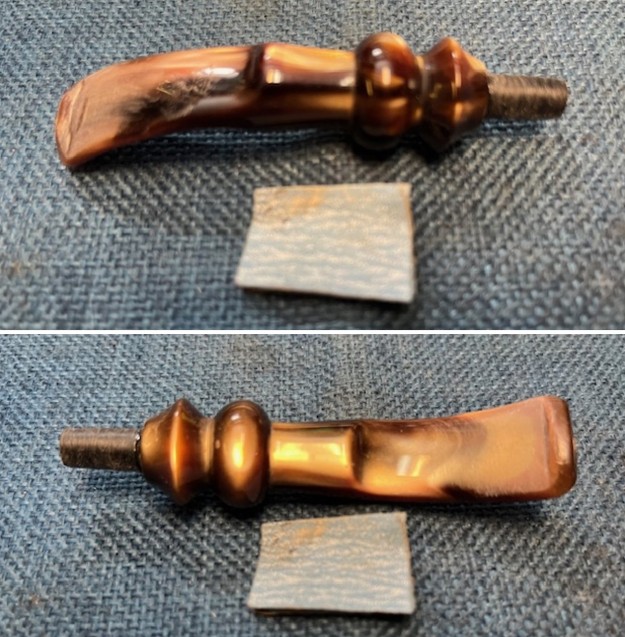
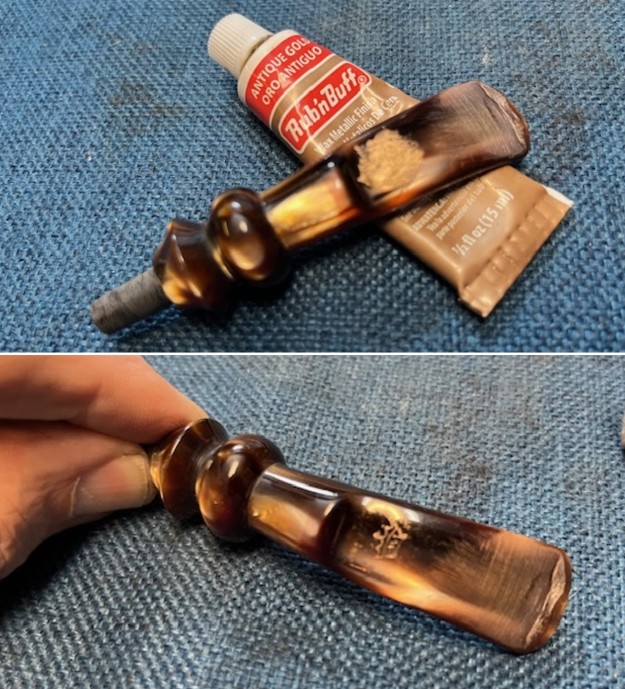
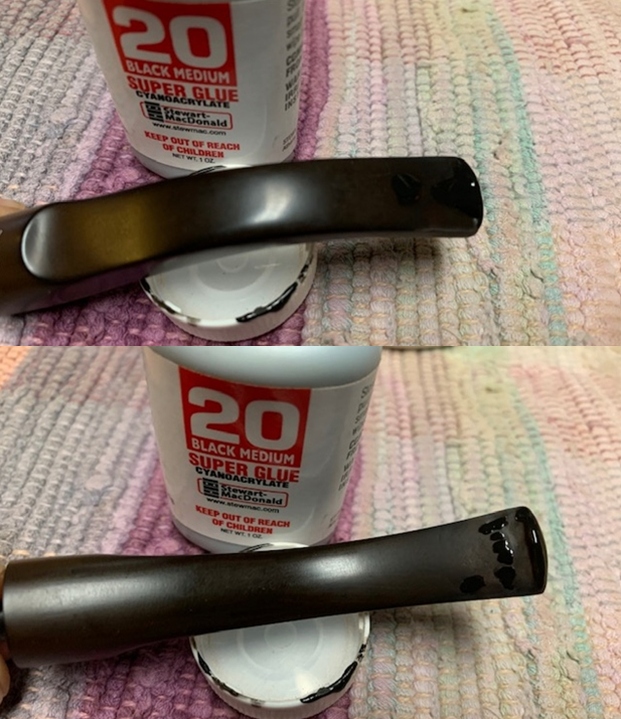
Armed with that information I moved forward to work on the pipe itself and see what I had to do with it. I reamed the pipe with a PipNet pipe reamer using the second and the third cutting head to take the cake back to bare briar. I cleaned up the remnants of the cake with a Savinelli Fitsall Pipe Knife. I finished the bowl internals by sanding the bowl walls with 220 grit sandpaper wrapped around a piece of dowel. The bowl walls looked very good with no checking or cracking to the walls. I worked over the rim top with a brass bristle wire brush to knock off the loose debris on the rim top. I worked it over to clean out the grooves and valleys of both the plateau top and the wire marks across the surface of the rim. It really is a beautiful pipe and a unique looking rim top finish. It cleaned up quite well.With the internals of the bowl cleaned I worked on the airway in the shank, mortise and the stem. I cleaned it with pipe cleaners – both regular and bristle, cotton swabs and 99% isopropyl alcohol. I was able to remove a lot of the debris and oils in the pipe. It smells much better. Now that the reaming and scrubbing of the interior was finished, I moved on to the exterior of the pipe. I scrubbed the plateau rim top and shank end along with the smooth bowl with undiluted Murphy’s Oil Soap and a tooth brush. The grime and oils just rinsed off under the warm water that I ran over the finish. I dried it off with a soft cloth and I was please with how clean it was and how the grain stood out. I sanded the briar with 320-3500 grit sanding pads. I wiped the briar down after each sanding pad with a damp cloth to remove the debris that was left behind. By the time I finished the last pad the briar was very smooth and clean to the touch. I polished the briar with micromesh sanding pads – dry sanding with 1500-12000 grit sanding pads. I wiped it down with a damp cloth after each sanding pad. The bowl began to really shine with the polishing. I worked some Before & After Restoration Balm into the finish of the smooth briar with my finger tips. I worked it into the plateau on the rim top and shank end with a horse hair shoebrush. The product works well to clean, enliven and protect the briar and really brings it back to life. I have been using it for quite a few years now and really like the way it makes the briar come alive and makes the grain pop. The bowl is finished and really looks amazing. All that remains is that I have to polish it on the buffer. I set it aside and turned my attention to the broken tenon. I went through my collection of tenons and found a couple that would work. The difference was in the diameter of the portion of the tenon that went into the stem.I chose the top one in the photo above as the tenon insertion point was smaller in diameter and would fit better in the stem. I used a Dremel and sanding drum and 220 grit sandpaper and a topping board to flatten the broken end on the snapped tenon. I wanted a flat surface to be able to drill the airway for the new tenon.Once it was flattened I used progressively larger drill bits to open the airway.  By the third drill bit the opening was perfect for the diameter of the tenon insert end. I smoothed out the junction of the tenon and the stem using a flat file and the transition was very smooth. I flattened the threads of the insert end with the file at the same to make the fit snug. I knew that once I glue it in place it would be secure and strong.I painted the end of the threaded portion of the tenon with rubberized black CA glue. I inserted a pipe cleaner in the stem and threaded the new tenon onto the pipe cleaner. Once everything was aligned I pressed the tenon in place in the stem end. It aligned perfectly with the pipe cleaner as a guide.Once the glue had set and the tenon was firmly in place I sanded it with 220 grit sandpaper to achieve a snug fit in the shank.I touched up the Cross & Crown stamp on the top of the stem with Rub’n Buff Antique Gold and buffed it off with a cotton pad. It was faint but it was readable. I sanded the tooth marks and chatter on both sides with the 220 grit sandpaper to smooth out the marks and minimise them. It looked better.I polished the stem with micromesh sanding pads. I used 1500-12000 grit sanding pads. I wiped it down with a damp cloth to remove the sanding debris on the surface of the stem. I polished the new tenon at the same time and both took on a rich shine and looked better. I finished by polishing the stem and tenon with Before & After Pipe Stem Polish and gave it a final wipe with Obsidian Oil. This is a beautiful Hand Made Preben Holm made Ben Wade Golden Matt Freehand with a fancy, turned, variegated acrylic stem. It has a great look and feel. The shape fits well in the hand with the curve of the bowl and shank junction a perfect fit for the thumb around the bowl when held. I polished stem and the bowl with Blue Diamond polish on the buffing wheel. I gave the plateau on the rim top and shank end multiple coats of Conservator’s Wax. I gave the bowl and the stem multiple coats of carnauba wax. I buffed the pipe with a clean buffing pad to raise the shine andwith a microfiber cloth to deepen the shine. The rich combination of browns and black in the smooth finishes and the black plateau areas took on life with the buffing. The rich colour of the briar works well with the polished stem. I like the grain and finished look of this Preben Holm Ben Wade Golden Matt Freehand. Have a look at it with the photos below. The dimensions are Length: 6 ½ inches, Height: 2 ¼ inches, Outside diameter of the bowl: 2 wide x 2 ¼ inches long, Chamber diameter: 7/8 of an inch. The weight of the pipe is 74 grams/2.61 ounces. This Danish Freehand is a real beauty. Thanks for walking through the restoration with me as I worked over another beautiful pipe. It will be heading back to Tom shortly and he will once again have his favourite pipe to enjoy. Thanks for your time.
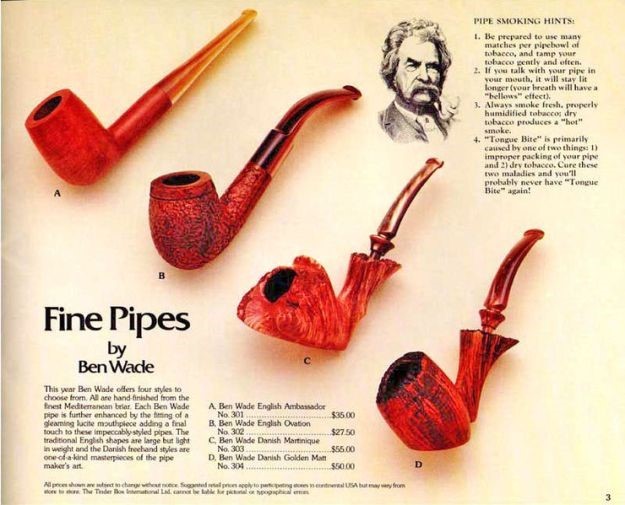
Finally a Preben Holm Crown Hand Made Standing Freehand…and then I saw this!


Blog by Steve Laug

I have worked on many Preben Holm pipes over the years in many of his lines – Danish Pride, Monte Verde, Ben Wade and even his Walnut line which was a bit more classic in shape. I have always enjoyed his take on the flow of the pipe and how well he follows the way the grain takes him shaping his work. I have never worked on one that bore the Preben Holm Crown stamp on the shank. This particular smooth finished Freehand pipe was purchased from an auction in 2020 in Salina, Kansas, USA. It really is a filthy pipe though underneath all the grime it is a beautiful looking Freehand pipe that stands. It combines a plateau rim top and shank end with a smooth finish on the bowl and shank. It is stamped on the underside of the shank and reads Preben Holm [over] Crown [over] Hand Made [over] In [over] Denmark. The classic walnut finish is incredibly dirty but I was excited about it being a Crown – until Jeff mentioned to me that there was a hairline crack on the heel of the bowl! The bowl had a thick cake lining the walls and overflowing onto the plateau rim top in thick lava. It filled in the inner edge of the bowl and the rim top. It was a mess! There was grime ground into the smooth, grooved finish and dust and debris in the plateau valleys on the shank end.The turned vulcanite saddle had a twist in the saddle and had a faint Crown stamp on the topside. It had deep tooth marks and chatter on both sides near the button. The pipe must have been a great smoker judging from the condition it came it. Jeff took photos of the pipe before he started his work on it. Jeff took photos of the rim top and the stem to show the condition of the pipe when we received it. You can see the thick coat I the bowl and the heavy lava on the plateau rim top and inner edge of the bowl. The plateau on the shank end is also filthy. The turned vulcanite stem and has chatter and a few deep tooth marks on both sides near the button. He took photos of the sides of the bowl and the heel to give an idea of the shape and the condition of the briar around the bowl. The third photo below that shows the flat bottom of the heel shows a hairline crack from the back edge inward for about ½ inch and down into the groove about ¼ inch. I have circled it in red in the photo below. Certainly depressing but fixable! It has a shape that truly reflects the style and process of grain chasing that Preben Holm was famous for in his pipemaking. The next photo Jeff took shows the stamping on the underside of the  shank. It is clear and readable as noted above.I turned first to Pipephil to see what I could find about the Crown line of pipes and get some background (http://pipephil.eu/logos/en/logo-p5.html). I have included the photo capture below as it shows the look of the stamping and logo on the pipe I am working on.I turned then to Pipedia and read the listing on the brand to refresh my memory and flesh out the knowledge of the brand (https://pipedia.org/wiki/Holm,_Preben) and the article on Ben Wade (https://pipedia.org/wiki/Ben_Wade). I quote the portion of the Ben Wade article that summarizes the Danish period of the history of the brand:

Young Copenhagen master pipemaker Preben Holm had made a meteoric career heading a pipe manufacture employing 45 people at the age of 22! But around the turn of 1970/71 he was in major financial difficulties. His US distributor, Snug Harbour Ltd. in New York City, left him in the lurch. Holm had three unpaid invoices on his desk and another large shipment was ready for the USA, when Snug Harbour’s manager told him on the phone that there was no money at all on the account to pay him.

So the Dane went to New York for an almost desperate search for a new distribution partner. He made contacts with Lane Ltd. and met Herman G. Lane in February 1971. Lane Ltd. had no interest in Holm’s serial pipes produced at that time but so much the more in the hand-carved freehands because the hype for Danish freehands and fancies in the States was still on its way to the climax then. The meeting resulted in an agreement to start a cooperation. Lane insisted to improve the quality considerably and in return he assured to be able to sell essentially larger quantities.

Holm went back home to work on new samples with all-new designs and altered finishes for Lane. Both, Lane and Holm, agreed that it would be unwise to sell the pipes under Preben Holm’s name as long as Snug Harbour had a considerable stock of Preben Holm pipes and might sell them pipes at very low prices just to bring in some money.

So on Mr. Lane’s proposal it was determined to use the name Ben Wade belonging to Lane Ltd. Lane spent considerable amounts of money for advertising the new brand in the big magazines– the centerpiece being whole-page ads showing a very exclusive Seven Day’s Set.

The cooperation with Lane Ltd. proved to be an eminent business success for both partners. Within a very short time Ben Wade Handmade Denmark sold in much larger quantities and at higher prices than they had ever dreamed of. And the hype these freehands and fancy pipes caused went on unbroken long after Herman G. Lane deceased. Preben Holm – obviously much more brilliant in pipe making than in pipe business – was in major troubles again in 1986 and had to sack most of his staff. The Ben Wade production was significantly lowered but continued until his untimely death in June of 1989.

Up to now Preben Holm made Ben Wade pipes are cult and highly sought for on the estate markets.

With that information my initial thoughts were confirmed. This pipe was a Preben Holm made Freehand distributed in the US by Lane Ltd under his own name. The freehand rage occurred in the late 70s and the pipes were made until Preben’s death in 1989. My guess would be that this pipe was made sometime during that time period and potentially in the late 70s.

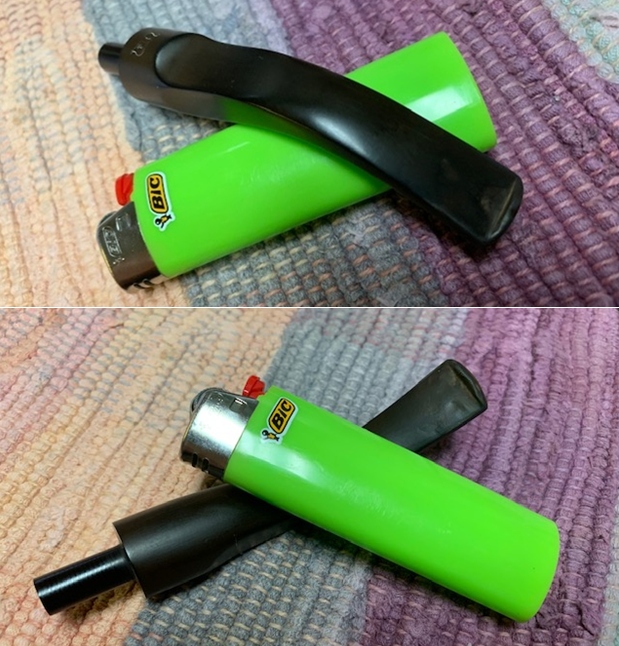
Jeff had cleaned up the pipe following his normal cleaning process. In short, he reamed it with a PipNet pipe reamer to strip out the cake in the bowl and then cleaned up the reaming with a Savinelli Fitsall Pipe Knife. He scrubbed the bowl with undiluted Murphy’s Oil Soap with a tooth brush. He worked over the lava and debris on the plateau rim top and shank end and was able to remove it. He rinsed it under running warm water to remove the soap and grime. He cleaned out the inside of the shank and the airway in the stem with alcohol, cotton swabs and pipe cleaners. He scrubbed the stem with Soft Scrub and cotton pads to remove the debris and oils on the stem. He soaked it in Briarville’s Pipe Stem Deoxidizer and then rinsed it with warm water and dried it off. I took photos of the pipe once I received it. It really looked good. I took close up photos of the stem and the rim top to show both how clean they were and what needed to be addresses with both. The rim top and bowl look good. The stem looked better and the tooth marks and chatter were still present. I would need to remove those to bring the stem back.I took a photo of the stamping on the left side of the shank. You can see from the photo that it is readable. It is clearer on the top half of the stamp than the lower but it is still readable.I removed the stem from the bowl and took a photo of the parts to give a sense of the beauty of the pipe.I decided to start my work on the pipe by addressing the hairline crack on the heel of the bowl. I  examined the inside of the bowl with a light to see if the crack had come through. I had not gone through at all. I looked at the heel of the bowl and saw that it truly was a hairline surface crack probably made by dropping the pipe. I drilled small pilot holes on each end of the crack to stop it from spreading. I cleaned out the crack with alcohol to remove any dust. I filled in the holes and the crack with clear super glue and briar dust. When the repair cured I sanded it smooth with 220 grit sandpaper to blend it into the surrounding briar. I used a folded piece 220 grit sandpaper to smooth out the inner bevel of the bowl and the grooves flowing out of the bowl toward the outer edges.I polished the smooth briar with micromesh sanding pads – wet sanding with 1500-12000 grit sanding pads. I wiped down the briar after each pad with a damp cloth to remove the dust and debris from the surface. The briar began to take on a shine. I worked some Before & After Restoration Balm into the surface of the briar with my finger tips and a horse hair shoe brush to get into the crevices of the plateau rim top and shank end. The product is incredible and the way it brings the grain to the fore is unique. It works to clean, protect and invigorate the wood. I set the bowl aside and turned my attention to the stem. I “painted” the surface of the stem with the flame of a Bic lighter to try and lift the tooth marks. I filled in the remaining marks with clear super glue. Once the repairs cured I sanded them smooth with 220 grit sandpaper to blend them into the surface of the briar. I started the polishing of the stem with 400 grit wet dry sandpaper. I touched up the faint stamp on the top of the stem with Rub’n Buff Antique Gold. I rubbed the product into the faint stamping and buffed it off with a soft cloth. While not perfect it was very visible and distinguishable.I polished the stem with micromesh sanding pads – wet sanding it 1500-12000 pads. I wiped it down with Obsidian Oil after each pad to enliven and protect the vulcanite. I polished it with Before After Pipe Polish – both Fine and Extra Fine. I gave the stem another rub down with Obsidian Oil and set it aside to dry. I am really happy with the way that this Preben Holm Crown Hand Made Danish Freehand turned out. It really is a beautiful looking pipe with a great shape and smooth finished bowl and rim and the remnant of plateau on the shank end. The hairline crack repair went very well and it is virtually invisible. The fancy original vulcanite saddle stem is really nice. The polished black of the stem works well with the briar. The briar really came alive with the buffing. The rich brown stains of the finish gave the pipe a sense of depth with the polishing and waxing. I put the stem back on the bowl and carefully buffed the pipe with Blue Diamond on the buffing wheel using a light touch on the briar. I gave the bowl and the stem multiple coats of carnauba wax on the buffing wheel. I buffed the pipe with a clean buffing pad to raise the shine. I hand buffed the pipe with a microfiber cloth to deepen the shine. The finished Preben Holm Crown Hand Made really is a beauty and feels great in the hand and looks very good. Give the finished pipe a look in the photos below. The dimensions of the pipe are Length: 7 inches, Height: 2 inches, Outside diameter of the bowl: 2 ½ inches long x 2 inches wide, Chamber diameter: 1 inch. The weight of the pipe is 86 grams/3.03 oz. The pipe will be going on the rebornpipes store soon. It will be in the section on Danish Pipe Makers if you would like to add it to your collection. Thanks for reading this blog and my reflections on the pipe while I worked on it. It was a fun one to work on!
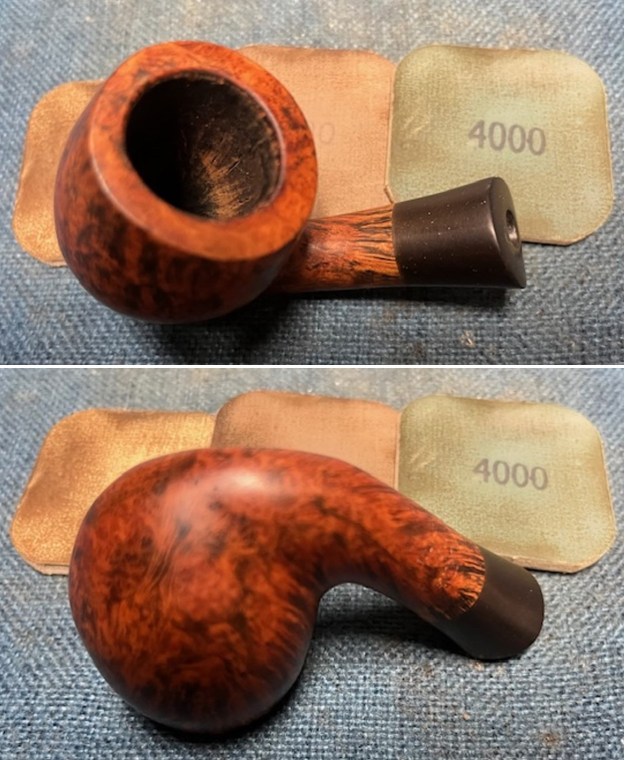
Restoring a Large Preben Holm Regal Freehand Sitter


Blog by Steve Laug

The next pipe on the table came to us from a recent pipe hunt Jeff and his wife Sherry did in Utah. They picked this beauty up at an Antique Mall along the way of the hunt. Even though the finish was dull and lifeless it showed promise under the grit and grime of the years. On the underside of the shank it was clearly stamped Ben Wade in script [over] Martinique [over] Hand Made [over] In [over] Denmark. The finish is filthy with grime and oil ground into the smooth briar of the bowl and shank sides. There were flecks of white paint on the sides as well. The bowl had a thick cake that overflowed in lava on the plateau rim top filling in the grooves and valleys of the finish. The acrylic stem was dirty and had some tooth marks and chatter on both sides ahead of the button. Jeff took some photos of the pipe to show its overall condition before he started his cleanup work.He took photos of the rim top and bowl to give a clear picture of the thickness of the cake and the lava on the plateau finish of the rim top. There is dust and debris stuck to the walls of the bowl clearly visible in the photos. He also took photos of the top and underside of the stem to show the chatter and tooth marks.   Jeff took photos of the sides and heel of the bowl to give a picture of what the briar around the pipe looked like. There is some stunning grain under the grime.    He took photos of the stamping on the shank. It reads as noted above and is clear and readable. I turned Pipephil’s section on Preben Holm pipes and found the brand listed there with and an example of the stamping on the underside of the shank and the stem. The stamping matches the one that I am working on (http://www.pipephil.eu/logos/en/logo-p5.html). It is like the stamping and logo that is shown in the second pipe below.I turned to the article on Preben Holm pipes on Pipedia (https://pipedia.org/wiki/Holm,_Preben). The article is worth a read in the detailed history of the brand written by Preben Holm himself. Give it a read. I quote the introductory portion of the article that summarizes the Danish period of the history of the brand:

Preben Holm (1947 – 1989) has set some marks in pipe history. Just before his 16th birthday in 1963 he sold pipes to the legendary Pipe-Dan shop and at the age of only 22 he headed 45 employees. He was among the first Danish artisans who made “Danish pipe design” famous in the USA in the 1960’s. More than that he was one of the very first carvers who exceeded this moderate Danish design which based on the classical shapes. “Chasing the grain” they turned out wild and dramatic fancy pipes. Combining smooth with blasted surfaces, showing big areas of the original bark at the top of the bowl and at the end of the stem, these pipes were quite shocking to many elder and more conservative pipesmokers.

With that information my initial thoughts were confirmed. This pipe was a Preben Holm made Freehand distributed in the US by Lane Ltd. The freehand rage occurred in the late 70s and the pipes were made until Preben’s death in 1989. My guess would be that this pipe was made sometime during that time period and potentially in the late 70s.

Jeff had cleaned up the pipe with his usual penchant for thoroughness. He reamed the pipe with a PipNet Pipe Reamer and cleaned up the remnants with a Savinelli Fitsall Pipe Knife.  He scrubbed the bowl with undiluted Murphy’s Oil Soap with a tooth brush. He rinsed it under running warm water to remove the soap and grime. He cleaned out the inside of the shank and the airway in the stem with alcohol, cotton swabs and pipe cleaners. He scrubbed the stem with Soft Scrub and cotton pads to remove the debris and oils on the stem. He rinsed it with warm water and dried it off. I took photos of the pipe once I received it.    The rim top had some darkening on the back of the bowl. The beveled inner edge of the rim looked very good with some darkening. The stem surface looked very good with a few small tooth marks and chatter on both sides near the button. I took a photo of the stamping on the underside of the shank. It read clearly as noted above.  I removed the stem and took a photo of the pipe to give a sense of the whole. The stem is turned fancy acrylic. I started my work on the pipe by cleaning up the darkening on the inner bevel of the plateau rim top with a folded piece of 220 grit sandpaper. I was able to remove the darkening and I like the looks of the rim top.  I polished the bowl and the rim top, sides and shank with micromesh sanding pads – wet sanding with 1500-12000 grit pads and wiping it down after each pad with a damp cloth.    I rubbed the bowl and shank down with Before & After Restoration Balm. I worked it into the surface of the bowl sides and shank with my fingertips and into the plateau rim top and shank end with a horsehair shoe brush. The product works to clean, enliven and protect the briar. I let the balm sit for 10 minutes and then buffed with a cotton cloth to raise the shine. I set the bowl aside and turned to work on the stem. I filled in the deep tooth marks on both sides of the stem with clear super glue. Once the repairs cured I sanded the repairs to blend them into the surface of the acrylic with 220 grit sandpaper and started the polishing of the stem with 400 grit wet dry sandpaper.     I polished the vulcanite stem with micromesh sanding pads – 1500-12000 grit pads. I wiped it down with a damp cloth after each sanding pad. I used Before & After Pipe Polish – both Fine and Extra Fine to further polish the stem.      This Preben Holm Regal Hand Made Freehand Sitter with a fancy, turned acrylic stem is a great looking pipe now that it has been restored. I put the stem back on the bowl and carefully buffed the pipe with Blue Diamond on the buffing wheel using a light touch on the briar. I gave the bowl and the stem multiple coats of carnauba wax on the buffing wheel and followed that by buffing the entire pipe with a clean buffing pad. I hand buffed the pipe with a microfiber cloth to deepen the shine. The finished Preben Holm Regal Freehand fits nicely in the hand and feels great. Give the finished pipe a look in the photos below. The dimensions of the pipe are Length: 6 ¾ inches, Height: 2 ½ inches, Outside diameter of the bowl: 2 inches, Chamber diameter: 1 inch. If you are interested in adding this pipe to your collection send me a message or an email. Thanks for reading this blog and my reflections on the pipe while I worked on it. There are many more to come!
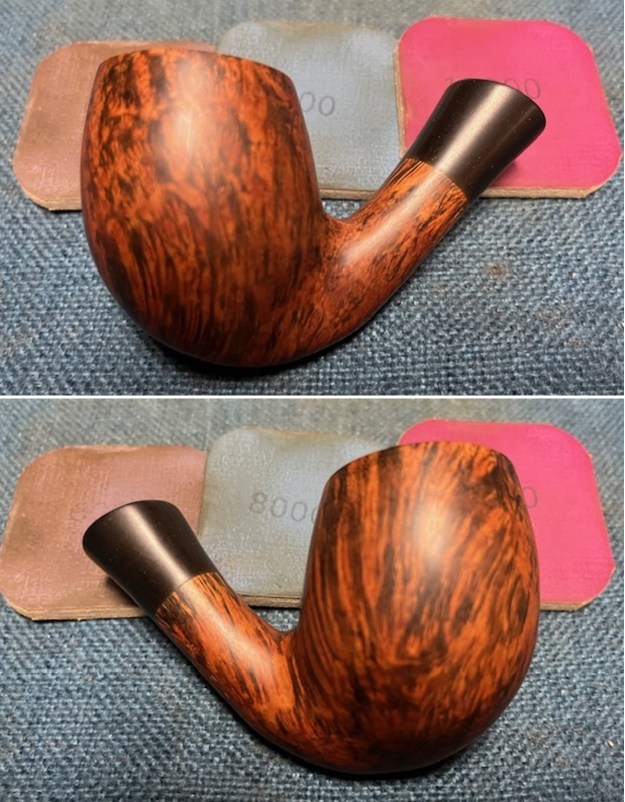
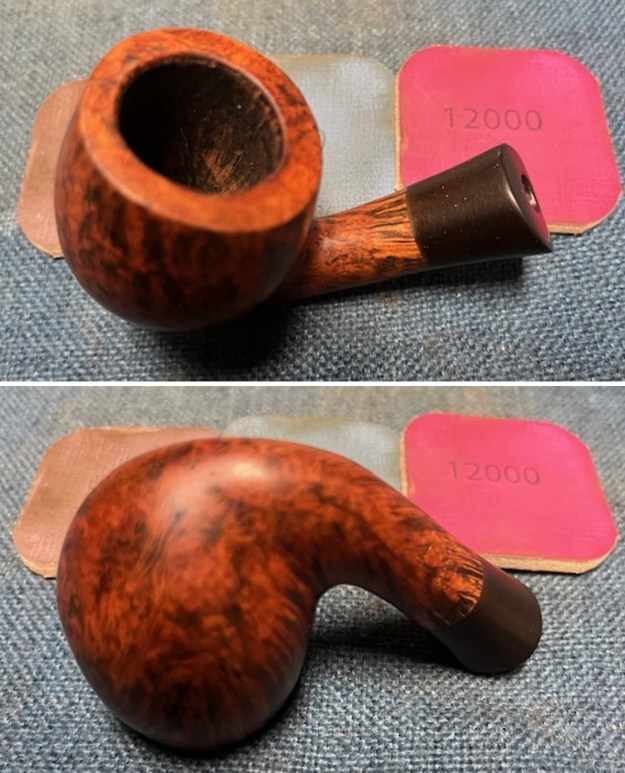
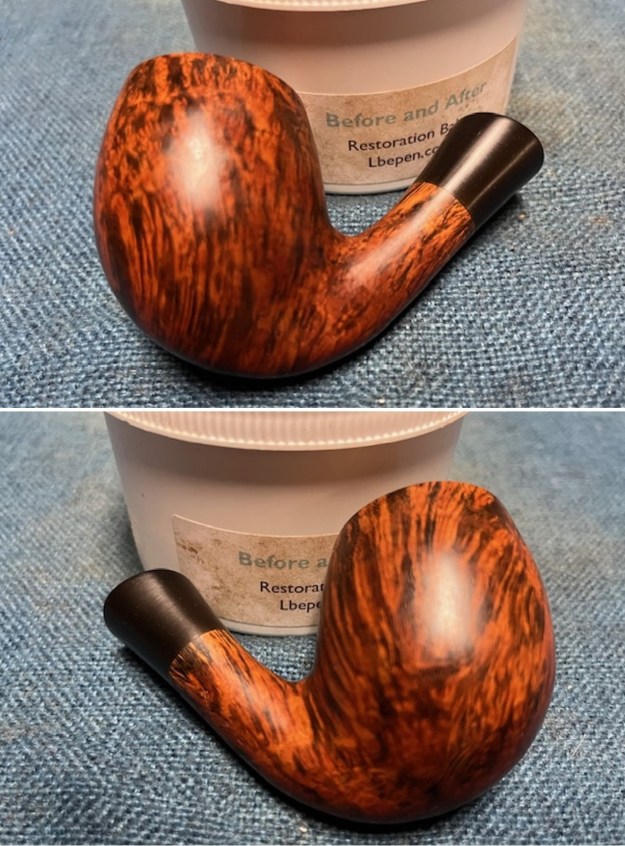
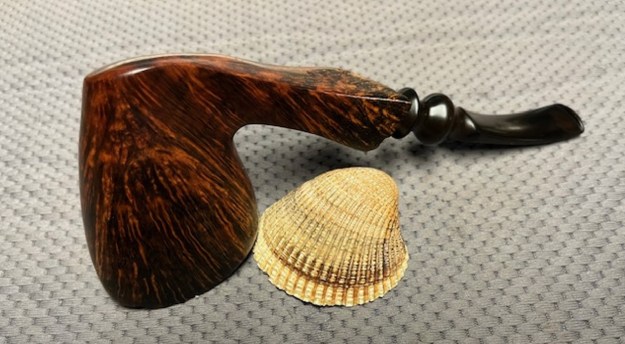
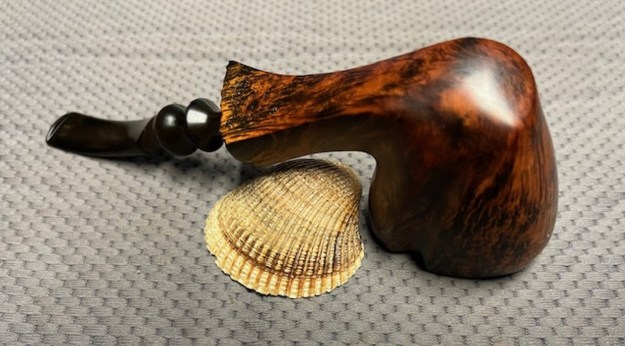
New Life for a Preben Holm Traditional Celebration Danish Hand Made


Blog by Steve Laug

The next pipe on the work table came to us from a fellow in St. Leonard, Maryland, USA. It is a uniquely shaped Dublin with a fancy vulcanite saddle stem and beautiful grain showing through the grime around the bowl. It has a finish of contrasting brown stains that highlights the grain. I have worked on quite a few Preben Holm pipes throughout the years and have always found the fit and finish very well done. This pipe is stamped on the underside of the shank and reads Preben Holm [over] Traditional [over] Celebration [over] Hand Made in Denmark. There is a thick cake in the bowl and an overflow of lava on the back rim top. It appears that there is some damage to the inner edge of the rim in that area as well. The rim top as a whole has scratching and nicks in the flat surface. The beveled outer edge looks to be in good condition. The fancy saddle vulcanite stem was oxidized, calcified and had deep tooth marks and chatter on both sides of the stem near the button. There is also a logo stamp on the top of the stem – a PH in a banner. The pipe looks to be in decent condition under the grime. Jeff took photos of the pipe before he started his cleanup. He took photos of the rim top to show the cake and the lava coat. It is another dirty pipe. He also captured the shape of the stem and the deep tooth marks and chatter on the top and underside of the stem near the button.    He took photos of the sides and heel of the bowl to show the beautiful grain around the bowl and the amount of grime ground into the surface of the briar.    He took photos of the stamping on the underside of the shank and the shooting star logo on the left side of the stem. It is faint but still present. I turned Pipephil’s section on Preben Holm pipes and found the brand listed there with and an example of the stamping on the underside of the shank and the stem. The stamping matches the one that I am working on (http://www.pipephil.eu/logos/en/logo-p5.html). It is like the stamping and logo that is shown in the second pipe below.I turned to Pipedia and reread the history of the brand (https://pipedia.org/wiki/Holm,_Preben). It is fascinating in that it is a first person account. It is a great read. I could not find any specific information on the Traditional Celebration. It was now time to work on this pipe.

Jeff had done his usual thorough cleanup on the pipe. He reamed the bowl with a PipNet pipe reamer and followed up with a Savinelli Fitsall pipe knife to remove the cake. He scrubbed out the mortise and the airway in the shank and the stem with alcohol, cotton swabs and pipe cleaners. He scrubbed the exterior of the bowl, rim, shank and stem with a tooth brush and Murphy’s Oil Soap to remove the oils and tars on the rim and the grime on the finish of the bowl. He rinsed it under running water. He dried it off with a soft cloth. He cleaned the internals and externals of the stem with alcohol, pipe cleaners and cotton swabs. He soaked the stem in Before & After Deoxidizer and rinsed it off with warm water and cleaned out the airway in the stem with alcohol. The pipe looked very good.   I took a photo of the rim top and stem to show the condition. They cleaned up really well and the top of the rim looked very good. The inner edge of the bowl showed chipping and burn damage on the back inner edge. The vulcanite saddle stem had tooth chatter and deep marks on both sides ahead of the button and on the button edges.  I took a photo of the stamping on the underside of the shank. It read as noted above.  I removed the stem and took a photo of the pipe to give a sense of the whole. It is a well shaped Wide Dublin that looks great. Now it was time to do my work on the pipe. I started by working over the damage from the burn on the inside rim. I used a folded piece of 220 grit sandpaper to give the inner edge a bevel to take care of the burn and clean up the edges of bowl. I polished it with 400 grit wet dry sandpaper. I wiped the bowl down with a damp cloth to remove the sanding dust. (I forgot to take a photo of the cleaned up rim top. The bevel will be very visible in the polishing photos.)I polished the briar with micromesh sanding pads – wet sanding with 1500-12000 grit pads and wiped down the bowl after each sanding pad. I rubbed the bowl and shank down with Before & After Restoration Balm. I worked it into the surface of the sandblast bowl sides and shank with my fingertips to clean, enliven and protect the briar. I let the balm sit for a little while and then buffed with a cotton cloth to raise the shine. The Balm did its magic and the grain stood out. I set the bowl aside and turned my attention to the stem. I painted the stem with the flame of a Bic lighter to raise the tooth dents in the vulcanite. I filled in the dents with black super glue to repair them. Once the repairs had cured I recut the button and smoothed out the repairs with a needle file.    I used 220 grit sandpaper to smooth out the tooth chatter and marks and blend them into the stem surface. I started the polishing with 400 grit wet dry sandpaper.  I scrubbed off the remaining oxidation with Soft Scrub All Purpose Cleaner. I polished the vulcanite stem with micromesh sanding pads – 1500-12000 grit pads. I wiped it down with Obsidian Oil after each sanding pad. I touched up the stamping on the top of saddle with Rub’n Buff Antique Gold. I pushed it into the stamping and buffed it off with a cotton pad.I used Before & After Pipe Polish – both Fine and Extra Fine to further polish the stem. The photo below shows the polished stem.This beautifully grained Preben Holm Traditional Celebration Wide Dublin with a fancy vulcanite saddle stem is a great looking pipe now that it has been restored. The rich Antique Shell coloured finish came alive with the polishing and waxing. The dimensions of the rustication really popped. I put the stem back on the bowl and carefully buffed the pipe with Blue Diamond on the buffing wheel using a light touch on the briar. I gave the bowl multiple coats of Conservator’s Wax and the stem multiple coats of carnauba wax on the buffing wheel. I buffed the pipe with a clean buffing pad to raise the shine. I hand buffed the pipe with a microfiber cloth to deepen the shine. The finished PH Traditional Celebration is a beauty and fits nicely in the hand and looks very good. Give the finished pipe a look in the photos below. The dimensions of the pipe are Length: 6 ½ inches, Height: 2 inches, Outside diameter of the bowl: 2 inches, Chamber diameter: 7/8 of an inch. Thanks for reading this blog and my reflections on the pipe while I worked on it. There are many more to come!

My First Ever Tenon Replacement and it’s on a Preben Holm # 7 Freehand Pickaxe Pipe!!


Blog by Paresh Deshpande

The first ever Preben Holm in my collection was from eBay about two years back. It came to me with a broken stem and the tenon stuck in to the mortise. This pipe received a new lease on life in the month of May last year when Steve, Jeff and Dal Stanton visited me here in India. I learned the process of tenon replacement along with many other tips and processes in pipe restoration. Here is the link to the informative write up by Steve on this pipe; (https://rebornpipes.com/2019/05/14/restoring-a-preben-holm-hand-cut-sandblast-freehand-in-pune-india/).

The second Preben Holm in my collection came from my Mumbai Bonanza, which I really enjoyed working on; (https://rebornpipes.com/2019/08/12/refurbishing-a-tired-preben-holm-1-from-the-mumbai-bonanza-lot/).

The next two Preben Holm pipes came to me from a seller on eBay. Both these pipes had some serious stem issues which really kept other buyers away from placing their bids and lucky me, I got both these pipes for a really good price. Even though both pipes came to me together, I shall be working on them separately since they each have a different set of issues involved.

The first of these two PH pipes was restored a couple of weeks ago and it really turned out to be a gorgeous pipe. Here is the link to the write up that has been posted on rebornpipes.com (https://rebornpipes.com/2020/03/10/refurbishing-a-preben-holm-3-freehand-pipe/).

The second PH currently on my work table, is a beautiful pickaxe freehand with beautiful flame grain all around the stummel and shank and birdseye at the foot of the stummel. The rim top has remnants of plateau along the front left side and extending to the right up to half the length of the rim top. The shank end is sleek and smooth with a slight flare at the shank end, a complete contrast to the earlier PH I had worked on that had a large flare at the shank end. Here are the pictures of the pipe as it sits on my work table. The pipe is stamped on the bottom of the flared shank end as “PREBEN HOLM” in block capital letters over “Hand Cut” in a cursive artistic hand over “COPENHAGEN” over “DENMARK”, all in block capitals. The left side of the shank bears the encircled numeral “7”. All the stampings are crisp and easily readable. The fancy vulcanite stem is devoid of any stampings.There is a lot of interesting information on the carver, Preben Holm, on pipedia.org (https://pipedia.org/wiki/Holm,_Preben) which makes for an interesting read. However, there was no information or guidelines to help understand the grading and dating of these pipes from the carver. In my previous write ups on Preben Holm pipes, I had sought input on these specific aspects and was honored by studied information from esteemed readers of rebornpipes. Here is some of the information that was shared by the readers;

Roland Borchers March 10, 2020 at 8:21 am

Hi Paresh,

What a wonderful pipe and a great job (again) on the restoration. The PH pipes were 1968-1970 graded from 1 (lowest) to 8 (unicorn) .
This page from smokingpipes.com might be of interest, but there is more to be found on the www.
https://www.smokingpipes.com/pipes/estate/denmark/moreinfo.cfm?product_id=136933

So a 3 is not bad at all…

Best wishes,

Roland

I followed the link forwarded by Mr. Roland Borchers and reproduce the information gleaned;

“Now that my pulse has returned to (vaguely) normal. Preben Holm pipes which bear a single grading number in a circle, represent Holm’s earliest ‘Hand Cuts’, a period that most estimate between 1968 and 1970. Prior to handling this amazing jewel, the highest grade that I had encountered was a ‘5’. Once (just once) I saw a smoked ‘7’ offered across the pond for a price that could feed a decent sized village for a month (mild exaggeration, but you get the idea). Here we have a ‘6’, featuring both the conservancy of shape that one would expect from the earliest days, as well as a grain worthy of such a lofty grade designation. Forty (plus) years young, utterly unsmoked and it comes with both the original presentation box and sleeve. For Pete’s sake, don’t let this one get away”.

–R. ‘Bear’ Graves

borman August 15, 2019 at 5:44 pm

Not sure how correct I am but… pipes 1-4 as such are lower to higher quality rating as A-E is low to high. The bone extensions that I have had and others I have seen appear to be from the 60’s. Hope I am not far off and also I hope it helps you.

Thus from the above information, it’s evident that this beautiful Preben Holm pipe in my hand is a very rare # 7, top grade and very expensive pipe from 1960s…

INITIAL VISUAL INSPECTION
The first and foremost issue that I noticed and was aware of from the description given by the seller is that of the broken tenon. Most of the readers must be wondering as to the rational of buying a pipe, even a Preben Holm, with a broken tenon and it’s a logical question. However, there are two main reasons why I went in for this purchase; firstly my friend and guru, Steve had demonstrated how to replace a broken tenon and I was keen to try my hand at it and secondly was the economic consideration!! Pray tell me if it is possible to get a grade 7 early hand-cut Preben Holm from the 1960s at USD $65, including shipping!! Never, I say. Below are the pictures of the broken tenon stuck in to the mortise. This is going to be a challenging repair being my first tenon replacement.The chamber has a very thin layer of dry and hard cake with the slightly outward flared inner rim edge showing darkening in the 6 o’clock direction. The condition of the inner walls of the chamber can be checked and ascertained only after the cake has been taken down to the bare briar. However, I do not envisage any damage to the chamber walls. There is negligible lava overflow and debris embedded in the plateau of the rim top surface. It is my guess that this pipe suffered said catastrophic damage very early in its existence and had since been languishing in a box with the previous piper before he decided to get rid of it. The stummel boasts of beautiful straight grain all around and extends over the shank surface too!! The surface is relatively clean and without any fills save for a few very minor scratches that could have been caused during routine use. The slightly flared smooth end of the shank is clean. The foot of the stummel shows beautiful bird’s eye grains and is sans any damage. Overall, the stummel presents a sparingly used and a well-cared for pipe. The mortise has the broken tenon stuck in to it. However, given the condition of the chamber and the overall pristine appearance of the stummel, I think the mortise should be clean too!!

The fancy vulcanite stem shows traces of oxidation and is otherwise sans any major damage. The horizontal slot end of the stem is heavily oxidized to a dark brown coloration. The broken tenon end is jagged and sharp at the place where the tenon has snapped. The fancy stem, though it looks beautiful when black and shiny, is a bear to clean with all the dips and narrow gaps between the beads and rings etc.THE PROCESS
I began the process of refurbishing this pipe with cleaning the internals of the stem using pipe cleaners with isopropyl alcohol (99.9% pure) and dunking the stem in to “Before and After Deoxidizer” solution developed by my friend Mark Hoover. The solution helps to draw out heavy oxidation to the surface making its further removal a breeze, while the minor oxidation is eliminated to a very great extent. I usually dunk stems of 5-7 pipes that are in-line for restoration and this pipe is marked in green arrow. I generally allow the stems to soak in this solution overnight for the solution to do its work.With the stem soaking in the deoxidizer solution, I worked the stummel starting with reaming the chamber with my fabricated knife as the layer of cake was too thin and did not warrant the use of a reamer. It was at this stage that I realized that the pipe has been so sparingly smoked that what I was assuming to be a layer of cake, is in fact a layer of bowl coating!! The walls of the chamber are smooth and solid. I tried to wriggle out the broken tenon that was stuck in to the mortise. Lucky me, it came out without any resistance!! That’s a big relief. Next, I cleaned the mortise with hard bristled and regular pipe cleaners dipped in isopropyl alcohol. I scrubbed the external surface of the bowl with undiluted Murphy’s oil soap and hard bristled tooth brush and dried it using paper towels and soft cotton cloth. I carefully cleaned the plateau rim top with a soft brass wire brush to remove the accumulated dirt and debris from the surface. Thereafter, I cleaned the mortise, plateau rim top and stummel surface with anti-oil dish washing soap on shank brush and tooth brush. The entire stummel, including the platue rim top, cleaned up nicely. I set the stummel aside to dry out naturally. Staying with the stummel restoration, I polished the stummel with micromesh pads, wet sanding with 1500 to 12000 pads. This time around, I did not repeat the mistake of polishing the plateau rim top as I had done with the PH # 3 earlier! I wiped the surface with a soft cloth at the end of the micromesh cycle. The stummel looks amazing with a deep shine and beautiful straight grains popping over the stummel surface. I rubbed a small quantity of “Before and After Restoration Balm” in to briar. I rubbed this balm deep in to the nooks and crannies of the plateau rim top surface with my fingers and let it rest for a few minutes. The balm almost immediately works its magic and the briar now has a nice vibrant appearance with the dark brown hues of the grain contrasting with the rest of the stummel surface. I further buff it with a horse hair shoe brush. As mentioned in the previous write up on refurbishing of pipe PH # 3, I had worked on all the stems that had been soaking in the deoxidizer solution overnight. I fished out all the stems and cleaned them under running warm water and scrubbed the raised oxidation from the stem surface using Scotch Brite pad. I further removed the oxidation by scrubbing the stems with 0000 grade steel wool and applied a little olive oil to rehydrate the stems and set them aside for the oil to be absorbed. Complete oxidation was removed on this stem by the process described above. Unfortunately, I did not click any pictures of these stems at this stage.

With this, I have now reached the most critical and challenging part of this restoration; replacing the broken tenon. While Steve, Dal and Jeff were here in India, Steve had replaced a tenon on a Preben Holm which had come to me with a broken tenon. I had minutely observed the procedure, made detailed notes and read the relevant blogs that Steve has written on rebornpipes.com.

The process starts with sanding the broken tenon end of the stem till a smooth and even stem face is available for the new tenon. This step also reveals and opens up the stem airway for drilling to accommodate the new tenon. I did this by topping the tenon end of the stem face on a piece of 220 grit sandpaper till smooth.Next, I selected a Delrin tenon that was the closest fit in to the mortise. I mounted a sanding drum on to my hand held rotary tool and setting the speed at its lowest, I shaped the tenon to a perfect fit in to the mortise. I was very slow, deliberate and frequently checked the progress being made. Once I had achieved a snug fit, I kept the tenon aside and worked the stem.The one and most important aspect that has to be kept in mind while replacing a tenon is to keep the new tenon and stem airway straight and aligned. To ensure this, with a sharp knife I gave a slight inward bevel to the stem’s airway opening which will serve as a guide to the drill bit when drilling. I use the length of the end of the tenon to determine the depth of the drilling. I marked off this length with a rubber band wound tightly on each and every drill bit that I used. I started the drilling with a bit that was slightly larger than the existing airway. I proceed through a series of bits starting with a 3 mm bit until I had drilled the airway with the final bit of 5.5 mm, the same size as the end of the replacement tenon that I had shaped earlier. I proceed with caution as I wanted to make sure that I kept the airway straight for a good fit of the new tenon.I used a file to knock off the threads on the tenon end just enough to pressure fit it in place in the stem. I carefully checked the alignment to make sure the tenon was straight on the stem before setting it aside to cure. I subjected the stem with the replaced tenon to the pipe cleaner test. The pipe cleaner passed through the air way smoothly and without any obstruction. Once satisfied that the alignment is perfect, I put some super glue on the tenon end and pressed it into the airway and set it aside to cure. I am very pleased with my first attempt at a tenon replacement. I further sand the stem with 600 and 800 grit sand paper and wiped the stem with cotton pad dipped in alcohol to remove the resultant dust and rubbed some extra virgin olive oil in to the stem and set it aside to be absorbed in to stem. I polished the stem with micromesh pads, wet sanding with 1500 to 12000 grit pads. I rubbed a little extra virgin olive oil in to the stem at the end of the micromesh pads polishing cycle. I completed the polishing regime of the stem by rubbing a small quantity of Extra Fine Stem polish developed by my friend Mark Hoover, and giving it a final polish with a soft cotton cloth. The stem is now nice, smooth and shiny.To apply the finishing touches, I first mount a cotton cloth buffing wheel on to my hand held rotary tool and apply a coat of Blue Diamond to the stummel and the stem to polish out the minor scratches.With a cotton buffing wheel that I use for carnauba wax, I apply a coat of carnauba wax to the stummel and stem and continue to work on it till the complete coat of wax has been polished out. I mount a clean cotton cloth buffing wheel and give the entire pipe a once over buff. I finish the restoration by giving the entire pipe a rigorous hand buffing using a microfiber cloth to deepen the shine further. The finished pipe is shown below. P.S. – First things first; tenon replacement, now that I have personally worked on it, is definitely not a very difficult procedure. All it takes is a lot of patience and I strongly recommend that before attempting it, one should go through as many write ups on tenon replacement as possible. Steve has some nice, simple and informative step by step write ups on this procedure which is strongly recommended.

I am really fortunate to be in the process of learning the nuances of pipe restoration and cannot thank Steve enough for his support and guidance.

I wish to thank Mr. Roland Borchers and Mr. Borman who have explained the numbering system followed on Preben Holm pipes and also on dating these pipes for the larger good of our fraternity.

Thanks for your patience and looking forward to inputs about the write up. Cheers…