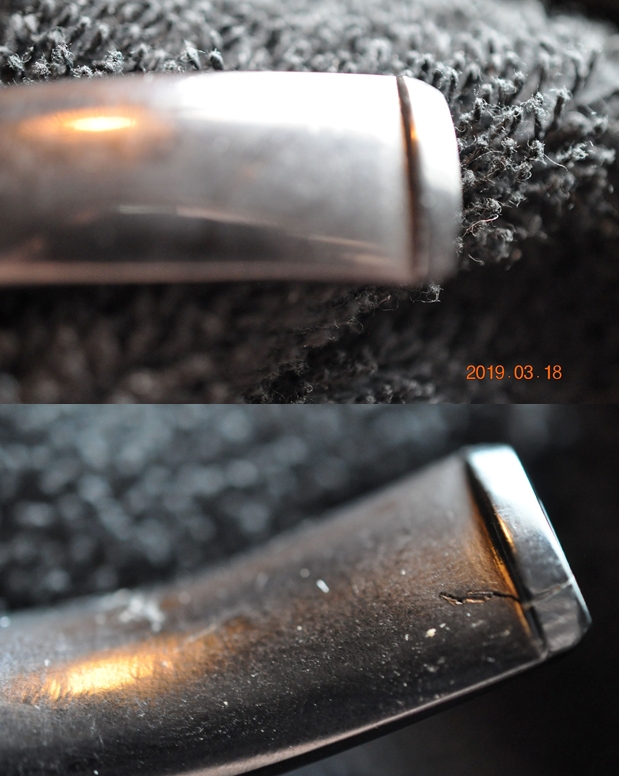
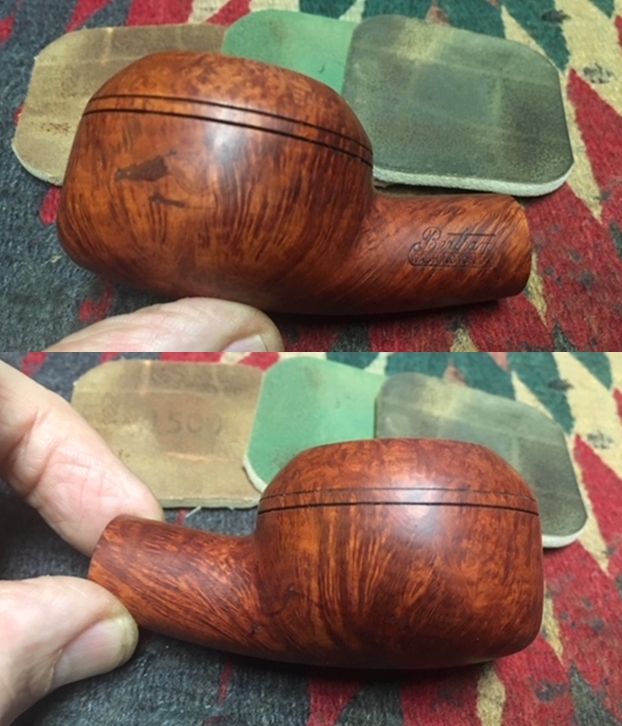
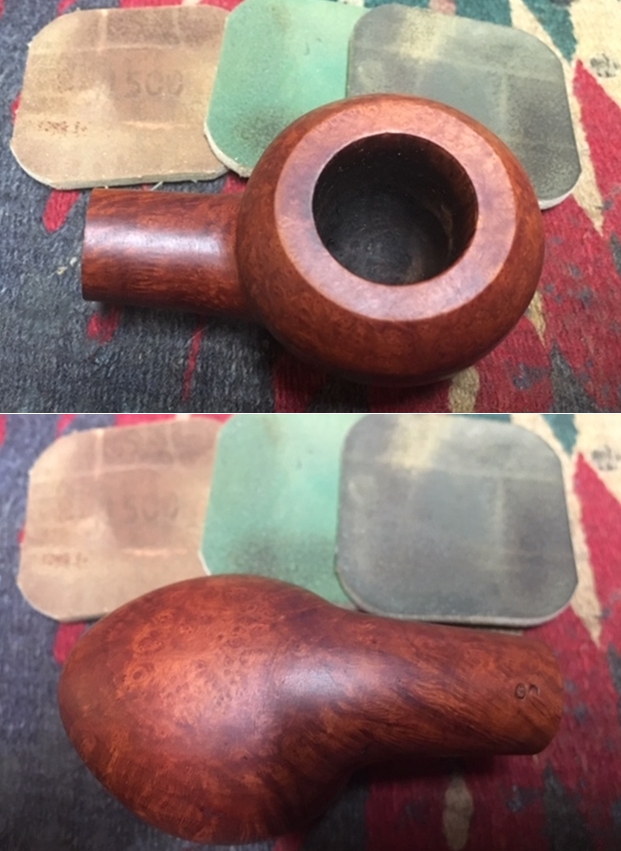
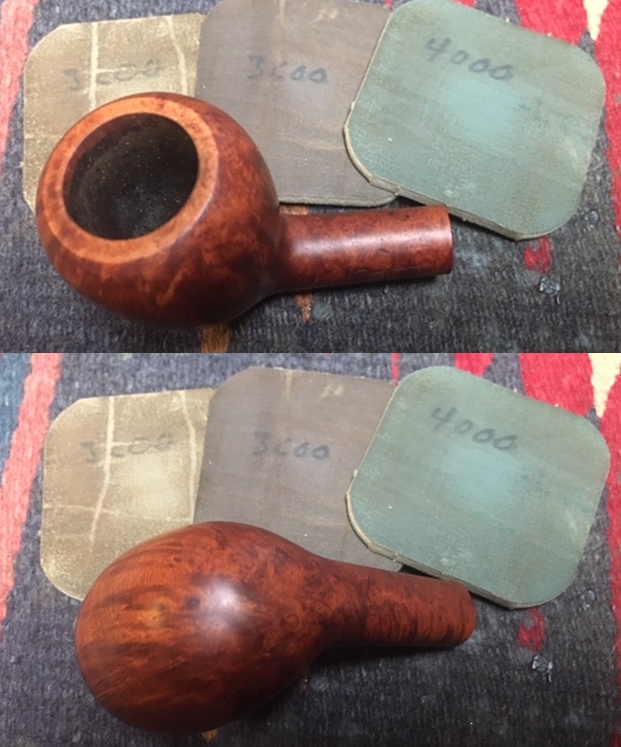
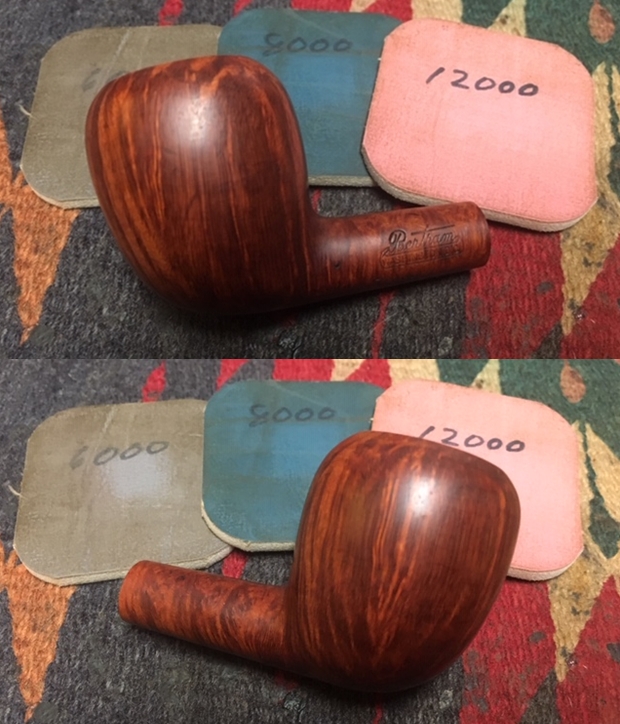
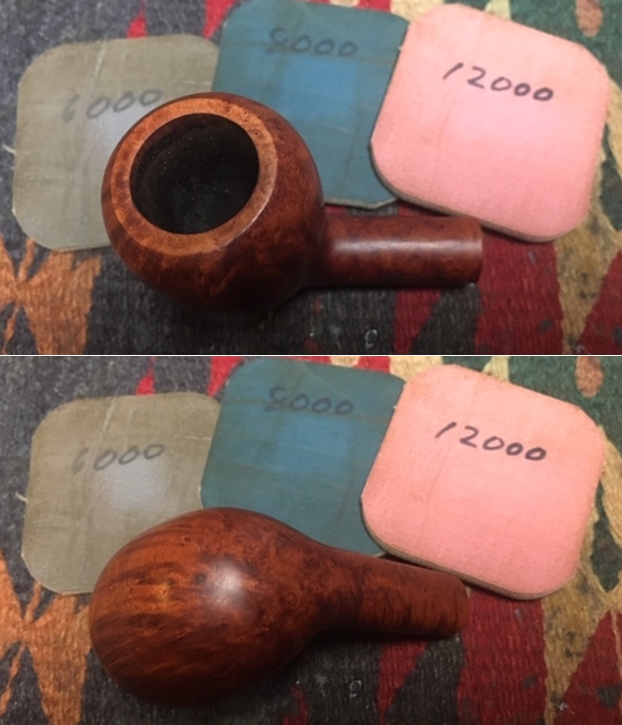
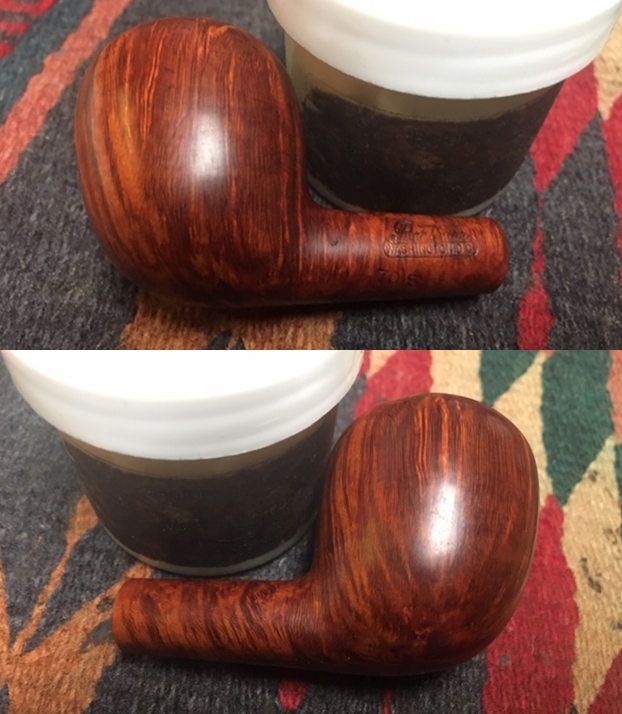
Tag Archives: polishing stems

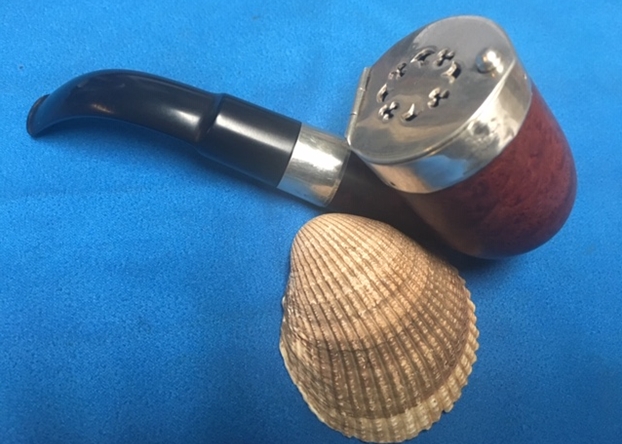
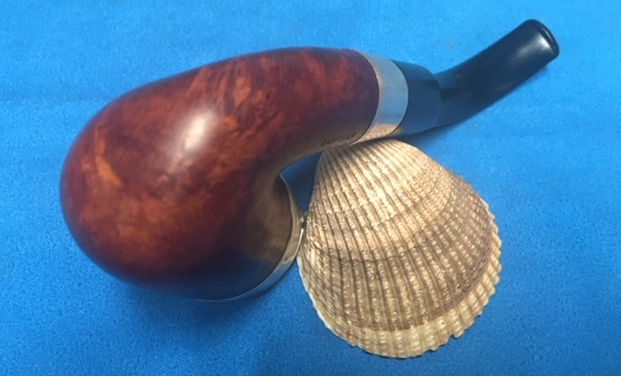
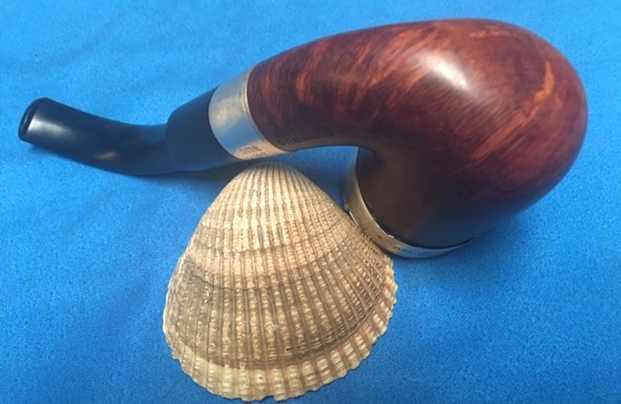
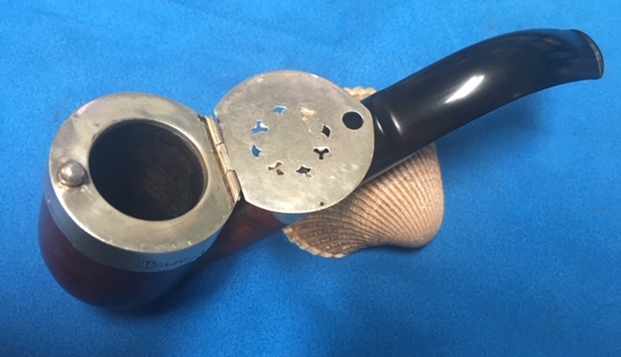
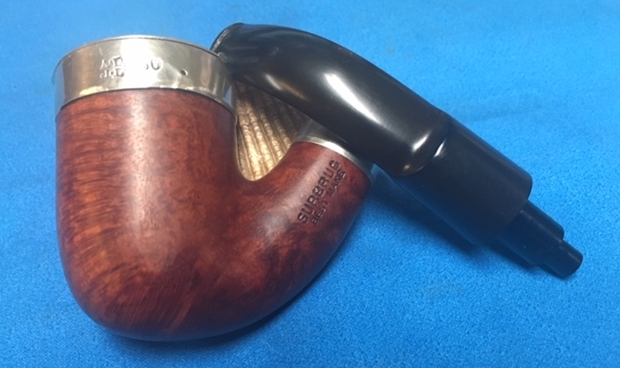
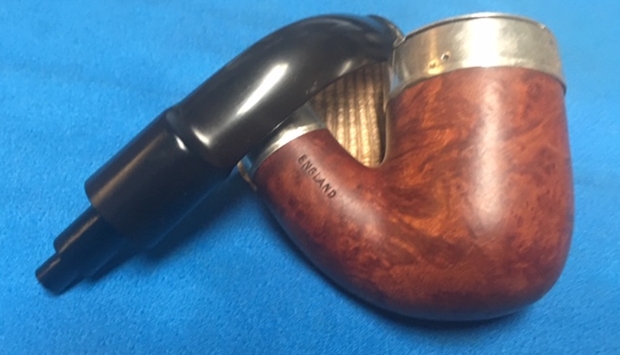
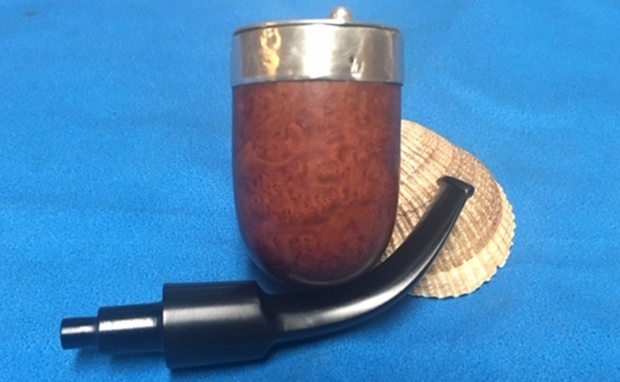
Time to work on another old timer – a Surbrug Best Make ¾ Bent Capped Billiard


Blog by Steve Laug

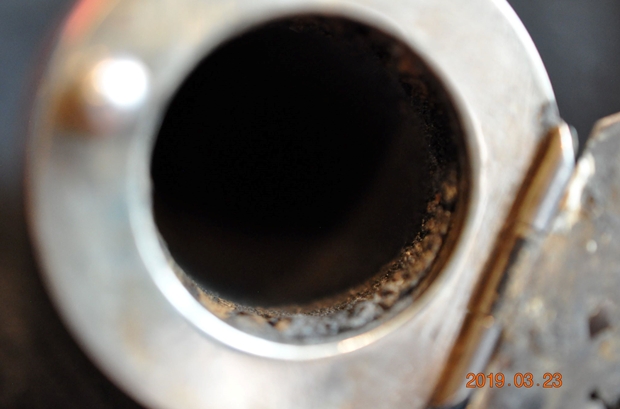
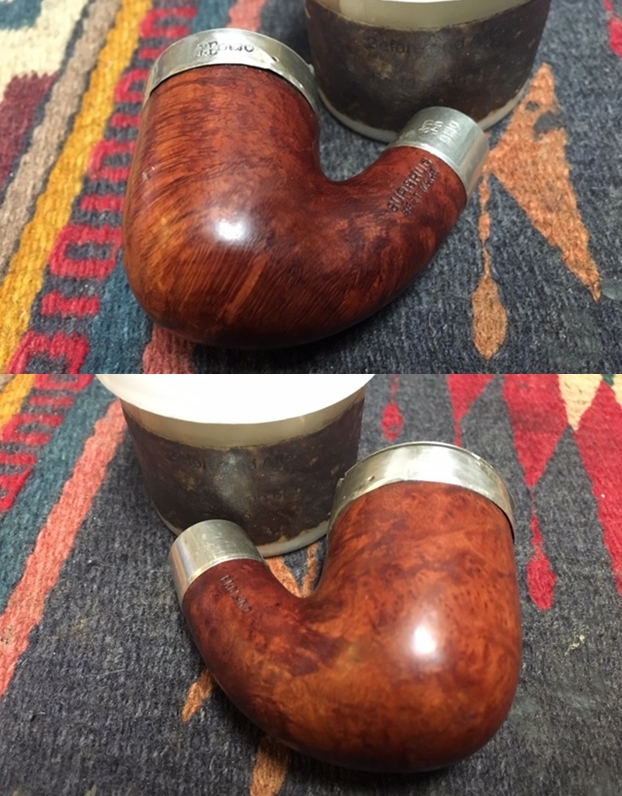
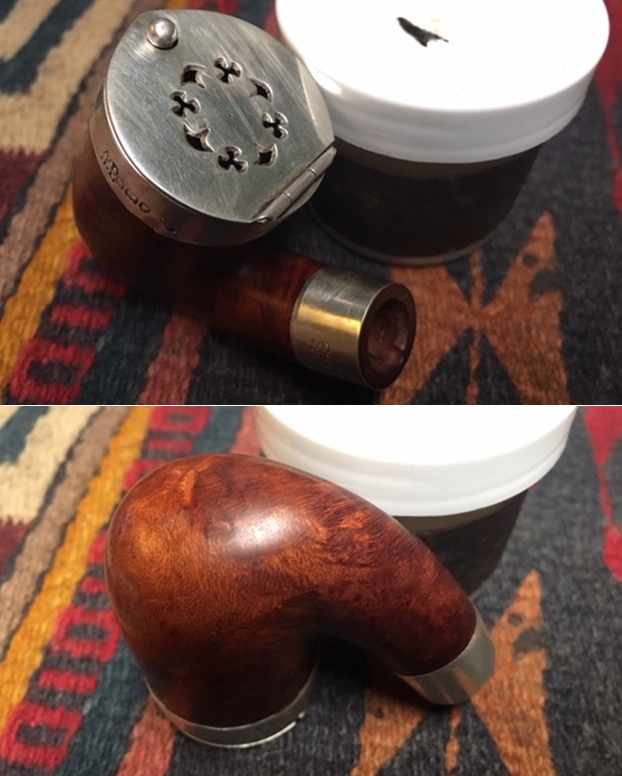
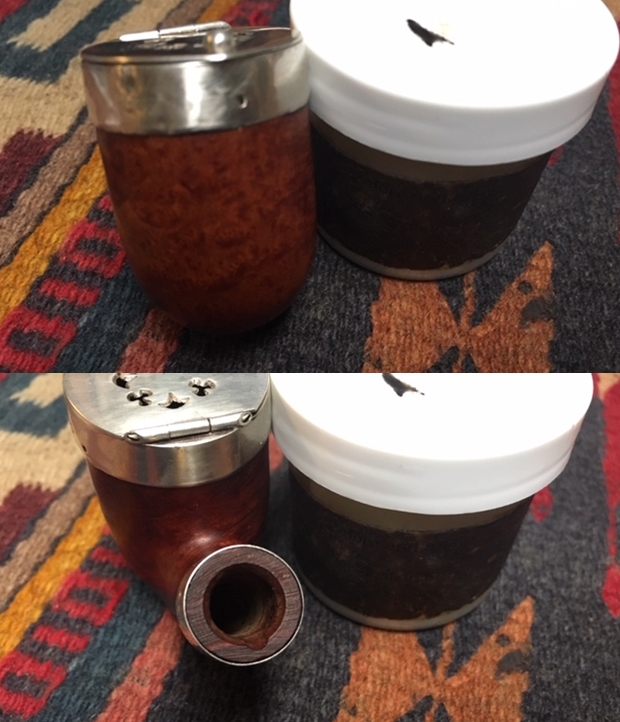
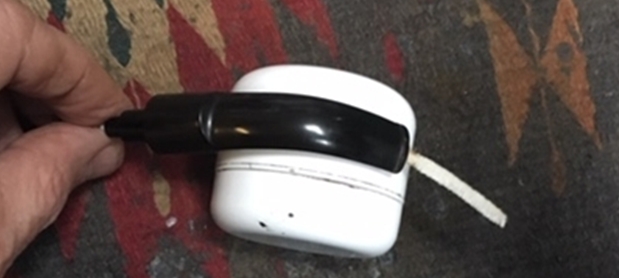
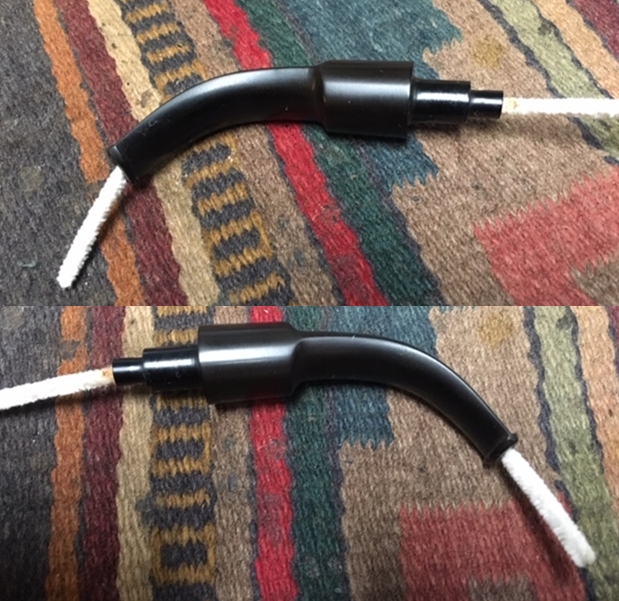
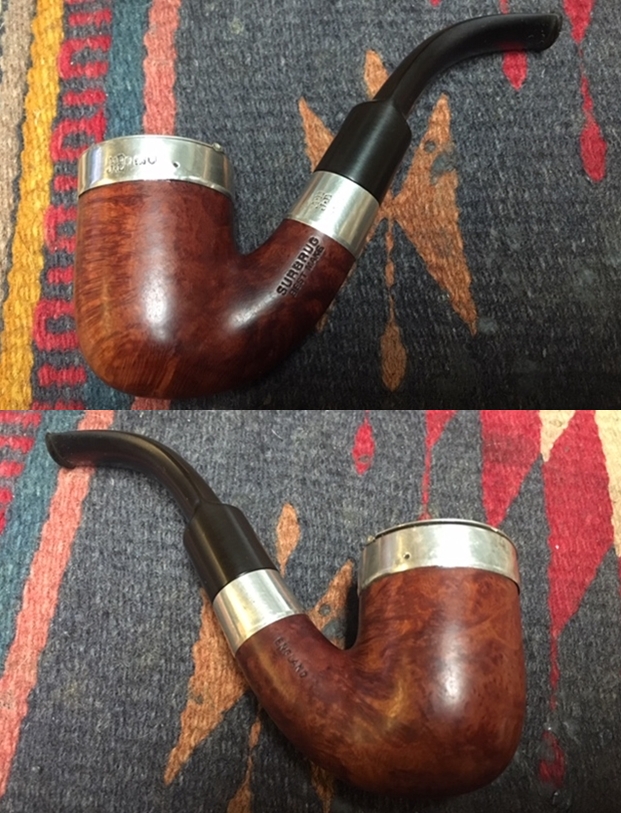
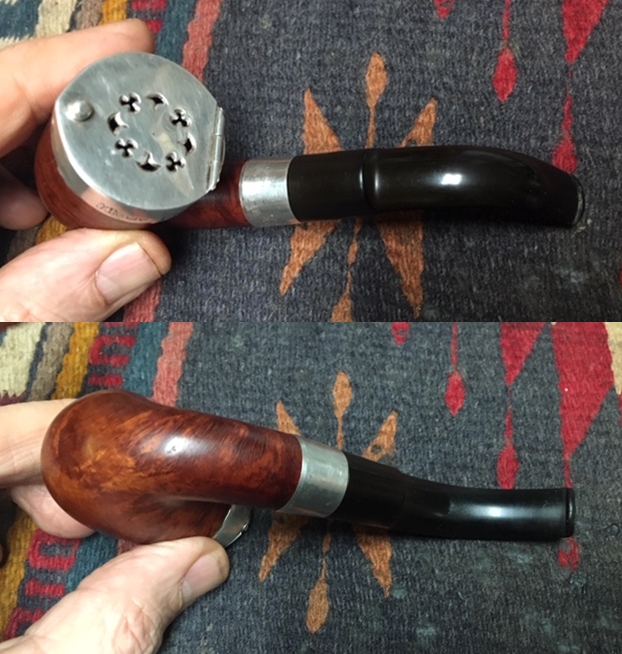
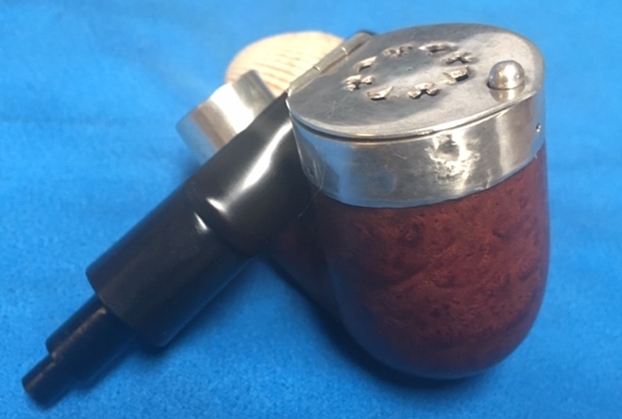
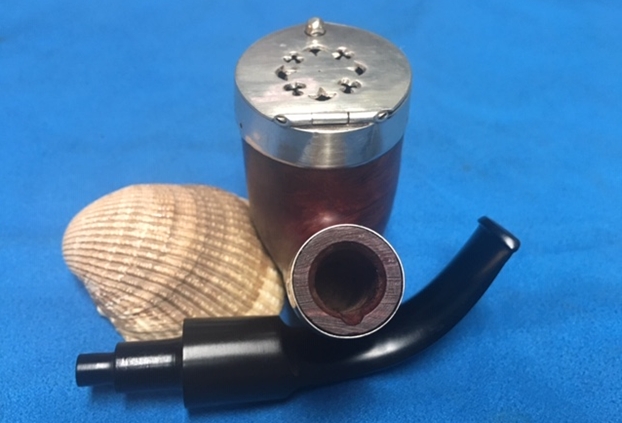
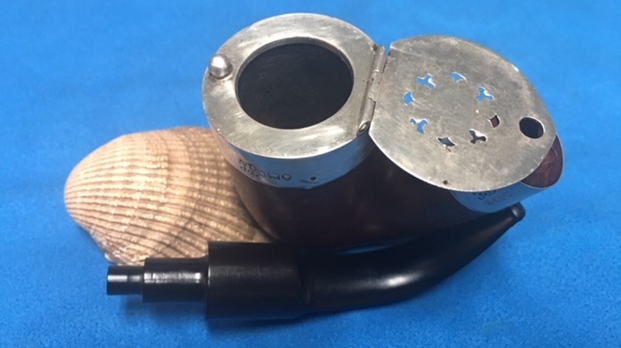
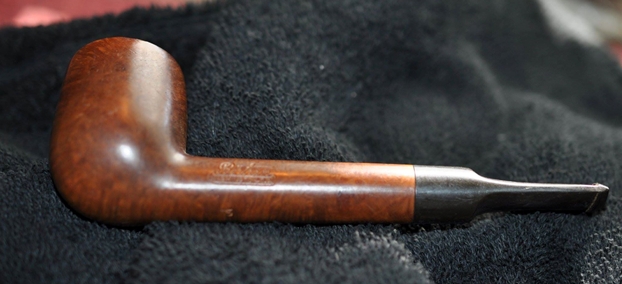
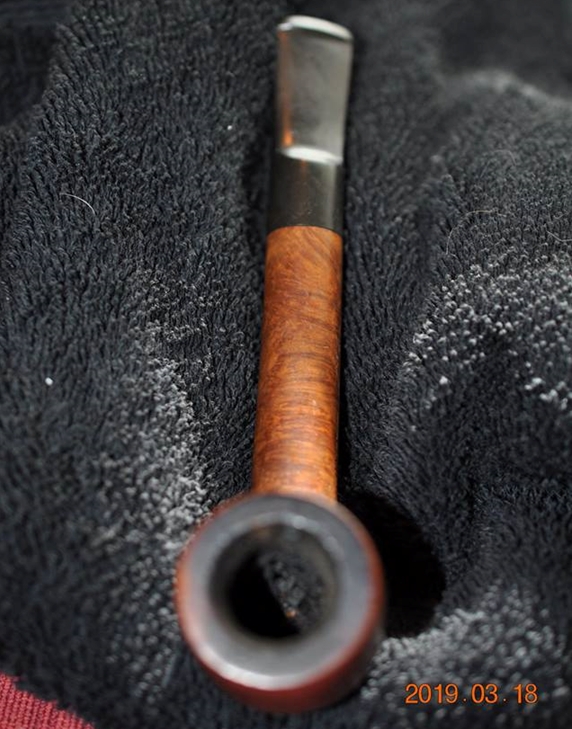
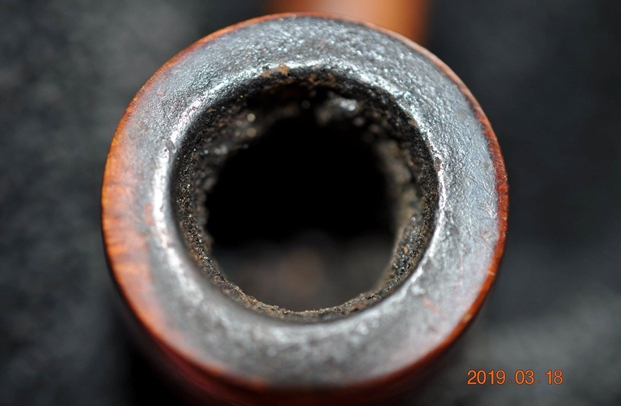
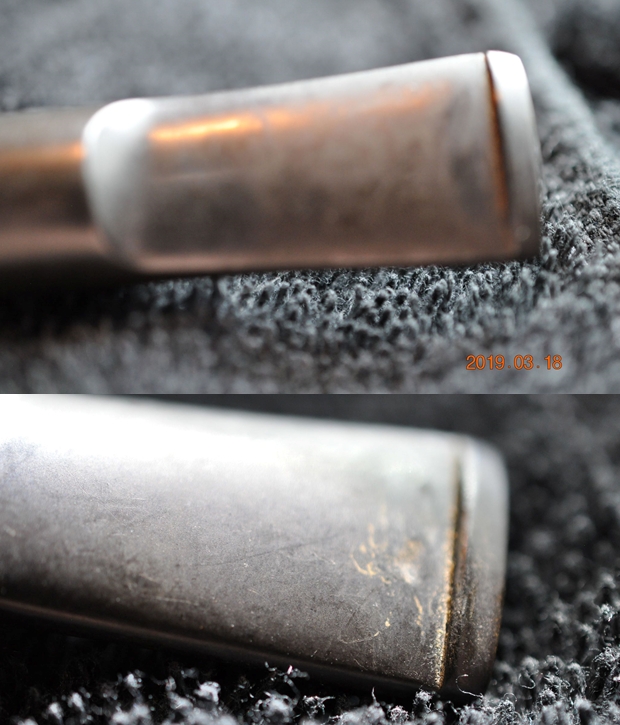
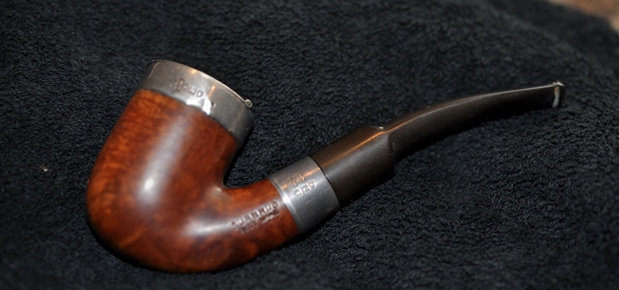
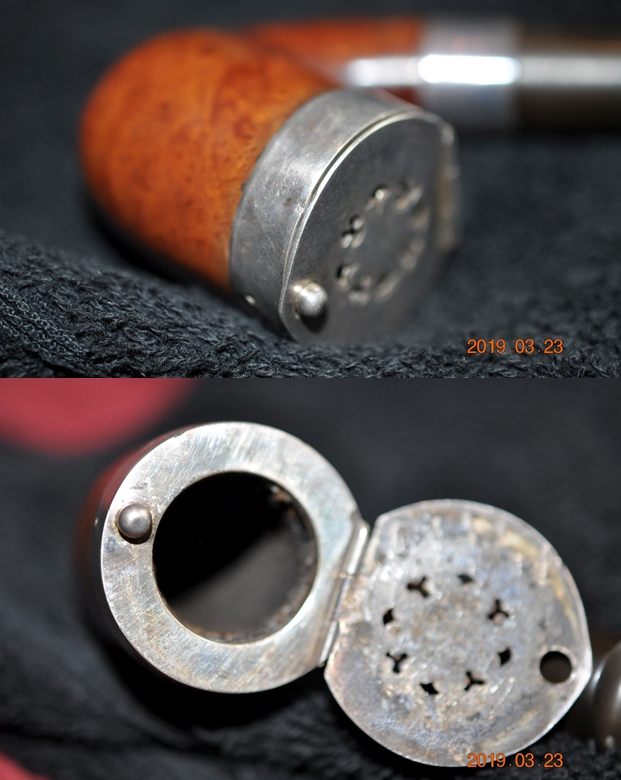
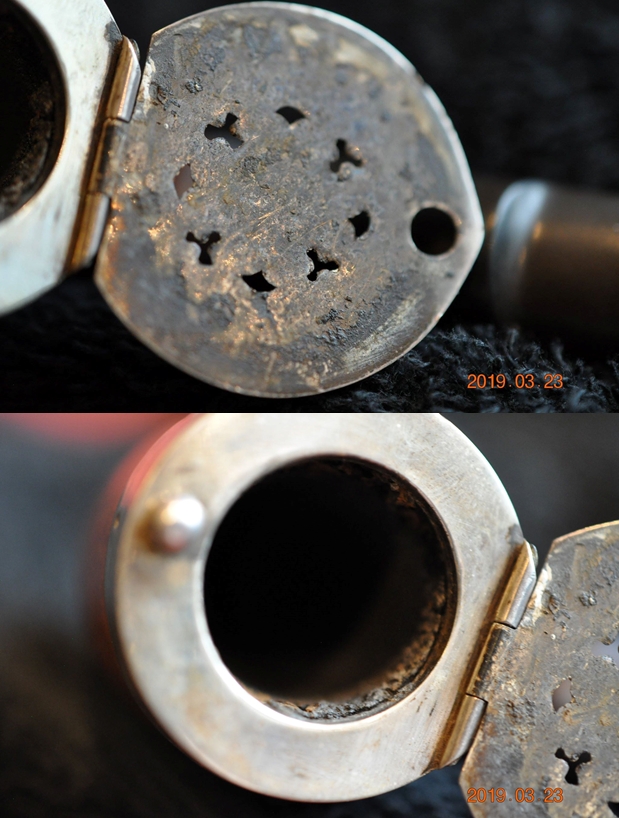
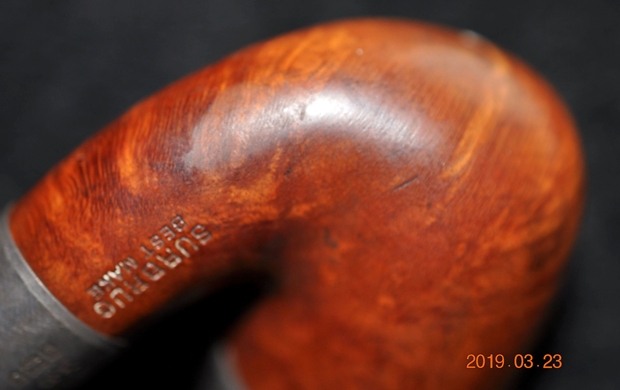
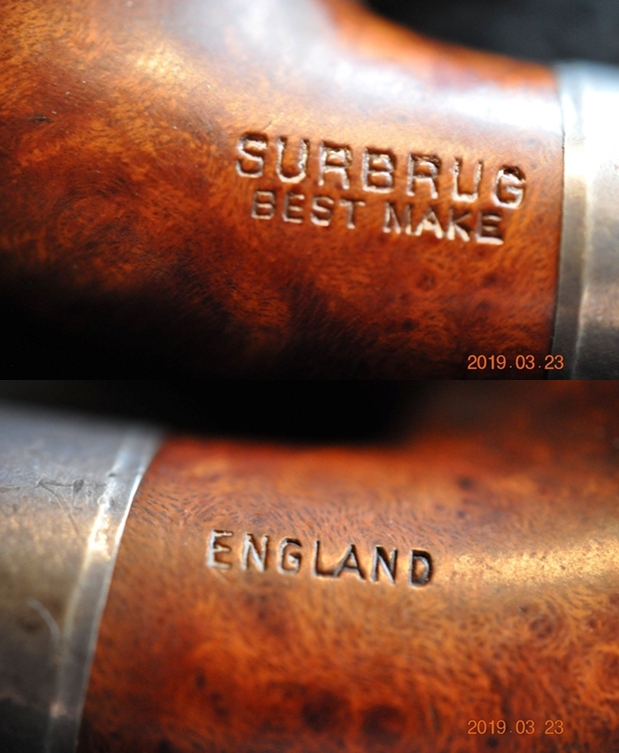
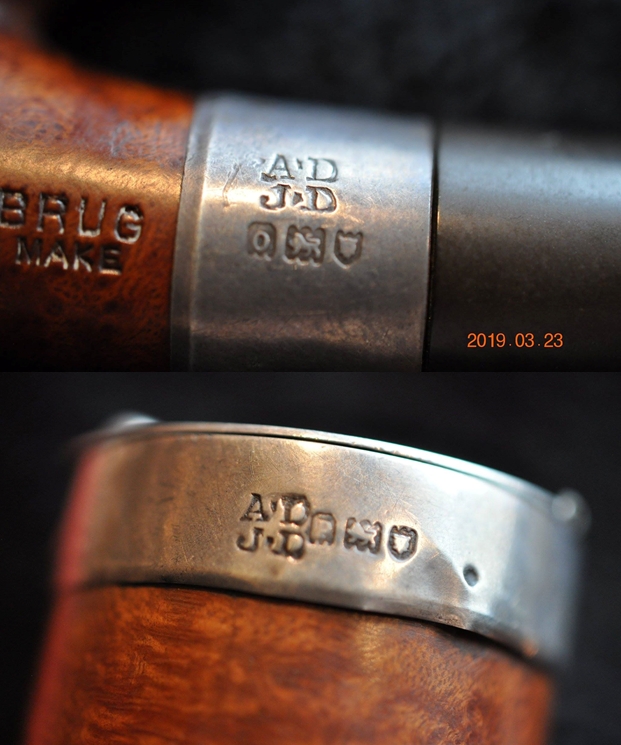
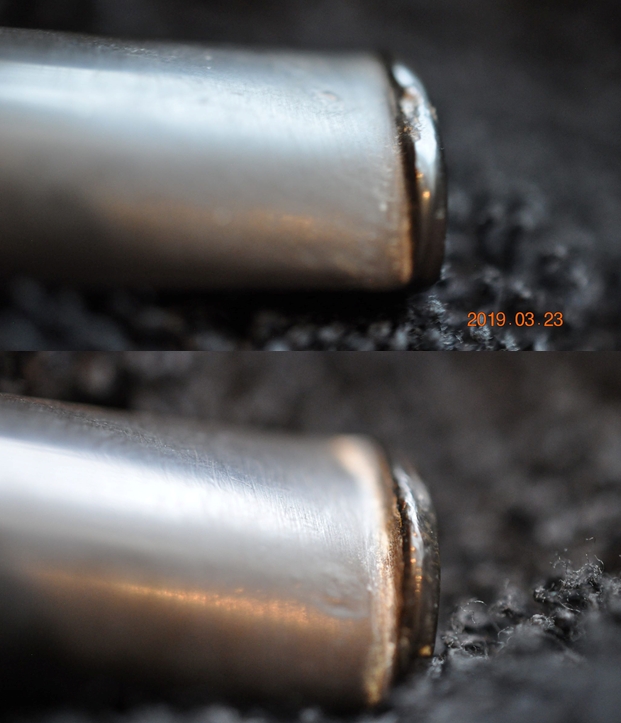
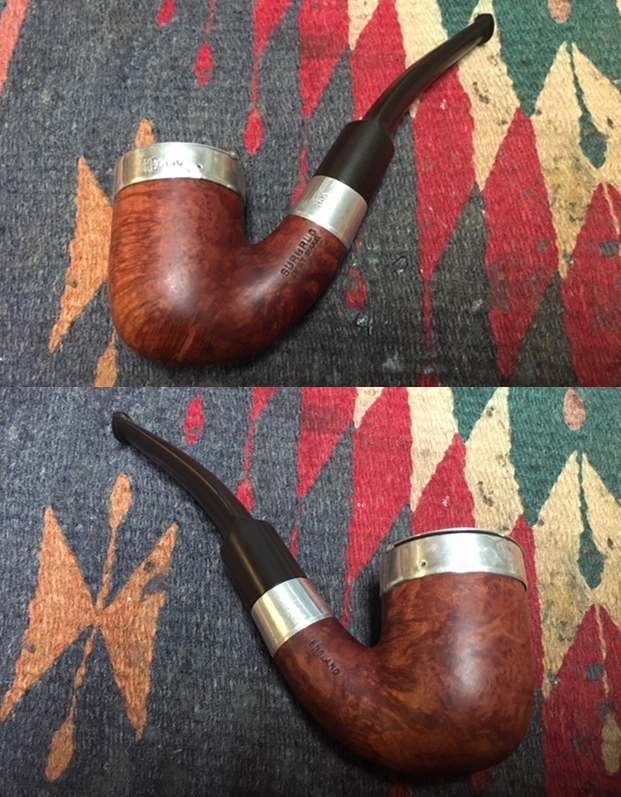
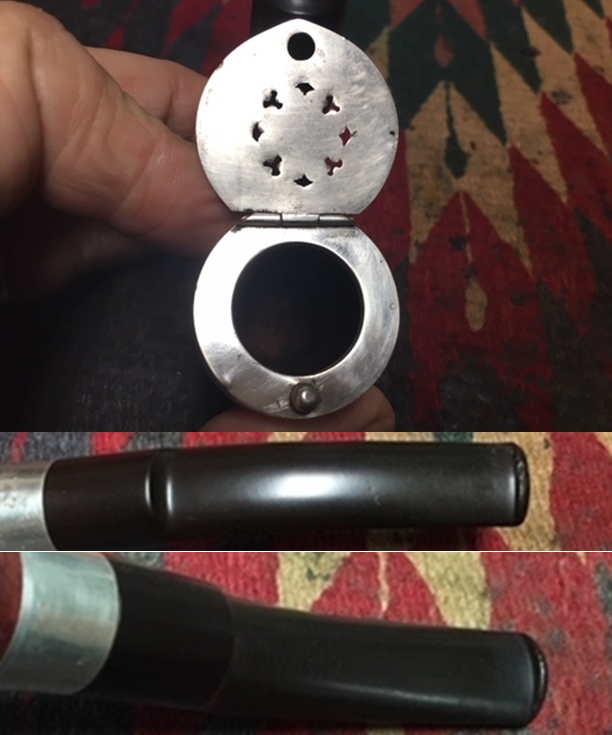
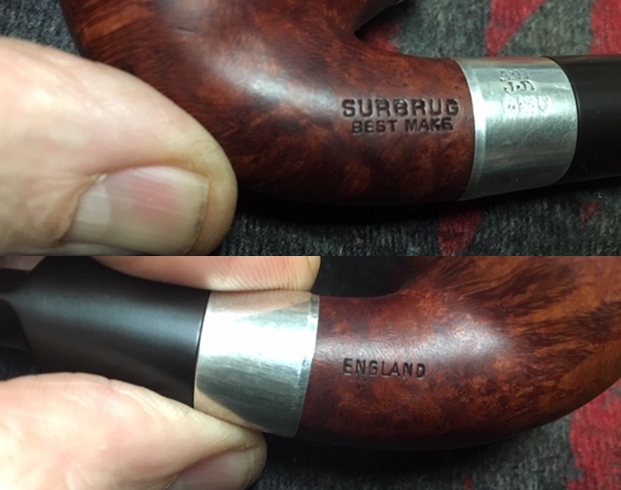
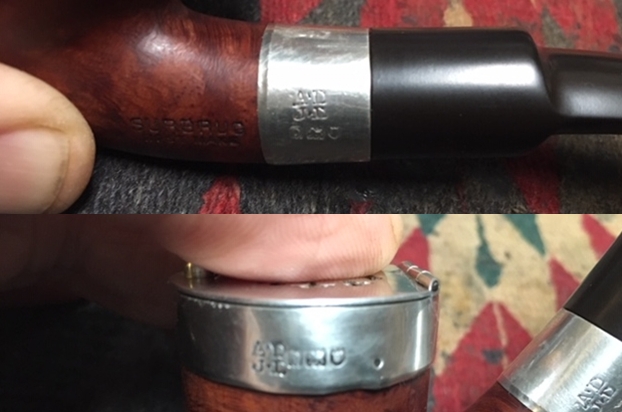
I have been cleaning up a lot of American made pipes between the Malaga’s for Alex and the Bertrams that Jeff and I picked up. I was in the mood for something a little different this time around. You know variety is the spice of life and all that… So today I went through my box and picked an interesting pipe that came from an auctioneer in Los Angeles, California with the older Barling’s Make S-M Take Apart Pipe. That was an old timer and this one is also an old one. From the silver band and the band around the rim top I will be able to date it. But I knew looking at it that was older. The pipe was very dirty but had a look of class to it. There was a sterling silver band on the shank and one around the rim top with a hinged wind cap. The briar is very dirty and the silver has a lot of dings and dents around the rim. The bowl had a thick cake and the wind cap was black. Looking down the shank it was filled with tars and oils. The left side of the shank was stamped Surbrug over Best Make and the right side was stamped England. The hallmarks on the band were an O, a rampant lion and a crownless lion’s head. On the cap around the rim top the hallmarks were P, a rampant lion and a crownless lion’s head. On both the makers’ marks were the same – AD over JD. The stem had some bite marks on the top side near the button. It was lightly oxidized and the bend on the stem had almost straightened out. Jeff took some photos of the pipe before he started his cleanup.The next series of photos show the band around the rim top and the wind cap. The briar is quite beautiful and the silver, though oxidized is quite pretty. He also included some close up photos. The last photo in the series shows the thickness of the cake in the bowl. It was quite thick. He took a photo of the left side of the bowl and the underside. It shows the dirt and grime in the briar as well as the nicks and dents in the wood.He took photos of the stamping on the left and right side of the shank as well as the hallmarks on the silver band and rim top. The stamping and the hallmarks are as noted above The last two photos show the stem surface. It is both oxidized and has some tooth damage to the surface of the button on both sides.I had forgotten that Al Jones (Upshallfan) had restored a Surbrug pipe and done a blog on it for rebornpipes. When I googled the brand one of the first links that came up was the one to Al’s blog on rebornpipes (https://rebornpipes.com/2015/03/24/surbrugs-special-restoration/).There was a great section on the brand written by Jon Guss and linking it to a New York City Tobacco Shop that Al quoted. I quote from that in full now.
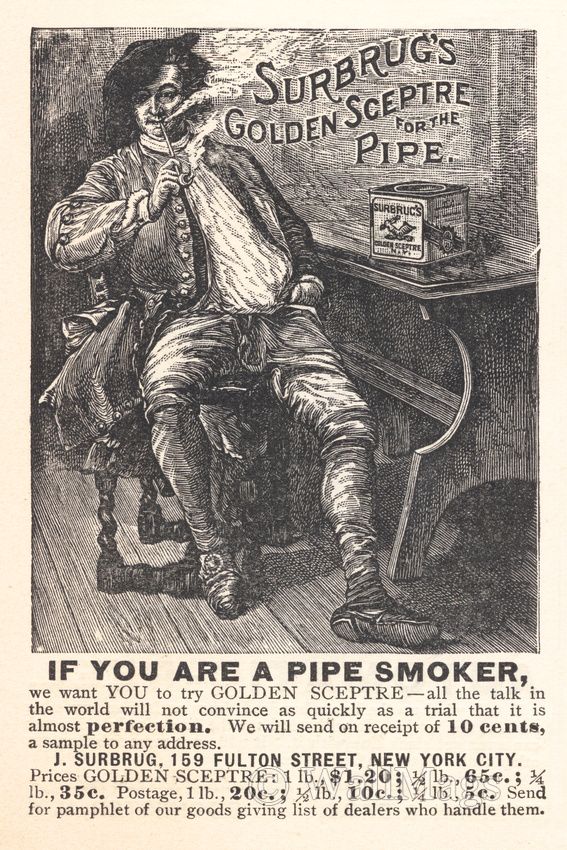
I only knew that Surbrug’s was a New York City tobacco shop and I’ve seen their shop pipes pop up occasionally.  Jon (Guss) sent me this about the shop:

John R Surbrug, born in Switzerland of a Swiss father and Ohio mother, had a small tobacco shop in New York City. After his death in the 1880s, his young son John Willard Surbrug (born in NYC in 1859) took over the store. Incorporating the business in 1895, John W. expanded into the cigarette market and prospered greatly. After buying a cigarette competitor name Khedivial, Surbrug’s business in turn was acquired by the Tobacco Products Company (TBC) in 1912. TBC was what we would now call a roll-up play, created by George and William Butler as a vehicle to compete with the American Tobacco Company. Surbrug’s business was acquired for stock, which meant John was left with an active role in the combined business. The later part of his career (and his son’s career), though interesting, is irrelevant here; what matters is that the Surbrug Company, while primarily engaged in the manufacture and sale of cigarettes, continued to be true to its roots offering well known tobacco blends and pipes. In regard to the former, the company was especially famous for its Golden Sceptre, Best Make, and Arcadia Mixture tobaccos. In regard to the latter, it appears that Surbrug was not a manufacturer, but rather a reseller of pipes that were stamped with their name by a variety of third party suppliers. Some at least of these were major players in the world famous London pipe industry. Surviving early hallmarked examples make it clear that BBB/Frankau, Barling, and Delacour Brothers were three of Surbrug’s vendors.

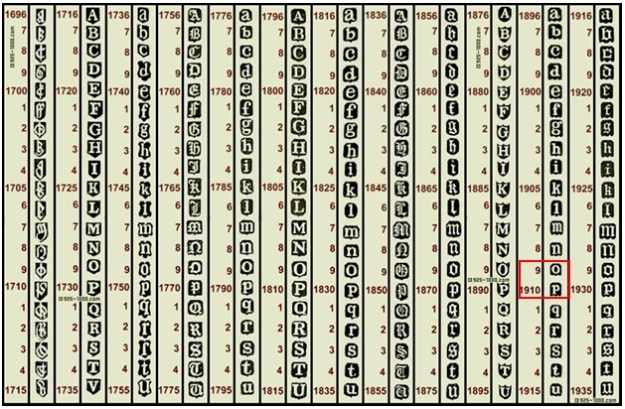
Al also included an old advertisement for one of Surbrug’s famed tobacco blends. I have included it below to give a feel for the Pipe Shop and also because it gives the address of the shop. I love these old adverts as they give a great view of the time period the brand came out.To help get closer to a maker and a date I worked on the hallmarks on the band and rim cap. The hallmarks on the band were an O, a rampant lion and a crownless lion’s head. Those marks told me that the silver band was made in 1909 (O) in London (crownless lion or leopard head) and the rampant lion told me it was .925 Sterling Silver. On the cap around the rim top the hallmarks Those marks told me that the silver cap was made in 1910 (P) in London (crownless lion or leopard head) and the rampant lion told me it was .925 Sterling Silver. On both the band and the cap the makers’ marks were the same – AD over JD. (I am including the picture of the hallmarks that I included above). I have also included a chart to help date the band and cap. I have put a red box around the two dates. Note that the cartouche (box surrounding the letter) is the same on the band and cap as the one shown in the chart (https://www.925-1000.com/dlc_london.html).Now that I had the date I needed to identify the Maker Marks on both pieces of silver. From Al’s quote above I was given another clue about the manufacture of the pipe. It seems that Surbrug was not a manufacturer, but rather a reseller of pipes. They also seemed to have these pipes stamped with their name by a variety of third party suppliers. I quote the section of the above blog as it gave me a starting spot.
Some at least of these were major players in the world famous London pipe industry. Surviving early hallmarked examples make it clear that BBB/Frankau, Barling, and Delacour Brothers were three of Surbrug’s vendors.

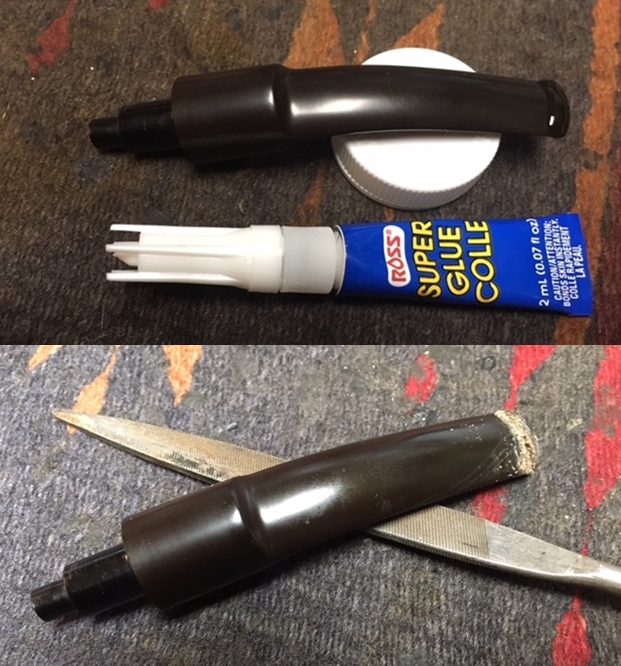
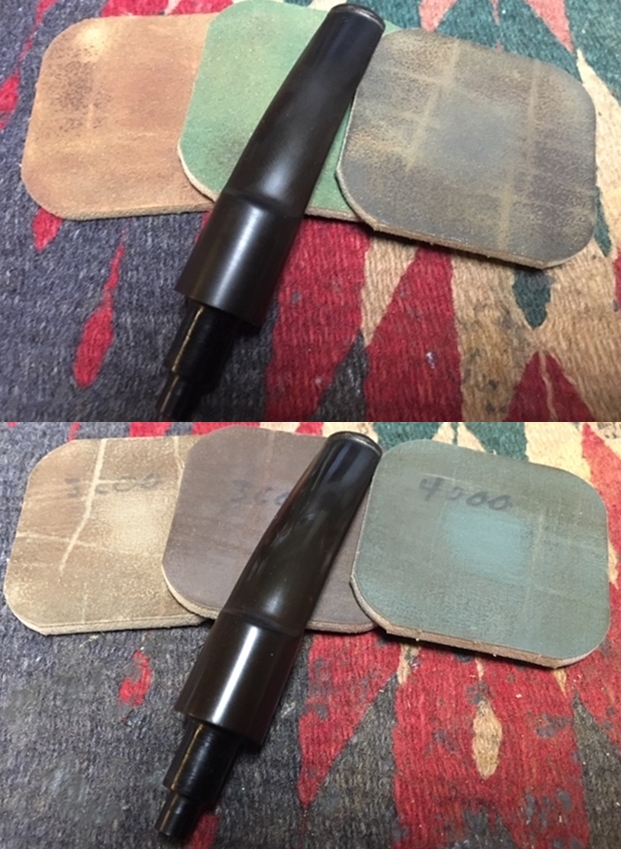
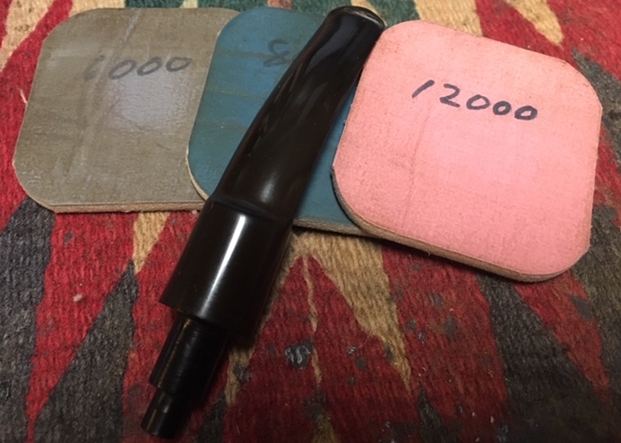
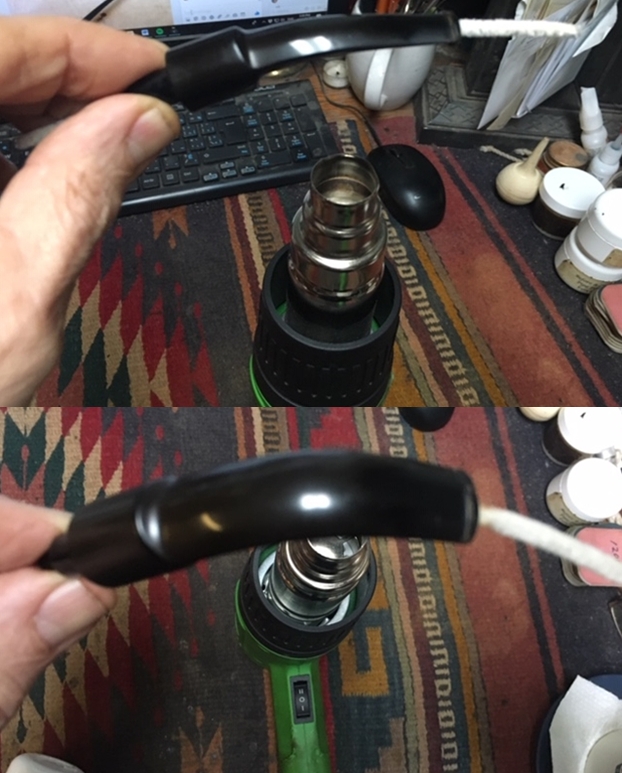
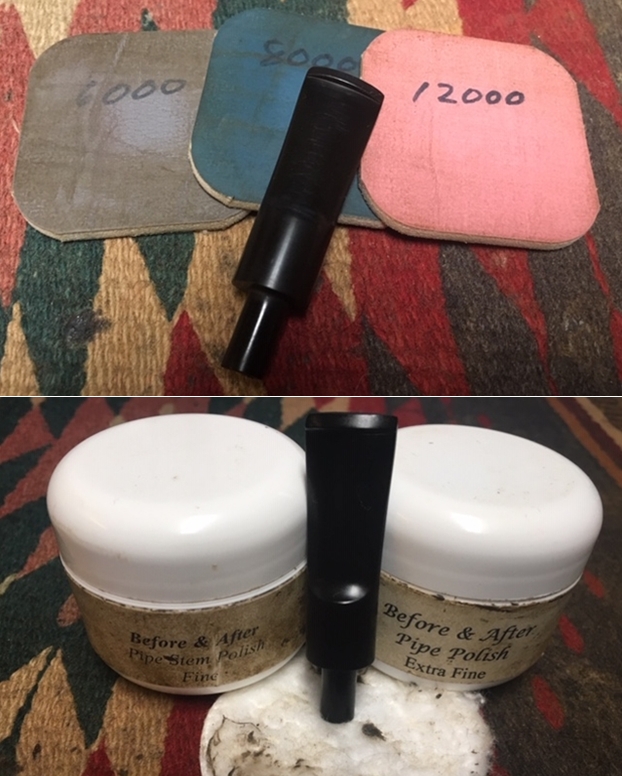
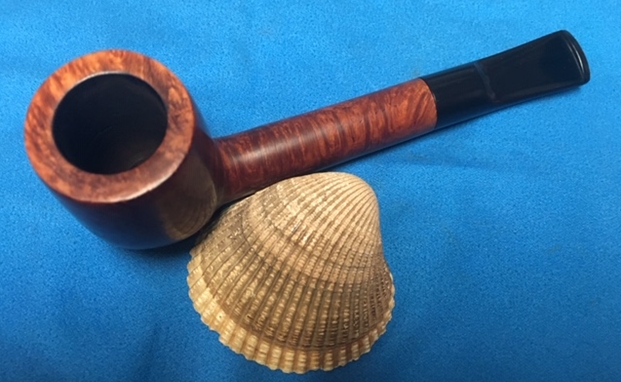
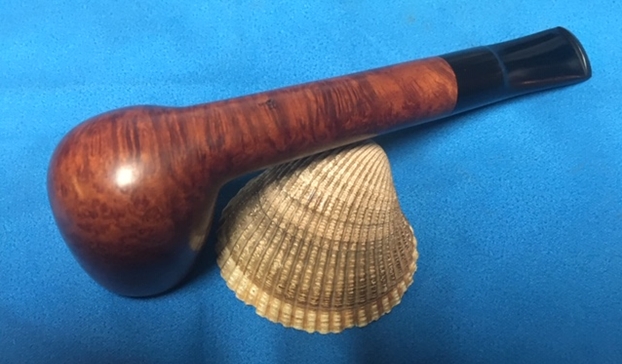
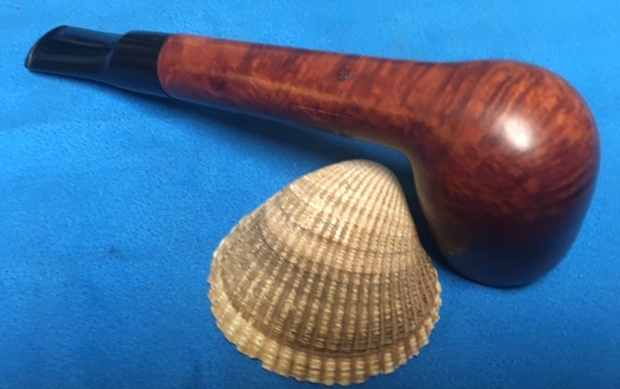
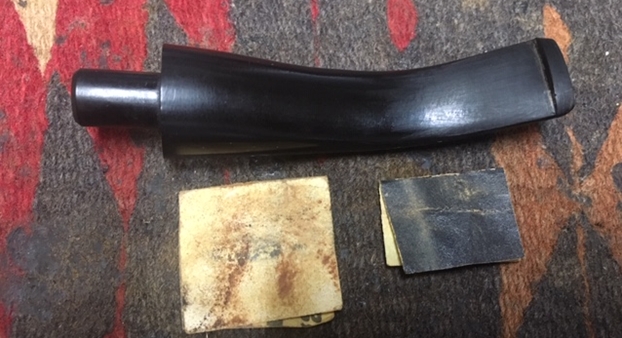
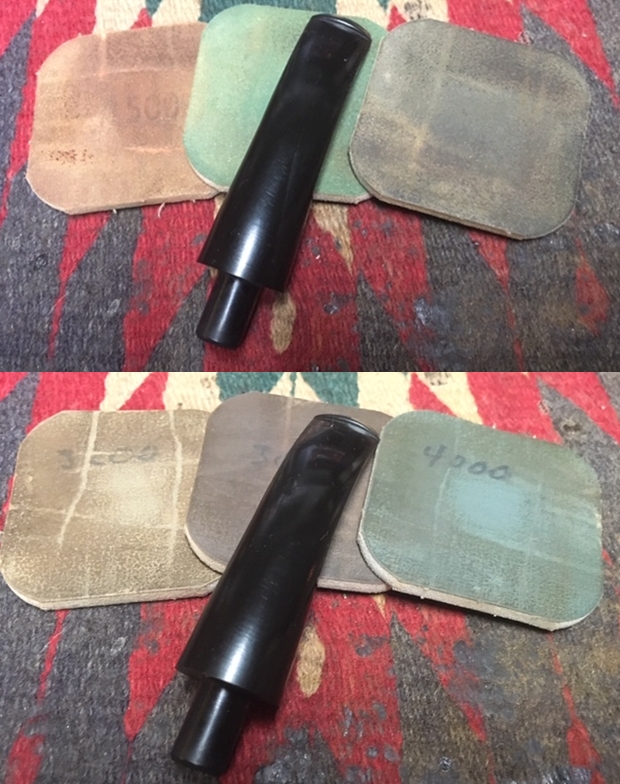
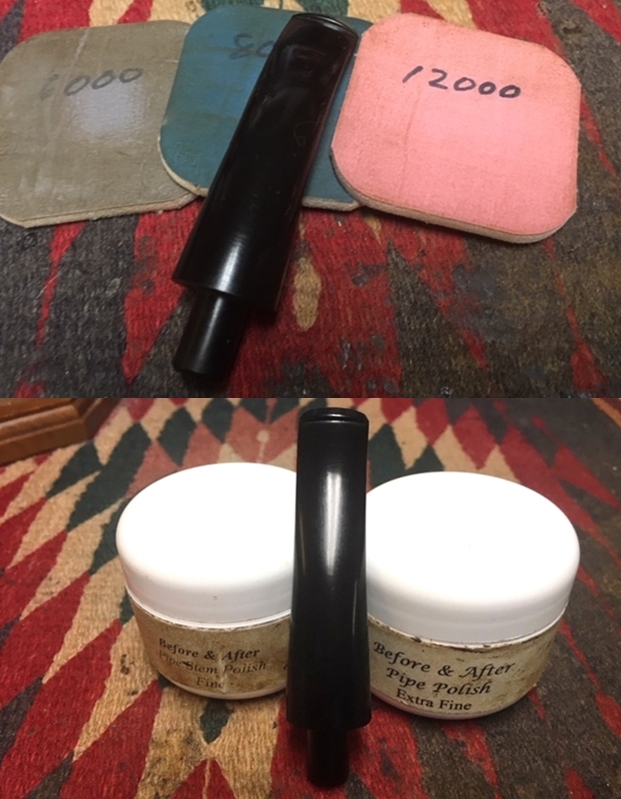
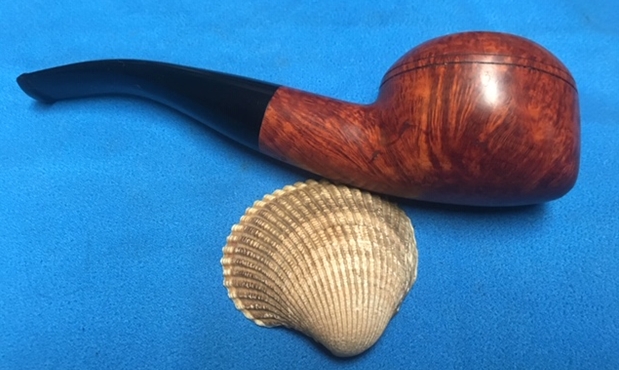
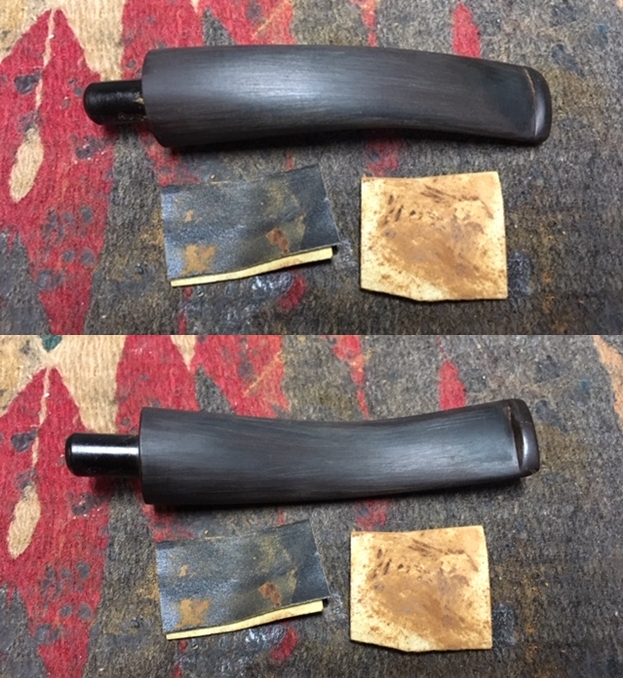
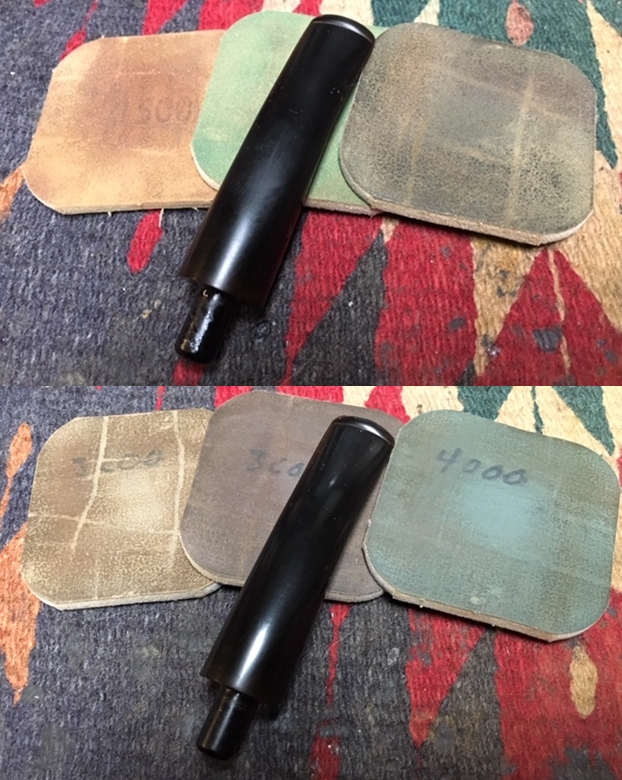
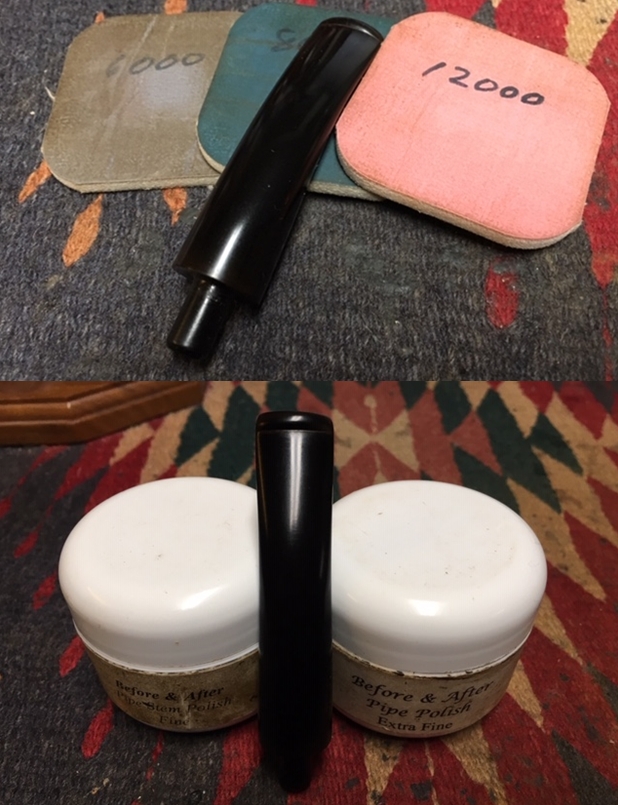
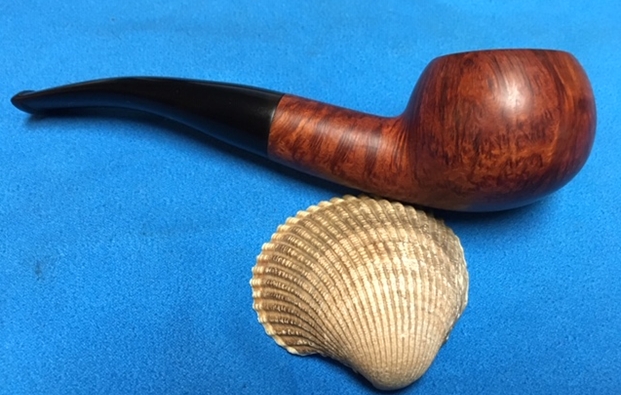
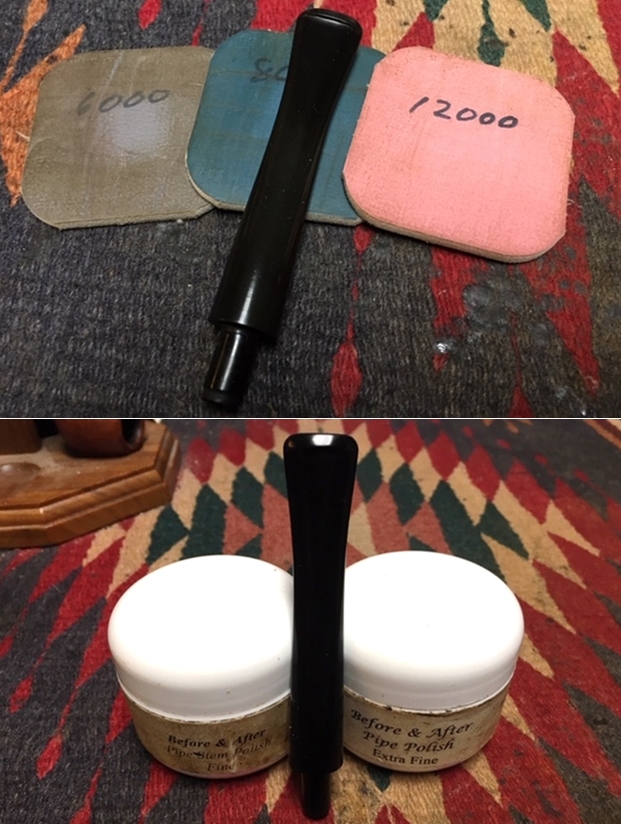
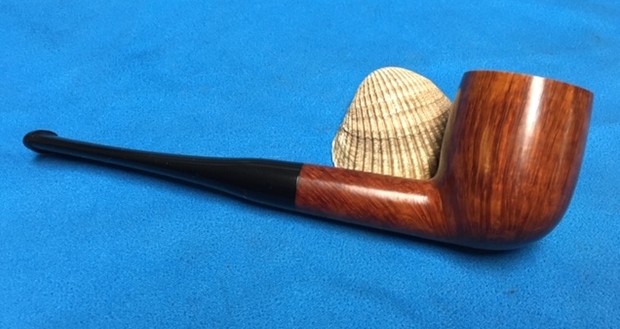
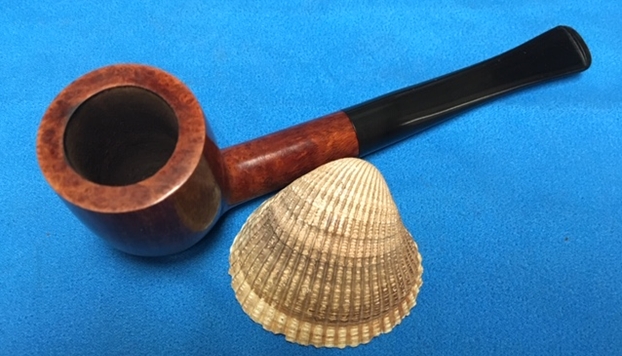
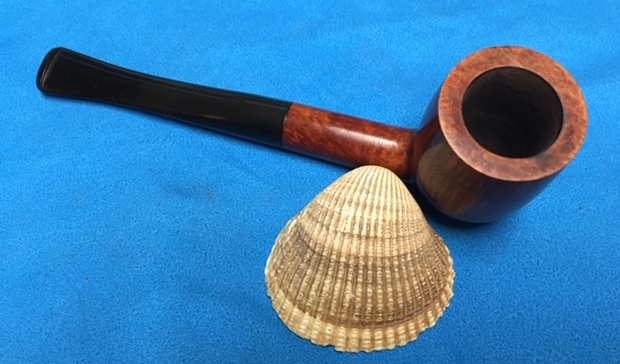
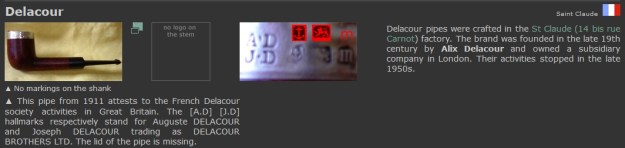
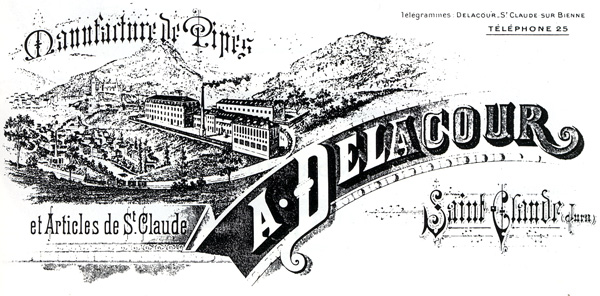
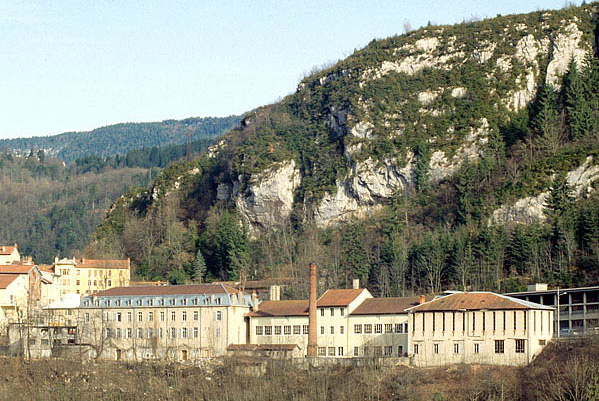
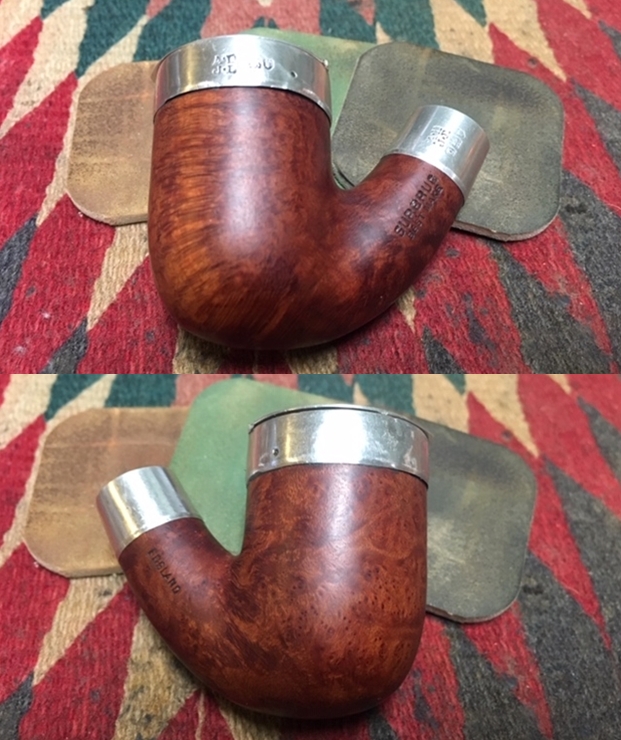
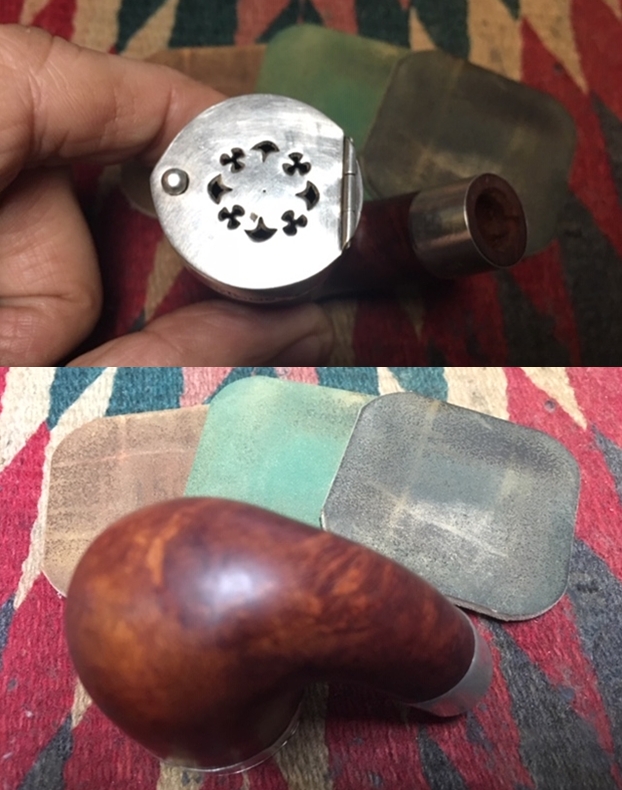
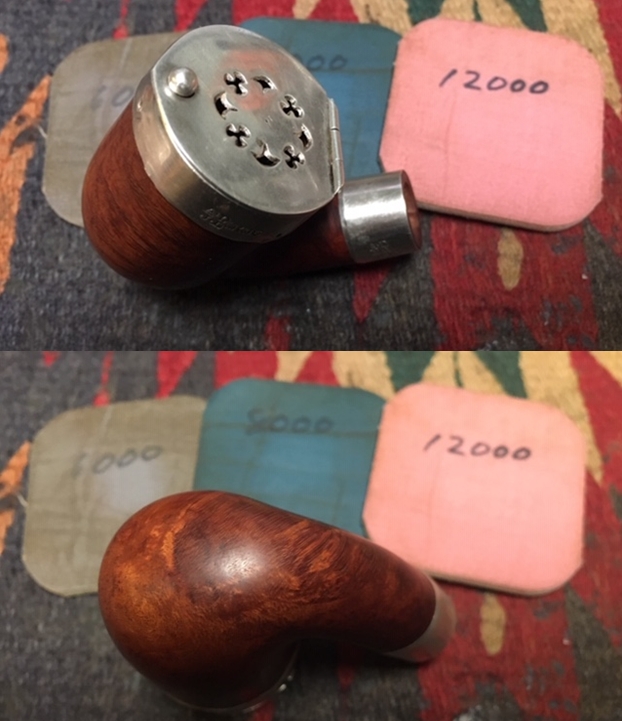
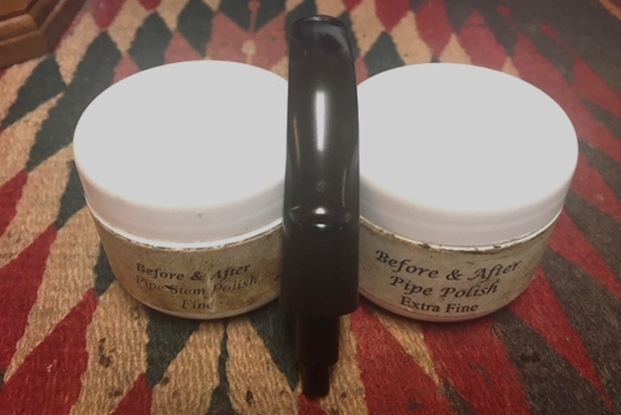
I wonder if perhaps the AD and JD marks could be Delacour Brothers as noted in the above quote. They are certainly the only D in the list of third party suppliers. I decided to check on the pipephil website to see if I could find any information on the Delacour brand to help narrow down the identification of the initials on the bands (http://pipephil.eu/logos/en/logo-d4.html). Sure enough the pipe was a Delacour the band in the photo on the site is the same as the one I am working on. It has the AD over JD stamp and identifies the makers as Delacour Brothers – Auguste and Joseph. The pipe was also a lidded pipe like mine. A further interesting link was found there that made the connection to a late 19th century Alix Delacour who owned a subsidiary company in London. I am including the screen capture below.I followed the links that were given on that site to further information on extra pages on the site (http://pipephil.eu/logos/en/infos/delacourusine-en.html). The first is to a picture of the letterhead of the Delacour Company in Saint Claude, France. The letterhead shows a wood cut of the factory. There was also a photo of the factory itself that shows a similar view to the letterhead illustration. Now I knew I was working on a pipe made by Delacour for the Surbrug pipe shop in New York City and that it was made around 1909/10. I had a good sense of the Delacour Brothers and the London connection for this pipe. With the history and background of the brand in mind it was time to go to work on my part of the restoration but first a review of Jeff’s cleanup of the pipe. He reamed the bowl with a PipNet pipe reamer and followed up with a Savinelli Fitsall pipe knife to remove the cake. He scrubbed out the mortise and the airway in the shank and the stem with alcohol, cotton swabs and pipe cleaners. He scrubbed the exterior of the bowl, rim, shank and stem with a tooth brush and Murphy’s Oil Soap to remove the oils and tars on the rim and the grime on the finish of the bowl. He rinsed it under running water. He dried it off with a soft cloth. He was able to remove lava build up on the rim top and you could see the great condition of the bowl top and edges of the rim. There was still some darkening to the rim top toward the back of the bowl. He soaked the stem in Before & After Deoxidizer to remove the oxidation. I took photos of the pipe before I started my work on it. I took a close up photo of the silver rim top to show the condition of the bowl and rim after Jeff had cleaned up the grime and lava from the bowl and the silver. The cap and the rim top looked very good and had been polished. There was some scratching and dents in the silver. The stem photos show that the oxidation is gone. The light tooth chatter is hard to see but I should be able to sand it out quite easily. There were some tooth marks on the top and underside of the button edge.I also took a photo of the stamping on the left side and the underside of the shank showing how the stamping was laid out. I also took photos of the hallmark on both the band on the shank end and the rim cap and top. I polished the bowl and shank with micromesh sanding pads – wet sanding it with 1500-2400 grit pads and dry sanding it with 3200-12000 grit pads. I wiped the bowl down with a damp cloth after each pad to remove the sanding debris. After the final sanding pad I hand buffed it with a cotton cloth to raise a shine. I worked some Before & After Restoration Balm into finish of the briar with my fingertips to clean, enliven and protect it. I let the balm sit for a little while and then buffed with a cotton cloth to raise the shine. The Restoration Balm really makes the grain stands out beautifully. I set the bowl aside and filled in the deep tooth marks on the topside of the button with clear super glue and set the stem aside to let the repair cure. Once it had cured I used a needle file to flatten it into the surface of the stem. I used a folded piece of 240 grit sandpaper to reshape the button surface on both sides of the stem. Once the surface was smooth I sanded out the scratch marks and started the polishing of the stem with a folded piece of 400 grit sandpaper. I wiped the stem down with Obsidian Oil. (I neglected to take photos of the process of sanding the file marks and smoothing out the repair. I apologize.)I polished the stem with micromesh sanding pads – wet sanding it with 1500-2400 grit pads and dry sanding it with 3200-12000 grit pads. I wiped the stem down with Obsidian Oil after each pad. I wiped it down with Obsidian Oil and set it aside. I stopped the polishing process at this point to put a proper bend in the stem. I put a pipe cleaner in the stem and heated it with a heat gun until the vulcanite was supple. Once it was supple and flexible I bent it over a round jar to get the bend to match the flow of the top of the bowl. I took some photos of the newly bent stem to show what it looked like now that it was finished. I put the stem back on the pipe and took photos of the new look. I like what I see. I need to finish polishing the stem and then do the final buffing. I finished polishing the stem with Before & After Pipe Polish – both Fine and Extra Fine and gave it a final coat and set it aside to dry.  I put the stem and bowl back together and buffed the pipe with Blue Diamond on the buffing wheel. I polished the briar and the minute scratches still in the vulcanite of the stem until there was a rich shine. I polished the silver with a jeweler’s cloth to protect it and give it a shine. This old 1909/1910 Surbrug made by Delacour Brothers has a classic bent billiard with a twist – a sterling silver band on the shank and a sterling silver rim and wind cap. It is a beautifully carved pipe. Once I buffed the pipe the briar came alive and the mixture of grain – cross, swirled and birdseye – popped with polishing. The black vulcanite stem had a rich glow. The finished pipe is a beautiful grained bent billiard shaped pipe. This old pipe with a new bend in the stem fits well in the hand and sits right in the mouth. Have a look at it with the photos below. The dimensions are Length: 5 inches, Height: 2 inches, Outside diameter of the bowl: 1 3/8 inches, Chamber diameter: ¾ of an inch. This old timer is one that is staying in my own collection and fits the niche of my old pipe collection well. Thanks for walking through the restoration with me as it was a pleasure to work on.
The 8th of a collection of Bertrams – a Bertram 55 Lovat


Blog by Steve Laug

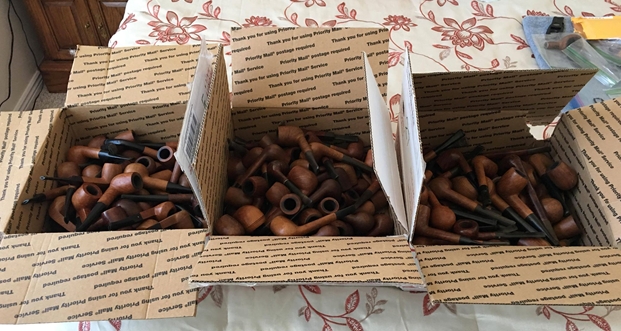
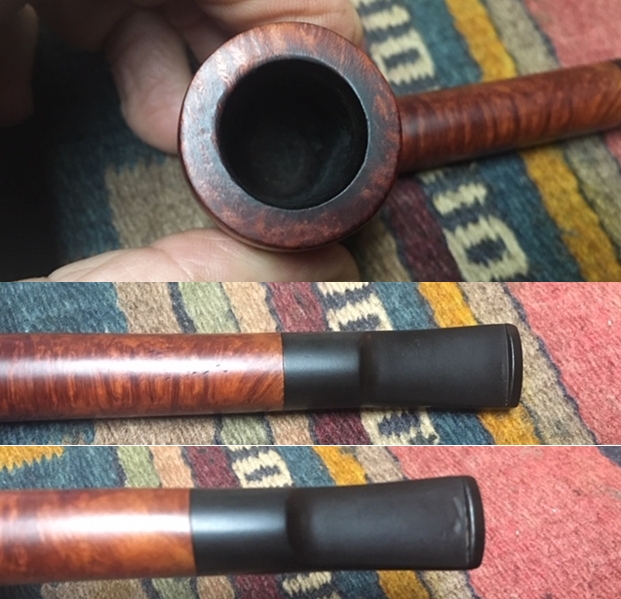
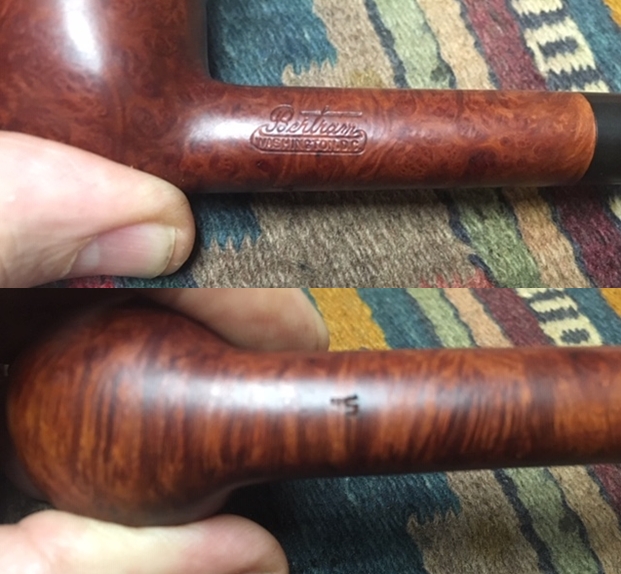
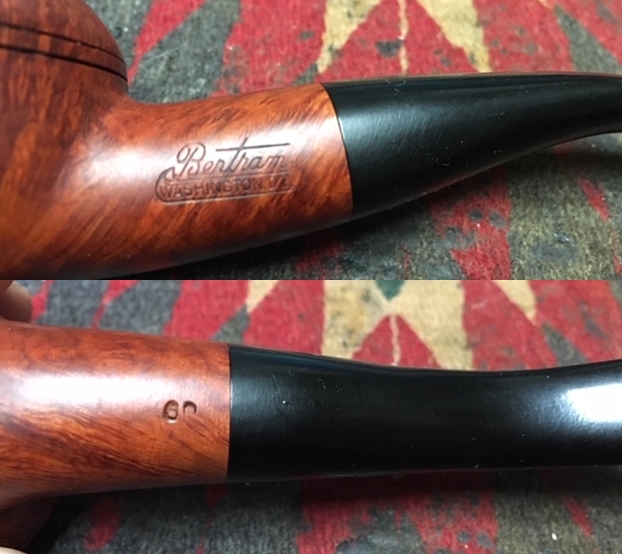
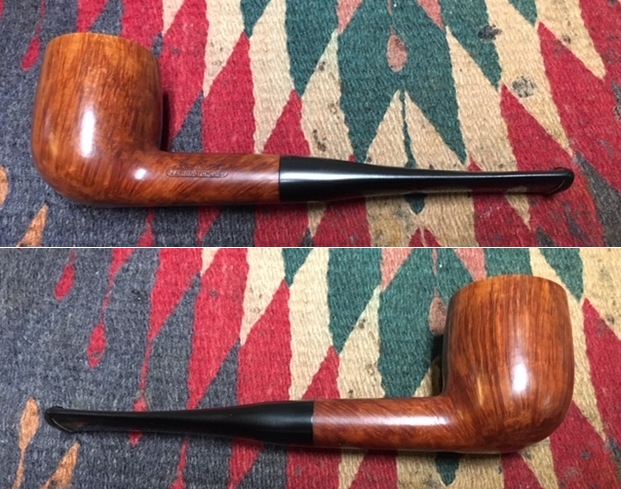
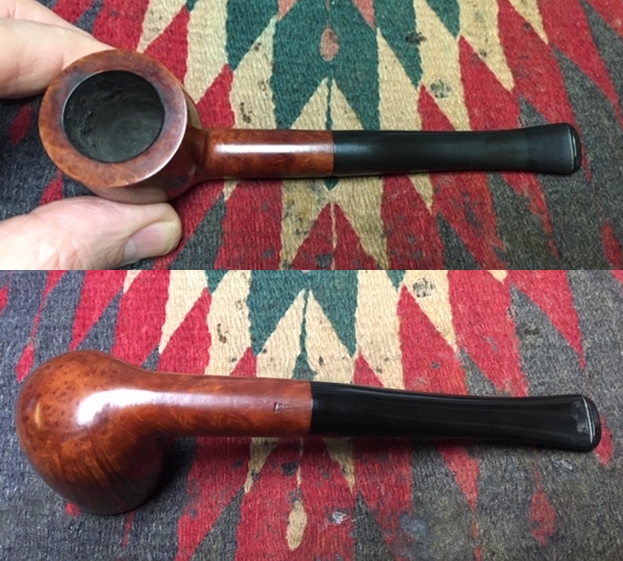
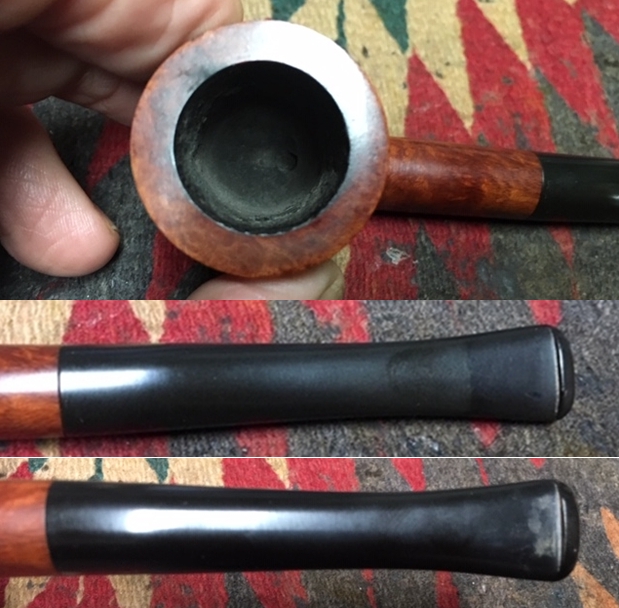
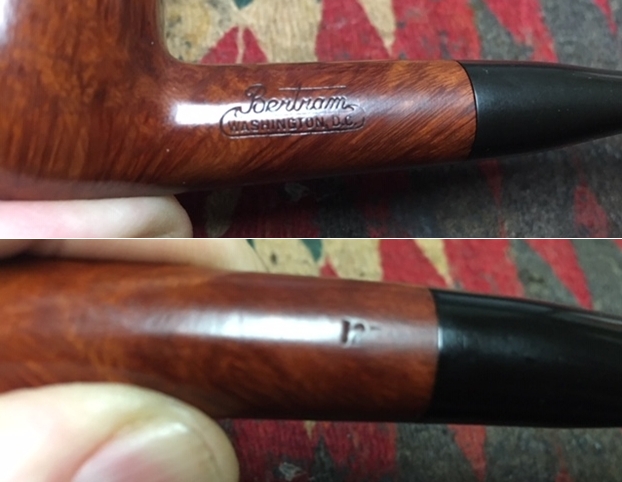
If you have been reading the blogs on the restoration of the Bertram pipe lot that Jeff and I purchased you already know the story of the find. If you have not you can read more about it on the earlier blogs in this series. Just for a quick reminder I will include the photo that Jeff took the collection when it arrived in Idaho. He unwrapped each of the 200+ pipes and filled the three boxes that they were mailed in to show the size of the collection we had purchased. To be honest it was a bit overwhelming to see all of the collection in boxes. We were looking at a lot of work to bring these back to life.I am sure glad that Jeff is working through the clean up on this lot as they are really quite dirty and there are so many! I am leaving it to him to choose which pipes to work on. So far he is choosing the higher grade pipes and the more interesting shaped ones. As he finishes a batch of them he boxes them up and sends them to me. From the first box he sent, I chose another one of the Bertrams to be the eighth pipe that I would work on. As with the rest of the collection this one was dirty! The smooth finish was grimy and dusty but some interesting grain shone through showing me that this was a beautiful pipe. It was a Lovat shaped pipe with a short saddle stem. There was a thick cake in the bowl and heavy lava overflowing on to the rim top. It was hard to know the condition of the edges due to the cake and lava. The stem showed some light oxidation and some chatter on the top and some deep tooth marks on the underside. The photos below tell the story and give a glimpse of the pipe. Jeff took a close-up photo of the bowl and rim to capture the condition of the pipe when it arrived. The rim top had a thick coat of lava and the bowl had a thick cake.Jeff took 2 photos to capture the stamping on the left and underside of the shank. The first photo shows stamping on the left side which read Bertram over Washington, D.C. The stamping on this pipe is clear and readable. The second photo shows the grade number stamping on the underside at the shank stem junction. It read number 55 which shows the quality of the pipe.The next two photos show the stem surface. They show the oxidation and the chatter on both sides near the button. The deep tooth marks are visible on the underside next to the button. There is also some wear on the underside button edge.If you have read the previous five blogs I have posted on the Bertram pipes that I have cleaned up so far you can skip the next bit. But if you have not, then I include the link to Bertram history and information. I would recommend that if you don’t know much about them do some research on them. I include a link to the write up on Pipedia (http://pipedia.org/wiki/Bertram). Bertram pipes were based out of Washington DC. They were popular among famous politicians and celebrities of the time. They made many products for them from FDR’s cigarette holders to Joseph Stalin’s favorite pipe. They were considered some of the best America had to offer till they finally closed their doors in the 70s. They graded their pipes by 10s, the higher the grade the better. Above 60s are uncommon and 80-90s are quite rare. I’ve never heard of or seen a 100 grade. I have several blogs that I have written on rebornpipes that give some history and background to Bertram pipes. (https://rebornpipes.com/2015/06/16/an-easy-restoration-of-a-bertram-grade-60-217-poker/).

I have included the following link to give a bit of historical information on the pipe company. It is a well written article that gives a glimpse of the heart of the company. http://www.streetsofwashington.com/2012/01/bertrams-pipe-shop-on-14th-street.html#

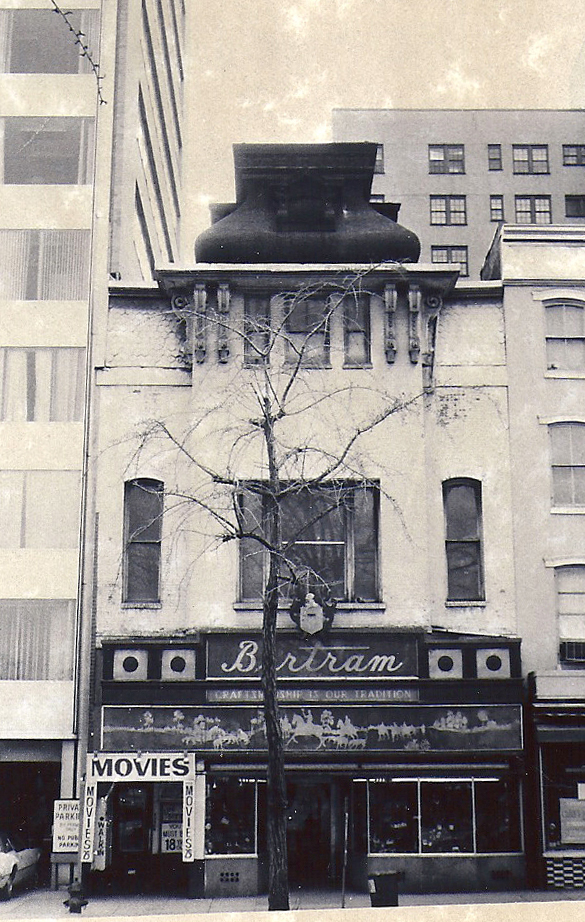
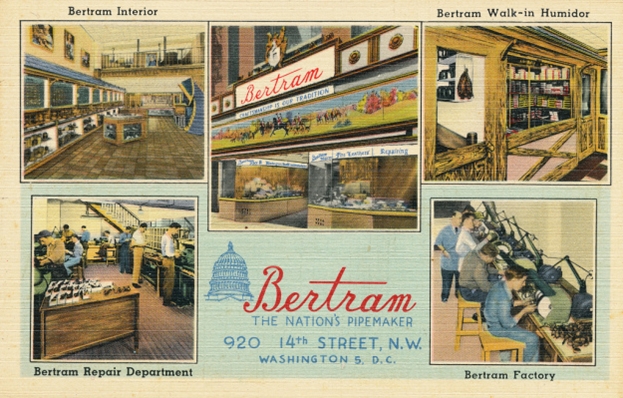
I am also including this photo of the shop in Washington D.C. and a post card of the shop. From this information I have learned that the shape and grade Bertram I have in front of me now was made before the closure of the shop in the 1970s. This Bertram Lovat is one of the more usual shapes in terms of the Bertram pipes I have worked on. With a grade 55 stamp it is just above the mid-range mark.

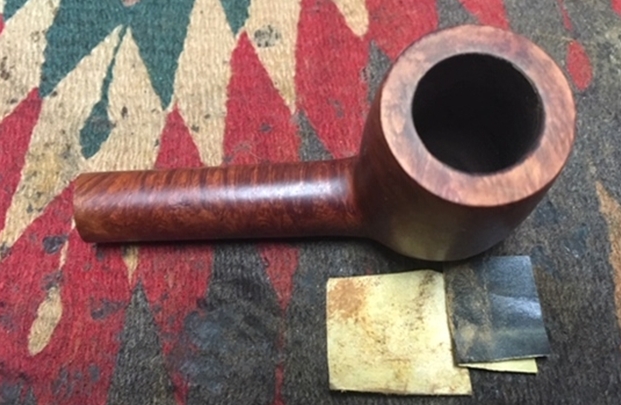
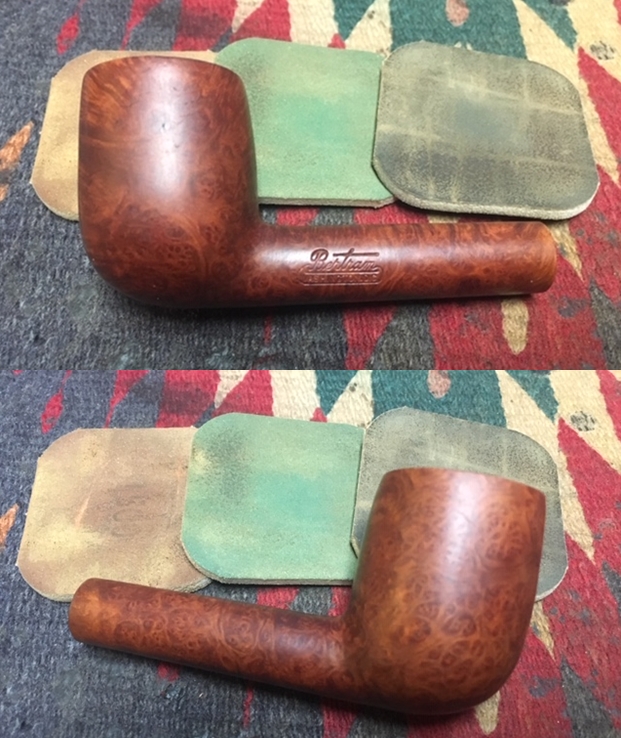
Jeff reamed the bowl with a PipNet pipe reamer and followed up with a Savinelli Fitsall pipe knife to remove the cake. He scrubbed out the mortise and the airway in the shank and the stem with alcohol, cotton swabs and pipe cleaners. He scrubbed the exterior of the bowl, rim, shank and stem with a tooth brush and Murphy’s Oil Soap to remove the oils and tars on the rim and the grime on the finish of the bowl. He rinsed it under running water. He dried it off with a soft cloth. He was able to remove lava build up on the rim top and you could see the great condition of the bowl top and edges of the rim. There was still some darkening to the rim top toward the back of the bowl. He soaked the stem in Before & After Deoxidizer to remove the oxidation. I took photos of the pipe before I started my work on it. I took a close up photo of the rim top to show the condition of the bowl and rim after Jeff had cleaned up the grime and lava but the rim top had some light damage and darkening all the way around. Both the inner edge and the outer edge of the rim look good. The stem photos show that the oxidation is gone. The light tooth chatter is hard to see but I should be able to sand it out quite easily. The tooth marks on the underside will take a little more work to remove.I also took a photo of the stamping on the left side and the underside of the shank showing how the stamping was laid out.I sanded the top of the rim with a folded piece of 220 grit sandpaper to remove the damage and the darkening. I polished the top with 400 grit wet dry sandpaper to remove the scratches. The photo shows how the rim looked at this point.I polished the bowl and rim top with micromesh sanding pads – wet sanding it with 1500-2400 grit pads and dry sanding it with 3200-12000 grit pads. I wiped the bowl down with a damp cloth after each pad to remove the sanding debris. After the final sanding pad I hand buffed it with a cotton cloth to raise a shine. I worked some Before & After Restoration Balm into finish of the briar with my fingertips to clean, enliven and protect it. I let the balm sit for a little while and then buffed with a cotton cloth to raise the shine. The Restoration Balm really makes the grain stands out beautifully. I set the bowl aside and filled in the deep tooth marks with clear super glue and set the stem aside to let the repair cure. Once it had cured I used a needle file to flatten it into the surface of the stem.I used a folded piece of 240 grit sandpaper to address the tooth chatter and blend the repair into the surface of the stem. Once the surface was smooth I sanded out the scratch marks and started the polishing of the stem with a folded piece of 400 grit sandpaper. I wiped the stem down with Obsidian Oil.I polished the stem with micromesh sanding pads – wet sanding it with 1500-2400 grit pads and dry sanding it with 3200-12000 grit pads. I wiped the stem down with Obsidian Oil after each pad. I polished it with Before & After Pipe Polish – both Fine and Extra Fine and gave it a final coat and set it aside to dry. I put the stem and bowl back together and buffed the pipe with Blue Diamond on the buffing wheel. I polished the briar and the minute scratches still in the vulcanite of the stem until there was a rich shine. This Bertram has a classic Lovat shape and some amazing grain on a proportionally well carved pipe. Once I buffed the pipe the briar came alive and the mixture of grain – cross, swirled and birdseye – popped with polishing. The black vulcanite stem had a rich glow. The finished pipe is a beautiful grained Lovat shaped pipe. Like the other Bertrams I have worked on this one fits well in the hand and sits right in the mouth. Have a look at it with the photos below. The dimensions are Length: 5 1/4 inches, Height: 1 3/4 inches, Outside diameter of the bowl: 1 1/4 inches, Chamber diameter: ¾ of an inch. Since I am traveling for a bit for the next three weeks this one will go on the store once I return. If you are interested let me know. Thanks for walking through the restoration with me as it was a pleasure to work on.
 

Restoring an Unusual Barling’s Make S-M Poker


Blog by Steve Laug

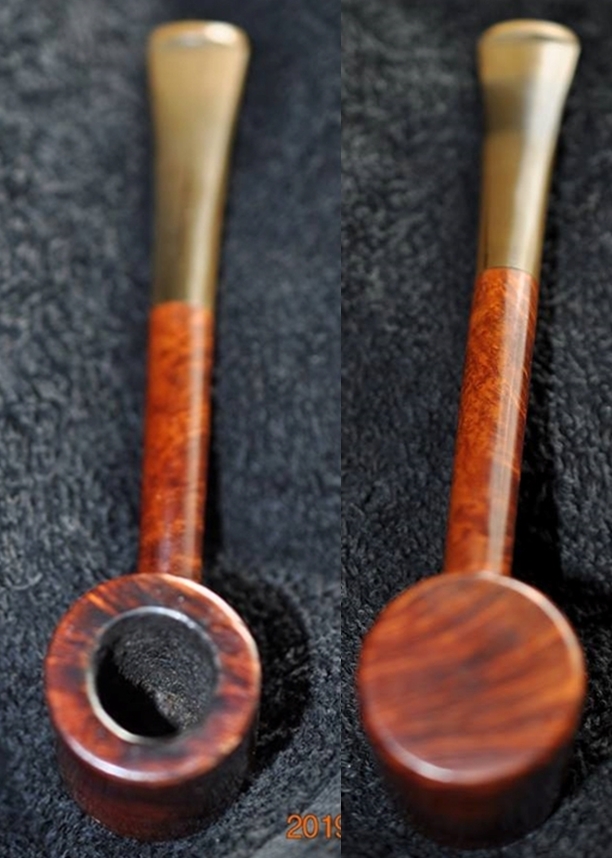
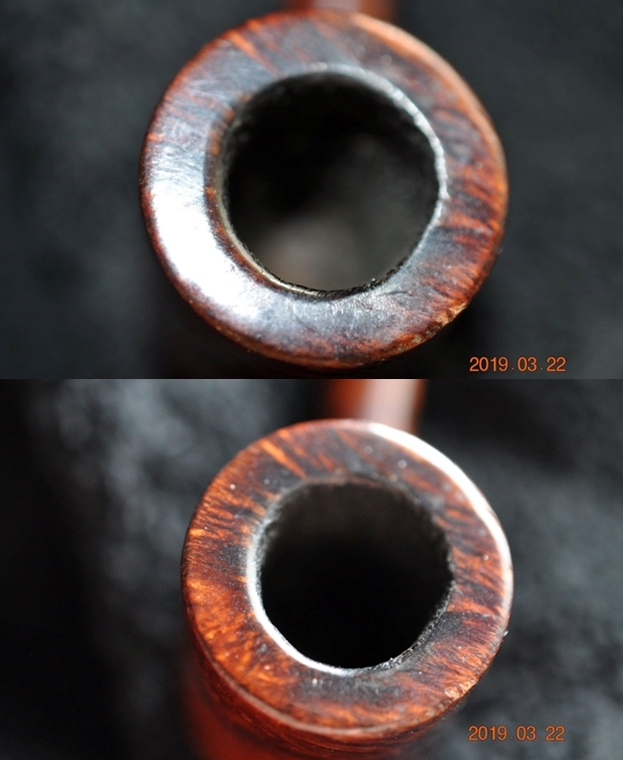
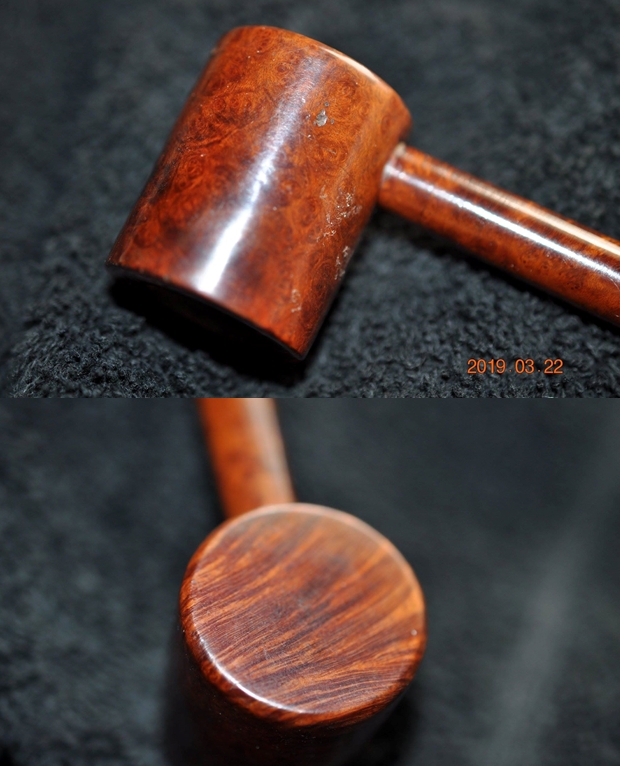
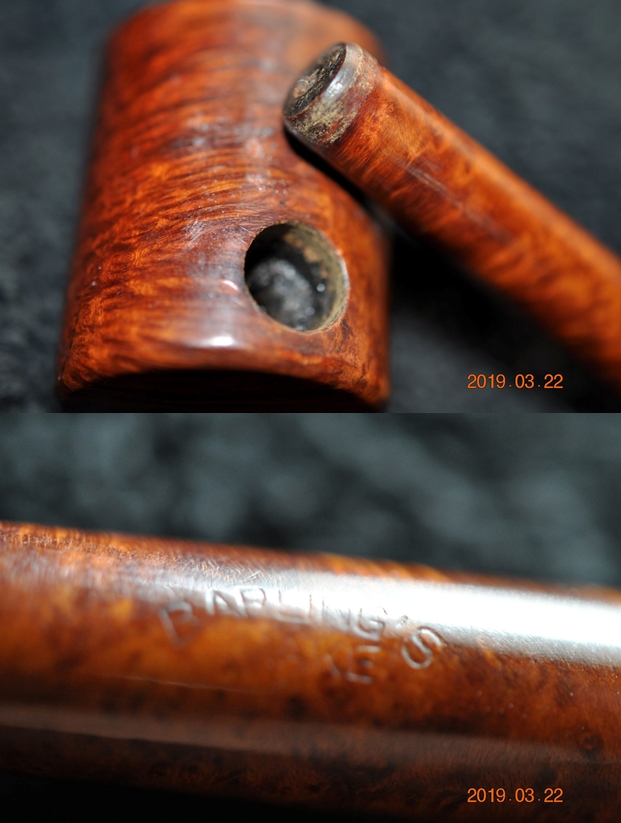
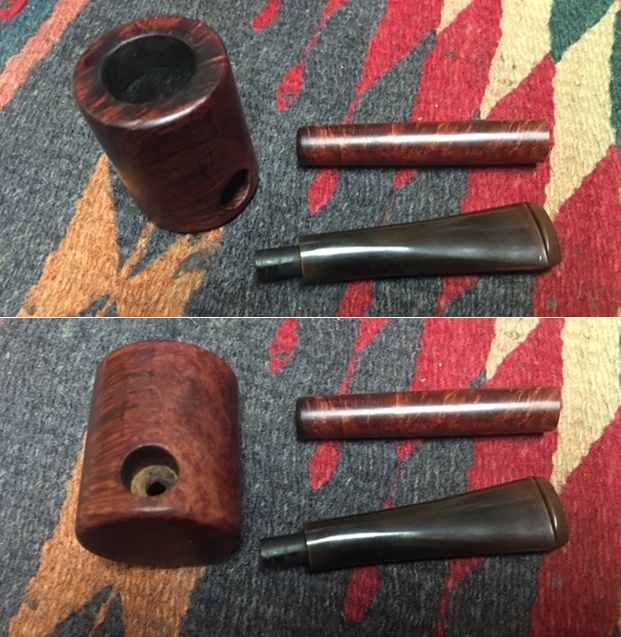
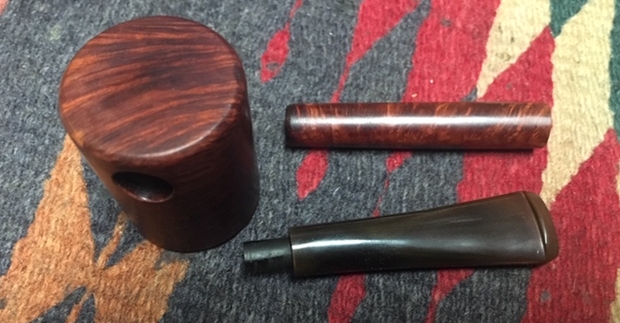
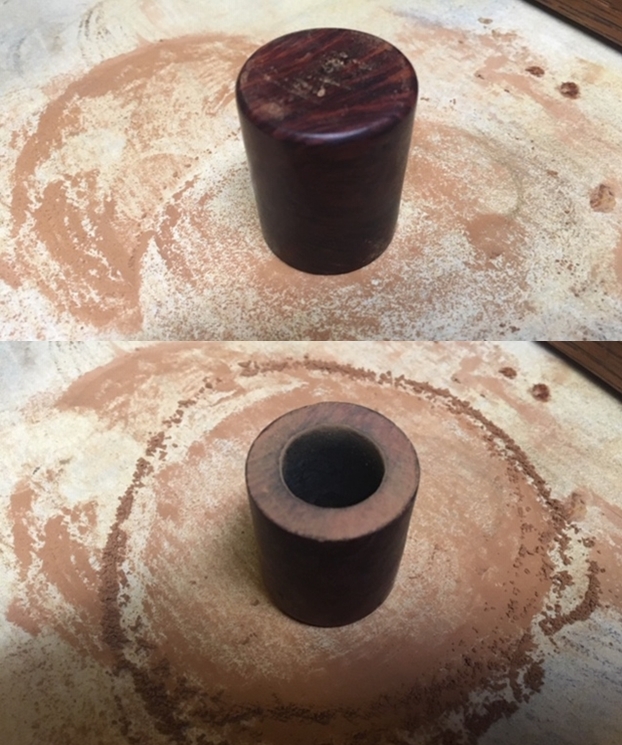
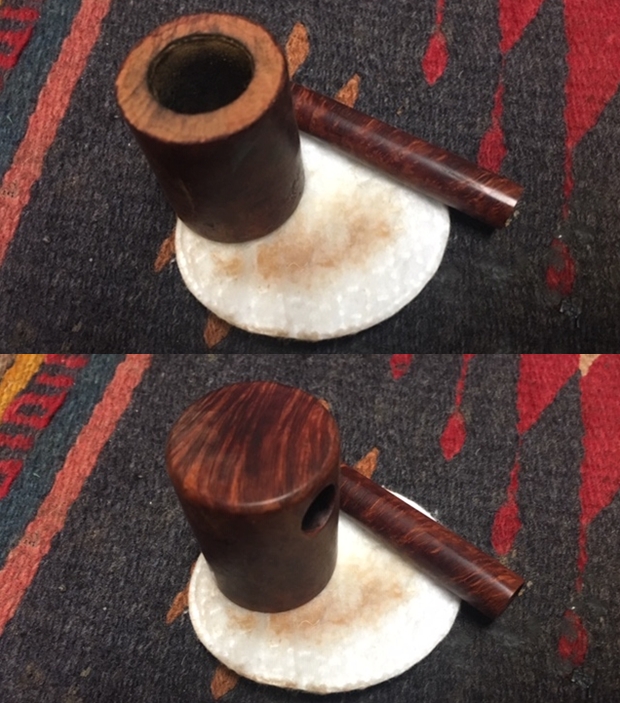
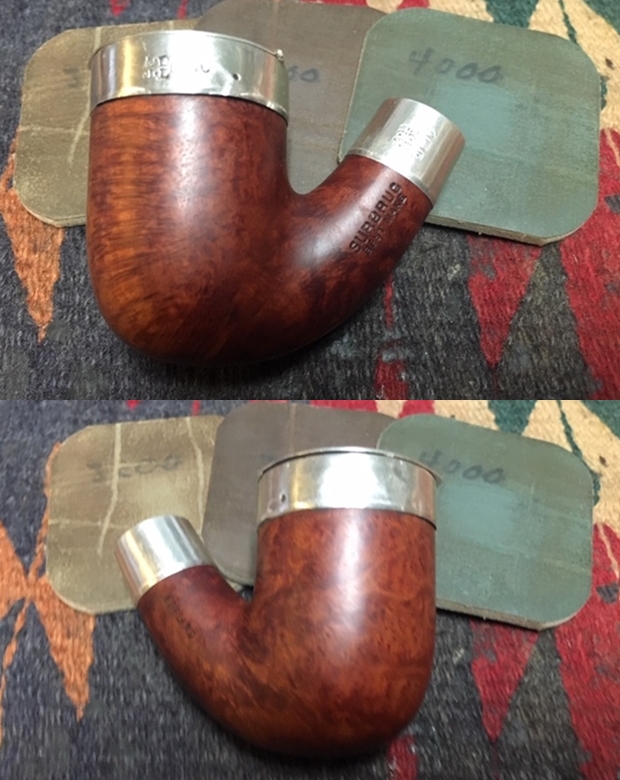
Jeff picked up this unusual poker from an auctioneer in Los Angeles, California. He picked it up and also an old Surbrug Best Make bent billiard. This one turns out to be a Barling’s Make Poker. It is unusual in that the shank is not attached to the bowl. It is a friction fit shank that is removable. The tapered vulcanite stem is long and makes the look of the pipe unique and is also removable. The pipe breaks down into three parts. The pipe is stamped on the left side of the shank with Barling’s arched over Make and the right side is stamped S-M near the bowl shank union. The stamping is light but readable with a light and lens. The S-M stamp may refer to the size of the pipe. Early Barlings had a size stamp of S, S-M, M, L which would make the S-M a small medium which fits the size of this petite pipe. The bowl had a thick cake lining the walls and some light lava on the rim top. The inner edge of the bowl appears to be slightly damaged I will know more once it is reamed and cleaned. The outer edge looks good and the top of the rim has some nicks and dings in it. The finish on the bowl and shank is very dirty. The removable shank end is also blackened and will need to be cleaned up. The stem is oxidized and has some light tooth chatter but otherwise no tooth marks. Jeff took some photos of the pipe when it arrived to give a clear picture of its condition. Jeff took 2 close-up photos of the bowl and rim at different exposures to capture the condition of the pipe when it arrived. The rim top had some light lava and some darkening on the back rim top. The bowl had a cake that was quite thick and tobacco debris stuck to the walls.He also took a photo of the right and underside of the bowl to show the shape and the grain on the bowl and heel. The finish is very dirty but this grain is quite stunning.He took the shank off the bowl to show the nature of the connection. Note that the shank had not been glued in place in the bowl. The second photo shows the stamping on the left side of the shank. It is clear but faint.The next two photos show the stem surface. They show the oxidation and the chatter on both sides near the button. There is also some wear on the button edges. Jeff reamed the bowl with a PipNet pipe reamer and followed up with a Savinelli Fitsall pipe knife to remove the cake. He scrubbed out the mortise and the airway in the shank and the stem with alcohol, cotton swabs and pipe cleaners. He scrubbed the exterior of the bowl, rim, shank and stem with a tooth brush and Murphy’s Oil Soap to remove the oils and tars on the rim and the grime on the finish of the bowl. He rinsed it under running water. He dried it off with a soft cloth. He was able to remove light lava build up on the back of the rim top and you could see the great condition of the bowl top and edges of the rim. He soaked the stem in Before & After Deoxidizer to remove the oxidation. I took photos of the pipe before I started my work on it. I took a close up photo of the rim top to show the condition of the bowl and rim after Jeff had cleaned and reamed the bowl. The rim top had some deep nicks toward the rear left and there was some damage to the inner edge. The outer edge of the rim had some damage as well with some nicks and dings. The stem photos show that the oxidation is stubbornly present even after the soak in Before & After Deoxidizer. There are not any tooth marks and the stem surface is in good condition.I took the pipe apart and took pictures of it from various angles to give a clear picture of the uniqueness of this old Barling’s Make. To start the restoration work on this one I decided to gently top the bowl to deal with the damage to the rim top and edges. I used a piece of 220 grit sandpaper on a hard board and worked the rim on it in a circular motion until I had removed the damage.There were still some shiny spots on the sides of the bowl that looked like the remnants of a spray lacquer finish. I wiped the bowl and shank down with isopropyl alcohol and spot wiped the shiny spots with acetone. I was able to remove all of the spots and the finish looked better.I used a folded piece of 220 grit sandpaper to smooth out the inner edge of the rim. When I finished the rough spots were smoothed out and the rim had a very slight bevel.I polished the bowl and rim top with micromesh sanding pads – wet sanding it with 1500-2400 grit pads and dry sanding it with 3200-12000 grit pads. I wiped it down with a damp cloth after each pad to remove the dust. To finish, I hand buffed it with a cotton cloth to raise a shine. I worked some Before & After Restoration Balm into the surface of the briar bowl and the shank piece with my fingertips to clean, enliven and protect it. I let the balm sit for a little while and then buffed with a cotton cloth to raise the shine.The following photos show the bowl and shank at this point in the restoration process. The bowl, rim top and shank look very good with rich grain patterns. With the bowl finished I set it aside and turned my attention to the stem. I sanded the stem surface with 220 grit sandpaper to remove the oxidation on the surface of the button. I am happy with the stem surface once that was done. I started the polishing of the surface with 400 grit wet dry sandpaper.I polished the stem with micromesh sanding pads – wet sanding it with 1500-2400 grit pads and dry sanding it with 3200-12000 grit pads. I wiped the stem down with a damp cloth after each pad. I further polished it with Before & After Pipe Polish – both Fine and Extra Fine. I wiped it down with a coat of Obsidian Oil and set it aside to dry. Once I have all the parts of a given pipe finished I follow the same finishing routine. I polished the bowl, shank and the stem with Blue Diamond polish on the buffing wheel. I gave the bowl and the stem multiple coats of carnauba wax. I buffed the pipe with a clean buffing pad to raise the shine. I hand buffed it with a microfiber cloth to deepen the shine. The pipe polished up pretty nicely. The rich Barling stained finish shone through and the grain came alive with the buffing. The brown stains on the briar work well with the polished black vulcanite stem. The finished pipe is a beautifully laid out poker that is proportionally well made. Have a look at it with the photos below. The dimensions are Length: 5 inches, Height: 1 1/2 inches, Outside diameter of the bowl: 1 1/8 inches, Chamber diameter: 5/8 of an inch. I think I will hang on to this one as it is a Barling’s Make style that I have never seen before and probably will never see again. It was an interesting pipe to work on and I love the finished product. Thanks for reading.

The 7th of a collection of Bertrams – a Bertram 60 Bullmoose


Blog by Steve Laug

You will probably get tired of this introduction if you are following the blog but I will keep it here at least for a while for those who have not read the previous blogs on the pipes in this collection… As I mentioned before, once in a while I get emails through the blog about pipes that someone wants to sell. These can be estates or they can be a collection that an older pipeman has decided to get rid of by passing it on to someone who can work on them and see that they get into the hands of another pipe smoker. In this case I received an email from a fellow who wanted to sell me a collection of Bertram pipes. We met over FaceTime and he showed the pipe collection to both Jeff and me. We discussed their condition and arrived at a price for the pipes. The majority of the pipes in the collection were Bertrams but there were also some other brands that were known to me. We struck a deal on the lot and he shipped them to Jeff. Jeff took some photos of the collection when it arrived in Idaho. He unwrapped each of the 200+ pipes and filled the three boxes that they were mailed in, and then took a photo to show the size of the collection we had purchased. To be honest it was a bit overwhelming to see all of the collection in boxes. We were looking at a lot of work to bring these back to life.I am glad that Jeff is working through the clean up on this lot as there are many! I am leaving it to choose which pipes to work on. So far he is choosing the higher grade pipes and the more interesting shaped ones. As he finishes a batch of them he boxes them up and sends them to me. From that box, I chose another one of the Bertrams from the lot to be the seventh pipe that I would work on. As with the rest of the collection this one was dirty! The smooth finish was grimy and dusty but the grain shone through showing me that this was a beautiful pipe. It was a Bullmoose shaped pipe with a straight tapered stem. There was a cake in the bowl and light lava overflowing on to the rim top. The rim had slight darkening on the rear inner edge. The stem showed some light oxidation and some chatter on the top and underside. There was a crack in the button and on the underside of the stem surface. The photos below tell the story and give a glimpse of this interesting pipe. Jeff took 2 close-up photos of the bowl and rim at different exposures to capture the condition of the pipe when it arrived. The rim top had some light lava and some darkening on the back rim top. The bowl had a cake that was quite thick but also a lot of tobacco debris stuck to the walls.He also took a photo of the left side of the bowl to show the large fill that was mid bowl. He took a photo of the underside of the shank to show the shape ant the grain on the bowl and heel. The finish is very dirty but this is another interesting pipe. Jeff took a photo to capture the stamping on the left side of the shank. The first photo shows stamping which read Bertram over Washington, D.C. The stamping on this pipe is clear and readable. The second photo shows the grade number stamping on the underside at the shank stem junction. It read number 60 which shows the quality of the pipe. The next two photos show the stem surface. They show the oxidation and the chatter on both sides near the button. There is also some wear on the button edges. The most significant issue that will need to be dealt with is the crack in the button edge and into the stem on the underside.If you have read the previous five blogs I have posted on the Bertram pipes that I have cleaned up so far you can skip the next bit. But if you have not, then I include the link to Bertram history and information. I would recommend that if you don’t know much about them do some research on them. I include a link to the write up on Pipedia (http://pipedia.org/wiki/Bertram). Bertram pipes were based out of Washington DC. They were popular among famous politicians and celebrities of the time. They made many products for them from FDR’s cigarette holders to Joseph Stalin’s favorite pipe. They were considered some of the best America had to offer till they finally closed their doors in the 70s. They graded their pipes by 10s, the higher the grade the better. Above 60s are uncommon and 80-90s are quite rare. I’ve never heard of or seen a 100 grade. I have several blogs that I have written on rebornpipes that give some history and background to Bertram pipes. (https://rebornpipes.com/2015/06/16/an-easy-restoration-of-a-bertram-grade-60-217-poker/).

I have included the following link to give a bit of historical information on the pipe company. It is a well written article that gives a glimpse of the heart of the company. http://www.streetsofwashington.com/2012/01/bertrams-pipe-shop-on-14th-street.html#

I am also including this photo of the shop in Washington D.C. and a post card of the shop. From this information I have learned that the shape and grade Bertram I have in front of me now was made before the closure of the shop in the 1970s. This Bertram Bullmoose is a rare shape in terms of the Bertram pipes I have worked on. With a grade 60 stamp it is just above the mid-range mark.

Jeff reamed the bowl with a PipNet pipe reamer and followed up with a Savinelli Fitsall pipe knife to remove the cake. He scrubbed out the mortise and the airway in the shank and the stem with alcohol, cotton swabs and pipe cleaners. He scrubbed the exterior of the bowl, rim, shank and stem with a tooth brush and Murphy’s Oil Soap to remove the oils and tars on the rim and the grime on the finish of the bowl. He rinsed it under running water. He dried it off with a soft cloth. He was able to remove light lava build up on the back of the rim top and you could see the great condition of the bowl top and edges of the rim. He soaked the stem in Before & After Deoxidizer to remove the oxidation. I took photos of the pipe before I started my work on it. (Please note that I forgot to take a photo of the underside of the stem before I started my repair work so the last photo below shows the initial repair started.) I took a close up photo of the rim top to show the condition of the bowl and rim after Jeff had cleaned up the darkening at the front and rear of the rim. It looked really and both the inner edge and the outer edge of the rim look really good. The stem photos show that the oxidation is gone. The light tooth chatter is hard to see but I should be able to sand it out quite easily. The repair on the button and the stem would actually work well as it was not as large as it appeared.I also took a photo of the stamping on the left side and the underside of the shank showing how the stamping was laid out.I polished the bowl and rim top with micromesh sanding pads – wetsanding it with 1500-2400 grit pads and dry sanding it with 3200-12000 grit pads. I wiped the bowl down with a damp cloth after each pad to remove the sanding debris. After the final sanding pad I hand buffed it with a cotton cloth to raise a shine. The large fill on the left side is rock hard so I left is as it was when I received the pipe. I worked some Before & After Restoration Balm into finish of the briar with my fingertips to clean, enliven and protect it. I let the balm sit for a little while and then buffed with a cotton cloth to raise the shine. The Restoration Balm really makes the grain stands out beautifully. I set the bowl aside and turned my attention to the stem. I cleaned off the crack in the underside of the button with alcohol and a cotton swab. I dried it off and filled in the area with clear super glue and set it aside to cure.I used a folded piece of 240 grit sandpaper to address the tooth chatter and blend the repair into the surface of the stem. Once the surface was smooth I sanded out the scratch marks and started the polishing of the stem with a folded piece of 400 grit sandpaper. I wiped the stem down with Obsidian Oil.I polished the stem with micromesh sanding pads – wetsanding it with 1500-2400 grit pads and dry sanding it with 3200-12000 grit pads. I wiped the stem down with Obsidian Oil after each pad. I polished it with Before & After Pipe Polish – both Fine and Extra Fine and gave it a final coat and set it aside to dry. I put the stem and bowl back together and buffed the pipe with Blue Diamond on the buffing wheel. I polished the briar and the minute scratches still in the vulcanite of the stem until there was a rich shine. This Bertram has a protruding chin or nose to it. It is that shape that is called a Bull Moose. Once I buffed the pipe the briar came alive and the mixture of grain – straight, flame and birdseye popped with polishing. There are some fills on the left side of the bowl but they are not glaring pink putty. The black vulcanite stem had a rich glow. The finished pipe is a beautiful grained Bull Moose shaped pipe. Like the other Bertrams I have worked on this one fits well in the hand and sits right in the mouth. Have a look at it with the photos below. The dimensions are Length: 5 3/4 inches, Height: 1 5/8 inches, Outside diameter of the bowl: 1 3/4 inches, Chamber diameter: ¾ of an inch. Since I am traveling for a bit for the next three weeks this one will go on the store once I return. If you are interested let me know. Thanks for walking through the restoration with me as it was a pleasure to work on.
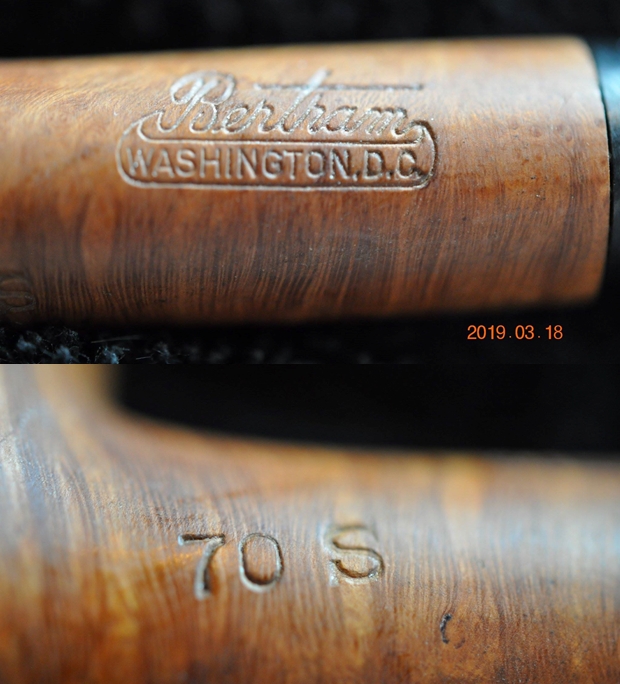
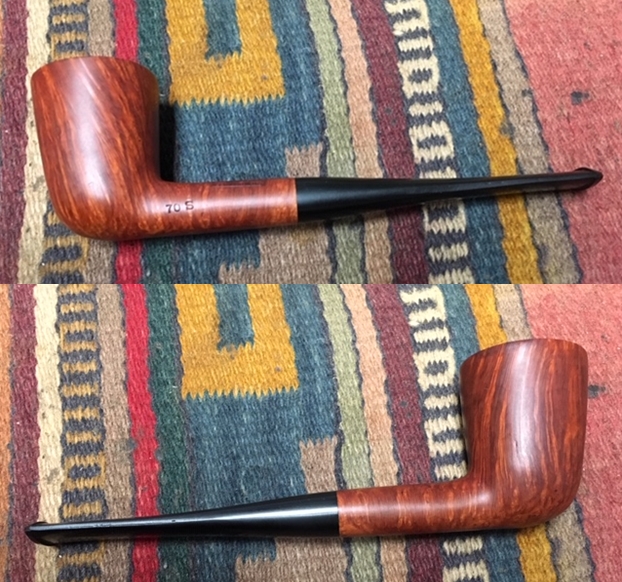
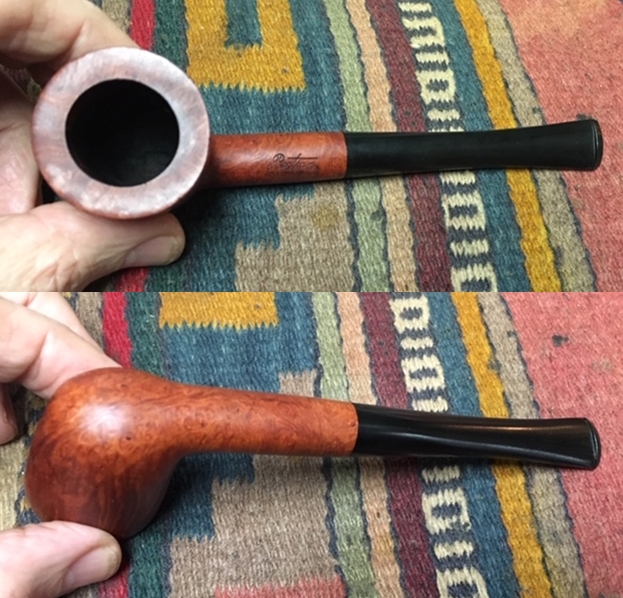
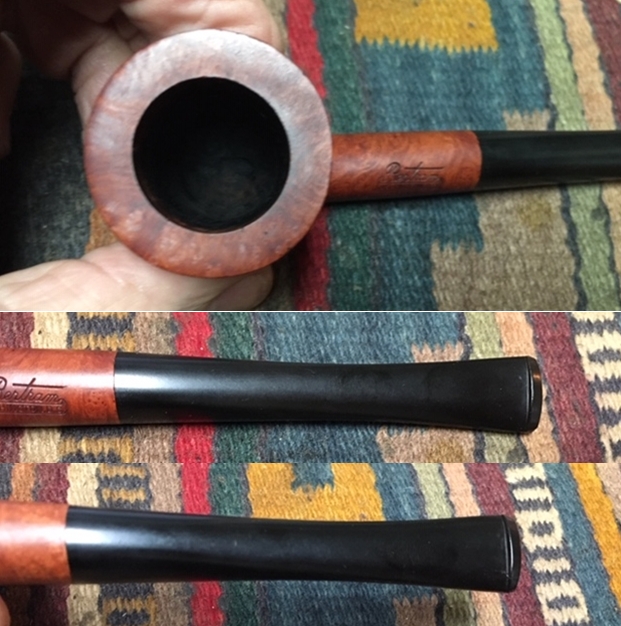
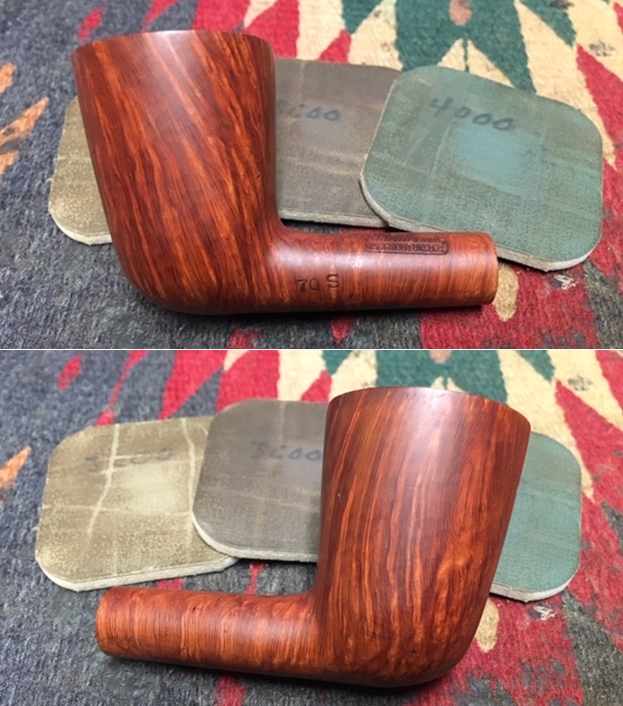
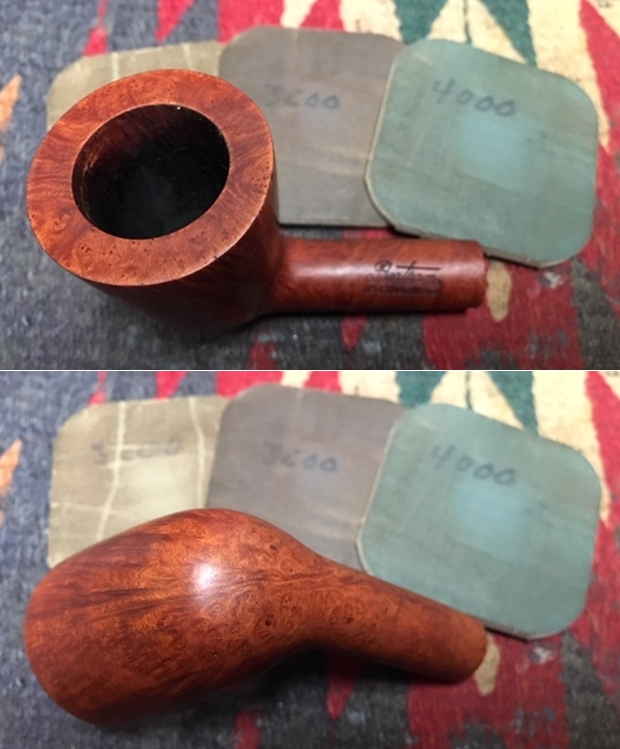
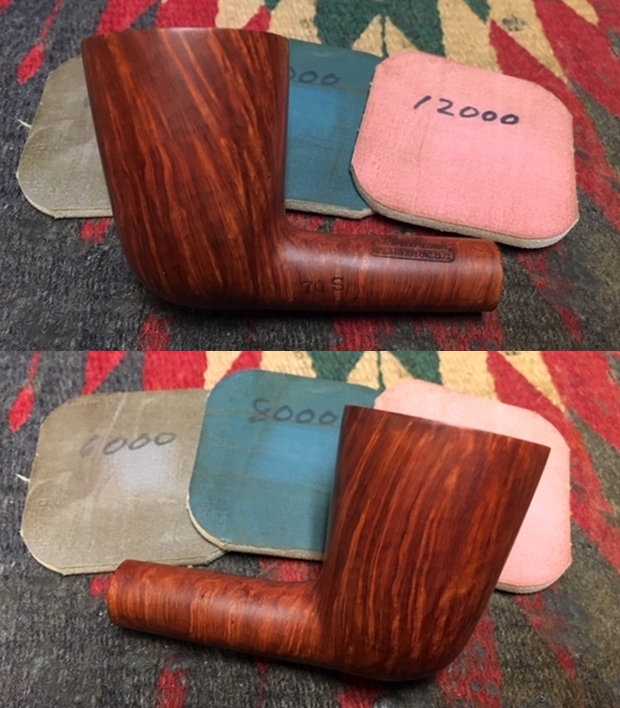
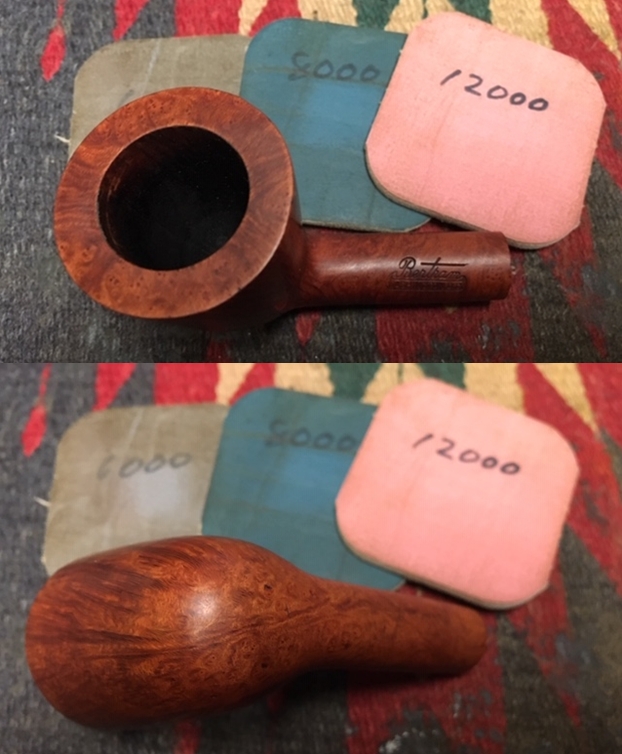
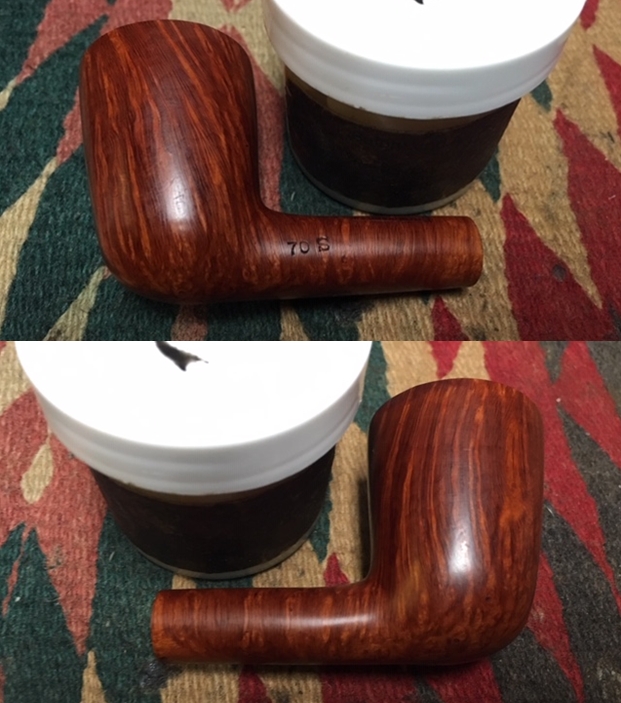
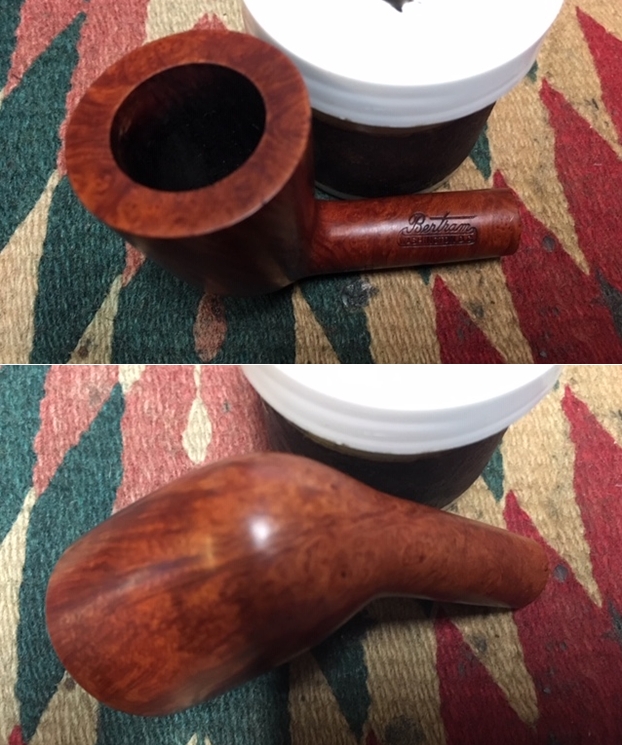
The 6th of a collection of Bertrams – a Bertram 70S Acorn


Blog by Steve Laug

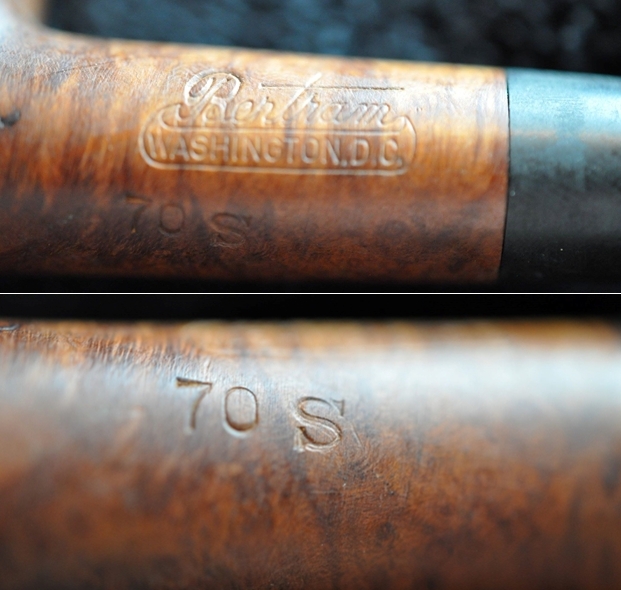
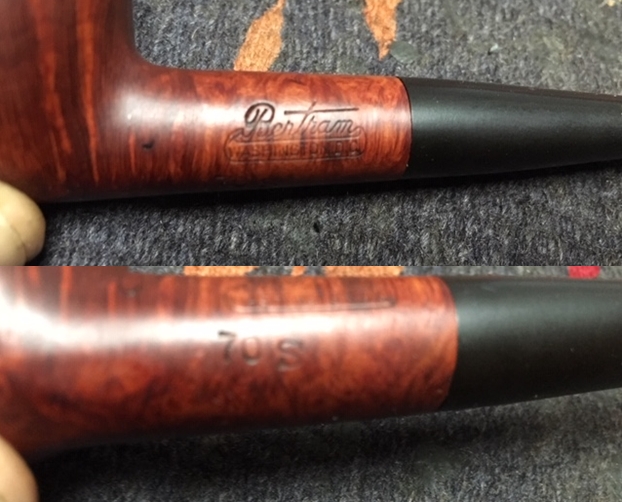
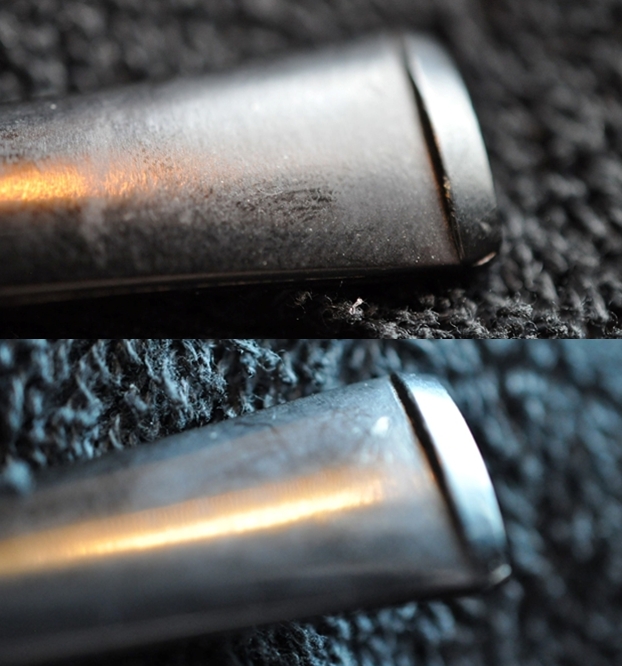
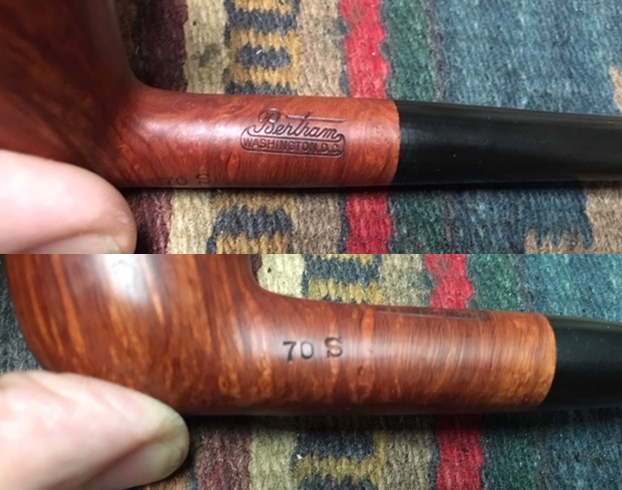
You will probably get tired of this introduction if you are following the blog but I will keep it here at least for a while for those who have not read the previous blogs on the pipes in this collection… As I mentioned before, once in a while I get emails through the blog about pipes that someone wants to sell. These can be estates or they can be a collection that an older pipeman has decided to get rid of by passing it on to someone who can work on them and see that they get into the hands of another pipe smoker. In this case I received an email from a fellow who wanted to sell me a collection of Bertram pipes. We met over FaceTime and he showed the pipe collection to both Jeff and me. We discussed their condition and arrived at a price for the pipes. The majority of the pipes in the collection were Bertrams but there were also some other brands that were known to me. We struck a deal on the lot and he shipped them to Jeff. Jeff took some photos of the collection when it arrived in Idaho. He unwrapped each of the 200+ pipes and filled the three boxes that they were mailed in, and then took a photo to show the size of the collection we had purchased. To be honest it was a bit overwhelming to see all of the collection in boxes. We were looking at a lot of work to bring these back to life.I am glad that Jeff is working through the clean up on this lot as there are many! I am leaving it to choose which pipes to work on. So far he is choosing the higher grade pipes and the more interesting shaped ones. As he finishes a batch of them he boxes them up and sends them to me. From that box, I chose another one of the Bertrams from the lot to be the sixth pipe that I would work on. As with the rest of the collection this one was dirty! The smooth finish was grimy and dusty but the grain shone through showing me that this was a beautiful pipe. It was an Acorn shaped pipe with a straight tapered stem. There was a cake in the bowl and light lava overflowing on to the rim top. The rim top also had dents and dings and a slight darkening on the rear inner edge. The stem showed some light oxidation and some chatter on the top and underside. The photos below tell the story and give a glimpse of this interesting pipe. Jeff took 2 close-up photos of the bowl and rim to capture the condition of the pipe when it arrived. The rim top had some light lava and some darkening on the front and the back rim top. The bowl had a cake that was quite thick but also a lot of tobacco debris stuck to the walls.He also took a photo of the right and left side of the bowl and shank to show the interesting straight grain on the bowl and heel. The finish is very dirty but this is another interesting pipe.Jeff took a photo to capture the stamping on the left side of the shank. The first photo shows stamping which read Bertram over Washington, D.C. The stamping on this pipe is clear and readable. The second photo shows the grade number stamping lower on the left side at the shank bowl junction. It read number 70S which shows the quality of the pipe. I believe the S is the designation for a straight grain pipe but I cannot find verification of that yet.The next two photos show the stem surface. They show the oxidation and the chatter on both sides near the button. This stem showed the least number of tooth marks on any of the Bertram lot that I have worked on so far.If you have read the previous five blogs I have posted on the Bertram pipes that I have cleaned up so far you can skip the next bit. But if you have not, then I include the link to Bertram history and information. I would recommend that if you don’t know much about them do some research on them. I include a link to the write up on Pipedia (http://pipedia.org/wiki/Bertram). Bertram pipes were based out of Washington DC. They were popular among famous politicians and celebrities of the time. They made many products for them from FDR’s cigarette holders to Joseph Stalin’s favorite pipe. They were considered some of the best America had to offer till they finally closed their doors in the 70s. They graded their pipes by 10s, the higher the grade the better. Above 60s are uncommon and 80-90s are quite rare. I’ve never heard of or seen a 100 grade. I have several blogs that I have written on rebornpipes that give some history and background to Bertram pipes. (https://rebornpipes.com/2015/06/16/an-easy-restoration-of-a-bertram-grade-60-217-poker/).

I have included the following link to give a bit of historical information on the pipe company. It is a well written article that gives a glimpse of the heart of the company. http://www.streetsofwashington.com/2012/01/bertrams-pipe-shop-on-14th-street.html#

I am also including this photo of the shop in Washington D.C. and a post card of the shop.

From this information I have learned that the shape and grade Bertram I have in front of me now was made before the closure of the shop in the 1970s. This Bertram Acorn is a grade 70S pipe so it is above the mid-range mark and one of the rarer Bertrams.

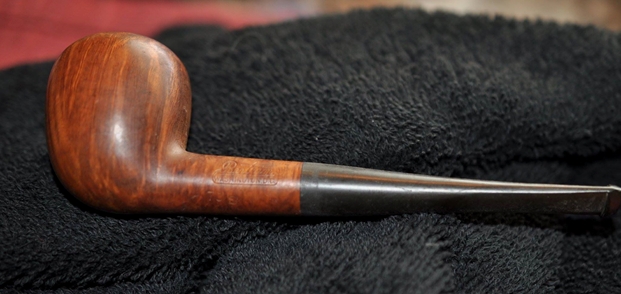
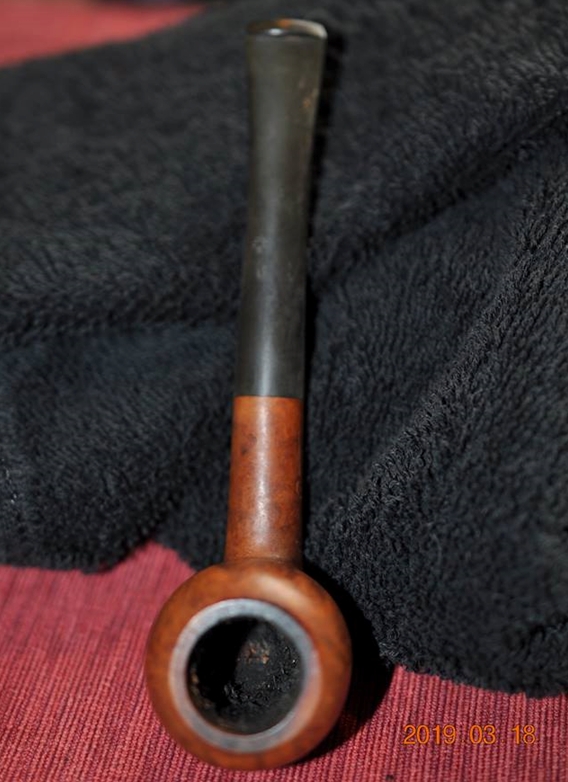
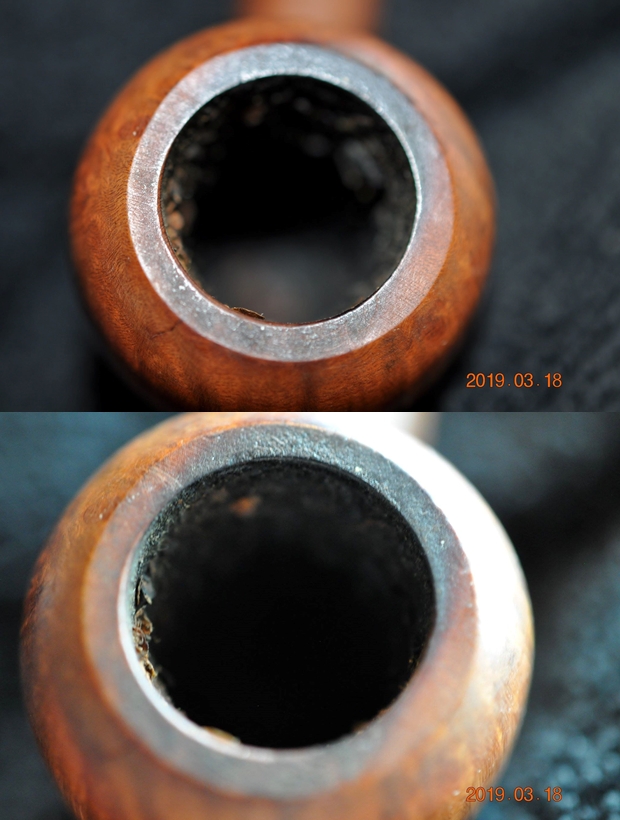
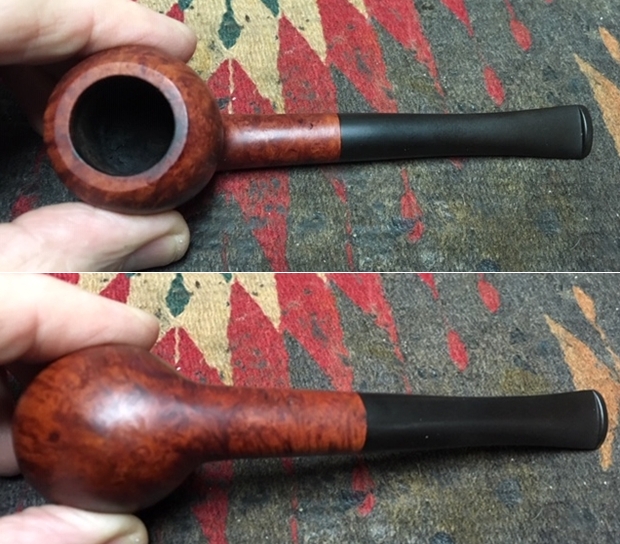
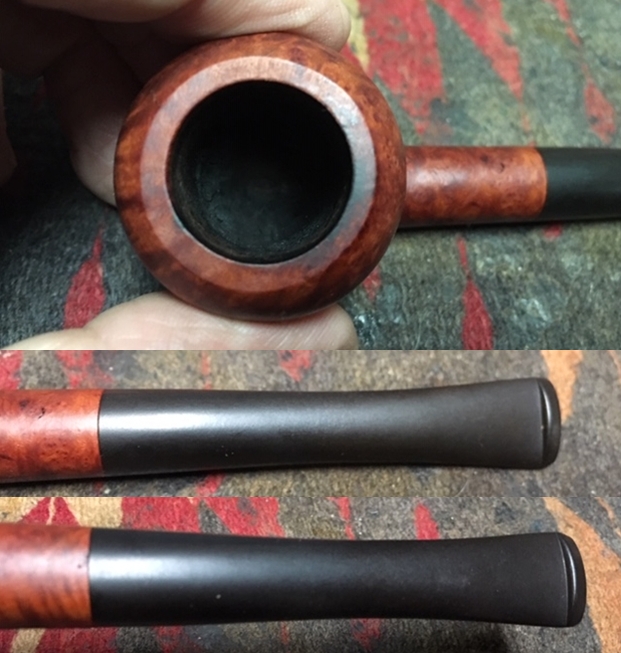
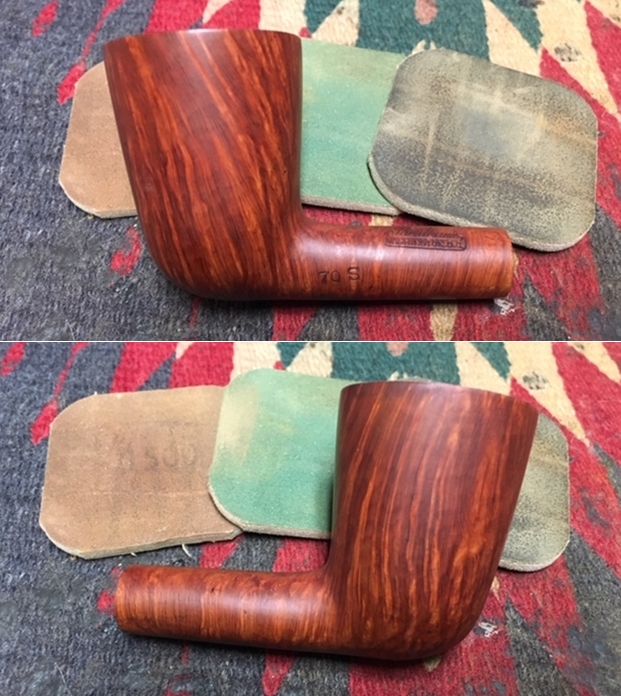
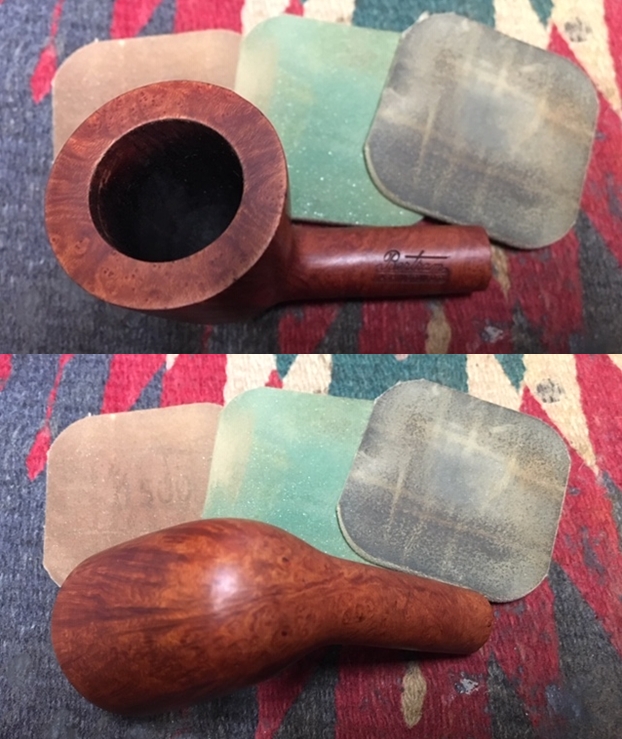
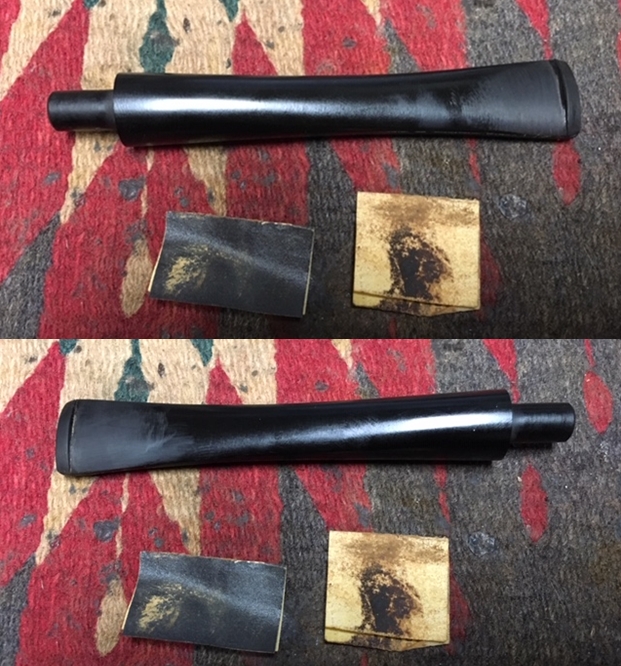
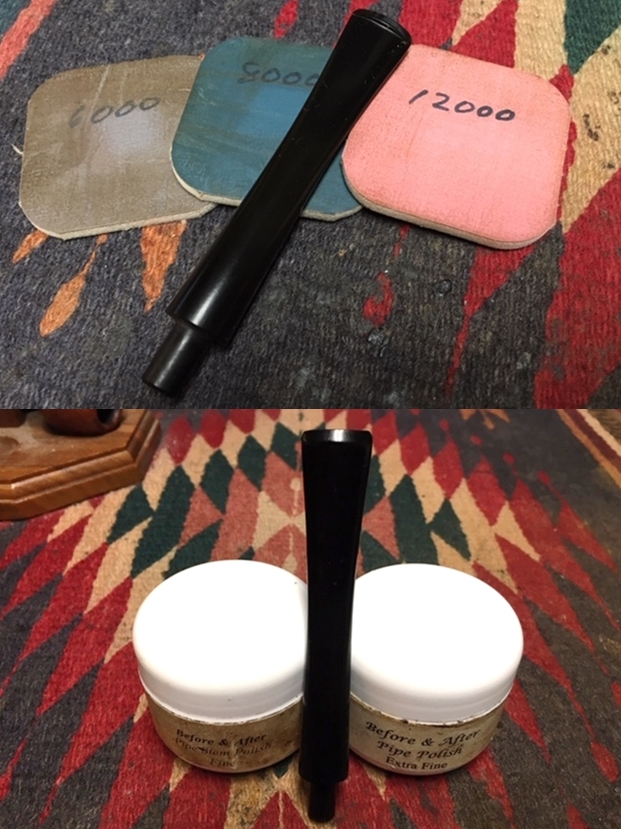
Jeff reamed the bowl with a PipNet pipe reamer and followed up with a Savinelli Fitsall pipe knife to remove the cake. He scrubbed out the mortise and the airway in the shank and the stem with alcohol, cotton swabs and pipe cleaners. He scrubbed the exterior of the bowl, rim, shank and stem with a tooth brush and Murphy’s Oil Soap to remove the oils and tars on the rim and the grime on the finish of the bowl. He rinsed it under running water. He dried it off with a soft cloth. He was able to remove the lava build up on the rim top and you could see the great condition of the bowl top and edges of the rim. He soaked the stem in Before & After Deoxidizer to remove the oxidation. I took photos of the pipe before I started my work on it. I took a close up photo of the rim top to show the condition of the bowl and rim after Jeff had cleaned up the darkening at the front and rear of the rim. It looked really good though there was still some darkening at the rear of the rim. Both the inner edge and the outer edge of the rim look really good. The stem photos show that the oxidation is gone. The light tooth chatter is hard to see but I should be able to sand it out quite easily.I also took a photo of the stamping on the top of the left side and the underside of the shank showing how the stamping was laid out.I started my part of the restoration by sanding out the dark spots on the front and back of the rim top with 220 grit sandpaper and then polishing it with 400 grit wet dry sandpaper. It did not too much work to remove the damage to the rim top.I polished the bowl and rim top with micromesh sanding pads – wetsanding it with 1500-2400 grit pads and dry sanding it with 3200-12000 grit pads. I wiped the bowl down with a damp cloth after each pad to remove the sanding debris. After the final sanding pad I hand buffed it with a cotton cloth to raise a shine. I worked some Before & After Restoration Balm into finish of the briar with my fingertips to clean, enliven and protect it. I let the balm sit for a little while and then buffed with a cotton cloth to raise the shine. The Restoration Balm really makes the grain stands out beautifully. I set the bowl aside and turned my attention to the stem. I used a folded piece of 240 grit sandpaper to address the tooth chatter and oxidation on the surface of the stem. Once the surface was smooth I sanded out the scratch marks and started the polishing of the stem with a folded piece of 400 grit sandpaper. I wiped the stem down with Obsidian Oil and took the following photos.I polished the stem with micromesh sanding pads – wetsanding it with 1500-2400 grit pads and dry sanding it with 3200-12000 grit pads. I wiped the stem down with Obsidian Oil after each pad. I polished it with Before & After Pipe Polish – both Fine and Extra Fine and gave it a final coat and set it aside to dry. I put the stem and bowl back together and buffed the pipe with Blue Diamond on the buffing wheel. I polished the briar and the minute scratches still in the vulcanite of the stem until there was a rich shine. This Bertram has a bit of a Danish flair to it. Once I buffed the pipe the briar came alive and the mixture of grain – straight, flame and birdseye popped with polishing. The black vulcanite stem had a rich glow. The finished pipe is a beautiful grained Acorn shaped pipe. Like the other Bertrams I have worked on this one fits well in the hand and sits right in the mouth. Have a look at it with the photos below. The dimensions are Length: 5 1/2 inches, Height: 1 3/4 inches, Outside diameter of the bowl: 1 3/8 inches, Chamber diameter: ¾ of an inch. Since I am traveling for a bit for the next three weeks this one will go on the store once I return. If you are interested let me know. Thanks for walking through the restoration with me as it was a pleasure to work on.
 

The 5th of a collection of Bertrams – a Bertram 60 Author


Blog by Steve Laug

As I mentioned before, once in a while I get emails through the blog about pipes that someone wants to sell. These can be estates or they can be a collection that an older pipeman has decided to get rid of by passing it on to someone who can work on them and see that they get into the hands of another pipe smoker. In this case I received an email from a fellow who wanted to sell me a collection of Bertram pipes. We met over FaceTime and he showed the pipe collection to both Jeff and me. We discussed their condition and arrived at a price for the pipes. The majority of the pipes in the collection were Bertrams but there were also some other brands that were known to me. We struck a deal on the lot and he shipped them to Jeff. Jeff took some photos of the collection when it arrived in Idaho. He unwrapped each of the 200+ pipes and filled the three boxes that they were mailed in, and then took a photo to show the size of the collection we had purchased. To be honest it was a bit overwhelming to see all of the collection in boxes. We were looking at a lot of work to bring these back to life.Jeff chose a group of pipes from the collection and began his work on them He sent me a box with some of the pipes he had cleaned up. I chose another one of the Bertrams from the lot to be the fifth pipe that I would work on. The smooth finish was dirty but the grain shone through showing me that this was a beautiful pipe. It was an Author shaped pipe with a straight shank and a ¼ bent tapered stem. There was a cake in the bowl and light lava overflowing on to the rim top. The rim top also had dents and dings and a slight darkening on the rear inner edge. The stem showed some light oxidation and some chatter on the top and underside. The photos below tell the story and give a glimpse of this interesting pipe. Jeff took 2 close up photos of the bowl and rim to capture the condition of the pipe before he started his cleanup work. The rim top had some light lava and some darkening on the back rim top.He also took a photo of the right and left side of the bowl and shank to show the interesting grain on the bowl and the heel. The finish is very dirty but this is another interesting pipe.Jeff took a photo to capture the stamping on the left side of the shank. The photo shows stamping which read Bertram over Washington, D.C. The stamping on this pipe is clear and readable. The second photo shows the stamping on the left side at the shank bowl junction. It read number 60 which shows the quality of the pipe. The next two photos show the stem surface. They show the oxidation and the chatter on both sides near the button. There are also tooth marks on the underside next to the button and wear on the button edge itself.I will continue to include the link to Bertram history and information. I would recommend that if you don’t know much about them do some research on them. I include a link to the write up on Pipedia (http://pipedia.org/wiki/Bertram). Bertram pipes were based out of Washington DC. They were popular among famous politicians and celebrities of the time. They made many products for them from FDR’s cigarette holders to Joseph Stalin’s favorite pipe. They were considered some of the best America had to offer till they finally closed their doors in the 70s. They graded their pipes by 10s, the higher the grade the better. Above 60s are uncommon and 80-90s are quite rare. I’ve never heard of or seen a 100 grade. I have several blogs that I have written on rebornpipes that give some history and background to Bertram pipes. (https://rebornpipes.com/2015/06/16/an-easy-restoration-of-a-bertram-grade-60-217-poker/).

I have included the following link to give a bit of historical information on the pipe company. It is a well written article that gives a glimpse of the heart of the company. http://www.streetsofwashington.com/2012/01/bertrams-pipe-shop-on-14th-street.html#

I am also including this photo of the shop in Washington D.C. and a post card of the shop.

From this information I have learned that the shape and grade Bertram I have in front of me now was made before the closure of the shop in the 1970s. I also learned that this interesting little author is a grade 60 pipe so it is just above the mid-range mark.

Jeff reamed the bowl with a PipNet pipe reamer and followed up with a Savinelli Fitsall pipe knife to remove the cake. He scrubbed out the mortise and the airway in the shank and the stem with alcohol, cotton swabs and pipe cleaners. He scrubbed the exterior of the bowl, rim, shank and stem with a tooth brush and Murphy’s Oil Soap to remove the oils and tars on the rim and the grime on the finish of the bowl. He rinsed it under running water. He dried it off with a soft cloth. He was able to remove the lava build up on the rim top and you could see the great condition of the bowl top and edges of the rim. He soaked the stem in Before & After Deoxidizer to remove the oxidation. I took photos of the pipe before I started my work on it. I took a close up photo of the rim top to show the condition of the bowl and rim top after Jeff had cleaned up the darkening at the front and rear of the rim. It looked really good though there was still some darkening. Both the inner edge and the outer edge of the rim look really good. The stem photos show that the oxidation is gone. The light tooth chatter is hard to see but I should be able to sand it out quite easily. The tooth marks on the underside next to the button are not too deep so they should be easy to smooth out.I also took a photo of the stamping on the top of the left side and the remainder of the left side of the shank showing how the stamping was laid out.I started my part of the restoration by sanding out the dark spots on the front and back of the rim top with 220 grit sandpaper and then polishing it with 400 grit wet dry sandpaper. It did not too much work to remove the damage to the rim top.I polished the bowl and rim top with micromesh sanding pads – wetsanding it with 1500-2400 grit pads and dry sanding it with 3200-12000 grit pads. I wiped the bowl down with a damp cloth after each pad to remove the sanding debris. After the final sanding pad I hand buffed it with a cotton cloth to raise a shine. I worked some Before & After Restoration Balm into finish of the briar with my fingertips to clean, enliven and protect it. I let the balm sit for a little while and then buffed with a cotton cloth to raise the shine. The pipe really looks good at this point and the grain stands out beautifully. I set the bowl aside and turned my attention to the stem. I used a folded piece of 240 grit sandpaper to blend the tooth marks and chatter into the surface of the stem. Once the surface was smooth I sanded out the scratch marks and started the polishing of the stem with a folded piece of 400 grit sandpaper. I wiped the stem down with Obsidian Oil and took the following photos.I polished the stem with micromesh sanding pads – wetsanding it with 1500-2400 grit pads and dry sanding it with 3200-12000 grit pads. I wiped the stem down with Obsidian Oil after each pad. I polished it with Before & After Pipe Polish – both Fine and Extra Fine and gave it a final coat and set it aside to dry. I put the stem and bowl back together and buffed the pipe with Blue Diamond on the buffing wheel. I polished the briar and the minute scratches still in the vulcanite of the stem until there was a rich shine. I love the look of this pipe. Once buffed the pipe the briar came alive and the mixture of grain – straight, flame and birdseye popped with polishing. The black vulcanite stem had a rich glow. The finished pipe is a beautiful straight grain Author that is my kind of pipe. It fits well in the hand and sits right in the mouth. Have a look at it with the photos below. The dimensions are Length: 5 1/2 inches, Height: 1 3/8 inches, Outside diameter of the bowl: 1 1/2 inches, Chamber diameter: ¾ of an inch. I think this one will stay with me at least for a while as it ticks all the boxes for me. Thanks for walking through the restoration with me as it was a pleasure to work on.
The 4th of a collection of Bertrams – a Bertram Dublin 70S


Blog by Steve Laug

As I mentioned before, once in a while I get emails through the blog about pipes that someone wants to sell. These can be estates or they can be a collection that an older pipeman has decided to get rid of by passing it on to someone who can work on them and see that they get into the hands of another pipe smoker. In this case I received an email from a fellow who wanted to sell me a collection of Bertram pipes. We met over FaceTime and he showed the pipe collection to both Jeff and me. We discussed their condition and arrived at a price for the pipes. The majority of the pipes in the collection were Bertrams but there were also some other brands that were known to me. We struck a deal on the lot and he shipped them to Jeff. Jeff took some photos of the collection when it arrived in Idaho. He unwrapped each of the 200+ pipes and filled the three boxes that they were mailed in, and then took a photo to show the size of the collection we had purchased. To be honest it was a bit overwhelming to see all of the collection in boxes. We were looking at a lot of work to bring these back to life.Jeff chose a group of pipes from the collection and began his work on them He sent me a box with some of the pipes he had cleaned up. I chose another one of the Bertrams from the lot to be the fourth pipe that I would work on. The smooth finish was dirty but the grain shone through showing me that this was a beautiful pipe. It was a Dublin shaped pipe with a straight shank and a tapered stem. There was a cake in the bowl and light lava overflowing on to the rim top. The rim top also had dents and dings and a slight darkening on the rear inner edge. The stem showed some light oxidation and some chatter on the top and underside. The photos below tell the story and give a glimpse of this interesting pipe. Jeff took 2 close up photos of the bowl and rim to capture the condition of the pipe before he started his cleanup work. The rim top had some light lava and some darkening on the back rim top.He also took a photo of the right and left side of the bowl and shank to show the interesting grain on the bowl and the heel. The finish is very dirty but this is another interesting pipe.Jeff took a photo to capture the stamping on the topside of the shank. The photo shows stamping which read Bertram over Washington, D.C. The stamping on this pipe is clear and readable. The second photo shows the stamping on the left side at the shank bowl junction. It read number 70S which not only shows the quality of the pipe but also refers to the fact that it is a straight grain pipe. The next two photos show the stem surface. They show the oxidation and the chatter on both sides near the button.If you don’t know much about them I recommend doing a little research on them. I include a link to the write up on Pipedia (http://pipedia.org/wiki/Bertram). Bertram pipes were based out of Washington DC. They were popular among famous politicians and celebrities of the time. They made many products for them from FDR’s cigarette holders to Joseph Stalin’s favorite pipe. They were considered some of the best America had to offer till they finally closed their doors in the 70s. They graded their pipes by 10s, the higher the grade the better. Above 60s are uncommon and 80-90s are quite rare. I’ve never heard of or seen a 100 grade. I have several blogs that I have written on rebornpipes that give some history and background to Bertram pipes. (https://rebornpipes.com/2015/06/16/an-easy-restoration-of-a-bertram-grade-60-217-poker/).

I have included the following link to give a bit of historical information on the pipe company. It is a well written article that gives a glimpse of the heart of the company. http://www.streetsofwashington.com/2012/01/bertrams-pipe-shop-on-14th-street.html#

I am also including this photo of the shop in Washington D.C. and a post card of the shop.

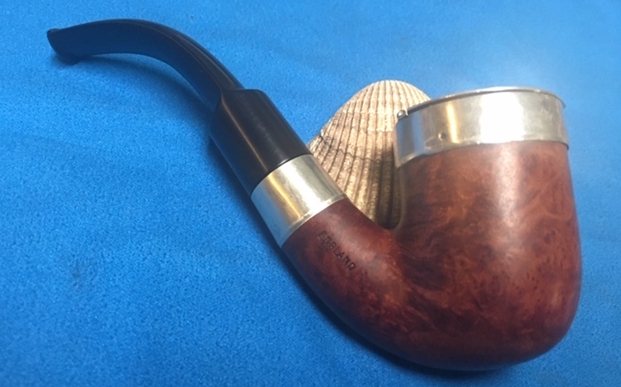
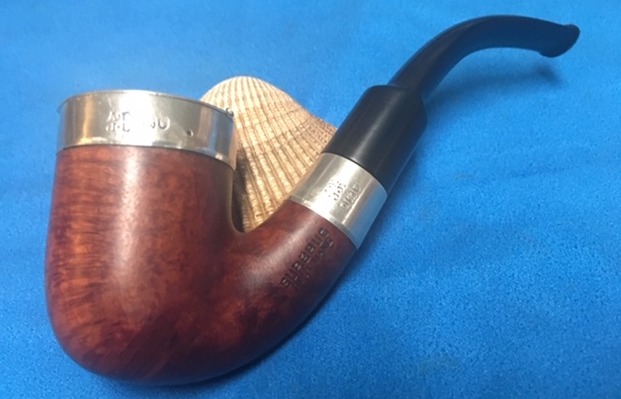
From this information I have learned that the shape and grade Bertram I have in front of me now was made before the closure of the shop in the 1970s. I also learned that the 70S was a higher grade than the grade 60 pipes that I have worked on. It was on the higher end of the spectrum above the 50 mid-grade. Jeff reamed the bowl with a PipNet pipe reamer and followed up with a Savinelli Fitsall pipe knife to remove the cake. He scrubbed out the mortise and the airway in the shank and the stem with alcohol, cotton swabs and pipe cleaners. He scrubbed the exterior of the bowl, rim, shank and stem with a tooth brush and Murphy’s Oil Soap to remove the oils and tars on the rim and the grime on the finish of the bowl. He rinsed it under running water. He dried it off with a soft cloth. He was able to remove the lava build up on the rim top and you could see the great condition of the bowl top and edges of the rim. He soaked the stem in Before & After Deoxidizer to remove the oxidation. I took photos of the pipe before I started my work on it. I took a close up photo of the rim top to show the condition of the bowl and rim top after Jeff had cleaned up the darkening at the rear of the rim. It looked really good. Both the inner edge and the outer edge of the rim look really good. The stem photos show that the oxidation is gone. The light tooth chatter is hard to see but I should be able to sand it out quite easily.I also took a photo of the stamping on the top of the left side and the remainder of the left side of the shank showing how the stamping was laid out.I polished the bowl and rim top with micromesh sanding pads – wetsanding it with 1500-2400 grit pads and dry sanding it with 3200-12000 grit pads. I wiped the bowl down with a damp cloth after each pad to remove the sanding debris. After the final sanding pad I hand buffed it with a cotton cloth to raise a shine. I worked some Before & After Restoration Balm into finish of the briar with my fingertips to clean, enliven and protect it. I let the balm sit for a little while and then buffed with a cotton cloth to raise the shine. The pipe really looks good at this point and the grain stands out beautifully. I set the bowl aside and turned my attention to the stem. I used a folded piece of 240 grit sandpaper to blend the tooth marks and chatter into the surface of the stem. Once the surface was smooth I sanded out the scratch marks and started the polishing of the stem with a folded piece of 400 grit sandpaper. I wiped the stem down with a damp cloth and took the following photos.I polished the stem with micromesh sanding pads – wetsanding it with 1500-2400 grit pads and dry sanding it with 3200-12000 grit pads. I wiped the stem down with Obsidian Oil after each pad. I polished it with Before & After Pipe Polish – both Fine and Extra Fine and gave it a final coat and set it aside to dry. I put the stem and bowl back together and buffed the pipe with Blue Diamond on the buffing wheel. I polished the briar and the minute scratches still in the vulcanite of the stem until there was a rich shine. The polished briar came alive with buffing and the straight, flame and birdseye grain just popped with polishing. The black vulcanite stem had a rich glow. The finished pipe is a beautiful straight grain Dublin that really is a comfortable pipe in the hand. Have a look at it with the photos below. The dimensions are Length: 6 1/4 inches, Height: 2 inches, Outside diameter of the bowl: 1 1/2 inches, Chamber diameter: ¾ of an inch. I will be putting this one on the rebornpipes store sometime in the days ahead. If you are looking for a beautifully grained Dublin with a straight tapered stem this one might be for you. Let me know if you are interested. Thanks for walking through the restoration of this with me it was a pleasure to work on.
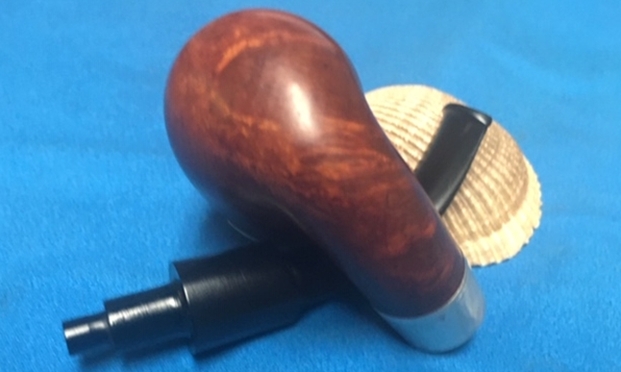
 

Cleaning up a Beautiful Higher Grade Bertram Billiard 120


Blog by Steve Laug

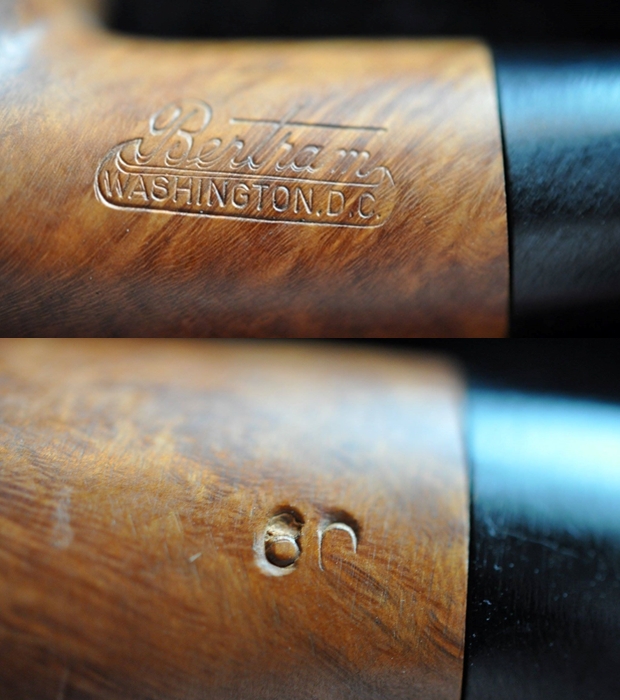
The next pipe in the queue is another one from the batch of pipes I am cleaning up for Alex – this one is a beautiful Bertram of Washington, D.C. billiard with beautiful grain around the bowl and shank. The entire pipe has some beautiful straight and flame grain around the bowl and birdseye grain on the rim top and heel of the bowl. The pipe has not been stained but sports the usual oil cured look. The carver did a great job utilizing the block of briar to maximize the grain. The pipe is stamped on the left side of the shank. It reads Bertram over Washington, D.C. On the underside of the shank it is stamped with what appears to be the number 120 (the first number is very clear, the second less so and the last one very faint). The tapered stem is vulcanite and has no marking or stamping. This is another nice looking piece much like many of the pipes Alex is picking up. There was cake in the bowl and some darkening on the rim top. The exterior of the briar was dusty with grime on the shank and bowl. The stem was in excellent condition with light tooth chatter on both sides of the stem at the button edge and some wear on the button edge itself. The photos below tell the story and give a glimpse of the pipe before clean up. I took a photo of the bowl and rim to capture the condition of the pipe before I started my cleanup work. Other than the darkening at the front of the rim top the rim was in good condition. The was a light cake in the bowl. The inner and outer edges of the bowl appeared to be in excellent condition. The stem was in great condition. There was some oxidation on the top side of the stem and light tooth chatter on both sides of the stem but otherwise it looked great.I also took a photo of both the left and underside of the shank to show the stamping on them. The stamping is readable in the photos below.If you don’t know much about them I recommend doing a little research on them. I include a link to the write up on Pipedia (http://pipedia.org/wiki/Bertram). Bertram pipes were based out of Washington DC. They were popular among famous politicians and celebrities of the time. They made many products for them from FDR’s cigarette holders to Joseph Stalin’s favorite pipe. They were considered some of the best America had to offer till they finally closed their doors in the 70s. They graded their pipes by 10s, the higher the grade the better. Above 60s are uncommon and 80-90s are quite rare. I’ve never heard of or seen a 100 grade. I have several blogs that I have written on rebornpipes that give some history and background to Bertram pipes. (https://rebornpipes.com/2015/06/16/an-easy-restoration-of-a-bertram-grade-60-217-poker/).

I have included the following link to give a bit of historical information on the pipe company. It is a well written article that gives a glimpse of the heart of the company. http://www.streetsofwashington.com/2012/01/bertrams-pipe-shop-on-14th-street.html#

From this information I have learned that the shape and grade Bertram I have in front of me now was made before the closure of the shop in the 70s. I also learned that it was a grade 120 thus it was on the high end of the spectrum. (I am also including this photo of the shop in Washington D.C. and a post card of the shop.) This is the first higher grade Bertrams I have had the pleasure to work on. Typically the pipes I have worked on were no higher than 60 and possibly 80. This is definitely a beautiful pipe and I can see why it had the higher grade stamp. I started the restoration by reaming the bowl with a PipNet pipe reamer followed by a Savinelli Fitsall pipe knife to remove the remnants of the cake on the walls in the heel. I sanded the inside of the walls with a dowel wrapped with 220 grit sandpaper. I worked on darkening on the front of the rim top by sanding it with a 1500 grit micromesh sanding pad. I was able to remove the majority of the damage and was certain that it would blend in well when I polished the bowl.I scrubbed out the mortise and the airway in the shank and the stem with alcohol, cotton swabs and pipe cleaners. I was fortunate that the pipe was definitely cleaner than a lot of the ones I have worked on for Alex.I worked some Before & After Restoration Balm into the surface of the briar with my fingertips to clean, enliven and protect it. I let the balm sit for a little while and then buffed with a cotton cloth to raise the shine.The following photos show the bowl at this point in the restoration process. The bowl and the rim top look very good with rich grain patterns. With the bowl finished I set it aside and turned my attention to the stem. I sanded the stem surface with 220 grit sandpaper to remove the oxidation and smooth out the tooth marks on the surface of the button. I am happy with the stem surface once that was done. I started the polishing of the surface with 400 grit wet dry sandpaper.I polished the stem with micromesh sanding pads – wet sanding it with 1500-2400 grit pads and dry sanding it with 3200-12000 grit pads. I wiped the stem down with a damp cloth after each pad. I further polished it with Before & After Pipe Polish – both Fine and Extra Fine. I wiped it down with a coat of Obsidian Oil and set it aside to dry. With both parts of the pipe finished, I polished the bowl and the stem with Blue Diamond polish on the buffing wheel. I gave the bowl and the stem multiple coats of carnauba wax. I buffed the pipe with a clean buffing pad to raise the shine. I hand buffed it with a microfiber cloth to deepen the shine. The pipe polished up pretty nicely. The oil cured finish and the grain came alive with the buffing. The rich finish on the briar works well with the polished black vulcanite stem. The finished pipe is a beautifully laid out billiard that is proportionally well made. Have a look at it with the photos below. The dimensions are Length: 6 inches, Height: 1 3/4 inches, Outside diameter of the bowl: 1 1/4 inches, Chamber diameter: 3/4 of an inch. This one will be going back to Alex to add to his rack of American Made pipes that are in his collection. Thanks for walking through the restoration with me on another of Alex’s Collection – a rare Bertram 120.
Restoring a 1965 Dunhill Shell Briar # 56 F/T 3/4 Bent Billiard


Blog by Paresh Deshpande

I had just finished restoring the fifth Dunhill from my Mumbai Bonanza find, a 1962 DUNHILL SHELL #196 F/T and now this is the sixth. I am left with only one Dunhill pipe to complete from the Mumbai Bonanza, a smooth finish LB.

I was fortunate enough to have heeded to the advice of my dear friend and mentor, Mr. Steve, and struck a deal with a trash collector from Mumbai. He did not know what he was selling and I did not know what I was buying as we reside in different cities!! The argument that Mr. Steve presented was that if not anything, I shall at least have some spares and this was logical. I struck a deal and here are pictures of the pipes that I received in this lot. This lot contains some very nice collectible pipes, a few well known brands and some mediocre brands. Overall, with seven Dunhills, a Preben Holm #1, a couple of “Made in England” Pete System pipes, Charatan’s, Custom-Bilt, Stanwell and other assorted pipes, I would say that I had hit a huge jack pot!! Hence, I like to call this find the “Mumbai Bonanza”.

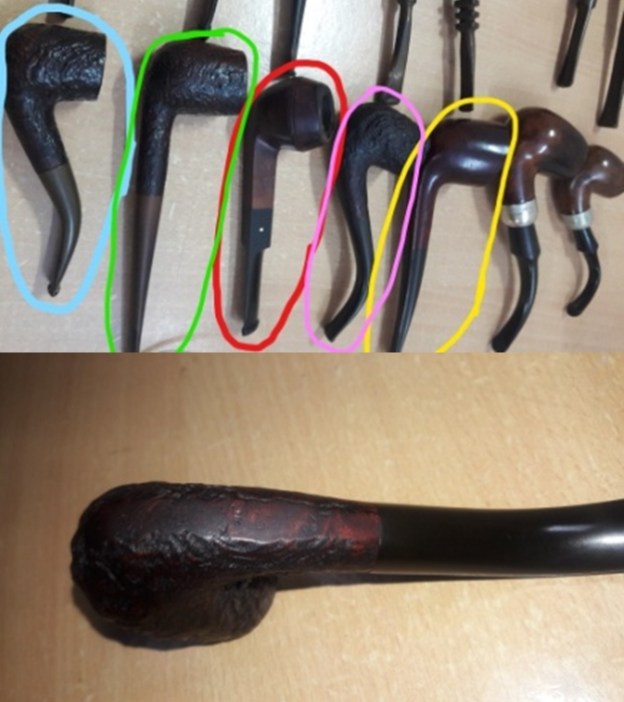
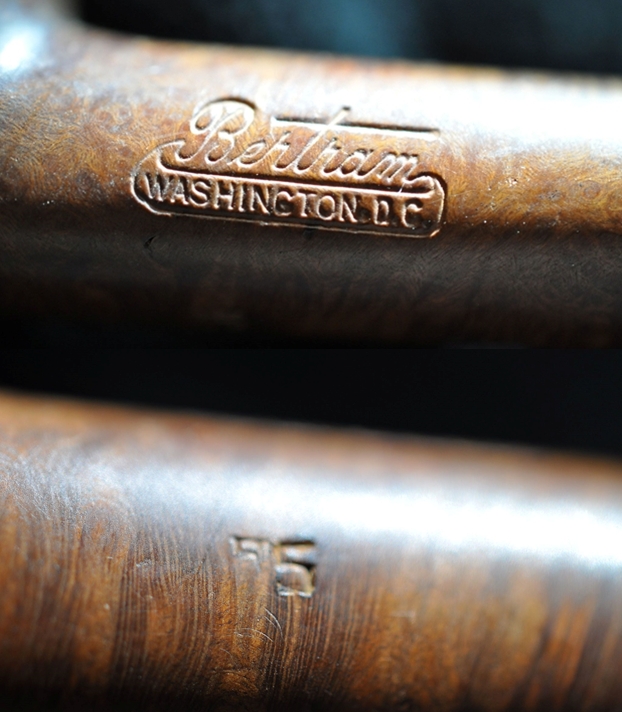
The pipe that I decided to work on from this find is another Dunhill, a 1965 Shell Briar 3/4 bent billiard, and is marked in pastel pink circle in the picture below. It is stamped on the underside of the shank with the shape number 56 followed by F/T followed by DUNHILL over Shell Briar followed by the COM stamp Made in over England 5 (underlined) which dates it as being made in 1965. This is followed by Group size number 4 in a circle and letter S for Shell. Dunhill White Dot adorns the top of the vulcanite stem. The stampings are very slightly worn out and easily readable.In this short journey of mine in to the world of pipe refurbishing, this particular pipe has one of the deepest and beautiful sandblast patterns that I have come across. The sandblast on this pipe speaks volumes about the skills of the pipe carver. With this thought, I move ahead with the restoration of this beautiful medium sized sandblasted Dunhill bent billiard and restore it to its glory.

INITIAL VISUAL INSPECTION
The chamber is clean with a decent and even thick layer of cake. From what I can see, the chamber walls appear to be without any damage. The chamber is odorless. There is an overflow of lava on the sandblasted rim top surface. The inner and outer rim edges are undamaged. The walls appear to be thin. Is this a case of over reaming or is it because the carver decided to compromise the wall thickness for deeper sandblast patterns?The stummel boasts of some beautiful sandblast pattern of mix of straight and cross grain all around. It is dirty with grime, oils and tars filling in much of the craggy finish. The briar looks lifeless and dull. The mortise shows minor accumulation of dried tars mixed with ash and remnants of tobacco. This will have to be cleaned and refreshed. The vulcanite stem shows a minor damage to the button end with minor chatter on the lower surface. The lip edges have a few bite marks and will have to be reshaped and made crisp. The stem is oxidized; however, the quality of vulcanite is good. The white dot on the upper surface has faded in some places but is still distinctly visible. This cannot be helped and status quo has to be accepted.There are no major issues to address here on this pipe; just a little TLC and the pipe should be good to go…nah, find a place of pride on my rack!!

THE PROCESS
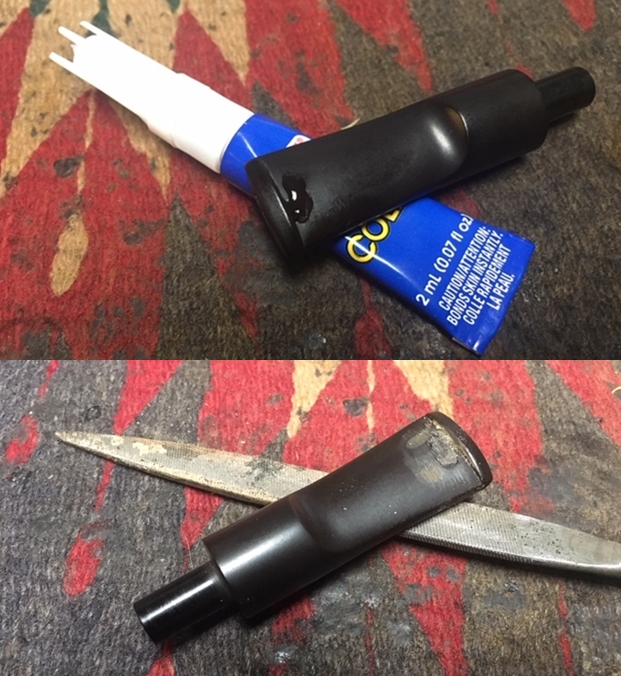
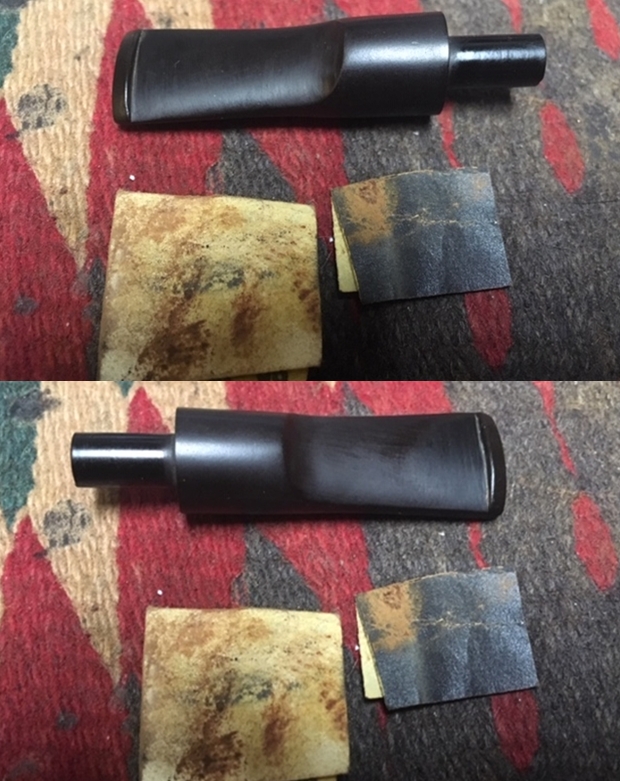
I start this project by tackling the stem first. I sand the stem with a folded piece of 220 grit sand paper to erase the minor tooth chatter on the lower surface, get rid of the oxidation and provide a smooth surface for the intended fill to reconstruct the button edges. I cleaned out the internals of the stem with hard bristled and regular pipe cleaners dipped in isopropyl alcohol. Once I was satisfied with the internal cleaning, I wiped the stem surface, particularly the damaged button end, with a cotton pad and alcohol to remove any traces of dirt and grime. I prepared a mix of CA superglue and activated charcoal and carefully applied it over the damaged lip and set it aside for curing over night. Before moving ahead, I would like to mention here that I had applied this mix in sufficient thickness which would help during the filing and sanding while shaping the button and achieving the correct lip edge profile.While the stem repair was set aside to cure, I moved ahead to deal with the stummel cleaning. With size 3 head of a PipNet reamer, I took the cake down to bare briar. Using a folded piece of 180 grit sand paper, I sand out the last traces of cake and expose the walls of the chamber to ascertain that there are no cracks/ heat fissures. I wiped the chamber with a cotton pad dipped in isopropyl alcohol to remove the carbon dust left behind by all the reaming and sanding process. The walls of the chamber were solid with no damage. This was followed by cleaning the mortise by scraping away at the dried gunk with my fabricated spatula and followed it up with further cleaning using cue tips, pipe cleaners and shank brush dipped in isopropyl alcohol. This eliminated all traces of old smells from previous usage. I followed up the internal cleaning with external. Using a soft brass wired brush I gently scraped away the thick lava coat in the blast of the rim. With a hard bristled tooth brush and dipped in undiluted Murphy’s oil soap, I very deliberately scrubbed the sandblast finish on the stummel and the rim top. The stummel and rim top was dried using paper napkins and soft cotton cloth and set it aside to dry out naturally. The stummel looks fresh and clean. Next, I rub a small quantity of “Before and After Restoration Balm” in to the briar with my finger tips and let it rest for a few minutes. The balm almost immediately works its magic and the briar now has a nice vibrant appearance with the beautiful contrasting hues colors that are unique to this sandblast pipe, on full display. I further buff it with a horse hair shoe brush. I set the stummel aside and turned my attention to the stem repair. The fill had cured nicely and I moved ahead and began the process of filing and shaping the button end with a flat head needle file. For a better blending, I further sand the entire stem with 220 followed by 400, 600 and 800 grit sand paper. This helps to reduce the sanding marks left behind by the more abrasive 220 grit paper. To bring a deep shine to the vulcanite stem, I went through the complete set of micromesh pads, wet sanding with 1500 to 2400 grit pads and dry sanding with 3200 to 12000 grit pads. I wiped the stem with alcohol after each pad and rubbed it down with Extra Virgin Olive oil to rehydrate the vulcanite. The repairs have blended in very well and the stem now looks shiny black and beautiful. The internals of the stem was once again cleaned out using alcohol and pipe cleaners to clear the airway of all the debris resulting due to the sanding. The finished stem is shown below. To finish, I re-attach the stem with the stummel. I mounted a cotton cloth buffing wheel to my local machine which is similar to the Dremel.  I set the speed at about half of the full power and applied White Diamond compound to the entire pipe. I wiped/ buffed the pipe with a soft cotton cloth to clear it of any leftover compound dust. I then mounted another cotton cloth wheel on to the polishing machine and applied several coats of carnauba wax. I finished the restoration by giving the entire pipe a rigorous hand buffing using a microfiber cloth to raise the shine further.The completed pipe looks lovely, fresh and vibrant; the pictures speak for themselves. I really enjoyed working on this pipe and hope that readers too enjoyed walking with me through this restoration. If only this old warrior could share its past life with all of us…if only!! Cheers.


Restoring and Restemming a Savinelli Capri 915


Blog by Lee Neville

Over the past few months I have been continuing my correspondence with Lee via email. He picked up a couple of pipes for me at a local antique shop in Edmonton, Alberta, Canada and sent them to me. We have fired emails back and forth on restoration questions and issues. He also included Charles Lemon of Dad’s Pipes in the conversations and we had a great time. Earlier this week he sent Charles and me an email about a restoration of another pipe that he restemmed. Charles and I spoke with him of the style and size of stem to use. He did a great job on the restemming and the description of the work so I asked him if I could post it on rebornpipes. He was glad to have me do so. Thanks Lee for your work and this second write up. It is great to have you on rebornpipes as a contributor once again! – Steve

Thought I would share my pipe rehabilitation effort of a Savinelli Capri 915.  It showed up in the Winnipeg Ebay lot as a dirty stummel with a snapped-off stem tenon wedged into its shank. Alas, the original stem was not included in the lot.

This is a “Birks” pipe – Henry Birks & Sons, or what it’s now known by these days – “Maison Birks”, is a Montreal-based jewellery/glassware/fine leather goods/timepieces/ silver & gold flatware / object d’art firm in business here in Canada since the late 1800s.  It appears Birks would commission pipes from manufacturers and stamp them with their house name and offer them for sale during special promotions – Christmas, Father’s Day etc.  This Savinelli is the first of two “Birks” pipes I’ve got on my bench to restore.The plan is to clean this stummel up to the natural briar,  treat it to a wax protective finish and fit a replacement stem.  This will be fun as I just received the PIMO stem tenon cutter tool which will make short work of fitting a properly sized tenon on a replacement stem blank.

Stummel clean up
The bowl was in good shape. The rim showed minor discolouration from lighting.  The rim was not obscured by any lava. The previous owner was not a dottle-knocker – luckily no dents or chips on the bowl rim.  I reamed the bowl out with my newly arrived Pipnet set – I started with the smallest head, applying light twisting force and allowing the tool to make its way into the bowl.  This was repeated by the following two larger reaming heads to remove existing cake close to briar.  This was followed by twists with a dowel covered with 220 grit sandpaper to remove the remaining cake, then more twists with 320 / 400 grits to finish the bowl interior smooth. There are no cracks or burnouts in the bowl. The shank cleaned up with a few runs of alcohol-soaked pipe cleaners and q-tips.

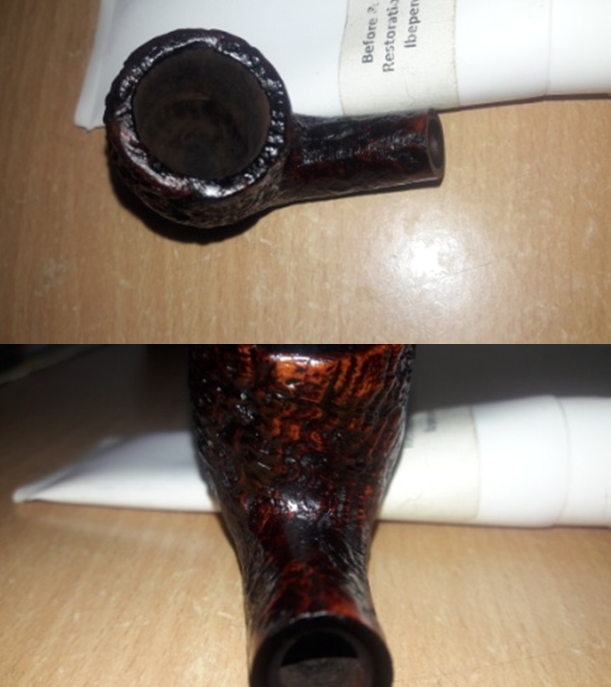
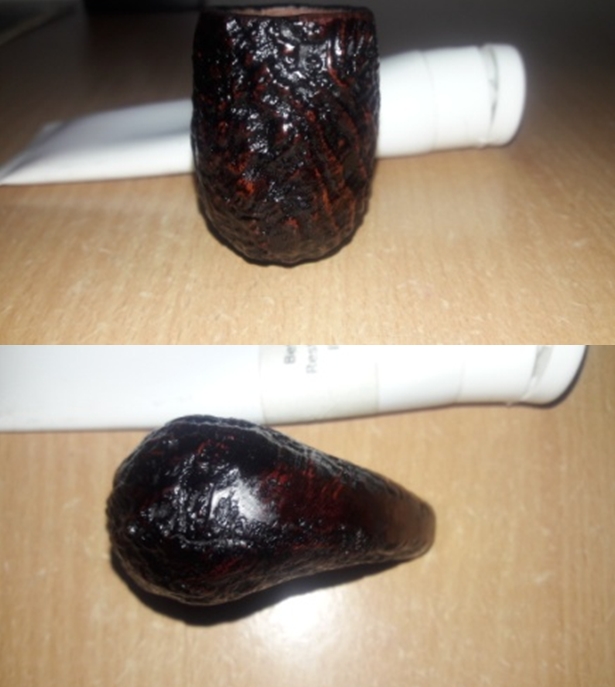
I attacked the stummel with a soft toothbrush and Murphy’s Oil Soap to remove the rim discolouration and surface dirt/grease. The accumulated grunge lifted right off after two scrubbing sessions.  I was delighted to see the proprietary sandblasting/rustication is scarcely worn – the deep relief is quite attractive.

The stummel was then covered with masking tape. I clamped the padded stummel in my dremel vise and using a drill bit sized just over the ID of the snapped off stem tenon, ran it in a smidge gently, then reversed the drill and the tenon remnant came out with the drill bit.  This revealed a very fine crack in the mortise end of the stummel.  Using thin CA glue, I lightly dabbed the crack, watching it wick into the crack, then sprayed accelerant to instantly set the glue.  I lightly sanded the mortise face and mortise with 1000 grit paper to ensure any glue squeeze-out was removed before attempting to fit replacement stem

Fitting a new stem
I viewed the Savinelli web site to glean pipe proportions (stummel to stem) as well as canvassing yourselves for your thoughts on replacement stem length. I also found a high-definition image of a Capri 915 online.  Applying some ‘Edmonton Windage’, I ordered an oval tapered stem blank in a 2.25″ length from Vermont Freehand Pipes.

The stem blank on arrival was a bit wider than the stummel shank, so there was some filing and final sanding required to match the stem to the shank profile.

I mounted the replacement stem into the vise and drilled the stem draught hole to accept the guide rod of the PIMO stem tenon cutting tool.  I then mounted the PIMO stem tenon cutting tool and gently took a succession of cuts to arrive with a couple of thou of tenon final size.  I used a strip of 320 grit sandpaper to work the circumference of the tenon to a snug fit into the stummel mortise.  I used a variety of tools to flatten the stem tenon face so it would meet up with stummel mortise surface properly – needle files, sandpaper, a few licks with a very small chisel – all under a magnifier lens working the stem mating surface – testing fit/working it/test fit/working it until I got the proper fit.

Rough file work was then required to narrow the stem.  This took about an hour.  I then worked in the round with a file to shape the circumference of the stem to match the stummel profile. Last steps were using 220 sandpaper to work the circumference down as close to the final dimension. I followed that with 400 and 600 grit sandpaper.  I was now a scant hairs-width proud on the stem.  I then replaced the masking tape covering the stummel shank with clear scotch tape and brought the stem into line with the shank profile with 1500 and 1800 micro mesh pads.I filed the stem button into shape and from that point on, it was just applying a succession of micro mesh pads to 12000 to polish the replacement stem. Here is the clean stummel and new stem before finishing.Finishing the Pipe 
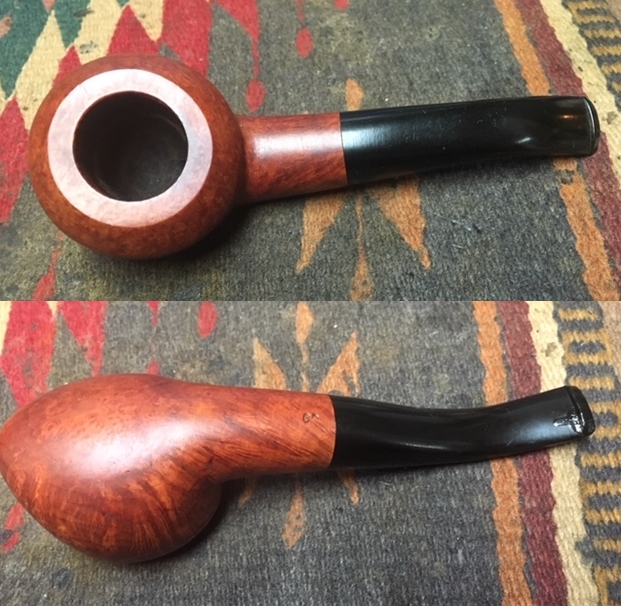
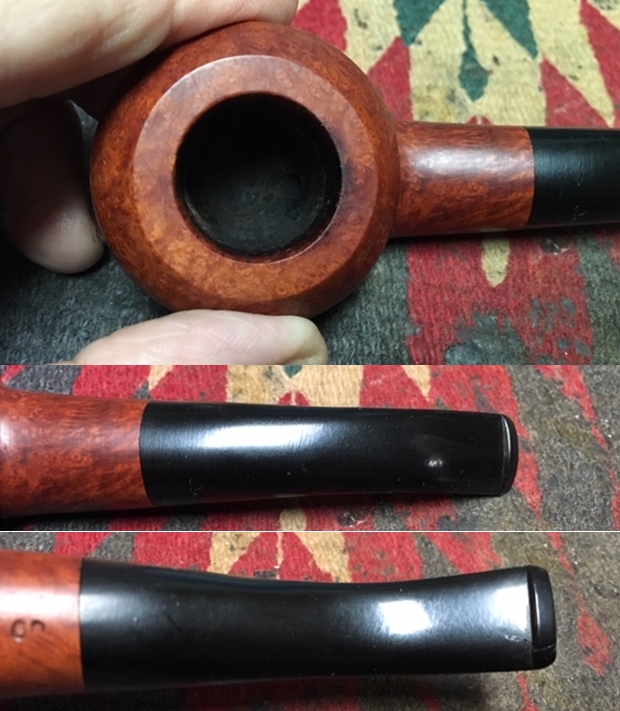
I treated the stummel to a coat of Howards Feed and Wax (beeswax, carnauba and citrus oils), let it sit for 30 minutes, then wiped off the excess, followed with a thin coating of carnauba wax over the whole pipe and a rub in with a polishing brush.  Using a cotton buff on my Dremel at 4000 rpm, I ran the buff over the entire pipe to bring out the shine. This pipe cleaned up very nicely and is a joy to hold.  I had fun fitting a new stem that is in proportion to the stummel and I think it’s a close resemblance to the stem originally fitted to the pipe.

Thank you Charles and Steve for your help on stem selection.

Onward and upwards!

Lee