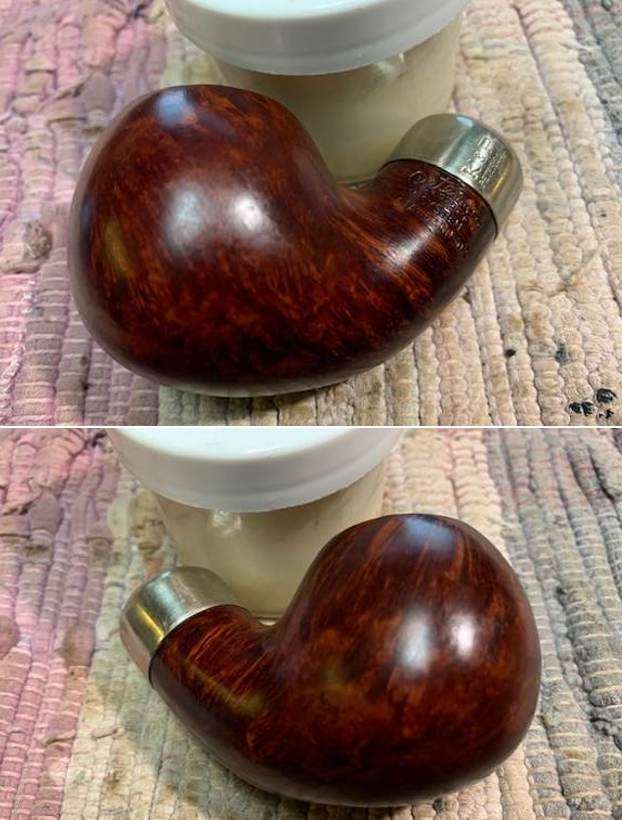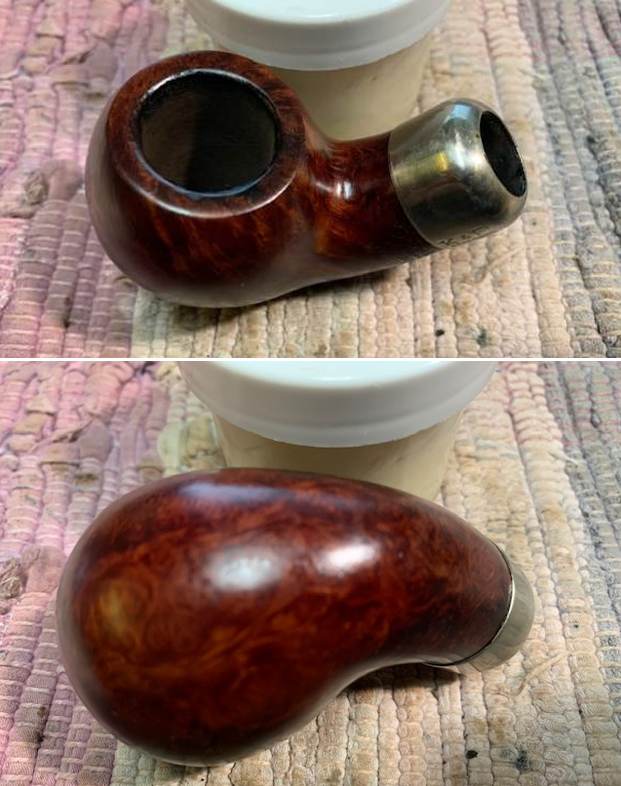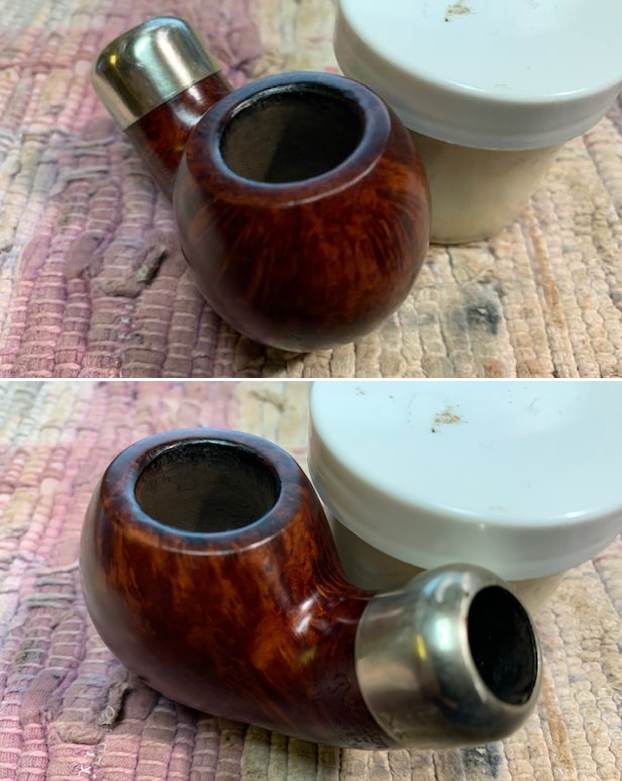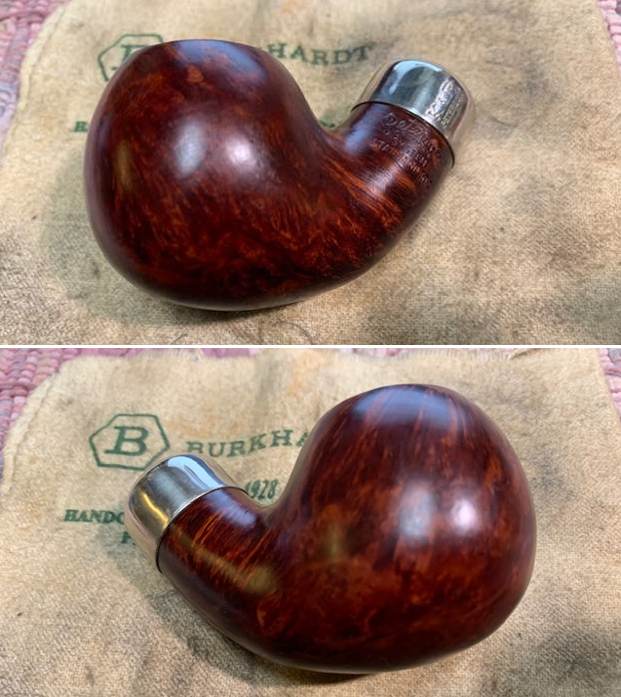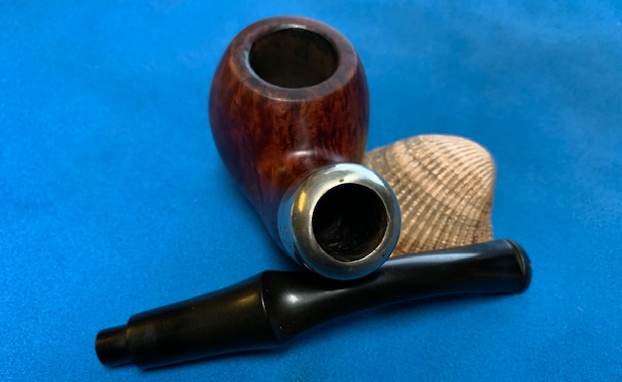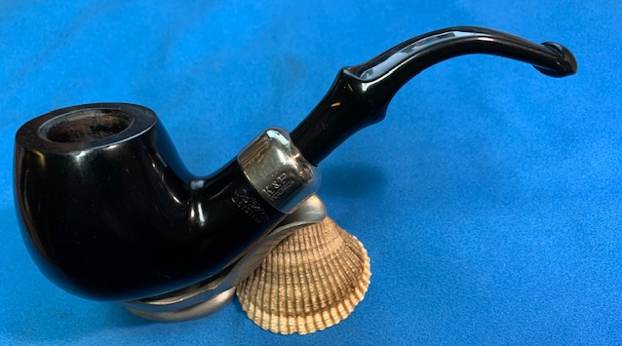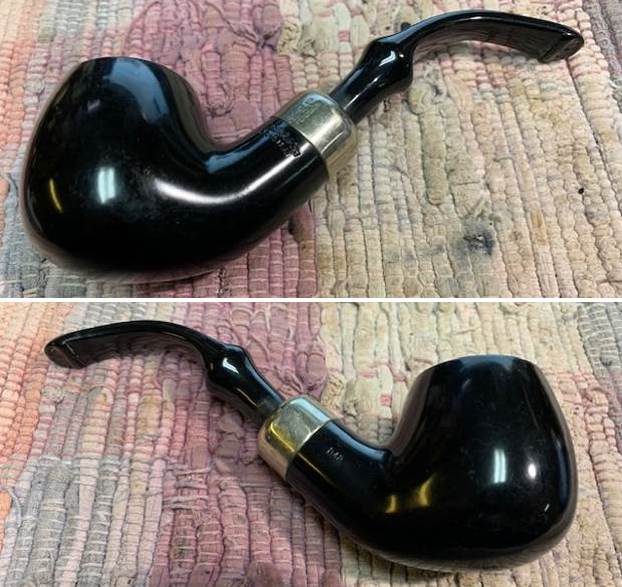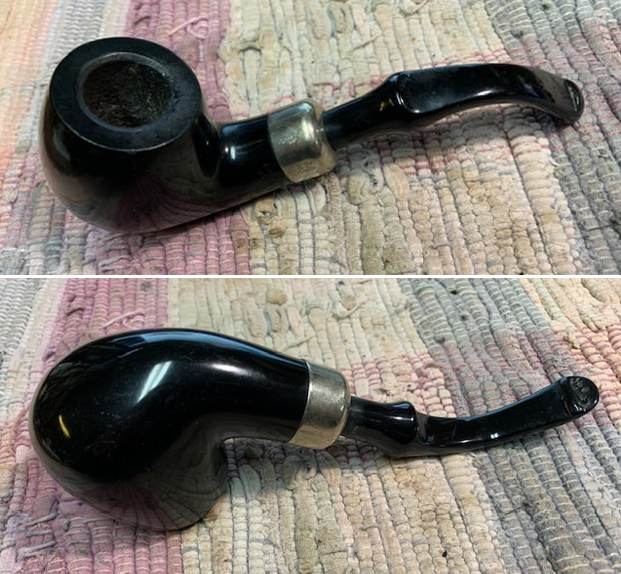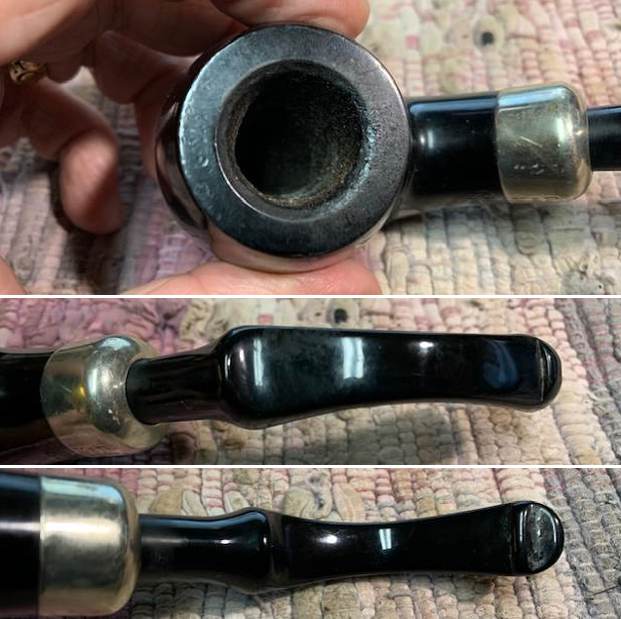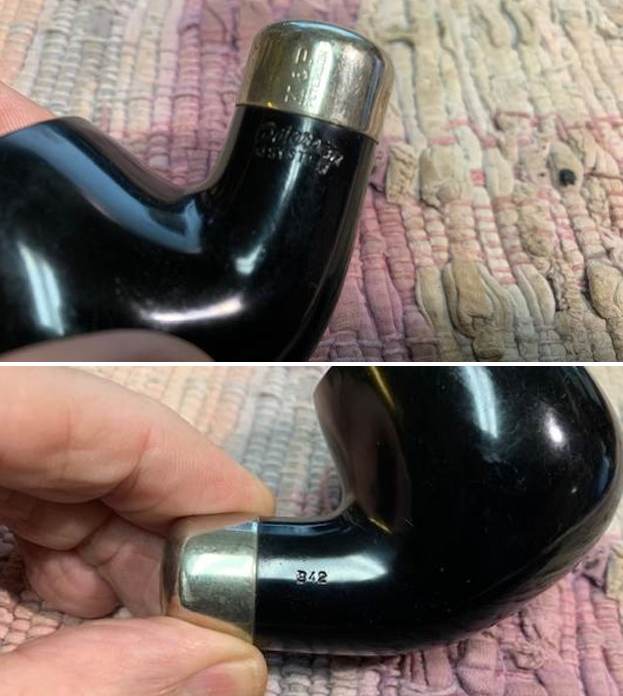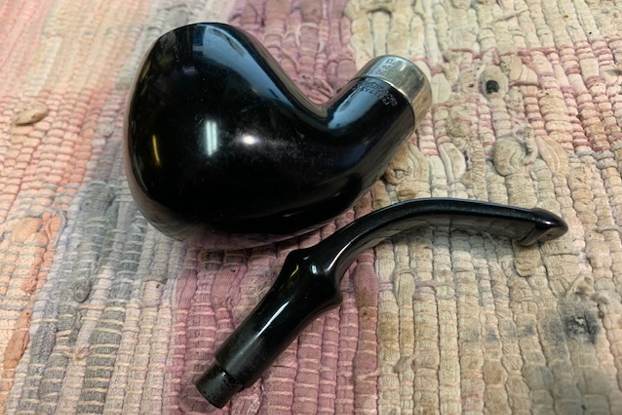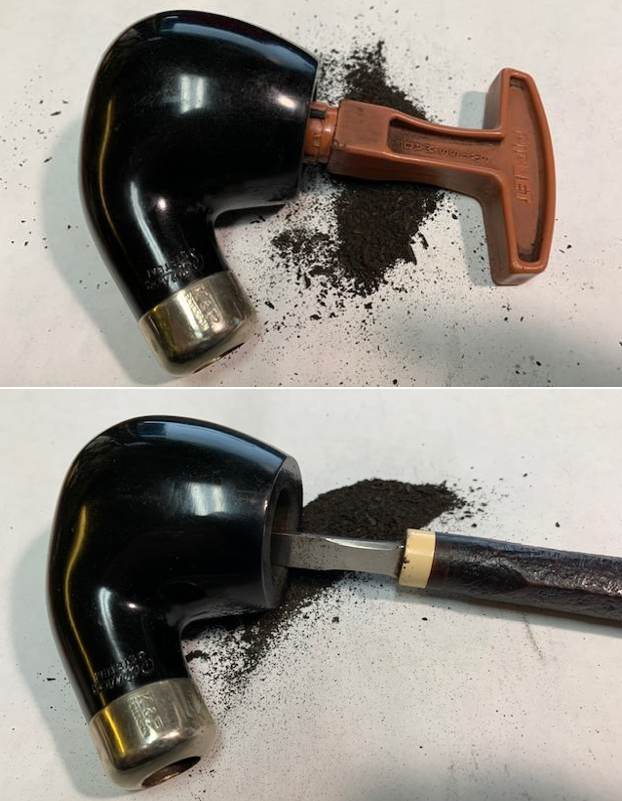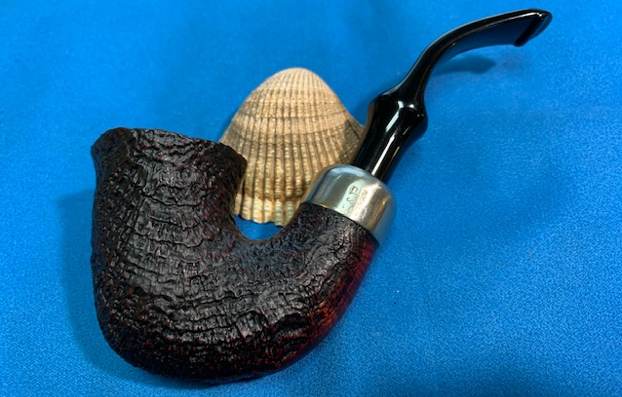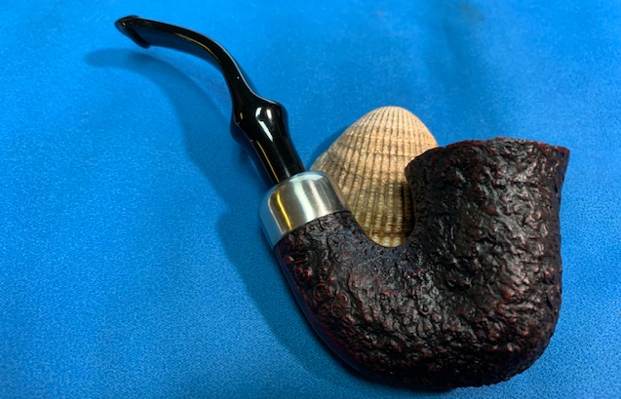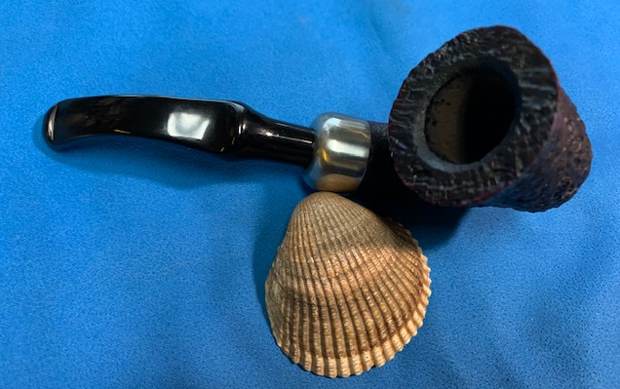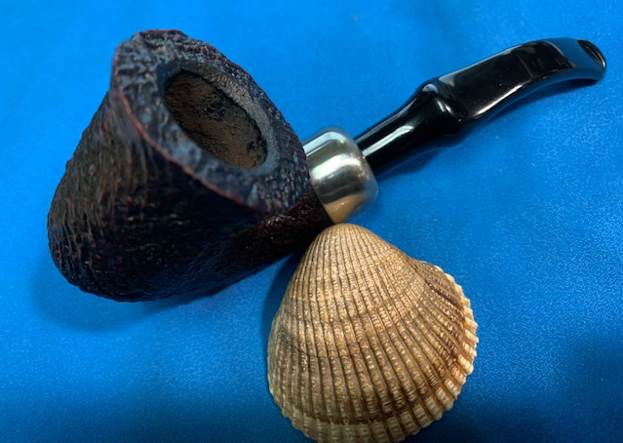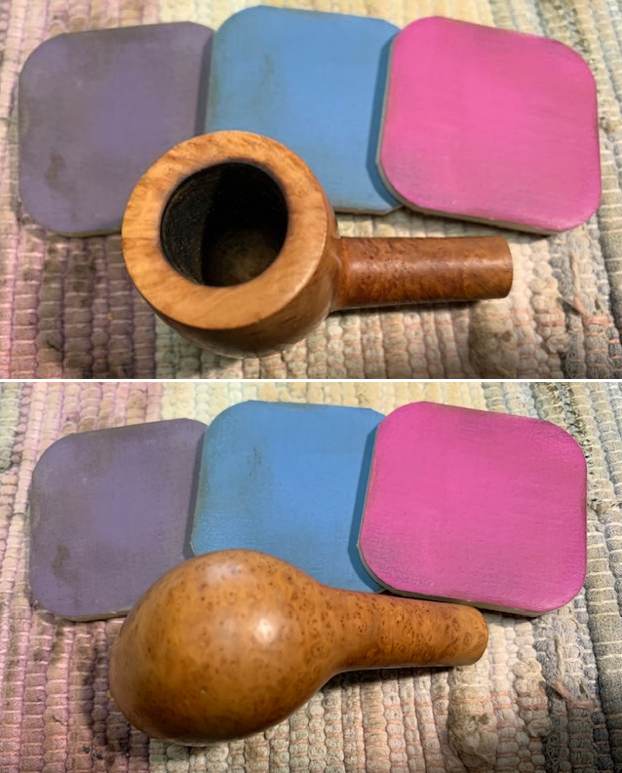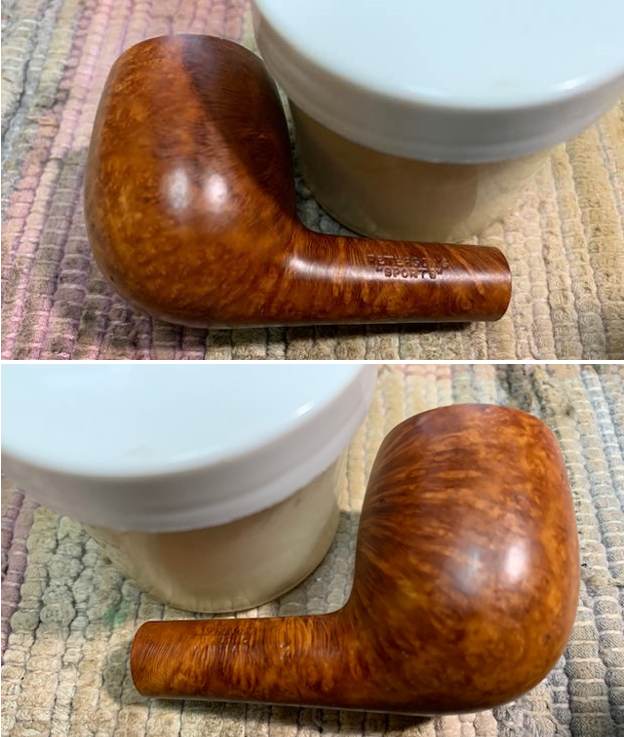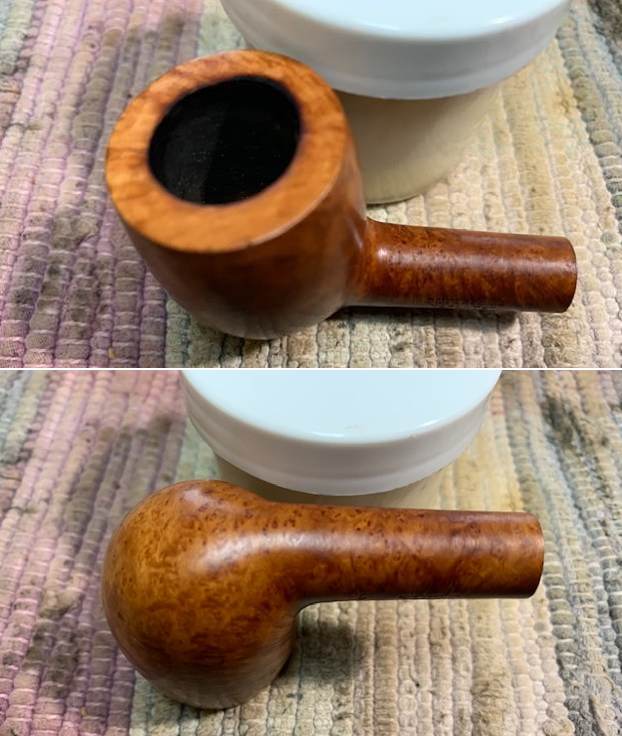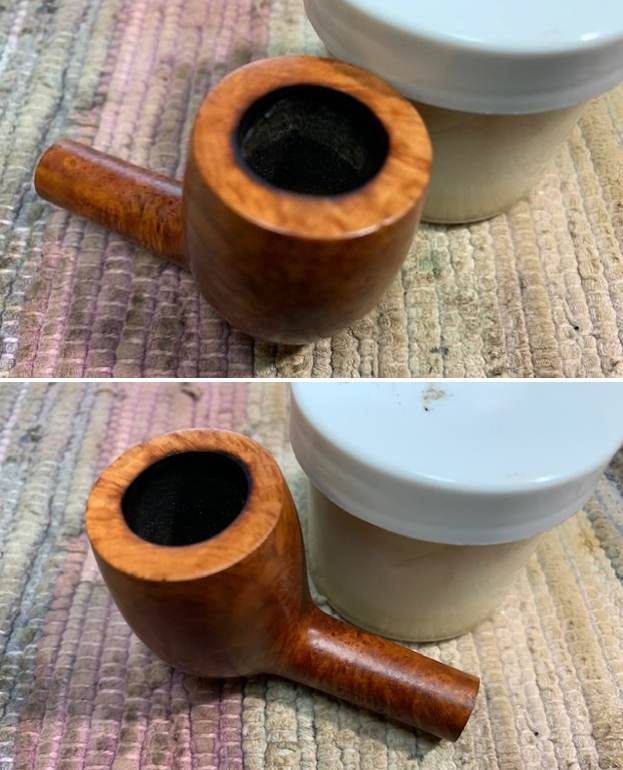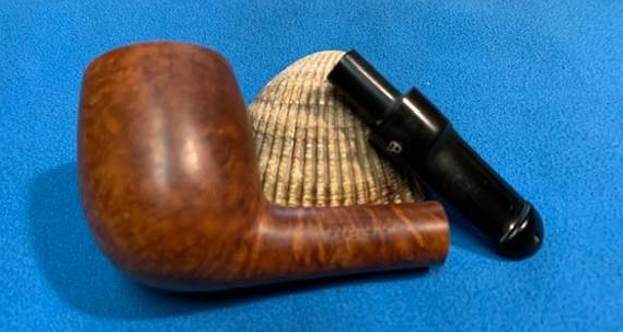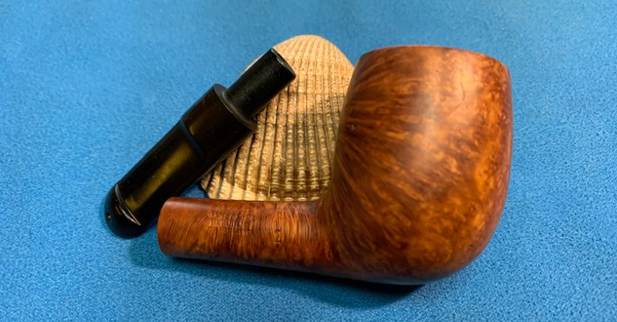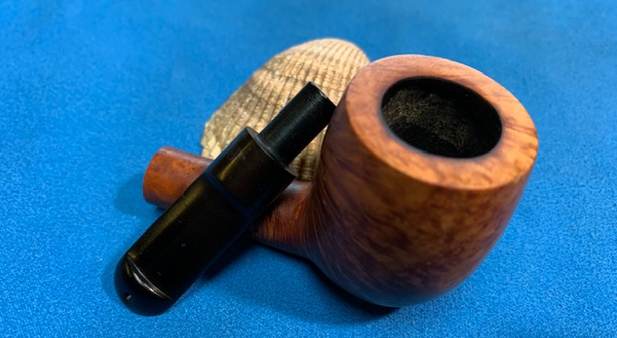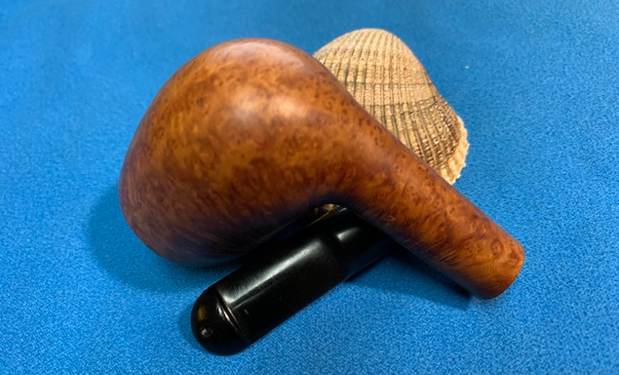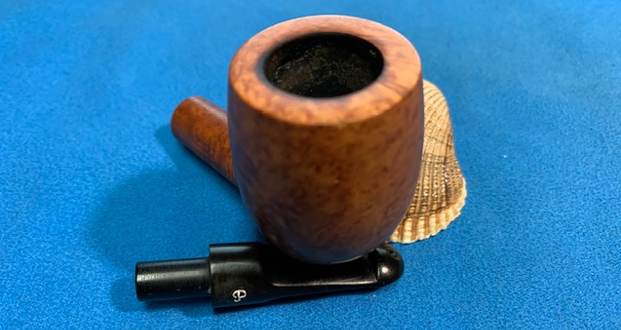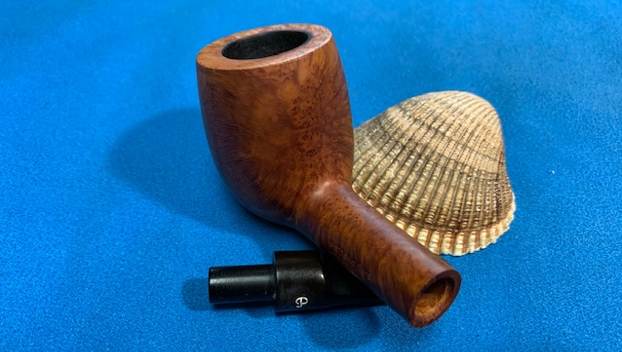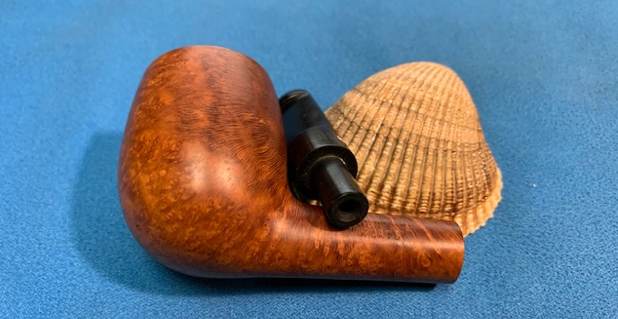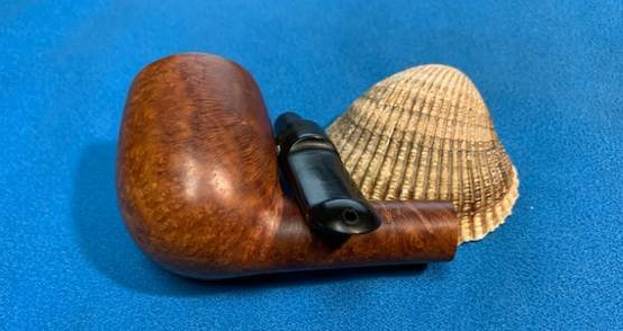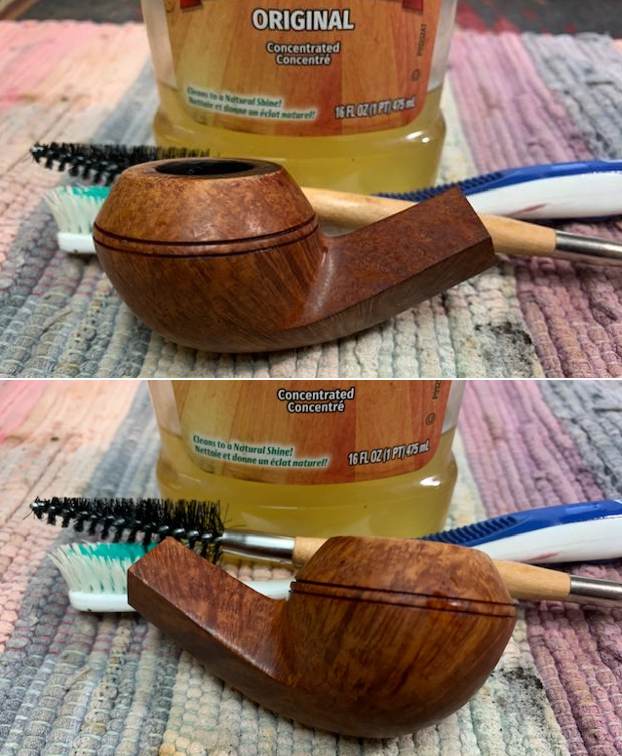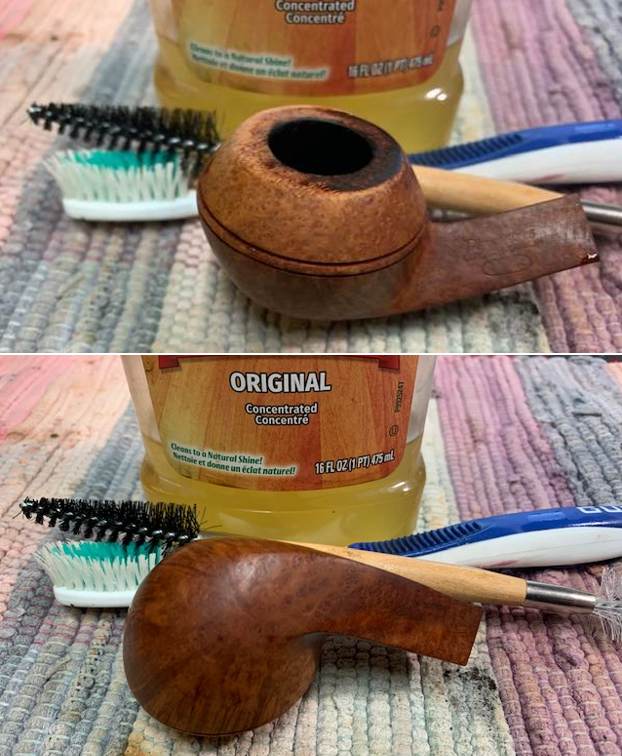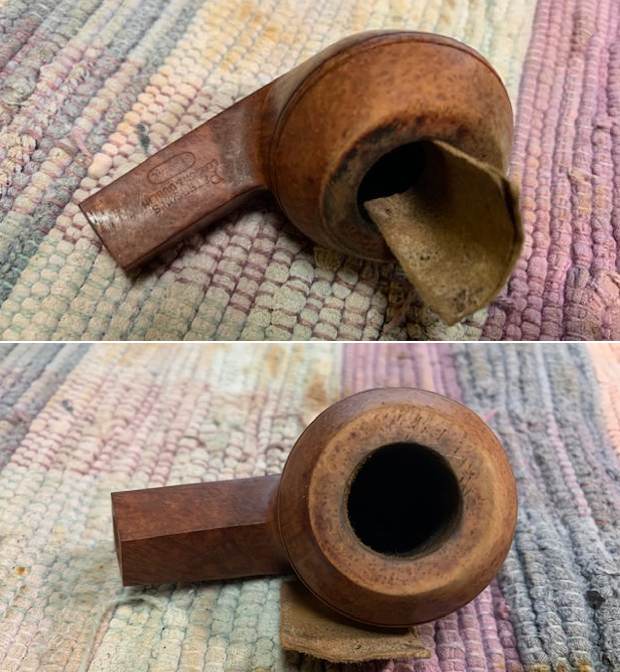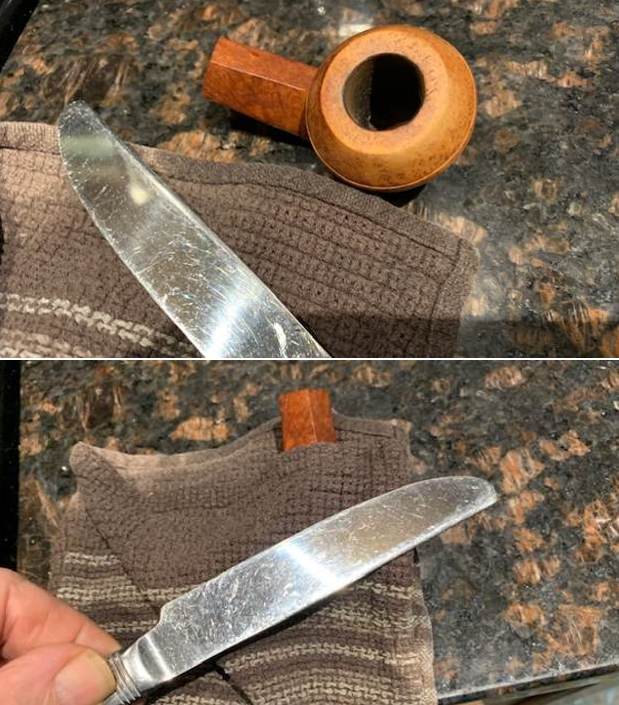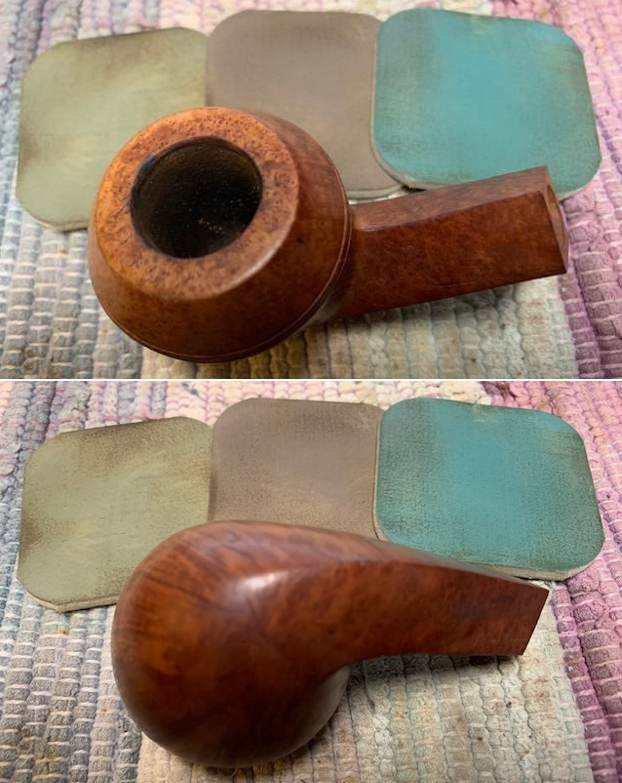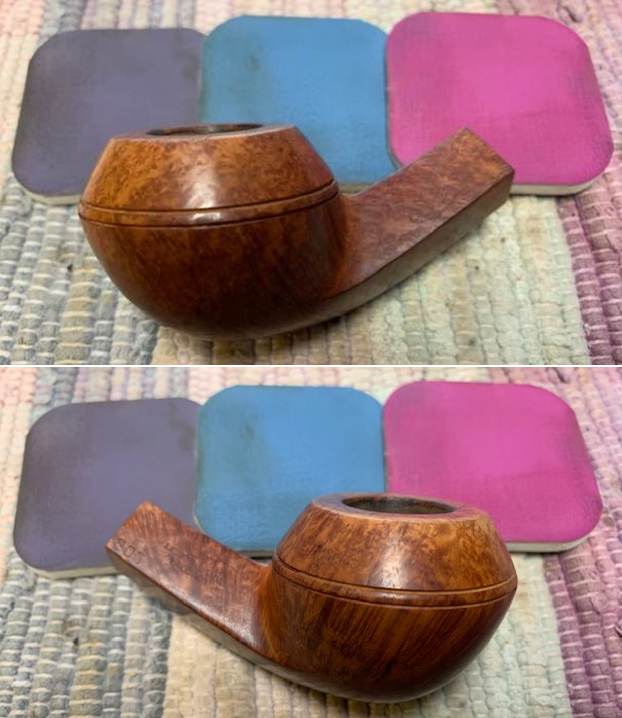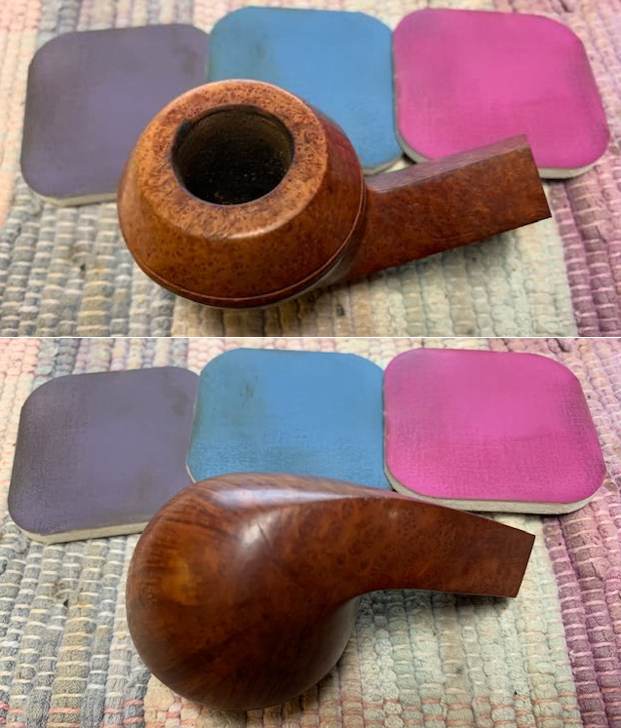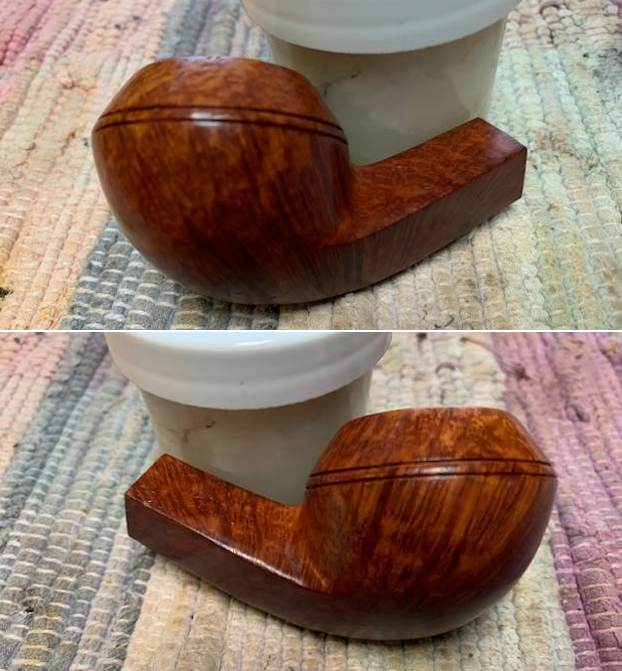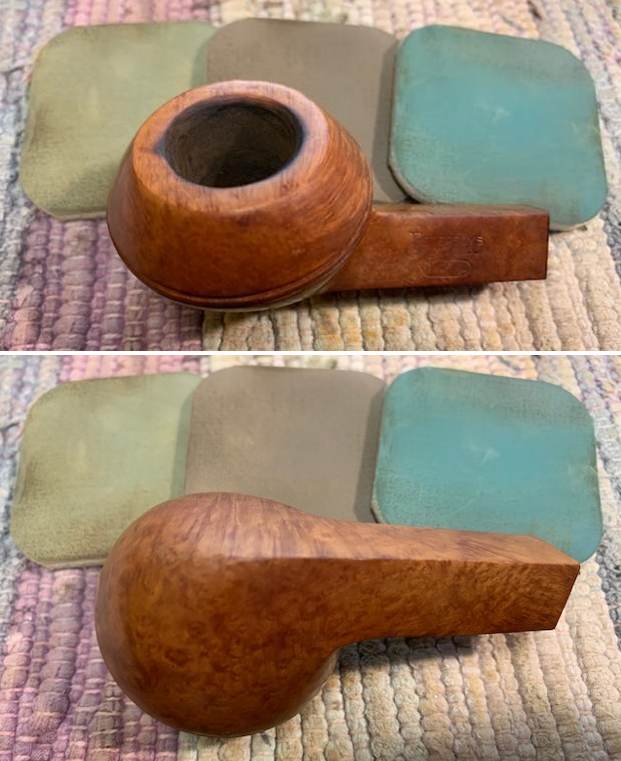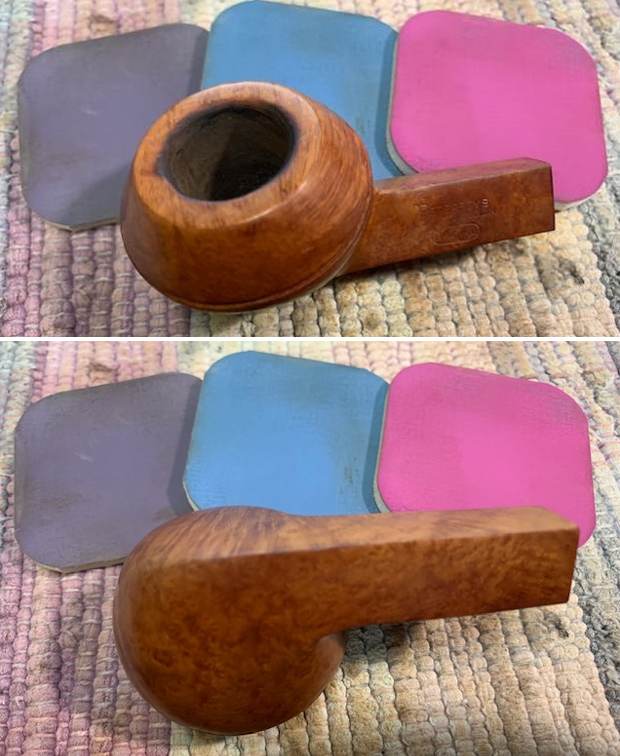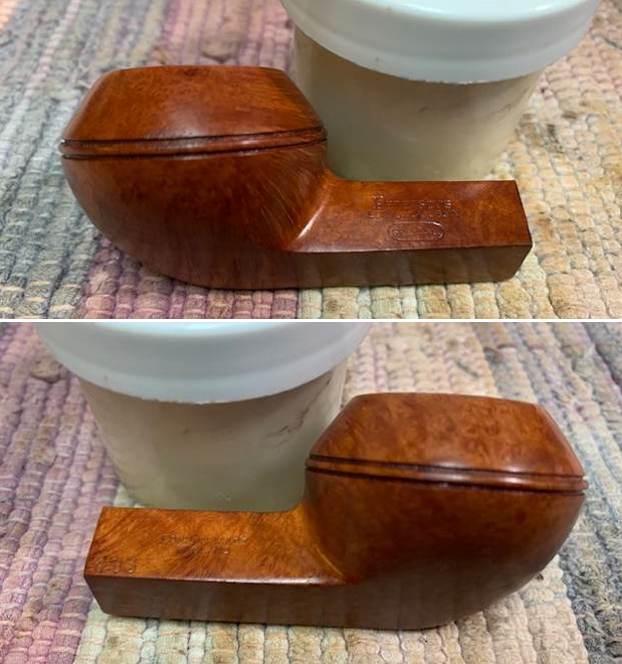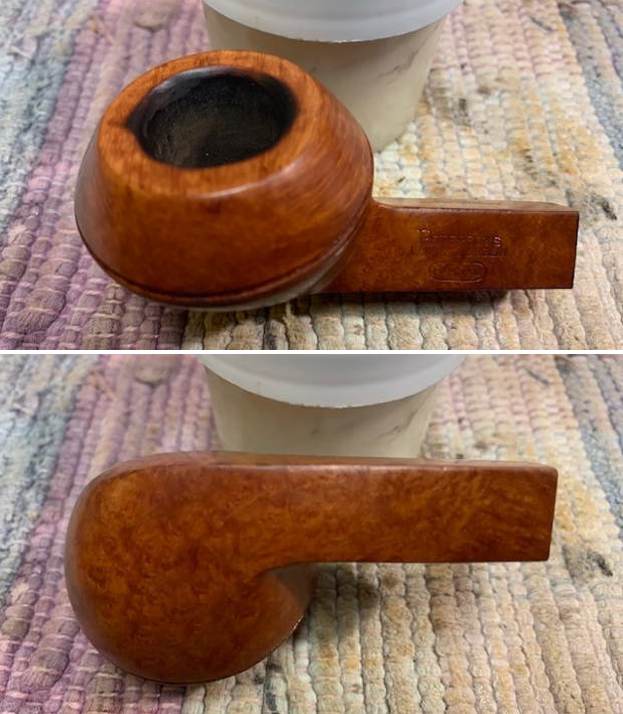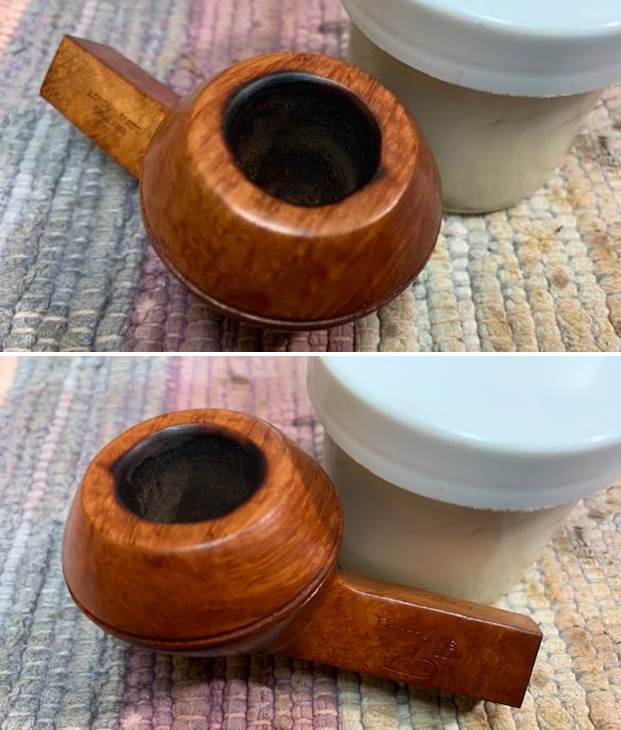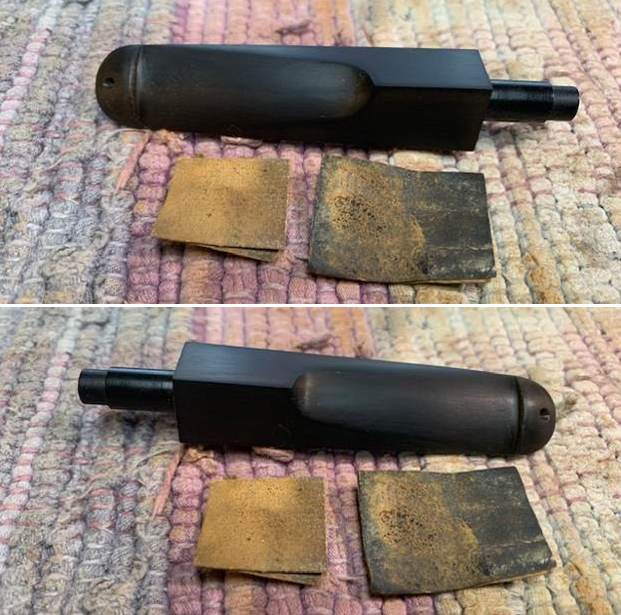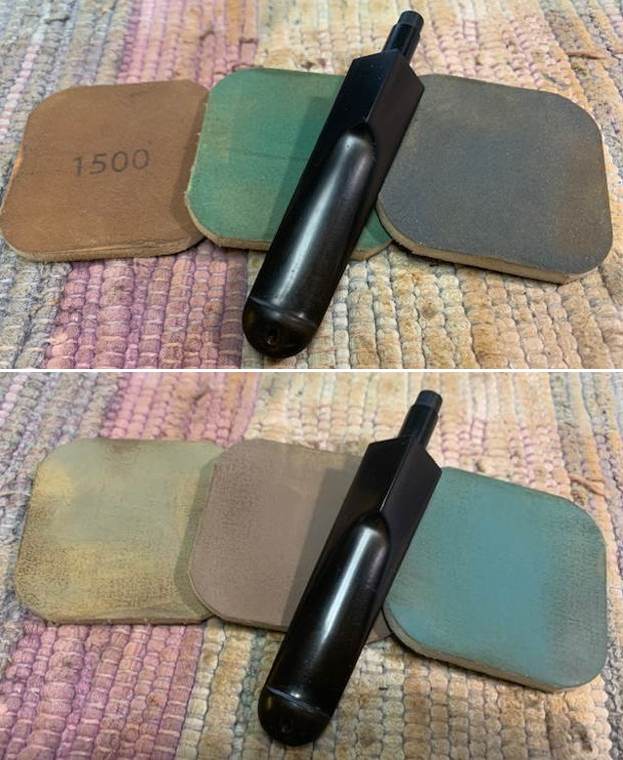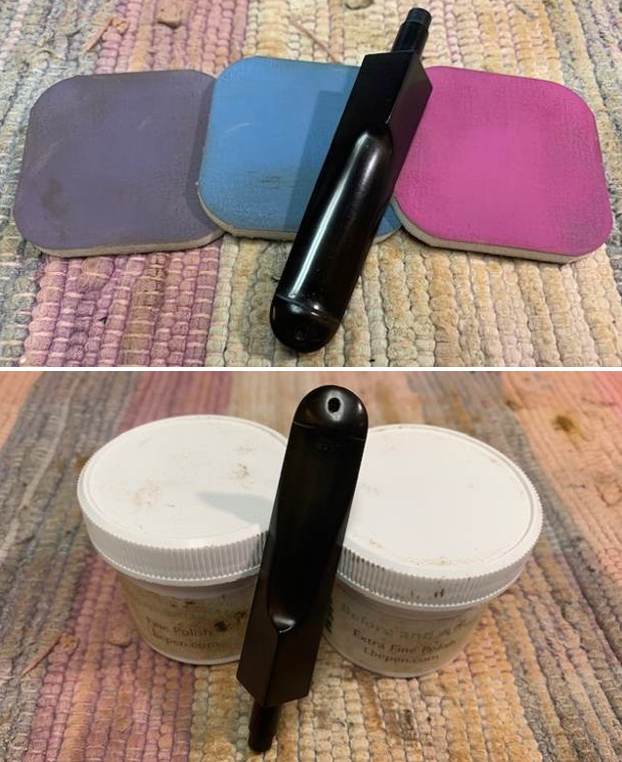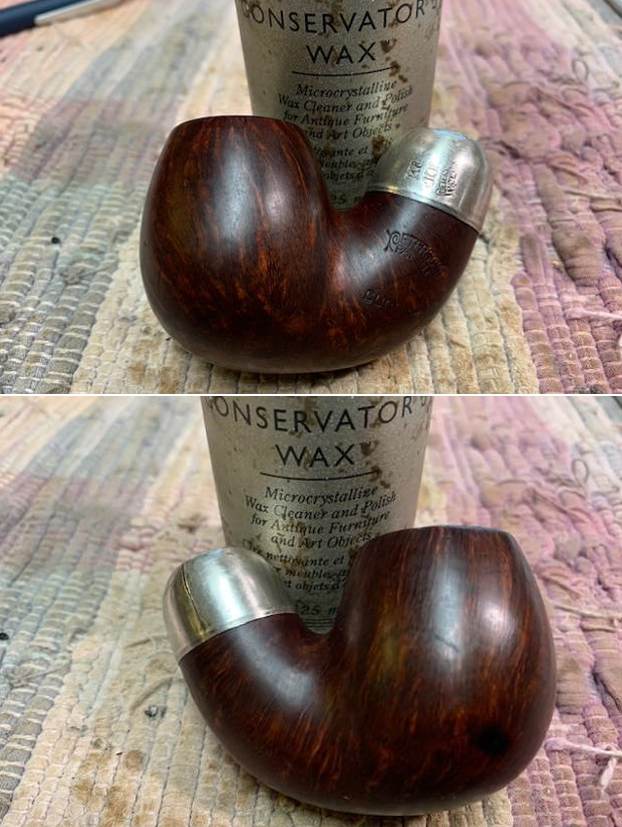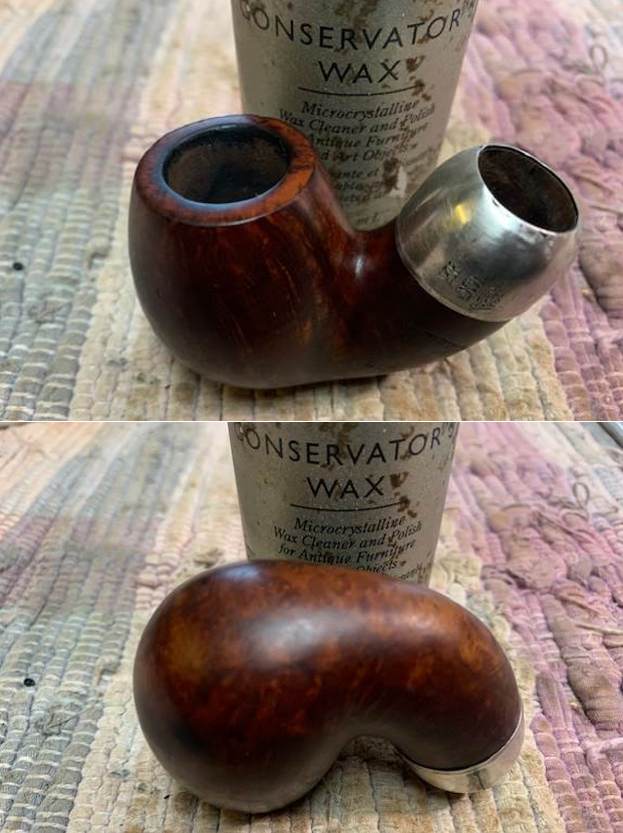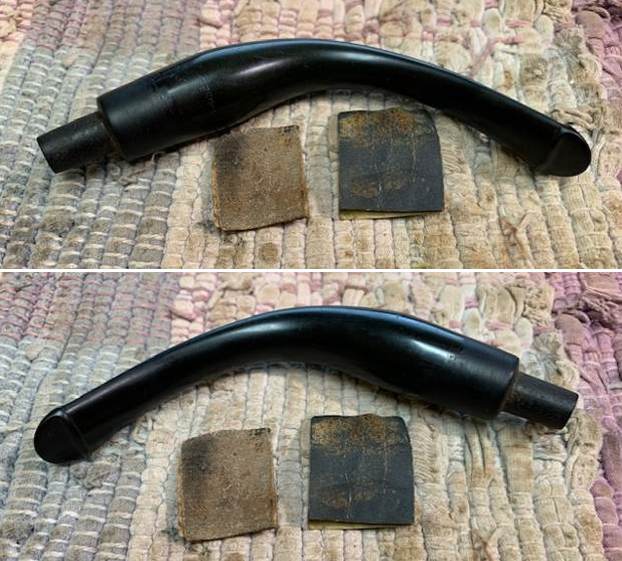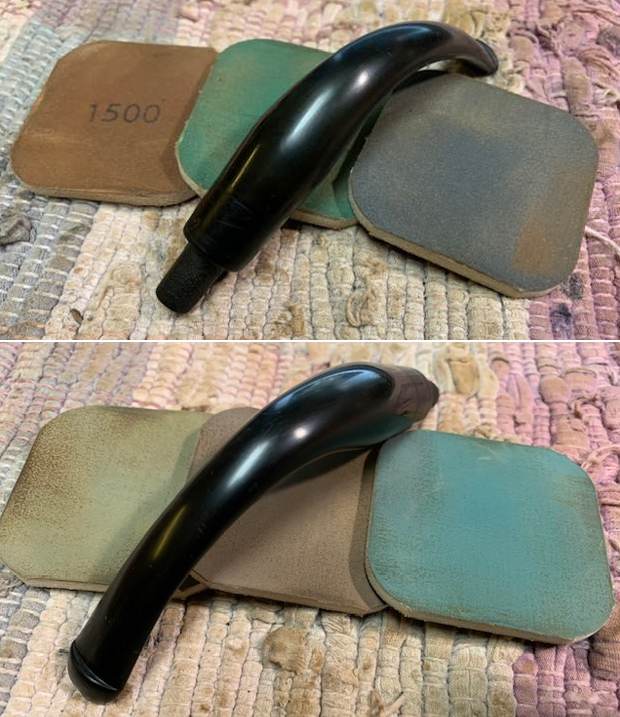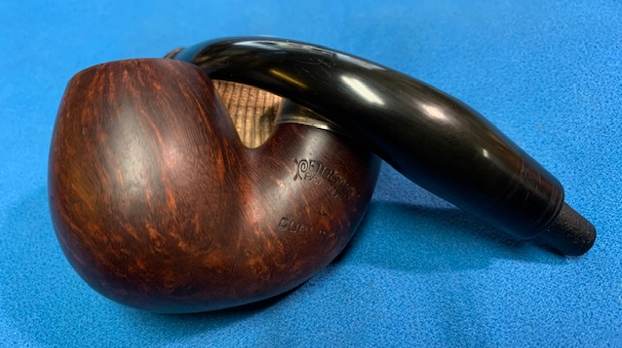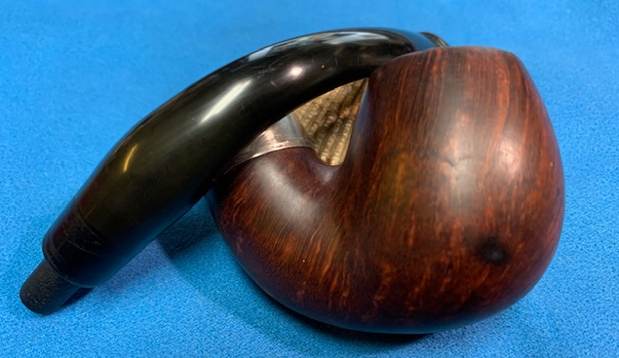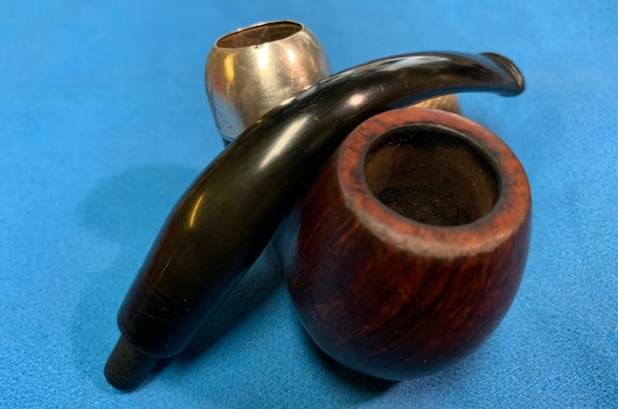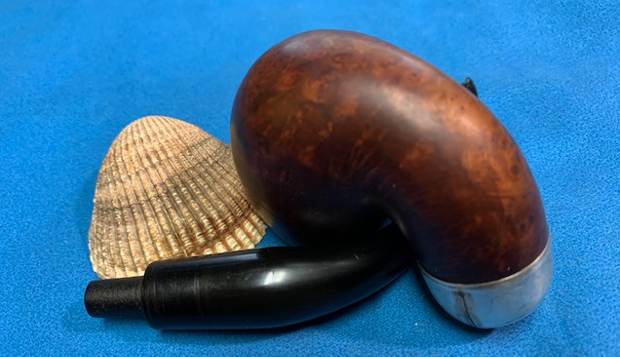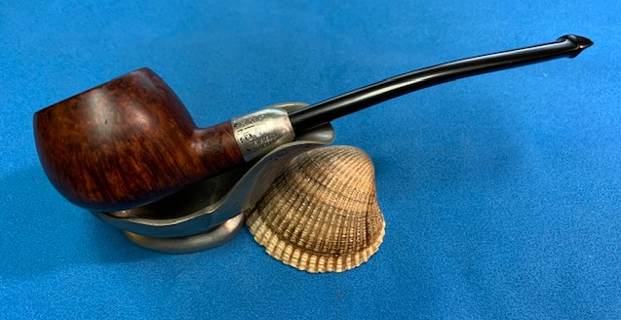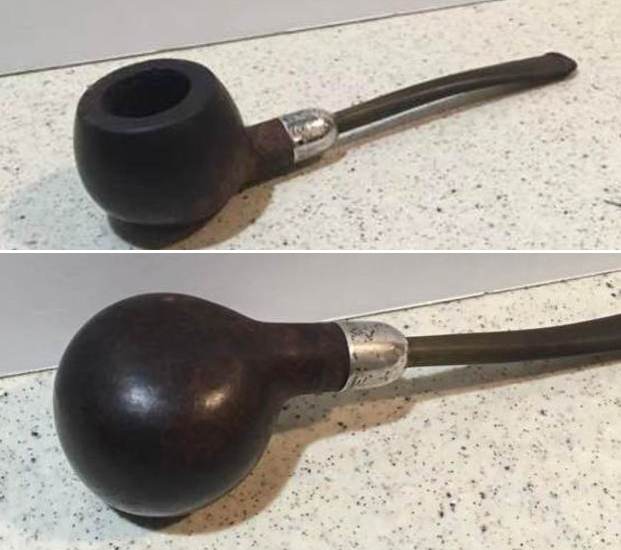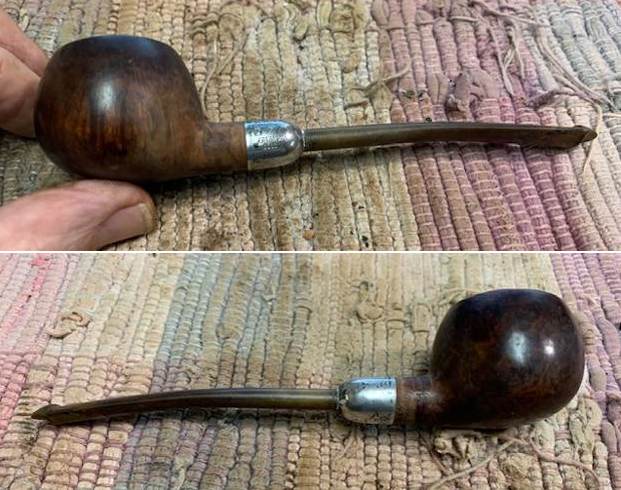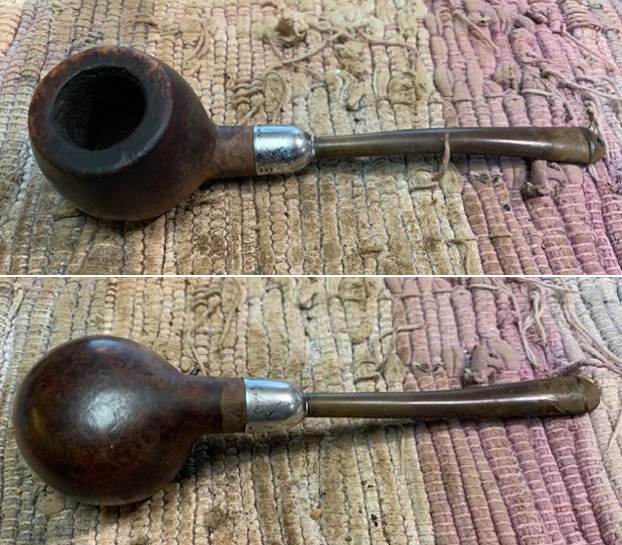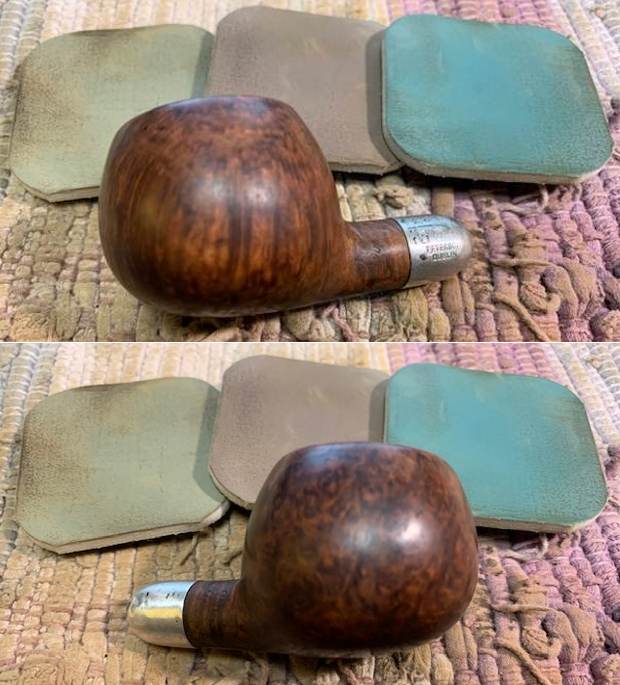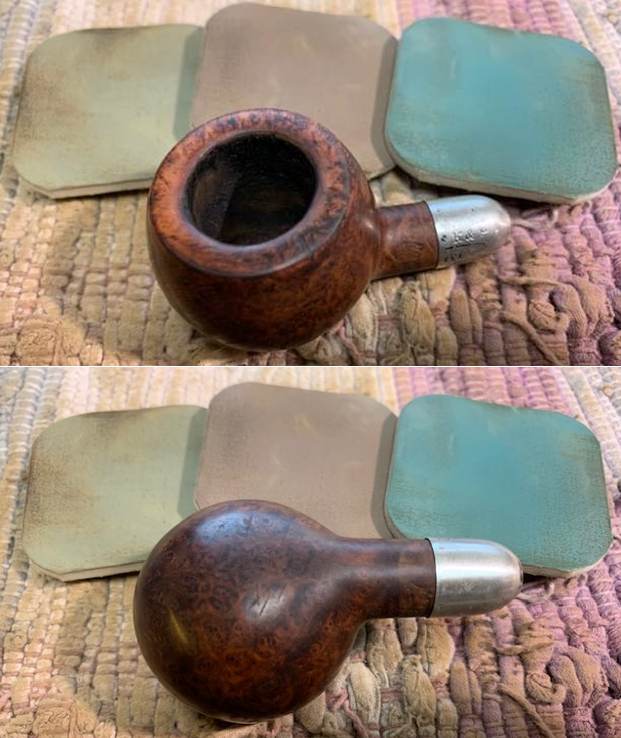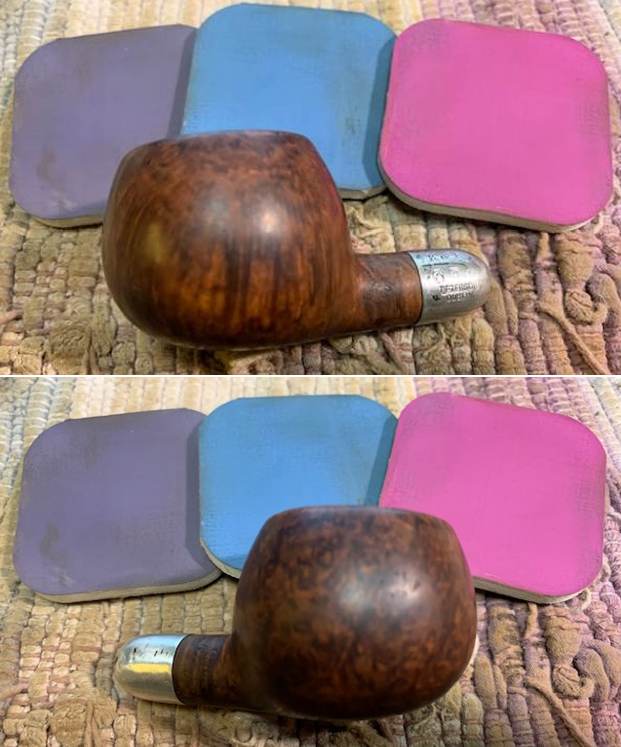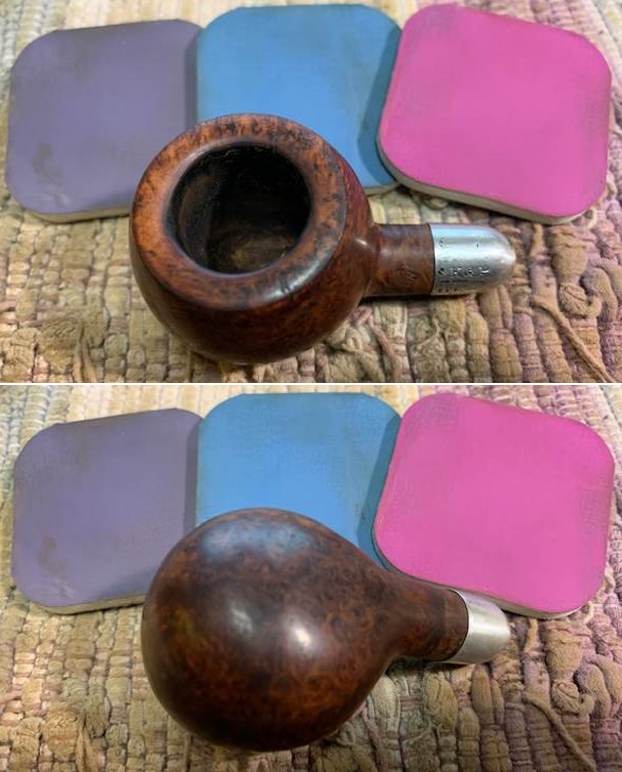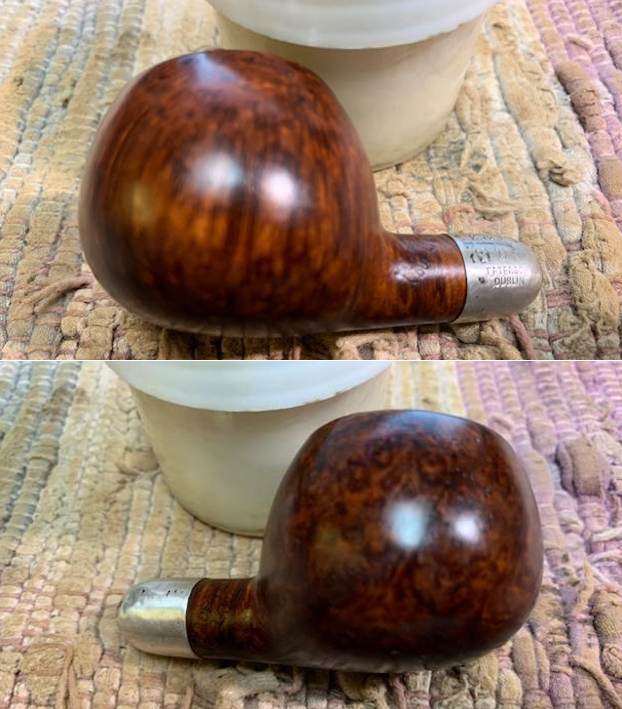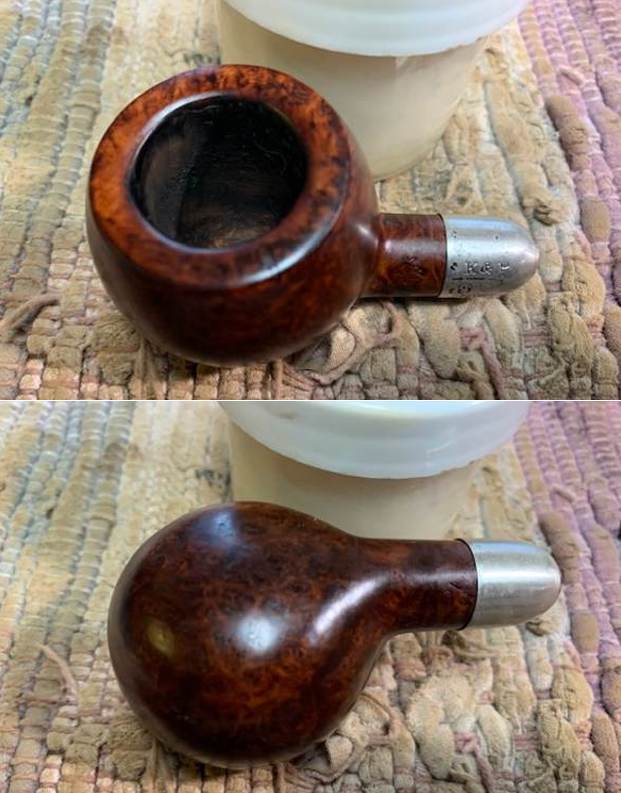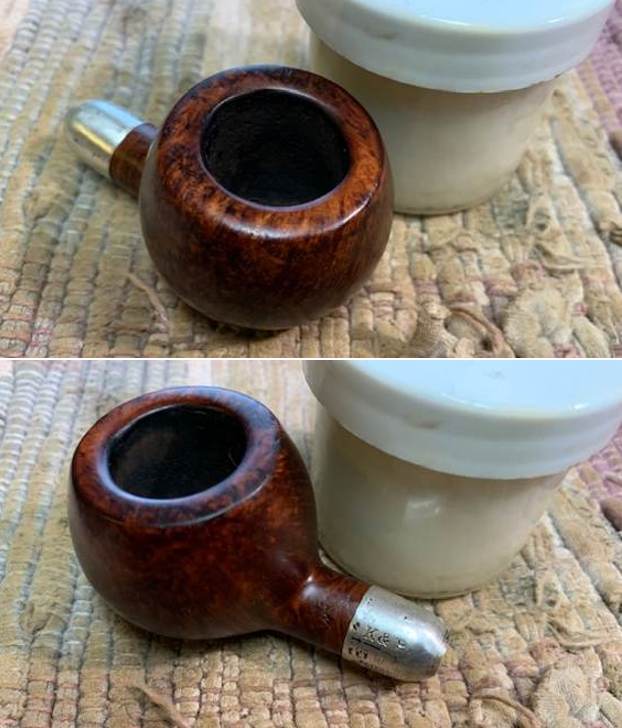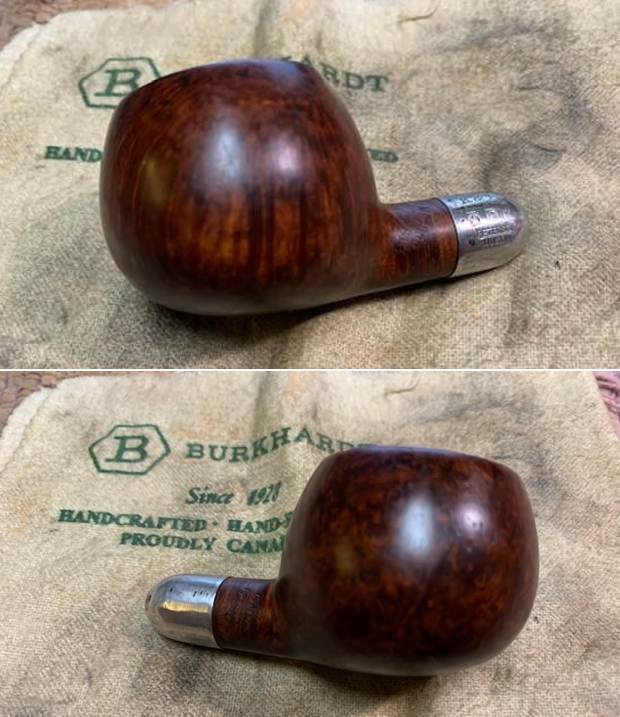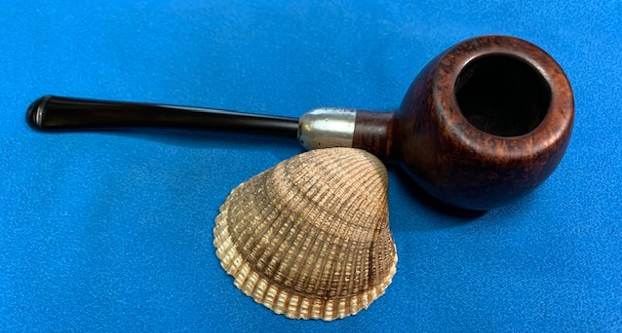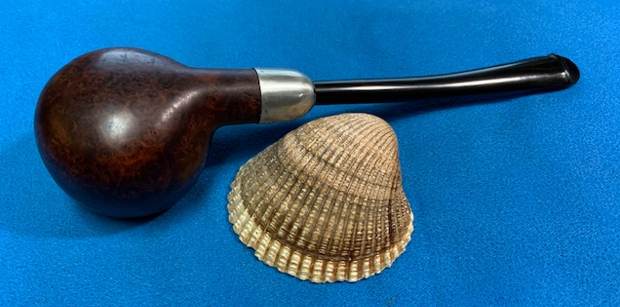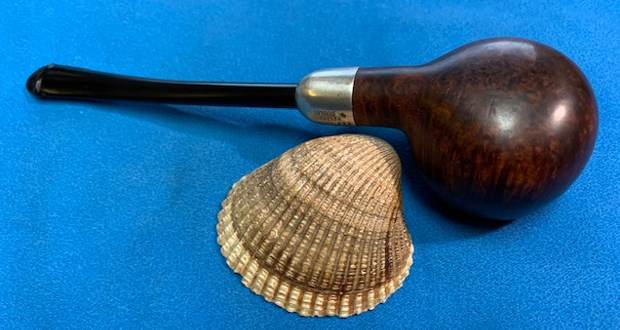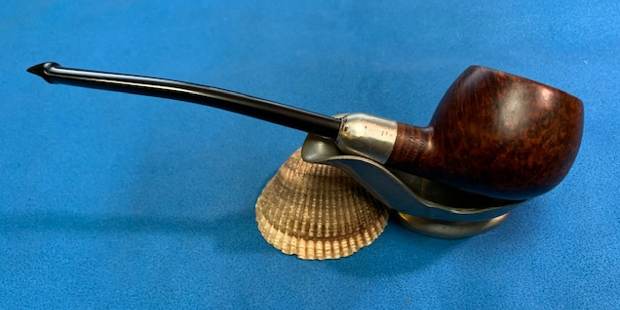
Tag Archives: Petersons Pipes

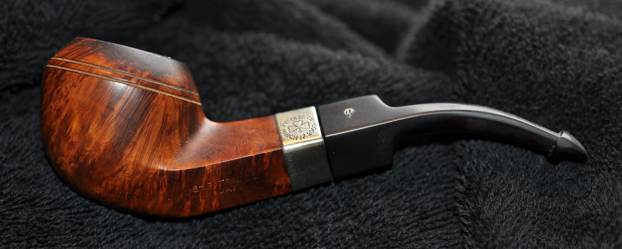
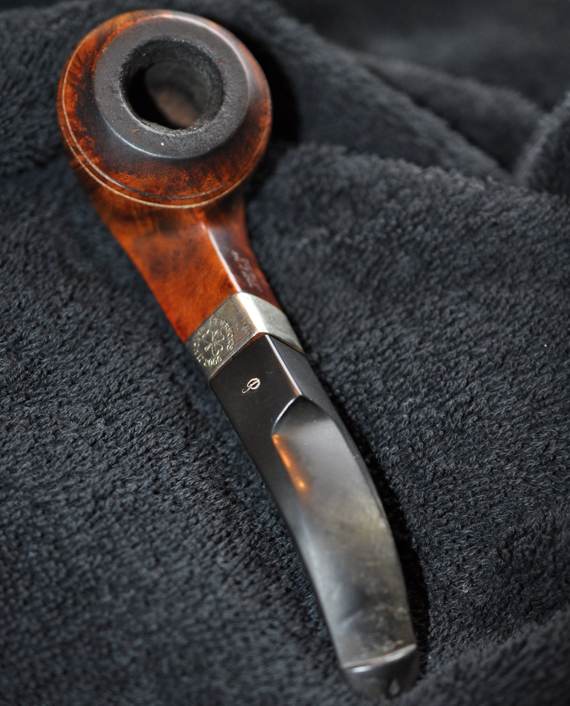
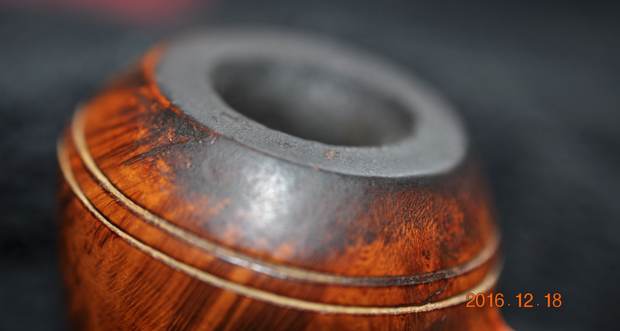
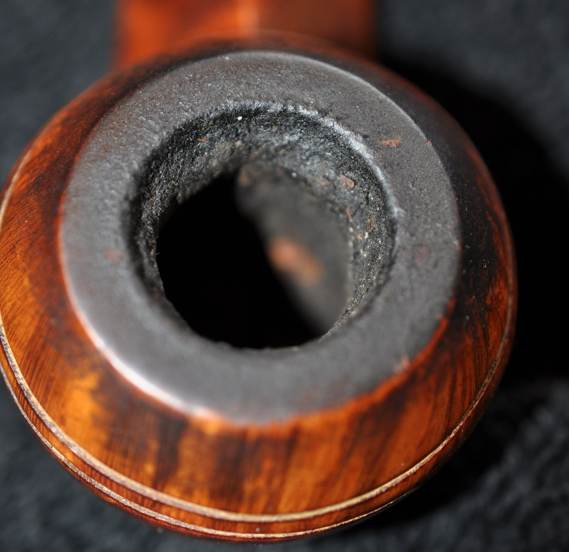
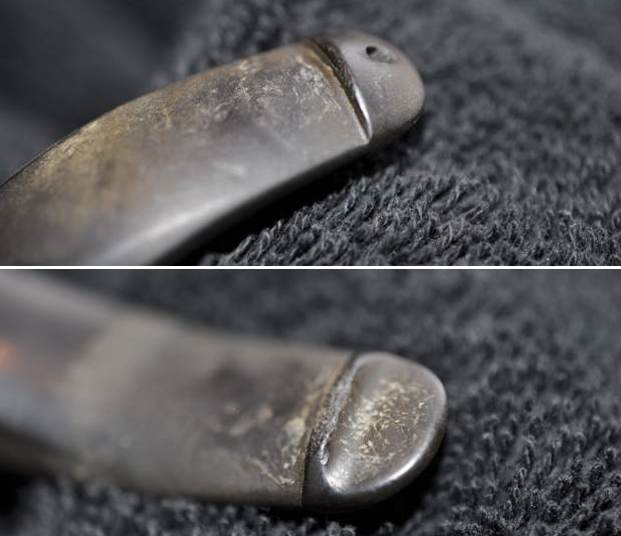
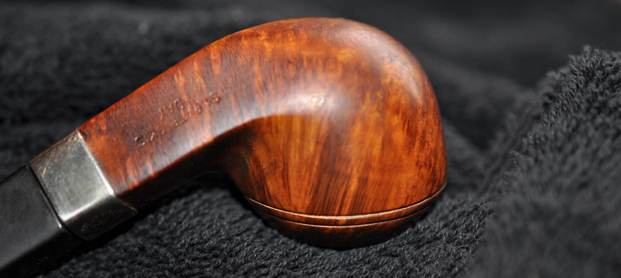
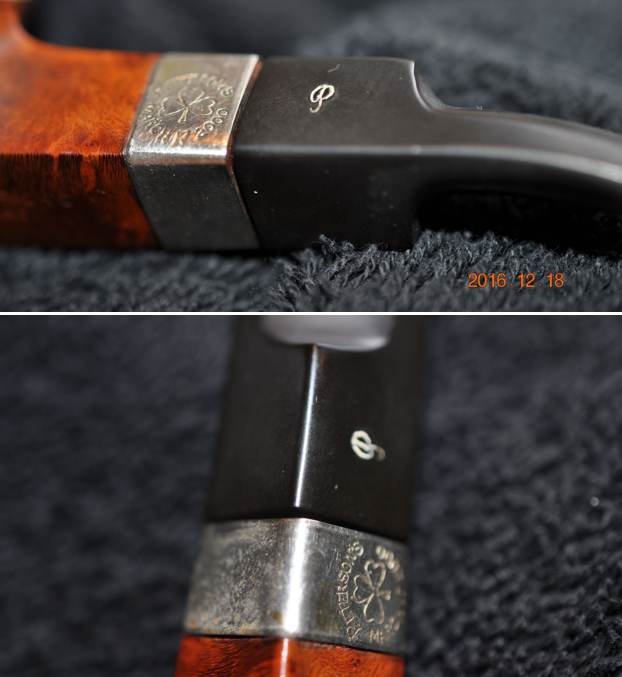
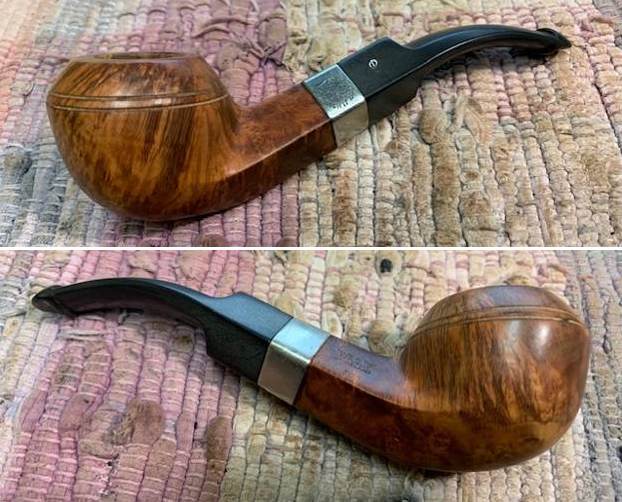
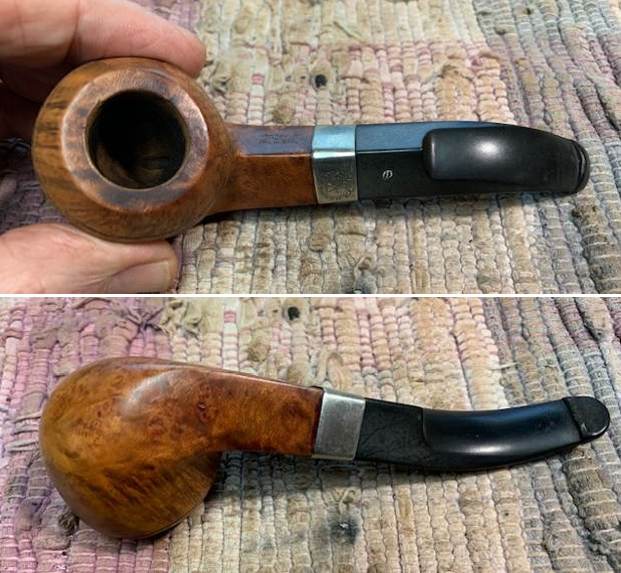
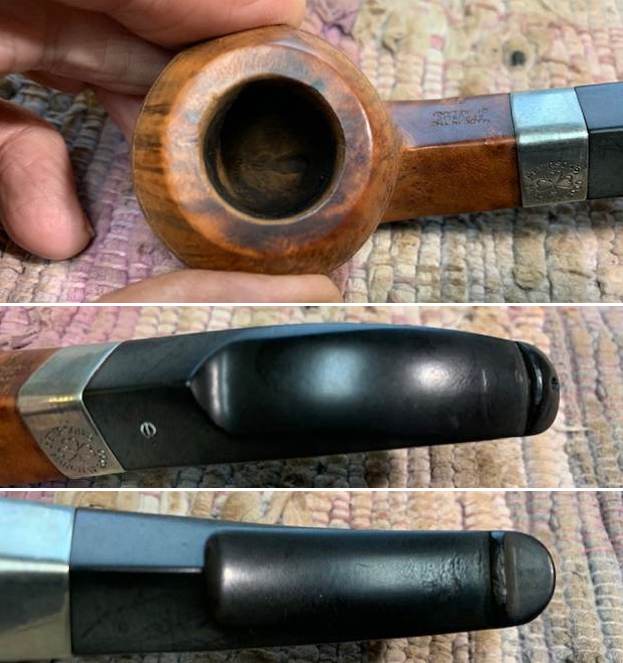
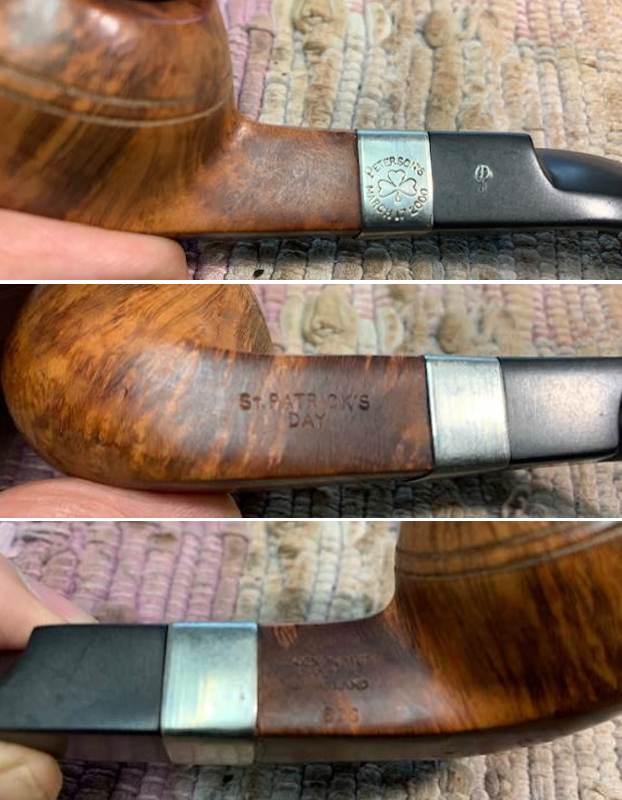
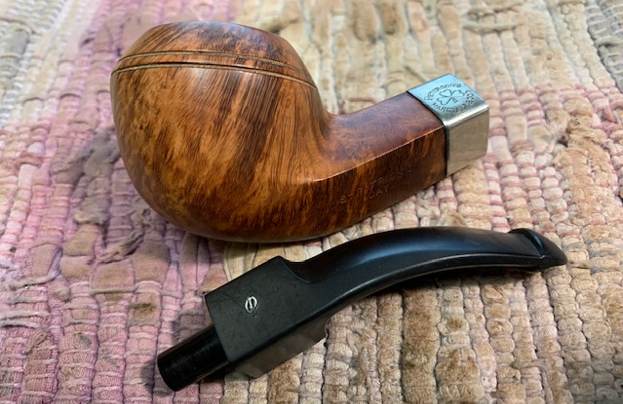
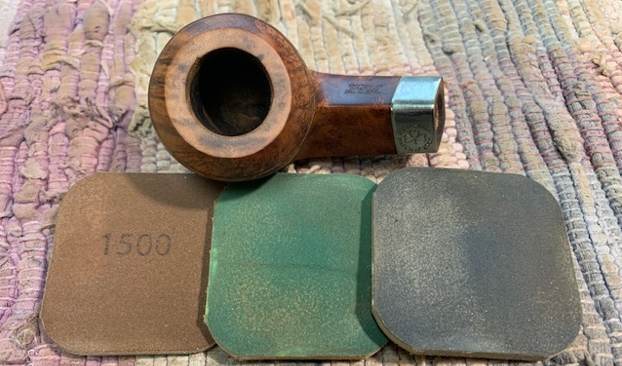
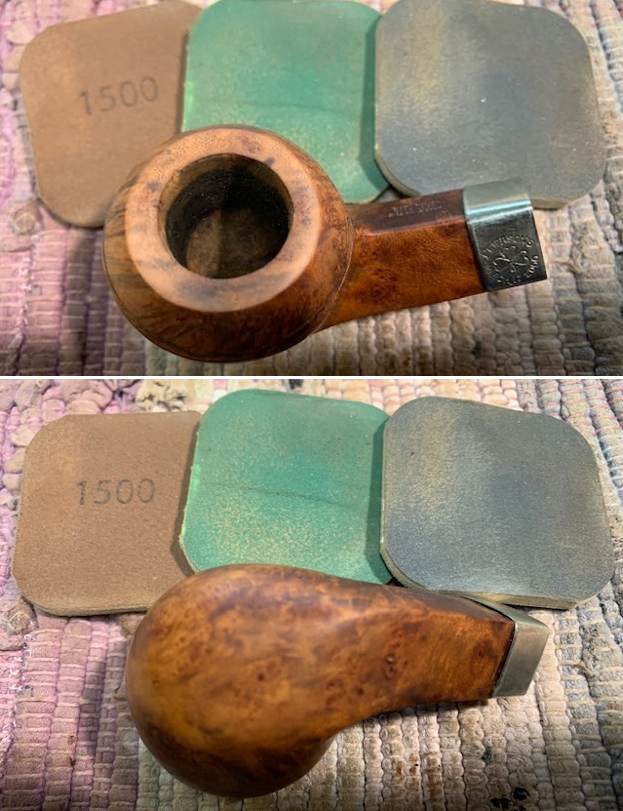
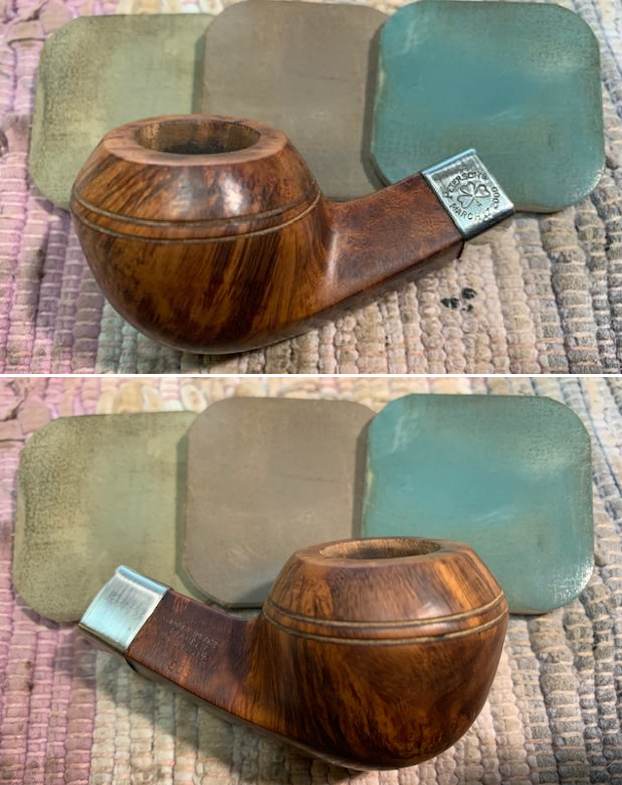
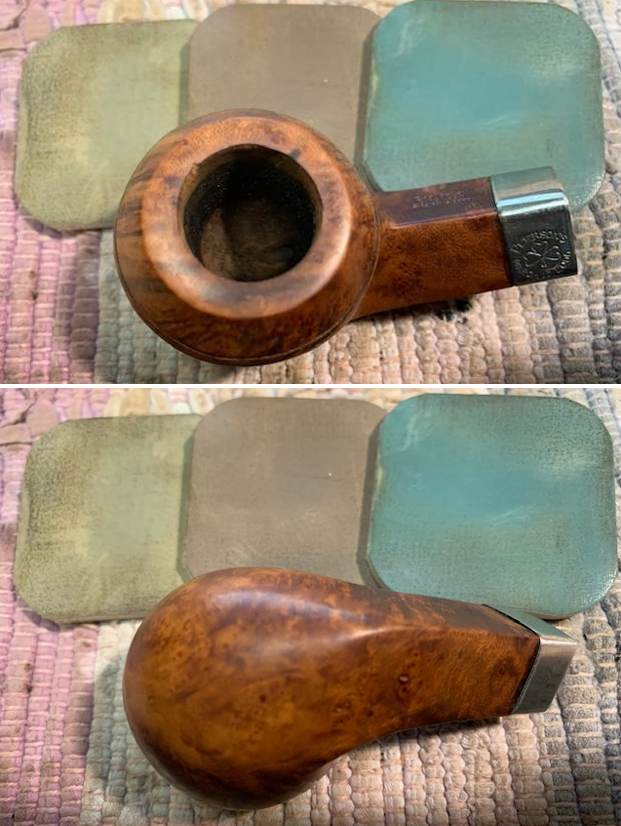
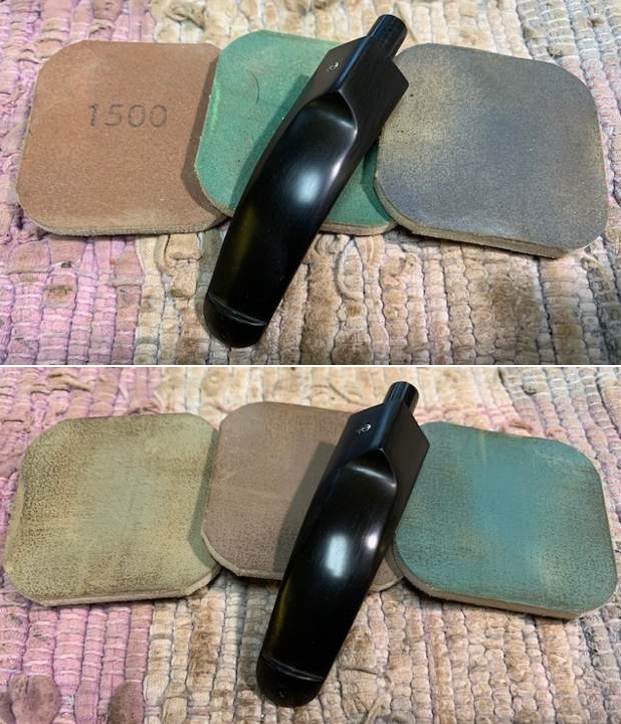
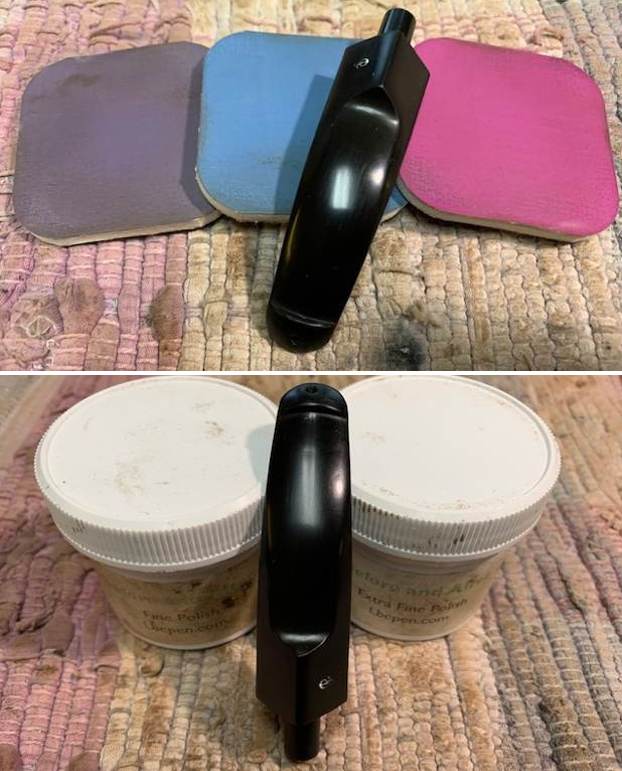
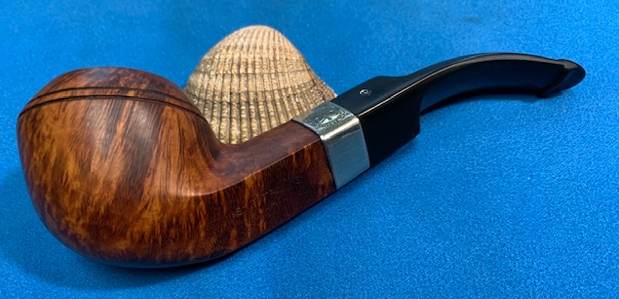
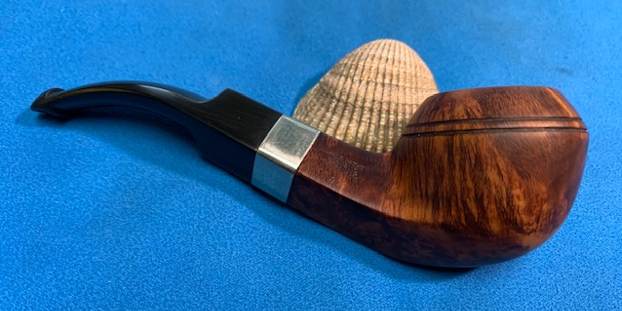
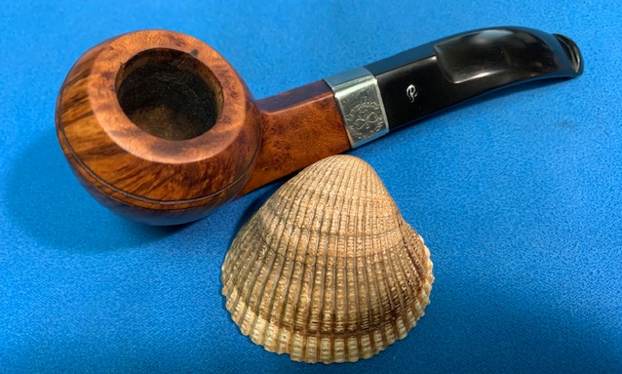
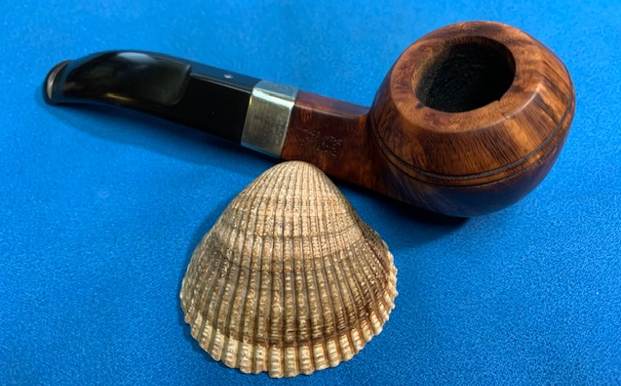
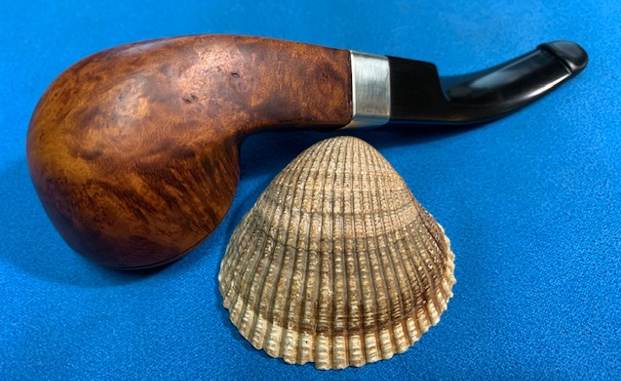
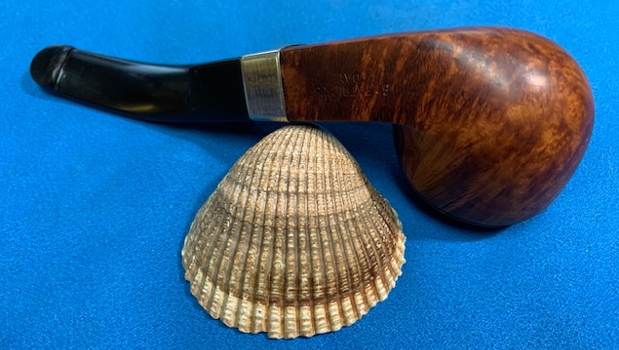
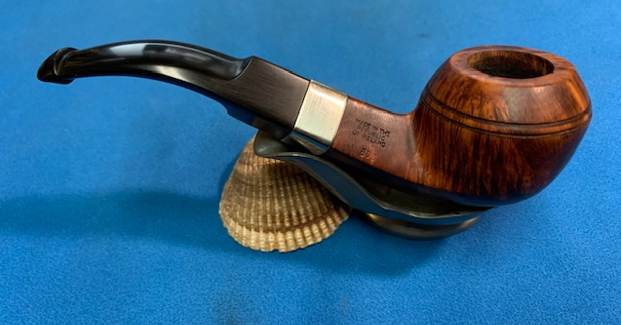
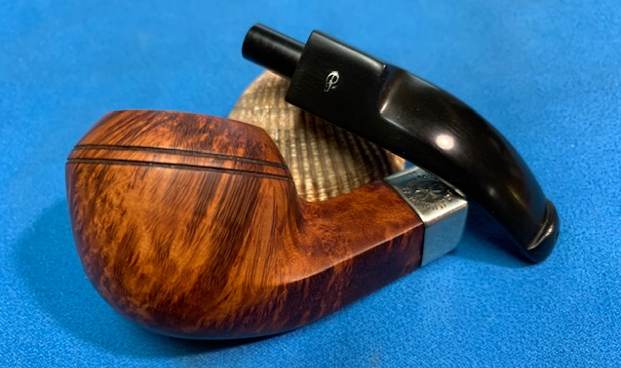
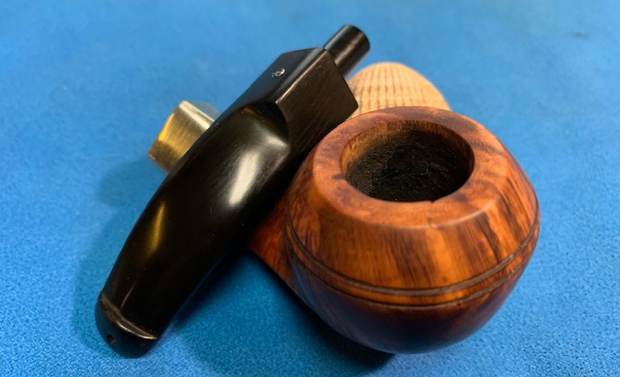
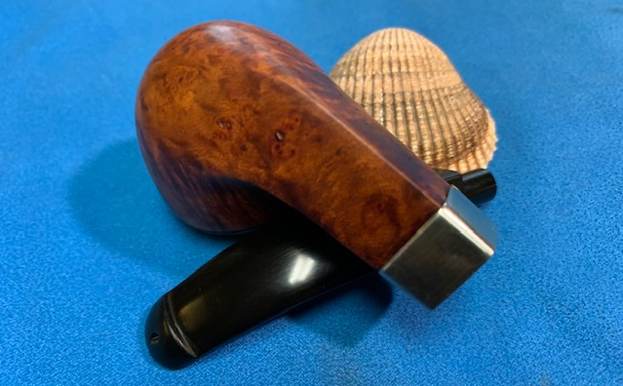
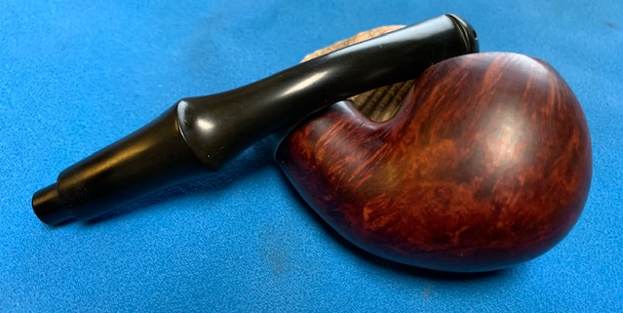
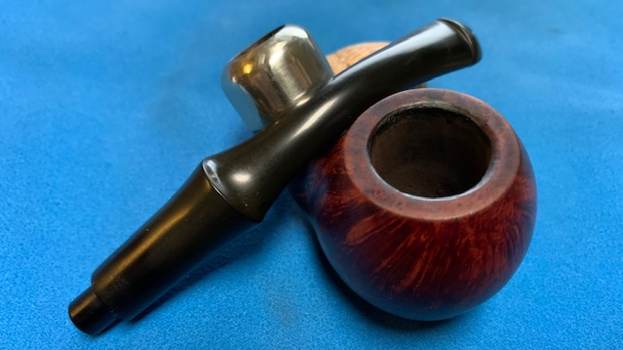
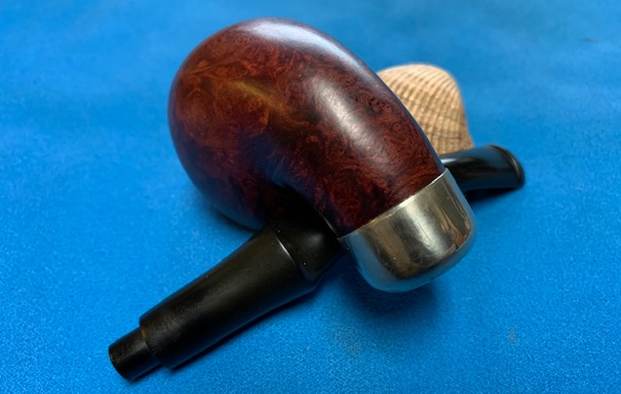
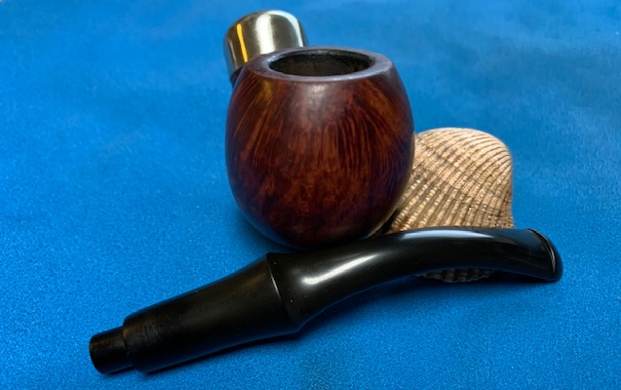
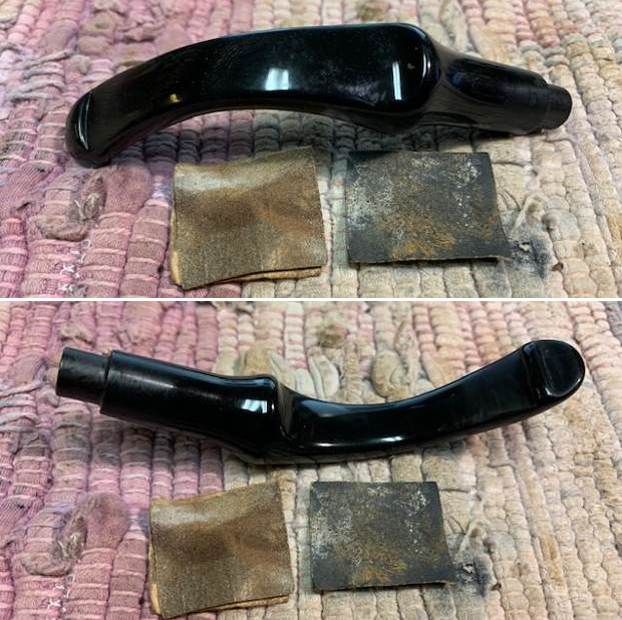
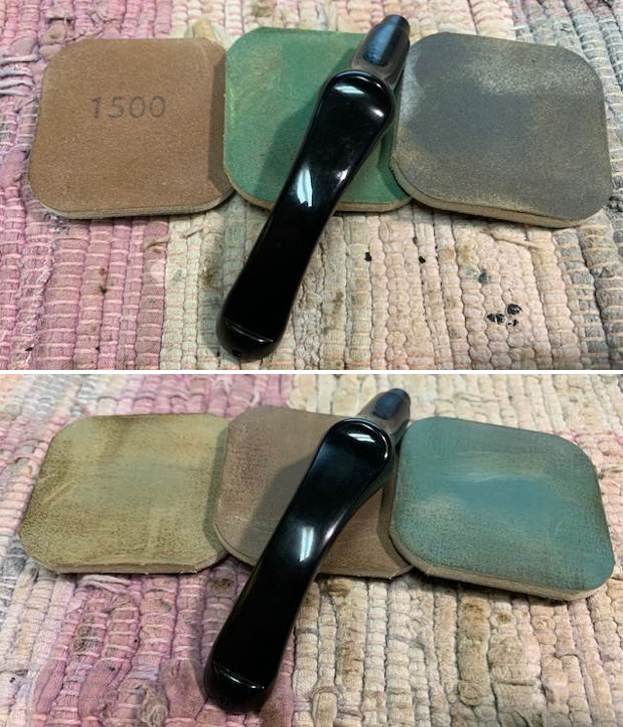
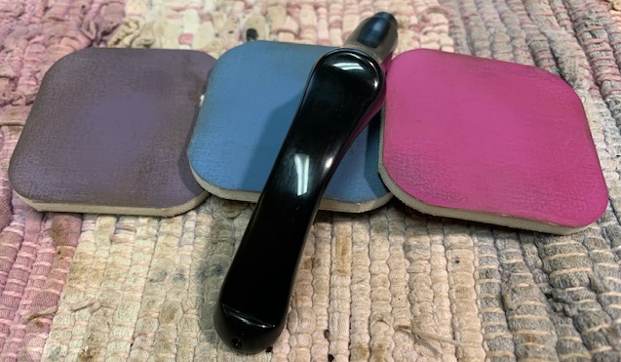
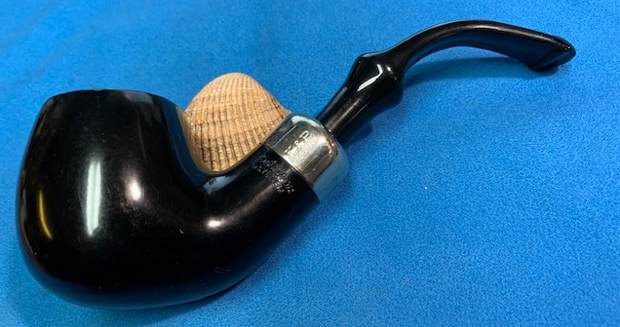
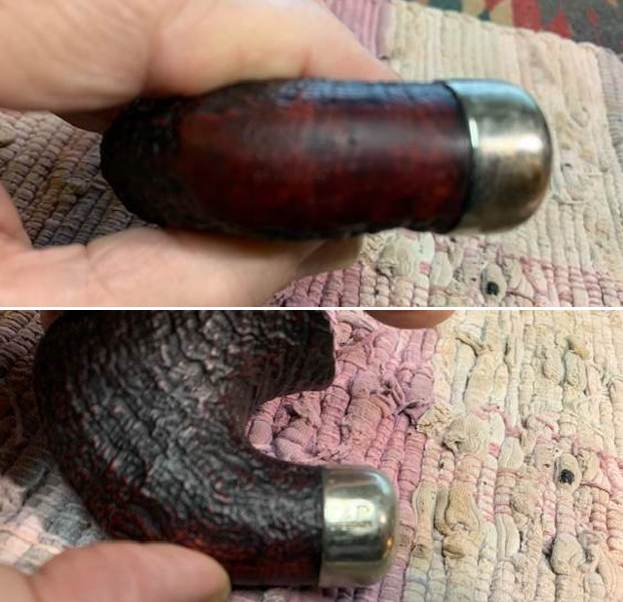
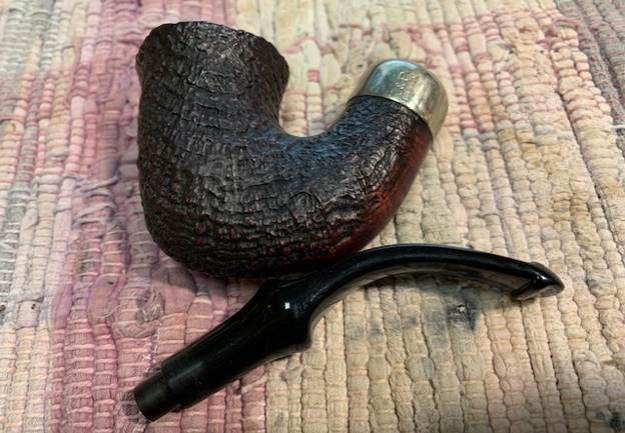
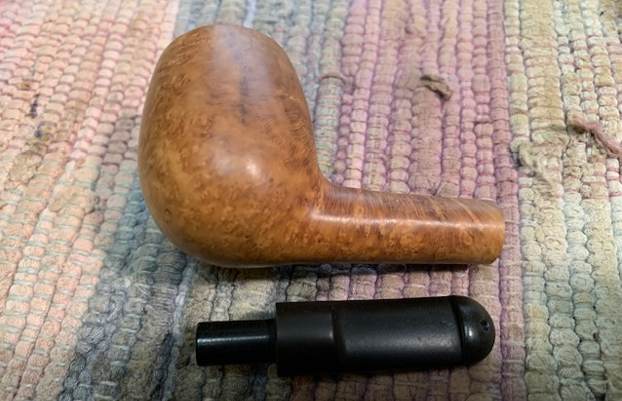
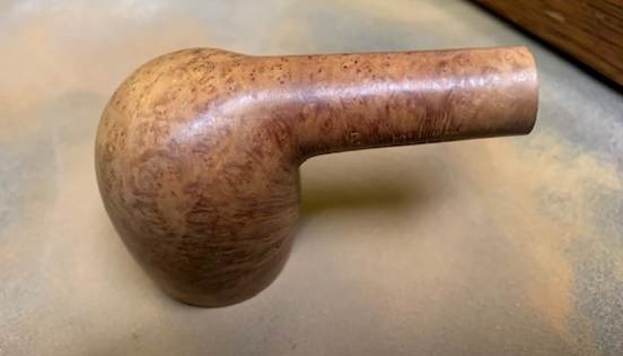
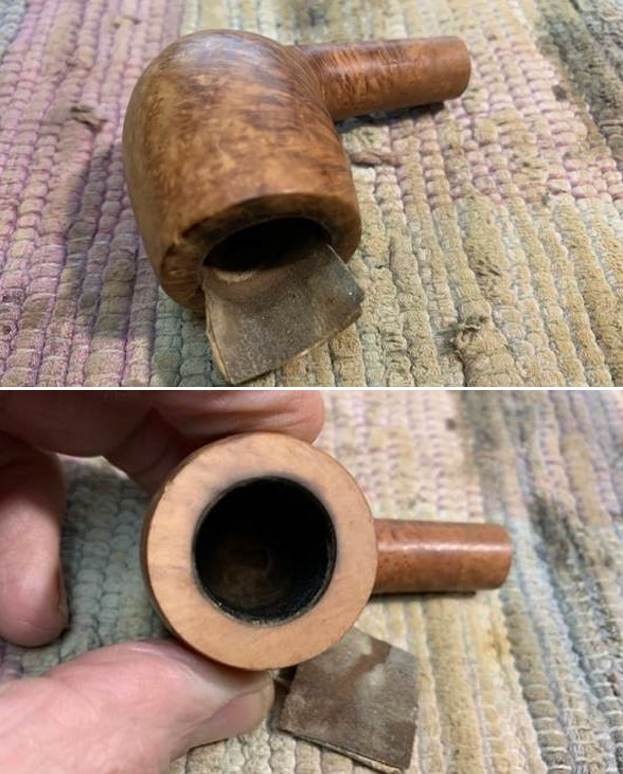
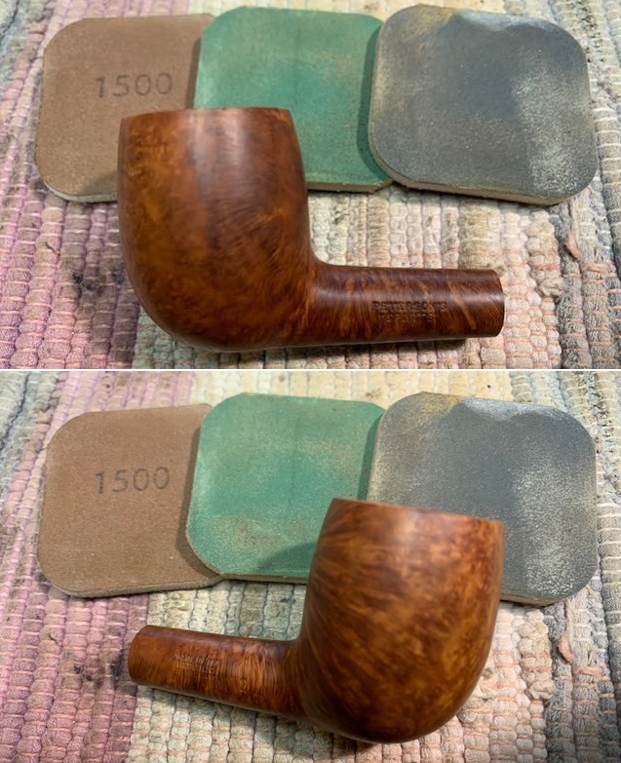
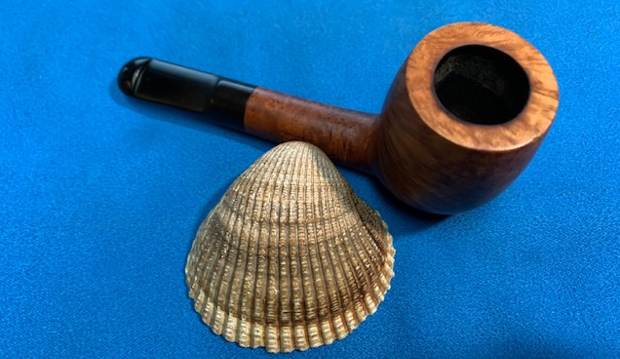
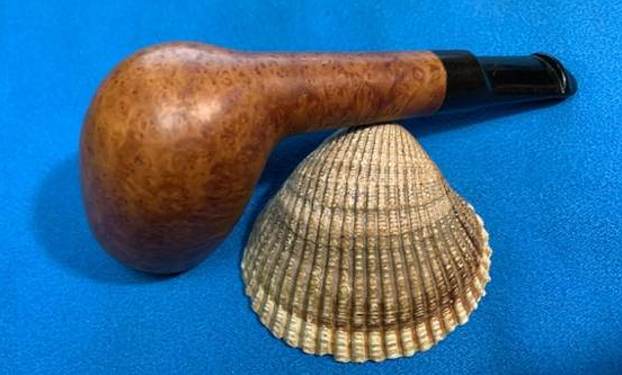
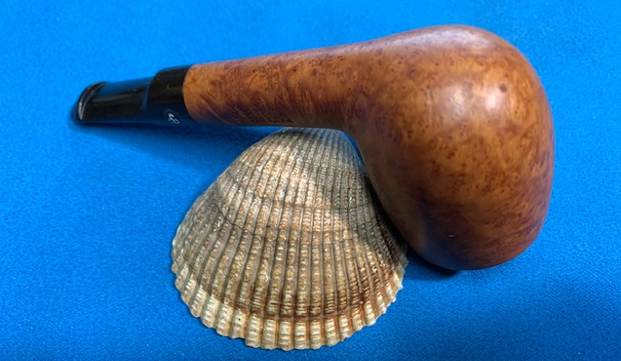
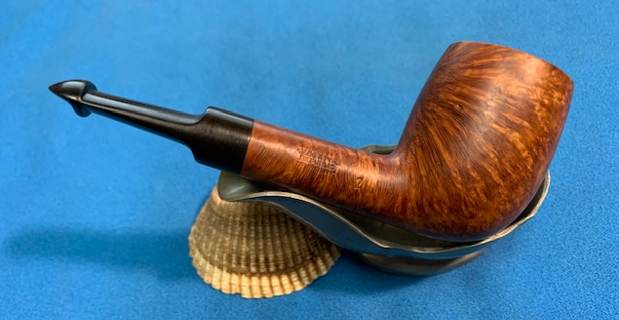
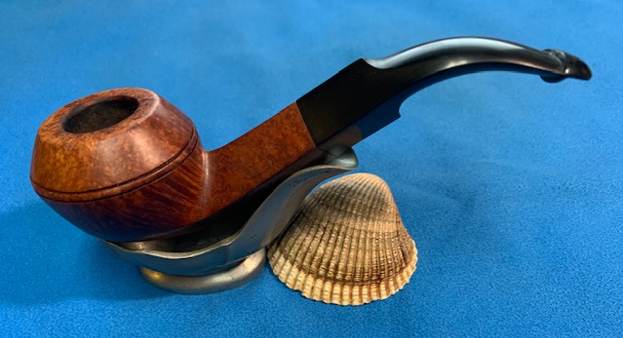
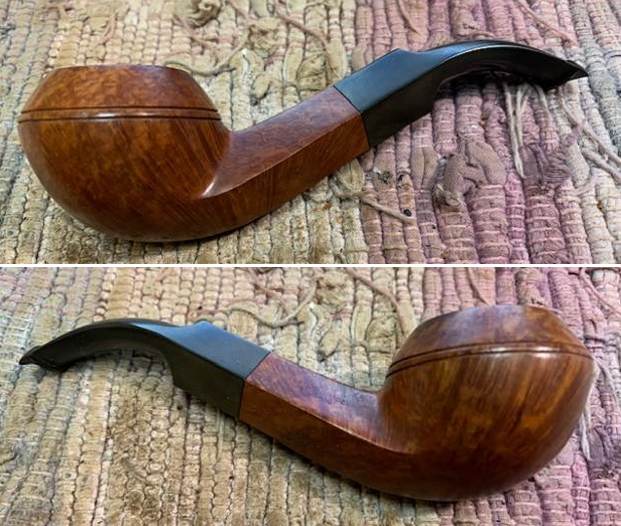
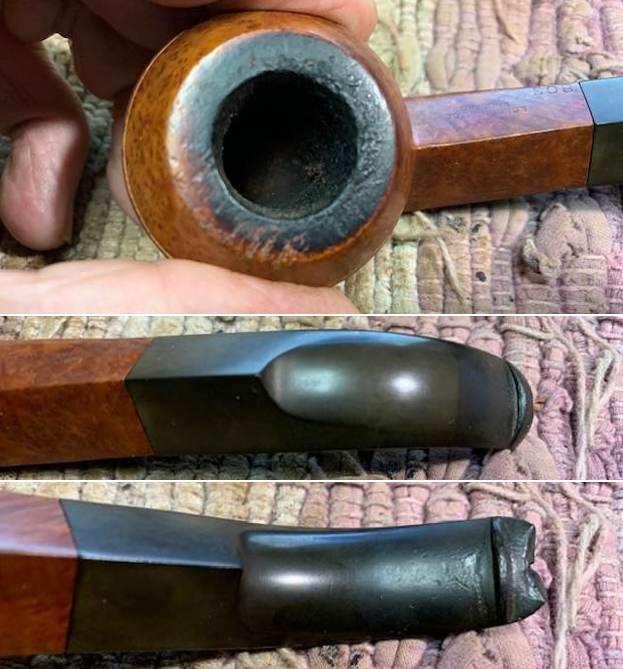
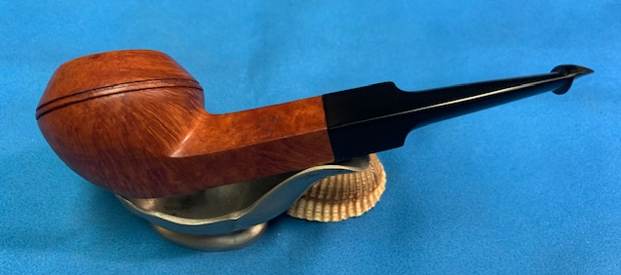
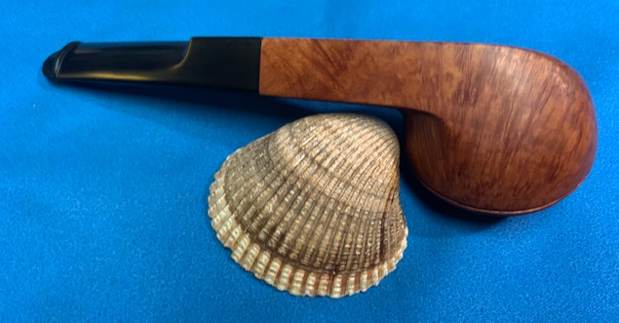
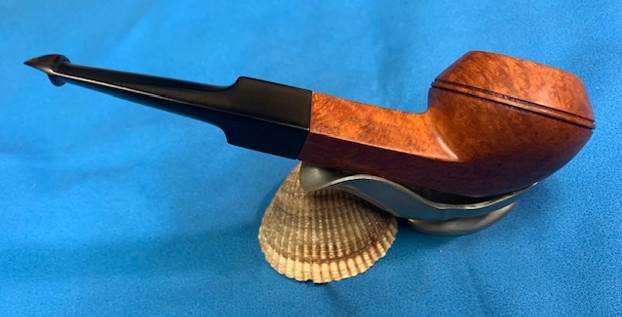
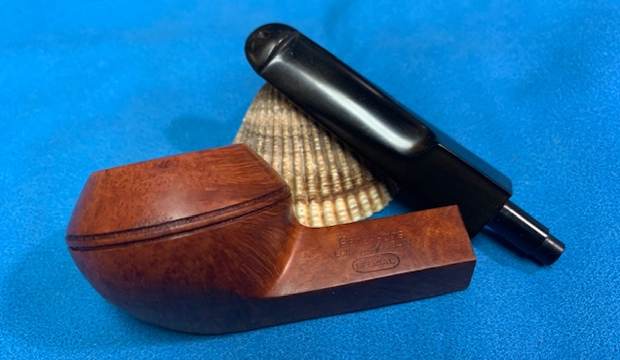
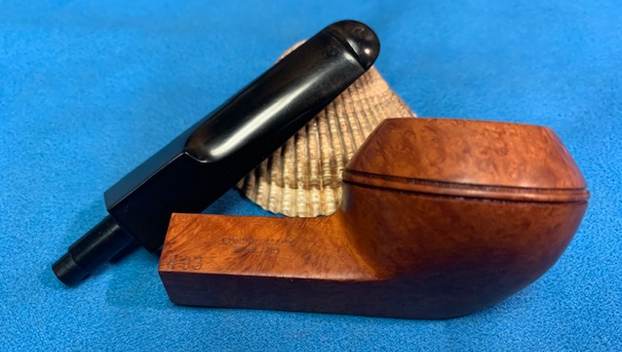
Breathing New Life into the SECOND of a Cased Set of  Two English Made Peterson’s Bulldogs – 493 Straight Bulldog London Made


Blog by Steve Laug

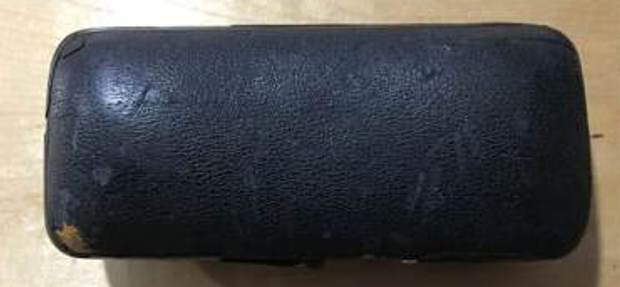
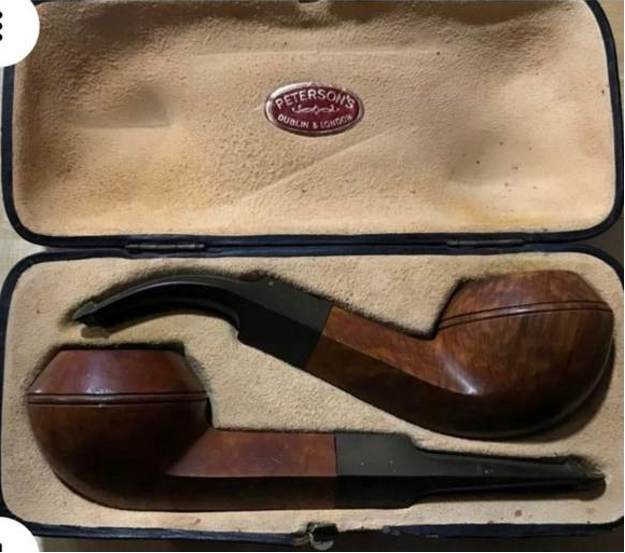
The next pipe I am working on is the fourth Peterson’s and the second pipe in the cased set of Bulldogs that came to me from a friend of mine for me to work on. The pair (pipes 3 and 4) came in a nice leather cast that was travel/time worn on the top and underside and damaged on the edges. I have not finished the 80S Bent Bulldog yet as the stem is taking considerably more time than I expected. I set it aside for a bit take a break from the intensive rebuild work and give the straight Bulldog some attention.

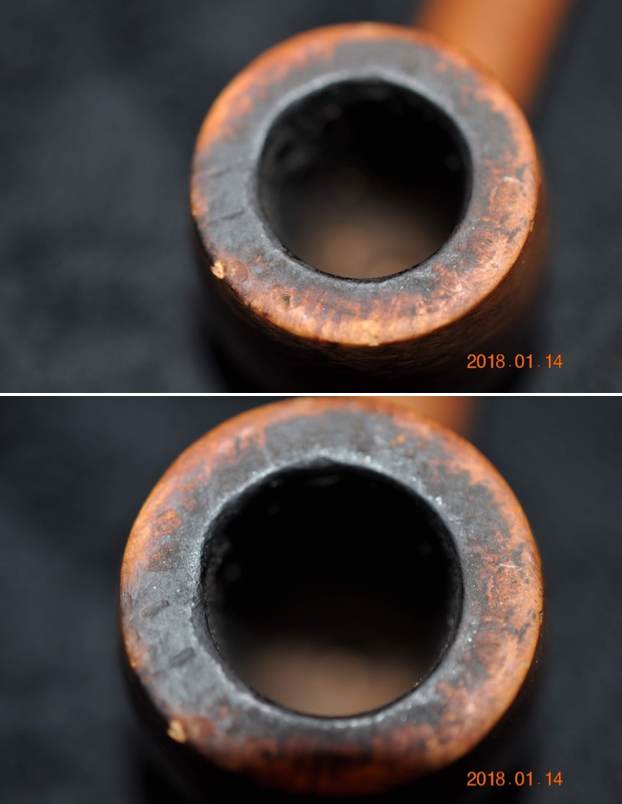
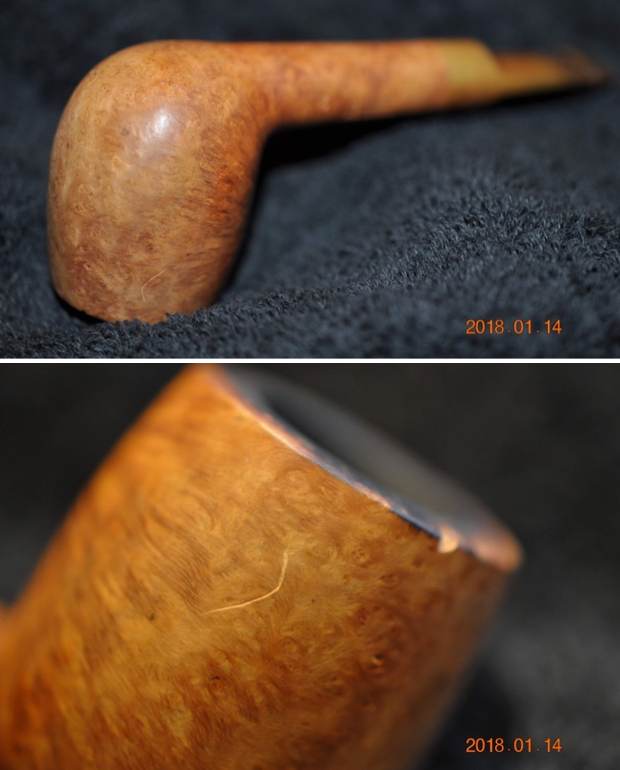
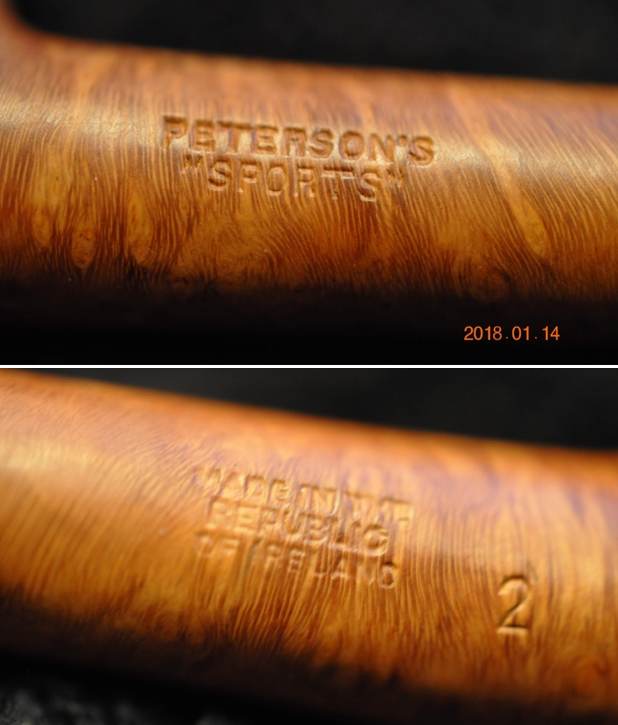
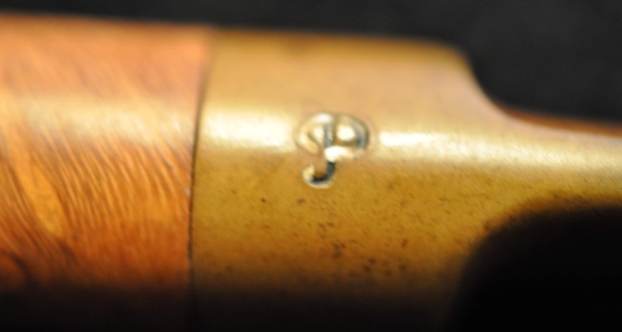
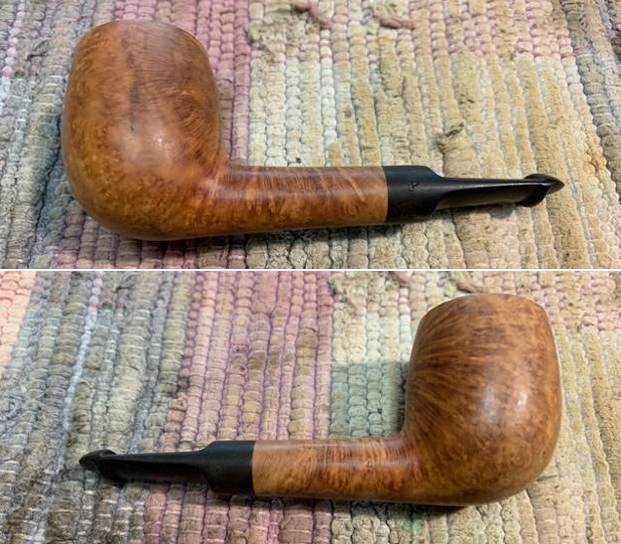
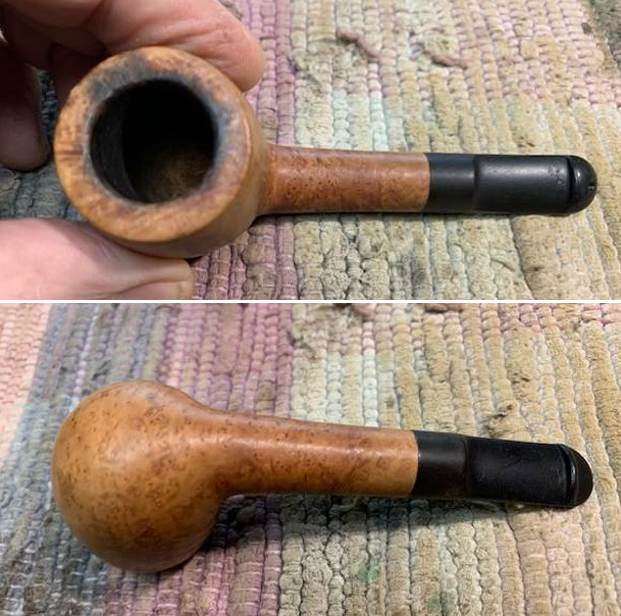
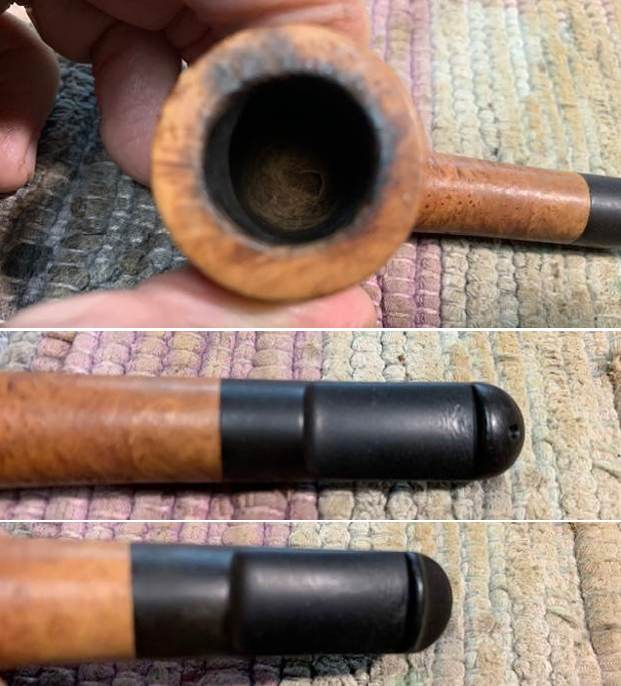
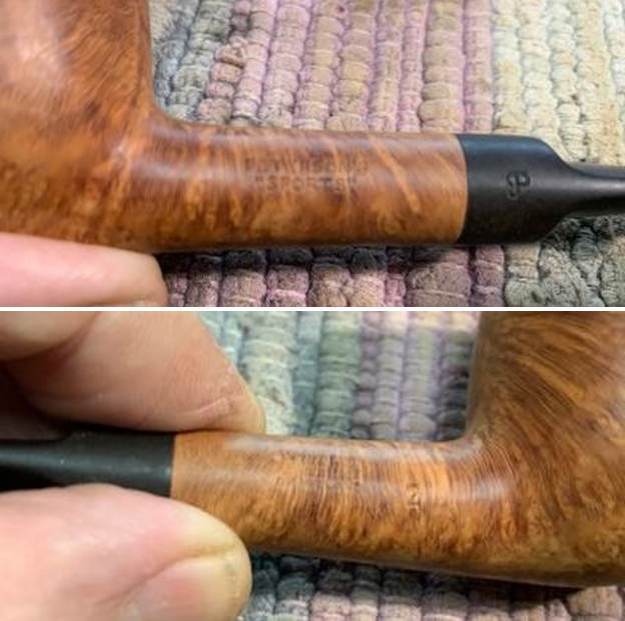
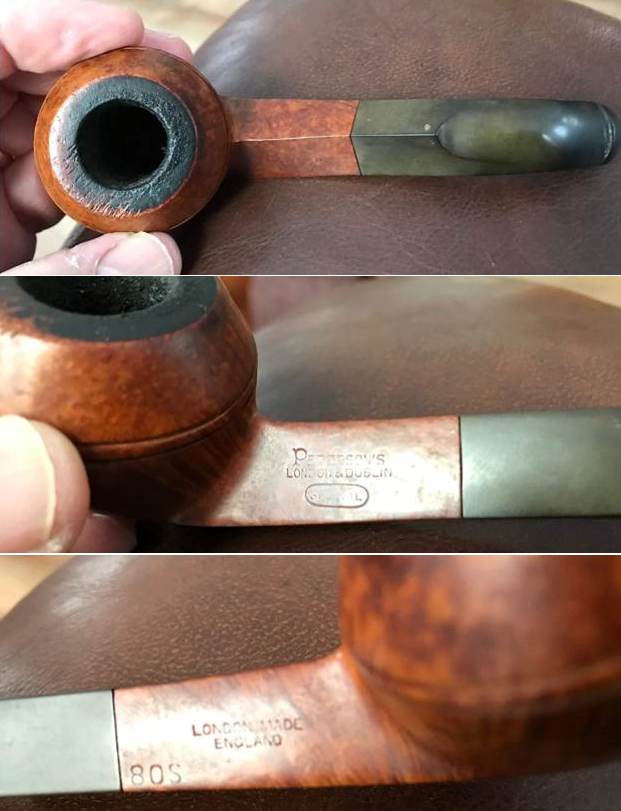
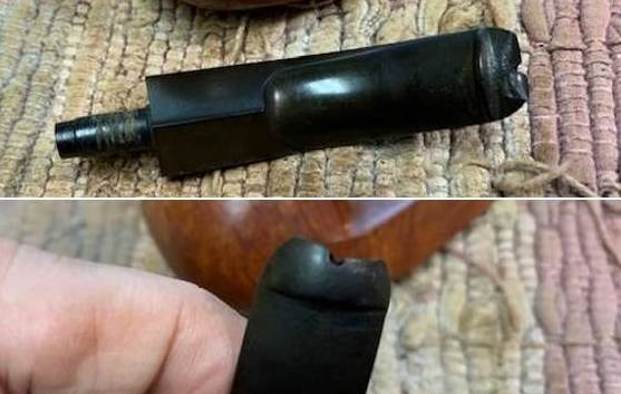
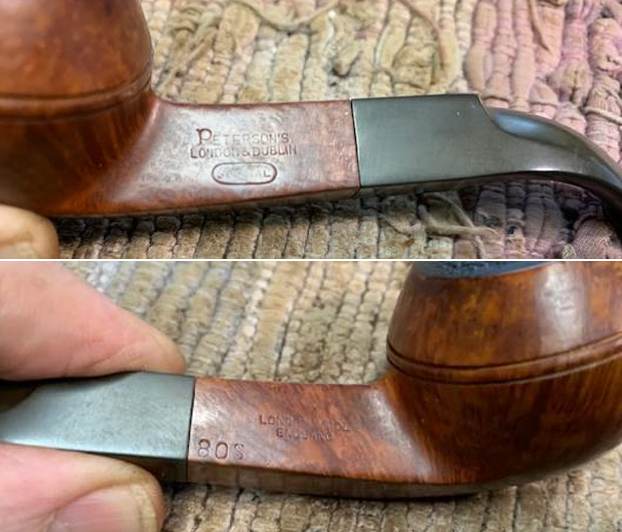
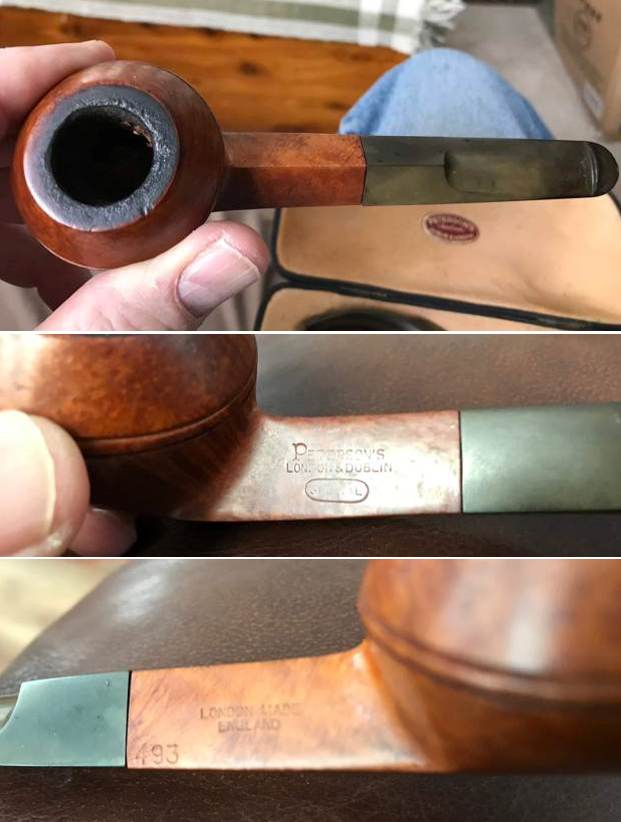
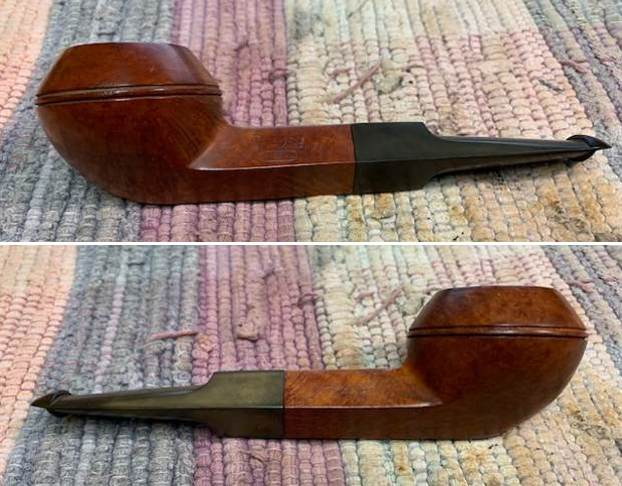
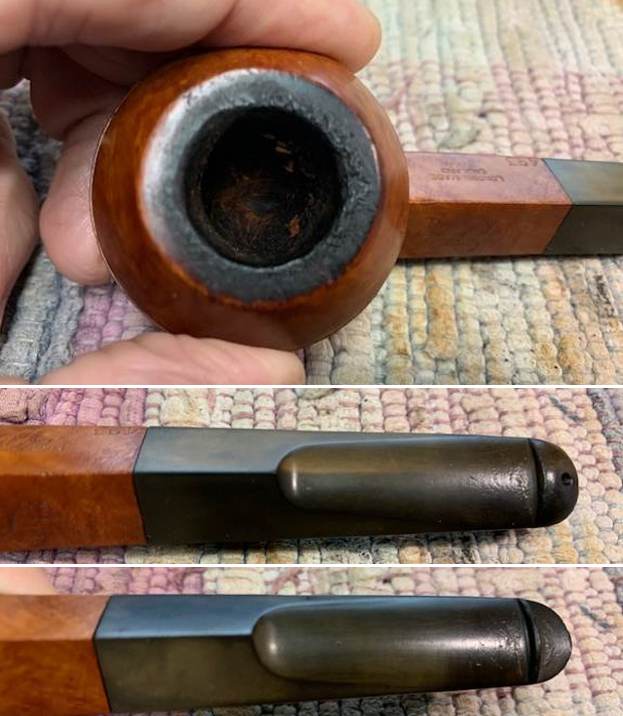
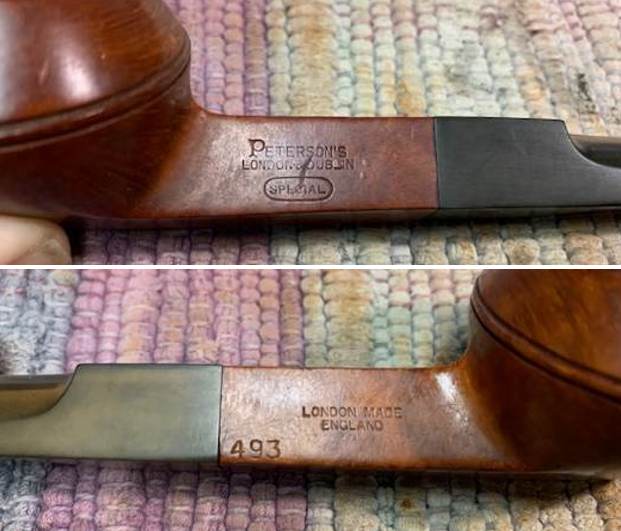
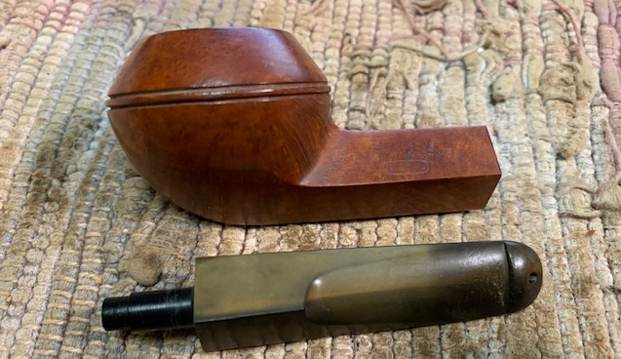
Here are some of the photos of the case and the pipes that I am working on. It was not a large case but a common style carrying case for pipes of this era. I am hoping to do some work and narrow down the dates on the pair of pipes.The inside of the case was lined with soft golden suede. The case was fitted for the pipes that it contained – a straight and a bent bulldog with similar finishes. The lid of the case had a logo on it that was a gold and burgundy oval that read PETERSON’S over Dublin & London. It was dirty but not in bad condition. The finish on both pipes was dirty and tired looking but the grain peeked through the grime and oils on the finish. I decided to work on the bottom pipe next – the Straight Bulldog 493. The rim top had a thick lava build up and some light scratching peeking out from the lava. The inner edges of the rim looked like there was both burn damage and reaming damage but I would not know for sure until it was clean. The outer edge looked good. The stamping on the shank sides was clear and readable. It is stamped on the left side and reads Peterson’s [over] London & Dublin [over] an oval with the word SPECIAL stamped inside. On the right side of the shank it is stamped London Made [over] England. Next to that at the shank/stem joint was the shape number 493. There is no “P” logo on the stem. The stem was oxidized but it was otherwise in good condition. There were tooth marks and chatter on both sides ahead of the button. I have included the pictures that my friend sent me before I took on the pipes. The first shows the rim top with the issues described above. The second and third photos show the stamping as noted above.It took nearly a month for the pipes to arrive in Canada for me to work on. I took photos of the straight Bulldog to have an idea of what I was dealing with. You can see from the photos what I saw. The finish is was dirty but the pipe had some amazing grain on the shank and bowl sides. Rim top had a thick lava build up and it was hard to know what was under that. The inner edge of the bowl had some lava as well but there was some potential damage to the edge. The outer edge of the bowl was in surprisingly good shape. There was tobacco debris in the bowl and a thick cake. The original style stem is present and has a thick coat of oxidation. There were tooth marks and chatter on both sides ahead of the button. I took some photos of the rim top, bowl and stem to capture the condition of the pipe. You can see the cake in the bowl. There is a lava coat and some darkening. There was damage all around the inner edge of the bowl. The P-lip stem appears to be in good condition with oxidation at different levels on each side of the diamond stem. You can see the tooth marks on both sides ahead of the button.I took photos of the stamping on the shank sides. They were clear and readable as noted above.I removed the stem from the bowl and took a photo of it to show its appearance. Before I started the restoration process on the pipe I wanted to see if I could pin down a time period for the London Made England Special.

I turned to the section on that stamping in the book, The Peterson Pipe by Mark Irwin & Gary Malmberg. I quote from the section on the COM stamp on page 296-297 below:

Peterson maintained a factory in England for about a quarter of a century, from the late 1930s to ’62. Corporate transcripts and London business periodicals suggest that the London operation on White Lion Street was about to get underway in ’37. Only a handful of London hallmarked Petersons are documented, stamped with the date marks 1936 and 1939, and these have no COM stamp. Their output would be limited by the onset of the Battle of Britain in July 1940, but it seems reasonable to suppose pipes were made at the London factory during WWII, inasmuch as the K&P Staff Register lists twelve employees earning wages there in January ’44. London hallmarked Petersons have been identified with dates of 1949-54. Most London-made Petersons in a collector’s inventory were made in these postwar years, from 1949 until the closing of the factory in ’62… the presence of one variation of another on a pipe is not by itself a reliable indicator of its age.

That information narrowed the date of manufacture to the time period between 1949-1962. That is not a long period of time to be sure but now it was time to account for the stamping SPECIAL in an oval. What did that mean? Is there more specifics that can be learned with that stamp?

I turned to page 313 of the above Peterson Pipe book and read the following on the SPECIAL Stamp.

SPECIAL Stamp – used on special order or small batch custom pipes, it will often appear under other stamps, such as PETERSON’S SYSTEM, DE LUXE or DUBLIN & LONDON. Used frequently on pipes cut by master carver Paddy Larrigan.

So it appears that this set of Bulldogs were made in London in a limited time period and perhaps were made by Paddy Larrigan himself. Was he perhaps visiting the London factory in those post war years? I guess we will never know for sure but it kind of a nice thought regarding the pipes.

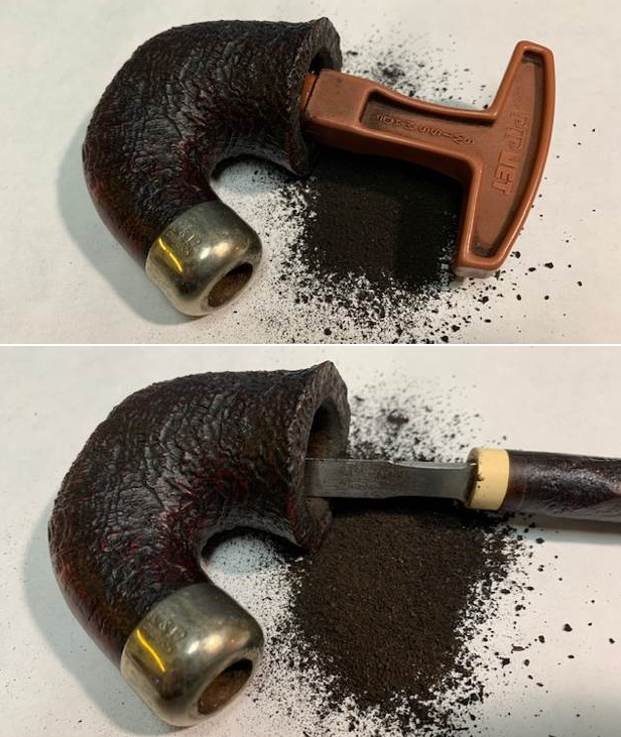
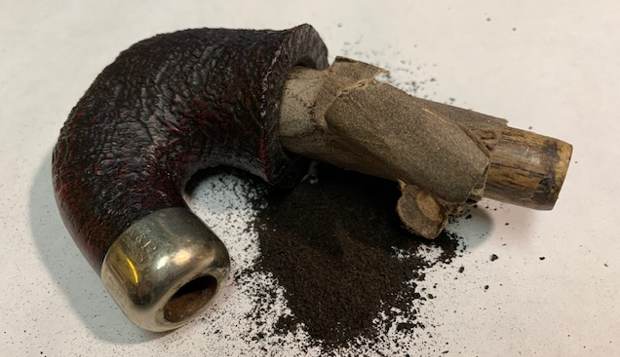
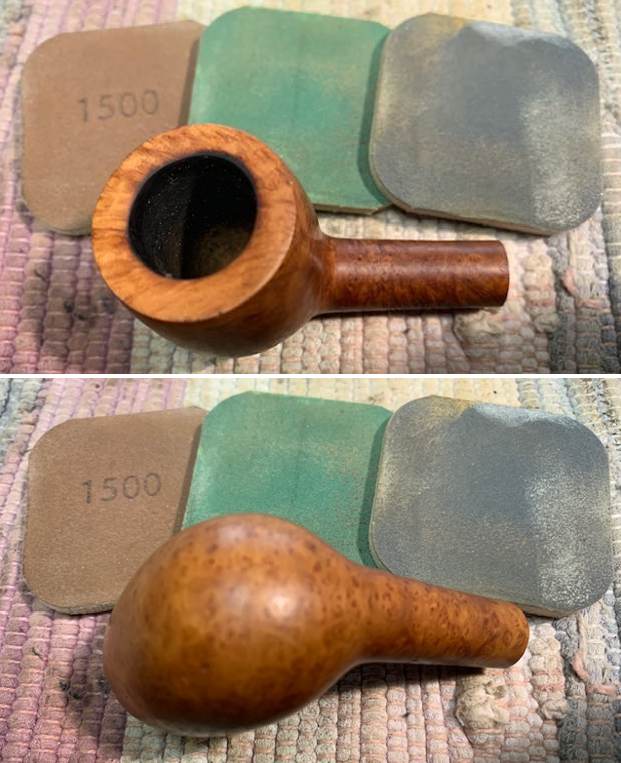
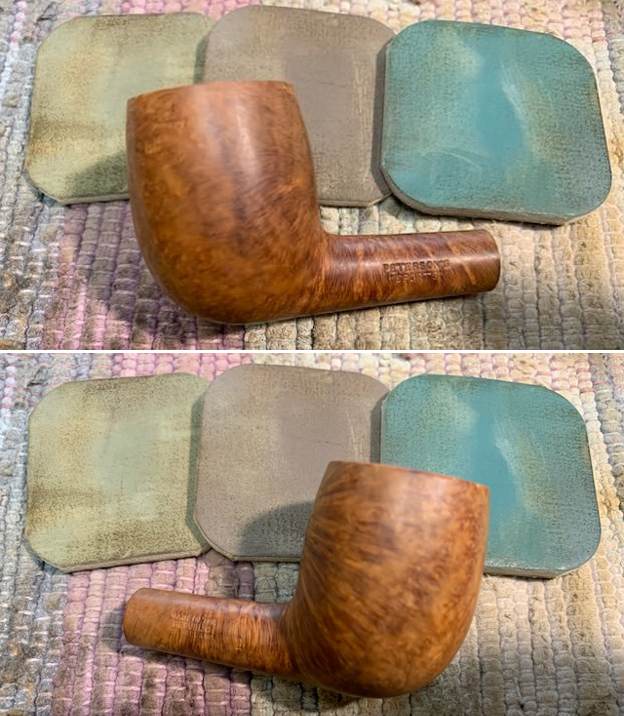
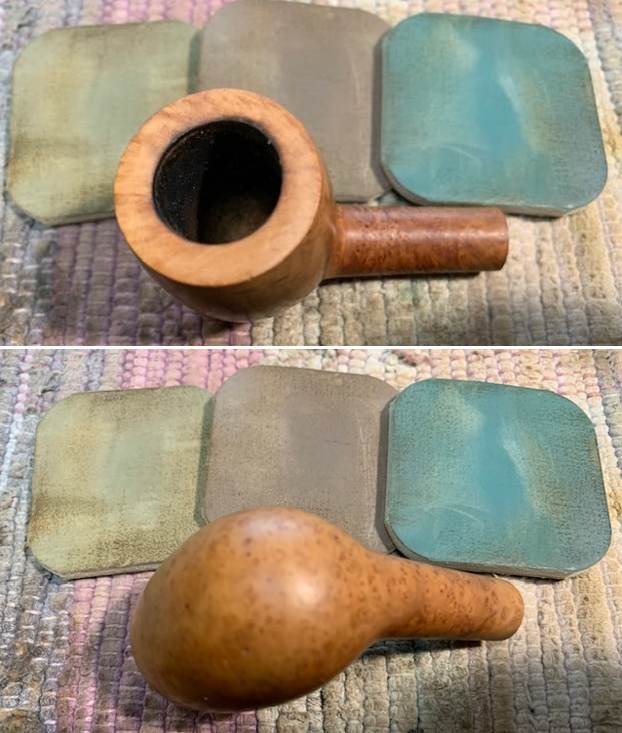
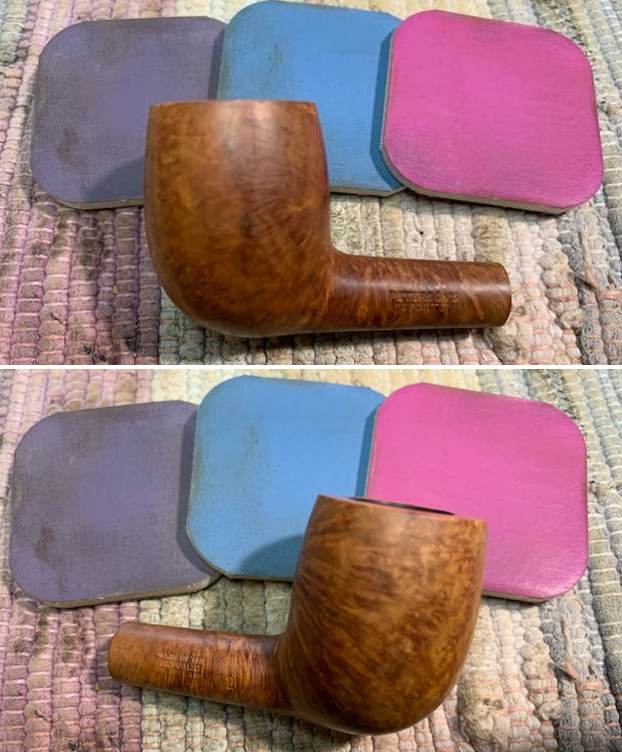
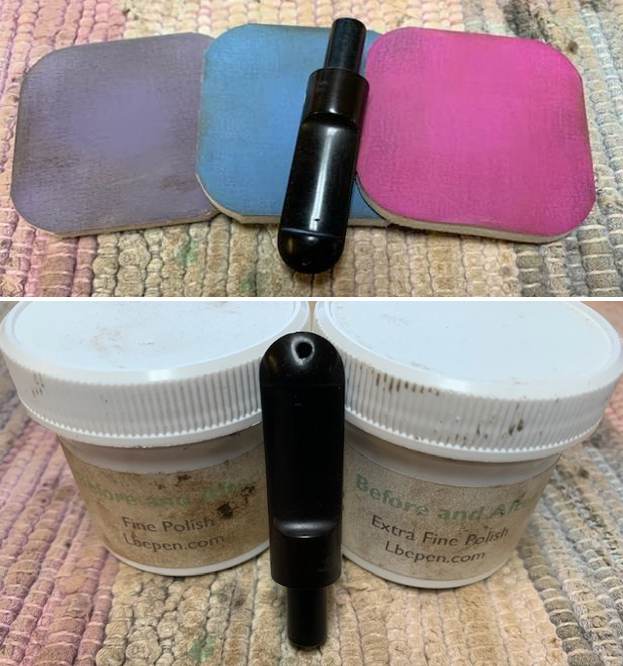
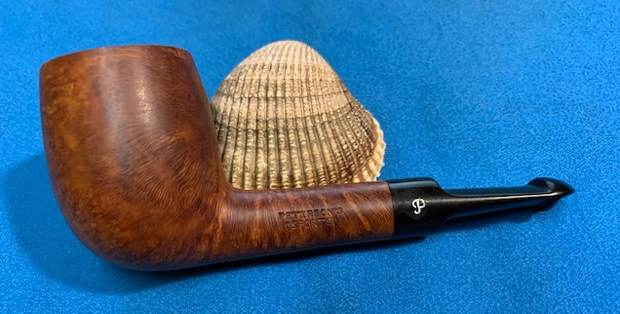
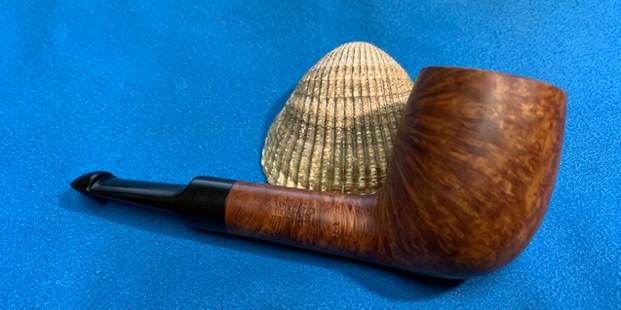
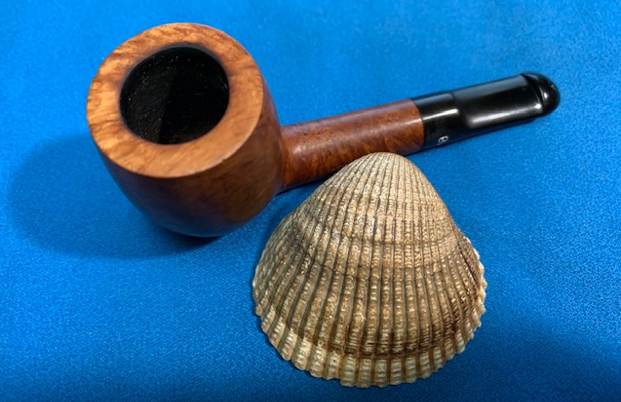
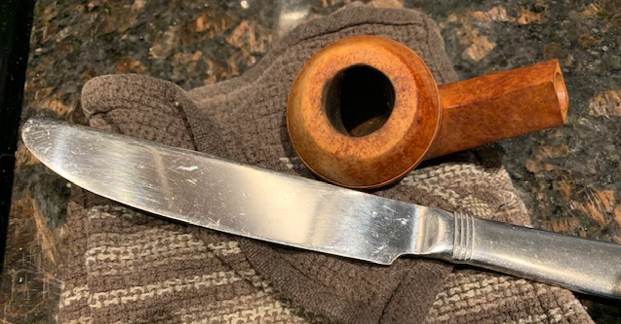
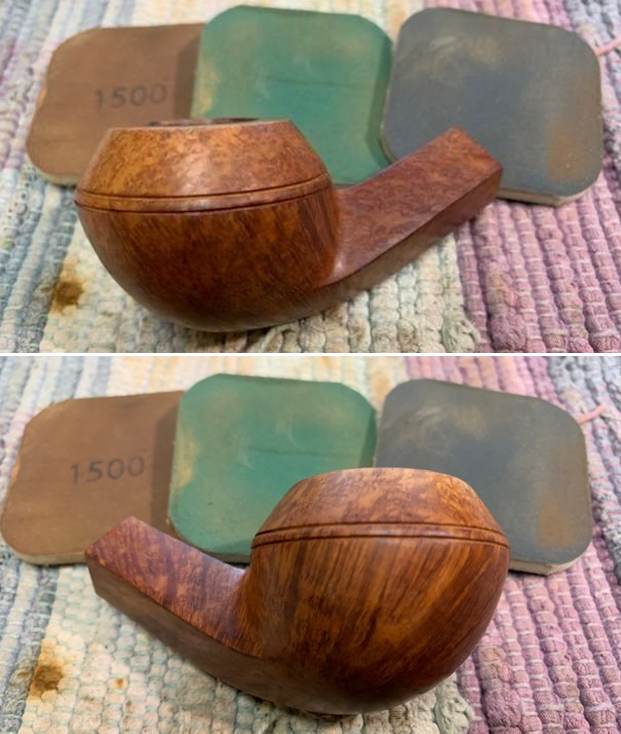
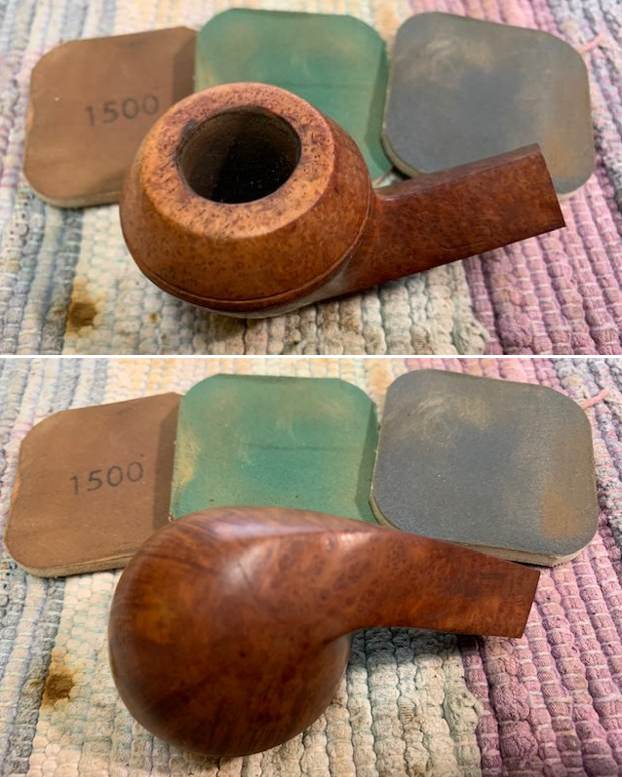
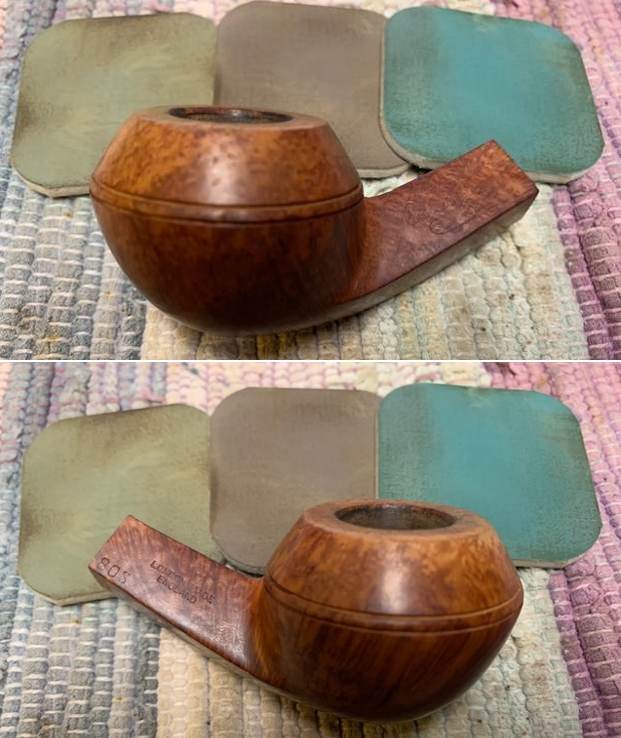
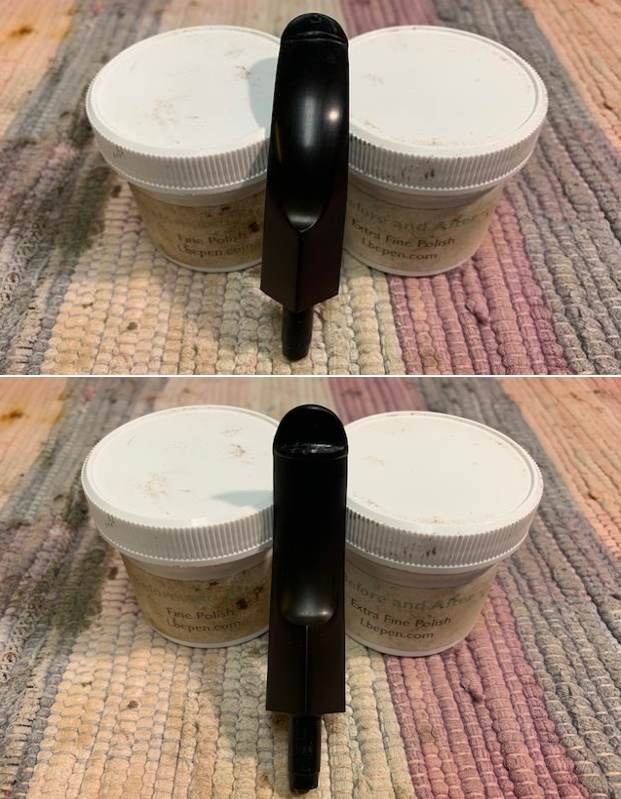
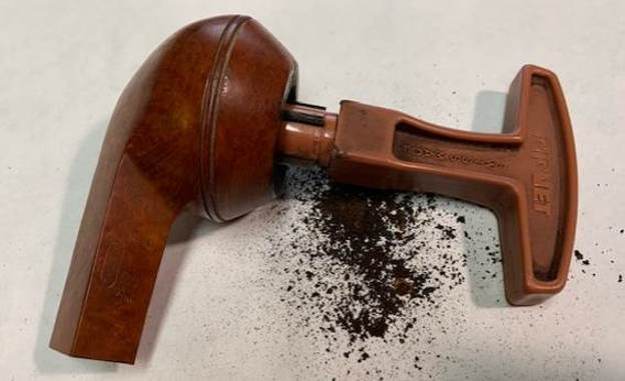
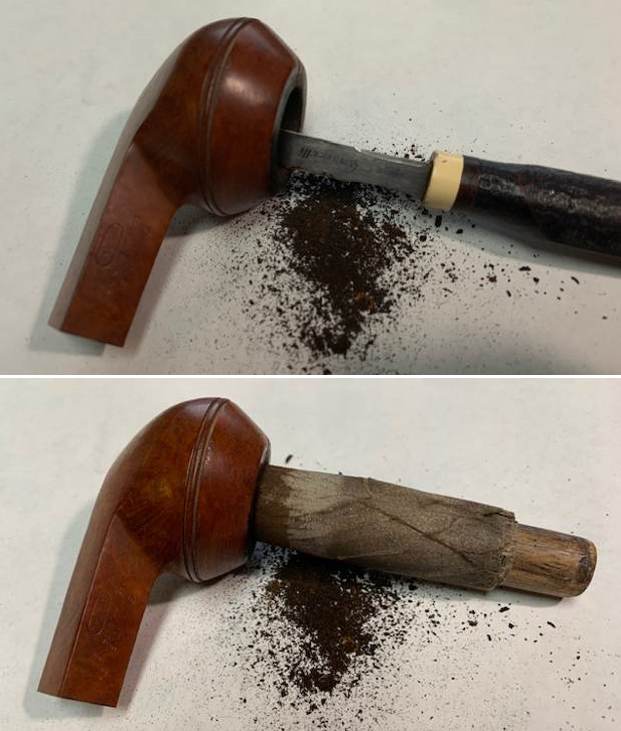
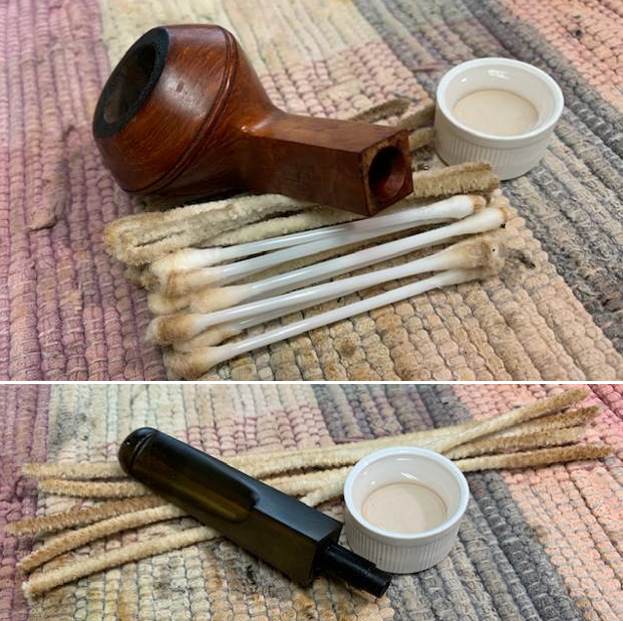
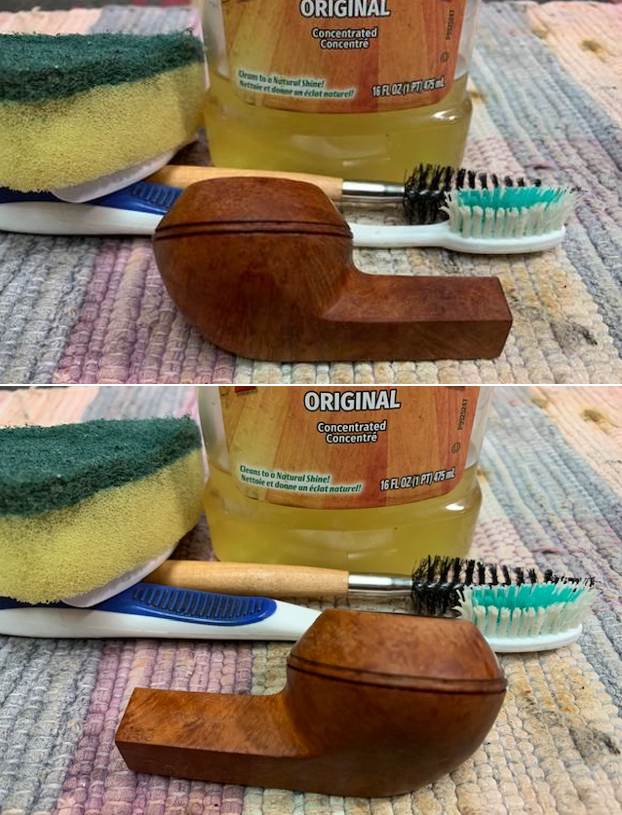
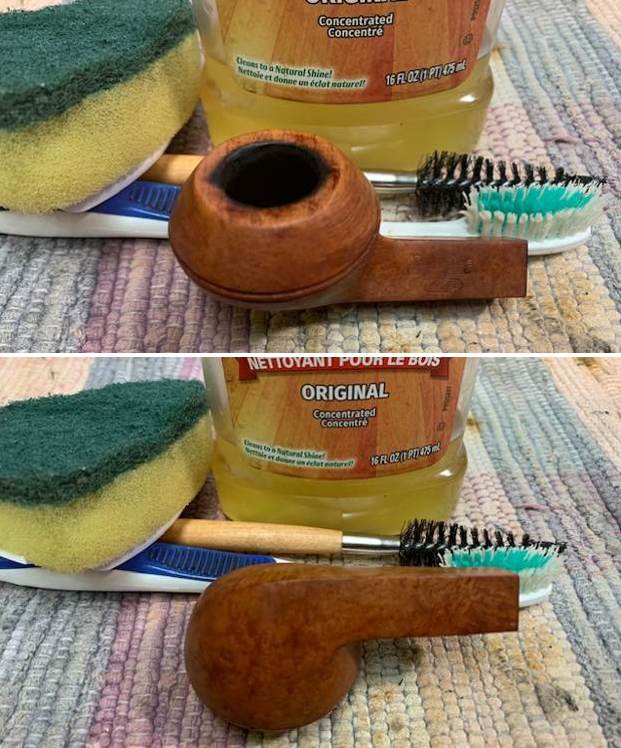
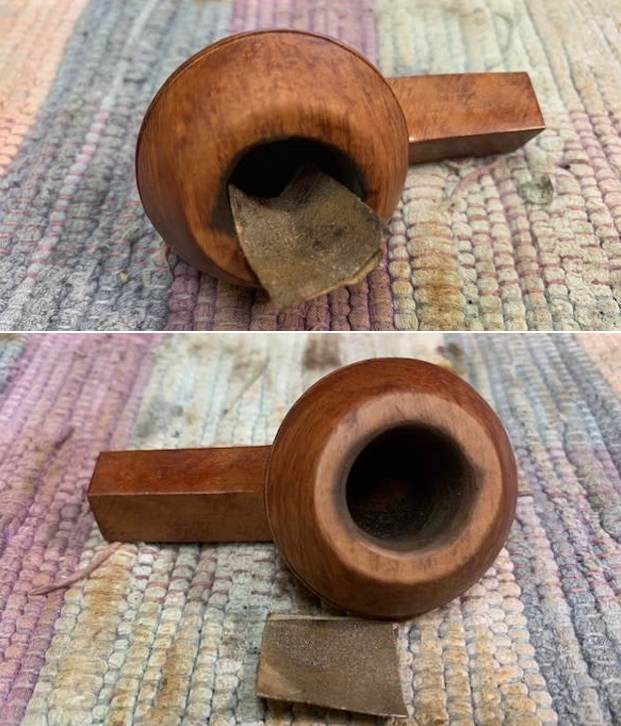
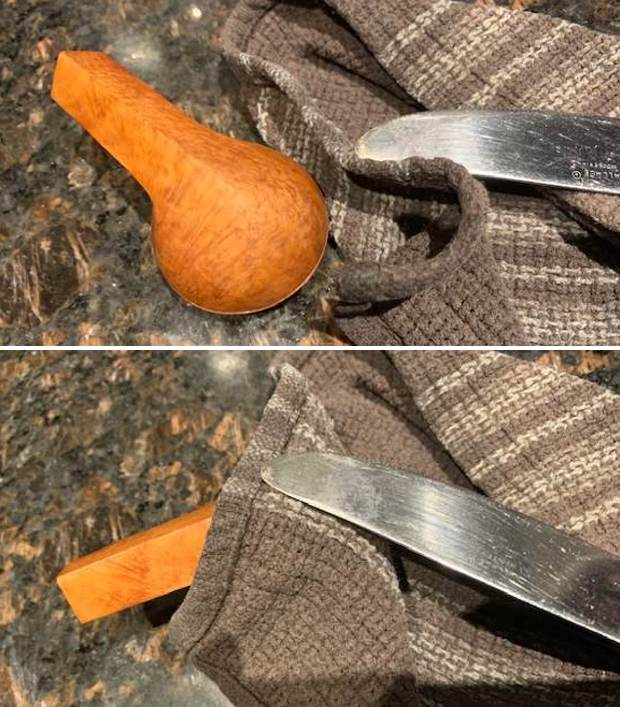
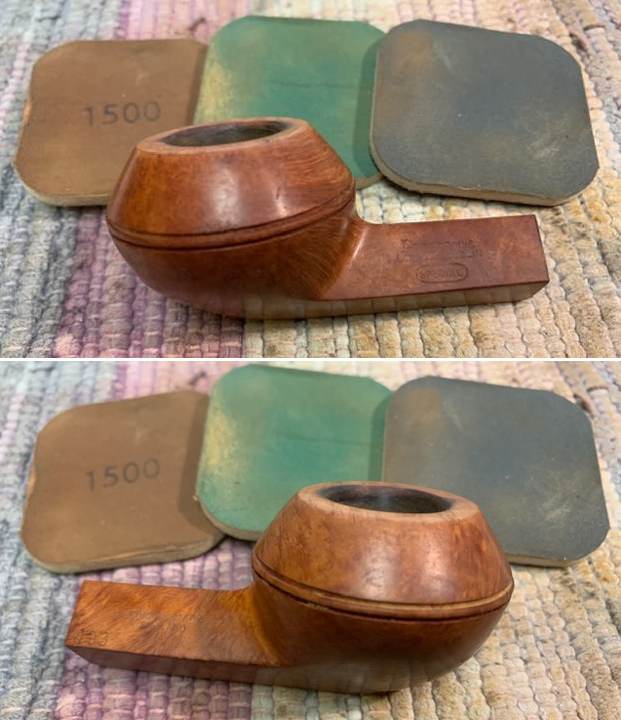
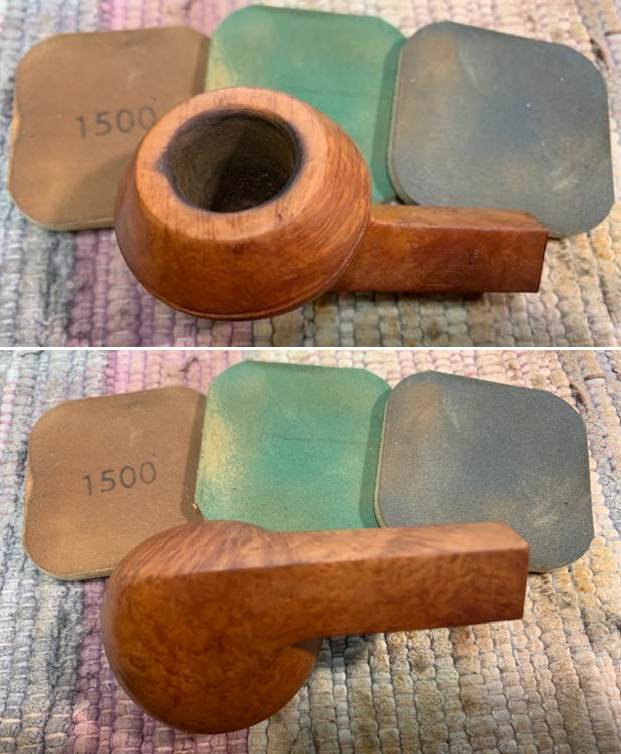
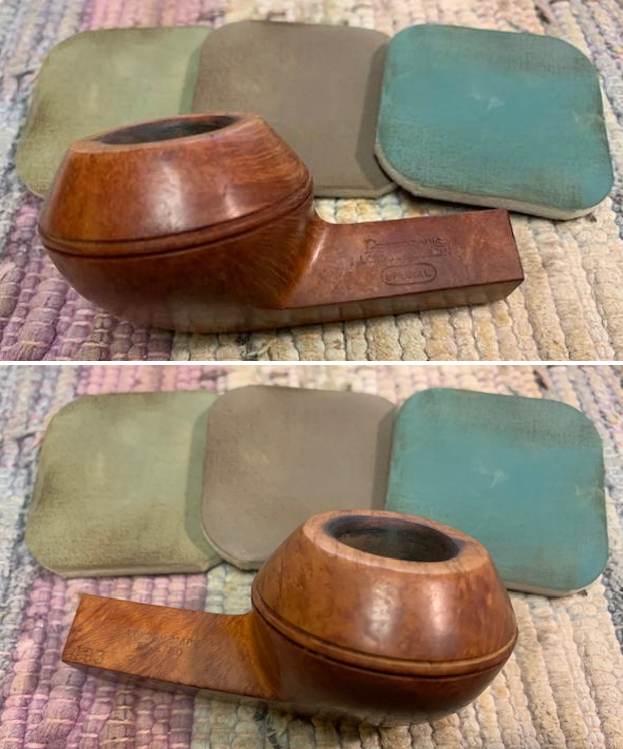
Armed with this information I started working on the pipe. I reamed the bowl with a PipNet pipe reamer to remove the cake from the bowl. I cleaned up the remaining cake with a Savinelli Fistall Pipe Knife. I sanded the bowl with 220 grit sandpaper wrapped around a piece of dowel to smooth out the inside of the bowl. The walls looked very good with no checking or heat damage. I cleaned out the shank with pipe cleaners, cotton swabs and 99% alcohol to remove the oils from the walls. It was filthy and when I was finished it smelled clean and fresh. I cleaned out the inside of the stem with alcohol and pipe cleaners.I scrubbed the bowl with undiluted Murphy’s Oil Soap to clean off the thick oils and grime ground into the surface of the briar. I scrubbed the lava on the rim top with a Scotch Brite pad to remove the build up there. I used a shank brush to clean out the mortise The bowl looked and smelled much better and the grain really began to stand out clearly. I worked over the top and the inner edge of the bowl with 220 grit sandpaper to smooth out the burned edge and the damaged rim top. It definitely came out looking much better. I try to steam out the dents a bit more to reduce them more. The trick on these old pipes is not to go overboard on the repairs but to leave a bit of the story behind as it changes the shape and feel of the pipe. I steamed out the dents/hatch marks on the top of the bowl using a hot butter knife and a wet cloth. I heated the knife on my gas stove and then pressed it against the wet cloth. The steam generated caused the dents to lift. I repeated the process until I was unable to lift them any more. While it is not perfect it is certainly better.I polished the briar (carefully avoiding the areas where the pipe is stamped on the shank sides) with micromesh sanding pads. I dry sanded it with 1500-12000 grit sanding pads. I wiped it down after each pad with a damp cloth to remove the sanding debris. I worked some Before & After Restoration Balm into the surface of the smooth briar with my finger tips. The product is amazing and works to clean, enliven and protect the briar. I let it sit on the briar for 10 or more minutes and then buff it off with a soft cloth. It really makes the grain sing. I set the bowl aside and turned my attention to the stem. I sanded the stem surface with 220 grit sandpaper to break up the oxidation and remove the tooth chatter on marks on both sides. I started the polishing of the stem with 400 grit wet dry sandpaper.I polished the vulcanite with micromesh sanding pads. I used 1500-12000 grit pads to polish the vulcanite. I wiped down the stem with Obsidian Oil after each sanding pad. I have an oil impregnated piece of cloth that I use after each pad. I polished it further with Before & After Stem Polish both Fine and Extra Fine polishes. I gave it a further coat of Obsidian Oil and set it aside to dry. I put the pipe back together – the bowl with its new stem. This smooth finished Peterson’s London & Dublin SPECIAL 493 Straight Bulldog is a real beauty with great grain around the bowl. The thin P-lip style vulcanite stem works very well with the medium brown briar. This English Made Special pipe is a very collectible part of Peterson’s history. The grain on the bowl is quite beautiful and came alive with the buffing. I used Blue Diamond on the buffing wheel on both the bowl and stem. I gave both multiple coats of carnauba wax on the wheel then buffed it with a clean buffing pad to raise the shine. I hand buffed it with a microfibre cloth to deepen the shine. The Peterson’s SPECIAL 493 Straight Bulldog feels great in the hand. It is lightweight and the contrast in the browns of the briar and the polished vulcanite stem is quite amazing. The dimensions of the pipe are Length: 5 ¾ inches, Height: 1 ½ inches, Outer diameter of the bowl: 1 ¼ inches, Chamber diameter: ¾ of an inch. The weight of the pipe is 1.34 ounces/38 grams. It really is a beauty. I have one more pipe to work on from my friends collection and then I will send them all back to him. Thanks for walking through the restemming and the restoration with me. Cheers.

Breathing New Life into a 1906 Peterson’s Patent System Shape 14


Blog by Steve Laug

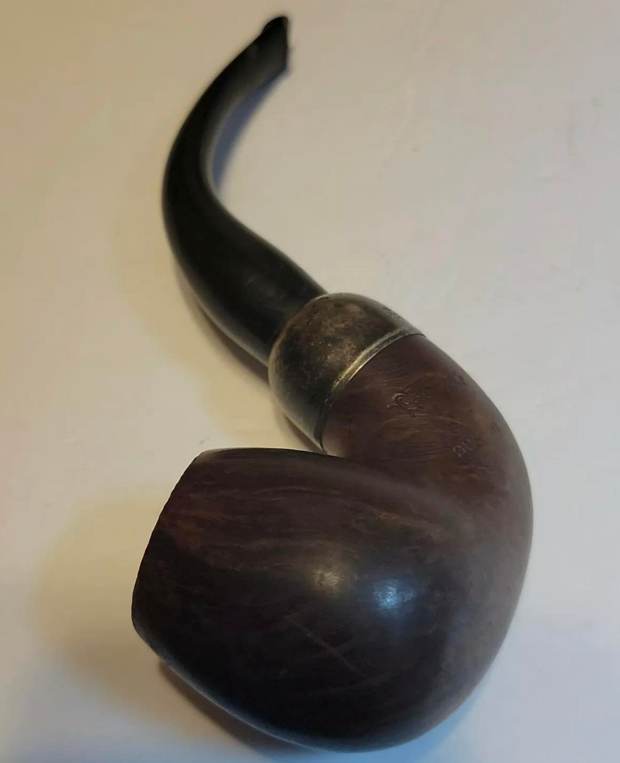
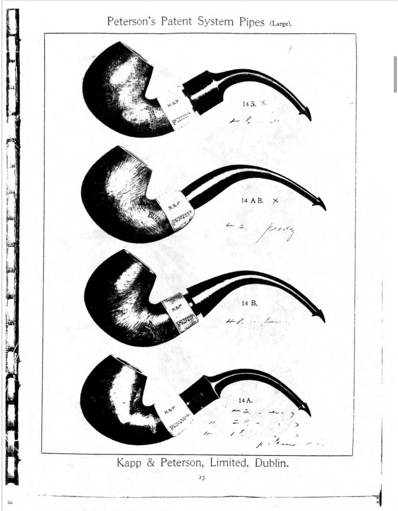
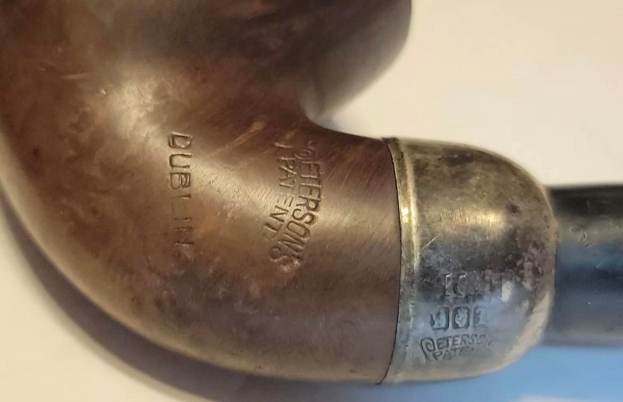
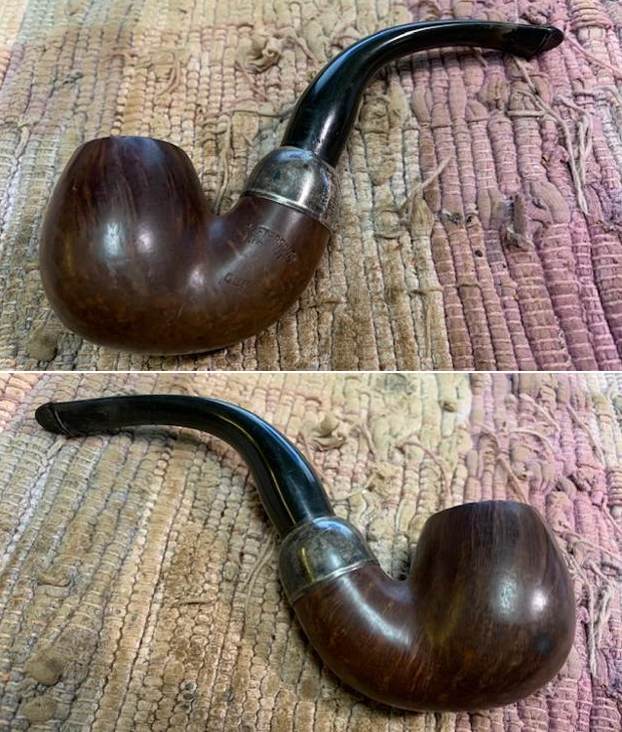
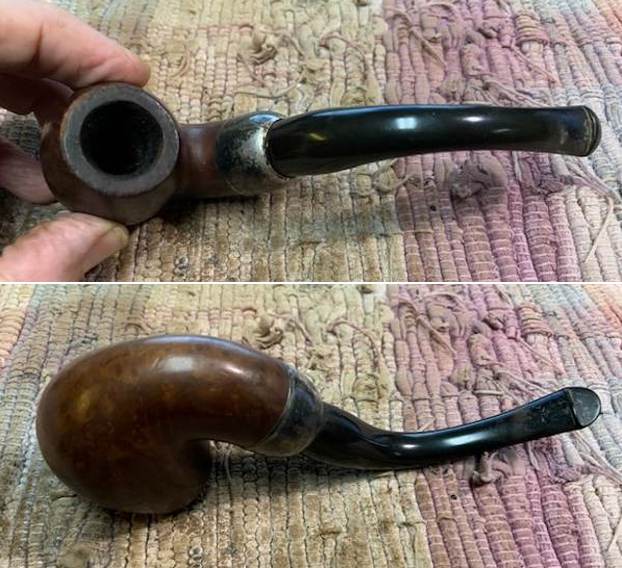
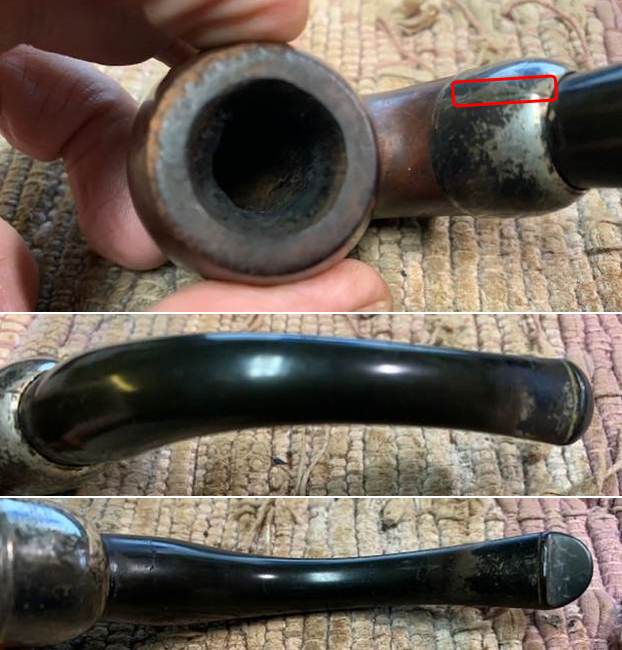
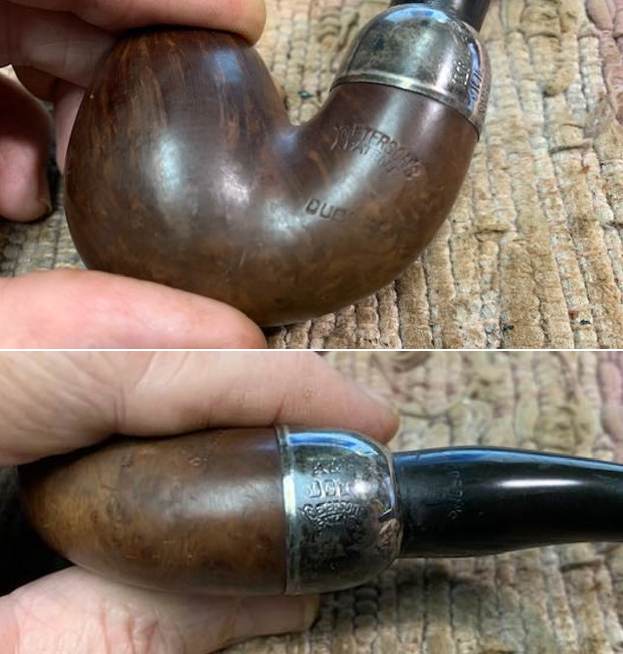
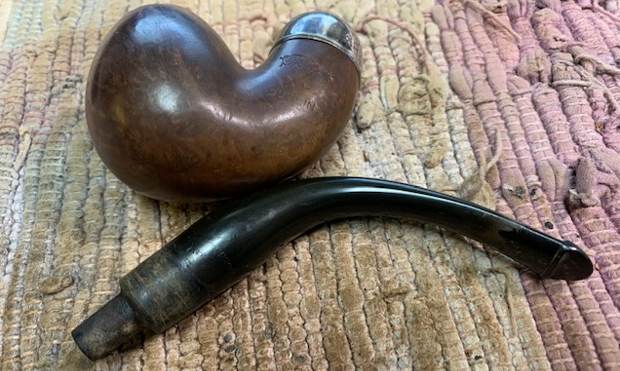
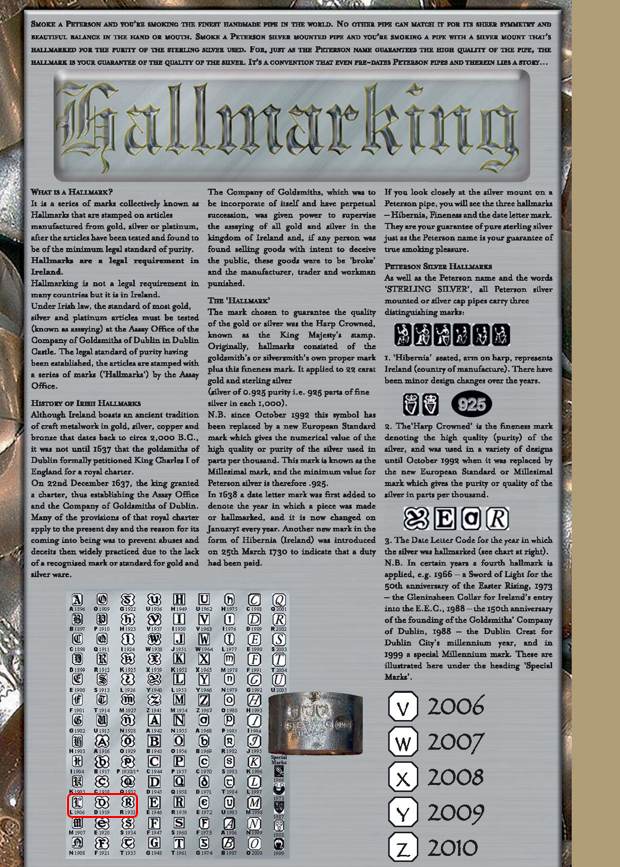
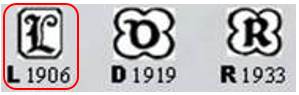
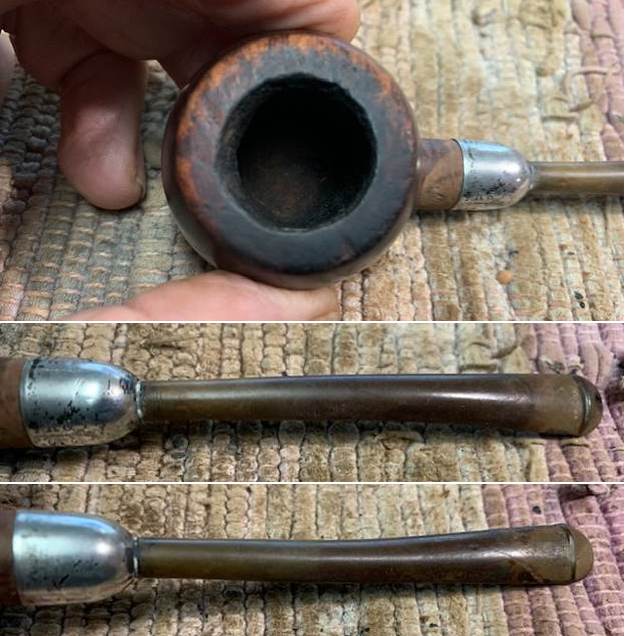
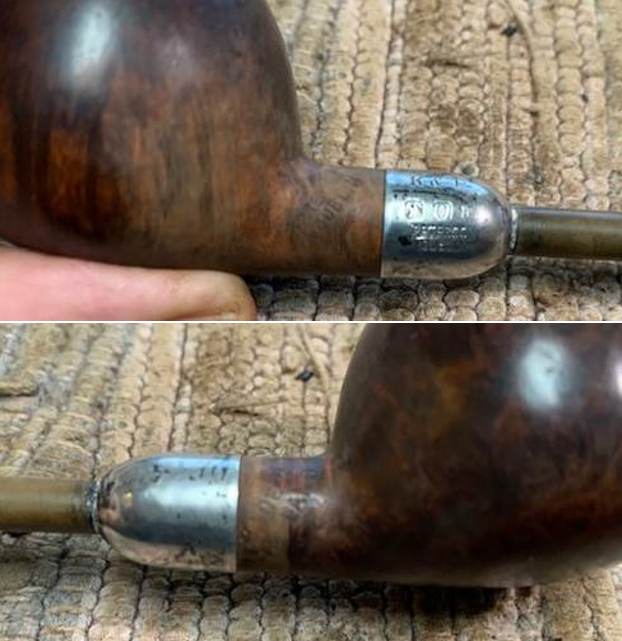
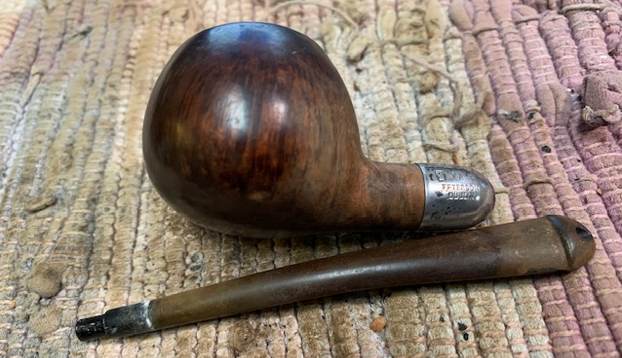
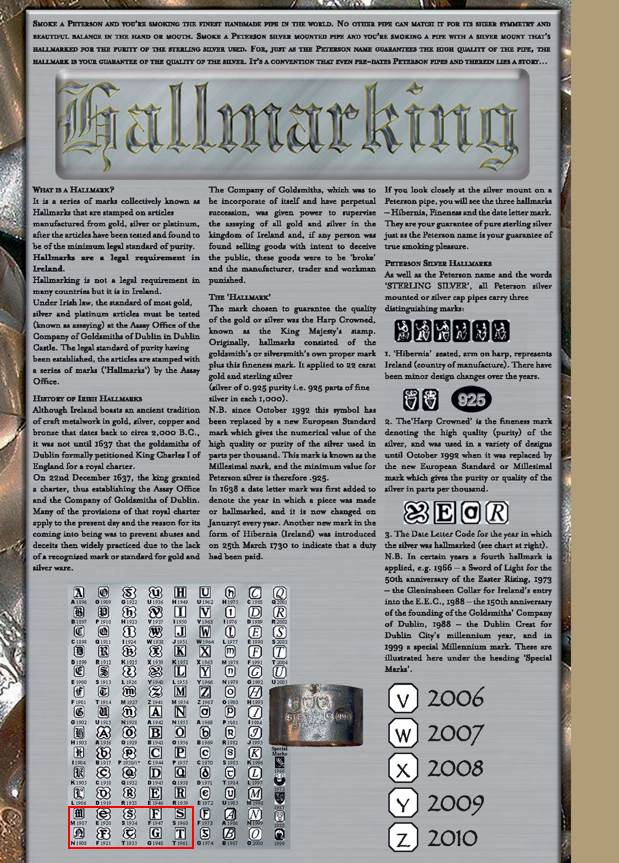
The next pipe is the second of four Peterson’s that came to me for work from a friend of mine. It is another older, nice looking Peterson’s System Pipe that was quite a mess. The finish was worn and dirty. The rim top was lightly damaged, darkened and had a lava build up. The inner edges of the rim were worn but looked okay. The silver ferrule was tarnished but the stamping was readable. The stamping on the shank sides was readable with a lens. It is stamped across the shank horizontally on the left side and reads Peterson’s [over] Patent [over] Dublin. There is no stamping on the right side of the shank. The silver ferrule is stamped K&P [over] three hallmarks -1. Hibernia seated on a throne (represents Ireland) 2. Crowned harp (signifying the quality of the silver) 3. The letter “L” (giving the year of manufacture). All are in square shaped cartouches. Under these it is stamped Peterson’s [arched over] Dublin. I will need to confirm the date stamps and the stamping to confirm the dating of the pipe. There appears to be a split in the silver ferrule under the tarnish on the right top side. The stem is also stamped and reads Peterson’s arched over Patent. I have included the pictures of the pipe that my friend sent to me early on in our conversation. My friend also sent along a page out of the 1906 Peterson catalog that one of his friends has a copy of. I have included the photo below. His pipe is the second one down in the photo below. It is a shape 14. He also included a  photo of the stamping on the shank and the silver ferrule. It reads as noted above. The ferrule has turned downward over time. It took nearly a month for the pipes to arrive in Canada for me to work on. I took photos of them to have an idea of what I was dealing with. You can see from the photos what I saw. The finish is really worn and dirty almost obscuring the amazing grain that is on the bowl sides. Rim top showed darkening as noted above and there were cuts or marks on the top of the rim. The inner edge and outer edge of the bowl was in surprising good shape. There was a build up of lava on the rim top and a thick cake in the bowl. The airway in mortise is very constricted and clogged and will need to be opened once again. The silver ferrule had a split on the top right side but it did not go from top to bottom It was very tarnished but readable. The original style patent stem is present and in remarkable good condition. There were light tooth marks and a lite calcification at ahead of the button on both sides. I took some photos of the rim top and bowl to capture the condition of the pipe. You can see the cake in the bowl. There is a light lava coat and some darkening. There was damage all around the outer edge of the bowl that was heavy on the right front edge. You can see the marks of a crack in the ferrule on the right side in the first photo. The older style P-lip system stem is in good condition with some calcification on the top and underside of the stem near the button. There were light tooth marks and chatter on both sides.I took photos of the stamping on the shank sides and the silver ferrule to try and capture them as best as I could. They were weak but they are readable with a lens. They read as noted above.I removed the stem from the bowl and took a photo of it to show its appearance. The tenon end of the stem has some calcification (or possibly some dried silver polish) where it sat against the silver.Before I started the restoration process on the pipe I wanted to confirm the date that my friend had sent to me for this pipe. I turned to Peterson’s Hallmark Chart that I have on rebornpipes to pin down the date (https://rebornpipes.com/tag/peterson-hallmark-chart/). I have include a copy of that chart below. I drew a red box around the date stamp that matches the one on the pipe. It is a 1906 Peterson Patent System Pipe Shape 14.I expanded the chart above and captured the section that included the section from 1906-1933 below. It confirms that the date is indeed 1906.Now I knew that I was working on a Peterson’s Patent System pipe made in 1906 and the Dublin stamp tells me it was made in Dublin.

I turned to Peterson’s Dublin in the book, The Peterson Pipe by Mark Irwin & Gary Malmberg. I quote from that section below:

 Dublin (1906-2003) Although DUBLIN appears under PETERSON’S on many pipes over the decades, it has served mostly as part of the brand name. The word first appeared on pipes hallmarked 1906-11, stamped PETERSON’S over PATENT OVER DUBLIN. The simpler PETERSON’S over DUBLIN first appeared on pipes hallmarked 1912 after the expiration of the patent. Illustrations of pipes in the ’37 catalogue show a random dispersion of the stamp PETERSON’S over OF DUBLIN together with the ordinary PETERSON’S over DUBLIN on every model offered. Specimen of the former will bear either an Irish COM or LONDON MADE over ENGLAND COM and almost certainly date from 1945-62. It was first mentioned in print as part of a model name in the ’68 price list, as K&P DUBLIN, in ’92 for a Danish market line…

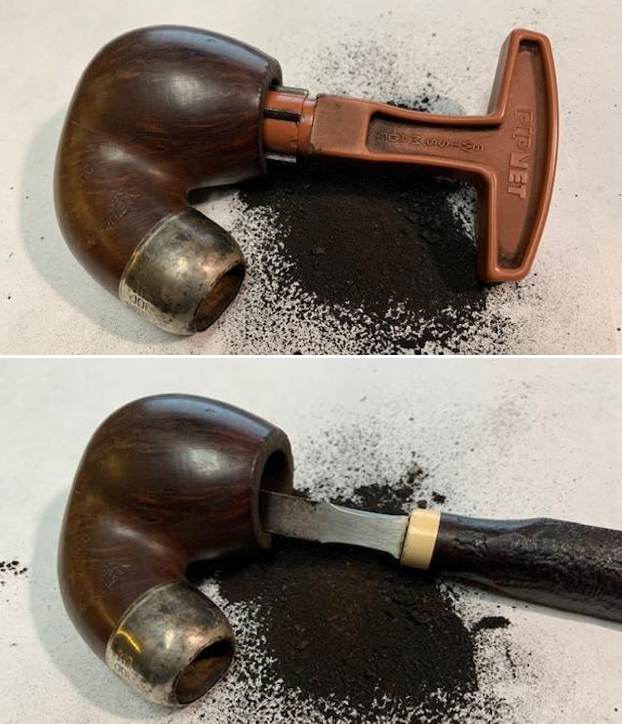
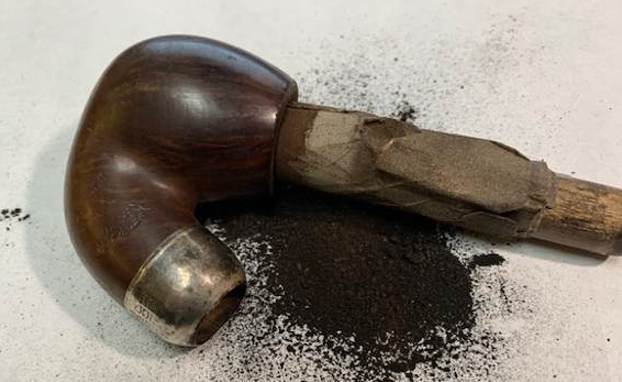
Armed with this information I started working on the pipe. I reamed the bowl with a PipNet pipe reamer to remove the cake from the bowl. I cleaned up the remaining cake with a Savinelli Fistall Pipe Knife. I sanded the bowl with 220 grit sandpaper wrapped around a piece of dowel to smooth out the inside of the bowl. The walls looked very good with no checking or heat damage. I cleaned out the shank with pipe cleaners, cotton swabs and 99% alcohol to remove the oils from the walls. It was filthy and when I was finished it smelled clean and fresh. I cleaned out the inside of the stem with alcohol and pipe cleaners.I scrubbed the bowl with Murphy’s Oil Soap to clean off the thick oils and grime ground into the surface of the briar. When the warm water hit the ferrule it slipped off into my hands. (Great news as it had turned and needed to be reset correctly). I scrubbed it on undiluted and rinsed it off with warm water to remove the soap and the grime. The bowl looked much better and the grain really began to stand out clearly. I also used some small shank brushes to try to open the airway into the bowl. With a little bit of work the draught is perfect. I ran some more pipe cleaners and cotton swabs through the shank and airway to remove the tars that had loosened by scrubbing. Once finished I aligned the stamping on the ferrule and carefully slid it in place on the shank. I also ran a light bead of CA glue along the split in the ferrule to stop it from going further. My friend would need to take it to a jeweler to have it soldered with silver for a proper restore.I worked over the top and the inner edge of the bowl with 220 grit sandpaper to smooth out the burned edge and the rim top. I also worked a bit on the outer edge damage on the front o the bowl at the same time. It definitely came out looking much better. The trick on these old pipes is not to go overboard on the repairs but to leave a bit of the story behind as it changes the shape and feel of the pipe. I polished the briar (carefully avoiding the areas where the pipe is stamped on the shank sides) with micromesh sanding pads. I dry sanded it with 1500-12000 grit sanding pads. I wiped it down after each pad with a damp cloth to remove the sanding debris. I worked some Before & After Restoration Balm into the surface of the smooth briar with my finger tips. The product is amazing and works to clean, enliven and protect the briar. I let it sit on the briar for 10 or more minutes and then buff it off with a soft cloth. It really makes the grain sing. I polished the silver ferrule with a jewelers cloth to remove the remaining tarnish/oxidation and protect it against further tarnishing. There are a few dings in the silver but I chose to leave them as part of the story of the pipe. I carefully buffed the briar and avoided the silver. I did not want to further damage it or cause it to loosen so I chose to wax it by hand with Conservator’s Wax and buffed it with a soft cloth. I set the bowl aside and turned my attention to the stem. I examined it closely and saw the Peterson’s Patent stamp on the stem. The frustrating thing is that it was intermixed with the deep scratches on the shank end of the stem. I carefully sanded the scratched areas, avoiding the stamping on the stem. I used a small piece of 220 grit sandpaper and polished it with 400 grit wet dry sandpaper.I polished the vulcanite with micromesh sanding pads – dry sanding with 1500-12000 grit pads. I wiped down the stem with Obsidian Oil after each sanding pad. I have an oil impregnated piece of cloth that I use after each pad. I polished it further with Before & After Stem Polish both Fine and Extra Fine polishes. I gave it a further coat of Obsidian Oil and set it aside to dry. I put the pipe back together – the bowl with its new stem. This smooth finished 1906 Peterson’s Patent  System Pipe Shape 14 is a real beauty with great grain around the bowl. The thin P-lip style vulcanite stem works very well with silver ferrule and the medium brown briar. This Irish made System pipe is a very collectible part of Peterson’s history. The grain on the bowl is quite beautiful and came alive with the buffing. I used Blue Diamond on the buffing wheel on both the bowl and stem. I gave both multiple coats of carnauba wax on the wheel then buffed it with a clean buffing pad to raise the shine. I hand buffed it with a microfibre cloth to deepen the shine. The Peterson’s Patent System feels great in the hand. It is lightweight and the contrast in the browns of the briar, the sterling silver ferrule and the polished vulcanite stem is quite amazing. The dimensions of the pipe are Length: 6 inches, Height: 2 inches, Outer diameter of the bowl: 1 1/8 inches, Chamber diameter: ¾ of an inch. The weight of the pipe is 2.19 ounces/62 grams. It really is a beauty. I have two more  pipes left to work on from my friends collection and then I will send them all back to him. Thanks for walking through the restemming and the restoration with me. Cheers.

Breathing Life into a 1921 Peterson’s Dublin Prince


Blog by Steve Laug

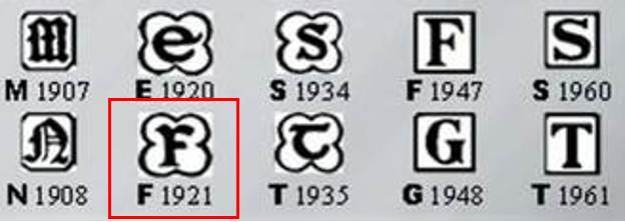
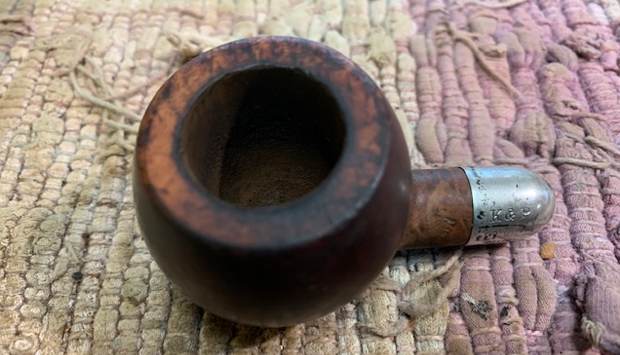
The next pipe came to me for work from a friend of mine. It is a nice looking Peterson’s Prince that was quite a mess. The finish was worn and tired with fading on the left side of the bowl and shank. The rim top was damaged and darkened with a lava build up. The inner edges of the rim were damaged and worn. The silver ferrule was tarnished but the stamping was readable. The stamping on the shank sides was readable with a lens. It is stamped diagonally on the left side and reads Peterson’s [over] Dublin. On the right side it is also stamped diagonally and reads Made In [over] Ireland. The silver ferrule is stamped K&P [over] three hallmarks -1. Hibernia seated on a throne (represents Ireland) 2. Crowned harp (signifying the quality of the silver) 3. The letter “f” (giving the year of manufacture). All are in scalloped square shaped cartouches. Under these it is stamped Peterson [over] Dublin. I will need to confirm the date stamps and the stamping to confirm the dating of the pipe. I have included the pictures of the pipe that my friend sent to me early on in our conversation.It took nearly a month for the pipes to arrive in Canada for me to work on. I took photos of them to have an idea of what I was dealing with. You can see from the photos what I saw. The finish is really worn and faded on the left side mid bowl back to the ferrule on the shank. The older finish was dark on the rest of the bowl. Rim top showed darkening as noted above and there were cuts or marks on the top of the rim. The inner edge had some damage and nicks at the front side of the bowl. There was a build up of lava on the rim top and a light build up of cake in the bowl. The silver ferrule was tarnished but readable. I took some photos of the rim top and bowl to capture the condition of the pipe. You can see the cake in the bowl. There is heavier lava on the top left and back of the rim than on the rest. There was damage all around the inner edge of the bowl that included reaming and burn damage. The military stick bit style stem was heavily oxidized and there was some calcification on the top and underside of the stem near the button. There were tooth marks and chatter on both sides.I took photos of the stamping on the shank sides and the silver ferrule to try and capture them as best as I could. They were weak but they are readable with a lens. They read as noted above.I removed the stem from the bowl and took a photo of it to show its appearance. The tenon end of the stem has some calcification (or possibly some dried silver polish) where it sat against the silver.Before I started the restoration process on the pipe I wanted to confirm the date that my friend had sent to me for this pipe. I turned to Peterson’s Hallmark Chart that I have on rebornpipes to pin down the date (https://rebornpipes.com/tag/peterson-hallmark-chart/). I have include a copy of that chart below. I drew a red box around the date stamp that matches the one on the pipe. It is indeed a 1921 Peterson. I expanded the chart above and captured the section that included the section from 1907-1961 below. It confirms that the date is indeed 1921.Now I knew that I was working on a Peterson Prince made in 1921 and the Dublin stamp tells me it was made in Dublin.

I turned to Peterson’s Dublin in the book, The Peterson Pipe by Mark Irwin & Gary Malmberg. I quote from that section below:

 Dublin (1906-2003) Although DUBLIN appears under PETERSON’S on many pipes over the decades, it has served mostly as part of the brand name. The word first appeared on pipes hallmarked 1906-11, stamped PETERSON’S over PATENT OVER DUBLIN. The simpler PETERSON’S over DUBLIN first appeared on pipes hallmarked 1912 after the expiration of the patent. Illustrations of pipes in the ’37 catalogue show a random dispersion of the stamp PETERSON’S over OF DUBLIN together with the ordinary PETERSON’S over DUBLIN on every model offered. Specimen of the former will bear either an Irish COM or LONDON MADE over ENGLAND COM and almost certainly date from 1945-62. It was first mentioned in print as part of a model name in the ’68 price list, as K&P DUBLIN, in ’92 for a Danish market line…

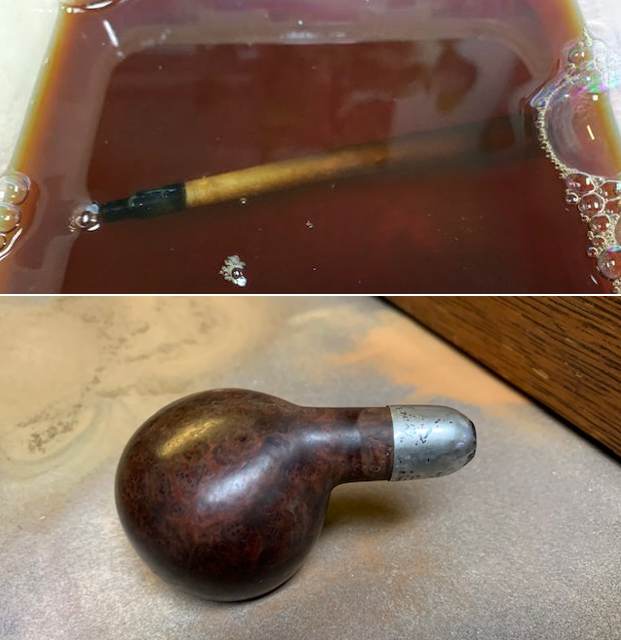
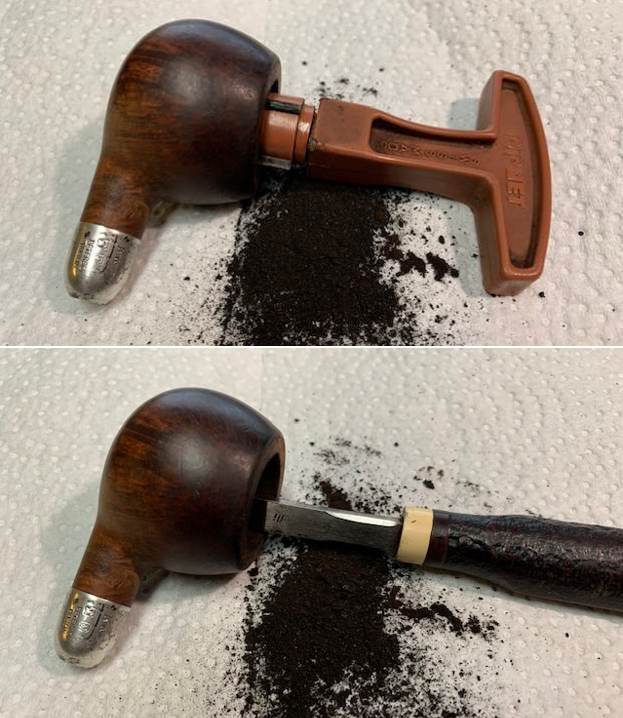
Armed with this information I started working on the pipe. I put the stem in a bath of Briarville’s Pipe Stem Deoxidizer to deal with the thick oxidation on the surface. I would let it sit for about 6 hours and then remove it and work on it in the mean time I decided to work on the bowl. I lightly topped it with  220 grit sandpaper on a topping board to remove the damage on the rim top and the thick lava coat.I reamed the bowl with a PipNet pipe reamer to remove the cake from the bowl. I cleaned up the remaining cake with a Savinelli Fistall Pipe Knife. I sanded the bowl with 220 grit sandpaper wrapped around a piece of dowel to smooth out the inside of the bowl. The walls looked very good with no checking or heat damage. After reaming the bowl I turned my attention back to the rim edge and top of the bowl. I worked over the edge of the bowl with 220 grit sandpaper to smooth out the burned edge and the rim top. I wrapped a small wood ball in sandpaper and used it to sand the top and inner edge and give it a light bevel to minimize the inner edge. I scrubbed the bowl with Murphy’s Oil Soap to clean off the thick oils and grime ground into the surface of the briar. I scrubbed it on undiluted and rinsed it off with warm water to remove the soap and the grime. The bowl looked much better and the grain really began to stand out clearly. I cleaned out the shank with pipe cleaners, cotton swabs and 99% alcohol to remove the oils from the walls. It was filthy and when I was finished it smelled clean and fresh.I polished the briar (carefully avoiding the areas where the pipe is stamped on the shank sides) with micromesh sanding pads. I dry sanded it with 1500-12000 grit sanding pads. I wiped it down after each pad with a damp cloth to remove the sanding debris. I worked some Before & After Restoration Balm into the surface of the smooth briar with my finger tips. The product is amazing and works to clean, enliven and protect the briar. I let it sit on the briar for 10 or more minutes and then buff it off with a soft cloth. It really makes the grain sing. I polished the silver ferrule with a jewelers cloth to remove the remaining tarnish/oxidation and protect it against further tarnishing. There are a few dings in the silver but I chose to leave them as part of the story of the pipe. I set the bowl aside and turned my attention to the stem. I took it out of the Briarville Pipe Stem Deoxidizer and cleaned off the outside and the inside of the stem. I rubbed the stem down with a paper towel to clean off the remaining oxidation. I cleaned out the inside of the stem with alcohol and pipe cleaners.I “painted” the tooth marks in the vulcanite with the flame of a Bic lighter and was able to life the tooth marks to the surface. The surface looked really good.I polished the vulcanite with micromesh sanding pads. I used 1500-12000 grit pads to polish the vulcanite. I wiped down the stem with Obsidian Oil after each sanding pad. I have an oil impregnated piece of cloth that I use after each pad. I polished it further with Before & After Stem Polish both Fine and Extra Fine polishes. I gave it a further coat of Obsidian Oil and set it aside to dry.I put the pipe back together – the bowl with its new stem. This smooth finished 1921 Peterson’s Dublin Prince is a real beauty with great grain around the bowl. The thin P-lip style vulcanite stem works very well with silver ferrule and the medium brown briar. This Irish made Prince is a very collectible part of Peterson’s history. The grain on the bowl is quite beautiful and came alive with the buffing. I used Blue Diamond on the buffing wheel on both the bowl and stem. I gave both multiple coats of carnauba wax on the wheel then buffed it with a clean buffing pad to raise the shine. I hand buffed it with a microfibre cloth to deepen the shine. The Peterson’s Prince feels great in the hand. It is lightweight and the contrast in the browns of the briar, the sterling silver ferrule and the polished vulcanite stem is quite amazing. The dimensions of the pipe are Length: 6 inches, Height: 1 ½ inches, Outer diameter of the bowl: 1 ¼ inches, Chamber diameter: 7/8 of an inch. The weight of the pipe is 1.20 ounces/34 grams. It really is a beauty. I have three other pipes to work on from my friends collection and then I will send them all back to him. Thanks for walking through the restemming and the restoration with me. Cheers.

New Life for a Second Republic Era Peterson’s System Standard Smooth 302 Bent Apple


Blog by Steve Laug

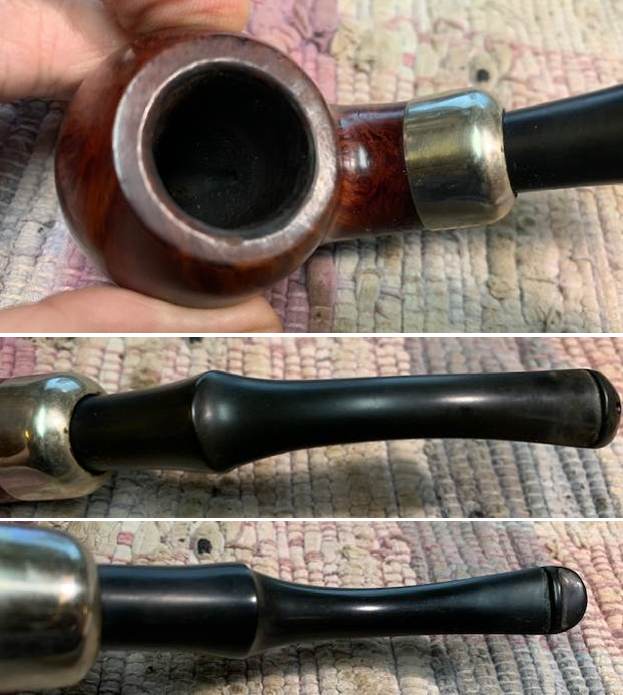
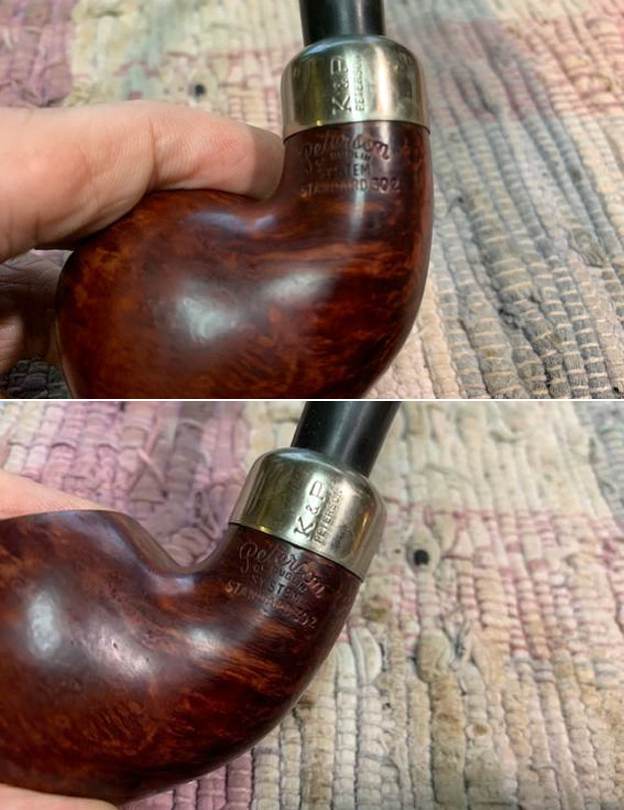
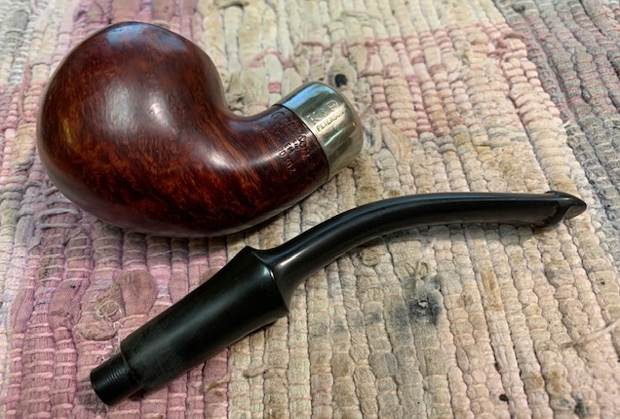
I chose another smooth Peterson’s System Standard 302 Bent Apple pipe with a saddle vulcanite stem to work on next. Here is a link to the first of them (https://rebornpipes.com/2021/12/29/restoring-a-petersons-republic-era-system-standard-302-bent-apple-2/). Neither Jeff nor I have any idea where this pipe came from or any of its background story. It is another of those mysteries that happen when the box of pipes for restoration overflows and there are no notes to go with the pipes in the box. I am sure we will have a few more of those in the days ahead. The pipe is stamped on the left side of the shank and reads Peterson’s [over] System [over] Standard. The nickel ferrule is stamped K & P [over] Peterson. On the right side it is stamped Made in the Republic of Ireland and underneath that is the shape number 302. Jeff had cleaned up the pipe with his usual thoroughness. He reamed the pipe with a PipNet Pipe Reamer and cleaned up the remnants with a Savinelli Fitsall Pipe Knife.  He scrubbed the bowl with undiluted Murphy’s Oil Soap with a tooth brush. He rinsed it under running warm water to remove the soap and grime. He cleaned out the inside of the shank and the airway in the stem with alcohol, cotton swabs and pipe cleaners. He soaked the stem in Before & After Deoxidizer and rinsed it off with warm water. Somewhere along the way as it sat here it picked up some stickiness on the top of the stem that looks a lot like what is left behind by a gummed label. I took photos of the pipe 3 years later when I finally got around to working on it. As you can see it is another beautiful looking pipe. I took photos of the rim top and bowl as well as the stem to give a sense of the condition of both. The rim top and the inner edge were in excellent condition. The stem was clean but had light tooth marks and chatter on the top and underside ahead of the button. I took photos of the stamping on the sides of the shank. They are clear and readable as noted above.I took the stem out of the shank and took a photo of the overall look of the pipe. It is another beauty. There are a few small dings from the journey of the pipe that will remain as a part of its story.I am including the information from Pipedia’s article on Peterson pipes. It is a great read in terms of the history of the brand (https://pipedia.org/wiki/Peterson). I have included a bit of the pertinent history here.

1950 – 1989 The Republic Era – From 1950 to the present time, the stamp for this era is “Made in the Republic of Ireland” in a block format generally in three lines but two lines have been used with or without Republic being abbreviated.

I knew that I was dealing with a Republic Era pipe made between 1950-1989. It was a smooth Peterson’s System Standard 302 Apple with nice grain. The finish was stained with a combination of brown stains. Now it was time to work on the pipe.

I started my work on the pipe by polishing the briar with micromesh sanding pads – wet sanding with 1500-12000 grit pads. I wiped the bowl down after each pad with a damp cloth. I rubbed the bowl down with Before & After Restoration Balm. I worked it into the surface of the bowl sides and shank with my fingertips. The product works to clean, enliven and protect the briar. I let the balm sit for a little while and then buffed with a cotton cloth to raise the shine.    I set the bowl aside and turned to work on the stem. I polished the stem with micromesh sanding pads – 1500-12000 grit pads. I wiped it down with Obsidian Oil after each sanding pad. I used Before & After Pipe Polish – both Fine and Extra Fine to further polish the stem. I gave it a final coat of Obsidian Oil and set it aside to dry. This Republic Era Peterson’s System Standard 302 Bent Apple with a vulcanite saddle stem is a great looking pipe now that it has been restored. The beautiful grain that shines through the polished finish is stunning. I put the stem back on the bowl and carefully buffed the pipe with Blue Diamond on the buffing wheel. I gave the bowl and the stem multiple coats of carnauba wax on the buffing wheel and followed that by buffing the entire pipe with a clean buffing pad. I hand buffed the pipe with a microfiber cloth to deepen the shine. The finished Peterson’s System Standard 302 fits nicely in the hand and feels great. Give the finished pipe a look in the photos below. The dimensions of the pipe are Length: 6 inches, Height: 1 ½ inches, Outside diameter of the bowl: 1 ¼ inches, Chamber diameter: ¾ of an inch. The weight of the pipe is 72gr/2.57 oz. This pipe has been spoken for so it will soon be heading out with a couple of others that have been set aside for their new trustee. Thanks for reading this blog and my reflections on the pipe while I worked on it. There are many more to come!

Restoring a Peterson’s Republic Era System Standard 302 Bent Apple


Blog by Steve Laug

The next pipe on the work table came to us from an antique store in October, 2017 in Pocatello, Idaho, USA. It is a smooth Peterson’s System Standard pipe with a saddle vulcanite stem. The pipe is stamped on the left side of the shank and reads Peterson’s [over] System [over] Standard. On the right side it is stamped Made in the Republic of Ireland and underneath that is the shape number 302. The shape number stamp is partially double stamped over the COM stamp. It is a shape that Peterson’s called a Bent Apple. The nickel ferrule is stamped K & P [over] Peterson. The finish had a lot of grime ground into it and it was very dirty. The bowl was moderately caked and there was a lava coat on the flat rim top and the inner edge of the rim. The inner edge had some nicks and damage and the rim top had a lot of scratches that looked like the rim top had been scraped with a knife. The stem was lightly oxidized and had light tooth chatter and marks on the top and underside near the P-lip style button. The dirty Bent Apple shaped pipe showed promise. Jeff took photos of the pipe before he started his cleanup work.  He took photos of the rim top and bowl to give a clear picture of the thickness of the cake and the condition of the rim top and edges. He also took photos of the top and underside of the stem to show the oxidation, calcification and chatter and tooth marks. Jeff took a photo of the side and heel of the bowl to give a picture of what the briar around the pipe looked like.He took photos of the stamping on the shank and the nickel ferrule. It reads as noted above and is clear and readable.    I am including the information from Pipedia’s article on Peterson pipes. It is a great read in terms of the history of the brand (https://pipedia.org/wiki/Peterson). I have included a bit of the pertinent history here.

1950 – 1989 The Republic Era – From 1950 to the present time, the stamp for this era is “Made in the Republic of Ireland” in a block format generally in three lines but two lines have been used with or without Republic being abbreviated.

I knew that I was dealing with a Republic Era pipe made between 1950-1989. It was a smooth Peterson’s System Standard 302 Apple with nice grain. The finish was stained with a combination of brown stains. Now it was time to work on the pipe.

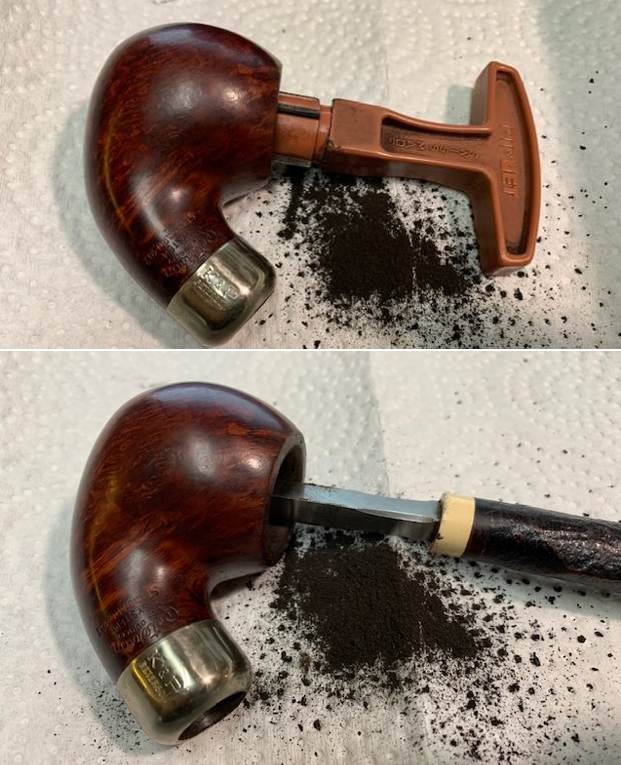
Jeff had cleaned up the pipe with his usual penchant for thoroughness. He reamed the pipe with a PipNet Pipe Reamer and cleaned up the remnants with a Savinelli Fitsall Pipe Knife.  He scrubbed the bowl with undiluted Murphy’s Oil Soap with a tooth brush. He rinsed it under running warm water to remove the soap and grime. He cleaned out the inside of the shank and the airway in the stem with alcohol, cotton swabs and pipe cleaners. He soaked the stem in Before & After Deoxidizer and rinsed it off with warm water. I took photos of the pipe 3 years later when I finally got around to working on it. The rim top and inner edge of the rim looked very good with a bit of damage on the inner edge and on the rim surface leaving the bowl slightly out of round. The stem surface looked very good with some tooth marks and chatter on both sides near the button. I took a photo of the stamping on the shank. It is clear and readable as noted above.     I removed the stem and took a photo of the pipe to give a sense of the whole. The stem is a typical Peterson’s System stem. I started my work on the pipe by working over the rim top and the inner edge of the bowl to clean up the damage. Once finished the rim top and edge looked much better.  I repaired one small deep nick in the heel of the bowl by filling it in with clear super glue. Once it cured I sanded it smooth to blend it into the surrounding briar. I touched up sanded area with a Maple stain pen to blend it into the surrounding briar. I polished the briar with micomesh sanding pads – wet sanding with 1500-12000 grit pads. I wiped the bowl down after each pad with a damp cloth.  I rubbed the bowl down with Before & After Restoration Balm. I worked it into the surface of the bowl sides and shank with my fingertips. The product works to clean, enliven and protect the briar. I let the balm sit for 15 minutes and then buffed with a cotton cloth to raise the shine.    I set the bowl aside and turned to work on the stem. I smoothed out the chatter and tooth marks with 220 grit sandpaper and started polishing it with 400 grit wet dry sandpaper.  I polished the vulcanite stem with micromesh sanding pads – 1500-12000 grit pads. I wiped it down with a damp cloth after each sanding pad. I used Before & After Pipe Polish – both Fine and Extra Fine to further polish the stem.    This Peterson’s System Standard 302 Bent Apple with a vulcanite saddle stem is a great looking pipe now that it has been restored. The beautiful grain that shines through the polished finish is stunning. I put the stem back on the bowl and carefully buffed the pipe with Blue Diamond on the buffing wheel. I gave the bowl and the stem multiple coats of carnauba wax on the buffing wheel and followed that by buffing the entire pipe with a clean buffing pad. I hand buffed the pipe with a microfiber cloth to deepen the shine. The finished Peterson’s System Standard 302 fits nicely in the hand and feels great. Give the finished pipe a look in the photos below. The dimensions of the pipe are Length: 6 inches, Height: 2 inches, Outside diameter of the bowl: 1 ¼ inches, Chamber diameter: ¾ of an inch. The weight of the pipe is 50gr/1.76oz.  I will be putting this pipe on the rebornpipes store shortly. You will find it in the Irish Pipemakers section. If you are interested in adding this pipe to your collection send me a message or an email. Thanks for reading this blog and my reflections on the pipe while I worked on it. There are many more to come!
New Life for a Republic Era Peterson’s System Standard Rusticated 314 Bent Billiard


Blog by Steve Laug

The next pipe I have chosen is another Peterson’s System Standard pipe. This one is a nice smaller size rusticated version of the shape 314. It has a saddle style Peterson’s stem on the shank end. I believe it came to us from the estate of Anglican minister that was a great friend of mine here in Canada. I was in the airport in Hong Kong when his daughter contacted me to tell me of his death and asked if I wanted to take on his pipes. I told her that I was sad to hear of his death but would gladly take on his pipes to restore and sell. This pipe was one that I believe he purchased as an estate and did not smoke. It is very clean other than the dust and debris of time  on the bowl and stem. The bowl and shank were clean with no cake, tars or oils. There was no lava on the rim top. The nickel ferrule was oxidized but undamaged. The pipe was stamped on the underside of the shank and read Peterson’s [arched over] System [over] Standard. To the right of that it was stamped Republic of Ireland stamp in three lines [over] the shape number 314. The ferrule was stamped K& P over Peterson’s on the left side. The stem was lightly oxidized and had tooth marks on both sides ahead of and on the button. There was no “P” stamp on the stem. I took photos of the pipe before I started my clean up work on it.  I took photos of the rim top and bowl as well as the stem to give a sense of the condition of both. The rim top and the inner edge were in excellent condition. There were clean and a bit spotty. I would need to touch up the stain on the top and edge. The stem was clean but had tooth marks on the top and underside ahead of the button. They are visible in the photos.I took photos of the stamping on the underside of the heel and shank. They are clear and readable as noted above. There is some faintness on parts of the stamping but it is still readable.I took the stem out of the shank and took a photo of the overall look of the pipe.When I worked on other 314’s I had turned to a blog about a pipe that  Paresh had restored – a smooth Peterson’s System Standard 314 earlier this year. As usual he had done good work on the research. I turned to his blog and read through his work on the pipe and the background information that he had gathered (https://rebornpipes.com/2021/07/24/helping-a-fellow-piper-with-his-dream-pipea-petersons-system-pipe/). I quote below from the section on his blog regarding the dating of the pipe.

While dating a Peterson’s pipe, I always fall back to my under mentioned favorite site; http://thepetersonpipeproject.blogspot.com/2007/07/dating-peterons-pipes.html

I quote from the above site.

Stamping of Bowl:

During the years of Kapp and Peterson’s business operations, the country of Ireland has undergone several name changes and K&P’s stamping on their pipes reflects these changes. Knowing these changes, a Peterson pipe can be roughly dated and placed in “eras.”

  • The Republic Era is from 1949 until the present. The Republic of Ireland was formed on 17 April 1949. From 1949 to present the stamp for this era is “Made in the Republic of Ireland” in a block format generally in three lines but two lines have been used with or without Republic being abbreviated.

With that information at hand I turned to work on the pipe itself. The bowl of the pipe was clean and did not have any cake. The finish was very clean so I did not need to scrub or clean that with the normal soap. I checked the inside of the shank, the sump and the airway in the stem with alcohol, cotton swabs and pipe cleaners. The surface of the stem was clean and free of oxidation so that was a bonus.I restained the rim top and inner edges with a Black Sharpie Pen to blend it into the rest of the surrounding briar. The match was good.I rubbed the bowl down with Before & After Restoration Balm. I worked it into the surface of the bowl sides and shank with my fingertips and a horsehair shoe brush. The product works to clean, enliven and protect the briar. I let the balm sit for a little while and then buffed with a cotton cloth to raise the shine. I polished the nickel ferrule with a jewelers cloth to remove the oxidation and give the nickle a shine. It came out looking pretty good. I set the bowl aside and turned my attention to the stem. I “painted” the tooth marks on the surface with the flame of a lighter to lift them as much as possible. I was able to lift many of them but a few still remained. I filled in the remaining tooth marks with clear CA glue and set it aside to cure. I sanded the repairs smooth with a folded piece of 220 grit sandpaper to begin blending them into the stem surface. I started the polishing with some 400 grit wet dry sandpaper.I set the bowl aside and turned to work on the stem. I polished the stem with micromesh sanding pads – 1500-12000 grit pads. I wiped it down with Obsidian Oil after each sanding pad. I used Before & After Pipe Polish – both Fine and Extra Fine to further polish the stem. I gave it a final coat of Obsidian Oil and set it aside to dry. This Republic Era Peterson’s System Standard 314 Rusticated Bent Billiard with a vulcanite stem is a great looking pipe now that it has been restored. The rugged rustication shows a lot of peaks and valleys and depth. The polished finish is stunning. I put the stem back on the bowl and carefully buffed the pipe with Blue Diamond on the buffing wheel. I gave the bowl multiple coats of Conservator’s Wax and the stem multiple coats of carnauba wax on the buffing wheel. I followed that by buffing the entire pipe with a clean buffing pad. I hand buffed the pipe with a microfiber cloth to deepen the shine. The finished Peterson’s System Standard Rusticated 314 fits nicely in the hand and feels great. Give the finished pipe a look in the photos below. The dimensions of the pipe are Length: 5 inches, Height: 1 ¾ inches, Outside diameter of the bowl: 1 1/8 inches, Chamber diameter: ¾ of an inch. The weight of the pipe is 45grams/1.59oz. This one has been reserved for first refusal. If you are interested in being in the queue for this pipe send me a message or an email. Thanks for reading this blog and my reflections on the pipe while I worked on it. There are many more to come!

Breath of Life for a Republic Era Peterson’s System Standard 314 Bent Billiard


Blog by Steve Laug

The next pipe I have chosen is another Peterson’s System Standard pipe. This one is a nice smaller size It has a saddle style Peterson’s stem on the shank end. It came to us from the estate of Anglican minister that was a great friend of mine here in Canada. I was in the airport in Hong Kong when his daughter contacted me to tell me of his death and asked if I wanted to take on his pipes. I told her that I was sad to hear of his death but would gladly take on his pipes to restore and sell. This pipe was obviously a favourite of his. It had been well smoked and there was a thick cake in the bowl and lava overflowing onto the rim top. The briar was dirty with grime and dirt ground into the finish and some of the lava flowing down the bowl sides. The nickel ferrule was oxidized but undamaged. There were oils oozing out under the ferrule and also out of the top of the ferrule onto the stem. The pipe was stamped on the left side and read Peterson’s System Standard. On the right side it had the three line Republic of Ireland stamp [over] the shape number 314. The ferrule was stamped K& P over Peterson’s on the left side. The stem was oxidized, calcified and had tooth marks on both sides ahead of the button. The P logo stamp on the left side was also filled with grime. Jeff took photos of the pipe before he started his clean up work on it. Jeff captured the thick cake in the bowl and the heavy lava overflow onto the rim top in his photos. There really was no way of knowing what the edges looked like under the thick cake. You can also see the lava flowing down the sides of the bowl in the photos. The stem surface had a lot of tooth chatter and marks and was heavily oxidized and calcified. He took photos of the sides and the heel of the bowl to show the interesting grain patterns in the briar. It was quite beautiful.He took photos of the stamping on the sides of the shank and on the ferrule and stem. It is readable but faint in places.I remembered that Paresh had restored a Peterson’s System Standard 314 earlier this year and as usual had done good work on the research. I turned to his blog and read through his work on the pipe (https://rebornpipes.com/2021/07/24/helping-a-fellow-piper-with-his-dream-pipea-petersons-system-pipe/). I quote below from the section on his blog regarding the dating of the pipe.

While dating a Peterson’s pipe, I always fall back to my under mentioned favorite site; http://thepetersonpipeproject.blogspot.com/2007/07/dating-peterons-pipes.html

I quote from the above site.

Stamping of Bowl:

During the years of Kapp and Peterson’s business operations, the country of Ireland has undergone several name changes and K&P’s stamping on their pipes reflects these changes. Knowing these changes, a Peterson pipe can be roughly dated and placed in “eras.”

  • The Republic Era is from 1949 until the present. The Republic of Ireland was formed on 17 April 1949. From 1949 to present the stamp for this era is “Made in the Republic of Ireland” in a block format generally in three lines but two lines have been used with or without Republic being abbreviated.

With that information at hand I turned to work on the pipe itself. Jeff had thoroughly cleaned up the pipe. He reamed the pipe with a PipNet Pipe Reamer and cleaned up the remnants with a Savinelli Fitsall Pipe Knife.  He scrubbed the bowl with undiluted Murphy’s Oil Soap with a tooth brush. He rinsed it under running warm water to remove the soap and grime. He cleaned out the inside of the shank and the airway in the stem with alcohol, cotton swabs and pipe cleaners. He scrubbed the exterior of the stem with Soft Scrubb to remove as much of the oxidation as possible. He soaked the stem in Before & After Deoxidizer and rinsed it off with warm water. I took photos of the pipe once I received it. I took photos of the rim top and bowl as well as the stem to give a sense of the condition of both. The rim top looked had some scratching on the top and some damage to the inner edge but over all it was in much better condition than I thought. The stem cleaned up well and the tooth marks on the top and underside ahead of the button are visible in the photos.I took photos of the stamping on the shank sides. The are clear and readable as noted above. There is some faintness on parts of the stamping but it is still readable.I took the stem out of the shank and took a photo of the overall look of the pipe.I decided to start my work on the pipe by addressing the damage on the inside edge of the bowl and the rim top. I used a folded piece of 220 grit sandpaper to smooth out the edge. I topped the bowl with 220 grit sandpaper on a topping board. I wiped it down with a damp cloth and the rim top damage and burn marks on the outer edges were gone. I polished the briar with micromesh sanding pads – dry sanding with 1500-12000 grit pads. I wiped the bowl down after each pad with a damp cloth. I restained the rim top and inner edges with a Walnut Stain Pen to blend it into the rest of the surrounding briar. The match was good.I rubbed the bowl down with Before & After Restoration Balm. I worked it into the surface of the bowl sides and shank with my fingertips. The product works to clean, enliven and protect the briar. I let the balm sit for a little while and then buffed with a cotton cloth to raise the shine. I set the bowl aside and turned my attention to the stem. I “painted” the tooth marks on the surface with the flame of a lighter to lift them as much as possible. I was able to lift many of them but a few still remained. I filled in the remaining tooth marks with clear CA glue and set it aside to cure. I sanded the repairs smooth with a folded piece of 220 grit sandpaper to begin blending them into the stem surface. I started the polishing with some 400 grit wet dry sandpaper.I touched up the “P” logo on the stem with white acrylic fingernail polish. I worked it into the tails on the “P” with a tooth pick and scraped off the excess with my fingernail and then buffed it with a soft cloth.I set the bowl aside and turned to work on the stem. I polished the stem with micromesh sanding pads – 1500-12000 grit pads. I wiped it down with Obsidian Oil after each sanding pad. I used Before & After Pipe Polish – both Fine and Extra Fine to further polish the stem. This Republic Era Peterson’s System Standard 314 Bent Billiard with a vulcanite stem is a great looking pipe now that it has been restored. The beautiful grain that shines through the polished finish is stunning. As the pipe is smoked the patina should develop and look even better. I put the stem back on the bowl and carefully buffed the pipe with Blue Diamond on the buffing wheel. I gave the bowl and the stem multiple coats of carnauba wax on the buffing wheel and followed that by buffing the entire pipe with a clean buffing pad. I hand buffed the pipe with a microfiber cloth to deepen the shine. The finished Peterson’s System Standard 314 fits nicely in the hand and feels great. Give the finished pipe a look in the photos below. The dimensions of the pipe are Length: 5 inches, Height: 1 ½ inches, Outside diameter of the bowl: 1 1/8 inches, Chamber diameter: ¾ of an inch. The weight of the pipe is 45grams/1.59oz. This one has been reserved for first refusal. If you are interested in being in the queue for this pipe send me a message or an email. Thanks for reading this blog and my reflections on the pipe while I worked on it. There are many more to come!

A Lot of Work…But it is a Beautiful Republic Era Peterson’s System Standard 312


Blog by Steve Laug

The next pipe on the table was purchased on eBay on October 3, 2016 from Des Moines, Iowa, USA. It was a very dirty Peterson’s System Standard 312. The finish is quite nice with a classic Peterson’s shape and smooth finish. The pipe had a lot of grime ground into the smooth finish with oils and tars in the grain. The bowl had a thick cake with a lot of lava overflow on the rim top and edges. The pipe is stamped on the left side of the shank and reads Peterson’s [over] System [over] Standard. On the right side is stamped Made in the Republic of Ireland [three lines] with the shape number 312 under that. On the oxidized nickel shank cap (ferrule) it is stamped K&P [over] Peterson. The stamping is clear and readable on the pipe and band. The ferrule has a lot of tars and oils oozing out of the end where the stem fits. The stem was dirty, oxidized and calcified with tooth marks and chatter on the stem near the button on both sides and some on the surface of the button as well. There was no Peterson’s “P” on the left side of the P-lip stem. Jeff took photos of the pipe before he worked on it. He took photos of the rim top to show the thick cake in the bowl and the thick overflow of lava on rim top and edge. It is very hard to know what the inner and outer edges look like under the lava. The stem looked rough – there was oxidation, calcification and some deep tooth marks on both sides. He took a photo of the side and heel of the bowl to show the amazing grain that was shining through the grime and oils there. It would definitely look really good once it was cleaned up.The stamping on the sides of the shank read as noted above. The photos show that they are very clear and readable. The stamping on the nickel ferrule is also readable. I am including the information from Pipedia’s article on Peterson pipes. It is a great read in terms of the history of the brand (https://pipedia.org/wiki/Peterson). I have included a bit of the pertinent history here.

1950 – 1989 The Republic Era – From 1950 to the present time, the stamp for this era is “Made in the Republic of Ireland” in a block format generally in three lines but two lines have been used with or without Republic being abbreviated.

I knew that I was dealing with a Republic Era pipe made between 1950-1989. It was a smooth Peterson’s System Standard 312 Billiard with nice grain. The finish was stained with a combination of brown stains. Now it was time to work on the pipe.

Jeff had cleaned it thoroughly. He had reamed it with a PipNet reamer and cleaned that up with a Savinelli Fitsall Pipe Knife. He had scrubbed the exterior of the briar with undiluted Murphy’s Oil Soap. He cleaned out the interior of the shank, sump and airway in the shank and stem with alcohol, pipe cleaners and cotton swabs. He scrubbed the stem with Soft Scrub to remove the oxidation and calcification on the surface. He soaked it in Before & After Deoxidizer to remove the oxidation. He removed it from the Deoxidizer and rinsed it off with warm water. I took some photos of the pipe before I started my part of the work. The rim top had some scratches and darkening on the surface. The outer and inner edges of the rim was okay but there was some burn damage on the front outer edge and on the back inner edge. The stem surface looked better with some tooth marks and chatter on both sides near the button. There was still some light oxidation that would need to be dealt with on the shank end and around the P-lip. I took photos of the stamping on the shank sides. It is clear and readable as noted above.   I removed the stem and took a photo of the pipe to give a sense of the whole. The stem is a typical Peterson’s System stem.I started my work on the pipe by working over the rim top and the inner edge of the bowl to clean up the damage. I topped the bowl lightly on a topping board with 220 grit sandpaper. I used a folded piece of 220 grit sandpaper to rework the inner bevel on the bowl. It worked well and the finished rim top looked significantly better. I polished the briar with micomesh sanding pads – dry sanding with 1500-12000 grit pads. I wiped the bowl down after each pad with a damp cloth. I rubbed the bowl down with Before & After Restoration Balm. I worked it into the surface of the bowl sides and shank with my fingertips. The product works to clean, enliven and protect the briar. I let the balm sit for 15 minutes and then buffed with a cotton cloth to raise the shine. I set the bowl aside and turned to work on the stem. I polished the stem with micromesh sanding pads – 1500-12000 grit pads. I wiped it down with Obsidian Oil after each sanding pad. I used Before & After Pipe Polish – both Fine and Extra Fine to further polish the stem. This Peterson’s System Standard 312 Bent Billiard with a vulcanite stem is a great looking pipe now that it has been restored. The beautiful grain that shines through the polished finish is stunning. As the pipe is smoked the patina should develop and look even better. I put the stem back on the bowl and carefully buffed the pipe with Blue Diamond on the buffing wheel. I gave the bowl and the stem multiple coats of carnauba wax on the buffing wheel and followed that by buffing the entire pipe with a clean buffing pad. I hand buffed the pipe with a microfiber cloth to deepen the shine. The finished Peterson’s System Standard 312 fits nicely in the hand and feels great. Give the finished pipe a look in the photos below. The dimensions of the pipe are Length: 6 inches, Height: 1 ¾ inches, Outside diameter of the bowl: 1 ¼ inches, Chamber diameter: ¾ of an inch. The weight of the pipe is 61grams/2.15oz. This one has been reserved for first refusal. If you are interested in being in the queue for this pipe send me a message or an email. Thanks for reading this blog and my reflections on the pipe while I worked on it. There are many more to come!
Breathing Life into a Peterson’s Republic Era ¼ Bent “Wicklow” 405S Saddle Stem Apple


Blog by Steve Laug

The next pipe I have chosen is smooth finished Peterson’s Saddle Stem Apple with a filter stem. This Apple has a medium brown finish around the bowl sides and rim top. It also came to us from the estate of Anglican minister that was a great friend of mine here in Canada. The Apple had a great grain on the shank that was in great condition. The finish on the bowl sides was dirty. It was stamped on the left side of the shank and read Peterson’s [over] “Wicklow”. On the right side of the shank it is stamped Made in the Republic of Ireland in three lines. Next to the bowl it was stamped with the shape number 405S. There was a thick cake in the bowl and light spattering of lava on the rim top and the inner edge of the bowl. There was darkening on the back side of the rim top. The stem was lightly oxidized and had light tooth marks and chatter on the top and underside on and near the button. There were some deep hash marks on the underside of the stem next to the saddle. The “P” stamp on the left side of the saddle stem is clear. Jeff took photos of the pipe before his cleanup work. They tell the story and give a glimpse of the promise that we see in this pipe.   Jeff took photos of the rim top and stem to show the general condition of the pipe. The bowl is thickly caked and the rim top and edges have some light lava overflow and some darkening on the back side of the rim top. The stem is lightly oxidized and there are some hash marks near the saddle on the underside of the stem. There are light tooth marks on the top and underside near the button. Jeff took some photos of the bowl sides and heel to show the grain that was around this bowl. It is a nice looking pipe.  He took photos of the underside of the shank to show the stamping. The stamping is readable in the photos below and is as noted above.   I am including the information from Pipedia’s article on Peterson pipes. It is a great read in terms of the history of the brand (https://pipedia.org/wiki/Peterson). I have included a bit of the pertinent history here.

1950 – 1989 The Republic Era – From 1950 to the present time, the stamp for this era is “Made in the Republic of Ireland” in a block format generally in three lines but two lines have been used with or without Republic being abbreviated.

During the 1950’s and 60’s the Kapp & Peterson Company was still in the ownership of the Kapp family. However 1964 saw the retiral of the company Managing Director Frederick Henry(Harry) Kapp. 

I turned to “The Peterson Pipe” by Mark Irwin and Gary Malmberg to get some background on the Wicklow Pipe. On page 315 it had the following information on the Wicklow pipe.

Wicklow (1969-) First appearance of this line exclusive to Iwan Ries, handmade black sandblast finish with twin bore mouthpiece. In 1987 offered with a matte-brown finish, nickel band and P-lip mouthpiece; in 2011 as a custom line from Smokingpipes.com in a deep-red sandblast finish with a nickel band. In 2014 released for Italy in brown with a sterling band, vulcanite mouthpiece in fishtail or P-lip, hot-foil P. 

I knew that I was dealing with a Republic Era pipe made between 1969 and the present. It is bit of anomaly in that it does not match any of the descriptions above. The one I have has a matte-brown finish but does not have a band. It does have a P-lip mouthpiece. It is also a smooth finished pipe and not sandblast. It also has a tenon drilled to receive a 6mm filter. Now it was time to work on the pipe. 

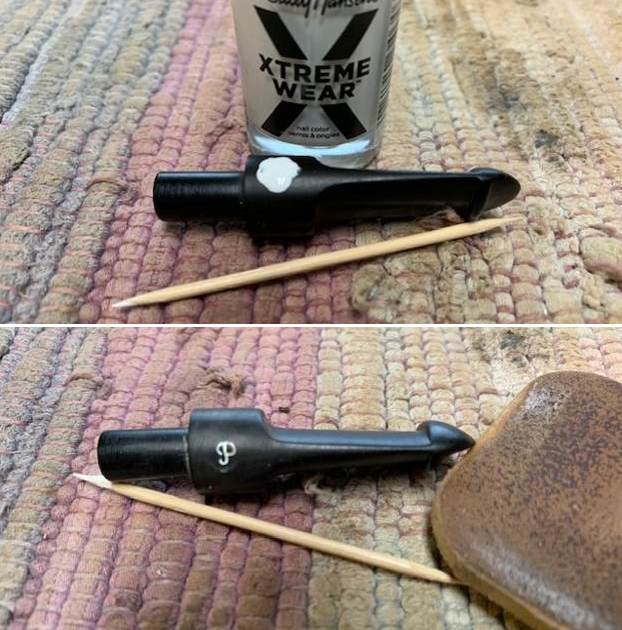
Jeff had done a great job cleaning up the pipe as usual. He reamed the pipe with a PipNet reamer and cut back the cake back to the bare briar. He cleaned up the walls with a Savinelli Fitsall Pipe Knife. He scrubbed the interior of the bowl and shank with pipe cleaners, cotton swabs and alcohol to remove the tars and oils. He scrubbed the exterior of the pipe with Murphy’s Oil Soap and a tooth brush to remove the grime from the finish. He worked on the rim top lava and darkening with the soap and tooth brush. He scrubbed the inside of the stem with alcohol and pipe cleaners. He scrubbed the exterior with Soft Scrub and then soaked it in Before & After Deoxidizer. He washed it off with warm water to remove the Deoxidizer. The pipe looked far better when it arrived.   I took some close up photos of the rim top and also of the stem surface. I wanted to show how well it had cleaned up. There was some darkening on the back of the rim top and some damage on the inner edge of the bowl at the back. I also took close up photos of the stem to show the light tooth marks on the surface near the button and the hash marks near the saddle on the underside.I took a photo of the stamping on the sides of the shank. You can see that it is stamped as noted above. It is clear and readable. I took the pipe apart and took photos of the pipe. It is a good looking pipe and has some great grain around the bowl. In the second photo you can see the drilled tenon made to receive a filter.   I cleaned up the darkening on the rim top and the damage to the inside edge of the bowl with a folded piece of 220 grit sandpaper. It looked much better.I polished the briar bowl and shank with micromesh sanding pads. I dry sanded it with 1500-12000 grit pads and wiped it down with a damp cloth after each pad. I worked some Before & After Restoration Balm into the surface of the briar with my fingertips to clean, enliven and protect the briar. I let the balm sit for 15 minutes and then buffed with a cotton cloth to raise the shine. The photos show the bowl at this point in the restoration process.   I set the bowl aside and turned my attentions to the stem. I filled in the hash marks on the underside of the stem with clear CA glue and set it aside for the repair to cure.Once the repair had cured I sanded it smooth with 220 grit sandpaper. I also sanded out the tooth chatter and marks on the stem surface near the button. I started the polishing of the stem with 400 grit wet dry sandpaper.I touched up the gold stamping on the “P” with Rub’n Buff Antique Gold. I pressed it into the stamping with a tooth pick and buffed it off with a soft cotton pad. The product works very well to give that gold foil look to the stamp. I polished out the light tooth marks on the stem with micromesh sanding pads – wet sanding with 1500-12000 grit sanding pads. I wiped it down after each sanding pad with Obsidian Oil. I polished it with Before & After Pipe Stem Polish – both Fine and Extra Fine.    I am excited to finish this Republic Era Peterson’s “Wicklow” 405S Saddle Stem Apple with a filter stem. I put the pipe back together and buffed it with Blue Diamond on the buffing wheel. I gave the bowl and the stem multiple coats of carnauba wax. I buffed the pipe with a clean buffing pad to raise the shine. I also hand buffed it with a microfibre cloth to deepen the shine. It is fun to see what the polished bowl looks like with the grain popping all around it. Added to that the polished  black vulcanite saddle stem was beautiful. This shapely Classic Peterson’s Apple is nice looking and the pipe feels great in my hand. It is light and well balanced. Have a look at it with the photos below. The dimensions are Length: 5 ½ inches, Height: 1 ½ inches, Outside diameter of the bowl: 1 ¼ inch, Chamber diameter: ¾ of an inch. The weight of the pipe is 37 grams/1.31 ounces. It is a beautiful pipe and one that I soon put on the rebornpipes store in the Irish Pipe Makers section if you are interested in carrying on the pipeman’s legacy. Thanks for walking through the restoration with me as I worked over this pipe. Thanks to each of you who are reading this blog.
Rebirthing a Lovely Republic Era Peterson’s Kapet 25 Billiard


Blog by Steve Laug

The next pipe I have chosen is a smooth Peterson’s pipe, a straight Billiard. It was also incredibly dirty. This Billiard is a real beauty under the grime with some great grain around the bowl. The grime was ground into the finish on the bowl sides. The contrast of the brown stains gave the grain a sense of depth. It was stamped on the left side of the shank and read Peterson’s [over] Kapet. The right side had the shape number 25 stamped near the bowl. Centered on the right side of the shank is stamped Made in the Republic of Ireland (in three lines). There was a moderate cake in the bowl and a light overflow of lava on the inner edge of the rim at the back. There was also burn damage on the inner edge of the rim at the back of the bowl. The stem was lightly oxidized, calcified and had light tooth marks, chatter on the top and underside near the button. There is a P stamped on the left side of the taper. It was in great condition. Jeff took photos of the pipe before his cleanup work. They tell the story and give a glimpse of the promise that we see in this pipe. Jeff took photos of the rim top and stem to show the general condition of the pipe. The bowl is moderately caked and the rim top has some lava and you can see the burn damage on the back inner edge. The photos of the stem show that it was oxidized and has light tooth marks on the top and underside near the button. Jeff took a photo of the bowl sides and heel to show the grain that was around this bowl. It is a nice looking pipe.      He took photos of the stamping on the sides of the shank. It is clear and readable and reads as noted above.   I turned to “The Peterson Pipe” by Mark Irwin and Gary Malmberg to get some background on the Kapet line. On page 305 it had the following information.

Kapet (1925-87) Line first described in 1925 brochure and featured in occasional catalogs through ’87. Early specimens will be stamped IRISH over FREE STATE. Described in 1937 catalog as available in dark plum or natural finish. Featured an aluminum “inner tube” or stinger until ’45. Mid-century specimens may be stamped MADE IN over IRELAND. Specimens from 1970 on may have mounts with hallmarks.

I knew that I was dealing with a Republic Era Kapet. Now it was time to work on the pipe.

Jeff had done a great job cleaning up the pipe as usual. He reamed the pipe with a PipNet reamer and cut back the cake back to the bare briar. He cleaned up the walls with a Savinelli Fitsall Pipe Knife. He scrubbed the interior of the bowl and shank with pipe cleaners, cotton swabs and alcohol to remove the tars and oils. He scrubbed the exterior of the pipe with Murphy’s Oil Soap and a tooth brush to remove the grime from the finish. He worked on the rim top lava and darkening with the soap and tooth brush. He scrubbed the inside of the stem with alcohol and pipe cleaners. He scrubbed the exterior with Soft Scrub and then soaked it in Before & After Deoxidizer. He washed it off with warm water to remove the Deoxidizer. The pipe looked far better when it arrived.  I took some close up photos of the rim top and also of the stem surface. I wanted to show how well it had cleaned up. The rim top photo looks good but there is some burn damage on the inner edge at the back of the bowl and all around the inner edge there is darkening. I also took close up photos of the stem to show the light tooth marks and chatter on the surface near the button. I took photos of the stamping on the sides of the shank. You can see that it is stamped as noted above. It is clear and readable.     I took the pipe apart and took a photo of the pipe. It is a good looking pipe and has some great cross grain on the sides of the bowl.I decided to address the rim top damage first. I lightly topped the bowl on a topping board with 220 grit sandpaper to minimize the damage to the top and inner edge of the bowl. I then used a folded piece of 220 grit sandpaper to give the edge a slight bevel to further minimize the damage to the rim. I think that it is definitely better once I finished. I polished the briar rim top and edges along with the rest of the briar with micromesh sanding pads –dry sanding with 1500-12000 grit pads and using a damp cloth after each pad.       I combined a Mahogany and a Cherry stain pen to restain the rim top to match the rest of the bowl. It would match even better once it was buffed and polished.I worked some Before & After Restoration Balm into the surface of the briar with my fingertips to clean, enliven and protect the briar. I let the balm sit for 15 minutes and then buffed with a cotton cloth to raise the shine. The photos show the bowl at this point in the restoration process. I set the bowl aside and turned my attention to the stem. I filled in the tooth marks on the underside of the stem with clear super glue. I let the repairs cure. Once they had cured I sanded the repairs on the underside and the chatter on the topside with 220 grit sandpaper. I started the polishing with 400 grit wet dry sandpaper. I wiped it down with some Obsidian Oil.I touched up the “P” stamp on the stem with an acrylic white fingernail polish. I worked it into the stamp with a toothpick. I let it sit for a few minutes then scraped off the excess. I polished the stem with micromesh sanding pads – wet sanding with 1500-12000 grit sanding pads. I wiped it down after each sanding pad with Obsidian Oil. I polished it with Before & After Pipe Stem Polish – both Fine and Extra Fine. I am always excited to finish a restoration and this Peterson’s Kapet 25 Billiard is no exception. I put the pipe back together and buffed it with Blue Diamond on the buffing wheel. I gave the bowl and stem multiple coats of carnauba wax. I hand buffed the pipe with a clean buffing pad to raise the shine and hand buffed it with a microfibre cloth to deepen the shine. It is fun to see what the polished bowl looks like with the polished black vulcanite stem. This Classic looking Peterson’s Kapet Billiard feels great in my hand. It is light and well balanced. Have a look at it with the photos below. The dimensions are Length: 5 ½ inches, Height: 1 ½ inches, Outside diameter of the bowl: 1 1/8 inches, Chamber diameter: ¾ of an inch. The weight of the pipe is 26 grams/.92 oz. It is a beautiful pipe and one that will be on the Irish Pipe Makers section of the rebornpipes store soon. If you are interested in adding it to your collection let me know. Thanks for walking through the restoration with me as I worked over this pipe. Thanks to each of you who are reading this blog.