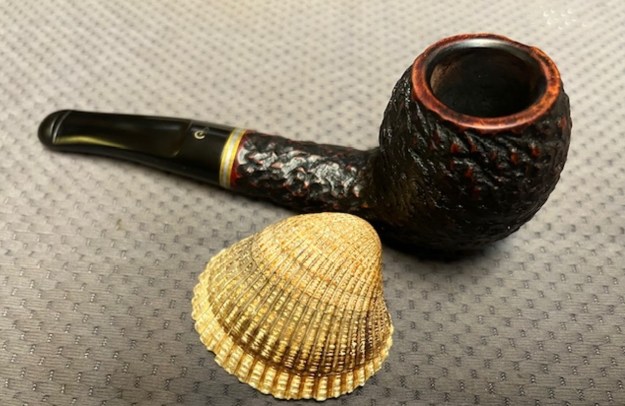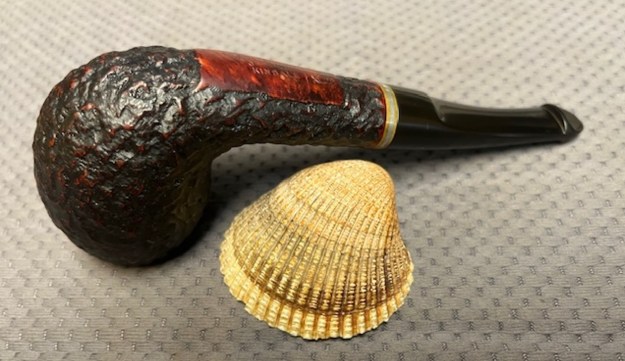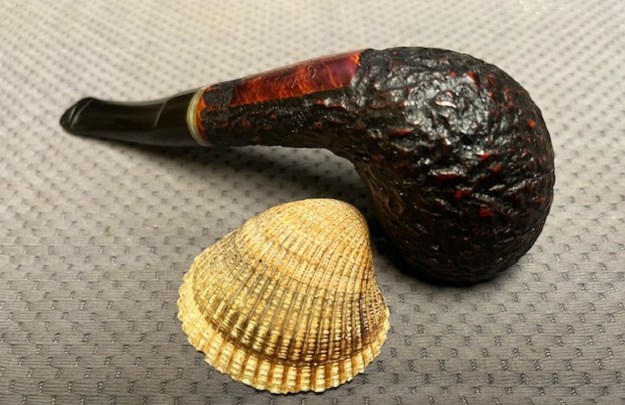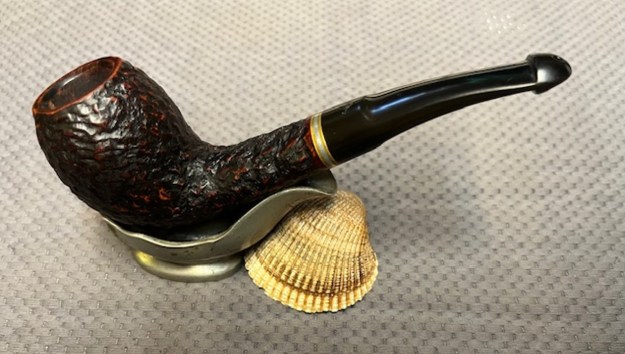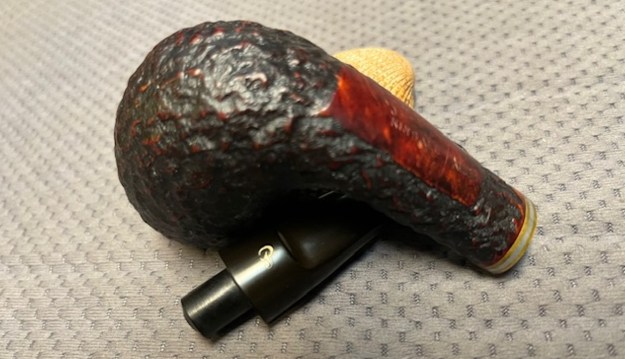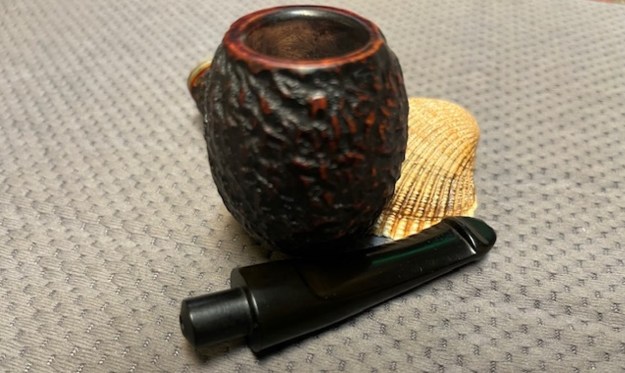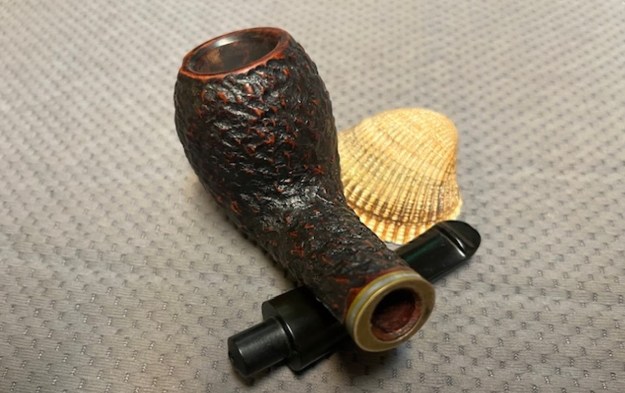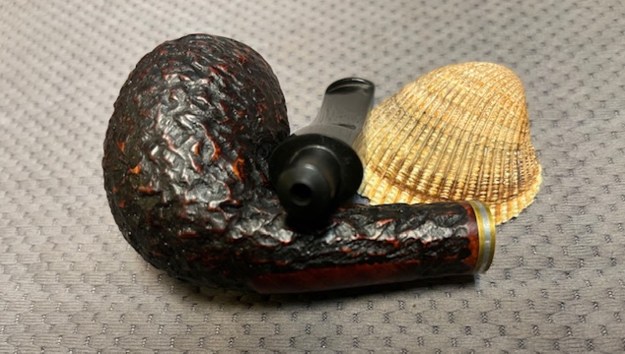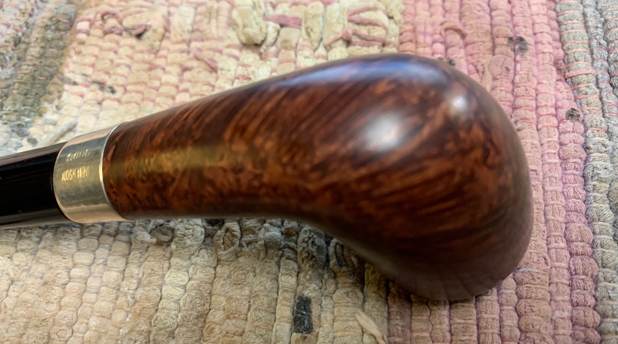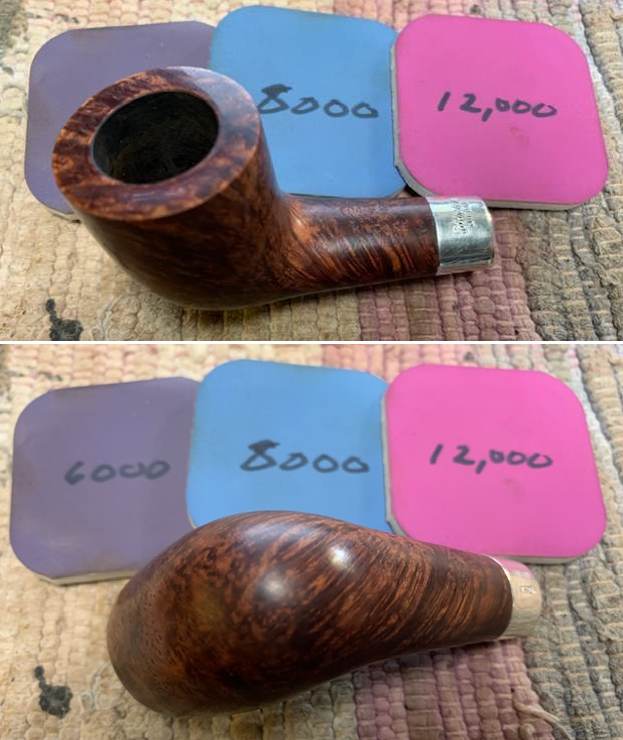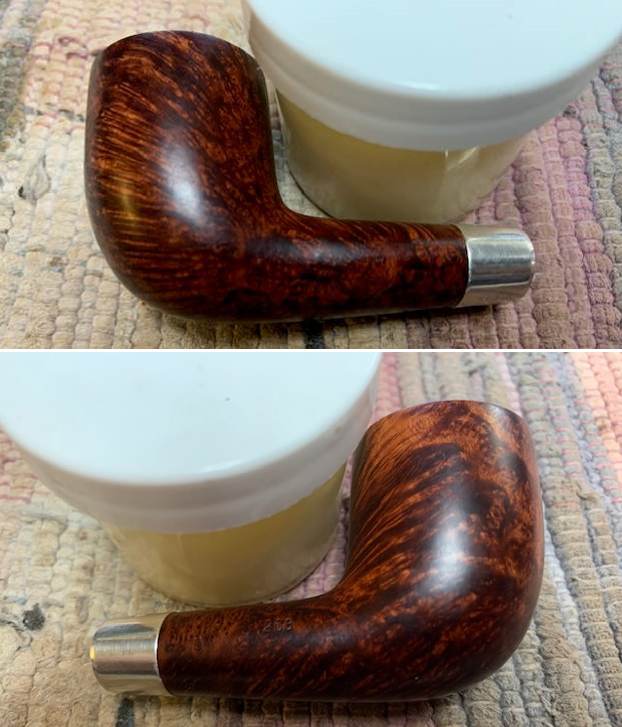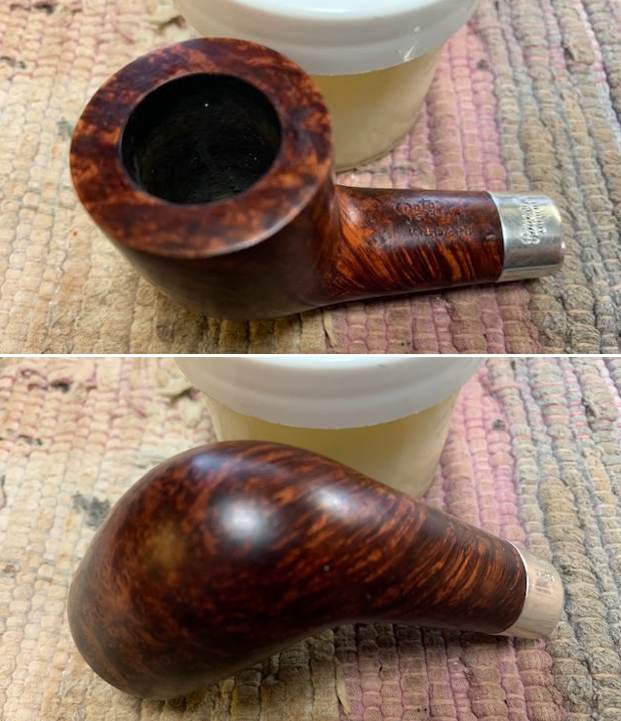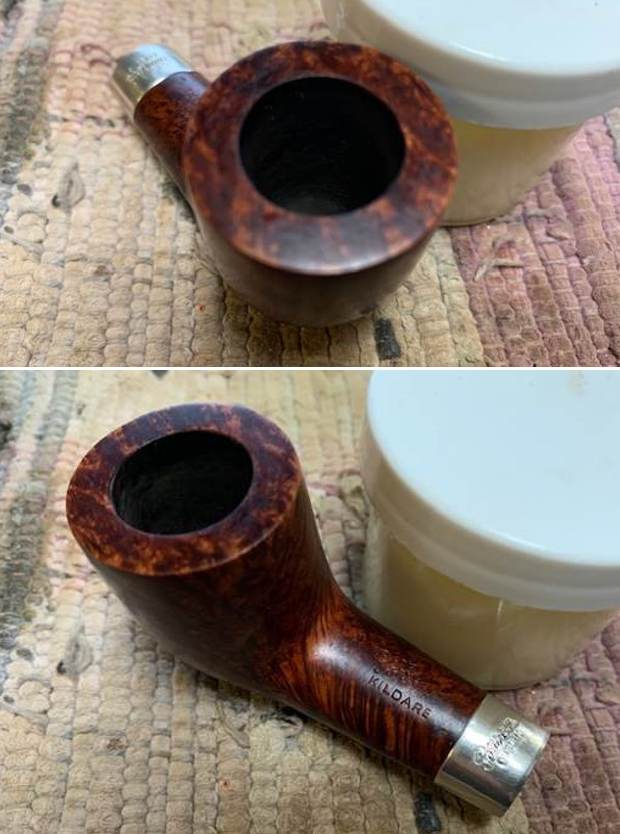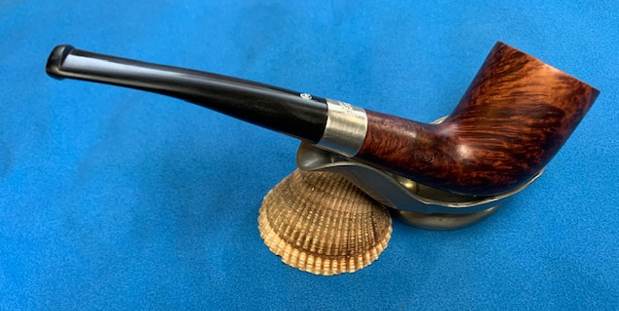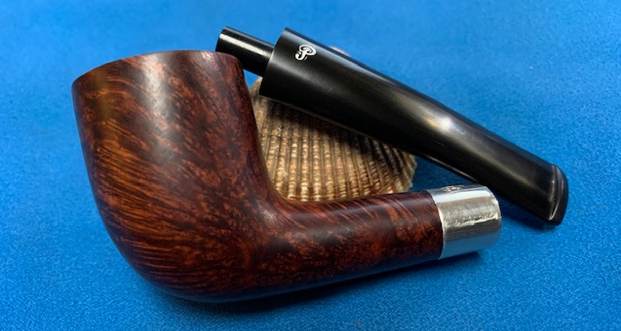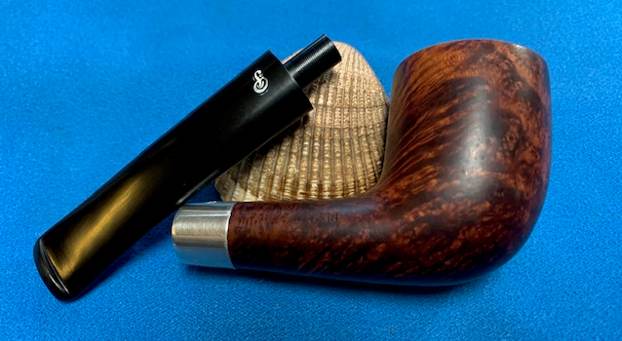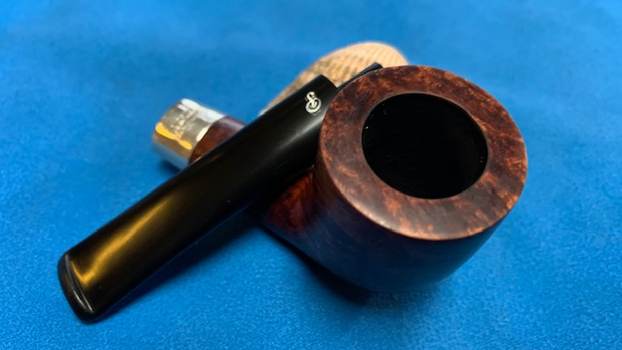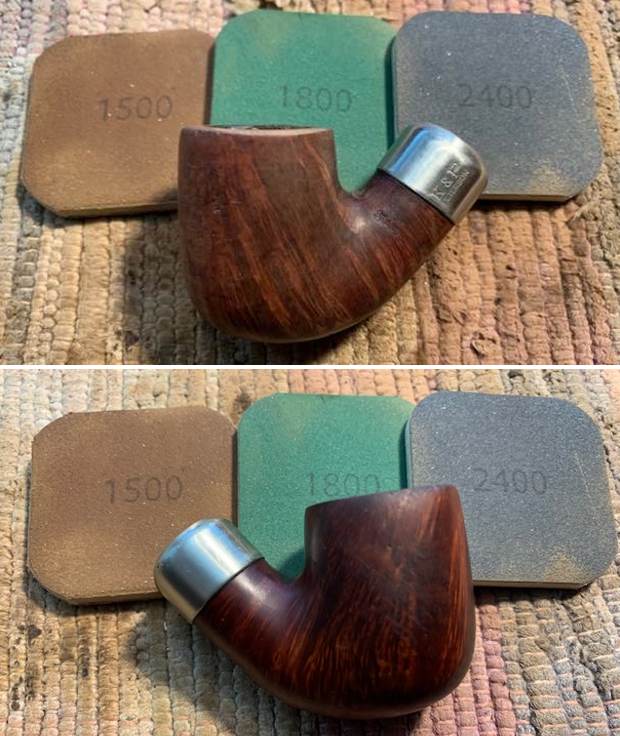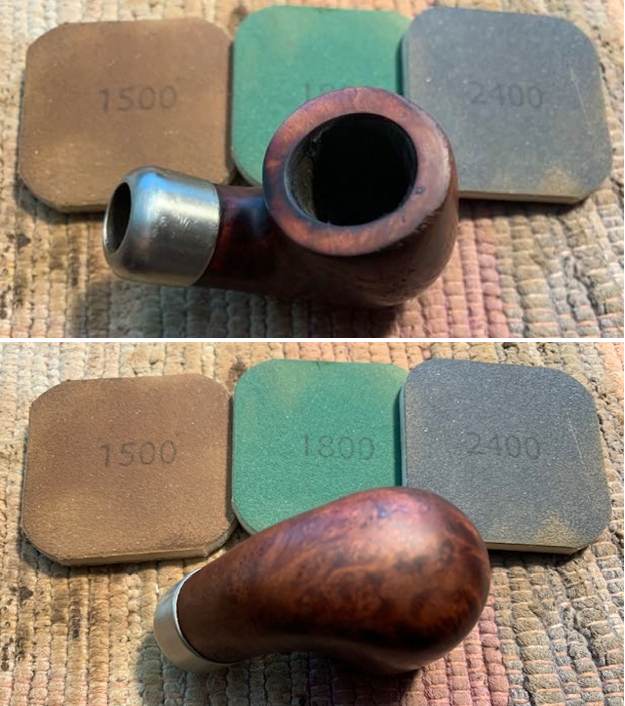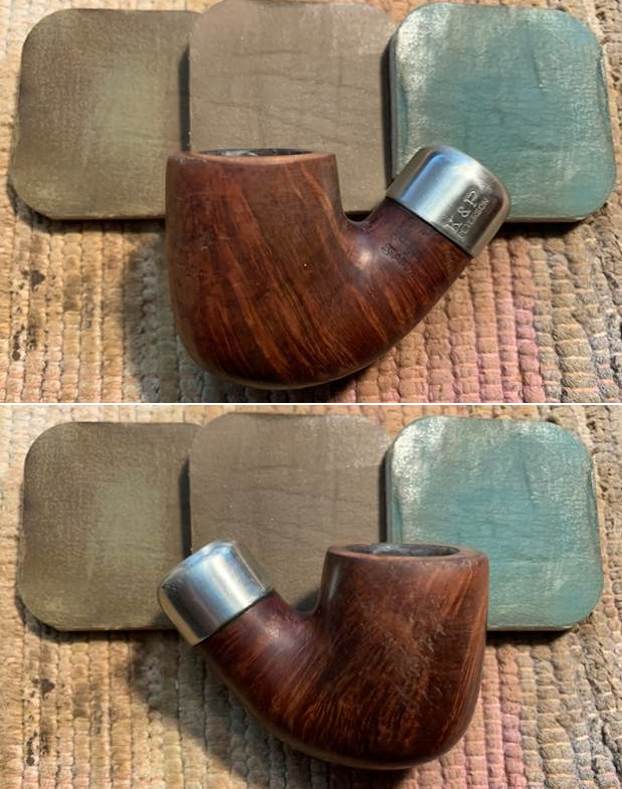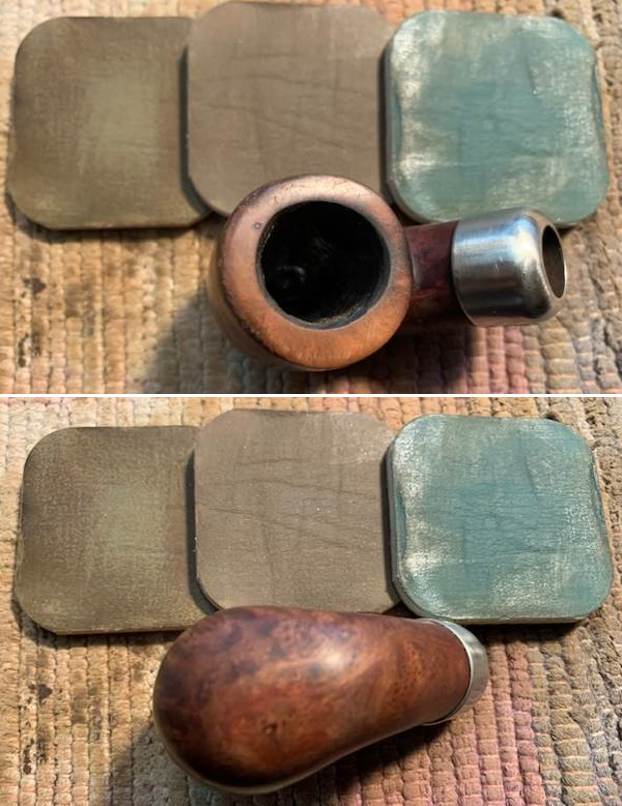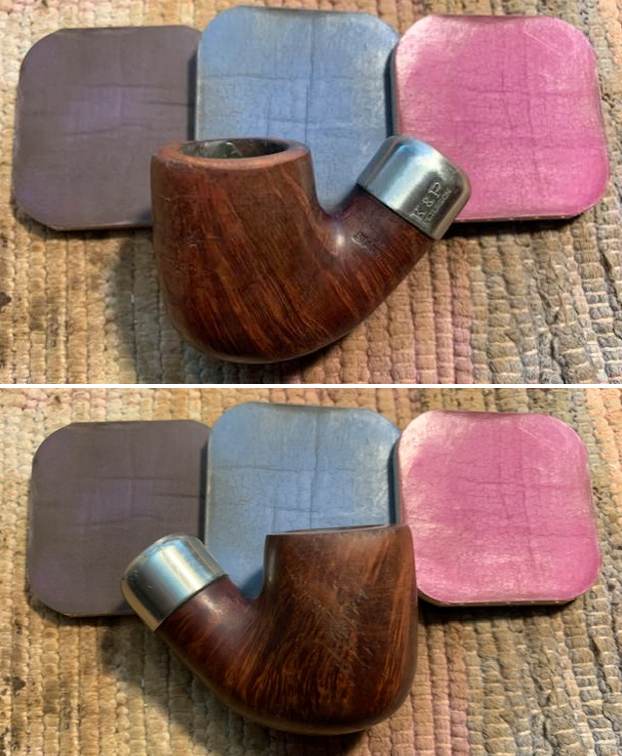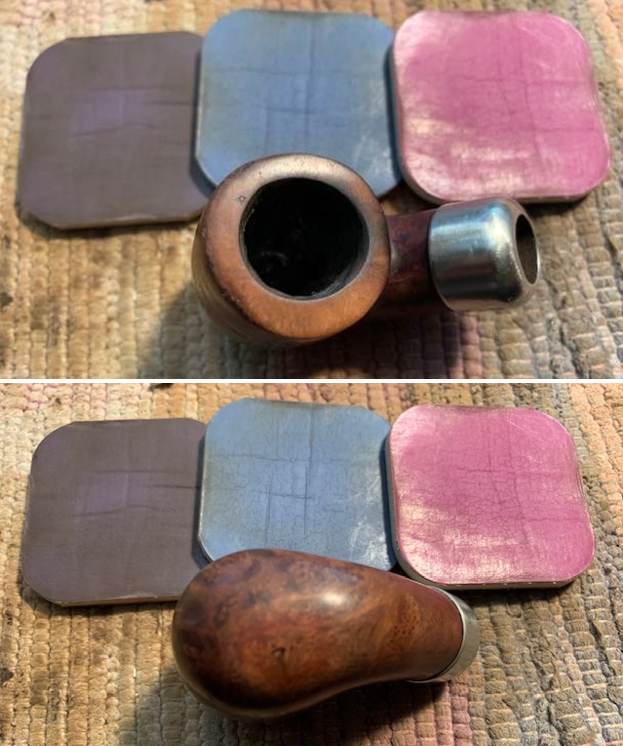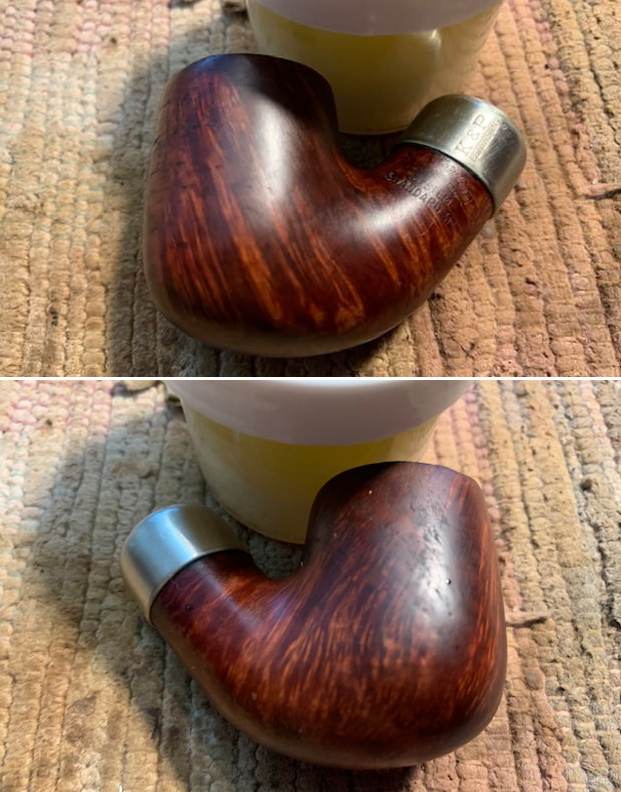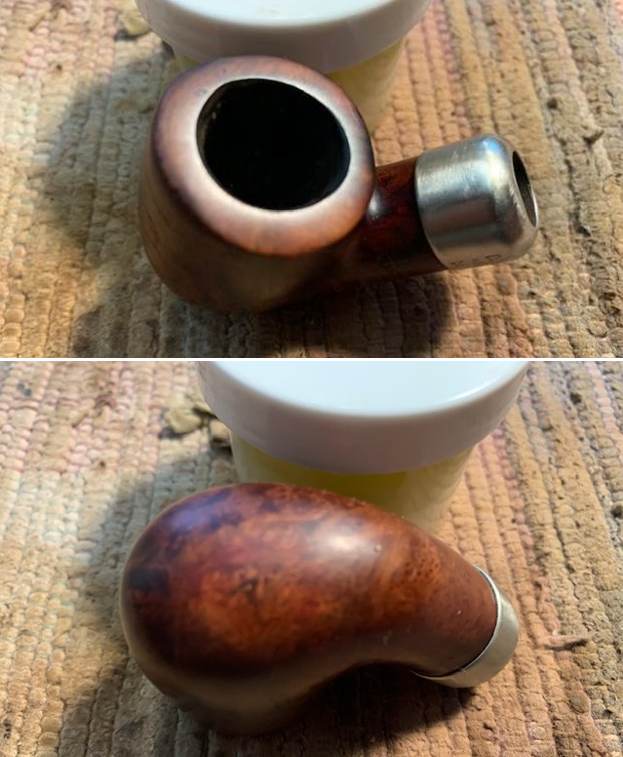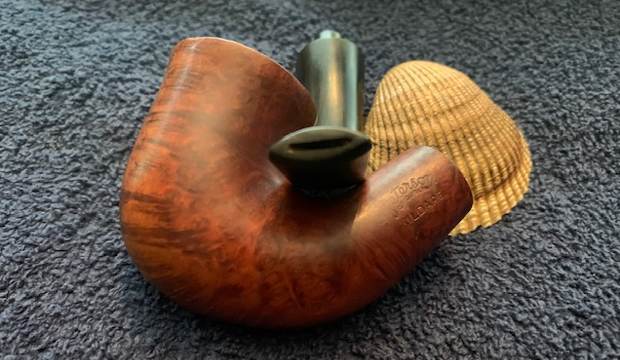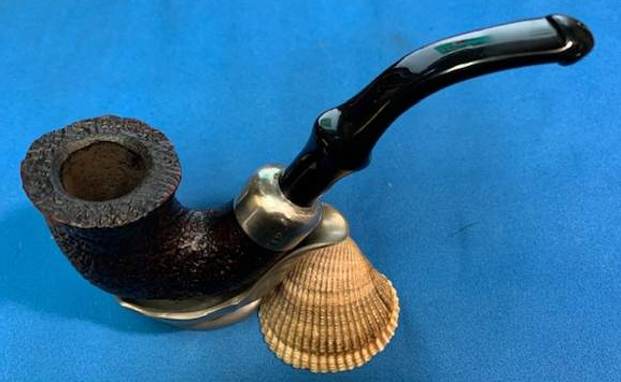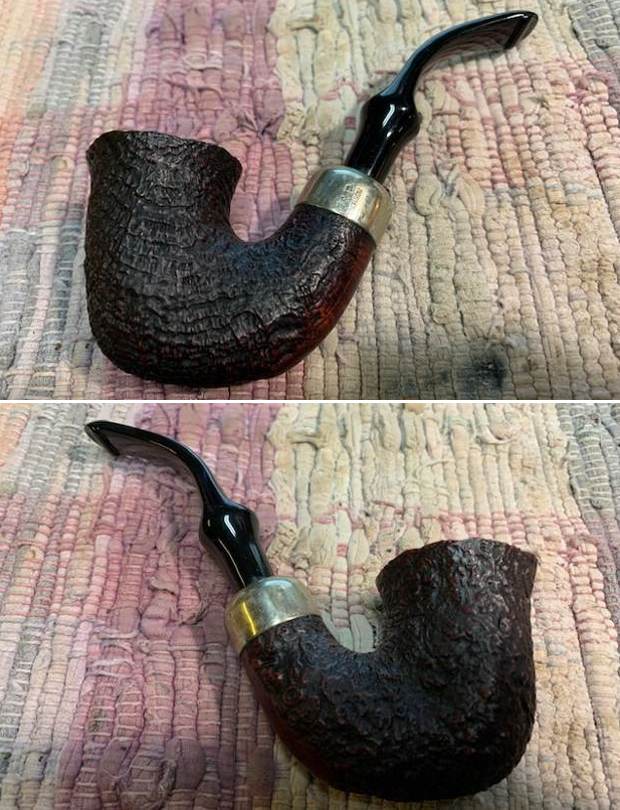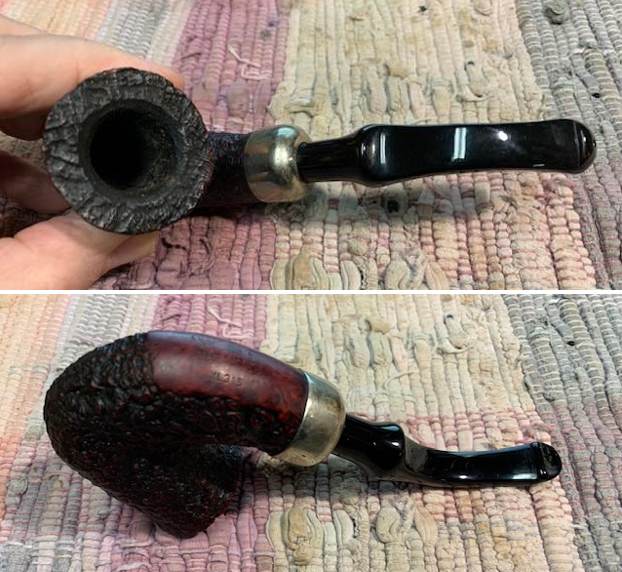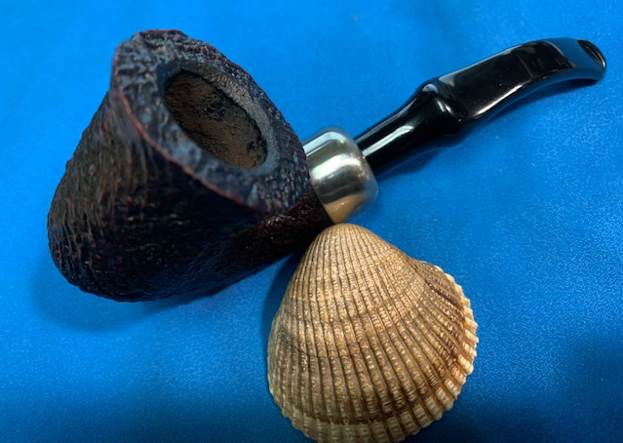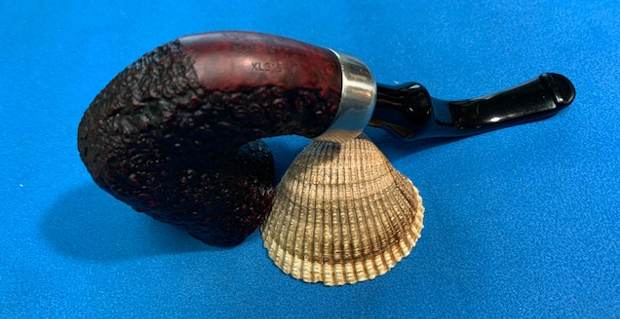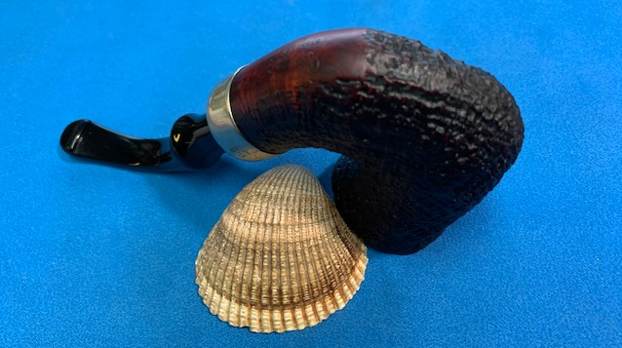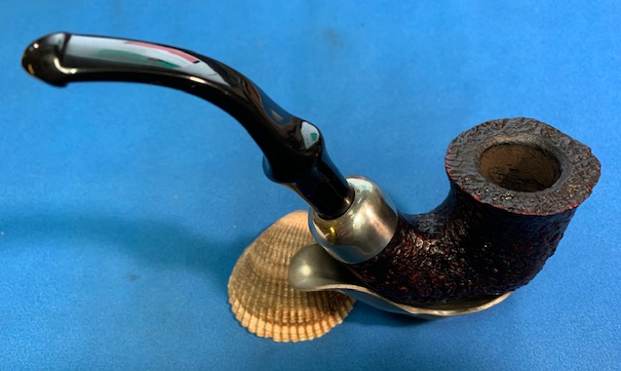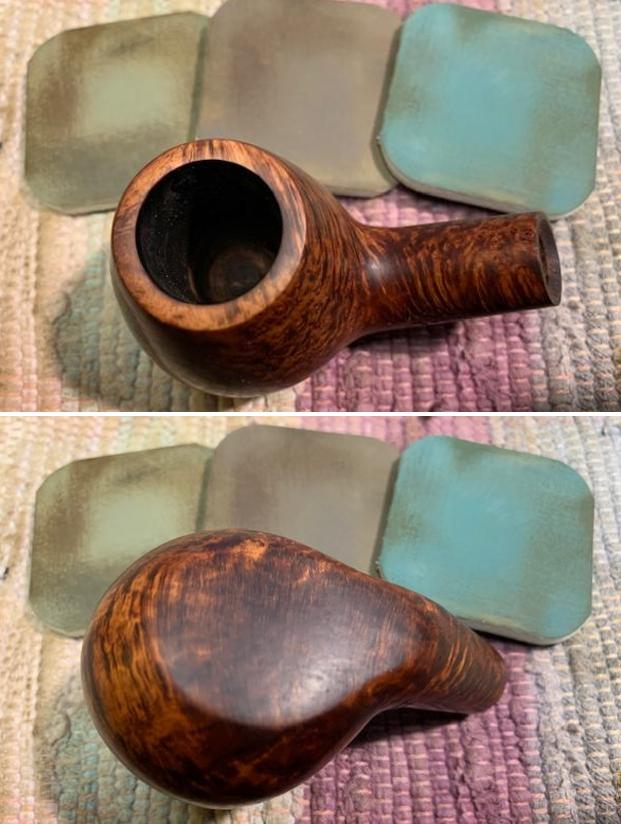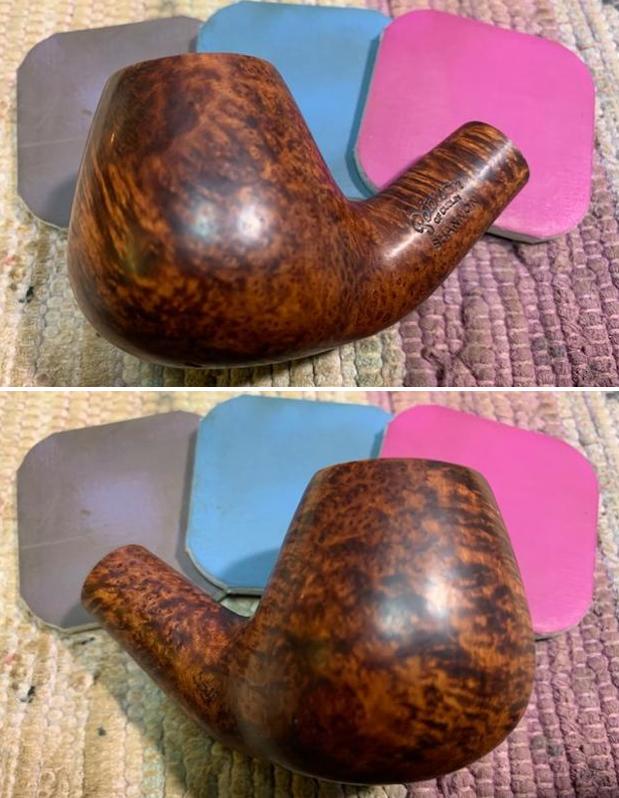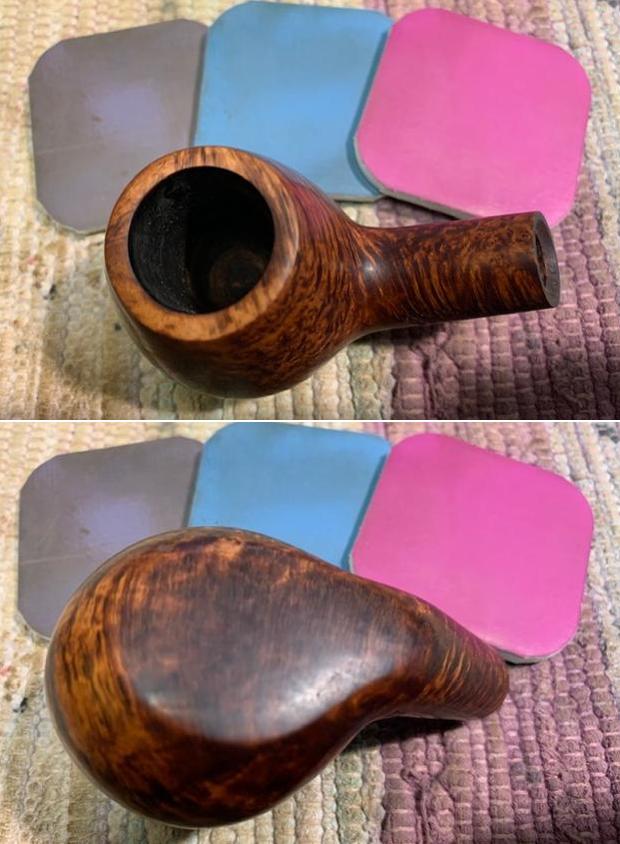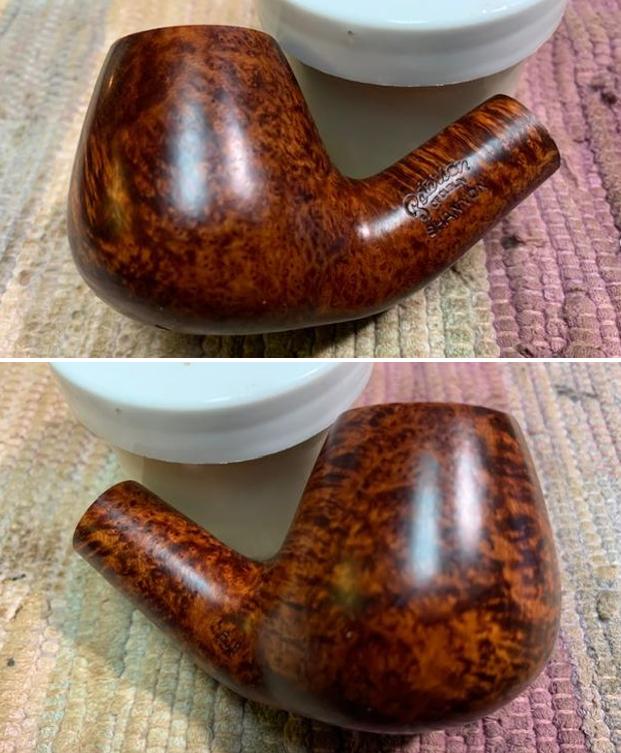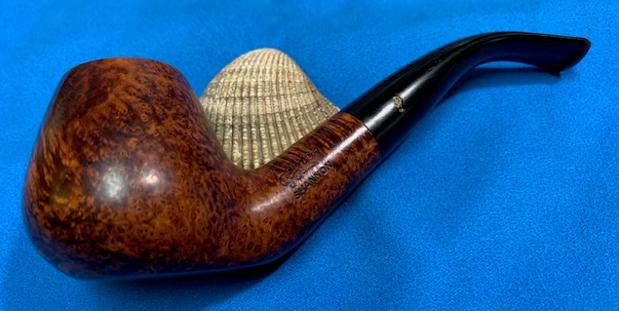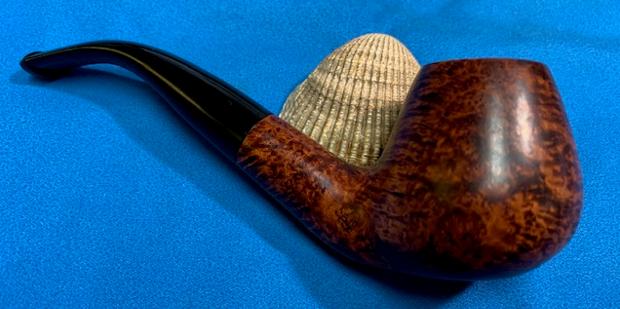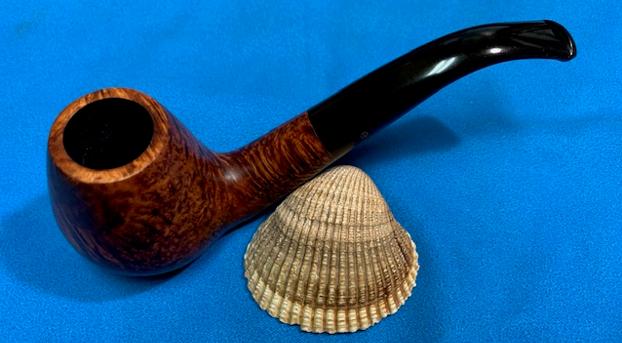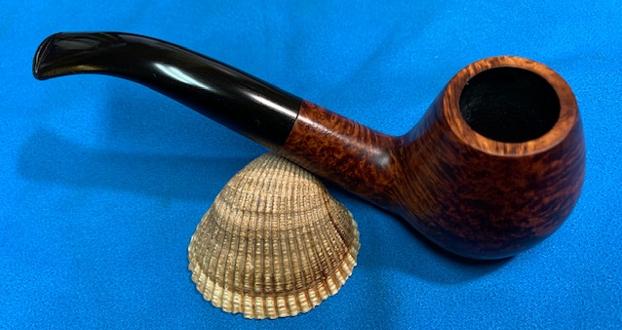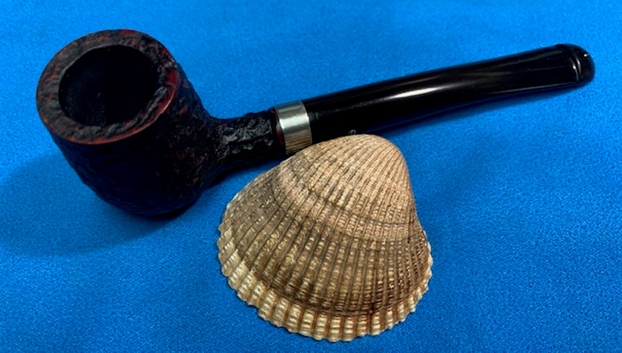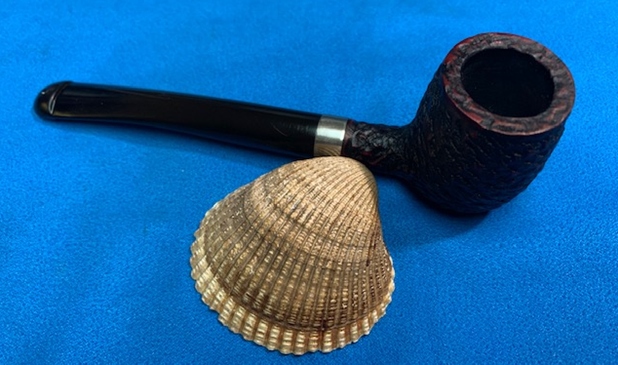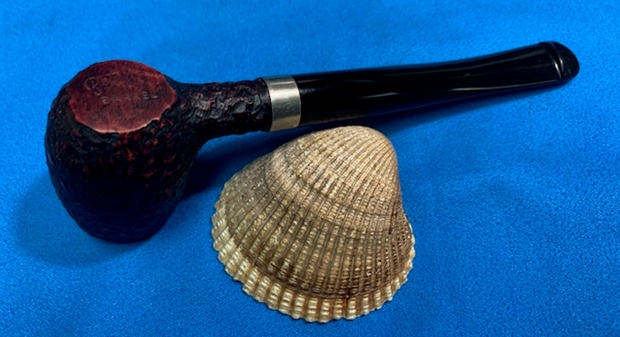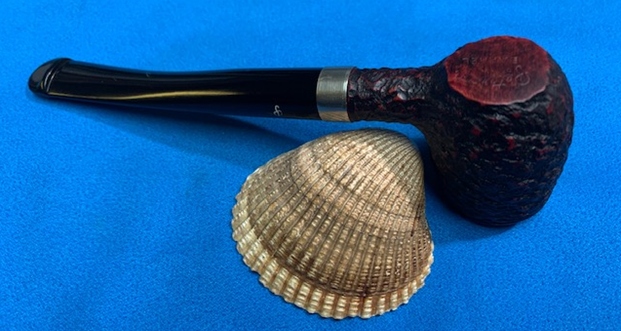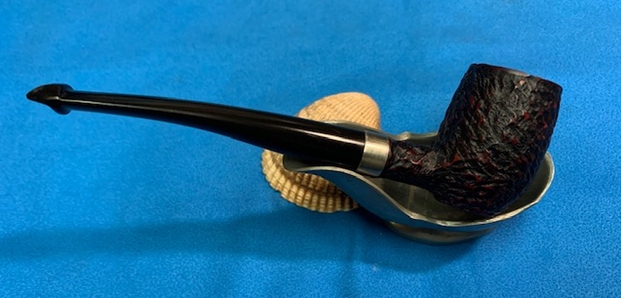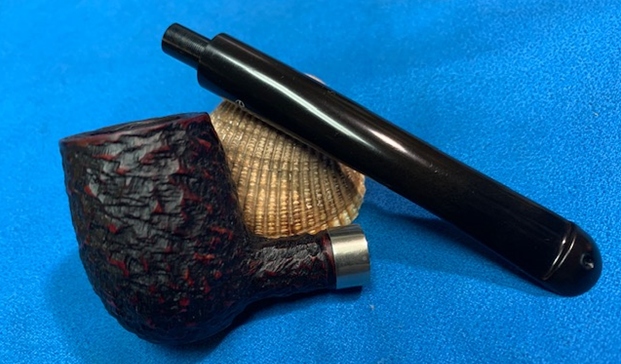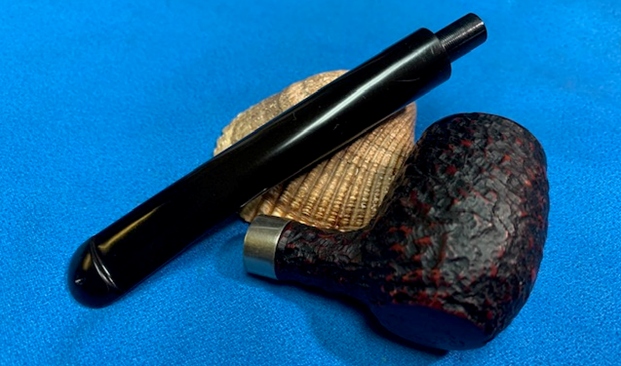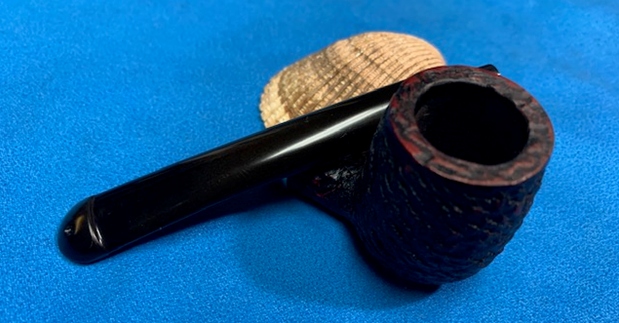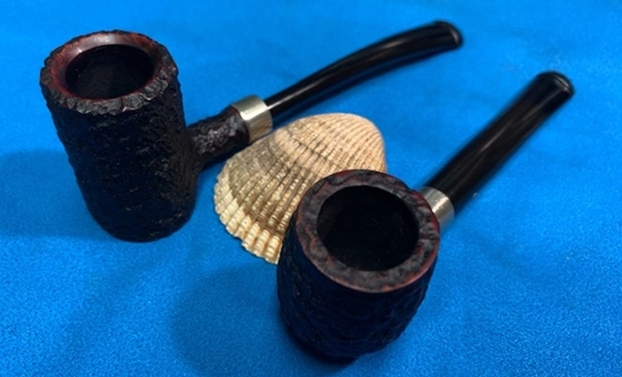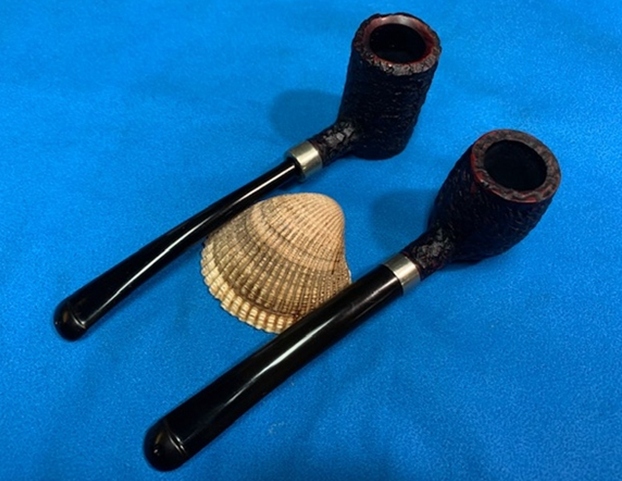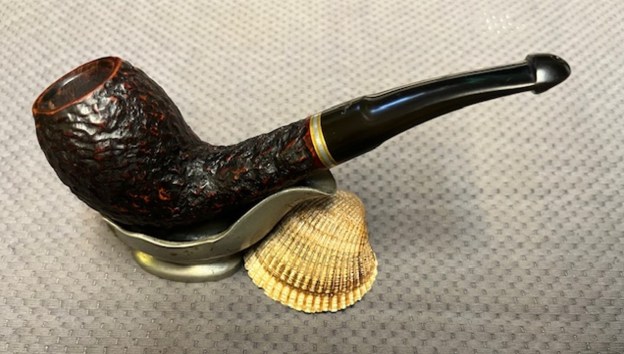
Tag Archives: Peterson’s of Dublin Pipes

Restoring a much loved Peterson’s of Dublin Kinsale XL25


by Steve Laug

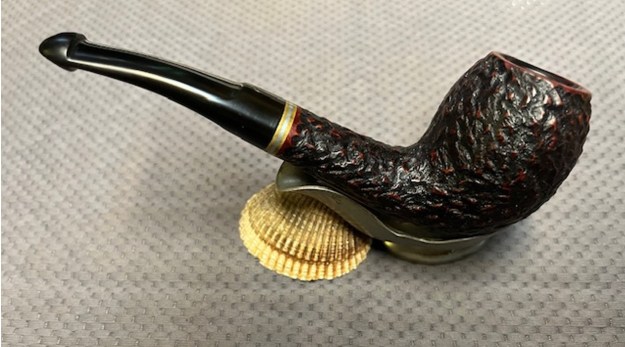
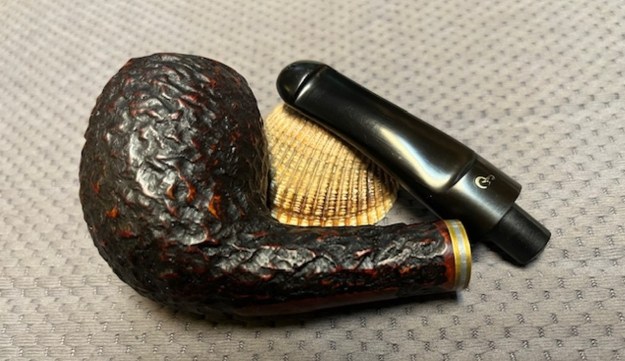
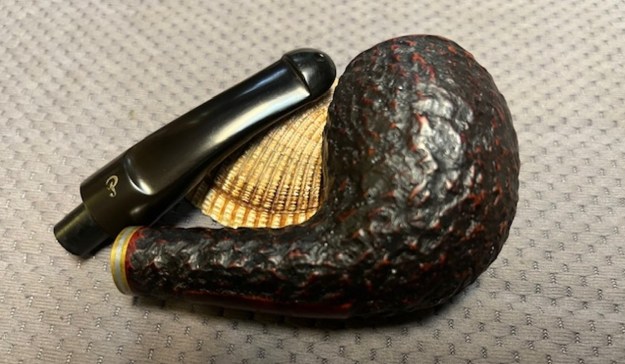
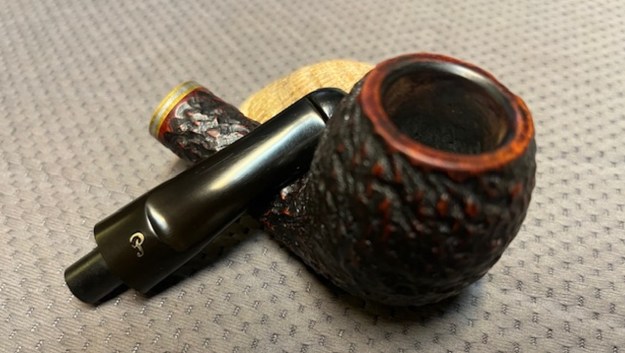
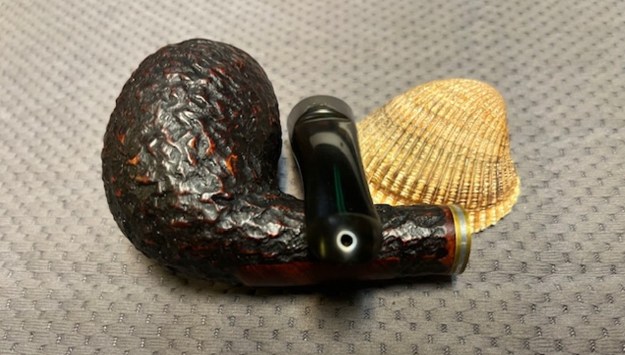
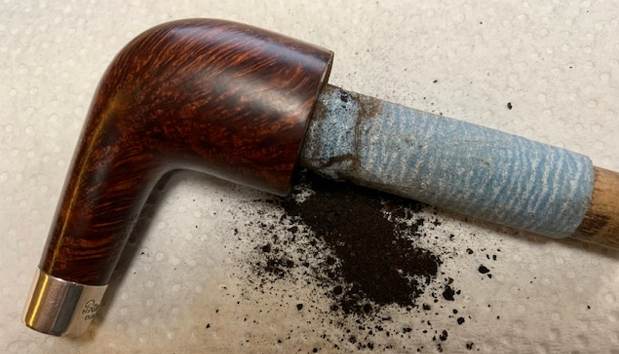
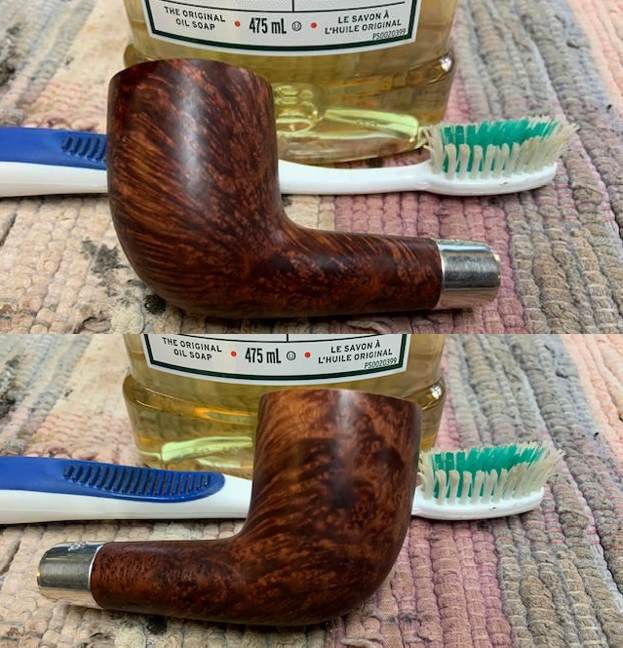
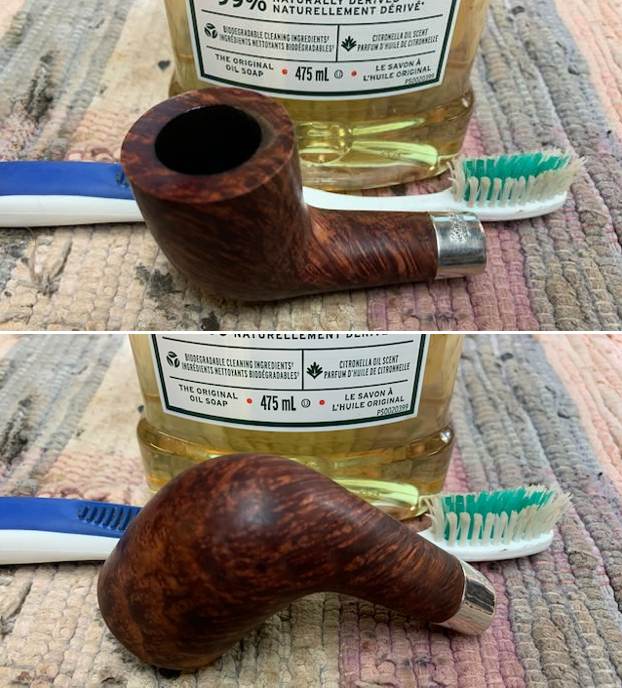
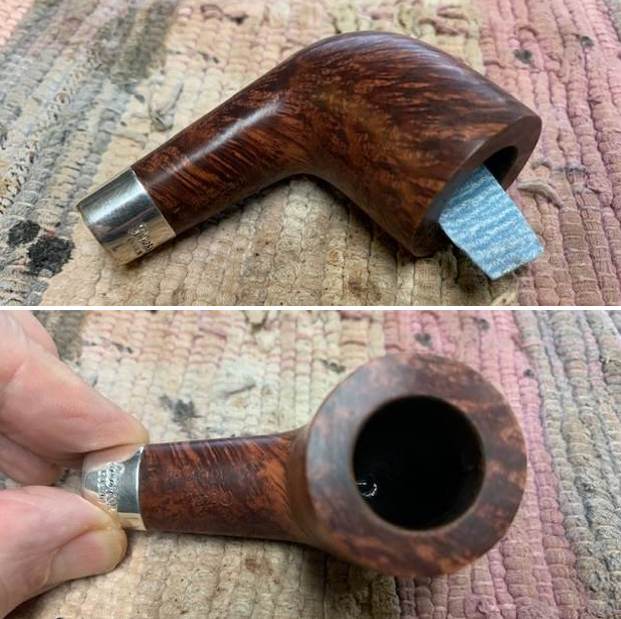
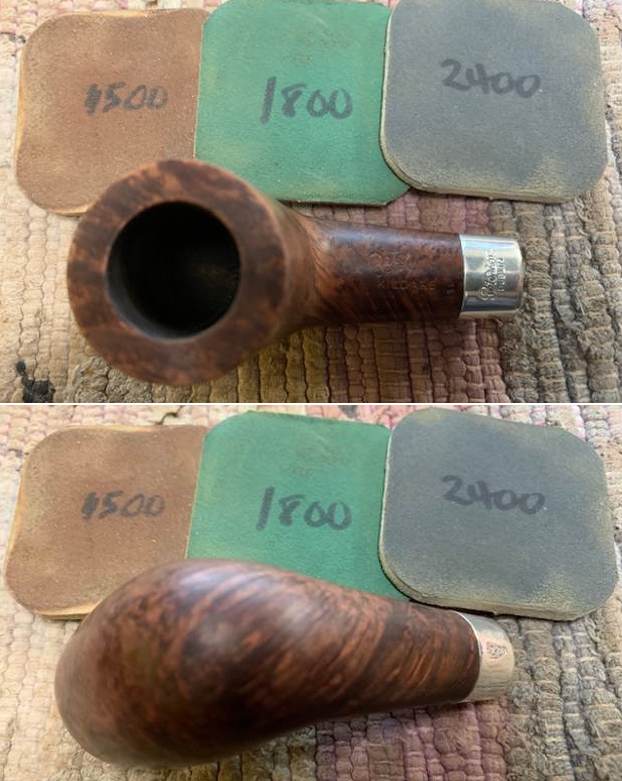
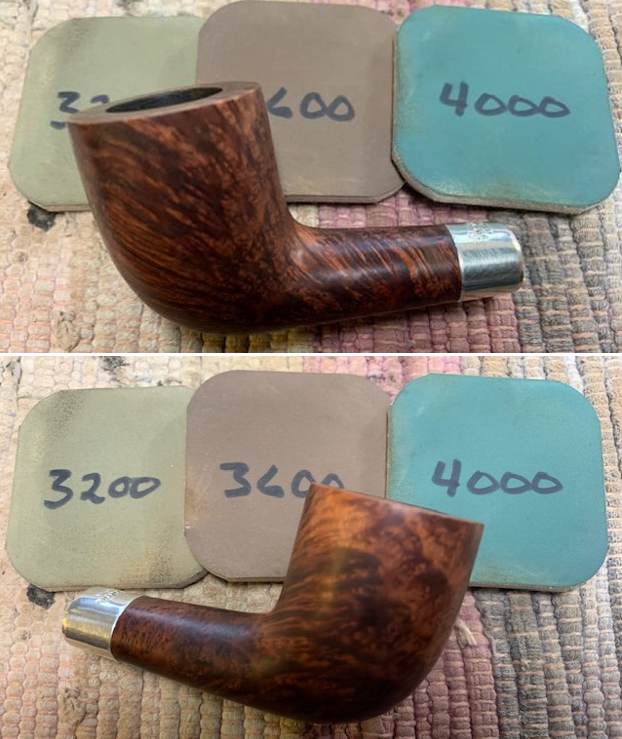
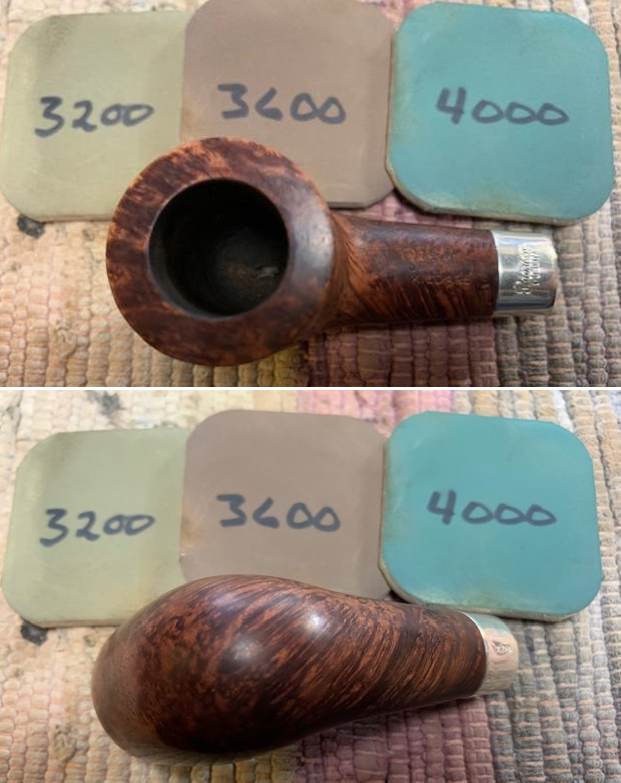
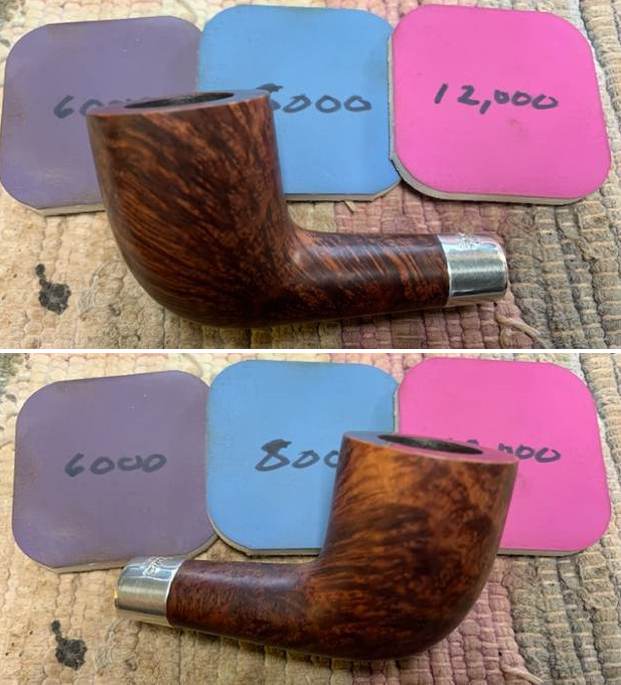
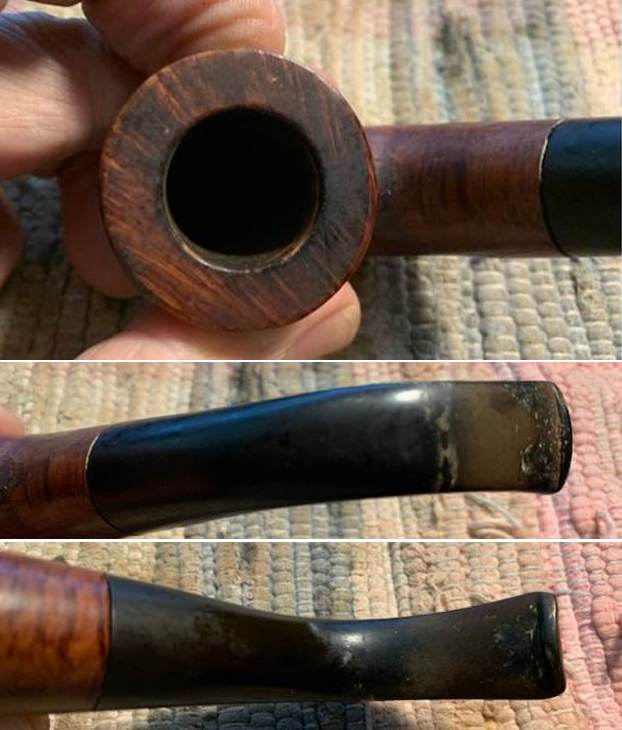
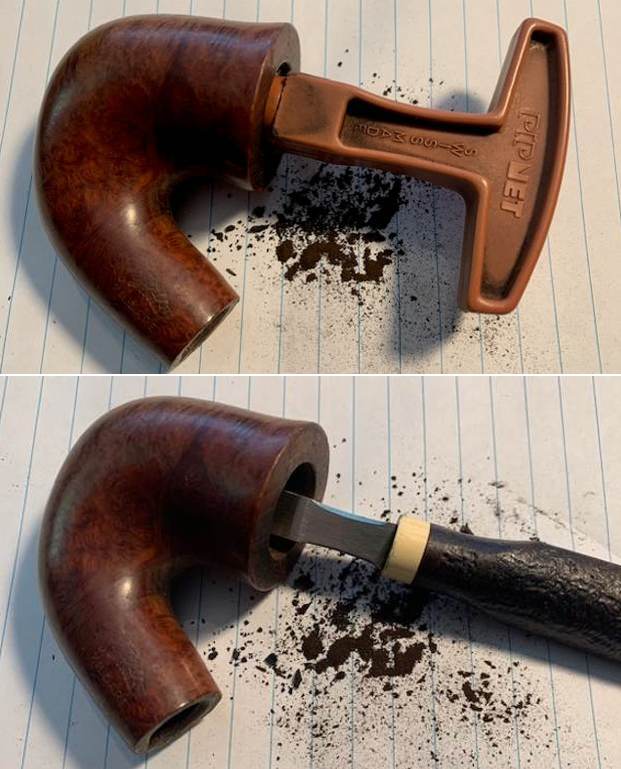
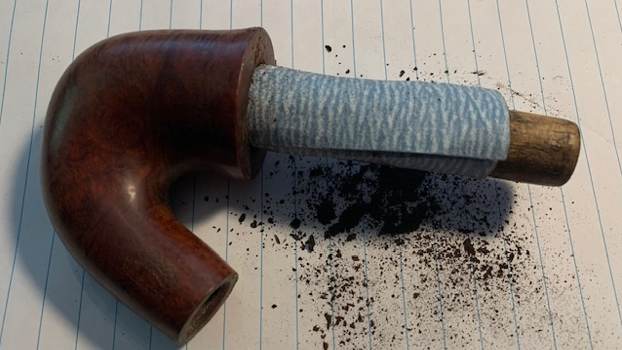
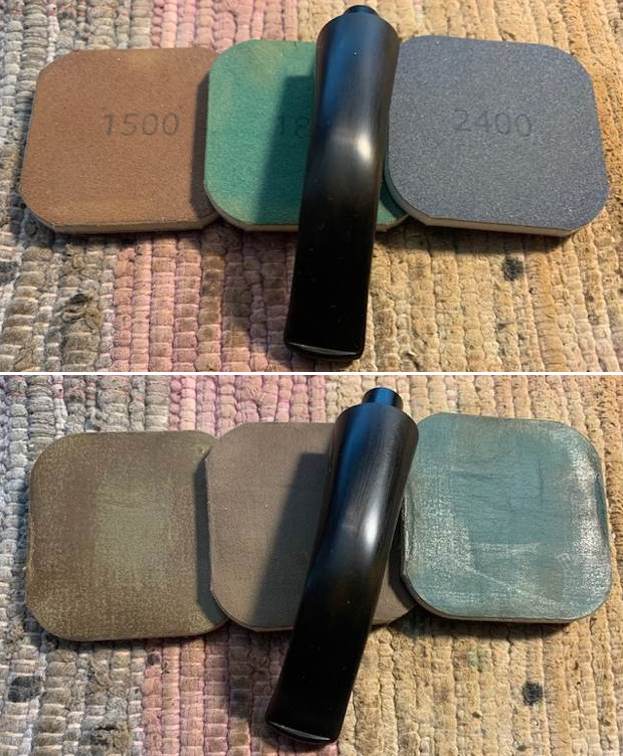
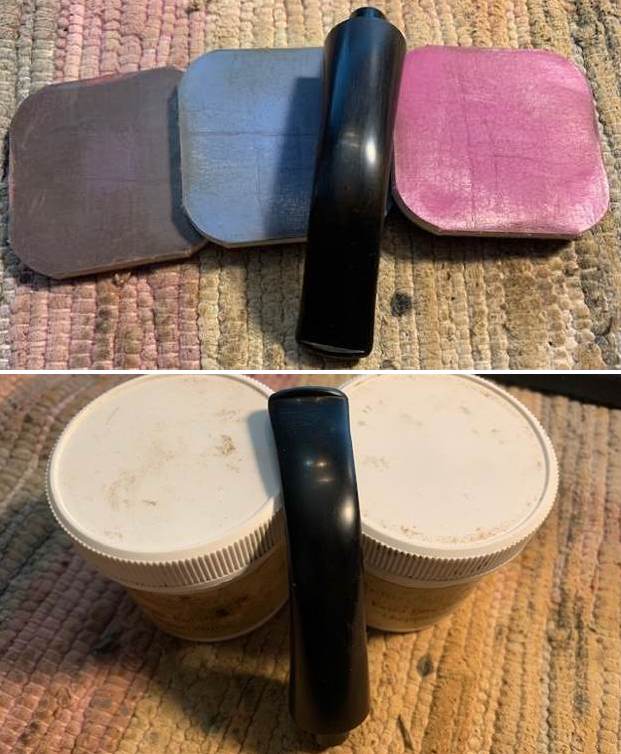
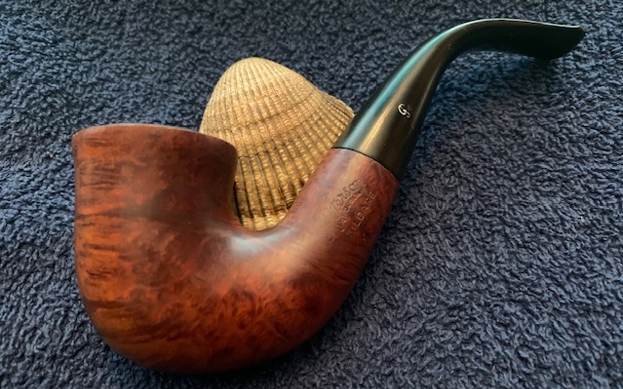
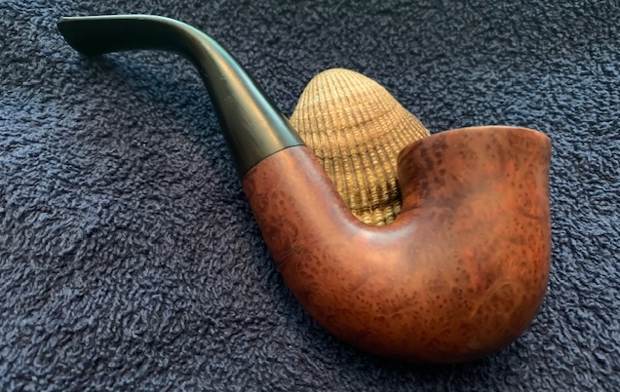
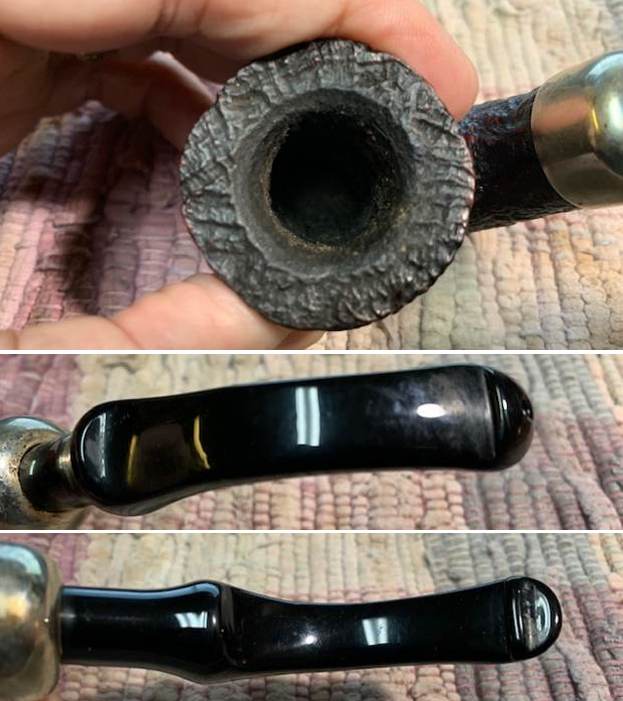
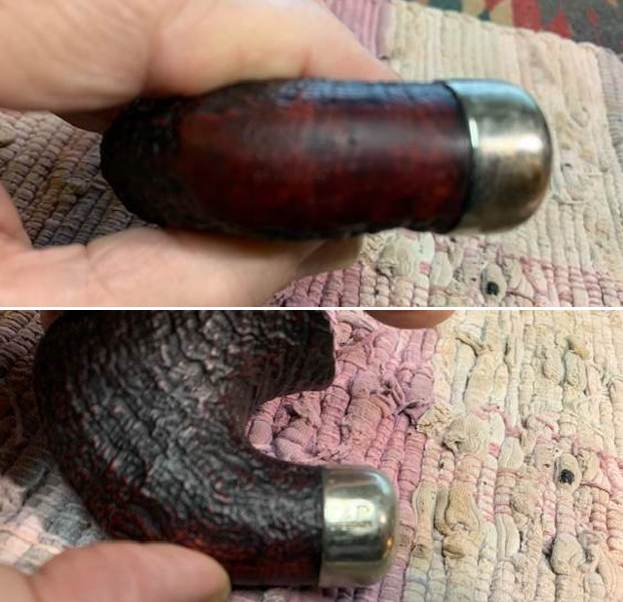
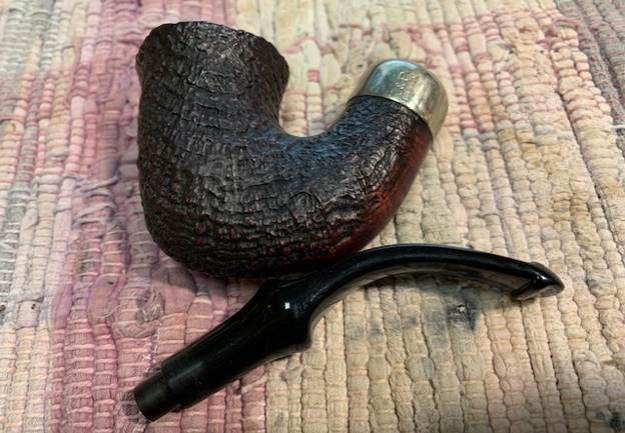
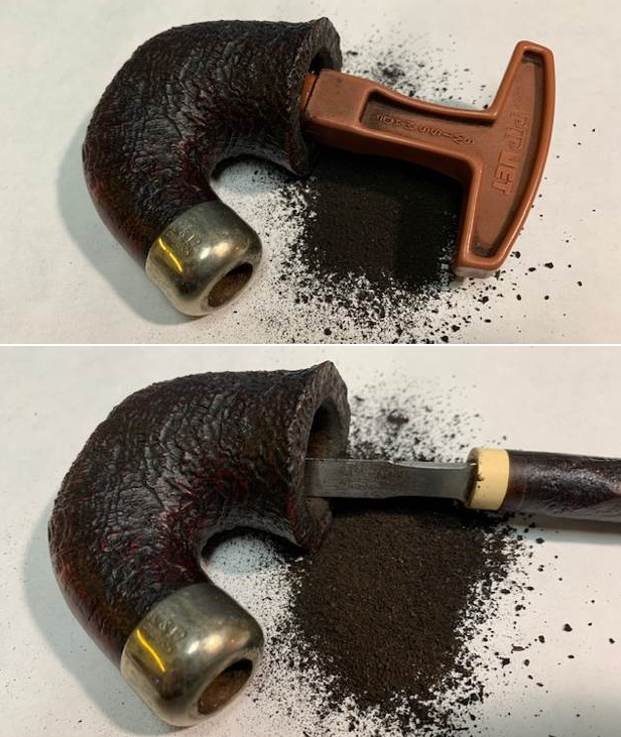
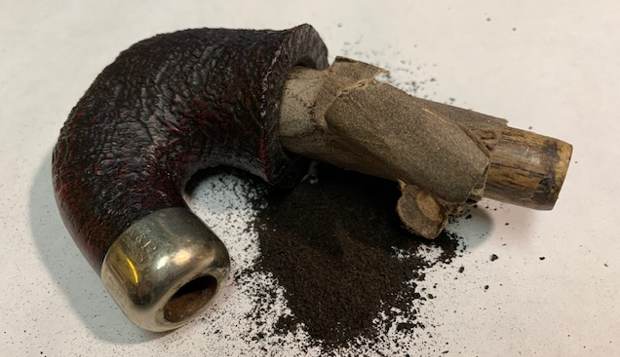
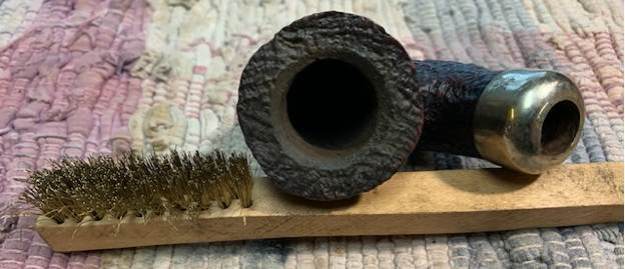
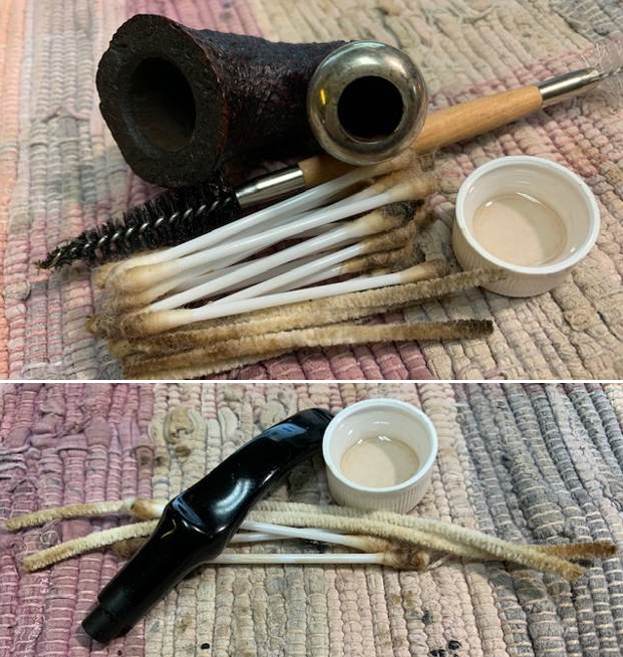
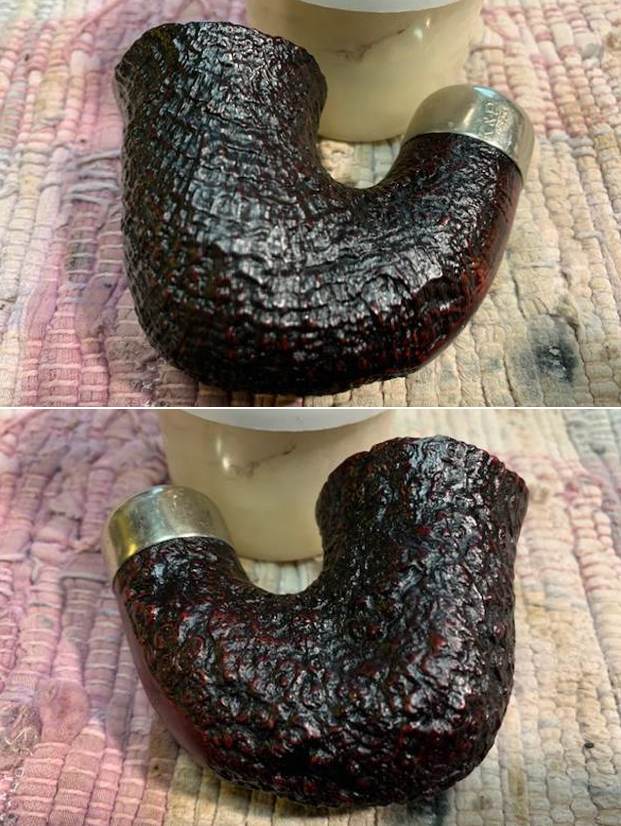
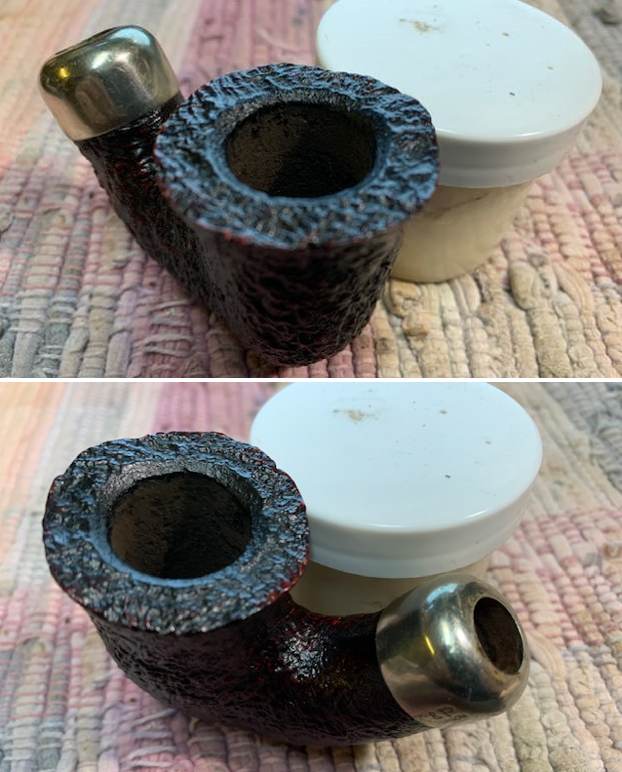
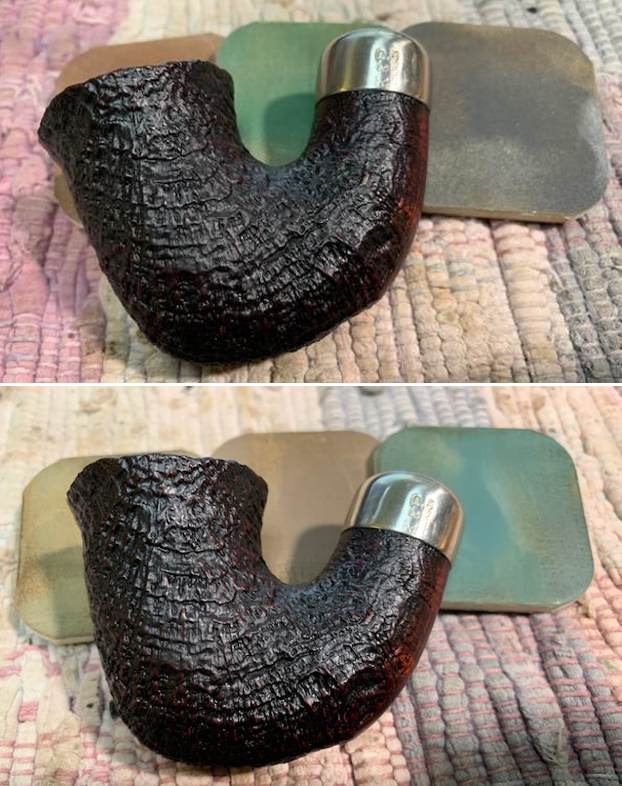
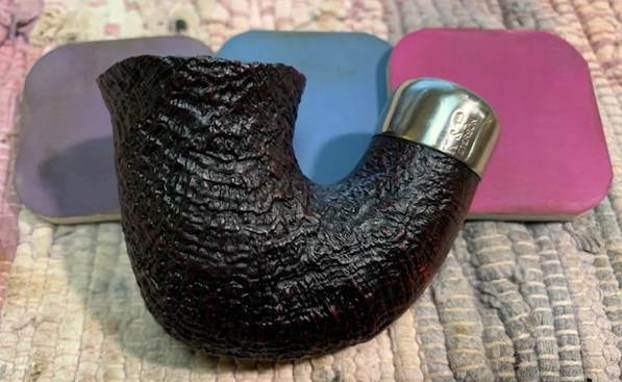
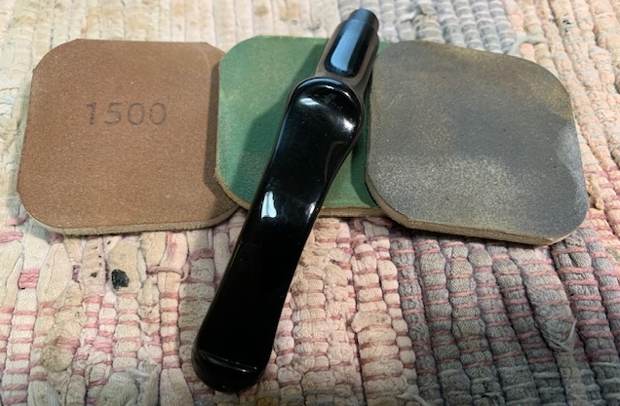
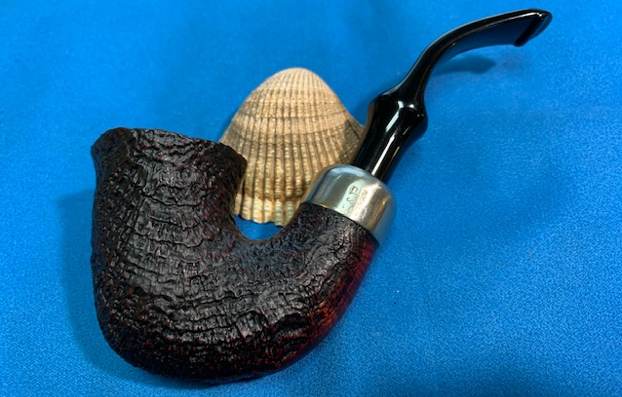
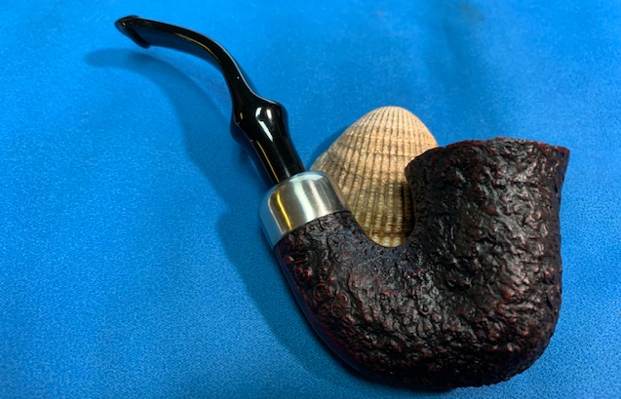
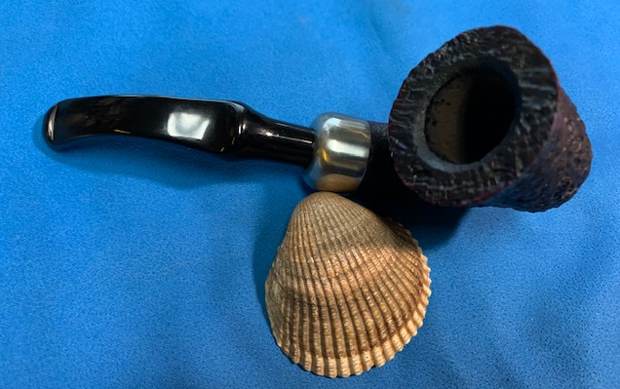
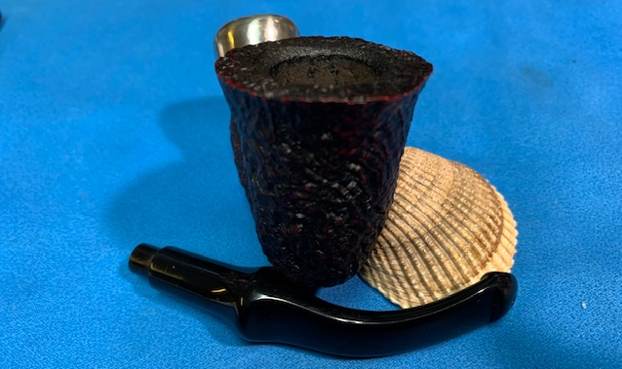
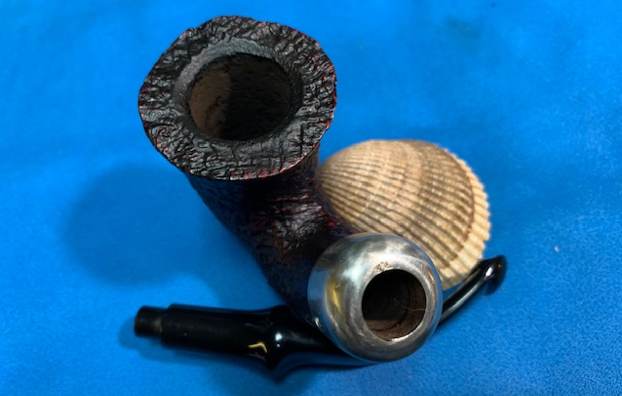
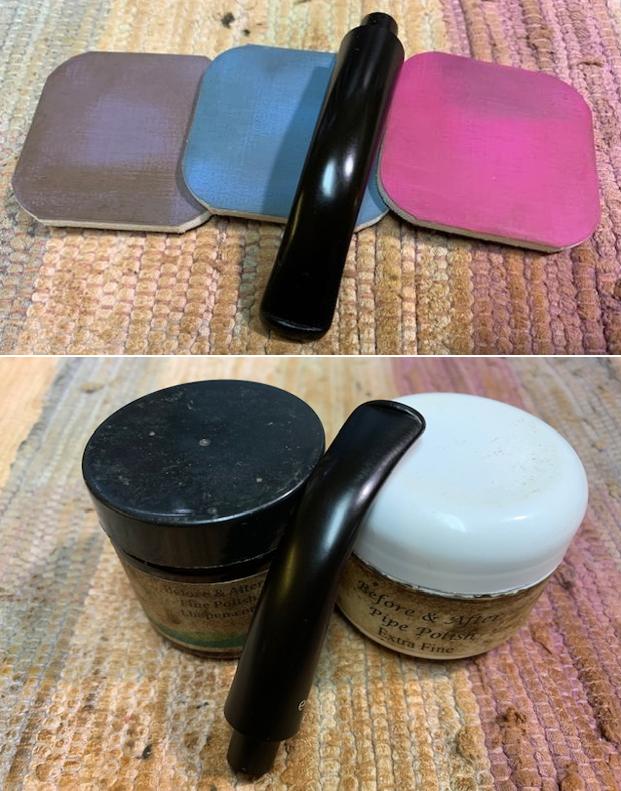
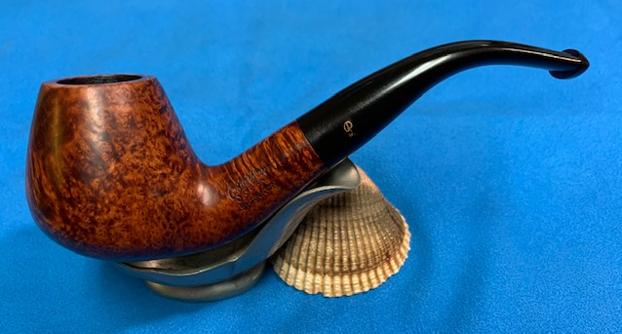
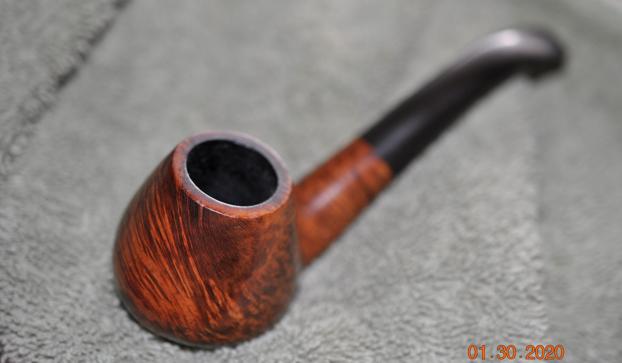
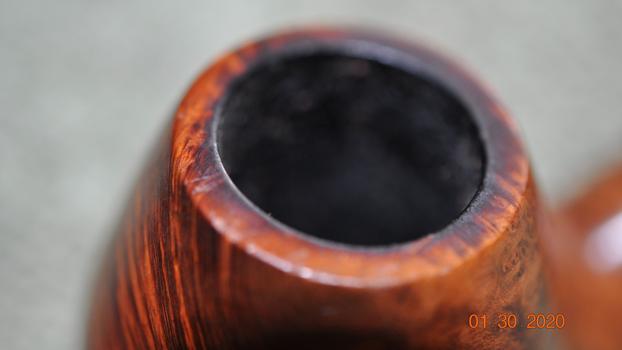
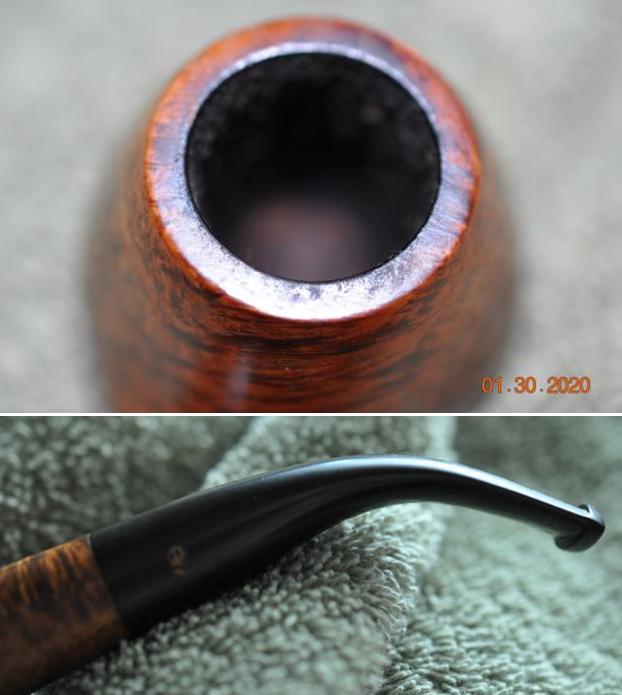
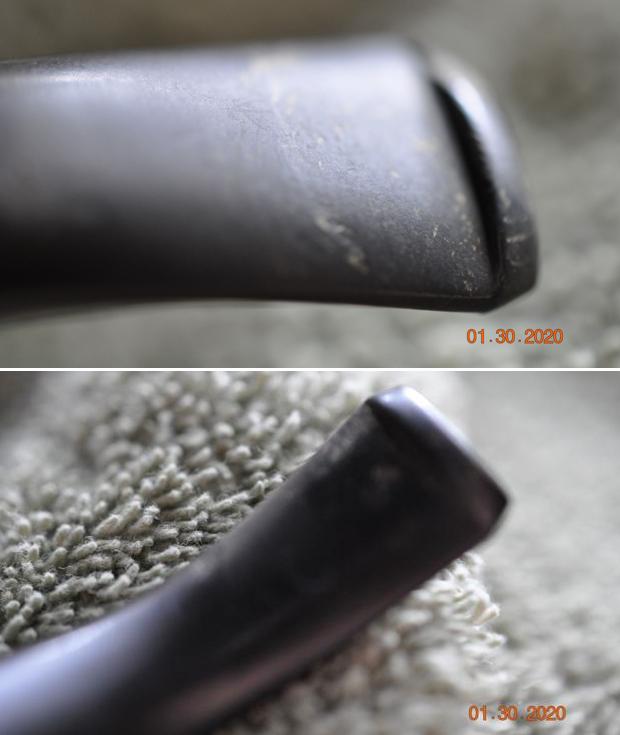
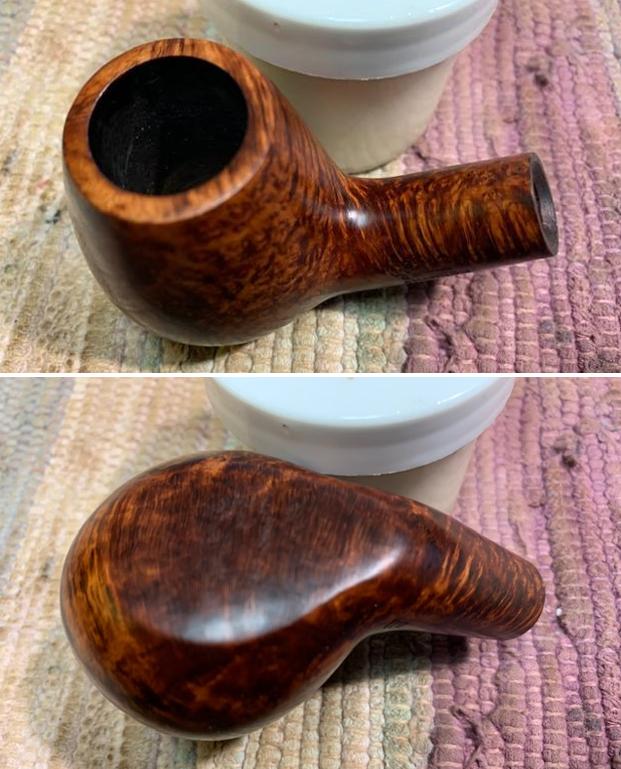
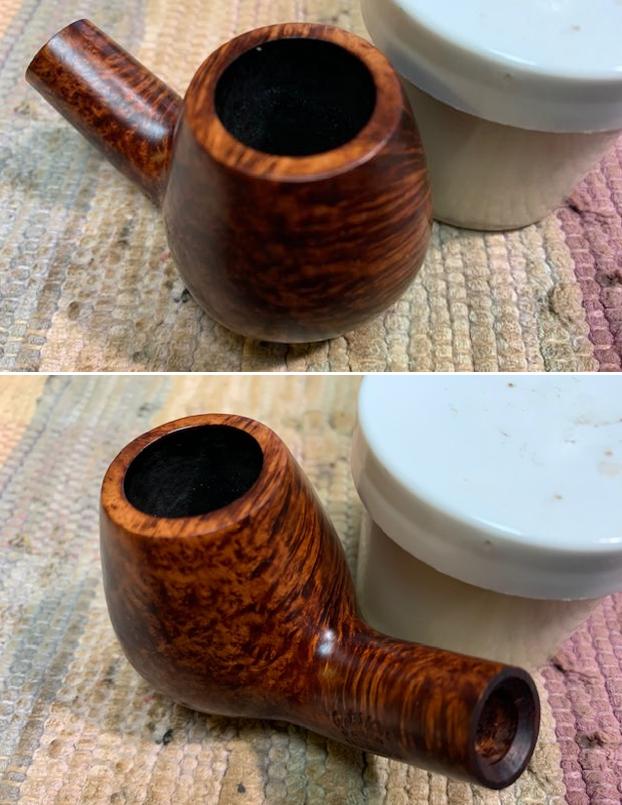
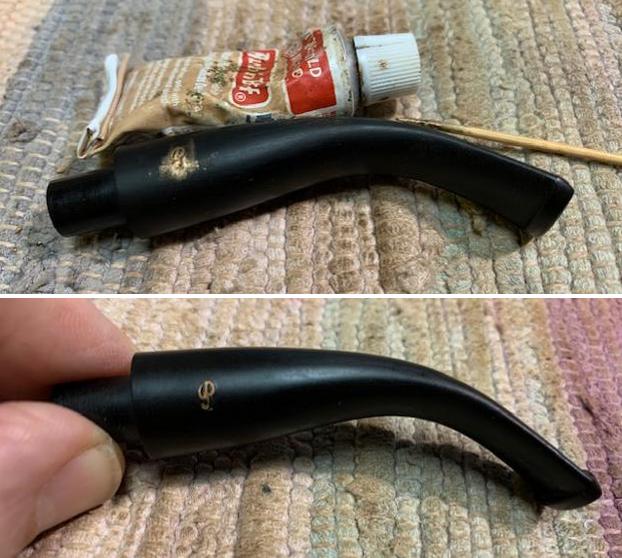
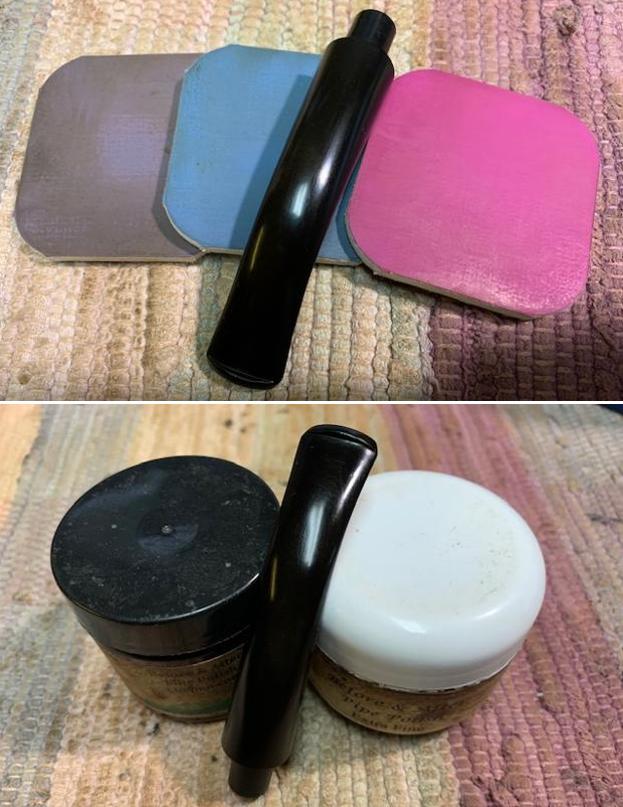
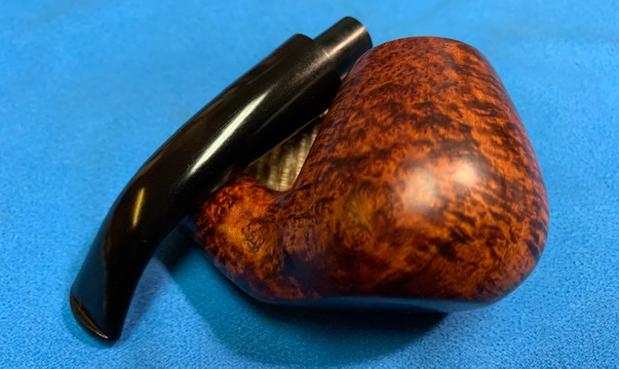
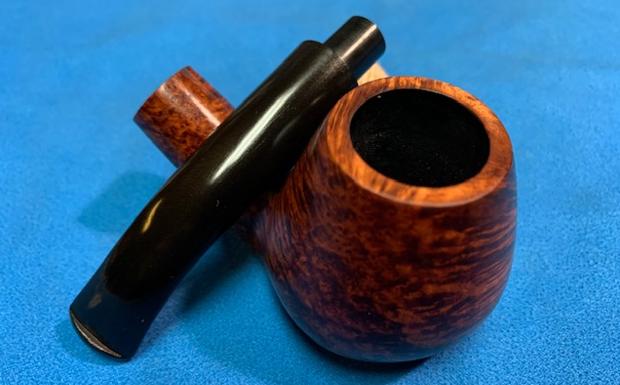
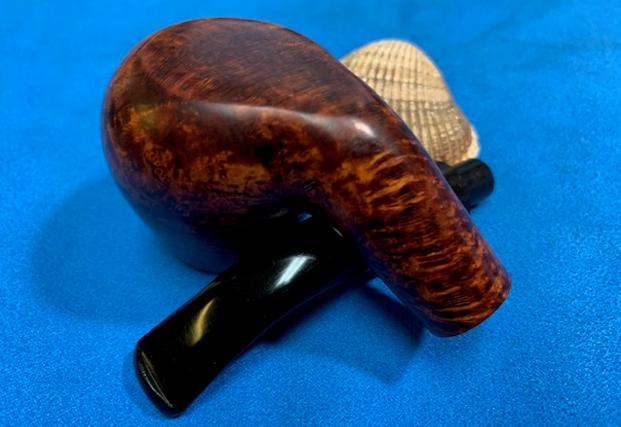
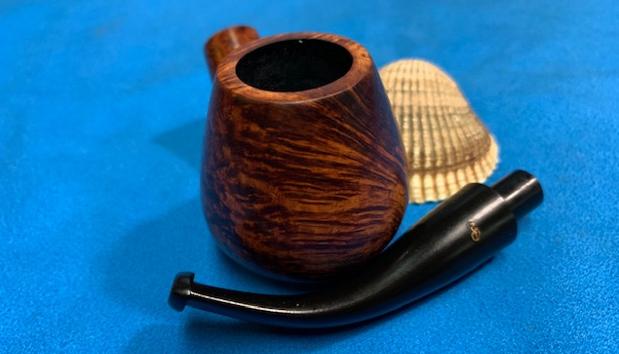
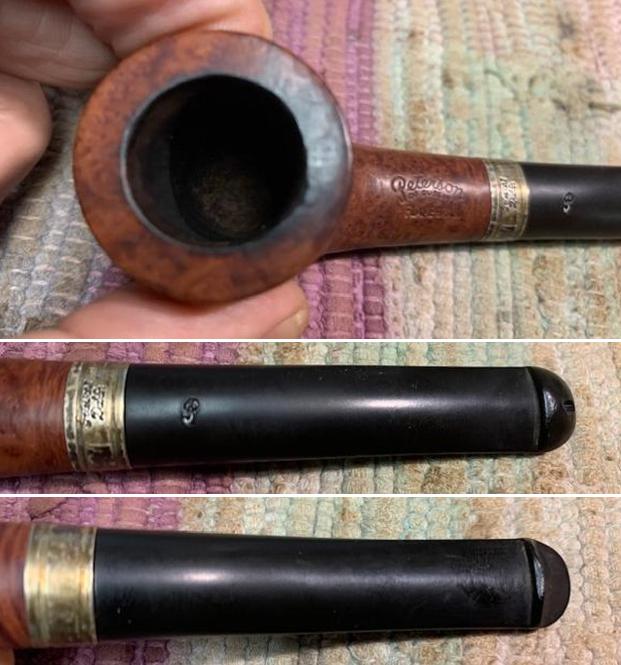
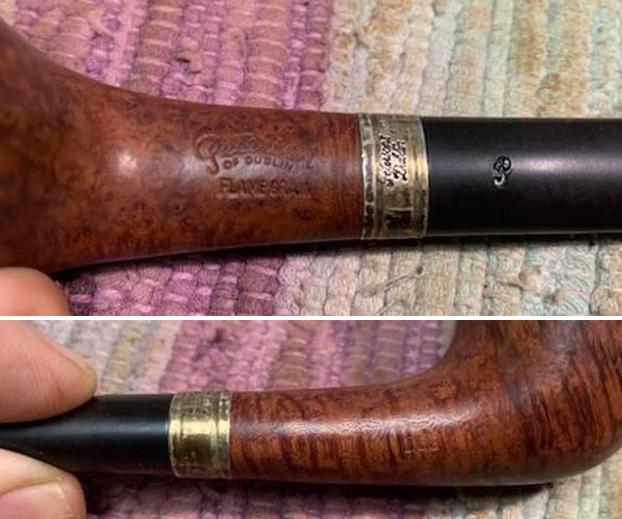
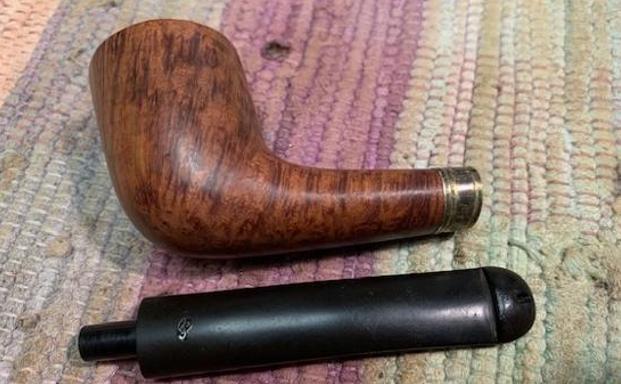
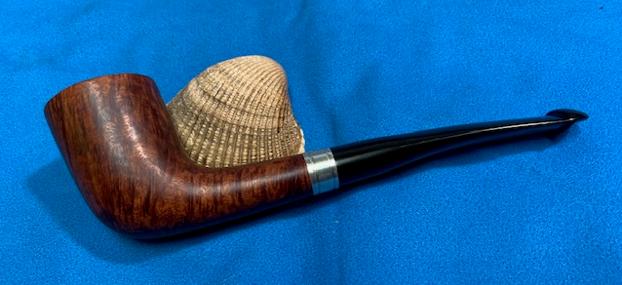
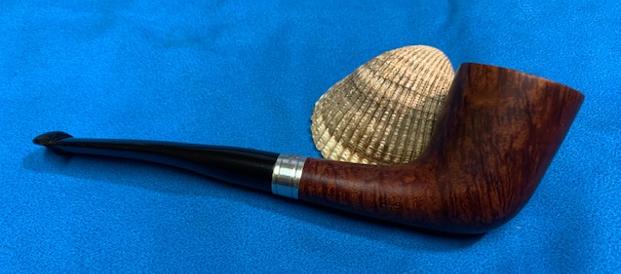
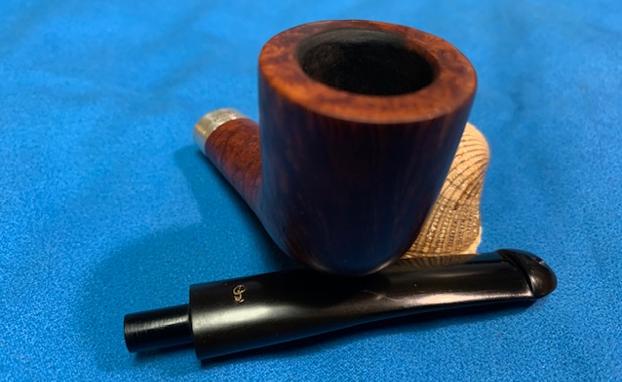
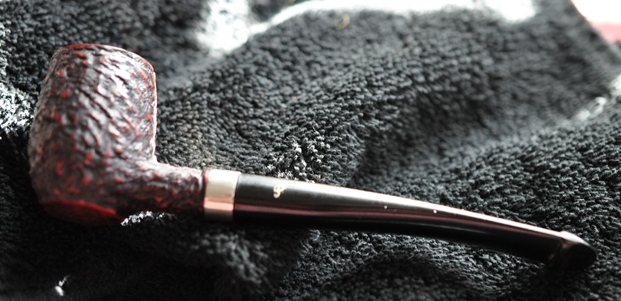
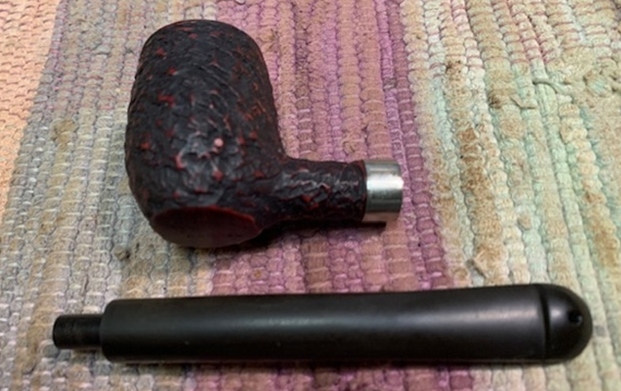
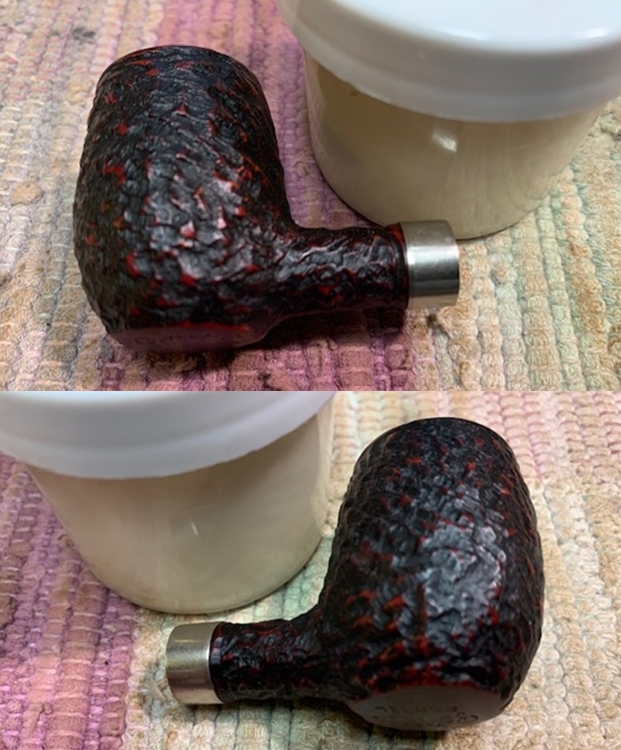
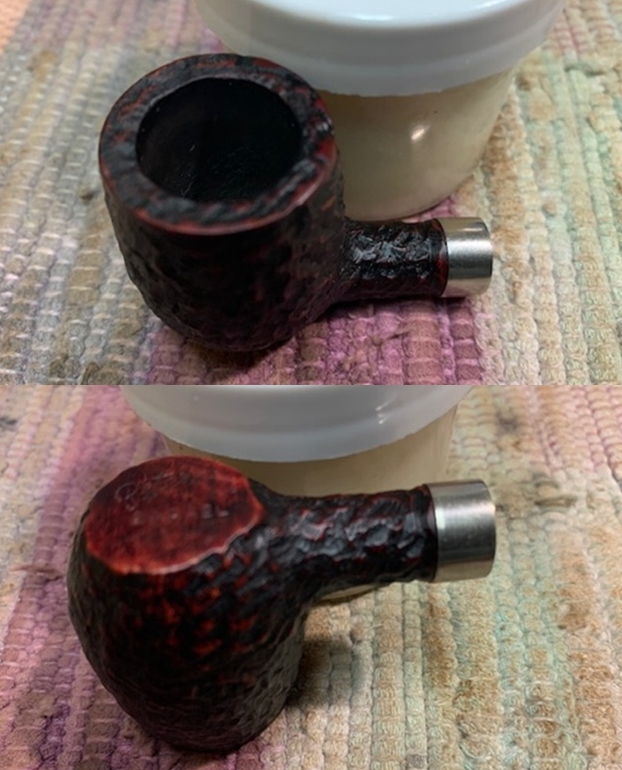
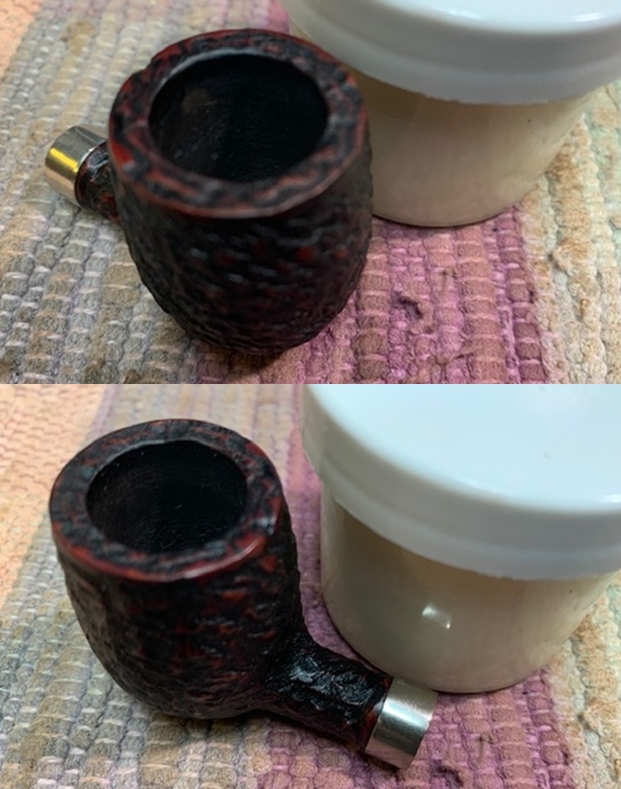
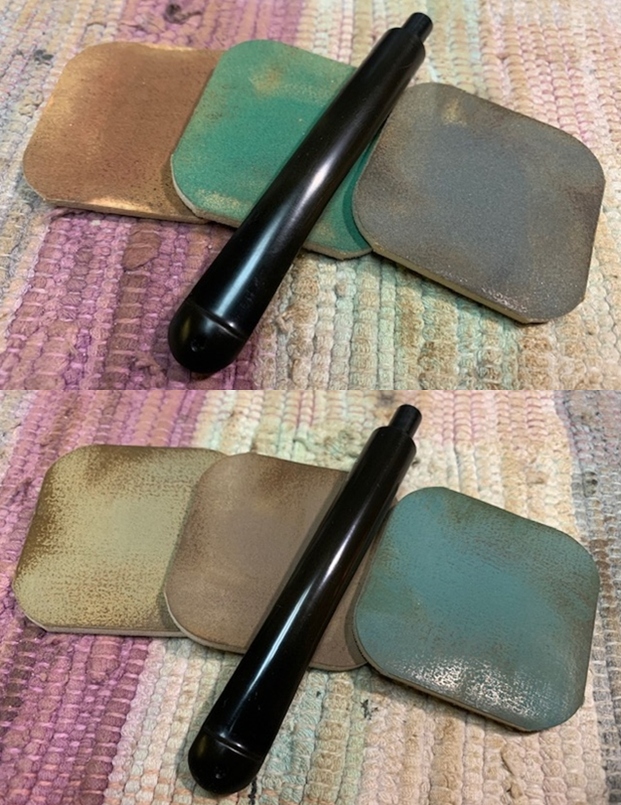
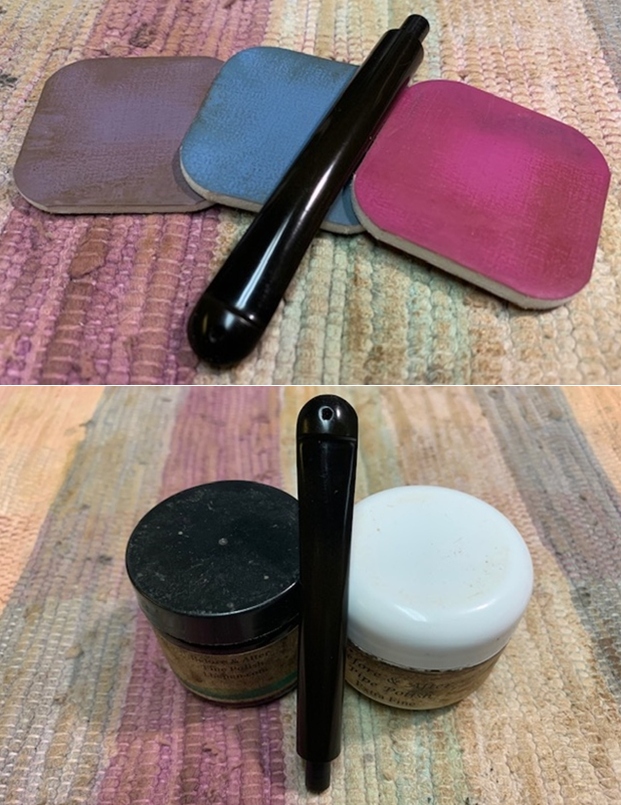
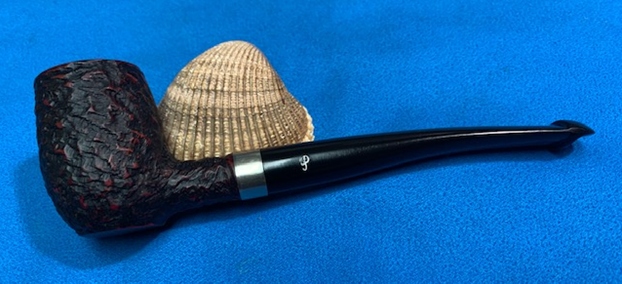
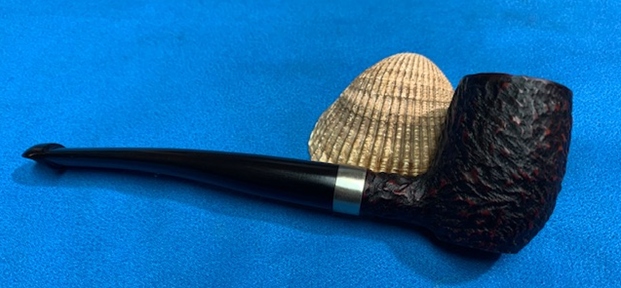
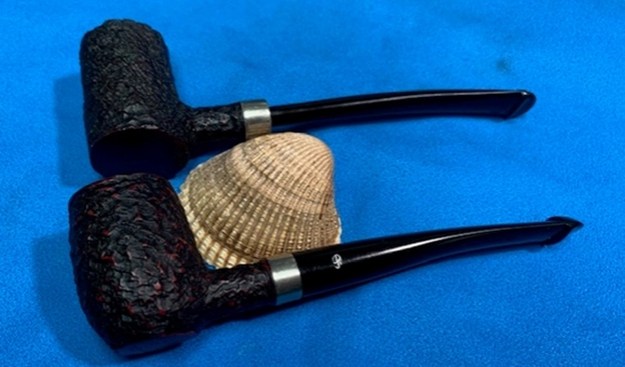
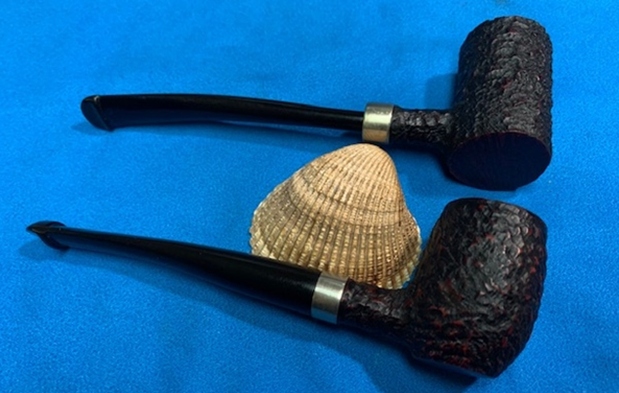
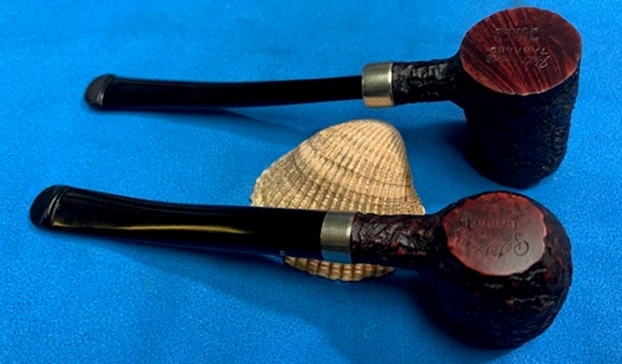
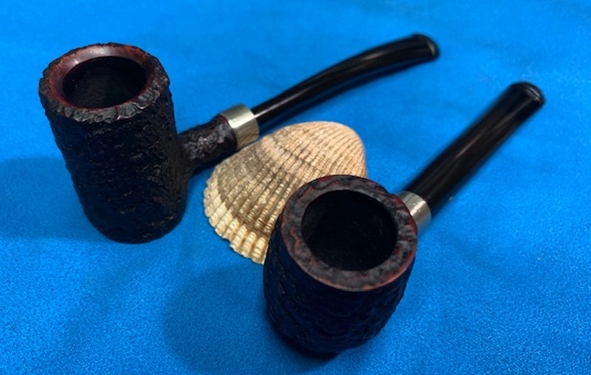
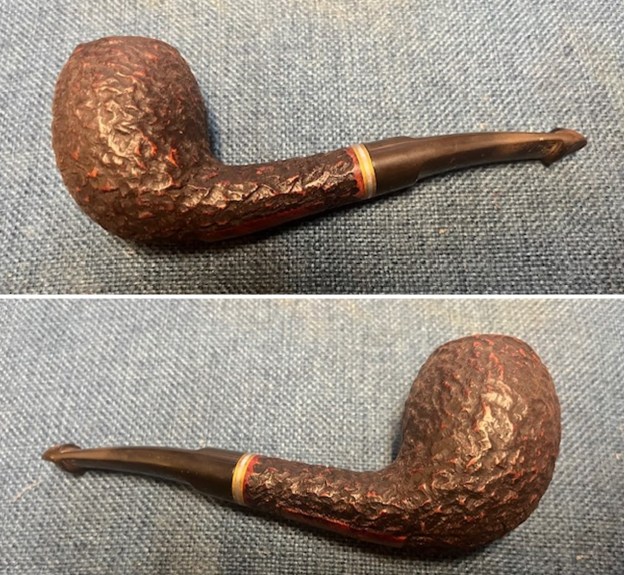
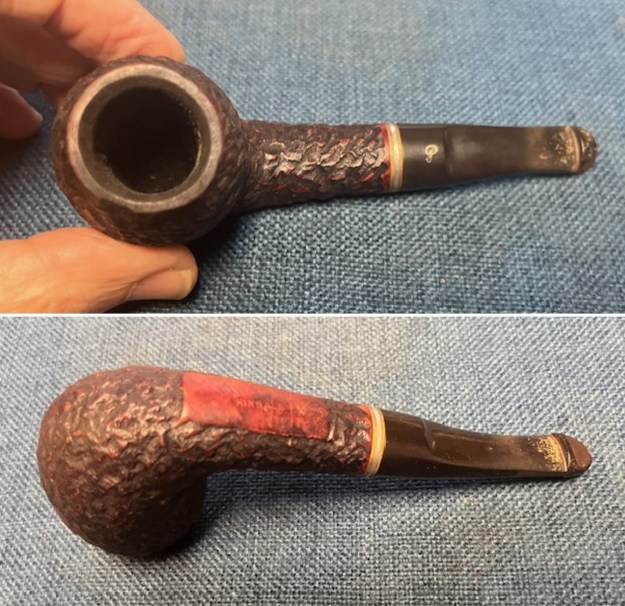
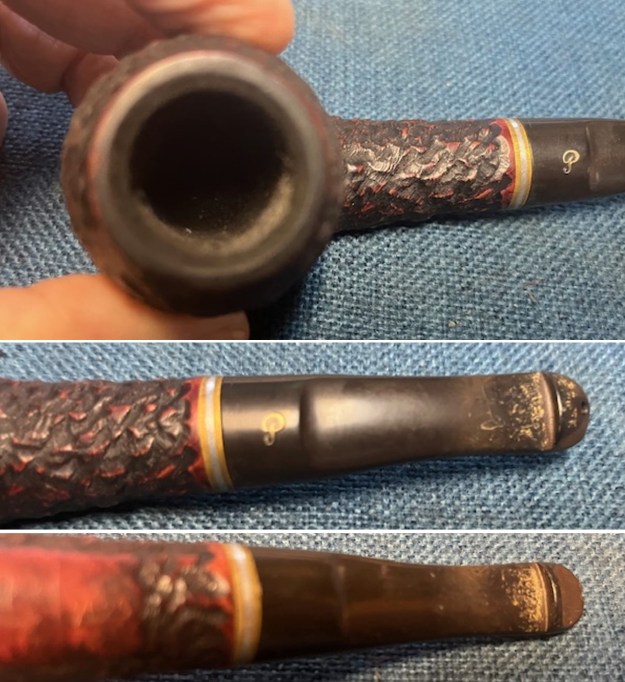
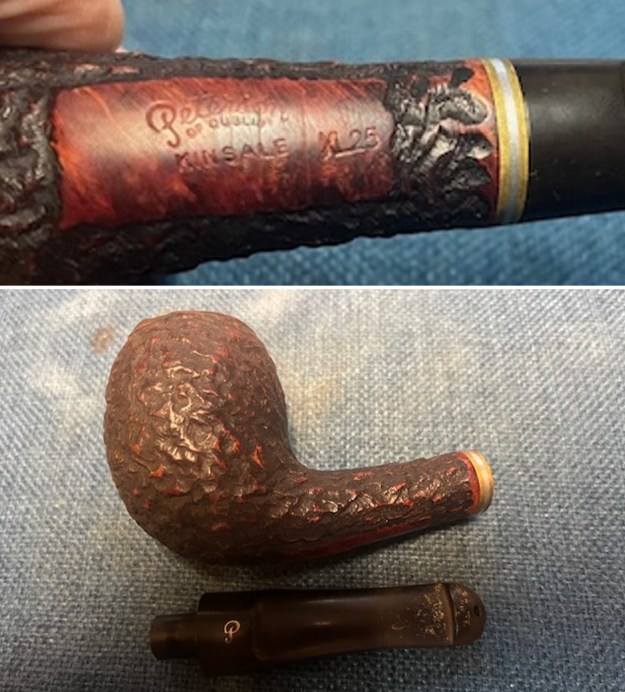
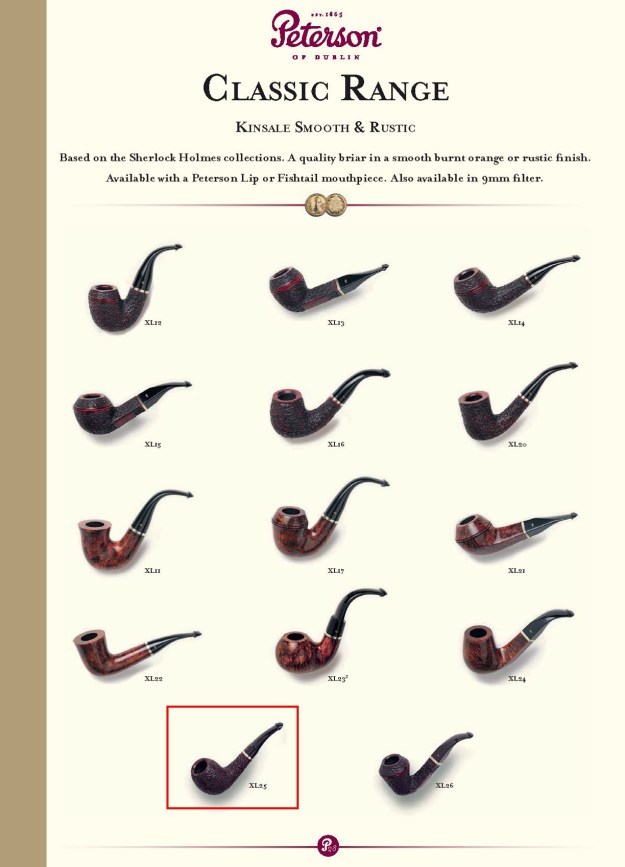
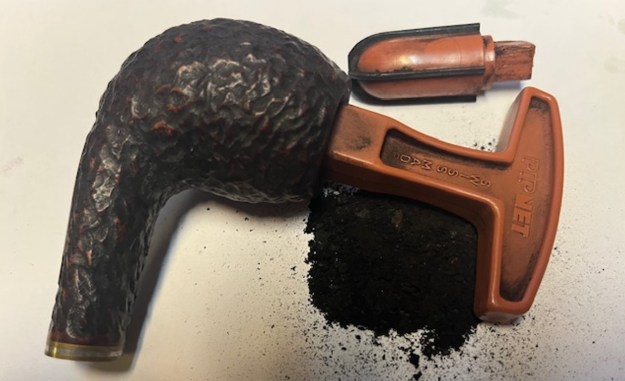
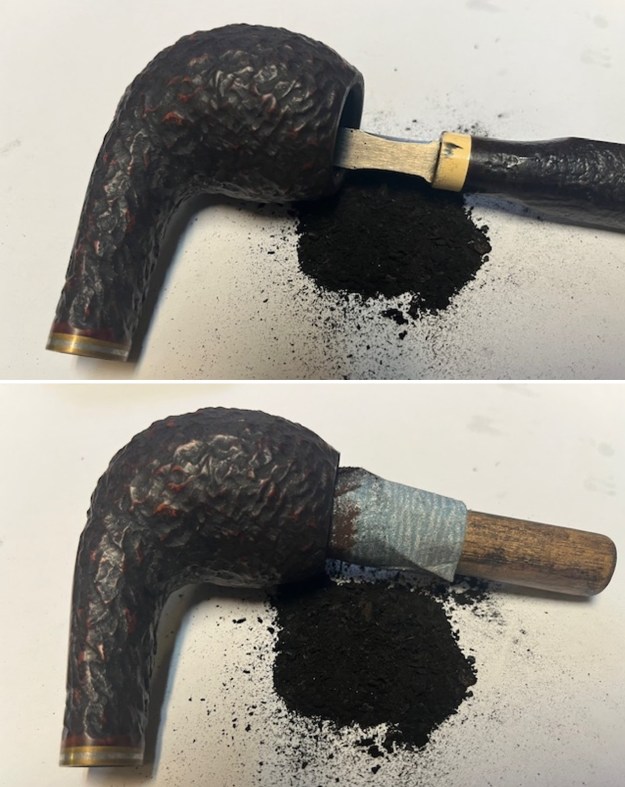
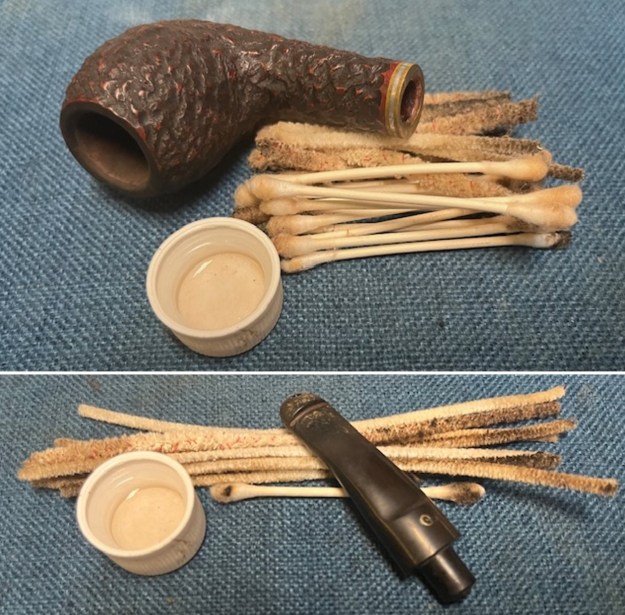
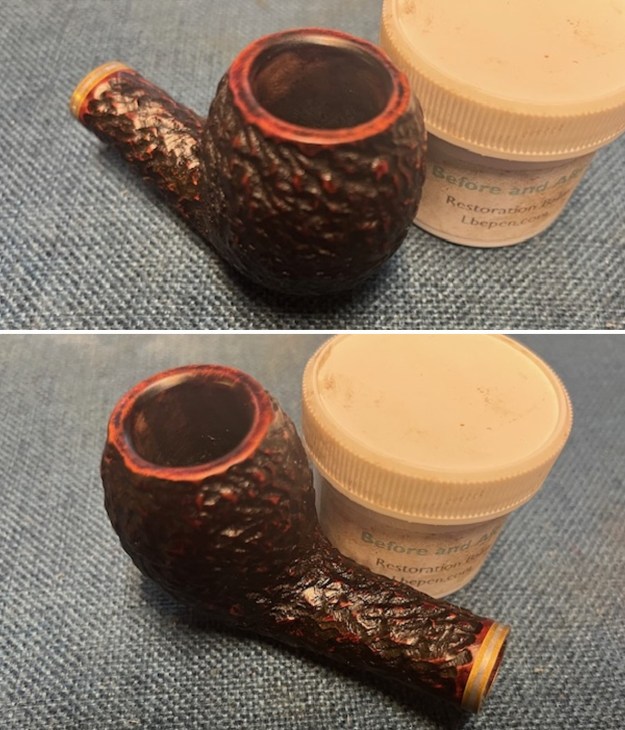
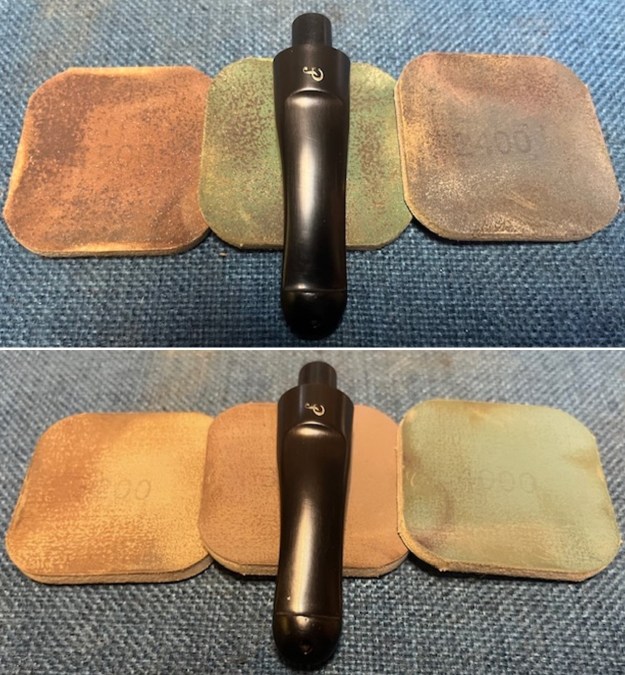
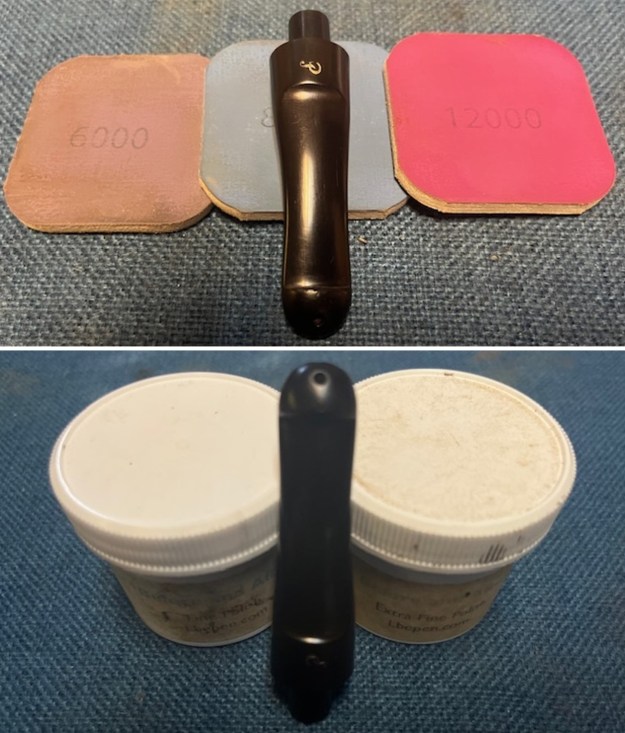
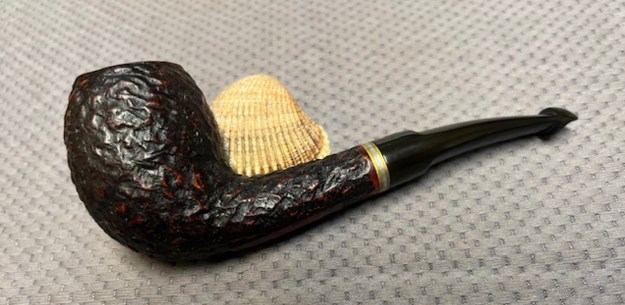
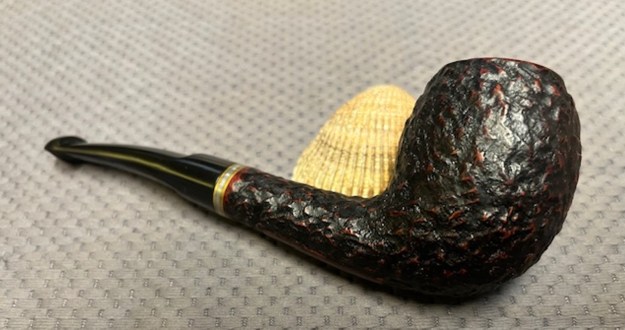
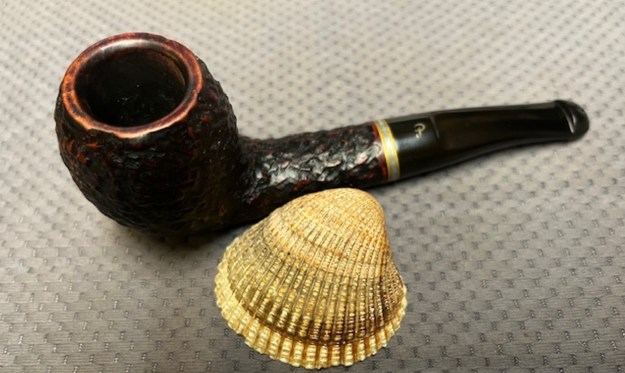
Sunday afternoon Auke stopped by with a pipe he wanted me to work on for him. It was obviously a favourite pipe of his. It was a Peterson’s shape that I have worked on before and one that was in the Sherlock Holmes series and labelled as a Strand. This one however was stamped on the underside of the shank in a smooth band and read Peterson’s [over] of Dublin [over] Kinsale. To the right of that it was stamped with the shape number XL25. It is a large rusticated pipe that is quite beautiful. This one was dirty with a moderate cake in the bowl smelling of the aromatics that Auke smoked. There was a lava build up on the rim top covering the smooth surface. The finish was a bitty sticky with the grime and dirt. Otherwise it was in good shape. The three stacked bands were a little tarnished on the shank end. The stem was very tight from the build up of tars and oils in both. Auke said the draw was quite constricted and was hard to pull air through – a symptom of a dirty, gummy airway in the shank and stem. The vulcanite stem is also very dirty. There was oxidation, calcification and some light tooth damage on both sides ahead of the button. The gold “P: stamp on the left side of the stem was in good shape – just a bit tarnished. I took photos of the pipe before I started my work on it. I took a closeup photo of the rim top and bowl to give a sense of the dirty condition of the pipe and the thickness of the cake and lava on the bowl top. The rim top and edges look to be under the lava coat but the cleanup will reveal the facts. I also took photos of the stem to show the top and underside ahead of the button.I took photos of the stamping on the underside of the shank. It was readable through the grime and debris. It read as noted in the above paragraphs. I also took the stem off the shank and took a photo of the look and proportion of the pipe.I turned to a Catalogue I have on the blog that has a section on the Classic Range Kinsale Smooth and Rustic finishes. It says that it is based on the Sherlock Holmes collections. A quality briar in a smooth burnt orange or rustic finish. Here is the link (https://rebornpipes.com/wp-content/uploads/2015/05/peterson-cataloguecomp_page_30.jpg). I have included a copy of the page below.I started my work on the pipe by reaming the cake in the bowl. I used a PipNet pipe reamer with the second and third cutting heads to take back the cake. I used a Savinelli Fitsall Pipe Knife to scrape the remainder of the cake out of the bowl and clean up the bottom of the bowl. I sanded the bowl walls with 220 grit sandpaper wrapped around a piece of dowel. With the bowl cleaned out I was able to see that the bowl walls and bottom were in great condition. There was no checking or damage. I cleaned the airway in the shank and stem with pipe cleaners, cotton swabs and isopropyl alcohol. Many pipe cleaners later that airway was clean and once again wide open.I scrubbed the externals of the bowl and shank with undiluted Murphy’s Oil Soap and a tooth brush. I rinsed it with warm running water and repeated the scrubbing and rinsing process until the pipe was clean and looked better. I polished the rim top with micromesh sanding pads to clean up the darkening on the smooth surface and inner bevelled edge. It looked much better. I rubbed the briar down with Before & After Restoration Balm. I worked it into the briar with my fingertips and a horsehair shoe brush to work it into the finish. The product works to clean, enliven and preserve the briar. I let it sit for 10 minutes then I buffed it with a cotton cloth to deepen the shine. The briar really comes alive with the balm.I polished the stem with micromesh sanding pads – dry sanding with 1500-12000 grit pads. Once again, I wiped it down between each pad with Obsidian Oil. I further polished it with Before and After Stem Polish – both Fine and Extra Fine. It looked very good. This Rusticated Peterson’s of Dublin Kinsale XL25 with an oval Taper Stem has a beautiful rusticated finish that has a new lease on life. The medium brown/black/mahogany finish gives depth to the rustication around the bowl and shank. It has a classic look of a Peterson’s pipe. The rebuilt and polished black vulcanite taper stem adds to the mix. I put the stem back on the bowl and buffed the pipe with Blue Diamond on the buffing wheel being careful to not buff the stamping. I gave the bowl multiple coats of Conservator’s Wax and the stem multiple coats of carnauba wax on the buffing wheel and followed that by buffing it with a clean buffing pad. I hand buffed the pipe with a microfiber cloth to deepen the shine. The finished Peterson’s of Dublin Kinsale XL25 is quite nice and feels great in the hand. Give the finished pipe a look in the photos below. The dimensions of the pipe are Length: 6 inches, Height: 2 inches, Outside diameter of the bowl: 1 ¼ inch, Chamber diameter: ¾ of an inch. The weight of the pipe is 1.83 ounces/52 grams. Thanks for walking through the restoration with me as I worked over another beautiful pipe. Auke will pick up his pipe on the weekend. I am looking forward to seeing what he thinks of it.
Enflamed by Peterson’s Grain


Blog by Kenenth Lieblich

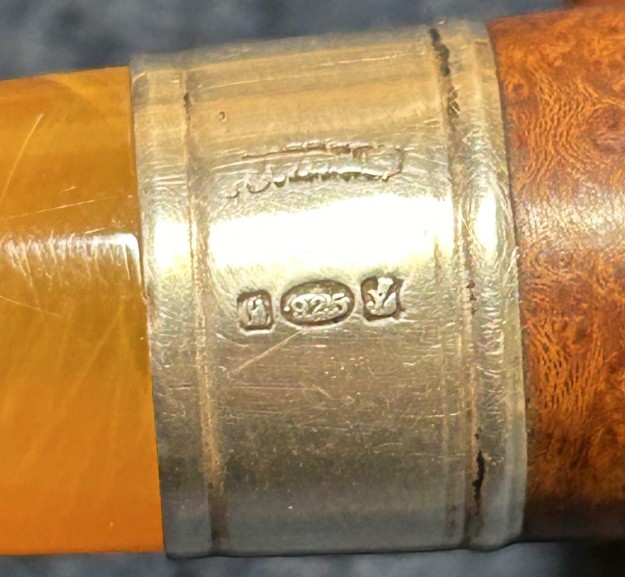
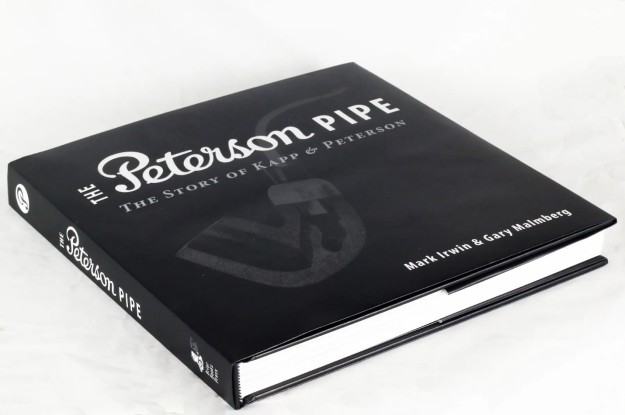
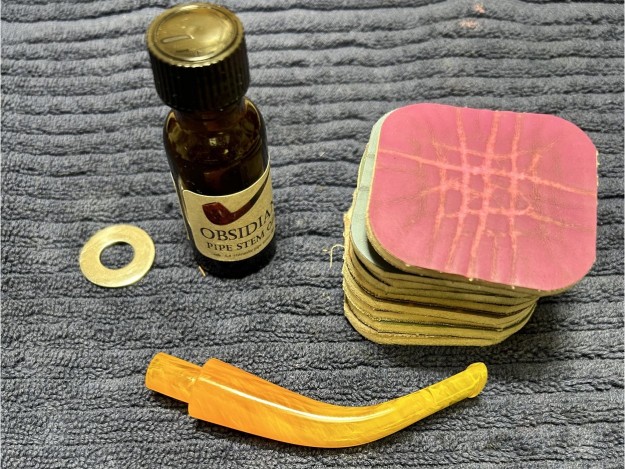
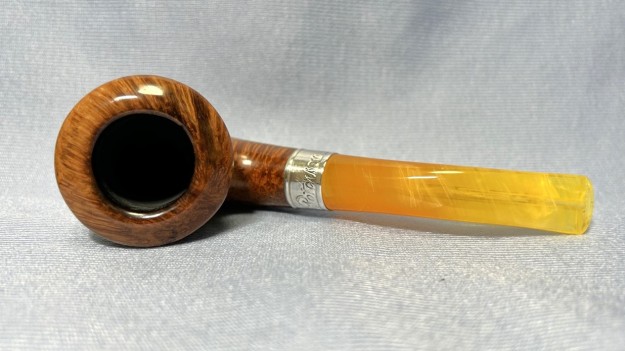
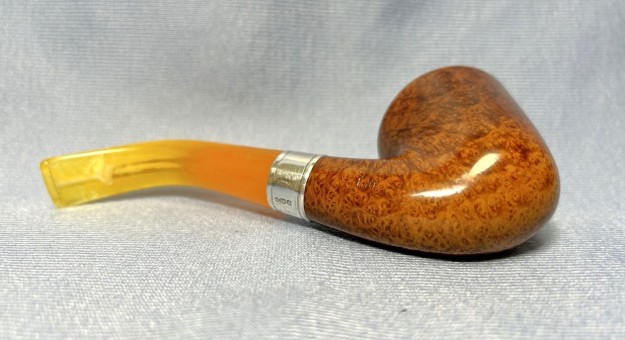
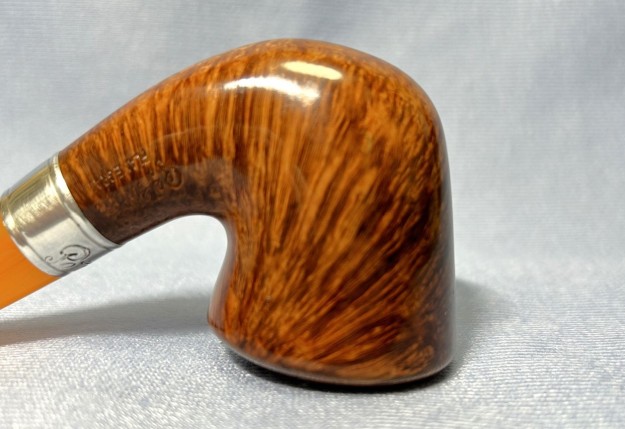
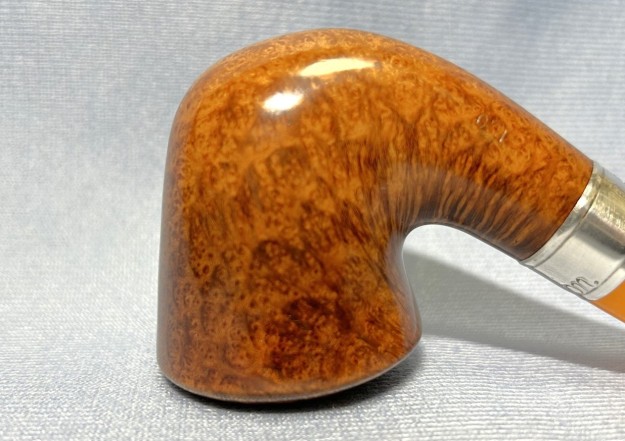
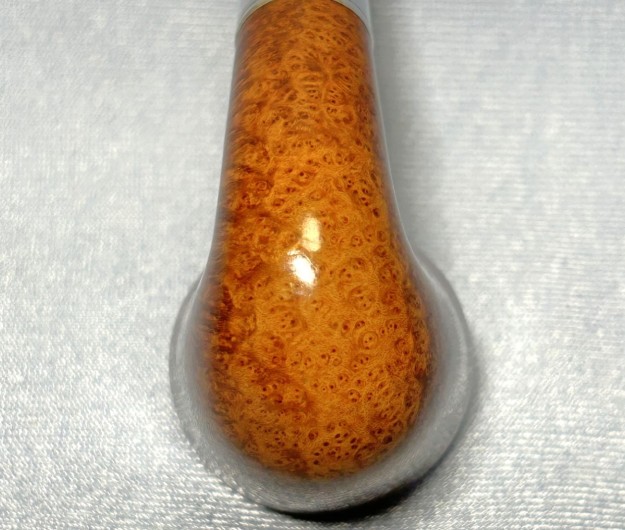
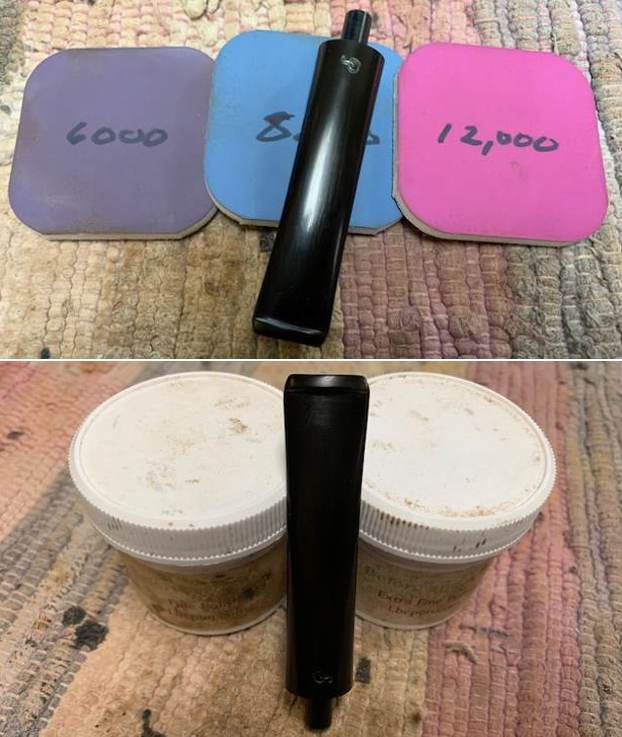
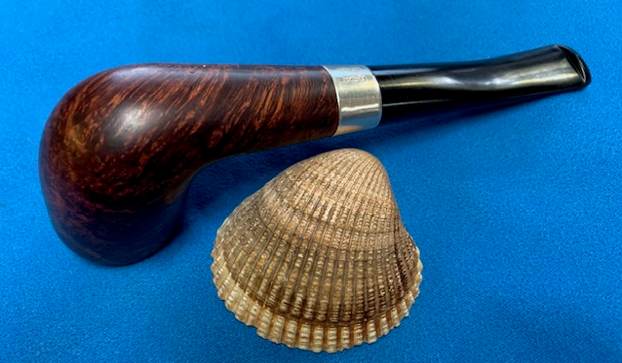
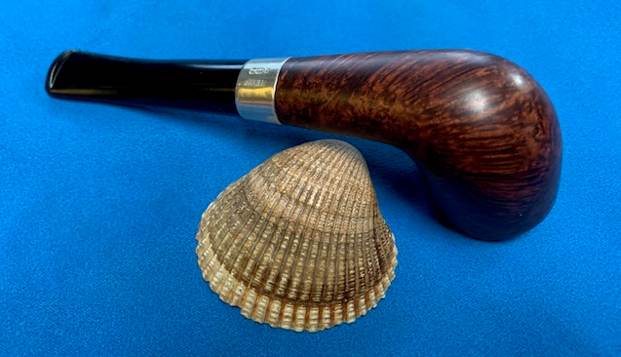
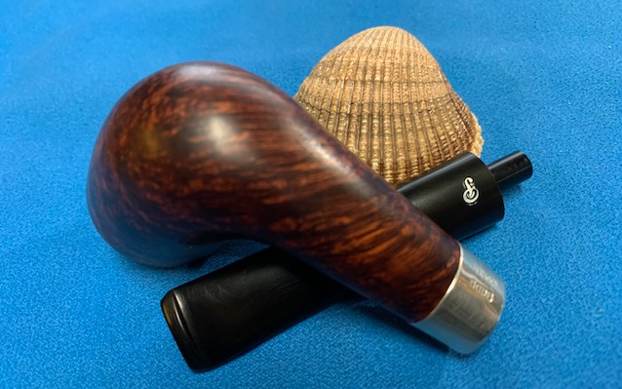
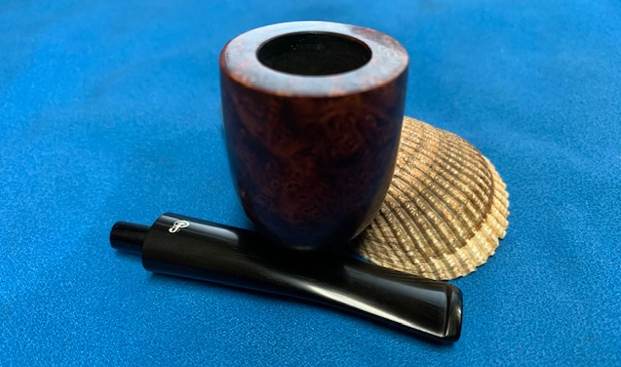
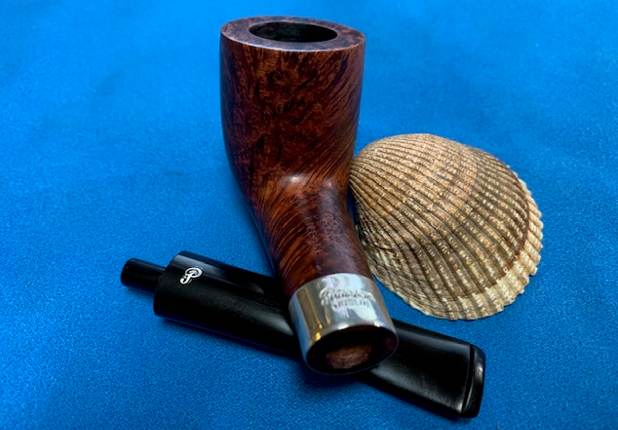
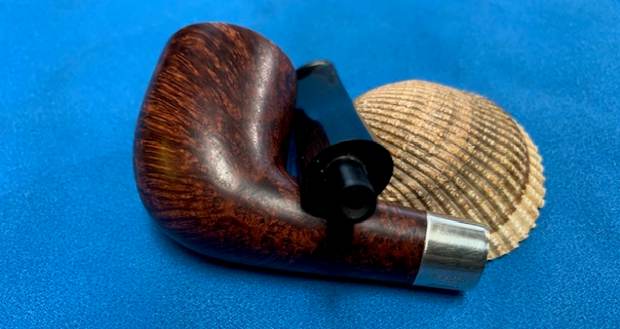
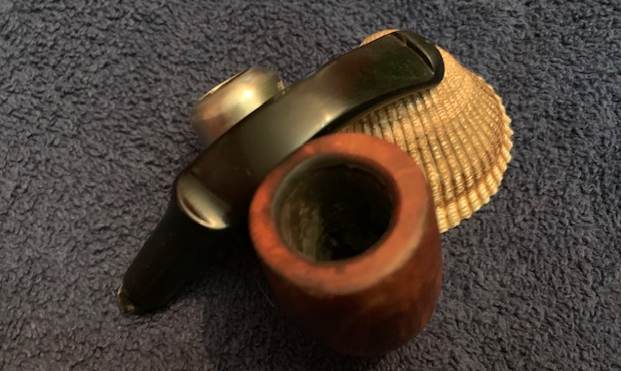
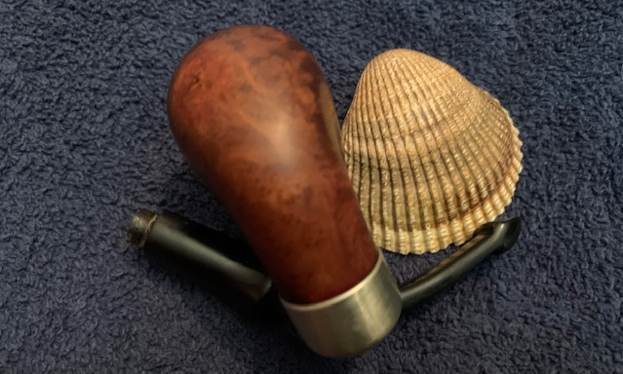
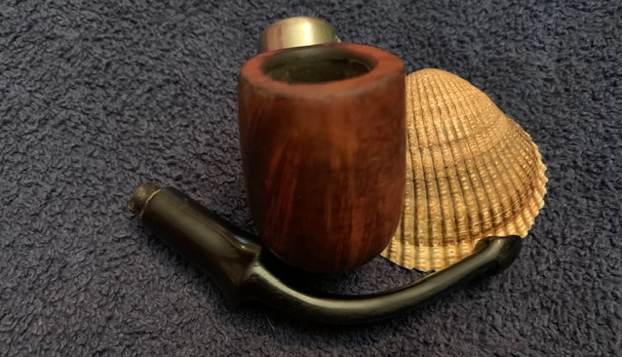
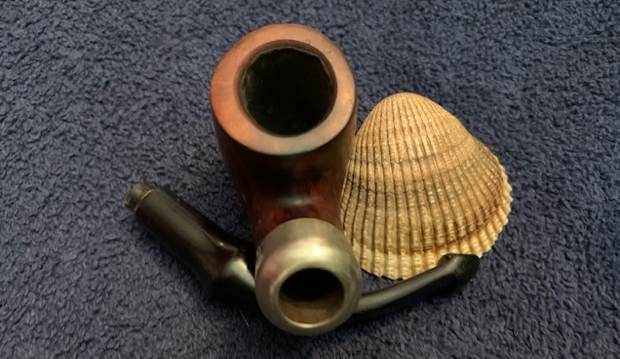
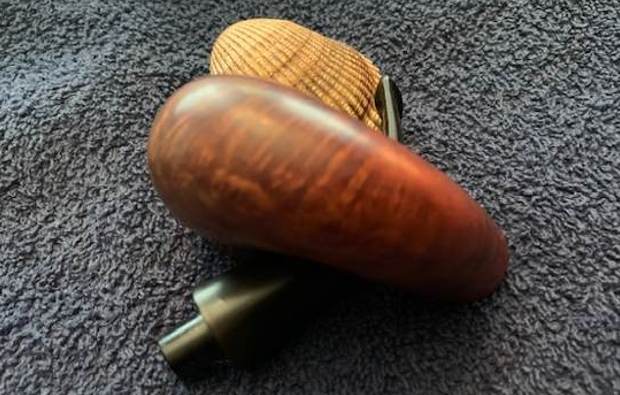
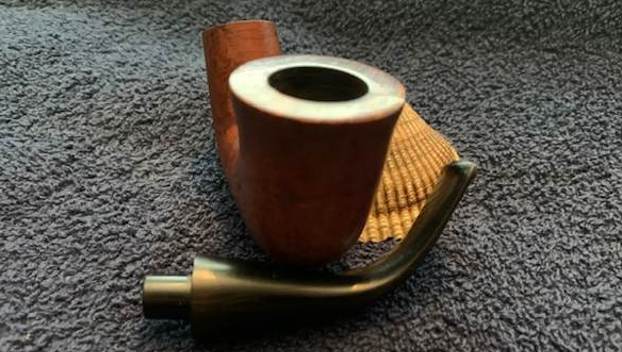
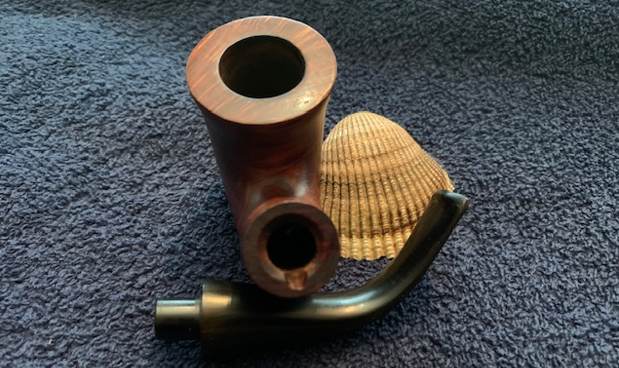
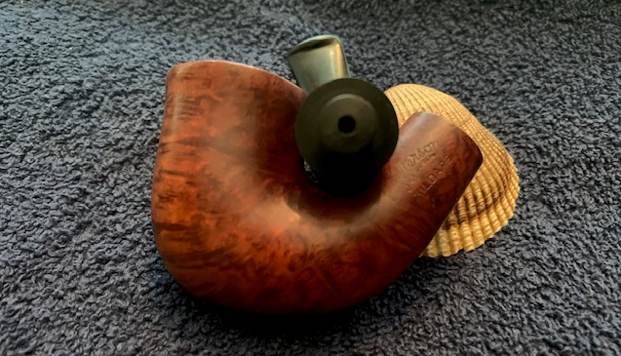
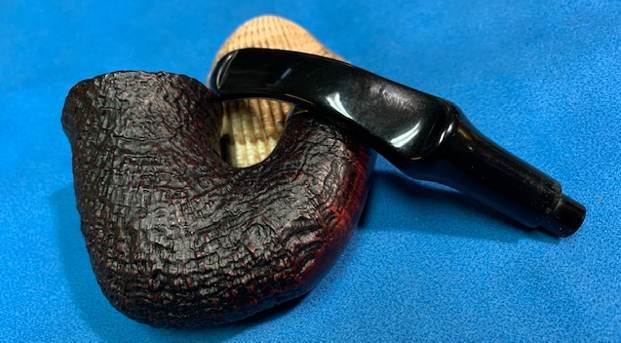
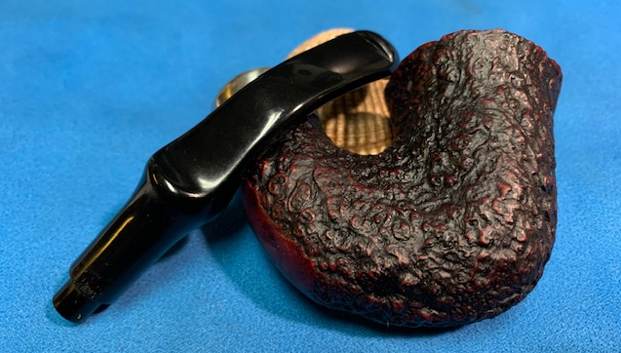
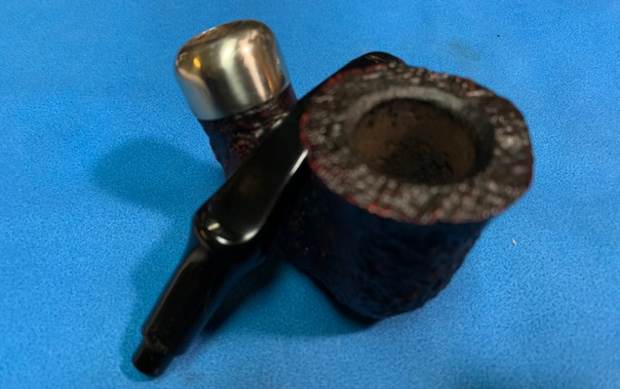
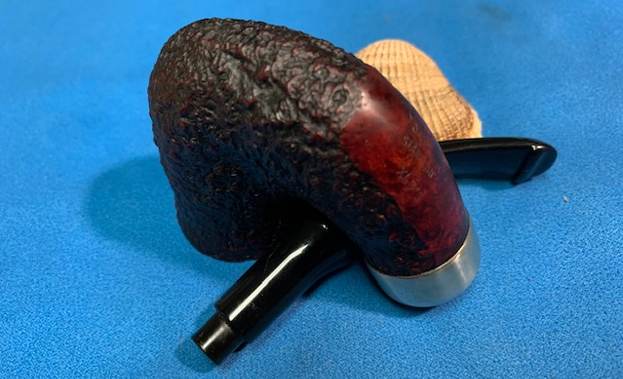
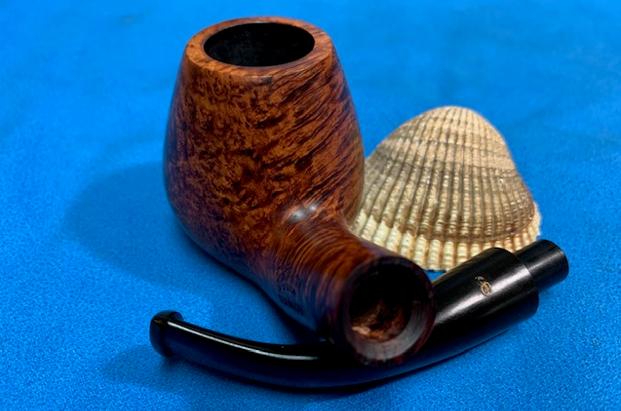
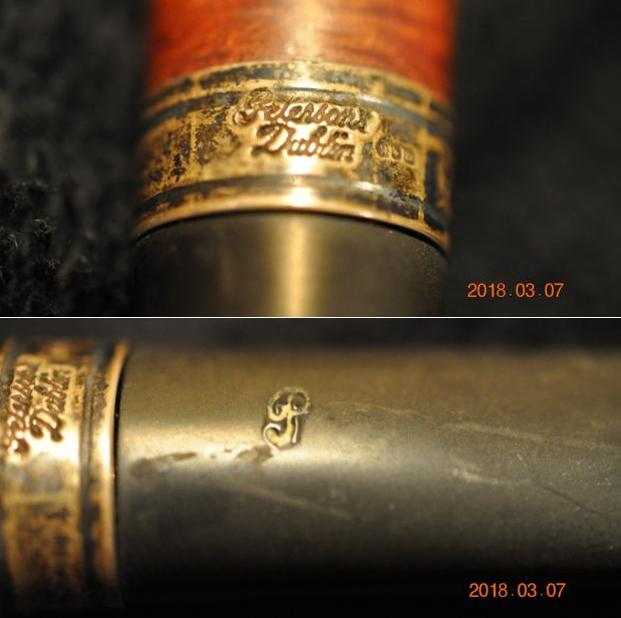
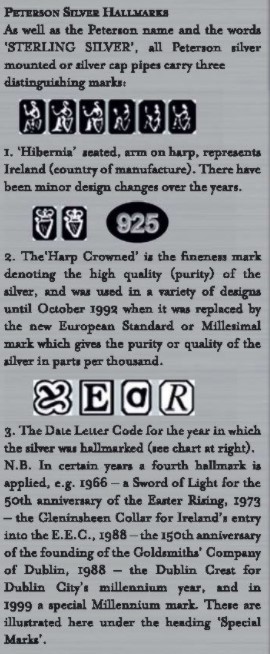
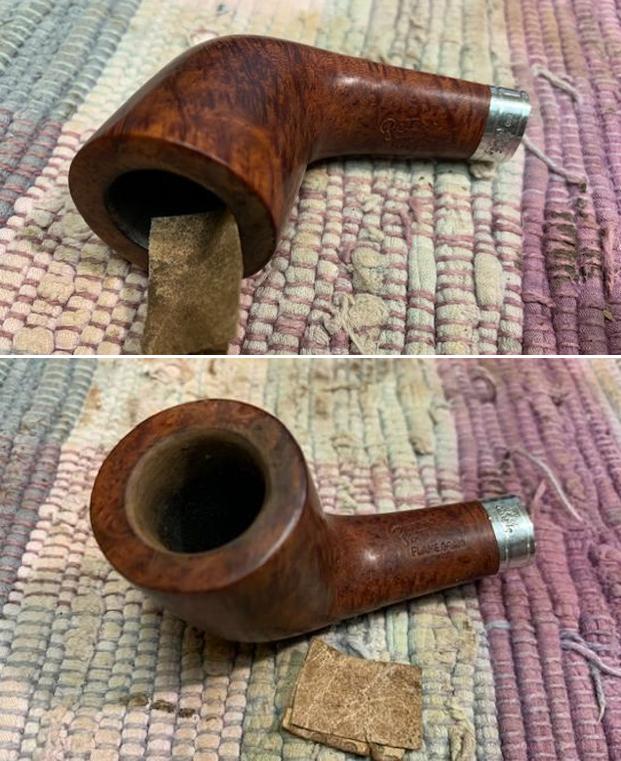
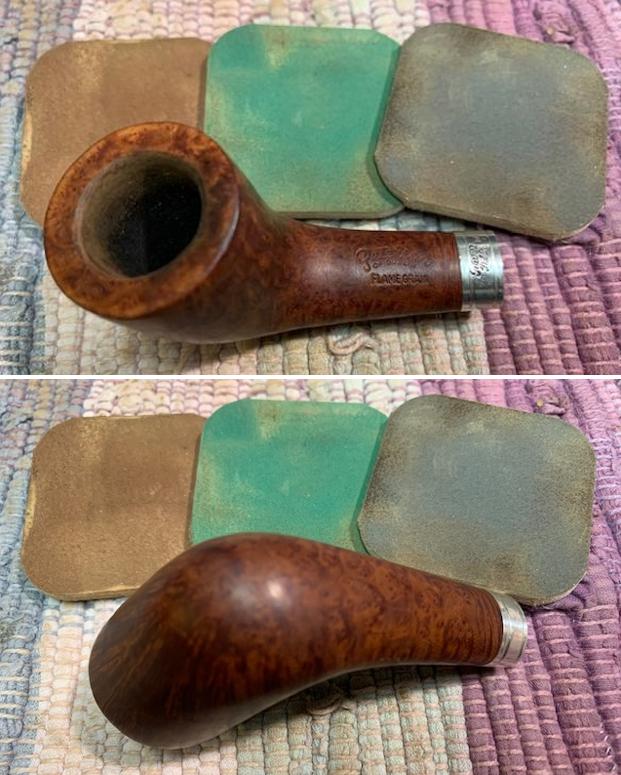
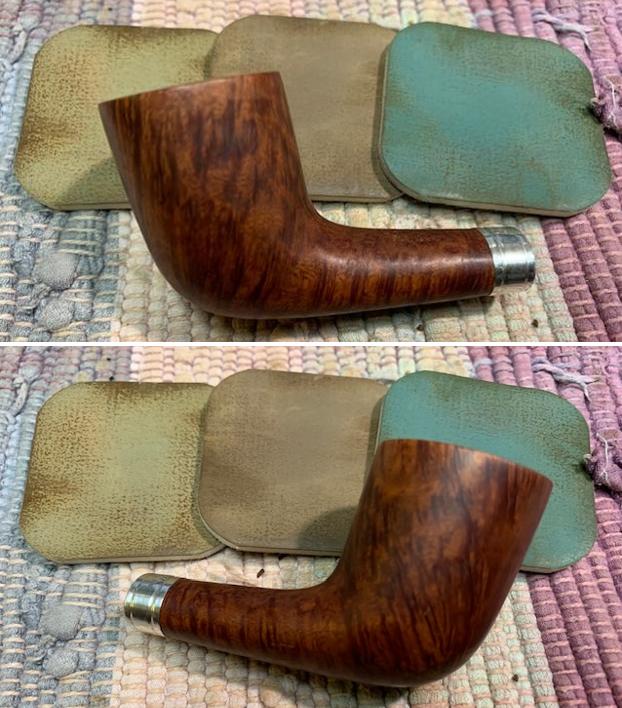
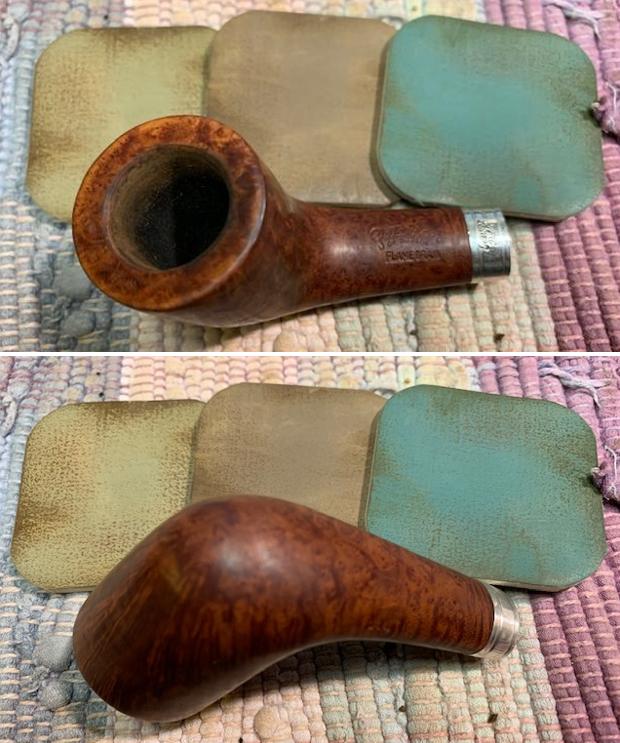
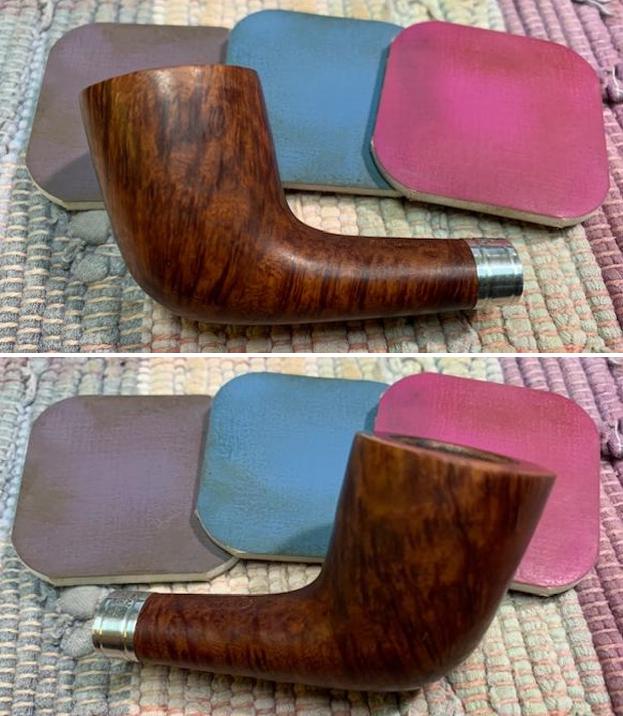
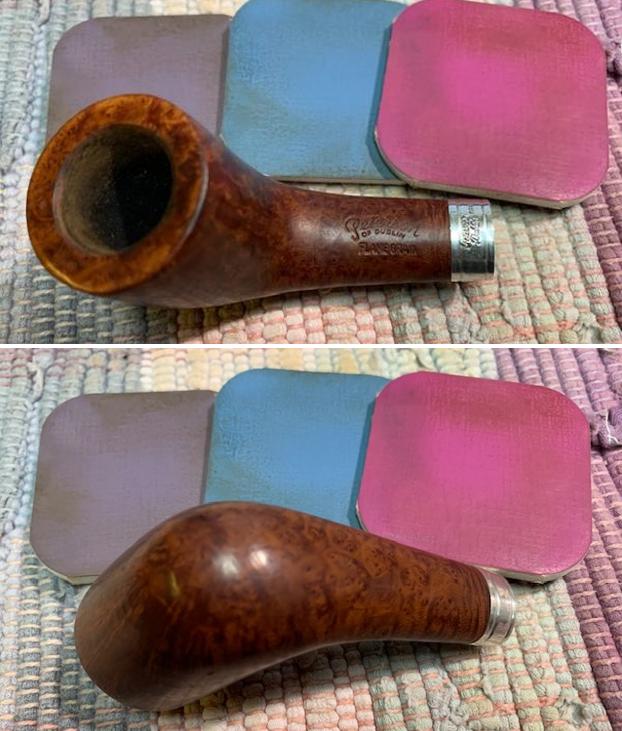
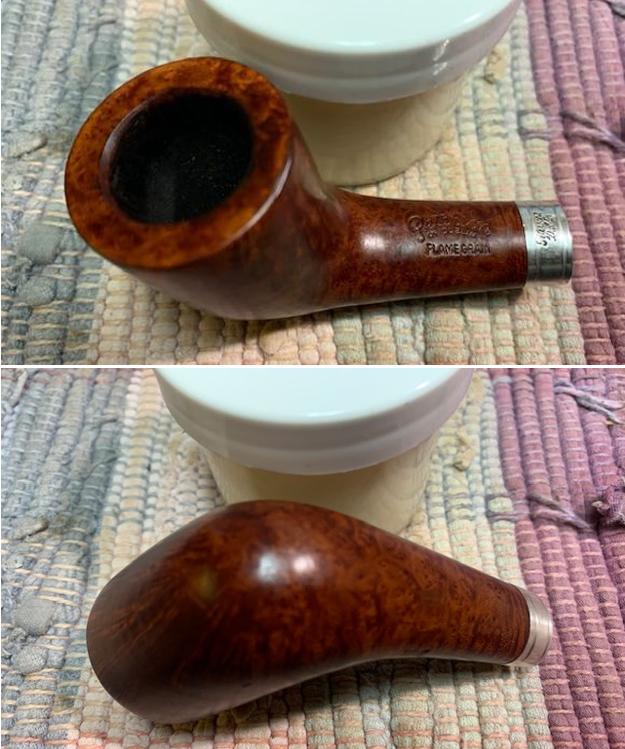
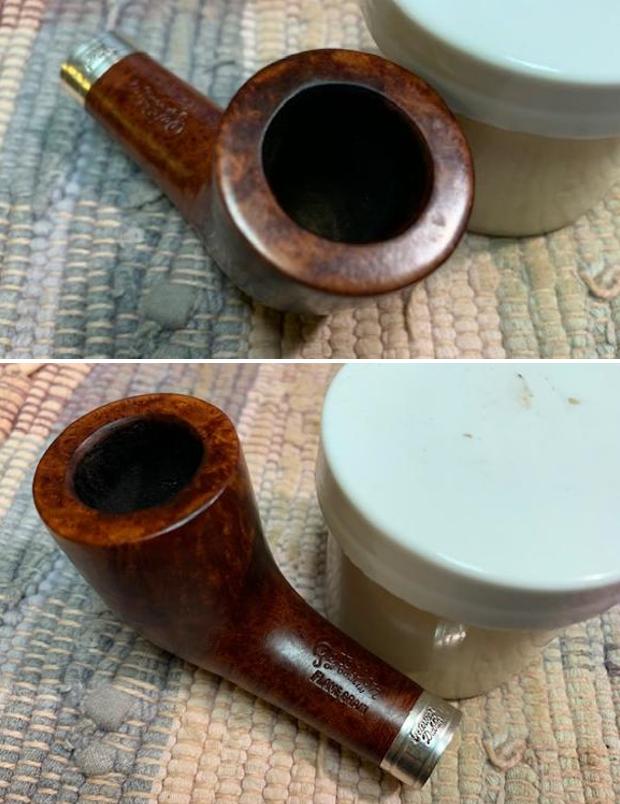
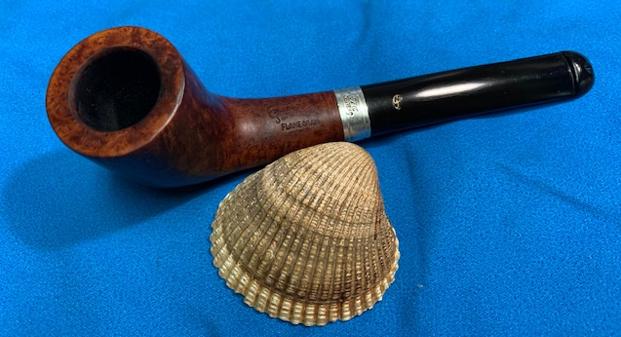
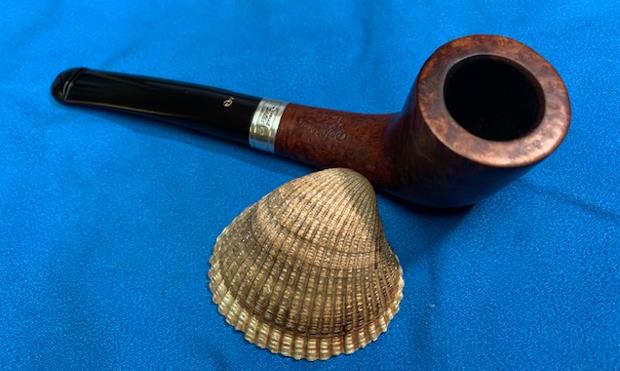
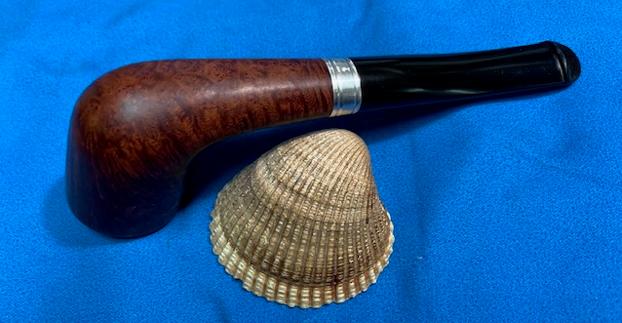
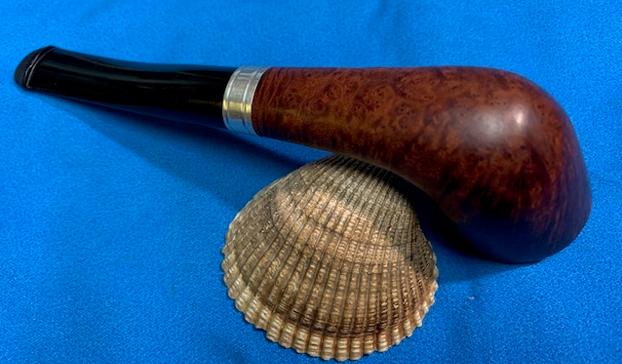
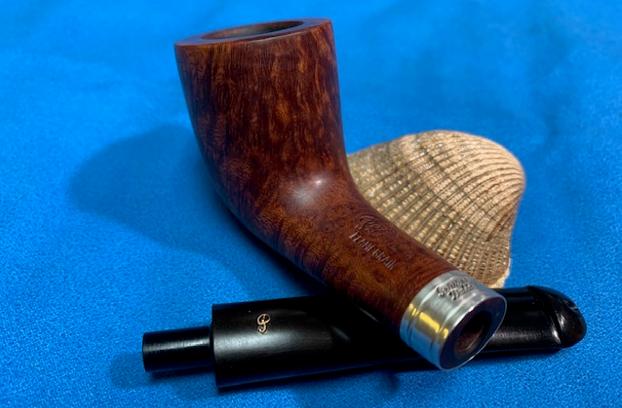
This beauty is a Peterson Flame Grain B10 calabash pipe with a P-lip stem. It is the second pipe of four that I’m restoring for a customer in Washington. It’s an awfully handsome pipe, but has some serious issues to be addressed. Let’s see what we can do to revivify this great pipe. I’m looking forward to the challenge. One note: I unfortunately lost several photos that I took of this pipe, so the photographic evidence won’t be as thorough as usual. The Peterson website says that this pipe shape “combines elements of traditional bent Dublin, Calabash, and Rhodesian archetypes”. I can see what they mean, but I’m calling it a calabash – so there! The markings are quite interesting. On the left side of the shank, it reads Peterson [over] of Dublin [over] Flame Grain. On the right side of the shank, it reads B10. There is also a sterling silver band which provides some additional marks: Peterson and a word which I assume to be Sterling (but it is somewhat obliterated). There are also some hallmarks: Hibernia – a woman seated, her arm on a harp, representing Ireland. Then .925 in an oval, confirming that this is 92.5% silver. The third mark, I believe, is supposed to be a letter indicating the year of manufacture. However, the third mark here didn’t look like a letter to me. Steve thought it could be the letter Y (indicating 2009), but suggested I ask Peterson expert, Mark Irwin, about it. He confirmed that it is, indeed, a Y. I know something about Peterson pipes, but wanted to know more about the Flame Grain line, so I went over to Pipedia to have a look. Obviously, there is a long and very good article about Peterson – here is the link. No significant mention was made of the Flame Grain line there, but Mark Irwin and Gary Malmberg’s book, The Peterson Pipe: The Story of Kapp & Peterson, did make mention of it:

Flame Grain (1997-) Smooth flame-grained with brass band 1997-c.2000, sterling silver thereafter. Stamped arched Peterson over arched OF DUBLIN over FLAME GRAIN. Black vulcanite mouthpiece, also amber coloured (2010-), P-Lip mouthpiece, hot foil stamped P.Meanwhile, Mark Irwin’s website, Peterson Pipe Notes, has an article about the B shapes. You can read the whole thing here. He includes this point:

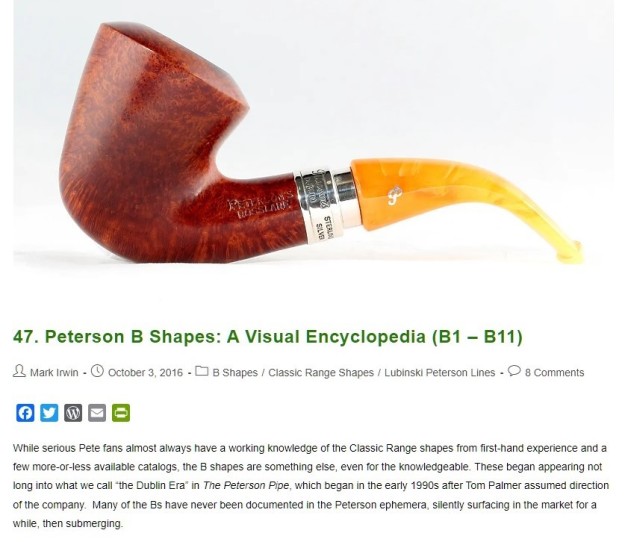
The B10 and B11 seem to have been released at the same time, and both have found a home in the Classic Range in almost every line Peterson issues. Sykes Wilford describes the B10 as a “Calabash variation,” featuring “the softly convex rim, blending elements of the bent Dublin, bent Bulldog along with the Calabash shape.” I have both pipes in the Rosslare Royal Irish line (with the faux spigot), hallmarked “S” for 2003, although it may have been issued before that date.All of this information seems to confirm that this pipe is among the first iterations of the B10 with the amber-coloured stem, starting in 2010.

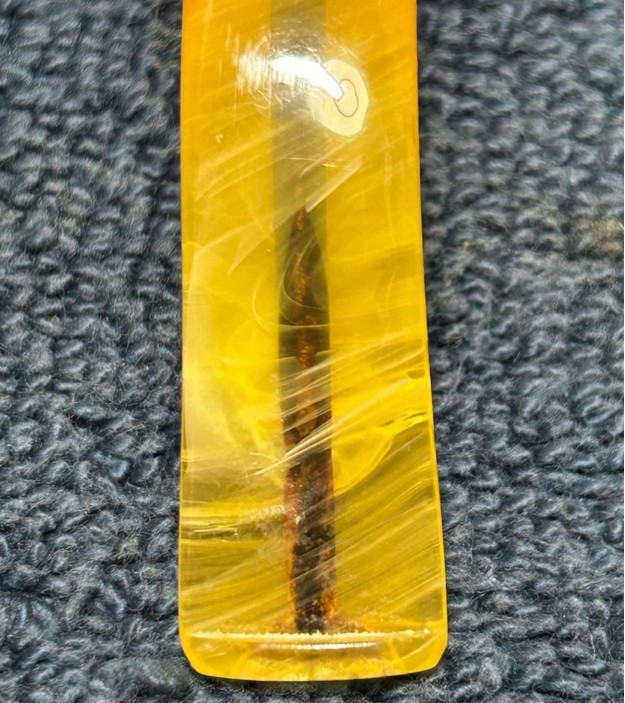
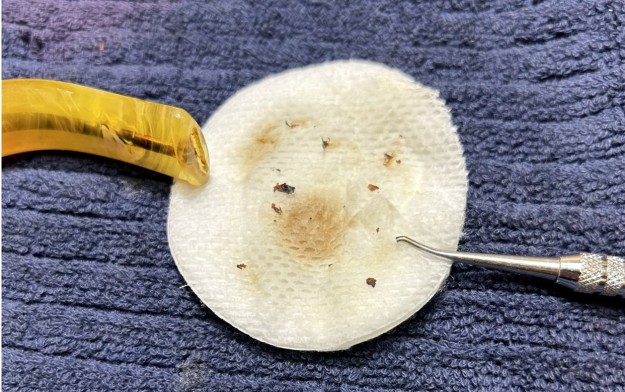
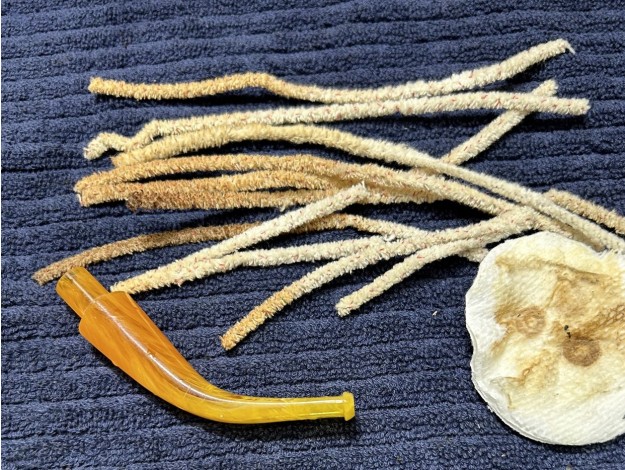
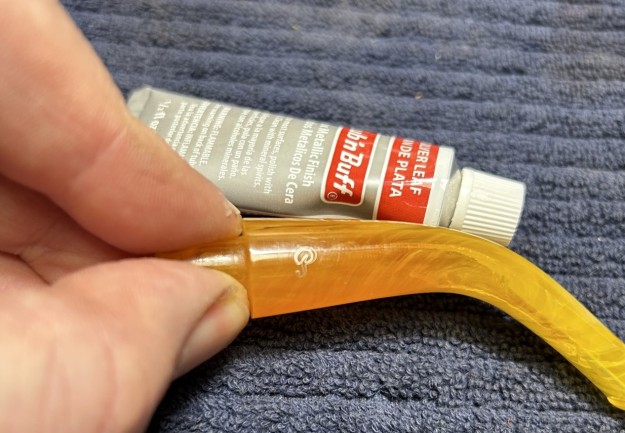
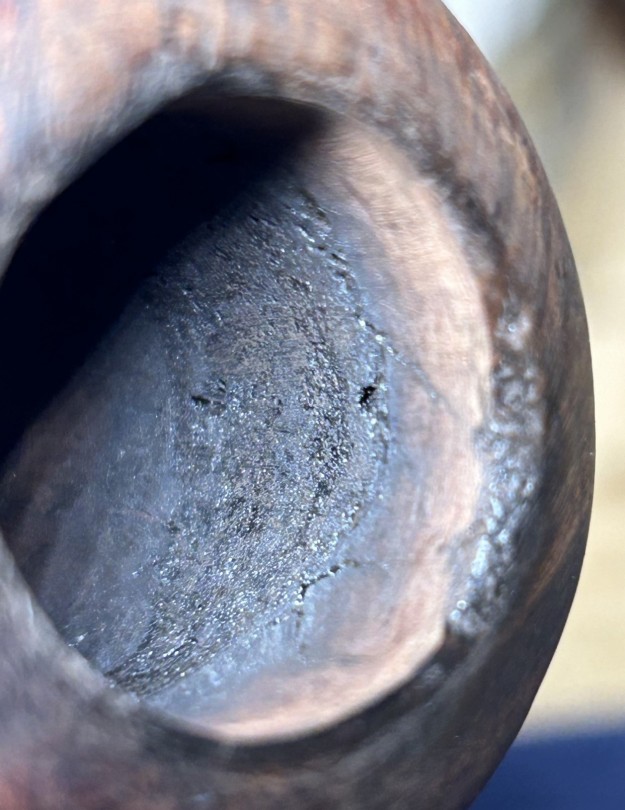
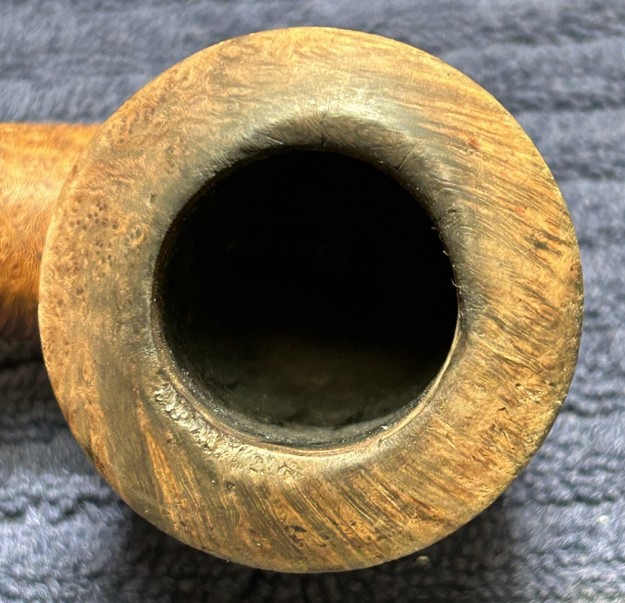
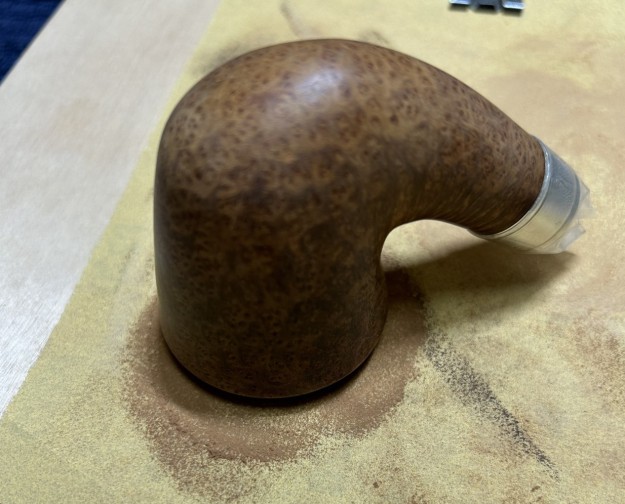
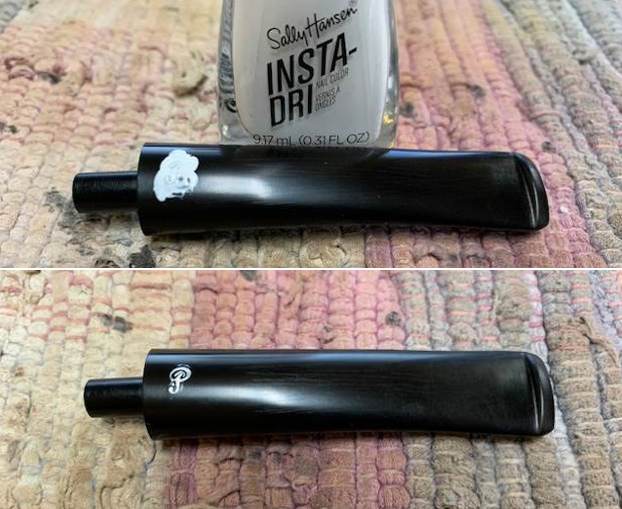
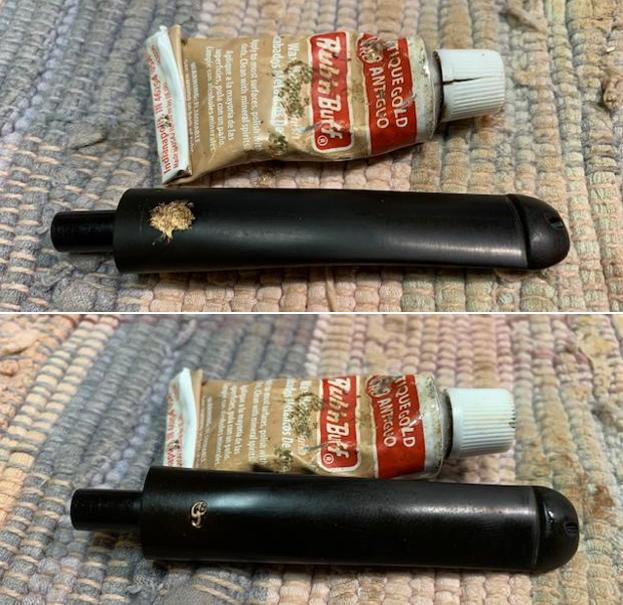
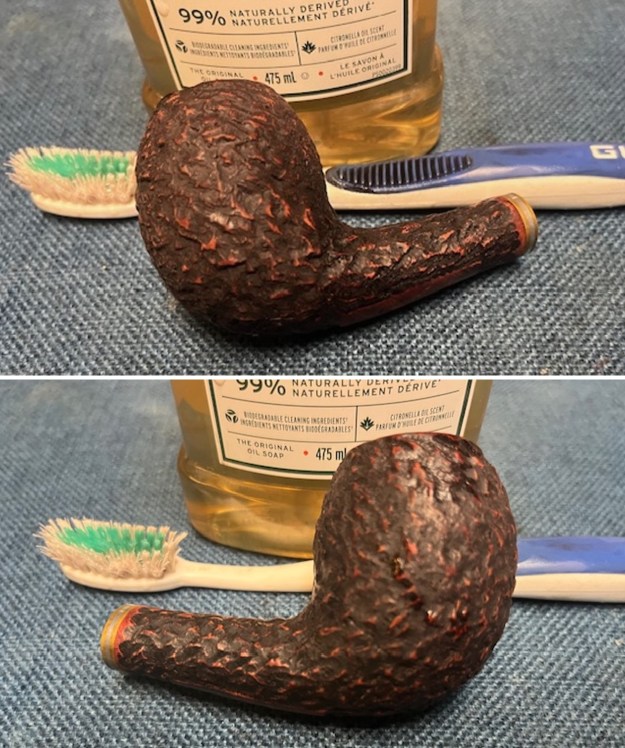
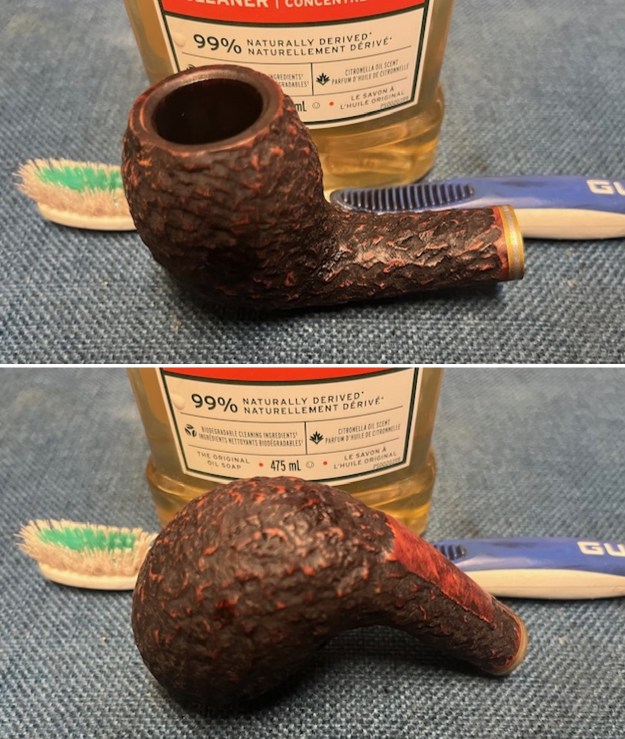
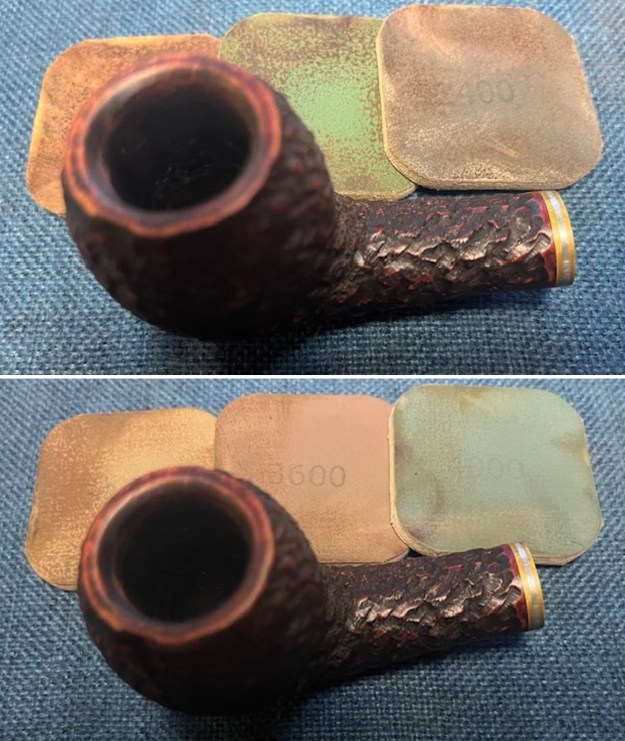
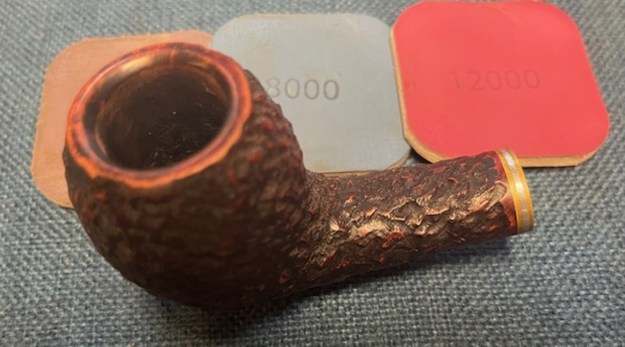
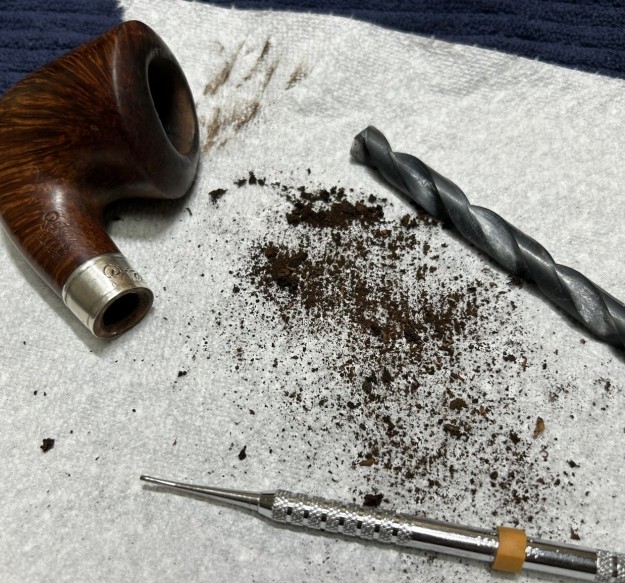
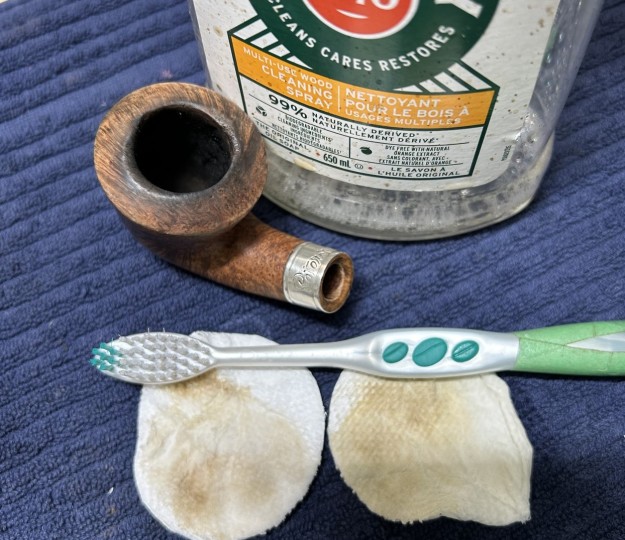
The pipe’s got a handsome, golden acrylic stem, presumably made to look like amber. One of the things that drives me nuts about acrylic stems is how difficult they are to clean inside. I can certainly disinfect and scrub them without any problem, but the stains of the tobacco are awfully stubborn and almost never go away completely. I began by using a dental tool to clean out the filth in the bore. There was quite a bit of debris there. Moving on, I set about doing the best I could on this one – using pipe, cleaners, and alcohol as usual. In fact, upon finishing that, I also used some SoftScrub on some pipe cleaners to see if I can get some further benefit to the cleaning. It did help, and I was pleased with that, but it would never be like new. The stylized P of Peterson was engraved on the left side of the stem, and I used some silver Rub’n’Buff to restore that back to its original state.There were a few tooth marks, etc. on the bit of the stem, and I addressed those by filling them with some superglue. Once that had cured, I sanded the stem down – first with some sandpaper, then with my micromesh pads and pipe stem oil. I was really pleased with the way it came out in the end. On to the stummel, and this is where the major issues lie. First and foremost, the rim, as the photos show, was in very bad shape. It had quite a bit of burning on it, and had been reamed so aggressively that the opening was badly out of round. The damage was significant enough that I knew I would not be able to make it invisible, but I also knew that I could improve it substantially.Before that, however, I reamed the pipe to remove the considerable cake in the bowl. It was very nasty. The inside of the bowl was in rough shape – there were many heat fissures. Whoever previously owned this pipe must have smoked the dickens out of it. Furthermore, I needed to use a drill bit in the shank to loosen up some of the hardened debris. That worked quite well at assisting me. I then cleaned out the insides with cotton swabs, pipe, cleaners, and alcohol. It was pretty dirty inside, so considerable work was needed. Following that, I de-ghosted the pipe with cotton balls and some alcohol. I let that sit overnight to remove even more filth and stench from the old pipe. After that, I cleaned the insides with soap and tube brushes. Then I cleaned the outside with Murphy’s and some cotton rounds and a toothbrush. Once thoroughly clean, the extent of the damage to the stummel was apparent. Even though this is a young pipe, it’s had a hard life. It’s my job to extend its life expectancy! First things first: there was a notable fill on the side of the bowl. I opted to fill it with CA glue and briar dust.Naturally, the rim was the major issue. Since the top edge was quite uneven and beat up, I began by “topping” the pipe – that is to say, I gently and evenly sanded down the rim on a piece of 220-grit sandpaper. This effectively evened the top edge (and removed a bit of damage), without altering the look of the pipe.This is the point where I’m missing some photos. After topping, I wanted to address the serious burns. It was bad – really bad – and it would be a challenge to make the pipe look normal. At the same time, it was necessary to address the bowl being so badly out of round. I used a solid wooden sphere (wrapped with sandpaper) on the inner edge of the rim in order to repair some of this. In addition, I also sanded down the outside of the bowl, near the rim, so as to minimize the visual effect of the roughened edge. I sanded all the way around to ensure that the pipe retains its look. Next, I used all nine Micromesh pads (1,500 through 12,000 grit) all over the stummel to make it lovely and smooth. It was a laborious process to sort out these issues, but I was reasonably pleased in the end. In order to fill in the heat fissures and prevent any further internal damage, I mixed up some of my pipe mortar and lined the briar walls with it. This will definitely extend the life of this terrific pipe.Then, applying some Before & After Restoration Balm added that certain something which brings out the wood’s beauty. I also took out my jewellery cloth and buffed up the lovely sterling silver band. Then it was off for a trip to the buffer. A dose of White Diamond and a few coats of carnauba wax were just what this pipe needed. The lovely shine made the wood very attractive. Despite its flaws, this is a very handsome pipe and will provide many years of smoking pleasure.This Peterson Flame Grain B10 calabash is back from the brink and I hope my friend in Washington will enjoy taking it on as his own. I hope you enjoyed reading the story of this pipe as much I as I did in restoring it. If you are interested in more of my work, please follow me here on Steve’s website or email me directly at kenneth@knightsofthepipe.com. Thank you very much for reading and, as always, I welcome and encourage your comments.
New Life for a Petersons of Dublin Silver Mounted Kildare 268 Zulu with a Fishtail Stem


Blog by Steve Laug

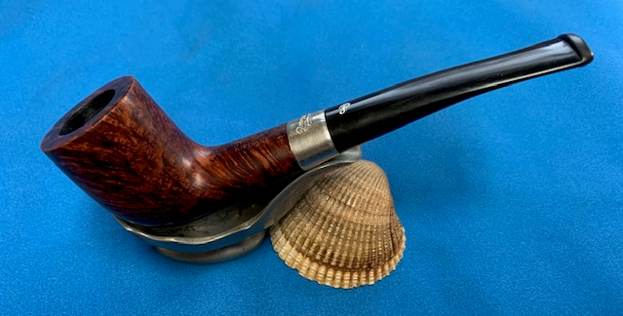
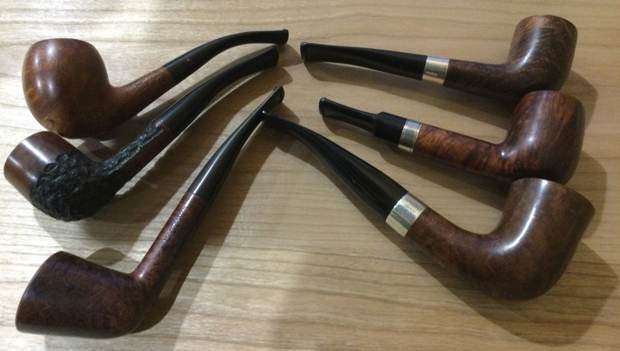
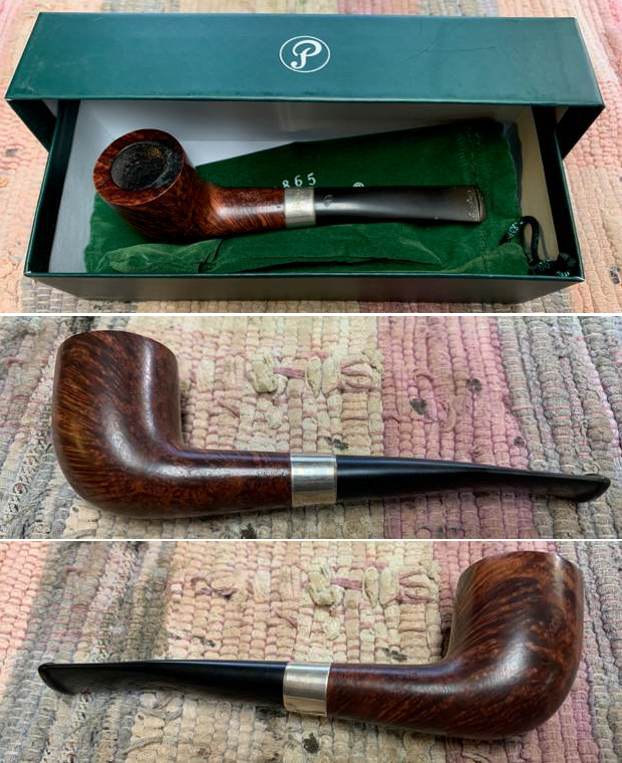
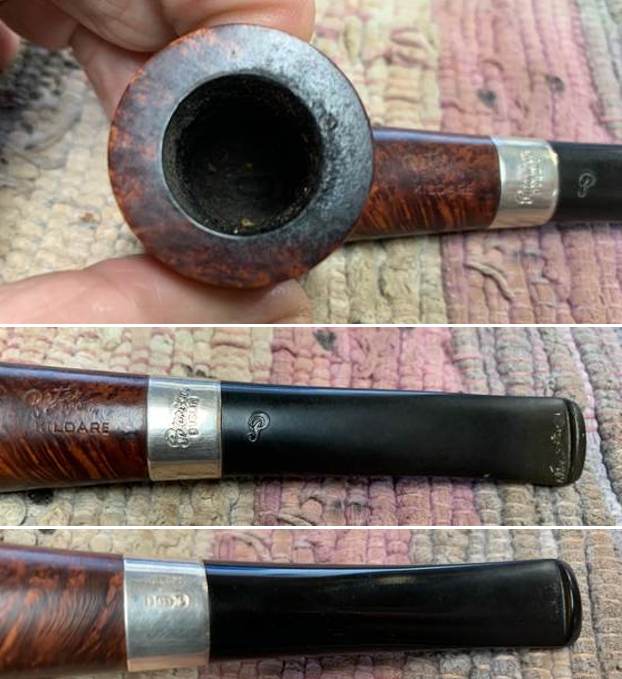
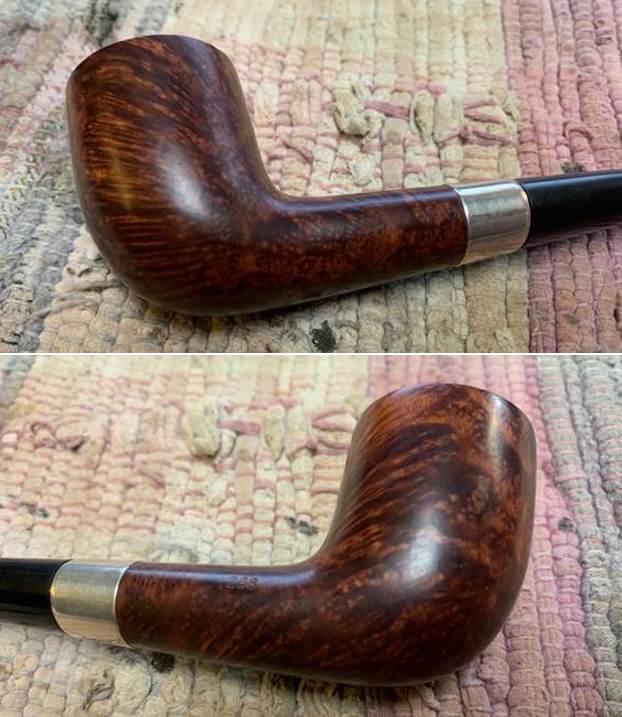
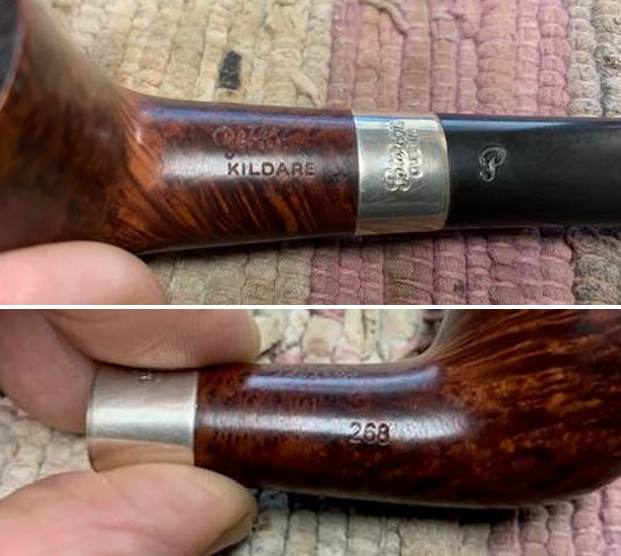
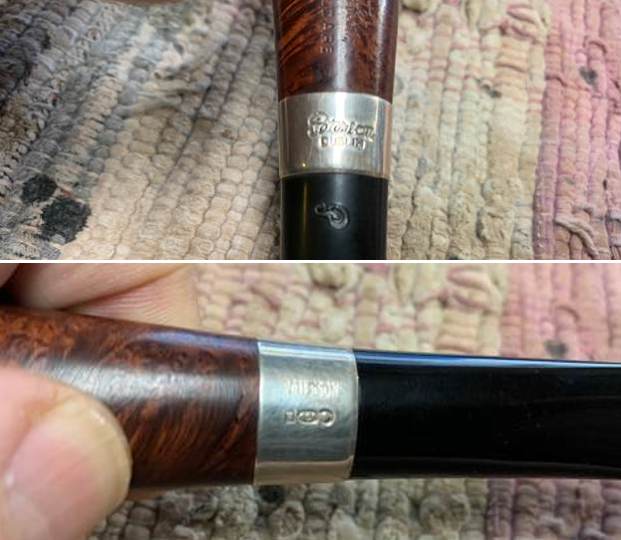
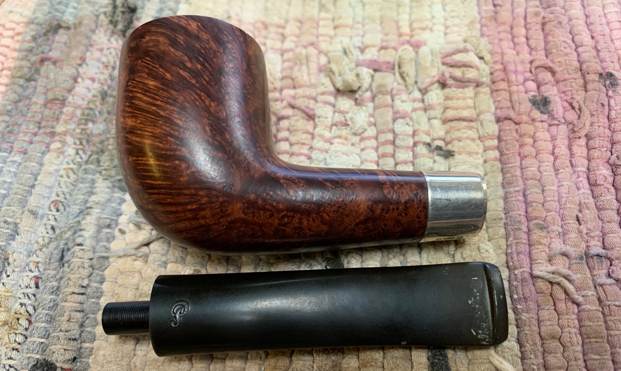
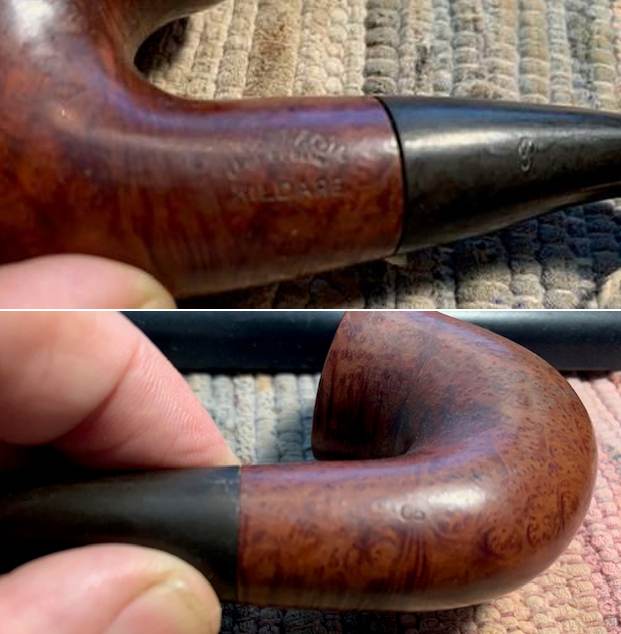
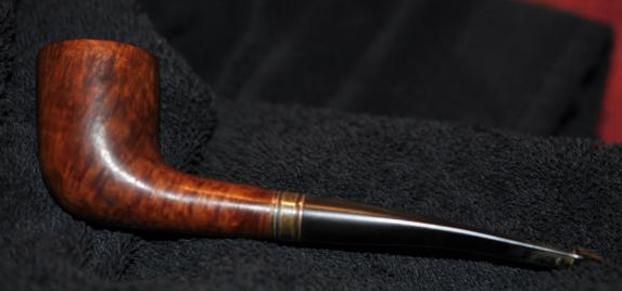
The next pipe on the work table came to me in a group of six pipes I bought from a fellow in Eastern Canada. It included two Canadian made pipes – a Blatter of Montreal and a Trypis. In the mix was an English made Charatan second stamped Mountbatten and two Peterson’s and an Irish Second. The pipes were well used and all had been smoked. The seller sent me a photo of the pipes so that I could see what he was selling. We discussed some options together and arrived at an agreement and the pipes were on their way to me in Vancouver.There was something about the classic Zulu, the top pipe in the right column that grabbed my attention and made me want to work on it next. It arrived in its original box and sock. I brought it to the worktable and examined it before starting my work. It had an oval shank, a stamped silver band and a vulcanite taper fishtail stem. The pipe is stamped on the top side of the shank and reads Peterson’s [arched over] of Dublin [over] Kildare. On the right side of the shank is stamped the shape number 268. On the fancy silver band on the shank end it is stamped on the top and reads Peterson [over] Dublin. On the underside it is stamped Peterson over three hallmarks – a seated woman (Hibernia), an oval with 925 centered in it (quality of the silver used) and the letter D (the date letter). The finish had some grime ground into the finish on the bowl but still looked to be in good condition. The bowl was thickly caked with some light lava on the top at the back and some darkening on the top and the inner edge of the rim. The stem had some calcification and tooth chatter on the top and underside near the button. There was a “P” logo on the top of the stem. It had promise but it was dirty. I took some photos of the pipe before I started my cleanup work. I took photos of the rim top and bowl to give a clear picture of the thickness of the cake and the overflow of lava on the rim top. I also took photos of the top and underside of the stem to show the oxidation and the chatter and tooth marks.    I took photos of the sides and heel of the bowl to give a picture of what the briar around the pipe looked like. There is some stunning grain under the grime.  I took photos of the stamping on the sides of the shank and on the band. It reads as noted above and is clear and readable.   I removed the stem from the shank and took a photo of the pipe to give a sense of the proportion of this oval shank Zulu.I am including the information from Pipedia’s article on Peterson pipes. It is a great read in terms of the history of the brand (https://pipedia.org/wiki/Peterson).
I turned to “The Peterson Pipe” by Mark Irwin and Gary Malmberg to get some background on the Peterson’s Kildare Line. On page 314 it had the following information.

Kildare (1965-) First issue of line with matte-finish in Classic Range shapes, P-Lip and fishtail mouthpiece. Second issue C.1979 as Kildare Patch, with rusticated patches on pipe surface. Third issue 2010, matte-brown, P-Lip or fishtail mouthpiece, no band. Fourth issue 2011-, burgundy sandblast finish, nickel army mount, fishtail mouthpiece, exclusive to smokingpipes.com.

The information given above has an element of confusion for me. It seems that the pipe in question is from the second issue C.1979 as this one is probably made after than date. It says that the pipes were issued as Kildare Patch with rusticated patches. However this one does not have the patches it is smooth around the bowl sides. It also has a silver band on the shank rather than a nickel one.

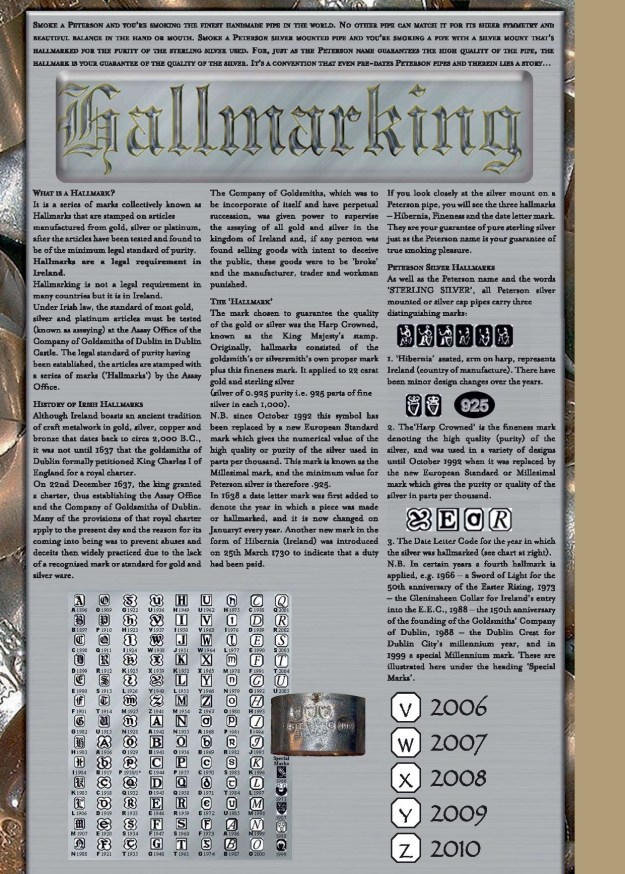
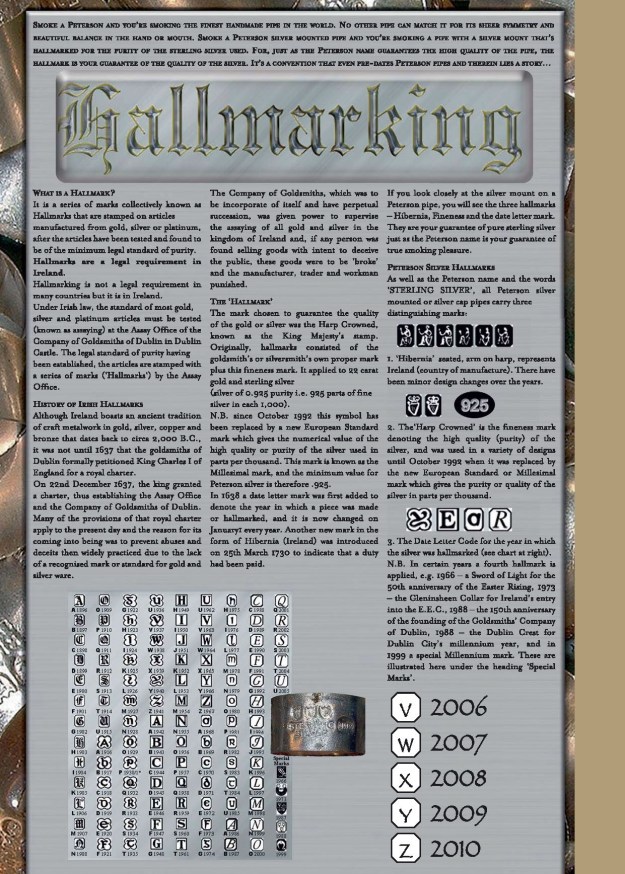
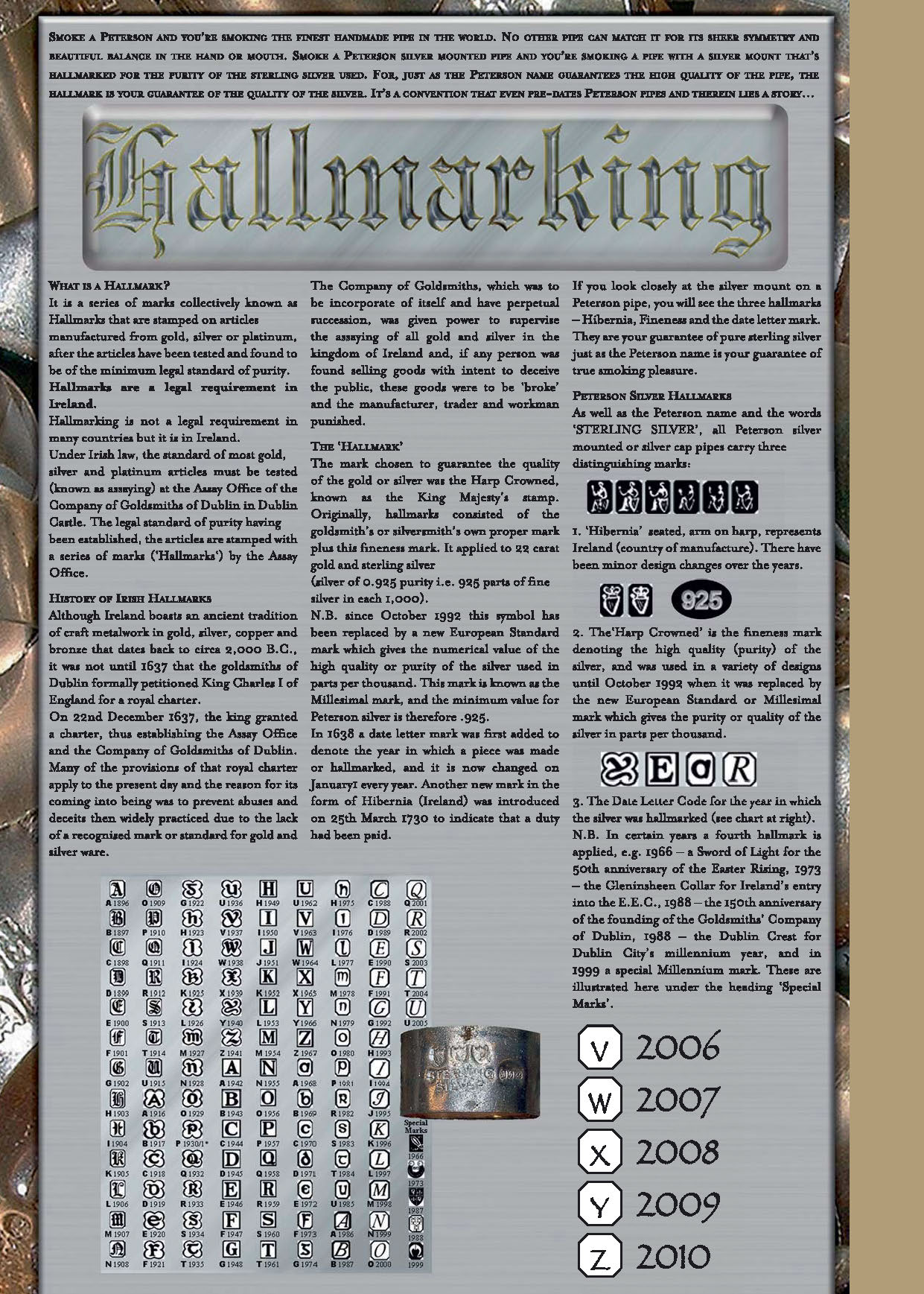
I wanted to be able to interpret the hallmarks on the silver band. I have captured a portion of the chart that include below that helps to clarify the meaning of each of the three hallmarks. I like the Hallmark feature on the higher end Peterson pipes with Sterling silver bands. It helps to pin down the date even further.

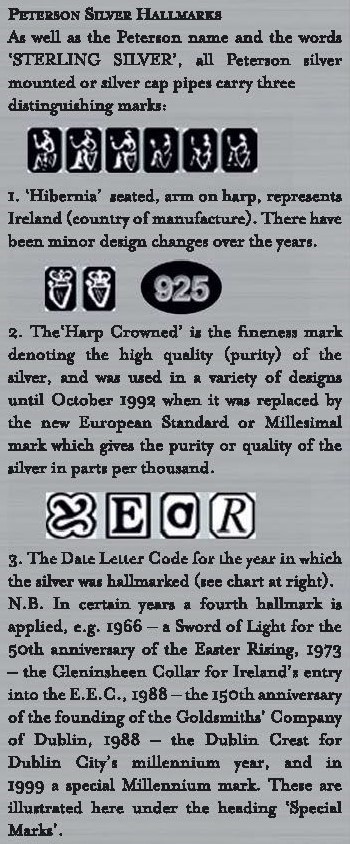
“Hibernia” seated, arm on harp represents Ireland (country of manufacture). There have been minor design changes over the years.

The “Harp Crowned” is the fineness mark denoting the high quality (purity) of the silver, and was used in a variety of designs until October 1992 when it was replaced by the new European Standard or Millesimal mark which gives the purity or quality of the silver in parts per thousand.

The Date Letter Code for the year in which the silver was hallmarked (see the chart below). In certain years a fourth hallmark is applied – for example 1966 – a Sword of Light for the 50th anniversary of the Easter Rising 1973. There were also other marks used for the fourth hallmark.

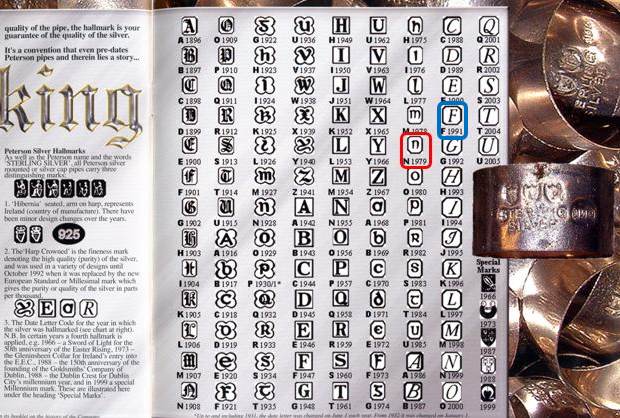
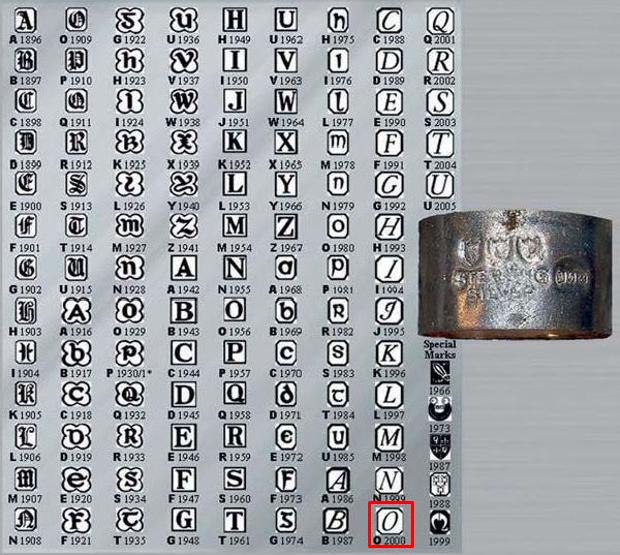
I turned to a blog I wrote on rebornpipes that had a Peterson’s catalogue and a hallmarking chart (https://rebornpipes.com/tag/peterson-hallmark-chart/). I have included it below. On the chart I looked for an upper case italic F in a hexagonal cartouche. I also included a enlargement of the chart and drawn a box around the “F” in blue in the second photo below showing a close up of the dates. From that I am able to date the  pipe to 1991. Now I knew I was dealing with a pipe made in 1991. It really is a beautiful pipe. Now it was time to work on the pipe itself.

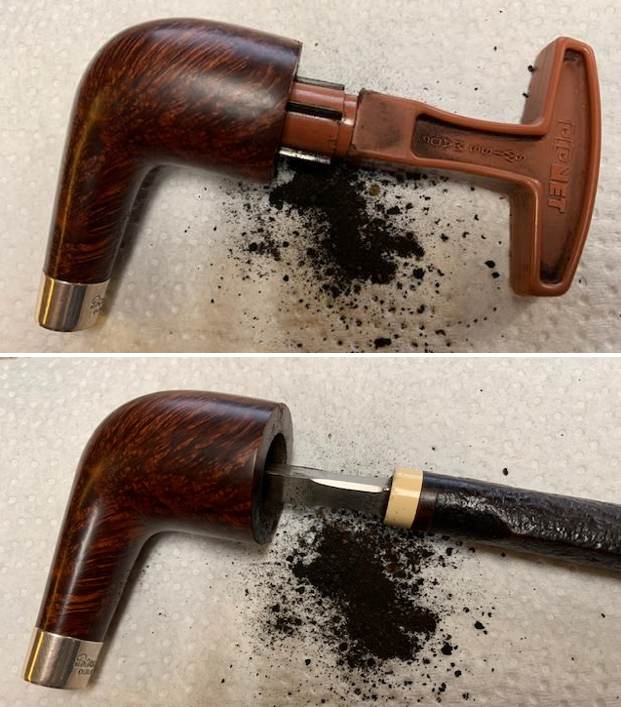
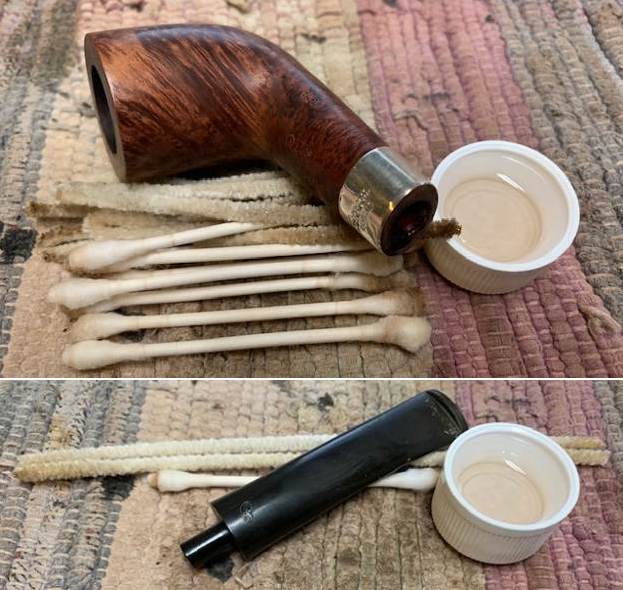
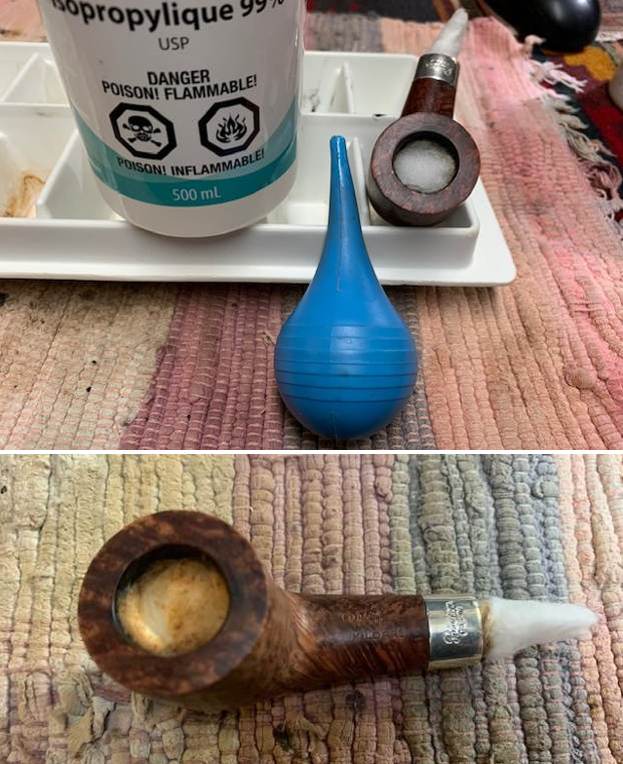
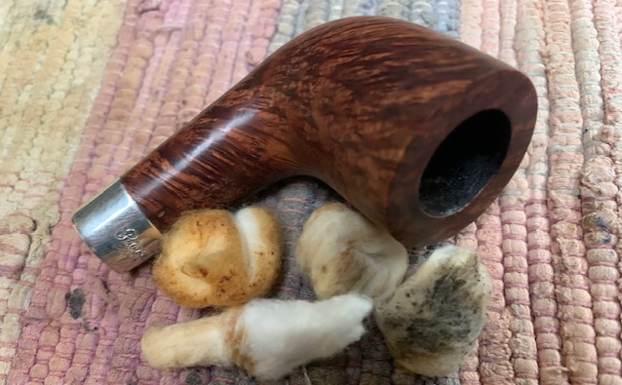
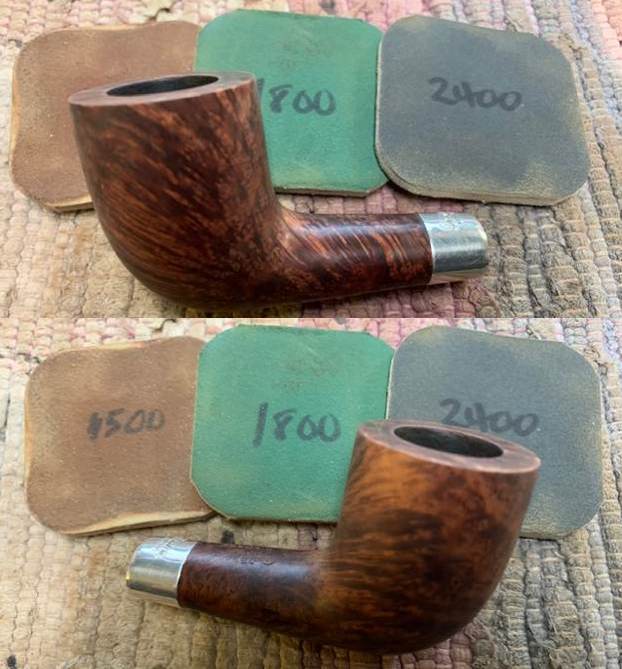
I started my work on the pipe by reaming the bowl the pipe with a PipNet Pipe Reamer using the first and second and third cutting heads to remove the cake. I cleaned up the remnants of the cake on the walls with a Savinelli Fitsall Pipe Knife. I finished by sanding the bowl smooth with 220 grit sandpaper wrapped around a piece of dowel. I scrubbed the externals of the pipe with undiluted Murphy’s Oil Soap with a tooth brush. I rinsed it under running warm water to remove the soap and grime. The bowl and rim top cleaned up really well with the lava coat removed. The inner edge of the rim was in good condition. I cleaned up the inner edge of the rim with a folded piece of 220 grit sandpaper. I was able to remove almost all of the darkening with the sandpaper. I cleaned out the inside of the mortise, shank and the airway in the stem with isopropyl alcohol, cotton swabs and pipe cleaners. The pipe had a strong aromatic smell just like the Peterson’s Lovat I just did. It smelled like a mix of fruit and vanilla so it needed to be deghosted. I filled the bowl with cotton boles and twisted a plug into the shank end. I used and ear syringe to fill the bowl with alcohol. The alcohol will eventually evaporate from the bowl wicking out the oils and tars in the briar into the cotton. I let it sit over night and in the morning pulled it out and took photos of the cotton at that point. I polished the smooth briar with micromesh sanding pads – dry sanding with 1500-12000 grit pads and wiped it down with a damp cloth after each sanding pad. I worked some Before & After Restoration Balm into the surface of the briar with my fingertips to clean, enliven and protect the briar. I let the balm sit for 15 minutes and then buffed with a cotton cloth to raise the shine. The photos show the bowl at this point in the restoration process. I sanded out the tooth marks on the stem with 220 grit sand paper and started the polishing with 400 grit wet dry sandpaper. I polished the vulcanite stem with micromesh sanding pads – 1500-12000 grit pads. I wiped the stem down with Obsidian Oil after each sanding pad. I polished the stem with Before and After Stem Polish – both Fine and Extra Fine. I rubbed it down with some more Obsidian Oil. I touched up the P stamp on the stem with White Acrylic Fingernail polish. I worked it into the stamp with a tooth pick. Once the acrylic hardened I scraped off the excess and buffed the stem with  3000-6000 grit micromesh pads. I wiped the stem down with some Obsidian Oil.It was great to finish this 1991 Peterson’s of Dublin Kildare 268 Zulu. I put the pipe back together and buffed it with Blue Diamond on the buffing wheel. I gave the bowl multiple coats of Conservator’s Wax and the stem multiple coats of carnauba wax. I buffed the pipe with a clean buffing pad to raise the shine. I hand buffed the pipe with a microfiber cloth to deepen the shine. It is fun to see what the polished bowl looks like with deep sandblast all around it. Added to that the polished black vulcanite stem was beautiful. This Silver Banded Petersons of Dublin Kildare 268 Zulu is great looking and the pipe feels great in my hand. It is light and well balanced. Have a look at it with the photos below. The dimensions are Length: 5 ½ inches, Height: 1 ¾ inches, Outside diameter of the bowl: 1 ¼ inches, Chamber diameter: ¾ of an inch. The weight of the pipe is 40 grams/1.41 ounces. It is a beautiful pipe and one that will soon be on the rebornpipes store in the Irish Pipe Makers Section of the store. If you want to add it to your collection let me know. Thanks for walking through the restoration with me as I worked over this pipe. Thanks to each of you who are reading this blog.

Restoring a Victim of a Sharp Knife – A Peterson’s of Dublin System Standard 313


Blog by Steve Laug

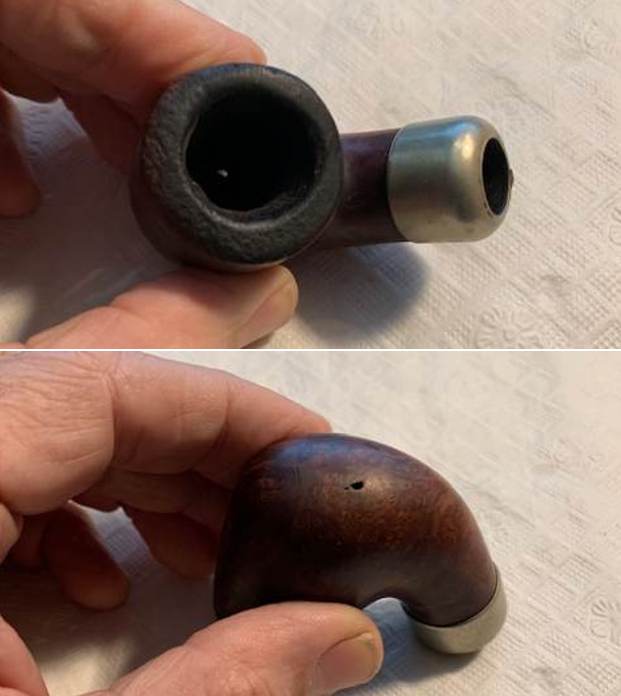
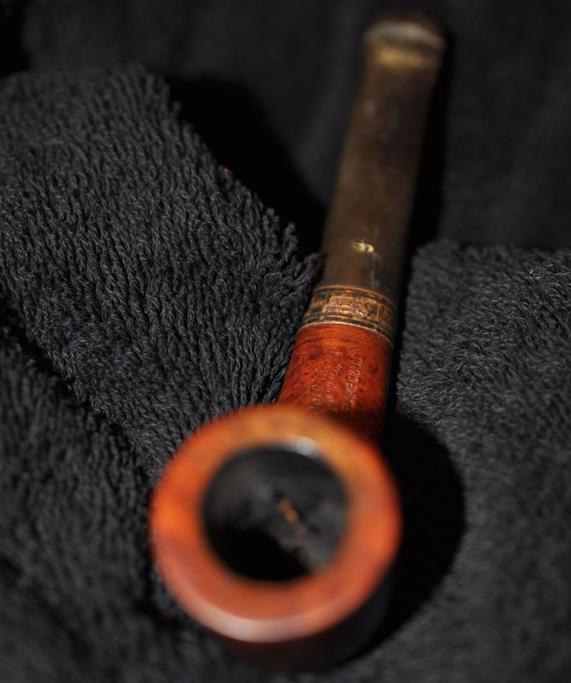
While I was traveling in Europe I received a call from a fellow here in British Columbia who was referred to me by the local cigar shop. I call him when I returned home and it turned out that he had a pipe that he wanted me to work on. He sent it to me and it came on Friday. He said that the stem was clogged and he wanted me to clean up the airway and make it usable again. When it arrived I unpacked the box and found it was a Peterson’s 313 System pipe. It is stamped on the left side of the shank and reads Peterson’s [arched over] of Dublin [over] System [over] Standard followed by the shape number 313. It had once been a beautiful pipe with an acrylic stem but it had long before lost its charm. The sides of the bowl were beat up and the rim top was also beat up. There was a thick cake of lava on the rim top and the bowl was out of round. The cake in the bowl was also out of round and heavier on the left side than the rest. There was a lot of grime on the briar that made it sticky feeling. There was a hole in the bottom of the bowl that punctured the heel. The pipe was a mess. The stem was plugged as well and I could not blow any air through it. The nickel ferrule was oxidized and dirty with  grime on it and an overflow of oils from the sump. It was a mess.I called the fellow who sent the pipe and told him about the hole in the bottom of the bowl. He laughed and said he did not notice it. He said it was probably the result of constant reaming with a pocket knife. I am  pretty sure that is what caused the damage as it was very much of a cut. I would know more once I reamed the bowl.
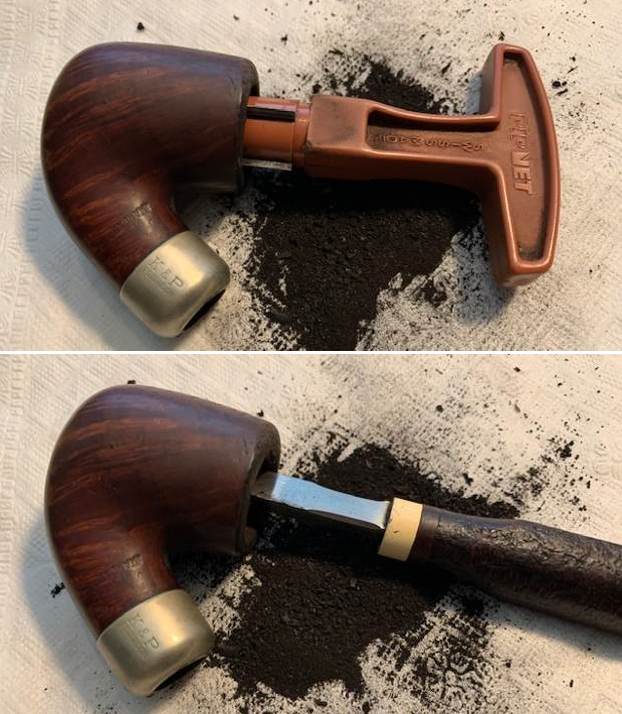
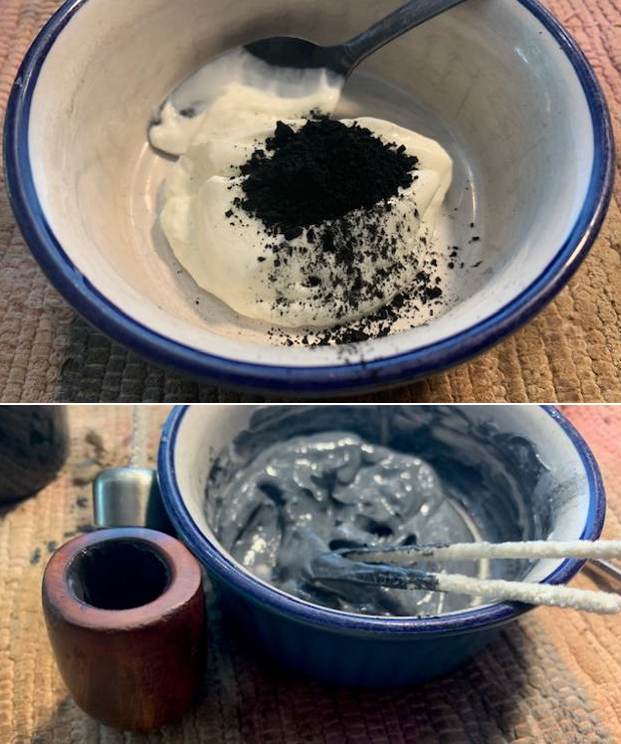
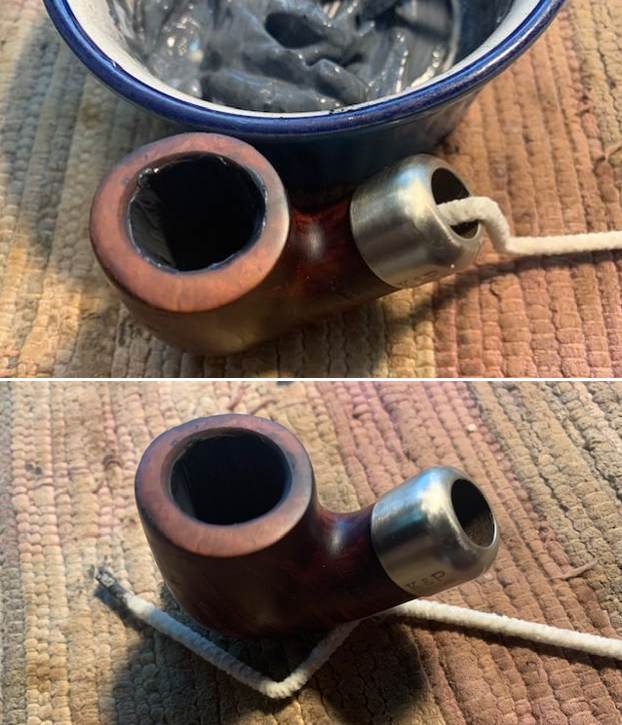
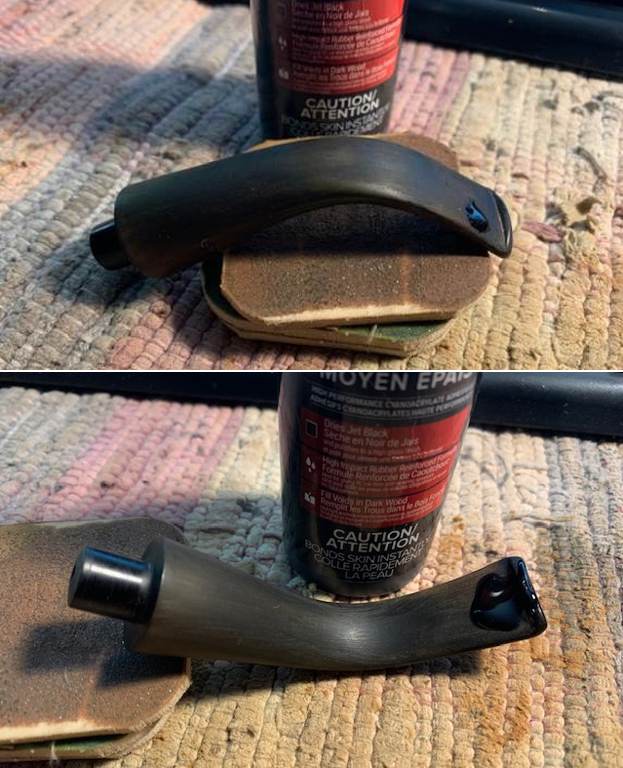
I reamed it with a PipNet reamer to take the cake back to bare briar. I scraped the remnants of the cake off with a Savinelli Fits All Pipe Knife. I sanded the walls with a piece of 220 grit sandpaper wrapped around a piece of briar. What I found in the bottom of the bowl confirmed the issues I noted above. Repeated scraping of the cake around the bottom of the bowl had left a trough all the way around the bottom and a nipple standing in the bottom of the bowl. I spoke with the owner and he wanted a fix that I have done often. I would repair the exterior with briar dust and clear CA glue. The inside bottom of the bowl would be filled in with JB Weld and once cured would be sanded and given a bowl coating of sour cream and charcoal powder. Before I could start the repair work I would need to clean up the external and the internals. I topped the bowl with 220 grit sandpaper on a topping board. It looked better at this point in the process. I sanded out the scratches on the sides of the bowl and around the rim top. It was quite damaged. I used a folded piece of 220 grit sandpaper to smooth out the marks in the bowl side in preparation for scrubbing it.  I scrubbed the bowl with a tooth brush and Murphy’s Oil Soap. I rinsed it off with warm running water to wash away the grime and debris. It was beginning to look much better. The first step in the repair was to repair the small hole in the bowl bottom. It was about the size of a pencil lead. I coated the edges with clear CA glue and packed in some briar dust. I repeated the process until the hole was repaired. Once it had hardened I sanded it smooth with 220 grit sandpaper to blend it into the surrounding briar.  I mixed up a batch of JB Weld with the stick and then built up the bottom of the bowl. I put a pipe cleaner in the airway so as not to cover it in the process of the repair. I coated bottom of the bowl and layered it on top of the trough around the bottom and built it up until it was smooth. I raised the bottom of the bowl about 1/8th of and inch. I applied several more coats of the mixture with a folded pipe cleaner and also filled in some of the deep gouges in the sides of the bowl left behind by the knife. I set it aside to cure overnight. This morning with the internals hardening I decided to clean out the sump and the airway into the bowl with pipe cleaners, cotton swabs and isopropyl alcohol. The pipe was a filthy one so it took a lot of cleaners. The stem was clogged but once I started working on it I could seen why. The fit of the pipe cleaner in the airway was tight and there was a lot of tars build up closing off even the small airway that was still open. Many pipe cleaners later the stem was open and the draught was perfect.  I had previously cleaned out the stem with pipe cleaners and alcohol.I polished the briar with micromesh sanding pads – dry sanding with 1500-12000 grit pads. I wiped the bowl down after each  pad to remove the grit. The bowl began to take on a rich shine. It is going to be a beauty.   I rubbed the bowl down with Before & After Restoration Balm. I worked it into the briar with my finger tips. I let it sit for 10 minutes and the Balm did its magic. It enlivens, cleans and preserves the briar. It certainly brought this bowl back to life. I buffed it off with a clean cloth and took the following photos.   As I looked at the rim top and the inner edge I still was not happy with the way it looked. Part of the issue was that the outer edge was out of round as well and there was not much that could be done with that without changing the 313 shape so I was pretty well stuck with the outer edge. I decided to work some more on the inner edge and give it a slight bevel. I used a folded piece of 220 grit sandpaper and worked on it until I was happier with it. It is now as good as it can be with the condition of the pipe. I set the bowl aside and turned my attention to the stem. I filled in the deep gouges on the topside with clear CA glue and set it aside to cure. Once the repairs cured I sanded them smooth with 220 grit sandpaper and started polishing the stem with 400 grit wet dry sandpaper.I polished the stem with micromesh sanding pads – 1500-12000 grit pads. I wiped it down with Obsidian Oil after each sanding pad. I used Before & After Pipe Polish – both Fine and Extra Fine to further polish the stem.  I mixed up a batch of bowl coating with sour cream and activated charcoal powder to form a protective coat over the repair. I applied it with a folded pipe cleaner. I wiped off the grime on the rim top and set it aside to cure. This coating will facilitate cake formation and protect the bowl until it forms. This Made in Ireland Peterson’s System Bent 313 with a nickel Ferrule and an acrylic P-lip stem is a better looking pipe now that it has been restored. The beautiful grain that shines through the polished finish is stunning. As the pipe is smoked the patina should develop and look even better. I put the stem back on the bowl and carefully buffed the pipe with Blue Diamond on the buffing wheel. I gave the bowl and the stem multiple coats of carnauba wax on the buffing wheel and followed that by buffing the entire pipe with a clean buffing pad. I hand buffed the pipe with a microfiber cloth to deepen the shine. The finished Peterson’s System 313 Bent Billiard fits nicely in the hand and feels great. Give the finished pipe a look in the photos below. The dimensions of the pipe are Length: 5 ½ inches, Height: 1 ¾ inches, Outside diameter of the bowl: 1 1/8 inches, Chamber diameter: ¾ of an inch. The weight of the pipe is 43 grams/ 1.52 ounces. I will be sending the pipe back to the owner once the bowl coating dries. It should give him a few more years of good service. Thanks for reading this blog and my reflections on the pipe while I worked on it.

Restoring a Peterson’s of Dublin “Kildare” 05 Calabash


Blog by Steve Laug

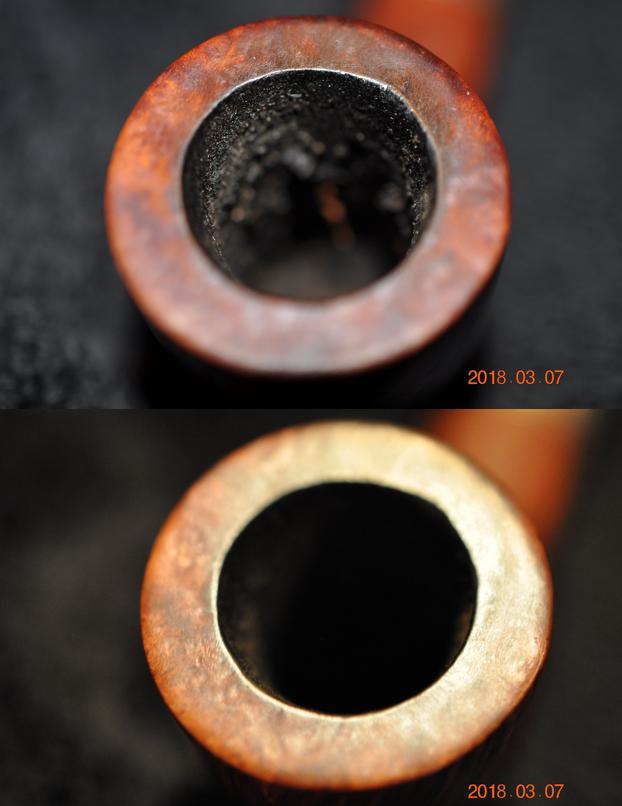
This is another one of those pipes that has been here for a long time and I have no memory where it came from. I had not been cleaned so it is not one that ever went to Jeff for clean up. It was a filthy pipe but appeared to have some great grain under the grime. The bowl had been reamed somewhere in the journey and was quite clean inside. The smooth rim top had some light lava on the top and some darkening. The edges look very good. The smooth finish is dirty with grime and grit deep ground into the sides of the bowl and shank. The pipe stinks like heavily cased aromatics. The stamping on the shank is clear and readable. The left side is stamped Peterson’s [arched over] of Dublin [over] “Kildare”. On the right side, low on the shank toward the front of the bowl it is stamped 05. The stem is oxidized, calcified and has tooth marks and chatter on both sides ahead of the button. There was a thick build up of tar on the end of the tenon and inside of the shank was heavily coated with tar and oil. There was also a P logo stamped on the left side of the taper stem. I took some photos of the pipe before I started my work on it.  I took close up photos of the bowl and the stem. You can see the reamed bowl and the darkening and light lava on the rim top. The bowl reeked of aromatic tobaccos. The stem surface has the mark from a Softee Rubber Bit Guard that is clear and there is calcification and oxidation on the stem. There are also tooth marks and chatter on both sides ahead of the button.I took a photo of the stamping on the sides of the bowl and shank. It is clear and readable as noted above. You can also see the P logo stamp on the left side of the taper stem.I removed the stem from the shank and took a photo to give a sense of the proportions of the pipe. It is really quite nice looking.I am including the link to the Pipedia’s article on Peterson pipes. It is a great read in terms of the history of the brand (https://pipedia.org/wiki/Peterson).

I turned to “The Peterson Pipe” by Mark Irwin and Gary Malmberg to get some background on the Peterson’s Kildare Line. On page 306 it had the following information.

Kildare (1965-) First issue of line with matte-finish in Classic Range shapes, P-Lip and fishtail mouthpiece. Second issue C.1979 as Kildare Patch, with rusticated patches on pipe surface. Third issue 2010, matte-brown, P-Lip or fishtail mouthpiece, no band. Fourth issue 2011-, burgundy sandblast finish, nickel army mount, fishtail mouthpiece, exclusive to smokingpipes.com.

I read further in “The Peterson Pipe” by Mark Irwin and Gary Malmberg to get some background on the Peterson’s Of Dublin pipes. On page 298 it had the following information.

Dublin 1906-2003 Although Dublin appears under Peterson’s on many pipes over the decades, it has served mostly as part of the brand name. The word first appeared on pipes hallmarked 1906-11 Stamped Peterson’s over Patent over Dublin. The simpler Peterson’s over Dublin first appeared on pipes hallmarked 1912 after the expiration of the patent. Illustrations of pipes in the ’37 catalogue show a random dispersion of the stamp Peterson’s over Of Dublin together with the ordinary Peterson’s over Dublin on every model offered. Specimens of the former will either bear an Irish COM or London Made over England COM and almost certainly date from 1945-62. It was first mentioned in print as part of a model name in ’68 price list, as K&P Dublin, in ’92 for a Danish market line and in 2017.

Judging from the description above I believe that I am working on a First Issue of the line in the time period of 1965-1979. It is probably a late Republic Era Classic Shaped pipe with a matte-finish and a taper stem. Now it was time to work on the pipe.

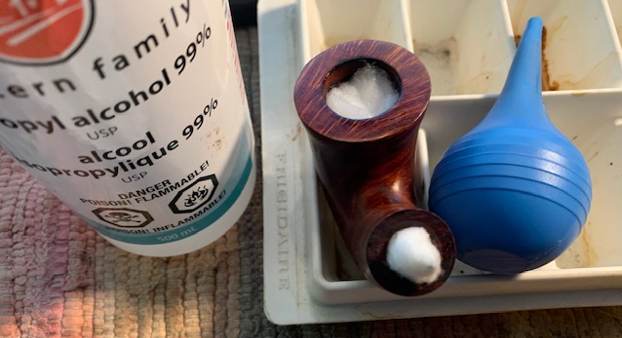
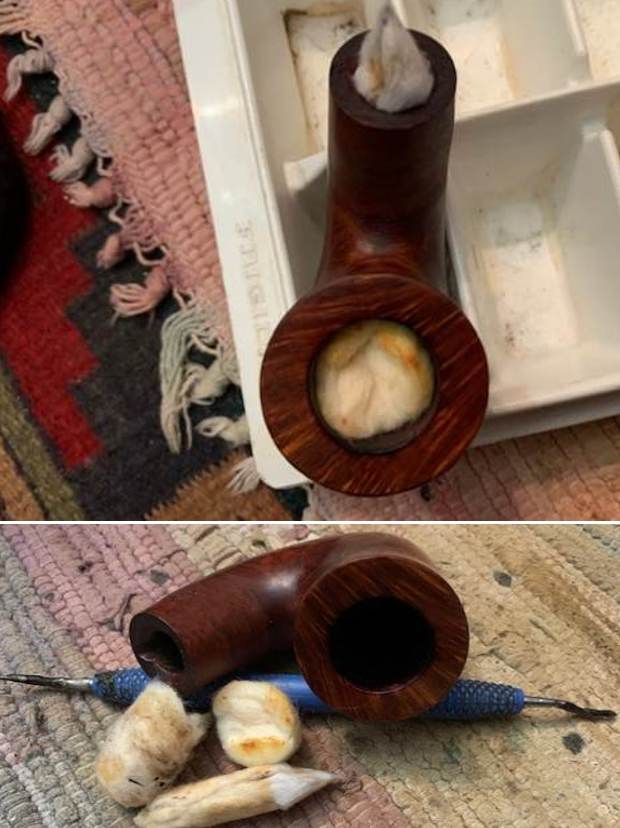
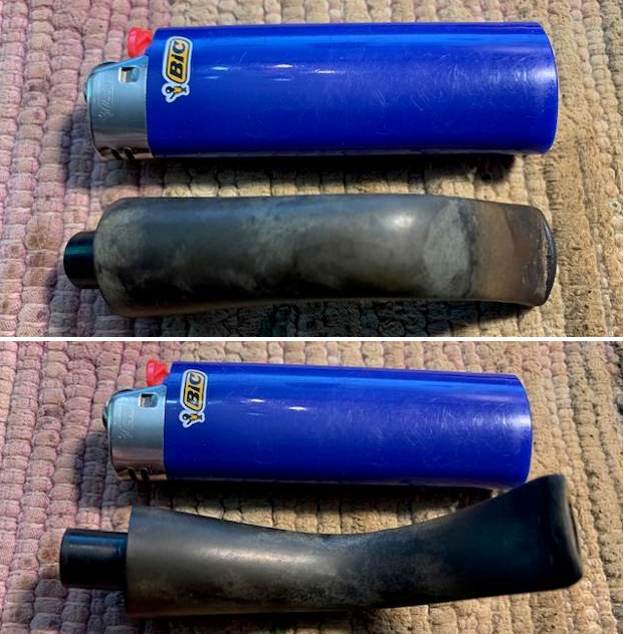
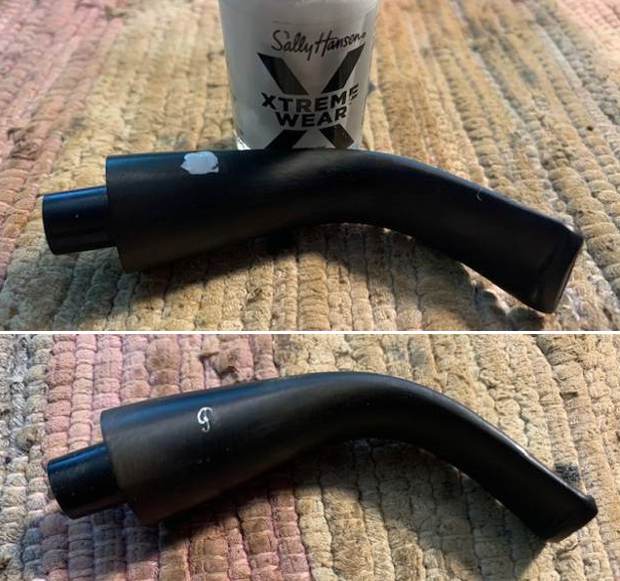
I reamed the bowl with a PipNet pipe reamer using all four cutting heads. I cleaned up the reaming with a Savinelli Fitsall Pipe Knife to remove all debris. I sanded the bowl with 220 grit sandpaper wrapped around a piece of dowel to smooth out the wall of the bowl. The bowl was in excellent condition with no fissures or checking.  I scrubbed the exterior of the bowl with a tooth brush and undiluted Murphy’s Oil Soap to remove the debris and grime from the finish to remove the light lava overflow on the rim top. Once it was finished it looked much better. I cleaned out the inside of the shank and the airway into the bowl and the stem. I scraped the shank out with a small pen knife to remove the thick tars. I then cleaned it with a isopropyl alcohol, cotton swabs and pipe cleaners until it was clean.  I polished the rim top and edges with micromesh sanding pads – dry sanding with 1500-12000 grit pads to raise a shine. I wiped it down with a damp cotton pad to wipe off the debris after each sanding pad.   I worked some Before & After Restoration Balm into the surface of the rusticated briar with my fingertips. I worked it over with a shoe brush to get it deep into the grooves and crannies of finish. I let it sit for 15 minutes then buffed it off with a soft cloth and raised the shine. The bowl looks great at this point.   To rid the bowl of the tars and oils that made the bowl still stink I stuffed it with cotton bolls and twisted a boll into a wick that I threaded into the shank. I used an ear syringe to fill the bowl with isopropyl alcohol and set it in an old ice tray over night  to let it wick out the tars and oils.This morning when I went back to the pipe to work on it I took a photo of the cotton to show how the tars and oils had wicked into the pipe. I removed it from the bowl and took photos of the cotton to show how dirty it was.  I set the bowl aside and worked on the stem. I “painted” the stem with the flame of a Bic lighter to lift the tooth marks in the stem. I was able to raise them slightly. I filled in the remaining marks with Black CA glue. Once the repairs cured I sanded it smooth with 120 grit sandpaper and started polishing it with 400 grit wet dry sandpaper. I touched up the Peterson’s P on the left side of stem with white acrylic fingernail polish. I worked it into the stamping with a tooth pick. I scraped off the excess paint with my nail and then used a worn 1500 grit micromesh pad to buff off the excess. I rubbed it down with some Obsidian Oil and set it aside.  It looks better but you can see that the curve of the P is faint at the front.I polished the stem with micromesh sanding pads – dry sanding it with 1500-12000 grit pads. I wiped the stem down with Obsidian Oil after each pad. I polished it with Before & After Pipe Polish – both Fine and Extra Fine and gave it a final coat and set it aside to dry.   I put the stem back on the Peterson’s of Dublin Bent Calabash and buffed the pipe with Blue Diamond on the buffing wheel. I polished the briar and the vulcanite of the stem until there was a rich shine. This classic Peterson’s shape and finish really highlights a proportionally well carved pipe. Once I buffed the pipe the briar came alive and popped with polishing. The black vulcanite stem has a rich glow. This Peterson’s Calabash fits well in the hand and sits right in the mouth. Have a look at it with the photos below. The dimensions are Length: 5 inches, Height: 2 inches, Outside diameter of the bowl: 1 3/8 inches, Chamber diameter: ¾ of and inch. The weight of the pipe is 1.87 ounces/53 grams. This beauty will be going on the rebornpipes online store in the Irish Pipemakers Section. If you are interested let me know. Thanks for walking through the restoration with me as it was a pleasure to work on.

Restoring a Peterson’s of Dublin System Standard 2 XL315 Bent Calabash


Blog by Steve Laug

The next pipe I have chosen is a Peterson’s System Standard 2 XL315 sandblast bent Calabash. It was one of four pipes that came to me from a friend for work. This one had very loose stem that did not seem to hold on in the shank that he wanted me to have a look at as well as cleaning and freshening it up. The finish is deeply sandblasted and tactile with some grim in the finish and some lava on the rim top. It was stamped on the underside of the shank and read Peterson’s [arched over] of Dublin [over] System Standard followed by a 2 [over] the shape number XL315. It was in great condition when I brought it to the table. There was a heavy cake in the bowl and some lava in the sandblast on the rim top. The nickel ferrule was in good shape but scratches that would need to be polished. It is stamped as well and reads K & P [over] Peterson on the left. The stem was unstamped and was in good condition. There was some light chatter near the button that would polish out. I took photos of the pipe before I started my work. I took photos of the rim top and stem to show the general condition of the pipe. The bowl is heavily caked and the rim top and edges have a thick lava overflow. The stem is lightly oxidized and has tooth marks on the top and underside near the button. I tried to take photos of the underside of the shank to show the stamping but the stamping is quite faint though readable with a lens. It reads as noted above. I also tried to capture the stamping on the ferrule and it is readable but the photo just could not capture it well.    I removed the stem and took a photo of the pipe to have a look at the parts and overall look.I am including the link to the Pipedia’s article on Peterson pipes. It is a great read in terms of the history of the brand (https://pipedia.org/wiki/Peterson).

I turned to “The Peterson Pipe” by Mark Irwin and Gary Malmberg to get some background on the Peterson’s Of Dublin pipes. On page 298 it had the following information.

Dublin 1906-2003 Although Dublin appears under Peterson’s on many pipes over the decades, it has served mostly as part of the brand name. The word first appeared on pipes hallmarked 1906-11 Stamped Peterson’s over Patent over Dublin. The simpler Peterson’s over Dublin first appeared on pipes hallmarked 1912 after the expiration of the patent. Illustrations of pipes in the ’37 catalogue show a random dispersion of the stamp Peterson’s over Of Dublin together with the ordinary Peterson’s over Dublin on every model offered. Specimens of the former will either bear an Irish COM or London Made over England COM and almost certainly date from 1945-62. It was first mentioned in print as part of a model name in ’68 price list, as K&P Dublin, in ’92 for a Danish market line and in 2017.

The stamping of Peterson’s Of Dublin is very broad and cannot really help pin down the date on the pipe. However, XL315 shape came out in 1998 so the pipe is definitely post 1998.

I started my clean up of the pipe by reaming it with a PipNet reamer and cut back the cake back to the bare briar. I cleaned up the walls with a Savinelli Fitsall Pipe Knife. I finished the cleaning of the bowl with a piece of dowel wrapped in 220 grit sandpaper. I smoothed out the bowl walls and checked for cracks and flaws. All looked very good. I cleaned off the build up in the sandblast on the rim top with a brass bristle brush. I was able to leave it absolutely clean.I scrubbed the interior of the bowl, shank and stem with pipe cleaners, cotton swabs and alcohol to remove the tars and oils. It was full of tars and oils that with a bit of work came clean.   I worked some Before & After Restoration Balm into the surface of the briar with my fingertips and a horsehair shoe brush to clean, enliven and protect the briar. I let the balm sit for 15 minutes and then buffed with a cotton cloth to raise the shine. The photos show the bowl at this point in the restoration process.      I polished the nickel ferrule with micromesh sanding pads – using 1500-12000 grit pads. I wiped it down with a jewelers cloth to polish it and remove the oxidation. I sanded the area on the shank end of the stem for the first inch to clean it up and make the taper match the shank taper.

I polished the stem with micromesh sanding pads – wet sanding with 1500-12000 grit sanding pads. I wiped it down after each sanding pad with Obsidian Oil.  I am excited to finish this Peterson’s Of Dublin System Standard 2 XL315 Bent Calabash. I put the pipe back together and buffed it lightly with Blue Diamond on the buffing wheel. I gave the bowl multiple coats of Conservator’s Wax and the stem multiple coats of carnauba wax. I buffed the pipe with a clean buffing pad to deepen the shine. I hand buffed the pipe with a microfiber cloth to further raise the shine. It is fun to see what the polished bowl looks like with deep sandblast all around it. Added to that the polished black vulcanite stem was beautiful. This sandblast System Standard 2 XL315 is great looking and the pipe feels great in my hand. It is light and well balanced. Have a look at it with the photos below. The dimensions are Length: 6 inches, Height: 2 inches, Outside diameter of the bowl: 1 ½ inches, Chamber diameter: ¾ of an inch. The weight of the pipe is 54 grams/1.90 oz. It is a beautiful pipe and the first of the four I am working on for my friend. Once the other three are finished it will be sent back to him. Thanks for walking through the restoration with me as I worked over this pipe. Thanks to each of you who are reading this blog.

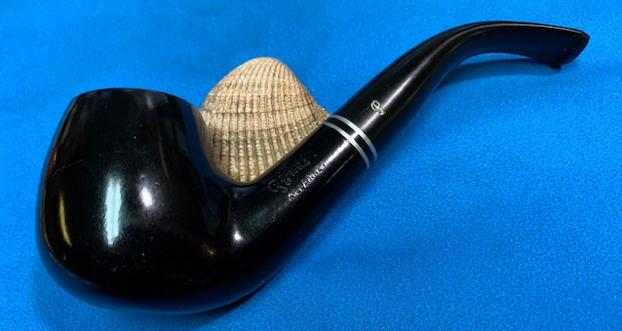
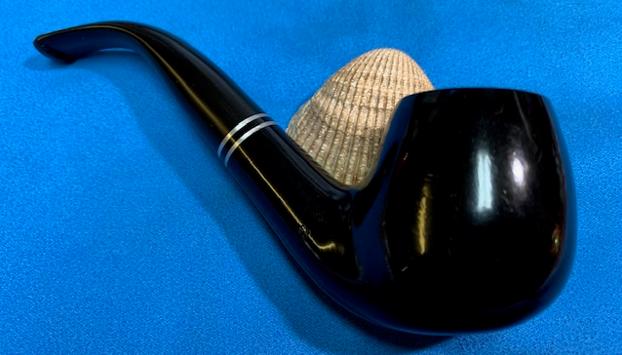
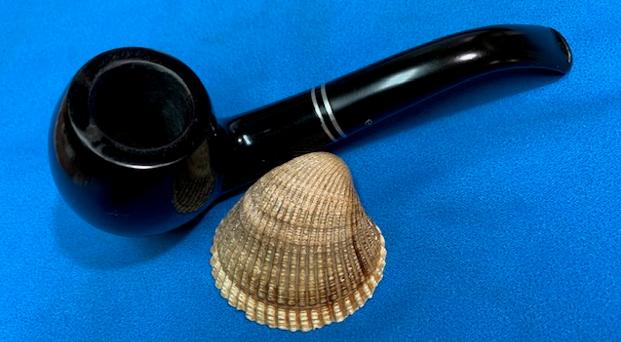
Breathing Life into a Peterson’s of Dublin Killarney 68 Dress Bent Billiard


Blog by Steve Laug

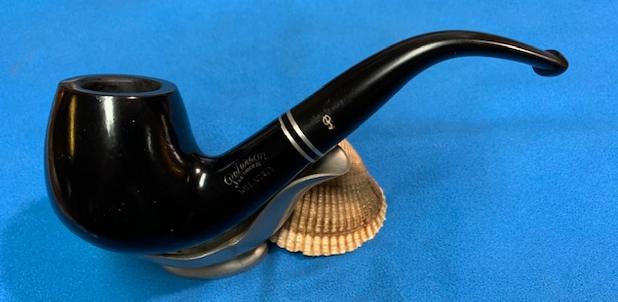
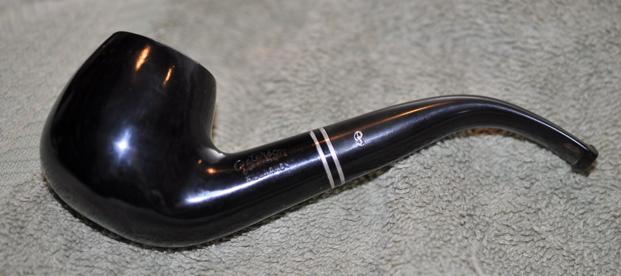
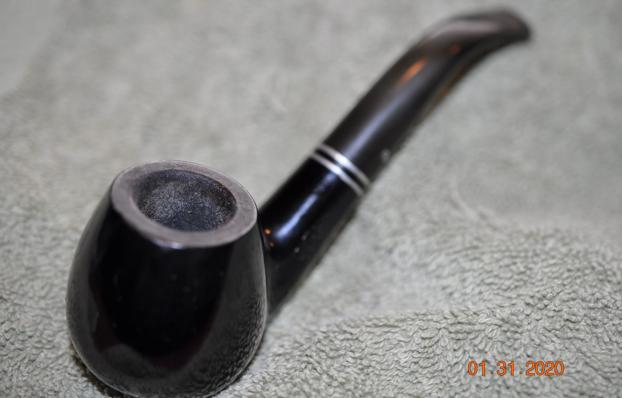
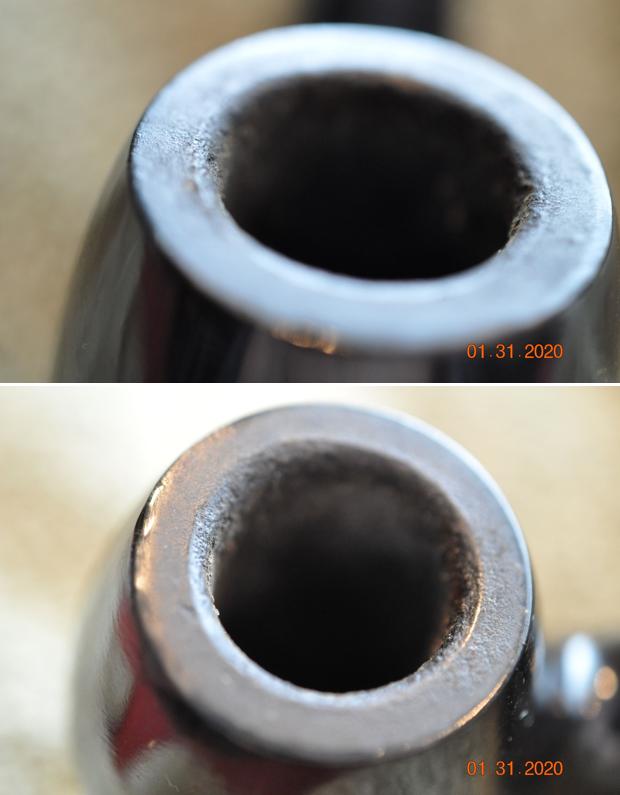
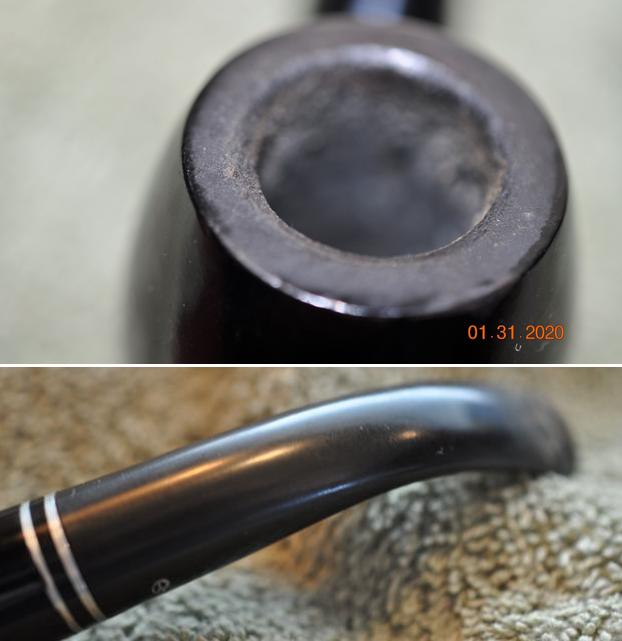
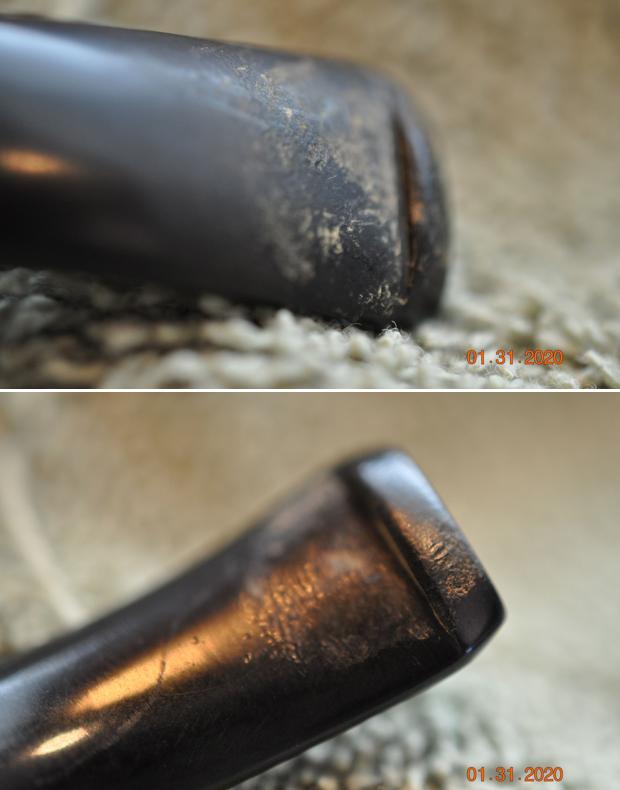
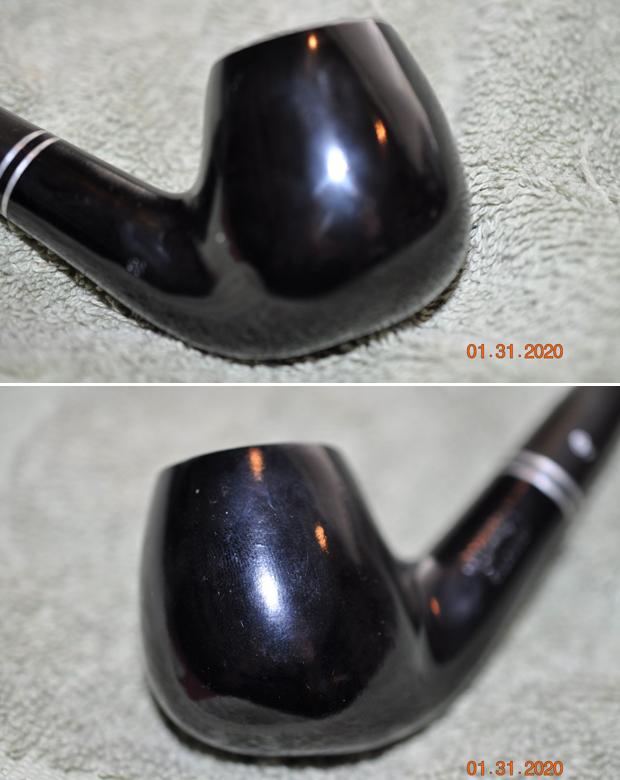
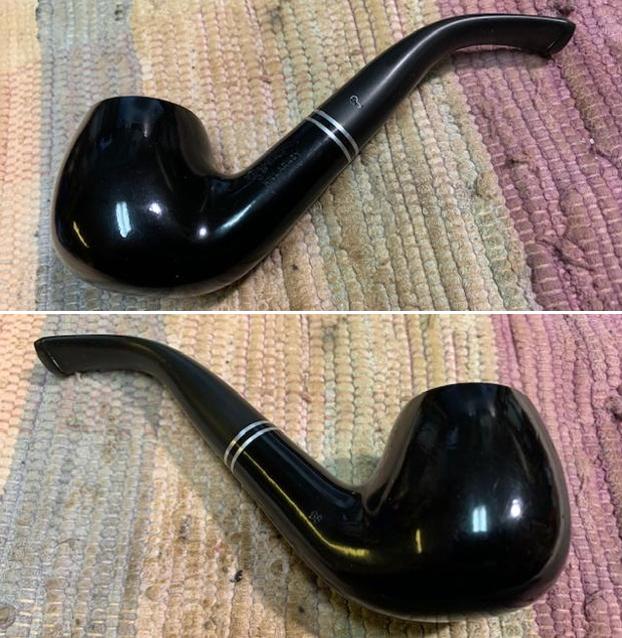
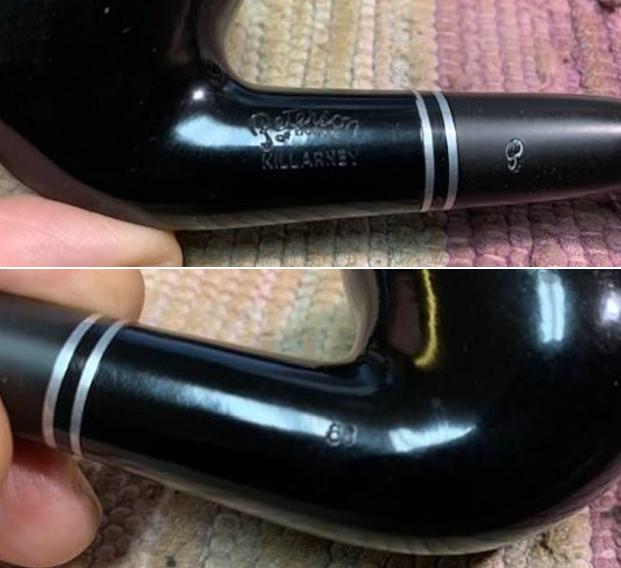
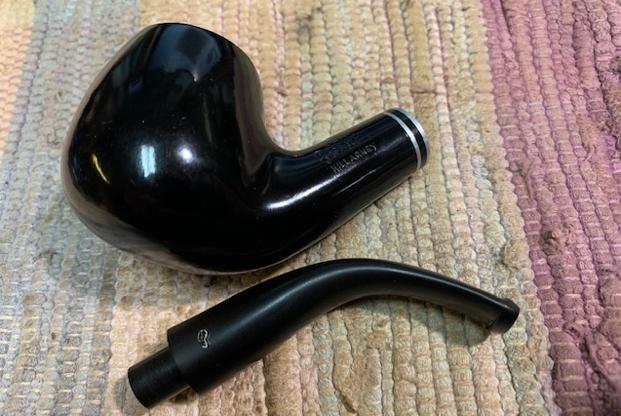
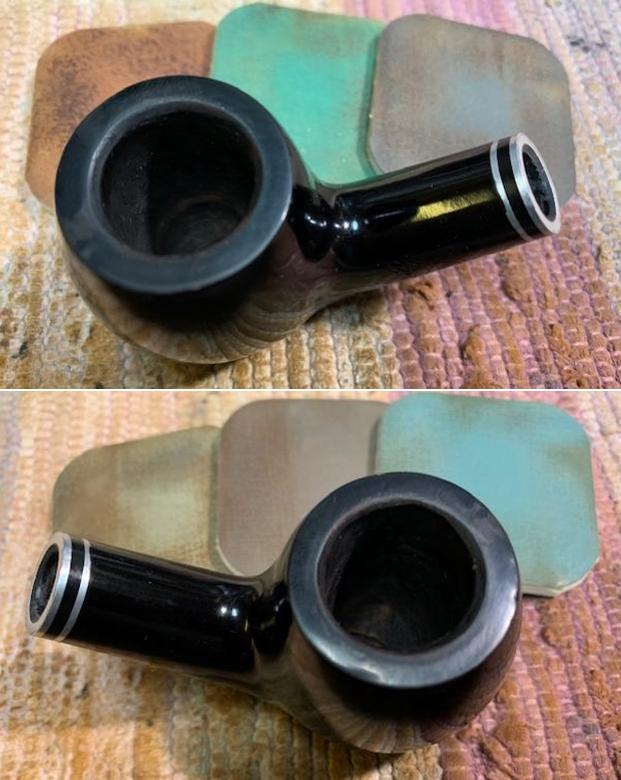
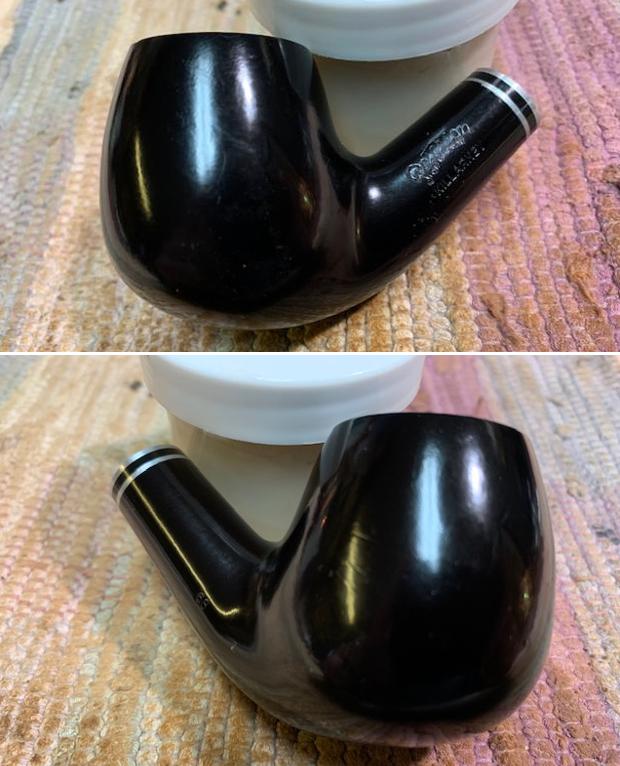
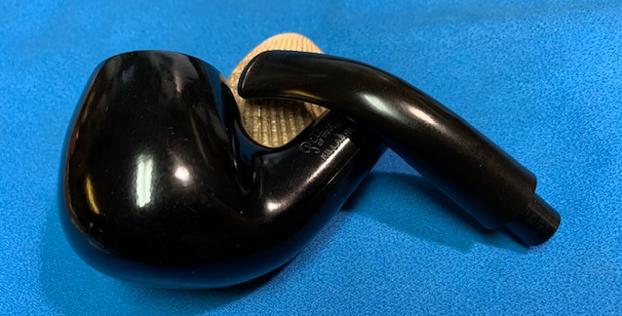
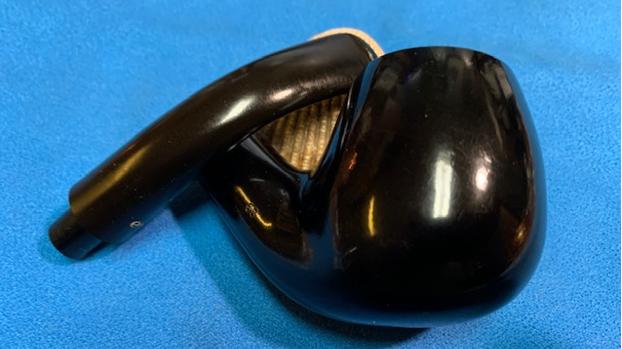
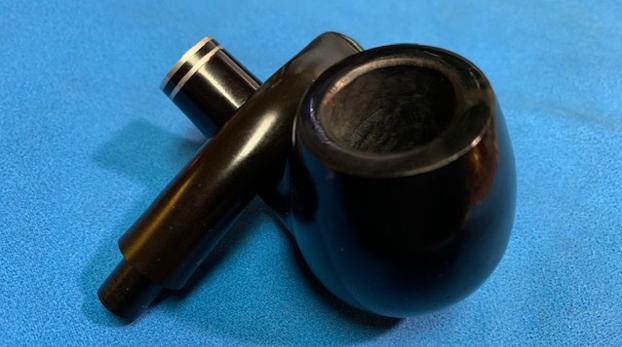
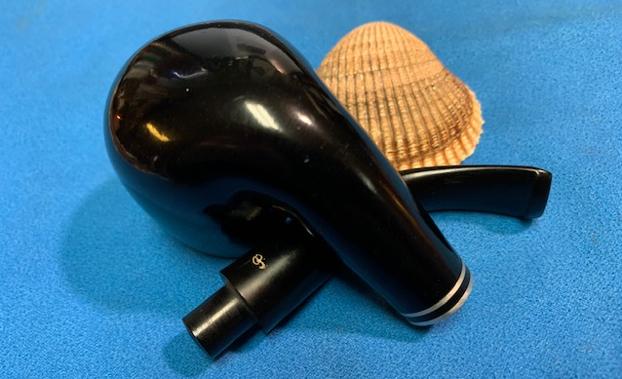
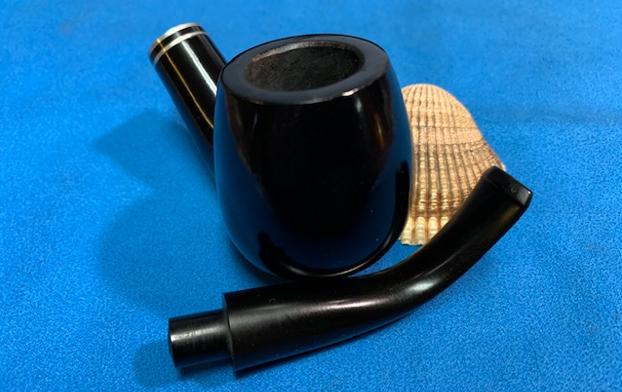
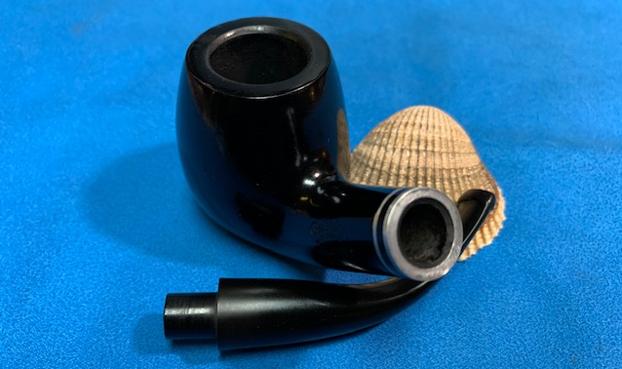
The next pipe I have chosen is a Peterson’s Black Dress pipe. This one is a 68 Bent Billiard that has a rich Black finish on the bowl sides and shank. It is also incredibly dirty. It came to us in an auction in Huntington Station, New York, USA. This bent billiard had a band with three rings – a black middle ring with silver (polished aluminum) on either side. The contrast of the black painted finish is in good condition on the sides and shank. It was stamped on the left side of the shank and read Peterson’s [over] of Dublin [over] Killarney. It was stamped on the right side with the shape number 68. It was in filthy when he brought it to the table. The finish was dirty but it still was in good condition. There was a heavy cake in the bowl and lava on the rim top and the inner edge of the bowl. There was some damage to the inner edge of the rim at the back of the bowl. The stem was oxidized, calcified and had tooth marks and chatter on the top and underside on and near the button. Jeff took photos of the pipe before his cleanup work. They tell the story and give a glimpse of the promise that we see in this pipe. Jeff took photos of the rim top and stem to show the general condition of the pipe. The bowl is heavily caked and the rim top and edges have a lava overflow. It was hard to know what the rim edge and top looked like under the lava. Once it was cleaned I would have a better idea. The stem is oxidized, calcified and has tooth marks on the top and underside near the button.   Jeff took some photos of the bowl sides and heel to show the condition of the finish around this bowl. It is a nice looking pipe.    He took photos of the sides of the shank to show the stamping. The stamping is readable in the photos below and is as noted above. He also took a photo of the band.      I am including the link to the Pipedia’s article on Peterson pipes. It is a great read in terms of the history of the brand (https://pipedia.org/wiki/Peterson).

I turned to “The Peterson Pipe” by Mark Irwin and Gary Malmberg to get some background on the Killarney line. On page 306 it had the following information.

Killarney (1949-) Entry line with smooth finish and P-Lip mouthpiece. May have either K or P stamped on the mouthpiece; may have aluminum stinger (not to confused wit the tenon-extension tube found on straight System pipes). 1949-c.1957 examples made for the US market may have any of the following COM stamps: MADE IN IRELAND (forming a circle), “A PETERSON’S PRODUCT” over MADE IN IRELAND or LONDON MADE over ENGLAND. Some early specimens stamped KILLARNEY over NATURAL (a higher grade) have MADE IN IRELAND (forming a circle). Examples c. 1986-1990 feature a nickel band, which was replaced in ’91 with a shank extension of nickel band with black acrylic inlay. Fishtail mouthpiece from ’86, although P-Lip is sometimes seen. For the current German market, the Killarney is stamped CONNEMARA.

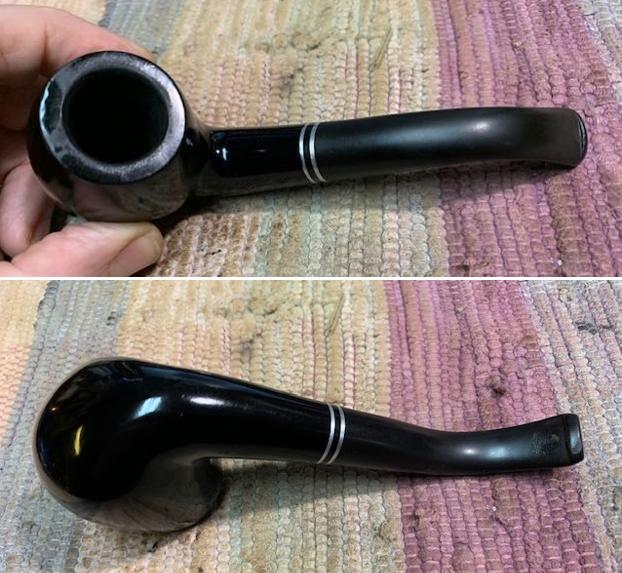
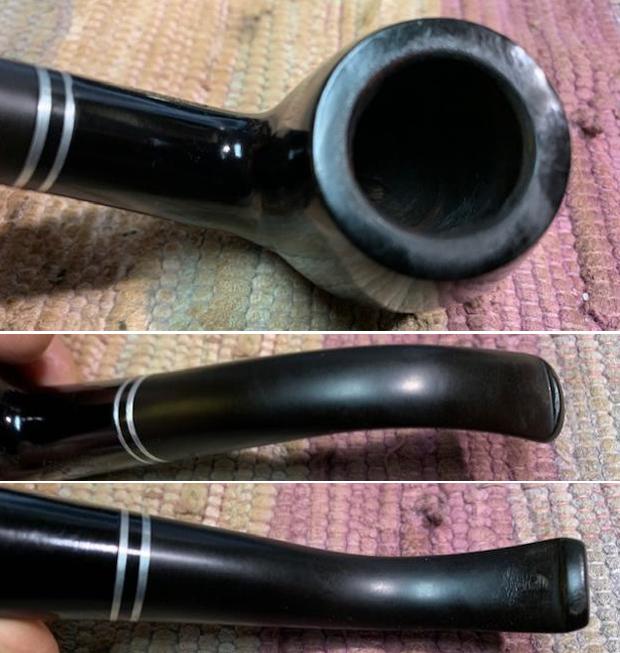
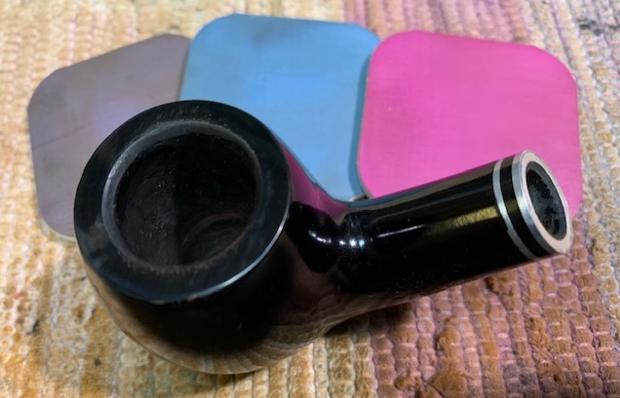
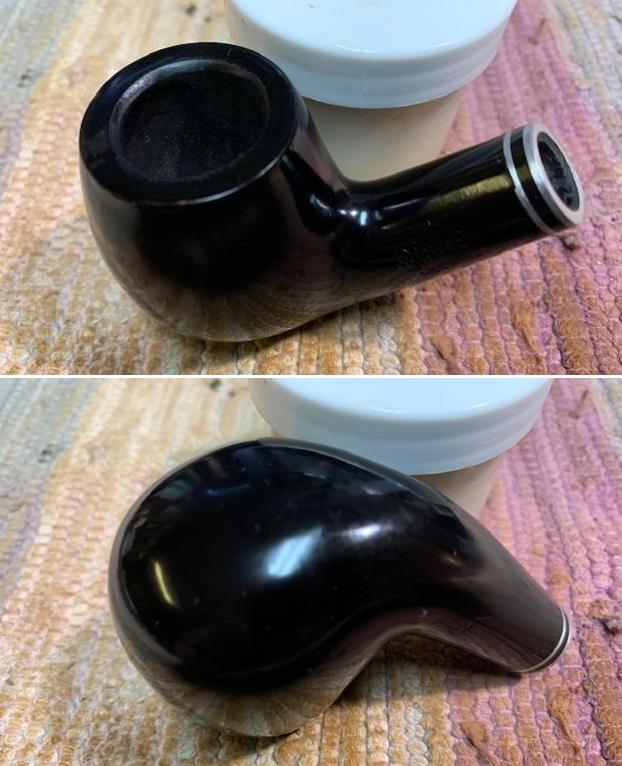
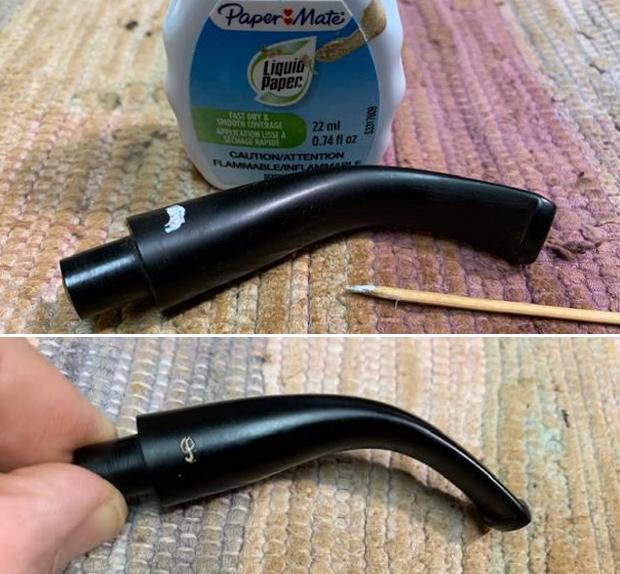
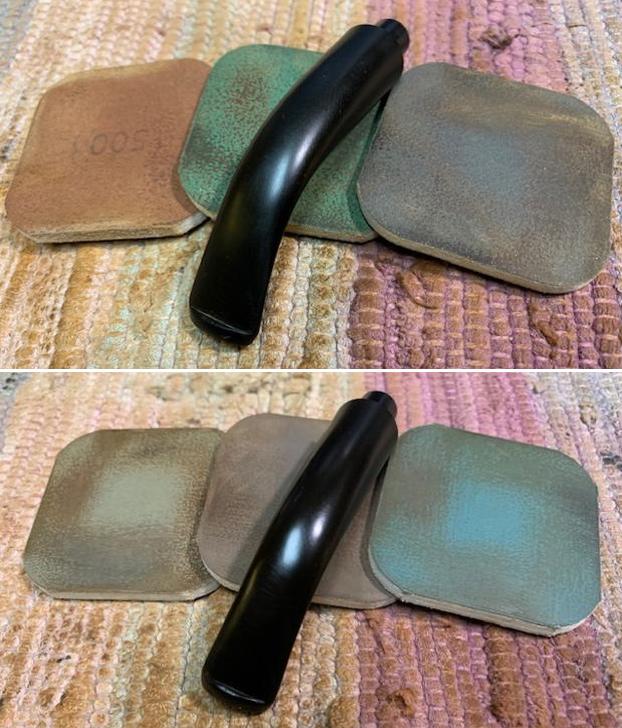
Now it was time to work on the pipe. Jeff had done a great job cleaning up the pipe as usual. He reamed the pipe with a PipNet reamer and cut back the cake back to the bare briar. He cleaned up the walls with a Savinelli Fitsall Pipe Knife. He scrubbed the interior of the bowl and shank with pipe cleaners, cotton swabs and alcohol to remove the tars and oils. He scrubbed the exterior of the pipe with Murphy’s Oil Soap and a tooth brush to remove the grime from the finish. He worked on the rim top lava and darkening with the soap and tooth brush. He scrubbed the inside of the stem with alcohol and pipe cleaners. He scrubbed the exterior with Soft Scrub and then soaked it in Before & After Deoxidizer. He washed it off with warm water to remove the deoxidizer. The pipe looked far better when it arrived. I took some close up photos of the rim top and also of the stem surface. I wanted to show how well it had cleaned up. The rim top had some looked quite good and the inner edge had some darkening and damage on the back. It should clean up really well. I also took close up photos of the stem to show the light tooth marks on the surface near the button.      I took photos of the stamping on the top and right sides of the shank. You can see that it is stamped as noted above. It is clear and readable.  I removed the stem and took a photo of the pipe to have a look at the parts and overall look.I polished the rim top with micromesh sanding pads – dry sanding with 1500-12000 grit sanding pads to remove the residual darkening on top of the finished rim top. Overall it looks much better.    I worked some Before & After Restoration Balm into the surface of the briar with my fingertips to clean, enliven and protect the briar. I let the balm sit for 15 minutes and then buffed with a cotton cloth to raise the shine. The photos show the bowl at this point in the restoration process.   I set the bowl aside to turn my attention to the stem. I sanded out the tooth chatter and marks on the surface of both side with 220 grit sandpaper. I started polishing the stem with 400 grit wet dry sandpaper.   I touched up the stamped “P” on the left side of the stem with Liquid Paper White. I pressed it into the stamping with a tooth pick and buffed it off with a soft cloth. It looks much better that when I started.    The stem was in excellent condition so I polished the stem with micromesh sanding pads – wet sanding with 1500-12000 grit sanding pads. I wiped it down after each sanding pad with Obsidian Oil. I polished it with Before & After Pipe Stem Polish – both Fine and Extra Fine. I am excited to finish this Peterson’s of Dublin Killarney 68 Dress Bent Billiard. I put the pipe back together and buffed it with Blue Diamond on the buffing wheel. I gave the bowl and the stem multiple coats of carnauba wax. I hand buffed the pipe with a clean buffing pad to raise the shine. It is fun to see what the polished bowl looks like with the rich black paint. Added to that the polished aluminum and acrylic band and the black vulcanite stem give the pipe a sense of class. This smooth Classic Peterson’s Killarney Dress Billiard is nice looking and the pipe feels great in my hand. It is light and well balanced. Have a look at it with the photos below. The dimensions are Length: 5 ½ inches, Height: 2 inches, Outside diameter of the bowl: 1 ¼ inches, Chamber diameter: ¾ of an inch. The weight of the pipe is 62grams/2.19oz. It is a beautiful pipe and one that will be on the Irish Pipe Makers section of the rebornpipes store soon. If you are interested in adding it to your collection let me know. Thanks for walking through the restoration with me as I worked over this pipe. Thanks to each of you who are reading this blog.

Rebirthing a Peterson’s of Dublin Shannon B11 Bent Brandy Setter


Blog by Steve Laug

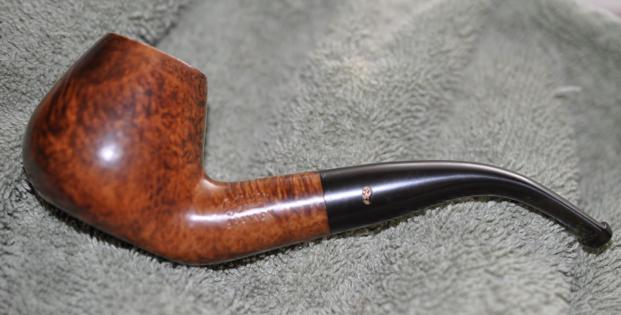
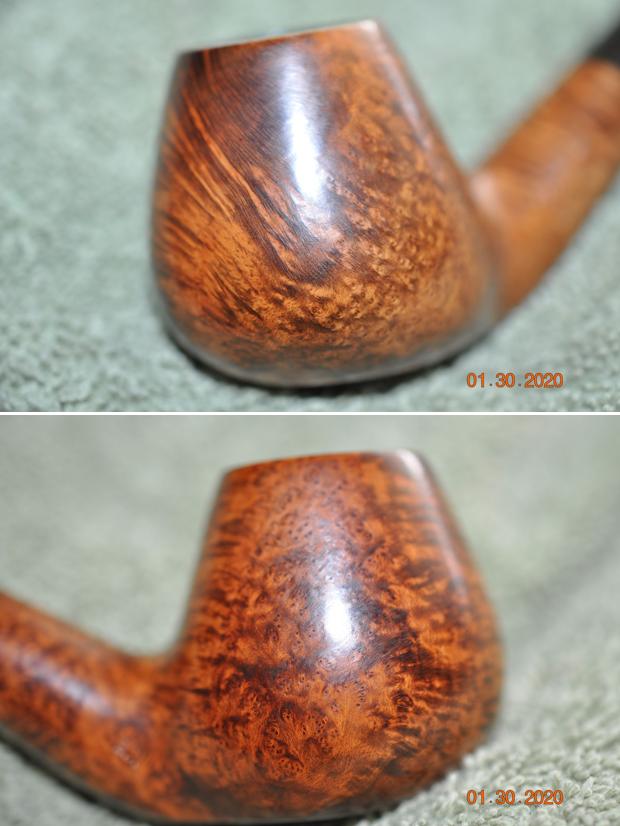
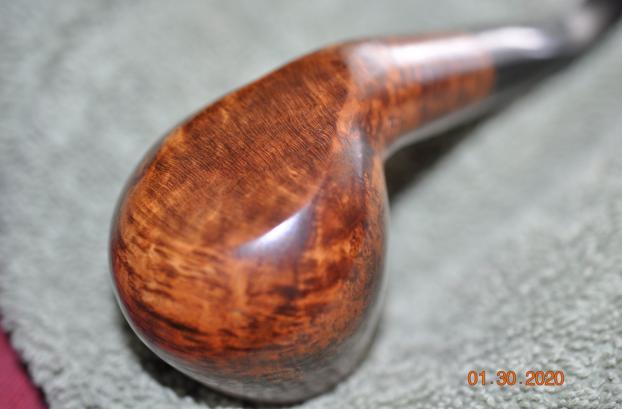
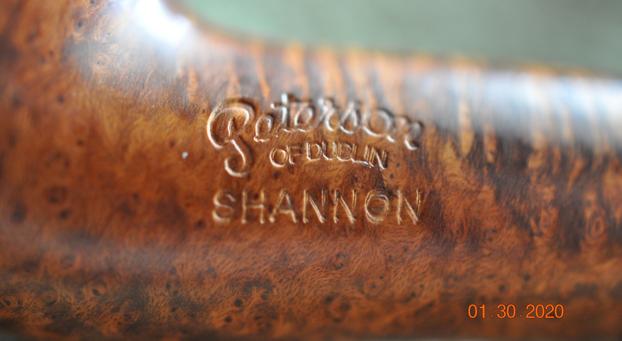
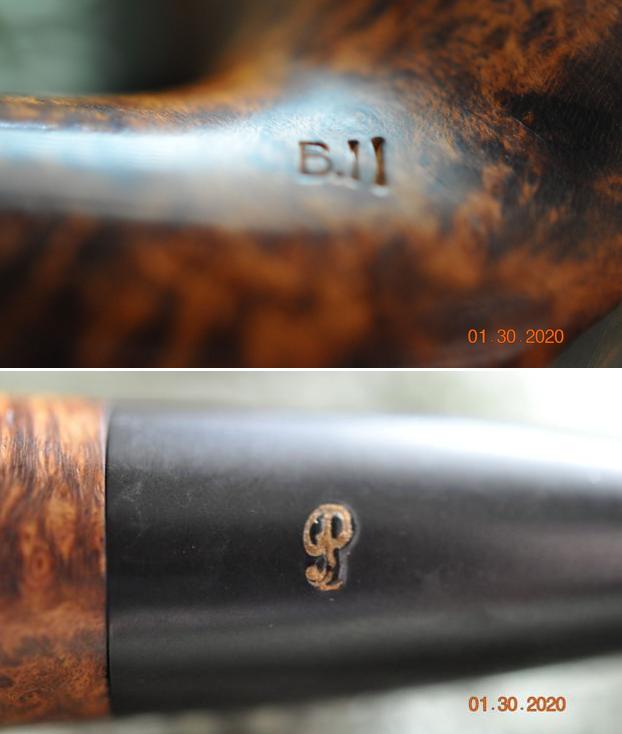
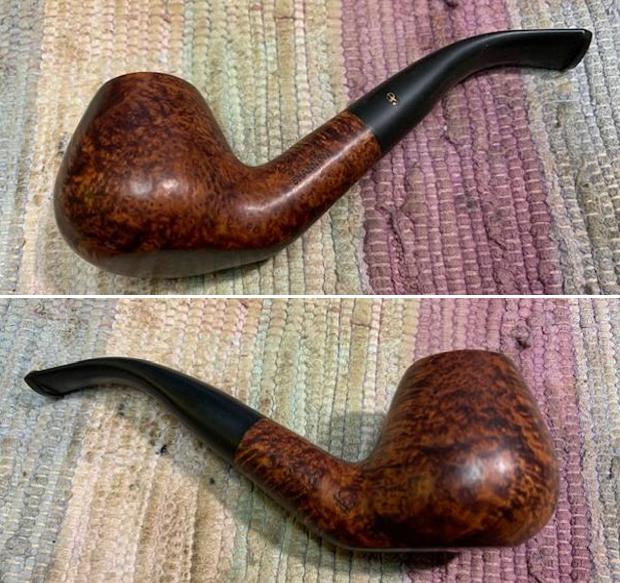
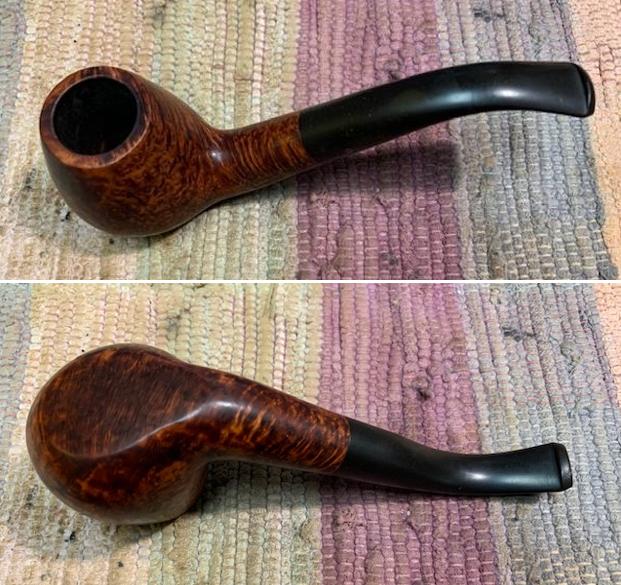
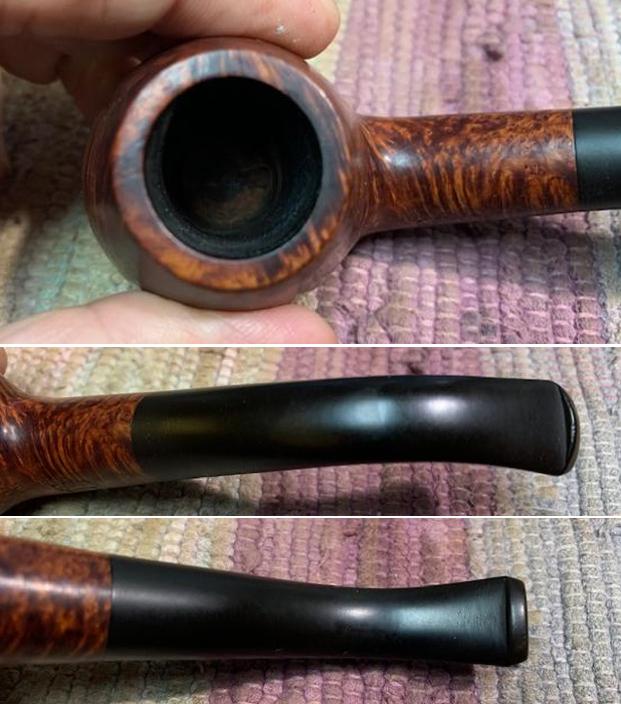
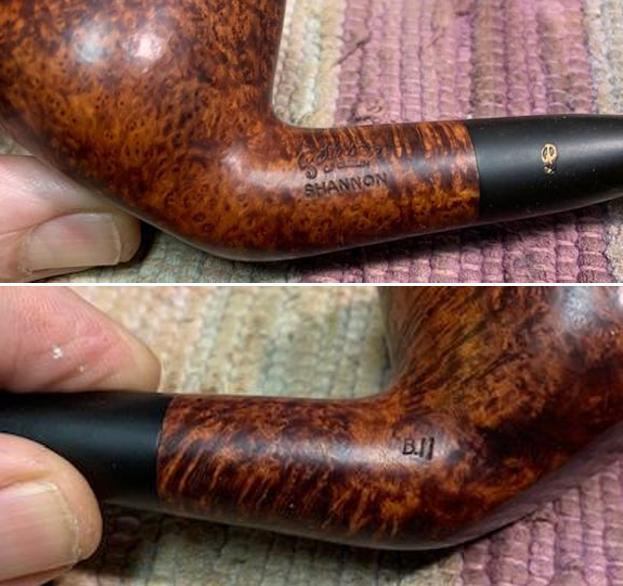
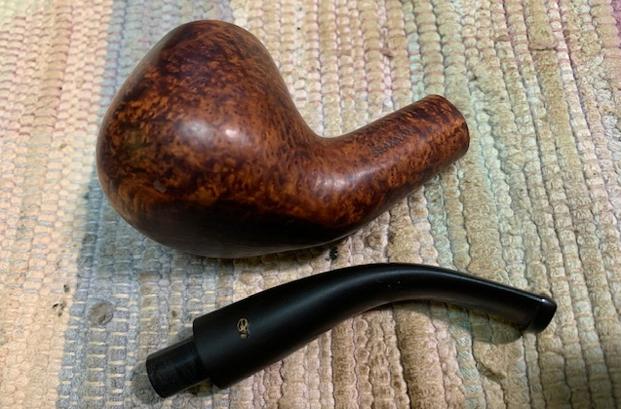
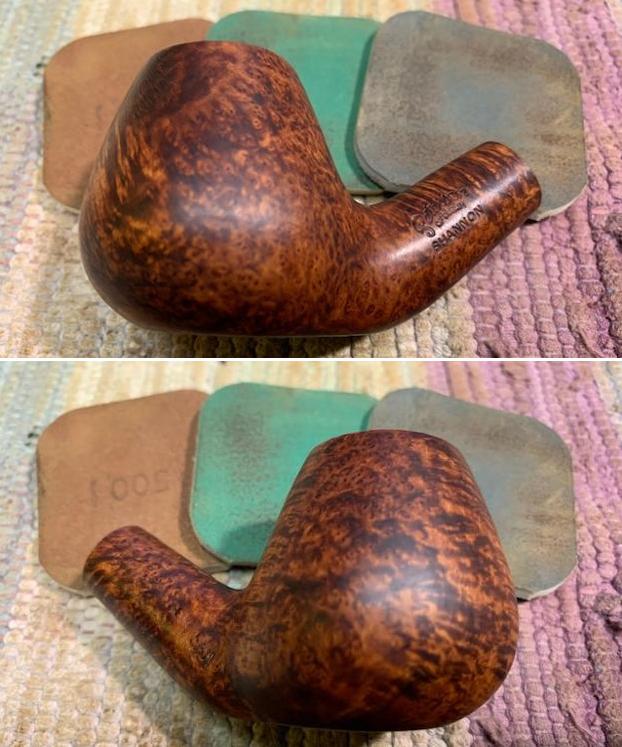
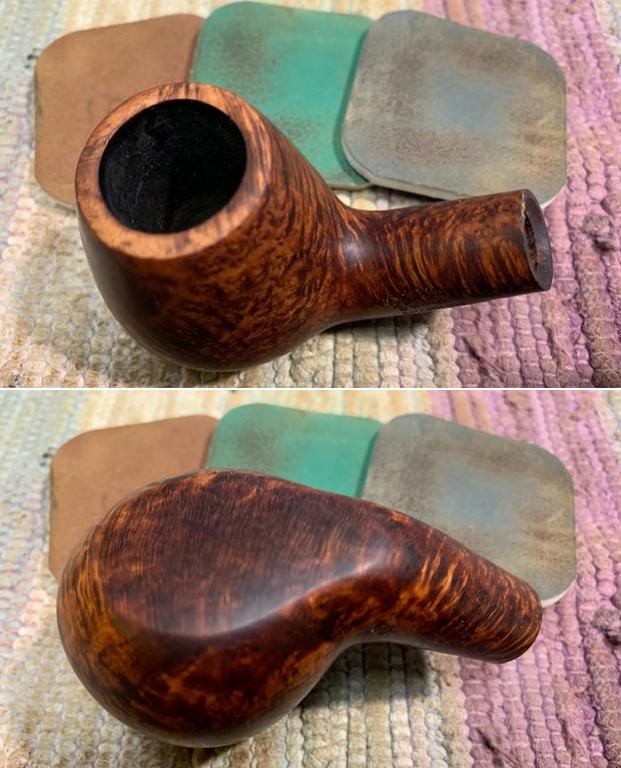
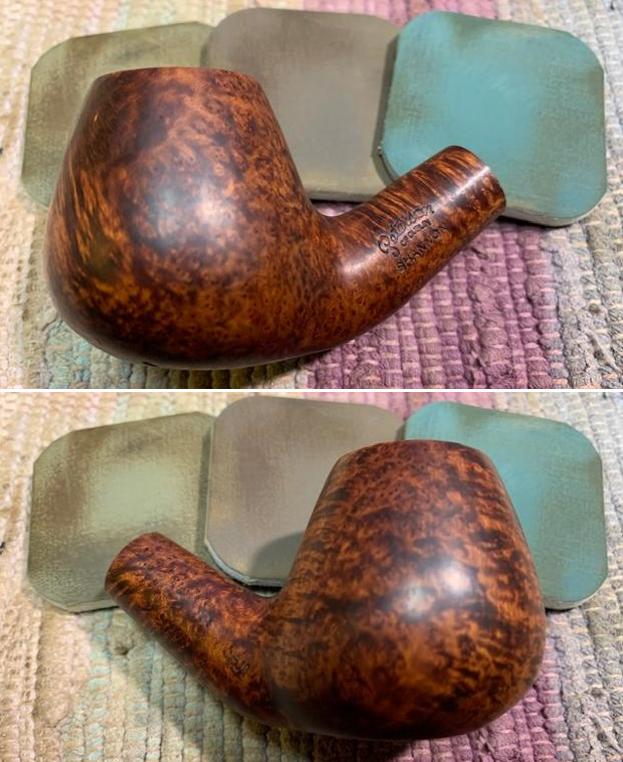
Today is another rainy day that is perfect for me to work on pipes. The next pipe I have chosen is a Peterson’s of Dublin Bent Brandy Setter. It is a great looking pipe. It came to us from an auction in Huntington Station, New York, USA. The grime was ground into the smooth finish on the bowl sides. The contrast of the brown stains gave the grain a sense of depth. It was stamped on the left side of the shank and read Peterson’s [arched over] of Dublin [over] Shannon. On the right side of the shank it bore the stamp B.11 which is the shape number. This pipe must have been a favourite as it had been well smoked. There was a moderate cake in the bowl a light overflow of lava and darkening on the rim top. The edge of the bowl looked very good. The vulcanite taper stem had light tooth marks and chatter on the top and underside on and near the button. Jeff took photos of the pipe before his cleanup work. They tell the story and give a glimpse of the promise that we see in this pipe.   Jeff took photos of the rim top and stem to show the general condition of the pipe. The bowl is moderately caked and the smooth rim top and edges have a lava overflow obscuring the inner edge. The photos of the stem show the light tooth marks on the top and underside near the button.   Jeff took a photo of the bowl sides and heel to show the grain that was around this bowl. There were some nicks in the sides but overall it is a nice looking pipe. He took photos of the stamping on the shank. It is clear and readable and reads as noted above.   From what I could find online on a variety of sites that sell the Shannon line they all seem to agree that it was designed for those who prefer classic shapes free from adornments. The line is among Peterson’s most reserved finishes, defined by a familiar walnut stain and a jet-black acrylic stem. (The stain colour an finish matches the pipe I am working on but this pipe has a vulcanite rather than an acrylic stem.)

I turned to “The Peterson Pipe” by Mark Irwin and Gary Malmberg to get some background on the Shannon line. On page 312 it had the following information.

Shannon (1969-c1987) – First offered as an entry-grade line in walnut or black sandblast. In 1969-c1970, offered through Iwan Ries as Shannon Meerschaum Lined, middle-grade sandblast and higher grade brown sandblast finish, P-lip mouthpiece. From 2005 as polished tan-and-black stain, unmounted, P-lip or fishtail mouthpiece with stamped gold P on vulcanite mouthpiece.

There was also a listing on page 299 for Shannon Airport. It read as follows:

For Shannon Airport (c.d1947-c1983) – Stamp on shank of pipes in several grades, indicated that the pipe was designated to be sold by Duty Free Shops at the Shannon Airport.

It is interesting that most of the info on the Shannon pipe and the Shannon Airport pipe seems to be parallel. It also seems to me that Mark and Gary do not make the distinction very clear on the two. They also note that the pipe had a black vulcanite stem with a gold “P” stamped on it as this one does but the pipe I am working on has an acrylic stem as noted in the opening paragraph of this section.

On a previous Shannon Pipe I had written to Mark for some clarity about the pipe I had in my hand. Here was his response then and much is applicable to this pipe.

Hey Steve,

Merry Christmas to you, too, good sir! The SHANNON AIRPORT stamp refers to an agreement K&P had for duty-free export pipes at the airport, which had to have that stamp to qualify for whatever tax-free status they had. SHANNON, on the other hand, was a distinct line of Classic Range pipes. The SHANNON AIRPORT pipes could be any K&P pipe–System, Classic Range, whatever. The SHANNON was strictly a Classic Range, following the guidelines on p. 312.

Hope that helps, and joy to you in this Christmas Season– Mark

I did a Google search for a time frame for the Peterson’s B11 shape and was directed to an article by Mark on his Peterson’s Pipenotes site (https://petersonpipenotes.org/tag/peterson-b11/).

A bent brandy “setter,” like its sibling the B10 it seems to have originally appeared in the high-grade Rosslare Royal Irish line in 2003 and from there appeared in most every Peterson line. There is a bit of confusion about the Rosslare line, as the Royal Irish was not, in the beginning, stamped as such even though it was being advertised that way, and subsequently the line was divided into Rosslare (without the faux spigot, but retaining the sterling band and marmalade acrylic stem) and the Royal Irish (with the faux spigot, a lighter blonde finish and usually with a vulcanite stem instead of the original acrylic).

I knew that I was dealing with a Shannon that was part of the Classic Line made between made after 2003. Now it was time to work on the pipe.

Jeff had done a great job cleaning up the pipe as usual. He reamed the pipe with a PipNet reamer and cut back the cake back to the bare briar. He cleaned up the walls with a Savinelli Fitsall Pipe Knife. He scrubbed the interior of the bowl and shank with pipe cleaners, cotton swabs and alcohol to remove the tars and oils. He scrubbed the exterior of the pipe with Murphy’s Oil Soap and a tooth brush to remove the grime from the finish. He worked on the rim top lava and darkening with the soap and tooth brush. He scrubbed the inside of the stem with alcohol and pipe cleaners. He scrubbed the exterior with Soft Scrub and washed it off with warm water to remove the debris and soap. He soaked the stem in Briarville’s Pipe Stem Deoxidizer and rinsed it off once he took it out of the bath. The pipe looked very good when it arrived.     I took some close up photos of the rim top and also of the stem surface. I wanted to show how well it had cleaned up. The rim top looks very good in the photo with some darkening on the top of the rim. I also took close up photos of the stem to show the light tooth marks on the surface near the button.   I took a photo of the stamping on the sides of the shank. You can see that it is stamped as noted above.   I took the pipe apart and took a photo of the pipe. It is a good looking pipe and has a great grain pattern on the bowl. I polished the bowl and the rim top with micromesh sanding pads – dry sanding with 1500-12000 grit sanding pads. I wiped down the briar between each pad to remove the sanding debris.  I worked some Before & After Restoration Balm into the surface of the briar with my fingertips to clean, enliven and protect the briar. I let the balm sit for 15 minutes and then buffed with a cotton cloth to raise the shine. The photos show the bowl at this point in the restoration process.      I touched up the gold “P” stamp with Rub’n Buff Antique Gold. I rubbed it on the surface of the stem with a tooth pick and worked it into the stamped P. I let it sit for short time and buffed it off with a soft cloth. The “P” looks significantly better.I set the bowl aside and turned my attention to the stem. I polished the stem with micromesh sanding pads – wet sanding with 1500-12000 grit sanding pads. I wiped it down after each sanding pad with Obsidian Oil. I polished it with Before & After Pipe Stem Polish – both Fine and Extra Fine.    I am excited to finish this Peterson’s of Dublin Shannon B11 Bent Brandy Setter. I put the pipe back together and buffed it with Blue Diamond on the buffing wheel. I gave the bowl and the stem multiple coats of carnauba wax. I buffed the pipe with a clean buffing pad to raise the shine and hand buffed it with a microfibre cloth to deepen the shine. It is fun to see what the polished smooth rim top and the sandblast bowl looks like with the black acrylic taper stem. This Classic looking Peterson’s Shannon Bent Brandy Sitter feels great in my hand. It is light and well balanced. Have a look at it with the photos below. The dimensions are Length: 6 inches, Height: 1 ¾ inches, Outside diameter of the bowl: 1 1/8 inches, Chamber diameter: ¾ of an inch. The weight of the pipe is 59grams/2.05oz. It is a beautiful pipe and one that has already been claimed by a good friend. I will be shipping it to him on Tuesday. Thanks for walking through the restoration with me as I worked over this pipe. Thanks to each of you who are reading this blog.

Breathing Life into a Peterson’s of Dublin Flame Grain 268 Zulu


Blog by Steve Laug

The next pipe I have chosen is smooth finished Peterson’s Flame Grain pipe. This one is a 268 Zulu that has a rich coloured finish with amazing grain around the bowl sides and shank. It is also incredibly dirty. It also came to us from the estate of Anglican minister that was a great friend of mine here in Canada. This Zulu had a badly oxidized silver band on the shank. The contrast of the brown stains makes the grain really pop. It was stamped on the topside of the shank and read Peterson’s [over] of Dublin [over] Flame Grain. It was stamped on the right side with the shape number 268. The tarnished band is stamped with Peterson’s [over] Dublin. That was followed by three hallmarks – the seated woman, the harp and the italic letter O. It was in filthy when he brought it to the table. The finish was dirty with grime ground into the briar sides and rim. There was a heavy cake in the bowl and light spattering of lava on the rim top and the inner edge of the bowl. There was some damage to the inner edge of the rim at the back of the bowl. The stem was oxidized, calcified and had tooth marks and chatter on the top and underside on and near the button. Jeff took photos of the pipe before his cleanup work. They tell the story and give a glimpse of the promise that we see in this pipe. Jeff took photos of the rim top and stem to show the general condition of the pipe. The bowl is heavily caked and the rim top and edges have some light lava overflow. There is some damage to the rim edge on the back of the bowl. The stem is oxidized, calcified and has tooth marks on the top and underside near the button.     Jeff took some photos of the bowl sides and heel to show the amazing grain that was around this bowl. It is a nice looking pipe.  He took photos of the sides of the shank to show the stamping. The stamping is readable in the photos below and is as noted above. He also took a photo of the band.   I am including the link to the Pipedia’s article on Peterson pipes. It is a great read in terms of the history of the brand (https://pipedia.org/wiki/Peterson).

I always like to date the year a pipe was made while I am working on it. In the process of working on a pipe if I can pin down a date that it was made that it adds another dimension to the restoration process. Once I have identified the hallmarks on the pipe then I use a Hallmark chart to pin the date down. In the case of Peterson’s pipe with a silver band I use a hallmarking chart that Peterson included in their catalogs and on their website

I have a copy of the hallmark charts in one of the Peterson catalogs that I have uploaded to the blog on rebornpipes. I turned to that chart to lock down the date letter for the Flame Grain Zulu that I am working on. Here is the link to the site (https://rebornpipes.com/wp-content/uploads/2015/05/peterson-cataloguecomp_page_27.jpg).

The chart defines the meaning of each hallmark on the silver band. The first one is of a seated woman with a harp is known as the Hibernia stamp and identifies the pipe as made in Ireland. The second stamp is a crowned harp which is a fineness mark denoting the high quality of silver that was used. The third stamp is the italic letter O. I have included a larger screen capture of the section on the third column of the chart in the photo below.I have drawn a red square around the date letter below. It identifies the date of this Peterson’s pipe to 2000.I knew that I was dealing with a pipe that the hallmarks date to 2000. Now it was time to learn a bit more about the Flame Grain Line.

I turned to “The Peterson Pipe” by Mark Irwin and Gary Malmberg to get some background on the Flame Grain line. On page 299 it had the following information.

Flame Grain (1997-) Smooth flame-grained with brass band 1997-c.2000, sterling silver thereafter. Stamped arched Peterson over arched OF DUBLIN over FLAME GRAIN. Black vulcanite mouthpiece, also amber coloured (2010-), P-Lip mouthpiece , hot foil stamped P.

Now it was time to work on the pipe. Jeff had done a great job cleaning up the pipe as usual. He reamed the pipe with a PipNet reamer and cut back the cake back to the bare briar. He cleaned up the walls with a Savinelli Fitsall Pipe Knife. He scrubbed the interior of the bowl and shank with pipe cleaners, cotton swabs and alcohol to remove the tars and oils. He scrubbed the exterior of the pipe with Murphy’s Oil Soap and a tooth brush to remove the grime from the finish. He worked on the rim top lava and darkening with the soap and tooth brush. He scrubbed the inside of the stem with alcohol and pipe cleaners. He scrubbed the exterior with Soft Scrub and then soaked it in Before & After Deoxidizer. He washed it off with warm water to remove the Deoxidizer. The pipe looked far better when it arrived. It has been sitting here for 2 years so the silver tarnished once again and would need to be polished.  I took some close up photos of the rim top and also of the stem surface. I wanted to show how well it had cleaned up. The rim top had some looked quite good and the inner edge had some darkening and damage on the back. It should clean up really well. I also took close up photos of the stem to show the light tooth marks on the surface near the button.   I took photos of the stamping on the top and right sides of the shank. You can see that it is stamped as noted above. It is clear and readable.     I removed the stem and took a photo of the pipe to have a look at the parts and overall look.I polished the Sterling Silver band on the shank with some Silver Polish and a jeweler’s cloth to remove the tarnish and polish it.I decided to address the damage to the back edge of the bowl and the rim top first. I used a folded piece of 220 grit sandpaper to give the inner edge of the bowl a slight bevel to accommodate the burned areas and blend them into the surrounding briar. I also worked over the darkening on the rim top with the sandpaper.   I polished the briar with micromesh sanding pads – dry sanding with 1500-12000 grit sanding pads. I wiped the bowl down with a damp cloth after each sanding pad.     I worked some Before & After Restoration Balm into the surface of the briar with my fingertips and a horsehair shoe brush to clean, enliven and protect the briar. I let the balm sit for 15 minutes and then buffed with a cotton cloth to raise the shine. The photos show the bowl at this point in the restoration process.      I touched up the gold foil stamped “P” on the top of the stem with Rub’n Buff Antique Gold. I pressed it into the stamping with a tooth pick and buffed it off with a soft cloth. It looks much better that when I started.I set the bowl aside to turn my attention to the stem. The stem was in excellent condition so I polished the stem with micromesh sanding pads – wet sanding with 1500-12000 grit sanding pads. I wiped it down after each sanding pad with Obsidian Oil. I polished it with Before & After Pipe Stem Polish – both Fine and Extra Fine.  I am excited to finish this Peterson’s of Dublin Flame Grain 268 Zulu made in 2000. I put the pipe back together and buffed it with Blue Diamond on the buffing wheel. I gave the bowl and the stem multiple coats of carnauba wax. I hand buffed the pipe with a clean buffing pad to raise the shine. It is fun to see what the polished bowl looks like with beautiful flame grain all around it. Added to that the polished Sterling Silver band and the black vulcanite stem was beautiful. This smooth Classic Peterson’s Zulu is nice looking and the pipe feels great in my hand. It is light and well balanced. Have a look at it with the photos below. The dimensions are Length: 5 ¾ inches, Height: 1 ¾ inches, Outside diameter of the bowl: 1 ¼ inches, Chamber diameter: ¾ of an inch. The weight of the pipe is 34grams/1.20oz. It is a beautiful pipe and one that will be on the Irish Pipe Makers section of the rebornpipes store soon. If you are interested in adding it to your collection let me know. Thanks for walking through the restoration with me as I worked over this pipe. Thanks to each of you who are reading this blog.

Breathing Life into a Peterson’s of Dublin Rusticated Barrel


Blog by Steve Laug

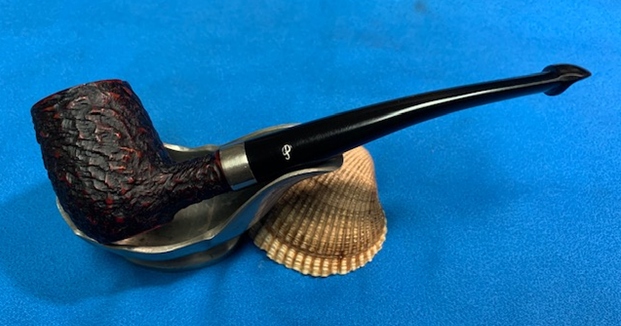
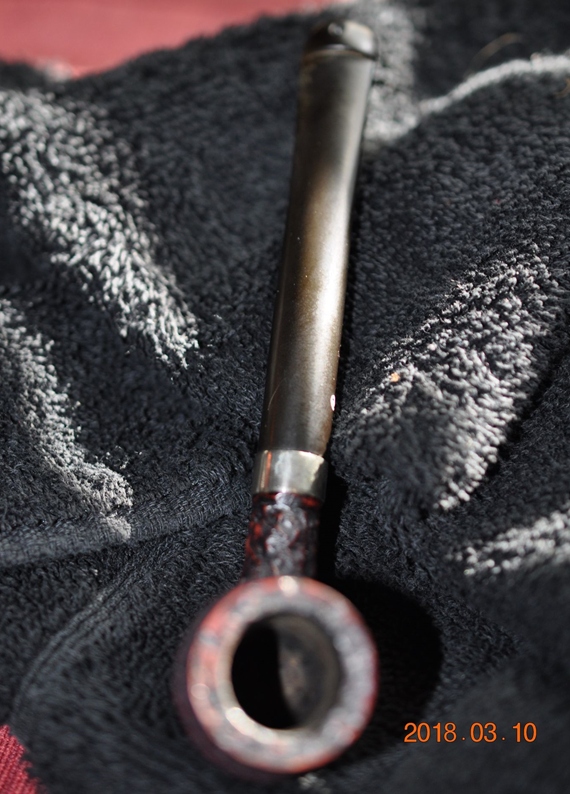
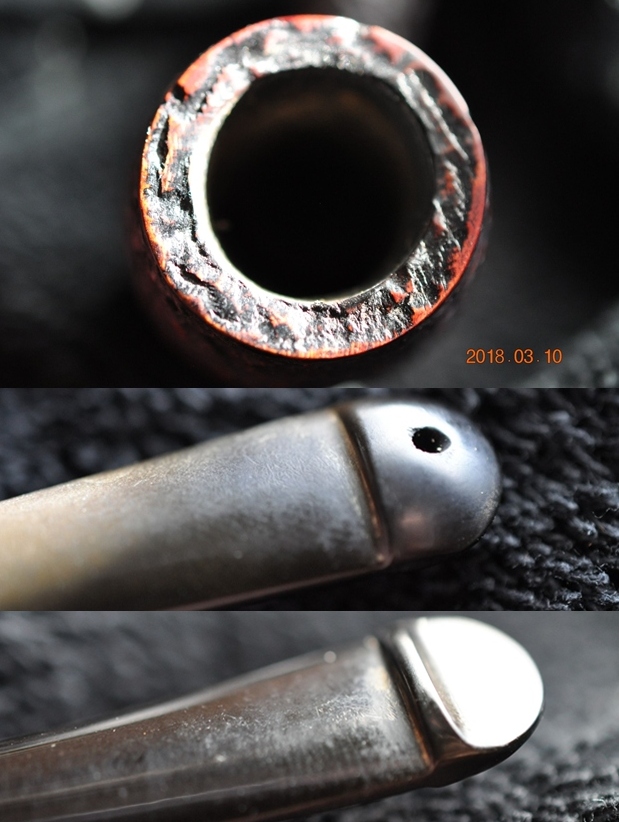
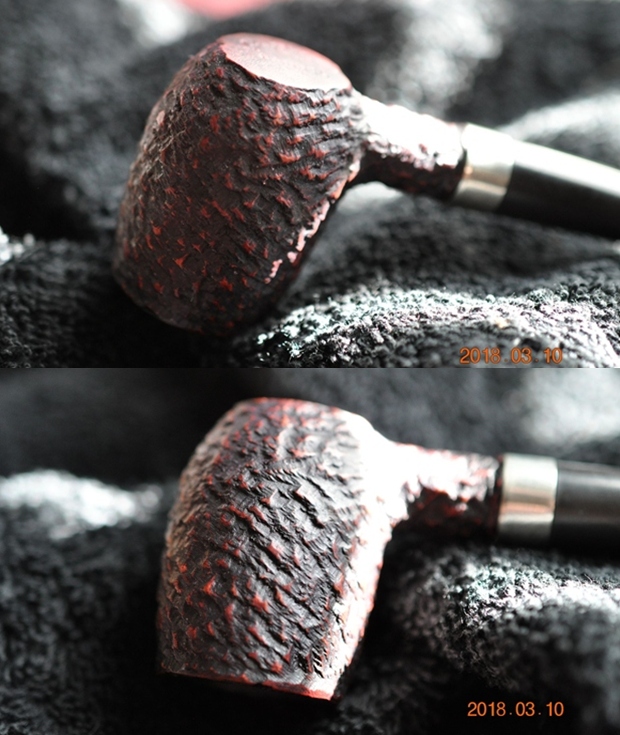
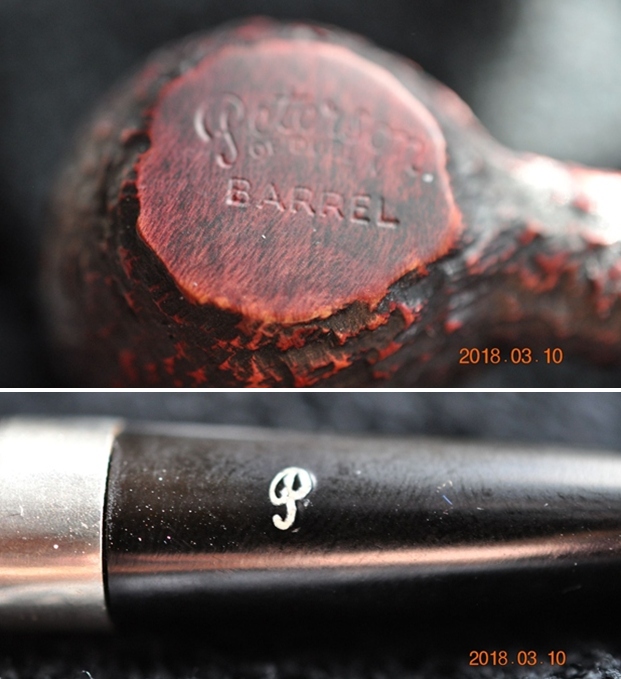
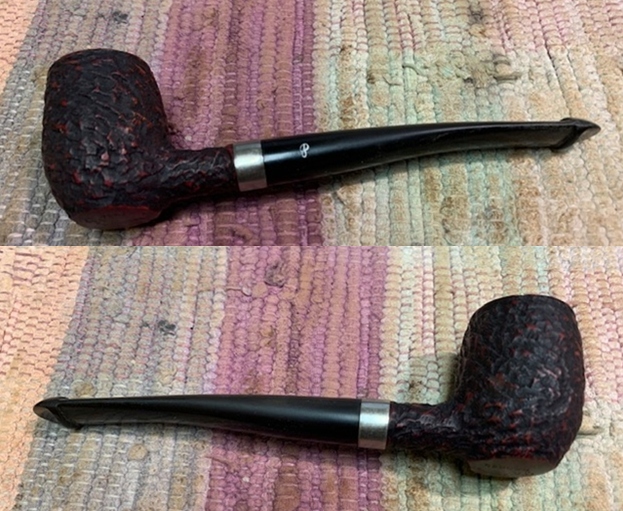
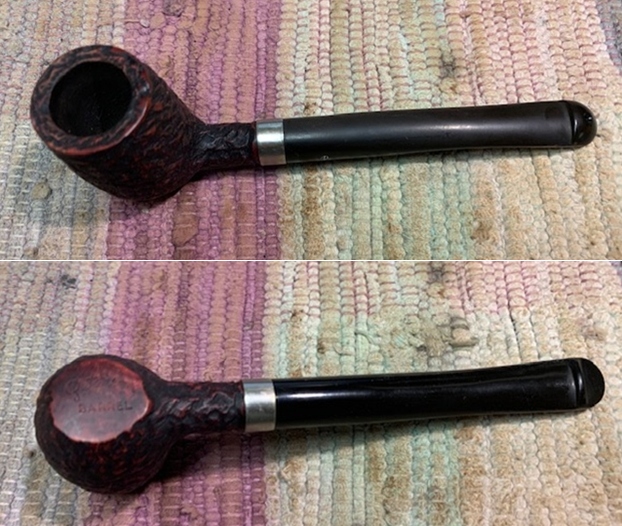
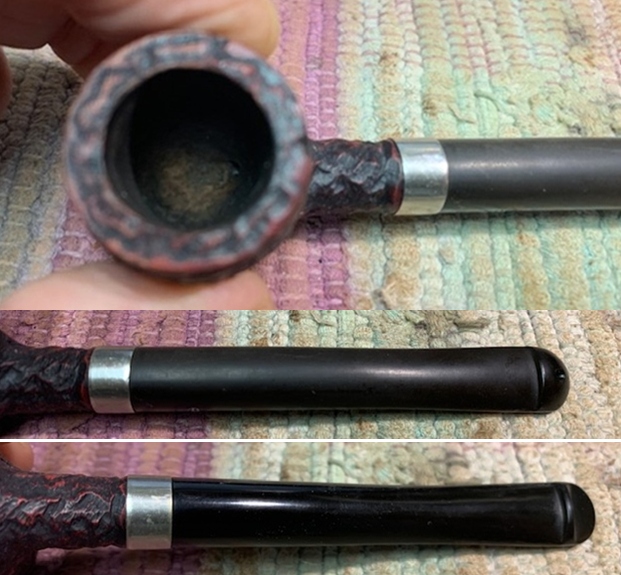
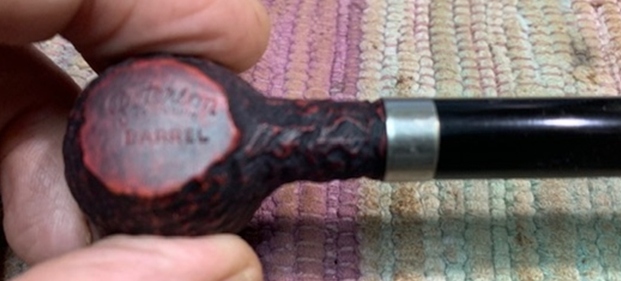
The next pipe I have chosen is a Peterson’s Rusticated Barrel pipe. This Barrel has a mix of reds and dark coloured stains on a very rustic finish around the bowl sides and short shank. It is also incredibly dirty. It also came to us from the estate of Anglican minister that was a great friend of mine here in Canada. The Barrel had a nickel band on the shank that was in great condition. The finish on the bowl sides was dirty. It was stamped on the heel of the bowl and read Peterson’s [over] of Dublin [over] Barrel. The nickel band does not have any stamping on it. There was a moderate cake in the bowl and light spattering of lava on the rim top and the inner edge of the bowl. The stem was lightly oxidized and had light tooth marks and chatter on the top and underside on and near the button. The “P” stamp on the left side of the taper stem is in excellent condition. Jeff took photos of the pipe before his cleanup work. They tell the story and give a glimpse of the promise that we see in this pipe. Jeff took photos of the rim top and stem to show the general condition of the pipe. The bowl is lightly caked and the rim top and edges have some light lava overflow. The stem is lightly oxidized and has light tooth marks on the top and underside near the button. Jeff took some photos of the bowl sides and heel to show the amazing grain that was around this bowl. It is a nice looking pipe.   He took a photo of the underside of the shank to show the stamping. The stamping reads as noted above. He also took a photo of the P on the stem. It is in excellent condition.    I am including the information from Pipedia’s article on Peterson pipes. It is a great read in terms of the history of the brand (https://pipedia.org/wiki/Peterson). I have included a bit of the pertinent history here.

1950 – 1989 The Republic Era – From 1950 to the present time, the stamp for this era is “Made in the Republic of Ireland” in a block format generally in three lines but two lines have been used with or without Republic being abbreviated.

During the 1950’s and 60’s the Kapp & Peterson Company was still in the ownership of the Kapp family. However 1964 saw the retiral of the company Managing Director Frederick Henry(Harry) Kapp.

I turned to “The Peterson Pipe” by Mark Irwin and Gary Malmberg to get some background on the Barrel Pipe. On page 313 it had the following information what they called the Specialty Briars. I have summarized the various pipes that were part of the Specialty Briars below and have also included the description of the Barrel itself.

The Barrel pipe was part of a line of Specialty Briars (1945-) which was a term used to describe the following lines: Lightweight, Junior, Churchwarden, Barrel, Tankard, Calabash, Belgique  and Giant.

Barrel (1945-) P-lip or fishtail mouthpiece, smooth or rustic finish, sandblast offered in 1970

I knew that I was dealing with a pipe from the Specialty Line of Briars made between 1945 and the present. Now it was time to work on the pipe.

Jeff had done a great job cleaning up the pipe as usual. He reamed the pipe with a PipNet reamer and cut back the cake back to the bare briar. He cleaned up the walls with a Savinelli Fitsall Pipe Knife. He scrubbed the interior of the bowl and shank with pipe cleaners, cotton swabs and alcohol to remove the tars and oils. He scrubbed the exterior of the pipe with Murphy’s Oil Soap and a tooth brush to remove the grime from the finish. He worked on the rim top lava and darkening with the soap and tooth brush. He scrubbed the inside of the stem with alcohol and pipe cleaners. He scrubbed the exterior with Soft Scrub and then soaked it in Before & After Deoxidizer. He washed it off with warm water to remove the Deoxidizer. The pipe looked far better when it arrived.     I took some close up photos of the rim top and also of the stem surface. I wanted to show how well it had cleaned up. The rim top looked very good. I also took close up photos of the stem to show the light tooth marks on the surface near the button. I took a photo of the stamping on the heel of the bowl. You can see that it is stamped as noted above. It is clear and readable.  I took the pipe apart and took a photo of the pipe. It is a good looking pipe and has a rugged rustication around the bowl. I worked some Before & After Restoration Balm into the surface of the briar with my fingertips and a horsehair shoe brush to clean, enliven and protect the briar. I let the balm sit for 15 minutes and then buffed with a cotton cloth to raise the shine. The photos show the bowl at this point in the restoration process.     I polished out the light tooth marks on the stem with micromesh sanding pads – wet sanding with 1500-12000 grit sanding pads. I wiped it down after each sanding pad with Obsidian Oil. I polished it with Before & After Pipe Stem Polish – both Fine and Extra Fine.     I am excited to finish this Peterson’s of Dublin Special Series Rusticated Barrel. I put the pipe back together and buffed it with Blue Diamond on the buffing wheel. I gave the bowl multiple coats of Conservator’s Wax and the stem multiple coats of carnauba wax. I buffed the pipe with a clean buffing pad to raise the shine. I also hand buffed it with a microfibre cloth to deepen the shine. It is fun to see what the polished bowl looks like with the rugged rustication all around it. Added to that the polished nickel ferrule and the black vulcanite stem was beautiful. This rugged Classic Peterson’s Rusticated Barrel is nice looking and the pipe feels great in my hand. It is light and well balanced. Have a look at it with the photos below. The dimensions are Length: 5 ½ inches, Height: 1 ½ inches, Outside diameter of the bowl: 1 inch, Chamber diameter: 5/8 of an inch. The weight of the pipe is 26grams/.92oz. It is a beautiful pipe and one that I am going to hold on to in memory of my good friend and smoke in his memory. Thanks for walking through the restoration with me as I worked over this pipe. Thanks to each of you who are reading this blog. This is another beautiful pipe that will join the Tankard in my collection. I plan on holding on to the pair of them in memory of my good friend and every time I smoke them they will remind me of him.