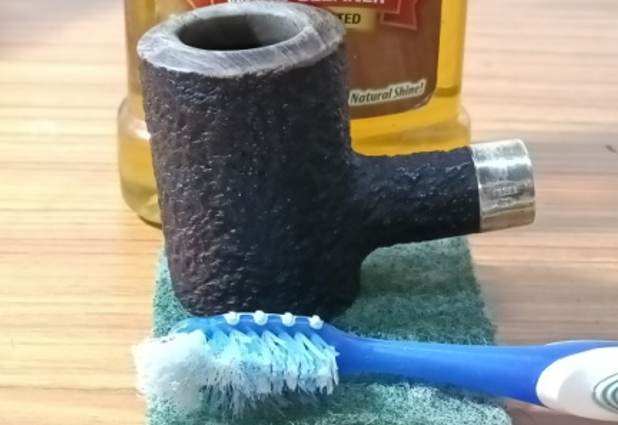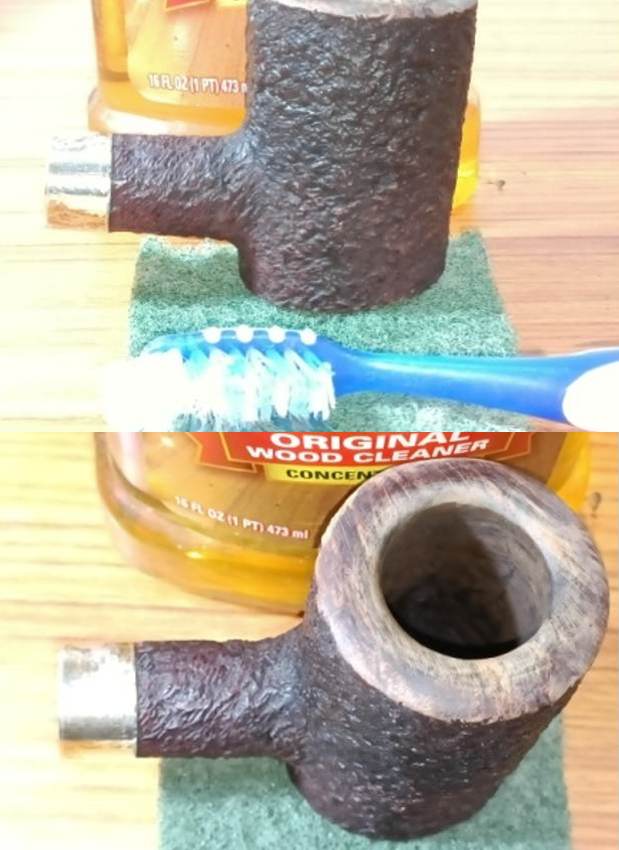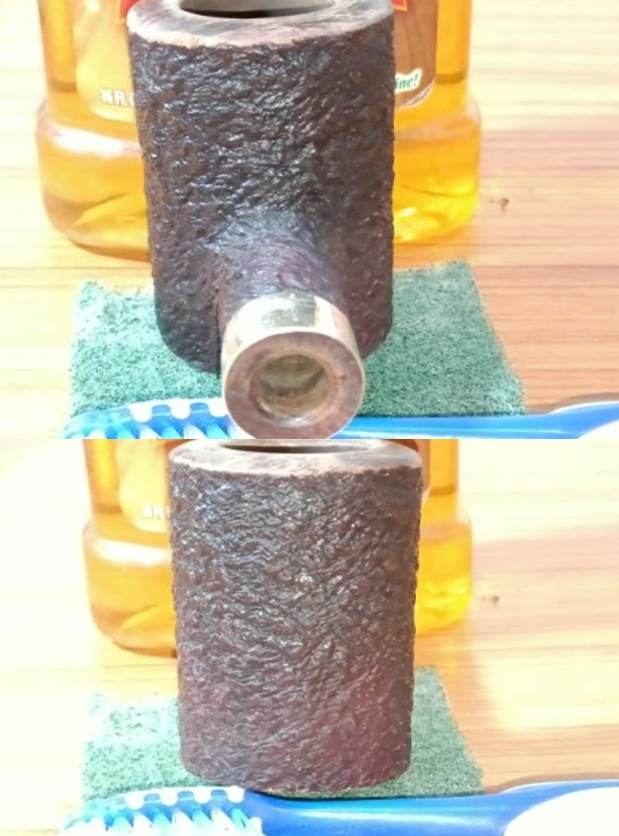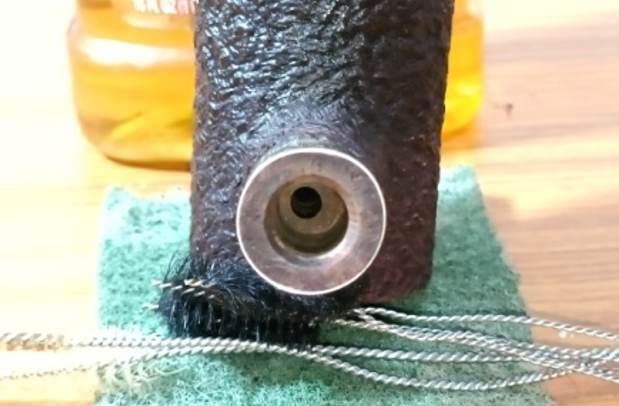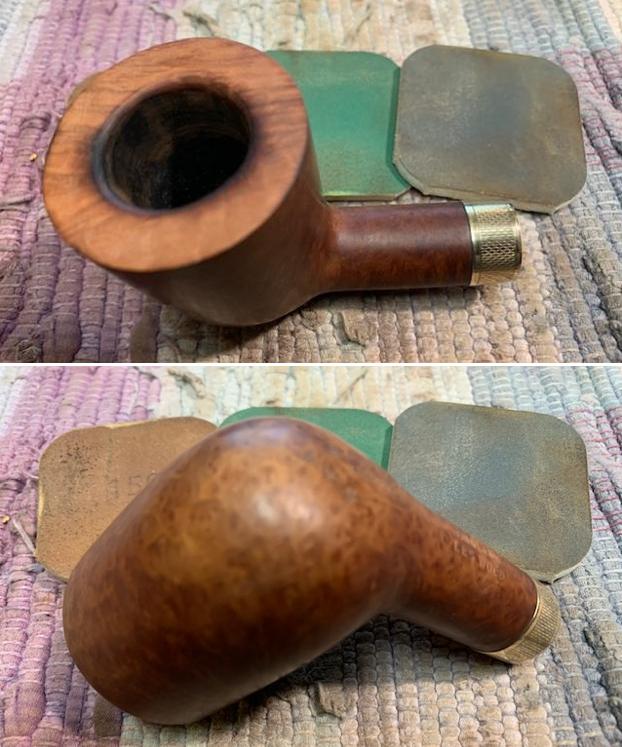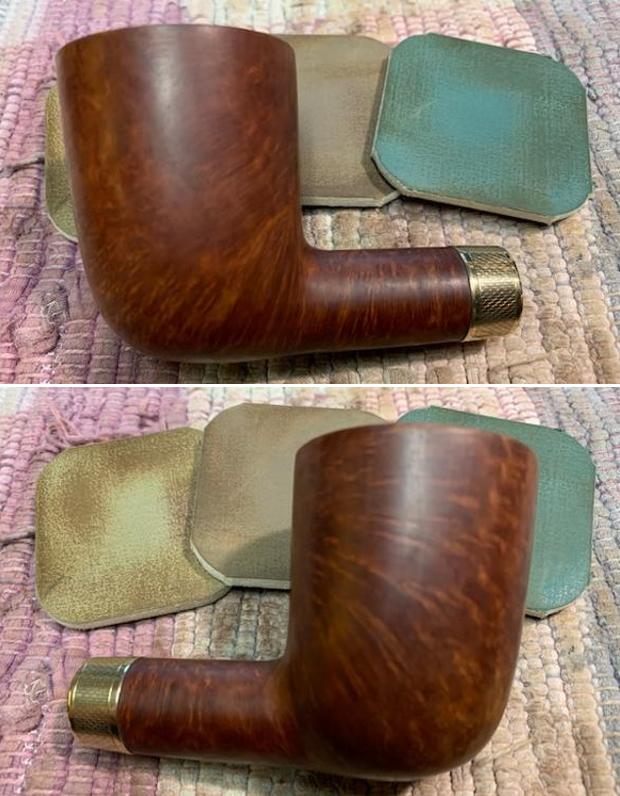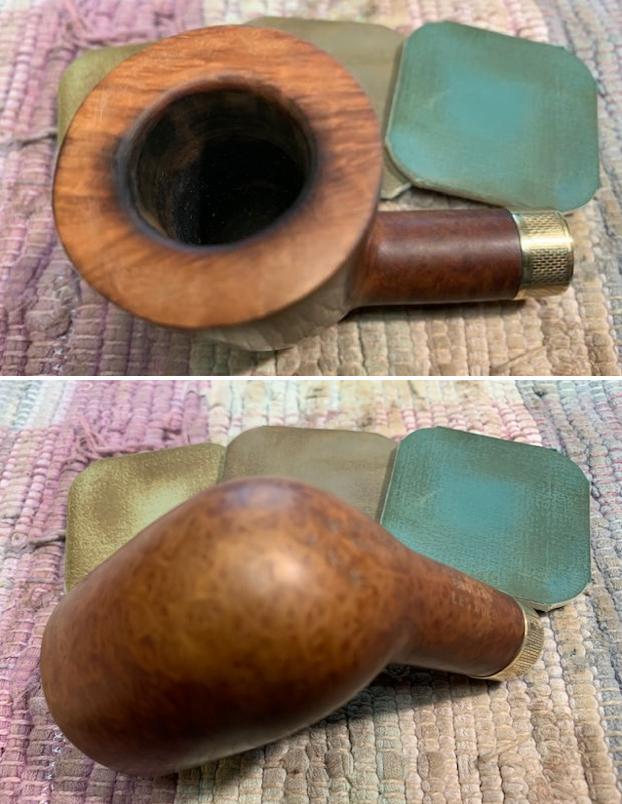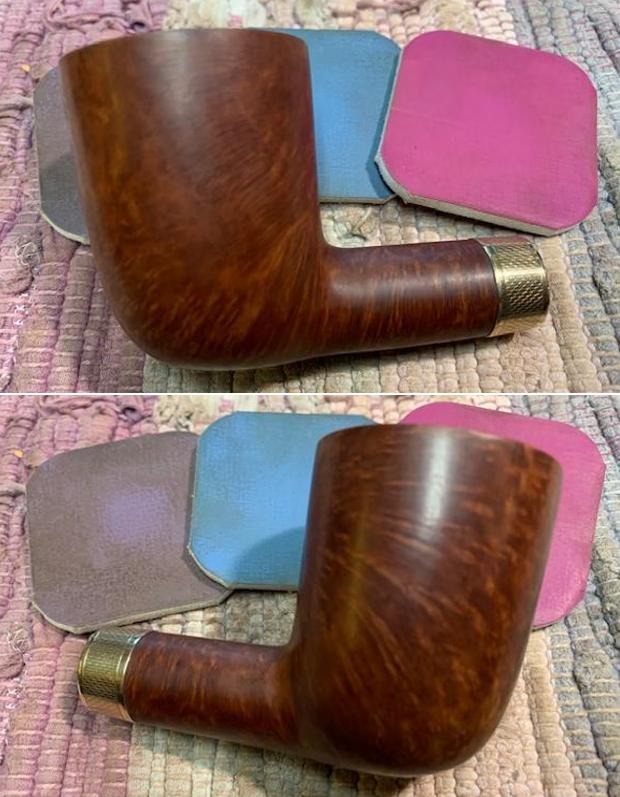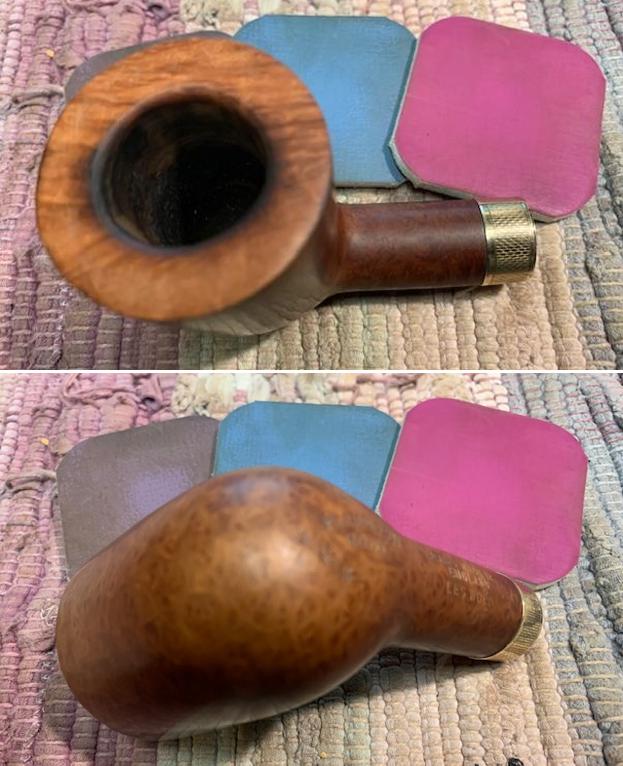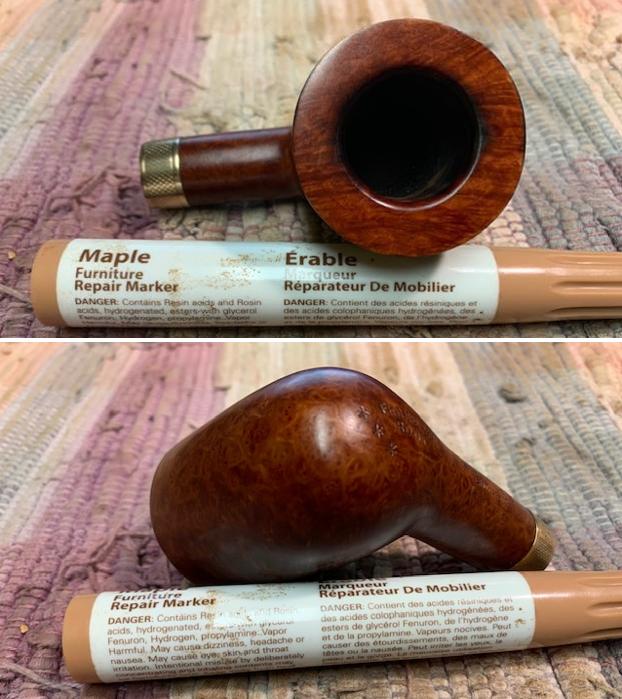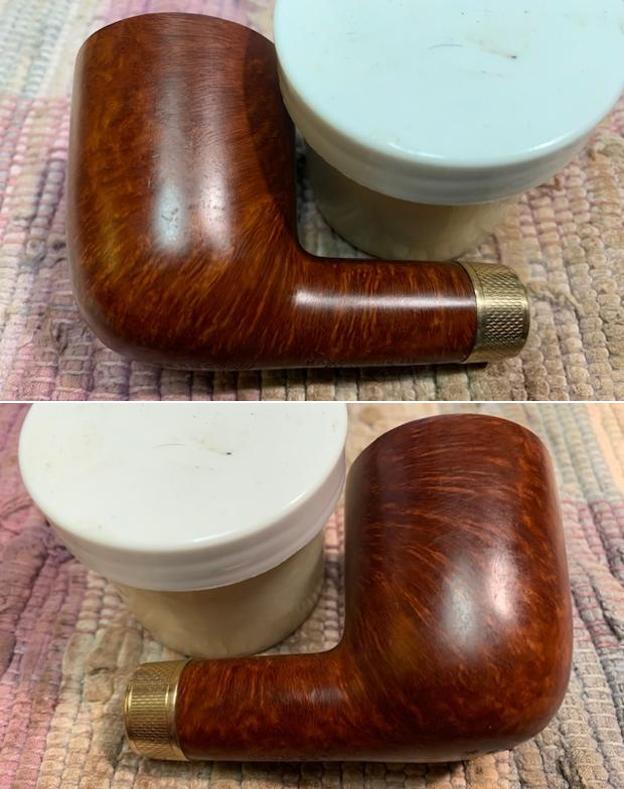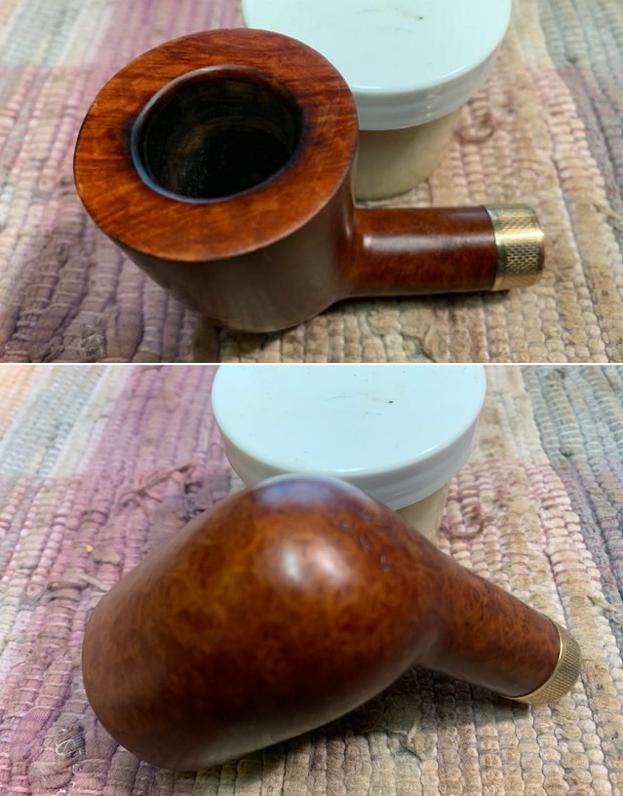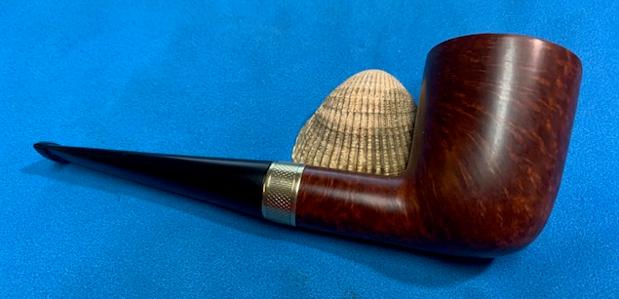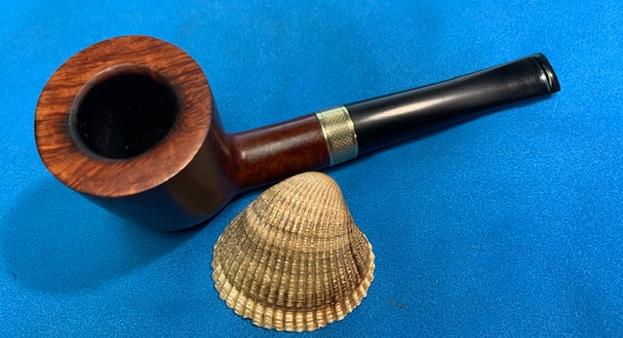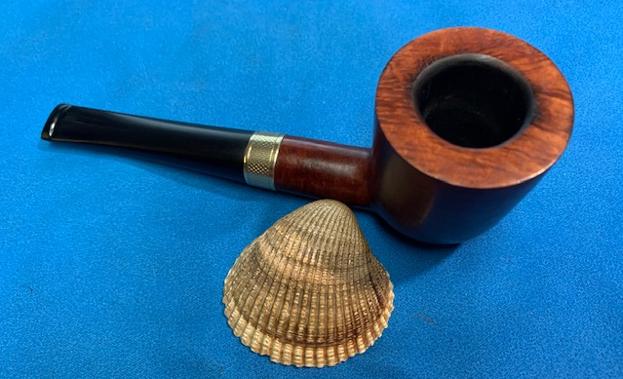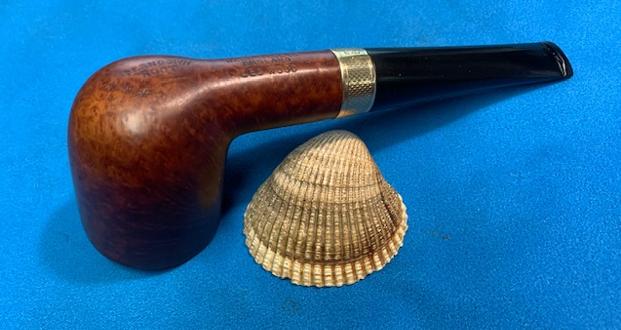
Tag Archives: LJS pipes

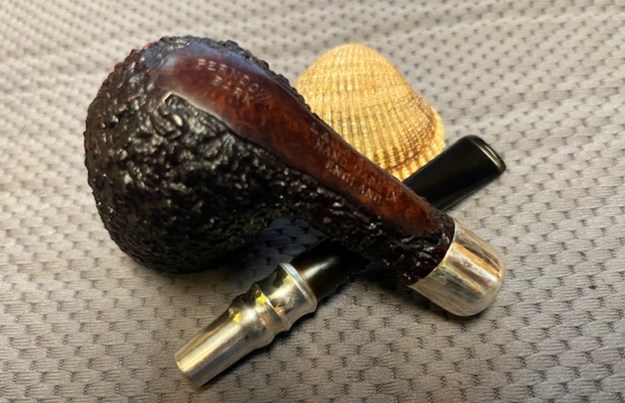
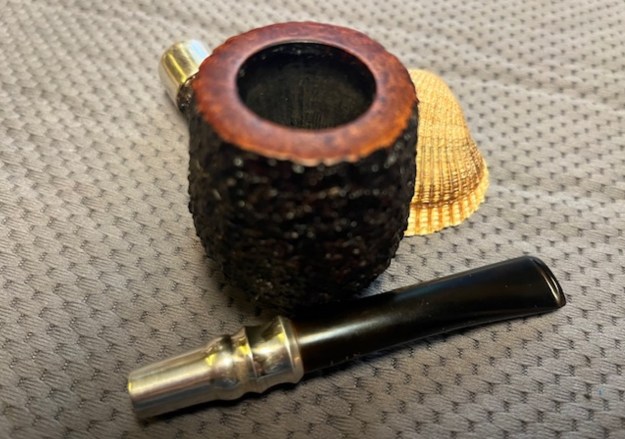
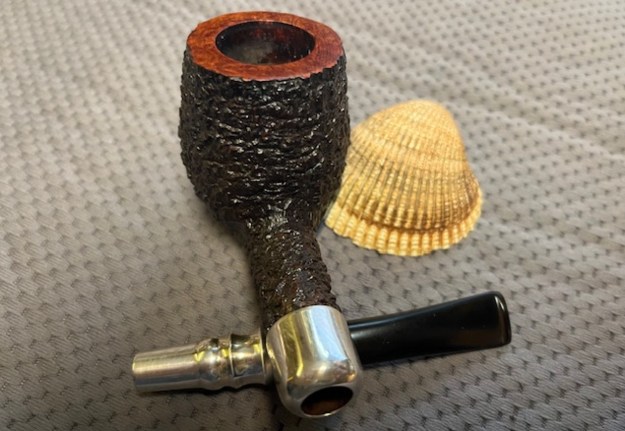
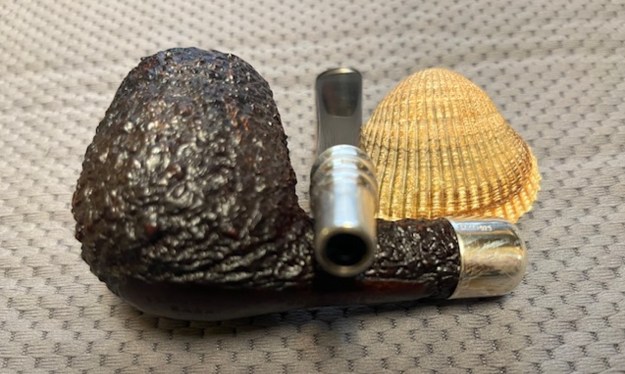
Restoring a Ferndown Bark L&JS Briars Silver Spigot Billiard


By Steve Laug

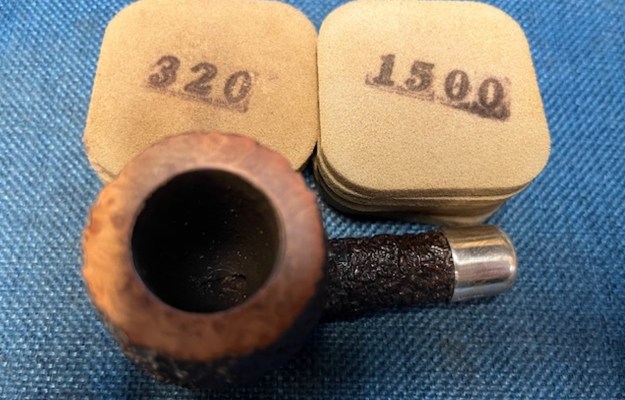
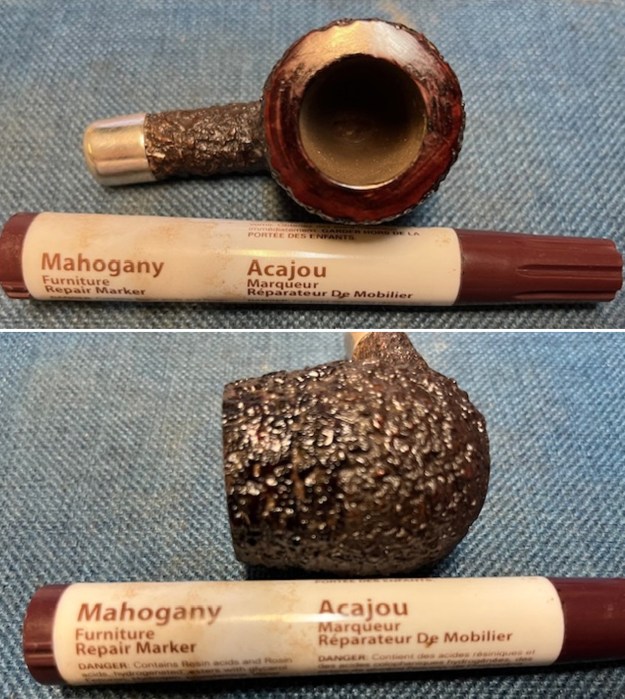
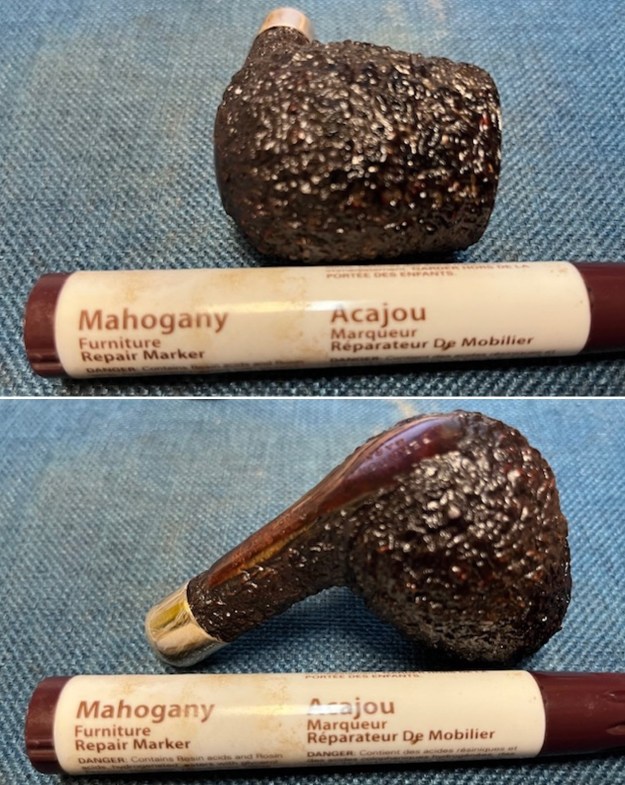
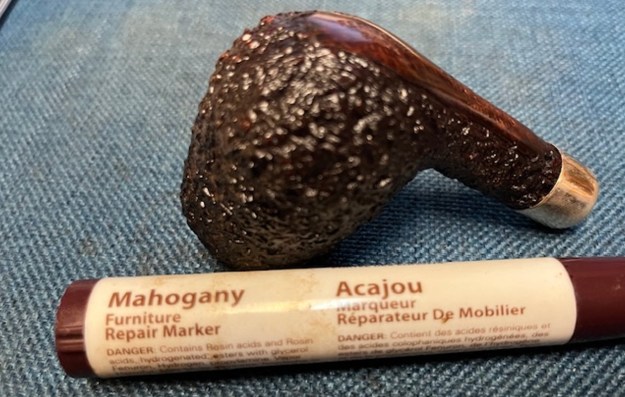
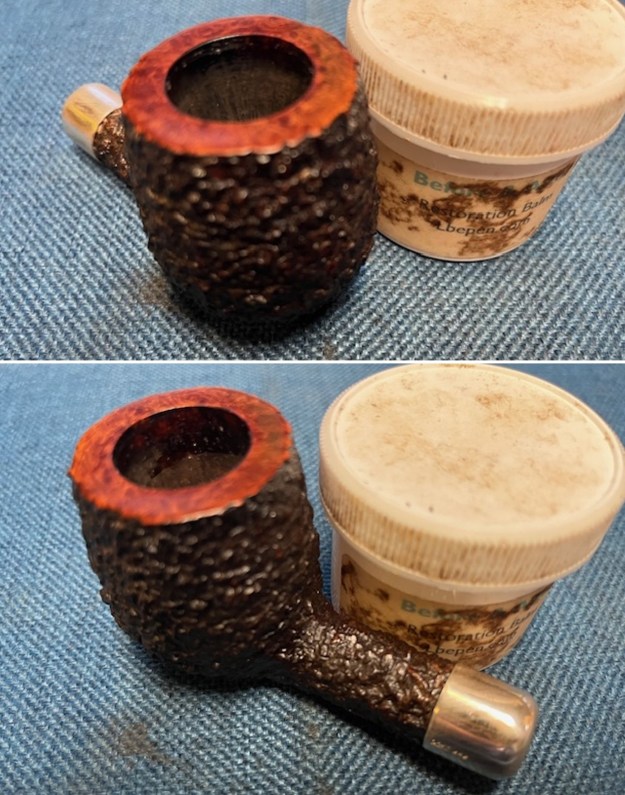
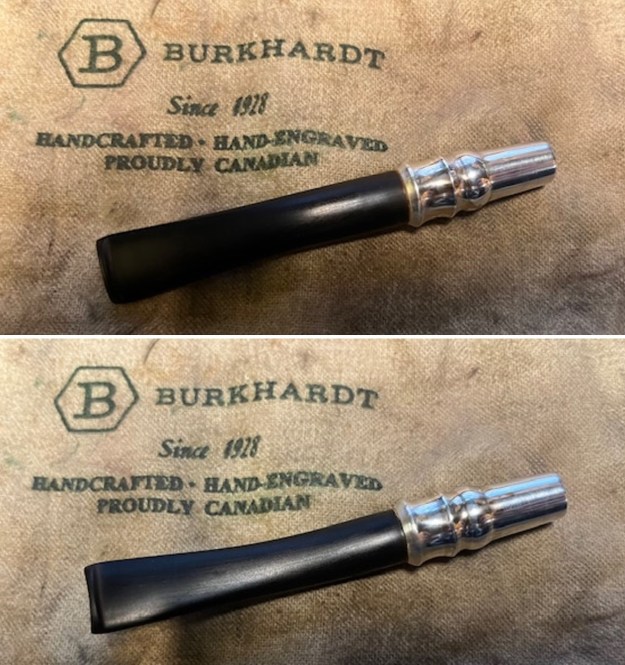
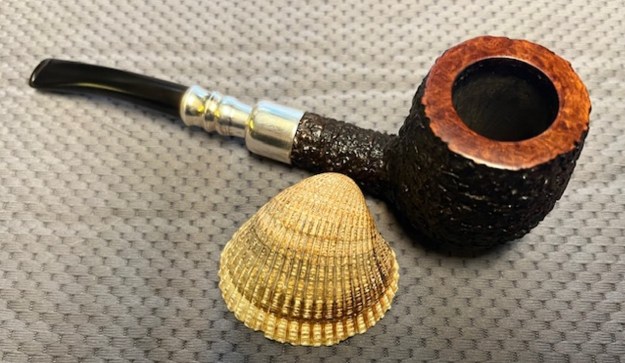
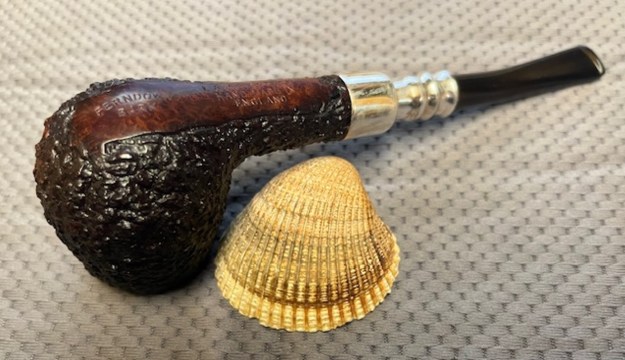
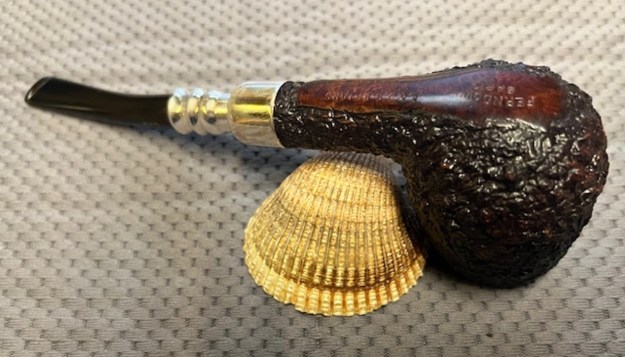
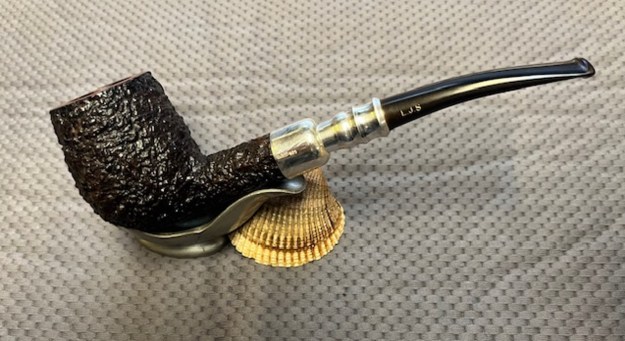
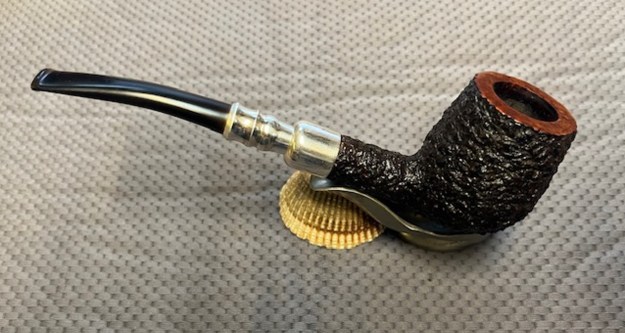
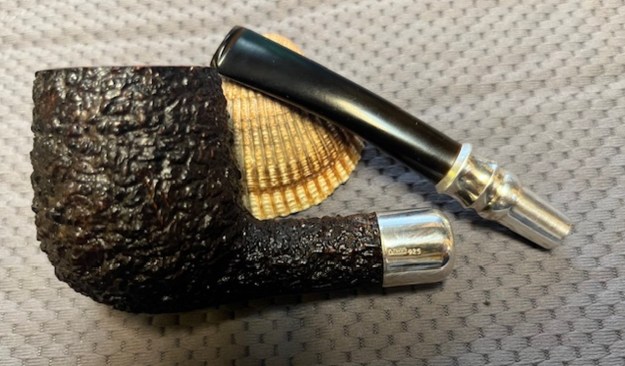
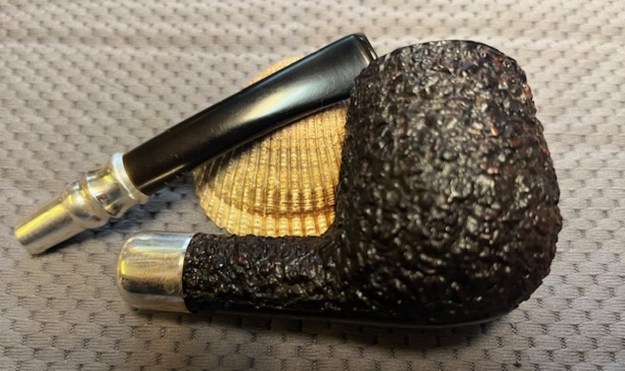
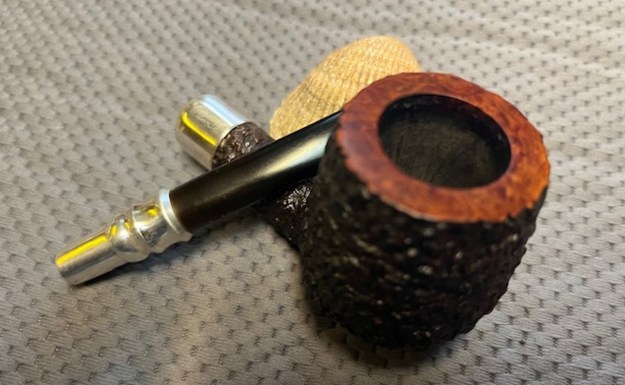
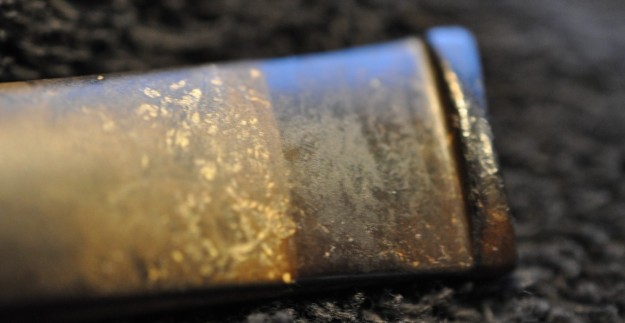
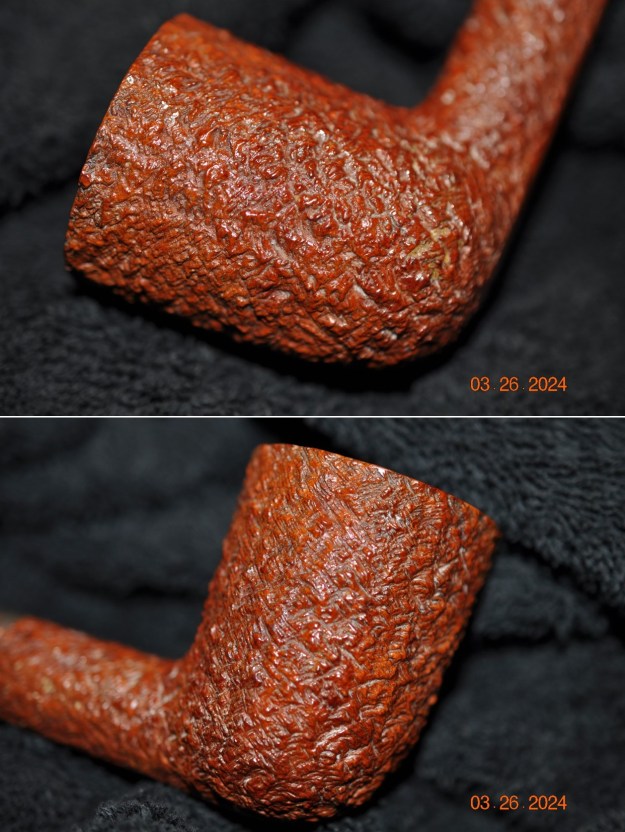
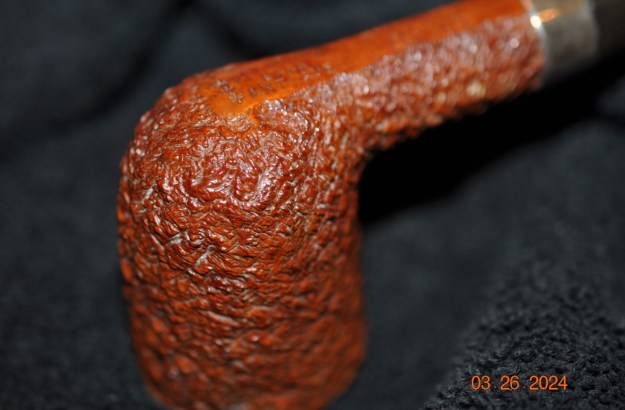
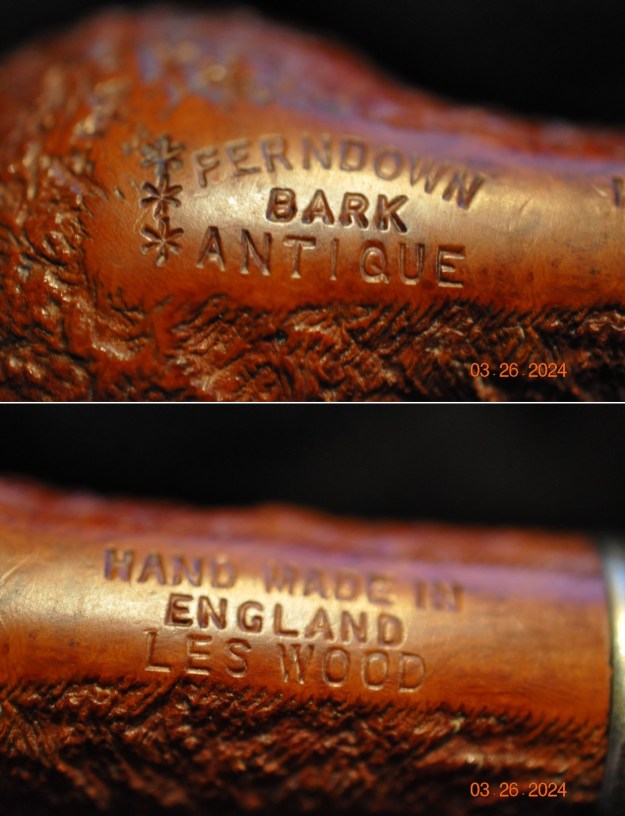
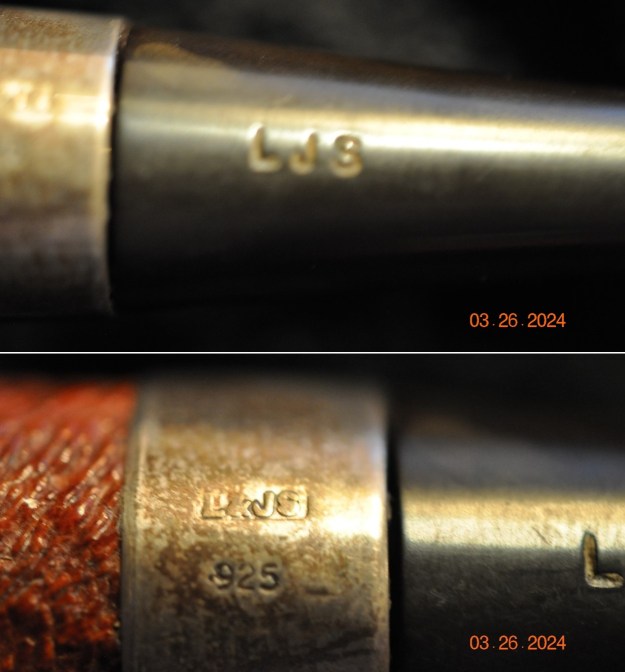
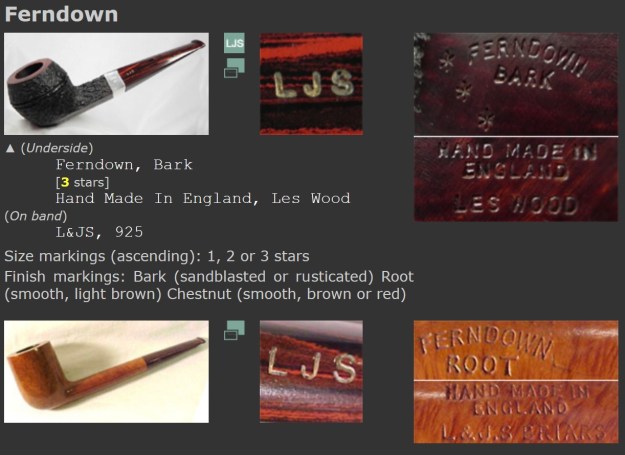
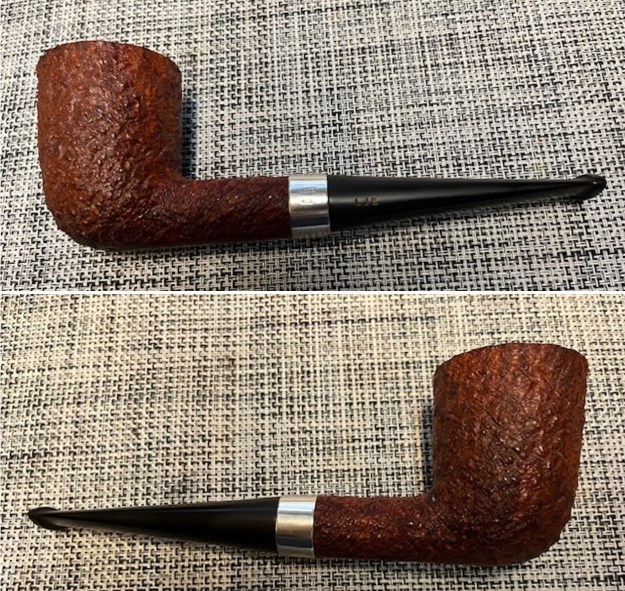
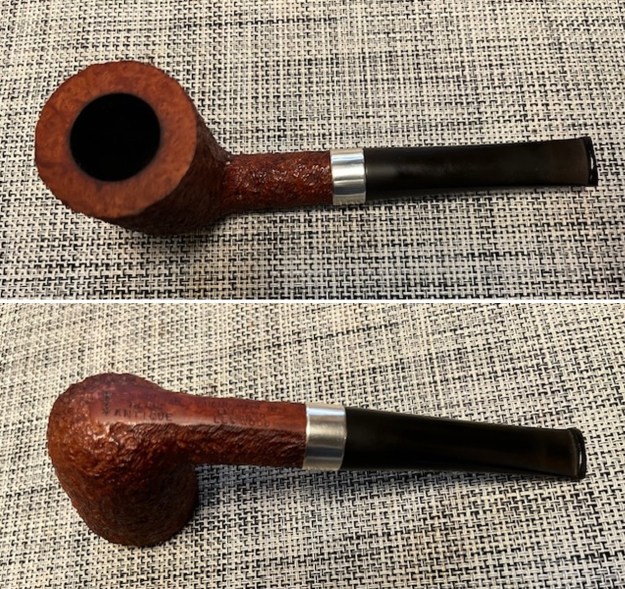
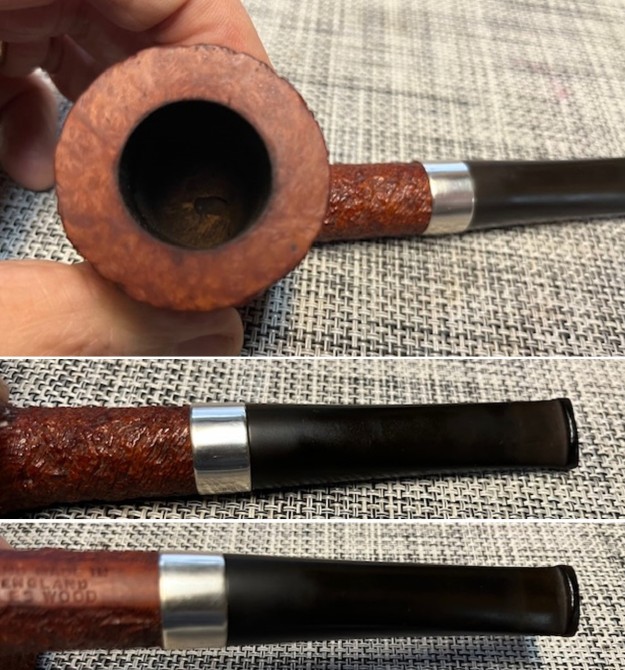
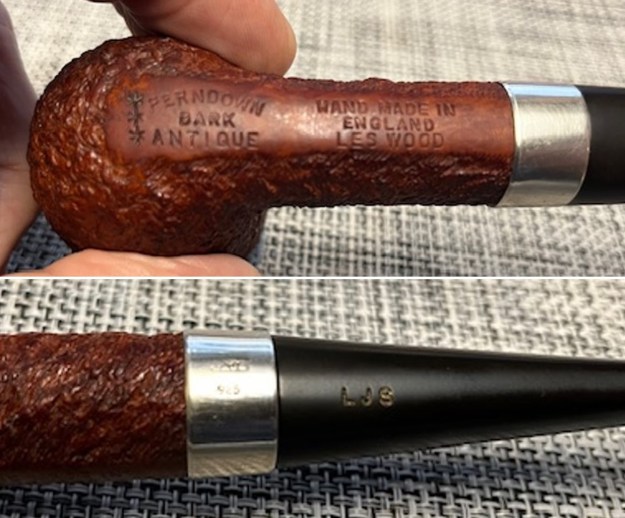
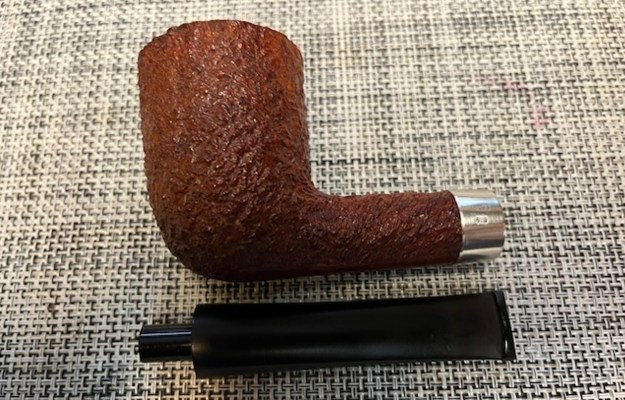
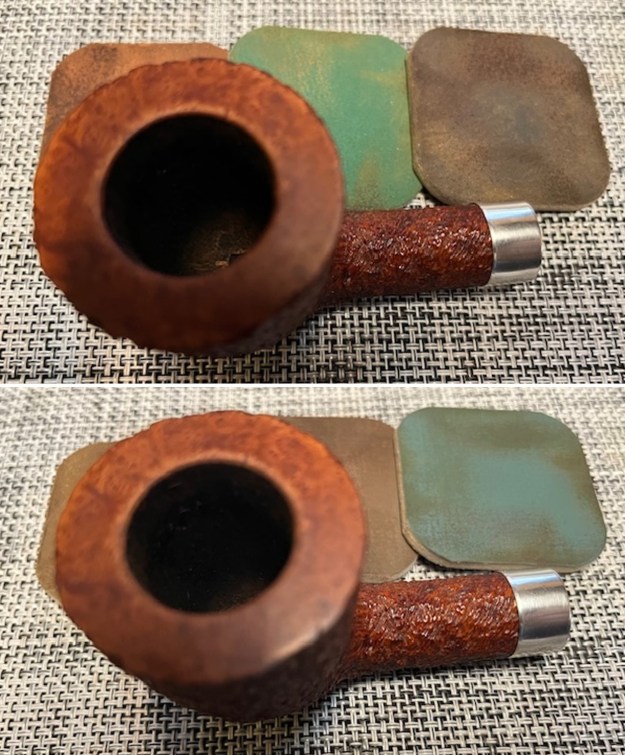
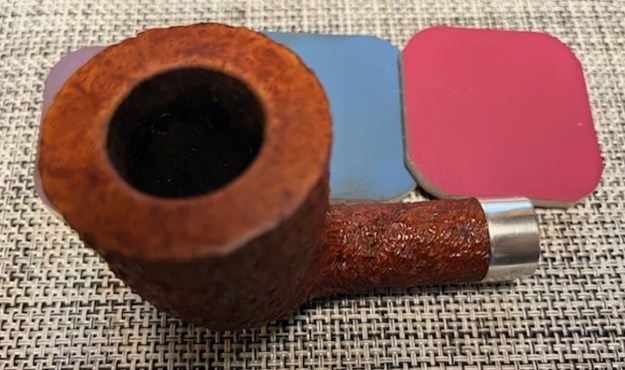
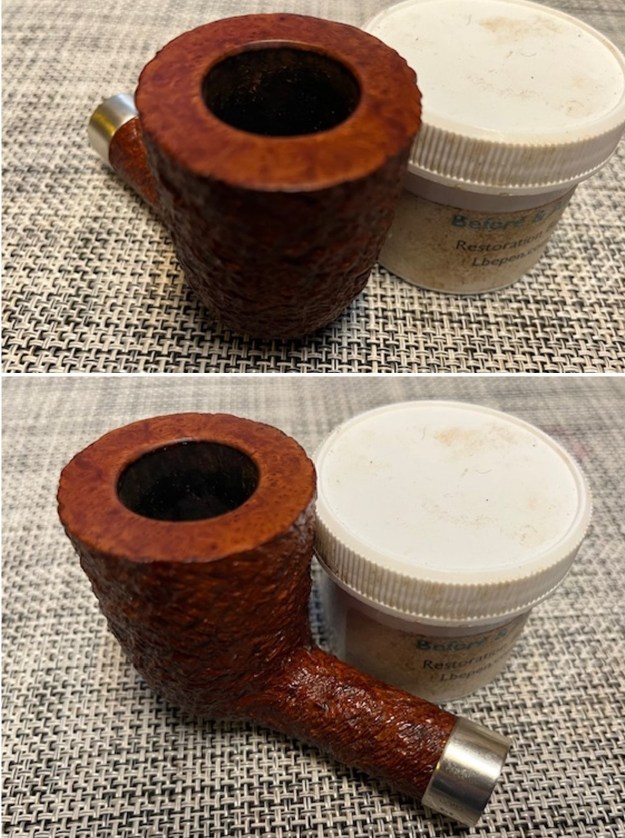
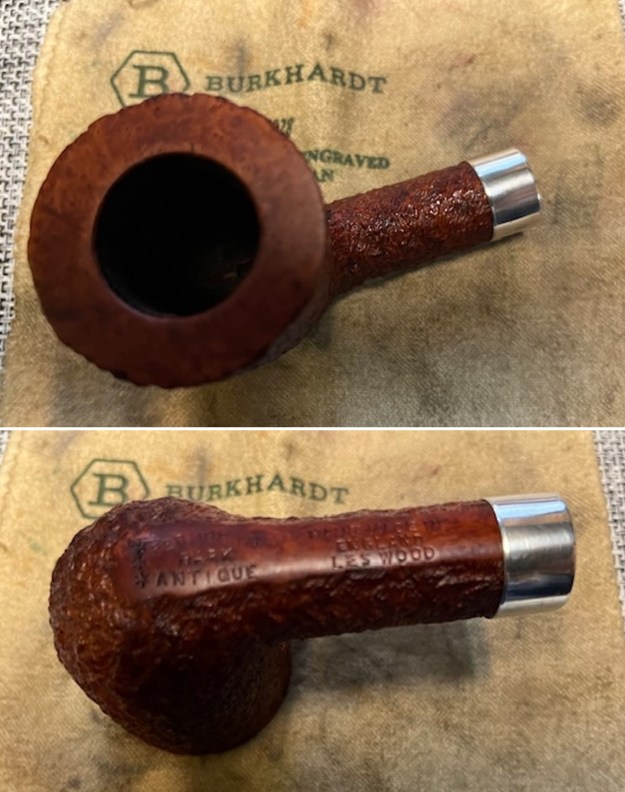
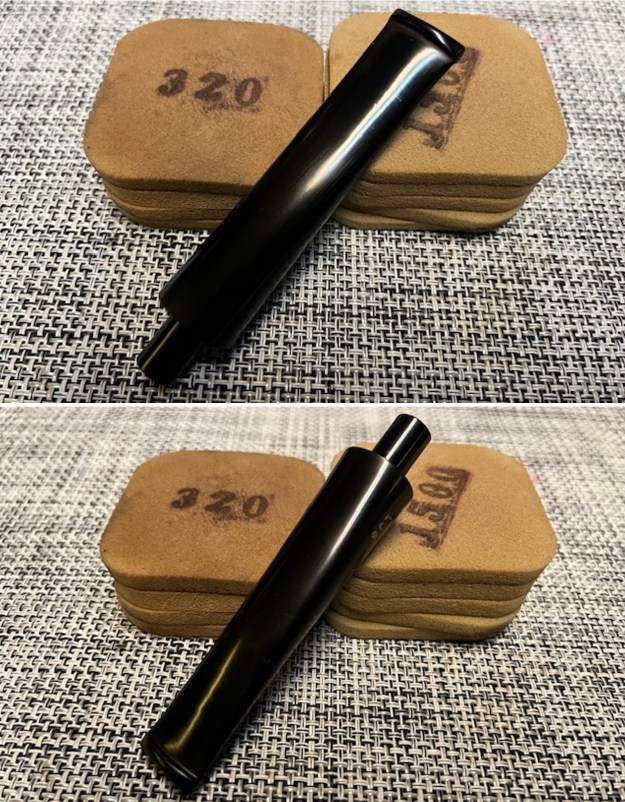
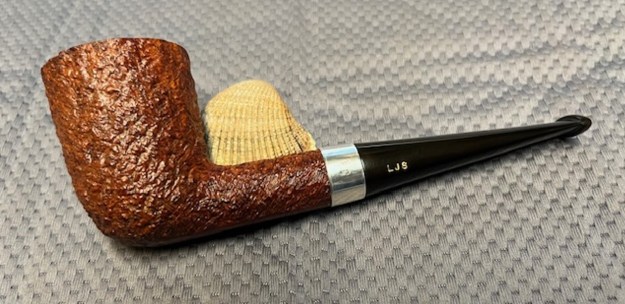
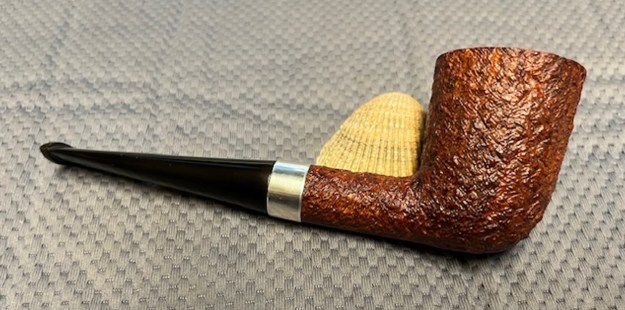
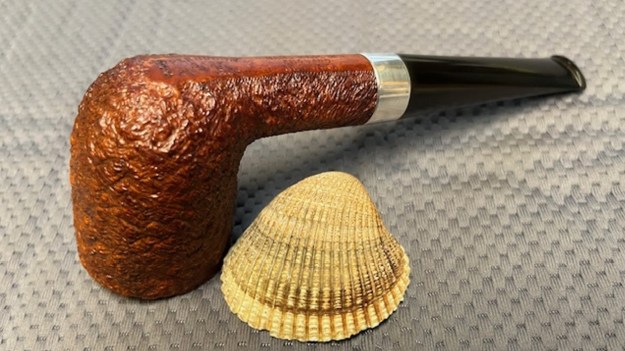
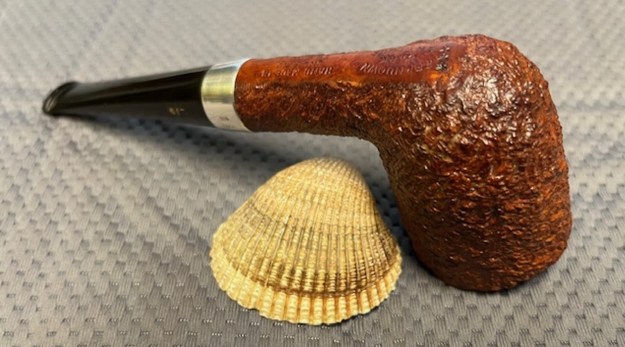
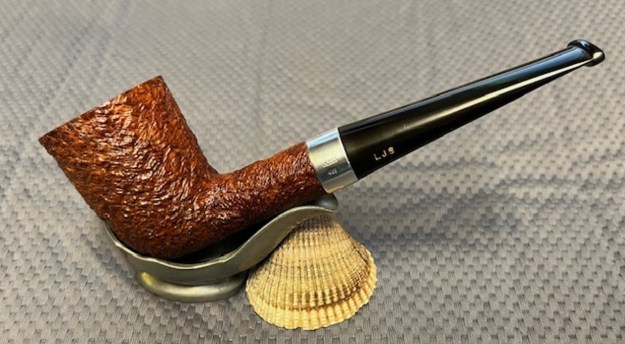
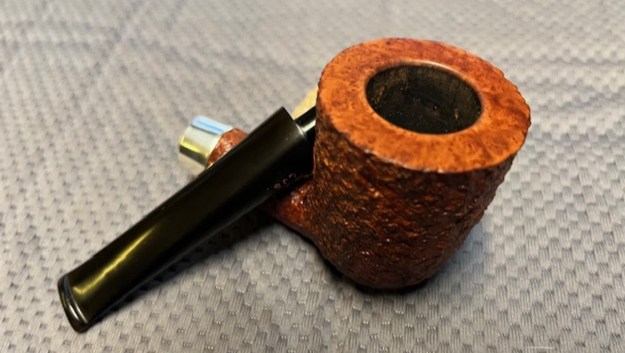
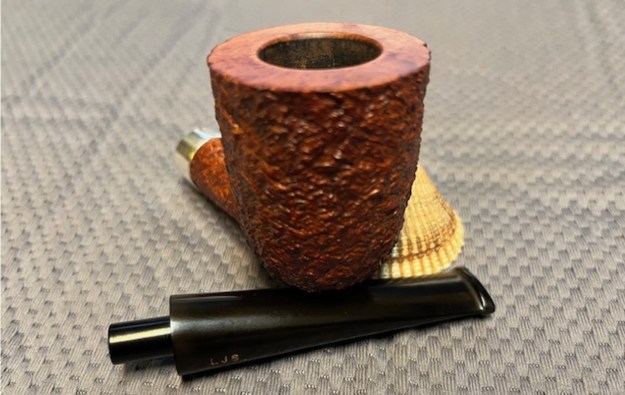
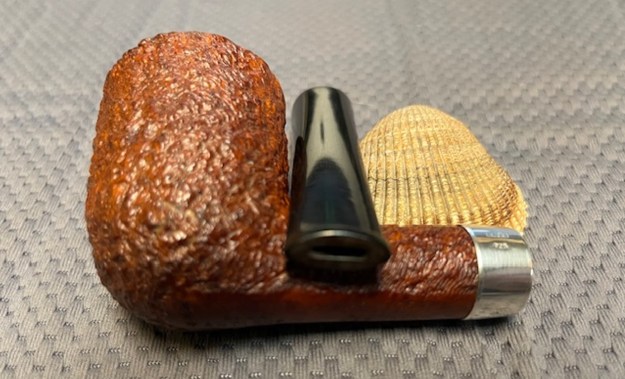
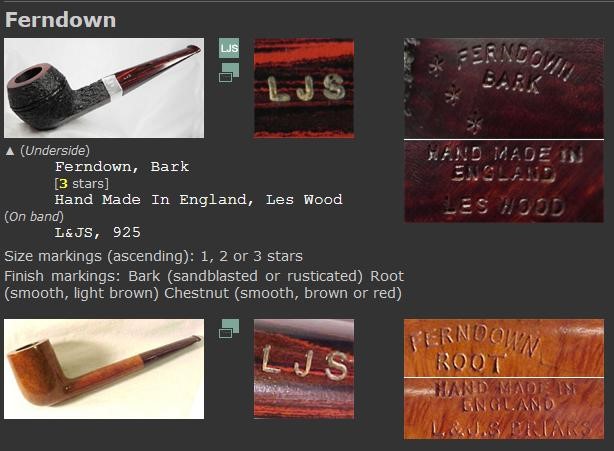
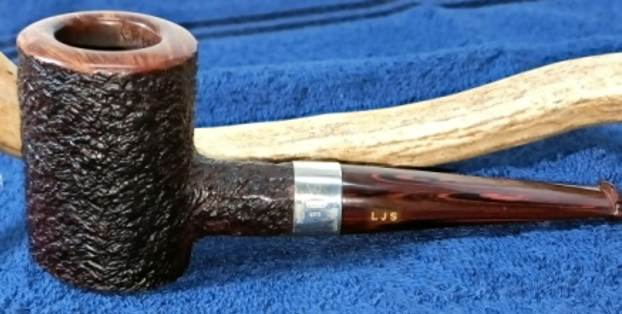
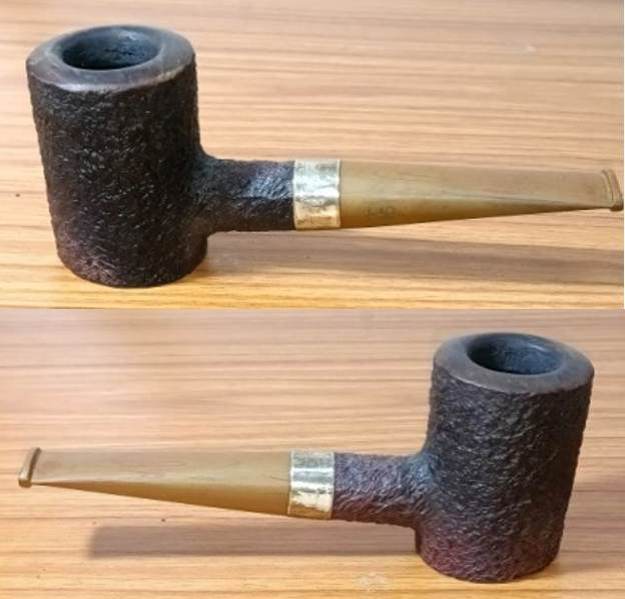
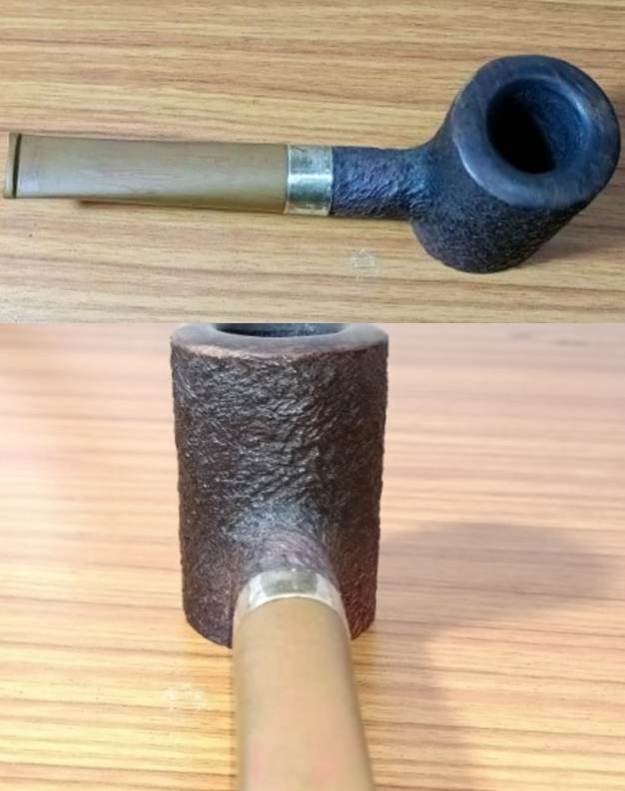
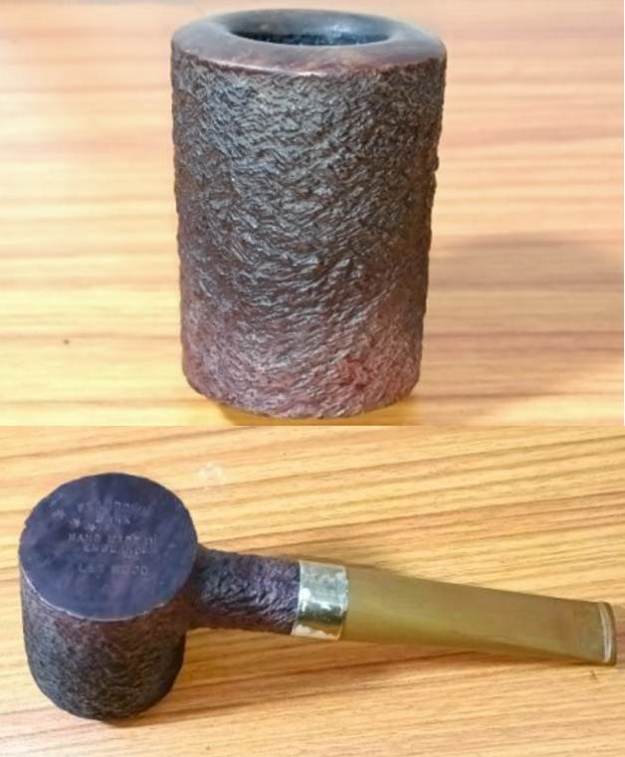
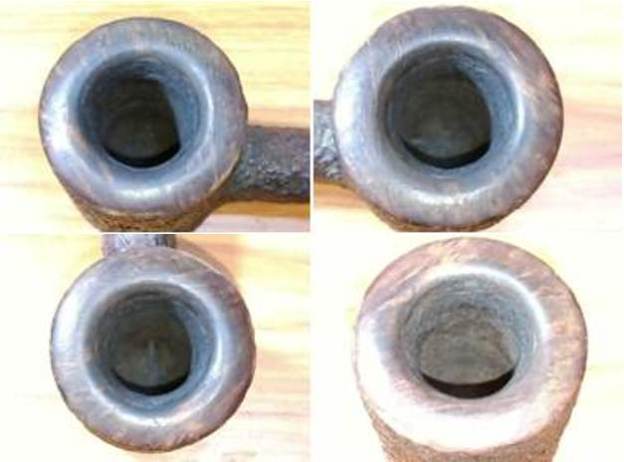
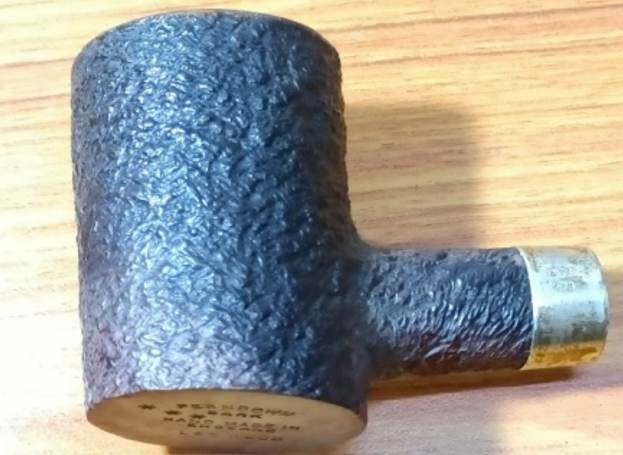
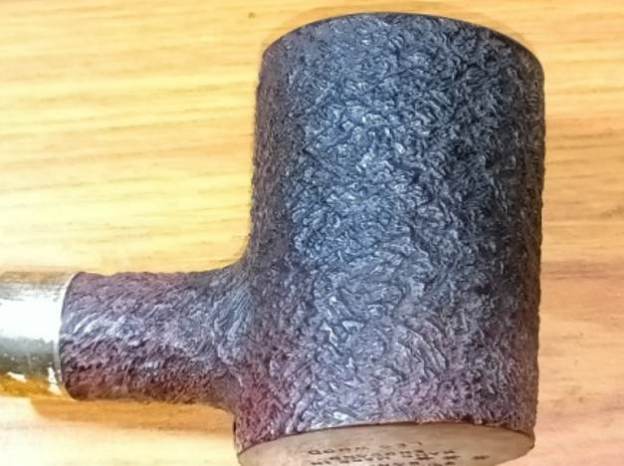
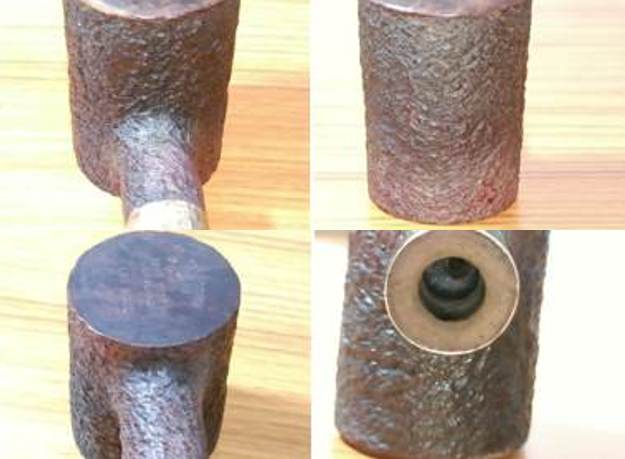
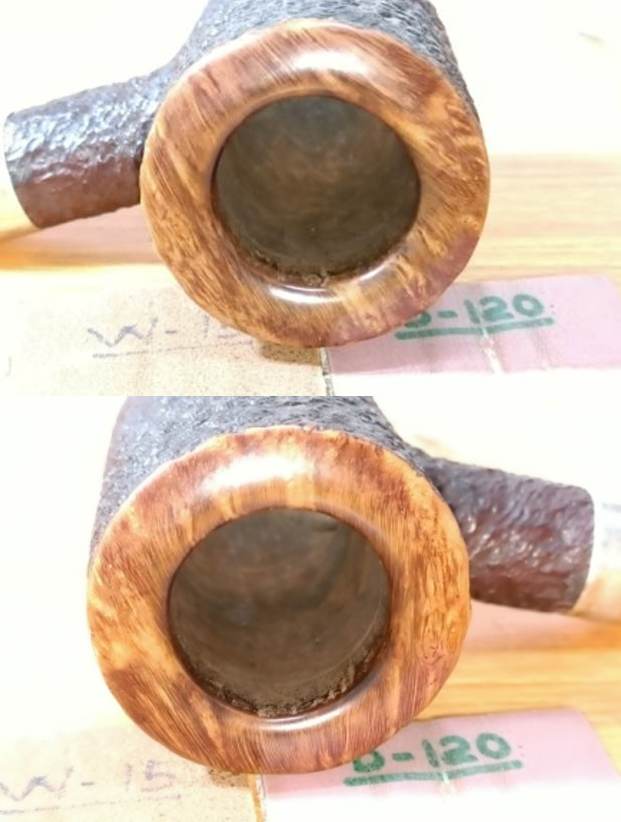
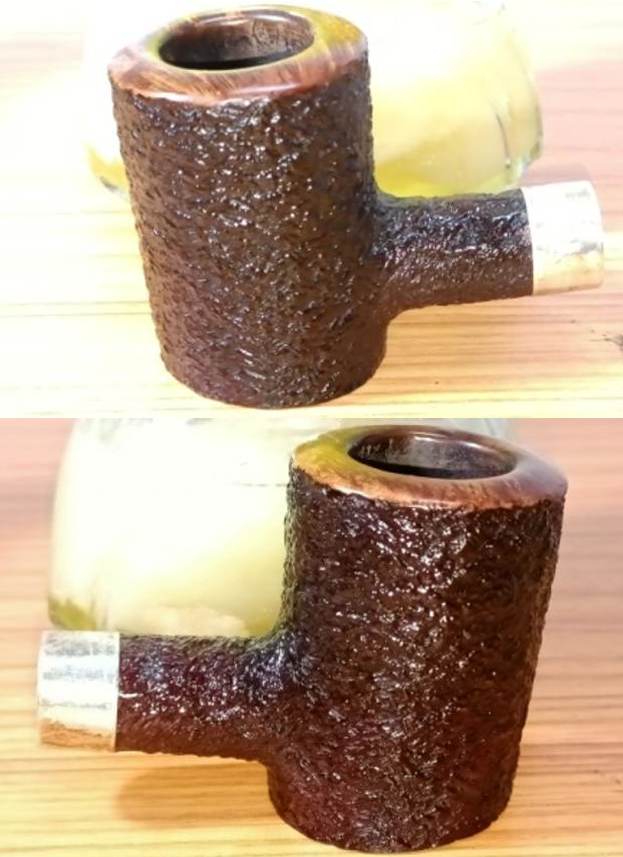
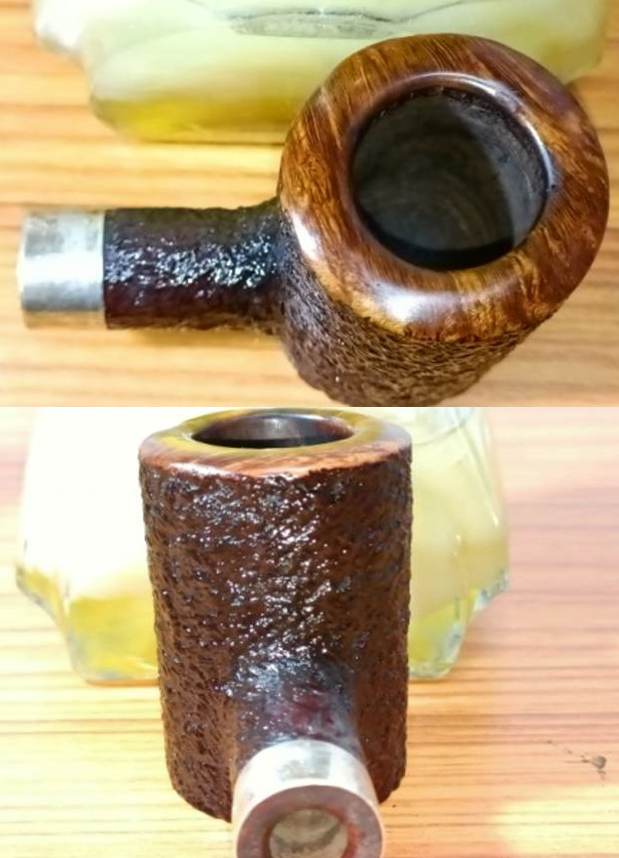
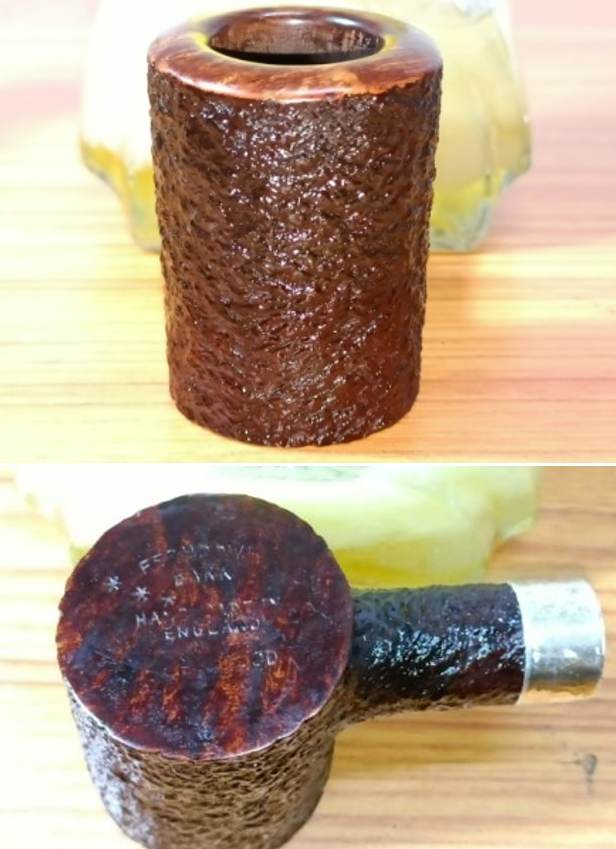
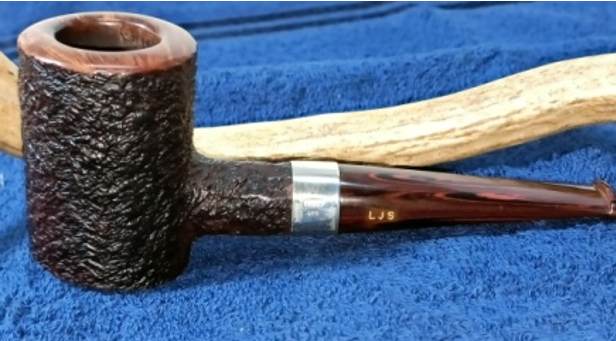
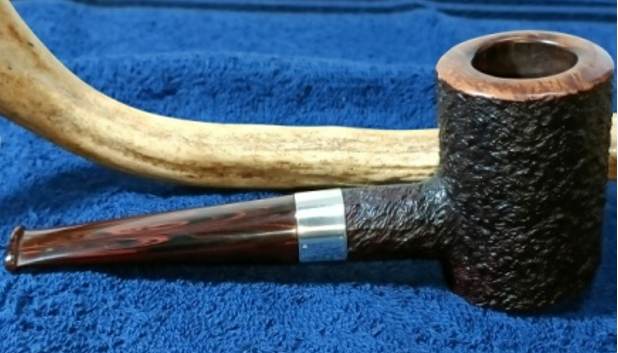
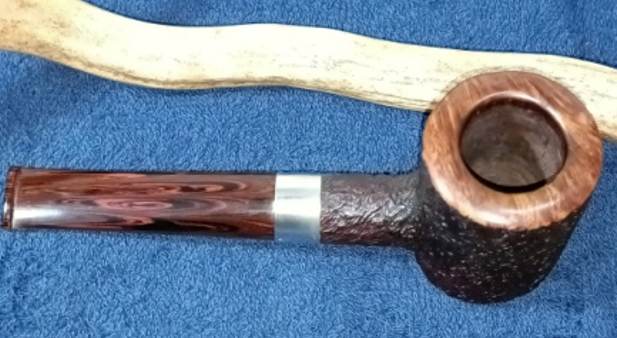
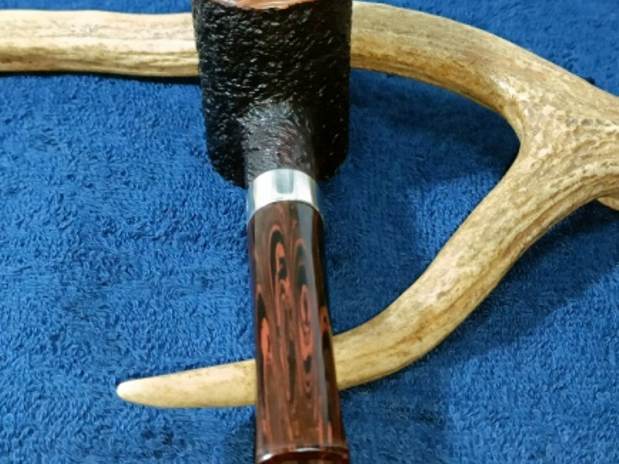
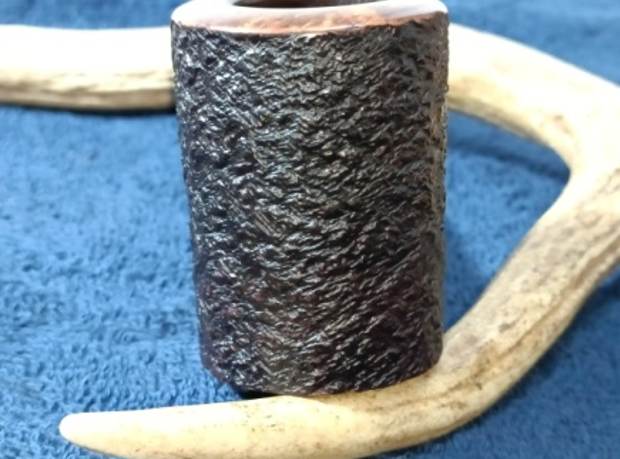
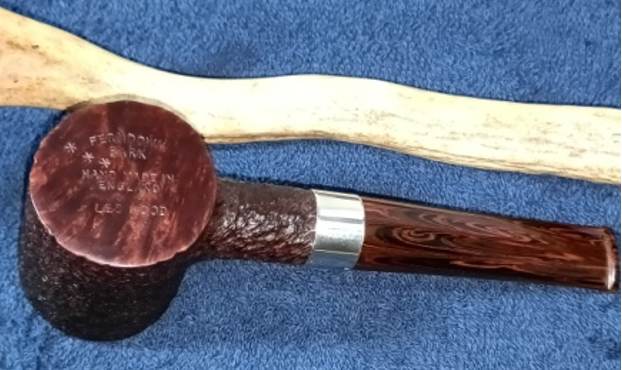
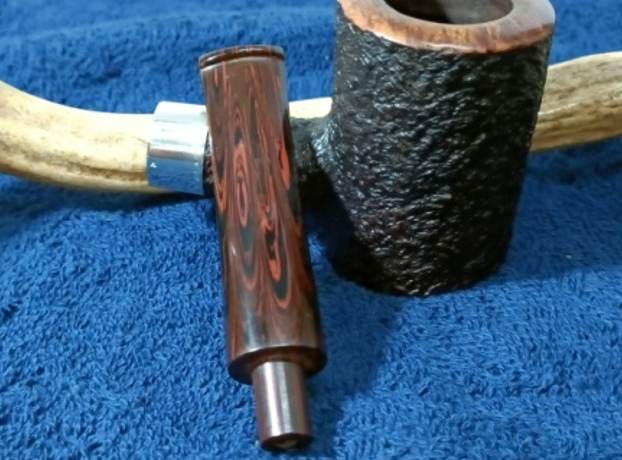
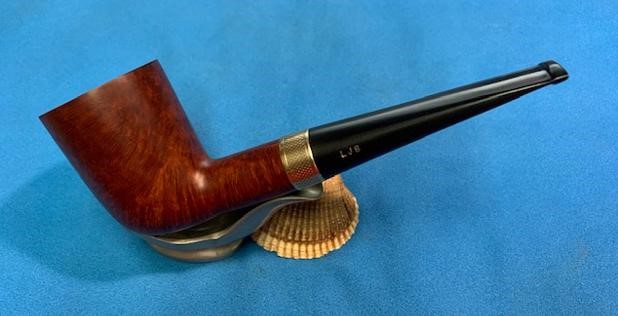
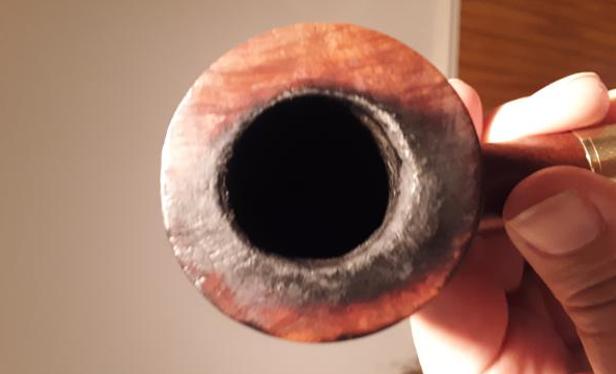
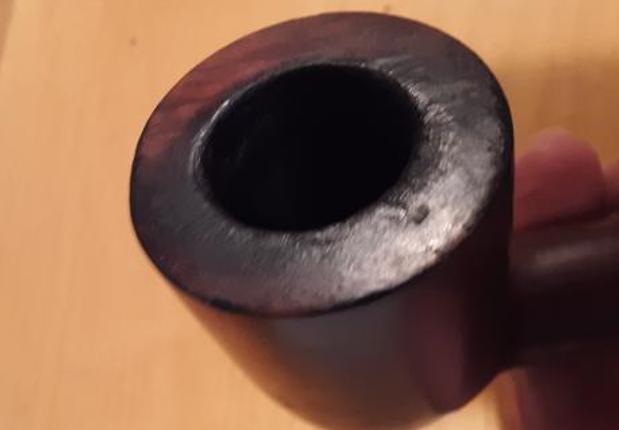
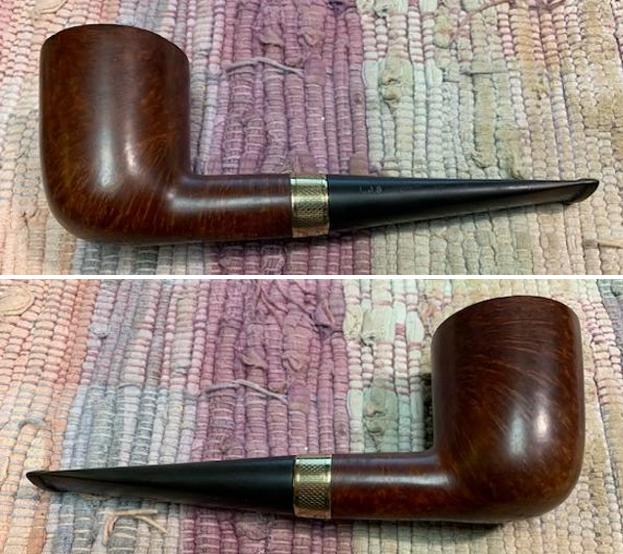
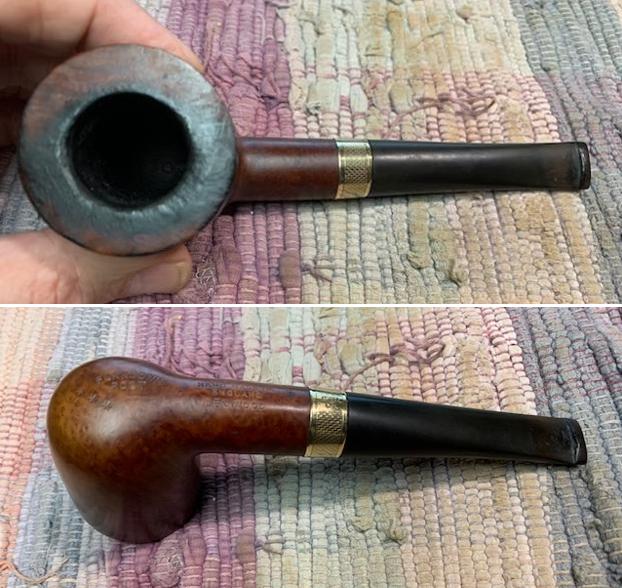
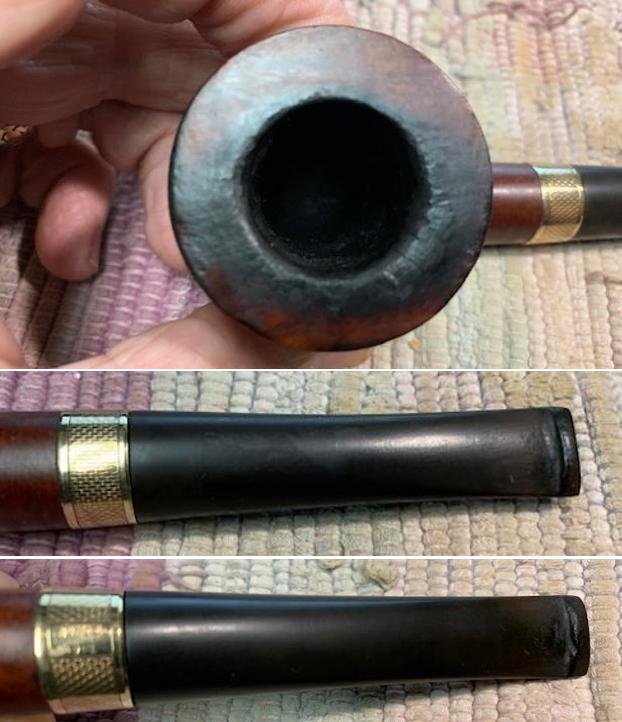
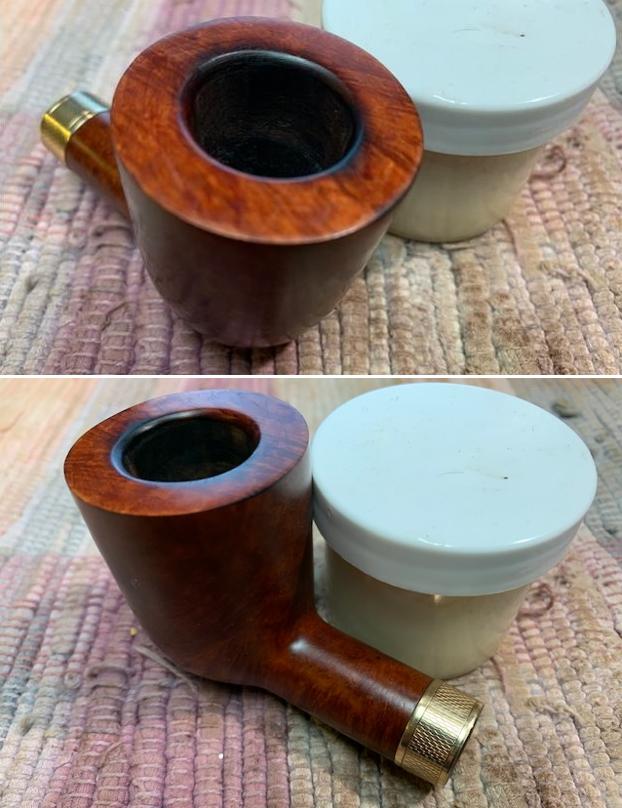
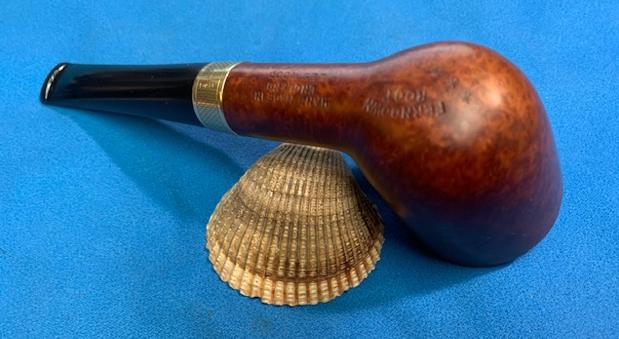
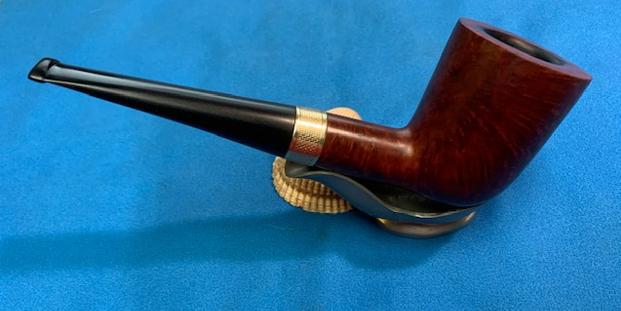
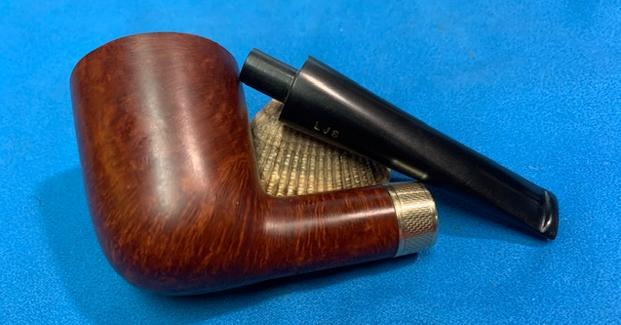
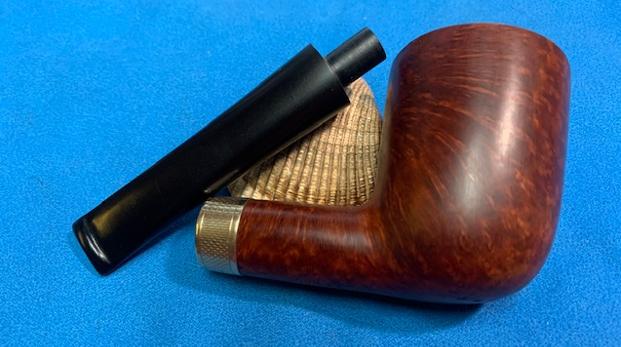
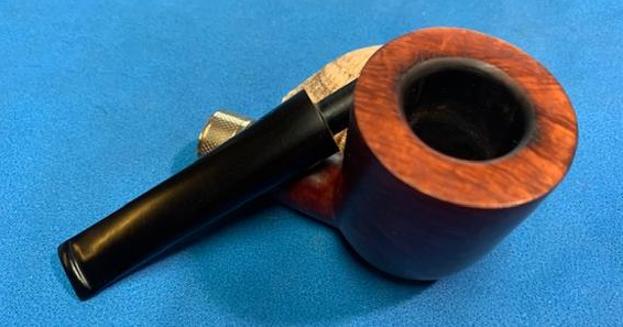
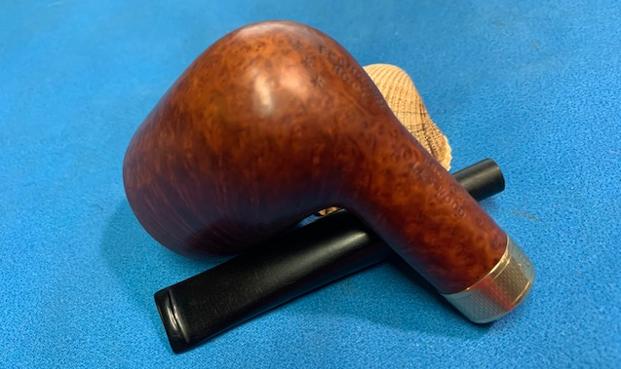
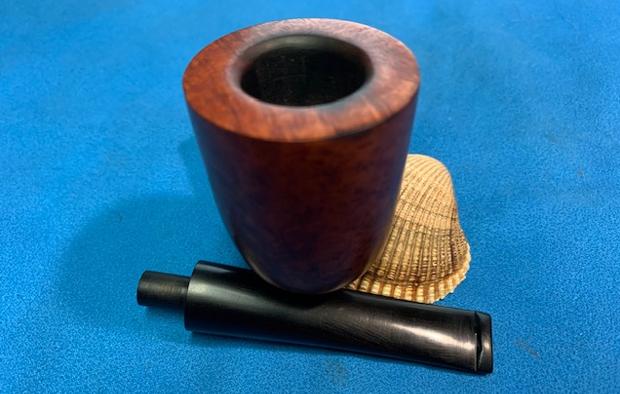
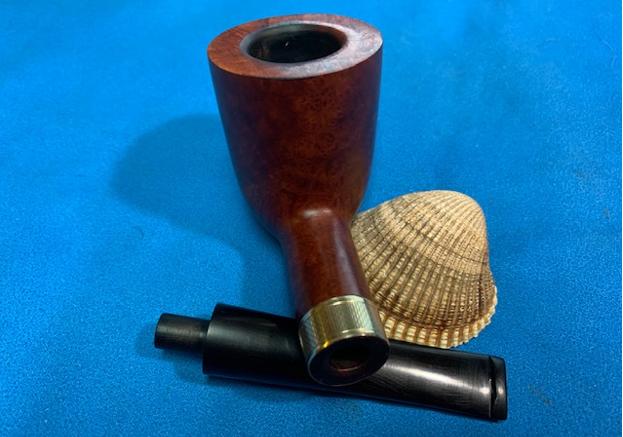
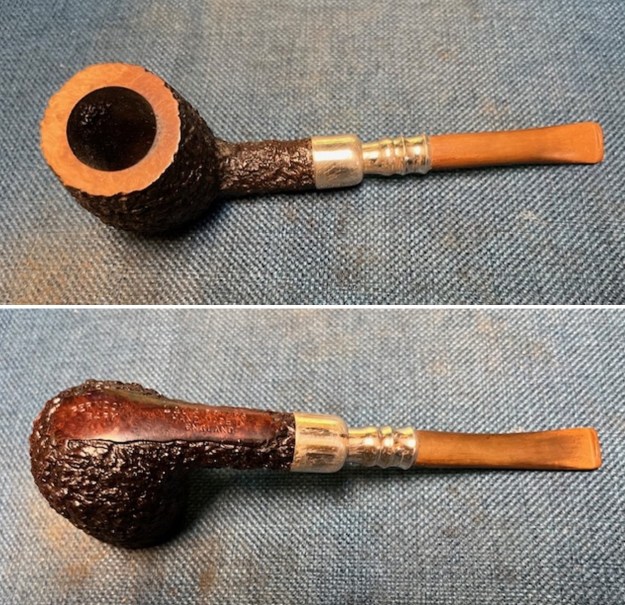
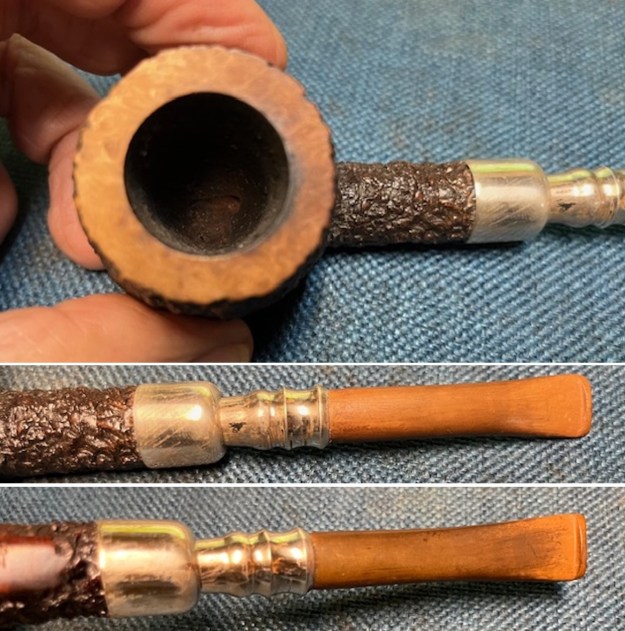
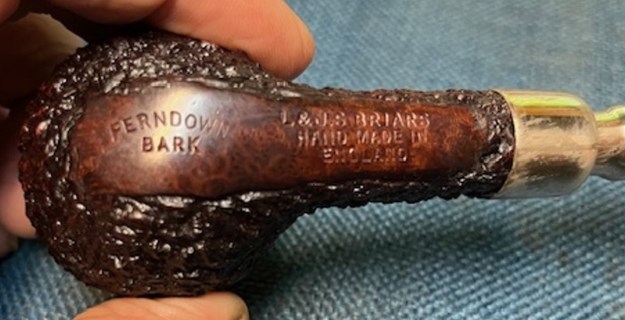
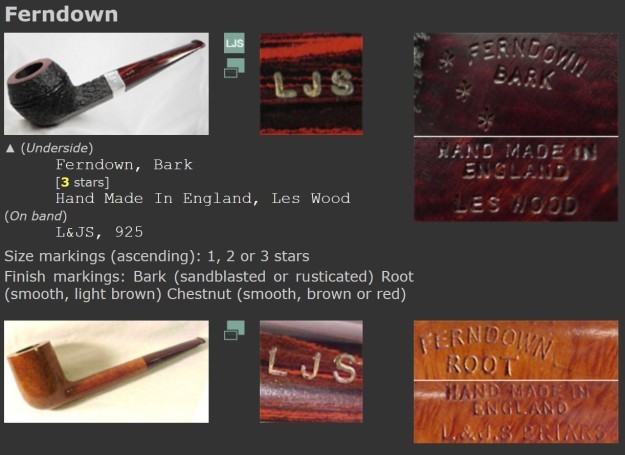
The next pipe on the table is a beautiful rusticated Billiard with a silver ferrule and silver spigot stem. We purchased it from an Antique Mall in Lincoln City, Oregon, USA on 08/24/2024. The pipe is stamped on a smooth panel on the underside of the shank and reads Ferndown [arched over] Bark followed by L&JS Briars [over] Hand Made In [over] England. There was a thin cake in the bowl and the rim top and inner edge had been scraped and was faded. There was grime ground into the rusticated finish around the bowl and shank. There was also some fading on the right side of the bowl toward the front running down from the rim edge to about midbowl. It was faded as if by sun or perhaps whatever had stripped the rim top. The pipe was someone’s obvious favourite and was well care. The inner edge looked to be in good condition. The oxidized ferrule and spigot end on the stem are both Sterling Silver. The ferrule bears the stamp L&JS followed by 925 on the left side. There is an LJS logo stamped in gold on the left side of the taper stem. The stem is heavily oxidized and calcified. There appears to be some light tooth chatter on the top and underside of the stem ahead of the button. I took photos of the pipe earlier this morning before I started my clean up work. I have included them below. I took a photo of the rim top, bowl and the surfaces of the stem to give a sense of the condition of the pipe. The walls of the bowl had a thin cake with no lava on the rim edges or top. The stem is heavily oxidized, calcified and dirty. There are light tooth marks on both sides ahead of the button.I took a photo of the stamping on the smooth panel on the underside the heel and the shank. It is clear and readable and read as noted above. The silver ferrule and the left side of the taper both have clear stamping under the oxidation that reads as noted above.I took some photos of the fading on the front and the right side of the bowl extending half way down the rusticated surface. It is wash out and matches the washed out rim top on the bowl. I took a photo of the pipe with the stem removed. It is definitely dirty and the silver and the stem both are oxidized. To gather backgound on the brand I turned to Pipephil’s site to see what was included in the listing there (http://www.pipephil.eu/logos/en/logo-f1.html). I have included both the screen capture and also the side bar below the photo I have included.Artisan: Leslie (Les) Wood. He was the master silver smith at Alfred Dunhill Ltd. before starting L. & J.S. Briars. Pipes for the European market are stamped “L. Wood” while those for US are stamped “Ferndown”. Production: ~ 2000 pipes/year (Ferndown + L.Wood) See also Elwood
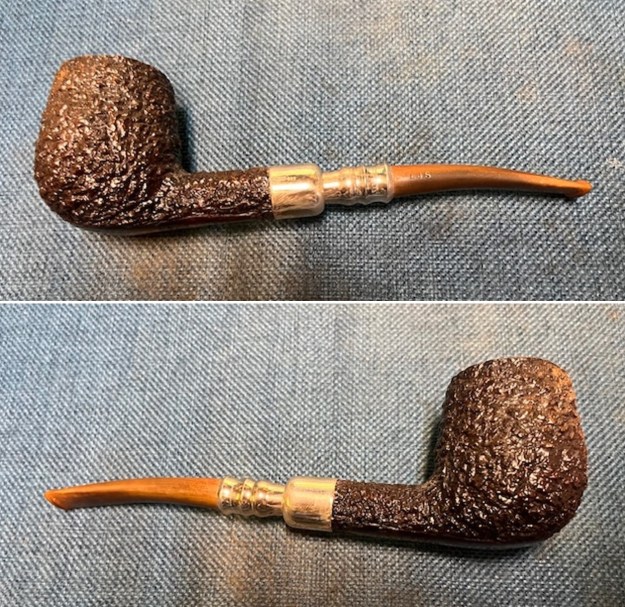
The first pipe pictured in the screen capture above is stamped similarly to mine. The pipe I had in hand did not have the stars on the heel so there was no size designation on the pipe. This is a large pipe. The Bark finish is a designation used for both sandblasted and rusticated. The stem on the pipe I am working on is also not Cumberland but rather black vulcanite with a silver spigot ending.

I turned to Pipedia next (https://pipedia.org/wiki/Ferndown). There is a great article there on the carver, the pipes and the workshop. It is worth the time to give it a read. I am quoting the section on the pipes below for the information included.

Due to the vagaries of international trademark law, he sold his earlier pipes as ”L.&J.S Briars”, “Ellwood”, “Les Wood” or “L. Wood”. Until recently, an average of 1500 – 2000 pipes a year were sold as “Ferndown” — named for the mansion he lives in — in the UK and US, but as “L. Wood” pipes in Germany

…To many pipe smokers, Les Wood’s pipes embody the revival of great English pipe making initiated by Ashton in the early 1980s. The high-grade Italian and Spanish plateau he prefers is oil-cured in the tradition of both Dunhill and Ashton. The pipes are renowned for their pleasant, slightly nutty flavor and remarkable smoking characteristics. They feature impeccable craftsmanship extending to very good stem/bit work, though many pipes are often a bit heavier. The hallmark of his work, of course, is the excellent silver work. Almost all of his pipes feature rings or ferules for spigot stems. Grading is by finish: “Bark” (ca. 90%, rusticated, dark brown and black), “Antique Bark” (tan rusticated), “Reo” (brown and red, smooth), “Root” (orange, smooth), and “Tudor Root” (orange and brown smooth) and by size (one to four stars). He also designates straight grains with SG.

The pipe I am working on is as noted above a Ferndown which identifies it as a pipe named after his mansion and as a pipe made for the UK and the US. It is also as noted in red above stamped Bark which identifies it as a dark brown and black rusticated pipe.

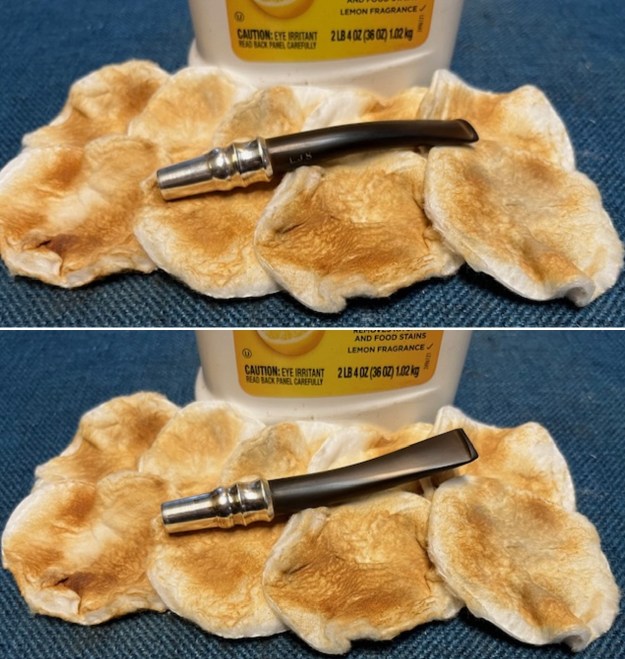
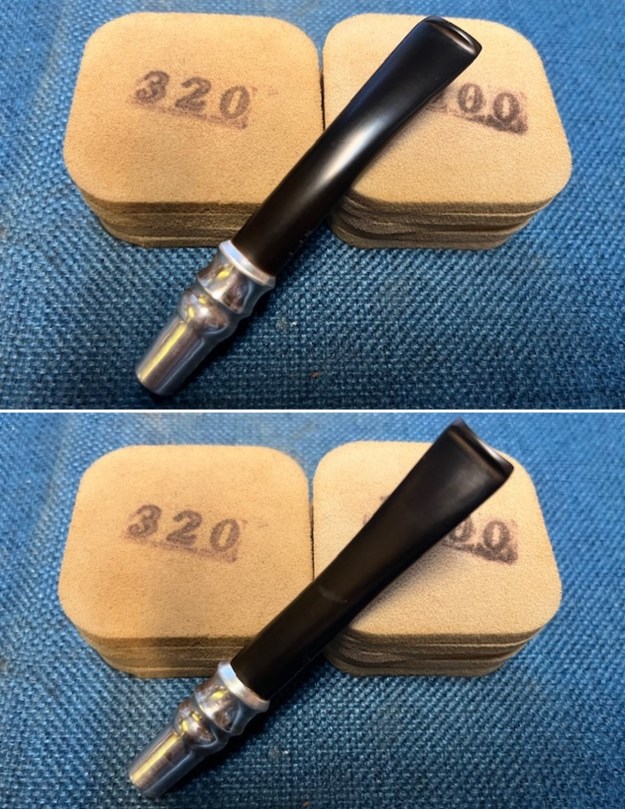
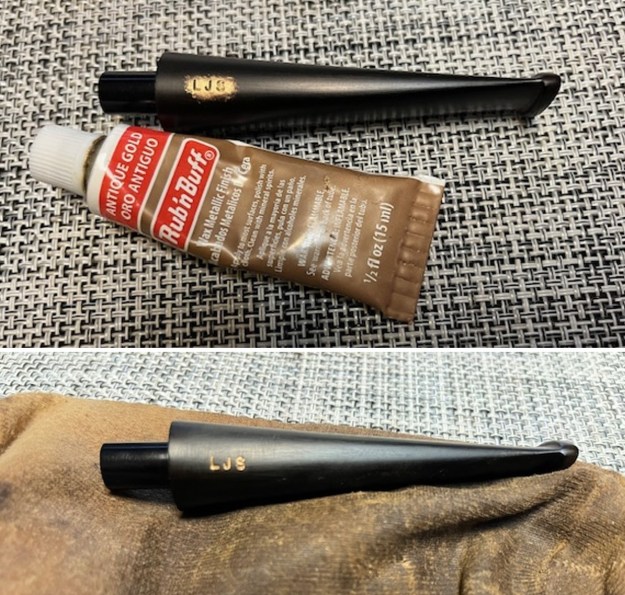
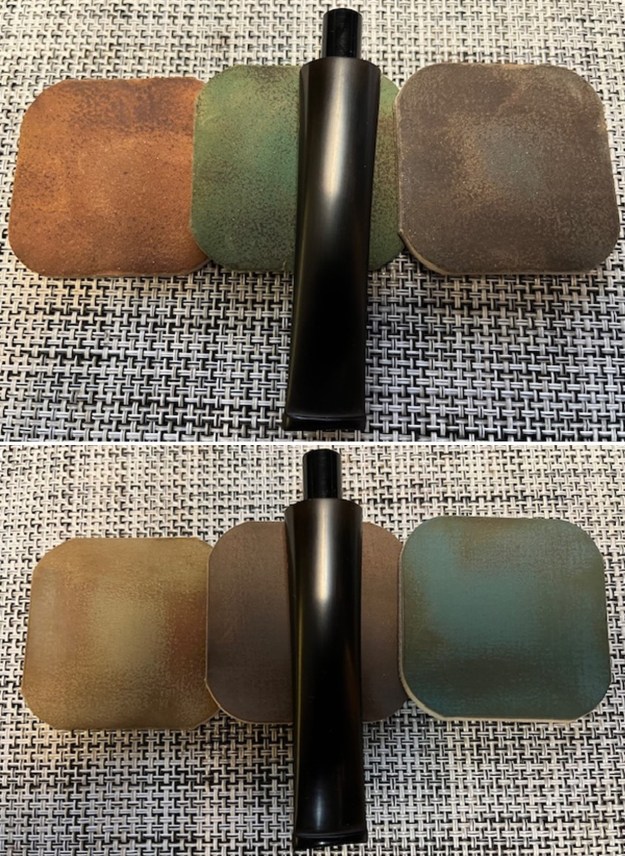
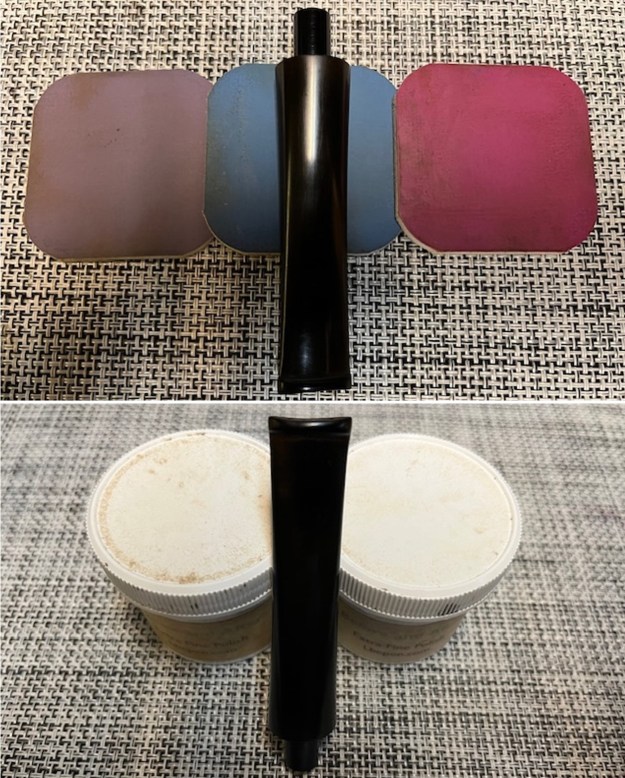
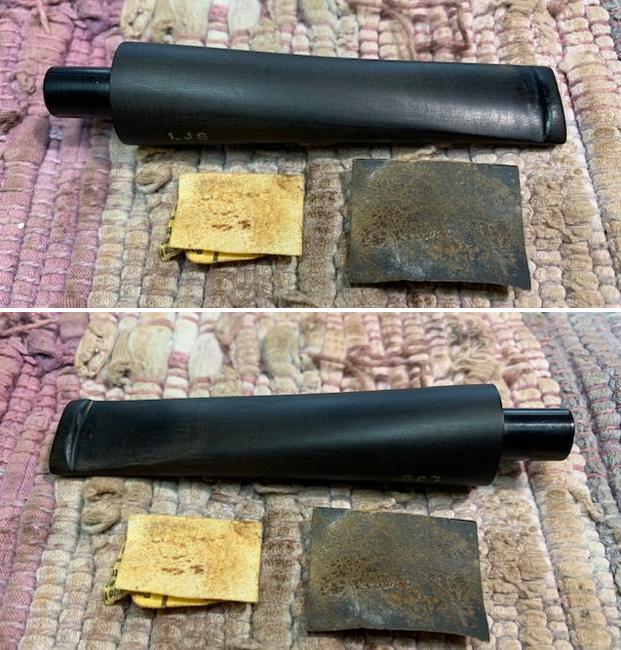
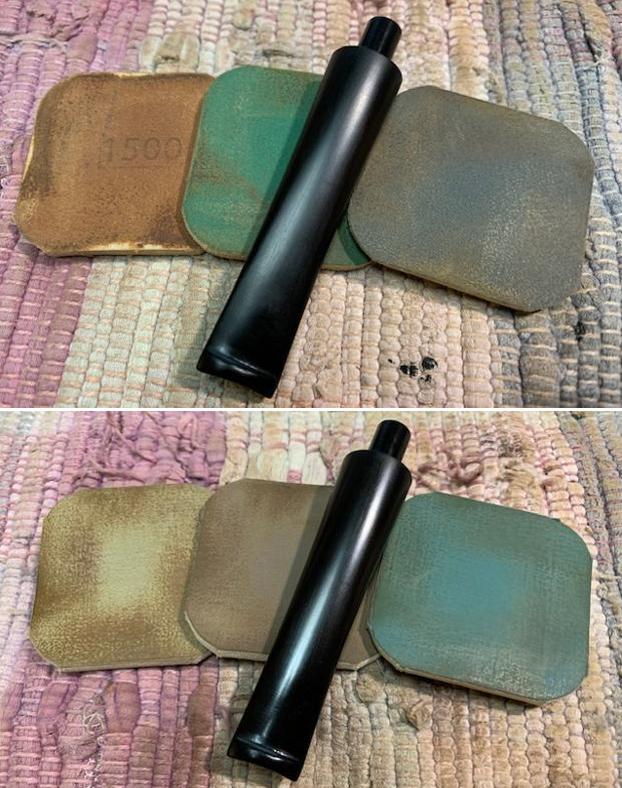
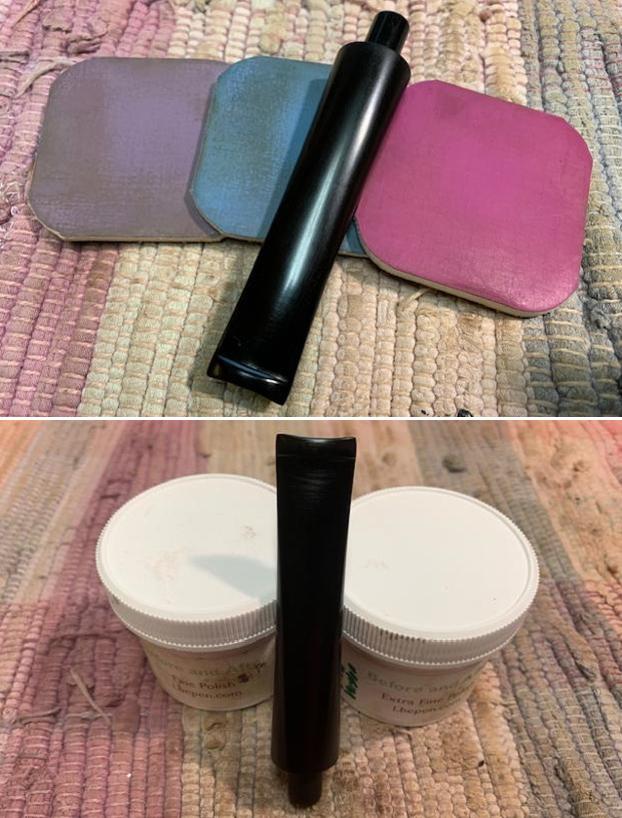
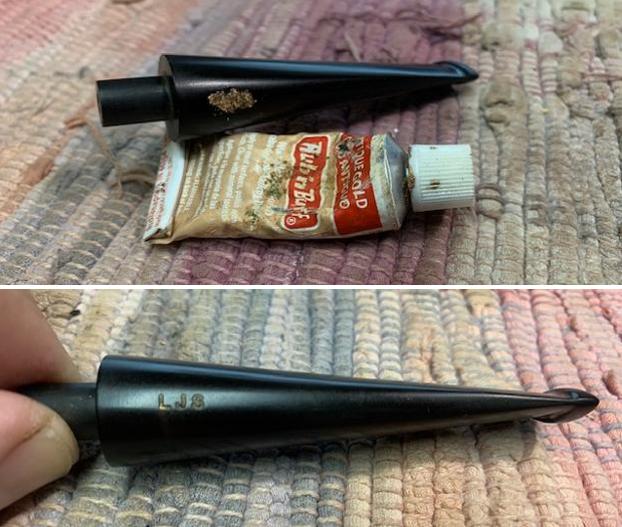
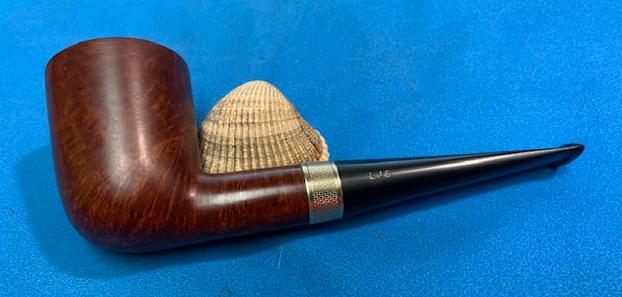
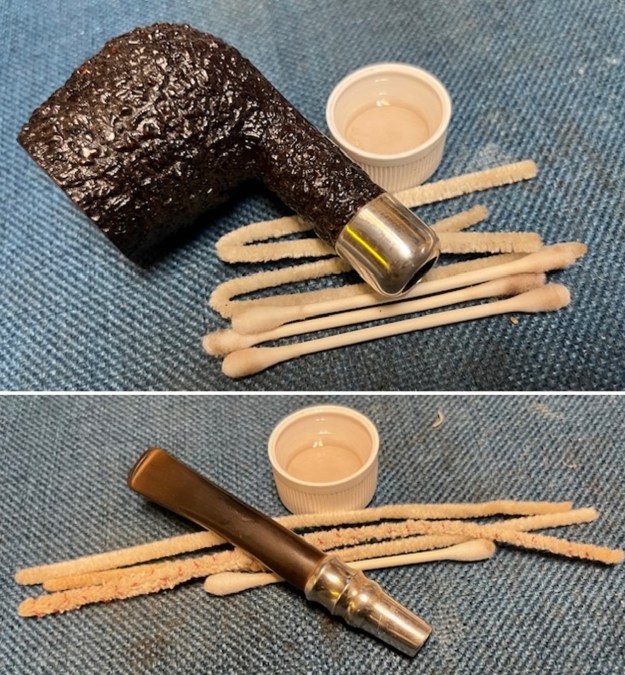
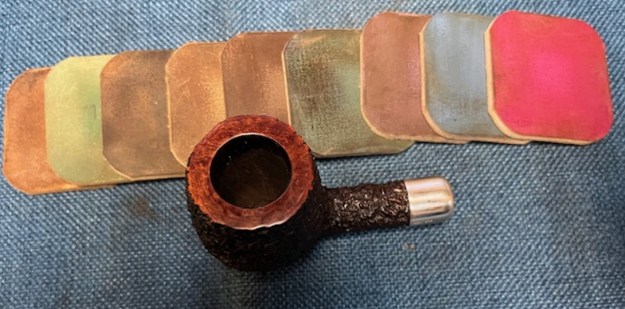
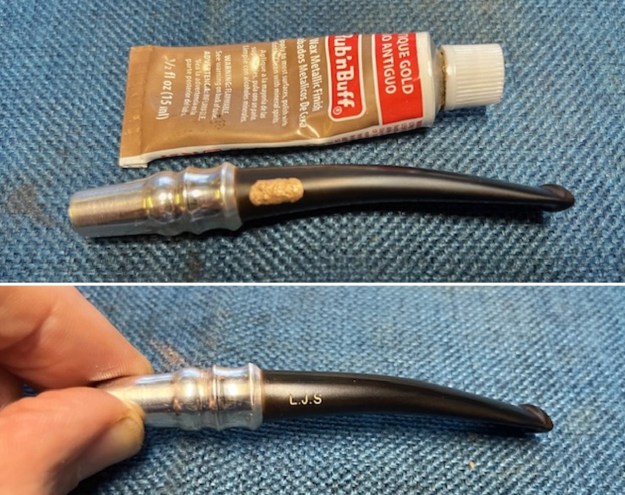
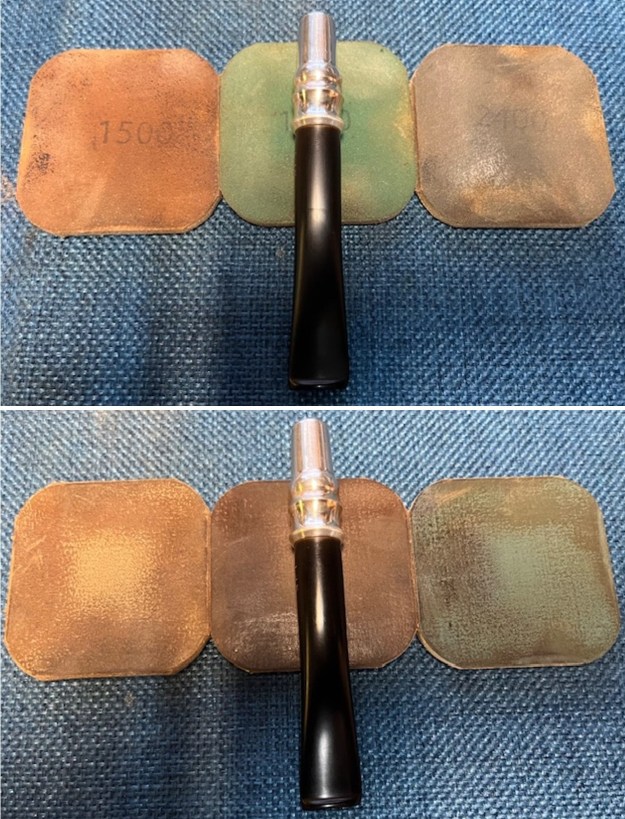
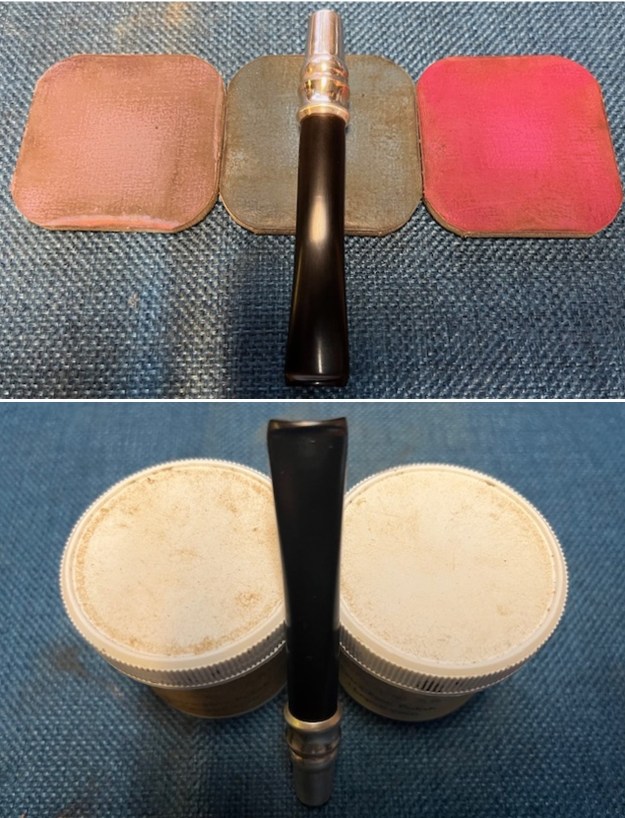
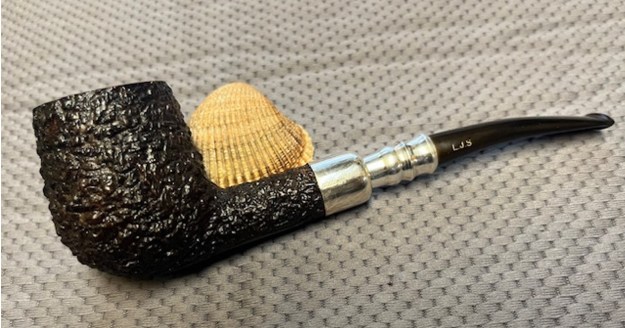
Now it was time to work on the pipe. I started my work by reaming the pipe. I scraped out the light cake with a Savinelli Fitsall Pipe Knife. I took the cake back to bare briar. I sanded the walls smooth with 220 grit sandpaper wrapped around a piece of dowel. The bowl walls looked very good with no burn damage or checking on the walls. I worked on the fading and damage to the rim top with 320-3500 grit sanding pads. It looked much better when I had finished with the last of the pads.At this point I stained the rim top and the faded areas around the bowl with a Mahogany stain pen. It blended well with the surrounding briar on the bowl sides. The rim top looked better but I would need to polish it and clean up the finished look of the rim top. I cleaned out he internals of the shank, mortise and airway in the shank and the stem with alcohol, cotton swabs and pipe cleaners.I polished the smooth rim top with micromesh sanding pads. I dry sanded it with 1500-12000 grit sanding pads and wiped the bowl down after each pad with a damp cloth. By the final pads the briar really had a shine. I rubbed the briar down with Before & After Restoration Balm. I worked it into the smooth rim top surface with my fingertips and into the heavy rustication with a shoebrush. The product works to clean, enliven and preserve the briar. I let it sit for 10 minutes then I buffed it with a cotton cloth to deepen the shine. The briar really comes alive with the balm. I polished the silver ferrule and the spigot end on the stem with a jeweller’s cloth to clean up and prevent further oxidation in the future. The contrast between the silver and the heavy rustication is very nice. I set the bowl aside and turned my attention to the stem. I scrubbed the oxidation on the stem surface with Soft Scrub and cotton pads until it was much cleaner.I sanded the surface with 320-3500 grit sanding pads. I wiped the stem down after each pad with Obsidian Oil. I was able to remove the remnants of oxidation and the stem looked better.I touched up the LJS stamp on the left side of the taper stem with Rub’n Buff Antique Gold. I rubbed it on and worked it into the stamp with a tooth pick. I buffed it off with an Obsidian Oil cloth. It looks very good.I polished the vulcanite stem with micromesh sanding pads – 1500-12000 grit pads. I wiped it down with Obsidian Oil after each sanding pad. I used Before & After Pipe Stem Polish – both Fine and Extra Fine to further polish the stem. This beautiful Ferndown Bark Rusticated L&JS Briars Silver Spigot Billiard with a taper vulcanite stem looks amazing after the work on it. The briar is clean and the grain really came alive. The rich brown stains gave the finish a sense of depth with the polishing and waxing. The grain really popped. I put the stem back on the bowl and buffed the pipe with Blue Diamond on the buffing wheel using a light touch on the briar. I gave the bowl multiple coats of Conservator’s Wax and the stem multiple coats of carnauba wax on the buffing wheel. I buffed the pipe with a clean buffing pad to raise the shine. I hand buffed the pipe with a microfiber cloth to deepen the shine. The finished Ferndown Bark Silver Spigot Billiard really is a beauty and feels great in the hand and looks very good. Give the finished pipe a look in the photos below. The dimensions of the pipe are Length: 6 ¾ inches, Height: 2 inches, Outside diameter of the bowl: 1 ½ inches, Chamber diameter: 7/8 of an inch. The weight of the pipe is 66 grams/2.33 ounces. This beautiful rusticated pipe will soon be on the rebornpipes store in the British Pipemakers Secton. It should make a great smoker for the next trustee. Thanks for reading this blog and my reflections on the pipe while I worked on it. It was a fun one to work on.

Pipe Gods Smiled and I Got Not One But Three Les Wood Pipes…Restoring the Last of the Three Les Wood Pipes; a Smooth Bent Bulldog “Reo”


Blog by Paresh Deshpande

With this write up, I have reached a personal statistical milestone of 200th contribution on rebornpipes.com, a journey that I was encouraged to embark upon, helped and supported at each hurdle by my Guru, mentor and now a dear friend, Steve and without whom I would have remained alienated from this fantastic world of pipe repairs, restorations and pipe collection.

So, thank you Steve for making this platform available to me for learning and enjoying myself! And now, back to the pipe on my work table!

I had purchased three Les Wood pipes from a gentleman and had restored two of the three pipes and have added it to my personal collection. Given below is the link to the first write up posted on Reborn pipes and is a recommended read to know how I came to be in possession of this lot and brief research on husband wife duo of Leslie Wood and Dolly and the pipes they make.

https://rebornpipes.com/2022/08/05/pipe-gods-smiled-and-i-got-not-one-but-three-les-wood-pipes-restoring-a-les-wood-poker/

Below is the link to the second Les Wood pipe that I have refurbished and added to my personal collection. I would request you to read through the write up as the stampings are totally at a variance from those seen on the Les Wood Poker pipe.

https://rebornpipes.com/2023/07/15/pipe-gods-smiled-and-i-got-not-one-but-three-les-wood-pipes-restoring-second-of-the-three-les-wood-pipes-a-bark-silver-spigot/

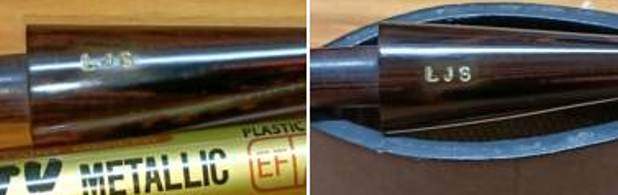
The third pipe from this lot of Les Wood pipe is a large smooth bent pipe in classic English bulldog shape in dark brown and red color. The pipe oozes very high quality briar and a well cut handmade vulcanite stem, all in the hallmark of a Les Wood pipe! The pipe is stamped on the lower panel of the square shank with three stars one below the other on the far left side. It is followed by “FERNDOWN” in an arch over “REO”, all in block capital letters. These stampings are followed by “HAND MADE IN” over “ENGLAND” over “LES WOOD” towards the sterling silver shank end band. The Sterling silver band bears the stamp “L & JS” in a rectangular cartouche over “.925”. The vulcanite saddle stem is stamped on the left side of the saddle as “LJS”. In addition to the information that I have assimilated while working on the two Les Wood pipes above, I would like to reproduce the following snippet of information from pipedia.org

To many pipe smokers, Les Wood’s pipes embody the revival of great English pipe making initiated by Ashton in the early 1980s. The high-grade Italian and Spanish plateau he prefers is oil-cured in the tradition of both Dunhill and Ashton. The pipes are renowned for their pleasant, slightly nutty flavor and remarkable smoking characteristics. They feature impeccable craftsmanship extending to very good stem/bit work, though many pipes are often a bit heavier. The hallmark of his work, of course, is the excellent silver work. Almost all of his pipes feature rings or ferules for spigot stems. Grading is by finish: “Bark” (ca. 90%, rusticated, dark brown and black), “Antique Bark” (tan rusticated), “Reo” (brown and red, smooth), “Root” (orange, smooth), and “Tudor Root” (orange and brown smooth) and by size (one to four stars). He also designates straight grains with SG.

Due to the vagaries of international trademark law, he sold his earlier pipes as ” L.&J.S Briars”, “Ellwood”, “Les Wood” or “L. Wood”. Until recently, an average of 1500 – 2000 pipes a year were sold as “Ferndown” — named for the mansion he lives in — in the UK and US, but as “L. Wood” pipes in Germany.

Thus, from the above, the pipe currently on my work table is an early Les Wood pipe made in US/ UK and is one of 10% smooth pipe made in that year.

Initial Visual Inspection
The pipe is heavy! That’s the first thing that I noticed, heavier than even the Poker that I had restored earlier. The finish is dark and dull with dust and grime ground in to the surface. There is some darkening of the rim top surface, more noticeably towards the back of the rim in 6 ‘O’ clock direction. The rim edges are sans any damage. There is a thick layer of cake inside the chamber with a wad of unburnt tobacco at the heel of the chamber. The hand cut, high quality vulcanite stem is deeply oxidized with some very light bite marks in the bite zone. The mortise has some serious accumulation of old oils and tars that needs to be cleaned. There are serious ghost smells emanating from the chamber and the mortise. Overall, with some TLC, this pipe should regain its former glory when it first left Ferndown Mansion. Detailed Visual Inspection
The chamber has a thin layer of cake with some unburnt residual tobacco at the heel of the bowl. However, if my experiences of working on two previous Ferndown from this same estate are anything to go by, then I think the cake layer is thick, but evenly maintained. The chamber smells a rather strong fragrant hinting at being used to smoke English blend or an aromatic. The rim top surface is clean, smooth and even and so are the rim edges. I do not envisage any issues related to heat lines/ fissures along the chamber walls. The stummel surface is covered in a layer of dust and grime giving the surface a dull and lackluster appearance. From underneath this grime, a mix of bird’s eye swirls and cross grains can be seen that waits to be brought to the fore. The twin rings separating the cap of the stummel from rest of the bowl is without any nicks/ chips/ dents or dings. The mortise shows presence of some oils and tars, but should be easily cleaned. The Sterling Silver band is deeply oxidized and tarnished at places. Once cleaned and polished, this band will add a nice classy bling to the appearance of the pipe. The beautiful vulcanite stem is hand cut and oozes very high quality of material use and also craftsmanship of highest quality. The stem is oxidized with very minor tooth chatter and bite marks seen in the bite zone on both the upper and lower surfaces of the stem. These tooth chatter and tooth indentation should be easily addressed by heating the affected areas to raise the vulcanite and thereafter sanding it down to match the rest of the stem surface. The tenon end and the horizontal slot end show very minor traces of accumulation of dried gunk and grime.The Restoration Process
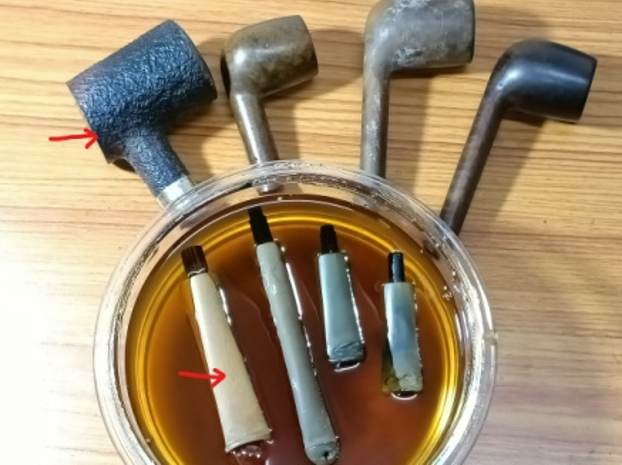
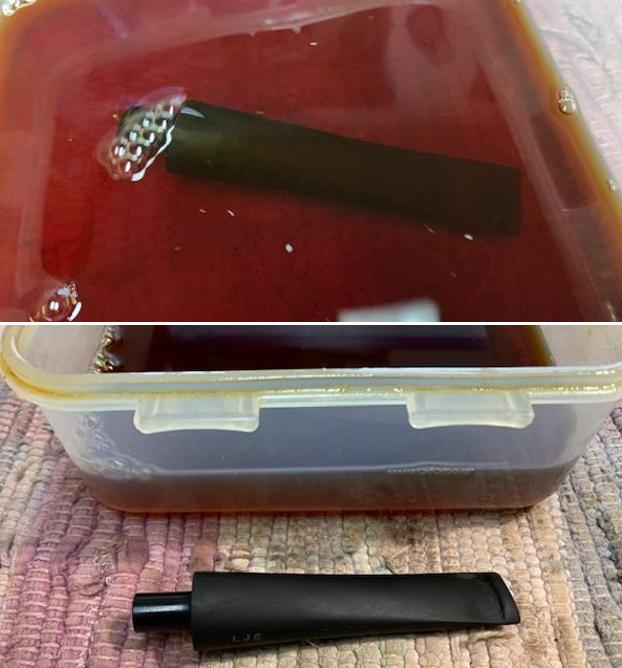
I started the refurbishing of this Les Wood by working the stem first. Since there were other stems that were ready to be put into the stem deoxidizer solution, I decided to clean the internals of this stem first so that it could be put in the solution with other stems. I cleaned the stem airway with a thin shank brush and anti-oil soap. I used a sharp dental tool to clean the horizontal slot and further cleaned the internals with regular and bristled pipe cleaners dipped in alcohol.The stem was immersed in the Deoxidizer solution, a product that has been developed by Mark Hoover. This solution helps raise the stem oxidation to the surface thus helping in easy removal and subsequently imparting a nice shine to the stem after polishing cycle. The pipe is indicated with a red arrow. The stem is allowed to soak into this solution overnight.The pipe next to the one indicated in the picture above, is also a Ferndown which is the next pipe in line. This one is a NOS un-smoked pipe that too came from the same gentleman’s collection as these three Les Wood pipes and was the last one that he intended to pass on to his family members. However, for reasons best known to the gent, he voluntarily offered the pipe to me at the price which I had first quoted for the very first Les Wood from his collection. I could sense a feeling of sadness in his communication and I made him a payment without further queries. The pipe made its way to me as I worked on the REO.

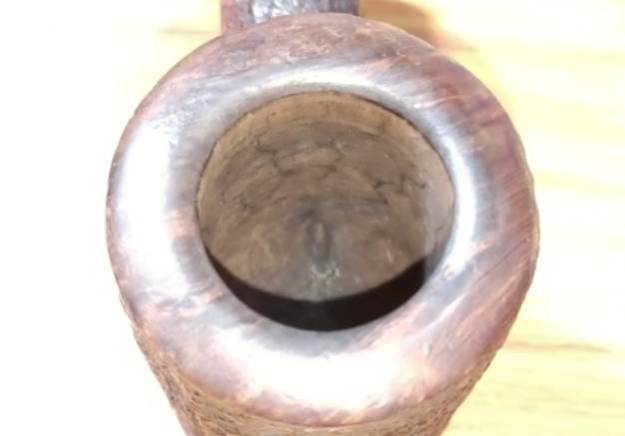
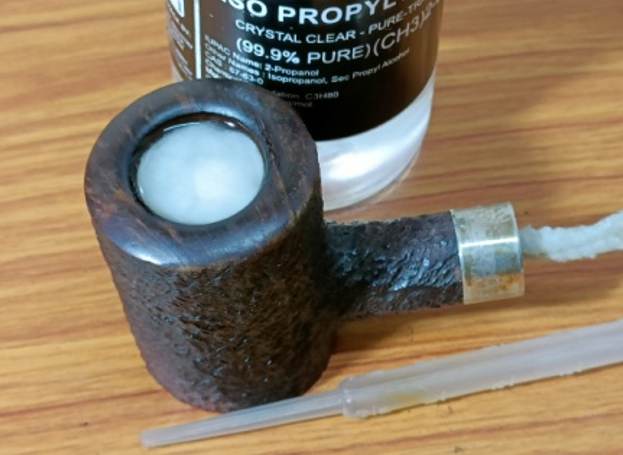
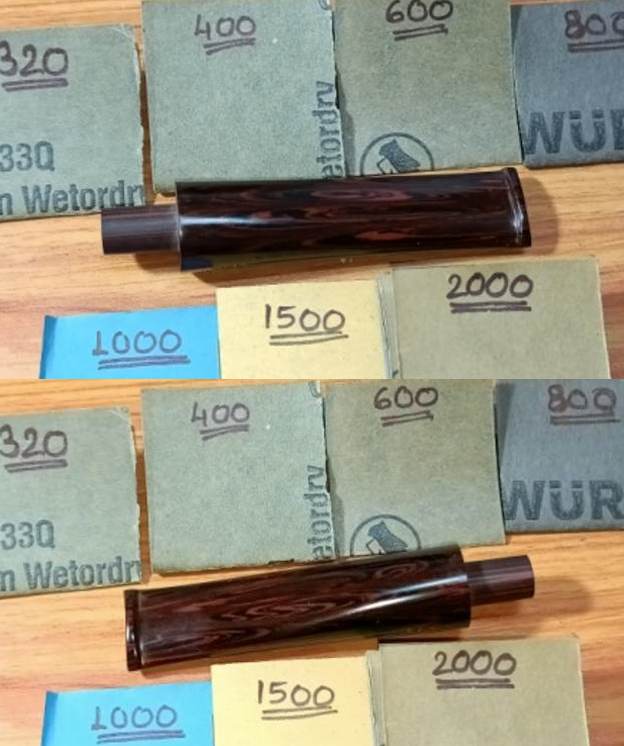
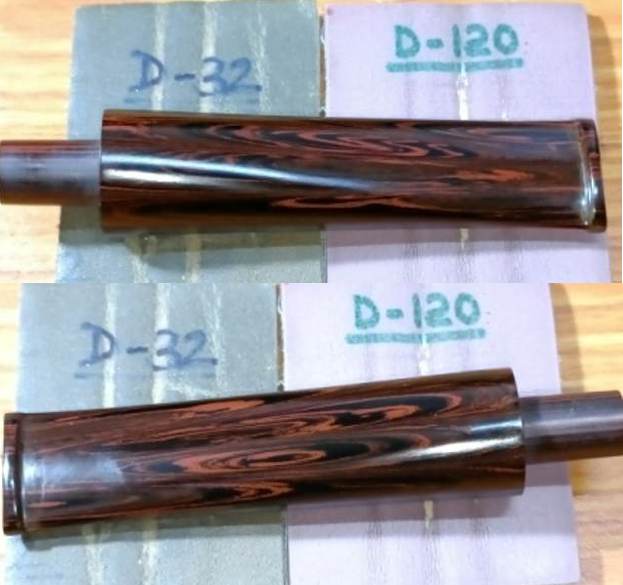
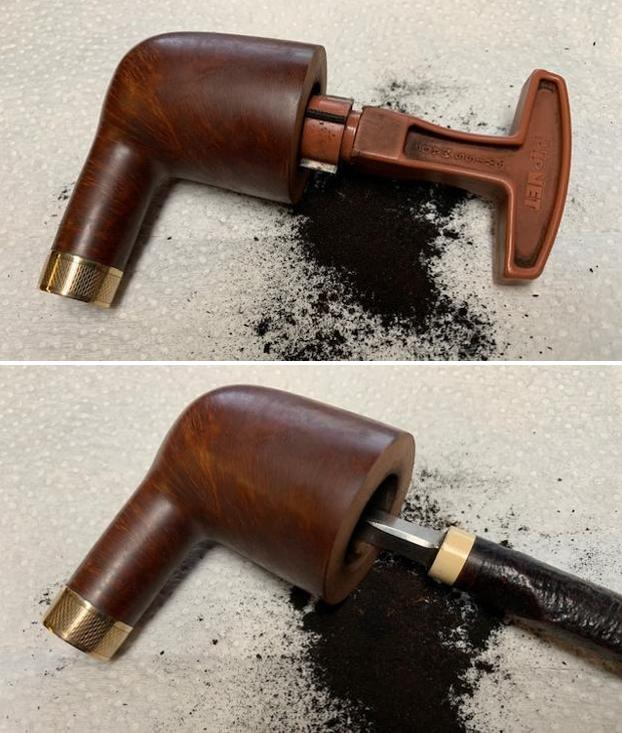
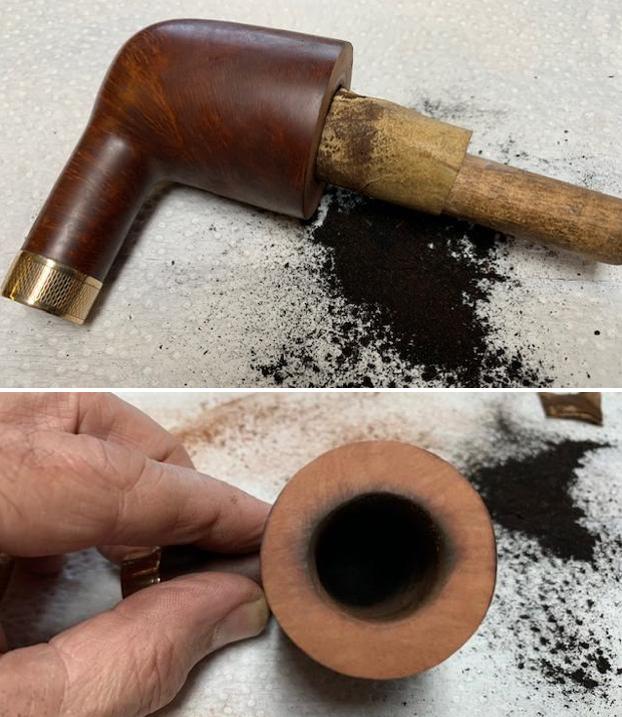
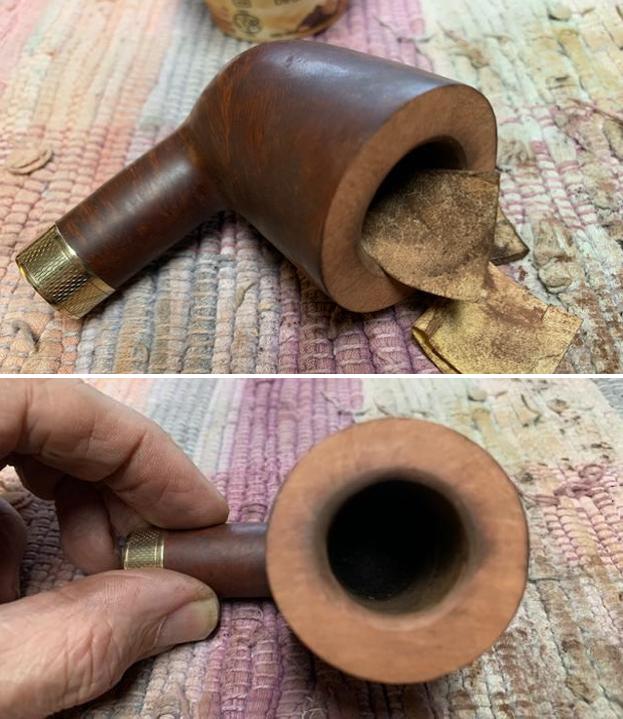
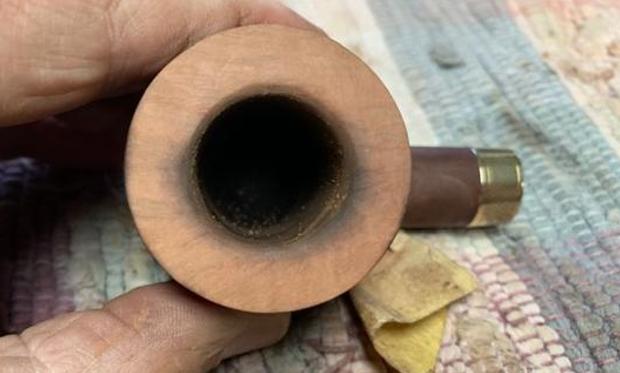
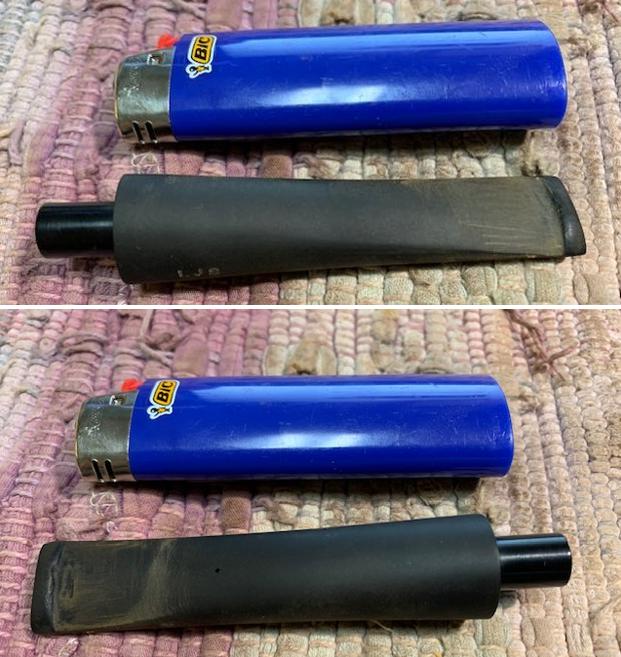
Now it was time for me to work on the stummel. I did this by first reaming the chamber with size 3 and 4 PipNet reamer heads. I further scraped the chamber walls with my fabricated knife to remove the remaining carbon deposits where the reamer head could not reach. Once the cake was reamed back to the bare briar, I used a piece of 220 grit sand paper to remove all the traces of remaining cake and also to smoothen out the inner walls of the chamber surface. Finally, to remove the residual carbon dust, I wiped the chamber with a cotton pad wetted with 99.9% pure isopropyl alcohol. The huge pile of carbon dust that was reamed out is an indication enough to the amount of carbon that had accumulated in the chamber while the smaller heap is that of the un-burnt tobacco from the chamber. The chamber walls are solid without any heat lines or fissures. I further cleaned the mortise by scrapping out the dried gunk with a dental tool. I ran a few pipe cleaners dipped in alcohol to moisten the dried gunk and assist in its removal. I shall further continue the internal cleaning of the chamber and mortise with cotton and alcohol soak.I continued the cleaning of the chamber and shank internals with a salt and alcohol bath. I use cotton balls which is an at par substitute to Kosher salt as I have realized over the years. I draw out a wick from the cotton and along with a folded regular pipe cleaner; insert it in to the mortise and through the draught hole in to the chamber. Thereafter, I packed the chamber with cotton balls to about quarter of an inch below the inner rim edge and soaked the cotton balls with isopropyl alcohol up to the brim. About half an hour later, the level of alcohol had gone down, having being absorbed by the cotton. I topped it up once again and set it aside overnight. By next morning, the cotton and alcohol had drawn out all the remaining oils and tars from the chamber and mortise, fulfilling its intended task. I removed the cotton balls and ran pipe cleaners through the mortise to clean out all the loosened tars and gunk and further cleaned it with alcohol and q-tips. With the internal cleaning now completed, I undertook the cleaning of the external surface. I wiped the surface with Murphy’s oil soap on a cotton pad and further cleaned it with a wet cotton swab to remove all the soap from the surface and wiped it dry with paper towels and cotton cloth. The usual process that I follow while cleaning the external surface is to scrub the stummel with oil soap and rinse under running warm water. However, in this case, I was keen to preserve the stain and finish to max extent possible and hence the slight modification to the process. I further dried the surface with a heat gun to ensure that there is no moisture in the surface. My exuberance to see the shine and gloss that this pipe is capable of, thanks to the processes employed by Les Wood’s wife; I decided to continue with the stummel refurbishment. I dry sand the surface with 1500 to 12000 grit micromesh pads, wiping frequently with a dry soft cotton cloth to check the progress made. Once the micromesh polish cycle was completed, I massaged a small quantity of ‘Before and After Restoration Balm’ in to briar surface and set it aside for few minutes. Once the briar was rejuvenated, I hand buffed the stummel with a microfiber cloth to a deep and luxurious shine. It was here that I noticed that all the cleaning of the stummel had left the finish over the rim surface a bit splotchy and light. Using a dark brown wood stain pen, I stained the rim top surface and set it aside for the stain to set.Now that the internal and external cleaning of the stummel was nearly done and also the stem had now been soaking for more than 24 hours, I removed the stem from the solution. I first scrubbed the stem surface with a Scotch Brite pad, always being mindful of the stem logo on the left side. I followed this scrubbing with a nice cleaning of the surface using a 0000 grade steel wool. I rinsed the stem under running water to rid the stem of the thick deoxidizer solution. I ran a couple of pipe cleaners to remove any residual deoxidizer solution from the airway.To address the minor tooth chatter on either surface, I heated the bite zone with the flame of a soft flame lighter. The heat from the lighter expands the vulcanite and fills up the tooth chatter. The results are not always perfect, but in this instance, the results are very satisfactory.I followed it up by wet sanding the entire stem surface using320, 400, 600, 800, 1000, 1500 and finally with a piece of 2000 grit sand paper. This progressive sanding with higher grit sandpapers serves to reduce the sanding marks of the more abrasive sand papers. I also sharpened the button edges while sanding. I wiped the stem with a moist cotton swab to remove all the oxidation and sanding dust from the surface. I applied a little Extra Virgin Olive oil over the stem and set it aside to be absorbed by the vulcanite.With a jeweller’s cloth, I polished the sterling silver band at the shank end to a nice shine.On the way to complete the project, I polished the stem and stummel surface with White Diamond. Next, I replaced the buffing wheel on the rotary tool with the one that has been earmarked for Blue diamond compound and polished the entire pipe. I like the way the pipe is polishing up at this stage. With a cotton buffing wheel that I use for carnauba wax, I applied a coat of carnauba wax and continued to work on it till the complete coat of wax had been polished out. I mounted a clean cotton cloth buffing wheel and gave the entire pipe a once over buff. I finished the restoration by giving the entire pipe a rigorous hand buffing using a microfiber cloth to raise the shine further. The finished pipe looks beautiful and is ready to be added to my personal collection of pipes. P.S.: The finished pipe has a fantastic glass like shine which has been a hallmark finish from Dolly and the pipe looks very beautiful. This entire project has been very close to my heart for a reason and shall find a place of pride in my Les Wood collection.

I wish to thank readers of rebornpipes.com who have spared their valuable time in reading through this work. I look forward to your comments and suggestions for improvements. I wish to make a mention of one follower of Reborn Pipes who had been regularly in touch. However, since last month there has been no communication. If you are reading this blog my friend, a simple message of your well-being will be highly appreciated. Cheers…

Restoring a Ferndown Bark Antique *** Hand Made in England Les Wood Dublin


Blog by Steve Laug

The next pipe on the table is a beautiful rusticated Dublin with a silver band. We purchased it from an estate sale in Oregon City, Oregon, USA on 03/21/2024.The pipe is stamped on a smooth panel on the underside of the shank and reads *** followed by Ferndown [arched over] Bark [over] Antique followed by Hand Made In [over] England [over] Les Wood. There was a thick cake in the bowl with a lava coat around the inner edge and lightly on the top. There was grime ground into the rusticated finish around the bowl and shank. The pipe had been smoked heavily and was someone’s obvious favourite. It was hard to know the condition of the inner edge for certain because of the lava. The oxidized band on the shank is Sterling Silver and bears the stamp L&JS followed by 925 on the left side. There is an LJS logo stamped in gold on the left side of the taper stem. The stem is oxidized and calcified. With a mark left behind on the stem end from a Softee Bit. There appears to be some light tooth chatter on the top and underside of the stem ahead of the button. Jeff took photos of the pipe before he started his clean up work. I have included them below. Jeff took photos of the rim top, bowl and the surfaces of the stem to give a sense of the condition of the pipe. The walls of the bowl had a thick cake which overflowed over the rim edges and onto the rim top. The stem is oxidized, calcified and dirty. There are light tooth marks on both sides ahead of the button. He took photos of the sides and heel of the bowl to give a clear picture of the way the shape follows the grain. The rustication is really beautiful even showing through the grime filling in the valleys and low spots. The depth and randomness of the rustication is very well done. He took photos of the stamping on the smooth panel on the underside the heel and the shank. It is clear and readable and read as noted above. The silver band and the left side of the taper both have clear stamping under the oxidation that reads as noted above. To gather backgound on the brand I turned to Pipephil’s site to see what was included in the listing there (http://www.pipephil.eu/logos/en/logo-f1.html). I have included both the screen capture and also the side bar below the photo I have included.Artisan: Leslie (Les) Wood. He was the master silver smith at Alfred Dunhill Ltd. before starting L. & J.S. Briars. Pipes for the European market are stamped “L. Wood” while those for US are stamped “Ferndown”. Production: ~ 2000 pipes/year (Ferndown + L.Wood) See also Elwood
The first pipe pictured in the screen capture above is stamped similarly to mine. From that listing I learned that the 3 stars was the designation for the size of the pipe. This is largest pipe. The Bark finish is a designation used for both sandblasted and rusticated. I still need to unpack the Antique stamp but it is becoming very clear. The stem on this one is also not Cumberland but rather black vulcanite.

I turned to Pipedia next (https://pipedia.org/wiki/Ferndown). There is a great article there on the carver, the pipes and the workshop. It is worth the time to give it a read. I am quoting the section on the pipes below for the information included.

Due to the vagaries of international trademark law, he sold his earlier pipes as ” L.&J.S Briars”, “Ellwood”, “Les Wood” or “L. Wood”. Until recently, an average of 1500 – 2000 pipes a year were sold as “Ferndown” — named for the mansion he lives in — in the UK and US, but as “L. Wood” pipes in Germany

…To many pipe smokers, Les Wood’s pipes embody the revival of great English pipe making initiated by Ashton in the early 1980s. The high-grade Italian and Spanish plateau he prefers is oil-cured in the tradition of both Dunhill and Ashton. The pipes are renowned for their pleasant, slightly nutty flavor and remarkable smoking characteristics. They feature impeccable craftsmanship extending to very good stem/bit work, though many pipes are often a bit heavier. The hallmark of his work, of course, is the excellent silver work. Almost all of his pipes feature rings or ferules for spigot stems. Grading is by finish: “Bark” (ca. 90%, rusticated, dark brown and black), “Antique Bark” (tan rusticated), “Reo” (brown and red, smooth), “Root” (orange, smooth), and “Tudor Root” (orange and brown smooth) and by size (one to four stars). He also designates straight grains with SG.

The pipe I am working on is as noted above a Ferndown which identifies it as a pipe named after his mansion and as a pipe made for the UK and the US. It is also as noted in red above stamped Antique Bark which identifies it as a tan rusticated pipe.

Now it was my turn to work on the pipe. Jeff had done an amazing cleanup of the pipe. He reamed the light cake with a PipNet reamer and cleaned up that with a Savinelli Fitsall Pipe Knife. He scrubbed the internals of the bowl and stem with alcohol, cotton swabs and pipe cleaners. He scrubbed the externals with undiluted Murphy’s Oil Soap and rinsed the bowl off with running water. He soaked the stem in Briarville’s Pipe stem Deoxidizer and once it had soaked rinsed it off with warm water to remove the residual solution. He dried it off and rubbed it down to remove any oxidation that was still on the stem. The pipe looked very good when I received it. I took photos of the bowl and the rim top as well as both sides of the stem to show the condition of the pipe before I started my work. The rim top was very clean but there were scratches on the flat surface and the inner edge showed some nicks, roughness and darkening. The Sterling Silver band looked much better without the oxidation and darkening. The stem showed light tooth marks on the top and underside of the stem near the button. There was a light mark on the top right of the button edge.I took a photo of the stamping on the underside of the shank. The photo of the stamping is clear and readable. I took a photo of the logo on the silver band and on the left side of the taper stem. I removed the stem from the shank and took a photo of the pipe parts. I started my work on the pipe by addressing the darkening to the inner edge of the bowl. I used a folded piece of 220 sandpaper to smooth out the rim edge. Once I was finished it looked much better.I polished the smooth rim top with micromesh sanding pads. I dry sanded it with 1500-12000 grit sanding pads and wiped the bowl down after each pad with a damp cloth. By the final pads the briar really had a shine. I rubbed the briar down with Before & After Restoration Balm. I worked it into the smooth rim top surface with my fingertips and into the heavy rustication with a shoebrush. The product works to clean, enliven and preserve the briar. I let it sit for 10 minutes then I buffed it with a cotton cloth to deepen the shine. The briar really comes alive with the balm. I polished the silver band with a jeweller’s cloth to clean up and prevent further oxidation in the future. The contrast between the silver and the heavy rustication is very nice. I set the bowl aside and turned my attention to the stem. I sanded out the roughness and light tooth damage with 320-3500 grit sanding pads. I wiped the stem down after each pad with Obsidian Oil. I was able to remove the roughness and damage and the stem looked better.I touched up the LJS stamp on the left side of the taper stem with Rub’n Buff Antique Gold. I rubbed it on and worked it into the stamp with a tooth pick. I buffed it off with a Obsidian Oil cloth. It looks very good.I polished the vulcanite stem with micromesh sanding pads – 1500-12000 grit pads. I wiped it down with Obsidian Oil after each sanding pad. I used Before & After Pipe Polish – both Fine and Extra Fine to further polish the stem. This nice looking Les Wood Ferndown Bark Antique *** Rusticated Dublin with a taper vulcanite stem is a great looking pipe now that it has been restored. The briar is clean and the grain really came alive. The rich brown stains gave the finish a sense of depth with the polishing and waxing. The grain really popped. I put the stem back on the bowl and buffed the pipe with Blue Diamond on the buffing wheel using a light touch on the briar. I gave the bowl and the stem multiple coats of carnauba wax on the buffing wheel. I buffed the pipe with a clean buffing pad to raise the shine. I hand buffed the pipe with a microfiber cloth to deepen the shine. The finished Ferndown Bark Antique *** Dublin really is a beauty and feels great in the hand and looks very good. Give the finished pipe a look in the photos below. The dimensions of the pipe are Length: 6 inches, Height: 2 inches, Outside diameter of the bowl: 1 ¾ inches, Chamber diameter: 7/8 of an inch. The weight of the pipe is 66 grams/2.33 ounces. This beautiful rusticated pipe will soon be on the rebornpipes store in the British Pipemakers Secton. It should make a great smoker for the next trustee. Thanks for reading this blog and my reflections on the pipe while I worked on it. It was a fun one to work on.
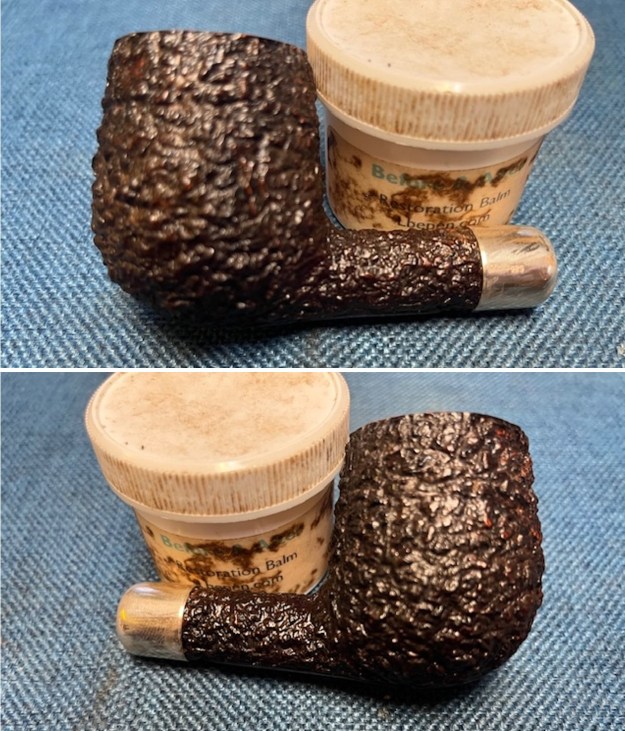
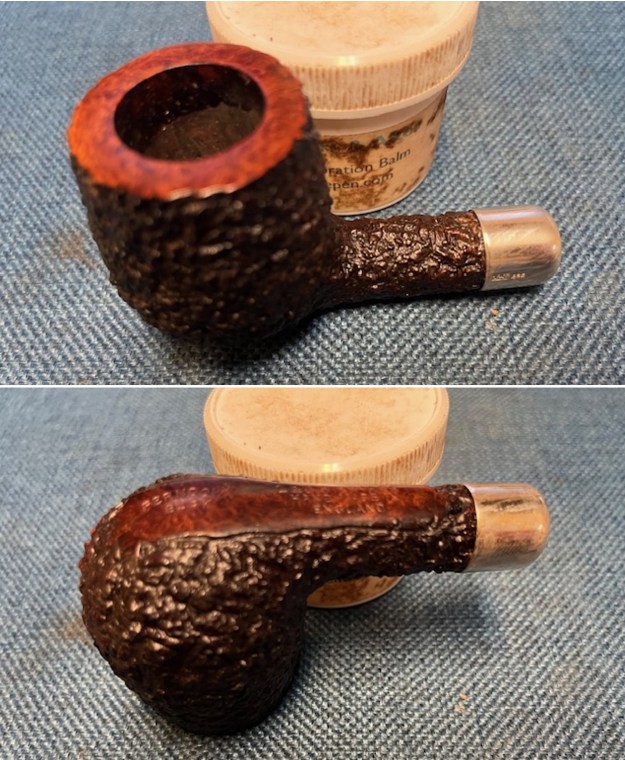
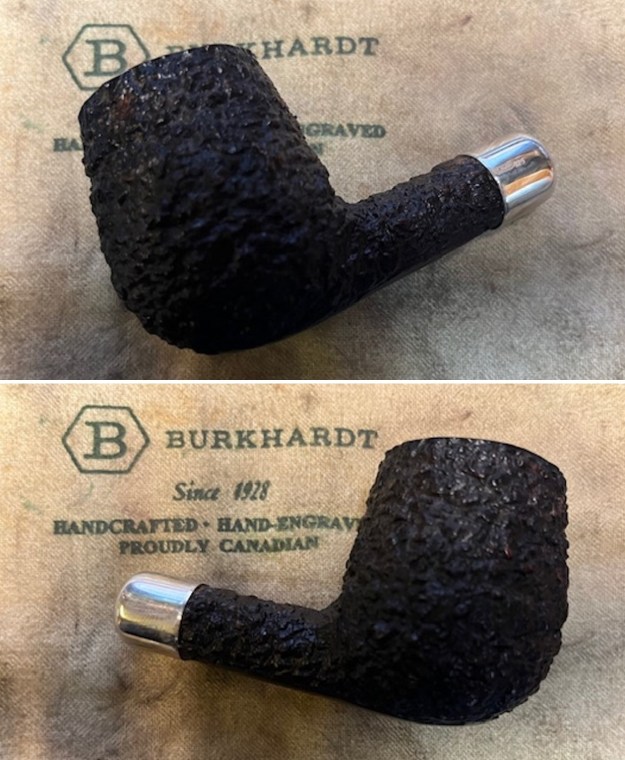
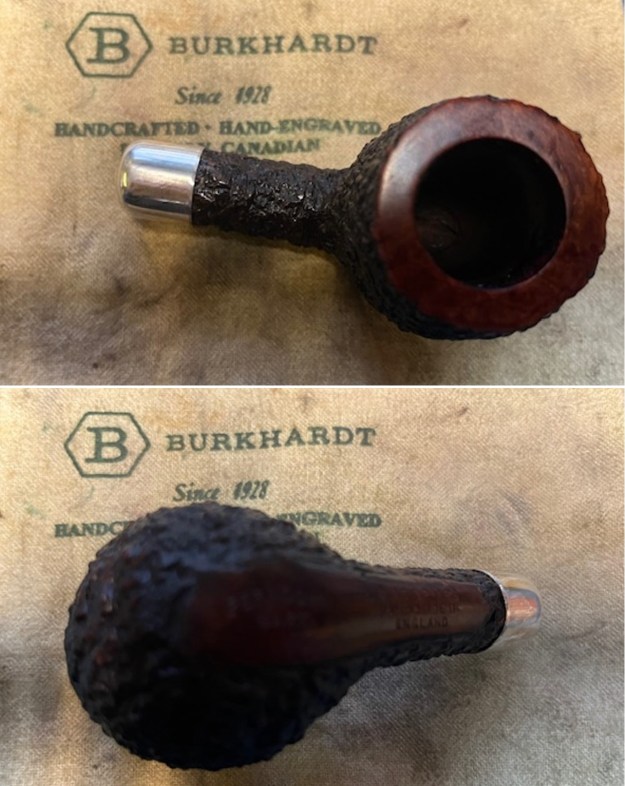
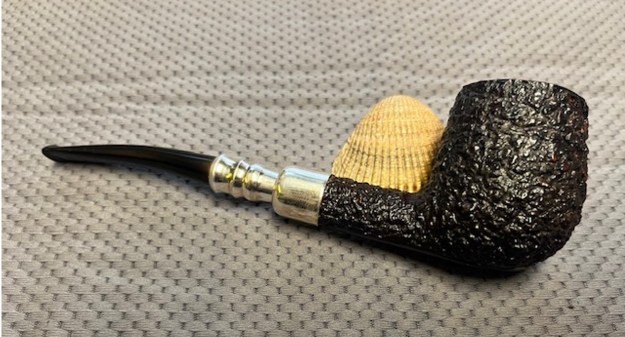
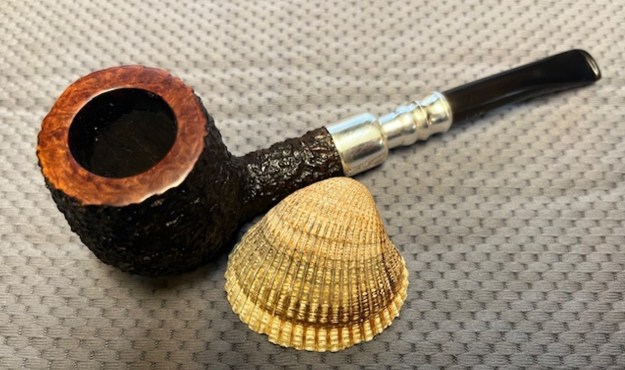
Pipe Gods Smiled And I Got Not One But Three Les Wood Pipes….Restoring Second Of The Three Les Wood Pipes; A Bark Silver Spigot


Blog by Paresh Deshpande

I had purchased three Les Wood pipes from a gentleman and had restored the first of the three pipes and have added it to my personal collection. Given below is the link to the write up posted on rebornpipes and is a recommended read to know how I came to be in possession of this lot and brief research on husband wife duo of Leslie Wood and Dolly and the pipes they make.

https://rebornpipes.com/2022/08/05/pipe-gods-smiled-and-i-got-not-one-but-three-les-wood-pipes-restoring-a-les-wood-poker/

The second pipe that is now on my work table is a beautifully rusticated paneled Apple Half bent Silver Spigot. It is stamped on the bottom smooth surface of the shank as “FR LOUIS HESTON” over “FERNDOWN” in a slight arc over “BARK”. The sterling silver ferrule at the shank end bears the stamp “L & JS” in a rectangular cartouche over “.925”. The sterling silver mounting at the tenon end of the stem also bears similar stampings as seen on the ferrule. The vulcanite stem is stamped on the left side as “L J S”. Now this stamping varies significantly from the one that I had worked on earlier in that this pipe does not bear the stamping LES WOOD, HAND MADE IN ENGLAND and star (*) marking to denote the size. I referred back to pipedia.org to understand the variation in stamping. Here is what I found out and also the link to the write up is given below.

https://pipedia.org/wiki/Ferndown

Due to the vagaries of international trademark law, he sold his earlier pipes as ” L.&J.S Briars”, “Ellwood”, “Les Wood” or “L. Wood”. Until recently, an average of 1500 – 2000 pipes a year were sold as “Ferndown” — named for the mansion he lives in — in the UK and US, but as “L. Wood” pipes in Germany.

From the above, I assume that this pipe is from the recent past while the poker was from the earlier period. Truth be told, I am not 100% convinced on this and would really appreciate input, clarifications and detailed information on this variation in stampings observed from learned readers of rebornpipes.

There was not much that I could find about Fr. Louis Heston. An internet search of the name threw up data about Rev. Edward Louis Heston who left for heavenly abode in 1973. This period definitely does not coincide with the time period when Leslie Wood started making pipes under the FERNDOWN! Well, this too then is a grey area and would request readers to fill us all on this name and establish a relation between the name Fr. Louis Heston and this Les Wood pipe.

Initial Inspection
As observed with the Les Wood Poker that I last restored, this half bent Apple Silver Spigot too is in excellent condition. There is an even layer of cake of medium thickness in the chamber that is very hard and completely dry. The smooth rim top is sans any crusting of lava over flow but darkened towards the front. The eight panelled rusticated stummel appears in good condition with no signs of hot spots or cracked surfaces. The stummel has a lot of dirt, dust and grime grounded in to the crevices of the rusticated surface. The black and dark brown stain is faded at places giving the stummel is dull appearance. The fishtail vulcanite stem is deeply oxidized with some tooth chatter on either surface of the stem in the bite zone. The stampings on the shank, silver spigot and stem are all crisp and easily readable. The following pictures will provide a visual description to supplement the description given above. I like the feel and heft of this large stummel in my hand. The rusticated panelled surface with it prominent ridges feels tactile in the hand and very comfortable to hold. There is a lot of dirt, dust and grime trapped in to the crevices of rusticated surface giving it a dirty grayish appearance. The entire stummel looks dull, dirty and lifeless. Heavy accumulation of dried oils, tars and gunk is seen clogging the mortise. The dark stain has faded in couple of spots further adding to the sorry appearance of the stummel. The sterling silver ferrule is oxidized and dull looking. However, once the stummel surface is cleaned up and rejuvenated, this will be one beautiful looking pipe. I like the feel and heft of this large stummel in my hand. The rusticated paneled surface with it prominent ridges feels tactile in the hand and very comfortable to hold. There is a lot of dirt, dust and grime trapped in to the crevices of rusticated surface giving it a dirty grayish appearance. The entire stummel looks dull, dirty and lifeless. Heavy accumulation of dried oils, tars and gunk is seen clogging the mortise. The dark stain has faded in couple of spots further adding to the sorry appearance of the stummel. The sterling silver ferrule is oxidized and dull looking. However, once the stummel surface is cleaned up and rejuvenated, this will be one beautiful looking pipe. The beautiful sterling silver mounted vulcanite stem is hand cut and oozes very high quality of material use and also craftsmanship of highest quality. The stem is heavily oxidized to an extent that it appears dirty green. Dark coloration and calcification is seen on either surfaces of the stem in the bite zone from prolonged use of rubber bit. Very minor tooth chatter and bite marks can be seen in the bite zone on both the upper and lower surfaces of the stem. These tooth chatter and tooth indentation should be easily addressed by heating the affected areas to raise the vulcanite and thereafter sanding it down to match the rest of the stem surface. The tenon end and the horizontal slot end shows accumulation of dried gunk and grime. The sterling silver mount is oxidized but shows no signs of any damage whatsoever.The Process
I started the refurbishing of this Les Wood by working the stem first. Since there were other stems that were ready to be put into the stem deoxidizer solution, I decided to clean the internals of this stem first so that it could be put in the solution with other stems. I cleaned the stem airway with a thin shank brush and anti oil soap. It took considerable time and elbow grease to get the stem airway clean. I used a sharp dental tool to clean the horizontal slot and further cleaned the internals with regular and bristled pipe cleaners dipped in alcohol.The stem was immersed in the Deoxidizer solution, a product that has been developed by Mark Hoover. This solution raises the oxidation to the stem surface and helps in easy removal and imparting a nice shine to the stem after polishing. The pipe is indicated with a red arrow. The stem is allowed to soak into this solution overnight.Now it was time for me to work on the stummel. I did this by first reaming the chamber with size 2 followed by size 3 and 4 PipNet reamer heads. I further scraped the chamber walls with my fabricated knife to remove the remaining carbon deposits where the reamer head could not reach. Once the cake was reamed back to the bare briar, I used a 220 grit sand paper to remove all the traces of remaining cake and also to smooth out the inner walls of the chamber surface. Finally, to remove the residual carbon dust, I wiped the chamber with a cotton pad wetted with 99.9% pure isopropyl alcohol. The huge pile of carbon dust that was reamed out is an indication enough to the amount of carbon that had accumulated in the chamber. The chamber walls are solid without any heat lines or fissures. However, the hard cake was getting increasingly difficult to dislodge. I shall try and remove residual the hard cake after it has been moistened during the salt and alcohol soak. I further cleaned the mortise by scrapping out the dried gunk with a dental tool. I ran a few pipe cleaners dipped in alcohol to moisten the dried gunk and assist in its removal. I shall further continue the internal cleaning of the chamber and mortise with cotton and alcohol soak.I continued the cleaning of the chamber and shank internals with a salt and alcohol bath. I use cotton balls which is an at par substitute to Kosher salt as I have realized over the years. I draw out a wick from the cotton and along with a folded regular pipe cleaner; insert it in to the mortise and through the draught hole in to the chamber. Thereafter, I packed the chamber with cotton balls to about quarter of an inch below the inner rim edge and soaked the cotton balls with isopropyl alcohol up to the brim. About half an hour later, the level of alcohol had gone down, having being absorbed by the cotton. I topped it up once again and set it aside overnight. By next morning, the cotton and alcohol had drawn out all the remaining oils and tars from the chamber and mortise, fulfilling its intended task. I removed the cotton balls and ran pipe cleaners through the mortise to clean out all the loosened tars and gunk and further cleaned it with alcohol and q-tips.The cotton and alcohol soak had softened the hard and stubborn cake in the chamber and the mortise. Using my fabricated tool, I scrapped out all the hardened cake from the chamber and gunk from the mortise. The chamber now smells clean and fresh.Once the internals of the shank were cleaned, I cleaned the external surface of the stummel with Murphy’s Oil soap and cotton swabs followed by scrubbing the rusticated surface with a toothbrush and dish washing soap. This rid the nooks and crevices of all the accumulated dust, dirt and grime from the rusticated stummel. With a copper soft wired brush, I cleaned the rim top surface of all the crud that had accumulated over it. I wiped the stummel with a soft cotton cloth and set the stummel aside to dry out naturally. The charred inner rim edge (encircled in red) is now clearly visible and would need to be addressed. I simultaneously cleaned the shank internals with dish washing soap and shank brush.Next, I decided to address the issue of charred inner rim edge and getting the chamber back to round. I topped the rim top over a 220 grit sandpaper to reduce the charred surface. I checked the progress frequently to ensure that the topping is just adequate. I addressed the darkened inner edge by running a folded piece of 220 grit sandpaper pinched between my thumb and index finger along the inner edge and crated a smart bevel. This bevel also helped to get the chamber back to round.I polished the smooth rim top surface by dry sanding with 1500 to 12000 grit micromesh pads.The polished rim top looks much lighter than the rest of the stummel because of the topping process to remove the charred rim edge. To match the dark browns and black stains over rest of the stummel surface, I decided to re-stain the rim top surface using dark brown stain pen. I applied a coat of brown stain using a stain pen and set it aside for some time. I wiped the rim top using a soft cotton cloth to check the stain color and found it to be a bit lighter. I repeated the process till I had requisite color match and set it aside for the stain to set in.I rubbed a small quantity of “Before and After Restoration Balm” into the briar with my finger tips and let it rest for a few minutes. The balm almost immediately works it’s magic and the briar now had a nice vibrant appearance with the beautiful rustication patterns on full display. I have been using this balm ever since I embarked on this journey and it is this part of restoration that I always look forward to. I further buffed it with a horse hair shoe brush. This pipe really oozes of a very high quality, in fact similar to the Les Wood Poker that I had worked on earlier. The consistent quality is awesome, to say the least. The rim top appears lighter hued, but that’s due to the lighting when I took pictures. Now that the stummel refurbishing was nearly done and also the stem had now been soaking for more than 24 hours, I removed the stem from the solution. I first scrubbed the stem surface with a Scotch Brite pad, always being mindful of the stem logo on the left side. I followed this scrubbing with a nice cleaning of the surface using a 0000 grade steel wool. I rinsed the stem under running water to rid the stem of the thick deoxidizer solution. I ran a couple of pipe cleaners to remove the deoxidizer solution from the airway. The beauty of a high quality vulcanite hand cut stem in shining black can now be appreciated once the heavy oxidation has been eliminated. There are spots/ areas where oxidation is still visible, but that will be eliminated once the stem is subjected to sanding and polishing using sand papers and micromesh pads. The beauty of this stem will be enhanced once it has been all polished and waxed. A polish by wet sanding using all 9 micromesh pads (1500 to 12000 grit pads) brought out the deep black shine of the vulcanite. I rubbed a small quantity of EVO to hydrate the stem and deepen the shine.This was followed by removing oxidation from over the sterling silverware seen on the pipe using a locally made compound that Abha, my wife, uses to polish her silver and gold jewellery and silver cutlery. This compound is a very fine powder and is least abrasive with fantastic results. The silver ferrule at the shank end and the silver spigot are now nice shining pieces of silver and provides a nice contrast to the shining black stem and the dark brown and black stummel. I painted the stem logo L J S using a Gold paint glitter pen and wiped off the excess paint. The stem logo is now nice and prominently visible.I have reached that stage in this project which can be considered as the home run. I polished the rim top and the entire stem with blue diamond using a cotton wheel mounted on to my hand held rotary tool. The blue diamond compound helps to eliminate the minor scratches that remain after the use of micromesh pads. I completed this project by hand polishing the stummel with Halcyon II wax. I rubbed this polish deep into the rustications and after a couple of minutes, vigorously hand buffed the stummel with a microfiber cloth to a deep shine. I polished the stem with carnauba wax using my hand held rotary tool. This is a gorgeous looking spigot and I consider myself fortunate to have the opportunity to work on this beauty and, as my Guru Steve says, carry forward the trust in this pipe till it is time to pass it on to the next pipeman or pipewoman. Here are a few pictures of the completed pipe for you to appreciate while I take the opportunity to thank you each of you for sparing your valuable time in joining me on this journey.

Restoring a Beautiful Rusticated Ferndown Bark 2 Star Lovat


Blog by Steve Laug

The next pipe I have chosen to work on is a nice looking rusticated Ferndown Lovat that I picked up in a lot of 10 pipes from a fellow on Vancouver Island who was selling his collection. The stamping on the underside of the shank and reads Ferndown [arched over] 2 *s and Bark. That is followed by Hand Made In [over] England [over] Les Wood. The silver band on the shank is stamped L&JS in a rectangle [over] 925. The vulcanite saddle stem is stamped LJS in gold on the left side of the saddle. The pipe came in a no name pipe sock. I took the pipe out of the sock and turned it over in my hands. It was in pretty good condition. This is what I saw

  1. The finish was dusty and dirty in the grooves and valleys of the shallow, tight rusticated finish. Otherwise the finish looked very good.
  2. The smooth rim top showed some darkening and scratches in the finish. There was some light lava build on the rim top and the inner and outer edges of the bowl were clean and undamaged.
  3. There was a light cake in the bowl. It held the aroma of the tobaccos smoked in it but fortunately they were not aromatic. The walls looked to be undamaged but once I reamed it I would know more about that.
  4. The vulcanite saddle stem had the LJS Logo on the left side in gold. The vulcanite stem is lightly oxidized on the left side but otherwise clean. There are light tooth chatter and marks on both sides but nothing deep.

To summarize what I saw – this Ferndown is a well made pipe as to be expected. It is dusty but otherwise in good condition. The vulcanite stem is lightly marked but otherwise undamaged. The look and feel of the pipe is great in the hand and the rustication is shallow but very beautiful. It is going to clean up very well. Here are photos of the pipe before I started my clean up. What do you see when you examine it? The bowl of the pipe looked very good. The rim top is clean other than a light lava build up and some scratching. The edges of the bowl were undamaged and looked very good. I see no warning signs in the rim top or the edges of the bowl. I took photos of the acrylic stem to show its condition. Though hard to see there are light tooth marks and chatter on the surface of both sides ahead of the button but it should clean up easily with sandpaper. The next photo captures the stamping on the underside of the shank. They read as I have noted above. The second photo shows the stamp on the silver band and on the left side of the saddle stem. It is also clear and readable.  I removed the stem from the shank and took a photo to capture the economy of this nice pipe.It has been awhile since I had cleaned up a Les Wood pipe and in this case a Ferndown rusticated Lovat stamp that left me with some questions that I need to answer before I began to work on the pipe. I turned first to the Pipephil site to help me interpret the stamping on the pipe and gain some background information on the brand and line (http://pipephil.eu/logos/en/logo-f1.html). The photo to the left shows Les Wood and the information below came from the side bar. I have also done a screen capture of the information on the site.

Artisan: Leslie (Les) Wood. He was the master silver smith at Alfred Dunhill Ltd. before starting L. & J.S. Briars. Pipes for the European market are stamped “L. Wood” while those for US are stamped “Ferndown”. Production: ~ 2000 pipes/year (Ferndown + L.Wood) See also Elwood.From the information on Pipephil I learned that I was working on a pipe made for the US and that it was a large 2 star pipe in terms of size. I also learned that the Bark finish was a sandblasted or rusticated. The one I had in hand was a tightly rusticated finish with a smooth strip on the underside of the shank for the stamping. All of which helped to understand the pipe I was going to work on.

I turned to Pipedia (https://pipedia.org/wiki/Ferndown) to find a more detailed history and description of the brand and was amazed to find that the majority of it was either quotes or written by Les Wood himself. I am quoting some pertinent parts of the article below. You can turn to the site to read it in full.

Leslie “Les” John Wood worked for Dunhill for 19 years. His last position was as master silversmith. Following his tenure with Dunhill, Les formed his own brand, L. & J.S. Briars together with his wife Dolly in 1978. Les Wood follows Sasieni, the first ex Dunhill worker to start their own enterprise, and he was followed by William John “Ashton”-Taylor.

“I started working at Dunhill’s in March 1963, in the silver mounting department working under Jack Spriggs he left the firm after I had been there for 2 years, and I took over the department, at that time I worked alone it was only when the department was relocated to the top floor that the increase of pipes that needed mounting that we took on trainees. After 19 years I was asked if I would buy the machinery and move out of the factory and set up on my own, so off I went. With me I took the staff that worked with me at that time, Robert Morris was the best, he could mount anything, he now has his own jewellery retail shop and makes some really nice handmade jewellery from his shop at Whitstable in Kent.”

“I worked on Dunhill’s pipes from 1980/81 and soon built up a reputation as the firm to send your mounting to. As time went on and Dolly left Dunhill’s we decided to start to turn our own bowls and make our own pipes under the name of my house.” Les Wood. Jan, 2020…”

Due to the vagaries of international trademark law, he sold his earlier pipes as ” L.&J.S Briars”, “Ellwood”, “Les Wood” or “L. Wood”. Until recently, an average of 1500 – 2000 pipes a year were sold as “Ferndown” — named for the mansion he lives in — in the UK and US, but as “L. Wood” pipes in Germany…

To many pipe smokers, Les Wood’s pipes embody the revival of great English pipe making initiated by Ashton in the early 1980s. The high-grade Italian and Spanish plateau he prefers is oil-cured in the tradition of both Dunhill and Ashton. The pipes are renowned for their pleasant, slightly nutty flavor and remarkable smoking characteristics. They feature impeccable craftsmanship extending to very good stem/bit work, though many pipes are often a bit heavier. The hallmark of his work, of course, is the excellent silver work. Almost all of his pipes feature rings or ferules for spigot stems. Grading is by finish: “Bark” (ca. 90%, rusticated, dark brown and black), “Antique Bark” (tan rusticated), “Reo” (brown and red, smooth), “Root” (orange, smooth), and “Tudor Root” (orange and brown smooth) and by size (one to four stars). He also designates straight grains with SG…

“We bought the briar from Italy and Spain, one is mush denser that the other I like the Spanish briar it is lighter and Dolly would make the Roots look like glass with only a natural vanish, all the pipes were finished with the same varnish, the bark finish on the bowl is put on by Dolly by hand, one slip and you have a problem. That’s one job that needs to be seen to see how it’s done.”

There also was a great paragraph on the oil curing process that Les and Dolly developed. I am including that below as the pipe I am working on was definitely oil cured.

“We had our method of Oil-Curing. We applied Oil to the outside and the inside of the bowl, that was because when Dolly was at Dunhill’s factory, she worked in the finishing department and got such a high finish on the pipes they wanted to know how she did it. The bowls had already gone through Dunhills’ oven oil curing system, but to her, it was not enough, because it could not get the shine that she wanted, then, she oiled the bowl on the outside and the inside to get a better finished. She left Dunhill and came to work with me. Because of this process, we found out the smokers liked the taste when light up their pipe – they said there was no aftertaste and it had a sweet taste doesn’t matter what tobacco they used. We have carried it on from there.”

Armed with that information and renewing my knowledge of the brand it was time to work on the pipe. I started my work on the pipe by cleaning the internals. The cake was quite thin but it can hold residual oils from previous tobaccos and I wanted to check the bowl walls for burn damage or checking. I reamed it with a Savinelli Fitsall Pipe knife and took the cake back to bare briar. I sanded the walls with 220 grit sandpaper wrapped around a piece of dowel. I worked on them until they were smooth. There was no checking or burn damage to the bowl walls. It was quite clean.I cleaned out the internals of the shank and the airway in the stem with 99% isopropyl alcohol, cotton swabs and pipe cleaners. I worked them over until they were clean. I scrubbed the externals of the bowl and shank with undiluted Murphy’s Oil Soap and a tooth brush. I worked the soap into the grooves and valleys in the finish. I rinsed it off with warm running water. I dried it with a soft cotton towel. The bowl looks much better at this point in the process of recovery. I polished the smooth rim top with micromesh sanding pads – dry sanding with 1500-12000 grit  pads. I wiped the briar down with a damp cloth after each sanding pad. The rim top began to take on a rich shine.  I worked some Before & After Restoration Balm into the rusticated finish on the bowl and shank and the smooth rim top. I worked it into the surface of the briar with my fingertips to clean, enliven and protect the wood. I used a horse hair shoe brush to work it into the crevices and keep from building up in the valleys and crevices of the finish. Once the bowl was covered with the balm I let it sit for about 15 minutes and buffed it off with a soft cotton cloth and the shoe brush. I polished it with a microfiber cloth. I took photos of the pipe at this point in the process to show what the bowl looked like at this point. I polished the silver band with a jewelers cloth. It is impregnated with an anti-tarnishing compound and polish. I rubbed the shank end band down with the cloth to polish and protect the band. It came out with a rich glow and shine. I set the bowl aside and worked on the stem. I sanded out the chatter and tooth marks with 220 grit sandpaper. I was able to remove the marks from the surface very well, leaving behind no sign of the tooth damage. I started polishing the stem surface with 600 grit wet dry sandpaper. I dry sanded both sides of the stem with 1500-12000 grit pads to polish it further. I wiped it down with a damp cloth after each sanding pad. The shine grew deeper with each sanding pad. I finished polishing the stem with Before & After Pipe Polish – both Fine and Extra Fine polishes. I wiped the stem down with a damp cotton pad afterwards and buffed it with a soft microfiber cloth. I put the bowl and stem back together. I don’t buff the rusticated bowl on the wheel as it leaves a lot of grit in the deep grooves of the rustication. I gave the bowl and shank multiple coats of Conservator’s Wax and buffed it with a shoe brush to raise the shine. The wax is great protection and I love using it on rusticated and sandblast finishes because it does not build up in the grooves and valleys like carnauba wax does. I buffed it by hand with a microfiber cloth to finish the shine. I polished the stem with Blue Diamond on the buffing wheel to polish out the scratches in the vulcanite. I buffed the pipe with a clean buffing pad to raise the shine. I hand buffed it with a microfiber cloth to deepen the shine. The pipe polished up pretty nicely. The contrast of the blacks, dark browns and reds of the stain on the briar with the shine of the polished vulcanite stem is quite stunning. The dark and shallow rustication around the bowl and shank is quite remarkable and gives the pipe an incredible tactile presence. The smooth rim top is a great addition. This is truly a beautiful pipe and one that will be a great smoking pipe. The finished pipe is shown in the photos below. The dimensions of the pipe are Length: 6 ½ inches, Height: 1 ¾ inches, Outside diameter of the bowl: 1 ¼ inches, Chamber diameter: 3/4 of an inch. The weight of the pipe is a light and comfortable 56 grams/1.94 ounces. This is the first Ferndown Bark in my collection and I have been hunting for one for a while. This is a little larger than I was hoping for but it is a great looking pipe. I will be putting it on the holding onto it for awhile and enjoying it. Thanks for walking through the restoration with me. Cheers.

Pipe Gods Smiled And I Got Not One But Three Les Wood Pipes… Restoring a Les Wood Poker


Blog by Paresh Deshpande

Les Wood pipes are on every collector’s either wish list or in personal collection and I am no exception, though I was in the former category up until now. These pipes are as rare as hen’s teeth and very rarely make an appearance on the estate pipe market and whenever they do, the stratospheric prices made them beyond my reach. After waiting for years on end, I came across a gentleman desirous of parting with his Les Wood pipes collection. We discussed the price and I discussed with Abha, my wife, discussed some more with the gentleman, again discussed a lot more with my wife and thereafter again discussed some with the gentleman and after all these discussions, three Les Wood pipes made their way from the European Union to India.

The first of the three Les Wood pipes that I decided to work on is a rusticated large, stout classic poker with a beautiful Cumberland stem. The large rusticated chunky stummel feels great in the hand and given its size, it is definitely not a light weight. The pipe is stamped on the smooth surface of the foot of the stummel as “FERNDOWN” in a slight arc over “BARK” over “HAND MADE IN” over “ENGLAND” over “LES WOOD”. Running oblique to the FERNDOWN BARK on the left side are three stars one below the other. The Sterling silver band bears the stamp “L & JS” in a rectangular cartouche over “.925”. The Cumberland stem is stamped on the left side as “L J S”I had read about Leslie John Wood sometime back when I read an article on English pipes and pipe carvers. I remembered that he worked for Dunhill’s as a silversmith. Just to refresh my memory, I visited Reborn Pipes and sure enough, Steve had indeed worked on and researched Les Wood. It’s very comprehensive and is recommended as a read. Here is the link to the write up.

https://rebornpipes.com/2021/05/20/this-restoration-is-a-bit-of-a-resurrection-of-a-beautiful-ferndown-root-3-dublin/

From the article, I know I am working on a ‘BARK’ grade pipe (ca. 90%, rusticated, dark brown and black) in size 3 from Les Wood.

Initial Visual Inspection
The pipe is actually in quite a good condition. The chamber has a very thin layer of cake that is even all around and is rock hard. The stummel surface feels solid to the touch and thus, I don’t anticipate any serious issues with the chamber walls. The rim top surface is smooth and devoid of any cake build up or darkening over the surface. The rim edges are in pretty good condition too. The stummel finish has faded more towards the foot of the stummel and has a lot of dirt and grime ground into the rusticated finish. This makes the stummel appear dull, lifeless and lackluster. The silver band at the shank end is deeply oxidized and appears blackened. The Cumberland stem is deeply oxidized with a couple of minor tooth indentations in the bite zone. Here are a few pictures of the pipe as it sits on my worktable. It’s a nice solid pipe with a robust construction yet elegant in its huge size and shape. This one will take your breath away once it is restored, I think.

Detailed Inspection
There is a thin layer of cake in the chamber that is even all around. The cake is hard and compact and this makes me believe that it has been regularly reamed to maintain the correct cake thickness in the chamber. The condition of the chamber walls can be ascertained only once the cake has been taken down to the bare briar; however, I do not foresee any major issues with the chamber walls. The smooth rim top has no dents and dings and overflowing lava. The condition of the inner rim edge will be known once the complete cake has been removed and the surface thoroughly cleaned. The chamber does have smells of old tobaccos and would need to be addressed.The rustication on the stummel surface are very fine and shallow. It is a very uniquely rusticated stummel for sure. The stain has faded from the lower half of the bowl and lower surface of the shank. The surface looks tired and lifeless and would benefit from a nice thorough TLC routine. The shank is quite clean and has no signs of accumulated old oils and gunk. The draw is nice and smooth. The Cumberland stem is deeply oxidized with minor tooth chatter in the bite zone on either surface. The horizontal slot opening is clean and the tenon shows accumulation of old dried oils and gunk. The airflow through the stem is smooth and easy. That my detailed appreciation of the condition of this pipe was completely off the mark became amply evident as I went through the process of refurbishing this pipe.

The Process
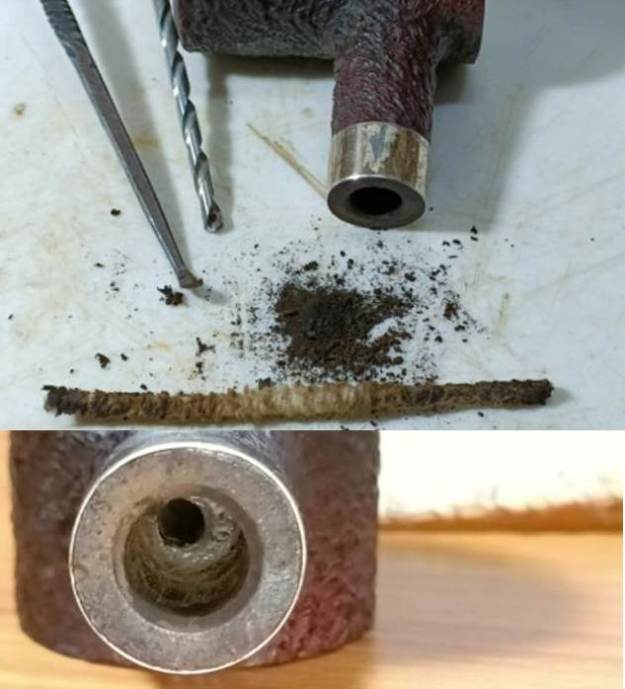
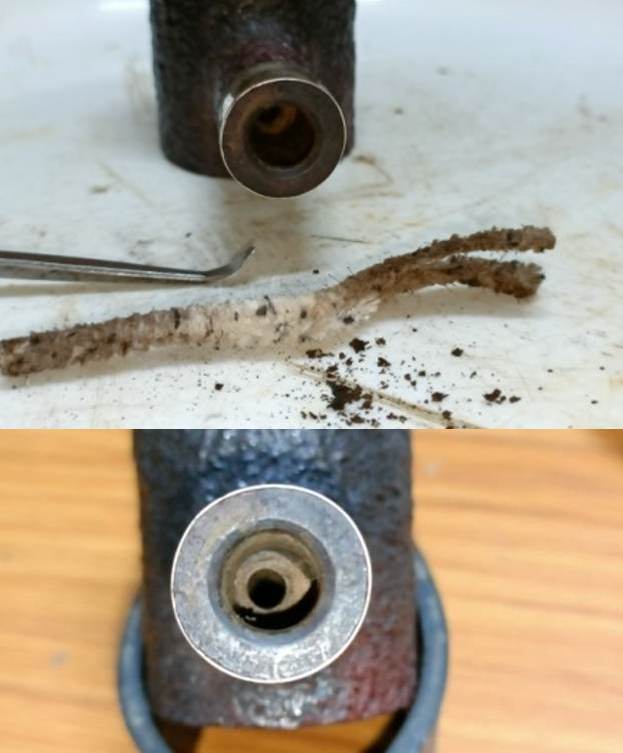
I started the process of refurbishing this pipe with internal cleaning of the stem and this is where my initial appreciation of the stem condition faulted. Using thin shank brushes and anti-oil dish washing soap, I cleaned the stem airway. I have modified this process of cleaning the stem airway by doing away with pipe cleaners and alcohol as it saves me a ton of pipe cleaners, which is a precious commodity for me here in India. To say that the airway was filthy, would be an understatement as is evidenced by the following pictures. The dark smelly and sticky goo that was being dislodged with each passing of the shank brush was never-ending. However, I persevered with my efforts till only white clean foam came out of the stem airway, indicating that the airway was nice and clean. I ran a couple of pipe cleaners dipped in alcohol through the airway to dry it out and make sure that there are no traces of soap and gunk hidden in the airway.With the stem internals now clean, I moved to external cleaning of the stem surface by dunking the stem into “Before and After Deoxidizer” solution developed by my friend Mark Hoover. The solution helps to draw out heavy oxidation to the surface making it’s further removal a breeze, while the minor oxidation is eliminated to a very great extent. I usually dunk stems of 5-7 pipes that are in-line for restoration and the FERNDOWN BARK is marked in red arrow. I generally allow the stems to soak in this solution overnight for the solution to do its work.While the stem was set aside to soak in the deoxidizer solution, I moved on to removing the thin (????) layer of cake from the chamber walls. Boy was I wrong in my assessment of thin layer and how! I started the reaming process with head size 2 of the PipNet reamer blade and progressed through head sizes 3 and 4. The blades kept cutting through the layers of cake and there seemed no end to it. Finally, I resorted to using my Kleen Reem pipe tool extended to its max width to divest the chamber walls of its entire carbon layer. The chamber is huge ! I used my fabricated knife to remove cake from areas inaccessible to the reamer blades and completed the process of removing the cake by sanding the walls smooth with a folded piece of 180 grit sandpaper. I wiped the chamber with a cotton swab wetted with alcohol to clean the residual carbon dust. The chamber walls are solid and the minor thin veins that are visible over the walls are not heat fissures but an ultra thin layer of carbon which will be addressed once the cake is loosened up after a salt and alcohol bath, or at least that is what I hope for. Next, I cleaned the mortise by scraping out all the dried oils and tars from the walls. My assessment of the mortise being clean was proved wrong by the amount of crud that was scraped out. The icing on the cake was when I tried to clean the airway with a folded pipe cleaner dipped in alcohol and it just wouldn’t pass through. I realized that the airway was clogged to some extent. Using the drill bit attachment from the Kleen Reem pipe tool, I cleaned out the accumulated oils and tars from the airway and ran a folded bristled pipe cleaner dipped in alcohol through the airway. I checked the draw and if earlier I felt the draw was smooth and open, after the cleaning, it was surreal! The draw was something I had not experienced earlier. The air literally gushed through the airway. This one is a sure fire excellent smoker.Continuing with the internal cleaning of the chamber and shank, I subjected it to a salt and alcohol bath. I used cotton balls which is an at par substitute as I have realized over the years. I drew out a wick from the cotton and along with a folded regular pipe cleaner; inserted it into the mortise and through the draught hole and further into the chamber. Thereafter, I packed the chamber with cotton balls to about quarter of an inch below the rim inner edge and soaked the cotton balls with isopropyl alcohol up to the brim. About half an hour later, the level of alcohol had gone down, having being absorbed by the cotton. I topped it up once again and set it aside overnight. By next afternoon, the cotton and alcohol had drawn out all the remaining oils/ tars from the chamber and mortise and loosened out any residual cake and tar build up, fulfilling its intended task. I removed the cotton balls and ran pipe cleaners through the mortise to clean out all the loosened tars and gunk. Using my fabricated tool, I scraped out the entire loosed gunk from the mortise and further cleaned it with alcohol and q-tips. I also scraped the moist cake from the chamber using my knife and sanding it smooth with 180 grit sandpaper. The chamber now smelled clean and fresh and the tiny veins observed in the chamber were eliminated. I set the stummel to dry out naturally. I cleaned the external surface of the stummel with undiluted Murphy’s Oil Soap and a hard bristled toothbrush. I cleaned the smooth rim top surface with the soap and Scotch Brite pad. I thoroughly cleaned the mortise with shank brush and anti-oil dish washing soap. I polished the smooth rim top surface by dry sanding with 1500 to 12000 grit micromesh pads.  Next, I rubbed a small quantity of “Before and After Restoration Balm” into the briar with my finger tips and let it rest for a few minutes. The balm almost immediately works it’s magic and the briar now had a nice vibrant appearance with the beautiful rustication patterns on full display. I have been using this balm ever since I embarked on this journey and it is this part of restoration that I always look forward to. I further buffed it with a horse hair shoe brush. This pipe really oozes of a very high quality, in fact one of the best that I have come across. Now that the stummel refurbishing was nearly done and also the stem had now been soaking for more than 24 hours, I removed the stem from the solution. I first scrubbed the stem surface with a Scotch Brite pad, always being mindful of the stem logo on the left side. I followed this scrubbing with a nice cleaning of the surface using a 0000 grade steel wool. I rinsed the stem under running water to rid the stem of the thick solution. I ran a couple of pipe cleaners to remove the deoxidizer solution from the airway. The beauty of a Cumberland stem with swirls of red and black can now be appreciated once the heavy oxidation has been eliminated.The above cleaning also gave a clearer picture of the tooth chatter on either surface in the bite zone. This tooth chatter was very minor and would be easily addressed during the sanding process using various grit sandpapers followed by micromesh pads. I dry sanded the entire stem with 320, 400, 600 and 800 grit sand papers followed by wet sanding using 1000, 1500 and 2000 grit sand papers. This progressive use of higher grit sandpapers helps to, firstly,  reduce the sanding marks left behind by the more abrasive ones, secondly, completely eliminate the oxidation and imparting a clean shine to the stem surface. Thirdly, this also helped to even out the minor tooth chatter from the bite zone. I applied a little EVO and set the stem aside for a few minutes. This stem, as the rest of the pipe, is a real beauty.I went through the 3200 to 12000 grit micromesh pads to dry sand the stem. The stem now has a nice deep shine with the swirls coming to life as they dance around the entire stem surface. I rubbed a small quantity of EVO and set the stem aside for the oil to hydrate the stem surface. This is a beautiful stem and I cannot refrain from constant admiration of it. Have a look for yourself….I painted the stem logo L J S using a Gold paint glitter pen and wiped off the excess paint. The stem logo is now nice and prominently visible. I completed this project by hand polishing the stummel with Halcyon II wax. I rubbed this polish deep into the rustication and after a couple of minutes, vigorously hand buffed the stummel with a microfiber cloth to a deep shine. I polished the stem with Blue Diamond compound and subsequently with carnauba wax using my hand held rotary tool. This is a gorgeous looking pipe and will be an integral part of my collection of contemporary Pipe Carvers. I wish to thank each one for sparing their valuable time to read through this write up and praying for the health and safety of you and your loved ones.

This restoration is a bit of a resurrection of a beautiful Ferndown Root 3* Dublin


Blog by Steve Laug

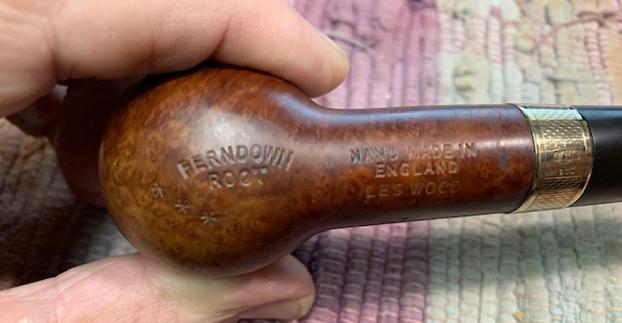
This pipe was one of those happy coincidences. I have been looking for a Les Wood Hand Made Ferndown pipe for quite a while now to add to my collection. I have read a lot about them and had them on the wish list but have never found one. The crazy thing was that I was looking on Maxim Engels Site here in Canada and on EBay when I received an email from David asking if I would be willing to breath life back into this badly damaged beauty. That should have been an easy answer but I have been turning down work as my “day” job has dramatically become more consuming and I am left without a lot of time to work on pipes. I have been turning down pipes for repair for awhile now not wanting to add to the load. I postponed answering him and when I finally did I asked him to send me photos of the pipe so I would know what I was getting into. He immediately forwarded me the next two photos and I was hooked! I have not worked on a Ferndown before and this one looked like a good candidate for me to work on. I wrote and asked him about his timeline and he was very gracious with me. We struck a deal and the pipe was on its way to Canada for work. It dawned on me then that I had no idea what the rest of the pipe looked like and I would just have to wait and be surprised.I came home from my office yesterday to find the box from David waiting for me. My wife Irene had put it where I would see it. I took it to my work desk in the basement and carefully opened a well packed box that had originally contained pipes that I had sent to David. It was good to see this little box continue to serve its purpose as the vessel that protects it precious cargo. I took it out of the box and took some photos of it to chronicle the issues that I saw and give a benchmark for me before I began the work.

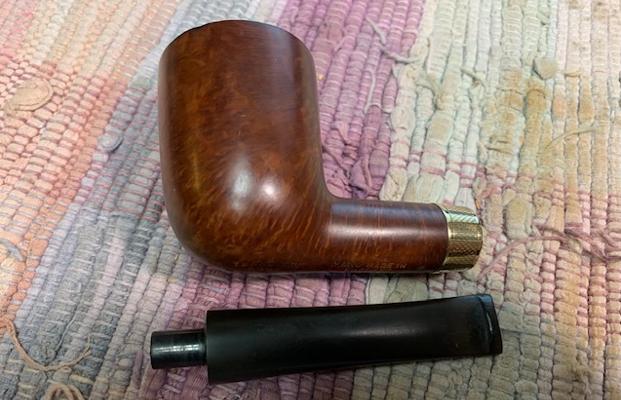
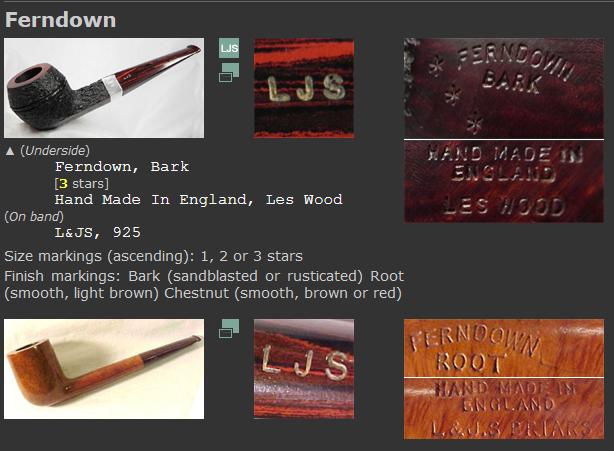
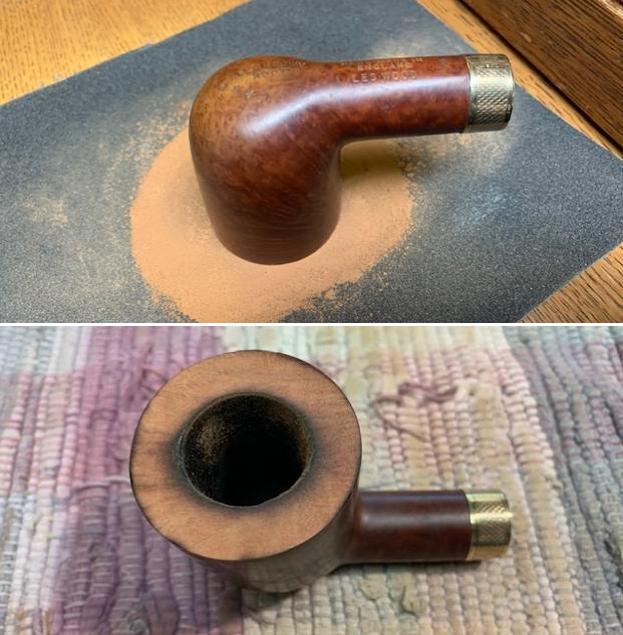
The pipe is a beautifully shape Dublin with a gold band. The pipe is stamped on the underside of the bowl and shank. On the heel of the bowl it is stamped Ferndown [arched over] Root [over] ***. Next to that it is stamped Hand Made In [over] England [over] Les Wood. On the gold band it is stamped L&JS in a rectangle [over] 9CT. The finish is quite beautiful but dirty on the bowl sides and shank. The largest issue with the pipe is the rim top and edges. There are burn marks around the front and back outer edges. The rim top itself is covered with lava but not enough to hide the charred inner edge and top. The damage is deep from the looks of the bowl top but cleaning would tell the story. The bowl itself is out of round from the damage. There was a thick cake in the bowl and the pipe stank of old tobacco but not enough to distinguish what it was… I know it was not an aromatic from the smell but otherwise I could not identify it. The taper stem is oxidized and has some calcification on the end. It is stamped on the left side and reads LJS. It was originally a stunning pipe and even with the damage and grime it still had class that was evident the moment you looked at it. I took a photo of the rim top and edges to show the burn damage around the bowl top and inner and outer edges. It has some serious char under the lava coat. The bowl is thickly caked as you can see from the photo. I also took photos of the stem to show its condition. There are light tooth marks and chatter on both sides next to the button and there is a deep oxidation in the vulcanite.I took a photo of the stamping on the heel of the bowl and underside of the shank and gold band. It is clear and readable as noted above.I removed the stem from the bowl and took a photo of the pipe to show the proportions of the design. It is really a well made pipe.I turned to Pipephil to help me interpret the stamping on the pipe and gain some background information (http://pipephil.eu/logos/en/logo-f1.html). The photo to the left shows Les Wood and the information below came from the side bar. I have also done a screen capture of the information on the site.

Artisan: Leslie (Les) Wood. He was the master silver smith at Alfred Dunhill Ltd. before starting L. & J.S. Briars. Pipes for the European market are stamped “L. Wood” while those for US are stamped “Ferndown”. Production: ~ 2000 pipes/year (Ferndown + L.Wood) See also Elwood.From the information on Pipephil I learned that I was working on a pipe made for the US and that it was a large 3 star pipe in terms of size. I also learned that the Root finish was a smooth light brown. All of which helped to understand the pipe in hand.

I turned to Pipedia (https://pipedia.org/wiki/Ferndown) to find a more detailed history and description of the brand and was amazed to find that the majority of it was either quotes or written by Les Wood himself. I am quoting some pertinent parts of the article below. You can turn to the site to read it in full.

Leslie “Les” John Wood worked for Dunhill for 19 years. His last position was as master silversmith. Following his tenure with Dunhill, Les formed his own brand, L. & J.S. Briars together with his wife Dolly in 1978. Les Wood follows Sasieni, the first ex Dunhill worker to start their own enterprise, and he was followed by William John “Ashton”-Taylor.

“I started working at Dunhill’s in March 1963, in the silver mounting department working under Jack Spriggs he left the firm after I had been there for 2 years, and I took over the department, at that time I worked alone it was only when the department was relocated to the top floor that the increase of pipes that needed mounting that we took on trainees. After 19 years I was asked if I would buy the machinery and move out of the factory and set up on my own, so off I went. With me I took the staff that worked with me at that time, Robert Morris was the best, he could mount anything, he now has his own jewellery retail shop and makes some really nice handmade jewellery from his shop at Whitstable in Kent.”

“I worked on Dunhill’s pipes from 1980/81 and soon built up a reputation as the firm to send your mounting to. As time went on and Dolly left Dunhill’s we decided to start to turn our own bowls and make our own pipes under the name of my house.” Les Wood. Jan, 2020…”

Due to the vagaries of international trademark law, he sold his earlier pipes as ” L.&J.S Briars”, “Ellwood”, “Les Wood” or “L. Wood”. Until recently, an average of 1500 – 2000 pipes a year were sold as “Ferndown” — named for the mansion he lives in — in the UK and US, but as “L. Wood” pipes in Germany…

To many pipe smokers, Les Wood’s pipes embody the revival of great English pipe making initiated by Ashton in the early 1980s. The high-grade Italian and Spanish plateau he prefers is oil-cured in the tradition of both Dunhill and Ashton. The pipes are renowned for their pleasant, slightly nutty flavor and remarkable smoking characteristics. They feature impeccable craftsmanship extending to very good stem/bit work, though many pipes are often a bit heavier. The hallmark of his work, of course, is the excellent silver work. Almost all of his pipes feature rings or ferules for spigot stems. Grading is by finish: “Bark” (ca. 90%, rusticated, dark brown and black), “Antique Bark” (tan rusticated), “Reo” (brown and red, smooth), “Root” (orange, smooth), and “Tudor Root” (orange and brown smooth) and by size (one to four stars). He also designates straight grains with SG…

“We bought the briar from Italy and Spain, one is mush denser that the other I like the Spanish briar it is lighter and Dolly would make the Roots look like glass with only a natural vanish, all the pipes were finished with the same varnish, the bark finish on the bowl is put on by Dolly by hand, one slip and you have a problem. That’s one job that needs to be seen to see how it’s done.”

There also was a great paragraph on the oil curing process that Les and Dolly developed. I am including that below as the pipe I am working on was definitely oil cured.

“We had our method of Oil-Curing. We applied Oil to the outside and the inside of the bowl, that was because when Dolly was at Dunhill’s factory, she worked in the finishing department and got such a high finish on the pipes they wanted to know how she did it. The bowls had already gone through Dunhills’ oven oil curing system, but to her, it was not enough, because it could not get the shine that she wanted, then, she oiled the bowl on the outside and the inside to get a better finished. She left Dunhill and came to work with me. Because of this process, we found out the smokers liked the taste when light up their pipe – they said there was no aftertaste and it had a sweet taste doesn’t matter what tobacco they used. We have carried it on from there.”

With that background information it was now time to work on the pipe itself. I decided to top the bowl to remove the heavy charring damage. I put a piece of 180 grit sandpaper on the topping board and worked the rim top and edges over in a circular motion on the board. After a few passes I took a photo of the rim top to show the progress but also to show the burn damage.Before working on the rim edges I reamed the bowl with a PipNet Reamer to cut back the cake to bare wood. I cleaned up the remaining cake with a Savinelli Fitsall Pipe Knife. I then sanded the bowl with a piece of 220 sandpaper wrapped around a piece of dowel to smooth out the bowl walls. The reaming and sanding cleaned up a lot of the damage on the inner edge as you can see in the fourth photo below.With that done I turned my attention to the inner and outer edges of the rim. I cleaned up both with a folded piece of 220 grit sandpaper. I worked on removing the burn marks on the outer edge and gave the inner edge a light bevel to hide the burn marks.I scrubbed the exterior of the bowl and shank with undiluted Murphy’s Oil Soap and a tooth brush. I work on the grime ground into the briar. I rinsed the bowl with warm running water to remove the debris left behind from the scrubbing. The pipe looked much better and the rim top was greatly improved. I cleaned the internals of the bowl, shank and airway in the stem with isopropyl alcohol, cotton swabs and pipe cleaners until they came out clean.I set the stem aside and turned my attention to polishing the briar. I used 1500-12000 grit micromesh sanding pads and wiped the bowl down after each pad with a damp cloth. The briar on the rim began to change the colour to get much closer to the rest of the bowl. I used a Maple stain pen to blend the rim top into the colour of the rest of the bowl. It matched well and served to obscure the burn mark on the rim edges. I also restained a light spot on the heel of the bowl. I rubbed the bowl and shank down with Before & After Restoration Balm. I worked it into the surface of the bowl sides and shank with my fingertips to clean, enliven and protect the briar. I let the balm sit for a little while and then buffed with a cotton cloth to raise the shine. The Balm did its magic and the grain stood out. I set the bowl aside and put the stem to soak in a bath of Briarville’s Pipe Stem Deoxidizer overnight. In the morning I rinsed it off with warm water and rubbed off the remaining softened oxidation until the stem was very clean. It looked very good and even the LJS gold stamping looked good. I set the bowl aside and turned my attention to the stem. I “painted” the tooth marks on the stem with the flame of a lighter to raise them. I sanded the remaining tooth chatter and marks with 220 grit sandpaper to blend them into the stem surface. I started the polishing process with 400 grit wet dry sandpaper. I polished the vulcanite stem with micromesh sanding pads – 1500-12000 grit pads. I wiped it down with Obsidian Oil after each sanding pad. I used Before & After Pipe Polish – both Fine and Extra Fine to further polish the stem. The photo below shows the polished stem.     I touched up the LJS stamp on the left side of the taper stem with Rub’n Buff Antique Gold. I rubbed it on and worked it into the stamp with a tooth pick. I buffed it off with a soft cloth. This nice looking Les Wood Ferndown Root 3 Dublin with a taper vulcanite stem is a great looking pipe now that it has been restored. The briar is clean and the grain really came alive. The rich brown stains gave the finish a sense of depth with the polishing and waxing. The grain really popped. I put the stem back on the bowl and buffed the pipe with Blue Diamond on the buffing wheel using a light touch on the briar. I gave the bowl and the stem multiple coats of carnauba wax on the buffing wheel. I buffed the pipe with a clean buffing pad to raise the shine. I hand buffed the pipe with a microfiber cloth to deepen the shine. The finished Ferndown Root 3 Dublin really is a beauty and feels great in the hand and looks very good. Give the finished pipe a look in the photos below. The dimensions of the pipe are Length: 6 inches, Height: 2 inches, Outside diameter of the bowl: 1 ¾ inches, Chamber diameter: 7/8 of an inch. The weight of the pipe is 66 grams/2.36 oz. The pipe will be going back David very soon. I am looking forward to what he thinks once he has it back in his hands. Thanks for reading this blog and my reflections on the pipe while I worked on it. It was a fun one to work on.