Tag Archives: L&Co pipes

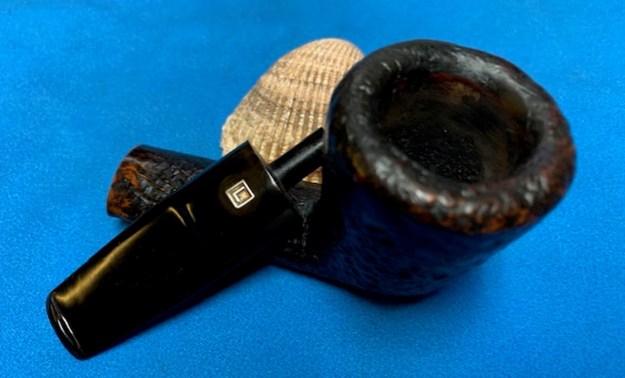
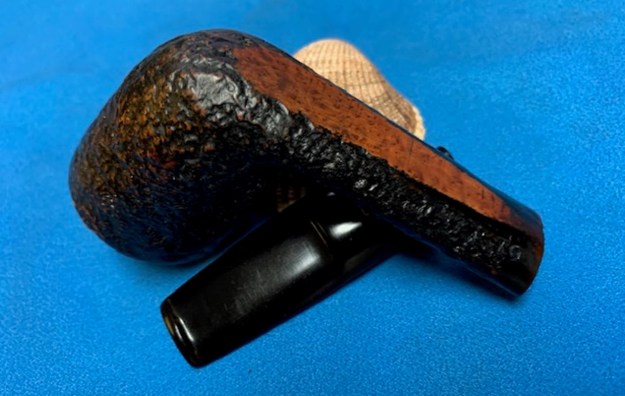
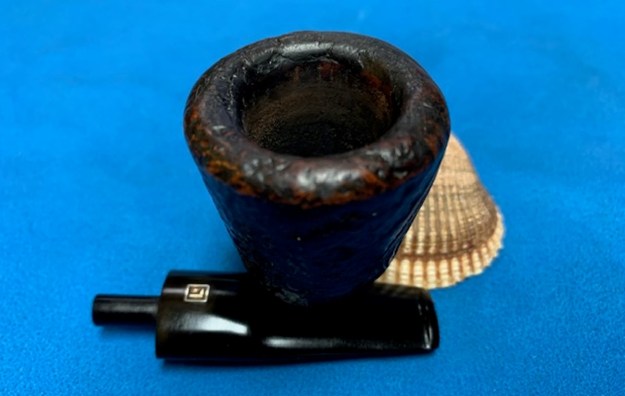
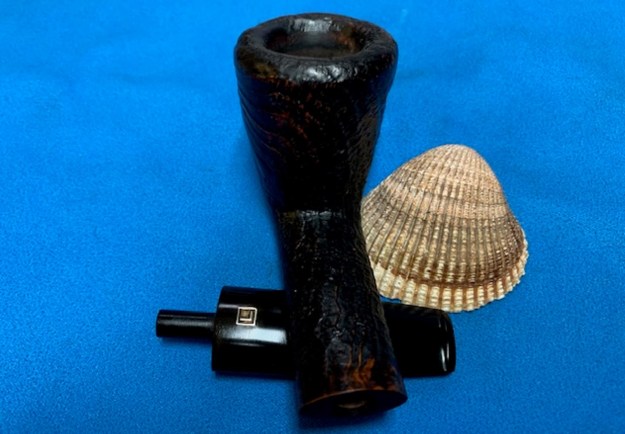
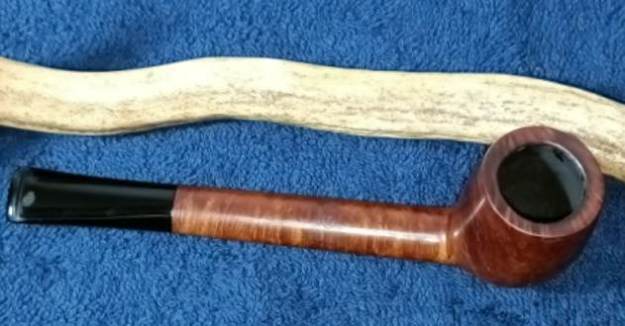
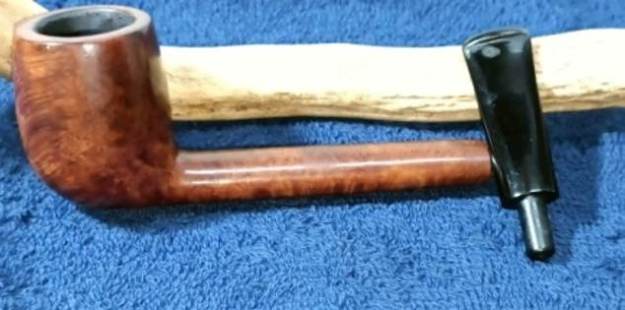
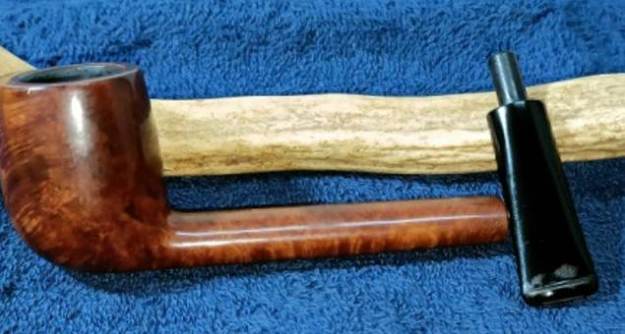
Restoring a French Made Loewe & Co. 015 Dublin with a Saddle stem


Blog by Steve Laug

The next pipe on the work table is one that a fellow sent me from England (I have since found out that he is in Scotland not England). He had written to me earlier this week about an old pipe that he had that needed some work. Here is his first email.

Hello. I have an old pipe I would like restored. Its not something I feel I could do myself. I was wondering if you provide a restoration service, and if so how I would go about sending you the pipe to work on. –  Leo

I replied to him as follows:

Hello Leo, I do restoration but I am located on the west coast of Canada. Send photos of the pipe so I can have a look and we will go from there. Thanks. – Steve

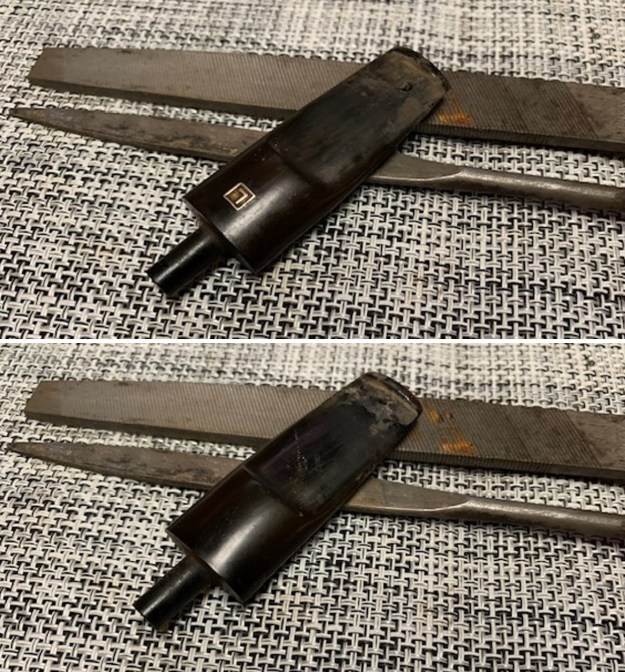
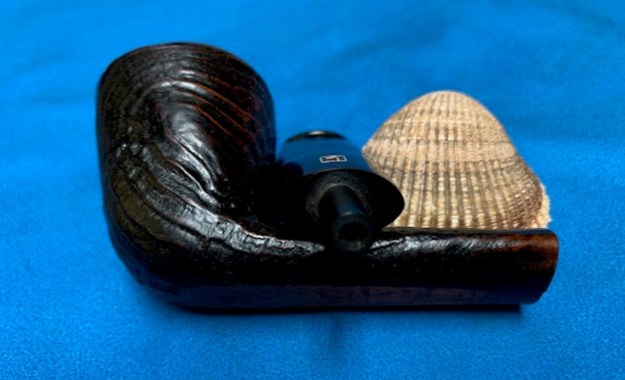
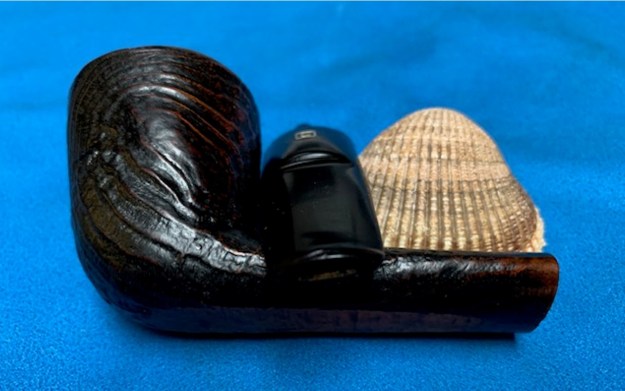
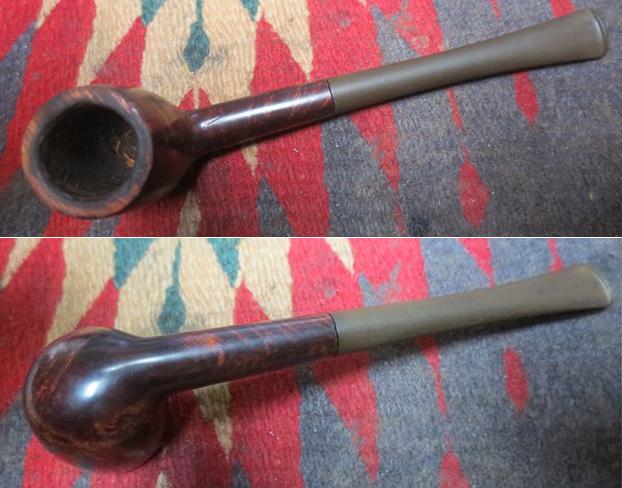
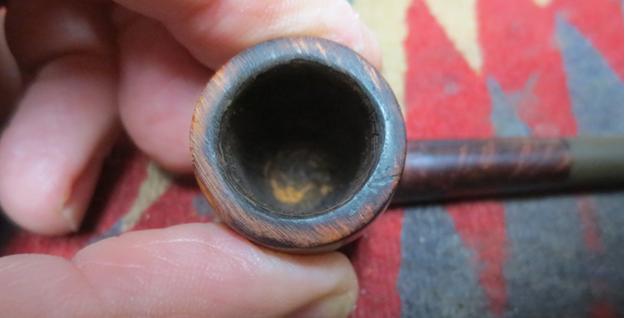
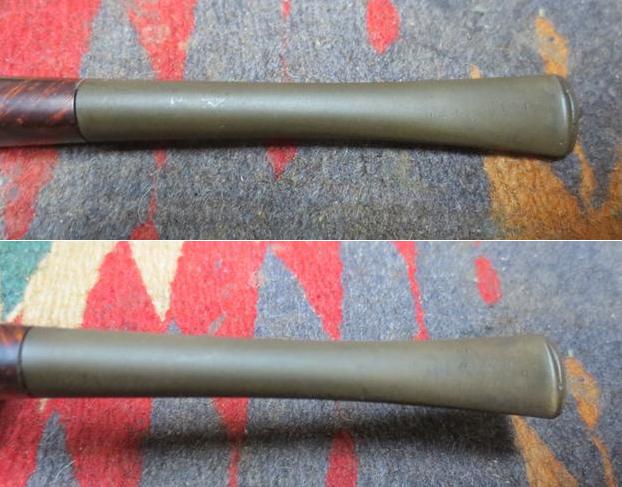
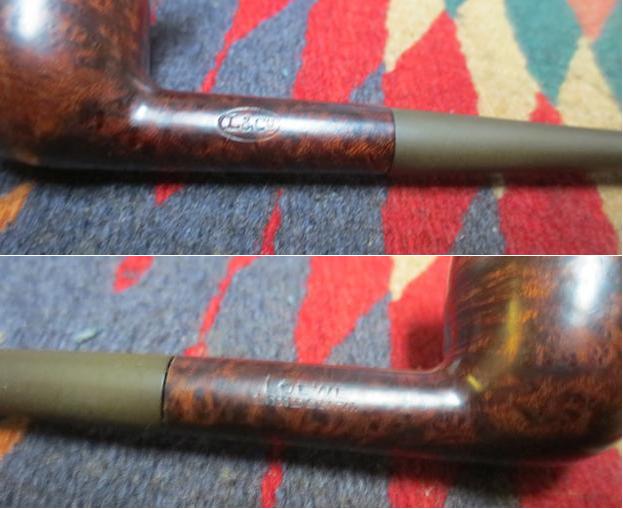
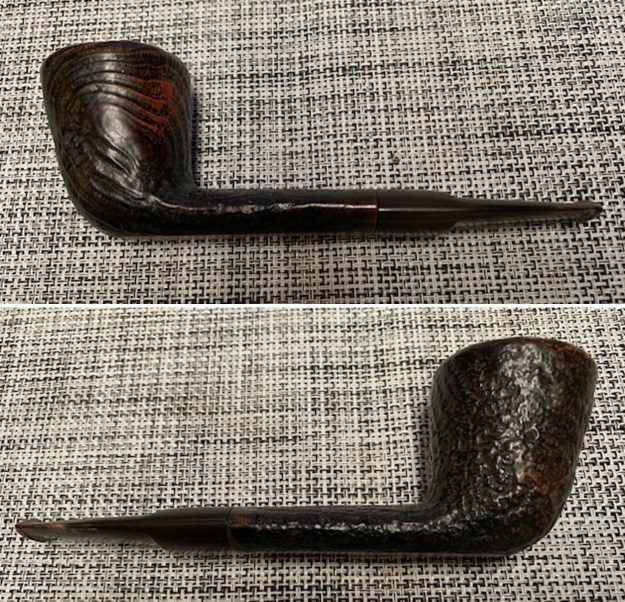
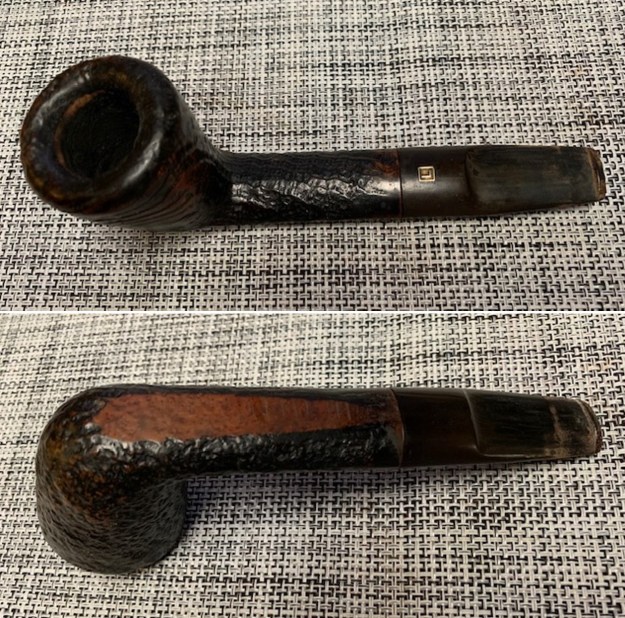
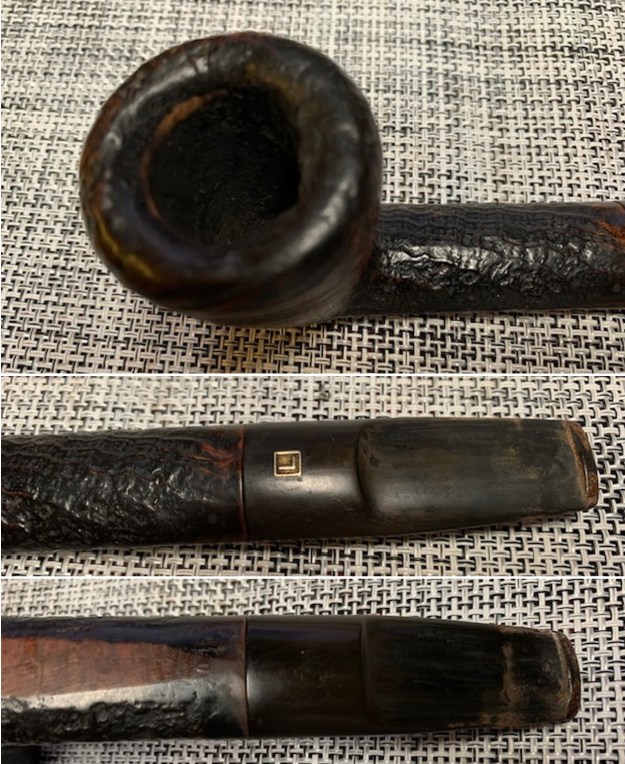
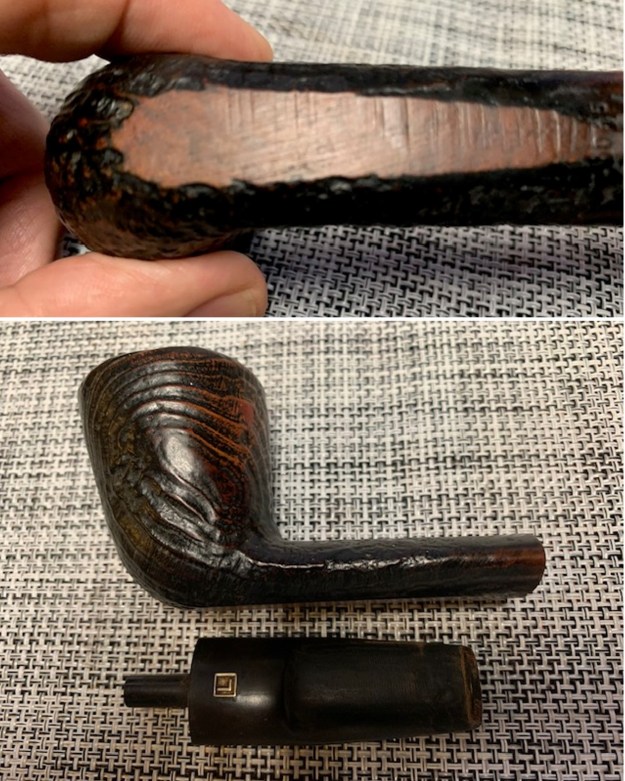
He did not waste anytime and sent me an email with the first three pictures below. It is an interesting looking long, oval shank, sandblast Dublin with a vulcanite saddle stem. After viewing the photos and emailing back and forth with Leo about the pipe I asked him to mail it to me so I could work on it. It is an interesting sandblast, long oval shank Dublin. The bowl had a thick cake inside and a lot of lava overflow on the rim top. The finish is quite dirty with a lot of grime in the sandblast valleys. It was worn on the left side of the bowl and dark finish was light there. The photo of the underside of the shank shows scratches and marks on the surface that had all but eliminated the stamping. There is a shape number at the stem/shank junction that reads 015. Below that it is stamped Made in France. The stem is dirty with oxidation, calcification and deep scratches and marks on both sides. There are tooth marks ahead of the button on both sides that are quite deep.  There is a brass square on the top of the saddle that has an L in it. There are no other identifying marks on the pipe. It will be fun identifying it and the brass L square will tell me a lot. It is a uniquely shaped pipe that I really like the looks of and I think that once it is cleaned up it will be a real beauty.
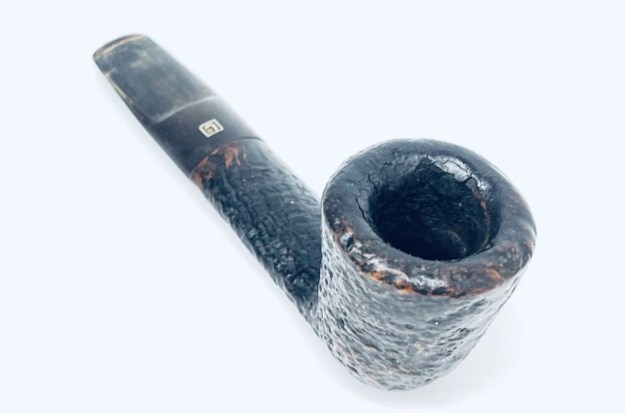
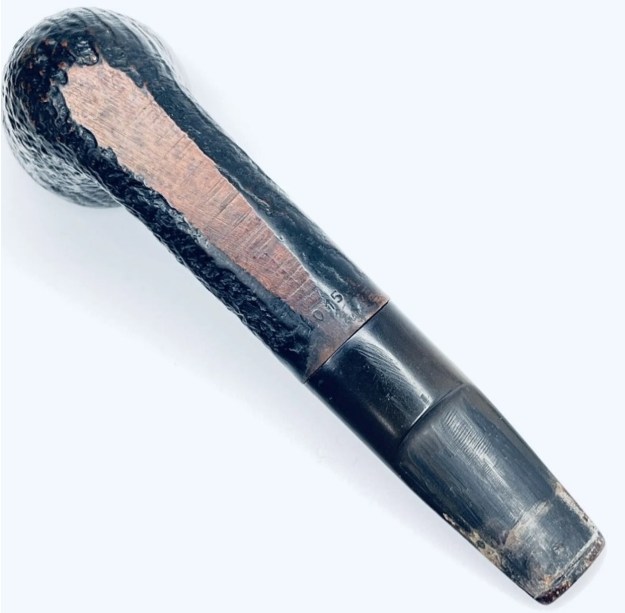
The pipe arrived this week while I was travelling. I took photos of the pipe once I brought it to the work table. I always include the pre-clean up photos to confirm what I saw in the photos that were sent to me. In this case the condition matched what I saw in the photos. The pipe was a real mess and would take some work to clean up and restore. I took photos of the bowl and rim top as well as the stem. The rim top shows the thick lava coat on the top and the inner edge of the bowl. It is heavier on the back side than the front. You can also the lava fill on the rim top almost completely hiding the rustication. You can see the oxidation around the stem sides, the scratches on the surface and the deep tooth marks and chatter on both sides ahead of the button.I took a photo of the stamping on the underside of the shank. It reads as noted above. The hash marks and scratching on the smooth surface have obliterated the stamping and it is unreadable. The shape number 015 and the Made in France stamping is still readable at the shank/stem junction. The pipe is quite nice with the stem removed. You can see the flow of the design and the look of the parts.Before I started my cleanup work on the pipe I decide to do a bit of digging on the brass square L logo on the stem. I scrolled through all of the pipe brands that started with an”L” on Pipephil until I came across the listing for Loewe pipes (http://www.pipephil.eu/logos/en/logo-l5.html). The third pipe down in the screen capture below has the same logo on the stem as the one I am working on. Now I knew that the pipe was a Loewe and that it was a French Made one at that. I have included the screen capture of the section below.I then turned to the article on Loewe pipes on Pipedia for more information and to see if I could find anything on the French made Loewe pipes (https://pipedia.org/wiki/Loewe_%26_Co.). There was a passing note in the article in the fourth paragraph that I have marked in red. It states that French Loewes appeared in the early 1980s and are a sign that the pipes were made in more than one location before the Cadogan Era.
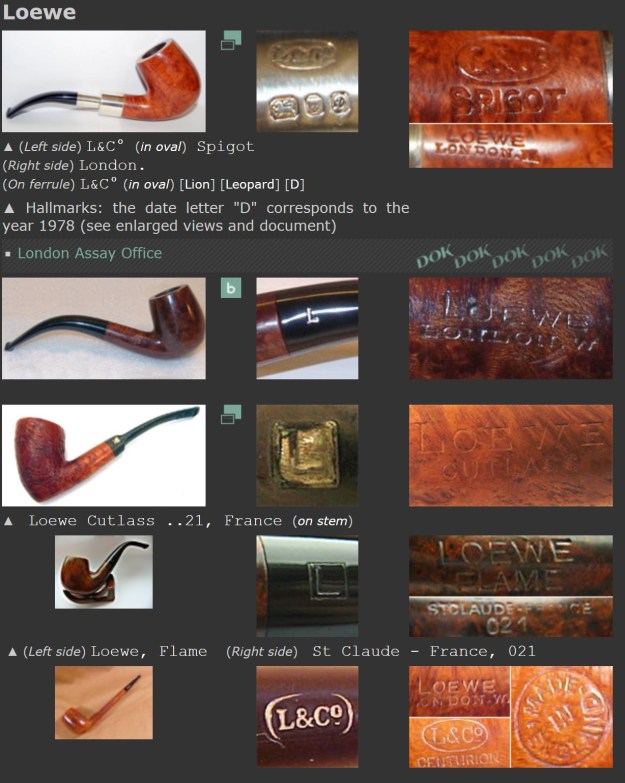
Loewe is one of the haunting old names of British pipe-making, characteristic of an almost vanished “upper middle class” of the trade, which also incorporated makes such as BBB, Orlik, Comoy’s and GBD. Along with these brands, Loewe has long dwindled into pseudo-existence, becoming little more than a logo occasionally used by the Cadogan factory in Southend-on-Sea. But owners of older Loewes treasure them as superb, featherweight smokers, excellently crafted and with grain characteristics superior to those of many contemporary Dunhills.

The Frenchman Emil Loewe founded the company, both shop and workshop, in 1856 at the Haymarket 62, London. He is said to have been the first to make briar pipes in England. Richard Hacker maintains that theatre people from the West End were among the shop’s heyday aficionados. Loewe’s spigots are especially well regarded by lovers of elegance today – they were originally introduced for practical reasons, to facilitate the production of replacement stems for customers abroad.

The firm and its facilities were later taken over by Civic, well before becoming a fully integrated part of the Cadogan group sometime in the final quarter of the twentieth century. As with other brands belonging to this group, it is not easy to pinpoint a date marking the end of Loewe’s independence and singularity. This is partly due to Cadogan’s own development from a cooperative to a monolithic entity.

In 1979, a German paperback said that the Loewe brand had been discontinued two years previously, but that the pipes themselves were due to reappear as high-end GBDs. Interestingly, the year of publication coincided with the year in which the Loewe trademark became Cadogan’s, who by this time already owned GBD. From today’s point of view, the author appears to have been working on confused, but partly true information. If there were ever really plans to fully amalgamate the two lines, they were dropped. Also, a two-year break at this time seems impossible, since we have hallmark evidence of Loewes made in 1978 and 1979. However, there are firm indications that Loewe shapes were later marketed as Comoy’s (another Cadogan brand). There may also have been a phase of dissolution regarding location. The reported appearance of French Loewes in the early 1980s is a sign that Loewes were being produced in more than one place at some stage before the Cadogan-era proper.

From what I can gather, Cadogan’s various brands continued to be made in separate facilities throughout the1970s. It was the purchase of Orlik in 1980 that enabled the Cadogan group to consolidate all manufacturing in that company’s new factory in Southend-on-Sea. Whether or not this transferral was a gradual process and when it affected Loewe is unclear. We hear that, as a company, Loewe was not formally wound up by Cadogan (the successor to Civic) until the late 1980s. Of course, today’s ‘Loewes’ are definitely made in Southend – though, according to Cadogan, the trademark is no longer used very much.

Now I knew for certain that I was working on a French made Loewe & Company pipe and that it was made in the early 1980s. Now it was time to work on the pipe.

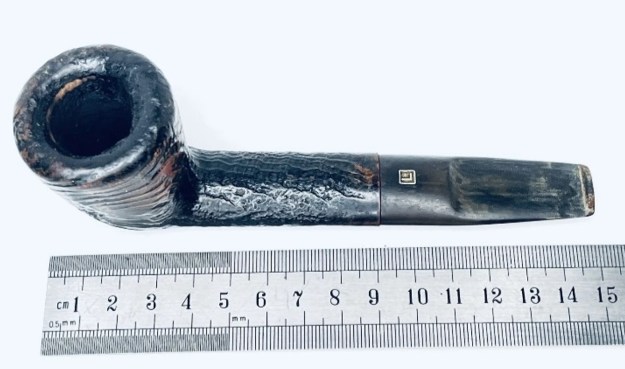
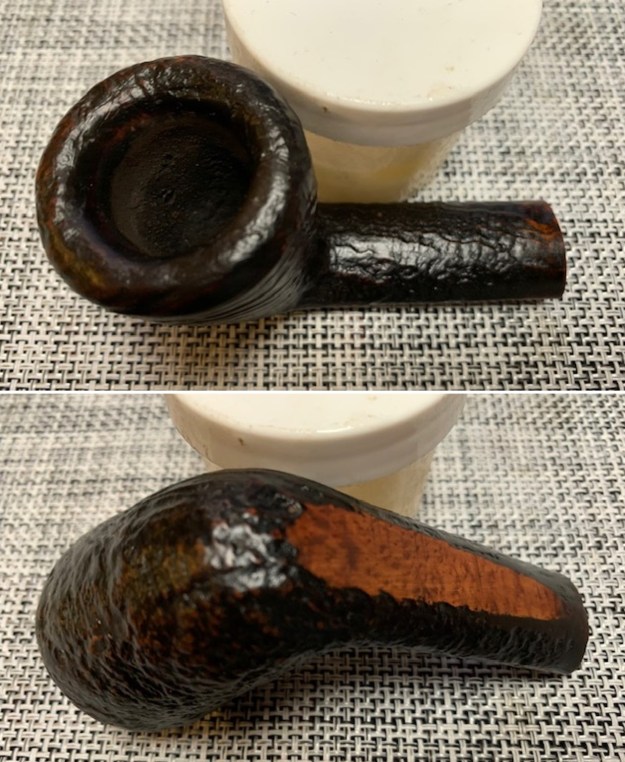
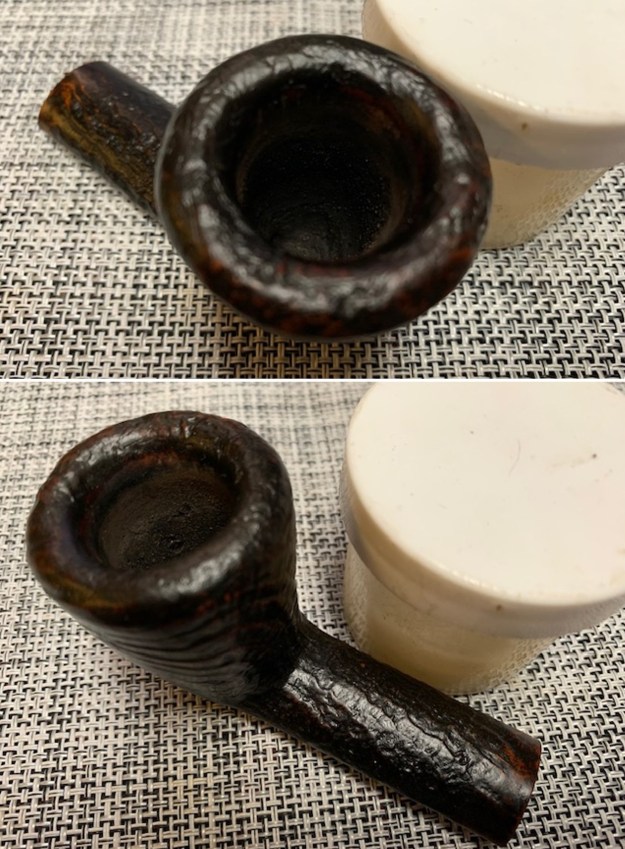
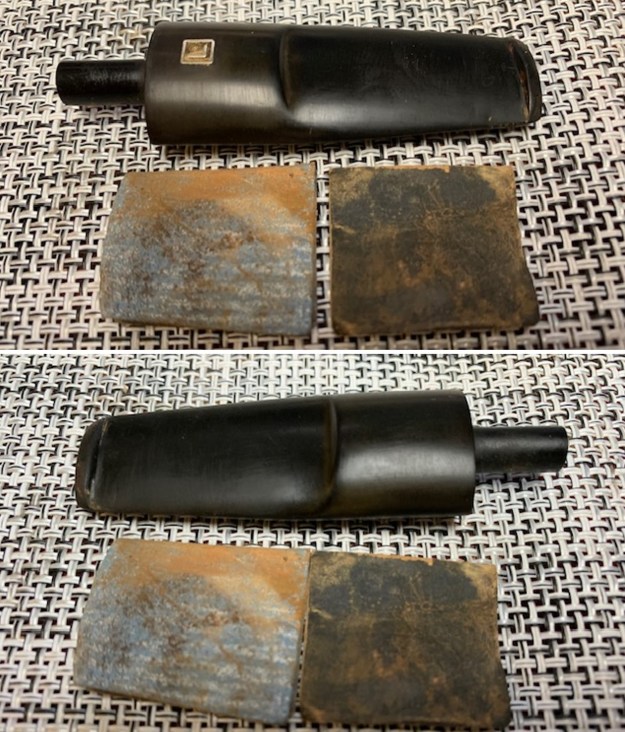
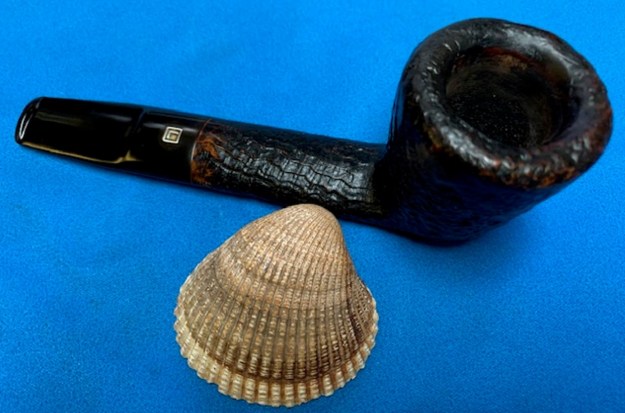
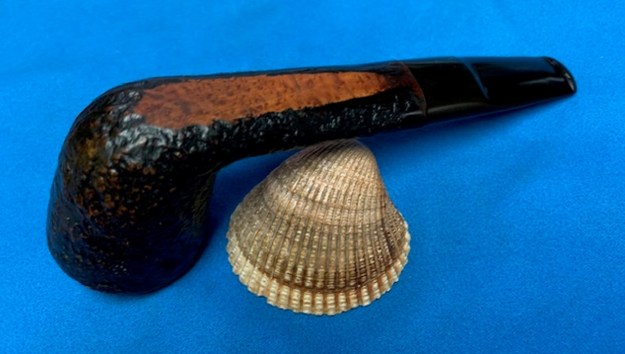
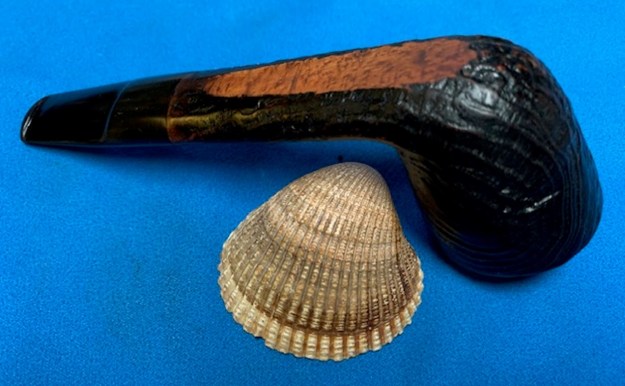
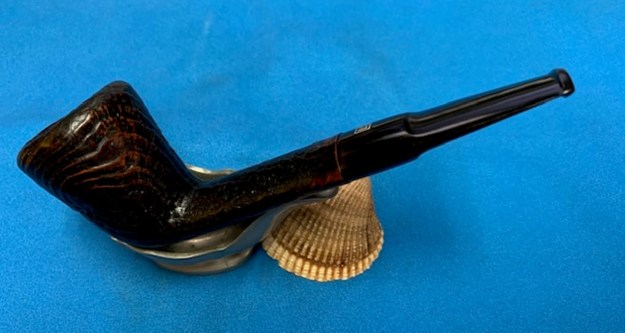
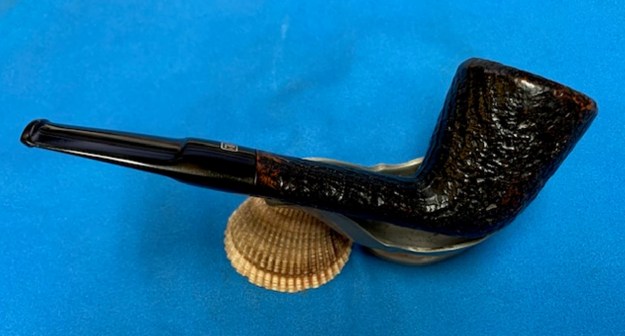
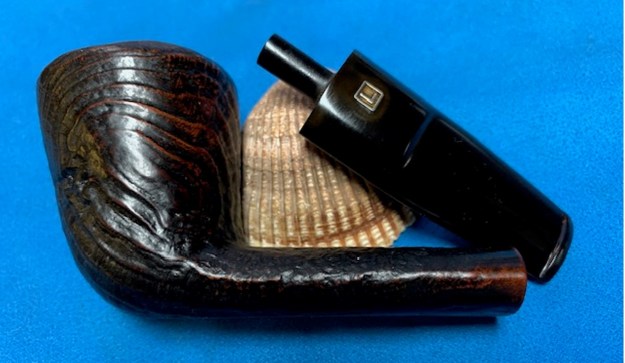
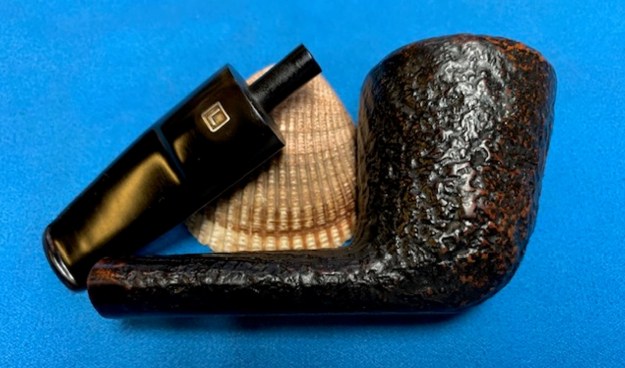
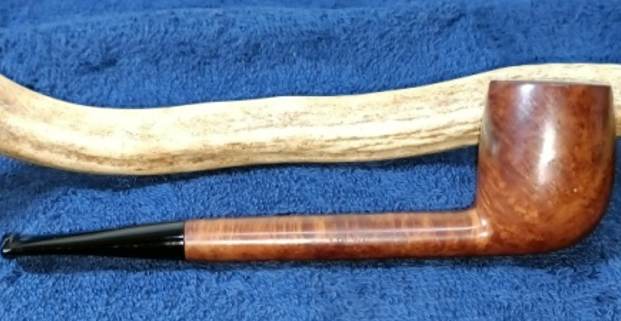
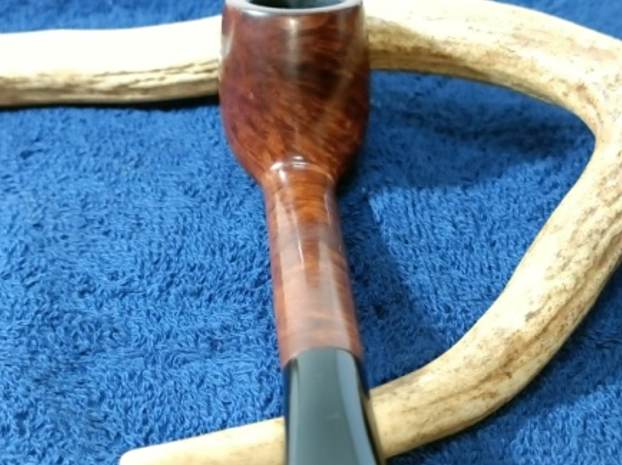
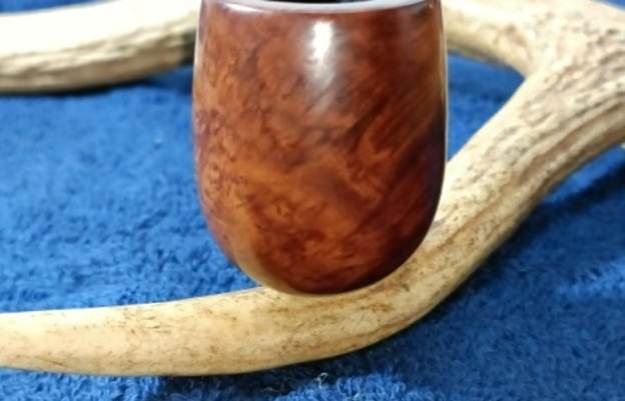
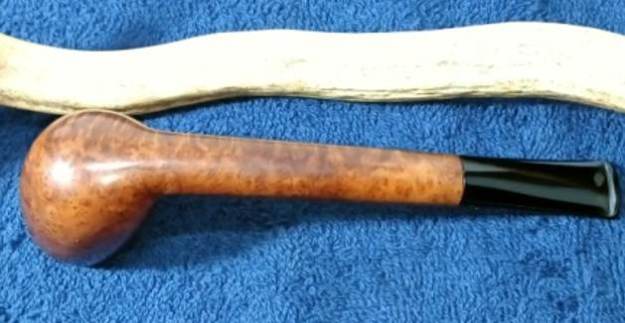
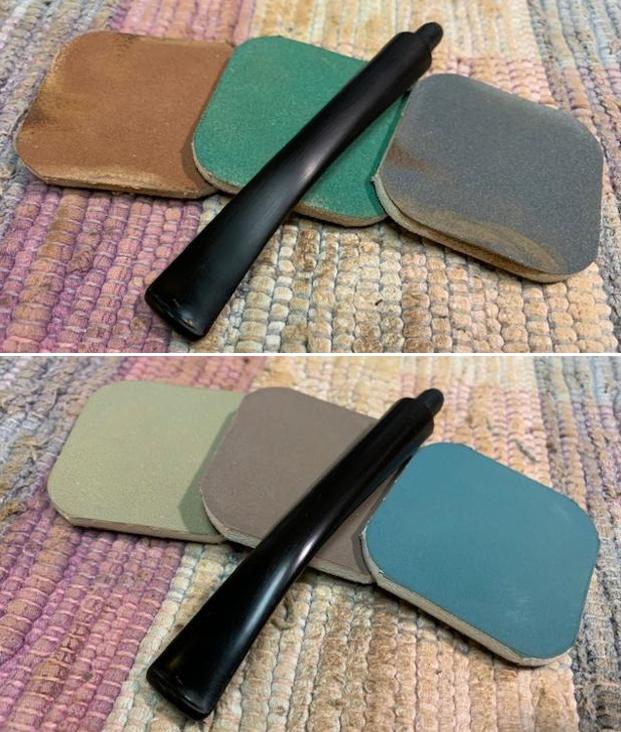
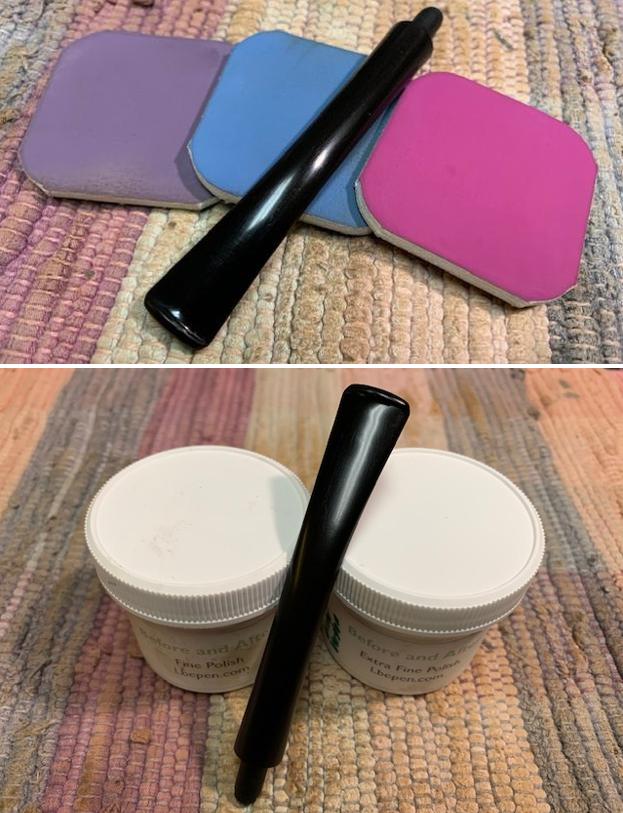
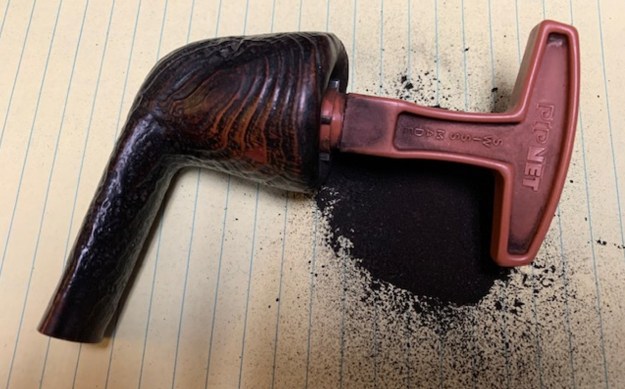
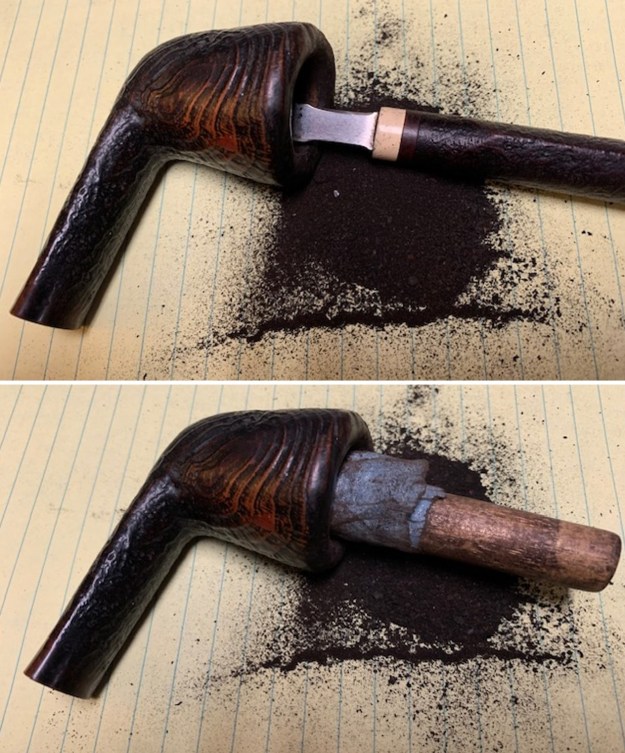
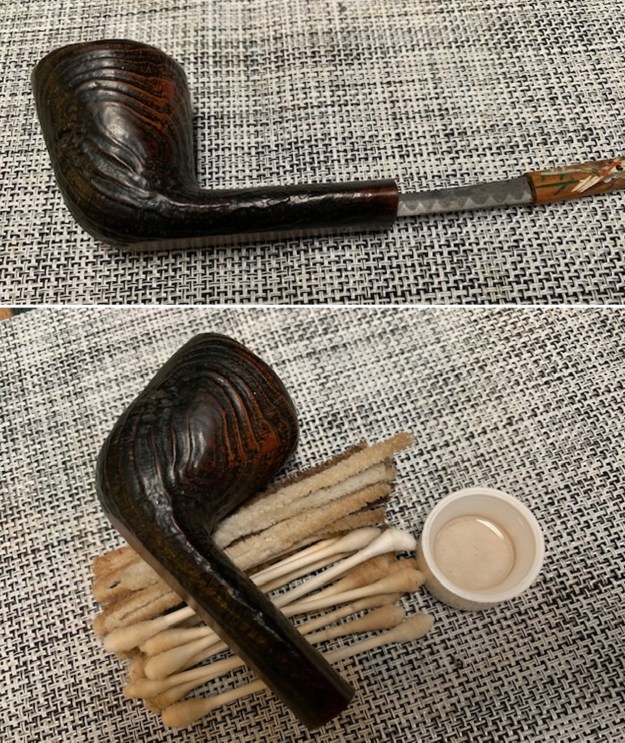
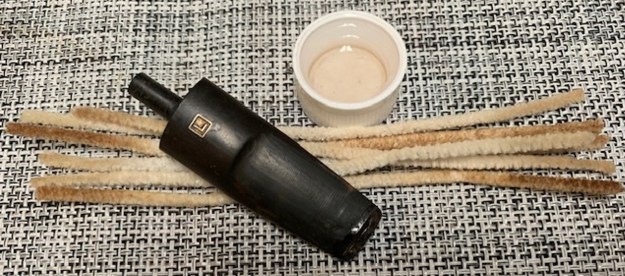
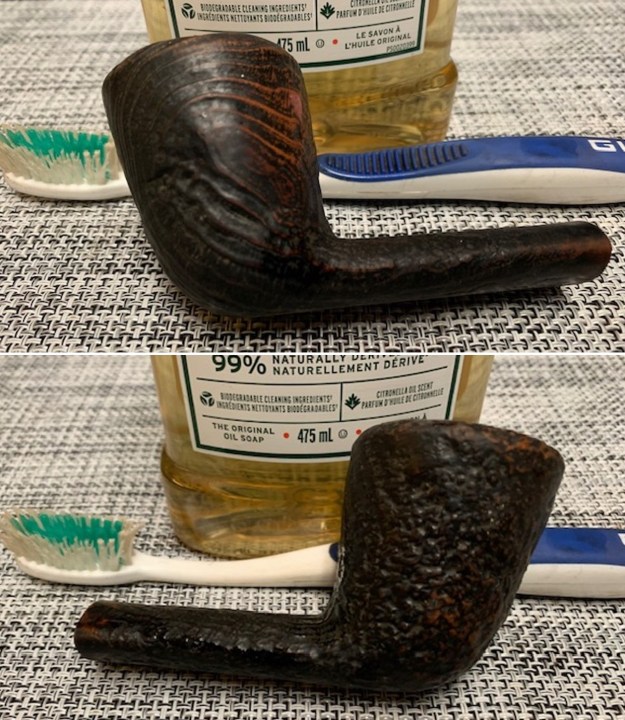
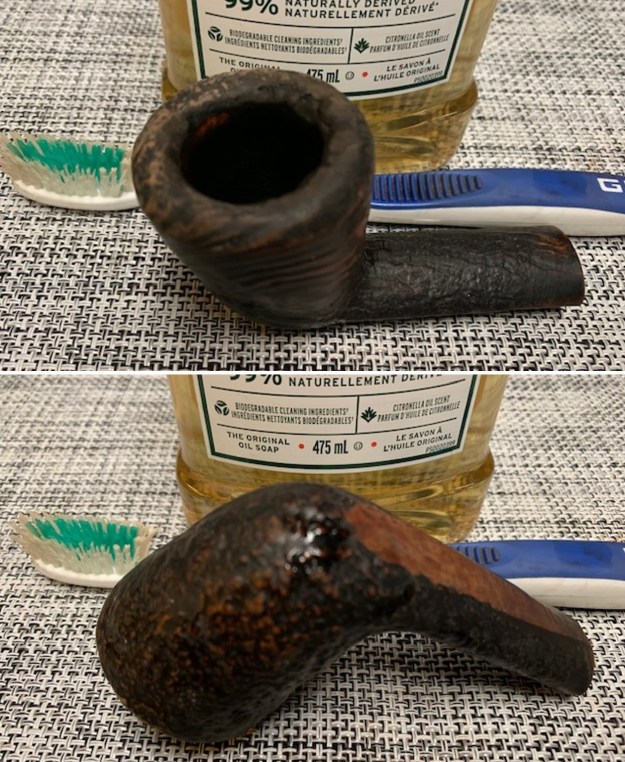
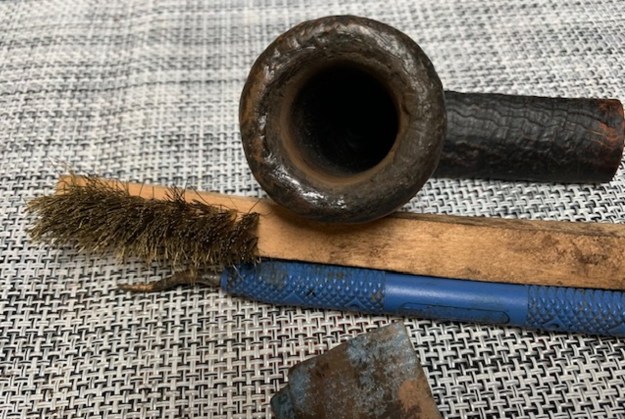
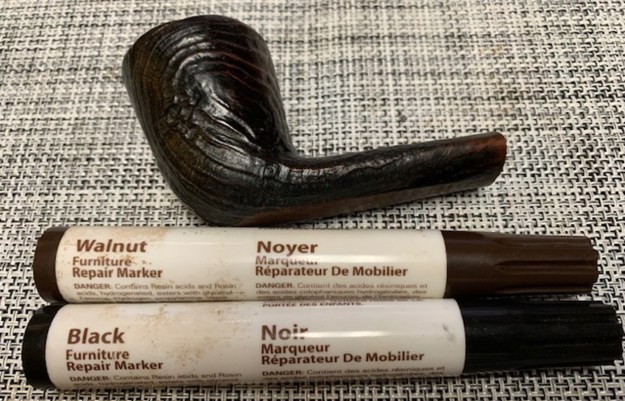
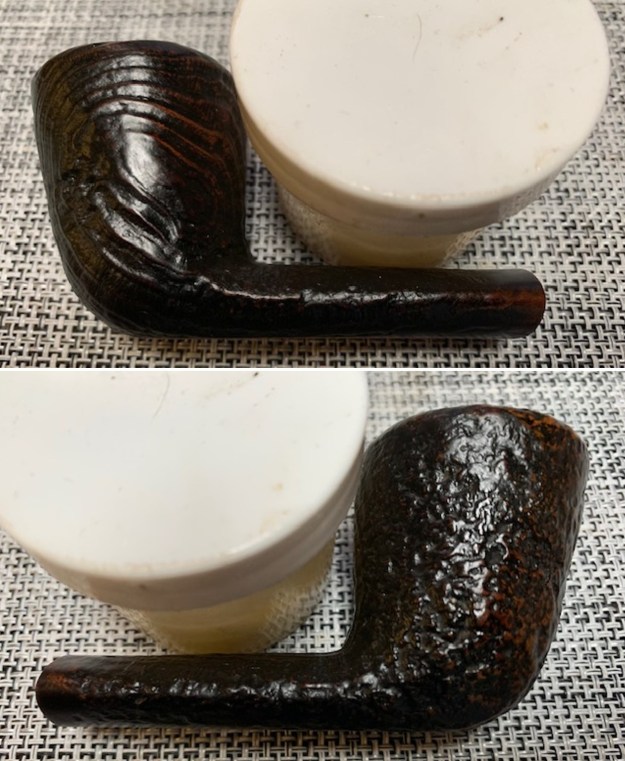
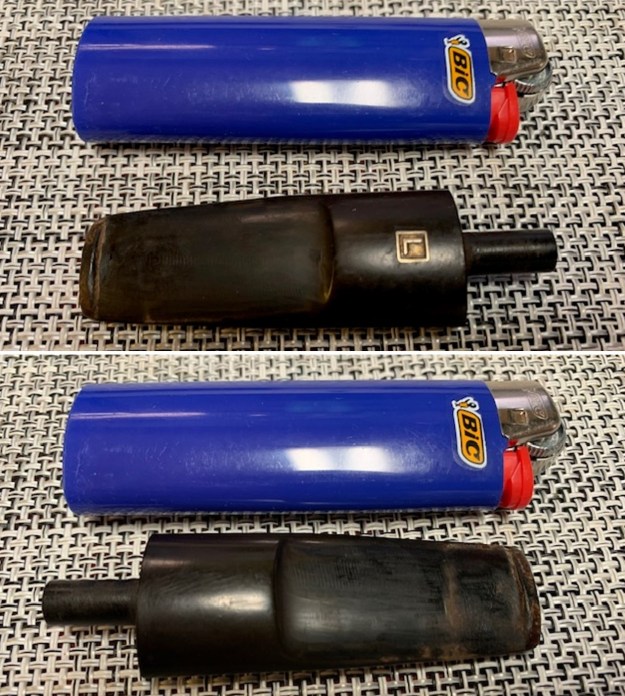
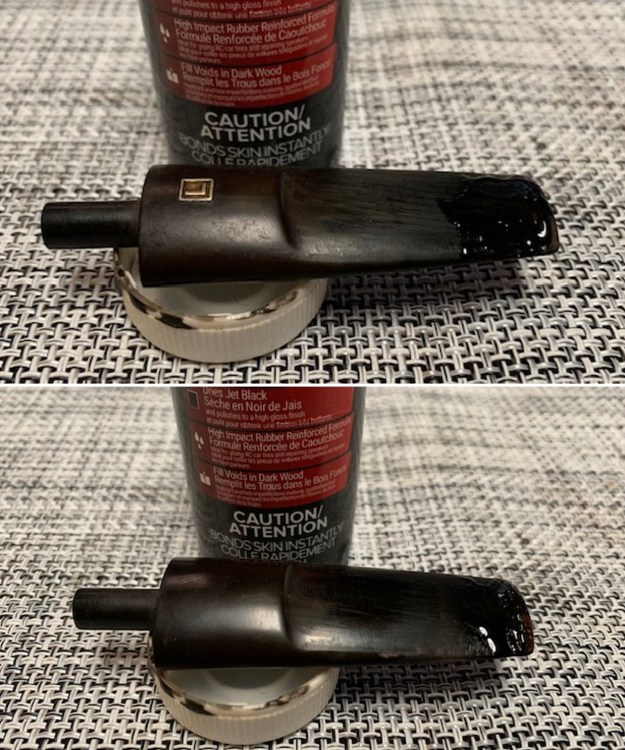
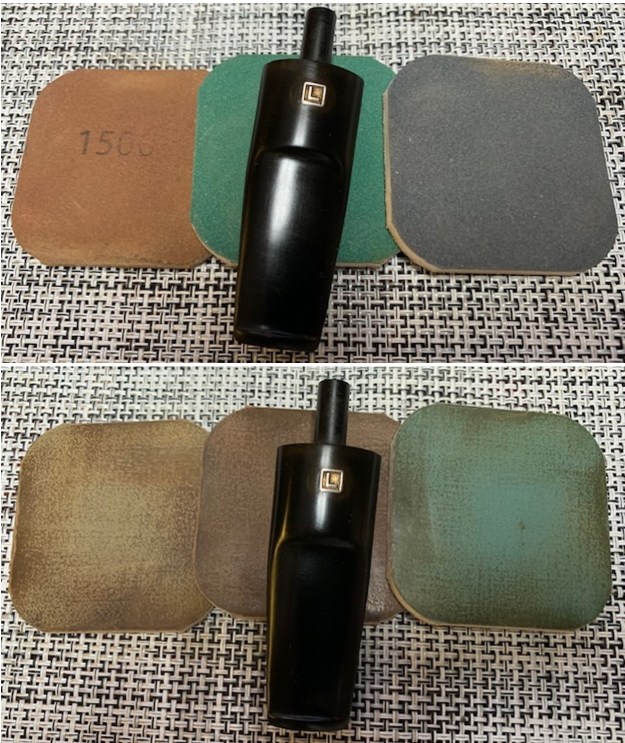
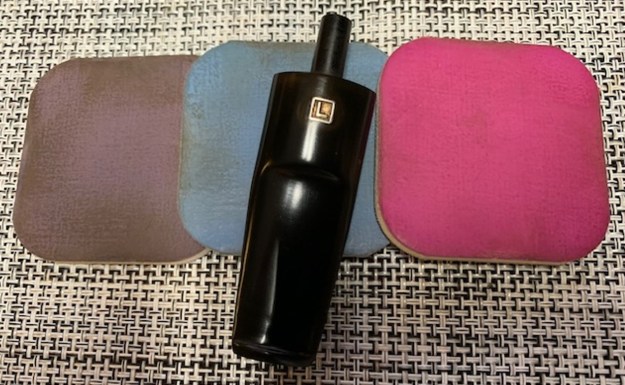
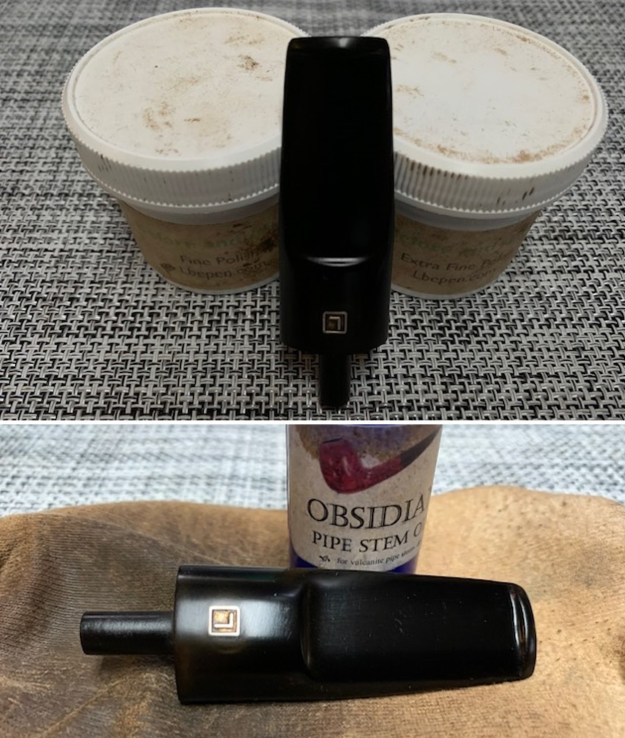
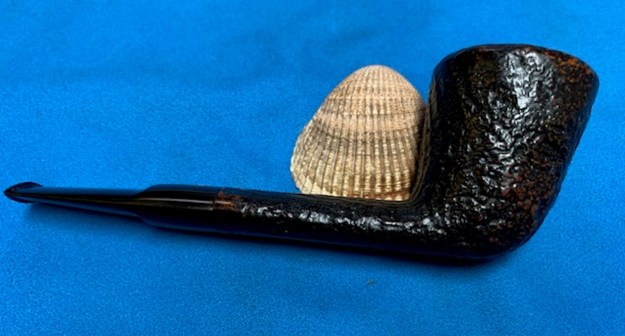
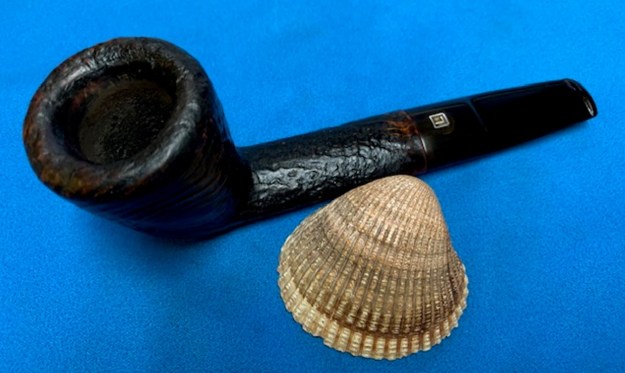
I started my work on this pipe by reaming the bowl. I started with a PipNet reamer to clean out the cake in the bowl. I cleaned up the remnants of the cake with a Savinelli Fitsall Pipe Knife. I finished by sanding the walls of the bowl with 220 grit sandpaper wrapped around a piece of dowel to smooth out the interior of the bowl. I cleaned out the internals of the bowl, shank and the airway in the stem. I started the clean up by scraping the shank with a pen knife to remove the tars that lined the shank. I cleaned out the mortise and airways with alcohol, cotton swabs and pipe cleaners until they were clean. I scrubbed the exterior of the bowl with undiluted Murphy’s Oil Soap and a tooth brush. I worked on the bowl and rim top as well as the inner and outer edges of the bowl. The exterior of the bowl and shank cleaned up really well. I rinsed it with warm water to remove the soap and the grime from the briar. I dried it off with a cotton towel. I took photos of the bowl at this point in the process. The rim top still showed a lot of build up filling in the blast valleys. I would need to used other tools to clean that up. I used a dental pick to scrape out the lava deep in the sand blast. It took some detailed picked to remove it. I followed up on that with a brass bristle wire brush to further clean up the surface of the rim top. I worked over the bevelled inner edge with a folded piece of 220 grit sandpaper to smooth out the damage on the inner edge. It certainly looks much better at this point. I used a walnut and a black stain pen to touch up the worn spots on the bowl side and the rim top sanded areas. It looked much better at this point.I sanded out the scratches in the flat bottom of the shank. They were several and they were quite deep. I used a folded piece of 220 grit sandpaper to smooth the majority of them out. When finished the pipe looked better.I rubbed down the bowl and shank with Before & After Restoration Balm. It is a paste/balm that is rubbed into the surface of the briar. The product works to deep clean the finish, enliven and protect the briar. I worked it into the briar with my finger tips. I let it sit for 10 minutes then wiped it off with a soft cloth then buffed it with a cotton cloth. The briar really began to have a deep shine and the grain shines through. The photos I took of the bowl at this point mark the progress in the restoration. It is a gorgeous pipe. I set the bowl aside and turned to the stem. It was in rough condition with the gummy tape on the end fitting into the shank and deep tooth marks. I painted the surface of the stem with the flame of a Bic lighter to try and lift them. I lifted them but they were still distinctly present. I filled in the marks with Black CA glue and set it aside to cure. Once cured I flattened the repair with a file and then followed that up with a piece of 220 grit sandpaper and started the polishing with 600 grit wet dry sandpaper. It looked much better. I polished the stem with micromesh sanding pads – 1500-12000 grit sanding pads and water to wet sand the stem. I wiped it down after each sanding pad with Obsidian Oil on a cotton rag after each sanding pads. I know that many say Obsidian Oil does nothing for acrylic stems, but I find it does two things – first it gives some protection to the stem from buildup and second it give the sanding pads bite in the polishing process. Fine and Extra Fine stem polish as it seems to really remove the fine scratches in the vulcanite. I rub the Fine Polish on the stem and wipe it off with a paper towel and then repeat the process with the Extra Fine polish. I finish the polishing of the stem down with a final coat of Obsidian Oil and set the stem aside to let the oil absorb. This process gives the stem a shine and also a bit of protection. The final steps in my process involve using the buffer. I buffed the bowl and stem with Blue Diamond to polish out the light scratches in the briar and the vulcanite. I gave the bowl and the stem multiple coats of carnauba wax. I have found that I can get a deeper shine if I follow up the wax buff with a buff with a clean buffing pad. It works to raise the shine and then I hand buff with a microfiber cloth to deepen the shine. It is always fun for me to see what the polished bowl looks like with the polished stem. It turned out to be a nice pipe. The sandblast finish around the bowl sides and shank looks great. The oval vulcanite saddle stem works well with the pipe. The Loewe & Co. French Made 015 Oval Shank Dublin feels great in my hand. It is a well-balanced pipe. Have a look at it with the photos below. The dimensions are Length: 6 inches, Height: 2 inches, Outside diameter of the bowl: 1 ½ inches, Chamber diameter: 7/8 of an inch. The weight of the pipe is 1.59 ounces/44 grams. It is a beautiful pipe that I will soon be going back to Leo who sent it to me for restoration. I am sure he will enjoy it and it will give many more years of service to him.
As always, I encourage your questions and comments as you read the blog. Thanks to each of you who are reading this blog. Remember we are not pipe owners; we are pipe men and women who hold our pipes in trust until they pass on into the trust of those who follow us.
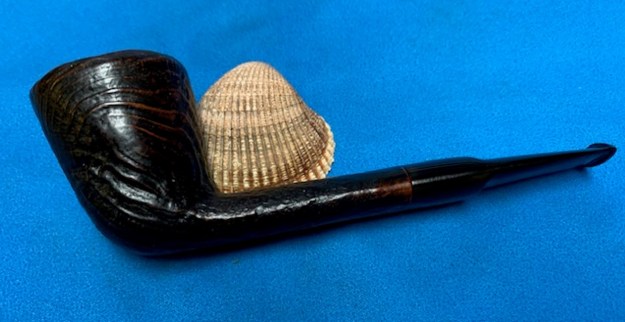
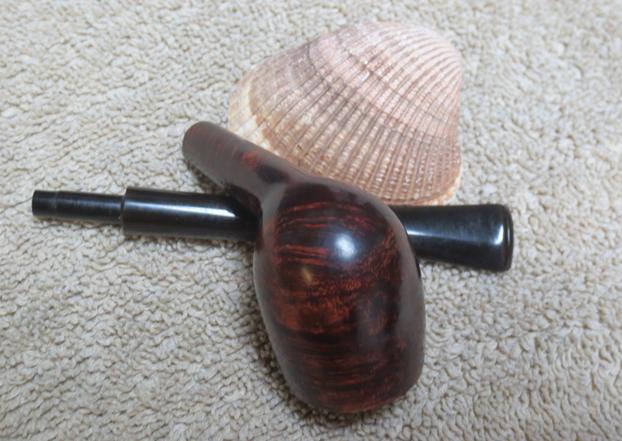
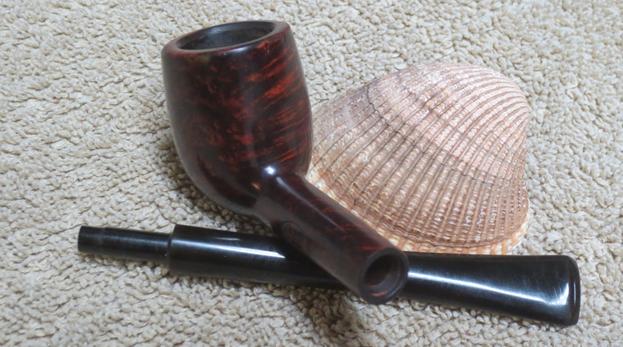
Resurrecting A Loewe “Sloane”


Blog by Paresh Deshpande

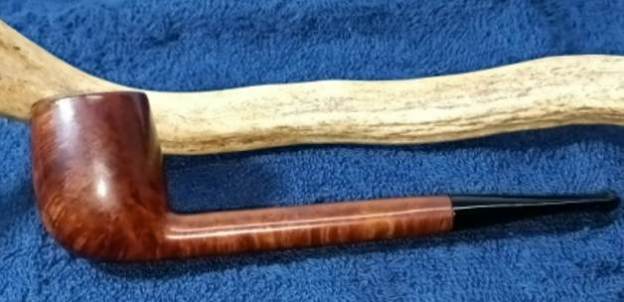
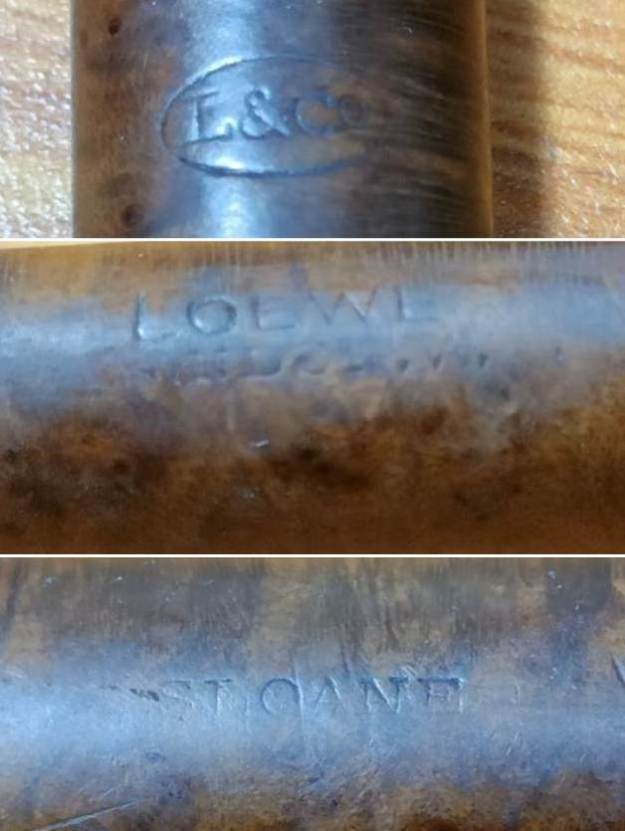
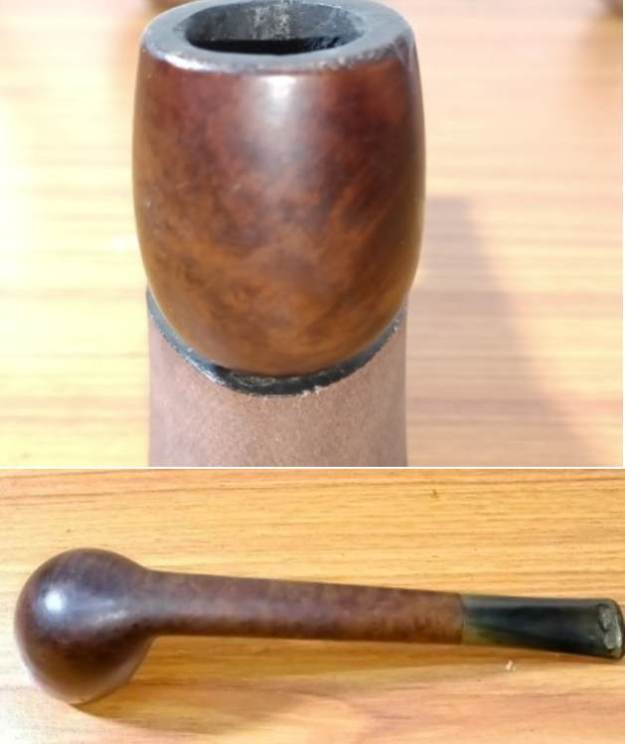
The next pipe is also from my inheritance and is similar to the “THE GOLDEN ARROW” that I had worked on earlier. This too is a large Canadian with an oval shank and flat stem. The stummel is covered in dirt and grime accumulated over the long years of uncared for storage. Through all the grime, beautiful cross grains and swirls can be seen and are waiting to be unraveled. This pipe is stamped on the top flat surface of the oval shank as “L & Co” in a lozenge while the right side of the shank edge is stamped as “LOEWE” over “LONDON. W”. The bottom of the oval shank is stamped “SLOANE”. The stem is sans any stampings.  I have worked on Loewe & Co. pipes before and also have many in my personal collection and I am fairly well versed with this brand. However, I visited pipedia.org and refreshed my memory with the history of the pipe, dating guide and shape names. The 1930s Loewe catalog is an interesting read and also has a  pipe stamped exactly as the one currently on my work table. Here is the link to the catalog: (https://pipedia.org/images/8/88/Loewe_pipes_1930.pdf).
However, further down on pipedia.org is a link to the 1967 Loewe catalog and it has no mention of the shape name SLOANE!

I have reproduced the details relevant to dating this pipe as found on pipedia.org below.

1920-1955 middle Haymarket era

Left shank: – L & Co. (in oval)

Right shank: – Loewe London W.

Underside of shank: – shape name Made in England (encircled) this may just have been on export pipes

*Prior to 1955 Loewe had no series, stamping only the shape name on the underside of the shank.

Thus, the pipe currently on my work table dates to pre-1955.

Initial Visual Inspection
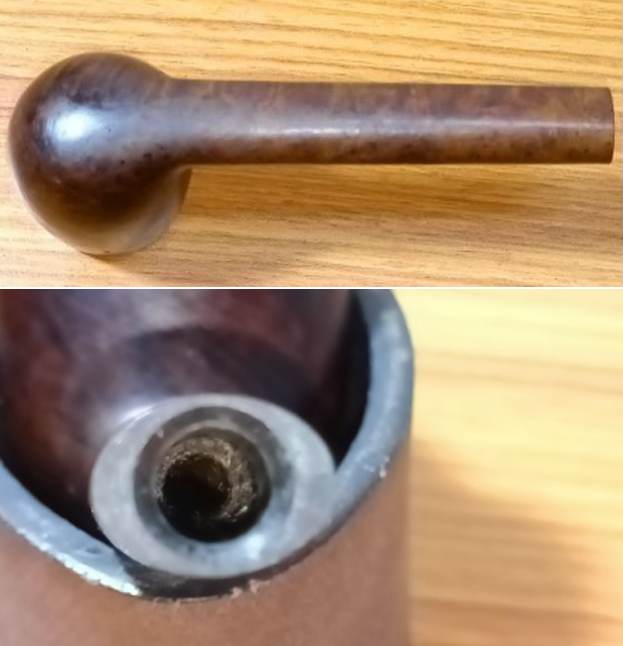
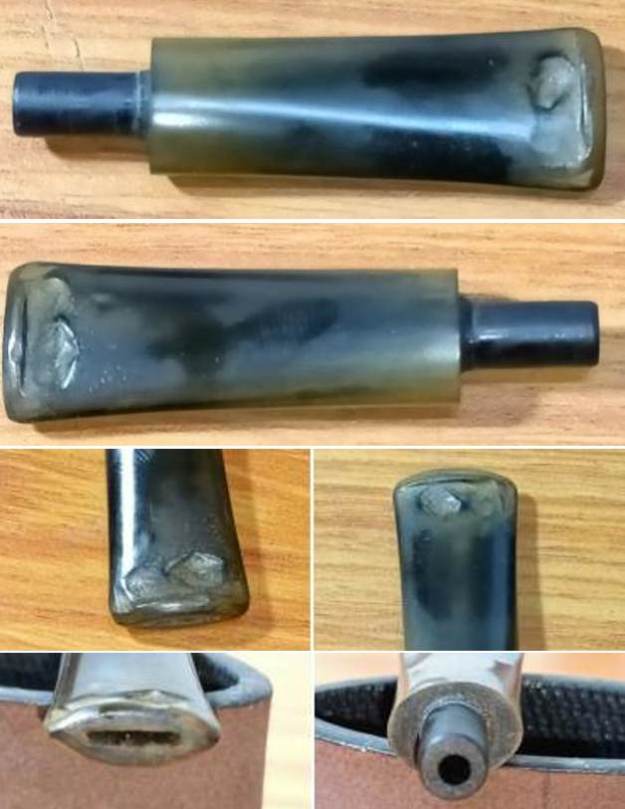
The entire pipe is covered in dirt and grime and is sticky to the touch. There are dark patches on either sides of the bowl that would need to be checked thoroughly. There is a thick layer of cake in the chamber with lava overflowing the rim top surface. The inner rim edge is chipped and damaged giving the chamber an out of round appearance. The outer rim edge too has a number of minor chipped surfaces. The mortise is clogged and the vulcanite stem is deeply oxidized with deep tooth indentations in the bite zone. The button edges are damaged due to bite marks and would need to be rebuilt and reshaped. The pictures below would give you the general idea as to the condition of the pipe. Detailed Inspection
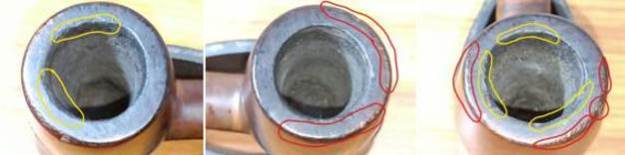
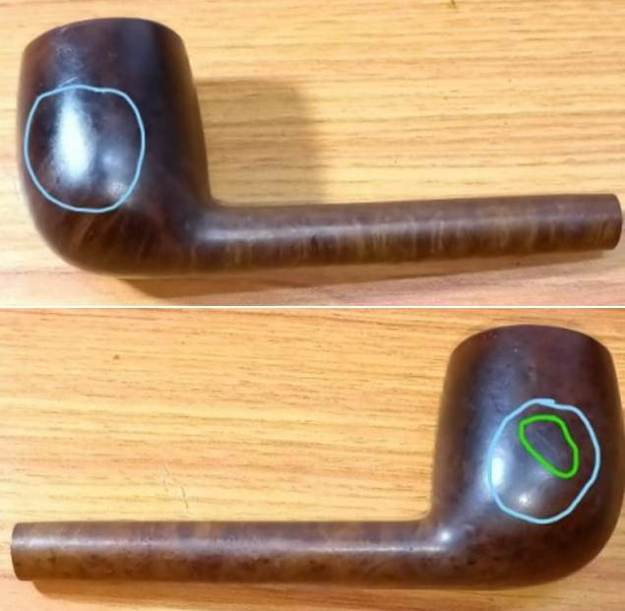
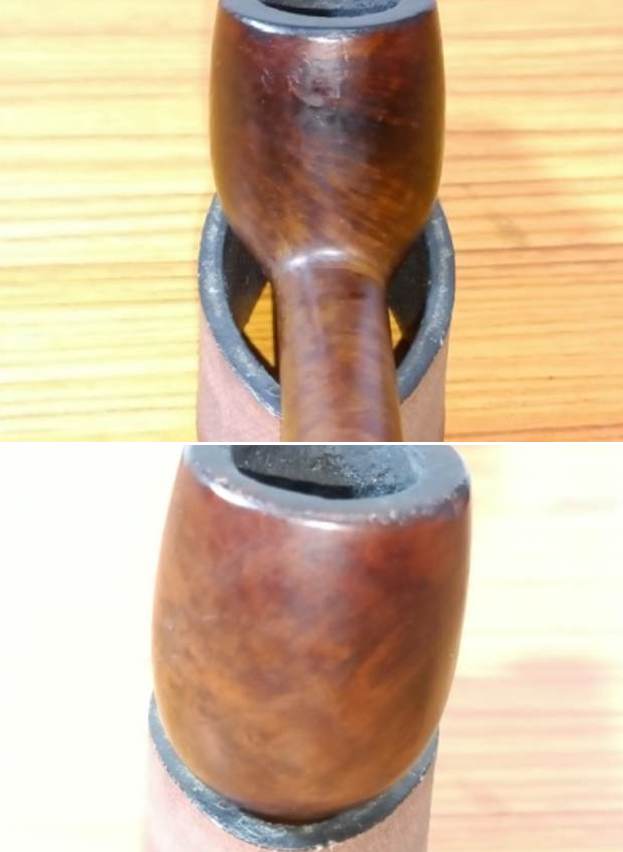
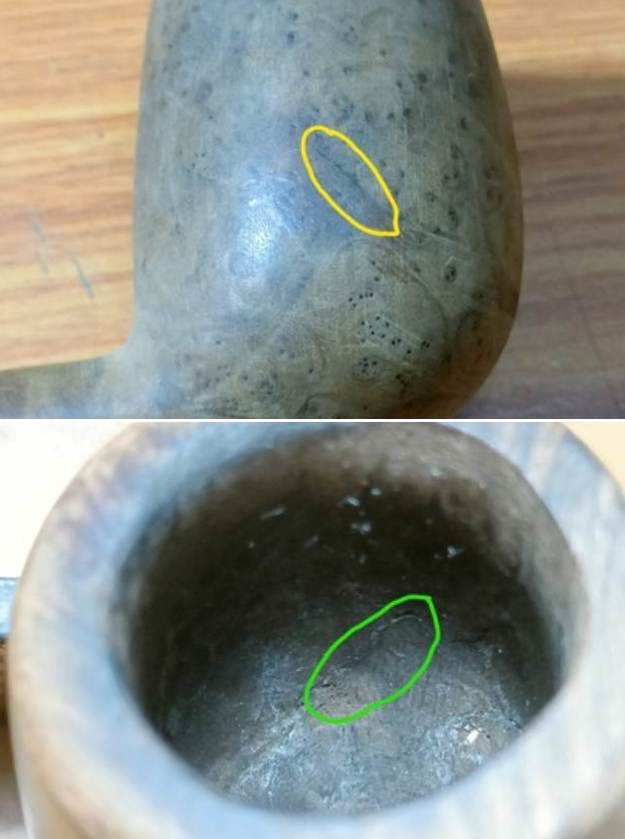
The chamber has a thick layer of even cake with overflow of carbon over the rim top surface. The condition of this Loewe, like all other Loewe pipes that I have inherited, has seen extensive use. Such extensive use, without proper care and maintenance, may cause heat related issues along the chamber walls. Here, the condition of the chamber wall will be known once the cake is taken down to bare briar. The inner rim edge is uneven and has suspected charring at 6 o’clock direction and between 9 o’ clock to 11 o’ clock on the left and also between 1 o’ clock and 3 o’ clock directions on the right side. The inner rim damage is encircled in yellow. The outer rim edge too has not been spared any punishment. There are minor dents/ dings and chipped surfaces all along the outer rim edge, likely as a result of knocking against a hard surface to remove the dottle. The outer rim damage is encircled in red. The extent of the damage to the chamber walls and rim of this pipe will be clear once the cake is completely taken down to the bare briar and the rim top surface is free of all the accumulated crud. The ghost smell are very strong and would need to be addressed.The stummel surface is covered in dirt/ grime and feels sticky to the touch. The surface has darkened considerably on either side of the bowl (enclosed in pastel blue) and at the rear and would need to be examined up close once the stummel is thoroughly cleaned both internally as well as externally. I suspect there is a crack (encircled in green) on the right side of the bowl within the darkened area (or it could even be a scratch) and needs to be verified. However, beneath the dull grime layer, beautiful cross and bird’s eye grain await being brought to the fore. Heavy accumulation of old oils, tars, ash and gunk is seen in the mortise as expected. The tapered vulcanite stem is heavily oxidized and has deep bite marks on both the lower and upper surface in the bite zone. The button edges are deformed as a result of these tooth indentations and would need to be reconstructed. My last project had thrown up some bad experiences about the end results of using the Gorilla superglue that I had recently purchased and will try it out again this time around. If the results are not up to standard, this and the other tubes will find their way out the door. The slot and tenon end show presence of dried gunk and would need to be thoroughly cleaned. The Process
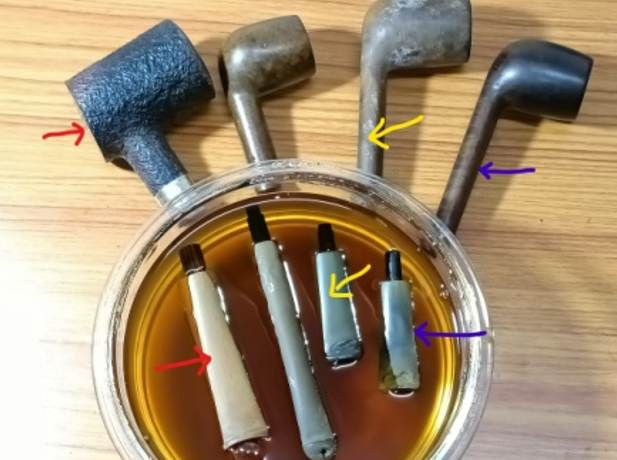
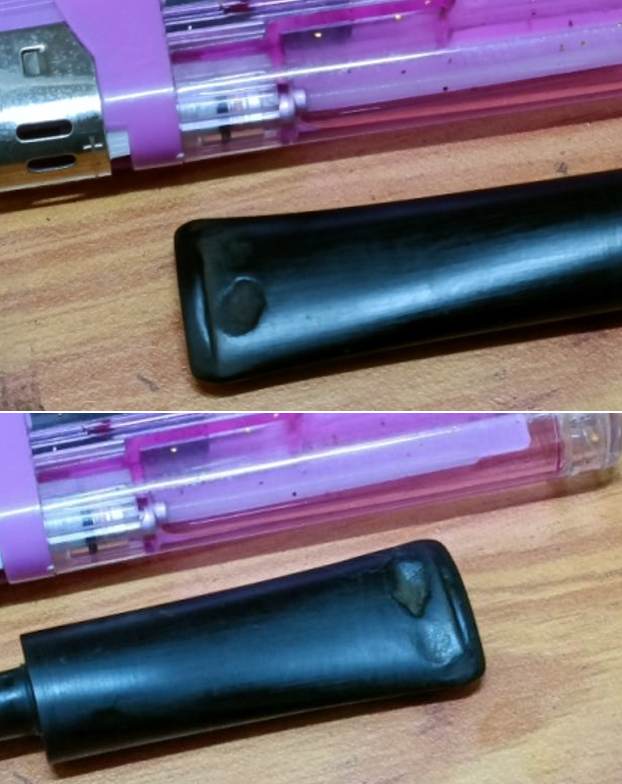
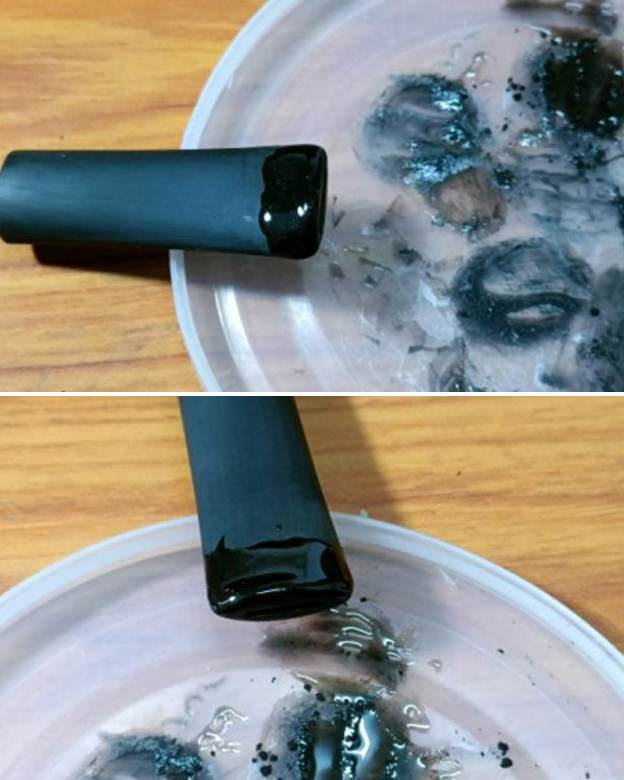
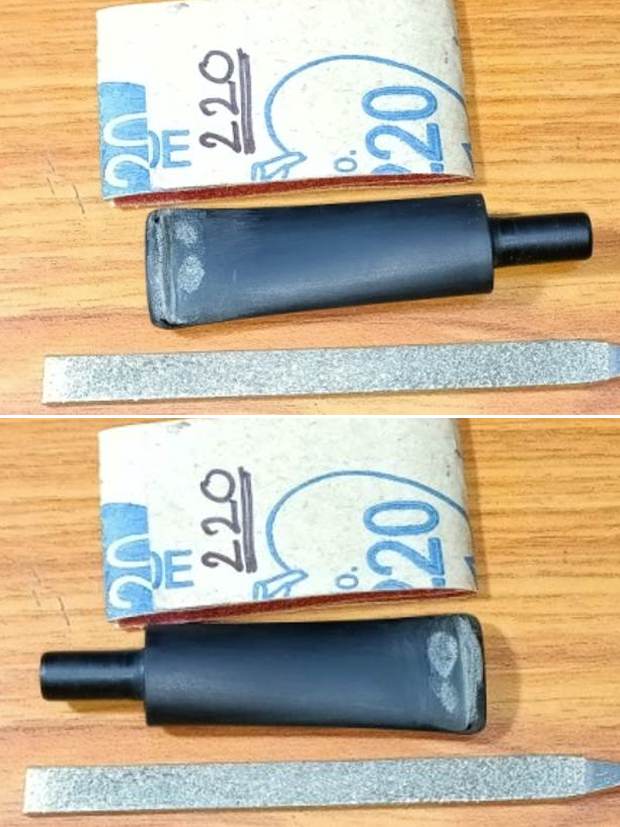
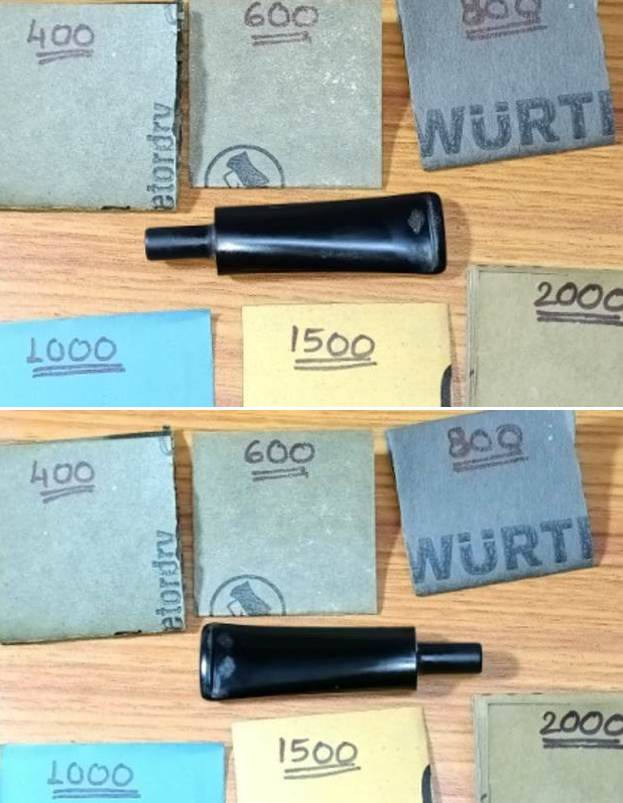
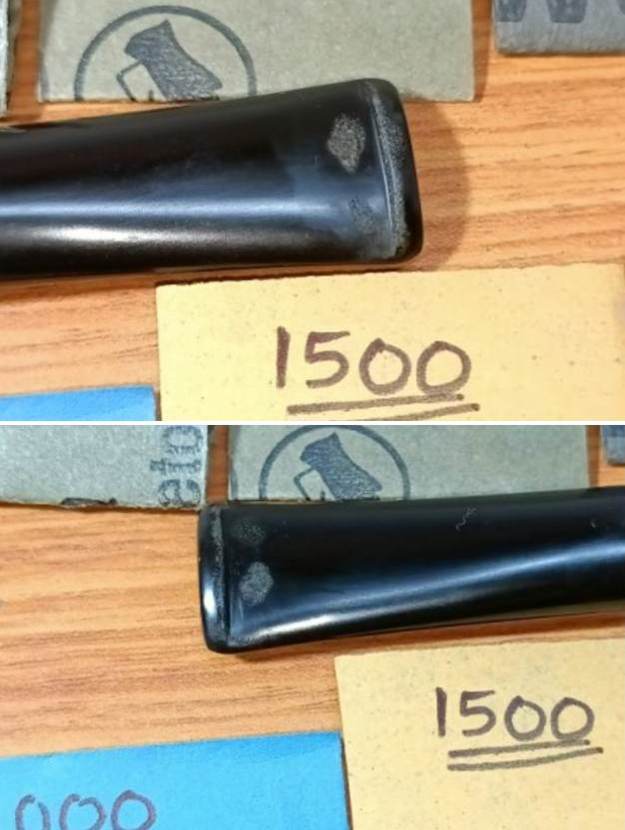
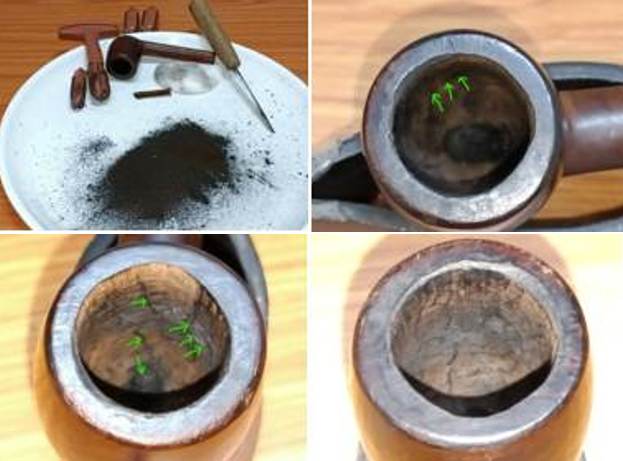
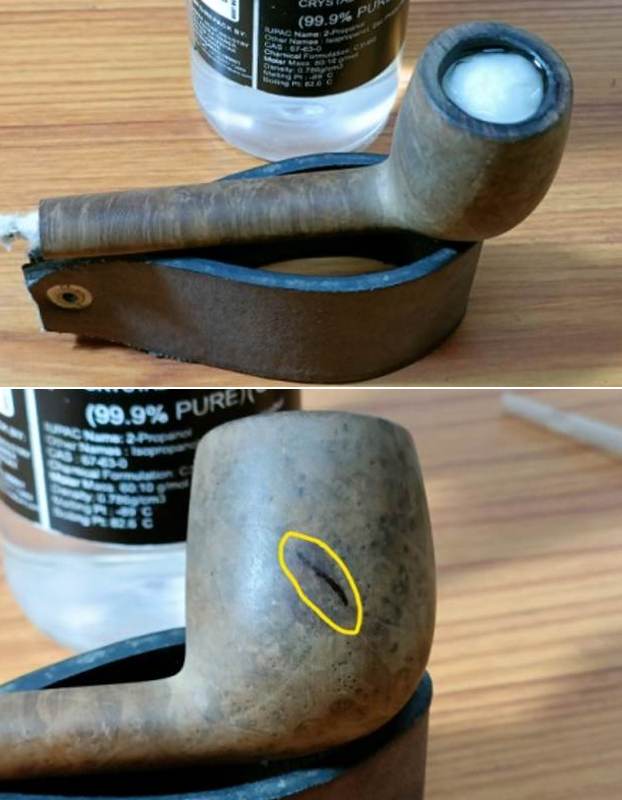
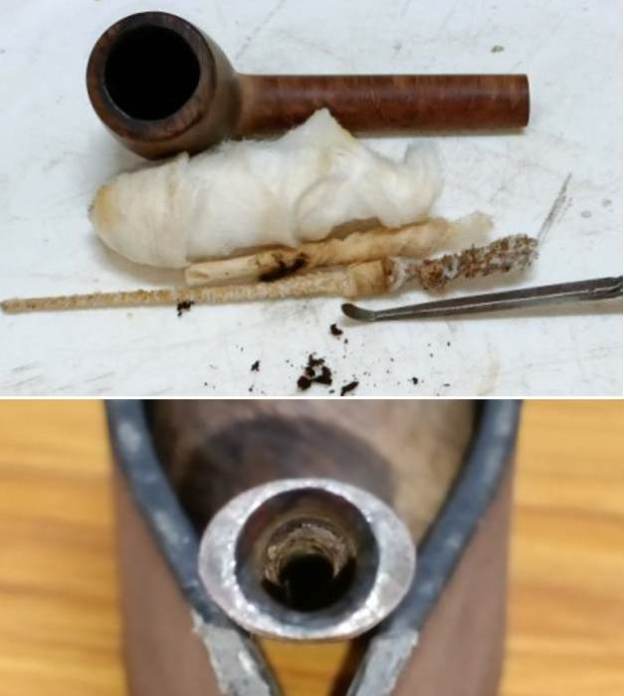
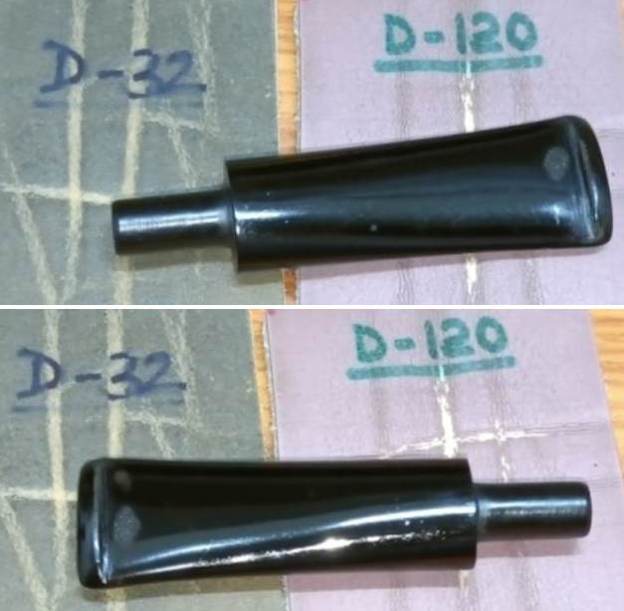
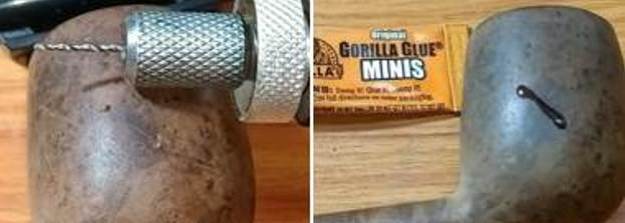
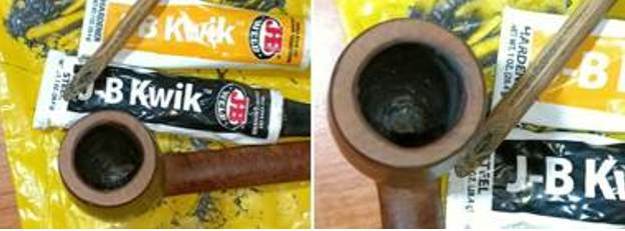
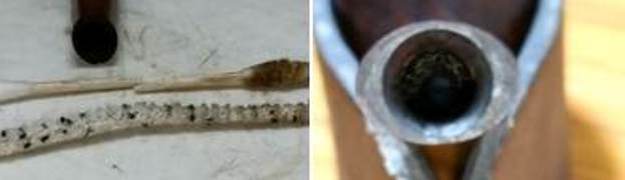
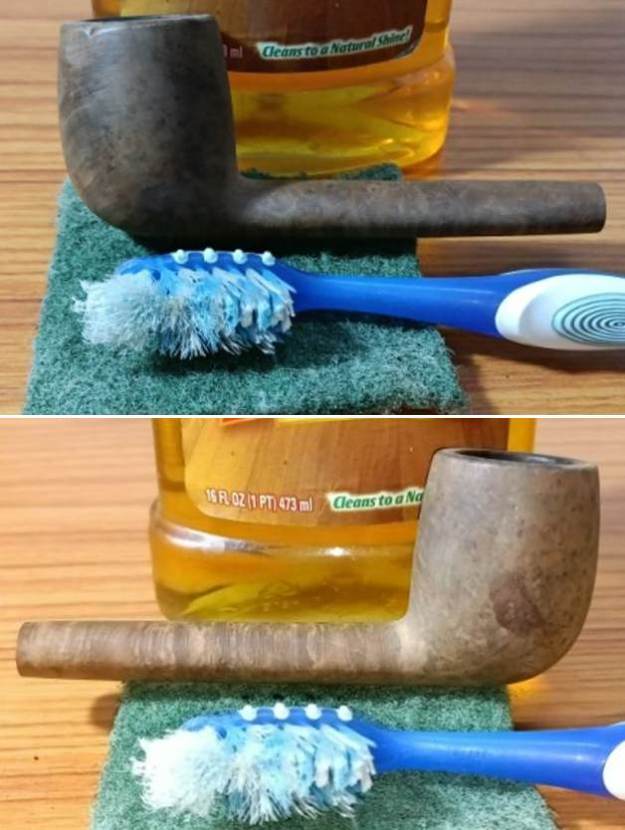
I started the process of restoration by first cleaning the stem internals with anti-oil dish cleaning soap and thin shank brushes. I scrubbed the stem surface with the soap using a Scotch Brite pad, firstly to rid the surface of old oils and gunk and secondly to remove the loose surface oxidation. I ran a couple of pipe cleaners through the stem airway to remove all the traces of soap and dry out the stem internals.Next, I moved to external cleaning of the stem surface by dunking the stem into “Before and After Deoxidizer” solution developed by my friend Mark Hoover. The solution helps to draw out heavy oxidation to the surface making it’s further removal a breeze while the minor oxidation is eliminated to a very great extent. I usually dunk stems of 5-7 pipes that are in-line for restoration and the LOEWE SLOANE is marked in blue arrow. I generally allow the stems to soak in this solution overnight for the solution to do its work.The next afternoon, Abha fished out the stem from the deoxidizer solution and scrubbed it with a Scotch Brite pad to get rid of the loosened oxidation from the surface. She followed this scrub with a second scrub using 0000 grade steel wool and this helped in further removal of raised oxidation from the surface and even out the minor scratches resulting from using the Scotch Brite pad. She rinsed the stem under warm running water to completely remove the solution from the airway and slot end. She ran a couple of pipe cleaners to remove the last traces of residual deoxidizer solution from the airway and dry out the airway.  With the external and internal cleaning of the stem completed, Abha handed over the stem to me to complete the repairs. Continuing with the stem refurbishing, I heated the bite zone with the flame of a lighter to raise the tooth indentations to the surface. Though the results were not what were expected, the vulcanite was raised a little leaving behind two deep tooth compressions on either surfaces. The button edges and deeper tooth indentations on either surfaces of the stem were filled with a mix of CA Gorilla superglue and activated charcoal powder and set aside for the fill to cure. I really hope that this time around I get better results with using this new CA glue. Once the stem fills had cured completely, I moved ahead with the process of filing and shaping the button end with a flat head needle file. For a better blending, I further sanded the entire stem with 220. However, my worst fears came true…..I saw grey patches with air pockets, just as I had observed earlier while working on The Golden Arrow. I think the Gorilla glue does not work for me and I shall discard it after I get my regular brand of superglue in next few days. I continued to dry sand the entire stem with a folded piece of 400 followed by 600 and 800 grit sandpaper and further progressed to wet sanding with 1000, 1500 and 2000 grit sand papers. However, the fills still appear dirty grey and a closer look showed the entire filled surface peppered with numerous tiny air pockets. I refilled the patches with a fresh mix of CA superglue gel and activated charcoal and set the stem aside. After the stem refills had cured completely, I went through the complete process of sanding and shaping the fills using a needle file followed by sanding with sandpapers as described above. Though the finish is better this time around, the coloration of the patch still remains a light shade of grey and easily discernible against the rest of the stem surface. It should be noted here that just like The Golden Arrow that I had restored earlier, I had to go through the complete repairs six times before this attempt and for the sake of brevity, I deliberately kept it short. Yet, the results are not what I expected and have been achieving consistently with other brands of superglue. I rubbed a small quantity of EVO into the stem surface and set it aside for the vulcanite to absorb and hydrate. With the stem repairs completed, save for the polishing cycle, I started with the stummel repairs. I started with reaming the chamber with my PipNet pipe reamer using head size 1 of the PipNet reamer blade and progressed through to head size 2. I used my fabricated knife to remove cake from areas inaccessible to the reamer blades and completed the process by sanding the walls smooth with a folded piece of 180 grit sandpaper. I wiped the chamber with a cotton swab wetted with alcohol to clean the residual carbon dust. The reasons for darkened sides of the bowl that I had noted during my detailed inspection were now evident. There are signs of charring to the walls of the chamber on the sides and at the bottom of the bowl. Also there are a few heat lines along the walls of the chamber. All these issues are indicated by green arrows.I gave a preliminary cleaning to the mortise and shank internals using q-tips and pipe cleaners dipped in alcohol. I shall continue with thorough cleaning of the shank internals during the external cleaning of the stummel. Next, I cleaned the external surface of the stummel with undiluted Murphy’s oil soap and a hard bristled toothbrush. I cleaned the smooth rim top surface with the soap and Scotch Brite pad. The darkened areas over both sides of the stummel and the rim top surface are now clean, exposing the gremlins hidden beneath the layer of dirt. I followed up the external cleaning of the stummel with internal cleaning of the mortise and shank using anti oil soap and shank brushes.  This external cleaning of the stummel has now clearly defined the suspected crack that I had noted during my detailed inspection (encircled in yellow). Also the internal cleaning of the chamber has brought the charring of the sides of the chamber walls to the fore (encircled in green). I now need to ascertain if this external crack is a direct result of the observed damage to the walls of the chamber. If it is so, it’s a clear sign of this crack developing into a burn out due to the thinning of the chamber walls.   Continuing with the internal cleaning of the chamber and mortise and also to ascertain if the external crack over the stummel surface is a result of the damage to the chamber walls, I subjected it to a salt and alcohol bath. I used cotton balls which is an at par substitute as I have realized over the years. I drew out a wick from the cotton and along with a folded regular pipe cleaner; inserted it into the mortise and through the draught hole and further into the chamber. Thereafter, I packed the chamber with cotton balls to about quarter of an inch below the rim inner edge and soaked the cotton balls with isopropyl alcohol up to the brim. About half an hour later, the level of alcohol had gone down, having being absorbed by the cotton. I observed that the alcohol had seeped out from the crack (encircled in yellow) as can be seen from the picture below. This needs to be addressed. However for now, I topped it up once again and set it aside overnight.By next afternoon, the cotton and alcohol had drawn out all the remaining oils/ tars from the chamber and mortise and loosened out any residual cake and tar build up, fulfilling its intended task. I removed the cotton balls and ran pipe cleaners through the mortise to clean out all the loosened tars and gunk. Using my fabricated tool, I scraped out the entire loosed gunk from the mortise and further cleaned it with alcohol and q-tips.While I was working on the stummel, Abha polished the stem by wet sanding the surface with 1500 to 12000 grit micromesh pads. She applied a little EVO to the stem surface for it to be absorbed in to the rubber. Though the grey repair patches are visible in the pictures, it is not so glaring in person.Staying with the stummel repairs, I first decided to stabilize the crack. I marked the end points of the cracks and drilled counter- holes using 1 mm drill bit mounted on a hand held rotary tool. I filled the crack and counter-holes with clear CA superglue and set it aside to cure.A while later, once the crack fills had sufficiently hardened; I addressed the rim top darkening and unevenness by topping the surface on a piece of 220 grit sandpaper. I frequently checked the progress being made as I hate to lose briar more than what is absolutely necessary. The chamber now appears more out of round than before and would be addressed by creating a bevel over the inner rim edge.With a folded piece of 220 grit sandpaper pinched between my forefinger and thumb, I imparted a nice bevel to the inner rim edge. This masked the out of round appearance of the chamber and also eliminated the minor charring over the edges.   Next, to protect and isolate the chamber walls from coming into direct contact with the burning tobacco and prevent a burn out, I coated the walls of the chamber with an even layer of J B Weld. J B Weld is a two-part epoxy Cold Weld in two tubes; hardener and steel which are mixed in two equal parts (ratio of 1:1) with hardening time of 5-6 minutes and complete curing time of 6-8 hours. I poured the contents of the two tubes on to a plastic sheet and mixed it well. I inserted a petroleum jelly coated regular pipe cleaner through the draught hole to prevent it from getting blocked due to the J B Weld mix. I applied this mix, as evenly as possible, over the entire chamber wall surface. I worked fast to ensure an even coat over the chamber walls before the weld could harden and set the stummel aside for the application to harden and cure overnight. The J B Weld coat had hardened completely by next day evening. I mounted a sanding drum onto my hand held rotary tool and setting the speed to half of the full RPM, I sanded the excess coat from the chamber walls. To further fine tune and keep the coat to a minimum thickness, I further sanded the coat with a 220 grit sand paper till I had a coat of a thickness that was just sufficient to protect the briar underneath. Here is how the chamber appeared at this stage.At this same stage, I also sanded and evened out the fills over the crack with a flat needle file and further matched it by sanding it with a piece of 220 grit sandpaper. Unfortunately, I missed out on taking pictures of this process.

Abha completed the polishing of the stummel by wet sanding the surface with 1500 to 12000 grit micromesh pads. She wiped the stummel with a moist cloth in between the pads to gauge the progress being made. She massaged a small quantity of Before & After Restoration balm and set it aside for 10 minutes for the briar to rehydrate. Thereafter, she gave a rigorous hand rub using a microfiber cloth. The stummel now has a nice vibrant shine to it with the beautiful cross grains and bird’s eye grains resplendent in all their glory. I just can’t thank Abha enough for her help in polishing the stems and stummel of all the pipes that I restore. After I had protected the heel and the walls of the chamber with a coat of J B Weld, it was necessary to prevent this coat from coming into contact with the burning tobacco. I addressed this by mixing activated charcoal and plain yogurt to a thicker consistency, just enough that it would spread easily and applied it evenly all along the chamber walls after inserting a folded pipe cleaner through the draught hole to keep it open. Once dry and set, this will not only protect the walls but also aid in faster buildup of cake. I set the bowl aside for the bowl coat to cure for 72 hours.72 hours later, to apply the finishing touches, I mounted a cotton cloth buffing wheel onto my hand held rotary tool and applied a coat of Blue Diamond to the stummel and the stem to polish out the minor scratches. Next, I mounted a cotton cloth buffing wheel and setting the speed to ¼ of the full power, I applied a coat of carnauba wax over the stummel and the stem. I worked the complete pipe till the time all the wax was used up for polishing the stummel and the stem. The pipe now boasts of a beautiful and lustrous shine. I vigorously rubbed the pipe with a microfiber cloth to deepen the shine and also to clean away any residual wax that had been left behind. I am very happy with the way this beauty has turned out. P.S. I am personally not happy with the way the stem repairs have turned out and will surely rework on it once the CA glue that I regularly use reaches me in next couple of weeks.  A big thank you to all the readers of this write up for sparing your valuable time and hope for your continued patronage. Until the next write up, be safe and healthy…

Restoring a Great Looking L&Co CAPTANIDE Prince


Blog by Steve Laug

I have finished restoring all of the Barclay-Rex pipes in the collection of pipes that we purchased from the older gentleman. He sent me the photos and I was amazed at what I saw. You have seen many of the pipes that he had. These included Dunhill, BBB, Orlik, Barclay Rex, a cased Ben Wade, an H. Simmons all briar, Hardcastles and some Meerschaums. There were also some assorted others that I will get to in the days ahead. It was a great collection.

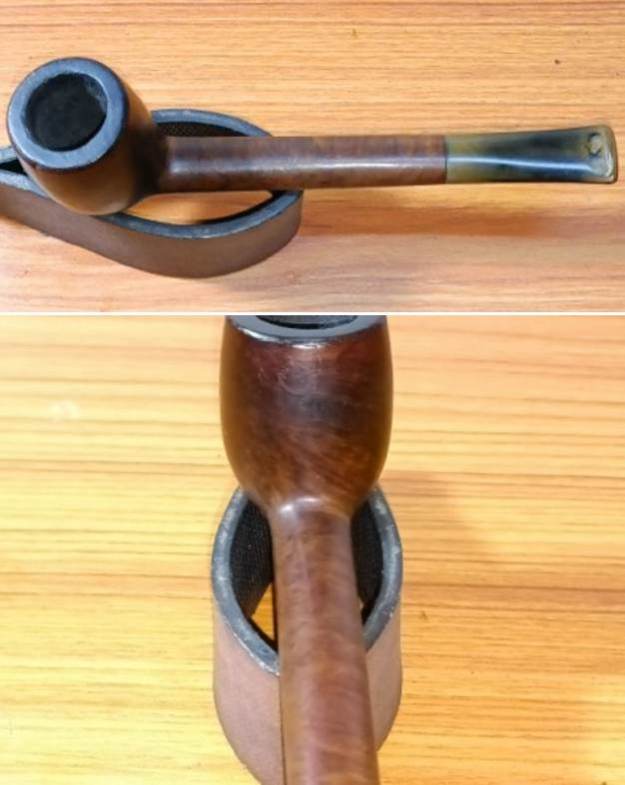
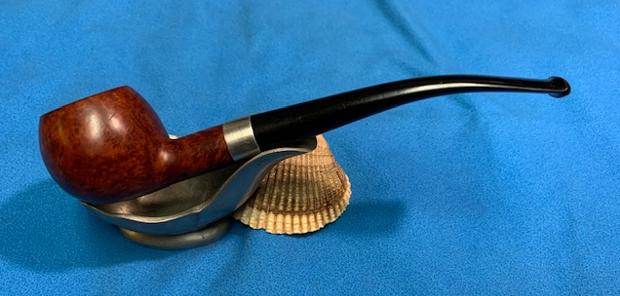
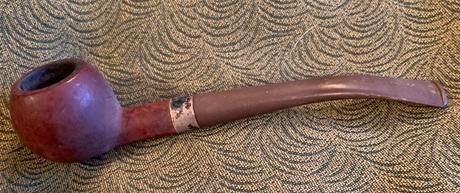
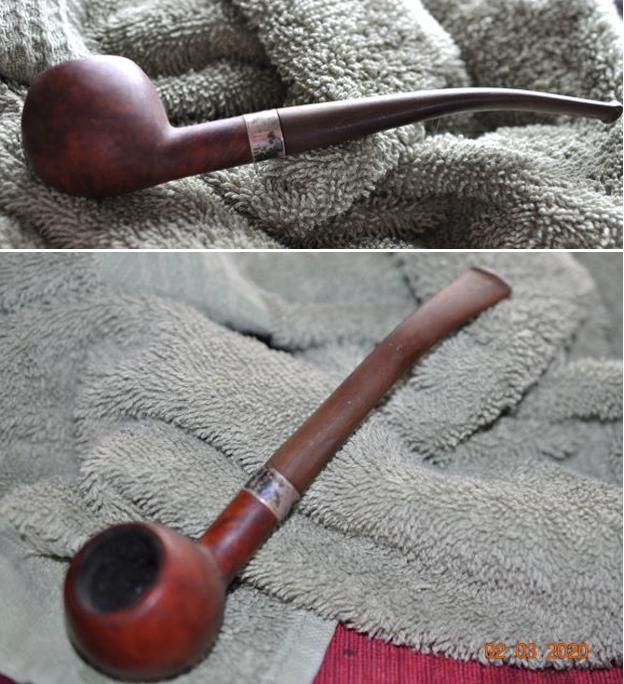
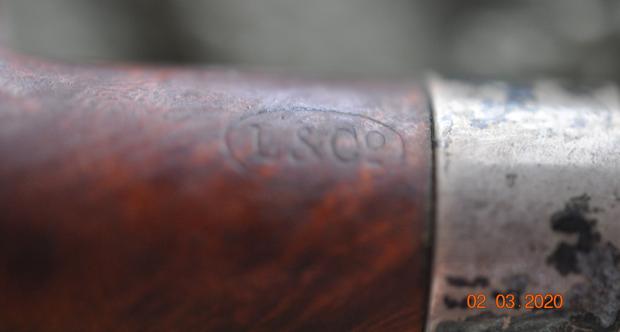
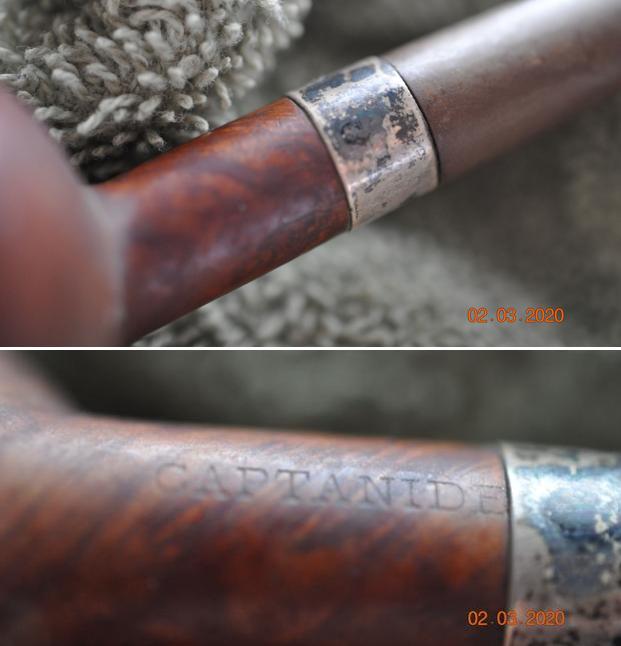
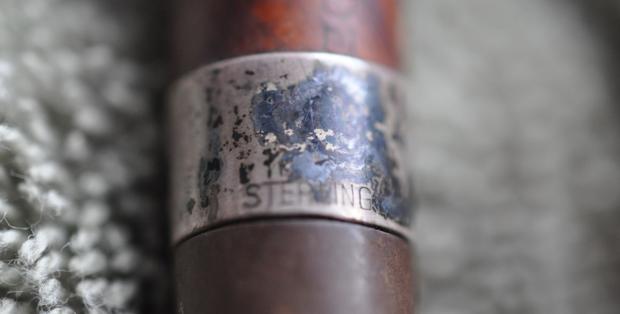
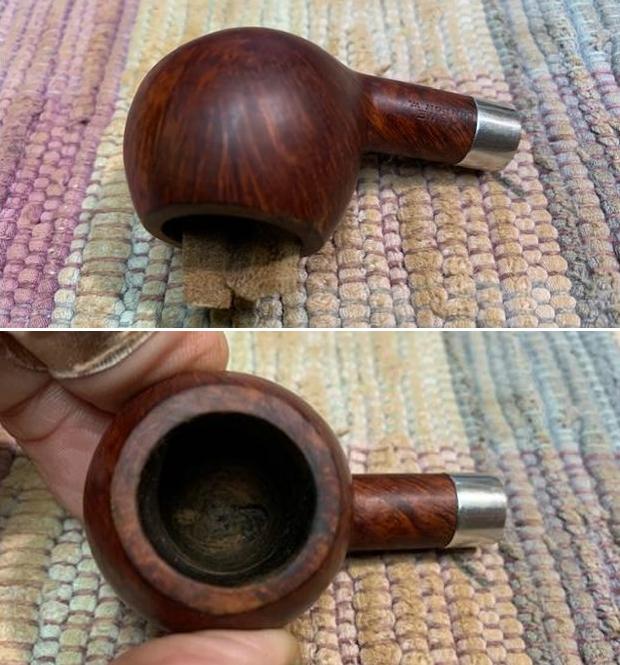
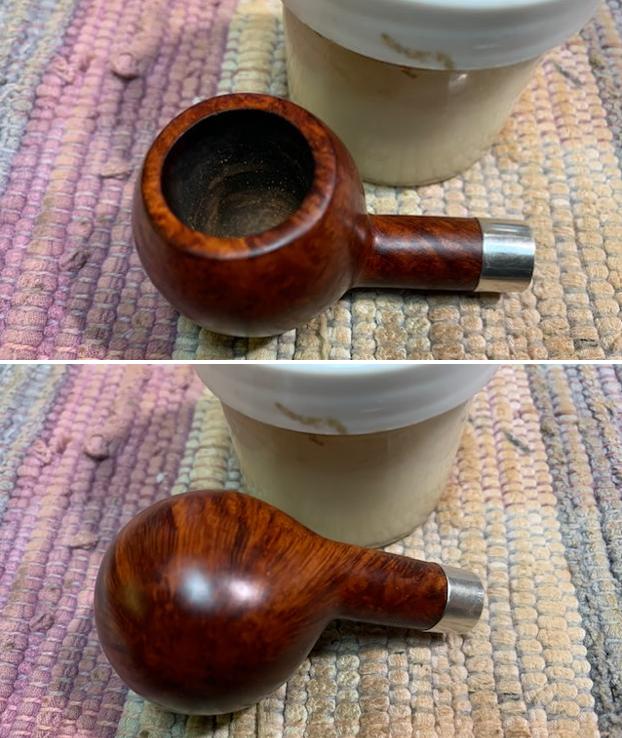
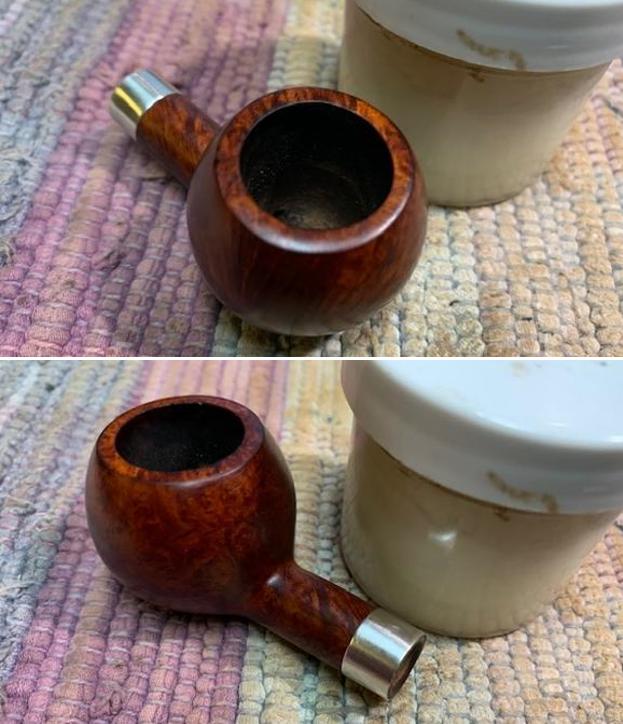
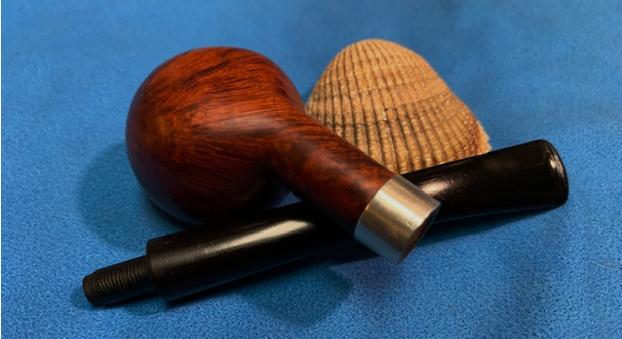
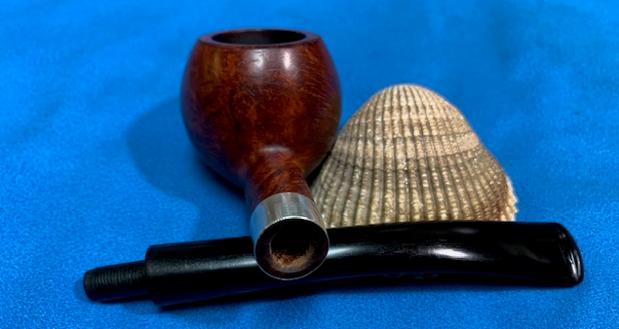
Now it was time to work on some of the single pipes that he had. The first of these is a beautiful little Prince that is stamped L& Co in an oval on the left side of the shank and LOEWE [over] LONDON W. on the right side of the shank. On the underside of the shank it is stamped CAPTANIDE. The band on the shank is a Sterling Silver repair band put on when the crack on the topside of the shank was repaired.

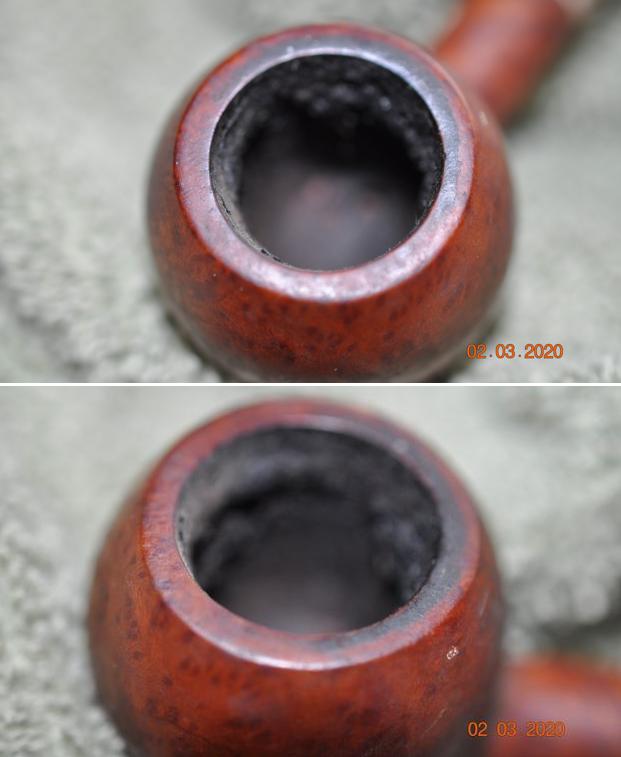
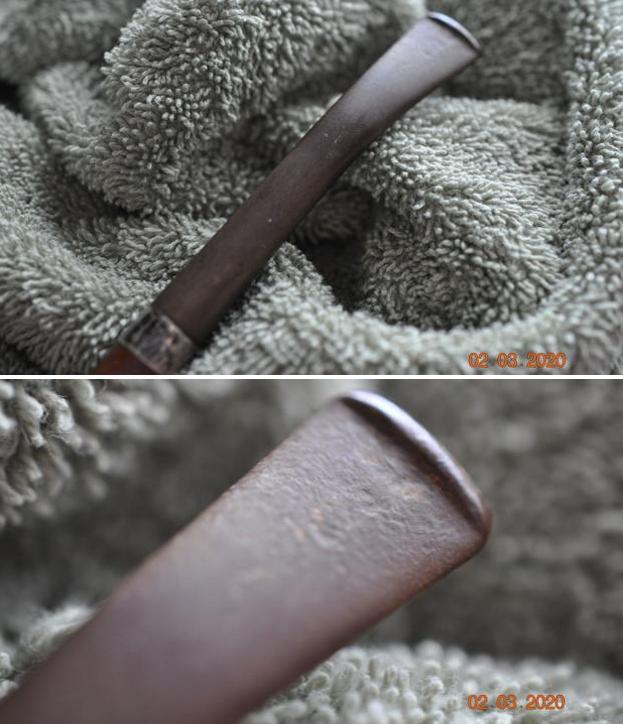
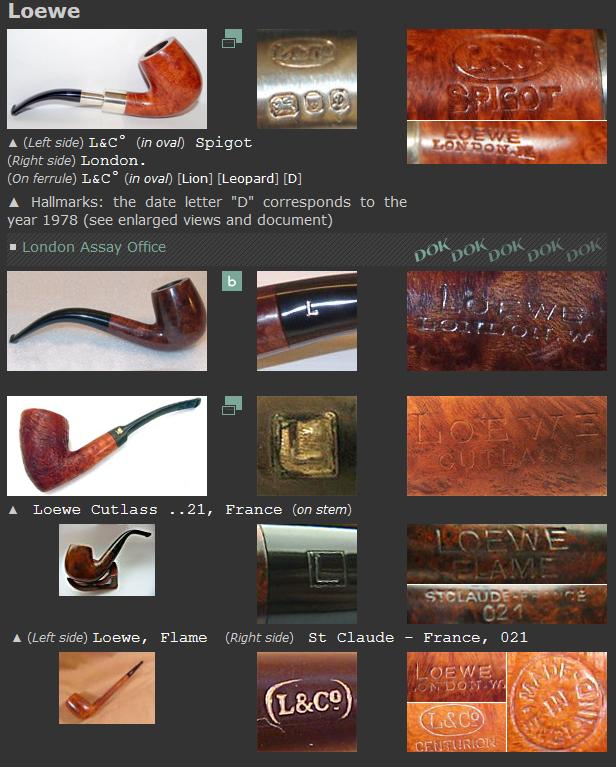
Jeff took some photos of the LOEWE Captanide Prince before he worked his magic in cleaning up the pipe. It is a an interesting pipe with a lot of potential and what appears to be some great grain under the grime and debris of the years. Jeff took photos of the bowl, rim top to show the thickness of the cake in the bowl and the thick lava on the rim top. The rim top and both inner and outer edges looked good. He took photos of the top and underside of the vulcanite stem showing the oxidation, calcification, tooth marks, chatter and wear on the stem and button. Jeff took photos of the sides and heel of the bowl to show the condition of the briar. You can see the beautiful shape and the grain on the bowl even through the dirt and debris of many years. Jeff took a photos of the stamping on the sides of the shank to capture the readable stamping. As is my habit I turned to Pipephil’s site (http://pipephil.eu/logos/en/logo-l5.html) on the Loewe brand. I have included a screen capture of the information that is shown there. I quote from the sidebar on the site below as it gives a good summary of information.

Brand founded 1856 by Emil Loewe. First overtaken by Civic the brand became part of Cadogan group (BBB, Civic, Comoy, GBD, Loewe, Orlik) about 1979.

I also quote from what I found previously on Pipedia (https://pipedia.org/wiki/Loewe_%26_Co.).

Loewe is one of the haunting old names of British pipe-making, characteristic of an almost vanished “upper middle class” of the trade, which also incorporated makes such as BBB, Orlik, Comoy’s and GBD. Along with these brands, Loewe has long dwindled into pseudo-existence, becoming little more than a logo occasionally used by the Cadogan factory in Southend-on-Sea. But owners of older Loewes treasure them as superb, featherweight smokers, excellently crafted and with grain characteristics superior to those of many contemporary Dunhills.

The firm and its facilities were later taken over by Civic, well before becoming a fully integrated part of the Cadogan group sometime in the final quarter of the twentieth century. As with other brands belonging to this group, it is not easy to pinpoint a date marking the end of Loewe’s independence and singularity. This is partly due to Cadogan’s own development from a cooperative to a monolithic entity.

In 1979, a German paperback said that the Loewe brand had been discontinued two years previously, but that the pipes themselves were due to reappear as high-end GBDs. Interestingly, the year of publication coincided with the year in which the Loewe trademark became Cadogan’s, who by this time already owned GBD. From today’s point of view, the author appears to have been working on confused, but partly true information. If there were ever really plans to fully amalgamate the two lines, they were dropped. Also, a two-year break at this time seems impossible, since we have hallmark evidence of Loewes made in 1978 and 1979. However, there are firm indications that Loewe shapes were later marketed as Comoy’s (another Cadogan brand). There may also have been a phase of dissolution regarding location. The reported appearance of French Loewes in the early 1980s is a sign that Loewes were being produced in more than one place at some stage before the Cadogan-era proper.

From what I can gather, Cardogan’s various brands continued to be made in separate facilities throughout the1970s. It was the purchase of Orlik in 1980 that enabled the Cadogan group to consolidate all manufacturing in that company’s new factory in Southend-on-Sea. Whether or not this transferral was a gradual process and when it affected Loewe is unclear. We hear that, as a company, Loewe was not formally wound up by Cadogan (the successor to Civic) until the late 1980s. Of course, today’s ‘Loewes’ are definitely made in Southend – though, according to Cardogan, the trademark is no longer used very much.

The Frenchman Emil Loewe founded the company, both shop and workshop, in 1856 at the Haymarket 62, London. He is said to have been the first to make briar pipes in England. Richard Hacker maintains that theatre people from the West End were among the shop’s heyday aficionados. Loewe’s spigots are especially well regarded by lovers of elegance today – they were originally introduced for practical reasons, to facilitate the production of replacement stems for customers abroad.

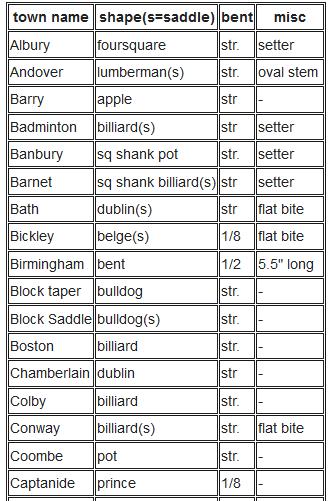
The article also included a link to a shape chart which I have included the pertinent portion to the left for ease of reference https://pipedia.org/wiki/Loewe_Shape_Chart).

The pipe I am working on is a shape that is called a Captanide which is the town name for the Prince shape. (I did a bit of searching on Google for Captanide as a town in England and came up empty-handed.) The shape is listed in the chart to the left as having a 1/8 bent stem. That was helpful information as I was not sure what the Captanide stamping meant.

With the information from Pipedia I knew that I was working on a pipe from Loewe & Co. that was made before 1979 when Loewe was bought out by the  Cadogan Group and joined many other of the old brands that were purchased – BBB, GBD, Comoys and Orlik. The old gentleman that we bought the pipes from intimated that he purchased it at the Manhattan Barclay-Rex store. I was unable to pin down any information regarding the date this pipe was made. Now it was time to work on the pipe.

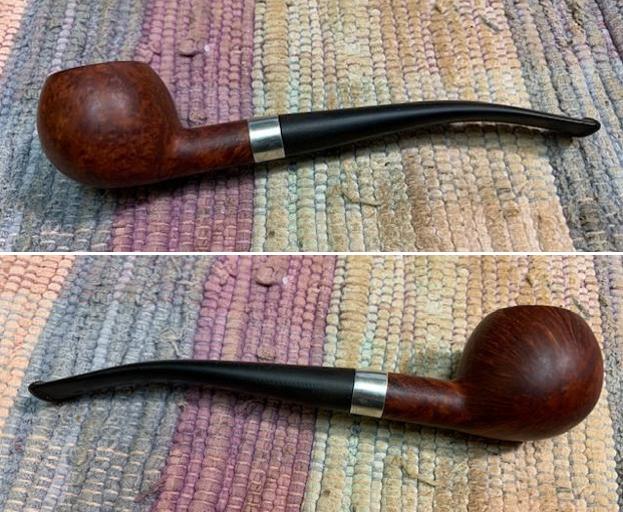
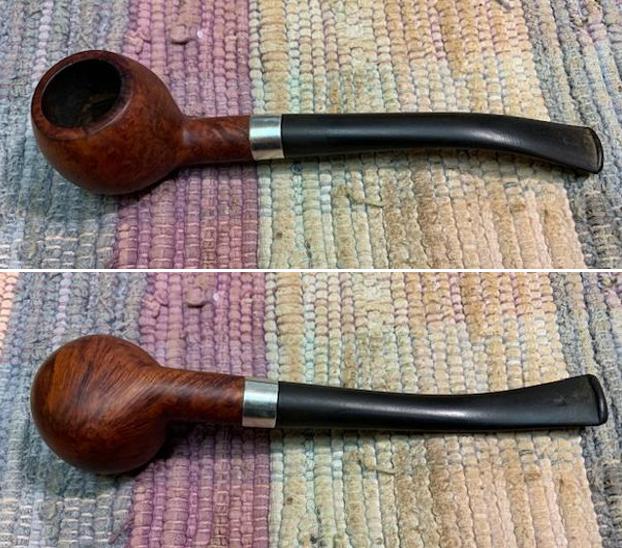
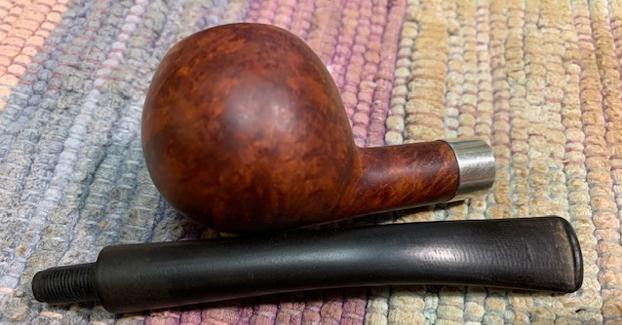
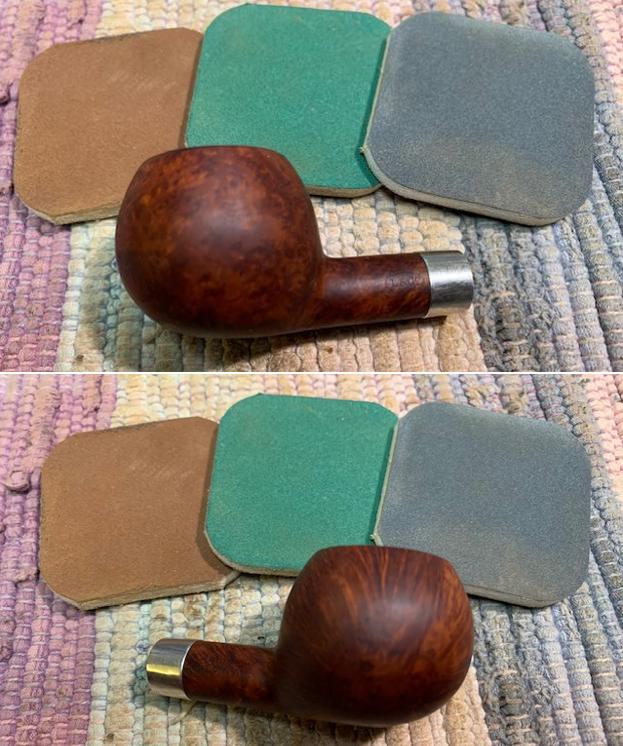
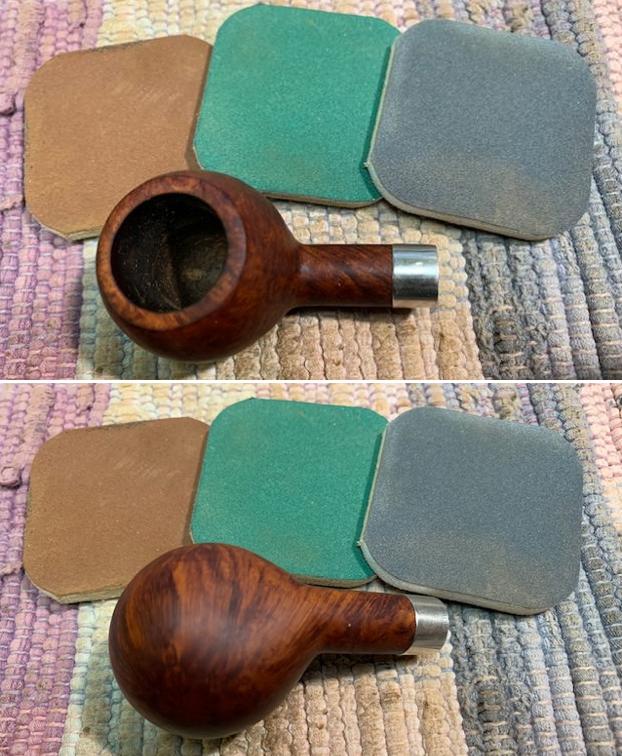
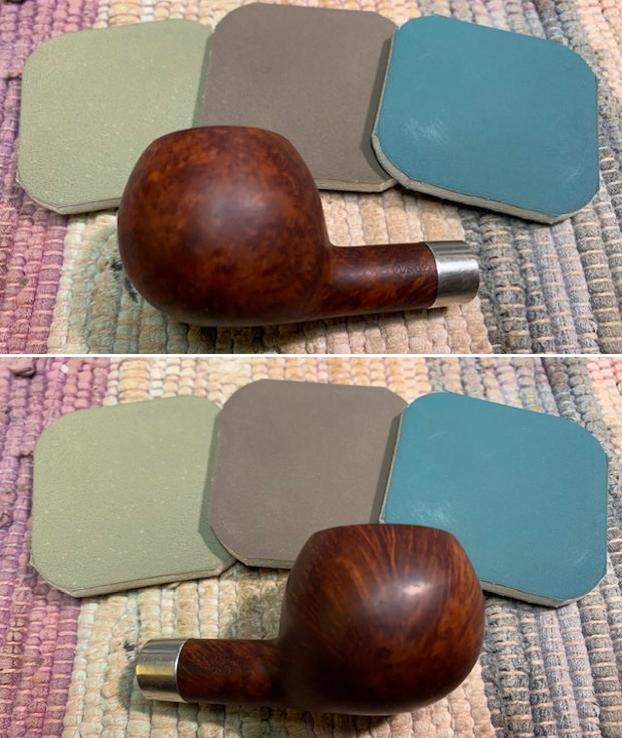
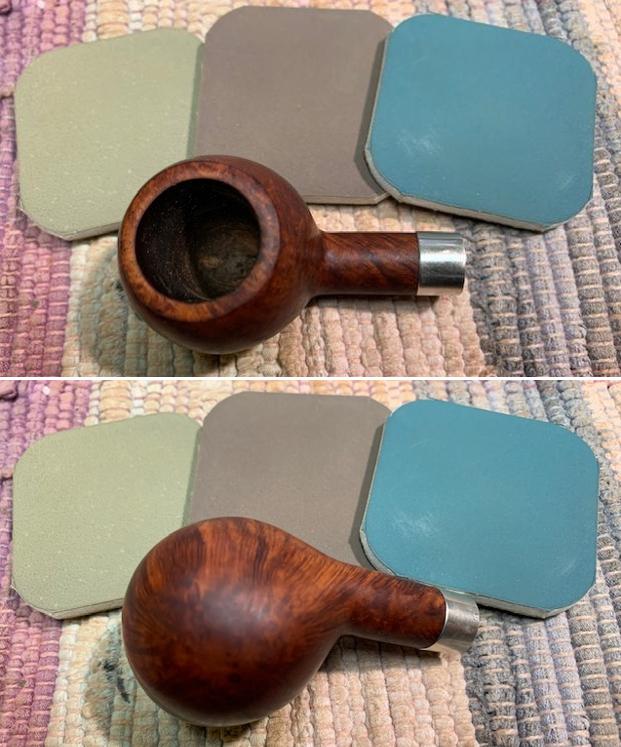
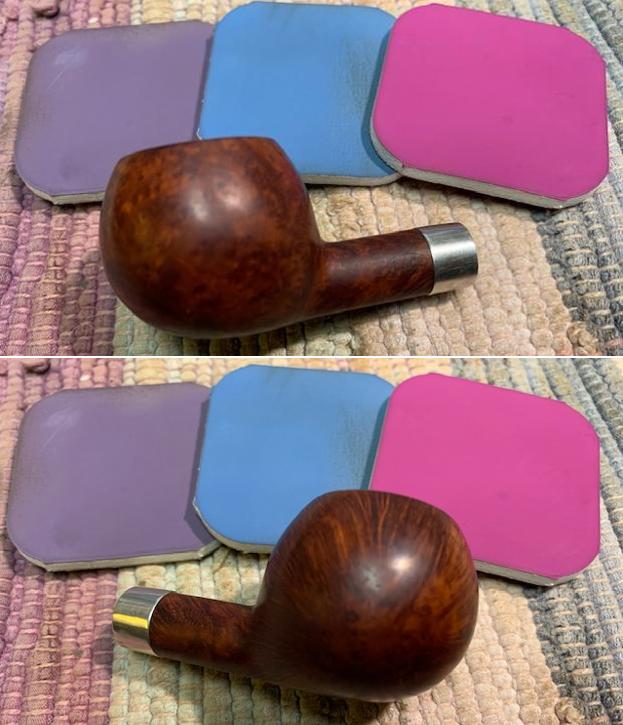
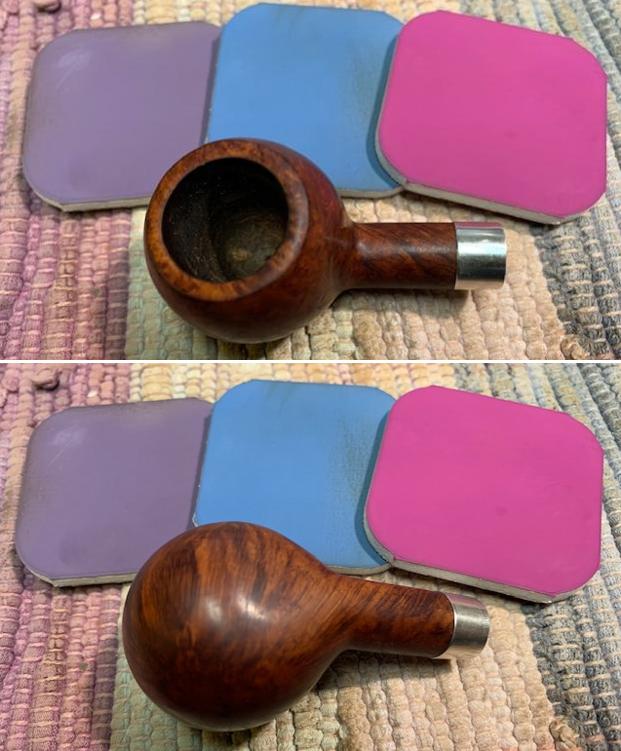
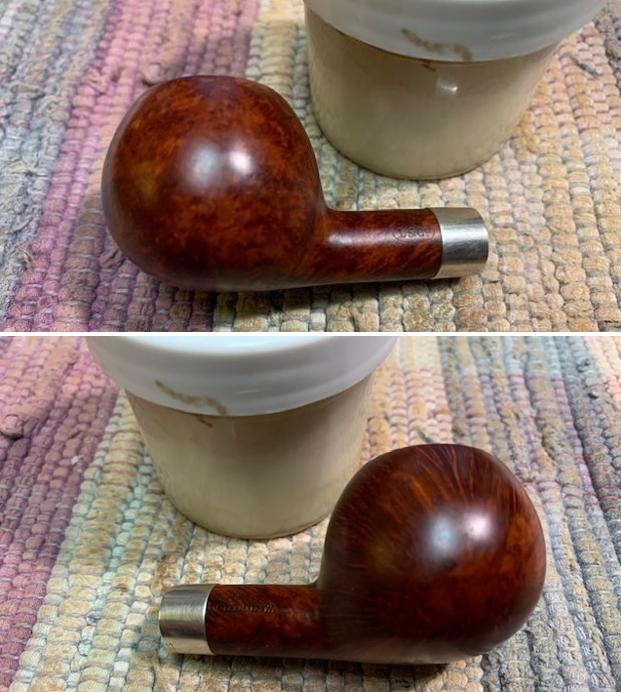
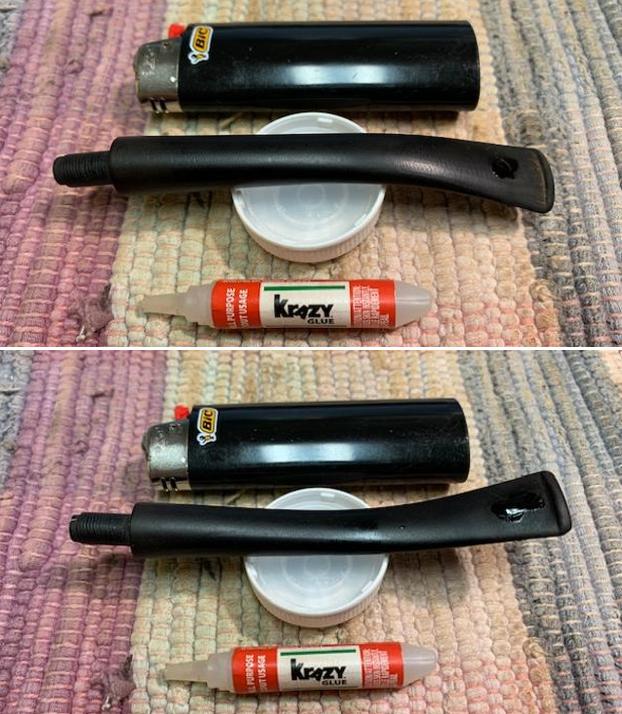
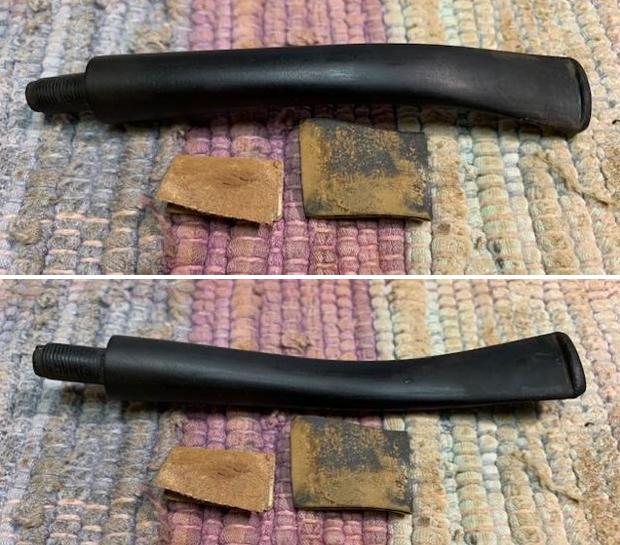
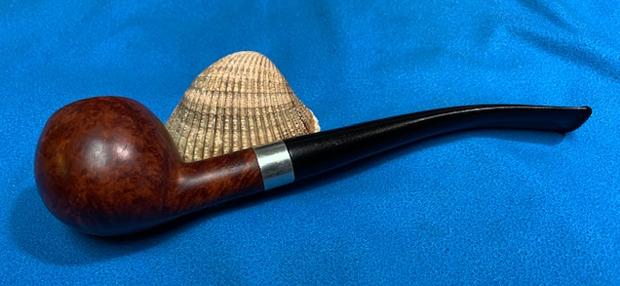
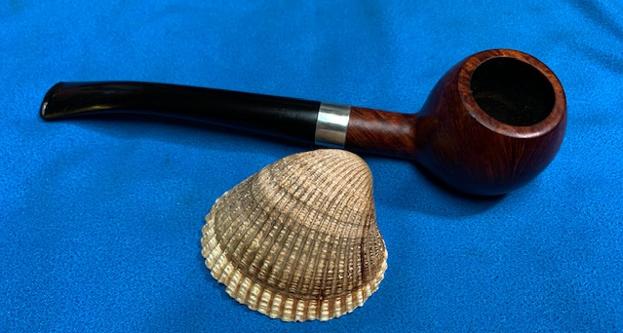
Jeff carefully cleaned the pipe. He reamed it with a PipNet pipe reamer and then cleaned up the reaming with a Savinelli Fitsall Pipe Knife. He scrubbed out the internals of the shank, stem and shank extension with alcohol, pipe cleaners and cotton swabs until the pipe was clean. He scrubbed the exterior of the bowl with Murphy’s Oil Soap and a tooth brush to remove the grime and grit on the briar and lava on the rim top. The finish looks much better and has a deep richness in the colour that highlights grain of the briar. The rim top looked good with some darkening on the top and damage to the back outer edge of the bowl. He soaked the stem in Briarville’s Pipe Stem Deoxidizer and scrubbed it with Soft Scrub to remove the remnants of oxidation. He also cleaned and polished the silver band til it glowed. When the pipe arrived here in Vancouver I was amazed it looked so good. Here are some photos of what I saw. I took some close up photos of the rim top and the stem surface. The top and inner and outer edge of the rim look very good. There is some slight darkening around the inner edge of the rim but otherwise no damage. I took close up photos of the stem to show the condition of the surface and button. The stem top had tooth marks ahead of the button on both sides. I took a picture of the stamping on the left side of the shank and it was faint but readable as noted above.I removed the stem from the shank and took a photo of the parts of the pipe. I started my work on the pipe by addressing the darkening on the rim top and edges of the bowl – inner and outer. I worked over the rim top and edges with 220 grit sandpaper until the darkening was minimized.I polished the briar with micromesh sanding pads – dry sanding with 1500-12000 grit pads. I wiped the briar down with a damp cloth after each pad. I worked some Before & After Restoration Balm into the surface of the bowl and shank with my fingertips to clean, enliven and protect the briar. I let the balm sit for 15 minutes and then buffed with a cotton cloth to raise the shine. The photos show the bowl at this point in the restoration process. I set the bowl aside and turned my attention to the stem. I “painted” it with the flame of a Bic lighter to lift the tooth dents in the vulcanite on both sides. I sanded what remained smooth with a folded piece of 220 grit sandpaper to blend them in the rest of the stem surface. I started polishing the stem with 400 grit wet dry sandpaper. I polished the stem with micromesh sanding pads – dry sanding with 1500-12000 grit sanding pads. I wiped it down after each sanding pad with Obsidian Oil. I polished it with Before & After Pipe Stem Polish – both Fine and Extra Fine. I gave it a final coat of Obsidian Oil. With the bowl and the stem finished I put the beautiful L&Co. (Loewe & Co.) Captanide Prince back together and buffed it on the wheel using Blue Diamond to give it a shine. I gave the bowl and the stem multiple coats of carnauba wax on the wheel. I buffed it with a clean buffing pad to raise the shine. I hand buffed it with a microfiber cloth to deepen the shine. It really is a great looking sandblast. The dimensions of the pipe are – Length: 5 ½ inches, Height: 2 inches, Outside diameter of the bowl: 1 ¼ inches, Chamber diameter: ¾ of an inch. The weight of this large pipe is 1.59 ounces /44 grams. This L&Co. Captanide Prince is another great find in this collection. It is much more beautiful in person than these photos can capture. I will be putting it on the rebornpipes store soon. If you would like to add it to your collection let me know. This is another pipe that has the possibility of transporting the pipe man or woman back to a slower paced time in history where you can enjoy a respite. Thanks for walking through the restoration with me.


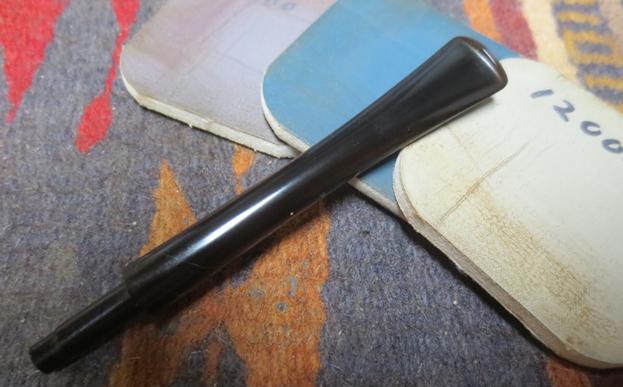
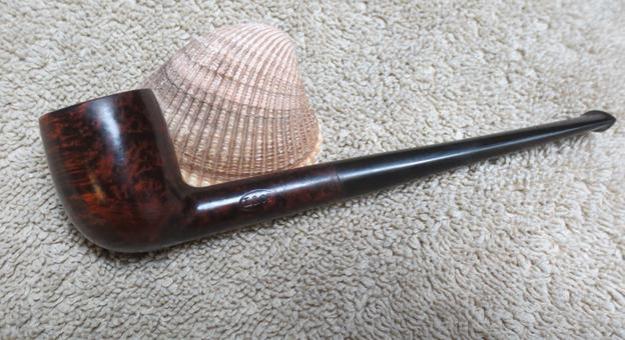
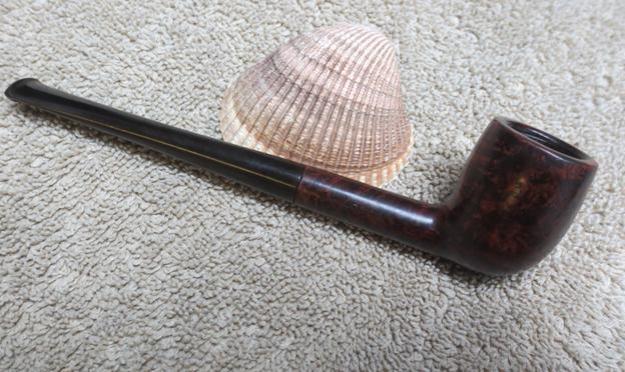
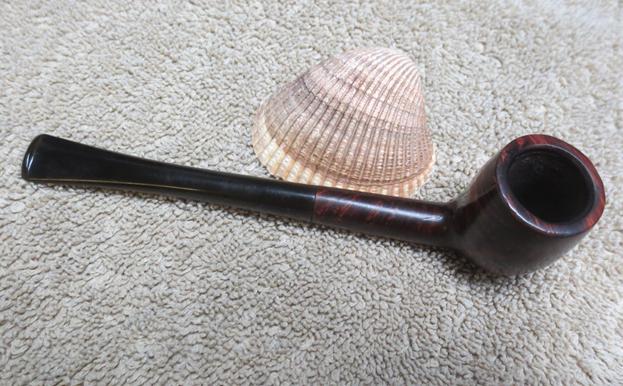
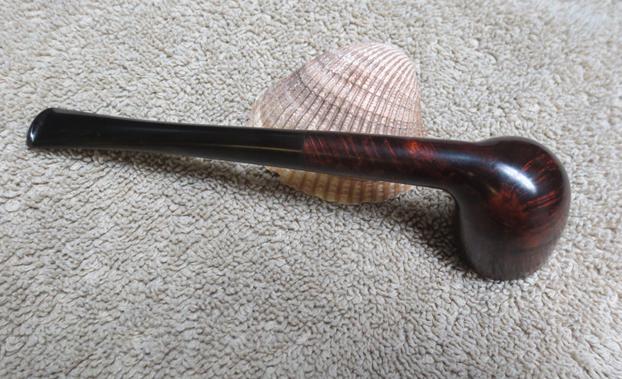
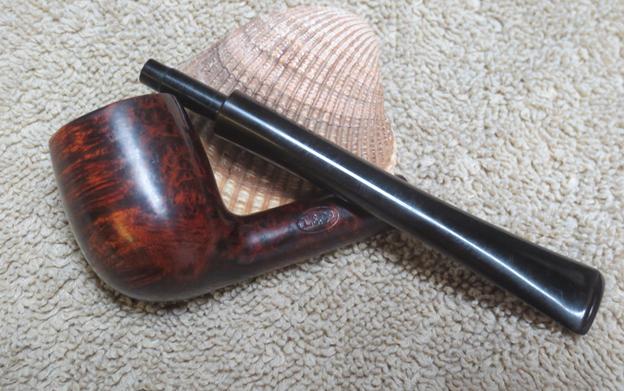
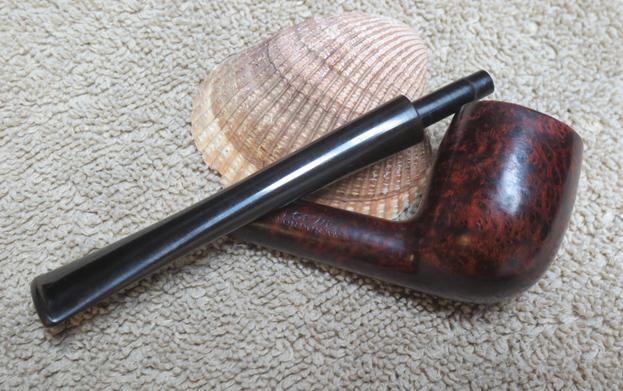
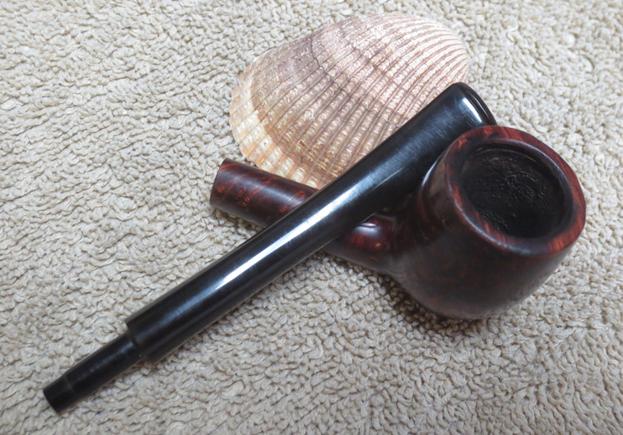
Refreshing a Tiny L&Co. Billiard


Blog by Steve Laug

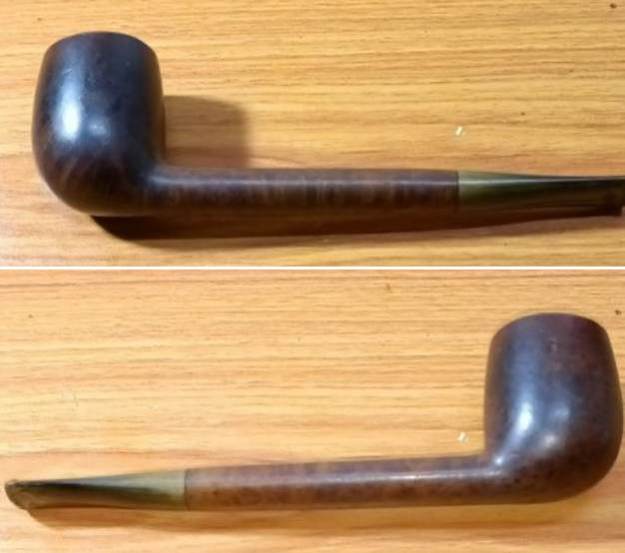
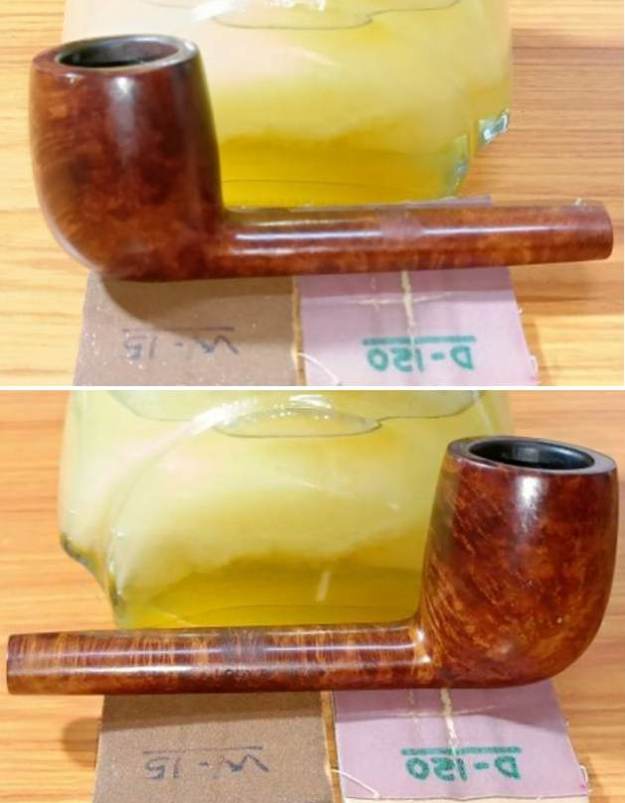
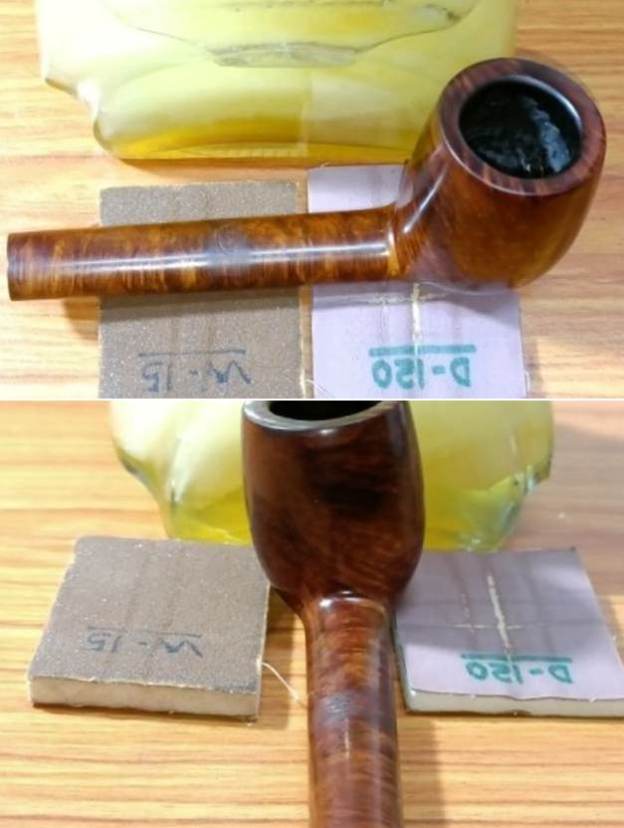
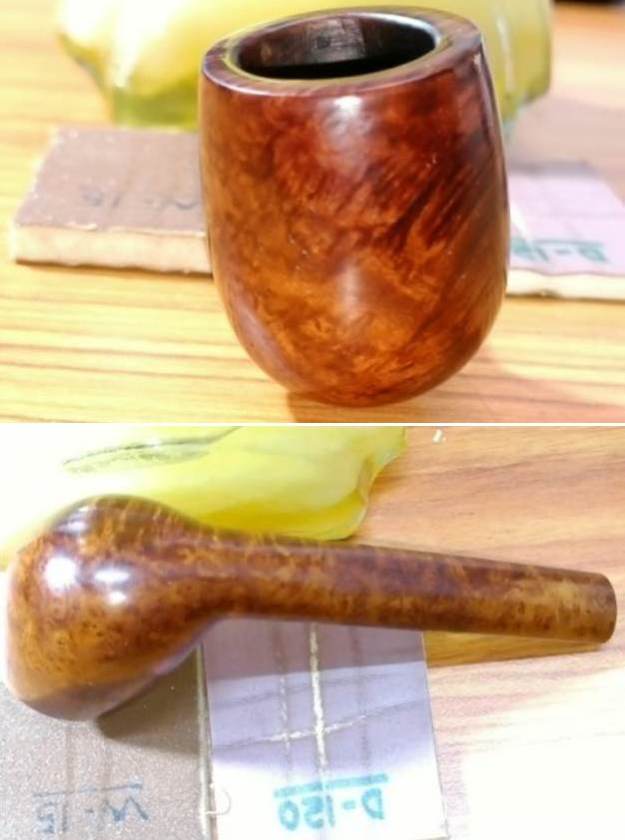
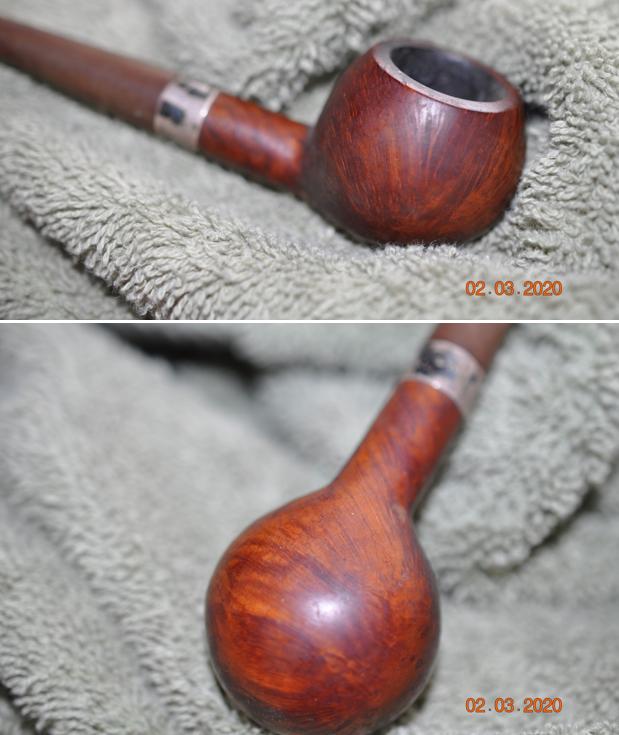
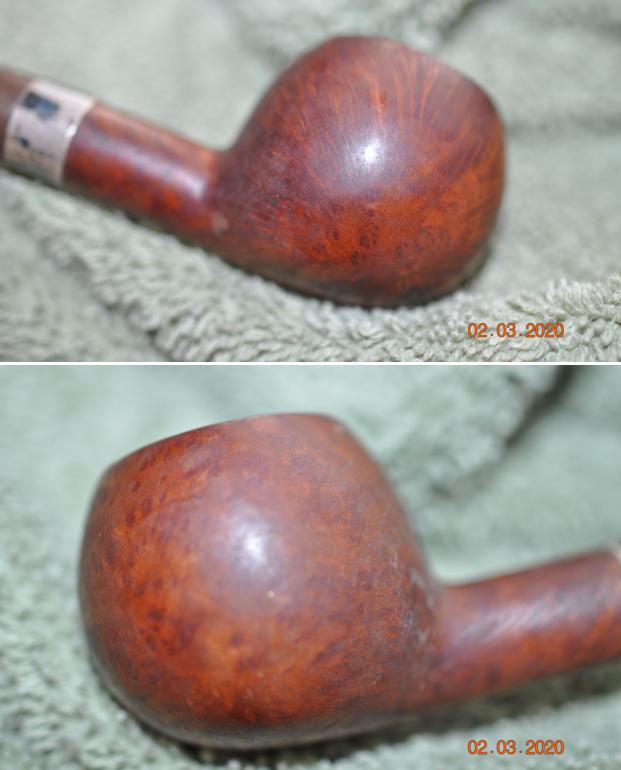
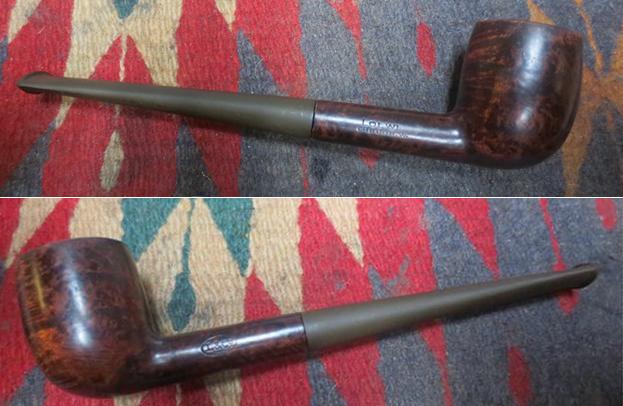
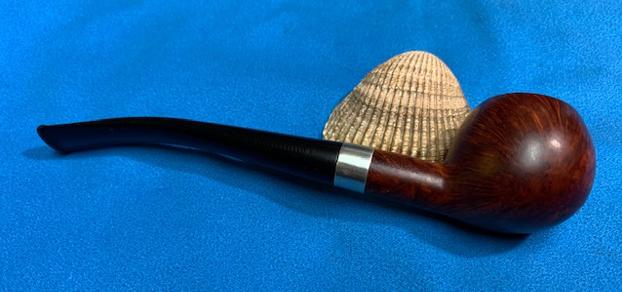
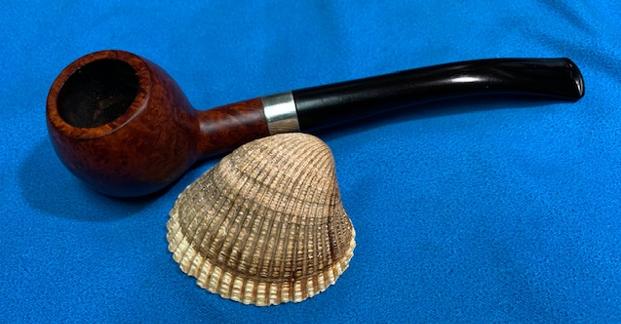
This is the final pipe of the lot of pipes I received from the pipe man in Eastern Canada who picked up an amazing lot an auction. The kind of price he paid makes me envious! This one is an older Loewe and Company graceful and diminutive pipe. It is stamped on the left side of the shank with L&Co. in an oval. On the right side of the shank it is stamped Loewe over England W.

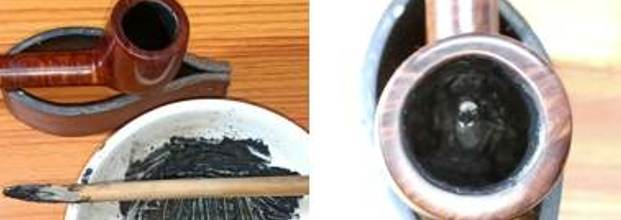
When I received the pipe I took the following photos of it to give you the big picture of this tiny pipe. The stem was in good shape but had the most oxidation of the lot that was sent to me. There were small tooth marks and chatter on the stem near the button on both sides. The finish was dirty but in decent shape. The rim was worn and there were some dents and dings on the top surface. The inner edge of the bowl was slightly out of round. Someone had reamed the pipe back to bare wood but the internals were very dirty. loewe2 loewe3I took a close up photo of the rim to show its condition. The finish was worn on the rim as well as darkened and dented. You can see the damage to the inner edge of the bowl as well.loewe4The next two photos show the oxidation on the stem. It is hard to see the tooth chatter and marks but they are present and will need to be dealt with.loewe5I also took some photos of the stamping. While not perfect you can read the stamps quite well and see the details that I mentioned above.loewe6I reamed the bowl with a Savinelli Fitsall Pipe Knife to clean up the inside of the bowl. The bowl had already been reamed and there were only slight remnants of a cake in the bowl.loewe7With the bowl clean I used a 1500 grit micromesh sanding pad to smooth out the rim and take off the carbon buildup on top. It also worked to take off the scratches in the briar.loewe8I used a folded piece of 220 grit sandpaper to clean up the out of round rim and bevel that were present. It did not take too much sanding and it looked as good as new.loewe9I used a dark brown stain pen to touch up the rim. The colour of the stain was a perfect match to the colour of the stain on the bowl. I stained the bevel and the top of the rim.loewe10I cleaned out the inside of the mortise and the airways in the shank and the stem with alcohol, pipe cleaners and cotton swabs. The pipe was quite dirty in these areas and took a bit of scrubbing to get the grit out of the airways.loewe11I sanded the stem with 220 grit sandpaper to remove the oxidation and the tooth marks and chatter. Several of them were quite deep so I “painted” the tooth marks with the flame of the lighter to lift them to the surface of the stem. They all raised to the surface and a bit of sanding smoothed out the damage.loewe12I polished the stem with micromesh sanding pads – wet sanding with 1500-2400 grit pads and dry sanding with 3200-12000 grit pads. I rubbed the stem down with Obsidian Oil after each set of three pads. I set the stem aside to dry.loewe13 loewe14 loewe15I buffed the pipe and stem with Blue Diamond on the buffing wheel to polish the minute scratches that still remained in the vulcanite and the finish of the briar. I gave the bowl and stem multiple coats of carnauba wax. I buffed the pipe with a clean buffing pad to raise the shine and then hand buffed it with a microfiber cloth to deepen the shine. The finished pipe is shown in the photos below. This evening I packed the pipes and sent them Express Post back to the pipe man in Eastern Canada. I am hoping he enjoys his “new” pipes and adds them to his rotation. Cheers. Thanks for looking.loewe16 loewe17 loewe18 loewe19 loewe20 loewe21 loewe22 loewe23 loewe24