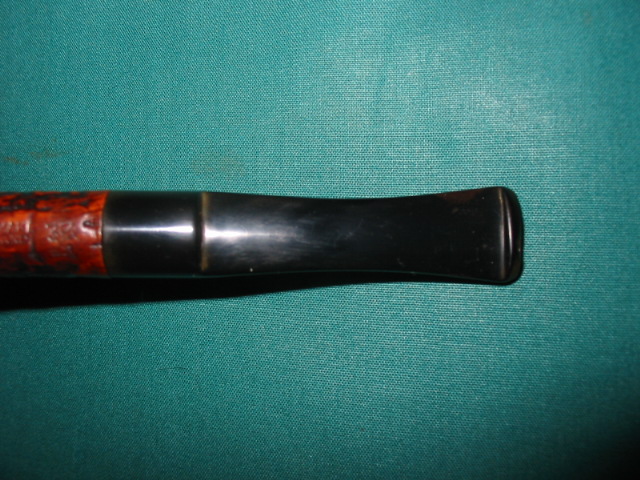
Tag Archives: heat gun

GBD New Standard Reborn


Blog by Greg Wolford

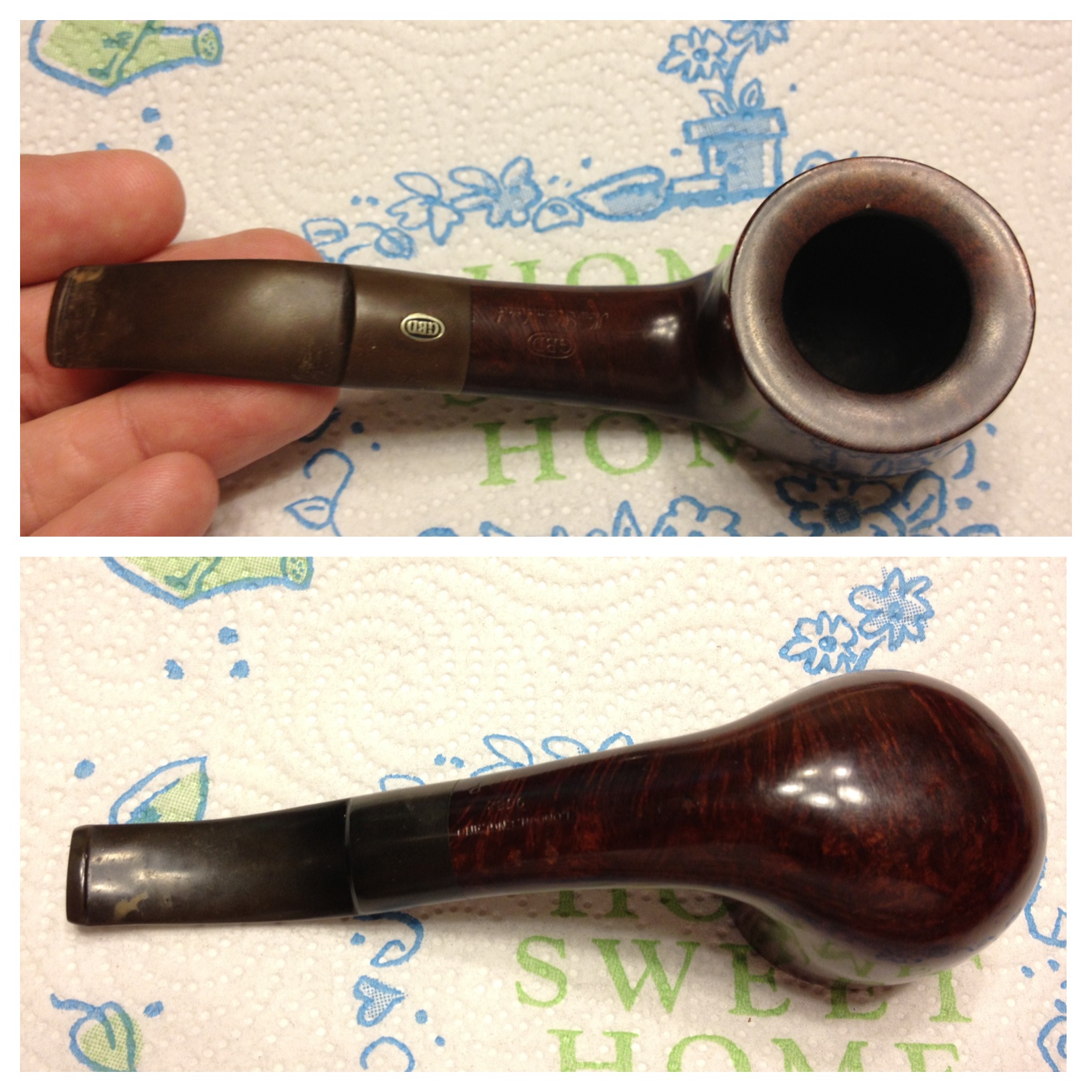
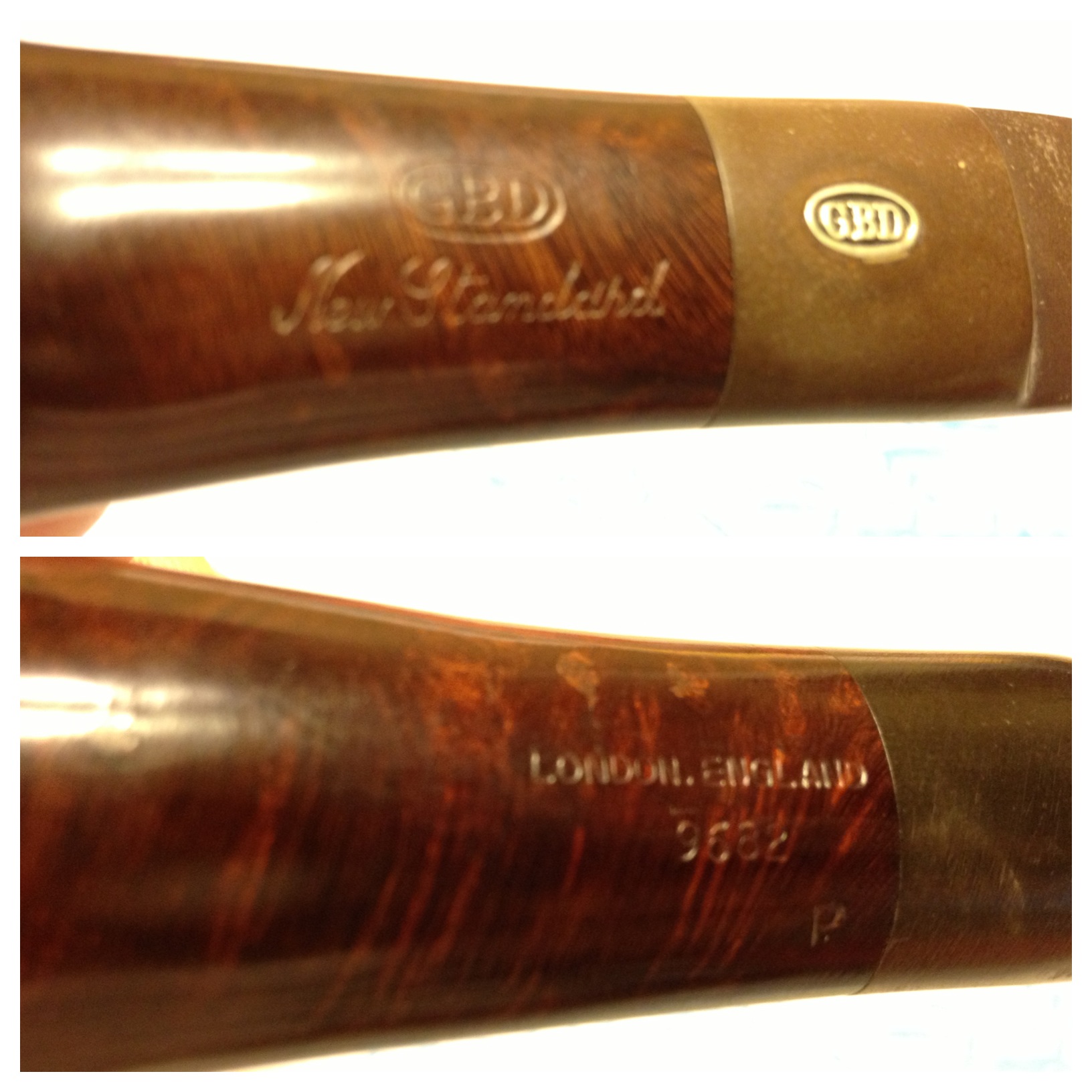
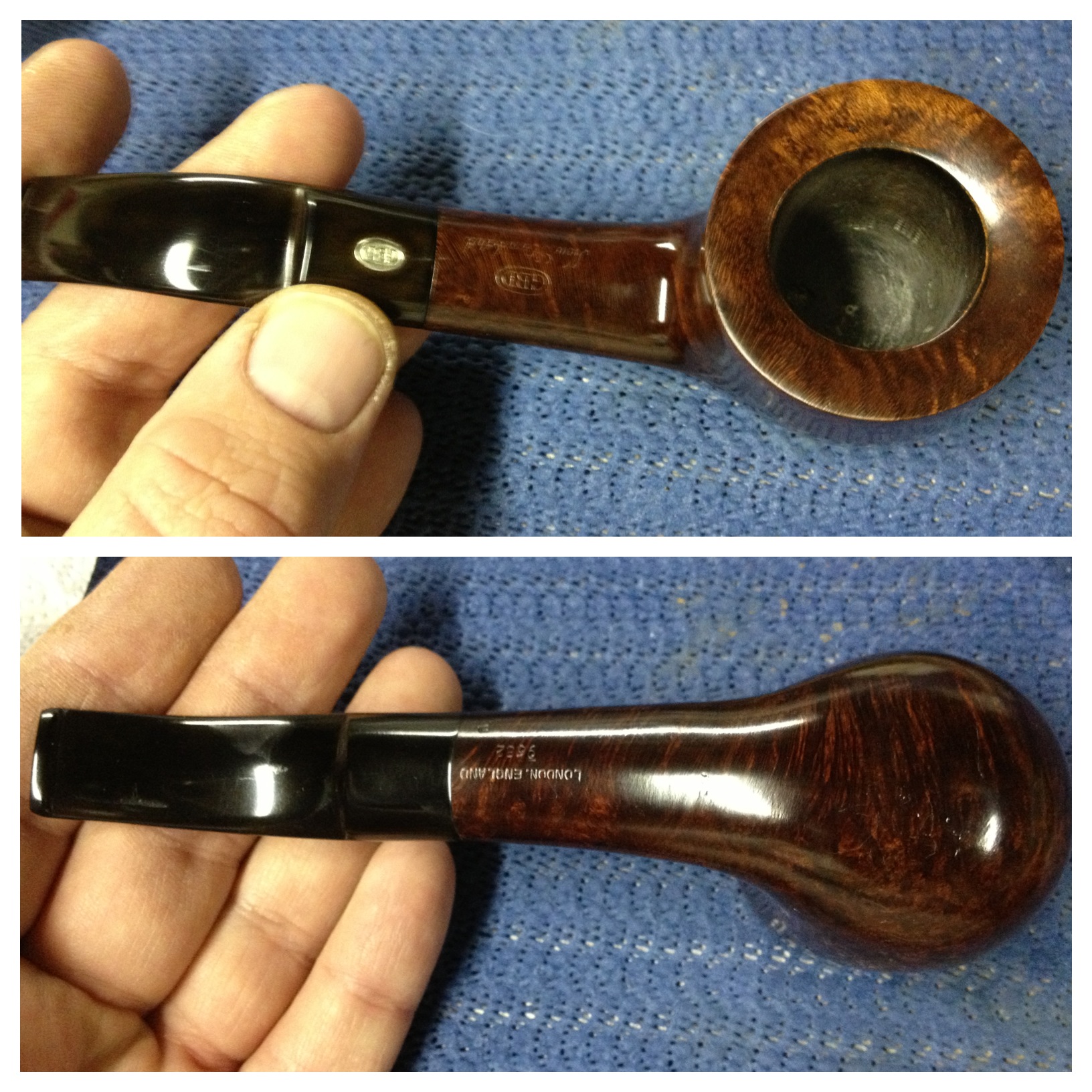
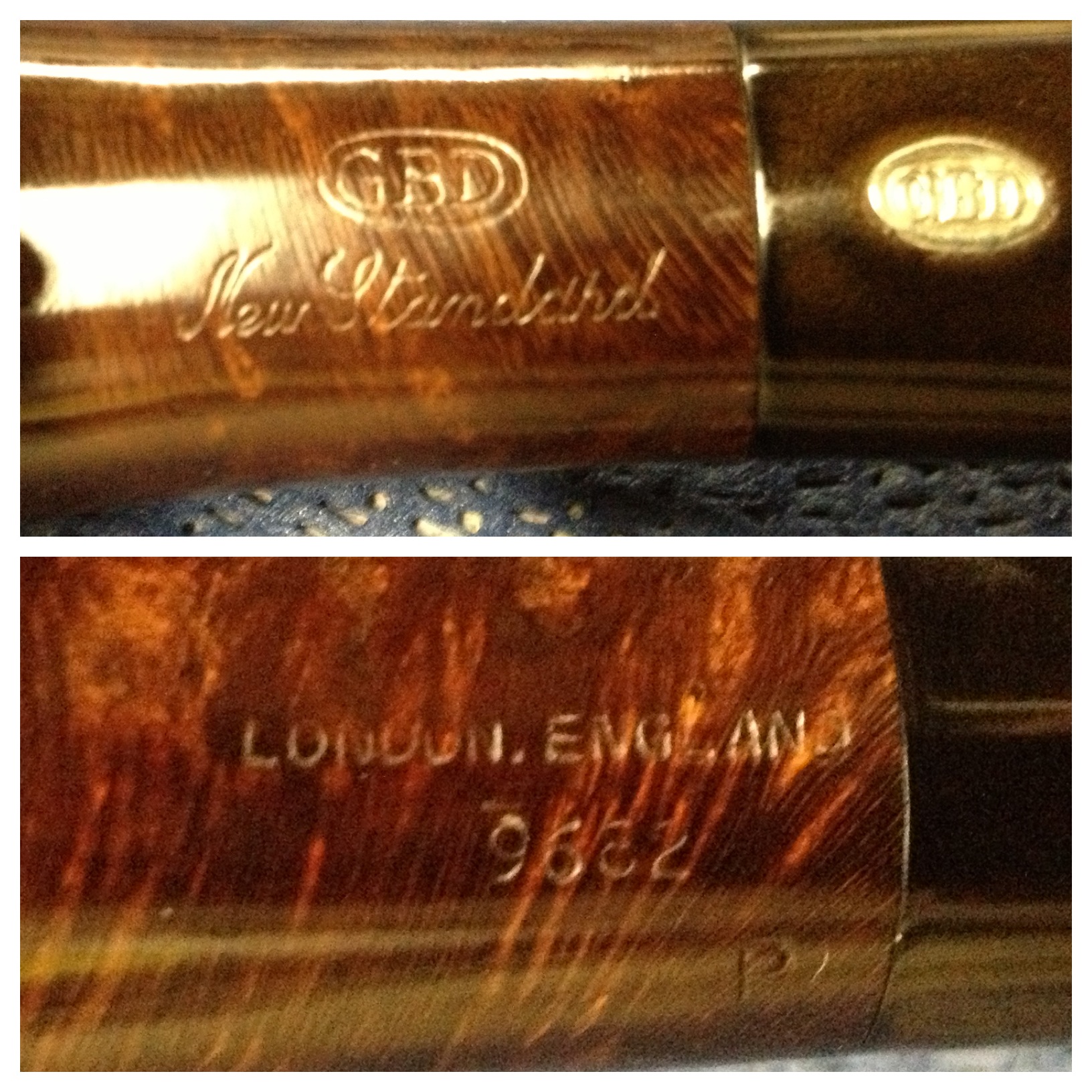
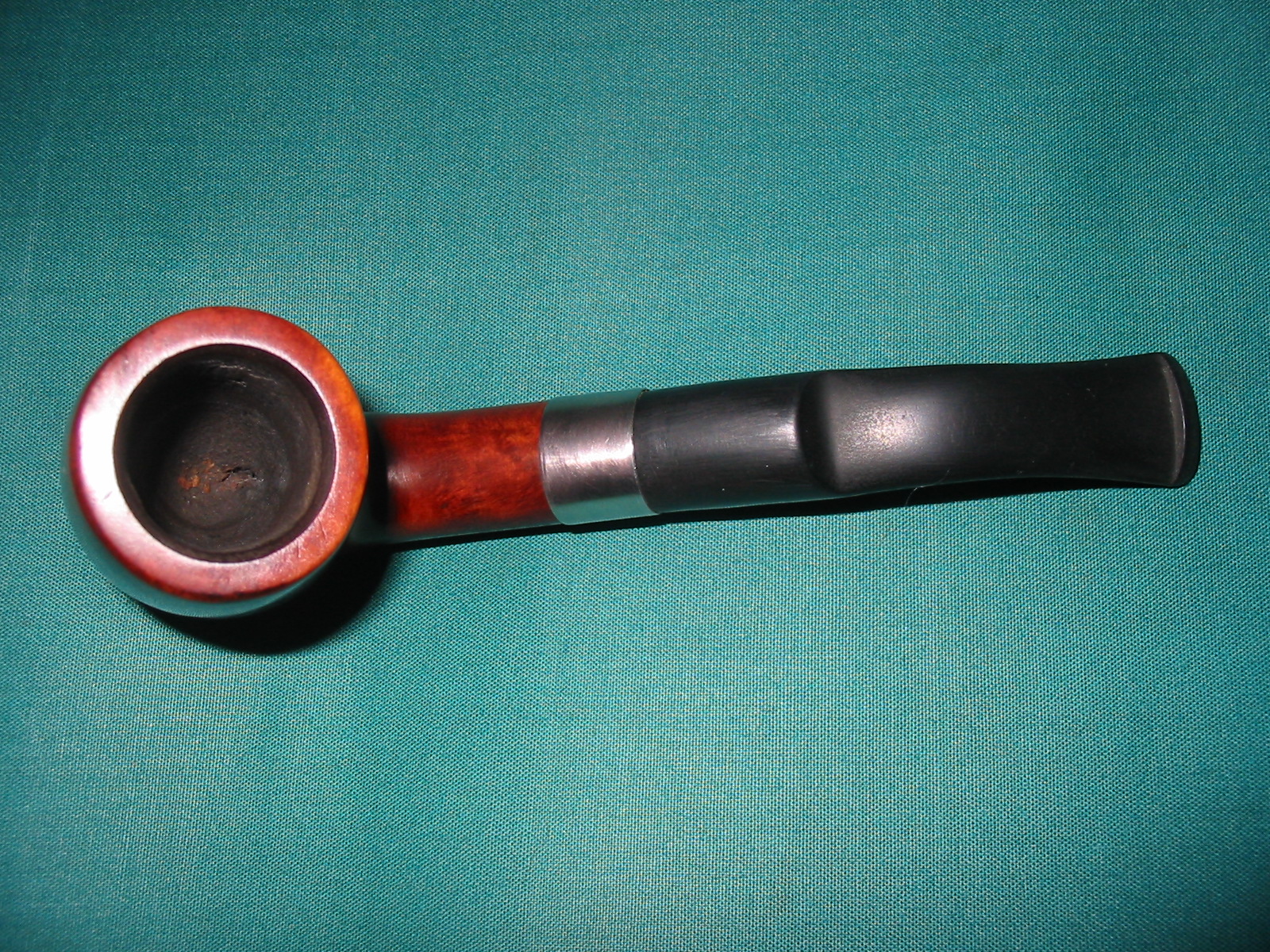
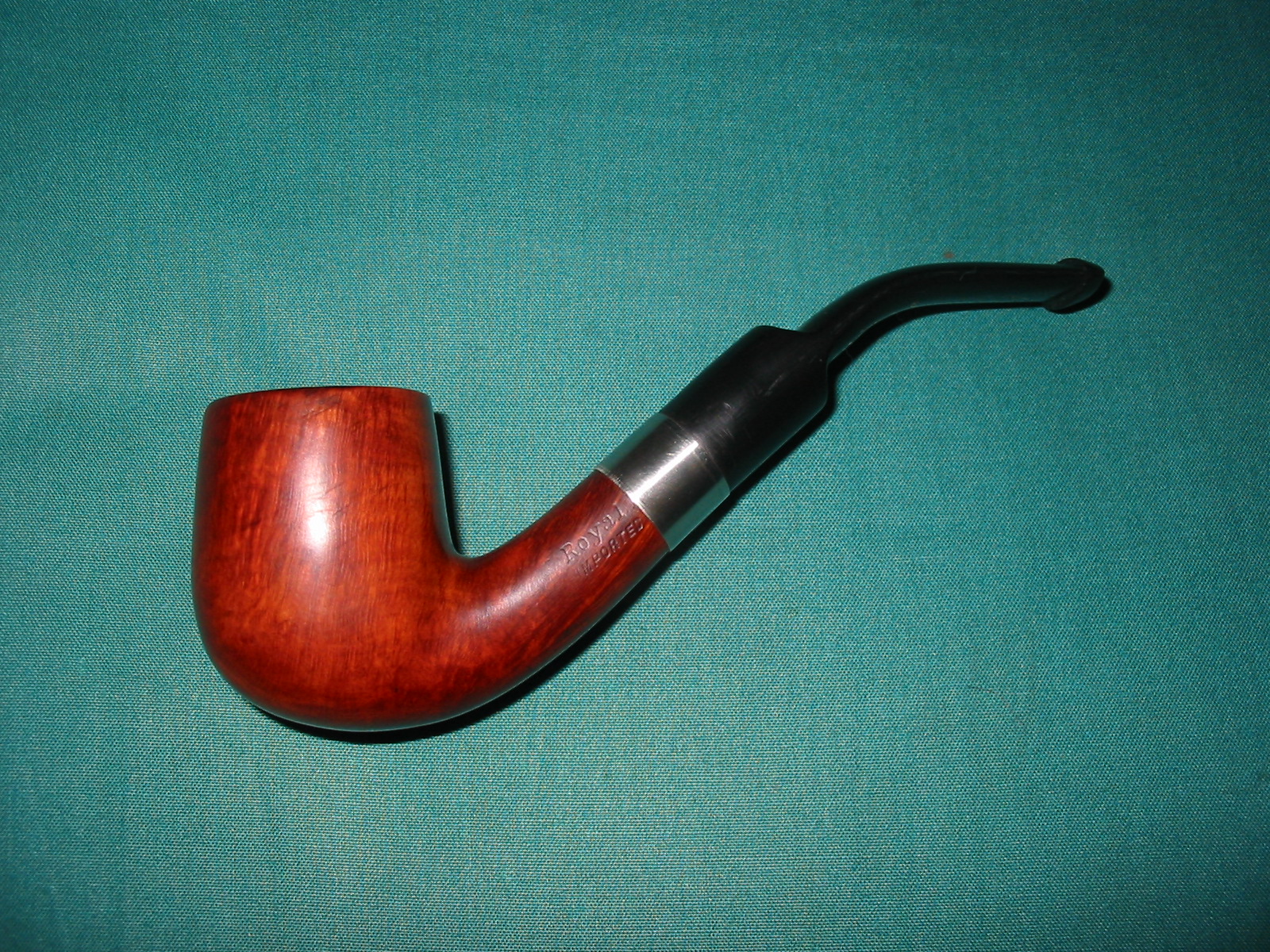
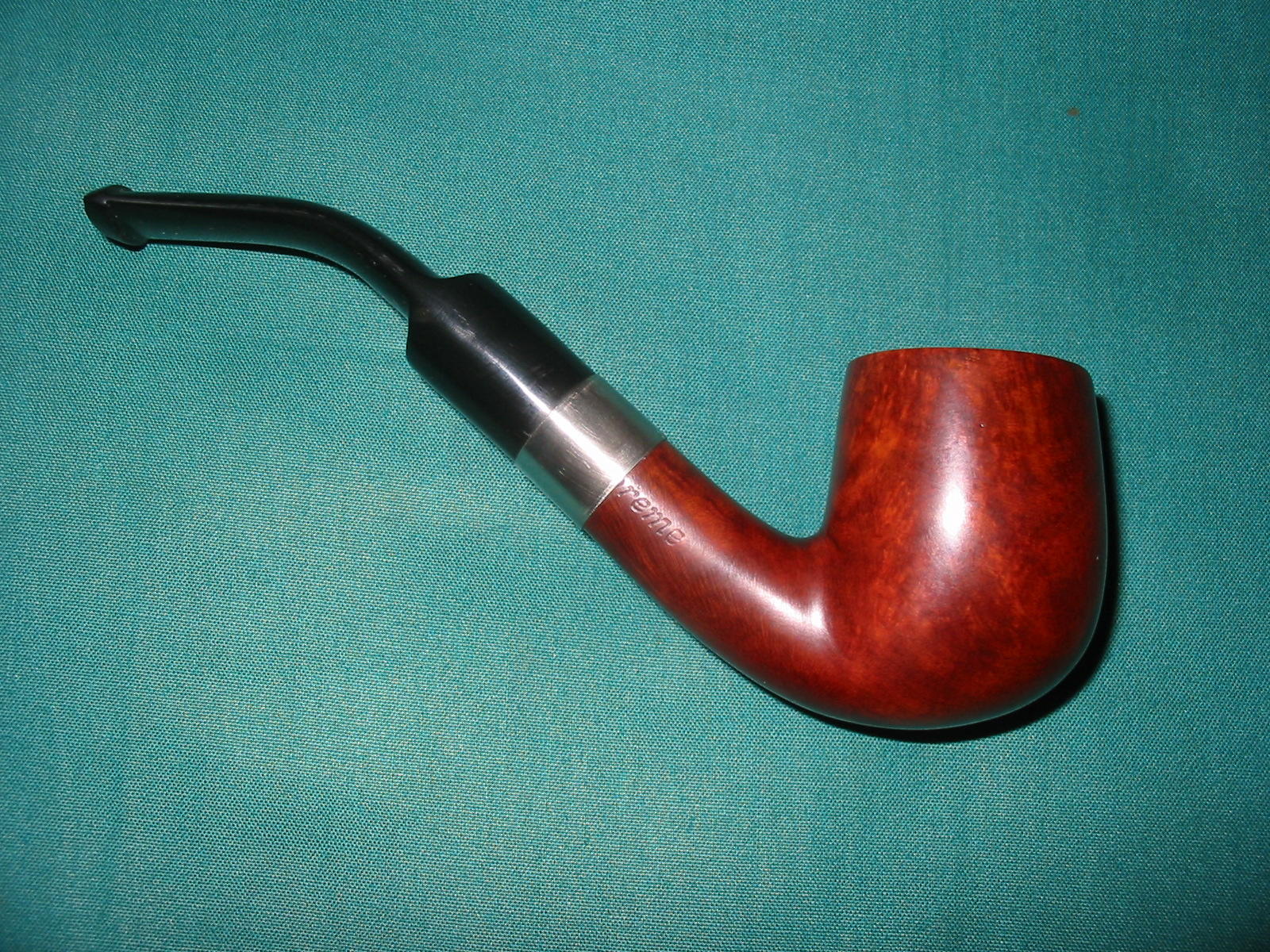
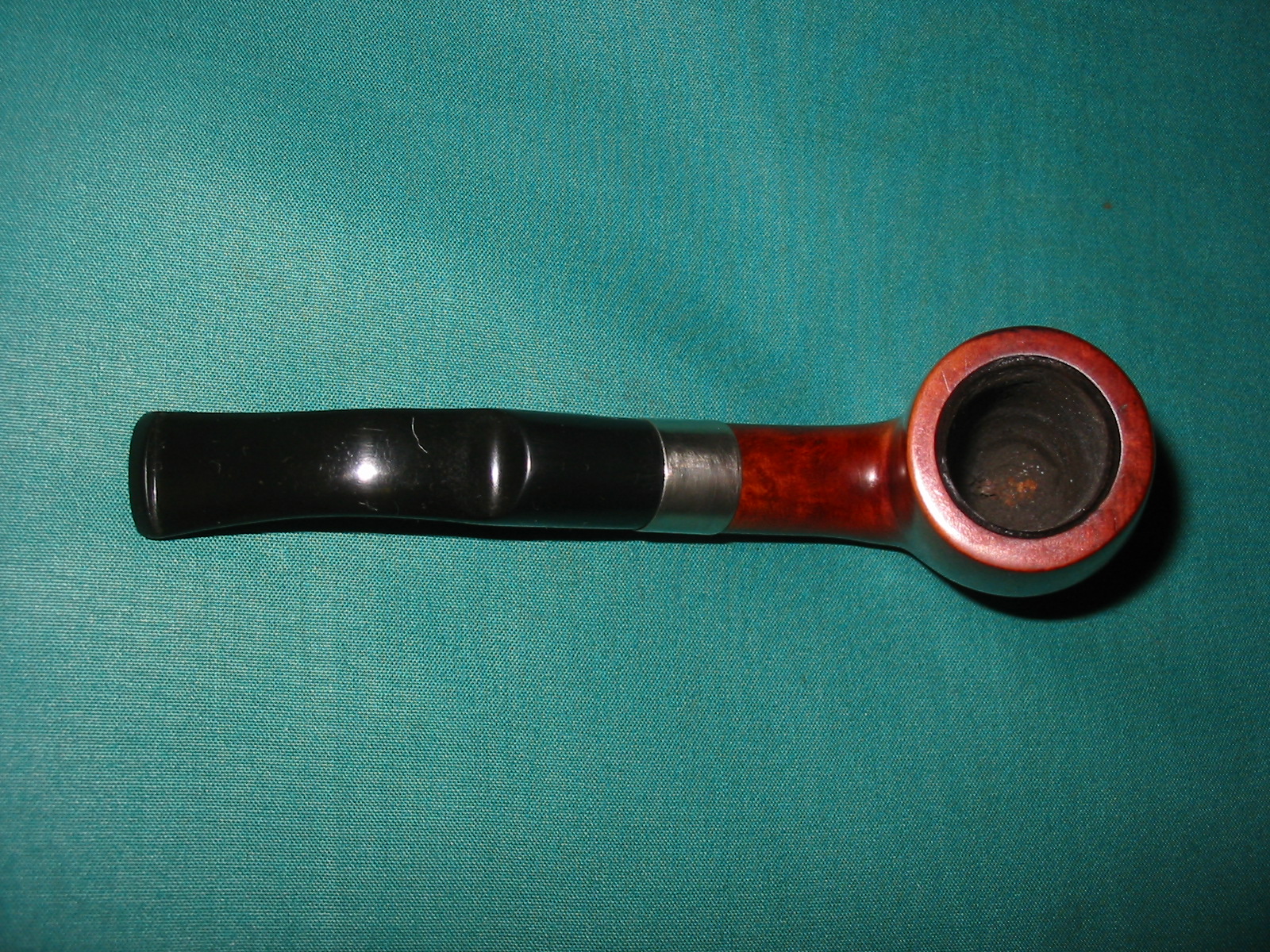
I picked up the GBD New Standard recently because of its shape mostly: a thick-walled pot. It is stamped GBD in the oval over New Standard on the top of the shank. The bottom of the shank is stamped London England over 9682 with a “P” below and to the right of that.

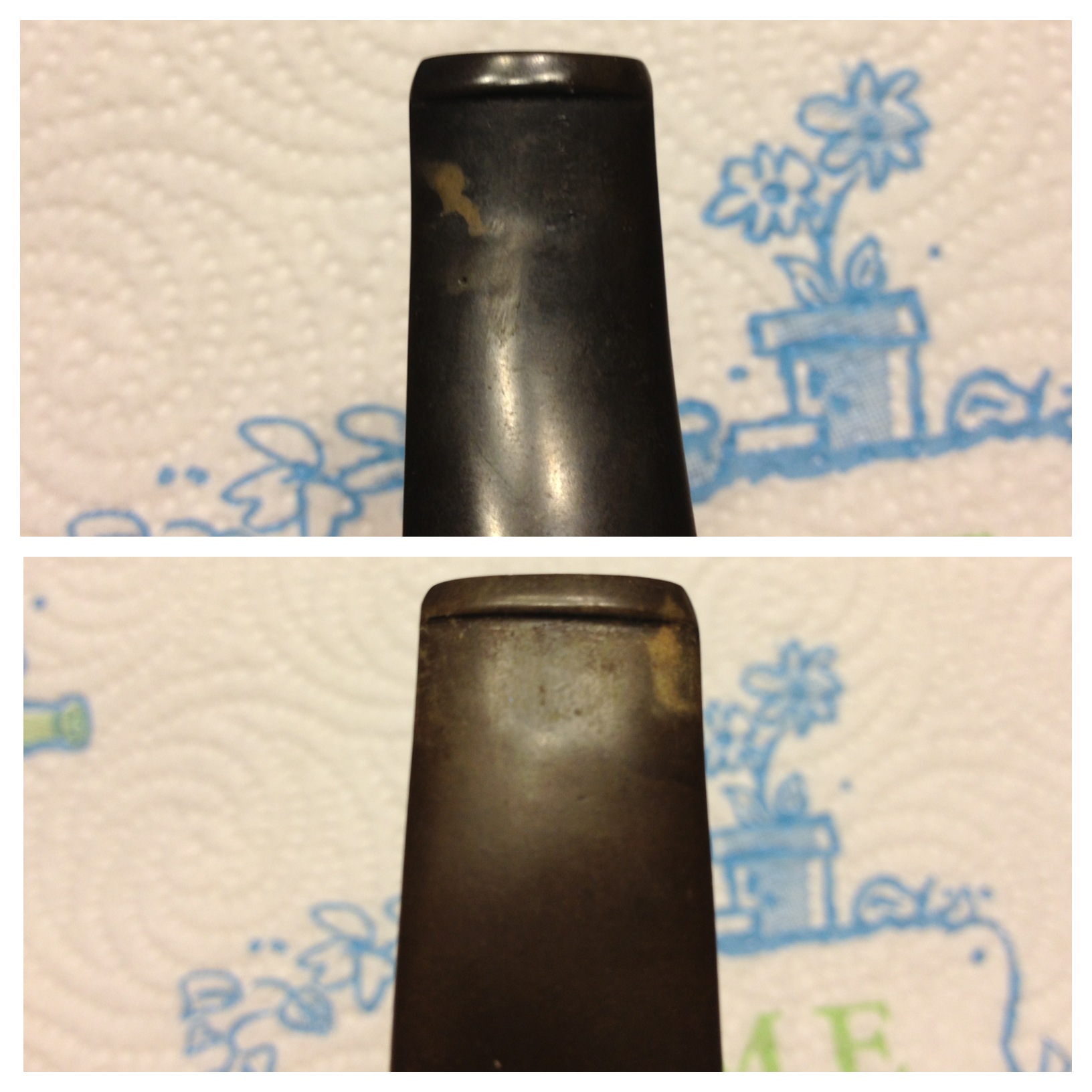
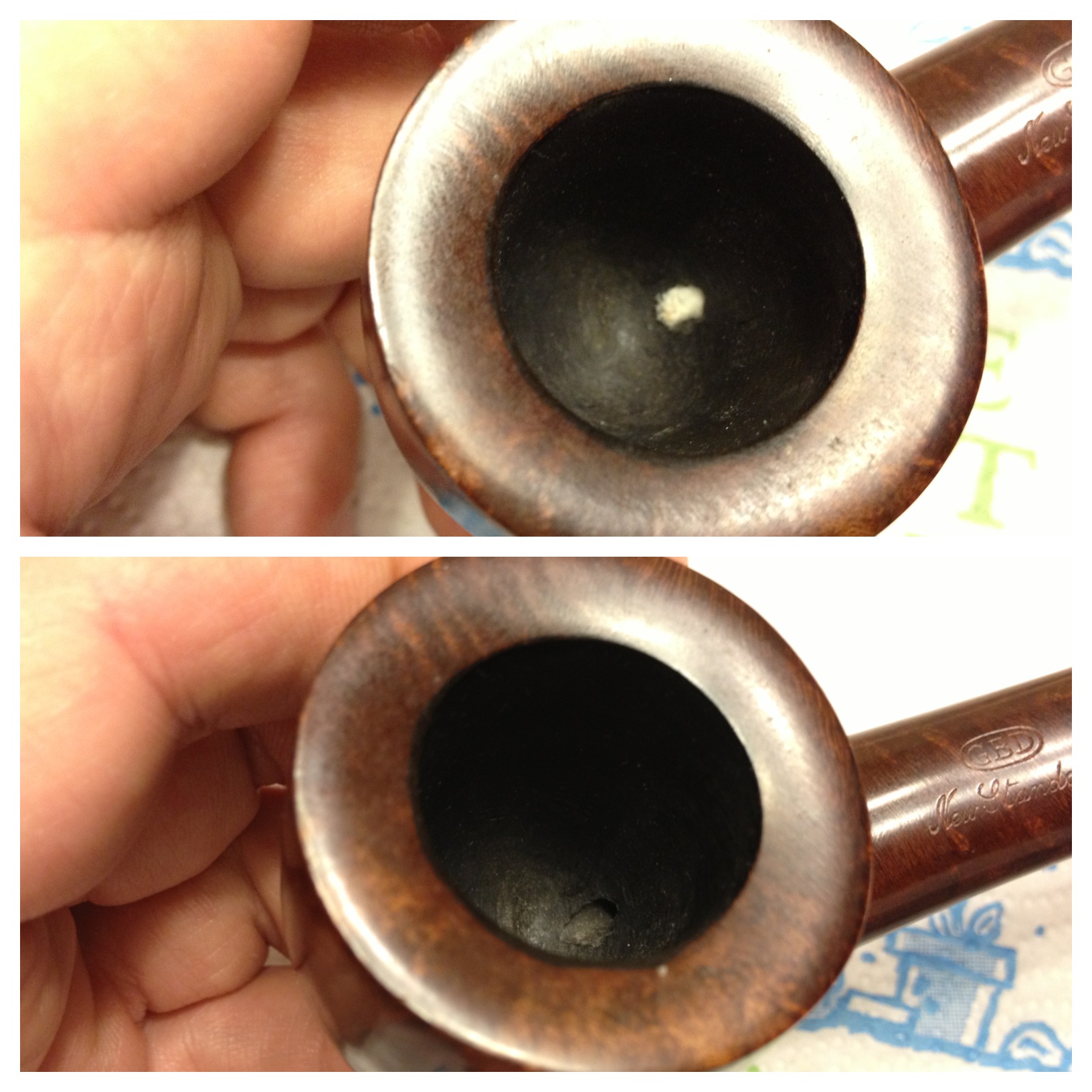
When I got the pipe it was in pretty good shape: dirty, oxidized, the normal stuff. But it seemed lightly smoked with no cake and no real issues and only light chatter. IMG_5241IMG_5242IMG_5243Nomenclature
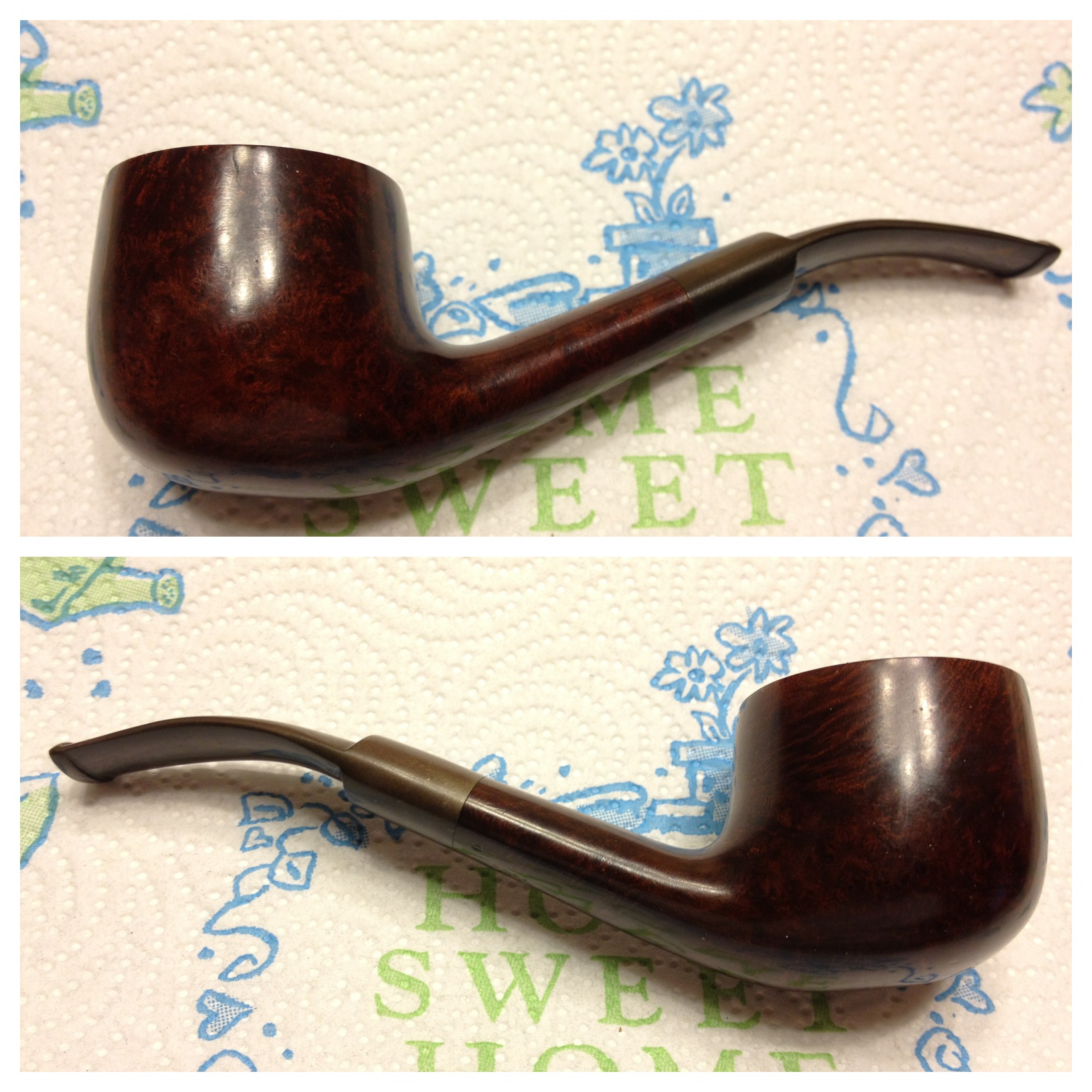
You can see in the top a pipe cleaner sticking through the drought hole, showing a well drilled pipe.

You can see in the top a pipe cleaner sticking through the drought hole, showing a well-drilled pipe.

The pipe has a few fills but the are mainly on the bottom – out of sight, out of mind – and I wanted to keep this pipe as original as I could so I didn’t bother with them.

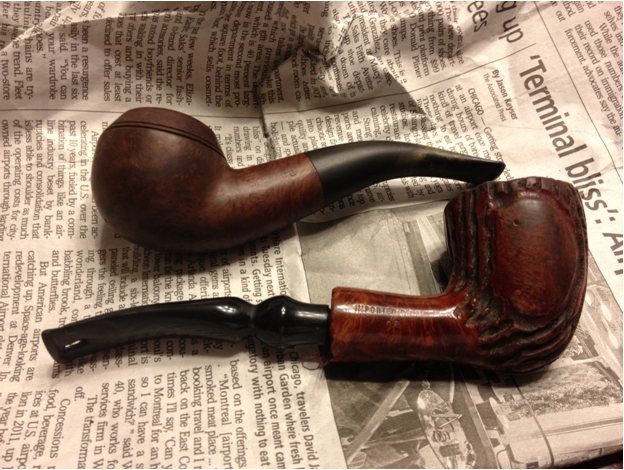
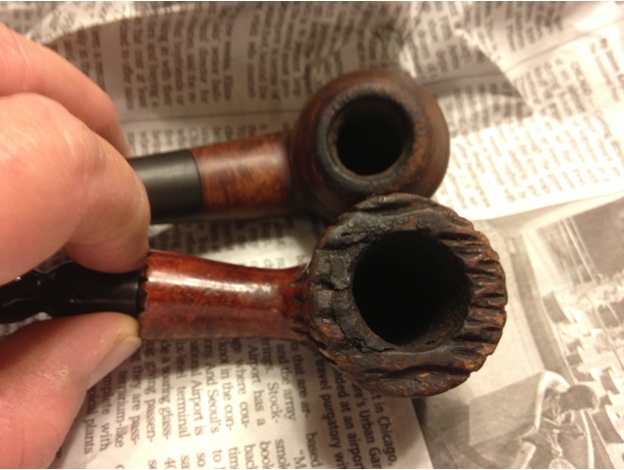
I started with putting the stem into a OxiClean bath; I let it soak for about 45 minutes I believe. While the stems (I actually was doing two pipes at a time, as I often do) soak I did a cotton ball and alcohol treatment on the two bowls. Usually I use coarse salt, not cotton balls, for this but since this bowl appeared to be so lightly used and the second bowl was fairly gunky I thought this would be a good time to experiment with the new-to-me cotton ball treatment. I put one large cotton ball into each bowl, plugged the shanks with cotton swabs and set them up on a steel drainer I have in my kitchen. I then filled the bowls with 91% isopropyl alcohol, slowly, with an eye dropper.

The photos below show the progression of black “stuff” drawn out of the GBD bowl; you may also see some of the tars (brownish-yellow stuff) in the cotton ball from the other pipe. This process started within a minute, the first photo, and then each picture after is after about 15 minutes, with the final result at about one hour.
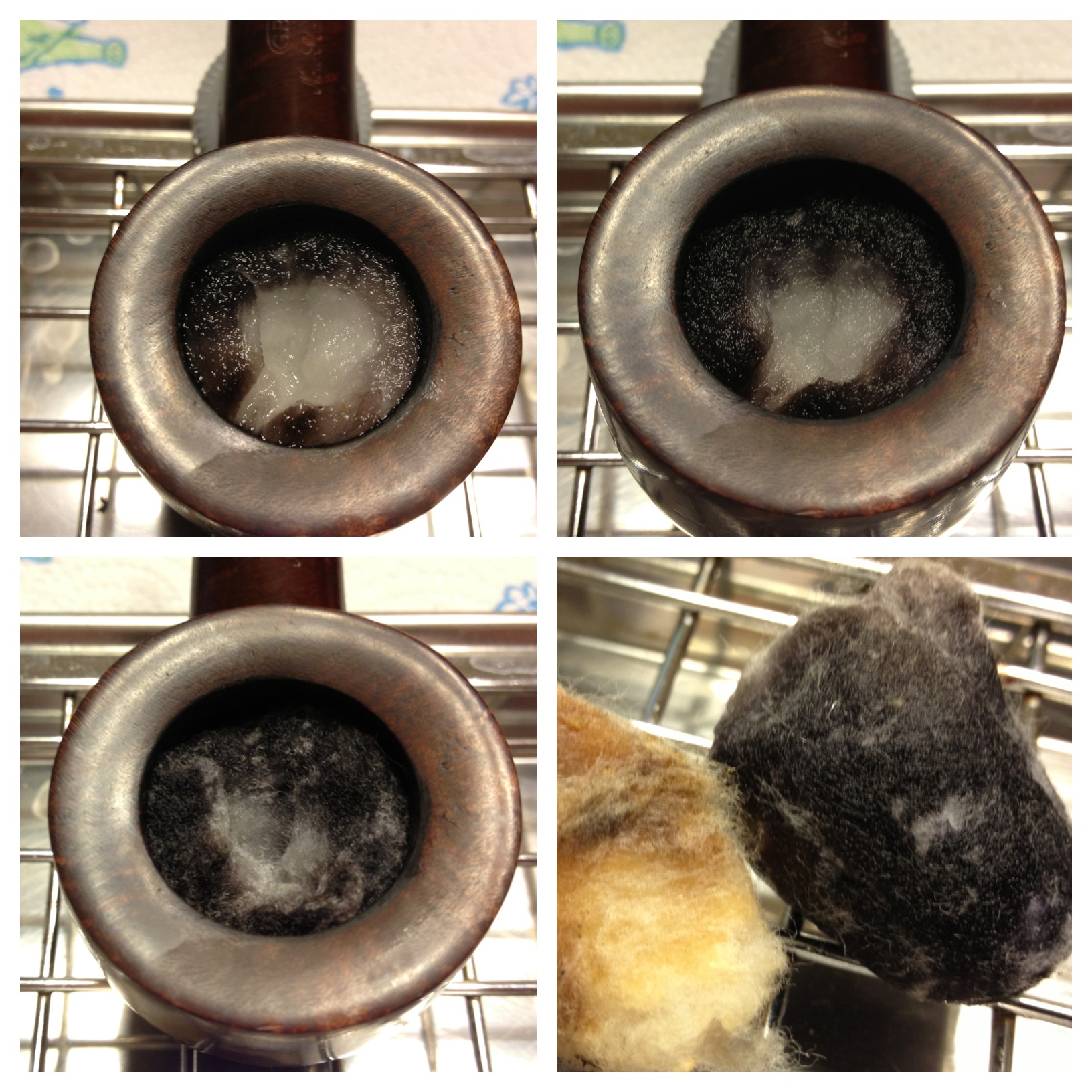
IMG_5246

I don’t know what the black “stuff” was but it sure removed a lot of it in the treatment! As a side note, I found the cotton balls easier to deal with than the salt and it seems to have done as good a job, too. I will probably continue to us this method in the future.

The stems had been soaking for about an hour, maybe 45 minutes, at this time and were ready to come out of their bath. As you can see, quite a lot of oxidation was raised and loosened by this soak.
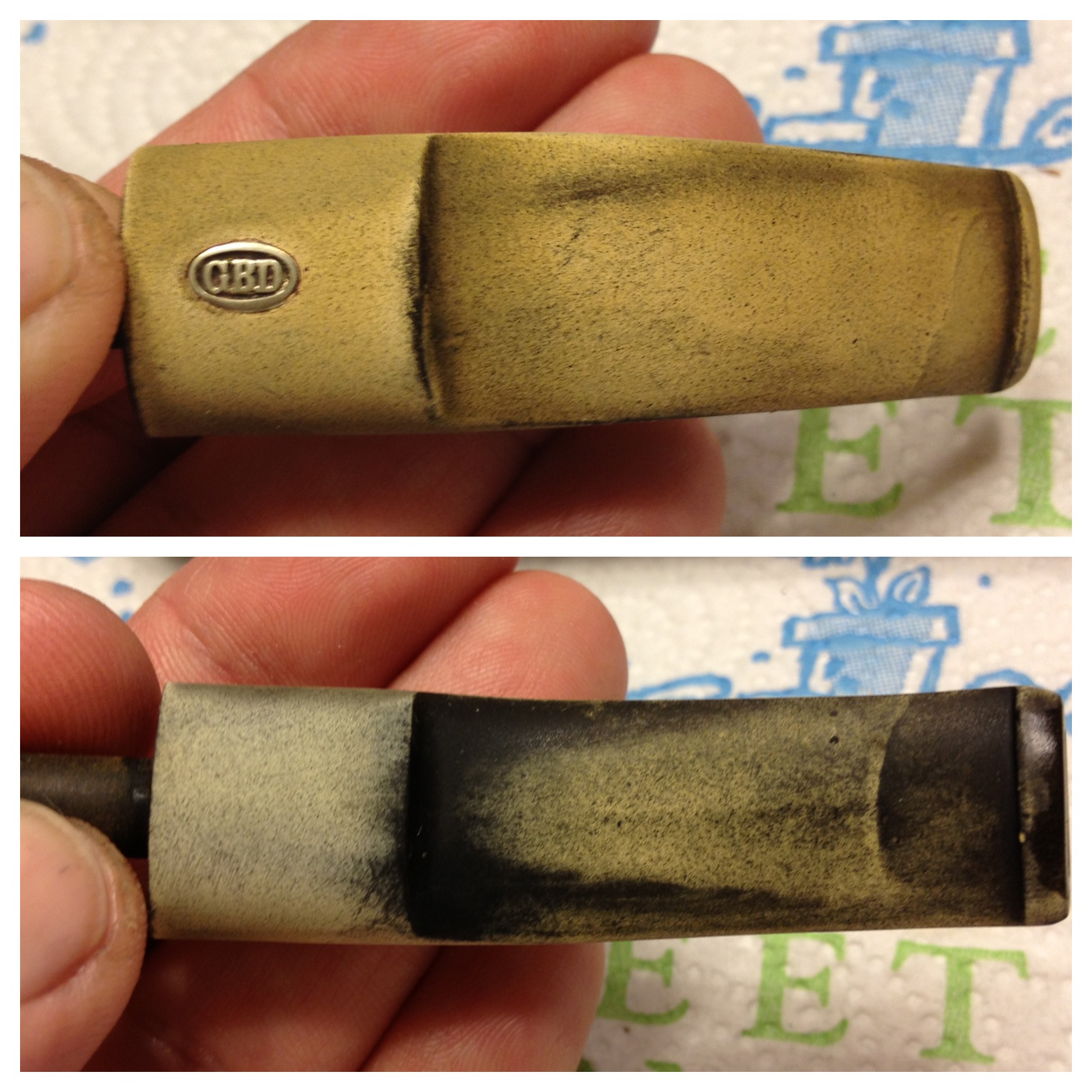
IMG_5247

I then washed the stems in dish liquid and scrubbed them with Bar Keepers Friend and an old toothbrush; this took about an hour, making a paste of the powder and scrubbing, rinsing and wiping, then repeating. The results from that looked like this:
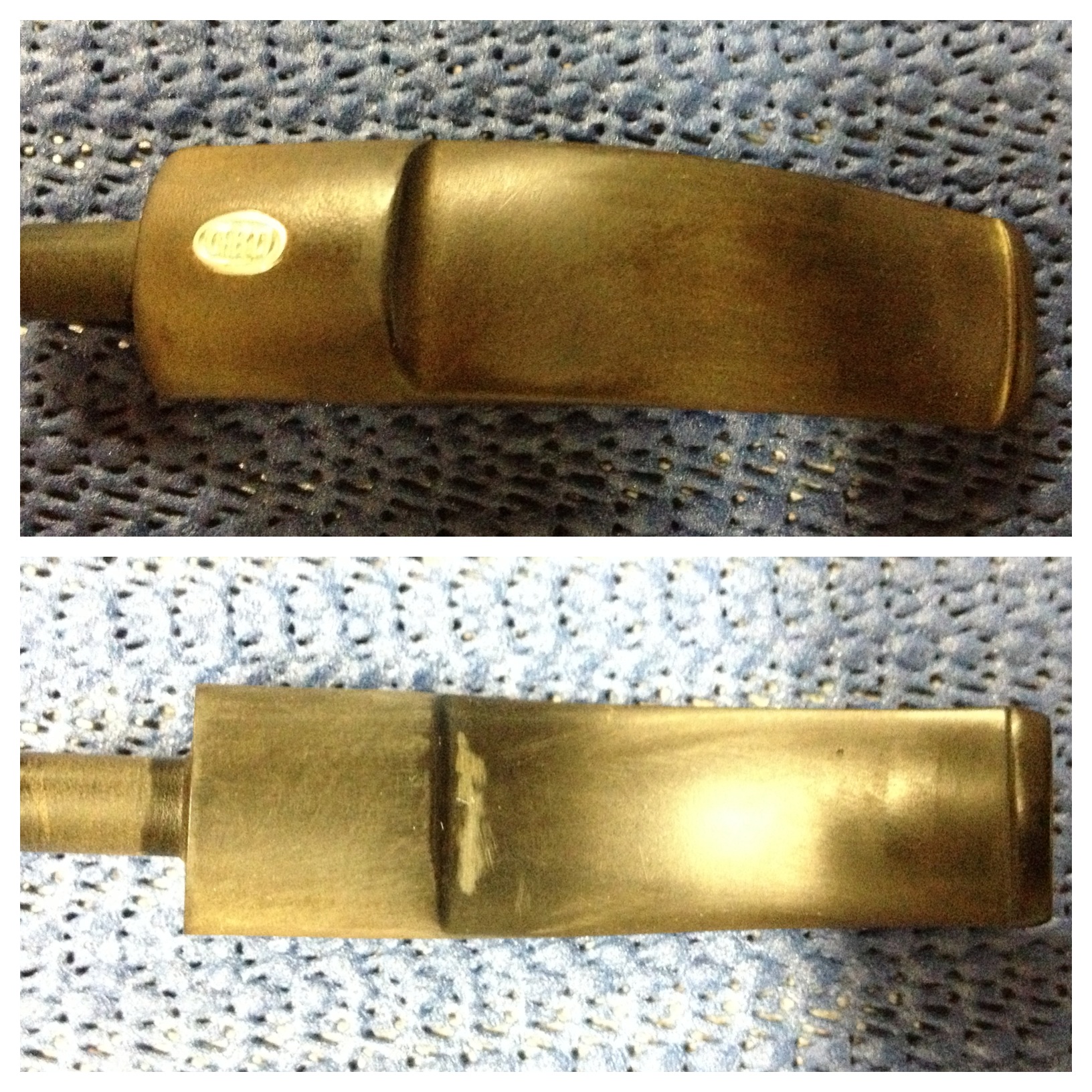
IMG_5248

Still a lot of oxidation and work left to go. Next came sanding and polishing with wet/dry paper and micro mesh. I used 320 & 400 wet/dry paper before moving on to the micro mesh. Before the mesh, though, I used the Novus 2 plastic polish on the stem to take off some of the scratches and a little more left over oxidation. I wet sanded with micro mesh 1500-4000 and then polished with the Novus 2 again. I now dry sanded/polished with the remaining grits of 6000-12000, then polished with Novus 1 plastic polish to get to this look
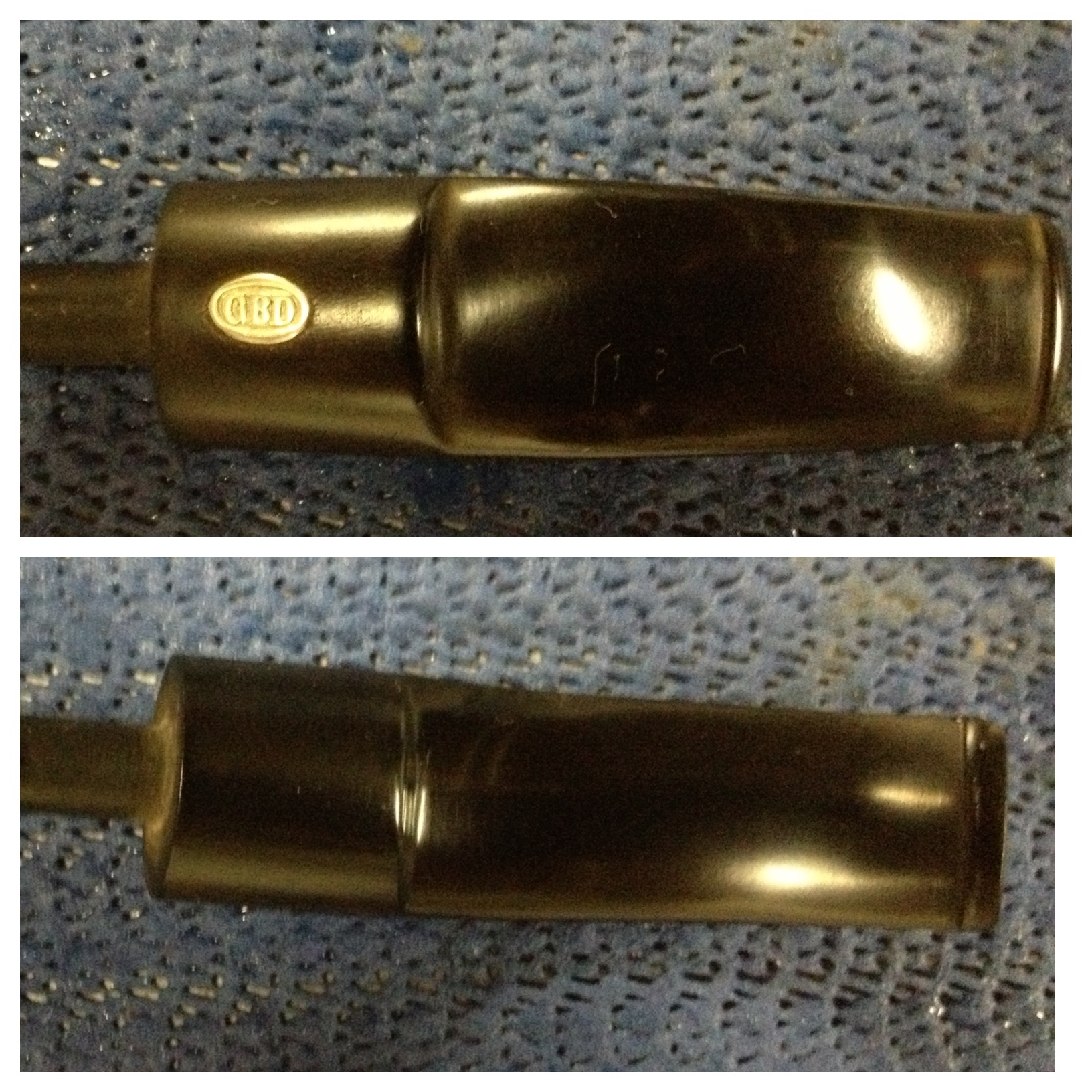
IMG_5249

Now I applied my “secret substance” before setting the stem aside to work on the bowl. This is how the stem looks at this point:
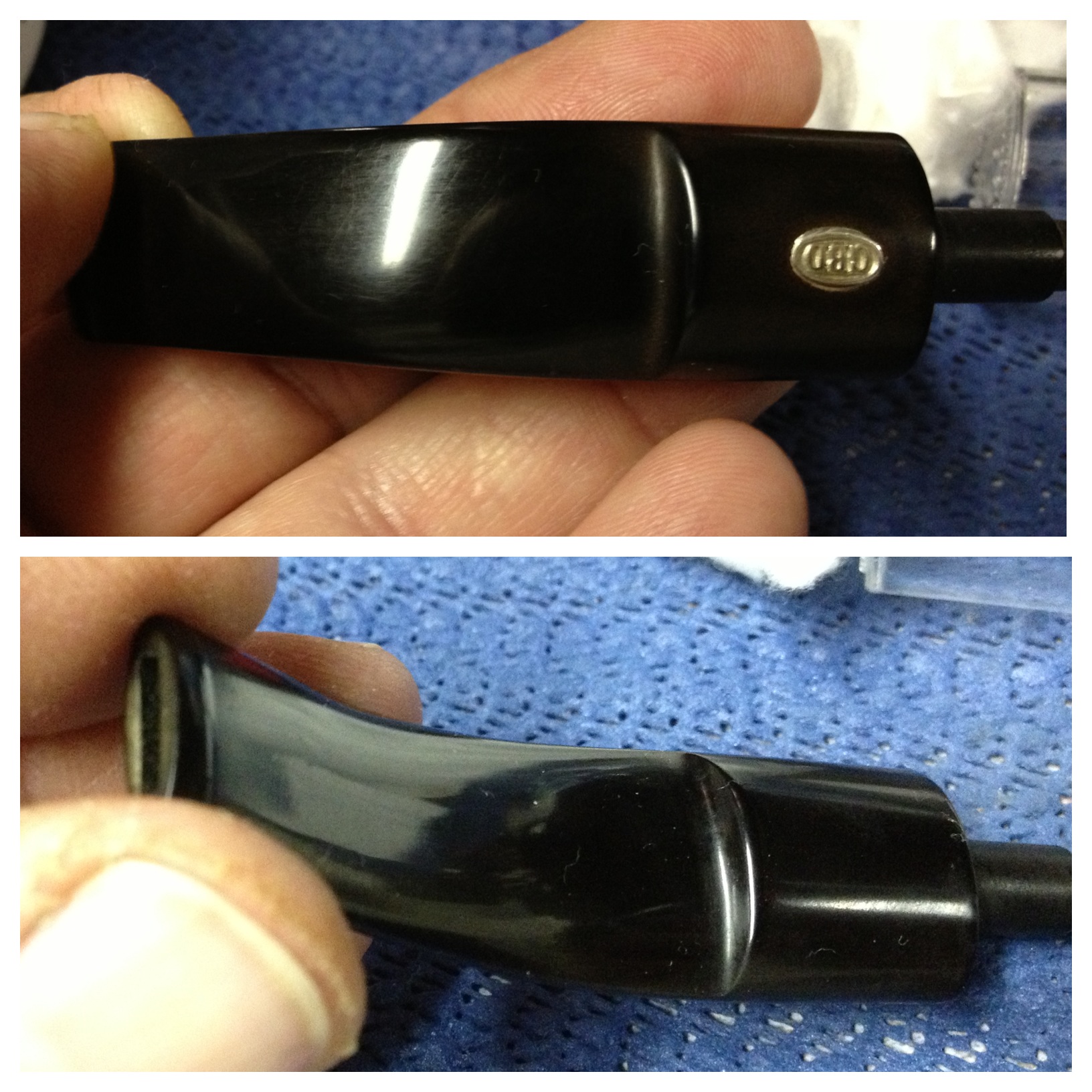
IMG_5250

What, you may ask, is my “secret substance”? Obsidian oil maybe? No. It is Mothers Back-to-Black automotive polish.

The bowl was really very easy since I didn’t plan on totally refinishing it. I wiped it down several times with acetone to take off the old finish and get the grime off of it. I then wiped it down a few times with cotton pads dampened with alcohol. I lifted a small amount of stain in the process but not enough to really change the color of the pipe, only enough to let the grain pop a bit more. The most time-consuming part here was rubbing, with alcohol then saliva on cotton swabs, to clean the rim. There were a couple of small dents I lifted with steam ( I heat an old “butter” knife with a heat gun and apply it to a dampened cotton towel that is laying over the dent) but can’t actually recall how many or where they were they were so incidental. The next photos show the stummel before taking it to the buffer:
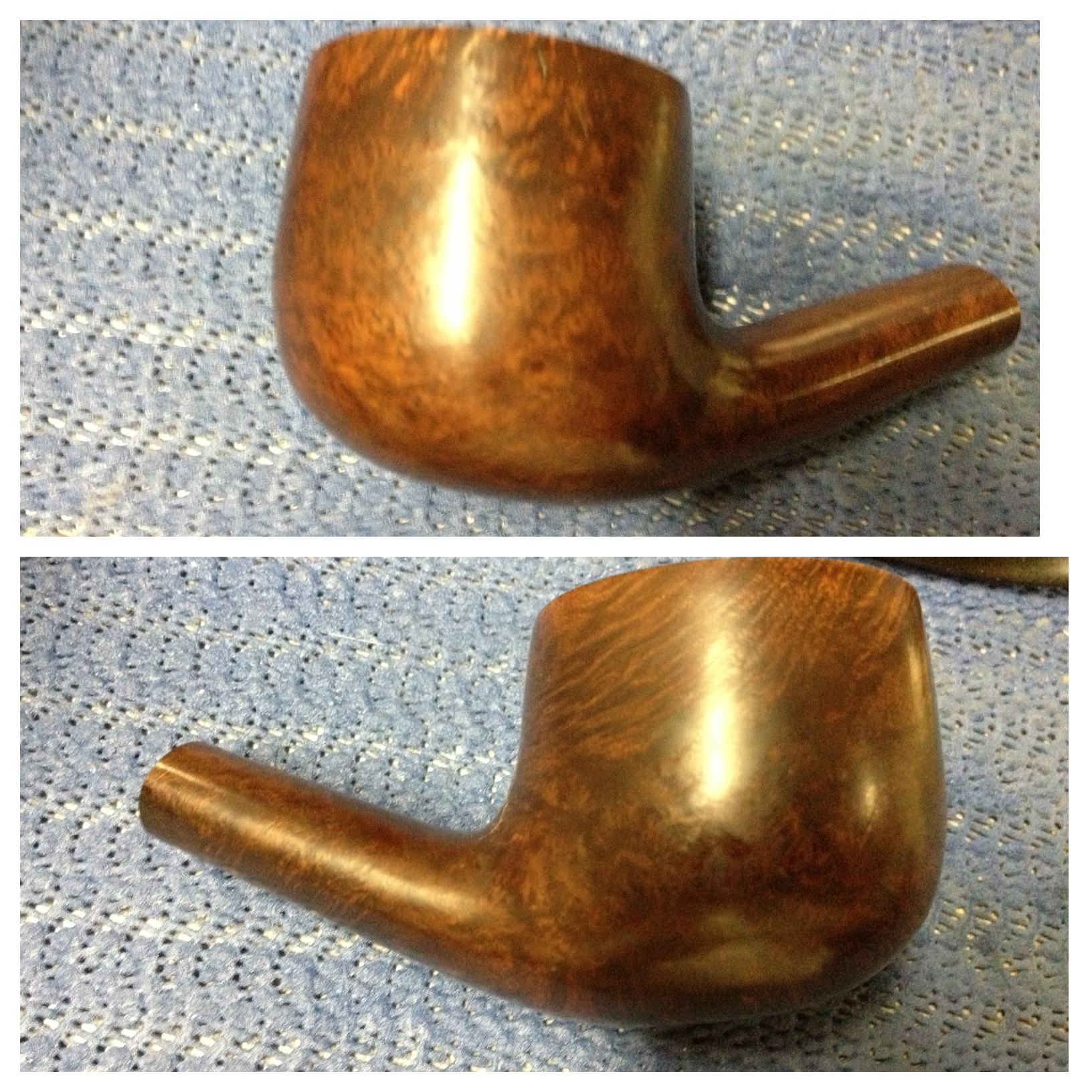
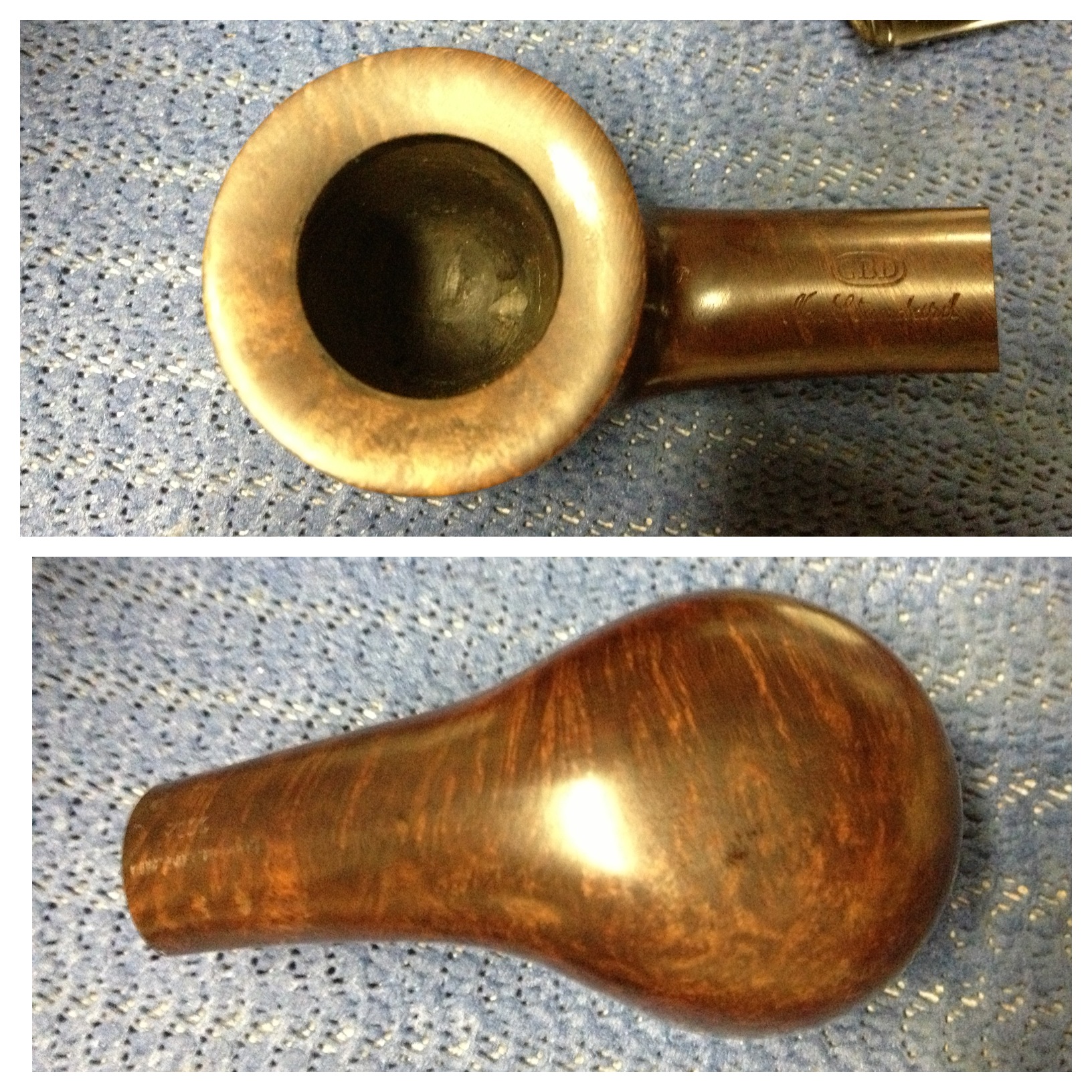
IMG_5252IMG_5251

I then buffed the stummel with Tripoli before reassembling the pipe and buffing the whole thing with white diamond and then carnauba wax. Here is the finished pipe:
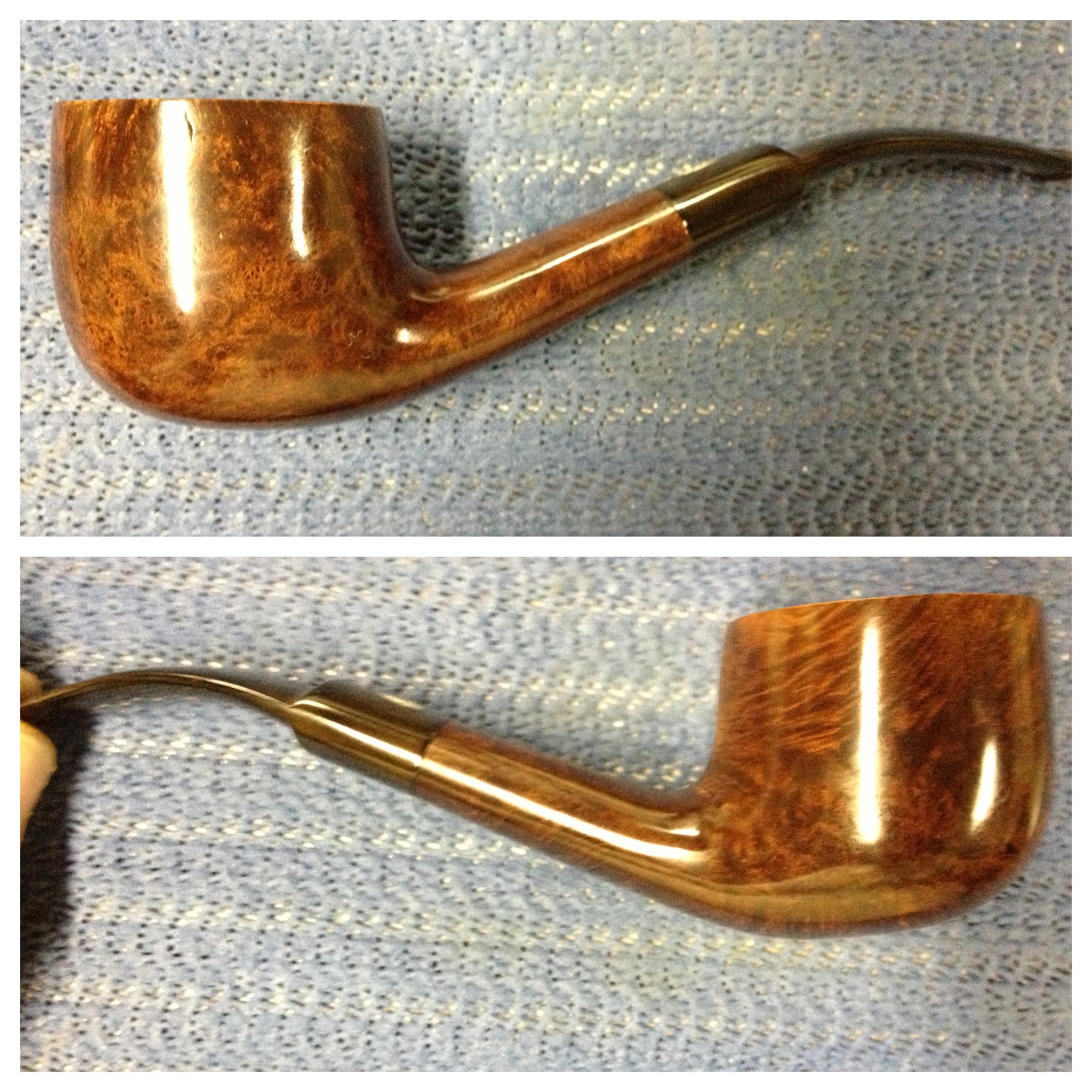
IMG_5253

This photo is slightly over exposed
IMG_5254IMG_5255

Dr Grabow Restoration and Stem Repair


Blog by Greg Wolford

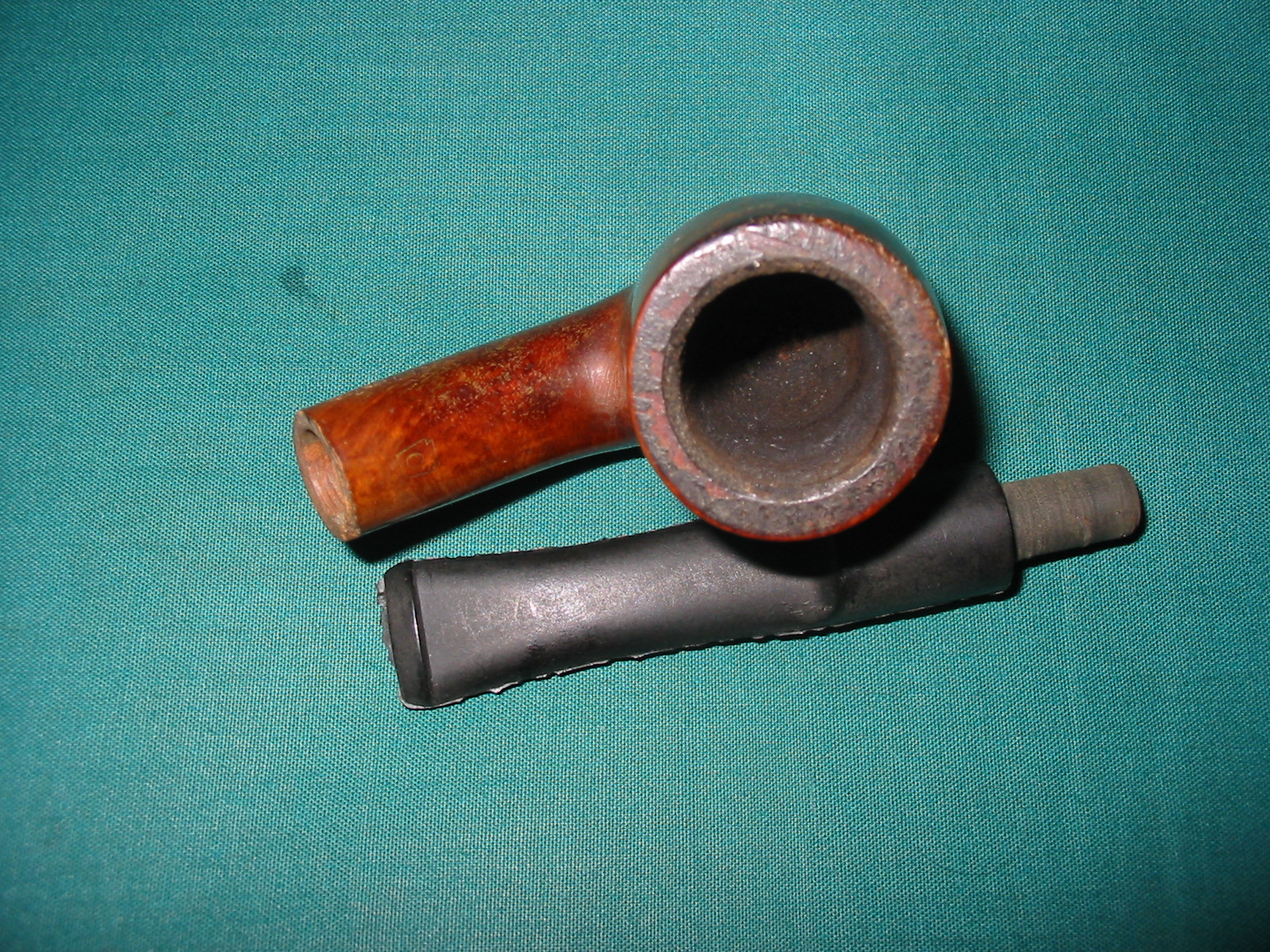
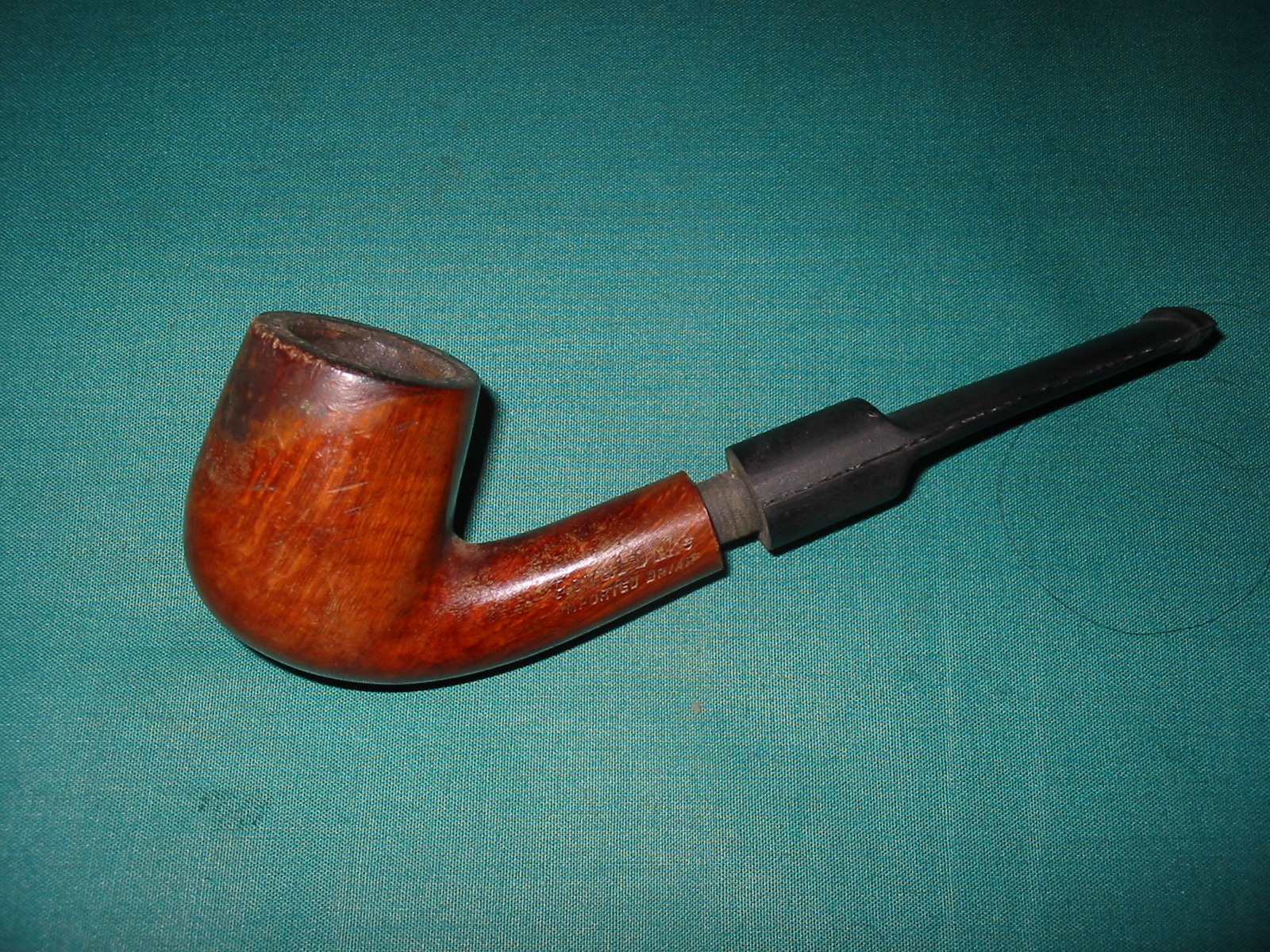
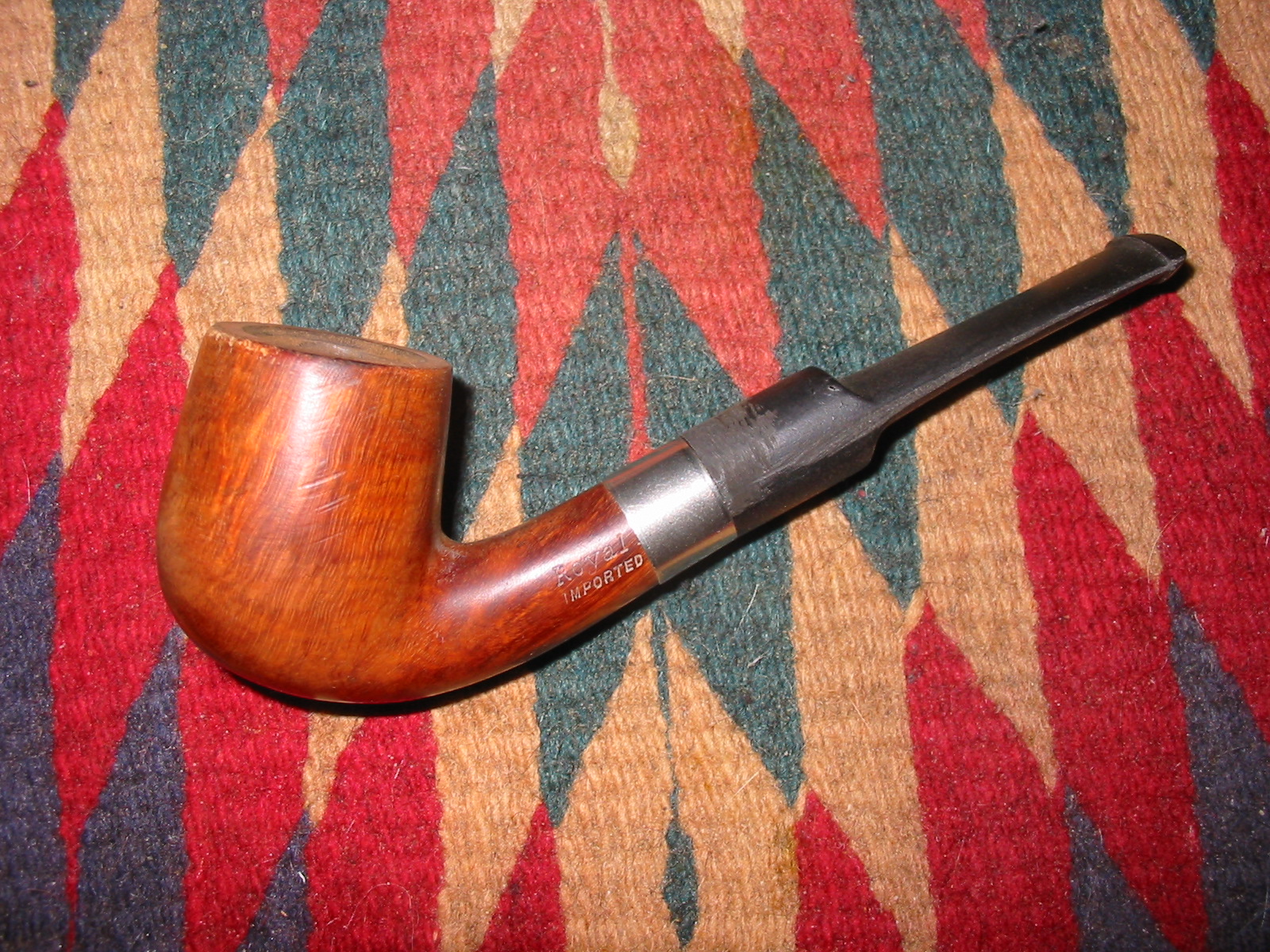
I picked up this Dr Grabow Freehand at an antique mall about a month ago when I got the Wally Frank that is visible in the photos, too. It was scratched to heck on all the smooth briar and the stem was chewed completely through. But I went ahead and bought it for three reasons:

– I’ve  never had a freehand
– I have been wanting to restore a stem with a hole or, in this case, a lot of damage
– I got a pretty decent price
So, I picked it up.Greg1

Greg2

Greg3

Greg4

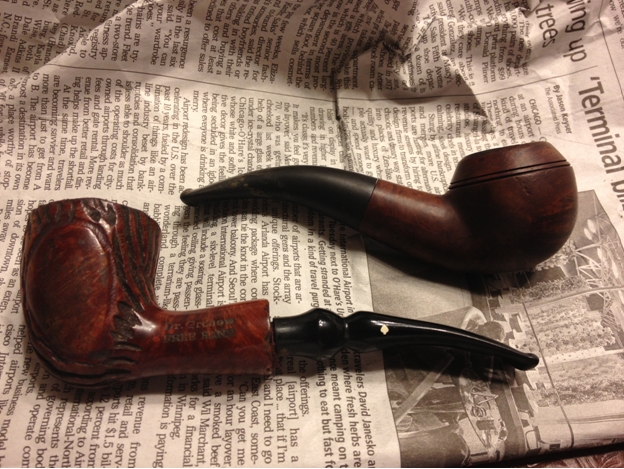
Greg5 I decided to deal with the bowl first, by stripping it with acetone and soaking it overnight in an alcohol bath; I also put the stem in a OxiClean soak at this time.  After removing the bowl from the alcohol bath I then used a brass bristle brush to get all the tar and gunk out of the rusticated top grooves. Then I sanded it to remove all the scratches from the smooth briar and take the old stain off the high points using 400 grit wet/dry sandpaper.Then I used some water based black leather dye on it, getting into the recesses well and wiping of the smooth portions as I went; I wanted to keep that darker contrast in the grooves. After I had it covered to my liking I dried it with the heat gun. Next I went back to 400 grit to take down the high points and smooth areas to remove the small amount of black color from the water based dye. When that looked good to my eye I polished it with 600 grit, wiped it down with 91% isopropyl alcohol on a cotton pad to remove any left over dust and dirt.  I heated it with the heat gun again to make sure the briar was good and dry. When it was nice and warm I applied Fiebing’s dark brown spirit-based leather dye, diluted 2:1 with 91% alcohol and flamed it in; I did this twice. The color was a bit too dark now so I wiped the pipe down, taking care to not soak my cotton pad too heavily or get into the recesses too much, with alcohol until it looked right to me. I then set it aside.Greg6
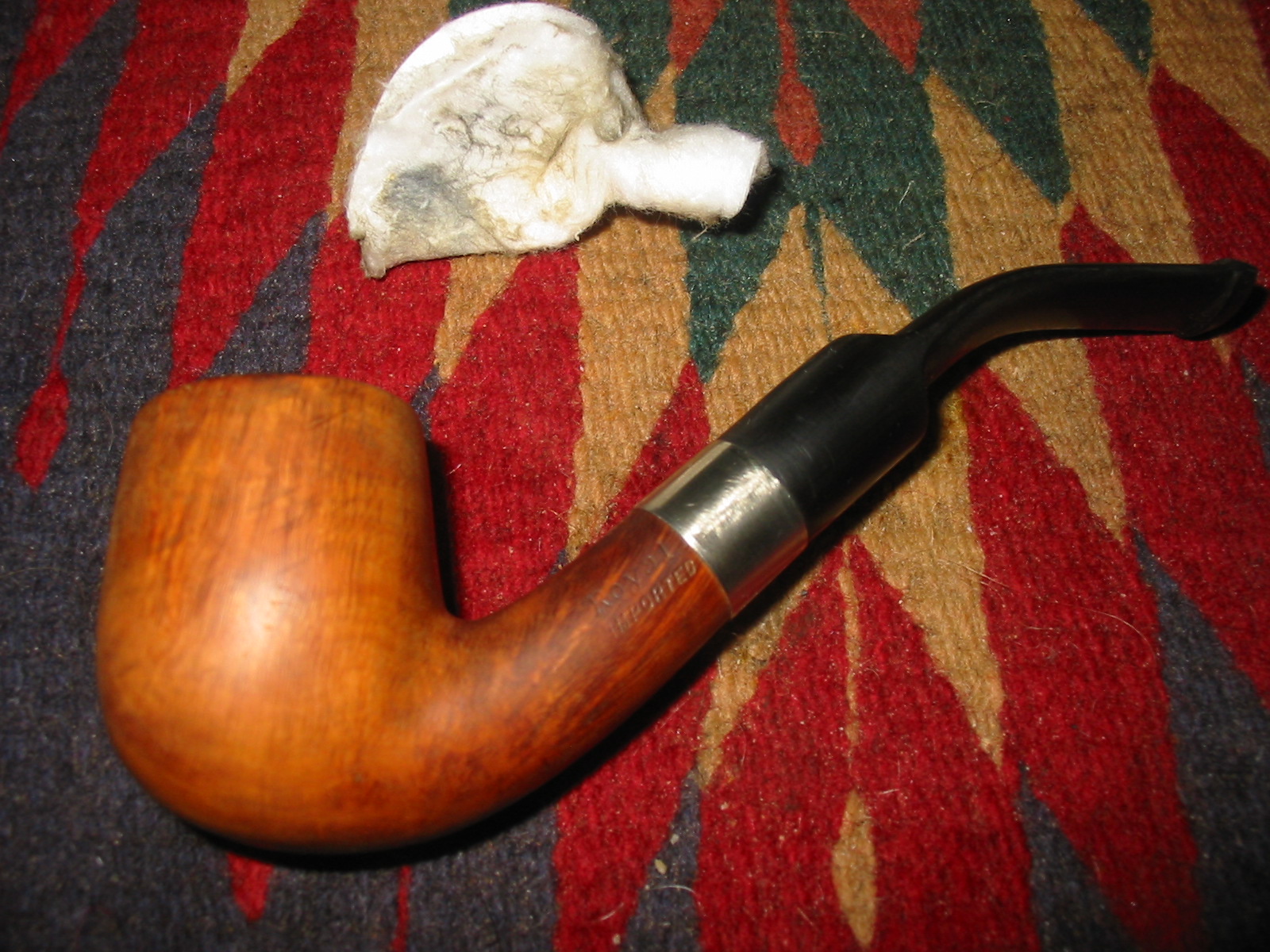
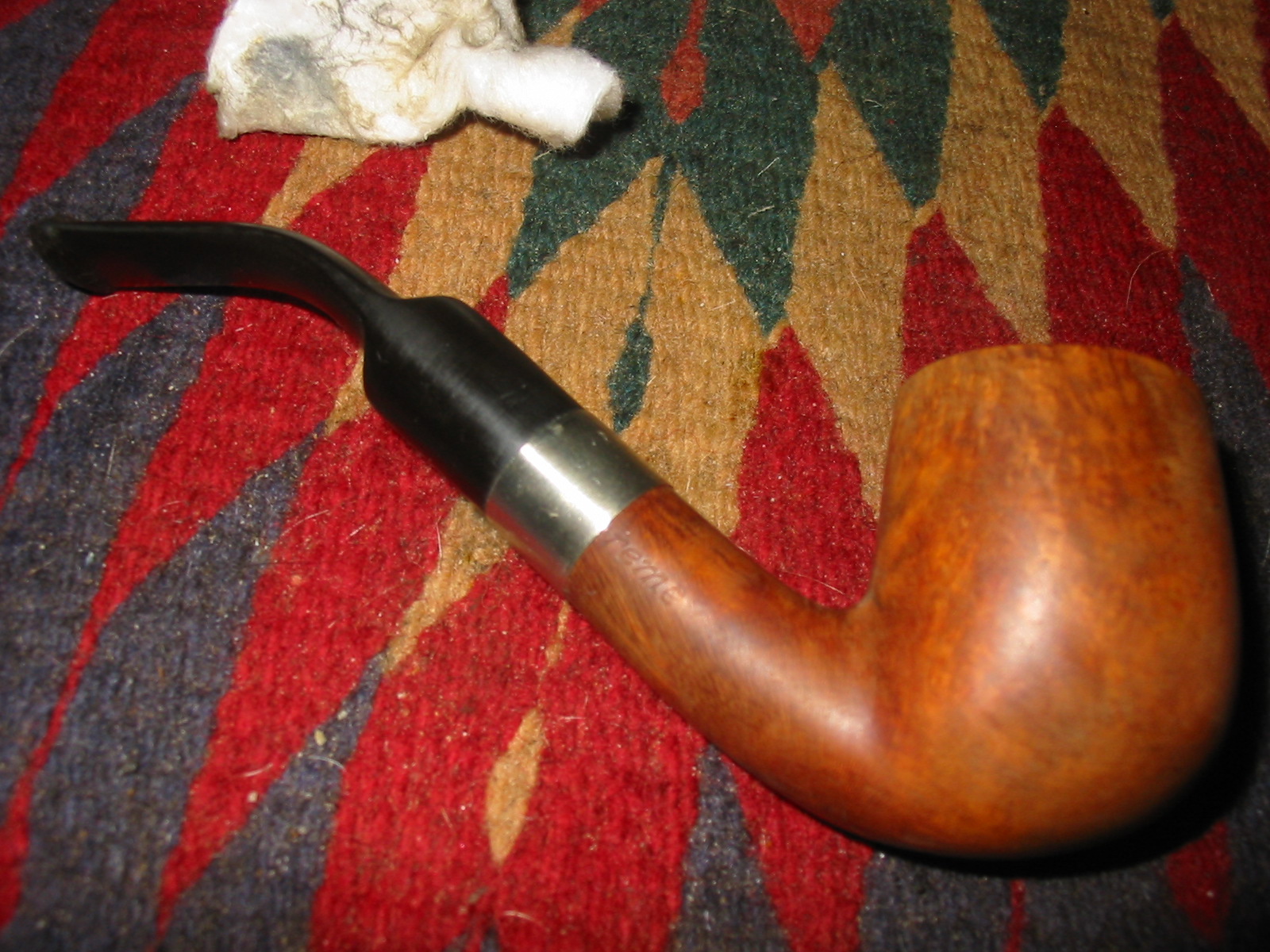
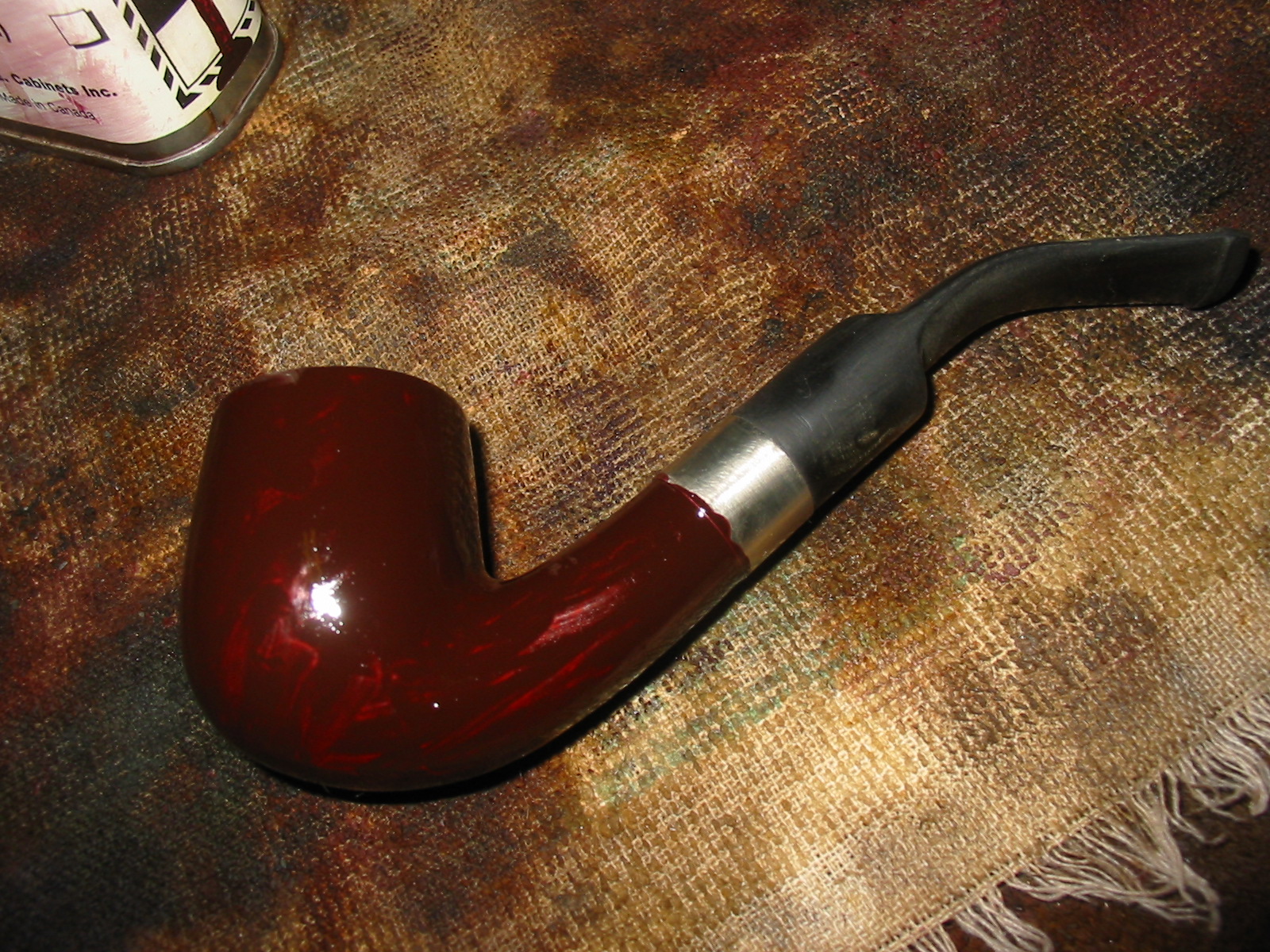
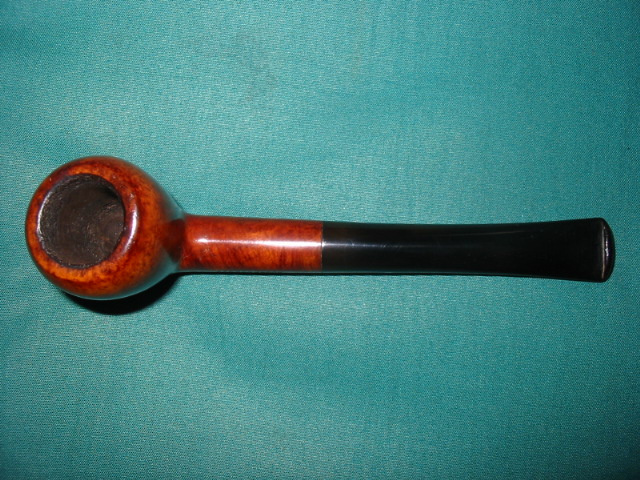
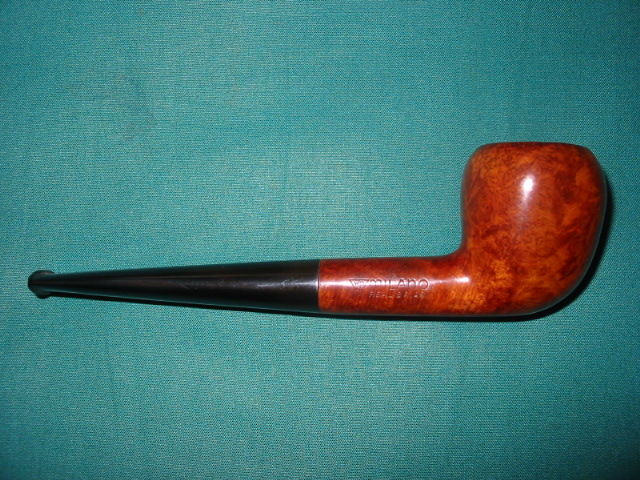
Greg7 When I soaked the bowl in the alcohol bath I also left the stem in a OxiClean soak overnight. I had removed and washed it well before starting on the bowl so it was ready now to work on.Greg8 I decided to shorten and reshape the stem instead of replacing it or trying to fix the gaping holes. I used a coping saw to cut off the end, saving as much of the stem as I could. The bottom hole had also cracked so it required removing quite a lot of the stem to get most of the crack out. The next step was to grease a pipe cleaner with petroleum jelly and insert it into the stem. I then dripped some Super Glue into the crack and let it set up while I worked on something else.

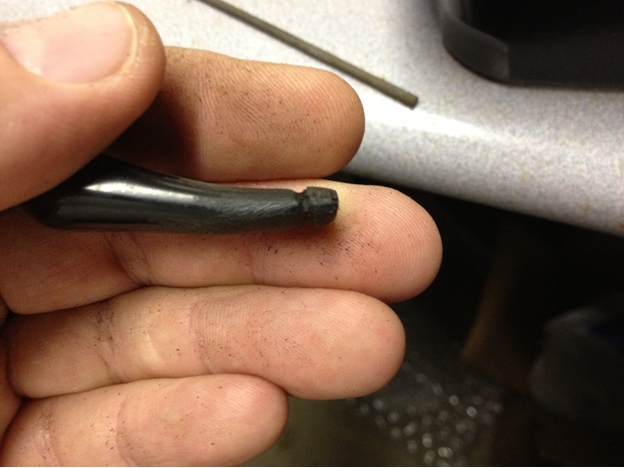
When I came back to it, the glue was hardened and I was ready to move on to the next step: making a new button. I began this process by scoring a line along the top and bottom of the stem where I wanted the button with a cutoff wheel on my Dremel. After I had the new button laid out, I then started to shape it with various needle files. I began shaping from the button back, forming it into shape with the rest of the stem. This took considerable time to get it even and “natural” looking. When I was satisfied I then began to shape the end of the button.Greg9

Greg10 I shaped the bit with needle files, too, again using several to get the shape right. The first step for this was getting the angle to look right on the top; this didn’t take as long as I expected. I then began to form the bottom of the bit, trying to match the shape of the top as close as I could; this took more time and effort than I’d expected.

Making a new drought hole was something new to me. And was not without its challenges either. I used my needle files, again, to start shaping the new hole, making it a bit taller as well as wider than the hole that was left in the cut off stem. I took the extra time to fan the drought hole, too, partly because I wanted to and partly to see if I could do it. This ended up being some of the most time-consuming and tedious work of the entire project: I needed to make sure I didn’t go too thin in any direction but I wanted the hole to really funnel out well. I am pleased with the results and the way it smokes and would say it was worth the extra time and effort to accomplish it.Greg11

Greg12 After all the shaping I wiped the stem well with alcohol to clean it off for a test fit – to my mouth. The test failed; the bit was too long and too steep. So back to the files I went. I filed, tested, filed, tested a few times until it felt comfortable in my mouth and looked good to me. Now time to get it shiny again.

I began with a fine/medium grit sanding sponge. It worked very well to get in and around the bit to smooth it a bit more and to take out the file marks. I then began wet sanding with grits 220/320/400. At this point I applied some Novus 2 plastic polish. The Novus line come in three grades: 3 – the most course, 2 – the second, and 1 – the final polish. I began using this product on my motorcycle windshield a few years ago and loved it. I have numbers 1 & 2 but have yet to try 3.

After using the Novus, I began with the micro mesh, wet sanding with grits 1500/1800/2400/3200/4000 (I’m not looking at the numbers but I believe that was the correct grit numbers. I applied the Novus 2 again and then polished with micro mesh 6000/8000/12000. Now it was off to the buffer with pipe and stem.

I buffed the pipe several times around with Tripoli to get the color just where I liked it. I then moved onto the white diamond for both the pipe and stem. I took a little extra time on the stem to make sure I fine tuned the button a little more, testing it every so often. After buffing the pipe and stem with white diamond I changed to a metal buffing wheel with blue rouge to polish the metal tenon on the stem; I hate a nicely polished stem that hasn’t has the metal (if there is any) not polished, too.Greg13

Greg14

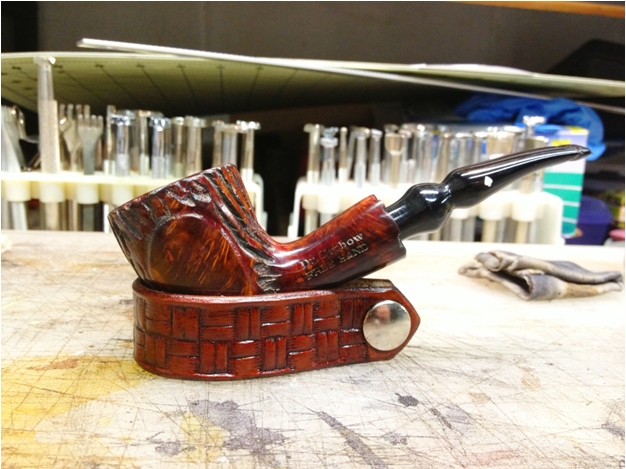
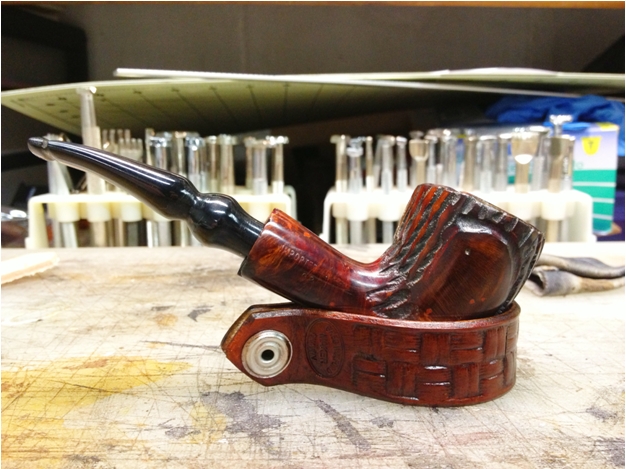
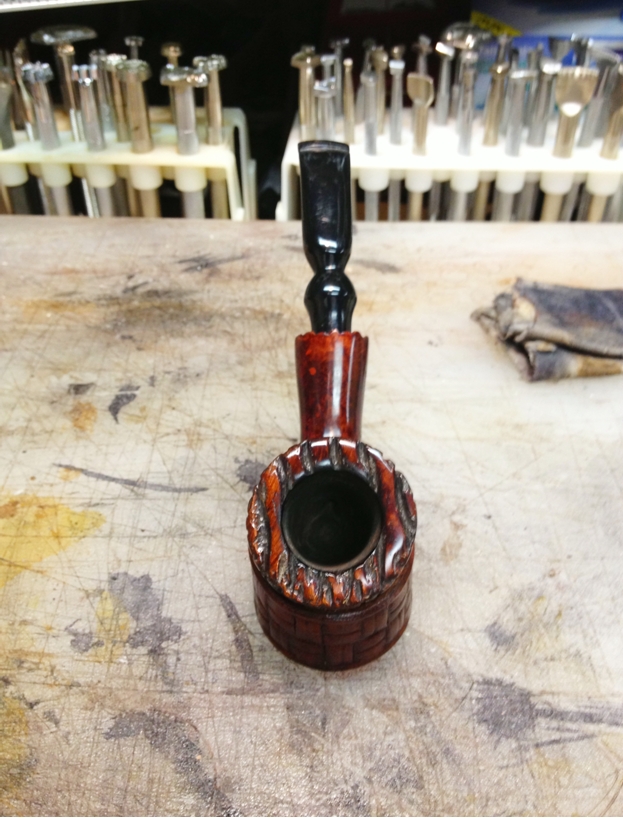
Greg15 Several coats of carnauba wax was then applied to both pipe and stem. I did the final buffing with my “mushroom” on my cordless drill. I like the control I have with it and also the fact it’ll reach almost anyplace with little effort. The final touch was to polish the rustication with a soft toothbrush to make sure I didn’t have any wax residue left.Greg16 There were, and still are, some fills in the pipe but I wasn’t particularly concerned with them. Several are on the shank and it would have been “dicey” to try to fix them without ruining the nomenclature. There was one fill on the side that fell out, presumably from the softening of the putty in the alcohol bath. I missed that one until after I had already started smoking it.  If I’d seen it earlier in the process I would have fixed that one but now it’s there for the duration.Greg17 (I couldn’t get a good focused shot of the finished button.)

A Unique BBB Tigergrain Bulldog


Blog by Steve Laug

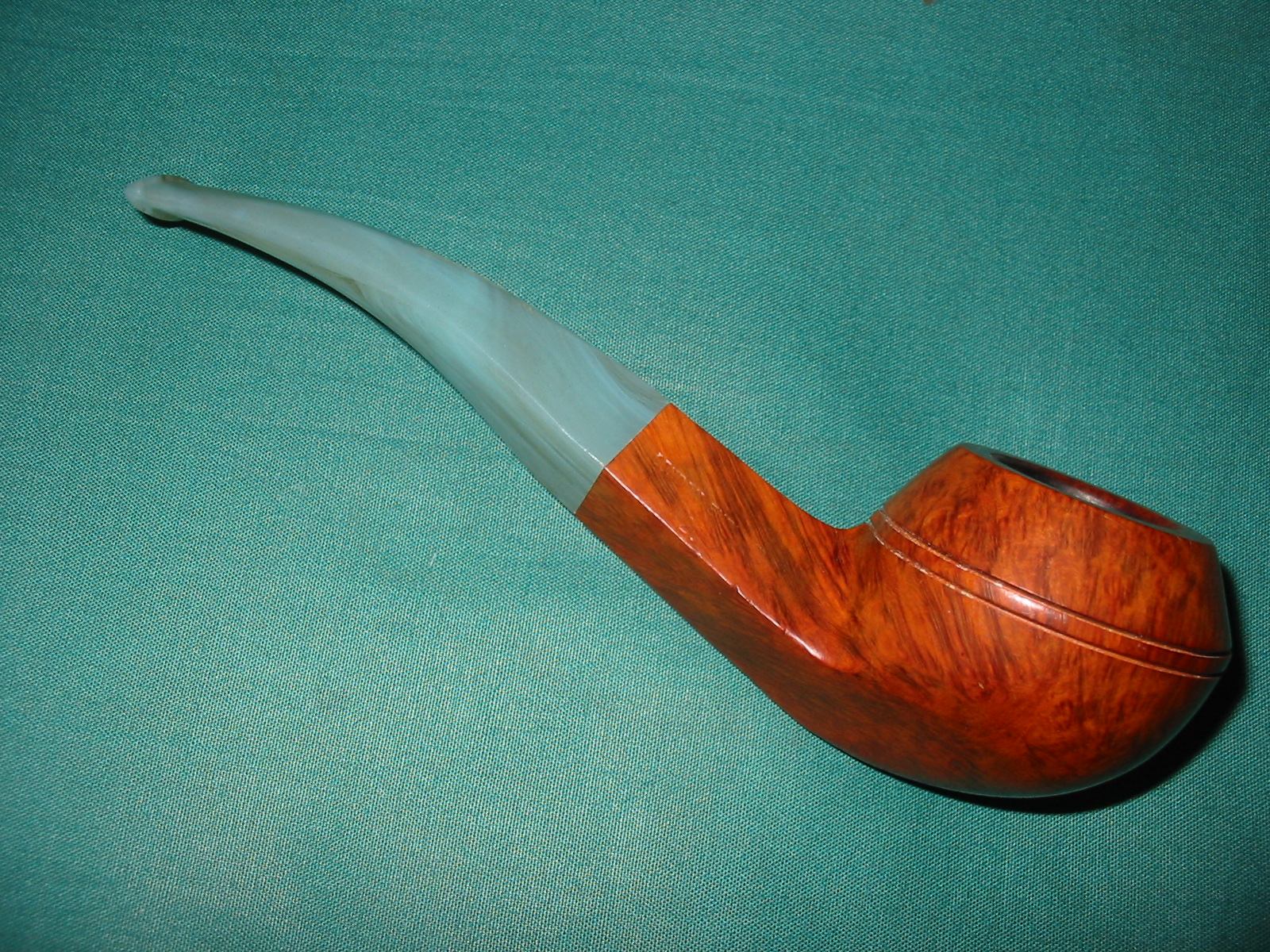
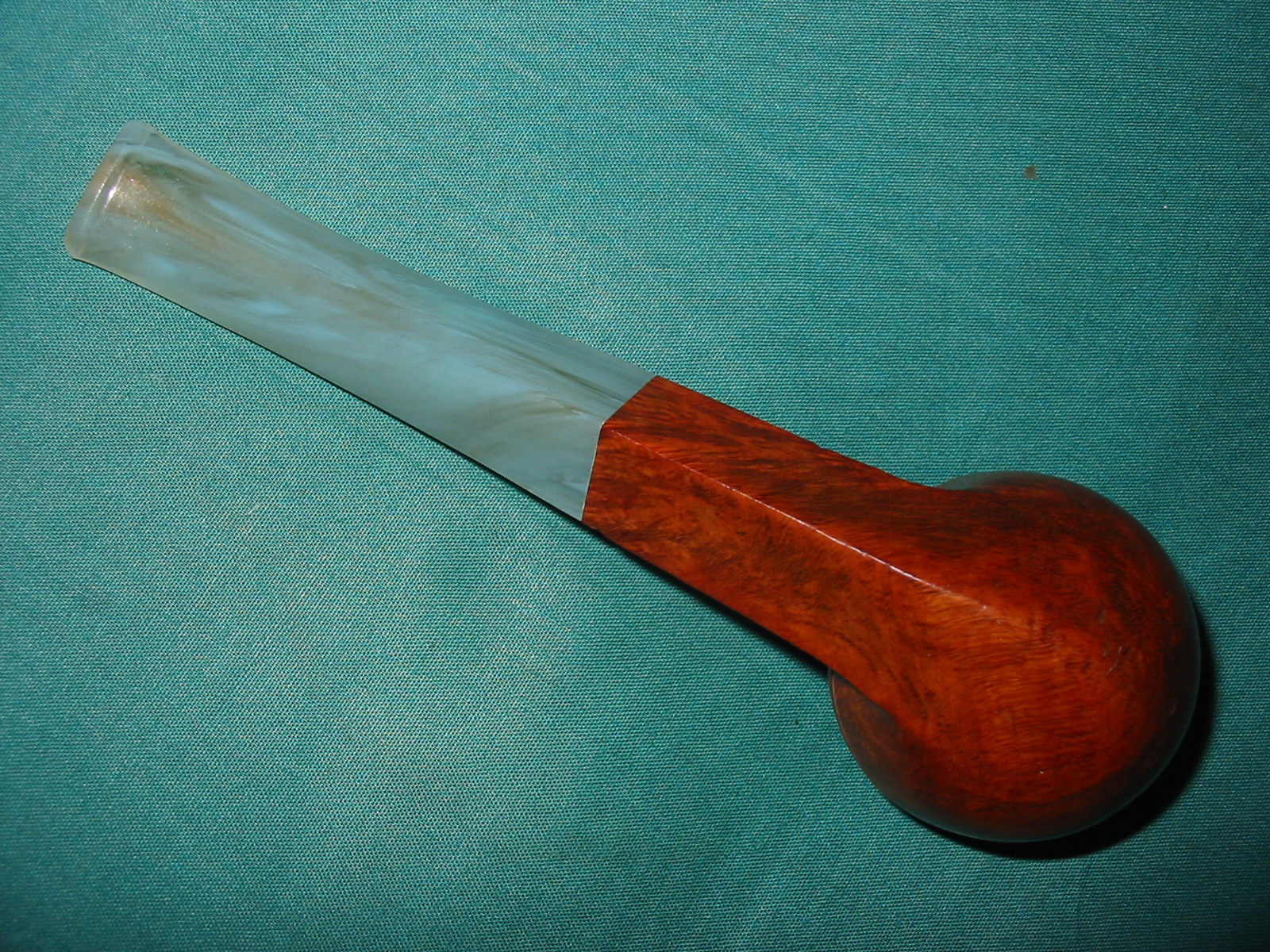
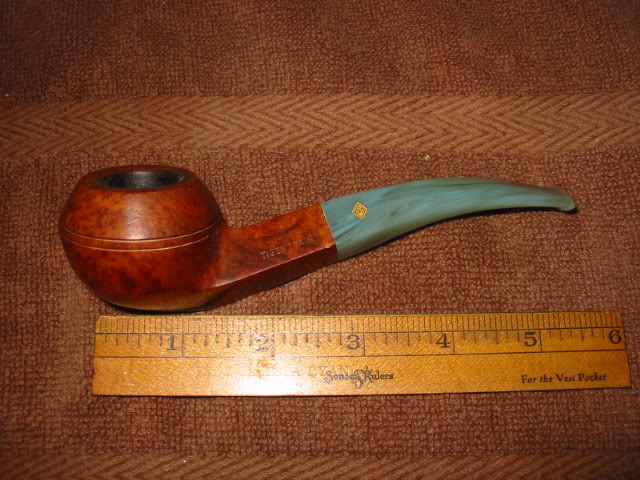
This unique pipe has become a favourite of mine. I have not seen one like it since I picked this one up. It is stamped on the left side with the BBB logo (three B’s in a Diamond) and under that TIGERGRAIN. There is a small nick in the shank just below the stamping. On the right side it is stamped London England over the shape number 420. The stem is a translucent blue green almost like some of the glass pieces that my grandmother had in her sideboard. It has the brass BBB logo in a diamond inserted. When it came to me it was dirty. The bowl had a thick cake and needed to be reamed. The stem was darkened with brown stains in the airway. The rim was tarred and had some dents that were quite deep. The finish was in pretty good shape other than the deep set grit and grime. The bands around the bowl were filled in with grit as well. Underneath it all I knew there was a uniquely beautiful pipe.

I reamed the bowl back to the briar. I like to start with a clean pipe, as I find I can exorcise previous ghosts more easily that way. I wiped down the surface with Murphy’s Oil Soap, undiluted, and scrubbed the rim with a soft bristle tooth brush. Once I had the grime and grit removed I buffed it with White Diamond on the buffing wheel and then steamed out the dents on the bowl and rim. I do this with a damp cloth and a hot table knife. I heat the knife over the gas flame on my cook stove and then put the damp cloth on the dent and apply the hot knife. The hiss and the steam released seem to raise the dents in the briar. I then buffed the pipe yet again and polished it with carnauba. The grain has a striped look to it which is the reason for the tigergrain stamping I suppose. I love the look of the grain and the patina on the old pipe.

I then turned my attention to the stem. I used some goop hand cleaner on a pipe cleaner and scoured the airway on the stem. It took quite a few pipe cleaners and patience to get the brown stains and oils out of the translucent stem. Once that was done I also needed to deal with the tooth chatter on the stem. I used heat on the stem first – a quick pass over the heat gun did the trick. Care had to be exercised so as not to heat the stem too much and straighten the bend or melt it. I used micromesh pads 1500-6000 grits to polish the stem after that. Once I was satisfied that the marks were smooth I reinserted the stem on the bowl and gave the entirety a final buff with White Diamond and then several applications of carnauba wax. I finished by buffing the pipe with a clean flannel buff.

ImageImageImageImage

It is a comfortable pipe in hand and mouth. It measures just under 6 inches long. The bowl is ¾ inch in diameter. It smokes very well and has proved to be a great Virginia Flake pipe. I find the colour of the stem is a cool and relaxing bonus to the smoke.

Image

A Classic Rework of A Royal Duke Supreme


Blog by Steve Laug

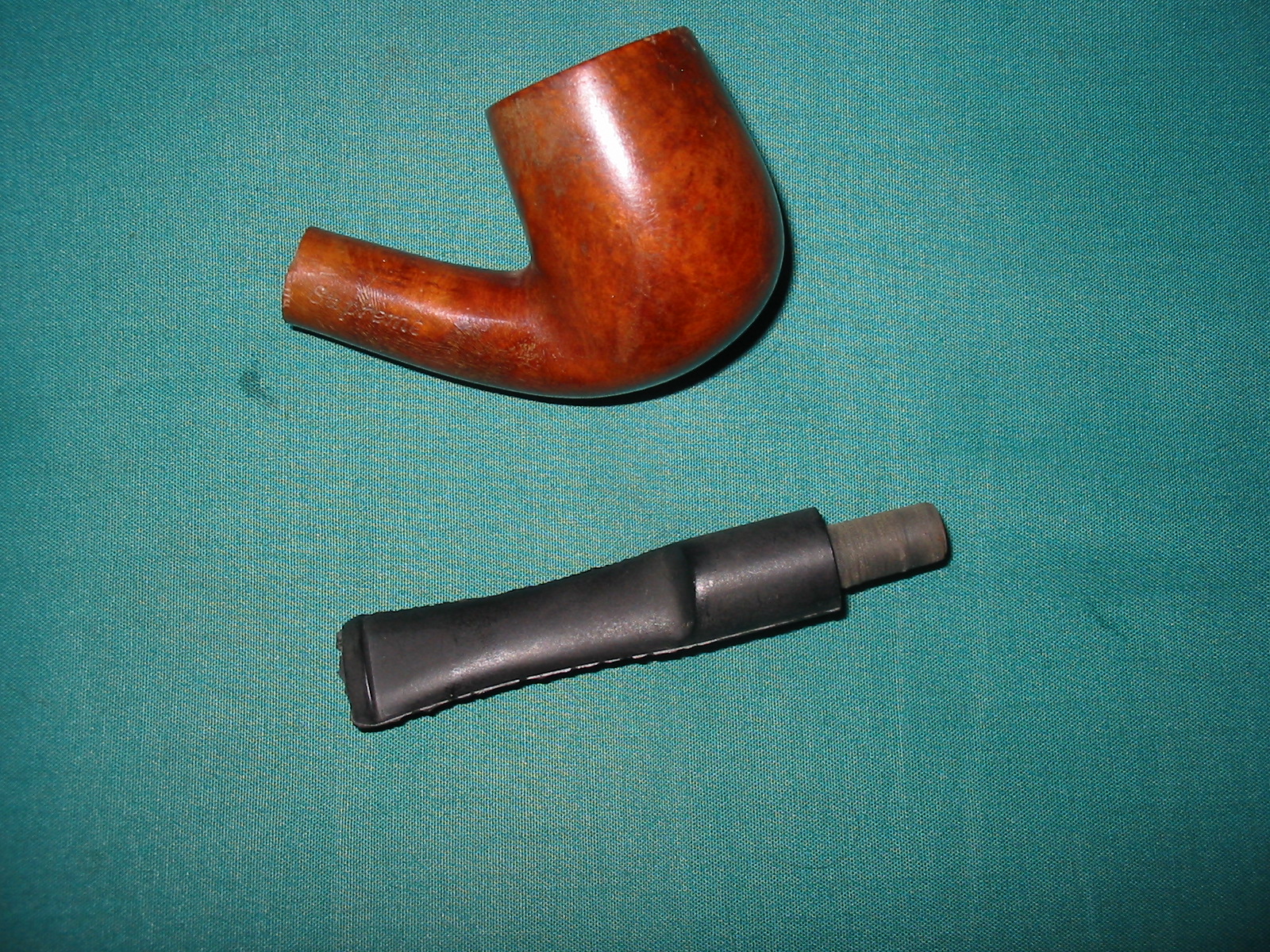
I had this old Royal Duke bowl in my box. It had some promise to my eye but it needed some work. The first thing I did was drill out the metal mortise that took a threaded tenon. I did not have any stems that fit it anyway and I wanted to try something new. The issue that remained once it was gone was the fact that the mortise rough inside and the end of the shank was not square so that there was no way to get a new stem to fit it seamlessly. The finish was very rough as can be seen in the photos below. The varnish on the outside of the bowl had bubbled and blistered. The front edge of the bowl was actually darkened as the varnish seemed to have burned or at least coloured. There were dents in the bowl and the rim was rough. I turned a precast stem with my tenon turner and got it close. I had to custom fit it as the shank was a little tapered toward the end.

ImageImageImage

The stem fit fairly well but would take a bit of customizing to get a good tight fit to the shank. It would also need a good cleanup to trim off the castings on the stem. The vulcanite was fairly decent quality as I have had it a long time but it showed no oxidation.

Image

I decided to work on the bowl first to clean up the remaining finish and remove the varnish from the bowl. I also wanted to see if I could remove the darkening around the front and back of the bowl. I washed the bowl with acetone on a cotton pad and cleaned off the finish. It took repeated washing to break through the varnish coat and also the burned and bubble finish. The next two photos show the pads after the wash. You can begin to see the grain coming out on this beauty. That is what drew me to the pipe in the first place and I was glad to see that it was truly there.

Image

I repeated the washing until the pipe was clean and had no remaining finish coat. The dark undercoat of stain still remained and light brown topcoat also was still present. This is clearly seen in the photos below. I worked on the fit of the stem and tapered the tenon enough to get a good snug fit to the bowl. I also used my Dremel to remove excess vulcanite from the top and the sides of the stem so that it lined up smoothly with the shank of the pipe. It was at that point I decided to pressure fit a nickel band to the shank to square things up a bit. There was no way that the stem and the shank would meet squarely as the shank was a bit angled and dented from the metal inserted mortise. The previous mortise had been threaded in and it had a thin band or flat top on it that sat against the briar. It was also patched a bit with putty to make the flow from the shank to the insert smooth. I fit the nickel band with heat and pressed it into place. I liked the finished look of the band and it gave me a straight edge to work with on the new stem. I again used the Dremel with a sanding drum to shave off more of the vulcanite and make the stem fit against the band inside edge. The next two pictures below show the stem after the fit and the shaving with the Dremel. You can see the rough surface on the saddle and the cleaned up edges of the cast stem and the button.

ImageImage

I then sanded the bowl and the stem with 240 grit sandpaper to remove the scratches in the briar and also on the vulcanite stem. It took quite a bit of sanding to smooth out the saddle of the stem. The next five photos show the progress of the sanding on the stem. I also sanded the bowl to remove the remaining finish and scratches. I topped the bowl and smooth out the inner and outer rim to remove the damages to them both. I also used my heat gun to put the bend in the stem. I have a curbed dowel here that I put the heated stem on to ensure that the bend is straight and that I do not crimp or bend the stem unevenly.

ImageImageImageImageImage

Once the sanding was at this point I wiped the bowl down with Isopropyl alcohol. I find that it removes any sanding dust and also the wet look shows me places where I still need to sand the bowl and stem. Once that was done I sanded the bowl again with 400 and 600 grit wet dry sand paper and water. I progressed through micromesh sanding pads 1500-12,000 grit – the first four pads with water and the remaining ones dry sanding. Once it was completed and smooth I wiped it down a final time before staining it.

ImageImage

While I was sanding the pipe and working on the stem I tried to visualize what stain I wanted to use on this pipe. At this point remember I was not trying to restore the original Royal Duke colouration. I was working a new pipe out of this piece of briar even though I left the stamping. I decided to go with an oxblood aniline stain. I applied it with a cotton swab, flamed it and then took it to my buffer and buffed it with White Diamond.

ImageImage

The next three photos show the pipe after the buffing with White Diamond. I had not applied any wax at this point nor was I finished working on the stem. The colour came out better than I imagined. The dark under notes of the grain come through nicely in the finished pipe. The light areas have a reddish brown hue that is a bit lighter as the pipe has been waxed and buffed.

ImageImageImage

Once the pipe was stained I coated the bowl with multiple coats of carnauba wax to protect the new stain while I worked on the band and the stem. The nickel bands shine up really well with the higher grit micromesh sanding pads. I sanded the band with the 6000-12,000 grit pads and then polished it with some wax as well. I moved on to the stem. I sanded it some more with 240 grit sandpaper to remove some more of the scratches in the saddle area left by the Dremel. I then sanded it again with the 400 and 600 grit wet dry and water to smooth out the lesser scratches left behind by the 240 grit sandpaper. I went on to use 1500-3200 wet micromesh sanding pads to polish up the stem some more. These early grits of micromesh leave behind a matte finish as they sand out the scratches. It takes the grits above 4000 to really see the depth and polish that is there when finished. Once I used the lower grits I then polished the stem using Maguiar’s Scratch X2.0 polish and rubbed it on with a cotton pad and polished it off. I buffed the stem with White Diamond following this to see what I needed to work on.

I took the stem back to my work table and used the higher grits of micromesh. I started with 3600 and worked through 4000, 6000, 8000 and 12,000. Once I finished I buffed it again with the White Diamond and then coated the stem with Obsidian Oil and let it sit while the oil soaked the stem. I hand buffed the oil with a soft cotton cloth and then polished it with some carnauba wax paste and then buffed the entire pipe with several coats of carnauba. I buffed it with a clean cotton buff between coats of wax. The final photos are of the pipe as it stands now.

ImageImageImageImage

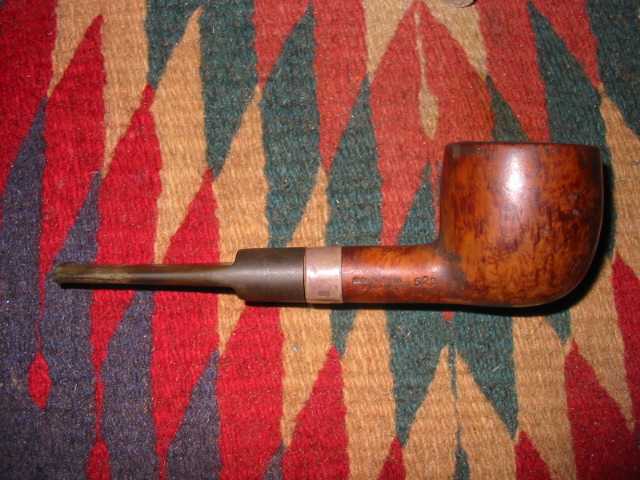
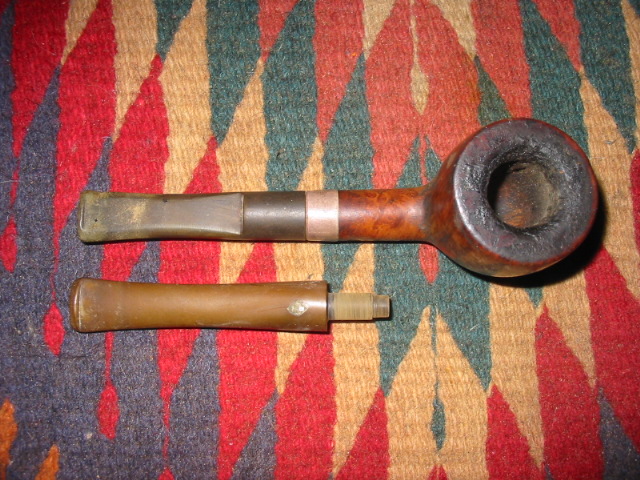
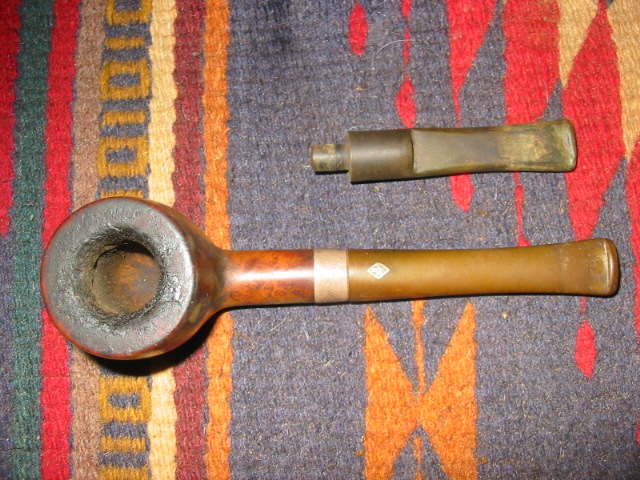
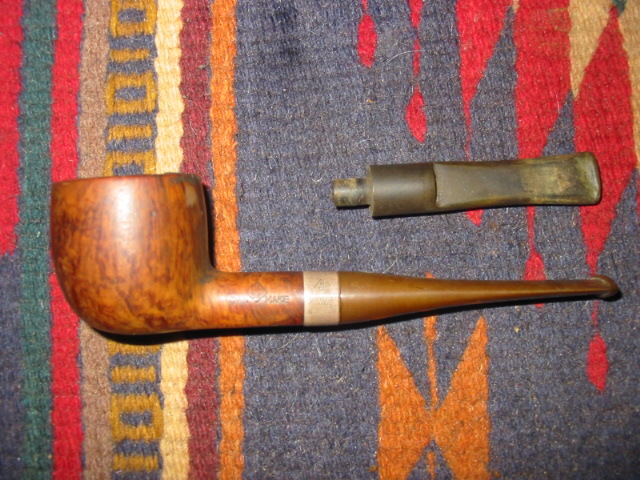
Restoration of an old BBB Own Make 622


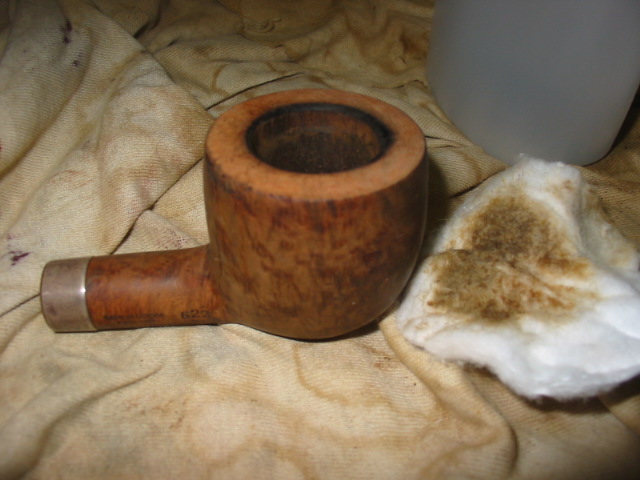
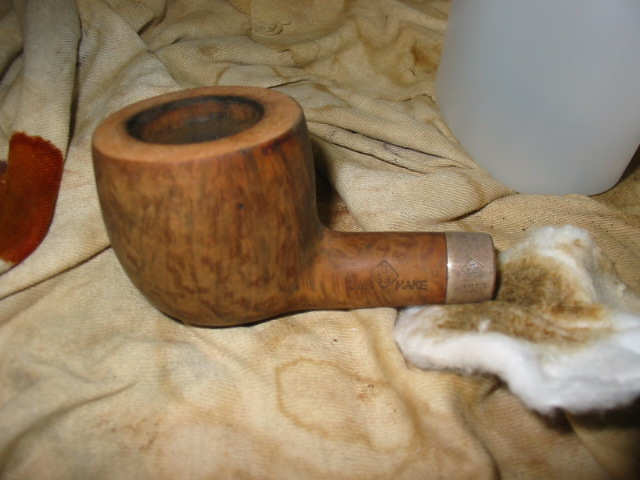
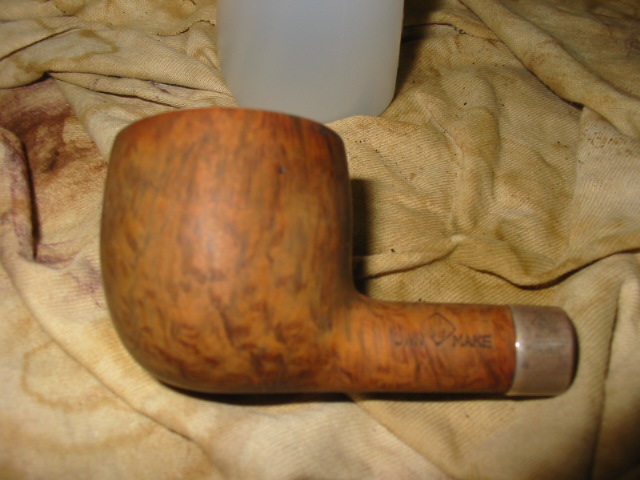
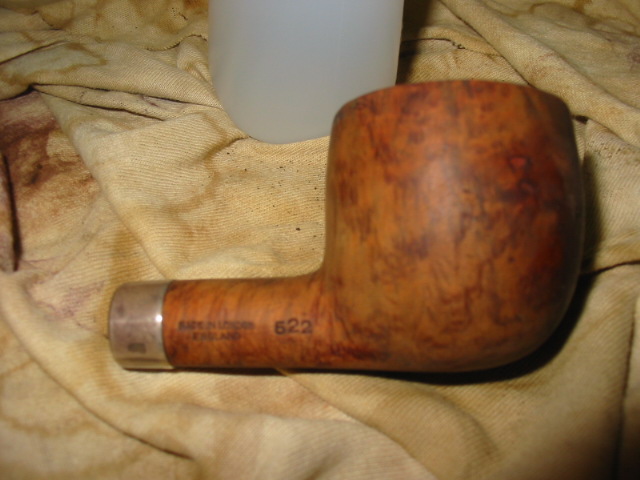
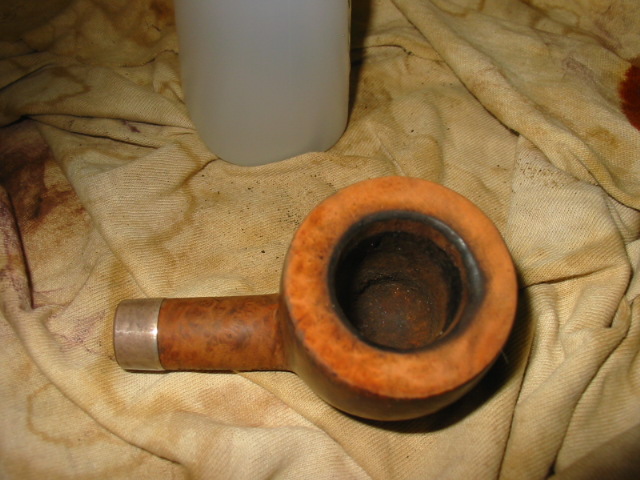
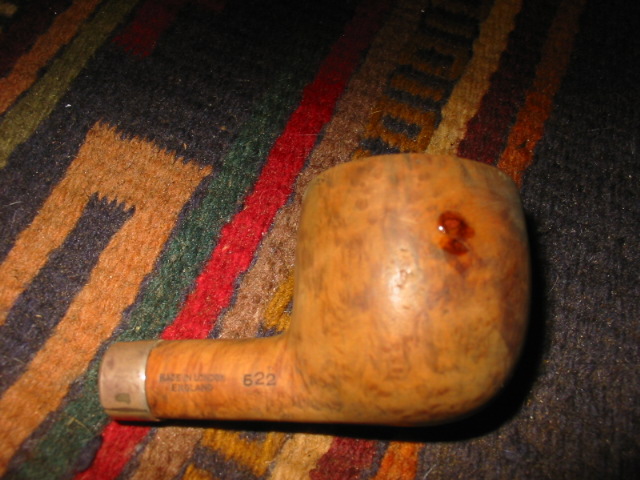
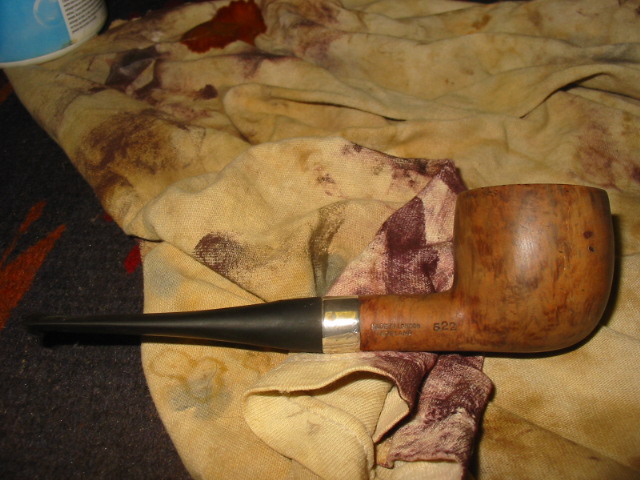
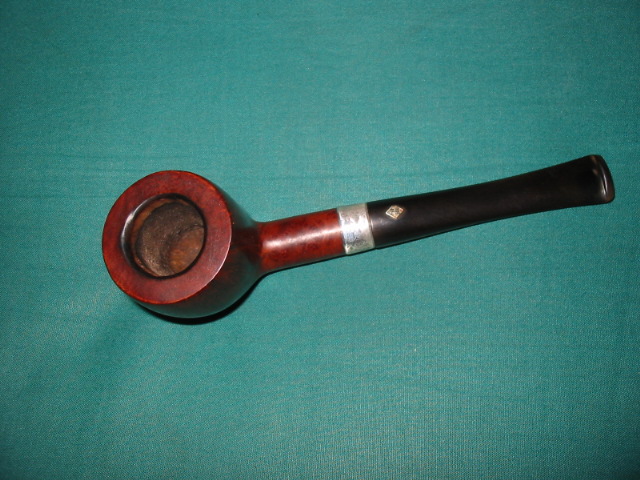
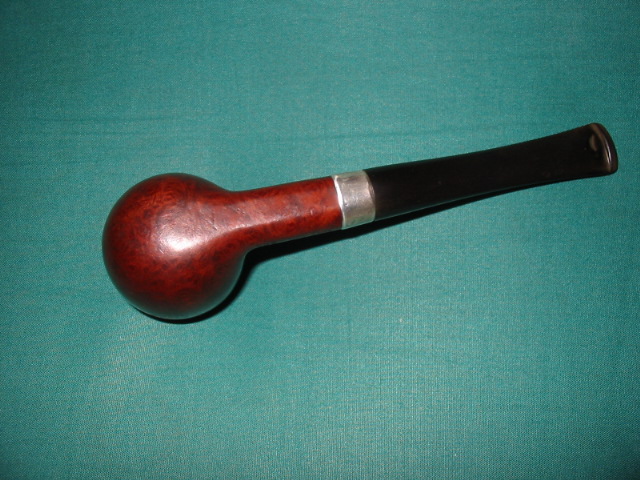
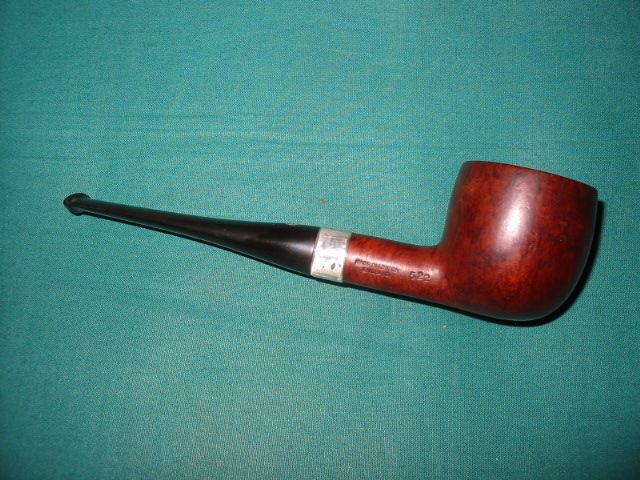
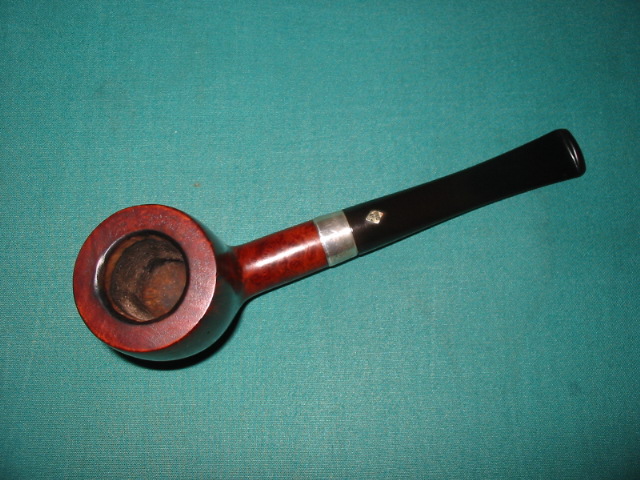
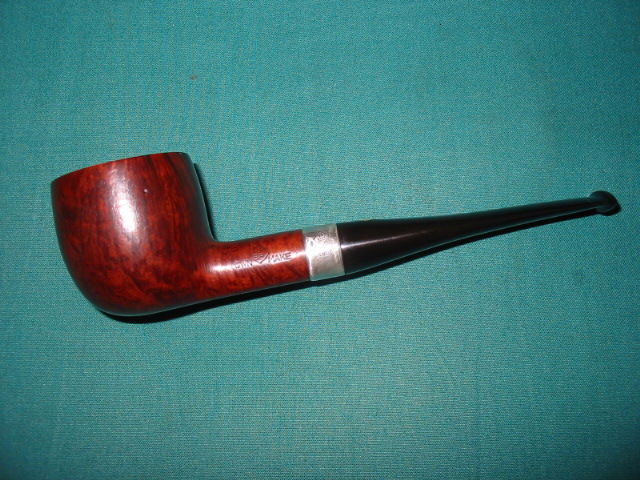
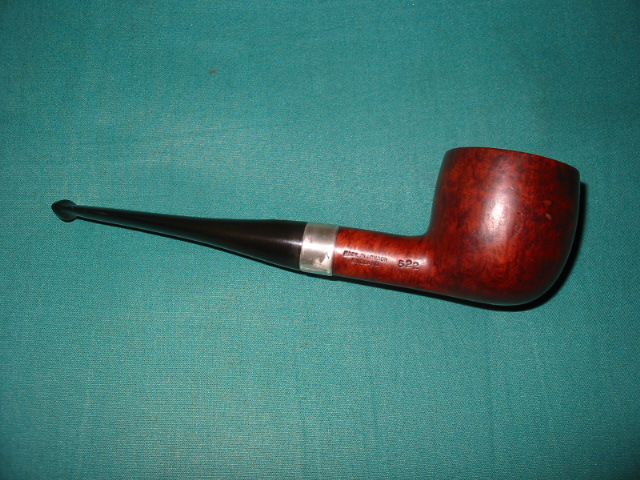
When I saw this one on EBay it grabbed my attention. I have always loved BBB pipes and found that they are great smokers and often fly under the radar. This one is stamped BBB Own Make on the left side of the shank and Made in London England 622 on the right side of the shank. The stem was an obvious replacement stem from the pictures. The band is a factory original stamped BBB and Sterling Silver. The grain showed promise and the bowl looked to be in good shape under the grime. I would know more once it arrived.


Once it arrived I took time to look it over. The bowl indeed had some great looking grain under the grime. The rim was covered with a thick coat of tar and carbon. The bowl looked to be unmarked by reaming and was still round. The cake on the inside was crumbly and sticky. The entire shank was caked with the sticky grime as was the stem. Definitely a goopy aromatic had been smoked in this old timer. The sterling silver BBB band had dents in it but was unbroken and uncracked. It was definitely an original band as when the stem was removed the shank was not cracked or damaged. The stem was indeed a replacement. It was a standard blank that still had some of the edge marks from the casting on it. It also short in terms of the length of the original pipe as I have found it on pictures on the web and in the catalogues. I was unable to find the 622 with a saddle stem like this one. It did not have the BBB diamond logo or a stamping of BBB on the stem either.

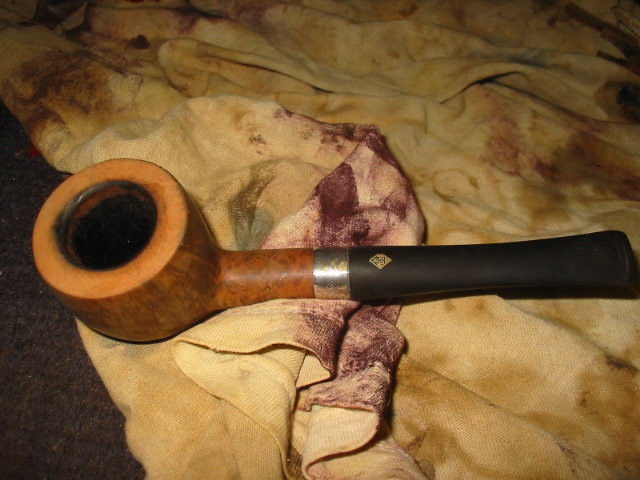
One of the reasons I bid on the pipe was that I had a BBB taper stem in my can of stems that looked like it would be a perfect fit for the pipe. Once I had it out of the box and on my work table I took out the old stem and sanded the tenon a little to make it fit correctly and slid it into place. The diameter of the stem was a perfect match to the shank and the tapered stem fit well with the pot shape. The two looked like they belonged together. Once the fit was smooth and well seated I put the replacement saddle stem into my can of stems to be used one day on a pipe that needed to be restemmed.

I put the bowl into the alcohol bath for about a half hour while I worked on removing the oxidation from the stem. I placed the stem in a bath of Oxyclean and hot water to soak when I took the bowl out of the alcohol bath. The Oxyclean softens the oxidation and makes it easier to work with than the hard unsoftened oxidation. The bowl was a real mess and I wanted to get the grime and remnants of the old finish removed so I could start fresh with the bowl and restain it. When I took the bowl out of the bath it looked like is shown in next three pictures. The finish was gone but for a few grey spots at the bowl shank junction and around the rim. The top of the bowl was seriously covered with goopy tars and black sludge that would take some work to remove. You notice in the first picture that on the right side of the bowl near the front were two fills that needed to be addressed as the putty had shrunken and they were divots.

I reamed the bowl to remove the internal grime and get back to the wood. I find that a soak in the alcohol bath softens the cake making removal much easier. It does not chip or break around the rim. I also cleaned the shank with pipe cleaners, a shank brush and alcohol to clear out the tars. I also used a drill bit that I had turned into the shank to clean out the hardened tars. Once I had it clean I used some emery cloth and turned the bowl top into the cloth to remove the chunks of tar and carbon build up. The next series of three pictures show the pipe during and after using the emery cloth. The last picture shows clearly the extent of the grime and tar build up even after sanding the top of the bowl.

Once the bowl was at the point in the photo above I then reamed the bowl a second time to clean up the remaining build up and then wiped the bowl down with acetone on cotton pads. The next series of five pictures show the pipe after the repeated wipe down with acetone. The briar is clean and ready for some work on the fills and some work to remove some of the damage to the inner side of the rim – you will notice in the last photo in the series.

I picked out the putty fills and wiped the bowl down one last time with acetone before dripping super glue and briar dust into the sandpits. The briar dust and superglue makes a far nicer looking fill in my opinion than the pink putty ever will. Once the glue had dried I sanded it with 240 grit sandpaper to see if there were any dents or dimples in the patch and refilled until the surface was smooth. I sanded repeatedly with the 240 grit until the patch blended into the surface and the glue was off of the surround clean briar.

I then used a piece of sandpaper to bevel the inner edge of the rim into the bowl to lessen the effect of the burned area. I aim for an even bevel all the way around the bowl rim and thus the effect of the burn will disappear with the stain coat. I took the stem out of the Oxyclean bath and wiped it down with a cotton cloth to remove the softened oxidation. I then reinserted it into the pipe to check for a good fit. You can see in the first picture below the beveled rim and the fit of the stem. The stem is almost back to a clean black finish. The oxidation is virtually gone and only needs to be polished and sanded with micromesh pads to bring back the shine. This particular stem also had two deep tooth marks on the top and bottom of the stem near the button. I decided to deal with them after I had finished cleaning and polishing the stem and staining and polishing the bowl.

I gave the pipe a first coat of oxblood stain, flamed it and buffed it off with Tripoli. You can see that it gave a fairly good coverage but was a bit too opaque to my liking. I wanted the grain to be more visible so I washed the pipe down with acetone to remove some of the depth of colour and highlight the grain. In the photos below you can see the pipe after I wiped it down with the acetone and buffed it with White Diamond. It still was not the finish I was looking for so I sanded the bowl with 1500 and 1800 grit micromesh to smooth the surface and then heated the bowl with my heat gun to open the grain of the wood before giving it a second coat of oxblood stain.

The next series of four pictures show the finish that I was looking for. The grain shows through clearly and the bevel and stain on the rim minimize the effect of the burn marks. The stem is also cleaned and polished but the bite marks still remain in the pictures below. After staining and flaming the pipe I buffed it with White Diamond and then waxed it with several coats of carnauba before buffing with a soft clean flannel buff.

At that point last evening I set the pipe aside to be finished today. When I came home from work this evening I used the heat gun to raise the dents in the stem on the top and underside. The first two photos show the effect of the heat gun in raising the dents. Once I have the dents raised as far as I can lift them I used 240 grit sandpaper to level the surface of the stem and I have found that the combination of the heat and the sanding takes care of most dents in the surface of the stem as long as they are just dents and not cut marks. I finished sanding those areas of the stem with micromesh pads from 1500-12,000 grit until the stem had its own inner shine. When I was finished I coated the stem with Obsidian Oil and once dry, buffed it with carnauba wax and a soft flannel buff. To finish off the pipe I gave it several more coats of wax and buffed it by hand with a soft cotton cloth.

Refurbished a Peterson’s Deluxe Zulu


In one of my EBay purchases was this little Peterson’s Deluxe Zulu shape #268. To me this pipe epitomizes the Zulu shape – in other words, when I think Zulu I think of a pipe that is shaped like this. When the pipe arrived the bowl was dirty and caked (two things that I almost forget to say as they are to be expected in estate pipes and I am surprised when I find one that is not). The finish was mottled with light and dark spots where the stain had worn off. It also had some flecks of paint on the surface that are not clearly visible in the photos below. The rim was very caked and covered with tars. Fortunately there was no charring that was visible as I looked it over. The stem also had paint flecks on it and was slightly oxidized. There were tooth marks on the top and bottom of the stem that would need to be repaired.ImageImage

I reamed and cleaned the bowl and the rim of the pipe. The shank took some work with isopropyl alcohol and many pipe cleaners and a shank brush before it was clean. I wiped down the surface of the bowl with acetone to clean off the remaining finish and the paint spots. I use cotton makeup removal pads that I picked up at the store. They work great and are easier to use than just cotton bolls. Once the finish was cleaned I dropped the bowl in the alcohol bath to soak while I turned my attention to the stem.

I buffed the stem to remove the oxidation and the paint spots. I was careful to avoid the area where the stem and shank meet so as not to round the sharp edges and ruin the great fit of the two. I heated the tooth marks that needed to be lifted with my heat gun and when they had come back as far as possible I sanded the stem with 240 grit sandpaper to remove what remained. I sharpened up the edge of the button with my needle files to give it a good crisp edge. I then sanded the whole stem with 400 and 600 grit wet dry sandpaper and water. I finished the sanding and polishing process with micromesh pads from 1500 to 6000 grit. Once that was finished I laid the stem aside with a coat of Obsidian Oil and turned back to the bowl.

I took the bowl out of the alcohol bath and restained it with a medium brown aniline stain. I flamed it, let it dry and then took it to the buffer and buffed it with White Diamond. This was done and the entirety buffed and polished with carnauba wax to give it several layers of wax. The cross grain, birdseye and straight grain on this beauty are well laid out. ImageImageImageImage

A WDC Milano Hesson Guard Reworked


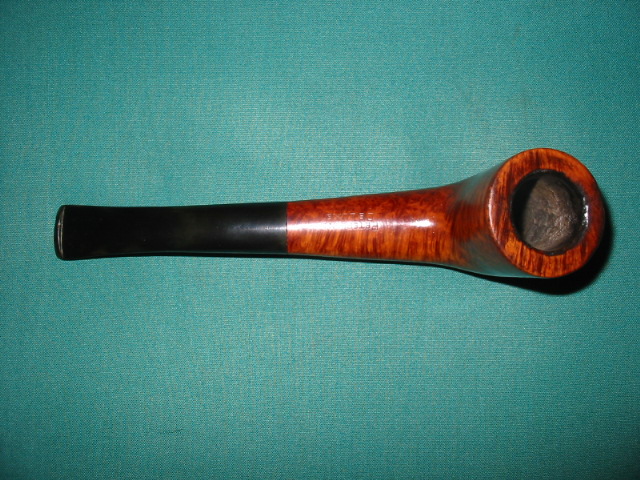
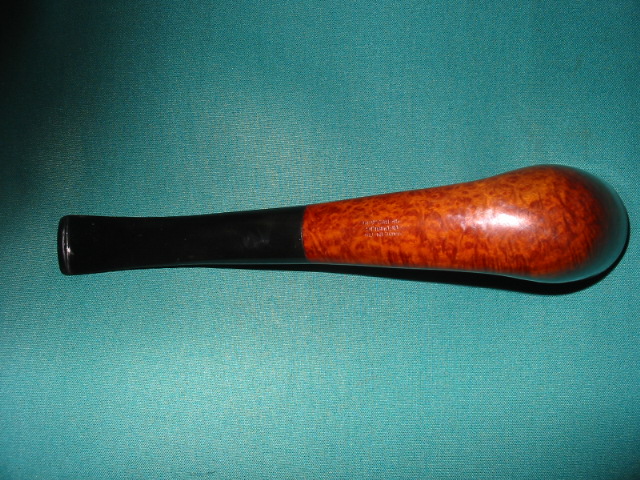
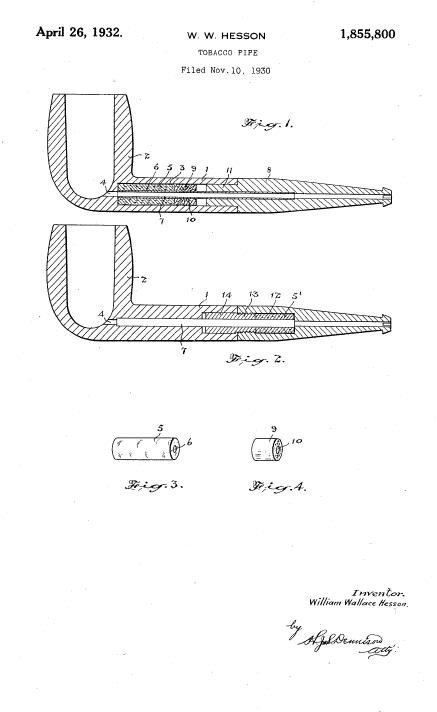
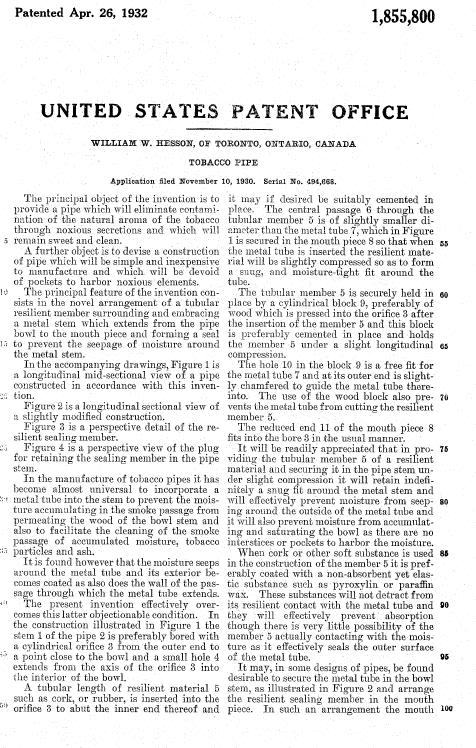
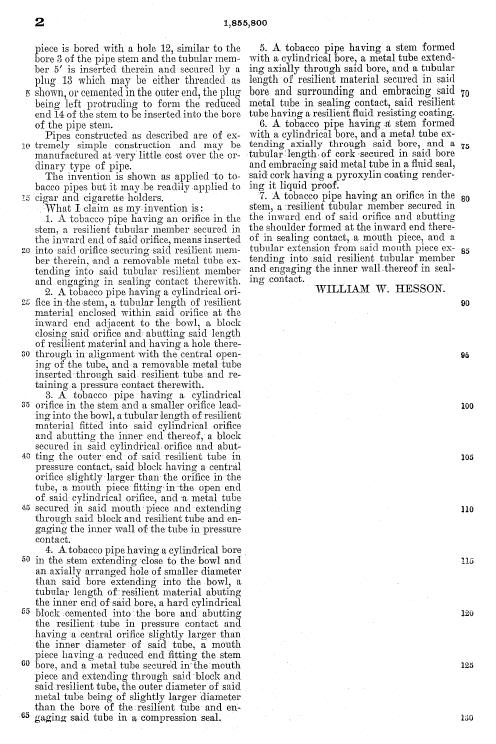
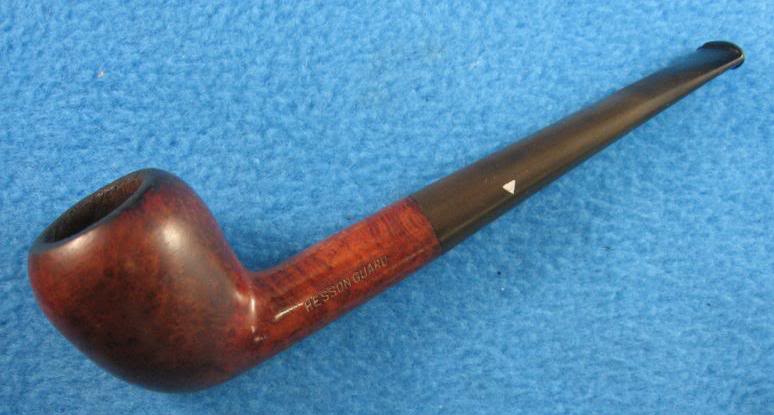
I just worked over this old timer – A WDC Milano Hesson Guard. In order to know more about the pipe I was working on I searched for information regarding the patent number stamped on the pipe and went to the US Patent site where I found documentation. The patent was filed for it in 1932. It is an early example of the pipe. It is in the acorn shape. It has the patent number stamped on it as well as the other WDC labels. The triangle on the stem is silver or steel inlay. For me this is a part of the mystery of unpacking the history and life of the brand and mark. I always like to know as much of the back story as I can find on any of the pipes I refurbish. Patent numbers stamped on the pipe provide a means of ferretting out information on the design and the particular part of the pipe that is patented. I have included the patent site information on the pipe for your reading pleasure. At least to me this part is fascinating information.

ImageImageImage

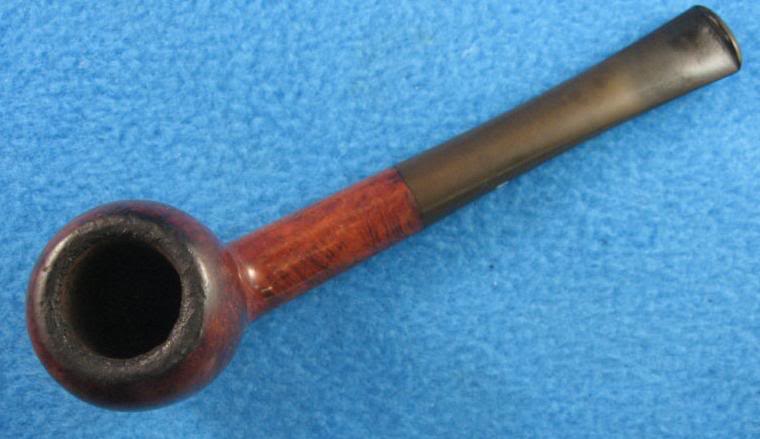
The pipe was caked with a crumbly thick cake that pretty much filled the bowl when I picked it up. I reamed it out to field dress the pipe. I generally do this with most of the pipes I bring home for renewal. It keeps the mess of the carbon from the cake outside and away from my work desk. In the photos below you can see that the finish was pretty dirty with a lot of hand oils and grease ground into the bowl surface. The rim was caked and tarred and it looked like it was damaged. The finish was worn and the stain faded in many places on the bowl sides. The stem was oxidized and had some bubbles in the surface along the button – the bubbles are visible near the button in the second photo below.

ImageImage

I scrubbed the exterior of the pipe with Murphy’s Oil soap, undiluted. I wipe it on with a cotton cloth and immediately wipe it off. Others have said that it removes the stain if left to long and it does indeed do that. But I have found it unsurpassed in quickly removing grime and grease if rubbed on and rubbed off quickly. I worked on the rim as well with a soft bristle tooth brush and the oil soap to remove the buildup. Once that was done I put it in the alcohol bath and removed the finish that was on it. It seemed to have had some built up waxes and also some kind of varnish coat over the stain. It came off with a bit of elbow grease after soaking. I decided to not stain this pipe as the briar looked great as it was. I just sanded it with the micromesh pads to polish it and remove the surface scratches. Then I took it to the buffer to give it a buff with White Diamond.

I worked on the stem while the bowl soaked in the bath. I soaked it in the Oxyclean mixture for a while to soften the oxidation. I dried it and buffed it with Tripoli to remove the surface oxidation. I sanded it with 240 grit sandpaper to get the deeper oxidation. I also had to lift a few tooth marks from the underside of the stem near the button. I used the heat gun to do that. The bubble on the top of the stem also was heated to try to smooth it out. It was evidently not a blister but a bump from teeth. It went back in place with the heat. I sanded the remaining signs of bite with 240 grit sandpaper and then 400 and 600 grit wet dry and water. I finished it with the normal regimen of 1500-6000 grit micromesh pads to polish. I put it back on the bowl and then gave the entirety a buff with White Diamond to polish it and finished the restoration with several coats of carnauba wax.

ImageImageImage

Lifting Tooth Marks from a Lucite Stem with a Heat Gun


A normal pattern of behaviour for me in my refurbishing work is that once I figure something out that works on one kind of material I want to try it on a variety of similar items. In this case once I had used the heat gun to lift the tooth dents on a vulcanite stem I wanted to experiment with Lucite stems. I had no clue whether it would work or even if Lucite had some kind of memory that would bring the dents back to a smooth surface on the stem. There was only one way to find out since I could find no answers online and that was to give it a try. I figured the worst that could happen if I was careful was that the stem would remain the same – dented or a bit melted and I would have to do a different kind of repair. I had a nice little Stanwell bulldog that was given to that had a Lucite stem that had some tooth dents in the stem – just ahead of the button. There was one dent on top and one underneath.

Image

The two pictures below show the depth of the marks (Again I ask your forgiveness the poor quality of the photos, several of them are a bit blurry but I think that they give you a good idea of the nature of the problem. The dents look far worse in person than the pictures show). The top photo shows the top of the stem and the second photo the underside. I decided to continue my experiment with lifting the tooth dents with my heat gun on this Lucite stem as it seemed like a good candidate for the trial.

I personally like working with a clean surface when I am doing this kind of work so I scrubbed the tip to clean it of any grime or grit that might be in the dents. I used a soft cloth dampened with Isopropyl alcohol to clean the surface then I buffed it with a quick light touch on a White Diamond wheel.  The pictures below show the stem just before I used the heat gun on it. You will see in the photos that there are small pits close to the button as well as the larger dents on both sides. The crevice between the button and stem body also has some scratches that would need to be sanded out once the tooth dents were dealt with.

ImageImage

As I explained in the post on the vulcanite stem I once again stood the heat gun on its end pointing upward. I used the wire stand built into the handle to stabilize the gun in this position (see the picture previous post on lifting tooth marks from vulcanite). I wanted to be able to have both hands free to maneuver the stem over the heat so having the gun positioned in this manner allows me to do that. I set the heat gun on low heat as before because I did not know how the heat would affect the Lucite. I have found that high setting can too easily burn the vulcanite so I was assuming the same thing would be true of the Lucite.

I worked the stem over the heat keeping it about 4-6 inches above top of the gun tip as it allows it to thoroughly heat the Lucite. I move the stem constantly back and forth across the heat. I kept the stem on the pipe as before and used the bowl as a handle. In this instance I worked to just keep the first 3/4 inches of the stem from the button forward in the heat. I stopped frequently to check on the progress and see if there was any blistering on the stem. It took a bit longer for the heat to work on the Lucite. I think it must be the density and hardness of the Lucite that makes the difference. With the application of heat the Lucite began to return to its original smoothness. I kept the heat on the stem until all the dents were gone. The reason I believe the process worked was because the dents in the Lucite were not cuts in the surface but actual dents. The application of the heat did the trick.

Once the surface was smooth I took it off the heat and cooled it the same way I did the vulcanite. I did not want the stem to bend accidentally while it was soft so I dipped the tip in some running cool water to set the new surface. I dried off the tip and then sanded the area with 400 and 600 grit wet dry sandpaper (with water on the stem as I sanded) and then moved through the grades of micromesh pads – 1500, 1800, 2400, 3200, 4000 and 6000 grit. By the 3200 grit micromesh pad I found that the Lucite was beginning to have a smooth and glossy finish. The sanding with the final two grades of the pads really polished the stem and gave it the glassy finish that polished Lucite has. I finished by giving it a final polish on the buffer with White Diamond polishing compound and a coat of carnauba wax.

Here are some pictures of the top and the underside of the finished stem.

ImageImage

Lifting Tooth Marks in an old Charatan Stem with a Heat Gun


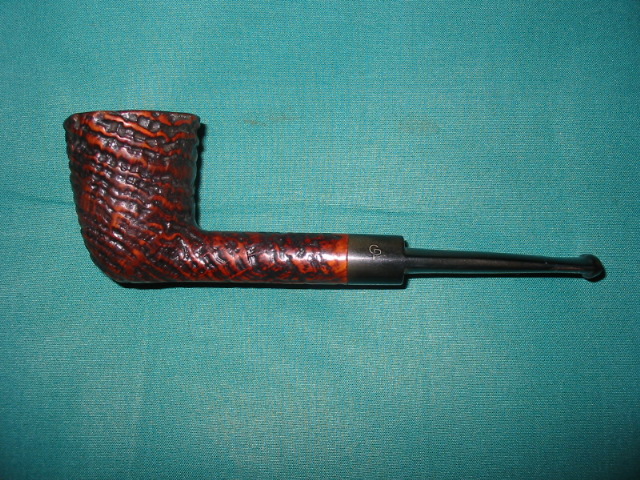
I picked up this old Charatan 33X Bell Dublin off of EBay in the 90’s and refurbished the bowl and rim and gave it a good polishing with some Halcyon 2 wax. I find that the wax works very well on sand blasted and rusticated surfaces. This one turned out to be a great smoking pipe.  The briar is extremely lightweight and has a nice deep blast to it. Charatan does this shape like no one else and it is a favourite of mine. I liked everything about this old pipe but… it had some incredibly deep tooth marks on the stem.

Image

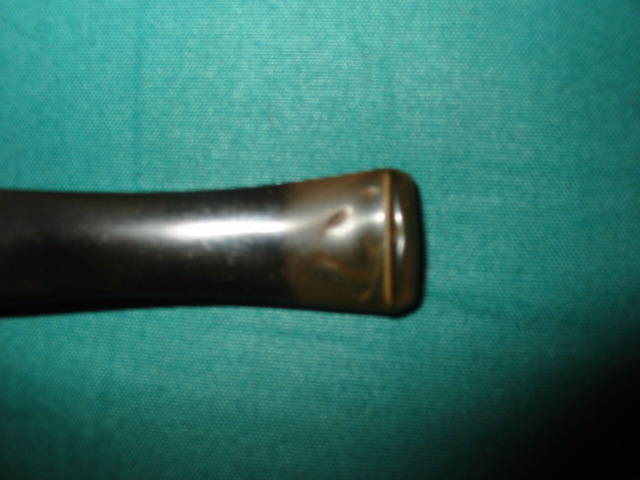
The two pictures below show the depth of the marks (Please forgive the poor quality of the photos, though they are a bit blurry they communicate the problem. Know that it was far worse than the pictures show). They arc across the stem just in front of the button and extend about a half inch into the stem. The top photo shows the top of the stem and the second photo the underside. I covered them for the longest time with a rubber softee but really did not like the feel of that in my mouth so I decided to experiment with lifting the tooth dents using my heat gun.

Image

Image

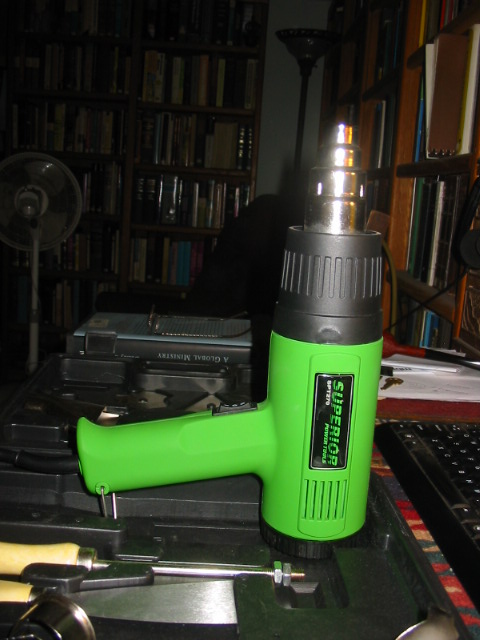
I scrubbed the tip to clean it of any slurry that had built up under the rubber softee tip. There seems to always be a white calcification under the rubber guard. I cleaned that up with my buffer and some sandpaper. The photos above show the stem after I had cleaned it and it was ready to be heated.  I have a heat gun that I can stand on its end pointing upward. It has a wire stand built into the handle that stabilizes the gun in this position (see the picture below). Having the gun positioned in this manner allows me to control and manipulate the stem with both hands over the heat. I set the heat gun on low heat as I have found that high setting can too easily burn the vulcanite. I learned that painful lesson on some precast stems that I was trying to bend. I had used the heat gun to bend my stems for quite some time but had not used it to lift the tooth marks from the stem until I used it on this stem.

Image

The trick I have learned in the process is to keep the stem about 4-6 inches above top of the gun tip as it allows it to thoroughly heat the vulcanite but not burn it. I move the stem constantly back and forth across the heat. I kept the stem on the pipe this time and used the bowl as a handle. In this instance I worked to just keep the first inch of the stem from the button forward in the heat. I stopped frequently to check on the progress and see if there was any blistering on the stem. The blistering can easily happen and is a pain to deal with. It can be sanded out but it is a case of creating a problem while solving another one – kind of like how plumbing repairs always work out for me. It did not take long for the heat to do its magic. Vulcanite has memory so with the heat it returned to its original smoothness. I have found as long as the bite marks are not actually cuts but dents they will lift out with persistence and heat.

Once the surface was smooth again I took it off the heat and cooled it by dipping the tip in some running cool water to set the vulcanite in its new position. It is the same principle that is used in bending the stems. You heat and get it bent to the position you want and then dip in cold water to set it. I figured it would work the same in this instance and it did indeed work. I dried off the tip and then sanded the area with 400 and 600 grit wet dry sandpaper (with water on the stem as I sanded) and then moved through the grades of micromesh pads – 1500, 1800, 2400, 3200, 4000 and 6000 grit. By the 3200 grit micromesh pad I found that the stem was beginning to get a smooth and glossy finish. The final two grades of the pads really polish the stem and give it a glassy finish. To finish the work on the stem I took it for a final polish on the buffer with White Diamond polishing compound. It really shone when that was done.  The work was finished after I gave it a good coating of carnauba wax.

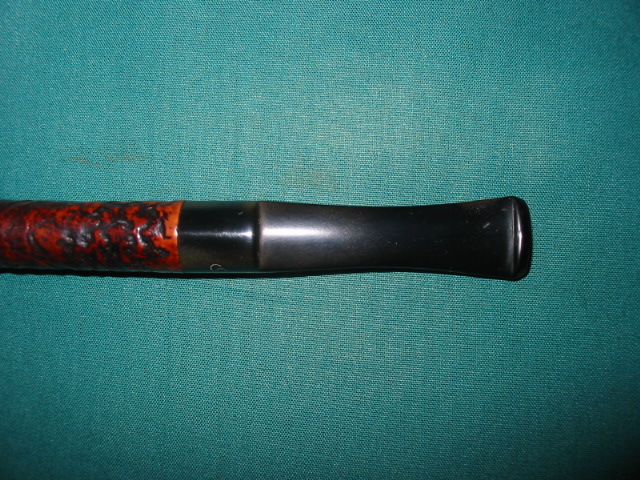
Here are some pictures of the top and the underside of the finished stem.

ImageImage