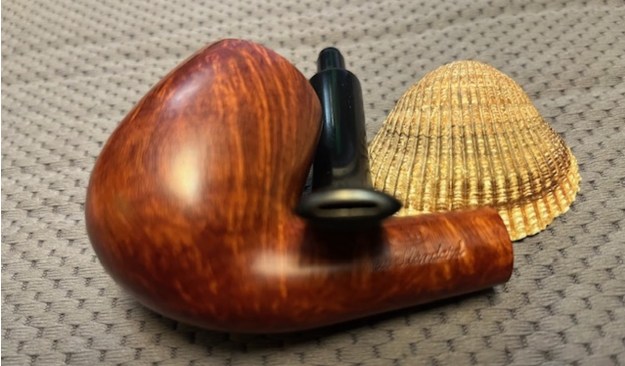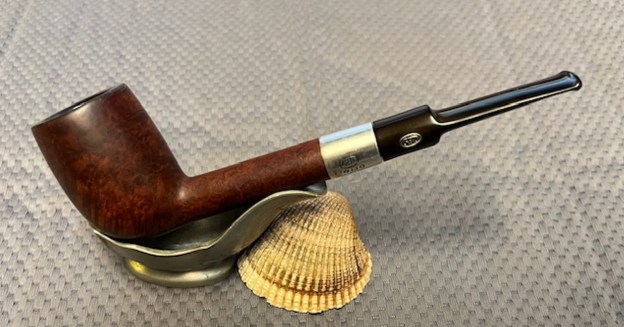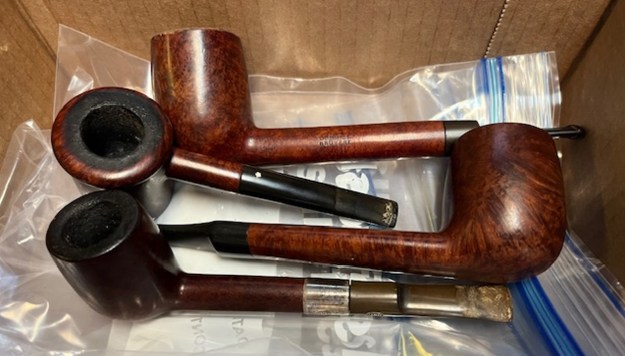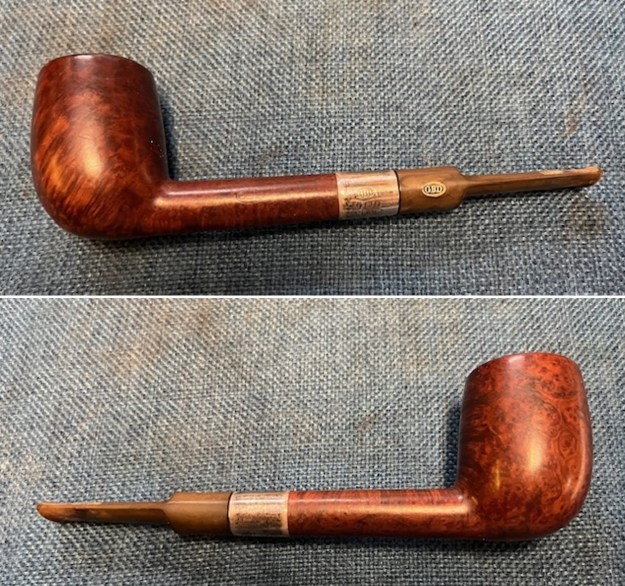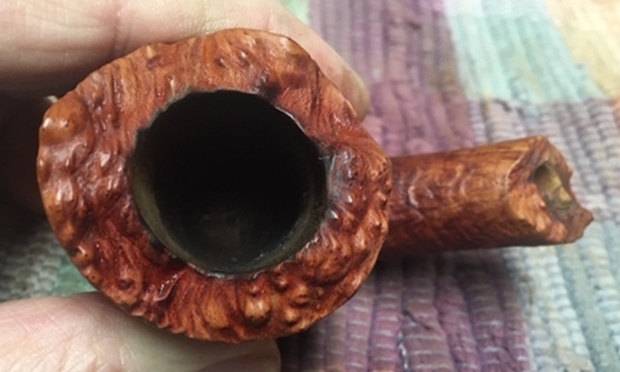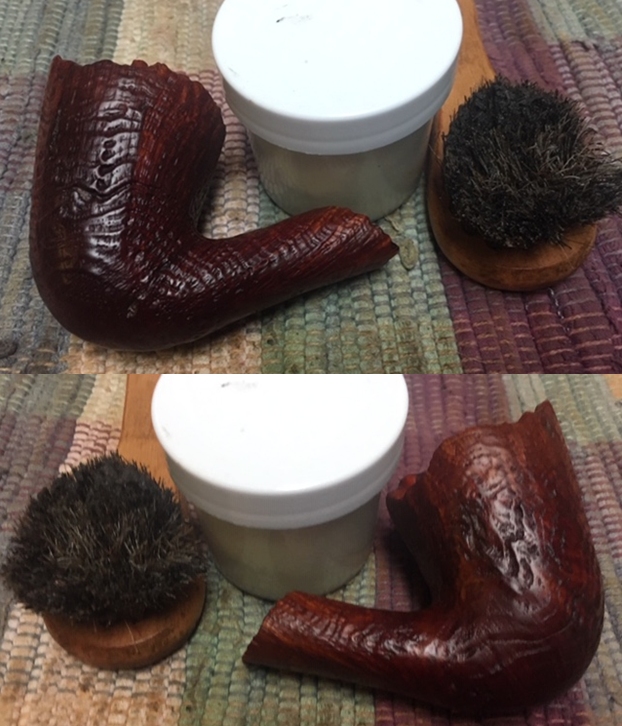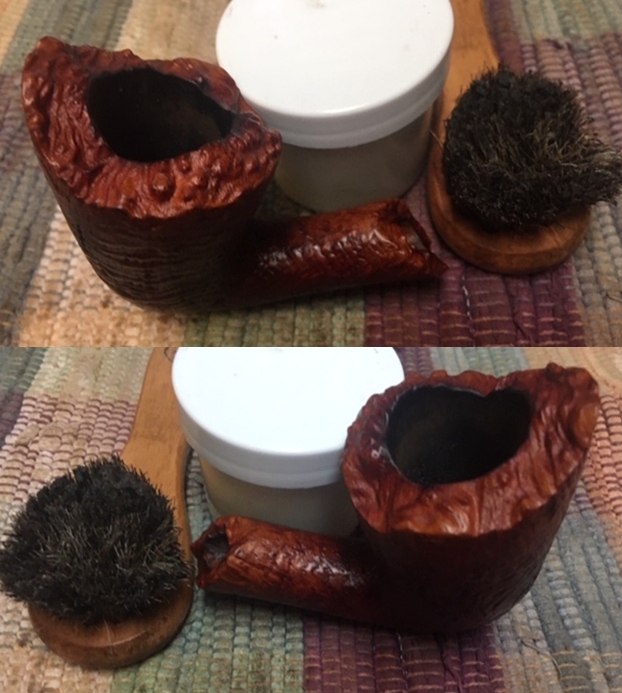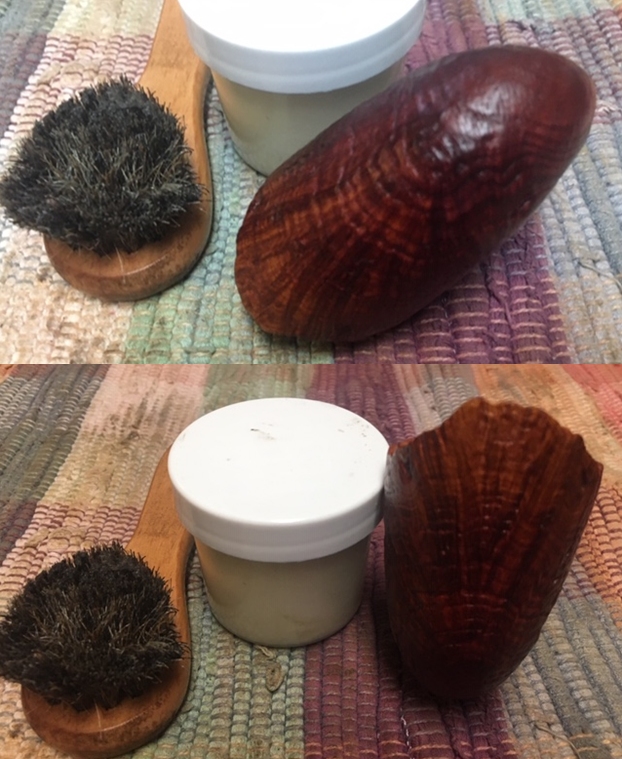
Tag Archives: GBD London England Pipes

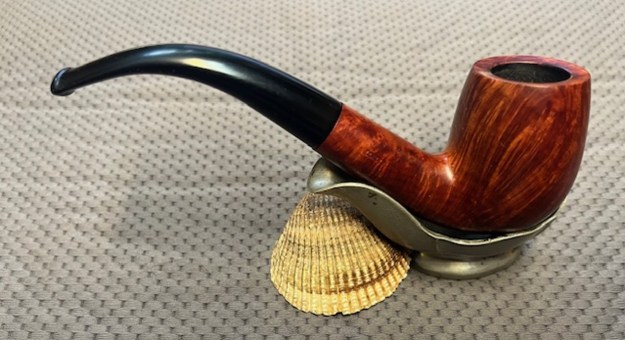
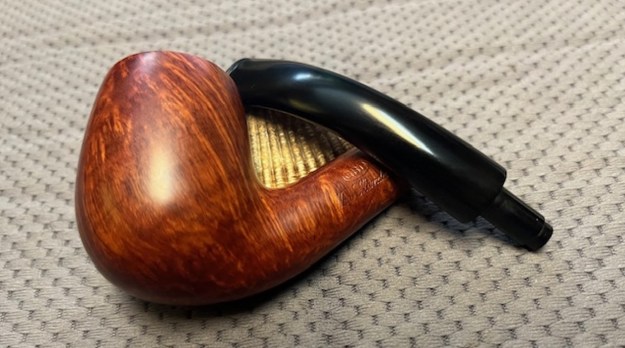
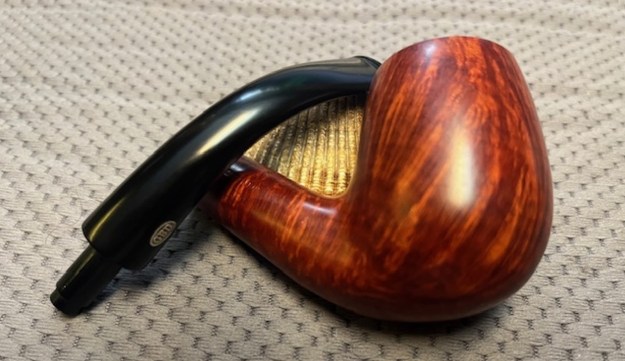
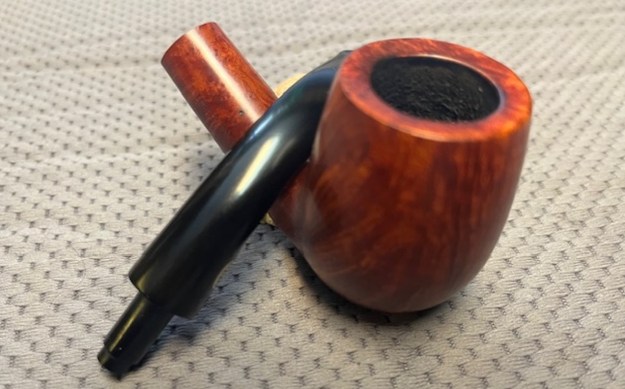
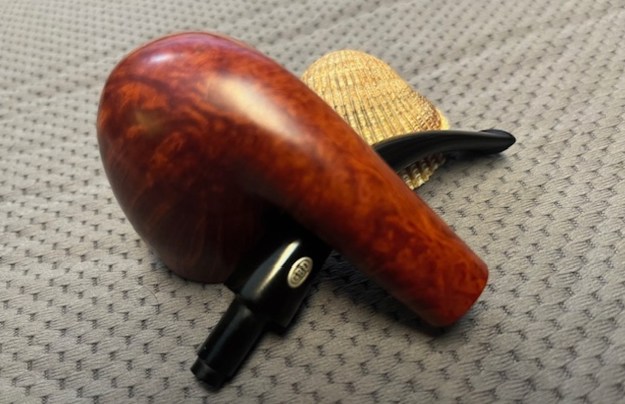
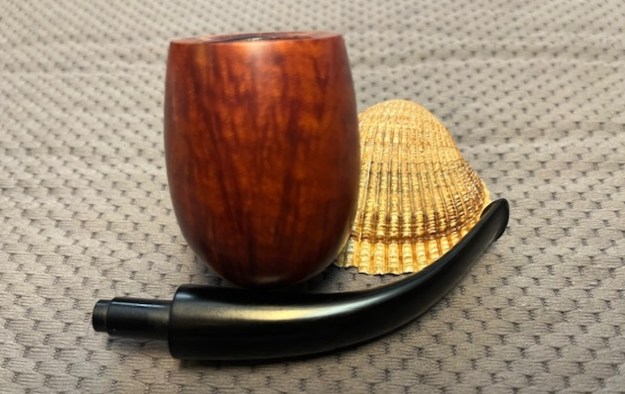
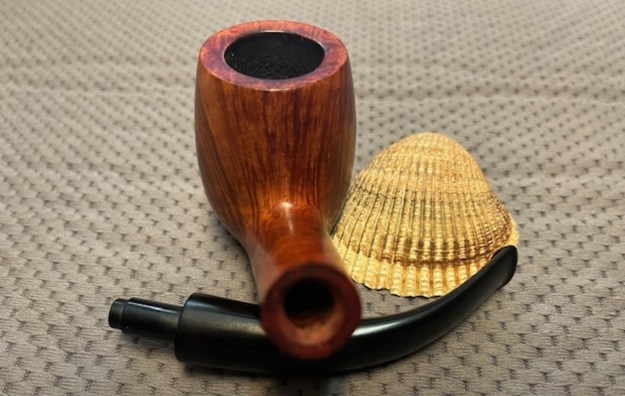
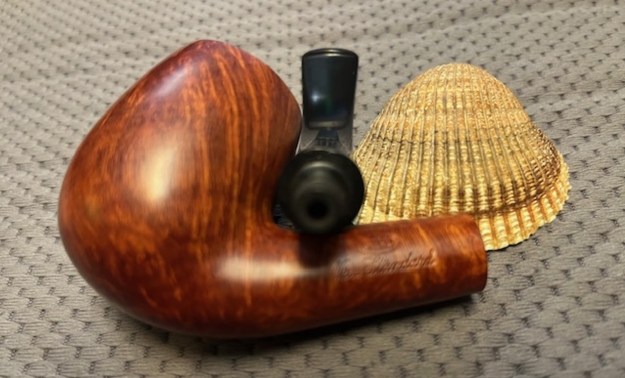
Restoring the fourth of 11 pipes sent for restoration – a GBD New Standard 508 Bent Billiard


by Steve Laug

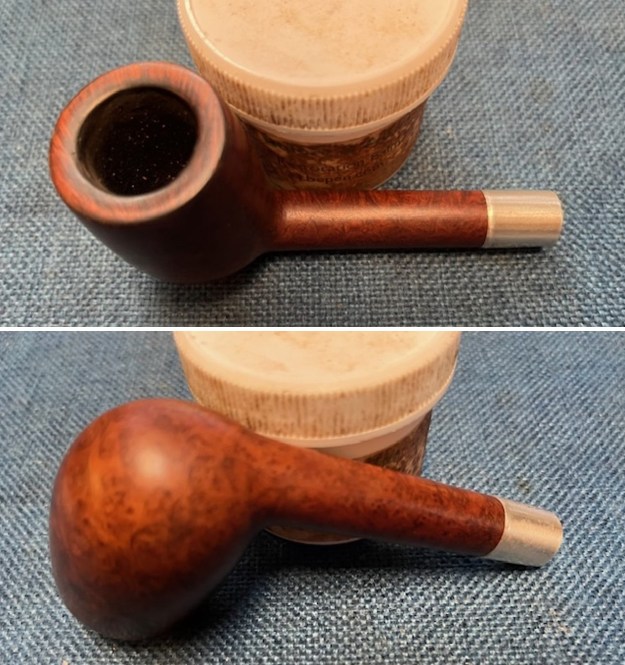
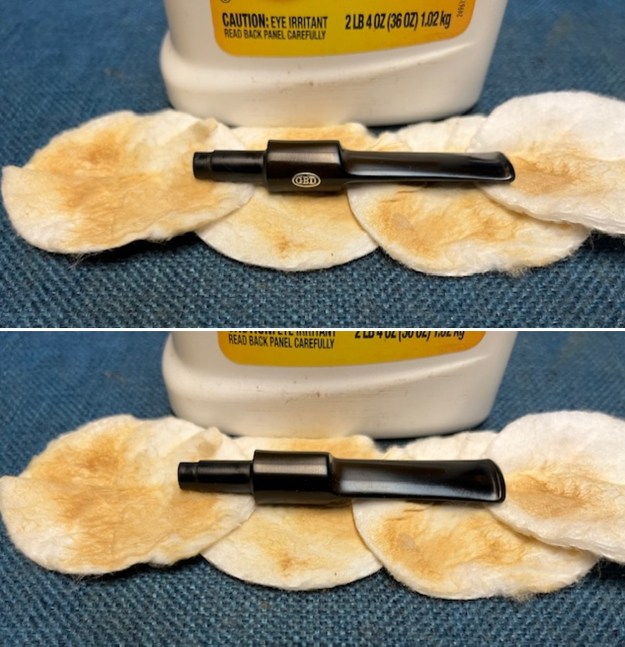
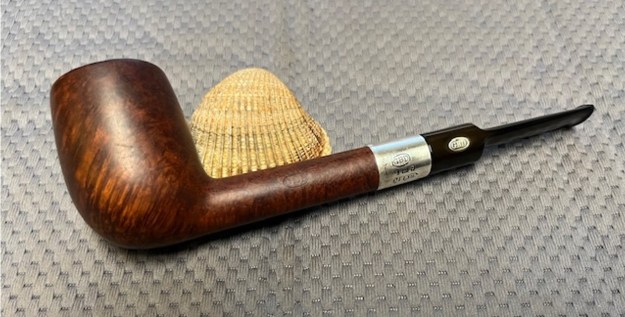
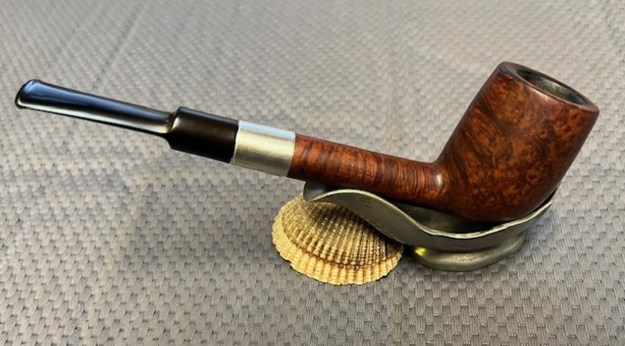
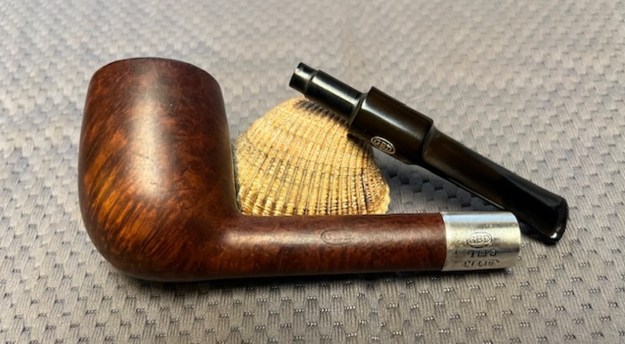
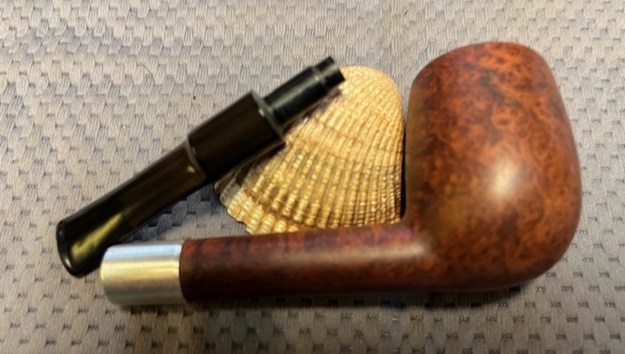
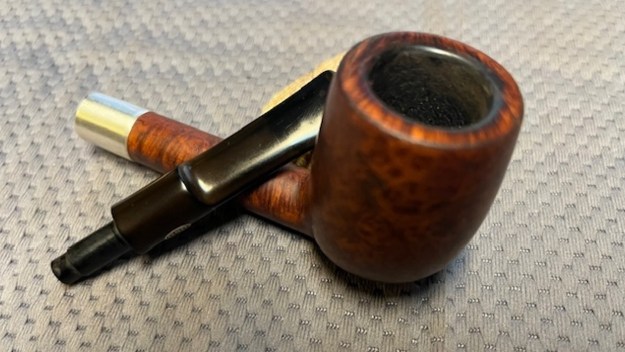
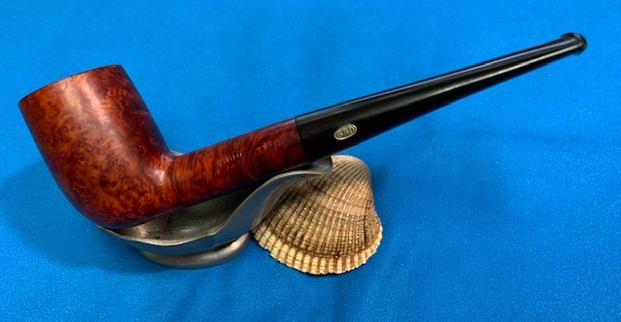
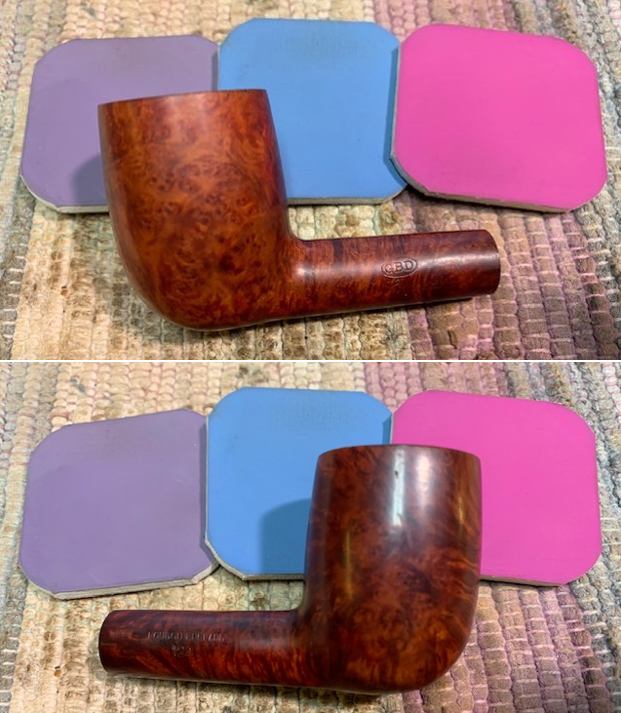
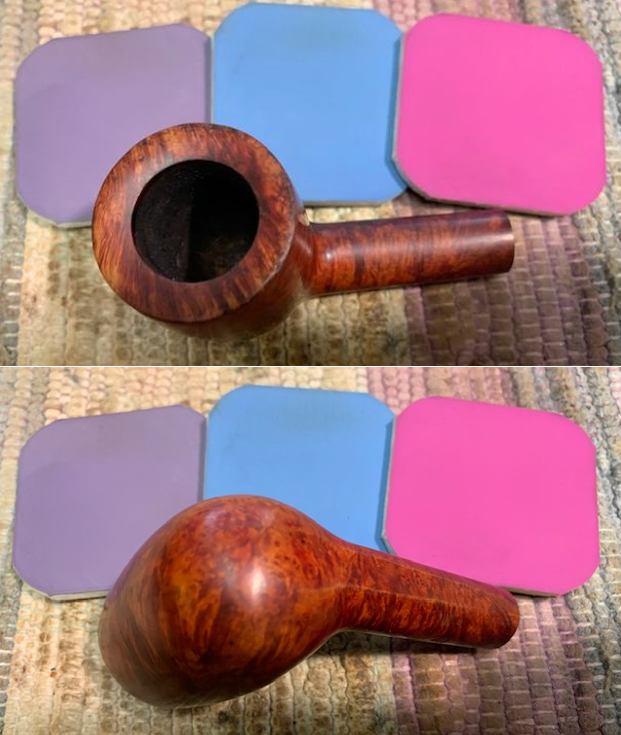
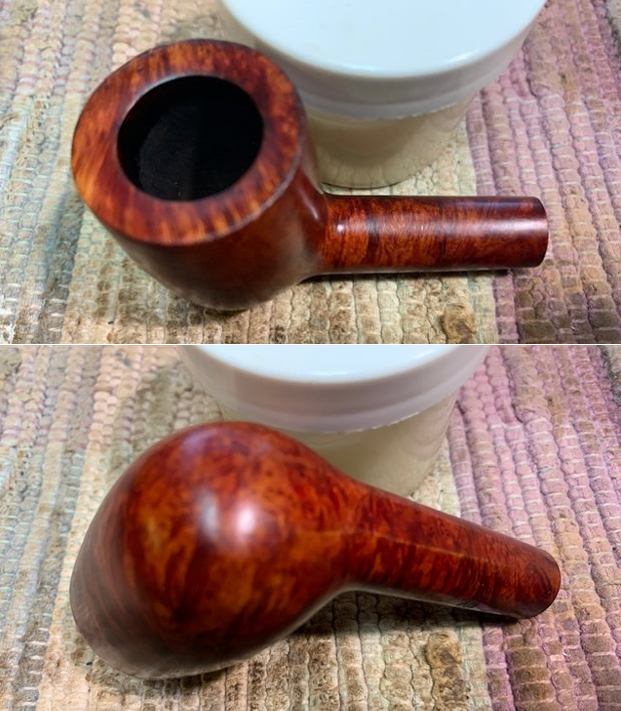
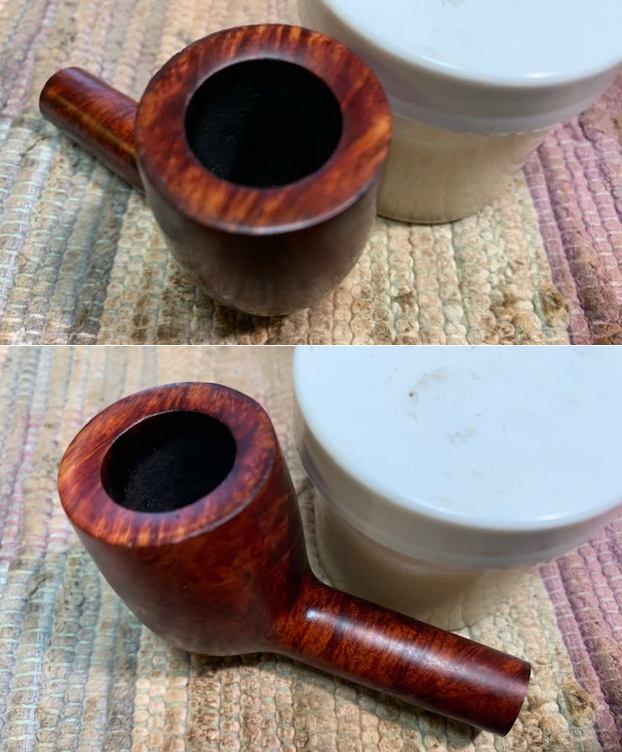
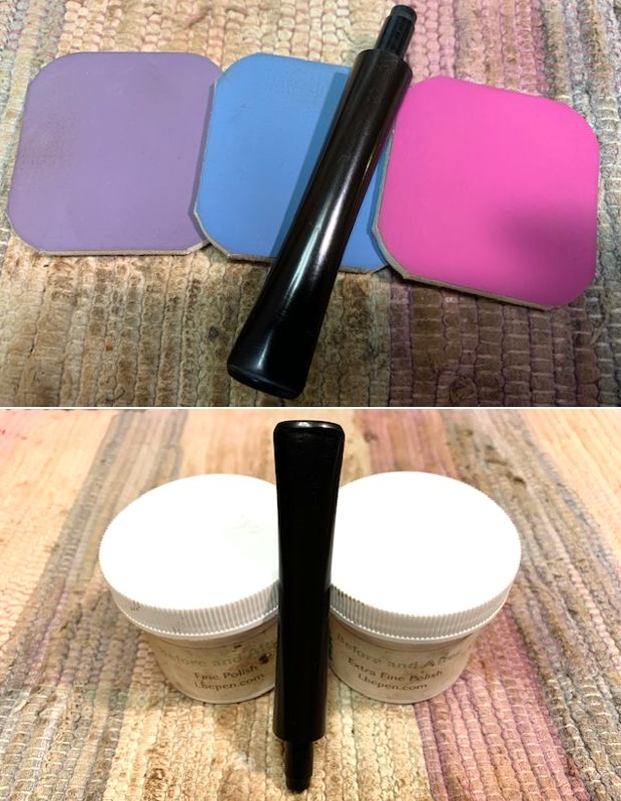
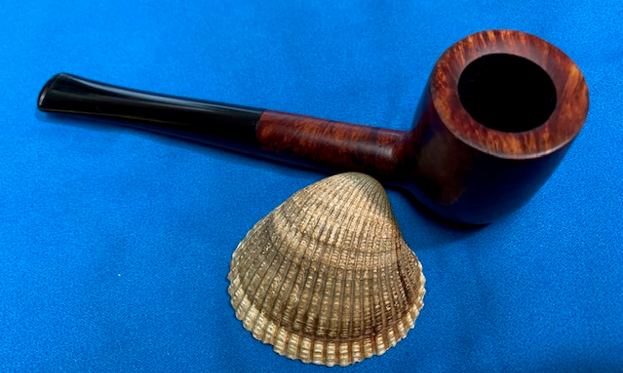
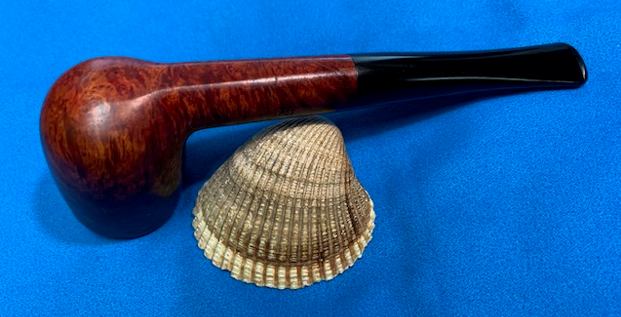
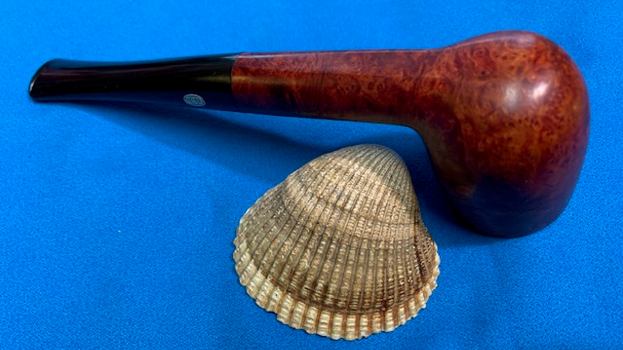
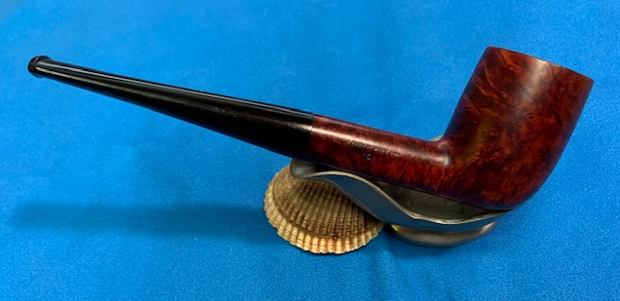
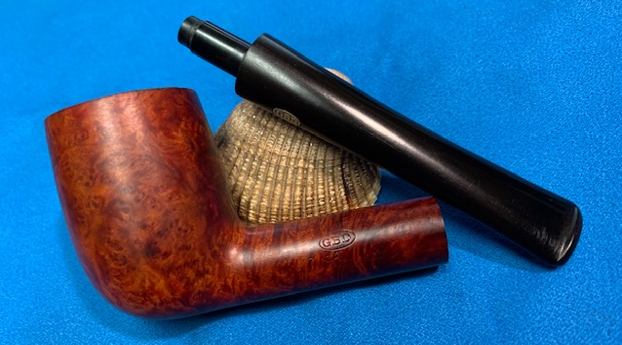
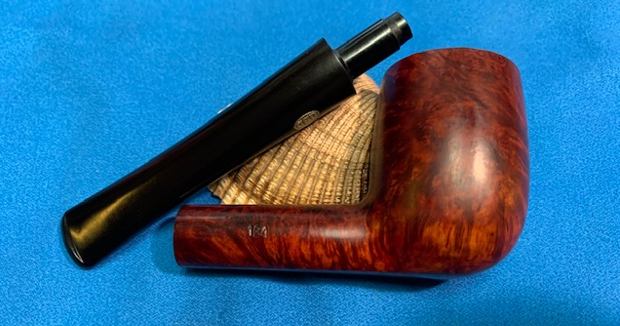
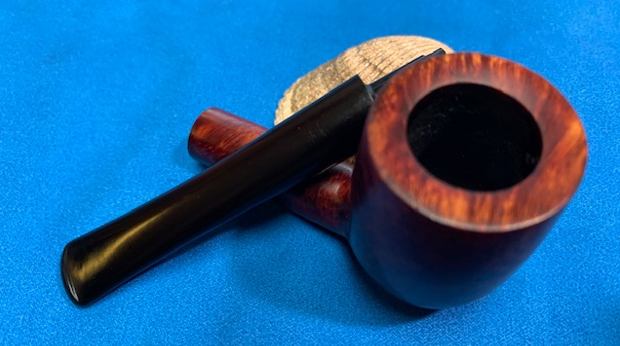
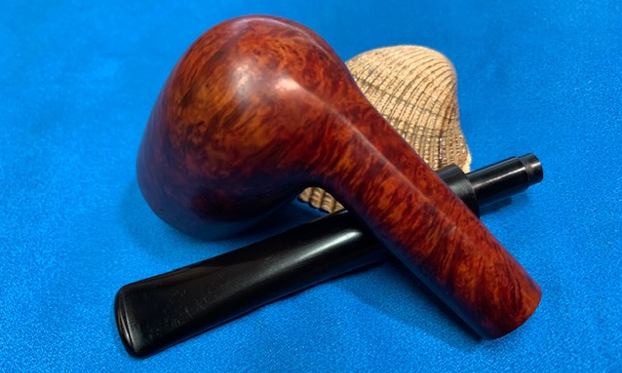
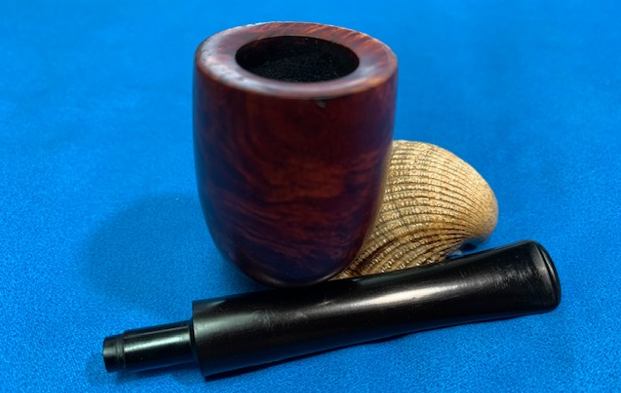
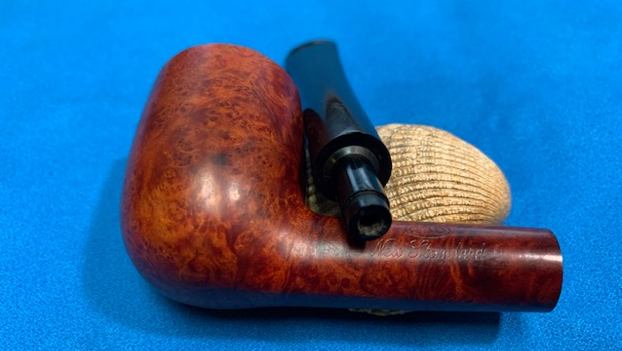
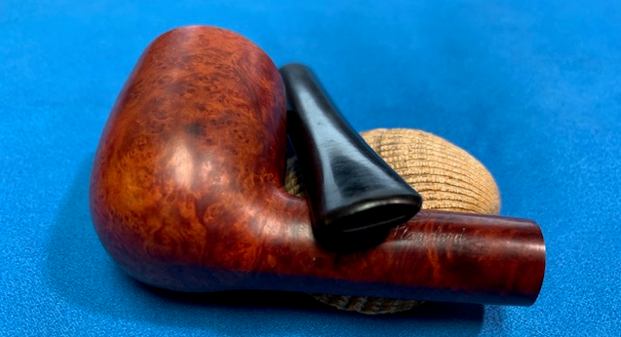
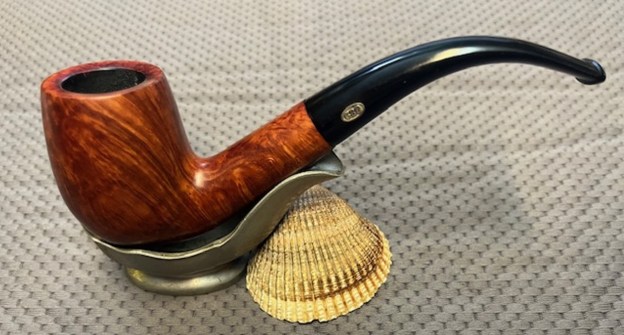
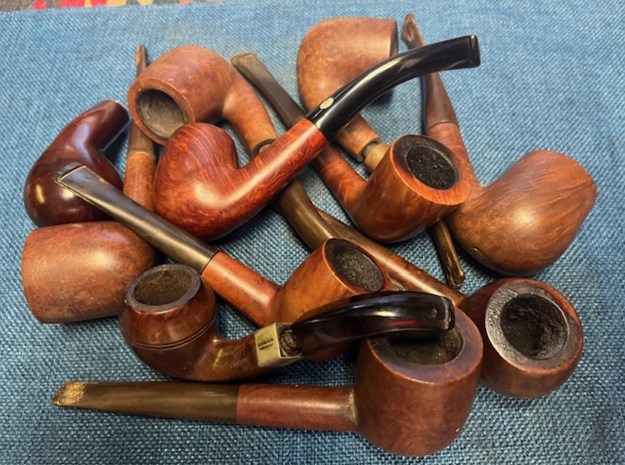
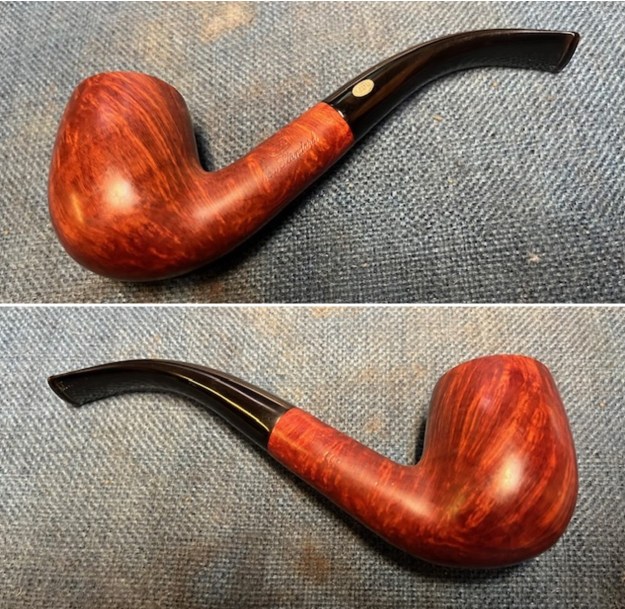
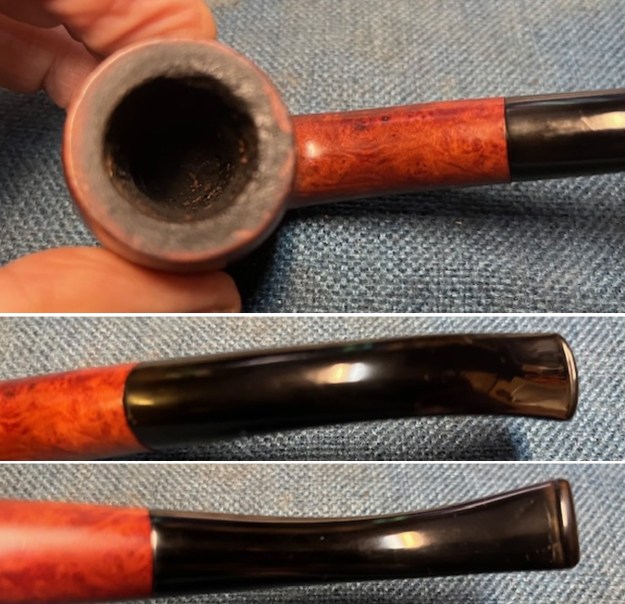
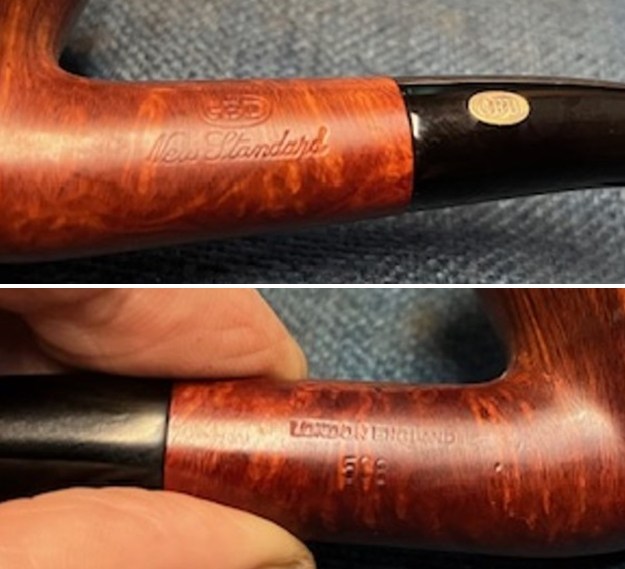
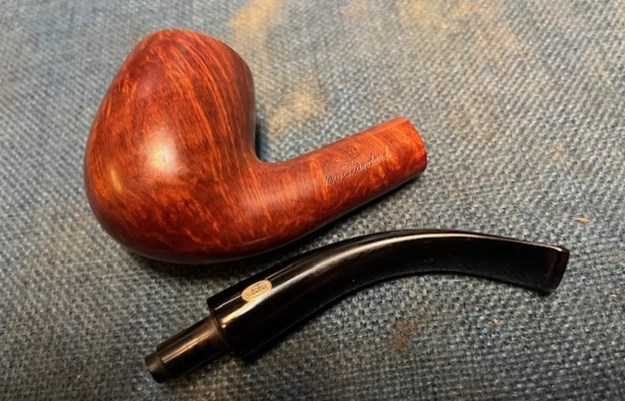
A while back I was asked by a customer and friend, Jack to take on some projects for him. I have worked on a few pipes for him over the years so we seem to have a standing agreement that I will clean up his pipes. This time he sent a batch containing 11 pipes – six Bertrams, an Arlington, a GBD, an old WDC Triangle Bakelite and one marked Texaco. All of them were in various conditions and would need different types of work. I took a photo of the pipes before I started working on them.I chose to work on the GBD Bent Billiard next. The shape is very nice, with the rich red/brown finish that highlights the grain around the bowl and shank. It is a great shape with a taper vulcanite stem with a GBD roundel on the left side. The finish was dirty with grime ground into the finish around the bowl sides. There was a thick cake in the bowl and lava overflow on the top of the rim – heavy around the entire rim top. The edges – inner and outer both appeared to be okay under the lava coat. The pipe is stamped on the left side of the shank and reads GBD in an oval [over] New Standard. On the right side it reads London England [over] the shape number 508. The stem was in very good shape with no oxidation. There was light tooth chatter on both sides near the button. The taper stem has a brass GBD roundel on the left side that looks good. I took some photos of the pipe before I started the clean up work. I took photos of the rim top and the stem to show the condition. You can see the thick cake in the bowl and overflow of lava on the rim top. The photos of the stem show the light tooth chatter on the vulcanite on the top and underside ahead of the button. I took photos of the stamping on the sides of the shank to capture it. It was clear and readable as noted above. I removed the stem from the shank and took a photo of the look of the pipe. It is a real beauty. I turned to Pipephil’s site and looked for information on the GBD New Standard I was working on (http://pipephil.eu/logos/en/logo-gbd.html). As always there was a good, brief description of the history of the brand.
Brand created in 1850 in Paris by Ganneval, Bondier and Donninger. Marechal & Ruchon Cie first, then C.J. Verguet Frères (closed in 1970) owned GBD from 1903 to 1970 and manufactured these pipes in the St Claude (Fr) plant.

Sometime in the 1970s Cadogan company (Oppenheimer group) took over GBD. Prior to this time, the pipes were stamped “London England” in a straight line, even if they were sometimes crafted in France.

I turned to Pipedia (https://pipedia.org/wiki/GBD) to see what I could find on the GBD Brand and the New Standard Line. There was a few tidbits scattered in the body of the material.

The New Standard was introduced in order to give the popular Standard of the 20s a higher rank in value…

The following list comprises the better grades in descending order: Pedigree, Pedigree I, Pedigree II, Straight Grain, Prodigy, Bronze Velvet, Virgin, Varichrome, Prestige, Jubilee, New Era, Prehistoric, International, Universe, Speciale Standard, Ebony, Tapestry, New Standard, Granitan, Sauvage, Sierra, Penthouse, Legacy, Concorde.

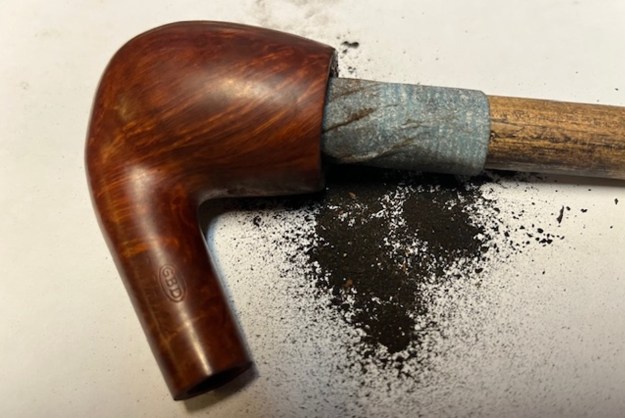
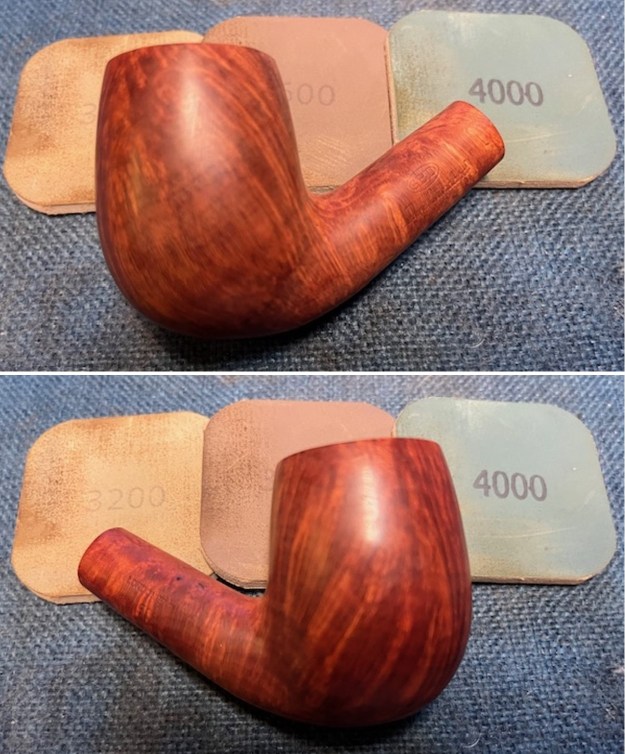
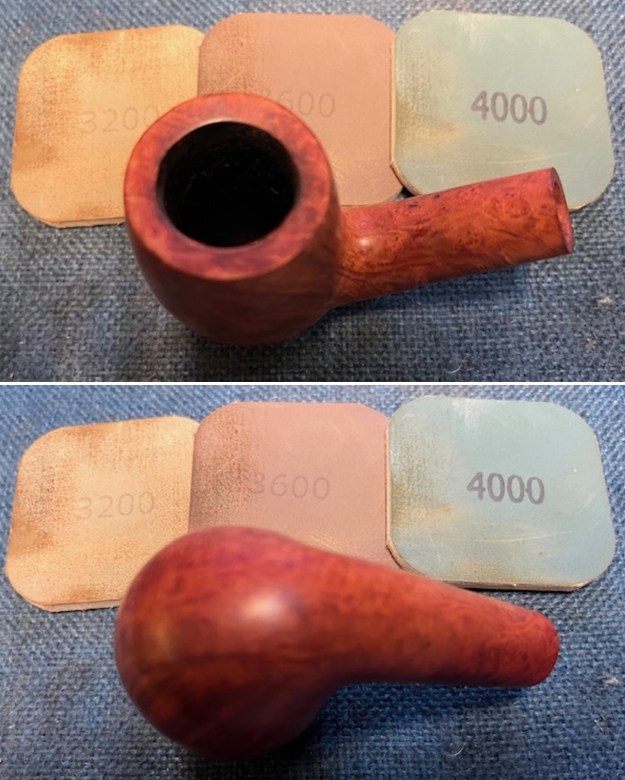
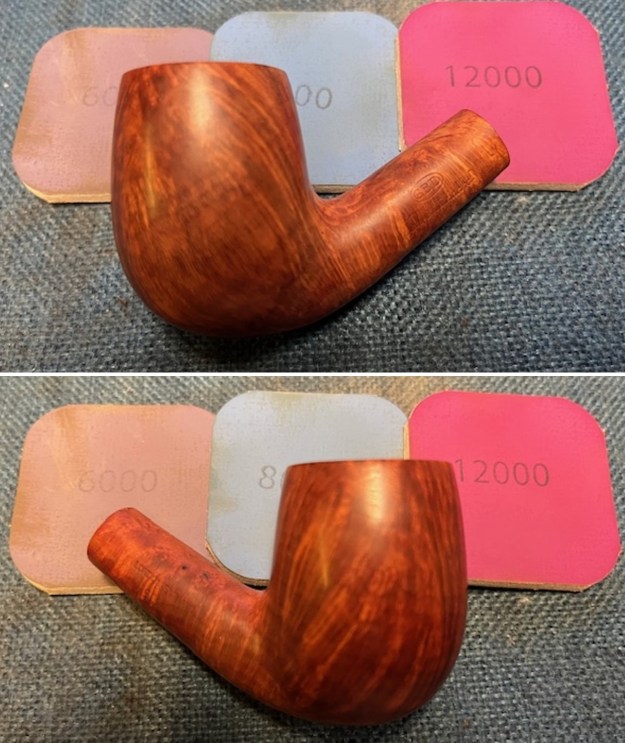
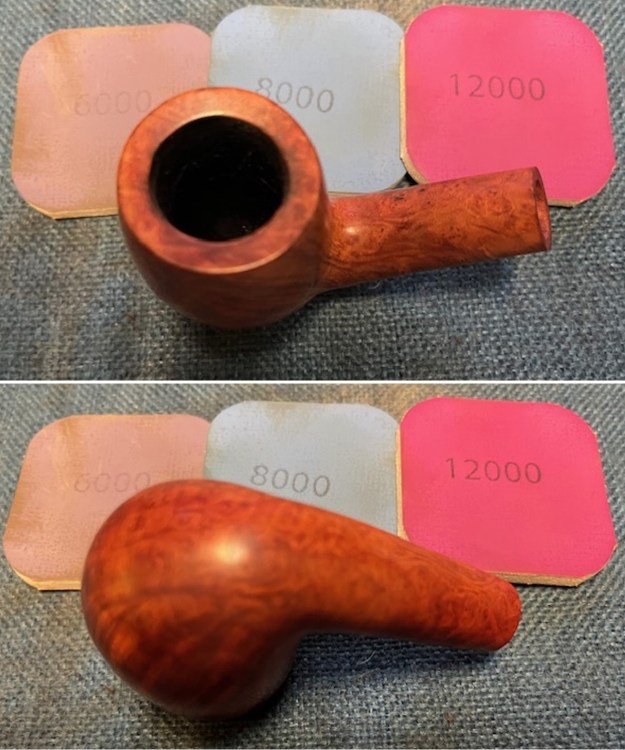
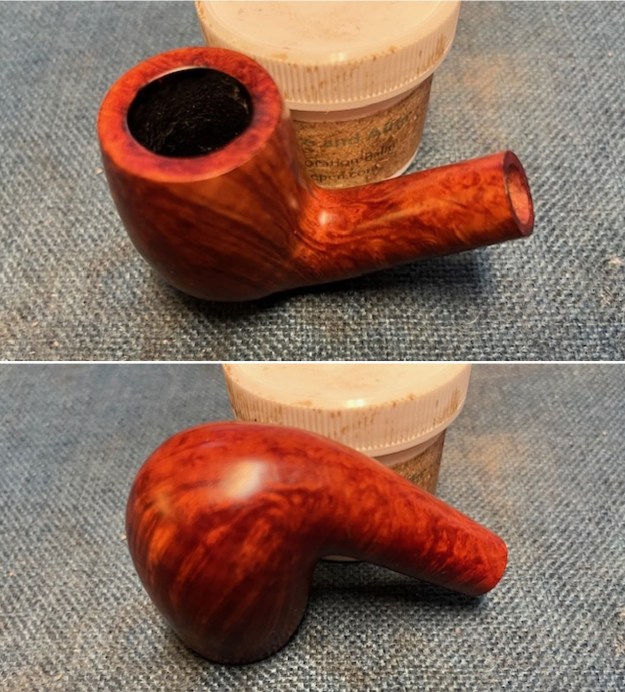
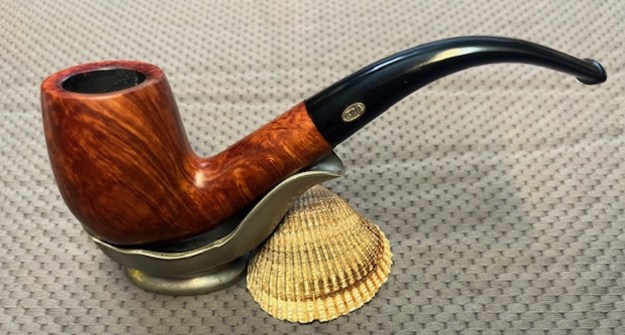
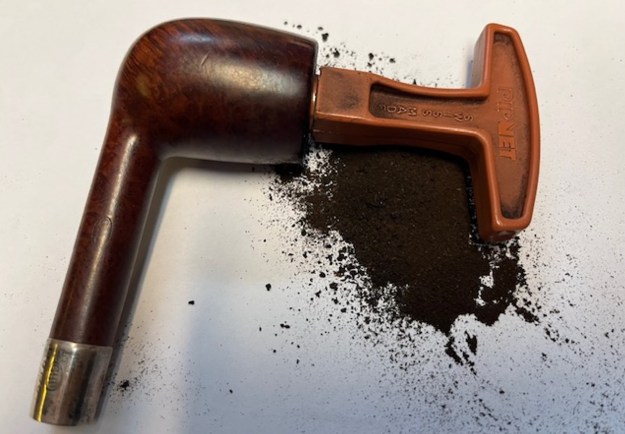
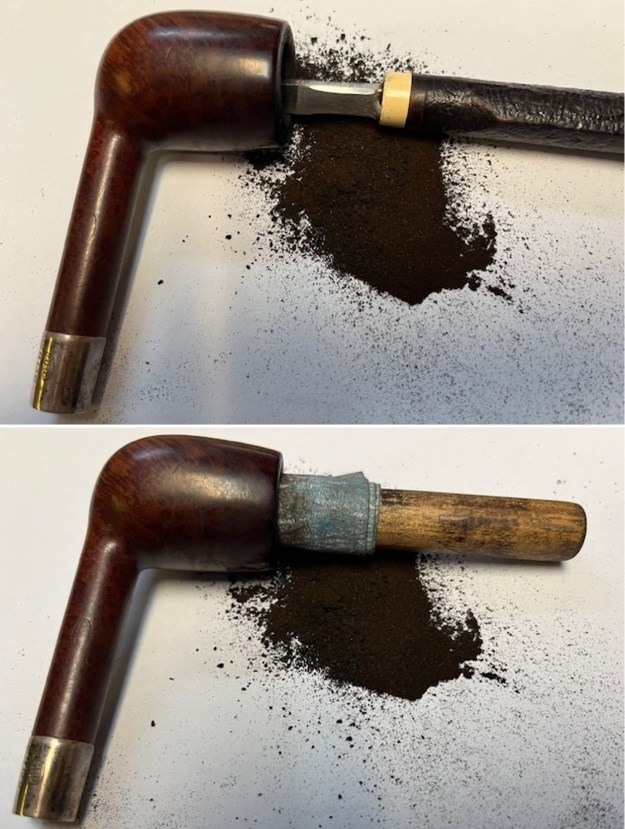
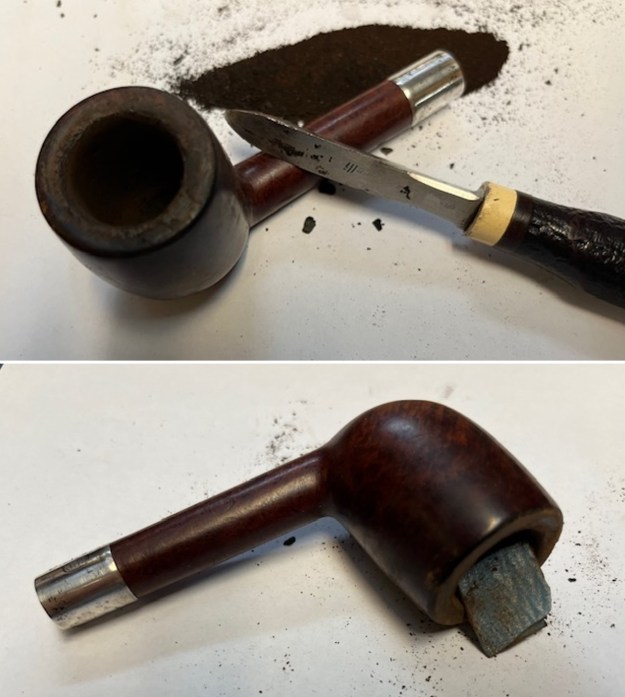
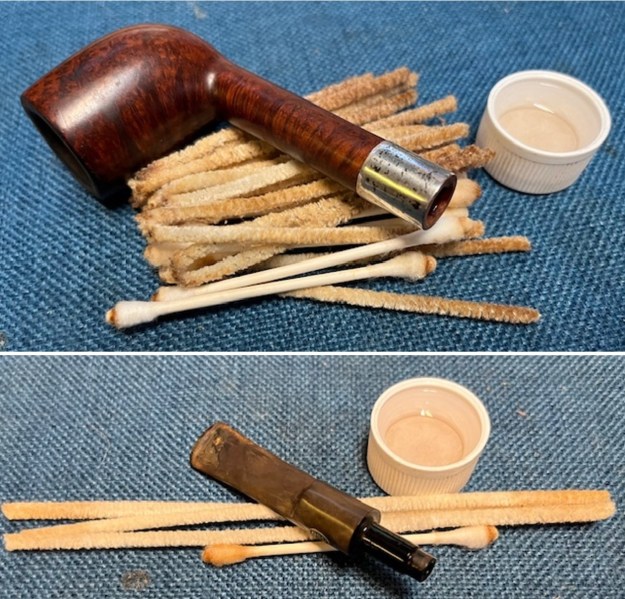
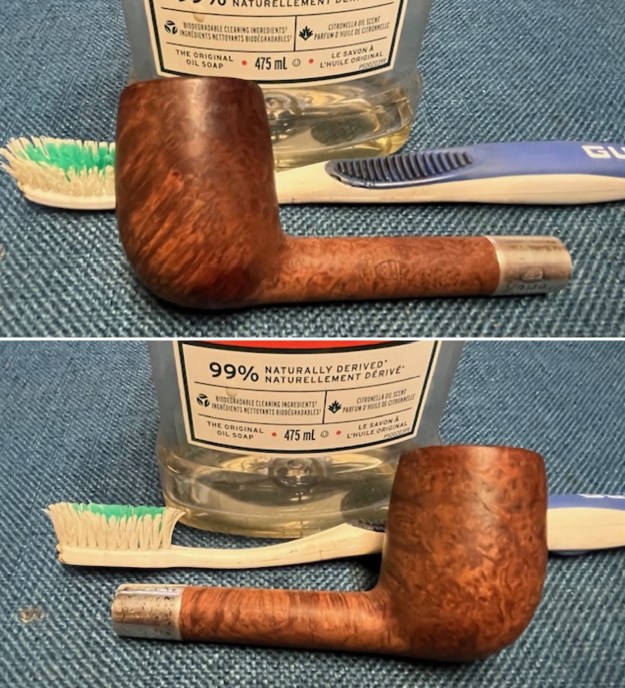
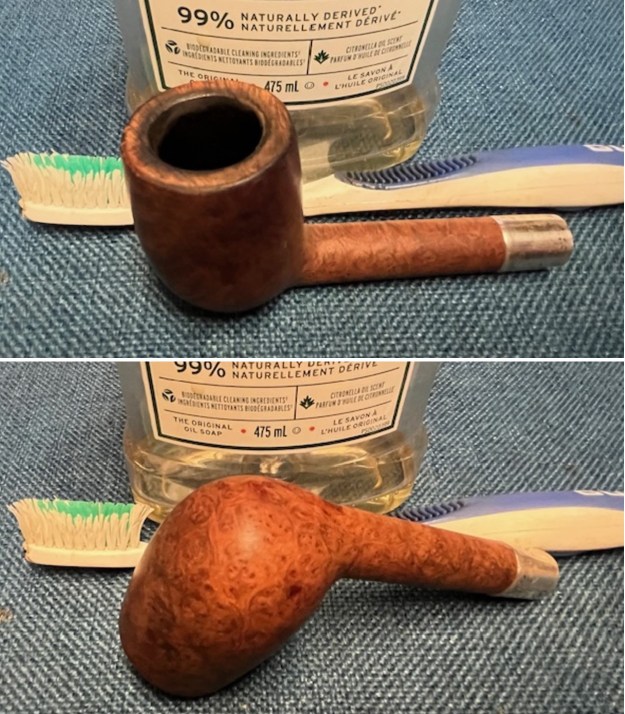
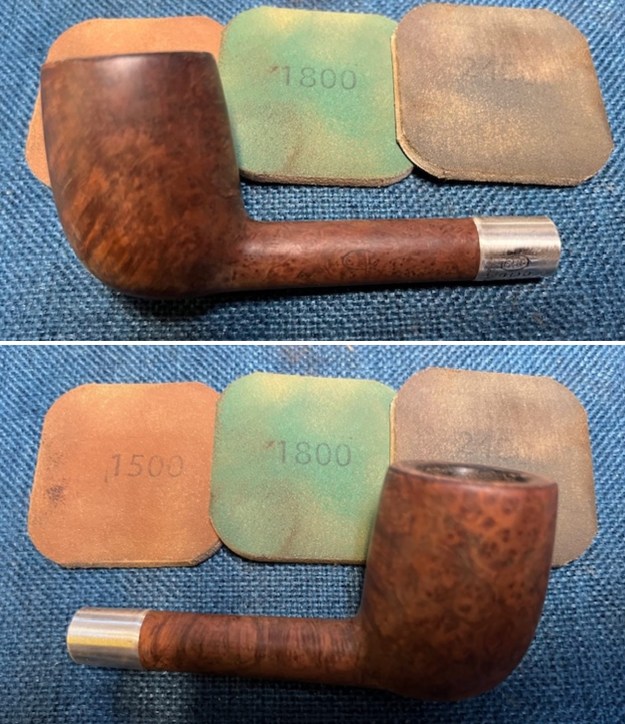
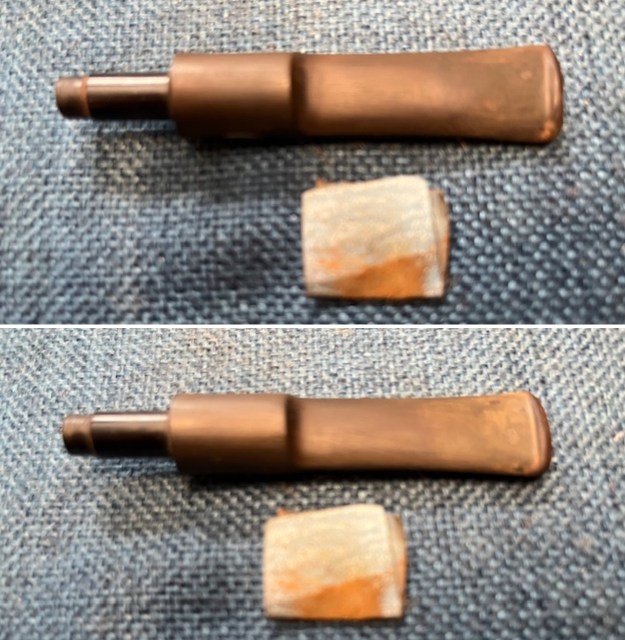
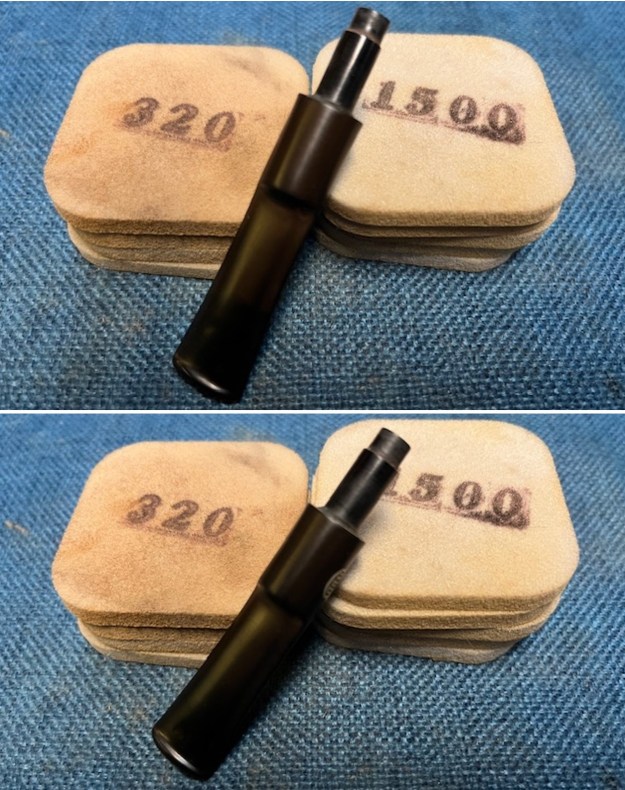
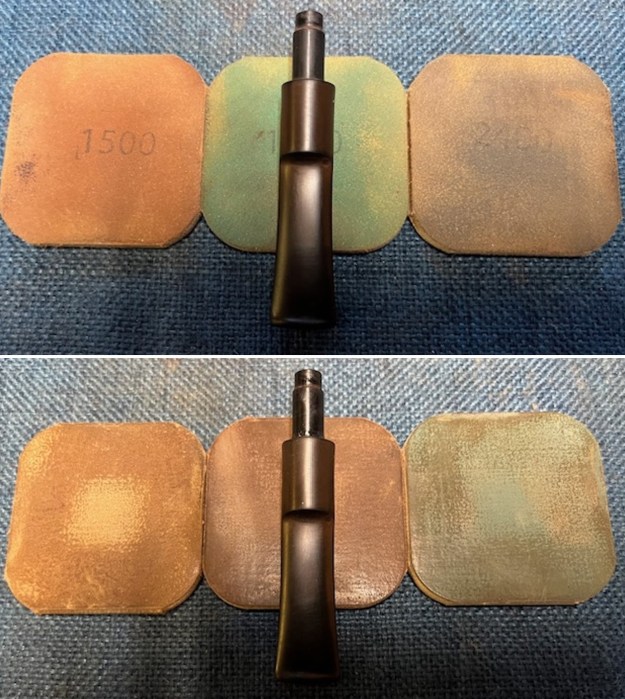
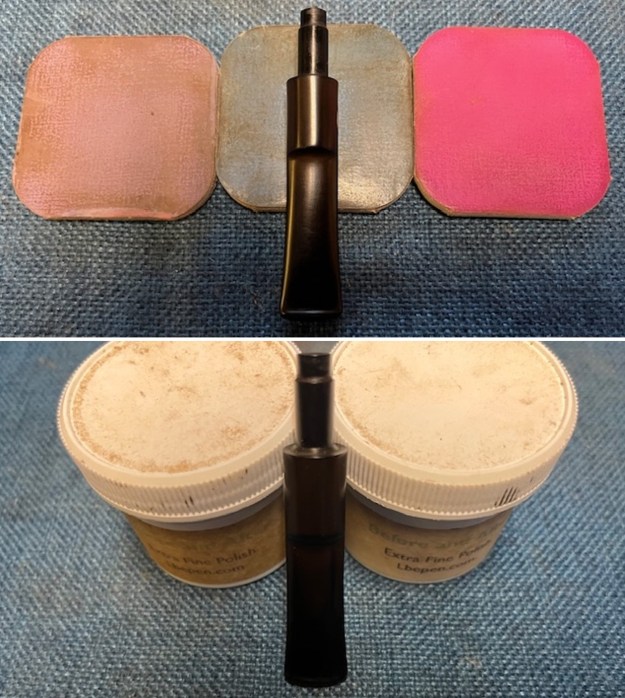
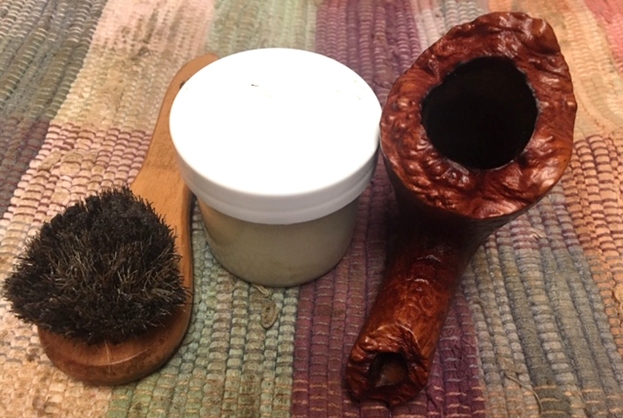
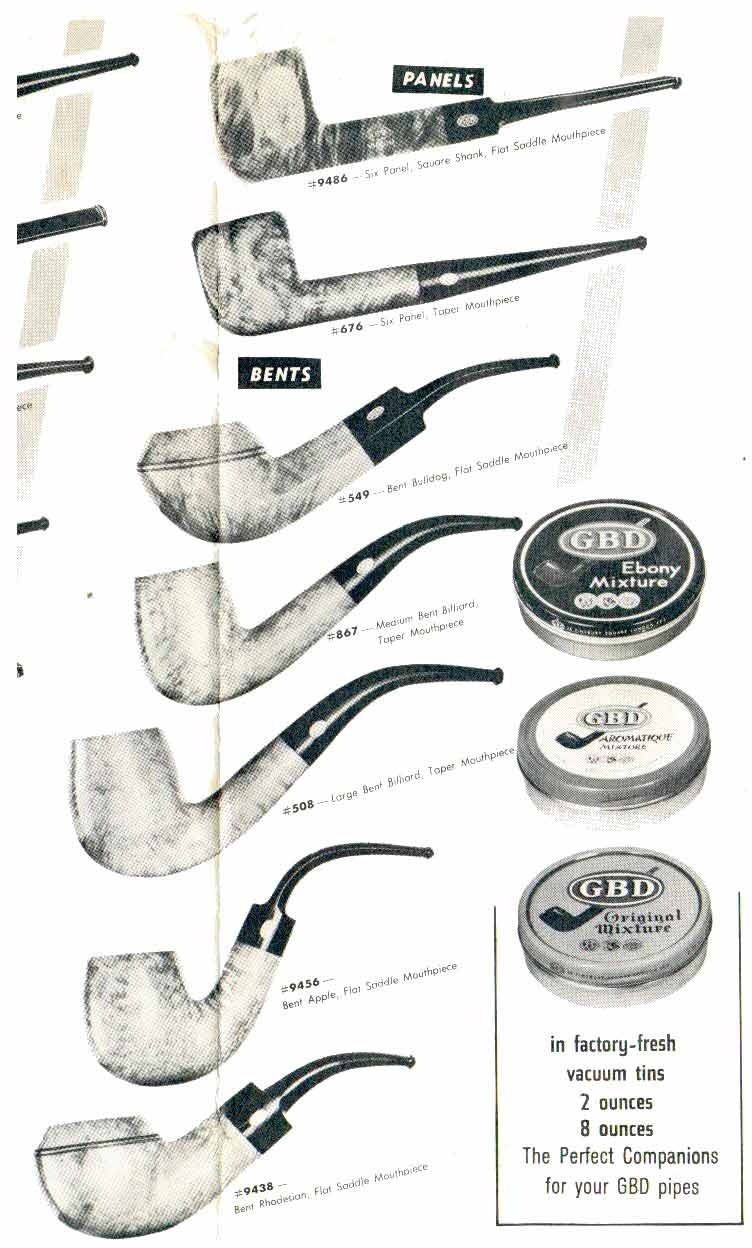
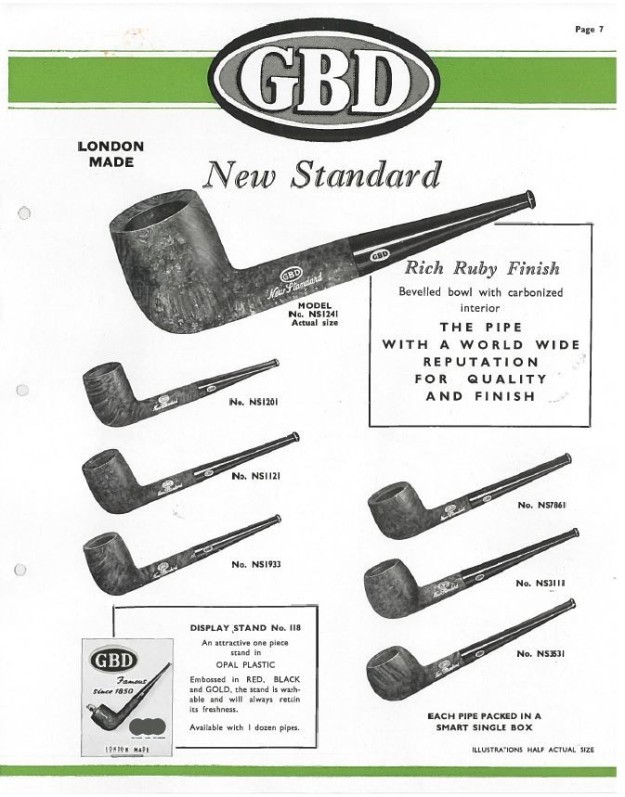
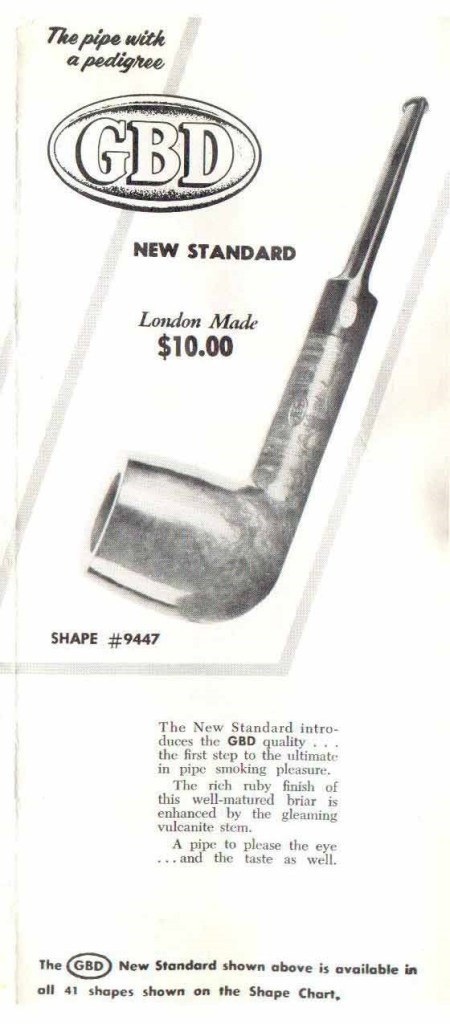
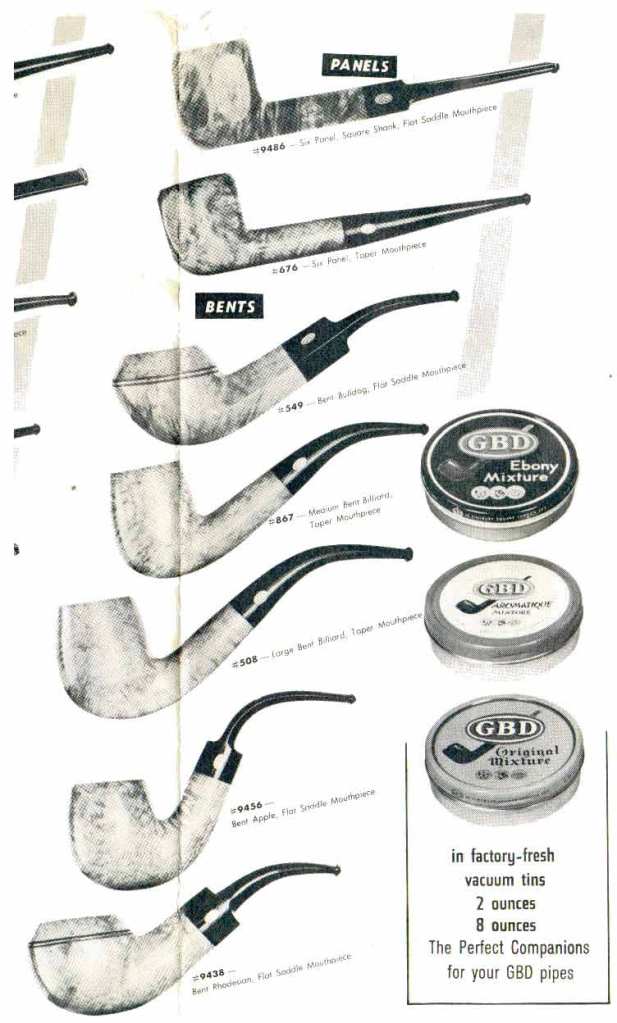
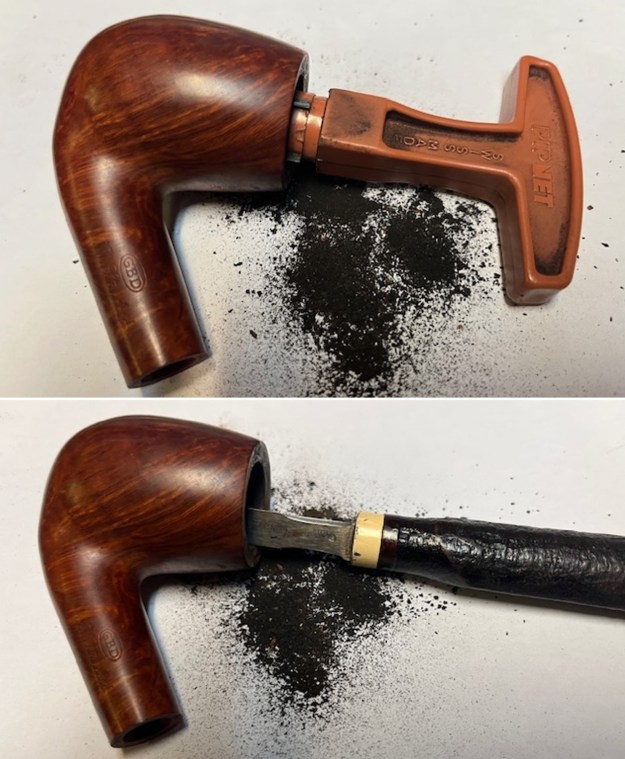
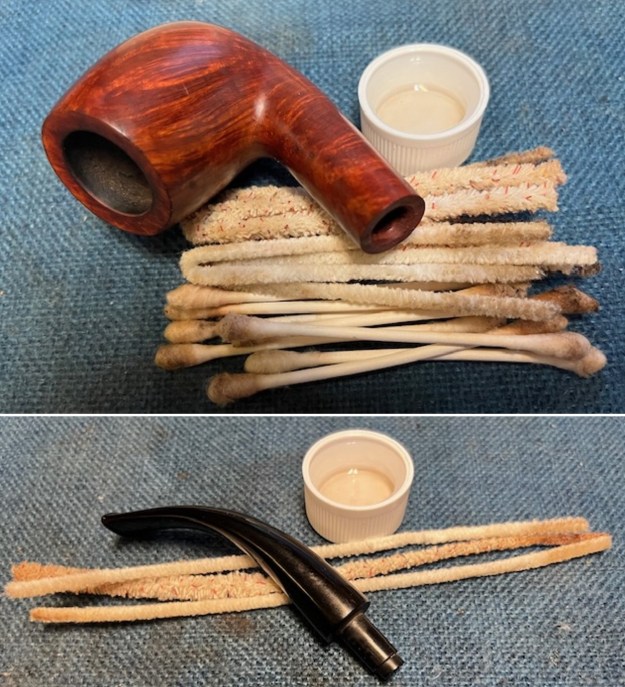
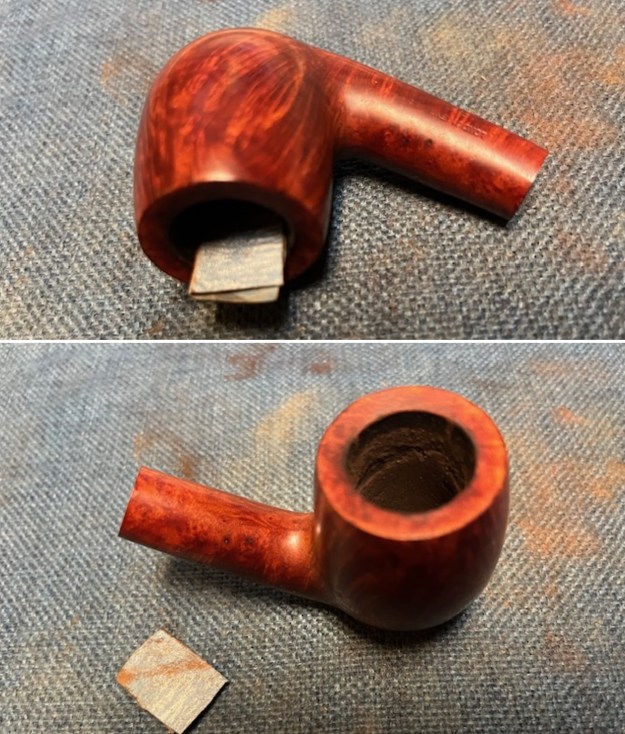
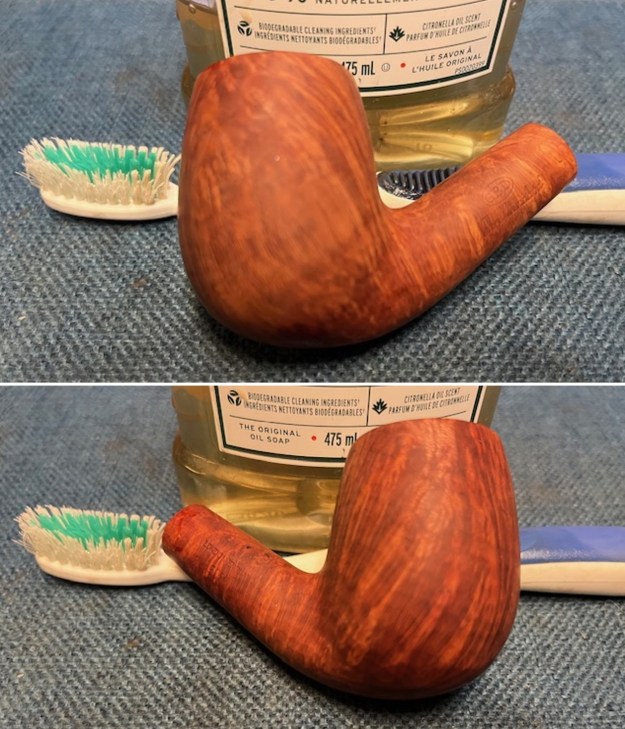
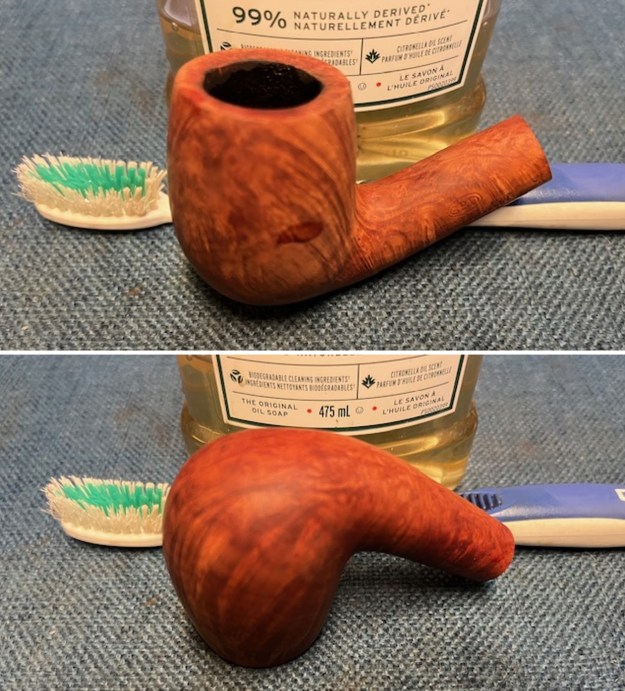
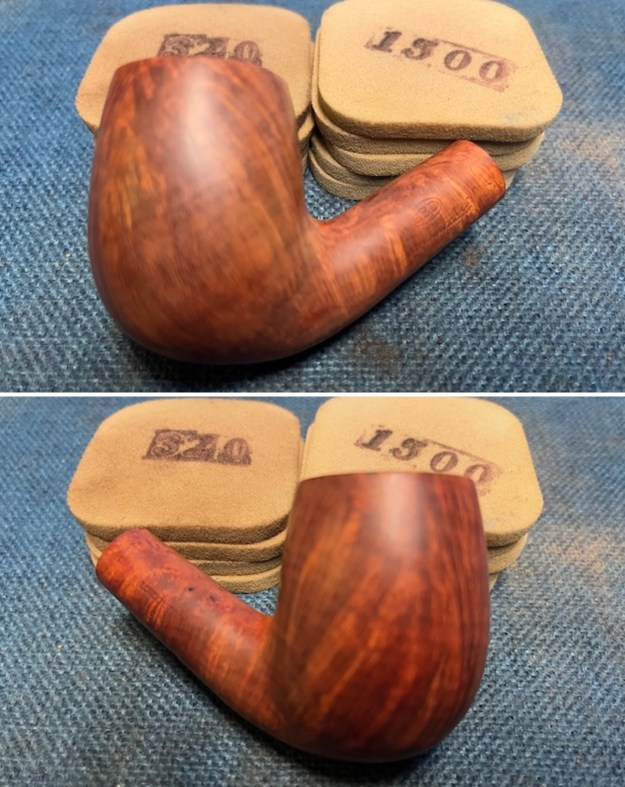
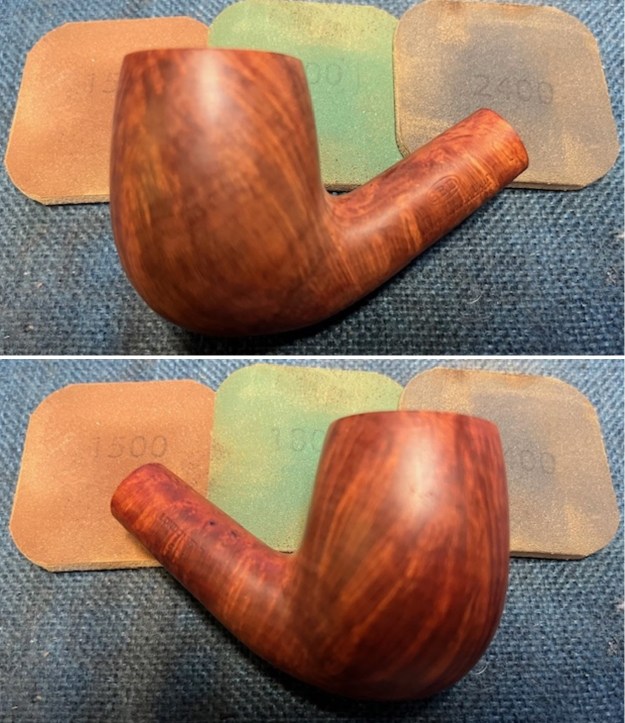
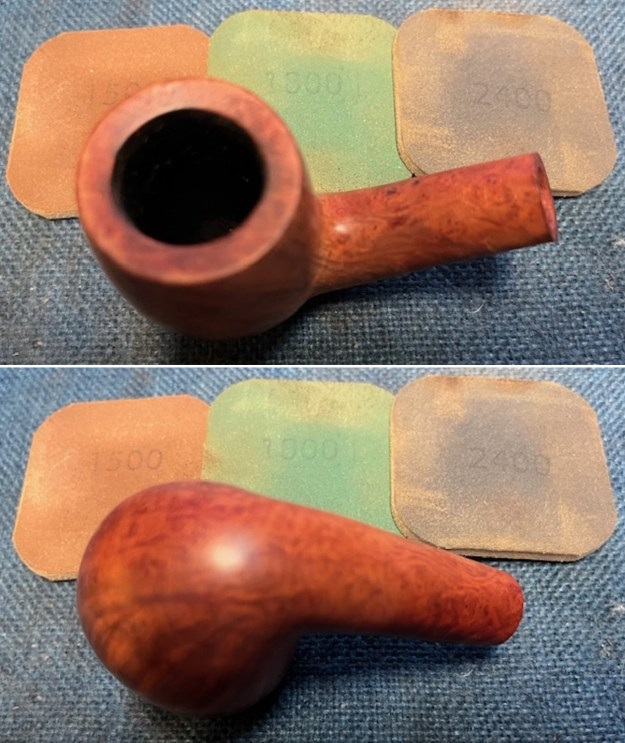
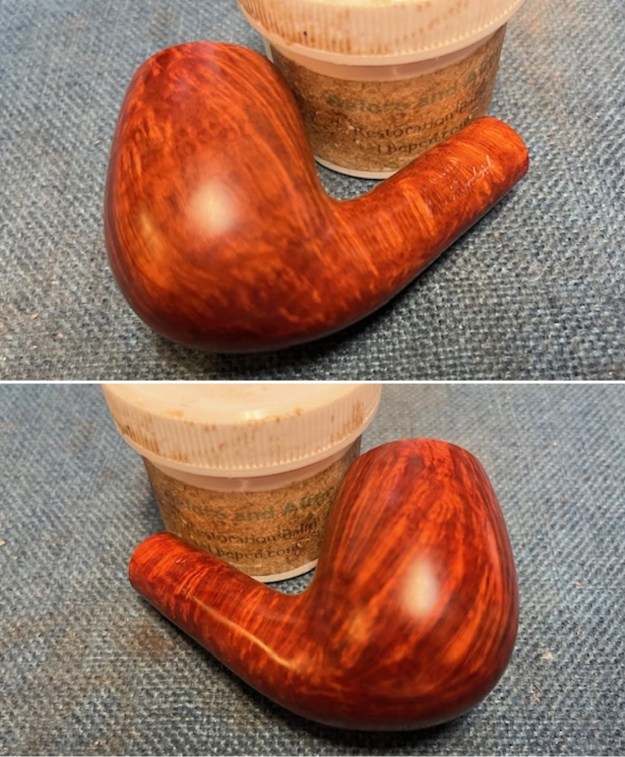
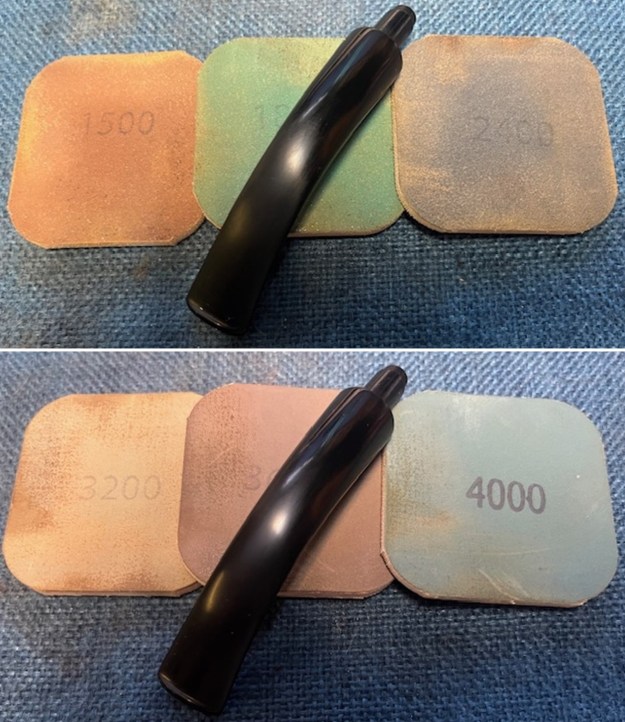
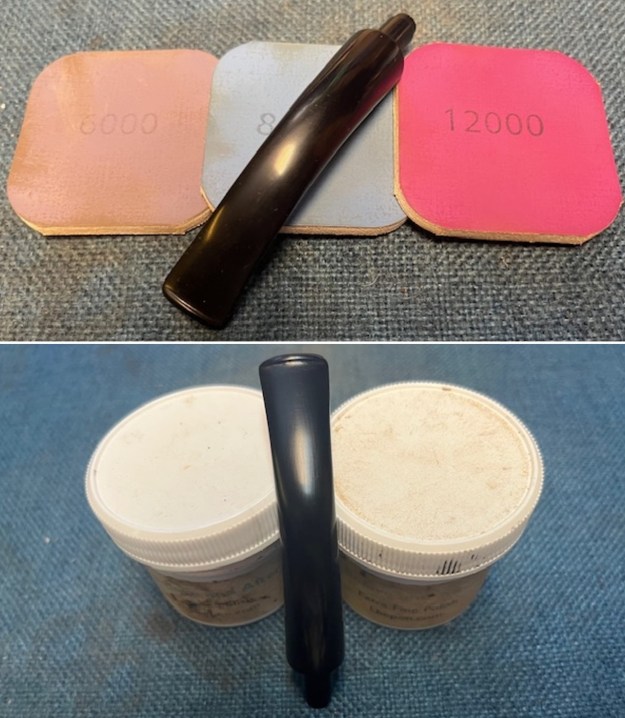
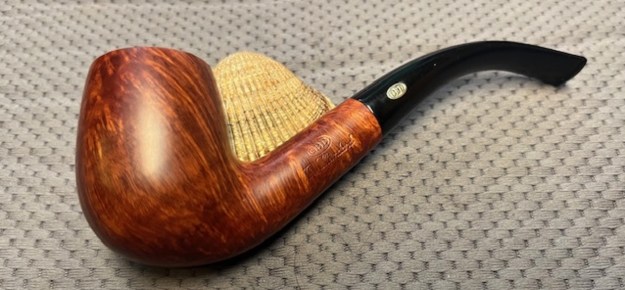
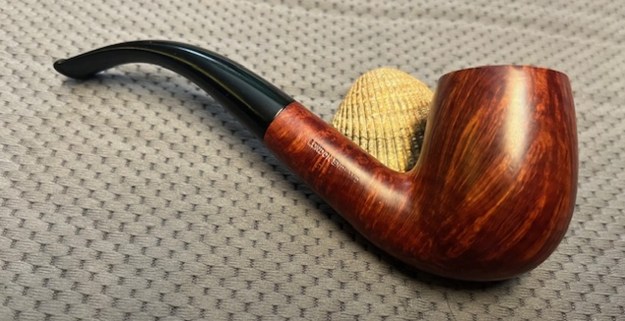
I also found two advertising fliers on the brand – one with the variety of shapes for the New Standard London Made and the other with a saddle billiard and a longer description of the pipe. I also found a shape chart that had the 508 pictured and described as a Large Bent Billiard with a taper mouthpiece (https://pipedia.org/images/5/56/GBD_1961Flyer_ShapeChart6.jpg). I started my work on the pipe by reaming the bowl with a PipNet reamer. I used the first cutting head and took the cake back to bare briar. I cleaned up the reaming with a Savinelli Fitsall Pipe Knife and removed all the remnants of the cake. I scraped the rim top with the flat edge of the blade at the same time and removed most of the thick lava build up. I sanded the walls of the bowl with a piece of dowel wrapped in 220 grit sandpaper. The walls look very good at his point in the process. I cleaned out the shank, the airway and the mortise with alcohol, cotton swabs, hard bristle and regular pipe cleaners. It was a very dirty pipe which just meant that it had really been enjoyed by the previous pipe man. I cleaned the airway in the stem with alcohol, cotton swabs and pipe cleaners in the same way as I did the shank. It also was very dirty.I cleaned up the buildup on the inner edge with a piece of sandpaper. I sanded the top of the rim with the piece of 220 grit sandpaper and was able to remove the darkening.I scrubbed the exterior of the bowl and shank with a tooth brush and undiluted Murphy’s Oil Soap. I scrubbed the lava on the rim top and overflow on the outside of the bowl with the soap. I rinsed  the briar with warm water to remove the grime and debris of the scrubbing. It looked significantly better after the scrubbing. The darkening on the rim top is very clear. I sanded the bowl and shank with 320-3500 grit sanding pads to finish the rim top and the bowl and shank. The briar began to take on a rich shine and the darkening on the top was gone. The photos tell the story. I polished the smooth rim top with micromesh sanding pads – dry sanding it with 1200-15000 grit pads. I wiped the bowl down with a damp cloth after each sanding pad. The grain started to rise to the surface as I polished it. I rubbed the bowl and shank down with Before & After Restoration Balm to deep clean the finish on the bowl and shank. The product works to clean, enliven and protect the briar. I worked it in with my fingers to get it into the briar. I let it sit for 10 minutes then I wiped it off and buffed it with a soft cloth. The briar really began to have a rich shine. I took some photos of the bowl at this point to mark the progress in the restoration. It is a beautiful bowl. I polished the stem with micromesh sanding pads – dry sanding with 1500-12000 grit pads. I used the first 3 pads – 1500,1800 and 2400 grit pads to work out the tooth chatter. I further polished the stem with the remaining pads. I wiped the stem down after each sanding pad with Obsidian Oil. I polished the stem with Before & After Pipe Stem Polish – both Fine and Extra Fine. I gave it a coat of Obsidian Pipe Stem Oil. It works to protect the stem from oxidizing. I set it aside to dry. This GBD New Standard 508 Bent Billiard is a great looking pipe now that it has been restored. The ruby coloured wash/stain around the bowl is quite beautiful and highlights grain very well. The ruby coloured finish works well with the polished vulcanite taper stem. I put the stem back on the bowl and carefully buffed the pipe with Blue Diamond on the buffing wheel using a light touch on the briar. I gave the bowl and the stem multiple coats of carnauba wax on the buffing wheel and followed that by buffing the entire pipe with a clean buffing pad. I hand buffed the pipe with a microfiber cloth to deepen the shine. The finished GBD New Standard Bent Billiard sits nicely in the hand and feels great. Give the finished pipe a look in the photos below. The dimensions of the pipe are Length: 5 ½ inches, Height: 2 inches, Outside diameter of the bowl: 1 ¼ inches, Chamber diameter: ¾ inch. The weight of the pipe is 48 grams/1.69 ounces. I will be adding it to Jack’s box of finished pipe while I finish the next seven pipes.
As always, I encourage your questions and comments as you read the blog. Thanks to each of you who are reading this blog. Remember we are not pipe owners; we are pipe men and women who hold our pipes in trust until they pass on into the trust of those who follow us.
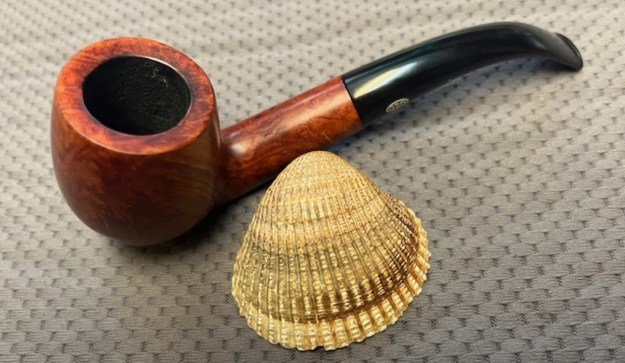
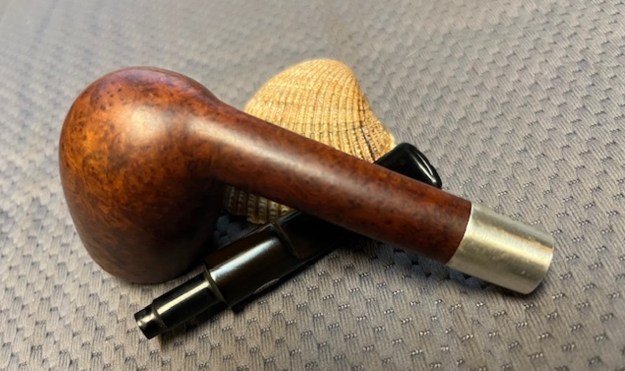
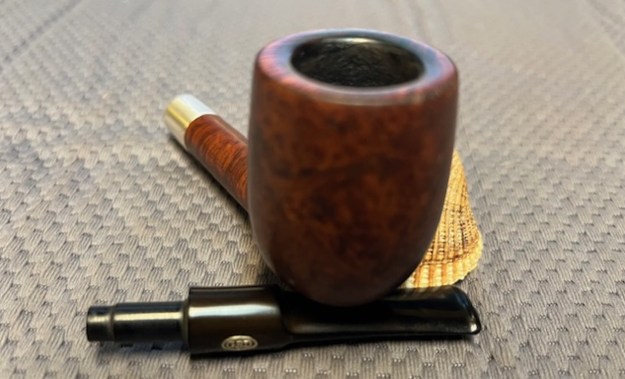
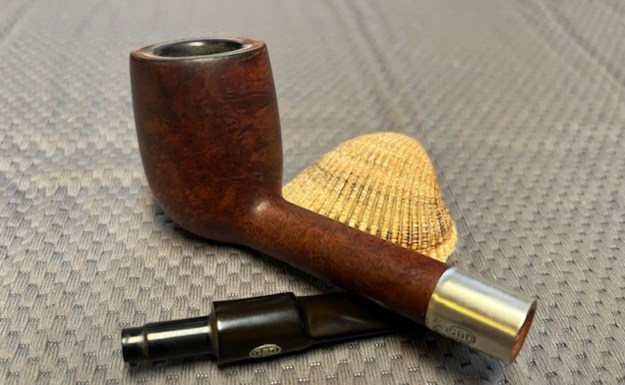
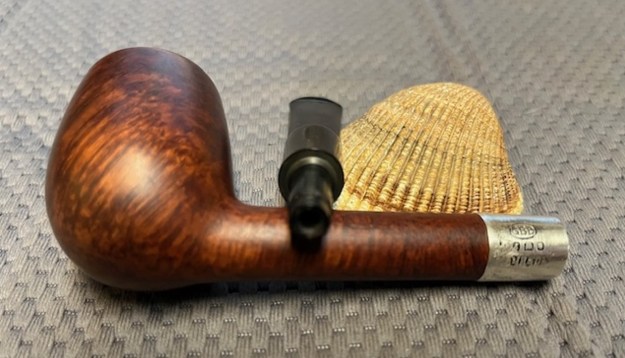
Restoring a MR&Co GBD London England 6 Silver Banded Lovat


Blog by Steve Laug

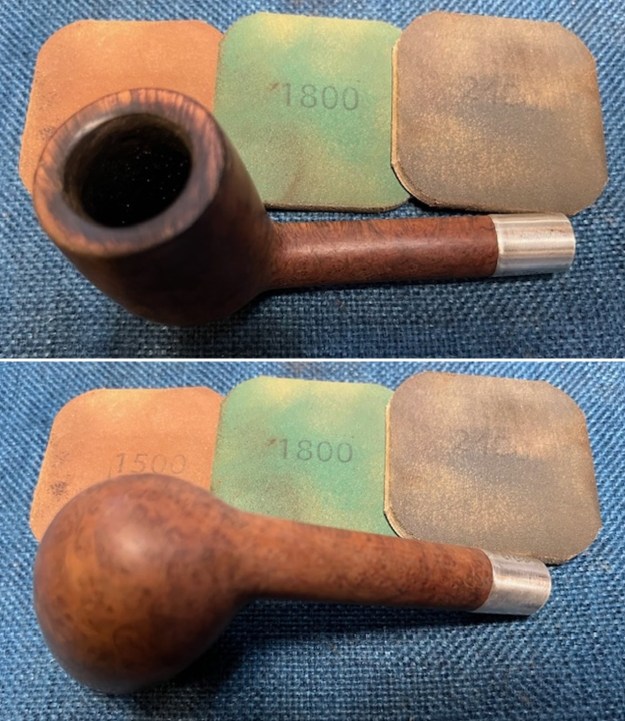
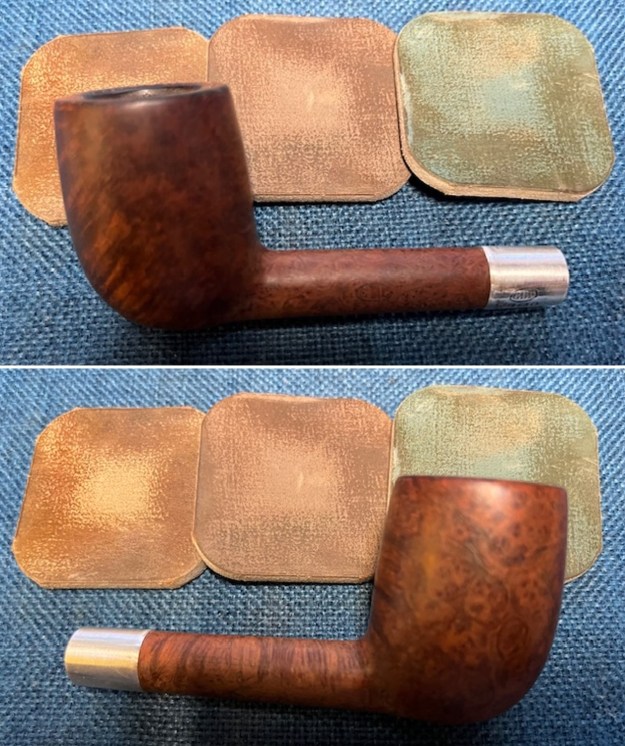
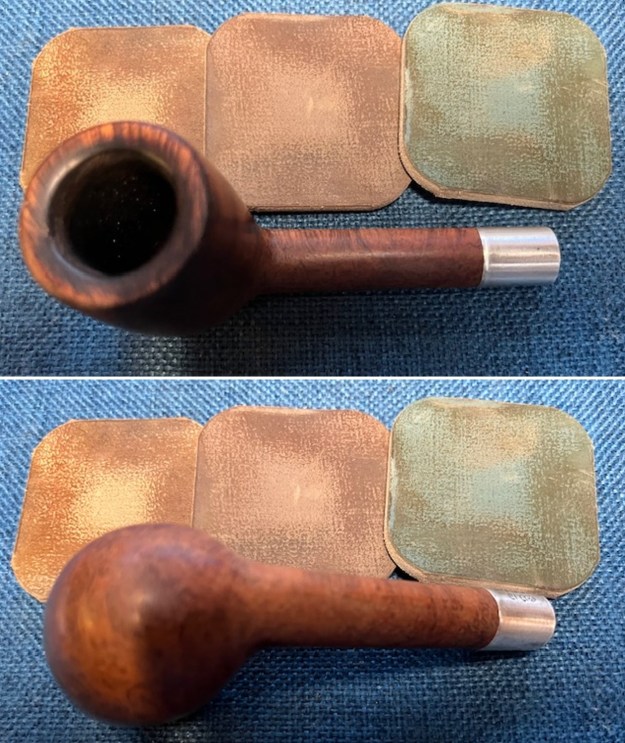
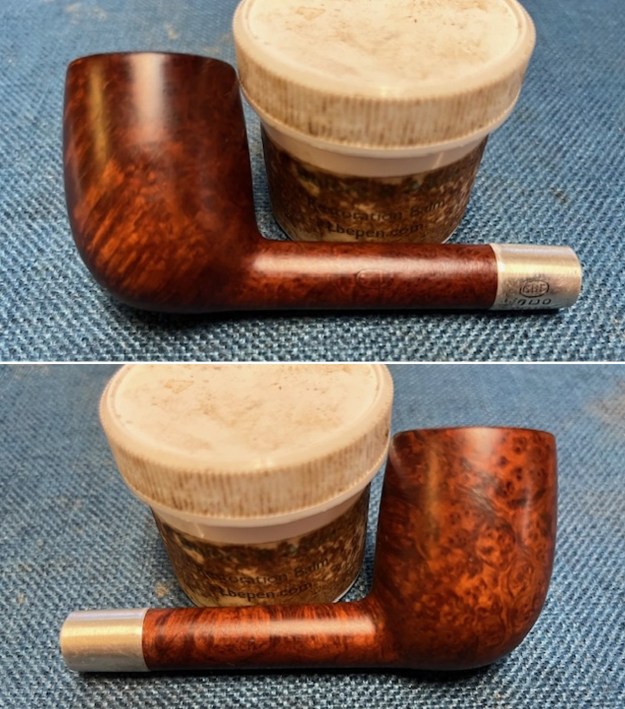
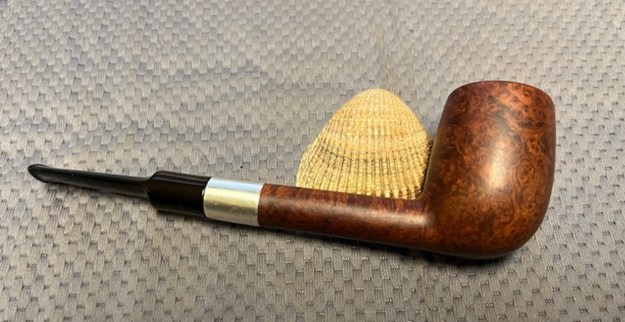
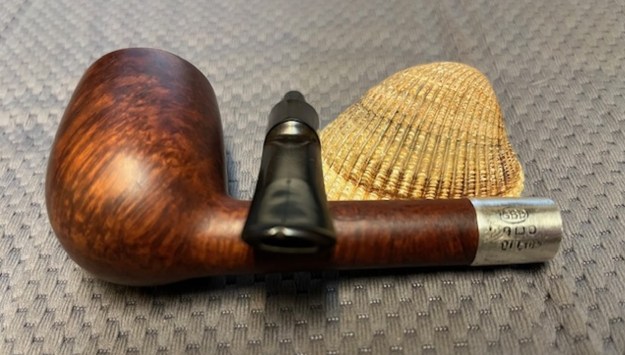
Last week I received a package of pipes to work on for a friend, Scott. I had no idea what was coming but when it arrived I was surprised with the interesting and amazing pieces he included for me to work on. These included a nice looking large Dunhill 841 ODA Lovat, a Campaign pipe with a Calabash style bowl and a start on the stem, a Sasieni 2 Dot London Made Canadian with a Lovat style saddle stem, and finally an older GBD MR&Co silver banded 5 Lovat. All of them are quite lovely and also interesting for me to be able to work on. I took a photo of the box when I unpacked the pipes.The third pipe I chose to work on from this lot was the MR&Co GBD Made in London 6 Lovat. The pipe has a smooth, rich brown finish. The stamping on the left side of the shank read GBD in an oval (GBD Logo). On the right side it was stamped London England [over] the shape number 6. The Sterling Silver band on the shank bore the GBD logo [over] three silver hallmarks – the letter T which is a date stamp, a rampant lion which is a silver quality stamp and a Leopard head which links it to the City of London all in square cartouches with rounded corners. Under that there was a lozenge with pointed ends stamped with the letters MR&Co. The bowl had a heavy cake in it and the rim top and inner edges had a heavy lava built up. There were some nicks on the outer edge of the bowl on the front and back of the bowl. The finish on the bowl and shank were worn and dirty with grime and darkening ground into the surface all around the bowl and shank. Under the tars the rim top and inner and outer edges of the bowl appeared to be in ok condition but cleaning would tell the story. The Sterling Silver band was tarnished and the stamping faint though readable. The stem was calcified and oxidized and there were tooth marks on the top and underside ahead of the button. The GBD silver oval logo was inlaid on the left side of the saddle portion of the stem. I took a few photos of the pipe before I started working on the pipe and have included them below. I took a photo of the rim top and bowl to show the condition of both of them. The bowl itself had a thick cake on the walls and bowl bottom. The rim top showed a heavy coat of lava and the inner edge was heavily caked and its condition would be revealed with cleaning. The outer edge looks good. The photos of the stem show the oxidation, calcification and tooth marks/chatter on both sides ahead of the button.I took photos of the stamping on the sides of the shank. The stamping was faint but still readable as noted above. You can also see the stamping on the silver band. It is much clearer in person. I removed the stem from the shank and took a photo to show the proportions of the pipe. I turned to Pipephil to renew my memory of the brand (http://www.pipephil.eu/logos/en/logo-gbd.html). It gave a brief history of the brand and the changes of owners. I was looking for the MR&Co stamp and found mention of Marechal & Ruchon Cie. The name of the French owners of the GBD lines after the original founders in 1850 sold it. I have included comments below.

Brand created in 1850 in Paris by Ganneval, Bondier and Donninger.

Marechal & Ruchon Cie first, then C.J. Verguet Frères (closed in 1970) owned GBD from 1903 to 1970 and manufactured these pipes in the St Claude (Fr) plant.

Sometime in the 1970s Cadogan company (Oppenheimer group) took over GBD. Prior to this time, the pipes were stamped “London England” in a straight line, even if they were sometimes crafted in France.

I also reread the history of the brand on Pipedia (https://pipedia.org/wiki/GBD). It gave more detail than Pipedia but nothing stunningly helpful.

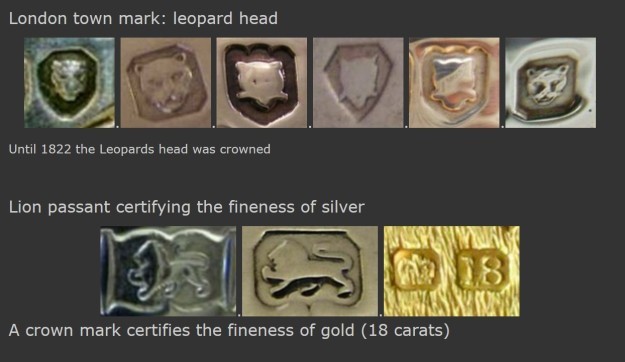
I went back to Pipephil and did a quick look at some of the additional links that are present on hallmarks (http://www.pipephil.eu/logos/en/infos/hallmark-london.html). I found a great reference tool for London Hallmarks that applied to the pipe in hand. I have included a screen capture of that below.You can see from the information above that the Leopard’s head in a square was the mark for the City of London. That gave me information that the band (the pipe?) was made in London. Secondly the Rampant Lion shown in the second photo above is the same as the mark on this band which certifies the quality of the Sterling Silver in the band. That gave me the information on the two marks on the band. It was thus the London town Mark and the .925 Sterling silver mark. Now I need to look at the date stamp “T” that was on the band.

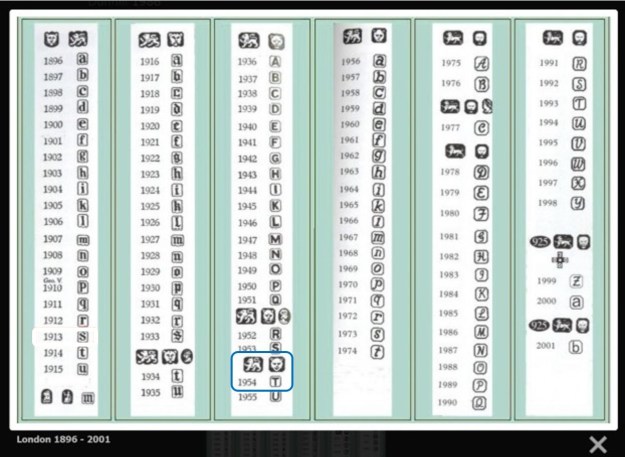
The page contained a dating chart as well as the above information. It stated that the “Twenty letters of the alphabet of different shape identify the year in which the piece was verified by the assay office.” It included a chart for the years 1896 – 2001. I did a screen capture of that below. To me the “T” stamp matches the one under 1954 in the chart below. It is shown underneath the same two marks that are on this pipe. I have drawn a blue box around it for ease of reference.Given those facts the Hallmarks can be interpreted. The pipe is a GBD London England Made pipe (GBD Logo and stamp on the briar and band). It has a London town mark (Leopard head without the crown), a .925 Sterling Silver certification (the Rampant Lion) and a 1954 date stamp (“T”). The MR&Co stamp identifies it as being made during the time Marechal & Ruchon Cie (1903-1970). That fit well with the 1954 date stamp. Now it was time to work on this old timer.

Now it was time to work on the pipe. I used a PipNet Pipe reamer first to take out the majority of the cake. It was a deep bowl so I used a Savinelli Fitsall Pipe Knife to clean up the remaining cake in the bowl and to scrape off the lava on the rim top. I used a dowel wrapped with 220 grit sandpaper to smooth out the walls of the bowl. I checked for damage on the bowl walls and it was in good condition. I scraped the rim top with a Savinelli Fitsall Pipe Knife. I cleaned up the inner edge of the bowl with a folded piece of 220 sandpaper. I wiped the rim top down with a damp cotton pad and the rim top began to really look much better. I polished the silver band with a jeweller’s cloth to remove the tarnish and protect the silver from further tarnishing. I scrubbed out the inside of the shank, mortise and the airway in both the stem and the bowl. I used pipe cleaners, cotton swabs and isopropyl alcohol. It cleaned up very well.I scrubbed the exterior of the briar with a tooth brush and undiluted Murphy’s Oil Soap to remove the build up on the surface of the briar and clean off the lava on the rim top. I scrubbed it and then carefully rinsed the bowl with warm water. I dried it with a soft cotton cloth. It certainly looked significantly better and the patina remained in the wood. I polished the briar with micromesh sanding pads to minimise the scratches in the briar. I dry sanded with 1500-12000 grit pads and wiped the bowl down after each pad with a damp cloth to remove the sanding debris. By the end of the nine pads the briar took on a rich shine and the rim top looked very good. I rubbed the bowl down with Before & After Restoration Balm. It is a paste/balm that works to deep clean the finish, enliven and protect the briar. I worked it into the briar with my finger tips to make sure that it covered every square inch of the pipe. I set it aside for 10 minutes to let it do its work. I buffed it with a cotton cloth. The briar really began to have a deep shine. The photos I took of the bowl at this point mark the progress in the restoration. I set the bowl aside and turned my attention to the stem. First, I wanted to address the tooth marks in the surface on both sides. I “painted” the surface of the vulcanite with the flame of a Bic lighter and was able to significantly lift the tooth marks. I filled in the deeper marks with black rubberized CA glue. Once it cured I sanded the repairs with 220 grit sandpaper to smooth them out. I sanded the stem with 320-3500 grit sanding pads to break up the remaining oxidation. I wiped it down after each sanding pad with an Obsidian Oil impregnated cloth. It began to look good.I polished the stem with micromesh sanding pads – dry sanding with 1500-12000 grit pads. I wiped the stem down after each sanding pad with Obsidian Oil. I polished it with Before & After Pipe Stem Polish – both Fine and Extra Fine. Once I had finished the polishing I gave it final coat of Obsidian Oil and set it aside to dry. You can see from the photos that under the light of the flash the oxidation was still present. This was one stubborn pipe. I scrubbed it down with Soft Scrub and cotton pads until the oxidation was no longer present. It looked better. I wiped the stem down with Obsidian Oil to protect it further.I put the 1954 MR&Co GBD London England 6 Lovat bowl and stem back together. I polished the bowl and stem with Blue Diamond to polish out the scratches in the briar and the vulcanite. I gave the bowl and the stem multiple coats of carnauba wax. I buffed the pipe with a clean buffing pad to raise the shine. I hand buffed it with a microfiber cloth to deepen the shine. The pipe polished up pretty nicely. The reddish/brown stains worked amazingly well with the polished vulcanite taper stem. The grain around the bowl and shank and looks quite remarkable. This is truly a beautiful 1954 MR&Co GBD 6 Lovat. The finished pipe is shown in the photos below. The dimensions of the pipe are Length: 6 inches, Height: 1 ¾ inches, Outside diameter of the bowl: 1 ¼ inches, Chamber diameter: ¾ of an inch. The weight of the pipe is 1.41 ounces/38 grams. I have one more of Scott’s pipes to work on and then I will be sending them back to him. I am sure he will soon add them into his rotation and enjoy some great smokes. Thanks for walking through the restoration with me. Cheers.

As always, I encourage your questions and comments as you read the blog. Thanks to each of you who are reading this blog. Remember we are not pipe owners; we are pipe men and women who hold our pipes in trust until they pass on into the trust of those who follow us.
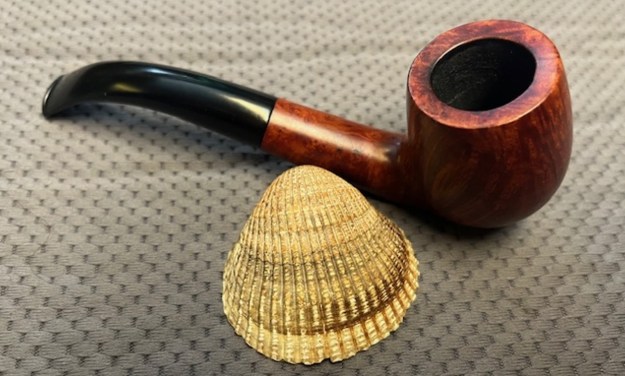
Breathing Life into a 1913 MR&Co GBD London England 347 Apple


Blog by Steve Laug

The next pipe on the table came to me for restoration from a friend in the US. He sent three pipes for me to restore for him. These included this GBD London England 347 Apple, a Ben Wade Connoisseurs Collection First Edition Long Diamond Shank Brandy with a saddle stem and an interesting Ivarsson 389 Product Apple. All are gorgeous examples of pipe craft and all were incredibly dirty and showed various issues with their finishes. I chose to work on the GBD first. The stamping on the pipe was as follows. On the left side it had a GBD in an oval stamped mid shank and on the right side it was stamped London England [over] the shape number 347. The Sterling Silver Band also had the GBD oval stamp [over] three hallmarks – the date stamp letter “S”, a Rampant Lion and a Leopard’s Head all in square cartouches with rounded corners. Underneath that it was stamped MR&Co in a rectangle with a pointed end on each side. The pipe was in dirty condition. The finish on the bowl and shank were worn and dirty with grime and darkening ground into the surface all around the bowl and shank. Under the tars the rim top and inner and outer edges of the bowl appeared to be in ok condition but cleaning would tell the story. The Sterling Silver band was tarnished and the stamping faint though readable. The vulcanite stem was dirty and had file marks and tooth marks and chatter on both sides ahead of the button. I took photos of the pipe before I started my clean up work on it to give a clear photo of the condition of the pipe before I started my work. I took a photo of the bowl and the rim top. The bowl had a moderate cake on the bowl walls and bottom. The crowned rim top and the inner edge of the bowl showed some nicks and some lava overflow. It was hard to know for sure what was underneath but I would be there would be some darkening. The vulcanite stem shows light tooth marks and chatter on both sides ahead of the button as mentioned above. There were also some file or coarse sandpaper marks. It had promise but it was dirty!I took photos of the shank sides to try to capture the stamping on the briar. It is neat to see the GBD ovals line up on the left side of the shank, band and stem. Because I expected this I can faintly see it. The stamping on the right side is not readable at all. I turned to Pipephil to renew my memory of the brand (http://www.pipephil.eu/logos/en/logo-gbd.html). It gave a brief history of the brand and the changes of owners. I was looking for the MR&Co stamp and found mention of Marechal & Ruchon Cie. The name of the French owners of the GBD lines after the original founders in 1850 sold it. I have included comments below.

Brand created in 1850 in Paris by Ganneval, Bondier and Donninger.

Marechal & Ruchon Cie first, then C.J. Verguet Frères (closed in 1970) owned GBD from 1903 to 1970 and manufactured these pipes in the St Claude (Fr) plant.

Sometime in the 1970s Cadogan company (Oppenheimer group) took over GBD. Prior to this time, the pipes were stamped “London England” in a straight line, even if they were sometimes crafted in France.

I also reread the history of the brand on Pipedia (https://pipedia.org/wiki/GBD). It gave more detail than Pipedia but nothing stunningly helpful.

I went back to Pipephil and did a quick look at some of the additional links that are present on hallmarks (http://www.pipephil.eu/logos/en/infos/hallmark-london.html). I found a great reference tool for London Hallmarks that applied to the pipe in hand. I have included a screen capture of that below.You can see from the information above that the Leopard’s head in a square was the mark for the City of London. That gave me information that the band (the pipe?) was made in London. Secondly the Rampant Lion shown in the second photo above is the same as the mark on this band which certifies the quality of the Sterling Silver in the band. That gave me the information on the two marks on the band. It was thus the London town Mark and the .925 Sterling silver mark. Now I need to look at the date stamp “S” that was on the band.

The page contained a dating chart as well as the above information. It stated that the “Twenty letters of the alphabet of different shape identify the year in which the piece was verified by the assay office.” It included a chart for the years 1896 – 2001. I did a screen capture of that below. To me the “S” stamp matches the one under 1913 in the chart below. I have drawn a red box around it for ease of reference for you.

Given those facts the Hallmarks can be interpreted. The pipe is a GBD London England Made pipe (GBD Logo and stamp on the briar and band). It has a London town mark (Leopard head without the crown), a .925 Sterling Silver certification (the Rampant Lion) and a 1913 date stamp (“S”). The MR&Co stamp identifies it as being made during the time Marechal & Ruchon Cie (1903-1970). That fit well with the 1913 date stamp. Now it was time to work on this old timer.

I started my work by reaming the bowl with a PipNet pipe reamer to remove the thick cake on the walls so I could see what they looked like. I used a Savinelli Fitsall Pipe Knife to scrape off the remaining cake on the bowl walls. I followed that by sanding the walls of the bowl until they were smooth with 220 grit sandpaper wrapped around a piece of dowel. The bowl walls showed no checking or cracking which is remarkable. I cleaned out the airway and mortise in the shank and the airway in the stem. I used 99% isopropyl alcohol, pipe cleaners and cotton swabs to remove the tars and oils. It was extremely dirty and once cleaned smelled and looked better.I scrubbed the exterior of the briar with a tooth brush and undiluted Murphy’s Oil Soap to remove the build up on the surface of the briar and clean off the lava on the rim top. I scrubbed it and then carefully rinsed the bowl with warm water. I dried it with a soft cotton cloth. It certainly looked significantly better and the patina remained in the wood. I cleaned the oxidation on the silver band with Hagerty’s Tarnish Preventive Silver Polish. I was able to remove all of it without damaging the stamping on the band. I polished it further with a jeweler’s cloth to further protect it from tarnish. I worked on the finish around the rim top and bowl with micromesh sanding pads – 1500-12000 grit sanding pads to dry sand the briar. I wiped it down after each sanding pad with a damp cloth after each sanding pads. I rubbed the bowl and shank down with Before & After Restoration Balm. I worked it into the surface of the bowl sides and shank with my fingertips and a horsehair shoe brush. The product works to clean, enliven and protect the briar. I let the balm sit for ten minutes and then buffed with a cotton cloth to raise the shine. I set the bowl aside and turned my attention to the stem. I painted the stem surface with the flame of a Bic lighter to lift the tooth marks. I was able to lift them all with little issue left. I sanded out what remained with a folded piece of 220 grit sandpaper. I started polishing the stem with 600 grit wet dry sandpaper. With a pipe of this age I was careful to not sand much as the stem is thin around the button. I did not repair the bite marks with CA as I wanted to leave it as pristine as possible. There are light marks on both sides on the side edge ahead of the button on both sides. I polished the stem surface with micromesh sanding pads – 1500-12000 grit pads. I wiped it down Obsidian Oil on a cotton cloth. I finished my polishing with Before & After Pipe Stem Polish – both Fine and Extra-Fine polishes. I wiped it down with a final coat of Obsidian Oil and set aside. I am excited to finish restoration of this 1913 GBD London England 347 Apple. I put the pipe back together and buffed it with Blue Diamond on the buffing wheel. I gave the bowl and the stem multiple coats of carnauba wax. I hand buffed the pipe with a clean buffing pad to raise the shine. It is fun to see what the polished bowl looks like with beautiful mixed grain all around it. I love the look of the polished grain on the pipe with the polished black vulcanite stem. This smooth 1913 GBD 347 Straight Apple is great looking and the pipe feels great in my hand. It is light and well balanced. Have a look at it with the photos below. The dimensions are Length: 5 ¼ inches, Height: 1 ¾ inches, Outside diameter of the bowl: 1 ¼ inch, Chamber diameter: ¾ of an inch. The weight of the pipe is 45 grams/1.59 ounces. It turned out to be a beautiful pipe. I will be sending it back to the pipeman who sent it to me once I finish the remaining two pipes. Thanks for reading this blog and my reflections on the pipe while I worked on it.

As always, I encourage your questions and comments as you read the blog. Thanks to each of you who are reading this blog. Remember we are not pipe owners; we are pipe men and women who hold our pipes in trust until they pass on into the trust of those who follow us.
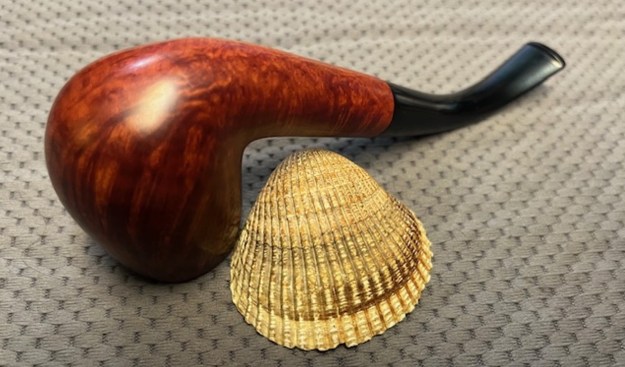
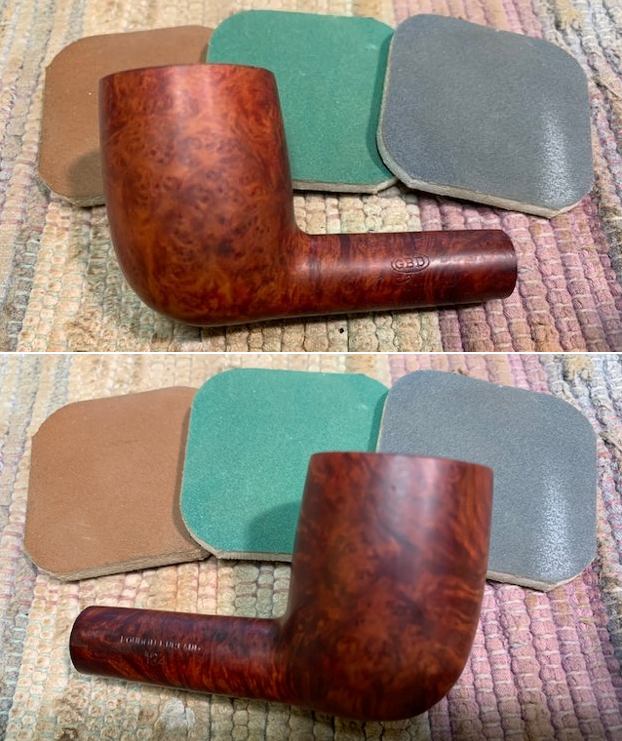
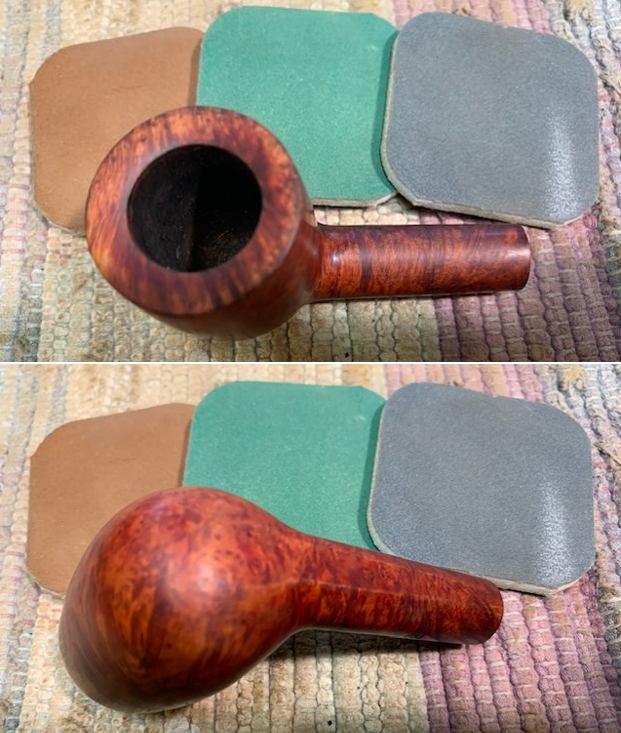
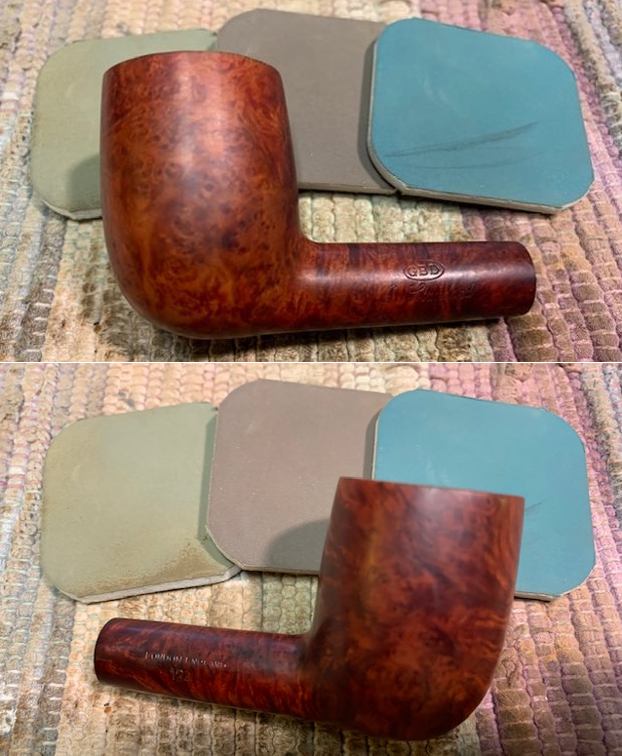
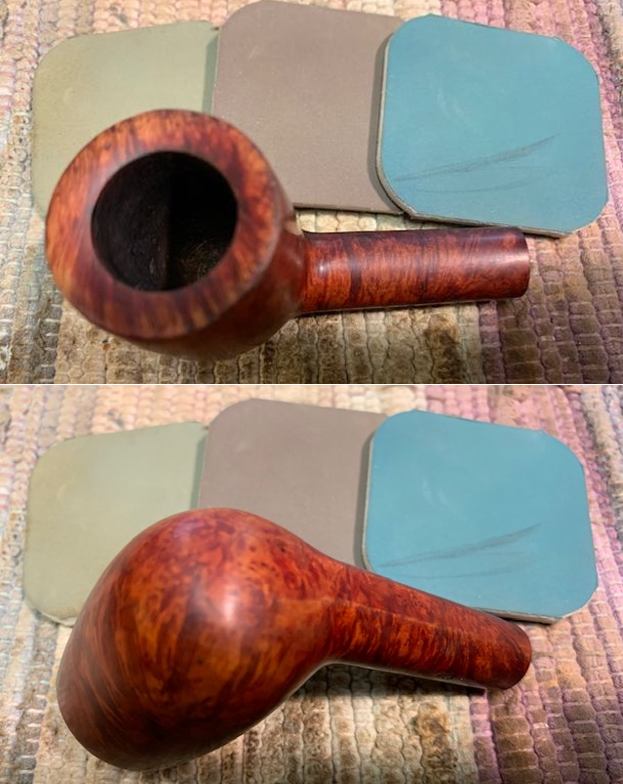
New Life for a GBD New Standard 124 Billiard


Blog by Steve Laug

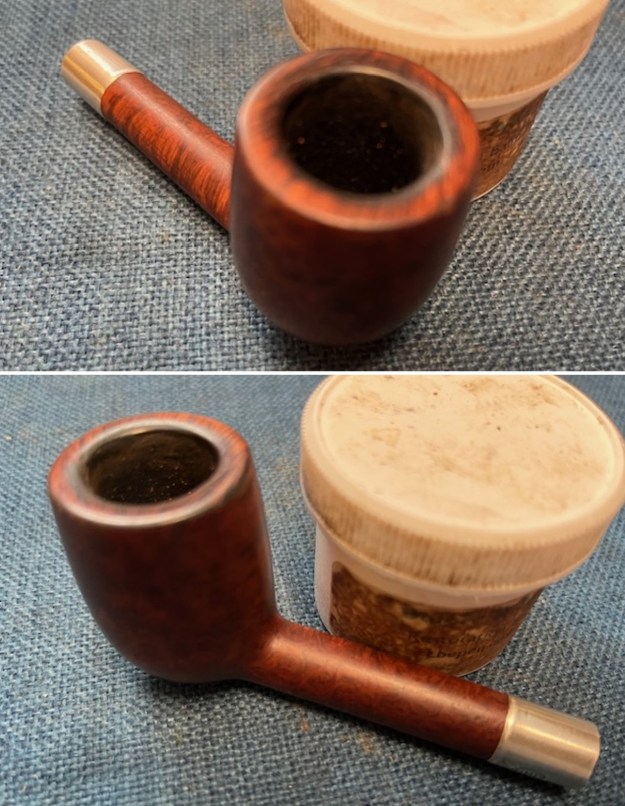
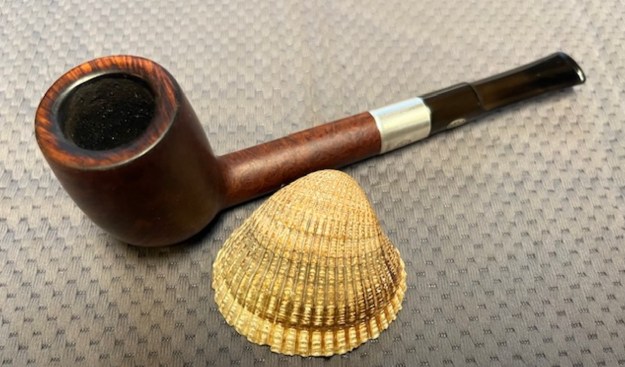
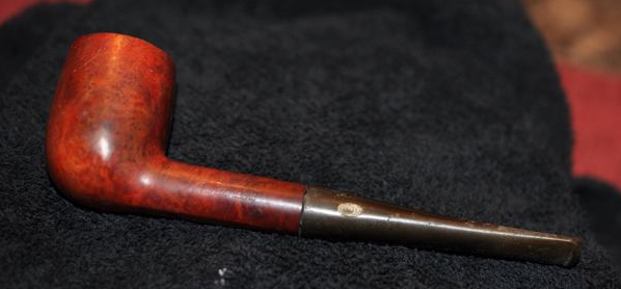
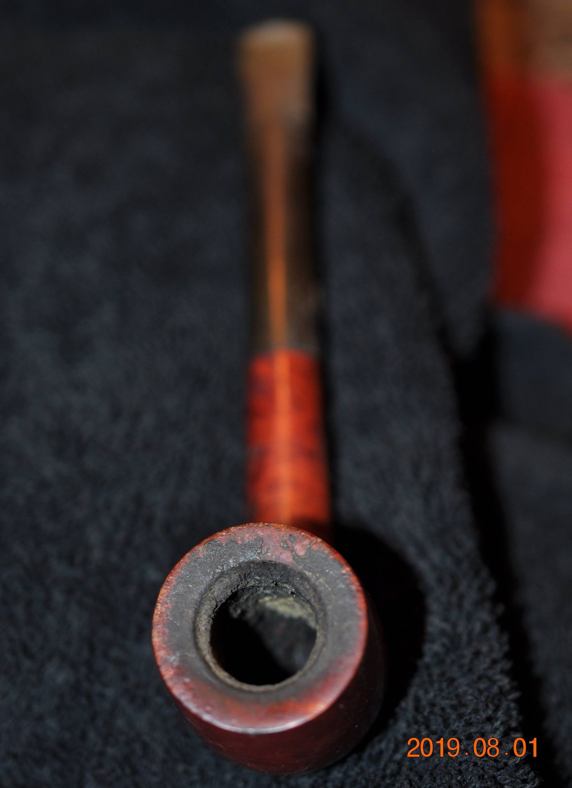
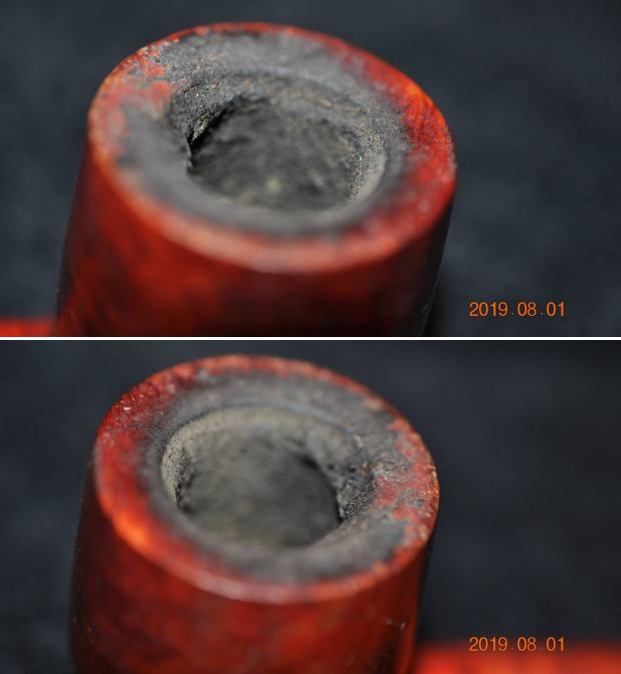
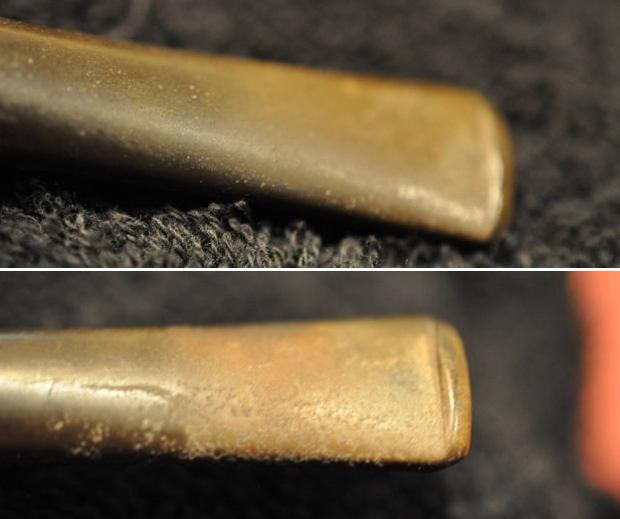
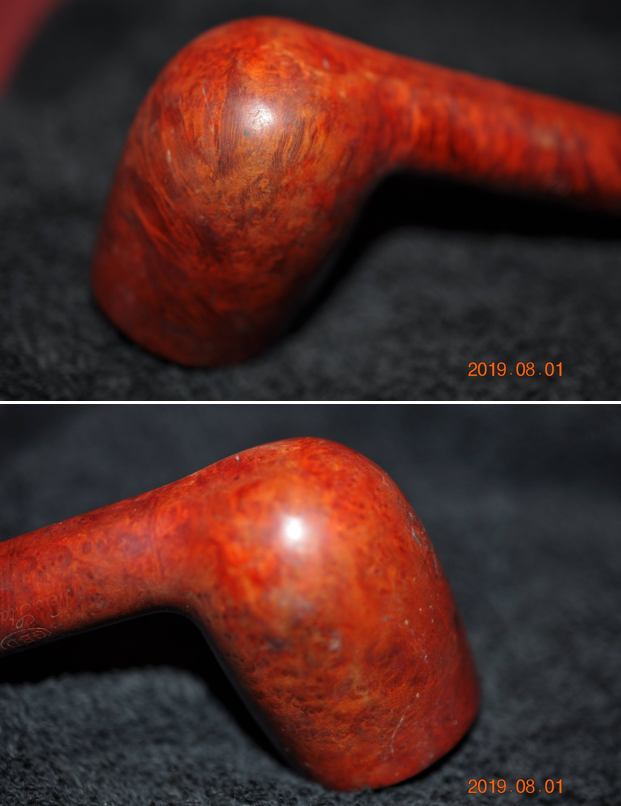
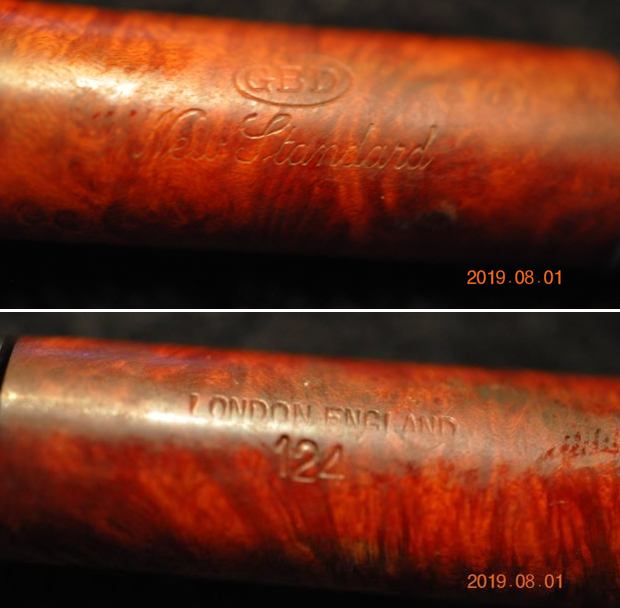
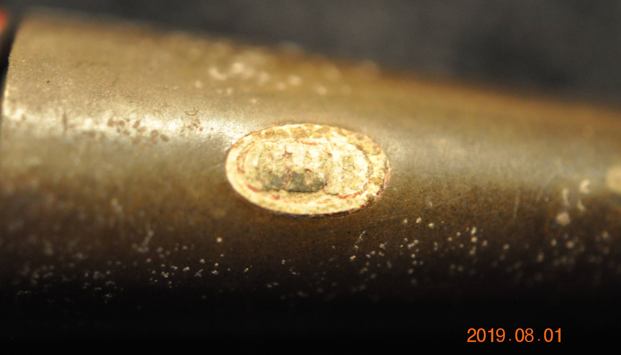
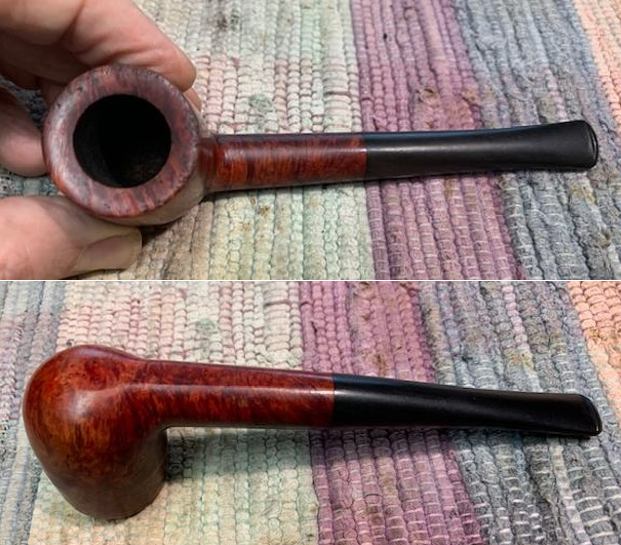
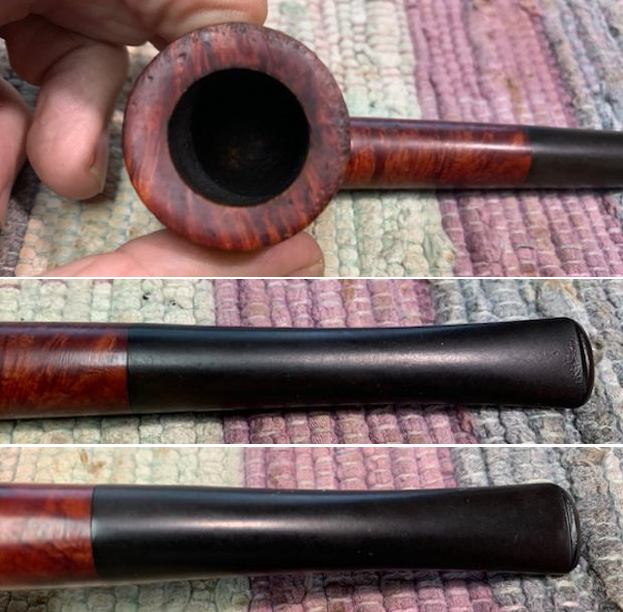
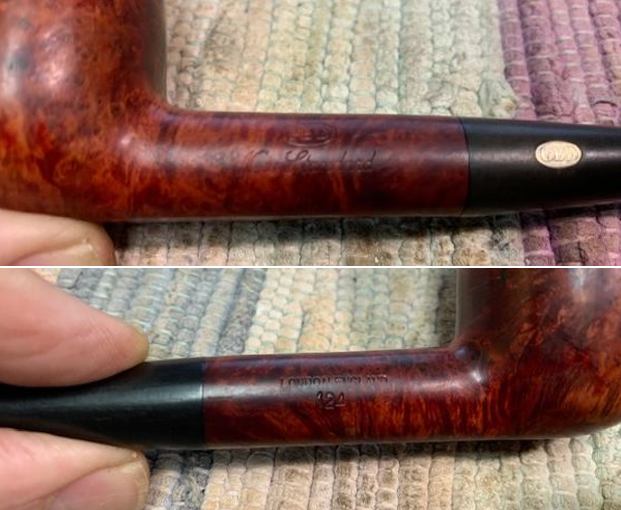
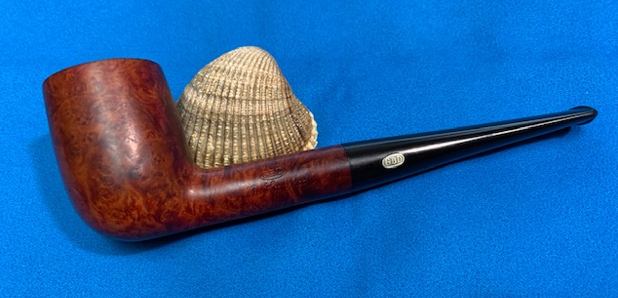
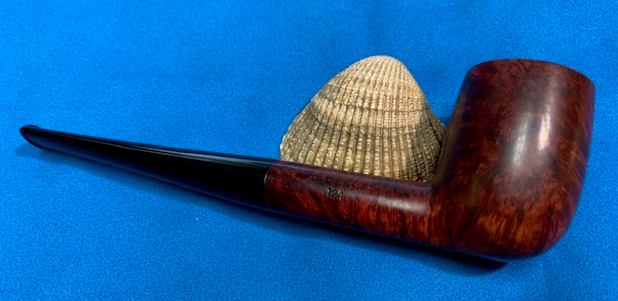
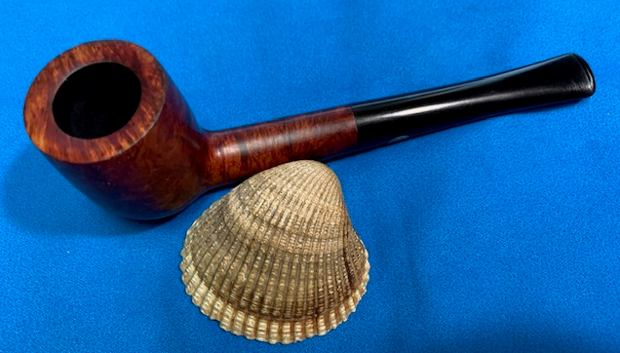
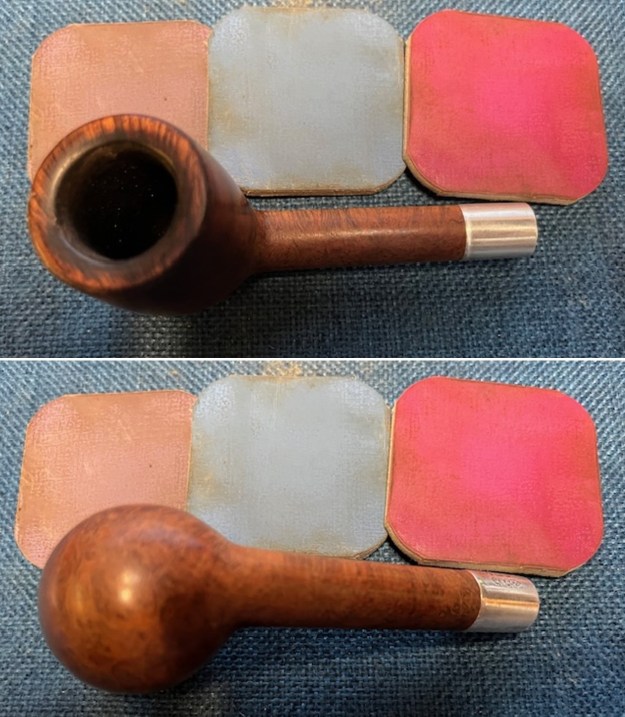
The next pipe on the table is one that came to us from an online auction in 2019 from Vanceburg, Kentucky, USA. The shape is very nice, with the rich red finish that highlights the grain around the bowl and shank. It is a great shape with a taper vulcanite stem with a GBD roundel on the left side. The finish was dirty with grime ground into the finish around the bowl sides. There was a thick cake in the bowl and lava overflow on the beveled top of the rim – heavy around the entire rim top. The edges – inner and outer both appeared to be okay under the lava coat. The pipe is stamped on the left side of the shank and reads GBD in an oval [over] New Standard. On the right side it reads London England [over] the shape number 124. The stem was lightly oxidized and there were tooth marks and chatter on both sides near the button. The taper stem also has a brass GBD roundel on the left side that was oxidized and dirty. Jeff took some photos of the pipe before he started the clean up work. He took photos of the rim top and bowl to give a clear picture of the thickness of the cake and well as the nicks, lava and darkening on the rim top. The inner edges showed some burn damage on the inner bevel of the bowl. The outer edges of the bowl appeared to be in great condition. He also took photos of the top and underside of the stem to show the oxidation, calcification and the chatter and tooth marks. Jeff took a photo the sides and heel of the bowl to give a picture of the beautiful grain around the bowl and shank. There were also shiny spots of varnish around the bowl and shank sides.The stamping on the sides of the shank is clear and readable and read as noted above. There is also GBD Brass roundel on the left side of the stem.I turned to Pipephil’s site and looked for information on the GBD New Standard I was working on (http://pipephil.eu/logos/en/logo-gbd.html). As always there was a good, brief description of the history of the brand.
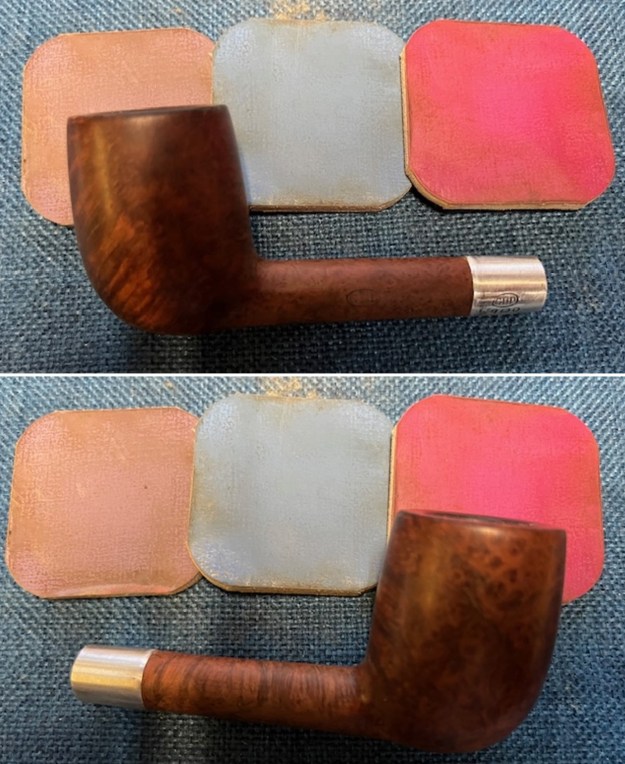
Brand created in 1850 in Paris by Ganneval, Bondier and Donninger. Marechal & Ruchon Cie first, then C.J. Verguet Frères (closed in 1970) owned GBD from 1903 to 1970 and manufactured these pipes in the St Claude (Fr) plant.

Sometime in the 1970s Cadogan company (Oppenheimer group) took over GBD. Prior to this time, the pipes were stamped “London England” in a straight line, even if they were sometimes crafted in France.

I turned to Pipedia (https://pipedia.org/wiki/GBD) to see what I could find on the GBD Brand and the New Standard Line. There was a few tidbits scattered in the body of the material.

The New Standard was introduced in order to give the popular Standard of the 20s a higher rank in value…

The following list comprises the better grades in descending order: Pedigree, Pedigree I, Pedigree II, Straight Grain, Prodigy, Bronze Velvet, Virgin, Varichrome, Prestige, Jubilee, New Era, Prehistoric, International, Universe, Speciale Standard, Ebony, Tapestry, New Standard, Granitan, Sauvage, Sierra, Penthouse, Legacy, Concorde.

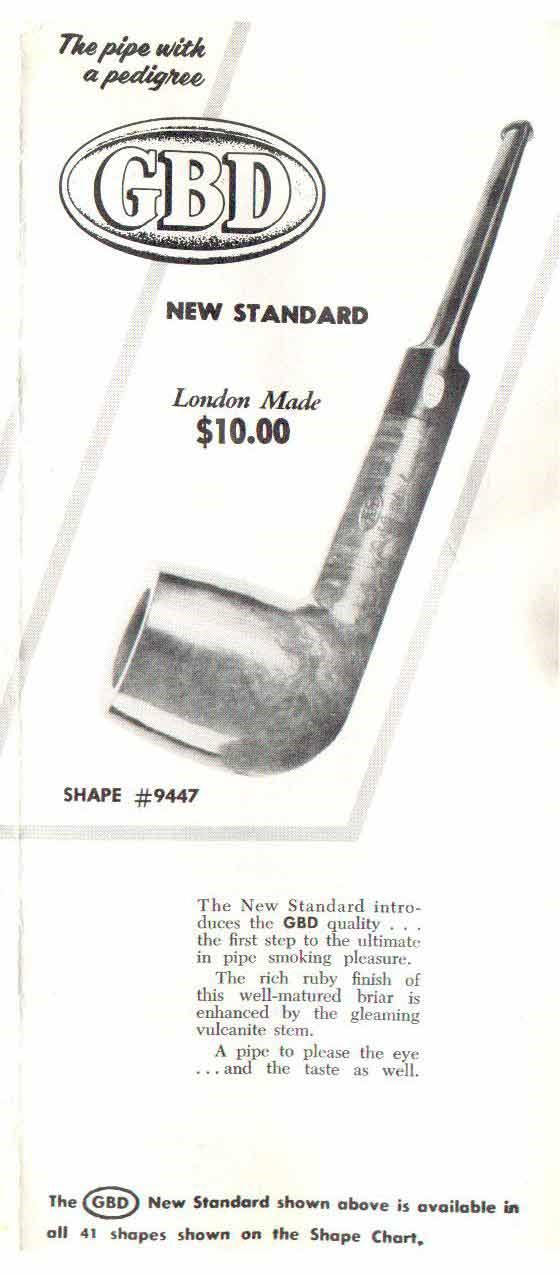
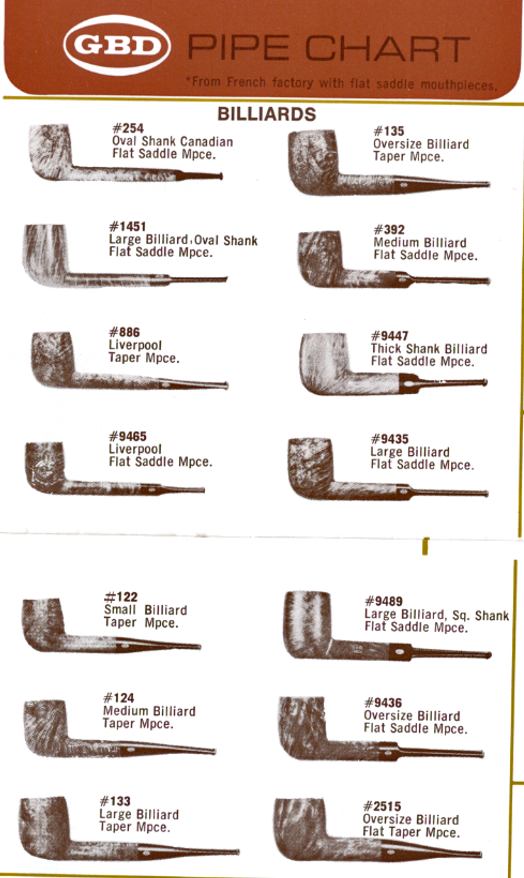
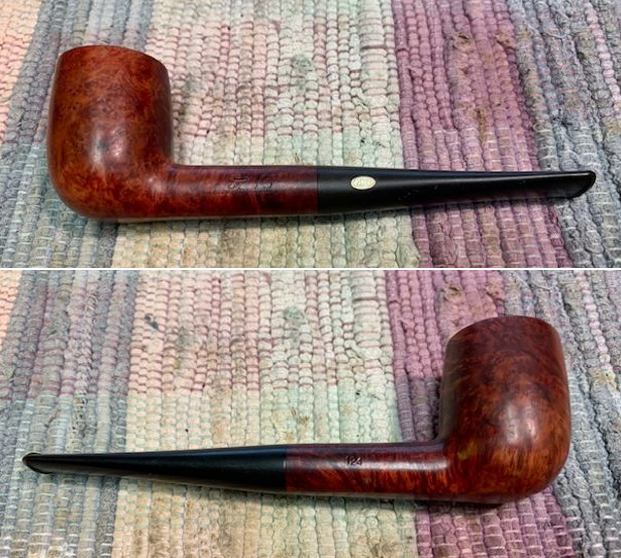
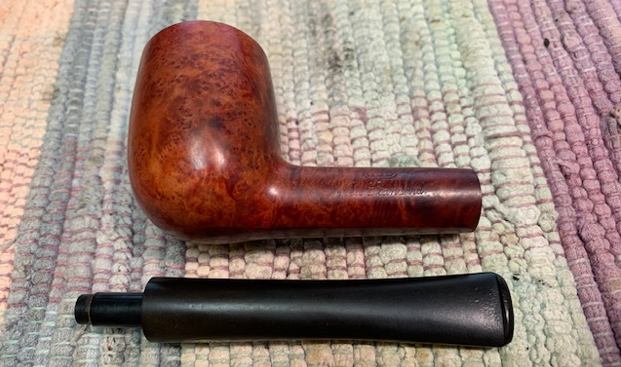
I also found two advertising fliers on the brand – one with the variety of shapes for the New Standard London Made and the other with a saddle billiard and a longer description of the pipe. I also found a shape chart that had the 124 pictured and described as a Medium Billiard with a taper mouthpiece.Now it was time to work on the pipe. Jeff had cleaned up the pipe following his usual procedures. He reamed the pipe with a PipNet pipe reamer and cleaned up the remnants with a Savinelli Fitsall Pipe Knife. He cleaned out the inside of the shank and the airway in the stem with 99% isopropyl alcohol, cotton swabs and pipe cleaners. He scrubbed the exterior of the bowl with undiluted Murphy’s Oil Soap and a tooth brush. He rinsed it under running warm water to remove the soap and grime. He soaked the stem in Before & After Deoxidizer and rinsed it off with warm water. I took photos of the pipe once I received it. The rim top cleaned up really well. But the cleaning revealed some nicks and dings on the inwardly beveled rim top but the edges looked quite good. The stem surface looked good and the light tooth marks and chatter would be easy to address. The stamping on the sides of the shank is readable and reads as noted above.  I removed the stem and took a photo of the pipe to give a sense of the shape and the grain on the bowl and shank. It was a great looking shape and would be a beautiful pipe when I was finished. I worked on the rim top marks and polished the bowl and rim with micromesh sanding pads – 1500-12000 grit pads. I wiped it down with a damp cloth after each sanding pad. It was beginning to look good to my eyes.I rubbed the bowl and shank down with Before & After Restoration Balm. I worked it into the surface of the bowl sides and shank with my fingertips to clean, enliven and protect the briar. I let the balm sit for ten minutes then buffed the bowl with a cotton cloth to raise the shine. I set the bowl aside and turned my attention to the stem. I “painted” both sides of the stem with the flame of a lighter to lift the tooth marks (forgot to take photos). It did a great job and left only one deep mark on the topside and on the underside ahead of the button. I filled them in with clear CA glue and once it cured I sanded the stem with 220 grit sandpaper to smooth out the repairs. I started polishing it with 400 grit sandpaper. I polished the stem with micromesh sanding pads – 1500-12000 grit pads. I wiped it down with Obsidian Oil after each sanding pad. I used Before & After Pipe Polish – both Fine and Extra Fine to further polish the stem. This GBD New Standard 124 Billiard is a great looking pipe now that it has been restored. The ruby coloured wash/stain around the bowl is quite beautiful and highlights grain very well. The ruby coloured finish works well with the polished vulcanite taper stem. I put the stem back on the bowl and carefully buffed the pipe with Blue Diamond on the buffing wheel using a light touch on the briar. I gave the bowl and the stem multiple coats of carnauba wax on the buffing wheel and followed that by buffing the entire pipe with a clean buffing pad. I hand buffed the pipe with a microfiber cloth to deepen the shine. The finished GBD New Standard Billiard sits nicely in the hand and feels great. Give the finished pipe a look in the photos below. The dimensions of the pipe are Length: 6 inches, Height: 1 ¾ inches, Outside diameter of the bowl: 1 ¼ inches, Chamber diameter: ¾ inch. The weight of the pipe is 39 grams/1.41 ounces. I will be putting it on the British Pipemakers section of the rebornpipes store shortly. If you are interested in adding this pipe to your collection send me a message or an email. Thanks for reading this blog and my reflections on the pipe while I worked on it. There are many more to come! 

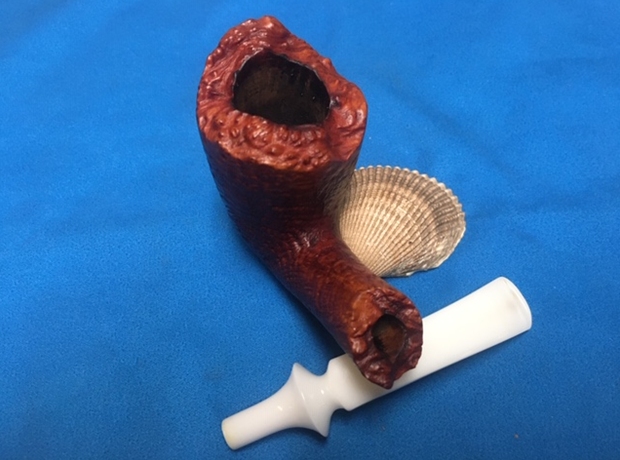
Look at this beauty – a GBD Prodigy Sandflame 9696 Freehand


Blog by Steve Laug

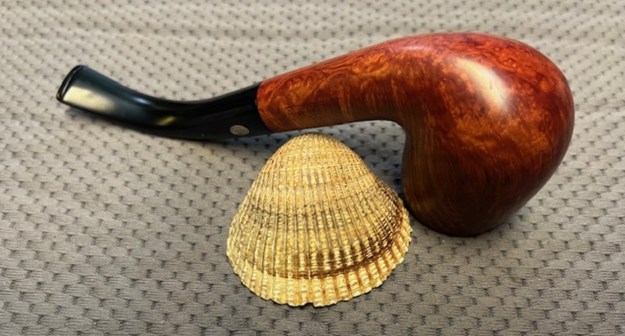
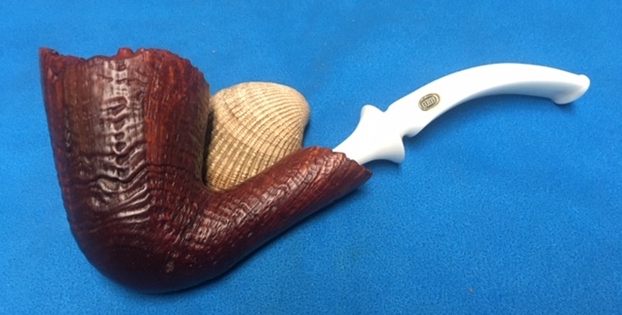
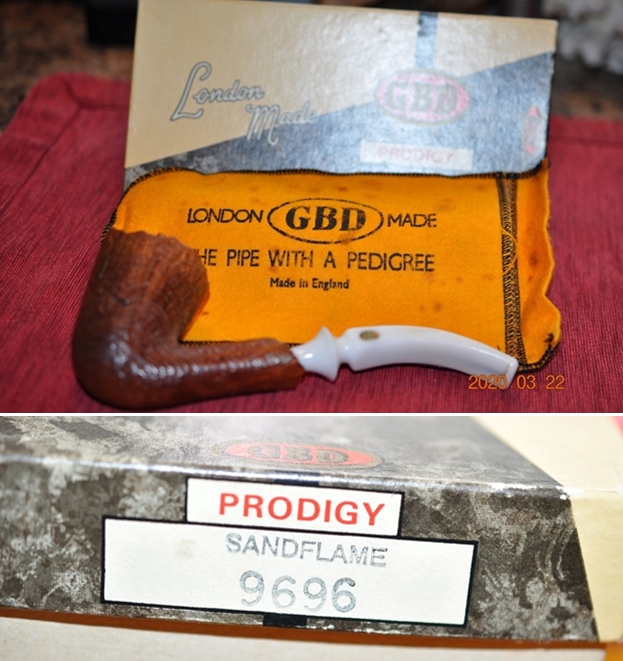
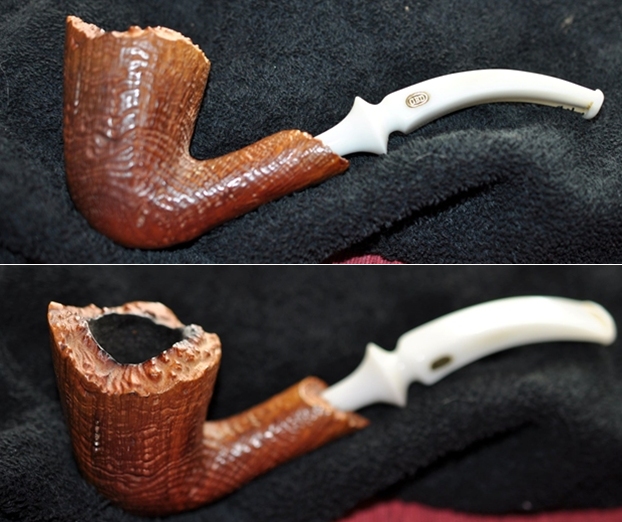
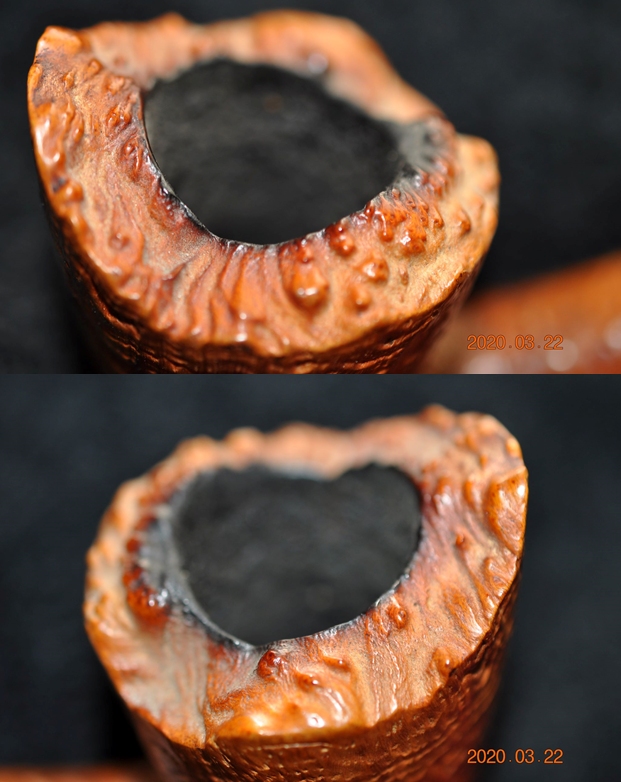
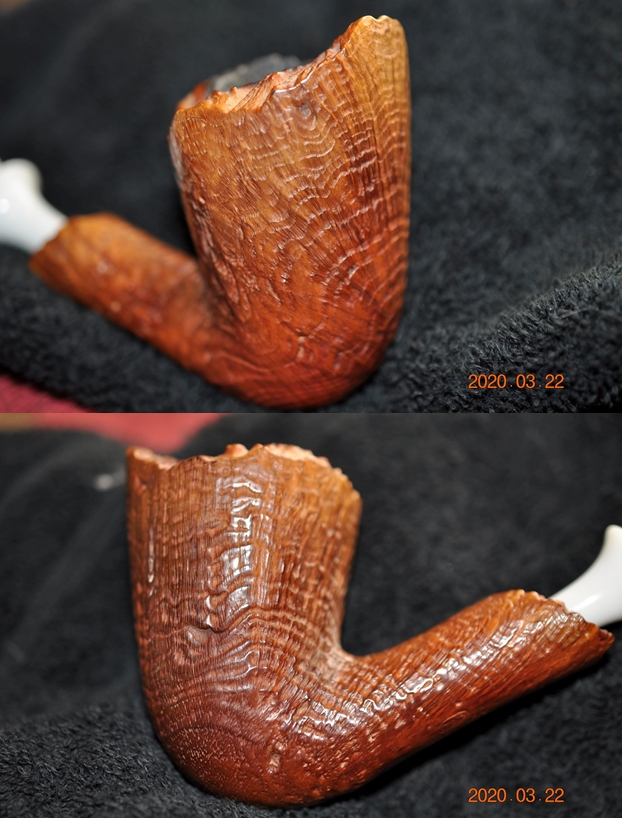
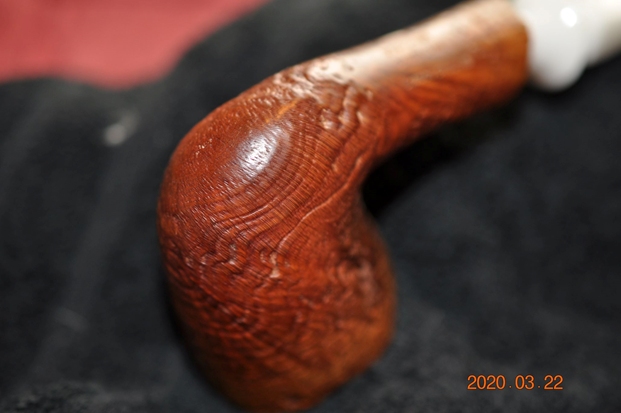
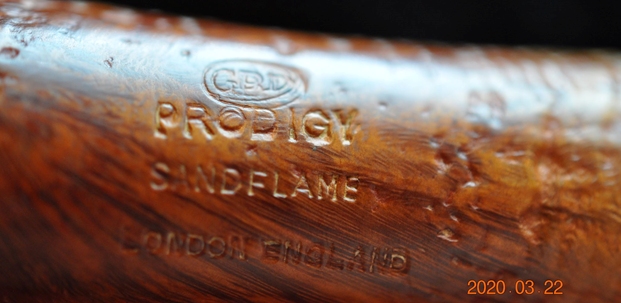
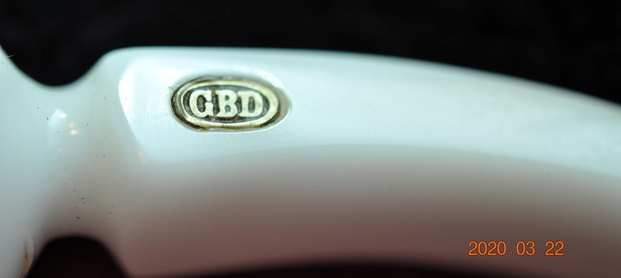
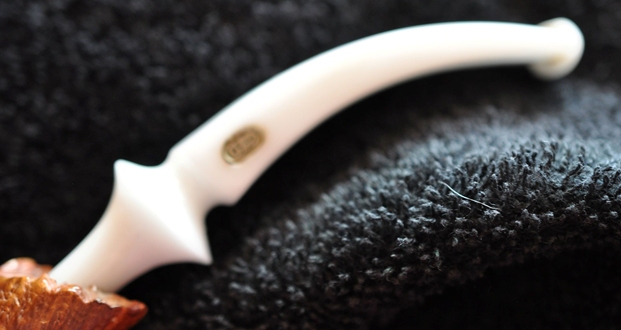
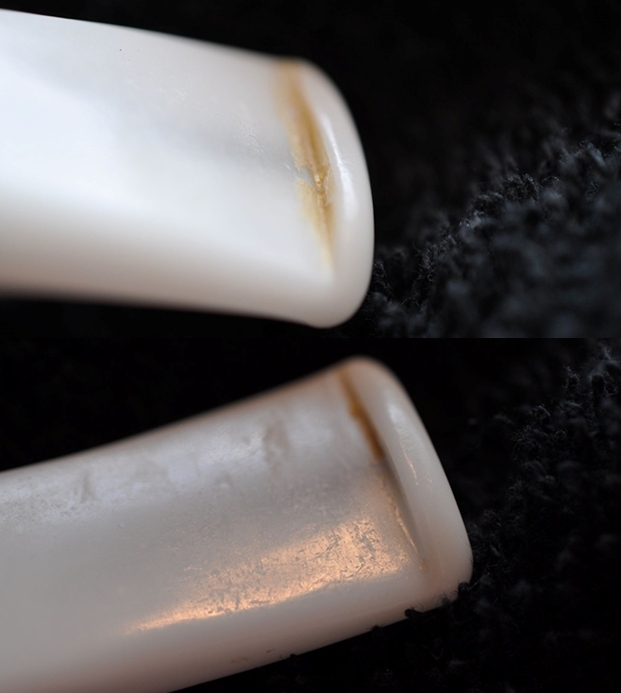
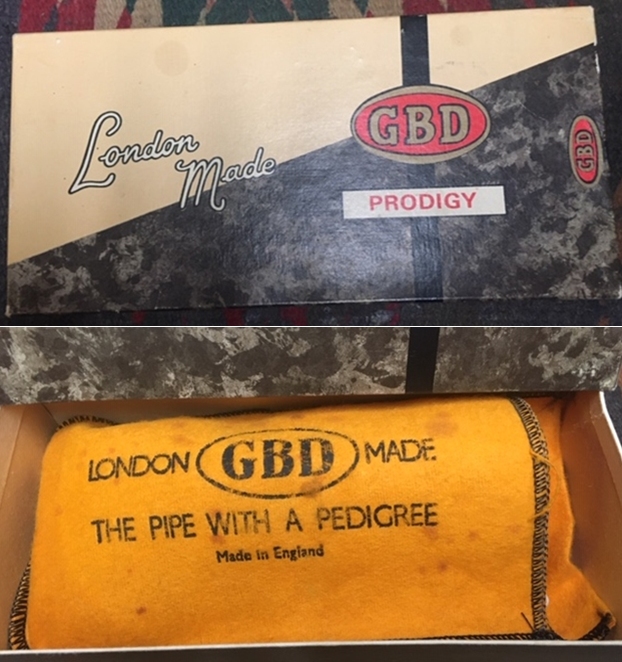
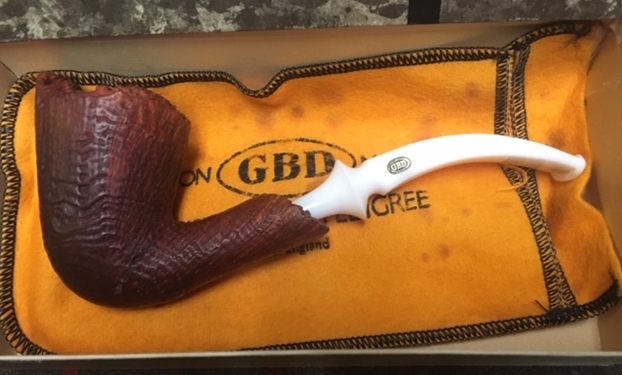
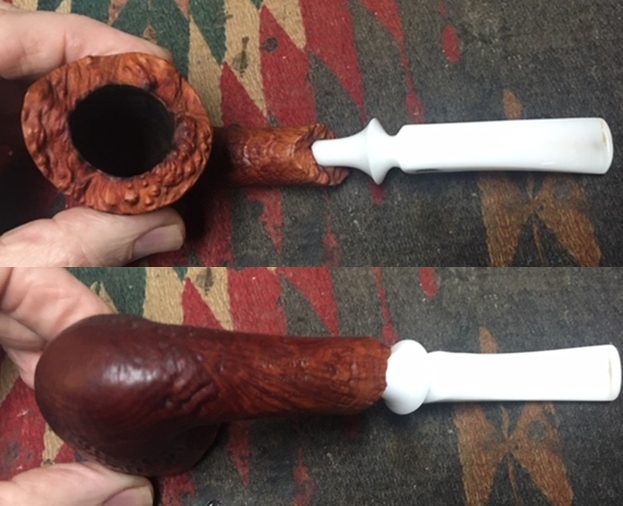
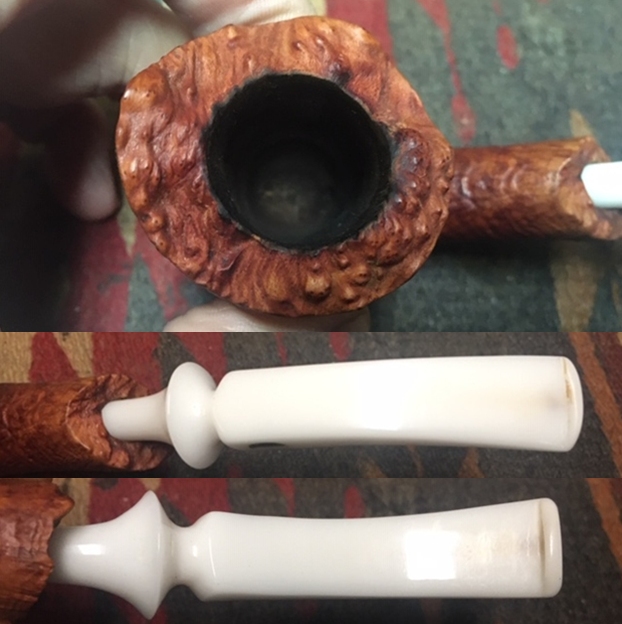
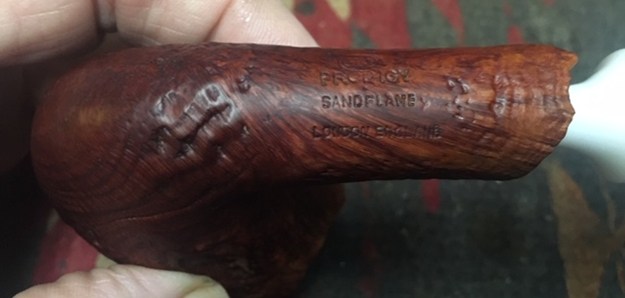
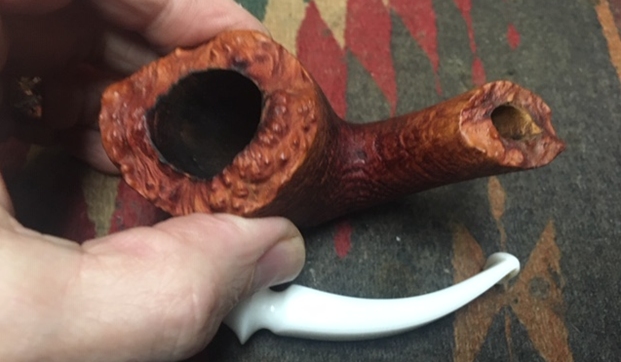
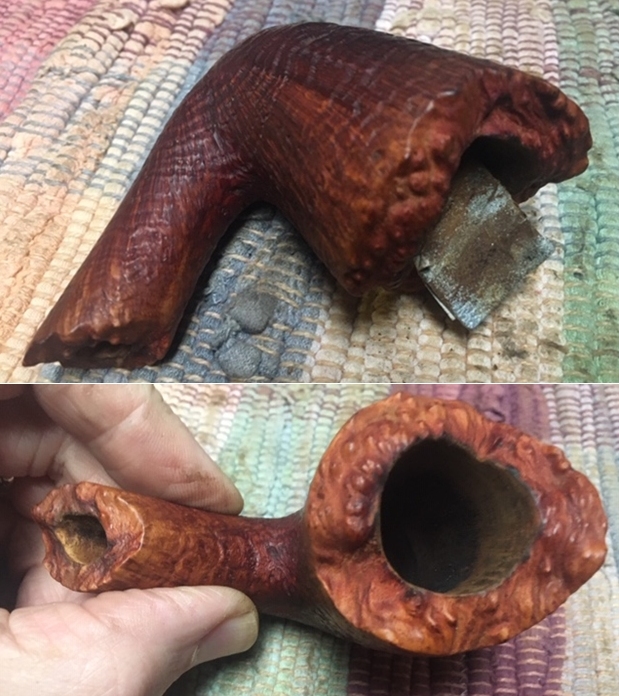
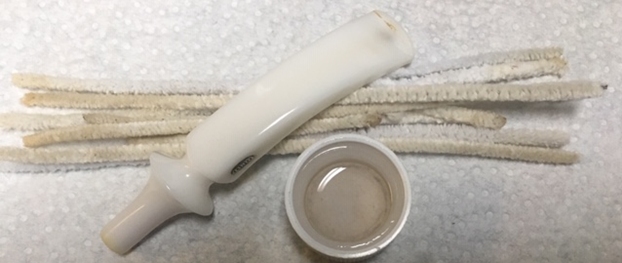
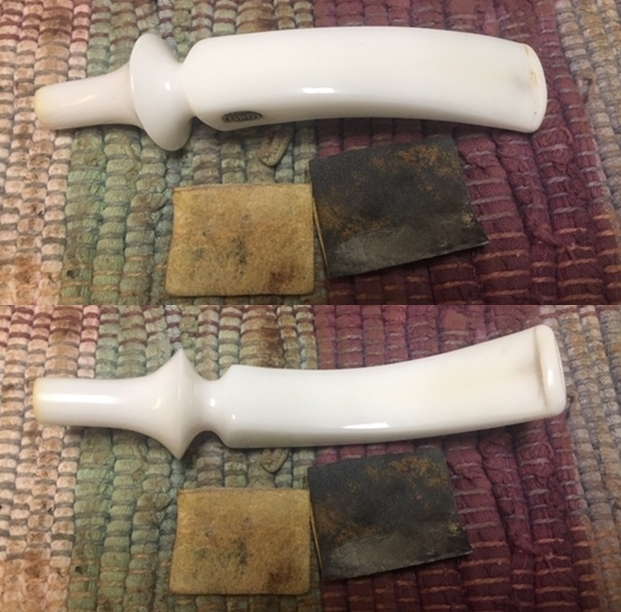
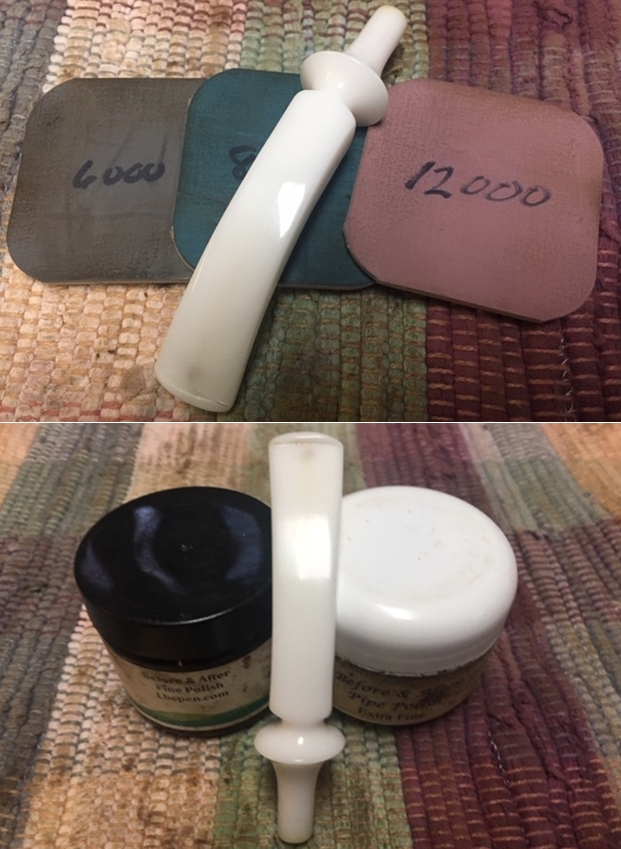
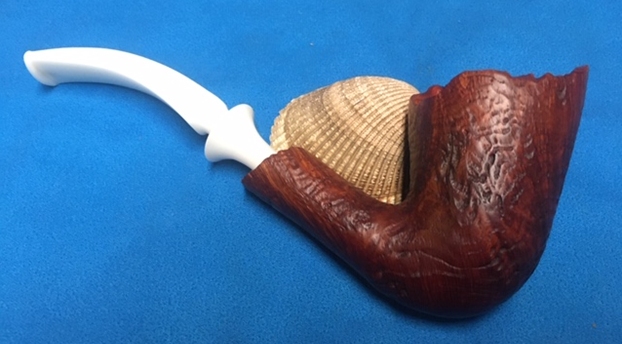
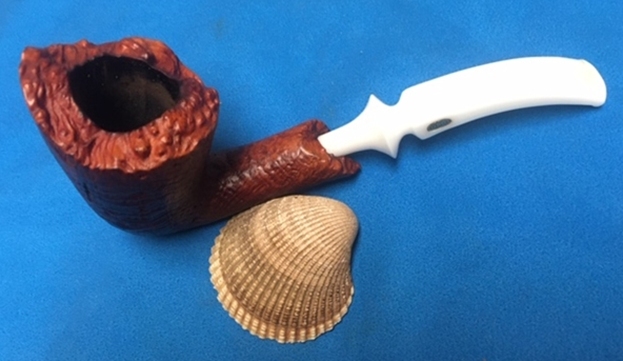
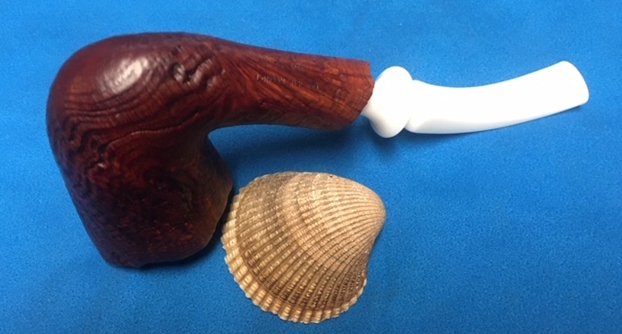
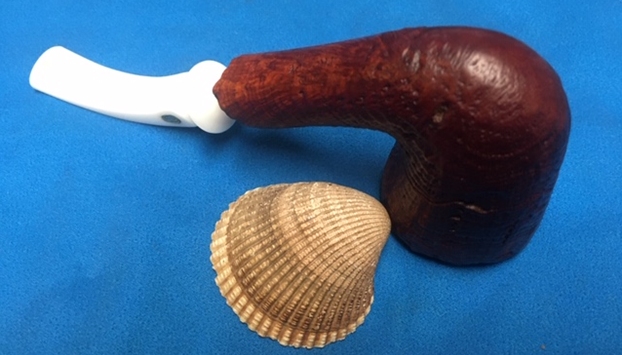
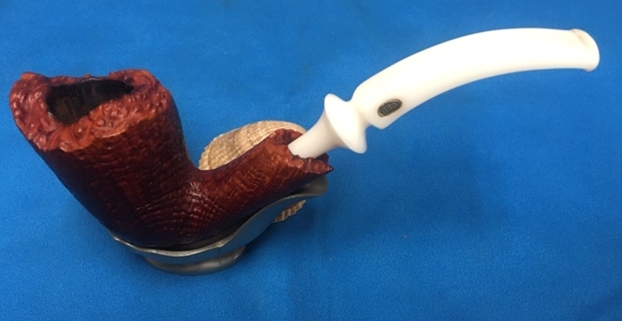
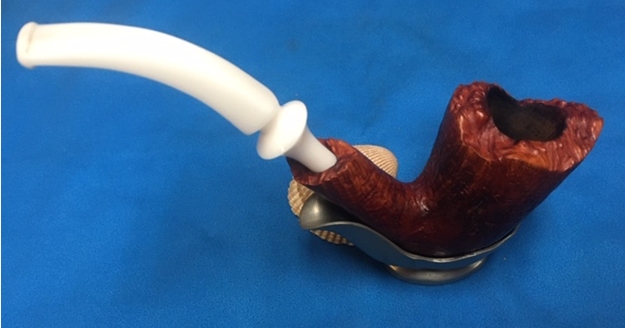
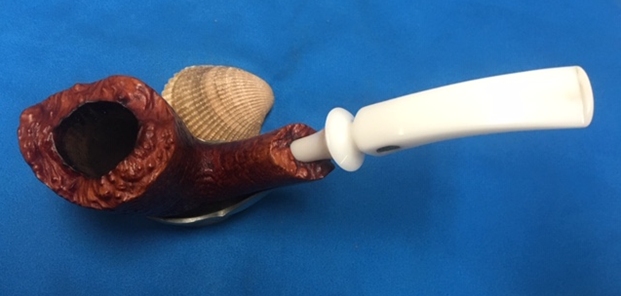
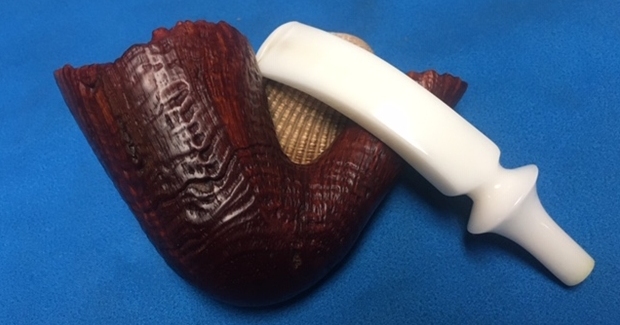
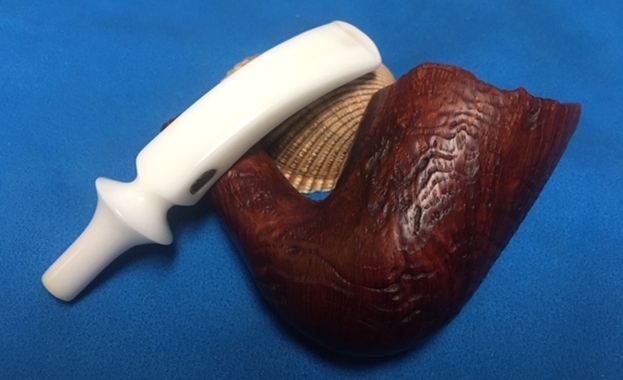
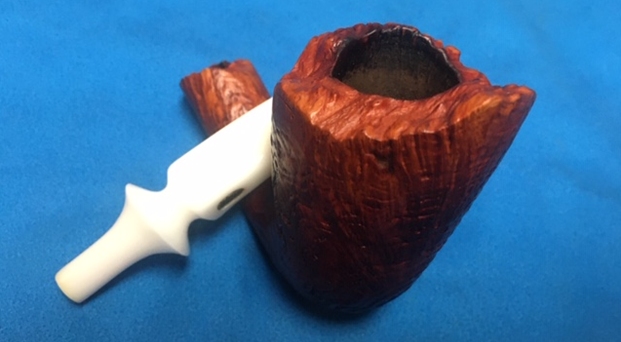
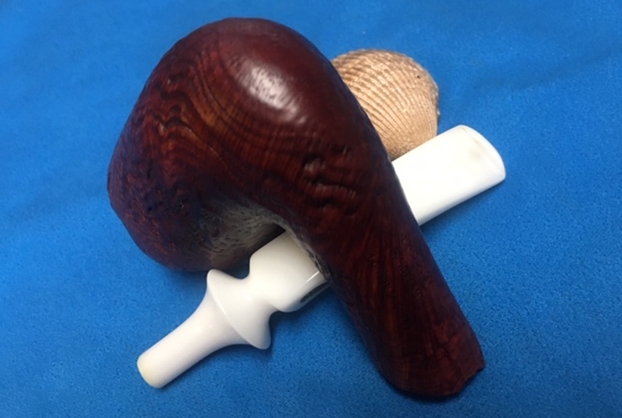
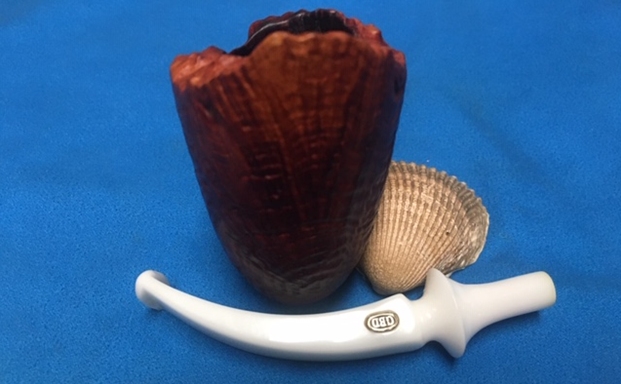
The next pipe on the worktable is one I have been looking forward to working on. It came in its original box as can be seen in the next two photos. The pipe was in a GBD pipe sock. The box was in great condition and read London Made GBD Prodigy. On the end of the box it reads Prodigy Sandflame 9696 which is the model and shape number. It is a nicely grained sandblast freehand with a white acrylic stem. Jeff took pictures of it as he unpacked it from the box.The pipe was in very good condition when he took it from the box. There were not a lot of issues to deal with in the cleanup and restoration. It is stamped on the underside of the shank GBD in an oval over Prodigy over Sandflame over London England. There was some darkening around the inner edge of the bowl, heavier toward the back side with a bit of darkening on the plateau top. There was a thick cake in the bowl that had remnants of tobacco stuck in it. The finish was dirty and there were spots of grime and oils. The white acrylic fancy saddle stem had a brass GBD roundel on the left side of the saddle. There were tooth marks on the top and underside ahead of the button. There was tooth chatter on both sides of the stem. There was some darkening in the airway of the stem at the button. Jeff took some photos of the pipe before he started his cleanup work. He took photos of the bowl and rim top to show their general condition. You can see the tars and darkening on the inner edge of the rim top. The cake in the bowl is thick and there is tobacco debris on the walls of the bowl. There were some shiny spots on the plateau rim top that would need to be cleaned off. The finish on the bowl is dull but still very stunning.Jeff took some photos of the sides and heel of the bowl to give an idea of the sandblast grain on this particular piece of briar. It is quite stunning with the plateau rim and plateau shank end. I cannot wait to see what it looks like once it is polished and waxed. He took a photo of the stamping on the underside of the shank to capture it for me. It is clear and readable. The GBD oval and the Prodigy line is double stamped. The rest of the stamping is clear and reads SANDFLAME over London England. He included the side of the stem with the brass GBD roundel on the left side of the saddle stem. This pipe has a classic freehand saddle stem that has a great profile. The white acrylic stem is in good condition other than tooth marks and chatter on the stem at the button. There is some darkening in button and airway. The photos below show the condition of the stem. I turned to Pipephil’s site to see if I could find any direct information on the Prodigy line and sadly there was nothing there regarding this line. I turned to Pipedia listing under GBD Model Information (https://pipedia.org/wiki/GBD_Model_Information) and read through that information. I found a description of the line that I include below.

Prodigy — England, unknown if also made in France: According to the 1976 catalog these were a limited production “oversize” line available in just a few shapes. Natural finish…

There was also a note at the bottom of the page that had a description of the pipe that I have in hand.

I also have an interesting Prodigy Sandflame, half bent tan sandblast free form with plateau top. I think it’s an unusual shape for a GBD…

I am pretty sure the pipe was GBD’s response to the Freehand craze of the 70’s but cannot prove that for sure. I moved forward to work on the pipe itself and see what I had to do with it. I decided to take photos of the opening of the box so you can experience looking at this pipe the way I did when I received it from Jeff. I opened the box, took out the sock and removed the pipe. It really is quite stunning to look at the first time. I took the pipe out of the box and turned it over in my hands to see it from various angles. I always do that to get a feel for what I am going to have to do with the pipe in my part of the restoration process. In this case there was little to do. The pipe had come back looking amazing. Even the stem which had the most issues to work on when I looked at the photos above looked like new, with most of the tooth chatter gone. There was some darkening in the airway, the button and on the end of the tenon that would need to be looked at a bit but I was impressed. Jeff had done his normal thorough clean up – reaming, scrubbing, soaking and the result was evident in the pipe when I unpacked it. I took photos of the pipe before I started my work on it. Just look at the sandblast grain on this Freehand pipe. It was quite beautiful! I took some photos of the rim top and stem. The rim top and bowl looked very good. The cake and lava overflow were gone and the inner rim looked better. Jeff had been able to get rid of most of the darkening and all of the lava and tars. The plateau rim top looked very good. The close up photos of the stem shows that it is a much cleaner. There was still some light tooth chatter and some darkening in the airway and button slot that I would try to minimize some more but it looked good.I took a photo of the stamping on the underside of the shank to show the condition after the cleanup. Often the stamping takes a hit with the cleaning and is lessened in it clarity. Jeff does a great job in leaving the stamping looking very good.I removed the stem from the shank and took a photo of the pipe at this point. You can clearly see the plateau on the shank end in the photos below. It is in great condition.I started my restoration work on this pipe by addressing the darkening on the inner edge of the bowl. I used a folded piece of 220 grit sandpaper to clean up the edge and followed that with a folded piece of 400 grit wet dry sandpaper. The finish rim top looked very good. I worked some Before & After Restoration Balm into the surface of the briar with my fingertips and a horsehair shoe brush to get in the nooks and crannies of the blast and the plateau on the rim top and shank end. The product works to clean, enliven and protect the briar. I let the balm sit for about ten minutes and then buffed with a cotton cloth to raise the shine. The photos show the bowl at this point in the restoration process. I set the bowl aside and turned my attention to the stem. I started by working on the tobacco staining on the white stem. I cleaned off the tenon end with a piece of folded sandpaper and was able to remove the majority of the stains. I worked on the inside of the button with a folded pipe cleaner and alcohol and remove all of the staining in the slot and button. I worked on the airway in the stem with alcohol and pipe cleaners going both directions and scrubbing. I also used some Soft Scrub on a pipe cleaner and worked it back and forth in the airway. While it is definitely better there is still some remaining stain. I sanded out the tooth chatter and blended in the repairs with 220 grit sandpaper and started to polish it with a folded piece of 400 wet dry sandpaper. Once it was finished it was smooth.I used some Denicare Mouthpiece Polish that I have in my kit to start polishing out some of the scratches and remaining stains on the surface of the stem. I rubbed it in with a cotton pad and my finger tip and buffed it off with a cotton pad.I polished the stem with micromesh sanding pads – dry sanding with 1500-12000 grit sanding pads. I wiped it down after each sanding pad with a cloth containing some Obsidian Oil. I finished polishing it with Before & After Pipe Stem Polish – both Fine and Extra Fine and buffed it off with a cotton cloth. Once again I love this part of the process when all of the parts come together and the pipe looks better than when we started the cleanup process. I put the stem back on the bowl and buffed the pipe lightly with Blue Diamond on the buffing wheel. I carefully avoided the stamping on the shank sides during the process. I gave the bowl multiple coats of Conservator’s Wax and the stem multiple coats of carnauba wax on the buffing wheel and followed that by buffing it with a clean buffing pad on the buffer. I hand buffed the pipe with a microfiber cloth to deepen the shine. The finished pipe is a real stunning example GBD’s response to the Freehand Craze of the 1970s. The sandblast grain and the way the shape follows it is very well done. This is the first Prodigy I have seen or worked on and I have worked on a lot of GBD pipes. Give the finished pipe a look in the photos below. I can only tell you that it is much prettier in person than the photos capture. The dimensions of the pipe are Length: 6 ½ inches, Height: 2 ¾ inches, Outside diameter of the bowl: 1 ¾ inches, Chamber diameter: 7/8 of an inch. This Made In London England Prodigy Sandflame 9696 Freehand is a great looking pipe in excellent condition. Thanks for walking through the restoration with me as I worked over another beautiful pipe. I was having a FaceTime chat with Paresh while I was working on this one and it will soon be heading to India to join his collection of Freehand pipes. Thanks for your time.