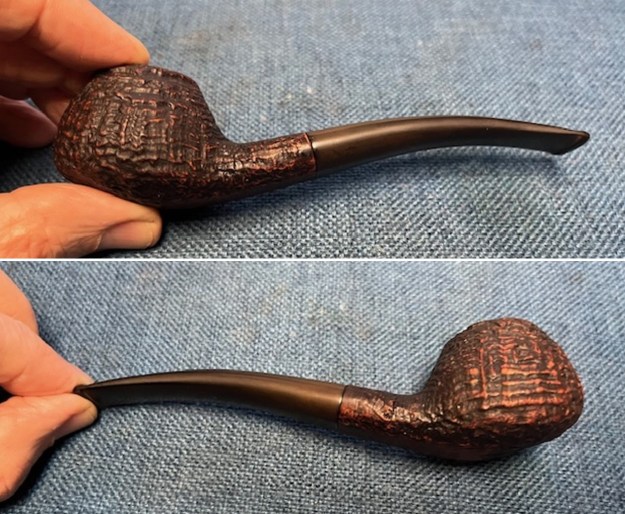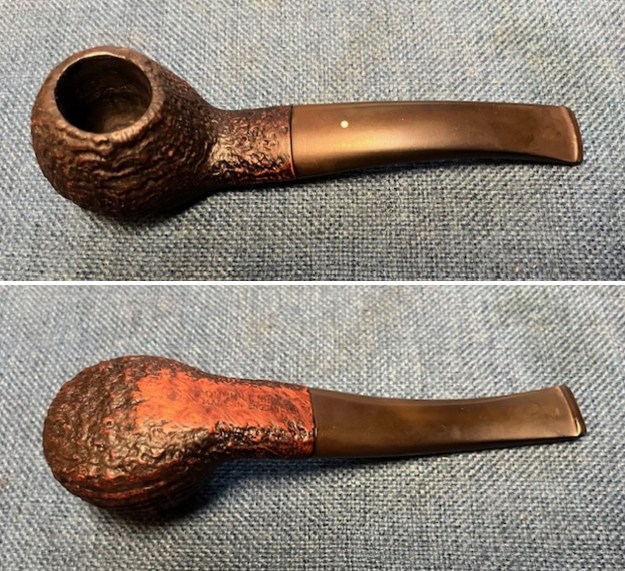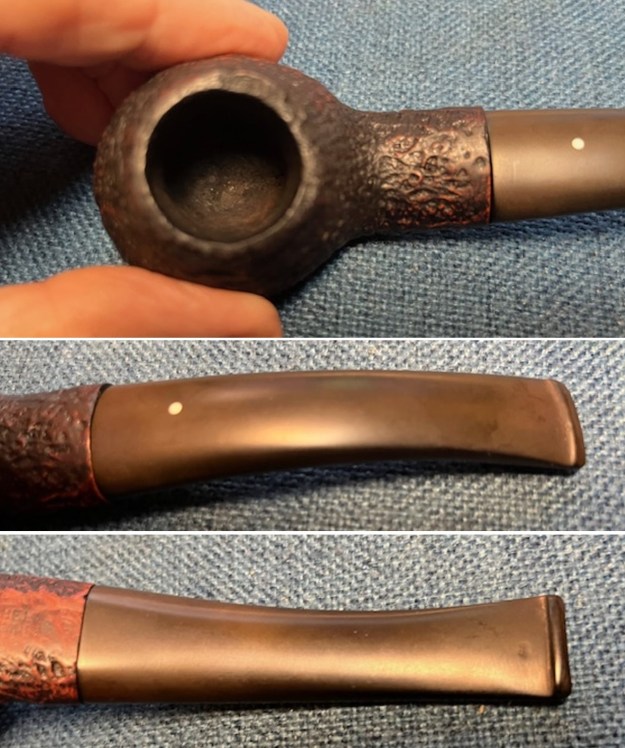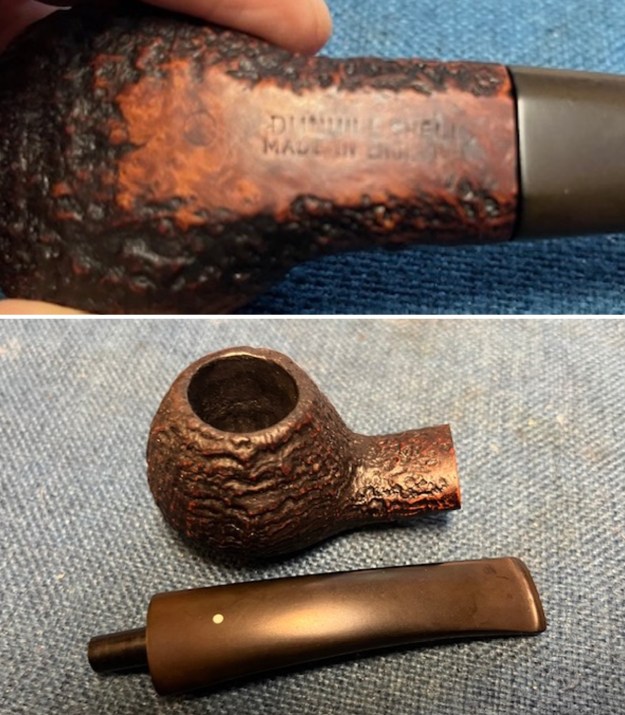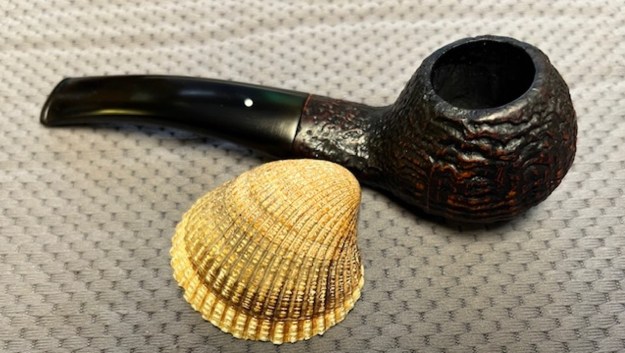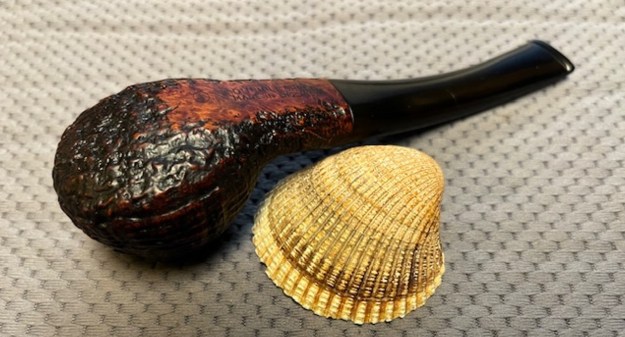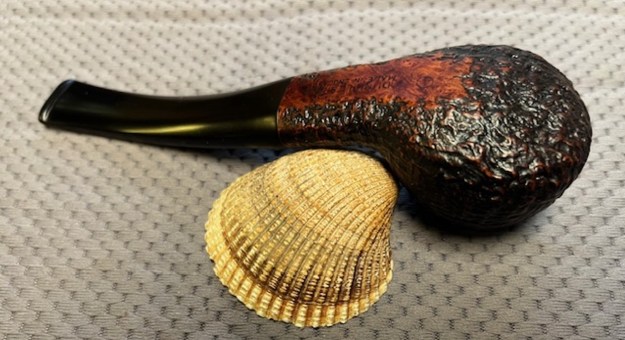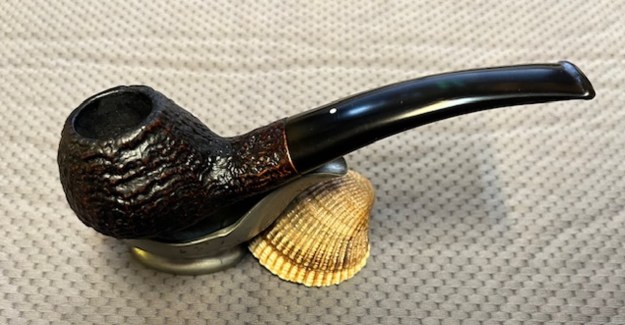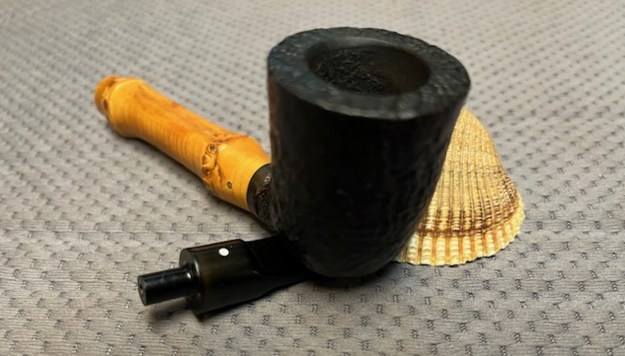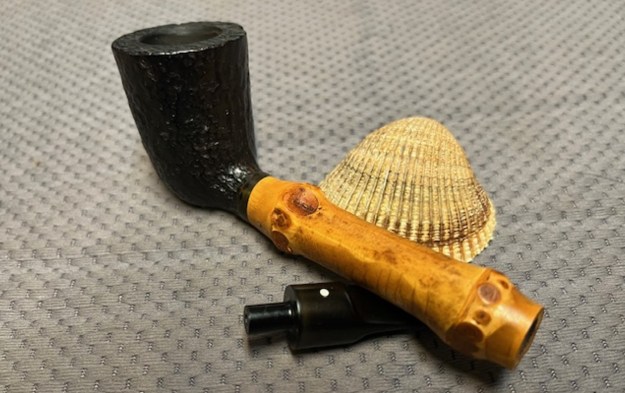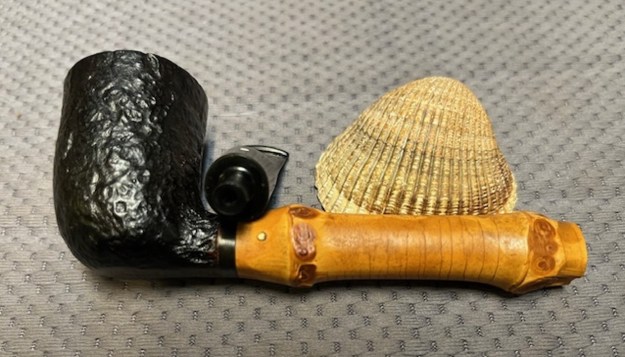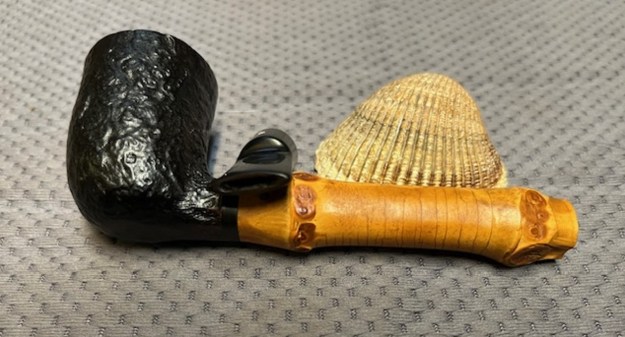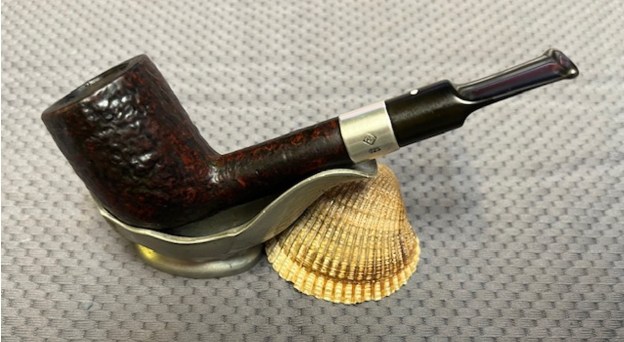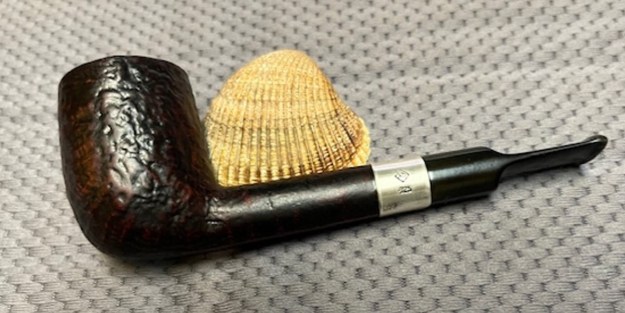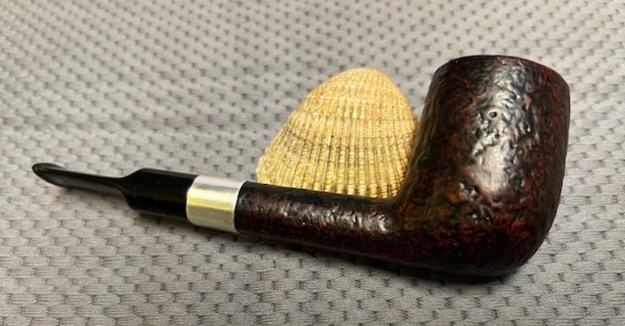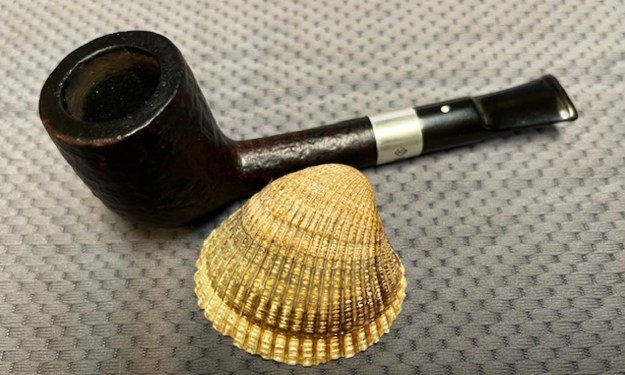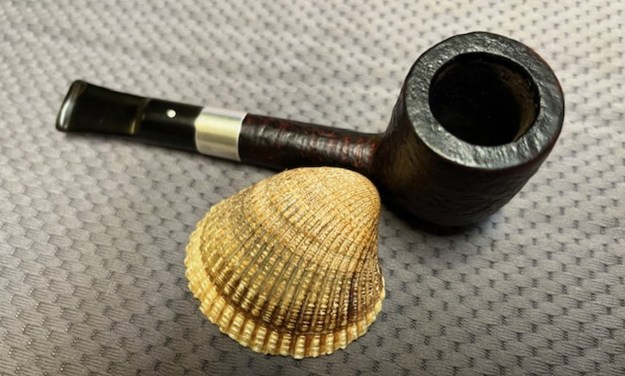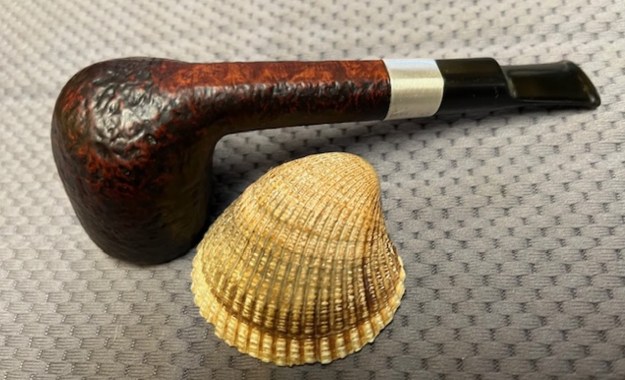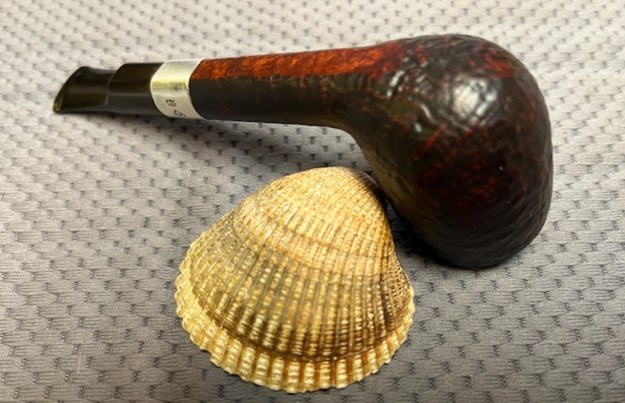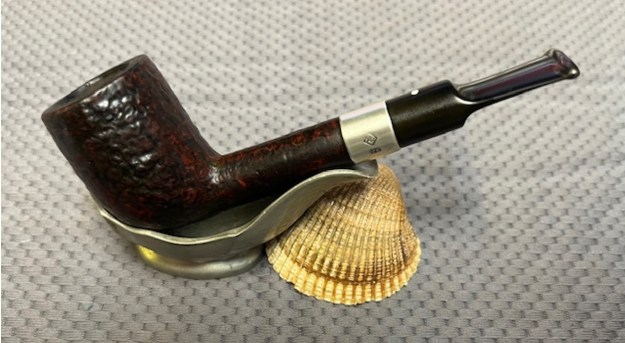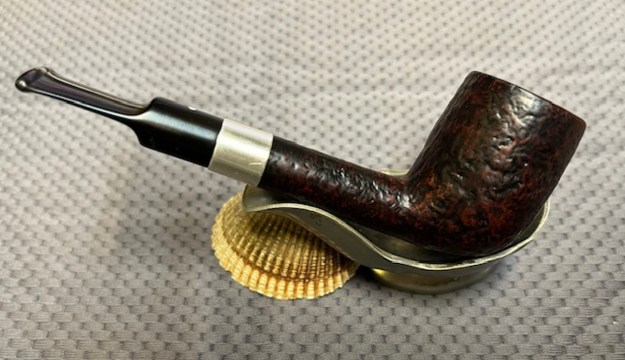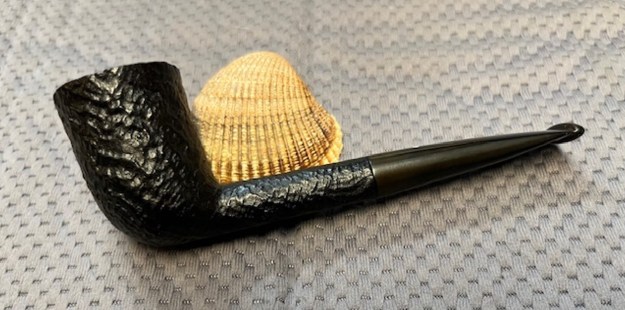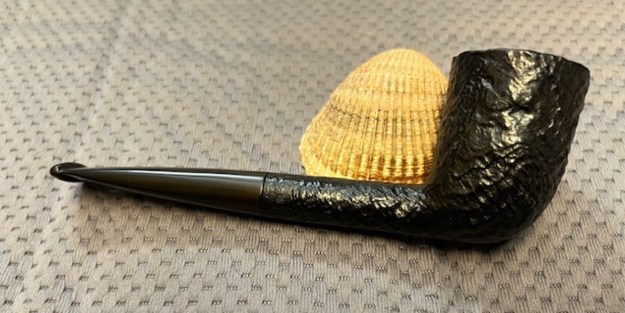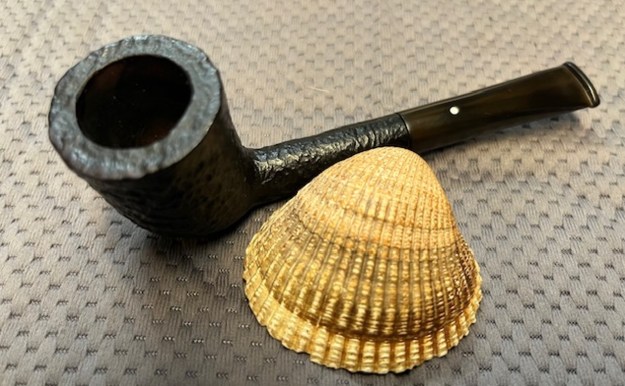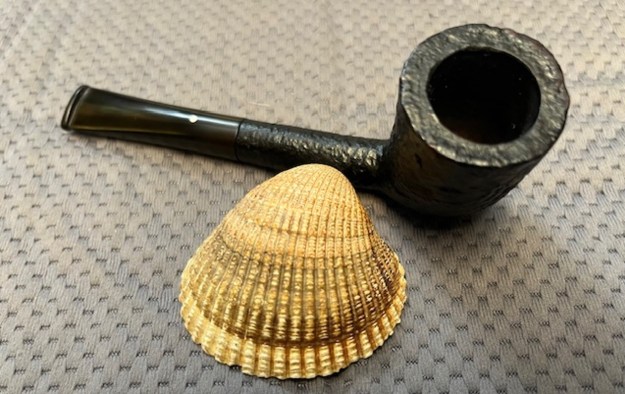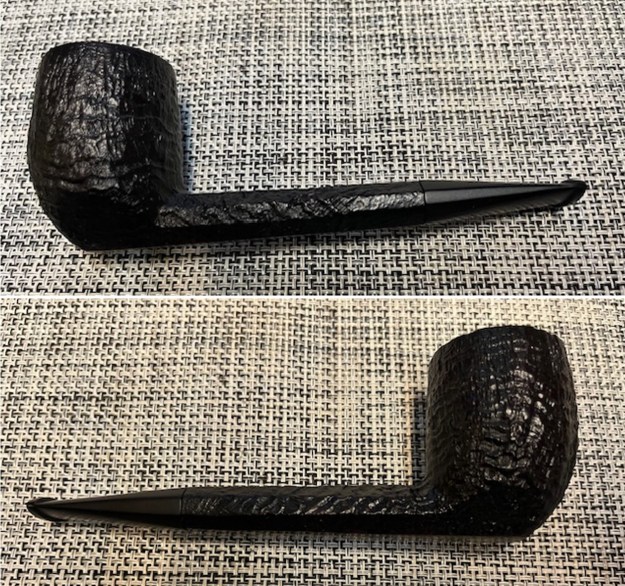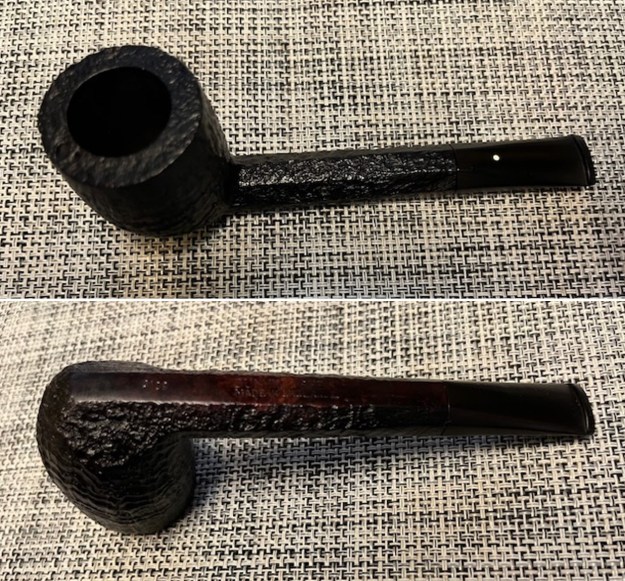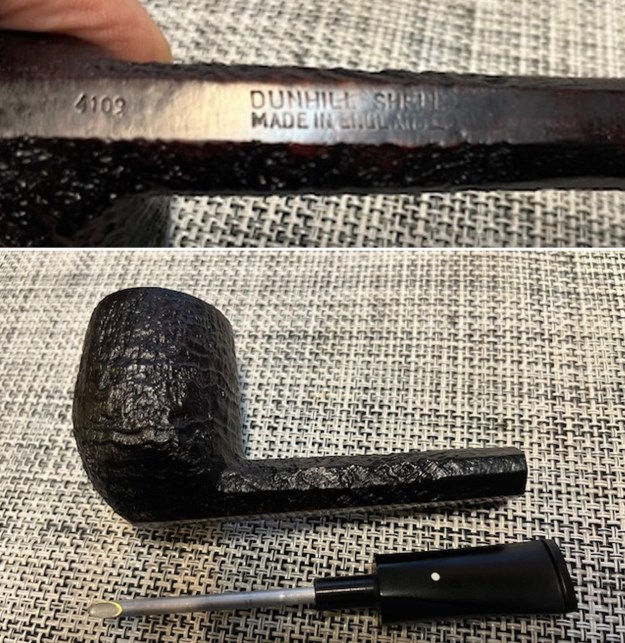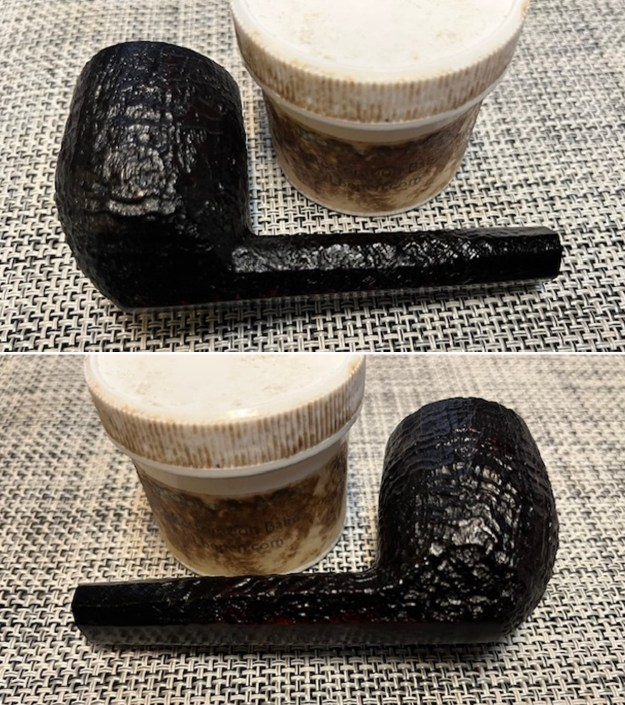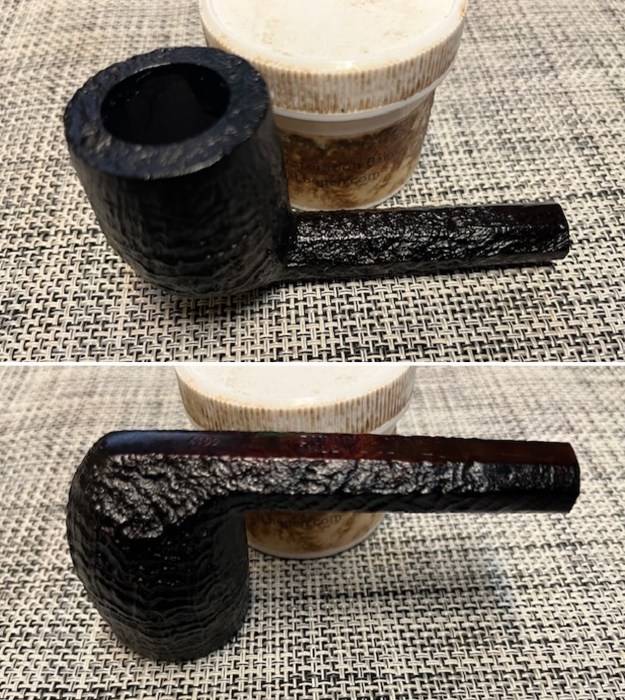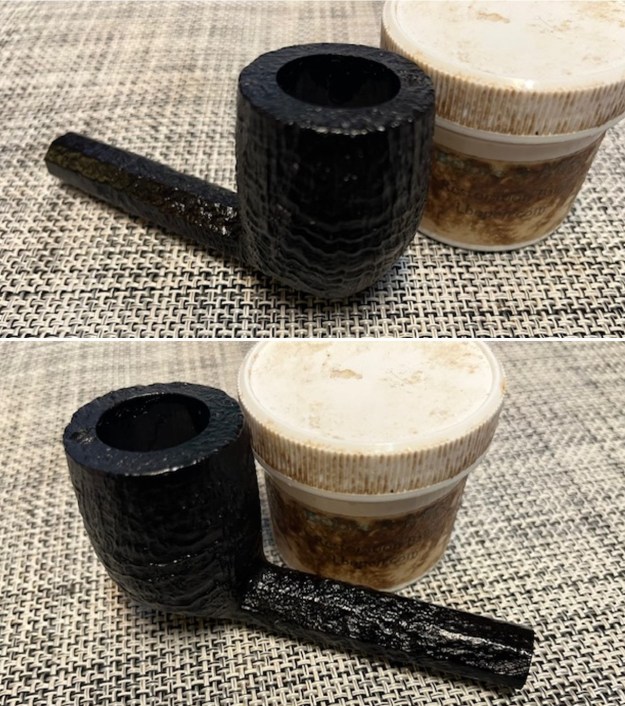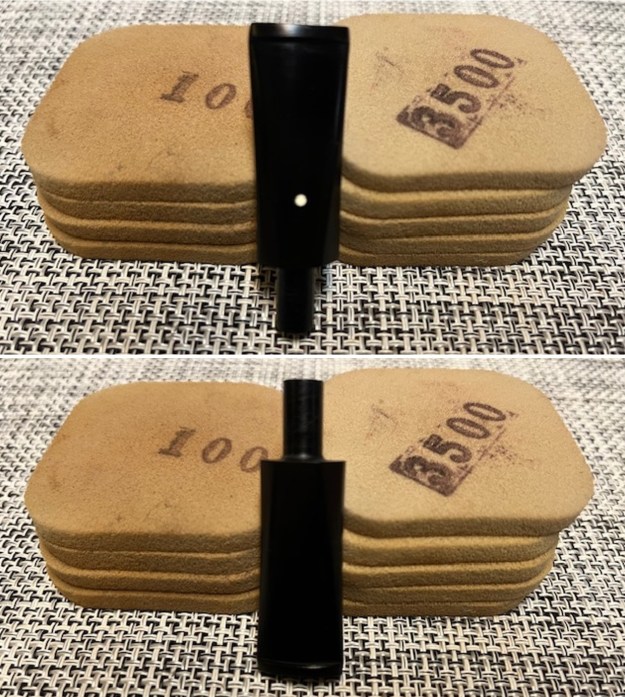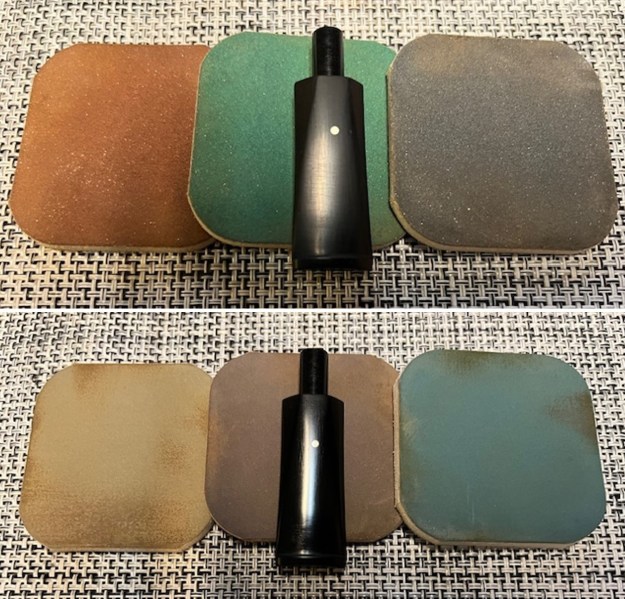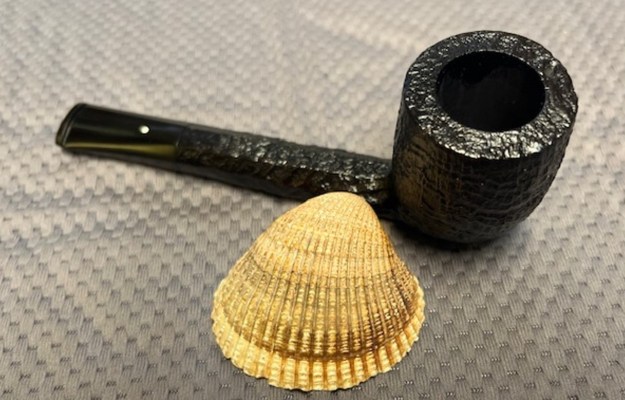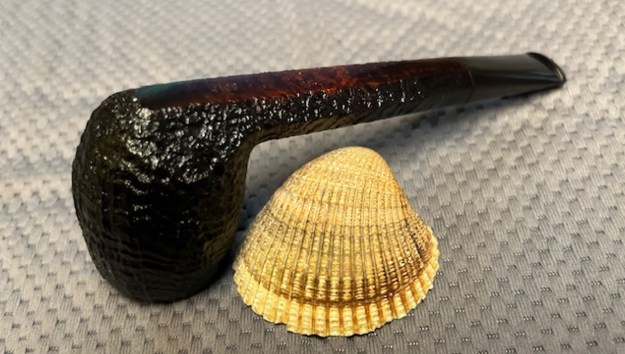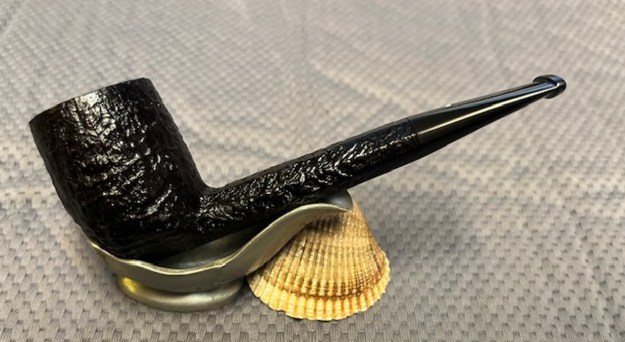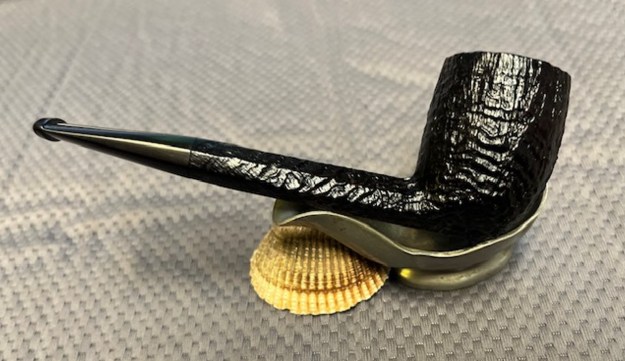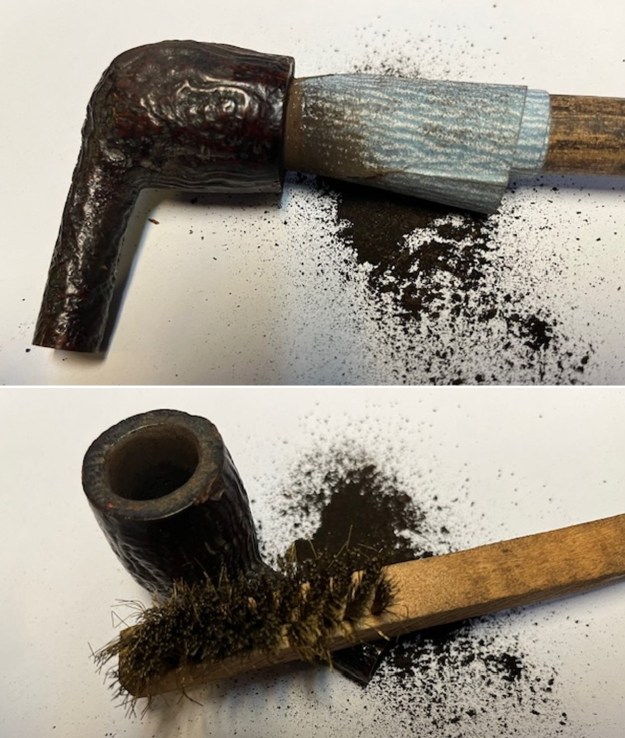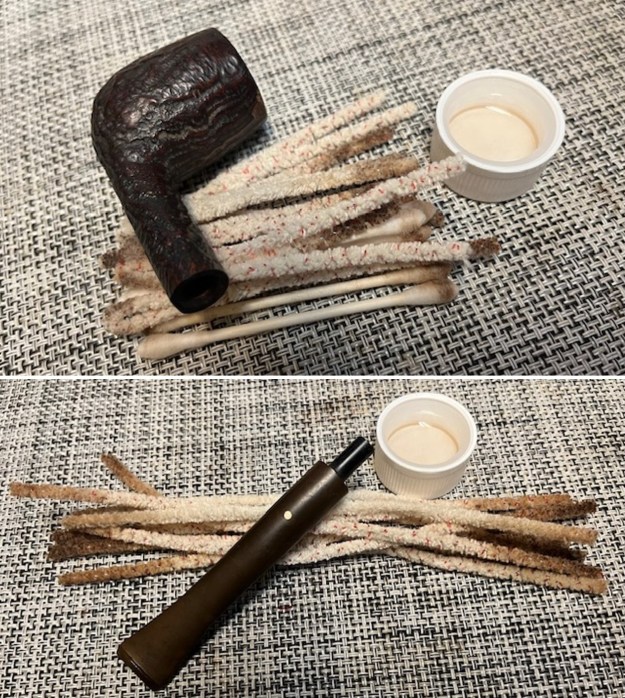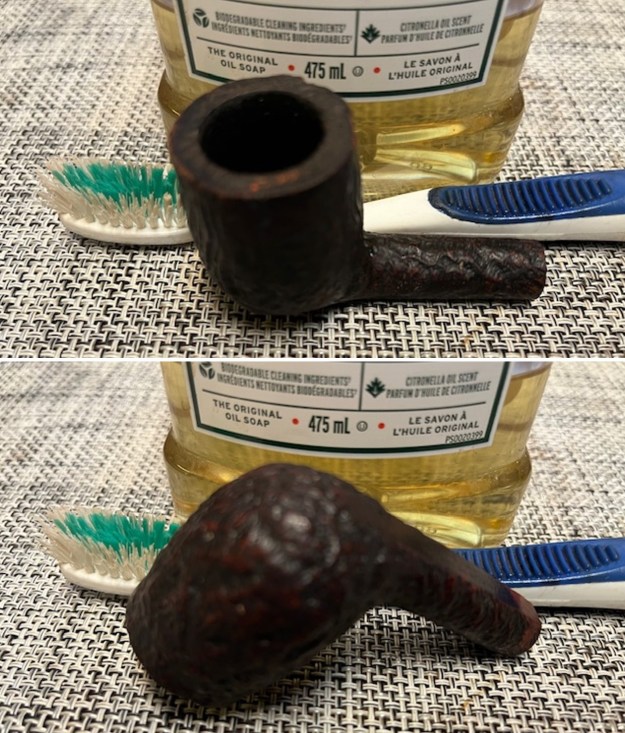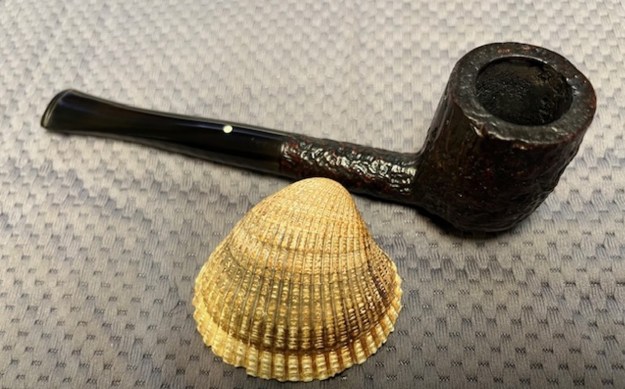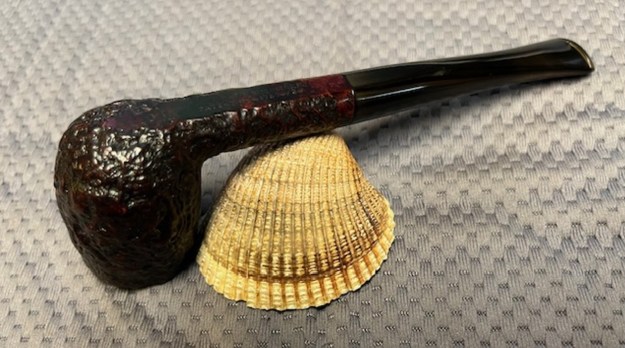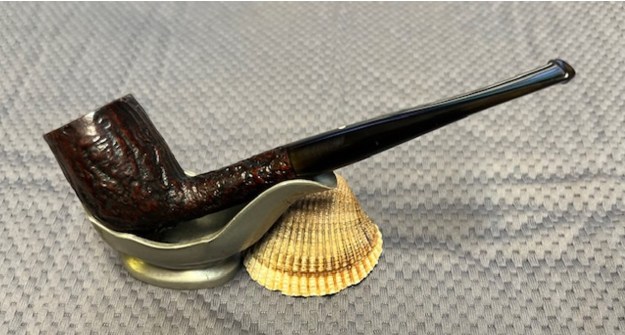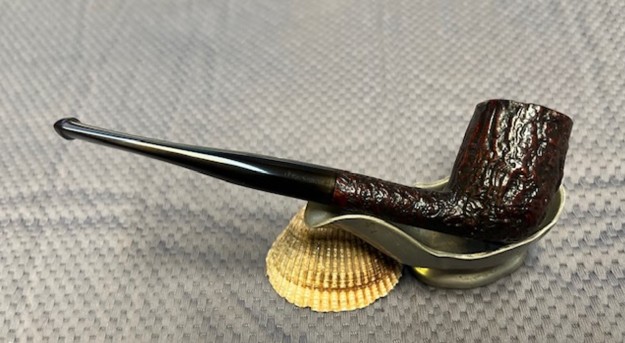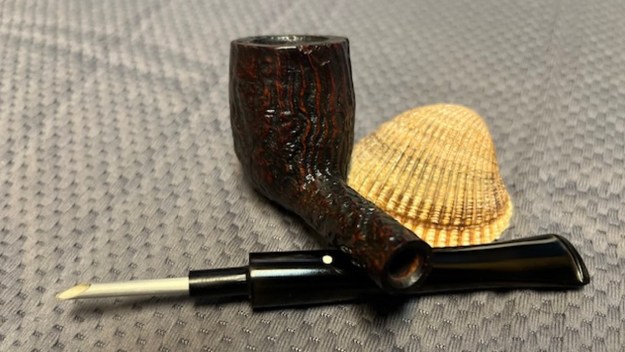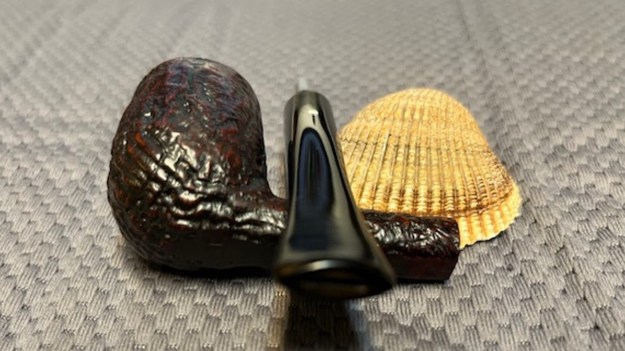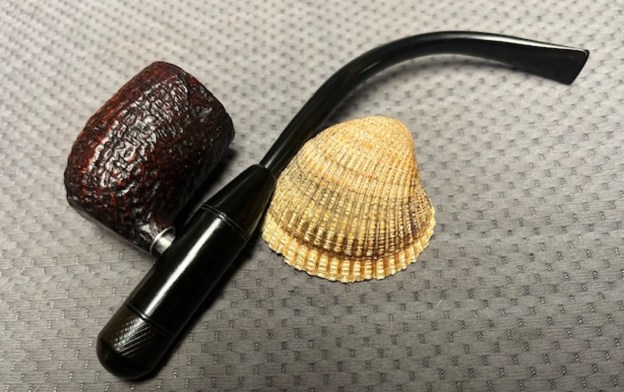
Tag Archives: Dunhill Shell Pipes

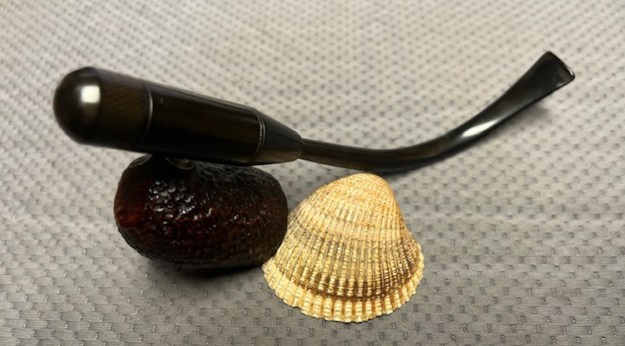
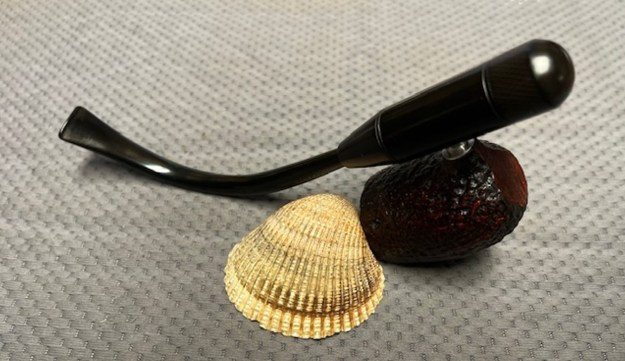
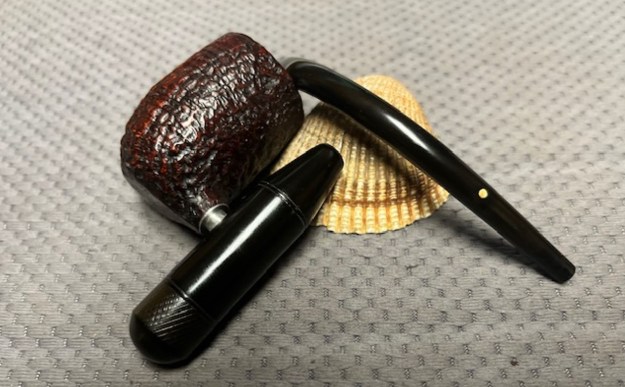
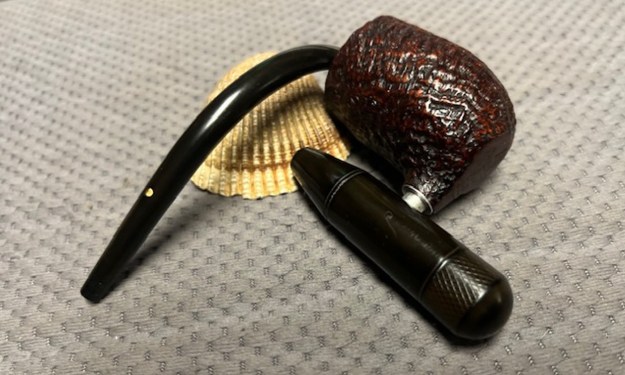
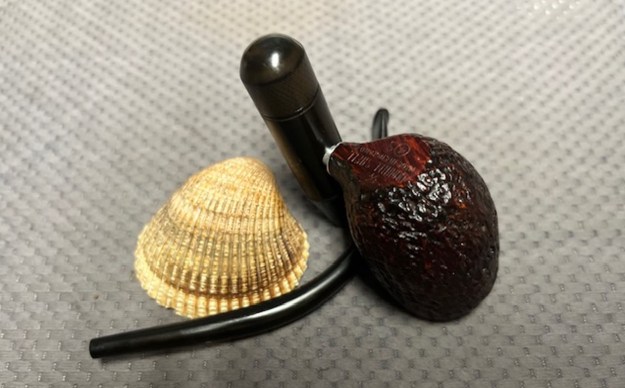
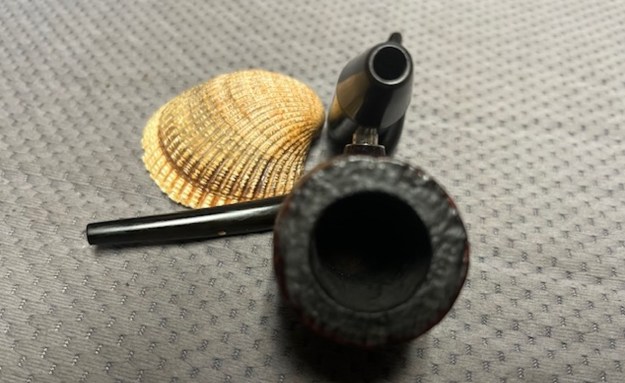
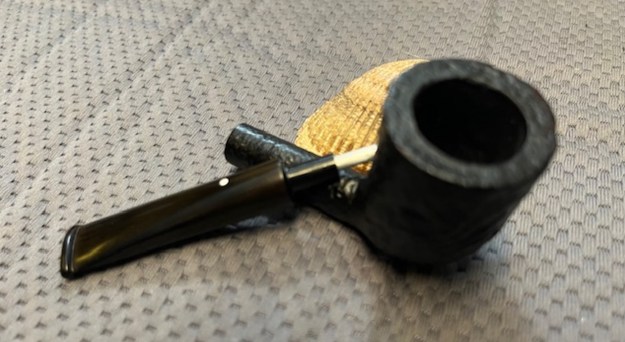
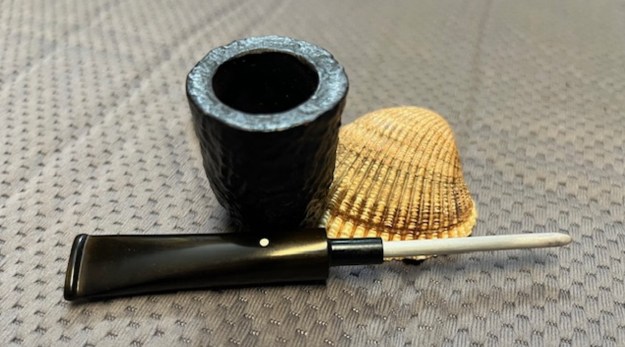
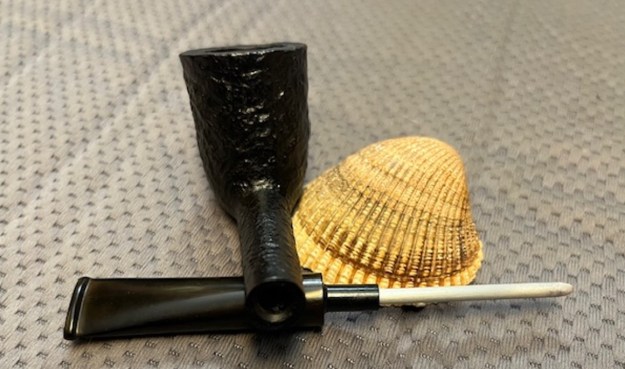
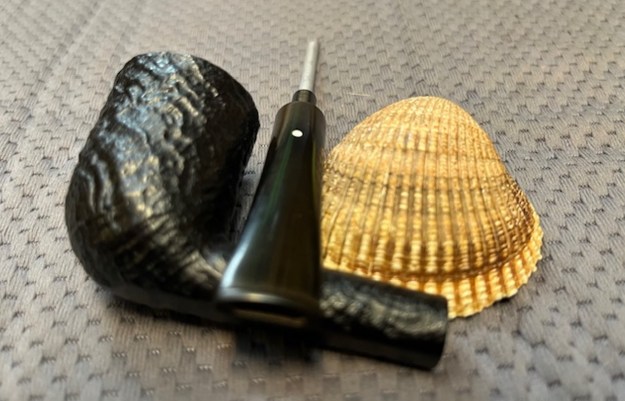
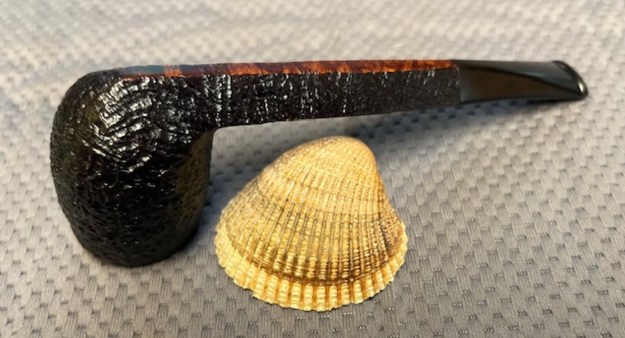
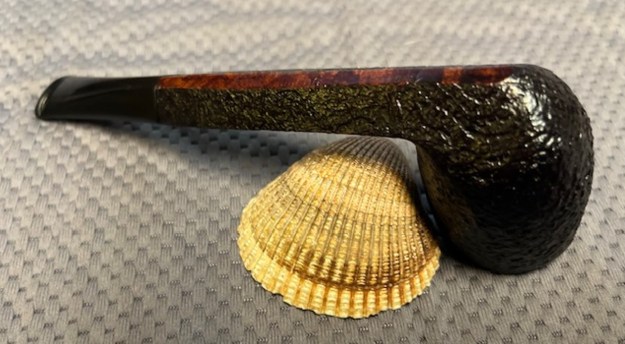
Restoring a 1962 Dunhill Shell F/T Full Bent Cavalier


by Steve Laug

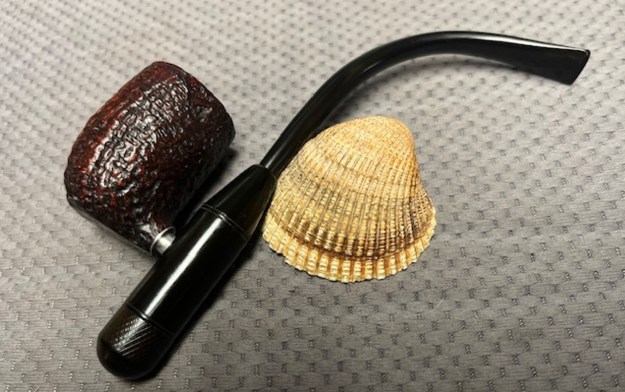
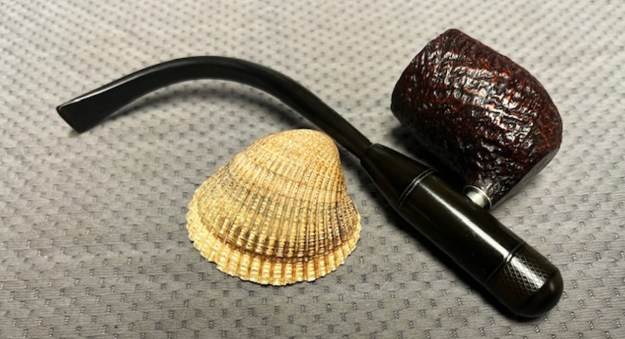
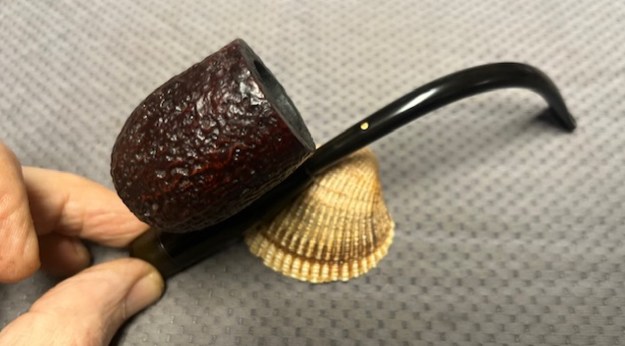
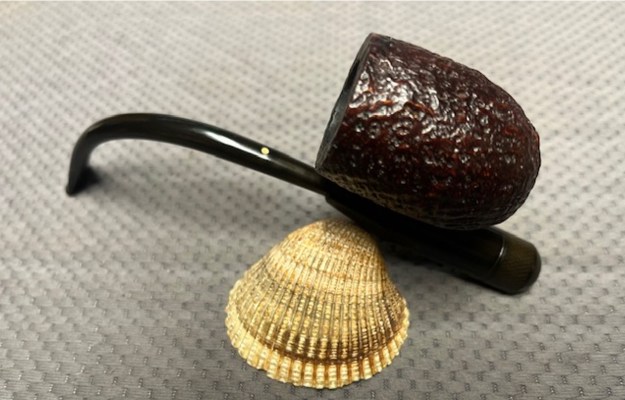
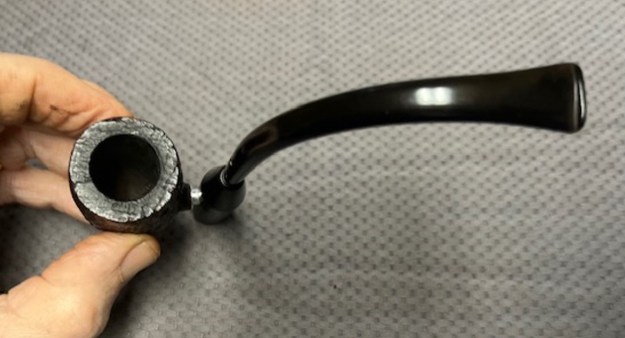
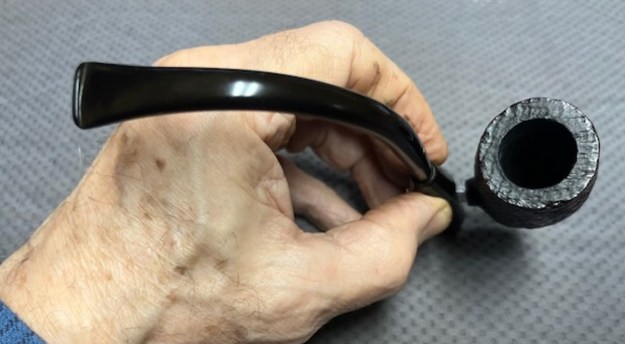
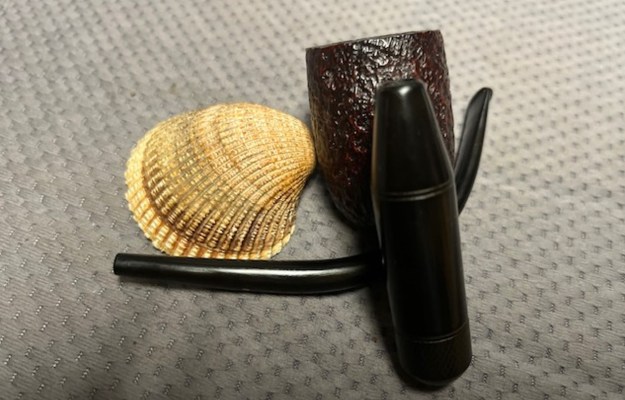
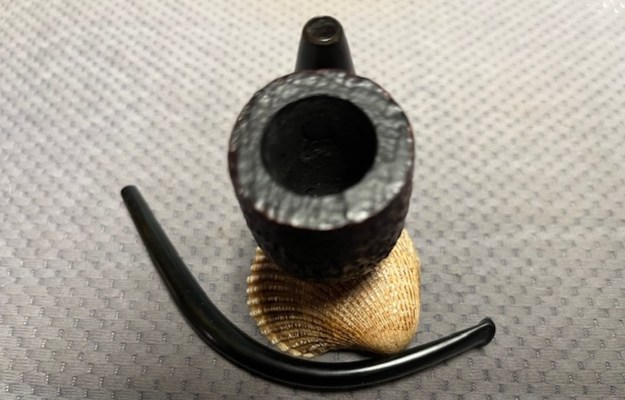
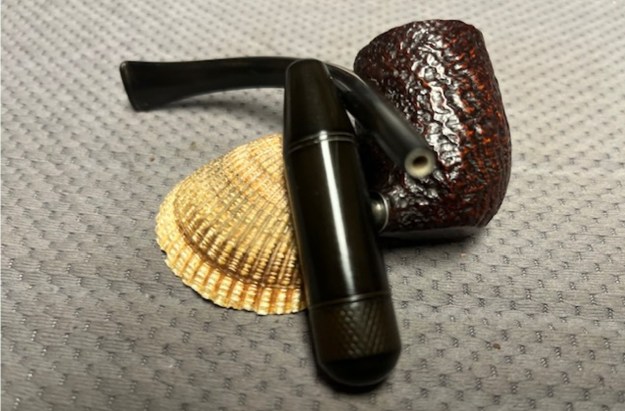
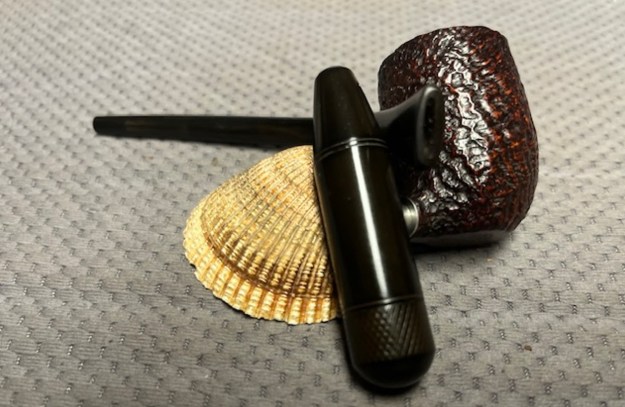
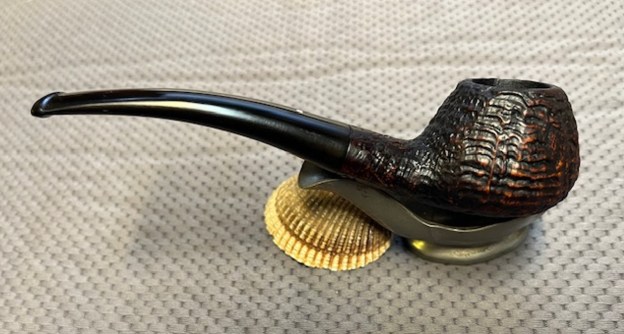
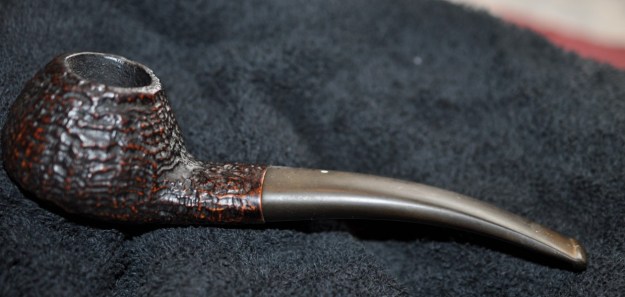
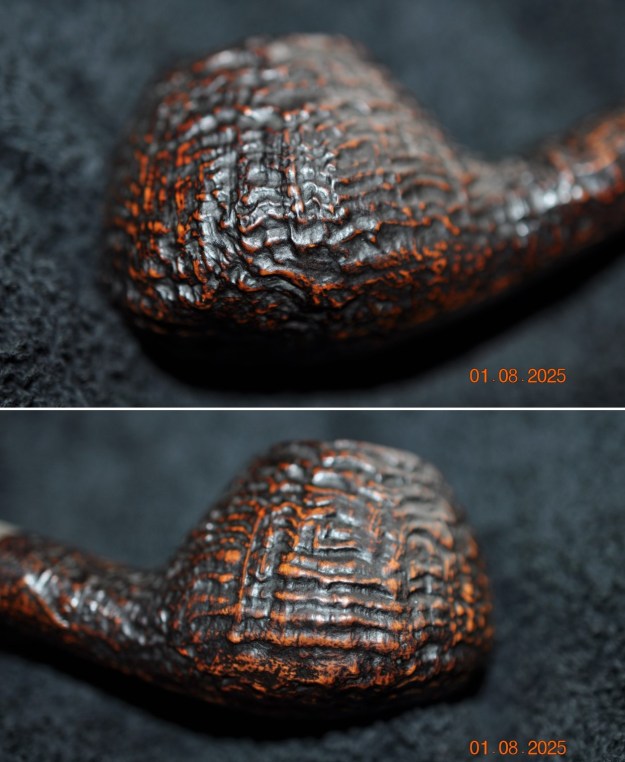
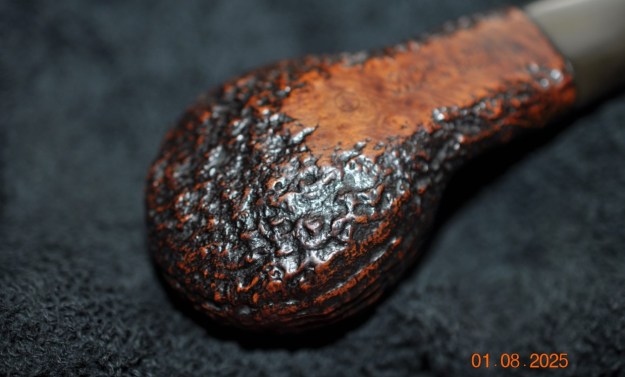
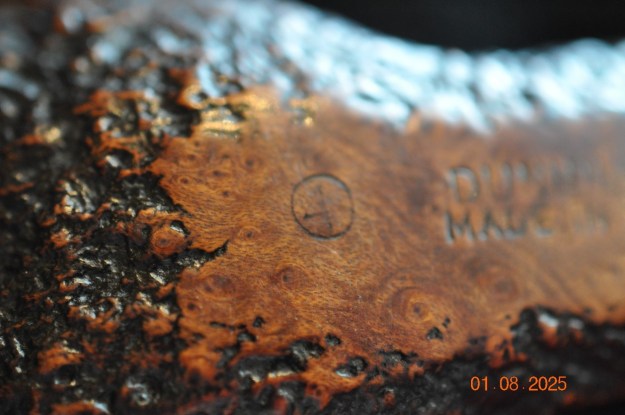
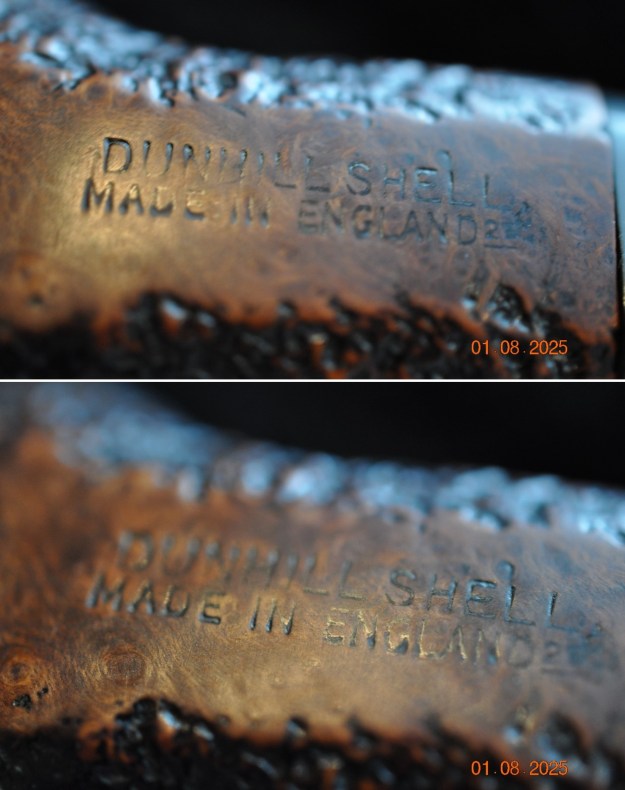
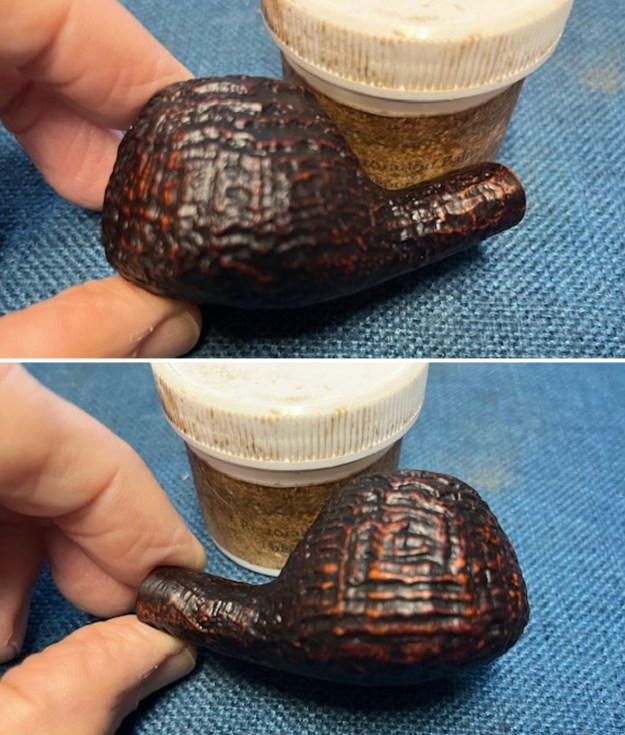
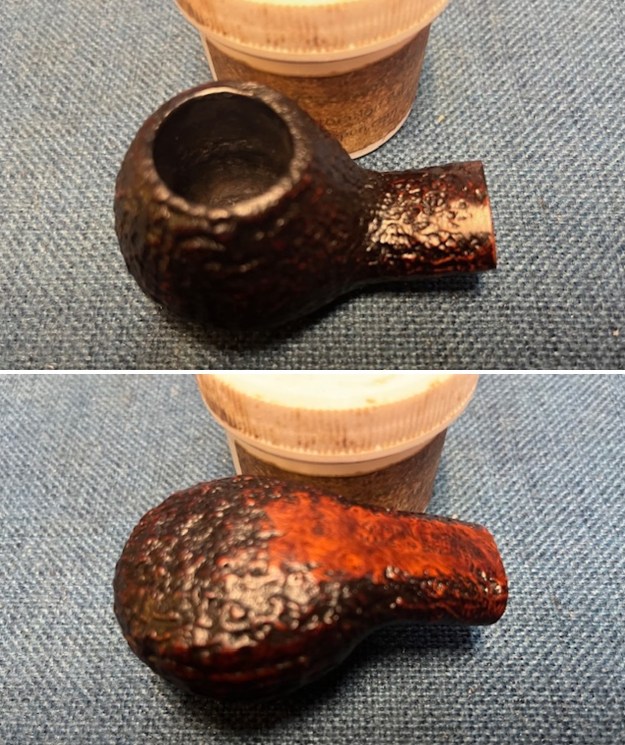
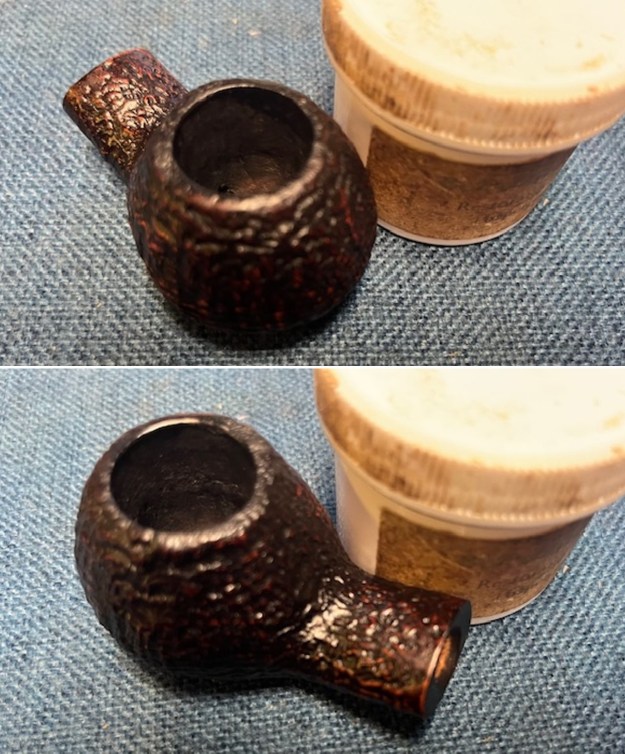
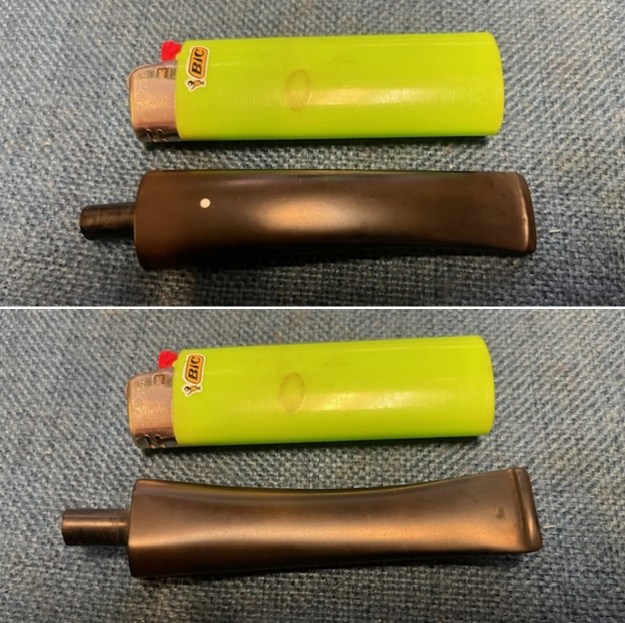
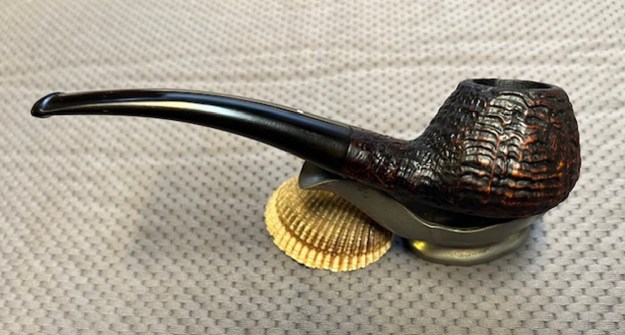
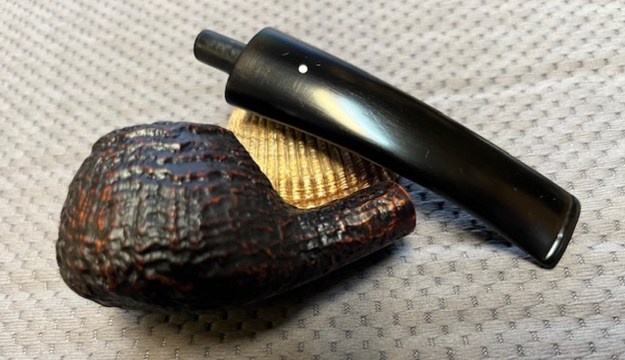
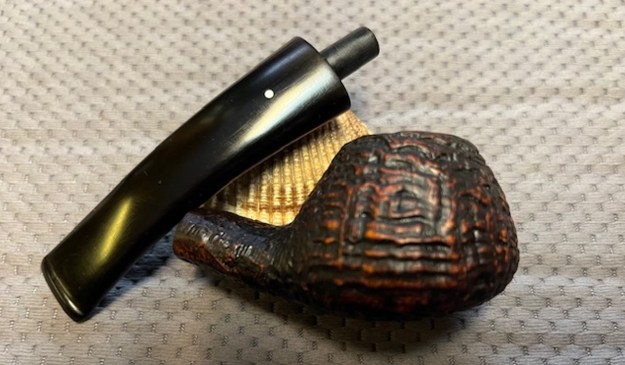
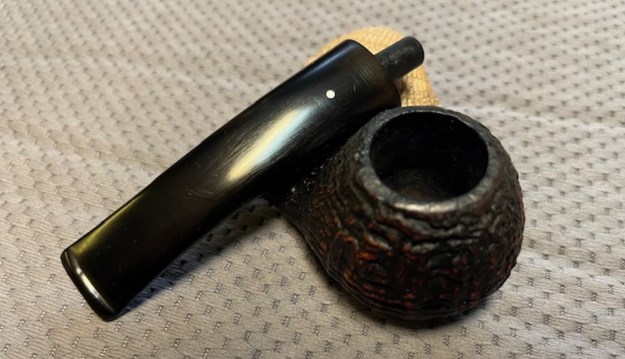
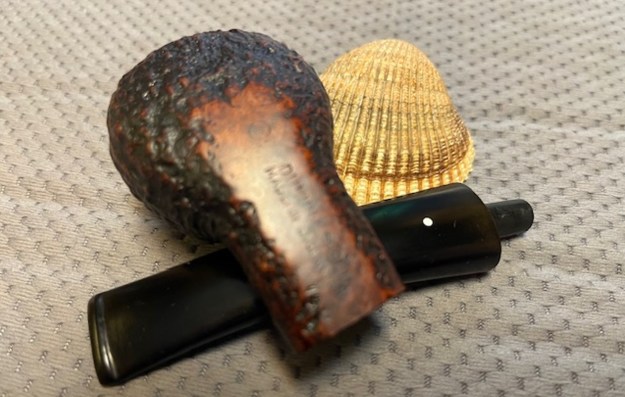
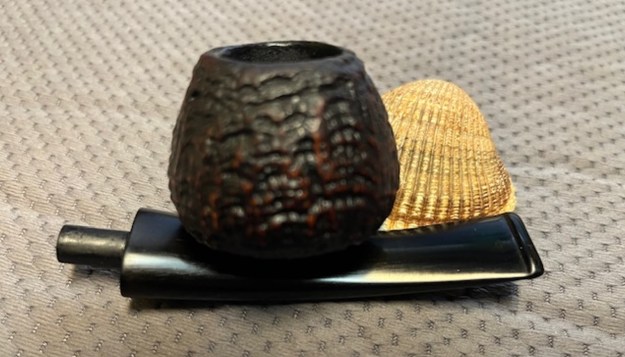
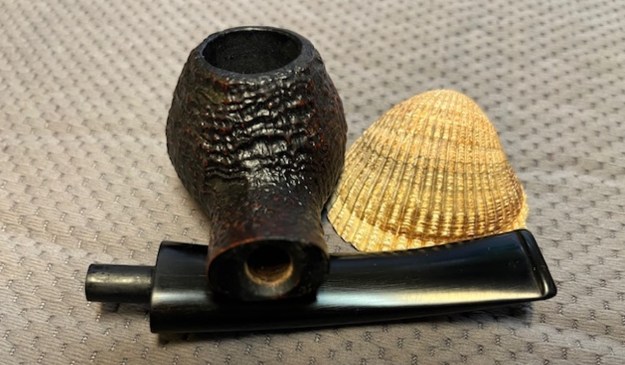
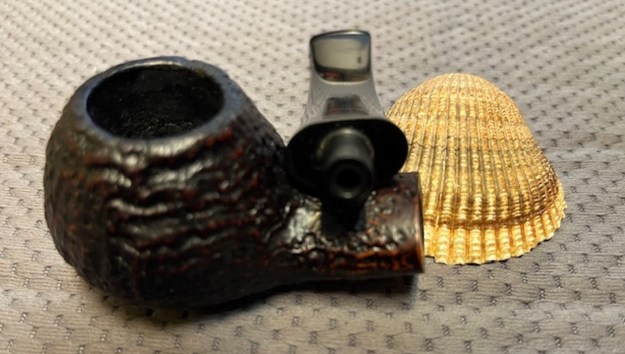
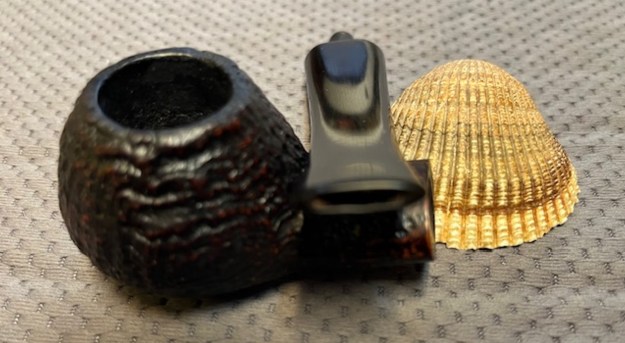
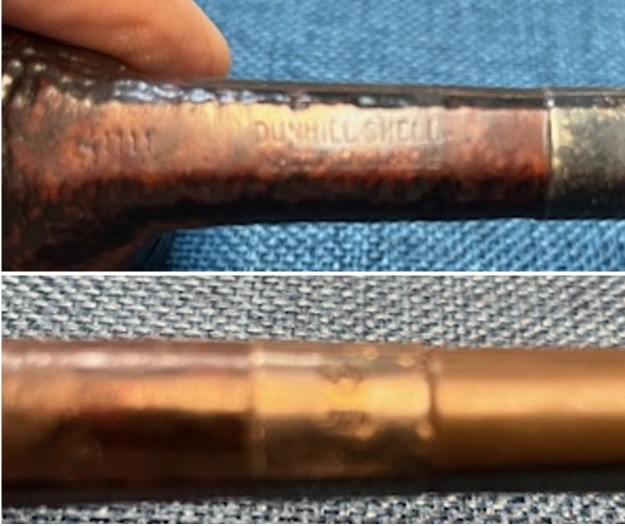
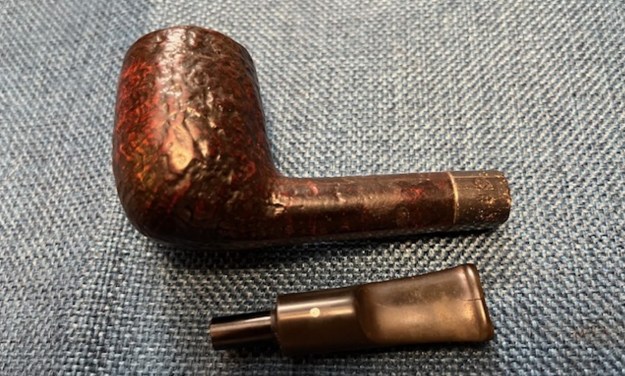
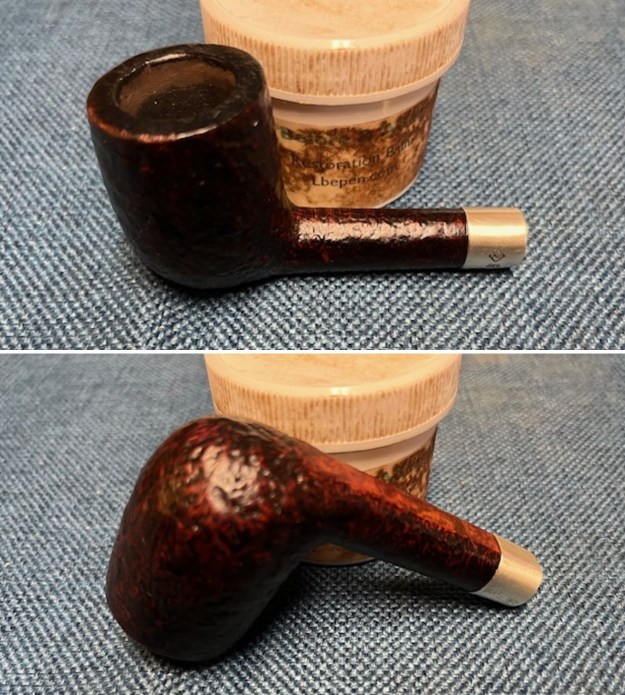
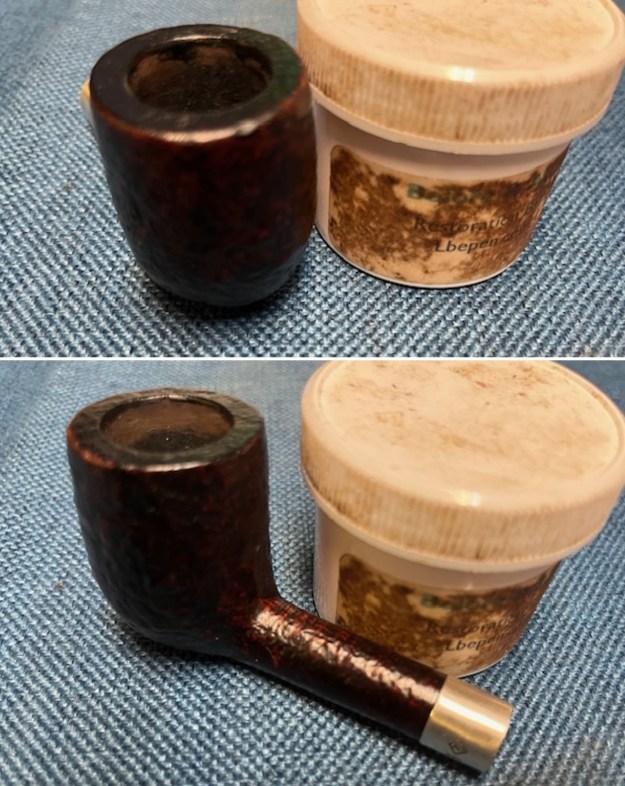
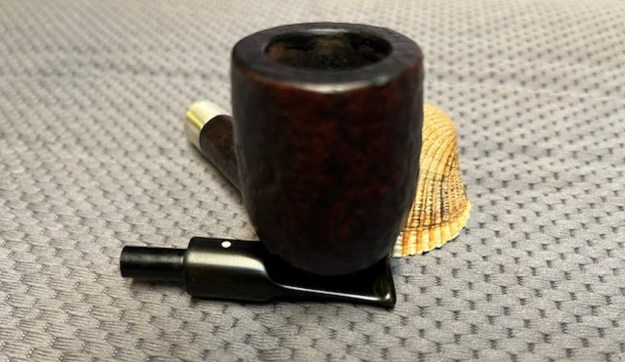
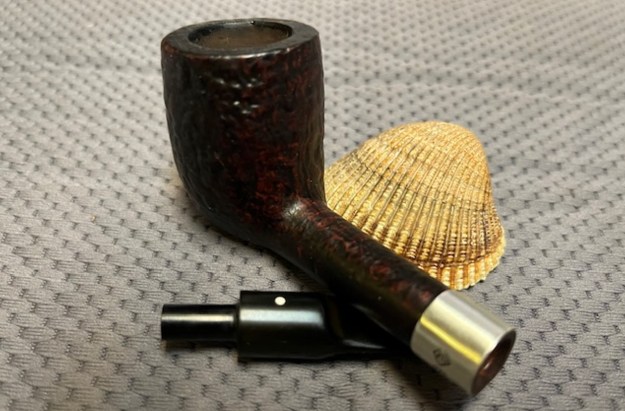
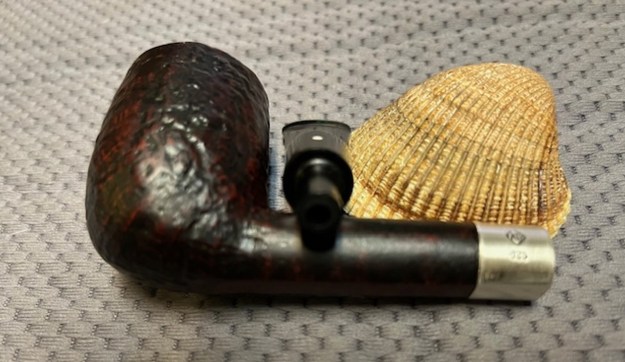
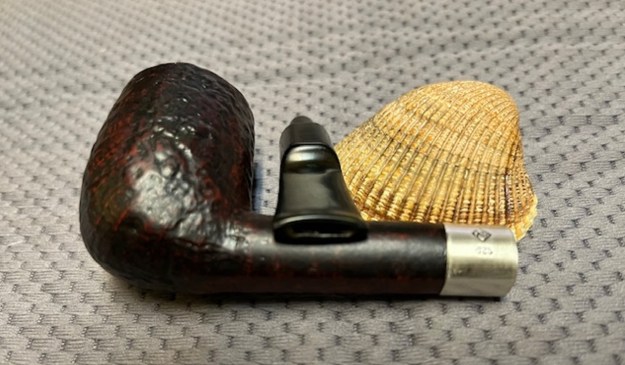
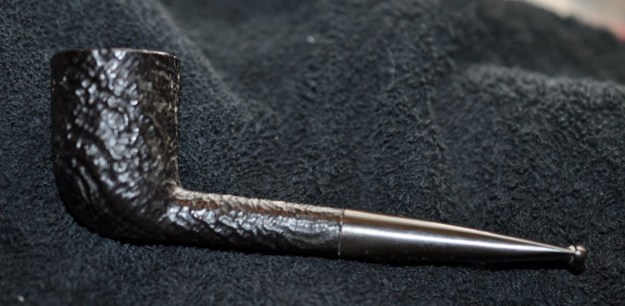
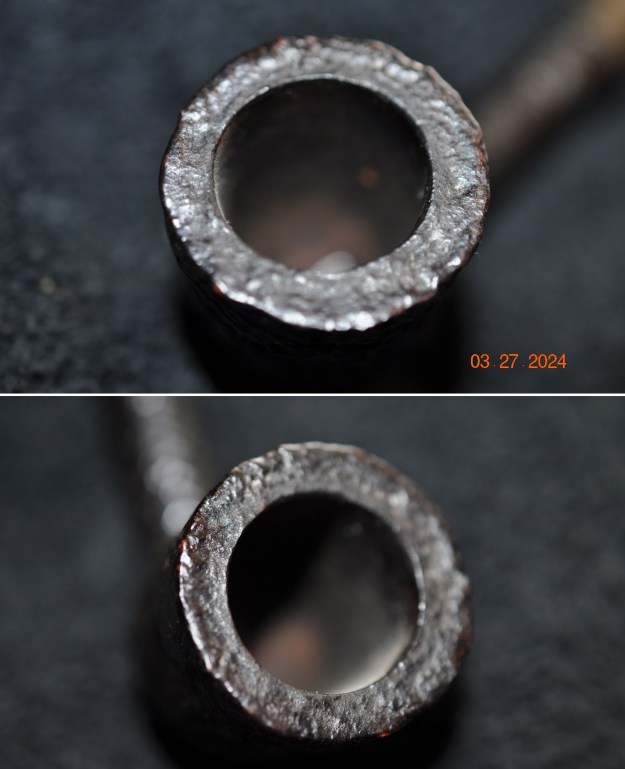
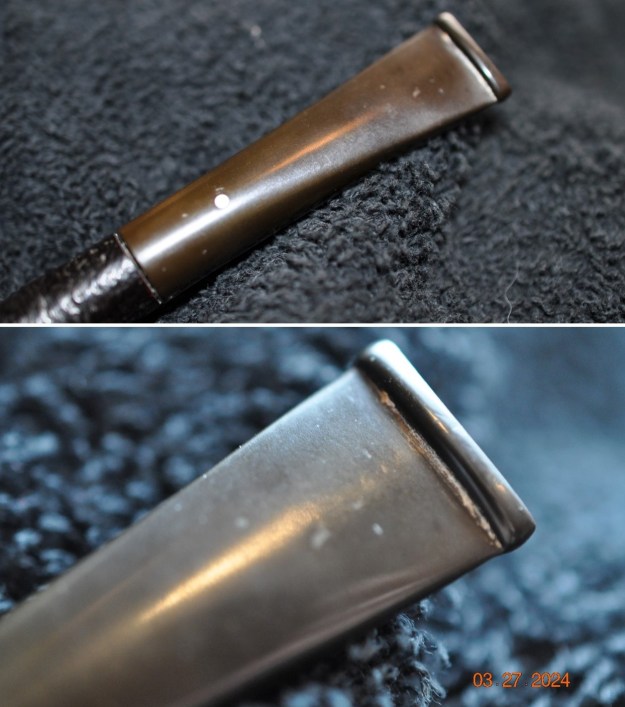
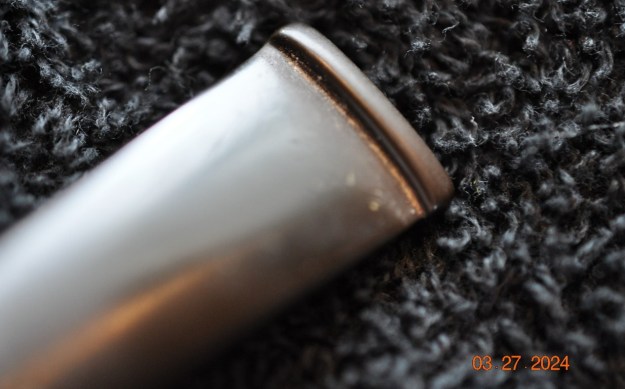
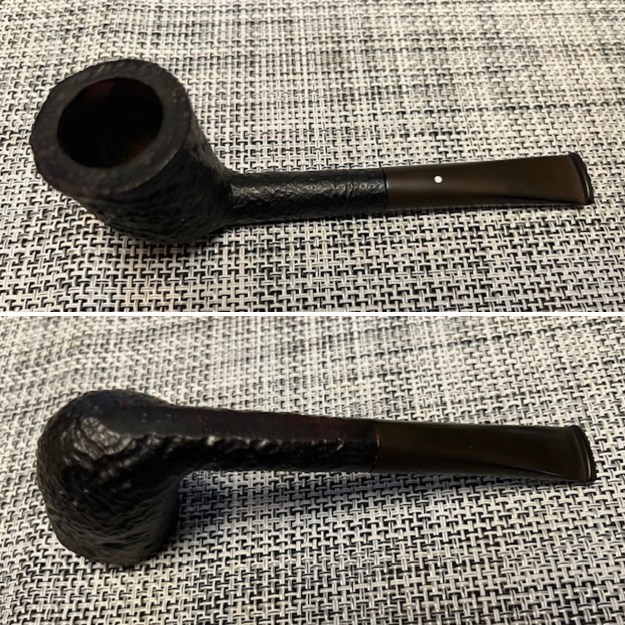
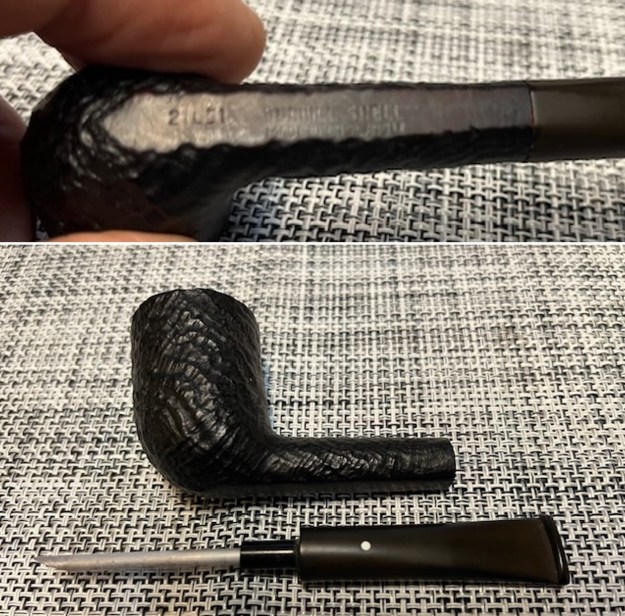
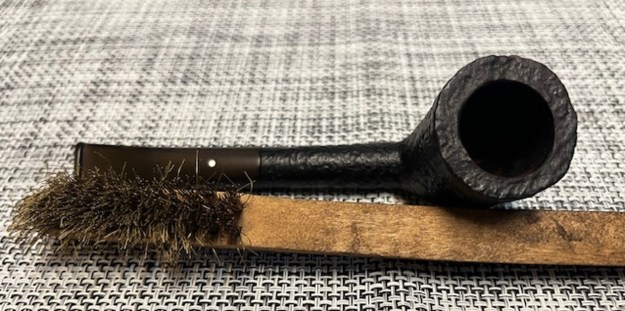
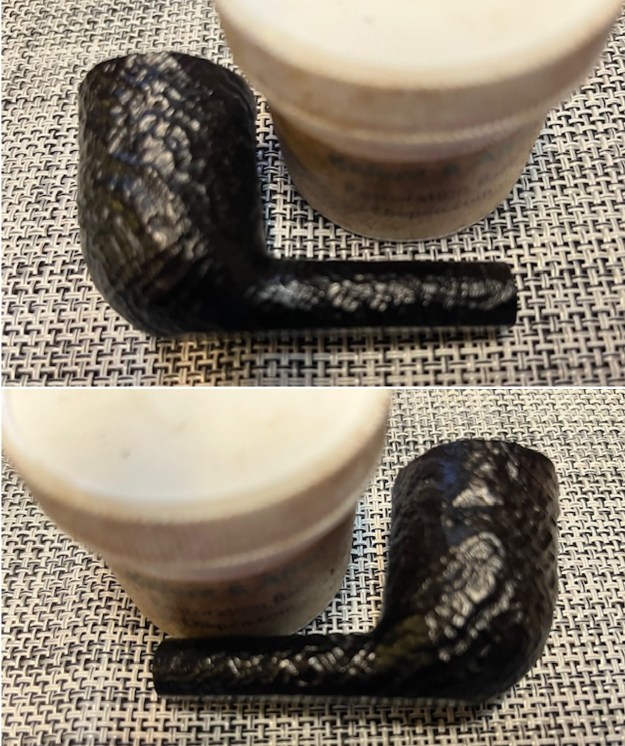
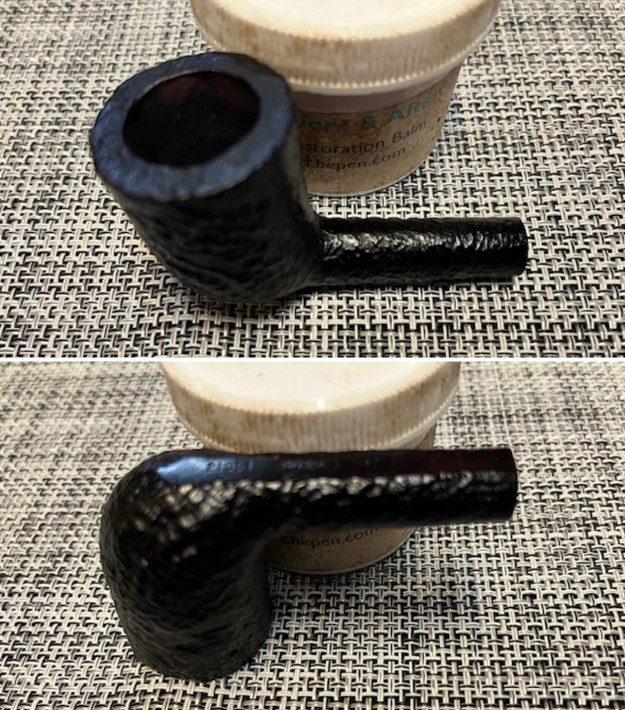
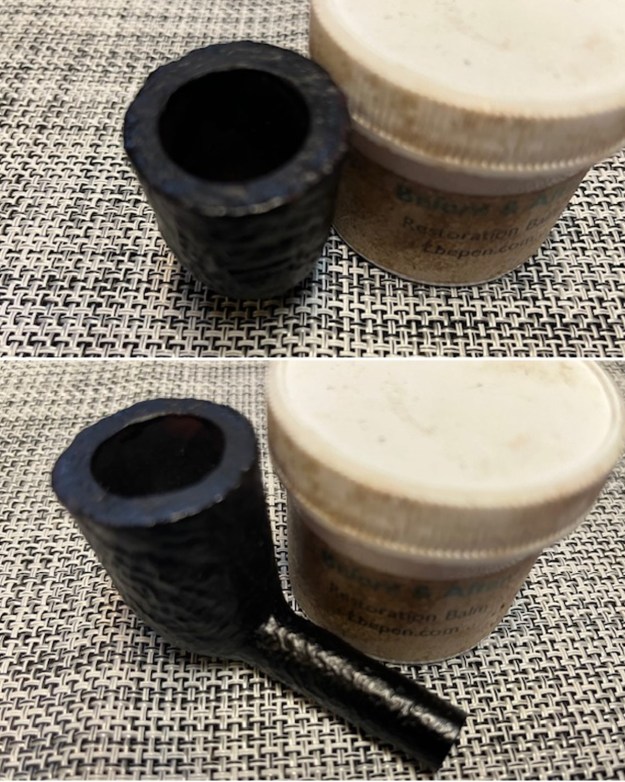
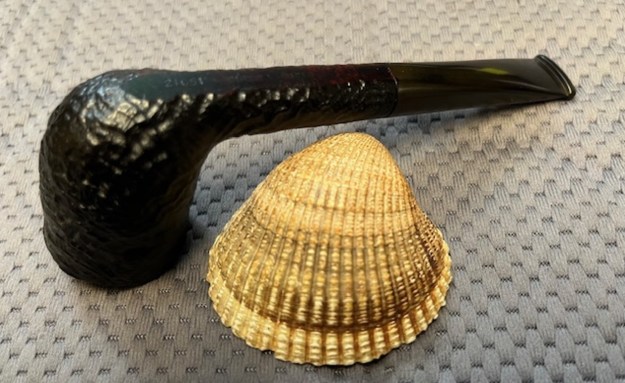
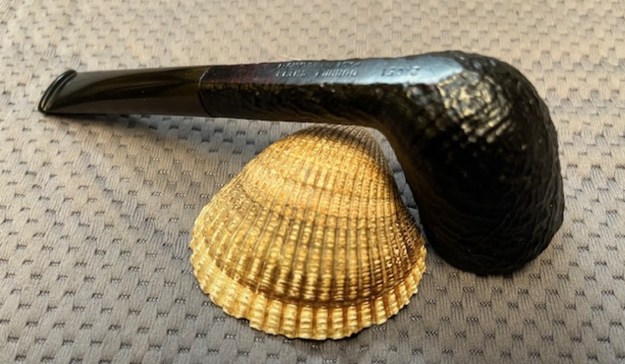
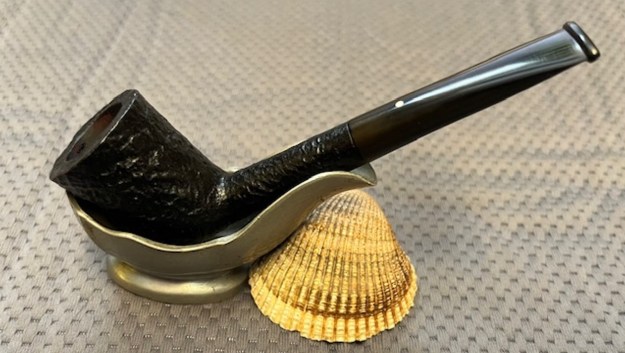
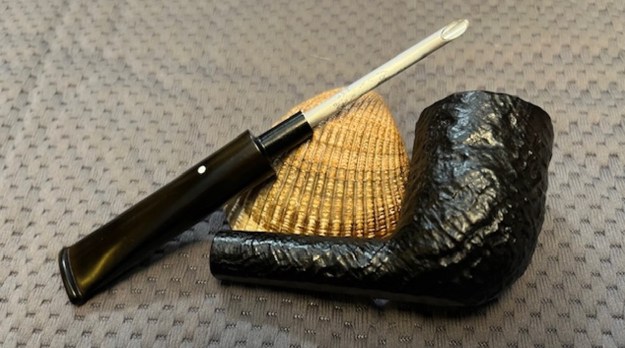
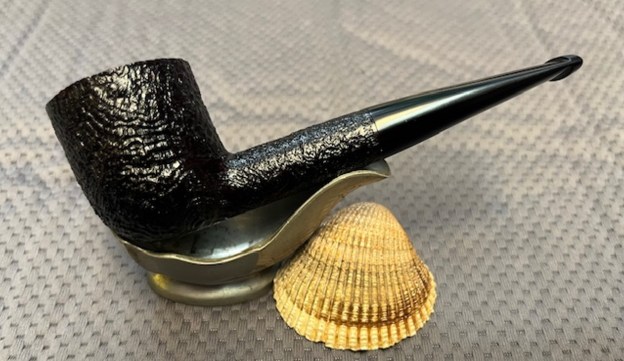
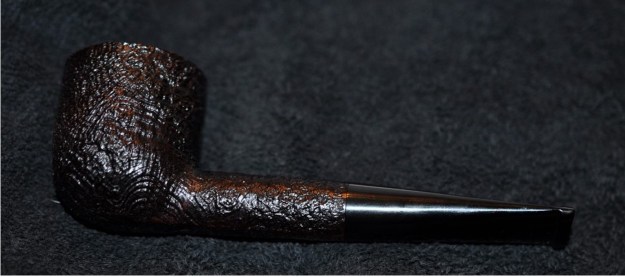
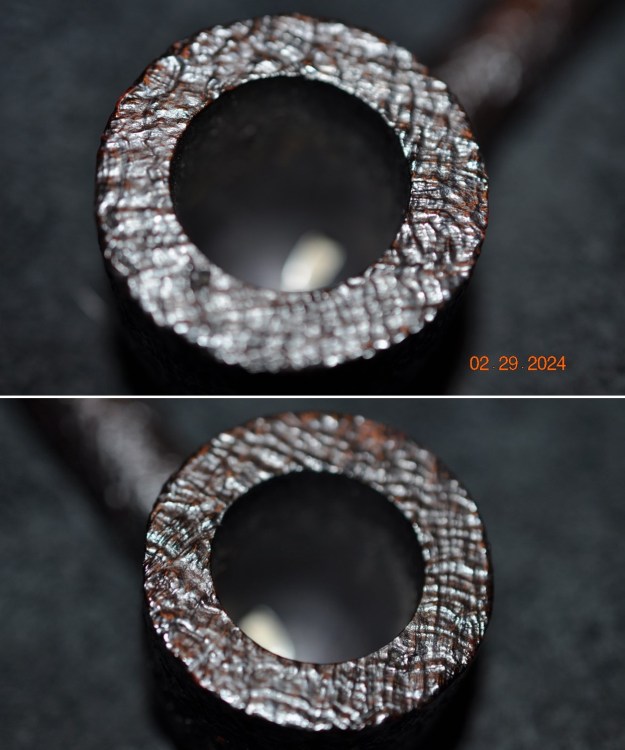
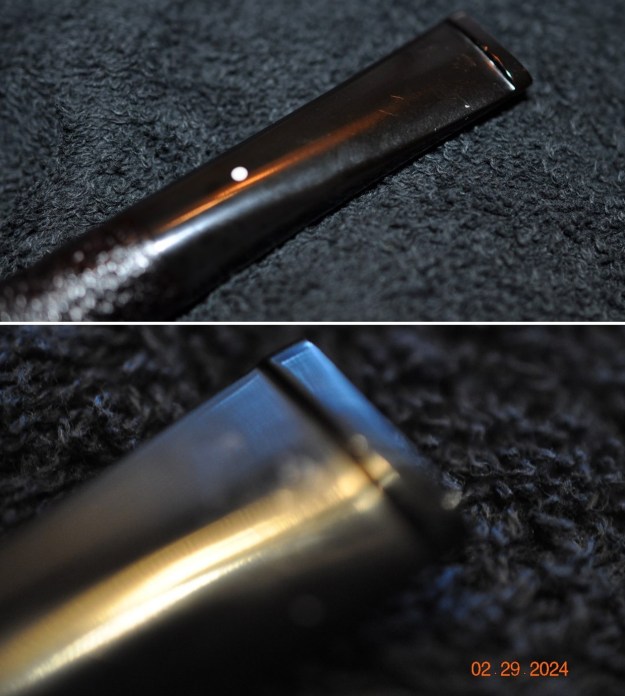
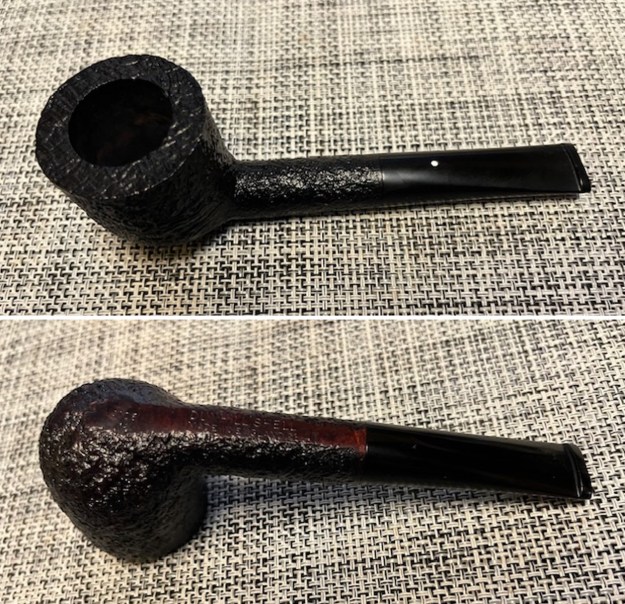
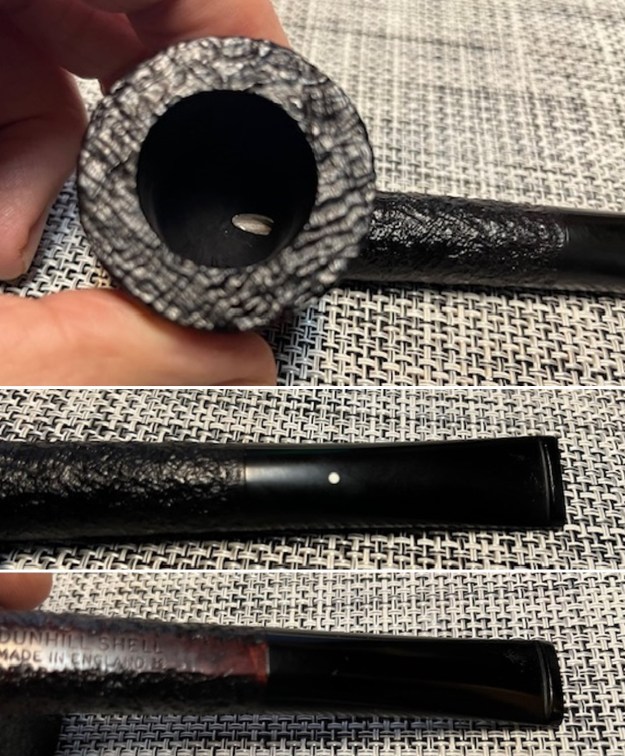
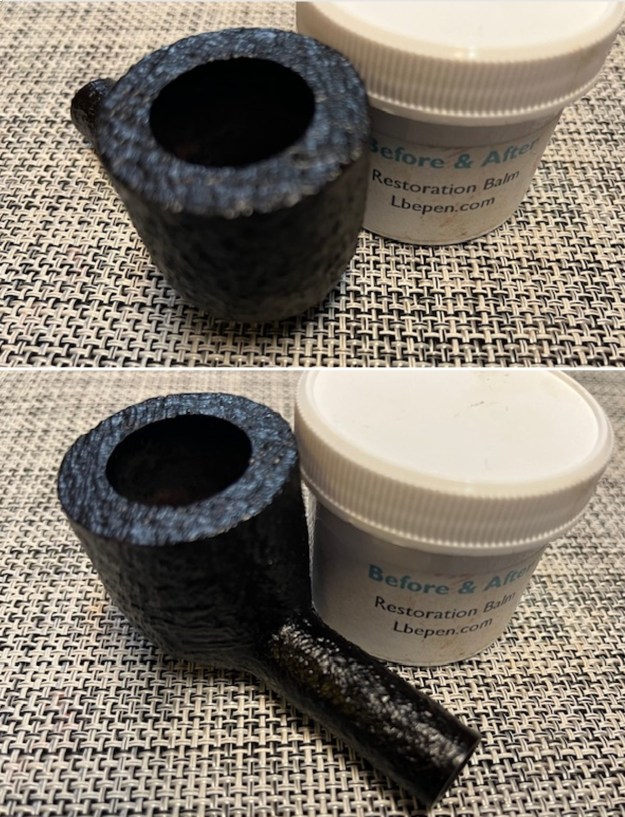
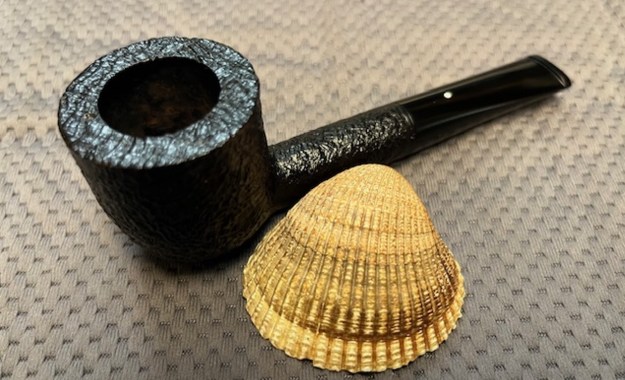
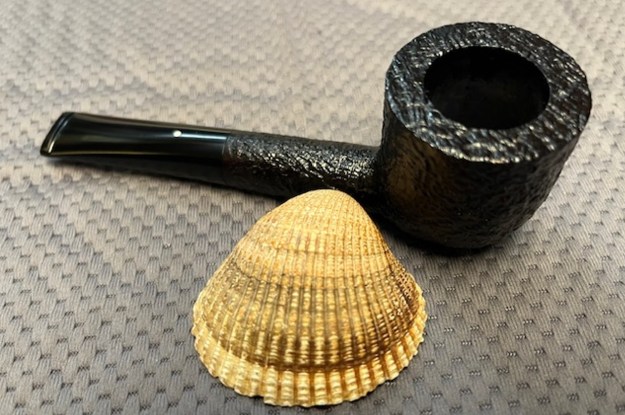
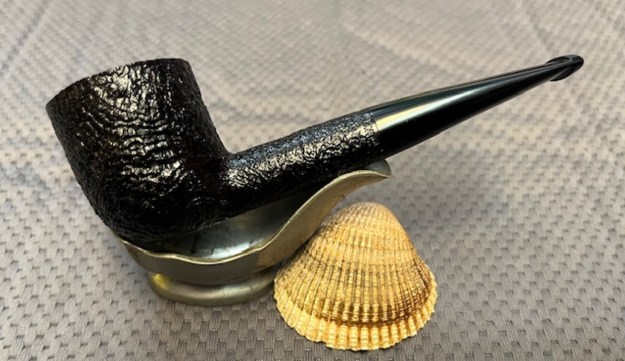
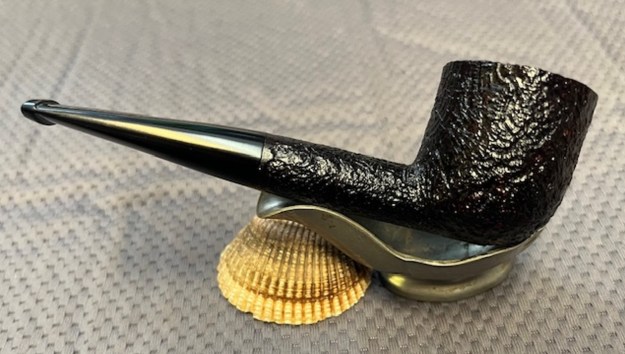
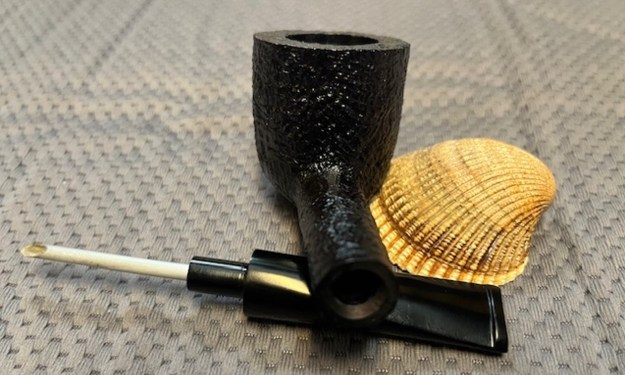
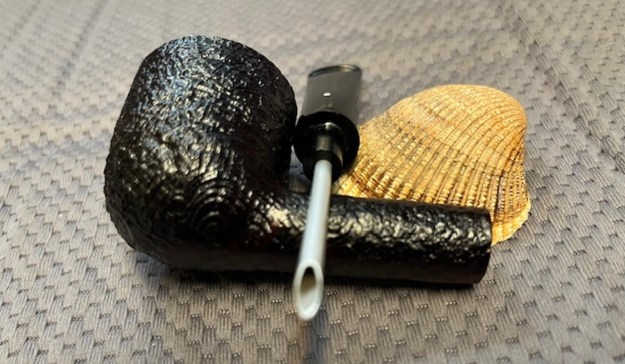
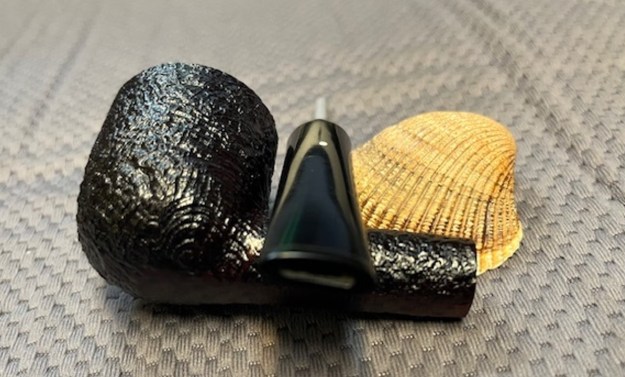
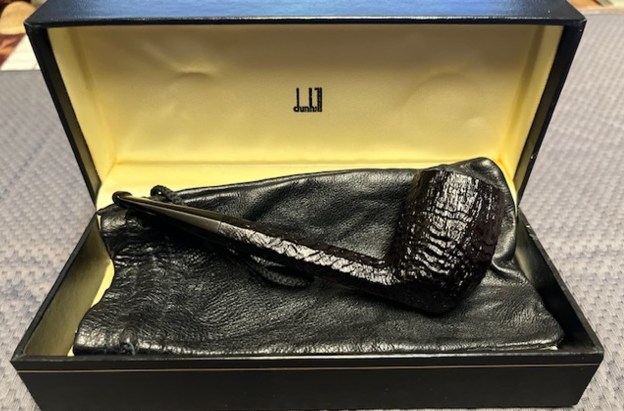
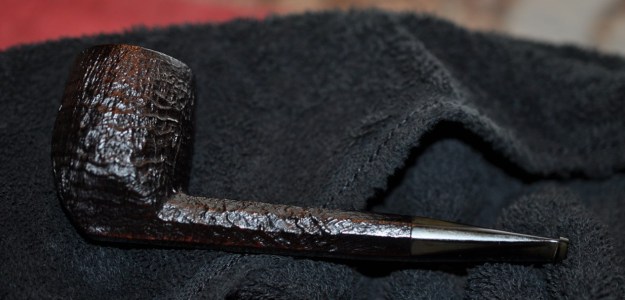
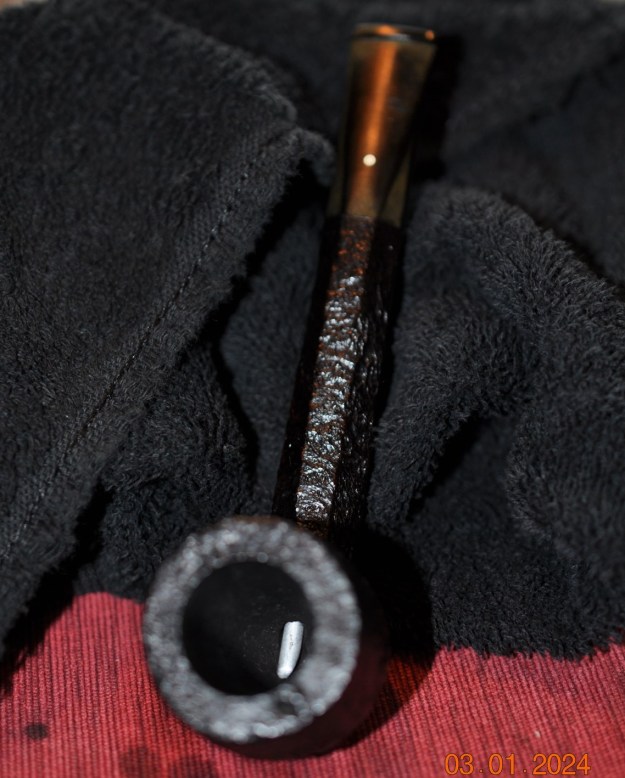
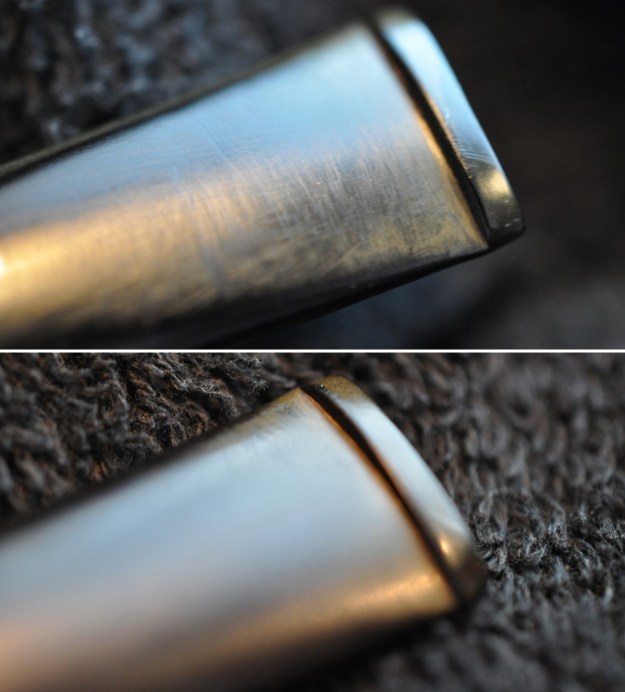
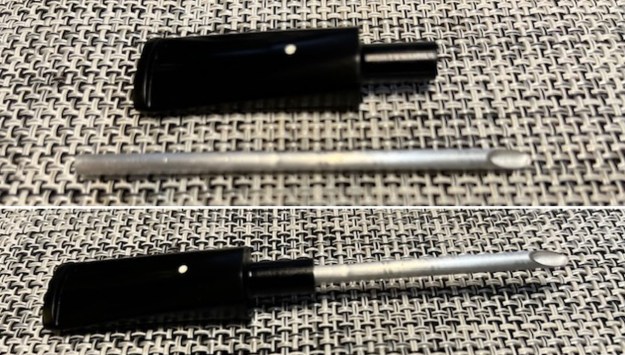
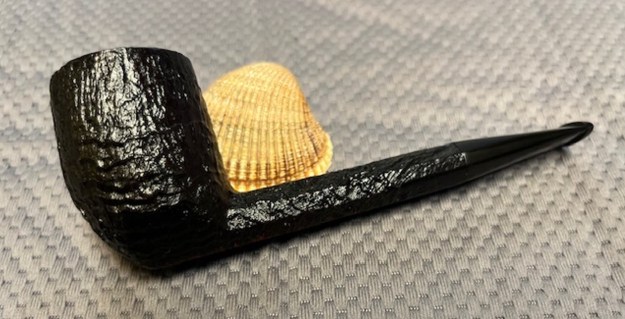
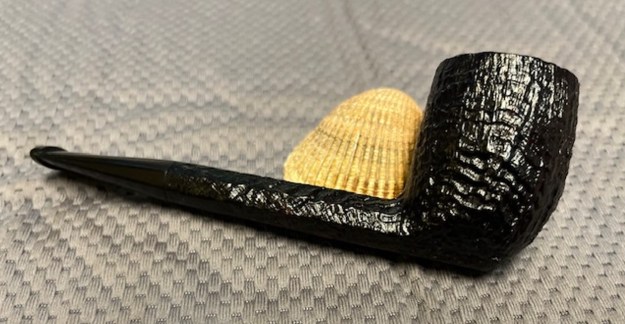
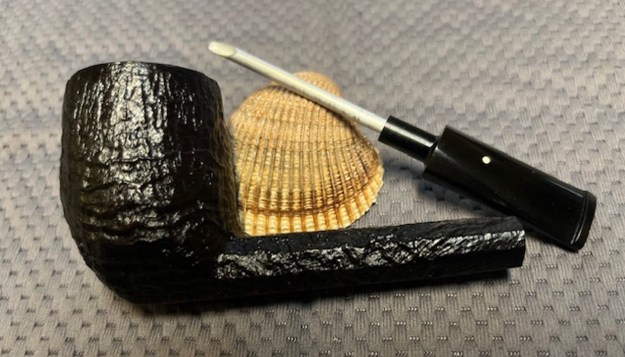
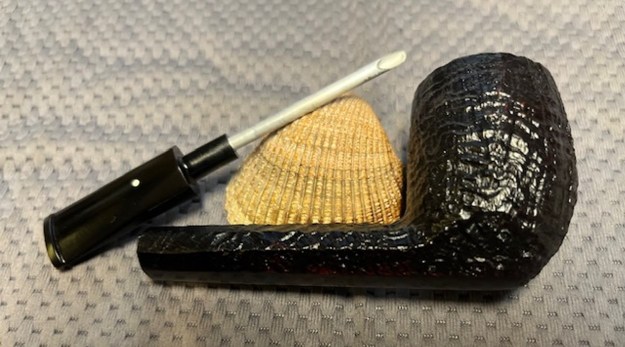
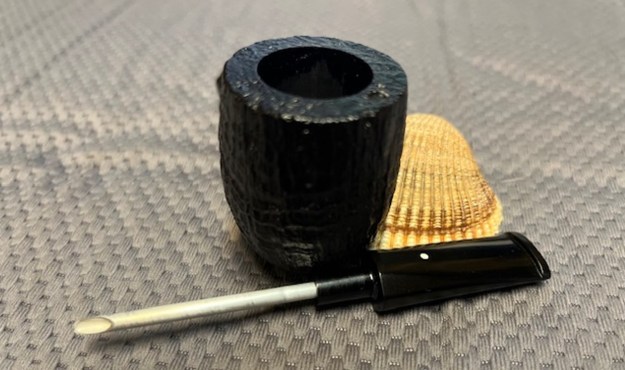
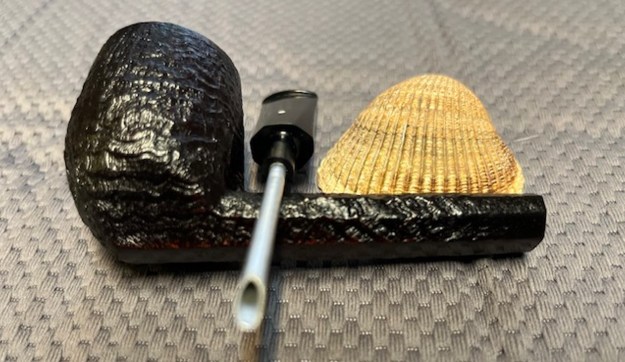
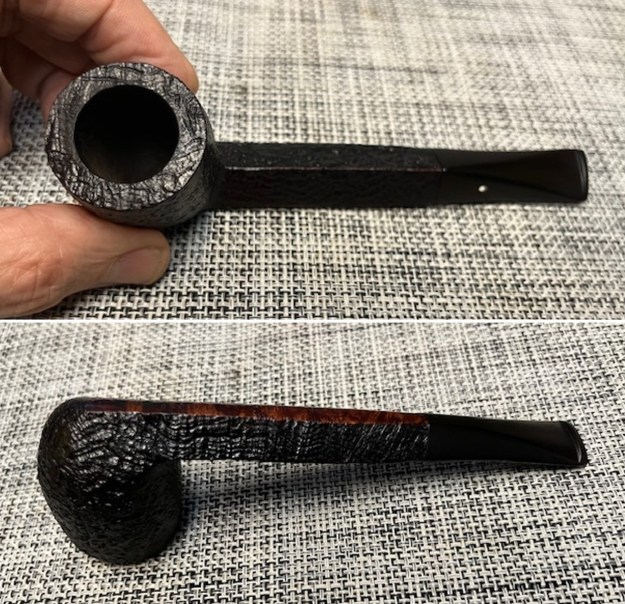
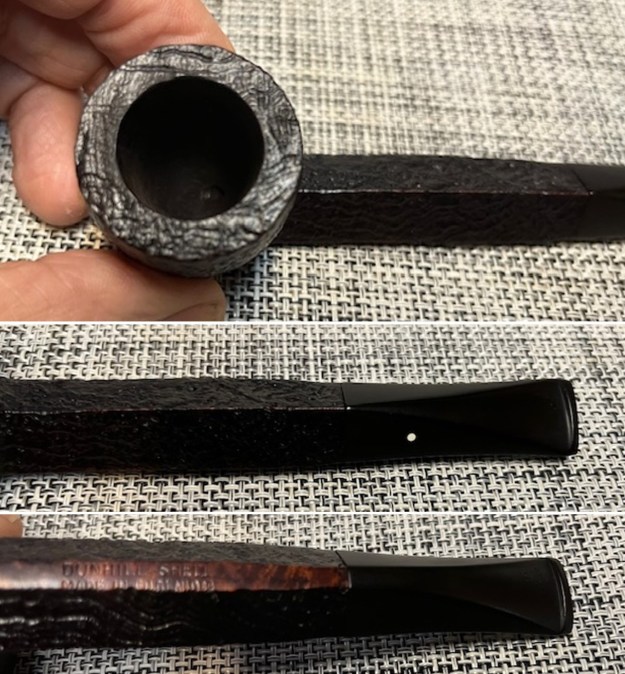
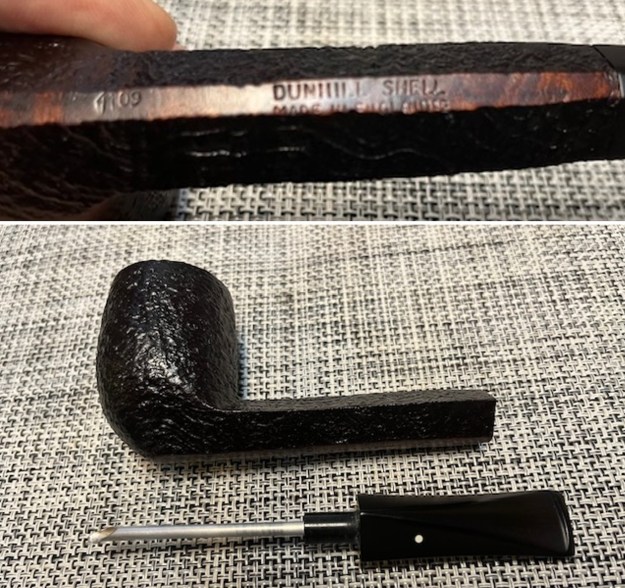
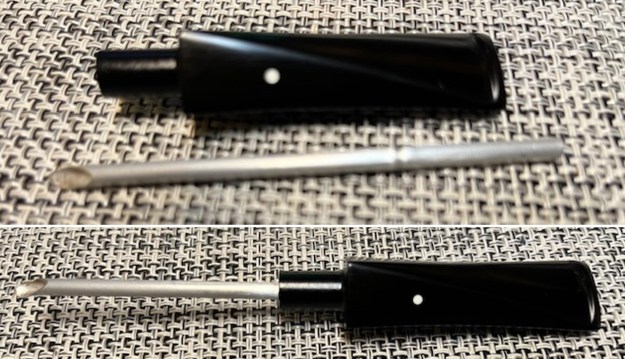
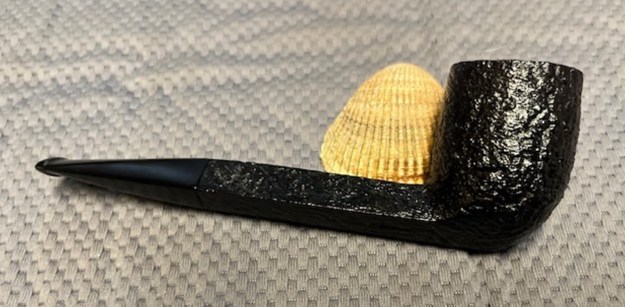
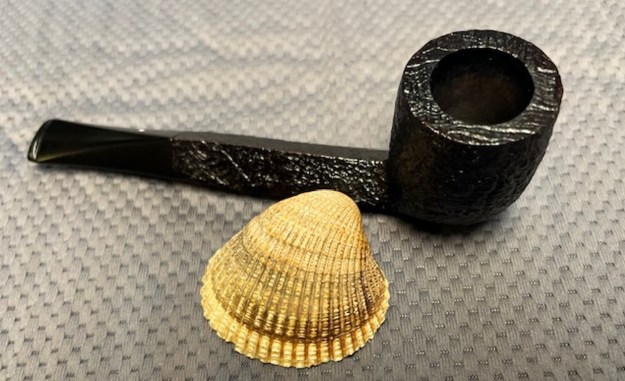
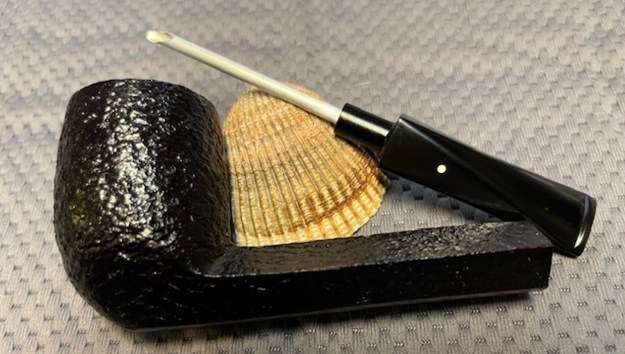
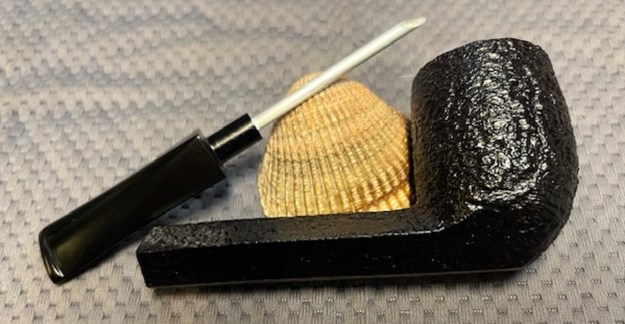
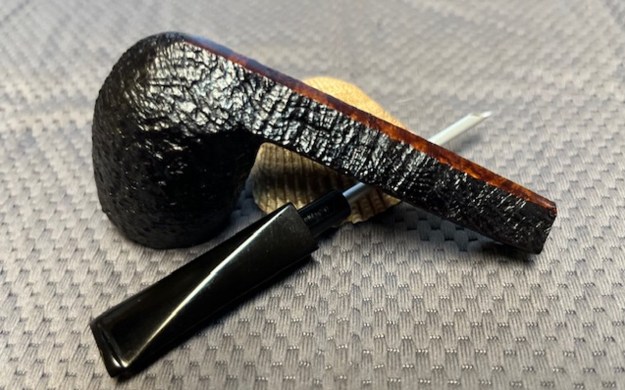
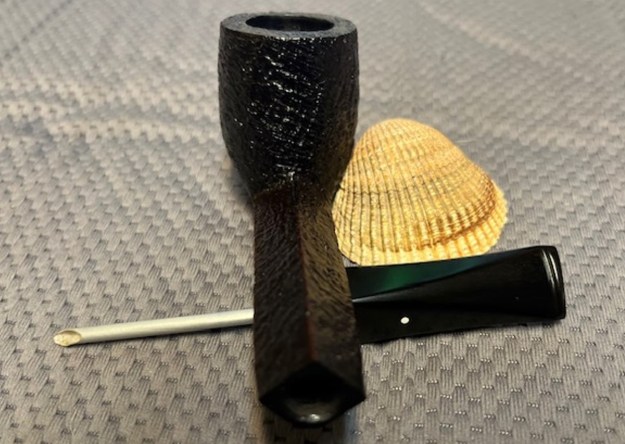
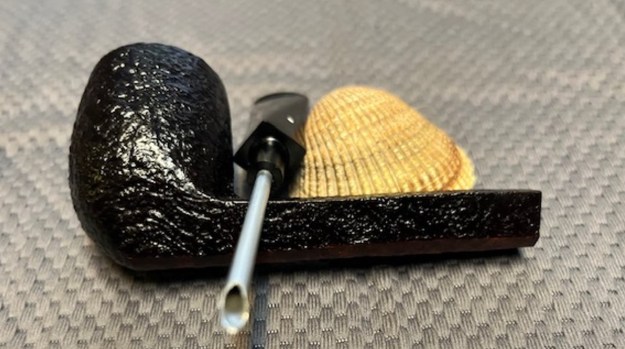
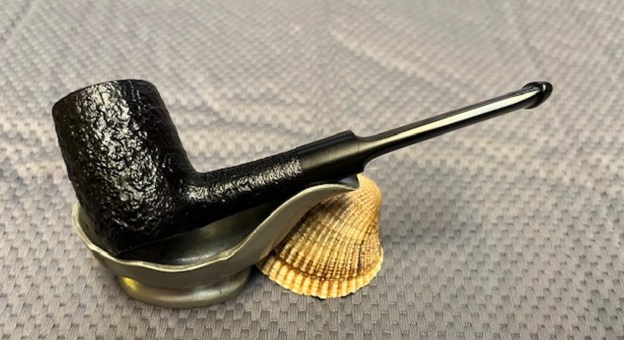
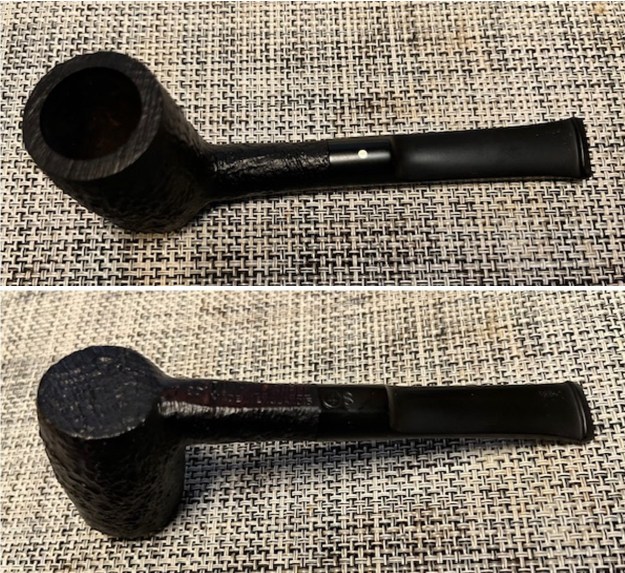
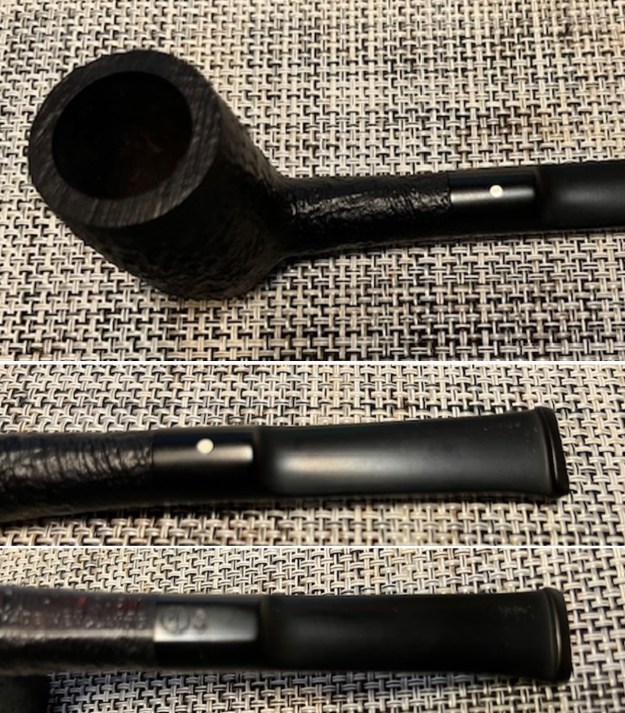
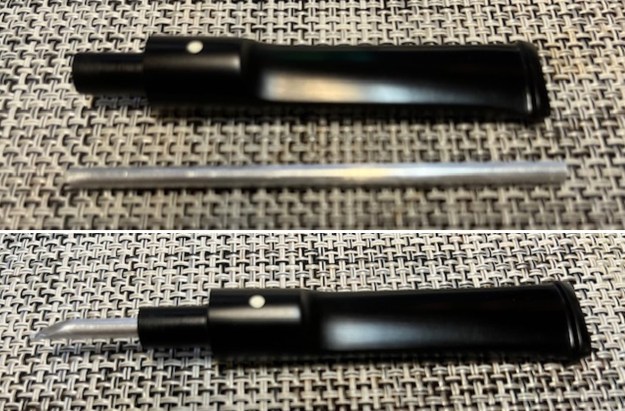
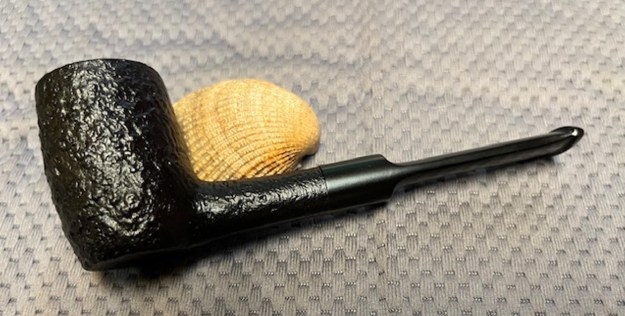
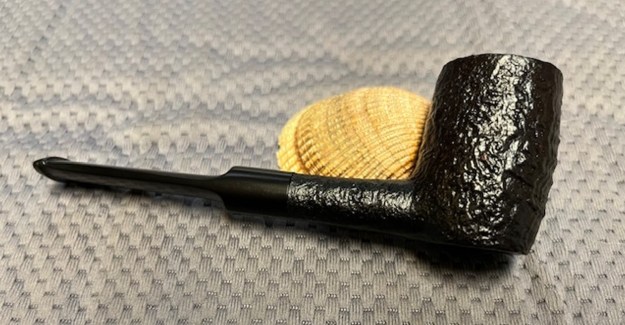
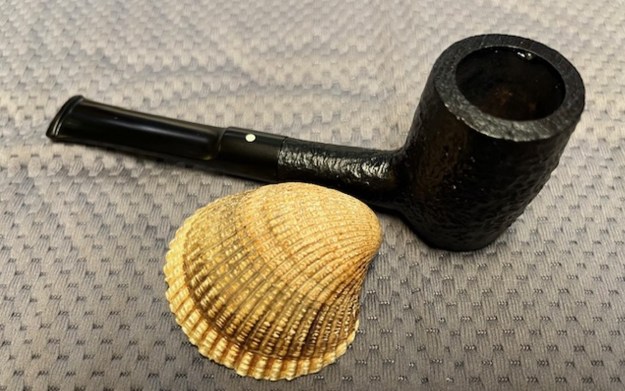
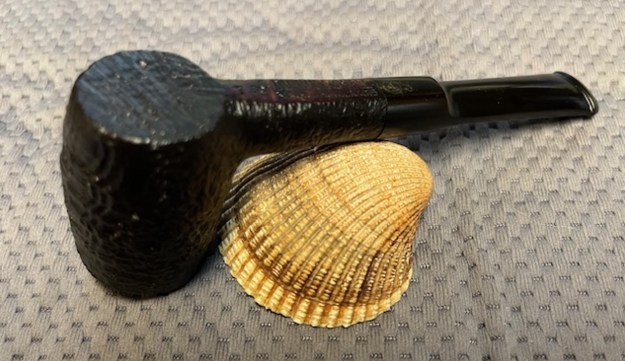
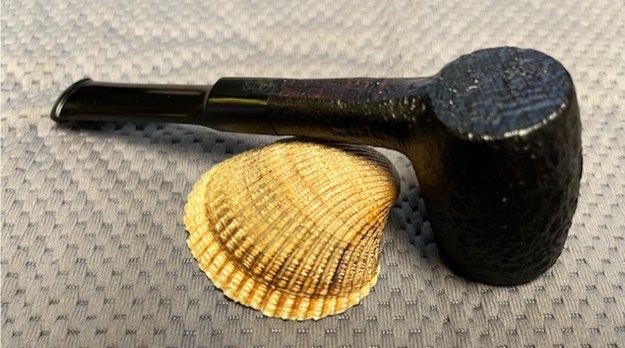
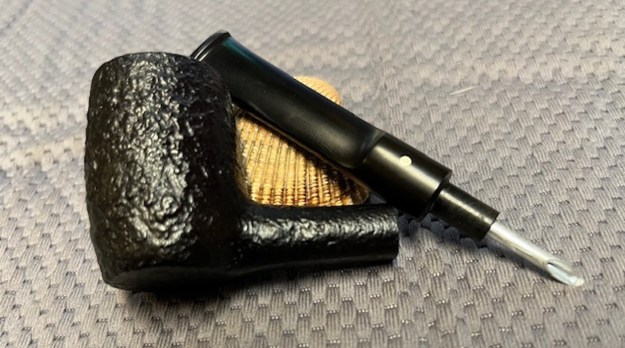
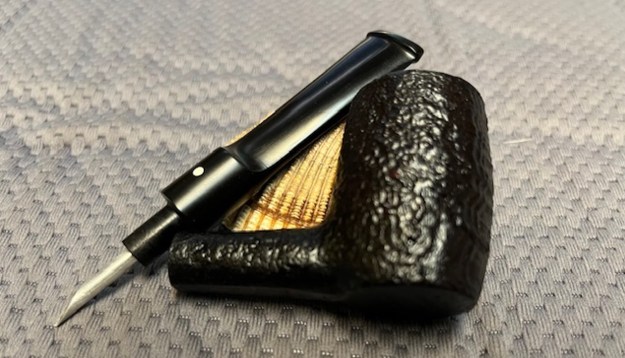
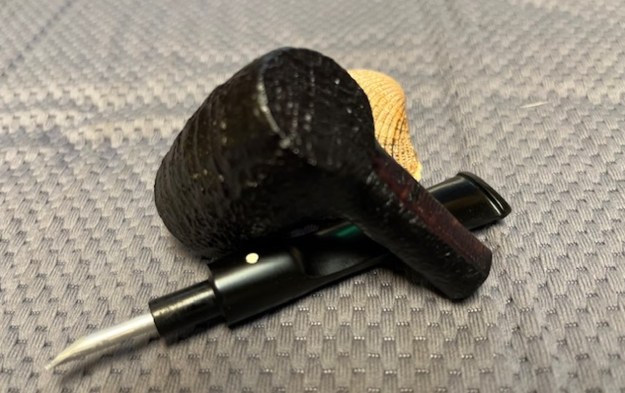
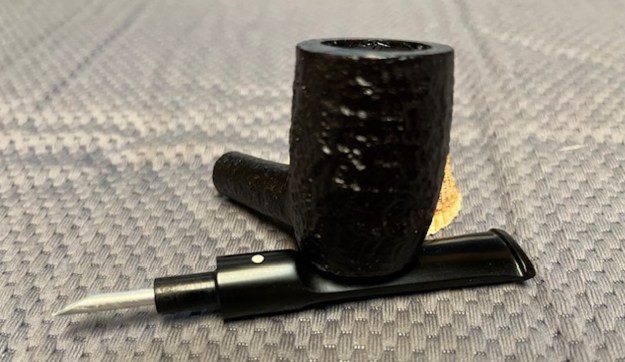
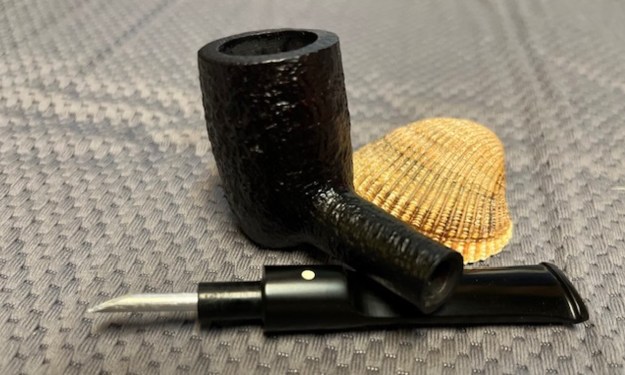
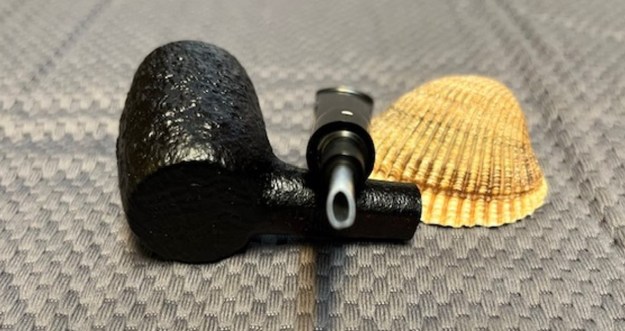
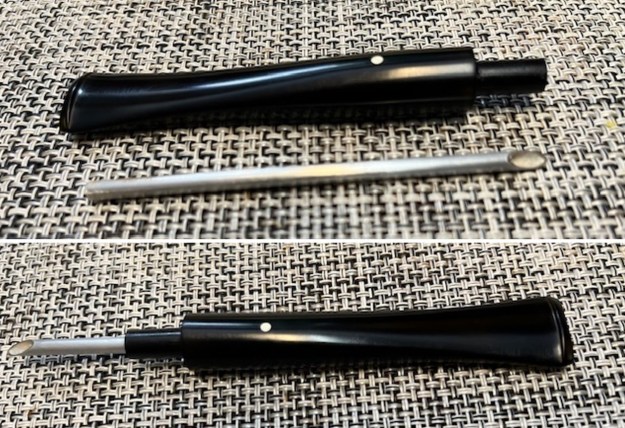
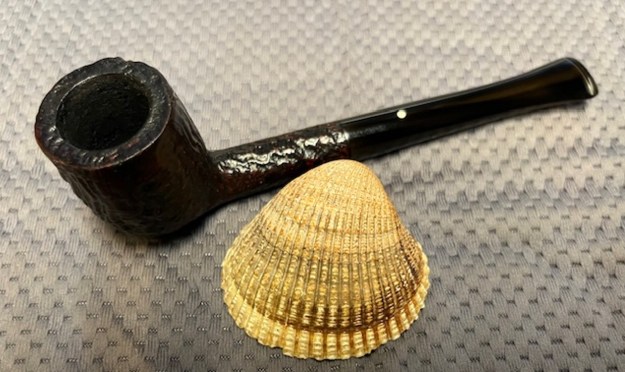
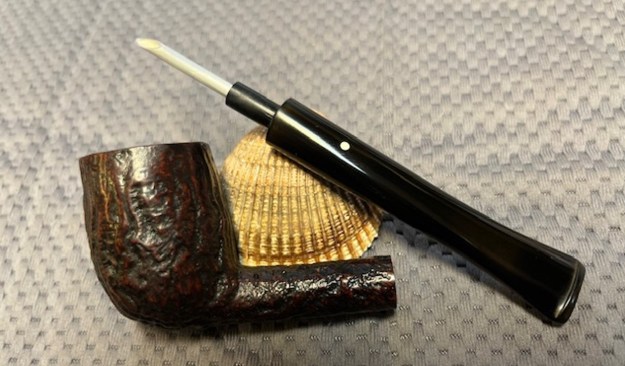
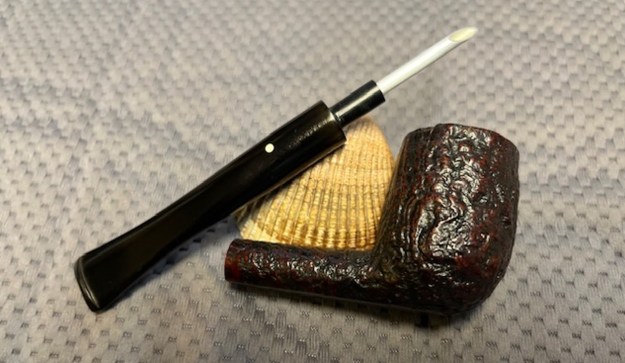
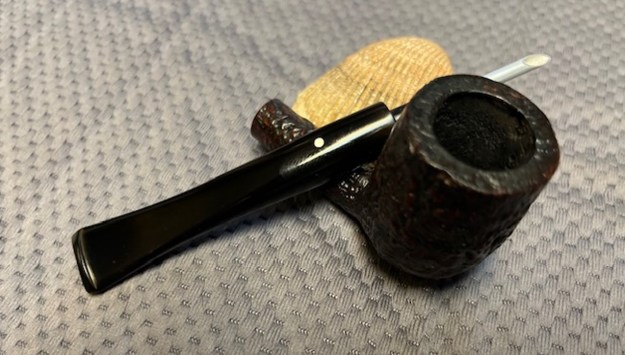
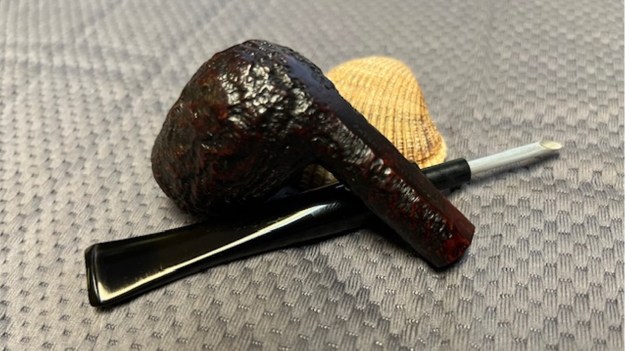
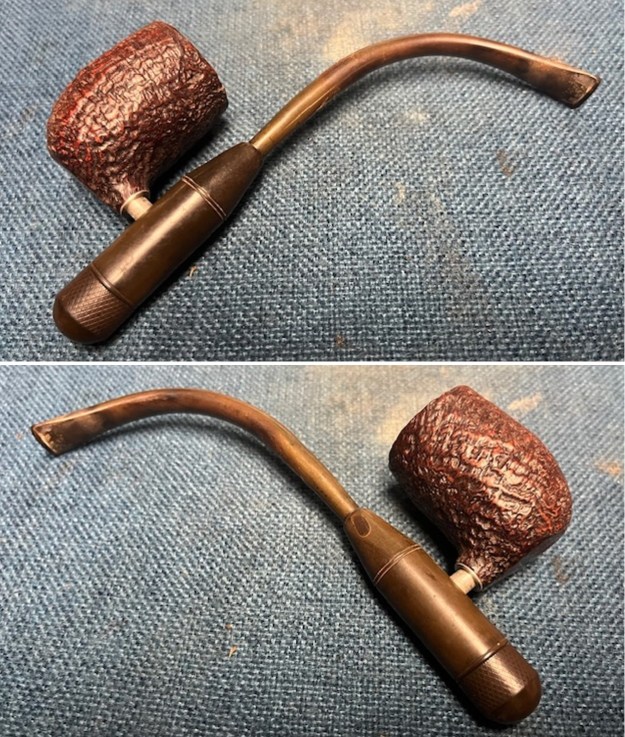
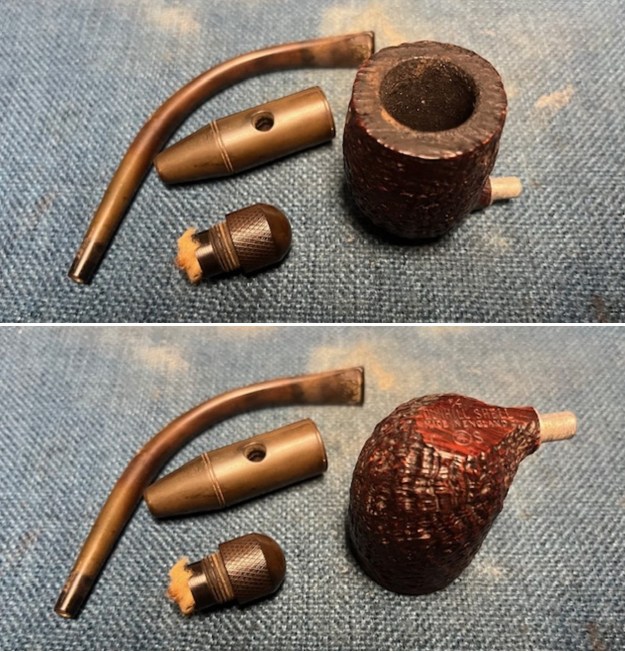
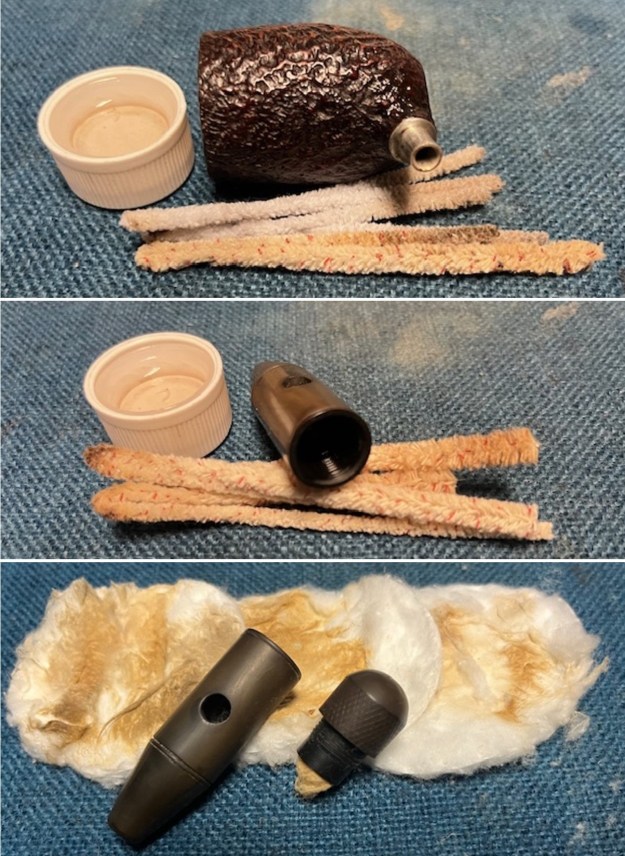
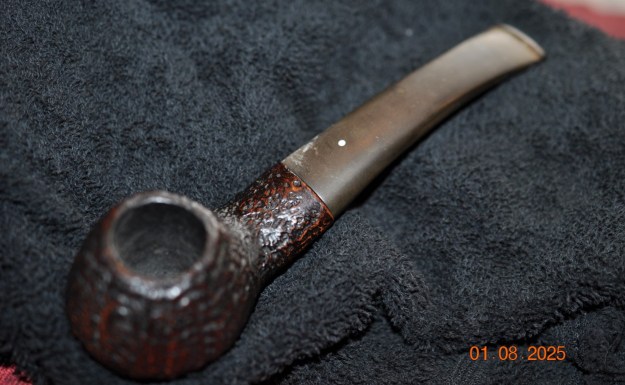
The next pipe on the table is another one that came to us from the seller in Caldwell, Idaho, USA on 07/12/2025. It is a Dunhill Shell Briar Cavalier with a briar bowl, a stainless tube that fit snugly in the bowl, a vulcanite bullet that fit on the tube and a knurled cap that fit on the bottom of the bullet with a wool filter pad inserted in it. The thin bent vulcanite stem fit in the top of the bullet and then bullet fit on the tube. It is in good condition as can be seen in the photos below. It is stamped on a smooth heel of the bowl. On the heel of the bowl it is stamped with the shape F/T [over] Dunhill Shell [over] Made in England2 [over] circle 4S. The stamping is clear and readable. The pipe has a mix of black, cordovan and brown stains on a Shell sandblast finish and some amazing grain that the shape follows well. The finish was dusty and lightly dirty with grime in the nooks and crannies of the sandblast. The bowl had a moderate cake and there was lava and dust in the sandblasted rim top and edges. The vulcanite bullet piece was oxidized but otherwise looks good. The original white spot stem is on the pipe and is dirty and oxidized. I took photos of the pipe to show what it looked like before I started working on it. I took photos of the bowl and rim top to show the thickness of the cake and the lava coat on the rim top. There was some tobacco debris in the bottom of the bowl. The oxidized bullet shaped vulcanite filter shank is visible in the photos. The stem photos show the condition of the stem ahead of the button. I took the stem off the bowl and bullet and took photos of the pipe parts. It is an interesting pipe to look at. The deep sandblast really makes the grain stand out on the bowl sides.I took apart the bullet shank and showed the parts below. The knurled base cap on the bullet unscrewed from the bullet itself. It had a round wool filter pellet that filled the base. The stem and bullet itself are heavily oxidized. The stamping on the heel of the bowl is clear and readable as noted above. The gold ferrule on the shank and cap on the stem looks good. I took a photo of the pipe with the stem removed to give a sense of the proportions of the pipe. It is a real beauty.One of the first things I like to do is to unpack the stamping and understand each element in it. I turned to Pipephill helpful site (http://pipephil.eu/logos/en/dunhill/shell-briar1.html). The stamping is interpreted as follows: The F/T is the stamp for a fishtail type stem. The Dunhill Shell is the finish. Following the Made In England2 gives the year that the pipe was made.
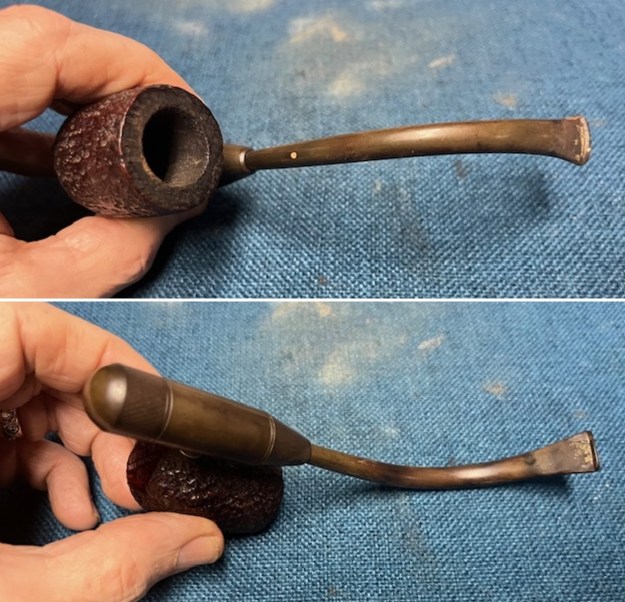
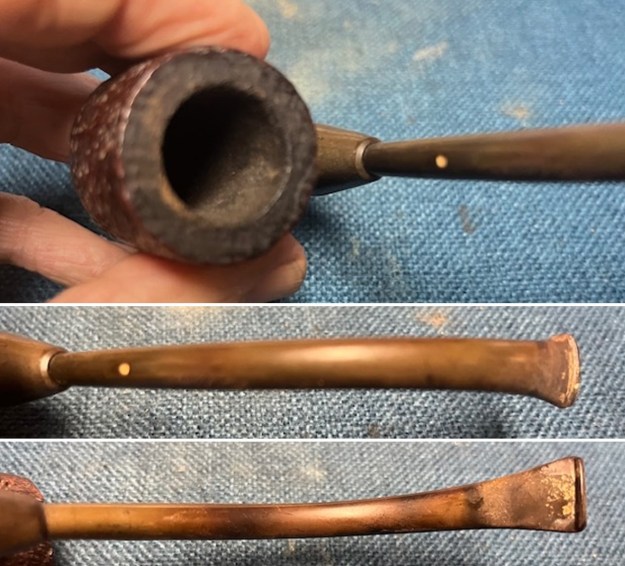
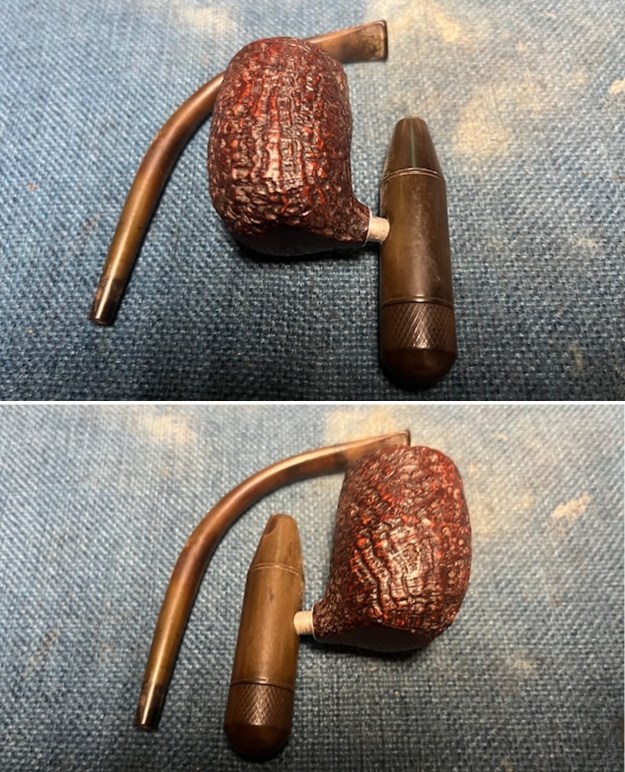
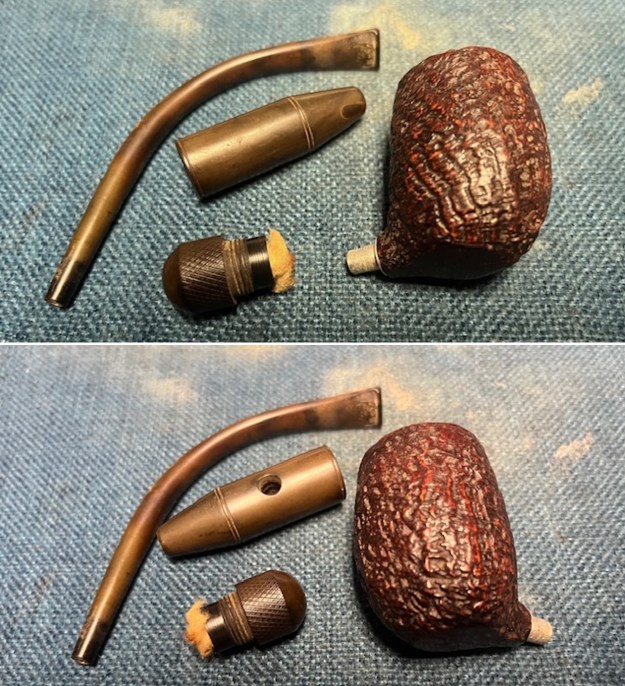
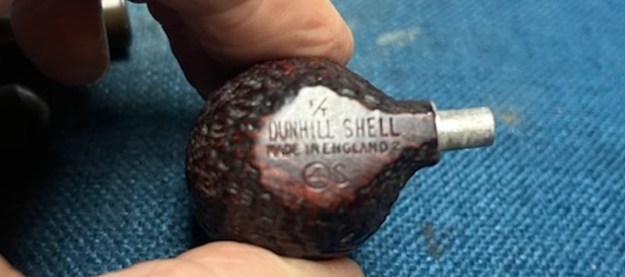
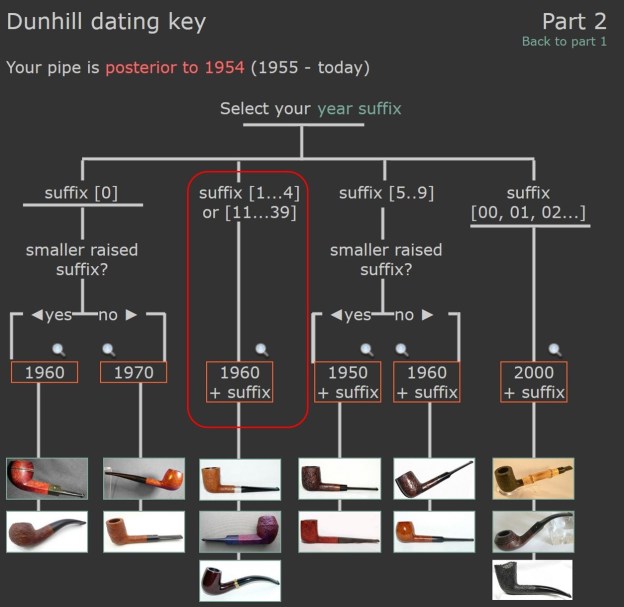
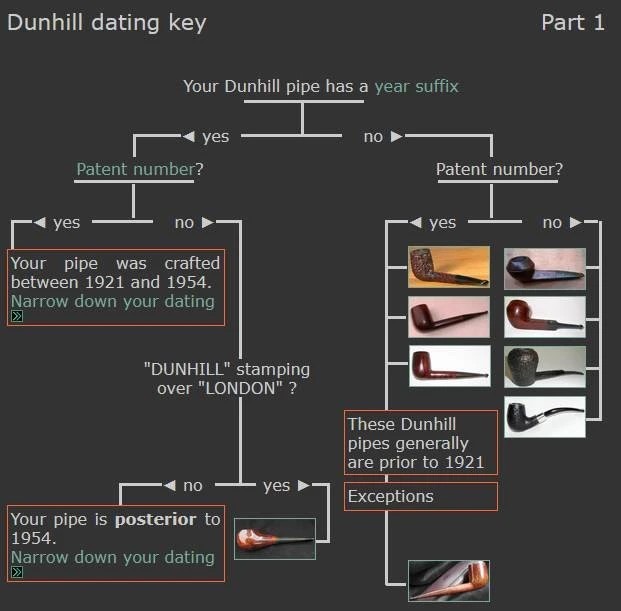
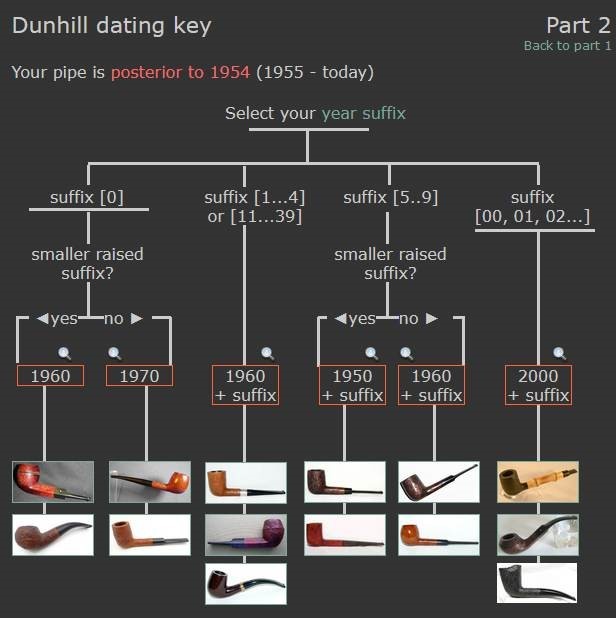
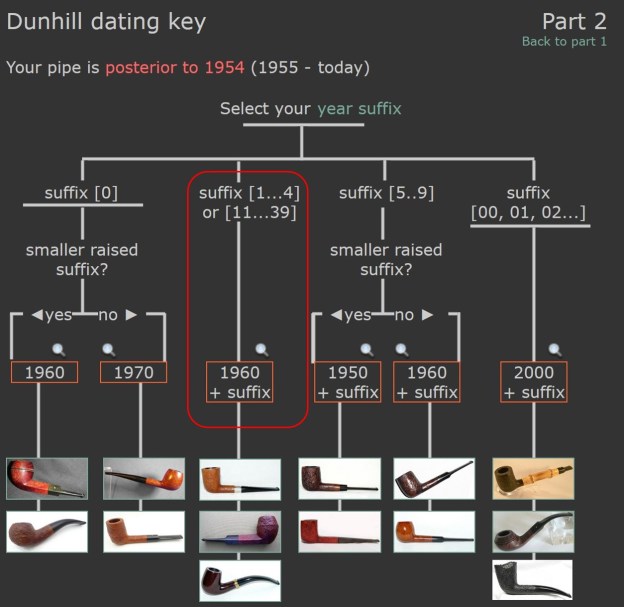
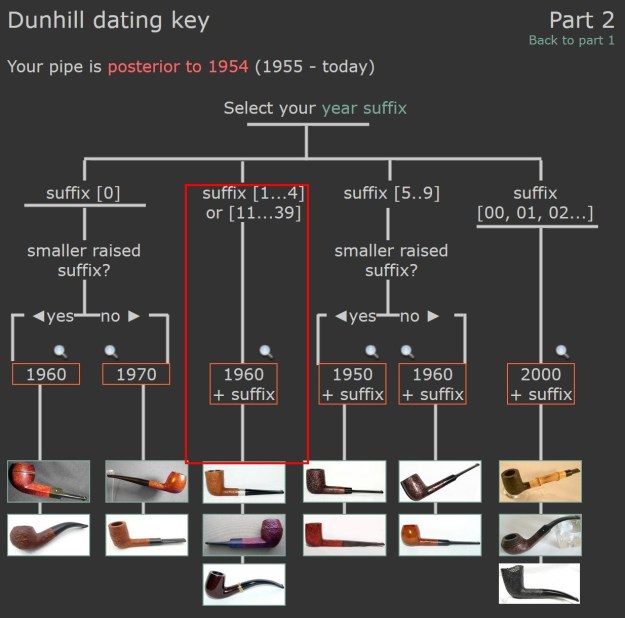
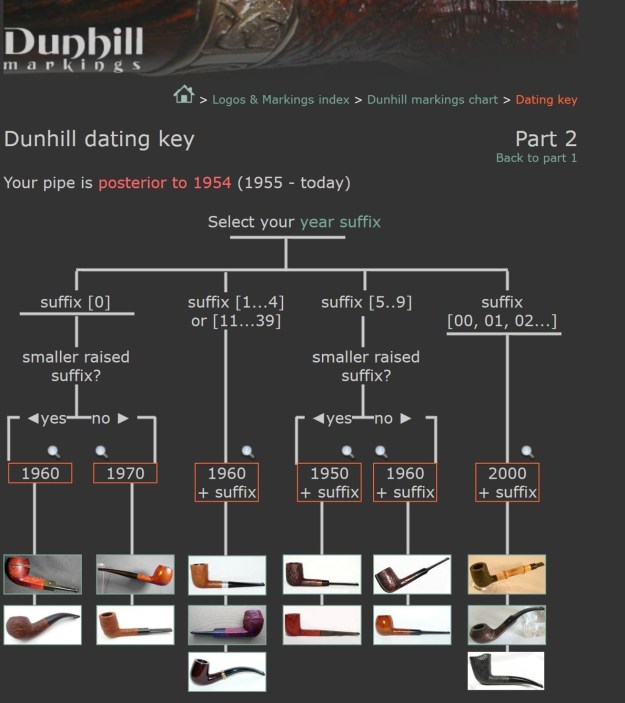
The dating chart helped me understand the date stamp 2. I have included the chart below for you to follow (http://www.pipephil.eu/logos/en/dunhill/cledat-en1a.html). The second column is where the 2-year suffix fits. To arrive at the date the suffix is added to 1960 making the pipe a 1962 Shell Cavalier.I googled Dunhill Shell Cavalier and found some great information on the line on the site below (https://www.falkum.de/en/dunhill-cavalier-pfeife.html). I quote below:
Dunhill Cavalier pipe, size 4, in full bent shape with Shell Briar finishing.

The Cavalier pipe was especially designed by Dunhill for British officers of the West-Indian and African-corps. The pipe could be taken apart in its pieces quickly (removable bowl, middle part and mouthpiece) so they would fit easily into the breast pocket of a field jacket. In the hot and humid tropics the removable, so called ”watersack“ at the bottom of the basic part proved as a simple, but brilliant solution against the built-up of humidity and condensate.

For many years this special model has been the most much sought-after pipe by Dunhill collectors. Only within the last years Dunhill increased slightly the production of this unusual pipe which is still hard to find.

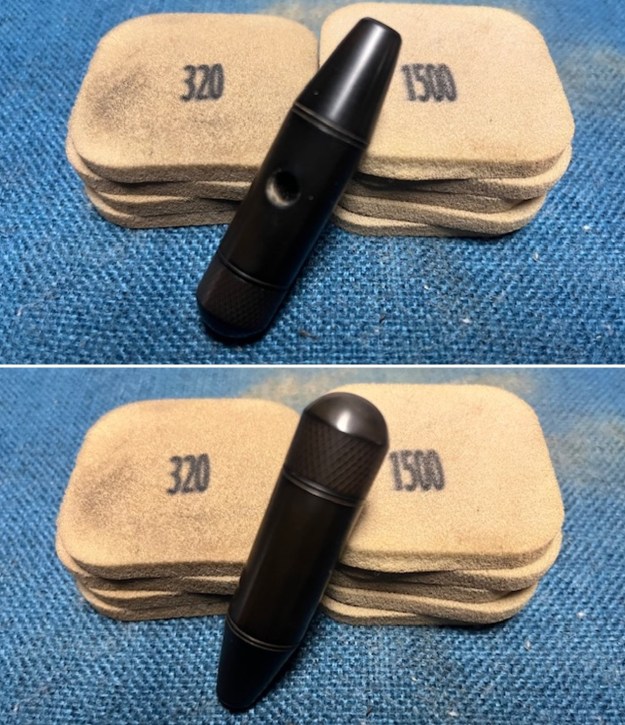
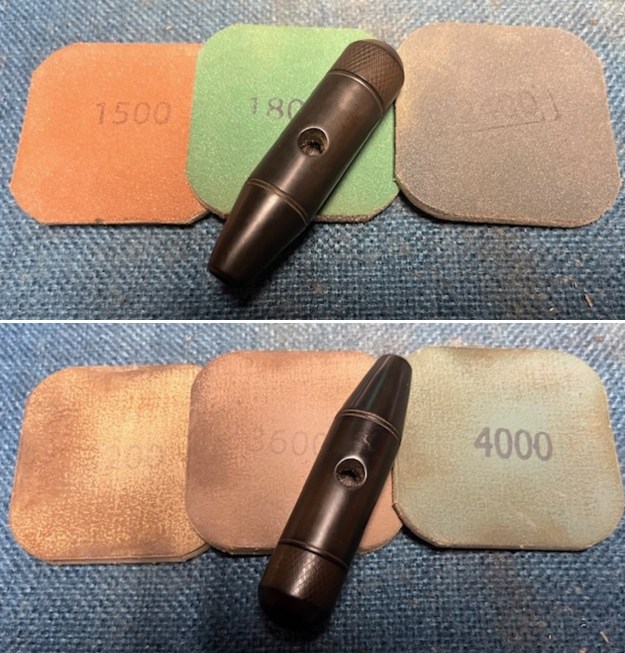
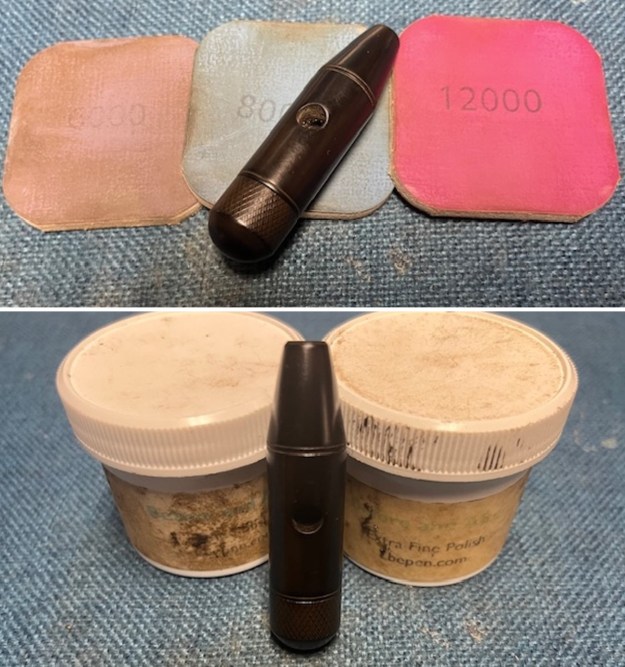
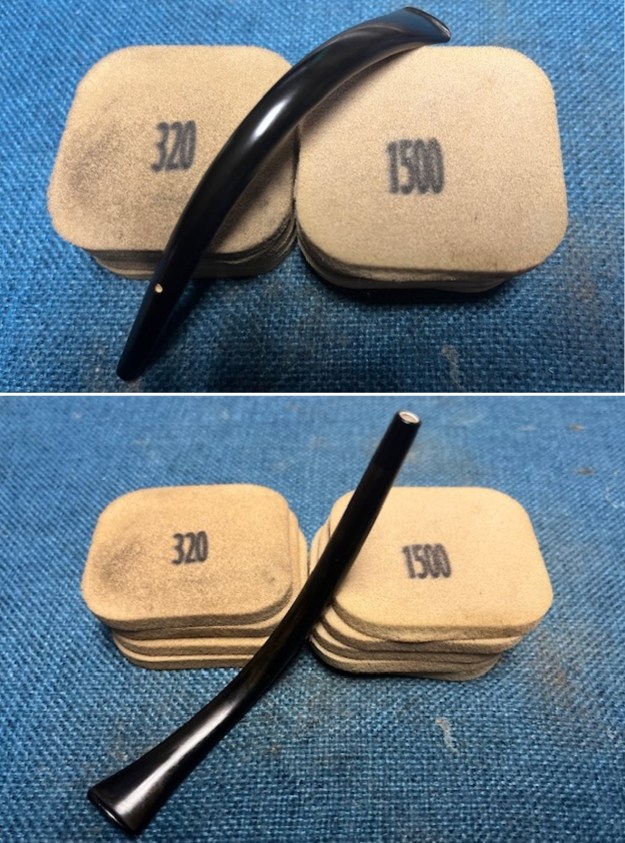
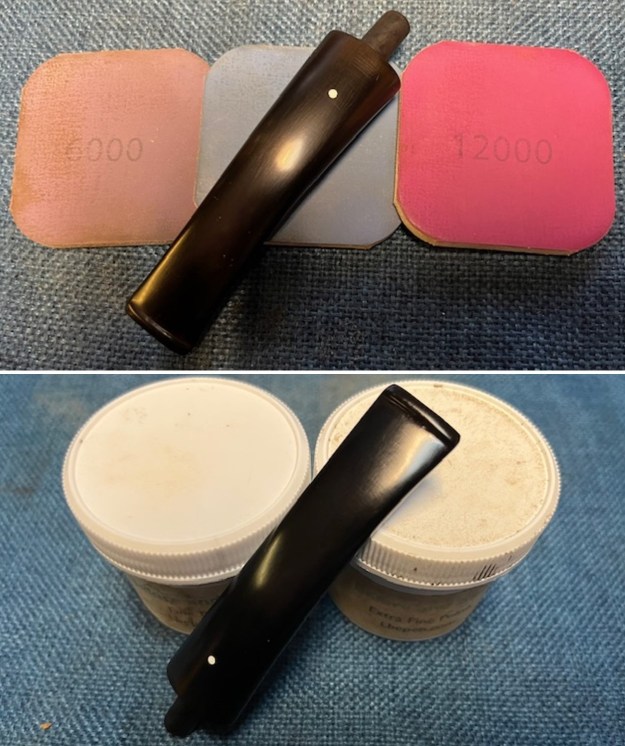
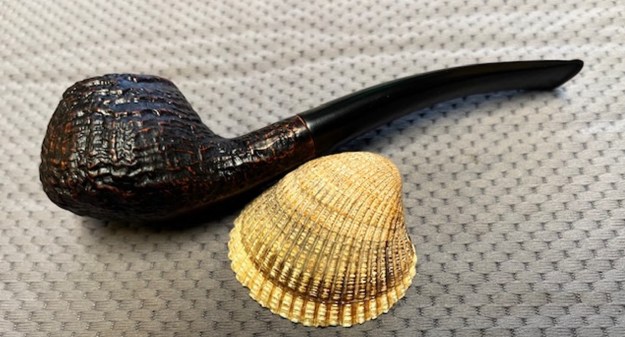
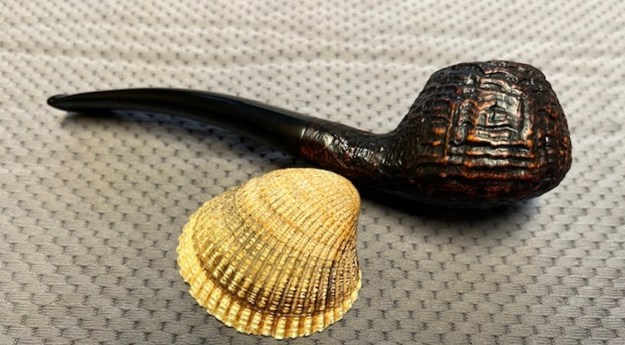
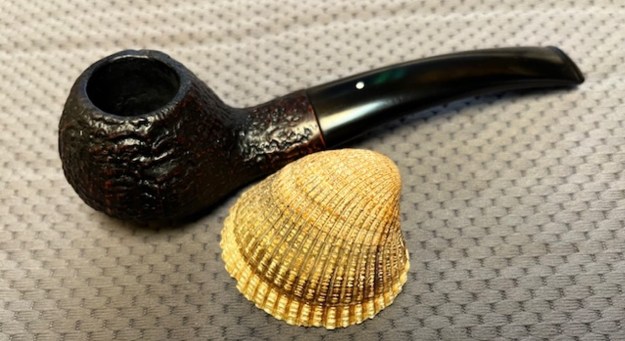
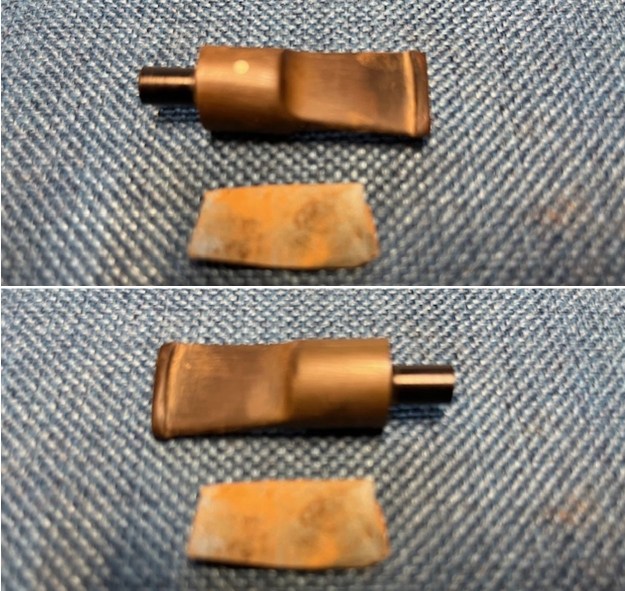
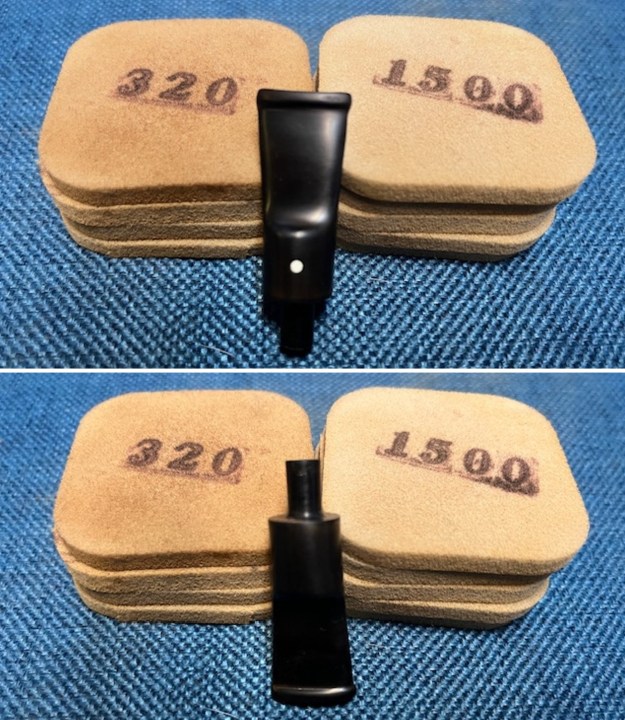
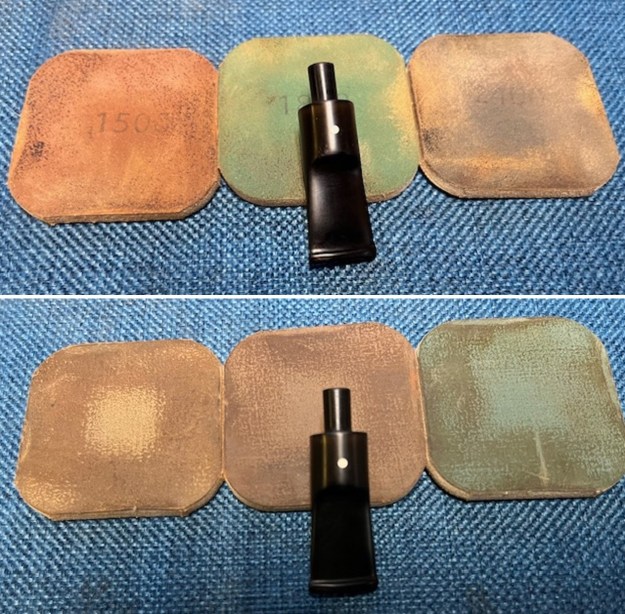
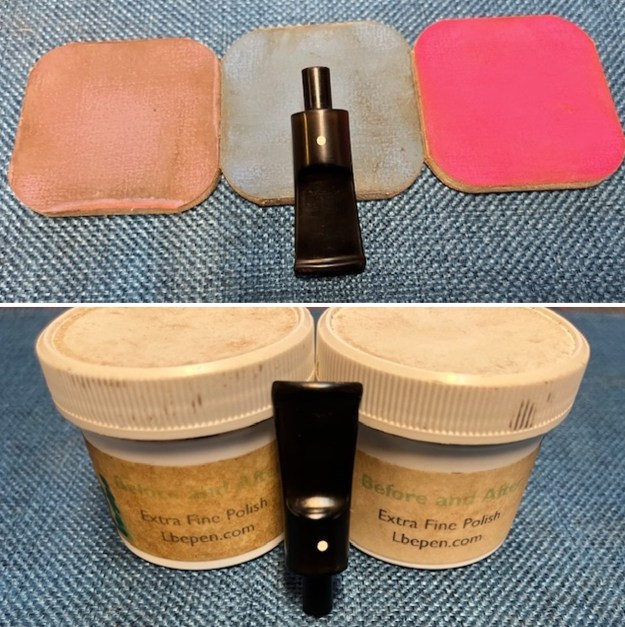
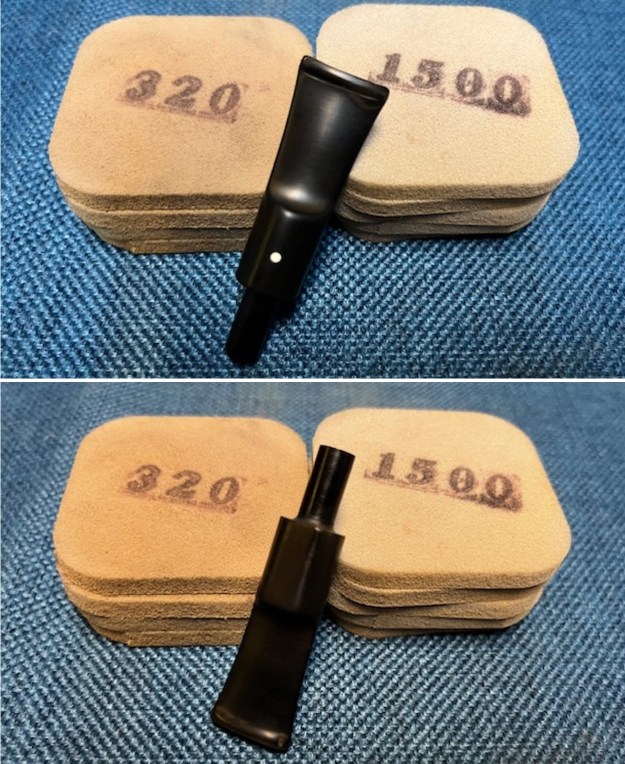
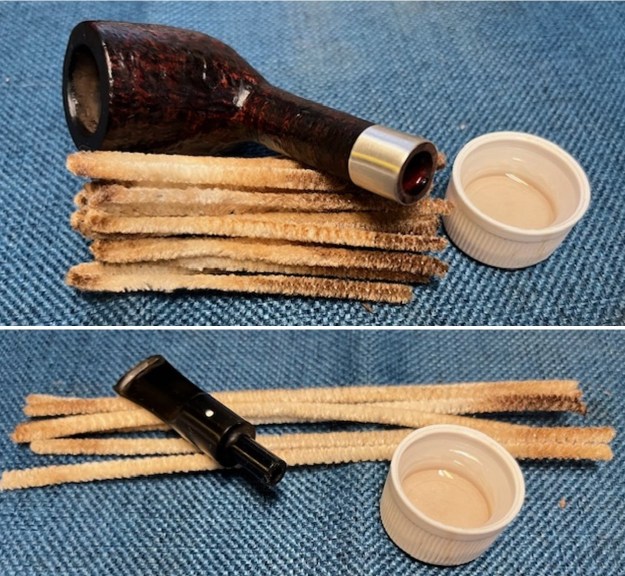
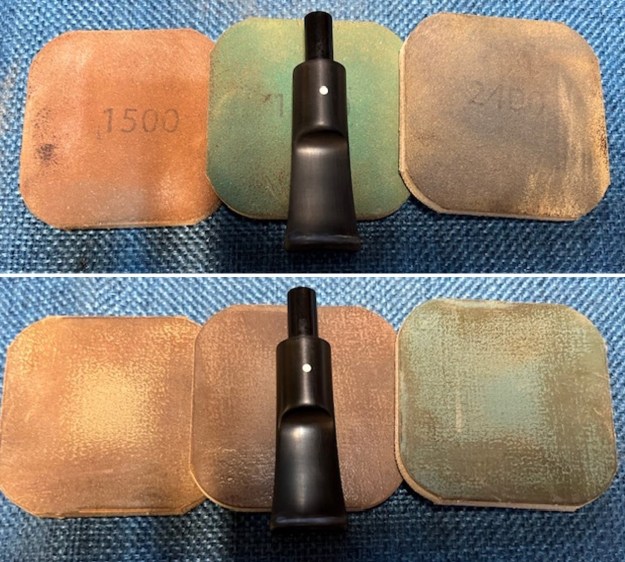
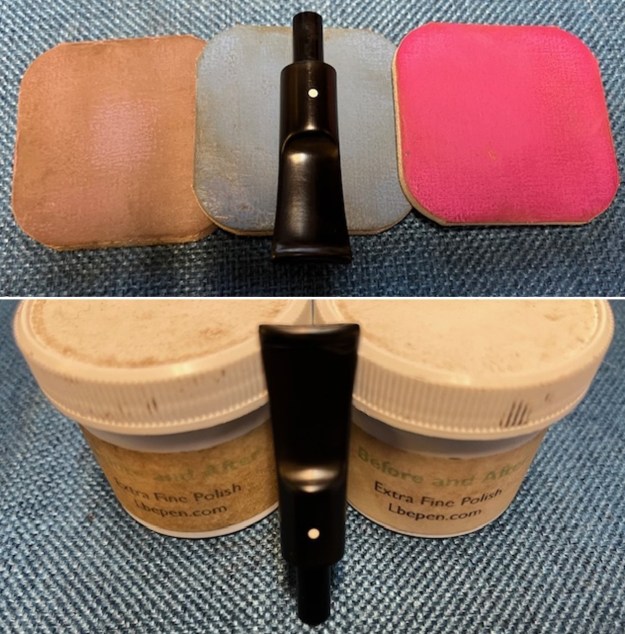
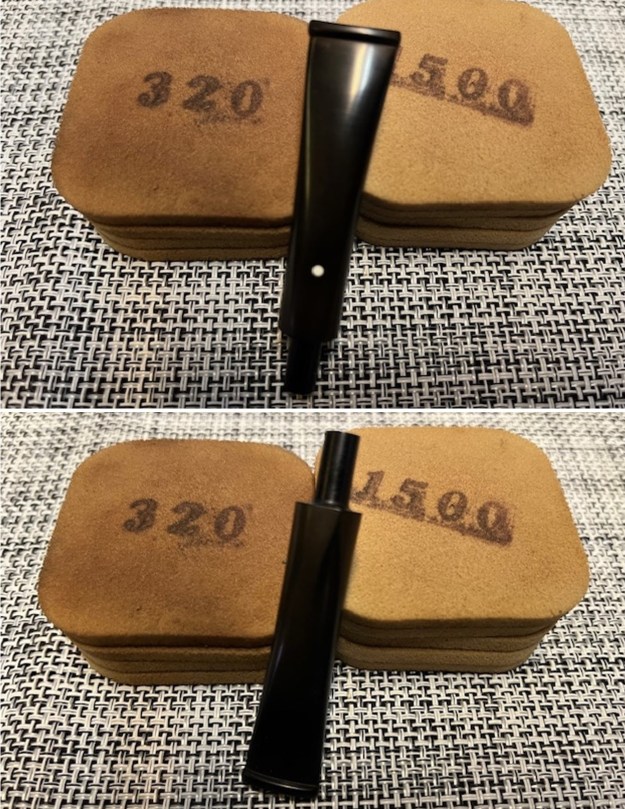
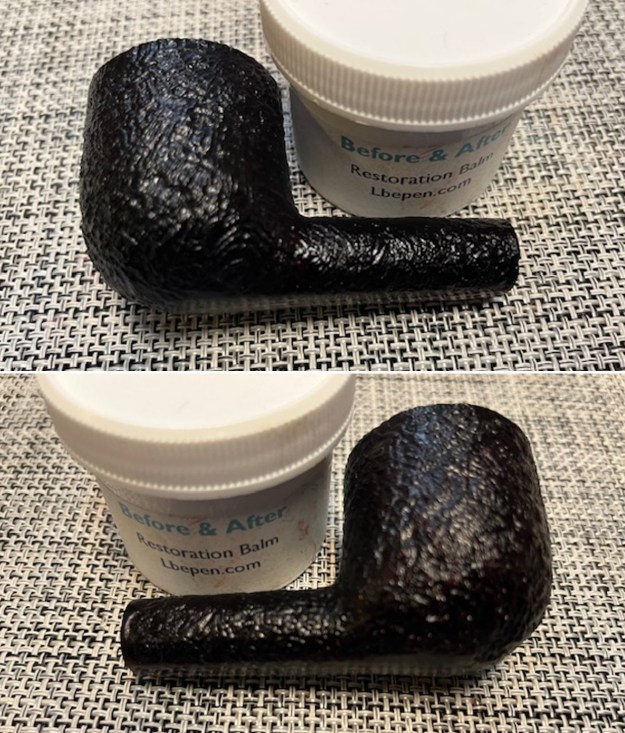
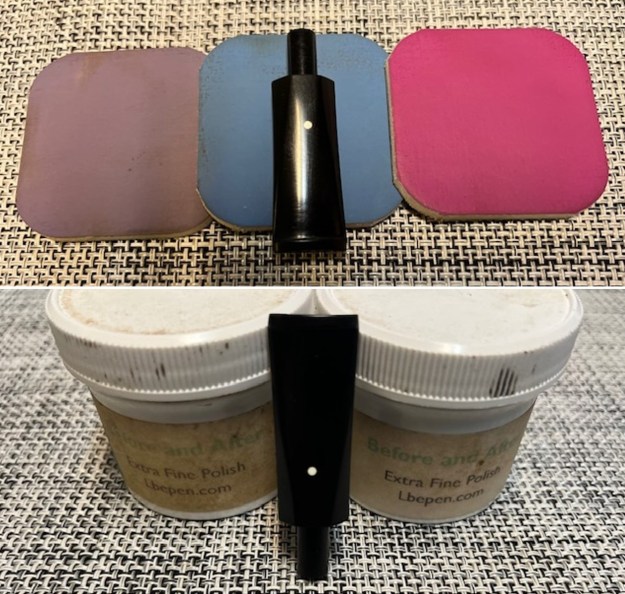
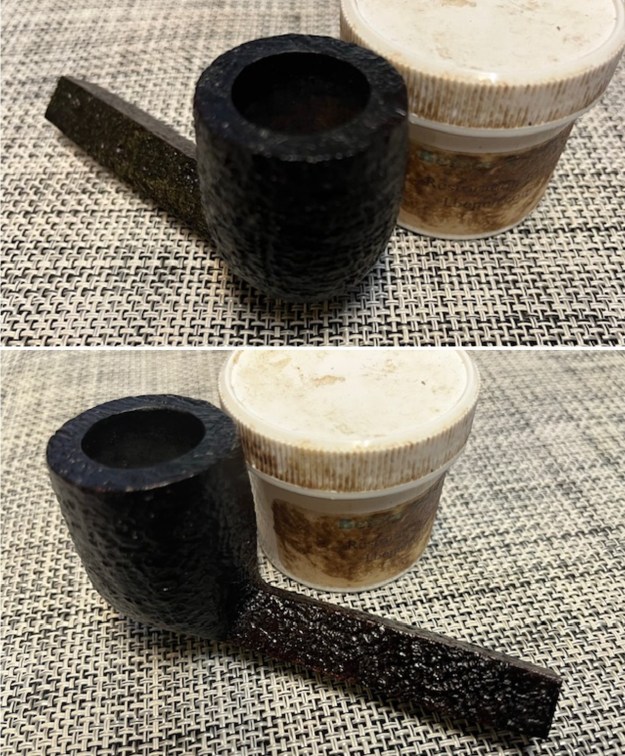
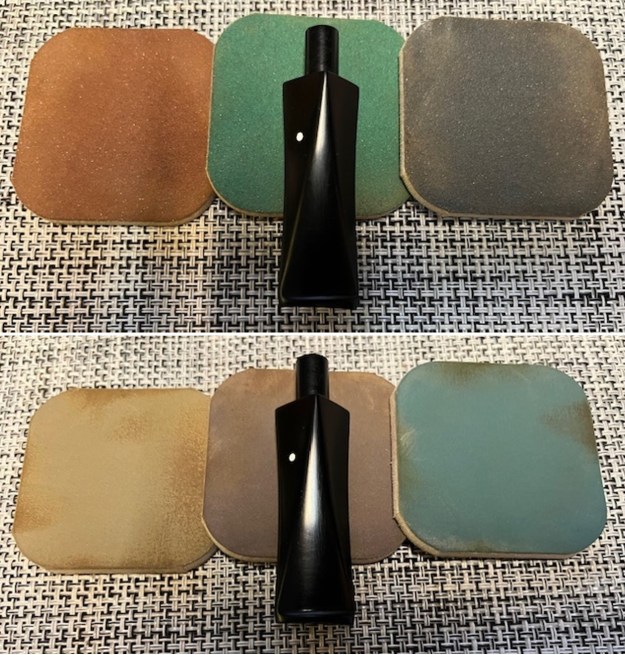
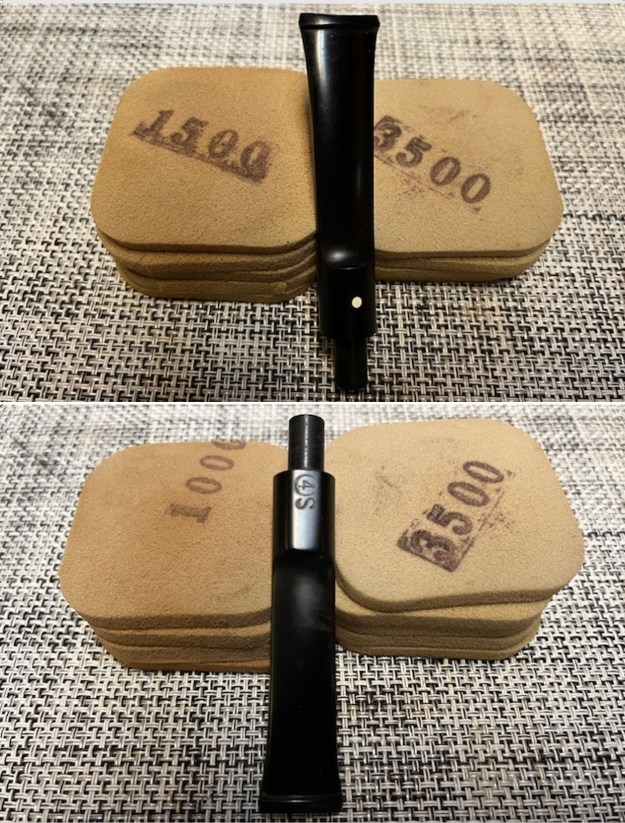
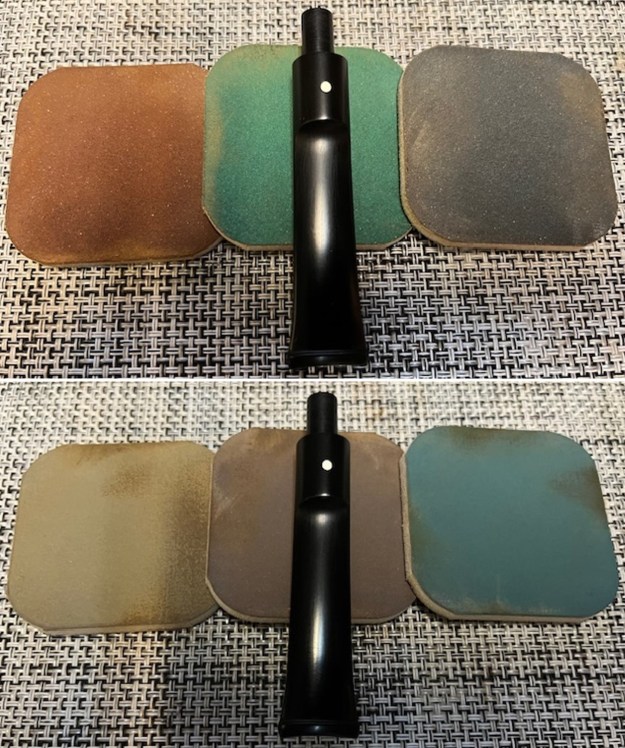
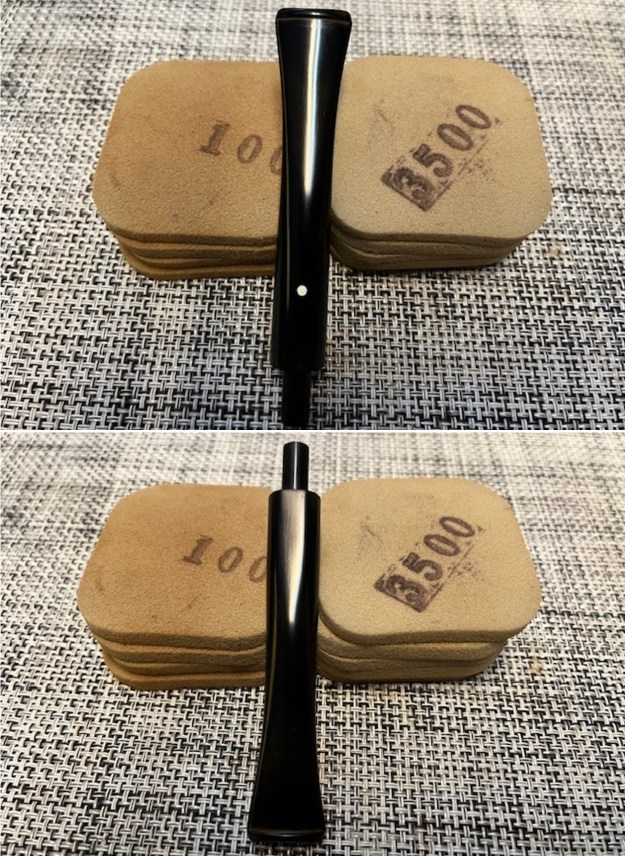
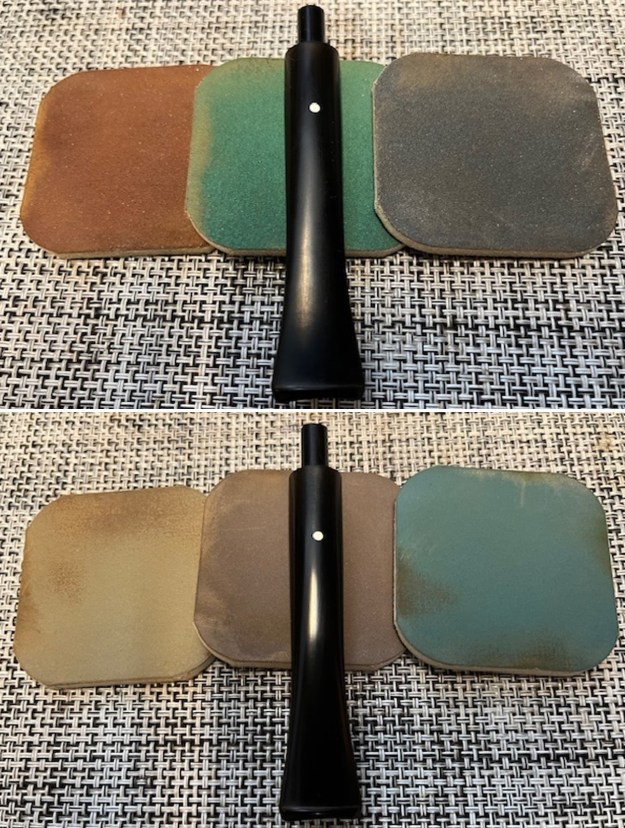
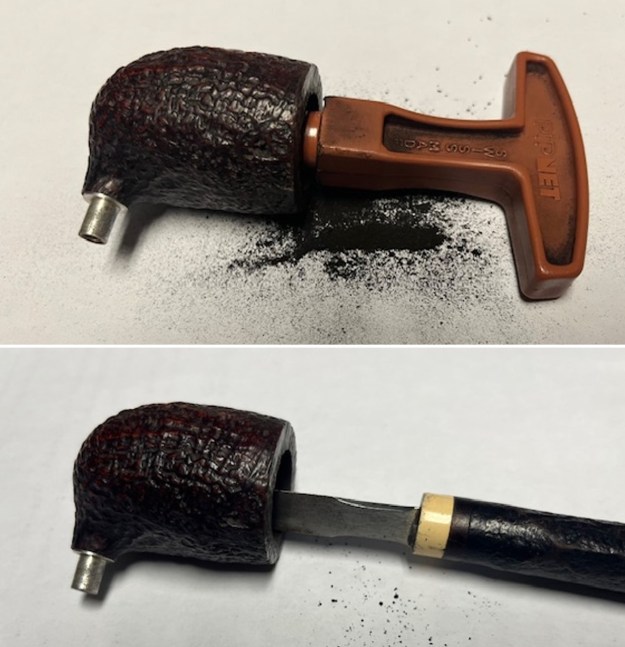
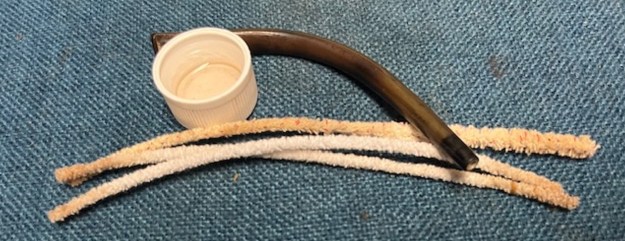
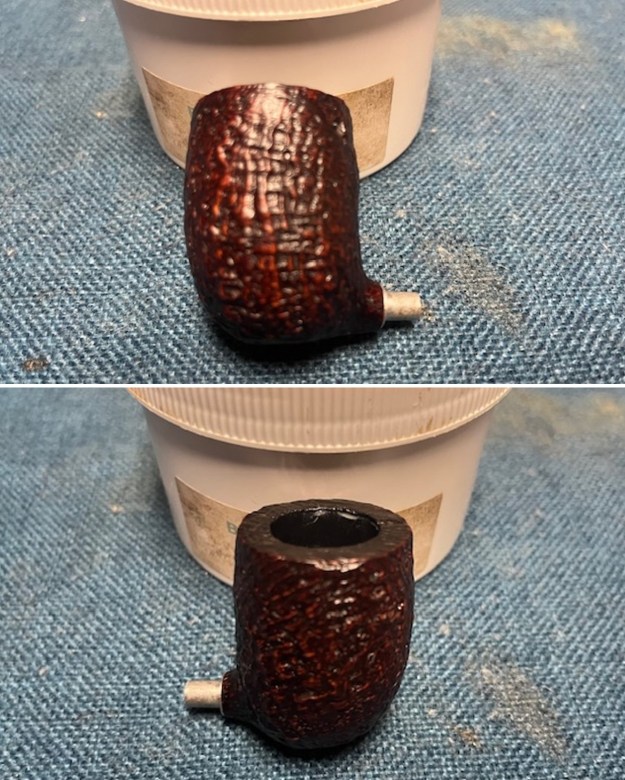
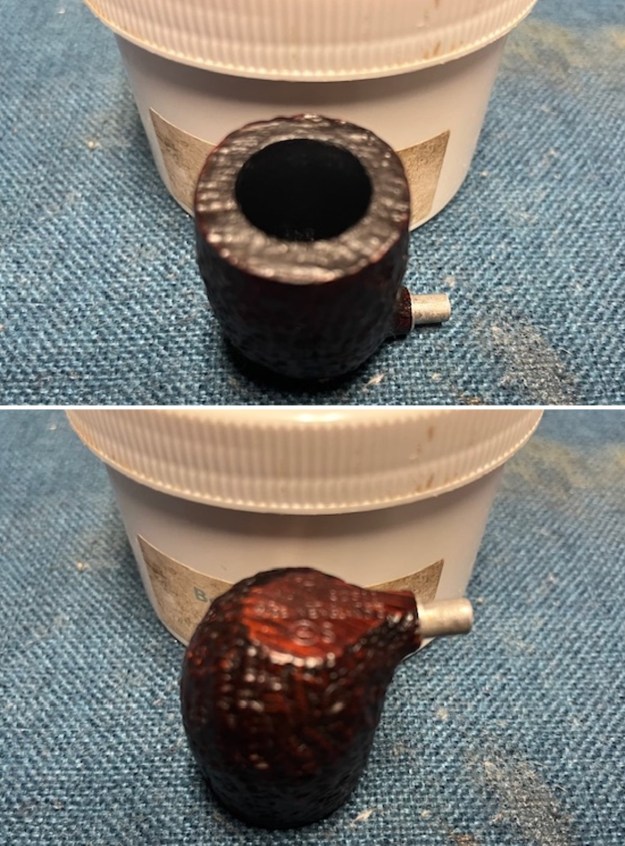
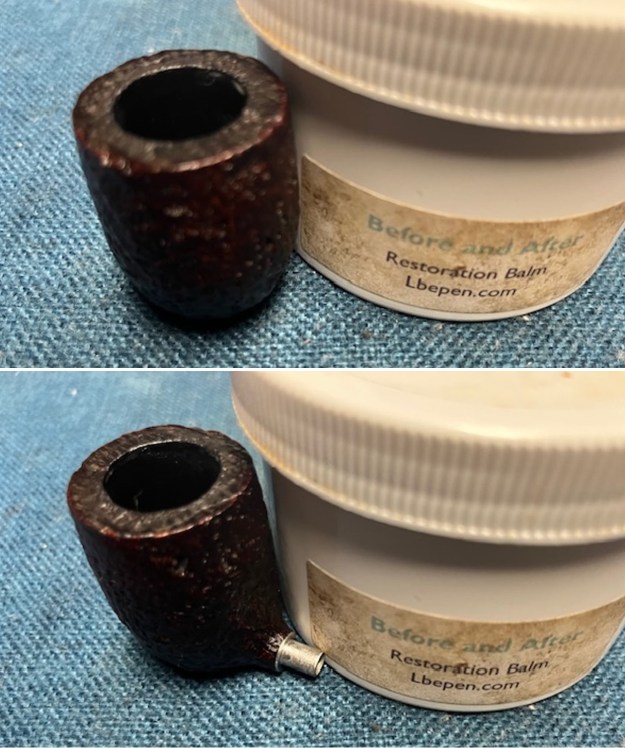
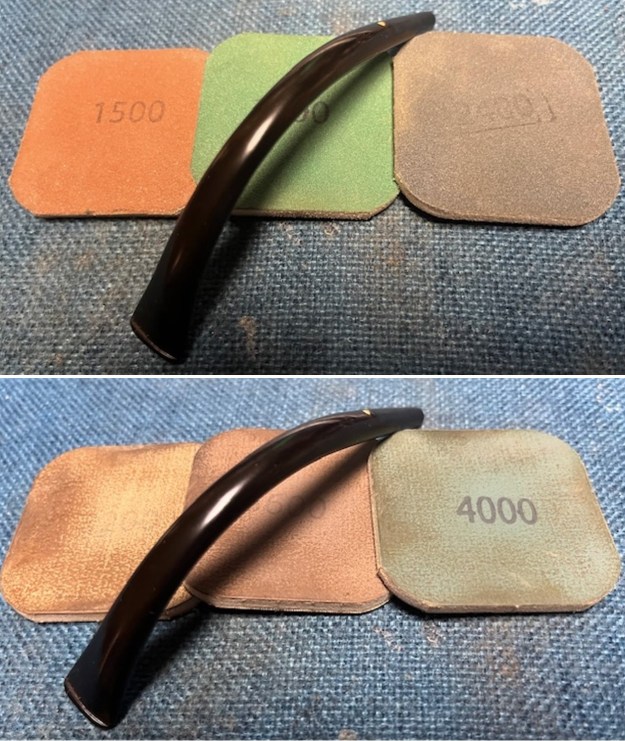
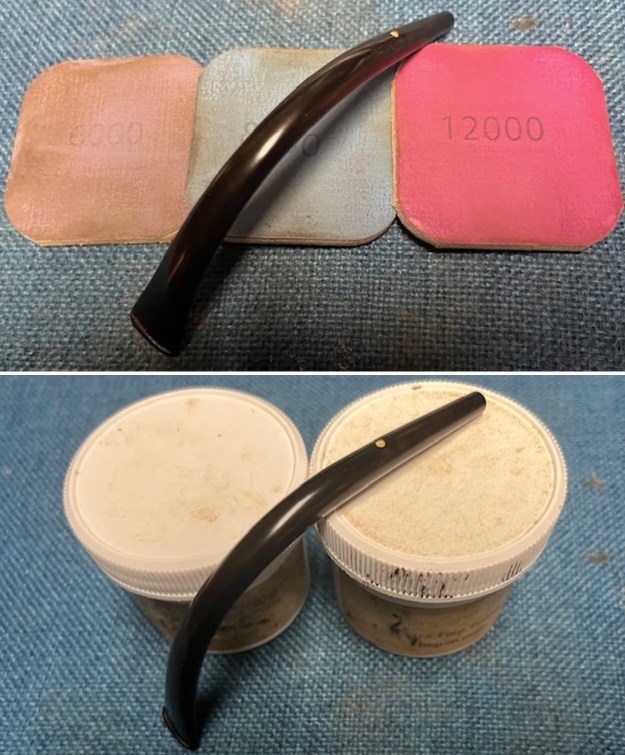
I turned to work on the pipe itself. I reamed the bowl with a PipNet pipe reamer using the cutting heads 2 and 3. I finished the reaming with a Savinelli Fitsall Pipe Knife. I sanded the walls of the bowl with 220 grit sandpaper wrapped around a piece of dowel. I used a brass bristle wire brush to clean off the debris in the sandblast on the rim top. The sandblast was clean and dry with no debris in the valleys of the sandblast.I scrubbed the bowl and shank with a tooth brush and some undiluted Murphy’s Oil Soap. I rinsed it off with warm water to remove the dust and soap from the finish. I dried it off with a soft cloth and it looked much better. I cleaned out the inside of the shank, the bullet with the catchment base and the stem with alcohol, cotton swabs and both bristle and regular pipe cleaners. I rubbed the briar down with Before & After Restoration Balm. I worked it into the briar with my fingertips and a horsehair shoe brush to work it into the nooks and crannies of the sandblast finish. The product works to clean, enliven and preserve the briar. I let it sit for 10 minutes then I buffed it with a cotton cloth to deepen the shine. The briar really comes alive with the balm. I set the bowl aside and turned my attention to the Bullet shank on the pipe. I sanded the bullet with 320-3500 grit 2×2 inch sanding pads. I wiped the bullet down each time with a cloth impregnated with Obsidian Oil. It is looking much better at this point.I polished the bullet with 1500-12000 grit sanding pads. I wiped it down after each sanding pad with a cloth impregnated with Obsidian Oil. It really began to take on a shine. I set the bullet aside and turned to address the stem. I sanded the stem surface with 320-3500 grit 2×2 inch pads. I wiped the stem down with an Obsidian Oil cloth after each sanding pad.I polished the vulcanite with micromesh sanding pads – 1500-12000 grit pads. I wiped it down with Obsidian Oil after each sanding pad. I used Before & After Pipe Polish – both Fine and Extra Fine to further polish the stem. This 1962 Dunhill Shell F/T Cavalier has a beautiful, unique Dunhill Sandblast finish. The rich Shell finish that is identified with some great grain around the bowl and shank. It has some great rugged sandblast that Dunhill specialized in making. The polished vulcanite bullet and moisture trap look very good. The polished black vulcanite bent taper stem adds to the mix. I put the stem back on the bowl and buffed the pipe with Blue Diamond on the buffing wheel being careful to not buff the stamping. I gave the bowl and the stem multiple coats of carnauba wax on the buffing wheel and followed that by buffing it with a clean buffing pad. I hand buffed the pipe with a microfiber cloth to deepen the shine. The finished Dunhill Shell F/T Cavalier is quite nice and feels great in the hand. Give the finished pipe a look in the photos below. The dimensions of the pipe are Length: 6 inches, Height: 1 ¾ inches, Outside diameter of the bowl: 1 ¼ inches, Chamber diameter: ¾ of an inch. The weight of the pipe is 35 grams/1.20 ounces. This one will be going into my own personal collection. Thanks for walking through the restoration with me as I worked over another beautiful pipe Thanks for your time.
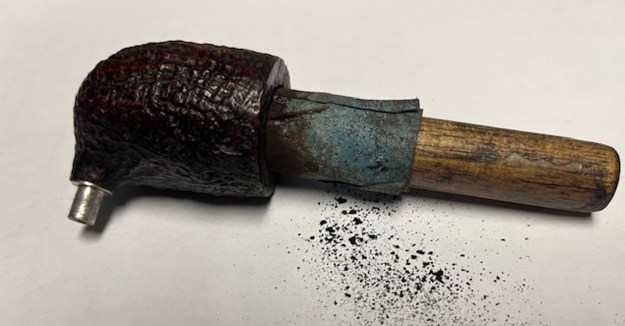
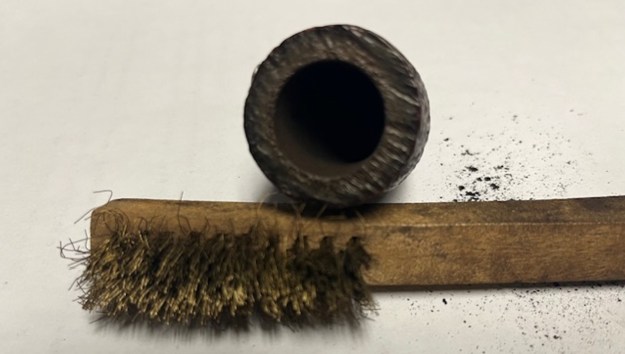
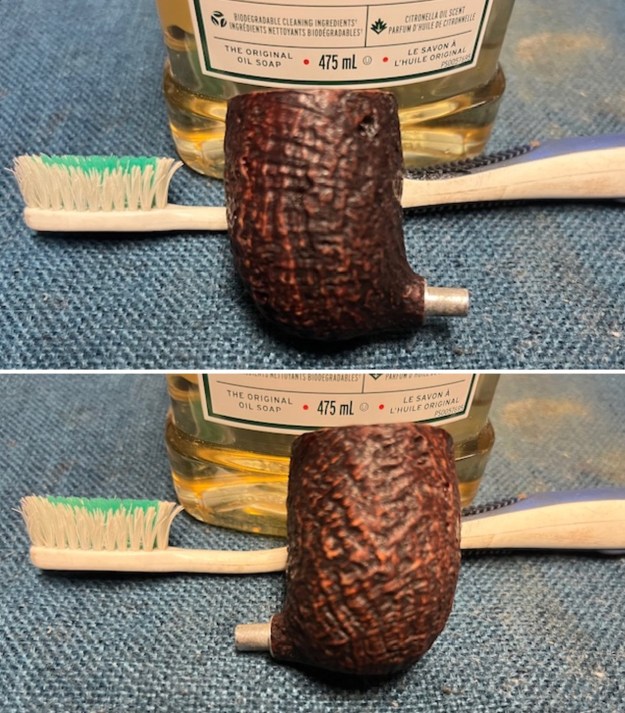
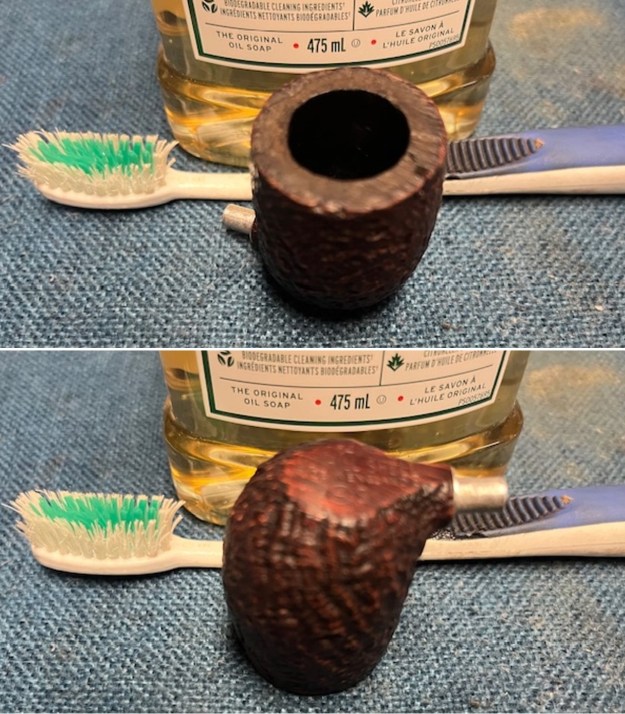
Restoring a tired Dunhill Shell Group 4 Diplomat


by Steve Laug

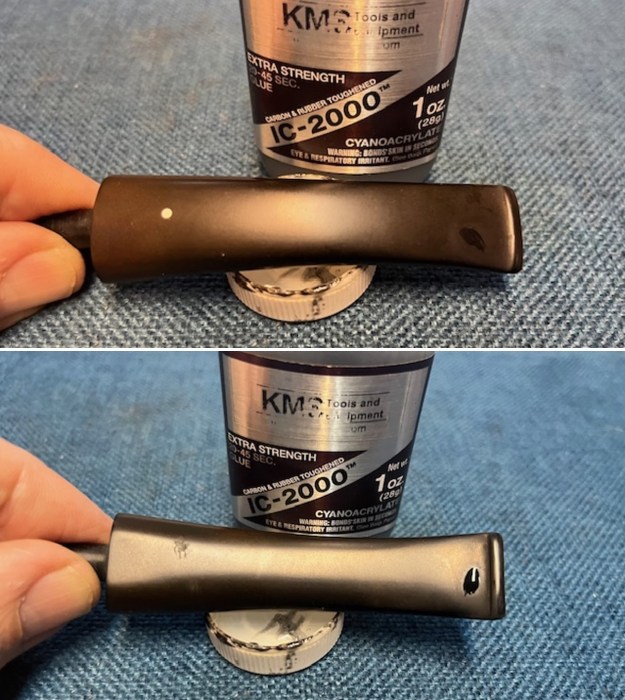
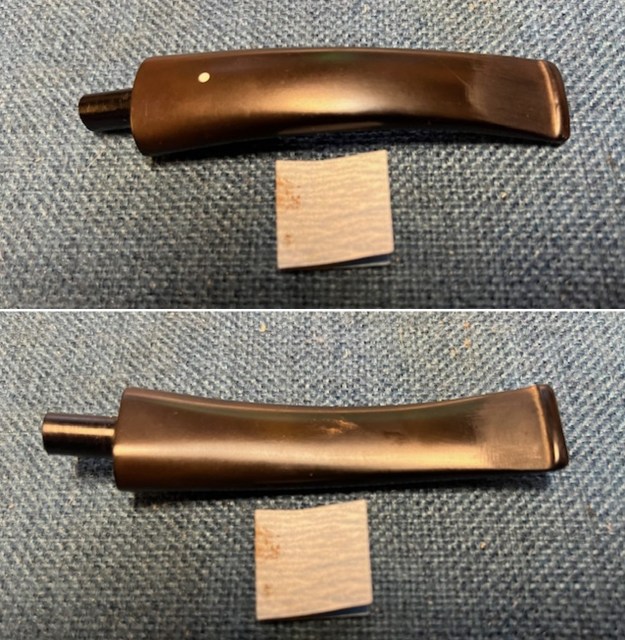
I have been working on the 12 pipe lot since I got back from Asia along with two other repairs that I took on before I left. I need a break to work on something of my own for a bit. I went through my boxes from Jeff here and chose a Dunhill to bring to the work table. It is a shape that I have not worked on before and it intrigued me. It was one that we had purchased from a fellow in Ogden, Utah on 12/12/24. It is a unique Dunhill Shell Diplomat with a great sandblast. The stamping on the underside of the shank had a Circle 4 on the heel of the bowl identifying it as a group 4 size pipe. That is followed by Dunhill Shell [over] Made in England followed by a number 21 to the right of the D in England that will help me date the pipe. The bowl had been reamed not long ago. There was some dust and debris in the sandblast on the rim but the inner and outer edge looked good. The sandblast finish was rugged and dirty but it could not hide the lovely blast around the bowl and shank. The stem was clean and there were light tooth marks on the top and underside ahead of the button. The classic Dunhill White Spot was on top of the taper stem. Jeff took photos of the pipe before he started his clean up work. I have included them below. He took photos of the pipe’s bowl and rim top to show the cake in the bowl and the lava coat overflowing onto the top. He also took photos to capture the tooth marks on the top and underside of the stem near the button. The stem is also oxidized and calcified. He took photos of the sides and heel of the bowl to show the interesting sandblast grain around the bowl and the amount of grime ground into the surface of the briar.   He took photos of the stamping underside of the shank. It is clear, though in some places it is faint. The overall text is still quite readable. As is my regular practice, before I started my work on the pipe, I turned to Pipedia’s section on Dunhill Shell Pipes to get a refresh the information I know regarding the Dunhill finishes (https://pipedia.org/wiki/Dunhill#Root_Briar). I quote:

Shell

A deep craggy sandblast with a black stain finish (usually made using Algerian briar) – the color of the stain used has varied over the years. Although there is some doubt as to them being the first to sandblast pipes, Dunhill’s Shell pipes, and the sandblasting techniques developed to create them are considered one of Dunhill’s greatest and most lasting contributions to the art of pipe making.

The documented history of Dunhill’s inception of the Shell is largely limited to patent applications — there are no catalog pages or advertisements promoting blasted pipes at the time. The preliminary work on the English patent (No. 1484/17) was submitted on October 13, 1917. The patent submission was completed half a year later, on April 12, 1918, followed by the granting of the English patent on October 14, 1918. This was less than a month before the end of The Great War on November 11th.

In 1986 Dunhill released a line of premium Shell finish pipes – “RING GRAIN”. These are high-quality straight grain pipes which are sandblasted. Initially only Ring Grain, but now in two different finishes. In 1995 the “Shilling” was introduced with Cumberland finish – it is an extremely rare series. These pipes exhibit a deeper blast characteristic of that of the 1930’s – mid-1960’s (and the limited ‘deep blast’ pipes of the early 1980s) and show a fine graining pattern. These are considered the best new Dunhills by many enthusiasts today and are very rare. The finish is sometimes described as tasting like vanilla at first, with the taste becoming more normal or good as the pipe breaks in.

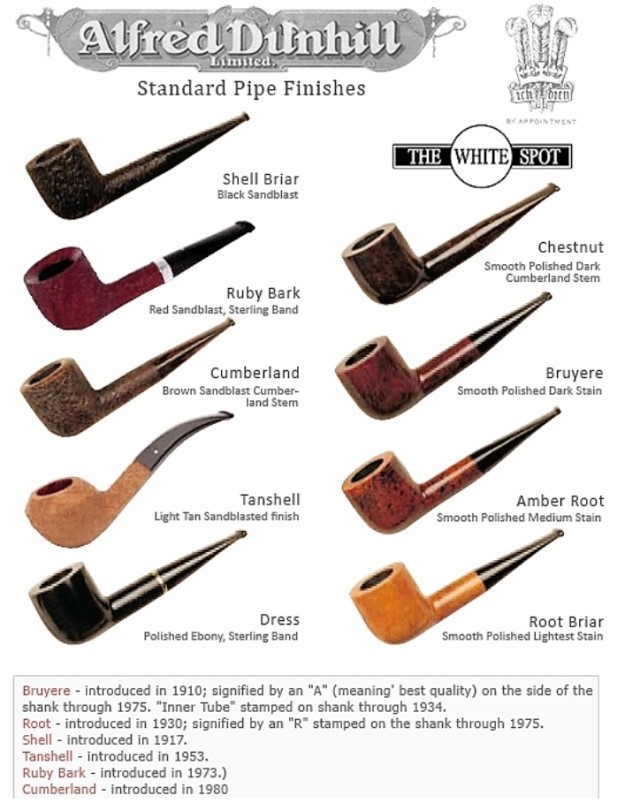
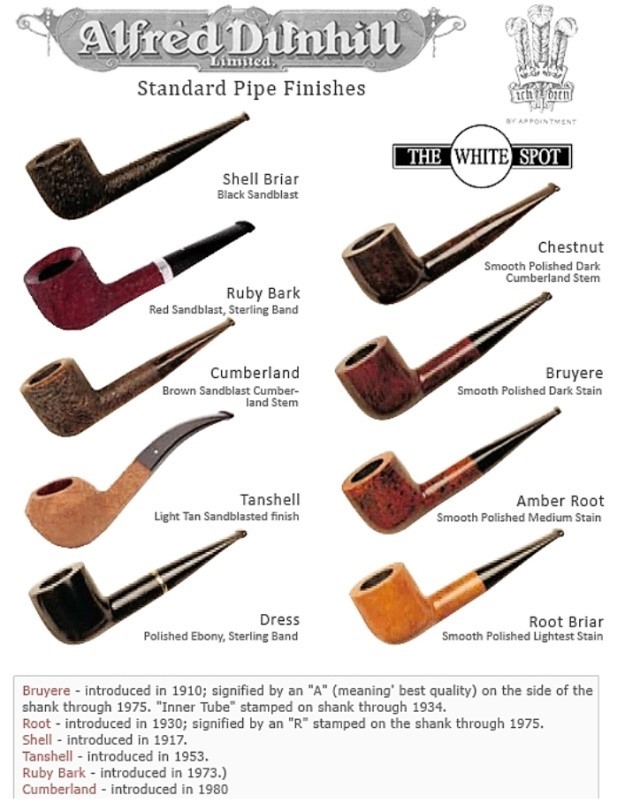
There was also a link to a catalogue page that gave examples and dates that the various finishes were introduced (https://pipedia.org/wiki/File:Dunnypipescatalog-1.png).I turned to Pipephil’s dating guide to show how I arrived at the date of manufacture for this pipe (http://www.pipephil.eu/logos/en/dunhill/cledat-en1a.html). I am including the chart that is provided there for the dating a pipe. I have drawn a red box around the section. Since the pipe I am working on has a superscript suffix 21 after the D in England it points to the 1960 line on the chart below. To date it just add 1960 +21 for a date of 1981. I have drawn a red box around the pertinent section in the chart.I now knew that I was working on a Shell that came out in 1981 as far as I could tell by the faded date stamp. The shape of the pipe is called a Diplomat but there was no shape number stamped on the heel of the bowl. From the shape chart on the site I could know that I was dealing with a Diplomat (http://www.pipephil.eu/logos/en/dunhill/shapes.html).

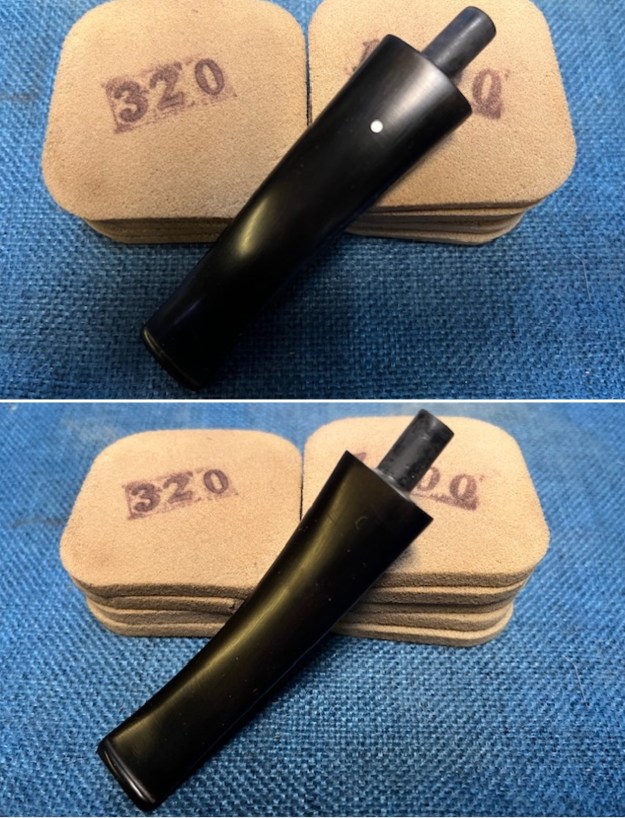
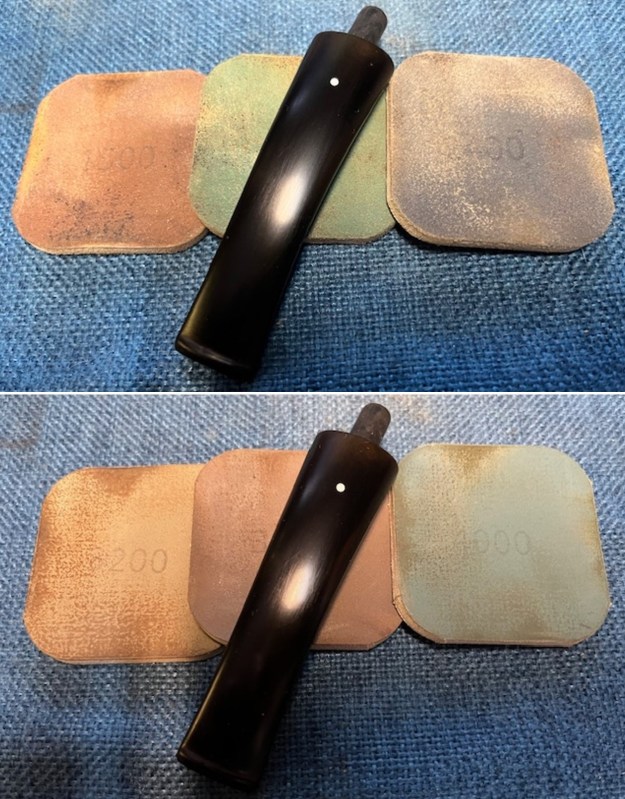
Armed with that information I turned to work on the pipe itself. Jeff had done a great job cleaning up the pipe as usual. He cleaned up the inside of the bowl with a PipNet reamer and a Savinelli Fitsall Pipe Knife. The bowl walls looked very good. He scrubbed the interior of the bowl and shank with pipe cleaners, cotton swabs and alcohol to remove the tars and oils. He scrubbed the exterior of the pipe with Murphy’s Oil Soap and a tooth brush to remove the grime from the finish. He worked on the rim top lava and darkening with the soap and tooth brush. He scrubbed the inside of the stem with alcohol and pipe cleaners. He scrubbed the exterior with Soft Scrub and then soaked it in Briarville’s Pipe Stem Deoxidizer. He washed it off with warm water to remove the deoxidizer. The pipe looked far better. I took photos of the pipe when I received it before I started working on it. I took photos of the bowl and rim top to show how clean it was. The top and the inner edge of the rim look very good. The stem looks clean of debris and grime. There are light tooth marks and chatter on both sides.I took photos of the stamping on the underside of shank. The stamping is clear and readable (though in some spots it is faint). I took a photo of the pipe with the stem removed to show the overall look of stem, tenon and profile of the pipe. Now it was time to work on the pipe. The bowl was in excellent condition so it took little work to prepare it. It was very clean so I rubbed the bowl down with Before & After Restoration Balm. It is a paste/balm that works to deep clean the finish, enliven and protect the briar. I worked it into the briar with my finger tips to make sure that it covered every square inch of the pipe. I set it aside for 10 minutes to let it do its work. I buffed it with a cotton cloth. The briar really began to have a deep shine. The photos I took of the bowl at this point mark the progress in the restoration. I set the bowl aside and turned my attention to the stem. I “painted” the stem surface with the flame of a lighter to lift the tooth marks on the top and underside. It worked very well. I filled in the two remaining marks on the stem with rubberized black CA glue. I set the stem aside to let the repair cure. Once the repair had cured I sanded it smooth with a folded piece of 220 grit sandpaper. I was able to blend in the repair on the surface of the stem. It looked much better and the repair was solid.I sanded the stem with 320-3500 grit sanding pads to break up the remaining oxidation. I wiped it down after each sanding pad with an Obsidian Oil impregnated cloth. It began to look good.I polished the stem with micromesh sanding pads – dry sanding with 1500-12000 grit pads. I wiped the stem down after each sanding pad with Obsidian Oil. I polished it with Before & After Pipe Stem Polish – both Fine and Extra Fine. Once I had finished the polishing I gave it final coat of Obsidian Oil and set it aside to dry. I put the 1981 Dunhill Shell Diplomat bowl and stem back together. I polished the bowl and stem with Blue Diamond to polish the briar and the vulcanite. I gave the bowl multiple coats of Conservator’s Wax and the stem multiple coats of carnauba wax. I buffed the pipe with a clean buffing pad to raise the shine. I hand buffed it with a microfiber cloth to deepen the shine. The pipe polished up pretty nicely. The Shell Briar stains worked amazingly well with the polished vulcanite taper stem. The grain around the bowl and shank and looks quite remarkable. This is truly a beautiful Dunhill Shell Diplomat. The finished pipe is shown in the photos below. The dimensions of the pipe are Length: 6 inches, Height: 1 ½ inches, Outside diameter of the bowl: 1 inch, Chamber diameter: ¾ of an inch. The weight of the pipe is 1.59 ounces/45 grams. This is such a unique shape that I am going to enjoy it for awhile before deciding what to do with it. Thanks for walking through the restoration with me. Cheers.

As always, I encourage your questions and comments as you read the blog. Thanks to each of you who are reading this blog. Remember we are not pipe owners; we are pipe men and women who hold our pipes in trust until they pass on into the trust of those who follow us.

Cleaning up a Dunhill Whangee Dublin


By Steve Laug

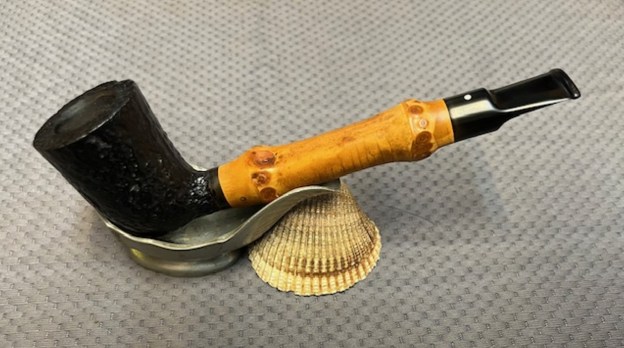
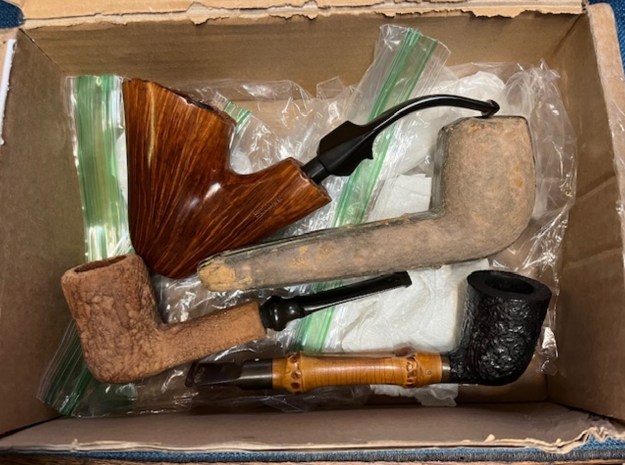
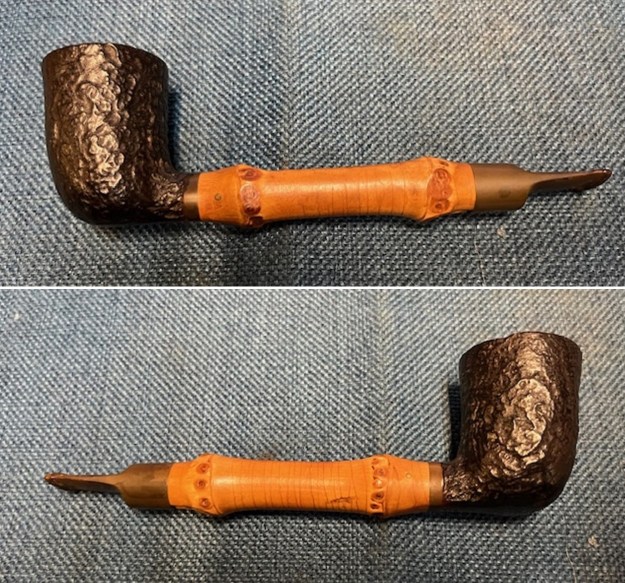
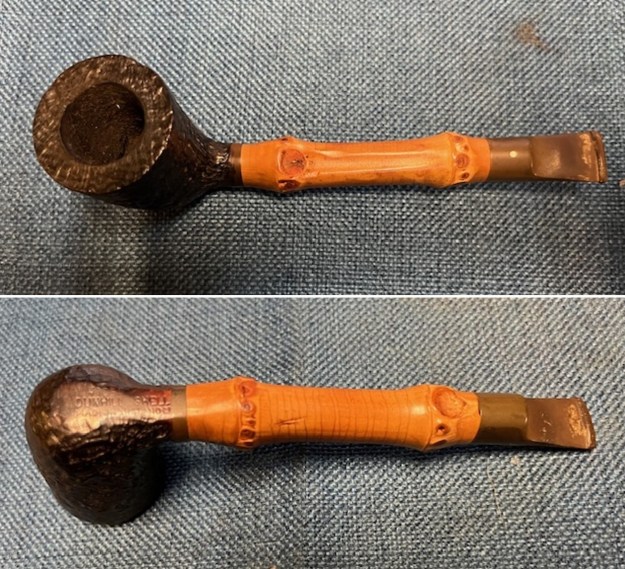
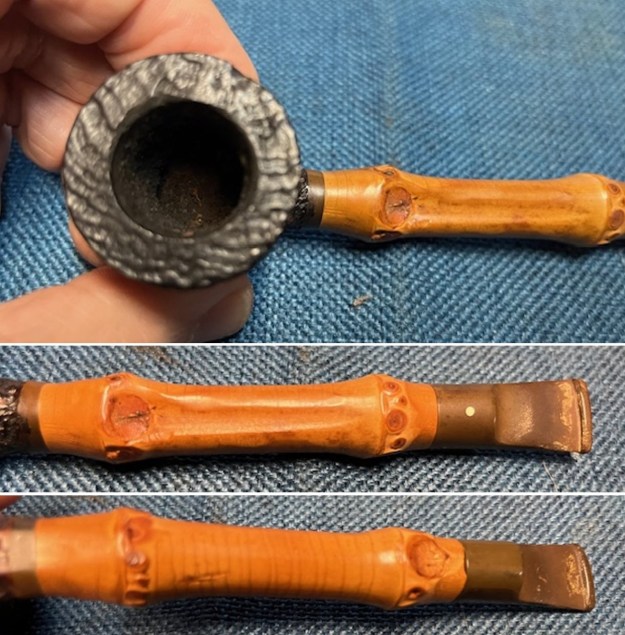
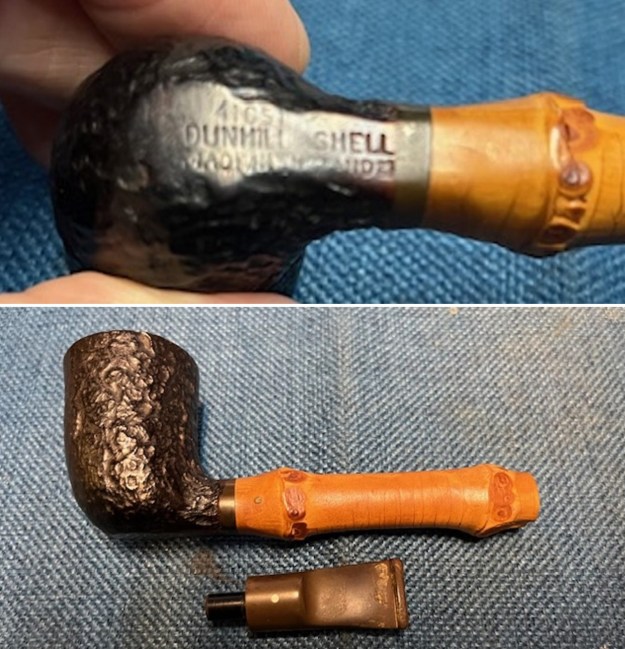
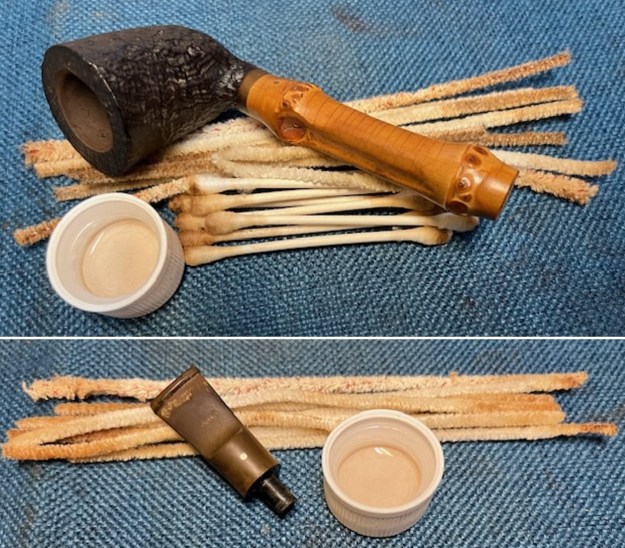
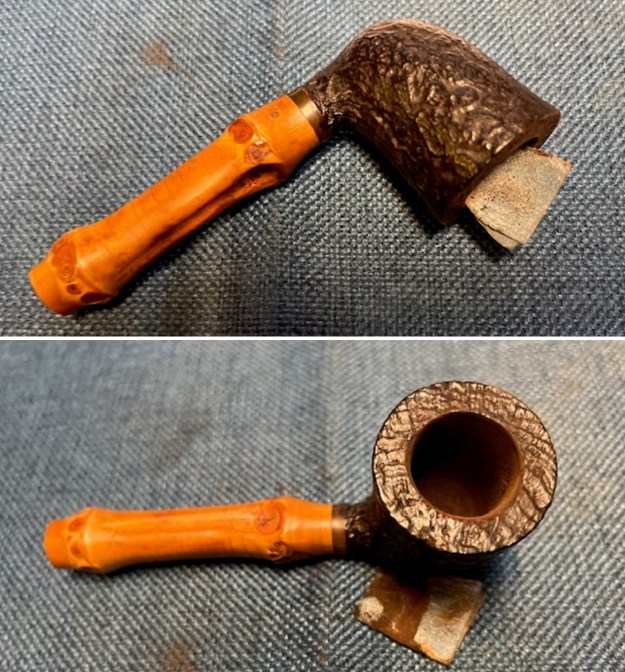
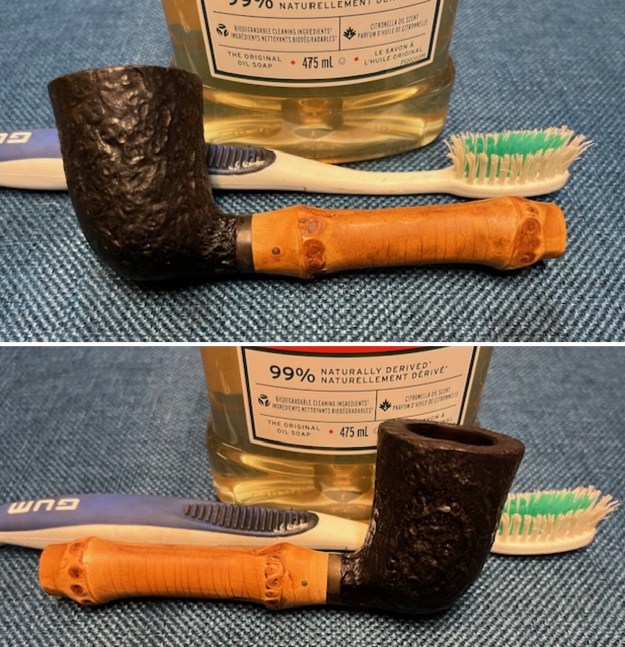
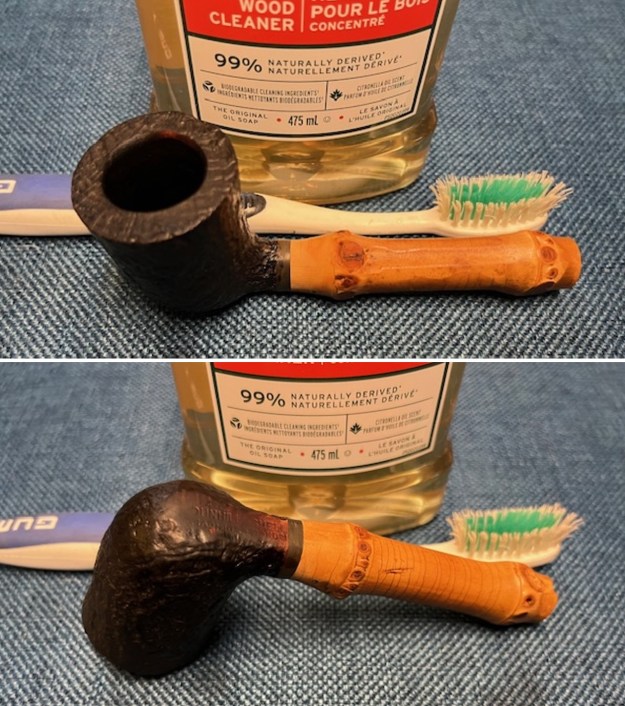
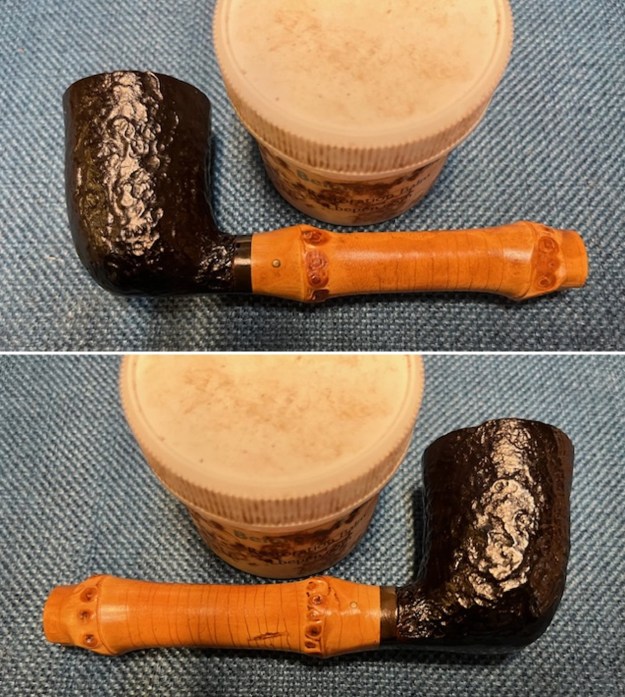
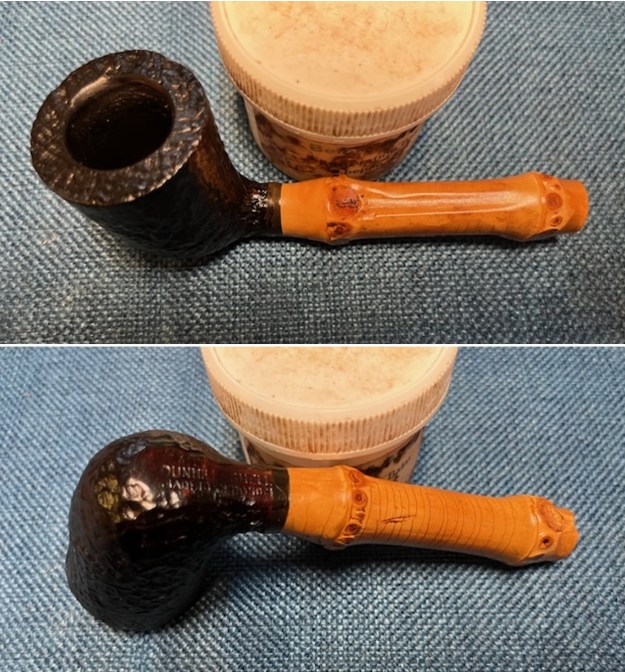
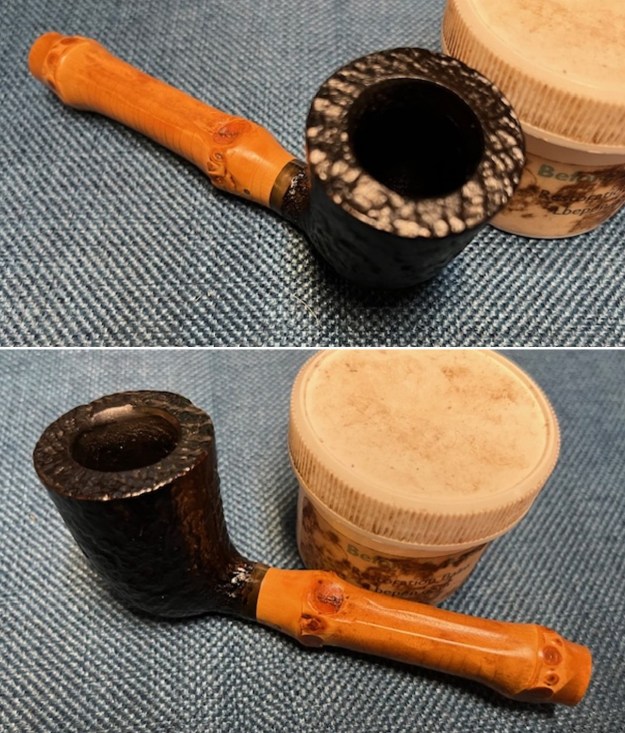
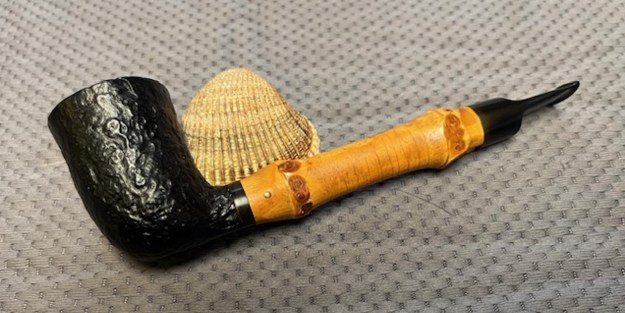
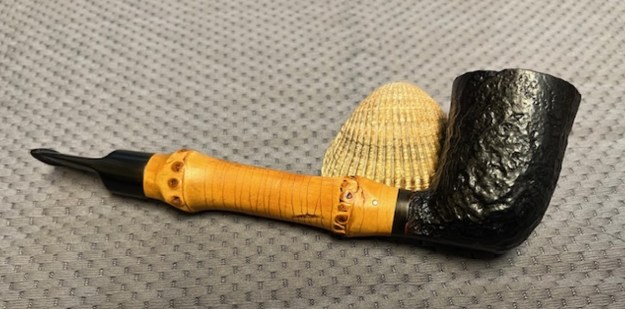
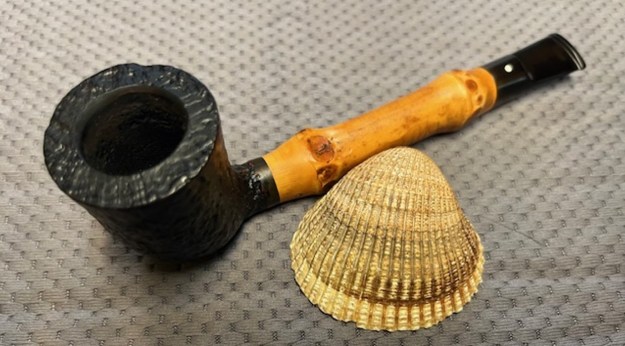
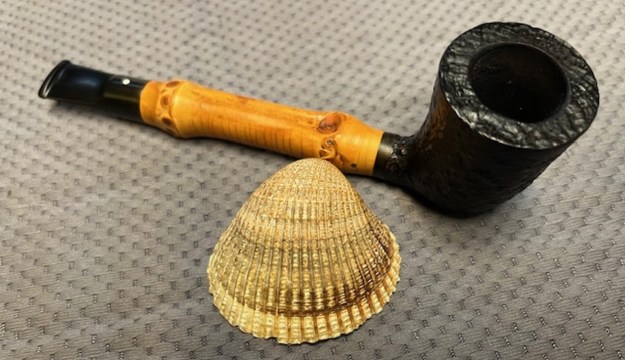
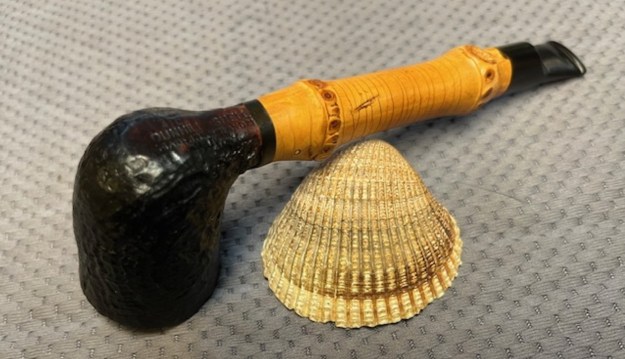
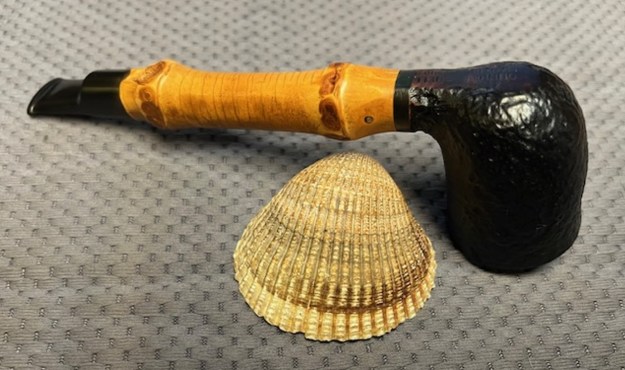
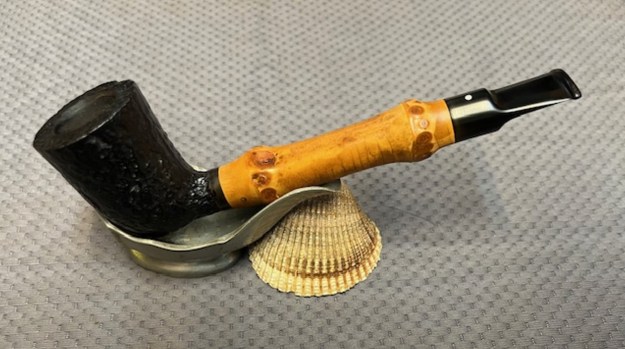
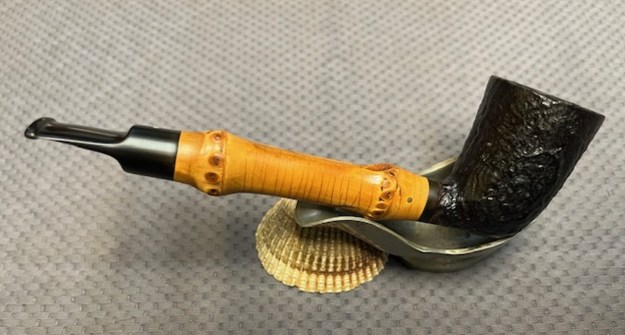
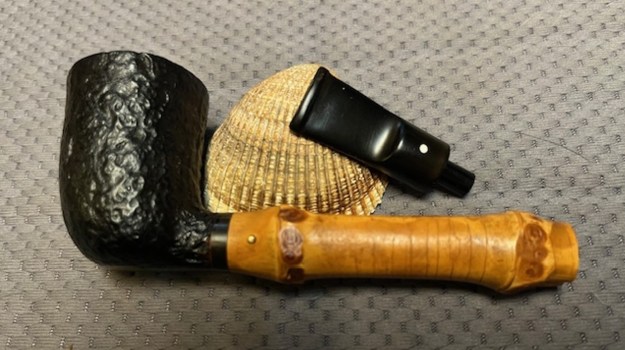
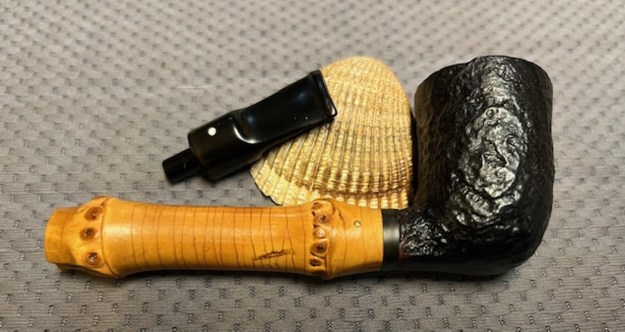
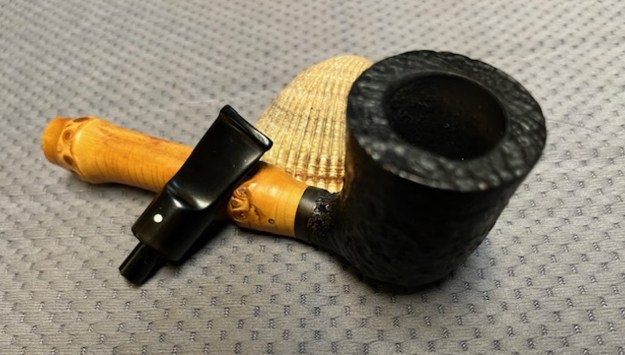
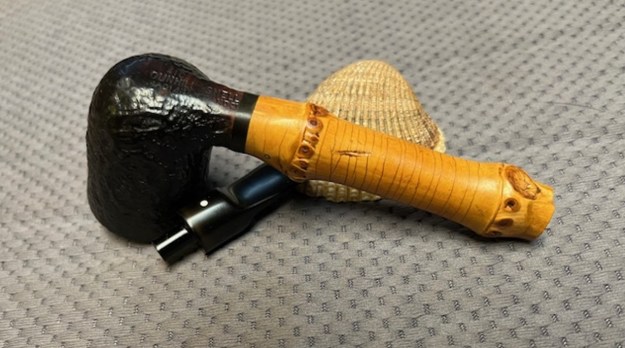
This is another of the four pipes that Sonny in Salmon Arm, BC sent to me for refurbishing. He put them in the mail and I received them on Monday this week. I took a photo of the box of four pipes once I unwrapped them. There were 4 interesting and very unique pipes – a Vauen Solitaire 148 Freehand Filter Pipe that is huge, an older case meerschaum with an overclocked stem, a Dunhill Wanghee Sandblast Dublin with a Bamboo shank and short saddle stem and finally an Anima wax drip sand blast Billiard carved by Brian McNulty. All needed varying degrees of restoration.I chose to work on the Dunhill Shell with the Bamboo Shank and short saddle stem. It is stamped on the underside and reads 41051 [over] Dunhill Shell [over] Made in England21. There was a vulcanite spacer between the bamboo shank and the short briar shank on the bowl. It was oxidized. The bamboo shank had some crackling and a rich patina on the surface that would continue to deepen with age. The sandblast finish was dirty but had some nice grain showing through. The bowl was slightly out of round with a moderate cake in the bowl. There was some light lava on the rim top. The short saddle stem was oxidized, calcified and there were tooth marks and chatter ahead of the button. The top of the saddle also bore the Dunhill white. I took these photos before I started my work on the pipe. I took a photo of the rim top and bowl to show the condition of both of them. There is a moderate cake in the bowl. The rim top has some light lava and some damage on the right side of the inner edge. The photos of the stem show the oxidation and tooth marks/chatter on both sides ahead of the button.I took photos of the stamping on the sides of the shank. The stamping was clear and readable as noted above. I removed the stem from the shank and took a photo to show the beauty of the pipe.This morning I went back to the original blog describing the restoration of the previous Whangee pipe. I am including the link to the blog (https://rebornpipes.com/2020/01/08/refreshing-a-dunhill-tanshell-w60-t-1962bamboo-lovat-for-alex/). Give it a read. I am quoting my introductory comments in that blog below because they capture well the feelings I had when I first saw this bamboo shank pipe in Sonny’s box.

I carefully took it in my hands and examined it. While I have several Stanwell Bamboo pipes and older KBB Yello Bole Bamboos this is the first Dunhill that I had seen up close and personal. Alex told me that these bamboo-adorned pieces were referred to as “Whangee” pipes. I learned later that the term comes from the Mandarin word for bamboo, huáng lí and was used to describe canes and umbrellas with bamboo handles throughout the early to mid-1900s before being attributed to pipes — Dunhill’s in particular. I learned from reading on line that bamboo came to into use in pipemaking during the briar shortage that accompanied and followed WWII. As a means of saving on briar, pipemakers would extend the shank with bamboo.

The pipe was stamped on the heel of the bowl with the following nomenclature: 45051 over Dunhill Shell over Made in England. Next to that is an underlined 21which I believe designates the year of manufacture – 1981. So now I knew the date on this interesting Bamboo it is a newer Bamboo than others I have worked on.

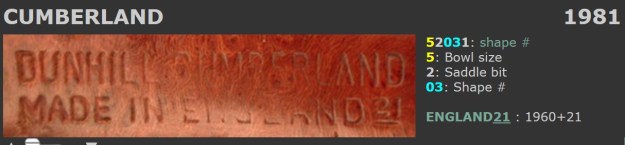
One of the first things I like to do is to unpack the stamping and understand each element in it. I turned to Pipephil’s helpful site (http://pipephil.eu/logos/en/dunhill/shapes-l.html). I am using the illustration below to interpret the stamping.The 45051 stamp includes the shape code 05 for a Dublin. The 4 is the bowl size the other digits 5 and 1 are a bit harder to interpret. The fifth digit 1 is not needed. The 5 may refer to the shape of the stem (in this case a saddle stem) but I ma not sure. Pipephil also has some helpful dating keys on the site that are basically flow charts that you can walk through to date your pipe (http://pipephil.eu/logos/en/dunhill/cledat-en1.html). I turned to Part 1 of the Dating Key and followed the chart. This pipe has a 21 following the England stamp. That took me to the section on the chart below (column one) which instructed me that the pipe could be dated as being made posterior to 1954.I followed the link following the “Your pipe is posterior to 1954. Narrow down your dating”. That took me to Page 2 of the dating key (http://pipephil.eu/logos/en/dunhill/cledat-en1a.html). The second column (suffix [1…4] or [11…39]) led me to the section with a 2 after the D in England. There was a directive for dating the pipe spelled out as follows: 1960 + suffix 21 which gives the pipe a date of 1981. Even though this bamboo shank Dunhill was not stamped Whangee it had all the parts that make up a Whangee. So, I googled Dunhill Bamboo Wanghee to get a bit of background on the that brand and found a link on Smoking Pipes that had some helpful information that I will quote below the link (https://www.smokingpipes.com/pipes/estate/england/moreinfo.cfm?product_id=235695).

It’s not everyday you come across a Dunhill Whangee, the marque’s classic bamboo-shanked pipe. Though originally incorporated into Dunhill’s lineup several decades back, when briar was in short supply, these eccentric designs caught on, and many collectors have even built entire rotations around them. You will occasionally find one on the estate market, as we do here, but they tend to sell quickly, especially if it is an older example like this ’62 edition — in part due to their general rarity, but also because of their overall unique aesthetic. You can’t find classic English designs fitted with oversized bamboo extensions everywhere, after all…

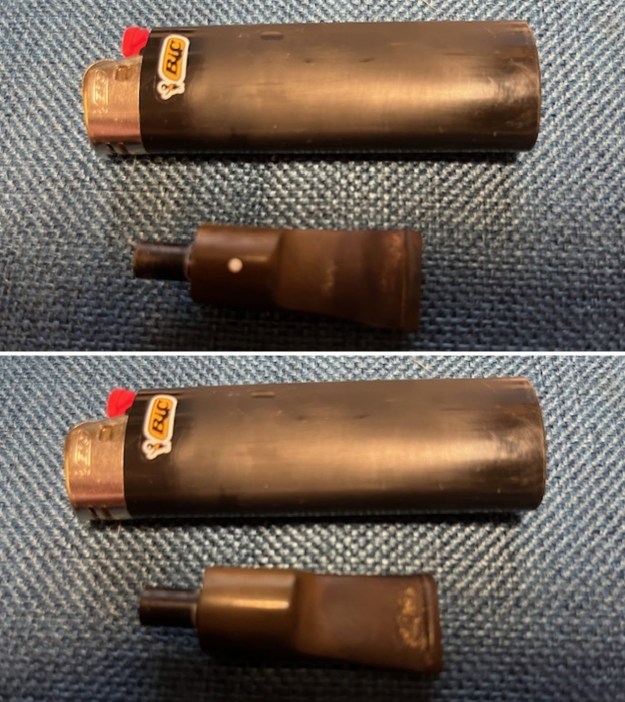
I turned to work on the pipe itself. I reamed the cake with a PipNet pipe reamer using the second cutting head to cut back the cake to bare briar. I used a Savinelli Fitsall Pipe Knife to clean up the remnants on the bowl walls. I sanded the walls of the bowl with a piece of 220 grit sandpaper wrapped around a piece of dowel. The walls of the bowl are undamaged and smooth. The shank was clogged and I could not get air to flow well through it. I pushed a wire through the shank to open it up. Then I scrubbed the inside of the bamboo shank and the mortise with alcohol and pipe cleaners. I also cleaned out the airway in the stem the same way.I cleaned up the inner edge of the rim and brought the bowl back to round with a folded piece of 220 grit sandpaper. It looked much better once I had finished the reshaping.I scrubbed externals of the bowl with a tooth brush and undiluted Murphy’s Oil Soap. I rinsed off the grime and debris that came off in the scrubbing with warm water. I dried it off once it was clean. It looks very good! I rubbed the briar down with Before & After Restoration Balm. I worked it into the briar and the bamboo with my fingertips and a shoe brush. The product works to clean, enliven and preserve the briar. I let it sit for 10 minutes then I buffed it with a cotton cloth to deepen the shine. The briar comes alive with the balm. I set the bowl aside and turned to address the tooth marks and chatter in the stem surface. I “painted” the tooth marks on the stem with the flame of a Bic lighter. I was able to lift the tooth marks to the place where I could sand out what remained. I sanded them with 220 grit sandpaper to blend them into the surface of the stem. I sanded the stem surface with 320-3500 grit sanding pads. I dry sanded with each pad and wiped the stem down after each pad with a Obsidian Oil impregnated cloth.I polished the vulcanite with micromesh sanding pads – 1500-12000 grit pads. I wiped it down with Obsidian Oil after each sanding pad. I used Before & After Pipe Polish – both Fine and Extra Fine to further polish the stem. I gave it another coat of Obsidian Oil and set it aside. Once I finished with the 1981 Dunhill Shell Bamboo 41051 I put the stem back on the shank and carefully buffed the pipe with Blue Diamond polish using a lightly loaded pad and a soft touch. I wanted the shine but not the grit filling in the crevices of the sandblast bowl. I used even a gentler touch on the bamboo. I gave the stem a vigorous polish being careful around the white spot. I gave the bowl and bamboo several coats of Conservator’s Wax and the stem several coats of carnauba. I buffed the pipe with a clean buffing pad and hand buffed it with a microfiber cloth. The finished pipe is shown in the photos below. It is a great piece of pipe history and looks better than when I began the process. The dimensions of the pipe are Length: 6 inches, Height: 1 ¾ inches, Outer Bowl Diameter: 1 ¼ inches, Chamber Diameter: ¾ of an inch. The weight of the pipe is 1.16 ounces/ 33grams. Two more of Sonny’s pipes to work on before I send them all back to him. Thanks for reading this blog and my reflections on the pipe while I working on it. As always, I encourage your questions and comments as you read the blog. Thanks to each of you who are reading this blog. Remember we are not pipe owners; we are pipemen and women who hold our pipes in trust until they pass on into the trust of those who follow us.

Restoring a tired and worn Dunhill Shell 41111 Lovat


Blog by Steve Laug

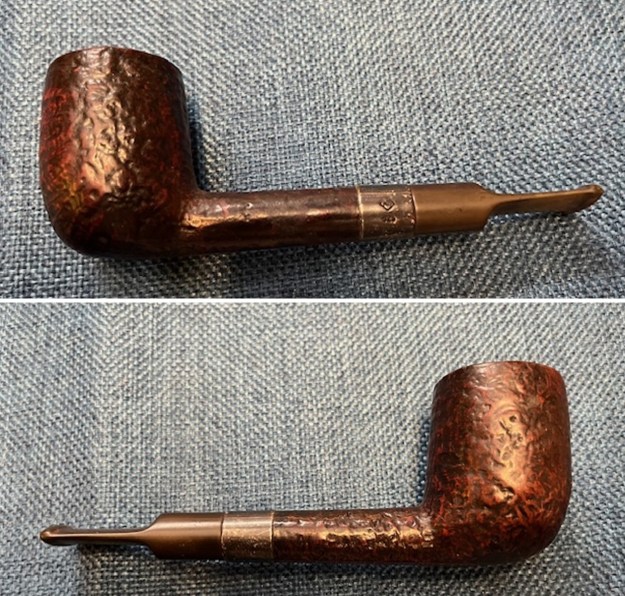
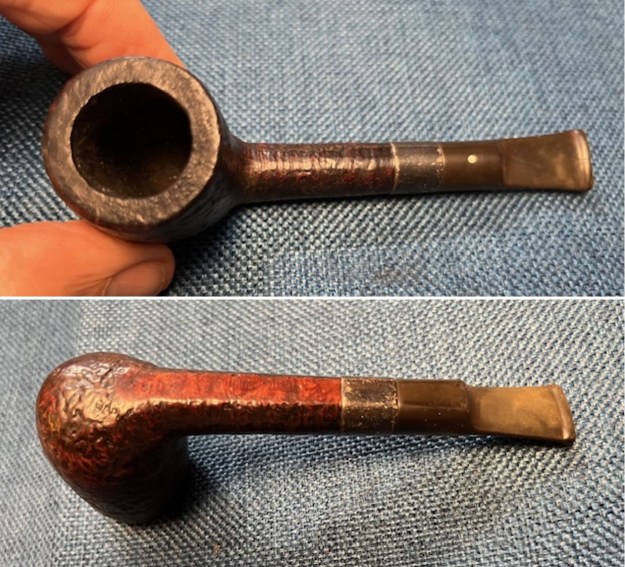
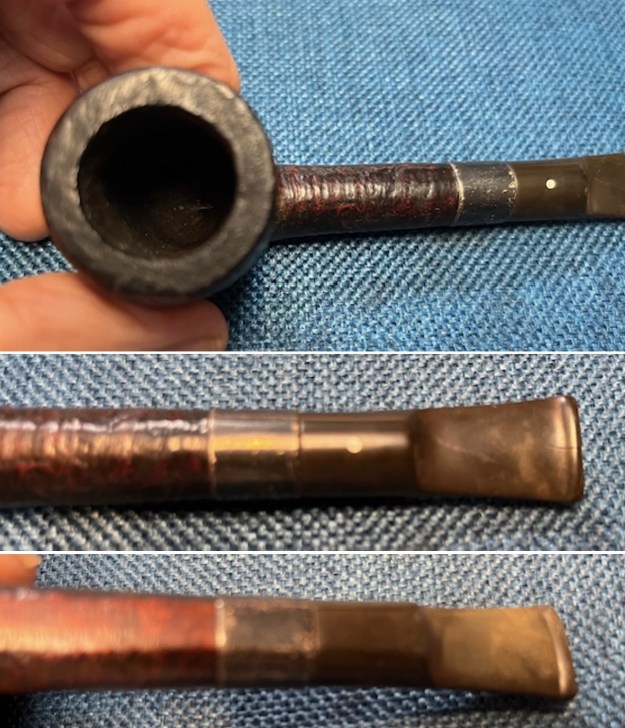
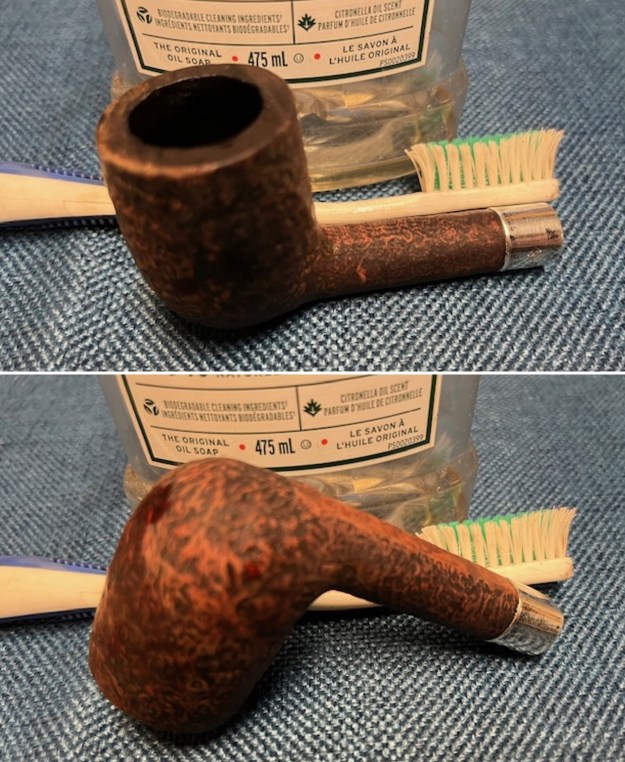
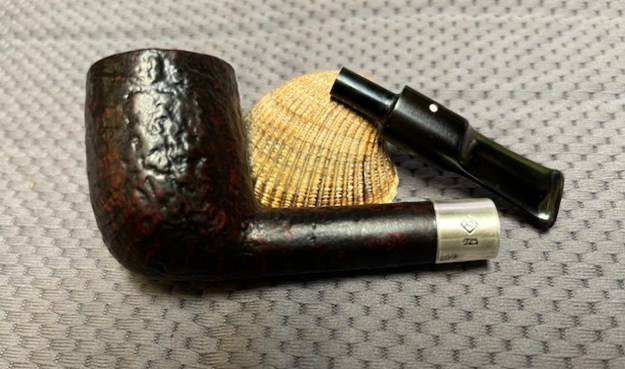
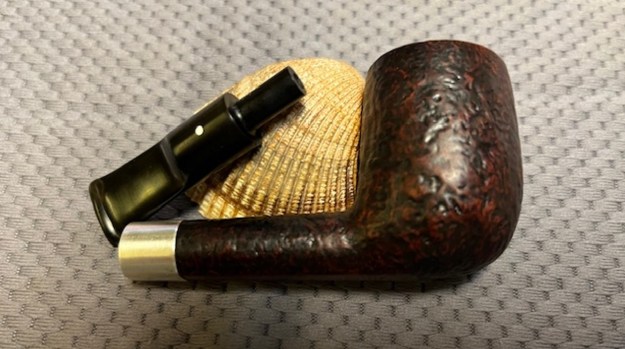
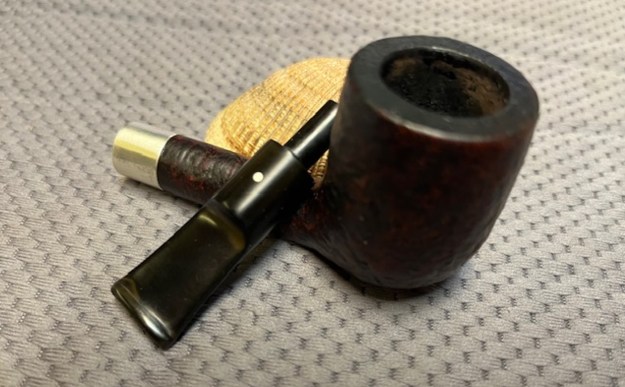
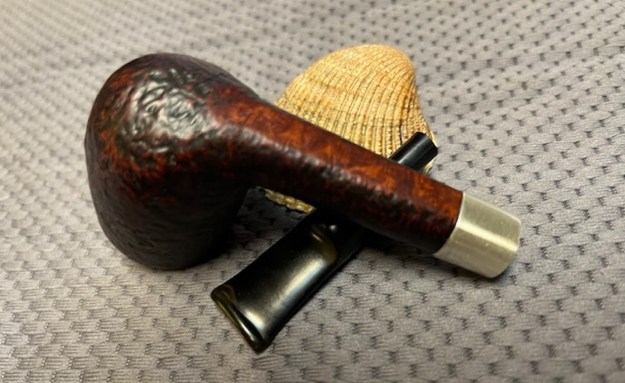
I took a second Dunhill to the work table. It was I picked up while I was in Idaho. It was one that we had purchased from a friend in Denmark on May 22, 2024. It is a petite and worn Dunhill Shell Lovat. The stamping on the underside of the shank read 41111 on the heel of the bowl. That is followed by Dunhill Shell [over] Made in England followed by a number 18 to the right of the D in England that will help me date the pipe. The bowl had been reamed not long ago. There was some dust and debris in the light sandblast on the rim and the inner edge had some darkening. The outer edge looked very good. The sandblast finish was worn and dirty but it could not hide the lovely blast around the bowl and shank. There were some very worn areas on the left side of the shank. The oxidized and tarnished silver band on the shank appears to be cosmetic as there are no visible cracks in the shank. The band is stamped with AD in a diamond which is the Alfred Dunhill stamp. It also reads .925 which is the quality of sterling silver. The stem was clean and there were light tooth marks on the top and underside ahead of the button. There also appeared to be a hairline crack in the middle of the button on the topside. The classic Dunhill White Spot was on top of the saddle stem. I took a few photos of the pipe before I started my work on it. I sent the photos to Paul and he is excited about it. I took a photo of the rim top and bowl to show the condition of both of them. The bowl itself had been recently reamed. The rim top showed a coat of lava and some darkening around the edge. The inner edge looked rough but a cleaning would make that clear. The outer edge looked very good. The photos of the stem show light oxidation and tooth marks/chatter on both sides ahead of the button. The first photo shows a tiny hairline crack mid button and just over the edge.I took a photo of the stamping on the underside of the shank. The photos are blurry but you can see the shadow of the stamping. In person it is very readable. The stamp on the silver band is also very readable once the oxidation has been removed. I removed the stem from the shank and took a photo to show the proportions of the pipe. As is my regular practice, before I started my work on the pipe, I turned to Pipedia’s section on Dunhill Shell Pipes to get a bit of background on the Dunhill finishes (https://pipedia.org/wiki/Dunhill#Root_Briar). I quote:

Shell

A deep craggy sandblast with a black stain finish (usually made using Algerian briar) – the color of the stain used has varied over the years. Although there is some doubt as to them being the first to sandblast pipes, Dunhill’s Shell pipes, and the sandblasting techniques developed to create them are considered one of Dunhill’s greatest and most lasting contributions to the art of pipe making.

The documented history of Dunhill’s inception of the Shell is largely limited to patent applications — there are no catalog pages or advertisements promoting blasted pipes at the time. The preliminary work on the English patent (No. 1484/17) was submitted on October 13, 1917. The patent submission was completed half a year later, on April 12, 1918, followed by the granting of the English patent on October 14, 1918. This was less than a month before the end of The Great War on November 11th.

In 1986 Dunhill released a line of premium Shell finish pipes – “RING GRAIN”. These are high-quality straight grain pipes which are sandblasted. Initially only Ring Grain, but now in two different finishes. In 1995 the “Shilling” was introduced with Cumberland finish – it is an extremely rare series. These pipes exhibit a deeper blast characteristic of that of the 1930’s – mid-1960’s (and the limited ‘deep blast’ pipes of the early 1980s) and show a fine graining pattern. These are considered the best new Dunhills by many enthusiasts today and are very rare. The finish is sometimes described as tasting like vanilla at first, with the taste becoming more normal or good as the pipe breaks in.

There was also a link to a catalogue page that gave examples and dates that the various finishes were introduced (https://pipedia.org/wiki/File:Dunnypipescatalog-1.png).I turned to Pipephil’s dating guide to show how I arrived at the date of manufacture for this pipe (http://www.pipephil.eu/logos/en/dunhill/cledat-en1a.html). I am including the chart that is provided there for the dating a pipe. I have drawn a red box around the section. Since the pipe I am working on has a superscript suffix 18 after the D in England it points to the 1960 line on the chart below. To date it just add 1960 +18 for a date of 1978. I have drawn a red box around the pertinent section in the chart.I now knew that I was working on a Shell that came out in 1978 as far as I could tell by the date stamp. The shape of the pipe is 41111. From the shape chart on the site I could know that I was dealing with a Lovat (http://www.pipephil.eu/logos/en/dunhill/shapes.html). I quote below for the interpretation

Dunhill pipes are stamped with a four digit code.
Digit 1: (from 1 to 6) denotes the size of the pipe (the group).
Digit 2: denotes the style of the mouthpiece (0,1=tapered, 2=saddle)
Digit 3 and 4: denote the generic pipe shape (in yellow in the chart on top) 

Example: 5102
(5 = size | 1 = tapered stem | 02 = Bent)

When 5 digits occur, the meaning of the 4 first remain the same

The pipe in hand is stamped 41111 which is a size/group 4 pipe, the 1 is for taper but on a Lovat it is a saddle as noted in the chart on the link above, the 111 is the shape of a Lovat.

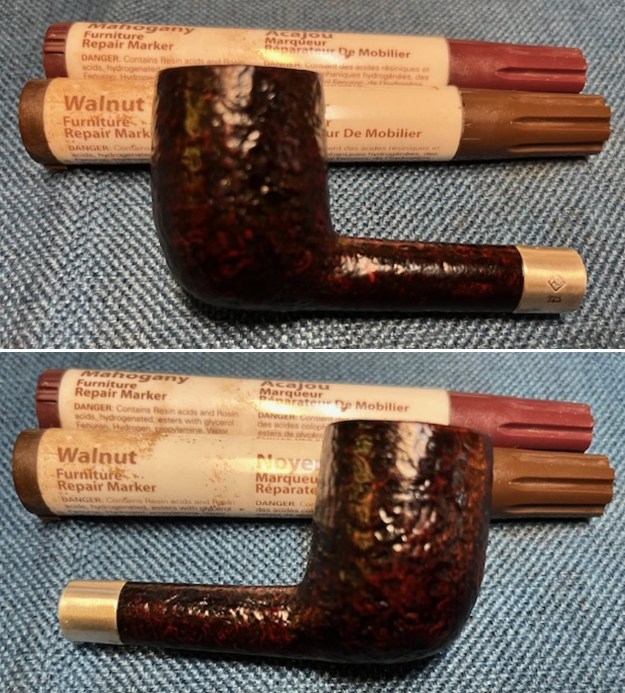
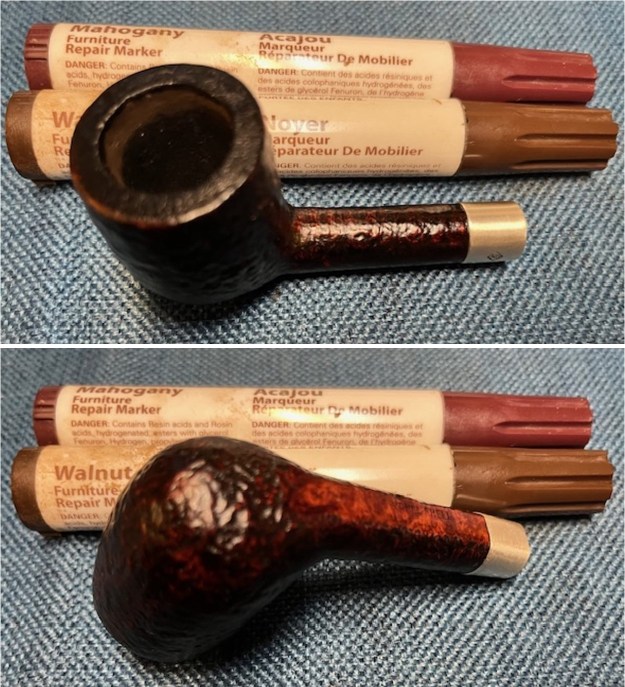
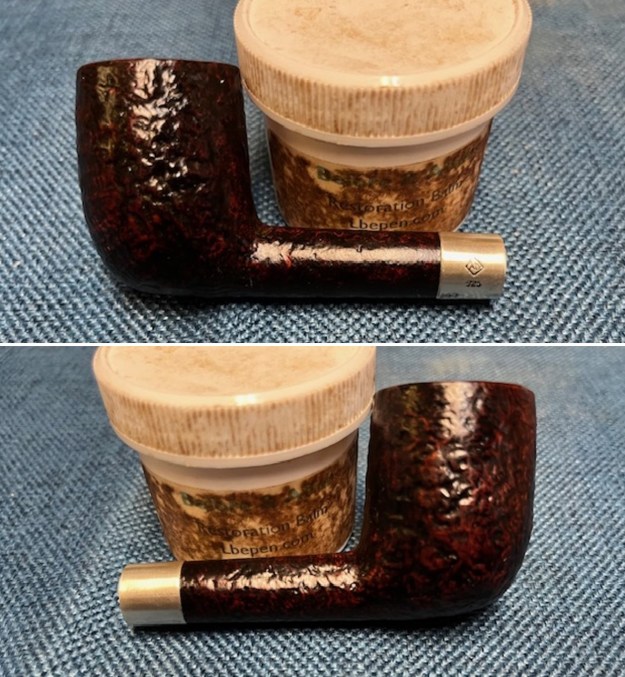
Now it was time to work on the pipe. I cleaned up the oxidized silver band with a jeweller’s cloth to remove the tarnish and protect it from further tarnish. There was more work to do but at least at this point I could read the stamping on it clearly. I used a brass bristle wire brush to knock off some of the debris and lava on the rim top. I did this in preparation for scrubbing it with Murphy’s Oil Soap.I scrubbed the exterior of the bowl with a tooth brush and undiluted Murphy’s Oil Soap to remove the grime and debris in the finish. I scrubbed out the mortise and tenon with small tube brushes and soap to remove the oils and tars in the shank area. I rinsed it with warm water to remove the grime and oils in the finish and shank. I dried it off with a soft cotton cloth. One of the benefits of doing this is that the briar in the nicks and dents on the bowl sides swell and virtually disappear. The pipe has a fresh look that really highlights the depths of the sandblast on the briar. I used a Walnut and a Mahogany stain pen to touch up the fading on the bowl sides. There were spots where the stain had faded and it added to the worn look. I restained it with these two stain pens and then used a black stain pen to touch up the spaces. The combination of the stains is very close to the colour on the Shell Briar. I let it dry and once it did it looked much better. I rubbed the bowl down with Before & After Restoration Balm. It is a paste/balm that works to deep clean the finish, enliven and protect the briar. I worked it into the briar with my finger tips to make sure that it covered every square inch of the pipe. I set it aside for 10 minutes to let it do its work. I buffed it with a cotton cloth. The briar really began to have a deep shine. The photos I took of the bowl at this point mark the progress in the restoration. I set the bowl aside and turned my attention to the stem. The first photo shows the hairline crack on the top side of the button forward about 1/8 of an inch. I filled in the cracked area on the stem with rubberized black CA glue. I set the stem aside to let the repair cure.Once the repair had cured I sanded it smooth with a folded piece of 220 grit sandpaper. I was able to blend in the repair on the top of the stem. It looked much better and the repair was solid.I sanded the stem with 320-3500 grit sanding pads to break up the remaining oxidation. I wiped it down after each sanding pad with an Obsidian Oil impregnated cloth. It began to look good.When I finished polishing the stem with the sanding pads it dawned on me that I had not cleaned the internals of the shank and stem. My routine had been broken as this restoration was spread over the better part of a week. No excuse but that is what happened. So I paused the polishing and scrubbed out the inside of the shank, mortise and the airway in both the stem and the shank. I used pipe cleaners, cotton swabs and isopropyl alcohol. It cleaned up very well.I polished the stem with micromesh sanding pads – dry sanding with 1500-12000 grit pads. I wiped the stem down after each sanding pad with Obsidian Oil. I polished it with Before & After Pipe Stem Polish – both Fine and Extra Fine. Once I had finished the polishing I gave it final coat of Obsidian Oil and set it aside to dry.  I put the 1978 Dunhill Shell 41111 Lovat bowl and stem back together. I polished the bowl and stem with Blue Diamond to polish the briar and the vulcanite. I gave the bowl multiple coats of Conservator’s Wax and the stem multiple coats of carnauba wax. I buffed the pipe with a clean buffing pad to raise the shine. I hand buffed it with a microfiber cloth to deepen the shine. The pipe polished up pretty nicely. The Shell Briar stains worked amazingly well with the polished vulcanite saddle stem. The grain around the bowl and shank and looks quite remarkable. This is truly a beautiful Dunhill Shell 41111 Lovat. The finished pipe is shown in the photos below. The dimensions of the pipe are Length: 5 inches, Height: 1 ¾ inches, Outside diameter of the bowl: 1 ¼ inches, Chamber diameter: ¾ of an inch. The weight of the pipe is 1.16 ounces/33 grams. I will be adding this to the rebornpipes store in the British Pipemakers Section soon. It will be a definite good deal is you have been looking for a Dunhill. Let me know if you wish to add it to your rack. Thanks for walking through the restoration with me. Cheers.

As always, I encourage your questions and comments as you read the blog. Thanks to each of you who are reading this blog. Remember we are not pipe owners; we are pipe men and women who hold our pipes in trust until they pass on into the trust of those who follow us.

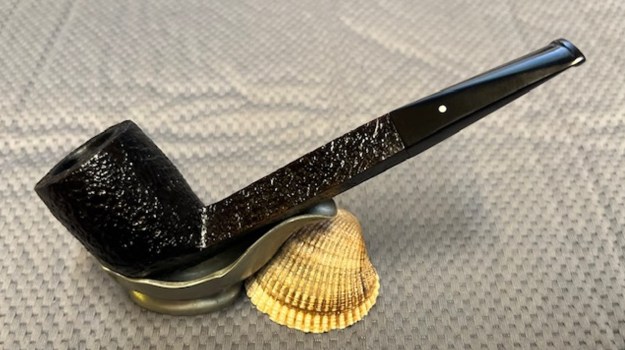
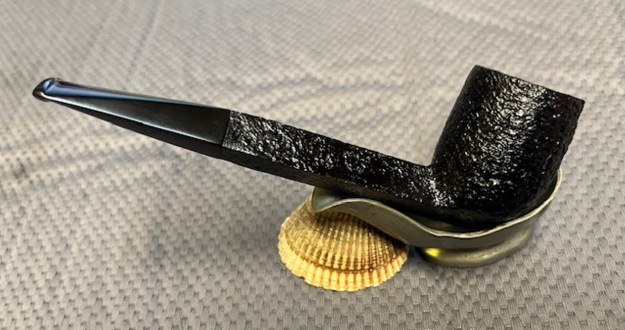
Restoring a Dunhill Shell 21051 Zulu


Blog by Steve Laug

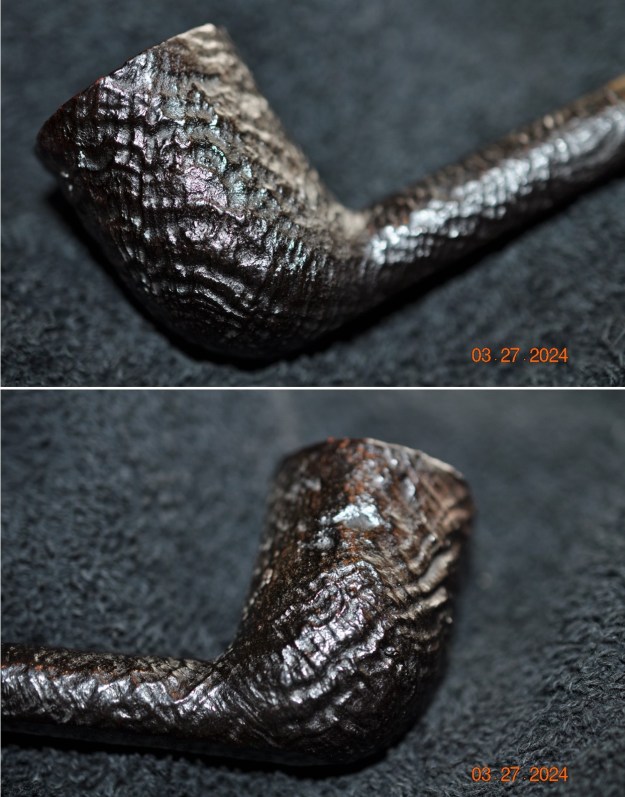
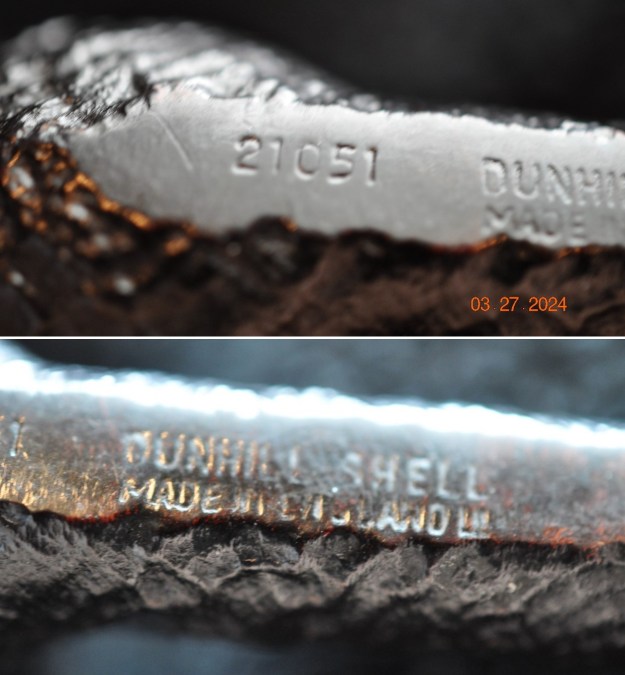
The next pipe on the table is a sandblast Dunhill Zulu. It had a taper, vulcanite stem with a white spot. We purchased it from an estate in Oregon City, Oregon, USA 03/21/2024. The pipe is stamped on the heel of the bowl and on the underside of the shank. On the heel of the bowl it is stamped with the shape number 21051. That is followed with stamping on the shank Dunhill Shell [over] Made in England11. The rim has a thick lava coat filling in the sandblast. The cake in the bowl has been trimmed recently but there is still a moderate coating. The inner edge of the rim actually looks quite good with little or no damage or burn marks. There were oils and grime ground into the bowl sides gives the finish a dullness. There is a deep sandblast showing through the grime. The vulcanite stem is oxidized and dirty with grime and grit on the surface. There are some light tooth marks on both the top and underside of the stem just ahead of the button. Jeff took photos of the pipe before he started his clean up work. I have included them below. He took photos of the pipe’s bowl and rim top to show the cake in the bowl and the lava coat overflowing onto the top. It is another dirty pipe. He also took photos to capture the tooth marks on the top and underside of the stem near the button. He took photos of the sides and heel of the bowl to show the rugged sandblast around the bowl and the amount of grime ground into the surface of the briar. He took photos of the stamping on the underside of the shank. It is faint in spots but still readable as noted above.I wanted to unpack the Dunhill stamping on the shank and work to understand each element of the stamp. I generally use the Pipephil site to gather as much initial information as possible (http://pipephil.eu/logos/en/dunhill/shell-briar1.html). The stamping is interpreted as follows: The number 21051 is the shape number for a taper stem Zulu. The Shell stamp refers to the finish. The number 11 following the D of England would give the date the pipe.

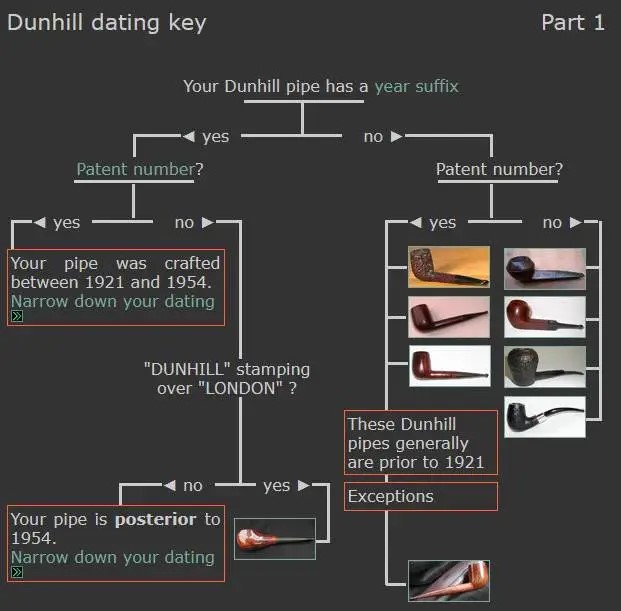
Pipephil also has some helpful dating keys on the site that are basically flow charts that you can walk through to date your pipe (http://pipephil.eu/logos/en/dunhill/cledat-en1.html). I turned to Part 1 of the Dating Key and followed the chart. This pipe has the number 11 following the D in England. There was no patent number so that took me to the section on the chart below (column one) which instructed me that the pipe could be dated as being made “posterior to 1954”. I followed the link under “Your pipe is posterior to 1954. Narrow down your dating”. That took me to Page 2 of the dating key (http://pipephil.eu/logos/en/dunhill/cledat-en1a.html). The second column (suffix 1…4) or (11…39) led me to the section with an 11 after the D in England. There was a directive for dating the pipe spelled out as follows: 1960 + suffix 11 which gives the pipe a date of 1971.I then turned to Pipedia’s section on Dunhill Shell Briar to get a bit of background on the Dunhill finishes (https://pipedia.org/wiki/Dunhill#Root_Briar). I quote:

Shell

A deep craggy sandblast with a black stain finish (usually made using Algerian briar) – the color of the stain used has varied over the years. Although there is some doubt as to them being the first to sandblast pipes, Dunhill’s Shell pipes, and the sandblasting techniques developed to create them are considered one of Dunhill’s greatest and most lasting contributions to the art of pipe making.

The documented history of Dunhill’s inception of the Shell is largely limited to patent applications — there are no catalog pages or advertisements promoting blasted pipes at the time. The preliminary work on the English patent (No. 1484/17) was submitted on October 13, 1917. The patent submission was completed half a year later, on April 12, 1918, followed by the granting of the English patent on October 14, 1918. This was less than a month before the end of The Great War on November 11th.

In 1986 Dunhill released a line of premium Shell finish pipes – “RING GRAIN”. These are high-quality straight grain pipes which are sandblasted. Initially only Ring Grain, but now in two different finishes. In 1995 the “Shilling” was introduced with Cumberland finish – it is an extremely rare series. These pipes exhibit a deeper blast characteristic of that of the 1930’s – mid-1960’s (and the limited ‘deep blast’ pipes of the early 1980s) and show a fine graining pattern. These are considered the best new Dunhills by many enthusiasts today and are very rare. The finish is sometimes described as tasting like vanilla at first, with the taste becoming more normal or good as the pipe breaks in.

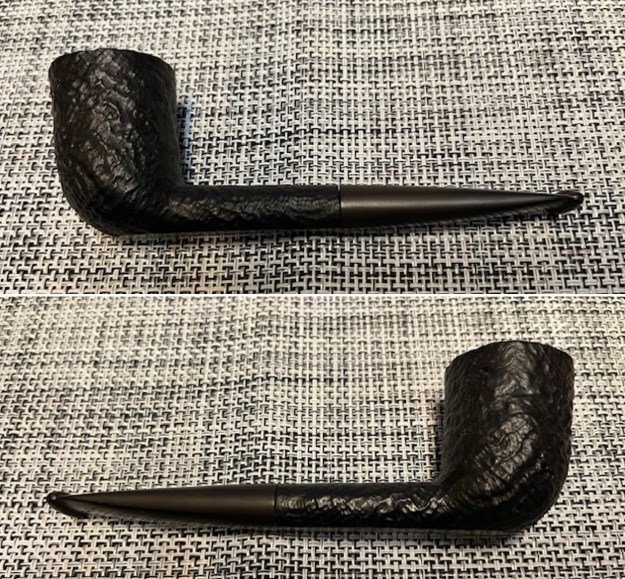
I turned to work on the pipe itself. Jeff had done an amazing cleanup of the pipe. He reamed the light cake with a PipNet reamer and cleaned up that with a Savinelli Fitsall Pipe Knife. He scrubbed the internals of the bowl and stem with alcohol, cotton swabs, pipe cleaners and shank brushes. He scrubbed the externals with undiluted Murphy’s Oil Soap and rinsed the bowl off with running water. He soaked the stem in Briarville’s Pipe stem Deoxidizer and once it had soaked rinsed it off with warm water to remove the residual solution. He dried it off and rubbed it down to remove any oxidation that was still on the stem. The pipe looked very good when I received it. I took a photo of the rim top to show the condition. It looks pretty good with the tars and oils removed from the rim top. The inner edge of the bowl looked very good and the bowl itself was very clean. The stem came out looking quite good with light tooth marks and chatter on both sides ahead of the button. I took a photo of the underside of the shank to show the stamping. The photo shows the stamping and is actually more readable in person. I removed the stem from the shank and took a photo of the pipe parts to show what I was working with. The stem had an aluminum inner tube in the tenon. It is a nice looking pipe.I cleaned up the rim top with a brass bristle wire brush to remove the dust that remained into the sandblast finish. It looked much better.I rubbed the briar down with Before & After Restoration Balm. I worked it into the briar with my fingertips and a horsehair shoe brush to work it into the nooks and crannies of the sandblast finish. The product works to clean, enliven and preserve the briar. I let it sit for 10 minutes then I buffed it with a cotton cloth to deepen the shine. The briar really comes alive with the balm. I set the bowl aside and turned my attention to the stem. I sanded it with 320-3500 grit sanding pads. I wiped it down after each sanding pad with a damp cloth. By the final 3500 grit sanding pad the rim top had a shine.I polished the vulcanite with micromesh sanding pads – 1500-12000 grit pads. I wiped it down with Obsidian Oil after each sanding pad. I used Before & After Pipe Polish – both Fine and Extra Fine to further polish the stem. This 1971 Dunhill Shell 21051 Zulu with a Vulcanite taper stem has a beautiful, unique Dunhill Sandblast finish that is very deep and craggy. The Shell pipe’s mixed brown finish highlights some great grain around the bowl and shank. It has a unique sandblast that Dunhill specialized in making. The polished vulcanite taper stem adds to the mix. I put the stem back on the bowl and buffed the pipe with Blue Diamond on the buffing wheel being careful to not buff the stamping. I gave the bowl multiple coats of Conservator’s Wax and the stem multiple coats of carnauba wax on the buffing wheel and followed that by buffing it with a clean buffing pad. I hand buffed the pipe with a microfiber cloth to deepen the shine. The finished Dunhill Shell 21051 Zulu is quite nice and feels great in the hand. Give the finished pipe a look in the photos below. The dimensions of the pipe are Length: 5 inches, Height: 1 ½ inches, Outside diameter of the bowl: 1 ¼ inches, Chamber diameter: ¾ of an inch. The weight of the pipe is .74 ounces /21 grams. Thanks for walking through the restoration with me as I worked over another beautiful pipe. This one will be going on the rebornpipes store in the English Pipe Makers Section. Thanks for your time.
Dunhill Shell 4106 Pot Made in England 34


Blog by Steve Laug

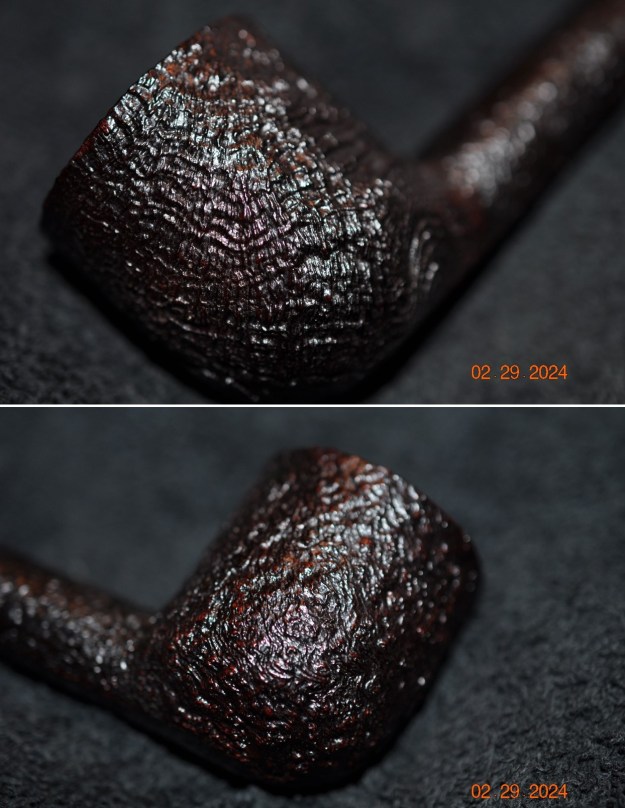
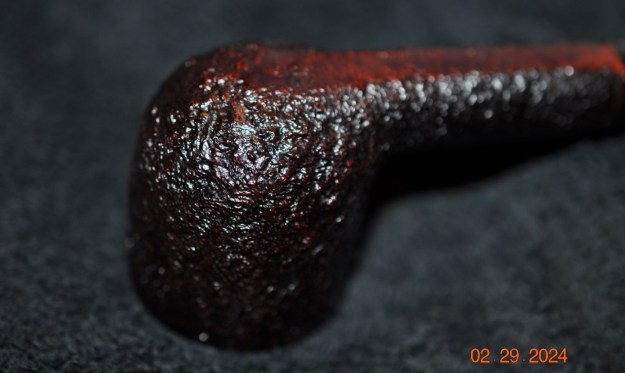
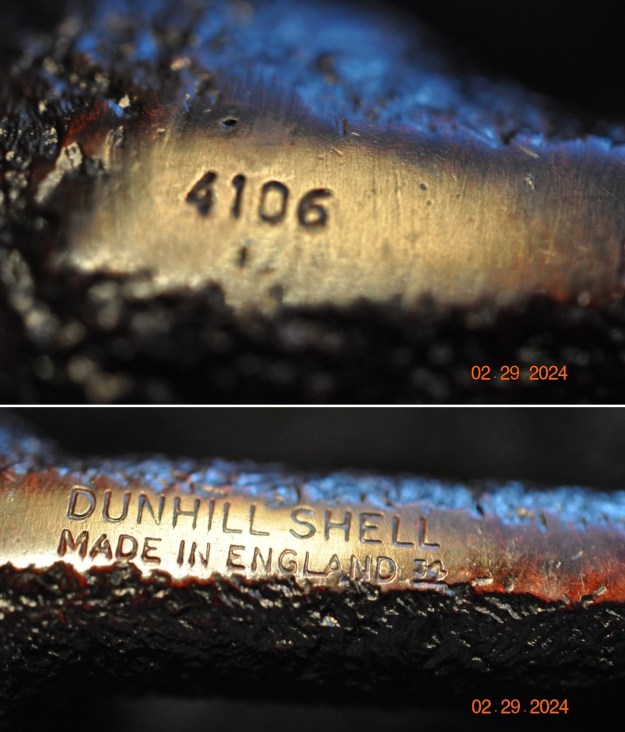
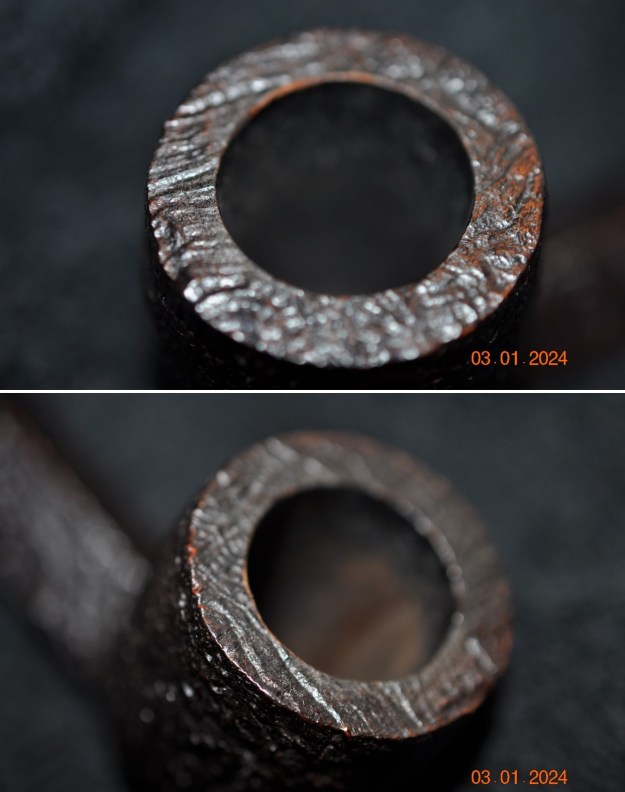
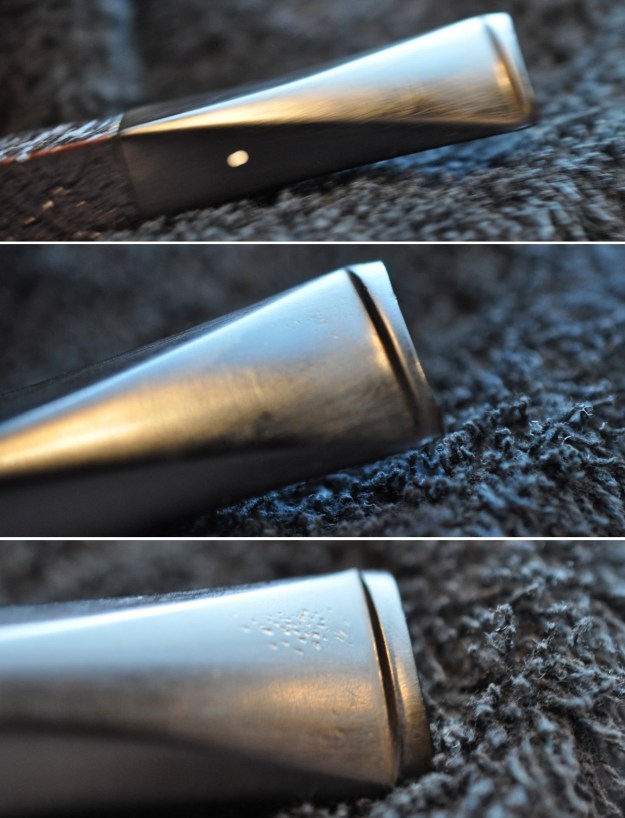
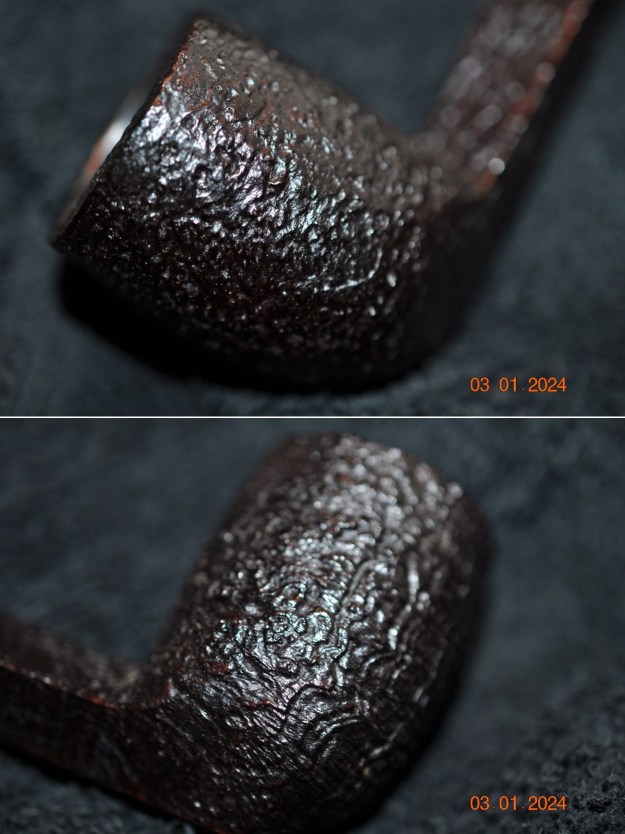
The next pipe on the table came to us from a group of pipes that Jeff and I purchased from a fellow in Copenhagen, Denmark on 02/11/2024. It is a Dunhill’s Shell Pot that is in good condition. It is stamped on a smooth panel on the underside of the shank. On the heel of the it is stamped with the shape number 4106 followed by Dunhill Shell [over] Made in England with a superscript 34 after D. The stamping is clear and readable as noted above. The pipe has a mix of black, cordovan and brown stains on a sandblast finish and some amazing grain that the shape follows well. The finish was dusty around the nooks and crannies of the sandblast but otherwise fairly clean. The bowl had a light cake, tobacco debris and there was some lava on the sandblasted rim top or edges. The vulcanite taper stem was lightly oxidized, dirty and had light tooth marks and chatter ahead of the button. Jeff took photos of the pipe to show what it looked like before he started working on it. He took photos of the bowl and rim top to show their condition and of the stem to show the condition of both sides of the stem. The photos of the sides and heel of the bowl show the deep sandblast grain on the pipe. It is a beauty. The stamping on the underside of the shank is shown in the photo below. It looks very good and faint but readable. It reads as noted and explained above. Jeff captured the detail in the photos below. I turned to the dating key on Pipephil’s site (http://www.pipephil.eu/logos/en/dunhill/cledat-en1a.html) to establish a date for the pipe. I drew a red box around the pertinent information below. It fits the criteria of a Sandblast with a year suffix and a Non possessive form Dunhill. The suffix is the number 34 which puts in the section below which notes 1960 + suffix to establish a date. In this case it is 1960 + 34 making the pipe a 1994.From there I turned to the Dunhill shape chart to unpack the shape number stamp 4106 on the heel of the bowl (http://www.pipephil.eu/logos/en/dunhill/shapes.html). This gave me the information I needed to interpret the 4106 shape stamp. The first digit 4 is the size of the pipe – a Group 4. The second digit is the style of the stem which in this case is a 1 telling me that the stem is a tapered stem. The last two digits the 06 tell me that the pipe is a Pot. I have included the shape below and encircled it with a red box.Now it was my turn to work on the pipe. Jeff had done an amazing cleanup of the pipe. He reamed the light cake with a PipNet reamer and cleaned up that with a Savinelli Fitsall Pipe Knife. He scrubbed the internals of the bowl and stem with alcohol, cotton swabs and pipe cleaners. He scrubbed the externals with undiluted Murphy’s Oil Soap and rinsed the bowl off with running water. He soaked the stem in Briarville’s Pipe stem Deoxidizer and once it had soaked rinsed it off with warm water to remove the residual solution. He dried it off and rubbed it down to remove any oxidation that was still on the stem. The pipe looked very good when I received it. I took photos of the bowl and the rim top as well as both sides of the stem to show the condition of the pipe before I started my work. It really looked remarkably good.I took a photo of the stamping on the shank. The photo of the stamping is clear and readable. I also removed the stem and took a photo of the parts of the pipe. The bowl was in such good condition that I had to do some minimal work with it. I rubbed the briar down with Before & After Restoration Balm. I worked it into the briar with my fingertips and a horsehair shoe brush to work it into the nooks and crannies of the sandblast finish. The product works to clean, enliven and preserve the briar. I let it sit for 10 minutes then I buffed it with a cotton cloth to deepen the shine. The pipe really comes alive with the balm. I set the bowl aside and turned my attention to the stem. I sanded the surface of the stem smooth with 320-3500 grit sanding pads. It worked well to smooth things out and remove the tooth marks and the remnants of oxidation. When finished the stem looked much better.I polished the vulcanite with micromesh sanding pads – 1500-12000 grit pads. I wiped it down with Obsidian Oil after each sanding pad. I used Before & After Pipe Polish – both Fine and Extra Fine to further polish the stem. I polished the aluminum inner tube with the micromesh sanding pads. Once finished I inserted it in the tenon in the stem.This 1994 Dunhill Shell 4106 Pot has a beautiful, unique Dunhill Sandblast finish that is very deep and craggy. The rich brown/black finish highlights some great grain around the bowl and shank. It has some great rugged sandblast that Dunhill developed and specialized in making. The polished vulcanite taper stem adds to the mix. I put the stem back on the bowl and carefully buffed the pipe with Blue Diamond on the buffing wheel. It is critical to avoid buffing the stamping and to have a lighter touch on the sandblast briar. I gave the bowl multiple coats of Conservator’s Wax and the stem multiple coats of carnauba wax on the buffing wheel and followed that by buffing it with a clean buffing pad. I hand buffed the pipe with a microfiber cloth to deepen the shine. The finished Dunhill Shell 4106 Pot is quite stunning and feels great in my hand. Give the finished pipe a look in the photos below. The dimensions of the pipe are Length: 5 inches, Height: 1 ½ inches, Outside diameter of the bowl: 1 ½ inches, Chamber diameter: 7/8 of an inch. The weight of the pipe is 1.41 ounces/40 grams. Thanks for walking through the restoration with me as I worked over another beautiful pipe. I am going to add it to the rebornpipes store in the British Pipemakers Section. If you would like to add it to your collection let me know. Thanks for your time.
Another Amazing Find 4109 Dunhill Shell Canadian with hexagon shank


Blog by Steve Laug

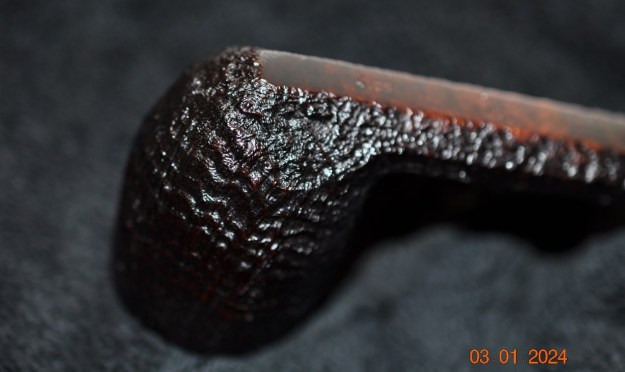
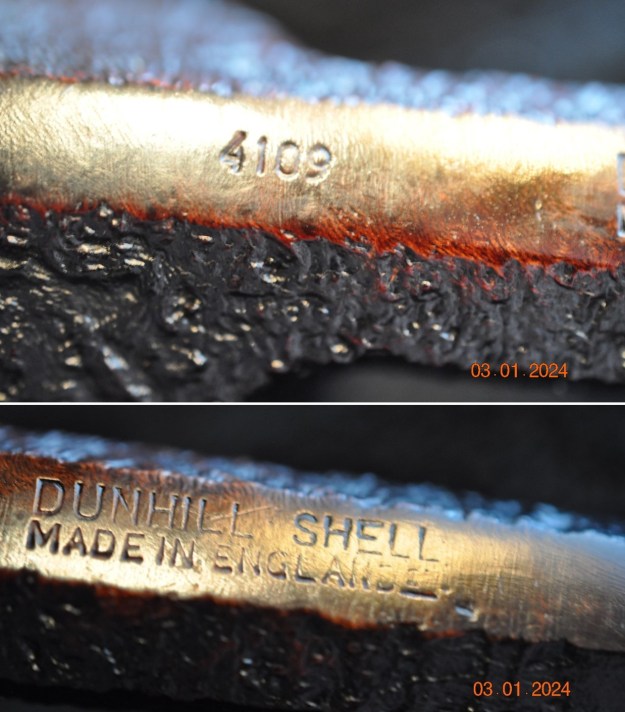
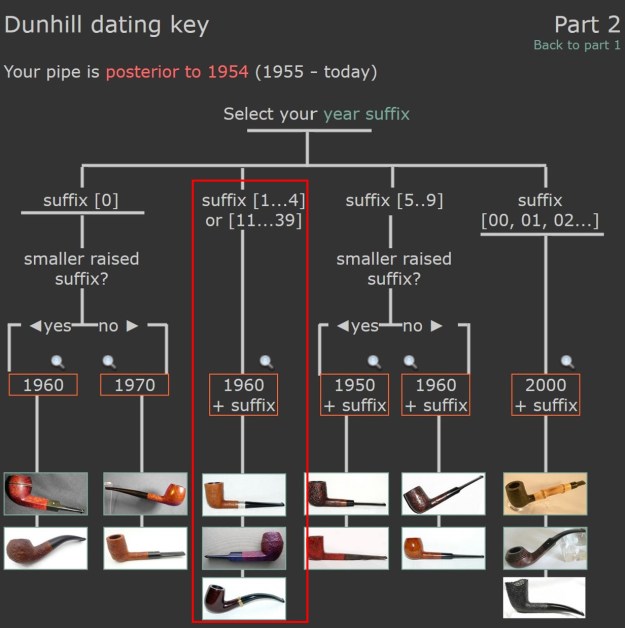
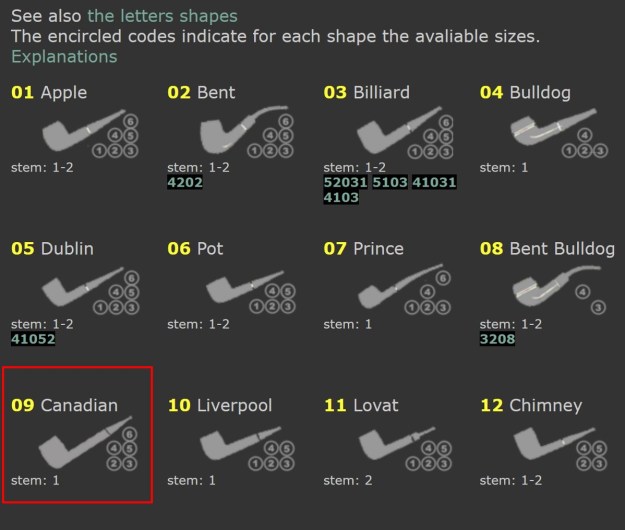
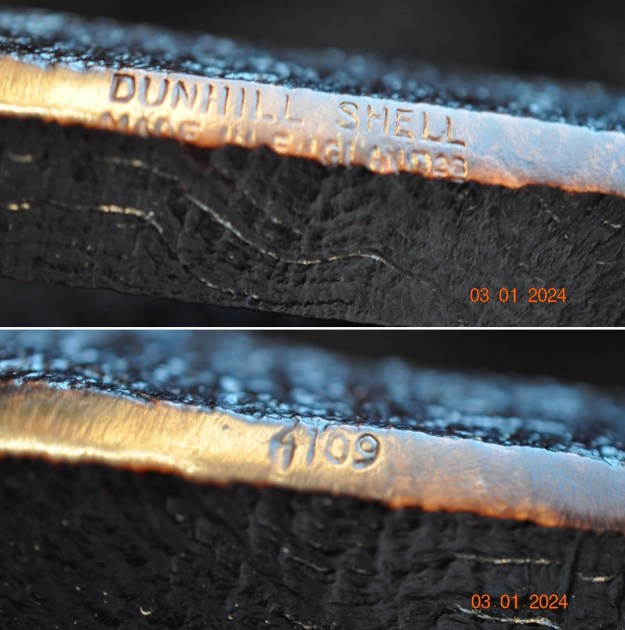
The next pipe on the table is another Dunhill Shell Briar with a great looking blast on the bowl and a unique hexagonal shank and taper stem. The bottom of the shank and bowl is smooth so it is a sitter. This one came with a Dunhill box (wrong number on the outside but still very nice) and a leather (calf skin) pipe sock. In the box is a brochure on joining the Fellowship of the White Spot, a Dunhill tobacco brochure and one on Dunhill Pipes with the guarantee. We purchased it from our contact in Copenhagen, Denmark 02/11/2024. The pipe is stamped on the heel of the bowl and the underside of the shank on a smooth panel. On the heel it is stamped with the shape number 4109 followed by Dunhill Shell [over]Made in England with a faint date stamp that looks like 20 following the D in England. The number is approximately the same size as the D in England. The pipe had been smoked and there was a light cake in the bowl with some light lava on the rim top. The edges of the rim are crisp and clean with no damage. The stem is lightly oxidized and had tooth marks and chatter on the surface on both the top and underside of the stem just ahead of the button. Jeff took photos of the pipe before he started his clean up work. I have included them below. Jeff took photos of the bowl and the stem to give a sense of the condition of the pipe. The bowl has a moderate cake on the walls and an overflow of lava on the rim top. The stem is oxidized and has scratches, tooth marks and chatter on both sides ahead of the button. He took photos of the sides and heel of the bowl to give a clear picture of the look of the sandblast. It really is a stunning pipe. He took photos of the stamping on the underside of the bowl and the shank. It is clear and readable and read as noted above. I turned to the dating key on Pipephil’s site (http://www.pipephil.eu/logos/en/dunhill/cledat-en1a.html) to establish a date for the pipe. I drew a red box around the pertinent information below. It fits the criteria of a Sandblast with a year suffix and a Non possessive form Dunhill. The suffix is the number 20 which puts in the section below which notes 1960 + suffix to establish a date. In this case it is 1960 +20 making the pipe a 1980.From there I turned to the Dunhill shape chart to unpack the shape number stamp 4110 on the heel of the bowl (http://www.pipephil.eu/logos/en/dunhill/shapes.html). This gave me the information I needed to interpret the 4109 shape stamp. The first digit 4 is the size of the pipe – a Group 4. The second digit is the style of the stem which in this case is a 1 telling me that the stem is a tapered stem. The last two digits the 09 tell me that the pipe is a Canadian. I have included the shape below and encircled it with a red box.Now it was my turn to work on the pipe. Jeff had done an amazing cleanup of the pipe. He reamed the light cake with a PipNet reamer and cleaned up that with a Savinelli Fitsall Pipe Knife. He scrubbed the internals of the bowl and stem with alcohol, cotton swabs and pipe cleaners. He scrubbed the externals with undiluted Murphy’s Oil Soap and rinsed the bowl off with running water. He soaked the stem in Briarville’s Pipe stem Deoxidizer and once it had soaked rinsed it off with warm water to remove the residual solution. He dried it off and rubbed it down to remove any oxidation that was still on the stem. The pipe looked very good when I received it. I took photos of the bowl and the rim top as well as both sides of the stem to show the condition of the pipe before I started my work. It really looked remarkably good.I took a photo of the stamping on the shank. The photo of the stamping is clear and readable. I also removed the stem and took a photo of the parts of the pipe. It is a unique piece of pipe history.The bowl was in such good condition that I had to do some minimal work with it. I rubbed the briar down with Before & After Restoration Balm. I worked it into the briar with my fingertips and a horsehair shoe brush to work it into the nooks and crannies of the sandblast finish. The product works to clean, enliven and preserve the briar. I let it sit for 10 minutes then I buffed it with a cotton cloth to deepen the shine. The briar really comes alive with the balm. I set the bowl aside and turned my attention to the stem. I sanded the surface of the stem smooth with 320-3500 grit sanding pads. It worked well to smooth things out and remove the tooth marks and the remnants of oxidation. When finished the stem looked much better.I polished the vulcanite with micromesh sanding pads – 1500-12000 grit pads. I wiped it down with Obsidian Oil after each sanding pad. I used Before & After Pipe Polish – both Fine and Extra Fine to further polish the stem. I polished the aluminum inner tube with the micromesh sanding pads. Once finished I inserted it in the tenon in the stem.This 1990 Dunhill Shell 4109 Hexgonal Shank Flat Bottom Canadian has a beautiful, unique Dunhill Sandblast finish that is very deep and craggy. The rich brown/black finish highlights some great grain around the bowl and shank. It has some great rugged sandblast that Dunhill developed and specialized in making. The polished vulcanite diamond taper stem adds to the mix. I put the stem back on the bowl and carefully buffed the pipe with Blue Diamond on the buffing wheel. It is critical to avoid buffing the stamping and to have a lighter touch on the sandblast briar. I gave the bowl multiple coats of Conservator’s Wax and the stem multiple coats of carnauba wax on the buffing wheel and followed that by buffing it with a clean buffing pad. I hand buffed the pipe with a microfiber cloth to deepen the shine. The finished Dunhill Shell 4109 Canadian is quite stunning and feels great in my hand. Give the finished pipe a look in the photos below. The dimensions of the pipe are Length: 5 ½ inches, Height: 2 inches, Outside diameter of the bowl: 1 ¼ inches, Chamber diameter: ¾ of an inch. The weight of the pipe is 1.34 ounces/38 grams. Thanks for walking through the restoration with me as I worked over another beautiful pipe. I am going to add it to the rebornpipes store in the British Pipemakers Section. If you would like to add it to your collection let me know. Thanks for your time.
What a Find, a Unique 4109 Dunhill Shell Diamond Shank Flat Bottom Canadian


Blog by Steve Laug

The next pipe on the table is a Dunhill Shell Briar with a great looking blast on the bowl and a unique diamond shank and diamond taper stem. The bottom of the shank and bowl is smooth so it is a sitter. This one came with a Dunhill box (wrong number on the outside but still very nice) and a leather (calf skin) pipe sock. In the box is a brochure on joining the Fellowship of the White Spot and one on Dunhill Tobaccos. We purchased it from our contact in Copenhagen, Denmark 02/11/2024. The pipe is stamped on the heel of the bowl and the underside of the shank on a smooth panel. On the heel it is stamped with the shape number 4109 followed by Dunhill Shell [over]Made in England with the date stamp 20 following the D in England. The number is approximately the same size as the D in England. The pipe had been smoked and there was a light cake in the bowl with some light lava on the rim top. The edges of the rim are crisp and clean with no damage. The stem is lightly oxidized and had tooth marks and chatter on the surface on both the top and underside of the stem just ahead of the button. Jeff took photos of the pipe before he started his clean up work. I have included them below. Jeff took photos of the rim top, bowl and the surfaces of the stem to give a sense of the condition of the pipe. The walls of the bowl had a light cake on them and some light lava on the rim top. The stem is lightly oxidized and has tooth marks and chatter on both sides ahead of the button. He took photos of the sides and heel of the bowl to give a clear picture of the look of the sandblast. It really is a stunning pipe. He took photos of the stamping on the underside of the bowl and the shank. It is clear and readable and read as noted above. I turned to the dating key on Pipephil’s site (http://www.pipephil.eu/logos/en/dunhill/cledat-en1a.html) to establish a date for the pipe. I drew a red box around the pertinent information below. It fits the criteria of a Sandblast with a year suffix and a Non possessive form Dunhill. The suffix is the number 20 which puts in the section below which notes 1960 + suffix to establish a date. In this case it is 1960 +20 making the pipe a 1980.From there I turned to the Dunhill shape chart to unpack the shape number stamp 4110 on the heel of the bowl (http://www.pipephil.eu/logos/en/dunhill/shapes.html). This gave me the information I needed to interpret the 4109 shape stamp. The first digit 4 is the size of the pipe – a Group 4. The second digit is the style of the stem which in this case is a 1 telling me that the stem is a tapered stem. The last two digits the 09 tell me that the pipe is a Canadian. I have included the shape below and encircled it with a red box.Now it was my turn to work on the pipe. Jeff had done an amazing cleanup of the pipe. He reamed the light cake with a PipNet reamer and cleaned up that with a Savinelli Fitsall Pipe Knife. He scrubbed the internals of the bowl and stem with alcohol, cotton swabs and pipe cleaners. He scrubbed the externals with undiluted Murphy’s Oil Soap and rinsed the bowl off with running water. He soaked the stem in Briarville’s Pipe stem Deoxidizer and once it had soaked rinsed it off with warm water to remove the residual solution. He dried it off and rubbed it down to remove any oxidation that was still on the stem. The pipe looked very good when I received it. I took photos of the bowl and the rim top as well as both sides of the stem to show the condition of the pipe before I started my work. It really looked remarkably good.I took a photo of the stamping on the shank. The photo of the stamping is clear and readable. I also removed the stem and took a photo of the parts of the pipe. It is a unique piece of pipe history.The bowl was in such good condition that I had to do some minimal work with it. I rubbed the briar down with Before & After Restoration Balm. I worked it into the briar with my fingertips and a horsehair shoe brush to work it into the nooks and crannies of the sandblast finish. The product works to clean, enliven and preserve the briar. I let it sit for 10 minutes then I buffed it with a cotton cloth to deepen the shine. The briar really comes alive with the balm. I set the bowl aside and turned my attention to the stem. I sanded the surface of the stem smooth with 320-3500 grit sanding pads. It worked well to remove the tooth marks and the remnants of oxidation. When finished the stem looked much better.I polished the vulcanite with micromesh sanding pads – 1500-12000 grit pads. I wiped it down with Obsidian Oil after each sanding pad. I used Before & After Pipe Polish – both Fine and Extra Fine to further polish the stem. I polished the aluminum inner tube with the micromesh sanding pads. Once finished I inserted it in the tenon in the stem.This 1990 Dunhill Shell 4109 Diamond Shank Flat Bottom Canadian has a beautiful, unique Dunhill Sandblast finish that is very deep and craggy. The rich brown/black finish highlights some great grain around the bowl and shank. It has some great rugged sandblast that Dunhill developed and specialized in making. The polished vulcanite diamond taper stem adds to the mix. I put the stem back on the bowl and carefully buffed the pipe with Blue Diamond on the buffing wheel. It is critical to avoid buffing the stamping and to have a lighter touch on the sandblast briar. I gave the bowl multiple coats of Conservator’s Wax and the stem multiple coats of carnauba wax on the buffing wheel and followed that by buffing it with a clean buffing pad. I hand buffed the pipe with a microfiber cloth to deepen the shine. The finished Dunhill Shell 4109 Canadian is quite stunning and feels great in my hand. Give the finished pipe a look in the photos below. The dimensions of the pipe are Length: 6 inches, Height: 2 inches, Outside diameter of the bowl: 1 ¼ inches, Chamber diameter: ¾ of an inch. The weight of the pipe is 1.48 ounces/42 grams. Thanks for walking through the restoration with me as I worked over another beautiful pipe. I am going to add it to the rebornpipes store in the British Pipemakers Section. If you would like to add it to your collection let me know. Thanks for your time.
Restoring a Dunhill Shell 7 90 C 4S Poker Stand-up


Blog by Steve Laug

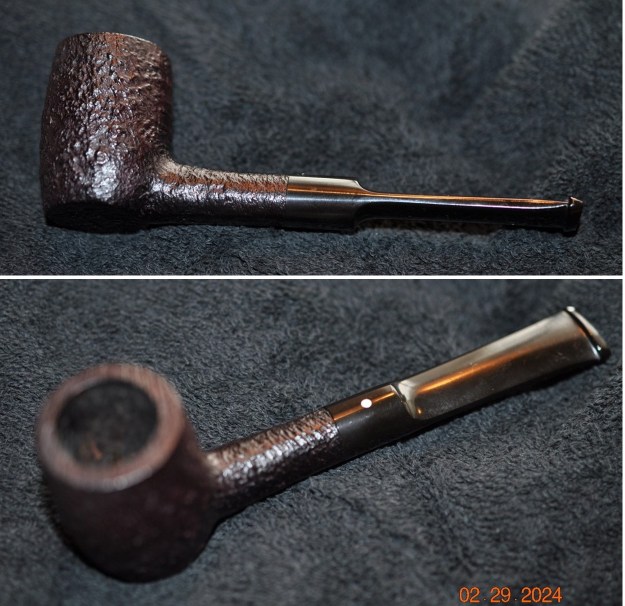
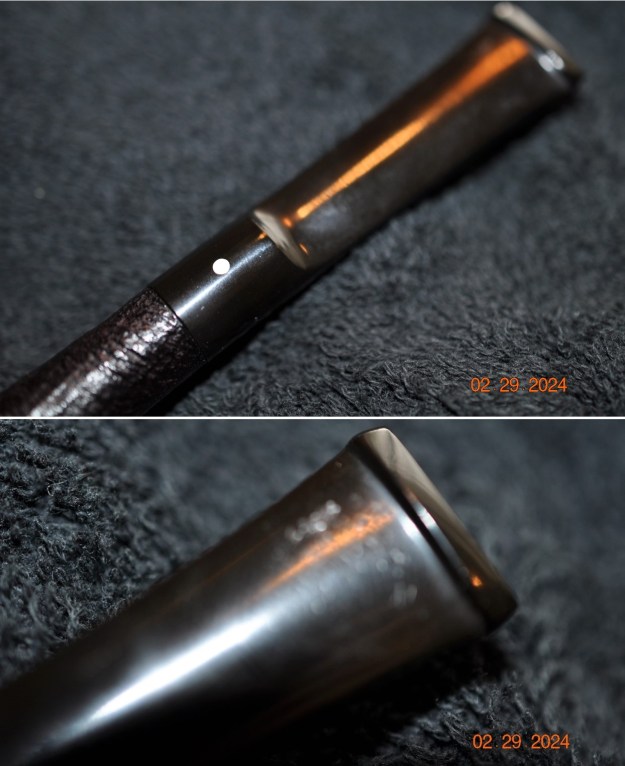
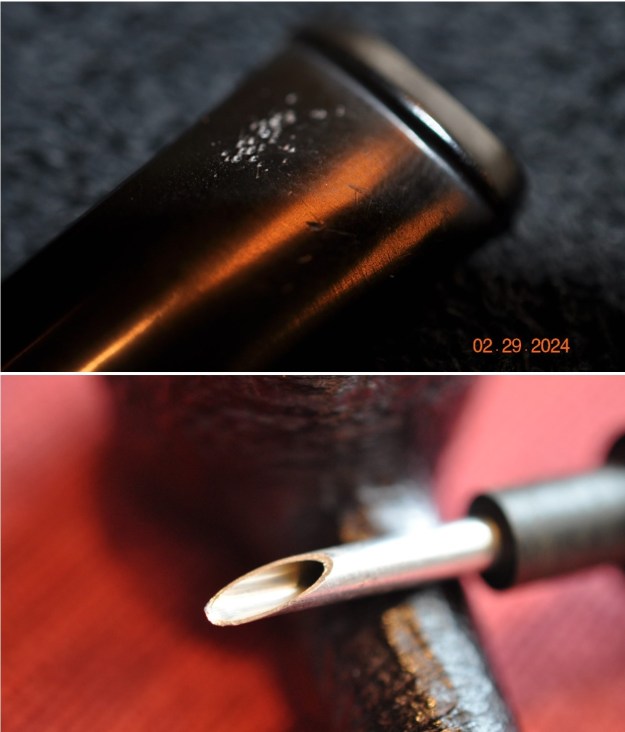
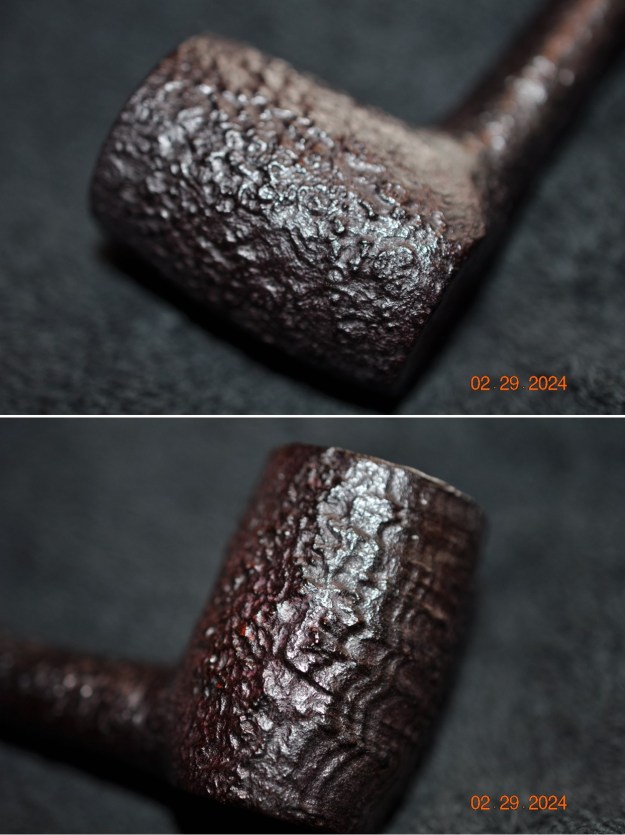
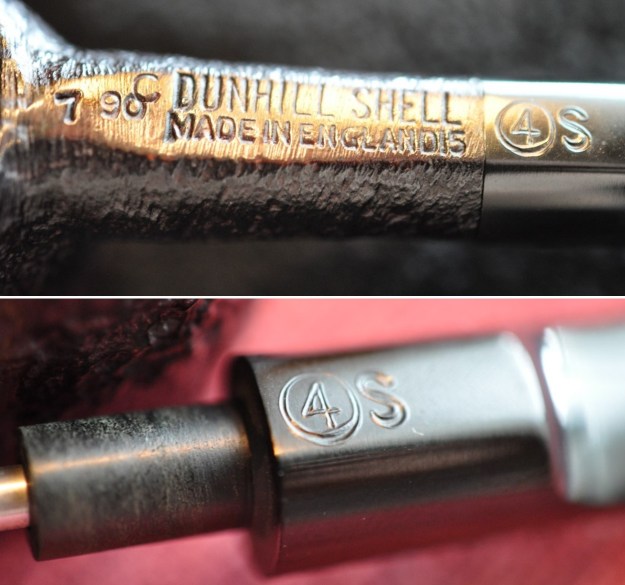
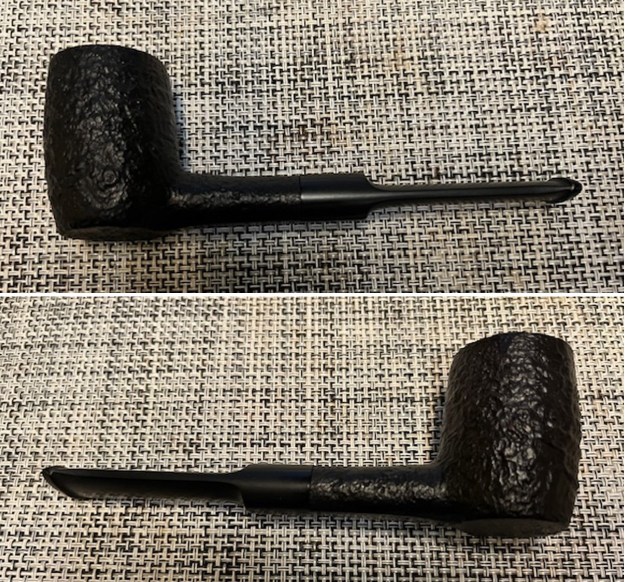
The next pipe on the table is another unique one and a shape I have not worked on before. We purchased it from our contact in Copenhagen, Denmark 02/02/24. The pipe is a Shell with a rugged sandblast finish. The pipe is stamped on the heel of the bowl and the underside of the shank on a smooth panel. On the heel it is stamped with a series of numbers. The first number is 7 (identity unknown) after that is the number 90 followed by a C. After that it is stamped Dunhill Shell [over] Made in England 15. The 15 is the date stamp. On the flat underside of the stem the pipe was stamped 4 in a circle with S following that. This tells me that the pipe is a Group 4 sized pipe in a Shell finish. The pipe had been smoked and there was a light cake in the bowl with no lava overflow in the sandblast on the rim top. There was dust and debris in the sandblast finish. The stem is lightly oxidized and had light tooth marks on both the top and underside of the stem just ahead of the button. Jeff took photos of the pipe before he started his clean up work. I have included them below. Jeff took photos of the rim top, bowl and the surfaces of the stem to give a sense of the condition of the pipe. The walls of the bowl had a light cake on them. The stem is lightly oxidized and has tooth marks on both sides ahead of the button. He also took the stem off to show the inner tube. He took photos of the sides and heel of the bowl to give a clear picture of the depth of the sandblast. It really is a great looking blast that shows the grain underneath very well. He took photos of the stamping on the underside of the shank and the stem. It is clear and readable and read as noted above.I turned to the dating key on Pipephil’s site (http://www.pipephil.eu/logos/en/dunhill/cledat-en1a.html) to establish a date for the pipe. I drew a red box around the pertinent information below. It fits the criteria of a Sandblast with a year suffix and a Non possessive form Dunhill. The suffix is the number 15 which puts in the section below which notes 1960 + suffix to establish a date. In this case it is 1960 +15 making the pipe a 1975.I turned to Pipedia for help with the shape number and the extra stamping of the 7 and the C (https://pipedia.org/wiki/Dunhill_Shapes_List).

90 Poker “Stand-up” 2 4¾” 1928, 1950, 1969 22

There are also two other markings around the shape number that I wanted to understand – 7 and a C. I found an article on Pipedia (https://pipedia.org/wiki/Dunhill_Additional_Stamps) on additional stamps. The C stamp signifies:

C stands for “complementary”. Pipes stamped as such are usually pipe given to business partners as a complementary present and are not for sale.

There was no information on the 7 though the number 6 indicated a saddle stem. I wonder if the 7 could also indicate that. It may be an “unknown” number.

Now it was my turn to work on the pipe. Jeff had done an amazing cleanup of the pipe. He reamed the light cake with a PipNet reamer and cleaned up that with a Savinelli Fitsall Pipe Knife. He scrubbed the internals of the bowl and stem with alcohol, cotton swabs and pipe cleaners. He scrubbed the externals with undiluted Murphy’s Oil Soap and rinsed the bowl off with running water. He soaked the stem in Briarville’s Pipe stem Deoxidizer and once it had soaked rinsed it off with warm water to remove the residual solution. He dried it off and rubbed it down to remove any oxidation that was still on the stem. The pipe looked very good when I received it. I took photos of the bowl and the rim top as well as both sides of the stem to show the condition of the pipe before I started my work. It really looked remarkably good.I took a photo of the stamping on the shank. The photo of the stamping is clear and readable. I also removed the stem and took a photo of the parts of the pipe. It is a unique piece of pipe history.The bowl was in such good condition that I had to do some minimal work with it. I rubbed the briar down with Before & After Restoration Balm. I worked it into the briar with my fingertips and a horsehair shoe brush to work it into the nooks and crannies of the sandblast finish. The product works to clean, enliven and preserve the briar. I let it sit for 10 minutes then I buffed it with a cotton cloth to deepen the shine. The briar really comes alive with the balm. I set the bowl aside and turned my attention to the stem. I sanded the surface of the stem smooth with 320-3500 grit sanding pads. It worked well to smooth things out and remove remnants of oxidation. When finished the stem looked much better.I polished the vulcanite with micromesh sanding pads – 1500-12000 grit pads. I wiped it down with Obsidian Oil after each sanding pad. I used Before & After Pipe Polish – both Fine and Extra Fine to further polish the stem. I put the inner tube back into the tenon and stem and took a photo of it before I put the pipe back together. This 1975 Dunhill Shell 7 90 C Poker Stand-up marled Complementary has a beautiful, Dunhill Sandblast finish that is very tactile. The rich brown/black finish highlights some great grain around the bowl and shank. It has a; great sandblast that Dunhill developed and specialized in making. The polished vulcanite saddle stem adds to the mix. I put the stem back on the bowl and carefully buffed the pipe with Blue Diamond on the buffing wheel. It is critical to avoid buffing the stamping and to have a lighter touch on the sandblast briar. I gave the bowl multiple coats of Conservator’s Wax and the stem multiple coats of carnauba wax on the buffing wheel and followed that by buffing it with a clean buffing pad. I hand buffed the pipe with a microfiber cloth to deepen the shine. The finished Dunhill Shell 90 Poker Stand-up is quite stunning and feels great in my hand. Give the finished pipe a look in the photos below. The dimensions of the pipe are Length: 5 inches, Height: 1 ¾ inches, Outside diameter of the bowl: 1 1/8 inches, Chamber diameter: ¾ of an inch. The weight of the pipe is .99 ounces/28 grams. Thanks for walking through the restoration with me as I worked over another beautiful pipe. I am going to add it to the rebornpipes store in the British Pipemakers Section. If you would like to add it to your collection let me know. Thanks for your time.
Restoring a E 250 F/T Dunhill Shell Billiard


Blog by Steve Laug

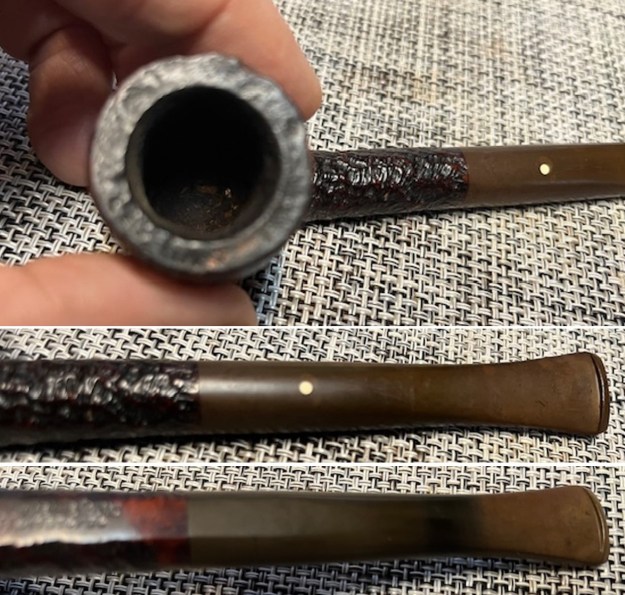
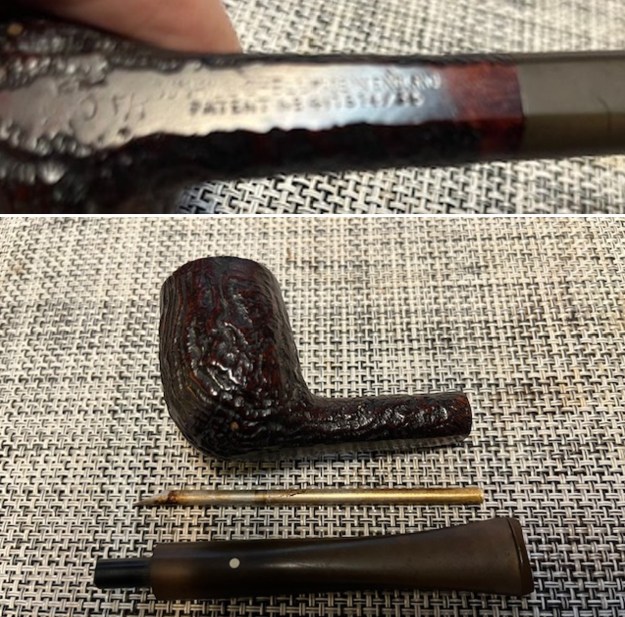
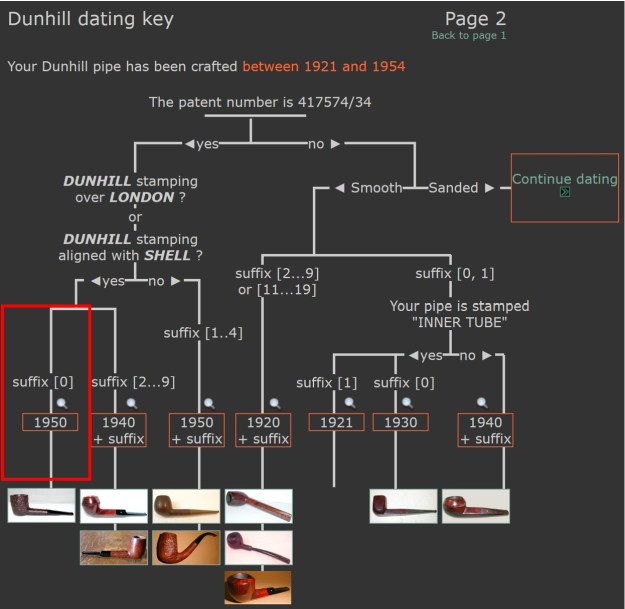
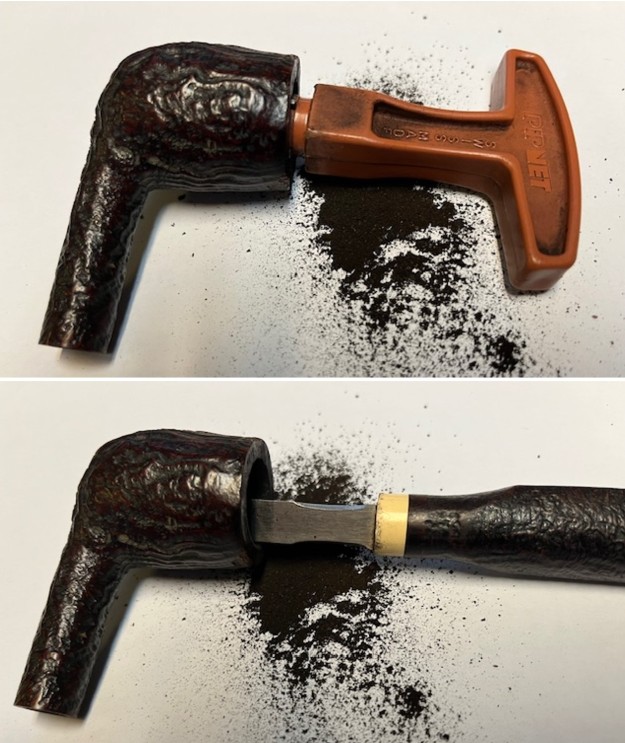
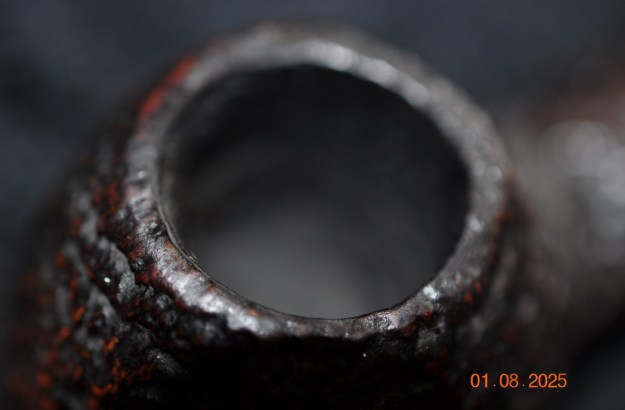
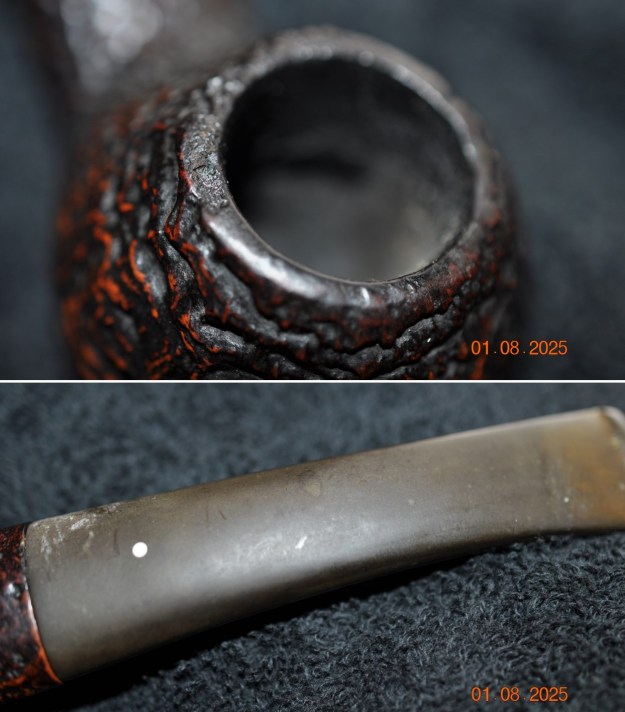
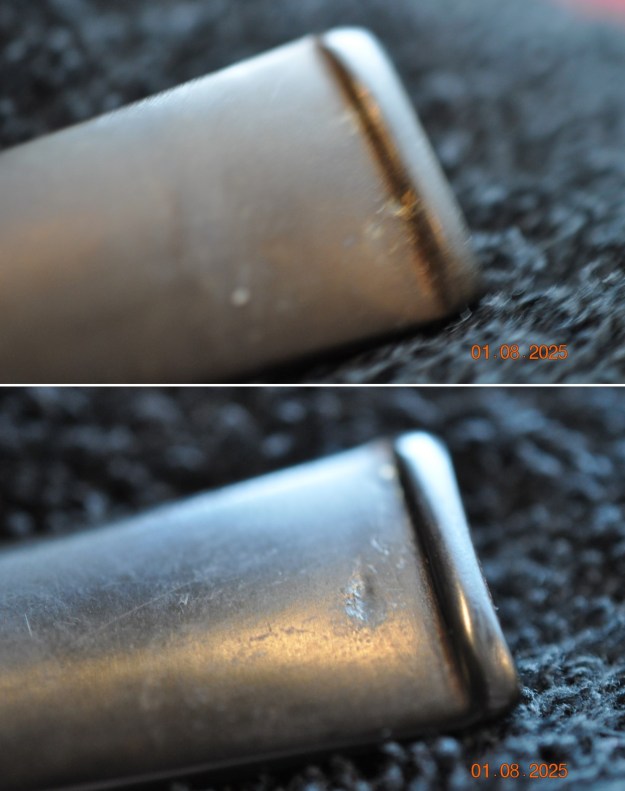
The next pipe on the table is one that showed up in the mail this week from a friend, Eric in Ontario. I sent him a message and got some background on the pipe. He purchased it from a small shop in his town and wanted me to restore it or as he said “Work my magic on it”. I have worked on quite a few of his pipes so I was not surprised. The pipe is a Dunhill Shell with a rugged sandblast finish. The pipe is stamped on the heel of the bowl and the underside of the shank on a smooth panel. On the heel it is stamped with the shape number E 250 F/T followed by Dunhill Shell followed by Made in England with no date stamp. Underneath the full stamp above it is stamped Patent No 417574/34. The pipe had been smoked and there was a moderate cake in the bowl with a light lava overflow in the sandblast on the rim top. There was a chip at the back of the bowl near the rim edge. The stem is oxidized and had light tooth marks on both the top and underside of the stem just ahead of the button. I took photos of the pipe before I started his clean up work. I have included them below. I took photos of the rim top, bowl and the surfaces of the stem to give a sense of the condition of the pipe. The rim top has some lava in the surface filling in the sandblast. The walls of the bowl had a moderate cake on them. The stem is oxidized and has light tooth marks on both sides ahead of the button.I took photos of the stamping on the underside of the bowl and the shank. It is clear and readable and read as noted above.  I took the pipe apart and took a photo of the parts to give a sense of what the pipe looked like.I turned to the dating key on Pipephil’s site (http://www.pipephil.eu/logos/en/dunhill/cledat-en1a.html) to establish a date for the pipe. I drew a red box around the pertinent information below. It fits the criteria of a Sandblast Dunhill stamping aligned with Shell. There was no suffix which puts it under 1950 which makes the pipe a 1950.Now it was my turn to work on the pipe. Armed with the facts that I am dealing with a 1950 Dunhill Shell pipe. I started my work on the pipe by reaming the bowl with a PipNet pipe reamer to take the cake back to bare walls. I followed that by using a Savinelli Fitsall Pipe Knife to scrape back the remnants of the cake back to briar. I finished my cleanup of the walls by sanding it with 220 grit sandpaper wrapped around a piece of dowel. I used a brass bristle brush to clean up the rim top. I took photos of the bowl and the rim top as well as both sides of the stem to show the condition of the pipe before I started my work. It really looked remarkably good. I used pipe cleaners, cotton swabs and isopropyl alcohol to clean out the tars and oils in the airway in the shank and the stem. I also cleaned the outside and inside of the aluminum inner tube in the shank and tenon. The internals were quite dirty but cleaned up very well. I scrubbed the grime and oils off the briar on the sandblasted briar with undiluted Murphy’s Oil Soap and a tooth brush. The briar looked much cleaner. I worked over the grime and tars on the rim top at the same time and was able to remove much of the build up. The bowl is beginning to take on a fresh look. I used some briar dust and clear CA glue to repair the chipped area on the back of the bowl edge. I built it up and once cured I used a brass bristle wire brush to knock of the high spots on the repair and blend it into the surrounding sandblast surface.I touched up the rim top, edges and the repaired area with a Walnut stain pen. The colour blends in very well with the colour of the surrounding briar.I rubbed the bowl down with Before & After Restoration Balm. I worked it into the surface of the smooth briar with my fingertips and into the sandblast with a shoe brush. The product works to clean, enliven and protect the briar. I let the balm sit for 15 minutes and then buffed with a cotton cloth to raise the shine. Mark Hoover’s Balm is a product that I have come to appreciate and one I use on every pipe I have been working on. I set the bowl aside and turned my attention to the stem. Once I had it open I turned to work on the outside of the stem and remove the oxidation on the stem surface. I used some Soft Scrub cleanser to scrub of the oxidation on the stem surface. Once finished it looked much better.I started polishing the stem with 320-3500 grit sanding pads. It was great to see the shine really deepen on the vulcanite.I polished the vulcanite with micromesh sanding pads – 1500-12000 grit pads. I wiped it down with Obsidian Oil after each sanding pad. I used Before & After Pipe Polish – both Fine and Extra Fine to further polish the stem. I had cleaned up the inner tube and with the stem polished and ready I reinserted the tube in the tenon.This 1950 Dunhill Shell E 250F F/T Billiard has a beautiful, unique Dunhill Sandblast finish that is very deep and craggy. The rich brown/black finish highlights some great grain around the bowl and shank. It has some great rugged sandblast that Dunhill developed and specialized in making. The polished vulcanite taper stem adds to the mix. I put the stem back on the bowl and carefully buffed the pipe with Blue Diamond on the buffing wheel. It is critical to avoid buffing the stamping and to have a lighter touch on the sandblast briar. I gave the bowl multiple coats of Conservator’s Wax and the stem multiple coats of carnauba wax on the buffing wheel and followed that by buffing it with a clean buffing pad. I hand buffed the pipe with a microfiber cloth to deepen the shine. The finished Dunhill Shell E 250 F/T Billiard is quite stunning and feels great in my hand. Give the finished pipe a look in the photos below. The dimensions of the pipe are Length: 5 ½ inches, Height: 1 ½ inches, Outside diameter of the bowl: 1 inch, Chamber diameter: ¾ of an inch. The weight of the pipe is .95 ounces/27 grams. Thanks for walking through the restoration with me as I worked over another beautiful pipe. I am going to be sending it back to Eric in Ontario later this week. I look forward to hearing what he thinks of it. Thanks for your time.