

Blog by Steve Laug
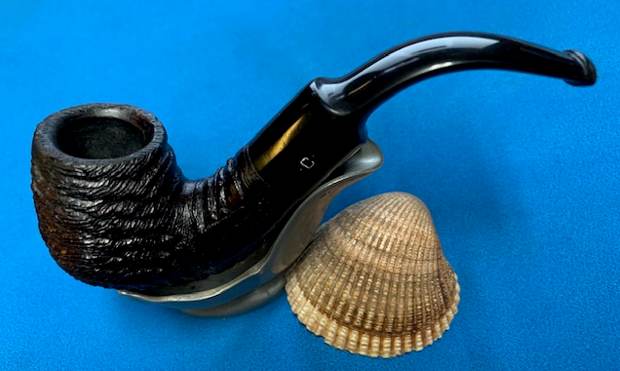
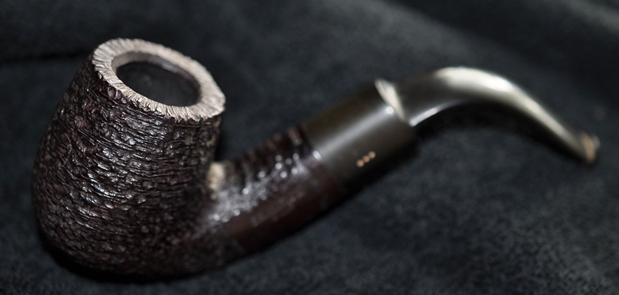
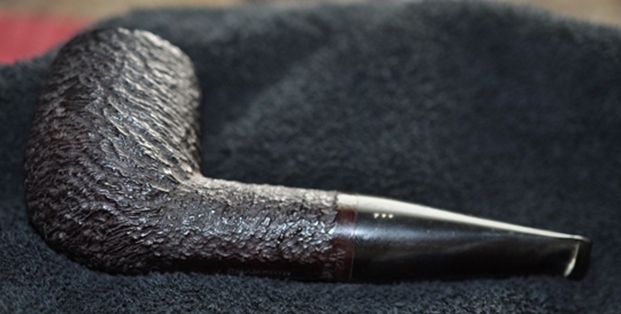
 Once again in this write up and I will take you through my process of working on each pipe that we purchase. Jeff has set up a spread sheet to track where the pipe came from, the date of purchase and what we paid for it so that we know what we have invested in the pipe before we even work on it. This takes a lot of the guess work out of the process. This particular pipe was purchased on 10/16/2021 from the estate of a fellow in Redmond, Oregon, USA. I also want you to understand why we take the photos we do. If you have followed for a while then you will see the familiar pattern of the photos we include both in the before and midstream process of working on a pipe. It is not accidental or chance as the photos have been taken to help me make an assessment of the pipe Jeff sees before he starts his clean up work. We do this to record the condition that the pipe was in when received it and to assess what kind of work will need to be done on. When I look at these photos this is what I see.
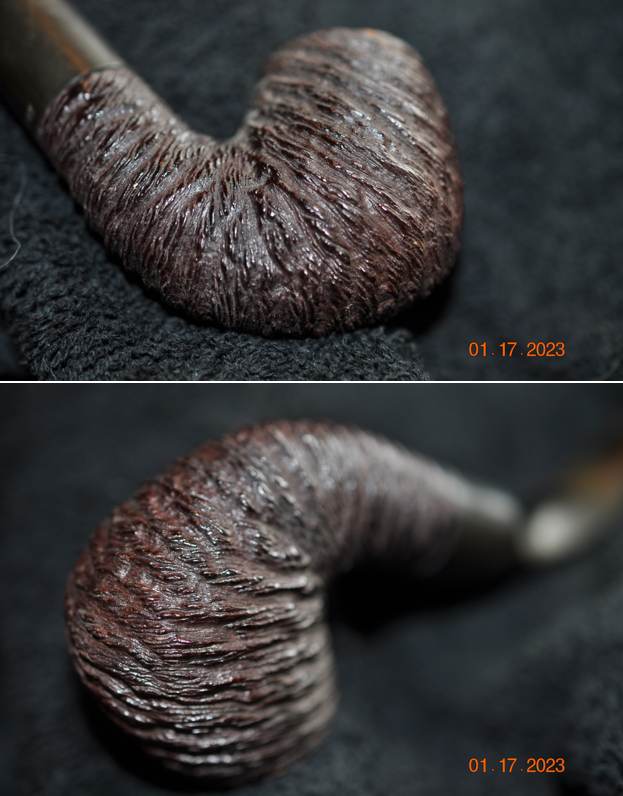
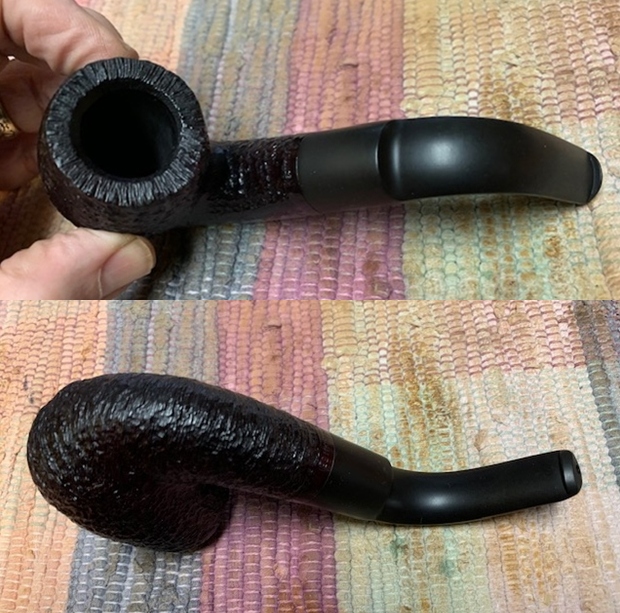
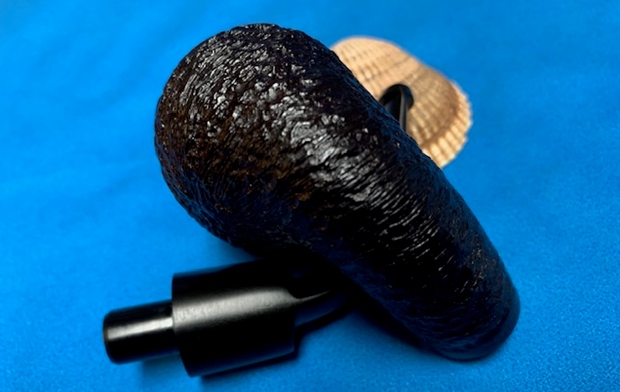
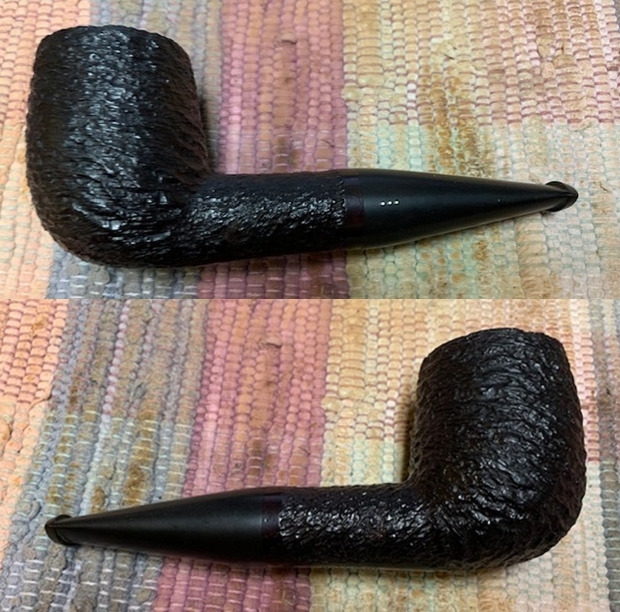
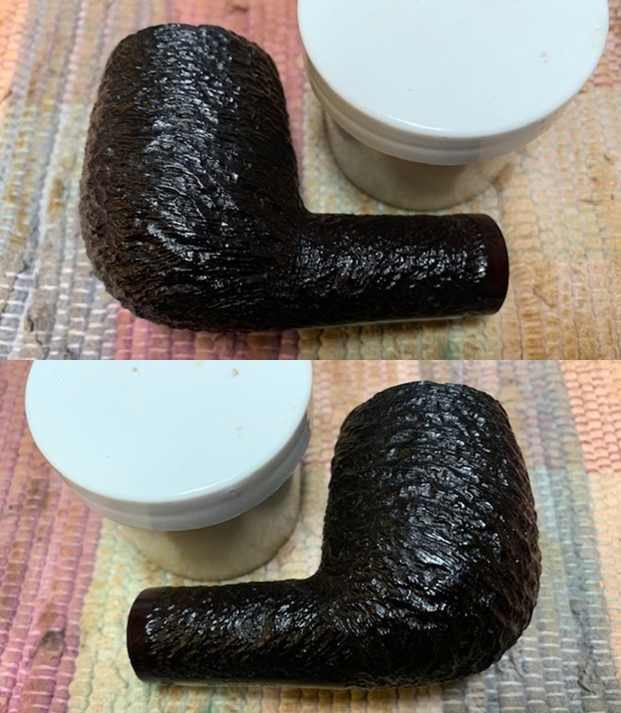
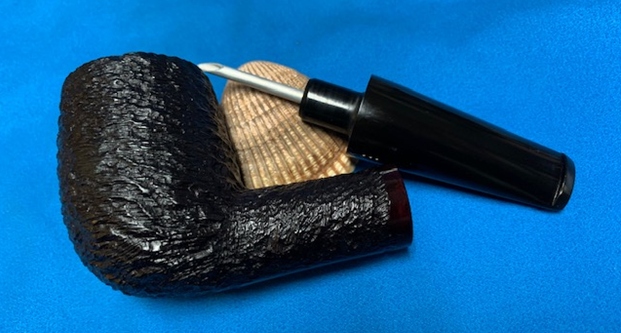
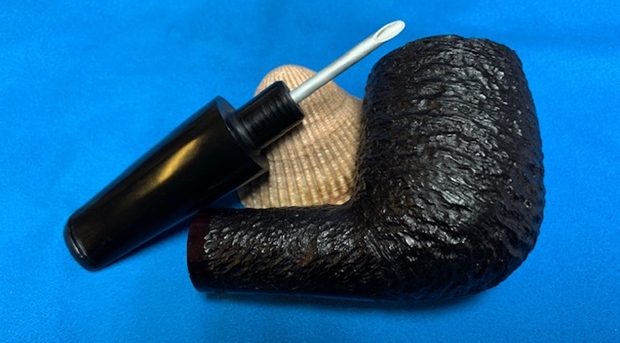
- The first thing I see is a rustication style that reminds of several Champion Giants that I have worked on it the past. It is a unique style that is almost the same on all of these pipes.
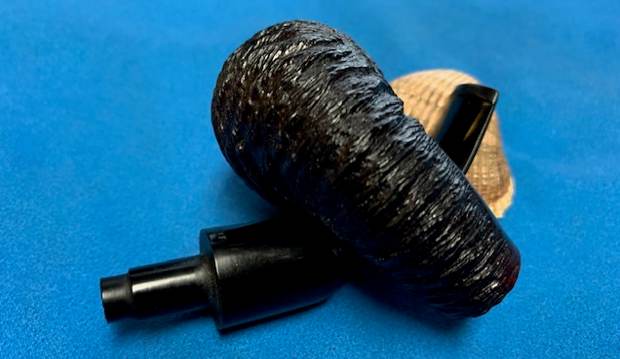
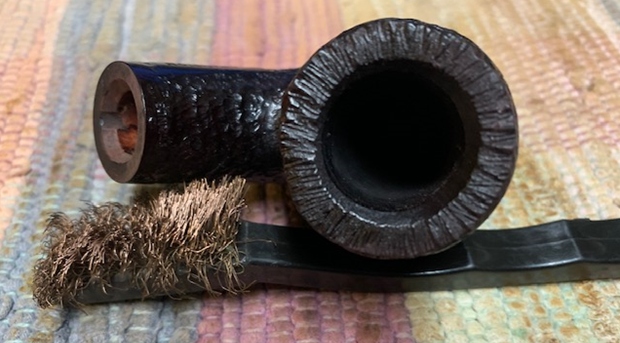
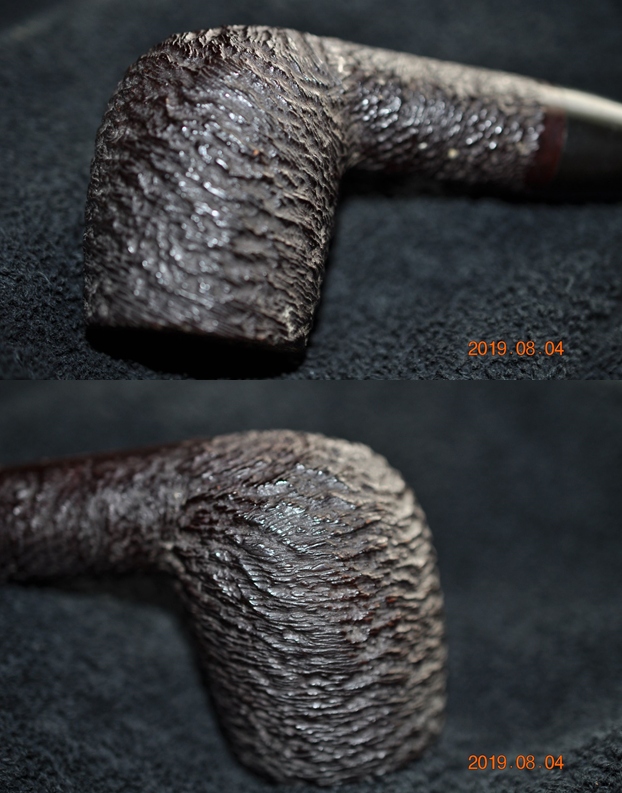
- The rusticated finish is dirty with a lot of dust and debris in the deep grooves around the bowl sides and shank. It is ground into the finish as well. From the exterior it does not appear that there are any cracks in grooves of the finish.
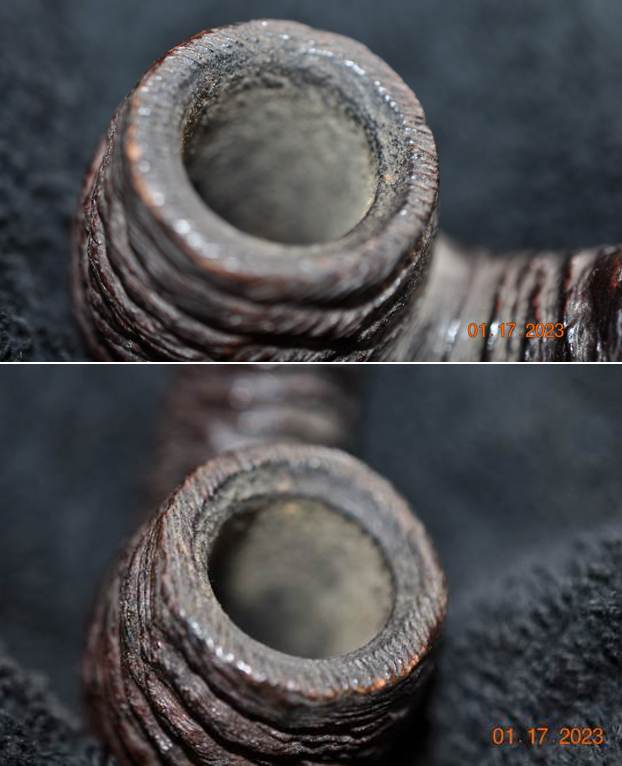
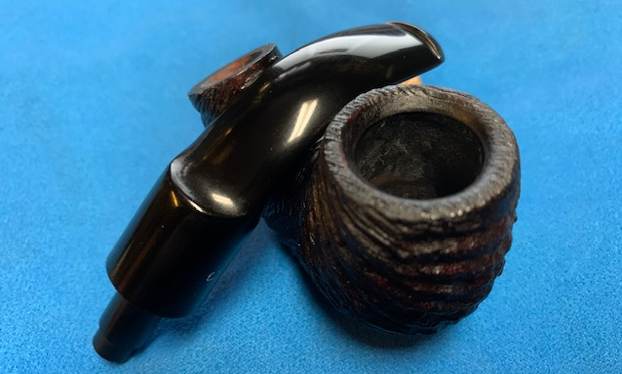
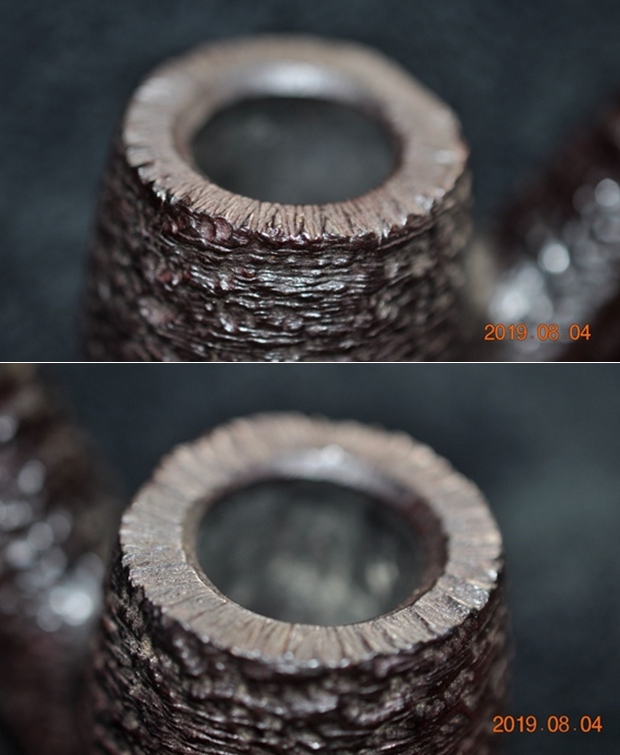
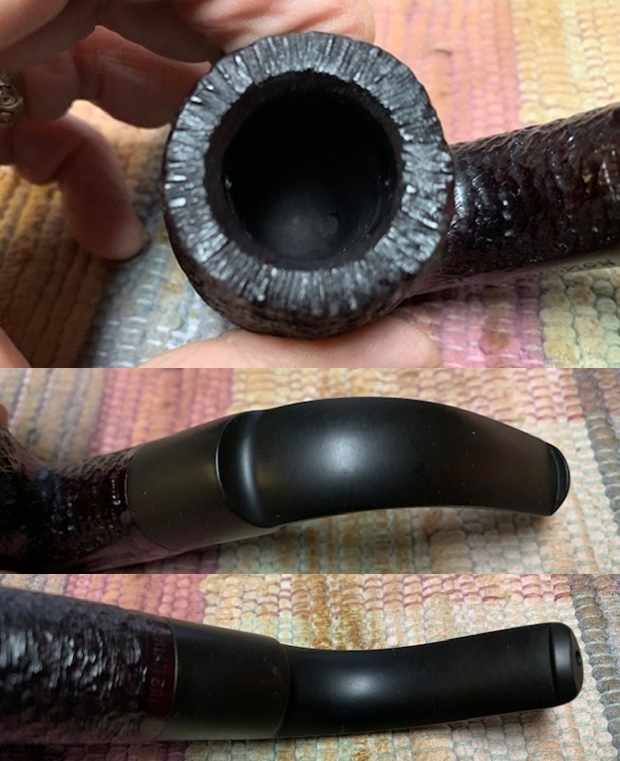
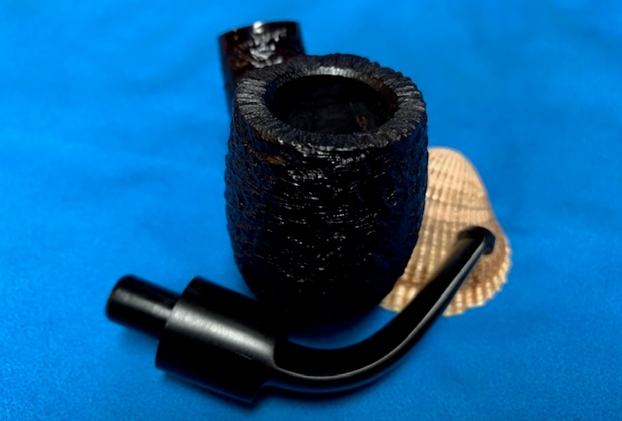
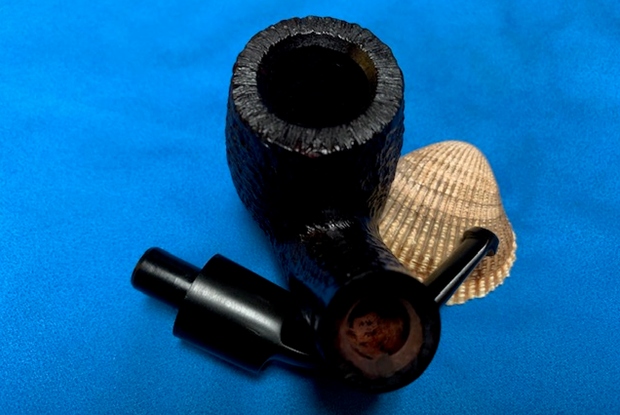
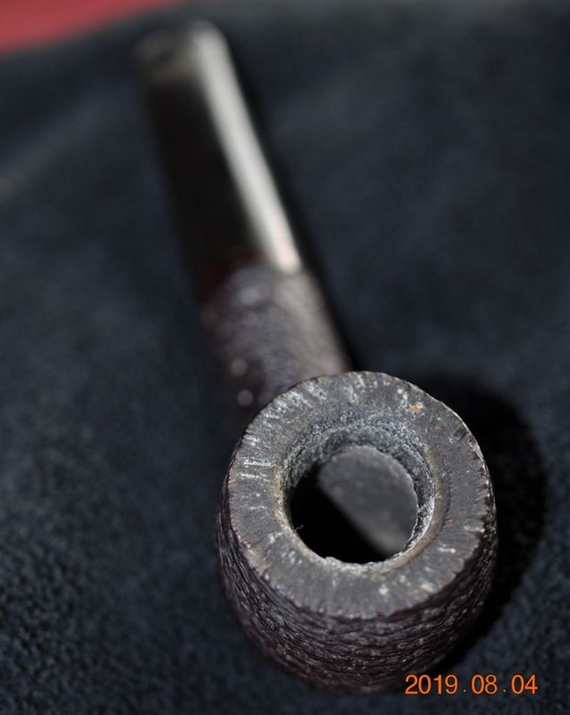
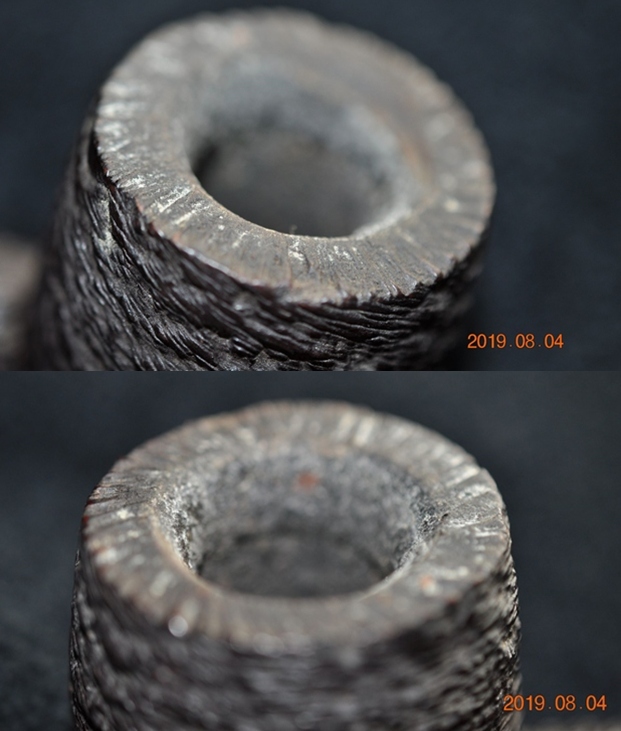
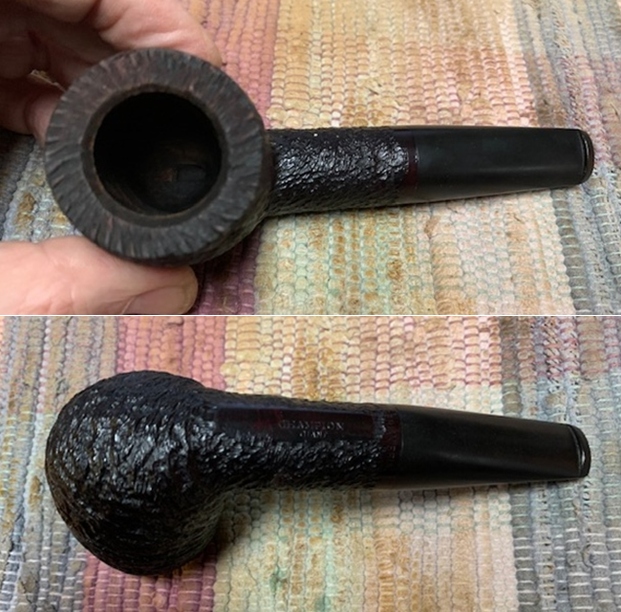
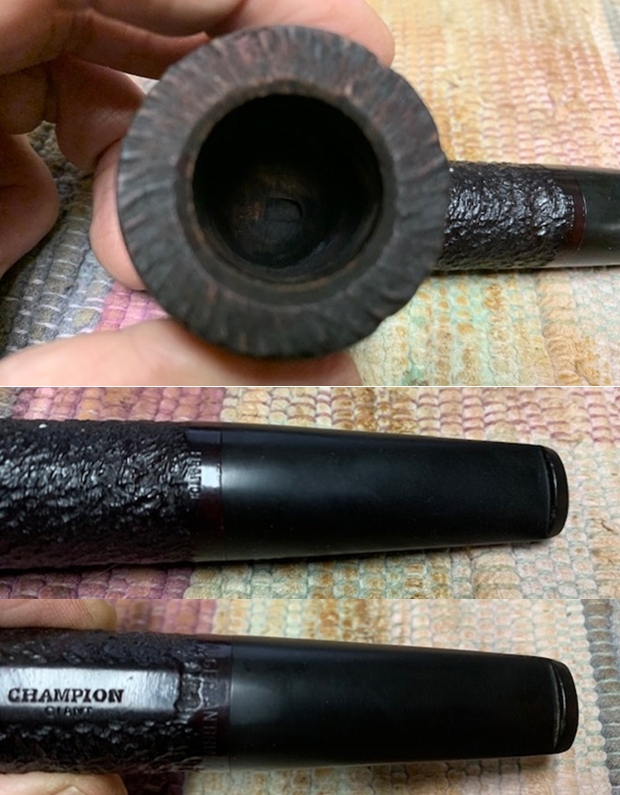
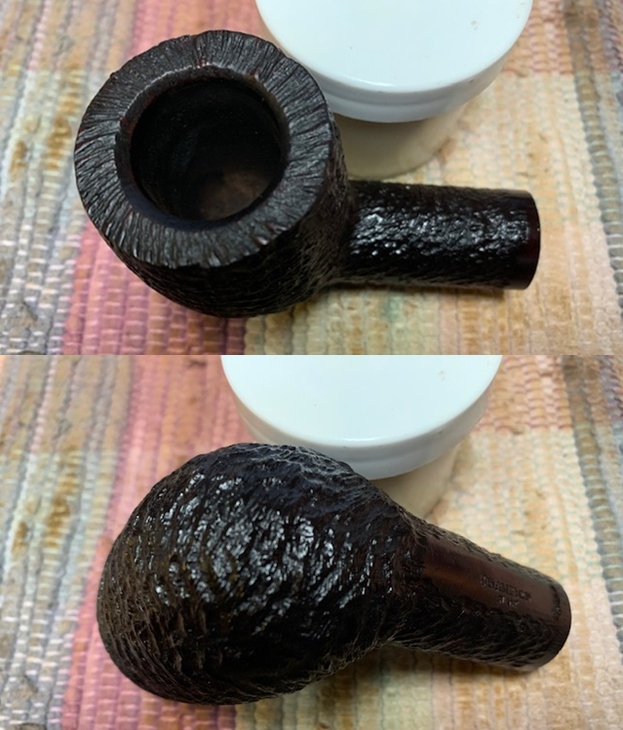
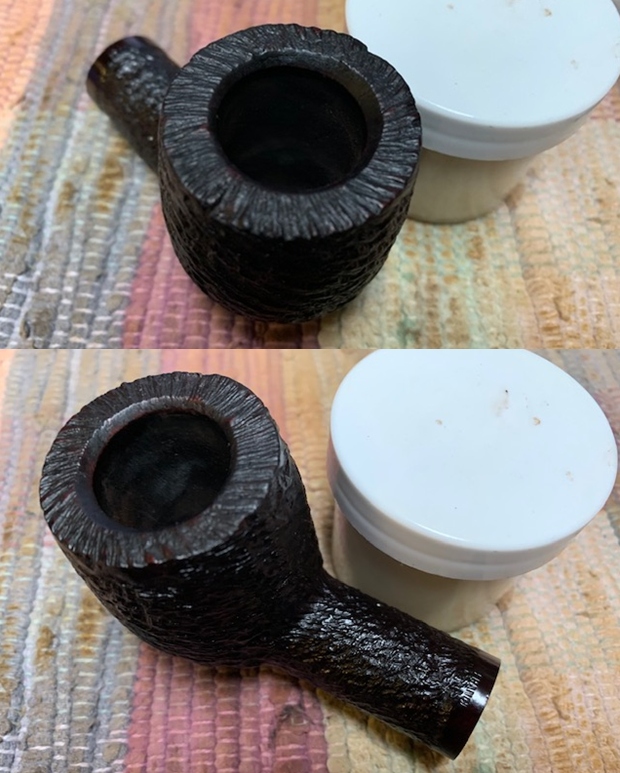
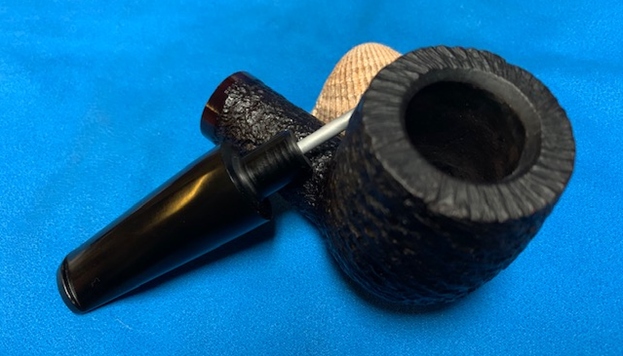
- The rim top had a thick lava overflow from the cake in the bowl. The inner bevel is darkened and dirty with lava. It is hard to know if there is darkening or damage under the lava. Sometimes the lava protects the rim top and edges and sometime it hides issues. Its is very dirty looking.
- The bowl has a thick cake in it that hides the inner edge of the bowl but once it is clean we will know what the edges look like. The outer edges look good and there does not appear to be any obvious burn damage to the top or bowl edges.
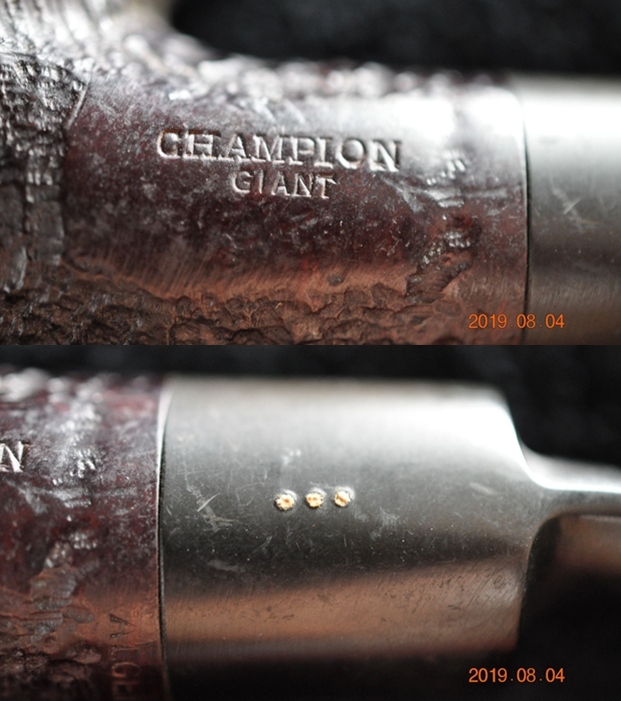
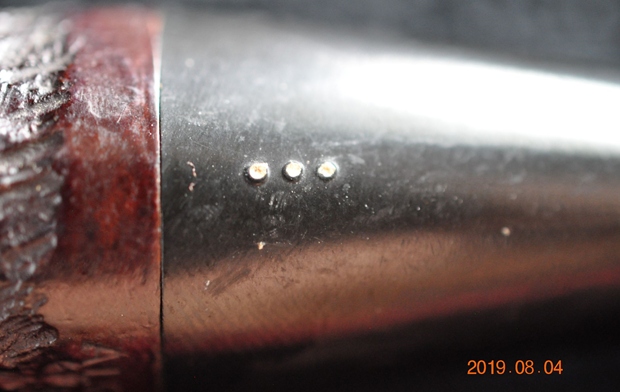
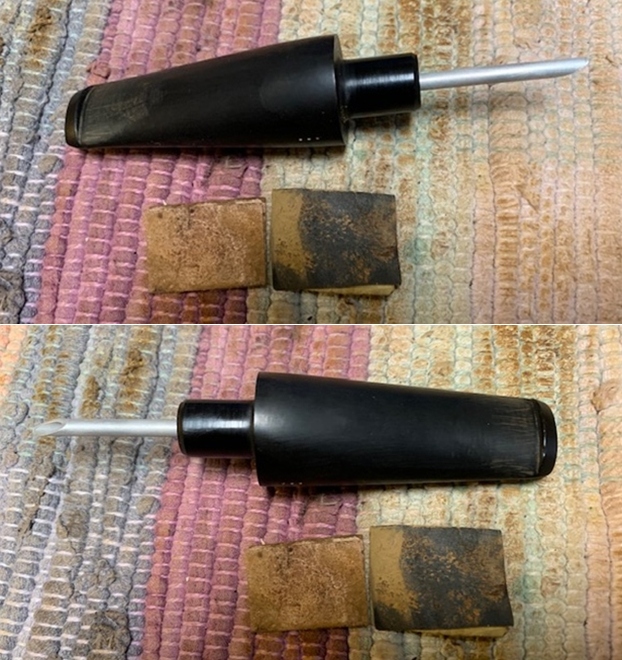
- The vulcanite saddle stem is in good condition – dirty, lightly oxidized and has light tooth chatter on both sides. There a C logo on the left side of the saddle stem.
Overall my impressions of this pipe is that it is another unique beauty that once cleaned up will look very good. The exterior of the bowl does not show any hot spots or darkening. The pipe is a classic Bent Billiard that has the distinctive finish that is very tactile. The photos below confirm the assessment above. Jeff took close up photos so that I could have a clearer picture of the condition of the bowl, rim edges and top. The rim top photos confirm my assessment above. The rusticated rim top and the inner beveled edge of the rim are filled in as noted. The cake in the bowl is quite thick and the rim top has lava and debris on it. While there is thick lava and darkening there is no visible burn damage at this point. The bowl is still fairly round.
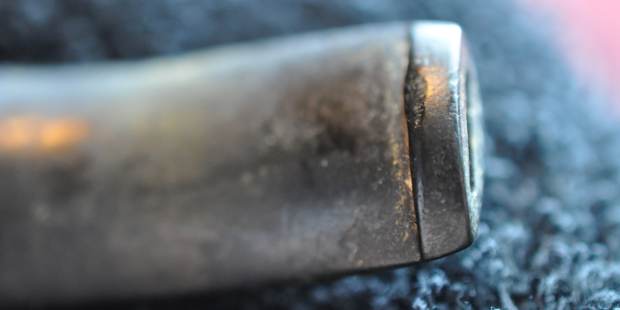
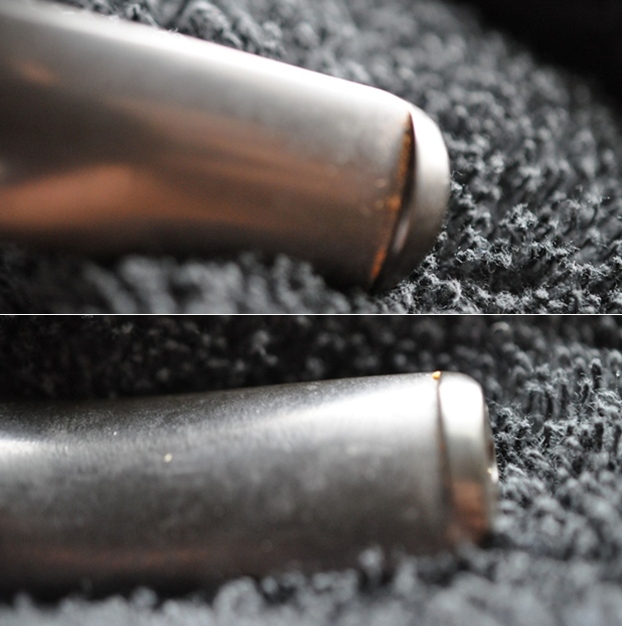
 The photos of the stem surface from various angles confirmed my assessment of its condition. You can see the dirty condition, the oxidation and the fit against the shank end. The surface was free of tooth marks except on the edge of the button.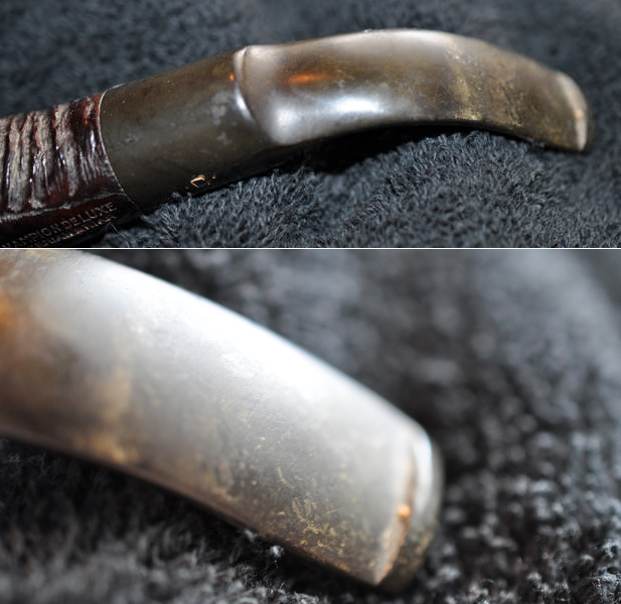
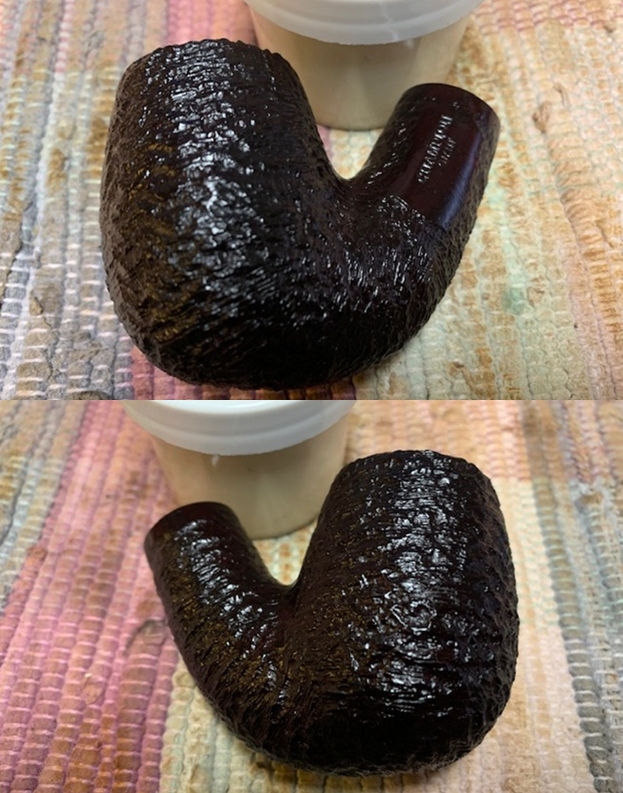
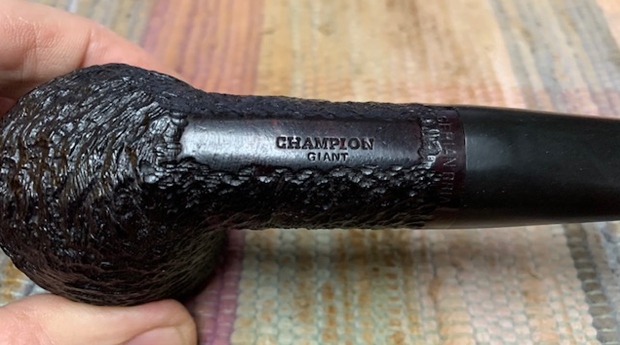
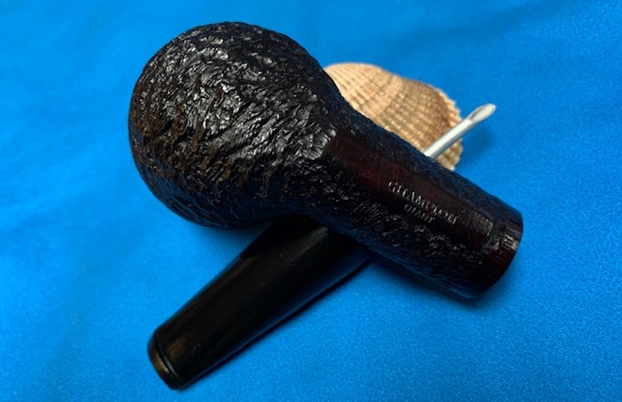
 The next photos show the unique rustication around the heel and the sides of the bowl. Tell me what you see? Are there any visible problems that stand out to you? Are the cracks or scratches? Are there visible flaws or fissures in the briar? Do you see a pattern that stands out around the bowl and heel? Any visible issues on the heel of the bowl? Even the questions should help you to see what I am looking for when I see these photos.
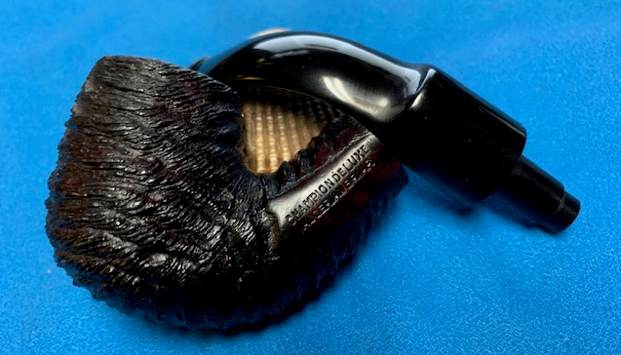
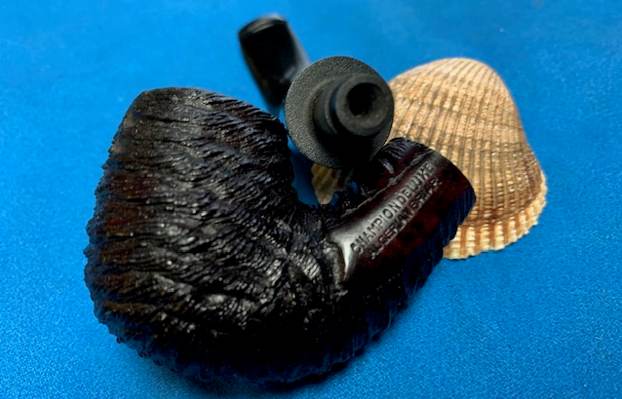
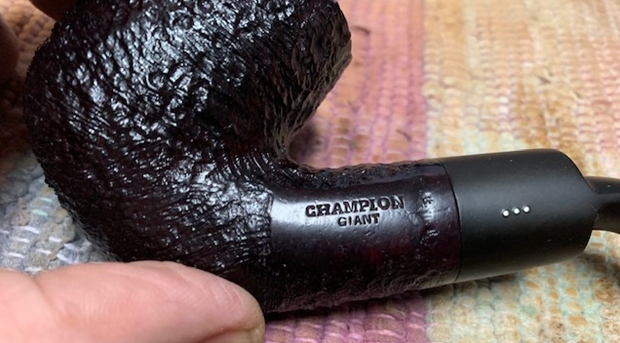
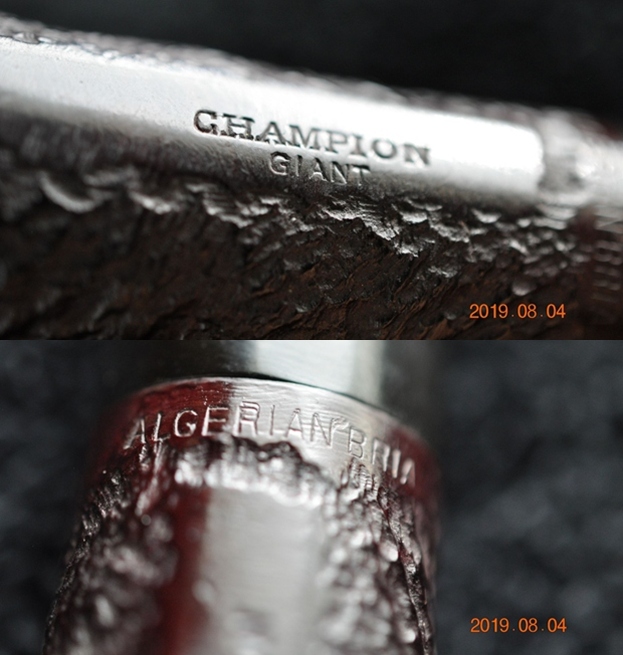
 You have read it a few times now in the previous blogs. What am I looking for when I look at the shank stamp? In this case it is stamped on the left side and reads Champion De Luxe [over] Algerian Briar in two lines. How does the stamping look to you? Is it clear and readable? Is it faint in spots or is it uniform? I know you are looking at photos but so do I at this point in the process. How does the logo look on the side of the saddle stem? It is a squared looking C. What is its condition?
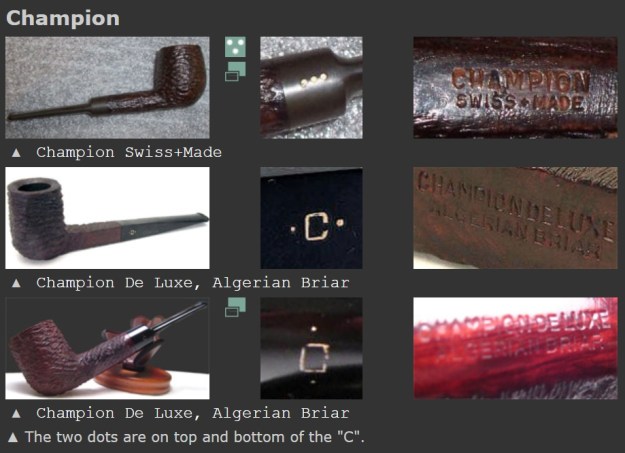
 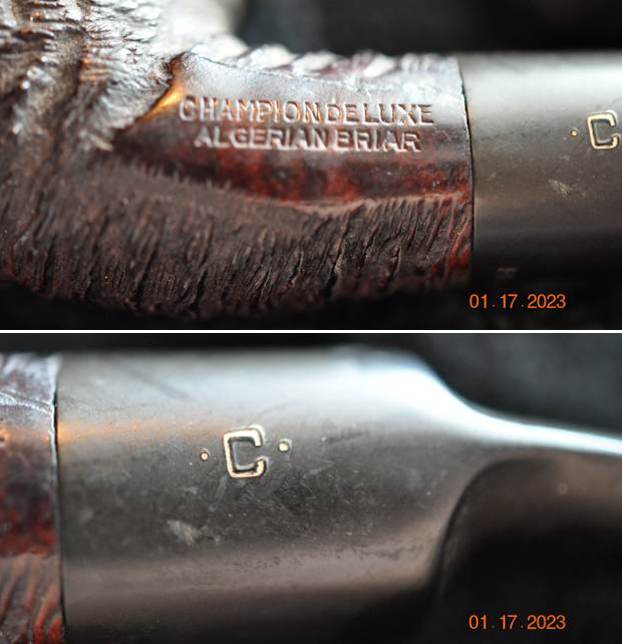 An added part of pipe restoration for me is the opportunity to gather background information on a brand and maker to add depth to the restoration. I almost always turn to Pipephil’s site first for a summary. In this case it did not let me down (http://www.pipephil.eu/logos/en/logo-c8.html). I have a listing for the Champion Brand. I have included a screen capture of the section below. I had worked on several of the brand in the past but could not remember any details about the brand. Turns out it is Swiss Made and the stamping and the C on the side of the stem in the second and third pictures below match the one I am working on.
  I am sure many of you will shake your head and ask maybe even out loud, “Why is he including this again?” However, please remember that the point of these blogs is not to wow your with the work or make you shake your heads but I want you to know the details of the work we do so you can do your own. Back in 2020 Jeff wrote a blog about his cleaning process. I am including a link to that now so you can see what I mean about his process. Do not skip it! Give it a read (https://rebornpipes.com/2020/01/20/got-a-filthy-estate-pipe-that-you-need-to-clean/). Here is the introduction to that blog and it is very true even to this day.
Several have asked about Jeff’s cleaning regimen as I generally summarize it in the blogs that I post rather than give a detailed procedure. I have had the question asked enough that I asked Jeff to put together this blog so that you can get a clear picture of the process he uses. Like everything else in our hobby, people have different methods they swear by. Some may question the method and that is fine. But it works very well for us and has for many years. Some of his steps may surprise you but I know that when I get the pipes from him for my part of the restoration they are impeccably clean and sanitized. I have come to appreciate the thoroughness of the process he has developed because I really like working on clean pipe!
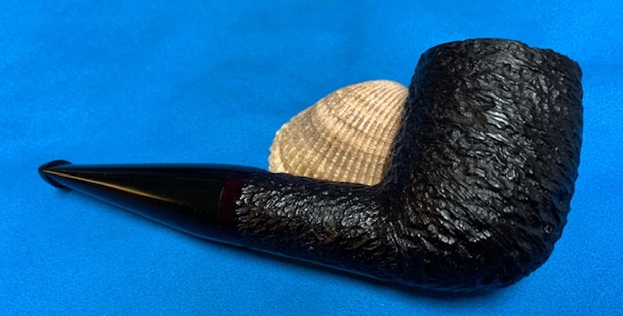
For the benefit of some of you who may be unfamiliar with some of the products he uses I have included photos of three of the items that Jeff mentions in his list. This will make it easier for recognition. These three are definitely North American Products so you will need to find suitable replacements or order these directly on Amazon. The makeup pads are fairly universal as we were able to pick some up in India when we were with Paresh and his family.
In the blog itself he breaks his process down into two parts – cleaning the stem and cleaning the bowl. Each one has a large number of steps that he methodically does every time. I know because I have watched him do the work and I have seen the pipes after his work on them. He followed this process step by step and when the pipe got to me it was spotlessly clean and ready for my work. The inside of the stem, shank and bowl were clean and to me that is an amazing gift as it means that my work on this end is with a clean pipe! I cannot tell you how much difference that makes for my work.
When the pipe arrives here in Vancouver I have a clean pipe and I go over it keeping in mind my assessment shared in the opening paragraph above. Now that I have it in hand I am looking for confirmation of what I saw in the photos as well as any significant structural changes in the bowl and finish as I go over it.
- I was correct in my thoughts that the pipe was indeed a Champion Swiss made pipe. This one was a De Luxe and not a Giant but the rustication was identical.
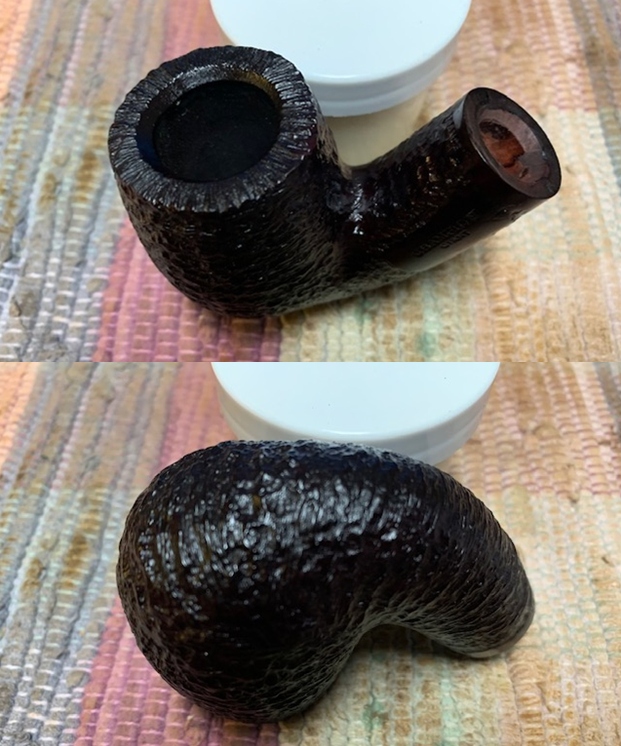
- The rusticated finish is very clean dust and debris in the rusticated bowl sides is gone. It is a very tactile finish and looks great. There are no cracks showing up in the carving around the bowl and shank. It is sound on the outside. I will need to polish the briar and buff it to bring back the shine.
- The rim top is clean of the lava looked very good and the beveled edge and rustication also looked very clean. The good news for me is that there are no cracks showing up in the rim top. The rim top and edges were sound.
- The bowl was very clean and smelled clean. The clean walls did not show evidence of checking or cracking. There were no hot spots or damage on the walls or around the entrance of the airway into the bowl. It was clean and smooth which is great news for me. Both the shank and the bowl were very clean showing no debris on a clean pipe clean run through them. I would need to give it a final cleaning with pipe cleaners and alcohol once I had finished with the external work to remove the debris that may have collected there in the process.
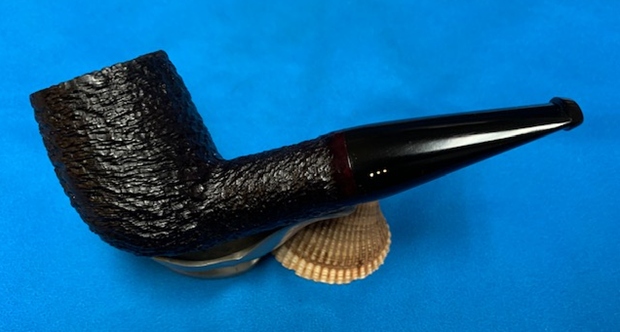
- The vulcanite saddle stem is in good condition – it cleaned up very well. All oxidation is gone. It is a little rough to the touch and the light chatter is not deep at all. The C logo on the stem needs to be touched but looks good. The fit of the stem to the shank end is well done. The tooth marks on the edges of the button are clean but visible and will need to be worked on.
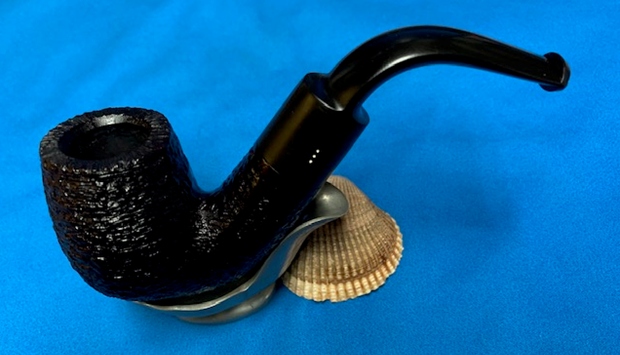
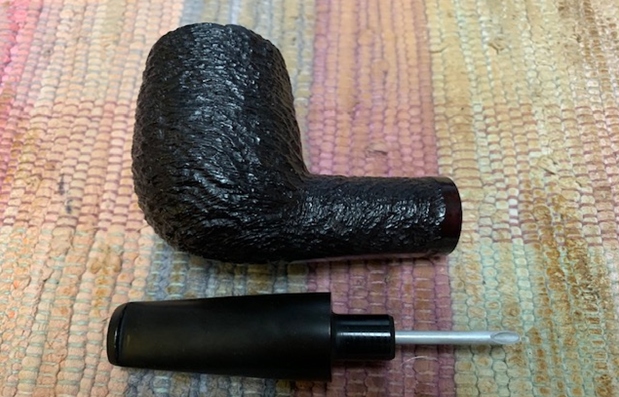
Hopefully the steps above show you both what I look for when I go over the pipe when I bring it to the work table and also what I see when I look at the pipe in my hands. They also clearly spell out a restoration plan in short form. My work is clear and addressing it will be the next steps. I took photos of the whole pipe to give you a picture of what I see when I have it on the table. This is important to me in that it also shows that there was no damage done during the clean up work or the transit of the pipe from Idaho to here in Vancouver.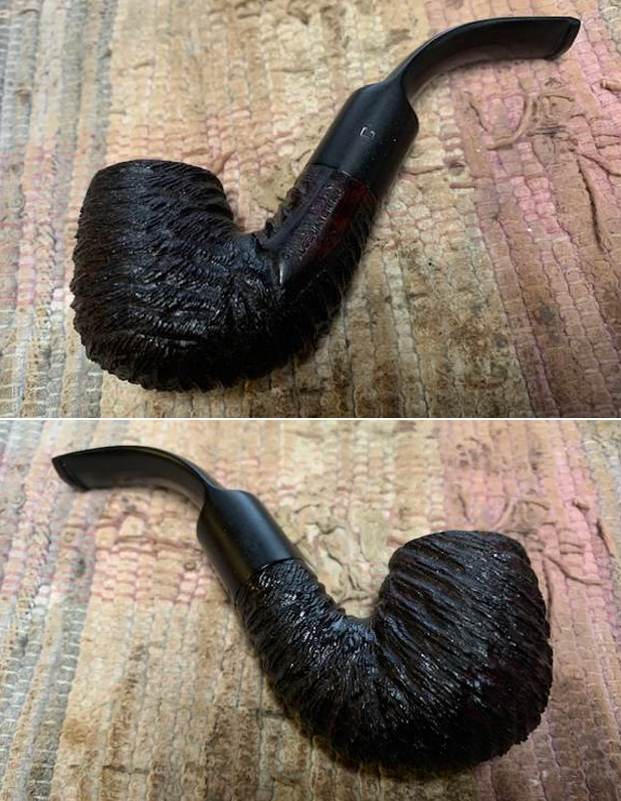
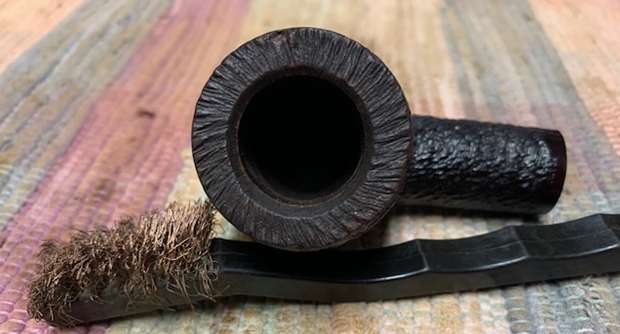
 I carefully went over the bowl and rim top to get a sense of what is happening there. In this case once the lava was removed damage to the edge and top was revealed. The rim top and edges look very good. There was some spots on the inner edge and top of the rim where the finish showed through. I also go over the stem carefully. There were no tooth marks or dents in the stem surface but there was some damage to the edge of the button. I could see the C stamping on the stem and it looked good. I would need to refresh the white paint on the logo. I took photos of the rim top and stem sides to show as best as I can what I see when I look at them.
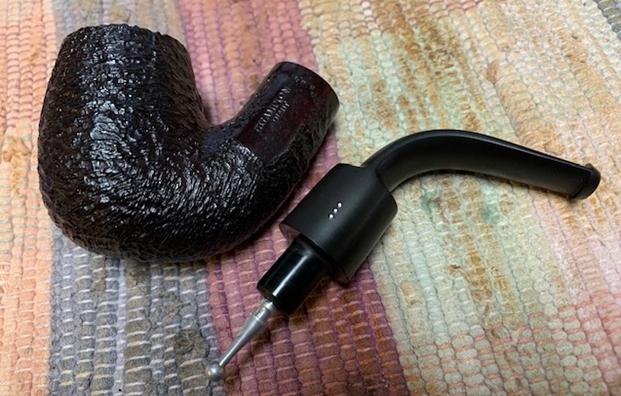
 I always check to make sure that the clean up work did not damage the stamping on the shank in any way. It looks very good still. You can also see the FRANCE stamp on the underside of the stem in the second photo. It is clear and readable. I like to remove the stem from the shank to get a sense of what was in the mind of the pipe maker when he crafted the pipe. It is a beauty in flow and shape.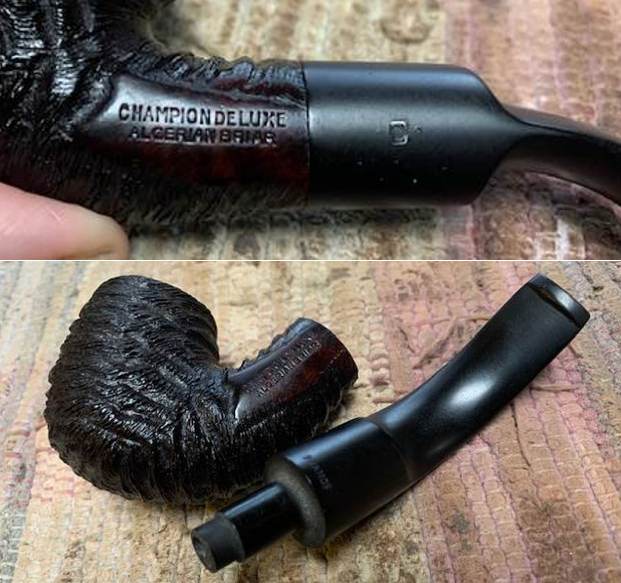
 By this time you should know that I almost always start with the bowl in my restoration because I truly do not like the tedious work of stem repairs and polishing. I always leave that until last even though I know that it needs to be done. For me the encouragement of seeing a rejuvenated bowl is the impetus I need to attack the stem work.
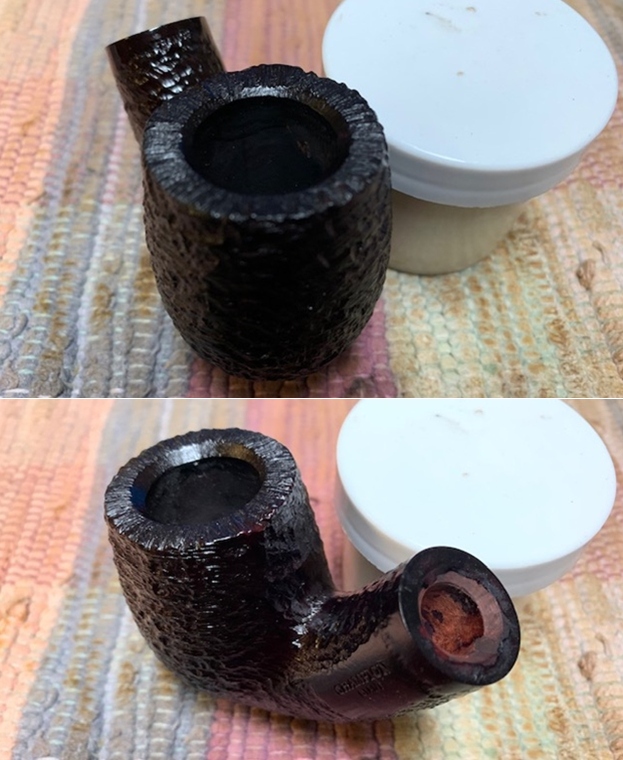
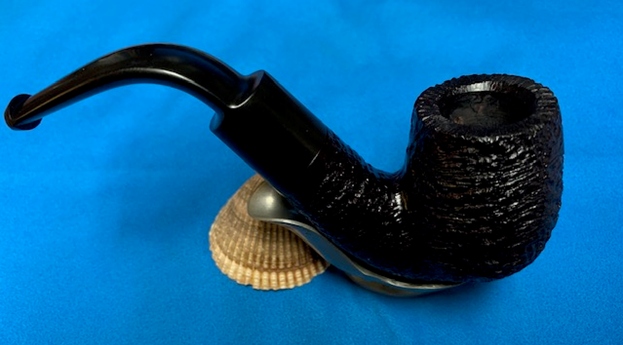
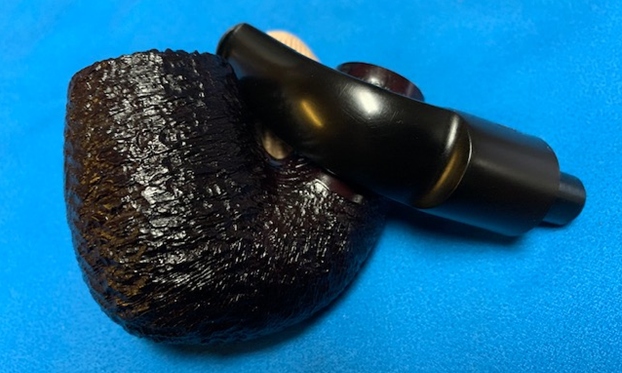
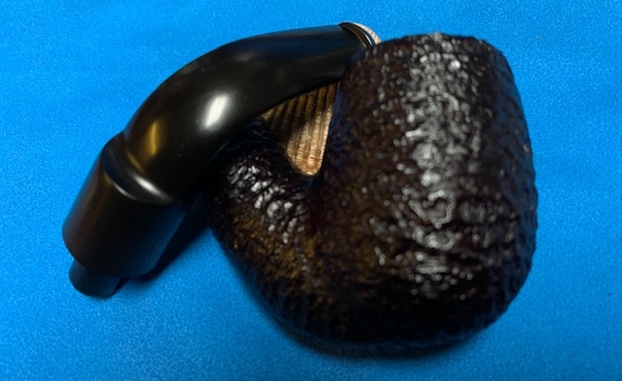
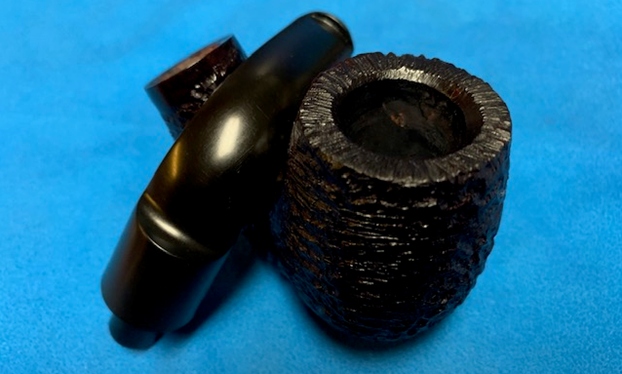
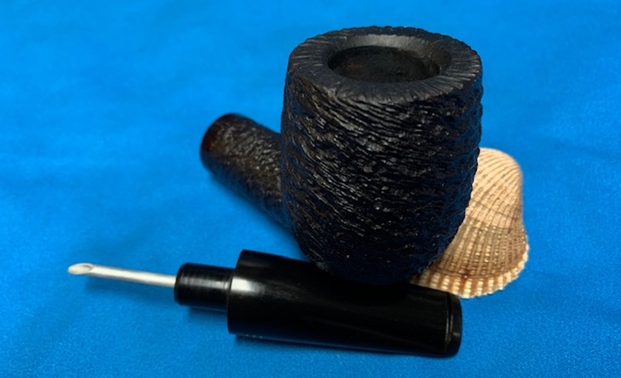
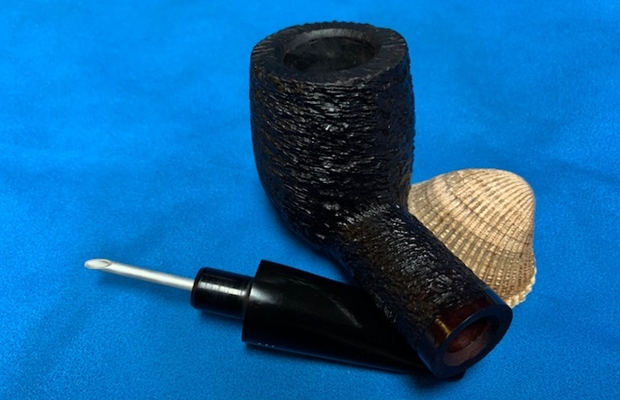
Today I started working on this pipe by turning to the bowl. I chose to deal with the spots on the rim top and edges where the stain was missing first. I used a Walnut Stain Pen to touch up the spots. It looked much better once I finished. The stain matched the rest of the bowl perfectly.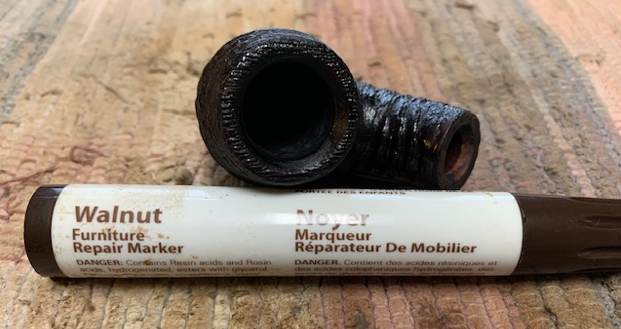 For the past few years now I have been using a product developed by Mark Hoover called Before & After Restoration Balm. It is a paste/balm that is rubbed into the surface of the briar and the plateau. The product works to deep clean the nooks and crannies of finish, enliven and protect the briar. I worked it into the briar with my finger tips and a horsehair shoe brush. The bowl sat for 10 minutes to let it do its work. I wiped it off with a soft cloth then buffed it with a cotton cloth. The briar really began to have a deep shine in the briar and the grain shone through. The photos I took of the bowl at this point mark the progress in the restoration. The rustication took on a lot of depth and showed the variations of colour that comes with the restored finish.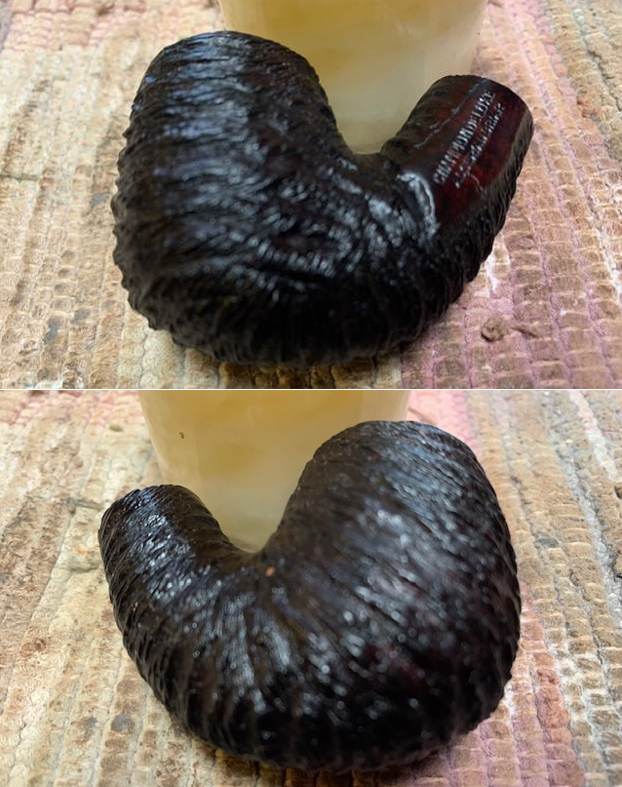

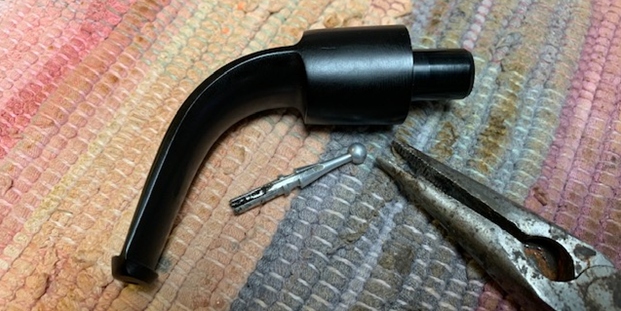
 Now it was time to address the part of the restoration I leave until last. I set the bowl aside and turned my attention to the stem. The stem was in good nick other than the tooth damage on the edge of the button on both sides. I decided to reshape it with a folded piece of 220 grit sandpaper and was happy with the results.
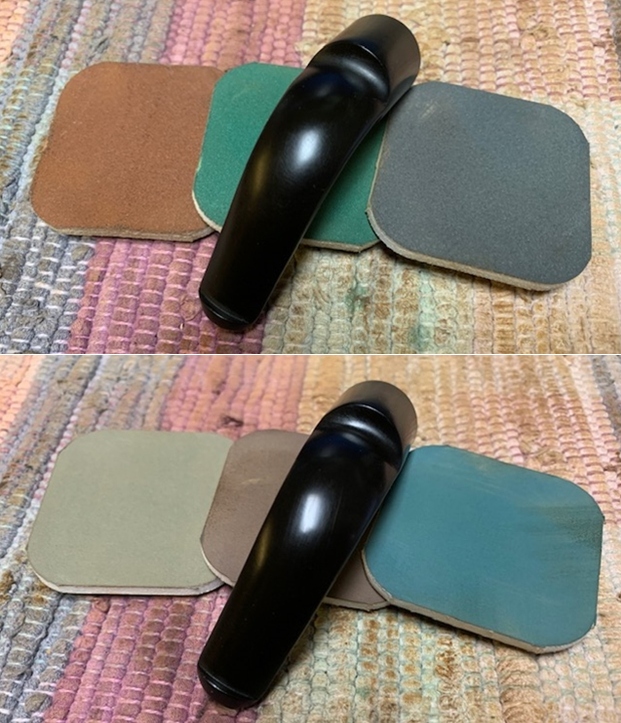
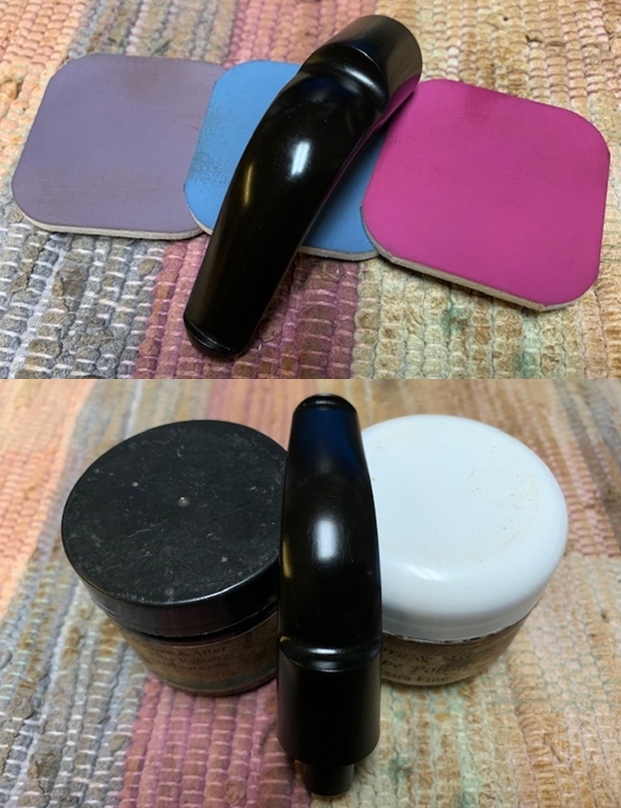
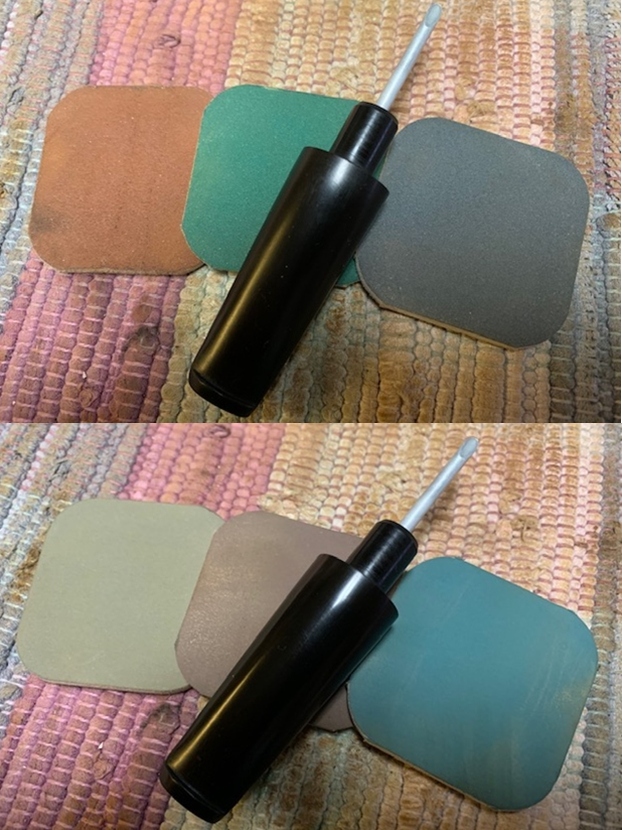
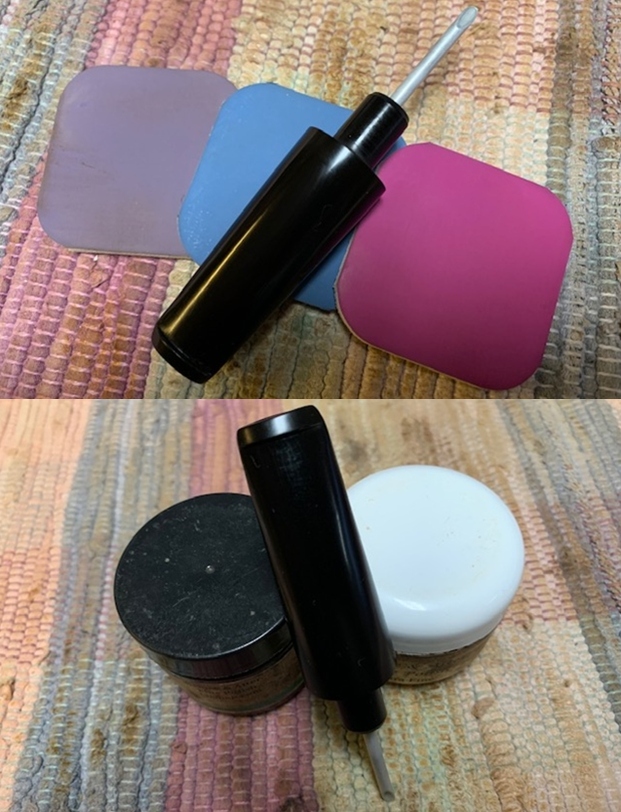
 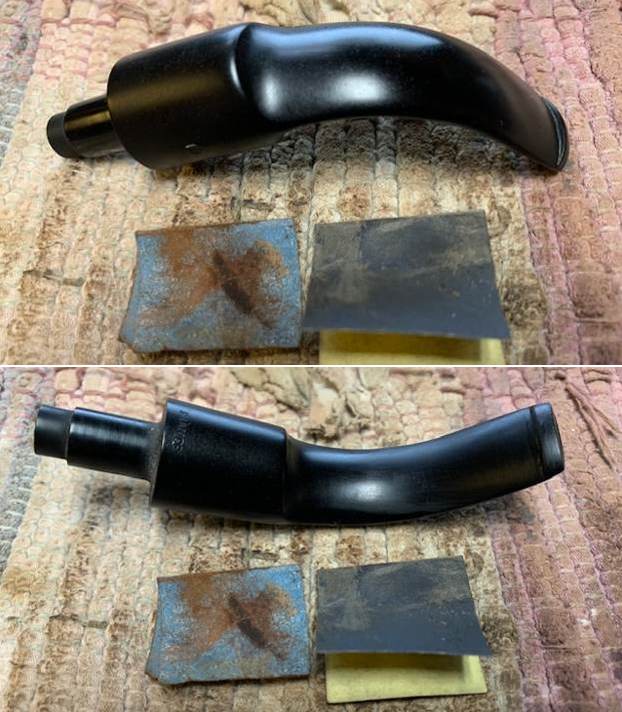 There were no tooth marks or chatter so it was simply a matter of polishing the stem and bring back a shine. I use micromesh sanding pads and water to wet sand the stem with 1500-12000 grit sanding pads. After the first three pads I touched up the stamping on the stem with White Acrylic Fingernail Polish. I scraped it off with my fingernail and repeated the 2400 grit sanding pad. It looked much better. I picked up where I left off with 3200-12000 grit pads. I wiped it down after each sanding pad with Obsidian Oil on a cotton rag after each sanding pad as I find it does two things – first it protects the vulcanite and second it give the sanding pads bite in the polishing process.
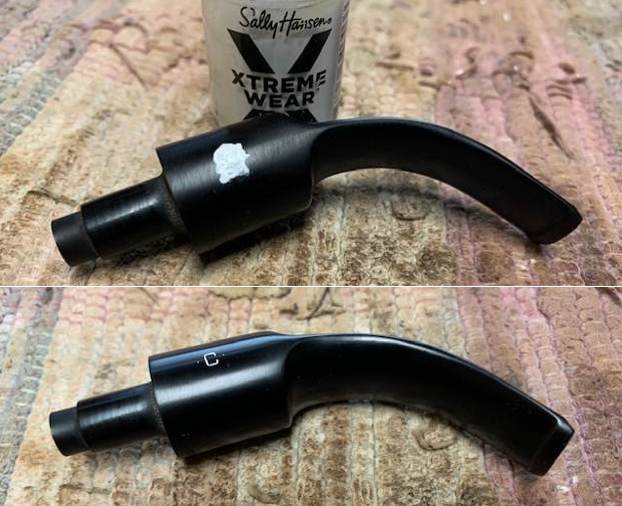
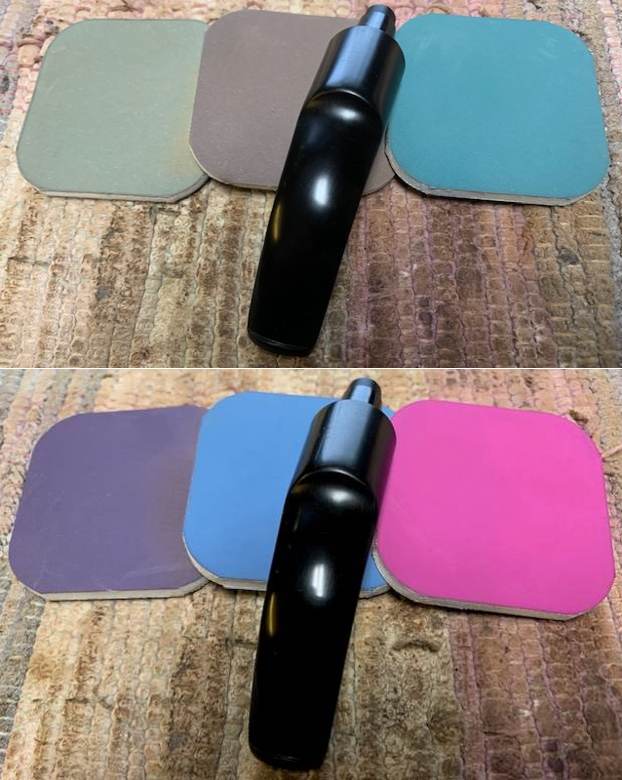 After finishing with the micromesh pads I rub the stem down with Before & After Fine and Extra Fine stem polish as it seems to really remove the fine scratches in the vulcanite. I rub the Fine Polish on the stem and wipe it off with a paper towel and then repeat the process with the extra fine polish. I finish the polishing of the stem down with a final coat of Obsidian Oil and set the stem aside to let the oil absorb. This process gives the stem a shine and also a bit of protection from oxidizing quickly.
 The final steps in my process involve using the buffer. I first buff the stem and the briar with Blue Diamond on the buffing wheel. Blue Diamond is a plastic polish but I find that it works very well to polish out the light scratches in the vulcanite and the briar. I work the pipe over on the wheel with my finger or thumb in the bowl to keep it from becoming airborne. I used a very light touch to hit the high spots and to keep the product from filling in the rustication patterns. It works well and I am able to carefully move forward with the buffing. The briar and stem just shone!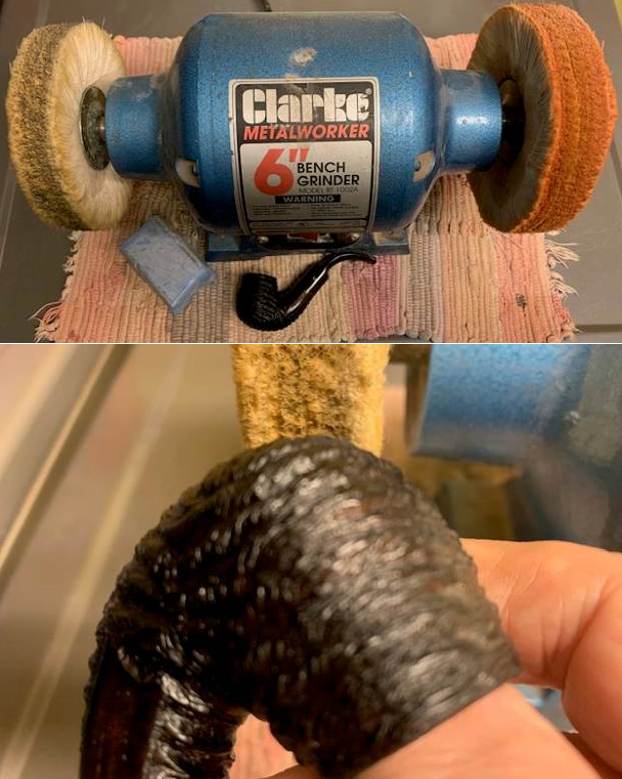
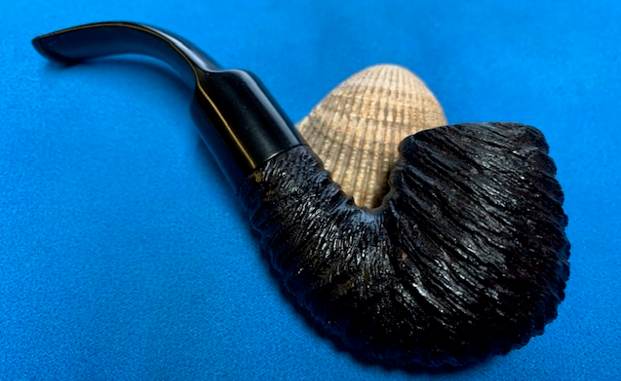
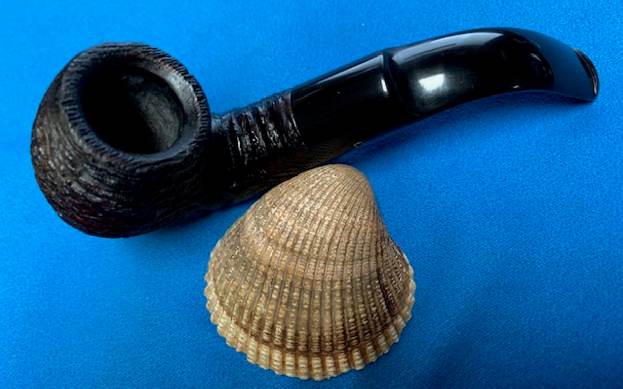
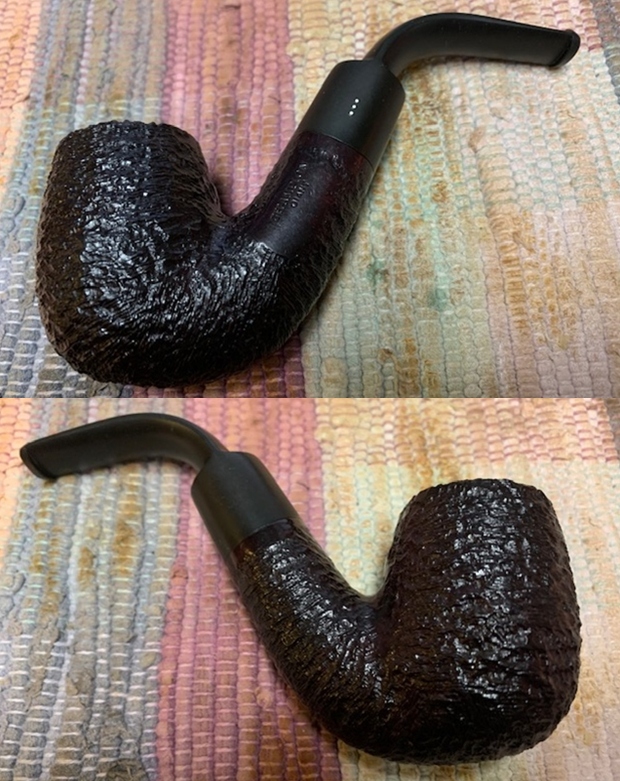
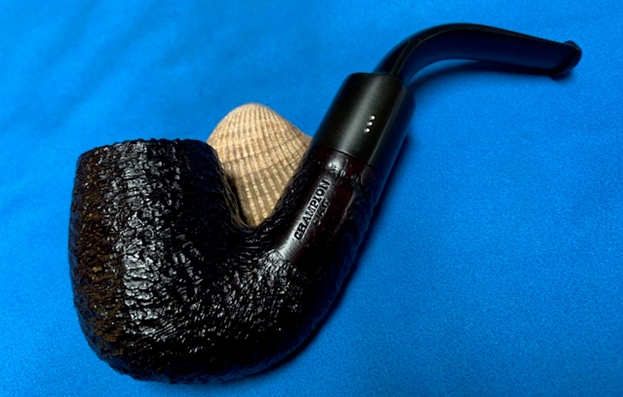
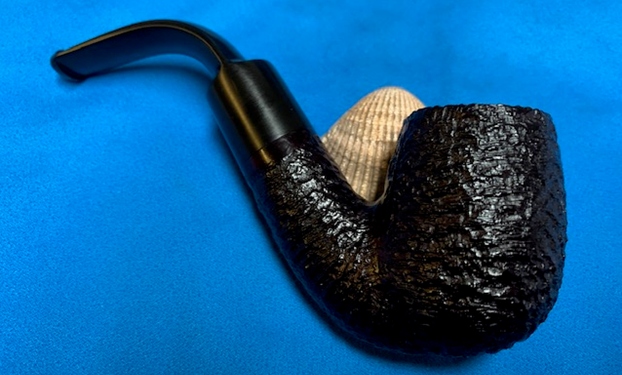
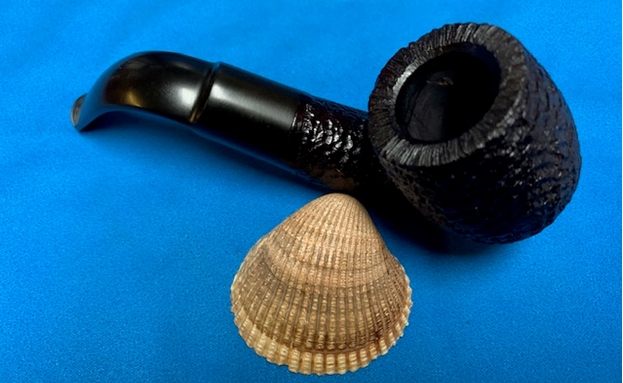
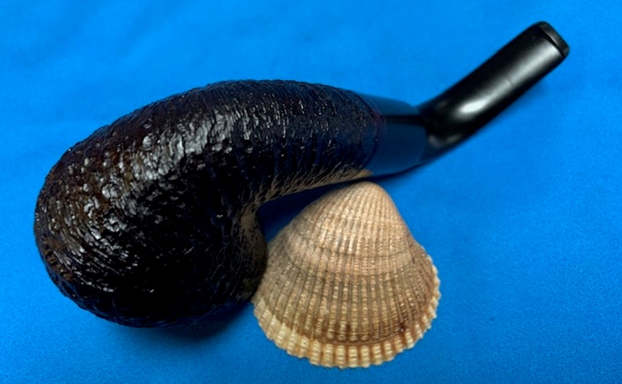
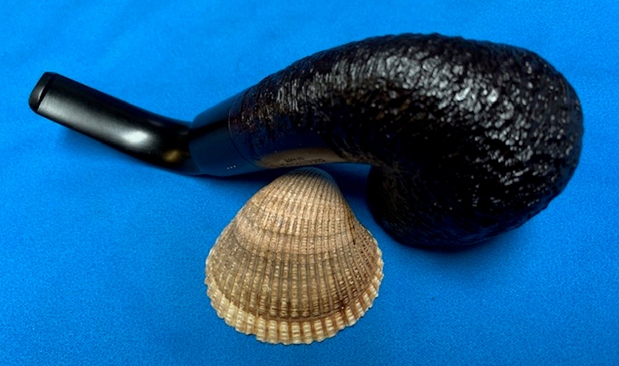
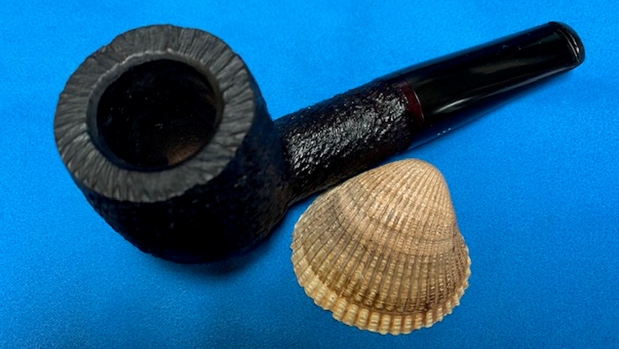
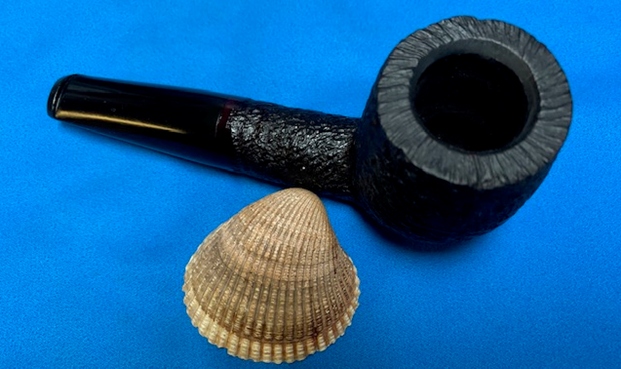
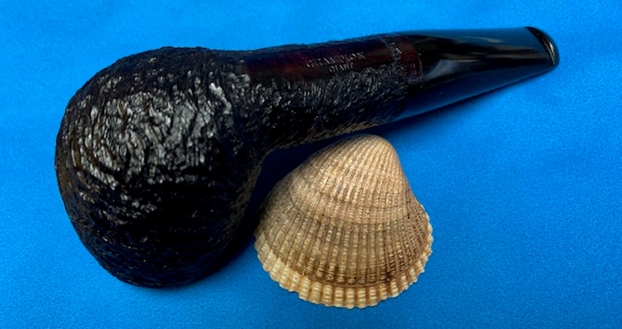
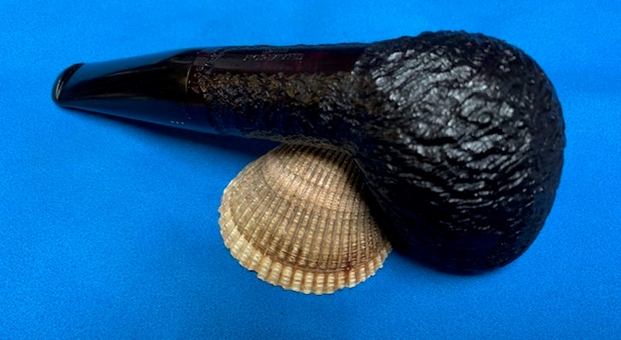
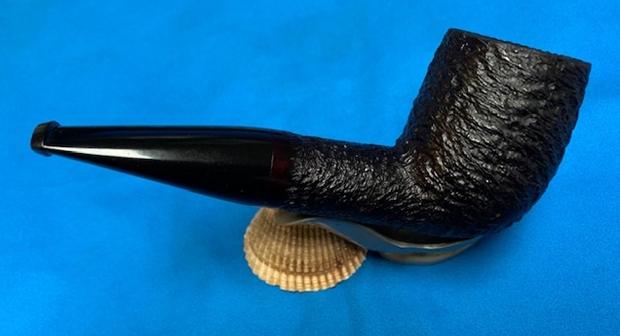
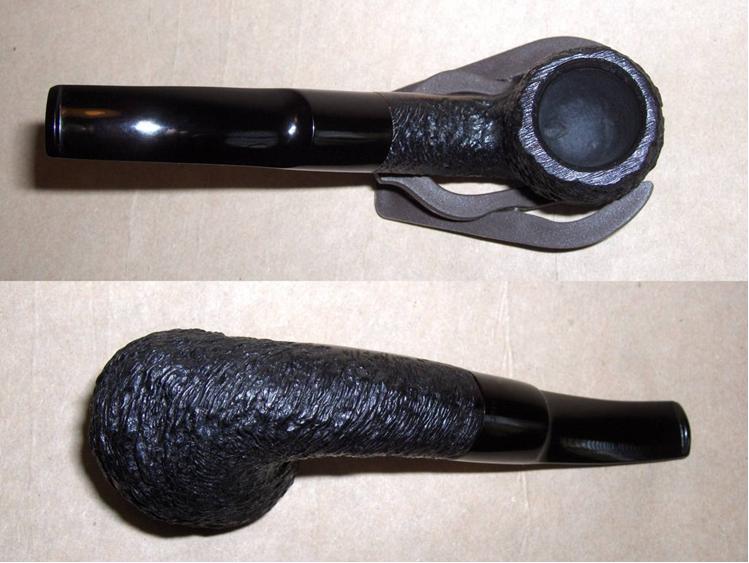
 I finished with the Blue Diamond and moved on to buffing with carnauba wax. Once I have a good shine in the briar and vulcanite I always give the bowl multiple coats of Conservator’s Wax and the stem multiple coats of carnauba wax on the wheel. I have found that I can get a deeper shine if I following up the wax buff with a clean buffing pad. It works to raise the shine and then I follow that up with a hand buff with a microfiber cloth to deepen the shine. It is always fun for me to see what the polished bowl looks like with the polished vulcanite stem. It really is a beautiful pipe. The deeply rusticated finish around the bowl sides and shank is very tactile. The rich dark brown stains look amazing on this Champion De Luxe Algerian Briar Rusticated Bent Billiard. The finished pipe feels great in my hand. It is light and well balanced. Have a look at it with the photos below. The dimensions are Length: 5 inches, Height: 1 ½ inches, Outside diameter of the bowl: 1 inch, Chamber diameter: ¾ of an inch. The weight of the pipe is 1.52 ounces/43 grams. It is a beautiful pipe and one that I will be putting on the rebornpipes store in the Pipes from Various Makers section. Let me know if you wish to carry on the trust for this beauty.
Hopefully the shape writing this blog is helpful to you in some way. In it I wanted to show both what I am looking for and how I move forward in addressing what I see when work on a pipe. Let me know if it is helpful to you. It is probably the most straightforward detailed description of my work process that I have done. As always I encourage your questions and comments as you read the blog. Thanks to each of you who are reading this blog. Remember we are not pipe owners; we are pipemen and women who hold our pipes in trust until they pass on into the trust of those who follow us.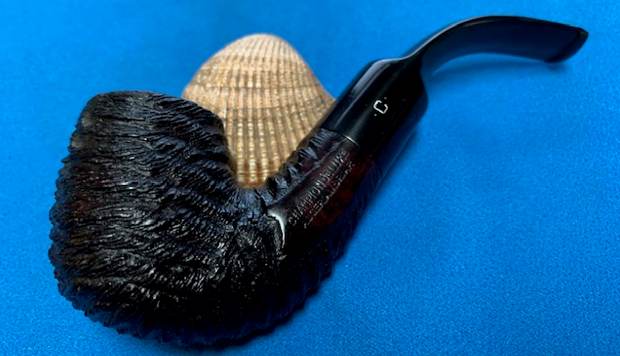
















 rebornpipes