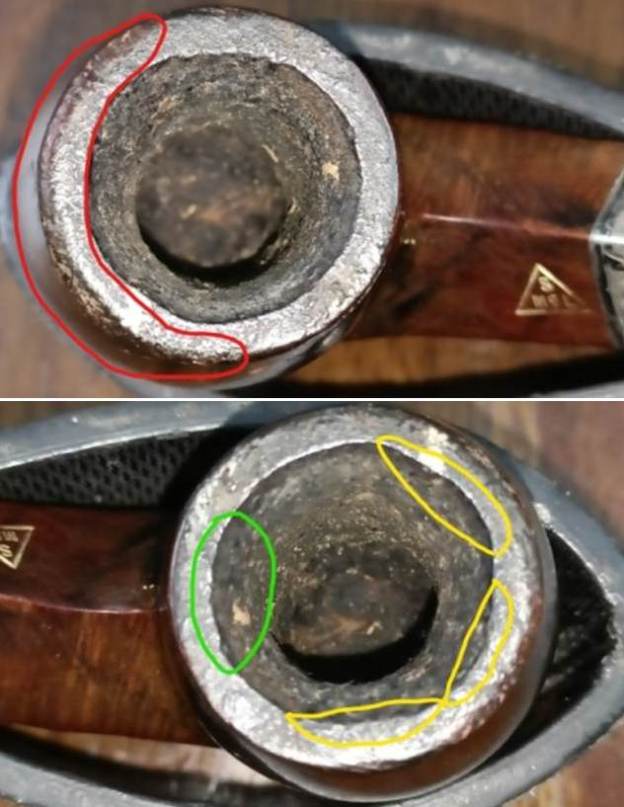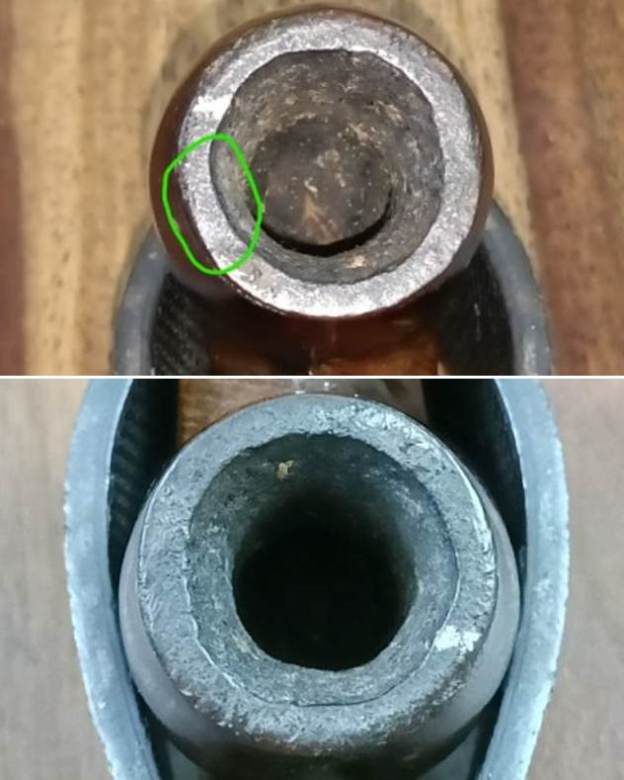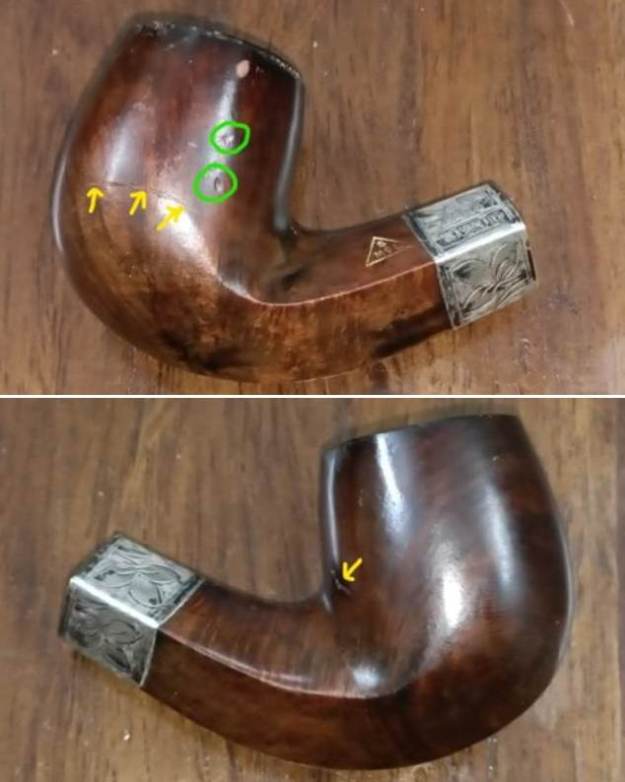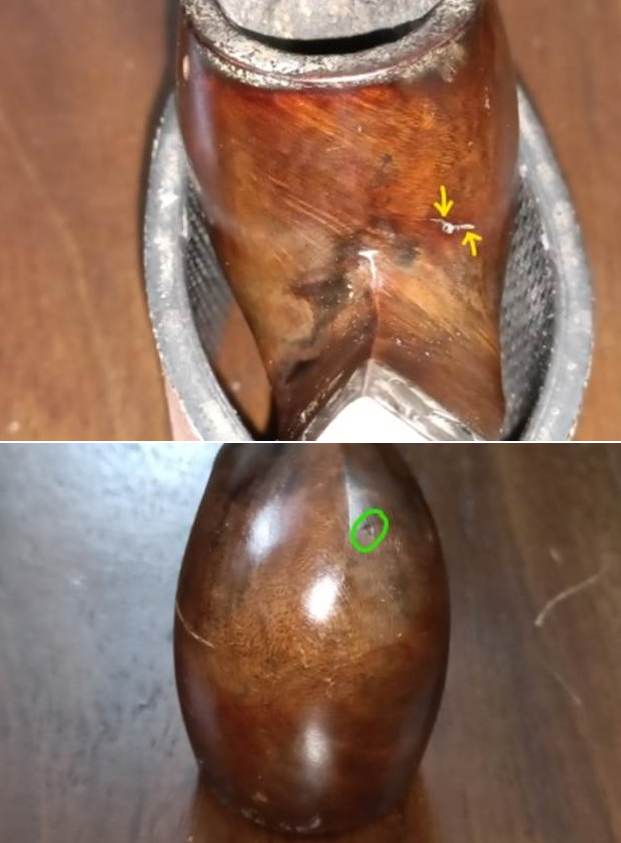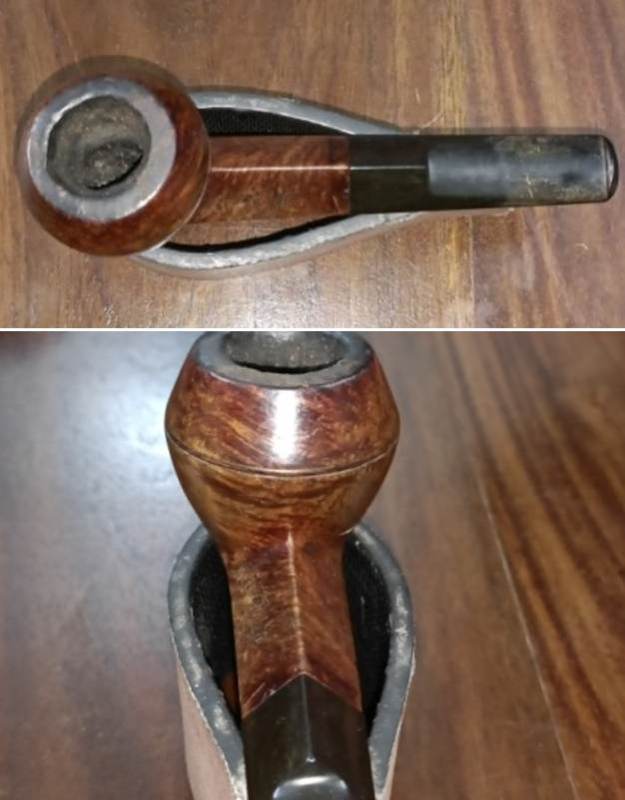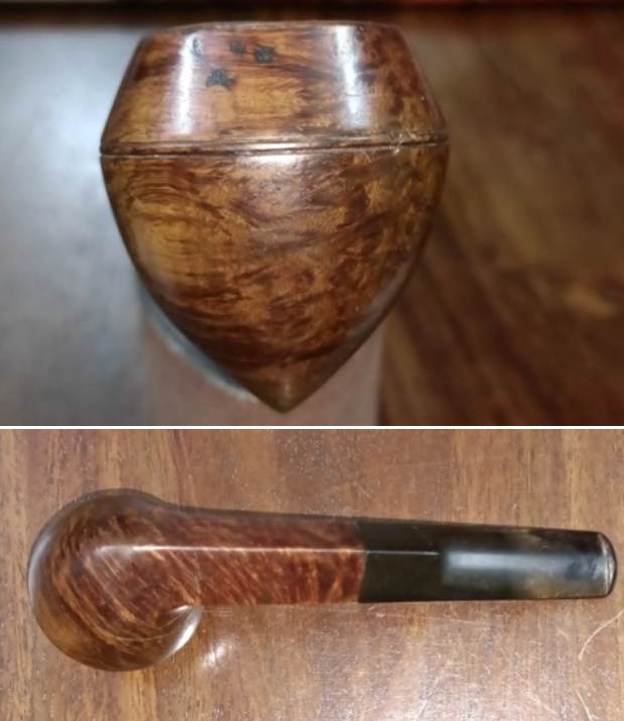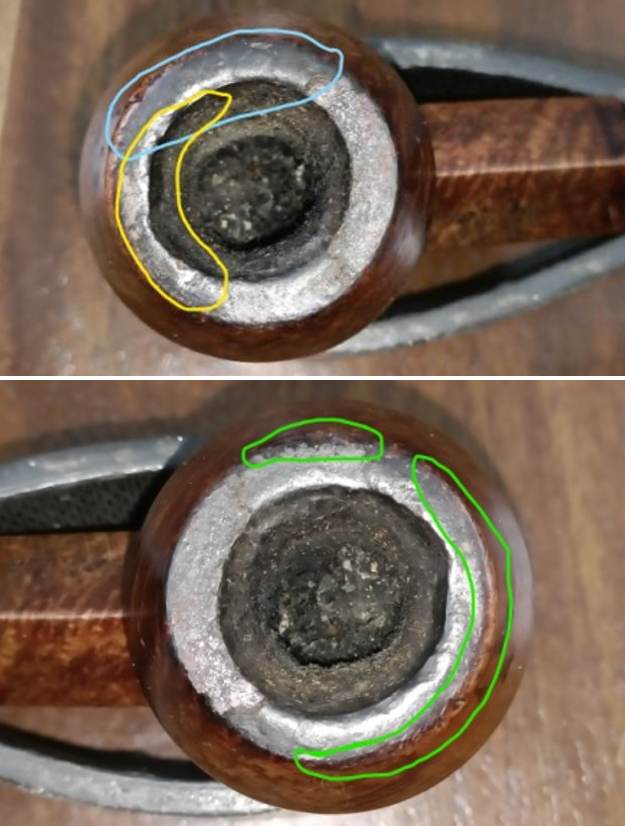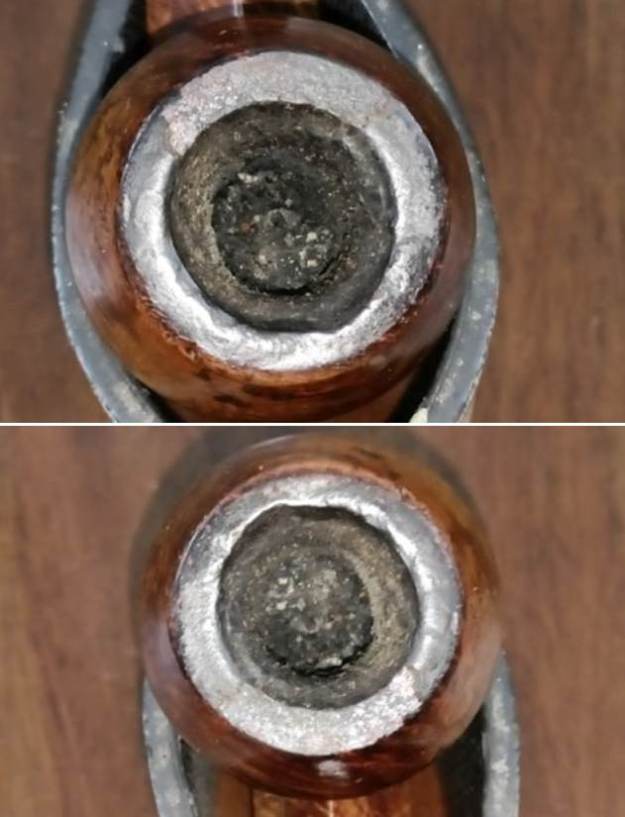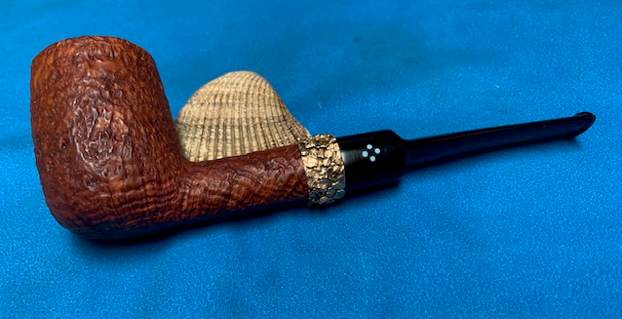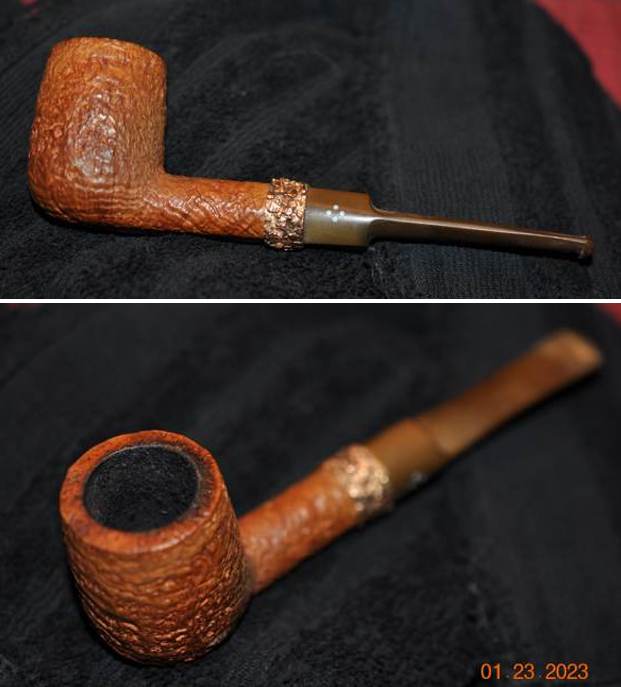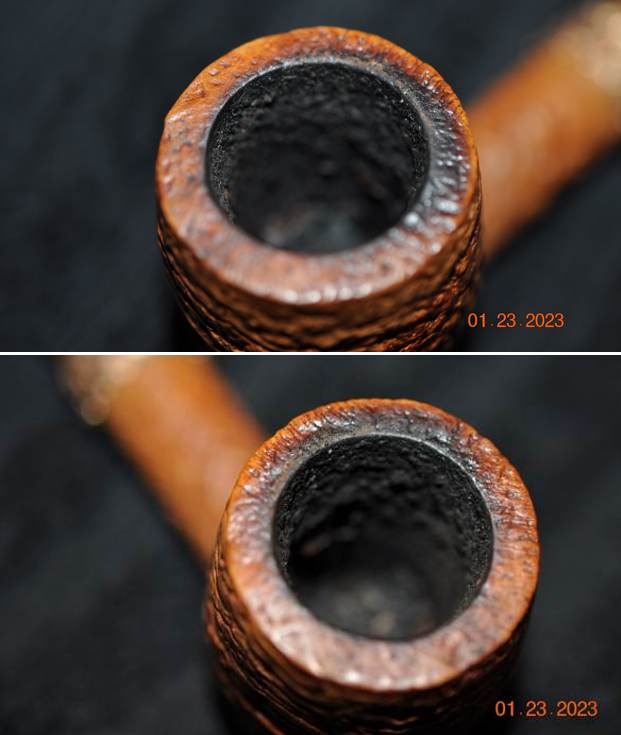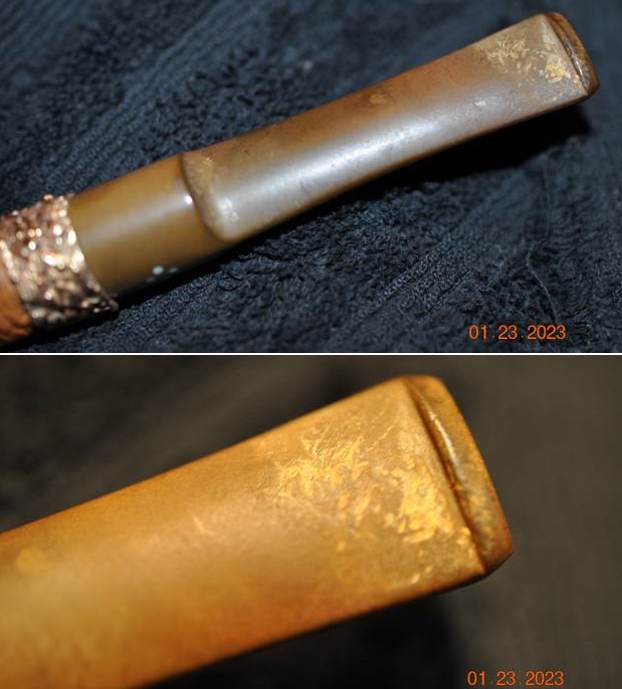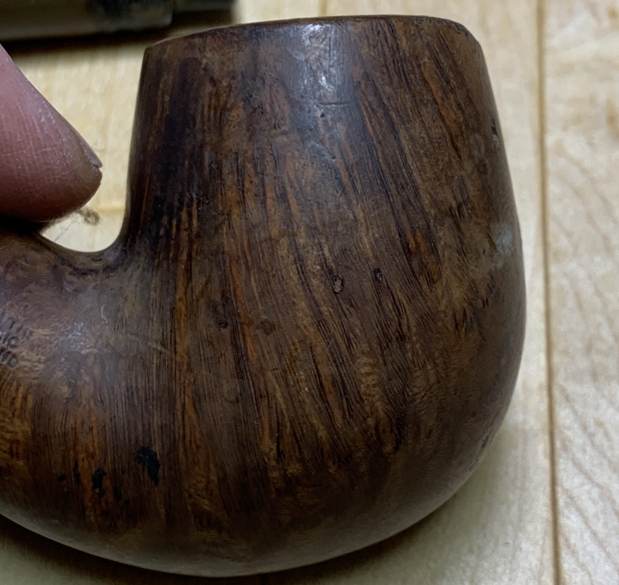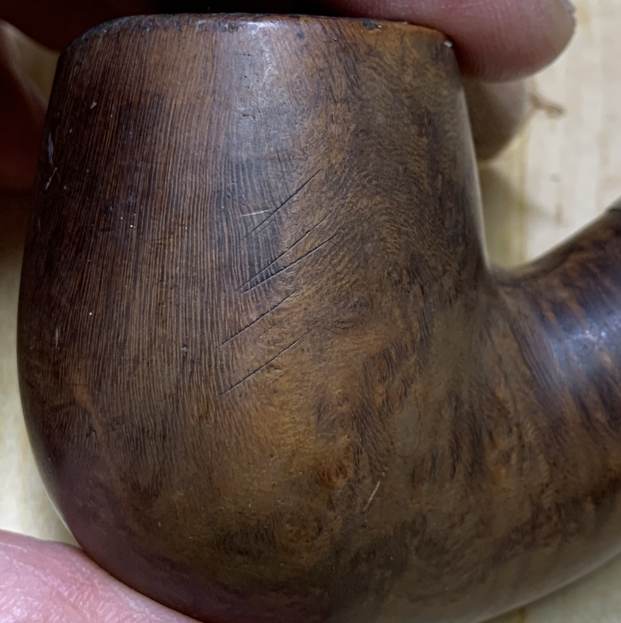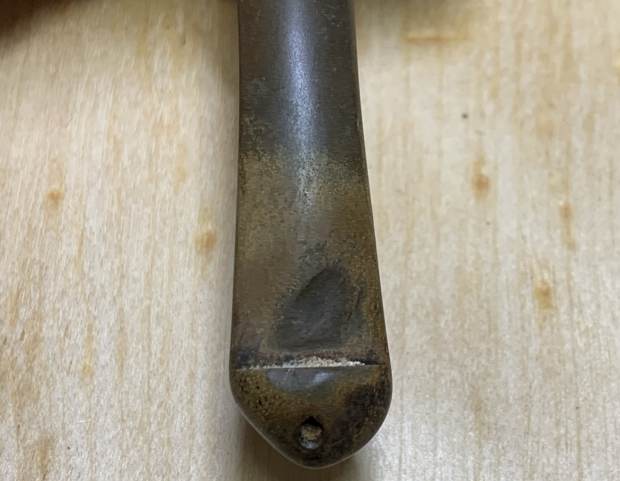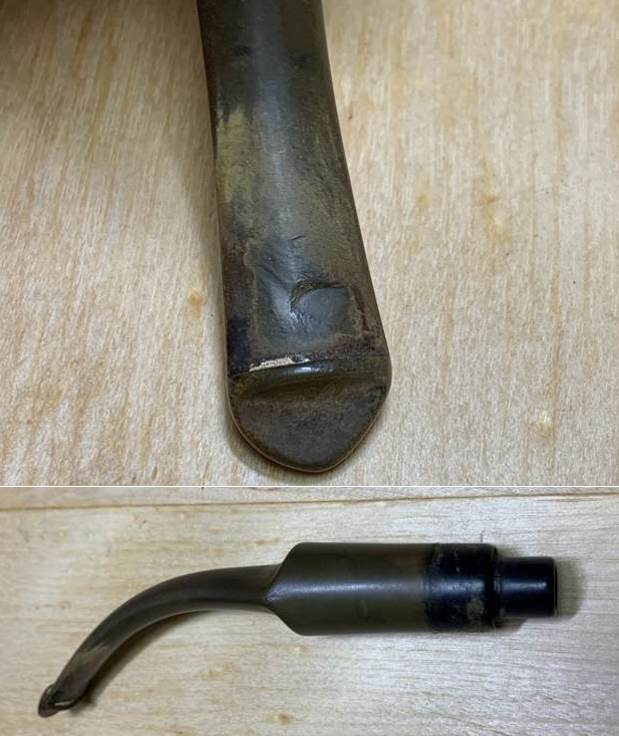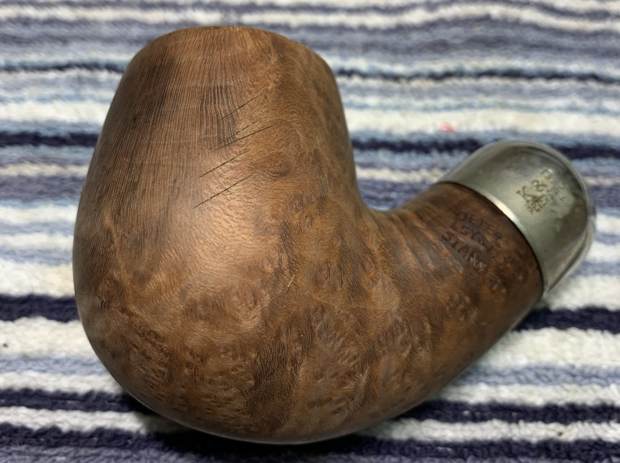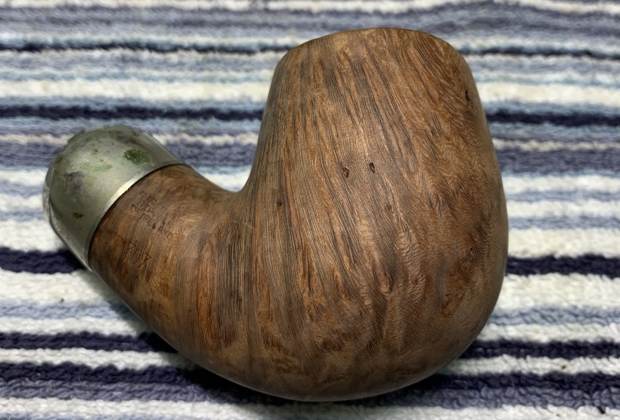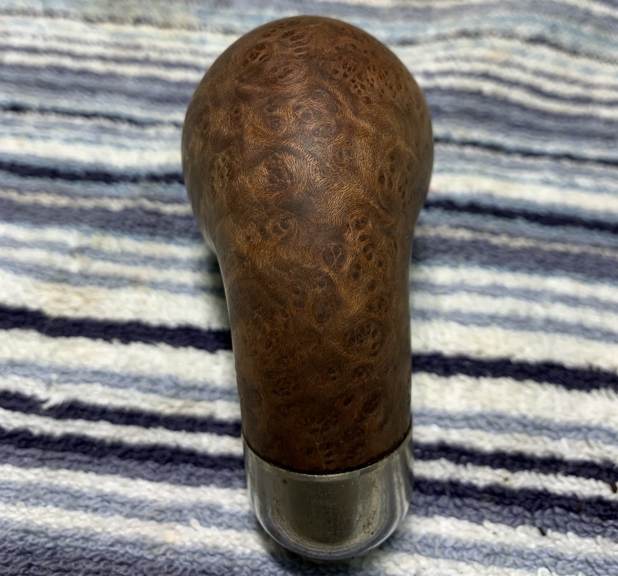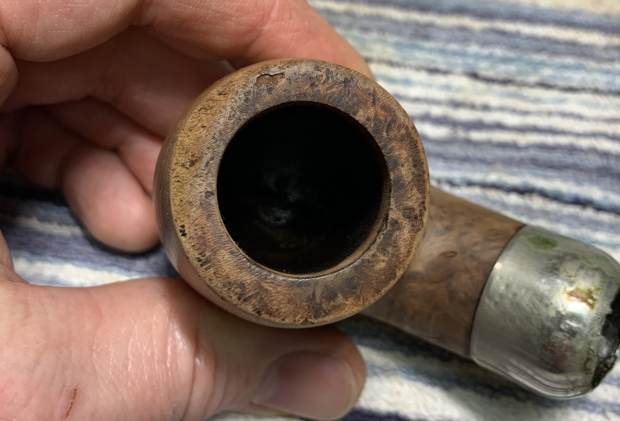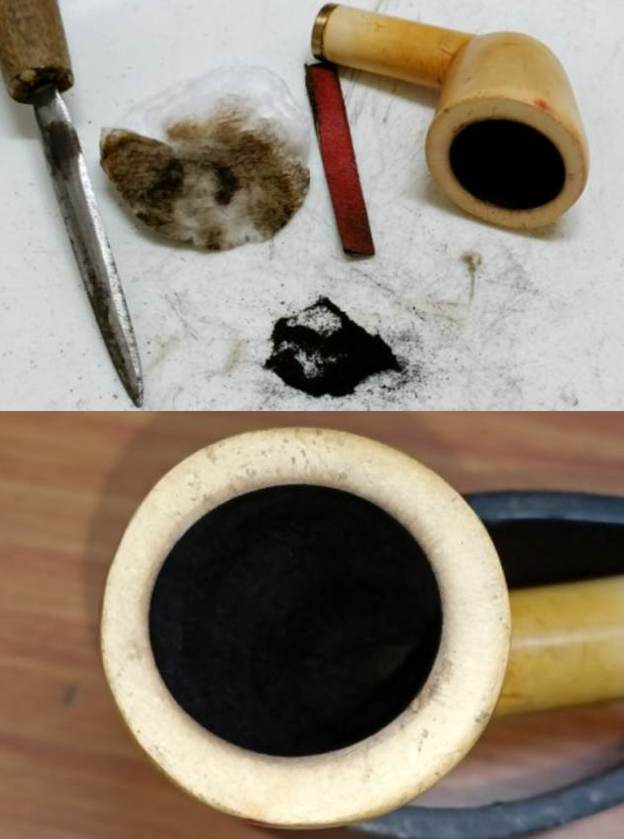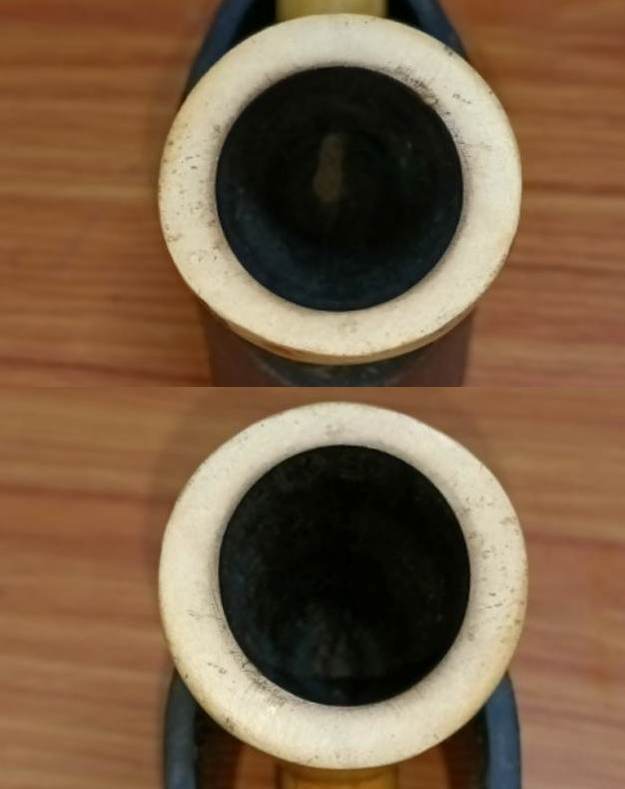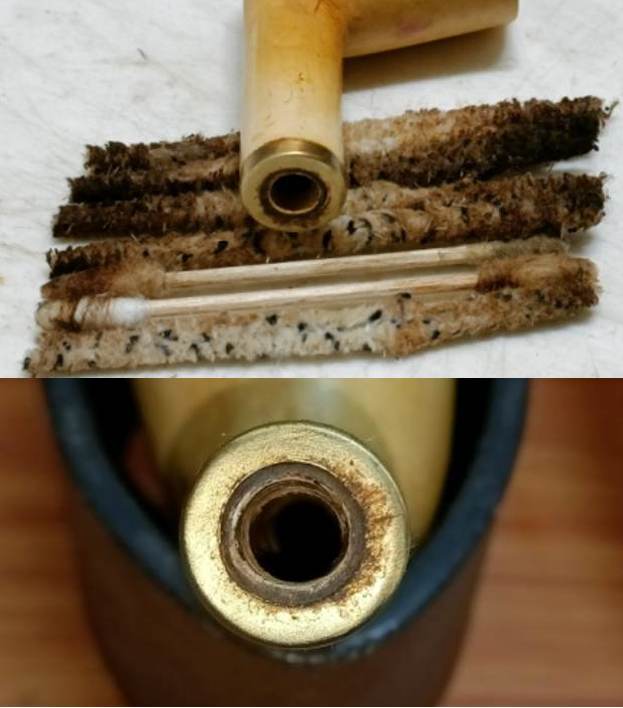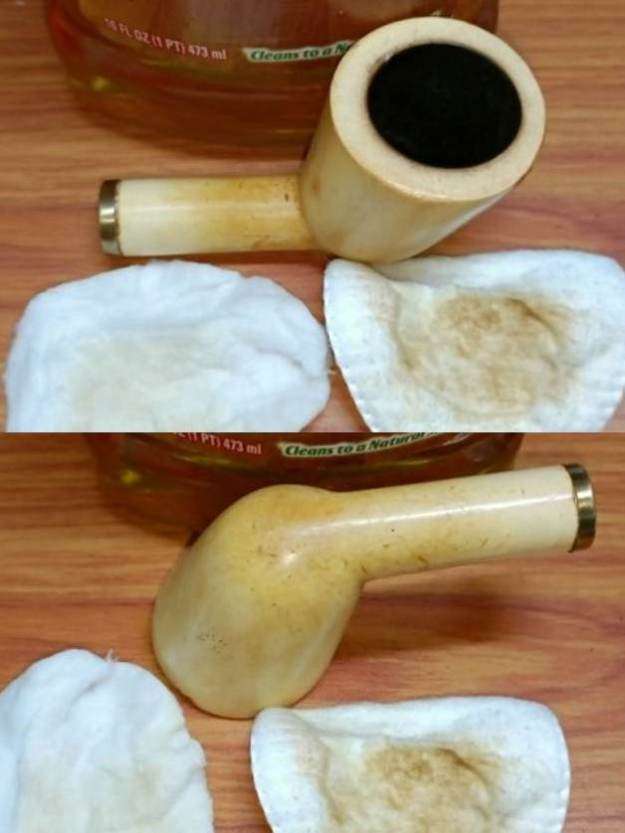
Tag Archives: buffing

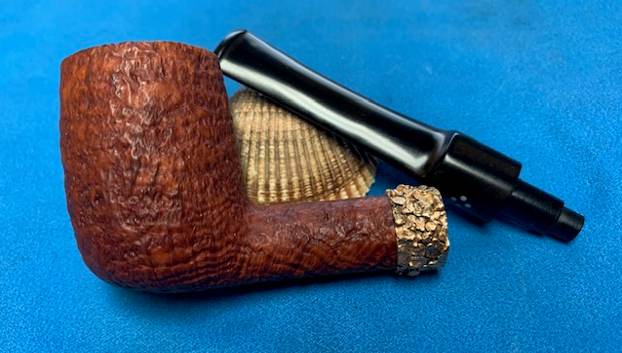
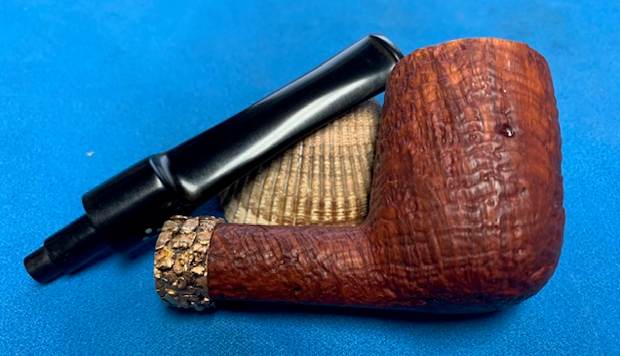
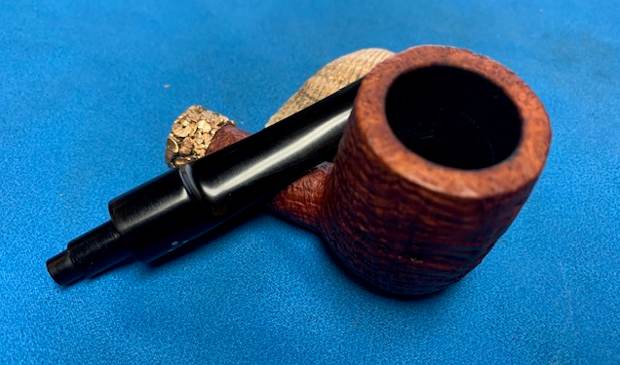
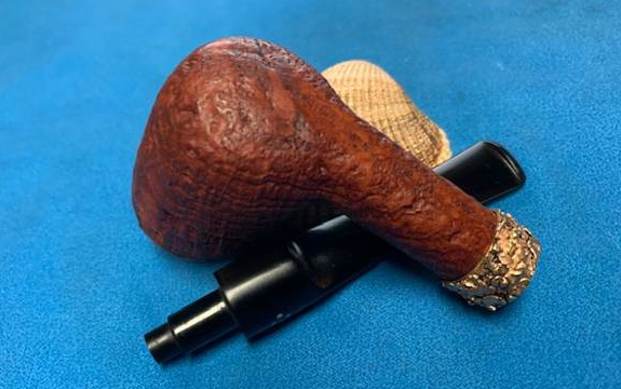
Restoring a Rusticated House of Robertson Bulldog with a Clear Acrylic Stem


Blog by Steve Laug

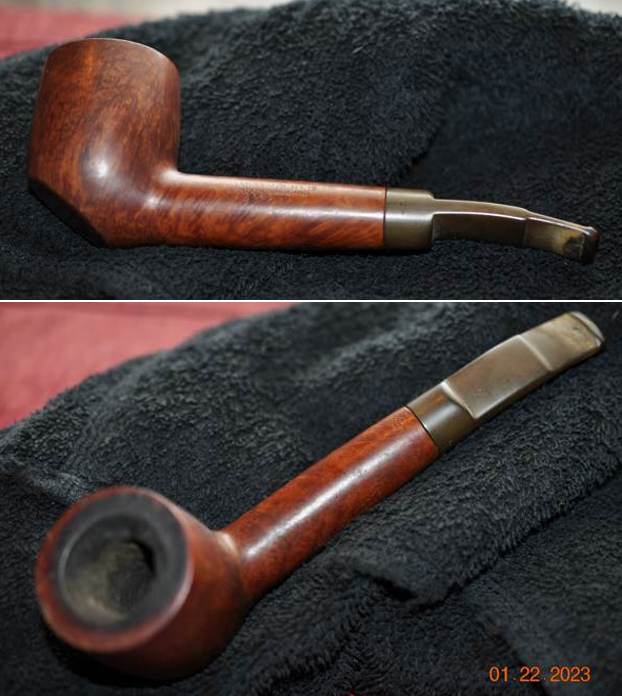
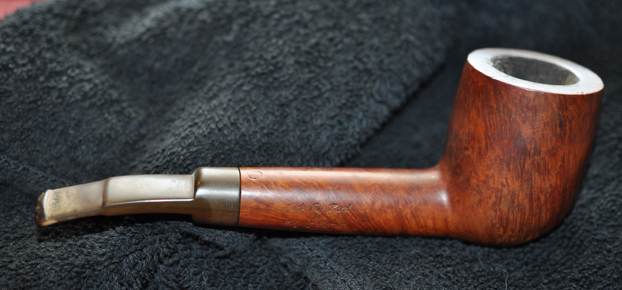
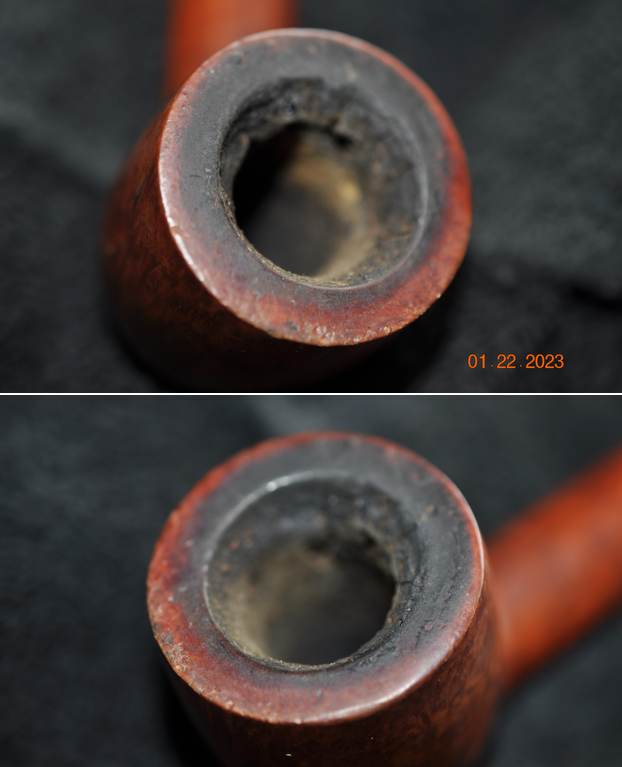
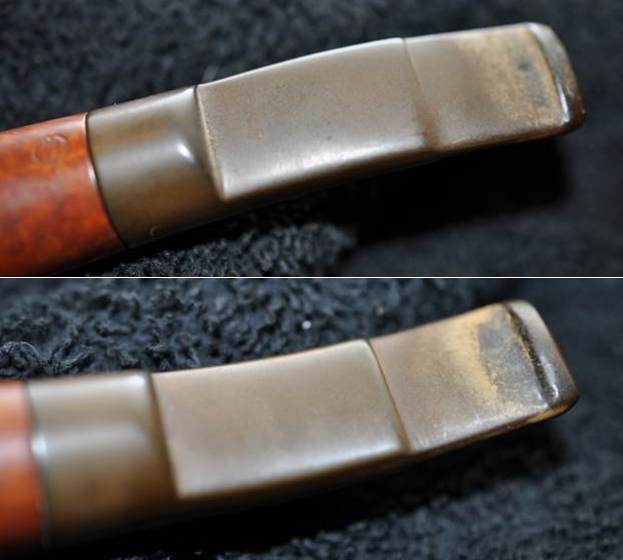
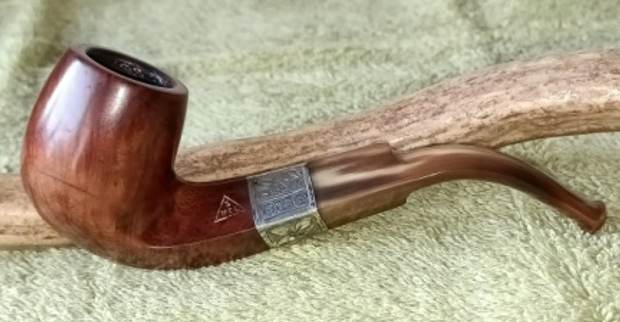
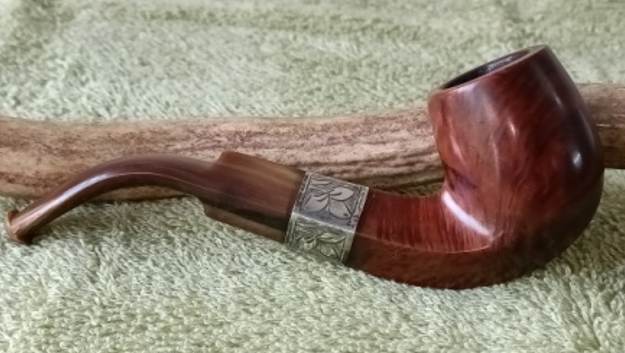
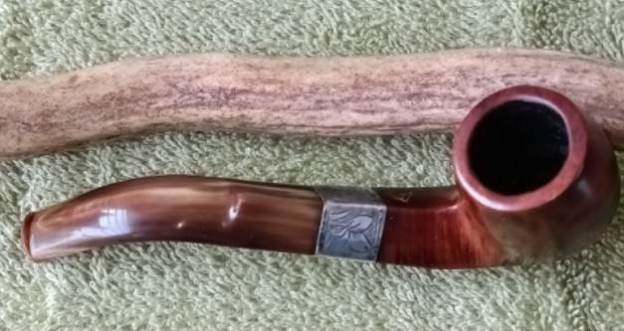
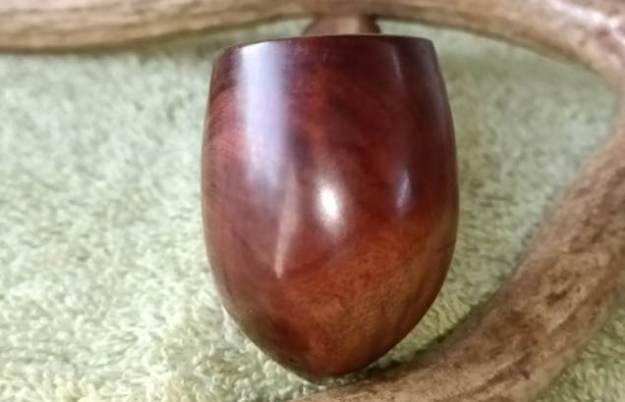
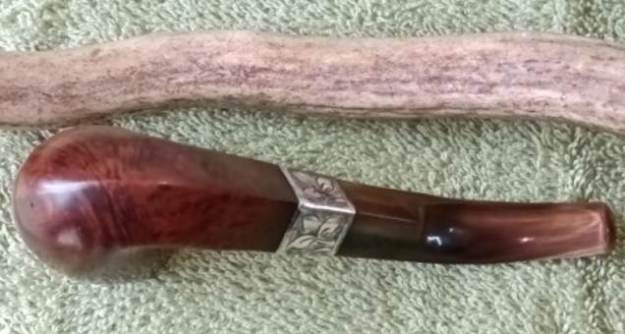
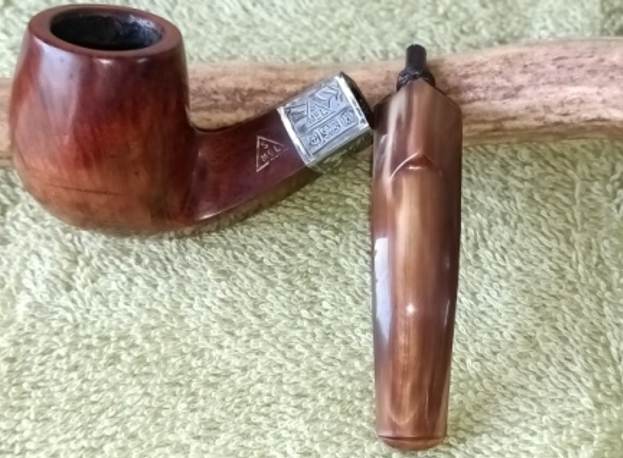
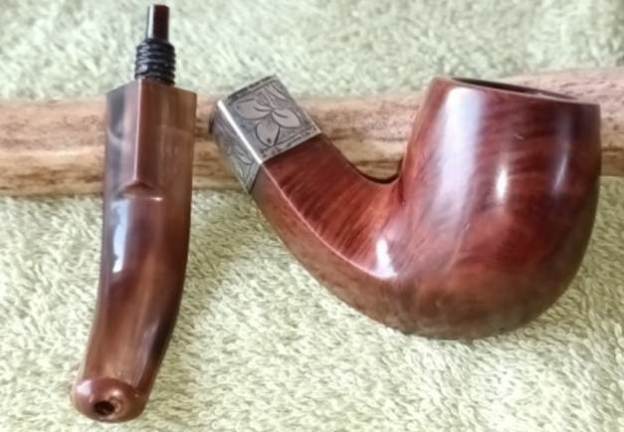
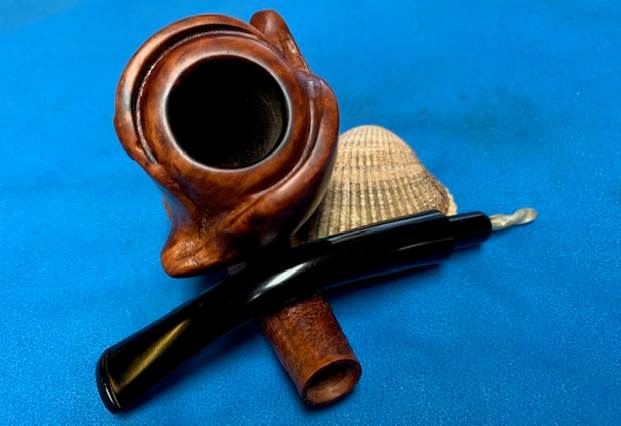
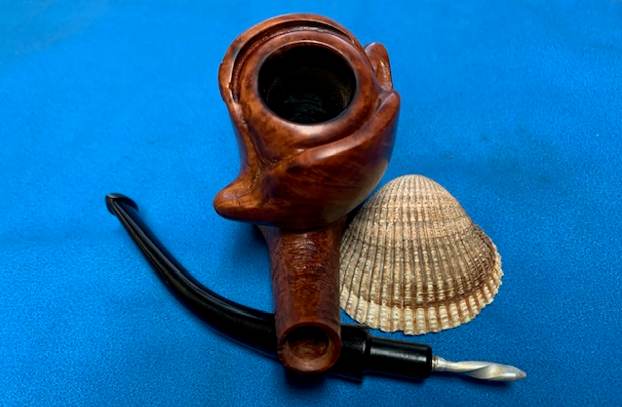
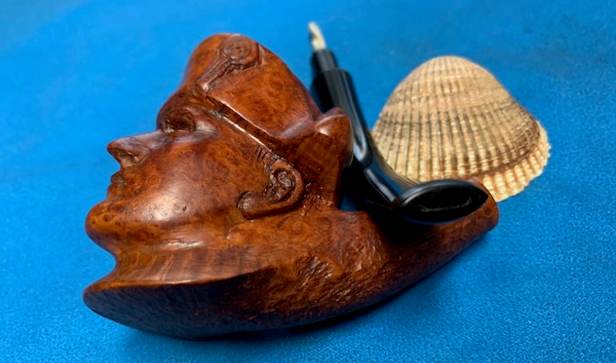
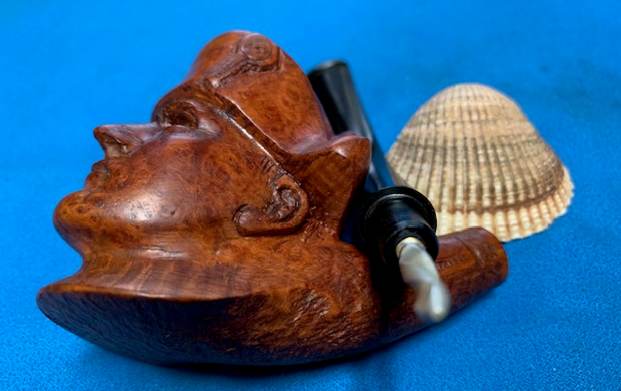
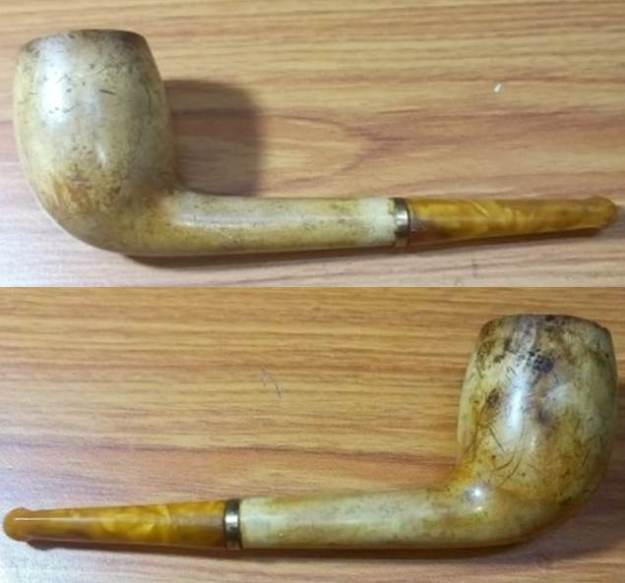
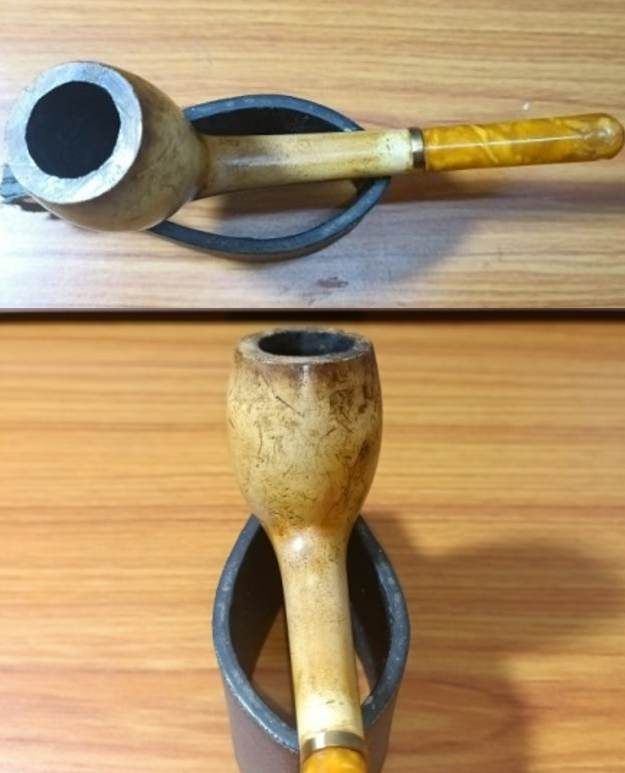
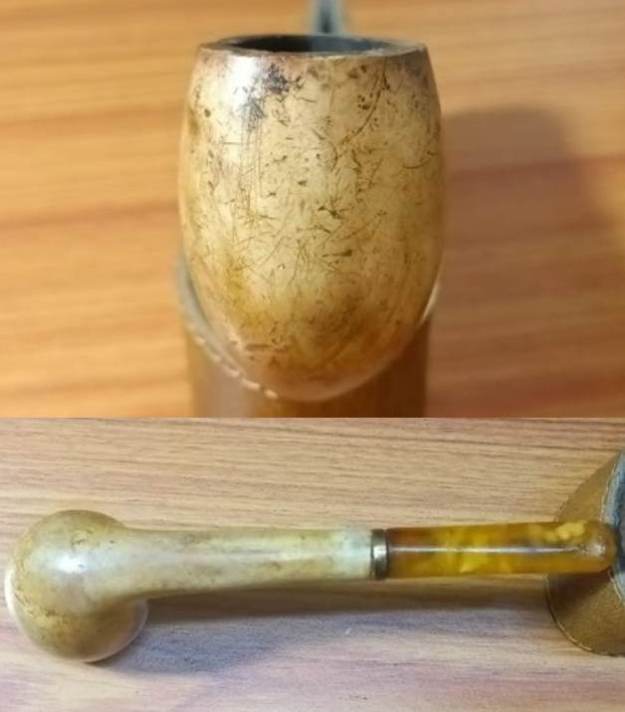
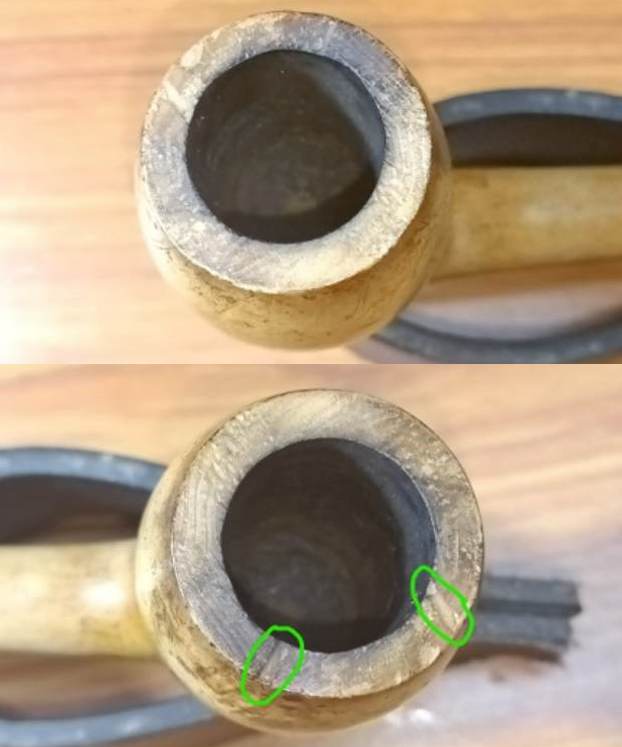
My brother Jeff and I visited an older gentleman near Vancouver, Washington recently and enjoyed a few bowls with him and views many of his pipes. After some viewing and conversation he showed me this House of Robertson Bulldog with a clear acrylic stem and gave it to me as a gift. It is a great looking pipe with a smooth rim top and shank end band. When Jeff and I returned to his home I took photos of it to capture what it looked like when I received it. The finish on the pipe was quite clean and had a great rustication around the bowl and shank. The smooth rim top and edges of the bowl had some wear and tear but was redeemable. There were scratches and nicks around the top and edges on the bowl. The pipe had been topped somewhere in its journey and the front of the cap was lower than the back side of the cap. There was a thin cake in the bowl and the inside was dirty with tobacco debris. The pipe had the House of Robertson etching on the left underside of the diamond shank. The clear acrylic stem fit to the shank very well. The tenon fit well in the mortise. There was some tobacco staining in the airway that would need to be dealt with. There were tooth marks and chatter on both sides of the stem ahead of the button. I took the following photos of the pipe to show its condition before I started my clean up. I took a photo of the House of Robertson etched on the left underside of the diamond shank. It is clear and readable.The pipe has the name House of Robertson roughly hand-etched on the left underside of the diamond shank with an engraving tool. I am including the information that I found when I received my first House of Robertson Pipes a few years ago now. I found a link on Pipedia (https://pipedia.org/wiki/Robertson) that gave me the only information I could find on the brand. I include that in total as it is interesting to read.

“House of Robertson” was in business for many years, but alas, closed their doors in 1999. They were located in Boise, Idaho. They are noted for making rather large and interesting pipes. Thayne Robertson was a Master Mason, AF & AM, and started the shop about 1947 and his son Jon started working there in 1970 when he finished college, along with Thayne’s daughter. Thayne and his son started making the big pipes at that time, and made them together until 1987 when Thayne passed away. Jon kept the store and his sister moved on to other things. The House of Robertson appears to have closed around 1999.

If you would like to read more about the carver, Thayne Robertson I am including a link to a blog I have included on the site. It is fascinating to read and gives some information on the brand.

https://rebornpipes.com/2021/10/31/house-of-robertson-pipes-boise-pipe-carver-thayne-robertson/

I am also including a scanned version of a House of Robertson catalogue that I have in my collection. Give it a read for more information.

https://rebornpipes.com/2022/12/11/a-house-of-robertson-catalogue-filled-with-great-examples-of-thayne-robertsons-work/

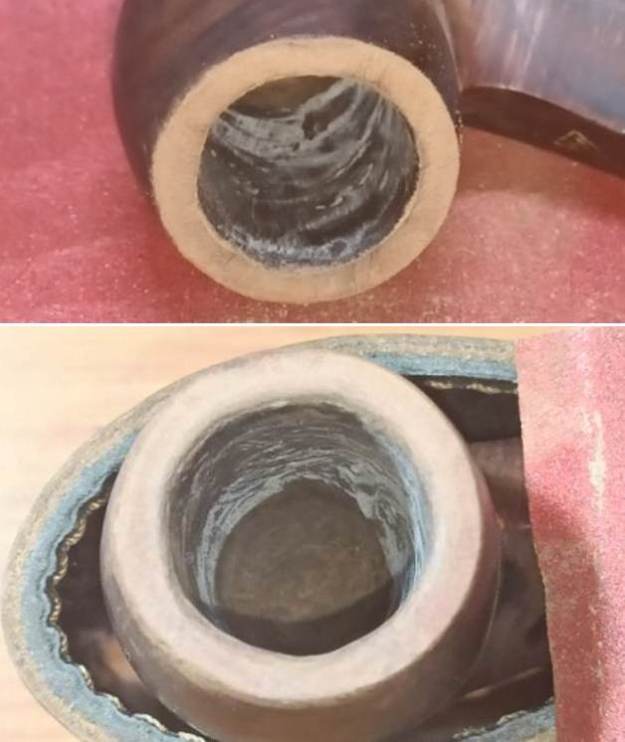
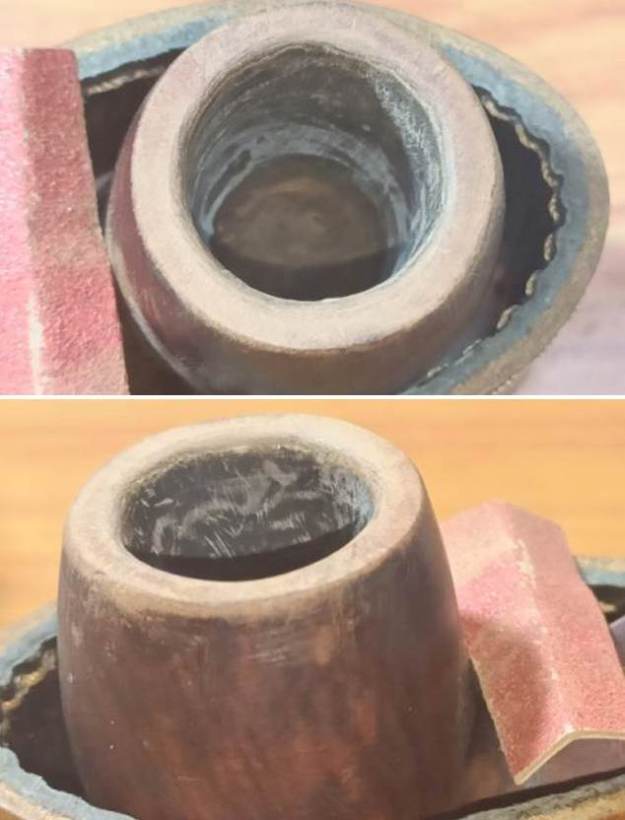
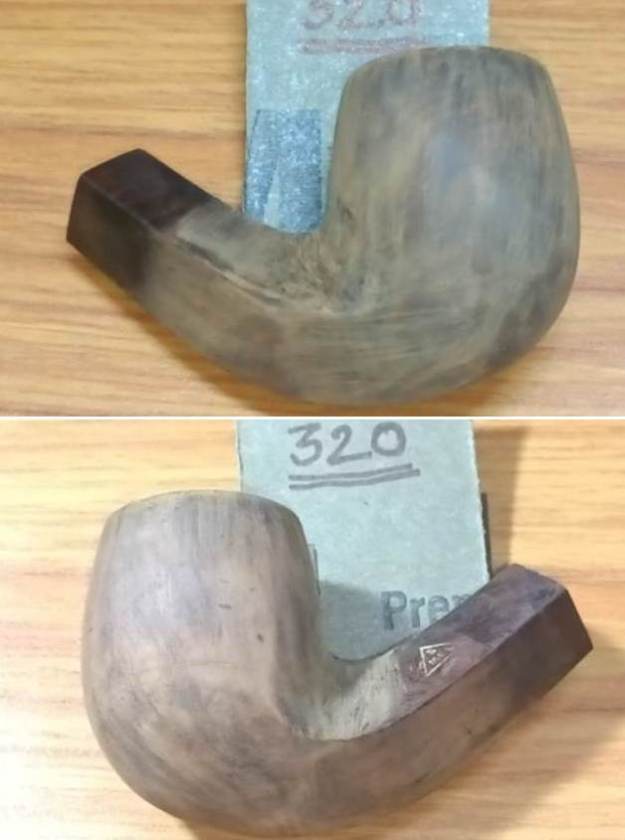
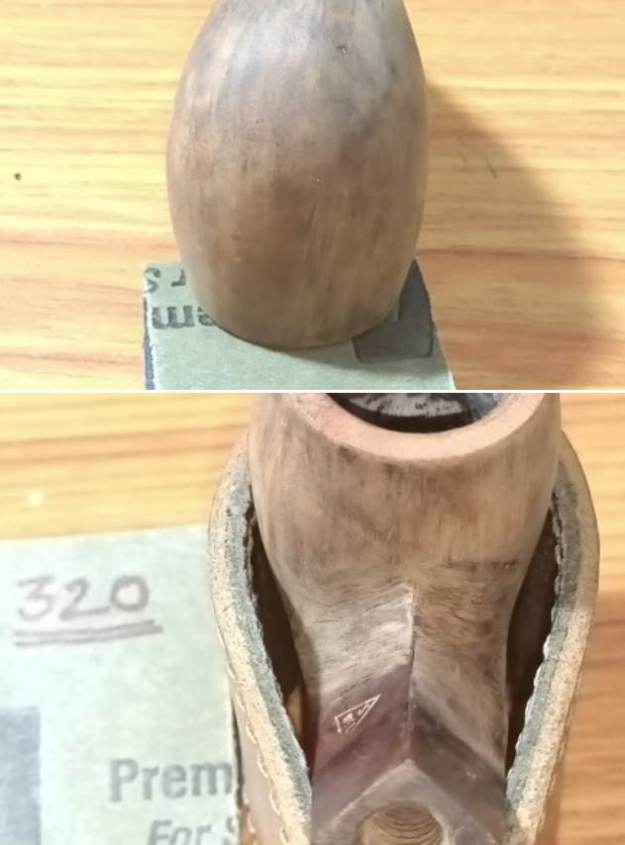
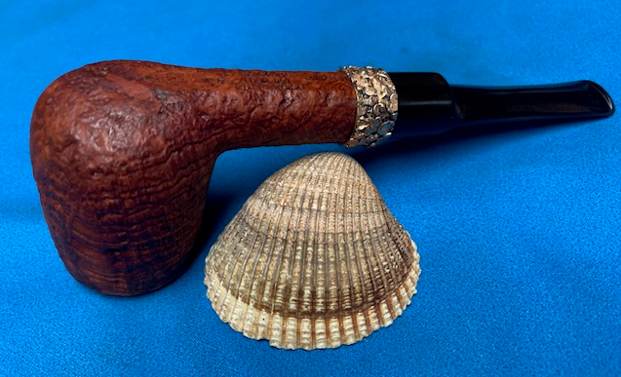
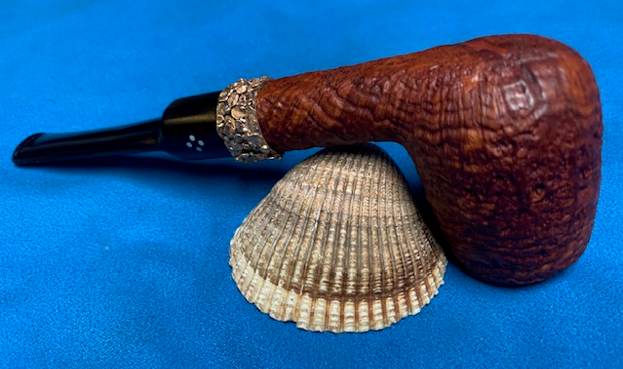
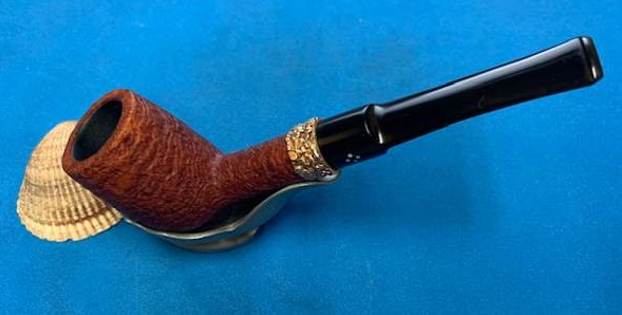
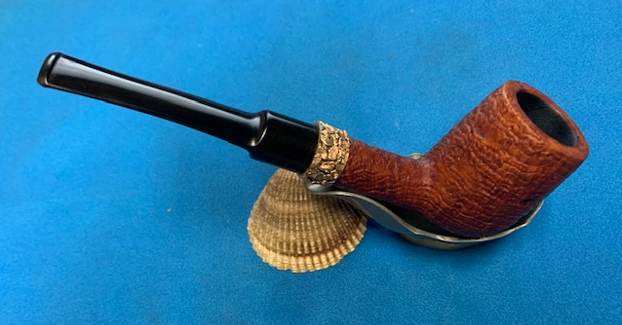
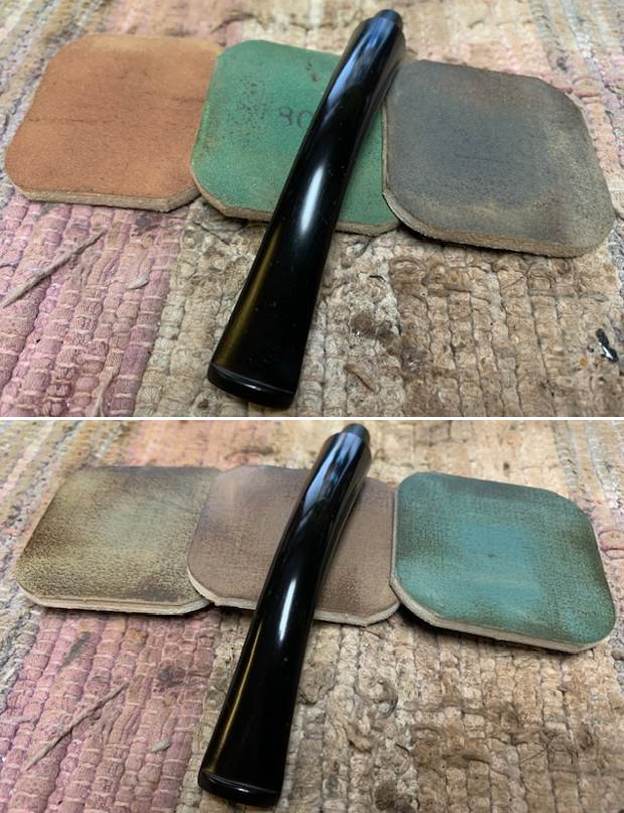
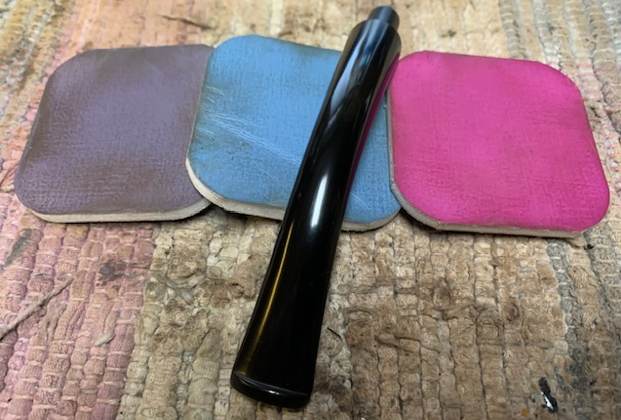
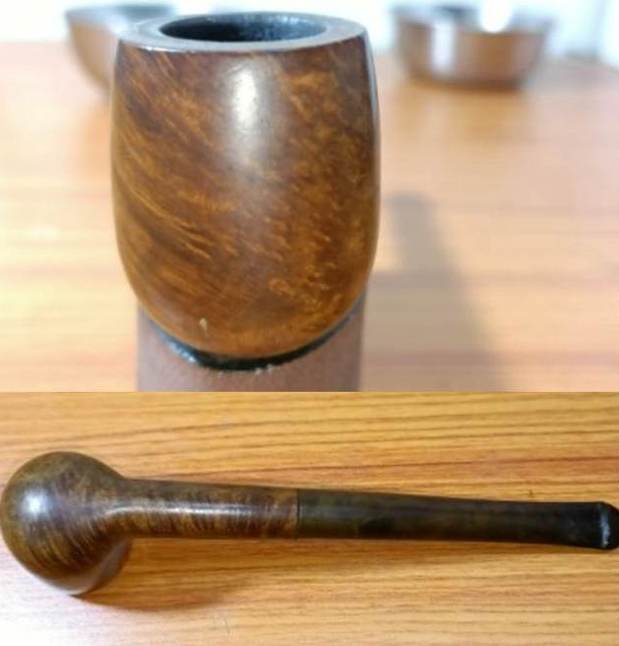
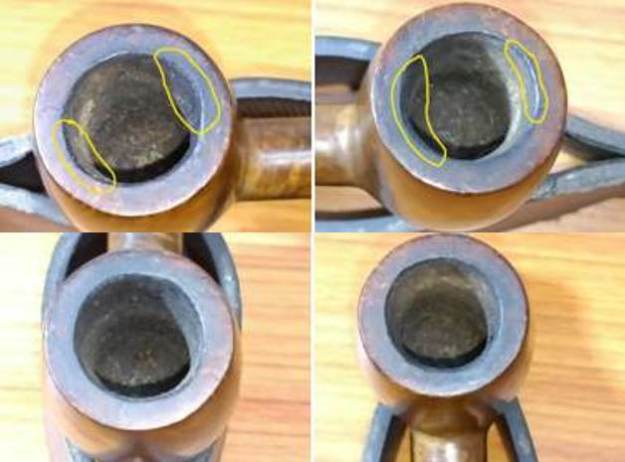
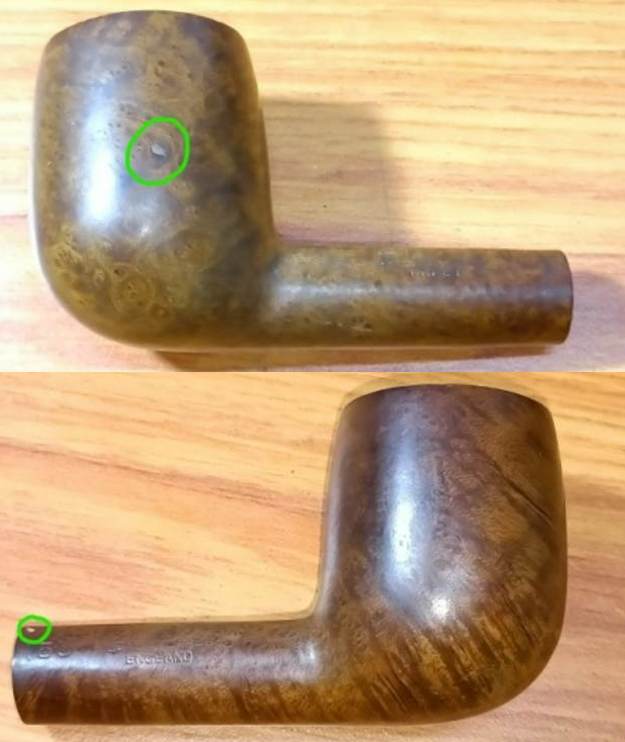
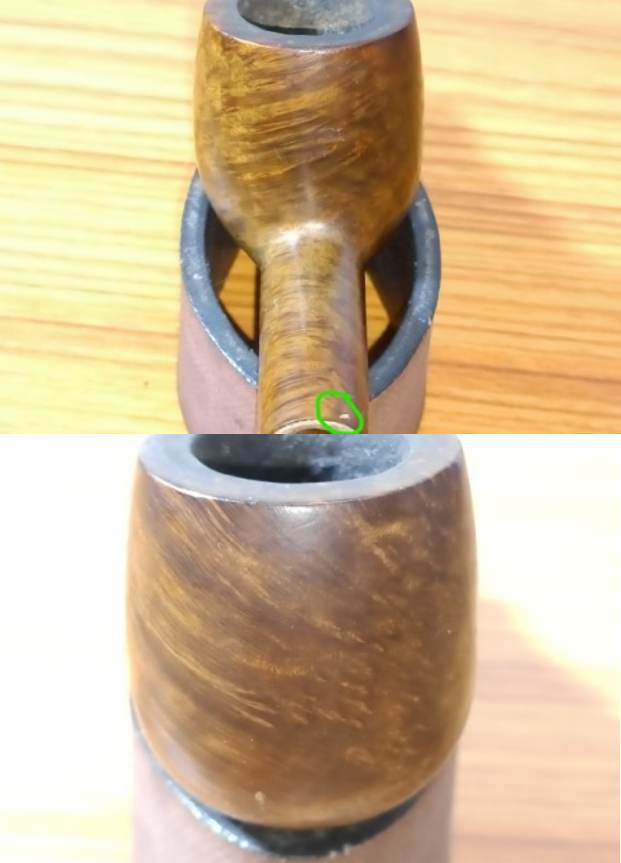
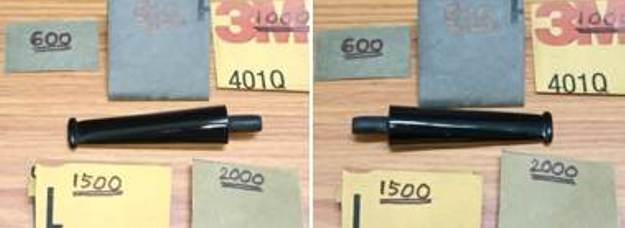
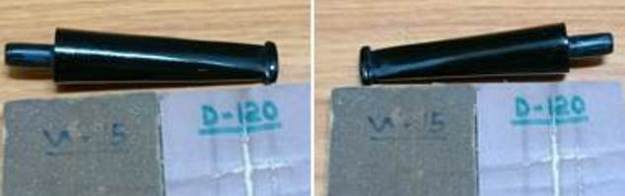
I thoroughly cleaned up the pipe. I reamed it with a PipNet Pipe Reamer and cleaned up the remnants with a Savinelli Fitsall Pipe Knife. I sanded the inside of the bowl with 220 grit sandpaper wrapped around a dowel. The bowl was clean. I cleaned up the damage to the inner edge of the bowl with a folded piece of 220 grit sandpaper. Once finished it was better. I worked on the back side of the rim top with 220 grit sandpaper followed by a medium and fine grit sanding sponge. I wanted to bring the back of the rim cap down to the same thickness as the front of the rim cap to level out the top. Once it was even it looked much better.I scrubbed the exterior of the bowl with undiluted Murphy’s Oil Soap with a tooth brush. He rinsed it under running warm water to remove the soap and grime. I cleaned out the inside of the shank and the airway in the stem with alcohol, cotton swabs and pipe cleaners. I was able to remove a lot of tars and oils from the shank and some of the darkening in the stem and slot.I polished the smooth rim top with micromesh sanding pads – dry sanding with 1500-12000 grit pads. I wiped the top down with a damp cloth after each sanding pad. It had a rich shine once I had finished. I rubbed the bowl down with Before & After Restoration Balm to deep clean the nooks and crannies of the rusticated finish, enliven and protect the briar. I hand rubbed it with my fingers, worked it into the rings with a cotton swab and into the finish with a horsehair shoe brush. I let it sit for 10 minutes to let it do its work. I wiped it off with a soft cloth. I buffed the bowl with a cotton cloth. It really began to have a deep shine in the briar. I took some photos of the bowl at this point to mark the progress in the restoration. I set the bowl aside and turned my attention to the stem. I sanded out the tooth marks with 220 grit sandpaper and started the polishing of the stem with 600 grit wet dry sandpaper.I polished out the sanding scratches and marks in the clear acrylic with micromesh sanding pads – dry sanding it with 1500-12000 grit pads. I wiped the stem down with Obsidian Oil after each sanding pad. I polished it further with Before & After Pipe Polish – using both the Fine and Extra Fine Polishes. I gave it a rubdown with Obsidian Oil one last time and set it aside to dry. I put the House of Robertson Bulldog back together and worked the pipe over on the buffing wheel using Blue Diamond to lightly polish the stem. I buffed the bowl with a light touch so as not to get any of the buffing compounds in the grooves of the rustication. I buffed the stem to raise the gloss on the vulcanite. I gave the bowl multiple coats of Conservator’s Wax and gave the stem multiple coats of carnauba wax. I buffed the entire pipe with a clean buffing pad to raise the shine. I hand buffed it with a microfiber cloth to deepen the shine. The finished HOR Bulldog pipe is shown in the photos below. The medium brown stains on the rusticated Straight Bulldog with a smooth rim top works well with the clear acrylic stem. The dimensions of the pipe are: Length: 5 ½ inches, Height: 1 ¾ inches, Outside Diameter: 1 ¼ inches, Diameter of the chamber: ¾ of an inch. The weight of the pipe is 36 grams/1.27 ounces. This one will be joining my pipe rack as yet another example of House of Robertson Pipes. I thank my friend in Vancouver, Washington for the gift and will certainly enjoy smoking it very soon. Thanks for following my work on this blog.
Cleaning Up and Restoring A “Caminetto Business” 185 Cavalier KS1


Blog by Steve Laug

The next pipe on my worktable is a Caminetto Business Pipe was purchased on 03/30/22 from Plano, Texas, USA. It is a beautiful rusticated Cavalier with an acrylic end cap on the shank and an acrylic saddle stem. It was a good looking pipe but it was filthy with grime and oils ground into the rusticated finish on the bowl. The pipe had some rustic beauty shining through the dust and debris in the valleys of the rough finish. The rustication covered the rim top, bowl and shank with a smooth panel on the underside of the shank. The finish was dull and lifeless and dirty from sitting around. There was a very thick cake in the bowl with lava flowing out of the bowl and over the rim top. The lava had filled in the deeper grooves of the rusticated finish on the rim top. The inner edge of the rim appeared to be in good condition but it was hard to tell under the thick lava. The stamping on the underside of the shank read “CAMINETTO [over] BUSINESS”. To the right of that toward the stem it was stamped HAND MADE IN ITALY [over] CUCCIAGO (CO). That was followed by the shape number 185 and KS1. The golden variegated acrylic saddle stem had light tooth chatter and a few deeper tooth marks on both sides near the button. Jeff took the following photos before he started his cleanup work on the pipe.He took close-up photos of the bowl and rim top from various angles to capture the condition of the bowl and rim top edges. You can see the lava overflow and debris in the rustication of the rim top. You can see the cake in the bowl. This was a dirty pipe but it was the finish was in great condition. The next photos show the overview of the stem and the fit in the rusticated shank end as well as the light tooth chatter and a few deeper marks on the top and underside of the stem. He took photos of the sides and heel of the bowl to show the beautiful incredibly deep rustication around the bowl. It is the same kind of rough rusticated finish that I really like on Castello Sea Rock pipes. You can see the oil, dust and debris in the finish on both sides of the bowl. Jeff took photos of the stamping on the shank. It reads as noted above. The stamping is clear and readable. I turned to Pipephil (http://www.pipephil.eu/logos/en/logo-c1.html) to see if he included not only information on this Caminetto Business 182. He gave some interesting information about the brand. It was created in 1986 by Guiseppe Ascorti, Luigi Radice and Gianni Davoli as the distributor. It states that in 1979 the first Caminetto period ended with Luigi Radic leaving the company. Guiseppe Ascorti continued making the pipe with his son Roberto. In 1986 the New Caminetto period began by Roberto Ascorti.I turned to Pipedia for more information on the Caminetto and how to date the pipe I had in hand (https://pipedia.org/wiki/The_History_of_Caminetto_(shapes,_stamping,_articles,_etc.). I quote a pertinent paragraph:

Stampings and dating: First off, dating earlier Caminetto’s is nearly impossible. Nevertheless, there were three phases, some in which were much earlier, of development that occurred in the stamping process of Caminetto. Before that though, every pipe had the stamp of Caminetto in one of two ways: Caminetto in script or Caminetto within quotation marks in block letters (I do not know how it was decided which pipe got which stamp, as I have had EARLY Caminetto’s with both)…

The stampings are shown in the photo to the left. The stamping on this pipe is like #2.

…Now, the question is which stamps are earlier and more likely to have been made by Ascorti and/or Radice. The answer is #1. The differences in #2 and #3 seem to be minute, as Cucciago is simply a suburb of Cantu. Pipes stamped like #1 are the most valuable Caminetto’s as they are the earliest production of the brand, as well as what some would claim the most perfect of Ascorti and Radice’s work. The last tidbit is, of course, debatable…

There is also another factor in stamping, that is, which series the pipe falls in. The majority of Caminetto’s one sees are those of the “Business” series, which are stamped such with their collective shape (see photo of shapes below). Another stamp that sometimes follows the “Business” one is “KS,” which from what I know means “King-size” (this could be wrong, as there are pipes stamped with KS1, KS2, and KS3).

Now it was time to look at it up close and personal. Jeff had done an amazing job in removing all of the cake and the lava on the rim top. He had reamed the bowl with a PipNet Pipe Reamer and cleaned up the remnants with a Savinelli Fitsall Pipe Knife. He took the cake back to bare briar so we could check the walls for damage. He scrubbed the exterior of the bowl with Murphy’s Oil Soap and a tooth brush to remove the grime on the bowl and rim and was able to remove the lava and dirt. He cleaned out the interior of the bowl and shank with pipe cleaners, cotton swabs and alcohol until they came out clean. He cleaned the stem and the trap at the end of the shank with Soft Scrub to remove the grime on the exterior and cleaned out the airway with alcohol, cotton swabs and pipe cleaners. I took photos of the pipe before I started my part of the restoration. To show how clean the rim top and stem really was I took a close-up photo of the rim and stem. The bowl was clean and cake free. The rim top is very clean with no residual lava buildup in the rusticated finish. The inner edges of the bowl look good. The golden acrylic saddle stem cleaned up nicely. The surface had some light tooth marks but the button edge looked really good. I took a photo of the stamping on the underside of the shank. You can see that is clear and readable as noted above.I removed the stem from the shank and took a photo of the parts of the pipe to show the overall sized of the pipe. It is a great piece that combines the gold acrylic on the shank end cap and the stem with the rusticated finish on the bowl and shank.I started my work on the pipe by staining the areas on the rim top and rusticated finish were worn and faded. I used a Walnut stain pen to touch up the rim and around the top edge. The bowl looked very good so I did not need to do any further work on it. I rubbed the bowl and shank down with Before & After Restoration Balm to deep clean the finish on the bowl and shank. The product works to clean, enliven and protect the briar. I worked it in with my fingers and with a horse hair shoe brush to get it into the nooks and crannies of the deep rustication of the finish on the bowl and shank. I let it sit for about 20 minutes to let it do its magic. I buffed it with a soft cloth. The briar really began to have a rich shine. I took some photos of the bowl at this point to mark the progress in the restoration. I set the bowl aside and turned my attention to the stem. I filled in the deep tooth marks with clear CA glue. I sanded the repaired tooth marks and chatter smooth with 220 grit. I started polishing the whole stem with 600 grit sandpaper until the sanding marks were gone. I touched up the mustache stamp on the stem with Rub’n Buff Antique Gold. I applied it with a toothpick working it into the stamp. There were places on the sides of the stamp that were faint. I buffed it off with a soft cotton pad. It looked better. I polished the stem on both sides using micromesh sanding pads. I dry sanded the stem with the 1500-12000 grit pads, then wiped it down with a cloth impregnated with Obsidian Oil. I finished polishing it with Before & After stem polish – both Fine and Extra Fine. I gave it a final coat of Obsidian Oil and set it aside to dry. I put the Caminetto bowl and stem back together again and buffed them with Blue Diamond on the buffing wheel. I used a soft touch on the rusticated bowl so as not to fill it in with the polishing product. I gave the bowl several coats of Conservator’s Wax and the stem several coats of carnauba wax. I carefully buffed the entire pipe with a clean buffing pad to raise the shine. I finished buffing with a microfiber cloth to deepen the shine. The finished pipe looks very good. The rustication is very tactile and feels great in the hand. It is comfortable and light weight. The finished Caminetto Business 185 Cavalier is shown in the photos below. The dimensions of the pipe are Length: 7 inches, Height: 3 1/2 inches, Outside diameter of the bowl: 1 ¼ inches, Chamber diameter: 1 inch. The weight of the pipe is 63 grams/2.26 ounces. This great looking rusticated Caminetto turned out very well. It should be a great pipe. It will be going on the rebornpipes store in the Italian Pipe Makers Section shortly if you are interested in adding it to your collection. Thanks for reading this blog and my reflections on the pipe while I worked on it.


Rebirthing a Stanwell 1985 POY Sandblast Dublin with a smooth Rim Top


Blog by Steve Laug

The next pipe I am working on was purchased on 12/13/2022 as part of a group of pipes from a fellow in Copenhagen, Denmark. This was another horribly tired and dirty pipe with a lot of wear and tear and obviously it had been someone’s favourite smoker. The pipe has an identifying silver plate on the topside of the shank that reads Stanwell [over] 1985. There was no other stamping on the shank and the silver plate confirmed for me that it was a Stanwell Pipe of the Year. The dirty sandblast finish on this was worn and tired looking. There were tars and oils ground into the surface of the briar. The shank had a hairline crack on the left side of the top that would need to be dealt with. The sandblast showed some nice grain around the bowl and shank and though it was a little dirty it was a nice looking pipe. The bowl had a thick cake that flowed over the top of the lightly crowned rim in a thick coat of a lava and showed potential damage on the top and the inner edge. The stem was a black vulcanite saddle stem with a silver Crown S on the topside of the saddle. It had some deep and wide tooth marks and chatter on both sides ahead of the button. There was also some oxidation and calcification on both sides of the stem. Jeff took photos of the pipe before he started his clean up work.  He took photos of the rim and bowl to show the heavy cake and thick lava coat covering the rim top. It really was filthy and a mess. He also took photos of the stem surfaces to show its overall condition when it arrived. The photos of the sides and heel of the bowls show beautiful grain around the bowl and shank sides. The sandblast is nicely done and highlights the grain. The brown stain on the briar adds depth finish on the pipe and makes the grain really stand out. It shows some promise. He also took a photo of the stamped silver plate on the left underside of the shanks. It reads as noted above. I have also boxed the hairline crack on the top of the shank in red in the photo below.Jeff cleaned up the pipe for me. He reamed the bowl with a PipNet pipe reamer and cleaned it up with a Savinelli Fitsall Pipe Knife. He scrubbed the exterior with Murphy’s Oil Soap and a tooth brush to clean off the grime off the finish and the heavy overflow of lava on the rim top. The cleaning had removed the thick coat on the rim top. He cleaned up the internals of the shank, mortise and stem with pipe cleaners, cotton swabs and alcohol to remove all of the oils and tars in the pipe. He soaked the stem in Before & After Deoxidizer and was able to remove much of the oxidation, calcification. When it arrived here in Vancouver it was a clean pipe and I knew what I had to work with. I took photos of it before I started my part of the restoration. I took a photo of the rim top and the stem to show their condition once it arrived in Canada. Jeff was able to clean up the incredibly thick cake and the lava overflow that was shown in the rim and bowl photos above. The rim top showed damage on the surface and the inner edge of the bowl. He was also able to get rid of the grime and grit in the surface of the briar around the sandblast. The second photo of the three below shows the crack in the shank (once again boxed in red). The stem looked better, though there were deep tooth marks and chatter on both sides near the button.I took a photo of the stamping on the silver plate on the topside of the shank to show that it was readable and undamaged by the cleanup work.I removed the stem from the shank and took a photo of the parts to give a sense of what the pipe looks like.I started my work on the inner edge and rim top with a folded piece of 220 grit sandpaper. I was able to remove that damage on the rim top and bring the inner edge back into round. It looked much better. I repaired the hairline crack in the shank with a dab of clear CA glue. I clamped the shank together to let the repair cure. Once it had cured I sanded it smooth with 220 grit sandpaper to blend in the repair. It looked much better. To stabilize it further I will need to put a thin band on the shank end so that with the addition and removal of the stem does not rebreak the crack.I started polishing the rim top and smooth portions of the briar (including the repaired hairline crack) with micromesh sanding pads. I wet sanded it with 1500-12000 grit pads. I wiped the bowl down after each pad with a damp cloth. The bowl began to take on a rich shine and grain was beginning to stand out. I rubbed the bowl and shank down with Before & After Restoration Balm to deep clean the finish on the bowl and shank. The product works to clean, enliven and protect the briar. I worked it in with my fingers to get it into the briar. I used a horsehair shoe brush to work it into the sand blast areas. I let it sit for 10 minutes then I wiped it off and buffed it with a soft cloth. The briar really began to have a rich shine. I took some photos of the bowl at this point to mark the progress in the restoration. It is a beautiful bowl. To stabilize the crack further and stop it from reoccurring each time the stem was removed I banded it. I had a band that would work on the shank but it needed to be reduced by half to get the depth more aesthetically pleasing to my eye. I used a coarse 180 grit sanding pad and worked the band against it until I have removed approximately half of the width. I heated it with a lighter and pressed it on the shank. The fit was perfect and to me it looked very good. I polished the band with a jeweler’s cloth to protect and give it a shine. I gave it another coat of Restoration Balm and buffed it off with a clean cloth. I set the bowl aside and worked on the stem. I filled in the deep tooth marks with clear CA glue. I flattened the repairs with a small file. And sanded the smooth with 220 grit. I started polishing the whole stem with 600 grit sandpaper until the sanding marks were gone. I polished the stem with micromesh sanding pads – dry sanding with 1500-12000 grit pads. I wiped the stem down after each pad with a damp cloth to remove the sanding dust. I gave it a further polish with Before & After Stem Polish – both Fine and Extra Fine. I finished by wiping the stem down with a final coat of Obsidian Oil and set it aside to dry. I put the stem back on the Stanwell Pipe of the Year 1985 Dublin pipe and took the pipe to the buffer. I buffed the bowl and stem with Blue Diamond to polish the briar and the vulcanite stem. Blue Diamond does a great job on the smaller scratches that remain in both. I gave the bowl and the stem several coats of carnauba wax and buffed the pipe with a clean buffing pad to raise the shine. I hand buffed it with a microfiber cloth to deepen the shine. The finished pipe is shown in the photos below. This is a beautiful Stanwell POY 1985 – the vulcanite saddle stem and crowned rim top and sandblast finish combine to give the pipe a great look. The polished black, vulcanite stem looks really good with the rich browns standing out in the sandblast. The dimensions of the pipe are Length: 5 inches, Height: 1 ½ inches, Outside diameter of the bowl: 1 ¾ inches, Chamber diameter: ¾ of an inch. The weight of the pipe is 1.38 ounces/39 grams. This pipe has already been spoken for as an Anniversary present. It will soon be going to the fellow who ordered it. Thanks for walking through the restoration with me on this beauty!

Bringing a Thoro-Kleen back from the dead


Blog by Kenneth Lieblich

Next on the chopping block is one of those pipes that makes you raise an eyebrow and wonder. It is the Thoro-Kleen made by the Greenwich House Corporation of New York. I acquired it from a lady who found a shoebox of pipes in her late-grandfather’s closet, so we can presume this pipe to be his. When Steve last restored one of these, more than seven years ago, he described it as reminding him of the Jetsons from Saturday morning cartoons! It certainly does have a futuristic, out-of-this-world look. To me, it is a striking example of mid-twentieth-century design. The only markings on the pipe were on the left side of the shank. They read: ‘Thoro-Kleen [over] Greenwich-House’.Our friends at Pipedia have a brief writeup on the Thoro-Kleen, which I copy here in its entirety:

The Greenwich House Thoro-Kleen was a metal pipe system sold with both a metal outer bowl with a briar insert and a full briar bowl. They are from the same family as the Roybrooke, Comet, and Original Gridiron pipes, and parts from all are believed to be interchangeable. The pipes were sold by the Greenwich House Corporation, located in 1947 at 939-M 8th Avenue, N.Y. 19, N.Y. The pipe set sold for $2.50 in 1947.Similarly, Smoking Metal (a website dedicated to metal pipes) also has a short writeup:

This family of pipes have been seen as Knowles Air Lite (believed to be Canadian version), Roybrooke, Comet, Original Gridiron and the Greenwich House Thorokleen. Seemingly sold in sets that comprised a normal briar bowl as well as the metal outer with a briar insert. The body of the pipe can be hexagonal, square (Thoro Kleen only seen this shape) or circular in cross section. Regardless of variant all parts are interchangeable. The unmarked version tends to be regarded as the COMET, all the others being stamped with a name.Some instances of this pipe appeared with an entirely-briar bowl, and some came with a metal bowl and briar insert. Some sources indicate that the pipes came with both bowls, and you could take your pick, but the one I have pipe has only the metal bowl and briar insert.

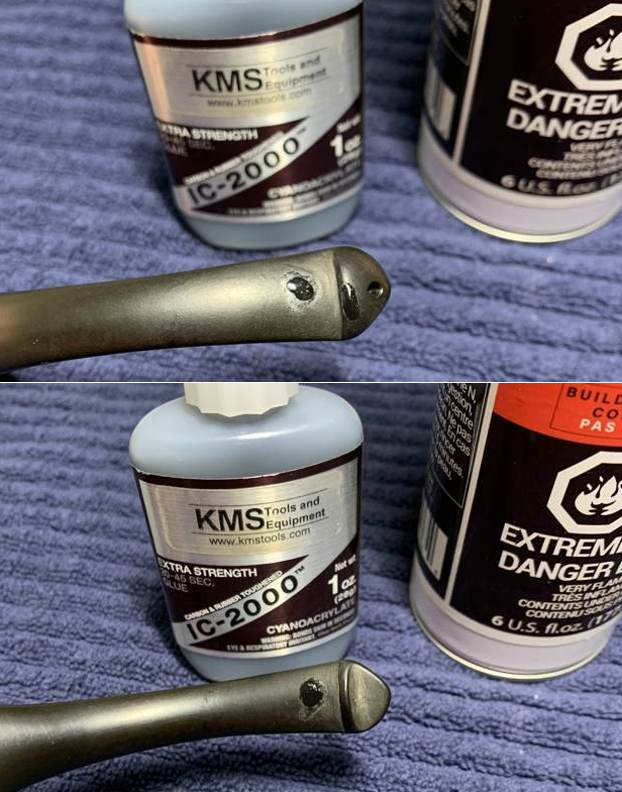
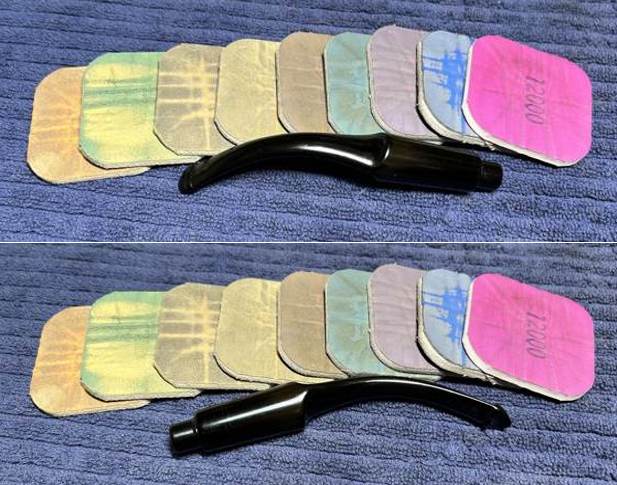
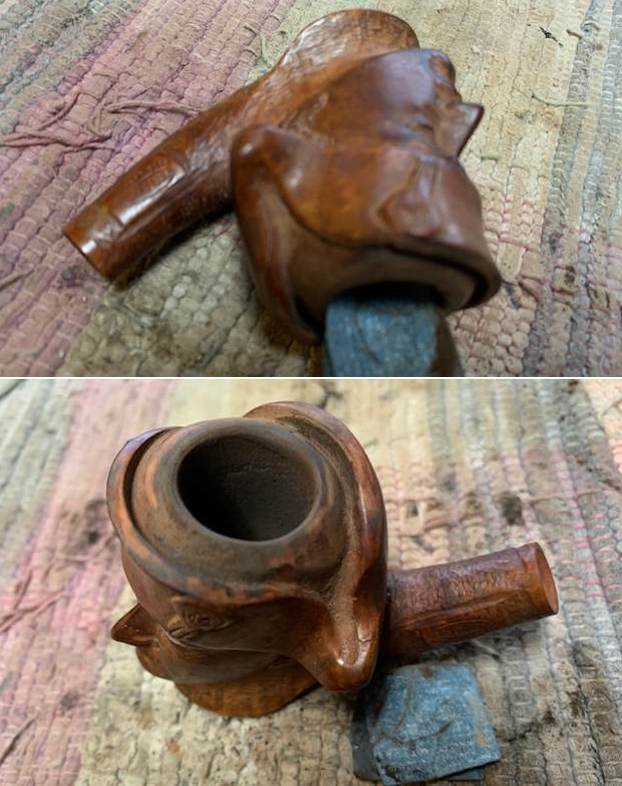
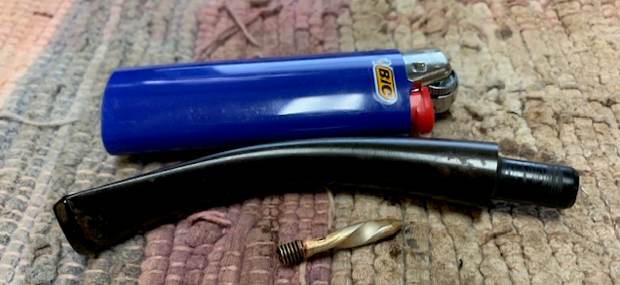
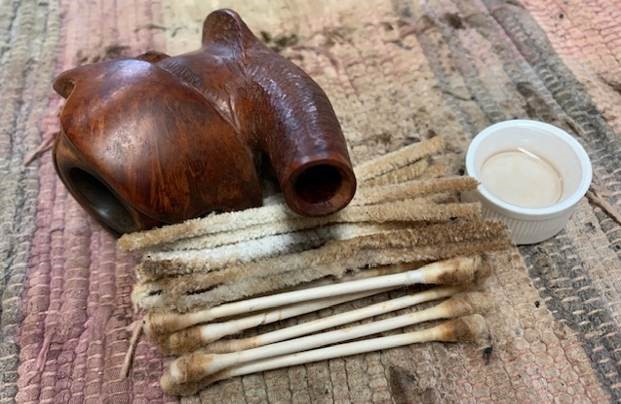
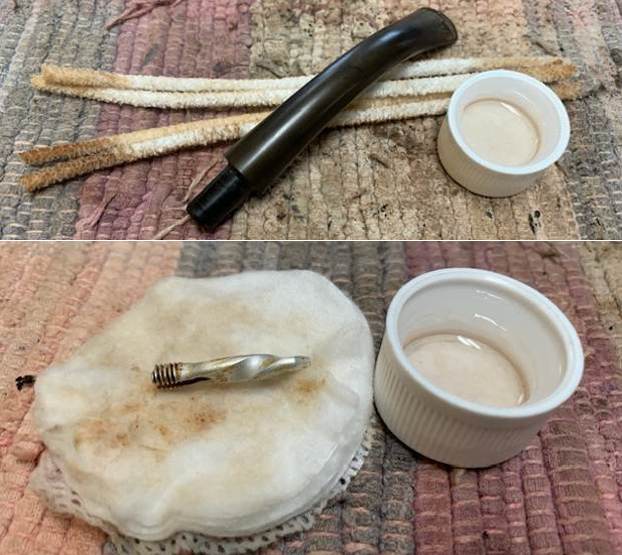
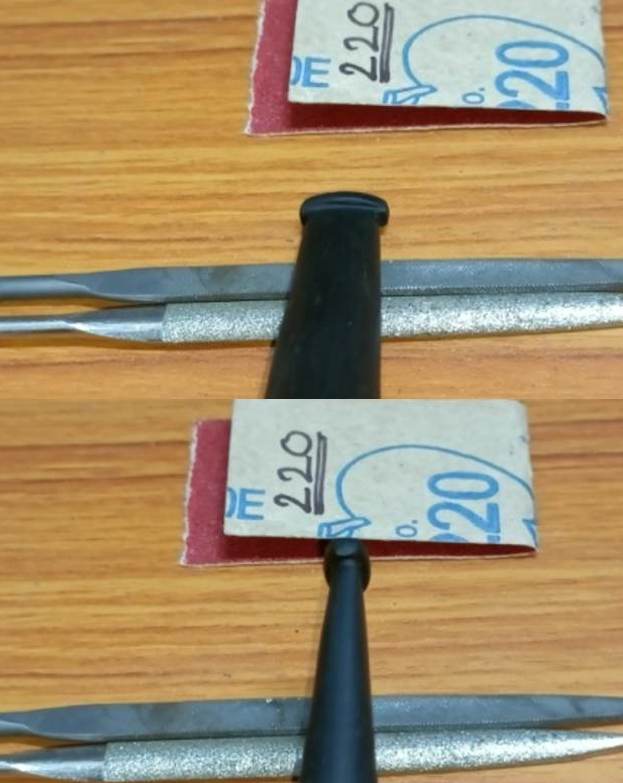
Time to get to work. This pipe was a mess from every perspective. The stem had some serious dents in it. The metal was dirty and dull, and the insides were filthy. In the following picture, you can see the pipe as I disassembled it; there are seven pieces: the stem, the shank (or main section of the pipe), the metal outer bowl, the briar inner bowl, a screw that attached the bowls to the main part of the pipe, a valve screw at the far end, and a washer to go along with it. I don’t think this pipe had ever seen a cleaning! There was crud everywhere The stem was first on my list. As usual, I wiped the outside down with Murphy’s Oil Soap on some cotton pads. I also took a BIC lighter and ‘painted’ the stem with its flame to lift the bite marks and dents. This did help, but the dents were so substantial it would need much more than just waving a flame around. Then I cleaned out the inside with pipe cleaners and isopropyl alcohol. It was pretty darn dirty. Next, the stem went for an overnight soak in the Pipe Stem Oxidation Remover. The following day, I cleaned the de-oxidizing mess off with alcohol, pipe cleaners, et cetera. The oxidation had migrated to the surface and would be pretty straightforward to remove. I scrubbed with SoftScrub on some cotton pads to remove the leftover oxidation. I built up the dents on the stem with black cyanoacrylate adhesive and let them fully cure. I then sanded the adhesive with some needle files, then 220-, 400-, and 600-grit sandpapers to meld seamlessly into the stem. I then used all nine Micromesh pads (1,500 through 12,000 grit) to smooth everything and highlight the lovely black lustre on the stem. I also used Obsidian Pipe Stem Oil in between each pad scrubbing. Since most of the pipe was made of aluminum, the cleaning procedures were different than usual. The inside of the shank was much more ‘cavernous’ than normal, too. I started with pipe cleaners and Q-tips for the inside, but that only worked so well. I ended up using SoftScrub to clean the metal shank, including the interior – and I made extensive use of some metal tubes brushes because the gunk was really tough. Since there was so much grime, it created a foul-smelling and foul-looking paste, which was revolting but satisfying to remove from the pipe. The metal bowl was also cleaned with SoftScrub, but it wasn’t so bad, as it hadn’t been in contact with the burning tobacco. I used my Micromesh pads to polish up the metal. This worked splendidly to shine it, but it’s important to note that the metal had received some battle wounds over the years, which wouldn’t be removed by the pads. They were to be left as part of this pipe’s life story. I also sanded and polished the two screws and the metal bowl. Below, you can the difference between the MicroMeshed bowl and the unworked shank.Now for the briar insert. This is more standard fare, since I’m working with wood again. I took a small wedge of machine metal and, holding it at a 45-degree angle, gently scraped the lava and carbon off the rim. I reamed it with the KleenReem, and 220-grit sandpaper taped to a dowel to eliminate as much build-up as possible. I took the chamber down to bare briar to ensure there were no hidden flaws in the wall. Fortunately, there were none. Then I used cotton rounds and some Murphy’s Oil Soap to scrub the outside. The underside of the insert had some small cracks in the wood, presumably from overtightening of the screw, which attached it to the rest of the pipe. I repaired this by applying some cyanoacrylate adhesive to the cracks, letting it cure and sanding it down. I also used the Micromesh pads on the rim and bottom but not on the sides, as I thought they were fine as they were. Obviously, I didn’t apply the Before & After Restoration Balm on the metal, but I did for the briar insert. The buffing procedure was different because of the metal. I used Red Tripoli, but before I started down that path, I decided to protect the grooves on the side of the bowl from being filled with polishing compound. I wrapped four pipe cleaners around the bowl, in the grooves, which did the trick.I used Red Tripoli and White Diamond to polish the metal nicely. I then took a microfiber cloth to wipe off the remaining compound and finished the metal parts of the pipe with a jewelry cloth to make it shine and sing!This Thoro-Kleen looks fantastic again and is ready to be enjoyed by the next owner! I am pleased to announce that this pipe is for sale! If you are interested in acquiring it for your collection, please have a look in the ‘American’ pipe section of the store here on Steve’s website. You can also email me directly at kenneth@knightsofthepipe.com. The approximate dimensions of the pipe are as follows: length 5⅜ in. (137 mm); height 1½ in. (38 mm); bowl diameter 1⅜ in. (35 mm); chamber diameter ⅝ in. (16 mm). The weight of the pipe is 1⅝ oz. (48 g). I hope you enjoyed reading the story of this pipe’s restoration as much as I did restoring it. If you are interested in more of my work, please follow me here on Steve’s website or send me an email. Thank you very much for reading, and, as always, I welcome and encourage your comments.

Restoring a Lovely Danish Pickaxe


Blog by Kenneth Lieblich

Next on the chopping block is a beautiful Danish pipe from Scandia. This terrific pipe came to me from an antique shop in the Fraser Valley (an area to the east of Vancouver). The price was reasonable, so I had to have it. The pipe is beautiful and a great example of Danish pipe-making. The pipe is a Danish pickaxe pipe by Scandia, produced from the esteemed pipemaker, Stanwell. The pickaxe is a very attractive shape and this one is no exception. It really makes an impression. It has beautiful, sandblasted briar from the bowl, down the shank and transitions into the vulcanite ferrule. It also has a fantastic push stem. The underside of the shank reads Scandia [over] Made in Denmark. There is a faint marking on the ferrule, which appears to show “10” or possibly “1C”. I don’t think this is a shape number, for reasons I will explain momentarily. Finally, the stem’s top also has the SC, indicating the Scandia make. Both Pipedia and Pipephil list Scandia as being a Stanwell sub-brand or second (and not much else), as per the photo below.Meanwhile, Pipedia has a good amount of information on the Stanwell brand and its history. I certainly recommend looking it over: https://pipedia.org/wiki/Stanwell.Despite the (possible) number 10 on the ferrule, I went to check the list of Stanwell shapes, here on Reborn Pipes, and I found that this definitely did not match. However, I did find something that was a match! Shape 1b is listed as “Freehand, Pick Ax, push mouthpiece, by Sixten Ivarsson. (1975)”. To further confirm this, here is a page from an old 70s or 80s Stanwell catalogue which clearly shows the same shape of pipe with the matching shape number. I think we can safely assume that this is a pickaxe, designed by the legendary Sixten Ivarsson.Anyway, this really is a good-looking pipe. No major issues to resolve – just a few minor ones. The stem was dirty, and some small scratches. There were a couple of significant bite marks, as well as some oxidation and calcification on the vulcanite. The rim on the stummel was blackened and burnt – that would need to be addressed. The insides were fairly dirty and would need some work to clean out. There was also a small nick along the inside edge of the rim. The stem was first on my list. I wiped down the outside of the stem with Murphy’s Oil Soap on some cotton pads. I also took a BIC lighter and ‘painted’ the stem with its flame in order to lift the bite marks and dents. Unfortunately, this didn’t really work, but I have ways of sorting this out. Then, I cleaned out the insides of the stem with pipe cleaners and isopropyl alcohol.Once this process was done, I used SoftScrub and cotton pads to wipe down the stem before throwing it in the Pipe Stem Oxidation Remover overnight. The following day, I cleaned all of the de-oxidizing mess and again scrubbed with SoftScrub on some cotton pads to remove the leftover oxidation. This worked well. I used some nail polish to restore the letters SC on the stem. I painted the area carefully and let it fully set before proceeding. These letters were too worn to be fully restored, but they definitely looked better after I worked on them.Before I moved on to the Micromesh pads, I built up the dents on the stem with cyanoacrylate adhesive and let them fully cure.I used my miniature files to ensure that the repairs keep the shape and look like they should. I then sanded the stem down with 220-, 400-, and 600-grit sandpapers to meld seamlessly into the stem. I did the same to the remaining tooth marks. I then used all nine Micromesh pads (1,500 through 12,000 grit) to bring out the lovely black lustre on the stem. I also used Obsidian Pipe Stem Oil in between each pad scrubbing.I repeated all of the above procedures for the vulcanite ferule, which only came off the stummel after applying heat and some gentle force. On to the stummel, and the usual cleaning procedures were in order for this pipe. I used both the PipNet Reamer and the KleenReem to remove the built-up cake and take the bowl down to bare briar, as I wanted to ensure there were no hidden flaws in the walls of the bowl. Fortunately, there were none.I then proceeded to clean out the insides of the shank with Q-tips, pipe cleaners, and isopropyl alcohol. There was lots of filth inside this stummel, and it took a good number of pipe cleaners etc. to sort that out. I followed that up by cleaning the insides with some dish soap and tube brushes. I then moved on to cleaning the outside of the stummel with Murphy’s Oil Soap and some cotton pads. That removed any latent dirt. I decided to de-ghost the pipe in order to remove any lingering smells of the past. I thrust cotton balls into the bowl and the shank and saturated them with 99% isopropyl alcohol. I let the stummel sit overnight. This caused any remaining oils, tars and smells to leach out into the cotton. The bowl was nice and clean after this.As I mentioned earlier, there were some small burn marks on the rim of the stummel that also needed to be addressed. Some of this was removed by the Murphy’s. For the burns that remained, I took some oxalic acid on a Q-tip and rubbed and rubbed. As you will see, the treatment worked reasonably well and the rim was improved. Some would remain, but that is part of the history of this pipe. I completed this step by gently sanding the interior rim edge to remove any remnants that remained. Then I addressed the nick on the rim by filling it with cyanoacrylate adhesive and briar dust. I sanded it down and made it look great. After this, the entire stummel was treated to a rub-down with all nine Micromesh pads (1,500 through 12,000 grit). A light application of Before & After Restoration Balm brought out the best in the stummel’s sandblast. There is some beautiful wood on this Danish pipe! In fact, as I was working, my youngest child came to watch me for a bit and said, “Is that a doggy?” I wasn’t sure what she meant, but she grabbed the stummel and pointed this out. That’s pretty funny!I glued the ferrule back I place and then it was off for a trip to the buffer. A dose of White Diamond and a few coats of conservator’s wax were just what this pipe needed. I had to be especially careful with the bench polisher, since the edges had a tendency to catch on the buffing wheels. This pipe was a delight from the start and its beauty only increased through the restoration process. This pipe is elegant, light, and incredibly comfortable to hold. Finally, I am pleased to announce that this pipe is for sale! If you are interested in acquiring it for your collection, please have a look in the ‘Danish’ pipe section of the store here on Steve’s website. You can also email me directly at kenneth@knightsofthepipe.com. The approximate dimensions of the Stanwell are as follows: length 5½ in. (140 mm); height 2½ in. (64 mm); bowl diameter 1⅝ in. (41 mm); chamber diameter ¾ in. (19 mm). The weight of the pipe is 1⅝ oz. (47 g). I hope you enjoyed reading the story of this restoration as much as I enjoyed restoring it. If you are interested in more of my work, please follow me here on Steve’s website or send me an email. Thank you very much for reading and, as always, I welcome and encourage your comments.

Restoring a Bari Made in Denmark Bent Dublin


Blog by Steve Laug

The next pipe was another interesting pipe that surprised both Jeff and me when  it came in a lot of pipes that we bought it from the fellow in Copenhagen, Denmark on January 26, 2023. This one is another beautiful Bari pipe. It has great grain around the bowl and shank. The pipe is stamped on the left side and clearly reads BARI and on the right side it reads Made in Denmark. There is no shape number on the shank. The rim top is crowned curving inward with a bevel toward the bowl. The inner and outer edges clean. The bowl had been reamed recently and the rim top was clean. The finish was dirty with dust and grim ground into the briar but great grain still shone through. The vulcanite taper stem was lightly oxidized and dirty and had some light tooth chatter and marks on both sides ahead of the button. Jeff took these photos of the pipe before he started his cleanup work. He took photos of the rim and bowl to show the condition of the bowl and rim top. You can see the reamed bowl walls and the clean rim top. He also took photos of the stem surfaces to show its overall condition when it arrived. It was lightly oxidized and dirty and had light tooth marks and chatter on both sides. The photos of the sides and heel of the bowl show the rich grain around the bowl and shank sides. The brown stain adds depth to the finish. He took a photo of the stamping on the left side of the shank. It was clear and readable. (There was no photo of the stamping on the right side.)Before I started working on it I did a bit of research on the brand to remind myself of the maker. I have worked on quite a few Bari’s in the past so rather than rework all of that I am including the information I found while working on a Bari Special Handcut Made in Denmark Dublin Freehand (https://rebornpipes.com/2020/07/22/cleaning-up-a-danish-made-bari-special-handcut-b-dublin-freehand/). I quote below from that blog.

I quoted a section from Pipedia on Bari pipes (https://pipedia.org/wiki/Bari). It is good to be reminded of the fact that Viggo Nielsen was the pipe maker.

Pipedia states that Bari Piber was founded by Viggo Nielsen in Kolding, Denmark around the turn of 1950/51. His sons Kai and Jørgen both grew into their father’s business from a very young age and worked there till 1975. Both have become successful pipe makers.

Bari successfully adapted the new Danish design that had been started mainly by Stanwell for its own models. Bari was sold in 1978 to Van Eicken Tobaccos in Hamburg, Germany though the pipes were still made in Denmark. From 1978 to 1993 Åge Bogelund and Helmer Thomsen headed Bari’s pipe production.

Helmer Thomson bought the company in 1993 re-naming it to “Bari Piber Helmer Thomsen”. The workshop moved to more convenient buildings in Vejen. Bogelund, who created very respectable freehands of his own during the time at Bari got lost somehow after 1993. Bari’s basic conception fundamentally stayed the same for decades: series pipes pre-worked by machines and carefully finished by hand – thus no spectacular highgrades but solid, reliable every day’s companions were what they turned out. The most famous series are the smooth “Classic Diamond” and the blasted “Wiking”.

I did a quick look at Pipephil’s site (http://www.pipephil.eu/logos/en/logo-b1.html) and did a screen capture of the section on Bari pipes.Now that I was reminded about the Viggo Nielsen connection it was time to work on the pipe on my end.
Jeff had done a great clean up of the pipe. He had reamed it with a PipNet reamer and took the cake back to bare briar. He cleaned up the remnants with a Savinelli Fitsall Pipe Knife. He scrubbed internals of the shank and stem with alcohol, cotton swabs and pipe cleaners. He cleaned the exterior of the pipe with undiluted Murphy’s Oil Soap and a tooth brush to remove the grime and the lava on the rim top. He scrubbed the stem with Soft Scrub to remove the debris that had accumulated on it. The stem was soaked in Briarville’s Pipe Stem Deoxidizer and then rinsed clean. The pipe looked clean and ready for the next step in the process. Here are some photos of it when I brought it to the table. I took photos of the rim top and the top and underside of the stem. You can see the clean bowl and rim top. The stem has light tooth chatter and marks on both sides ahead of the button. It is dirty but otherwise great. It is a nice looking pipe.The next photos show the stamping on the left and right sides of the shank. It is clear and readable as noted above. There is also a small portion of the Bari stamp on the left side of the stem in the first photo below.I removed the stem from the shank and took a photo of the parts to give a sense of the overall look of the pipe. It is really a nicely looking pipe that will look great once it is cleaned up.I polished the briar with micromesh sanding pads – dry sanding with 1500-12000 grit pads. I wiped the bowl down with a damp cloth after each sanding pad. It really began to take on a shine. I rubbed the bowl down with some Before & After Restoration Balm. I worked it into the briar with my fingertips. The product works to clean, renew and protect briar. I let it do its work for 15 minutes then buffed it off with a soft cloth. The pipe is really quite a beauty. I polished the stem on both sides using micromesh sanding pads. I dry sanded the stem with the 1500-12000 grit pads, then wiped it down with a cloth impregnated with Obsidian Oil. I finished polishing it with Before & After stem polish – both Fine and Extra Fine. I gave it a final coat of Obsidian Oil and set it aside to dry. This is another pipe I am excited to finish. It is a Bari Made in Denmark Bent Dublin. I put the pipe back together and buffed it lightly with Blue Diamond on the buffing wheel. I gave the bowl and the stem multiple coats of carnauba wax. I buffed the pipe with a clean buffing pad to raise the shine and hand buffed it with microfiber cloth to deepen the shine. It is fun to see what the polished bowl looks like with the polished stem with the golden acrylic spacer. It really was a beautiful pipe. The sandblasted grain shining through the rich browns/black stain on this Bari Made in Dublin is nice looking and the pipe feels great in my hand. It is light and well balanced. Have a look at it with the photos below. The dimensions are Length: 5 ½ inches, Height: 2 inches, Outside diameter of the bowl: 1 ½ inches, Chamber diameter: 7/8 of an inch. The weight of the pipe is 1.27 ounces/36 grams. It is a beautiful pipe and one that will be on the rebornpipes store in the Danish Pipe Makers Section soon. If you are interested in adding it to your collection let me know. Thanks for walking through the cleanup with me as I worked over this pipe. Thanks to each of you who are reading this blog. Remember we are not pipe owners; we are pipemen and women who hold our pipes in trust until they pass on into the trust of those who follow us.
Restoring a Vauen Nest Rusticated Bent Egg


Blog by Steve Laug

This past week, after some email correspondence I received a package with three Vauen pipes that a friend here in British Columbia wanted me to restore for him. The one was a broken shanked Vauen Meerschaum and the other two were rusticated briars. This is the second of the briars – a Vauen rusticated Bent Egg with a 9MM Filter stem. The smooth rim top had some lava build up and a moderate cake in the bowl. The inner and outer edges of the bowl looked very good. The finish was dirty but had a charm that was characteristic of older rusticated Vauen pipes. The rustication was slightly different than the previous Billiard which make me wonder if it is a newer rendition. The pipe was stamped on the left side of the shank and read Vauen. On the right side it read Nest. There was not a shape number present. It was light weight and would clean up quite nicely. The tenon had come loose from the stem and would need to be reglued but it was in good shape. The stem was quite clean and was made of black acrylic. There was light chatter and marks on the surfaces near the button on both sides but no tooth marks at all. I took photos of the pipe before I started working on it. I took photos of the rim top and the top and underside of the stem. You can see the cake in the bowl and the lava overflow on the rim top. The stem has light tooth chatter and marks on both sides ahead of the button. It is dirty but otherwise great. It is a nice looking pipe.The next photos show the stamping on the left and right sides of the shank. It is clear and readable as noted above. I removed the stem from the shank and took a photo of the parts to give a sense of the overall look of the pipe. You can see the loose tenon in the photo as well. It is really a nicely looking pipe that will look great once it is cleaned up.I am including that material on the brand from the previous blog for those who may have missed it. I turned first to Pipephil’s site (http://pipephil.eu/logos/en/logo-v1.html). I did a screen capture of the information on the site. There was a great sidebar that gave some history of the brand. I include both of them below.In 1848, Karl Ellenberger and his partner Carl August Ziener establish a pipe factory in Nuremberg. In 1901 they merge with Gebhard Ott an other factory in town and they create a firm named Vereinigten Pfeifenfabriken Nürnberg (abbreviated : VPFN*). Shortly after Ernst Eckert, a member of the Ott family became manager of the society. During the 20th century Adolf, Ernst (jr) and Alexander Eckert (CEO in 2012) followed one another at Vauen’s head.* VPFN : “V” is said VAU in German (pronounce faou) and “N” becomes EN. Hence VAUEN.
I also turned to a blog written on rebornpipes by Dal Stanton (Pipesteward.com) that I quote a section from the blog below that gives a great sense of the history of the German brand and some photos from the website (https://rebornpipes.com/2021/04/27/breathing-new-life-into-a-german-vauen-6294-p-lip-saddle-billiard-for-a-special-young-lady/).

… I turn to the question of the history of the VAUEN name? I look to the History section of the VAUEN website and again, I am impressed with the presentation. Whenever I work on a pipe, and especially when a pipe name is new to me, I enjoy looking at its history to appreciate the pipe more fully now on my worktable. From VAUEN’s website:Quality and a wealth of ideas have a long tradition at VAUEN. 160 years of VAUEN: that means 160 years of skilled workmanship and modern technology and 160 years of experience in fulfilling the individual wishes of today’s pipe lovers, and those of tomorrow.

In Nuremberg in 1848, Karl Ellenberger and his partner Carl August Ziener turned an idea into reality: Germany’s first pipe manufacturer produced tobacco pipes for connoisseurs around the world using a selection of the best wood. In an amalgamation with the Gebhard Ott pipe factory, which was founded in 1866 in Nuremberg, the Vereinigten Pfeifenfabriken Nuremberg (United Pipe Factories Nuremberg, or VPFN) was born in 1901.  Under the management of Ernst Eckert, a descendent of the founding Ott family, a company was born whose products and services would shape the tobacco and smoking culture in Europe and overseas for the next 160 years and counting.

The question about the name, VAUEN, not being a name of a person and why it is capitalized throughout is explained:

In his search for a name that would be easily remembered by all pipe lovers, Ernst Eckert’s son, Adolf Eckert, coined a new name for the company in 1909: VAUEN – a composition of the first letters V (pronounced vow) of Vereinigte Pfeifenfabriken and N (pronounced en) of Nuremberg. A brand for the future was born.

Now it was time to work on the pipe itself. I reamed out the cake on the bowl walls with a PipNet Pipe reamer and  cleaned it up with a Savinelli Fitsall Pipe Knife. I sanded the walls smooth with 220 grit sandpaper wrapped around a piece of dowel. I cleaned out the mortise and airway into the bowl and the stem with cotton swabs, pipe cleaners and isopropyl alcohol until they came out clean. I scrubbed the rugged exterior of the bowl with undiluted Murphy’s Oil Soap and a tooth brush. I rinsed it off with warm water to remove the grime and the soap. It looked much better once it was clean. I polished the rim top and removed the light scratching in the surface with micromesh sanding pads – dry sanding with 1500-12000 grit pads and wiping it down with a damp cloth after each pad to remove dust. I stained the rim top and edges with a Walnut stain pen to match the rest of the bowl and shank. I rubbed the bowl and shank down with Before & After Restoration Balm. I worked it into the finish with my fingers and used a shoe brush to press it deep into the crevices of the rustication. The product works to deep clean the finish on the bowl and shank and enliven and protect the briar. After it sat for 15 minutes I wiped it off with a soft cloth. The briar really came alive with a rich shine. I took some photos of the bowl at this point to mark the progress in the restoration. It is a beautiful bowl.  I set the bowl aside and turned my attention to the stem. I reglued the tenon in the cleaned up stem end with clear CA glue. It lined up perfectly and I set it aside for the glue to cure.I polished out the tooth chatter and marks on the stem with micromesh sanding pads – dry sanding with 1500-12000 grit pads. I wiped the stem down after each pad with Obsidian Oil to remove the sanding dust. I used the Before & After Pipe Polish to remove the small minute scratches left in the vulcanite. I finished by wiping the stem down with a final coat of Obsidian Oil and set it aside to dry.  As usual at this point in the restoration process I am excited to be on the homestretch. I look forward to the final look of the Vauen Nest Rusticated Bent Egg when it is put back together, polished and waxed. I put the bowl and stem back together. I polished the bowl and stem with Blue Diamond to polish out the scratches in the briar and the vulcanite. I gave the bowl and the stem multiple coats of carnauba wax. I buffed the pipe with a clean buffing pad to raise the shine. I hand buffed it with a microfiber cloth to deepen the shine. The pipe polished up pretty nicely. The took on depth with the wax and polish. The shiny black acrylic stem is a beautiful contrast to the browns of the bowl and thick shank. This Rusticated Vauen Next Bent Egg was another fun pipe to work on. It really is a quite stunning piece of briar whose shape follows the flow of the grain on the briar. The pipe is comfortable pipe to hold in the hand. The finished pipe is shown in the photos below. The dimensions of the pipe are Length: 5 ½ inches, Height: 2 inches, Outside diameter of the bowl: 1 inches, Chamber diameter: ¾ of an inch. The weight of the pipe is 1.80 ounces/51 grams. This is the second of three Vauen Pipes that I am working on for my friend. Once I finish the last pipe of the threesome I will be sending them back to him. Thanks for reading my reflections on the pipe while I working on it.

Restoring a Vauen College 350 Rusticated Billiard


Blog by Steve Laug

This past week, after some email correspondence I received a package with three Vauen pipes that a friend here in British Columbia wanted me to restore for him. The one was a broken shanked Vauen Meerschaum and the other two were rusticated briars. The first of the briars was a Vauen rusticated Billiard with a 9MM Filter stem. The rim top had some lava build up in the rustication and a moderate cake in the bowl. The inner and outer edges of the bowl looked very good. The finish was dirty but had a charm that was characteristic of older rusticated Vauen pipes. The pipe was stamped on the underside of the shank and read College [over] Vauen followed by the shape number 350. It was quite lightweight and would clean up quite nicely. The tenon was set in the shank and the stem fit over it. The stem was quite clean and was made of black acrylic with the characteristic Vauen White Dot. There was light chatter on the surfaces near the button on both sides but no tooth marks at all. I took photos of the pipe before I started working on it. I took photos of the rim top and the top and underside of the stem. You can see the cake in the bowl and the lava overflow on the rim top. The stem is very clean in regards to tooth marks an damage. It is dirty but otherwise great. It is a nice looking pipe.The next photo shows the stamping on the underside of the shank. It is clear and readable as noted above.I removed the stem from the shank and took a photo of the parts to give a sense of the overall look of the pipe. It is really a nicely looking Billiard that will look great once it is cleaned up.I wanted to remind myself of the background on the Vauen brand before I started my work on the pipe. I turned first to Pipephil’s site (http://pipephil.eu/logos/en/logo-v1.html). I did a screen capture of the information on the site. There was a great sidebar that gave some history of the brand. I include both of them below.In 1848, Karl Ellenberger and his partner Carl August Ziener establish a pipe factory in Nuremberg. In 1901 they merge with Gebhard Ott an other factory in town and they create a firm named Vereinigten Pfeifenfabriken Nürnberg (abbreviated : VPFN*). Shortly after Ernst Eckert, a member of the Ott family became manager of the society. During the 20th century Adolf, Ernst (jr) and Alexander Eckert (CEO in 2012) followed one another at Vauen’s head.* VPFN : “V” is said VAU in German (pronounce faou) and “N” becomes EN. Hence VAUEN.

I also turned to a blog written on rebornpipes by Dal Stanton (Pipesteward.com) that I quote a section from the blog below that gives a great sense of the history of the German brand and some photos from the website (https://rebornpipes.com/2021/04/27/breathing-new-life-into-a-german-vauen-6294-p-lip-saddle-billiard-for-a-special-young-lady/).

… I turn to the question of the history of the VAUEN name? I look to the History section of the VAUEN website and again, I am impressed with the presentation. Whenever I work on a pipe, and especially when a pipe name is new to me, I enjoy looking at its history to appreciate the pipe more fully now on my worktable. From VAUEN’s website:Quality and a wealth of ideas have a long tradition at VAUEN. 160 years of VAUEN: that means 160 years of skilled workmanship and modern technology and 160 years of experience in fulfilling the individual wishes of today’s pipe lovers, and those of tomorrow.

In Nuremberg in 1848, Karl Ellenberger and his partner Carl August Ziener turned an idea into reality: Germany’s first pipe manufacturer produced tobacco pipes for connoisseurs around the world using a selection of the best wood. In an amalgamation with the Gebhard Ott pipe factory, which was founded in 1866 in Nuremberg, the Vereinigten Pfeifenfabriken Nuremberg (United Pipe Factories Nuremberg, or VPFN) was born in 1901.  Under the management of Ernst Eckert, a descendent of the founding Ott family, a company was born whose products and services would shape the tobacco and smoking culture in Europe and overseas for the next 160 years and counting.

The question about the name, VAUEN, not being a name of a person and why it is capitalized throughout is explained:

In his search for a name that would be easily remembered by all pipe lovers, Ernst Eckert’s son, Adolf Eckert, coined a new name for the company in 1909: VAUEN – a composition of the first letters V (pronounced vow) of Vereinigte Pfeifenfabriken and N (pronounced en) of Nuremberg. A brand for the future was born.

Now it was time to work on the pipe itself. I reamed out the cake on the bowl walls with a PipNet Pipe reamer and  cleaned it up with a Savinelli Fitsall Pipe Knife. I sanded the walls smooth with 220 grit sandpaper wrapped around a piece of dowel. I cleaned out the mortise and airway into the bowl and the stem with cotton swabs, pipe cleaners and isopropyl alcohol until they came out clean. I scrubbed the rugged exterior of the bowl and the stem with undiluted Murphy’s Oil Soap and a tooth brush. I rinsed it off with warm water to remove the grime and the soap. It looked much better once it was clean. I rubbed the bowl and shank down with Before & After Restoration Balm. I worked it into the finish with my fingers and used a shoe brush to press it deep into the crevices of the rustication. The product works to deep clean the finish on the bowl and shank and enliven and protect the briar. After it sat for 15 minutes I wiped it off with a soft cloth. The briar really came alive with a rich shine. I took some photos of the bowl at this point to mark the progress in the restoration. It is a beautiful bowl.   I set the bowl aside and turned my attention to the stem. I polished the stem with micromesh sanding pads – dry sanding with 1500-12000 grit pads. I wiped the stem down after each pad with Obsidian Oil to remove the sanding dust. I used the Before & After Pipe Polish to remove the small minute scratches left in the vulcanite. I finished by wiping the stem down with a final coat of Obsidian Oil and set it aside to dry.  As usual at this point in the restoration process I am excited to be on the homestretch. I look forward to the final look of the Vauen College 350 Billiard when it is put back together, polished and waxed. I put the bowl and stem back together. I polished the bowl and stem with Blue Diamond to polish out the scratches in the stem. I gave the bowl multiple coats of Conservator’s Wax and the stem multiple coats of carnauba wax. I buffed the pipe with a clean buffing pad to raise the shine. I hand buffed it with a microfiber cloth to deepen the shine. The pipe polished up pretty nicely. The depth of the rustication really pops with the wax and polish. The shiny black acrylic stem is a beautiful contrast to the browns of the bowl and shank. This Rusticated Vauen College 350 Billiard  was another fun pipe to work on. It really is a quite stunning piece of briar whose rustication flows with the cut of the briar. The pipe is a comfortable pipe to hold in the hand. The finished pipe is shown in the photos below. The dimensions of the pipe are Length: 5 ¾ inches, Height: 1 ½ inches, Outside diameter of the bowl: 1 ¼ inches, Chamber diameter: ¾ of an inch. The weight of the pipe is 1.02 ounces/ 29 grams. This is the first of three Vauen Pipes that I am working on for my friend. Once I finish the threesome I will be sending them back to him. Thanks for reading my reflections on the pipe while I working on it.

Restoring a Mysterious Rusticated Pot with an Amber Acrylic Stem


Blog by Steve Laug

The next pipe was another interesting pipe that surprised both Jeff and me when  it came in a lot of pipes that we bought it from the fellow in Copenhagen, Denmark on January 26, 2023. This one a mystery pipe that has no stamping on the shank or stem. It has a wire brush style rustication around the bowl and short shank. The rim top and shank end have some brass/gold finishings. The rim top is capped around the outer edge leaving behind a smooth rim top with clean edges. It is held in place by three small brads. The shank end has a band/ferrule carved with Celtic knots all the way around it with twin rings on each side and a cap over the shank end. The bowl had a thick cake and some lava overflow on the smooth rim top. The inner edge of the rim top appeared undamaged. The brass cap was slightly tarnished as was the shank end cap or ferrule. The finish was dirty with dust and grim in the wire style grooves of the rustication. The clear amber acrylic taper stem was lightly oxidized and dirty and had some light tooth chatter and marks on both sides ahead of the button. Jeff took these photos of the pipe before he started his cleanup work. He took photos of the rim and bowl to show the condition of the bowl and rim top. You can see the thick cake in the bowl and the lava on the rim top. He also took photos of the stem surfaces to show its overall condition when it arrived. It was lightly oxidized and dirty and had light tooth marks and chatter on both sides. The photos of the sides and heel of the bowl show the unique rustication around the bowl and shank sides. The rich brown stain adds depth to the finish. He also took photos of the etching and marks on the rim cap and the shank ring/cap. It is a beautiful piece. Since there was no information on the pipe regarding the maker I decided to move ahead to the work on the pipe. Jeff cleaned up the pipe for me. He reamed the bowl with a PipNet pipe reamer and cleaned it up with a Savinelli Fitsall Pipe Knife. He scrubbed the exterior with Murphy’s Oil Soap and a tooth brush to clean off the grime and dust off the finish. The cleaning had removed the debris and left the pipe looking very good. He cleaned up the internals of the shank, mortise and stem with pipe cleaners, cotton swabs and alcohol to remove any remnant of oils and tars in the lightly used pipe. He soaked the stem in Before & After Deoxidizer and was able to remove much of the oxidation, calcification. When it arrived here in Vancouver it was a clean pipe and I knew what I had to work with. I took photos of it before I started my part of the restoration. I took a photo of the rim top and the stem to show their condition once it arrived in Canada. Jeff was able to clean up the rim and bowl sides as shown in the photos below. He was also able to get rid of the grime and grit in the surface of the briar. I removed the stem from the shank and took a photo of the parts to give a sense of what the pipe looks like. It is a proportionally pleasing pipe with classic dimensions and an oval shank with a vulcanite stem.I started my work on the pipe by polishing the briar with micromesh sanding pads – dry sanding with 1500-12000 grit pads. I wiped it down after each sanding pad with a damp cloth to remove the sanding debris. I rubbed the bowl and shank down with Before & After Restoration Balm to deep clean them. The product works to clean, enliven and protect the briar. I worked it in with my fingers to get it deep in the briar. I let it sit for 10 minutes then I wiped it off and buffed it with a soft cloth. The briar really began to have a rich shine. I set aside the bowl and turned my attention to the stem. I polished the stem with micromesh sanding pads – dry sanding with 1500-12000 grit pads. I wiped the stem down after each pad with a damp cloth to remove the sanding dust. I gave it a further polish with Before & After Stem Polish – both Fine and Extra Fine. I finished by wiping the stem down with a final coat of Obsidian Oil and set it aside to dry. I put the amber acrylic stem back on the Mysterious Wire Rusticated Pot and took the pipe to the buffer. I buffed the bowl and stem with Blue Diamond to lightly buff the briar and the vulcanite. Blue Diamond does a great job on the smaller scratches that remain in both. I gave the bowl and the stem several coats of carnauba wax and buffed the pipe with a clean buffing pad to raise the shine. I hand buffed it with a microfiber cloth to deepen the shine. I am amazed at how well it turned out. The finished pipe is shown in the photos below. This is a beautiful Custom Made Pot with a tight rustication and a brass cap and shank band – the amber acrylic taper stem and the finish combine to give this Pot a great look. The polished stem looks really good with the deep grain shining through on the bowl and shank. The dimensions of the pipe are Length: 4 ¾ inches, Height: 1 ¾ inches, Outside diameter of the bowl: 1 ½ inches, Chamber diameter: ¾ of an inch. The weight of the pipe is 2.15 ounces/61 grams. Since it came to us from Copenhagen, Denmark this pipe will soon be added to the rebornpipes store in the Pipes By Danish Pipemakers section of the store. Thanks for walking through the restoration with me on this beauty!

Restoring a Faaborg Special Old Briar Hand Shaped 36 Volcano


Blog by Steve Laug

The next pipe was another interesting pipe that surprised both Jeff and me when  it came in a lot of pipes that we bought it from the fellow in Copenhagen, Denmark on January 26, 2023. This one is the first of the Faaborg pipes we have picked up from him. It is a great looking Volcano with a rusticated heel. The rustication goes up the edges on the underside of the shank in a thin line framing the area where it is stamped. The pipe is stamped on the underside of the shank and reads Faaborg [over] Special [over] Old Briar [over] Hand Shaped [over] In Denmark. To the right of that stamping at the stem/shank joint is stamped the shape number 36. The bowl had a thick cake and some lava overflow on the smooth rim top. The inner and outer edges of the thin rim top appeared undamaged. The finish was dirty and on the rusticated base was dusty and grimy in the grooves of the rustication. The vulcanite saddle stem was lightly oxidized and dirty and had some tooth chatter and marks on both sides ahead of the button. Jeff took these photos of the pipe before he started his cleanup work.He took photos of the rim and bowl to show the condition of the bowl and rim top. You can see the thick cake in the bowl and the lava on the rim top. He also took photos of the stem surfaces to show its overall condition when it arrived. It was lightly oxidized and dirty and had light tooth marks and chatter on both sides. The photos of the sides and heel of the bowl show the beautiful grain around the bowl and shank sides. The rich brown stain adds depth to the finish. He also took photos of the stamping on the underside of the oval shank. The stamping was clear and read as noted above. I turned to Pipephil’s site to see what I could learn about the Faaborg brand and the carver who had made the pipe (http://www.pipephil.eu/logos/en/logo-v2.html). I have included a screen capture of the pertinent section from the site and have added the sidebar information below the photo. Artisan: Viggo Nielsen (1927 – †2009) starts making pipes during WWII. He establishes his own Bari factory in 1948. The business is sold to a German tobacco manufacturer in 1978 and from this period on he starts the “Faaborg Pipe” (Fåborg Pibe) with his two sons Jørgen Nielsen and Kai Nielsen. The “Jewel of Denmark” stamping is reserved for perfect pipes (flawless straight grain).

As I had vaguely remembered the pipe was identified with Viggo Nielsen (Bari) and his two sons Jorgen and Kai (both famous carvers in their own right). I knew that the pipe was made after 1978 when he sold Bari and started the Faaborg Pipe.

I turned to Pipedia to see if I could gain a bit more information on the brand as it generally has a great digest of the history of the brand and maker (https://pipedia.org/wiki/Faaborg_Pipe). I quote the article in full below:

In 1978 Viggo Nielsen sold his previous business to a German tobacco manufacturer and he began making the Faaborg Pipe together with his two sons Jørgen Nielsen and Kai Nielsen. Even when Viggo had reached the age of retirement, he could not quite leave his workshop and he still made about 100 pipes a year, some of them based on the famous “Fåborg Pibe” but also a few “Jewels of Denmark”, until he passed away.

The name “Jewel of Denmark” was reserved for the very few 100% perfect blocks with no stains and with straight grain and birds eye, and is still used by his son Kai, who continues making pipes in the workshop they shared together in the latter years of Viggo’s life.

The Faaborg Pibe is sculptured by hand, from the best materials. Each piece of briar was carefully selected and seasoned before shaping began. By following the structure and the fine grains of the briar root the pipes were formed to become the pride of any particular pipe owner. They offered both sandblasted and smooth finishes.

There was also a catalogue included on the site and I have included the description of the brand from that catalogue below in the screen capture.What I learned is that the pipe was made post 1978 (as noted above) and was hand shaped from quality materials by Viggo Nielsen and his sons. He only made about 100 pipes per year so there are not too many. Now it was time to work on the pipe.
Jeff cleaned up the pipe for me. He reamed the bowl with a PipNet pipe reamer and cleaned it up with a Savinelli Fitsall Pipe Knife. He scrubbed the exterior with Murphy’s Oil Soap and a tooth brush to clean off the grime and dust off the finish. The cleaning had removed the debris and left the pipe looking very good. He cleaned up the internals of the shank, mortise and stem with pipe cleaners, cotton swabs and alcohol to remove any remnant of oils and tars in the lightly used pipe. He soaked the stem in Before & After Deoxidizer and was able to remove much of the oxidation, calcification. When it arrived here in Vancouver it was a clean pipe and I knew what I had to work with. I took photos of it before I started my part of the restoration. I took a photo of the rim top and the stem to show their condition once it arrived in Canada. Jeff was able to clean up the rim and bowl sides as shown in the photos below. He was also able to get rid of the grime and grit in the surface of the briar. I took a photo of the stamping on the underside of the shank. It reads as noted above.I removed the stem from the shank and took a photo of the parts to give a sense of what the pipe looks like. It is a proportionally pleasing pipe with classic dimensions and an oval shank with a vulcanite stem.I started my work on the pipe by polishing the briar with micromesh sanding pads – dry sanding with 1500-12000 grit pads. I wiped it down after each sanding pad with a damp cloth to remove the sanding debris. I rubbed the bowl and shank down with Before & After Restoration Balm to deep clean them. The product works to clean, enliven and protect the briar. I worked it in with my fingers to get it deep in the briar. I let it sit for 10 minutes then I wiped it off and buffed it with a soft cloth. The briar really began to have a rich shine. I set aside the bowl and turned my attention to the stem. I smoothed out the tooth marks and chatter on both sides of the stem with 220 grit sandpaper and started polishing it with 400 grit wet dry sandpaper.I polished the stem with micromesh sanding pads – dry sanding with 1500-12000 grit pads. I wiped the stem down after each pad with a damp cloth to remove the sanding dust. I gave it a further polish with Before & After Stem Polish – both Fine and Extra Fine. I finished by wiping the stem down with a final coat of Obsidian Oil and set it aside to dry. I put the vulcanite stem back on the Faaborg Special Old Briar Hand Shaped 36 Volcano and took the pipe to the buffer. I buffed the bowl and stem with Blue Diamond to lightly buff the briar and the vulcanite. Blue Diamond does a great job on the smaller scratches that remain in both. I gave the bowl and the stem several coats of carnauba wax and buffed the pipe with a clean buffing pad to raise the shine. I hand buffed it with a microfiber cloth to deepen the shine. I am amazed at how well it turned out. The finished pipe is shown in the photos below. This is a beautiful Viggo Nielsen Hand Shaped Faaborg Special Old Briar Volcano – the vulcante saddle stem and the grain combine to give this Brandy pipe a great look. The polished vulcanite stem looks really good with the deeply grain shining through on the bowl and shank. The dimensions of the pipe are Length: 5 ¾ inches, Height: 1 ¾ inches, Outside diameter of the bowl: 1 inch, Chamber diameter: ¾ of an inch. The weight of the pipe is 1.87 ounces/53 grams. This beautiful pipe will soon be added to the rebornpipes store in the Pipes By Danish Pipemakers section of the store. Thanks for walking through the restoration with me on this beauty!