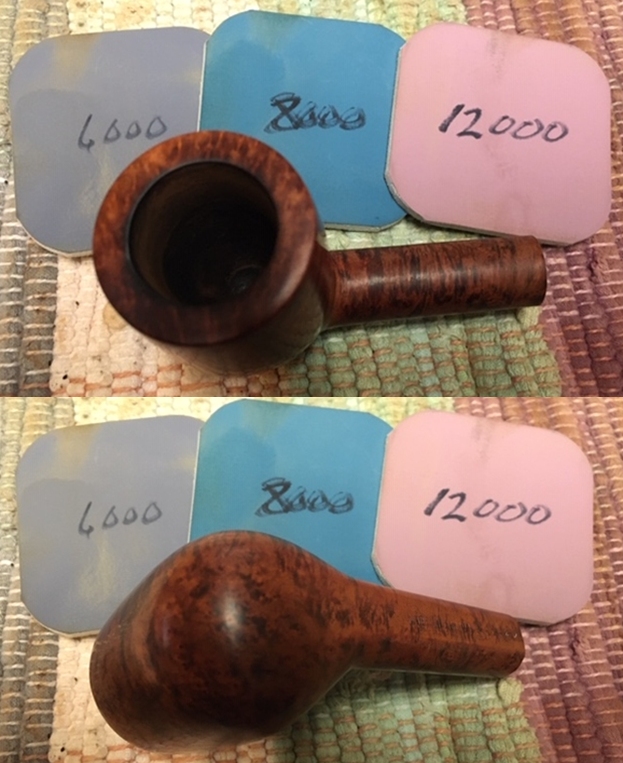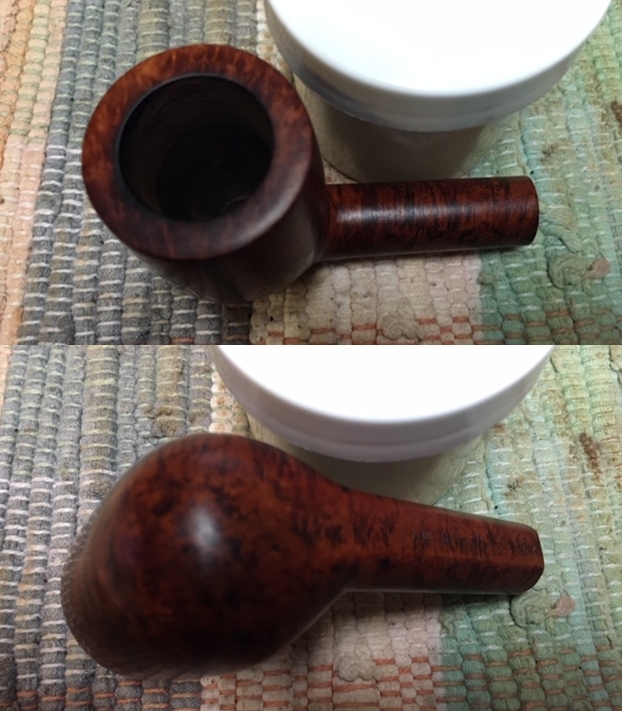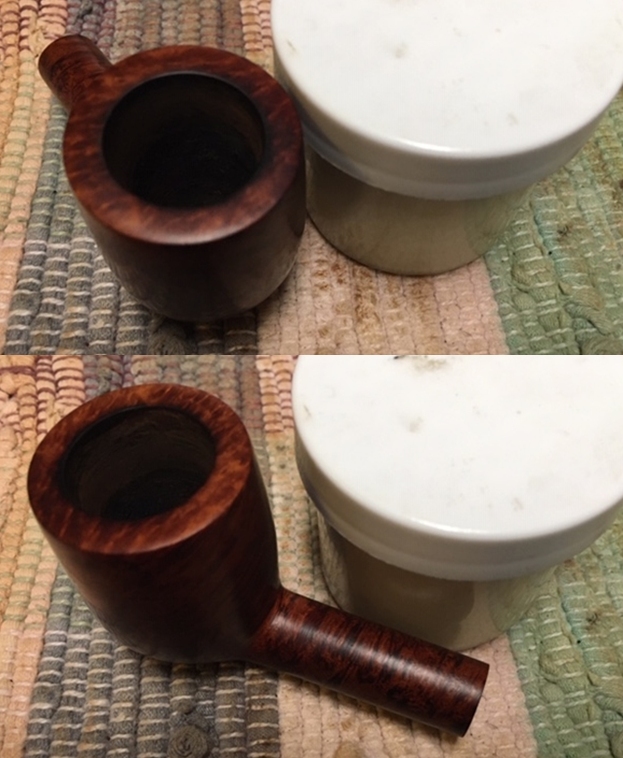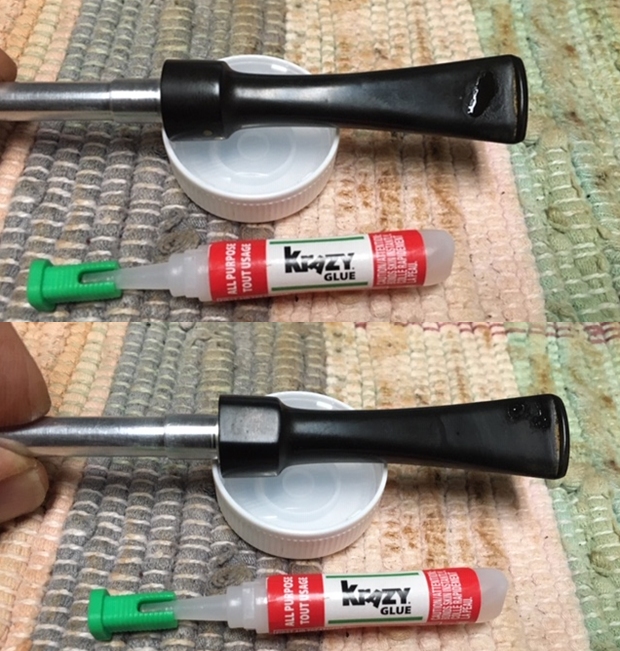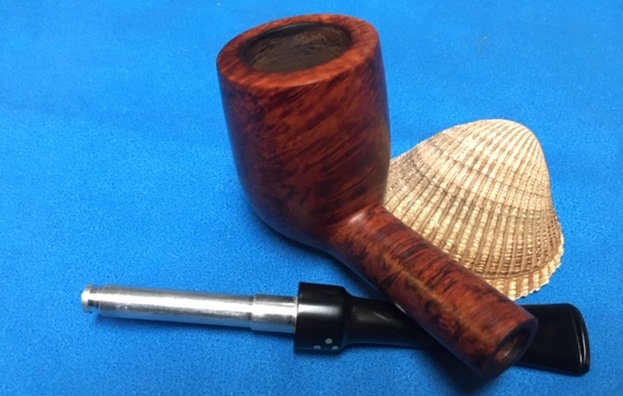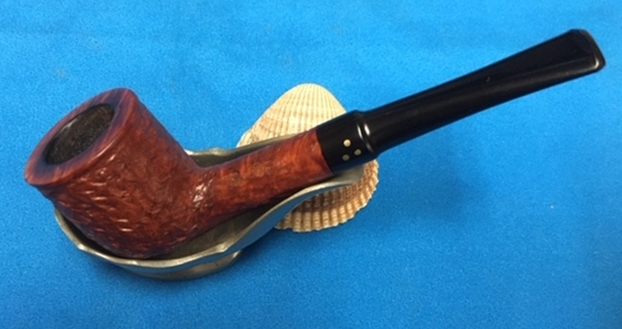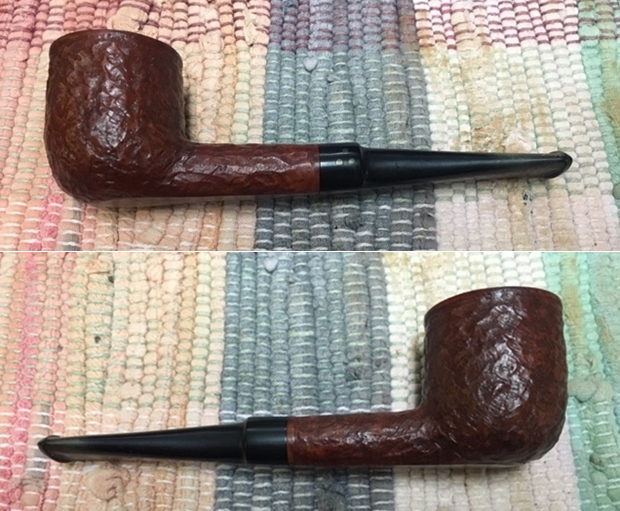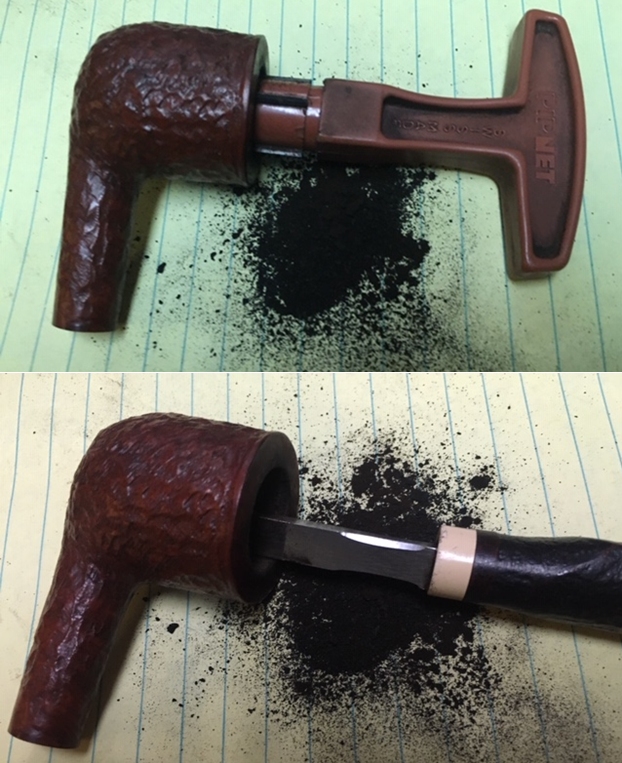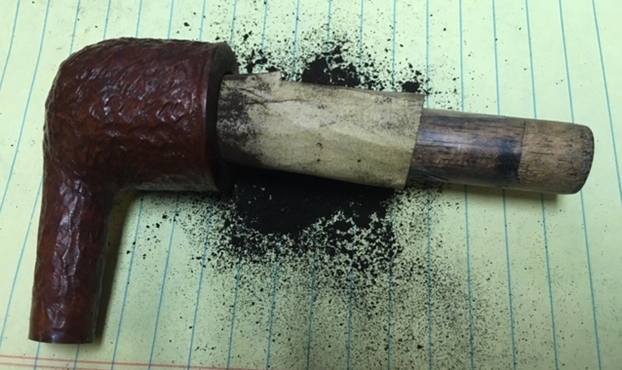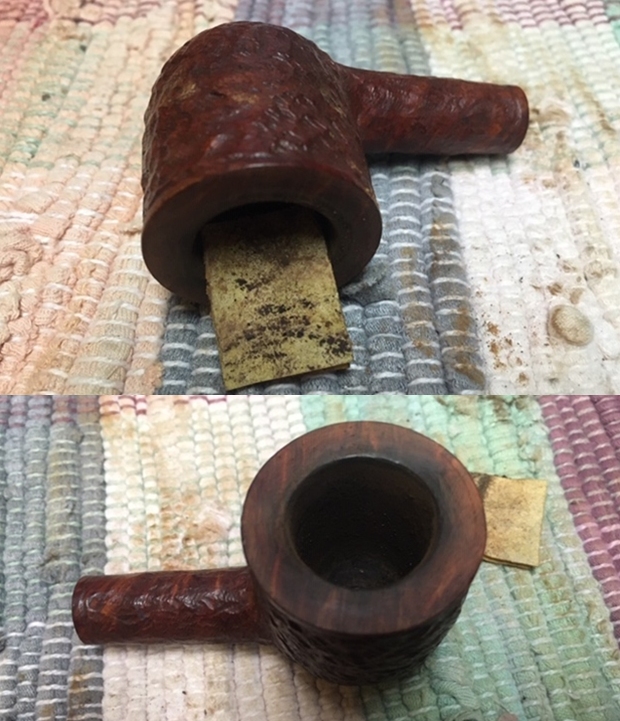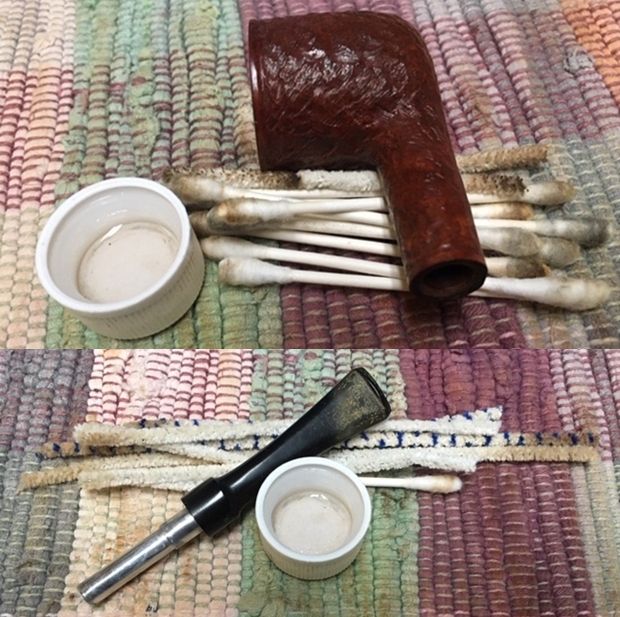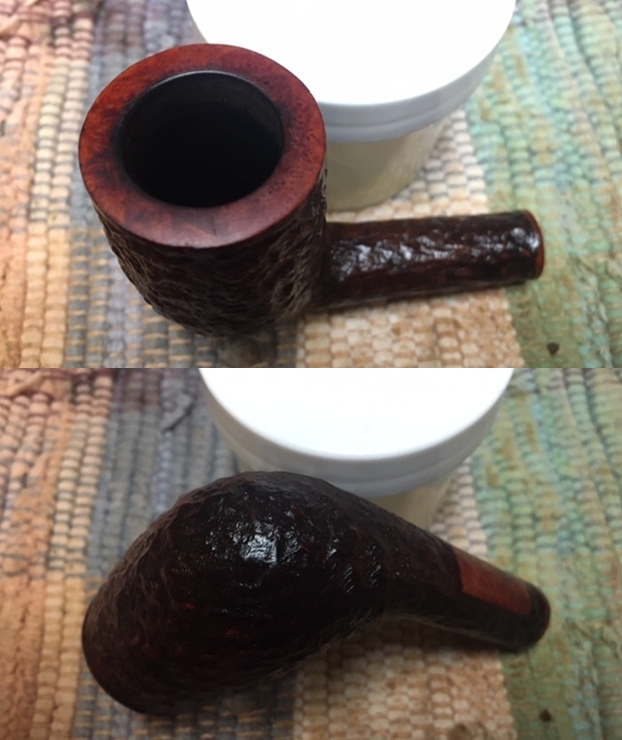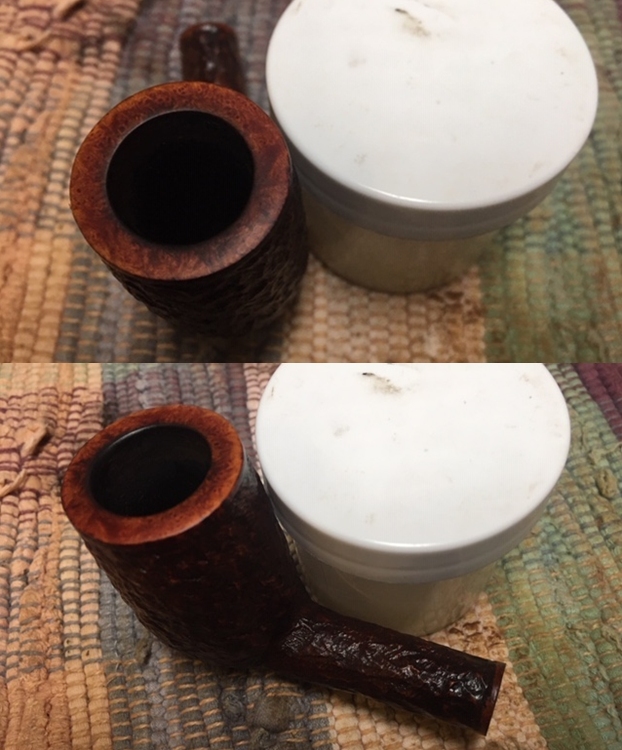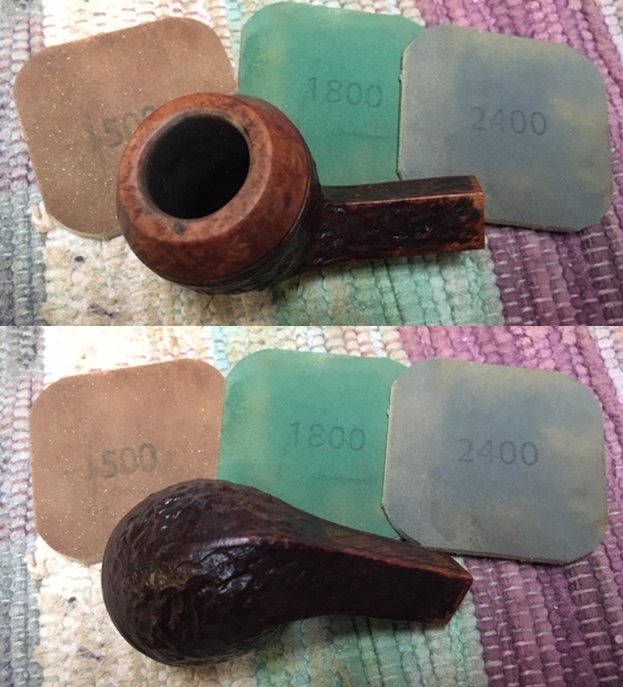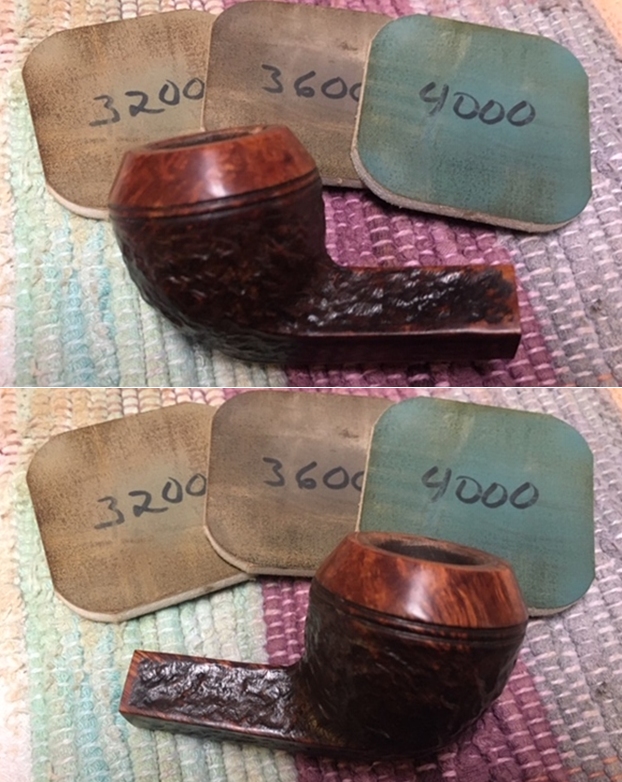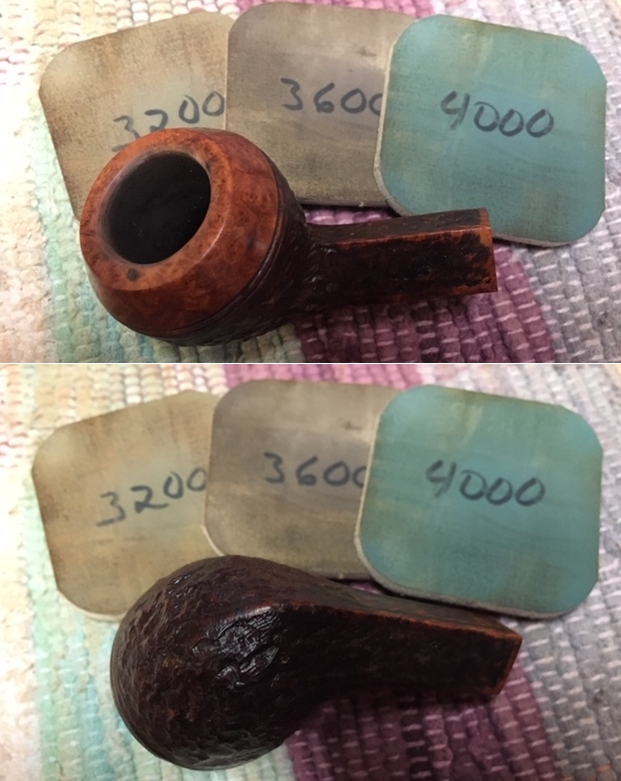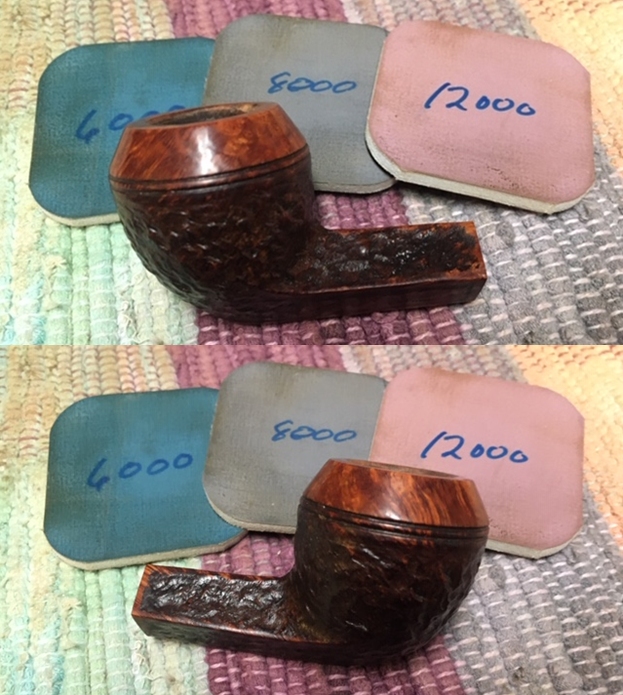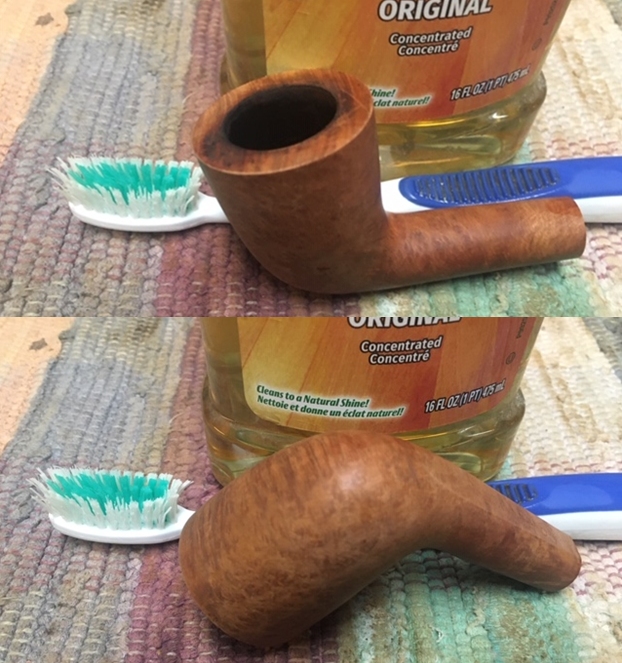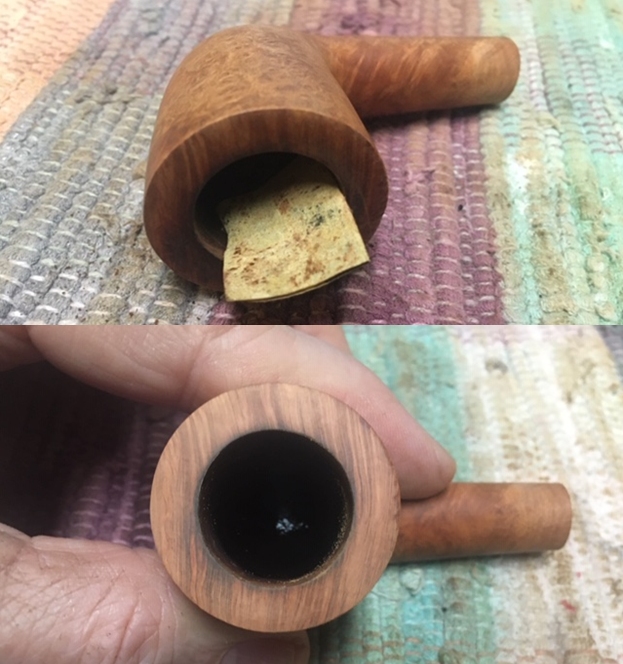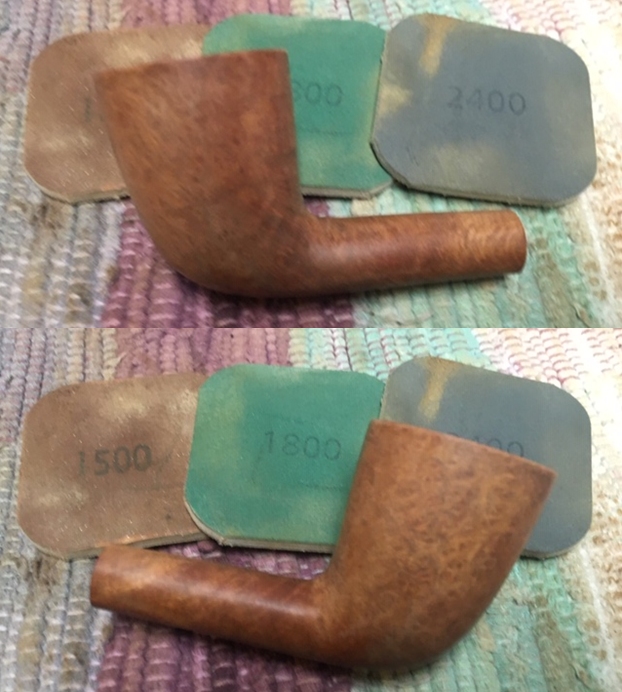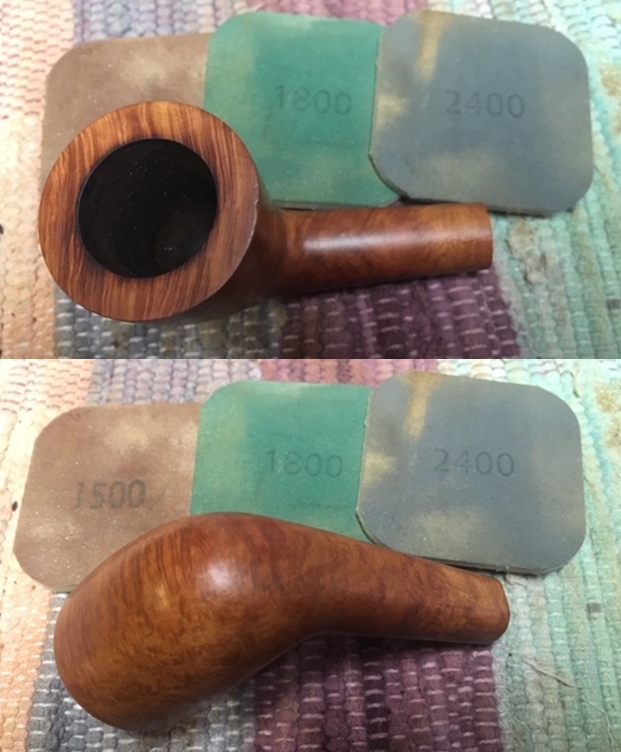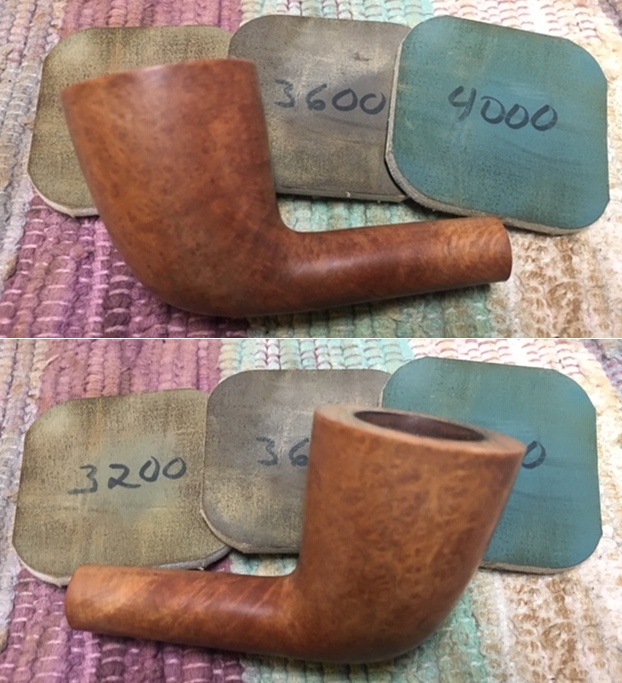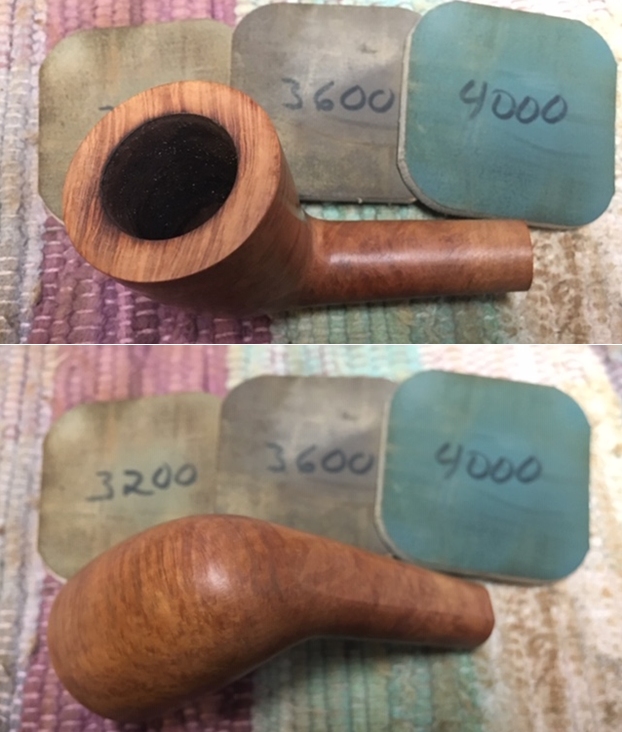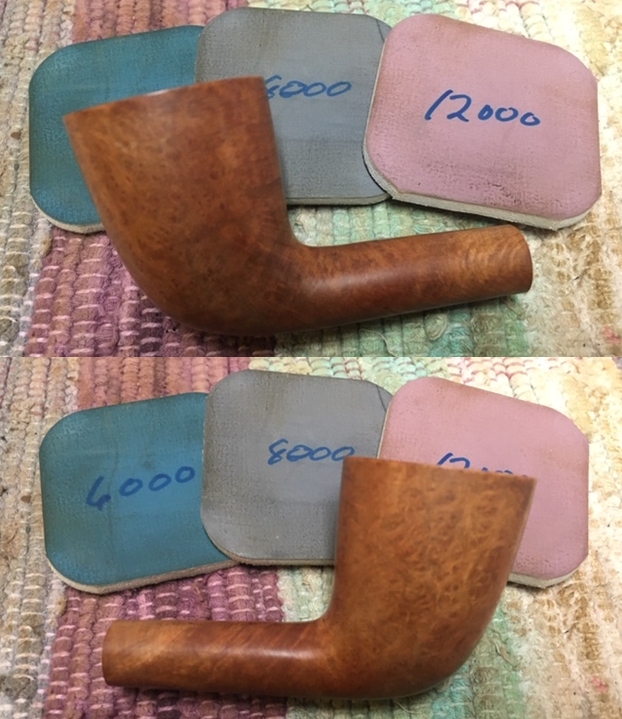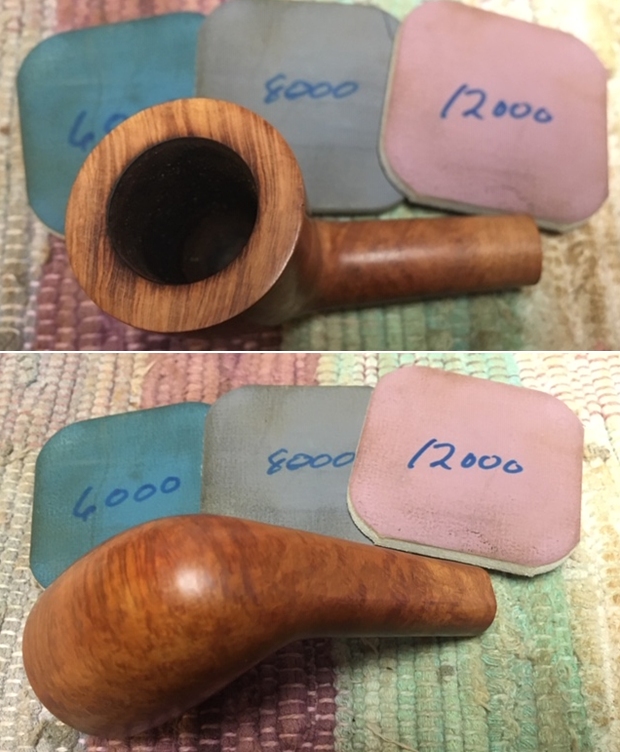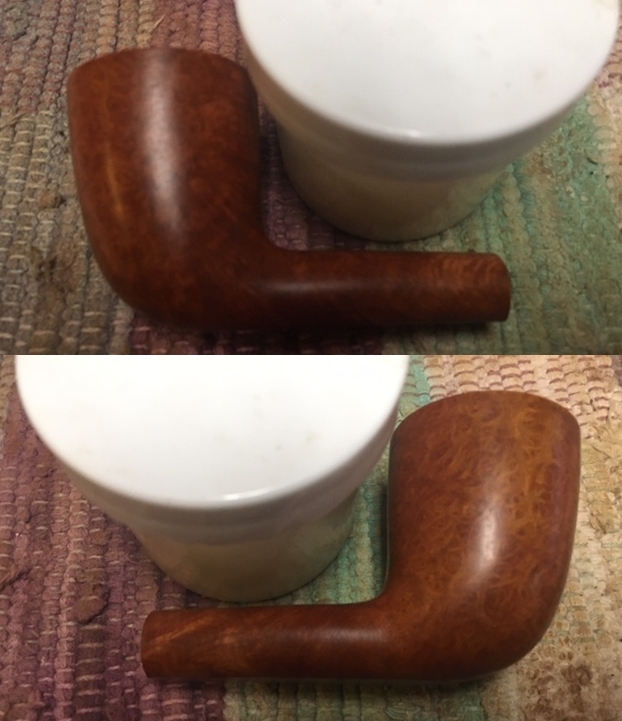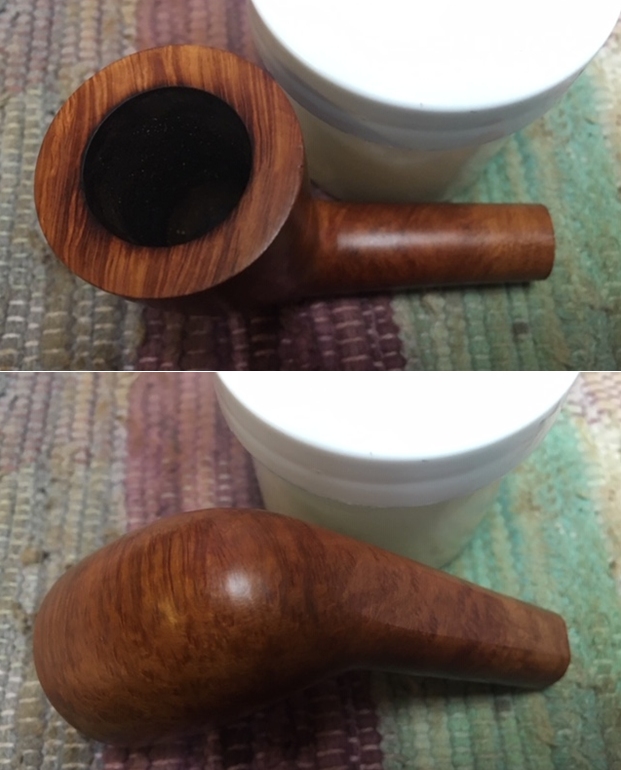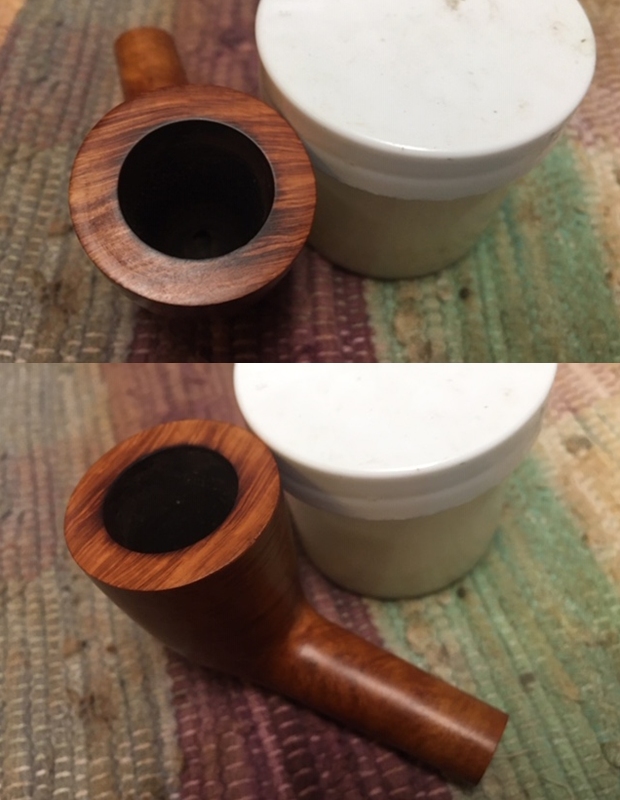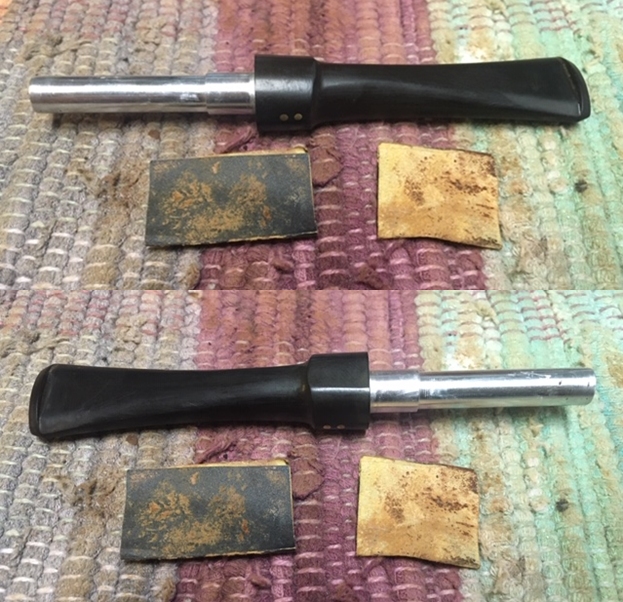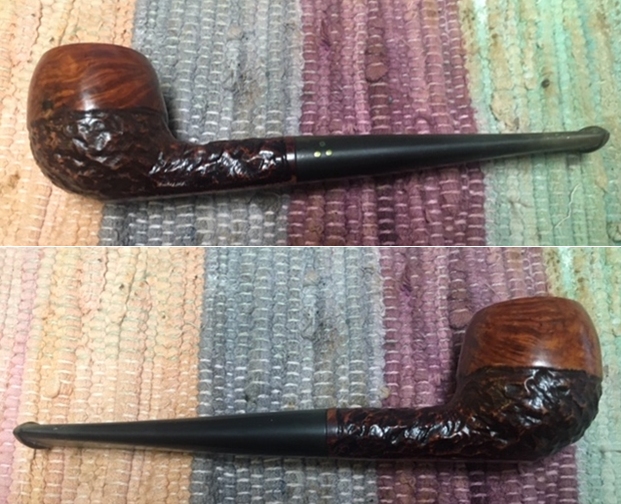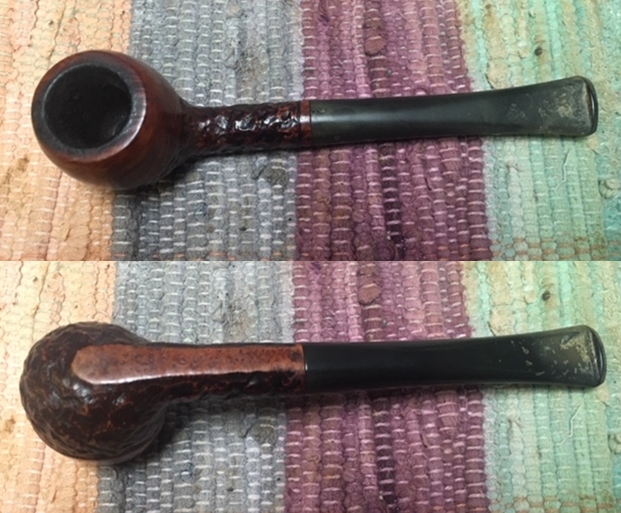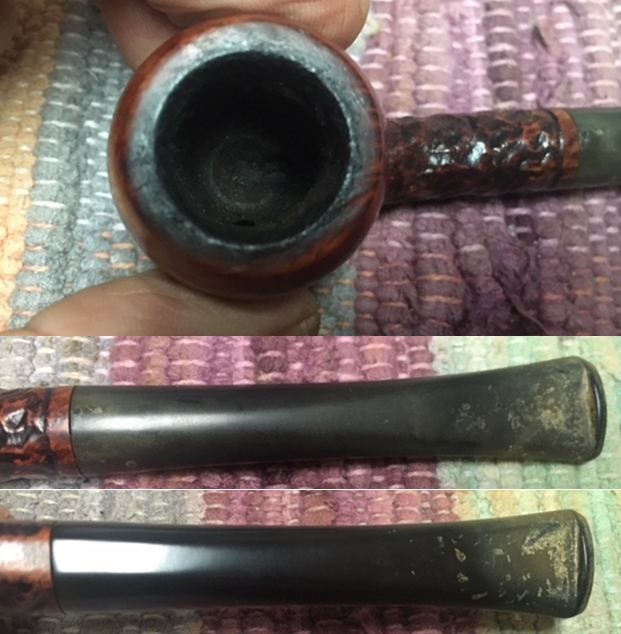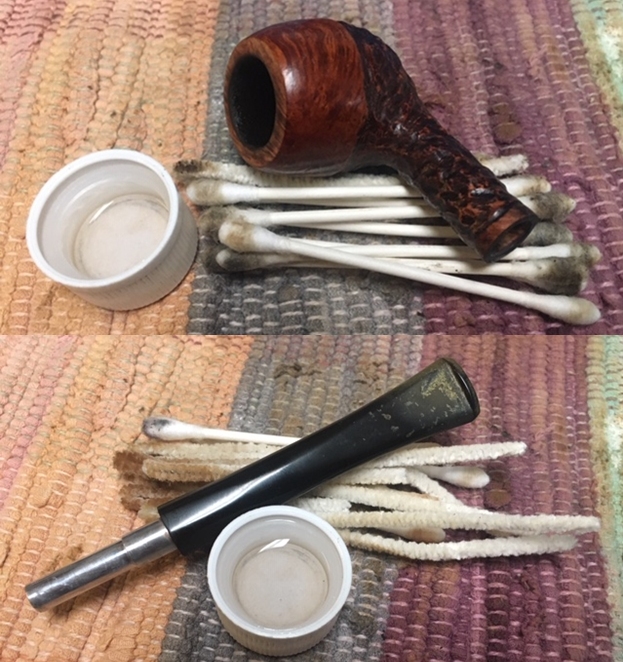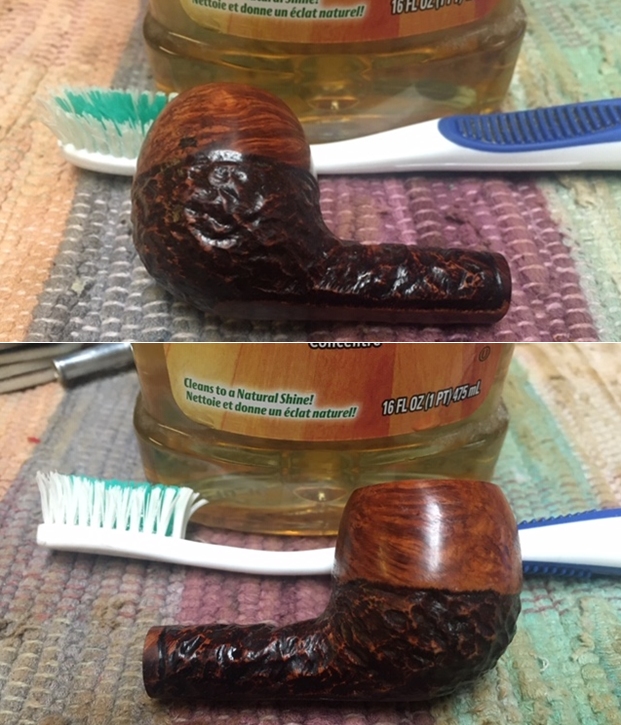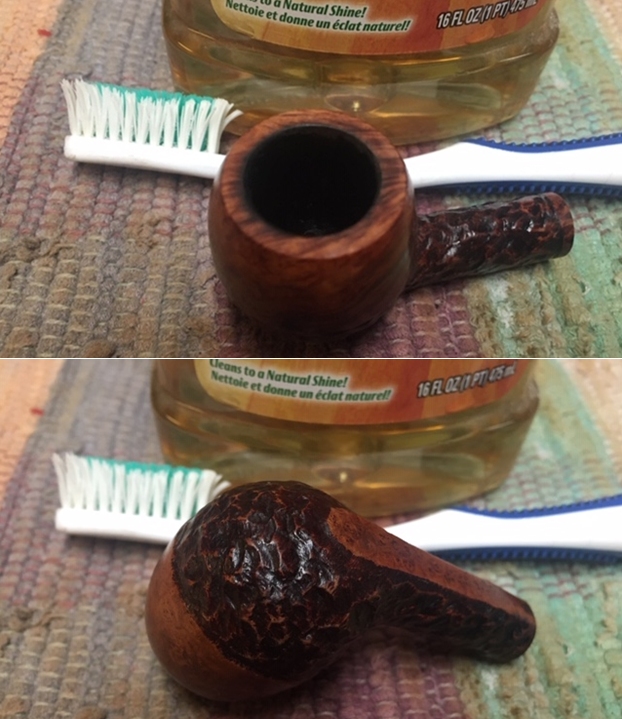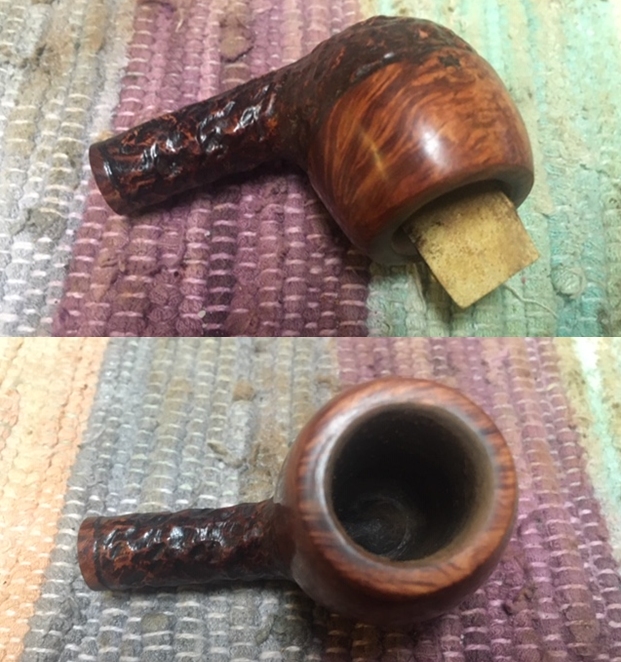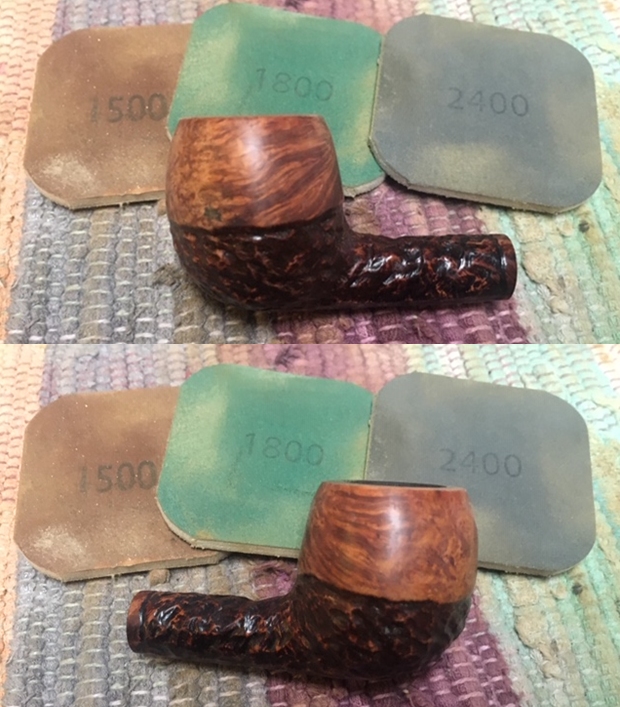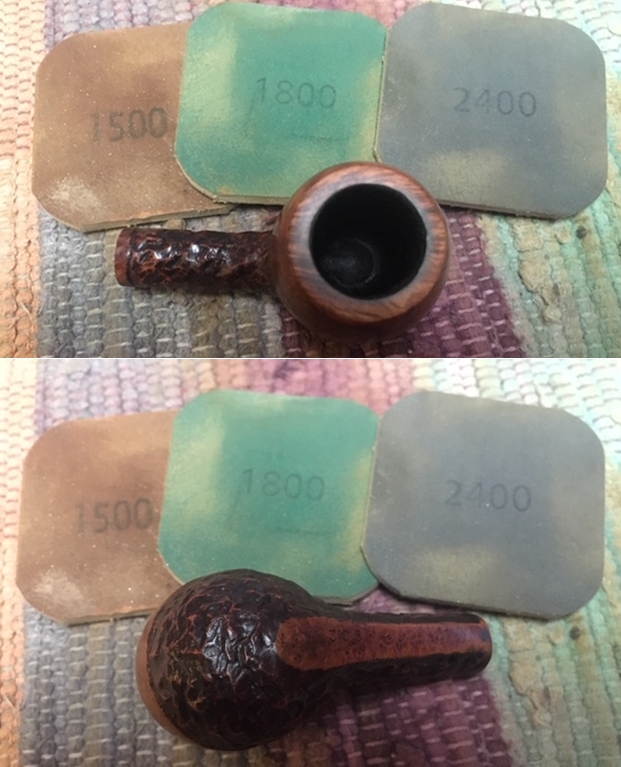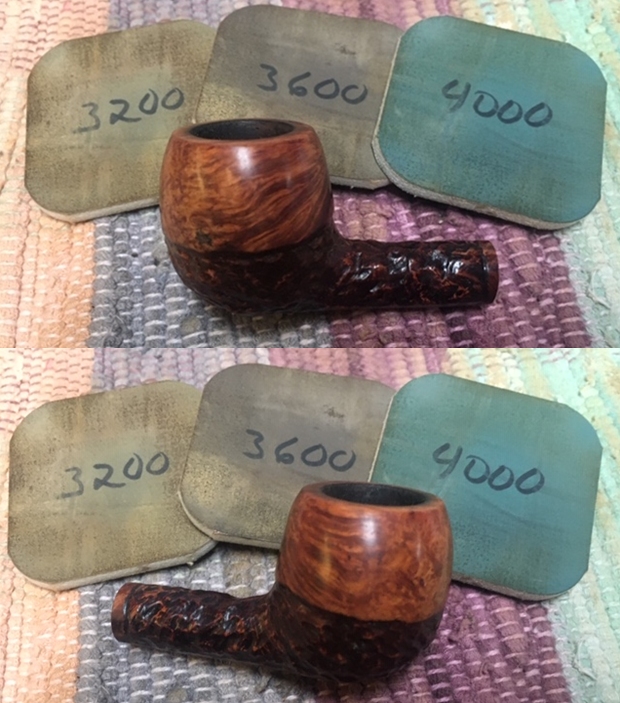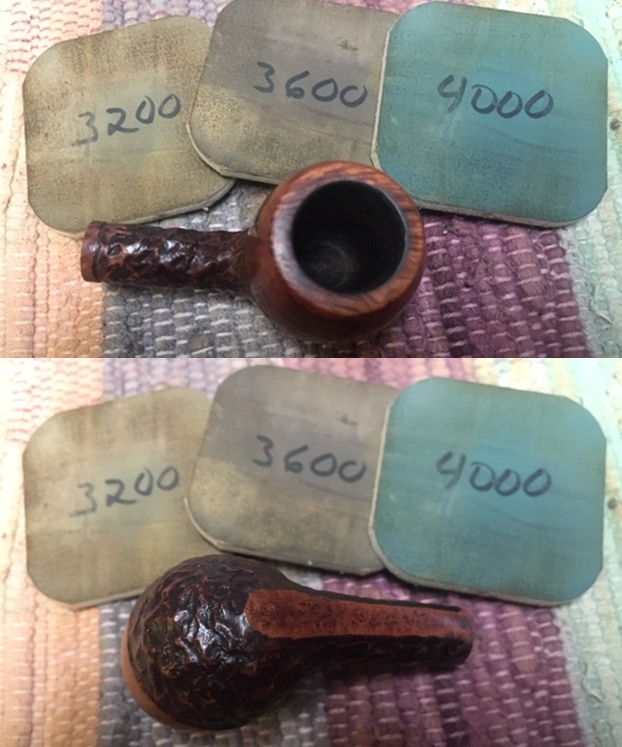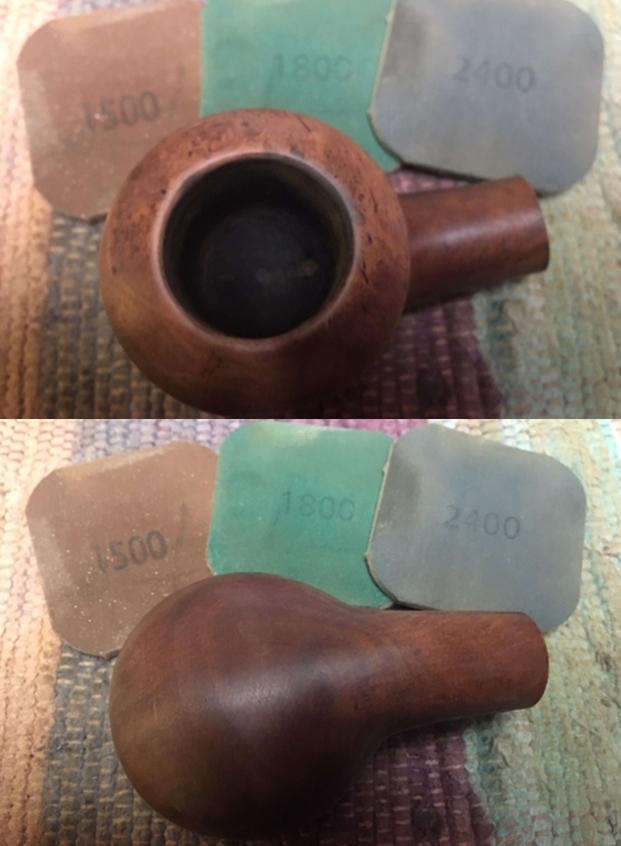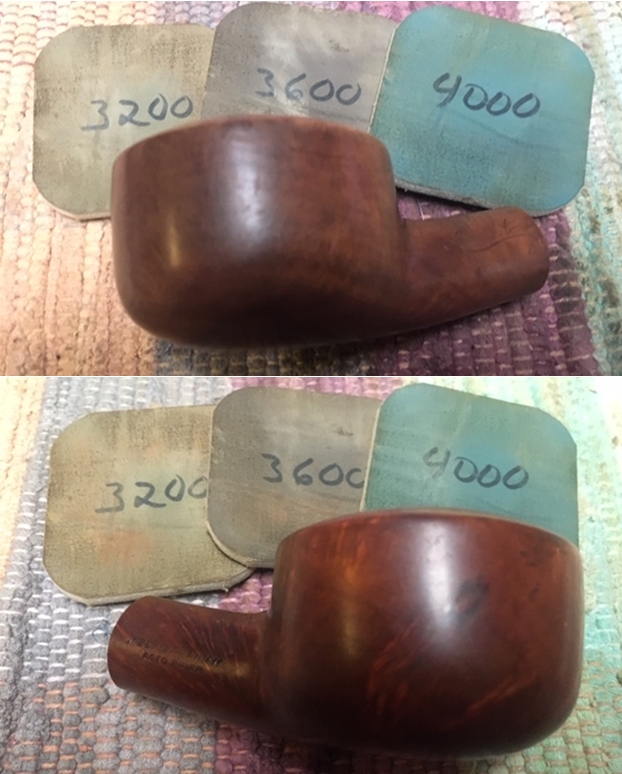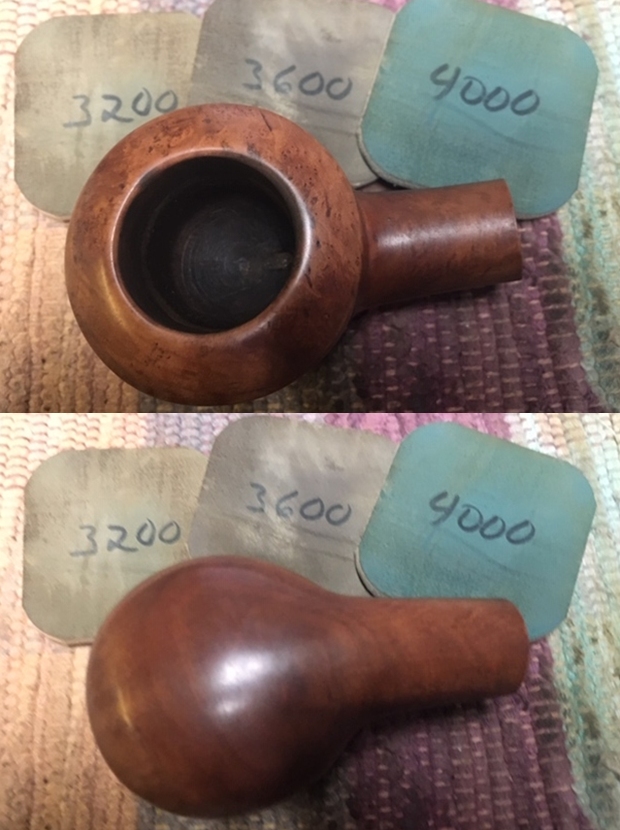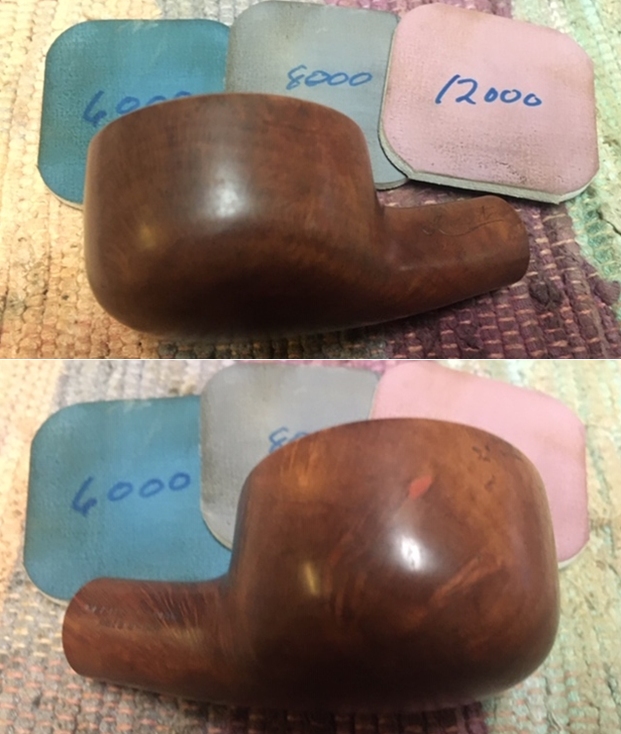
Tag Archives: bowl topping

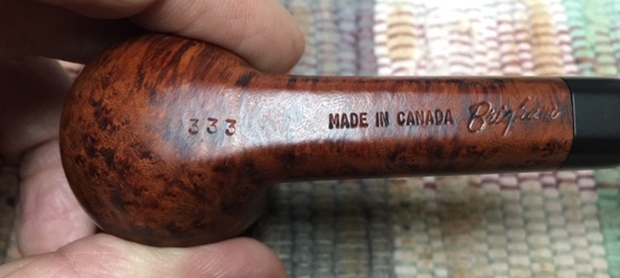
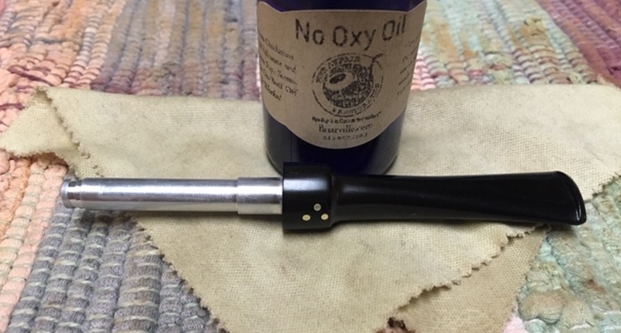
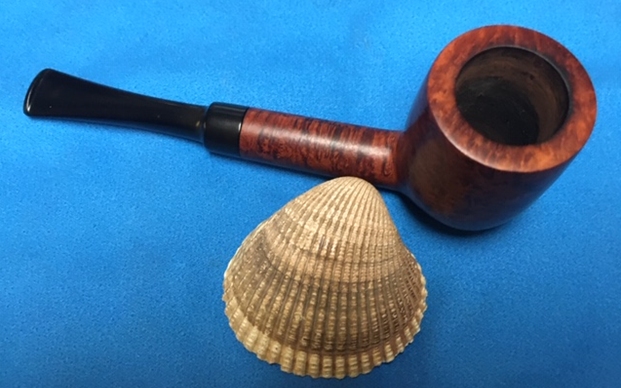
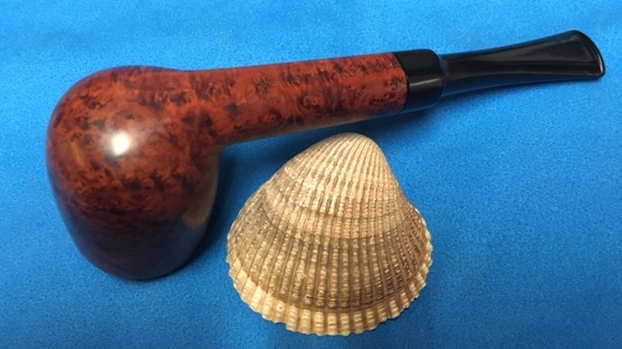
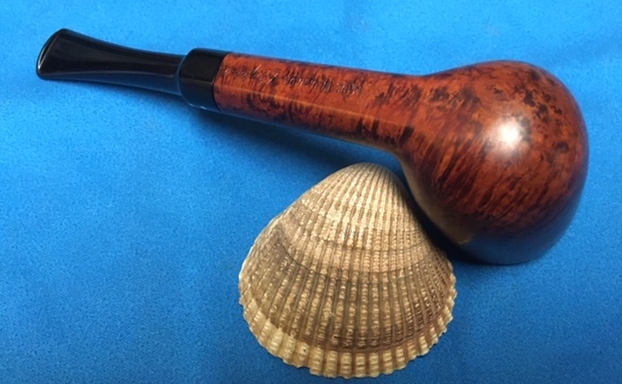
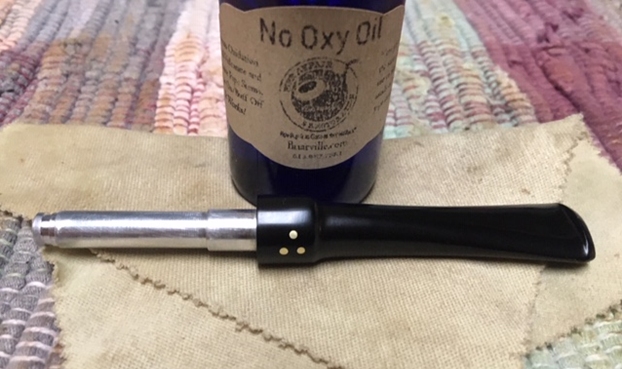
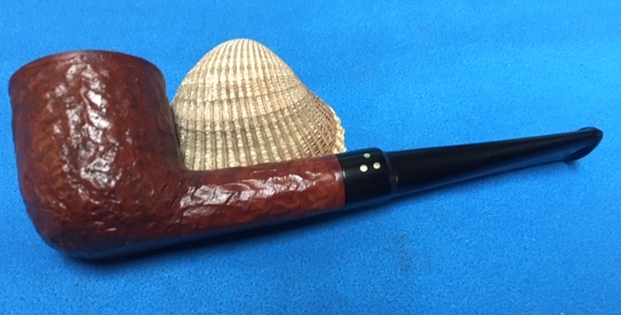
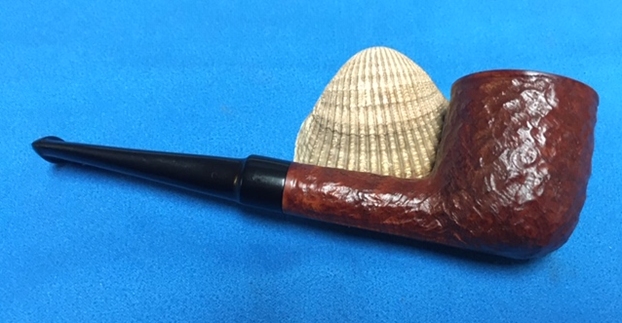
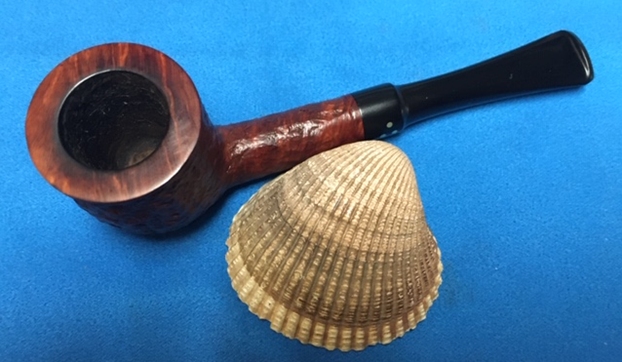
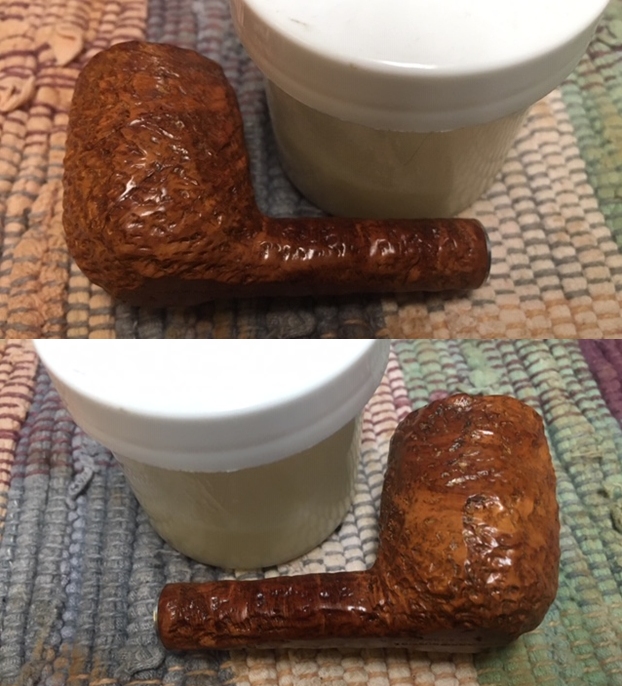
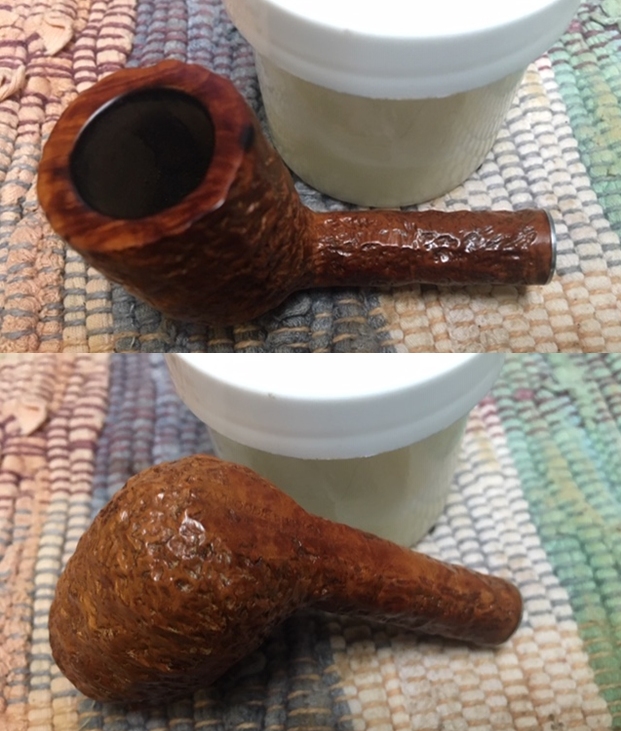
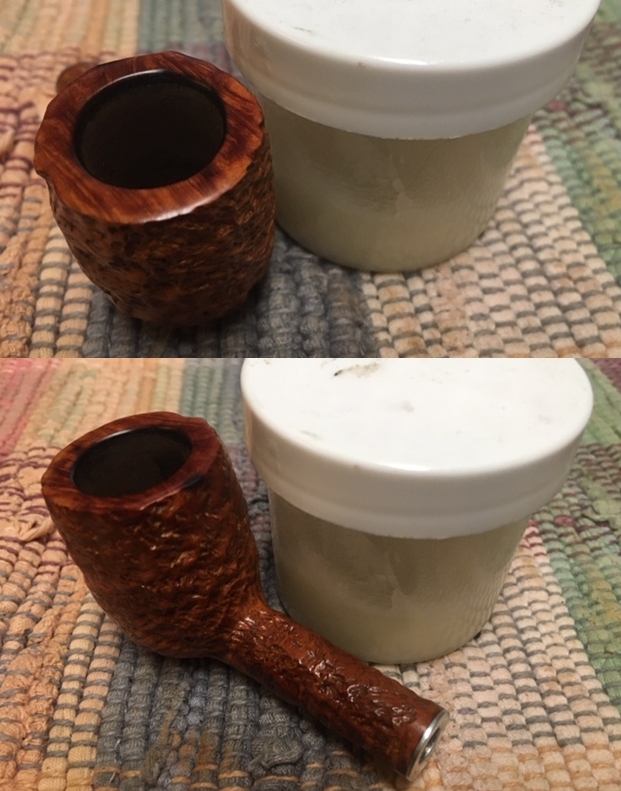
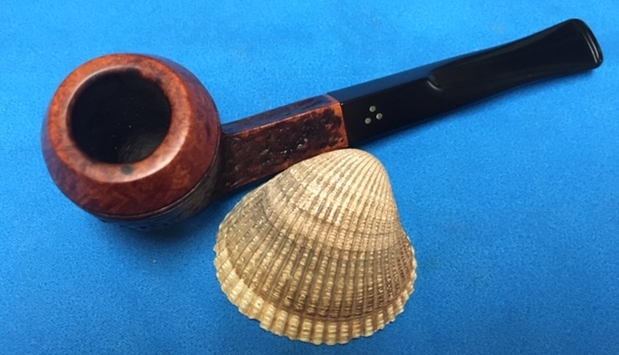
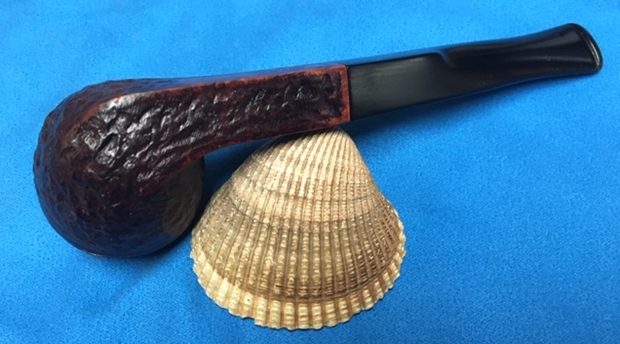
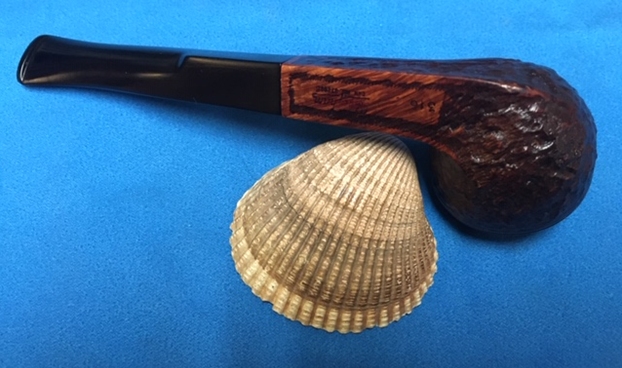
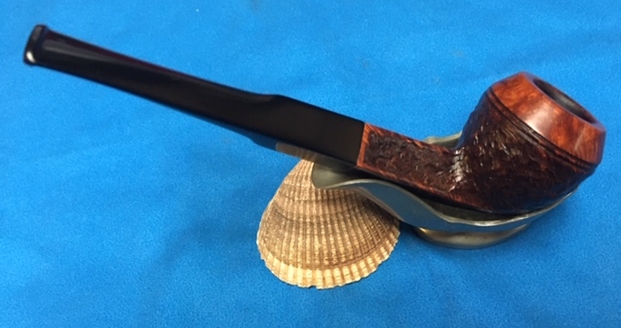
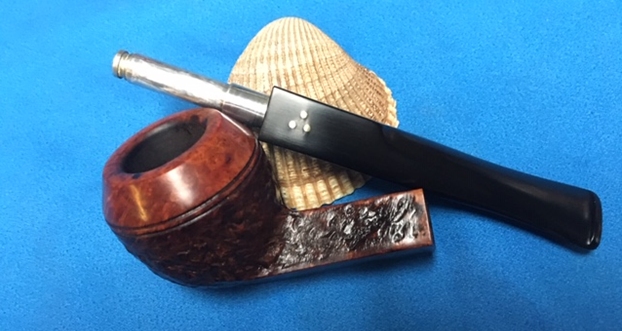
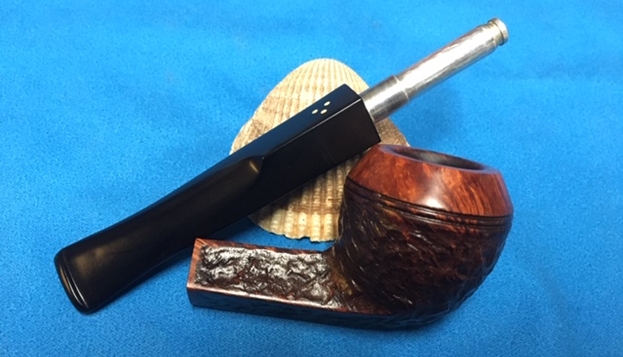
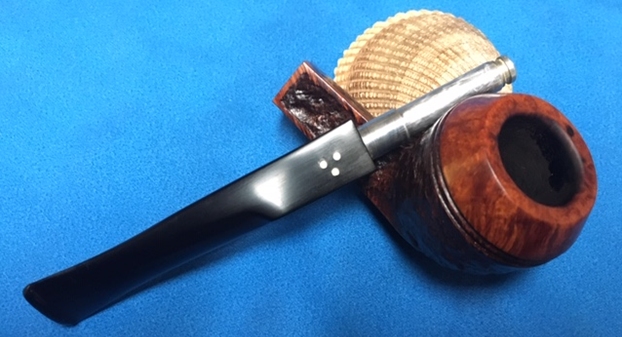
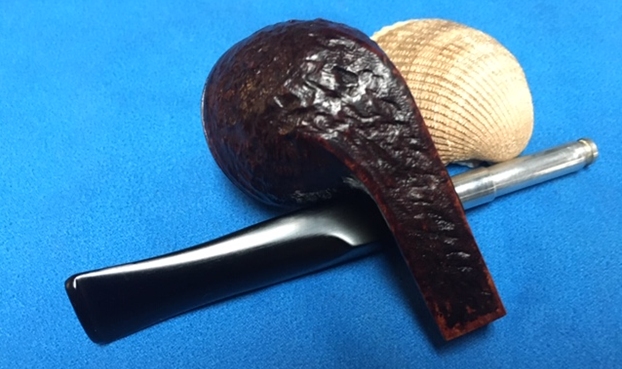
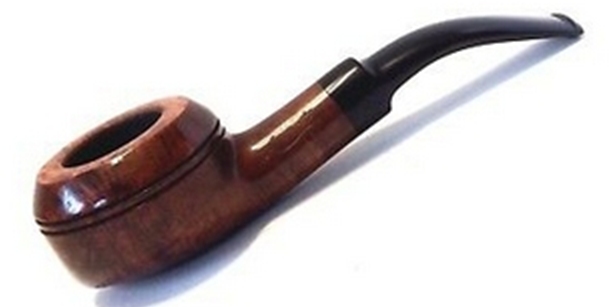
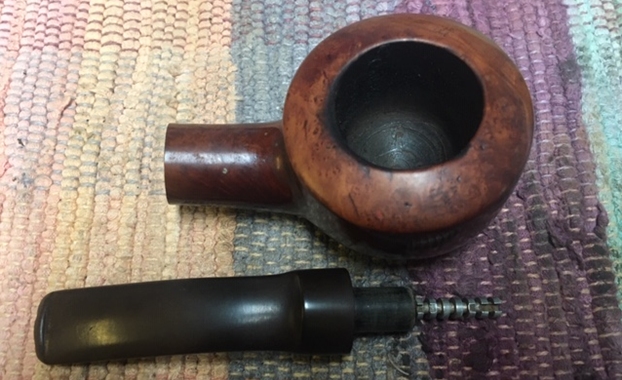
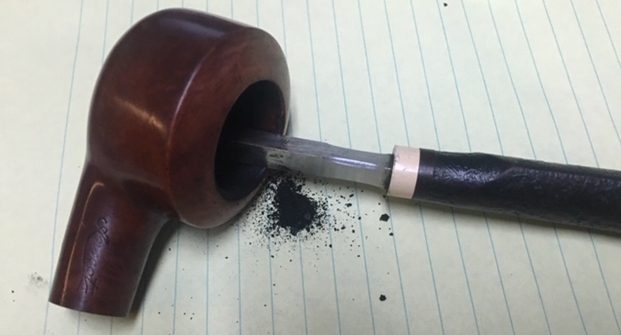
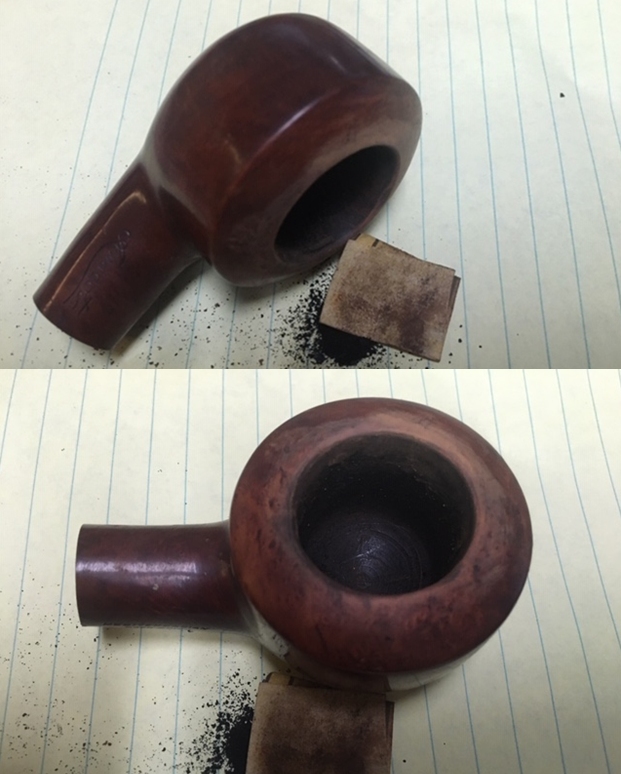
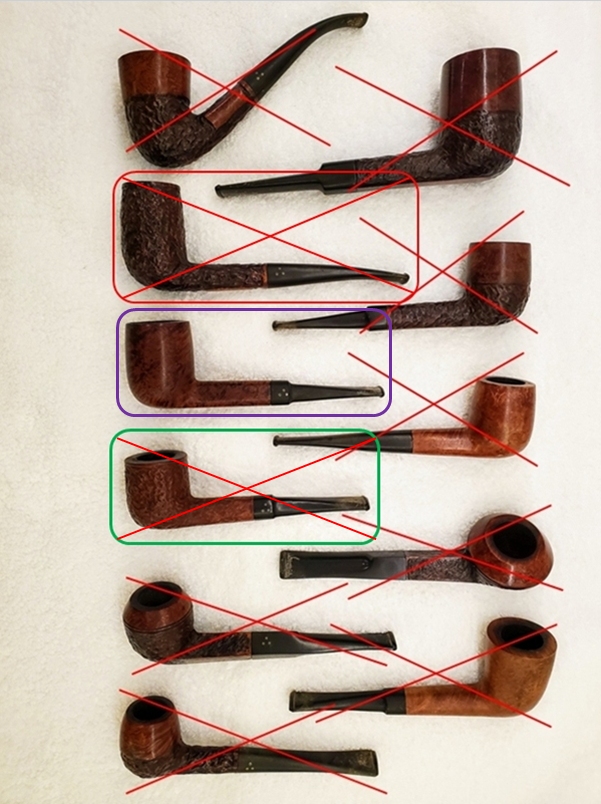
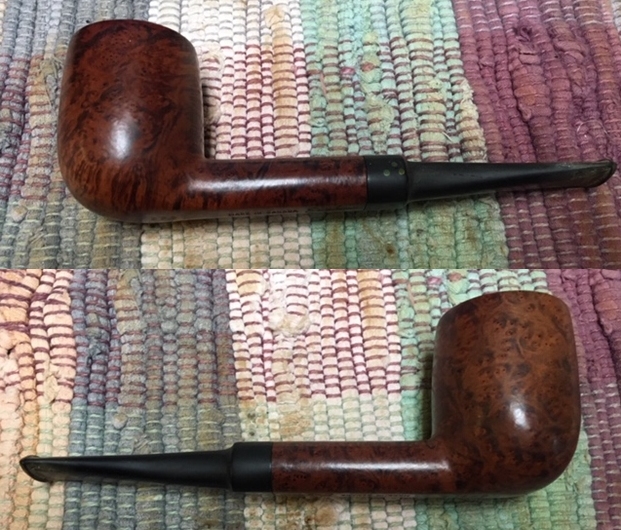
Breathing Life into a Brigham 3 Dot 333 Billiard


Blog by Steve Laug

Not too long ago I received an email from a fellow in Kitchener, Ontario regarding some pipes he needed cleaned up. He had been referred to me by my local pipe and cigar shop. While I am not currently adding more pipes to my queue of repairs I have made a commitment to the shop to work on pipes for their customers. Generally they have one or two pipes that need a bit of work. This fellow sent me the following email:

I just came across my smoking pipes that I’ve had in storage for about 40 years. I’m wondering what you’d charge to have them refurbished. There are 17 in total (11 are Brighams and 6 are various).

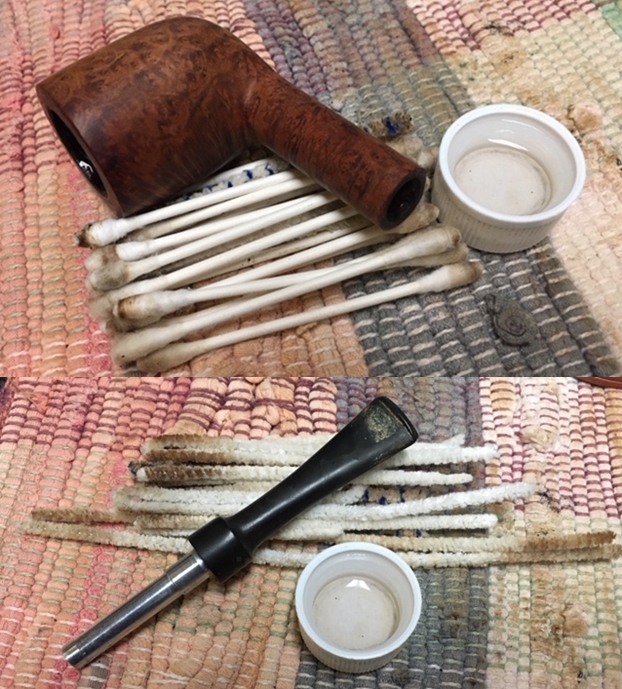
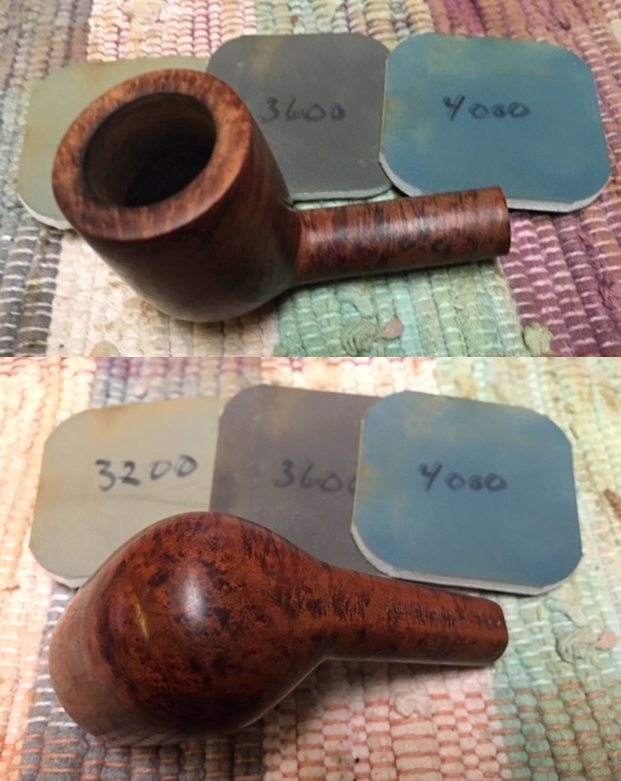
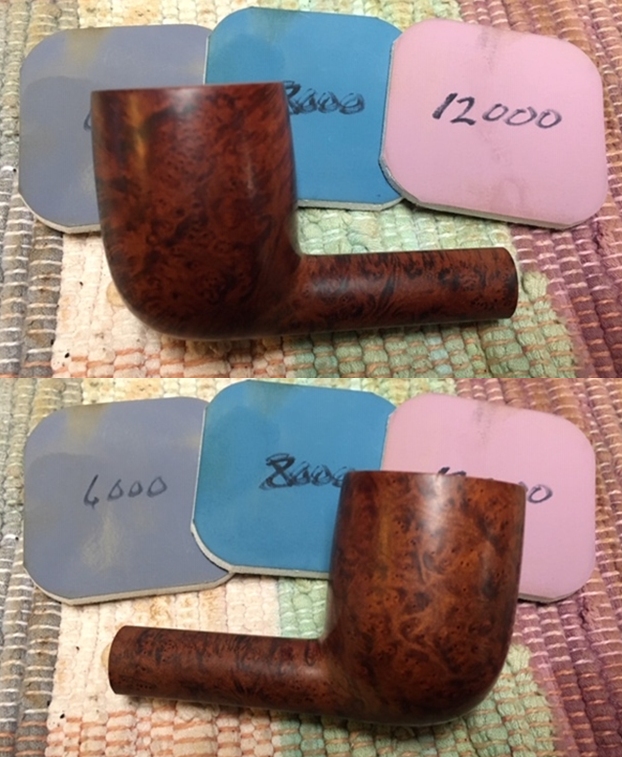
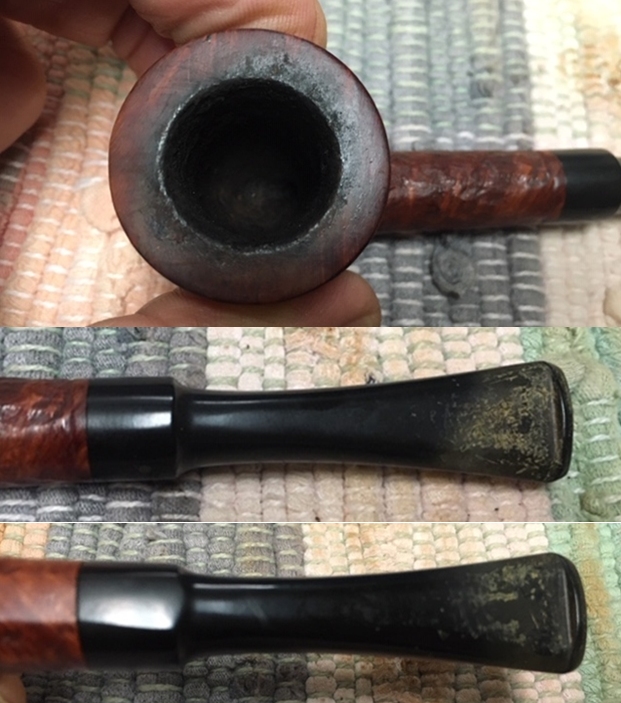
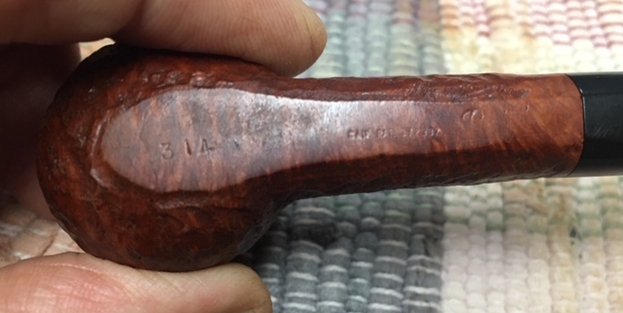
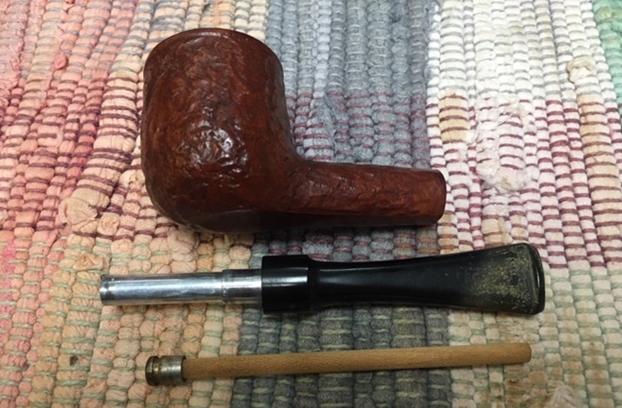
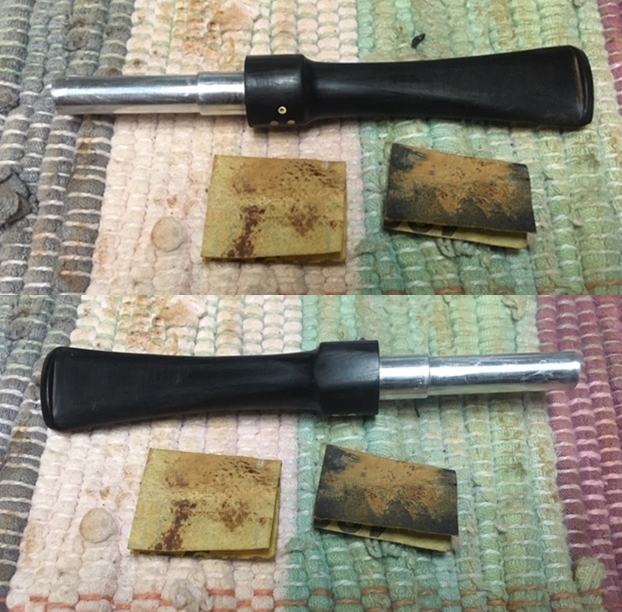
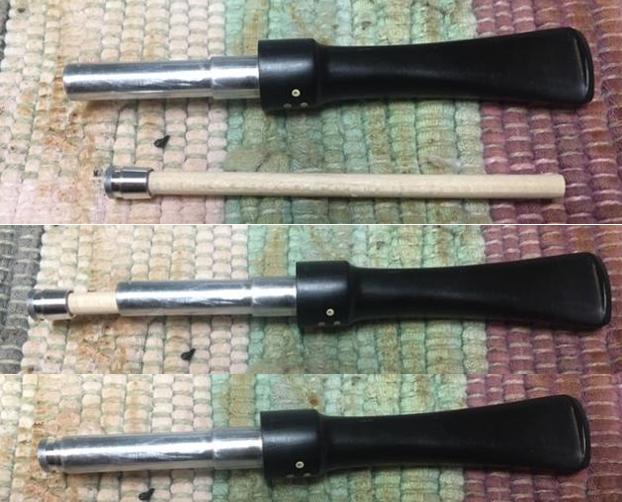
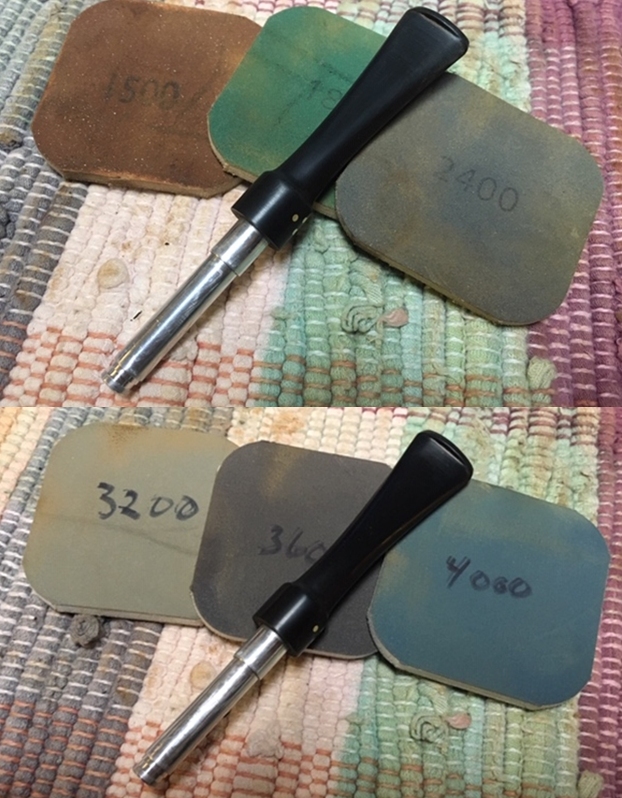
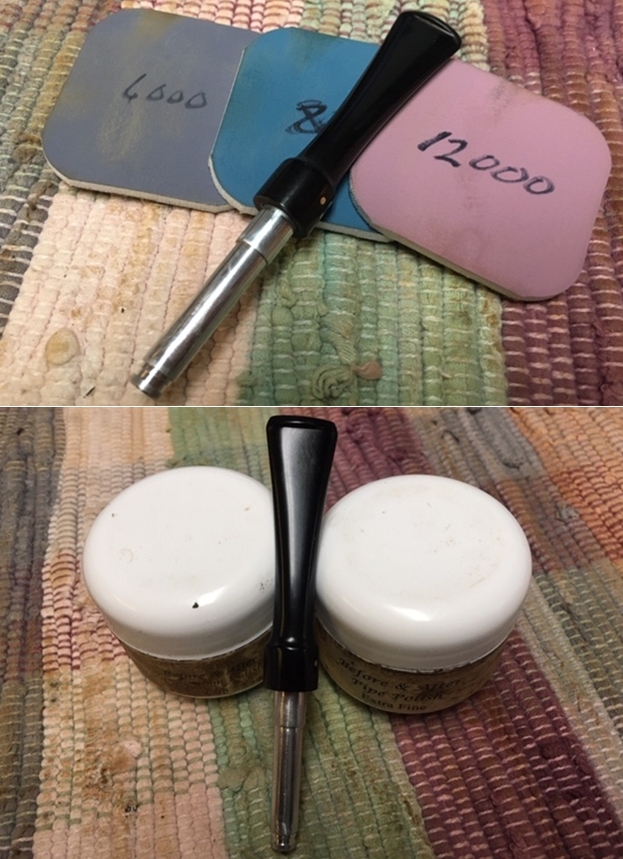
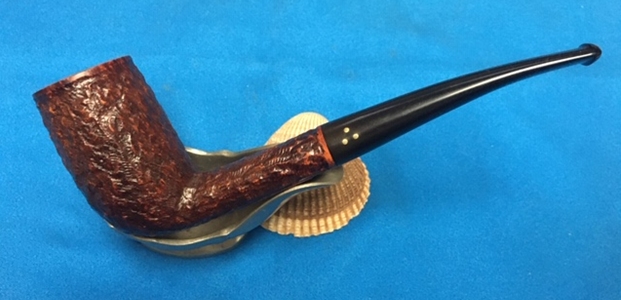
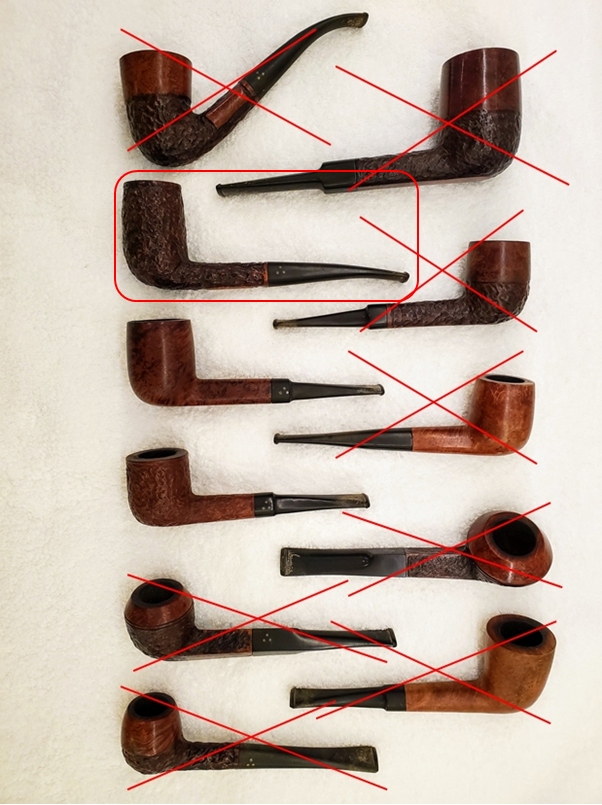
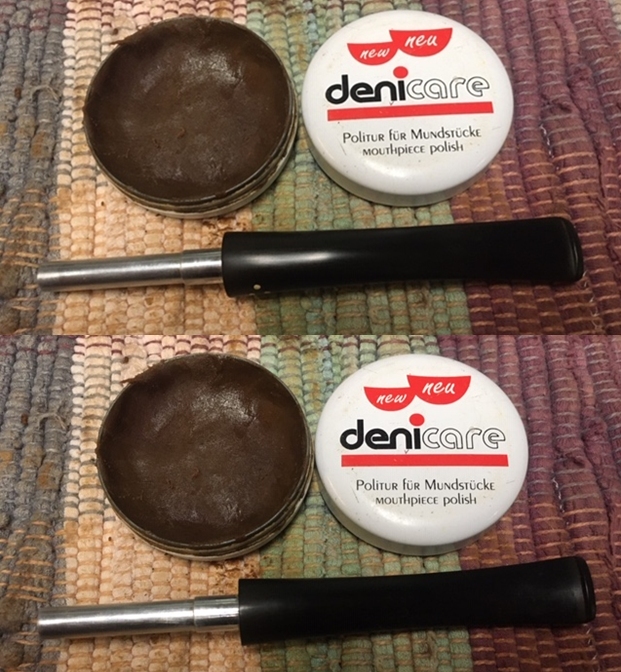
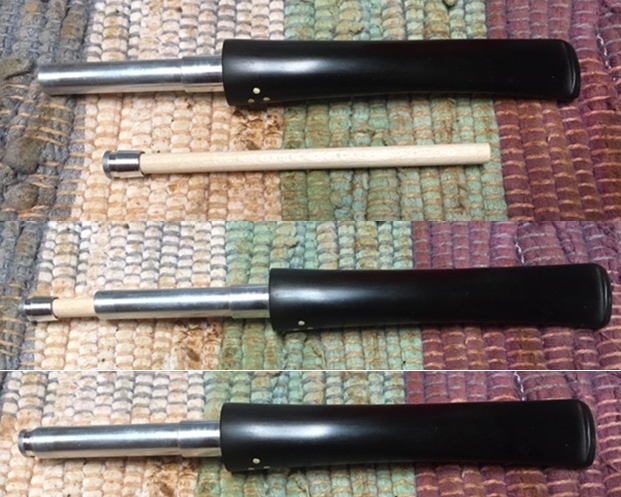
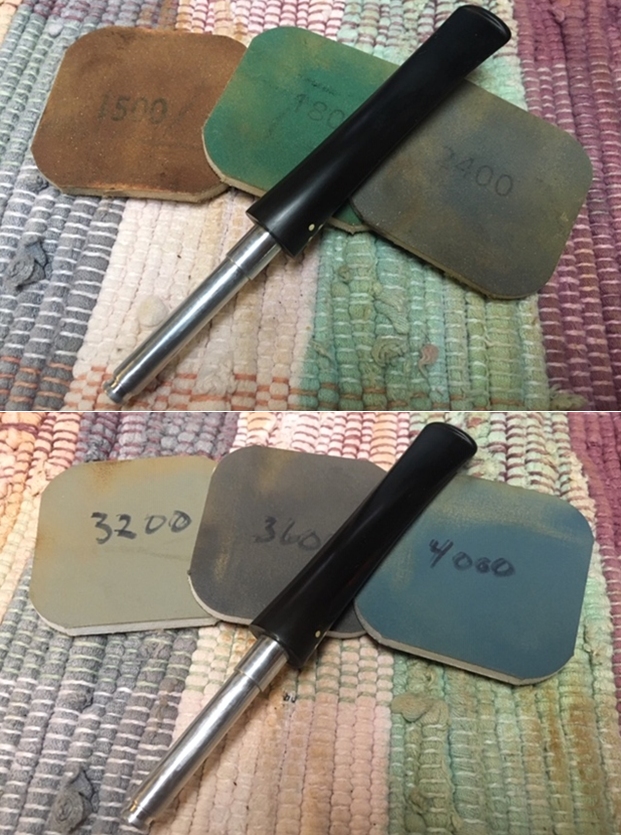
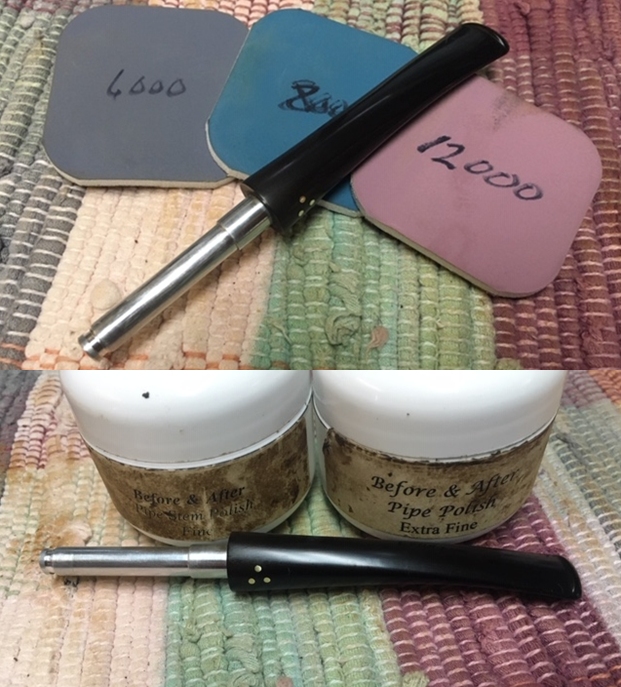
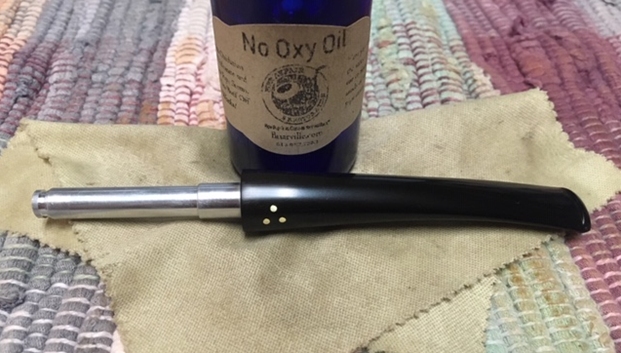
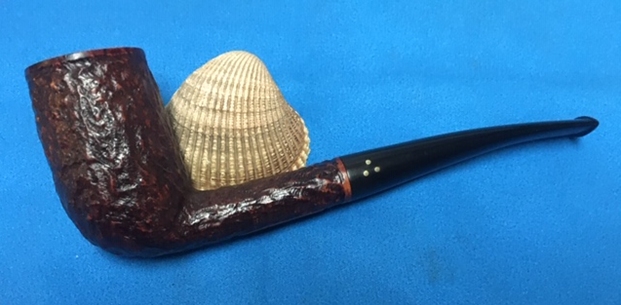
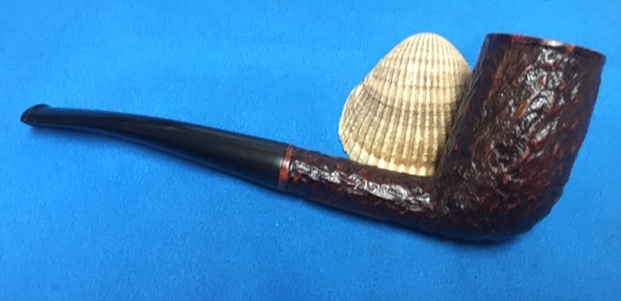
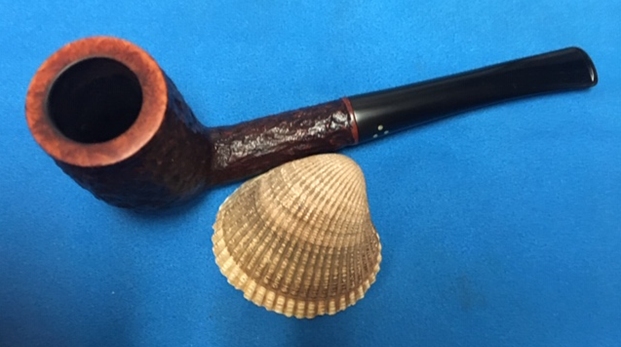
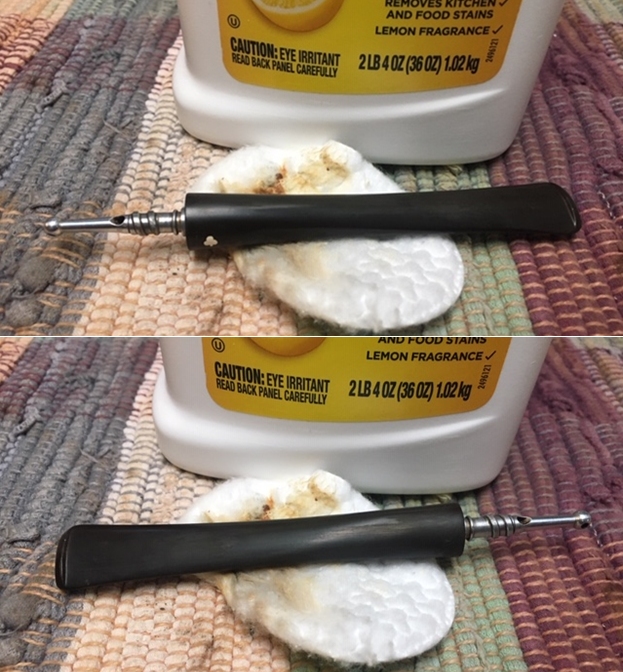
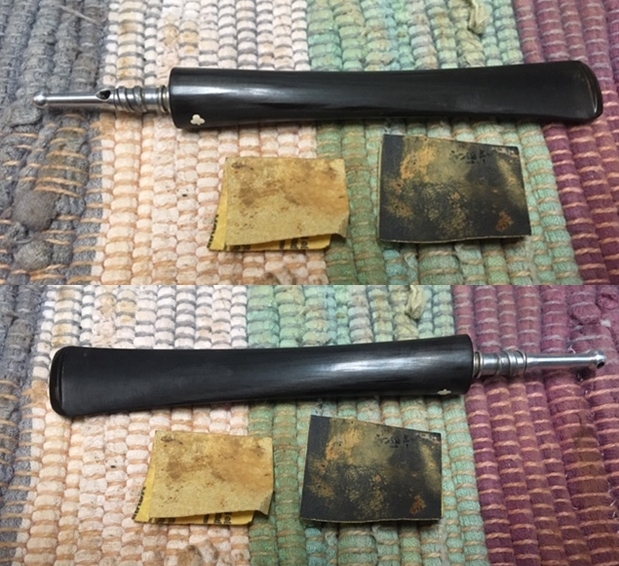
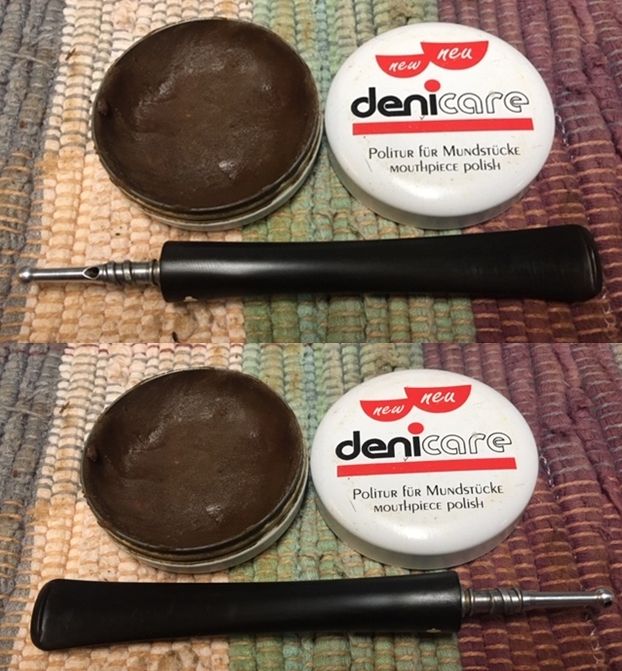
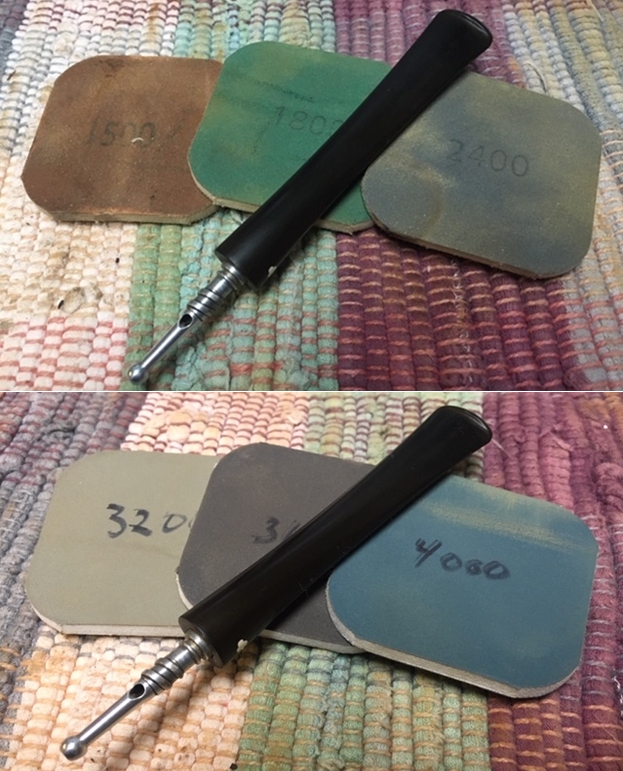
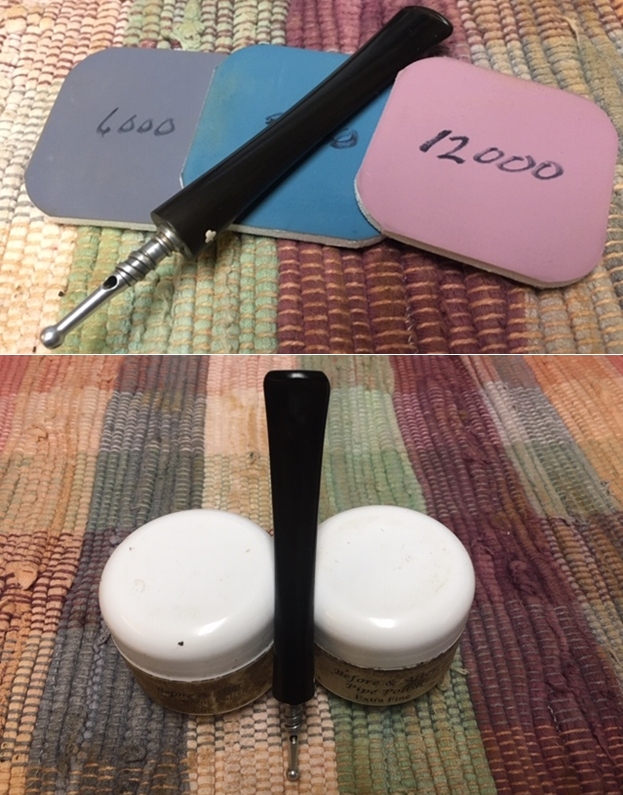
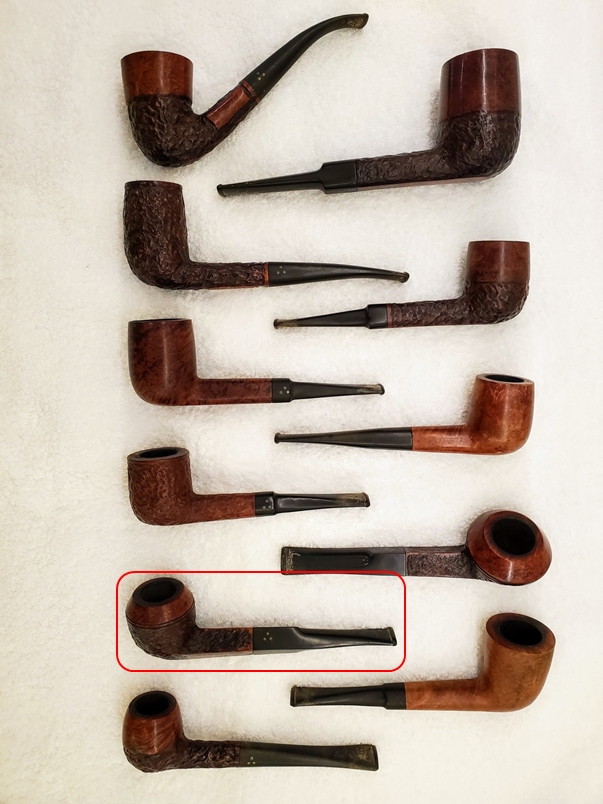
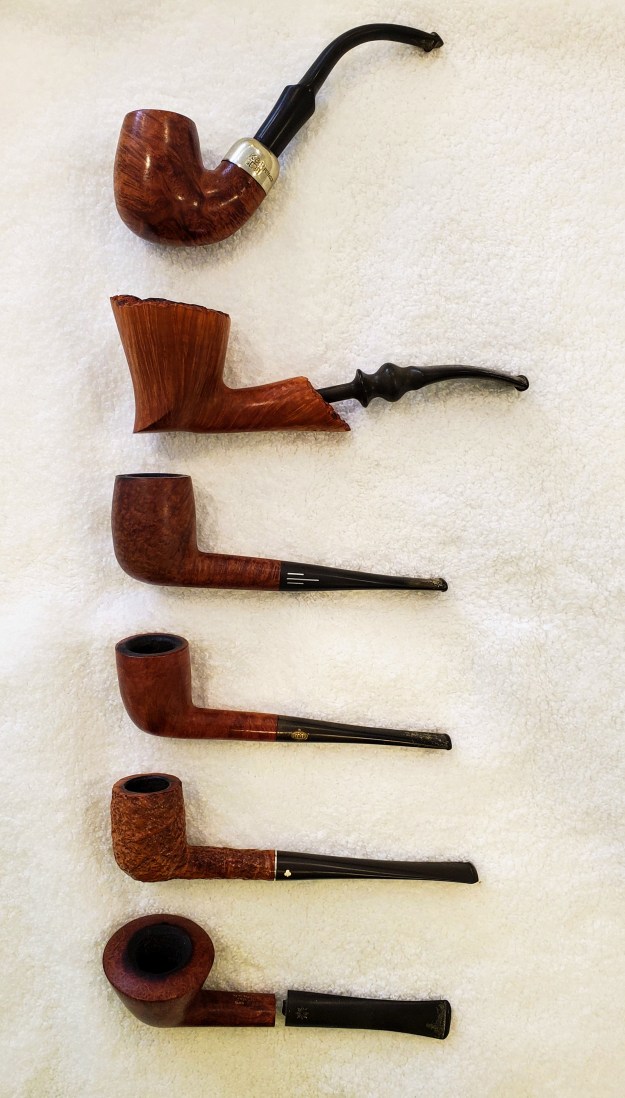
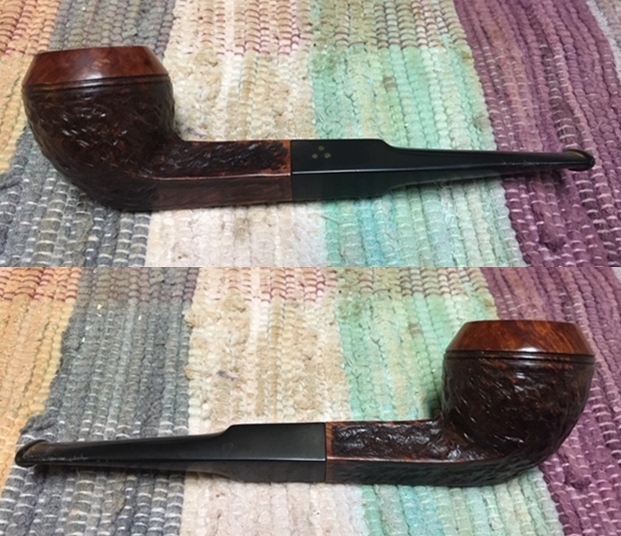
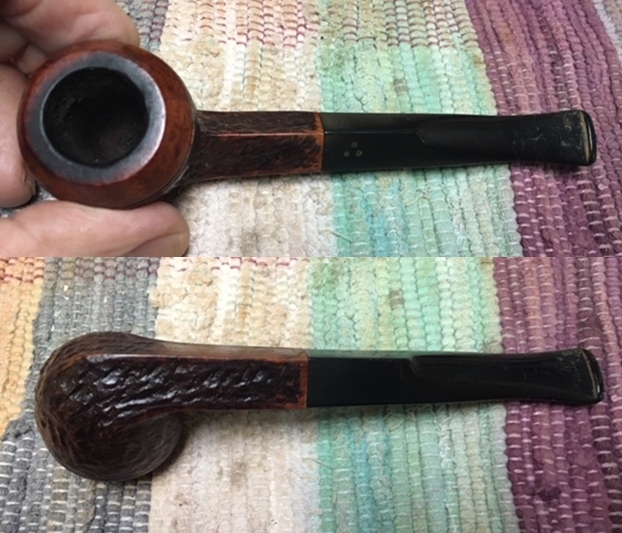
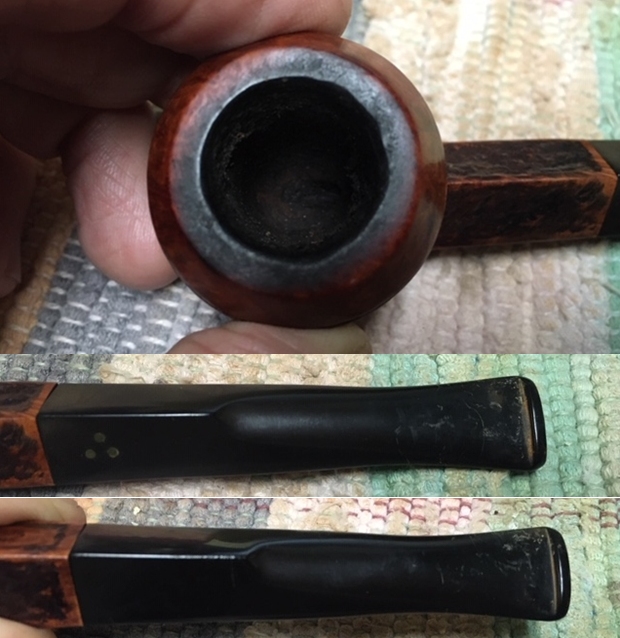
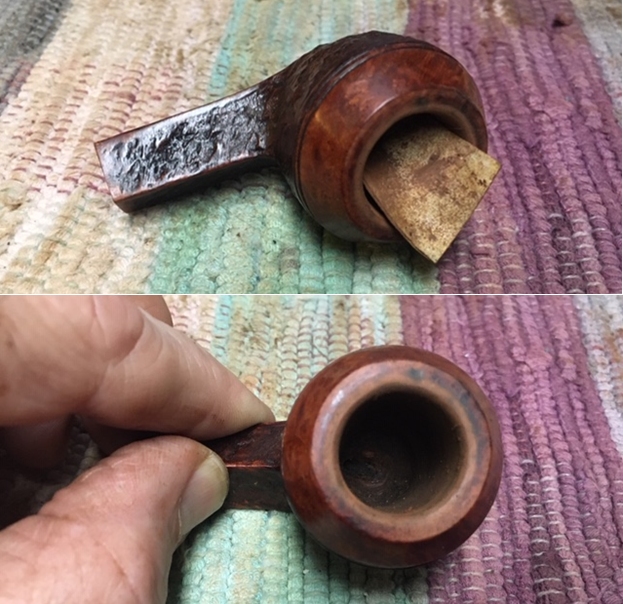
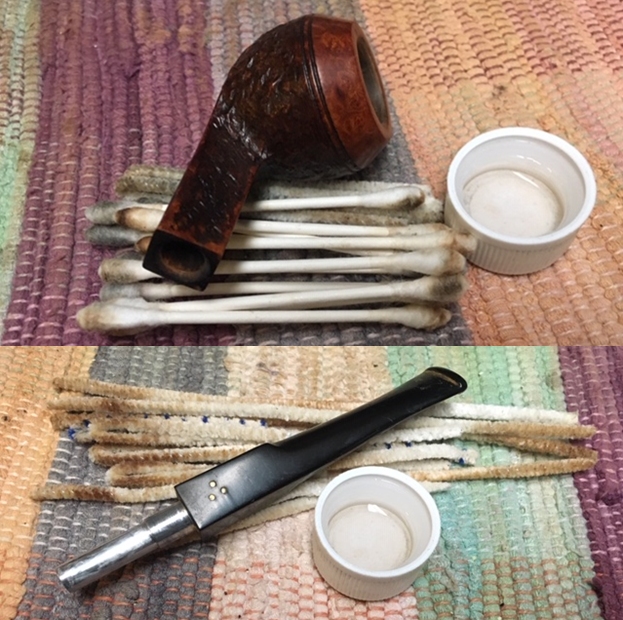
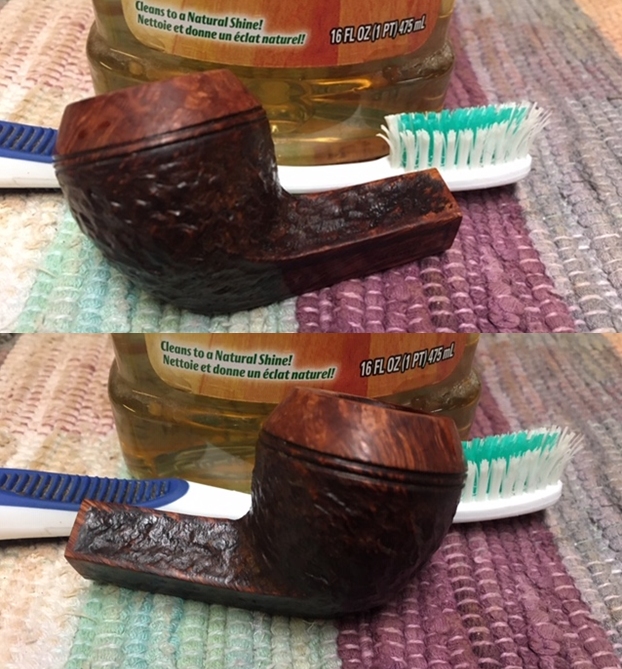
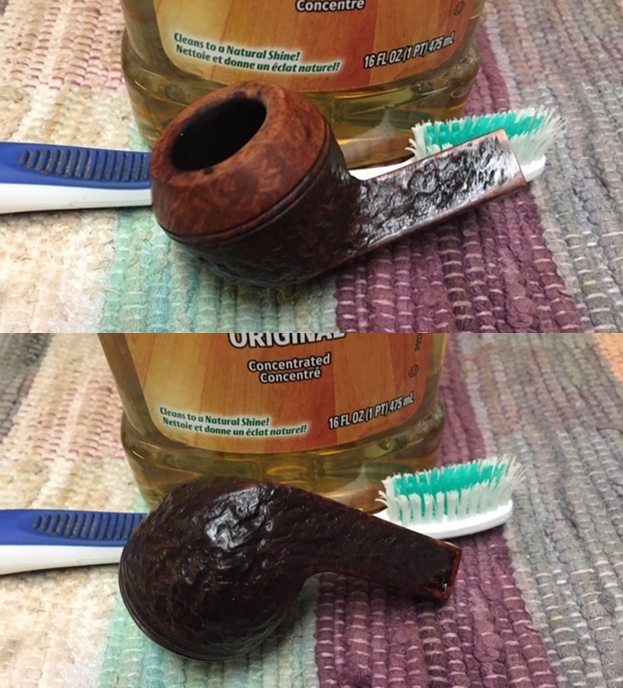
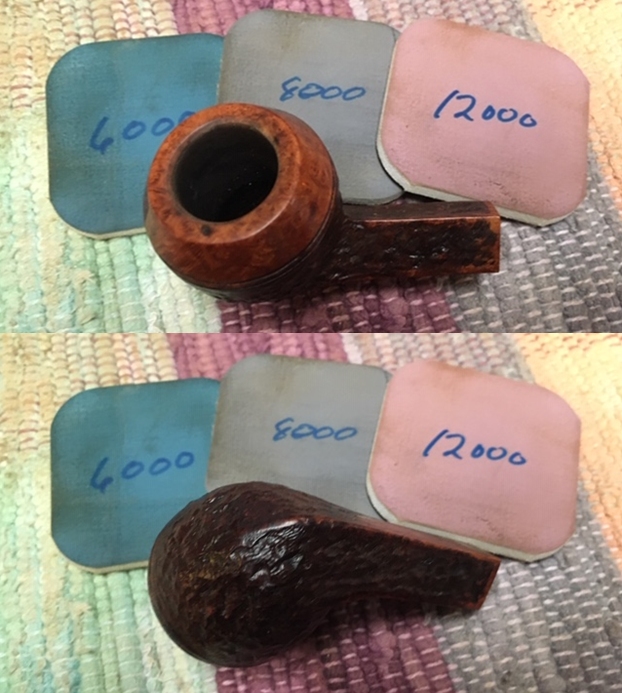
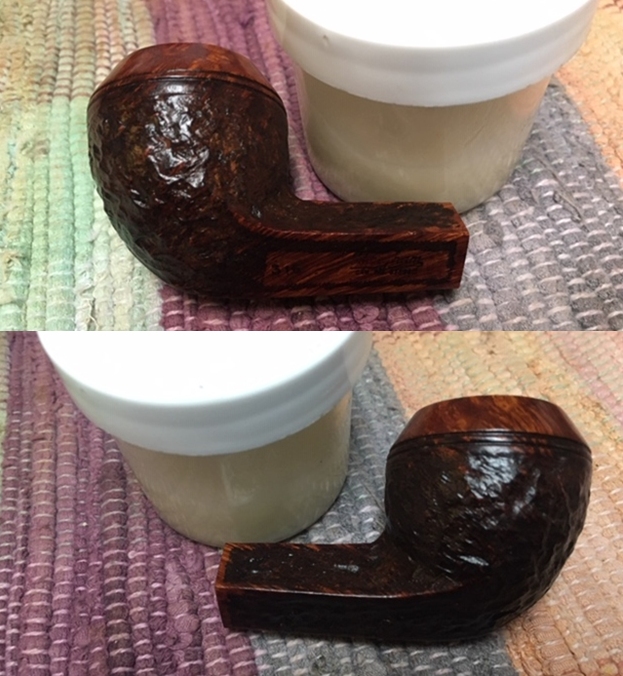
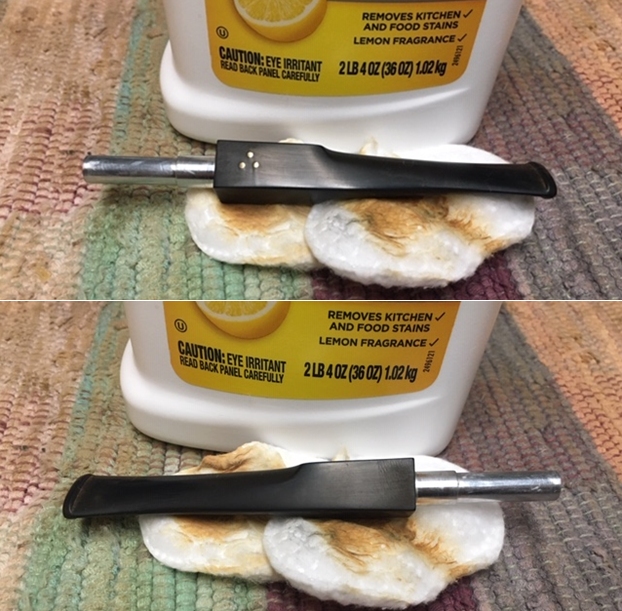
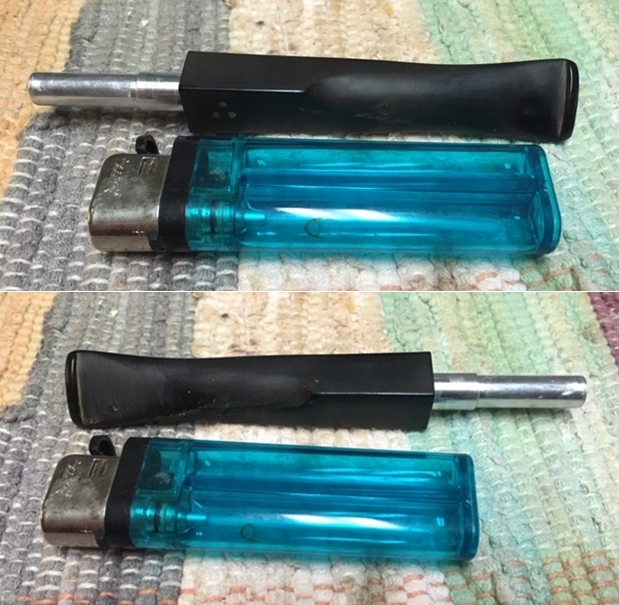
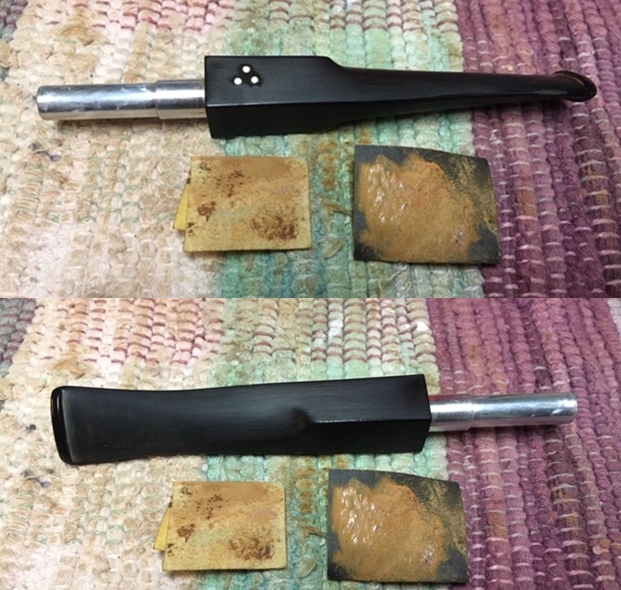
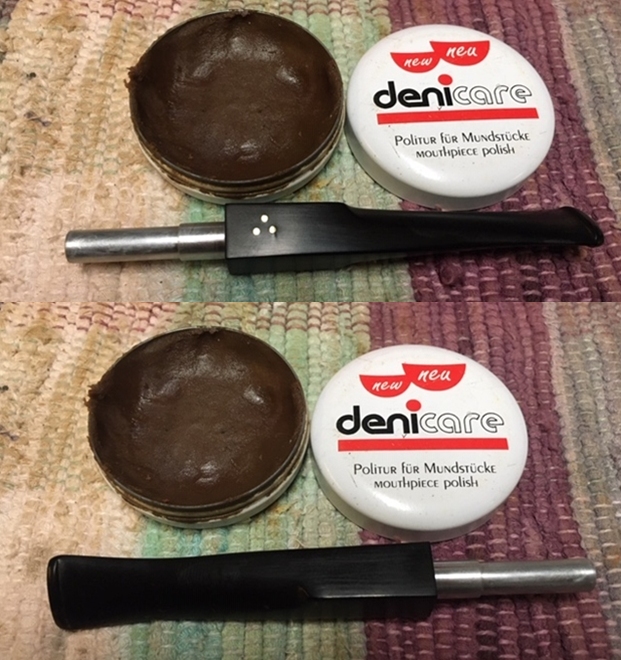
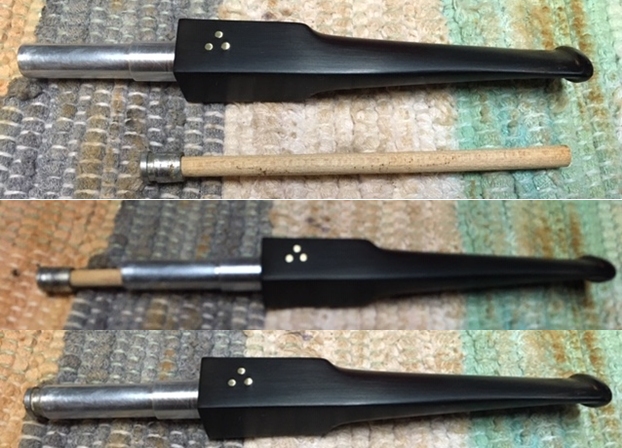
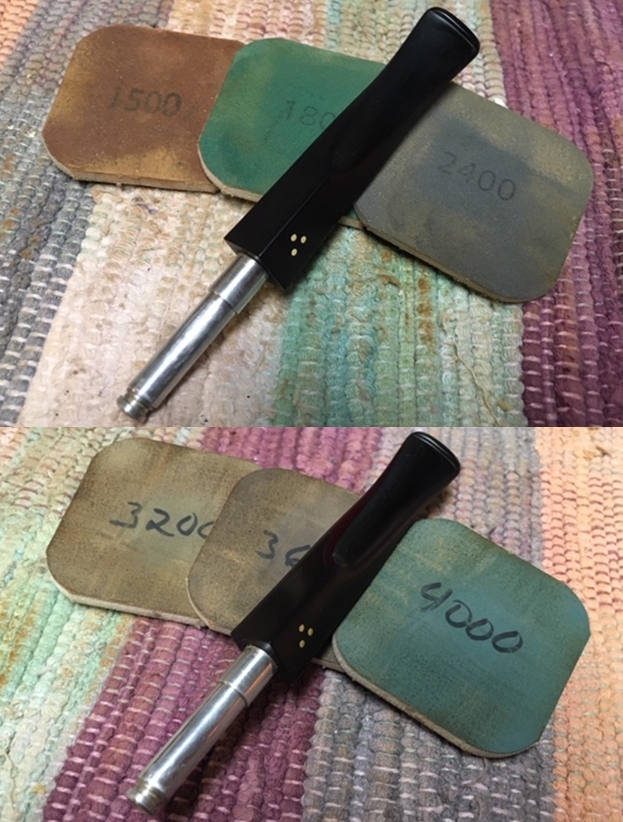
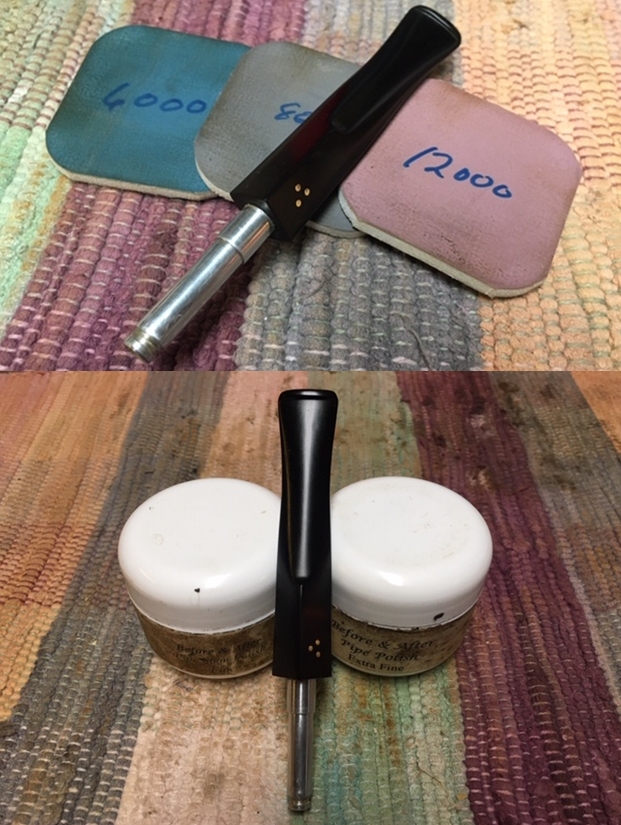
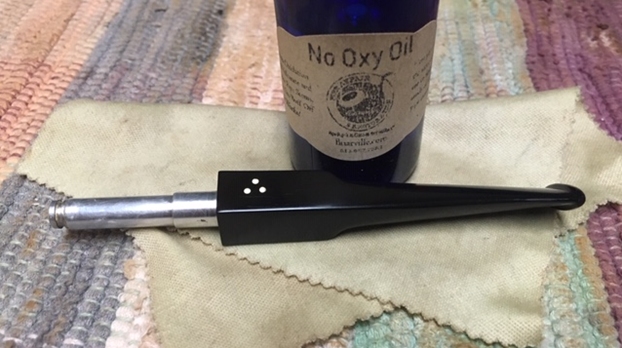
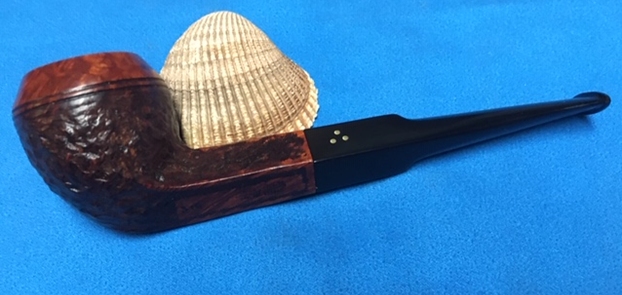
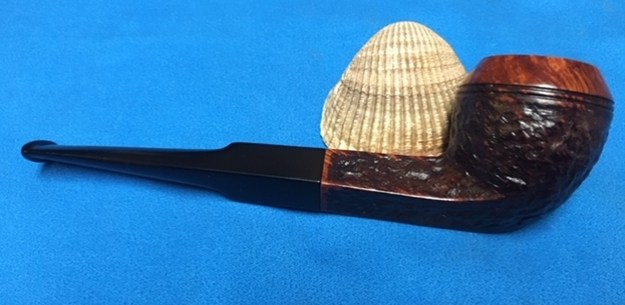
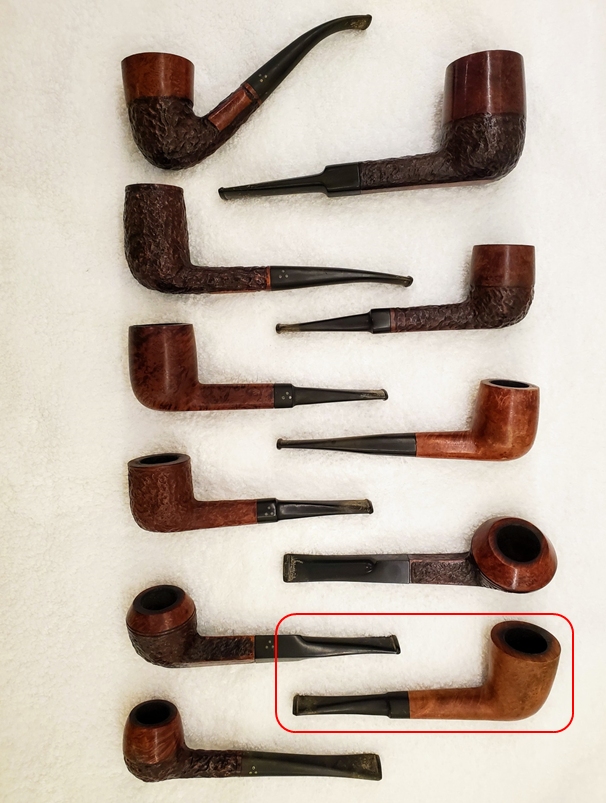
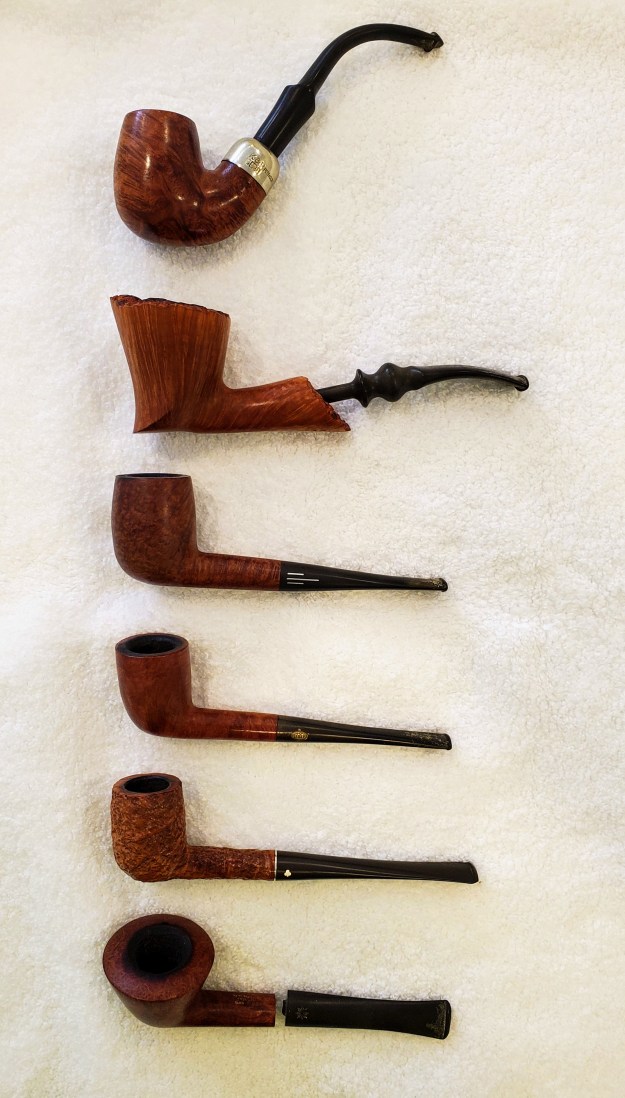
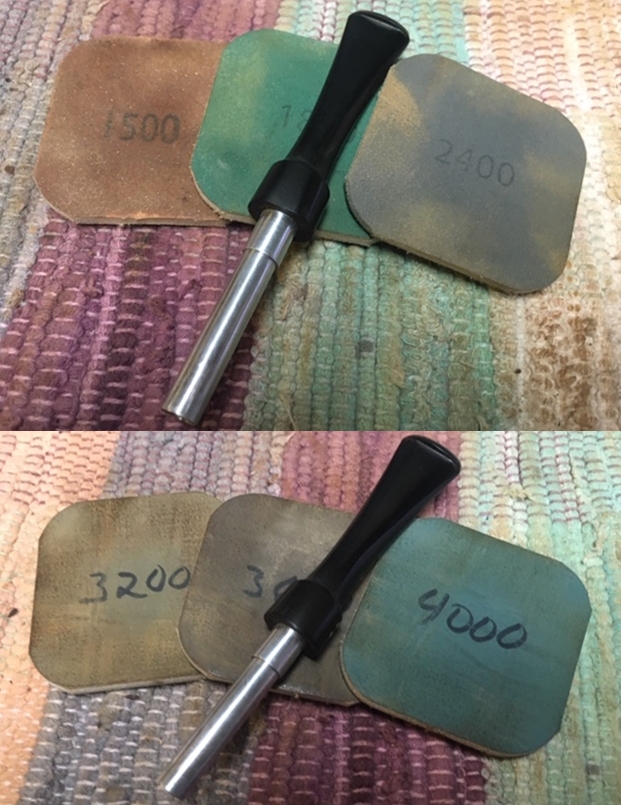
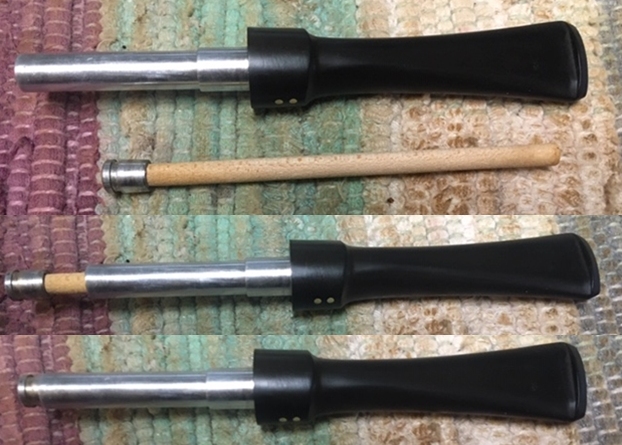
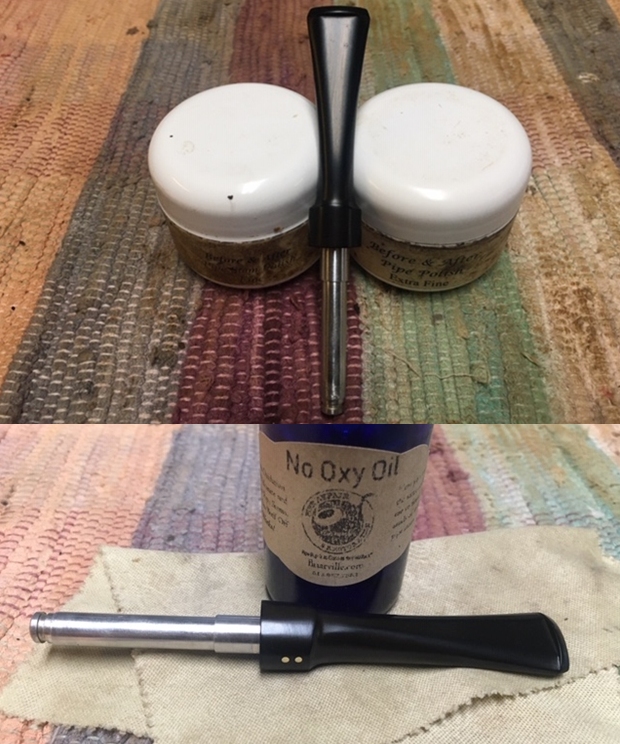
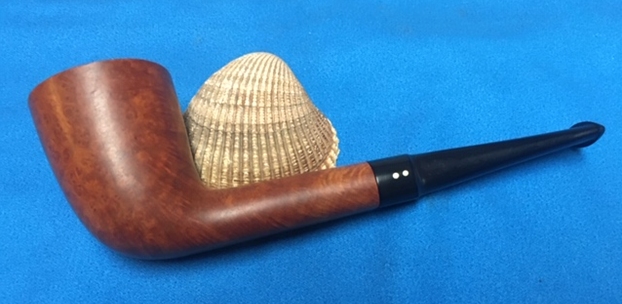
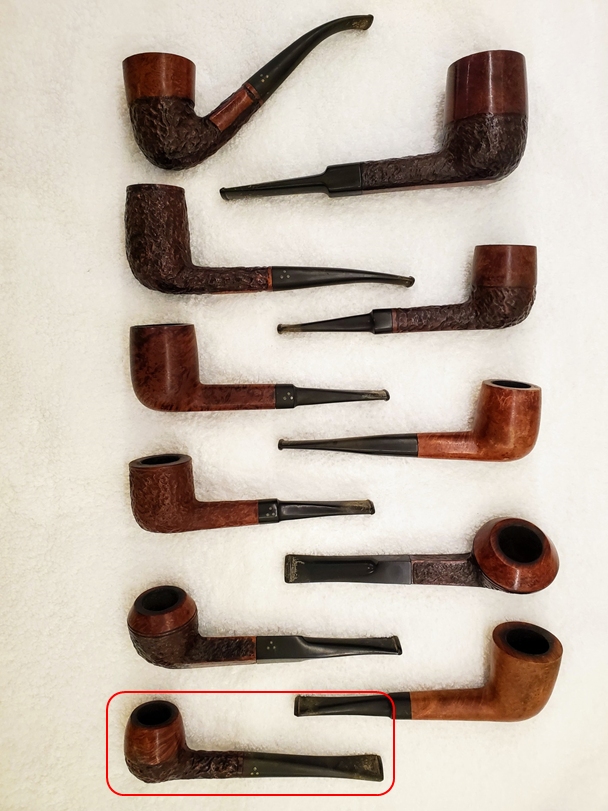
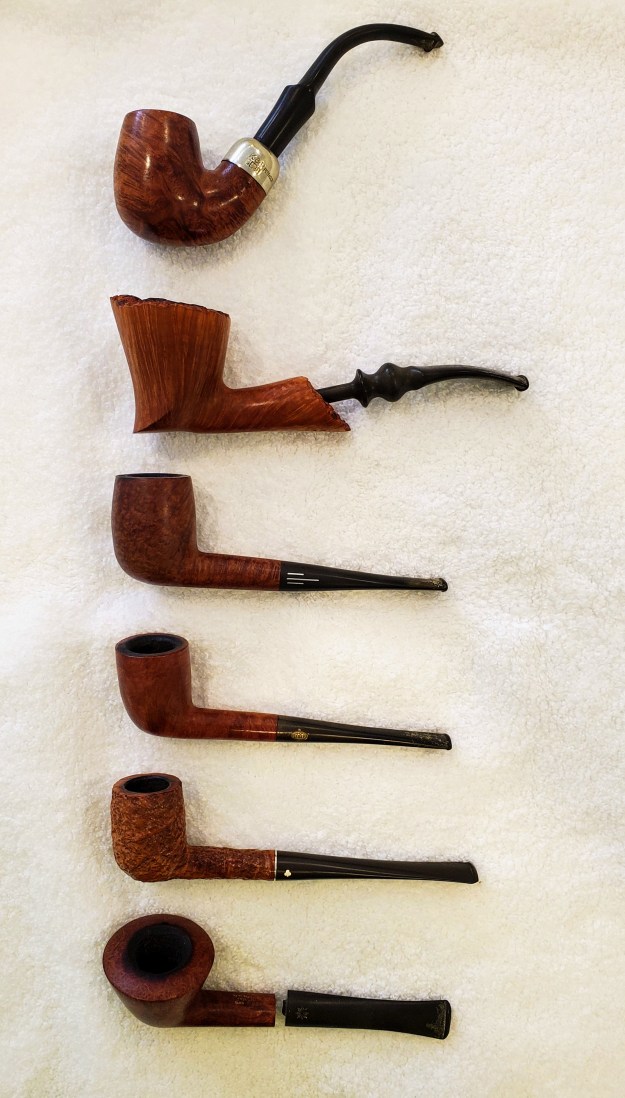
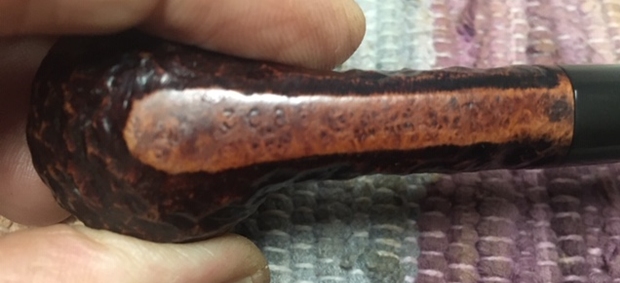
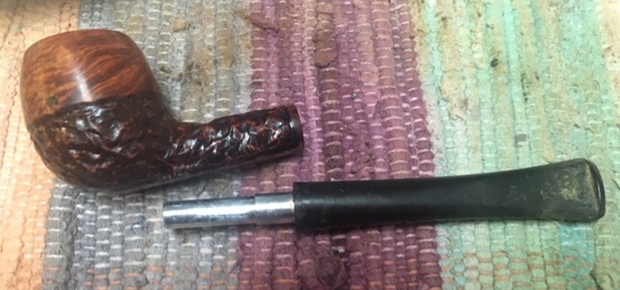
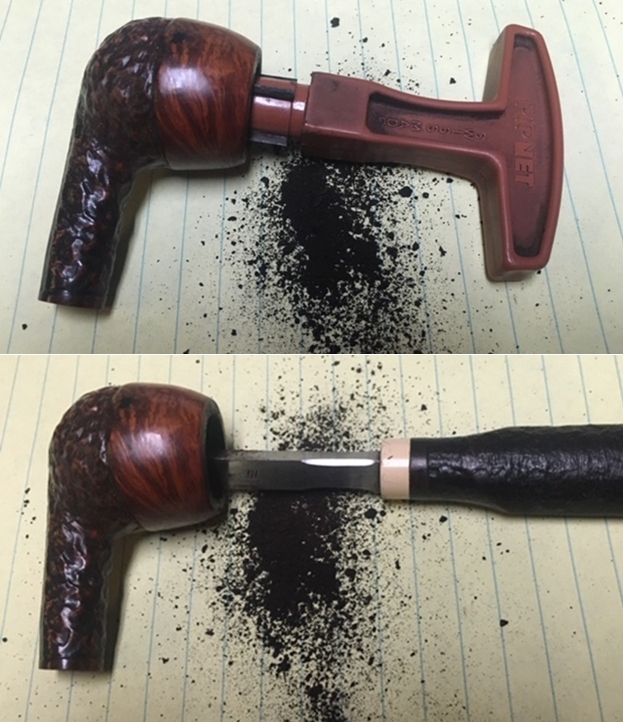
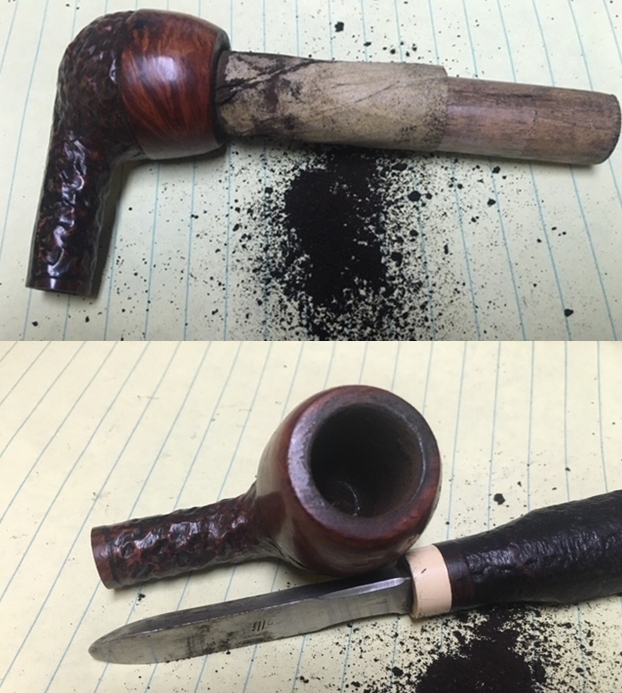
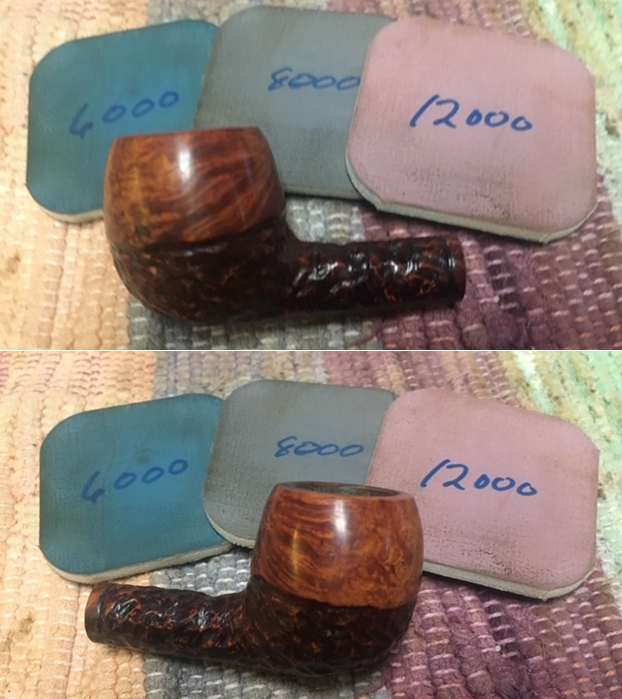
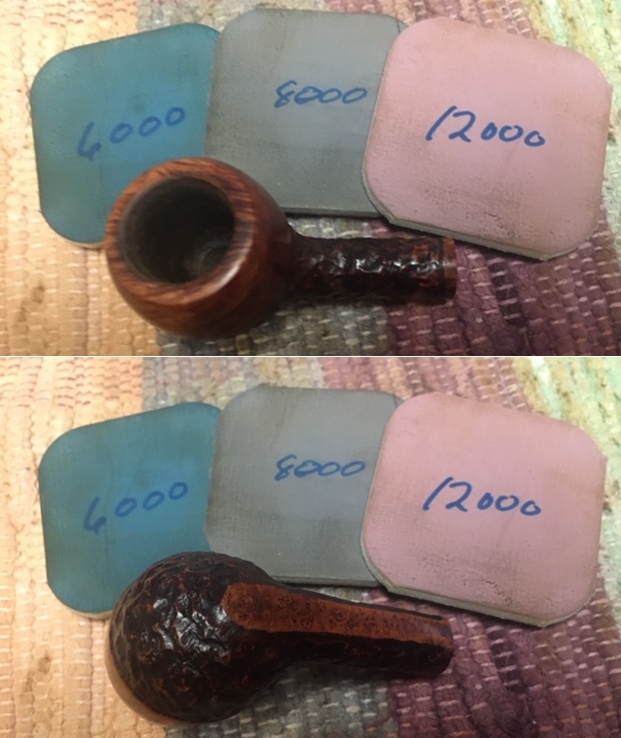
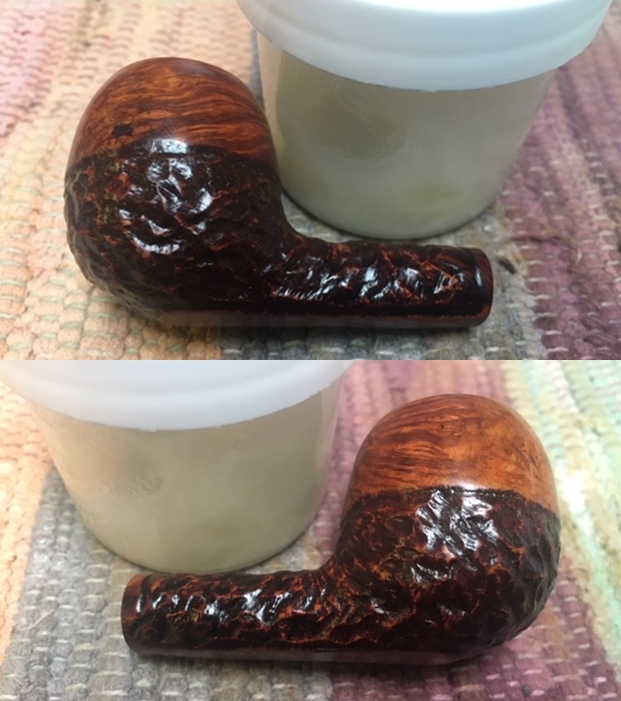
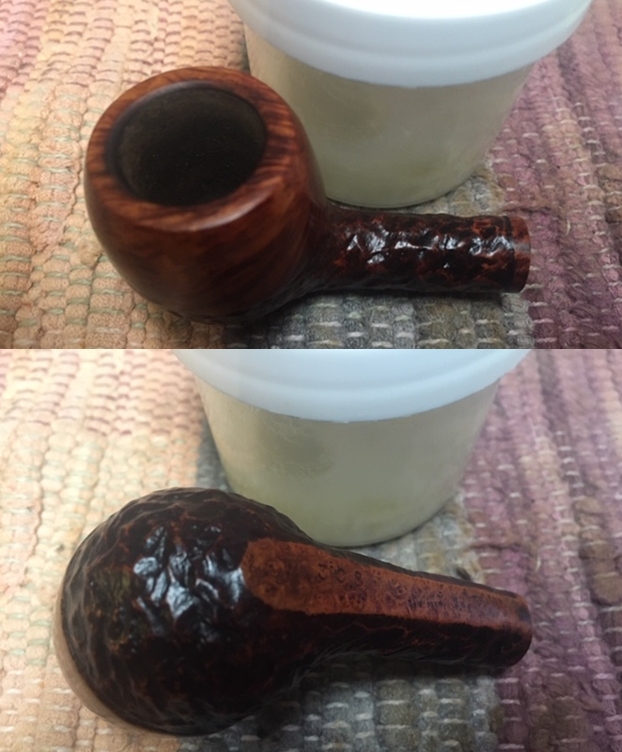
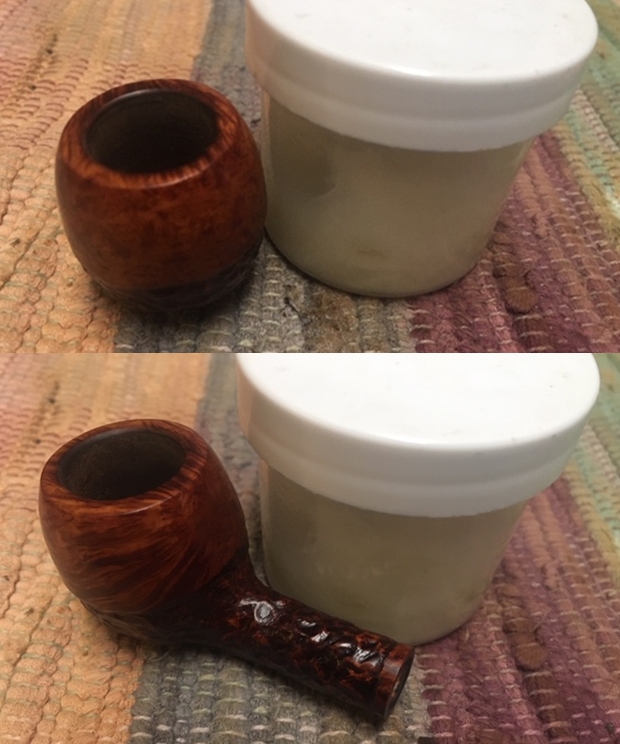
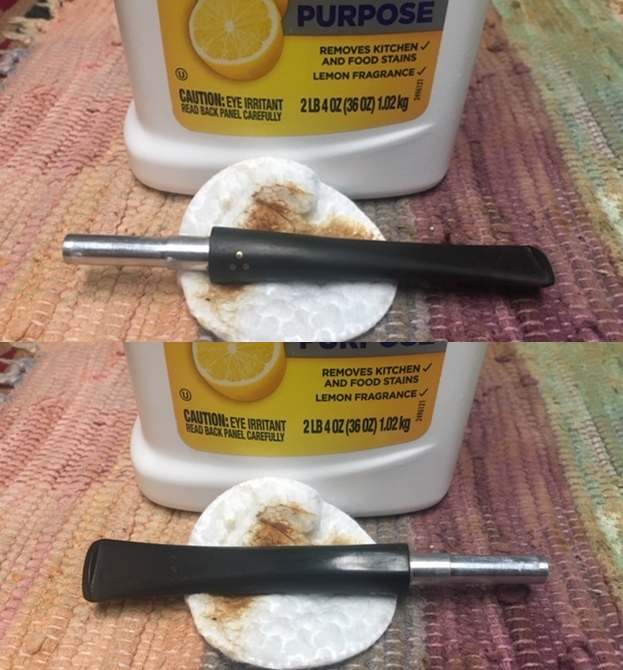
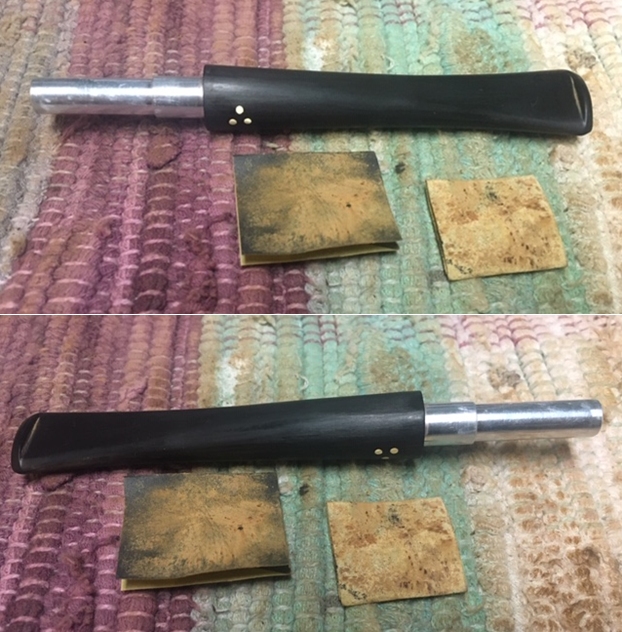
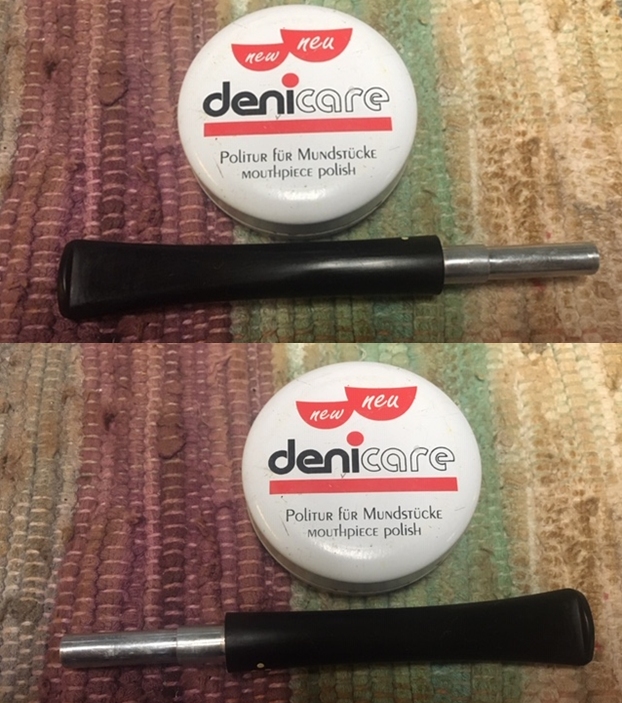
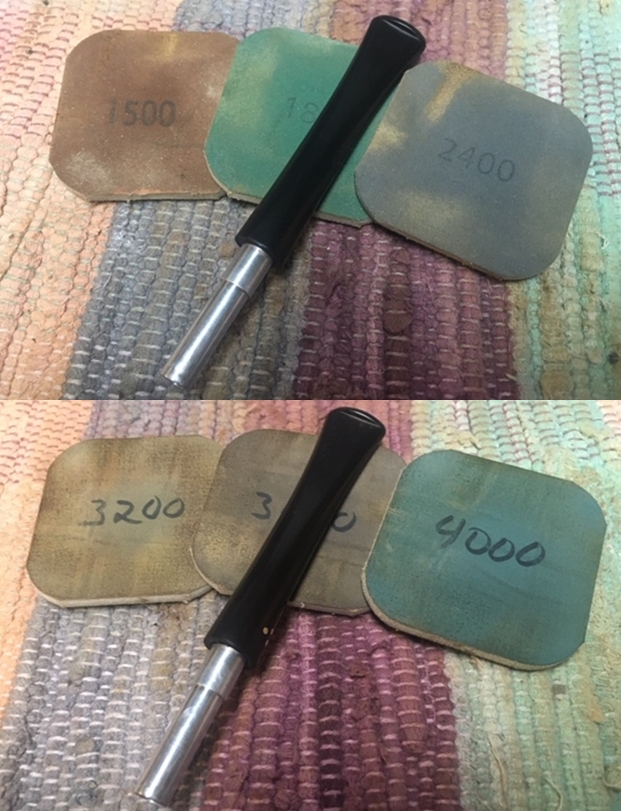
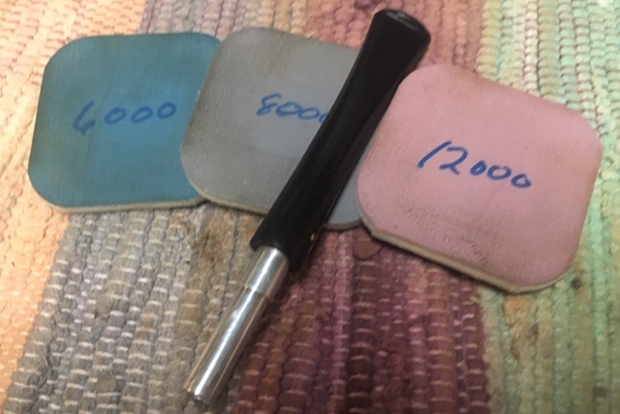
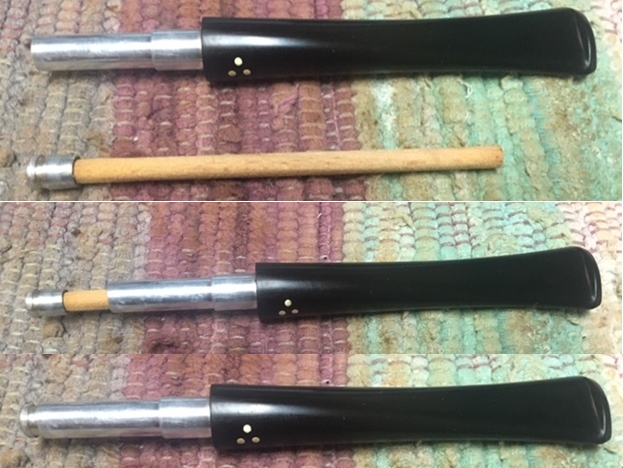
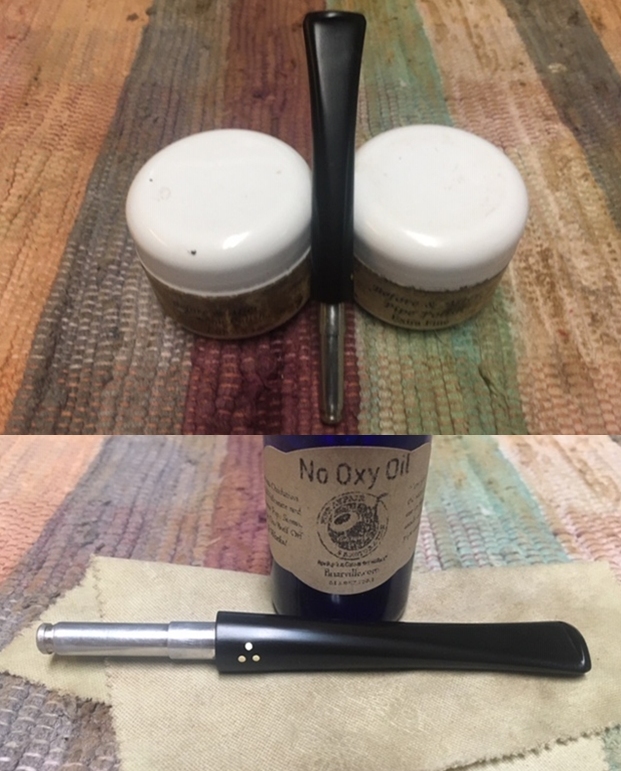
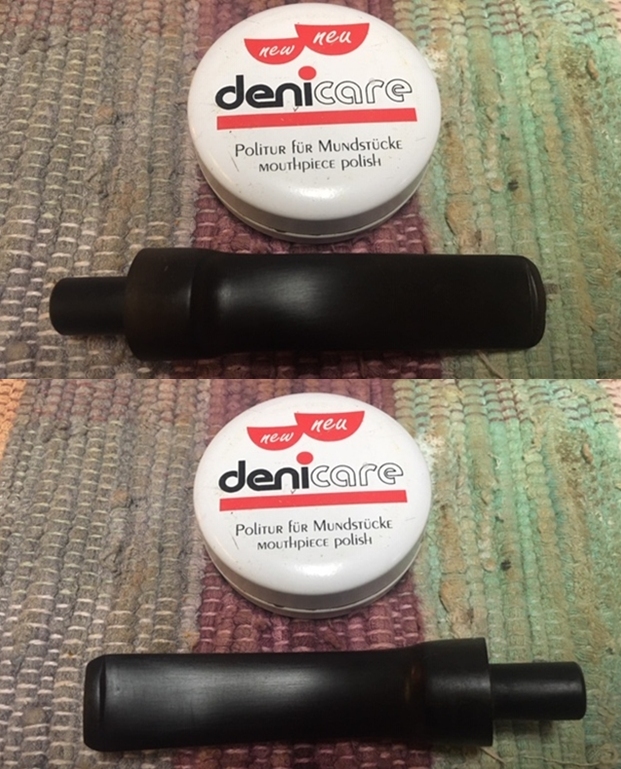
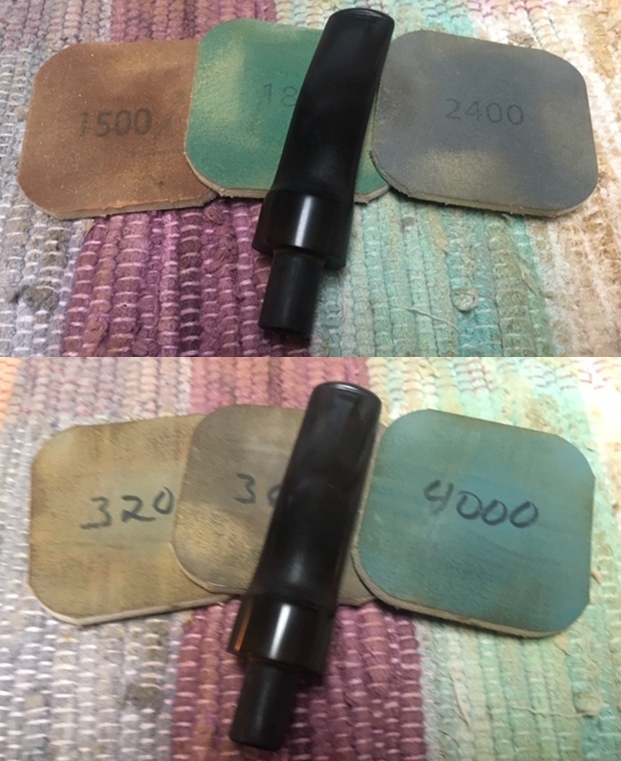
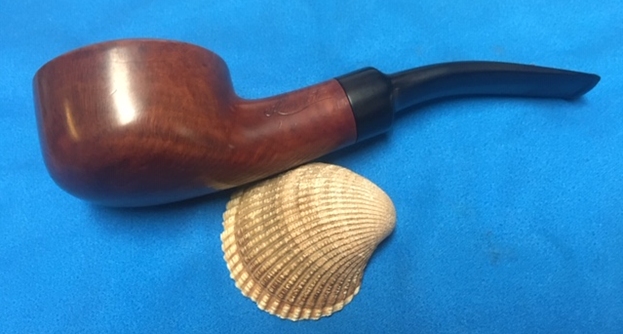
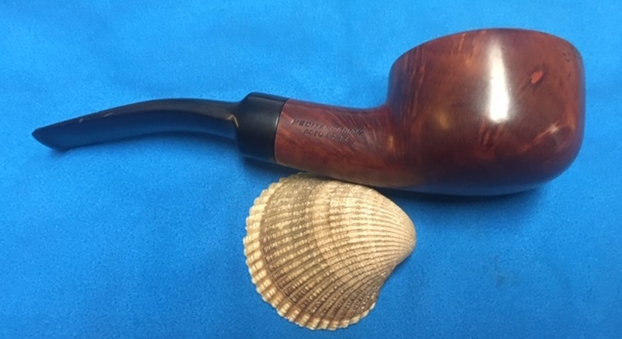
It turns out he said he had 17 pipes. That was certainly more than I expected but I communicated that there was a large queue ahead of him and I would have to fit them in as I could. He was fine with whatever time it took. He sent me the following photos of his collection that he wanted restored. The first photo shows his eleven Brigham pipes – all very interesting shapes. The second photo shows the six various pipes in the collection – A Republic Era Peterson’s System 1312 (Canadian Import), A Bjarne Hand Carved Freehand, a Comoy’s Everyman London smooth billiard, a GBD Popular Dublin 12, an English made Kaywoodie Rustica 72B, a Kriswill Bernadotte 60 with a broken tenon. When the box arrived there were two additional pipes included for a total of 19 – a Ropp 803 Deluxe Cherrywood Poker and a Comoy’s Sandblast Everyman Canadian 296. It was a lot of pipes! I have been randomly choosing the next pipe to work on and chose the final Brigham that I have drawn a purple box around in the photo below.When I unwrapped it the pipe it was a nice looking smooth nicely grained Billiard that was stained with a rich brown colour. It was stamped on the smooth underside of the shank. The stamping was readable. The shape number 333 is on the heel of the pipe and identifies the shape. The stamping Made in Canada and then the Brigham stamp in script followed on the rest of the flattened shank. The age on this one is Post-Patent era, nominally 1960s. The rim top had a thick lava overflow from the thick cake in the bowl. The bowl was in decent condition and the inner edge appeared to be in good condition. There was some darkening around the top and inner edges of the bowl. It was a dirty pipe but the finish appeared to be in okay condition under the grime. The 3 Dot saddle stem was oxidized and had tooth marks and chatter near the button on both sides. There was also some calcification for about an inch up the stem. I took close up photos of the bowl and rim top to show the condition of the bowl and the rim edge as well as the cake and lava overflowing onto the rim top. I also took close up photos of the stem to show its condition as mentioned above.     I took a photo of the stamping on the underside of the shank to show what I was speaking about above. It is very clear and readable. The 333 shape number is on the heel followed by Made In Canada then the Brigham script logo.I removed the stem from the shank to reveal the aluminum tube/tenon that held the Rock Maple Distillator. The distillator was dirty and tightly jammed in the tube. It would need to be replaced. This is another non-Can. Pat. Brigham pipe from the nineteen pipe installment. This is the final, the eleventh of the Brighams. I went to work on it immediately. I reamed the bowl with a PipNet pipe reamer using the second cutting head to take the cake back to bare briar so I could inspect the walls. I cleaned up the remnants with a Savinelli Fitsall Pipe Knife. I sanded the bowl walls with 220 grit sandpaper on a piece of dowel to smooth them out and further examine them. I was happy that the walls looked very good. I scraped the rim top with a Fitsall Knife edge to remove the thick cake. I worked on the darkening on the rim top and the rough inner edge of the bowl with a folded piece of 220 grit sandpaper. I was able to remove the darkening and smooth out the inner edge of the bowl. I cleaned out the mortise area and airway to the bowl and the interior of the metal tube and airway in the stem with pipe cleaners, cotton swabs and alcohol. The aluminum tube was in better condition than others because the distillator had been used.  I scrubbed the surface of the bowl with undiluted Murphy’s Oil Soap and a tooth brush to remove the grime and grit as well as the remnants of the shiny finish on the smooth portions of the bowl.          I wet sanded the rim top and edges of the bowl with micromesh sanding pads – 1500-12000 grit sanding pads. I wiped the bowl surface down with a damp cloth after each sanding pad to remove the sanding dust. Once I finished the bowl looked good.   I rubbed the bowl and shank down with Before & After Restoration Balm. I worked it into the surface of the briar with my fingertips to clean, enliven and protect it. I let the balm sit for a little while and then buffed with a cotton cloth to raise the shine.   I set the bowl aside and turned my attention to the stem. I rubbed the stem down with Soft Scrub on with a cotton pad and it removed the oxidation and the calcification build up. It looked a lot better.   This was the first of these pipes with some significant tooth indentations. Heating the vulcanite did not do anything to remove them so I wiped the stem down and filled them in with clear super glue. With this done I set the pipe aside and called it a night. Tomorrow I would address the stem.I sanded out the repairs to the tooth marks, chatter and oxidation with 220 grit sandpaper and started the polishing with 400 grit wet dry sandpaper. I rubbed down the stem with Denicare Mouthpiece Polish and a cotton pad to remove the remnants of oxidation and to blend in the sanding. The polish is a red gritty paste that works wonders on removing stubborn remnants of oxidation in the crease. The stem is starting to show promise at this point in the process. Before I finished the polishing stem I decided to fit it with a new Rock Maple Distillator.    I polished the stem with micromesh sanding pads – wet sanding it with 1500-12000 grit pads. I wiped the stem down after each sanding pad with a cotton pad to remove the sanding debris.  I finished polishing the stem with Before & After Pipe Stem Polish – both fine and extra fine. I finished by wiping it down with Briarville’s No Oxy Oil and buffing it to a shine.     I am excited to finish last Brigham of the lot as it moves me one pipe closer to being finished. I put the pipe back together and buffed it with Blue Diamond on the buffing wheel. I gave the bowl and the stem multiple coats of carnauba wax. I hand buffed the pipe with a clean buffing pad to raise the shine. It is fun to see what the polished bowl looks like with the grain popping through on the bowls sides and rim top. Added to that the polished black vulcanite stem with the shining brass pins was beautiful. This mixed grain on the smooth finish Brigham Exclusive Billiard is nice looking and the pipe feels great in my hand. It is light and well balanced. Have a look at it with the photos below. This 3 Dot Billiard is the last of the Brigham pipes that I have worked on in this collection. The dimensions are Length: 5 ½ inches, Height: 2 inches, Outside diameter of the bowl: 1 3/8 inches, Chamber diameter: ¾ of an inch. This is the 17th of the 19 pipes sent to me from Eastern Canada for restoration. Once again I am looking forward to what the pipeman who sent it thinks of this restoration. Lots more to do in this lot! Thanks to each of you who are reading this blog. Remember we are not pipe owners; we are pipemen and women who hold our pipes in trust until they pass on into the trust of the next pipeman or woman.
Breathing Life into a Can Pat Brigham Exclusive 314 Pot


Blog by Steve Laug

Not too long ago I received an email from a fellow in Kitchener, Ontario regarding some pipes he needed cleaned up. He had been referred to me by my local pipe and cigar shop. While I am not currently adding more pipes to my queue of repairs I have made a commitment to the shop to work on pipes for their customers. Generally they have one or two pipes that need a bit of work. This fellow sent me the following email:

I just came across my smoking pipes that I’ve had in storage for about 40 years. I’m wondering what you’d charge to have them refurbished. There are 17 in total (11 are Brighams and 6 are various).

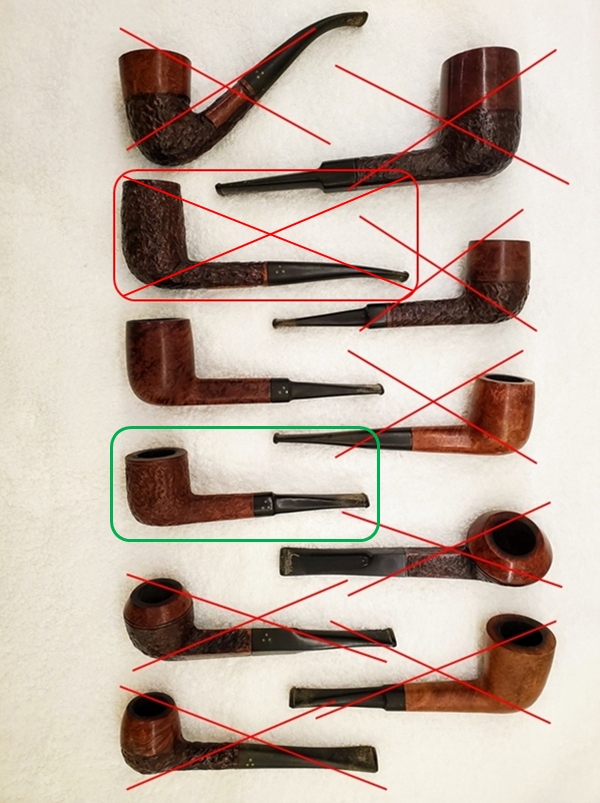
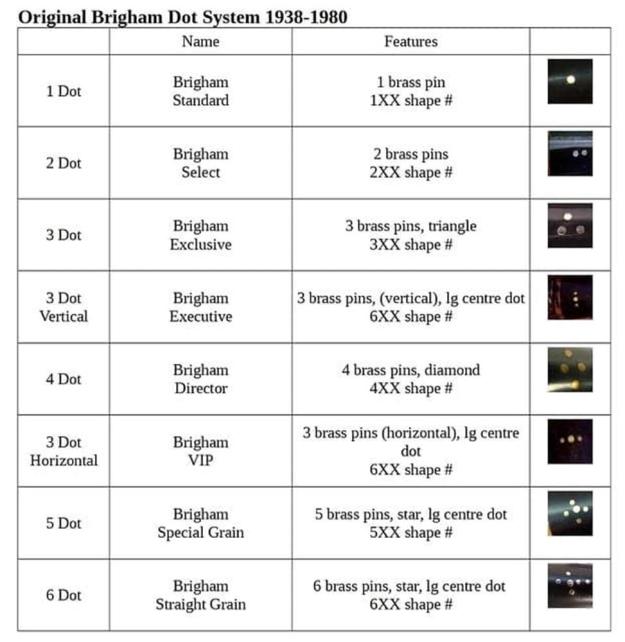
It turns out he said he had 17 pipes. That was certainly more than I expected but I communicated that there was a large queue ahead of him and I would have to fit them in as I could. He was fine with whatever time it took. He sent me the following photos of his collection that he wanted restored. The first photo shows his eleven Brigham pipes – all very interesting shapes. The second photo shows the six various pipes in the collection – A Republic Era Peterson’s System 1312 (Canadian Import), A Bjarne Hand Carved Freehand, a Comoy’s Everyman London smooth billiard, a GBD Popular Dublin 12, an English made Kaywoodie Rustica 72B, a Kriswill Bernadotte 60 with a broken tenon. When the box arrived there were two additional pipes included for a total of 19 – a Ropp 803 Deluxe Cherrywood Poker and a Comoy’s Sandblast Everyman Canadian 296. It was a lot of pipes! I have been randomly choosing the next pipe to work on and chose the Brigham that I have drawn a green box around in the photo below.When I unwrapped it the pipe it was a nice looking rusticated pot that was lighter in colour than the other rusticated Brighams in the collection. It was stamped on the smooth underside of the shank. The stamping is faint but part of it was readable. The shape number 314 is on the heel of the pipe and identifies the shape. It is followed by the Can. Pat. 372982 and then the Brigham stamp in script. It had a rusticated bowl and shank with a smooth rim top. The rim top had a lava overflow from the medium cake in the bowl. The bowl was in decent condition, slightly out of round on the inner edge. There was some darkening around the top and inner edges of the bowl. It was a dirty pipe but the finish appeared to be in okay condition under the grime. The 3 Dot saddle stem was oxidized and had tooth marks and chatter near the button on both sides. There was also some calcification for about an inch up the stem. I took close up photos of the bowl and rim top to show the condition of the bowl and damage to the rim edge as well as the cake and lava overflowing onto the rim top. I also took close up photos of the stem to show its condition as mentioned above.     I took a photo of the faint stamping on the underside of the shank to show what I was speaking about above. It is very clear and readable. The 314 shape number is on the heel followed by the Can. Pat. 372982 number then the Brigham script logo.I removed the stem from the shank to reveal the aluminum tube/tenon that held the Rock Maple Distillator. The distillator was dirty and tightly jammed in the tube. It would need to be replaced. Before starting my clean up work on the pipe I turned to a chart that Charles Lemon of Dad’s Pipes sent to me on the patent era Brighams. There were made from 1938-1980. As the pipe I am working on is a Patent pipe, it’s more accurate to refer to its grade by name (the post 1980 grading scheme refers to Dots). Here is the  chart that Charles sent me. The pipe I am working on is thus a Brigham Exclusive with the 3 brass pins arranged in a triangle. With this pipe I am continuing to work on another Can Pat Brigham pipe from the nineteen pipe installment. This is tenth of the eleven Brighams. I went to work on it immediately. I reamed the bowl with a PipNet pipe reamer using the second cutting head to take the cake back to bare briar so I could inspect the walls. I cleaned up the remnants with a Savinelli Fitsall Pipe Knife. I sanded the bowl walls with 220 grit sandpaper on a piece of dowel to smooth them out and further examine them. I was happy that the walls looked very good.    I worked on the darkening on the rim top and the rough inner edge of the bowl with a folded piece of 220 grit sandpaper. I was able to remove the darkening and smooth out the inner edge of the bowl.    I cleaned out the mortise area and airway to the bowl and the interior of the metal tube and airway in the stem with pipe cleaners, cotton swabs and alcohol. The aluminum tube was dirty because it was missing the distillator and had been smoked sans filter.    I scrubbed the surface of the bowl with undiluted Murphy’s Oil Soap and a tooth brush to remove the grime and grit as well as the remnants of the shiny finish on the smooth portions of the bowl.     I wet sanded the rim top and edges of the bowl with micromesh sanding pads – 1500-12000 grit sanding pads. I wiped the bowl surface down with a damp cloth after each sanding pad to remove the sanding dust. Once I finished the bowl looked good.    I rubbed the bowl and shank down with Before & After Restoration Balm. I worked it into the surface of the briar with my fingertips to clean, enliven and protect it. I let the balm sit for a little while and then buffed with a cotton cloth to raise the shine.   I set the bowl aside and turned my attention to the stem. I rubbed the stem down with Soft Scrub on with a cotton pad and it removed the oxidation and the calcification build up. It looked a lot better.        I sanded out the tooth marks, chatter and oxidation with 220 grit sandpaper and started the polishing with 400 grit wet dry sandpaper.     I rubbed down the stem with Denicare Mouthpiece Polish and a cotton pad to remove the remnants of oxidation and to blend in the sanding. The polish is a red gritty paste that works wonders on removing stubborn remnants of oxidation in the crease. The stem is starting to show promise at this point in the process.   Before I finished the polishing stem I decided to fit it with a new Rock Maple Distillator.  I polished the stem with micromesh sanding pads – wet sanding it with 1500-12000 grit pads. I wiped the stem down after each sanding pad with a cotton pad to remove the sanding debris.  I finished polishing the stem with Before & After Pipe Stem Polish – both fine and extra fine. I finished by wiping it down with Briarville’s No Oxy Oil and buffing it to a shine.     I am excited to finish another of the lot as it moves me one pipe closer to being finished. I put the pipe back together and buffed it with Blue Diamond on the buffing wheel. I gave the bowl and the stem multiple coats of carnauba wax. I hand buffed the pipe with a clean buffing pad to raise the shine. It is fun to see what the polished bowl looks like with the grain popping through on the rim top and the rustication coming to life. Added to that the polished black vulcanite stem with the shining brass pins was beautiful. This mixed smooth and rusticated finish Brigham Exclusive Pot is nice looking and feels great in my hand. It is light and well balanced. Have a look at it with the photos below. This is the smallest of the Brigham pipes that I have worked on in this collection. The dimensions are Length: 5 inches, Height: 1 5/8 inches, Outside diameter of the bowl: 1 ¼ inches, Chamber diameter: ¾ of an inch. This is the 16th of the 19 pipes sent to me from Eastern Canada for restoration. Once again I am looking forward to what the pipeman who sent it thinks of this restoration. Lots more to do in this lot! Thanks to each of you who are reading this blog. Remember we are not pipe owners; we are pipemen and women who hold our pipes in trust until they pass on into the trust of the next pipeman or woman.
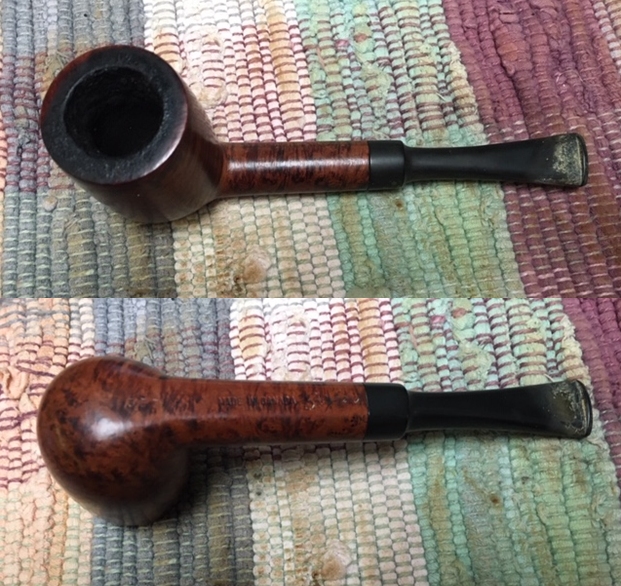
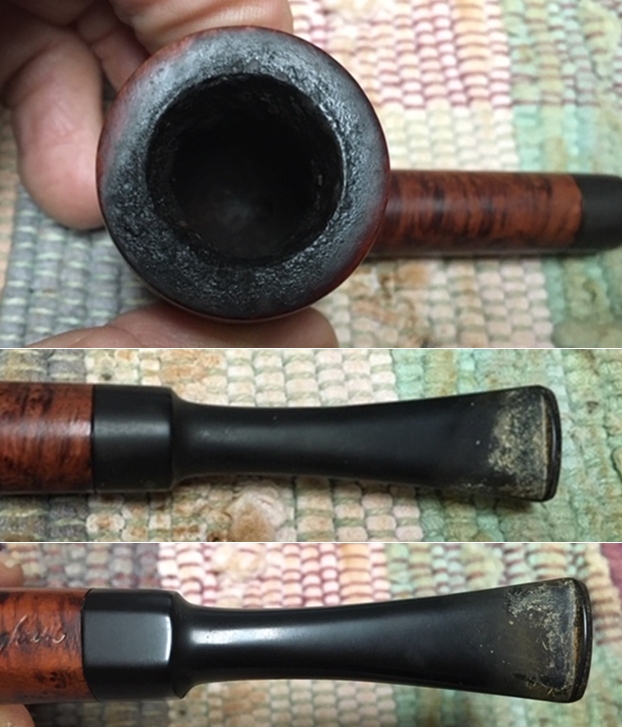
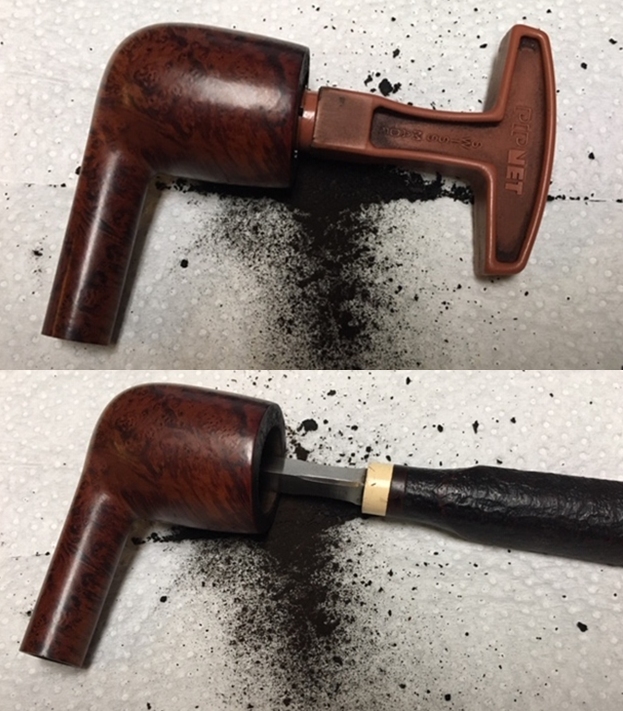
Refurbishing A Preben Holm # 3 Freehand Pipe


Blog by Paresh Deshpande

The first ever Preben Holm in my collection was from eBay about two years back. It came to me with a broken stem and tenon stuck in to the mortise. This pipe received a new lease on life in the month of May last year when Steve, Jeff and Dal Stanton visited me here in India. I learned the process of tenon replacement along with many other tips and processes in pipe restoration. Here is the link to the informative write up by Steve on this pipe; https://rebornpipes.com/2019/05/14/restoring-a-preben-holm-hand-cut-sandblast-freehand-in-pune-india/

The second Preben Holm in my collection came from my Mumbai Bonanza, which I really enjoyed working on; (https://rebornpipes.com/2019/08/12/refurbishing-a-tired-preben-holm-1-from-the-mumbai-bonanza-lot/) .

The Preben Holm, currently on my work table, came to me from a seller on eBay along with another Preben Holm. Both these pipes had some serious stem issues which really kept other buyers away from placing their bids and lucky me, I got both these pipes for a really good price. Even though both pipes came to me together, I shall be working on them separately since they each have different set of issues involved.

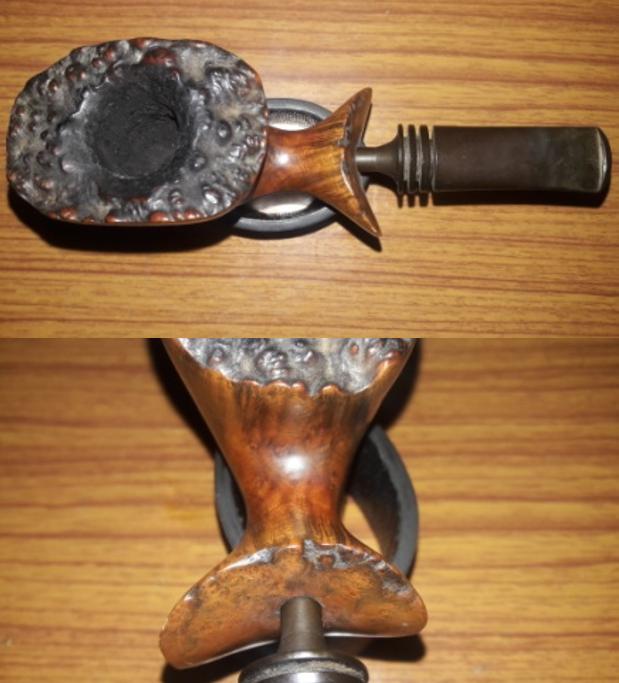
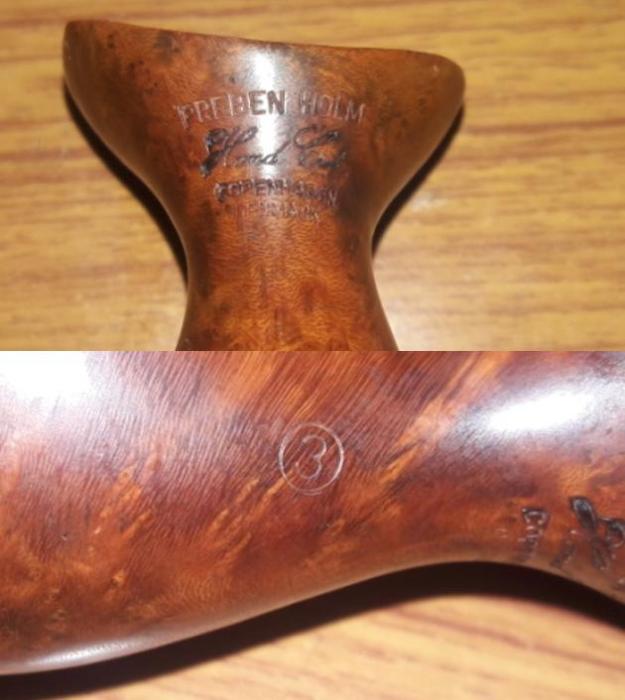
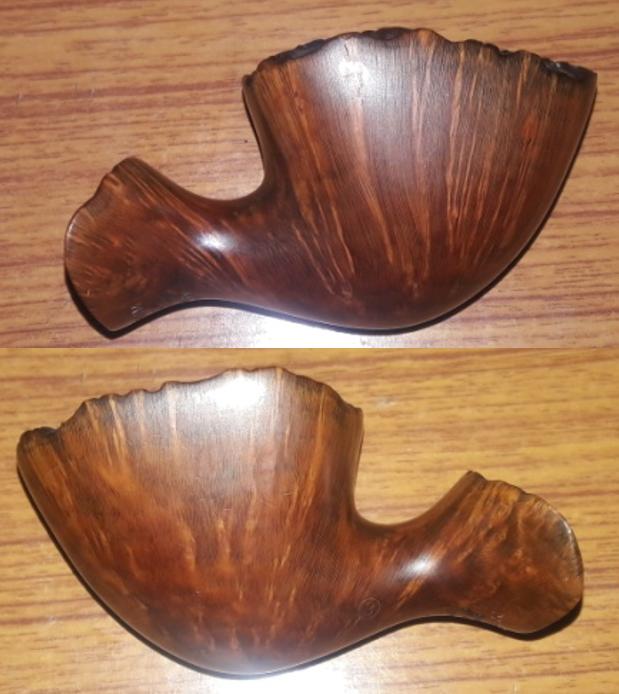
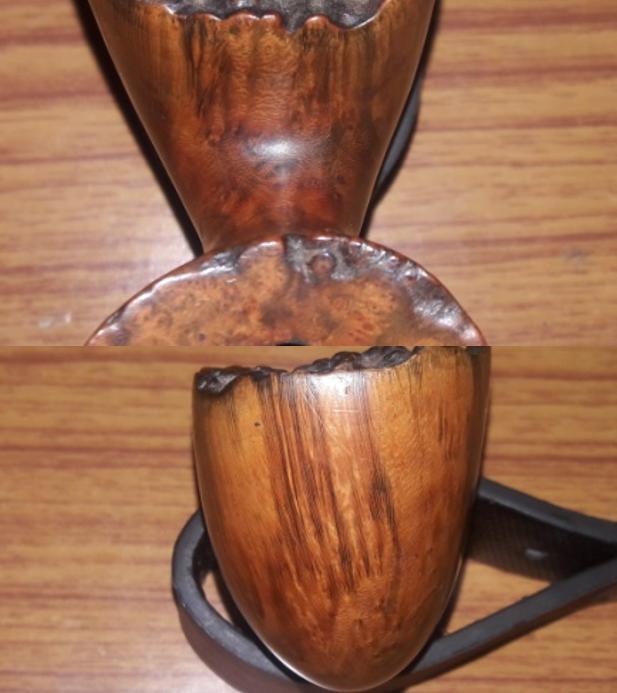
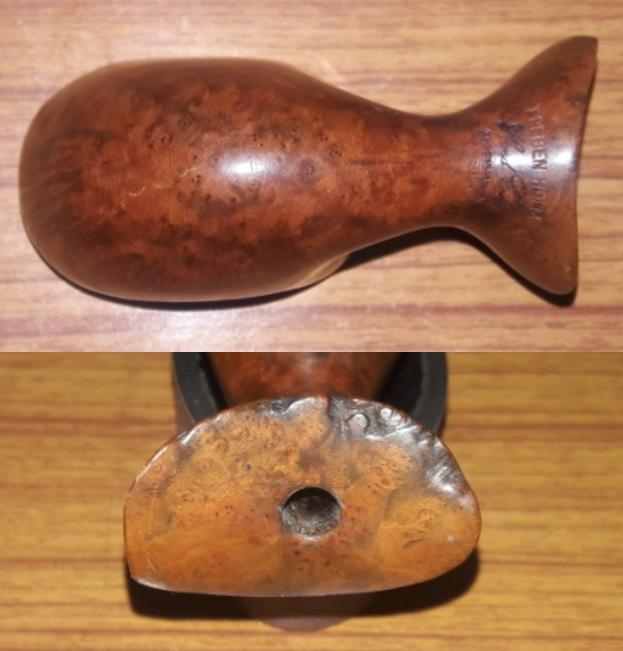
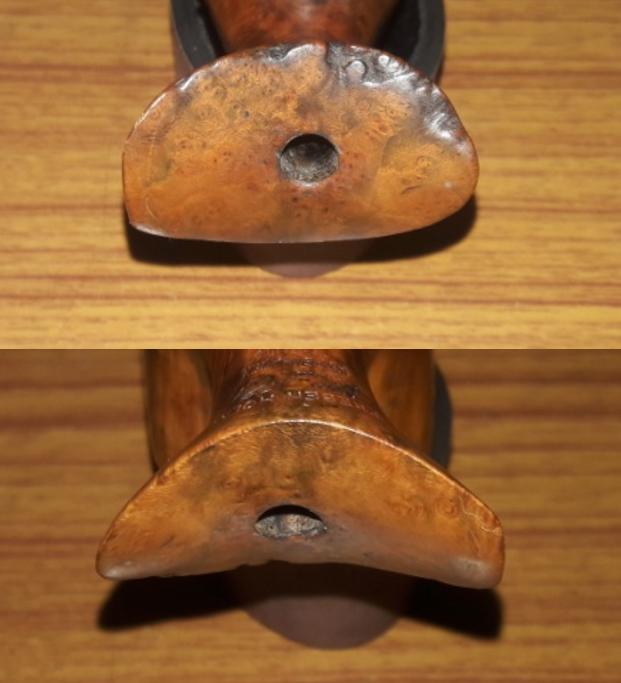
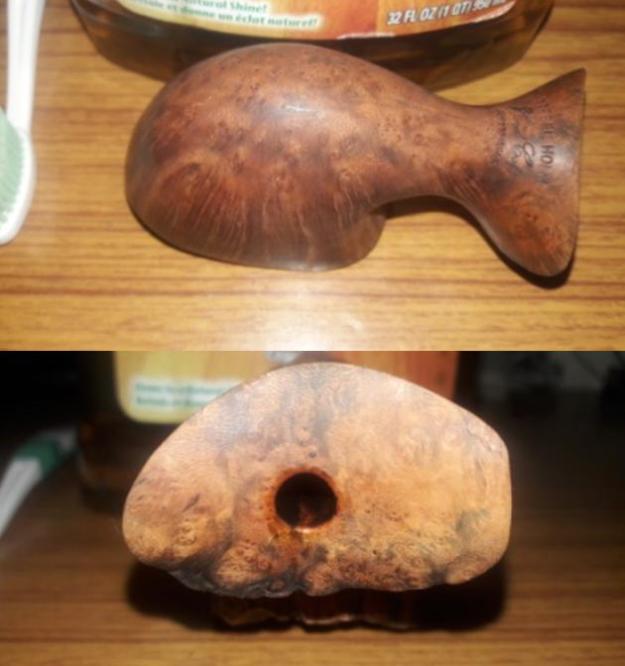
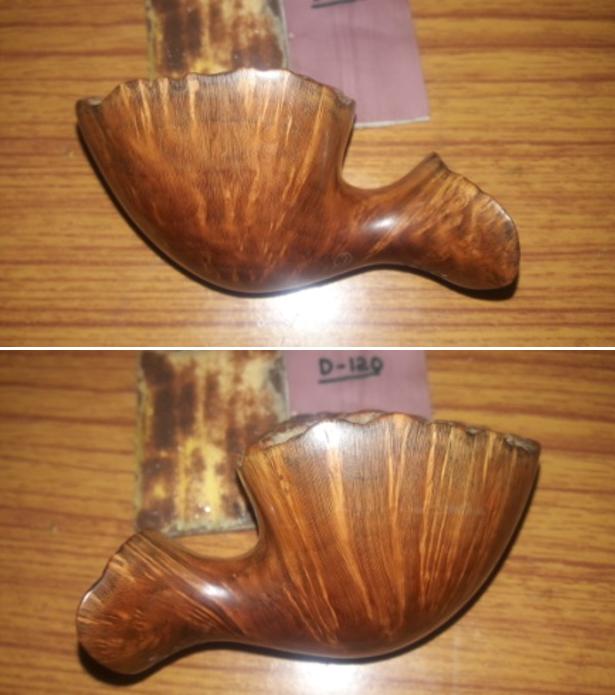
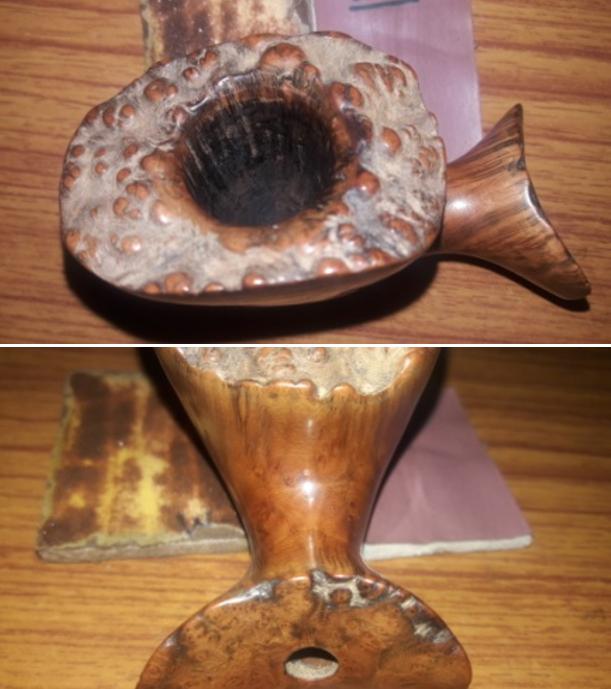
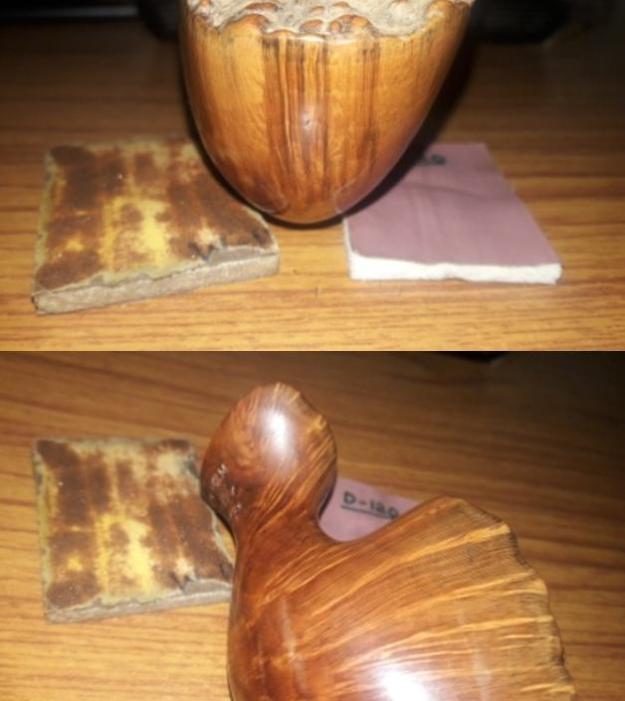
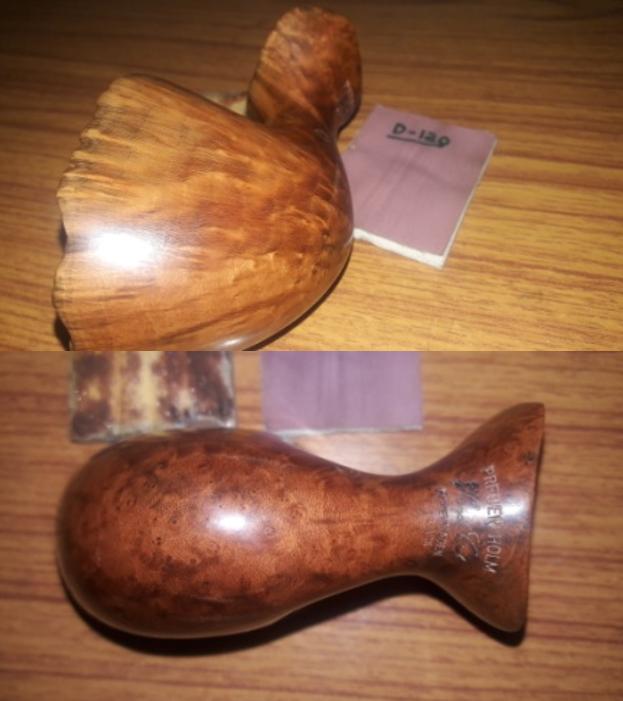
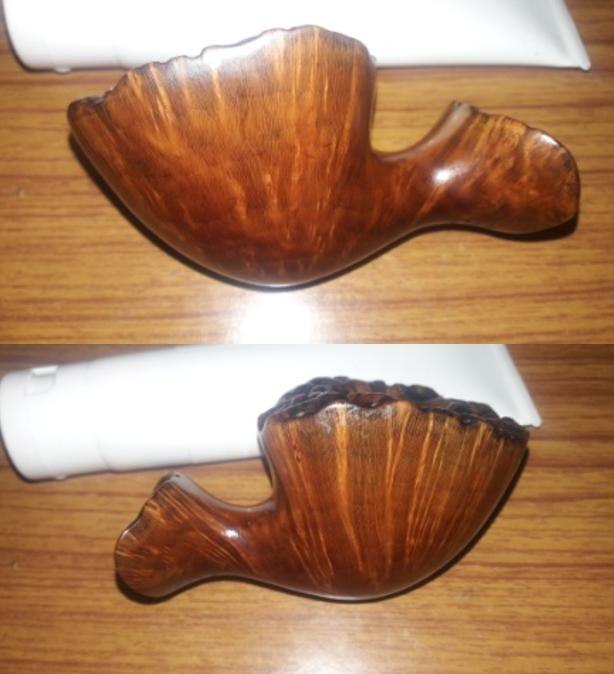
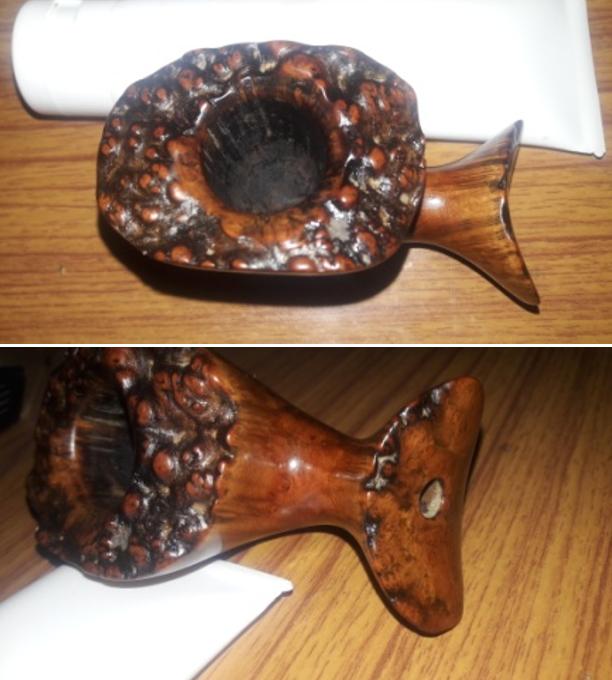
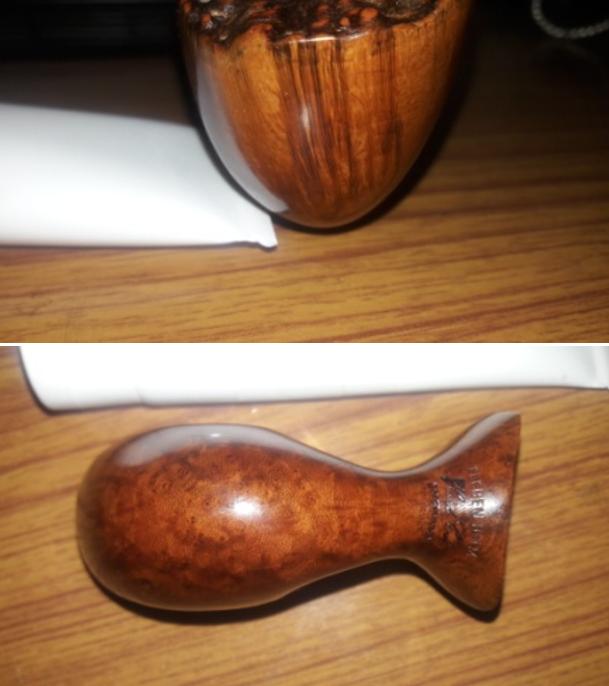
The first PH that I selected to work on is a beautiful freehand with some great flame grains all around the stummel and shank and bird’s eye at the foot of the stummel. The shank end has a nice large outward flare with a flattened lower edge, akin to a large whale tail fin. The rim top is a nice plateau with the shank end flare showing minor plateau along the upper outer edge, similar to the scars on a tail fin of a whale that has seen a few skirmishes in its lifetime. Here are the pictures of the pipe as it sits on my work table.   The pipe is stamped on the bottom of the flared shank end as “PREBEN HOLM” in block capital letters over “Hand Cut” in a cursive artistic hand over “COPENHAGEN” over “DENMARK”, all in block capitals. The left side of the shank bears the encircled numeral “3”. All the stampings are crisp and easily readable. The fancy vulcanite stem is devoid of any stampings.There is a lot of interesting information on the carver, Preben Holm, on pipedia.org (https://pipedia.org/wiki/Holm,_Preben) which makes for an interesting read, however, as before when I had worked on a PH from my Mumbai Bonanza, I still could not find any information on dating this particular piece of briar and also the significance of the # 3!!   I had made a humble appeal to all the readers then and making one again, to please share any information on this system of numbering followed by Preben Holm and also method of dating PH pipes.

Initial Visual Inspection
I am making a slight deviation from my usual process that I follow for my write ups in that, in this case, I shall first address an issue that I was aware of from the description given by the seller and thereafter continue with my initial inspection. The seller had advertised that the stem was stuck in to the pipe (mortise) and would not budge. True enough, when the pipe arrived, the stem was firmly stuck in to the mortise and no amount of twists and turns loosened the seating of the stem. I did not wrestle too hard with it as I did not want to have another broken tenon on my hands. I chucked the complete pipe in to the freezer and let it sit for 3-4 hours. Once I removed the pipe from the freezer, I heated the shank a little with my heat gun and gave it a gentle twist and the stem came out intact quite easily. I was very pleased with this progress. I sincerely apologize for not taking any pictures of this process. Now that the stem has been separated from the mortise, I proceed to complete my initial inspection.

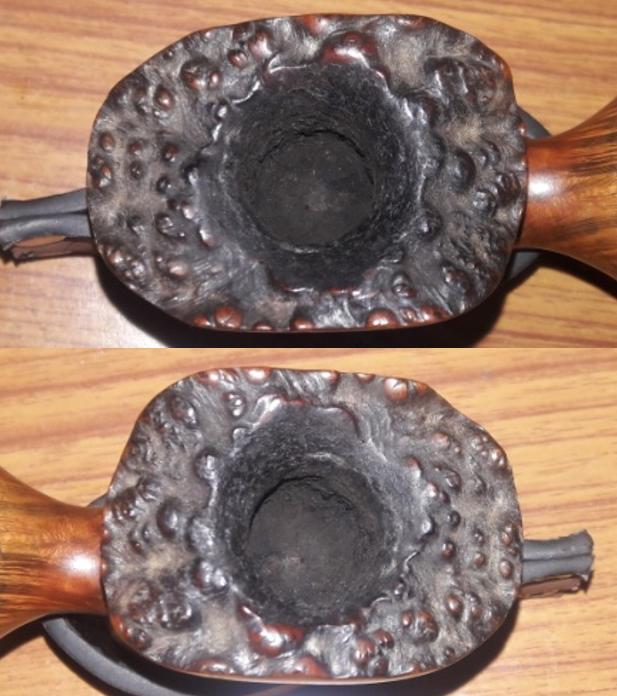
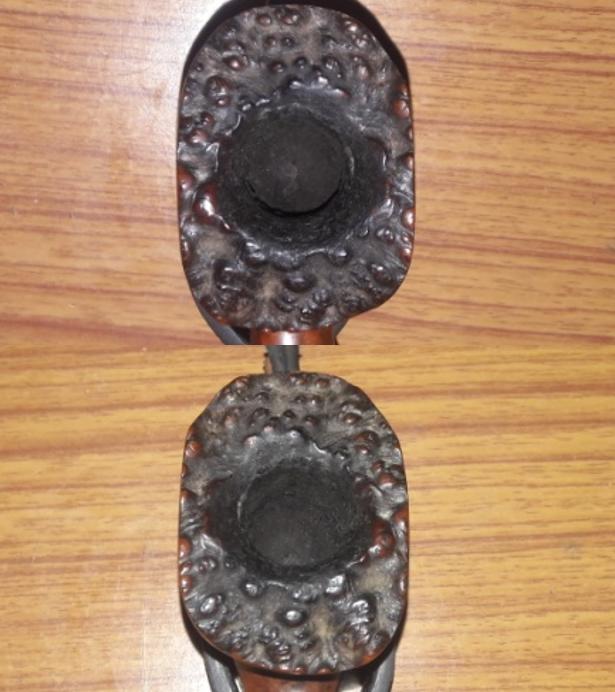
The chamber has a thick layer of dry and hard cake with heavy overflow of lava on to the platue rim top surface. The slightly outward flared inner rim edge is covered in oils and tars, but there are no apparent signs of charring. The condition of the inner walls of the chamber can be checked and ascertained only after the cake has been taken down to the bare briar. The stummel boasts of beautiful flame grains all around and extends over the shank surface too!! The surface is relatively clean and without any fills save for a few scratches that could have been caused during routine use. The flared end of the shank is clean with the partial plateau top edge showing accumulated dust and dirt which should be a breeze to clean. The foot of the stummel shows beautiful bird’s eye grains and is sans any damage. Overall, the stummel presents a well cared for pipe. The mortise is clogged with accumulated oils and tars. That the draw is not as smooth and full was expected, given that the stem was firmly stuck in. With a through leaning, this issue should be resolved.The fancy vulcanite stem is where maximum damage is seen on this pipe. It is heavily oxidized and is peppered with deep tooth chatter/ indentations on either surface of the stem. The lower button edge has a bite through and will need to be repaired. The horizontal slot end of the stem is heavily oxidized to a dark brown coloration while the tenon end is covered in dried oils and tars. The button edges on either surface have worn down and will need to be sharpened. The fancy stem, though looks beautiful when black and shiny, is a bear to clean with all the dips and narrow gaps between the beads and rings etc.The Process
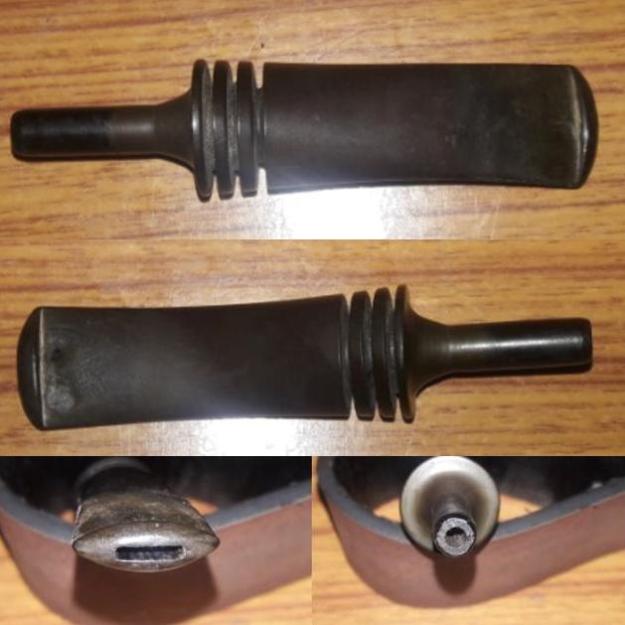
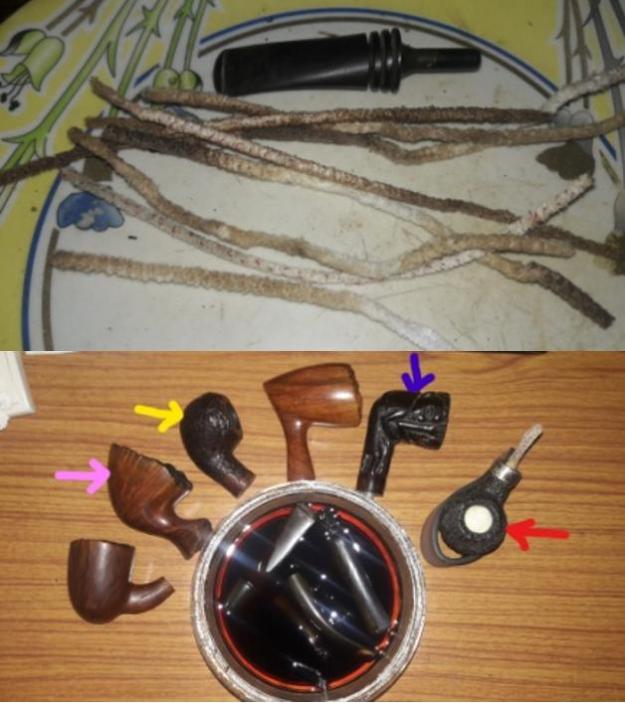
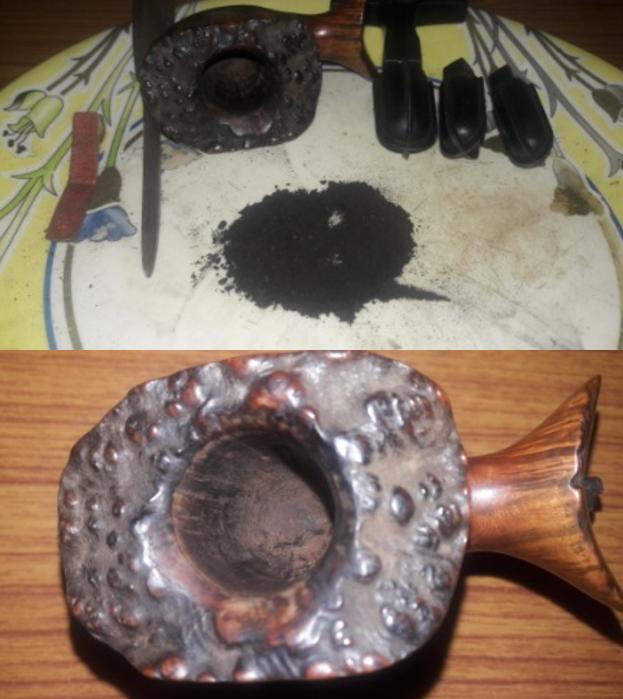
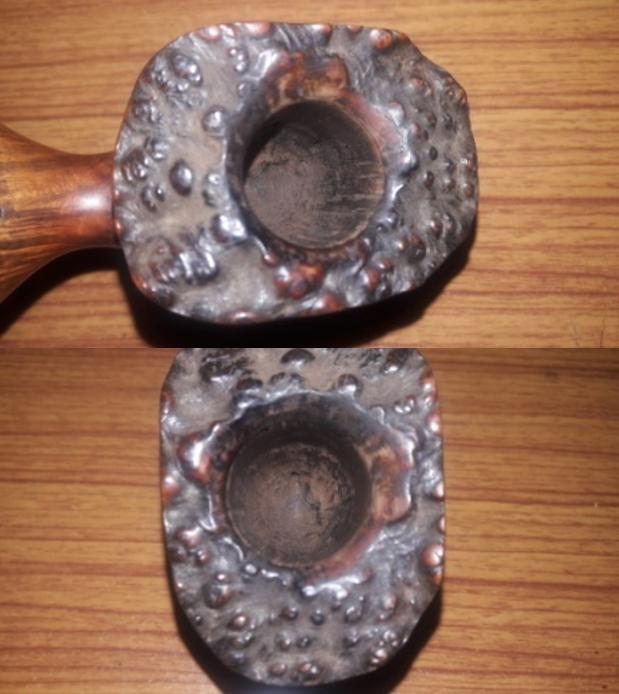
I began the process of refurbishing this pipe with cleaning the internals of the stem using pipe cleaners with isopropyl alcohol (99.9% pure) and dunking the stem in to “Before and After Deoxidizer” solution developed by my friend Mark Hoover. The solution helps to draw out heavy oxidation to the surface making its further removal a breeze, while the minor oxidation is eliminated to a very great extent. I usually dunk stems of 5-7 pipes that are in-line for restoration and this pipe is marked in pastel pink arrow. I generally allow the stems to soak in this solution overnight for the solution to do its work.With the stem soaking in the deoxidizer solution, I worked the stummel starting with reaming the chamber with a Castleford reamer tool, using the second, third and fourth head of the tool. Using my fabricated knife; I further take the cake down to the bare briar. With a 150 grit sand paper, the walls of the chamber were rid of all the remnants of the cake, revealing smooth and solid chamber walls. I further wiped the chamber with a cotton swab wetted with isopropyl alcohol to completely remove the sanding dust. Next, I tried cleaning the mortise with hard bristled and regular pipe cleaners dipped in isopropyl alcohol. However, the pipe cleaners would not pass through the draught hole and in to the chamber. I used my fabricated tool, a simple straightened cloth hanger, and pried clear the chunk of dried gunk. This was followed by cleaning the shank internals with pipe cleaners and isopropyl alcohol. I further scrapped out the entire moistened gunk with a dental tool. The shank internals cleaned up nicely with a smooth and full draw.I scrubbed the external surface of the bowl with undiluted Murphy’s oil soap and hard bristled tooth brush and dried it using paper towels and soft cotton cloth. I deliberately cleaned the plateau rim top to clean the entire lava overflow from the surface. The entire stummel cleaned up nicely. I set the stummel aside to dry out naturally. Staying with the stummel restoration, I polished the stummel with micromesh pads, wet sanding with 1500 to 12000 pads. I polished the raised surfaces on the plateau rim top surface. I wiped the surface with a soft cloth at the end of the micromesh cycle. The stummel looks amazing with a deep shine and beautiful grains popping over the stummel surface. However, I am not very happy with the way the rim top appears at this stage. No amount of wiping with a moist cloth could address this issue. If I wash it again with Murphy’s oil soap, it will be like going back to square one!! I would request all the esteemed readers to suggest remedial methods to this issue and help me learn. I rubbed a small quantity of “Before and After Restoration Balm” in to briar. I rubbed this balm deep in to the nooks and crannies of the plateau rim top surface with my fingers and let it rest for a few minutes. The balm almost immediately works its magic and the briar now has a nice vibrant appearance with the dark brown hues of the grain contrasting with the rest of the stummel surface. I further buff it with a horse hair shoe brush. The rim top has now taken on dark hues which is an eye sore at this stage. As mentioned in the write up on refurbishing S & R, Donegal Rocky # 999 and Countryman, I had worked on all the stems that had been soaking in the deoxidizer solution overnight. I fished out all the stems and cleaned them under running warm water and scrubbed the raised oxidation from the stem surface using Scotch Brite pad. I further removed the oxidation by scrubbing the stems with 0000 grade steel wool and applied a little olive oil to rehydrate the stems and set them aside for the oil to be absorbed. Unfortunately, I did not click any pictures of these stems at this stage.

This is how the stem of this pipe came out after the stem cleaning described above. Deep tooth indentations are visible at the base of upper and lower button edges with heavy tooth chatter visible in the bite zone on the lower surface. Complete oxidation was removed on this stem by the process described above.

I painted both surfaces of the stem with the flame of a lighter to raise the tooth indentations to the surface. This also helps in loosening minor oxidation from the stem surface. I sand the entire stem surface with a folded piece of a 220 grit sand paper to even out the raised tooth chatter and the tooth indentations to a degree and also to remove the loosened oxidation. I wiped the stem with a cotton swab and Murphy’s oil soap to further remove the oxidation. Even though the most of the tooth chatter has been addressed by heating the damaged stem portion with the flame of a lighter, couple of deeper indentations and bite marks/ deformation to the button edges is still visible on both upper and lower surface in the bite zone. At this stage in stem repairs, I now had a clear idea as to the extent of the through hole in the bottom surface of the stem. I also realized that the surrounding stem surface around the hole has thinned out and is brittle. However, I am happy with the way this stem appears at this stage and also with the deoxidizer solution. I filled the tooth indentation in the button edge on both lower and upper stem surfaces with a mix of activated charcoal and CA superglue and set it aside for the fill to cure. Once the fill had cured sufficiently, with flat needle file I sanded the fills to match with rest of the stem surface. With the same file, I sharpened the button edge on both the upper and lower surface. I fine tuned the blending of the fill with the rest of the stem surface using a 220 grit sand paper and also sanded down the entire stem to remove the stubborn residual oxidation. I further sand the stem with 600 and 800 grit sand paper and wiped the stem with cotton pad dipped in alcohol to remove the resultant dust. I rubbed some extra virgin olive oil in to the stem and set it aside to be absorbed in to stem. I polished the stem with micromesh pads, wet sanding with 1500 to 12000 grit pads. I rubbed a little extra virgin olive oil in to the stem at the end of the micromesh pads polishing cycle. I completed the polishing regime of the stem by rubbing a small quantity of Paragon wax and giving it a final polish with a soft cotton cloth. The stem is now nice, smooth and shiny.To apply the finishing touches, I mount a cotton cloth buffing wheel on to my hand held rotary tool and apply a coat of Blue Diamond to the stem to polish out the minor scratches. With a cotton buffing wheel that I use for carnauba wax, I apply a coat of carnauba wax to the stummel and stem and continued to work on it till the complete coat of wax had been polished out. I mount a clean cotton cloth buffing wheel and gave the entire pipe a once over buff. I finished the restoration by giving the entire pipe a rigorous hand buffing using a microfiber cloth to deepen the shine further. The finished pipe is shown below. P.S. – This was an indeed an easy restoration. The issue of the stem being stuck inside the mortise had driven bidders away from this beautiful pipe and it proved to be my gain. I am really fortunate to be in the process of learning the nuances of pipe restoration and cannot thank Steve enough for his support and guidance.

I wish to request all the experienced readers to shed some light on the numbering system followed on Preben Holm pipes and also on dating these pipes for the larger good of our fraternity.

Thanks for your patience and looking forward to input about the write up. Cheers…

Breathing Life into a Can Pat Brigham Exclusive Tall Stack


Blog by Steve Laug

Not too long ago I received an email from a fellow in Kitchener, Ontario regarding some pipes he needed cleaned up. He had been referred to me by my local pipe and cigar shop. While I am not currently adding more pipes to my queue of repairs I have made a commitment to the shop to work on pipes for their customers. Generally they have one or two pipes that need a bit of work. This fellow sent me the following email:

I just came across my smoking pipes that I’ve had in storage for about 40 years. I’m wondering what you’d charge to have them refurbished. There are 17 in total (11 are Brighams and 6 are various).

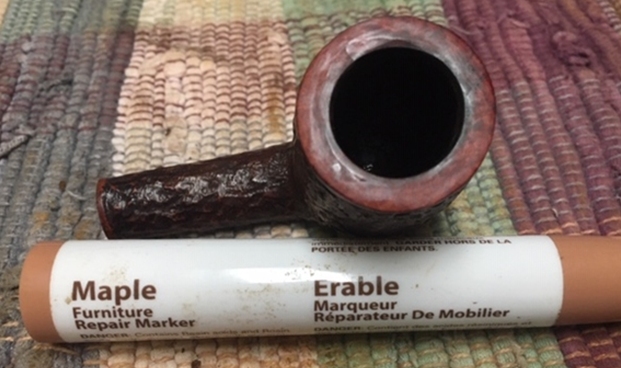
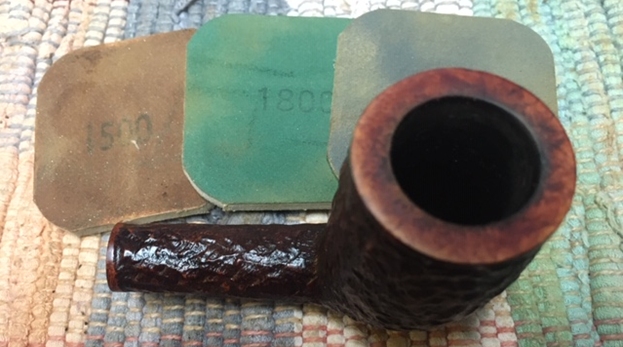
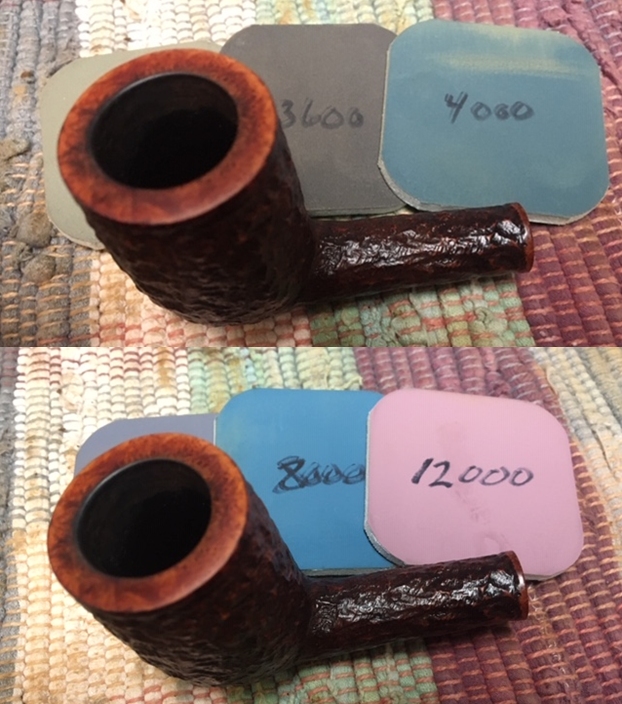
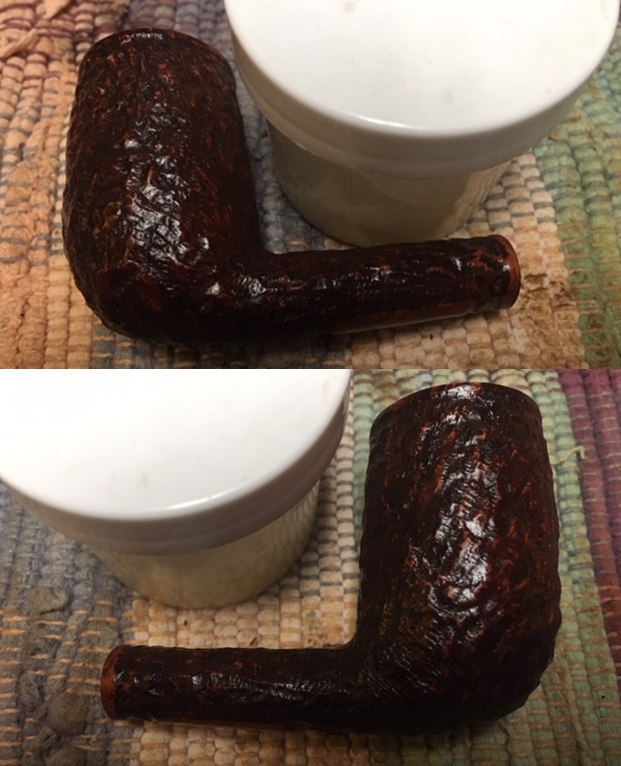
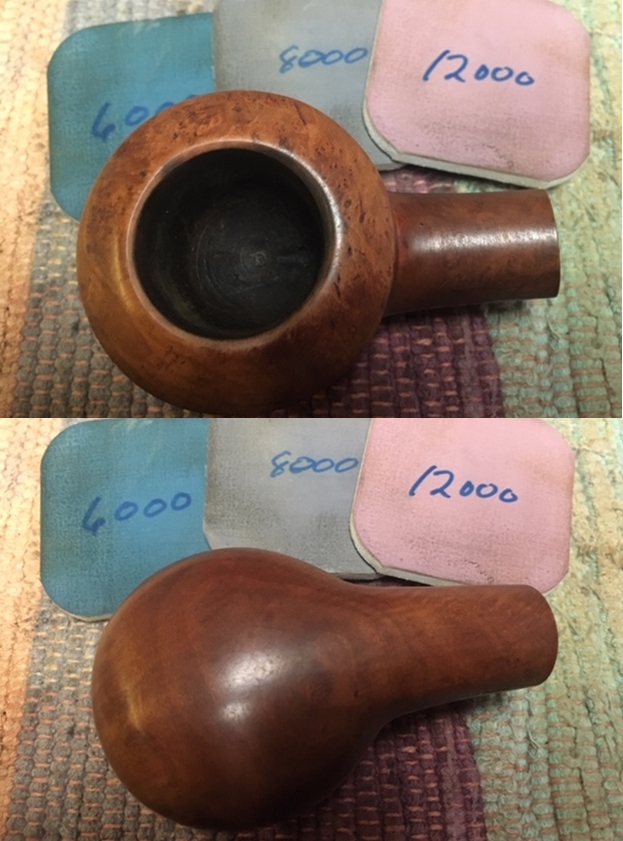
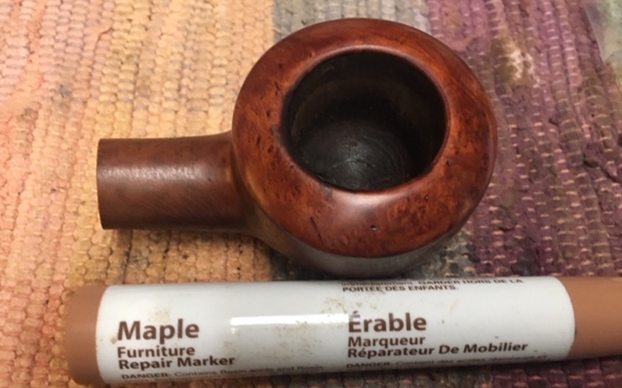
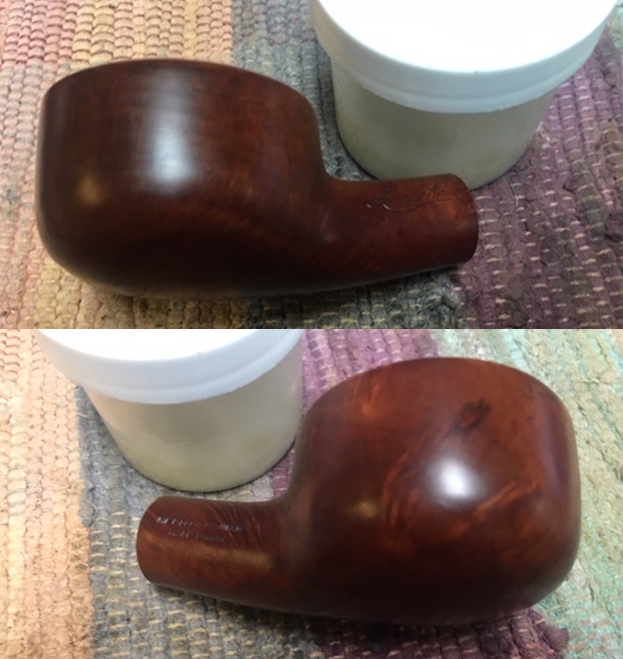
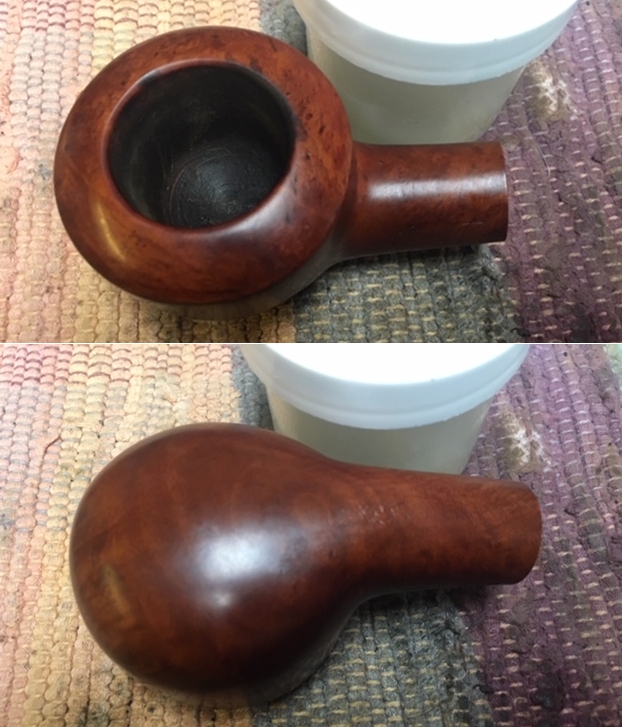
It turns out he said he had 17 pipes. That was certainly more than I expected but I communicated that there was a large queue ahead of him and I would have to fit them in as I could. He was fine with whatever time it took. He sent me the following photos of his collection that he wanted restored. The first photo shows his eleven Brigham pipes – all very interesting shapes. The second photo shows the six various pipes in the collection – A Republic Era Peterson’s System 1312 (Canadian Import), A Bjarne Hand Carved Freehand, a Comoy’s Everyman London smooth billiard, a GBD Popular Dublin 12, an English made Kaywoodie Rustica 72B, a Kriswill Bernadotte 60 with a broken tenon. When the box arrived there were two additional pipes included for a total of 19 – a Ropp 803 Deluxe Cherrywood Poker and a Comoy’s Sandblast Everyman Canadian 296. It was a lot of pipes! I have been randomly choosing the next pipe to work on and chose the Brigham that I have drawn a red box around in the photo below.When I unwrapped it the pipe it was a tall Stack. It was stamped on the smooth underside of the shank. The stamping is faint but part of it was readable. There is no shape number to identify the pipe. Where it would have been it is followed by the Brigham Script over Can. Pat. 372982. It had a rusticated bowl and shank with a smooth rim top. The rim top had a lava overflow from the medium cake in the bowl. The bowl was in decent condition, slightly out of round on the inner edge. There was some darkening around the top and inner edges of the bowl. It was a dirty pipe but the finish appeared to be in okay condition under the grime. The 3 Dot tapered stem was oxidized and had tooth marks and chatter near the button on both sides. There was also some calcification for about an inch up the stem. I took close up photos of the bowl and rim top to show the condition of the bowl and damage to the rim edge as well as the cake and lava overflowing onto the rim top. I also took close up photos of the stem to show its condition as mentioned above.     I took a photo of the faint stamping on the underside of the shank to show what I was speaking about above. It is very clear and readable. It reads Brigham in script over Can Pat. 372982.I removed the stem from the shank to reveal the aluminum tube/tenon that held the Rock Maple Distillator. The distillator was missing and the tube was very dirty. It will need to be replaced. Before starting my clean up work on the pipe I turned to a chart that Charles Lemon of Dad’s Pipes sent to me on the patent era Brighams. There were made from 1938-1980. As the pipe I am working on is a Patent pipe, it’s more accurate to refer to its grade by name (the post 1980 grading scheme refers to Dots). Here is the  chart that Charles sent me. The pipe I am working on is thus a Brigham Exclusive with the 3 brass pins arranged in a triangle. With this pipe I am returning to work on another Can Pat Brigham pipe from the nineteen pipe installment. I went to work on it immediately. I reamed the bowl with a PipNet pipe reamer using the second and second cutting head to take the cake back to bare briar so I could inspect the walls. I cleaned up the remnants with a Savinelli Fitsall Pipe Knife. I sanded the bowl walls with 220 grit sandpaper on a piece of dowel to smooth them out and further examine them. I was happy that the walls looked very good. I worked on the darkening on the rim top and the rough inner edge of the bowl by first scraping it with the edge of the Fitsall reamer and the sanding it with a folded piece of 220 grit sandpaper. I was able to remove the darkening and smooth out the inner edge of the bowl. I cleaned out the mortise area and airway to the bowl and the interior of the metal tube and airway in the stem with pipe cleaners, cotton swabs and alcohol. The aluminum tube was dirty because it was missing the distillator and had been smoked sans filter.   I scrubbed the surface of the bowl with undiluted Murphy’s Oil Soap and a tooth brush to remove the grime and grit as well as the remnants of the shiny finish on the smooth portions of the bowl.         With the rim top cleaned off and the inner edge restored and the darkening gone the rim was lighter than the smooth underside of the shank. I stained it with a Maple Stain pen. I don’t worry too much about the evenness of the coverage at this point as I plan on polishing it with micromesh sanding pads.I wet sanded the rim top and edges of the bowl with micromesh sanding pads – 1500-12000 grit sanding pads. I wiped the bowl surface down with a damp cloth after each sanding pad to remove the sanding dust. Once I finished the bowl looked good. I rubbed the bowl and shank down with Before & After Restoration Balm. I worked it into the surface of the briar with my fingertips to clean, enliven and protect it. I let the balm sit for a little while and then buffed with a cotton cloth to raise the shine. Mark Hoover’s Balm is a product that I have come to appreciate and one I use on every pipe I have been working on. It really makes the grain stand out on this pipe.    I set the bowl aside and turned my attention to the stem. I rubbed the stem down with Soft Scrub on with a cotton pad and it removed the oxidation and the calcification build up. It looked a lot better.       I sanded out the tooth marks, chatter and oxidation with 220 grit sandpaper and started the polishing with 400 grit wet dry sandpaper. I rubbed down the stem with Denicare Mouthpiece Polish and a cotton pad to remove the remnants of oxidation and to blend in the sanding. The polish is a red gritty paste that works wonders on removing stubborn remnants of oxidation in the crease. The stem is starting to show promise at this point in the process.     Before I finished the polishing stem I decided to fit it with a new Rock Maple Distillator.   I polished the stem with micromesh sanding pads – wet sanding it with 1500-12000 grit pads. I wiped the stem down after each sanding pad with a cotton pad to remove the sanding debris.  I finished polishing the stem with Before & After Pipe Stem Polish – both fine and extra fine. I finished by wiping it down with Briarville’s No Oxy Oil and buffing it to a shine.   I am excited to finish another of the lot as it moves me one pipe closer to being finished. I put the pipe back together and buffed it with Blue Diamond on the buffing wheel. I gave the bowl and the stem multiple coats of carnauba wax. I hand buffed the pipe with a clean buffing pad to raise the shine. It is fun to see what the polished bowl looks like with the grain popping through on the rim top and the rustication coming to life. Added to that the polished black vulcanite stem with the shining brass pins was beautiful. This mixed smooth and rusticated finish Brigham Exclusive Stack is nice looking and feels great in my hand. It is light and well balanced. Have a look at it with the photos below. The dimensions are Length: 6 inches, Height: 2 ¼ inches, Outside diameter of the bowl: 1 ¼ inches, Chamber diameter: ¾ of an inch. This is the 15th of the 19 pipes sent to me from Eastern Canada for restoration. Once again I am looking forward to what the pipeman who sent it thinks of this restoration. Lots more to do in this lot! Thanks to each of you who are reading this blog. Remember we are not pipe owners; we are pipemen and women who hold our pipes in trust until they pass on into the trust of the next pipeman or woman.
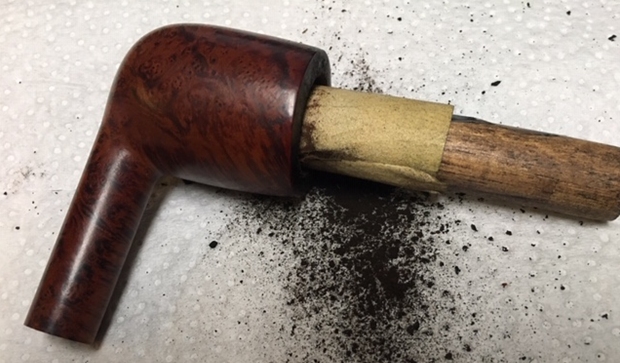
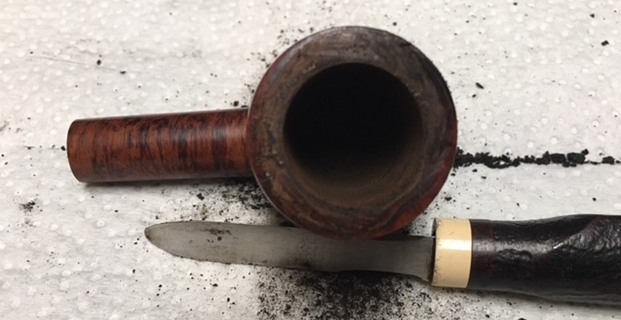
Restoring An African Themed Large Billiard Countryman With Hand- Carved Figurines


Blog by Paresh Deshpande

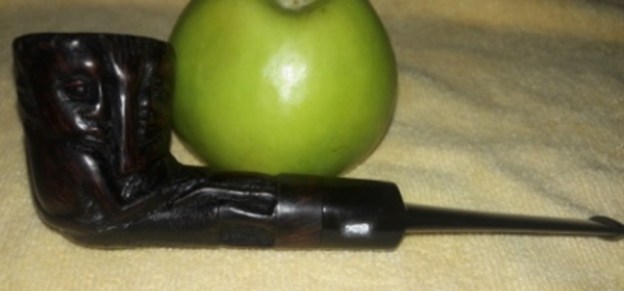
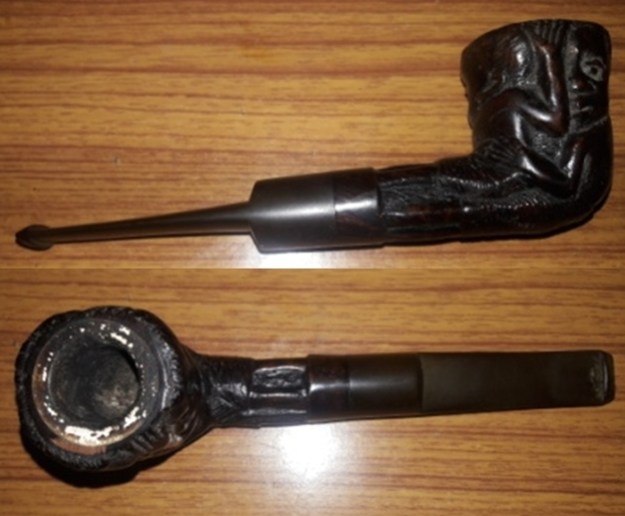
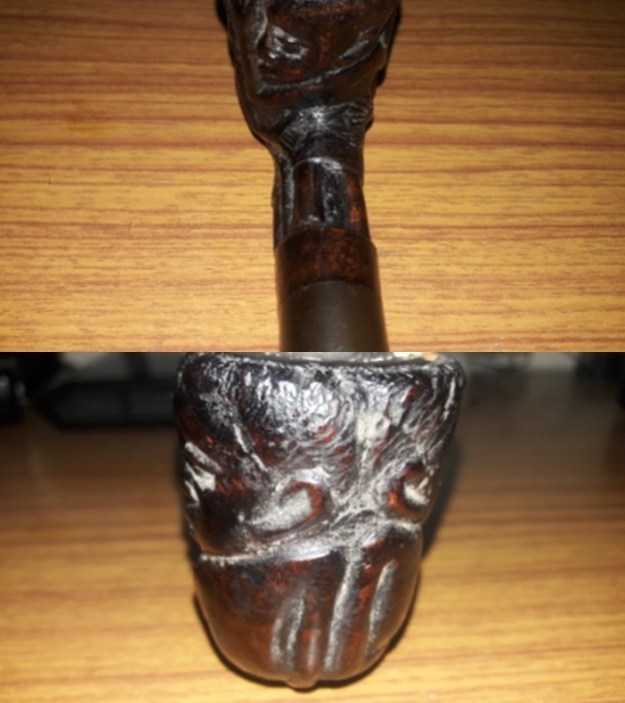
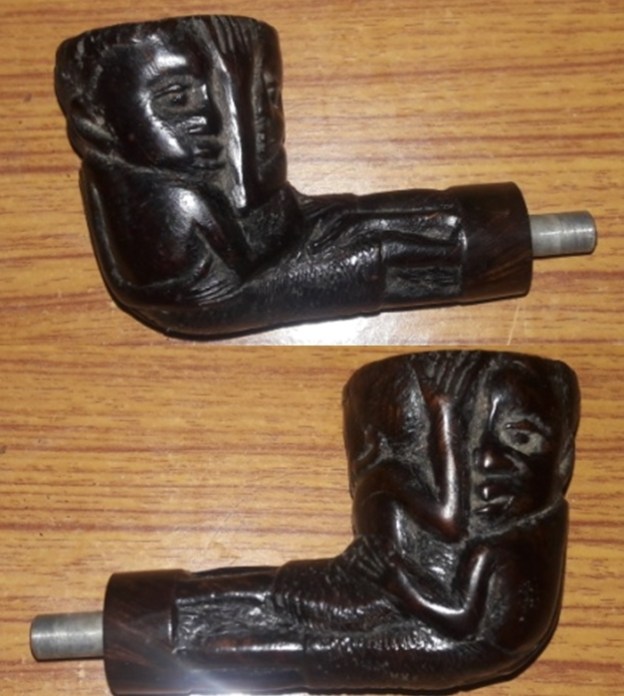
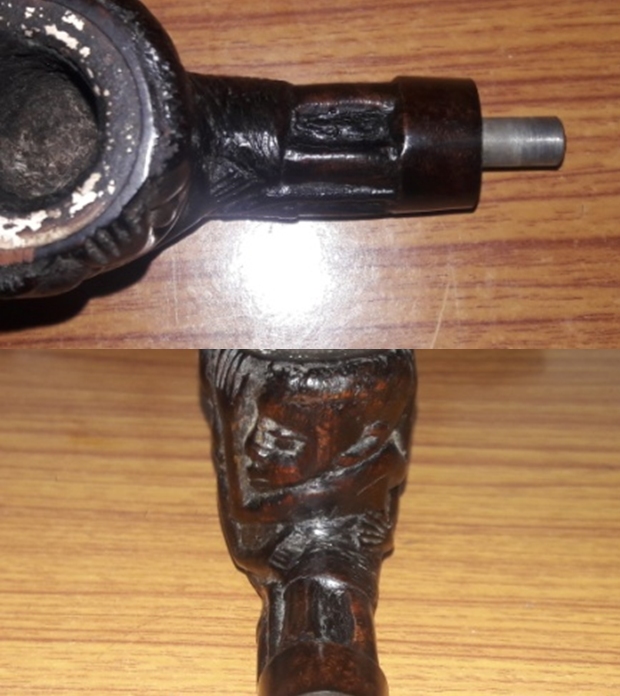
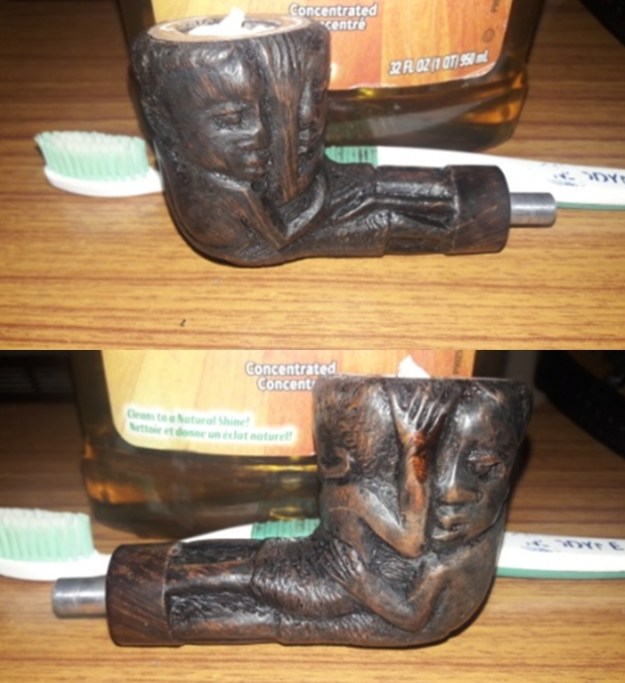
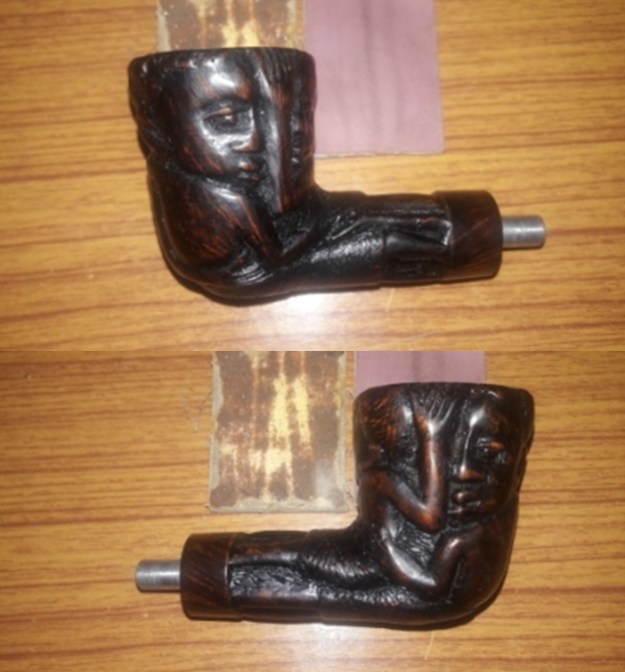
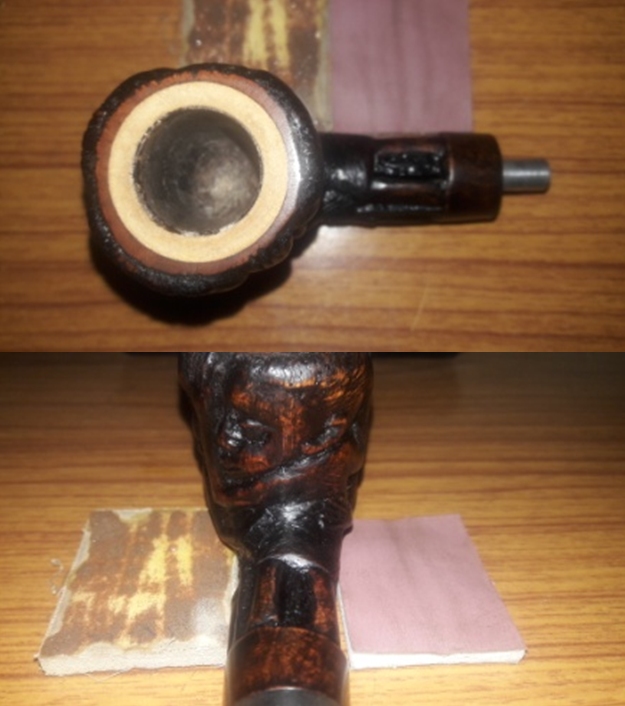
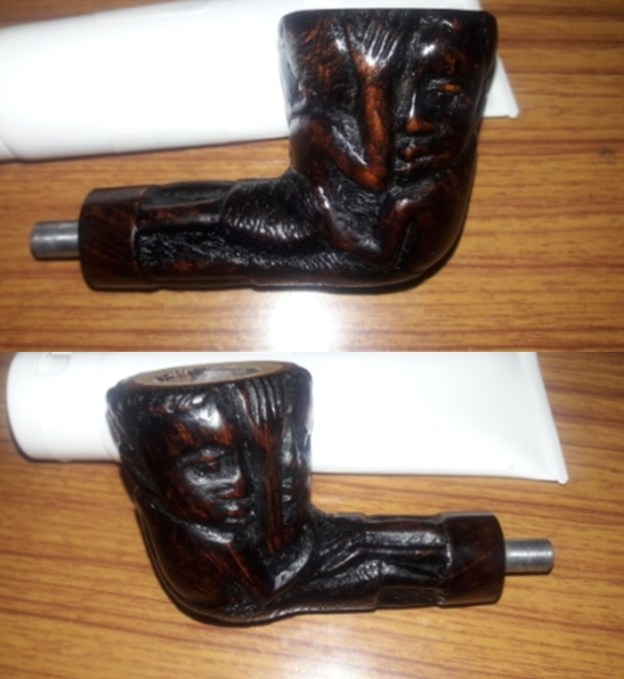
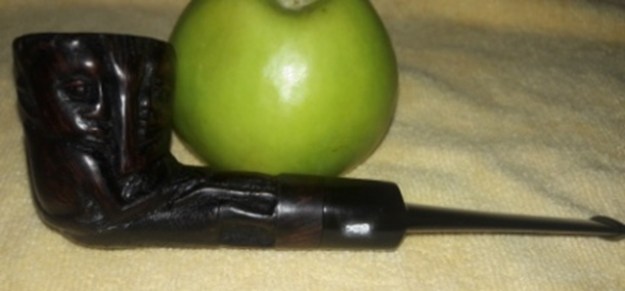
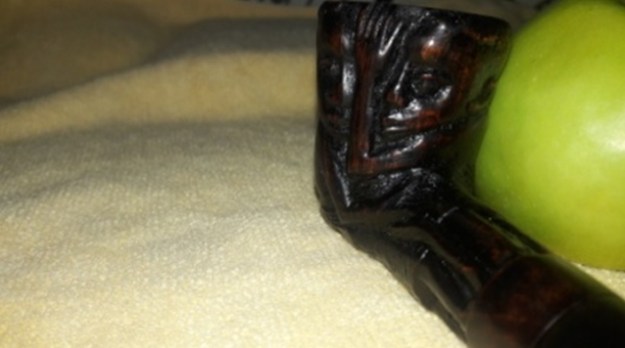
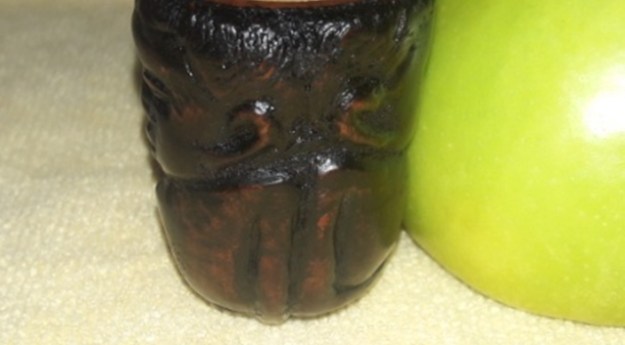
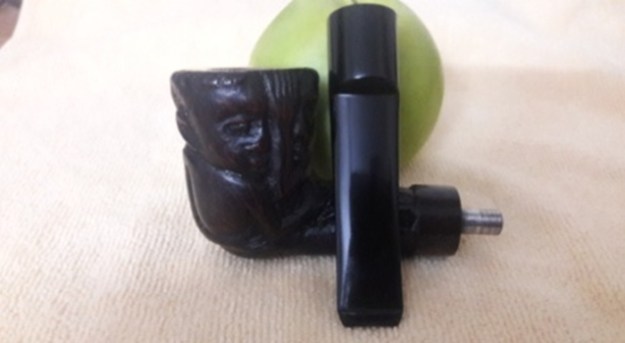
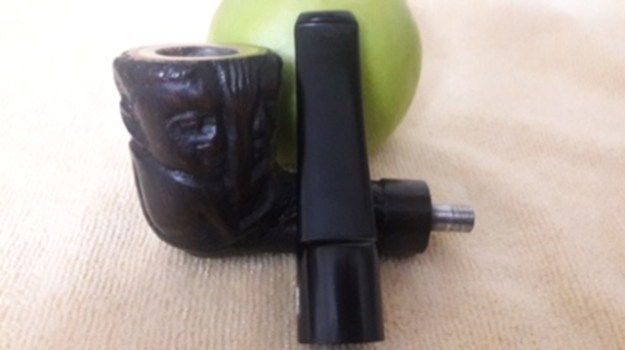
While surfing eBay for pipes a long time ago, I came across a pipe that was a large sized billiard and meerschaum lined. Well, upfront I wish to be candid and confess that I am not a big fan of meerschaum lined bowls and this pipe did not boast as being carved by any of my favorite makers! Yet I went ahead and made an offer which I feverishly hoped the seller would turn down, being ludicrously low from the asking price. However, the seller accepted my offer and a few weeks later, the pipe reached Abha. Surprisingly, she liked the pipe!! What attracted both of us to this large pipe was the hand carved figurines over the stummel surface. These figurines looked like to be that of an African mother holding her child (or is it just a figment of my imagination??).

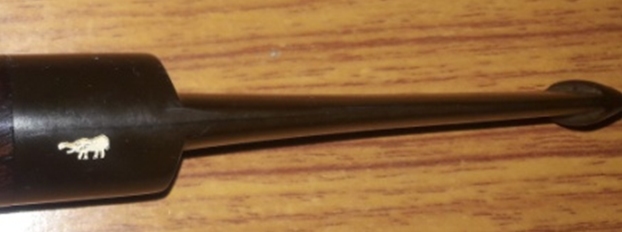
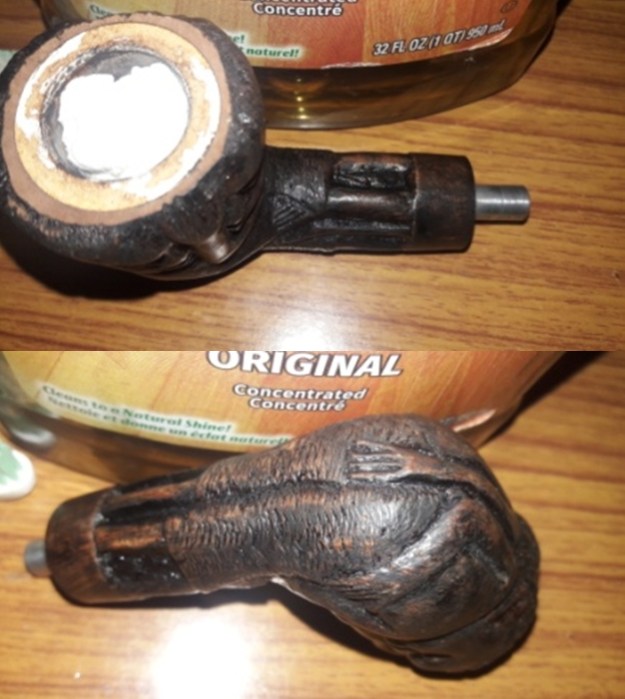
The pipe is devoid of any stampings. The only clue as to the origins of this pipe came in the form of a stem logo of an Elephant on the left side of the stem saddle.I was keen to know more about the maker and hence turned to pipephil.eu and searched for stem logo under Animal- Mammals!! True enough, it was an easy find. It identified this pipe as Countryman, a brand of Tanganyika Meerschaum Corporation from Amboseli Pipes.

Thereafter I visited Reborn pipes for further information. Here is the link to the write up and it makes for an interesting read. (https://rebornpipes.com/2013/10/13/refurbed-a-tanganyika-meerschaum-prince/).

Kiko, meaning “pipe” in Swahili-Kiswahili to English translation, is probably the best known of the various brands of meerschaum pipes from there. In East Africa Meerschaum is found in Tanganyika, once known as German East Africa, and since 1964 part of the United Republic of Tanzania. The main deposit comes from the Amboseli basin surrounding the Lake Amboseli. Tanganyika Meerschaum is normally stained in shades of brown, black and yellow, and is considered to be inferior to Meerschaum from Turkey. Even though, the raw material is mined by the Tanganyika Meerschaum Corporation and to a large extent used for pipe making. Uncounted pipe makers throughout the world were supplied with Amboseli Meerschaum, preferentially used for Meerschaum lined briars or leather-clad pipes. In Tanganyika the Kilimanjaro Pipe Company Ltd. produced the following brands: Caveman, Countryman (Elephant logo), Kiko (Elephant logo), Kikob (Elephant logo), Kilimanjaro (Rhinoceros logo), Kudu (Giraffe Logo), Makonde (Rhinoceros logo), Merlin (Flying bird or Antelope logo), Sportsman (Elephant logo), Tembo, Townsman, Twiga (Giraffe Logo), White elephant (Elephant logo).

Initial Visual Inspection

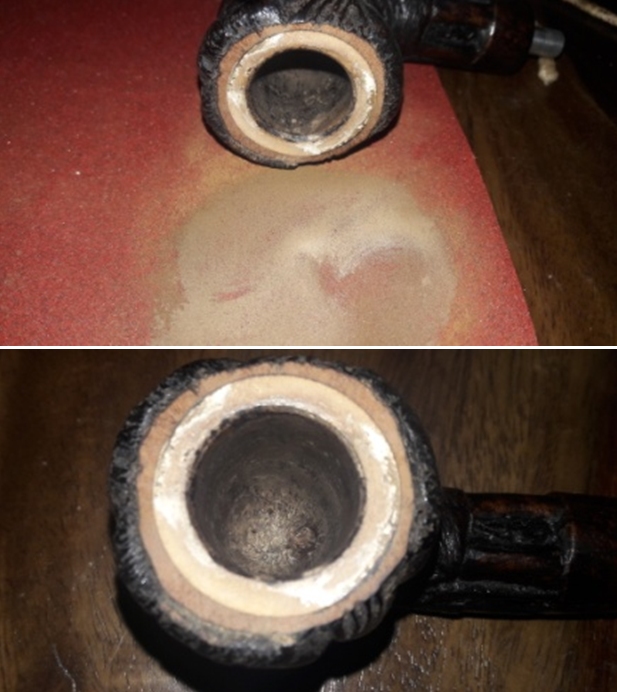
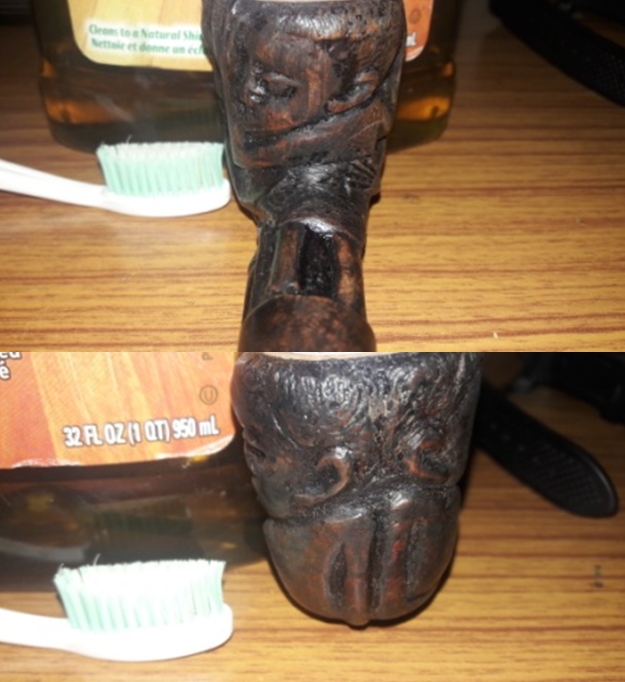
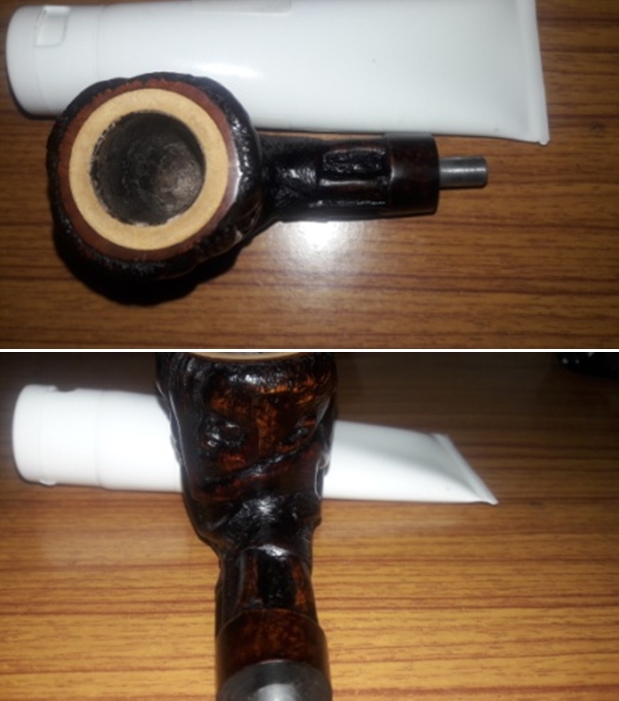
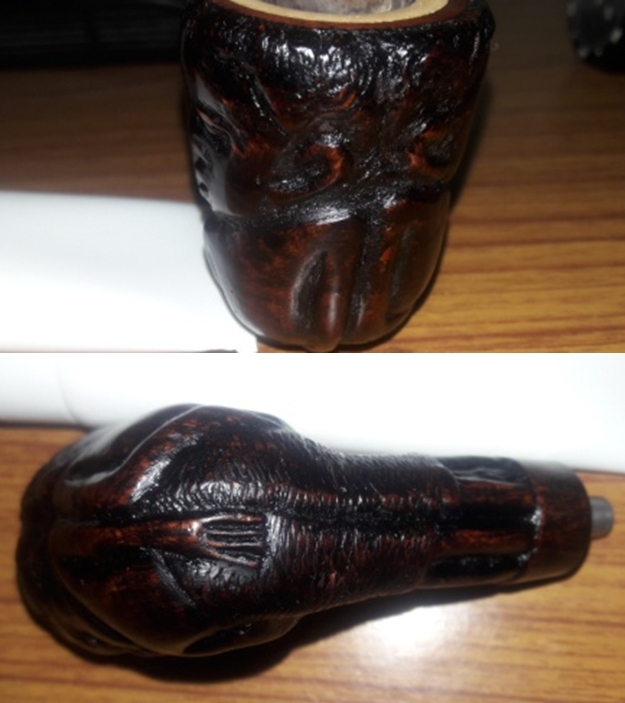
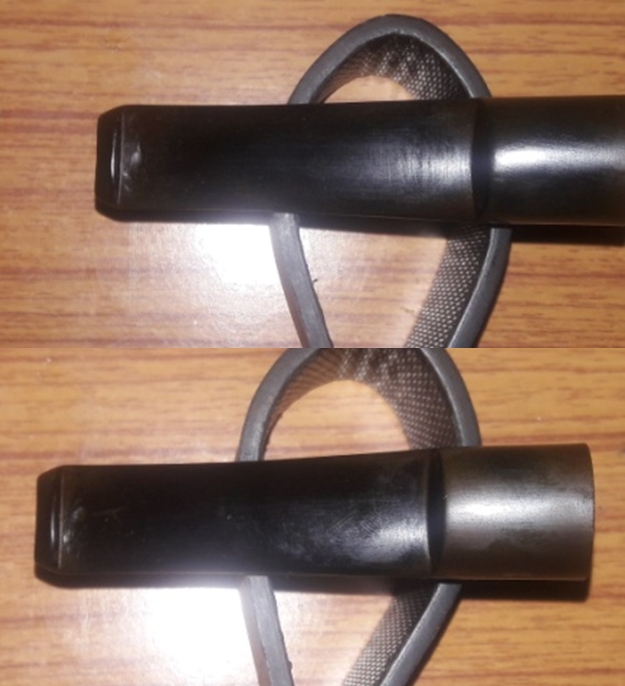
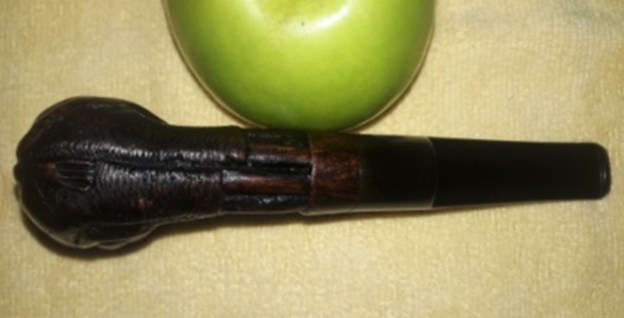
The pipe, as it sits on my work table, is dirty with decent layer of cake, covered in dust and grime with a heavily oxidized stem. Here are a few pictures of the pipe before I proceed with a detailed visual inspection of each part of the pipe. The creases formed by the hand carved figurines over the stummel surface on this pipe are covered in a thick layer of dust and grime. The stummel appears dull and lackluster. However, the rich brown hues of the raised portions of the figurines contrast beautifully with the darker hues of the stummel and would look more appealing once the stummel has been cleaned and polished. The long and carved shank has a nice thick band of smooth briar. Once polished, this briar band should further enhance the beauty of this pipe. An aluminum tube/ mortise extension is fixed inside of the mortise over which the stem is seated.    The meerschaum lined rim top is surrounded by briar wood and is covered in dust, lava overflow, grime and will need to be cleaned and polished. This lava overflow is chipped at places revealing an intact white meerschaum layer. The briar surrounding the inner meer layer is chipped on the left side of the rim top in the 9 o’clock direction. The chamber has an even layer of thin cake that is dry and crumbling. The condition of the meerschaum lined walls of the chamber will be ascertained once the existing cake has been completely removed. The inner meerschaum layered rim edge appears intact, however, the same will be ascertained once the cake and lava overflow from the chamber and rim top is removed. The end of the aluminum tube which extends out from the shank end is darkened with a thick layer of dried oils and tars. The insides of this tube is clogged making the draw laborious. The surface of the tube is dull and lackluster.The straight tapered vulcanite saddle stem that sits atop the aluminum mortise extension is heavily oxidized and is peppered with deep tooth chatter/ indentations on either surface of the stem. The horizontal slot end of the stem is heavily oxidized to a dark brown coloration while the insides of the tenon end is covered in dried oils and tars. This should be a relatively simple repair and cleaning up job of the stem. The Process
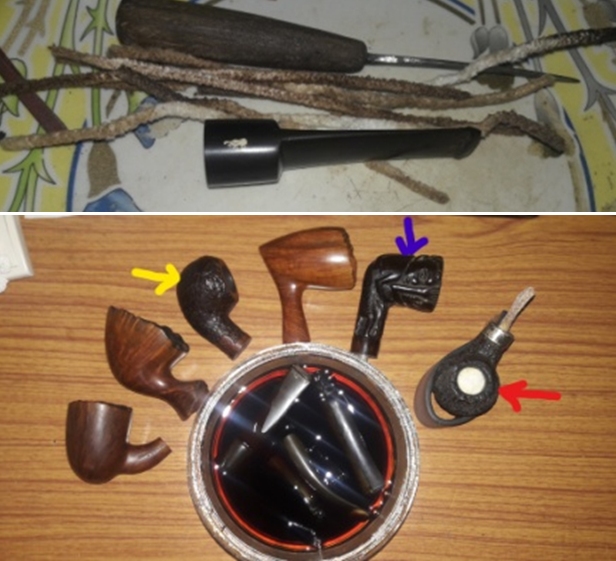
I began the process of refurbishing this pipe with cleaning the internals of the stem using pipe cleaners with isopropyl alcohol (99.9% pure) and dunking the stem in to “Before and After Deoxidizer” solution developed by my friend Mark Hoover. The solution helps to draw out heavy oxidation to the surface making its further removal a breeze, while the minor oxidation is eliminated to a very great extent. I usually dunk stems of 5-7 pipes that are in-line for restoration and this pipe is marked in blue arrow. I generally allow the stems to soak in this solution overnight for the solution to do its work.With the stem soaking in the deoxidizer solution, I worked the stummel, reaming the chamber with a Castleford reamer tool, using only the second head. I was very gentle and diligent while using the reamer head by applying minimum force to avoid cracking the meerschaum lining. Using my fabricated knife; I further took the cake down to the meerschaum layer. With a 150 grit sand paper, the walls of the chamber were rid of all the remnants of the cake, revealing smooth meer lined chamber walls. I further wiped the chamber with a cotton swab wetted with isopropyl alcohol to completely remove the sanding dust. I gently scraped off the entire lava overflow from the rim top with a sharp knife blade. The inner rim edge has numerous very tiny dings all around which is not a big concern as these could be easily addressed either by topping or using a sand paper. I carefully scraped the aluminum shank extension with a fabricated tool to remove all the crud that had accumulated on the surface and further cleaned the shank internals with bristled and regular pipe cleaners dipped in isopropyl alcohol. I further polished the aluminum extension with a 0000 grade steel wool. Next I addressed the issue of numerous dings to the inner rim edge. As mentioned above, I had an option of either using a folded piece of 220 grit sand paper and even out the tiny dings or topping the rim top on a topping board. I decided to follow the later path as it would also address the issue of the chipped briar on the rim top in the 9 o’clock direction. I topped the rim on a piece of 220 grit sand paper, frequently checking the progress as I did not want to sand too much and cause any damage to the carved figurines.I scrubbed the external surface of the bowl with undiluted Murphy’s oil soap and hard bristled tooth brush and dried it using paper towels and soft cotton cloth. The light brown hues of the carved surfaces of the figurines contrast beautifully with the rest of the dark stummel. I set the stummel aside to dry out naturally. I packed the chamber with paper towels to absorb any water and moisture that may have inadvertently seeped in to the meerschaum. I wanted to further highlight the figurines from the rest of the stummel surface and to achieve the desired results; I polished the raised surfaces of the carved figurines, the rim top surface and the briar band at the shank end with micromesh pads, dry sanding with 1500 to 12000 grit pads. I really like the way the figurines stand out from the rest of the stummel surface and also the rim top surface. I rubbed a small quantity of “Before and After Restoration Balm” in to briar. I rubbed this balm deep in to the nooks and crannies formed by the carved figurines with my fingers and let it rest for a few minutes. The balm almost immediately works its magic and the briar now has a nice vibrant appearance with the light brown hues of the raised carvings contrasting with the dark stummel surface. I further buff it with a horse hair shoe brush. As mentioned in the write up on refurbishing S & R and Donegal Rocky # 999, I had worked on all the stems that had been soaking in the deoxidizer solution overnight. I fished out the stems and cleaned them under running warm water and scrubbed the raised oxidation from the stem surface using scotch brite pad. I further removed the oxidation by scrubbing the stems with 0000 grade steel wool and applied a little olive oil to rehydrate the stems and set them aside for the oil to be absorbed. Unfortunately, I did not click any pictures of these stems at this stage.

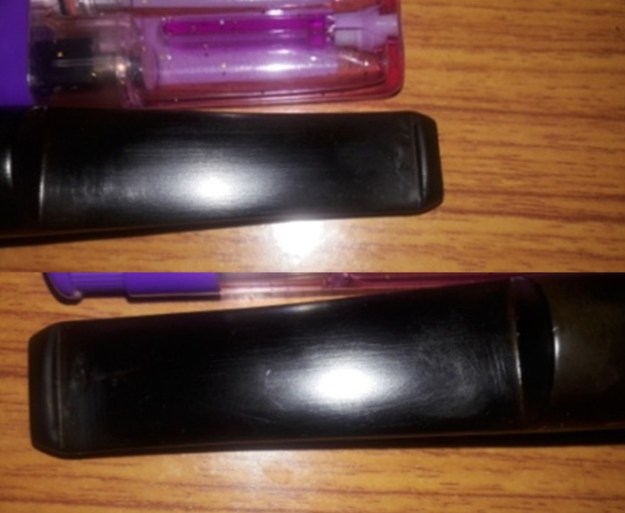
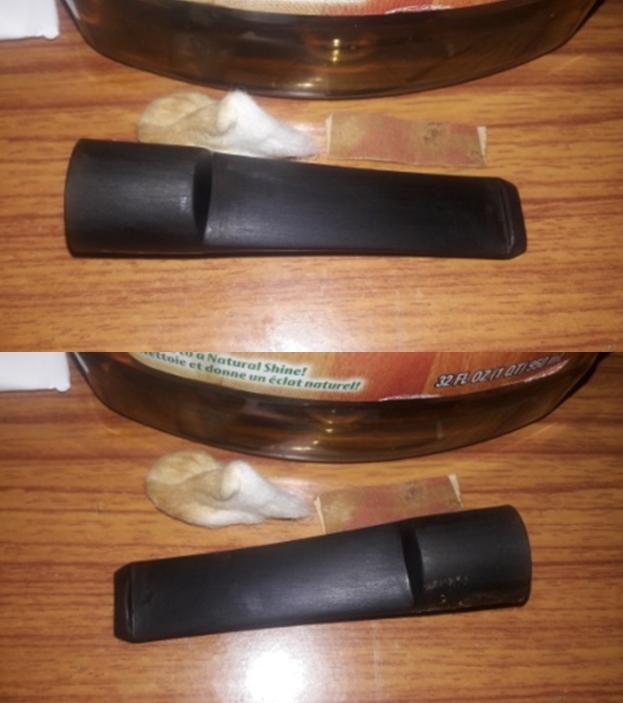
This is how the stem of this pipe came out after the stem cleaning described above. Some traces of oxidation are still visible at the base of the button edges on both surfaces and on the saddle which needs to be removed using more invasive methods. A few tooth indentations are visible on the top button edge and at the base of the button edge on both the surfaces. I painted both surfaces of the stem with the flame of a lighter to raise the tooth indentations to the surface. This also helps in loosening minor oxidation from the stem surface. I sand the entire stem surface with a folded piece of a 220 grit sand paper to remove the loosened oxidation. I wiped the stem with a cotton swab and Murphy’s oil soap to further remove the oxidation. Even though the most of the minor tooth indentations have been eliminated by heating the damaged stem portion with the flame of a lighter, couple of deeper indentations is still visible on both upper and lower surface in the bite zone. However, I am happy with the way this stem appears at this stage and also with the deoxidizer solution. I filled the tooth indentation in the button edge on both lower and upper stem surfaces with a mix of activated charcoal and CA superglue and set it aside for the fill to cure. Once the fill had cured sufficiently, with flat needle file I sanded down the fill to match with rest of the stem surface. With the same file, I sharpened the button edge on both the upper and lower surface. I fine tuned the blending of the fill with the rest of the stem surface using a 220 grit sand paper and also sanded down the entire stem to remove the stubborn residual oxidation. I further sand the stem with 600 and 800 grit sand paper and wiped the stem with cotton pad dipped in alcohol to remove the resultant dust. I rubbed some extra virgin olive oil in to the stem and set it aside to be absorbed in to stem.I polished the stem with micromesh pads, wet sanding with 1500 to 12000 grit pads. I rubbed a little extra virgin olive oil in to the stem at the end of the micromesh pads polishing cycle. I finish the polishing of the stem by rubbing a small quantity of Paragon wax and giving it a final polish with a soft cotton cloth. The stem is now nice, smooth and shiny. I refreshed the stem logo by masking the logo with a whitener correction pen. Once the whitener had dried, I gently wiped the excess whitener away. The stem logo now looks prominent.To apply the finishing touches, I mount a cotton cloth buffing wheel on to my hand held rotary tool and apply a coat of Blue Diamond to the stem to polish out the minor scratches. With a cotton buffing wheel that I use for carnauba wax, I apply a coat of carnauba wax to the stummel and stem and continued to work on it till the complete coat of wax had been polished out. I mount a clean cotton cloth buffing wheel and gave the entire pipe a once over buff. I finished the restoration by giving the entire pipe a rigorous hand buffing using a microfiber cloth to raise the shine further. The finished pipe is shown below. P.S. – Most discerning Readers would have noticed that after I had topped the rim top surface, I have not stained the briar portion of the rim top to blend in with the rest of the stummel.  Well, truth be told, Abha, my wife, liked the play of contrasts between the meerschaum lining, the brown hues of the surrounding briar and the very dark brown stummel. I too liked her suggestion and hence left it without staining. Though this pipe has neither any collector’s value or high resale value, but still I shall add it to my collection because of its uniqueness and it’s no less beautiful to boot.

Thanks for your patience and looking forward to input about the write up. Cheers…

Another Pipe from the Eastern Canada Lot – an English Made Kaywoodie Rustica 72B


Blog by Steve Laug

I decided to work on another pipe from the fellow in Kitchener, Ontario who sent me some pipes he needed cleaned up. He had been referred to me by my local pipe and cigar shop. While I am not currently adding more pipes to my queue of repairs I have made a commitment to the shop to work on pipes for their customers. Generally they have one or two pipes that need a bit of work. This fellow sent me the following email:

I just came across my smoking pipes that I’ve had in storage for about 40 years. I’m wondering what you’d charge to have them refurbished. There are 17 in total (11 are Brighams and 6 are various).

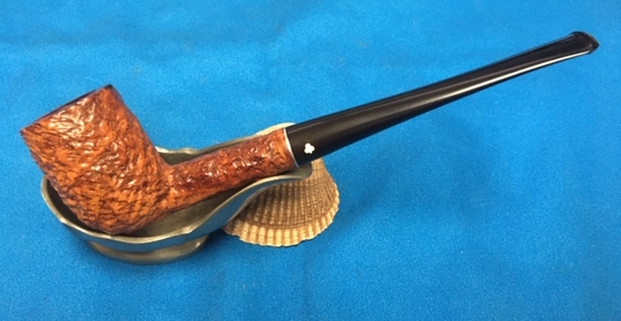
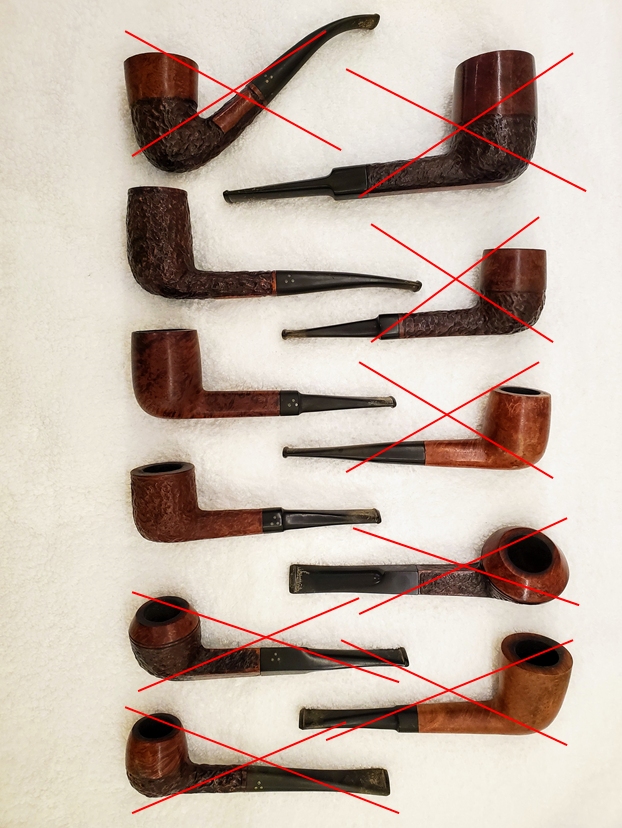
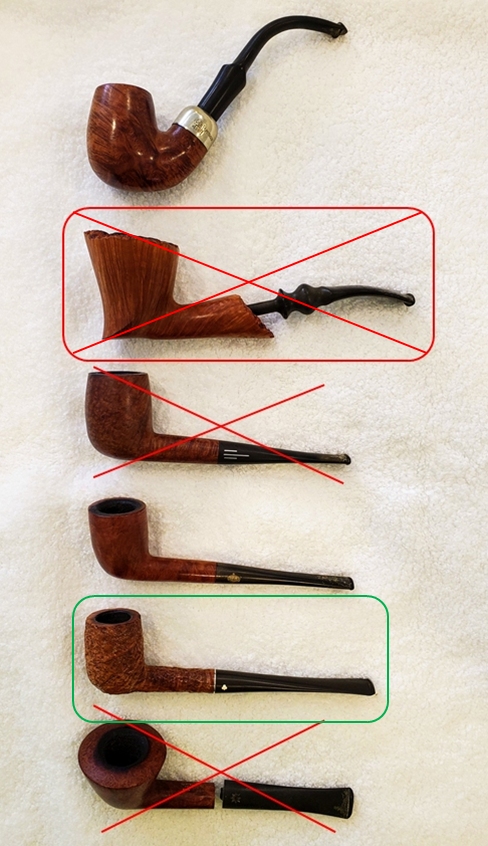
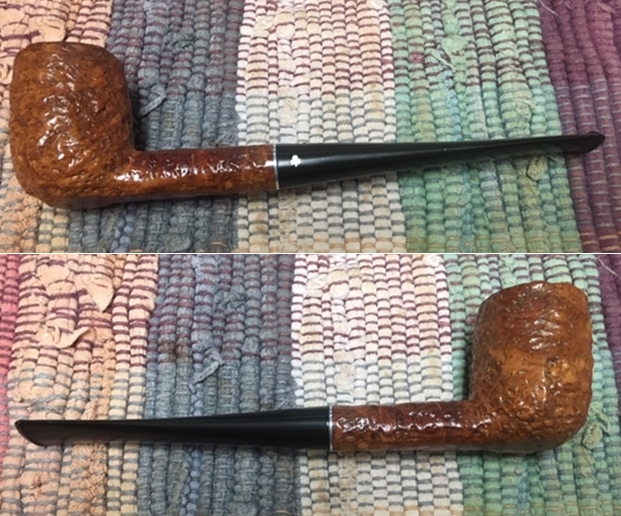
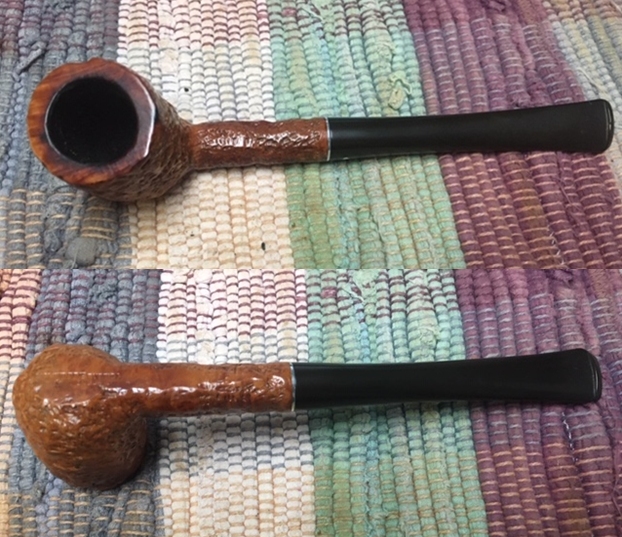
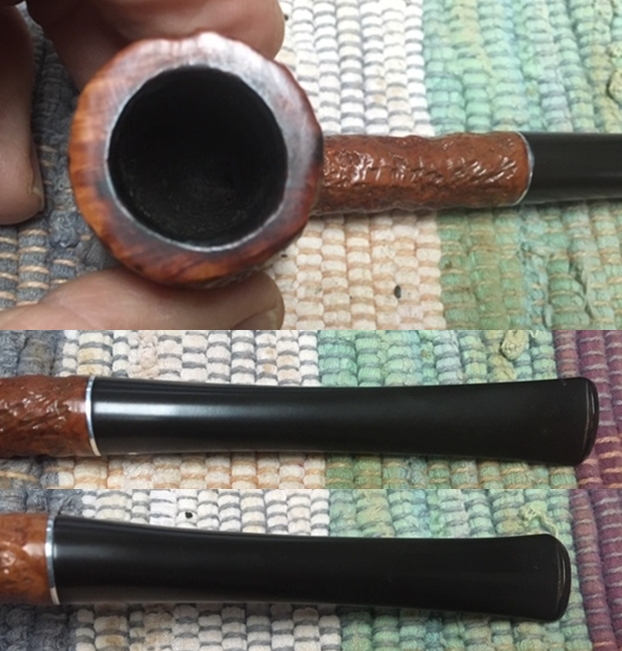
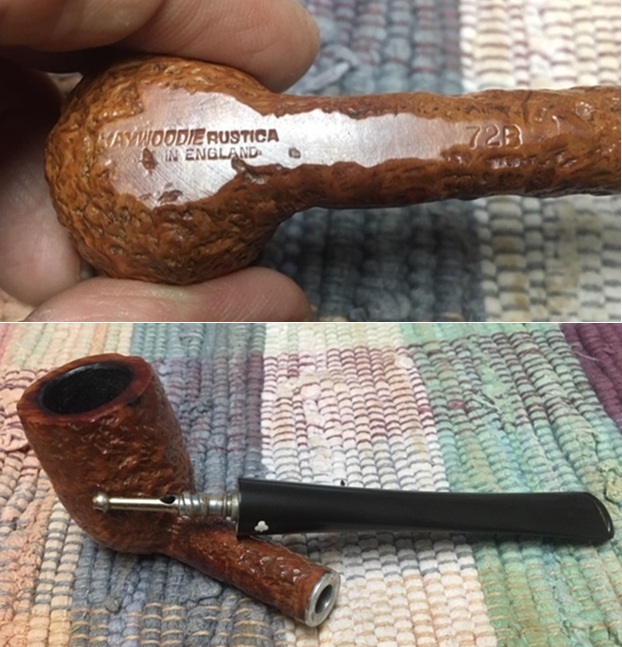
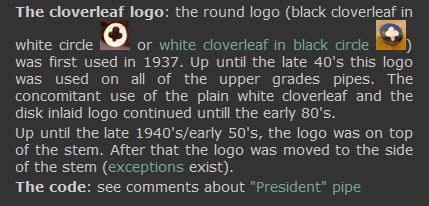
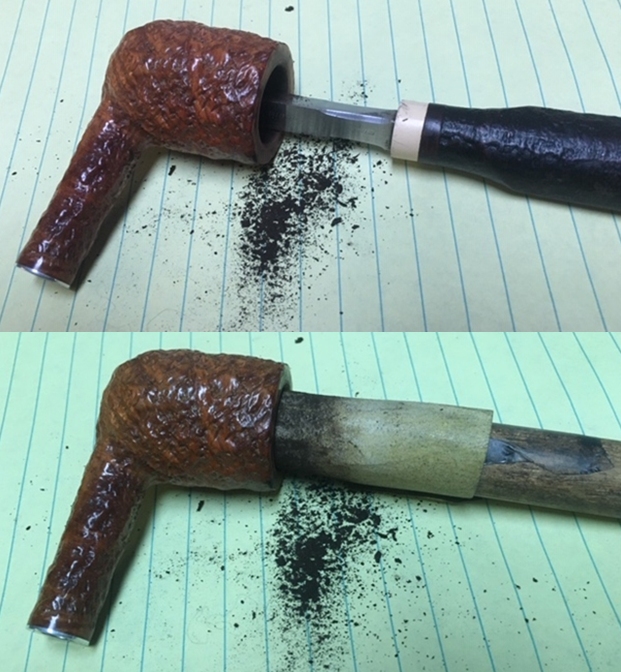
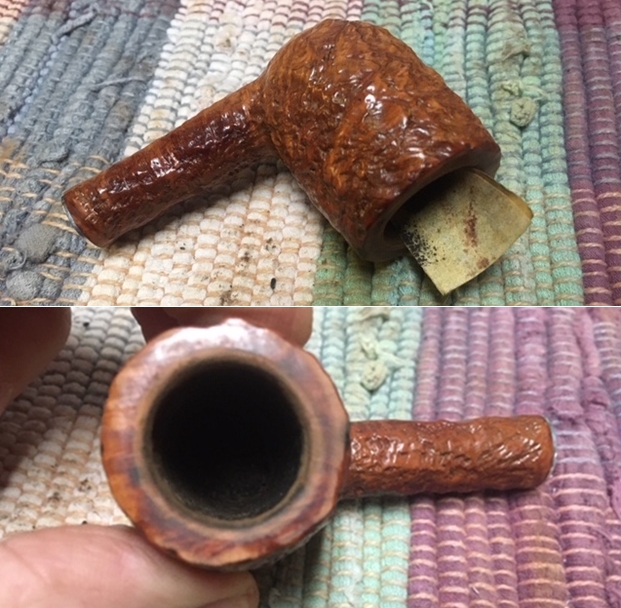
It turns out he said he had 17 pipes. That was certainly more than I expected but I communicated that there was a large queue ahead of him and I would have to fit them in as I could. He was fine with whatever time it took. He sent me the following photos of his collection that he wanted restored. The first photo shows his eleven Brigham pipes – all very interesting shapes. The second photo shows the six various pipes in the collection – A Republic Era Peterson’s System 1312 (Canadian Import), A Bjarne Hand Carved Freehand, a Comoy’s Everyman London smooth billiard, a GBD Popular Dublin 12, an English made Kaywoodie Rustica 72B, a Kriswill Bernadotte 60 with a broken tenon. When the box arrived there were two additional pipes included for a total of 19 – a Ropp 803 Deluxe Cherrywood Poker and a Comoy’s Sandblast Everyman Canadian 296. It was a lot of pipes! I have been randomly choosing the next pipe to work on and chose the Kaywoodie Rustica 72B Billiard that is shown in the second photo below. I have drawn a green box around the Kaywoodie Rustica in the second photo. I have also put and X through all of the pipes that I have finished. I am making progress on the lot – I have finished 13 pipes now and this is the 14th. The Kaywoodie Rustica was probably the cleanest pipe in the lot. It had a rusticated finish and a smooth rim top. It was stamped on the underside of the heel and shank. It read Kaywoodie Rustica over Made in England on the heel followed by the shape number on the shank end – 72B. The rusticated finish was shiny and pretty clean and looks very good. The rim top had a darkening around inner edge of the rim and the bowl was out of round. The bowl had a light cake in it that was going to be an easy clean up. The vulcanite stem was lightly oxidized and had tooth marks and chatter near the button on both sides. There was also a three-hole Kaywoodie stinger/tenon set up that was a little dirty. I took close up photos of the bowl and rim top to show the condition of the bowl and the darkening and damage to the inner edge as well. You can also see the cake in the bowl. I also took close up photos of the stem to show its condition as mentioned above.     I took a photo of the stamping on the underside of the shank to show what I was speaking about above. It is very readable. It reads Kaywoodie Rustica over Made in England with the shape number 72B readable as well.  I also took the stem off and took a photo of the stinger/tenon apparatus.   Before doing cleanup work on the pipe I decided to do some research on the pipe. I looked first on the Pipephil website and found some information on the white club inlay on the left side of the tapered stem. I did a screen capture of the pertinent information on the logo itself (http://www.pipephil.eu/logos/en/logo-kaywoodie.html). From there I learned that the logo was used until the 1980s. After the early 50s the logo was on the side of the stem.I turned to Pipedia (https://pipedia.org/wiki/Kaywoodie) and read the section on the rough outline on the history of the brand that links the brand with the English section of the company. I quote:

Again, demand for KBB pipes and especially Kaywoodie prompted another move for both the manufacturing facilities and the corporate offices. In 1930 the corporate office moved into the Empire State Building on Fifth Avenue in New York. By 1935, the manufacturing operations moved from Union City to 6400 Broadway in West New York, New Jersey which, at the time, was touted as the largest pipe making facility in the world. At the height of production, there were 500 employees producing up to 10,000 pipes per day.

The corporate offices were relocated in 1936 to the International Building, Rockefeller Center, 630 Fifth Avenue, New York. The invitation to visit the new office reads, “Kaywoodie is now on display at the world’s most famous address – Rockefeller Center. Here Kaywoodie takes its place among the leaders of industry and commerce.” The move to Rockefeller Center coincided with The Kaywoodie Company’s emergence as a subsidiary of KBB. All of the pipes manufactured by KBB including the Yello-Bole line were also on display here. By 1938 Kaywoodie had opened an office in London to meet worldwide demand. Kaywoodie of London was jointly owned with another famous pipemaker, Comoy’s of London.

From there I turned to a link on the article to a section called Guide to Kaywoodie Pipes (https://pipedia.org/wiki/Collector%27s_Guide_to_Kaywoodie_Pipes#NOTES_ON_.22OTHER.E2.80.9D_KAYWOODIE_PIPES).

English Kaywoodies. All of the catalogs reviewed in this research contained the following copyright notification: Printed in U.S.A., Kaufmann Bros. and Bondy, Inc., New York and London. Kaywoodie Pipe cases and smoker’s accessories were also marked with “New York and London”. The catalogs, however, do not present any information concerning Kaywoodie’s London operations, or how the English Kaywoodies might have differed from those manufactured and marketed in the U.S. Lowndes notes that he has several English Kaywoodies acquired in Vaduz and Zurich. English Kaywoodies are now made by Oppenheimer pipes. Lowndes notes that English Kaywoodies with the “screw-in bit” come in Ruby Grain, Custom Grain, Standard, and Relief Grain grades. The traditional push-bit models come in Continental Plain and Relief, London Made, Minaret, Air-way Polished No. 707, and Lightweight grades. Prices in 1985 ranged from 9.50 (pounds) to 26.00 (pounds). Lowndes notes that the Super Star was a special edition English Kaywoodie made of finest briar with a handmade silver band. Lowndes has two: one from Zurich with a large white-outlined logo, and beautifully cased; and one in walnut finish with the black-­in-white logo. A recent catalog shows the Super Star without a band and the ordinary small white logo. A 1985 letter from Oppenheimer states that the black-in-white logo has been discontinued and only the regular white logo is now used.

From that information I now knew that the pipe in hand was made prior to 1985 in London by Oppenheimer. It had screw-in bit. It was time to work on the pipe now. I scraped the shank with a pen knife to remove the tarry buildup that did not allow the stem to seat properly. I cleaned out the mortise and the airway in the shank and the stem with alcohol, cotton swabs and pipe cleaners.

I reamed the light cake with a Savinelli Fitsall Pipe Knife. I sanded the bowl walls with 220 grit sandpaper on a piece of dowel to smooth them out and further examine them. I was happy that the walls looked very good.      I used a folded piece of 220 grit sandpaper to clean up the darkened areas on the inner edge of the rim and work it back into round. I was able to remove the darkening and get it closer to round. It looks a lot better.      I cleaned the mortise and the airway in the shank and stem with alcohol, cotton swabs and pipe cleaners. They were dirty but the pipe is clean now.    I polished rim top with micromesh sanding pads – wet sanding with 1500-12000 grit pads. I wiped the rim down after each sanding pad to remove the dust and debris from the sanding. The rim top was looking very good after the final polishing pad.   I touched up the colour of the rim top after my clean up using and Oak Stain Pen. It blended I very well with the colour of the bowl and shank.I rubbed the bowl and shank down with Before & After Restoration Balm. I worked it into the surface of the rusticated briar with my fingertips and a horse hair shoe brush to clean, enliven and protect it. I let the balm sit for a little while and then buffed with a cotton cloth to raise the shine.     I set the bowl aside and turned my attention to the stem. I rubbed the stem down with Soft Scrub on with a cotton pad and it removed the oxidation. It was looking better. I sanded out the remaining tooth chatter and oxidation with 220 grit sandpaper and started the polishing with 400 grit wet dry sandpaper.    I rubbed down the stem with Denicare Mouthpiece Polish, a red gritty paste and a cotton pad to remove the remnants of oxidation and to blend in the sanding. The stem is starting to show promise at this point in the process.  I polished the stem with micromesh sanding pads – wet sanding it with 1500-12000 grit pads. I wiped the stem down after each sanding pad with a cotton pad to remove the sanding debris.  I finished polishing the stem with Before & After Pipe Stem Polish – both fine and extra fine. I finished by wiping it down with Briarville’s No Oxy Oil and buffing it to a shine.   I finally feel like I am making progress on this 19 pipe lot from Eastern Canada. With the completion of this one I have finished 15 of the pipes. I put English Made Kaywoodie Rustica 72B back together and buffed it with Blue Diamond on the buffing wheel. I gave the bowl and the stem multiple coats of Conservator’s Wax. I buffed the pipe with a clean buffing pad to raise the shine. It is fun to see what the polished bowl looks like with the grain showing through the rustication on both sides and the smooth rim top. Added to that the polished black vulcanite stem was beautiful. This nicely finished Kaywoodie Rustica is nice looking and feels great in my hand. Have a look at it with the photos below. The dimensions are Length: 6 inches, Height: 1 ¾ inches, Outside diameter of the bowl: 1 ¼ inches, Chamber diameter: ¾ of an inch. Once again I am looking forward to what the pipeman who sent it thinks of this restoration. Only 5 more of these pipes to do in this lot! Thanks to each of you who are reading this blog. Remember we are not pipe owners; we are pipemen and women who hold our pipes in trust until they pass on the trust to the next pipeman or woman.

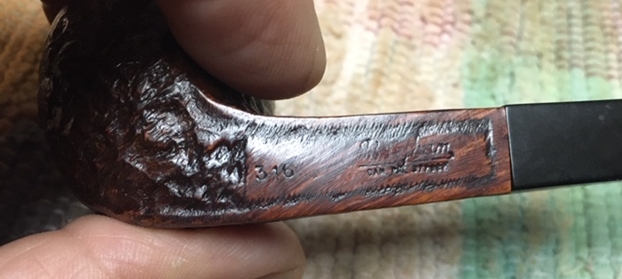
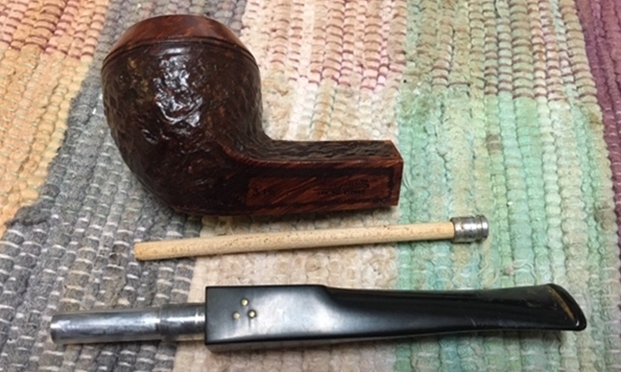
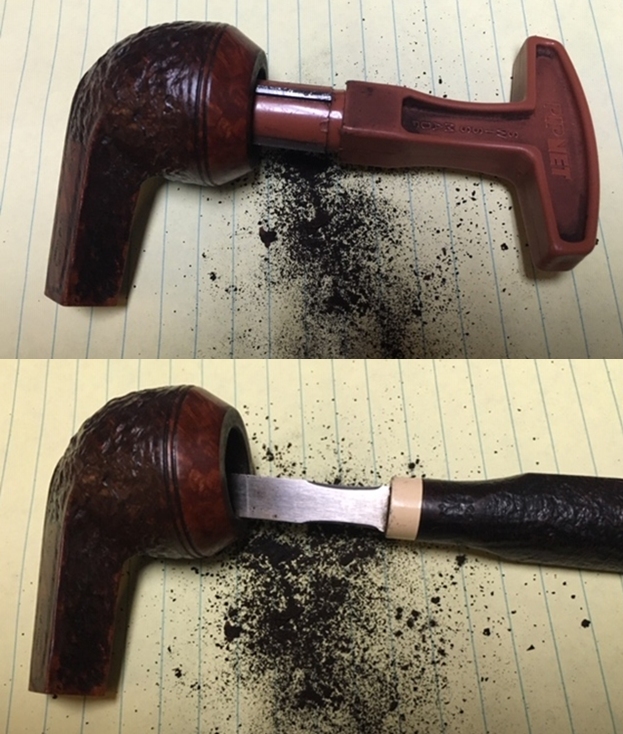
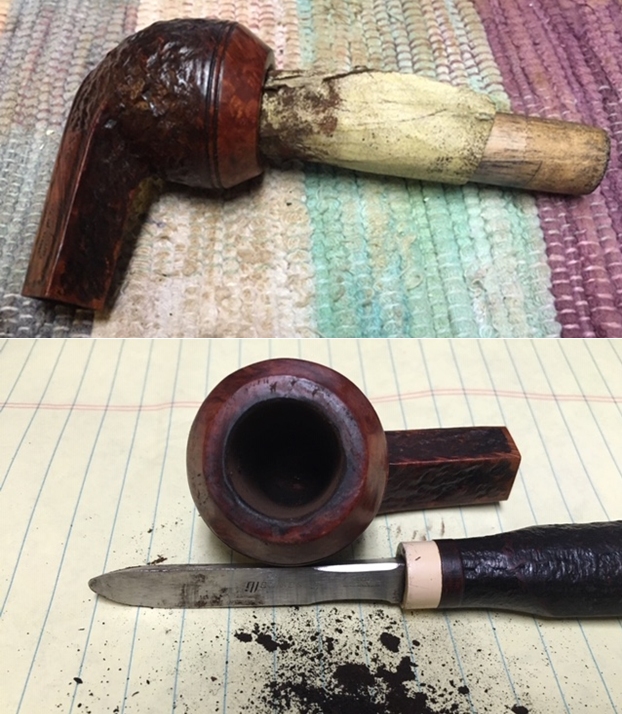
Breathing Life into a Can Pat Brigham Exclusive 316 Bulldog


Blog by Steve Laug

Not too long ago I received an email from a fellow in Kitchener, Ontario regarding some pipes he needed cleaned up. He had been referred to me by my local pipe and cigar shop. While I am not currently adding more pipes to my queue of repairs I have made a commitment to the shop to work on pipes for their customers. Generally they have one or two pipes that need a bit of work. This fellow sent me the following email:

I just came across my smoking pipes that I’ve had in storage for about 40 years. I’m wondering what you’d charge to have them refurbished. There are 17 in total (11 are Brighams and 6 are various).

It turns out he said he had 17 pipes. That was certainly more than I expected but I communicated that there was a large queue ahead of him and I would have to fit them in as I could. He was fine with whatever time it took. He sent me the following photos of his collection that he wanted restored. The first photo shows his eleven Brigham pipes – all very interesting shapes. The second photo shows the six various pipes in the collection – A Republic Era Peterson’s System 1312 (Canadian Import), A Bjarne Hand Carved Freehand, a Comoy’s Everyman London smooth billiard, a GBD Popular Dublin 12, an English made Kaywoodie Rustica 72B, a Kriswill Bernadotte 60 with a broken tenon. When the box arrived there were two additional pipes included for a total of 19 – a Ropp 803 Deluxe Cherrywood Poker and a Comoy’s Sandblast Everyman Canadian 296. It was a lot of pipes! I have been randomly choosing the next pipe to work on and chose the Brigham that I have drawn a red box around in the first photo below. When I unwrapped it the pipe it was a Petite Classic Bulldog. It was stamped on the flat left underside of the Diamond shank. It was stamped 316 which is the shape number. That is followed by the Brigham Script over Can. Pat. 372982. It had a rusticated lower half of the bowl and shank with a smooth top half. The rim top had a lava overflow from the medium cake in the bowl. The bowl was out of round with damage and some darkening around the top and inner edges of the bowl. It was a dirty pipe but the finish appeared to be in okay condition under the grime. The 3 Dot tapered stem was oxidized and had tooth marks and chatter near the button on both sides. There was also some calcification for about an inch up the stem. I took close up photos of the bowl and rim top to show the condition of the bowl and damage to the rim edge as well as the cake and lava overflowing onto the rim top. I also took close up photos of the stem to show its condition as mentioned above. I took a photo of the stamping on the left underside of the diamond shank to show what I was speaking about above. It is very clear and readable. It reads 316 followed by Brigham in script over Can Pat. 372982.I removed the stem from the shank to reveal the aluminum tube/tenon that held the Rock Maple Distillator. The distillator was present and looked almost new. It would need to be cleaned a bit but it would be very usable.Before starting my clean up work on the pipe I turned to a chart that Charles Lemon of Dad’s Pipes sent to me on the patent era Brighams. There were made from 1938-1980. As the pipe I am working on is a Patent pipe, it’s more accurate to refer to its grade by name (the post 1980 grading scheme refers to Dots). Here is the  chart that Charles sent me. The pipe I am working on is thus a Brigham Exclusive with the 3 brass pins arranged in a triangle. The pipe I am working on has a 3XX shape number.With this pipe I am returning to work on a Can Pat Brigham pipe from the nineteen pipe installment. I went to work on it immediately.I reamed the bowl with a PipNet pipe reamer using the second and third cutting head to take the cake back to bare briar so I could inspect the walls. I cleaned up the remnants with a Savinelli Fitsall Pipe Knife. I sanded the bowl walls with 220 grit sandpaper on a piece of dowel to smooth them out and further examine them. I was happy that the walls looked very good. I used the Savinelli Fitsall knife to scrape off the lava coat on the rim top. I worked on the darkening on the rim top and the rough inner edge of the bowl with a folded piece of 220 grit sandpaper to remove the darkening and smooth out the inner edge of the bowl.      I cleaned out the mortise area and airway to the bowl and the interior of the metal tube and airway in the stem with pipe cleaners, cotton swabs and alcohol. The aluminum tube was dirty but the distillatory had been changed before the pipe was stored so once again it was not as bad as I expected.   I scrubbed the surface of the bowl with undiluted Murphy’s Oil Soap and a tooth brush to remove the grime and grit as well as the remnants of the shiny finish on the smooth portions of the bowl. I wet sanded the rim top and the smooth portions on the bowl sides with micromesh sanding pads – 1500-12000 grit sanding pads. I wiped the bowl surface down with a damp cloth after each sanding pad to remove the sanding dust. Once I finished the bowl looked good.   I rubbed the bowl and shank down with Before & After Restoration Balm. I worked it into the surface of the briar with my fingertips to clean, enliven and protect it. I let the balm sit for a little while and then buffed with a cotton cloth to raise the shine. Mark Hoover’s Balm is a product that I have come to appreciate and one I use on every pipe I have been working on. It really makes the grain stand out on this pipe.     I set the bowl aside and turned my attention to the stem. I rubbed the stem down with Soft Scrub on with a cotton pad and it removed the oxidation and the calcification build up. It looked a lot better.         The tooth dents in the surface of the stem were not deep – more dents that bites. I “painted” the surface of the stem with the flame of a Bic Lighter to lift the dents from the vulcanite. The process worked really well and the dents were virtually invisible. I would be able to sand the surface to remove what remained.    I sanded out the remaining tooth chatter and oxidation with 220 grit sandpaper and started the polishing with 400 grit wet dry sandpaper.   I rubbed down the stem with Denicare Mouthpiece Polish and a cotton pad to remove the remnants of oxidation and to blend in the sanding. The polish is a red gritty paste that works wonders on removing stubborn remnants of oxidation in the crease. The stem is starting to show promise at this point in the process.       Before I finished the polishing stem I decided to fit it with a new Rock Maple Distillator.       I polished the stem with micromesh sanding pads – wet sanding it with 1500-12000 grit pads. I wiped the stem down after each sanding pad with a cotton pad to remove the sanding debris.  I finished polishing the stem with Before & After Pipe Stem Polish – both fine and extra fine. I finished by wiping it down with Briarville’s No Oxy Oil and buffing it to a shine.   Once again I was at one of favourite parts of the restoration process. It is that moment when all the pieces are put back together. I put the pipe back together and buffed it with Blue Diamond on the buffing wheel. I gave the bowl and the stem multiple coats of carnauba wax. I hand buffed the pipe with a clean buffing pad to raise the shine. It is fun to see what the polished bowl looks like with the grain popping through on the rim top and the rustication coming to life. Added to that the polished black vulcanite stem with the shining brass pins was beautiful. This mixed smooth and rusticated finish Brigham Exclusive 316 Bulldog is nice looking and feels great in my hand. It is light and well balanced. Have a look at it with the photos below. The dimensions are Length: 5 ¾ inches, Height: 1 ¾ inches, Outside diameter of the bowl: 1 ¼ inches, Chamber diameter: ¾ of an inch. This is the tenth of the pipes sent to me from Eastern Canada for restoration. Once again I am looking forward to what the pipeman who sent it thinks of this restoration. Lots more to do in this lot! Thanks to each of you who are reading this blog. Remember we are not pipe owners; we are pipemen and women who hold our pipes in trust until they pass on into the trust of the next pipeman or woman.
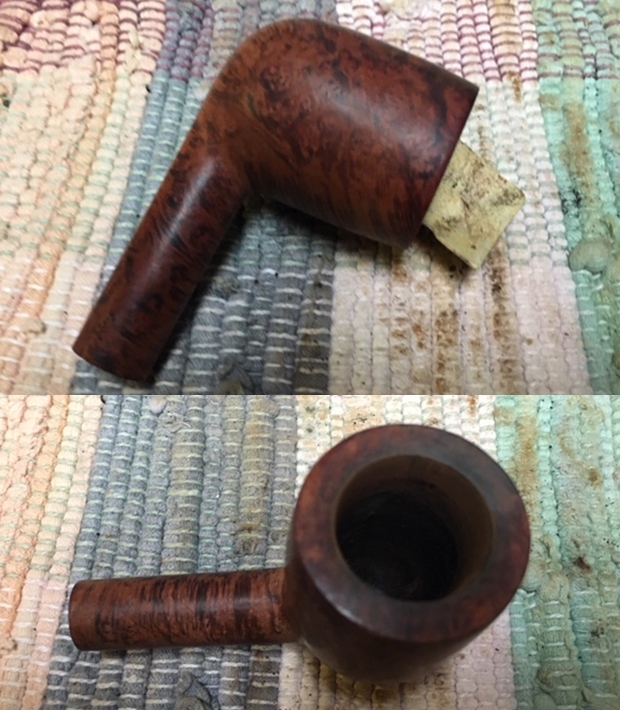
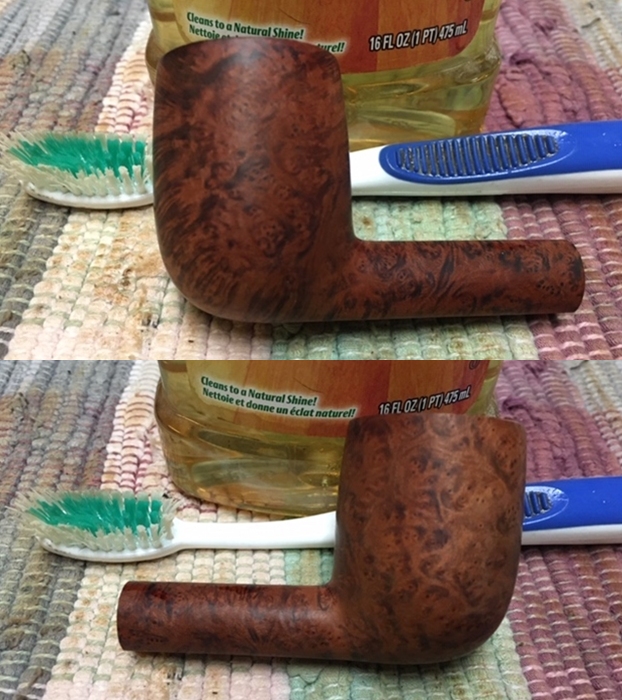
Breathing Life into a Smooth Finish Brigham 221 Dublin


Blog by Steve Laug

Not too long ago I received an email from a fellow in Kitchener, Ontario regarding some pipes he needed cleaned up. He had been referred to me by my local pipe and cigar shop. While I am not currently adding more pipes to my queue of repairs I have made a commitment to the shop to work on pipes for their customers. Generally they have one or two pipes that need a bit of work. This fellow sent me the following email:

I just came across my smoking pipes that I’ve had in storage for about 40 years. I’m wondering what you’d charge to have them refurbished. There are 17 in total (11 are Brighams and 6 are various).

It turns out he said he had 17 pipes. That was certainly more than I expected but I communicated that there was a large queue ahead of him and I would have to fit them in as I could. He was fine with whatever time it took. He sent me the following photos of his collection that he wanted restored. The first photo shows his eleven Brigham pipes – all very interesting shapes. The second photo shows the six various pipes in the collection – A Republic Era Peterson’s System 1312 (Canadian Import), A Bjarne Hand Carved Freehand, a Comoy’s Everyman London smooth billiard, a GBD Popular Dublin 12, an English made Kaywoodie Rustica 72B, a Kriswill Bernadotte 60 with a broken tenon. When the box arrived there were two additional pipes included for a total of 19 – a Ropp 803 Deluxe Cherrywood Poker and a Comoy’s Sandblast Everyman Canadian 296. It was a lot of pipes! I have been randomly choosing the next pipe to work on and chose the Brigham that I have drawn a red box around in the first photo below. When I unwrapped it the pipe it was a Brigham Natural Finish 221 Dublin. It was stamped on the flat shank/heel Made in Canada and Brigham in a script. It had a smooth finish on the bowl and shank. The rim top had a lava overflow from the thick cake in the bowl and some darkening around the top and edges of the bowl. The finish was dull and it was a dirty pipe but appeared to be in okay condition under the grime. The 2 Dot saddle stem was oxidized and had tooth chatter and marks on the surface near the button on both sides. There was also some calcification for about an inch up the stem. I took close up photos of the bowl and rim top to show the condition of the bowl and rim as well as the cake and lava overflowing onto the rim top. I also took close up photos of the stem to show its condition as mentioned above.      I took a photo of the stamping on the underside of the shank to show what I was speaking about above. It was faint but readable. It reads Made in Canada then Brigham in script.I removed the stem from the shank to reveal the aluminum tube/tenon that held the Rock Maple Distillator and removed the Distillator from the tenon.This is the only Brigham pipe that I am working on the nineteen pipe installment that is not a Can Pat pipe. It is a newer Brigham but I do not know the era. I went to work on it immediately.I reamed the bowl with a PipNet pipe reamer using the second and third cutting head to take the cake back to bare briar so I could inspect the walls. I cleaned up the remnants with a Savinelli Fitsall Pipe Knife. I sanded the bowl walls with 220 grit sandpaper on a piece of dowel to smooth them out and further examine them. I was happy that the walls looked very good.  I used the Savinelli Fitsall knife to scrape off the lava coat on the rim top.     I cleaned out the mortise area and airway to the bowl and the interior of the metal tube and airway in the stem with pipe cleaners, cotton swabs and alcohol. The aluminum tube was dirty but the distillator had been changed before the pipe was stored so it was not as bad as I expected.   I scrubbed the surface of the bowl with undiluted Murphy’s Oil Soap and a tooth brush to remove the grime and grit as well as the remnants of the shiny finish on the smooth portions of the bowl.    I worked on the darkening on the rim top and the rough inner edge of the bowl with a folded piece of 220 grit sandpaper to remove the darkening and smooth out the inner edge of the bowl.  I wet sanded the rim top and the smooth portions on the bowl sides with micromesh sanding pads – 1500-12000 grit sanding pads. I wiped the bowl surface down with a damp cloth after each sanding pad to remove the sanding dust. Once I finished the bowl looked good. I rubbed the bowl and shank down with Before & After Restoration Balm. I worked it into the surface of the briar with my fingertips to clean, enliven and protect it. I let the balm sit for a little while and then buffed with a cotton cloth to raise the shine. Mark Hoover’s Balm is a product that I have come to appreciate and one I use on every pipe I have been working on. It really makes the grain stand out on this pipe.     I set the bowl aside and turned my attention to the stem. I rubbed the stem down with Soft Scrub on with a cotton pad and it removed the oxidation and the calcification build up. It looked a lot better.  I sanded out the tooth chatter and the remaining oxidation with 220 grit sandpaper and started the polishing with 400 grit wet dry sandpaper.    I rubbed down the stem with Denicare Mouthpiece Polish and a cotton pad to remove the remnants of oxidation and to blend in the sanding. The polish is a red gritty paste that works wonders on removing stubborn remnants of oxidation in the crease. The stem is starting to show promise at this point in the process.   I polished the stem with micromesh sanding pads – wet sanding it with 1500-12000 grit pads. I wiped the stem down after each sanding pad with a cotton pad to remove the sanding debris. Before I finished the last polishing touches on the stem I decided to fit it with a new Rock Maple Distillator.       I finished polishing the stem with Before & After Pipe Stem Polish – both fine and extra fine. I finished by wiping it down with Briarville’s No Oxy Oil and buffing it to a shine.  Once again I was at one of favourite parts of the restoration process. It is that moment when all the pieces are put back together. I put the pipe back together and buffed it with Blue Diamond on the buffing wheel. I gave the bowl and the stem multiple coats of carnauba wax. I hand buffed the pipe with a clean buffing pad to raise the shine. It is fun to see what the polished bowl looks like with the popping through with new life and added to that the polished black vulcanite stem with the shining brass pins. This smooth finished Brigham 221 Dublin is nice looking and feels great in my hand. It is light and well balanced Have a look at it with the photos below. The dimensions are Length: 5 ½ inches, Height: 1 ¾ inches, Outside diameter of the bowl: 1 ½ inches, Chamber diameter: ¾ of an inch. This is the eighth of the pipes sent to me from Eastern Canada for restoration. Once again I am looking forward to what the pipeman who sent it thinks of this restoration. Lots more to do in this lot! Thanks to each of you who are reading this blog. Remember we are not pipe owners; we are pipemen and women who hold our pipes in trust until they pass on into the trust of the next pipeman or woman.
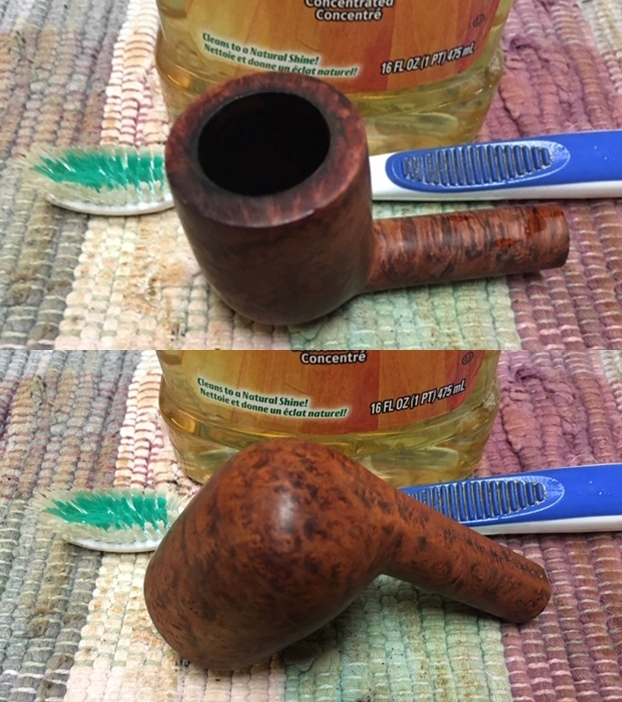
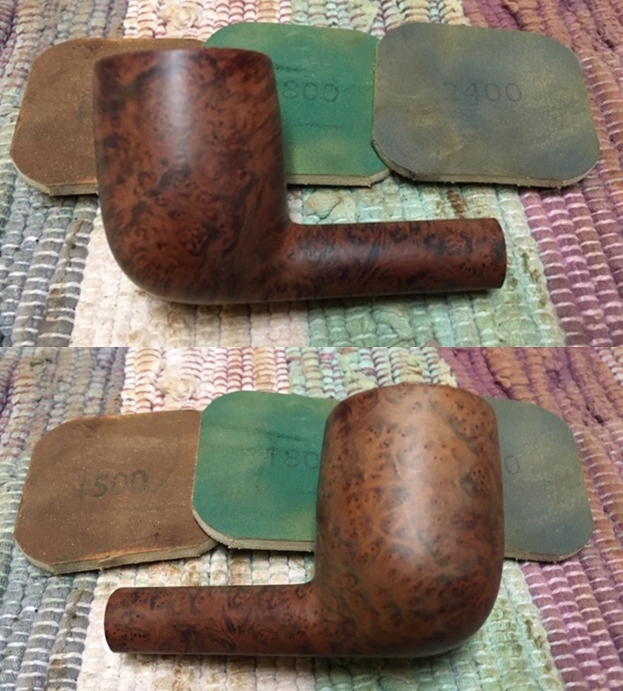
Breathing Life into a Petite Patent Era Brigham Exclusive 308 Apple


Blog by Steve Laug

Not too long ago I received an email from a fellow in Kitchener, Ontario regarding some pipes he needed cleaned up. He had been referred to me by my local pipe and cigar shop. While I am not currently adding more pipes to my queue of repairs I have made a commitment to the shop to work on pipes for their customers. Generally they have one or two pipes that need a bit of work. This fellow sent me the following email:

I just came across my smoking pipes that I’ve had in storage for about 40 years. I’m wondering what you’d charge to have them refurbished. There are 17 in total (11 are Brighams and 6 are various).

It turns out he said he had 17 pipes. That was certainly more than I expected but I communicated that there was a large queue ahead of him and I would have to fit them in as I could. He was fine with whatever time it took. He sent me the following photos of his collection that he wanted restored. The first photo shows his eleven Brigham pipes – all very interesting shapes. The second photo shows the six various pipes in the collection – A Republic Era Peterson’s System 1312 (Canadian Import), A Bjarne Hand Carved Freehand, a Comoy’s Everyman London smooth billiard, a GBD Popular Dublin 12, an English made Kaywoodie Rustica 72B, a Kriswill Bernadotte 60 with a broken tenon. When the box arrived there were two additional pipes included for a total of 19 – a Ropp 803 Deluxe Cherrywood Poker and a Comoy’s Sandblast Everyman Canadian 296. It was a lot of pipes! I have been randomly choosing the next pipe to work on and chose the Brigham that I have drawn a red box around in the first photo below. When I unwrapped it the pipe it was a Petite Brigham Apple. It was stamped on the flat shank/heel 306 which is the shape number. That is followed by Can Pat. 372982 then Brigham in a script. It had a rusticated lower half of the bowl and shank with a smooth top half. The rim top had a lava overflow from the thick cake in the bowl and some darkening around the top and edges of the bowl. The inner edge of the bowl was out of round. It was a dirty pipe but appeared to be in okay condition under the grime. The 3 Dot tapered stem was oxidized and had tooth marks and chatter near the button on both sides. There was also some calcification for about an inch up the stem. I took close up photos of the bowl and rim top to show the condition of the bowl and rim as well as the cake and lava overflowing onto the rim top. I also took close up photos of the stem to show its condition as mentioned above.    I took a photo of the stamping on the underside of the shank to show what I was speaking about above. It is very clear and readable. It reads 308 followed by Can. Pat. stamp  372982 then Brigham in script.I removed the stem from the shank to reveal the aluminum tube/tenon that held the Rock Maple Distillator. The distillator was was missing in this pipe so I would need to replace it with a new one once I had cleaned it.Before starting my clean up work on the pipe I turned to a chart that Charles Lemon of Dad’s Pipes sent to me on the patent era Brighams. There were made from 1938-1980. As the pipe I am working on is a Patent pipes, it’s more accurate to refer to its grade by name (the post 1980 grading scheme refers to Dots). Here is the  chart that Charles sent me. The pipe I am working on is thus a Brigham Exclusive with the 3 brass pins arranged in a triangle. The pipe I am working on has a 3XX shape number.It is helpful having this chart and getting a quick picture of where the pipe fits in the Brigham line. Now it was time to work on the pipe.

I reamed the bowl with a PipNet pipe reamer using the second and third cutting head to take the cake back to bare briar so I could inspect the walls. I cleaned up the remnants with a Savinelli Fitsall Pipe Knife. I sanded the bowl walls with 220 grit sandpaper on a piece of dowel to smooth them out and further examine them. I was happy that the walls looked very good.  I used the Savinelli Fitsall knife to scrape off the lava coat on the rim top. I cleaned out the mortise area and airway to the bowl and the interior of the metal tube and airway in the stem with pipe cleaners, cotton swabs and alcohol. The aluminum tube was really dirty since it had been smoked frequently without the distillator in place. It took a lot of work to clean out all of the grit and tars.     I scrubbed the surface of the bowl with undiluted Murphy’s Oil Soap and a tooth brush to remove the grime and grit as well as the remnants of the shiny finish on the smooth portions of the bowl. I worked on the darkening on the rim top and the rough inner edge of the bowl with a folded piece of 220 grit sandpaper to remove the darkening and smooth out the inner edge of the bowl.  I wet sanded the rim top and the smooth portions on the bowl sides with micromesh sanding pads – 1500-12000 grit sanding pads. I wiped the bowl surface down with a damp cloth after each sanding pad to remove the sanding dust. Once I finished the bowl looked good.     I rubbed the bowl and shank down with Before & After Restoration Balm. I worked it into the surface of the briar with my fingertips and a horsehair shoe brush to clean, enliven and protect it. I let the balm sit for a little while and then buffed with a cotton cloth to raise the shine. Mark Hoover’s Balm is a product that I have come to appreciate and one I use on every pipe I have been working on. It really makes the grain stand out on this pipe.   I set the bowl aside and turned my attention to the stem. I rubbed the stem down with Soft Scrub on with a cotton pad and it removed the oxidation and the calcification build up. It looked a lot better.    I sanded out the tooth chatter and the remaining oxidation with 220 grit sandpaper and started the polishing with 400 grit wet dry sandpaper.    I rubbed down the stem with Denicare Mouthpiece Polish and a cotton pad to remove the remnants of oxidation and to blend in the sanding. The polish is a red gritty paste that works wonders on removing stubborn remnants of oxidation in the crease. The stem is starting to show promise at this point in the process.   I polished the stem with micromesh sanding pads – wet sanding it with 1500-12000 grit pads. I wiped the stem down after each sanding pad with a cotton pad to remove the sanding debris. Before I finished the last polishing touches on the stem I decided to fit it with a new Rock Maple Distillator.  I finished polishing the stem with Before & After Pipe Stem Polish – both fine and extra fine. I finished by wiping it down with Briarville’s No Oxy Oil and buffing it to a shine.  I always look forward to this part of the restoration when all the pieces are put back together. I put the pipe back together and buffed it with Blue Diamond on the buffing wheel. I gave the bowl and the stem multiple coats of carnauba wax. I hand buffed the pipe with a clean buffing pad to raise the shine. It is fun to see what the polished bowl looks like with the smooth portion and the rusticated portion contrasting well and added to that the polished black vulcanite stem with the shining brass pins. This Brigham Exclusive 308 Apple is nice looking and feels great in my hand. The pipe is one that is light enough that it could be clenched and smoked while doing other things as it is very light weight and well balanced. Have a look at it with the photos below. The dimensions are Length: 5 ½ inches, Height: 1 ½ inches, Outside diameter of the bowl: 1 1/8 inches, Chamber diameter: ¾ of an inch. This is the seventh of the pipes sent to me from Eastern Canada for restoration. Once again I am looking forward to what the pipeman who sent it thinks of this restoration. Lots more to do in this lot! Thanks to each of you who are reading this blog. Remember we are not pipe owners; we are pipemen and women who hold our pipes in trust until they pass on into the trust of the next pipeman or woman.
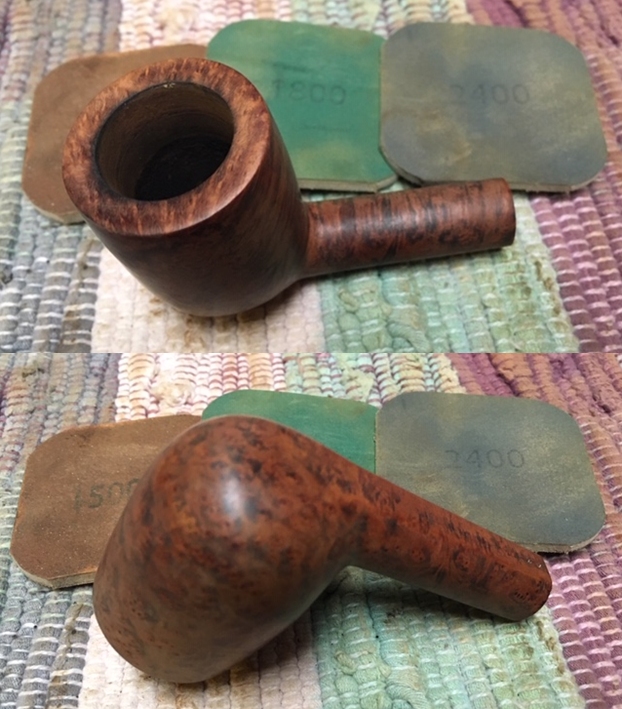
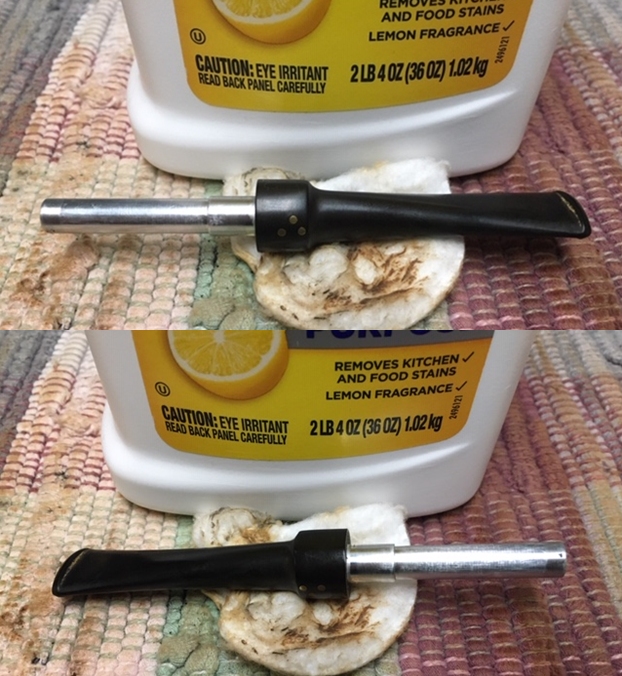
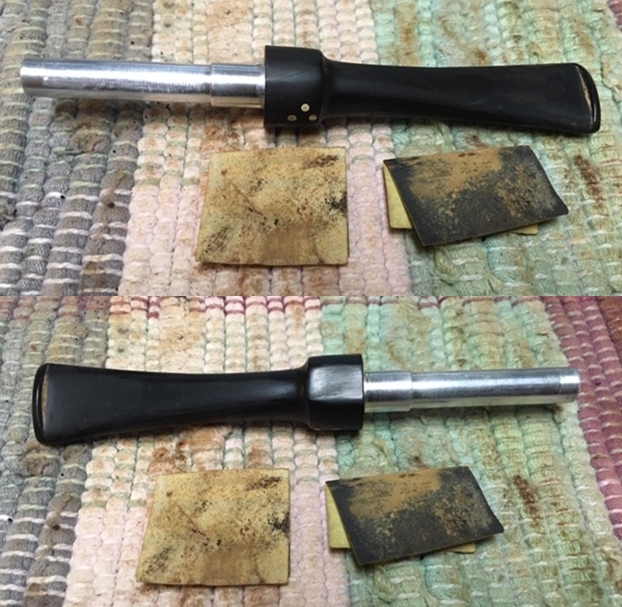
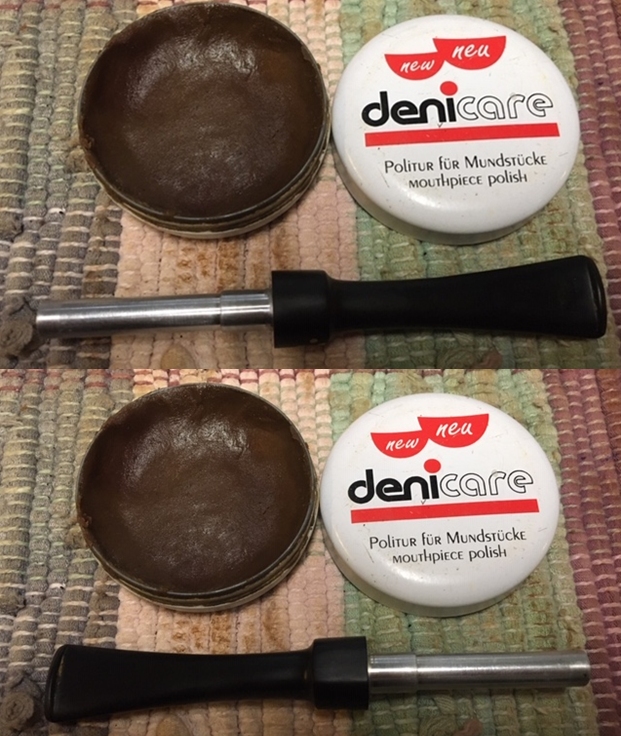
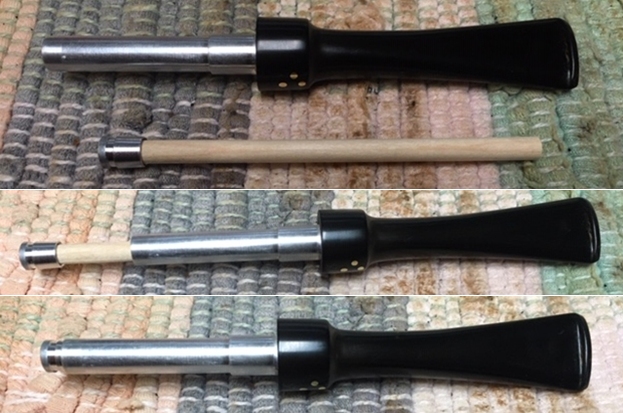
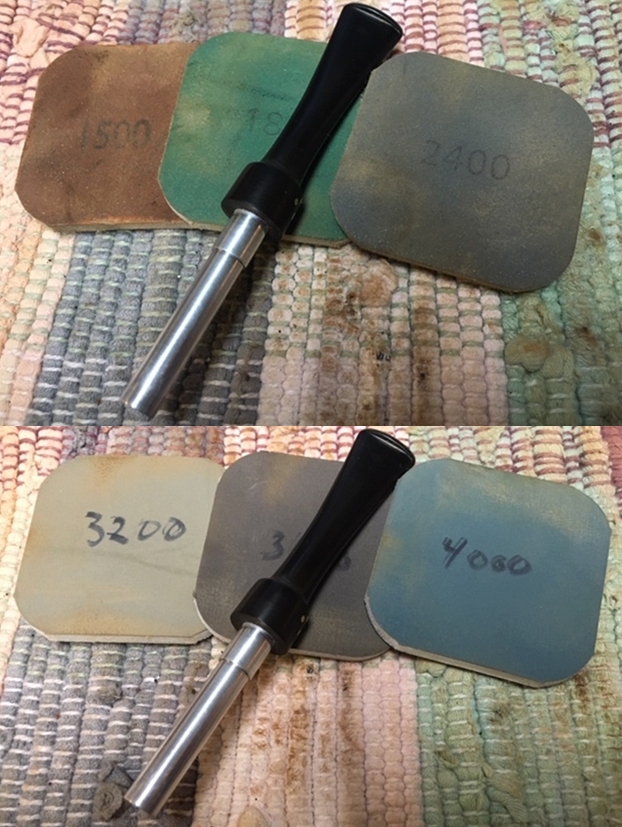
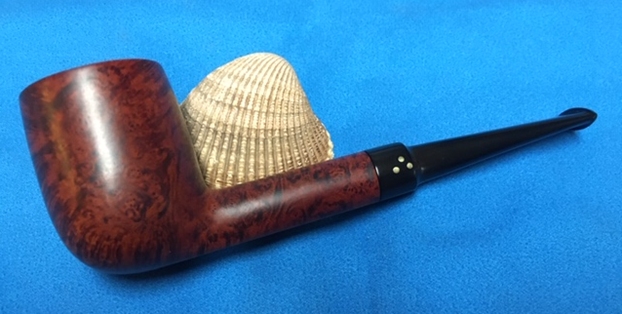
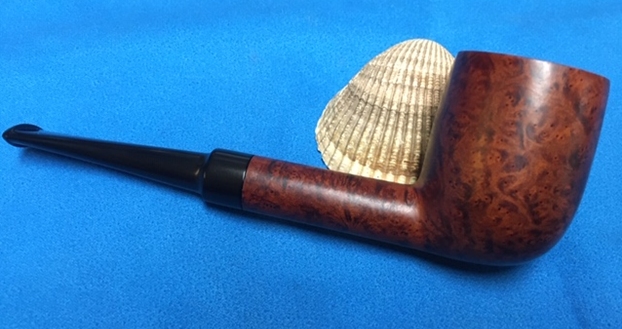
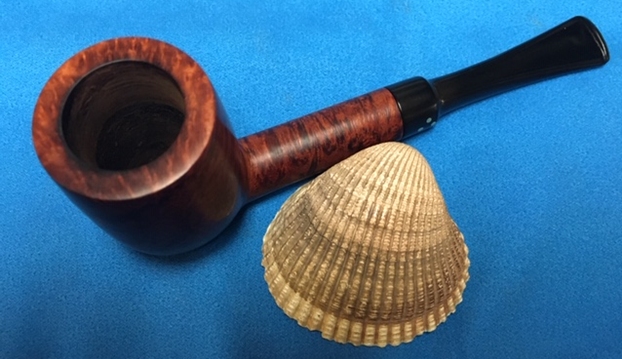
New Life for an Anscot Bullmoose


Blog by Steve Laug

I just finished working on the Marxman Jumbo Bench Made Poker for the fellow in Quebec. I wrote a blog about it (https://rebornpipes.com/2020/02/28/restoring-an-obstinate-marxman-jumbo-war-club/). When he sent the Marxman he included another pipe that he wanted to donate for the support of the SA Foundation. I am always glad to work on those and pass them on to others who not only want a good pipe but want to donate to a worthy cause – the restoration and recovery of women and children who have escaped sexual exploitation and trafficking. It’s a large pipe stamped on the left side of the shank in script and read Anscot. On the right side it is stamped Mediterranean Aged Briar. The stamping is clear and readable. The stem did not seat in the shank completely and was very tight. The finish was shiny and dirty like it had been coated with varnish or shellac. There was one large fill on the front of the right side mid-bowl. The bowl had been cleaned and there was a small bit of cake in the base of the chamber near the entrance of the airway. The rim top had some burn damage on the inner edge of the bowl toward the front of the bowl. The inner edge of the chamber was out of round and damaged. The stem was high quality vulcanite and had tooth chatter and marks on both sides near the button. The stem would not seat against shank. The photos show what I saw as I examined the pipe. I took close up photos of the rim top and the stem. The photos confirm the condition of the pipe that I described in the paragraphs above. You can see the darkening on the inner edge of the rim top. There were also scratches and nicks all around the rim top. The stem is also lightly oxidized and has some deep tooth marks on the top and underside near the button.I took a photo of the stamping on the left side of the shank. It is stamped Anscot in script with the leg of the A extended in a swirl under the whole word. On the right side of the shank it is stamped Mediterranean Aged Briar.I looked up the brand on Pipephil and found nothing there. I did a search for the brand and found a link to a connection between Abraham & Straus, Inc. to Anscot in Brooklyn, New York. There was also a link to picclick (https://picclick.com/Superb-Lh-Stern-anscot-Large-Bull-Moose-Vintage-302658878312.html) where the author linked the brand to LH Stern. That link was tenuous as the photo on the link showed the same stamping that I showed in the photos above.

From the search I did the most I could find out was the link to the pipe shop in Brooklyn, New York. The tie to LHS was not reliable as I could not see any link to the LHS Company. I looked up LH Stern on Pipedia and read through that article but there was no link to Anscot. So the mystery remains. Now it was time to clean up the pipe and restore it. I removed the stem from the shank and saw an interesting stinger inserted in the shank. I took a photo of the pipe at this point.I took the bowl to the work table and reamed it. I used a Savinelli Fitsall Pipe Knife to clean up the light cake in the bowl. I cleaned up the inner edge of the rim with a folded piece of 220 grit sandpaper. I was able to remove the damage to the inner edge and the top of the bowl.I wiped the bowl down with acetone on a cotton pad to break through the thick varnish coat on the bowl. It took a bit of scrubbing but it looked far better. I cleaned the interior of the shank/mortise and the airway in the shank and the stem with pipe cleaners, cotton swabs and alcohol. I removed the stinger from the tenon so that I could clean the airway in the stem. The airway in both and the mortise were dirty and after I had scoured them the pipe was clean and smelled better. With that finished I moved on the polishing the bowl and the rim top with micromesh sanding pads. I polished them with 1500-12000 grit sanding pads and wiped the bowl down with damp cloth to remove the sanding dust. I used a Maple stain pen to touch up the sanded rim top and edges. Once the stain had dried I polished the rim top with micromesh sanding pads to blend it into the rest of the bowl. I rubbed the bowl down with Before & After Restoration Balm. I worked it into the finish with my fingertips. I set it aside to absorb into the briar for ten minutes. Once it had been sitting I polished the bowl surface with a soft cotton cloth. At this point in the process the briar is looking very good. I set the bowl and I turned my attention to the stem. I scrubbed the stem with Soft Scrub and a cotton pad to remove the oxidation and debris on the stem surface. The tooth marks were clearer and the chatter was ready to be polished out.The tooth marks on the top were light and would sand out later. There was one deep tooth mark on the underside of the stem. I cleaned it out with alcohol and a cotton swab. I filled it in with black super glue and let it cure.Once the glue repair cured I sanded it with 220 grit sandpaper to blend it into the surface of the vulcanite. I sanded out the tooth chatter and marks on both sides with 220 grit sandpaper and 400 grit wet dry sandpaper.I polished the stem with Denicare Mouthpiece Polish to remove the light scratching and the light oxidation on the stem surface. The product is a red paste that is gritty and when rubbed with a cotton pad it removes many of the scratches and remaining oxidation.I polished the stem with micromesh sanding pads – polishing it with 1500-12000 grit micromesh sanding pads. I wiped it down with cloth between each sanding pad. I polished it with Before & After Pipe Stem Polish – both Fine and Extra Fine. I gave it a rub down with Briarville’s No Oxy Oil to protect the stem from oxidizing. It was looking very good at this point.   I was looking forward to this part of the restoration when all the pieces are put back together so I can send a photo back to the fellow in Quebec. I put the pipe back together and buffed it with Blue Diamond on the buffing wheel. I gave the bowl and the stem multiple coats of carnauba wax. I hand buffed the pipe with a clean buffing pad to raise the shine. It is fun to see what the polished bowl looks like with the polished black vulcanite stem. This Anscot Mediterranean Aged Briar Bullmoose looks far better than it did when I started. The fill on the right side is present but has blended in very well. The rim top looks much better than when I began. The stem fits well in the shank. The pipe is nice looking and feels great in my hand. The pipe is a sitter so that it can be laid down on a desk top while the pipeman is working on something else. Have a look at it with the photos below. The dimensions are Length: 6 inches, Height: 1 ½ inches, Outside diameter of the bowl: 2 inches, Chamber diameter: 1 1/8 inches. This old Anscot is a beauty and I look forward to what the pipeman buys it thinks of it. Thanks to each of you who are reading this blog. Remember we are not pipe owners; we are pipemen and women who hold our pipes in trust until they pass on into the trust of the next pipeman or woman.