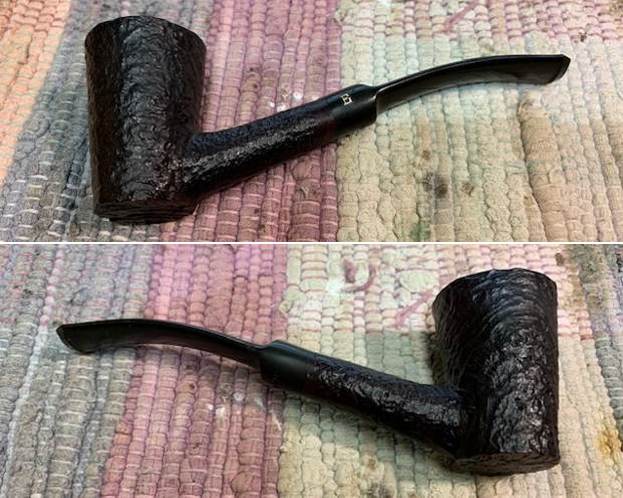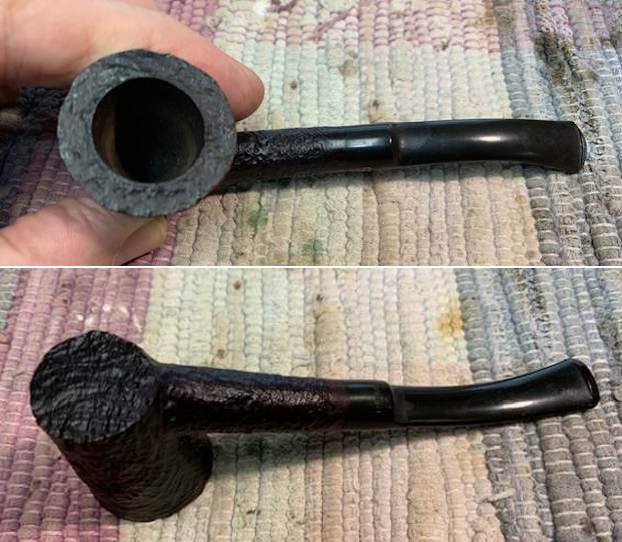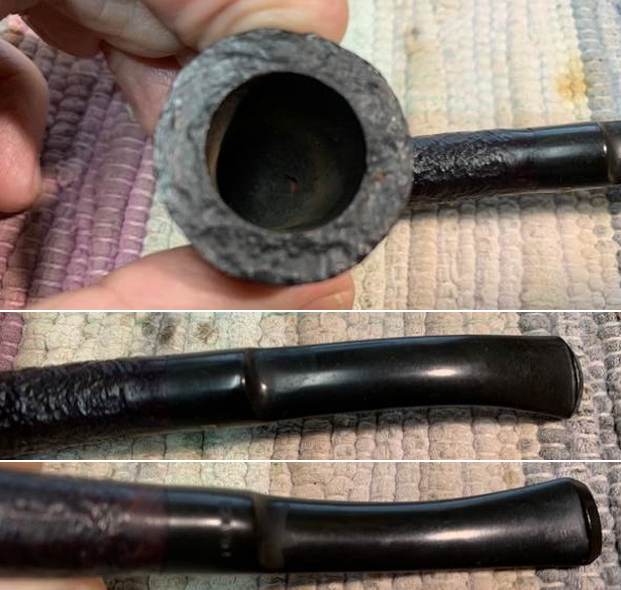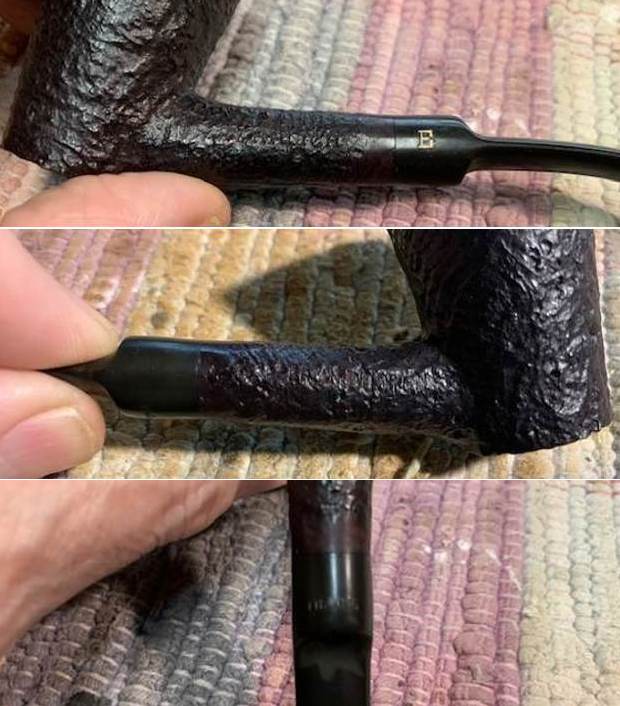
Tag Archives: Bowl – finishing

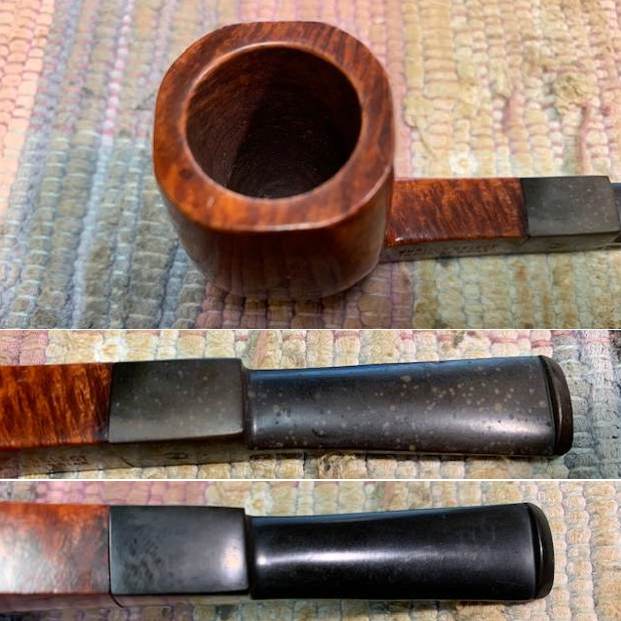
Next on the table is an Edward’s Virgin Algerian Briar 721 Canadian


Blog by Steve Laug

Photo, Courtesy of Doug Valitchka

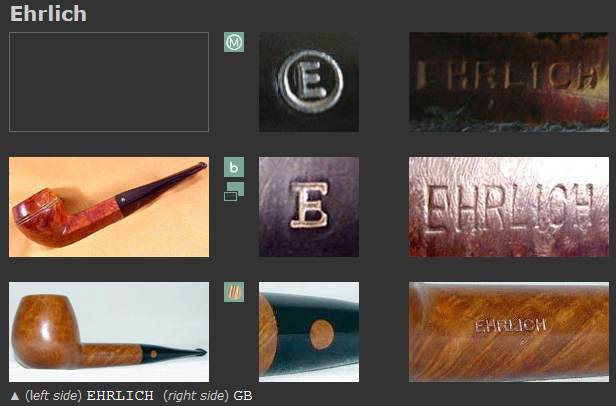
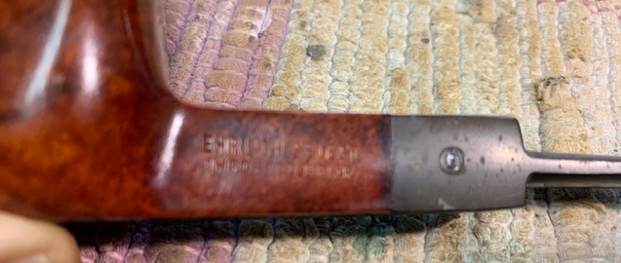
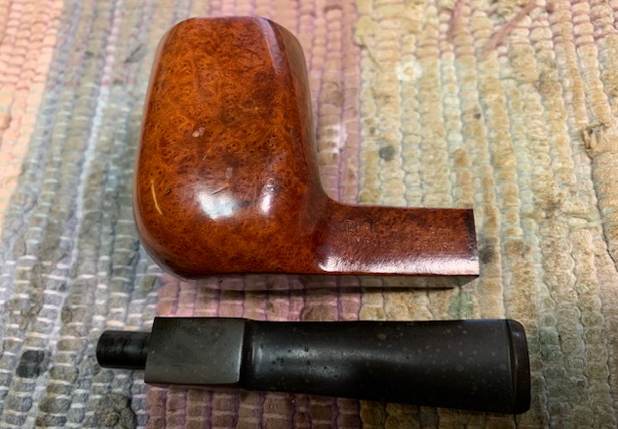
The next pipe on the work table is an Edward’s pipe that we bought in a group of pipes from a fellow in Los Angeles, California, USA. It is a classic looking Canadian in terms of the flow of the stem and shank. The bowl had a thick cake and lava overflow on the rim. It was hard to estimate the condition of the rim top and the edges of the bowl with the cake and lava coat but I was hoping it had been protected from damage. The bowl was smooth and a natural finish. The finish was dusty and tired but had some nice grain under the grime and the finish appeared to be in good condition. The pipe was stamped on the top of the shank and read Edwards [over] Virgin. On the underside it was stamped Algerian Briar [over] the shape number 721. On the underside near the shank end it is vertically stamped with the number 7. I am guessing this is a quality or grade stamp. A lot would be revealed once Jeff had worked his magic on it. The stem was dirty, oxidized, calcified and had some tooth chatter and deep tooth marks near the button on both sides. Jeff took photos of the pipe before he started his cleanup work. Jeff captured the condition of the bowl and rim top with the next series of photos. You can see the work that is ahead of us in the photos. The cake is very thick and heavy. The rim looked like it might have some damage on the back inner edge of the bowl. The last two photos of the stem show the top and underside of the stem. It is oxidized and calcified an you can see the tooth marks and chatter on the surface of both sides. Jeff took some great photos of the sides of the bowl and heel showing what is underneath the grime and debris of time and use. You can see the fills in briar on the right side. It will be interesting to see what happens as the pipe is cleaned and restored. He captured the stamping on the top and underside of the shank. They are clear and readable as  noted above. I turned first to Pipephil’s site for a quick review of the brand (http://pipephil.eu/logos/en/logo-e1.html). I did a screen capture of the information that was there.I also am including the sidebar information below.

Edward’s Pipes, headquartered in Tampa, FL, got its start importing pipes from France and continued to do so from 1958 to 1963 when it started producing pipes in Florida from prime Algerian Briar, a practice they continue to this day (2010). Randy Wiley, pipe carver in the USA, got his start at Edward’s.

The Edwards Canadian I am working on bears a stamp on the underside of the stem that reads FRANCE which makes sense with the information given above. It also helps to date the pipe to the time period of 1958-1963.

I the turned to Pipedia to have a look at a bit of history on the brand and gain more information on the pipe line (https://pipedia.org/wiki/Edward%27s). I quote the article in full below.

Edward’s pipes were originally produced in Saint-Claude, France when France actually was a world-class pipe maker with longstanding business & political connections to Colonial Algeria that allowed them to obtain the finest briar.

During the tumultuous 1960’s, Edward’s created a business model to offer the finest briar available in both Classic and Freehand shapes – all at a fair price. They bought the company & equipment and cornered the market on the finest, choice Algerian Briar just before the supply vanished in political turmoil of Algeria’s independence. Edward’s packed up both machinery and briar-treasure to America, safely caching the essentials to create a new pipe-making dynasty. This was a coup, for the 70’s and 80’s were grim years for pipe smokers as quality briar all but disappeared.

Edward’s Design Philosophy is hard to pin down, think of their style as the “American Charatan” with unique & clever twists all their own. Today, they fashion pipes in several locations across the USA. All of Edward’s pipes are Algerian Briar – a fact very few pipe companies can claim, and all are oil-cured utilizing natural finishes – no strange concoctions are used to interfere in your tastebud’s dance with the briar. Algerian, Calabrian, Sardinian, Corsican – take your pick, but Algerian Briar is generally considered the finest smoking briar ever used. When combined with oil-curing, Algerian takes on a magical quality that even Alfred Dunhill recognized as far back as 1918 as the choice for both his Bruyere and Shell.

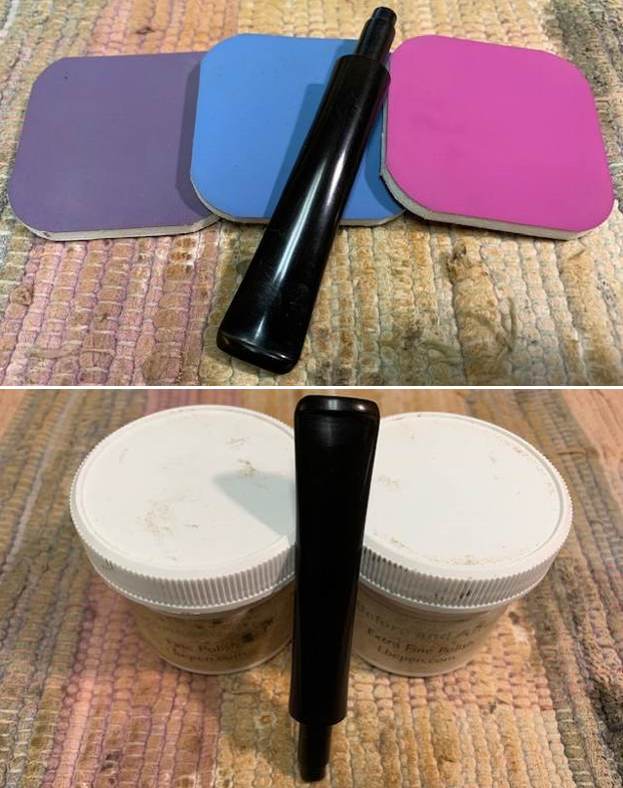
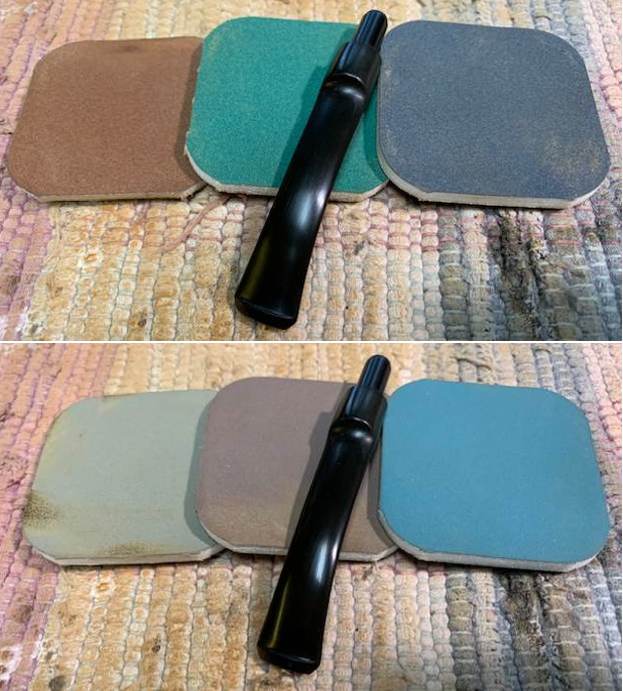
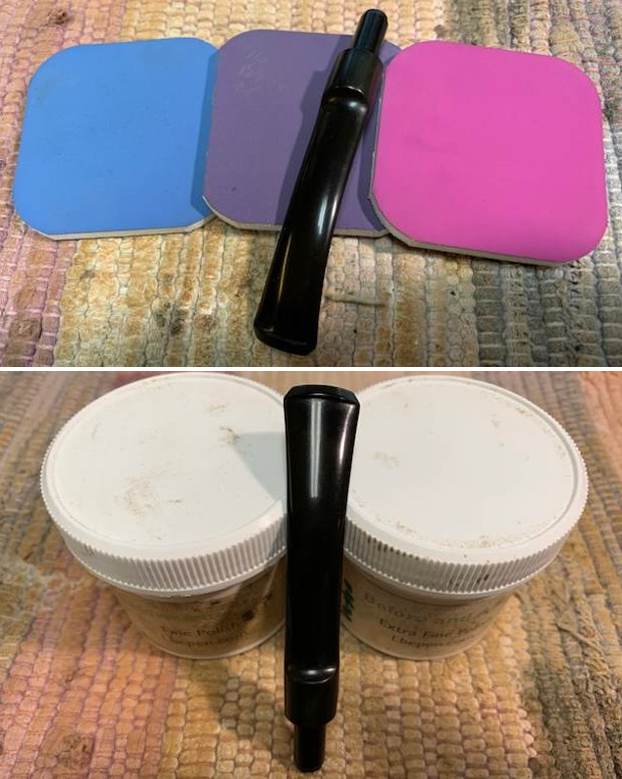
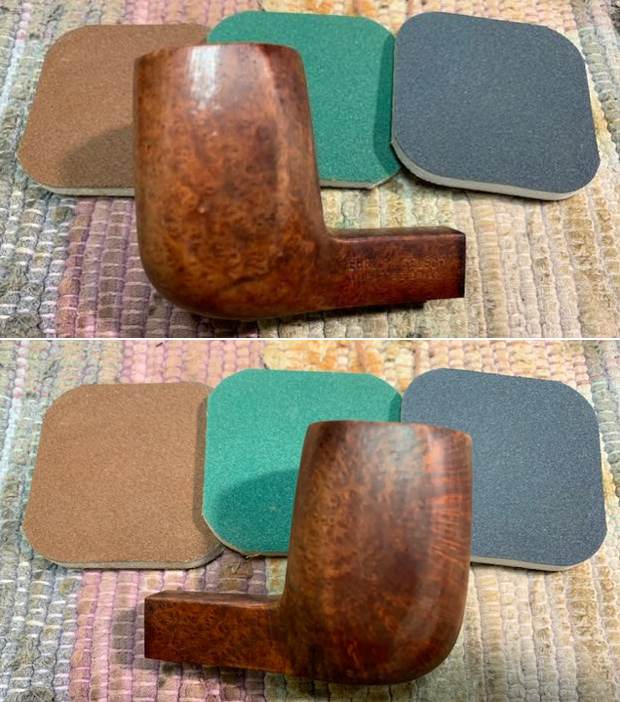
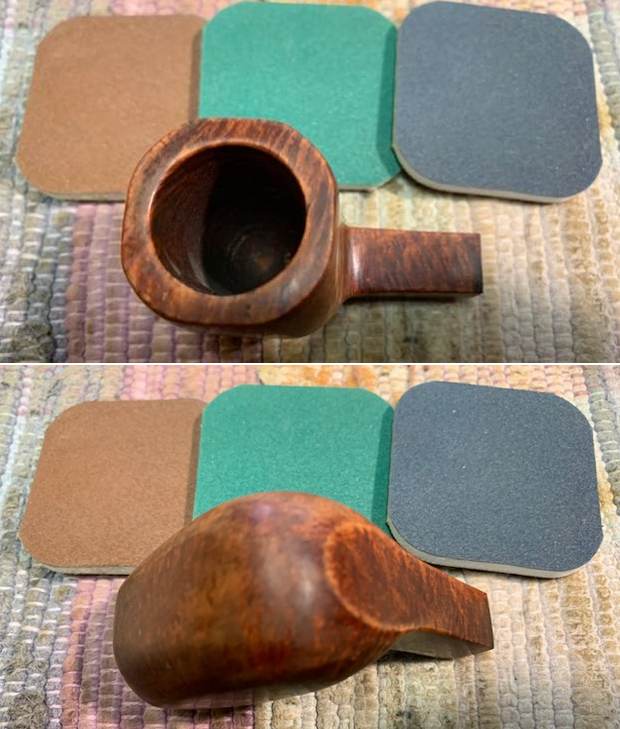
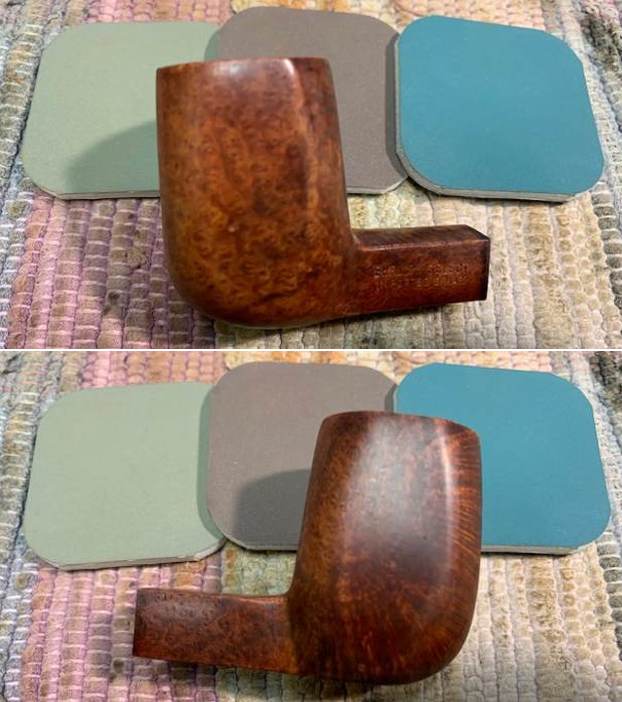
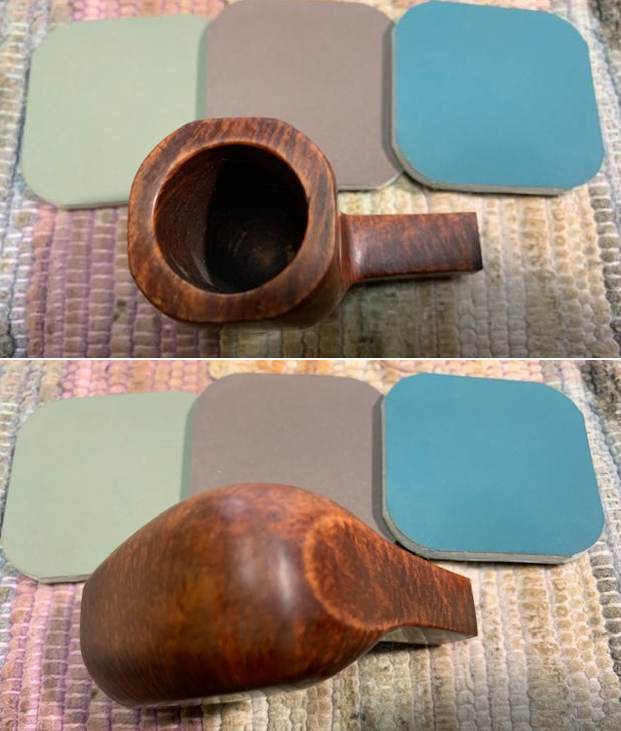
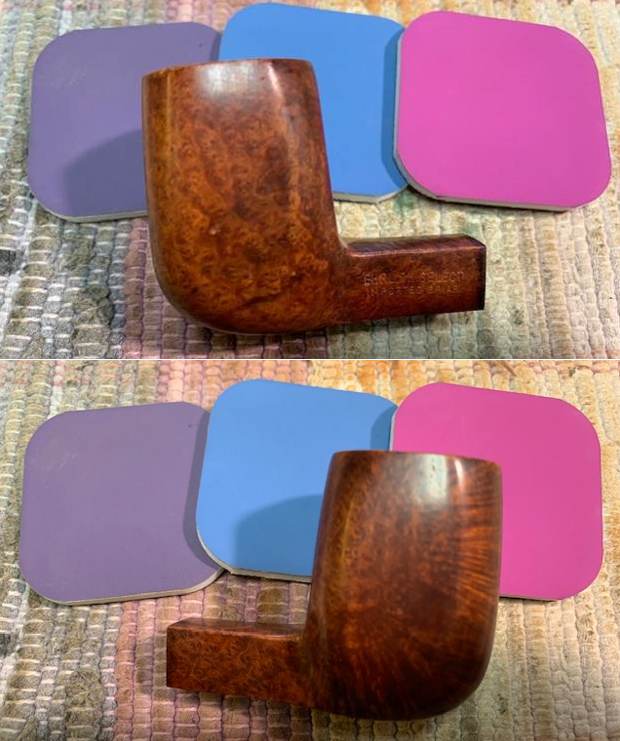
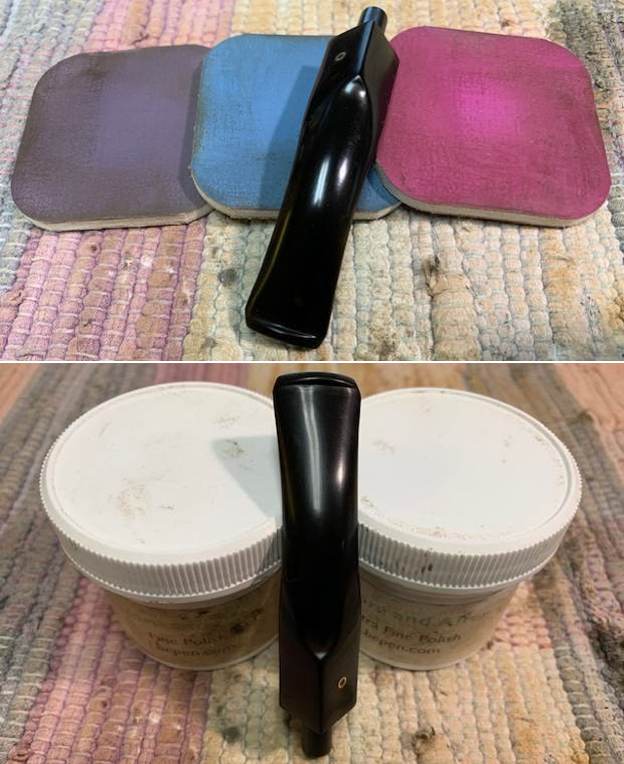
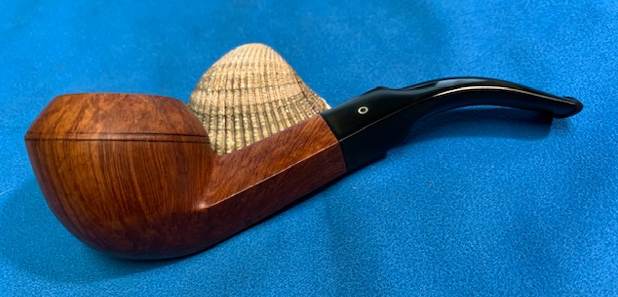
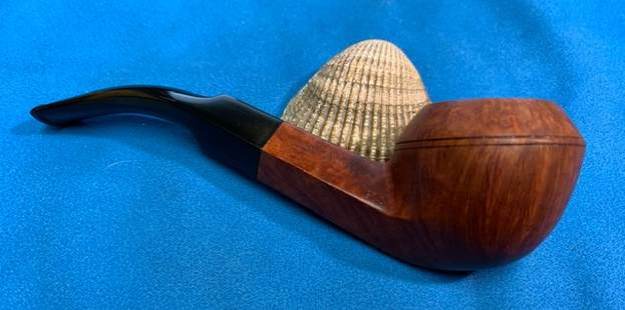
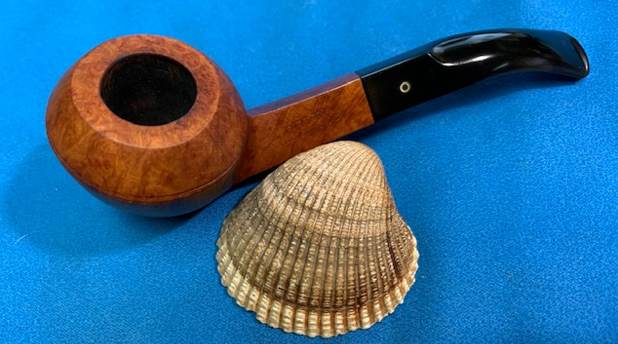
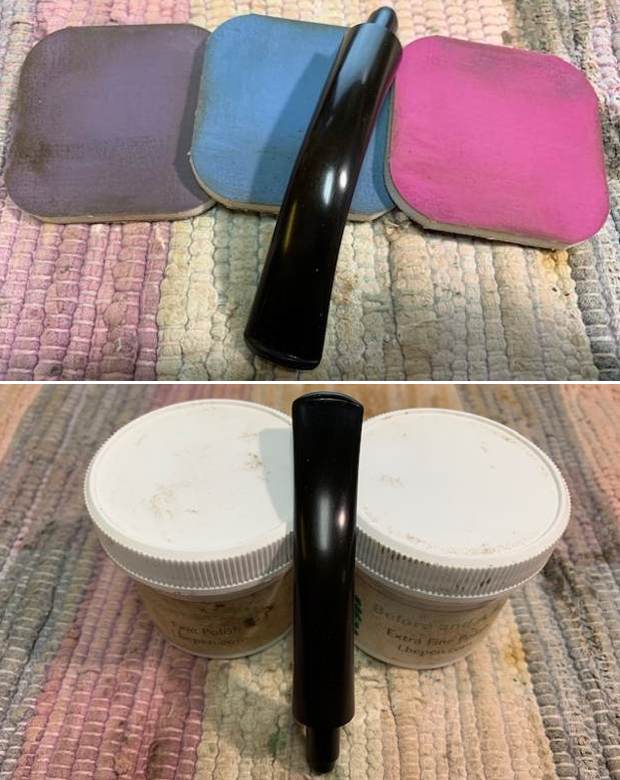
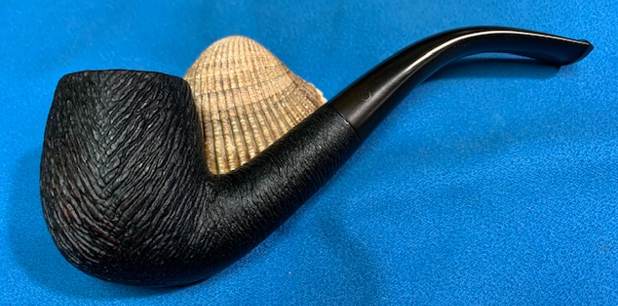
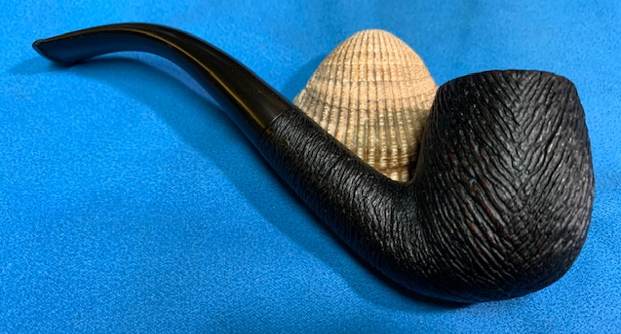
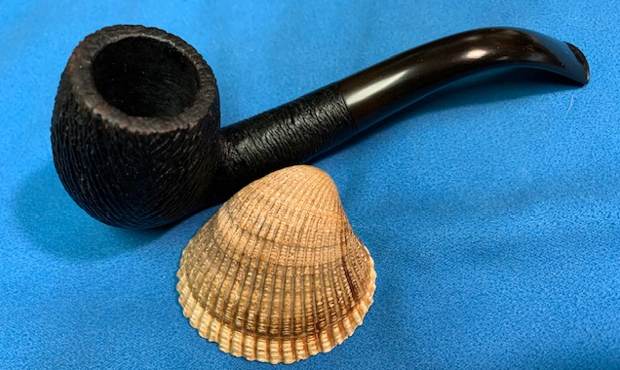
Now it was time to work on the pipe. I took it out of the box of pipe and looked it over. It was amazingly clean and looked like a different pipe. Jeff reamed it with a PipNet pipe reamer and cleaned up the reaming with a Savinelli Fitsall Pipe Knife. He scrubbed out the internals with alcohol, pipe cleaners and cotton swabs until the pipe was clean. He scrubbed the exterior of the bowl with Murphy’s Oil Soap and a tooth brush to remove the grime and grit on the briar and the lava on the rim top. The bowl looked very good. He scrubbed the stem with Soft Scrub to remove the grime and soaked it in Before & After Deoxidizer. When he took it out of the soak it came out looking far better. I took photos before I started my part of the work. I took some photos of the rim top and stem. The rim top is clean but there is damage to the inner edge on the front, back and right half of the bowl. The bowl itself looks very clean. The close up photos of the stem shows that is it very clean and the deep tooth marks are very visible. I took photos of the stampings on the shank because they had cleaned up very well. I missed a clear photo of the 7 on the shank near the stem. If you look closely you can see FRANCE on the stem in the second photo.I removed the stem from the shank and took a photo of the bowl and to give a sense of the proportion of the pipe. It is a classic looking Canadian for sure.I decided to take care of the damage on the rim top and inner edge first. I lightly topped the bowl on a topping board with 220 grit sandpaper. I worked over the inner edge with a folded piece of 220 grit sandpaper and cleaned up the existing bevel. Once I had finished the bowl looked very good. I polished the briar and the shank with micromesh sanding pads – dry sanding with 1500-12000 grit pads. I was able to blend in the repairs into the side of the bowl. I wiped the bowl down after each pad with a damp cloth. The grain really began to stand out and the finish took on a shine by the last sanding pad. The photos tell the story! I worked some Before & After Restoration Balm into the surface of the smooth briar with my fingertips. The product works to clean, enliven and protect the briar. I let the balm sit for about twenty minutes and then buffed with a cotton cloth to raise the shine. The photos show the bowl at this point in the restoration process. I set the bowl aside and turned to deal with the stem. I “painted” the surface of the stem with the flame of a Bic lighter to lift the tooth marks. I was able to lift most of them significantly. The few that remained I filled in with clear CA glue. Once it had hardened I flattened the repairs with a file. I sanded smooth with 220 grit sandpaper to blend them into the surrounding surface of the vulcanite. I then sanded it with 400 grit wet dry sandpaper to further blend it into the vulcanite. I polished the vulcanite stem with micromesh sanding pads – dry sanding with 1500-12000 grit sanding pads. I wiped it down after each sanding pad with a cloth containing some Obsidian Oil. I finished polishing it with Before & After Pipe Stem Polish – both Fine and Extra Fine and buffed it off with a cotton cloth. This oil cured Edward’s Virgin Algerian Briar 721 Canadian was another fun pipe to work on and I really was looking forward to seeing it come back together again. With the grime and debris gone from the finish it was a beauty and the grain just pops at this point. I put the stem back on the bowl and buffed the pipe with Blue Diamond on the buffing wheel. I carefully avoided the stamping on the shank during the process. I gave the bowl and the stem multiple coats of carnauba wax on the buffing wheel and followed that by buffing it with a clean buffing pad on the buffer. I hand buffed the pipe with a microfiber cloth to deepen the shine. The rich natural finish on the bowl looks really good with the polished black vulcanite stem. It is very well done. Give the finished pipe a look in the photos below. I can only tell you that it is much prettier in person than the photos capture. The dimensions of the pipe are Length: 6 inches, Height: 1  ¾ inches, Outside diameter of the bowl: 1 1/8 inches, Chamber diameter: ¾ of an inch. The weight of the pipe is 35grams/1.23oz. This is truly a great looking Edward’s. Thanks for walking through the restoration with me as I worked over another beautiful pipe. I will be adding it to the American Pipe Makers section of the rebornpipes store soon. If you want to add it to your collection send me an email or a message! Thanks for your time.

What an interesting looking Larsen De Luxe Handmade Cherrywood


Blog by Steve Laug

The next pipe on the work table came to us from an online auction on 11/09/18 in Corning, New York, USA. The pipe is an interesting Danish looking take on a Cherrywood or Poker shaped pipe. The pipe is well shaped and has nice grain around the bowl. The pipe is stamped on the left side of the shank and reads Larsen [over] Copenhagen. At the stem shank union it is stamped around the shank end and reads De Luxe on the top side. On the underside it reads Handmade [over] Made in Denmark. There was a lot of grime ground into the smooth and finish on the briar. The bowl was heavily caked with an overflow of lava on the top and inner edge of the rim. The inside edge looks quite good and the outer edge in good condition. The thin vulcanite taper stem was oxidized and dirty with tooth chatter and marks on the top and underside near the button. It had promise but it was very dirty. Jeff took some photos of the pipe before he started his cleanup work. He took photos of the rim top and bowl to give a clear picture of the thickness of the cake and debris as well as the lava on the rim top and inner edge of the rim. The photos also shows some scratching on the outer edge of the bowl. He also took photos of the top and underside of the stem to show the condition. The photos show the overall condition of the stem.Jeff took a photo of the side and heel of the bowl to give a picture of what the briar looked like. It truly has some nice grain – birdseye and cross grain around the bowl and shank. The stamping on the left side of the shank and the shank end is faint but readable and read as noted above. I turned to Pipephil (http://www.pipephil.eu/logos/en/logo-l2.html) to get a quick view of the brand once again. I did a screen capture of the site’s information and have included that below. From what I can figure out the pipe I am working on is a WO Larsen as it is stamped similarly to the ones in the photos though it does not have the WO in front of the Larsen. It also has the Copenhagen stamping on the shank and the Handmade stamp that is the same. Nothing definitive here but that is what I surmise.

I turned to Pipedia (https://pipedia.org/wiki/W.%C3%98._Larsen) for a quick read. The site is worth reading the history of the shop and the brand and its influence on Danish pipe carving.

I wonder if it could also be a pipe from the Larsen and Stigart pipe shop in Copeonhagen though the stamping does not include the Stigart part (https://pipedia.org/wiki/Larsen_%26_Stigart). I quote below.

Larsen & Stigart was a Copenhagen pipe shop which at point sold pipes stamped with their shop name and made by Karl Erik Ottendahl, including the Champ of Denmark line. They also employed their own in house carvers, including Søren Eric Andersen, for approximately a decade. Among others they are said to have supplied Danish shapes to Dunhill.

What I learned from the research is that in all likelihood the pipe is a WO Larsen made pipe. I am uncertain as the stamping does not include the WO stamp. It is a beauty though.

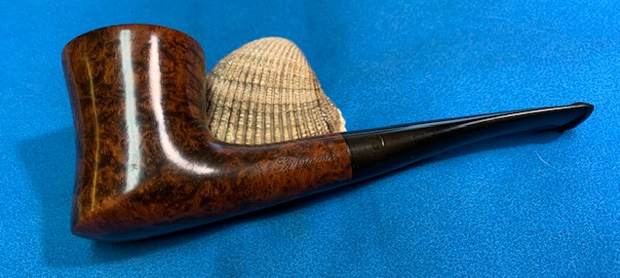
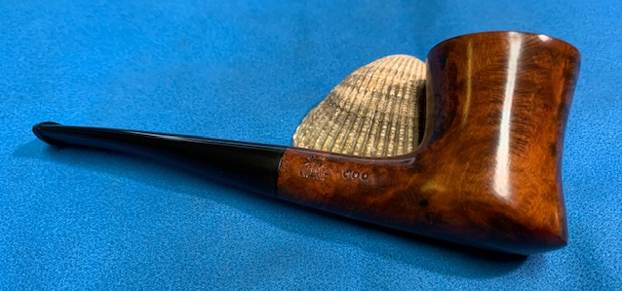
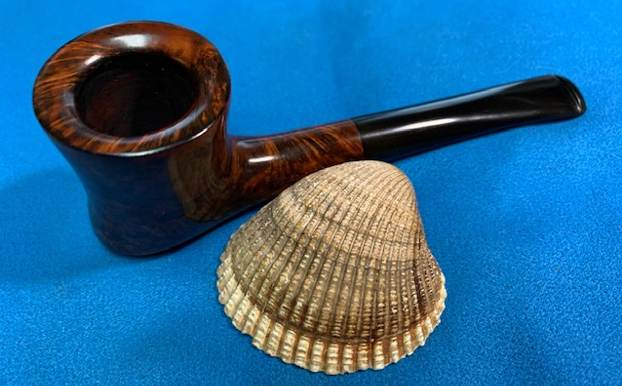
Armed with that information I turned to work on the pipe itself.  Jeff had reamed the pipe with a PipNet pipe reamer and removed the rest of it with a Savinelli Fitsall Pipe Knife.  He scrubbed the bowl with undiluted Murphy’s Oil Soap with a tooth brush. He rinsed it under running warm water to remove the soap and grime. He cleaned out the inside of the shank and the airway in the stem with alcohol, cotton swabs and pipe cleaners. He soaked the stem in a Before & After Deoxidizer bath and rinsed it off with warm water. I took photos of the pipe before I started my part of the restoration work.    The rim top cleaned up really well. The rim top, inner and outer edge of the bowl show some scratching but otherwise look good. The stem surface was oxidized but looked good with a few tooth marks and chatter on both sides near the button. The stamping on the left side of the shank and shank is faint but readable. It is stamped as noted above.    I removed the stem and took a photo of the pipe to give a sense of the whole. The thin taper stem is nice and the photo gives a sense of what the pipe looks like. I decided that I would begin the work on the pipe by polishing rim top, edges and sides of the bowl with micromesh sanding pads – 1500-12000 grit pads. I wiped the bowl down after each pad with a damp cloth.      I rubbed the bowl and shank down with Before & After Restoration Balm. I worked it into the surface of the bowl sides and shank with my fingertips to clean, enliven and protect the briar. I let the balm sit for about 10 minutes and buffed with a cotton cloth to raise the shine. The grain came alive and the single fill on the front of the bowl blended into the briar well. I set the bowl aside and turned to work on the stem. I “painted” the stem surface with the flame of a lighter and was able to lift out all of the tooth marks and chatter on the surface. The little that remained I sanded out with 220 grit sandpaper. I started polishing it with 400 grit wet dry sandpaper.    I polished the vulcanite stem with micromesh sanding pads – 1500-12000 grit pads. I wiped it down with Obsidian Oil after each sanding pad. I used Before & After Pipe Polish – both Fine and Extra Fine to further polish the stem.    This Larsen De Luxe Handmade Pencil Shank Cherrywood is a great looking pipe now that it has been restored. The shape is elegant and flowing with a thin tapered vulcanite stem. I put the stem back on the bowl and carefully buffed the pipe with Blue Diamond on the buffing wheel using a light touch on the briar. I gave the bowl and the stem multiple coats of carnauba wax on the buffing wheel and followed that by buffing the entire pipe with a clean buffing pad. I hand buffed the pipe with a microfiber cloth to deepen the shine. The finished Larsen De Luxe Cherrywood fits nicely in the hand and feels great. Give the finished pipe a look in the photos below. The dimensions of the pipe are Length: 5 inches, Height: 2 inches, Outside diameter of the bowl: 1 ¼ inches, Chamber diameter: ¾ of an inch. The weight of the pipe is 32 grams/ 1.13 ounces. I will be putting it on the rebornpipes store shortly in the Danish Pipe Maker Section. If you are interested in adding this pipe to your collection send me a message or an email. Thanks for reading this blog and my reflections on the pipe while I worked on it. There are many more to come!

This Dirty Savinelli Oscar Aged Briar 616 Came Alive During the Restoration


Blog by Steve Laug

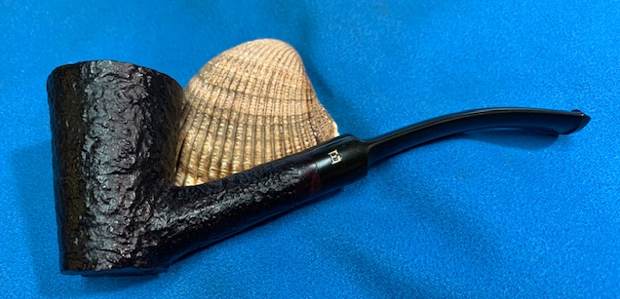
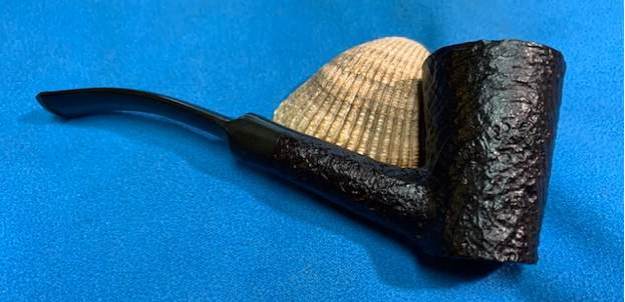
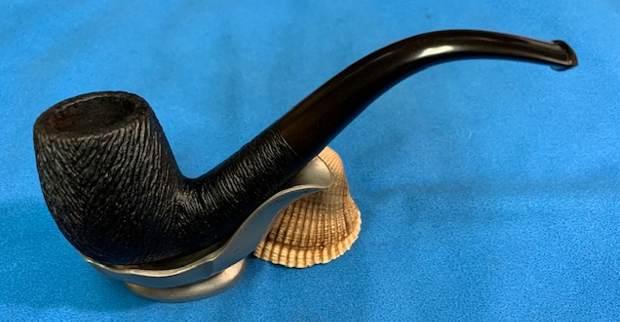
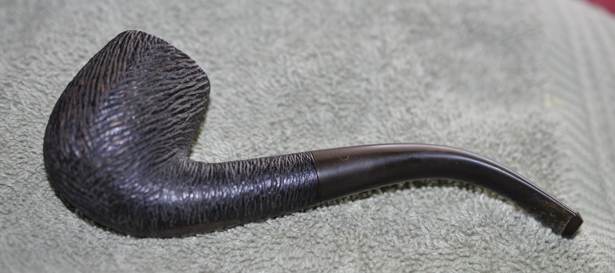
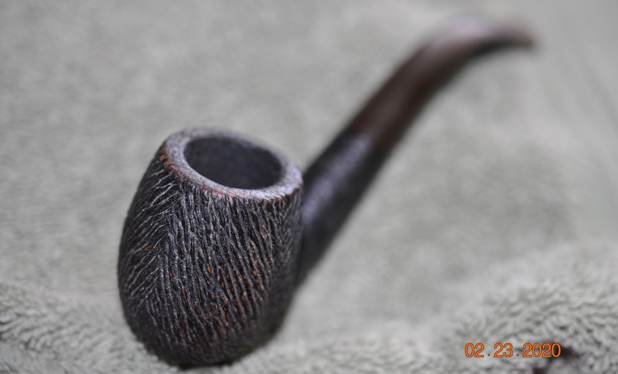
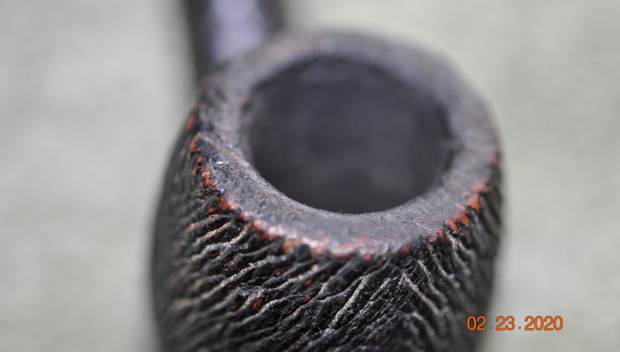
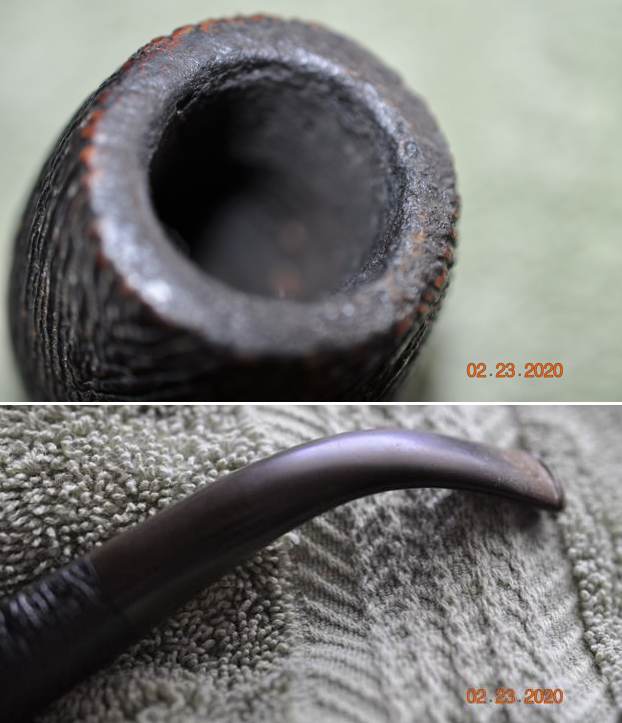
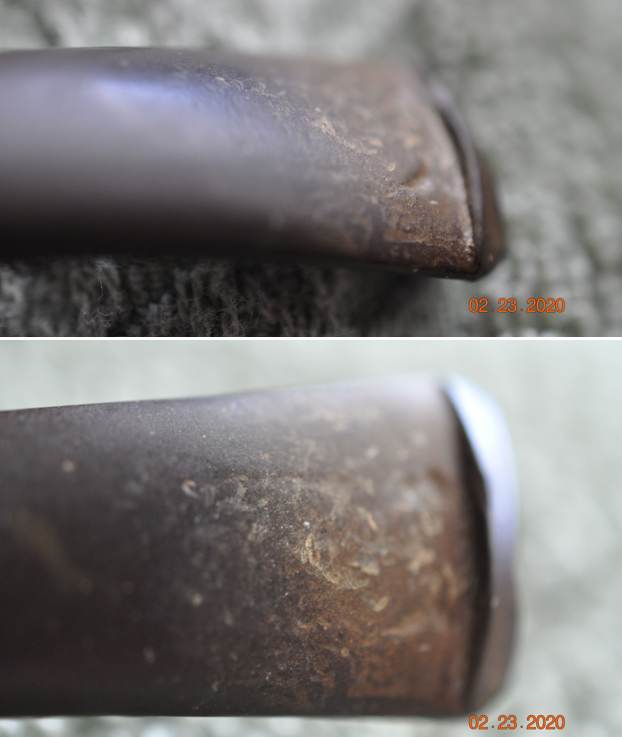
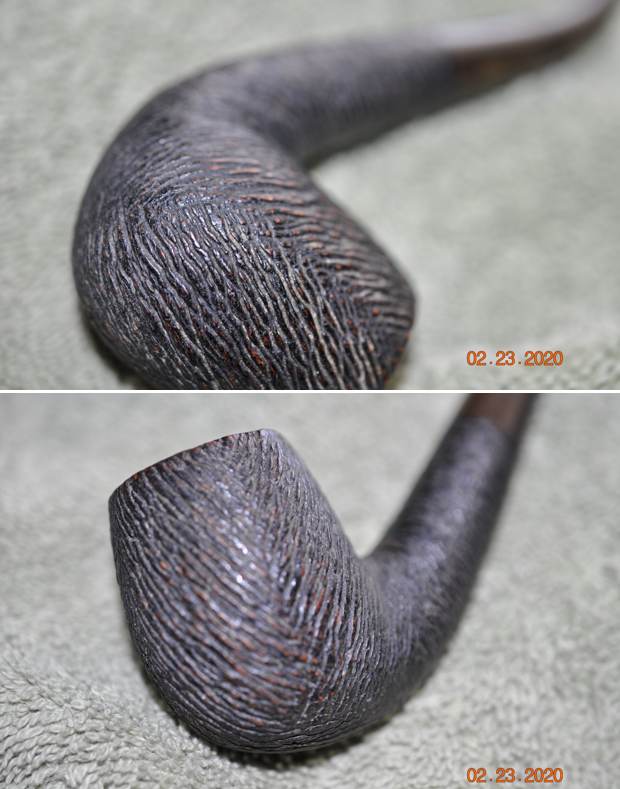
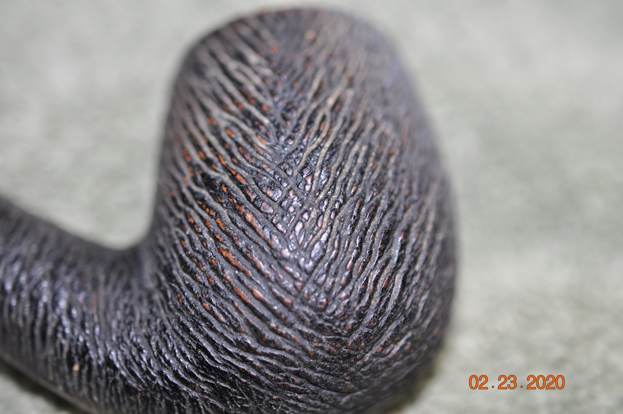
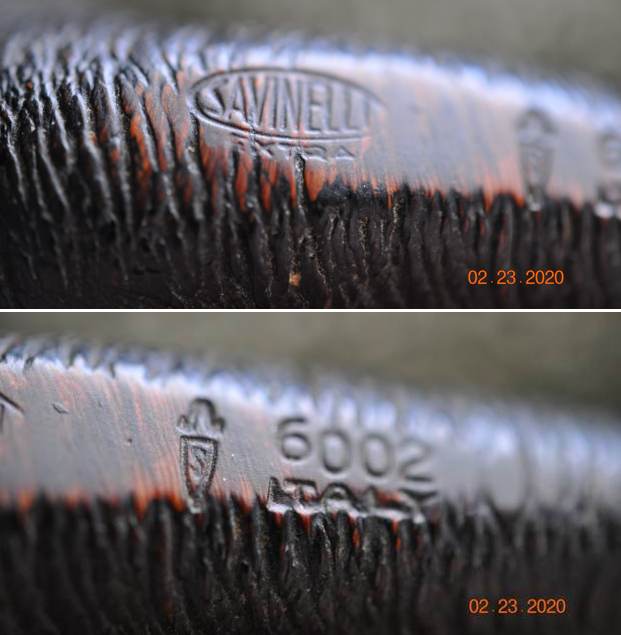
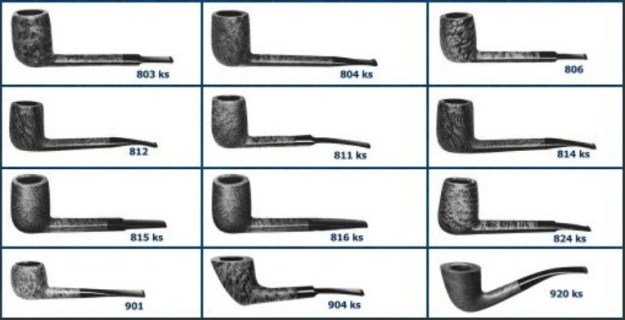
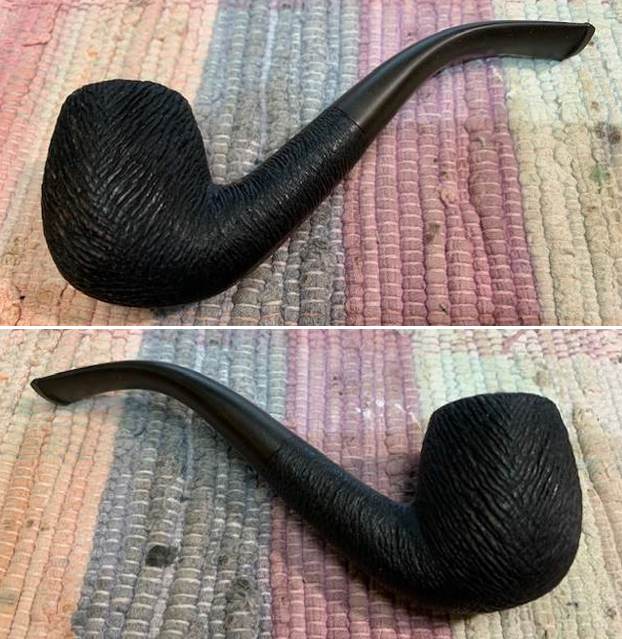
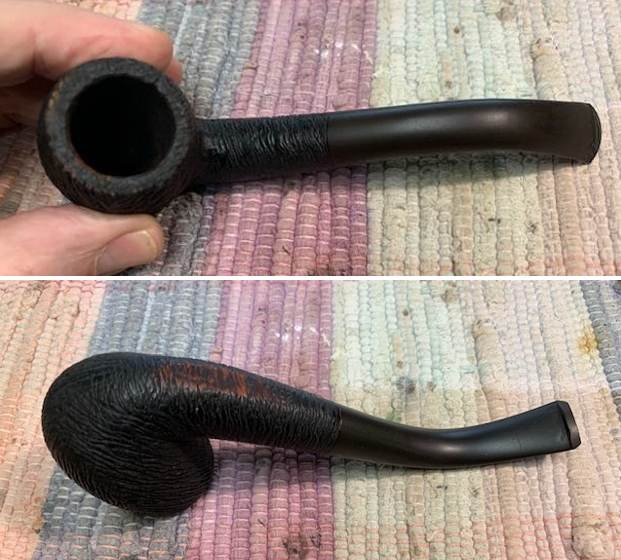
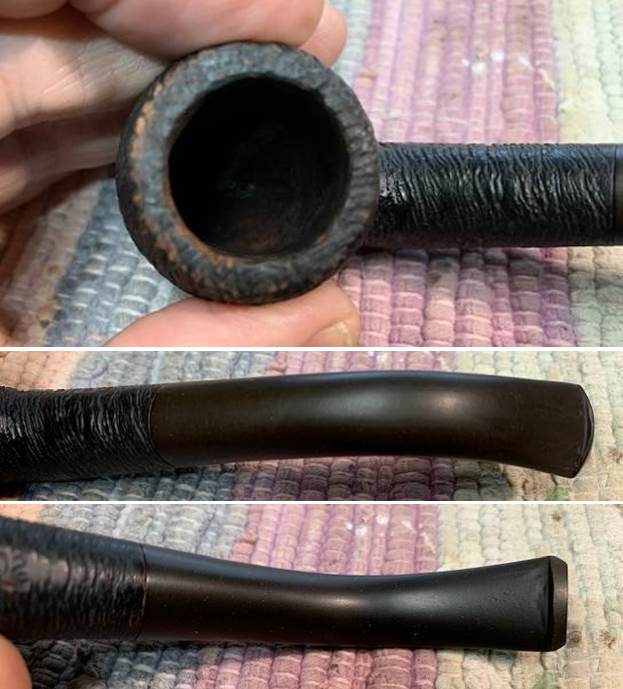
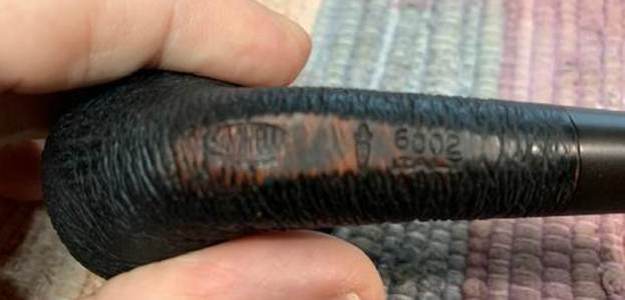
I went through my box of pipes that needed to be restored and came across this interesting looking chunky Bent Billiard with a smooth rim top. The bowl and the shank were rusticated with a tight pattern approximating a sandblast finish that feels great in the hand. I was really interested in what it would look like once it was finished. The pipe came to us back in 2017 from an antique store in Stevensville, Montana, USA. It was stamped on a smooth panel on the underside of the shank. It read Oscar [over] Aged Briar. That was followed by a Savinelli S shield and the shape number 616 [over] Italy. The finish was very dirty with ground in oils and dirt. At the junction of the heel of the bowl and panel with the stamping there was some thick putty like substance that was almost like dried wood glue and nasty looking. The bowl had a thick cake in it that overflowed with lava on the rim top and down the sides of the cap. The thick vulcanite taper stem was lightly oxidized and had tooth marks on the surface of the stem and the button itself on both sides. There was also some sticky residue around the stem next to the shank. It was a dirty pipe but it had some amazing potential that shone through the dirt and debris. Jeff took photos of the pipe before he started his clean up. Jeff took a photo of the rim top to show the thick cake in the bowl and the thick lava coat and scratches on the rim top. The exterior looked dull and lifeless but still we both saw something. He took photos of the top and underside of the stem to show the oxidation, calcification and tooth damage on both sides of the stem surface and button. He took photos of the dirty rustication on the heel and sides of the bowl to show the pattern of the finish and the beauty of the briar. It really is very nice.He captured the dried wood glue on the heel of the bowl on the area between the smooth panel and the heel. It is hard to know what is going on there. We will know more once it is cleaned.He took photos of the stamping on the pipe. It was on the underside of the shank and was clear and readable as noted above. I turned to Pipephil’s site (http://pipephil.eu/logos/en/logo-savinelli3.html) to have a look at the Savinelli Oscar. There was no new information there however I did learn that the Oscar often had fills in the briar so it helped to clarify the patch on the bottom of the bowl/shank.Pipedia has a great history of the brand that is worth a read if you have not already read it (https://pipedia.org/wiki/Savinelli). It is brief and pointed. There is also a great shape chart on the site. I have circled the 616 in red in the chart below.

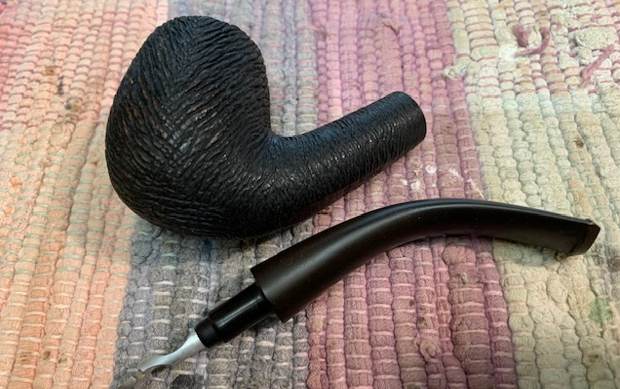
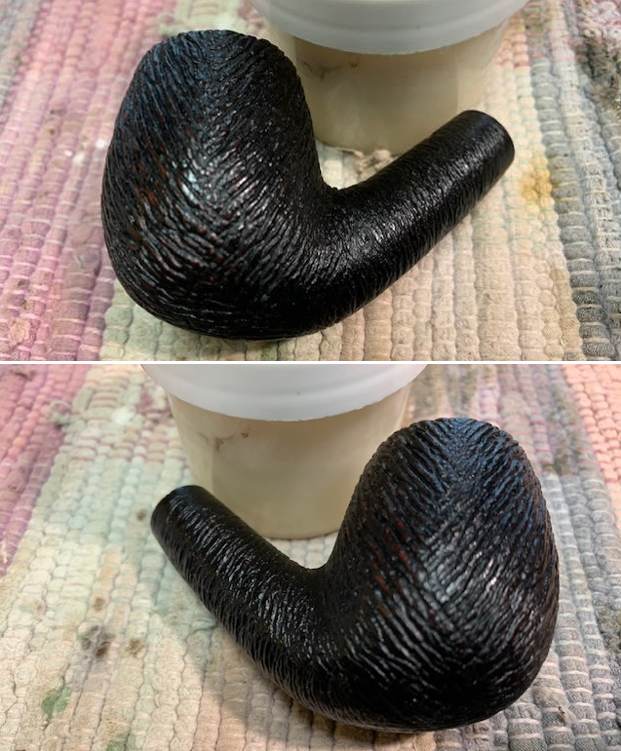
Armed with that information it was time to work on the pipe. Jeff had reamed the pipe with a PipNet reamer and cut back the cake back to the bare briar. He cleaned up the walls with a Savinelli Fitsall Pipe Knife. He scrubbed the interior of the bowl and shank with pipe cleaners, cotton swabs and alcohol to remove the tars and oils as well as the residue on the bottom of the bowl/shank junction. He scrubbed the exterior of the pipe with Murphy’s Oil Soap and a tooth brush to remove the grime from the finish. He worked on the rim top lava and darkening with the soap and tooth brush. He scrubbed the inside of the stem with alcohol and pipe cleaners. He scrubbed the exterior with Soft Scrub and then soaked it in Before & After Deoxidizer. He washed it off with warm water to remove the Deoxidizer. The pipe looked far better when it arrived.   I took some close up photos of the rim top and also of the stem surface. I wanted to show how well it had cleaned up. There was some darkening on the beveled inner edge of the rim and some scratches on the smooth rim top. I also took close up photos of the stem to show the light tooth marks on the surface near the button and on the button itself on both sides. I took a photo of the stamping on the underside of the shank. You can see that it is stamped as noted above. It is clear and readable. You can also see the fills on the bottom of the bowl near the stamping in the photo below. It is a solid fill and there are no cracks internally or externally at this point.    I removed the stem from the shank and took a photo of the parts. It is really a great looking chunky Bent Billiard.I started the work on the pipe by cleaning up the scratching on the rim top and the darkening on the beveled inside edge of the bowl first. I used a folded piece of 220 grit sandpaper for both. It looked better when I was finished.I polished the smooth rim top with micromesh sanding pads. I dry sanded it with 1500-12000 grit pads and wiped it down with a damp cloth after each pad. I worked some Before & After Restoration Balm into the surface of the briar with my fingertips and a horsehair shoe brush to clean, enliven and protect the briar. I let the balm sit for 15 minutes and then buffed with a cotton cloth to raise the shine. The photos show the bowl at this point in the restoration process. I set the bowl aside and turned my attentions to the stem. I “painted” the tooth marks on the stem surface and the button with the flame of a lighter. I sanded out the remaining tooth chatter and marks on the stem surface 220 grit sandpaper. I started the polishing with 400 grit wet dry sandpaper. I polished the stem with micromesh sanding pads – wet sanding with 1500-12000 grit sanding pads. I wiped it down after each sanding pad with Obsidian Oil. I polished it with Before & After Pipe Stem Polish – both Fine and Extra Fine.    I am excited to finish this chunky Savinelli Oscar Aged Briar 616 Bent Billiard. I put the pipe back together and buffed it with Blue Diamond on the buffing wheel. I gave the bowl and the stem multiple coats of carnauba wax. I buffed the pipe with a clean buffing pad to raise the shine. I also hand buffed it with a microfibre cloth to deepen the shine. It is fun to see what the polished bowl looks like with the grain on the rim top and the depth of the brown/black rustication popping all around it. Added to that the polished  black vulcanite taper stem was beautiful. This shapely Rusticated Oscar Bent Billiard is nice looking and the pipe feels great in my hand. It is light and well balanced. Have a look at it with the photos below. The dimensions are Length: 5 ½ inches, Height: 2 inches, Outside diameter of the bowl: 1 ½ inches, Chamber diameter: ¾ of an inch. The weight of the pipe is 68 grams/2.40 ounces. It is a beautiful pipe and one that I soon put on the rebornpipes store in the Italian Pipemakers Section. If you are interested in carrying on the pipeman’s legacy. Thanks for walking through the restoration with me as I worked over this pipe. Thanks to each of you who are reading this blog.

The Apple of My Eye


Blog by Kenneth Lieblich

Next on the chopping block is as robust an apple-shaped pipe as you are likely to see. It is a beautiful and chunky Calvert Super De Luxe sort-of apple. It was one of a large lot of pipes that I acquired many months ago. It was a group of pipes off of eBay, but the seller was local to me so I picked them up in person. I do not remember the exact number, but there were 50-odd pipes. I have been making my way through them over the months. This pipe just spoke to me – I liked its powerful, rugged features and thought it would make a terrific restoration. Indeed, it might even be a good smoker too. There is not a lot of information to be had about Calvert pipes. The brand is listed on www.pipephil.eu and they quote Herb Wilczak and Tom Colwell’s book, Who Made That Pipe?, as saying that the brand was distributed by Harry J. Gorfinkel. Meanwhile, www.pipedia.com makes reference to the name Calvert in connection with Fader’s Tobacconists of Maryland. Apparently, they had a line of pipes called Calvert after the street that the shop was located. I am quite sure that this is not my pipe and is completely unrelated to the Calvert mentioned by Wilczak and Colwell. The photos of the markings provided on www.pipephil.eu match perfectly with my pipe, so there it is.Fortunately, this pipe did not have too many problems. The stummel was mostly just drab and grubby. It also had a bit of cake in the bowl and a few scratches here-and-there. The colouring of the wood needed to be redone too. Meanwhile, the stem had a few problems of its own: there was some oxidation and calcification, and minor tooth marks and dents. The stem also looked weird to me: it was straight, but I thought it would be improved with a slight bend. I really like the shape and I was looking forward to working on this one. It just needed a new lease on life.The stem was first on my list. I took a BIC lighter and ‘painted’ the stem with its flame in order to lift the marks. This was only modestly successful in raising the dents. I wiped down the outside of the stem with Murphy’s Oil Soap on some cotton pads. Then, I cleaned out the insides with pipe cleaners and isopropyl alcohol. Have a look at the photo showing the pipe cleaner sticking out of the end of the tenon – it was pretty yucky. Once this process was done, the stem went for an overnight soak in the Before & After Hard Rubber Deoxidizer. The following day, I cleaned all of the de-oxidizing sludge off with alcohol, pipe cleaners, et cetera. The oxidation had migrated to the surface and would be fairly straightforward to remove. I scrubbed vigorously with SoftScrub on cotton pads to remove the leftover oxidation. I built up some tiny dents on the stem with cyanoacrylate adhesive and let it fully cure. I then sanded it down with 220-, 400-, and 600-grit sandpapers to meld seamlessly into the stem. This ensures that it keeps its shape and looks like it should. I then used all nine Micromesh pads (1,500 through 12,000 grit) to bring out the lovely black lustre on the stem. I also used Obsidian Pipe Stem Oil in between each pad scrubbing. Once I was done with the polishing, I noticed a tiny piece of metal on the underside of the stem. I asked Steve about it and he said that he had heard that it was an indication that the stem was made from old tires. This is actually fortunate because it allows us to date the pipe to World War II or shortly thereafter (according to Steve’s memory). I mentioned earlier that I thought the stem did not look quite right. I asked Steve about it and he had the same impression. Essentially, I wanted the end of the stem to be parallel with the rim of the bowl. I brought out my heat gun and heated the vulcanite stem in order to make it malleable. The heat gun is very powerful – it does not take long! When it was soft, I gently curved the stem over a wooden dowel. The dowel provides a firm surface and a proper curve. Once I had the bend I wanted, I left the stem to cool and set itself in place.On to the stummel, and the usual cleaning procedures were in order for this pipe. I used both the PipNet Reamer and the KleenReem to remove the built-up cake, and followed that with 220-grit sandpaper to remove as much as I could. I wanted to take the bowl down to bare briar to ensure there were no hidden flaws in the walls of the bowl. Fortunately, there were none. I then proceeded to clean out the insides of the shank with Q-tips, pipe cleaners, and isopropyl alcohol. There was quite a bit of nastiness inside this stummel – it took many pipe cleaners et cetera to sort that out. A de-ghosting session seemed in order, so I thrust cotton balls in the bowl and the shank, and saturating them with 99% isopropyl alcohol. I let the stummel sit for 24 hours. This caused the oils, tars and smells to leech out into the cotton. Finally, a relatively clean and fresh-smelling bowl emerged. I followed that up by cleaning the insides with some dish soap and tube brushes. I then moved on to cleaning the outside of the stummel with Murphy’s Oil Soap and a scrub brush. That removed any remaining dirt. There was a small crack in the shank, but, thankfully it was minor and I addressed it effectively with some cyanoacrylate adhesive. The repair worked beautifully and quickly. Since this pipe is rusticated, I was not going to sand down the stummel with my Micromesh pads, but I did do it to the small sections that were smooth (i.e. where the markings were located). In order to avoid disturbing the rusticated sections, I masked these areas off with painter’s tape. This simplified the process a great deal.On to another problem: the colour. During the course of its previous life and my vigorous cleaning, this pipe had lost some vibrancy of colour. So, in order to accentuate the external beauty of this pipe, I opted for aniline dye. However, I noticed that there were some gooey marks on the stummel that needed to be removed before I stained the pipe. So, I opted to soak the stummel in isopropyl alcohol for a few hours beforehand. This will usually remove the sort of goo I was faced with. When I took it out of the bath, I scrubbed the wood with a metal brush (to remove any remnants) and left it to dry. Once dry, I applied some of Fiebing’s Black Leather Dye. As usual, I applied flame from a BIC lighter in order to set the colour. What a difference that made! It looked so much better with a fresh coat of stain. I then embellished the stummel markings with some gold Rub’nBuff – just to add some flair. Since the markings were quite worn (and, therefore, shallow), the paint did not illuminate everything, but I still liked the effect a lot. I applied some Before & After Restoration Balm and then it was off for a trip to the buffer. A dose of White Diamond and a few coats of Halcyon II wax were just what this pipe needed. The lovely shine made the wood very attractive. This is a very handsome pipe and will provide many years of smoking pleasure.This Calvert Super De Luxe is back to its old glory and ready to be enjoyed again by the next owner. I am pleased to announce that this pipe is for sale! If you are interested in acquiring it for your collection, please have a look in the ‘American’ pipe section of the store here on Steve’s website. You can also email me directly at kenneth@knightsofthepipe.com. The approximate dimensions of the pipe are as follows: length 6½ in. (165 mm); height 1¾ in. (44 mm); bowl diameter 1⅞ in. (48 mm); chamber diameter ⅞ in. (21 mm). The weight of the pipe is 2¼ oz. (65 g). I hope you enjoyed reading the story of this pipe’s restoration as much I as I did restoring it. If you are interested in more of my work, please follow me here on Steve’s website or send me an email. Thank you very much for reading and, as always, I welcome and encourage your comments.

This Dirty Algerian Briar Rhodesian with Amazing Potential Blossomed in the Restoration


Blog by Steve Laug

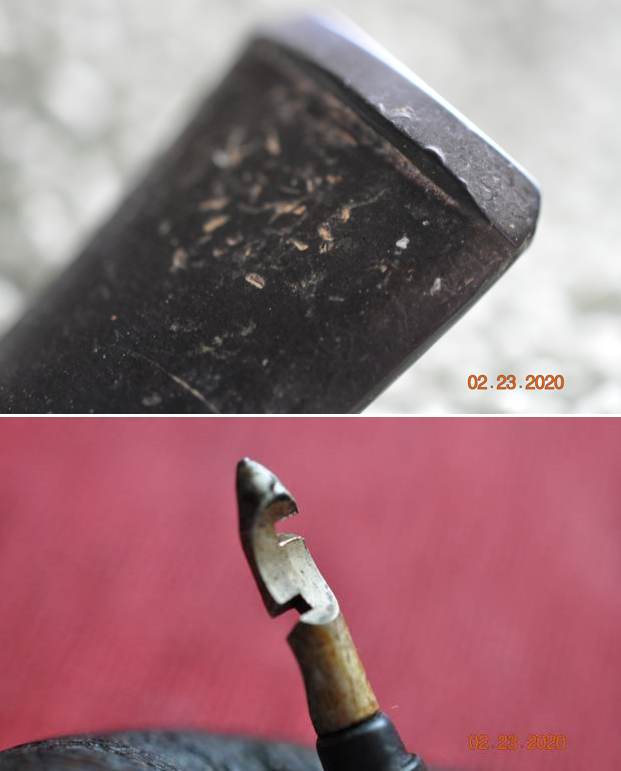
I went through my box of pipes that needed to be restored and came across this interesting looking Rhodesian with a smooth rim cap and patches on the shank. There was a smooth ring around the shank end. The lower half of the bowl and the shank were rusticated with a unique pattern that feels great in the hand. I was really interested in what it would look like once it was finished. The only stamping on the left side of the shank was stamped ALGERIAN BRIAR in a smooth panel. There was no other stamping on the shank sides. The finish was very dirty with ground in oils and dirt. The twin rings around the smooth rim top were filled with debris. The bowl had a thick cake in it that overflowed with lava on the rim top and down the sides of the cap. The thick shank ended with a vulcanite saddle stem that was lightly oxidized and had tooth marks on the surface of the stem and the button itself on both sides. It was a dirty pipe but it had some amazing potential that shone through the dirt and debris. Jeff took photos of the pipe before he started his clean up.Jeff and I have no idea where we fond this one but he started a spreadsheet of the pipes we have found since January of 2016 and this one was not on the spreadsheet. So we know that the pipe was found prior to that date and was photographed in June of 2019. Jeff took a photo of the rim top to show the thick cake in the bowl and the thick lava coat on the rim  top. The exterior looked dull and lifeless but still we both saw something. He took photos of the top and underside of the stem to show the oxidation, calcification and tooth damage on both sides of the stem surface and button. He took a photo of the dirty rustication on the heel and sides of the bowl to show the pattern of the finish and the beauty of the briar. It really is very nice.He took a photo of the only stamping on the pipe. It was on the left side of the shank and was clear and readable as noted above. I knew nothing about the brand of the pipe as the Algerian Briar stamping is used on a lot of different brands. I have seen it on a lot of different American made pipes – Bertram, National Pipes and A. Garfinkel pipes for example. I could not garner any other information on it so it was time to work on the pipe.

Jeff had done a great job cleaning up the pipe as usual. He reamed the pipe with a PipNet reamer and cut back the cake back to the bare briar. He cleaned up the walls with a Savinelli Fitsall Pipe Knife. He scrubbed the interior of the bowl and shank with pipe cleaners, cotton swabs and alcohol to remove the tars and oils. He scrubbed the exterior of the pipe with Murphy’s Oil Soap and a tooth brush to remove the grime from the finish. He worked on the rim top lava and darkening with the soap and tooth brush. He scrubbed the inside of the stem with alcohol and pipe cleaners. He scrubbed the exterior with Soft Scrub and then soaked it in Before & After Deoxidizer. He washed it off with warm water to remove the Deoxidizer. The pipe looked far better when it arrived.   I took some close up photos of the rim top and also of the stem surface. I wanted to show how well it had cleaned up. There was some darkening on the back of the rim top and a dark spot on the front outer edge of the bowl. The inner edge of the bowl looked very good. I also took close up photos of the stem to show the light tooth marks on the surface near the button and on the button itself on both sides. I took a photo of the stamping on the left side of the shank. You can see that it is stamped as noted above. It is clear and readable.       I removed the stem from the shank and took a photo of the parts. You can see the aluminum stinger in the tenon end. It is pointed and removable.I started the work on the pipe by cleaning up the darkening on the rim top and the darkening to the inside edge of the bowl and the burn spot on the outer edge first. I topped the bowl on a topping board with 220 grit sandpaper. I then worked on the darkening on the inner edge of the bowl with a folded piece of 220 grit sandpaper. It looked much better. I polished the smooth briar bowl cap and smooth patches on the shank with micromesh sanding pads. I dry sanded it with 1500-12000 grit pads and wiped it down with a damp cloth after each pad. I worked some Before & After Restoration Balm into the surface of the briar with my fingertips and a horsehair shoe brush to clean, enliven and protect the briar. I let the balm sit for 15 minutes and then buffed with a cotton cloth to raise the shine. The photos show the bowl at this point in the restoration process.   I set the bowl aside and turned my attentions to the stem. I “painted” the tooth marks on the stem surface and the button with the flame of a lighter. I was able to raise them significantly. I filled in the remaining marks with clear CA glue and set it aside to cure. I tried to blow air through the stem and found that the air flow was restricted and the draw was really not good. I heated the aluminum stinger with a lighter and was able to remove it from the tenon. I ran some pipe cleaners through the stem and cleaned it and tried the airflow once more. It was perfect.Once the stinger was removed and the repair had cured I used a small file to flatten the repairs on the surface of the stem. I also reshaped the button shape. I sanded it smooth with 220 grit sandpaper. I also sanded out the tooth chatter and marks on the stem surface near the button. I started the polishing of the stem with 400 grit wet dry sandpaper. I polished the stem with micromesh sanding pads – wet sanding with 1500-12000 grit sanding pads. I wiped it down after each sanding pad with Obsidian Oil. I polished it with Before & After Pipe Stem Polish – both Fine and Extra Fine.  The tenon was loose in the shank after I removed the stinger. I heated the metal pick end of an old ice pick with a lighter and inserted it in the tenon to expand it slightly. Then the fit of the tenon in the shank was much more snug.I am excited to finish what turned out to be a beautiful Algerian Briar Rusticated Rhodesian. I put the pipe back together and buffed it with Blue Diamond on the buffing wheel. I gave the bowl and the stem multiple coats of carnauba wax. I buffed the pipe with a clean buffing pad to raise the shine. I also hand buffed it with a microfibre cloth to deepen the shine. It is fun to see what the polished bowl looks like with the grain and the depth of the rustication popping all around it. Added to that the polished  black vulcanite saddle stem was beautiful. This shapely Rusticated Rhodesian is nice looking and the pipe feels great in my hand. It is light and well balanced. Have a look at it with the photos below. The dimensions are Length: 5 ½ inches, Height: 2 inches, Outside diameter of the bowl: 2 inch, Chamber diameter: 1 of an inch. The weight of the pipe is 70 grams/2.47 ounces. It is a beautiful pipe and one that I soon put on the rebornpipes store in the American Pipemakers Section. If you are interested in carrying on the pipeman’s legacy. Thanks for walking through the restoration with me as I worked over this pipe. Thanks to each of you who are reading this blog.

Restoring a Savinelli Porto Cervo 677KS Rusticated Bent Brandy


Blog by Steve Laug

Not long ago a good friend of mine here in Vancouver wrote me an email about a repair on one of his pipes. Pre- COVID we used to have lunch together at least every other month and go for pipe walks after the meal. Since COVID hit we have met a couple of times for me to fix his pipes and enjoy a bowl on my front porch. So I am always glad to hear from him because it means at least on one end of the repair we will have a visit and a few bowls. Here is the email he sent me.
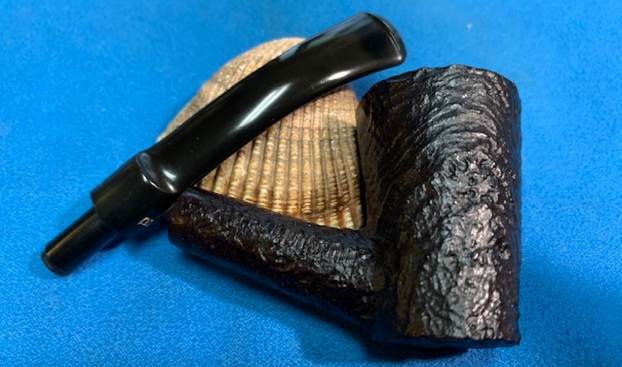
Hi Steve – I’ve a Savinelli that has the top centre of the button worn away — could you find time to fix it for me, please?

I wrote him back and told him I would gladly repair the pipe for him. He dropped it by a few days later and it joined the queue of four others that I had to work on. Today though is the day to work on his pipe. The pipe is a Savinelli Porto Cervo in a Rusticated Brandy 677KS shape with a triangular shank and stem. It has coral like rustication on it and it is a nice looking pipe. When I work on repairing his pipe’s I generally do a thorough ream and clean job on them. This had a thick soft cake in the bowl as he generally smokes aromatics. The rim top had a very thick coat of lava. The pipe was a filter pipe but he rarely uses a filter. The internals were also dirty and sticky with the tars and oils. The stem was oxidized, calcified and had tooth marks on the button and on the surface of the stem on both sides. The button was worn down in the top middle. I took some photos of the pipe before I started my clean up.  I took a photo of the rim top to show the thick, soft cake and the thick lava coat on the rim top. It was sticky. The exterior was also sticky and a bit dull in spots. I like to work on clean pipes so I decided that would be the first order of business on this one before I address the issues with the stem button. I took photos of the top and underside of the stem to show the oxidation, calcification and tooth damage on both sides of the stem surface and button.I took a photo of the heel of the bowl and the underside of the shank to show the stamping. It reads Porto Cervo [over] Savinelli on the heel of the bowl. That is followed by the Savinelli shield S logo then 677 KS [over] Italy. It is clear and readable.I removed the stem from the shank and took a photo to give a sense of the look of the pipe. It is a nice looking pipe and the two brass rings separated by a piece of briar on the stem is a nice touch.If you would like to read about the history of Savinelli, Pipedia has a great article and some amazing photos of different pipes, lines and catalogue pages. Here is the link – check it out (https://pipedia.org/wiki/Savinelli).  I also have included a Savinelli Shape Chart from the site for reference to the 677 KS Shape. I have circled it in red (https://pipedia.org/images/4/41/Sav_Shape_Chart_2017.jpg).Now it was time to start the clean up work on the pipe. I mentioned above that I like to work on clean pipes so I began by reaming the sticky, soft cake back with a PipNet pipe reamer and the second cutting head. I cleaned up the reaming with a Savinelli Fitsall Pipe Knife. It began to look and smell better! With the bowl reamed I turned to clean out the tars and oils in the shank and in the airway in the bowl and the stem. I scraped the airway clean with a pen knife as the first few cotton swabs told me that there was a ridge of tar mid shank. I scrubbed the shank and airway in the stem with isopropyl alcohol (99%) and cotton swabs and pipe cleaners and the pipe smelled clean with just a hint of my friend’s pipe tobacco of choice. Now it was time to work on the externals. I carefully scraped off the thick lava coat with a small pen knife. With that finished I scrubbed the briar and the surface of the stem with undiluted Murphy’s Oil Soap and a tooth brush. I was able to remove the dust and debris from the rustication and more of the tars on the rim top. I used a folded piece of 220 grit sandpaper to further clean up the rim top. I gave it a quick polish with 1500 grit micromesh.I worked some Before & After Restoration Balm into the surface of the briar with my fingertips and a horsehair shoe brush to clean, enliven and protect the briar. I let the balm sit for 15 minutes and then buffed with a cotton cloth to raise the shine. The photos show the bowl at this point in the restoration process. I set the bowl aside and turned my attention to the stem. I gave the surface a quick sand with 220 grit sandpaper to knock of the oxidation and the calcification. It was quite dirty so I needed to clean it before rebuilding the button. I “painted” the surface of the stem with the flame of a Bic lighter and was able to lift the tooth marks on the top side. I was able to lift the majority of those on the underside as well. I then scrubbed the stem with Soft Scrub to remove the rest of the oxidation from the stem. It worked quite well. I built up the deep tooth marks on the button with a Black Rubberized Super Glue. I layered it and sprayed it with an accelerator before adding another layer and repeating the process until the surface was where I wanted it. I set it aside to cure overnight.In the morning the repair had hardened. I used a file to flatten the repairs and to recut the edge of the button on both sides. I also flattened the top and underside of the button and reshaped it with the files. I sanded the repaired areas smooth with 220 grit sandpaper and reshaped them further. I started the polishing with 400 grit wet dry sandpaper.I polished the stem with micromesh sanding pads – wet sanding with 1500-12000 grit sanding pads. I wiped it down after each sanding pad with Obsidian Oil. I polished it with Before & After Pipe Stem Polish – both Fine and Extra Fine. I am excited to finish this Savinelli Porto Cervo 677KS Rusticated Bent Brandy. It turned out to be a nice looking Bent Brandy. It has a rusticated finish around the bowl with a smooth rim top. I put the pipe back together and buffed it with Blue Diamond on the buffing wheel. I gave the bowl multiple coats of Conservator’s Wax and the stem multiple coats of carnauba wax. I buffed the pipe with a clean buffing pad to raise the shine. I hand buffed it with a microfiber cloth to deepen the shine. It is fun to see what the polished bowl and the black vulcanite stem the twin rings of brass with briar sandwiched between them. Have a look at it with the photos below. The dimensions are Length: 5 ½ inches, Height: 1 ¾ inches, Outside diameter of the bowl: 1 ¼ inches, Chamber diameter: ¾ of an inch. The weight of the pipe is 57 grams/2.01 ounces. It is a beautiful pipe and one I am sure my friend will pick up and reacquaint himself with soon. Thanks for walking through the restoration with me as I worked over this pipe. Thanks to each of you who are reading this blog.

Breathing Life into a Brigham Standard (1-Dot) 129 Bent Apple


Blog by Steve Laug

The next pipe on the table is a rusticated Bent Apple/Prince that I took in on a trade or else found on one of my long ago pipe hunts. I cannot remember to be honest with you all. Sometimes I just put the pipes in a box to work on at a later date and forget about them. Strange I know but it is the truth. The pipe is stamped on a smooth panel on the underside of the shank and reads 129 [shape number] followed by Brigham in script. Underneath it is stamped Made in Canada. There was a thick cake in the bowl with remnants of tobacco stuck on the walls. There was a light lava overflow on the rusticated rim top. The edges of the bowl were in good condition. The rusticated finish is dirty and dusty. The stem was lightly oxidized and had part of a price sticker on the top side. The stem did not have tooth marks or chatter. There was a single brass dot on the left side of the taper stem. I took photos of the pipe before I started my cleanup work on it. I took a close up photo of the bowl and rim top to show the cake in the bowl. The rusticated rim top showed some lava in the grooves of the rustication but the inner and outer edges of the bowl looked good. I took photos of the top and underside of the stem surface and button to show its general condition. It looked very good under the light oxidation. The stamping is clear and readable as noted above. I removed the stem from the shank and was not surprised to see the Brigham Hard Maple filter stuck in the metal tenon. You can see the single brass dot on the left side of the stem in the photo below.For historical background for those unfamiliar with the brand I am including the information from Pipedia on Brigham pipes. It is a great read in terms of the history and background on the pipes (https://pipedia.org/wiki/Brigham_Pipes). Charles Lemon (Dadspipes) is currently working on a book on the history of the brand. Until that is complete this article is a good summary. I have included it below.

Roy Brigham, after serving an apprenticeship under an Austrian pipesmith, started his own pipe repair shop in Toronto, in 1906. By 1918 the business had grown to include five other craftsmen and had developed a reputation across Canada for the high quality of workmanship. After repairing many different brands of pipes over the years, Roy noted certain recurring complaints by pipe smokers, the most common referred to as “tongue bite”. Tongue bite is a burning sensation on the smoker’s tongue, previously thought to be due to the heat of the smoke (i.e. a “hot smoking pipe”).

He soon began manufacturing his own pipes, which were lightweight, yet featured a more rugged construction, strengthening the weak points observed in other pipes. The problem of tongue bite intrigued him, and he decided to make overcoming it a future goal.

About 1938, Roy’s son Herb joined him to assist in the business. The business barely survived the great depression because pipes were considered to be a luxury, not a necessity, and selling pipes was difficult indeed. In approximately 1937 [1], after some experimentation, Roy and Herb discovered that tongue bite was in fact a form of mild chemical burn to the tongue, caused by tars and acids in the smoke. They found that by filtering the smoke, it was possible to retain the flavour of the tobacco and yet remove these impurities and thereby stop the tongue bite.

Just as Thomas Edison had searched far and wide for the perfect material from which to make the first electric light bulb filaments, Roy & Herb began experimenting with many materials, both common and exotic, in the quest for the perfect pipe filter. Results varied wildly. Most of the materials didn’t work at all and some actually imparted their own flavour into the smoke. They eventually found just two materials that were satisfactory in pipes: bamboo and rock maple. As bamboo was obviously not as readily available, rock maple then became the logical choice.

They were able to manufacture a replaceable hollow wooden tube made from rock maple dowelling, which when inserted into a specially made pipe, caused absolutely no restriction to the draw of the pipe, yet extracted many of the impurities which had caused tongue bite. The result was indeed a truly better smoking pipe…

Charles Lemon has also written a great article on the stamping and marking on the Brigham pipes that fit into a time line that he has drafted. It is well worth a read and is fascinating. (https://pipedia.org/wiki/Brigham_Pipes_%E2%80%93_A_Closer_Look_at_Dots,_Dates_and_Markings). I quote from the pertinent section on the time frame for this pipe.

Around the late 1960s or early 1970s, at the beginning of what I’ve called the Canadian Era (roughly 1970 – 1980), the stampings changed again as Brigham moved to modernize its logo. Pipes are stamped with the 3-digit shape number and “Brigham” over “Made in Canada”.

This solidly places the pipe I am working on in the period of Brigham production that Charles calls the Canadian Era (1970-80). It is a great looking pipe with a slightly different rustication pattern than some of the early Brighams I have worked on.

Charles also put together a chart that helps the restorer to understand the Brigham dot system. I quote from the same link on Pipedia as noted above.

The Original Brigham Dot System 1938 – 1980

Brigham pipes are reknown in the pipe world for their famous “Brigham Dots”, a system of brass pins inset in the stem to denote the grade of each pipe. The original 8-grade pinning system, used for 42 years between 1938 and 1978 (spanning the Patent, Post-Patent and Canadian Eras) looked like this: With the information from Charles’ article and the chart above I knew what I was dealing with in terms of the stamping and the age of this pipe. The pipe was made between in 1978 because of the style of the stamping noted above. The 1 dot on the pipe told me that it was a Brigham Standard. Now it was time to work on the pipe.

I began my work by dealing with the Hard Rock Maple filter that was stuck in the tenon. The gunk (technical term) had hardened and I could not even remove it with pliers. I painted the joint with some acetone on a pipe cleaner and tried once again with no success. I then let the tenon sit in a cap of acetone for a few moments to see if the filter would loosen. After a few minutes I locked a pair of vise grips on the filter and it turned quite easily and I was able to remove the filthy filter. The maple was absolutely black inside and out. I set the stem aside and turned my attention to the bowl. I reamed it with a PipNet pipe reamer using the third cutting head to take the cake back to bare briar. I cleaned up the reaming with a Savinelli Fitsall Pipe Knife. I scrubbed out the internals with 99% isopropyl alcohol, pipe cleaners and cotton swabs until the shank and the airway into the bowl and the stem were clean. You will notice that there was some red stain that came out of the inside of the shank with the cleaning.I used a brass bristle brush to scrub off the rim top rustication. It loosened the grit. I wiped the rim top down with some undiluted Murphy’s Oil Soap on a cotton pad and used the brush again. The rim top looked very good at this point.I worked some Before & After Restoration Balm into the surface of the briar with my fingertips and a horsehair shoe brush to clean, enliven and protect the briar. I let the balm sit for 15 minutes and then buffed with a cotton cloth to raise the shine. The photos show the bowl at this point in the restoration process. With that done the bowl was finished other than the final buffing. I set it aside and turned my attention to the stem. I scrubbed the surface of the stem with Soft Scrub to remove the oxidation on the surface of the vulcanite. It came out looking much better. Before polishing the stem further I decided to fit the clean stem with a new Rock Maple Distillator.  I polished the stem with micromesh sanding pads – wet sanding with 1500-12000 grit sanding pads. I wiped it down after each sanding pad with Obsidian Oil. I polished it with Before & After Pipe Stem Polish – both Fine and Extra Fine. This Brigham Standard Rusticated 129 Bent Apple is a really nice looking pipe. The classic Brigham rustication gives a lot of dimensionality to the pipe. I put it back together and buffed it with Blue Diamond on the buffing wheel. I gave the bowl and the stem multiple coats of carnauba wax. I buffed the pipe with a clean buffing pad on the wheel to raise the shine and hand buffed it with a microfiber cloth to deepen the shine. It is fun to see what the polished rusticated bowl looks like with the polished black vulcanite stem with a shining brass pin. The pipe really is beautiful. This rusticated Brigham Standard (1 Dot) Bent Apple is nice looking and the pipe feels great in my hand. It is light and well balanced. Have a look at it with the photos below. The dimensions are Length: 5 ¾ inches, Height: 1 ¼ inches, Outside diameter of the bowl: 1 ¼ inches, Chamber diameter: ¾ of an inch. The weight of the pipe is 33 grams/1.16 ounces. It is a beautiful pipe and one that will soon be on the rebornpipes store in the Canadian Pipemakers section. If you are interested in adding it to your collection let me know. Thanks for walking through the restoration with me as I worked over this pipe. Please we are not pipe owners; we hold our pipes in trust until they pass on into the trust of the next in line. 

Repairing and Restoring a 2 Star BBB 504 Canadian


Blog by Steve Laug

I received an email on the blog from Tim in Eastern Canada about a pipe he had that he was working on. He wanted some advice regarding how to proceed with the restoration. He had dropped it on his floor and a chip of briar had come out and disappeared. He was uncertain how to proceed next. Here is his first email:

I have an estate BBB 504 Canadian nearly identical to the one currently in your store. It unfortunately has a chipped shank directly where the stem meets it. I was attempting to restore it to a smokeable condition when it slipped out of my hands onto the linoleum. I was so disappointed. I don’t know what to do with it now. Next to a Brigham two dot 214, it’s the best estate pipe I’ve found. Any advice or help would be appreciated.
Thanks,
Tim

I wrote him back and asked him for some photos of the damage so that I could assess how to address the issues on it. Here is my email to Tim.

Hi Tim                                                                                                                                                        Send me a photo please and let me have a look at it.                                                                  Steve

He sent some to me to show me that damages and give me a sense of what had happened. He mentioned that his photos were not the best and did not show the grain very well. Here are the photos that Tim sent to me. Have a look at the damages. After looking it over and reflecting on all the issues, I gave him some options on how to address the issues. The shank was chipped on the top and the underside. The underside was far work with a large chunk of briar missing and a cracking extending up the shank about ½ inch. I suggested that he rebuild the chipped areas with briar dust and super glue. He then could add a band to strengthen the repair and protect it from further cracking. I wrote him back with those options and he responded with the following email.
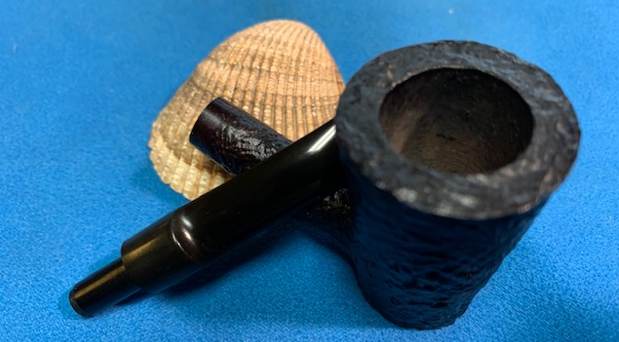
Hi Steve,

Thanks for the tips. I haven’t got the chipped piece of briar, unfortunately. I was never able to locate it. Also much of this work is beyond my woodworking skill. Maybe some enterprising restorer on a forum wants a challenge and I can trade hum for some leaf. Who knows?   Thanks,

Tim

I responded to Tim and told him to send it my way and I would do the repair for him. This week I received it and today I was able to start working on it. It is indeed a BBB Canadian that is stamped on the top of the shank and reads BBB in a diamond logo [over] **. On the underside of the shank it is stamped Made In England [over] 504. Tim had started his reaming on the pipe but had not progressed to the exterior of the bowl or rim. There was still a lava coat on the rim top and the bowl was slightly out of round. The pipe smelled clean but I would need to clean it further before and after I did the repairs. The chip on the underside of the shank was quite large and included a crack that ran ½ up the shank. The chip on the top side was smaller and more of a dent. The stem was slightly oxidized and there were light tooth marks and chatter on both sides near the button. I took a photo of the rim top to show the lava coat on the top and the slightly out of round bowl. The cake had been taken back by Tim. It looked good internally. I took photos of the stem and shank surface that show the chips and damage to the shank end. You can also see tooth chatter and marks on the stem surface ahead of the button.I took photos of the stamping on the top and underside of the shank. It was faint but readable as noted above.I lightly flattened the face of the shank with 220 grit sandpaper on a topping board. I did not remove much briar just a little bit to flatten it out.With that done I cleaned out the shank area with cotton swabs and isopropyl alcohol to remove the oils so that the repair would stick. I layered in clear super glue and briar dust with a dental spatula to build up the large chunk of briar that was missing on the underside of the shank. I used a small pen knife with a sharp blade to scrape out the inside of the shank. I would need to used a round file to open up the airway to receive the tenon once again but the repair was solid. I smoothed out the repair on the underside of the shank with 220 grit sandpaper to bring it to the same level as the rest of the shank. I also cleaned up the shank end with the sandpaper at the same time. It was solid and it certainly looked better.I flattened the bottom and top of the shank with files to prepare it for banding.I checked the Sterling Silver band for the fit and once I was happy with the fit I heated it with a lighter flame and pressed it onto the shank. With the band fitted in place I used small needle files to smooth out the inside of the shank. I worked with the files to bring it back into round.I took photos of the bowl an shank with the band fitted in place. It looked very good at this point. The shank looked good both internally and externally. With the band and shank repair finished I turned my attention to the rim top lava build up. I scraped it off with a sharp blade to remove the heavy build up. I topped the bowl with 220 grit sandpaper on a topping board and then worked over the inside of the rim edge with a folded piece of 220 grit sandpaper. I also worked on the outer edge of the bowl to smooth out the damage. I polished the briar bowl and shank with micromesh sanding pads. I dry sanded it with 1500-12000 grit pads and wiped it down with a damp cloth after each pad. I paused the polishing and stained the rim top with an Oak Stain Pen to match the rest of the briar. It blended in really well.I went back to polishing the briar with the last three grits of micromesh – 4000, 6000 and 12000 grit pads. I worked some Before & After Restoration Balm into the surface of the briar with my fingertips to clean, enliven and protect the briar. I let the balm sit for 15 minutes and then buffed with a cotton cloth to raise the shine. The photos show the bowl at this point in the restoration process. I stopped and cleaned out the dust and debris from my repair that was in the shank. I used alcohol and pipe cleaners to clean out the debris and a folded pipe cleaner to swab out the bowl.I polished out the light tooth marks on the stem with micromesh sanding pads – wet sanding with 1500-12000 grit sanding pads. I wiped it down after each sanding pad with Obsidian Oil. I polished it with Before & After Pipe Stem Polish – both Fine and Extra Fine. I am excited to finish this repair on a BBB 2 Star 504 Canadian. I put the pipe back together and buffed it with Blue Diamond on the buffing wheel. I gave the bowl and the stem multiple coats of carnauba wax. I buffed the pipe with a clean buffing pad to raise the shine. I also hand buffed it with a microfibre cloth to deepen the shine. It is fun to see what the polished bowl looks like with the grain popping all around it. Added to that the polished  black vulcanite saddle stem was beautiful. This shapely Classic English Made BBB 2 Start Canadian is nice looking and the pipe feels great in my hand. It is light and well balanced. Have a look at it with the photos below. The dimensions are Length: 5 ½ inches, Height: 1 ¾ inches, Outside diameter of the bowl: 1 1/8 inch, Chamber diameter: ¾ of an inch. The weight of the pipe is 29 grams/1.02 ounces. It is a beautiful pipe and one that I soon send back to Tim in Eastern Canada. I am hoping he enjoys the new look of his pipe. Thanks for walking through the restoration with me as I worked over this pipe. Thanks to each of you who are reading this blog.

Breathing Life into a Peterson’s Republic Era ¼ Bent “Wicklow” 405S Saddle Stem Apple


Blog by Steve Laug

The next pipe I have chosen is smooth finished Peterson’s Saddle Stem Apple with a filter stem. This Apple has a medium brown finish around the bowl sides and rim top. It also came to us from the estate of Anglican minister that was a great friend of mine here in Canada. The Apple had a great grain on the shank that was in great condition. The finish on the bowl sides was dirty. It was stamped on the left side of the shank and read Peterson’s [over] “Wicklow”. On the right side of the shank it is stamped Made in the Republic of Ireland in three lines. Next to the bowl it was stamped with the shape number 405S. There was a thick cake in the bowl and light spattering of lava on the rim top and the inner edge of the bowl. There was darkening on the back side of the rim top. The stem was lightly oxidized and had light tooth marks and chatter on the top and underside on and near the button. There were some deep hash marks on the underside of the stem next to the saddle. The “P” stamp on the left side of the saddle stem is clear. Jeff took photos of the pipe before his cleanup work. They tell the story and give a glimpse of the promise that we see in this pipe.   Jeff took photos of the rim top and stem to show the general condition of the pipe. The bowl is thickly caked and the rim top and edges have some light lava overflow and some darkening on the back side of the rim top. The stem is lightly oxidized and there are some hash marks near the saddle on the underside of the stem. There are light tooth marks on the top and underside near the button. Jeff took some photos of the bowl sides and heel to show the grain that was around this bowl. It is a nice looking pipe.  He took photos of the underside of the shank to show the stamping. The stamping is readable in the photos below and is as noted above.   I am including the information from Pipedia’s article on Peterson pipes. It is a great read in terms of the history of the brand (https://pipedia.org/wiki/Peterson). I have included a bit of the pertinent history here.

1950 – 1989 The Republic Era – From 1950 to the present time, the stamp for this era is “Made in the Republic of Ireland” in a block format generally in three lines but two lines have been used with or without Republic being abbreviated.

During the 1950’s and 60’s the Kapp & Peterson Company was still in the ownership of the Kapp family. However 1964 saw the retiral of the company Managing Director Frederick Henry(Harry) Kapp. 

I turned to “The Peterson Pipe” by Mark Irwin and Gary Malmberg to get some background on the Wicklow Pipe. On page 315 it had the following information on the Wicklow pipe.

Wicklow (1969-) First appearance of this line exclusive to Iwan Ries, handmade black sandblast finish with twin bore mouthpiece. In 1987 offered with a matte-brown finish, nickel band and P-lip mouthpiece; in 2011 as a custom line from Smokingpipes.com in a deep-red sandblast finish with a nickel band. In 2014 released for Italy in brown with a sterling band, vulcanite mouthpiece in fishtail or P-lip, hot-foil P. 

I knew that I was dealing with a Republic Era pipe made between 1969 and the present. It is bit of anomaly in that it does not match any of the descriptions above. The one I have has a matte-brown finish but does not have a band. It does have a P-lip mouthpiece. It is also a smooth finished pipe and not sandblast. It also has a tenon drilled to receive a 6mm filter. Now it was time to work on the pipe. 

Jeff had done a great job cleaning up the pipe as usual. He reamed the pipe with a PipNet reamer and cut back the cake back to the bare briar. He cleaned up the walls with a Savinelli Fitsall Pipe Knife. He scrubbed the interior of the bowl and shank with pipe cleaners, cotton swabs and alcohol to remove the tars and oils. He scrubbed the exterior of the pipe with Murphy’s Oil Soap and a tooth brush to remove the grime from the finish. He worked on the rim top lava and darkening with the soap and tooth brush. He scrubbed the inside of the stem with alcohol and pipe cleaners. He scrubbed the exterior with Soft Scrub and then soaked it in Before & After Deoxidizer. He washed it off with warm water to remove the Deoxidizer. The pipe looked far better when it arrived.   I took some close up photos of the rim top and also of the stem surface. I wanted to show how well it had cleaned up. There was some darkening on the back of the rim top and some damage on the inner edge of the bowl at the back. I also took close up photos of the stem to show the light tooth marks on the surface near the button and the hash marks near the saddle on the underside.I took a photo of the stamping on the sides of the shank. You can see that it is stamped as noted above. It is clear and readable. I took the pipe apart and took photos of the pipe. It is a good looking pipe and has some great grain around the bowl. In the second photo you can see the drilled tenon made to receive a filter.   I cleaned up the darkening on the rim top and the damage to the inside edge of the bowl with a folded piece of 220 grit sandpaper. It looked much better.I polished the briar bowl and shank with micromesh sanding pads. I dry sanded it with 1500-12000 grit pads and wiped it down with a damp cloth after each pad. I worked some Before & After Restoration Balm into the surface of the briar with my fingertips to clean, enliven and protect the briar. I let the balm sit for 15 minutes and then buffed with a cotton cloth to raise the shine. The photos show the bowl at this point in the restoration process.   I set the bowl aside and turned my attentions to the stem. I filled in the hash marks on the underside of the stem with clear CA glue and set it aside for the repair to cure.Once the repair had cured I sanded it smooth with 220 grit sandpaper. I also sanded out the tooth chatter and marks on the stem surface near the button. I started the polishing of the stem with 400 grit wet dry sandpaper.I touched up the gold stamping on the “P” with Rub’n Buff Antique Gold. I pressed it into the stamping with a tooth pick and buffed it off with a soft cotton pad. The product works very well to give that gold foil look to the stamp. I polished out the light tooth marks on the stem with micromesh sanding pads – wet sanding with 1500-12000 grit sanding pads. I wiped it down after each sanding pad with Obsidian Oil. I polished it with Before & After Pipe Stem Polish – both Fine and Extra Fine.    I am excited to finish this Republic Era Peterson’s “Wicklow” 405S Saddle Stem Apple with a filter stem. I put the pipe back together and buffed it with Blue Diamond on the buffing wheel. I gave the bowl and the stem multiple coats of carnauba wax. I buffed the pipe with a clean buffing pad to raise the shine. I also hand buffed it with a microfibre cloth to deepen the shine. It is fun to see what the polished bowl looks like with the grain popping all around it. Added to that the polished  black vulcanite saddle stem was beautiful. This shapely Classic Peterson’s Apple is nice looking and the pipe feels great in my hand. It is light and well balanced. Have a look at it with the photos below. The dimensions are Length: 5 ½ inches, Height: 1 ½ inches, Outside diameter of the bowl: 1 ¼ inch, Chamber diameter: ¾ of an inch. The weight of the pipe is 37 grams/1.31 ounces. It is a beautiful pipe and one that I soon put on the rebornpipes store in the Irish Pipe Makers section if you are interested in carrying on the pipeman’s legacy. Thanks for walking through the restoration with me as I worked over this pipe. Thanks to each of you who are reading this blog.

Yes indeed another Bertram Washington DC Pipe – a Grade 50 Liverpool


Blog by Steve Laug

The next pipe on the work table came to me from one of our estate purchases. Between us we pick up quite a few pipes for restoration. I try to work them into the restoration queue so that I can keep them moving. We picked up over 120 Bertram pipes from an estate that a fellow on the east coast of the US was selling. The post card below was sent to me by one of the readers of the blog. It is a nice memento of the old shop. I thank him for thinking of us.This next one is from that estate – a beautifully grained large bowl Liverpool Grade 50 Bertram with a vulcanite taper stem. The pipe is stamped on the top side and reads Bertram [over] Washington D.C. centered on the shank. On the underside of the shank is the Grade 50 number. The finish had a lot of grime ground into the smooth finish on the bowl and some darkening around the sides of the bowl. The bowl was caked with an overflowing lava coat on the top of the rim, heavier toward the back of the bowl. The edges looked okay other than some potential burn damage on the back inner edge. The stem was lightly oxidized, dirty and had light tooth chatter and marks on the top and underside near the button. There were not markings or a logo on the taper stem. Like the rest of the Bertrams in this lot the pipe had promise but it was very dirty. Jeff took photos of the pipe before he started his cleanup work. He took photos of the rim top and bowl to give a clear picture of the thickness of the cake and the lava on the rim top. The lava was thicker toward the back of the rim and there were remnants of tobacco on the walls of the thickly caked bowl. He also took photos of the top and underside of the stem to show the chatter and tooth marks. The stem is also oxidized.       Jeff took photos of the sides and heel of the bowl to give a picture of what the briar around the pipe looked like. There is some stunning grain under the grime.   He took photos of the stamping on the left and underside of the shank. It reads as noted above and is clear and readable. The was a bit of double stamping on the Bertram stamp and on the 50 stamp that is very visible in the photos below but less so in the restored pipe. The grade number on the underside of the shank is 50.    As I have worked on Bertrams I have written on the brand and have included the following information. If you have read it in past blogs, you can skip over it. If you have not, I have included the link to Bertram history and information. I would recommend that if you don’t know much about them take some time to read the background. I include a link to the write up on Pipedia (http://pipedia.org/wiki/Bertram). Bertram pipes were based out of Washington DC. They were popular among famous politicians and celebrities of the time. They made many products for them from FDR’s cigarette holders to Joseph Stalin’s favorite pipe. They were considered some of the best America had to offer till they finally closed their doors in the 70s. Bertram graded their pipes by 10s and sometimes with a 5 added (15, 25, 55 etc.), the higher the grade the better. Above 60s are uncommon and 80-90s are quite rare. I have worked on one 120 Grade billiard. I have several blogs that I have written on rebornpipes that give some history and background to Bertram pipes. (https://rebornpipes.com/2015/06/16/an-easy-restoration-of-a-bertram-grade-60-217-poker/).

I have included the following link to give a bit of historical information on the pipe company. It is a well written article that gives a glimpse of the heart of the company. http://www.streetsofwashington.com/2012/01/bertrams-pipe-shop-on-14th-street.html#

From this information I learned that all of these Bertrams were made before the closure of the shop in the 1970s. This Bertram large bowl Liverpool has a stunning a mix of grain around the bowl. This pipe has a 50 Grade stamp on it which I am sure explains the quality of the briar. I do not see any fills on the pipe so that is the good news. But like many of these Bertrams the Grading system is a mystery to me.
Jeff had cleaned up the pipe with his usual penchant for thoroughness. He reamed the pipe with a PipNet Pipe Reamer and cleaned up the remnants with a Savinelli Fitsall Pipe Knife.  He scrubbed the bowl with undiluted Murphy’s Oil Soap with a tooth brush. He rinsed it under running warm water to remove the soap and grime. The crowned rim top cleaned up very well. The fills in the briar are visible but are solid and well blended. He cleaned out the inside of the shank and the airway in the stem with alcohol, cotton swabs and pipe cleaners. He soaked the stem in Before & After Deoxidizer and rinsed it off with warm water. I took photos of the pipe once I received it. The rim top looked very good. The inner edge of the rim also looked surprisingly good. There was no damage to the edges. The stem surface looked very good with a few small tooth marks and chatter on both sides near the button. I took photos of the stamping on the shank. The Bertram Washington DC is on the  left side mid shank. On the underside of the shank it is stamped with the Grade 50 number.  I removed the stem and took a photo of the pipe to give a sense of the whole. The stem is a taper style.Now it was time to do my work on the pipe. I polished the bowl and the rim top, sides and shank with micromesh sanding pads – wet sanding with 1500-12000 grit pads and wiping it down after each pad with a damp cloth.  I rubbed the bowl and shank down with Before & After Restoration Balm. I worked it into the surface of the bowl sides and shank with my fingertips to clean, enliven and protect the briar. I let the balm sit for a little while and then buffed with a cotton cloth to raise the shine.   I polished the vulcanite stem with micromesh sanding pads – 1500-12000 grit pads. I wiped it down with a damp cloth after each sanding pad. I used Before & After Pipe Polish – both Fine and Extra Fine to further polish the stem.  This Bertram Washington DC Grade 50 Large Bowl Liverpool with a vulcanite taper stem is a great looking pipe now that it has been restored. I put the stem back on the bowl and carefully buffed the pipe with Blue Diamond on the buffing wheel using a light touch on the briar. I gave the bowl and the stem multiple coats of carnauba wax on the buffing wheel and followed that by buffing the entire pipe with a clean buffing pad. I hand buffed the pipe with a microfiber cloth to deepen the shine. The finished Bertram Grade 50 Liverpool fits nicely in the hand and feels great. Give the finished pipe a look in the photos below. The dimensions of the pipe are Length: 5 ½ inches, Height: 2 inches, Outside diameter of the bowl: 1 ¼ inches, Chamber diameter: ¾ of an inch. The weight of the pipe is 41 grams/1.45 ounces. If you are interested in adding this pipe to your collection it will soon be on the rebornpipes store in the American Pipe Makers section. Send me a message or an email. Thanks for reading this blog and my reflections on the pipe while I worked on it. There are many more to come!